|
INDEX TO THIS PAGE 1) Johann (John) Bengel - The Critical English Testament - Matthew-Revelation 2) Johann (John) Bengel - The Gnomon of the New Testament - Matthew-Revelation (click) Hint: These two works are relatively similar in content. Resource #1 represents a combination of Bengel's Gnomon with additional comments by other late 1800's expositors and has less Greek. Resource #2, Bengel's highly acclaimed "Gnomon" has a significant amount of Greek. Therefore, if you are not proficient in Greek, resource #1 would be the most useful. Related Resource: See similar compilation of the NT Commentary (English and Greek) by Henry Alford |
|
The Critical English Testament |
|
|
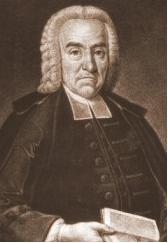
WHY EVEN CONSIDER JOHANN BENGEL'S 300 YEAR OLD COMMENTARY? C H Spurgeon wrote that Bengel's NT commentary "is the Scholar's delight! Bengel condensed more matter into a line than can be extracted from pages of other writers." John Wesley said of Bengel "I know of no commentator on the Bible equal to Bengel" and referred to him as "The great light of the Christian world." Edward C Fredrich reviewed the contributions of Johann Bengel in the Wisconsin Lutheran Quarterly (Vol 82. No. 1. Winter, 1985) writing that "In the face of growing skepticism and unbelief (early 1700's) over against the teaching of Biblical inspiration and inerrancy, Bengel clung with a simple, childlike faith to the conviction that in the Bible God had condescended to man to reveal his plan of salvation. Bengel developed principles of hermeneutics (the method and techniques used to interpret written texts) still largely valid. One stated: 'Import nothing into Scripture, (Ed: Touché!)...In an age (late 1600's, early 1700's) noted for extremely wordy and dull commentaries Bengel's work was concise, meaty. Noting words or phrases in the Biblical text that he considers needing an explanation, Bengel with a phrase or brief sentence points at the essential thought rather than burying it in a paragraph or page of verbiage. The Latin term "gnomon" (Ed: the name given to his NT commentary) refers to the hand or pointer of a sun dial. With his brief comments, Bengel sought to point the reader to the thought and intent of the text and to send him back to and keep him primarily in the Biblical text rather than leading him away from it. Of all the theological literature produced by the Pietists, Bengel's Gnomon merits consideration as the best." James Rosscup writes "This work (Gnomon), originally issued in 1742, has considerable comment on the Greek, flavoring the effort with judicious details about the spiritual life. It has much that helps...." (Commentaries for Biblical Expositors: An Annotated Bibliography of Selected Works or Logos) Charles Haddon Spurgeon -- "'A Critical New Testament, so compiled as to enable a reader, unacquainted with Greek, to ascertain the exact English force and meaning of the language of the New Testament, and to appreciate the latest results of modern criticism.' Such is the professed aim of this commentary, and the cocempilers have very fairly carried out their intentions. The whole of Bengel’s Gnomon is bodily transferred into the work, and as one hundred and twenty years have elapsed since the first issue of that book, it may be supposed that much has since been added to the wealth of Scripture exposition; the substance of this has been incorporated in brackets, so as to bring it down to the present advanced state of knowledge. We strongly advise the purchase of this book, as it is multum in parvo, and will well repay an attentive perusal. Tischendorf and Alford have contributed largely, with other German and English critics, to make this one of the most lucid and concise commentaries on the text and teachings of the New Testament" (Spurgeon, C. H. Lectures to my Students, Vol. 4: Commenting and Commentaries; Lectures Addressed to the students of the Pastors' College, Metropolitan Tabernacle) Philip Schaff notes that Bengel's comments are "a marvel of condensation and spiritual insight, must always remain a classic." J. Weborg adds that "the Gnomon draws deeply from tradition, both classical and Christian, and in pithy aphorisms captures both the letter and the spirit of the Scriptures." (Historical Handbook of Major Biblical Interpreters or Logos) The Evangelical Dictionary of Theology notes that Bengel is "often regarded as the father of modern textual criticism." Marvin Vincent author of the highly acclaimed "Word Studies in the New Testament" quotes Bengel 142 times, reflecting his high regard for Bengel's scholarship. Spurgeon records the following story about Bengel - During an illness, that illustrious scholar Bengel sent for a student in the Theological Institution, and requested him to impart a word of consolation. The youth replied, "Sir, I am but a pupil, a mere learner; I don’t know what to say to a teacher like you." "What!" said Bengel, "a divinity student, and not able to communicate a word of scriptural comfort!" The student, abashed, contrived to utter the text, "The blood of Jesus Christ, the Son of God, cleanseth us from all sin." "That is the very word I want," said Bengel, "it is quite enough," and taking him affectionately by the hand dismissed him. (My Note Book - C H Spurgeon) Albert Hauck writes that Bengel would "read nothing into the Scriptures, but draw everything from them, and suffer nothing to remain hidden that is really in them." Bengel's famous rule for determining a textual variant was "The more difficult reading is to be preferred", reasoning that it was more likely that a scribe would change a more difficult reading to an easier one than vice versa. W. J. Hart tells the following anecdote -- "There was a godly man in Germany, named Bengel, who was noted for his intimacy with Christ. A friend desired to watch the saintly man at his devotions. So he concealed himself one night in his room. Bengel sat long at his table, reading his New Testament. The hours passed. At length the clock struck midnight, and the old man spread out his hands and said with great joy, "Dear Lord Jesus, we are on the same old terms." Then closing his book, he was soon in bed and asleep. He had learned the secret of friendship with Christ." Spurgeon quotes Bengel "The historical matters of Scripture, both narrative and prophecy, constitute as it were the bones of its system; whereas the spiritual matters are as its muscles, blood-vessels and nerves. As the bones are necessary to the human system, so Scripture must have its historical matters. The expositor who nullifies the historical ground-work of Scripture for the sake of finding only spiritual truths everywhere, brings death on all correct interpretation." Robert Culver notes that German Lutheran scholar Bengel was "credited with making the word ‘millennium’ respectable in Europe in the eighteenth century." Charles Ryrie - The modern period has witnessed the rise of premillennial teaching. A number of commentators (like J. A. Bengel and Henry Alford) wrote from this viewpoint. (Ryrie's Basic Theology) Bengel commenting on Jude 1:15, 16 said "A sinner is bad...one who sins without fear is worse." F W Farrar writes that Bengel's "Gnomon is a mine of priceless gems. It contains sentence after sentence exquisitely terse and finished, and throbbing with spiritual light. Few writers have so admirably succeeded in expressing in a few words the inmost purpose of each of the Epistles. A generation crowded with writers whose theology abounded in mutual anathemas is yet redeemed from the charge of sterility which has produced such a theologian as Bengel. His work must continue to have its value so long as men can recognise the richest fruits of a noble intellect, a pure spirit, and a blameless life. "Lord Jesus, unto Thee I live, unto Thee I suffer, unto Thee I die; Thine I am, living or dying." These words were repeated to him in his last moments, and on hearing them he pointed with his right hand to his heart, and fell asleep in peace." (Amen!) (History of Interpretation: Eight Lectures Preached Before the University of Oxford in the Year 1885). |
|
| Introduction to Mark | |
| Mark 1 Mark 2 Mark 3 Mark 4 Mark 5 Mark 6 Mark 7 Mark 8 |
Mark 9 Mark 10 Mark 11 Mark 12 Mark 13 Mark 14 Mark 15 Mark 16 |
| Luke 1 Luke 2 Luke 3 Luke 4 Luke 5 Luke 6 Luke 7 Luke 8 Luke 9 Luke 10 Luke 11 Luke 12 |
Luke 13 Luke 14 Luke 15 Luke 16 Luke 17 Luke 18 Luke 19 Luke 20 Luke 21 Luke 22 Luke 23 Luke 24 |
| Introduction John 1 John 2 John 3 John 4 John 5 John 6 John 7 John 8 John 9 John 10 |
John 11 John 12 John 13 John 14 John 15 John 16 John 17 John 18 John 19 John 20 John 21 |
| Introduction | |
| Acts 1 Acts 2 Acts 3 Acts 4 Acts 5 Acts 6 Acts 7 Acts 8 Acts 9 Acts 10 Acts 11 Acts 12 Acts 13 Acts 14 |
Acts 15 Acts 16 Acts 17 Acts 18 Acts 19 Acts 20 Acts 21 Acts 22 Acts 23 Acts 24 Acts 25 Acts 26 Acts 27 Acts 28 |
| Romans 1 Romans 2 Romans 3 Romans 4 Romans 5 Romans 6 Romans 7 Romans 8 |
Romans 9 Romans 10 Romans 11 Romans 12 Romans 13 Romans 14 Romans 15 Romans 16 |
| 1 Corinthians 1 1 Corinthians 2 1 Corinthians 3 1 Corinthians 4 1 Corinthians 5 1 Corinthians 6 1 Corinthians 7 1 Corinthians 8 |
1 Corinthians 9 1 Corinthians 10 1 Corinthians 11 1 Corinthians 12 1 Corinthians 13 1 Corinthians 14 1 Corinthians 15 1 Corinthians 16 |
| 2 Corinthians 1 2 Corinthians 2 2 Corinthians 3 2 Corinthians 4 2 Corinthians 5 2 Corinthians 6 2 Corinthians 7 |
2 Corinthians 8 2 Corinthians 9 2 Corinthians 10 2 Corinthians 11 2 Corinthians 12 2 Corinthians 13 |
| Galatians 1 Galatians 2 Galatians 3 |
Galatians 4 Galatians 5 Galatians 6 |
| Ephesians 1 Ephesians 2 Ephesians 3 |
Ephesians 4 Ephesians 5 Ephesians 6 |
| Philippians 1 Philippians 2 |
Philippians 3 Philippians 4 |
| Colossians 1 Colossians 2 |
Colossians 3 Colossians 4 |
| 1 Thessalonians 1 1 Thessalonians 2 1 Thessalonians 3 |
1 Thessalonians 4 1 Thessalonians 5 |
| 2 Thessalonians 1 2 Thessalonians 2 2 Thessalonians 3 |
|
| 1 Timothy 1 1 Timothy 2 1 Timothy 3 |
1 Timothy 4 1 Timothy 5 1 Timothy 6 |
| 2 Timothy 1 2 Timothy 2 |
2 Timothy 3 2 Timothy 4 |
| Titus 1 Titus 2 Titus 3 |
|
| Philemon | |
| Hebrews 1 Hebrews 2 Hebrews 3 Hebrews 4 Hebrews 5 Hebrews 6 |
Hebrews 7 Hebrews 8 Hebrews 9 Hebrews 10 Hebrews 11 Hebrews 12 Hebrews 13 |
| 1 Peter 1 1 Peter 2 1 Peter 3 |
1 Peter 4 1 Peter 5 |
| 2 Peter 1 2 Peter 2 2 Peter 3 |
|
| 2 John 1 | |
| 3 John | |
| Jude | |
|
Be a Berean and be aware that Bengel unfortunately attempted to set a date for beginning of the Millennium! (Mt 24:36, 25:13, Mk 13:32, Acts 1:7) On the other hand, he was soundly criticized by contemporary Lutheran scholars for his defense of an earthly Millennium and literal fulfillment of prophecy! Not a bad thing for which to be criticized! |
|
| Introduction to Revelation Revised Translation |
|