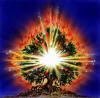
The Glory of Jehovah
The Burning Bush
Courtesy Pat Marvenko Smith
Related Resources
- Timeline of Ezekiel: Establish the Historical Context
- Introduction to the Inductive Study of Ezekiel
- God's Plan for Jerusalem: Five Prophetic Mountain Peaks
- Departure of the Glory of Jehovah from Solomon's Temple
- Jehovah Shammah - The LORD is There - Ezekiel 48:35
- References to The Glory of the LORD
- Shekinah Summary Study (some repetition)
- Compiled by Bruce Hurt
Introduction: This Scriptural overview of "The Glory of the LORD" originated from the study of Ezekiel, specifically the exposition of Ezekiel 8-11 in which Ezekiel describes the departure of God's glory from the first Temple ("Solomon's" Temple) as a prelude to the final destruction of the Temple and the city of Jerusalem in 586BC. One hesitates to even attempt an analysis of such a wonderful attribute as God's matchless, infinite glory, but the intent is to give the reader a "panoramic" view of His Glory from the days of Moses, this present age, the millennial age of the Messiah, and the culmination in the age initiated by the New Heavens and New earth. The practical purpose is not to make us "smarter sinners" but to motivate us to live by grace, empowered by His Spirit to daily chose to deny
ungodliness and worldly desires" and to live "sensibly, righteously and godly in the present age looking (continually and expectantly) for the blessed hope and the appearing of the GLORY of our great God and Savior, Christ Jesus Who gave Himself for us, that He might redeem us from every lawless deed and purify for Himself a people for His own possession, zealous for good deeds." (Titus 2:11; Titus 2:12; Titus 2:13, 14)
As you study the Glory of Jehovah ask God to show you His glory, praying even like Moses and Paul…
I pray Thee, show me Thy glory! and enlighten the eyes of my heart so that I may know what are the riches of the glory of Thy inheritance in the saints. (Ex 33:18, Eph 1:18)
Play Handel's masterpiece from the Messiah…
Related Resources - Hebrew and Greek words for Glory
- Glory (03519) kabod - Hebrew word for "Glory"
- Glory (1391) doxa (Used in Septuagint - Lxx to translate Hebrew "Glory")
- Glorify (1392) doxazo
|
THE PROGRESSIVE DEPARTURE |
|||||||||
|
Steps in Departure of the the Glory of the LORD |
|||||||||
|
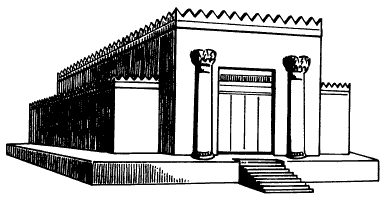
Solomon's Temple |
|
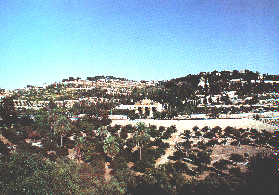
GLORY stood over mountain east of the city Mt of |
|||||||
|
GLORY enthroned upon the cherubim over the Ark |
|||||||||
|
GLORY went up from cherub to Temple threshold |
E |
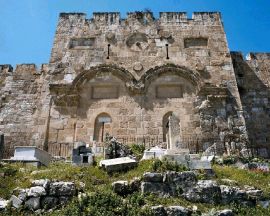
GLORY hovers over cherubim at entrance of East Gate |
|||||||
|
Click Image to enlarge |
|
|
|
||||||
|
"Solomon's" |
East |
Mt |
|||||||
| PAST | PRESENT | FUTURE | ||
|
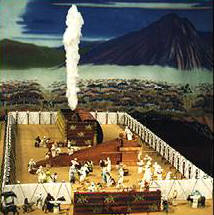
Ps 19:1(Note) teaches that the glory of the LORD has been present since the beginning of time as seen in His creation. In contrast the glory summarized in this table refers to the specific manifestations of His glory, past, present and future. Did Adam & Eve see the glory of God? (Ge 3:8) Shekinah glory cloud signified Yahweh's presence, protection and "piloting" (guidance) during the 40 years of wilderness wandering (Note)
Ex 13:20, 21 First description of the Shekinah as "pillar of cloud by day" and "pillar of fire by night". PURPOSE Guidance and assurance of Jehovah's presence and power. Ex 14:19, 20 Angel of God (the Messiah - see note) is associated with the Shekinah (cloud and fire). (cf Ex 14:1-17, 21-31) PURPOSE Protection from Pharaoh's army! Ex 24:16 Shekinah glory of Jehovah rested on Mt Sinai = the cloud = like a consuming fire. POINT Israel though witnessing this fearful, awesome scene that symbolized the holiness of the living God, nevertheless proceeded to make for themselves a lifeless golden calf to worship! (Ex 32:1-5, 6) Ezekiel 9-11 Shekinah Glory departs His Temple (see diagram above) |
Ps 115:1 (Spurgeon's note) Not to us, O LORD, not to us, but to Thy name give glory because of Thy lovingkindness, because of Thy truth. (Spoken by Israel in the OT but true in principle of believers in the NT) 1Cor 10:1 Paul wants us to be aware that our "fathers were under" the Shekinah cloud. PURPOSE Warning to be disciplined, self controlled Jn 17:22 Jesus "And the glory which Thou hast given Me I have given to them; that they may be one, just as We are one." 1Cor 10:31 Whether, then, you eat or drink or whatever you do, do all to the glory of God." POINT Test all conduct by whether or not it manifests the characteristics of God and so gives a proper opinion of ("glorifies") Him to others. |
The Glory of the LORD returns to the Temple: at the Second Coming described in many passages, but Matthew specifically mentions His great glory... Matthew 24:30 "the SON OF MAN COMING ON THE CLOUDS OF THE SKY with power and great glory." To where does He come? When Messiah returns to defeat the Gentile nations gathered against His Holy City, Jerusalem (Zech 14:3), He will return to the Mount of Olives (just as prophesied in Acts 1:9-11) Zech 14:4 records that "In that day His feet will stand on the Mount of Olives." After defeating the armies of the Gentile nations, He will establish His Millennial Kingdom with a rebuilt Holy Temple. Haggai 2:9 The Latter glory of (Millennial Temple - see note) will be greater than the former (Solomon's Temple). PURPOSE Comfort all who wept over the departing of the Shekinah (cf Ezra 3:12) Isaiah 4:5 Jehovah will create over the whole area of Mt Zion… a cloud by day… flaming fire by night for over all the (Shekinah) glory will be a canopy PURPOSE Shelter, refuge, protection, defense. Isaiah 35:1, 2, 3: In the Millennium, the land of Israel will be restored to its former glory and all will see "the glory of Jehovah" as Messiah reigns in Jerusalem. PURPOSE Encouragement for the exhausted (those who are discouraged, lacking hope), strength for the feeble (those who feel "paralyzed") |
||
|
Study the 38 uses of the phrase "The Glory of the LORD"…
|
||||
CONTEXT -- Ezekiel's description of the progressive departure of the Glory in Ezekiel 8-11 (See notes beginning on Ezekiel 8) is recorded 14 months after Ezekiel is called to be God's prophet to the Exiles in Babylon, he is carried in vision to Jerusalem where we can trace the step-by-step departure of the Glory of the LORD.
In Ezekiel 8:3, 4 the prophet records that the Spirit…
brought me in the visions of God to Jerusalem, to the entrance of the north gate of the inner court, where the seat of the idol of jealousy, which provokes to jealousy, was located. And behold, the glory of the God of Israel was there, like the appearance which I saw in the plain.
Ezekiel 8 describes a series of four "abominations" involving God's Holy Temple, but as described in Ezek 8:4 the Glory of the LORD is still present, presumably in the Holy of holies although that is not specifically stated.
Ezekiel 9:3 records that
Then the glory of the God of Israel went up from the cherub on which it had been, to the threshold of the temple. And He called to the man clothed in linen at whose loins was the writing case."
There is an almost identical description in Ezekiel 10:4 which records
Then the glory of the LORD went up from the cherub to the threshold of the temple, and the temple was filled with the cloud, and the court was filled with the brightness of the glory of the LORD."
Ezekiel 10:18, 19 records that
then the glory of the LORD departed from the threshold of the temple and stood over the cherubim. When the cherubim departed, they lifted their wings and rose up from the earth in my sight with the wheels beside them; and they stood still at the entrance of the east gate of the LORD'S house. And the glory of the God of Israel hovered over them.
After addressing Ezekiel's fear's that all the remnant would be brought to a complete end with the prophetic promises of future restoration physically and spiritually Ezekiel 11:22, 23 records that
Then the cherubim lifted up their wings with the wheels beside them, and the glory of the God of Israel hovered over them. And the glory of the LORD went up from the midst of the city, and stood over the mountain (MOUNT OF OLIVES) which is east of the city.
Earlier, “the glory of the LORD filled the house of the LORD” (1 Kings 8:11). But now a terrifying shift occurs for God is no longer dwelling but He is departing. God leaves “the midst” which is the very place where He had chosen to dwell (Ps 132:13–14).
The Scripture then falls silent but the clear implication is that the glory of the LORD has departed from His dwelling place among man. This scene portrays the gradual, reluctant withdrawal of God’s presence from a persistently rebellious people. The temple still stood (BUT NOT FOR LONG), the rituals still continued, but God was gone.
Glory is the Hebrew word kabod (03519) which means to be heavy or weighty and by figurative extension describes that which is "weighty" or important. The Septuagint translates kabod with the Greek word doxa, which in simple terms means that which gives a proper opinion of some one or some thing. And so God's glory gives us a proper opinion of Who He is, providing a glimpse into His beauty, brilliance, effulgence, and radiance.
David writes that "the heavens are telling of the glory (Hebrew = kabod, Greek = doxa) of God… (Psalms 19:1)
Thus all of creation resounds with testimony to the Creator, giving a proper opinion of Him. Paul echoes the truth that
since the creation of the world His invisible attributes, His eternal power and divine nature (all of which speak of God's glory for each of these characteristics gives a proper opinion of God), have been clearly seen, being understood through what has been made, so that they are without excuse. (Ro 1:20)
It follows then that the glory of the LORD has always existed. These notes will not address so much that aspect of God's glory (seen in creation, etc) but will overview the specific manifestations of His glory throughout history, past, present and future.
THOUGHT - R C Sproul: Here is the supreme irony: Here is the supreme irony (ED: AND THE SUPREME TRAGEDY FOR "HE CAME TO HIS OWN AND THOSE WHO WERE HIS OWN DID NOT RECEIVE HIM - Jn 1:11): In 586 BC, Ezekiel saw the glory of God leave the temple, leave the holy city, and ascend to Bethany on the Mount of Olives. AT the triumphal entry, the One Whom the Scriptures define as the brightness of God’s glory (Heb. 1:3) descended from Bethany and the Mount of Olives, entered the East Gate of the Holy City, and went to the temple. Do you see it? In 586 BC the glory of God left the temple, but when Jesus came, the glory of God came back. Yet no one understood that the King of glory (Psalm 24:7-10) was in their midst, about to meet the destiny to which He was called and for which He was born.
Related Resources:
- Shekinah-In Depth Discussion by James Murphy (1846);
- The Shekinah by John Cumming (1854)
- Shekinah Sermon by Dave Roper
- Shekinah Glory Summary
- The Shechinah in "Sabbath Morning Readings in the Old Testament"
Sermons by C H Spurgeon related to God's glory…
- Exodus 14:19,20, Isaiah 58:8, Isaiah 52:12 The Glory In The Rear
- John 1:14 The Glory Of Christ - Beheld
- Exodus 33:18 A View Of God's Glory
In order to help understand the specific manifestations of God's glory it is important to understand the frequently used term, Shekinah.
Shekinah is a transliteration of a Hebrew word meaning “the one who dwells” or “that which dwells”. This specific word is not used in Scripture but the root word shakan (07931) (to dwell) and the related word mishkan (word study) (04908) (tabernacle) are both frequently used and both are associated with the presence of God (and His glory) dwelling with man. The meaning of the word Shekinah (the One Who dwells) reminds us that we did not seek to dwell with God but He with us and this truth should evoke continual thanksgiving in those who have been brought into covenant with Him under the shelter of His wings. And so in Exodus, we see that it was God Who first expressed His desire to dwell among men, instructing Moses to tell the people to
construct a sanctuary for Me, that I may dwell (shakan) among them. According to all that I am going to show you, as the pattern of the tabernacle (mishkan from shakan) and the pattern of all its furniture, just so you shall construct it." (Ex 25:8; 25:9)
Arnold Fruchtenbaum defines Shechinah Glory as…
the visible manifestation of the presence of God. It is the majestic presence or manifestation of God in which He descended to dwell among men. Whenever the invisible God becomes visible, and whenever the omnipresence of God is localized, this is the Shechinah Glory.
The usual title found in the Scriptures for the Shechinah Glory is: the glory of the Lord. The Hebrew form is Kvod Adonai (word study), which means “the glory of the Lord,” and describes what the Shechinah Glory is. The Greek title, Doxa Kurion (kurios), is also translated as “the glory of the Lord.” Doxa (word study) means “brightness,” “brilliance,” or “splendor” and it depicts how the Shechinah Glory appears.
Other titles give it the sense of “dwelling,” which portrays what the Shechinah Glory does. The Hebrew for Shechinah, from the root shachan, means “to dwell.” The Greek word skeinei (see study of related words - skenos and skenoma) means “to tabernacle,” and is derived from the Hebrew Shechinah.
Here is a quote from an older source - I have traced every allusion in Scripture to this cloud or pillar of fire… (The Shechinah in "Sabbath Morning Readings in the Old Testament")
In his excellent work Footsteps of Messiah Fruchtenbaum writes that…
The Shechinah Glory is the visible manifestation of the presence of God. It is the majestic presence or manifestation of God in which He descends to dwell among men. Whenever the invisible God becomes visible, and whenever the omnipresence of God is localized, this is the Shechinah Glory. The usual title found in Scriptures for the Shechinah Glory is the glory of Jehovah, or the glory of the Lord. The Hebrew form is Kvod Adonai, which means “the glory of Jehovah” and describes what the Shechinah Glory is. The Greek title, Doxa Kurion, is translated as “the glory of the Lord.” Doxa means “brightness,” “brilliance,” or “splendor,” and it depicts how the Shechinah Glory appears. Other titles give it the sense of “dwelling,” which portrays what the Shechinah Glory does. The Hebrew word Shechinah, from the root shachan, means “to dwell.” The Greek word skeinei, which is similar in sound as the Hebrew Shechinah (Greek has no “sh” sound), means “to tabernacle” … In the Old Testament, most of these visible manifestations took the form of light, fire, or cloud, or a combination of these. A new form appears in the New Testament: the Incarnate Word. (The Footsteps of the Messiah- A Study of the Sequence of Prophetic Events)
Shekinah originally was used in the Jewish Targums (Aramaic translation of Hebrew Bible) and rabbinic literature whenever the Hebrew text would mention the presence of God in a way that implied certain human limitations. The Targum Onkelos for example paraphrases Ex 25:8 as
And they shall make before me a sanctuary and I shall cause my Shekinah to dwell among them.
In summary, the term Shekinah as commonly used describes the visible manifestation of God's presence and glory usually in the form of a cloud as discussed below under Past Glory.
The picture of the Shekinah cloud of glory dwelling on the Temple has a parallel "fulfillment" in the New Testament (obviously written by Jews familiar with the Shekinah in the Old Testament) where John writes that
the Word became flesh, and dwelt (tabernacled) among us, and we beheld His glory, glory as of the Only begotten from the Father, full of grace and truth. (John 1:14) (Spurgeon's sermon on -- John 1:14 The Glory Of Christ - Beheld)
Spurgeon Commenting on John 1:14 observes believers have something (Someone) far better than the Shekinah Glory Cloud of Israel in the Old Testament: In and around the tent (The OT Tabernacle) wherein the Lord dwelt in the center of the camp there was a manifestation of the presence of God.
This was the glory of that house:
but how scanty was the revelation!
A bright light which I have already mentioned, the Shekinah, is said to have shone over the Mercy-Seat; but the high priest only could see it, and he only saw it once in the year when he entered with blood within the veil. Outside, above the holy place, there was the manifest glory of the pillar of cloud by day, and of fire by night. This sufficed to bear witness that God was there; but still, cloud and fire are but physical appearances, and cannot convey a true appearance of God, who is a spirit. God cannot be perceived by the senses; and yet the fiery, cloudy pillar could appeal to the eyes only. The excellence of the indwelling of God in Christ is this — that there is in Him a glory as of the only begotten of the Father, the moral and spiritual glory of Godhead.
This is to be seen, but not with the eyes — this is to be perceived, but not by the carnal senses: this is seen, and heard, and known, by spiritual men, whose mental perceptions are keener than those of sight and hearing. (cf Mt 16:17, Mt 11:25, 26, 27, Jn 6:44) In the Person of the Lord there is a glory which is seen by our faith (2Cor 5:7, 2Cor 4:18), which is discerned of our renewed spirits, and is made to operate upon our hearts.
The glory of God in the sanctuary was seen only by the priest of the house of Aaron; the glory of God in the face of Christ is seen by all believers, who are all priests unto God.
That glory the priest beheld but once in the year; but we steadily behold that glory at all times, and are transformed by the sight (2Cor 3:18). The glory of God in the face of Jesus Christ (2Cor 4:6) is not a thing of outward appearance, to be beheld with the eyes, like the pillar of cloud and fire; but there is an abiding, steady luster of holy, gracious, truthful character about our Lord Jesus Christ, which is best seen by those who by reason of sanctification are made fit to discern it.
Blessed are the pure in heart, for they shall see God (Mt 5:8); yea, they do see Him in Christ Jesus. “No man hath seen God at any time; the only begotten Son, which is in the bosom of the Father, he hath declared him.” (John 1:18) Many of us besides the apostles can say, “We beheld his glory, the glory as of the only begotten of the Father, full of grace and truth.” (John 1:14) We have not seen Jesus raise the dead; we have not seen Him cast out devils; we have not seen Him hush the winds and calm the waves; but we do see, with our mind’s eye, His spotless holiness, His boundless love, His superlative truth, His wondrous heavenliness; in a word, we have seen, and do see, His fullness of grace and truth; and we rejoice in the fact that the tabernacling of God among men in Christ Jesus is attended with a more real glory than the mere brilliance of light and the glow of flame.
The condescension of Christ’s love is to us more glorious than the pillar of cloud, and the zeal of our Lord’s self-sacrifice is more excellent than the pillar of fire. As we think of the divine mysteries which meet in the person of our Lord, we do not envy Israel the gracious manifestations vouchsafed her when “a cloud covered the tent of the congregation, and the glory of the Lord covered the tabernacle” (Ex 40:34); for we have all this and more in our incarnate God, Who is with us always, even to the end of the world. (The True Tabernacle and Its Glory of Grace and Peace)
Let the question be passed round among us —
Do I perceive his glory?
Have I seen something of the splendor of God in the humble man of Nazareth?
Have I learned to magnify him in my soul, and have I desired to glorify him in my life, as my God, my life, my love, my all in all, though once despised and rejected of men?
If so, beloved — if we can say this from our heart, we are favored indeed, and especially favored if we remember how many there are who have never obtained this grace. Not many great men after the flesh see any glory in Christ; (John 1:14 The Glory Of Christ - Beheld)
Christ is the Shekinah of God…
Paul adds that…
it was the Father's good pleasure for all the fulness to dwell in Christ (Col 1:19) and that in Christ
all the fulness of Deity dwells in bodily form (in Christ) (Col 2:9)
Paul writes that Christ is "the Lord of glory" (1Cor 2:8). This same Shekinah glory now rests (dwells) upon all those who are in Christ. Thus Paul records that God made
known the riches of His glory upon vessels of mercy, which He prepared beforehand for glory (Ro 9:23)
He prays for the Ephesian saints that
the eyes of your heart may be enlightened, so that you may know what is the hope of His calling, what are the riches of the glory of His inheritance in the saints" (Ep 1:18)
Paul reminds the Colossian saints that
God willed to make known what is the riches of the glory of this mystery among the Gentiles, which is Christ ("dwelling") in you, the hope of glory. (Col 1:27)
Comment: Ponder (meditate on) this truly awesome thought for a moment - the Shekinah Glory of God in us as Christ followers! How can we comprehend such mystery and majesty? And yet it is our privilege to show forth the Shekinah glory for all the world to see! How?
Answer: Our "good (God) works" (Mt 5:16, Phil 2:14,15, cf 2Cor 2:14-17, 2Cor 5:20), works initiated and wrought by the Holy Spirit in the abiding (Jn 15:5), surrendered, yielded, filled (Eph 5:18), empowered saint, the saint who is making the moment by moment choice to walk by the Spirit (Gal 5:16)! (cp 2Cor 3:5,6)
The presence of the Holy Spirit is also a representation of the Shekinah as when the Spirit descended and remained on Jesus (Jn 1:33) and at Pentecost the Spirit came down and rested on the 120 disciples appearing
to them tongues as of fire distributing themselves, and they rested on each one of them” (Acts 2:3)
William Barclay adds an interesting note regarding Shekinah writing that
There are two words totally different in meaning but similar in sound which in early Christian thought became closely connected. Skēnē is one; and the Hebrew shechinah, the glory of God, is the other. SKĒNĒ—SHECHINAH—the connection in sound brought it about that men could not hear the one without thinking of the other. As a result, to say that the skēnē of God is to be with men immediately brought the thought that the shechinah of God is to be with men. In the ancient times the shechinah took the form of a luminous cloud which came and went. (Revelation 21 Commentary - William Barclay's Daily Study Bible)
Genesis 3 - This instance is a possible manifestation of the Shekinah glory and would be the first recorded instance in Scripture…
Therefore the LORD God sent him (Adam) out from the garden of Eden, to cultivate the ground from which he was taken. 24 So He drove the man out; and at the east of the garden of Eden He stationed (Hebrew = shakan = the word related to Shekinah) the cherubim, and the flaming sword which turned every direction, to guard the way to the tree of life. (Ge 3:23-24)
Comment: The definite article "the" is present before "flaming sword" which makes this a very specific entity - the flame of the sword. It is possible that this is the first manifestation of the Shekinah glory of the Lord. It is also worth noting that Cherubim are elsewhere associated with the appearance of the Shekinah Glory (see below).
Genesis 15 - The Abrahamic Covenant (See Abrahamic versus Mosaic)
And it came about when the sun had set, that it was very dark, and behold, there appeared a smoking oven and a flaming torch which passed between these pieces. 18 On that day the LORD made a covenant with Abram, saying, “To your descendants I have given this land, From the river of Egypt as far as the great river, the river Euphrates (Ge 15:17, 18)
Comment: This example of the glory of God is another possible manifestation of the Shekinah Glory. It would certainly be fitting that the Shekinah Glory would be present at what amounts to Jehovah's "signing" of the unconditional Abrahamic Covenant.
2 Samuel 6:2 And David arose and went with all the people who were with him to Baale-judah, to bring up from there the ark of God which is called by the Name, the very name of the LORD of hosts Who is enthroned above the cherubim.
2 Kings 19:15 And Hezekiah prayed before the LORD and said, "O LORD, the God of Israel, Who art enthroned above the cherubim, Thou art the God, Thou alone, of all the kingdoms of the earth. Thou hast made heaven and earth.
1 Chronicles 13:6 And David and all Israel went up to Baalah, that is, to Kiriath-jearim, which belongs to Judah, to bring up from there the ark of God, the LORD Who is enthroned above the cherubim, where His name is called.
Ps 80:1 (For the choir director; set to El Shoshannim; Eduth. A Psalm of Asaph.) Oh, give ear, Shepherd of Israel, Thou who dost lead Joseph like a flock; Thou Who art enthroned above the cherubim, shine forth!
"Thou that dwellest between the cherubims, shine forth." The Lord's especial presence was revealed upon the mercyseat between the cherubim, and in all our pleadings we should come to the Lord by this way: only upon the mercyseat will God reveal His grace, and only there can we hope to commune with Him. Let us ever plead the Name of Jesus, Who is our true Mercyseat, to Whom we may come boldly, and through Whom we may look for a display of the glory of the Lord on our behalf. Our greatest dread is the withdrawal of the Lord's presence, and our brightest hope is the prospect of His return. In the darkest times of Israel, the light of her Shepherd's countenance is all she needs. (see Spurgeon's note)
Ps 99:1 The LORD reigns, let the peoples tremble; He is enthroned above the cherubim, let the earth shake!
He sitteth between the cherubims. In grandeur of sublime glory, yet in nearness of mediatorial condescension, Jehovah revealed Himself above the mercy seat, whereon stood the likeness of those flaming ones who gaze upon his glory, and for ever cry, "Holy, Holy, Holy, Lord God of hosts." The Lord reigning on that throne of grace which is sprinkled with atoning blood, and veiled with the covering wings of mediatorial love, is above all other revelations wonderful, and fitted to excite emotion among all mankind, hence it is added,
Our friend Mr. Charles Stanford, in his delicious work, "Symbols of Christ," has beautifully brought out the connection between Mt 23:37 and Mt 23:38. The house was left desolate because Christ, who was set forth by the symbol of shelter, was rejected by them, and was not permitted to cover them with His wings. It was customary for the Jews to say of a proselyte, "He has taken refuge under the wings of the Shekinah." We now see that to take shelter under the wings of the Shekinah is to hide beneath the wings of Christ. Beneath that living shield which beats back the destroying stroke, and is broad enough to canopy a fugitive world, we take shelter, and there the promise is fulfilled, "He shall cover thee with his feathers, and under his wings shalt thou trust." (from Ps 91:4) (see Spurgeon's note)
Ps 132:8 Arise, O LORD, to Thy resting place; Thou and the ark of Thy strength.
In essence we have here a prayer by the psalmist for Jehovah to descend in the Shekinah (the glory cloud) and dwell above the ark of the covenant.
Spurgeon comments : In these three verses we see the finders of the ark removing it to its appointed place, using a formula somewhat like to that used by Moses when he said, "Rise up, Lord", and again, "Return, O Lord, unto the many thousands of Israel." The ark had been long upon the move, and no fit place had been found for it in Canaan, but now devout men have prepared a temple, and they sing, Arise, O Lord, into thy rest; thou, and the ark of thy strength. They hoped that now the covenant symbol had found a permanent abode -- a rest, and they trusted that Jehovah would now abide with it for ever. Vain would it be for the ark to be settled if the Lord did not continue with it, and perpetually shine forth from between the cherubim. Unless the Lord shall rest with us there is no rest for us; unless the ark of his strength abide with us we are ourselves without strength. The ark of the covenant is here mentioned by a name which it well deserved; for in its captivity it smote its captors, and broke their gods, and when it was brought back it guarded its own honour by the death of those who dared to treat it with disrespect. The power of God was thus connected with the sacred chest. Reverently, therefore, did Solomon pray concerning it as he besought the living God to consecrate the temple by his presence. It is the Lord and the covenant, or rather say the covenant Jehovah whose presence we desire in our assemblies, and this presence is the strength of his people. Oh that the Lord would indeed abide in all the churches, and cause his power to be revealed in Zion.
Isa 37:16 "O LORD of hosts, the God of Israel, Who art enthroned above the cherubim, Thou art the God, Thou alone, of all the kingdoms of the earth. Thou hast made heaven and earth.
A devotional comment from F B Meyer on the Shekinah…
It should never be forgotten that nothing can afford to us protection and succor but vital union with Christ. We must hide in His secret place if we would abide under His shadow. We must dwell in the most holy place if we would be shadowed by the wings of the Shekinah. There must be nothing between us and God, if we are to walk together, and enjoy fellowship with the Father, and with His Son, Jesus Christ.
Dost thou know the hope of His calling to a life within the veil, with the veil behind thee, and the light of the Shekinah ever on thy face?
Harry Ironside…
An uncreated light, the Shekinah glory, shone above the mercy seat between the golden cherubim, whose wings were spread out over it. Into this sacred enclosure, where the presence of GOD was manifested, the ordinary priests were not permitted to enter; only the High Priest, and that just once a year. He went in carrying a golden basin filled with atoning blood, which he sprinkled upon the mercy seat and before it, where he himself took his stand. (Comments on the light but slightly different than above)
Commenting on Exodus 24:16 Robert Rayburn writes…
The verb the NIV translates “covered” is literally the verb שכן)) “dwelt.” The glory of the Lord dwelt upon the mountain. It will be used later in a technical sense of God’s Shekinah, the outward manifestation of his presence to men. From this we get the idea of the God “tabernacling” with men in John 1:14. “We have seen his glory,” John says, when the Word dwelt among men.
In 1Cor 10:1 Paul says "FOR (term of explanation which is explaining 1Cor 9:27) I do not want you to be unaware, brethren, that our fathers were all under the cloud, and all passed through the sea
Guzik: The cloud of Shekinah glory overshadowed Israel throughout their journey from Egypt to the Promised Land. During the day, the cloud sheltered them from the brutal desert sun, and during the night, it burned as a pillar of fire. It was a constant, ready reminder of God’s glory and presence (Exodus 13:21-22).
Acts 1:9 And after He had said these things, He was lifted up while they were looking on, and a cloud received Him out of their sight.
Steven Cole comments: Luke succinctly repeats the story of Jesus’ ascension, which he told at the end of his Gospel. The cloud that received Jesus out of their sight was probably the Shekinah glory of God. (Doing Jesus' Work Acts 1:3-11)
"The Indwelling of the Spirit" makes the believers body a temple for the indwelling of the Lord Jesus Christ, the Shekinah Glory (Ro 8:9-11; 1 Cor. 3:16; 6:19-20; 2 Cor. 6:16).
The Holy Spirit indwells every believer in order to provide a temple for the indwelling of the Shekinah Glory, the Lord Jesus Christ, which serves as the principle of victory over the indwelling old sin nature. The Holy Spirit’s purpose during the church is to indwell every believer in order to provide a temple for the indwelling of the Shekinah Glory, the Lord Jesus Christ, which serves as the principle of victory over the indwelling old sin nature and provides the believer the spiritual capacity to understand the Word of God since the Spirit serves as the believer’s true teacher and mentor in place of the absent Christ. (William Wenstrom)
2Cor 12:9 And He has said to me, "My grace is sufficient for you, for power is perfected in weakness." Most gladly, therefore, I will rather boast about my weaknesses, that the power of Christ may dwell (episkenoo) in me.
Amplified Version: My grace (My favor and loving-kindness and mercy) is enough for you [sufficient against any danger and enables you to bear the trouble manfully]; for My strength and power are made perfect (fulfilled and completed) and show themselves most effective in [your] weakness. Therefore, I will all the more gladly glory in my weaknesses and infirmities, that the strength and power of Christ (the Messiah) may rest (yes, may pitch a tent over and dwell) upon me! (2Cor 12:9Amplified Version-see commentary)
Comment: The verb episkenoo means literally to pitch a tent upon and thus to descend and abide upon or rest upon. This is the only use of this verb in Scripture. The picture as portrayed in Wuest's paraphrase reminds us of the OT Shekinah Glory, depicting the presence of Jehovah upon the Mercy Seat in the Holy of holies. A T Robertson adds that episkenoo means: to fix a tent upon, here upon Paul himself by a bold metaphor, as if the Shekinah of the Lord was overshadowing him (cf. Lk 9:34), the power (dunamis) of the Lord Jesus." "May dwell in me" is picture similar to that which describes God descending from heaven and dwelling in the tabernacle among the people of Israel. And so here in 2Corinthians 12:9 Paul employs dramatic imagery teaching NT believers that the glorious Christ “pitches His tent” with His people in their weaknesses, not with the "rich and famous and powerful"! As Hughes says "Christ pitches his tent with the weak and the unknown, the suffering shut-in, the anonymous pastor and missionary, the godly, quiet servants in the home and the marketplace."
Wuest paraphrases Paul: And He has said to me, and His declaration still stands, My grace is enough for you, for power is moment by moment coming to its full energy and complete operation in the sphere of weakness. Therefore, most gladly will I the rather boast in my weaknesses in order that the power of the Christ [like the Shekinah Glory in the Holy of Holies of the Tent of Meeting] may take up its residence in me [working within me and giving me help].
Hodge commenting on most gladly writes that Paul is saying: most sweetly, with an acquiescence delightful to himself. His sufferings thus became the source of the purest and highest pleasure. I will rather boast about my weaknesses does not mean "I glory in the midst of infirmities", but on account of them. This rejoicing on account of his sufferings or those things which implied his weakness and dependence, was not a fanatical feeling, (but) it had a rational and sufficient basis, viz., that the power of Christ may rest upon me; i.e., dwell in me as in a tent, as the Shekinah dwelt in olden days on the tabernacle. To be made thus the dwelling place of the power of Christ, where He reveals His glory, was a rational ground of rejoicing in those infirmities which were the his present condition and the occasion for the manifestation of Christ's power. Most Christians are satisfied in trying to be resigned under suffering. They think it a great thing if they can bring themselves to submit to be the dwelling-place of Christ's power. To rejoice in their afflictions because thereby Christ is glorified, is more than they aspire to. Paul's experience was far above that standard.
The power of Christ is not only thus manifested in the weakness of His people, but in the means that He employs to achieve his purposes. Believers are in all cases utterly inadequate in themselves and the means disproportionate to the results to be obtained. This treasure is in clay jars so that the excellency of the power may be God’s. By the foolishness of preaching he saves those who believe. By twelve illiterate men the church was established and extended over the civilized world. By a few missionaries heathen lands are converted into Christian countries. So in all cases the power of Christ is perfected in weakness. (An exposition of the Second epistle to the Corinthians. By Charles Hodge.)
Peter writes to believers…
If you are reviled for the name of Christ, you are blessed, because the Spirit of glory and of God rests upon you. (1Peter 4:14)
Adrian Rogers devotional thoughts…
When King Solomon dedicated that magnificent temple on Mount Moriah, it was among other things an object lesson, an illustration of every believer in the Lord Jesus Christ. For now, after Pentecost, at the moment of our salvation we become temples of the Holy Spirit. God through His Holy Spirit indwells us, just as His Spirit came and filled the holy of holies of Solomon’s temple with Shekinah glory when it was fully dedicated to Him: “And it came to pass, when the priests were come out of the holy place, that the cloud filled the house of the LORD, so that the priests could not stand to minister because of the cloud: for the glory of the LORD had filled the house of the LORD” (1Kings 8:10-11). Yet, some Christians appear not to be filled with the Holy Spirit. Glory does not fill their house. They have allowed the self-life and the cares of this world to move the Lord Jesus from that place of preeminence that is rightfully His. They are no longer Spirit-filled but are what the Bible calls “carnal” or fleshly. Therefore, we have this admonition of the Apostle Paul: “Be not drunk with wine, wherein is excess; but be filled with the Spirit” (Ephesians 5:18). (The Power of His Presence)
From Nave's Topic…
SHEKINAH, the visible sign of God's presence on the ark of testimony in the Holy of holies, Ex 25:22; Lev 16:2; 2Sa 6:2; 2Ki 19:14, 15; Ps 80:1; Isa 37:16; Eze 9:3; 10:18; He 9:5.
From the International Standard Bible Encyclopedia…
SHEKINAH - she-ki'-na (shekhinah, "that which dwells," from the verb shakhen, or shakhan, "to dwell," "reside"): This word is not found in the Bible, but there are allusions to it in Is 60:2; Mt 17:5; Lk 2:9; Ro 9:4. It is first found in the Targums.
Alan LInton has the following devotional thoughts on the Shekinah Glory…
WE BEHELD HIS GLORY: The glory of God—the Shekinah, the abiding presence—is the manifestation of God’s being and presence to mankind, sometimes in a visible form. In the Old Testament it was seen in the cloud and pillar of fire which led the Israelites through the trackless wilderness, Ex 13:21–22. Later, it filled the completed tabernacle, Ex. 40:34–35, and temple, 1Kgs. 8:10–11; 2Chr 7:1–3, and indicated with awesome magnificence God dwelling among His people.
The glory of God is the keynote of Ezekiel’s prophecy; it is mentioned twelve times in chapters 1–11 and again in chapter 43. Ezekiel, now a captive in exile, is transported by the Spirit of God to the temple in Jerusalem where he is shown the idolatrous practices taking place in the temple. There he witnesses the glory of God leaving the temple on account of the evil of the nation, which could be well described by the name Ichabod, given to one of Eli’s grandsons on the occasion of the capture of the ark of God by the Philistines, meaning ‘the glory is departed from Israel’, 1 Sam. 4:21. Ezekiel records that the glory of God would not return until the future millennial temple was built, Ezek. 43:2–5.
In the New Testament the glory of God is beheld again, not in an earthly temple, but in the person of the incarnate Son who tabernacled here among His people. John states, ‘We beheld his glory, the glory as of the only begotten of the Father, full of grace and truth’, John. 1:14. He is the outshining of divine glory, Heb. 1:3. This was revealed in His person, His miracles, John 2:11, at His transfiguration, Matt. 17:1–8; Mark 9:2–8; Luke 9:28–36, in His death, John 7:39; 12:23–28; 13:31; 17:5, His resurrection and ascension, Luke 24:26; Acts 3:13; 7:55; Rom. 6:4. Paul wrote that the glory of God is seen in the face of Jesus Christ, 2 Cor. 4:6, and this glory is reflected by the church, which constitutes God’s temple on earth; cf. Eph. 2:21. Ezekiel witnessed the departure of the glory of God; how important it is for us to maintain holy lives of radiant testimony so that others may see His Glory reside in, and radiate out, from us.
THE GLORY OF GOD RETURNS - The last nine chapters of Ezekiel portray the temple, the sacrificial worship, the land and the people of Israel in the millennium. Previously, in Chapter 11, the glory of God had departed from Solomon’s temple by way of the eastern gate, but in this closing section of the prophecy Ezekiel describes the return of the glory of God to consecrate the newly constructed millennial temple, Ezek. 43:1–5. The Shekinah glory returned by way of the eastern gate, the direction from which it previously had left; the glory of God thus ‘filled the house’ as it had done at the consecration of the completed tabernacle, Ex. 40:34–35, and Solomon’s temple, 1 Kgs. 8:10–11; 2Chr 5:13–14. Having returned, God spoke to Ezekiel from the house, ‘Son of man, the place of my throne and the place of the soles of my feet, where I shall dwell in the midst of the children of Israel for ever’, Ezek. 43:7. The implication is that the Shekinah glory would never depart again.
Between these two events, the glory of God dwelt among men in the person of the Word who became flesh, John 1:1, 14. The incarnate Word temporarily ‘pitched his tent on the desert sands of time’ and, says John, ‘we beheld his glory, the glory as of the only begotten of the Father, full of grace and truth, John 1:14. That glory was resident in the temple of His body, John 2:21. It was exhibited in His character and acts; His life and walk, His miracles, as turning water into wine, John 2:11, and the raising of Lazarus, John 11:4, 40, His transfiguration, 2 Pet. 1:17, His resurrection, Rom. 6:4, His ascension and exaltation, 1 Pet. 1:21, but pre-eminently in His cross work, the hour of His glory. As He anticipated the cross He said, ‘The hour is come that the Son of man should be glorified’, John 12:23.
Later Paul affirms that the glory of God is seen in the face of Jesus Christ, 2 Cor. 4:6, and as individuals put their faith in Him, they become the temple of the Living God, John 14:23. ‘Know ye not that your body is the temple: of the Holy Ghost which is in you, which ye have of God, and ye are not your own? For ye are bought with a price: therefore glorify God in your body, and in your spirit, which are God’s’, 1 Cor. 6:19–20. And we pray, ‘Let the beauty of Jesus be seen in me!’ (Day by Day: Christ Foreshadowed: Glimpses in the Old Testament)