Judges 18:2
Judges 18:3
Judges 18:4
Judges 18:5
Judges 18:6
Judges 18:7
Judges 18:8
Judges 18:9
Judges 18:10
Judges 18:11
Judges 18:12
Judges 18:13
Judges 18:14
Judges 18:15
Judges 18:16
Judges 18:17
Judges 18:18
Judges 18:19
Judges 18:20
Judges 18:21
Judges 18:22
Judges 18:23
Judges 18:24
Judges 18:25
Judges 18:26
Judges 18:27
Judges 18:28
Judges 18:29
Judges 18:30
Judges 18:31
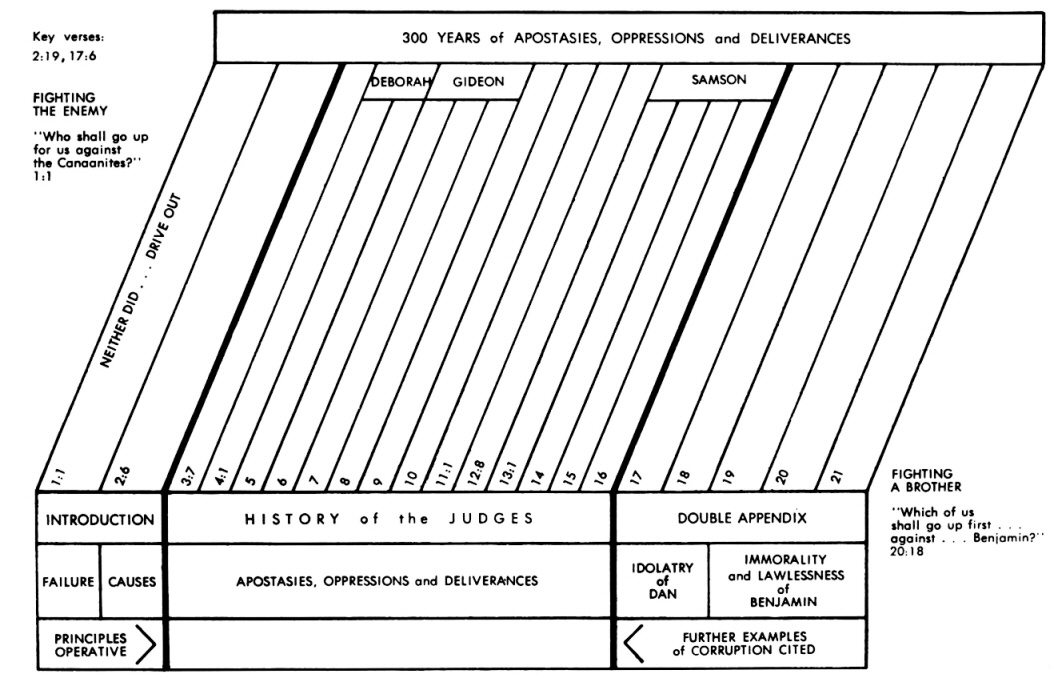
Chart from recommended resource Jensen's Survey of the OT - used by permission
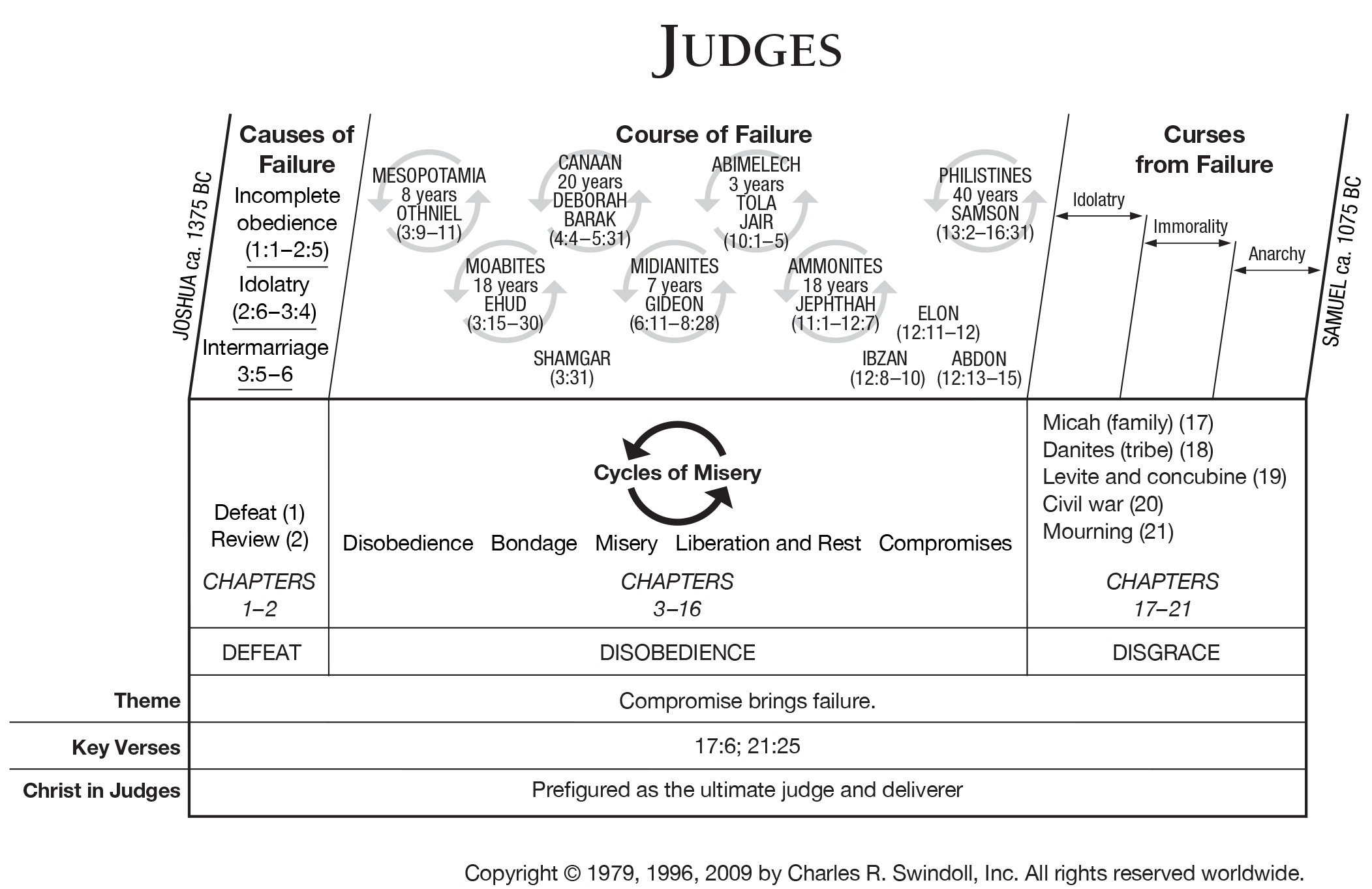
Chart on Judges - Charles Swindoll
|
RECYCLING SIN |
|||||
| Jdg 1:1-3:6 | Jdg 3:7-16:31 | Jdg 17:1-21:25 | |||
| Introduction | History of the Judges | Appendix | |||
| Causes of the Cycles THE REASON |
Curse of the Cycles THE RECORD |
Conditions in the Cycles THE RESULTS |
|||
| Failure to Complete Conquest Jdg 1:1-36 God's Judgment for Failure Jdg 2:1-3:6 |
Curse of the Cycles |
Conditions in the Cycles |
|||
| Living with Canaanites |
War with the Canaanites |
Living Like the Canaanites |
|||
| Religious Laxity |
Political Uncertainty |
Moral Anarchy |
|||
| About 350 Years of Israel's History - Almost 25%! From Compromise to Confusion! |
|||||

Another Timeline of Israel's History
Click to Enlarge
from Jensen's Survey of the OT
Click to Enlarge
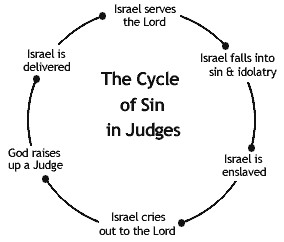
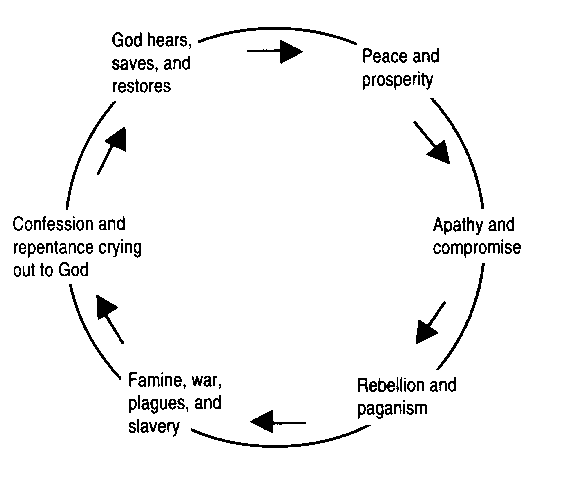
Other ways to describe Israel's cycle…
- Rest > Rebellion > Retribution > Repentance (?) > Restoration
- Sin > Suffering/Servitude > Supplication > Salvation
- Apathy > Apostasy > Affliction > Answered Prayer
- Disobedience > Desperation > Deliverance
- Disobedience > Bondage >Misery > Liberation and Rest > Compromises
Judges 18:1 In those days there was no king of Israel; and in those days the tribe of the Danites was seeking an inheritance for themselves to live in, for until that day an inheritance had not been allotted to them as a possession among the tribes of Israel.
- no king- Jdg 17:6 19:1 21:25
- the tribe - Jos 19:40-48
- an inheritance - Jdg 1:34-35
- Judges 18 Resources
Related Passages:
Joshua 19:40-48+ (DAN DID RECEIVE AN INHERITANCE ALLOTMENT!) The seventh lot fell to the tribe of the sons of Dan according to their families. 41 The territory of their inheritance was Zorah and Eshtaol and Ir-shemesh, 42 and Shaalabbin and Aijalon and Ithlah, 43 and Elon and Timnah and Ekron, 44 and Eltekeh and Gibbethon and Baalath, 45 and Jehud and Bene-berak and Gath-rimmon, 46 and Me-jarkon and Rakkon, with the territory over against Joppa. 47 The territory of the sons of Dan proceeded beyond them; for the sons of Dan went up and fought with Leshem and captured it. Then they struck it with the edge of the sword and possessed it and settled in it; and they called Leshem Dan after the name of Dan their father. (NET = The Danites failed to conquer their territory, so they went up and fought with Leshem and captured it. They put the sword to it, took possession of it, and lived in it. They renamed it Dan after their ancestor. Jos 19:47NET) 48 This was the inheritance of the tribe of the sons of Dan according to their families, these cities with their villages.
Judges 1:34-35 Then the Amorites forced the sons of Dan into the hill country, for they did not allow them to come down to the valley; 35 yet the Amorites persisted in living in Mount Heres, in Aijalon and in Shaalbim; but when the power of the house of Joseph grew strong, they became forced labor.
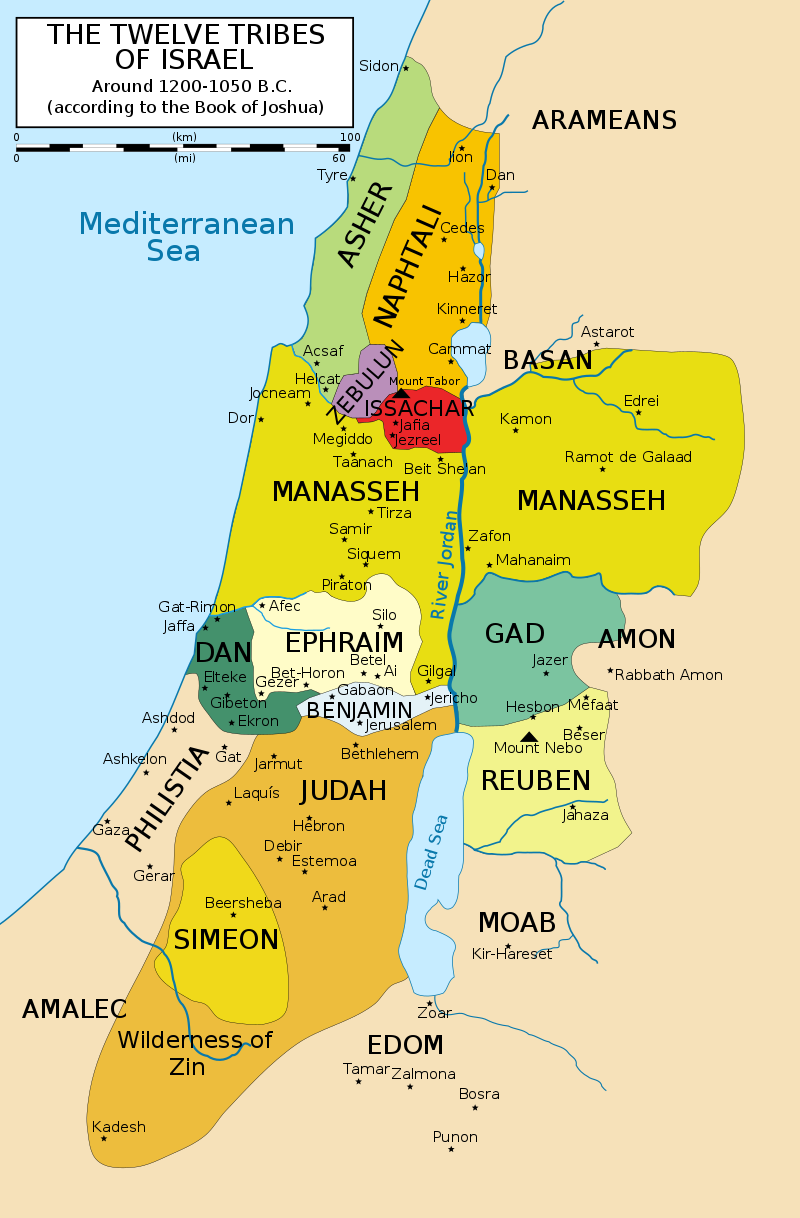
Location of Ephraim
THE ROOT OF THE PROBLEM
NO KING IN ISRAEL
Dr Donald Campbell makes this interesting association between Jdg17,18 - It seems apparent there is a direct relationship between the story of Micah & the story of the migration of the tribe of Dan. The record of Micah's idolatry is graphically explained in order to show how the tribe of Dan became an idolatrous tribe. (Borrow this Judges Commentary)
In those days there was no king of Israel and in those days the tribe of the Danites was seeking an inheritance for themselves to live in- There was no king in Israel. It was a time of utter confusion. There was no spiritual leadership by the true King, God Himself. Notice the repeated time phrase in those days, the first one signifying the cause and the second one the effect. Why do the Danites do what is right in their own eyes? Because there is no king in Israel! The king is the key! God should have been king and if He had been the book of Judges would never have been written!
Warren Wiersbe - Corruption in the home will eventually spread to society; in this case, it spread to a whole tribe. False doctrine is like yeast: it grows quietly in secret and affects everything it touches (Gal. 5:7-9+). (See context in With the Word: The Chapter-by-Chapter Bible Handbook or borrow With the Word)
And in those days the tribe of the Danites was seeking an inheritance for themselves to live in - Note that Jdg 18:1 does not contradict Jdg 2:6+ in declaring that the Danites had not been allotted an inheritance among the tribes of Israel. The plight of the tribe of Dan was first mentioned in Judges 1:34+ which records that the godless "Amorites forced the sons of Dan into the hill country, for they did not allow them to come down to the valley." Thus they failed to possess their original allotment (Josh 19:41-46) and Jos 19:47NET+ says "The Danites failed to conquer their territory, so they went up and fought with Leshem (LAISH) and captured it. They put the sword to it, took possession of it, and lived in it. They renamed it Dan after their ancestor."
THOUGHT - Amorites prevented the Danites from taking possession of their rightful inheritance. Is there some "Amorite" in your life that is preventing you from taking hold of your blessings in Christ, Paul reminding us that our heavenly Father has "blessed us with every spiritual blessing in the heavenly places in Christ." (Ephesians 1:3+)
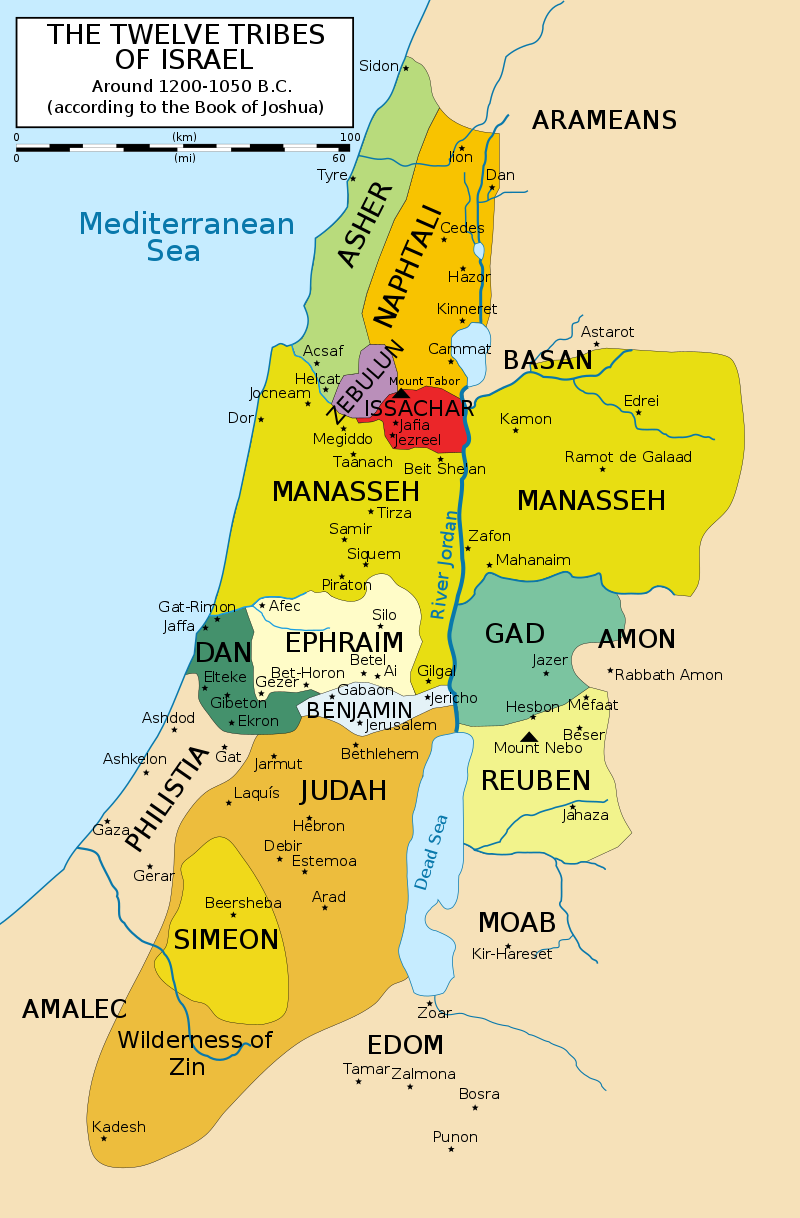
The Danite allotment was at the west end of the strip of land between Judah and Ephraim (Joshua 19:41-46+ SEE MAP - DAN JUST WEST OF EPHRAIM) but the tribe was in a sense "caught in a squeeze" between the Amorites (Judges 1:34+) and the Philistines to the west and the territory of Judah to the south, the Danites refused to lay hold of their inheritance by faith (faith obeys and in context would have utterly destroyed the pagans in their territory), letting their sight (of the Amorites) force them to seek out a new homeland. They clearly felt that the boundary lines had not fallen for them "in pleasant places" (Psalm 16:6). In short, the Danite's desire to move was a testimony to their lack of faith in the promises of the Covenant Keeping Lord who had allotted them their original territory. As detailed in this chapter the Danites instead end up in Jdg 18:30,31+ capturing Laish, renaming it Dan and setting up an idolatrous worship center that was in lieu of the true worship center in Shiloh (Jdg 18:31+). The Danites had sown the wind, and would reap a whirlwind (Hosea 8:7), because years later the wicked king Jeroboam I made Dan a center for idolatrous calf worship to keep the northern 10 tribes from wanting to go back to Jerusalem to worship Jehovah (1Ki 12:29-30). God has a sure law of reaping what one sows and so you cannot help but wonder if this "Danite detour" has something to do with the failure to find the tribe of Dan recorded in the lists of tribes in the 144,000 in Revelation 7:4-8+? (See notes below)
THOUGHT - This thought comes close to home. We sin and we think nothing of it. No consequence is obvious. Just a twinge of guilt on our conscious and a loss of joy and we feel "dirty" the next day. But how frightening it should be to think about how far reaching the consequences of our sin can extend and how many people are eventually affected. It behooves us to pay careful attention to Solomon's warning "Because the sentence against an evil deed is not executed quickly, therefore the hearts of the sons of men among them are given fully to do evil." (Ecclesiastes 8:11) The wicked man lulls himself to sleep spiritually being deceived by his own heart which says to himself, "I shall not be moved. Throughout all generations I shall not be in adversity." (Ps 10:6, Jer 17:9) Woe!
MORE BACKGROUND: The Amorites refused to allow the people of the tribe of Dan access to Jerusalem and they crowded them out into the mountains. Locate Dan on the map in dark green just west of Ephraim and then find the city of Dan at the northernmost part of Israel, which is where Dan was forced to move (not by God but because of a "faith failure" in a big God!) It is a sad thing when the people of God allow the world to force them into an awkward position (cf Ro 12:1a+; Gal 6:14+, Jn 16:33)! They were unable to get to Jerusalem and that sets the stage for the problems they are about to face. Most of the other tribes were able to conquer the enemy, dispossess them, and claim their land (albeit most never got 100% possession!), but the Danites coveted somebody else’s land instead and took it in a violent manner as described in this next sick story.
For until that day an inheritance had not been allotted to them as a possession among the tribes of Israel - Does this curious statement mean that God had simply forgotten about the tribe of Dan? That they would have to go it on their own? Clearly that is not the implication -- The Lord had assigned the tribal allotments under the direction of Joshua, with the help of Eleazar the high priest and the elders from the tribes at Shiloh (Joshua 19:41, 51+). As He did with the nations (Acts 17:26+ God "determined… the boundaries of the habitation" of every nation on the face of the earth), so He did with the tribes: God put each tribe just where He wanted it. For the tribe of Dan to reject God’s assigned territory and covet another place was to oppose His divine will.
THOUGHT - Isn’t it this "Danite Defiant" attitude that causes most of the trouble in our society today? Instead of submitting to God’s will, people want somebody else's "greener grass" (A NEW SPOUSE, CAR, JOB, HOUSE, ETC) and they are willing to do almost anything to get it (see the caustic comment by James 4:1-3+). Peter labels this universal malady "the corruption that is in the world by lust." (2 Peter 1:4+).
The Danites failure to defeat and dispossess the Amorites was not a matter of not enough strength of numbers (Nu 26:43+ says that the tribe of Dan had 64,000 men) but of not enough faith in an omnipotent, promise making, covenant keeping God. The Danites had two choices: they could have taken the humble road (and yet the high road) of repentance and lay hold of God's promises by faith that He would go before them and drive out their enemies (Dt 11:22-23+). God's sovereign promises always demand man's responsible choice to obey and move out in faith. The second choice the Danites had was to reject God's promises and seek their own land, looking for a new territory where the occupants would be unprepared and vulnerable to attack (Jdg 18:27-29+). God let them have the latter choice but this "success" does not signify He blessed their efforts. God sometimes gives us what we are determined to have (read a brief review of this principle in Ps 106:12-14, 15+) In fact subsequent history of the abominations (another "golden calf" fiasco) set up at Dan (1Ki 12:28-31) suggest that He cursed them rather than blessing them! Mark it down beloved…
Success does not always signify God's blessing!
Recall too that Samson was from the tribe of Dan. Samson, the strongest man, came from Dan, the weakest tribe that by sheer numbers should have been one of the strongest tribes!
Cundall on the land squeeze the Danites experienced - Pressed up into the hill-country, they were confined to a very small area in the region of Zorah and Eshtaol, where the activities of Samson centred (Jdg 13:2, 25), in territory which, according to Joshua 15:33, was also on the border of Judah. (Borrow Judges & Ruth: Tyndale Old Testament Commentary)
Keil and Delitzsch Commentary… This took place at a time when Israel had no king, and the tribe of the Danites sought an inheritance for themselves to dwell in, because until that day no such portion had fallen to them among the tribes as an inheritance. To the expression לֹא נָפְלָה (had not fallen) we must supply נַחֲלָה as the subject from the previous clause; and בְּנַחֲלָה signifies in the character of a nachalah, i.e., of a possession that could be transmitted as hereditary property from father to son. נָפַל, to fall, is used with reference to the falling of the lot (vid., Num. 34:2, Josh. 13:6, etc.). The general statement, that as yet no inheritance had fallen to the tribe of Dan by lot, has its limitation in the context. As the Danites, according to v. 2, sent out five men from Zorea and Eshtaol, and, according to v. 11, six hundred men equipped for fight went out to Laish, which the spies had discovered to be a place well fitted for a settlement, and had settled there, it is very evident from this that the Danites were not absolutely without an inheritance, but that hitherto they had not received one sufficient for their wants. The emigrants themselves were already settled in Zorea and Eshtaol, two of the towns that had fallen to the tribe of Dan by lot (Josh. 19:41). Moreover, the six hundred equipped Danites, who went out of these towns, were only a very small part of the tribe of Danites, which numbered 64,400 males of twenty years old and upwards at the last census (Num. 26:43). For a tribe of this size the land assigned by Joshua to the tribe of Dan, with all the towns that it contained, was amply sufficient. But from Judg. 1:34 we learn that the Amorites forced the Danites into the mountains, and would not allow them to come down into the plain. Consequently they were confined to a few towns situated upon the sides or tops of the mountains, which did not supply all the room they required. Feeling themselves too weak to force back the Canaanites and exterminate them, one portion of the Danites preferred to seek an inheritance for themselves somewhere else in the land. This enterprise and emigration are described in vv. 2ff. The time cannot be determined with perfect certainty, as all that can be clearly inferred from v. 12, as compared with Judg. 13:25, is, that it took place some time before the days of Samson. Many expositors have therefore assigned it to the period immediately following the defeat of Jabin by Barak (Judg. 4:24), because it was not till after the overthrow of this powerful king of the Canaanites that conquests were possible in the north of Canaan, and the tribe of Dan at that time still remained in ships (Judg. 5:17), so that it had not yet left the territory assigned it by the sea-shore (Josh. 19). But these arguments have neither of them any force; for there is nothing surprising in the fact that Danites should still be found by the sea-shore in the time of Deborah, even if Danite families from Zorea and Eshtaol had settled in Laish long before, seeing that these emigrants formed but a small fraction of the whole tribe, and the rest remained in the possessions assigned them by Joshua. Moreover, the strengthening of the force of the Canaanites, and the extension of their dominion in the north, did not take place till 150 years after Joshua, in the days of Jabin; so that long before Jabin the town of Laish may have been conquered by the Danites, and taken possession of by them. In all probability this took place shortly after the death of Joshua, as we may infer from v. 30 (see the exposition of this verse). (Judges 18 Commentary)
A C Gaebelein Summary of Judges 18…
The Danite Idolatry
1. The Danites seek an inheritance (Jdg 18:1-12)
2. Their robbery (Jdg 18:13-26)
3. Laish taken and idolatry consummated (Jdg 18:27-31)
The history of this chapter is closely linked with the preceding. The tribe of Dan had failed to take the God-given inheritance (Josh. 19:40, 41, 42, 43, 44, 45, 46). "The Amorites forced the children of Dan into the mountain: for they would not suffer them to come down to the valley" (Judges 1:34). Then in self-will, entirely disregarding the will of God, they sent out spies to seek another inheritance. They meet Micah's priest, the hireling. Micah's idolatrous outfit including the hired priest are taken by the invaders. The hireling sees an advantage for himself, his "usefulness" is enlarged for filthy lucre's sake. Then they killed the people of Laish and set their city on fire. The whole tribe of Dan becomes idolatrous. We have in all a picture of complete apostasy. (Commentary)
QUESTION - What can we learn from the tribe of Dan?
ANSWER - The tribe of Dan was the group of people who descended from the fifth son of Jacob, Dan. Jacob had twelve sons who became the patriarchs of the twelve tribes of Israel. The history of the tribe of Dan is especially instructive to us in that it contains multiple examples of the tendency of people to follow man-made religion over biblical faith in God. This is totally contrary to the Scriptures that teach us “no one will be declared righteous in his sight by observing the law” (Romans 3:20) and “without faith it is impossible to please God” (Hebrews 11:6).
As the Israelites came into the land of Canaan, by lot certain areas of territory were assigned to each tribe. The tribe of Dan was given a tract of land that was smaller than the other land grants but was fertile and also had a boundary along the Mediterranean Sea where there was fishing and commerce available to them.
However, the tribe of Dan never fully conquered this area as a result of a lack of faith in God. This was true of the other tribes as well, as the early chapters of the book of Judges clearly teach, and led to a time during the period of Judges where it was said, “In those days there was no king in Israel; everyone did what was right in his own eyes.” Judges 18:1–31 tells the story of the people of Dan falling into idolatry. They also did not like the territory that was theirs, so they sent out spies to find a better area. In the north, some representatives of Dan learned of an area where a peaceful group of people lived. The tribe of Dan took things into their own hands and wiped out the people of that land so they could then move the entire tribe up to a region close to the sources of the Jordan River, just south of present-day Lebanon. There they established their main city and called it Dan.
Later in the history of the Hebrews, the kingdom was divided after the reign of Solomon. The kingdom split into Israel’s ten tribes in the north and Judah’s two in the south. The people of Dan were in the northern kingdom of Israel. We learn in 1 Kings 12:25–33 that King Jeroboam was afraid that those who lived in his kingdom in the north would still go down to the southern kingdom to worship at Jerusalem, since that was where the temple that God had authorized was located. So Jeroboam built two additional altars for the people of his nation to worship. He established worship in the south at Bethel and in the north at Dan. He built a golden calf at each location and instituted special days and feasts when people would meet. Sadly, this man-made worship at Dan has been one of its lasting legacies.
Today, many people follow various man-made religions and are convinced that all ways lead to God.
Unfortunately, these groups follow the ways of the tribe of Dan.
-- Gotquestions.org
Today, many people follow various man-made religions and are convinced that all ways lead to God. Unfortunately, these groups follow the ways of the tribe of Dan. Proverbs 16:25 tells us that “there is a way that seems right to a man, but its end is the way of death.” Jesus taught that the way to God was specific when He said, “I am the way, the truth, and the life. No one comes to the Father except by Me” (John 14:6). John 3:36 teaches that “he who believes in the Son has everlasting life; and he who does not believe the Son shall not see life, but the wrath of God abides on him.” To learn from the mistakes of Dan would be to worship the God of the Bible alone and live for Him by faith.GotQuestions.org
Related Resource:
QUESTION - Why is the tribe of Dan missing from the 144,000 in Revelation chapter 7?
ANSWER - Revelation 7:4–8+ lists 144,000 “sealed” or protected servants of God who will minister during the tribulation of the end times. The sealed comprise 12,000 individuals from each of the twelve tribes of Israel: Judah, Reuben, Gad, Asher, Naphtali, Manasseh, Simeon, Levi, Issachar, Zebulun, Joseph, and Benjamin. For some reason, the tribe of Dan is not listed; in its place is Manasseh, which is one of the two tribes that came from Joseph.
The Bible does not tell us why the tribe of Dan is excluded from the list of the twelve tribes in Revelation 7. However, some background information about the twelve sons of Jacob and the twelve tribes of Israel might provide some clues. First, a brief history of the twelve tribes:
The twelve tribes of Israel came from the twelve sons of Israel—Israel being the name that God gave Jacob (Genesis 32:28). Jacob’s twelve sons were Reuben, Simeon, Levi, Judah, Dan, Naphtali, Gad, Asher, Issachar, Zebulun, Joseph, and Benjamin (Genesis 35:23–26; Exodus 1:1–4; 1 Chronicles 2:1–2). The progeny of those twelve sons comprised the twelve tribes of Israel.
In the time of Joshua, when Israel inherited the Promised Land, Levi’s descendants did not receive a territory for themselves (Joshua 13:14). Instead, they had priestly duties and took care of the tabernacle. The Levites were given several cities scattered throughout the land. To fill out the twelve allotments, Joseph’s tribe was divided in two—Jacob had adopted Joseph’s two sons, Ephraim and Manasseh, essentially giving Joseph a double portion for his faithfulness in saving the family from famine (Genesis 47:11–12). In this arrangement, the tribes given territory in the Promised Land were Reuben, Simeon, Judah, Dan, Naphtali, Gad, Asher, Issachar, Zebulun, Benjamin, Ephraim, and Manasseh. In some places in Scripture, the tribe of Ephraim is referred to as the tribe of Joseph (e.g., Numbers 1:32–33).
After King Solomon died, Israel split into two kingdoms. Judah, to the south, included the tribes of Judah and Benjamin. The other tribes combined to make the kingdom of Israel in the north. In the ensuing years, many Israelites in the north emigrated to Judah in the south to flee the apostasy in their homeland (see 2 Chronicles 11:16; 15:9). Eventually, the northern kingdom of Israel was destroyed by the Assyrians, and most of the Israelites were either killed or deported; it’s likely that many of the Israelites who remained migrated to the southern kingdom of Judah, as many of the faithful before them had.
Jesus was from Judah, Paul was from Benjamin, Anna was from Asher, and John the Baptist was a Levite, but, since the Diaspora in AD 70, identifying the tribe of any given Jew is more difficult. During the tribulation, when most of the world is following the Antichrist, 144,000 Jews will be sealed by God—12,000 from each tribe—for special service. God has kept track of the tribes, and He knows who is who. The tribes with sealed individuals are listed in Revelation 7:5–8, but it is not the same list as found in Joshua 13—22. The sealed tribes in the end times include Manasseh and Ephraim (under Joseph’s name). But Dan is not included. No explanation is given as to why.
There are some other details of the history of the tribe of Dan that might help explain why Dan is missing from the list of sealed tribes in Revelation. Judges 18:1–31 tells the story of the people of Dan falling into gross idolatry. Also, the Danites did not like the territory allotted to them near the Mediterranean Sea—the Amorites and Philistines gave them trouble—so they sent out spies to find a better area. In the north, the Danites learned of an area inhabited by a peaceful group of people, whom the Danites proceeded to wipe out; they then moved the entire tribe up to that region, just south of present-day Lebanon. There they established their main city and called it Dan.
Later, in the divided kingdom, the people of Dan were part of the northern kingdom of Israel. King Jeroboam I established two pagan worship centers, one in Bethel and one in Dan (1 Kings 12:25–33). Sadly, this man-made worship at Dan, centered on a golden calf, became one of Dan’s lasting legacies.
Skipping ahead to Revelation 7+, all the tribes of Israel are mentioned in the end-times tribulation except for Dan. Commentators through the centuries have proposed the following reasons for why the tribe of Dan is not included in the list:
- Dan’s historical embrace of idolatry and immorality leads to a disqualification for service during the end times.
- The Antichrist will come from the tribe of Dan (based on certain readings of Genesis 49:17; Deuteronomy 33:22; and Jeremiah 8:16). (ED: THIS IS NOT A CERTAINTY)
- By the time of Solomon, the tribe of Dan had assimilated with the neighboring Phoenicians (as 2 Chronicles 2:14 may hint at) and so lost their national identity.
- The tribe of Dan, once the second-most populous tribe, declined in numbers and influence until, by Ezra’s time, it had been totally wiped out. This would explain why Dan is not listed among the tribes in 1 Chronicles 4—7 or in Revelation 7.GotQuestions.org
Tony Garland (see discussion) has some thoughts on why Dan is not mentioned in Revelation 7 - When the tribe of Dan migrated north from their original location, they persuaded a renegade Levite in Ephraim to join them, along with his graven image. After overthrowing Laish and renaming the town Dan, they set up the carved image and a priesthood attended it (Jdg. 18:19-30). Thereafter, the town of Dan became a center for worship of one of the golden calves which Jeroboam promoted as an alternative to worship at Jerusalem during the divided kingdom (1Ki 12:28-30; 2Ki 10:29).
The Lord’s estimation of Dan and his idolatry can be seen in the decreasing role of the tribe in scriptural history. In the twenty different listings of the tribes, Dan is generally far down and often is the last in the list. Consider, for example, the order of march in the wilderness: “And the standard of the camp of the children of Dan set forward, which was over the rear guard of all the camps throughout their hosts; and over its host was Ahiezer, the son of Ammishaddai” (Num. 10:25). [See Camp of Israel.] Dan was the last tribe to receive its inheritance in the Promised Land (Jos. 19:47-49+). Most striking is the total omission of Dan from the extensive tribal genealogies of 1 Chronicles 2:10 (ED: CORRECTION - ACTUALLY THE LISTING IN 1Chr 4:1-7:40)! These scriptural facts should be remembered when facing the often-asked question of why Dan is omitted in the 144,000 Jews sealed in the Tribulation period (Rev. 7:4-8+). Evidently this is due to the problem of idolatry which plagued this tribe throughout its history.44
Also, when Deborah and Barak led Israel to war in the time of the judges, the tribes sent men to fight, but not Dan. Dan’s failure to participate is remarked upon in Scripture: “Why did Dan remain on ships?” (Jdg. 5:17).Ephraim also was involved with idolatry:
Interestingly, Jeroboam’s idols were placed in the tribes of Dan and Ephraim (i.e., Bethel, 1Ki 12:29). Thus, in the Revelation 7+ listing, Dan was replaced by Levi (Rev. 7:7+) and Ephraim was replaced by his father Joseph (Rev. 7:8+), while his brother Manasseh was included to complete the twelve (Rev. 7:6+).45
The tribes of Dan and Ephraim are omitted from the list which follows, being replaced by Levi and Joseph. The reason for Ephraim’s omission is suggested by Hos. 4:17. For possible reasons for Dan’s omission see the related texts . . . (Lev. 24:10-16. Dt 29:18-21. Jdg. 18:2-31. 1K. 12:26-33). Dan and Ephraim are included in Ezekiel’s prophecy of their inheritance in the eternal earthly kingdom of Christ (Eze. 48:1-6, 32), demonstrating God’s faithfulness to his covenant and promise (Lev. 26:44. Mal. 3:6. Rom. 11:29. 15:8).46
Although Dan is omitted here, this should not be taken as an indication that the tribe of Dan will perish due to lack of protection during the Tribulation. “In the end grace triumphs and Dan is named first in the future distribution of land amongst the tribes (Eze. 48:2), but while being first mentioned, it is the furthest removed from the temple, being situated in the extreme north.”47Some understand the omission of Dan as an indication that the Antichrist will arise from Dan:48
He who shall come claiming the kingdom for himself, and shall terrify those men of whom we have been speaking, having a name containing the aforesaid number [666], is truly the abomination of desolation. This, too, the apostle affirms: “When they shall say, Peace and safety, then sudden destruction shall come upon them.” And Jeremiah does not merely point out his sudden coming, but he even indicates the tribe from which he shall come, where he says, “We shall hear the voice of his swift horses from Dan; the whole earth shall be moved by the voice of the neighing of his galloping horses: he shall also come and devour the earth, and the fulness thereof, the city also, and they that dwell therein.” [Jer. 8:16] This, too, is the reason that this tribe is not reckoned in the Apocalypse along with those which are saved.—Irenaeus, Against Heresies, v.xxx.ii49
Yet, in our discussion of The Beast we identify reasons which indicate a Gentile origin for the Antichrist. See the discussion of whether the Beast will be Jewish or Gentile?There is also the possibility that the omission of Dan and Ephraim are not as significant as many think, perhaps mainly motivated to maintain symmetry.50The sealed are said to be “servants of God” (Rev. 7:3+) and “follow the Lamb wherever He goes” perhaps indicating a unique dedication and obedience to God in the midst of the Tribulation on earth (Rev. 7:3+; Rev 14:4-5+). Their ministry is probably evangelistic in nature. Isaiah described a worldwide Jewish mission to the Gentiles. The context is immediately before the gathering of the Jews for the millennial age:51
I will set a sign among them; and those among them who escape I will send to the nations: to Tarshish and Pul and Lud, who draw the bow, and Tubal and Javan, to the coastlands afar off who have not heard My fame nor seen My glory. And they shall declare My glory among the Gentiles. Then they shall bring all your brethren for an offering to the LORD out of all nations, on horses and in chariots and in litters, on mules and on camels, to My holy mountain Jerusalem, says the LORD, as the children of Israel bring an offering in a clean vessel into the house of the LORD. (Isa. 66:19-20) [emphasis added]
It seems conclusive that these are to be used in evangelism. First, what else could be the purpose of a divinely-protected group in the midst of this time period but to share the truth of the gospel and save even more from doom? Second, their appearance is grammatically linked with the innumerable believers which John subsequently sees (Rev. 7:9-17+).
In the future, God will graciously grant Israel a second opportunity to be His witness nation, and at that time they will not fail. Led by the 144,000 evangelists (Rev. 7:1-8+), Israel will be a light to the nations during the darkest hour of earth’s history.52
There is a decided advantage in using Jews to conduct a worldwide revival in the short timer period of 3 1/2 years. . . The modern missionary, . . . must spend approximately six years [4 years of Bible, 2 of target language] before he is fully equipped to present the gospel in a language that is not his own. . . . All of this world’s major languages, and a great number of the world’s minor languages, are spoken by Jews somewhere. . . . with a large segment of American Jewry being the exception, most Jews receive a good and basic understanding of the Old Testament text. . . . These Jews will already speak the languages needed. They will already have a basic knowledge of the Old Testament text. . . they could begin to preach the gospel in a very short period of time.53
Our Lord says that the gospel of the kingdom is to be preached in all the world for a witness before the end shall come (Mt. 24:14). In view of all the teaching of the Word of God on this subject, it is undoubtedly the gospel of the kingdom which is the added special message of the 144,000. Of course, they present Jesus as the Saviour. Many look to Him and are saved. But they also preach the gospel of the kingdom presenting Jesus as Messiah. They are the sealed witnesses, the 144,000 like Paul who go out with all the gifts of the Holy Spirit, having the prophecies of Joel fulfilled in themselves, as the first faint occurrences at Pentecost cannot possibly be the complete fulfillment which comes to full fruition in the last days.54
Judges 18:2 So the sons of Dan sent from their family five men out of their whole number, valiant men from Zorah and Eshtaol, to spy out the land and to search it; and they said to them, "Go, search the land." And they came to the hill country of Ephraim, to the house of Micah, and lodged there.
- Zorah - Jdg 18:8,11 13:2,25 16:31 Ge 42:9 Jos 19:41
- to spy - Nu 13:17 Jos 2:1 Pr 20:18 Lk 14:31
- hill country - Jdg 17:1 19:1,18 Jos 17:15-18
- Judges 18 Resources
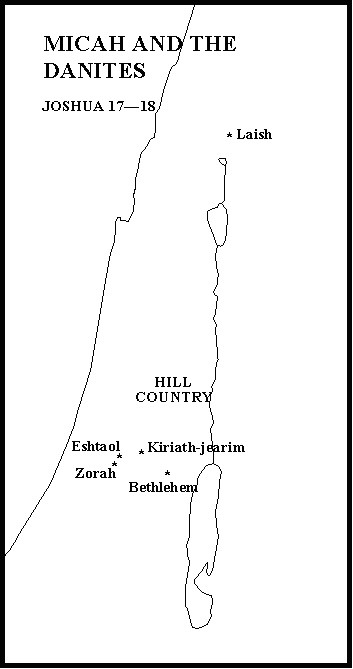
Eshtaol & Zorah Constable Judges 17
DANITES FAB FIVE
THE PROWL
So the sons of Dan sent from their family five men out of their whole number, valiant men from Zorah and Eshtaol, to spy out the land and to search it - This is like a last ditch effort, a desperation move by the Danites. This Hebrew word for spy is related to the word for foot, the idea being that spies went quietly on foot, scouting what they could see. Such reconnoitering was contrived to help the conquest of enemy territory. The sending of the five spies to reconnoiter the land recalls the incidents of Numbers 13:1-33+ except that this former search party was apparently in will of God (cf Dt 1:22-23+).
And they said to them, "Go, search the land." And they came to the hill country of Ephraim, to the house of Micah, and lodged there. (See Jos 19:47): Five spies were sent from the same area where Samson grew up, Zorah and Eshtaol (Jdg 13:2) and were assigned to search for a new location to the north, much like the twelve men commissioned by Moses (Numbers 13:2+).
THOUGHT - Like all other tribes, Dan had a territory given them, but they failed to claim the power of God to conquer that territory (Jdg 1:34+). This is a lesson for all believers who have everything necessary for life and godliness (2Pe 1:3+) and yet fail to "conquer" and lay hold of "every spiritual blessing in the heavenly places in Christ" (Eph 1:3+) Later the Danites capitulated even more by accepting defeat and migrating to another territory in the north, becoming overtly idolatrous (Jdg 18). The lesson is be wary when you fail to conquer the "promised land" Yahweh has given you as it could be the beginning of spiritual decline.
Keil and Delitzsch To spy out and explore the land for the object mentioned, the Danites sent out five brave men “out of their (the Danites’) ends,” i.e., from their whole body (vid., 1 Kings 12:31; 13:33, and the commentary on Gen. 19:4). They came up to the mountains of Ephraim, and as far as Micah’s house, where they passed the night (Judges 18 Commentary)
Judges 18:3 When they were near the house of Micah, they recognized the voice of the young man, the Levite; and they turned aside there, and said to him, "Who brought you here? And what are you doing in this place? And what do you have here?"
- they recognized the voice - Jdg 12:6 Ge 27:22 Mt 26:73
- what are you doing in this place - Isa 22:16
- Judges 18 Resources
When they were near the house of Micah, they recognized the voice of the young man, the Levite - How? We cannot be absolutely certain but presumably they recognized his dialect or mode of pronunciation was not an Ephraimite. Recall that in Jdg 12:6 Ephraimites were detected because "[the Gileadites] would say to [the Ephraimites], "Say now, 'Shibboleth.'" But he said, "Sibboleth," for he could not pronounce it correctly." In sum, Jonathan’s dialect may have attracted the attention of the five spies, because he didn’t speak quite like a man from Ephraim.
and they turned aside there, and said to him, "Who brought you here? And what are you doing in this place? And what do you have here: The rapid fire, repetitive questions reveal their surprise at finding a Levite in that locale but the fact that he had become a hireling did not seem to bother them at all. Compromise, Complacency, & Confusion all make for a spiritually deadly combination.
What are you doing in this place is a good question, which he answered truthfully (truthfulness is difficult to find in these last chapters), saying in the next verse that he was hired to do the job! Since somebody else was paying the bill, the spies thought it was permissible to get “spiritual counsel” from Jonathan, and he told them what they wanted to hear. The fact that Jonathan’s words came true doesn’t absolve either him or the spies from being involved in activities outside the will of God. Jonathan’s "prophecy" came true because the Danites were strong and the people of Laish were weak and unprotected. If the tribe of Dan had really wanted God’s counsel, they could have consulted with the high priest who was also in Ephraim at Shiloh (Jdg 18:31). But they were already outside of God's will by refusing to remain in the land God had assigned to them. Therefore, it wasn’t likely God would have revealed anything to them. This spiritual principle that knowing spiritual truth is related to obeying spiritual truth is seen in Jesus' declaration in John "If any man is willing to do His will, he shall know of the teaching, whether it is of God, or whether I speak from Myself." (John 7:17).
Spurgeon on "What hast thou here? (KJV)" - This is generally the worldling’s question—“What hast thou here?” And in this case it was well suited for a hireling priest. (The Interpreter: Spurgeon's Devotional Bible).
Keil and Delitzsch When they were at Micah’s house and recognised the voice of the young Levite, i.e., heard his voice, and perceived form his dialect that he was not a native of these mountains, they turned aside there, sc., from the road into the house, near to which they rested, and asked him, “Who brought thee hither, and what doest thou at this place? what hast thou to do here?” When he told them his history (“thus and thus,” lit. according to this and that; cf. 2 Sam. 11:25, 1 Kings 14:5), they said to him, “Ask God, we pray thee, that we may learn whether our way will be prosperous.” שָׁאַל בֵּאלֹהִים, used for asking the will of God, as in Judg. 1:1, except that here the inquiry was made through the medium of the imitation of the ephod and the worship of an image. And he said to them, sc., after making inquiry of the divine oracle, “Go in peace; straight before Jehovah is your way,” i.e., it is known and well-pleasing to Him (vid., Prov. 5:21, Jer. 17:16). (Judges 18 Commentary)
Judges 18:4 And he said to them, "Thus and so has Micah done to me, and he has hired me, and I have become his priest."
- hired me - Jdg 17:10 Pr 28:21 Isa 56:11 Eze 13:19 Ho 4:8,9 Mal 1:10 Joh 10:12,13 Ac 8:18-21 20:33 1Ti 3:3 Tit 1:11 2Pe 2:3,14,15
- Judges 18 Resources
I AM A
HIRED PRIEST
And he said to them, "Thus and so has Micah done to me, and he has hired me - Note well that GOD NEVER HIRES HIS SERVANTS; they work for him freely out of love and thanksgiving and He rewards them for faithfulness out of His grace.
And I have become his priest - Even though he was not of Aaron's line and had no Biblical basis for assuming the role of a priest. He was deceived thinking that what was wrong in God's eyes was really "right" because that's what he believed to be right. This is the ultimate in willful deception and no man is immune to this spiritual trap when he begins to wander from the highway of holiness and soon right is wrong and dark is light (cp Isa 5:13,20,21+).
J. Vernon McGee writes that "This is a period of compromise, corruption, and confusion, which are the marks of apostasy at any time. We are in a state of apostasy today. The church has compromised. It is in a state of corruption and confusion. Our problem is that it is not returning to its authority, which is the Word of God, and the Lord Jesus Christ who is revealed in the Word of God." (See context Thru the Bible)
This is why it is so critical in what are quite likely the very "last" of the last days to hold fast to the faithful word so that we "may be able both to exhort in sound doctrine and to refute those who contradict" (Titus1:9+).
Judges 18:5 And they said to him, "Inquire of God, please, that we may know whether our way on which we are going will be prosperous."
- Inquire - 1Ki 22:5 2Ki 16:15 Isa 30:1 Eze 21:21 Ho 4:12 Ac 8:10
- of God - Jdg 18:14 17:5,13
- Judges 18 Resources
DANITES REQUEST A
"FREE CONSULTATION"
Related Passages:
Joshua 19:40; 41 The seventh lot fell to the tribe of the sons of Dan according to their families. 41 The territory of their inheritance was Zorah and Eshtaol and Ir-shemesh,
And they said to him, "Inquire of God, please - God had already revealed his will by the allotments given to the various tribes (Jos 19:40,41). They were searching for an oracle that would guarantee the success of their journey. Isn't this the tendency of each of our desperately sick hearts to seek opinions until we hear what we want to hear?
Spurgeon - Little did they care whether he was a true servant of God or not. They were like many in our day, who think one religion as good as another. They saw before them a god, an ephod, and a priest, and that was enough for them. One would think that if they cared for religion at all, they would have been anxious to have the right one; but no, the very men who are careful in their eating, their clothing, their medicine, will take their faith second-hand from others, without examination. (The Interpreter: Spurgeon's Devotional Bible).
That we may know whether our way on which we are going will be prosperous - Unable to possess their allotment of land, because they failed to drive out the enemy, the Danites sought God's blessing on their search for other territory. Jonathan, the pseudo-priest, told them what they wanted to hear (a "priest for hire" spouting pious platitudes to pander, please and placate).
Judges 18:6 And the priest said to them, "Go in peace; your way in which you are going has the LORD'S approval."
- Go in peace - 1Ki 22:6,12,15 Jer 23:21,22,32
- in which you are going - Dt 11:12 Ps 33:18 1Th 3:11
- Judges 18 Resources
PSEUDO-PRIEST GIVES
POSITIVE REPORT
And the priest said to them, "Go in peace - The pseudo-priest gave them the message they wanted to hear. He was even careful to use the name of Jehovah to give the message credibility and authority. This is the sweet talk of a hired preacher who says what people want to hear, reminding us of Paul's warning that ""the time will come when they will not endure sound doctrine; but wanting to have their ears tickled, they will accumulate for themselves teachers in accordance to their own desires and will turn away their ears from the truth, and will turn aside to myths." (2Ti 4:3-4) This favorable reply was to have an important bearing upon subsequent events.
Jeremiah also recorded this lamentable state writing that Jerusalem's "prophets have seen for you false and foolish visions; and they have not exposed your iniquity so as to restore you from captivity, but they have seen for you false and misleading oracles." (Lamentations 2:14)
your way in which you are going has the LORD'S approval - Literally "your way is before the LORD." He would view their actions with favor, which was the opposite of the truth. The Levite sent them on their way with a blessing, claiming their journey was "before/in front of the Lord." Though he uses the Lord's name in formulating his blessing, the text makes no mention of his inquiring of the Lord. His oracle is actually ambiguous. The phrase "before/in front of the Lord" does not necessarily convey a positive idea. In its only other use in the Hebrew Bible (Pr 5:21) it simply means that one's actions are in full view of Yahweh, who examines their ethical quality
Spurgeon…False priests abound in soft words. These spies fulfilled their commission, and returned to the Danites with their report; whereupon the men of war marched upon Laish, and on the road stopped at or near Micah’s house for the night, as the spies had done previously. They were ungrateful enough to repay his former hospitality by robbing him. (The Interpreter: Spurgeon's Devotional Bible).
Judges 18:7 Then the five men departed and came to Laish and saw the people who were in it living in security, after the manner of the Sidonians, quiet and secure; for there was no ruler humiliating them for anything in the land, and they were far from the Sidonians and had no dealings with anyone.
- Then the five men departed and came to Laish - Jos 19:47, called Leshem
- who were in it living in security - Jdg 18:27,28 Rev 18:7
- for there was no ruler humiliating them 1Sa 3:13 1Ki 1:6 Ro 13:3 1Pe 2:14
- Judges 18 Resources
- C H Spurgeon Judges 18:7, 27, 28 The Danger of Carnal Security
From Constable Judges 17
FAB FIVE EYE
"EASY PICKIN'S"
Then the five men departed and came to Laish - The five spies had traveled 100 miles north from their encampment at Zorah to Laish (“Leshem” in Josh 19:47 and later called Dan - Jdg 18:29), a town inhabited by the Sidonians, about 30 mi East of the Mediterranean Sea. Laish and at the foot of Mt Hermon (Wikipedia article, see beautiful picture) in the extreme northern portion of Israelite territory, the city was about one hundred miles from Dan's assigned territory. Laish was conquered by the Danites and renamed Dan.

Laish [EBD] a lion. A city of the Sidonians, in the extreme north of Palestine (Judg. 18:7, 14); called also Leshem (Josh. 19:47) and Dan (Jdg 18:29; Jer. 8:16). It lay near the sources of the Jordan, about 4 miles from Paneas. The restless and warlike tribe of Dan (q.v.), looking out for larger possessions, invaded this country and took Laish with its territory. It is identified with the ruin Tell-el-Kady, "the mound of the judge," to the north of the Waters of Merom (Josh. 11:5). (See also Wikipedia note on Laish)
And saw the people who were in it living in security, after the manner of the Sidonians, quiet and secure - NIV = “unsuspecting and secure” and “prosperous." These folks were "quiet and secure" but in the days of the judges it was a false sense of security because no one could be quite sure they were quite secure! These peaceful people were minding their own business and had no treaties with anybody. They were a perfect target for the warlike tribe of Dan on the prowl for a new home. Their town was also isolated from the Sidonians by the Lebanon mountain range of mountains, and from Syria by Mt Hermon and the Anti-Lebanon range, so that they were without close military allies who could come to their aid if attacked.
Arthur Lewis comments on the beauty of the area around the modern day tourist site of Tell Dan which includes a replica of pagan altar (see picture) - "Travelers who have visited the Huleh Valley and the vicinity of Dan expound on the natural resources and the fertility of the area. Water comes from every rock and hill, pouring down from the nearby mountains of Lebanon. Like Scotland, this part of Galilee is green and overgrown with all forms of vegetation. The tribe of Dan had seized upon a veritable paradise on earth!" (Borrow Judges/Ruth - Everyman's Bible Commentary )
#/media/File:Tel_dan_hram.jpg)
For there was no ruler humiliating them for anything in the land, and they were far from the Sidonians and had no dealings with anyone - There, at the foot of beautiful snow capped Mt Hermon, the "Danite five" discovered a highly desirable location, a considerable distance from potential enemies and furnished with an excellent supply of water, the same springs that formed one of the sources of the Jordan River. The Lebanon range protected it from interference from either Syria or the Sidonians. Since the residents of Laish felt secure they had not built any defenses against invaders. It was an ideal situation for the land-hungry Danites
Keil and Delitzsch Thus the five men proceeded to Laish, which is called Leshem in Josh. 19:47, and was named Dan after the conquest by the Danites,—a place on the central source of the Jordan, the present Tell el Kadi (see at Josh. 19:47),—and saw the people of the town dwelling securely after the manner of the Sidonians, who lived by trade and commerce, and did not go out to war. יֹושֶׁבֶת is the predicate to אֶת־הָעָם, and the feminine is to be explained from the fact that the writer had the population before his mind (see Ewald, § 174, b.); and the use of the masculine in the following words שֹׁקֵט וּבֹטֵחַ, which are in apposition, is not at variance with this. The connection of יֹושֶׁבֶת with בְּקִרְבָּהּ, which Bertheau revives from the earlier commentators, is opposed to the genius of the Hebrew language. שֹׁקֵט וּבֹטֵחַ, “living quietly and safely there.” וְאֵין־מַכְלִים וגו׳, “and no one who seized the government to himself did any harm to them in the land.” הִכְלִים, to shame, then to do an injury (1 Sam. 25:7). מַכְלִים דָּבָר, shaming with regard to a thing, i.e., doing any kind of injury. עֶצֶר, dominion, namely tyrannical rule, from עָצַר, imperio coercere. The rendering “riches” (θησαυρός, LXX), which some give to this word, is founded simply upon a confounding of עֶצֶר with אֹוצָר. יָרַשׁ does not mean “to possess,” but “to take possession of,” and that by force (as in 1 Kings 21:18). “And they were far from the Sidonians,” so that in the event of a hostile invasion they could not obtain any assistance from this powerful city. Grotius draws the very probable conclusion from these words, that Laish may have been a colony of the Sidonians. “And they had nothing to do with (other) men,” i.e., they did not live in any close association with the inhabitants of other towns, so as to be able to obtain assistance from any other quarter. (Judges 18 Commentary)
Judges 18:8 When they came back to their brothers at Zorah and Eshtaol, their brothers said to them, "What do you report?"
- Zorah and Eshtaol - Jdg 18:2,11 13:2 16:31
- Judges 18 Resources
THE DANITE FIVE
RETURN HOME
When they came back to their brothers at Zorah and Eshtaol (see map - home base), their brothers said to them, "What do you report?" - The spies bring the report and the brothers are itching for a word.
Trapp - Quid vos? (What are you) So hasty they were to hear the news, that they utter imperfect speeches. (ED: WHAT ARE YOU IS LITERALLY "WHAT-YOU?")
Judges 18:9 And they said, "Arise, and let us go up against them; for we have seen the land, and behold, it is very good. And will you sit still? Do not delay to go, to enter, to possess the land.
- Arise - Nu 13:30 Nu 14:7-9 Jos 2:23-24
- And will you sit still - 1Ki 22:23
- Do not delay to go - Jos 18:3 1Sa 4:9 2Sa 10:12 Joh 6:27 Heb 6:11,12 2Pe 1:10,11
- Judges 18 Resources
Related Passage:
Numbers 13:30+ (THE "GO" THAT ELICITED A "NO!") Then Caleb quieted the people before Moses and said, “We should by all means go up and take possession of it, for we will surely overcome it.”
FAB FIVE SPIES CALL
FOR SURPRISE ATTACK
And they said, "Arise, and let us go up against them; for we have seen the land, and behold, it is very good. And will you sit still? Do not delay to go, to enter, to possess the land. Their positive and unanimous report, recommending an immediate attack, contrasted sharply with the pessimistic majority opinion of the spies sent by Moses to explore the entire land (cf. Nu 13:25-33). The claim of divine approval (Jdg 18:10), however, based on the consultation of Jdg 18:6, was hardly justifiable.
Cundall points out as sad contrast of two spy parties, one out of the will of God and the other in the will of God, the former saying "GO", the latter saying "NO" - The unanimous and enthusiastic report of the spies when they returned to their brethren and the urgency with which they advocated action are in marked contrast to the doleful account of the ten companions of Joshua and Caleb (Nu 13:27–29, 31–33+). (Borrow Judges & Ruth: Tyndale Old Testament Commentary )
John Trapp on be not slothful to go - Thus do these spies notably and manfully encourage their contribules (from the same tribe/region) to set upon Laish, to secure a city. Captain Gam in like sort bespake our Henry V before the Battle of Agincourt, If the French be so numerous, there will be enough to be killed, enough to be taken prisoners, and enough to run away. It proved accordingly, though the French were so confident of a victory, that they sent to King Henry, to know what ransom he would give!
Keil and Delitzsch - the spies said to their fellow-citizens, in reply to the question מָה אַתֶּם, “What have you accomplished?” “Up, let us go up against them (the inhabitants of Laish), for the land is very good, and ye are silent,” i.e., standing inactive (1 Kings 22:3; 2 Kings 7:9). “Be not slothful to go (to proceed thither), to come and take possession of the land!”. (Judges 18 Commentary)
Judges 18:10 "When you enter, you shall come to a secure people with a spacious land; for God has given it into your hand, a place where there is no lack of anything that is on the earth."
- secure - Jdg 18:7,27
- God has - Dt 2:29 4:1 Jos 6:16
- where there is no lack of anything - Ex 3:8 Dt 8:7-9 11:11,12 Eze 20:6 1Ti 6:17
- Judges 18 Resources
Related Passage:
Exodus 3:8+ “So I have come down to deliver them from the power of the Egyptians, and to bring them up from that land to a good and spacious land (SAME WORD AS HERE IN Jdg 18:10 - rachab), to a land flowing with milk and honey, to the place of the Canaanite and the Hittite and the Amorite and the Perizzite and the Hivite and the Jebusite.
Deuteronomy 8:7-9+ “For the LORD your God is bringing you into a good land, a land of brooks of water, of fountains and springs, flowing forth in valleys and hills; 8 a land of wheat and barley, of vines and fig trees and pomegranates, a land of olive oil and honey; 9a land where you will eat food without scarcity, in which you will not lack anything; a land whose stones are iron, and out of whose hills you can dig copper.
SURPRISE A SECURE PEOPLE
IN A SPACIOUS LAND
When you enter, you shall come to a secure people with a spacious land; for God has given it into your hand, a place where there is no lack of anything that is on the earth - "Spacious" is literally "broad of hands"; meaning hence the land stretched "wide to right and left" as when one spreads out their hands. This expression was used by the leaders of Shechem in an attempt to convince the people that there was room for the family of Jacob to live among them (Ge 34:21). It is easy and convenient to rationalize selfish desires by saying that the opportunity to fulfill them is God’s guidance to do so. With their affirmation that God has given it into your hand, the Danites claimed divine support, but their confidence was based on an oracle that was sought almost as an afterthought and was acquired from a rogue pseudo priest at an idolatrous shrine! And you think that is God's blessing? They thought it was "right" because it was in their own eyes, not God's eyes! The deep deception of depravity!
John Trapp - A place where there is no want of anything.] And might therefore have been called Makaria, or Blessed; as the island Cyprus was of old, because of the abundance of commodities which it sent to other countries, of whom it craved no help in return. The people therein generally lived so at ease and pleasure, that therefore the island was dedicated to Venus, who was thereafter called Cypria. Sextus Rufus, writing thereof, saith, Cyprus, famous for its wealth, solicited the poverty of the people of Rome to seize upon it. Ita ut ius eius insulae avarius magis quam iustius simus assecuti (WHICH MEANS) so that we got that island more covetously than justly. So did the Danites this city of Laish, if at least, as some will have it, it belonged to the tribe of Asher, and not to them. (ED: ACTUALLY IF YOU LOOK AT THIS MAP DAN WAS IN THE TERRITORY OF NAPHTALI).
Keil and Delitzsch “When ye arrive, ye will come to a secure people (i.e., a people living in careless security, and therefore very easy to overcome); and the land is broad on both sides (i.e., furnishes space to dwell in, and also to extend: vid., Gen. 34:21, 1 Chron. 4:40); for God has given it into your hand.” They infer this from the oracular reply they had received from the Levite (v. 6). “A place where there is no want of anything that is in the land (of Canaan).”. (Judges 18 Commentary)
Judges 18:11 Then from the family of the Danites, from Zorah and from Eshtaol, six hundred men armed with weapons of war set out.
- armed with weapons of war set ou- Jdg 18:11
- Judges 18 Resources
SMALL COMMANDO
FORCE SENT OUT
Then from the family of the Danites, from Zorah and from Eshtaol, six hundred men armed with weapons of war set out - Is this all the army the Danites could muster? Compare this figure with the 62,700 Danite soldiers at the beginning of the wilderness wandering (Nu 1:38-39+) and the 64,400 at the end of the wilderness wandering having added 1700 (Nu 26:42-43). Responding to the challenge of the spies, the Danites quickly set out for this new "promised land." Yet one wonders why only 600 are mentioned? Were they only part of a larger migrating group, or does this low number reflect the toll taken by their wars with the Philistines and Amorites? Compare the 600 men who constituted the remnant of the tribe of Benjamin (Jdg 20:47+).
Cundall on the small number of armed men - The relatively small numbers may indicate the decimation of the tribe resulting from years of hostile pressure. Alternatively, it may be that when the moment of decision came a majority were unwilling to leave their familiar surroundings. If this incident be dated before the events described in the Samson narratives (ED: THE FACT THAT THE SPIRIT BEGAN TO STIR SAMSON AT MAHANEH-DAN WHICH WAS NOT NAMED UNTIL Jdg 18:12 SUGGESTS THIS WAS BEFORE SAMSON) , then it is obvious that only a portion of the tribe left the region of Zorah and Eshtaol, but this is not clearly indicated in the text. The question of Jdg 18:19 suggests that the major part of the tribe migrated and so Jonathan was able to be a priest unto a tribe and a family in Israel. (Borrow Judges & Ruth: Tyndale Old Testament Commentary)
John Trapp on 600 men - Picked out for the purpose, and very well appointed: they and their families, a whole colony of them, set forward for Laish, by the persuasion of the spies. Oh that we could as easily prevail with people to take God’s kingdom by force, to storm heaven, and to lay hold upon eternal life! Plutarch telleth of the Gauls, that after they had once tasted of the grapes that grew in Italy, they never rested till they had possessed themselves of that country. Oh that we would do so for heaven! AMEN!!!
Keil and Delitzsch - Six Hundred Danites to Laish—Robbery of Micah’s Images—Conquest of Laish, and Settlement There.—Vv. 11, 12. In consequence of the favourable account of the spies who returned, certain Danites departed from Zorea and Eshtaol, to the number of 600 men, accoutred with weapons of war, with their families and their possessions in cattle and goods (see v. 21), and encamped by the way at Kirjath-jearim (i.e., Kuriyet Enab; see Josh. 9:17), in the tribe territory of Judah, at a place which received the permanent name of Mahaneh Dan (camp of Dan) from that circumstance, and was situated behind, i.e., to the west of, Kirjath-jearim (see at Judg. 13:25). The fact that this locality received a standing name from the circumstance described, compels us to assume that the Danites had encamped there for a considerable time, for reasons which we cannot determine from our want of other information. The emigrants may possibly have first of all assembled here, and prepared and equipped themselves for their further march. (Judges 18 Commentary)
Judges 18:12 And they went up and camped at Kiriath-jearim in Judah. Therefore they called that place Mahaneh-dan to this day; behold, it is west of Kiriath-jearim.
- Kirjath-jearim -Jos 15:60 1Sa 7:1 1Ch 13:5,6 2Ch 1:4
- Mahaneh-dan - Jdg 13:25
- Judges 18 Resources
CAMP OF DAN
NEAR KIRIATH-JEARIM
And they went up and camped at Kiriath-jearim (city of forests or thickets) in Judah. Therefore they called that place Mahaneh-dan (encampment or camp of Dan) to this day; behold, it is west of Kiriath-jearim - Mahaneh-dan (encampment or camp of Dan) which is only noted in Jdg 13:25 "And the Spirit of the LORD began to stir Samson in Mahaneh-dan, between Zorah and Eshtaol." Here is a thought to ponder -- if this location is named in Jdg 18:12, it at least suggests that these events in Judges 17-18 occurred BEFORE the time of Samson. Of course there is the possibility that this name was used in a proleptic sense.
KIRIATH-JEARIM [ISBE] - kir-i-ath je'-a-rim, kir-i-ath je-a'-rim (qiryath-ye`-arim, "city of thickets"; Septuagint he polis Iareim; the King James Version Kirjathjearim): One of the four chief cities of the Gibeonites (Josh 9:17); a city ,of Judah (Josh 15:60), evidently an ancient, Semitic "high place", hence, the name "Kiriath-Baal" (same place) ; it was one of the places on the border line between Judah and Benjamin (Josh 18:14,15; 15:11 (where it is called "Baalah"); compare 1 Ch 13:6). It is mentioned as in Judah (Josh 15:60; 18:14; Jdg 18:12), but if KIRIATH (which see) is identical with it, it is mentioned as belonging to Benjamin (Josh 18:28; in 2 Sam 6:2, Baale-judah).
1. Scripture References: (19v - Jos. 9:17; Jos. 15:9; Jos. 15:60; Jos. 18:14; Jos. 18:15; Jos. 18:28; Jdg. 18:12; 1 Sam. 6:21; 1 Sam. 7:1; 1 Sam. 7:2; 1 Chr. 2:50; 1 Chr. 2:52; 1 Chr. 2:53; 1 Chr. 13:5; 1 Chr. 13:6; 2 Chr. 1:4; Ezr. 2:25; Neh. 7:29; Jer. 26:20) Jdg 18:12 records that the men of Dan set forth out of Zorah and Eshtaol and encamped in Mahaneh-dan behind (West of) Kiriath-jearim. (In Jdg 13:25 Mahaneh-dan ("the camp of Dan") is described as between Zorah and Eshtaol; see MAHANEH-DAN.) To this sanctuary the ark of Yahweh was brought, from Beth-shemesh by the people of Kiriath-jearim, and they "brought it into the house of Abinadab in the hill (m "Gibeah"]; and sanctified Eleazar his son to keep the ark of Yahweh" (1 Sam 7:1). Here it abode twenty years (1 Sam 7:2; 2 Sam 6:2-4; compare 1 Ch 13:6; 2 Ch 1:4). Clearly it was in the hills somewhere to the East of Beth-shemesh.
The prophet Uriah-ben-shemaiah, killed by Jehoiskim, belonged to Kiriath-jearim (Jer 26:20 f).
In Ezr 2:25 (compare Neh 7:29), this place occurs under the name "Kiriath-arim." In 1 Esdras 5:19 the name occurs as "Kiriathiarius."
2. Position: The exact position of this important Israelite sanctuary has never been satisfactorily settled. Some of the data appear to be contradictory. For example, Josephus (Ant., VI, i, 4) says it was a city in the neighborhood of Beth-shemesh, while Eusebius and Jerome (Onomasticon) speak of it ("Cariathiareim") in their day as a village 9 or 10 miles from Jerusalem on the way to Lydda. But it is open to doubt whether the reputed site of their day had any serious claims. Any suggested site should fulfill the following conditions: (1) It must harmonize with the boundary line of Judah and Benjamin between two known points--the "waters of Nephtoah," very generally supposed to be Lifta, and Chesalon, certainly Kesla (Josh 15:10). (2) It should not be too far removed from the other cities of the Gibeonites--Gibeon, Chephirah and Beeroth--but those places, which are all identified, are themselves fairly widely apart. (3) Mahaneh-dan ("the camp of Dan") is described as between Zorah and Eshtaol, and was West of Kiriath-jearim; this, and the statement of Josephus that it was in the neighborhood of Beth-shemesh, makes it probable that the site was near the western edge of the mountains of Judah. Zorah (now Sara`), Eshtaol (now Eshu`a) and Beth-shemesh (now `Ain Shems), are all within sight of each other close to the Vale of Sorek. (4) The site should be a sanctuary (or show signs of having been such), and be at least on a height (Gibeah, 1 Sam 7:1 margin). (5) The name may help us, but it is as well to note that the first part of the name, in the form "Kirathiarius" (1 Esdras 5:19), appears to have survived the exile rather than the second.
MAHANEH-DAN [ISBE] - ma'-ha-ne-dan (machaneh-dhan; parembole Dan): (Scriptural uses - Jdg. 13:25; Jdg. 18:12) This place is mentioned twice: in Jdg 13:25 (the King James Version "the camp of Dan"), and Jdg 18:12. In Mahaneh-dan, between Zorah and Eshtaol, the spirit of the Lord began to move Samson. Here the 600 marauders of Dan, coming from Zorah and Eshtaol, encamped behind Kiriath-jearim. It has been thought that these two statements contradict each other; or at least that they cannot both apply to the same place. But if we accept the identification of Zorah with Surah, and of Eshtaol with Eshu`, which there seems no reason to question; and if, further, we identify Kiriath-jearim with Khirbet Erma, which is at least possible, the two passages may be quite reconciled. Behind Kiriath-jearim, that is West of Khirbet Erma, runs the Vale of Sorek, on the north bank of which, about 2 miles apart, stand Zorah and Eshtaol; the former 3 1/2 miles, the latter 2 1/2 miles fron khirbet Erma. No name resembling Mahaneh-dan has yet been recovered; but the place may have lain within the area thus indicated, so meeting the conditions of both passages, whether it was a permanent settlement, or derived its name only from the incident mentioned in Jdg 18:12. W. Ewing
Judges 18:13 And they passed from there to the hill country of Ephraim and came to the house of Micah.
- Ephraim - Jdg 18:2-3 Jdg 17:1 19:1 Jos 24:30,33
- Judges 18 Resources
PERRARO GRATI
REPERIUNTUR
The Latin phrase means "Very rarely are we found thankful," which is true of all of us but especially in the days of the Judges, when every man was his own judge as to what was right and could care less about giving thanks.
And they passed from there to the hill country of Ephraim and came to the house of Micah - The hill country of Ephraim is where this farcical scenario began to play out (Jdg 17:1+).
John Trapp regarding Micah and his house writes - "Whom the five spies ill requited for his former hospitality and courtesy: Perraro grati reperiuntur, saith Cicero. A thankful man is a rare bird. Ungrateful persons are but like a mouse in a satchel or a snake in one’s bosom, who do ill repay their hosts for their lodging. Xerxes dealt barbarously with the sons of Pythias, who gave free quarter to that whole huge army of his. See Jdg 18:2."
Judges 18:14 Then the five men who went to spy out the country of Laish answered and said to their kinsmen, "Do you know that there are in these houses an ephod and household idols and a graven image and a molten image? Now therefore, consider what you should do."
- Then - 1Sa 14:28
- in these - Jdg 18:3,4 Jdg 17:5
- now therefore - Pr 19:27 Isa 8:19,20
- Judges 18 Resources
FAB FIVE STIR UP
STEALING "GODS"!
Then the five men who went to spy out the country of Laish answered and said to their kinsmen, "Do you know that there are in these houses an ephod (epod) and household idols (teraphim; Lxx = theraphim - transliterated) and a graven image (pesel) and a molten image (massekah)? Now therefore, consider what you should do." - NET = "Decide now what you want to do." The casualness of this decision to steal Micah’s gods stands out as another reflection of them doing what is right in their own eyes! Sin has lost its ability to convict! None of the religious restraints of God's 10 Commandments deter the Danites. Even worse, there is no feeling that a god who can be stolen is, for that reason, undesirable.
THOUGHT- The Danites were going to a new home, relatively far from the worship center, the house of God in Shiloh, so why not collect a few idols (and a priest) and save the long trip south to Shiloh?
John Trapp - Here they stir up their fellows to theft. There is little difference faveasne sceleri, an illud facias (favor the crime, or do it), whether ye hold the bag, or fill it. There is little difference whether ye hold the bag, or fill it. (SUGGESTERS AND STEALERS BOTH GUILTY!)
Spurgeon - This was a hint that perhaps the gods would be worth the stealing (The Interpreter: Spurgeon's Devotional Bible).
Keil and Delitzsch on consider what you should do - The meaning of these last words is very easily explained: do not lose this opportunity of obtaining a worship of our own for our new settlement. (Judges 18 Commentary)
Ephod (Thumbnails and descriptions) (0646)(epod) is a masculine noun referring to the sacred vestment worn by the high priest. "A garment worn around the high priest’s upper body that featured twelve semiprecious and precious stones on the front, each one bearing the name of one of the tribes of Israel (Ex. 28:4, 6, 12, 15, 25–28). The breastplate bearing the stones was on the front of the ephod itself. The ephod was made by a skilled workman and had two shoulder pieces which were fastened together to hold it securely. It also bore two stones, one on each of its shoulders that represented the tribes of Israel. Each stone had six of the tribes of Israel engraved on it." (Baker) The Hebrew word ephod also described a vestment worn by David (2Sa 6:14, 1Ch 15:27) and the boy Samuel (1Sa 2:18). Gideon made an ephod which was an idolatrous cultic object (Jdg 8:27) In Hos 3:4 it is one of the sacred items the sons of Israel will lose access to for a period of time (because of disobedience).R K Harrison adds that "The term ephod was also used occasionally to describe an ‘idol’ (cf. Jdg. 8:27; 17:5) which was employed in family worship, but precisely why such an image was described by a name used for a well-attested object in Israelite tabernacle worship is unknown." (Tyndale Old Testament Commentaries - Leviticus)
Related Resource:
Household idols (08655)(teraphim) refers to a kind of idol, culti objects. It was sometime used in divination Vine says that teraphim "is a loanword from Hittite-Hurrian (tarpis) which in West Semitic assumes the basic form tarpi. Its basic meaning is spirit or demon (INTERESTING)."
TWOT (borrow a copy) Their primary function among the apostate element in Israel's population seems to have been that of divination (1 Samuel 15:23; 2 Kings 23:24; Ezekiel 21:21 [H 26]; Zech. 10:2), in which role they are often found in context with the ephod (see Judges 17:5; Judges 18:14, 17, 18, 20; Hosea 3:4)....Needless to say, teraphim were never condoned in the OT as legitimate appurtenances to the worship of the Lord; in fact, they came under frequent prophetic condemnation (1 Samuel 15:23; 2 Kings 23:24; Zech. 10:2).
Gilbrant - Referring to "household gods," the noun terāphîm occurs fifteen times in the OT, always with the plural ending -îm. Most often, the word has the article (four times it does not; cf. Jdg. 17:5; 18:14; 1 Sa 15:23; Hos. 3:4). The plural form indicates real plurality only two times (2Ki. 23:24; Zech. 10:2). Koehler-Baumgartner (4:1795) prefers the English word "image" as the best translation. It may be, more specifically, a "statuette" (cf. Gen. 31:19, 34f) or even a "mask" of some kind. These objects functioned in the religious sphere as "household gods" or "family gods." Ge 31:34 indicates that relatively small objects were involved since Rachel put them inside her camel's saddle (SEE PICTURE). In 1Sa 19:13, 16, it is suggested that an image of average human size is indicated, possibly a "ceremonial mask" or even "rags" are the best translations. The meaning, in fact, remains enigmatic. The terāphîm possibly functioned as a source of oracles or even divination (cf. Jdg. 17:5; Hos. 3:4; Zech. 10:2). The terāphîm were indeed eventually outlawed in Israel (cf. Ge 31:19ff; 1Sa 15:23; 19:13, 16; 2 Ki. 23:24; Zech. 10:2f); rather, obedience and faith in God's Word were expected and inculcated. The terāphîm were used for divination by a Babylonian king (Ezek. 21:21). (Complete Biblical Library)

Teraphim - 15x in 15v - household idol(2), household idols(10), idolatry(1), teraphim(2). Gen. 31:19; Gen. 31:34; Gen. 31:35; Jdg. 17:5; Jdg. 18:14; Jdg. 18:17; Jdg. 18:18; Jdg. 18:20; 1 Sam. 15:23; 1 Sam. 19:13; 1 Sam. 19:16; 2 Ki. 23:24; Ezek. 21:21; Hos. 3:4; Zech. 10:2
Related Resources:
Graven image (idol) (06459) (pesel from pasal = to hew, cut as in Ex 34:1) is a noun that refers to something carved (graven) or cast image - normally carved from wood or chiseled from rock, but it can also be poured or cast (Isa40:19; 44:10). Isa40:19 describes the “casting” of an idol that is then plated or overlaid with gold. The first use of pesel is Ex 20:4 (Lev 26:2, Dt 5:8)which is God's command "You shall not make for yourself an idol." In the Septuagint (Lxx) the Greek word used for pesel here in Ex 20:4 is eidolon (from eídos = that which is seen, what is visible, figure, appearance) is primarily a phantom, form, image, shadow or likeness. Note that other uses of pesel are translated with a word found only in the Septuagint (Lxx), the adjective gluptos which means a thing carved or a graven image. (Used in Lxx of Lev 26:1, Dt 4:16, 23, 25 - Judges uses gluptos which is from glupho = to carve and thus a carved image). In Dt 4:23 the result of forgetting the Mosaic covenant is that they make a graven image. Dt 4:25 is a prophecy saying Israel would make idols. In Dt 27:15 God says the man who makes an idol is cursed! The concentration of uses of pesel in Judges 17:1-13 and Judges 18:1-33+ shows the defiling, abominable effect of forgetting the LORD their God, Judges 3:7+ recording "The sons of Israel did what was evil in the sight of the LORD, and forgot the LORD their God and served the Baals and the Asheroth."
Pesel - carved image(2), graven image(14), graven images(1), idol(10), idols(3), image(1). - Exod. 20:4; Lev. 26:1; Deut. 4:16; Deut. 4:23; Deut. 4:25; Deut. 5:8; Deut. 27:15; Jdg. 17:3; Jdg. 17:4; Jdg. 18:14; Jdg. 18:17; Jdg. 18:18; Jdg. 18:20; Jdg. 18:30; Jdg. 18:31; 2 Ki. 21:7; 2 Chr. 33:7; Ps. 97:7; Isa. 40:19; Isa. 40:20; Isa. 42:17; Isa. 44:9; Isa. 44:10; Isa. 44:15; Isa. 44:17; Isa. 45:20; Isa. 48:5; Jer. 10:14; Jer. 51:17; Nah. 1:14; Hab. 2:18
Molten image (04541) massekah is from the root nasak mainly used for the "pouring out" of a drink offering or libation, and for the "casting" of metal images. When the word means a libation or drink offering, it is associated with sacrifices that seal a covenant relationship (Isa. 25:7; 28:20; 30:1); however, the word usually signifies an image or molten metal, a cast metal image, molten image, an image of an idol made out of metal. The most glaring use is the molten calf in Ex 32:4 and Ex 32:8 (Ps 106:19). God then make it clear " “You shall make for yourself no molten gods." (Ex 34:17, cf Lev 19:4, Dt 27:15). "Later, when God renews his covenant following this early act of idolatry, he first warns them to not worship any other gods and then explicitly forbids them from making “gods of cast metal” (massēkâ; Exod 34:13–17; compare Deut 27:15). Several other times when massēkâ is used, it refers back to the event at Sinai when Israel worshiped this calf (Deut 9:12, 16; Neh 9:18; Psa 106:19). The word may be used to make explicit that a certain idol was overlaid in metal, especially with the phrase pesel umassēkâ (פֶסֶל וּמַסֵּכָה), which literally means “image and molten image” but functions as a hendiadys meaning “image of cast metal” (Deut 27:15; Jdg 17:3). The word is also used in general contexts condemning idolatry that frequently pile up multiple synonyms for idolatrous images (Isa 30:22; Hos 13:2)." (Lexham Theological Wordbook)
Massekah - 26v - alliance(1), image(2), molten(5), molten image(8), molten images(9), molten metal(1). Exod. 32:4; Exod. 32:8; Exod. 34:17; Lev. 19:4; Num. 33:52; Deut. 9:12; Deut. 9:16; Deut. 27:15; Jdg. 17:3; Jdg. 17:4; Jdg. 18:14; Jdg. 18:17; Jdg. 18:18; 1 Ki. 14:9; 2 Ki. 17:16; 2 Chr. 28:2; 2 Chr. 34:3; 2 Chr. 34:4; Neh. 9:18; Ps. 106:19; Isa. 30:1; Isa. 30:22; Isa. 42:17; Hos. 13:2; Nah. 1:14; Hab. 2:18
Judges 18:15 And they turned aside there and came to the house of the young man, the Levite, to the house of Micah, and asked him of his welfare.
- Welfare - Ge 37:14 43:27 1Sa 17:22 *marg: 2Ki 4:26 Mt 10:12,13 Lk 10:4-6 Joh 14:27
- Judges 18 Resources
FAB FIVE ASK
PRIEST IF HE HAS PEACE
And they turned aside there and came to the house of the young man, the Levite, to the house of Micah, and asked him of his welfare (shalom) - Ask him of his welfare literally "asked him of peace shalom." KJV = They "saluted him." NET = "Ask him how he was doing."
John Trapp - And so did soon insinuate into him (PSEUDO PRIEST) who might be won with an apple, and lost with a nut (MEANING ~ DESCRIBES CHILDREN AND FICKLE FOLK). These Danites, with their salutations and fair promises, win this hireling Levite insalutato hero suo dacedere (to leave his hospice hero), to leave Micah his master without asking leave and who yet had made him like one of his sons.
Keil and Delitzsch Then they turned from the road thither, and went to the house of the young Levite, the house of Micah, and asked him (the Levite) concerning his health, i.e., saluted him in a friendly manner (see Gen. 43:27, Ex. 18:7, etc.). (Judges 18 Commentary)
Judges 18:16 And the six hundred men armed with their weapons of war, who were of the sons of Dan, stood by the entrance of the gate.
- six hundred - Jdg 18:11
- Judges 18 Resources
A SOLID PLAN TO STEAL
WORTHLESS IDOLS
And the six hundred men armed with their weapons of war, who were of the sons of Dan - Ready to assist the fab five if there should be any resistance to taking what belonged to Micah (godless idols!) These are the "bouncers" at the door (like at the door of a nightclub), if they might be needed for a little "muscular re-enforcement!"
John Trapp - "To aid the thieves, if there should be any opposition made against them. So that here met those two ways of theft mentioned by Nazianzen, επιβουλη (a plan against someone, a plot), or crafty contrivance, and επιβολη (means assault, hostile attempt. Epibole also means repetition of a phrase for emphasis, overlaid repetition), rapine and violence."
Judges 18:17 Now the five men who went to spy out the land went up and entered there, and took the graven image and the ephod and household idols and the molten image, while the priest stood by the entrance of the gate with the six hundred men armed with weapons of war.
- five men - Jdg 18:2,14
- the graven - Jdg 6:31 17:4,5 Ex 32:20 1Sa 4:11 6:2-9 2Ki 19:18,19 Isa 46:1,2,7
- Judges 18 Resources
FAB FIVE
STEAL IDOLS
Now the five men who went to spy out the land went up and entered there, and took the graven image (pesel)and the ephod (epod) and household idols (teraphim; Lxx = theraphim - transliterated) and the molten image (massekah), while the priest stood by the entrance of the gate with the six hundred men armed with weapons of war - They should have been stealing them to destroy them because they were supposed to be God's people who hated idolatry. Instead they were stealing these unholy objects that they might use them in unholy worship! They had been ensnared by the seductions of idolatry! In short, they stole, because it was right in their own eyes! In God's eyes it was "upside down" so to speak! Oh the distorting, contorting effects of sin can have even on plain old secular logic! Spurgeon's comment is classic "How insane a thing, that men should steal what they had worshipped, and afterwards worship what they stole."
Spurgeon - They kept the priest in conversation while they stole the wretched gods which could not protect themselves. Does it not read like a caricature? How insane a thing, that men should steal what they had worshipped, and afterwards worship what they stole. (The Interpreter: Spurgeon's Devotional Bible).
Keil and Delitzsch Commentary - Then the five spies went up, sc., into Micah’s house of God, which must therefore have been in an upper room of the building (see 2 Kings 23:12, Jer. 19:13), and took the image, ephod, etc., whilst the priest stood before the door with the 600 armed men. With the words בָּאוּ וגו׳ the narrative passes from the aorist or historical tense וַיַּעֲלוּ into the perfect. “The perfects do not denote the coming and taking on the part of the five men as a continuation of the previous account, but place the coming and taking in the same sphere of time as that to which the following clause, ‘and the priest stood,’ etc., belongs” (Bertheau). But in order to explain what appears very surprising, viz., that the priest should have stood before the gate whilst his house of God was being robbed, the course which the affair took is explained more clearly afterwards in vv. 18, 19, in the form of a circumstantial clause. Consequently the verbs in these verses ought to be rendered as pluperfects, and the different clauses comprised in one period, v. 18 forming the protasis, and v. 19 the apodosis. “Namely, when those (five) men had come into Micah’s house, and had taken the image of the ephod, etc., and the priest had said to them, What are ye doing? they had said to him, Be silent, lay thy hand upon thy mouth and go with us, and become a father and priest to us (see Judg. 17:10). Is it better to be a priest to the house of a single man, or to a tribe and family in Israel?” The combination פֶּסֶל הָאֵפֹוד (the ephod-pesel), i.e., the image belonging to the ephod, may be explained on the ground, that the use of the ephod as a means of ascertaining the will of God presupposes the existence of an image of Jehovah, and does not prove that the ephod served as a covering for the Pesel. The priest put on the ephod when he was about to inquire of God. The אֹו in the second question is different from אִם, and signifies “or rather” (see Gen. 24:55), indicating an improvement upon the first question (see Ewald, § 352, a.). Consequently it is not a sign of a later usage of speech, as Bertheau supposes. The word וּלְמִשְׁפָּחָה (unto a family) serves as a more minute definition or limitation of לְשֵׁבֶט (to a tribe). (Judges 18 Commentary)
Judges 18:18 And when these went into Micah's house and took the graven image, the ephod and household idols and the molten image, the priest said to them, "What are you doing?"
MICAH'S PRIEST TO
THE RESCUE? NOPE!
And when these went into Micah's house and took the graven image (pesel), the ephod (epod) and household idols (teraphim; Lxx = theraphim - transliterated) and the molten image (massekah), the priest said to them, "What are you doing?" While the armed men stood at the gate of the city, the five spies, who knew Jonathan (AS WE LATER LEARN IS HIS NAME), invaded the shrine and stole the gods. When the five men, with their religious loot, arrived back at the city gate, Jonathan the "priest" was shocked to see what they had done. But the Danites silenced him by hiring him, and since he was a hireling, Jonathan was ready for a better offer and a bigger audience (as they entice him with in the next verse). In short, the Danites not only broke into Micah's shrine and stole his gods, but they also stole his hired priest! They did what was right in their eyes but evil in God's eyes!
Trapp on what are you doing - And with it, perhaps, he was about to call to the neighbourhood, and to raise as great an uproar as Demetrius afterwards did for like cause at Ephesus. {Acts 19:23-29+}
Judges 18:19 And they said to him, "Be silent, put your hand over your mouth and come with us, and be to us a father and a priest. Is it better for you to be a priest to the house of one man, or to be priest to a tribe and a family in Israel?"
- Be silent, put your hand over your mouth - This was the token of silence. Job 21:5 Job 29:9 Job 40:4,5 Pr 30:32 Mic 7:16
- father - Jdg 17:10 2Ki 6:21 8:8,9 13:14 Mt 23:9
- Judges 18 Resources
PRIEST FOR HIRE
TO THE HIGHEST BIDDER!
And they said to him, "Be silent, put your hand over your mouth and come with us, and be to us a father and a priest. Is it better for you to be a priest to the house of one man, or to be priest to a tribe and a family in Israel - "Button your lip!" After this military like command to shut up, the Danite fab five sweetened the deal of the steal with the offer of a lifetime - be a father (INTERESTING - A PSEUDO-PRIEST CALLED "FATHER") to an entire tribe! Who could resist such an offer?
THOUGHT - You can already guess the application! Pastor, are you looking for "greener pastures" or are seeking the will of God, that which is good and acceptable and perfect? (Ro 12:2+, cf Mt 6:33+). Many a pastor has opted for a bigger flock which almost always guarantees better finances! I am not saying it is wrong to move on. Sometime (sadly) preaching the pure milk of the Word will result in your being asked by the leadership of the flock to move on! Just don't move on to a larger "tribe" in the town of Dan!
Only one clan from the tribe of Dan is ever mentioned--Shuham (Nu 26:42; called Hushim in Ge 46:23). The Danites appealed to the Levite's vanity and materialism. It should be noted that a man who would be willing to hire his services out in the first place would always be willing to accept a better offer from someone else. He was a religious mercenary, a preacher for hire to the highest bidder!
Treasury of Scripture Knowledge - These men were evidently very ignorant; and absurdly concluded that they should, by taking Micah's gods, secure the presence and favour of the God of Israel, in their expedition and settlement. They perhaps supposed the piety of their motives, and the goodness of their end, would justify the means. But it was a base robbery of Micah, aggravated by the Levite's ingratitude, and their menaces.
Spurgeon quips that "They knew the most powerful arguments to silence this gentleman, and asked him whether it would not be more profitable to be the priest of a settlement than the private chaplain of a single man. The man who had already sold himself was easily bought. (The Interpreter: Spurgeon's Devotional Bible).
John Trapp on be to us a father and a priest...to a tribe and a family in Israel has an interesting historical note - Thus the Papists offered Luther a cardinalship to be quiet: they sent unto him Vergerius, to put him in mind of the example of Aeneas Sylvius, who following his own opinions, with much slavery and labour, could get no further preferment than to be canon of Trent, but being changed to the better, became bishop, cardinal, and finally Pope Pius II. He called to his memory also Bessarion of Nice, who by complying with the Church of Rome, wanted not much of being Pope. But he answered, I care neither for Rome’s favour nor fury.
Judges 18:20 And the priest's heart was glad, and he took the ephod and household idols and the graven image, and went among the people.
- heart - Jdg 17:10 Pr 30:15 Isa 56:11 Eze 13:19 Ho 4:3 Ac 20:33 Php 3:19 2Pe 2:3,15,16
- Judges 18 Resources
HOW TO MAKE A
PRIEST'S HEART GLAD
And the priest's heart was glad, and he took the ephod (epod) and household idols (teraphim; Lxx = theraphim - transliterated) and the graven image (pesel), and went among the people - His love for money (AND A "BIG CONGREGATION") cheered his spirit when he heard the Danites' proposal. Sadly it should have been the precepts of the LORD which brought joy to his heart, but not in the days of the Judges. He was going to do what he wanted, for in these days everyone was doing what was right in their own eyes!
The man who had already sold himself was easily bought.
- C H Spurgeon
John Trapp offers a profound "proverb" writing that "Every wind can raise a bubble: profit and preferment carry those any way that are worldly minded in the ministry. It was therefore excellent counsel Luther gave preachers, to see to it, that these three dogs did not follow them into the pulpit, - ambition, covetousness, and envy or contentiousness."
Spurgeon - Bishop Hall says, “He that was won with ten shekels, may be lost with eleven. The Levite had too many gods to make conscience of pleasing one. There is nothing more inconstant than a Levite who seeks nothing but himself.” (The Interpreter: Spurgeon's Devotional Bible).
With the prospect of a higher salary and increased influence, he quickly forgot his loyalty to Micah and agreed to their terms. Instead of losing his religious equipment and perhaps his life, he gained a new position. No wonder he "cheered up" so quickly. His fickle and mercenary attitude reflects the state of the priesthood during this period. Equally deplorable is the fact that one tribe would steal from another with apparent impunity. The treacherous behavior of the tribe of Dan in dealing with Micah and the city of Laish illustrates the "serpent" nature predicted by Jacob in Ge 49:17 prophesying that…
"Dan shall be a serpent in the way, A horned snake in the path, That bites the horse's heels, So that his rider falls backward."
Keil and Delitzsch - Then was the priest’s heart glad (merry; cf. Jdg. 19:6, 9, Ruth 3:7), and he took the ephod, etc., and came amongst the people (the Danites). The first clause of this verse is attached to the supplementary statement in vv. 18, 19, for the purpose of linking on the further progress of the affair, which is given in the second clause; for, according to v. 17, the priest could only receive the ephod, etc., into his charge from the hands of the Danites, since they had taken them out of Micah’s God’s house. (Judges 18 Commentary)
Judges 18:21 Then they turned and departed, and put the little ones and the livestock and the valuables in front of them.
- and put - These men were so confident of success, that they removed their whole families, household goods, cattle, and all.
- the carriage - {Kevoodah,} from {kavad,} to be heavy, denotes the luggage or baggage. Jdg 18:21
- Judges 18 Resources
Related Passage:
Genesis 33:1-3 Then Jacob lifted his eyes and looked, and behold, Esau was coming, and four hundred men with him. So he divided the children among Leah and Rachel and the two maids. 2 He put the maids and their children in front, and Leah and her children next, and Rachel and Joseph last. 3 But he himself passed on ahead of them and bowed down to the ground seven times, until he came near to his brother.
DANITES CONFIDENT
OF VICTORY AT LAISH
Then they turned and departed, and put the little ones and the livestock and the valuables in front of them - The valuables would have included the stolen silver plated idols. Note that the 600 warriors brought their families, indicating that they were fully confident they could conquer the defenseless city of Laiah. The fact that they moved the weaker members of their party to in front of the 600 warriors was in anticipation that Micah might pursue them. The Danites wisely left the 600 as a rear guard. (see Ge 33:2-3).
Keil and Delitzsch - they put the children, the cattle, and the valuable possessions in front, because they were afraid of being attacked by Micah and his people from behind. הַטַּף, “the little ones,” includes both women and children, as the members of the family who were in need of protection (see at Ex. 12:37). כְּבוּדָה is literally an adjective, signifying splendid; but here it is a neuter substantive: the valuables, not the heavy baggage. The 600 men had emigrated with their families and possessions. (Judges 18 Commentary)
Judges 18:22 When they had gone some distance from the house of Micah, the men who were in the houses near Micah's house assembled and overtook the sons of Dan.
MICAH PURSUES
AND OVERTAKES
When they had gone some distance from the house of Micah, the men who were in the houses near Micah's house assembled and overtook the sons of Dan. The Danites were forced to travel at a moderate pace because of the children and the livestock; so they were easily overtaken by Micah and his men. Overtook is the verb dabaq which means to stick like glue, indicating the chasing party was "nipping at the heels" of the Danite force.
John Trapp on the men who were in the houses near Micah's house - The whole neighbourhood; and those were not a few, by reason of the idol temple there causing great resort.
Keil and Delitzsch - The two clauses of v. 22 are circumstantial clauses: “When they (the 600) had got to some distance from Micah’s house, and the men who were in the houses by Micah’s house were called together, and had overtaken the Danites, they (i.e., Micah and his people, whom he had called together from the neighbourhood to pursue the emigrants) called to the Danites; and they turned their faces, and said to Micah, What is to thee (what is the matter), that thou hast gathered together?” (Judges 18 Commentary)
Judges 18:23 And they cried to the sons of Dan, who turned around and said to Micah, "What is the matter with you, that you have assembled together?"
- What is the matter with you - Ge 21:17 1Sa 11:5 2Sa 14:5 2Ki 6:28 Ps 114:5 Isa 22:1
- Judges 18 Resources
DANITES CRY
TO MICAH
And they cried to the sons of Dan, who turned around and said to Micah, "What is the matter with you, that you have assembled together The Danites pretended to be innocent of the charge hurled by Micah; but, unlike Jacob in Ge31:31-32, they did not invite a search.
John Trapp - They knew well enough what ailed him, and yet they expostulate an injury. This is one of the miseries of war, that might overcometh right. Sic cedit viribus aequum, poor men must suffer wrongs and be thankful.
Judges 18:24 And he said, "You have taken away my gods which I made, and the priest, and have gone away, and what do I have besides? So how can you say to me, 'What is the matter with you?'"
- what have - Jdg 17:13 Ps 115:8 Isa 44:18-20 Jer 50:38 51:17 Eze 23:5 Hab 2:18,19 Ac 19:26 Rev 17:2
- Judges 18 Resources
Related Passage:
Isaiah 44:9 Those (LIKE MICAH) who fashion a graven image are all of them futile, and their precious things are of no profit; even their own witnesses fail to see or know, so that they will be put to shame.
MY HOMEMADE GODS
AND HIRELING PRIEST
And he said, "You have taken away my gods which I made, and the priest, Can you see the irony? Micah was concerned about the loss of gods that could not even protect themselves.
Trapp - Goodly gods that were made by man, and could not save themselves from being stolen!
And have gone away, and what do I have besides? So how can you say to me, 'What is the matter with you: Literally the last phrase in Hebrew is "What to you?" NET has "How can you have the audacity to say to me, 'What do you want?'" (Jdg 18:24NET)
"If we lose the smile of the living God, we may well say, “What have I more?”
To lose the presence of God is to lose all.
-- C H Spurgeon
Trapp on "what have I more" (KJV) - The Vulgate hath it, All that I have: that is, all that I make any account of. He reckoned all the rest of his goods as nothing, having lost his gods; and came forth to fight for them, velut pro aris et focis (as for home and hearth). This superstitious zealot shall rise up in judgment against our lukewarm Laodiceans (Rev 3:17-18+), our neuter passive professors, that care not what becomes of true religion, - modo ferveat olla (just boil the pot), so the pot boil. God hath many such cold friends now-a-days. (1Ki 18:21)
Spurgeon - What a mass of superstition and absurdity! Ye have stolen my gods which are my all. They are my own gods, for I made them myself, and very precious are they to my heart, so that nothing can console me for their loss. He was foolish to trust in gods which could not take care of themselves, yet while he did trust in them he showed his sincerity by grieving for their loss. In very deed, if we lose the smile of the living God, we may well say, “What have I more?” To lose the presence of God is to lose all. (The Interpreter: Spurgeon's Devotional Bible).
And what do I have besides? So how can you say to me, 'What is the matter with you: The agonizing cry of one whose faith is centered in helpless gods, reflecting the emptiness of idolatry -- the folly and the tragedy of religion without the true and living God. Idolaters worship gods they can carry, but Christians worship a God who carries them! Isaiah describes this spiritual dichotomy recording that…
1 Bel has bowed down, Nebo stoops over; Their images are consigned to the beasts and the cattle. The things that you carry are burdensome, A load for the weary beast. 2 They stooped over, they have bowed down together; They could not rescue the burden, But have themselves gone into captivity. 3 "Listen to Me, O house of Jacob, And all the remnant of the house of Israel, You who have been borne by Me from birth, And have been carried from the womb; 4 Even to your old age, I shall be the same, And even to your graying years I shall bear you! I have done it, and I shall carry you; And I shall bear you, and I shall deliver you. 5 "To whom would you liken Me, And make Me equal and compare Me, That we should be alike? 6 "Those who lavish gold from the purse And weigh silver on the scale Hire a goldsmith, and he makes it into a god; They bow down, indeed they worship it. 7 "They lift it upon the shoulder and carry it; They set it in its place and it stands there. It does not move from its place. Though one may cry to it, it cannot answer; It cannot deliver him from his distress." (Isaiah 46:1-7).
Keil and Delitzsch…“Ye have taken away my gods which I made, and the priest, and have departed; what is there still to me (what have I left)? and how can ye say to me, What is to thee?” they ordered him to be silent, lest he should forfeit his life: “Let not thy voice be heard among us, lest men of savage disposition (מָרֵי נֶפֶשׁ as in 2 Sam. 17:8) should fall upon thee (vid., Judg. 15:12; 8:21, etc.), and thou shouldst not save thy life and that of thy household,” i.e., shouldst bring death upon thyself and thy family. וְאָסַפְתָּה is also dependent upon פֶּן. (Judges 18 Commentary)
F B Meyer Our Daily Homily Judges 18:24
Ye have taken away my gods, and the priest.
Whatever can be taken from us has the mark and signature of man upon it. Since the Jewish priests were not permitted to continue, by reason of death, it was evident that they were men at the best; and nothing that man makes is adequate to supply the immortal cravings of the soul which, having come from God, craves for God.
Change cannot take away our High Priest. — All around us is in a state of flux. No two days in the most brilliant summer are quite the same. The hues are deepening towards autumnal decay. But He continueth ever, and hath an unchangeable priesthood. All that He was years ago, He is still, and will be. What to our forefathers, that to us — “the same yesterday, and today, and for ever.”
The concerns of other souls cannot take Him away. — It is not difficult to conceive of the attention of a human priest being diverted from those who once claimed all his help, to fresh interests and younger generations. But, however many they be who flock as doves to the windows of Christ’s mercy, they will never be able to divert an atom of his love and sympathy from us.
Sins and failure cannot rob us of Him. — Indeed, they make Him nearer, dearer, more absolutely necessary. The bands of Danites left Micah wailing when he wanted the comfort of his priest most, lo, he was gone; but neither principalities, nor things present, nor things to come, nor powers, nor height, nor depth, nor any other creature, can separate us from Him who ever liveth to make intercession. “Having a High Priest over the house of God, let us draw near with a true heart in full assurance of faith.”
Judges 18:25 And the sons of Dan said to him, "Do not let your voice be heard among us, lest fierce men fall upon you and you lose your life, with the lives of your household."
- angry - Heb. bitter of soul, 1Sa 30:6 2Sa 17:8 Job 3:5 27:2
- Judges 18 Resources
Related Passage:
2 Samuel 17:8 Moreover, Hushai said, “You know your father and his men, that they are mighty men and they are fierce (Heb - mar as in Jdg 18:25) like a bear robbed of her cubs in the field. And your father is an expert in warfare, and will not spend the night with the people.
RETREAT OR
DIE!
And the sons of Dan said to him, "Do not let your voice be heard among us, lest fierce men fall upon you and you lose your life, with the lives of your household - "Fierce" = lit "bitter of soul." Used to describe those on the verge of perishing. This expression (lit., "bitter of soul") is also used in 2Sa 17:8 of David and his warriors, who are compared there to a bear robbed of her cubs. If you've every been chased by a momma bear, you know what fierce men might do to Micah if they caught him! Fierce men is literally fierce in soul, the Hebrew word nepesh, and together indicates strong emotions. To lose your lives is actually to "gather up your soul." This same idiom is often used of one who is "gathered to his people" in death (Nu 20:24). If Micah wanted to die a natural death, retreat was the best policy.
The response of the Danites amounts to blatant extortion, the obtaining of something of value from a person by force, intimidation, or undue or illegal power and suggests a wringing or wresting from one who resists strongly. Once again, moral principle is irrelevant in the days of the Judges! The Danites possessed the power to enforce their theft if necessary and they are not subtle in their threat to use this force against not only Micah but all who were with him!
John Trapp makes a profound comment that "The noise of weapons drowns the voice of right. {Lam 2:9} The law is no more."
Spurgeon - Those who have power on their side can generally find something to say, and they scarcely care to conceal the lion’s claw beneath the lion’s pad. (The Interpreter: Spurgeon's Devotional Bible).
Judges 18:26 So the sons of Dan went on their way; and when Micah saw that they were too strong for him, he turned and went back to his house.
DANITES KEEP GOING
MICAH DOES AN "ABOUT FACE"
So the sons of Dan went on their way; and when Micah saw that they were too strong for him, he turned and went back to his house - Micah did an "about face" regarding the Danites when he should have done an "about face" (aka repentance) toward Jehovah!
John Trapp adds an interesting thought that Micah "took no notice that God punished him for his idolatry by those injurious Danites."
Spurgeon (The Interpreter: Spurgeon's Devotional Bible)…And if he became a wiser man he was a great gainer by his loss. If Ritualists and others could be cured of their folly by the breaking in pieces of all their altars and the pulling down of every cathedral in the land it would be a cheap remedy. O that the Lord would visit this land, and with his great besom sweep out the priests and their idols. May he also cleanse the temples of our hearts. For this let us pray.
God is King among all nations,
God above all gods is he;
In his hand are earth’s foundations,
The strong hills and rolling sea:
He created land and ocean,
He with beauty clothes the sod;
Let us kneel in deep devotion,
Bless our Maker and our God.From vile idolatry
Preserve my worship clean;
I am the God who set thee free
From slavery and sin.
No symbol shalt thou make,
Or graven image frame;
I am the Lord, Invisible,
Eternal is my name.
Though steeped in midnight dire as death,
The heathen scorn thy name,
And rage with bold blaspheming breath;
Dear Lord, remember them!
Darkly they roam, enslaved by lust,
Devoid of fear and shame;
Before their gods they crouch in dust;
But, oh! remember them!
Why is thy church so much defaced?
Why hast thou laid her fences waste?
Strangers and foes against her join,
And every beast devours thy vine.
Return, Almighty God, return;
Nor let thy bleeding vineyard mourn;
Turn us to thee, thy love restore,
We shall be saved, and sigh no more.
Judges 18:27 Then they took what Micah had made and the priest who had belonged to him, and came to Laish, to a people quiet and secure, and struck them with the edge of the sword; and they burned the city with fire.
- Laish - Jdg 18:7,10
- struck - Dt 33:22 Jos 19:47
- burned - Jos 11:11
- C H Spurgeon Judges 18:7, 27, 28 The Danger of Carnal Security
- Judges 18 Resources
QUICK BUSINESS
MADE OF LAISH!
Then they took what Micah had made and the priest who had belonged to him, and came to Laish, to a people quiet and secure, and struck them with the edge of the sword; and they burned the city with fire: These peaceful people minding their own business and with no treaties with anyone were "unsuspecting and secure" and "prosperous", isolated and in short, were were a perfect target for the warlike tribe of Dan. With 600 armed men, plus their women and children they marched north and captured Laish, killing all the inhabitants and burning the city.
THOUGHT - There is a profound principle in this passage - Success does not always signify God's blessing! They were clearly out of the will of God and this is always displeasing to Him! They stole this land from another peaceful people and in truth from another tribe as this territory was in the area allotted to Naphtali (some say Asher). The sins of these Danite fathers were the "gift that keeps on giving" - (1) Dan became to site of the abominable calf worship set up by Jeroboam I to keep northern Israelites from trekking to Jerusalem to worship the true God at His House! (2) Dan is completely omitted from the list of tribal genealogies in 1Chr 4:1-7:40. (2) Dan is not mentioned in the tribes of the 144,000 Jews in Revelation 7:4-8+! (See notes above regarding why they were omitted - could it have something to do with the fact that they spurned God's promised land and sought their own land? God is not mocked!) (NOTE: "The tribe of Dan, once the second-most populous tribe, declined in numbers and influence until, by Ezra’s time, it had been totally wiped out. This would explain why Dan is not listed among the tribes in 1 Chronicles 4—7 or in Revelation 7.GotQuestions.org")
Someone has said that there are only three philosophies of life in today’s world:
(1) “What’s mine is mine, I’ll keep it”; (2) “What’s yours is mine, I’ll take it”; and (3) “What’s mine is yours, I’ll share it.” The Danites followed the second philosophy, and so do too many other grasping people. One of the current booming industries in the US is the installing of security systems in private homes. The number of shooting sprees in shopping malls, schools & fast-food restaurants prompted Time magazine Aug 23, 1993 to nickname our country as “America the Violent.”
John Trapp on they took what Micah had made - Chuckering themselves, to think what happiness they should have in them, and little considering that there would be "bitterness in the end." {Jer 2:19}
Ralph Davis concludes that "our writer describes the tragedy of false religion (Jdg 18:27-31). The Danites reenact Micah’s folly. It grows from an idea in Micah’s mother’s perverted brain (Jdg 17:3, 4) to a reality in Micah’s used–god lot and spreads, like cancer, to a tribal group. Sadly, the lie can make progress even without evangelists. Indeed, the Danite sanctuary may not be the end of the tragedy, for, whatever the historical and critical questions involved, the existence of the Danites’ cult may have provided some of the stimulus for Jeroboam I to inject his own lethal infection into Israel’s life (1Kings 12 esp 1Ki 12:29). If so, the tragedy continues into 2Kings 17 and damns a nation. We would do well, however, not to laugh too heartily at Micah and the Danites. Even we who worship the Image of the Invisible God (Col 1:15) have our own struggles in worshiping him in wholeheartedness and fidelity. (Such A Great Salvation)
Keil and Delitzsch …they (the Danites) had taken what Micah had made, i.e., his idols and his priest, and they fell upon Laish (בֹּוא עַל, to come over a person, to fall upon him, as in Gen. 34:25), a people living quietly and free from care (vid., v. 7), smote them with the edge of the sword (see at Gen. 34:26), and burned down the city (cf. Josh. 6:24), as it had no deliverer in its isolated condition (v. 28a; cf. v. 7). It was situated “in the valley which stretches to Beth-rehob.” This valley is the upper part of the Huleh lowland, through which the central source of the Jordan (Leddan) flows, and by which Laish-Dan, the present Tell el Kadi, stood (see at Josh. 19:47). Beth-rehob is most probably the same place as the Rehob mentioned in Num. 13:21, and the Beth-rehob of 2 Sam. 10:6, which is there used to designate a part of Syria, and for which Rehob only is also used in v. 8. Robinson (Bibl. Res. pp. 371ff.) supposes it to be the castle of Hunin or Honin, on the south-west of Tell el Kadi; but this is hardly correct (see the remarks on Num. 13:21, Pent. p. 709). The city, which lay in ashes, was afterwards rebuilt by the Danites, and called Dan, from the name of the founder of their tribe; and the ruins are still to be seen, as already affirmed, on the southern slope of the Tell el Kadi (see Rob. Bibl. Res. pp. 391–2, and the comm. on Josh. 19:47). (Judges 18 Commentary)
Judges 18:28 And there was no one to deliver them, because it was far from Sidon and they had no dealings with anyone, and it was in the valley which is near Beth-rehob. And they rebuilt the city and lived in it.
- And there - 2Sa 14:6 *marg: Ps 7:2 50:22 Da 3:15-17
- city. Jdg 18:1,7 Jos 11:8 Isa 23:4,12
- Beth-rehob - Nu 13:21, 2Sa 10:6
- Judges 18 Resources
NO RESCUE
FOR LAISH
And there was no one to deliver them, because it was far from Sidon and they had no dealings with anyone, and it was in the valley which is near Beth-rehob. And they rebuilt the city and lived in it - The fab five's human assessment had proved correct and justified their confidence to bring their families to the place of the battle, which is not generally the best course of action.
Treasury of Scripture Knowledge offers this comment on far from Sidon - Probably the people of Laish were originally a colony of the Zidonians; who being an opulent people, and in possession of a strong city, lived in a state of security, not being afraid of their neighbours. In this the Leshemites imitated them, though they appear not to have had the same reason for their confidence; and though they might naturally expect help from their countrymen, yet as they lived at a considerable distance from Sidon, the Danites saw they could strike the blow before the news of the invasion could reach
Judges 18:29 And they called the name of the city Dan, after the name of Dan their father who was born in Israel; however, the name of the city formerly was Laish.
- Dan - Jdg 20:1 Ge 14:14 Jos 19:47 2Sa 17:11 1Ki 12:29,30 15:20
- Who was born in Israel - Ge 30:6 32:28
LAISH RENAMED
DAN AFTER DAD
And they called the name of the city Dan, after the name of Dan their father who was born in Israel; however, the name of the city formerly was Laish Then they rebuilt it and proudly called it Dan, after the name of the founder of their tribe. Click to read about the city of Dan situated at the northern extremity of the land of Canaan, in a beautiful and fertile plain, at the foot of mount Hermon, on the springs of Jordan, and, according to Eusebius, four miles from Cesarea Philippi, or Paneas (see picture of "Sanctuary to Pan") towards Tyre. Dan was Israel's northernmost settlement which gave rise to the expression "from Dan to Beersheba" to describe the extent of the land (cf. Jdg 20:1; 1Sa 3:20; 2Sa 3:10).

Trapp - Afterwards it was called Cesarea Paneadis, and Cesarea Philippi, because rebuilt and beautified by Philip, brother to Herod the Tetrarch, in honour of Augustus Caesar.
Judges 18:30 And the sons of Dan set up for themselves the graven image; and Jonathan, the son of Gershom, the son of Manasseh, he and his sons were priests to the tribe of the Danites until the day of the captivity of the land.
- set up - Ex 20:4 Lev 26:1 Dt 17:2-7 27:15 31:16,29 Jos 19:40-48 Ps 78:58-61 Ps 105:44, 45
- until - Jdg 13:1 1Sa 4:2,3,10,11 Ps 78:60-62
Related Passages:
Exodus 2:22 Then she gave birth to a son, and he named him Gershom, for he said, “I have been a sojourner in a foreign land.”
Exodus 18:3 and her two sons, of whom one was named Gershom, for Moses said, “I have been a sojourner in a foreign land.”
1 Chronicles 23:14-15 But as for Moses the man of God, his sons were named among the tribe of Levi. 15 The sons of Moses were Gershom and Eliezer.
DAN'S "PRIVATE"
WORSHIP CENTER
And the sons of Dan set up for themselves the graven image (pesel) - The tribe of Dan was the first tribe in Israel to officially adopt an idolatrous system of religion. Even though there was a house of God in Shiloh, they preferred their images and idols. Years later, when the kingdom divided, Jeroboam I of Israel would set up golden calves in Dan and Beersheba and encourage the whole nation to turn away from the true and living God (1Ki 12:25-33). The willful spiritual deception which produced the complacent syncretism of Micah’s household spread throughout an entire tribe and raised the corruption of the nation to a new level.
And Jonathan, the son of Gershom, the son of Manasseh - GWT = "Jonathan (son of Gershom and grandson of Moses)"Jonathan's name means something like "Gift of Jehovah," "Grace of Jehovah" or "Jehovah is Gracious," all great names, making this perversion of the priesthood of God all the more abominable!
Jonathan is identified as the son of Gershom, who is known as the son of Moses, rather than of Manasseh (Ex 2:22). Text critics generally conjecture that the veneration of Moses caused later scribes to substitute the name "Manasseh" for the original "Moses," which still appears in the some versions of the LXX and Vulgate. Virtually all authoritative sources agree that the original Hebrew reference was to Moses, but that the ancient scribes added the supralinear "n" (nun) thus causing the reading to be "Manasseh" rather than Moses (Hebrew has no vowels). Further support is that several of the popular Bibles including NIV, RSV, NRSV, CSB, ESV, NAB, NJB, NLT, 1901 ASV translate it as "son of Moses". One version of the Septuagint (A) translates it "Mouse" (Moses) rather than as "Manasseh" (Manasse). Finally, the Latin Vulgate translates it as "Moses" rather than "Manasseh".
TECHNICAL NOTE FROM NET NOTE - Several ancient textual witnesses, including some LXX MSS and the Vulgate, support the reading “Moses” (מֹשֶׁה, mosheh) here. Many Hebrew MSS have a nun (ן) suspended above the name between the first two letters (מנשׁה), suggesting the name Manasseh (מְנַשֶּׁה, ménasheh). This is probably a scribal attempt to protect Moses’ reputation. For discussion, see G. F. Moore, Judges (ICC), 401–2.
John Trapp has an interesting note on son of Manasseh - Of Moses by nature, but of Manasseh that notorious idolater, by imitation
Herbert Wolf has an interesting note on Moses or Manasseh - "Gershom was a son of Moses (Ex 2:21,22), but the Masoretes inserted the letter "nun" in his name so that "Manasseh" was read instead…In the consonantal text the difference between Moses-- mosheh (mosheh)--and "Manasseh"-- menasheh (menashsheh)--is only the one letter. The nun (n) was raised above the line to show that it was a later editorial insertion… Their intention was doubtless to remove any taint of idolatry from Moses' revered name, but one only has to read about the golden calf of his brother Aaron to realize the family's potential for idolatry! Dan and Bethel were selected by Jeroboam I as sites for his golden-calf worship for the northern kingdom (1 Kings 12:28–29). He may simply have continued the idolatrous tradition introduced at the founding of Dan." (Judges, Ruth in The Expositor's Bible Commentary))
He and his sons were priests to the tribe of the Danites until the day of the captivity of the land - I personally believe this a reference to 722 BC the final Assyrian defeat and exile of the Northern Kingdom. It is however possible that this is a reference to the earlier deportation by Tiglath-Pileser III (or Wikipedia) of Assyria in 733-732 (2Ki 15:29).
John MacArthur comments that "This idolatrous priestly service continued until the captivity. This is most likely (1) the captivity of Israel by Assyria in 722 BC (2Ki 15:29; 2Ki 17:1-6) or possibly (2) the Philistine captivity of the Ark from Shiloh (see Jdg. 18:31) in 1 Sa4:11." (See context in The MacArthur Bible Commentary)
F Duane Lindsey - "Many scholars refer this to either the Assyrian captivity of Israel in 722 BC. (2 Ki 17:6) or the captivity of the Galilean population under Tiglath-Pileser III in 733-732 b.c. (2 Ki15:29)." (See context in The Bible Knowledge Commentary)
KJV Commentary: "Throughout its history, Dan was known as a center of idolatry and became a symbol of the apostate tribe of Israel. Thus, it is not named in Revelation 7 as one of the twelve tribes of the future kingdom. In the list that appears in the Apocalypse, the tribe of Levi appears in the inheritance in the place of Dan, and the tribe of Ephraim is referred to as the tribe of Joseph. Thus, in the irony of history, the tribe of Dan, which stole the Levite and the image from an Ephraimite, is replaced in the list of God’s people by those very tribes. It is not improper to suggest that the tribe of Dan is a type of Judas Iscariot, the apostate disciple (ED: INTERESTING BUT SOMEWHAT CONJECTURAL). It is certainly interesting to note that while we also normally speak of twelve apostles, in reality there were thirteen. Judas, the apostate disciple, corresponds to Dan, the apostate tribe, both of whom lose their true inheritance in the kingdom of God. (See context in King James Version Bible Commentary or borrow the online version KJV Bible Commentary)
Keil and Delitzsch —After the rebuilding of Laish under the name of Dan, the Danites set up the pesel or image of Jehovah, which they had taken with them out of Micah’s house of God. “And Jonathan, the son of Gershom, the son of Moses, he and his sons were priests to the tribe of the Danites till the day of the captivity of the land.” As the Danites had taken the Levite whom Micah had engaged for his private worship with them to Dan, and had promised him the priesthood (Jdg 18:19, 27), Jonathan can hardly be any other than this Levite. He was a son of Gershom, the son of Moses (Ex. 2:22; 18:3; 1Chr 23:14, 15). (Judges 18 Commentary)
Judges 18:31 So they set up for themselves Micah's graven image which he had made, all the time that the house of God was at Shiloh.
- all the time - Jdg 19:18 21:21 Jos 18:1 1Sa 1:3 4:4 Jer 7:12
- Judges 18 Resources
Related Passage:
1 Samuel 1:9 Then Hannah rose after eating and drinking in Shiloh. Now Eli the priest was sitting on the seat by the doorpost of the temple of the LORD.
THE COUNTERFEIT IN DAN
THE REAL IN SHILOH
So they set up for themselves Micah's graven image (pesel) which he had made - It is worth noting who "gets the blame" for the idolatry - Micah! This was Micah's idol that worked like leaven in the tribe of Dan, corrupting the true worship of Jehovah. What a way to find a new home! The Danites kidnapped the hireling priest of the false religion and stole Micah's idols. Then they killed innocent people who were living in isolation which was a dangerous thing in that day. The climax came when they set up their own center of idolatrous worship, in open disobedience to the Word of God and God of the Word. The tribe of Dan were ironically living in a place where there was “no lack of anything that is on the earth” (Jdg 18:10); yet they lacked everything that God wanted to give them from heaven! Their false prosperity gave them false security that could not last.
The account of Micah, Jonathan, and the Danites is more than a story from ancient history. It's a revelation of the wickedness of the human heart (Jer 17:9) and the hopelessness of human society without God. Our modern world has substituted idols for the true and living God and has devised its own humanistic religion, complete with "priests," experts who tell us that the Bible is wrong but their way is right. But neither their idols nor their priests have any power against the violence of the human heart.
THOUGHT - This chapter is like a preview of coming attractions for America. The home, the ministry, and society are disintegrating before our eyes, and people do not want to hear the Word of Truth, even those in many churches! But whether they want it or not, the world must be told that Jesus Christ died for lost sinners, and that the power of Christ can transform hearts, homes, churches, and society if people will only trust Him. English preacher John Donne wrote "Christ beats His drum, but He does not press men. Christ is served with voluntaries." Are you available?
All the time that the house of God was at Shiloh (Shiloh) - The house of God at this time would have been the Tabernacle of God and not a permanent building. This time phrase all the time emphasizes the persistence of the tribe of Dan's blatant idolatry when all the time there was a place where Jehovah was to be truly worshipped and to which they could have undertaken pilgrimage. The Danites were without excuse! So what if they had to travel many miles (circa 100 miles) to the house of God at Shiloh. If Yahweh is the Creator and Sustainer of everything (which He is), including the breath we breathe, is He not worthy of taking a journey to meet with Him in His house? That is rhetorical question of course! That the Danites set up their worship center of convenience says volumes about how far their hearts were from the true and living God.
Warren Wiersbe has an explanatory note on Shiloh in this verse - Some expositors think that they went to the city of Bethel, since “house of God” in the Hebrew is beth-elohim and not bethel. See Jdg 20:26. The tabernacle was moved from place to place. It was first located in Shechem (Josh. 8:30–35), and then was moved to Shiloh (Josh. 18:1, 22:12; Jdg 18:31). At one time it was at Nob (1Sa 21) and also Gibeon (1Chr 16:39; 21:29), not to be confused with Gibeah. (See The Bible Exposition Commentary)
Shiloh (07887)(Shiloh) (Map of location of Shiloh) is famous for being the location of the ark of the covenant and the House of God (the Tabernacle Tent) had been set up at Shiloh, some twenty miles north of Jerusalem, by Joshua (Josh 18:1); and the site continued as a religious center during the period of Judges (cf Josh. 18:1-22:12; Jdg. 18:31-21:21). Shiloh was located in the hill country of Ephraim almost in the middle between Shechem (on the North) and Bethel (on the South)(Jdg. 21:12-21). Eli and Samuel both served at Shiloh (1Sa 2:14; 14:3) and prophets also gathered there (1Ki. 14:1-4). Shiloh received notoriety when Yahweh deserted the House of God at the time the Philistines captured the Ark of the Covenant (1Sa 4:3-12) After that Shiloh was spoken of as a warning to Israel, Jeremiah quoting Yahweh's words...
But go now to My place which was in Shiloh, where I made My name dwell at the first, and see what I did to it because of the wickedness of My people Israel. 13 “And now, because you have done all these things,” declares the LORD, “and I spoke to you, rising up early and speaking, but you did not hear, and I called you but you did not answer, 14 therefore, I will do to the house which is called by My name (THE TEMPLE IN JERUSALEM), in which you trust, and to the place which I gave you and your fathers, as I did to Shiloh. (Jeremiah 7:12-14)
Gilbrant on Shiloh -
The geographic name "Shiloh" denotes one of the most significant sites in the early history of the Israelites. It was the first permanent home for the Ark after the conquest (Josh. 18) and was where Joshua divided the land among the tribes.
The site is positively identified as modern-day Shilo (Seilun, the Arabic equivalent of Hebrew Shiloh, was an old Arab town close to the possible sites of Shiloh). The site was a sacred place for the Canaanites before the conquest by the Israelites, witnessed by archaeological discovery of a large collection of discarded offering vessels and remnants of offerings from the Canaanite era. The earliest public building, a storage facility doubtless for offerings, belonging unambiguously to the Israelites, was discovered at Shiloh. This helps make sense of architectural features mentioned in the accounts of the tabernacle at Shiloh, as the tabernacle complex consisted of permanent structures. Some argue that a temple existed there also. The summit of the site was stripped to bedrock, leaving no definitive answer to that question.
Shiloh was the home of Samuel, whom Hannah dedicated to service to Yahweh for God's grace in answering her prayer for a child (1 Sam. 1). Samuel was apparently adopted into the Elide (or at least into a general Levitical) lineage, as he performed the duties of a priest later in life, duties reserved for Levites. The high priest Eli was told that his sons would not be the future high priests, given their abuses of the people and the sanctuary (2:12ff). It was at Shiloh that Eli heard of his sons' deaths at the hands of the Philistines as they seized the Ark of the Covenant (ch. 4). The news caused Eli's death. There is unmistakable evidence of the Philistine destruction of Shiloh, as archaeologists discovered a burned level (including carbonized wheat in a storage silo). The town was never again a religious center, as the Ark never returned.
Jeremiah was born at Anathoth, the home of Abiathar (Jer. 1:1). He is the lone prophet to mention Shiloh. Jeremiah was confronted in Jerusalem with Zion theology, in which the inhabitants felt that the city was inviolable because of the presence of Yahweh in the Temple. Yahweh responded through the mouth of Jeremiah to the line of thought by inviting those proponents to "Go now to my place which was in Shiloh... and see what I did to it for the wickedness of my people Israel" (Jer. 7:12). There probably was nothing standing in the city that was from the temple complex. (Complete Biblical Library)
See several dictionary articles on Shiloh. Shiloh was a small village about 20 miles north of Jerusalem and was important because it served as the religious center for Israel during the period of the judges before the kingdom was united under the leadership of David. Numerous references are made to Shiloh during this period as the city where the “house of God” was located (Jdg18:31). These references are probably to the tabernacle with its ark of the Testimony—or perhaps a permanent building that housed the tabernacle—because the temple was not constructed until about 960 b.c. during Solomon’s time. Hannah prayed for a son at Shiloh. God granted this request by sending Samuel. During his boyhood, Samuel worked with the high priest Eli at Shiloh.
One of the most beautiful stories of the Old Testament is about Samuel’s response to the voice of the Lord. Thinking his master Eli was calling him, he awakened the high priest to find out what the high priest wanted (see illustration). Finally, it dawned on both that God was calling Samuel in a unique revelation of His will for the boy. Samuel’s response to God’s next call was, “Speak, Lord, for Your servant hears” (1 Sa 3:1–10). Samuel eventually succeeded Eli.
The tabernacle or "house of God" was located in Shiloh during Samuel’s early years as priest (1Sa 1:9; 4:3, 4). However, during a battle with the Philistines, the ark of the Testimony was captured by Israel’s enemies because God had forsaken Shiloh as the center of worship (Ps 78:60). When the ark was returned to Israel by the Philistines, it was not returned to Shiloh (2Sa 6:2–17) but was taken to Kiriath Jearim (1Sa 7:1) and it remained there for twenty years (1Sa 7:2; 2Sa 6:2-4; cpe 1Chr 13:3-14, 6; 2Chr 1:4). After the ark of the covenant was moved to another city, Shiloh gradually lost its importance. This loss was made complete when Jerusalem was established as capital of the kingdom in David’s time. In the days of the prophet Jeremiah, Shiloh was in ruin, which was used by God as a byword and a warning in Jer 7:12-14. Shiloh became an inhabited town again in the days of the Greeks and Romans several centuries later.
Shiloh - 32x in 30v in OT - Jos. 18:1; Jos. 18:8; Jos. 18:9; Jos. 18:10; Jos. 19:51; Jos. 21:2; Jos. 22:9; Jos. 22:12; Jdg. 18:31; Jdg. 21:12; Jdg. 21:19; Jdg. 21:21; 1 Sam. 1:3; 1 Sam. 1:9; 1 Sam. 1:24; 1 Sam. 2:14; 1 Sam. 3:21; 1 Sam. 4:3; 1 Sam. 4:4; 1 Sam. 4:12; 1 Sam. 14:3; 1 Ki. 2:27; 1 Ki. 14:2; 1 Ki. 14:4; Ps. 78:60; Jer. 7:12; Jer. 7:14; Jer. 26:6; Jer. 26:9; Jer. 41:5
Related Resources:
- Wikipedia article on Shiloh
- What is the meaning of the term “Shiloh”? Is it a Messianic prophecy? | GotQuestions.org
QUESTION - What can we learn from the account of Micah and the idol in Judges?
ANSWER - Judges 17 and 18 record the story of a man named Micah who built a shrine and worshiped human-made idols. (This man should not to be confused with the prophet Micah.) Obviously, what Micah did was wrong. The author of the Book of Judges includes the story in order to teach us some lessons.
First, it is clear that worshiping idols stands in opposition to God’s commands. The first of the Ten Commandments reads, “You shall have no other gods before me” (Exodus 20:3).
Second, external religious actions are not enough; faith in the true God is required. Micah was certainly zealous. He built a shrine, made an ephod to use in religious activities, and fashioned some household idols. He was excited to have hired his own, personal priest: “Now I know that the LORD will be good to me, since this Levite has become my priest” (Judges 17:13). However, Micah’s actions were not based on the teachings of God’s Word. He sought to serve God the way he wanted, not the way God had commanded.
Third, false beliefs lead to wrong actions. When the people of Dan inquired concerning a place to settle, Micah’s priest told them what they wanted to hear: “Go in peace. Your journey has the LORD’s approval” (Judges 18:6). Yet the Danites’ journey was a violent one that resulted in the destruction of a peaceful town.
Fourth, sinful actions by one person can have a long-term impact. The closing verses of this account leave us with these words: “The Danites set up for themselves the idol, and Jonathan son of Gershom, the son of Moses, and his sons were priests for the tribe of Dan until the time of the captivity of the land. They continued to use the idol Micah had made, all the time the house of God was in Shiloh” (Judges 18:30–31). Micah’s false gods led to false worship among an entire tribe of Israel for several generations. We may not think our sinful actions hurt others, yet they do. They can even leave a long-term negative impact on entire communities for years to come.
The Micah of Judges 17—18 offers an example of how not to worship God,
and his story illustrates the consequences of practicing religion
according to what we think is best rather than according to God’s teachings.
God’s Word is given to guide and protect us, as well as to bring Him glory. As 2 Timothy 3:16–17 teaches, “All Scripture is God-breathed and is useful for teaching, rebuking, correcting and training in righteousness, so that the servant of God may be thoroughly equipped for every good work.”GotQuestions.org
G Campbell Morgan Judges 18.31
So they set them up Micah's graven image which he made, all the time that the house of God was in Shiloh. Judges 18.31.
Whether intentionally on the part of the writer or no, there is a touch of satire in this declaration. There, at Shiloh, was the true centre of the national life, the house of God. In connection with its worship, all the resources of national strength were to be found. Nevertheless, at Dan they gathered about the false, and rendered a worship which was destructive. The terrible decadence of the religious idea is very startlingly revealed in this whole story. The consciousness of the importance of religion was deeply embedded in the mind of the people. Micah must worship, and the Danites felt the necessity of maintaining some kind of relationship with God. Then why did .they turn from the true, to a perversion which was utterly false? The answer is found in the revelation of motive. In each case there was a prostitution of religion to purposes of personal prosperity. Micah hoped by the maintenance of some form of worship, and the presence of a priest, that Jehovah would do him good, by which he evidently meant that material prosperity would come to him. The Danites, going forth on the enterprise of providing more territory for themselves, were anxious for the maintenance of religion. Whenever religion is acknowledged and adopted merely in order to ensure material prosperity, it suffers degradation. Thus do men try to serve God and Mammon. It cannot be done. The attempt always fails. All history proves the folly of leaving the true God for the false, in the ruin which results to those who do so. God is not mocked. (Morgan, G. C. Life Applications from Every Chapter of the Bible)
Dan and the Levite of Judah
(Judges 18)
by Henri Rossi
This chapter shows us the connection of one of the tribes with the religious system which we have seen set up in Judges 17. Dan had proved himself to be the weakest of the tribes of Israel. Forced into the mountains by the Amorites (Judges 1:34), and lacking the faith to take possession of his inheritance, he sent out five men to reconnoiter, in order to search the portion he still lacked. Laish, a quiet and prosperous town, was situated at the northern extremity of Canaan, far from the Zidonians to whom it belonged, and did no business with any one. This city afforded Dan an opportunity for an inglorious conquest, but presented besides everything that the natural heart could desire. "A place," said the messengers, "where there is no want of anything that is in the earth" (Jdg 18:10). Apart from its wickedness, Laish, like Sodom before its destruction, was like a garden of the Lord; a conquest worthy of a Lot but not of an Abraham, but which was a temptation to the tribe of Dan in their enfeebled and lax state. Dan had a battle to fight, a victory to gain in his own boundaries, over the Amorites of the valley; but this combat would have cost him too much; he preferred a conquest without danger, won at the extremity of the land far from the eyes of Jehovah's witnesses and from the place where his real enemy was, who was left without a word in possession of Dan's true inheritance.
On their way, these five men met the Levite in the house of Micah and asked him: "Who brought thee hither? and what makest (doest) thou in this place? and what hast thou here?" (Jdg 18:3). These questions ought to have opened the eyes of the Levite, if anything could have done so. What answer, in fact, could he give? His own will had brought him there, for he sought to establish himself; he did what Micah told him to do; he had money, a salary - just so many characteristics of all ministry of human appointment, which can go on entirely without God, being dependent upon men, and working for a salary.
"And they said unto him. Ask counsel, we pray thee, of God, that we may know whether our way which we go shall be prosperous" (Jdg 18:5). Of such an one do the men seek direction as to their course, and they get the answer that they desired: "Go in peace; before Jehovah is your way wherein ye go" (v. 6). Under penalty of not being considered a properly appointed minister, it was necessary to mix up the Lord's name to this false pretension of being the oracle of the people.
Later on, when the tribe of Dan were again passing by armed, the first thing they did was to carry off Micah's gods and take absolute possession of his priest. They set before the latter in the most dazzling way the promotion that he would obtain: "Is it better for thee to be a priest unto the house of one man, or that thou be a priest unto a tribe, and a family in Israel?" (Jdg 18:19). He got a call to a more influential and lucrative position. As to the will of God in the matter, that never entered the mind of the priest. His "heart was glad" at being called away to a new post, and taking "the ephod, and the seraphim, and the graven images, he went in the midst of the people" (Jdg 18:20). He took away his idols with him, and it is with this one whom the men called "their priest" that idolatry assumed an official character in Dan.
Micah ran after these spoilers and said: "Ye have taken away my gods which I made, and the priest, and ye are gone away; and what have I more?" (Jdg 18:24). What language! They had taken away his religion and the minister that he had appointed and he had nothing left! A man of faith would not have felt the loss of these things; God Himself, His word, His priesthood and His house at Shiloh would have still remained.
The children of Dan went their way, smote Laish, seized upon the city and "called the name of it Dan, after the name of Dan their father" (Jdg 18:29). The name of Dan had more importance for them than that of Jehovah. Such was, in a few words, the dark picture of the religious history of Israel.
L M Grant
SPIES SENT FROM DAN
TO SEEK PROPERTY
(JUDGES 18:1-10)
At that time, though the tribe of Dan had been allotted territory west of Benjamin, bordering the Mediterranean Sea (Josh. 19:40-48), yet this was largely occupied by Philistines whom Dan did not have energy to expel. Thus verse 1 says that their inheritance had not fallen to them. Therefore they sent five men to look for what they considered a more suitable country (Jdg 18:2). Going northward they came to the mountains of Ephraim and found Micah's home a convenient place to lodge.
There they heard and recognized the voice of the consecrated Levite and asked him what brought him there. He told them Micah had hired him be be his priest (Jdg 18:4), and they were impressed enough to think him qualified as an intermediary on whom the could depend to inquire of God for them (Jdg 18:5) as to whether their way would be prosperous. The Levite did not need to inquire from God. He knew these men wanted a prosperous journey, so he gave them just the message they wanted, to go in peace, and that God's presence would be with them (Jdg 18:6). This poor man had no idea of the truth that Paul insists upon in Galatians 1:10, "If I still pleased men, I should not be a bondservant of Christ."
Proceeding much farther north, these five spies came to Laish beyond the borders of Naphtali, and found people living there in peace, having no near neighbors and no necessity for armaments or walled towns, with no king and no affiliation with any other people. This was just what they spies had been looking for, though it was a most unusual situation, much different than what Israel's 12 spies found when they went to spy out Canaan (Num.13:28-29).
When reporting back to their brethren in Zorah and Eshtaol, they urged them to take advantage of this opportunity of possessing a very good land without any significant opposition (Jdg 18:8, 9, 10). They tell them God has given this land into their hand, though nothing is said of their inquiring of God or of God's directing them.
Six hundred men were considered sufficient for the expedition. They camped one night in Kirjath Jearim in Judah, and the next day came to the mountains of Ephraim, to where Micahlived.
Instead of avoiding the place they knew to be a house of idol worship, the five men told their company that in that house there were an ephod, household idols, a carved image and a molded image, -- in other words all they needed to have a well rounded-out religion! (Jdg 18:14). So it was not only Micah who had succumbed to the idolatry of the Canaanite nations, but in this case all the 600 men of Dan, who were willing to boldly rob Micah so that they themselves could be religious! What a condition was this so soon after Israel's entering into the land as recorded in the Book of Joshua!
While the 600 men waited at Micah's gate the five men went in and took all the things they had spoken of (vv.16-17). The consecrated Levite asked them what they were doing and was told to keep quiet, and go with the 600 men. For they asked him if it was not better for him to be a priest to a tribe of Israel than only of one man (Jdg 18:18, 19). When he heard this the pseudo-priest was glad. It meant nothing to him to steal the property of the man who had consecrated him and to leave his employment for a more lucrative job! (Jdg 18:20). But mere religion can make one a robber without conscience!
When Micah became aware of what happened, he gathered some of his neighbors and pursued the 600 men, calling out the them. They answered him by asking what ailed him that he would come after them with such a company (Jdg 18:23). Micah answered, "You have taken away my gods which I made, and the priest, and you have gone away. What more do I have? How can you say to me, "What ails you?" (Jdg 18:24) Micah did not realize that he was far better off without these things. He had said before he knew the Lord would be good to him because he had a Levite as priest (tie. 17:13). But now the Lord was being good to him in depriving him of the priest and his idols.
The Danites abruptly told him to silence his voice, with the threat that angry men might attack and kill him and the members of his household (Jdg 18:25). Such was the cruelty of Israelites toward Israelites that early in their history in the promised land. What could Micah's small company do against 600armed men? They could only retreat to their own homes and leave their unprofitable idols to the detriment of the Danites (Jdg 18:26).
THE DANITES SETTLE IN THE NORTH
(Judges 18:27-31)
The 600 men likely felt that now they had some good spiritual guidance with the Levite as priest and idols and ephod, and they continued their journey north to Laish. The city had no defense and no other nearby cities to help them, so that they easily killed the people, burning the city. They probably did not like the buildings in the city so burned it so as to rebuild as they desired (Jdg 18:27, 28). They renamed it Dan (Jdg 18:29). The women and others no doubt followed them soon after.
Dan, having settled in the north of the land of Israel, became guilty of the great spiritual evil of public idolatry. Using the idols that had belonged to one disobedient man, they adopted a worship totally opposed to the law of the God of Israel. Together with this they had the Levite, Jonathan the son of Gershom, and his sons, established as priests (Jdg 18:30). This type of spiritual corruption has been sadly repeated in the professing Church today. Men who have some ability as servants of God, able to preach, have been given the place of spiritual intermediaries between the people and God, and even called "priests" in some denominations -- that is, priests in contrast to the common people. But whether called "priest" or "reverend" or given any other distinctive title, this is contrary to the truth of Christianity, having in it the element of idolatry, for it really usurps God's place in the thoughts of people.
Jdg 18:31 adds significantly "all the time that the house of God was at Shiloh." God did have a center in Israel, though not yet in Jerusalem, but the Danites could assume they did not need that center since they had a worship of their own! As well as being against God, their false worship divided them from their brethren.
F B Meyer…JUDGES 18 A DISTANT COLONY
We learn from Joshua 19:47 that the "coast of the children of Dan went out too little for them;' i.e., was too straitened. Probably they had not developed to the full extent the resources of their possession. Joppa -- at that time the only port in the land -- was in their territory, but the business of the sea does not seem to have afforded sufficient scope for the energies of the people, and an emigration scheme was decided upon. An embassy of five were sent out to search the land, and they came to the extreme north to the country between the tribes of Asher and Naphtali, the companions of Dan in the desert march.
Judges 18:1-10 The Danite scouts. -- There is in all hearts a longing desire to have a consciousness of God's good speed. The Italian bandit seeks a blessing on some proposed crime. And so it was with these five men.
We must not suppose, because there is no obstacle to our possession of that which we covet, but that our course is clear, that therefore God hath given it into our hand. Many a time have souls been allured to their doom because they have pursued an apparently open course. But we need also the assurance of God's counsel, seeking it, not at the hand of a man-made priest, but in communion with God Himself.
Judges 18:11-26 Micah's spoliation. -- What folly on the part of the Danites to suppose that they could be helped by gods, who could not keep themselves from being stolen, or protect the house of their proprietor (Ps. 115:8). The priest had come to Micah for wealth and left him at the first opportunity of preferment. It is a test of the true priest that he does not seek promotion, or a larger income, but is content to minister, though to the house of one man, if that be the will of God. It is of the essence of priestcraft to catch at worldly advantages and emoluments. God's Priest alone never forsakes, and "ever lives to make intercession"
Judges 18:27-31 The capture of Laish. -- There was no harm in seeking an enlarged territory, but we can only turn with a sense of horror from these acts of wholesale extermination. The conscience which is trained in the school of Christ becomes very tender and sensitive, and rightly so. But the considerations which weigh with us could not have been appreciated in those rude times.
The "captivity of the land" (Judges 18:30) was the Philistine invasion (1 Sam. 4). These people were the first among the tribes to establish idolatry. To their lasting discredit this took place while the house of God was in Shiloh (Judges 18:31). How easy it was for Jeroboam to establish in their city one of his golden calves ( Kings 12:29), and how necessary is it that our emigrants and colonists should take true religion with them to their distant homes. (F. B. Meyer. CHOICE NOTES ON JOSHUA THROUGH 2 KINGS)