Chart from recommended resource Jensen's Survey of the OT - used by permission
Zechariah Chart from Charles Swindoll
Another Zechariah Chart
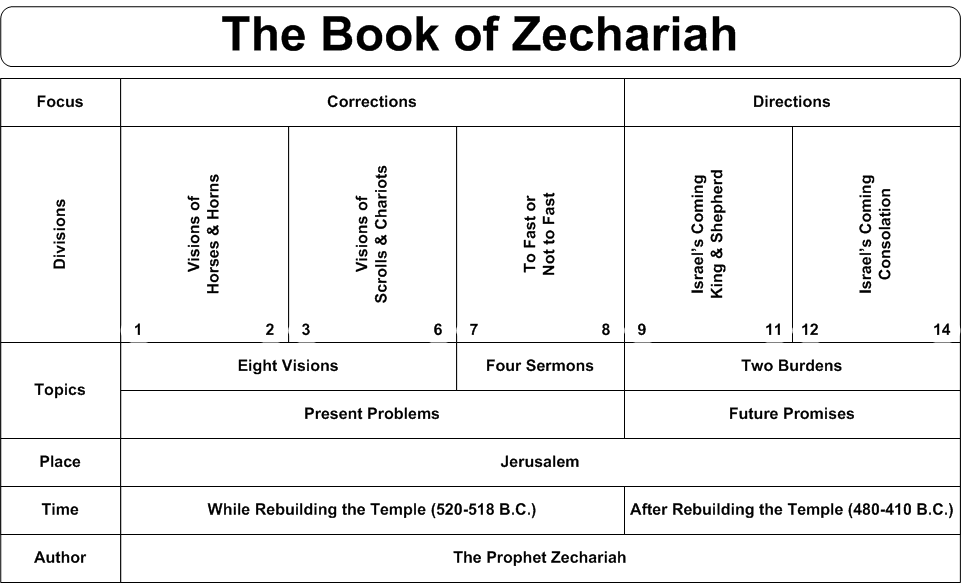
| ZECHARIAH ("Yahweh Remembers") Click for EXCELLENT TIMELINE of Zechariah - Go to Page 43 Other Timelines on Zechariah |
|||||
| Zec 1:1-6 | Zec 1:7-6:8 | Zec 6:9-6:15 | Zec 7:1-8:23 | Zec 9:1-11:17 | Zec 12:1-14:21 |
| Return to Me Zec 1:3 |
Messianic Kingdom Visions |
The Branch |
Four Messages |
Two Oracles or Burdens |
|
| Zechariah 1-6 |
Zechariah 7-8 |
Zechariah 9-14 |
|||
| Apocalyptic |
Ethical Prophecy 1) Rebuke |
Predictive Prophecy 1) Burden Against the Nations |
|||
| Call to Repentance |
Eight Visions (Picture) |
Crowning of Joshua |
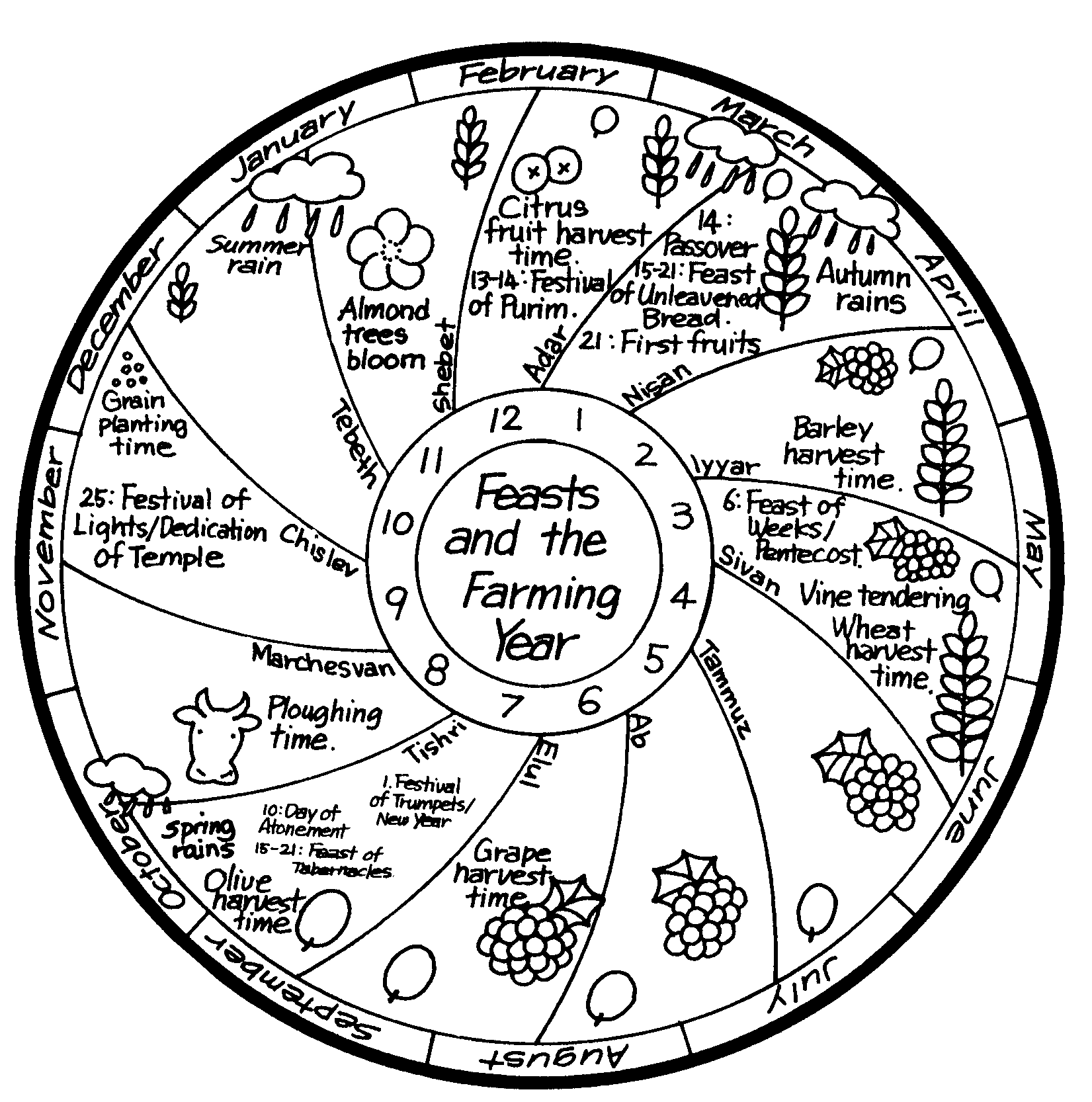
Question of the Fasts (Calendar) |
First Burden: Rejection of Messiah |
Second Burden: Reign of Messiah |
| The Way of Salvation |
Messianic Kingdom Visions |
The Bringer of Salvation |
Commands Concerning Present Things |
Oracles (Burdens) Concerning Future Things |
|
| Behold the man...the Branch | Love, Truth and Peace |
The Day of the Lord |
|||
| PICTURES | PROBLEMS | PREDICTIONS | |||
| ISRAEL'S FORTUNE |
ISRAEL'S FASTING |
ISRAEL'S FUTURE |
|||
| "My house will be built in Jerusalem" Zec 1:16 |
"Let your hands be strong" Zec 8:9 |
"HOLY TO THE LORD" Zec 14:20 |
|||
| PLACE: JERUSALEM |
|||||
| Written During the Building of the Temple 520-518BC |
Written after the Temple Was Completed circa 480-470BC |
||||
- Branch (Zec 3:8, 6:12),
- jealous, king (9x in 9v),
- shepherd (10x in 9v),
- saw/seen (or "lifted up my eyes"),
- Jerusalem,
- LORD of hosts (of armies) = Jehovah Sabaoth (53x),
- "word of the LORD came" (5x)
See discussion on marking key words. To help your study print out the Observation Worksheet on Zechariah (Go to page 13) with double spaced text for marking Key Words, making lists, taking notes that you can later transfer to your Bible
See also Van Dine's excellent overview of Zechariah including chapter/section summaries)


Source: ESV Global Study Bible
MacArthur Study Bible - Intro, Date, Setting, Themes, Interpretative Challenges, Outline
Swindoll Overview - Includes "Listen to Chuck Swindoll’s overview in his audio message" - 27 minutes
KJV Bible Commentary - Intro, Outline and Verse by Verse Commentary
The King James Study Bible Second Edition - short introduction
NKJV Study Bible: New King James Version Study Bible - Introduction, Historical Setting, Purpose, Timeline, Christ in the Scriptures
God's Seven Feasts of Israel Related to the Jewish Calendar (click to enlarge)
Interesting Facts About Zechariah.
Messiah in Zechariah
- The Branch or Sprout (Zec 3:8f; Zec 6:12f; Heb. 6:20-7:1
- Entry of Zion’s Lowly King (Zec 9:9-17; Mt. 21:4-5; Jn 12:13- 16)
- Sale of Jesus by Judas (Zec 11:4-14; Mt 27:9)
- Mourning over the Pierced One (Zec 12:10; Jn 19:37)
- Fountain opened for sin (Zec 13:1)
- The Smitten Servant (Zec 13:7-9)
- Glory of Jerusalem the Center of World Worship (Zec 2:10-11; Zec 14:8f, Zec 14:20f)
- At His Second Coming He will be crowned King (Zec 14:5, 9; Rev. 11:15; 21:27)
Zechariah in the New Testament
- Zech. 1:8 with Rev. 6:1-8
- Zech. 3:2 with Jude 9
- Zech. 3:9 with Rev. 5:6
- Zech. 8:16 with Eph. 4:25
- Zech 9:9 with Matt. 21:5; Jn. 12:14ff
- Zech. 11:12f with Matt. 27:9f
- Zech. 12:10 with Jn. 19:37; Rev. 1:7
- Zech. 13:7 with Matt. 26:31; Mk. 14:27
- Zech. 14:11 with Rev. 22:3
- Adapted from Jensen's Survey of the Old Testament
- Adapted from Talk Thru the Bible
William Orr Thirty-Nine Keys to the Old Testament:
1. STATISTICS: Writer, Zechariah (Zec 1:1) whose name means "GOD is Renown," was of the priestly tribe, possibly born in Babylon. He returned with the first expedition; called to encourage the builders with a view of the glorious future; time, 520-518 B.C.; key thought, GOD is in this work; key verse, Zec 14:9.
2. THEME: The first returning group of exiles was 50,000 strong, but had been hindered and finally stopped building. GOD spoke through Zechariah (and Haggai) to stir up their hearts and renew their labors. While Haggai's burden seemed to be the religious life of the people, Zechariah's was to concentrate on the national and political. His ministry extended over two years and he was used to bring to completion the restoration of the temple. His main ministry looked far into the future envisioning both the first coming of the Messiah and His return in power and great glory.
3. SPECIAL CHARACTERISTICS: Book is divided: eight visions (given in a single night) dealing with a large variety of subjects (Zech 1:1-21 through Zec 6:1-15); four given directly to a questioning company from Babylon (Zec 7:2, 3) answering their problems; two burdens (Zec 7:1-14 and Zec 8:1-23) concerning future oppression and eventual triumph (Zec 9:1-17 through Zec14:1-21).
The expression "Thus saith the Lord" is found 89 times; the term "The Lord of hosts" 36 times. Zechariah contains more specific promises relative to the crucifixion than any other Old Testament book except Psalms (Zec 9:9; 11:12, 13; 13:6, 7).
4. OUTSTANDING TEACHINGS: In spite of meager circumstances and coming opposition for the chosen people, GOD is still to
triumph and with Him, His people. A detail to remember is the intermingling of the work of the MESSIAH, first as suffering SAVIOUR, then as resistless Sovereign. GOD's watchful interest in other nations is clearly demonstrated both in relation to their sin and idolatry, and with reference to their treatment of Israel. A delightful picture of the future is presented in the coming happiness of Zion with streets full of children (8:3-5) and all nations of the world coming to the Jews to learn of their GOD (Zec 8:22, 23).
5. KEY TO UNDERSTANDING: Life is not concerned with time alone. There is an overruling power which works in time to prepare for eternity. The Jewish nation is but an example of the great passion of the heart of GOD for the sons of men.
OTHER RECOMMENDED RESOURCES:
- Zechariah in the Annotated Bible - A C Gaebelein
- Zechariah - J Vernon McGee - 14 page introduction and overview of the book-see outline below
- The Message of Zechariah - G Campbell Morgan (good fodder for sermon preparation!)
- Knowing God Through Zechariah - Radio Bible Class booklet
- Analysis of Zechariah - James Van Dine (well done)
J Vernon McGee's Outline of Zechariah
I. APOCALYPTIC VISIONS (messianic and millennial), Zechariah 1- 6
A. Introduction and message of warning, Zechariah 1:1-6
B. Ten visions (all in one night), Zechariah 1:7-6:15
1. Riders under myrtle trees, Zec 1:7-17
2. Four horns, Zec 1:18, 19
3. Four smiths, Zec 1:20, 21
4. Man with measuring line, Zec 2:1-13
5. Joshua and Satan, Zec 3:1-7
6. The Branch, Zec 3:8-10
7. Lampstand and two olive trees, Zec 4:1-14
8. Flying scroll, Zec 5:1-4
9. Woman in the ephah, Zec 5:5-11
10. Four chariots, Zec 6:1-15
II. HISTORIC INTERLUDE, Zechariahs 7, 8
A. Question concerning a religious ritual (fasting), Zechariah 7:1-3
B. Threefold answer, Zechariah 7:4-8:23
1. When the heart is right, the ritual is right, Zec 7:4-7
2. When the heart is wrong, the ritual is wrong, Zec 7:8-14
3. God’s purpose concerning Jerusalem unchanged by any ritual, 8:1-23
III. PROPHETIC BURDENS, Zechariah 9-14
A. First burden: Prophetic aspects connected with first coming of Christ, Zechariah 9-11
B. Second burden: Prophetic aspects connected with second coming of Christ, Zechariah 12-14
OUTLINE by J Vernon McGee
I. APOCALYPTIC VISIONS (messianic and millennial), Zechariah 1-6
A. Introduction and message of warning, Zechariah 1:1-6
- Zec 1:1 — (See WRITER.) The date was November 520 B.C. He was contemporary with Haggai.
- Zec 1:2 — The returned remnant is warned not to follow in the footsteps of the pre-captivity fathers.
- Zec 1:3 —“LORD of hosts” occurs 52 times. “Hosts” is the Hebrew tsaba (Sabaoth), meaning service, strength, warfare. “It implies the boundless resources at His command for His people’s good” (Fauset).
- Zec 1:4 — Their fathers had not heeded the former prophets.
- Zec 1:5 — Where were their fathers? Buried in Babylon.
- Zec 1:6 — “Take hold” means overtake. The prophet’s words were accurately fulfilled.
B. Ten visions (all in one night), Zechariah 1:7 — 6:15
1. Riders under myrtle trees, Zec 1:7-17
- Zec 1:7 — Date: February 24, 520 B.C. (the Hebrew year begins in the April of our year).
- Zec 1:8-11 — In the vision Zechariah sees a man on a red horse with other red horses behind him. They were speckled because they were in the shadow of myrtle trees. The “man riding upon a red horse” is “the angel of the LORD” in Zec 1:9 and Zec 1:11. “A red horse” is a picture of war. These red horses are the gentile nations that have ruled the world by warfare for 2500 years. They were at peace (Zec 1:11) in Zechariah’s day, and it was a right time to build the temple. They had no concern for the desperate plight of God’s people — neither then nor now.
- Zec 1:12-17 — God is displeased with the nations who are at peace and ignore Jerusalem’s plight. God is jealous for Jerusalem; the nations are indifferent to her. God had returned to Jerusalem (Zec 1:16) with mercies, and the nations have a responsibility also. Is he the God of the Jews only? Is he not also of the Gentiles? Yes, of the Gentiles also. (Romans 3:29-note)
- The promise of Zec 1:17 looks forward to the future kingdom age.
2. Four horns, Zec 1:18, 19
- Zec 1:18 — A horn represents a gentile ruler (cp. Daniel 7:24-note;Revelation 17:12-note).
- Zec 1:19 — The 4 gentile world powers: Babylon, Medo-Persia, Greece, and Rome.
3. Four smiths, Zec 1:20, 21
- Zec 1:20 — “Artisan” is a craftsman or smith.
- Zec 1:21 — These 4 smiths perhaps represent the judgment of Ezekiel 14:21-note —For thus saith the Lord GOD, How much more when I send my four severe judgments upon Jerusalem, the sword, and the famine, and the evil beast, and the pestilence, to cut off from it man and beast? Compare with the 4 horsemen of the Apocalypse of Revelation 6-note
4. Man with measuring line, Zec 2
- Zec 2:1 — See Jeremiah 31:38, 39; Ezekiel 40:3-5; Revelation 11:1, 2-note. When God begins to measure the temple and Jerusalem, He is getting ready to move again in behalf of both.
- Zec 2:2 — Jerusalem is to be rebuilt in Zechariah’s day.
- Zec 2:10 — Jerusalem is to be rebuilt and restored in the kingdom, and the Lord Jesus Christ will reign there in person.
- Zec 2:11 — The nations will come there to worship (see 14:16; Isaiah 2:1-5-note).
5. Joshua and Satan, Zec 3:1-7
- Zec 3:1 — Joshua is representative of the nation Israel. Satan seeks to destroy the nation (Revelation 12:1-6-note).
- Zec 3:2 — “A brand plucked out of the fire” means they are rescued for future service.
- Zec 3:3-7 — Neither Joshua nor Israel were contenders with Satan while clothed in their own righteousness. They must be clothed with the righteousness of Christ. Even a new patch on the old garment will not avail.
6. The Branch, Zec 3:8-10
- Zec 3:8 — “The Branch” is a familiar figure of Christ in His many offices. Here He is the servant. Israel rejected Him the first time because they trusted their own righteousness (see Romans 10:3, 4-note).
- Zec 3:10 — This refers to the kingdom age.
7. Lampstand and two olive trees, Zec 4
- Zec 4:2 — The lampstand is identical to the one that was in the tabernacle and has the same meaning. It is a perfect type of Christ, the Light of the world (see author’s book, The Tabernacle, God’s Portrait of Christ).
- Zec 4:3 — The 2 olive trees are the “something new has been added.” The olive trees (Zec 4:11-14) are obviously Zerubbabel and Joshua at that time. The final fulfillment is in Revelation 11:3-12-note.
- Zec 4:6 — The interpretation for Zechariah’s day, for the future, and also for our day is a great principle — “Not by brawn nor by brain, but by My Spirit, saith the Lord” (my paraphrase). God’s work is done only in the power of the Holy Spirit. The oil represents the Holy Spirit. The 2 olive trees speak of witnessing. Effective witnessing is done only in the power of the Holy Spirit.
- Zec 4:7 — “The headstone” is Christ.
- Zec 4:8-10 — The present and practical application is that Zerubbabel will be given power to finish the temple. It will be an occasion for joy, for “who hath despised the day of small things?”
8. Flying scroll, Zec 5:1-4
- Zec 5:1 — “A scroll” speaks of the Word of God (cp. Ezekiel 2:9-note, Ezek 3:1-4-note).
- Zec 5:3 — The scroll represents the Ten Commandments.
- “Curse” — God will judge according to law. There is judgment, not blessing.
- On one side are the commandments that have to do with a man’s relationship to God — “every one that sweareth” represents the first 4 commandments. On the other side are the commandments that have to do with a man’s relationship to his fellowman — “for every one that stealeth” represents the last 6 commandments.
9. Woman in the ephah, Zec 5:5-11
- Zec 5:5, 6 — The ephah corresponds to our bushel. This means that sin has filled up the measure and must be judged.
- Zec 5:7 — A woman in an ephah is a type of that which is evil (Matthew 13:33; Revelation 2:20-note). The lead weight means that iniquity is sealed within the measure.
- Zec 5:8 — “Wickedness” is the wicked one, the man of sin.
- Zec 5:9-11 — Two winged women carry the measure (with the woman in it) to Babylon. Israel’s great sin was idolatry. Babylon is the fountainhead of idolatry. This sin is to be forsaken and returned to Babylon. Babylon is to be judged (see Revelation 17, 18-note).
10. Four chariots, Zec 6
- Zec 6:1-5 — These 4 multicolored chariots are the angels who execute the judgment of God on the gentile nations (see Revelation 7:1-3-note; Rev 9:14, 15-note).
- Zec 6:9-15 — After the judgment of the nations comes the glory of Christ in the setting up of His kingdom (Daniel 2:44, 45-note).
- Zec 6:10 — “Heldai” means robust; “Tobijah” means God’s goodness; “Jedaiah” means God knows.
- Zec 6:11 — Joshua is a type of Christ.
- Zec 6:12 — “The Branch” here reveals Christ in His glory, the second coming of Christ.
II. HISTORIC INTERLUDE, Zechariah 7, 8
A. Question concerning a religious ritual (fasting), Zechariah 7:1-3
- Zec 7:1 — The date here is December 4, 518 B.C.
- Zec 7:2 — A delegation had come to Jerusalem from Babylon.
- Zec 7:3 — They bring a problem to the priests: Should they continue to fast?
B. Threefold answer, Zechariah 7:4-8:23
1. When the heart is right, the ritual is right, Zec 7:4-7
- Zec 7:4 — God will answer their question.
- Zec 7:5 — God never gave fast days; He gave feast days. It was their own idea to fast. They never fasted unto the Lord.
- Zec 7:6 — Before the 70-year captivity, their feasting was not unto God either, and He sent them into captivity.
- Zec 7:7 — Before the captivity, God judged Jerusalem when the heart of the people was far from Him — though they went through the rituals. A ritual is right when the heart is right. Lange wrote, “God’s eye of grace and our eye of faith meet in the sacraments [rituals].”
2. When the heart is wrong, the ritual is wrong, Zec 7:8-14
- Zec 7:8 — This is God’s answer.
- Zec 7:9, 10 — Conduct denies confession. It is not our hymn singing on Sunday but our action on Monday that is the real test.
- Zec 7:11-14 — The people before the captivity went through the ritual, but their lives were wrong.
3. God’s purpose concerning Jerusalem unchanged by any ritual, Zec 8
- Certain words are emphasized by repetition: “LORD of hosts” 18 times in this chapter; “Jerusalem” 6 times; “Zion” twice; “Jealous” 3 times; “Remnant” twice; “Thus saith the LORD” 10 times. Some Bible students see in this chapter the restatement of the Ten Commandments.
- Zec 8:1-8 — God’s ultimate purpose is not changed concerning His people, the land, and Jerusalem.
- Zec 8:3 — Jerusalem will be the world capital (Isaiah 2:1-5-note).
- Zec 8:4-8 — His people will dwell in Jerusalem.
- Zec 8:9-19 — The Remnant from Babylon are to hear the prophets Haggai and Zechariah in view of the perspective of the glorious future (note Zec 8:9). Also they are to keep the Commandments (see Zec 8:16, 17). Fasts will be turned back into feast days (Zec 8:18, 19).
- Zec 8:20-23 — Jerusalem will become the religious capital as well as the center of God’s government (note again Isaiah 2:1-5-note)
III. PROPHETIC burdens, Zechariah 9-14
A. First Burden: Prophetic aspects connected with first coming of Christ, Zechariah 9-11
Zechariah 9
- Zec 9:1-8 — Judgment came upon:
- Hadrach and Damascus (Zec 9:1) (Hadrach was north of Damascus)
- Tyre, Sidon and Hamath (Zec 9:2-4) (Hamath is inland and north of Sidon)
- The Philistines (Zec 9:5-8)
- Zec 9:9 — This is quoted in connection with the so-called triumphal entry of Christ into Jerusalem (cp. Matthew 21:5; John 12:15). The parts omitted by Matthew are: “Rejoice greatly, O daughter of Zion; shout…he is just, and having salvation [victory].” This part of the verse will be fulfilled at His second coming. The rest of the verse was fulfilled at His first coming.
- Zec 9:10 — Peace can come to the earth only when Christ comes the second time.
- Zec 9:11-17 — The Lord will at that time deliver His people.
Zechariah 10 — Judah and Israel are to be scattered again, but they will be finally regathered.
- Zec 10:1 — “Rain” is literal rain. The rainfall is to be restored to the land when God regathers them.
- Zec 10:2, 3 — This is a condemnation of the sweet-talking false prophets.
- Zec 10:4 — This is a reference to Christ in both His first and second comings.
- Zec 10:6 — By His mercy the Lord will regather them.
- Zec 10:9-12 — The Lord will not only scatter them (Zec 10:9), but He will regather them.
Zechariah 11 — The Lord Jesus Christ is to be rejected as the King at His first coming.
- Zec 11:1-6 — False shepherds deceived the people. Possibly this is a reference to Rome as the conqueror.
- Zec 11:7-14 — The true Shepherd with 2 staves: “Beauty” is literally grace — He is the Savior and will save His people. “Bands” is literally union — He will unite Judah and Israel.
- Zec 11:8, 9 He rejects false shepherds
- Zec 11:12, 13 — This is a reference to the betrayal of Christ by Judas. See Matthew 26:15; 27:3-10; Acts 1:17-20.
- Zec 11:15-17 — The Antichrist is a false shepherd.
B. Second burden: Prophetic aspects connected with second coming of Christ, Zechariah 12-14
Zechariah 12 — The final siege of Jerusalem and the lifting of the siege. “Jerusalem” is mentioned 10 times. “In that day” is mentioned 7 times and is a reference to the day of the LORD, specifically the Great Tribulation Period.
- Zec 12:1-3 — Jerusalem is to be a constant irritant to all the nations that presume to make decisions that affect it. God’s policy for the nations is “hands off” Israel (too bad the United Nations is not aware of this). All the nations in the Great Tribulation will march against Jerusalem — and be destroyed.
- Zec 12:4-9 — Jerusalem will be delivered in the final siege by the coming of the Lord personally.
- Zec 12:10-14 — They will know Him by the print of the nails in His hands. This is the One they rejected and delivered to be crucified. This will be a real day of atonement.
Zechariah 13 — What will the return of Christ mean to Israel?
- Zec 13:1 — The Remnant will turn to the redemption of Christ for their salvation.
- Zec 13:2-5 — The false prophet and his followers will be taken (see Revelation 19:20-note). This is the end of all false religion.
- Zec 13:6, 7 — The nail-scarred Christ will be present. His followers will not desert Him but will rally around Him.
- Zec 13:8, 9 — These are those who come out of the Great Tribulation and have washed their robes in the blood of the Lamb.
Zechariah 14 — Features and facts connected with the coming of Christ to the earth.
- Zec 14:1-7 — This is the consummation of the campaign of Armageddon and the return of Christ.
- When Christ returns to this earth, He will touch down on the Mount of Olives (Zec 14:4). This is the same place from which He ascended into heaven. There will be great physical changes in the topography of the land. There will be a great earthquake at His coming (Zec 14:5). There will be changes in the lighting of the earth (Zec 14:6, 7).
- Zec 14:8 — There will be a new waterway through Jerusalem, making it a seaport city.
- Zec 14:9 — The Lord Jesus Christ will reign over the earth.
- Zec 14:10, 11 — The land will become the land of milk and honey.
- Zec 14:12 — This is a living death against the enemies of God.
- Zec 14:16-21 — The people of the earth, both Jew and Gentile, will go to Jerusalem to celebrate the Feast of Tabernacles. This feast will mean that every man is dwelling safely under his own vine and fig tree. True holiness will be on the earth. Every pot and pan will be holy.
Christ in All the Scriptures - Table of Contents
Zechariah - We have already seen the connection of this prophet with Haggai. He was probably a priest as well as a prophet. (See Neh 12:12,16).
His first prophecy [Zech 1:1-6] occurred just after the time of discouragement, when the people had begun to rebuild the Temple [cp. Ezra 4:23,24], and he warns them not to disappoint God, as their fathers had done. He has a special word of encouragement to the ruler Zerubbabel, who must have been conscious of his own weakness, and that it was indeed a ''day of small things.'' ''Not by might, nor by power, but by My Spirit, saith the Lord of Hosts'' (Zech 4:6-10). He promised that the mountains of difficulty should be removed, and that he who had laid the foundation should have the joy of bringing forth the headstone with rejoicing, crying, ''Grace, grace,'' unto it.
Christ is both the Foundation-stone and the Headstone of the corner. [1Cor 3:10,11; 1Pet 2:6-8]
Eight Visions.
Zechariah’s second prophecy consists of eight visions concerning God’s final dealings with Israel.
First, of Myrtle Trees, a picture of Israel today, outcast but never forgotten by Jehovah.
Second, of Horns and Smiths, foretelling the overthrow of Israel’s enemies.
Third, of the Measuring Line. This shows the future prosperity of Jerusalem. The presence of Jehovah as a wall of fire round about His people will make walls unnecessary, the extent of the city will make them impossible.
Fourth, of Joshua, a picture of Israel cleansed and restored to the priestly position of access to God.
Fifth, of the Candlestick, or, as it should be, lamp-stand, Israel as God’s light-bearer. The two olive-trees in this vision refer in the first place to Zerubbabel the ruler and Joshua the priest, and thus through them to both offices fulfilled in the person o£ the Messiah.
Sixth, the Flying Roll, government of the earth.
Seventh, the Ephah, restriction of wickedness.
Eighth, the Chariots, the administrative forces of righteousness
(Dr. Campbell Morgan, Westminster Record for September 1907).
Then follows the symbolic act of crowning the High Priest (Zechariah 6:9–11). By this act the two great offices of priest and king are united in his person, type of the person and work of the Man whose name is the Branch (Zechariah 6:12; 3:8), who shall sit on His throne of glory as a Priest, the Builder of the eternal Temple of the Lord, and “bear the glory.”
“Thy king cometh unto Thee.” More than any other of the Minor Prophets, Zechariah foretells the Savior. Twice He is announced as the Branch; God speaks of Him as My Servant (Zechariah 3:8). We have the prediction of His entry into Jerusalem, riding upon an ass’s colt (Zechariah 9:9). In contrast to the false shepherds we see Him as the Good Shepherd, saving His flock, caring for the poor of the flock (Zechariah 9:16; 11:11). We see Him as the Smitten Shepherd, with the sheep scattered (Zechariah 13:7). In the words “Awake, O sword, against My Shepherd, and against the Man that is My fellow, saith the Lord of Hosts,” we have a specially clear revelation of Christ, both in His Divine and human nature; the Man, the smitten Shepherd, is spoken of by God as His fellow, on an equality with Him and yet distinct in His personality.
Zechariah speaks of “the blood of the Covenant” (Zechariah 9:11), which our Lord applied to His own blood. “This is My blood of the New Covenant, which is shed for many unto remission of sins” (Matthew 26:28, r.v.). We have the prophecy of His betrayal by Judas for thirty pieces of silver, even to the fact that the money was “cast to the potter in the house of the Lord” (Zechariah 11:12–13).
Zechariah prophesies the conversion of his people to the Lord in the day that the Spirit is poured out upon them, and when they shall look on Him whom they have pierced, and the sin of the nation shall be washed away through that fountain opened through their Messiah’s death on Calvary (Zechariah 12:10; 13:1). He speaks of the wounds with which He was wounded in the house of His friends (Zechariah 13:6). The third part of the remnant shall be brought through the fire and purified in the time of Jacob’s trouble (Zechariah 13:9).
The last chapter foretells the Great Day of the Lord, which is always associated with the coming of Christ to judgment. He who ascended from the slopes of Olivet shall so come in like manner as those who watched Him saw Him go. “And His feet shall stand upon the mount of Olives ... and the Lord my God shall come, and all the saints with thee.... It shall be one day which shall be known to the Lord ... at evening time it shall be light.... And the Lord shall be King over all the earth: in that day shall there be One Lord, and His name One.”
The book of Zechariah has often been called the ''Revelation'' of the Old Testament. The 14 chapters are largely given over to prophetic symbols of the future. The historical setting of the book is identical with that of Haggai [cp. Ezra 5:1]. Zechariah is concerned almost exclusively with the Jew and the Messiah. Haggai was written chiefly with the temple and the religious state of God's ancient people in mind, but Zechariah took a broader view. He unfolded the future of Israel and the Gentile nations, to the second coming of the Lord Jesus Christ and the establishment of His millennial kingdom.
The church is not pictured in Zechariah. Looking down through the centuries, the prophet saw the humility and glory of Messiah, but he did not see the time between the first and second comings of Christ.
OUTLINE OF THE BOOK--
- Eight Visions about Israel's Future (Zechariah 1-6)
- Detailed Prophecies of the Endtime (Zechariah 7-14)
It is impossible, in one brief chapter [of Paul Van Gorder's book], to explain all the various symbols in this book. In the first six chapters, the prophet recorded eight visions he had seen-- all of them about Israel.
- A rider on a red horse among the myrtle trees depicts Israel in dispersion but not forgotten (Zechariah 1:7-11).
- Four horns, which are four world empires that have scattered Israel (Zechariah 1:18,19).
- Four carpenters, which represent the destruction of Gentile supremacy (Zechariah 1:20,21).
- A man with a measuring line, showing Israel's future prosperity (Zechariah 2:1-3).
- Joshua before the Lord, Satan accusing, and a picture of Israel cleansed and restored (Zechariah 3).
- The candlestick [HB= menorah, lampstand], a picture of Israel as God's lightbearer (Zechariah 4:1-7).
- The flying roll, illustrating the reign of divine law on the earth (Zechariah 5:1-4).
- Four chariots, speaking of judgment upon earth (Zechariah 6:1-8).
The remnant had returned to Jerusalem, but it was only a handful compared to the days before the captivity. They were discouraged, and they needed a message from God. These visions were given to the prophet to encourage Israel in one of her darkest hours.
Zechariah 8 closes with one of the most remarkable statements in all of Scripture. ''Thus saith the Lord of hosts: In those days it shall come to pass that ten men shall take hold out of all languages of the nations, even shall take hold of the skirt of him that is a Jew, saying, We will go with you; for we have heard that God is with you'' (v.23). How different from the experience of Israel through the centuries! Knowing that a time like this would come should have given great encouragement to God's people in the land.
VISIONS OF THE ENDTIME-- Second only to Isaiah, the prophet Zechariah gives us one of the most complete pictures of the Messiah in the Old Testament. Look at what he foresaw.
- The humility of Israel's Messiah (9:9). What a peculiar prediction this was! That Israel's king was coming was neither peculiar nor a surprise; it was the expectation of the nation, for the prophets had spoken of it. But the Jews were looking for Him in gorgeous array, with dashing steeds and golden chariots, perhaps coming down from heaven. Zechariah, however, predicted that He would come ''lowly, and riding upon an ass, and upon a colt, the foal of an ass'' (Zechariah 9:9).
Half a millennium had passed before the Lord Jesus said to His disciples one day, ''Go into the village opposite you, in which, at your entering, you shall find a colt tied, on which never man sat; loose him, and bring him here'' (Luke 19:30). Christ entered Jerusalem amid the plaudits of the crowd, riding upon a colt in exact fulfillment of prophecy. Oh, the accuracy of the minute details in the Word! What other book would dare risk such predictions? [cp. Mt 21:1-11] - He foresaw His betrayal (Zechariah 11:12,13).
How Zechariah must have pondered these words, expressed centuries later by Judas! The prophet probably could not understand. Peter told us that ''the prophets have inquired and searched diligently, who prophesied of the grace that should come unto you, searching what, or what manner of time the Spirit of Christ who was in them did signify, when He testified beforehand the sufferings of Christ, and the glory that should follow'' (1Pe 1:10,11).
Zechariah recorded, ''So they weighed for My price thirty pieces of silver'' (Zechariah 11:12). That was the price of a slave. If an ox gored a slave, the owner of the ox had to pay the slave owner 30 pieces of silver [Ex 21:32]. Our Lord took the place of a slave. The word ''redemption'' means ''to deliver by paying a price.'' This prophecy is quoted in Matthew 27:9,10 when Judas betrayed Jesus for 30 pieces of silver, and when the chief priest took that silver and bought the potter's field, [for] a place of burial. - Zechariah portrayed scenes from the night of Christ's betrayal (Zechariah 13:7).
''Awake, O sword, against My shepherd, and against the man who is My fellow, saith the Lord of hosts; smite the shepherd, the sheep shall be scattered; and I will turn Mine hand upon the little ones.'' The fulfillment is recorded in the gospel of Matthew. The disciples were with Jesus on the Mount of Olives when He said, ''All ye shall be offended because of Me this night; for it is written, I will smite the shepherd, and the sheep of the flock shall be scattered abroad'' (Mt 26:31). ''Then they spat in His face, and buffeted Him; and others smote Him with the palms of their hands'' (Mt 26:67). When Jesus spoke of that awful hour (Mat 26:31), He harked back 500 years to this prophecy. The shepherd is the same as described in Zechariah 11:4-14.The word used for ''fellow'' in Zechariah 13:7 is the [Hebrew] word amithi. The only other place it appears is in Leviticus, where it refers to laws about injuries inflicted upon close relatives. It is used interchangeably with the word ''brother.'' Zechariah uses it here to refer to the Messiah, who is connected with God in His very essence. ''No man hath seen God at any time; the only begotten Son, who is in the bosom of the Father, He hath declared Him'' (John 1:18). When the Lord Jesus said, ''I and my Father are one,'' the Jews took up stones to stone Him [John 10:30-33]. This One to whom Zechariah referred could only be the Son of God.
- Zechariah foresaw the main events related to the second coming.
He saw Israel regathered and the tribulation period.
He presented the scene in Zechariah 12:1-9.
- ''Behold, I will make Jerusalem a cup of trembling unto all the peoples round about...'' (Zechariah 12:2).
- ''And in that day will I make Jerusalem a burdensome stone...'' (Zechariah 12:3).
- ''...all the nations of the earth [will] be gathered together against it'' (Zechariah 12:3).
- ''Jerusalem shall be inhabited again in her own place'' (Zechariah 12:6).
- ''The Lord also shall save the tents of Judah first...'' (Zechariah 12:7).
- ''In that day shall the Lord defend the inhabitants of Jerusalem'' (Zechariah 12:8).
- And it shall come to pass, in that day, that I will seek to destroy all the nations that come against Jerusalem'' (Zechariah 12:9).
Zechariah 14 begins with the climactic events that lead to the return of Christ.
Zechariah was given prophetic insight concerning Israel's repentance. Chapter 12, verse 10, declares, ''And I will pour upon the house of David, and upon the inhabitants of Jerusalem, the Spirit of grace and of supplications; and they shall look upon Me whom they have pierced, and they shall mourn for Him, as one mourneth for his only son, and shall be in bitterness for Him, as one that is in bitterness for his firstborn.''
Zechariah graphically portrayed God's judgment upon the nations at the battle of Armageddon.
Zechariah 14:12-15 speaks of the ''the plague with which the Lord will smite all the peoples that have fought against Jerusalem.''
If Zechariah were not writing under inspiration, his predictions would be those of a fool. But, borne along by the Holy Spirit, he was speaking of Christ's millennial reign when he said, ''And the Lord shall be king over all the earth; in that day shall there be one Lord, and His name one'' (Zechariah14:9). Jerusalem will be the center of our Lord's reign over this earth.
What a scene of peace, tranquility, and holiness is described in the closing verses of this prophecy! Zechariah wrote, ''And it shall come to pass that every one that is left of all the nations which came against Jerusalem shall even go up from year to year to worship the King, the Lord of hosts, and to keep the feast of tabernacles'' (Zechariah14:16). The prophecy of Zechariah is filled with references to Jehovah, the Lord Jesus Christ. Our Lord Himself said, ''They spoke of Me.'' [John 5:39]
Note - Interpretation is based on literal reading of the text, not a particular system of interpretation such as dispensational, reformed, etc. The goal is to observe the text for the plain sense in context and avoid interpretations which are allegorical, etc. Completed in 2018.
Zechariah 12 Commentary
- Zechariah 12:1 Commentary
- Zechariah 12:2 Commentary
- Zechariah 12:3 Commentary
- Zechariah 12:4 Commentary
- Zechariah 12:5 Commentary
- Zechariah 12:6 Commentary
- Zechariah 12:7 Commentary
- Zechariah 12:8 Commentary
- Zechariah 12:9 Commentary
- Zechariah 12:10 Commentary
- Zechariah 12:11 Commentary
- Zechariah 12:12 Commentary
- Zechariah 12:13 Commentary
- Zechariah 12:14 Commentary
Zechariah 13 Commentary
- Zechariah 13:1 Commentary
- Zechariah 13:2 Commentary
- Zechariah 13:3 Commentary
- Zechariah 13:4 Commentary
- Zechariah 13:5 Commentary
- Zechariah 13:6 Commentary
- Zechariah 13:7 Commentary
- Zechariah 13:8 Commentary
- Zechariah 13:9 Commentary
Zechariah 14 Commentary
- Zechariah 14:1 Commentary
- Zechariah 14:2 Commentary
- Zechariah 14:3 Commentary
- Zechariah 14:4 Commentary
- Zechariah 14:5 Commentary
- Zechariah 14:6 Commentary
- Zechariah 14:7 Commentary
- Zechariah 14:8 Commentary
- Zechariah 14:9 Commentary
- Zechariah 14:10 Commentary
- Zechariah 14:11 Commentary
- Zechariah 14:12 Commentary
- Zechariah 14:13 Commentary
- Zechariah 14:14 Commentary
- Zechariah 14:15 Commentary
- Zechariah 14:16 Commentary
- Zechariah 14:17 Commentary
- Zechariah 14:18 Commentary
- Zechariah 14:19 Commentary
- Zechariah 14:20 Commentary
- Zechariah 14:21 Commentary
Explanation - The following list includes not only commentaries but other Christian works by well known evangelical writers. Most of the resources below are newer works (written after 1970) which previously were available only for purchase in book form or in a Bible computer program. The resources are made freely available by archive.org but have several caveats - (1) they do not allow copy and paste, (2) they can only be checked out for one hour (but can be checked out immediately when your hour expires giving you time to read or take notes on a lengthy section) and (3) they require creating an account which allows you to check out the books free of charge. To set up an account click archive.org and then click the picture of the person in right upper corner and enter email and a password. That's all you have to do. Then you can read these more modern resources free of charge! I have read or used many of these resources but not all of them so ultimately you will need to be a Berean (Acts 17:11+) as you use them. I have also selected works that are conservative and Biblically sound. If you find one that you think does not meet those criteria please send an email at https://www.preceptaustin.org/
The minor prophets Feinberg, Charles Lee
Cyril Barber - A forthright study denouncing formalism and heartlessness in worship.
God remembers : a study of Zechariah by Feinberg, Charles Lee
James Rosscup - This is a reprint of one of the best premillennial expositions by the late evangelical Old Testament scholar. Feinberg taught Zechariah for many years at Dallas Seminary and Talbot Seminary in Hebrew exegesis classes. He, Barker and Unger have the best longer premillennial commentaries of a verse by verse nature on the book.
Cyril Barber - First published in 1950, this work possesses an enduring quality. Ideal for lay people and of value to pastors as well. Ably expounds the theme of this portion of Gods Word.
Bible Knowledge Commentary - Old Testament Lindsey, F. Duane. “Zechariah,” in Bible Knowledge Commentary,
James Rosscup - Lindsey covers many of the interpretive issues fairly well, often mentioning views and sometimes bringing good reasoning to bear. He sees the eight night visions in Zech 1:7–6:8 as God’s work which “bridges the centuries from the rebuilding of the temple in Zechariah’s day to the restoration of the kingdom to Israel under the Messiah … to be fulfilled at Christ’s Second Advent …” (p. 1549). He deals with Zech 12–14, particularly in a premillennial framework, and makes things clear.
Be heroic (Ezra, Haggai, Zechariah) by Wiersbe, Warren
Wiersbe's Expository Outlines on the Old Testament by Wiersbe, Warren W 113 ratings - Always worth checking if preaching or teaching Zechariah.
"Even the most difficult Scriptures come alive as Warren Wiersbe leads you book-by-book through the Old Testament and helps you to see the "big picture" of God's revelation. In this unique volume, you will find: • Introductions and/or outlines for every Old Testament book • Practical expositions of strategic chapters • Special studies on key topics, relating the Old Testament to the New Testament • Easy-to-understand expositions that are practical, preachable, and teachable If you have used Dr. Wiersbe's popular BE series, you know how simple and practical his Bible studies are, with outlines that almost teach themselves. If not, you can now discover a wonderful new resource. This work is a unique commentary on every book of the Old Testament. It contains new material not to be found in the BE series.
With the Word - Devotional Commentary - Warren Wiersbe - 428 ratings
Bible Exposition Commentary - Old Testament - Warren Wiersbe - always worth checking
Zechariah by McGee, J. Vernon Thru the Bible with J. Vernon McGee - Proverbs - Malachi
Zechariah - Paul Apple - 158 pages - Conservative, pre-millennial.
Zechariah by Laney, J. Carl, 1948- (Everyman's Bible Commentary)
Cyril Barber - Provides masterful coverage of the biblical data. Ties in Zechariah's predictions with the scope of God's prophetic Word. Clear, concise, premillennial
James Rosscup - A lucid, well-paced premillennial exposition showing an evident keenness about explaining main issues. See, for example, pp. 24–25, and later his comments on Zechariah 14. He is Associate Professor of Biblical Literature at Western Conservative Baptist Seminary, Portland, OR.
Be heroic : demonstrating bravery by your walk : OT commentary, minor prophets By: Wiersbe, Warren W - Alway worth checking!
Interpreting the Minor Prophets By: Chisholm, Robert B - conservative, premillennial.
Enjoying the Minor Prophets - a devotional commentary - By: MacDonald, William - same author of Believer's Bible Commentary (see note)
Haggai, Zechariah and Malachi : an introduction and commentary - Tyndale OT Commentary Series - Volume: 28 By: Hill, Andrew E
Unger's Commentary on the Old Testament (Volume 2 - Isaiah - Malachi) by Unger, Merrill Frederick, 1909- (1981) 972 pages.
The Minor Prophets : an expositional commentary by Boice, James Montgomery, 292 pages
Understanding the Old Testament by Scripture Union - All 12 minor prophets. 100 pages.
Wycliffe Bible Commentary - Charles Pfeiffer - 1560 pages (1962). 214 ratings Less detailed than the KJV Bible Commentary. Conservative. Notes are generally verse by verse but brief.
Rosscup - Conservative and premillennial scholars here have been experts in their fields. The work contains brief introductions and attempts to give a verse-by-verse exposition, though it does skip over some verses. The treatments vary with the authors, but as a whole it is a fine one-volume commentary for pastors and students to use or give to a layman. Outstanding sections include, for example: Whitcomb on Ezra-Nehemiah-Esther; Culver on Daniel; Ladd on Acts; Harrison on Galatians; Johnson on I Corinthians; and Ryrie on the Johannine Epistles.
James Rosscup - (Critique of another book by Heater on Zechariah) Here is a good survey by a premillennialist, well-organized, aware of main issues, contributive on most. He takes the four horns of 1:18–19 to be not the four empires of Daniel 2 and 7 or any other specific four but coming from the four quarters of the earth, a world-wide context (p. 21). The four craftsmen are likewise. He sees the future for Jerusalem in Chapter 2 as millennial, after the Second Advent. He appears to be vague on God taking evil from Israel and “setting it up among those who reject Him …” in Shinar (Zechariah 5, p. 43). The explanation of details in Chapter 14 as fitting in a premillennial view is helpful but brief.
Believer's Bible Commentary - OT and NT - MacDonald, William (1995) 2480 pages. Conservative. Literal. Often has very insightful comments. John MacArthur, says "Concise yet comprehensive - the most complete single-volume commentary I have seen." Warren Wiersbe adds "For the student who is serious about seeing Christ in the Word." One hour limit.
James Rosscup - This work, originally issued in 1983, is conservative and premillennial, written to help teachers, preachers and people in every walk of life with different views, explanation and application. The 2-column format runs verse by verse for the most part, usually in a helpfully knowledgeable manner, and there are several special sections such as “Prayer” in Acts and “Legalism” in Galatians. The premillennial view is evident on Acts 1:6, 3:20, Romans 11:26, Galatians 6:16, Revelation 20, etc.
The prophets of Israel by Wood, Leon James
James Rosscup - This quite readable work by a premillennialist covers the overall range of Old Testament prophets, various key subjects under “Prophetism” such as what “to prophesy” means, the prophets’ function, early prophets, Samuel, monarchy prophets, and writing prophets both major and minor. Wood has solid sections on Elijah and Elisha (their spiritual features, episodes, miracles). The Elisha part surveys each miracle. Some sections, as on Hosea, even discuss in some detail leading problems such as whether Gomer was tainted before marriage or became unfaithful later. But sections on the books do not delve into nearly the detail Chisholm gives. Wood does sum up the message well, has an outline on each book, and organizes much on background, character qualities and work of each prophet. He deals with each prophet in relation to the reign he fitted into. Chisholm and Freeman deal more with various problems. Cf. Hobart Freeman, Introd. to the Old Testament Prophets, available now only in some theological libraries.
Micah-Malachi Volume: 32 in Word Biblical Commentary - By: Smith, Ralph L.
Cyril Barber - Adheres to the format established for this series. Handles textual problems adroitly. Discusses the theological implications of these writings, and provides a variety of insights into the text. A necessary volume.
James Rosscup This quite readable work by a premillennialist covers the overall range of Old Testament prophets, various key subjects under “Prophetism” such as what “to prophesy” means, the prophets’ function, early prophets, Samuel, monarchy prophets, and writing prophets both major and minor. Wood has solid sections on Elijah and Elisha (their spiritual features, episodes, miracles). The Elisha part surveys each miracle. Some sections, as on Hosea, even discuss in some detail leading problems such as whether Gomer was tainted before marriage or became unfaithful later. But sections on the books do not delve into nearly the detail Chisholm gives. Wood does sum up the message well, has an outline on each book, and organizes much on background, character qualities and work of each prophet. He deals with each prophet in relation to the reign he fitted into. Chisholm and Freeman deal more with various problems. Cf. Hobart Freeman, Introd. to the Old Testament Prophets, available now only in some theological libraries.
Haggai, Zechariah, Malachi : an introduction and commentary By: Baldwin, Joyce G
Cyril Barber - Brief, scholarly verse-by-verse comments with additional notes interspersed throughout the text
Unger's Commentary on the Old Testament (Volume 2 - Isaiah - Malachi) by Unger, Merrill Frederick, 1909- (1981) 972 pages.
Understanding the Old Testament by Scripture Union - All 12 minor prophets. 100 pages.
The Book Of Twelve Prophets Commonly Called The Minor By: George Adam Smith
James Rosscup - Though old this is well-written and often cited, with many good statements on spiritual truths. Users will find much that is worthwhile, and sometimes may disagree, as when he sees the Jonah account as allegorical.
The minor prophets By: Theo. Laetsch, D.D.
James Rosscup - This is a very good amillennial commentary on the minor prophets as a whole. Laetsch deals with the text verse-by-verse, grapples with difficult phrases and explains them, uses the Hebrew extensively, and presents illuminating word studies. The lucid presentation helps make it a very interesting commentary to read. In crucial prophetical sections, his strong amillennialism appears. His weakness here is offset by his helpfulness in exegesis generally plus his good background material.
STUDY BIBLES - ONE VOLUME COMMENTARIES OF ENTIRE BIBLE,
BIBLE DICTIONARIES, GENERAL REFERENCE WORKS
Note: The first 3 resources have no time restriction and allow copy and paste function:
(1) KJV Bible Commentary - Hindson, Edward E; Kroll, Woodrow Michael. Over 3000 pages of the entire OT/NT. Well done conservative commentary that interprets Scripture from a literal perspective. Pre-millennial. User reviews - it generally gets 4/5 stars from users. - 372 ratings
Very well done conservative commentary that interprets Scripture from a literal perspective user reviews
The King James Version Bible Commentary is a complete verse-by-verse commentary. It is comprehensive in scope, reliable in scholarship, and easy to use. Its authors are leading evangelical theologians who provide practical truths and biblical principles. Any Bible student will gain new insights through this one-volume commentary based on the timeless King James Version of the Bible.
(2) The King James Study Bible Second Edition 2240 pages (2013) (Thomas Nelson) General Editor - Edward Hindson with multiple contributing editors. . 3,194 ratings. Pre-millennial. See introduction on How to Use this Study Bible.
(3) NKJV Study Bible: New King James Version Study Bible (formerly "The Nelson Study Bible - NKJV") by Earl D Radmacher; Ronald Barclay Allen; Wayne H House. 2345 pages. (1997, 2007). Very helpful notes. Conservative. Pre-millennial. 917 ratings
Dictionary of Biblical Imagery - free for use online with no restrictions (i.e., you do not need to borrow this book). Editors Leland Ryken, J C Wilhoit, Tremper Longman III - This is a potential treasure chest to aid your preaching and teaching as it analyzes the meaning of a host of Biblical figures of speech. Clue - use the "One-page view" which then allows you to copy and paste text. One downside is there is no index, so you need to search 3291 pages for entries which are alphabetical.
The MacArthur Study Bible - John MacArthur. Brief but well done notes for conservative, literal perspective.
HCSB Study Bible : Holman Christian Standard Bible - General Editor Jeremy Royal Howard (2010) 2360 pages. Conservative. Good notes. Include Holmans excellent maps. One hour limit
Zondervan NIV Study Bible - (2011) 2570 pages - Use this one if available as it has more notes than edition below. One hour limit
NIV Study Bible by Barker, Kenneth L; Burdick, Donald W (1995) 2250 pages. This is the first edition. This resource has been fully revised in 2020. One hour limit
Life Application Study Bible: Old Testament and New Testament: New Living Translation. Has some very helpful notes especially with application of texts. See also Life application New Testament commentary - Bruce Barton
ESV Study Bible - Excellent resource but not always literal in eschatology and the nation of Israel
The David Jeremiah Study Bible - (2013) 2208 pages. Logos.com - "Drawing on more than 40 years of study, Dr. David Jeremiah has compiled a legacy resource that will make an eternal impact on generations to come. 8,000 study notes. Hundreds of enriching word studies"50+ Essentials of the Christian Faith" articles."
The Defender's Study Bible : King James Version by Morris, Henry M. Excellent notes by well known creationist. Pre-millennial
New Bible Commentary - (1994) See user reviews
Compact Bible commentary by Radmacher, Earl D; Allen, Ronald Barclay; House, H Wayne, et al - 954 pages. multiple contributors to the comments which are often verse by verse. The comments are brief but meaty and can really help your study through a given book. A sleeper in my opinion.
Nelson's Illustrated Encyclopedia of Bible facts by Packer, J. I. (James Innell); Tenney, Merrill C.
The Experiencing God Study Bible: the Bible for knowing and doing the will of God - Blackaby, Henry (1996) 1968 pages - CHECK THIS ONE! Each chapter begins with several questions under the title "PREPARE TO MEET GOD." Then you will interesting symbols before many of the passages. The chapter ends with a "DID YOU NOTICE?" question. This might make a "dry chapter" jump off the page!
NLT Study Bible (Illustration Version)
Disciple's Study Bible: New international version Not that helpful for verse by verse study. Focuses on application of Christian doctrines. 10,000 annotations; doctrinal summaries, "Life Helps" section relate doctrine to everyday discipleship.
J.Sidlow Baxter: Explore The Book - pdf Vol. 4 Ezekiel to Malachi
NIV Archaeological Study Bible (2005) 2360 pages (See also Archaeology and the Bible - OT and NT)
NIV Cultural Backgrounds Study Bible. Bringing to Life the Ancient World of Scripture Keener, Craig and Walton, John. Editors (2017)
Evangelical Commentary on the Bible - editor Walter Elwell (1989) 1239 pages. User reviews.
Nelson's New Illustrated Bible Manners & Customs : How the People of the Bible Really Lived by Vos, Howard Frederic
Halley's Bible Handbook Henry H. Halley - (2000) 2720 pages (much larger than original edition in 1965 and no time limit on use). (Halley's Bible handbook : an abbreviated Bible commentary - one hour limit 1965 872 pages)
Rosscup - A much-used older evangelical handbook bringing together a brief commentary on Bible books, some key archaeological findings, historical background, maps, quotes, etc. It is helpful to a lay Bible teacher, Sunday School leader, or pastor looking for quick, pertinent information on a Bible book. This is the 72nd printing somewhat revised. Halley packed in much information. Unger’s is better overall, but that is not to say that Halley’s will not provide much help on basic information.
The Shaw Pocket Bible Handbook - Editor - Walter Elwell (1984) 408 pages.
"This hardback is small in size but packed full of content: Brief summaries of every book of the bible, cultural, archaeological and historical info, word definitions, pictures, maps and charts." Worth checking!
Hard Sayings of the Bible - Walter Kaiser
Encyclopedia of Bible Difficulties - Gleason Archer
When Critics Ask - Norman Geisler
HEBREW WORD STUDY
Theological Wordbook of the Old Testament by Harris, R. Laird - (5/5 Stars) One of the best OT lexicons for laymen. no time limit on use and does allow copy and paste. Can be downloaded as PDF.
Vine's Expository Dictionary of Old Testament and New Testament Words
Nelson's Expository Dictionary of the Old Testament by Unger, Merrill. Indexed by English word and then any related Hebrew nouns or verbs. Definitions are solid and geared to the lay person.
Expository Dictionary of Bible Words by Richards, Larry, It is does not go into great depth on the Greek or Hebrew words but does have some excellent insights.
"They shall be My people, and I will be their God."
Below is Link to Lesson 1 of 7
- Zechariah - They Shall be My People & I Shall be Their God - download lesson 1
- Zechariah - double spaced with wide margins - see pages 13-40 for the Text of Zechariah 1-12 Pdf
- Zechariah - Excellent Timeline/Chart on the Rulers and Prophets in the Time of Zechariah - see page 42
Charles Feinberg - A Hebrew Christian commentator of ability, he brings to the study a knowledge of rabbinic sources and a fine perception of the place of Israel in the prophetic plan of God.
Cyril Barber - One of the truly great expositions on this OT prophecy. Walter C. Kaiser, Jr., says of it: "Baron has given us a rich treat of theology and exegesis in this study. He even succeeds his own high standard of delivery when he delves into such messianic passages as Zechariah 3:8-9; 6:12; and 9:9. Few expositors can handle the concluding important eschatological message of Zechariah 12--14 as well as he does. . . . By any fair standards of comparison, this work is still one of the monumental statements of all time on the meaning and significance of Zechariah."
James Rosscup - A converted Jew gives frequent perceptive understanding from the Hebrew text.
NOTE - GOTO THIS PAGE FOR LINKS TO THE TITLES BELOW
- Zechariah: Preface (be sure to read Baron's thoughts on why he wrote this commentary)
- Zechariah : General Index (Very detailed)
- Zechariah : Index of Scriptures Quoted
Part 1: The Visions and the Answer to the Deputation from Bethel
- Zechariah 1:1-6 Introduction: A Call to Repentance
- Zechariah 1:7-17 The First Vision: The Angel of Jehovah Among the Myrtle Trees
- Zechariah 1:18-21 The Second Vision: The Horns & the Carpenters
- Zechariah 2:1-13 The Third Vision: The Man with the Measuring Line
- Zechariah 3: The Fourth Vision: Joshua Before the Angel of Jehovah; The Body of Moses
- Zechariah 3: The Body of Moses (Note to Chapter 3)
- Zechariah 4: The Fifth Vision: The Candlestick
- Zechariah 5:1-4 The Sixth Vision: The Flying Scroll
- Zechariah 5:5-11 The Seventh Vision: The Ephah
- Zechariah 6:1-8 The Eighth Vision: The Four Chariots
- Zechariah 6:9-15 The Climax of the Vision: The Crowning of Joshua
- Zechariah 7 Address to the Deputation from Bethel on...Observance of the Fasts: Negative Answer
- Zechariah 8 Address to the Deputation from Bethel on...Observance of the Fasts: Positive Answer
Part 2: The Prophecies
- Zechariah - Introduction to the Second Part of Zechariah: Examination of Modern Criticism
- Zechariah 9 The Gentile World-Conqueror and Israel's Prince of Peace
- Zechariah 10 What Israel's Shepherd-King Will Be and Do for His People
- Zechariah 11 A Dark Episode: The Rejection of the True Shepherd and the Rule of the False
- Zechariah 12 Israel's Final Conflict and Great Deliverance
- Zechariah 13:1-6 Israel's Cleansing of the People from Sin and the Land from Idolatry - The Opened Fountain and Its Cleansing Power
- Zechariah 13:7-9 The Smiting of the Shepherd and the Scattering of the Flock
- Zechariah 14 The Glorious Consummation: Messiah's Visible Appearing as the Deliverer of Israel and the Establishment of God's Kingdom on Earth
HERE ARE BARON'S OPENING REMARKS ON THIS CLEARLY ESCHATOLOGICAL CHAPTER 14 WHICH HAS YET TO BE FULFILLED. HE WRITES "PERHAPS in connection with no other scripture do the contradictions and absurdities of the allegorising commentators appear so clearly as in their interpretations of this 14th chapter of Zechariah. Thus, according to Hengstenberg, Keil, and others of the older German expositors, who are followed by such English scholars as Pusey and C. H. H. Wright, to whose works I have so often referred in this exposition, "Israel," in this last section of Zechariah, "denotes the people of God in contradistinction to the peoples of the world; the inhabitants of Jerusalem with the house of David, and Judah with its princes, as the representatives of Israel, are typical epithets applied to the representatives and members of the new-covenant people, namely, the Christian Church; and Jerusalem and Judah, as the inheritance of Israel, are types of the seats and territories of Christendom."
And yet, when it is a question of judgment, as, for instance, the statement that "two thirds shall be cut off and die in the land," then, of course, they are agreed that those "cut off" are literal Jews, and " the land" Palestine. Or again, when it is a prediction which has already been fulfilled, such as the piercing of the Messiah in Zech 12:10, or the smiting of the shepherd and the scattering of the flock in Zech 13:7, then it is to be understood literally; but when the prophet speaks of things of which no fulfilment can yet be found in history, then the words, however definite and particular, must be spiritualised, and " Jerusalem " is no longer the capital of the Promised Land, but "the Church," and " Israel " no longer the literal descendants of Abraham, Isaac, and Jacob, but "the people of God," by which, as is seen in the quotation given above, is meant " Christendom." But that is not really a spiritual way of interpreting Scripture, which robs it of its simple and obvious sense. In the words of a true master in Israel: " The literal fulfilment of many prophecies has already taken place. It belongs to history. But the Christian has no more difficulty in believing the future fulfilment of prophecy than in crediting the record of history. He believes because God has spoken, because it is written. To believe that the Jews are scattered among all nations, that Jerusalem was destroyed by the Romans, that of the Temple not one stone was left upon another, requires no spiritual faith it requires only common information. But to believe that Israel will be restored, Jerusalem rebuilt, and that all nations shall come up against the beloved city and besiege it, and that the Lord Jehovah shall appear and stand on the Mount of Olives, requires faith, for it is as yet only written in the Bible. But what difference does it make to the child of God whether the prophecy is fulfilled or not ? Can he for a moment doubt it?" "And when we remember how literally prophecy has been fulfilled, we cannot but expect as literal a fulfilment in the future." (A. Saphir).
Below is another source because the above source has numerous typos...
Part 1: The Visions and the Answer to the Deputation from Bethel
- Zechariah 1:1-6 Introduction: A Call to Repentance
- Zechariah 1:7-17 The First Vision: The Angel of Jehovah Among the Myrtle Trees
- Zechariah 1:18-21 The Second Vision: The Horns & the Carpenters
- Zechariah 2:1-13 The Third Vision: The Man with the Measuring Line
- Zechariah 3: The Fourth Vision: Joshua Before the Angel of Jehovah; The Body of Moses
- Zechariah 3: The Body of Moses (Note to Chapter 3)
- Zechariah 4: The Fifth Vision: The Candlestick
- Zechariah 5:1-4 The Sixth Vision: The Flying Scroll
- Zechariah 5:5-11 The Seventh Vision: The Ephah
- Zechariah 6:1-8 The Eighth Vision: The Four Chariots
- Zechariah 6:9-15 The Climax of the Visions
- Zechariah 7 Address to the Deputation from Bethel on...Observance of the Fasts: Negative Answer
- Zechariah 8 Address to the Deputation from Bethel on...Observance of the Fasts: Positive Answer
Part 2: The Prophecies
- Zechariah - Introduction to the Second Part of Zechariah: Examination of Modern Criticism
- Zechariah 9 The Gentile World-Conqueror and Israel's Prince of Peace
- Zechariah 10 What Israel's Shepherd-King Will Be and Do for His People
- Zechariah 11 A Dark Episode: The Rejection of the True Shepherd and the Rule of the False
- Zechariah 12 Israel's Final Conflict and Great Deliverance
- Zechariah 13:1-6 The Opened Fountain and Its Cleansing Power
- Zechariah 14 The Glorious Consummation: Messiah's Visible Appearing as the Deliverer of Israel and the Establishment of God's Kingdom on Earth
Be cautious (Acts 17:11-note): Does not always interpret the Scripture literally and sometimes replaces Israel with the Church (note) critique
- Zechariah 1 Commentary
- Zechariah 2 Commentary
- Zechariah 3 Commentary
- Zechariah 4 Commentary
- Zechariah 5 Commentary
- Zechariah 6 Commentary
- Zechariah 7 Commentary
- Zechariah 8 Commentary
- Zechariah 9 Commentary
- Zechariah 10 Commentary
- Zechariah 11 Commentary
- Zechariah 12 Commentary
- Zechariah 13 Commentary
- Zechariah 14 Commentary
- Zechariah 1,2 Thy Kingdom Come!
- Zechariah 3,4 Salvation & Power!
- Zechariah 5 A Flying Scroll & a Woman in a Basket!
- Zechariah 6,7 Chariots & Crowns; Fasting & Feasting!
- Zechariah 8 Faith’s Eye looks to the Future!
- Zechariah 9 Prisoners of Hope!
- Zechariah 10,11 The Good, the Bad, & the Anti(i.e. Shepherd)!
- Zechariah 12,13 Fire & Water!
- Zechariah 14 Change IS Coming!
Conservative, Literal, Futuristic Interpretation
162 pages when compiled into one Word Document! Excerpts are included from each sermon to give you a sense of how Pastor Cole preaches the text in hope that you will be stimulated to read (or listen to) the entire message to supplement your personal reading and study of this great prophetic book. Too many avoid this great book because it is filled with symbolism and eschatology. Even the great Martin Luther who penned two commentaries on Zechariah published his first one in 1526 and stopped at the end of Zechariah 13 without explanation! Luther's second commentary on Zechariah was written one year after his first but still had minimal explanation of Zechariah 14. In fact in the second commentary Luther wrote these words regarding Zechariah 14 "Here, in this chapter, I give up. For I am not sure what the prophet is talking about." (from "Lectures on Zechariah" 1527). In fact someone has written that there are at least seven different interpretations of Zechariah 14! Of course, there is only one correct interpretation (See related note below)
- Zechariah 1:1-6 Returning to the Lord
Excerpt from Introduction -Clark Clifford, who was White House counsel during the Truman Administration, was at a White House banquet one night when one of the guests turned to the woman next to him. “Did I get your name correctly?” he asked. “Is your name Post?”
“Yes, it is,” the woman said.
“Is it Emily Post?”
“Yes,” she replied.
“Are you the world-renowned authority on manners?” the man asked.
“Yes,” Mrs. Post said. “Why do you ask?”
“Because,” the man said, “you have just eaten my salad.” (“Bits & Pieces,” [1/85], pp. 14-15.)Knowing something and applying it are two different matters. It is possible to be an expert on manners and yet eat the wrong salad! It is possible to be an expert on the Bible and yet not apply that knowledge in your daily life. Perhaps you noticed the title of this message, “Returning to God,” and thought, “This one won’t apply to me. It will be great for someone who does not know Christ, but I do know Christ. It will also hit the mark with a backsliding believer, but I’m not backsliding. So I’ll eavesdrop on the message, but there won’t be much in it for me.” The people to whom Zechariah brought this “word of the Lord” (1:1) were probably a lot like you. They were, for the most part, believers who would have voiced their allegiance to God. They were a remnant of 50,000 Jews who had made the difficult commitment to return to Jerusalem from the Babylonian captivity in 538 B.C. In 536 B.C. they had begun reconstruction of the devastated temple. But opposition had mounted, and for 16 years the work had been set aside. Meanwhile, the people got caught up in the busyness of life. It was probably not an intentional decision. They meant no harm to God. But God raised up the prophet Haggai to ask the question, “Is it time for you yourselves to dwell in your paneled houses while this house lies desolate?” (Hag. 1:4). The people responded to Haggai’s message and began to work again on the temple. Two months into the project, “in the eighth month of the second year of Darius, the word of the Lord came to Zechariah the prophet” (Zech. 1:1). That date is significant! Two months into any volunteer project of this magnitude, people need a word from the Lord! They need hope and encouragement. They need the motivation that comes from knowing that this project is worthwhile. That is especially so when the people are a bunch of refugees returning to a devastated country, still surrounded by hostile neighbors.
- Zechariah 1:7-17 When God Seems to Have Forgotten You
Excerpt from Cole's ConclusionA Jewish fable tells of a rabbi who went on a journey with the prophet Elijah. At nightfall, they came to the cottage of a poor man and his wife, whose only earthly treasure was a cow. The man and his wife welcomed the strangers, fed them their best food, and put them to bed in their own bed, while the hosts lay down before the kitchen fire. But in the morning the poor man’s cow was dead. The next evening the rabbi and Elijah came to the house of a wealthy merchant. He treated them coldly, fed them bread and water, and put them to bed in a cow shed. In the morning, Elijah thanked him for what he had done and sent for a mason to repair one of the rich man’s walls, which was falling down, as a return for his kindness. The rabbi could not keep his silence. He asked the prophet to explain the treatment of the two hosts. The prophet replied, “In regards to the poor man, it had been decreed that his wife would die that night, but in reward for his kindness, God took the cow instead of his wife. In regards to the rich miser, I repaired his wall because a chest of gold was concealed near the place, and if the miser had repaired it himself, he would have discovered the treasure.” The moral of the tale was: Do not say to the Lord, “What are You doing?” But say in your heart, “Must not the Lord of all do rightly?” We don’t always see the big picture as God does! When it seems as if the wicked are at ease and you are forgotten, be encouraged by Christ’s powerful presence, His prayer for you, and His promises for your welfare.
- Zechariah 1 & 2:1-13 God Our Strong Defender & Benefactor
Excerpt from Cole's Conclusion:How you apply this message personally depends on where you are at. If you profess to know God, but are living with the daughter of Babylon, God’s word to you is, “Get out of there quickly!” “If anyone loves the world, the love of the Father is not in him” (1 John 2:15)! If you are dwelling in Jerusalem, but discouraged over the trials you are experiencing, God’s word to you is, “Sing for joy and be glad, for behold, I am coming and I will dwell in your midst” (Zech. 2:10). Rest in the promise that you are the apple of His eye and that He will judge those who harm you. If you are not one of God’s people, His word to you is, “Submit your life to Jesus Christ now, before He comes in judgment and it is too late!” No matter how great your sins, He invites you to trust in Christ as your sin-bearer, to join yourself to the Lord and become one of His people.
- Zechariah 3:1-10 How Can Sinners Serve a Holy God?
Excerpt from Cole's Conclusion:When John Wesley was six years old, he awoke one night to the horror of being in a burning house. Everyone else had gotten to safety, but somehow he had been forgotten. At the very last moment, just before the roof collapsed, a neighbor climbed through the window and pulled the terrified child to safety. He always saw himself as a brand plucked from the burning. After his conversion, which came after years of trying to earn salvation by his good works, he realized even more how much God had rescued him from the eternal flames of hell. If God has not rescued you from your sins, you must let go of your good works and allow God to cleanse you by His sovereign grace through Christ alone. If He has rescued you, it is so that you can now serve Him as you walk in His ways.
- Zechariah 4:1-14 Preventing Spiritual Burnout
Excerpt from Cole's Conclusion: (Based especially on the words "Not by might nor by power, but by My Spirit,’ says the LORD of hosts." (Zech 4:6)I’m no mechanic, but I do know that you can’t run a car without oil or you’ll burn up the engine quickly. I am a pastor, and I also know that you can’t serve the Lord without the continual supply of the oil of God’s Spirit or you’ll burn out. The solution to burnout is not to quit working for the Lord. Working for the Lord—being His lampstand—is the greatest thing you can do with your life. The solution to burnout is to see the great importance of God’s work and then to open your life to the continual, abundant supply of God’s Spirit as you do His work. Have you checked your spiritual dipstick lately?
- Zechariah 5:1-11 What God Thinks About Sin
Excerpt from Cole's introduction:President Calvin Coolidge was not known for his talkativeness. A story, perhaps apocryphal, says that one Sunday he attended a worship service without his wife. When he returned home, she asked him what the minister had talked about. “Sin,” replied silent Cal. “What did the preacher say about sin?” his wife persisted. Coolidge replied, “He was against it.” Coolidge’s answer is a succinct summary of Zechariah 5, which tells us what God thinks about sin. In a nutshell, He is against it. Zechariah’s sixth and seventh night visions tell us, God will be relentless in judging all sin.
A major mistake that God’s people can make is to think that if we are doing God’s work, it buys us some indulgences against our sins. Israel was rebuilding the temple, and Zechariah wanted to encourage them in that work. But God also wanted to warn them that His people must be holy, even as He is holy. Rebuilding the temple was a great work, but it didn’t earn them any credit in the sin department. Just because they were God’s chosen nation didn’t mean that God would tolerantly overlook their sin. God would deal with all sinners in Israel and He would ultimately purge the nation of all wickedness. As God’s people in this age, we need to take heed to this central message of our text. Sometimes pastors start thinking that because they are so devoted to the Lord’s work, He will be tolerant of their sins. Or they think that as a “reward” for their many hours of hard service, they have earned a free pass to indulge in certain sins. So they fall into pornography, sexual immorality, or greed. Sometimes those who give large donations to a local church think that their gifts buy them influence or, even worse, a license to sin. But our text underscores the message of all Scripture, that we are to be holy as the Lord Himself is holy. God will judge all sin, including the sins of those who call themselves His people.
Satan often deceives us into thinking that sin will get us what we really want in life, and that holiness is boring or that it robs us of fun. But the Bible is consistently clear that unchecked sin is like leprosy, spreading gradually but inevitably to disfigure and finally kill its victims. It defiles all that come into contact with it. On the other hand, holiness brings true and lasting joy, and the family of a man who fears God will be blessed (Ps. 128). Another deceptive tactic of the enemy is to get us to think that because God’s judgment is delayed, it will not happen at all. We look around and see people who flaunt their sin and yet seem to be prospering. We also see godly people who seem to suffer terribly. If we forget the clear teaching of the Bible, that God’s judgment against sin will be relentless and thorough, and that He is the unfailing rewarder of those who seek Him (Heb. 11:6), we become vulnerable toward temptation and sin.
In one sense, the focus of Zechariah’s night visions shifts at this point. The first five visions gave hope and encouragement to God’s people as they worked on the temple rebuilding project. God’s word through His prophet was, “I have not forgotten My chosen people in spite of how it may seem. I will remember them and bless them at My appointed time.” But visions 6-8 deal with the theme of God’s judgment on sin, both the sins of the pagan nations (6:1-8), but also the sins of Israel. In one sense, the idea of God judging all sin doesn’t sound encouraging! But as I said, if we see sin as the Bible sees it, and holiness as the Bible portrays it, then the idea of God purging all sin from our lives and from the face of the earth sounds wonderful. As 2 Peter 3:13 puts it, “But according to His promise we are looking for a new heavens and a new earth, in which righteousness dwells.” That is a beautiful description of heaven, which will be a place where no sin can corrupt and spoil Paradise! With that as a backdrop, let’s look at Zechariah’s sixth vision:
- Zechariah 6:1-15 The Coming King-Priest
Excerpt from Cole's conclusion:
A Gallup poll some time ago revealed that 62 percent of Americans have no doubts about Jesus’ return. Among those who say that religion is very important in their lives, the number jumped to 79 percent. Probably 100 percent of us in this church believe that Jesus is coming to judge the earth and reign as King. But the question is, are we living as if we believe it? Are we living in obedience to Him and giving ourselves to the unfinished task of proclaiming His salvation to those who are yet “far off”?
- Zechariah 7:1-14 Avoiding Spiritual Sclerosis
Excerpt from introduction:I had to throw away a magazine article recently. I just couldn’t live with it in my house. It told how I could avoid heart disease and arteriosclerosis. The gist of it was that if I will stop eating the foods that I enjoy and start eating all sorts of things that I don’t especially care for, I may be able to avoid the hardening of the arteries that results from too much cholesterol. I realized that with an article like that in my home, I could never again enjoy a breakfast of bacon and eggs, with an English muffin smothered in real butter. The article went in the trash! I’m kidding, of course. But I’m serious when I say that many people get spiritual sclerosis—hardening of the spiritual arteries—because they trash the warnings of God’s Word. I have both bad news and good news. The bad news is that like arteriosclerosis, spiritual sclerosis creeps up on you gradually as a result of certain bad spiritual habits that are as easy to fall into as eating too much fatty food. The good news is that, contrary to arteriosclerosis, you don’t have to give up everything you enjoy and begin doing all sorts of things you hate to avoid spiritual sclerosis. Zechariah 7 describes the malady. Two years have passed since Zechariah’s eight night visions (Zech 1:7-6:8). Work on the rebuilding of the temple is progressing nicely. In two more years it would be completed. At this time, a delegation from the town of Bethel arrives to seek the favor of the Lord and to ask a practical question of the priests and prophets in Jerusalem. Zechariah’s reply is recorded in chapters 7 and 8. The question involved the keeping of certain Jewish fasts. In Zech 7:3, they mention the fast of the fifth month. In Zech 7:5 Zechariah also mentions the fast of the seventh month. In Zech 8:19, there is mention of two additional fasts, one in the fourth month and another in the tenth month. All were related to the fall of Jerusalem in 586 B.C. In the tenth month, Nebuchadnezzar besieged Jerusalem; in the fourth month, he penetrated the city; in the fifth month, the temple was burned; and, in the seventh month, Gedaliah, the Jewish governor, was assassinated and the remnant fled (see 2 Kings 25:1-30). For the past 68 years, the Jews had observed these dates as fasts. But now, with the temple going up and Jerusalem being rebuilt, this delegation wondered whether they should continue to observe these fasts.
- Zechariah 8:4-5 A Snapshot of God's Kingdom
Excerpt from introduction:If someone were to ask, “What does the kingdom of God look like?” we might think of heavenly choirs singing praises to the accompaniment of harps. There is no doubt that glorious worship will be an important part of God’s kingdom. But I would guess that few, if any, of us would ever think to describe His kingdom as our text does: “Old men and old women will again sit in the streets of Jerusalem, each man with his staff in his hand because of age. And the streets of the city will be filled with boys and girls playing in its streets” (Zech. 8:4-5).
This is not Zechariah’s personal idea of what the kingdom of God will look like, but the direct word of the Lord of hosts (Zech 8:4). This word was intended originally to encourage the remnant that was struggling to rebuild the temple in Jerusalem after the exile. It fit into the overall theme of Zechariah, that God remembers His chosen people, and that He will bless them in His time. But the words also apply to God’s people in every generation who seek to live under the lordship of Jesus Christ as we await His glorious return and His coming kingdom. The text gives us a valuable snapshot of God’s kingdom that we need to live out in our family and personal relationships: When the Lord dwells in our midst, we will treat the elderly and children properly.
Sadly, those words do not describe a large segment of American society. In 1984, child abuse was the leading cause of death in children under the age of 15 (Focus on the Family, 2/84, p. 10). I suspect that it has not gotten better since then. A 1981 Congressional report noted that abuse of the elderly occurs with a frequency only slightly less than child abuse (Christianity Today, 6/12/81, p. 24). Most such abuse occurs within the confines of the home. Our streets, especially in large cities, are not safe, especially for women, children, or the elderly. Some years ago, we were visiting Marla’s elderly grandmother, who had lived in the same house in Riverside, California, for about 40 years. Our kids wanted to play in her front yard, but I couldn’t let them do it because we couldn’t watch them. It just wasn’t safe. Marla’s grandmother commented on how different it had been 25 years before, when Marla used to play in that same front yard, and no one ever gave a thought to any possibility of danger.
By way of contrast, the picture of our text is a city where the elderly are at rest and the children at play, unafraid of attack or harm. Since these two groups represent the most vulnerable in any society, if they are securely at rest, everyone else will also enjoy peace. How a society treats its elderly and its young children may be a good measure of how close that society is to the Lord. When He dwells in our midst, He describes the result as this scene of peaceful joy for the aged and the young. These verses imply that relationships are one of God’s most precious blessings. Sin damages and can destroy family relationships. Truth and holiness (Zech 8:3) strengthen relationships. As Zech 8:6 shows, these ideal conditions are not humanly possible, but will come about only when we rely on God’s strength.
- Zechariah 8:1-23 Blessed to Bless
Excerpt from introduction:2Kings 7:1-20 tells a fascinating story of four lepers who sat at the gate of Samaria at a time when the city was under siege. Things had gotten so bad inside the city that women were eating their own children to survive. But Elisha the prophet had predicted something that seemed utterly impossible, that the next day food would be plentiful and affordable in Samaria. Meanwhile, the four lepers evaluated their dismal situation. If they stayed at the gate of Samaria, they would starve. If they went over to the enemy camp, they may be killed, which would be no worse than starving. But there was the outside chance that the enemy would take pity on them and give them some scraps of food. So they took their chances and went over to the enemy camp. When they got there, they were shocked to find the camp deserted. The Lord had caused the enemy to hear the sound of a great army of chariots and horses so that they fled in a panic, leaving all of their supplies behind. The four beggars ate all that they could eat. They hauled away and hid several loads of silver and gold and clothes. But then their consciences began to gnaw at them. They said, “We’re not doing right. This is a day of good news, but we are keeping silent” (2 Kings 7:9). So they went and told the starving city where they could find abundant supplies to satisfy their needs. That story illustrates the main message of Zechariah 8, summed up by the Lord’s words in Zech 8:13: “I will save you that you may become a blessing.” God’s people are blessed to bless others. God pours out His grace on us so that we will slop it over on others who are starving and dying without hope. Because God has promised to bless us abundantly, we should be a blessing to others. (Editorial Question - How are you doing as the divinely appointed "Blesser" representing the most High God?).....An African proverb states, “There is only one crime worse than murder on the desert, and that is to know where the water is and not tell.” God has led us to Christ, the living water. He has blessed us with His salvation and He promises to bless us even more abundantly in the future. But He didn’t save us so that we can sit in the lifeboat feeling warm and cozy, oblivious to the lost of the world. He saved us so that we may become a blessing to others. If you’re saved, but you don’t have your focus on blessing others, you’ve only got half the picture. He blessed you so that you may become a blessing.
- Zechariah 9:1-17 Those Whom God Helps
Excerpt from introduction -
One of the most familiar verses in the Bible is, “God helps those who help themselves.” The problem is, that “verse” is not in the Bible! There is a true sense to that bit of folk wisdom, in that the Bible exhorts us to be disciplined and hardworking in all that we do. To goof off all semester and then ask God to get you through a test is not a wise plan! Diligent study and prayer are God’s means for academic success. But there is another sense in which the aphorism, “God helps those who help themselves,” goes completely against Scripture. Because of the fall, our human tendency is to trust primarily in ourselves and only secondarily, if at all, in the Lord. Thus we are quick to take the credit for any successes that come our way. We may give a passing tip of the hat to God for His part, but the primary glory goes to us for all our hard work or genius. But to the extent that we fail to give all the credit to God, we rob Him of glory. When it comes to the matter of deliverance from God’s judgment (salvation), the Bible allows no tolerance for our boasting in anything that we do. “For by grace you have been saved through faith; and that not of yourselves, it is the gift of God; not as a result of works, that no one should boast” (Eph. 2:8-9). “But by His doing you are in Christ Jesus, … that, just as it is written, ‘Let him who boasts, boast in the Lord’” (1 Cor. 1:30-31). Zechariah 9 illustrates a principle that runs all through Scripture and is essential for you to understand and apply: God brings down the proud, but He helps those who are helpless, who depend on His deliverance. - Zechariah 9:9-10 Rejoice! Your King is Coming!
Excerpt from introduction:You have probably had the experience that I have often had, where you are looking for something in the closet or garage, but you couldn’t find it because you had the wrong concept of what you were looking for. You thought that it was in a square brown box, but it really was in an oblong yellow box. So you stared right at it, and perhaps even moved it out of the way, but you missed it because your mental picture of it was wrong. Most Jews in Jesus’ day missed Him as their Messiah and King because they were expecting a different kind of Savior. They thought that Messiah would be a mighty political deliverer, who would lead Israel to military victory over Rome. They were not looking for a lowly Savior, riding on the foal of a donkey. They could not conceive of a suffering Savior, who offered Himself as the sacrifice for sinners. And so, tragically, they missed the coming of their King! Many people still miss Jesus because of wrong expectations. They’re looking for a Savior like Aladdin’s Genie, who will grant their every wish, but it hasn’t happened. They want a Savior who will instantly solve their deepest problems, but those problems have not gone away. Or, they expect a church where everyone always loves one another. But a church member treated them wrongly, so they dropped out in bitter disappointment. In order joyously to welcome Jesus as our King, we need to understand properly who He is. Our text is one of the great Messianic prophecies of the Old Testament. Even most Jewish commentators down through the centuries have agreed that this is a prophecy about Messiah (Charles Feinberg, God Remembers [American Board of Mission to the Jews], pp. 167-168). Zechariah 9:9-10 teaches us that…Because Jesus Christ is King and He is coming to reign, we who are subject to Him should rejoice greatly. The news that a king is coming is not necessarily a cause for great joy. The first part of this chapter predicts the coming of Alexander the Great, who ruthlessly conquered Israel’s neighbors. The news of his coming would have struck terror into the hearts of those in his path. He often slaughtered all the men in a city and sold the women and children into slavery. He was not concerned about the well-being of his subjects, but only about his own power and dominion. It is also difficult to accept the news of a coming king because there is a sense in which all of us want to rule our own lives. We can accept governmental interference to a limited degree, as long as it doesn’t get too close. But if a king started trying to control every aspect of our lives—how we do business, how we relate to others, including our families, and even how we speak and think—we resist the very thought! We certainly would not rejoice at the news of the coming of that kind of king! But that is precisely the kind of King that Jesus is! He is rightfully Lord of all people and of all aspects of all people’s lives. Regarding this King, Zechariah exhorts, “Rejoice greatly, O daughter of Zion! Shout in triumph, O daughter of Jerusalem! Behold, your king is coming to you.” The rest of verses 9 & 10 describe this King and explain why His coming gives cause for great joy. If we understand who this King is and what His coming will mean for all the earth, we will rejoice greatly at the news of His coming.
- Zechariah 10:1-12 Praying in the Promises
Excerpt from introduction:At the historic battle of Waterloo, the Duke of Wellington led the British forces against the mighty Napoleon. News of the battle’s outcome traveled by sailing vessel to the south coast of England and was signaled by semaphore overland to London. On top of Winchester Cathedral, the signalman began to spell out the eagerly awaited message. The words came across, “Wellington defeated ….” At this point a thick fog settled in. The semaphore could no longer be seen, and the discouraging news of Wellington’s defeat spread through London. But later the fog lifted and again the signaling semaphore atop the cathedral became visible. This time it spelled out the complete message: “Wellington defeated the enemy!”
If you have known the Lord for any time at all, then you have experienced something like that in your praying. You have prayed earnestly for something important. But it seemed as if God was not answering, or even worse, that His answer spelled defeat. Perhaps you are still in the fog and don’t understand why God seemed to do the opposite of what you prayed. I feel that way about several of my long-term prayer requests. At times you may wonder if God’s promises are really true. But the Bible is clear that someday the fog will lift and we will see that all of God’s promises are yes in Christ (2 Cor. 1:20). From our limited vantage point, it may not seem so. But seen from the perspective of God’s prophetic plan for history, we can see that God always fulfills His promises for His people. It may not be in our time or in our way. But God always keeps His promises. This should encourage us to pray.
- Zechariah 11:1-17 The Tragedy of Rejecting Christ
Excerpt from conclusion:Jesus told the story (Luke 14:16-24) of a man giving a dinner, who sent out invitations. But those he invited made up excuses for why they could not attend. “I have bought a piece of land and need to go out and look at it.” “I have bought some oxen and need to try them out.” “I have married a wife and need to spend time with her.” Those excuses are not sinful activities in and of themselves. There is nothing wrong with purchasing land or oxen, or with getting married. What’s wrong is when we value those activities more than we value dinner with Jesus! Even so, those who know the gospel invitation need to be warned about the tragedy of rejecting the invitation. Those who are familiar with the things of God can reject Christ because they value other legitimate things more than they value the Good Shepherd.
Lucy and Linus were talking. Linus said, “I’ve been thinking. Charlie Brown has really been a dedicated baseball manager. He’s devoted his whole life to the team. We should give him a testimonial dinner.” Lucy replies, “Is he that deserving? How about a testimonial snack?”Make sure that you don’t just give Jesus a testimonial snack!
- Zechariah 12:1-14 God, The Mighty Savior
Excerpt from introduction:Just outside of Madrid is a famous old monastery, the Escorial. The kings of Spain have been buried there for centuries. The architect who built the church made an arch so low that it frightened the king. Fearing that it would collapse, he ordered the architect to add a column to uphold the middle of the arch. The architect protested that it was not necessary, but the king insisted and so the column was built. Years later, the king died and the architect then revealed that the column was a quarter of an inch short of touching the arch, and that the arch had not sagged in the slightest. I have heard that tour guides still pass a lath between the arch and the column as mute proof of the architect’s knowledge (Donald Barnhouse, Let Me Illustrate [Revell], p. 245).
That arch illustrates our salvation, which comes totally from the Lord. It stands because of God, not because of anything that fallen sinners can add to it. But, like the Spanish king, people want to add something to help God out. The idea that salvation is totally from God is an affront to our pride. So even many that profess to believe in Christ as Savior are prone to think that their salvation rests at least partially on something that they must do, rather than completely on what God has done. We keep adding our columns, but God’s Word clearly shows that God’s salvation does not need our human support. God’s mighty power will save His people according to His purpose.
Zechariah 12-14 contains the second “burden” that the prophet received from God (see 9:1). This burden focuses on Israel, and specifically on Jerusalem (22 times in these chapters). The phrase “that day” occurs 17 times and “the nations” occurs 14 times, pointing to the period of time when God brings His purpose for Israel and the nations to culmination. As we saw last week, chapter 11 predicts Israel’s rejection of Jesus, the Good Shepherd, and her subjection during the Tribulation to the worthless shepherd. This will plunge the nation into a time of severe testing, described by Jeremiah (Jer 30:5-7-note) as “the time of Jacob’s distress.” Daniel (Daniel 12:1-note) calls it “a time of distress such as never occurred since there was a nation until that time.” This time of testing culminates in the Battle of Armageddon (Joel 3:9-16; Rev. 16:16-21; Zech. 12:1-9; 14:2-3), when God will gather all the nations against Jerusalem to battle. At the last minute, just before Israel is annihilated, God will supernaturally rout the enemy and deliver His people. Our text describes the physical deliverance of Israel in Zechariah 12:1-9, and the spiritual deliverance of Israel in Zechariah 12:10-14. The great military victory that God will achieve for His helpless people illustrates the great spiritual salvation that He also brings. Both sections emphasize the truth that God is mighty to save His people according to His purpose.....(And from the conclusion) Why did God give this remarkable prophecy to people who lived at least 2,500 years before it would take place? It was not so that they could draw up prophecy charts and read books about how soon these things would take place. He gave these prophecies to comfort His people as they went through trials and faced threatening enemies with the solid truth that He is a mighty Savior, and that no one can touch His elect apart from His purpose. That’s how He wants us to apply it. If you have not yet repented of your sins and trusted in Christ as your Savior, God may have kept you alive until now so that today you would look on Him whom you pierced and mourn. If you have trusted in Christ, He wants you to know that no enemy, whether “tribulation, or distress, or persecution, or famine, or nakedness, or peril, or sword,” or even death itself, will be able to separate you from the love of God, which is in Christ Jesus our Lord” (Rom. 8:35-39)!
- Zechariah 13:1-9 God's Fountain for Cleansing
Excerpt from introduction:You’ve been working out in the yard on a hot summer day. Your sweaty body has attracted the dirt like a magnet. You’re caked with grime. You need to attend a wedding that afternoon, so you go inside, put on your best clean clothes, and head out the door. Wait a minute! What’s missing? A shower! Nobody would just change clothes without first washing off the dirt and sweat. When you’re hot and dirty, nothing feels better than a shower. This physical picture has a spiritual analogy, but there’s a difference. The entire human race reeks of sin in the presence of the holy God. But because we all smell the same, we tend not to notice how foul we really smell. Many go their entire lives without sensing their need for cleansing from sin. Others may think that their good works cover the foul odor of their sin, and so they put on their clean clothes without showering. But the Bible has great news:
God has graciously provided a fountain for sinners to be cleansed so that they may become His holy people.
That’s the message of Zechariah 13, which is closely connected with chapter 12. We saw there how God promised to save His people according to His purpose. The primary interpretation of these verses is with reference to the Jews (“the house of David and the inhabitants of Jerusalem,” Zech 12:10; 13:1). God promises to pour out on them “the Spirit of grace and of supplication, so that they will look on Me whom they have pierced; and they will mourn for Him, as one mourns for an only son” (Zech 12:10). When 13:1 begins, “In that day,” it refers to that day of great mourning in Jerusalem (Zech 12:11). Just prior to the second coming of Jesus Christ, God will pour out His Spirit on the Jews, so that, as Paul puts it, “all Israel will be saved” (Rom. 11:26). But since the Gentiles have now been made partakers of the New Covenant through the gospel (Rom. 11:12-24; 15:8-12), the promises of Zechariah 12 & 13 apply to all people. For us, as well as for the Jews, God has opened a fountain for sin and for impurity.
- Zechariah 14:1-21 The Triumph of the Coming King
Excerpt from introduction:The older you get, the less you look forward to birthdays. They are just another reminder that “the old gray mare ain’t what she used to be”! (That applies to the old gray stud, too!) But kids love birthdays! When our kids were young, for weeks in advance of their birthdays they would excitedly look forward to that day. They would tell strangers they met, “I’m five but I’m almost six!” They looked forward to the party and the presents. Having a birthday meant that you could go to school and tell the other kids, “You’re only five, but I’m six!” Even though the other kid may turn six in a few weeks, it gave you the competitive edge!
There is a day mentioned repeatedly in the Bible that we should be anticipating with eagerness. It is called “the day of the Lord.” It is a major theme of this chapter (Zech 14:1, 4, 6, 7, 8, 9, 13, 20, & 21). The day of the Lord is not a 24-hour day, but that future period of time when the Lord will bring judgment to the wicked and salvation to His faithful. The New Testament makes clear that the hallmark of this day will be the second coming of Jesus Christ to earth. He will destroy the nations that are on the verge of destroying Israel, and establish His millennial reign over all the earth from Jerusalem. But before He comes, Jesus prophesied that there will be a time of tribulation such has never occurred before, nor ever will occur after. I used to believe that the church will be raptured before the tribulation, but I now am not so sure about that. But whether we are raptured beforehand or go through the tribulation, we certainly must be prepared for persecution. At the end of the tribulation, there will be cataclysmic events in the heavens, all the nations of the earth will mourn, and then “they will see the Son of Man coming on the clouds of the sky with power and great glory.” He will send forth His angels to gather His elect from all over the earth (see Matt. 24:21-31). Then Jesus will rule the nations with a rod of iron (Rev. 12:5; 19:15). Zechariah 14 refers to this coming “day of the Lord.” Although some seek to explain the chapter in terms of past historical invasions of Israel or the ongoing spiritual battles of the church, I think that in light of the context of Zechariah, this chapter is best explained in reference to the Jews and to events that are yet future. It refers to the great final battle, elsewhere called the Battle of Armageddon (Rev. 16:16; 19:11; see Ezek. 38 & 39). When Israel is surrounded by the armies of the nations and on the verge of annihilation, the Lord Jesus will return in power and glory. When Christ returns as King, He will defeat His enemies and establish His righteous kingdom over all the earth.
Conservative, Literal, Futuristic Interpretation
- Zechariah 1 Commentary
- Zechariah 2 Commentary
- Zechariah 3 Commentary
- Zechariah 4 Commentary
- Zechariah 5 Commentary
- Zechariah 6 Commentary
- Zechariah 7 Commentary
- Zechariah 8 Commentary
- Zechariah 9 Commentary
- Zechariah 10 Commentary
- Zechariah 11 Commentary
- Zechariah 12 Commentary
- Zechariah 13 Commentary
- Zechariah 14 Commentary
Click here for sermons below - conservative, Literal, Futuristic Interpretation
- Zechariah 1:1-6
- Zechariah 1:7-17
- Zechariah 1:18-2:13
- Zechariah 3
- Zechariah 4
- Zechariah 5
- Zechariah 6
- Zechariah 7-8
- Zechariah 9:1-9
- Zechariah 9:10-17
- Zechariah 10:1
- Zechariah 10:2
- Zechariah 10:3
- Zechariah 10:4
- Zechariah 10:5-12
- Zechariah 11:1-14
- Zechariah 11:15-17
- Zechariah 12:1-3
- Zechariah 12:4-14
- Zechariah 13
- Zechariah 14:1-15
- Zechariah 14:16-21
Conservative, Literal, Futuristic Interpretation In Depth Commentary
Conservative, Literal, Futuristic Interpretation
Note: Annual $50 or monthly $5 Fee required to view entire article but gives access to literally thousands of searchable conservative theological journals updated through 2015 - an excellent resource!
James Rosscup's comment on Feinberg's book God Remembers A Study of Zechariah (studies below are from Bibliotheca Sacra) is worth noting as it might encourage you to purchase the annual fee which gives full access to these papers. Rosscup says that Feinberg's book "is a reprint of one of the best premillennial expositions by the late evangelical Old Testament scholar. Feinberg taught Zechariah for many years at Dallas Seminary and Talbot Seminary in Hebrew exegesis classes. He, Barker and Unger have the best longer premillennial commentaries of a verse by verse nature on the book." (Commentaries for Biblical Expositors: An Annotated Bibliography of Selected Works)
Suggestion - Consider paying the monthly fee to access all the articles below and compile them into a Word Document (which totals 136 pages). Click here to find titles below:
- Exegetical Studies in Zechariah Part 1 - Introduction - Author, Background, Style
- Exegetical Studies in Zechariah Part 2 - Zechariah 1:1-6
- Exegetical Studies in Zechariah Part 3 - Zechariah 1:7-17
- Exegetical Studies in Zechariah Part 4 - Zechariah 2:1-17
- Exegetical Studies in Zechariah Part 5 - Zechariah 3:1-10
- Exegetical Studies in Zechariah Part 6 - Zechariah 4:1-14
- Exegetical Studies in Zechariah Part 7 - Zechariah 5:1-11
- Exegetical Studies in Zechariah Part 8 - Zechariah 6:1-15
- Exegetical Studies in Zechariah Part 9 - Zechariah 7:1-7
- Exegetical Studies in Zechariah Part 10 - Zechariah 8:1-17
- Exegetical Studies in Zechariah Part 11 - Zechariah 8:18-23
- Exegetical Studies in Zechariah Part 12 - Zechariah 9:1-8
- Exegetical Studies in Zechariah Part 13 - Zechariah 9:1-8, Zechariah 9:9,10
- Exegetical Studies in Zechariah Part 14 - Zechariah 9:11-17
- Exegetical Studies in Zechariah Part 15 - Zechariah 10:1-12
- Exegetical Studies in Zechariah Part 16 - Zechariah 10:1-12
- Exegetical Studies in Zechariah Part 17 - Zechariah 11:1-17
- Exegetical Studies in Zechariah Part 18 - Zechariah 12:1-4
- Exegetical Studies in Zechariah Part 19 - Zechariah 13:1-9
- Exegetical Studies in Zechariah Part 20 - Zechariah 14:1-21
OUTLINE BASED ON EXEGETICAL STUDIES ABOVE
I. An Exhortation to Repentance, Zec 1:1-6.
II. The Prophet’s Night-Visions, Zec 1:7-6:15.
a. The Vision of the Horses, Zec 1:7-17
b. The Vision of the Horns and Smiths, Zec 2:1, 2, 3, 4
c. The Vision of the Surveyor, Zec 2:5-17
d. The Vision of Joshua the High Priest and the Angel of Jehovah, Zec 3:1-10
e. The Vision of the Candlestick and the Two Olive Trees, Zec 4:1-14.
f. The Vision of the Flying Roll, Zec 5:1-4.
g. The Vision of the Woman in the Ephah, Zec 5:5-11.
h. The Vision of the Four Chariots, Zec 6:1-8.
i. The Coronation of Joshua, Zec 6:9-15.
III. The Question and the Answer concerning Fasting, Zec 7:1-8:23.
a. The Question, Zec 7:1, 2, 3.
b. The Rebuke, Zec 7:4, 5, 6, 7.
c. The Warning from the Past, Zec 7:8-14.
d. The Restoration of God’s Favor, Zec 8:1-17.
e. The Abrogation of the Fasts, Zec 8:18-23.
IV. The Future of the World Powers, Israel, and the Kingdom of Messiah, Zec 9-14.
A. The First Burden, Zec 9-11.
1. Judgment on the Land of Hadrach, Zec 9:1-8.
2. Israel’s King of Peace, Zec 9:9,10.
3. The King’s Mission in Relation to Israel, Zec 9:11-17.
4. Additional Blessings for Israel, Zec 10:1-12.
5. The Rejection of the Good Shepherd and the Rule of the Wicked One, Zec 11:1-17.
B. The Second Burden, Zec 12-14 .
1. Israel’s Conflict and Deliverance, Zec 12:1-14 .
2. Israel Cleansed of Her Sin, Zec 13:1-6 .
3. The Shepherd Smitten and the Sheep Scattered, Zec 13:7, 8, 9 .
4. The Great Consummation: Israel’s Deliverance & God’s Earthly Kingdom, Zec 14:1-21
Feinberg concludes his studies...
"And throughout the prophecy there is presented to us on every page the spotless, blemishless Holy One of Israel, the Lord Jesus Christ, the Messiah and King of Israel. See Him in..."
- Chapter one as the Riding One;
- Chapter two as the Measuring One;
- Chapter three as the Cleansing One;
- Chapter four as the Empowering One;
- Chapter five as the Judging One;
- Chapter six as the Crowned One;
- Chapter seven as the Rebuking One;
- Chapter eight as the Restoring One;
- Chapter nine as the Kingly One;
- Chapter ten as the Blessing One;
- Chapter eleven as the Shepherding One;
- Chapter twelve as the Returning One;
- Chapter thirteen as the Smitten One;
- Chapter fourteen as the Reigning One.
Come, let us worship at His feet!
- Israelology: Part 1 of 6 Introduction: Definition of Terms
- Israelology: Part 2 of 6 Israel Present (Note: Article begins on Page 2)
- Israelology: Part 3 of 6 Israel Present (Continued)
- Israelology: Part 4 of 6 - Israel Future (Part One)
- Israelology: Part 5 of 6 - Israel Future (Part Two)
- Israelology: Part 6 of 6 Other Relevant Topics - Illustrations of Israel (including marriage)
Note: This resource is not the same as Gaebelein's commentary below
Conservative, Literal, Futuristic Interpretation
Conservative, Literal, Futuristic Interpretation - Recommended
Charles Feinberg - A study of the prophecy from the dispensational, premillennial position by one of the foremost teachers of prophecy in this generation.
Note: Links below are from Archive.org which does not allow copy and paste. Here is a link to Google's version which allows copy and paste = Studies in Zechariah
- Zechariah Forward
- Zechariah Introduction
- Zechariah 1 - Opening Address. Night Visions and Meaning. The First Night Vision.
- Zechariah 2 - The Second Night Vision. The 4 horns and 4 smiths. The Third vision. The Man measuring Jerusalem. Restoration and glory of Jerusalem foretold
- Zechariah 3 - The Fourth Vision. Joshua accused by Satan. The Branch. The Stone with Seven Eyes. The coming peace.
- Zechariah 4 - The Fifth Vision. The Candlestick and the Two Olive Trees. The Great Mountain Becoming a Plain. Zerubbabel the Prince Finishing the House of the Lord.
- Zechariah 5 - The Vision of the Flying Roll. The Vision of the Woman in the Ephah.
- Zechariah 6 - The Last Night Vision of the Prophet. The Vision of the Four Chariots Coming Between the Mountains of Brass. The Crowning of Joshua with Crowns.
- Zechariah 7 - The Question Put to the Prophet Concerning the Fast. The Rebuke Given and their Failure Shown.
- Zechariah 8 - The Gracious Answer to their Questions. Promises of Blessing, Restoration, Prosperity and Salvation. No More Fast Days. Nations to be Added to Jerusalem.
- Zechariah 9 - The Second Part of the Prophecies. The First Burden. Judgment upon Hadrach, Hamath, Tyre and Sidon. His People Kept. The King of Peace and Righteousness Announced. Victory over the Enemies.
- Zechariah 10 - More Blessings Promised to Judah and Israel. The Nation Victorious. Judah and Ephraim Blessed, Gathered and Restored, and Their Enemies Overcome.
- Zechariah 11 - Scenes of Overthrow and Slaughter. The Shepherd With the Two Slaves. Beauty and Bands. He is Rejected. The Thirty Pieces of Silver. The Foolish Shepherd and His Punishment.
- Zechariah 12 - The Second Burden From Chapter 12-14. Jerusalem and the Nations. The Conflict of the End. The Chiefs of Judah and the Strength Promised to the Feeble. Nations Destroyed. Outpouring of the Spirit and Looking Upon Jehovah, the Pierced One. The Great National Mourning.
- Zechariah 13 - The Fountain Against Sin and Uncleanness Opened. Idols and False Prophets Destroyed. The Smitten Shepherd and the Sheep Scattered. The Remnant Saved. Two-thirds Cut Off and a Third Part Refined by Fire.
- Zechariah 14 - The Last Conflict. Jerusalem Surrounded by Armies and Besieged and Taken. Jehovah's Intervention. The Escape of the Remnant. Living Waters Flowing Out of Jerusalem. The Enemies Punished. The Remnant of Nations Live as Worshipers in Jerusalem. Jerusalem the Holy City.
Be cautious (Acts 17:11-note): Does not always interpret the Scripture literally (instead spiritualizing) and sometimes replaces Israel with the Church (note)
- Book of Zechariah - Bible Survey
- What are the Major Prophets and Minor Prophets
- What are the meanings of the various visions in the book of Zechariah
- What does the Bible mean when it refers to the four winds
- Who was the Joshua in Zechariah 3:1-10
- Why is wickedness portrayed as a woman in Zechariah 5:7-8
- What does the Bible mean when it refers to a “Daughter of Zion" (Zechariah 9:9)
- Why would a king ride a donkey instead of a warhorse (Zechariah 9;9-10)
- Is Zechariah 11:12-13 a Messianic prophecy
- Is Zechariah 12:10 a Messianic prophecy-
- Is Zechariah 14:4 a prophecy about the second coming of Christ-
- Where does the Old Testament predict the coming of Jesus Christ:
Conservative, Literal, Futuristic Interpretation
James Rosscup writes "This 1858 work supplies much help on matters of the text, word meaning, resolving some problems, etc. Some have found it one of the most contributive sources in getting at what a text means." (Commentaries for Biblical Expositors: An Annotated Bibliography of Selected Works)
Charles Feinberg - One of the finest commentaries on the Minor Prophets, making splendid use of the cognate Semitic languages.
Not Recommended for study of those passages in Zechariah which clearly have a future fulfillment. Henry like so many of the pre-1900 commentators does not always interpret the Scripture literally and sometimes replaces Israel with the Church (note)
Comment on this Commentary: Matthew Henry's comments on the OT like John Gill's (and like Adam Clarke's and John Calvin's) are not always literal (see related discussion on Gill's comments on the OT prophets). For example, his interpretation of "I will gather the nations" (Zech 14:2) is that "The city shall be taken by the Romans, who have nations at command". There is absolutely no mention of the Romans in the original text nor is their a suggestion of such in the context. Henry sees this prophecy as historically fulfilled in the Roman destruction of Jerusalem in 70AD. He goes on to comment on Zec14:4, Zec14:5 that "These verses are dark and hard to be understood", which is indeed the case when one rejects the literal interpretation. And thus Henry is forced to resort to a (speculative) allegorical approach (See Garland's Rise of Allegorical Interpretation) and arrives at an absurd, nonsensical comment writing that "The valley of the mountains (in Zech 14:5) is the gospel-church"! So why is Henry even listed? Matthew Henry is included because he occasionally has practical, poignant devotional thoughts and/or pithy points of application. But "Caveat emptor!" The best rule to apply in the interpretation of the OT (especially the prophetic) passages is to remember the maxim that if the plain sense of the text (the literal sense) makes good sense, seek to make no other sense lest it turn out to be nonsense!
Contrast the wise insights of another older writer Charles Simeon (who wrote around 1832)...
It is a matter of general complaint, that the minor prophets are difficult to be understood: and this is true to a considerable extent: but we apprehend that it arises very much from our not sufficiently bearing in mind the subjects on which they wrote. We do right in looking for many things applicable to the Messiah, and to his Church and kingdom: but we err in not having more respect to the Jewish Church (Ed: Used in sense not of the NT church but of believing Jews) as it existed in the times when the prophets wrote; and as it shall exist at a period yet future, when that people shall be gathered in from their present dispersion, and be restored to their own land. We complain that we cannot unlock those Scriptures; but we neglect to take the key that alone will fit the wards. If we kept the Jews more in view, many of the difficulties would vanish; and innumerable beauties would be seen in passages that are now passed over as devoid of interest. We believe verily that the day is fast approaching, in which “God will shew them marvellous things,” not a whit inferior to those which He wrought for them when He brought them out of Egypt: and it is their privilege to be looking forward to that period, with earnest and assured expectation of the blessings prepared for them. (Micah 7:8-10 Address of the "Jewish Church" to Her Enemies)
Charles Feinberg - Lengthy but always thorough and on a high spiritual plane. A great defender of the faith.
- Volume 1-Commentary on Messianic Predictions (Gen, Ps)
- Volume 2 - Commentary on Messianic Predictions (Isa, Zeph, Jer)
79 pages - Conservative, Literal, Futuristic Interpretation
- Zechariah Commentary - 79 pages
Excerpts:
David Baron, whose commentary on Zechariah is highly recommended, gives two reasons as to why this prophecy is so precious to Christians.
First—because of the clear and striking manner in which it testifies of our Lord Jesus. Luther calls Zechariah Ausbund der Propheten—the quintessence of Old Testament prophecy—and this is especially true in reference to Messianic prophecy. Indeed it seems to be the special aim and mission of Zechariah to condense and concentrate in small compass, and in his own peculiar terse style, almost all that has been revealed to the “former prophets” about the person and mission of Messiah—about His Divine and yet truly human character, and of His sufferings and of the glory that should follow. . . .
Secondly, on account of the light it throws on the events of the last times preceding the great and terrible “Day of the Lord,” which is fast approaching.
The presence in Palestine of a representative remnant of the Jewish people in a condition of unbelief [published 1918 - ED: CONTRAST May 14, 1948!]; the fiery furnace of suffering into which they are there to be thrown; their great tribulation and anguish occasioned by the final siege of Jerusalem by the confederated Gentile armies under the headship of him in whom both Jewish and Gentile apostasy is to reach its climax; how in the very midst of their final sorrow the spirit of grace and supplication shall be poured upon them, and they shall look upon Him whom they have pierced and mourn (Zech 12:10); how this blessed One whom they so long rejected shall suddenly appear as their Deliverer (Ro 11:26), and His feet stand “in that day” on the Mount of Olives (Zech 14:4), which is before Jerusalem on the east; how God shall again say “Ammi” (Hos 2:1) to the nation which during the long centuries of their unbelief were “Lo-Ammi”—“not My people” [Hos. 1:8-10], and how Israel shall joyously respond, “Jehovah, my God”; how Israel’s Messiah shall speak peace to the nations, and Israel himself enter at last on his priestly mission to the peoples for which he was originally destined, and Jerusalem become the center of God’s fear and worship for the whole earth—all these and other solemn events of the time of the end are spoken of in this book with a clearness and distinctness as if they were occurrences of history instead of prophecies of the future.
C. H. Spurgeon addresses the theme of this prophecy when he comments on Zechariah 8:13, “It will come about that just as you were a curse among the nations, O house of Judah and house of Israel, so I will save you that you may become a blessing. Do not fear; let your hands be strong.”
They have already received a minor fulfillment; but their most glorious accomplishment is yet to come. The Jews have for many a generation been cursed by all people. For ages no one had a good word or a kind look for the Jew. In every nation they have been persecuted, and hunted like beasts of prey. The followers of the fierce Mohammed have not been their only enemies, for the children of the Babylonian harlot have equally thirsted for their blood. In our own country, in the dark ages, it was accounted God's service to afflict the Israelites, and the day upon which the Church celebrated our Savior's passion was chosen for the public stoning of his own brethren if they ventured into the streets. To be a Jew was, in the estimation of that era, to be deserving of all scorn and cruelty, and of no pity or consideration. To what exactions, to what fines, to what imprisonments and tortures, have not the sons of Jacob been subjected by the professed followers of the Messiah. It is perhaps the greatest of all modern miracles, that there should be one Jew upon earth who is a Christian for the treatment they have received from pretended Christians has been enough to make them hate the name of Jesus; it has been not simply villainous, but diabolical. Devils in hell could not be more cruel to their victims than professed Christians have been to the sons of Abraham. They have been a curse indeed. The whole vocabulary of abuse from "dog" down to "devil" has been exhausted upon them; among all nations they have been a hissing and a bye-word. But the day is coming, yea it dawns already, when the whole world shall discern the true dignity of the chosen seed, and shall seek their company, because the Lord hath blessed them. In that day when Israel shall look upon him whom they have pierced, and shall mourn for their sins, the Jew shall take his true rank among the nations as an elder brother and a prince. The covenant made with Abraham, to bless all nations by his seed, is not revoked; heaven and earth shall pass away, but the chosen nation shall not be blotted out from the book of remembrance. The Lord hath not cast away his people; he has never given their mother a bill of divorcement; he has never put them away; in a little wrath he hath hidden his face from them, but with great mercies will he gather them. The natural branches shall again be engrafted into the olive together with the wild olive graftings from among the Gentiles. In the Jew, first and chiefly, shall grace triumph through the King of the Jews. O time, fly thou with rapid wing, and bring the auspicious day.
Another meaning has been given to the passage by some very eminent expositors, namely, that the Jews have been for ages the model of a curse to all people. As old Master Trapp says, they bear upon their backs the wheels of God's rod, or, as he puts it yet more strongly, like Cain, they carry upon their foreheads the mark of God's wrath. They have been a people scattered and peeled, not numbered among the nations, men of weary foot and haggard countenances. Their nation has been the football of providence and the butt of misfortune. They have been shipwrecked upon every sea, overturned by every storm, the victims of every calamity, and the objects of every misery. Everywhere have they been men evidently accursed of God and given up to his wrath. When men wanted a name to curse by, they said "Let me be as accursed as the Jew." But the day is to come when they are to be quite as manifestly the blessed ones of God. Their conversion shall show how God favors them: their gathering to their own land, the splendor of the reign of Messias in their midst, and all those latter-day glories which are dimly shadowed in the Book of the Revelation, and in the Book of the Vision of Daniel the Prophet,—when all these shall come to pass, then the sons of men shall speak of the Jewish people as a royal priesthood and a peculiar people. The seed of Abraham, God's friend, are very dear to him—the darlings of his bosom, the flock of his pasture, and the sheep of his hand. Oh, that the dark night would soon be over! Long has the Christian Church slept in forgetfulness of the Jew; even faithful men have scarce given a thought to Israel, and have left the Jew to perish, as though his heart were too hard to be melted by divine love. I trust that mistake has been discovered, and that there are many now anxiously praying for the restoration of the glory unto Israel, but too many are still indifferent where earnestness is needed. May the Lord in his infinite mercy first put it into his people's hearts to pray for Israel, and then to work in love, and labor in faith: may he hasten in his own time the fulfillment of his promises to Abraham, Isaac, and Jacob, and then shall the whole earth be covered with the knowledge of the Lord as the waters cover the sea. We may work and we may toil, but till Israel be gathered God's glory cannot be universal, nor even widely spread. Until the Jew acknowledges Jesus of Nazareth as the Messiah, the fullness of the times of restitution shall not have arrived. Make no tarrying O our Lord! Come quickly, and send thou as the herald of thy coming thine own brethren, who once despised thee when thou camest to thine own, and thine own received thee not. (From Spurgeon's Sermon - Once a Curse but Now a Blessing)
Horner on Zechariah 12:10 - The house of David will be redeemed, Zechariah 12:10-13:1. (1) By the Spirit of grace and supplication, v. 10a. (a) The Spirit of grace and supplication is poured out upon “the house of David and . . . Jerusalem,” not “all flesh” (Acts 2:17). It is the crowning act by which the Lord saves Israel, cf. vs. 1-9. 1) It is this Spirit which causes Israel to look, mourn, and weep. 2) Cf. Ezekiel 36:26-27+; Ezekiel 37:1-4, 9-10, 14+; 39:25-29. (b) By way of application, God saves the Jews in the same way as He saves the Gentiles, through Holy Spirit regeneration that gives the needy sinner eyes to see Jesus as Savior.(2) By the piercing of the Lord’s first-born, vs. 10b-14. (a) So, “they will look on Me [the LORD] whom they have pierced,” v. 10b. 1) It was Roman soldiers who pierced Jesus Christ, yet at the instigation of the Jews (Acts 2:22-23+). 2) But what of John 19:36-37? Is this the sole fulfillment? In view of the rest of Zech 12:10, also Zech 12:11-14, undoubtedly not. Also consider Revelation 1:7. As all of Israel paid off its shepherd (Zech 11:12), so all of Israel pierced the Lord, and will continue to do so to the end of this age. In effect John refers to a partial fulfillment, that is the specific act of piercing, but certainly not the national mourning yet to come. (b) Then, after Israel’s regeneration, there will be bitter weeping, Zech 12:10c.
1) Surely such comprehensive weeping has never yet been fulfilled, though in recollection of the centuries of rejection, the extensive grief is not unexpected. Imagine, national repentance with tears by the Jews on account of what their forbears did, and they by representation and agreement, to Jesus Christ.
2) Notice how Israel has grief “as one mourns for an only son,” even “over a firstborn,” and thus the deity of Christ as the only begotten of the Father is suggested.
3) Feinberg adds: “When the one who is greater than Joseph makes himself known to his brethren, they will be heartbroken with grief and contrition”9 (Gen. 45:14-15).
Horner's comment on Zechariah 13:9 - Concerning the remnant, though they pass through a furnace of tribulation, yet this will nevertheless purify and stimulate faith. As Baron comments: “Blessed and most glorious consummation! The covenant relationship between God and His people, so long interrupted though never broken, is restored again.”12 When in the highest agony, without any nation to turn to, then Israel will call out to God, and “I will answer them.” According to the revelation earlier given to Hosea, “I will say to those who are not My people, ‘You are My people!’ And they will say, ‘You are my God’” (Hos. 2:23; cf. 1:10-11). So here, “I will say, ‘They are My people,’ and they will say, ‘The LORD is my God.’” As Isaiah declares, “Shout for joy, O heavens! And rejoice, O earth! Break forth into joyful shouting, O mountains! For the LORD has comforted His people and will have compassion on His afflicted” (Isa. 49:13). Hence in Zechariah 14, the glorious future of God’s restored people, their elevation from humiliation, is played out in astonishing and earth-shaking detail.
Conservative, Literal, Futuristic Interpretation
Charles Feinberg - Popular exposition of Scripture at its best is to be found in the works of this writer.
Note: JFB is one of the more literal, conservative older commentaries (prior to 1900). Sample excerpt of eschatological (prophetic, apocalyptic) passage Zechariah 14:2 - "gather all nations, etc. — The prophecy seems literal (compare Joel 3:2). If Antichrist be the leader of the nations, it seems inconsistent with the statement that he will at this time be sitting in the temple as God at Jerusalem (2Thessalonians 2:4); thus Antichrist outside would be made to besiege Antichrist within the city. But difficulties do not set aside revelations: the event will clear up seeming difficulties (Ed: Interesting statement!). Compare the complicated movements, Daniel 11:1-45." Comment on Zech 14:11 - "no more utter destruction — (Jer 31:40). Literally, “no more curse” (Rev 22:3; compare Malachi 4:6), for there will be no more sin. Temporal blessings and spiritual prosperity shall go together in the millennium: long life (Isaiah 65:20-22), peace (Isaiah 2:4), honor (Isaiah 60:14-16), righteous government (Isaiah 54:14; Isaiah 60:18). (Zechariah 14 - Commentary Critical and Explanatory on the Whole Bible)
Charles Feinberg - Accurate and thorough, though somewhat brief. Always on a high spiritual leve.. Application of Scripture truth for the Christian today is always helpfully set forth.
Click Below for Unabridged Version
Conservative, Literal, Futuristic Interpretation
- Zechariah 1:1-6 A Call to Repentance
- Zechariah 1:7-17 Vision: The Man Among the Myrtles
- Zechariah 1:18-2:1 Vision: The Four Horns and the Four Smiths
- Zechariah 2:1-13 Vision: The Man With the Measuring Line
- Zechariah 3:1-10 The Cleansing of the High Priest
- Zechariah 4:1-14 The Vision of the Lampstands and the Olive Tree
- Zechariah 5:1-4 The Flying Scroll
- Zechariah 5:5-11 The Woman in the Ephah
- Zechariah 6:1-8 The Vision of the Four Chariots
- Zechariah 6:9-15 The Coronation of Joshua the High Priest
- Zechariah 7:1-14 The Question About Fasts
- Zechariah 8:1-23 From Empty Fasts to Bountiful Feasts
- Zechariah 9:1-9 Alexander the Great and Christ the Lowly
- Zechariah 9:10-17 International Disarmament and Universal Peace
- Zechariah 10:1-12 The Cornerstone, the Tent Peg and the Battle Bow
- Zechariah 11:1-17 Israel’s Rejection of Her Shepherd
- Zechariah 12:1-14 The Conversion of Israel
- Zechariah 13:1-9 Israel’s National Cleansing
- Zechariah 14:1-21 Jerusalem
See caveat regarding this commentary
Rosscup - This is the best older, overall treatment of a critical nature on the Old Testament Hebrew text verse by verse and is a good standard work to buy. The student can buy parts or the whole of this series. Sometimes it is evangelical, at other times liberal ideas enter...(BEWARE) In prophecy it is amillennial. (Commentaries for Biblical Expositors: An Annotated Bibliography of Selected Works).
Charles Feinberg - He is one of the most dependable of all Old Testament commentators. His grasp of the original language and its cognates, his spiritual approach, and his thorough work make his volumes indispensable in Old Testament exegetical studies.
- Introduction
- Zechariah 1
- Zechariah 2
- Zechariah 3
- Zechariah 4
- Zechariah 5
- Zechariah 6
- Zechariah 7
- Zechariah 8
- Zechariah 9
- Zechariah 10
- Zechariah 11
- Zechariah 12
- Zechariah 13
- Zechariah 14
SAME RESOURCE FROM ANOTHER SOURCE
- Introduction
- Zechariah 1:1-6 Introductory Admonition
- Zechariah 1:7-6:15 The Night Visions
- Zechariah 1:8-17 First Vision: The Rider Among the Myrtles
- Zechariah 1:18-21 Second Vision: The Four Horns and the Four Smiths (Heb Bib. 2:1-4)
- Zechariah 2 Third Vision: The Man with the Measuring Line (Heb Bib. 2:5-17)
- Zechariah 3 Fourth Vision: The High Priest Joshua in the Presence of the Angel of the Lord
- Zechariah 4 Fifth Vision: The Candlestick with the Two Olive Trees
- Zechariah 5 Sixth Vision: The Flying Scroll, the Woman in the Ephah
- Zechariah 6:1-8 Seventh Vision: The Four Chariots
- Zechariah 6:9-15 The Crown Upon Joshua' Head
- Zechariah 7 & 8 The Answer to the Question Concerning the Fasting
- Zechariah 7 The Fast Days of Israel and Obedience to the Word of God
- Zechariah 8 Renewal and Completion of the Covenant of Grace
- Zechariah 9-14 Future of the World Powers, and of the Kingdom of God
- Zechariah 9 & 10 Fall of the Heathen World and Deliverance and Glorification of Zion
- Zechariah 9:1-10 Judgment Upon the Land of Hadrach and Zion's King of Peace
- Zechariah 9:11-17 Israel's Redemption from Captivity and Victory over the Heathen
- Zechariah 10 Complete Redemption of the People of God
- Zechariah 11 Israel Under the Good Shepherd and the Foolish One
- Zechariah 11:1-3 The Devastation of the Holy Land
- Zechariah 11:4-14 A Symbolic Act
- Zechariah 11:15-17 The Foolish Shepherd
- Zechariah 12:1-13:6 Israel's Conflict and Victory, Conversion and Sanctification
- Zechariah 12:10-14 The Lord Will Do Still More for His People
- Zechariah 13:1-6 The Lord will Open to the Penitent of Israel the Fountain of His Grace
- Zechariah 13:7-14:21 Judgment of Refinement for Israel and Glorious End of Jerusalem
- Zechariah 14:1-5 The Judgment and the Deliverance
- Zechariah 14:6-11 Complete Salvation
- Zechariah 14:12-15 Punishment of the Hostile Nations
- Zechariah 14:16-19 Conversion of the Heathen
- Zechariah 14:20-21 Completion of the Kingdom of God in Glory
The format is Pdf but it does not allow copy and paste. This is a 304 page book on "A Biblical-Theological Reading of Zechariah's Night Visions".
- Zechariah 1:7-17 Vision One: Governor of the Nations - pp 1-55
- Zechariah 1:18-21 Vision Two: Avenger of the Afflicted - pp 57-68
- Zechariah 2:1-13 Vision Three: Builder of God's City - pp 71-92
- Zechariah 3:1-10 Vision Four: Guardian of God's Courts - pp 95-127
- Zechariah 4:1-14 Vision Five: Anointer of God's Temple - pp 131-173
- Zechariah 5:1-11 Vision Six: Desolator of Apostates - pp 177-200
- Zechariah 6:1-8 Vision Seven: Judge of the World - pp 203-217
- Zechariah 6:9-15 Centerpiece - King of Glory - pp 219-238
- Appendix - The Structure of the Book of Zechariah - pp 241- 256
- Index of Biblical References - pp 262-304
Also from Meredith Kline
- Bible Book of the Month - Zechariah - 3 page article in Christianity Today in 1958 - some of the margins are slightly blurred
- “The Structure of the Book of Zechariah” JETS 34 (1991): 179-193
Charles Feinberg - A commentary of many values from which help is constantly forthcoming. A thorough introduction to the prophecy is followed by comments textual and grammatical, exegetical and critical, doctrinal and ethical, homiletical and practical. Always well balanced and never off on a tangent.
- Zechariah 1
- Zechariah 2
- Zechariah 3
- Zechariah 4
- Zechariah 5
- Zechariah 6
- Zechariah 7
- Zechariah 8
- Zechariah 9
- Zechariah 10
- Zechariah 11
- Zechariah 12
- Zechariah 13
- Zechariah 14
Conservative, Literal, Futuristic Interpretation Recommended
- Zechariah 1:1-6 The Prerequisite for Blessing
- Zechariah 1:7-8 The Divine Plan for Jerusalem, Part 1
- Zechariah 1:9-17 The Divine Plan for Jerusalem, Part 2
- Zechariah 1:18-21 The Conquest of Israel's Enemy
- Zechariah 2:1-13 The Future Glory of Jerusalem
- Zechariah 3:1-10 The Cleansing of the Nation of Israel
- Zechariah 4:1-14 Israel- The Light of the World
- Zechariah 5:1-11 The End of Sinners and Sin
- Zechariah 6:1-15 Establishing God's Kingdom on Earth
- Zechariah 7:1-14 Ritual vs. Reality
- Zechariah 8:1-23 Turning the Fast into a Feast
- Zechariah 9:1-8 The Saga of Two Conquerors--Part 1
- Zechariah 9:9-17 The Saga of Two Conquerors--Part 2
- Zechariah 10:1-12 The Redemption of Israel
- Zechariah 11:1-14 The Rejection of the True Shepherd
- Zechariah 11:15-17 The False Shepherd
- Zechariah 12:1-14 Israel's Final Deliverance
- Zechariah 13:1-9 The Cleansing of Israel
- Zechariah 14:1-21 The Day of the Lord
- Zechariah 1:5-6 Dying Men and the Undying Word
- Zechariah 2:4-5 The City Without Walls
- Zechariah 3:1-10 A Vision of Judgment and Cleansing
- Zechariah 3:7 The Right of Entry - scroll down page for this sermon
- Zechariah 4:1-10 The Source of Power
- Zechariah 4:9 The Founder and Finisher of the Temple
- Zechariah 6:13 The Priest of the World and King of Men
- Zechariah 14:20 Three Inscriptions with One Meaning
These are excellent full color, modern maps with events marked on many of the maps
The Kingdom of David and Solomon
- David's Rise to Power
- David in Conquest of Canaan
- David's Wars of Conquest
- Kingdom of David and Solomon
- The United Monarchy under Solomon (1)
- The United Monarchy under Solomon (2)
- Solomon's Economic Enterprises
- Solomon's Building Activities
- Solomon's Temple
- Jerusalem in the Time of David and Solomon
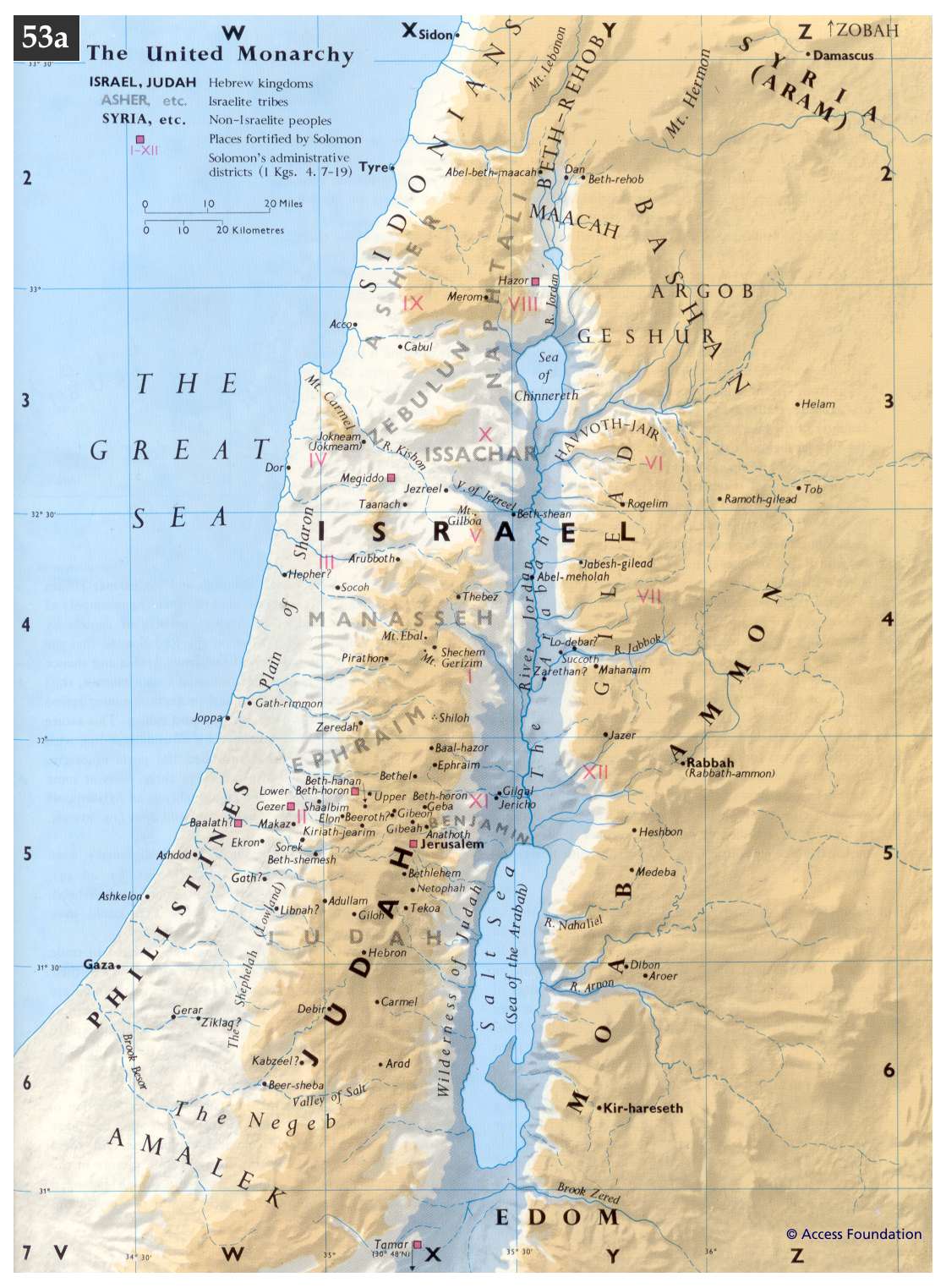
The Kingdoms of Israel and Judah
- The Kingdoms of Israel and Judah (1)
- The Kingdoms of Israel and Judah (2)
- The Kingdoms of Israel and Judah (3)
- The Campaign of Shishak
- Conflicts between Israel and Aram-Damascus
- The Omride Dynasty
- The Golden Ages of the 9th & 8th centuries BCE
- Phoenician Trade and Civilization
- Trade Routes throughout the Middle East
- Travel Routes throughout Palestine
- Elijah and Elisha
- The Revolt of Jehu
- The Rise of Assyria
- Israel & Judah in the days of Jeroboam II and Uzziah
- The Assyrian Empire under Tiglath-Pileser III
- The Syro-Ephraimite War
- Tiglath-Pileser III's Campaigns
- Fall of Samaria and Deportation of Israelites
- The Fall of the Kingdom of Israel
- Assyrian Districts after the Fall of Samaria
- Prophets of the 8th Century BCE

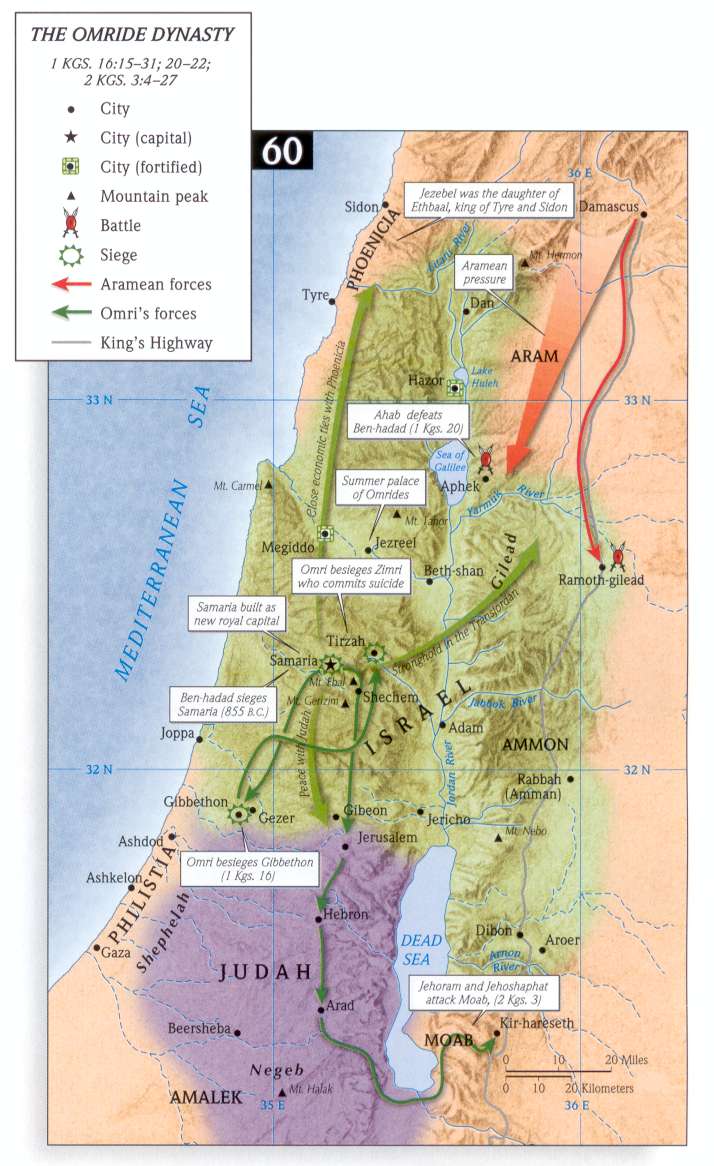
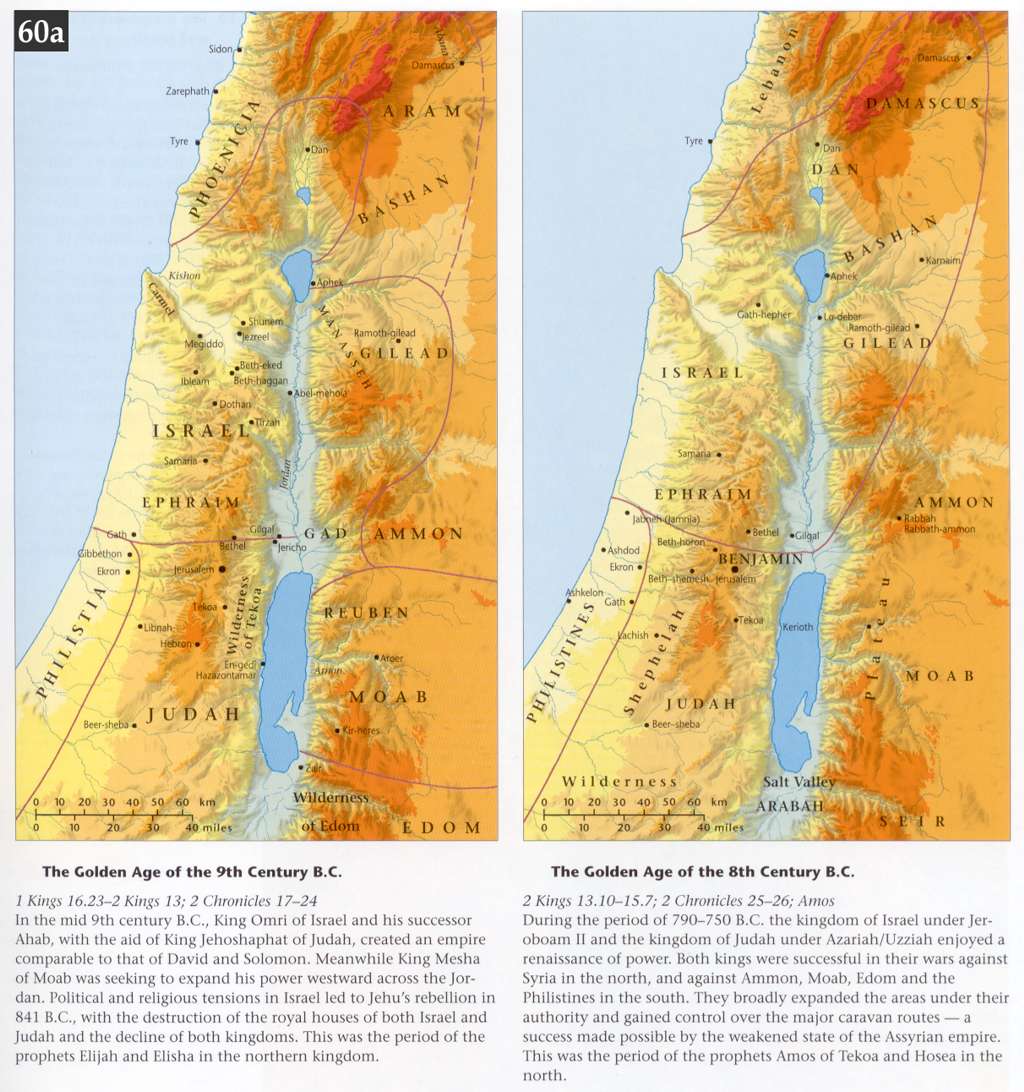
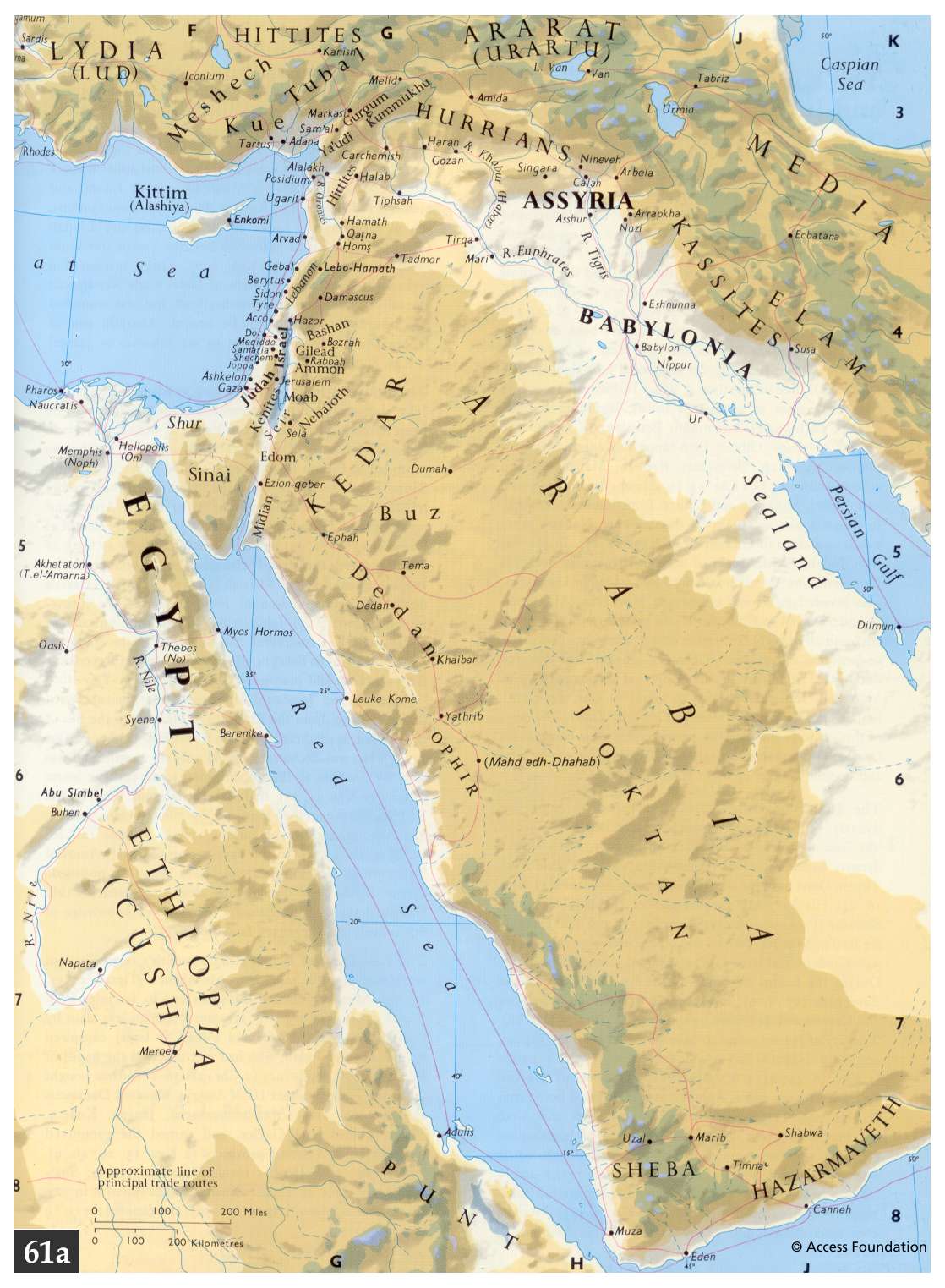
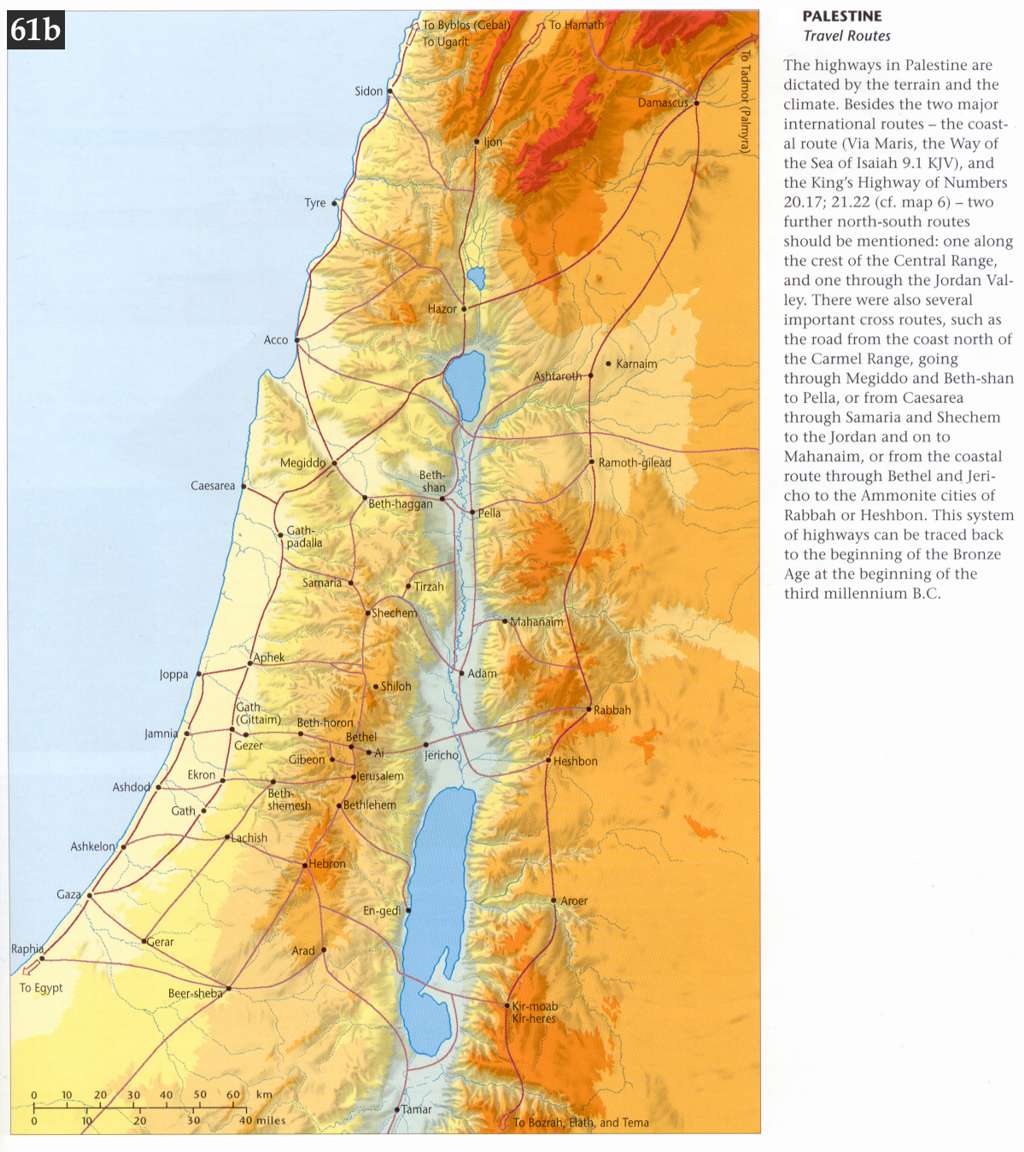
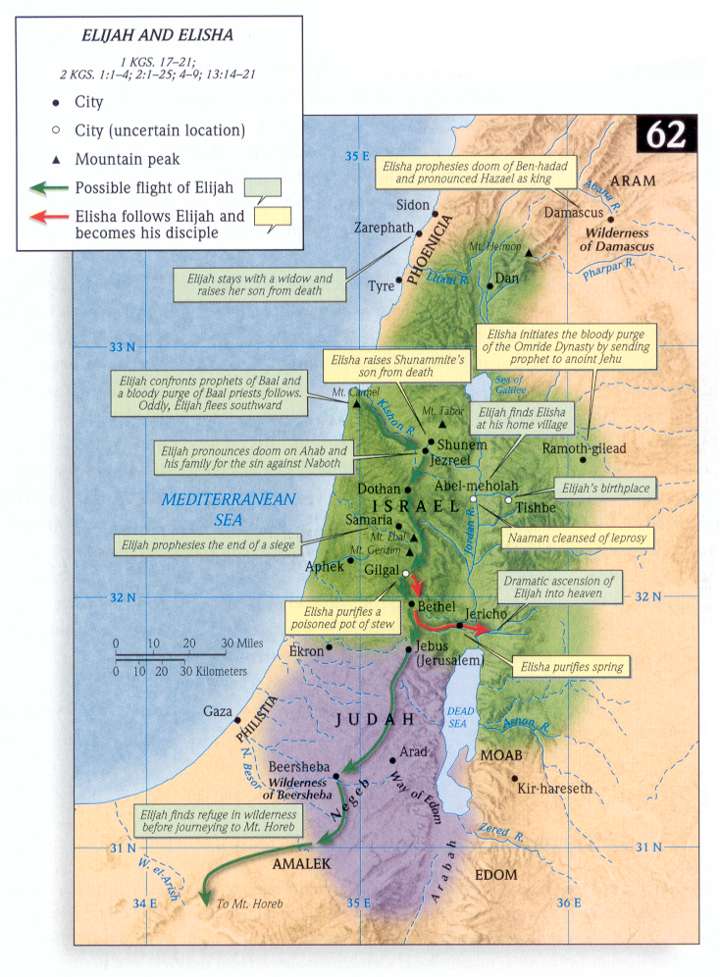
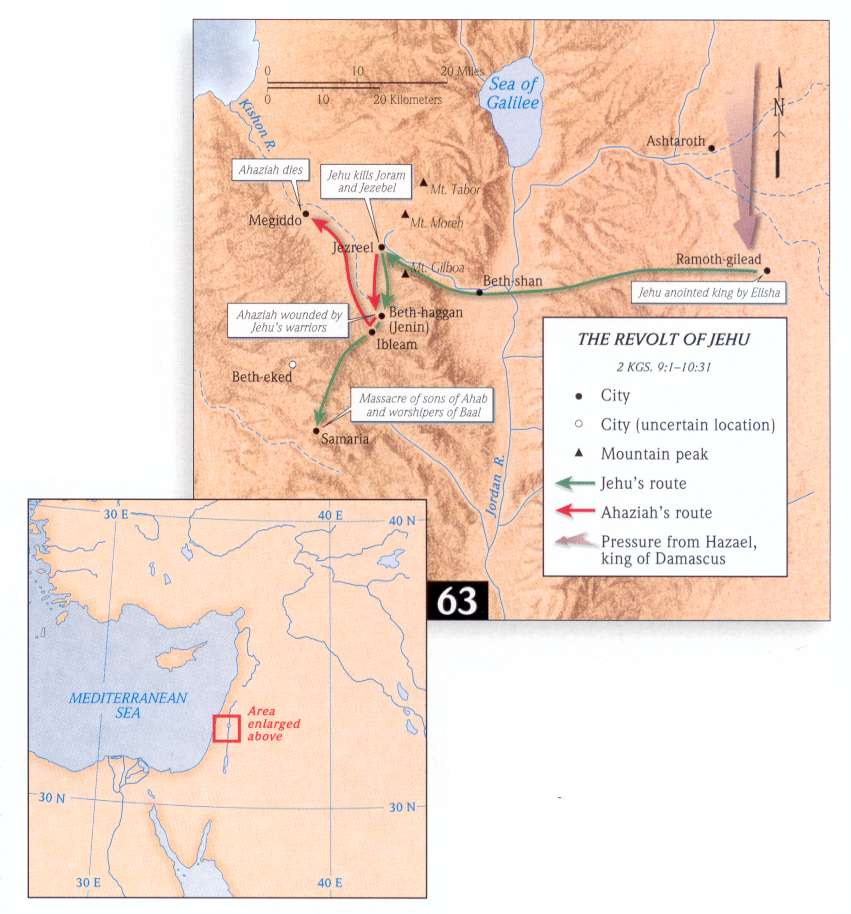
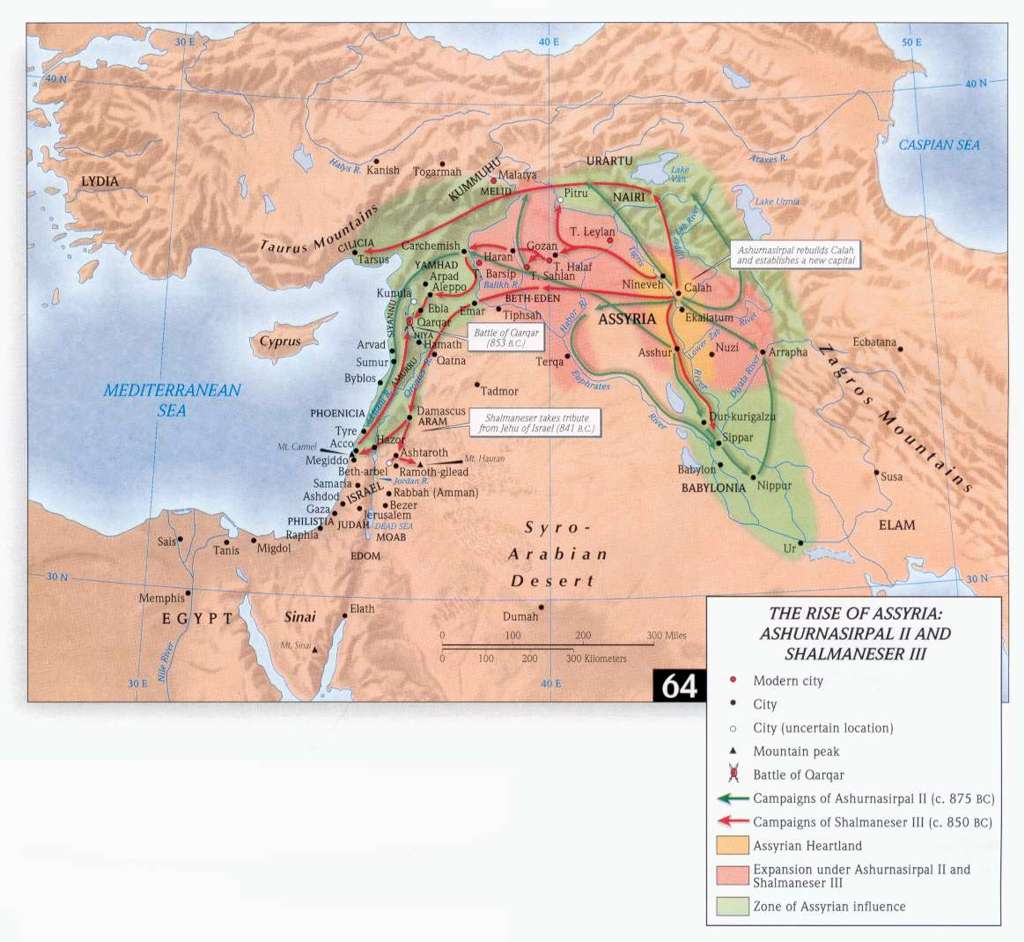
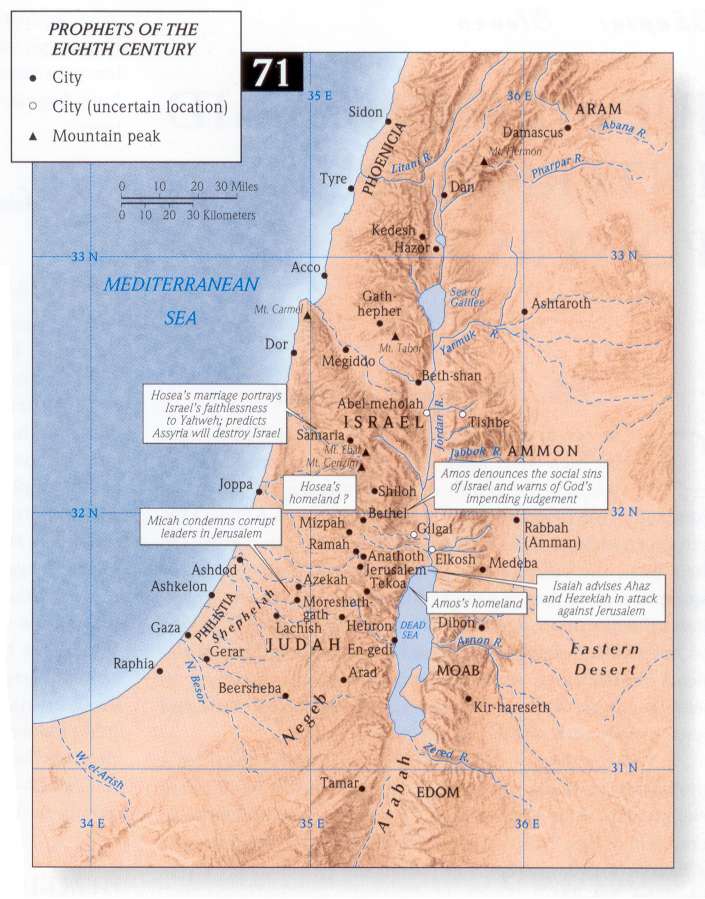
Judah Alone amid International Powers
- Hezekiah's Preparation for Revolt
- Judah under King Hezekiah
- Hezekiah's Jerusalem
- Sennacherib's Campaign against Judah
- Assyria in the 7th century BCE
- The Rise of the Neo-Babylonian Empire
- The Reign of Josiah
- The Districts of Judah under King Josiah
- The Golden Age of King Josiah
- Nebuchadnezzar's Campaigns against Judah
The Babylonian Exile up to the early Rome
- Judah during the Exile
- The Kingdom of Judah
- Exile; Palestine in the Post-Exilic Period
- Jewish Exiles in Babylon
- World Powers of the 6th century BCE
- The Conquests of Cyrus the Great
- The Persian Empire
- The Return of the Jewish Exiles to Judah
- Judah in the 5th century BCE
- Palestine after the Exile
- Alexander the Great's Empire
- The Division of Alexander's Empire ca. 275 BCE
- Palestine under the Ptolemies
- The Seleucid Empire and Antiochus III
- Campaigns of Antiochus IV against Egypt
- The Maccabees in 168 BCE
- Selected Events in the Maccabean Revolt
- Jewish Expansion under the Hasmonean Dynasty
- Pompey's Campaign against Jerusalem
- Early Rome
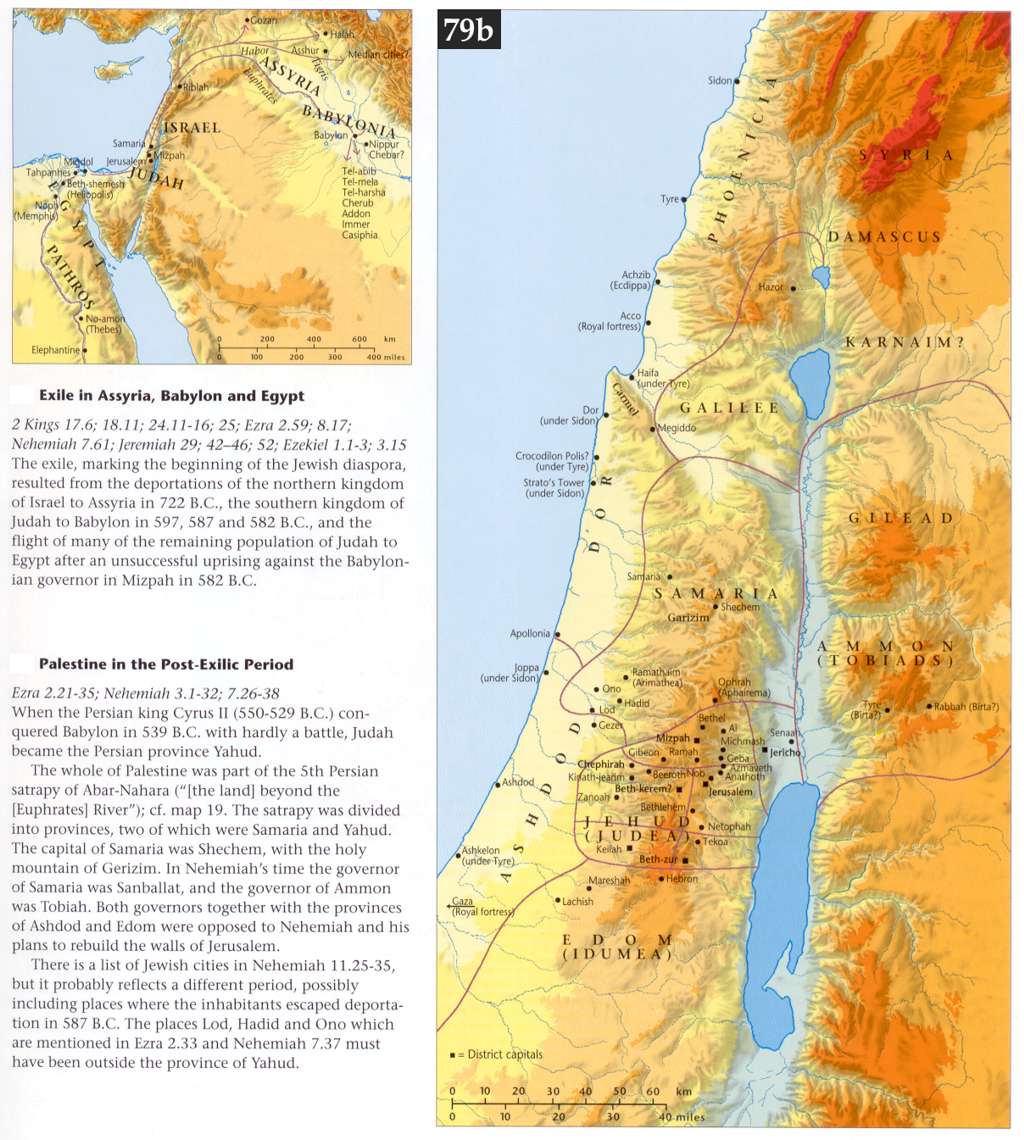
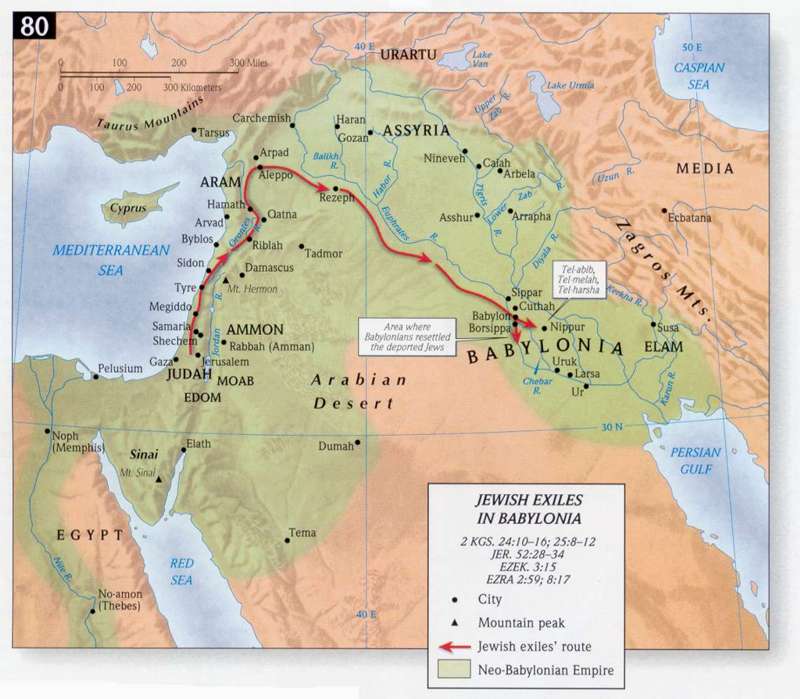
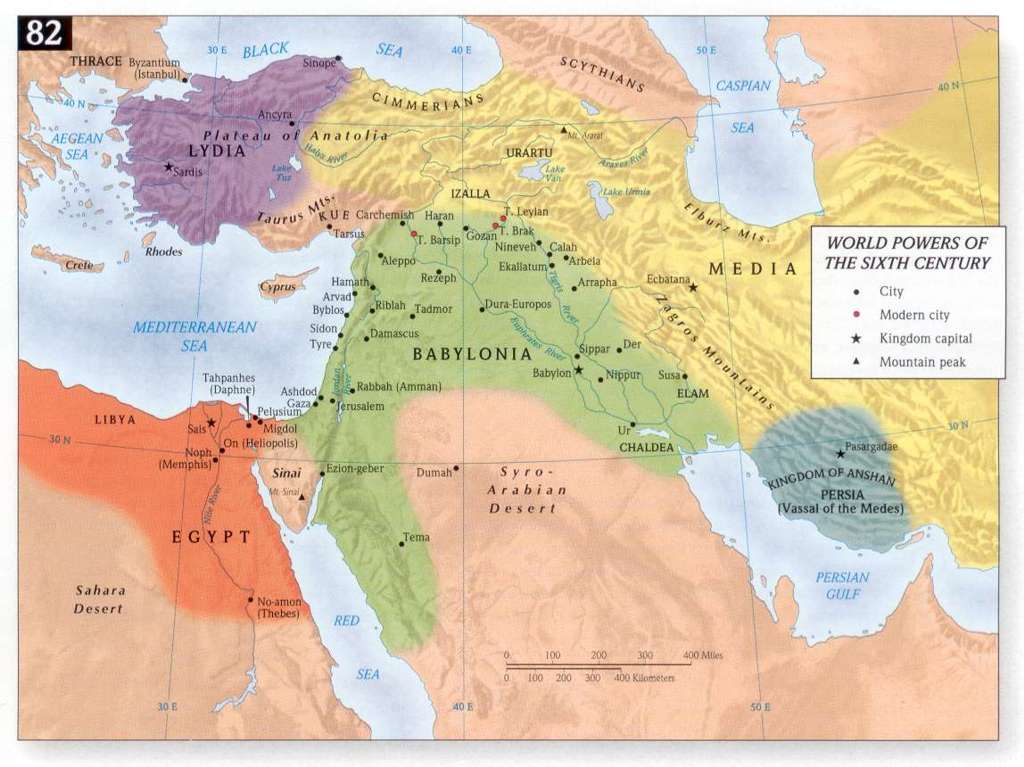
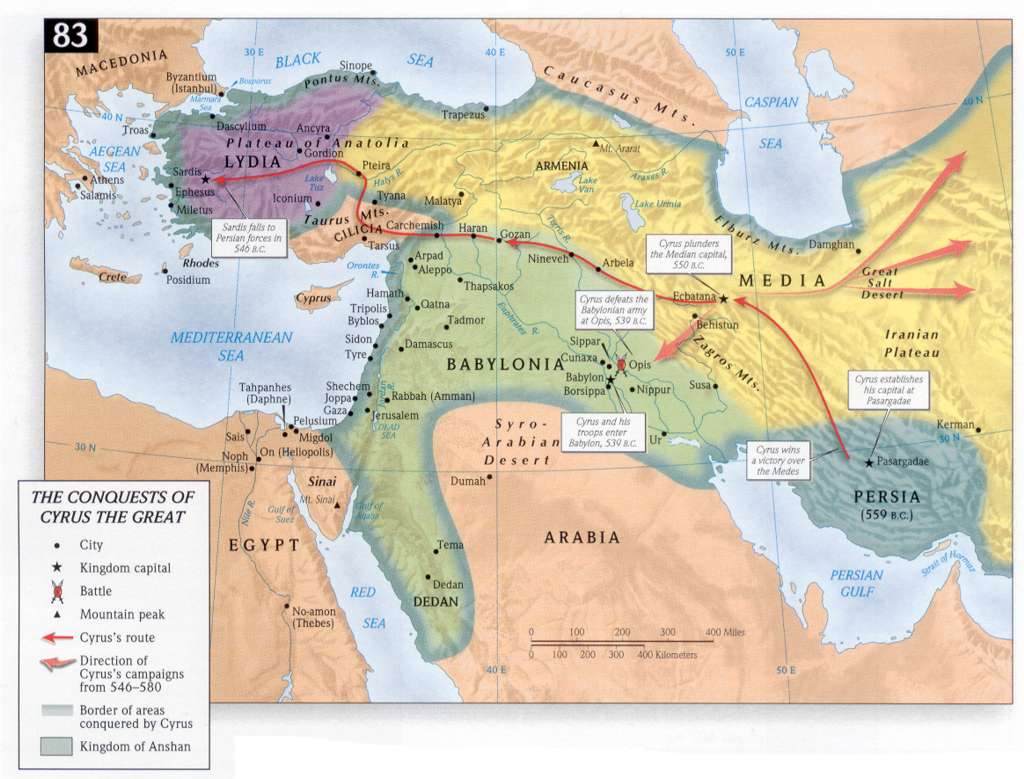
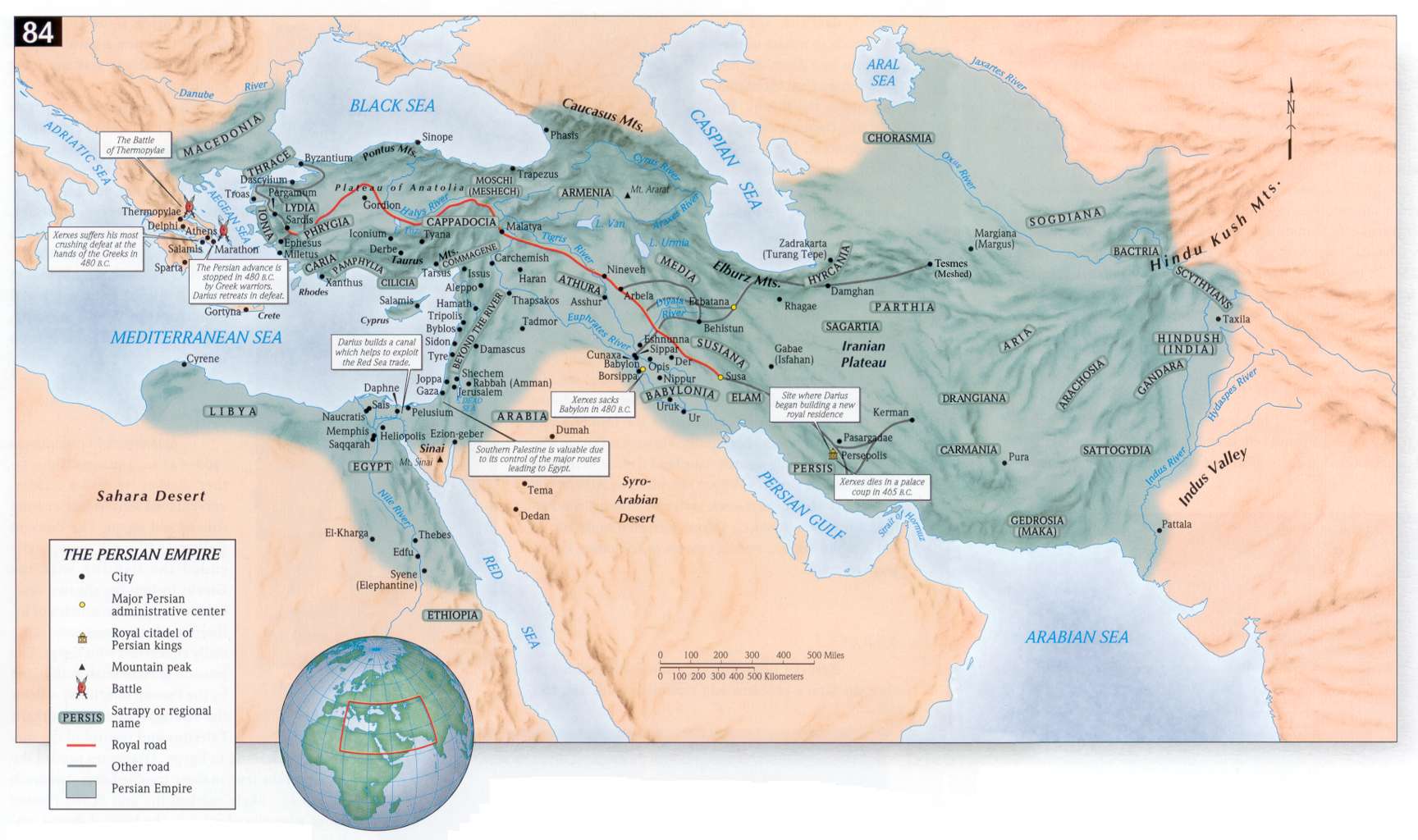
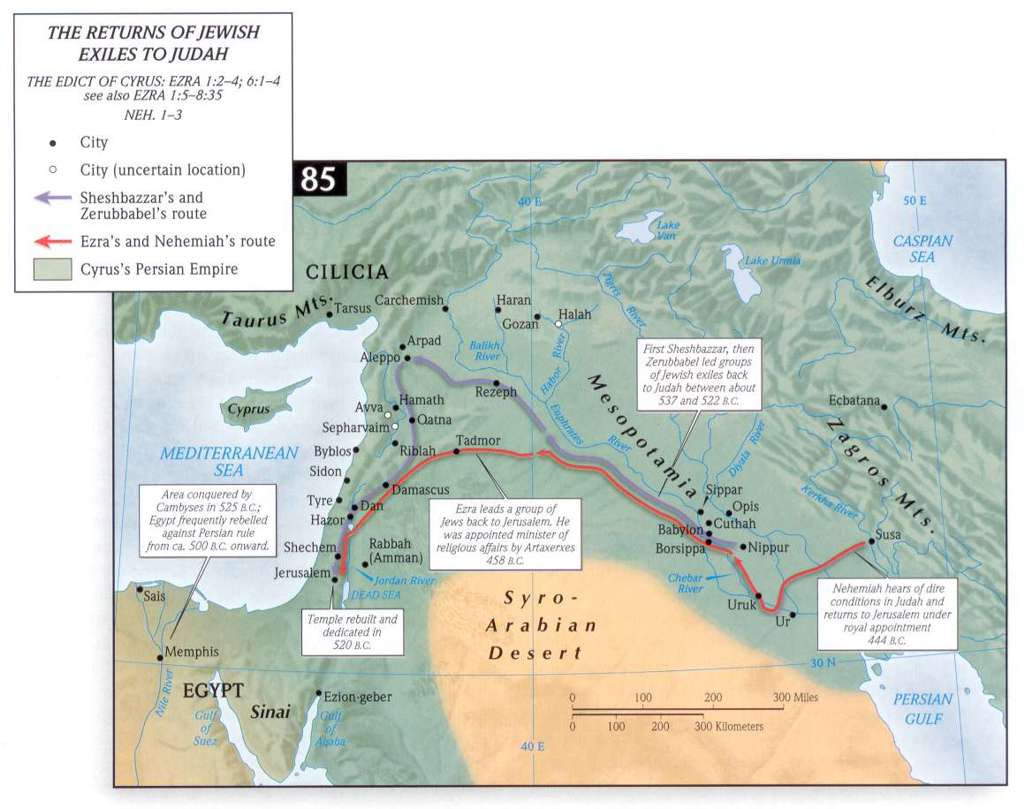
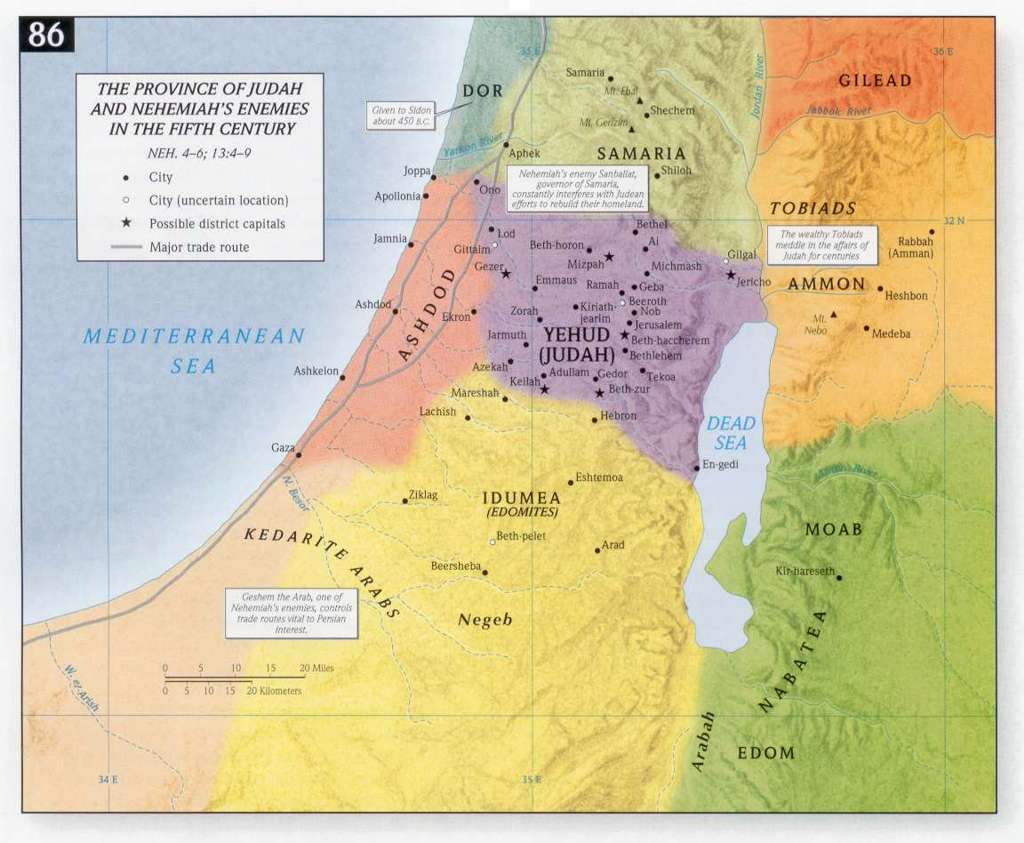
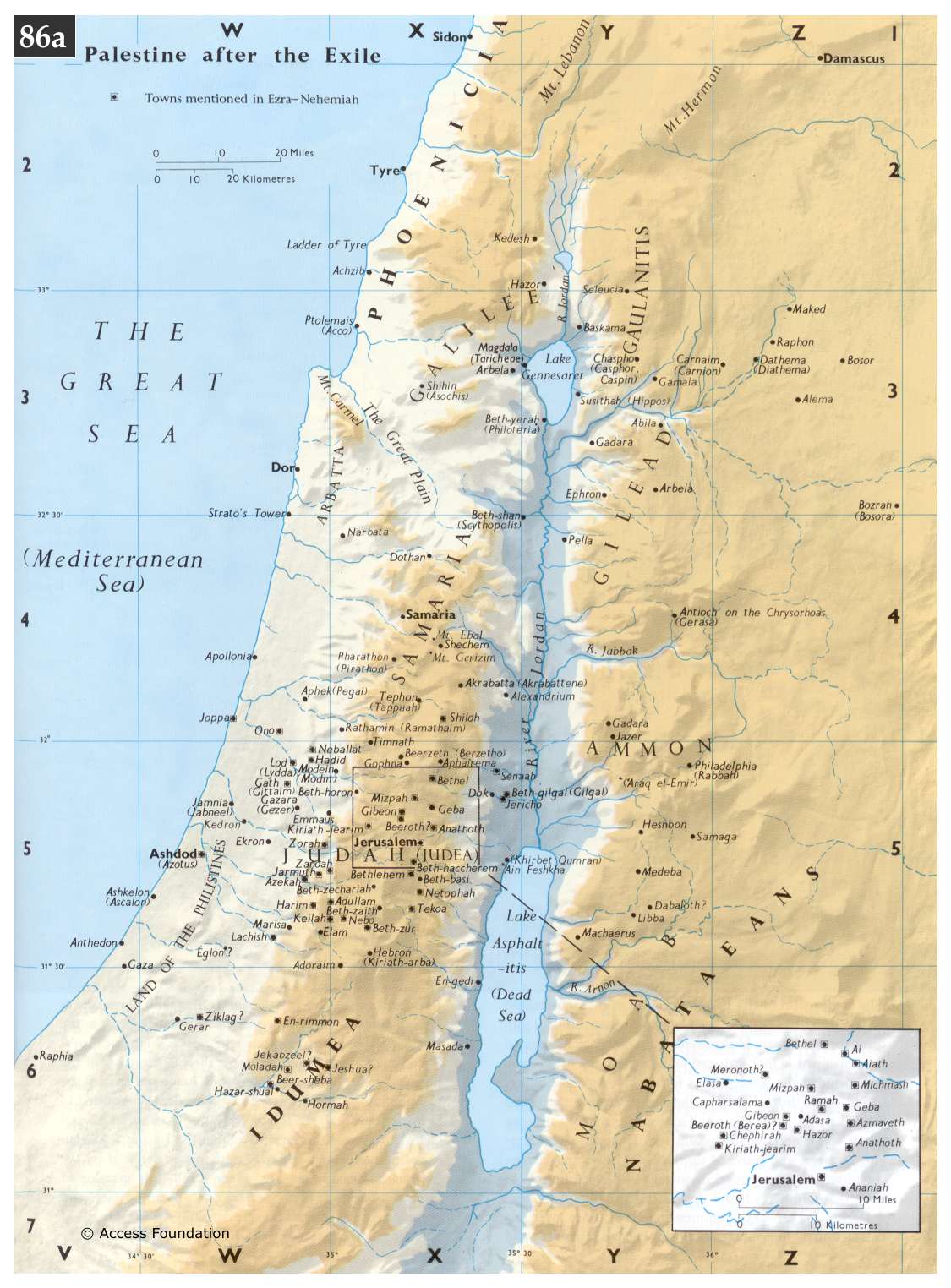
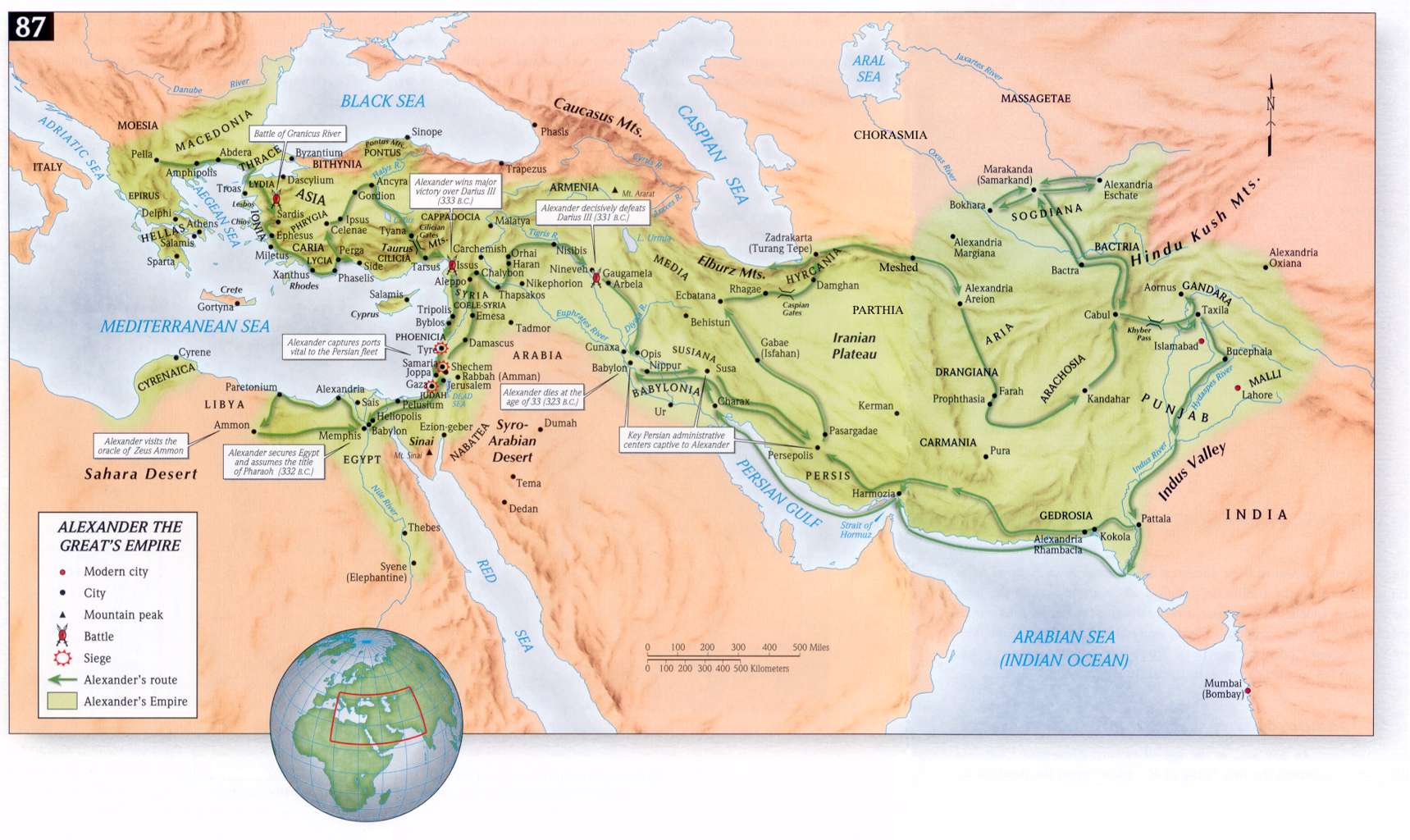
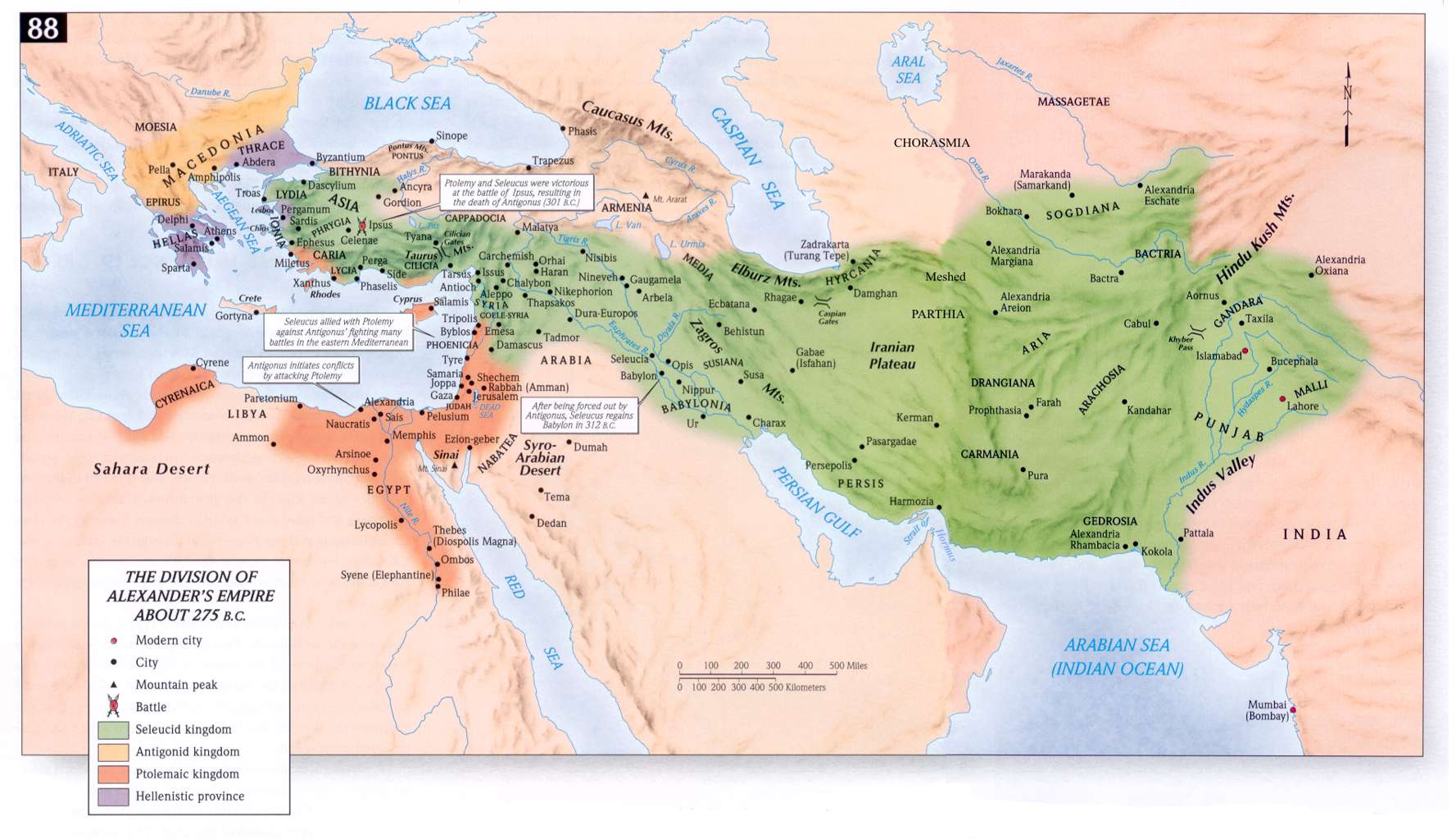
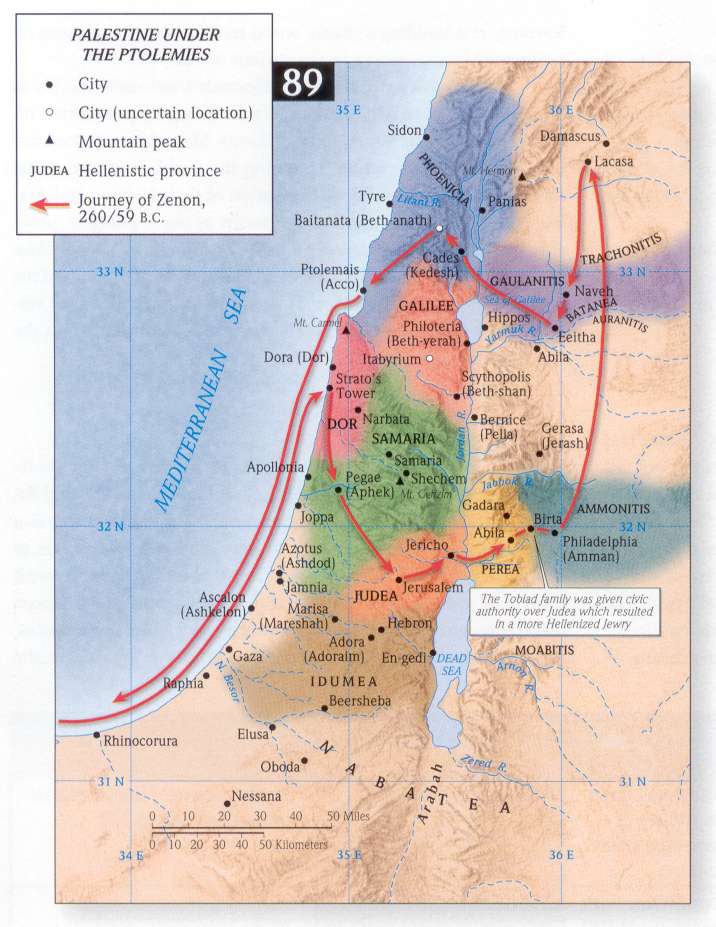
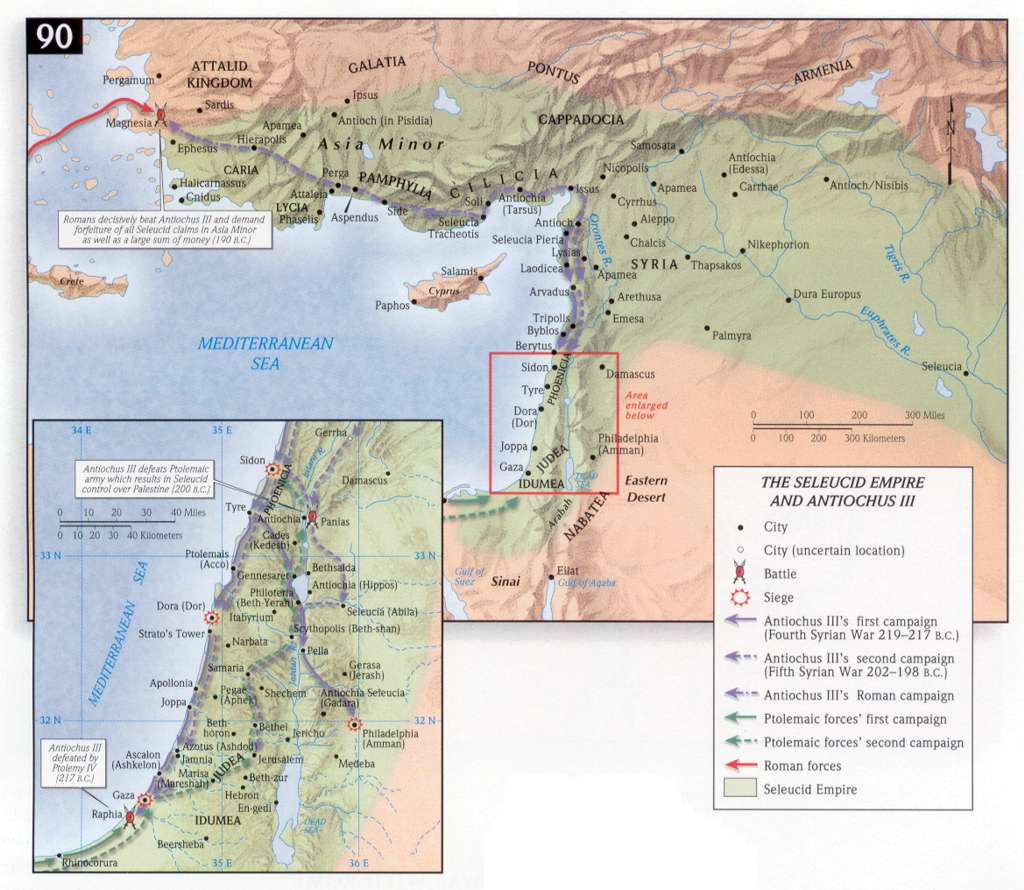
MAPS FROM ESV
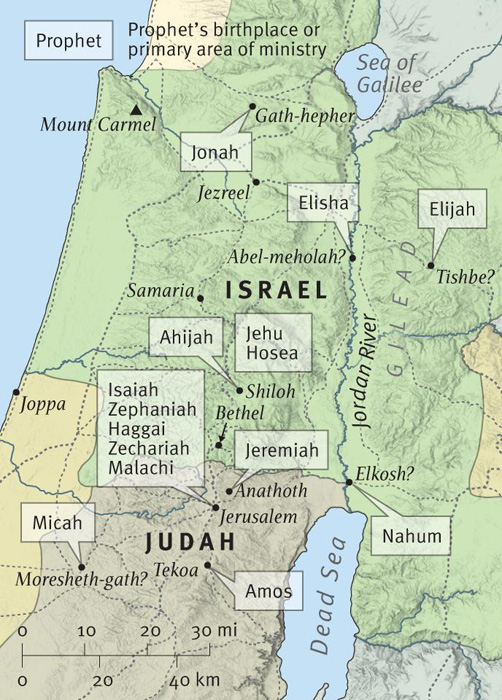
Prophets of Israel and Judah
c. 875–430 B.C.
- Extent of Solomon’s Kingdom
- Israel and Judah in 2 Kings
- Solomon’s Administrative Districts
- The Kingdom Divides
- Syria Captures Gilead
- Resurgence during Azariah, Jeroboam II
- Prophets of Israel and Judah
- Resurgence of Assyrian Influence
- Fall of Samaria, Deportation of Israelites
- Exile to Babylon
- Extent of David’s Kingdom
- Solomon’s International Ventures
- Syria and Israel Attack Judah
- Judah after the Fall of Israel
- Persian Empire at the Time of Ezra
- Persian Empire at the Time of Nehemiah
- Judea under Persian Rule
- Persian Empire at the Time of Esther
- Near East at the Time of Isaiah
- Israel and Judah at the Time of Jeremiah
- Babylonian Empire
- Babylon Attacks Judah
- Jeremiah Prophesies against Egypt
- Near East at the Time of Ezekiel
- Ezekiel’s Vision of Israel’s New Boundaries
- Introduction to Daniel: Babylonian Empire
- Empires of Daniel’s Visions: Persians
- Empires of Daniel’s Visions: Greeks
- Empires of Daniel’s Visions: Ptolemies and Seleucids (Early)
- Empires of Daniel’s Visions: Ptolemies and Seleucids (Late)
- Maccabean Kingdom
Conservative, Literal, Futuristic Interpretation
- Zechariah by McGee, J. Vernon - Borrow
- Complete Commentary of Zechariah on one zip file
- Zechariah - In Commentary
- Zechariah - Outline
- Zechariah 1:1- Commentary
- Zechariah 1:4- Commentary
- Zechariah 1-7- Commentary
- Zechariah 1:12 Commentary
- Zechariah 1:13 Commentary
- Zechariah 1:16 Commentary
- Zechariah 1:18 Commentary
- Zechariah 1:20 Commentary
- Zechariah 2:1 Commentary
- Zechariah 2:2- Commentary
- Zechariah 2:6- Commentary
- Zechariah 2:10 Commentary
- Zechariah 2:11 Commentary
- Zechariah 3:1 Commentary
- Zechariah 3:2-3 Commentary
- Zechariah 3:4 Commentary
- 9 Zechariah 3:5-7 Commentary
- Zechariah 3:8- Commentary
- Zechariah 4 In Commentary
- Zechariah 4:1- Commentary
- Zechariah 4:3 Commentary
- Zechariah 4:4- Commentary
- Zechariah 4:7- Commentary
- Zechariah 5 Intro
- Zechariah 5:1 Commentary
- Zechariah 5:2 Commentary
- Zechariah 5:3-4 Commentary
- Zechariah 5:5-11 Intro
- Zechariah 5:5-11 Commentary
- Zechariah 5 Commentary
- Zechariah 6:1 Commentary
- Zechariah 6:2-3 Commentary
- Zechariah 6:4-8 Commentary
- Zechariah 6:9-11 Commentary
- Zechariah 6:12-14 Commentary
- Zechariah 6:15 Commentary
- Zechariah - Review
- Zechariah 7:1-3 Commentary
- Zechariah 7:4-7 Commentary
- Zechariah 7:8 Intro
- Zechariah 7:8 Commentary
- Zechariah 7:9-11 Commentary
- Zechariah 7:12 Commentary
- Zechariah 8 Intro
- Zechariah 8:1-3 Commentary
- Zechariah 8:3-4 Commentary
- Zechariah 8:5-7 Commentary
- Zechariah 8:8- Commentary
- Zechariah 8:11 Commentary
- Zechariah 8:15 Commentary
- Zechariah 8:18 Commentary
- Zechariah 9 Intro
- Zechariah 9:1-4 Commentary
- Zechariah 9:5-7 Commentary
- Zechariah 9:8 Commentary
- Zechariah 9:9 Commentary
- Zechariah 9:9 Commentary
- Zechariah 9:10 Commentary
- Zechariah 9:11-17 Commentary
- Zechariah 10:1 Commentary
- Zechariah 10:2-3 Commentary
- Zechariah 10:4-5 Commentary
- Zechariah 10:6 Commentary
- Zechariah 10:8-9 Commentary
- Zechariah 10:10-12 Commentary
- Zechariah 11:1-6 Commentary
- Zechariah 11:7 Commentary
- Zechariah 11:8-11 Commentary
- Zechariah 11:12-14 Commentary
- Zechariah 11:15-16 Commentary
- Zechariah 11:11-17 Commentary
- Zechariah 12 Intro
- Zechariah 12:1 Commentary
- Zechariah 12:2-5 Commentary
- Zechariah 12:6-7 Commentary
- Zechariah 12:8-9 Commentary
- Zechariah 12:10 Commentary
- Zechariah 12:11-14 Commentary
- Zechariah 13 Intro
- Zechariah 13:1 Commentary
- Zechariah 13:2-3 Commentary
- Zechariah 13:4-5 Commentary
- Zechariah 13:6 Commentary
- Zechariah 13:7-9 Commentary
- Zechariah 14 Intro
- Zechariah 14:1 Commentary
- Zechariah 14:2-3 Commentary
- Zechariah 14:4 Commentary
- Zechariah 14:5-8 Commentary
- Zechariah 14:9-10 Commentary
- Zechariah 14:11-15 Commentary
- Zechariah 14:16-21 Commentary
Excellent-Recommended
Rosscup: Here is an evangelical commentary well-done in 493 pp. Introductions gather much that is most pertinent for expositors. In Hag 2:7, “precious things” are Gentiles’ tributes (Isa. 60:5; 61:6) in the future kingdom. Merrill sees Zech. 14 as related to Christ’s Second Advent and the coming of the Messianic Kingdom, in premillennial fashion. Fairly full exegetical detail meets readers verse by verse, yet Merrill’s comments are readable for others than scholars, except the technical notes in special sections will be more for the latter. Problem passages usually draw careful remarks, as in seeing Zech 12:10 as referring to the Lord, and in a future day. (Commentaries for Biblical Expositors: An Annotated Bibliography of Selected Works)
Cyril Barber - While the comments on each verse are brief, they are adequate. Throughout there is a pleasing balance between exegesis and exposition. Pastors will find this volume a great resource for their sermons, and they are sure to appreciate the devotional hints that are scattered throughout. Recommended.
- Preface to Haggai Zechariah Malachi
- 1. Haggai
- 2. Zechariah
- 3. Zechariah Part 1 - The Night Visions (1:1—6:15)
- 4. Zechariah Part 2 - Oracles Concerning Hypocritical Fasting (7:1—8:23)
- 5. Zechariah - Part 3 Oracle Concerning YHWH’s Sovereignty (9:1-11:17)
- 6. Zechariah - Part 4 Oracle Concerning Israel (12:1-14:21)
- 7. Malachi
- Zechariah 1:8 Devotional Commentary
- Zechariah 2:5 Devotional Commentary
- Zechariah 3:2 Devotional Commentary
- Zechariah 4:12 Devotional Commentary
- Zechariah 5:10 Devotional Commentary
- Zechariah 6:12 Devotional Commentary
- Zechariah 7:5 Devotional Commentary
- Zechariah 8:6 Devotional Commentary
- Zechariah 9:11 Devotional Commentary
- Zechariah 10:6 Devotional Commentary
- Zechariah 11:7 Devotional Commentary
- Zechariah 12:10 Devotional Commentary
- Zechariah 13:7 Devotional Commentary
- Zechariah 14:20 Devotional Commentary
F B Meyer's book "Prophet of Hope: Studies in Zechariah" about which Charles Feinberg writes "A short work by a past master of devotional literature."
- Zechariah 1:1-6 The Permanence of God's Words
- Zechariah 1:7-17 The Myrtle Valley
- Zechariah 1:18-21 The Second Division
- Zechariah 2 The Man with the Measuring Line
- Zechariah 3 Joshua the Priest
- Zechariah 4 The Candlestick
- Zechariah 5, 6:1-8 Going Forth
- Zechariah 6:9-15 Christ--Priest and King
- Zechariah 7-8 Fasts Turned to Feasts
- Zechariah 9 Good News for Prisoners of Hope
- Zechariah 10 God's Sowings
- Zechariah 11:1-17; 13:5-9 The Shepherd of Israel
- Zechariah 12, 13 The Spirit of Grace and Supplication
- Zechariah 14 Things Shortly to Come to Pass
- Zechariah 14:16 The Millennial Age and This
The Theological Journal Library on galaxie.com Note: Also gives you access to one of the best conservative resources on Zechariah by Charles Feinberg's 20 part series in Bibliotheca Sacra. (See list of articles) An annual $50 or monthly $5 subscription (click here) is required to view the entire article but will give you access to literally thousands of conservative articles. Click the following links to search by topic, author, or bible reference.
- Zechariah Minor Prophet With A Major Message -- By Stephen C. Ger
- Israel’s Divine - Human Messiah An Examination Of Zechariah 13:6-7 -- Donald L. Odens
- The Literary Unity Of Zechariah --James A. Hartle
- Literary Connectors And A Haggai-Zechariah-Malachi Corpus -- Ronald W. Pierce
Walter Kaiser in The Preacher's Commentary, Vol 23 - excellent for preaching -
Rosscup on Kaiser's work: A careful evangelical gives contemporary outlines usable to pastors. He has occasional illustrations and serious explanation of the text. He is premillennial, as on Zechariah 14, and packs in much expositional help, relating it strategically to life. (Commentaries for Biblical Expositors: An Annotated Bibliography of Selected Works)
- Zechariah: An Exegetical and Theological Exposition of Holy Scripture (New American Commentary - George Klein - excellent, literal, futuristic, conservative, millennial
- James Montgomery Boice - conservative, literal, futuristic - excellent for preaching
Exploring the Minor Prophets John Phillips -
Rosscup on John Phillips - A respected popular expositor on a number of biblical books here has two introductory chapters, then a chapter of about 20–30 pp. on each prophet (50 on Zech.). Several charts aid readers, and a detailed outline runs before each exposition. The exposition is in general surveys of sections, at times taking a view on a main problem. In Hosea 1:2, he feels that God had Hosea marry an immoral woman but Phillips offers no help on the moral issue. Phillips is premillennial, seeing Israel’s future kingdom blessings as in the millennium after Christ’s Second Coming (Hosea 3:5; Joel 3:14ff; Amos 9:15; Zeph. 3:9ff; Zech 2:10–13; 14:1–21). In Mal. 2:15 he has “one” refer to God making husband and wife into one, and in 4:5 he thinks the Elijah will be fulfilled in one of the two witnesses in Rev. 11. The work helps on broad coverage, and is quite readable for preachers, church teachers, students and lay people wanting a general devotional sweep. (Ibid)
- See discussion of the Day of the Lord = Zech 14:1-21
PAUL APPLE
- Zechariah - 158 pages - Conservative, pre-millennial.
- Zechariah 1:1-6; True Spirituality: We are to develop a personal and heart relationship with God, not simply an outward expression of our beliefs. Video
- Zechariah 1:7-17; The Incarnation: We must never compromise the divine truth that, in order to provide for our eternal salvation, God became a man and dwelled among us. Video
- Zechariah 3:1-10; Walking Worthy: Since we have been chosen by God and saved by grace through faith, we are responsible to live in His revealed will. Video
- Zechariah 5:1-6:8; The Impact of Sin: Because sin is a universal disease that separates all people from God, to enter His presence we must confess our sins and receive forgiveness by believing in Christ's death and resurrection. Video
- Zechariah 6:9-15; The Family of God: As members of God's spiritual family, we are to participate in building God's holy temple until Jesus Christ returns. Video
- Zechariah 7:1-14; Reality Not Ritual: We should evaluate both our past and present religious rituals and human relationships to determine our true heart motives. Video
- Zechariah 8:1-23; Vital Relationships: We are to live in proper relationship with our fellow believers so we will have joyful and fulfilling relationships with God. Video
- Zechariah 9:9; A Humble Servant: Though a day is coming when the Lord Jesus Christ will rule and reign as King of kings, we are to imitate His life as a humble servant when He came the first time. Video
- Zechariah 9:16-11:17; Good Shepherds: Though Jesus Christ will someday be the Shepherd-King over Israel, as spiritual leaders in the church we are to follow His example as shepherd-servants. Video
- Zechariah 12:10-13:1; The Blood of Christ: Whether we are Jews or Gentiles, in order to be saved we must personally and sincerely believe that Jesus Christ died and shed His blood to wash away our sins. Video
- Zechariah 13:2-9; The Great Commission: As the church of Jesus Christ, we must diligently fulfill our responsibilities to carry out the Great Commission until Christ comes again. Video
- Messianic Prophecies - notes on a number of Messianic prophecies in Zechariah (and other OT books) - below are some of the prophecies in Zechariah...
SOLD FOR THIRTY PIECES OF SILVER
Prophecy: Zechariah 11:12 And I said to them, “If it is good in your sight, give me my wages; but if not, never mind!” So they weighed out thirty shekels of silver as my wages.
Fulfillment: Matthew 26:14-15 Then one of the twelve, named Judas Iscariot, went to the chief priests, 15 and said, “What are you willing to give me to deliver Him up to you?” And they weighed out to him thirty pieces of silver.
THE MONEY CAST TO THE POTTER
Prophecy: Zechariah 11:13 Then the LORD said to me, “Throw it to the potter, thatmagnificent price at which I was valued by them.” So I took the thirty shekels of silver and threw them to the potter in the house of the LORD.
Fulfillment: Matthew 27:5-7 And he threw the pieces of silver into the sanctuary and departed; and he went away and hanged himself. 6 And the chief priests took the pieces of silver and said, “It is not lawful to put them into the temple treasury, since it is the price of blood.” 7 And they counseled together and with the money bought the Potter’s Field as a burial place for strangers.
NOTE: Notice that in both prophecy and fulfillment we find stated that (1) it was silver; (2) there were 30 pieces (Matt. 27:3); (3) they were thrown down; (4) they were cast down in the House of the Lord; and (5) the money was used to purchase the potter’s field. (Ed: Listen to this old Hank Williams song - 30 Pieces of Silver)
THE DISCIPLES FORSOOK HIM
Prophecy: Zechariah 13:7 "Awake, O sword, against My Shepherd, And against the man, My Associate," Declares the LORD of hosts. "Strike the Shepherd that the sheep may be scattered; And I will turn My hand against the little ones.
Fulfillment: Matthew 26:56 “But all this has taken place that the Scriptures of the prophets may be fulfilled.” Then all the disciples left Him and fled. (See also Mark 14:27)
HIS SIDE PIERCED
Prophecy: Zechariah 12:10 “And I will pour out on the house of David and on the inhabitants of Jerusalem, the Spirit of grace and of supplication, so that they will look on Me whom they have pierced; and they will mourn for Him, as one mourns for an only son, and they will weep bitterly over Him, like the bitter weeping over a first-born.
Fulfillment: John 19:34-37 but one of the soldiers pierced His side with a spear, and immediately there came out blood and water. 35 And he who has seen has borne witness, and his witness is true; and he knows that he is telling the truth, so that you also may believe. 36 For these things came to pass, that the Scripture might be fulfilled,” Not a bone of Him shall be broken. “ 37 And again another Scripture says, “They shall look on Him whom they pierced.”
- The Minor Prophets -Excerpt -
KEY CHAPTERS: Zechariah builds to a tremendous climax in chapter 14 where he discloses the last siege of Jerusalem, the initial victory of the enemies of Israel, the cleaving of the Mount of Olives, the Lord’s defense of Jerusalem with His visible appearance on Olivet, judgment on the confederated nations, the topographical changes in the land of Israel, the Feast of Tabernacles in the Millennium, and the ultimate holiness of Jerusalem and her people.82CHRIST AS SEEN IN ZECHARIAH: Perhaps no Old Testament book is more Messianic than Zechariah. In an often-quoted statement, George L. Robinson has called the Book of Zechariah “the most Messianic, the most truly apocalyptic and eschatological of all the writings of the Old Testament” (International Standard Bible Encyclopedia. Grand Rapids: Wm. B. Eerdmans Publishing Co., 1956, 5:3136). The messianic emphasis of Zechariah accounts for its frequent citation by New Testament authors.83 Zechariah presents Messiah or Christ in both of his advents and as both Servant and King, as Man and God, as the Angel of the Lord (3:1), the Righteous Branch (3:8), the Stone with the seven eyes (3:9), the Crucified Savior or the pierced One (12:10), the coming and humble King (9:9-10), the smitten Shepherd who will be abandoned (13:7), and the coming Judge and righteous King (14).
- HCSB Study Bible : Holman Christian Standard Bible - Borrow this resource
- Kay-Notes: Do You Need Rescuing?
- THE Angel of the LORD
- Kay Arthur Lecture Notes: Return to Me
- Kay Arthur Lecture Notes: Prophecies & Practicalities
- Lecture - Kay Arthur - Jerusalem the City of Truth
- Lecture - Kay Arthur - What is Your Shepherd Worth?
- Zechariah 11:12, 13 - 30 Pieces of Silver, 30 Shekels of Shame by Hank Williams
- Lecture - Kay Arthur
- Video Clip: Raiders of Lost Ark
- Music Video: "Dror Yikra" (He Will Proclaim Freedom) - Maccabeats - English translation of verses
JOHN MACARTHUR
DAVID MALICK
RICHARD MAYHUE
G CAMPBELL MORGAN
J VERNON MCGEE
W G MOOREHEAD
WILLIAM ORR
MYER PEARLMAN
RBC BOOKLET
REFORMATION STUDY BIBLE
- Zechariah - Reformation Study Bible Notes - Be aware that these notes do not interpret a future millennium.
MAX I REICH
- The Messianic Hope of Israel - The Hope Scheduled in Zechariah
The Witness of Zechariah - Zechariah, Haggai's younger colleague, has a peculiarly rich testimony to bear to both the sufferings and glories of the Messiah. His book divides itself into two main parts. Zechariah 1-6: The prophetic visions here partake of an apocalyptic nature. Zechariah 7-14, contain more direct utterances. The entire book has for its background, chapters 1-8, the Persian era; Zechariah 9-10, the Grecian era; Zechariah 6 the Roman era; Zechariah 12-14 take us to the time of the end.In the first group of visions (Zechariah 1-6), the Messiah stands forth as "the Branch" (Zechariah 3:8; 6:12). He is the one GOD falls back upon in the face of the failure of Israel. Out of the dead and barren condition of Judaism springs this fruitful Branch. But He is also the Foundation and Top-Stone (Zechariah 3:9; 4:7). GOD works from CHRIST and to CHRIST. All the counsels of GOD centre in Him.
The second group of prophecies (Zechariah 7-14) bring before us in a wonderful way the ministry of the Messiah as recorded in the Gospel according to Matthew. He is seen as the true Shepherd (Zechariah 11:7, 10, 11). The flock is exploited by false and hireling shepherds. The poor of the flock, however, who waited upon GOD, recognized the One who was the shepherd to be hearkened to.
In Zechariah 9 we have the official presentation of the Messiah to Jerusalem on the day called: "Palm Sunday." All the four evangelists give space to it. It was the beginning of the Passion week.
The Jerusalem rebuilt by the remnant returned from exile would witness this royal entry. He would come as king of Peace, not riding on a war-house, but on a peaceable ass. As Professor F. Delitzsch has pointed out, the language of Zechariah 9:9 implies that "the royal glory rises upon the dark ground of suffering. The coming King is Tsadik and Nosha, a righteous one whom GOD has helped out of tribulation and struggle to salvation and victory; hence He is also called ani, that is, bowed, pressed down through sorrow. We still see Him as the Sufferer. His lowliness is not yet transformed into pure and full glory. Therefore He does not come loftily on a noble steed or in a grand coach of state like the kings of this world, but upon a peaceful animal; not upon one belonging to another, but upon a colt which has never been ridden (compare Matthew 21:2), for He is a King of humble mind, of tender heart, and whose final object is peace" (Zechariah 9:10).
However, in Zechariah 11:12, 13, He is valued the price of a slave (Exodus 21:32)! It is the story of His base betrayal. Deep were His sorrows, but deeper still awaited Him! In Zechariah 13:5, 6, we see Him wounded in the house of His friends, those for whose sake He had been a bondman (see Zechariah 13:6).
But the One who was wounded in the house of His friends, was also smitten by the sword of JEHOVAH. He was JEHOVAH's Shepherd and the Man, His Fellow (Zech 13:7). He is thus very GOD of very GOD, and very Man of very Man. During the night of His betrayal our LORD claimed to be the One spoken of here (Matthew 26:30, 31). The sword of JEHOVAH is His judicial stroke (see Jeremiah 47:6-7). It speaks of GOD's action when He died. At the hand of man CHRIST suffered for righteousness. But being "made sin" for us He Himself "knew no sin," He made expiation for sin. He was made to feel all that sin is, all that sin deserves, in the sight of a holy, sin-hating GOD. Psalm 69 speaks of the first; Psalm 22, of the second.
JEHOVAH says of Him, when in His deepest humiliation: "My Fellow." The SPIRIT addressing Him in Psalm 45 and Hebrews 1 speaks of "Thy fellows." He took their place with all its consequences that they might share His place with all its consequences.
In Zechariah 12 we see Israel's final conversion. In that day they will recognize that in piercing JESUS they pierced the very heart of JEHOVAH - as He says: "They shall look upon Me (i.e. JEHOVAH) whom they have pierced, and they shall mourn for Him, as one mourneth for an only son, and shall be in bitterness for Him, as one that is in bitterness for his firstborn."
Then will Israel experience a threefold cleansing.
(1) The sight of the wounds of JESUS will purge the conscience. The Blood of JESUS has made expiation.
(2) The fountain there opened for sin and uncleanness cleanses the walk and the state by the washing of water by the Word (Zechariah 13:1).
(3) But there is besides the fire-baptism (Zechariah 13:9). We need the discipline which helps us to practically turn from the things which we have judged. The Father chastens us to make us partakers of His holiness (Hebrews 12). For there is but one way of salvation and sanctification, for this age and for that which is to come, for Jew or Gentile, i.e. through repentance and faith, apprehending the atoning sacrifice, and experiencing the power of the Word and Spirit, and submitting to the disciplinary dealings of the guiding and chastening hand of GOD.
Recapitulation
a. The Man among the myrtles (Zechariah 1) - Though Israel may be like a valley of myrtles, signifying a depressed condition, the theophanic Angel (the Messiah) is in the midst of the myrtles in the valley. The hosts of the LORD are at His disposal. He is the Intercessor on behalf of the tribulated people, for Israel, and now for the church, for she too is often in the valley of depression.
b. JEHOVAH's Servant, the Branch (Zechariah 3:8) - This is an echo of Isaiah 4:2. When He is brought forth Truth will be despised no more. Israel's land will have been atoned for (verse 10). Universal peace and brotherhood will prevail; conditions of Eden-like fertility will return.
c. The Stone with the seven eyes upon it (Zechariah 3:9) - If the prophecy concerning the Branch looks on to the future. when Messiah will be revealed in glory, the Stone-prophecy has a present application. The Stone has already been laid as a divine foundation (see 1 Peter 2:7). And the preciousness of this Stone attaches to all who build upon it. It is an immovable foundation. The floods cannot overthrow it. The gates of hell will never prevail against it, nor upon that divinely built on it. And that Stone is sovereign. It has seven eyes, the eyes of divine omniscience. The Messiah has all authority in Heaven and on earth (see Zechariah 4:10). All power is in His hands, and the fulness of the Godhead dwelleth in Him bodily.
d. The first coming of the Messiah (Zechariah 9-10) - These chapters fill up the gap prophetically between the Testaments, as they cover the period of the Grecian and Syrian domination over Jerusalem. Thus verses1-10 give us the victorious inroads of the armies of Alexander the Great, by which the coast line of Palestine was subjugated. But he was not allowed to tamper with the city and the temple of Jerusalem. The reason for this is given in verse 9. The Messiah will have to enter that city. Between verses 9 and 10 runs the Christian dispensation. The prophetical forecast of Jewish history in the days of the Maccabees is resumed in verses 13-17.
e. The Betrayal (Zechariah 11:12, 13) "A goodly price!" was given for Him!
f. His crucifixion (Zechariah 13:5, 6) - "He shall say": It is Messiah speaking (Zechariah 6) , the true Prophet (Deuteronomy 18), the One who was here in bondsman's form from His youth (verse 5). Being rejected He became a Husbandman - a "Sower" (Matthew 13), a Vine-dresser (Luke 13), and wounded in the house He had come to serve in love.
g. Smitten of GOD (Zechariah 13:7) JEHOVAH bruised Him (Isaiah 53:10). GOD brought Him into the dust of death (Psalm 22:15). These are more than martyr sufferings.
h. His glorious Coming again (Zechariah 14:1-3, 5) When Jerusalem will suffer her last and worst siege. "All nations" against the Jewish people!
i. Standing on Olivet (Zechariah 14:4, 5) The very spot from which He ascended.
j. Israel's recognition of Him (Zechariah 12:10) k. His universal reign (Zechariah 14:9) l. His royal Priesthood (Zechariah 6:13)
AREND REMMERS
JOHN STEVENSON
CHARLES SWINDOLL
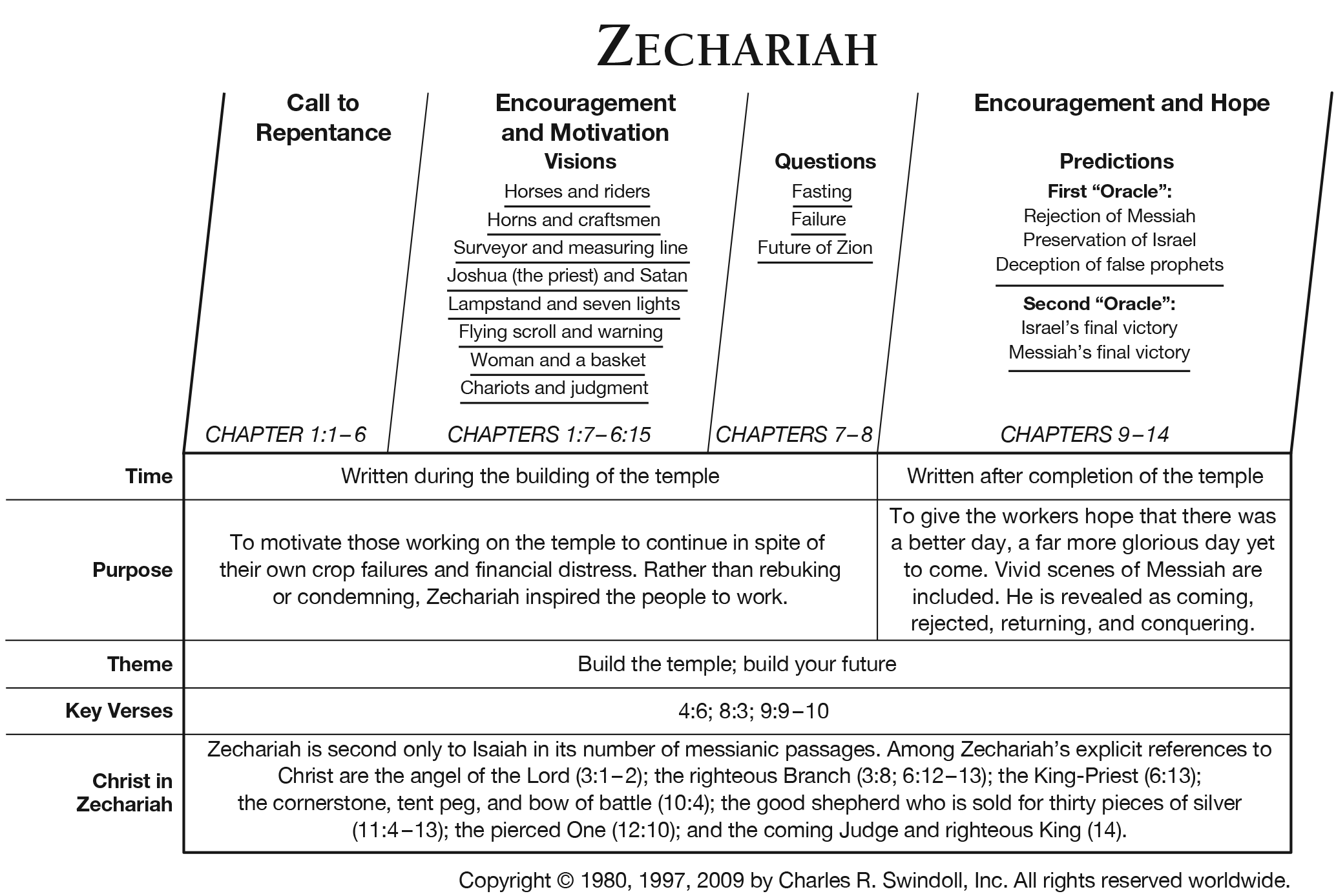
Excerpt: What's the big idea? Meaning “Yahweh remembers,” Zechariah’s name was appropriate to the purpose of his prophecies.2 His book brims over with the hope that God would remember His promises to His people, even after all the time they spent outside the land. The prophet used a simple structure of eight visions (Zechariah 1:1–6:15), four messages (Zech 7:1–8:23), and two oracles (Zech 9:1–14:21) to anticipate the completion of the temple and, ultimately, the future reign of the Messiah from Jerusalem. Like many of the prophets, Zechariah saw isolated snapshots of the future; therefore, certain events that seem to occur one right after the other in Zechariah’s prophecy actually often have generations or even millennia between them.
For a people newly returned from exile, Zechariah provided specific prophecy about their immediate and distant future—no doubt a great encouragement. Their nation would still be judged for sin (Zech 5:1–11), but they would also be cleansed and restored (Zech 3:1–10), and God would rebuild His people (Zech 1:7–17). Zechariah concluded his book by looking into the distant future, first at the rejection of the Messiah by Israel (Zech 9:1–11:17), and then at His eventual reign when Israel will finally be delivered (Zech 12:1–14:21).
TIMELINE
JAMES VAN DINE
WARREN WIERSBE
RICH CATHERS - most messages have illustrations that you might find useful in teaching classes or presenting sermons
- Zechariah 1 Notes
- Zechariah 2 Notes
- Zechariah 3 Notes
- Zechariah 4 Notes
- Zechariah 5 Notes
- Zechariah 6 Notes
- Zechariah 7 Notes
- Zechariah 8 Notes
- Zechariah 9 Notes
- Zechariah 10 Notes
- Zechariah 11 Notes
- Zechariah 12 Notes
- Zechariah 13 Notes
- Zechariah 14 Notes
- Zechariah 1-3 Notes
- Zechariah 4-5 Notes
- Zechariah 6-8 Notes
- Zechariah 9-11 Notes
- Zechariah 12-14 Notes
EDWARD DENNETT
C J ELLICOTT
Be a Berean - Not always a literal interpretation. Caveat Emptor!
- Zechariah - Commentary for English Readers
- Zechariah 1 Commentary for English Readers
- Zechariah 2 Commentary for English Readers
- Zechariah 3 Commentary for English Readers
- Zechariah 4 Commentary for English Readers
- Zechariah 5 Commentary for English Readers
- Zechariah 6 Commentary for English Readers
- Zechariah 7 Commentary for English Readers
- Zechariah 8 Commentary for English Readers
- Zechariah 9 Commentary for English Readers
- Zechariah 10 Commentary for English Readers
- Zechariah 11 Commentary for English Readers
- Zechariah 12 Commentary for English Readers
- Zechariah 13 Commentary for English Readers
- Zechariah 14 Commentary for English Readers
JAMES GRAY
F B HOLE
WALTER KAISER (ET AL) - HARD SAYINGS IN ZECHARIAH
- Zech 3:1–2 Satan in Heaven?
- Zech 6:12–13 Who Is This Branch?
- Zech 11:12-13 Thirty Pieces of Silver—A Confused Prophecy?
- Zech 12:10 They Will Look on Me, the One They Have Pierced?
HAMPTON KEATHLEY IV
KEIL AND DELITZSCH
WILLIAM KELLY
DAVID LEGGE
- Zechariah 3: The Twin Secrets Of Haggai And Zechariah's Success
- Zechariah 3: Rescue The Falling
- Zechariah 4:10: The Eyes Of The Lord
MIDDLETOWN BIBLE
T V MOORE
- Haggai, Zechariah, Malachi - Commentary
- Zechariah 1 Commentary
- Zechariah 2 Commentary
- Zechariah 3 Commentary
- Zechariah 4 Commentary
- Zechariah 5 Commentary
- Zechariah 6 Commentary
- Zechariah 7 Commentary
- Zechariah 8 Commentary
- Zechariah 9 Commentary
- Zechariah 10 Commentary
- Zechariah 11 Commentary
- Zechariah 12 Commentary
- Zechariah 12:10 Future Repentance and Blessing of Jerusalem
- Zechariah 13 Commentary
- Zechariah 14 Commentary - here Moore replaces Israel with the Church!
Rosscup: This work came out in 1856. It is competent in exegetical detail of a reformed nature, explaining much in the books, but disappointing to premillennialists in passages on the future kingdom. (Commentaries for Biblical Expositors: An Annotated Bibliography of Selected Works)
VAN PARUNAK - sermon notes from 1984
JOHN PIPER
JOHN STEVENSON
DAVID THOMPSON - Zechariah Sermons - Literal
- Zechariah 1:1
- Zechariah 1:1-6
- Zechariah 1:7-17
- Zechariah 1:18-21
- Zechariah 2:1-13
- Zechariah 3:1-10
- Zechariah 4:1-14
- Zechariah 5:1-11
- Zechariah 6:1-15
- Zechariah 7:1-14
- Zechariah 8:1-23
- Zechariah 9:1-17
- Zechariah 10:1-12
- Zechariah 11:1-17
- Zechariah 12:1-14
- Zechariah 13:1-9
- Zechariah 14:1-7
- Zechariah 14:7-15
- Zechariah 14:16-21
WILL POUNDS
JAMES FREEMAN - MANNERS AND CUSTOMS
ALAN CARR
JACK C. SCOFIELD
GREG HERRICK
WIL POUNDS
P G MATTHEW
W A CRISWELL
- Zechariah 4:1-16 Types of the Holy Spirit
- Zechariah 4:1-6 By the Spirit of the Lord
- Zechariah 4:1-6, 11-14 The Filling and the Anointing of the Holy Spirit
WILL POUNDS
BRUCE GOETTSCHE
BIBLE.ORG
RAY STEDMAN
JOHN PIPER
ALAN CARR
BARRY HORNER
WILL POUNDS
- Zechariah 11:12-13 The Price of a Slave
- Zechariah 12:8-10 Mourning for the One Who was Pierced
Excerpt on comment on Zech 12:10: The fulfillment says Keil will “not terminate till the remnant of Israel shall turn as a people to Jesus the Messiah, whom its fathers crucified. On the other hand, those who continue obstinately in unbelief will see Him at last when He returns in the clouds of heaven, and shriek with despair (Rev. 1:7; Matt. 24:30).” It is with a deep penetrating conviction and mourning that will take place. But for so many it will be too late to be saved. According to Romans 11:25-29 there is a day coming when many in Israel will recognize her Messiah and turn to Him. The change in person from “mourn for Him” to “mourn for Me” is common in prophetic literature. The outpouring of the Spirit prompts the people to mourn for sin in private (Zech 12:10) and public (Zech 12:11). This profound sense of spiritual poverty and mourning leads to a cleansing from all sin because the precious fountain has been opened.
JAMES FREEMAN - MANNERS AND CUSTOMS
RAY STEDMAN
- Zechariah 13:7 Smite the Shepherd
Excerpt - The result of that smiting would be the scattering of the sheep. Now in Matthew's account of this, Jesus adds "this night you will all fall away because of me this night; for it is written, 'I will strike the Shepherd,'" (Matthew 26:31). Therefore it is very clear that Zechariah was predicting the Garden of Gethsemane. Gethsemane's struggle was the smiting of the Shepherd, and the result would be the scattering of the sheep. You can see how true that is if you look forward a bit to Verse 50, where it says of the disciples, "And they all forsook him, and fled," (Mark 14:50 RSV). This is the scattering of the sheep. Jesus did understand what was to happen that night in the Garden of Gethsemane. He is still thinking of himself as the shepherd when he says these words to the disciples, "But after I am raised up, I will go before you to Galilee." Remember in John 10, where Jesus says, "I am the good shepherd. The good shepherd lays down his life for the sheep," (John 10:11 RSV). He says of this shepherd, "When he has brought out all his own, he goes before them," (John 10:4a RSV). He is reassuring his disciples that after the dark event of Calvary, there will come the glory of the resurrection. He will go before them as the shepherd, still guarding his flock, still watching over them, and he will meet them again in Galilee.
WILL POUNDS
- Zechariah 13:1, 6-7 The Precious Fountain Opened
Excerpt - The smiting of the Shepherd is according to the will of God. The smitten one is the Shepherd of Yahweh. "The shepherd of Jehovah, whom Jehovah describes as a man who is His next one (neighbor), cannot of course be a bad shepherd, who is displeasing to Jehovah, and destroys the flock, or the foolish shepherd. . . . The idea of nearest one (or fellow) involves not only similarity in vocation, but community of physical or spiritual descent, according to which He whom God calls His neighbor cannot be a mere man, but can only be one who participates in the divine nature, or is essentially divine. The shepherd of Jehovah, whom the sword is to smite, is therefore no other than the Messiah, who is also identified with Jehovah in Zech 12:10; or the good shepherd, who says of Himself, 'I and My Father are one' (John 10:30)" (soource unknown). Jesus Christ is the Shepherd of Israel, appointed by God Himself (John 10:11). He alone can be called "Yahweh"'s fellow" for he was God as well as man (Jn. 1:1), even the true God (Jn 5:20), although One with the Father Himself (Jn 5:30) He assumed our nature with the purpose that He might suffer for our sins. Yahweh calls His True Prophet as opposed to the false prophets (Zech 13:2-6), the Messiah, My Shepherd (Zech 13:7-9). Not only does the prophet give us a picture of the smitten Shepherd, but also the scattering of the sheep and the saved remnant.
JOHN KITTO
JAMES FREEMAN - MANNERS AND CUSTOMS
GEORGE KLEIN - Excerpt from his commentary on Zechariah 14
Wolters concludes that there are seven distinct interpretations of Zech 14. The following represents a brief summary of Wolters’s detailed analysis of these seven views.
First, the oldest view comes from the Church Fathers, many of whom concluded that chap. 14 was fulfilled in the Maccabean uprising in the early second century BC. Wolters notes that the Dutchman, Hugo Grotius (1583–1645), likewise adopted a Maccabean interpretation.
Second, a more common interpretation applies Zech 14 to the entire period of history beginning with the New Testament era and culminating at the second coming of Christ. Luther is the most prominent adherent of this approach.
Third, another method sees the fulfillment of chap. 14 in Zechariah’s past. Calvin exemplifies those who advocate this method of interpretation. Calvin applies the message of the chapter to postexilic Israel.
The fourth and fifth approaches both apply Zech 14 to the end times. The difference between these two interpretations is the degree of literalness with which they interpret the chapter. The fourth view takes the statements in chap. 14 figuratively, making room for significant latitude in explaining Zechariah’s statements. The late Thomas McComiskey represents the fourth approach. The fifth interpretation includes but is not limited to dispensational perspectives. Representatives of this approach include Charles Feinberg, Merrill Unger, Kenneth Barker, and Eugene Merrill. Both the fourth and fifth interpretations of chap. 14 maintain that the entire chapter is prophetic; that is, its fulfillment is still in the future. Perhaps the single greatest difference between the fourth and fifth views is the way each takes the references to Israel. The fourth view affirms the eschatological perspective but claims that the Church inherits the Old Testament promises to Israel, including those in Zech 14. The fifth approach differentiates between biblical promises to Israel and those made to the Church, irrespective of where the prophecies lie in the biblical canon.
The sixth and seventh interpretations both grow out of modern critical methodologies. The sixth view takes Zech 9–14 to be preexilic, a view long since abandoned by critical scholarship. This approach represents little more than a relic of an untenable position. Scholars such as Ewald believed that Zech 14 predicted that Jerusalem would not fall to Nebuchadnezzar in 586 BC. When Jerusalem did fall, according to the sixth view, Zechariah’s prophecy was discredited.
The seventh and final view catalogued by Wolters focuses on the apocalyptic character of the chapter. But the view of apocalyptic maintained by this interpretation claims that the language of Zech 14 disallows any claim about a future fulfillment. Wolters suggests that Hanson, Meyers and Meyers, Petersen, and many other contemporary scholars reflect this view.
Wolters assesses the strengths and weaknesses of each position but declines to advocate a particular approach. He notes that each of the seven viewpoints contains multiple variations. He also emphasizes an important, but obvious, point: “There is nothing approaching a consensus among interpreters of Zech 14—not even among interpreters of the same confessional persuasion.” In conclusion, Wolters warns interpreters against undue dogmatism in handling Zech 14.
Although Wolters offers limited analysis of the seven hermeneutical approaches to chap. 14, a word is in order here. Despite the history of interpretation, there is no warrant for continued confidence in any hermeneutical approach that sees a historical fulfillment to the chapter. No matter how freely one might interpret the affirmations made by Zechariah, it remains hopeless to find any past events that even begin to capture the essence of Zechariah’s prophecies. Likewise, the final two critical approaches fail to persuade for numerous reasons, not the least of which is their almost cynical understanding of the text.
The only satisfactory interpretation views chap. 14 as a series of momentous prophecies focusing on the future, the eschatological day that Zechariah regularly referred to with the words “on that day.” The remaining issue is how literally should one read Zech 14. One should not expect a consensus on the question of how literally to read Zechariah’s oracles. Nor can the issue receive adequate discussion here. In short, it seems best to attempt to read the prophet’s language as normally as makes sense in this context. The word literal is so burdened with negative connotations and misconceptions that it does not aid a discussion about the issue. Furthermore, even the most strident advocate of a literal hermeneutic cannot apply this approach consistently. Unger, for instance, notes with no explanation that the “Canaanite’ in Zechariah 14:21 is a “figure of a morally and spiritually unclean person.” On the other hand, if Zechariah predicts a glorious future for Jerusalem, is it appropriate to interpret the passage as though it only refers to the New Testament portrayal of “heaven,” with no consideration given to national Israel whatsoever? A preferable hermeneutic reads Zechariah’s statements in a normal, straightforward fashion, unless forced to do otherwise by some compelling literary or theological factor. For example, when Zechariah declares, “never again will it [Jerusalem] be destroyed,” such affirmations normally read as applying to the city of Jerusalem’s security in the eschatological future. Other statements from Zech 14 may prove even more controversial.
As mentioned above, the apocalyptic language, coupled with the universal scope of the prophecies in chap. 14, render any attempt to find a past historical fulfillment to the chapter impossible. Numerous statements in chap. 14 have no equivalent in history. For instance, the following prophecies from chap. 14 demand an eschatological fulfillment: God will “gather all the nations to Jerusalem to fight against it” (Zechariah 14:2); “it will be a unique day … known to the LORD” (Zechariah 14:7); “the LORD will be king over the whole earth” (Zechariah 14:9); “never again will it [Jerusalem] be destroyed” (Zechariah 14:11); and “the survivors from all the nations that have attacked Jerusalem will go up year after year to worship the King, the LORD Almighty” (Zechariah 14:16).
The sevenfold reverberation of the eschatological formula “on that day” (bayyôm—hahûʾ) (vv. 4, 6, 8, 9, 13, 20, 21) also makes the futuristic outlook of chap. 14 certain. The messianic implications of Zech 9–11 focus on events surrounding Christ’s first advent. Zechariah 9:9 epitomizes this emphasis: “See, your king comes to you, righteous and having salvation, gentle and riding on a donkey.” Chapters 12–14 encompass Christ’s second advent when he establishes the eternal kingdom of God. The theological climax of the Messiah’s arrival appears in 14:9: “The LORD will be king over the whole earth. On that day there will be one LORD, and his name the only name.” (from George Klein - Zechariah: An Exegetical and Theological Exposition - New American Commentary)
Pastor Morgan uses frequent illustrations and stories.
- Zechariah 1:1-6 God's Little Acre of Encouragement
- Zechariah 1:1-6 The Grace of New Beginnings
- Zechariah 1:1-17 Forward to the Future
- Zechariah 3 Changing Your Mental Image of Yourself
- Zechariah 5 & 6 A Sinless Tomorrow
- Zechariah 6 Crown Him Lord of All
- Zechariah 7 and 8 SDG: Soli Deo Gloria
- Zechariah 9 The Secrets of Self-Confidence
- Zechariah 11-14; Revelation 16 The Battle of Armageddon - Part IV
- Zechariah 12 Soon and Very Soon
- Zechariah 13 On That Day
- Zechariah 14 A Day is Coming
Conservative notes from Dr Morris who approaches the text seeking it's literal meaning in the context. Millennial. Click the words or phrases after the Scripture for the Study Notes and note that they are from the KJV translation.
Zechariah 1 Commentary
- Zechariah 1:1 second year of Darius Zechariah
- Zechariah 1:7 word of the LORD
- Zechariah 1:8 a man red horse myrtle trees the bottom
- Zechariah 1:10 walk to and fro
- Zechariah 1:12 angel of the LORD threescore and ten years
- Zechariah 1:17 shall yet choose Jerusalem
- Zechariah 1:20 four carpenters
Zechariah 2 Commentary
- Zechariah 2:1 man with a measuring line
- Zechariah 2:5 wall of fire
- Zechariah 2:6 land of the north
- Zechariah 2:7 daughter of Babylon
- Zechariah 2:8 apple of his eye
- Zechariah 2:11 my people
- Zechariah 2:12 the holy land choose Jerusalem again
Zechariah 3 Commentary
- Zechariah 3:1 Joshua the high priest Satan standing
- Zechariah 3:2 rebuke thee, O Satan
- Zechariah 3:3 filthy garments
- Zechariah 3:4 change of raiment
- Zechariah 3:8 my servant the BRANCH
- Zechariah 3:9 behold the stone
Zechariah 4 Commentary
- Zechariah 4:2 seven lamps thereon
- Zechariah 4:3 two olive trees
- Zechariah 4:6 nor by power
- Zechariah 4:10 small things
Zechariah 5 Commentary
- Zechariah 5:2 flying roll
- Zechariah 5:3 cut off
- Zechariah 5:7 talent of lead woman
- Zechariah 5:8 wickedness
- Zechariah 5:11 land of Shinar
Zechariah 6 Commentary
- Zechariah 6:1 two mountains
- Zechariah 6:3 grisled
- Zechariah 6:5 four spirits
- Zechariah 6:7 the bay walked to and fro
- Zechariah 6:11 the head of Joshua
- Zechariah 6:12 The BRANCH
Zechariah 7 Commentary
- Zechariah 7:1 king Darius
- Zechariah 7:2 house of God
- Zechariah 7:5 did ye at all fast unto me...
- Zechariah 7:12 adamant stone
Zechariah 8 Commentary
- Zechariah 8:3 city of truth
- Zechariah 8:4 very age
- Zechariah 8:5 boys and girls
- Zechariah 8:12 the remnant of this people
- Zechariah 8:19 cheerful feasts
- Zechariah 8:23 languages of the nations
Zechariah 9 Commentary
- Zechariah 9:1 burden Hadrach.
- Zechariah 9:3 Tyrus
- Zechariah 9:4 smite her power
- Zechariah 9:6 pride of the Philistines
- Zechariah 9:9 behold, thy King having salvation foal of an ass
- Zechariah 9:10 cut off ends of the earth
- Zechariah 9:13 Greece
Zechariah 10 Commentary
- Zechariah 10:1 showers of rain
- Zechariah 10:4 came forth the corner
- Zechariah 10:6 house of Judah
- Zechariah 10:8 hiss for them
Zechariah 11 Commentary
- Zechariah 11:7 two staves
- Zechariah 11:8 Three shepherds one month
- Zechariah 11:10 cut it asunder
- Zechariah 11:12 thirty pieces of silver
- Zechariah 11:13 a goodly price cast them to the potter
- Zechariah 11:17 idol shepherd
Zechariah 12 Commentary
- Zechariah 12:1 word of the LORD for Israel
- Zechariah 12:3 burdensome stone
- Zechariah 12:9 destroy all the nations
- Zechariah 12:10 the spirit of grace pierced
- Zechariah 12:11 great mourning Hadadrimmon
Zechariah 13 Commentary
- Zechariah 13:1 a fountain opened
- Zechariah 13:6 wounds in thine hands I was wounded
John MacArthur agrees with Morris that this section refers to Messiah - God spoke of the True Shepherd, that mighty Man who is His intimate associate, thus He identified Christ as His co-equal, affirming the deity of Christ (cf. Jn 1:1; 10:30; 14:9). Strike the Shepherd. In 11:17, it was the worthless shepherd who was to be struck; now it is the Good Shepherd (cf. 12:10) whose death was designed by God from before the foundation of the world (cf. Is 53:10; Ac 2:23; 1Pe 1:18–20). sheep … scattered. See notes on Mt 26:31; Mk 14:27, where Jesus applies this prophecy to the disciples who defected from Him after His arrest (Mt 26:56; Mk 14:50), including Peter’s denial (Mt 26:33–35, 69–75). the little ones. The same as the “afflicted of the flock” (11:7). The reference is to the remnant of believers, among the Jews, who were faithful to the Messiah after His crucifixion. Turning God’s hand “against” them could mean they would suffer persecution, which they did (cf. Jn 15:18, 20; 16:2; Jas 1:1), or it could be translated “upon” and refer to God’s protection of the faithful. (MacArthur Study Bible - see also Dr MacArthur's sermon - Zechariah 13:1-9 The Cleansing of Israel)
- Zechariah 13:7 smite the shepherd
Zechariah 14 Commentary
- Zechariah 14:4 mount of Olives shall cleave
- Zechariah 14:5 the earthquake the saints with thee
- Zechariah 14:6 that day
- Zechariah 14:7 shall be light
- Zechariah 14:8 living waters.
- Zechariah 14:9 one LORD
Recommended: NET Bible notes are in the right panel.
- Zechariah 1 Commentary
- Zechariah 2 Commentary
- Zechariah 3 Commentary
- Zechariah 4 Commentary
- Zechariah 5 Commentary
- Zechariah 6 Commentary
- Zechariah 7 Commentary
- Zechariah 8 Commentary
- Zechariah 9 Commentary
- Zechariah 10 Commentary
- Zechariah 11 Commentary
- Zechariah 12 Commentary
- Zechariah 13 Commentary
- Zechariah 14 Commentary
Below are some samples (from the eschatological passages in Zechariah 12-14) of the type of information one can glean from the NET notes...
Zechariah 12:2 - The image of a cup that brings dizziness is that of drunkenness. The Lord will force the nations to drink of his judgment and in doing so they will become so intoxicated by his wrath that they will stumble and become irrational.
Zechariah 12:3 - Heb “heavy stone” (so NRSV, TEV, NLT); KJV “burdensome stone”; NIV “an immovable rock.”...In Israel’s and Judah’s past they had been uprooted by various conquerors such as the Assyrians and the Babylonians. In the eschaton, however, they will be so “heavy” with God’s glory and so rooted in his promises that no nation will be able to move them.
Zechariah 12:6 - On that day (referring to the day of the Lord) the Davidic monarchy will be restored and the Lord’s people will recognize once more the legitimacy and divine sanction of David’s dynasty. But there will also be a democratizing that will not give Jerusalem and its rulers undue priority over the people of the countryside (v. 7).
Zechariah 12:8 - The statement the dynasty of David will be like God is hyperbole to show the remarkable enhancements that will accompany the inauguration of the millennial age.
Zechariah 12:10 - The Hebrew term בְּכוֹר (bÿkhor, “firstborn”), translated usually in the LXX by πρωτότοκος (prototokos), has unmistakable messianic overtones as the use of the Greek term in the NT to describe Jesus makes clear (cf. Col 1:15, 18). Thus, the idea of God being pierced sets the stage for the fatal wounding of Jesus, the Messiah and the Son of God (cf. John 19:37; Rev 1:7). Note that some English translations supply “son” from the context (e.g., NIV, TEV, NLT).
Zechariah 12:11 - “Hadad-Rimmon” is a compound of the names of two Canaanite deities, the gods of storm and thunder respectively. The grammar (a subjective genitive) allows, and the problem of comparing Israel’s grief at God’s “wounding” with pagan mourning seems to demand, that this be viewed as a place name, perhaps where Judah lamented the death of good king Josiah (cf. 2 Chr 35:25). However, some translations render this as “for” (NRSV, NCV, TEV, CEV), suggesting a person, while others translate as “of” (KJV, NAB, NASB, NIV, NLT) which is ambiguous.
Zechariah 12:12 - By the time of Zechariah the line of descent from David had already been transferred from the Solomon branch to the Nathan branch (the clan of the family of Nathan). Nathan was a son of David (2 Sam 5:14) through whom Jesus eventually came (Luke 3:23-31). Matthew traces Jesus’ ancestry back through Solomon (Matt 1:6-16) but apparently this is to tie Joseph into the Davidic (and thus messianic) line. The “official” descent of Jesus may be viewed as passing through Solomon whereas the “physical” descent came through Nathan.
Zechariah 12:13 - The Shimeites were Levites (Exod 6:16-17; Num 3:17-18) who presumably were prominent in the postexilic era. Just as David and Nathan represented the political leadership of the community, so Levi and Shimei represented the religious leadership. All will lament the piercing of the Messiah.
Zechariah 13:1 - This reference to the fountain opened up…to cleanse them from sin and impurity is anticipatory of the cleansing from sin that lies at the heart of the NT gospel message (Rom 10:9-10; Titus 3:5). “In that day” throughout the passage (Zech 13:1, 2, 4) locates this cleansing in the eschatological (church) age (John 19:37).
Zechariah 13:3 - Death (in this case being run…through with a sword) was the penalty required in the OT for prophesying falsely (Deut 13:6-11; 18:20-22).
Zechariah 13:4 - The “hairy garment of a prophet” (אַדֶּרֶת שֵׁעָר, ’adderet she’ar) was the rough clothing of Elijah (1 Kgs 19:13), Elisha (1 Kgs 19:19; 2 Kgs 2:14), and even John the Baptist (Matt 3:4). Yet, אַדֶּרֶת alone suggests something of beauty and honor (Josh 7:21). The prophet’s attire may have been simple the image it conveyed was one of great dignity.
Zechariah 13:6 - Heb “wounds between your hands.” Cf. NIV “wounds on your body”; KJV makes this more specific: “wounds in thine hands.” These wounds on your chest. Pagan prophets were often self-lacerated (Lev 19:28; Deut 14:1; 1 Kgs 18:28) for reasons not entirely clear, so this false prophet betrays himself as such by these graphic and ineradicable marks.
Zechariah 13:8 - The fractions mentioned here call to mind the affliction of God’s people described by Ezekiel, though Ezekiel referred to his own times whereas Zechariah is looking forward to a future eschatological age. Ezekiel spoke of cutting his hair at God’s command (Ezek 5:1-4) and then of burning a third of it, striking a third with a sword, and scattering the rest. From this last third a few hairs would survive to become the nucleus of a new Israel. It is this “third” Zechariah speaks of (v. 9), the remnant who will be purified and reclaimed as God’s covenant people.
Zechariah 14:1 The eschatological day of the Lord described here (and through v. 8) is considered by many interpreters to refer to the period known as the great tribulation, a seven year time of great suffering by God’s (Jewish) people culminating in the establishing of the millennial reign of the Lord (vv. 9-21). For other OT and NT references to this aspect of the day of the Lord see Amos 9:8-15; Joel 1:15–2:11; Isa 1:24-31; 2:2-4; 4:2-6; 26:16–27:6; 33:13-24; 59:1–60:22; 65:13-25; Jer 30:7-11; 32:36-44; Ezek 20:33-44; Dan 11:40; 12:1; Matt 24:21, 29; 25:31-46; Rev 19:11-16.
Zechariah 14:2 The statement the Lord will go to battle introduces the conflict known elsewhere as the “battle of Armageddon,” a battle in which the Lord delivers his people and establishes his millennial reign (cf. Joel 3:12, 15-16; Ezek 38–39; Rev 16:12-21; 19:19-21).
Zechariah 14:3 - This seismic activity provides a means of escape from Jerusalem so that the Messiah (the Lord), whose feet will stand on the Mount of Olives, may destroy the wicked nations in the Kidron Valley (the v. of Jehoshaphat, or of “judgment of the Lord”) without harming the inhabitants of the city.
Zechariah 14:5 - The earthquake in the days of King Uzziah, also mentioned in Amos 1:1, is apparently the one attested to at Hazor in 760 b.c.
Zechariah 14:7 - In the evening there will be light. The normal pattern is that light breaks through in the morning (Gen 1:3) but in the day of the Lord in judgment it would do so in the evening. In a sense the universe will be “de-created” in order to be “recreated.”
Zechariah 14:8 - Living waters will flow out from Jerusalem. Ezekiel sees this same phenomenon in conjunction with the inauguration of the messianic age (Ezek 47; cf. Rev 22:1-5; also John 7:38).
Zechariah 14:9 - The expression the Lord will be seen as one with a single name is an unmistakable reference to the so-called Shema, the crystallized statement of faith in the Lord as the covenant God of Israel (cf. Deut 6:4-5). Zechariah, however, universalizes the extent of the Lord’s dominion – he will be “king over all the earth.”
Zechariah 14:16 - Having imposed his sovereignty over the earth following the Battle of Armageddon, the Lord will receive homage and tribute from all who survive from all the nations. The Feast of Tabernacles was especially associated with covenant institution and renewal so it will be appropriate for all people to acknowledge that they are vassals to the Lord at that time (cf. Deut 31:9-13; Neh 8:12-18; 9:1-38).
Zechariah 14:17 - The reference to any…who refuse to go up to Jerusalem makes clear the fact that the nations are by no means “converted” to the Lord but are under his compulsory domination.
Zechariah 14:20 - In the glory of the messianic age there will be no differences between the sacred (the bowls before the altar) and the profane (the cooking pots in the Lord’s temple) – all will be dedicated to his use.
Zechariah 14:21 - This is not to preclude the Canaanite (or anyone else) from worship; the point is that in the messianic age all such ethnic and religious distinctions will be erased and all people will be eligible to worship the Lord.
Scroll Down the Page for the actual sermon transcript.
- Zechariah 1:1-6 A Call to Repentance
- Zechariah 1:7-2:13 Visions Leading to Glory
- Zechariah 3 Plucked from Fire
- Zechariah 4-5 Visions of Power and Majesty
- Zechariah 6 Our God Reigns
- Zechariah 7 True Religion, Part 1
- Zechariah 8 True Religion, Part 2
- Zechariah 9-10 The Messianic King
- Zechariah 11 The Good Shepherd Spurned
- Zechariah 12-13 The Good Shepherd Pierced
Sermon and teaching illustrations
- Zechariah 1:1-6 The First Word Of Salvation
- Zechariah 2:12-5 A Wall of Fire
- Zechariah 4:1-6 Go Light Your World
- Zechariah 4:6 It's Done By The Spirit
- Zechariah 4:10 Small is Beautiful
- Zechariah 7:7 The Gift Of Obedience
- Zechariah 8:14-17 Two Pats Of Butter
- Zechariah 8:14-17 Commandment 9 -- To Tell the Truth
- Zechariah 9:9 The Cross And The Crown
- Zechariah 9:9 - Donkey Mentality
- Zechariah 9:9 - Always Right
- Zechariah 14:3 - Victory Day
- Zechariah 14:7 - The Glorious Sunset
Be cautious (Acts 17:11-note): Does not always interpret the Scripture literally and sometimes replaces Israel with the Church (note)
James Rosscup writes "This work originally appeared in 1860. The present publication is set up in two columns to the page with the text of the Authorized Version reproduced at the top. Scripture references, Hebrew words, and other citations are relegated to the bottom of the page. The work is detailed and analytical in nature. Introduction, background and explanation of the Hebrew are quite helpful. Pusey holds to the grammatical-historical type of interpretation until he gets into sections dealing with the future of Israel, and here Israel becomes the church in the amillennial vein." (Commentaries for Biblical Expositors: An Annotated Bibliography of Selected Works)
Charles Feinberg (God Remembers: A Prophecy of Zechariah) on Pusey's work - A reverent and scholarly treatment of the book. Care must be exercised to distinguish application from interpretation. His numerous quotations from the Church Fathers enhance the value of the work.
- Introduction
- Zechariah 1 Commentary
- Zechariah 2 Commentary
- Zechariah 3 Commentary
- Zechariah 4 Commentary
- Zechariah 5 Commentary
- Zechariah 6 Commentary
- Zechariah 7 Commentary
- Zechariah 8 Commentary
- Zechariah 9 Commentary
- Zechariah 10 Commentary
- Zechariah 11 Commentary
- Zechariah 12 Commentary
- Zechariah 13 Commentary
- Zechariah 14 Commentary
- The Guilt Trap—Zechariah 3:1–4
- What to Do with Your Guilt—Zechariah 3:1–4
- Don’t Be Haunted by the Ghost Of Guilt—Zechariah 3:1–5
- Lebanon and the Last Days—Zechariah 11:1–6
- Will There Be Peace in the Middle East?—Zechariah 12:2–3
- The Scars of Jesus—Zechariah 13:6
- The Scars of the Ministry—Zechariah 13:6
Generally Conservative, Literal Interpretation
Charles Simeon (1759-1836), a British pastor who lived and preached long before dispensationalism was a popular, simply allowed the text to say what it says normally and in plain English and in so doing arrived at a literal interpretation of the text (e.g., see his sermon The Millennial Glory). For John Piper on Simeon see Brothers We Must Not Mind a Little Suffering (Mp3 even better)
- Zechariah 1:3,6 An Exhortation to Turn to God
- Zechariah 1:5 God the Avenger of Sin
- Zechariah 1:12, 13 Christ's Intercession for Jerusalem
- Zechariah 2:5 God the Protection and Glory of His People
- Zechariah 2:8 God's Sympathy with His People
- Zechariah 3:1-5 The Restoration of the Jewish Church Predicted
- Zechariah 4:6 All is of God
- Zechariah 4:7 Zerubbabel a Type of Christ
- Zechariah 4:10 The Day of Small Things
- Zechariah 4:11-14 The Vision of the Olive Tree
- Zechariah 6:12-13 Christ Saving By His United Offices
- Zechariah 7:4-7 Outward Services Vain without Obedience
- Zechariah 8:3-8 The Restoration of the Jews
- Zechariah 8:20-23 The Conversion of the Gentiles
- Zechariah 8:20-23 The Connexion Between the Conversion of the Jews and Gentiles
- Zechariah 9:9 The Advent of Jesus a Ground of Joy
- Zechariah 9:12 Christ a Strong Hold
- Zechariah 9:17 The Glory of Christ
- Zechariah 10:12 Christ the Strength of His People
- Zechariah 11:8 The Mutual Abhorrence Between God and Sinners
- Zechariah 11:12, 13 The Contempt Poured on Christ
- Zechariah 12:10 The Means of Evangelical Repentance
- Zechariah 13:1 Christ the Fountain Opened
- Zechariah 13:7 Christ Smitten for Our Sins
- Zechariah 13:9 God's Method of Dealing with His People
- Zechariah 14:7 The Conversion of the Jews--Our Encouragement to Promote It
- Zechariah 14:9 Christ's Reign on Earth
- Zechariah 14:16-19 The Feast of Tabernacles
- Zechariah 14:20, 21 The Millennial Glory
Commentary Notes by Chapter
James Rosscup writes "Though old this is well-written and often cited, with many good statements on spiritual truths. Users will find much that is worthwhile, and sometimes may disagree, as when he sees the Jonah account as allegorical (Ed: See Tony Garland's article on the Rise of Allegorical Interpretation)." (Commentaries for Biblical Expositors: An Annotated Bibliography of Selected Works)
- Preface
- The Book of the Twelve
- The Prophet in Early Israel
- The Eighth Century in Israel
- Influence of Assyria Upon Prophecy
- The Seventh Century in Israel
- The Early Years of Josiah (639-625): Jeremiah and Zephaniah
- The Rest of the Century (625-586): The Fall of Nineveh; Nahum and Habakkuk
- Israel Under the Persians (539-331BC)
- From the Return from Babylon to the Building of the Temple (536-516BC)
- Zechariah 1-8 Introduction
- Zechariah 1:1-6: The Prophet: Zech 1:1-6, Ezra 5:1, 6:14
- Zechariah 1:7-6:1ff The Visions of Zechariah
- Zechariah 1:7-17 The First Vision: The Angel-Horsemen
- Zechariah 2:1-4 The Second Vision: The Four Horns and the Four Smiths
- Zechariah 2:5-9 The Third Vision: The City of Peace
- Zechariah 3 The Fourth Vision: The High Priest and Satan
- Zechariah 4 The Fifth Vision: The Temple Candlestick and the Two Olive Trees
- Zechariah 5:1-4 The Sixth Vision: The Winged Volume
- Zechariah 5:5-11 The Seventh Vision: The Woman in the Barrel
- Zechariah 6:1-8 The Eighth Vision: The Chariots of the Four Winds
- Zechariah 6:9-15 The Result of the Visions: The Crowning of the King of Israel
- Zechariah 1:7-6:8 The Angels of the Visions
- Zechariah 7-8 The Seed of Peace
- Zechariah 9-14 Introductory Comments
- Zechariah 9-14 The Contents
- Zechariah 9:1-8 The Coming of the Greeks
- Zechariah 9:9-12 The Prince of Peace
- Zechariah 9:13-17 The Slaughter of the Greeks
- Zechariah 10:1,2 Against the Teraphim and Sorcerers
- Zechariah 10:3-12 Against Evil Shepherds
- Zechariah 11:1-3 War Upon the Syrian Tyrants
- Zechariah 11:4-17, 13:7-9 The Rejection and Murder of the Good Shepherd
- Zechariah 12:1-7 Judah Versus Jerusalem
- Zechariah 12:8-13:6 Four Results of Jerusalem's Deliverance
- Zechariah 14 Judgment of the Heathen and Sanctification of Jerusalem
SAME RESOURCE BUT THESE LINKS HAVE SCRIPTURE POP-UPS
- Zechariah 1:8 Devotional
- Zechariah 1:12-13 Devotional
- Zechariah 1:20 Devotional
- Zechariah 4:7 Devotional
- Zechariah 4:10 Devotional
- Zechariah 6:13 Devotional
- Zechariah 10:12 Devotional
- Zechariah 11:2 Devotional
- Zechariah 12:8 Devotional
- Zechariah 13:9 Devotional
- Zechariah 14:7 Devotional
- Zechariah 14:8 Devotional
- Zechariah 14:9 Devotional
- Zechariah 14:20 Devotional
The list below represents all of Spurgeon's sermons on Zechariah
Horner (see his conservative commentary listed above) wrote that "Spurgeon preached two sermons on this verse (Zech 8:13), both of which express his firm conviction in national Israel’s future restoration and conversion."
- Zechariah 1:8-2:1 Two Visions
- Zechariah 2:1-5 Man with the Measuring Line
- Zechariah 2:8 The Lord’s Care of His People
- Zechariah 3:1-5 Zechariah's Vision of the High Priest
- Zechariah 3:2 God's Firebrands
- Zechariah 3:9, 10 Done in a Day, But Wondered At Forever
- Zechariah 4:1-3, 12-14 The Golden Lamp and Its Goodly Lessons
- Zechariah 4:6 Independence of Christianity
- Zechariah 4:10 Encouragement for the Depressed
- Zechariah 4:10 Small Things Not to be Despised
- Zechariah 6:13 Christ Glorified as the Builder of His Church
- Zechariah 7:5 God or Self - Which?
- Zechariah 6:13 The King-Priest
- Zechariah 8:6 Marvelous! Marvelous!
- Zechariah 8:13 Believers a Blessing
- Zechariah 8:13 Once a Curse But Now a Blessing
- Zechariah 8:19 Sad Fasts Changed to Glad Feasts
- Zechariah 8:21 A Call to Worship
- Zechariah 9:9 The Lowly King
- Zechariah 9:11 The Blood of Christ's Covenant
- Zechariah 9:11, 12 Freedom Through Christ’s Blood
- Zechariah 9:11, 12 Prisoners Delivered
- Zechariah 9:11, 12 Prisoners of Hope
- Zechariah 10:6 Perfect Restoration
- Zechariah 10:12 Strength and Recovery
- Zechariah 10:12 Spiritual Convalescence
- Zechariah 12:10 The Bitterness of the Cross
- Zechariah 12:10 Mourning at the Cross
- Zechariah 12:10 Mourning for Christ
- Zechariah 12:10 The Pierced One Pierces the Heart
- Zechariah 12:10,11 How Hearts are Softened
- Zechariah 12:12-14 Apart
- Zechariah 13:1 The Open Fountain
- Zechariah 13:1,2 The Double Cleansing
- Zechariah 13:7 The Storm and the Shower
- Zechariah 14:7 Light at Evening Time
- Zechariah 14:6, 7 Light at Evening Time
- Zechariah 14:20 A Peal of Bells
- Zechariah 1:1 Devotional
- Zechariah 1:2-6 Devotional
- Zechariah 1:7-17 Devotional
- Zechariah 1:18-21 Devotional
- Zechariah 2:1-13 Devotional
- Zechariah 3:1-10 Devotional
- Zechariah 4:1-14 Devotional
- Zechariah 5:1-4 Devotional
- Zechariah 5:5-11 Devotional
- Zechariah 6:1-8 Devotional
- Zechariah 6:9-15 Devotional
- Zechariah 7:1-7 Devotional
- Zechariah 7:8-14 Devotional
- Zechariah 8:1-17 Devotional
- Zechariah 8:18-23 Devotional
- Zechariah 9:1-8 Devotional
- Zechariah 9:9-13 Devotional
- Zechariah 9:14-17 Devotional
- Zechariah 10:1-12 Devotional
- Zechariah 11:1-17 Devotional
- Zechariah 12:1-14 Devotional
- Zechariah 13:1-9 Devotional
- Zechariah 14:1-11 Devotional
| Fasting In Sorrow--Feasting In Joy | Zechariah 7:1-14, 8:1-23 | Zeisler, Steve |
| Wickedness Without It's Mask | Zechariah 5:1-11, 6:1-15 | Zeisler, Steve |
| Priest And King | Zechariah 3:1-10, 4:1-14 | Zeisler, Steve |
| High Hopes | Zechariah 1:7-21, 2:1-13 | Zeisler, Steve |
| The Triumphant Word Of God | Zechariah 1:1-8 | Zeisler, Steve |
| The Big Sellout | Zechariah 11:1-17 | Roper, Dave |
| The Survival of the Unfit | Zechariah 9:1-17 | Roper, Dave |
| Feast or Fast | Zechariah | Roper, Dave |
| The One Who Does it All | Zechariah 4:1-14, 5:1-11, 6:1-15 | Roper, Dave |
| Another Look at Yourself | Zechariah 1:1-21, 2:1-13, 3:1-10 | Roper, Dave |
| Zechariah: You return to Me,... I'll return to You! | Zechariah | Stedman, Ray |
- Lecture - Kay Arthur - What is Your Shepherd Worth?
Lecture - Kay Arthur
Video Clip: Raiders of Lost Ark
Music Video: "Dror Yikra" (He Will Proclaim Freedom) - Maccabeats - English translation of verses - Zechariah -Intro, Date, Setting, Themes, Interpretative Challenges, Outline
- An Introduction to the Book of Zechariah
- An Argument of the Book of Zechariah
- The Prophet's Watchword: Day of the LORD- Zech 14:1, 2ff
- Zechariah - Living Messages
- Zechariah - Introductory Notes, Outlines
- Outline Studies - Zechariah
- Zechariah -Intro, Date, etc.
- Keys to Zechariah
- Through the Bible Book by Book - Zechariah
- Knowing God Through Zechariah
- Zechariah - Reformation Study Bible Notes - Be aware that these notes do not interpret a future millennium.
- The Messianic Hope of Israel - The Hope Scheduled in Zechariah
The Witness of Zechariah - Zechariah, Haggai's younger colleague, has a peculiarly rich testimony to bear to both the sufferings and glories of the Messiah. His book divides itself into two main parts. Zechariah 1-6: The prophetic visions here partake of an apocalyptic nature. Zechariah 7-14, contain more direct utterances. The entire book has for its background, chapters 1-8, the Persian era; Zechariah 9-10, the Grecian era; Zechariah 6 the Roman era; Zechariah 12-14 take us to the time of the end.In the first group of visions (Zechariah 1-6), the Messiah stands forth as "the Branch" (Zechariah 3:8; 6:12). He is the one GOD falls back upon in the face of the failure of Israel. Out of the dead and barren condition of Judaism springs this fruitful Branch. But He is also the Foundation and Top-Stone (Zechariah 3:9; 4:7). GOD works from CHRIST and to CHRIST. All the counsels of GOD centre in Him.
The second group of prophecies (Zechariah 7-14) bring before us in a wonderful way the ministry of the Messiah as recorded in the Gospel according to Matthew. He is seen as the true Shepherd (Zechariah 11:7, 10, 11). The flock is exploited by false and hireling shepherds. The poor of the flock, however, who waited upon GOD, recognized the One who was the shepherd to be hearkened to.
In Zechariah 9 we have the official presentation of the Messiah to Jerusalem on the day called: "Palm Sunday." All the four evangelists give space to it. It was the beginning of the Passion week.
The Jerusalem rebuilt by the remnant returned from exile would witness this royal entry. He would come as king of Peace, not riding on a war-house, but on a peaceable ass. As Professor F. Delitzsch has pointed out, the language of Zechariah 9:9 implies that "the royal glory rises upon the dark ground of suffering. The coming King is Tsadik and Nosha, a righteous one whom GOD has helped out of tribulation and struggle to salvation and victory; hence He is also called ani, that is, bowed, pressed down through sorrow. We still see Him as the Sufferer. His lowliness is not yet transformed into pure and full glory. Therefore He does not come loftily on a noble steed or in a grand coach of state like the kings of this world, but upon a peaceful animal; not upon one belonging to another, but upon a colt which has never been ridden (compare Matthew 21:2), for He is a King of humble mind, of tender heart, and whose final object is peace" (Zechariah 9:10).
However, in Zechariah 11:12, 13, He is valued the price of a slave (Exodus 21:32)! It is the story of His base betrayal. Deep were His sorrows, but deeper still awaited Him! In Zechariah 13:5, 6, we see Him wounded in the house of His friends, those for whose sake He had been a bondman (see Zechariah 13:6).
But the One who was wounded in the house of His friends, was also smitten by the sword of JEHOVAH. He was JEHOVAH's Shepherd and the Man, His Fellow (Zech 13:7). He is thus very GOD of very GOD, and very Man of very Man. During the night of His betrayal our LORD claimed to be the One spoken of here (Matthew 26:30, 31). The sword of JEHOVAH is His judicial stroke (see Jeremiah 47:6-7). It speaks of GOD's action when He died. At the hand of man CHRIST suffered for righteousness. But being "made sin" for us He Himself "knew no sin," He made expiation for sin. He was made to feel all that sin is, all that sin deserves, in the sight of a holy, sin-hating GOD. Psalm 69 speaks of the first; Psalm 22, of the second.
JEHOVAH says of Him, when in His deepest humiliation: "My Fellow." The SPIRIT addressing Him in Psalm 45 and Hebrews 1 speaks of "Thy fellows." He took their place with all its consequences that they might share His place with all its consequences.
In Zechariah 12 we see Israel's final conversion. In that day they will recognize that in piercing JESUS they pierced the very heart of JEHOVAH - as He says: "They shall look upon Me (i.e. JEHOVAH) whom they have pierced, and they shall mourn for Him, as one mourneth for an only son, and shall be in bitterness for Him, as one that is in bitterness for his firstborn."
Then will Israel experience a threefold cleansing.
(1) The sight of the wounds of JESUS will purge the conscience. The Blood of JESUS has made expiation.
(2) The fountain there opened for sin and uncleanness cleanses the walk and the state by the washing of water by the Word (Zechariah 13:1).
(3) But there is besides the fire-baptism (Zechariah 13:9). We need the discipline which helps us to practically turn from the things which we have judged. The Father chastens us to make us partakers of His holiness (Hebrews 12). For there is but one way of salvation and sanctification, for this age and for that which is to come, for Jew or Gentile, i.e. through repentance and faith, apprehending the atoning sacrifice, and experiencing the power of the Word and Spirit, and submitting to the disciplinary dealings of the guiding and chastening hand of GOD.
Recapitulation
a. The Man among the myrtles (Zechariah 1) - Though Israel may be like a valley of myrtles, signifying a depressed condition, the theophanic Angel (the Messiah) is in the midst of the myrtles in the valley. The hosts of the LORD are at His disposal. He is the Intercessor on behalf of the tribulated people, for Israel, and now for the church, for she too is often in the valley of depression.
b. JEHOVAH's Servant, the Branch (Zechariah 3:8) - This is an echo of Isaiah 4:2. When He is brought forth Truth will be despised no more. Israel's land will have been atoned for (verse 10). Universal peace and brotherhood will prevail; conditions of Eden-like fertility will return.
c. The Stone with the seven eyes upon it (Zechariah 3:9) - If the prophecy concerning the Branch looks on to the future. when Messiah will be revealed in glory, the Stone-prophecy has a present application. The Stone has already been laid as a divine foundation (see 1 Peter 2:7). And the preciousness of this Stone attaches to all who build upon it. It is an immovable foundation. The floods cannot overthrow it. The gates of hell will never prevail against it, nor upon that divinely built on it. And that Stone is sovereign. It has seven eyes, the eyes of divine omniscience. The Messiah has all authority in Heaven and on earth (see Zechariah 4:10). All power is in His hands, and the fulness of the Godhead dwelleth in Him bodily.
d. The first coming of the Messiah (Zechariah 9-10) - These chapters fill up the gap prophetically between the Testaments, as they cover the period of the Grecian and Syrian domination over Jerusalem. Thus verses1-10 give us the victorious inroads of the armies of Alexander the Great, by which the coast line of Palestine was subjugated. But he was not allowed to tamper with the city and the temple of Jerusalem. The reason for this is given in verse 9. The Messiah will have to enter that city. Between verses 9 and 10 runs the Christian dispensation. The prophetical forecast of Jewish history in the days of the Maccabees is resumed in verses 13-17.
e. The Betrayal (Zechariah 11:12, 13) "A goodly price!" was given for Him!
f. His crucifixion (Zechariah 13:5, 6) - "He shall say": It is Messiah speaking (Zechariah 6) , the true Prophet (Deuteronomy 18), the One who was here in bondsman's form from His youth (verse 5). Being rejected He became a Husbandman - a "Sower" (Matthew 13), a Vine-dresser (Luke 13), and wounded in the house He had come to serve in love.
g. Smitten of GOD (Zechariah 13:7) JEHOVAH bruised Him (Isaiah 53:10). GOD brought Him into the dust of death (Psalm 22:15). These are more than martyr sufferings.
h. His glorious Coming again (Zechariah 14:1-3, 5) When Jerusalem will suffer her last and worst siege. "All nations" against the Jewish people!
i. Standing on Olivet (Zechariah 14:4, 5) The very spot from which He ascended.
j. Israel's recognition of Him (Zechariah 12:10) k. His universal reign (Zechariah 14:9) l. His royal Priesthood (Zechariah 6:13)
- The Prophet Zechariah (Overview)
- Zechariah Overview - scroll down
- Book of Zechariah Overview - Insight for Living Ministries
- Zechariah Overview Chart
- Click for EXCELLENT TIMELINE of Zechariah - Go to Page 44
- Analysis of Zechariah - Well Done 19 pages
- Devotional Reflections from Zechariah 14:9
- Zechariah 1 Notes
- Zechariah 2 Notes
- Zechariah 3 Notes
- Zechariah 4 Notes
- Zechariah 5 Notes
- Zechariah 6 Notes
- Zechariah 7 Notes
- Zechariah 8 Notes
- Zechariah 9 Notes
- Zechariah 10 Notes
- Zechariah 11 Notes
- Zechariah 12 Notes
- Zechariah 13 Notes
- Zechariah 14 Notes
- Zechariah 1-3 Notes
- Zechariah 4-5 Notes
- Zechariah 6-8 Notes
- Zechariah 9-11 Notes
- Zechariah 12-14 Notes
- Zechariah the Prophet - In Depth Commentary - Literal, futuristic
- Concise Bible Commentary on Zechariah
- Zechariah Commentary
- Zech 3:1–2 Satan in Heaven?
- Zech 6:12–13 Who Is This Branch?
- Zech 11:12-13 Thirty Pieces of Silver—A Confused Prophecy?
- Zech 12:10 They Will Look on Me, the One They Have Pierced?
- Zechariah Commentary - succinct overview in outline form on one page - a good resource to consult after you've done your own reading of the book
- Keil and Delitzsch Commentary on Zechariah
- Zechariah Commentary
- Zechariah 3: The Twin Secrets Of Haggai And Zechariah's Success
- Zechariah 3: Rescue The Falling
- Zechariah 4:10: The Eyes Of The Lord
- Study Notes on Haggai, Zechariah, Malachi
- Studies in Zechariah - literal approach, 137 pages
- Zechariah There Shall Be a Fountain Opened
- Haggai, Zechariah and Malachi
- Zechariah 1:1
- Zechariah 1:1-6
- Zechariah 1:7-17
- Zechariah 1:18-21
- Zechariah 2:1-13
- Zechariah 3:1-10
- Zechariah 4:1-14
- Zechariah 5:1-11
- Zechariah 6:1-15
- Zechariah 7:1-14
- Zechariah 8:1-23
- Zechariah 9:1-17
- Zechariah 10:1-12
- Zechariah 11:1-17
- Zechariah 12:1-14
- Zechariah 13:1-9
- Zechariah 14:1-7
- Zechariah 14:7-15
- Zechariah 14:16-21
- Zechariah 1:11-17; 2-5-6 Yahweh Remembers and Brings Peace
- Zechariah 1:7 The Month Sebat
- Zechariah 3:1-5 The Best Dressed Man In Town
- Zechariah 3 Two Terrible Trials
- Zechariah 3:8 (cf Zech 6:12-13, 9:9-10, 12:10) Conceptions of Davidic Hope in Ezekiel, Zechariah, Haggai, and the Chronicles
- Zechariah 3:8 My Servant, the Branch and the Stone
- Zechariah 3:16-18 The Pollution Solution
- Zechariah 4:1-16 Types of the Holy Spirit
- Zechariah 4:1-6 By the Spirit of the Lord
- Zechariah 4:1-6, 11-14 The Filling and the Anointing of the Holy Spirit
- Zechariah 6:12-13, 9:9-1- The Humble Crowned High Priest
- Zechariah 7:5-6 Why Think About Worship
- Zechariah 9 Places where mentioned in Bible.org
- Zechariah 9:9 The King is Coming
- Zechariah 9:9 His Dominion Shall Be from Sea to Sea
- Zechariah 9:9 The King Is Coming
- Zechariah 9:9 Behold, Your King Cometh
- Zechariah 11:12-13 The Price of a Slave
- Zechariah 12:8-10 Mourning for the One Who was Pierced
Excerpt on comment on Zech 12:10: The fulfillment says Keil will “not terminate till the remnant of Israel shall turn as a people to Jesus the Messiah, whom its fathers crucified. On the other hand, those who continue obstinately in unbelief will see Him at last when He returns in the clouds of heaven, and shriek with despair (Rev. 1:7; Matt. 24:30).” It is with a deep penetrating conviction and mourning that will take place. But for so many it will be too late to be saved. According to Romans 11:25-29 there is a day coming when many in Israel will recognize her Messiah and turn to Him. The change in person from “mourn for Him” to “mourn for Me” is common in prophetic literature. The outpouring of the Spirit prompts the people to mourn for sin in private (Zech 12:10) and public (Zech 12:11). This profound sense of spiritual poverty and mourning leads to a cleansing from all sin because the precious fountain has been opened. - Zechariah 12:3 Heavy Stones
- Zechariah 12:12 Separation of the Sexes
- Zechariah 13:7 Smite the Shepherd
Excerpt - The result of that smiting would be the scattering of the sheep. Now in Matthew's account of this, Jesus adds "this night you will all fall away because of me this night; for it is written, 'I will strike the Shepherd,'" (Matthew 26:31). Therefore it is very clear that Zechariah was predicting the Garden of Gethsemane. Gethsemane's struggle was the smiting of the Shepherd, and the result would be the scattering of the sheep. You can see how true that is if you look forward a bit to Verse 50, where it says of the disciples, "And they all forsook him, and fled," (Mark 14:50 RSV). This is the scattering of the sheep. Jesus did understand what was to happen that night in the Garden of Gethsemane. He is still thinking of himself as the shepherd when he says these words to the disciples, "But after I am raised up, I will go before you to Galilee." Remember in John 10, where Jesus says, "I am the good shepherd. The good shepherd lays down his life for the sheep," (John 10:11 RSV). He says of this shepherd, "When he has brought out all his own, he goes before them," (John 10:4a RSV). He is reassuring his disciples that after the dark event of Calvary, there will come the glory of the resurrection. He will go before them as the shepherd, still guarding his flock, still watching over them, and he will meet them again in Galilee. - Zechariah 13:1, 6-7 The Precious Fountain Opened
Excerpt - The smiting of the Shepherd is according to the will of God. The smitten one is the Shepherd of Yahweh. "The shepherd of Jehovah, whom Jehovah describes as a man who is His next one (neighbor), cannot of course be a bad shepherd, who is displeasing to Jehovah, and destroys the flock, or the foolish shepherd. . . . The idea of nearest one (or fellow) involves not only similarity in vocation, but community of physical or spiritual descent, according to which He whom God calls His neighbor cannot be a mere man, but can only be one who participates in the divine nature, or is essentially divine. The shepherd of Jehovah, whom the sword is to smite, is therefore no other than the Messiah, who is also identified with Jehovah in Zech 12:10; or the good shepherd, who says of Himself, 'I and My Father are one' (John 10:30)" (soource unknown). Jesus Christ is the Shepherd of Israel, appointed by God Himself (John 10:11). He alone can be called "Yahweh"'s fellow" for he was God as well as man (Jn. 1:1), even the true God (Jn 5:20), although One with the Father Himself (Jn 5:30) He assumed our nature with the purpose that He might suffer for our sins. Yahweh calls His True Prophet as opposed to the false prophets (Zech 13:2-6), the Messiah, My Shepherd (Zech 13:7-9). Not only does the prophet give us a picture of the smitten Shepherd, but also the scattering of the sheep and the saved remnant. - Zechariah 14:5 The Earthquake
- Zechariah 14:20 Bells for Horses
- General Introduction
- Zechariah 4:1-6 How the Work of God is Done - Sermon Notes for Zechariah 4:1-6
- Zechariah 4:1-7 How the Work of the Lord is Done - Sermon Notes for Zechariah 4:1-7
- Zechariah 4:1-7 God's Method of Victory - Sermon Notes for Zechariah 4:1-7
- Zechariah 4:6 The Secret of Strength - Sermon Notes for Zechariah 4:6
- Zechariah 9:9 The King Cometh - Sermon Notes for Zechariah 9:9
- Zechariah 10:7,12 Rejoicing in the Lord - Sermon Notes for Zechariah 10:7,12
- Zechariah 10:9-12, 12:1-9 The Mid-East Crisis - Sermon Notes for Zechariah 10:9-12
- Zechariah 11:12-13 What's Your Price - Sermon Notes for Zechariah 11:12,13
- Zechariah 12:1 The Day of the Lord - Sermon Notes for Zechariah 12:1
- Zechariah 12:10 In that Day - Sermon Notes for Zechariah 12:10
- Zechariah 14:9 The Coming King - Sermon Notes for Zechariah 14:9
- Zechariah: You Return To Me...I'll Return To You!
- God Encourages: Zechariah, Malachi
- Zechariah 9:9 The King is Coming
- Zechariah 13:7 Smite the Shepherd