| SECOND CHRONICLES The Kingdom of Israel From Splendor to Disaster |
|||||
| Splendor | Disaster | ||||
| King Solomon of Judah 2 Chronicles 1-9 |
Successive Kings of Judah 2Chr 10-36 |
||||
| Kingdom United |
Kingdom Divided 2Chr 10:1-19 |
Rulers of the Southern Kingdom of Judah After the Split |
The Exile of Judah 2Chr 36:17-23 |
||
| Inaugural
2Chr 1:1-17 |
Solomon's Temple 2Chr 2:1-7:22 |
Solomon's Glory 2Chr 8:1-9:31 |
|||
| Building of the Temple |
Decline & Destruction of the Temple |
Temple Destroyed |
|||
| ~40 Years | ~393 Years | ||||

Click chart to enlarge
Chart from Jensen's Survey of the OT - used by permission
Four Reformations: Some would say these are more accurately classified as revivals not reformations. 2Chr 15, 17-20 - Under Asa, 2Chr 23:1-24:16 = Under Joash, 2Chr 29:1-32:32 = Under Hezekiah.
- See Related Topic - Revival
Notable Verses:
Prediction of length of captivity = 2 Chr 36:20-21 (70 Years)
Prayer for revival = 2 Chr 7:13-14 "If I shut up the heavens so that there is no rain, or if I command the locust to devour the land, or if I send pestilence among My people, and My people who are called by My name humble themselves and pray, and seek My face and turn from their wicked ways, then I will hear from heaven, will forgive their sin, and will heal their land.
Blessing of Jehovah: 2Chr 16:9 "For the eyes of the LORD move to and fro throughout the earth that He may strongly support those whose heart is completely (wholly) His. You have acted foolishly in this. Indeed, from now on you will surely have wars."
John Piper on 2Chr 16:9: God is not a scout looking for the first draft choices to help His team win. He is an unstoppable fullback ready to take the ball and run touchdowns for anyone who trusts Him to win the game. (From Brothers We are Not Professionals)… God is not looking for people to work for Him, so much as He is looking for people who will let Him work for them. The gospel is not a help-wanted ad. Neither is the call to Christian service. On the contrary, the gospel commands us to give up and hang out a help-wanted sign (this is the basic meaning of prayer). Then the gospel promises that God will work for us if we do. He will not surrender the glory of being the Giver. (From Desiring God)… God is working for us around the clock. He does not take days off, and he does not sleep. In fact, he is so eager to work for us that he goes around looking for more work to do for people who will trust Him (from A Godward Life)
John Piper on "whole" in 2Chr 16:9: The Hebrew word shalēm (be whole, perfect, complete) does not mean that you have to be sinlessly perfect for God to do you good. The Old Testament shows God doing good to people who have gotten themselves into terrible trouble because of their own sin. See especially Psalm 107:10–13. The point of saying that our hearts need to be “whole” toward God is that we can’t be divided in our allegiance. God has to be our only God. We can’t look partly to God but, doubting Him, look partly to another source of help. (Ed: See study of Jehovah Ezer: The LORD our Helper) The point seems to be the same as in James 1:5–6 and Matthew 6:24. The Lord is on the prowl to bless people who despair of themselves and look wholly to Him for the help they need. (From The pleasures of God : Meditations on God's delight in being God)
John Trapp: To show himself strong.] Or, To lay strong hold on them, and to add strength to them, that they may do exploits.
THOUGHT - Do you desire to "do exploits" for Jehovah? This passage is surely key! In the NT, His indwelling Spirit will strengthen us with "enabling power."
F B Meyer Comment on 2 Chronicles 16:9: The emphasis is clearly on the word perfect. That was the point between Hanani the seer, and Asa the king. Asa's mistake and sin lay in his resorting to Benhadad, king of Syria, as an ally against Baasha. Evidently he did not perfectly trust the delivering power of God; and in this failure of his faith, he forfeited the all-sufficient help which would have more than availed. As the seer said very truly, simple trust in God had brought deliverance from the Ethiopians and Lubim, though they were a much huger host than Baasha's; and the same attitude in respect of Baasha would have secured a like result. God was only awaiting the appeal of Asa's faith, to show Himself strong. What a mistake to send to Syria! Now, dear reader, this is very pertinent for your life and mine. We often complain that we are. bereft of help, and send off for Benhadad. And all the while the eyes of the Lord are looking pitifully and longingly at us. Nothing would give Him greater pleasure than to show Himself strong on our behalf. This, however, He cannot do until renouncing all other confidants and helpers, our heart is perfect in the simplicity and frankness of its faith. What an exquisite thought is suggested by the allusion to the eyes of the Lord running to and fro throughout the whole earth. At a glance He takes in our position; not a sorrow, trial, or temptation visits us without exciting His notice and loving sympathy. In all the whole wide earth there is not one spot so lonely, one heart so darkened, as to escape those eyes. Oh for the perfect confidence which will allow Him to act! It is for lack of this that we remain unhelped, and spend our days in the midst of wars and tumults.
Hawker's Poor Man's Commentary on 2Chr 16:9: What a lovely account of the divine prescience and knowledge is here given of our God. His eyes, not barely looking on, but running through the earth. And this, not to inform himself, but to convince his people, how near at hand he is to their deliverance. Blessed Jesus! grant that I may never lose sight of this precious truth. Surely, dear Lord, if thou art looking on, well may I be confident in thee and in thy strength. But what a melancholy thought it is when past experiences of the Lord's goodness are not found sufficient with our unbelieving hearts to beget an hearty, firm, and unshaken reliance. What a beautiful contrast to this conduct of Asa was that of Samuel between Mizpeh and Shem, when he set up his Ebenezer, saying, Hitherto the Lord hath helped us. 1Sa 7:12. And cannot you and I, Reader, set up our hitherto. And if our present Ebenezer depend upon it we shall never, except from the unbelief of our hearts, say with truth, the Lord hath forsaken me, and my Lord hath forgotten me. Isa 49:14.
Albert Barnes: As peace had been the reward of Asa’s earlier faith 2Ch 14:5; 2Ch 15:5, so his want of faith was now to be punished by a period of war and disturbance. (Beloved, can we not see the application to our lives?)
Thomas Constable: 2Chr 16:9 is especially noteworthy (cf. Zech. 4:10). No problem can arise for God’s people of which He is not aware and out of which He cannot deliver them if they commit themselves to Him fully (cf. Rom. 8:32).
Tony Evans Comments: God must have your fully committed heart. He doesn’t want you to be divided. He doesn’t want you committed to Him on Sunday and to the world on Monday. He doesn’t want you to be two-timing Him… Think about it. God is trying to find someone to show His power through.
Illustration: In 1Sa 14:1-15 God saw the Israelite soldiers cowering in fear before the Philistine invaders. He must not have liked what He saw. But He didn't step in to help the Israelites -- until Jonathan and his armor bearer took daring action. God also saw the people in a mountain area of Haiti, in the early 1940s, who were living in poverty and spiritual bondage and voodooism. He didn't like what He saw. But He didn't intervene until Wallace Turnbull started living and working among them. Wallace taught them to farm more efficiently and to read and write. He treated their diseases. And he told them about Jesus. As a result of his initial work, thousands of people in that area have become Christians. Over 40,000 children are being given a Christian education. These results came because God unleashed His power and blessed the efforts of Wallace and those who helped him. God often unleashes His power through His people.
Map: Maximum Extent of Israel Under King David & King Solomon
Interesting "Bookends": First verse = 2Chr 1:1 "The LORD his God was with him" (Solomon) <> Last verse = 2Chr 36:23 "may the LORD his God be with him (the one who leads return from exile)" (King Cyrus speaking)
Key Phrase: Seek the LORD - 2Chr 12:14, 14:14, 15:12, 13, 16:12, 20:3, 4
|
1107 |
1011 |
971 |
931 |
853 |
722 |
586 |
||||
| 1Samuel | 2 Samuel | 1Kings | 1Kings | 2 Kings | ||||||
|
31 |
1-4 | 5-10 | 11-20 | 21-24 | 1-11 | 12-22 | 1-17 | 18-25 | ||
|
1 Chronicles 10
|
1Chr 11-19 |
1Chr 20-29 |
2 Chronicles |
2 Chronicles |
2 Chronicles |
|||||
|
Legend: B.C. dates at top of timeline are approximate. Note that 931BC marks the division of the Kingdom into Southern Tribes (Judah and Benjamin) and Ten Northern Tribes. To avoid confusion be aware that after the division of the Kingdom in 931BC, the Southern Kingdom is most often designated in Scripture as "Judah" and the Northern Kingdom as "Israel." Finally, note that 1 Chronicles 1-9 is not identified on the timeline because these chapters are records of genealogy. |
||||||||||
1 Chronicles covers the same period of time as 2 Samuel and both describe the reign of David (See the Timeline above) whereas 2 Chronicles covers the same period of time as 1 Kings and 2 Kings and both describe the time from Solomon to the Babylonian Captivity. In Chronicles the kings of Israel (See table below where Jeroboam I identifies first of the kings of the 10 Northern tribes) are not mentioned unless they do something that relates to the kings of Judah. Note that the word "chronicle" means "a continuous and detailed account of historical events arranged in order of time." In First and Second Chronicles God has given us a very accurate history so that we can know all that He wants us to know about the period of the kings.
W A Criswell writes that Chronicles was…
Originally entitled "the words of the days" (divre hayyamim, Heb.), meaning "journals" (cf. 27:24), and compiled as a single book. 1 and 2 Chronicles were separated by the translators of the Septuagint circa 180 B.C. and named "things omitted" (paraleipomena, Gk.), to indicate that they contain things omitted from the Books of Samuel and Kings. Although the author and date are not stated, the Talmudic tradition that the Chronicles were penned by Ezra may be correct. Nevertheless, it is customary to speak of the author simply as "the chronicler." Written from a priestly perspective, the main emphasis centers on the temple in Jerusalem, the Levitical priesthood, and the theocratic lineage of David. The genealogies and narrative of 1 Chronicles span the period from Adam to the end of the life of David. Second Chronicles recounts the downfall of the Davidic dynasty from Solomon to the Exile. Chronicles mentions the northern kingdom (Israel) only incidentally and contains the most complete statistical lists found in the entire Bible. The final verses of Chronicles (2Chr. 36:22, 23) are repeated in Ezra 1:1-3. The style, substance, and thrust of the Chronicles are carried on through Ezra and Nehemiah. Many believe Chronicles, Ezra and Nehemiah had the same author. If not, the latter two still serve as a fitting sequel. Chronicles follows the people of God into Exile; Ezra and Nehemiah follow them out of Exile and prepare Israel for the coming of the Messiah.
The Chronicles were written to the returned remnant who were rebuilding Jerusalem following their seventy-year Babylonian captivity. The history of the Southern Kingdom (Judah) is presented in such a way as to help restore its religious and national heritage by showing its unbroken connection with the patriarchal beginnings. The primary historical theme centers about the priestly worship of Judah, from the time of Saul until the return of the Jewish nation to the land following the decree of Cyrus (538 B.C.). This religious history depicts the faithfulness and promises of God to His people, the power of the Word of God, and the central role of worship in the lives of God's people. In order to underscore these elements, the genealogies point to the forthcoming Messiah and are completed by those recorded in the New Testament (cf. Matt. 1:1-16; Luke 3:23-38).
Myer Pearlman writes..
Though "Kings" and "Chronicles" show great similarity in the matter of their contents, they are written from different viewpoints, the former being written from the human viewpoint, the latter, from the Divine. To illustrate:
1Kings 14:20 recording the death of Jeroboam, tells us that he "slept with his fathers." That is the human viewpoint.
2 Chronicles 13:20, recording the same event, tells us that "the Lord struck him and he died." That is the divine viewpoint.
Dr. A. T. Pierson: While much contained in the Books of Kings is repeated or restated in the Chronicles, much is omitted because foreign to the author's purpose. But whatever bears on the temple, its preservation and restoration, the purity of its worship, the regularity and orderliness of its services; whatever makes idolatrous rites or relics hateful, or lifts God to His true throne in the hearts of the people, is here emphasized.

Source: Ryrie Study Bible Notes
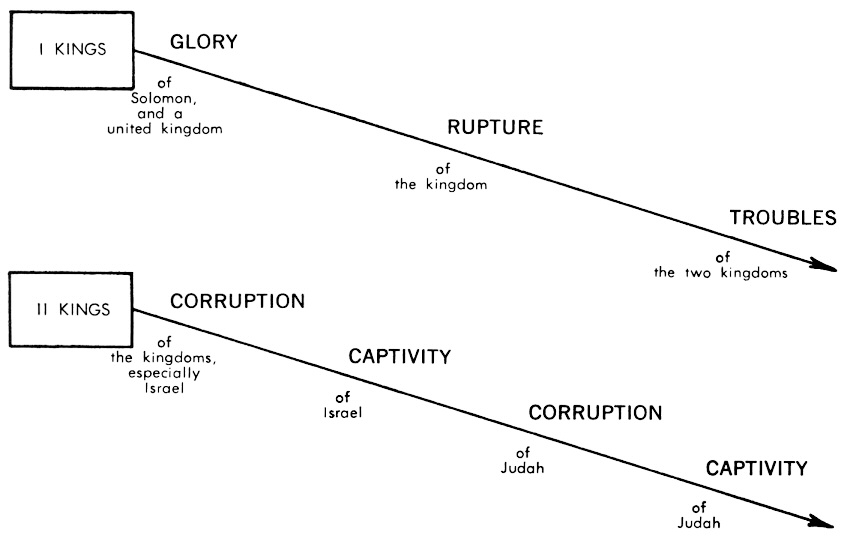
THE DOWNWARD SPIRAL
Click to Enlarge
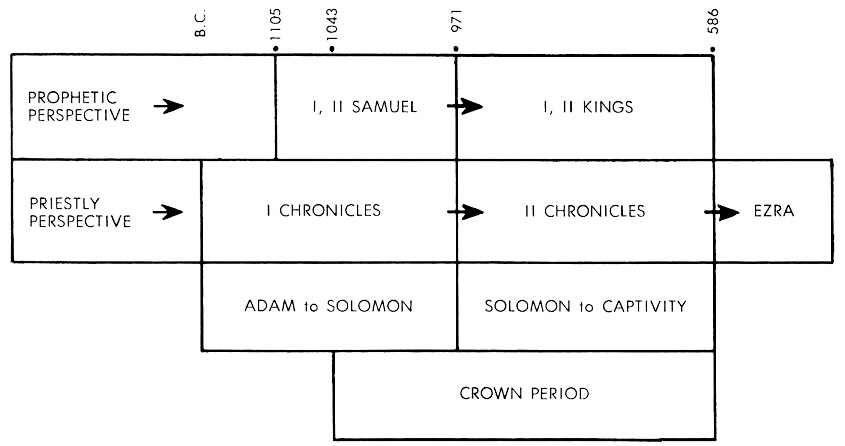
Comparison of 1 Samuel thru 2 Chronicles

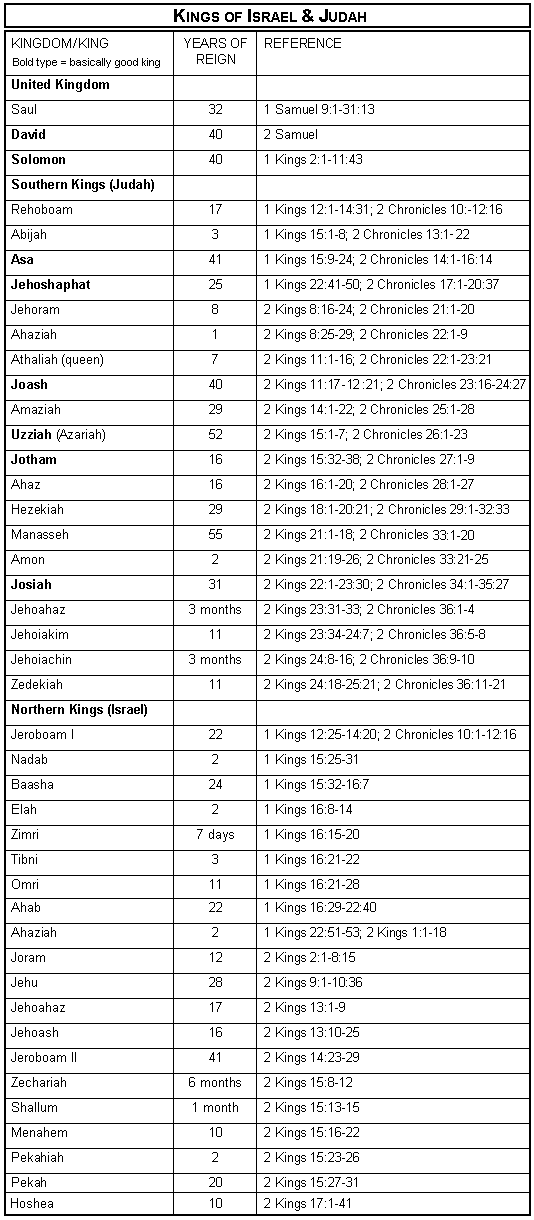
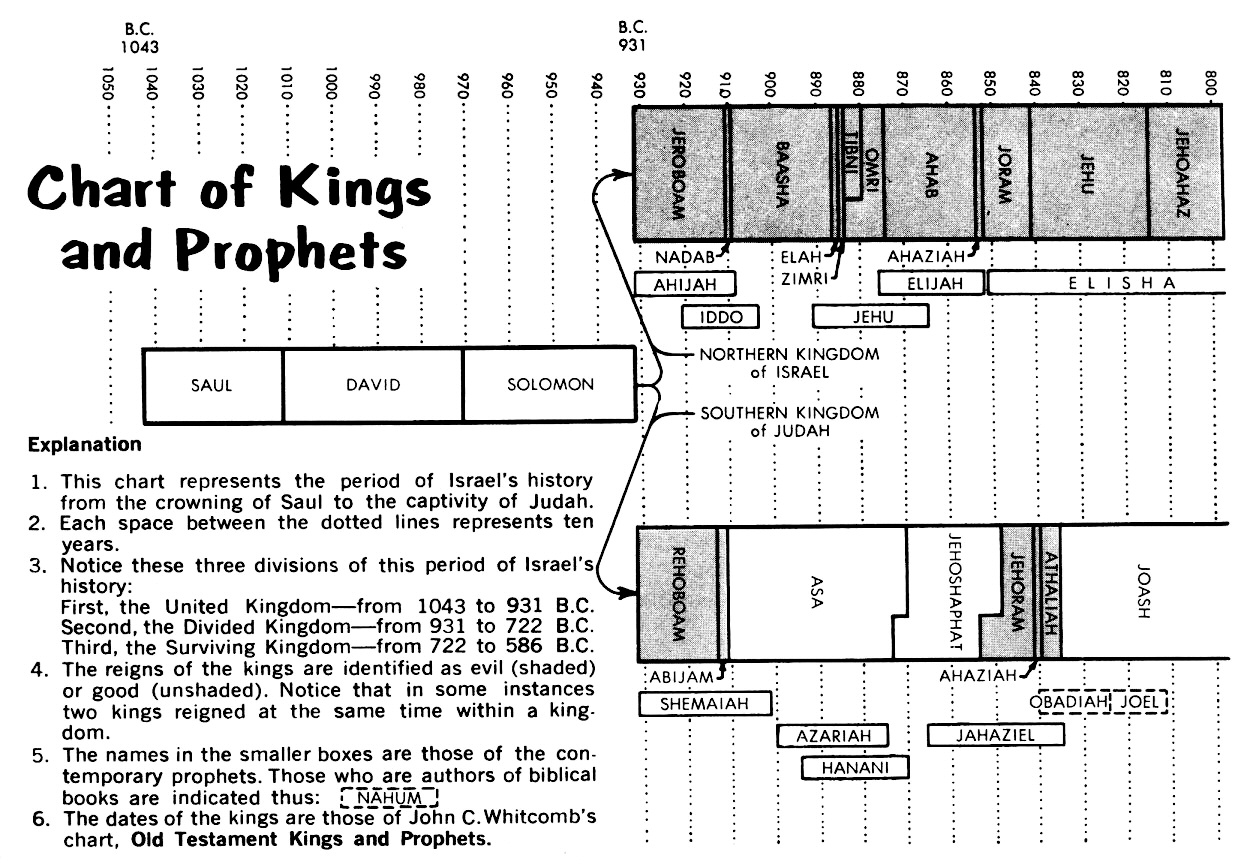
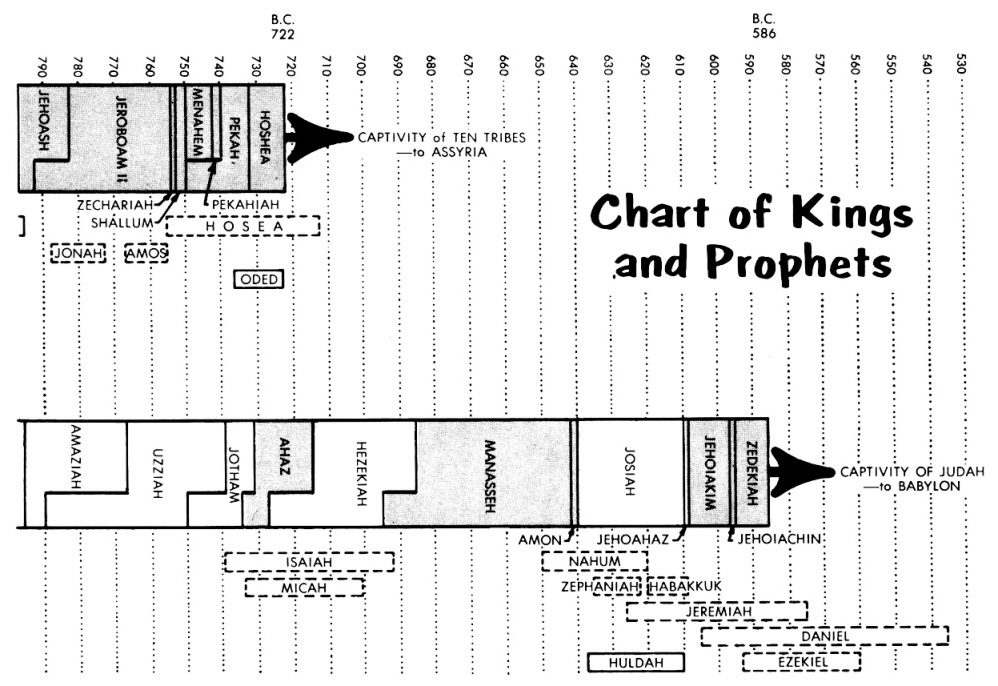
Kings of Israel
Click to enlarge
| DIFFERENCES BETWEEN KINGS & CHRONICLES |
|
| SAMUEL & KINGS |
FIRST & SECOND CHRONICLES |
| Prophetic Perspective: Message of Judgment |
Priestly Perspective: Message of hope |
| Prophetic authorship: Emphasizes the prophetic ministry and moral concerns |
Priestly authorship: Emphasizes the priestly ministry and spiritual concerns |
| The Fortunes of the Thrones |
Continuity of the Davidic line |
| More Negative: Rebellion & Tragedy |
More Positive: Apostasy, but hope in face of tragedy |
| Record of both Israel and Judah |
Record primarily of Judah |
| Man's Failings | God's Faithfulness |
| Morality | Redemption |
| Emphasizes the throne of earthly kings |
Earthly throne (temple) of the heavenly King |
| Emphasizes Kings and Prophets |
Emphasizes the Temple and the Priests |
| Political and kingly |
Religious and priestly |
| Compiled by authors soon after the events |
Compiled by by a priest: Ezra many years after the events |
| Written shortly after the beginning of the captivity in Babylon |
Written shortly after the return from the captivity |
|
Adapted Wilkinson's Talk thru the Bible & Jensen's Survey of the OT |
|
2 Chronicles --
The Building of the Temple. [2Chr 2 - 4]
Solomon sent to Hiram, King of Tyre, for his help in building theTemple, in supplying both materials and workmen skilled in all manner of cunning work.
To raise the surrounding ground to a level with the threshing-floor on the summit, Solomon constructed a stupendous foundation platform--- raised high above the valley beneath-- of great hewed stones of white marble, polished and costly. When our Lord said that there should not be be left one stone upon another that should not be thrown down [Mat 24:1,2], He was not speaking of the foundations underneath, but of the stones composing the Temple of Herod, built upon it. The foundation was built into the solid rock, a picture of the Rock of Ages, the foundation of God which standeth sure and which nothing can shake [1Sam 2:2; 2Sam 22:2,3; 2Tim 2:19]. That the whole of the Temple-- like the Tabernacle-- in its ministry, its furniture, and its services, is typical of Christ and His great work of man's redemption, must be admitted by all who accept the inspiration of the Epistle to the Hebrews, which so clearly links together the Old and New Covenants, and shows them to be essentially one in their teaching. (Ed: See caveats regarding Typology - Study of Biblical types)
We read of the heavenly City: ''I saw no Temple therein: for the Lord God Almighty and the Lamb are the Temple of it'' [Rev 21:22]. And because it represents His work in redemption, His redeemed people also are included in the type. It is the consummation of God's work through all the ages: Himself and all His people united in glory. Some of the foundation stones are from twenty to thirty feet in length, and fitted so closely together that even a pen-knife cannot be inserted between them. On some of these the Palestinian Exploration Society found the quarry-marks in vermilion, to show where the stones would be placed, for we read that ''the house, when it was in building, was built of stone made ready before it was brought thither: so that there was neither hammer, nor axe, nor any tool of iron, heard in the house while it was in building'' (1Kings 6:7). All true believers, in all ages, are living stones of that heavenly Temple [1Pet 2:5], and God is preparing them in His quarry down here, amid the noise and tumult of earth, each for its place in His Temple above. Rugged and shapeless are the stones to begin with, no wonder that the blows of the hammer fall heavily, that the chisel is sharp, and the polishing severe, before the stones are ready. But ''oh for more moldings of the Hand that works a change so vast!''
Every part of the Temple must be full of spiritual teaching, for David told Solomon that God had given him the pattern of it by the Spirit. It was a building of surpassing magnificence, and shone a mass of burnished gold beneath the splendor of the Eastern sky.
The Temple Filled with Glory. [2Chr 5:1-14]
When the work of the house of the Lord was finished, Solomon assembled all the elders of Israel to bring up the Ark of the Lord out of Zion, the city of David. Then ''the house was filled with a cloud, even the house of the Lord; so that the priests could not stand to minister by reason of the cloud: for the glory of the Lord had filled the house of the Lord.''
What a picture is here of the Holy Spirit coming to fill the heart which has been prepared for His coming, the heart cleansed by the precious blood of Christ and surrendered to him, and thus made fit to become a temple of the Holy Ghost (1Cor 6:19). (Ed: See caveats regarding Typology - Study of Biblical types)
Solomon's Prayer. [2Chr 6:1-42]
Then follows Solomon's prayer at the dedication of the Temple-- a prayer which well repays careful study. It is based on the promises of God, as all prayer should be. He speaks of every man knowing the plague of his own heart, and then goes on to the deeper thought that only God knows the hearts of all the children of men (1Kings 8:38,39). In confessing our sin to God, what a rest it is to know that He knows all the worst about us, better even than we know it ourselves. ''If our heart condemn us, God is greater than our heart, and knoweth all things.'' He can discriminate when we cannot, whether the condemnation we feel is the conviction of His Spirit, or only the false accusation of the enemy. And as we wait upon Him, if all is well He will give us His peace. ''Beloved, if our heart condemn us not, then have we confidence toward God'' (1John 3:20,21).
In his prayer, Solomon mentions six varied vicissitudes of human life, and asks that if the people repent and pray, looking toward that house which he had built, that God would hear in His dwelling-place and give His answer. This, Solomon proposed to Jehovah, as a covenant, and God replied with fire as the seal of His sanction. To understand this, it must be remembered that, throughout the East to this day, all worshippers pray looking towards their sanctuary, whether it be the Mohammedans towards Mecca, or those who pray to the saints at the various makoams. Solomon desires from God that: that which was falsely believed, of all the idol temples around, might be true in the case of Jehovah's Temple. But more than this-- the Temple in every part of it was a type of the person and work of the Lord Christ and of His relations with His people; everywhere it sets forth Christ-- in the sacrifices, in the Passover, in the High Priest, in everything. Therefore, though Solomon could not have known it, in the spirit of prophecy he is asking that those who look to Jesus, in drawing near to the Father, may be answered. It was only to say in symbol what the Master says in set words, ''Whatsoever ye shall ask the Father in My name He will give it you'' [John 15:16].
In our study of 1 & 2 Kings, we saw the disaster in which Solomon's reign closed, and the division of the kingdom.
Even as early as in the reign of his son Rehoboam, ''Shishak king of Egypt came up against Jerusalem, and took away the treasures of the house of the Lord'' (2Chr 12:9). How soon was this beautiful Temple desolated! Later, even some of the kings robbed it to ward off an enemy.
Bright Spots.
During the long time of departure from God which followed, we find, here and there, a king who stood forth for God and for His worship.
To Asa [2Chr 15:1-19], God sent a message by Azariah the prophet, the son of Oded, and when Asa heard his words ''he took courage, and put away all the abominable idols out of all the land of Judah and Benjamin.'' And he removed his mother from being queen because she had made an idol in a grove, and he made a covenant with the Lord, and enriched the house of God with gold and silver.
Jehoshaphat, his son, sent Levites throughout all the cities of Judah to teach the book of the Law of the Lord-- a proof that Israel possessed the Law at this time [2Chr 17:1-19]. The account of Jehoshaphat's victory over the Ammonites and Moabites [2Chr 20:1-37] is one of the greatest encouragements to a simple reliance on God in the face of insurmountable difficulties. ''Be not afraid… the battle is not yours, but God's… Ye shall not need to fight in this battle: set yourselves, stand ye still, and see the salvation of the Lord.'' ''And when they began to sing and to praise, the Lord set ambushments,'' and their enemies were scattered.
Failure.
Then followed the evil reigns of Jehoshaphat's son, Jehoram [2Chr 21:1-20], and his grandson, Ahaziah [2Chr 22:1-12]. After Ahaziah had been slain by Jehu, his wicked mother, Athaliah, ''destroyed all the seed royal of the house of Judah.'' But Joash, the little son of Ahaziah, was saved, and he was hidden in the Temple six years. Then Jehoiada the priest brought him out and made him king, and Athaliah was slain [2Chr 23:1-21]. Under the influence of Jehoiada, Joash repaired the Temple, which Athaliah had broken up to bestow the dedicated things upon Baalim. But after the death of Jehoiada, Joash lapsed into idolatry, and, at the instigation of the princes of Judah, he slew Zechariah, the son of Jehoiada, who was sent to rebuke him [2Chr 24:1-27].
His grandson, Uzziah, sinned against the Lord in burning incense in the Temple, and in punishment for this he became a leper till the day of his death [2Chr 26:1-23].
Uzziah's great-grandson, Hezekiah, ''opened the doors of the house of the Lord and repaired them.'' And he cleansed the Temple, and commanded the priests and Levites to sanctify themselves, and he offered sacrifices and kept the Passover, ''so there was great joy in Jerusalem: for since the time of Solomon, son of David, king of Israel, there was not like it in Jerusalem'' [2Chr 29:1-36, 2Chr 30:1-27].
Hezekiah's great-grandson, Josiah, carried out similar reforms [2Chr 34]. He purged Jerusalem from its idolatries, and repaired the house of the Lord. It was during this work of repair that Hilkiah, the priest, found in the Temple the book of the Law of the Lord given by Moses, and sent it by Shaphan the scribe to the king, and Shaphan read it before the king. When Josiah heard the words of the Law, he rent his clothes in grief over this neglected Law which they had failed to keep. He sent to inquire of the Lord; and Huldah, the prophetess, told him of the evil that should come on Jerusalem and the inhabitants; but because Josiah had humbled himself, the evil should not come in his day.
The young king stood by a pillar in the Temple and made a covenant with the Lord, and he kept the Passover [2Chr 35:1-27]. ''And there was no Passover like to that kept in Israel, from the days of Samuel the prophet; neither did all the kings of Israel keep such a Passover as Josiah kept'' (2Chr 35:18).
Captivity.
But troublous times followed this good reign. God sent His messengers to the people, but they mocked and despised them, ''until the wrath of the Lord rose against His people, till there was no remedy. Therefore He brought upon them the king of the Chaldees, who slew their young men with the sword in the house of the sanctuary, and carried the vessels of the house of the Lord to Babylon, and burnt the house of the Lord, and brake down the walls of Jerusalem, and burnt all the palaces. And them that had escaped the sword carried he away to Babylon; where they were servants to him and to his sons until the reign of the kingdom of Persia'' [ch. 36].
2 CHRONICLES
This book, a continuation of the story of 1 Chronicles, is confined to the story of the house of David. The emphasis is upon the religious history of David's successors rather than the political occurrences, and it covers a period of more than 400 years. The history focuses upon the temple, beginning with the ascension of Solomon to the throne, and ending with desolation and the captivity. In typological teaching, a considerable portion of the book sets forth the millennial reign of Christ on the earth. In this connection, we read of silver, atonement money, and also of the altar and veil.
OUTLINE OF THE BOOK--
The Reign of Solomon (2 Chronicles 1-9)
Since nothing is said in 2 Chronicles of Solomon's sensuality, sin, and failure, his reign is a picture of the glorious rule of David's greater Son, the Lord Jesus, in the millennial kingdom.
The Rebellion of the Ten Tribes (2 Chronicles 10)
After Solomon died, his son Rehoboam ascended the throne. A series of foolish decisions led to the dividing of the kingdom. The reuniting of Judah and Israel will take place when Israel is restored. (See Isaiah 11:10-13; Jeremiah 23:5,6; and Ezekiel 37:15-28.)
The Kings of Judah (2 Chronicles 11-36)
The period from Solomon to the Babylonian captivity was characterized by moral declension and apostasy, except for five revivals. It is noteworthy that each of these revivals began at the house of God and with the Word of God. They are:
Asa's renewal of the altar (2 Chronicles 15). The place of sacrifice had fallen into disuse during Asa's father's reign. The word of the Lord through Obed stirred him to restore it.
Jehoshaphat's establishment of missions (2 Chronicles 17).
This suggests that the Word of God was not known throughout the kingdom.
Joash's repair of the temple for worship (2 Chronicles 23,24).
The place of worship had become dilapidated by misuse and disuse.
Hezekiah's opening of the temple for worship (2 Chronicles29-31).
God's house had been closed under wicked king Ahaz.
Josiah's discovery of the ''book of the law'' (2 Chronicles 34,35). This demonstrates how sad the spiritual condition of Judah was at that time. The Word of God had been lost in a closed and mutilated temple. It was forgotten until uncovered during repairs.
The Captivity (2 Chronicles 36:15-23).
Sporadic, temporary revivals do not hold the people for God. The patience of God with His people at last came to an end. The book begins with the splendor of Solomon, and closes with the devastating captivity of Israel. This illustrates that the very best that man can achieve in his own strength is doomed to failure.
SOME BRIGHT SPOTS--
The revivals were encouraging interludes in Judah's history, and one of these is reported in chapter 34. Josiah longed for fellowship with God. He was not particularly following David's example, or Hezekiah's, but he sought ''the God of David.'' As a result of this choice, there were four years of silence, study, devotion and prayer. The law of cause and effect was at work here. The nearer he got to God, the more his eyes were opened to the idolatry of Judah. When Isaiah saw the Lord, he said, ''Send me'' (Isa 6:8). Likewise, after Josiah found God, he was willing to work for the Lord.
While cleaning the temple, the workmen made a remarkable discovery. They found a copy of the Law of Moses that had been lost right in the temple! This was the very place [where] it was supposed to be displayed and read. When the Bible is neglected, idolatry of some form always develops.
When the sacred writings were read in the presence of Josiah, he tore his clothes in conviction of sin. He then initiated sweeping reforms throughout the kingdom. The worship of God, including the celebration of the Passover, was resumed.
Illumination comes through recognition of duty and [through] obedience to God. ''I being in the way, the Lord led me… '' (Gen 24:27). God revealed, to Josiah, the coming judgment upon Judah (2Chr 34:24-28). The only remedy for apostasy is judgment.
MESSIANIC NOTE--
Speaking of Himself, our Lord said to the scribes and Pharisees, ''Behold, a greater than Solomon is here'' (Mat 12:42). The coming earthly reign of the Lord Jesus Christ will far outshine the riches and glory of Solomon's day.
Explanation - The following list includes not only commentaries but other Christian works by well known evangelical writers. Most of the resources below are newer works (written after 1970) which previously were available only for purchase in book form or in a Bible computer program. The resources are made freely available by archive.org but have several caveats - (1) they do not allow copy and paste, (2) they can only be checked out for one hour (but can be checked out immediately when your hour expires giving you time to read or take notes on a lengthy section) and (3) they require creating an account which allows you to check out the books free of charge. To set up an account click archive.org and then click the picture of the person in right upper corner and enter email and a password. That's all you have to do. Then you can read these more modern resources free of charge! I have read or used many of these resources but not all of them so ultimately you will need to be a Berean (Acts 17:11+) as you use them. I have also selected works that are conservative and Biblically sound. If you find one that you think does not meet those criteria please send an email at https://www.preceptaustin.org/
COMMENTARIES
TO BORROW
Bible Knowledge Commentary - Old Testament - Dallas Theological Seminary Faculty
James Rosscup - Merrill, Eugene. “I and II Chronicles,” in Bible Knowledge Commentary, ed. John F. Walvoord and Roy B. Zuck. Volume I. Wheaton: Victor Books, 1983. Conservative scholar from Dallas Theological Seminary deals with the passages knowledgeably, showing good awareness of relevant literature and handling many of the problems at least with some help.
Bible Exposition Commentary - Old Testament - Warren Wiersbe - always worth checking
Wiersbe's Expository Outlines on the Old Testament by Warren W Wiersbe - can be very helpful for sermon prep.
"Even the most difficult Scriptures come alive as Warren Wiersbe leads you book-by-book through the Old Testament and helps you to see the "big picture" of God's revelation. In this unique volume, you will find: • Introductions and/or outlines for every Old Testament book • Practical expositions of strategic chapters • Special studies on key topics, relating the Old Testament to the New Testament • Easy-to-understand expositions that are practical, preachable, and teachable If you have used Dr. Wiersbe's popular BE series, you know how simple and practical his Bible studies are, with outlines that almost teach themselves. If not, you can now discover a wonderful new resource. This work is a unique commentary on every book of the Old Testament. It contains new material not to be found in the BE series.
With the Word - Devotional Commentary - Warren Wiersbe
The Message of Chronicles : One Church, One Faith, One Lord By: Wilcock, Michael
James Rosscup - An evangelical approach that defends conservative views on a number of the problems, feeling there are no errors. Wilcock sometimes delightfully applies the meaning to life today, and writes with clarity. He assists readers to see why material is used where it is, how it fits a need there, etc. Wilcock is vicar of St. Nicholas Church, Durham, England. For principles and for the movement in Chronicles this is a worthwhile book.
Cyril Barber - While evangelical in tone and content, this work is hermeneutically weak. It succeeds, however, in following David's line and highlights the principle lessons to be learned from the lives of the kings.
Solomon to the Exile; studies in Kings and Chronicles: John Whitcomb
Cyril Barber - An ideal book for discussion groups. Recreates the OT setting, graphically depicts the cause of decline in Israel and Judah, and draws valid lessons from these incidents that are applied to the needs of the present
I & II Chronicles By: McConville, J. G.
James Rosscup - Generally conservative in outlook, this displays a firm grip on the data, aiming at looking at things in their setting during the kings period and applying principles to life now. He does not sidestep problems, such as a million dead (2 Chr. 14:9ff.). The RSV is printed in space that, for those with Bibles, would be better used for even more comment.
Cyril Barber - Succinct, pointed comments on each facet of these long-neglected books. Readers will find these pages replete with perceptive hints that can be fleshed out with further study.
1, 2 Chronicles: Allen, Leslie C
Cyril Barber - Allen believes that "the heartbeat of Chronicles is a concern for spirituality. In this respect its key word is to 'seek' God." And because the Chronicler was essentially a preacher of practical theology, Allen sees in these biblical books essential teaching for those in the ministry today. While much of this commentary is taken up with Allen's translation of the biblical text (and no one should minimize the labor involved!), his comments or exposition is therefore brief. What is found between these covers, however, is insightful and helpful. This is one of the most important volumes in this series
The Books of Chronicles: W. H. Bennett
Cyril Barber - Commentaries on Chronicles are few and far between. This work meets a need. It is to be regretted, however, that the writer allowed critical presuppositions to enter into his handling of the biblical text. In spite of this weakness, what is presented to the reader is worthy of serious reflection.
1 Chronicles : an Introduction and Commentary Martin Selman
2 Chronicles: a Commentary Martin Selman
James Rosscup - The vol. on 1 Chronicles gives the introduction for both vols. His evangelical works deal with sections compactly, being well-informed on words, grammar, and background both biblically and from ancient sources (cf. for example on Sennacherib’s death in 32:20–23). He follows a clear outline, and his comments usually get to the point judiciously. Selman is Director of Postgraduate Studies and lecturer in OT at Spurgeon’s College, London. One will find considerable assistance here. To return to the introduction, Selman if read carefully covers much on the chronicler’s focus, one more of interpreting history while not casting doubt on historical details, and giving features that characterize these two books. Among the latter are prophecies and prayers. He discusses main emphases, e.g. covenant, Israel as the covenant people, the temple as the covenant worship center, and the Covenant as a basis for restoration despite great Israelite unfaithfulness; the covenant guarantees God’s restoration some day by repentance and prayer as well as by divine promises (cf. 2 Chr. 7:12–16), in Selman’s statement. He does not spell out when and how, or tie it in with other biblical passages, as a unified prophetic program for Israel.
Cyril Barber - Tyndale Old Testament Commentaries. Leicester, UK: InterVarsity Press, 1994. Interprets the books of Chronicles as one man’s approach to and interpretation of the teaching of specific OT texts. The exposition is based upon the NIV. The style is clear and direct. Footnotes are judicious and place readers in touch with relevant scholarly literature. While not intended to be an erudite discussion of the contents of these two historical books, Selman’s treatment does reveal his extensive reading and vast learning. Moderately conservative.
1 Chronicles Word Biblical Commentary. - Braun, Roddy
Cyril Barber - An exacting and enlightening study which demonstrates thorough research, and must rank among the finest treatments ever produced on this portion of Scripture.
James Rosscup - As one becomes accustomed to this series, he knows he will find much usable detail on the text, aspects of exegesis, customs, geography, and theological focus. He also comes to realize the contrast, at some points, with conservative convictions about the historicity of matters, and wisely gleans out what is worthwhile.
2 Chronicles Word Biblical Commentary. - Dillard, Raymond Bryan
Cyril Barber - More conservative that some of the others volumes in this series. Presents the literary structure of this canonical book and ably correlates the teaching of other portions of God's Word with the purpose of the chronicler. The result is a work of distinction. While not necessarily the kind of commentary a pastor will pick up and use, this study does lay a foundation for a new understanding of the dynamics of restoration and renewal. Recommended.
James Rosscup - Cf. Braun for I Chronicles. Much the same comment is fitting here. One can feel he has a gold mine on many details of verse meaning and on bibliography, yet be aware of a less than conservative way of handling many things.
Ellison, H. L. “1 and 2 Chronicles,” in New Bible Commentary Revised, ed. D. Guthrie et al. Grand Rapids: Eerdmans, 1970.
James Rosscup - Ellison is limited to pp. 369–94. Like Cundall on Ezra and Nehemiah, he argues unity with Ezra and Nehemiah and a date around 400–340 B. C. (p. 369). He assumes that many problems in numbers arose from textual corruption, poor transmission of the text of Chronicles, and other explanations. Overall his commentary is a fair, concise work that often provides some help of an evangelical nature.
The Books of Chronicles by James Gracey Murphy
Cyril Barber - An important reprint that treats briefly, yet fairly, these neglected books.
1 Chronicles : a Commentary By: Klein, Ralph W - Hermeneia Series.
I & II Chronicles, Ezra, Nehemiah : introduction and commentary By: Ackroyd, Peter R
James Rosscup - Liberal, using redaction criticism quite a lot. Perceptive and advanced students can sift out much that is of worth on the meaning of verses or pericopes.
Cyril Barber - Fully abreast of the latest scholarship, these brief studies survey the content of the post-exilic writings and provide occasional helpful insights into problems in the text
STUDY BIBLES, ETC
Note: The first 3 resources have no time restriction and allow copy and paste function:
(1) KJV Bible Commentary - Hindson, Edward E; Kroll, Woodrow Michael. Over 3000 pages of the entire OT/NT. Well done conservative commentary that interprets Scripture from a literal perspective. Pre-millennial. User reviews - it generally gets 4/5 stars from users.
Very well done conservative commentary that interprets Scripture from a literal perspective
The King James Version Bible Commentary is a complete verse-by-verse commentary. It is comprehensive in scope, reliable in scholarship, and easy to use. Its authors are leading evangelical theologians who provide practical truths and biblical principles. Any Bible student will gain new insights through this one-volume commentary based on the timeless King James Version of the Bible.
(2) The King James Study Bible Second Edition 2240 pages (2013) (Thomas Nelson) General Editor - Edward Hindson with multiple contributing editors. Pre-millennial. See introduction on How to Use this Study Bible.
(3) NKJV Study Bible: New King James Version Study Bible (formerly "The Nelson Study Bible - NKJV") by Earl D Radmacher; Ronald Barclay Allen; Wayne H House. 2345 pages. (1997, 2007). Very helpful notes. Conservative. Pre-millennial.
The MacArthur study Bible : new King James version - John MacArthur
ESV study Bible - Excellent resource but not always literal in eschatology and the nation of Israel
NIV Study Bible - (2011) 2570 pages - Use this one if available as it has more notes than edition below. This resource has been fully revised in 2020.
HCSB Study Bible : Holman Christian Standard Bible - General Editor Jeremy Royal Howard (2010) 2360 pages. Conservative. Good notes. Include Holmans excellent maps. One hour limit
Life Application Study Bible : New Living Translation. Has some very helpful notes
NLT Study Bible (Illustration Version)
The Living Insights Study Bible : New International Version - Charles Swindoll. Notes are good but somewhat sparse and not verse by verse.
The David Jeremiah study bible - (2013) 2208 pages. Logos.com - "Drawing on more than 40 years of study, Dr. David Jeremiah has compiled a legacy resource that will make an eternal impact on generations to come. 8,000 study notes. Hundreds of enriching word studies"50+ Essentials of the Christian Faith" articles."
The Experiencing God Study Bible: the Bible for knowing and doing the will of God - Blackaby, Henry (1996) 1968 pages - CHECK THIS ONE! Each chapter begins with several questions under the title "PREPARE TO MEET GOD." Then you will interesting symbols before many of the passages. The chapter ends with a "DID YOU NOTICE?" question. This might make a "dry chapter" jump off the page!
NIV archaeological Study Bible (2005) 2360 pages
The Ryrie study Bible - Charles Ryrie (1978) 2142 pages. Conservative.
The Defender's Study Bible : King James Version by Morris, Henry M.
Wycliffe Bible Commentary - Charles Pfeiffer - 1560 pages (1962). Less detailed than the KJV Bible Commentary. Conservative. Notes are generally verse by verse but brief.
Rosscup - Conservative and premillennial scholars here have been experts in their fields. The work contains brief introductions and attempts to give a verse-by-verse exposition, though it does skip over some verses. The treatments vary with the authors, but as a whole it is a fine one-volume commentary for pastors and students to use or give to a layman. Outstanding sections include, for example: Whitcomb on Ezra-Nehemiah-Esther; Culver on Daniel; Ladd on Acts; Harrison on Galatians; Johnson on I Corinthians; and Ryrie on the Johannine Epistles.
Believer's Bible Commentary - OT and NT - MacDonald, William (1995) 2480 pages. Conservative. Literal. Often has very insightful comments. John MacArthur, says "Concise yet comprehensive - the most complete single-volume commentary I have seen." Warren Wiersbe adds "For the student who is serious about seeing Christ in the Word." One hour limit.
James Rosscup - This work, originally issued in 1983, is conservative and premillennial, written to help teachers, preachers and people in every walk of life with different views, explanation and application.
MISCELLANEOUS RESOURCES
IVP Background Commentary - OT - John Walton
Zondervan Atlas of The Bible By: Umair Mirza
Dictionary of Biblical Imagery - free for use online with no restrictions (i.e., you do not need to borrow this book). Editors Leland Ryken, J C Wilhoit, Tremper Longman III - This is a potential treasure chest to aid your preaching and teaching as it analyzes the meaning of a host of Biblical figures of speech. Clue - use the "One-page view" which then allows you to copy and paste text. One downside is there is no index, so you need to search 3291 pages for entries which are alphabetical.
Dictionary of deities and demons in the Bible (DDD) - 950 pages (1995) Read some of the 65 ratings (4.8/5 Stars). A definitive in depth resource on this subject. Very expensive to purchase.
Unger's bible handbook : a best-selling guide to understanding the bible by Unger, Merrill F
Halley's Bible Handbook Henry H. Halley - (2000) 2720 pages (much larger than original edition in 1965 and no time limit on use). (Halley's Bible handbook : an abbreviated Bible commentary - one hour limit 1965 872 pages)
Rosscup - A much-used older evangelical handbook bringing together a brief commentary on Bible books, some key archaeological findings, historical background, maps, quotes, etc. It is helpful to a lay Bible teacher, Sunday School leader, or pastor looking for quick, pertinent information on a Bible book. This is the 72nd printing somewhat revised. Halley packed in much information. Unger’s is better overall, but that is not to say that Halley’s will not provide much help on basic information.
The Shaw Pocket Bible Handbook - Editor - Walter Elwell (1984) 408 pages.
"This hardback is small in size but packed full of content: Brief summaries of every book of the bible, cultural, archaeological and historical info, word definitions, pictures, maps and charts." Worth checking!
Eerdmans' Handbook to the Bible (1983) 688 pages
The New Unger's Bible Dictionary by Unger, Merrill Frederick, 1909-
Every prophecy of the Bible: Walvoord, John F
APOLOGETICS
The Apologetics Study Bible Understand Why You Believe - Comments from over 90 leading apologists, including: Ted Cabal, Lee Strobel, Chuck Colson, Norm Geisler, Josh McDowell, Albert Mohler, J.P. Moreland, see reviews. Here is a review from The Christian Reviewer.
Baker Encyclopedia of Christian Apologetics by Geisler, Norman
Cyril Barber - This is a goldmine of valuable information! Well-indexed. Covers everything from “Absolute Truth” to “Zen Buddhism.” Extensive articles on such topics as “Agnosticism,” “Annihilationism,” “Bible, Alleged Errors in,” “Gnosticism,” “Miracles in the Bible,” “New Testament Manuscripts,” and “Objections to Resurrection,” “Big Bang Theory,” “Edward John Carnell,” “Christ, Death of,” are only a few of the insightful essays in this masterful work. Each article has been written in an understandable way, and a 28 page bibliography forms a valuable source for further research. An excellent resource.
Evidence That Demands A Verdict - Josh McDowell
The New Evidence that Demands a Verdict - Josh McDowell
More Than A Carpenter - A modern classic by Josh McDowell - Great resource for those who are skeptical that Jesus is fully God, fully Man.
Encyclopedia of Bible difficulties by Archer, Gleason L - or here with no restrictions
Hard Sayings of the Bible - Walter Kaiser
When Critics Ask - Norman Geisler
MANNERS AND CUSTOMS IN THE BIBLE
Today's Handbook of Bible Times & Customs by Coleman, William L
Nelson's New Illustrated Bible Manners & Customs : How the People of the Bible Really Lived by Vos, Howard Frederic
Manners & Customs of the Bible (The New Manners and Customs) Freeman, James M., 1827-1900 Published 1998
The New Manners and Customs of Bible Times: Gower, Ralph, 1933- Published 1987
Manners and Customs of Bible lands By: Wight, Fred Published 1983
Manners and Customs in the Bible By: Matthews, Victor Harold Published 1991
Handbook of life in Bible times By: Thompson, J. A. (John Arthur), 1913-2002 Published 1986
Illustrated dictionary of Bible manners and customs By: Deursen, A. van (Arie), 1891-1963 Published 1982
The Illustrated Guide to Bible Customs & Curiosities by Knight, George W.
Orientalisms in Bible lands, giving light from customs, habits, manners, imagery, thought and life in the East for Bible students By: Rice, Edwin Wilbur, 1831-1929 Published 1910
Bible manners and customs By: Mackie, G. M. 1854-1922 Published 1898
Teach it to your children : how kids lived in Bible days By: Vamosh, Miriam Feinberg, author
Everyday life in Bible times : work, worship, and war By: Embry, Margaret Published 1994
Everyday living : Bible life and times : fascinating, everyday customs and traditions from the people of the Bible Published 2006
The Land and the Book; or, Biblical illustrations drawn from the manners and customs, the scenes and scenery, of the Holy land By: Thomson, William M. (William McClure), 1806-1894 Published 1880
Eastern manners illustrative of the Old Testament history By: Jamieson, Robert, 1802-1880 Published 1838
Scripture manners and customs : being an account of the domestic habits, arts, etc., of Eastern nations mentioned in Holy Scripture Published 1895
HEBREW WORD STUDY
RESOURCES
Theological Wordbook of the Old Testament by Harris, R. Laird - (5/5 Stars) One of the best OT lexicons for studying Hebrew words.
Here is another link to the TWOT which has no time limit on use and does allow copy and paste. Can be downloaded as PDF.
Vine's Expository Dictionary of Old Testament and New Testament Words - Online pdf
Hebrew Honey: a simple and deep word study of the Old Testament - 330 pages. The definitions have more of a devotional flavor. For example, see the descriptive definition for "Abide" (Hebrew - gur).
Expository Dictionary of Bible Words by Richards, Larry, It does not go into great depth on the Greek or Hebrew words but does have some excellent insights.
So That's What it Means (Theological Wordbook) - Formerly titled "Theological Wordbook" edited by Charles Swindoll. It is now under this new title So That's What it Means and can be borrowed - it is more like a dictionary than a lexicon but the comments are superb! The contributors include Donald Campbell, Wendell Johnston, John Witmer, John Walvoord
Nelson's Expository Dictionary of the Old Testament by Unger, Merrill. Indexed by English word and then any related Hebrew nouns or verbs. Definitions are solid and geared to the lay person.
Synonyms of the Old Testament-Robert Girdlestone
Note - These are not as complete as most of the verse by verse commentaries but will be revised as the Lord provides time.
2 Chronicles 1:2
2 Chronicles 1:3
2 Chronicles 1:4
2 Chronicles 1:5
2 Chronicles 1:6
2 Chronicles 1:7
2 Chronicles 1:8
2 Chronicles 1:9
2 Chronicles 1:10
2 Chronicles 1:11
2 Chronicles 1:12
2 Chronicles 1:13
2 Chronicles 1:14
2 Chronicles 1:15
2 Chronicles 1:16
2 Chronicles 1:17
2 Chronicles 2:2
2 Chronicles 2:3
2 Chronicles 2:4
2 Chronicles 2:5
2 Chronicles 2:6
2 Chronicles 2:7
2 Chronicles 2:8
2 Chronicles 2:9
2 Chronicles 2:10
2 Chronicles 2:11
2 Chronicles 2:12
2 Chronicles 2:13
2 Chronicles 2:14
2 Chronicles 2:15
2 Chronicles 2:16
2 Chronicles 2:17
2 Chronicles 2:18
2 Chronicles 3:2
2 Chronicles 3:3
2 Chronicles 3:4
2 Chronicles 3:5
2 Chronicles 3:6
2 Chronicles 3:7
2 Chronicles 3:8
2 Chronicles 3:9
2 Chronicles 3:10
2 Chronicles 3:11
2 Chronicles 3:12
2 Chronicles 3:13
2 Chronicles 3:14
2 Chronicles 3:15
2 Chronicles 3:16
2 Chronicles 3:17
2 Chronicles 4:2
2 Chronicles 4:3
2 Chronicles 4:4
2 Chronicles 4:5
2 Chronicles 4:6
2 Chronicles 4:7
2 Chronicles 4:8
2 Chronicles 4:9
2 Chronicles 4:10
2 Chronicles 4:11
2 Chronicles 4:12
2 Chronicles 4:13
2 Chronicles 4:14
2 Chronicles 4:15
2 Chronicles 4:16
2 Chronicles 4:17
2 Chronicles 4:18
2 Chronicles 4:19
2 Chronicles 4:20
2 Chronicles 4:21
2 Chronicles 4:22
2 Chronicles 5:2
2 Chronicles 5:3
2 Chronicles 5:4
2 Chronicles 5:5
2 Chronicles 5:6
2 Chronicles 5:7
2 Chronicles 5:8
2 Chronicles 5:9
2 Chronicles 5:10
2 Chronicles 5:11
2 Chronicles 5:12
2 Chronicles 5:13
2 Chronicles 5:14
2 Chronicles 5:15
2 Chronicles 5:16
2 Chronicles 5:17
2 Chronicles 6:2
2 Chronicles 6:3
2 Chronicles 6:4
2 Chronicles 6:5
2 Chronicles 6:6
2 Chronicles 6:7
2 Chronicles 6:8s
2 Chronicles 6:9
2 Chronicles 6:10
2 Chronicles 6:11
2 Chronicles 6:12
2 Chronicles 6:13
2 Chronicles 6:14
2 Chronicles 6:15
2 Chronicles 6:16
2 Chronicles 6:17
2 Chronicles 6:18
2 Chronicles 6:19
2 Chronicles 6:20
2 Chronicles 6:21
2 Chronicles 6:22
2 Chronicles 6:23
2 Chronicles 6:24
2 Chronicles 6:25
2 Chronicles 6:26
2 Chronicles 6:27
2 Chronicles 6:28
2 Chronicles 6:29
2 Chronicles 6:30
2 Chronicles 6:31
2 Chronicles 6:32
2 Chronicles 6:33
2 Chronicles 6:34
2 Chronicles 6:35
2 Chronicles 6:36
2 Chronicles 6:37
2 Chronicles 6:38
2 Chronicles 6:39
2 Chronicles 6:40
2 Chronicles 6:41
2 Chronicles 6:42
2 Chronicles 7:2
2 Chronicles 7:3
2 Chronicles 7:4
2 Chronicles 7:5
2 Chronicles 7:6
2 Chronicles 7:7
2 Chronicles 7:8
2 Chronicles 7:9
2 Chronicles 7:10
2 Chronicles 7:11
2 Chronicles 7:12
2 Chronicles 7:13
2 Chronicles 7:14
2 Chronicles 7:15
2 Chronicles 7:16
2 Chronicles 7:17
2 Chronicles 7:18
2 Chronicles 7:19
2 Chronicles 7:20
2 Chronicles 7:21
2 Chronicles 7:22
2 Chronicles 8:2
2 Chronicles 8:3
2 Chronicles 8:4
2 Chronicles 8:5
2 Chronicles 8:6
2 Chronicles 8:7
2 Chronicles 8:8
2 Chronicles 8:9
2 Chronicles 8:10
2 Chronicles 8:11
2 Chronicles 8:12
2 Chronicles 8:13
2 Chronicles 8:14
2 Chronicles 8:15
2 Chronicles 8:16
2 Chronicles 8:17
2 Chronicles 8:18
2 Chronicles 9:2
2 Chronicles 9:3
2 Chronicles 9:4
2 Chronicles 9:5
2 Chronicles 9:6
2 Chronicles 9:7
2 Chronicles 9:8
2 Chronicles 9:9
2 Chronicles 9:10
2 Chronicles 9:11
2 Chronicles 9:12
2 Chronicles 9:13
2 Chronicles 9:14
2 Chronicles 9:15
2 Chronicles 9:16
2 Chronicles 9:17
2 Chronicles 9:18
2 Chronicles 9:19
2 Chronicles 9:20
2 Chronicles 9:21
2 Chronicles 9:22
2 Chronicles 9:23
2 Chronicles 9:24
2 Chronicles 9:25
2 Chronicles 9:26
2 Chronicles 9:27
2 Chronicles 9:28
2 Chronicles 9:29
2 Chronicles 9:30
2 Chronicles 9:31
2 Chronicles 10:2
2 Chronicles 10:3
2 Chronicles 10:4
2 Chronicles 10:5
2 Chronicles 10:6
2 Chronicles 10:7
2 Chronicles 10:8s
2 Chronicles 10:9
2 Chronicles 10:10
2 Chronicles 10:11
2 Chronicles 10:12
2 Chronicles 10:13
2 Chronicles 10:14
2 Chronicles 10:15
2 Chronicles 10:16
2 Chronicles 10:17
2 Chronicles 10:18
2 Chronicles 10:19
2 Chronicles 11:2
2 Chronicles 11:3
2 Chronicles 11:4
2 Chronicles 11:5
2 Chronicles 11:6
2 Chronicles 11:7
2 Chronicles 11:8
2 Chronicles 11:9
2 Chronicles 11:10
2 Chronicles 11:11
2 Chronicles 11:12
2 Chronicles 11:13
2 Chronicles 11:14
2 Chronicles 11:15
2 Chronicles 11:16
2 Chronicles 11:17
2 Chronicles 11:18
2 Chronicles 11:19
2 Chronicles 11:20
2 Chronicles 11:21
2 Chronicles 11:22
2 Chronicles 11:23
2 Chronicles 12:2
2 Chronicles 12:3
2 Chronicles 12:4
2 Chronicles 12:5
2 Chronicles 12:6
2 Chronicles 12:7
2 Chronicles 12:8
2 Chronicles 12:9
2 Chronicles 12:10
2 Chronicles 12:11
2 Chronicles 12:12
2 Chronicles 12:13
2 Chronicles 12:14
2 Chronicles 12:15
2 Chronicles 12:16
2 Chronicles 13:2
2 Chronicles 13:3
2 Chronicles 13:4
2 Chronicles 13:5
2 Chronicles 13:6
2 Chronicles 13:7
2 Chronicles 13:8
2 Chronicles 13:9
2 Chronicles 13:10
2 Chronicles 13:11
2 Chronicles 13:12
2 Chronicles 13:13
2 Chronicles 13:14
2 Chronicles 13:15
2 Chronicles 13:16
2 Chronicles 13:17
2 Chronicles 13:18
2 Chronicles 13:19
2 Chronicles 13:20
2 Chronicles 13:21
2 Chronicles 13:22
2 Chronicles 14:2
2 Chronicles 14:3
2 Chronicles 14:4
2 Chronicles 14:5
2 Chronicles 14:6
2 Chronicles 14:7
2 Chronicles 14:8
2 Chronicles 14:9
2 Chronicles 14:10
2 Chronicles 14:11
2 Chronicles 14:12
2 Chronicles 14:13
2 Chronicles 14:14
2 Chronicles 14:15
2 Chronicles 15:2
2 Chronicles 15:3
2 Chronicles 15:4
2 Chronicles 15:5
2 Chronicles 15:6
2 Chronicles 15:7
2 Chronicles 15:8
2 Chronicles 15:9
2 Chronicles 15:10
2 Chronicles 15:11
2 Chronicles 15:12
2 Chronicles 15:13
2 Chronicles 15:14
2 Chronicles 15:15
2 Chronicles 15:16
2 Chronicles 15:17
2 Chronicles 15:18
2 Chronicles 15:19
2 Chronicles 16:2
2 Chronicles 16:3
2 Chronicles 16:4
2 Chronicles 16:5
2 Chronicles 16:6
2 Chronicles 16:7
2 Chronicles 16:8s
2 Chronicles 16:9
2 Chronicles 16:10
2 Chronicles 16:11
2 Chronicles 16:12
2 Chronicles 16:13
2 Chronicles 16:14
2 Chronicles 17:2
2 Chronicles 17:3
2 Chronicles 17:4
2 Chronicles 17:5
2 Chronicles 17:6
2 Chronicles 17:7
2 Chronicles 17:8
2 Chronicles 17:9
2 Chronicles 17:10
2 Chronicles 17:11
2 Chronicles 17:12
2 Chronicles 17:13
2 Chronicles 17:14
2 Chronicles 17:15
2 Chronicles 17:16
2 Chronicles 17:17
2 Chronicles 17:18
2 Chronicles 17:19
2 Chronicles 18:2
2 Chronicles 18:3
2 Chronicles 18:4
2 Chronicles 18:5
2 Chronicles 18:6
2 Chronicles 18:7
2 Chronicles 18:8
2 Chronicles 18:9
2 Chronicles 18:10
2 Chronicles 18:11
2 Chronicles 18:12
2 Chronicles 18:13
2 Chronicles 18:14
2 Chronicles 18:15
2 Chronicles 18:16
2 Chronicles 18:17
2 Chronicles 18:18
2 Chronicles 18:19
2 Chronicles 18:20
2 Chronicles 18:21
2 Chronicles 18:22
2 Chronicles 18:23
2 Chronicles 18:24
2 Chronicles 18:25
2 Chronicles 18:26
2 Chronicles 18:27
2 Chronicles 18:28
2 Chronicles 18:29
2 Chronicles 18:30
2 Chronicles 18:31
2 Chronicles 18:32
2 Chronicles 18:33
2 Chronicles 18:34
2 Chronicles 19:2
2 Chronicles 19:3
2 Chronicles 19:4
2 Chronicles 19:5
2 Chronicles 19:6
2 Chronicles 19:7
2 Chronicles 19:8
2 Chronicles 19:9
2 Chronicles 19:10
2 Chronicles 19:11
2 Chronicles 20:2
2 Chronicles 20:3
2 Chronicles 20:4
2 Chronicles 20:5
2 Chronicles 20:6
2 Chronicles 20:7
2 Chronicles 20:8
2 Chronicles 20:9
2 Chronicles 20:10
2 Chronicles 20:11
2 Chronicles 20:12
2 Chronicles 20:13
2 Chronicles 20:14
2 Chronicles 20:15
2 Chronicles 20:16
2 Chronicles 20:17
2 Chronicles 20:18
2 Chronicles 20:19
2 Chronicles 20:20
2 Chronicles 20:21
2 Chronicles 20:22
2 Chronicles 20:23
2 Chronicles 20:24
2 Chronicles 20:25
2 Chronicles 20:26
2 Chronicles 20:27
2 Chronicles 20:28
2 Chronicles 20:29
2 Chronicles 20:30
2 Chronicles 20:31
2 Chronicles 20:32
2 Chronicles 20:33
2 Chronicles 20:34
2 Chronicles 20:35
2 Chronicles 20:36
2 Chronicles 20:37
2 Chronicles 21:2
2 Chronicles 21:3
2 Chronicles 21:4
2 Chronicles 21:5
2 Chronicles 21:6
2 Chronicles 21:7
2 Chronicles 21:8
2 Chronicles 21:9
2 Chronicles 21:10
2 Chronicles 21:11
2 Chronicles 21:12
2 Chronicles 21:13
2 Chronicles 21:14
2 Chronicles 21:15
2 Chronicles 21:16
2 Chronicles 21:17
2 Chronicles 21:18
2 Chronicles 21:19
2 Chronicles 21:20
2 Chronicles 22:4
2 Chronicles 22:5
2 Chronicles 22:6
2 Chronicles 22:7
2 Chronicles 22:8
2 Chronicles 22:9
2 Chronicles 22:10
2 Chronicles 22:11
2 Chronicles 22:12
2 Chronicles 23:2
2 Chronicles 23:3
2 Chronicles 23:4
2 Chronicles 23:5
2 Chronicles 23:6
2 Chronicles 23:7
2 Chronicles 23:8
2 Chronicles 23:9
2 Chronicles 23:10
2 Chronicles 23:11
2 Chronicles 23:12
2 Chronicles 23:13
2 Chronicles 23:14
2 Chronicles 23:15
2 Chronicles 23:16
2 Chronicles 23:17
2 Chronicles 23:18
2 Chronicles 23:19
2 Chronicles 23:20
2 Chronicles 23:21
2 Chronicles 24:2
2 Chronicles 24:3
2 Chronicles 24:4
2 Chronicles 24:5
2 Chronicles 24:6
2 Chronicles 24:7
2 Chronicles 24:8
2 Chronicles 24:9
2 Chronicles 24:10
2 Chronicles 24:11
2 Chronicles 24:12
2 Chronicles 24:13
2 Chronicles 24:14
2 Chronicles 24:15
2 Chronicles 24:16
2 Chronicles 24:17
2 Chronicles 24:18
2 Chronicles 24:19
2 Chronicles 24:20
2 Chronicles 24:21
2 Chronicles 24:22
2 Chronicles 24:23
2 Chronicles 24:24
2 Chronicles 24:25
2 Chronicles 24:26
2 Chronicles 24:27
2 Chronicles 25:2
2 Chronicles 25:3
2 Chronicles 25:4
2 Chronicles 25:5
2 Chronicles 25:6
2 Chronicles 25:7
2 Chronicles 25:8
2 Chronicles 25:9
2 Chronicles 25:10
2 Chronicles 25:11
2 Chronicles 25:12
2 Chronicles 25:13
2 Chronicles 25:14
2 Chronicles 25:15
2 Chronicles 25:16
2 Chronicles 25:17
2 Chronicles 25:18
2 Chronicles 25:19
2 Chronicles 25:20
2 Chronicles 25:21
2 Chronicles 25:22
2 Chronicles 25:23
2 Chronicles 25:24
2 Chronicles 25:25
2 Chronicles 25:26
2 Chronicles 25:27
2 Chronicles 25:28
2 Chronicles 26:2
2 Chronicles 26:3
2 Chronicles 26:4
2 Chronicles 26:5
2 Chronicles 26:6
2 Chronicles 26:7
2 Chronicles 26:8
2 Chronicles 26:9
2 Chronicles 26:10
2 Chronicles 26:11
2 Chronicles 26:12
2 Chronicles 26:13
2 Chronicles 26:14
2 Chronicles 26:15
2 Chronicles 26:16
2 Chronicles 26:17
2 Chronicles 26:18
2 Chronicles 26:19
2 Chronicles 26:20
2 Chronicles 26:21
2 Chronicles 26:22
2 Chronicles 26:23
2 Chronicles 27:2
2 Chronicles 27:3
2 Chronicles 27:4
2 Chronicles 27:5
2 Chronicles 27:6
2 Chronicles 27:7
2 Chronicles 27:8
2 Chronicles 27:9
2 Chronicles 28:2
2 Chronicles 28:3
2 Chronicles 28:4
2 Chronicles 28:5
2 Chronicles 28:6
2 Chronicles 28:7
2 Chronicles 28:8
2 Chronicles 28:9
2 Chronicles 28:10
2 Chronicles 28:11
2 Chronicles 28:12
2 Chronicles 28:13
2 Chronicles 28:14
2 Chronicles 28:15
2 Chronicles 28:16
2 Chronicles 28:17
2 Chronicles 28:18
2 Chronicles 28:19
2 Chronicles 28:20
2 Chronicles 28:21
2 Chronicles 28:22
2 Chronicles 28:23
2 Chronicles 28:24
2 Chronicles 28:25
2 Chronicles 28:26
2 Chronicles 28:27
2 Chronicles 29:2
2 Chronicles 29:3
2 Chronicles 29:4
2 Chronicles 29:5
2 Chronicles 29:6
2 Chronicles 29:7
2 Chronicles 29:8
2 Chronicles 29:9
2 Chronicles 29:10
2 Chronicles 29:11
2 Chronicles 29:12
2 Chronicles 29:13
2 Chronicles 29:14
2 Chronicles 29:15
2 Chronicles 29:16
2 Chronicles 29:17
2 Chronicles 29:18
2 Chronicles 29:19
2 Chronicles 29:20
2 Chronicles 29:21
2 Chronicles 29:22
2 Chronicles 29:23
2 Chronicles 29:24
2 Chronicles 29:25
2 Chronicles 29:26
2 Chronicles 29:27
2 Chronicles 29:28
2 Chronicles 29:29
2 Chronicles 29:30
2 Chronicles 29:31
2 Chronicles 29:32
2 Chronicles 29:33
2 Chronicles 29:34
2 Chronicles 29:35
2 Chronicles 29:36
2 Chronicles 30:2
2 Chronicles 30:3
2 Chronicles 30:4
2 Chronicles 30:5
2 Chronicles 30:6
2 Chronicles 30:7
2 Chronicles 30:8
2 Chronicles 30:9
2 Chronicles 30:10
2 Chronicles 30:11
2 Chronicles 30:12
2 Chronicles 30:13
2 Chronicles 30:14
2 Chronicles 30:15
2 Chronicles 30:16
2 Chronicles 30:17
2 Chronicles 30:18
2 Chronicles 30:19
2 Chronicles 30:20
2 Chronicles 30:21
2 Chronicles 30:22
2 Chronicles 30:23
2 Chronicles 30:24
2 Chronicles 30:25
2 Chronicles 30:26
2 Chronicles 30:27
2 Chronicles 31:2
2 Chronicles 31:3
2 Chronicles 31:4
2 Chronicles 31:5
2 Chronicles 31:6
2 Chronicles 31:7
2 Chronicles 31:8
2 Chronicles 31:9
2 Chronicles 31:10
2 Chronicles 31:11
2 Chronicles 31:12
2 Chronicles 31:13
2 Chronicles 31:14
2 Chronicles 31:15
2 Chronicles 31:16
2 Chronicles 31:17
2 Chronicles 31:18
2 Chronicles 31:19
2 Chronicles 31:20
2 Chronicles 31:21
2 Chronicles 32:2
2 Chronicles 32:3
2 Chronicles 32:4
2 Chronicles 32:5
2 Chronicles 32:6
2 Chronicles 32:7
2 Chronicles 32:8
2 Chronicles 32:9
2 Chronicles 32:10
2 Chronicles 32:11
2 Chronicles 32:12
2 Chronicles 32:13
2 Chronicles 32:14
2 Chronicles 32:15
2 Chronicles 32:16
2 Chronicles 32:17
2 Chronicles 32:18
2 Chronicles 32:19
2 Chronicles 32:20
2 Chronicles 32:21
2 Chronicles 32:22
2 Chronicles 32:23
2 Chronicles 32:24
2 Chronicles 32:25
2 Chronicles 32:26
2 Chronicles 32:27
2 Chronicles 32:28
2 Chronicles 32:29
2 Chronicles 32:30
2 Chronicles 32:31
2 Chronicles 32:32
2 Chronicles 32:33
2 Chronicles 33:2
2 Chronicles 33:3
2 Chronicles 33:4
2 Chronicles 33:5
2 Chronicles 33:6
2 Chronicles 33:7
2 Chronicles 33:8
2 Chronicles 33:9
2 Chronicles 33:10
2 Chronicles 33:11
2 Chronicles 33:12
2 Chronicles 33:13
2 Chronicles 33:14
2 Chronicles 33:15
2 Chronicles 33:16
2 Chronicles 33:17
2 Chronicles 33:18
2 Chronicles 33:19
2 Chronicles 33:20
2 Chronicles 33:21
2 Chronicles 33:22
2 Chronicles 33:23
2 Chronicles 33:24
2 Chronicles 33:25
2 Chronicles 34:2
2 Chronicles 34:3
2 Chronicles 34:4
2 Chronicles 34:5
2 Chronicles 34:6
2 Chronicles 34:7
2 Chronicles 34:8
2 Chronicles 34:9
2 Chronicles 34:10
2 Chronicles 34:11
2 Chronicles 34:12
2 Chronicles 34:13
2 Chronicles 34:14
2 Chronicles 34:15
2 Chronicles 34:16
2 Chronicles 34:17
2 Chronicles 34:18
2 Chronicles 34:19
2 Chronicles 34:20
2 Chronicles 34:21
2 Chronicles 34:22
2 Chronicles 34:23
2 Chronicles 34:24
2 Chronicles 34:25
2 Chronicles 34:26
2 Chronicles 34:27
2 Chronicles 34:28
2 Chronicles 34:29
2 Chronicles 34:30
2 Chronicles 34:31
2 Chronicles 34:32
2 Chronicles 34:33
2 Chronicles 34:34
2 Chronicles 34:35
2 Chronicles 34:36
2 Chronicles 34:37
2 Chronicles 34:38
2 Chronicles 34:39
2 Chronicles 34:40
2 Chronicles 34:41
2 Chronicles 34:42
2 Chronicles 34:43
2 Chronicles 34:44
2 Chronicles 34:45
2 Chronicles 34:46
2 Chronicles 34:47
2 Chronicles 34:48
2 Chronicles 34:49
2 Chronicles 34:50
2 Chronicles 34:51
2 Chronicles 34:52
2 Chronicles 34:53
2 Chronicles 35:2
2 Chronicles 35:3
2 Chronicles 35:4
2 Chronicles 35:5
2 Chronicles 35:6
2 Chronicles 35:7
2 Chronicles 35:8
2 Chronicles 35:9
2 Chronicles 35:10
2 Chronicles 35:11
2 Chronicles 35:12
2 Chronicles 35:13
2 Chronicles 35:14
2 Chronicles 35:15
2 Chronicles 35:16
2 Chronicles 35:17
2 Chronicles 35:18
2 Chronicles 35:19
2 Chronicles 35:20
2 Chronicles 35:21
2 Chronicles 35:22
2 Chronicles 35:23
2 Chronicles 35:24
2 Chronicles 35:25
2 Chronicles 35:26
2 Chronicles 35:27
2 Chronicles 36:2
2 Chronicles 36:3
2 Chronicles 36:4
2 Chronicles 36:5
2 Chronicles 36:6
2 Chronicles 36:7
2 Chronicles 36:8
2 Chronicles 36:9
2 Chronicles 36:10
2 Chronicles 36:11
2 Chronicles 36:12
2 Chronicles 36:13
2 Chronicles 36:14
2 Chronicles 36:15
2 Chronicles 36:16
2 Chronicles 36:17
2 Chronicles 36:18
2 Chronicles 36:19
2 Chronicles 36:20
2 Chronicles 36:21
2 Chronicles 36:22
2 Chronicles 36:23
Precept Ministry International
1-800-763-8280 To Order Studies
Click discussion of the value of Inductive Study
Download Lesson 1 of Precept Inductive Course on…
- 1 Samuel 1-31 God's Search For a Man After His Own Heart
- 2 Samuel; 1 Chronicles - Life of David, A Man After God's Own Heart
- 1 Kings 1-15:8 - Divided Heart - A Divided Nation
- 1 Kings 15-2 Kings 1; 2 Chronicles 14-20 - God Searches For A Heart Fully His
- 1 Kings 2-14; 2 Chronicles 21-25 Passing the Mantle
- 2 Kings 15-20; 2 Chronicles 26-32 Revival Or Captivity?
- 2 Kings 21-25, 2Chr 33-36, Zephaniah - The Good, the Bad, and the Ugly
Links below to lectures related to 2 Kings/2 Chronicles study
From Revival or Captivity?
- Lesson 1: The Anarchy of Pride
- Lesson 2: Questions to Ask in Difficult Times
- Lesson 3: What Brings Revival?
- Lesson 4: The Path of Pride That Leads to Captivity
From Good, Bad, Ugly
See also studies on Elijah and Elisha
Solomon Chart Scans (studies 1-24)
- 1– 2 Sam. 12:24-25, 1 Chronicles 22:2-19, 28:1-21
- 2 – 1 Kings 1:1-53
- 3 – 1 Kings 2:1-12
- 4 – 1 Kings 2:13-46
- 5 - 2 Chronicles 1:1-12
- 6 - Proverbs 2:1-15
- 7 – Song Of Solomon 3:1-11
- 8 – 1 Kings 4:20-34
- 9 – 1 Kings 5:1-18, 2 Chronicles 2:1-18
- 10 – 1 Kings 6:1-38
- 11 – 1 Kings 7:1-12
- 12 – 1 Kings 8:1-21, 2 Chronicles 5:1-14
- 13 – 1 Kings 8:22-61
- 14 – 1 Kings 9:1-9, 2 Chronicles 7:11-22
- 15 – 1 Kings 9:10-28, 2 Chronicles 8:1-18
- 16 – 1 Kings 10:1-13, 2 Chronicles 9:1-12
- 17 – 1 Kings 10:14-29
- 18 – Ecclesiastes 1:1-18
- 19 – Ecclesiastes 2:1-11
- 20 – Ecclesiastes 2:12-26
- 21 – 1 Kings 11:1-13
- 22 – Proverbs 5:1-23
- 23 – 1 Kings 11:14-43
- 24 – Proverbs 3:1-26
Lectures - Click here for list of all lectures. Note that each study corresponds to Scriptures listed above for the respective study
Solomon Teacher Notes - Notes that used for the lectures listed above
- Solomon study 1
- Solomon study 2
- Solomon study 3
- Solomon study 4
- Solomon study 5
- Solomon study 6
- Solomon study 7
- Solomon study 8
- Solomon study 9
- Solomon study 10
- Solomon study 11
- Solomon study 12
- Solomon study 13
- Solomon study 14
- Solomon study 15
- Solomon study 16
- Solomon study 17
- Solomon study 18
- Solomon study 19
- Solomon study 20
- Solomon study 21
- Solomon study 22
- Solomon study 23
- Solomon study 24
Solomon Study Notes - Includes over 1400 pages of notes (commentaries, Scriptures cross references, illustrations)
- Solomon study 1
- Solomon study 2
- Solomon study 3
- Solomon study 4
- Solomon study 5
- Solomon study 6
- Solomon study 7
- Solomon study 8
- Solomon study 9
- Solomon study 10
- Solomon study 11
- Solomon study 12
- Solomon study 13
- Solomon study 14
- Solomon study 15
- Solomon study 16
- Solomon study 17
- Solomon study 18
- Solomon study 19
- Solomon study 20
- Solomon study 21
- Solomon study 22
- Solomon study 23
- Solomon study 24
- Introduction
- 2 Chronicles 1
- 2 Chronicles 2
- 2 Chronicles 3
- 2 Chronicles 4
- 2 Chronicles 5
- 2 Chronicles 6
- 2 Chronicles 7
- 2 Chronicles 8
- 2 Chronicles 9
- 2 Chronicles 10
- 2 Chronicles 11
- 2 Chronicles 12
- 2 Chronicles 13
- 2 Chronicles 14
- 2 Chronicles 15
- 2 Chronicles 16
- 2 Chronicles 17
- 2 Chronicles 18
- 2 Chronicles 19
- 2 Chronicles 20
- 2 Chronicles 21
- 2 Chronicles 22
- 2 Chronicles 23
- 2 Chronicles 24
- 2 Chronicles 25
- 2 Chronicles 26
- 2 Chronicles 27
- 2 Chronicles 28
- 2 Chronicles 29
- 2 Chronicles 30
- 2 Chronicles 31
- 2 Chronicles 32
- 2 Chronicles 33
- 2 Chronicles 34
- 2 Chronicles 35
- 2 Chronicles 36
Illustrations, Outlines, Anecdotes, Expositions, Homiletics, Commentary
- 2 Chronicles 1
- 2 Chronicles 2
- 2 Chronicles 3
- 2 Chronicles 4
- 2 Chronicles 5
- 2 Chronicles 6
- 2 Chronicles 7
- 2 Chronicles 8
- 2 Chronicles 9
- 2 Chronicles 10
- 2 Chronicles 11
- 2 Chronicles 12
- 2 Chronicles 13
- 2 Chronicles 14
- 2 Chronicles 15
- 2 Chronicles 16
- 2 Chronicles 17
- 2 Chronicles 18
- 2 Chronicles 19
- 2 Chronicles 20
- 2 Chronicles 21
- 2 Chronicles 22
- 2 Chronicles 23
- 2 Chronicles 24
- 2 Chronicles 25
- 2 Chronicles 26
- 2 Chronicles 27
- 2 Chronicles 28
- 2 Chronicles 29
- 2 Chronicles 30
- 2 Chronicles 31
- 2 Chronicles 32
- 2 Chronicles 33
- 2 Chronicles 34
- 2 Chronicles 35
- 2 Chronicles 36
- Introduction
- Index
- 2 Chronicles 1
- 2 Chronicles 2
- 2 Chronicles 3
- 2 Chronicles 4
- 2 Chronicles 5
- 2 Chronicles 6
- 2 Chronicles 7
- 2 Chronicles 8
- 2 Chronicles 9
- 2 Chronicles 10
- 2 Chronicles 11
- 2 Chronicles 12
- 2 Chronicles 13
- 2 Chronicles 14
- 2 Chronicles 15
- 2 Chronicles 16
- 2 Chronicles 17
- 2 Chronicles 18
- 2 Chronicles 19
- 2 Chronicles 20
- 2 Chronicles 21
- 2 Chronicles 22
- 2 Chronicles 23
- 2 Chronicles 24
- 2 Chronicles 25
- 2 Chronicles 26
- 2 Chronicles 27
- 2 Chronicles 28
- 2 Chronicles 29
- 2 Chronicles 30
- 2 Chronicles 31
- 2 Chronicles 32
- 2 Chronicles 33
- 2 Chronicles 34
- 2 Chronicles 35
- 2 Chronicles 36
Updated December 22, 2015. Well Done Notes
- 2 Chronicles 1-3
- 2 Chronicles 2:4
- 2 Chronicles 4-6
- 2 Chronicles 5:11-14
- 2 Chronicles 7-9
- 2 Chronicles 7:12-14
- 2 Chronicles 10-12
- 2 Chronicles 12:14
- 2 Chronicles 13-15
- 2 Chronicles 14:6-12
- 2 Chronicles 16-18
- 2 Chronicles 16:7-10
- 2 Chronicles 19-21
- 2 Chronicles 20:1-30
- 2 Chronicles 22-24
- 2 Chronicles 23-16-21
- 2 Chronicles 25-27
- 2 Chronicles 26:15-21
- 2 Chronicles 31-33
- 2 Chronicles 32:1-8
- 2 Chronicles 34-36
- 2 Chronicles 34:14-28
General Editor: Walter Adeney W. Harvey-Jellie (1904-1913)
- Introduction
- Index
- 2 Chronicles 1
- 2 Chronicles 2
- 2 Chronicles 3
- 2 Chronicles 4
- 2 Chronicles 5
- 2 Chronicles 6
- 2 Chronicles 7
- 2 Chronicles 8
- 2 Chronicles 9
- 2 Chronicles 10
- 2 Chronicles 11
- 2 Chronicles 12
- 2 Chronicles 13
- 2 Chronicles 14
- 2 Chronicles 15
- 2 Chronicles 16
- 2 Chronicles 17
- 2 Chronicles 18
- 2 Chronicles 19
- 2 Chronicles 20
- 2 Chronicles 21
- 2 Chronicles 22
- 2 Chronicles 23
- 2 Chronicles 24
- 2 Chronicles 25
- 2 Chronicles 26
- 2 Chronicles 27
- 2 Chronicles 28
- 2 Chronicles 29
- 2 Chronicles 30
- 2 Chronicles 31
- 2 Chronicles 32
- 2 Chronicles 33
- 2 Chronicles 34
- 2 Chronicles 35
- 2 Chronicles 36
Click for brief critique
- 2 Chronicles 1
- 2 Chronicles 2
- 2 Chronicles 3
- 2 Chronicles 4
- 2 Chronicles 5
- 2 Chronicles 6
- 2 Chronicles 7
- 2 Chronicles 8
- 2 Chronicles 9
- 2 Chronicles 10
- 2 Chronicles 11
- 2 Chronicles 12
- 2 Chronicles 13
- 2 Chronicles 14
- 2 Chronicles 15
- 2 Chronicles 16
- 2 Chronicles 17
- 2 Chronicles 18
- 2 Chronicles 19
- 2 Chronicles 20
- 2 Chronicles 21
- 2 Chronicles 22
- 2 Chronicles 23
- 2 Chronicles 24
- 2 Chronicles 25
- 2 Chronicles 26
- 2 Chronicles 27
- 2 Chronicles 28
- 2 Chronicles 29
- 2 Chronicles 30
- 2 Chronicles 31
- 2 Chronicles 32
- 2 Chronicles 33
- 2 Chronicles 34
- 2 Chronicles 35
- 2 Chronicles 36
- Be a Berean with these older works - Acts 17:11+
The Books of Chronicles by James G. Murphy Publication Date: 1880 Pages: 164
Expositionally examining the books of Chronicles as a prelude to the New Testament, James G. Murphy provides comprehensive studies on the scope of the text and its relationship to the Pentateuch under the law. Murphy offers thorough analysis of the literary composition and distinguishing characteristics of the text—while relying on extra-biblical sources for clarification on events.
Far beyond anything indicated by the small price of this work is its exceeding value for thoroughness of verbal exposition, exegetical criticism, and homiletic suggestiveness.—Baptist magazine
. . . it contains a vast amount of information, which ministers, Sunday-school teachers, and Bible classes may turn to good account.—Christian World
James G. Murphy was professor of Hebrew and Old Testament at Assembly’s College and the author of numerous books, including The Elements of Hebrew Grammar, The Human Mind, A Critical and Exegetical Commentary on the Book of Genesis, A Critical and Exegetical Commentary on the Book of Exodus, with a New Translation, and A Critical and Exegetical Commentary on the Book of Leviticus.
The Books of Chronicles in Relation to the Pentateuch and the “Higher Criticism” by A. C. Hervey Publication Date: 1892 Pages: 184
Originally delivered as a series of five lectures before the Society for Promoting Higher Education, A. C. Hervey provides concise commentary covering authenticity, scope, and application of the text. Hervey seeks to relay the inherent connection between Chronicles and the Pentateuch with regard for the law and redemption. The author emphasizes the reoccurring themes of apostasy and reconciliation throughout the text.
A. C. Hervey (1808–1894) was educated at Eton College and Trinity College, Cambridge before being ordained. Hervey went on to become bishop of Bath and Wells during his life of clerical work.
The Chronicles by Richard G. Moulton Publication Date: 1901 Pages: 300
Covering in detail the genealogy and history covered in the books of Chronicles, Ezra, and Nehemiah, Richard G. Moulton’s exposition emphasizes on the restoration of Israel. Moulton expresses the importance of the Chronicles in understanding Israel’s historical relationship with Yahweh under the law.
In view of the significance and possible results of Professor Moulton’s undertaking, it is not too much to pronounce it one of the most important spiritual and literary events of the times.—The Outlook
Unquestionable here is a task worth carrying out: and it is to be said at once that Dr. Moulton has carried it out with great skill and helpfulness. Both the introduction and the notes are distinct contributions to the better understanding and higher appreciation of the literary character, features, and beauties of the Biblical books treated. —The Presbyterians and Reformed Review
Richard G. Moulton (1849–1924) was professor of English literature at the University of Chicago. Moulton was born in England and educated as a lawyer before immigrating to America.
An Apparatus Criticus to Chronicles in the Peshitta Version with a Discussion of the Value of the Codex Ambrosianus by W. E. Barnes Publication Date: 1897 Pages: 104
Concisely examining the Peshitta (Syriac Vulgate) with regard for semantic variation and omission, W. E. Barnes provides verse-by-verse elucidation of the text. Barnes seeks to convey the inherent purpose of the text—while noting several instances of textual substitution and mistranslation. The author draws upon the Jacobite MS, Florentine MS, Peshitta, Septuagint, and Biblia Hebraica Stuttgartensia for semantic comparison.
W. E. Barnes (1859–1939) was fellow and chaplain of Peterhouse, Hulsean Professor of divinity, and examining chaplain to the bishop of London. His other works include The Cambridge Bible for Schools and Colleges: The Two Books of the Kings.
The Books of the Chronicles by R. Kittel Publication Date: 1895 Pages: 90
Examining the composition of the English translation based on the reconstruction of the original Hebrew, R. Kittel provides critical examination of the text with regard for semantic interpretation and historical context. Kittel draws upon the Masoretic Text, LXX, Targum manuscripts, Peshita, and Latin Vulgate in order to draw conclusions on semantic variation and omission. He incorporates views from the early Church Fathers in order to provide further clarification on key topics.
. . . it is not only valuable, but indispensable.—The London Quarterly Review
R. Kittel (1853–1929) was educated at Tübingen University before becoming professor of Old Testament at the University of Leipzeig.
The First and Second Books of Chronicles by A. Hughes-Games Publication Date: 1902 Pages: 240
Viewing the books of 1 and 2 Chronicles as an aggregate of compiled history, A. Hughes-Games offers in-depth exposition of the text from historical context—while looking at the original compilation of the books in the Septuagint. Following an extensive introduction to the text covering literary composition, canonical positioning, semantic variations, and questions of authenticity, A. Hughes-Games moves verse-by-verse while offering clarification of critical points.
A. Hughes-Games was venerable archdeacon of Holy Trinity Church, Hull.
The Chronicle of Man, or, The Genealogies in the Book of Chronicles Viewed as Foreshadowing the Purpose of the Ages by F. M. Fearnley Publication Date: 1875 Pages: 288
F. M. Fearnley’s The Chronicle of Man, or The Genealogies in the Book of Chronicles Viewed as Foreshadowing the Purpose of the Ages provides exegesis on the genealogies found in 1 Chronicles within historical context. Fearnley critically examines the lineage as a key part of understanding biblical history.
F. M. Fearnley is also the author of The Bread of God, This Life and the Life to Come, and Elijah and Elisha.
The Parallel Histories of Judah and Israel, vol. 1 & 2 Author: Maximilian Geneste Publication Date: 1843 (654 pages)
Volume 1 - Examining the intimated relationship and history between Israel and Judah, Maximilian Geneste provides extensive commentary on the composition and arrangement of the text, historical context, and elucidation of reiterated motifs. Offering direct interpretation through semantics, Geneste seeks to convey the spiritual state of Israel and Judah during this period of time. Volume one covers the text from the reign of Rehoboam until the fall of Jerusalem.
Volume 2 - Examining the intimated relationship and history between Israel and Judah, Maximilian Geneste provides extensive commentary on the composition and arrangement of the text, historical context, and elucidation of reiterated motifs. Offering direct interpretation through semantics, Geneste seeks to convey the spiritual state of Israel and Judah during this period of time. Volume two covers the fall of Jerusalem until the Lamentations of Jeremiah.
Maximilian Geneste was the minister of the Church of the Holy Trinity, Isle of Wight. Geneste is the author of several titles including A Glance into the Kingdom of Grace and Christ in the Wilderness. Geneste died on July 27, 1860. (All notes from Logos.com)
Notes on the Hebrew Text of the Books of Kings by C. F. Burney Publication Date: 1903 (444 pages)
Focusing on providing exegetical commentary on the books of Kings, C. F. Burney's Notes on the Hebrew Test of the Books of Kings offers textual criticism, hermeneutic and presuppositional interpretation, and semantic analysis of the text. Looking at the Old Testament parallels throughout the text, Burney delineates the importance of idiomatic and colloquial use of language throughout the books.
C. F. Burney (1868–1925) was educated at Merchant Taylors' School and at St. John's College, Oxford. Burney went on to become Oriel Professor of the Interpretation of Holy Scripture at Oxford. He was also Canon of Rochester and Fellow of St. John Baptist's College in Oxford. He was the author of several titles including Outlines of Old Testament Theology, Israel's Settlement in Canaan, The Aramaic Origin of the Fourth Gospel, and The Poetry of Our Lord.
Expository Readings on the Books of Kings by John Cumming Publication Date: 1859
Fully illustrating the books of Kings, John Cumming's Expository Readings on the Books of Kings offers easy to understand commentary within an exegetical framework. Cumming provides textual criticism, hermeneutics, and exposition of the text, while focusing on practical application of key themes.
Comment - Interesting - seems to have a devotional quality.
John Cumming (1807–1881) was an influential and renowned preacher of the National Scottish Church in Covent Garden. He published approximately 180 books in his lifetime. In 1832, Cumming was appointed to the Crown Court Church in Covent Garden, London, a Church of Scotland congregation that catered for Scots living in London. At the time, the congregation had approximately 80 members, but Cumming was able to grow his congregation to around 900, and he regularly preached to congregations of 500-600 on Sundays. Some of his views on eschatology are questionable at best.
The Mystery of the Kingdom: Traced Through the Four Books of Kings by Andrew J. Jukes Publication Date: 1884
Originally delivered as a series of lectures on the books of Samuel and Kings, Andrew J. Jukes offers valuable exegesis, while focusing on the difficult transition from theocracy to monarchy. Jukes distinguishes between use of literal and figurative language within the text, and seeks to elucidate the inherent meaning within the passages.
The book is remarkable as an effort to substantiate the fact of a developmental process in prophecy and revelation, the principle laid down being that God invariably adapts Himself to the condition of those whom He addresses; and the point is aptly and ingeniously illustrated in many ways . . . we have found it to be effective and interesting.—The British Quarterly Review
This classic on 1 Kings is organized as follows:
Introduction. On the Existence and Principle of a Mystic Sense.
I. The General Character of the Books of Kings
II. The Steps Which Led to a King
III. The Steps Which Led to a King (continued)
IV. The Respective Characters of the First Two Kings
V. The Causes of God’s Rejection of the First King
VI. The Relative Position of the First Two Kings, From the Rejection Until the Death of Saul
VII. Various Estimates of David, During the Reign of SaulAndrew J. Jukes (1815–1901) was a prolific author and clergyman educated at Trinity College, Cambridge. He was an English minister and theologian, who left the Anglican church to join the Plymouth Brethren, and finally to found an independent chapel in Hull.His other major works include The Law of the Offerings, The Restitution of All Things, Four Views of Christ, and The Differences of the Four Gospels. Among those influenced by Jukes was Hudson Taylor
The Kings by Richard G. Moulton Publication Date: 1896 (308 pages)
The Kings contains succinct explanation and clarification on textual arrangement, parallel motifs and figurative language, chronological sequence, and the scope of the text. Intended as an aid for historical interpretation, Richard G. Moulton's commentary provides useful clarity for clergy and laymen alike.
The volume contains a valuable introduction to the book as a piece of literature, and notes are added when necessary. Professor Moulton brings to this work unusual gifts and experience as scholar, teacher, and writer; genuine literary feeling which has been cultivated by close study. Here is not only a "well of English undefiled," but books written in such strong and simple language that a child can understand them. A copy of this edition should be in every family, and we are persuaded it would not remain unread.—The Protestant Episcopal Review
Richard G. Moulton (1849–1924) was Professor of English Literature at the University of Chicago. Moulton was born in England and educated at Cambridge as a lawyer before immigrating to America—later receiving a PhD from the University of Pennsylvania. He is the author of over 30 titles including Shakespeare as a Dramatic Artist, The Literary Study of the Bible, World Literature and Its Place in General Culture, and The Ancient Classical Drama.
Notes on 1 Kings: James Davies Publication Date: 1872
Stating that the books of First and Second Kings were originally compiled together and should be viewed as a single narrative, James Davies' Notes on 1 Kings provides explication of the purpose, composition, authorship, and the reiteration of theocratic themes throughout the text. Davies utilizes the Septuagint, Latin Vulgate, and Biblia Hebraica Stuttgartensia for clarification on textual arrangement, semantic variation, and historical context.
James Davies is also author of St. Matthew's Gospel, Acts of the Apostles, Book of Common Prayer, and History and Literature of the Tudor and Stuart Periods. Davies was educated at the University of London.
Notes on 2 Kings James Davies Publication Date: 1873 Pages: 209 Pages: 161
Stating that the books of First and Second Kings were originally compiled together and should be viewed as a single narrative, James Davies' Notes on 2 Kings provides explication of the purpose, composition, authorship, and the reiteration of theocratic themes throughout the text. Davies utilizes the Septuagint, Latin Vulgate, and Biblia Hebraica Stuttgartensia for clarification on textual arrangement, semantic variation, and historical context.
James Davies is also author of St. Matthew's Gospel, Acts of the Apostles, Book of Common Prayer, and History and Literature of the Tudor and Stuart Periods. Davies was educated at the University of London.
The First and Second Books of Kings: James Robertson Publication Date: 1902 Pages: 273
Looking at purpose, authorship, date of composition, and chronology of the text, James Robertson offers practical explication of the text, while giving special regard to the didactic themes. Robertson provides extensive notes for clarification of key parts of the text, as well as further reading.
Dr. Robertson is the editor of the volume which contains The First and Second Books of Kings, and his name is a guarantee for thorough and judicious work. We have not been a better introduction . . . [its] framework is clearly brought out.—The London Quarterly Review
James Robertson (1839–1902) was educated at the parish school of Drull, the University of Toronto, Princeton Theological Seminary, and Union Theological Seminary. Robertson went on to become the minister of Knox Church in Winnipeg and a missionary in New York. He played a large part in founding the University of Manitoba, as well as hundreds of churches. The Toronto Globe noted at the time of Robertson's death: “No man living knows more about the Canadian Northwest, its resources, its development, its social, moral and religious conditions and necessities.”
The Books of the Kings of Judah and Israel: A Harmony of the Books of Samuel, Kings, and Chronicles by William Day Crockett Publication Date: 1897 Pages: 364
Chronologically moving through the Books of Samuel, Kings, and Chronicles, William Day Crockett provides thorough exegesis that is systematically divided between the reigns of Saul, David, and Solomon. Discoursing on Israel's want for a monarchy, Crockett inculcates the reoccurring sin and redemption cycles that Israel initiates—regardless of admonition and warning.
His work is in line with the revival of interest in the Bible as literature. There is an analytical outline, and a full appendix and index. Mr. Crockett has shown skill and judgment that will commend his work to the great mass of students.—Public Opinion
Mr. Crockett's work is an honest, laborious and successful piece of this study of the Old Testament as it is, that is to be so highly commended both a piece of work and as an aid to others in the study of the central section of the history of the Old Testament as it lies in the documents. It ought to have a 'wide acceptance and usefulness.'—The Presbyterian and Reformed Review
William Day Crockett (1869–1930) was Pastor of the First Presbyterian Church in Canton, Pennsylvania. Crockett is the author of several titles including A Harmony of the books of Samuel, Kings, and Chronicles and A Satchel Guide to Europe
Saul, the First King of Israel: A Scripture Study - Joseph Augustus Miller Publication Date: 1853 Pages: 318
Eminently thoughtful, useful, practical sermons. We do not see how Saul’s life-failure could be more profitably set forth.’ – Spurgeon
Covering in detail the text of First and Second Samuel, Joseph August Miller explicates the text with the purpose of practical application of critical themes—exempli gratia: exemplification of faith, humility, repentance, and obedience. Drawing attention to the intent of the heart rather than the profession of religion and mores, Miller offers insightful and exegetical commentary on the moral state of Israel in the time of Saul.
This is the most interesting and instructive volume. The character and the history of Saul form a striking and affecting study; although, as our author remarks, 'in comparison with the other scripture memoirs, but little has been written on this piece of biography.' With great minuteness, and force, and beauty, he brings out the chief points in the career of the first monarch of Israel; and at the same time makes the narrative of outward events serve as a key to unlock the chambers of his inner being. —The Eclectic Review
Joseph Augustus Miller was educated at Highbury College before being ordained minister of Queen-Street Chapel in Sheffield.
Samuel the Prophet - F. B. Meyer Pages: 280
In Samuel the Prophet, F. B. Meyer discusses the critical themes embedded in the text of First Samuel—in context of Israel's transition to a central government. Meyer's commentary conveys the ramifications of Israel's partiality to obedience of the Lord, and explicitly views this as a period of dispensation for Israel.
He left a big witness as a Christian, husband and expositor on the spiritual life. Here he is clear, simple, to the point, and practical in application. The book is especially suited for pastors, Sunday School teachers and laypersons. Sometimes he overdoes things, as in seeing Hittites and confederates as depicting “The evil habits of the old past” (p. 12). Yet in many cases he is apt, as using Gideon to show the need to look to God for adequacy. He sees Saul as unsaved, having the Spirit on him but not in him (103).- Rosscup
F. B. Meyer (1847—1929) was educated at Brighton College, University of London, and Regent's Park College. Meyer was well known for his friendship with Dwight L. Moody, as well as authoring over forty titles.
David: Shepherd, Psalmist, King - F. B. Meyer Pages: 200
Life and Reign of David by W G Blaikie, 1880 (Only 32 pages)
Cyril J. Barber - One of the finest devotional commentaries ever produced. (This comment is related to Blaikie's Expositor's Bible Commentary entry of 1 Samuel)
Spurgeon - ‘Dr. Blaikie is a good writer. This Life of David has supplied a great lack.’ – Spurgeon
Samuel and Saul: Their Lives and Times - William Deane Publication Date: 1889 230 pp.
“A pleasing exposition of the Biblical text.” – Cyril J. Barber
Examining the roles of Samuel and Saul in Israel, William J. Deane offers comprehensive exposition of the text with regard for key themes and events. Moving chapter-by-chapter the author provides historical context of key events, analysis of Israel's propensity to fall away from the law, and the transition into monarchical rule.
The whole style of treatment is careful and suggestive. The writer avails himself of the labors of English and Continental commentators, so that the reader of this book will have the fullest lights that modern research has thrown on the subject. Such a book will be a distinct acquisition . . .—The London Quarterly and Holborn Review
William J. Deane was Rector of Ashan, Essex.
David: his Life and Times William J. Deane 240 pp.
“A rewarding devotional work.” – Cyril J. Barber
Promise and Deliverance, Volume 2 The failure of Israel's Theocracy by S G De Graaf - 1905
Scroll to Page 67-399 for The History of Israel under a Theocracy - goes from Saul to the Captivity to Babylon (1 Samuel - 2 Chronicles)
It can be difficult to find a quality narrative Bible curriculum for teens and adults. The four volume Promise and Deliverance series by S.G. De Graaf, first published years ago, is still among the best. Many years ago Christianity Today called it “A landmark in interpreting the simple stories of the Bible” and that assessment is as valid as ever.
For years the author, Reverend De Graaf, led a weekly class for those who taught Bible to children, both at Sunday schools and at day schools. This book is the fruit of repeatedly answering the question, “How do we tell this Bible story?” and is helpful for teachers of little ones, for teens to study on their own, and also for anyone else who wishes to study the Bible.
So what is so special about the Promise and Deliverance series? It focuses on the meaning of each story and on how to understand and share it. In the introduction to the first volume, the author reminds us that the purpose of telling a story is to make it come alive for the hearer, but also warns us about letting the main point get lost in details. Since God wrote the Bible in order that we might believe, not merely to entertain us, this should never be forgotten.
In each story God reveals himself in a particular way, and the important thing is to try to understand what God intends to reveal to us in that specific story. And, no, it is usually not a moral lesson. Instead, it is usually something about who God is and about how he makes and keeps his covenant with us. He is the main character, says De Graaf, and we must not make the mistake of focusing on human actions instead of on God.
These concepts are fundamental to each of the more than 200 Bible narratives. Each narrative, based on a specific Bible passage, is prefaced with a short section that outlines the main goals of the story. The main thought is summarized in a single sentence, and the actual story follows. Each narrative not only describes the Bible events but also interprets them, applying them to our lives today. Thus Promise and Deliverance can also serve as a devotional. (Description by Annie Kate at The Curriculum Choice)
All 4 Volumes of De Graaf's in Promise and Deliverance:
Lights and Shadows in the Life of King David by Charles Vince 1871 250 pp.
Spurgeon - ‘Baptist minister of Birmingham [England]’ ‘Sermons of the highest order upon a few incidents in David’s life. They are models of chaste, subdued, but powerful preaching.’
A Critical History of the Life of David by Samuel Chandler, 1853
Spurgeon - This is a masterpiece as a critical history, and the best of Chandler’s productions. Many of the Psalms are explained with commendable learning, but the spiritual element is absent.
The Life and Reign of David by George Smith, 1867
Spurgeon - David’s life is here concisely written, with such of the Psalms interwoven as can be referred to special periods. It cannot be read without ministering instruction.
Hannah the Matron and David the Afflicted Man in Studies of Character from the Old Testament by Thomas Guthrie, 1872 Free Church of Scotland
King Saul the man after the flesh - Samuel Ridout - also available as free download in Esword an excellent free Bible program (history of Esword)
First published in 1900, this practical work is still a blessing to many.
- Prefatory Note and Introductory
- Chapter 1. — The State of the People
- Chapter 2. — The Captivity in the Philistines' Land
- Chapter 3. — God's Care for His own Honor
- Chapter 4. — God's Mercy to His Humbled People
- Chapter 5. — The People's Desire for a King
- Chapter 6. — The Call of the King
- Chapter 7. — The New King
- Chapter 8. — Tested and Found Wanting
- Chapter 9. — Saul and Jonathan Contrasted
- Chapter 10. — Saul's Foolish Oath
- Chapter 11. — Saul's Kingdom Established
- Chapter 12. — Amalek Spared
- Chapter 13. — The Man after God's own Heart
- Chapter 14. — The Breach between Saul and David
- Chapter 15. — David and Jonathan
- Chapter 16. — The Priesthood in Connection with David and with Saul
- Chapter 17. — Saul's Pursuit of David
- Chapter 18. — The Triumph of Magnanimity
- Chapter 19. — David and Abigail
- Chapter 20. — Contrasts of Faith and Failure
- Chapter 21. — Saul and the Witch of Endor
- Chapter 22. — David with the Philistines
- Chapter 23. — David's Chastening and Recovery
- Chapter 24. — The Death of Saul and Jonathan
- Chapter 25. — David's Lament over Saul and Jonathan
The First Book of Samuel W. O. E. Oesterley Publication Date: 1913 Pages: 192
Concisely examining the authorship, composition, canonization, and original text of First Samuel, W. O. E. Oesterly provides thorough exposition of the text. Systematically conveying the spiritual and moral state of Israel in the text, Oesterley utilizes the Septuagint, Peshitta, Latin Vulgate, and Biblia Hebraica Stuttgartensia for semantic and philological comparison. The author provides extensive notes for critical explanation and analysis of key topics.
W. O. E. Oesterley (1866–1950) was educated at Brighton College, Jesus College, and West Theological College. Oesterley went on to become Professor of Hebrew and Old Testament Studies at King's College, London. He is the author of many titles including: The Wisdom of Jesus the Son of Sirach or Ecclesiasticus, The Epistle to Philemon, and The Doctrine of the Last Things: Jewish and Christian.
Saul: the First King of Israel by Thomas Kirk 1896
“Postmortem of a dead king. Devotional and perceptive.” – Cyril J. Barber
Samuel the Prophet, and the Lessons of His Life and Times by Robert Steel, 1860
In this study of the character of Samuel, Robert Steel examines how the narratives and characters of the Old Testament, as opposed to the New, present an opportunity to learn from the lives of “men like ourselves,” with “peculiar temptations as well as privileges, and revealed infirmities and well as virtues.” Steel works through the books of Samuel in 24 lessons, from his intriguing calling and the labor of his old age. Drawing out lessons for every-day Christian living, Steel examines the life of Solomon, which touches on “all classes and conditions,” as “one of the brightest examples of holy living and useful labor.”
Samuel, Saul and David and Samuel the Ruler in Daily Bible Illustrations by John Kitto
Spurgeon - ‘Should always be consulted’ ‘They are not exactly a commentary, but what marvelous expositions you have there! You have reading more interesting than any novel that was ever written, and as instructive as the heaviest theology. The matter is quite attractive and fascinating, and yet so weighty, that the man who shall study those eight volumes thoroughly, will not fail to read his Bible intelligently and with growing interest.’
David, King of Israel His Life and Lessons - William Taylor
“Devotional expositions manifesting a depth seldom attained by preachers today.” – Cyril J. Barber
‘A grand work which should be in every library.’
The gentle but compelling style adopted by the author takes each event in David’s life, together with the psalms thought to be written at the time, and makes applications helpful to all Christians. Delightful to read devotionally but will also furnish the preacher with much to help in sermon preparation. Taylor is unafraid to make gospel applications when appropriate and this aspect will be appreciated too.
A biography told through a Christian lens. Taylor moves through the chronology of David's life, conveying the events and also giving an objective Christian commentary.
William Taylor (1829-1895), originally from Scotland, was pastor of Broadway Tabernacle, New York for twenty years. This work on the life of David began life as evening messages delivered to his congregation.
Samuel and his Age: a Study in the Constitutional History of Israel - George Douglas 1901 330 pp.
Douglas (1826-1904) was a Hebraist in the Free Church of Scotland, having studied under Thomas Chalmers and came to be a Principle of the Free Church College. “He was a scholarly conservative, skeptical of higher critical views.” – DoSCH&T
The Books of the Kings of Judah and Israel: A Harmony of the Books of Samuel, Kings, and Chronicles by William Day Crockett Publication Date: 1897 Pages: 364
Chronologically moving through the Books of Samuel, Kings, and Chronicles, William Day Crockett provides thorough exegesis that is systematically divided between the reigns of Saul, David, and Solomon. Discoursing on Israel's want for a monarchy, Crockett inculcates the reoccurring sin and redemption cycles that Israel initiates—regardless of admonition and warning.
His work is in line with the revival of interest in the Bible as literature. There is an analytical outline, and a full appendix and index. Mr. Crockett has shown skill and judgment that will commend his work to the great mass of students.—Public Opinion
‘An attempt to reconcile and correlate the history of the Books of Samuel, Kings, and Chronicles into chronological sequence.’ – Cyril J. Barber
Mr. Crockett's work is an honest, laborious and successful piece of this study of the Old Testament as it is, that is to be so highly commended both a piece of work and as an aid to others in the study of the central section of the history of the Old Testament as it lies in the documents. It ought to have a 'wide acceptance and usefulness.'—The Presbyterian and Reformed Review
William Day Crockett (1869–1930) was Pastor of the First Presbyterian Church in Canton, Pennsylvania. Crockett is the author of several titles including A Harmony of the books of Samuel, Kings, and Chronicles and A Satchel Guide to Europe
Israel’s Golden Age: The Story of the United Kingdom - John D Fleming - 1907
Fleming has some liberal tendencies and his exposition is not spiritual.
Scripture Questions Designed Principally for Adult Bible Classes - 1 Samuel - George Bush
Bush was a Biblical scholar, a professor of oriental literature in New York City University, and initially a presbyterian minister.
A Commentary upon the Two Books of Samuel by Patrick Simon, 1703
Combining a pious voice with the objective tone of the Age of Reason, this volume presents the critical commentary of Anglican minister Patrick Simon on the books of Samuel. Recognized as some of the most enduring English Bible commentary, Simon’s critical work addresses challenges the church faced during the beginning of the Enlightenment.
Discourses on the History of David; and On the Introduction of Christianity into Britain by George Lawson, 1833
This volume from Presbyterian minister George Lawson includes two works. In the first, he works through the biblical portrait of King David, addressing his obedience and disobedience, faith and fears, and triumph and trials. He provides exegesis from Chronicles, the Psalms, and Samuel. The second work presents a history of Christianity in Britain from pre-Christian times to the beginning of the Reformation.
A Commentary on the First Book of Samuel by Loring W. Batten Publication Date: 1919 Pages: 236
Loring W. Batten's A Commentary on the First Book of Samuel provides critical exegesis on the book of First Samuel that combines thorough exposition, semantic evaluation and pragmatics, and explanatory notes. Batten covers the scope and composition of the text within historical context.
This is a worthy addition to the Bible for Home and School. The notes are always to the point . . . and the composite character of the book is clearly brought out both in the commentary proper and in the brief but well-written Introduction. —The Homiletic Review
Loring W. Batten (1859—1946) was Professor of the Literature and Interpretation of the Old Testament, General Theological Seminary in New York and a former chairman of the Society for Biblical Scholarship (1928).
Analysis of the First Book of Samuel by Lewis Hughes Publication Date: 1885 Pages: 160
Expositionally moving through the book of First Samuel, Lewis Hughes provides comprehensive commentary that elucidates semantic meaning, colloquial language, textual composition, and the scope of biblical history covered. Hughes conveys the text in such a way as to combine succinct clarification and a forbearance of pedantic language.
Unlike many 'Manuals,' the present book will prove a good help . . . it is conceived in a teacher's spirit. —The Schoolmaster
Lewis Hughes was Professor at Corpus Christi College in Cambridge.
Studies in the First Book of Samuel by Herbert Lockwood Willett Publication Date: 1909 Pages: 356
Originally intended as a textbook for the study of First Samuel, Hebert Lockwood Willett offers sound exegesis coupled with end-of-chapter questions for critical application and reflection. Willett's commentary is structured to provide exhortation of the text, familiarization with the original language, and an overview of key events found in First Samuel.
A double purpose is however served by Dr. Willett's book on Samuel; the pupil not only has a fascinating introduction to this book and to its many exciting events, but he is brought face to face with many of his own ethical and religious problems . . .—Book Review Digest
Herbert Lockwood Willett (1864—1944) was educated at Bethany College, Yale University, University of Berlin, and the University of Chicago. Willett went on to become Professor of Semitic Languages and Literature at the University of Chicago and Minister of Memorial Church of Christ, Chicago.
Analysis of the Second Book of Samuel by T. Boston Johnstone Publication Date: 1885 Pages: 220
Focused on connecting the narrative portions of Second Samuel together—chronologically and historically—T. Boston Johnstone provides exposition of the text. Johnstone also includes relevant map sets and examination questions for further clarification and study.
T. Boston Johnstone was Professor at St. Andrews in Scotland. He is also the author of a number of commentaries on Old Testament books.
A Key to the Books of Samuel by R. O. Thomas Publication Date: 1881 Pages: 96
Originally compiled as a study-guide for University examinations, A Key to the Books of Samuel provides concise exposition that explicates authorship, historical context, semantic meaning, and parallel structure across books. R. O. Thomas draws upon extra-biblical sources such as Jospehus to further clarify key events.
Invaluable to students . . .—Educational Guide
The style is clear, and the explanations full and judicious.—Schoolmaster
R. O. Thomas is the author of many titles including A Synopsis of [J.] Butler's Analogy of Religion, An Outline of Paley's Evidences of Christianity, England under the Normans, and England Under the Tudors.
Sabbath Morning Readings on the Old Testament: The First and Second Books of Samuel by John Cumming Publication Date: 1859 Pages: 465
Written as a collection of studies to be read on Sunday mornings, John Cumming offers extensive commentary on books of Samuel with regard for Israel's covenant. Moving chapter-to-chapter, Cumming seeks to elucidate the key principles, truths, and lessons found in the books of Samuel.
The expositions are clear, vigorous, and strongly evangelical. There is little to which the critic can take exceptional there is much, very much, to edify and instruct the candid reader. We are very glad to give these expositions very sincere commendation and to wish for them an extended circulation.—The Baptist Magazine
On his work on Deuteronomy: “And to show that the Old Testament can be preached and is relevant to our lives today, John Cumming (1807-1881), Scottish born preacher and, for many years minister of the National Scottish Church, London, expounds Moses’ last treatises with an unction that was characteristic of all that was best in the era in which he lived.” – Cyril J. Barber
John Cumming was Minister of the Scottish National Church at Crown Court.
From Samuel to Solomon by Charles S. Robinson, 1889
The narratives of 1 and 2 Samuel are some of the most exciting and personal narratives of the Old Testament. In this volume, Presbyterian minister Charles S. Robinson draws out 29 lessons from the two books that follow the lives of Samuel, Saul, David, and Solomon–four leaders “whose lives were so individual and yet in many respects so alike.” According to Robinson, “whoever understands those men will have attained a knowledge of human nature which will prove valuable to him as a citizen and a Christian.”
Lectures on the Life of Samuel: Preached in the Parish of Warminster, Wilts, during Lent, A.D. 1834 by William Dalby
In these eight lectures, William Dalby examines the biblical account of Samuel, aiming to “exhibit its truths practically,” believing that teaching practical application to be both the most difficult and most important labor of a preacher. Dalby’s applications of Scripture to everyday life are eminently readable and enduringly valuable for those seeking to live under the authority of Scripture.
Samuel and His Age: A Study in the Constitutional History of Israel by George C. M. Douglas, 1901
This fascinating volume examines the governmental structure of Israel as it developed in 1 and 2 Samuel. Throughout his analysis of these books, George C. M. Douglas pays particular attention to Samuel, as Israel’s second grandest leader after Moses, analyzing how he stewarded and passed off the three offices of prophet, priest, and supreme ruler through his life and the reigns of Saul and David.
From International Critical Commentary Series 1910
Caveat - Noted Biblical apologist Norman Geisler writes that
Higher Criticism is the art of seeing literature exactly as it is and of estimating it accordingly. It becomes negative criticism, often described as "the historical-critical method," when it assumes the right to pass rationalistic judgment on Scripture's own claims about its composition and historicity. Such a method necessarily presupposes that the Bible's claims are not inerrant. It thus disqualifies itself as truly scientific criticism, since it refuses to view the object being analyzed according to its proper (divine) character. (There are) present-day attempts by negative critics to infiltrate evangelicalism with views that subordinate the authority of Christ and of Scripture to the judgments of men." (From "Higher Criticism" edited by Norman Geisler - Some Pages Missing but still worth reading) (Related articles - What are redaction criticism and higher criticism?, What is form criticism?; What is source criticism?; What is historical criticism?)
- Introduction
- 2 Chronicles 1
- 2 Chronicles 2
- 2 Chronicles 3
- 2 Chronicles 4
- 2 Chronicles 5
- 2 Chronicles 6
- 2 Chronicles 7
- 2 Chronicles 8
- 2 Chronicles 9
- 2 Chronicles 10
- 2 Chronicles 11
- 2 Chronicles 12
- 2 Chronicles 13
- 2 Chronicles 14
- 2 Chronicles 15
- 2 Chronicles 16
- 2 Chronicles 17
- 2 Chronicles 18
- 2 Chronicles 19
- 2 Chronicles 20
- 2 Chronicles 21
- 2 Chronicles 22
- 2 Chronicles 23
- 2 Chronicles 24
- 2 Chronicles 25
- 2 Chronicles 26
- 2 Chronicles 27
- 2 Chronicles 28
- 2 Chronicles 29
- 2 Chronicles 30
- 2 Chronicles 31
- 2 Chronicles 32
- 2 Chronicles 33
- 2 Chronicles 34
- 2 Chronicles 35
- 2 Chronicles 36
Published 1871 - One of the Better Older Commentaries. One of the Better Older Commentary. It does not analyze the text based on so-called "higher criticism," but is thoroughly conservative and evangelical. Tends to be more conservative and literal. Avoids spiritualizing.
Spurgeon's Comment: "Of this I have a very high opinion. It is the joint work of Mr. Jamieson, A. R. Fausset, and Dr. David Brown. It is to some extent a compilation and condensation of other men’s thoughts, but it is sufficiently original to claim a place in every minister’s library; indeed it contains so great a variety of information that if a man had no other exposition he would find himself at no great loss if he possessed this and used it diligently."
- Introduction
- 2 Chronicles 1
- 2 Chronicles 2
- 2 Chronicles 3
- 2 Chronicles 4
- 2 Chronicles 5
- 2 Chronicles 6
- 2 Chronicles 7
- 2 Chronicles 8
- 2 Chronicles 9
- 2 Chronicles 10
- 2 Chronicles 11
- 2 Chronicles 12
- 2 Chronicles 13
- 2 Chronicles 14
- 2 Chronicles 15
- 2 Chronicles 16
- 2 Chronicles 17
- 2 Chronicles 18
- 2 Chronicles 19
- 2 Chronicles 20
- 2 Chronicles 21
- 2 Chronicles 22
- 2 Chronicles 23
- 2 Chronicles 24
- 2 Chronicles 25
- 2 Chronicles 26
- 2 Chronicles 27
- 2 Chronicles 28
- 2 Chronicles 29
- 2 Chronicles 30
- 2 Chronicles 31
- 2 Chronicles 32
- 2 Chronicles 33
- 2 Chronicles 34
- 2 Chronicles 35
- 2 Chronicles 36
Below is the index to the Unabridged Version of this well done commentary
- 2 Chronicles 1
- 2 Chronicles 2
- 2 Chronicles 3
- 2 Chronicles 5
- 2 Chronicles 6
- 2 Chronicles 7
- 2 Chronicles 8
- 2 Chronicles 9
- 2 Chronicles 10
- 2 Chronicles 11
- 2 Chronicles 12
- 2 Chronicles 13
- 2 Chronicles 14
- 2 Chronicles 15
- 2 Chronicles 16
- 2 Chronicles 17
- 2 Chronicles 18
- 2 Chronicles 19
- 2 Chronicles 20
- 2 Chronicles 21
- 2 Chronicles 22
- 2 Chronicles 23
- 2 Chronicles 24
- 2 Chronicles 25
- 2 Chronicles 26
- 2 Chronicles 27
- 2 Chronicles 28
- 2 Chronicles 29
- 2 Chronicles 30
- 2 Chronicles 31
- 2 Chronicles 32
- 2 Chronicles 33
- 2 Chronicles 34
- 2 Chronicles 35
- 2 Chronicles 36
- Invitation to 2 Chronicles
- Background
- Why and by Whom Were 1–2 Chronicles Written?
- How Did Ezra Recount Events before His Lifetime?
- What Are the Events and Dates Covered in 1–2 Chronicles?
- Purpose
- Key Verse
- Outline
- The Reign of Solomon (1:1–9:31)
- Solomon’s Inauguration (1:1–17)
- Solomon’s Preparations for the Temple (2:1–18)
- Building the Temple (3:1–4:22)
- Dedication of the Temple and Commitment (5:1–7:22)
- Solomon as King and Emperor (8:1–9:31)
- The Kings of Judah before Hezekiah (10:1–28:27)
- Rehoboam (10:1–12:16)
- Abijah (13:1–22)
- Asa (14:1–16:14)
- Jehoshaphat (17:1–20:37)
- Jehoram of Judah (21:1–20)
- Joash (23:1–24:27)
- Amaziah (25:1–28)
- Uzziah (26:1–23)
- Jotham (27:1–9)
- Ahaz (28:1–27)
- The Remaining Kingdom from Hezekiah to the End (29:1–36:21)
- Hezekiah (29:1–32:33)
- Manasseh (33:1–20)
- Ammon (33:21–25)
- Josiah (34:1–35:27)
- Jehoahaz (36:1–4)
- Jehoiakim (36:5–8)
- Jehoiachin (36:9–10)
- Zedekiah (36:11–21)
- The Decree to Return (36:21–22)
- Bibliography
- Endnotes & Permissions
- Week 1: Overview
- Week 2: Family Roots (1 Chronicles 1–9)
- Week 3: David and the Ark (1 Chronicles 10–16)
- Week 4: David and the Temple (1 Chronicles 17–22)
- Week 5: Preparations for the Temple (1 Chronicles 23–29)
- Week 6: Building the Temple (2 Chronicles 1–5)
- Week 7: Temple Dedication and the Greatness of Solomon (2 Chronicles 6–9)
- Week 8: Rehoboam, Abijah, and Asa (2 Chronicles 10–16)
- Week 9: Jehoshaphat (2 Chronicles 17–20)
- Week 10: Jehoram to Jotham (2 Chronicles 21–27)
- Week 11: Ahaz and Hezekiah (2 Chronicles 28–32)
- Week 12: Manasseh, Josiah, and the End (2 Chronicles 33–36)
- 2 Chronicles 1
- 2 Chronicles 2-7
- 2 Chronicles 8-9
- 2 Chronicles 10-12
- 2 Chronicles 13
- 2 Chronicles 14-16
- 2 Chronicles 17-19
- 2 Chronicles 20
- 2 Chronicles 21
- 2 Chronicles 22-24
- 2 Chronicles 25
- 2 Chronicles 26
- 2 Chronicles 27
- 2 Chronicles 28
- 2 Chronicles 29
- 2 Chronicles 30
- 2 Chronicles 31
- 2 Chronicles 32:1-22
- 2 Chronicles 32:23-33
- 2 Chronicles 33
- 2 Chronicles 34
- 2 Chronicles 35
- 2 Chronicles 36
- Introduction
- 2 Chronicles 1
- 2 Chronicles 2
- 2 Chronicles 3
- 2 Chronicles 4
- 2 Chronicles 5
- 2 Chronicles 6
- 2 Chronicles 7
- 2 Chronicles 8
- 2 Chronicles 9
- 2 Chronicles 10
- 2 Chronicles 11
- 2 Chronicles 12
- 2 Chronicles 13
- 2 Chronicles 14
- 2 Chronicles 15
- 2 Chronicles 16
- 2 Chronicles 17
- 2 Chronicles 18
- 2 Chronicles 19
- 2 Chronicles 20
- 2 Chronicles 21
- 2 Chronicles 22
- 2 Chronicles 23
- 2 Chronicles 24
- 2 Chronicles 25
- 2 Chronicles 26
- 2 Chronicles 27
- 2 Chronicles 28
- 2 Chronicles 29
- 2 Chronicles 30
- 2 Chronicles 31
- 2 Chronicles 32
- 2 Chronicles 33
- 2 Chronicles 34
- 2 Chronicles 35
- 2 Chronicles 36
These appear to be fairly good notes and need no knowledge of Hebrew to use.
Written for the LifeWay Explore the Bible Sunday School curriculum - these are the passages in 2 Chronicles which correspond to the same topic covered in 2 Kings.
Find Your Focus (2 Chronicles 21-22)
- 2 Chronicles 21:5-22:9 // 2 Kings 8-10 -- Respond to God’s Direction
- 2 Chronicles 22:10-24:27 // 2 Kings 11-12 -- Line Up with God’s Purposes
Guard Your Focus (2 Chronicles 25-36)
- 2 Chronicles 25:1-27:9 // 2 Kings 14-15 --Condemned by Conformity
- 2 Chronicles 28:1-27 // 2 Kings 16-17 -- Trapped by Sin
- 2 Chronicles 29:1-32:23 // 2 Kings 18-19 --Trusting in God
- 2 Chronicles 32:24-33 // 2 Kings 20 -- Tripped Up by Pride
- 2 Chronicles 33:1-36:4 // 2 Kings 21:1-23:35 -- Renewed by the Word
- 2 Chronicles 36:5-21 // 2 Kings 23:36-25:30 -- Removed from Privilege
Warren W. Wiersbe - If you can locate the six-volume edition of the Expositor’s Bible, buy it immediately! It takes up less space than the original fifty-volume set, and not everything in the original set is worth owning. Samuel H. Kellogg on Leviticus is a classic; so is Alexander Maclaren on the Psalms and on Colossians. (A Basic Library for Bible Students)
Cyril J. Barber - This set, originally published in 1903, contains expositions by both conservative and liberal theologians. The most important works are by Dod (Genesis), Chadwick (Exodus and Mark), Kellogg (Leviticus), Blaikie (Joshua, I and II Samuel), Adeney (Ezra, Nehemiah and Esther), Maclaren (Psalms), Moule (Romans), Findlay (Galatians and Ephesians), Plummer (Pastoral Epistles and the Epistles of James and Jude), and Milligan (Revelation.) (The Minister’s Library)
- Introduction
- 2 Chronicles 1
- 2 Chronicles 2
- 2 Chronicles 3
- 2 Chronicles 4
- 2 Chronicles 5
- 2 Chronicles 10
- 2 Chronicles 11
- 2 Chronicles 12
- 2 Chronicles 13
- 2 Chronicles 14
- 2 Chronicles 15
- 2 Chronicles 16
- 2 Chronicles 17
- 2 Chronicles 18
- 2 Chronicles 19
- 2 Chronicles 20
- 2 Chronicles 21
- 2 Chronicles 22
- 2 Chronicles 23
- 2 Chronicles 24
- 2 Chronicles 25
- 2 Chronicles 26
- 2 Chronicles 27
- 2 Chronicles 28
- 2 Chronicles 29
- 2 Chronicles 30
- 2 Chronicles 31
- 2 Chronicles 32
- 2 Chronicles 33
- 2 Chronicles 34
- 2 Chronicles 35
- 2 Chronicles 36
- Introduction
- 2 Chronicles 1
- 2 Chronicles 2
- 2 Chronicles 3
- 2 Chronicles 4
- 2 Chronicles 5
- 2 Chronicles 6
- 2 Chronicles 7
- 2 Chronicles 8
- 2 Chronicles 9
- 2 Chronicles 10
- 2 Chronicles 11
- 2 Chronicles 12
- 2 Chronicles 13
- 2 Chronicles 14
- 2 Chronicles 15
- 2 Chronicles 16
- 2 Chronicles 17
- 2 Chronicles 18
- 2 Chronicles 19
- 2 Chronicles 20
- 2 Chronicles 21
- 2 Chronicles 22
- 2 Chronicles 23
- 2 Chronicles 24
- 2 Chronicles 25
- 2 Chronicles 26
- 2 Chronicles 27
- 2 Chronicles 28
- 2 Chronicles 29
- 2 Chronicles 30
- 2 Chronicles 31
- 2 Chronicles 32
- 2 Chronicles 33
- 2 Chronicles 34
- 2 Chronicles 35
- 2 Chronicles 36
- 2 Chronicles; Principle #1; 2 Ch. 1:7-13; p. 546 Unselfish Motives: When we pray to our heavenly Father, we are to have pure, unselfish motives. 546 Video
- 2 Chronicles; Principle #2; 2 Ch. 2:1-16; p. 547 Our Witness in the World: As Christians, we are to communicate who God is by the way we honor and reflect who He is in our lives. Video
- 2 Chronicles; Principle #3; 2 Ch. 5:2-14; p. 550 Oneness in Worship: To experience more fully God's presence and power, we should do all we can to be one in heart and soul. Video
- 2 Chronicles; Principle #4; 2 Ch. 6:1-6; p. 550 Honoring God: When God uses us to build His spiritual kingdom, we should always acknowledge that it is God who is accomplishing His work through us. Video
- 2 Chronicles; Principle #5; 2 Ch. 6:7-11; p. 551 Our Heart's Desire: When we have a sincere desire to do something special to build the church--God?s temple--we should be encouraged that the Lord will value our desire. Video
- 2 Chronicles; Principle #6; 2 Ch. 6:12-7:3; p. 553 Authentic Worship: Though centuries have passed since the Holy Spirit came on the day of Pentecost, we are to continue to worship and praise God as if it happened in our lifetime. Video
- 2 Chronicles; Principle #7; 2 Ch. 7:12-22; p. 554 A Priority through Prayer: We are to pray regularly for all government officials so that we'll have a peaceful environment in which to worship God and to communicate the gospel. Video
- 2 Chronicles; Principle #8; 2 Ch. 11:1-17; p. 557 Faithfulness in Difficult Circumstances: Even if our government leaders are not following God as they should, we are to submit to them, but never to violate God's will. Video
- 2 Chronicles; Principle #9; 2 Ch. 12:1; p. 558 The Success Syndrome: When we become successful, we are to be on guard against the temptation to follow our selfish desires and ignore the teachings of the Word of God. Video
- 2 Chronicles; Principle #10; 2 Ch. 12:2-12; p. 558 The Importance of Humility: No matter our failures, we should first and foremost humble ourselves in order to restore our relationship with God. Video
- 2 Chronicles; Principle #11; 2 Ch. 12:13-16; p. 559 A Heart Decision: If we're going to walk in God's will daily and serve Him faithfully, we must make this determination in our hearts. Video
- 2 Chronicles; Principle #12; 2 Ch. 13:1-22; p. 560 God's Grace: We must never conclude that God's continual blessings give us the freedom to indulge in sinful behavior. Video
- 2 Chronicles; Principle #13; 2 Ch. 14:1-16:14; p. 562 Running the Race Victoriously: At the beginning and during our spiritual race, we must determine in our hearts to finish strong. Video
- 2 Chronicles; Principle #14; 2 Ch. 17:1-11; p. 563 Teaching Biblical Truth: To bring continual renewal among God's people, we must communicate biblical truth. Video
- 2 Chronicles; Principle #15; 2 Ch. 19:4-11; p. 565 Appointing Godly Leaders: To bring continual renewal among God's people, we must select and appoint godly leaders. Video
- 2 Chronicles; Principle #16; 2 Ch. 20:1-12; p. 566 Prayer and Faith: Leaders must pray and trust God for wisdom and spiritual power in order to lead God's people into continual Renewal.Video
- 2 Chronicles; Principle #17; 2 Ch. 20:13-19; p. 566 A Family Experience: There are times when parents should involve their total families in worshiping God and trusting Him to meet their needs. Video
- 2 Chronicles; Principle #18; 2 Ch. 20:35-37; p. 567 Improper Alliances: We should avoid entering into partnerships with individuals who do not share our biblical values. Video
- 2 Chronicles; Principle #19; 2 Ch. 21:1-20; p. 568 A Tragic Epitaph: All of us should seek to be remembered as Christians who loved God with all our hearts and our neighbors as ourselves. Video
- 2 Chronicles; Principle #20; 2 Ch. 22:1-23:21; p. 570 A Mother's Influence: Every mother should be aware of her potential to influence her children, either negatively or positively. Video
- 2 Chronicles; Principle #21; 2 Ch. 24:1-14; p. 571 Joyful Giving: To meet special needs within the body of Jesus Christ, we are all to participate financially with a joyful spirit. Video
- 2 Chronicles; Principle #22; 2 Ch. 25:1-28; p. 573 Wholehearted Motivation: To serve God and others faithfully, we must be motivated internally, not just externally. Video
- 2 Chronicles; Principle #23; 2 Ch. 26:1-23; p. 574 The Peril of Fame: When leaders become successful and well known, they should be constantly on guard against engaging in actions motivated by arrogance. Video
- 2 Chronicles; Principle #24; 2 Ch. 27:1-9; p. 575 God's Plan for Success: To be truly successful in God's sight, we are to practice God?s truth unwaveringly Video
- 2 Chronicles; Principle #25; 2 Ch. 28:1-27; p. 576 Spiritual and Mental Deterioration: To avoid spiritual and mental deterioration, we must continue to walk in God's will. Video
- 2 Chronicles; Principle #26; 2 Ch. 29:1-11; p. 577 Diligent Service: Because of our position and calling in Christ, we should diligently worship and serve Him by offering ourselves as living sacrifices. Video
- 2 Chronicles; Principle #27; 2 Ch. 29:25-36; p. 578 Worship and Music: As Christians, we should always have God-honoring music as an integral part of our corporate worship.Video
- 2 Chronicles; Principle #28; 2 Ch. 30:1-5; p. 579 The Lord?s Supper: As believers in the Messiah, we are to remember the death of the Lamb of God regularly by participating in the Lord?s Supper. Video
- 2 Chronicles; Principle #29; 2 Ch. 30:6-12; p. 580 Ridicule and Rejection: As we approach the time when Jesus Christ will return, we should expect more and more ridicule from unbelievers for our commitment to live holy lives Video
- 2 Chronicles; Principle #30; 2 Ch. 30:13-27; p. 580 The Spirit of the Law: We must remember that God is more concerned about our heart condition than rules and regulations. Video
- 2 Chronicles; Principle #31; 2 Ch. 31:1-21; p. 582 True Repentance: When we experience true repentance, we will turn away from our sinful ways and reflect the fruit of the Holy Spirit. Video
- 2 Chronicles; Principle #32; 2 Ch. 32:24-26; p. 583 God Honors Humility: Though all of us are vulnerable to the sin of pride, God will respond positively when we respond to His discipline with true humility. Video
- 2 Chronicles; Principle #33; 2 Ch. 33:1-20; p. 584 God's Forgiveness: No matter how evil our lives have become, when we sincerely and humbly confess our sins, God will forgive us because of Christ's cleansing blood. Video
- 2 Chronicles; Principle #34; 2 Ch. 33:21-34:7; p. 585 The Potential of Youth: We must always remember that God desires to use us to carry out His purposes in this world regardless of our age. Video
- 2 Chronicles; Principle #35; 2 Ch. 34:8-35:27; p. 587 Response to God's Word: When Scripture confronts sin in our lives, we should allow God's Spirit to convict us, humble us, and redirect our lives into His will. Video
- 2 Chronicles; Principle #36; 2 Ch. 36:1-23; p. 589 God's Compassion: We should praise God that He is compassionate, desiring that all people turn from their sins and be saved. Video
- 2 Chronicles 1
- 2 Chronicles 2
- 2 Chronicles 3
- 2 Chronicles 4
- 2 Chronicles 5
- 2 Chronicles 6
- 2 Chronicles 7
- 2 Chronicles 8
- 2 Chronicles 9
- 2 Chronicles 10
- 2 Chronicles 11
- 2 Chronicles 12
- 2 Chronicles 13
- 2 Chronicles 14
- 2 Chronicles 15
- 2 Chronicles 16
- 2 Chronicles 17
- 2 Chronicles 18
- 2 Chronicles 19
- 2 Chronicles 20
- 2 Chronicles 21
- 2 Chronicles 22
- 2 Chronicles 23
- 2 Chronicles 24
- 2 Chronicles 25
- 2 Chronicles 26
- 2 Chronicles 27
- 2 Chronicles 28
- 2 Chronicles 29
- 2 Chronicles 30
- 2 Chronicles 31
- 2 Chronicles 32
- 2 Chronicles 33
- 2 Chronicles 34
- 2 Chronicles 35
- 2 Chronicles 36
- Book of 2 Chronicles - Bible Survey
- What is the purpose of First and Second Chronicles?
- Who were the kings of Israel and Judah?
- What should we learn from the life of Solomon?
- Why did Solomon worship at a high place?
- Was it God’s desire for Israel to worship Him in a temple in Jerusalem?
- Does 2 Chronicles 5:14 teach slaying in the Spirit?
- What is the meaning of 2 Chronicles 7:14?
- Who was King Uzziah in the Bible?
- 2 Chronicles 14:2 Who was King Asa in the Bible?
- 2 Chronicles 17:1–3 Who was King Jehoshaphat in the Bible?
- 2 Chronicles 29 Who was Hezekiah in the Bible?
- When and how was Israel conquered by the Assyrians?
- What age was Jehoiachin when he began his reign?
- Why did God sometimes judge the entire nation for the actions of its king?
- When and how was Judah conquered by the Babylonians?
- 2 Chronicles 34–35 Who was King Josiah in the Bible?
- 2 Chronicles 36:9 What age was Jehoiachin when he began his reign?
- 2 Chronicles 3:1 What is the significance of high places in the Bible
- Introduction
- 2 Chronicles 1
- 2 Chronicles 2
- 2 Chronicles 3
- 2 Chronicles 4
- 2 Chronicles 5
- 2 Chronicles 6
- 2 Chronicles 7
- 2 Chronicles 8
- 2 Chronicles 9
- 2 Chronicles 10
- 2 Chronicles 11
- 2 Chronicles 12
- 2 Chronicles 13
- 2 Chronicles 14
- 2 Chronicles 15
- 2 Chronicles 16
- 2 Chronicles 17
- 2 Chronicles 18
- 2 Chronicles 19
- 2 Chronicles 20
- 2 Chronicles 21
- 2 Chronicles 22
- 2 Chronicles 23
- 2 Chronicles 24
- 2 Chronicles 25
- 2 Chronicles 26
- 2 Chronicles 27
- 2 Chronicles 28
- 2 Chronicles 29
- 2 Chronicles 30
- 2 Chronicles 31
- 2 Chronicles 32
- 2 Chronicles 33
- 2 Chronicles 34
- 2 Chronicles 35
- 2 Chronicles 36
Well Done
- 2 Chronicles 1
- 2 Chronicles 2
- 2 Chronicles 3
- 2 Chronicles 4
- 2 Chronicles 5
- 2 Chronicles 6
- 2 Chronicles 7
- 2 Chronicles 8
- 2 Chronicles 9
- 2 Chronicles 10
- 2 Chronicles 11
- 2 Chronicles 12
- 2 Chronicles 13
- 2 Chronicles 14
- 2 Chronicles 15
- 2 Chronicles 16
- 2 Chronicles 17
- 2 Chronicles 18
- 2 Chronicles 19
- 2 Chronicles 20
- 2 Chronicles 21
- 2 Chronicles 22
- 2 Chronicles 23
- 2 Chronicles 24
- 2 Chronicles 25
- 2 Chronicles 26
- 2 Chronicles 27
- 2 Chronicles 28
- 2 Chronicles 29
- 2 Chronicles 30
- 2 Chronicles 31
- 2 Chronicles 32
- 2 Chronicles 33
- 2 Chronicles 34
- 2 Chronicles 35
- 2 Chronicles 36
- Introduction
- 2 Chronicles 1
- 2 Chronicles 2
- 2 Chronicles 3
- 2 Chronicles 4
- 2 Chronicles 5
- 2 Chronicles 6
- 2 Chronicles 7
- 2 Chronicles 8
- 2 Chronicles 9
- 2 Chronicles 10
- 2 Chronicles 11
- 2 Chronicles 12
- 2 Chronicles 13
- 2 Chronicles 14
- 2 Chronicles 15
- 2 Chronicles 16
- 2 Chronicles 17
- 2 Chronicles 18
- 2 Chronicles 19
- 2 Chronicles 20
- 2 Chronicles 21
- 2 Chronicles 22
- 2 Chronicles 23
- 2 Chronicles 24
- 2 Chronicles 25
- 2 Chronicles 26
- 2 Chronicles 27
- 2 Chronicles 28
- 2 Chronicles 29
- 2 Chronicles 30
- 2 Chronicles 31
- 2 Chronicles 32
- 2 Chronicles 33
- 2 Chronicles 34
- 2 Chronicles 35
- 2 Chronicles 36
- Introduction
- 2 Chronicles 1
- 2 Chronicles 2
- 2 Chronicles 3
- 2 Chronicles 4
- 2 Chronicles 5
- 2 Chronicles 6
- 2 Chronicles 7
- 2 Chronicles 8
- 2 Chronicles 9
- 2 Chronicles 10
- 2 Chronicles 11
- 2 Chronicles 12
- 2 Chronicles 13
- 2 Chronicles 14
- 2 Chronicles 15
- 2 Chronicles 16
- 2 Chronicles 17
- 2 Chronicles 18
- 2 Chronicles 19
- 2 Chronicles 20
- 2 Chronicles 21
- 2 Chronicles 22
- 2 Chronicles 23
- 2 Chronicles 24
- 2 Chronicles 25
- 2 Chronicles 26
- 2 Chronicles 27
- 2 Chronicles 28
- 2 Chronicles 29
- 2 Chronicles 30
- 2 Chronicles 31
- 2 Chronicles 32
- 2 Chronicles 33
- 2 Chronicles 34
- 2 Chronicles 35
- 2 Chronicles 36
2 Chronicles 20:1-13 Never Act in Panic
The great preacher F. B. Meyer gave some sound advice on what to do in a crisis. He wrote, “Never act in panic, nor allow man to dictate to you; calm yourself and be still; force yourself into the quiet of your closet until the pulse beats normally and the ‘scare’ has ceased to disturb. When you are most eager to act is the time when you will make the most pitiable mistakes. Do not say in your heart what you will or will not do, but wait upon God until He makes known His way. So long as that way is hidden, it is clear that there is no need of action, and that He accounts Himself responsible for all results of keeping you where you are.”
Our Daily Bread, H. G. Bosch, Tuesday, January 12
2 Chronicles 20:19 Don’t Drown in a Mud Puddle
A saintly Christian man who was talking about the spiritual dimension of life said, “If you’re going to drown, don’t do it in a mud puddle.” He simply meant that he could understand why a person would struggle with his faith as a result of going through unusually deep waters of pain or grief. But he considered it utterly absurd that a believer would allow his testimony to be marred and his service rendered useless because of resentment over a small hurt or an ordinary disappointment.
In our text for today, King Uzziah let pride and envy cause him to break God’s clearly prescribed law regarding worship. He apparently resented the fact that he as king could not perform the task assigned to the high priest. So with presumption he intruded into the sanctuary, and God afflicted him with leprosy. After about 50 years of excellent rule, he had “drowned in a mud puddle.” How tragic!
Christians today can fall prey to a similar lack of discernment. A deacon lost the respect of his neighbors because he started a big ruckus with the unsaved man next door over a bush on their lot line. Another man was hurt and left the church in a huff because the class he had been leading for a long time wanted another teacher. Both men allowed little problems to mar their witness.
How do you handle the hurts, disappointments, rebuffs, griefs, and irritations that are common to all of us? Be careful to maintain balance! You don’t want to drown in a mud puddle.-H. V. Lugt. Our Daily Bread, Friday, January 27.
- Rehoboam
- Abijah
- Asa
- Jehoshaphat
- Jehoram
- Ahaziah
- Jehoash (Or Joash)
- Amaziah
- Uzziah
- Jotham
- Ahaz
- Hezekiah
- Manasseh
- Amon
- Josiah
- Jehoahaz
- Jehoiakim
- Jehoiachin
- Zedekiah
- Jeroboam
- Nadab
- Baasha
- Elah
- Zimri
- Omri
- Ahab
- Ahaziah
- Joram (Or Jehoram)
- Jehu
- Jehoahaz
- Joash (Or, Jehoash)
- Jeroboam II
- Zachariah
- Shallum
- Menahem
- Pekahiah
- Pekah
- Hoshea
James Rosscup - "Keil, C. F. and Franz Delitzsch. Commentary on the Old Testament. 25 volumes. Grand Rapids: Eerdmans, 1950. This is the best older, overall treatment of a critical nature on the Old Testament Hebrew text verse by verse and is a good standard work to buy. The student can buy parts or the whole of this series. Sometimes it is evangelical, at other times liberal ideas enter." (Commentaries for Biblical Expositors: An Annotated Bibliography of Selected Works)
- 2 Chronicles 1
- 2 Chronicles 2
- 2 Chronicles 3
- 2 Chronicles 4
- 2 Chronicles 5
- 2 Chronicles 6
- 2 Chronicles 7
- 2 Chronicles 8
- 2 Chronicles 9
- 2 Chronicles 10
- 2 Chronicles 11
- 2 Chronicles 12
- 2 Chronicles 13
- 2 Chronicles 14
- 2 Chronicles 15
- 2 Chronicles 16
- 2 Chronicles 17
- 2 Chronicles 18
- 2 Chronicles 19
- 2 Chronicles 20
- 2 Chronicles 21
- 2 Chronicles 22
- 2 Chronicles 23
- 2 Chronicles 24
- 2 Chronicles 25
- 2 Chronicles 26
- 2 Chronicles 27
- 2 Chronicles 28
- 2 Chronicles 29
- 2 Chronicles 30
- 2 Chronicles 31
- 2 Chronicles 32
- 2 Chronicles 33
- 2 Chronicles 34
- 2 Chronicles 35
- 2 Chronicles 36
Comment: These are very brief notes.
"It is not only valuable, but indispensable." —The London Quarterly Review
"Examining the composition of the English translation based on the reconstruction of the original Hebrew, R. Kittel provides critical examination of the text with regard for semantic interpretation and historical context. Kittel draws upon the Masoretic Text, LXX, Targum manuscripts, Peshita, and Latin Vulgate in order to draw conclusions on semantic variation and omission. He incorporates views from the early Church fathers in order to provide further clarification on key topics." - Logos.com
Parallel Texts to the Books of Chronicles
- 2 Chronicles 1
- 2 Chronicles 2
- 2 Chronicles 3
- 2 Chronicles 4
- 2 Chronicles 5
- 2 Chronicles 6
- 2 Chronicles 7
- 2 Chronicles 8
- 2 Chronicles 9
- 2 Chronicles 10
- 2 Chronicles 11
- 2 Chronicles 12
- 2 Chronicles 13
- 2 Chronicles 14
- 2 Chronicles 15
- 2 Chronicles 16
- 2 Chronicles 17
- 2 Chronicles 18
- 2 Chronicles 19
- 2 Chronicles 20
- 2 Chronicles 21
- 2 Chronicles 22
- 2 Chronicles 23
- 2 Chronicles 24
- 2 Chronicles 25
- 2 Chronicles 26
- 2 Chronicles 27
- 2 Chronicles 28
- 2 Chronicles 29
- 2 Chronicles 30
- 2 Chronicles 31
- 2 Chronicles 32
- 2 Chronicles 33
- 2 Chronicles 34
- 2 Chronicles 35
- 2 Chronicles 36
Spurgeon's Comments on Kitto: "Then, of course, gentlemen, you will economize rigidly until you have accumulated funds to purchase Kitto’s Pictorial Bible. You mean to take that goodly freight on board before you launch upon the sea of married life. As you cannot visit the Holy Land, it is well for you that there is a work like the Pictorial Bible, in which the notes of the most observant travellers are arranged under the texts which they illustrate. For the geography, zoology, botany, and manners and customs of Palestine, this will be your counselor and guide… A work of art as well as learning."
- 2 Chronicles 1
- 2 Chronicles 2
- 2 Chronicles 3
- 2 Chronicles 4
- 2 Chronicles 5
- 2 Chronicles 6
- 2 Chronicles 7
- 2 Chronicles 8-major entry
- 2 Chronicles 9-major entry
- 2 Chronicles 10
- 2 Chronicles 11
- 2 Chronicles 12
- 2 Chronicles 13
- 2 Chronicles 14
- 2 Chronicles 15
- 2 Chronicles 16
- 2 Chronicles 17
- 2 Chronicles 18
- 2 Chronicles 19
- 2 Chronicles 20
- 2 Chronicles 21
- 2 Chronicles 22
- 2 Chronicles 23
- 2 Chronicles 24
- 2 Chronicles 25
- 2 Chronicles 26-major entry
- 2 Chronicles 27
- 2 Chronicles 28
- 2 Chronicles 29
- 2 Chronicles 30
- 2 Chronicles 31
- 2 Chronicles 32-major entry
- 2 Chronicles 33
- 2 Chronicles 34
- 2 Chronicles 35
- 2 Chronicles 36-summary of kings
- 2 Chronicles 1
- 2 Chronicles 2
- 2 Chronicles 3
- 2 Chronicles 4
- 2 Chronicles 5
- 2 Chronicles 6
- 2 Chronicles 7
- 2 Chronicles 8
- 2 Chronicles 9
- 2 Chronicles 10
- 2 Chronicles 11
- 2 Chronicles 12
- 2 Chronicles 13
- 2 Chronicles 14
- 2 Chronicles 15
- 2 Chronicles 16
- 2 Chronicles 17
- 2 Chronicles 18
- 2 Chronicles 19
- 2 Chronicles 20
- 2 Chronicles 21
- 2 Chronicles 22
- 2 Chronicles 23
- 2 Chronicles 24
- 2 Chronicles 25
- 2 Chronicles 26
- 2 Chronicles 27
- 2 Chronicles 28
- 2 Chronicles 29
- 2 Chronicles 30
- 2 Chronicles 31
- 2 Chronicles 32
- 2 Chronicles 33
- 2 Chronicles 34
- 2 Chronicles 35
- 2 Chronicles 36
Spurgeon's Comments on Lange's Series: "These volumes are not all of equal value, but as a whole, they are a grand addition to our stores. The American translators have added considerably to the German work, and in some cases these additions are more valuable than the original matter. For homiletical purposes these volumes are so many hills of gold, but, alas, there is dross also, for Baptismal Regeneration and other grave errors occur… We are very far from endorsing all Zöckler’s remarks." (Caveat: Be a Berean - Acts 17:11)
- 2 Chronicles 1
- 2 Chronicles 2
- 2 Chronicles 3
- 2 Chronicles 4
- 2 Chronicles 5
- 2 Chronicles 6
- 2 Chronicles 7
- 2 Chronicles 8
- 2 Chronicles 9
- 2 Chronicles 10
- 2 Chronicles 11
- 2 Chronicles 12
- 2 Chronicles 13
- 2 Chronicles 14
- 2 Chronicles 15
- 2 Chronicles 16
- 2 Chronicles 17
- 2 Chronicles 18
- 2 Chronicles 19
- 2 Chronicles 20
- 2 Chronicles 21
- 2 Chronicles 22
- 2 Chronicles 23
- 2 Chronicles 24
- 2 Chronicles 25
- 2 Chronicles 26
- 2 Chronicles 27
- 2 Chronicles 28
- 2 Chronicles 29
- 2 Chronicles 30
- 2 Chronicles 31
- 2 Chronicles 32
- 2 Chronicles 33
- 2 Chronicles 34
- 2 Chronicles 35
- 2 Chronicles 36
Who is Alexander Maclaren (1826-1910)?
- 2 Chronicles 7:12,13 The Duty of Every Day
- 2 Chronicles 12:8 Contrasted Services
- 2 Chronicles 13:18 The Secret of Victory
- 2 Chronicles 14:2-8 Asa's Reformation and Consequent Peace and Victory
- 2 Chronicles 14:11 Asa's Prayer
- 2 Chronicles 15:15 The Search That Always Finds
- 2 Chronicles 17:1-10 Jehoshaphat's Reform
- 1 Chronicles 17:16 Amasiah
- 2 Chronicles 19:1-11 A Mirror For Magistrates
- 2 Chronicles 20:12 A Strange Battle
- 2 Chronicles 20:20 Holding Fast and Held Fast
- 2 Chronicles 24:2, 17 Joash
Note: These are Mp3's Only
Right click and select "Save Target As" (to Desktop, Ipod, etc)
- Introduction
- 2 Chronicles 1
- 2 Chronicles 2
- 2 Chronicles 3
- 2 Chronicles 4
- 2 Chronicles 5
- 2 Chronicles 6
- 2 Chronicles 7
- 2 Chronicles 8
- 2 Chronicles 9
- 2 Chronicles 10
- 2 Chronicles 11
- 2 Chronicles 12
- 2 Chronicles 13
- 2 Chronicles 14
- 2 Chronicles 15
- 2 Chronicles 16
- 2 Chronicles 17
- 2 Chronicles 18
- 2 Chronicles 19
- 2 Chronicles 20
- 2 Chronicles 21
- 2 Chronicles 22
- 2 Chronicles 23
- 2 Chronicles 24
- 2 Chronicles 25
- 2 Chronicles 26
- 2 Chronicles 27
- 2 Chronicles 28
- 2 Chronicles 29
- 2 Chronicles 30
- 2 Chronicles 31
- 2 Chronicles 32
- 2 Chronicles 33
- 2 Chronicles 34
- 2 Chronicles 35
- 2 Chronicles 36
See Also: Elijah and the Secret of his Power by F. B. Meyer
- 2Chronicles 1:11-12
- 2Chronicles 2:11
- 2Chronicles 3:17
- 2Chronicles 4:18
- 2Chronicles 5:13
- 2Chronicles 6:27
- 2Chronicles 7:1
- 2Chronicles 8:11
- 2Chronicles 9:1
- 2Chronicles 10:15
- 2Chronicles 11:16
- 2Chronicles 12:14
- 2Chronicles 13:14
- 2Chronicles 14:11
- 2Chronicles 15:12
- 2Chronicles 16:9
- 2Chronicles 17:6
- 2Chronicles 18:7
- 2Chronicles 19:2
- 2Chronicles 20:21
- 2Chronicles 21:10
- 2Chronicles 22:12
- 2Chronicles 23:21
- 2Chronicles 24:20
- 2Chronicles 25:9
- 2Chronicles 26:15-16
- 2Chronicles 27:6
- 2Chronicles 28:15
- 2Chronicles 29:27
- 2Chronicles 29:27a
- 2Chronicles 29:27b
- 2Chronicles 30:18-19
- 2Chronicles 31:21
- 2Chronicles 32:20
- 2Chronicles 33:12
- 2Chronicles 34:15,18
- 2Chronicles 35:4, 6, 10
- 2Chronicles 36:15
An annual $50 or monthly $5 subscription (click here) is required to view the entire article but will give you access to literally thousands of conservative articles. Click the following links to search by topic, author, or bible reference.
Examples of articles you can access:
- Part I- The Validity of the Numbers in Chronicles -- By- J. Barton Payne
- Part II- The Validity of the Numbers in Chronicles Part II -- By- J. Barton Payne
- The Purpose of 1 and 2 Chronicles -- By- Jeffrey L. Townsend
- Eschatology In Chronicles -- By- H. G. M. Williamson
- The Chronicler- What Kind of Historian Was He Anyway- -- By- Eugene H. Merrill
- Archaeology and the Reign of David -- By- Merrill F. Unger
- King And Cultus- A Suggested Framework for a Theology of Chronicles -- Kenneth R. Cooper
- The Prayer of Jabez- The Bible and the Book -- By- William E. Arp
- A Critique of The Prayer of Jabez -- By- Mal Couch
- A Newly Discovered Key To Biblical Chronology -- By- J. Schwartz
- The Chronicler’s Jehoshaphat -- Raymond B. Dillard
- The Chronicler’s Solomon -- Raymond B. Dillard
- Reward and Punishment in Chronicles- The Theology of Immediate Retribution -- R B. Dillard
- Hezekiah And Josiah -- Larry R. Thornton
- 1 Chronicles 21-1 A Study In Inter-Biblical Interpretation -- John H. Sailhamer
- Perspective and Purpose- Understanding the Josiah Story -- David L. Washburn
- The Application Of 2 Chronicles 7:13-15 -- Jonathan G. Taylor
- Sennacherib, Hezekiah, and a “Bible Problem” -- Bryant G. Wood
- The Openness of God: Does Prayer Change God? (Hezekiah's Prayer) - scroll down
- Empowered by the Spirit of God- Holy Spirit in the Histographic Writings of the OT -- D. Block
- The Case For Kingship In The Old Testament Narrative Books And The Psalms -- D M. Howard
- Counterfeit Davids Davidic Restoration and the Architecture of 1–2 Kings -- Peter J. Leithart
- Israelite Kings In Assyrian Inscriptions -- Bryant G. Wood
- The Content And Significance Of The Books Of Samuel… -- William J. Dumbrell
- David’s Rise And Saul’s Demise- Narrative Analogy In 1 Samuel 24-26 -- Robert P. Gordon
- The Davidic Covenant -- Michael A. Grisanti
- The Everlasting Covenant -- D. F. Payne
- How Are the Mighty Fallen! A Study of 2 Samuel 1-17-27 -- David L. Zapf
- David’s Transfer of the Ark according to Josephus -- Christopher T. Begg
- Priest And King Or Priest-King In 1 Samuel 2-35 -- Karl Deenick
- ‘Play it again, Sam’ The Poetics of Narrative Repetition in 1 Samuel 1–7 -- David G. Firth
- The Chronology Of Saul And David -- Leslie McFall
- Taking God At His Word (2 Samuel 7-1-29) -- F. W. Tyler.
- The Amalekite’s Report Of Saul’s Death- Political Intrigue Or Incompatible Sources-- Bill T. Arnold
- Structure, Context And Meaning In The Samuel Conclusion (2 Sa. 21-24) -- Herbert H. Klement.
- Theology and Art in the Narrative of the Ammonite War (2 Samuel 10-12) -- John I. Lawlor .
- An Everlasting House- An Exegesis Of 2 Samuel 7 -- Maarten Kuivenhoven (Scroll Down)
- Josephus’ Portrait Of Asa -- By- Louis H. Feldman
- 1 Kings 22:19-23 False Prophets and the Deceiving Spirit -- Richard Mayhue
- Why Barzillai Of Gilead (1Ki 2-7) Narrative Art- Hermeneutics Of Suspicion In 1Ki 1-2 -- I W. Provan
- Counterfeit Davids Davidic Restoration and the Architecture of 1–2 Kings -- Peter J. Leithart.
- Josephus’ Retelling Of 1 Kings 1 For A Graeco-Roman Audience -- Christopher Begg
- A Translation Guide to the Chronological Data in Kings and Chronicles -- Leslie McFall
- The Message of the Book of Kings in Relation to Deuteronomy and Jeremiah -- Gershon Galil
- Elisha and the Bears- A Critical Monograph on 2Ki 2-23–25 --Richard G. Messner
- The Invasion Of Sennacherib -- Kemper Fullerton
- When Was Samaria Captured- The Need for Precision In Biblical Chronologies -- R C. Young
- 2 Kings 3- History or Historical Fiction- -- Joe M. Sprinkle
- The Purpose Of The Books Of Chronicles -- By- William J. Dumbrell
- Jabez- A Man Named Pain- An Integrative Hermeneutical Exercise -- Elaine A. Heath
- Peculiarities Problems Of Genealogical Method Of Text In The Book Of Chronicles --R D. Culver
- Reign Of Asa (2Chr 14-16) An Example Of The Chronicler’s Theological Method -- By- R Dillard
- When Did Jerusalem Fall- -- Rodger C. Young
- Best Commentaries on 1 & 2 Chronicles - Ligonier Ministries
- Best Commentaries on 1 & 2 Chronicles
- Best Commentary on 1-2 Chronicles - Best Commentaries Reviews
- Hezekiah's Revival - Part 1
- Hezekiah's Revival - Part 2
- Hezekiah's Revival - Hezekiah’s Confession - Part 3
- Hezekiah's Revival - The Central Role of the King - Part 4
Defender's Study Bible - Excellent, conservative, literal study Bible notes from a leading creationist commentator, Dr Henry Morris. See links to notes in right margin.
- NET Study Bible - Excellent resource, includes NETBible notes and Thomas Constable's notes that synchronize with the Scriptures.
A Chronological Daily Bible Study of the Old Testament- 7-Day Sections with a Summary-Commentary, Discussion Questions, and a Practical Daily Application
- 1 Kings, 2 Chronicles, Psalms (Solomon Rises to Power)
- 1 Kings, 2 Chronicles, Psalms, Proverbs (Solomon Builds Temple and Palace and Gathers Great Wealth)
- Ecclesiastes, 1 Kings, 2 Chronicles, Proverbs (Solomon Reflects)
- 1 Kings, 2 Chronicles (Various Kings Rise and Fall)
- 1 Kings, 2 Kings, 2 Chronicles, Obadiah, Psalms (Jehoshaphat, Ahab, and the Prophet Elijah)
- 2 Kings, 2 Chronicles, Jonah, Isaiah, Amos, (Elisha, Jonah, Isaiah, Amos)
- 2 Kings, 2 Chronicles, Isaiah, Micah, Psalm, Hosea (Isaiah Prophesies Judgment and the Messiah, also, Micah and Hosea Prophesy and Hezekiah is Faithful)
- 2 Kings, 2 Chronicles, Psalms, Isaiah (Isaiah Prophesies Hope)
- Nahum, 2 Kings, 2 Chronicles, Zephaniah, Jeremiah, Psalms (Josiah Repents, Other Kings Choose Poorly)
- 2 Kings, 2 Chronicles, Habakkuk, Jeremiah, Lamentations (Consequences of Rebellion)
- 2 Chronicles - Sermons - Mostly Mp3's (I especially recommend sermons by Gary Inrig - click or click)
- Baker's Evangelical Dictionary of Biblical Theology David Chronicles, Theology of
- Bridgeway Bible Dictionary Chronicles, books of
- Easton's Bible Dictionary Chronicles, Books of
- Fausset Bible Dictionary Chronicles, the Books of
- Holman Bible Dictionary Chronicles, Books of
- Morrish Bible Dictionary Chronicles, Books of the
- International Standard Bible Encyclopedia Chronicles, Books of
- The Jewish Encyclopedia Chronicles, Books of
- Hastings' Dictionary of the Bible Chronicles
- McClintock and Strong's Bible Encyclopedia Chronicles,
- Nave Topical Bible Solomon
- American Tract Society Solomon
- Bridgeway Bible Dictionary Solomon
- Easton's Bible Dictionary Solomon
- Fausset Bible Dictionary Solomon
- Holman Bible Dictionary Solomon
- Hitchcock Bible Names Solomon
- Hastings' Dictionary of the Bible Solomon
- Hastings' Dictionary of the NT Solomon Solomon
- Hawker's Poor Man's Dictionary Solomon
- People's Dictionary of the Bible Solomon
- Whyte's Bible Characters Solomon
- Watson's Theological Dictionary Solomon
- International Standard Bible Encyclopedia Solomon
- Kitto Biblical Cyclopedia Solomon
- McClintock and Strong's Bible Encyclopedia Solomon
- 2 Chronicles 7:1-3. When the Glory Falls
- 2 Chronicles 15:1-15 Do You Really Desire God?
- 2 Chronicles 20:1-13 Lord our Eyes are upon Thee
- 2 Chronicles 5:7-14 Harmony and Dissonance
- 2 Chronicles 7:14 If My People...
- 2 Chronicles 7:14 The Healing of America
- 2 Chronicles 20:1-12 When You Don't Know What To Do
- 2 Chronicles 20:1-17 Against All Odds
- 2 Chronicles 20:2-17 Beyond Lent
- 2 Chronicles 32:7-8 Finding Fortitude
- 2 Chronicles 34:1-4 Josiah and Accomplishments
- 2 Chronicles 6:40-42 A Resting Place For God
- 2 Chronicles 20:1-32 The Solemn Assembly Under Jehoshaphat
- 2 Chronicles 29:1-36 The Solemn Assembly Under Hezekiah
- 2 Chronicles 32 The King's Battle For The Minds Of His People
2 Chronicles Overview - same as in the MacArthur Study Bible
Outline of 2 Chronicles
I. The Reign of Solomon (2 Chronicles 1:1 – 9:31)
A. Coronation and Beginnings (2 Chronicles 1:1-17)
B. Temple Building (2 Chronicles 2:1 – 7:22)
C. Wealth/Achievements (2 Chronicles 8:1 – 9:28)
D. Death (2 Chronicles 9:29-31)
II. The Reign of the Kings of Judah (2 Chronicles 10:1 – 36:21)
A. Rehoboam (2 Chronicles 10:1 – 12:16)
B. Abijah (2 Chronicles 13:1-22)
C. Asa (2 Chronicles 14:1 – 16:14)
D. Jehoshaphat (2 Chronicles 17:1 – 21:3)
E. Jehoram (2 Chronicles 21:4-20)
F. Ahaziah (2 Chronicles 22:1-9)
G. Athaliah (2 Chronicles 22:10 – 23:21)
H. Joash (2 Chronicles 24:1-27)
I. Amaziah (2 Chronicles 25:1-28)
J. Uzziah (2 Chronicles 26:1-23)
K. Jotham (2 Chronicles 27:1-9)
L. Ahaz (2 Chronicles 28:1-27)
M. Hezekiah (2 Chronicles 29:1 – 32:33)
N. Manasseh (2 Chronicles 33:1-20)
O. Amon (2 Chronicles 33:21-25)
P. Josiah (2 Chronicles 34:1 – 35:27)
Q. Jehoahaz (2 Chronicles 36:1-4)
R. Jehoiakim (2 Chronicles 36:5-8)
S. Jehoiachin (2 Chronicles 36:9, 10)
T. Zedekiah (2 Chronicles 36:11-21)
III. The Return Proclamation of Cyrus (2 Chronicles 36:22,23)
Two basic principles enumerated in these two books (1 & 2 Chronicles) prevail throughout the OT, namely, obedience brings blessing, disobedience brings judgment. In the Chronicles, when the king obeyed and trusted the Lord, God blessed and protected. But when the king disobeyed and/or put his trust in something or someone other than the Lord, God withdrew His blessing and protection. Three basic failures by the kings of Judah brought God’s wrath: 1) personal sin; 2) false worship/idolatry; and/or 3) trust in man rather than God.
| The Kings of Israel and Judah | |
| United Kingdom | |
| Saul | 1 Samuel 9:1–31:13; 1 Chronicles 10:1–14 |
| David | 2 Sa; 1 Kings 1:1–2:9; 1 Chronicles 11:1–29:30 |
| Solomon | 1 Kings 2:10–11:43; 2 Chronicles 1:1–9:31 |
| Northern Kingdom (Israel) | |
| Jeroboam I | 1 Kings 12:25–14:20 |
| Nadab | 1 Kings 15:25–31 |
| Baasha | 1 Kings 15:32–16:7 |
| Elah | 1 Kings 16:8–14 |
| Zimri | 1 Kings 16:15–20 |
| Tibni | 1 Kings 16:21, 22 |
| Omri | 1 Kings 16:21–28 |
| Ahab | 1 Kings 16:29–22:40 |
|
1 Kings 22:51–53; 2 Kings 1:1–18 |
|
| Jehoram; Joram | 2 Kings 2:1–8:15 |
| Jehu | 2 Kings 9:1–10:36 |
| Jehoahaz | 2 Kings 13:1–9 |
| Jehoash; Joash | 2 Kings 13:10–25 |
| Jeroboam II | 2 Kings 14:23–29 |
| Zechariah | 2 Kings 15:8–12 |
| Shallum | 2 Kings 15:13–15 |
| Menahem | 2 Kings 15:16–22 |
| Pekahiah | 2 Kings 15:23–26 |
| Pekah | 2 Kings 15:27–31 |
| Hoshea | 2 Kings 17:1–41 |
| Southern Kingdom (Judah) | |
|
1 Kings 12:1–14:31; 2 Chronicles 10:1–12:16 |
|
| Abijam (Abijah) | 1 Kings 15:1–8; 2 Chronicles 13:1–22 |
| Asa | 1 Kings 15:9–24; 2 Chronicles 14:1–16:14 |
| Jehoshaphat | 1 Kings 22:41–50; 2 Chronicles 17:1–20:37 |
| Jehoram; Joram | 2 Kings 8:16–24; 2 Chronicles 21:1–20 |
| Ahaziah | 2 Kings 8:25–29; 2 Chronicles 22:1–9 |
| Athaliah (Queen) | 2 Kings 11:1–16; 2 Chronicles 22:1–23:21 |
| Jehoash; Joash | 2 Kings 11:17–12:21; 2 Chronicles 23:16–24:27 |
| Amaziah | 2 Kings 14:1–22; 2 Chronicles 25:1–28 |
| Uzziah (Azariah) | 2 Kings 15:1–7; 2 Chronicles 26:1–23 |
|
2 Kings 15:32–38; 2 Chronicles 27:1–9 |
|
| Ahaz | 2 Kings 16:1–20; 2 Chronicles 28:1–27 |
| Hezekiah | 2 Kings 18:1–20:21; 2 Chronicles 29:1–32:33 |
| Manasseh | 2 Kings 21:1–18; 2 Chronicles 33:1–20 |
| Amon |
2 Kings 21:19–26; 2 Chronicles 33:21–25 |
| Josiah | 2 Kings 22:1–23:30; 2 Chronicles 34:1–35:27 |
| Jehoahaz | 2 Kings 23:31–33; 2 Chronicles 36:1–4 |
| Jehoiakim | 2 Kings 23:34–24:7; 2 Chronicles 36:5–8 |
| Jehoiachin | 2 Kings 24:8–16; 2 Chronicles 36:9, 10 |
| Zedekiah | 2 Kings 24:18–25:21; 2 Chronicles 36:11–21 |
These are excellent full color, modern maps with events marked on many of the maps
The Kingdom of David and Solomon
- David's Rise to Power
- David in Conquest of Canaan
- David's Wars of Conquest
- Kingdom of David and Solomon
- The United Monarchy under Solomon (1)
- The United Monarchy under Solomon (2)
- Solomon's Economic Enterprises
- Solomon's Building Activities
- Solomon's Temple
- Jerusalem in the Time of David and Solomon
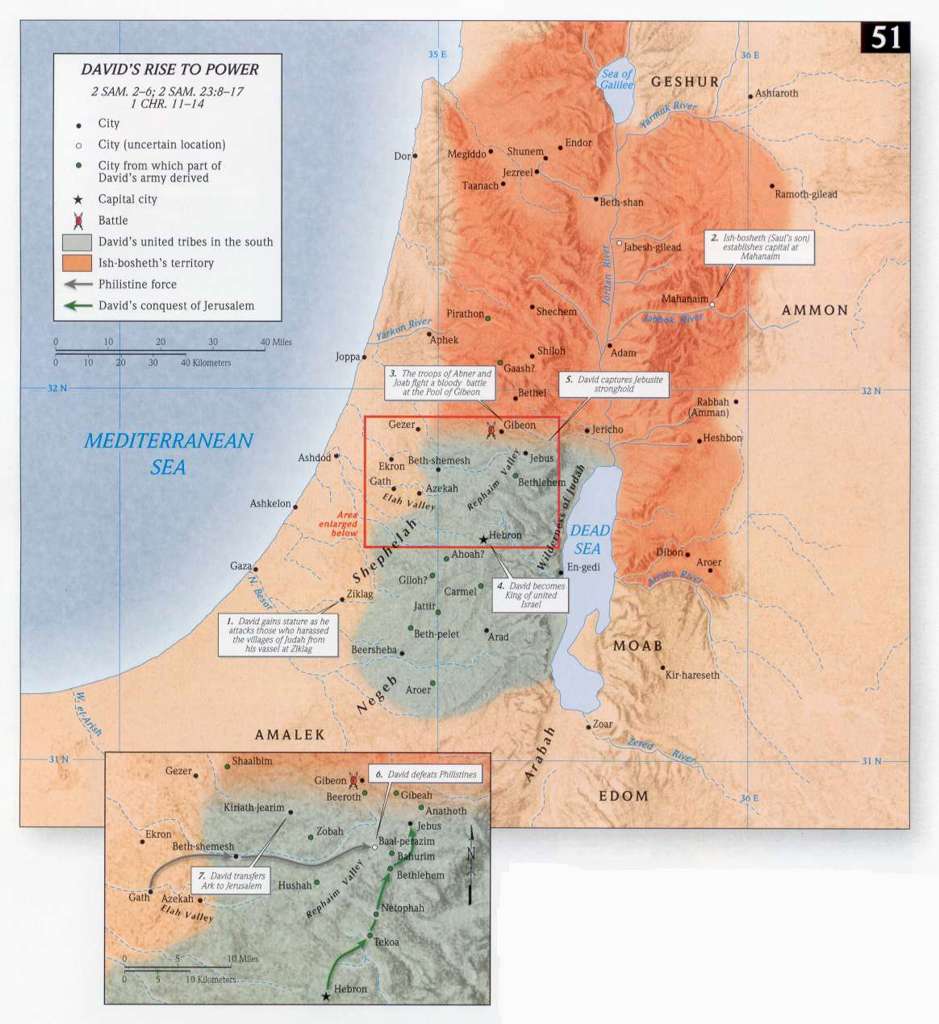
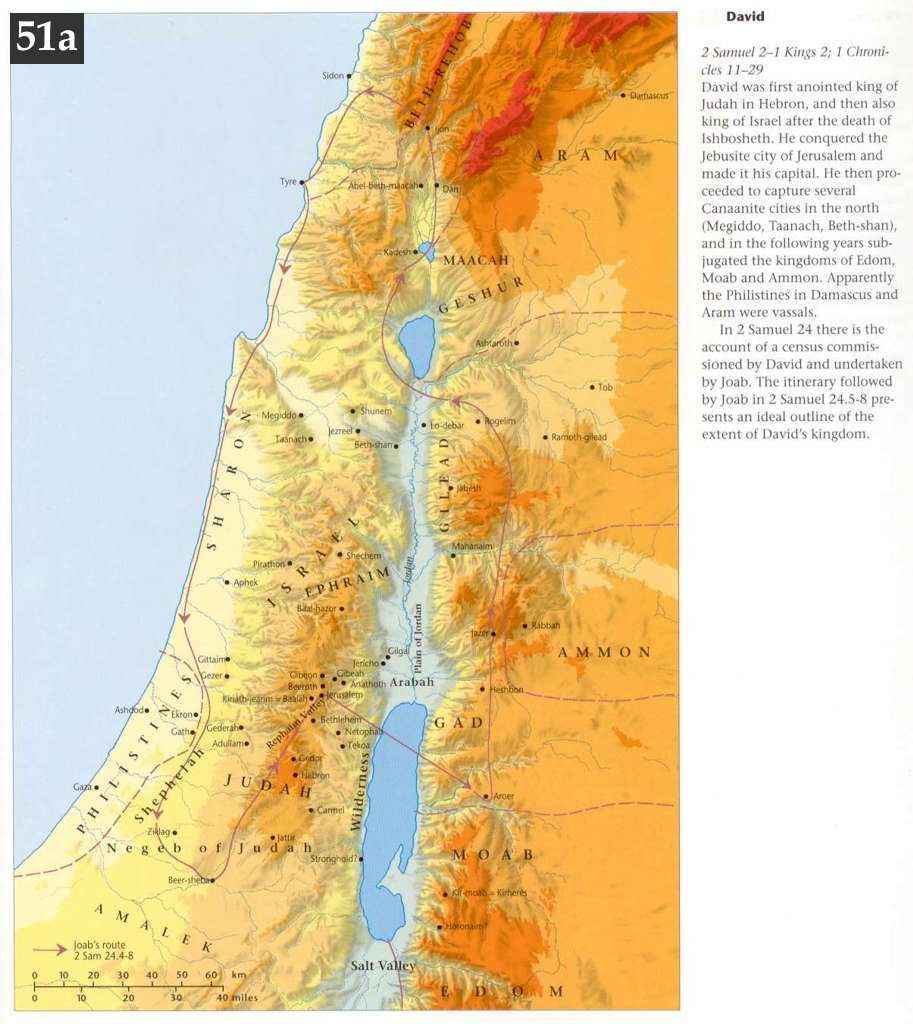
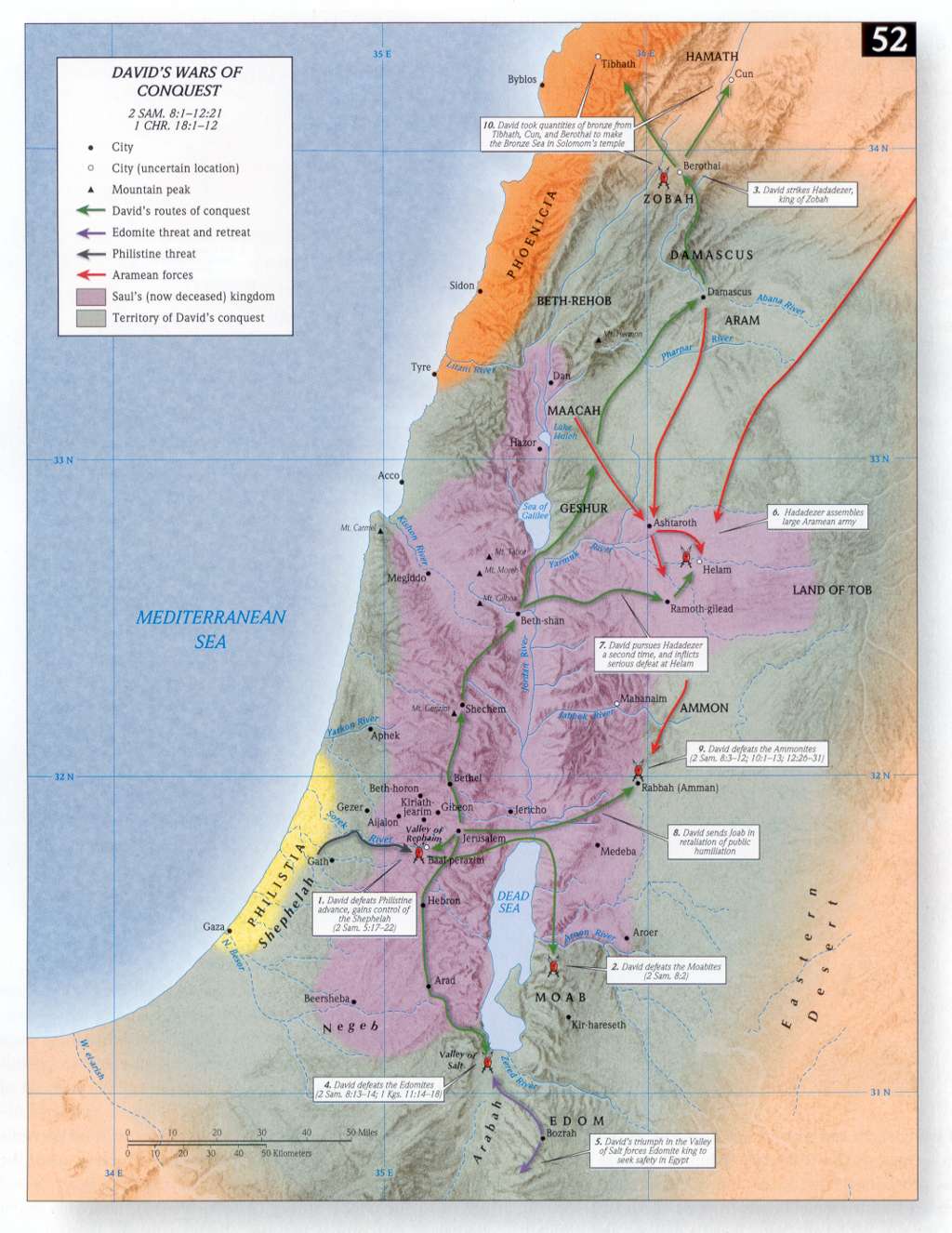
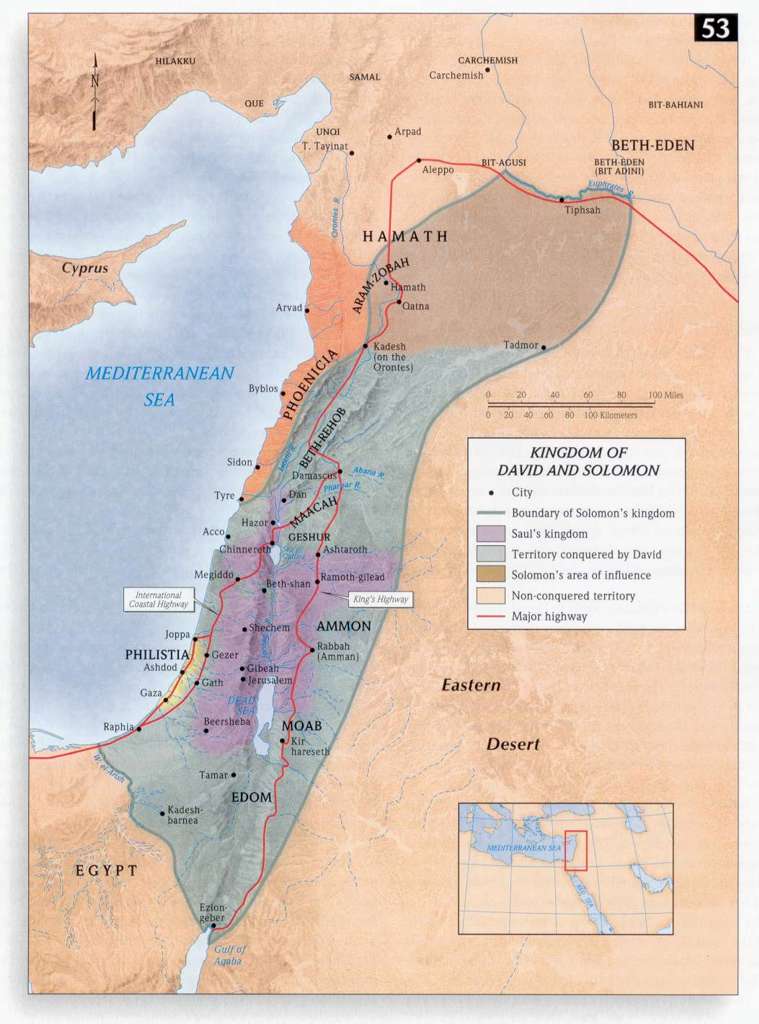
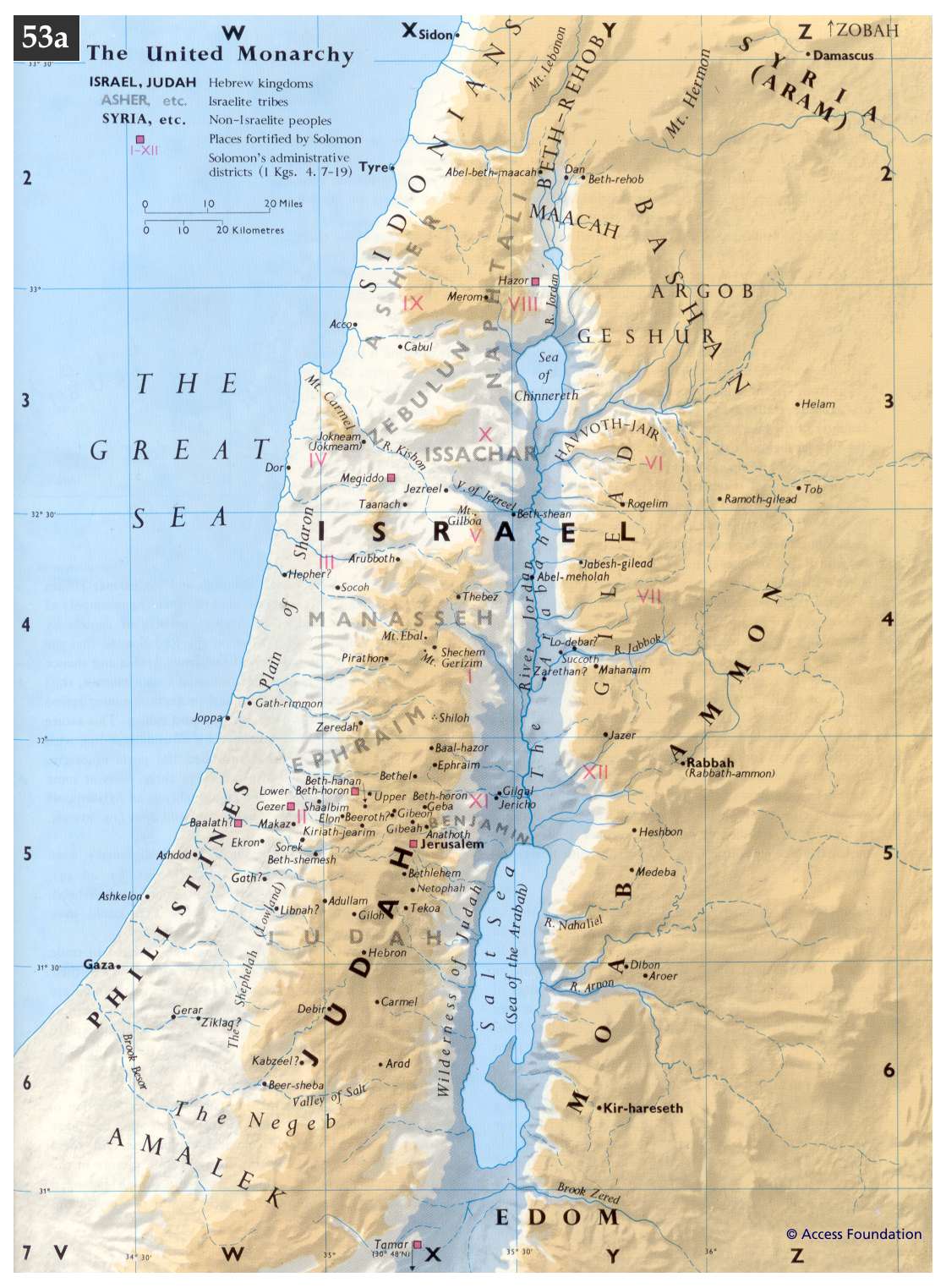
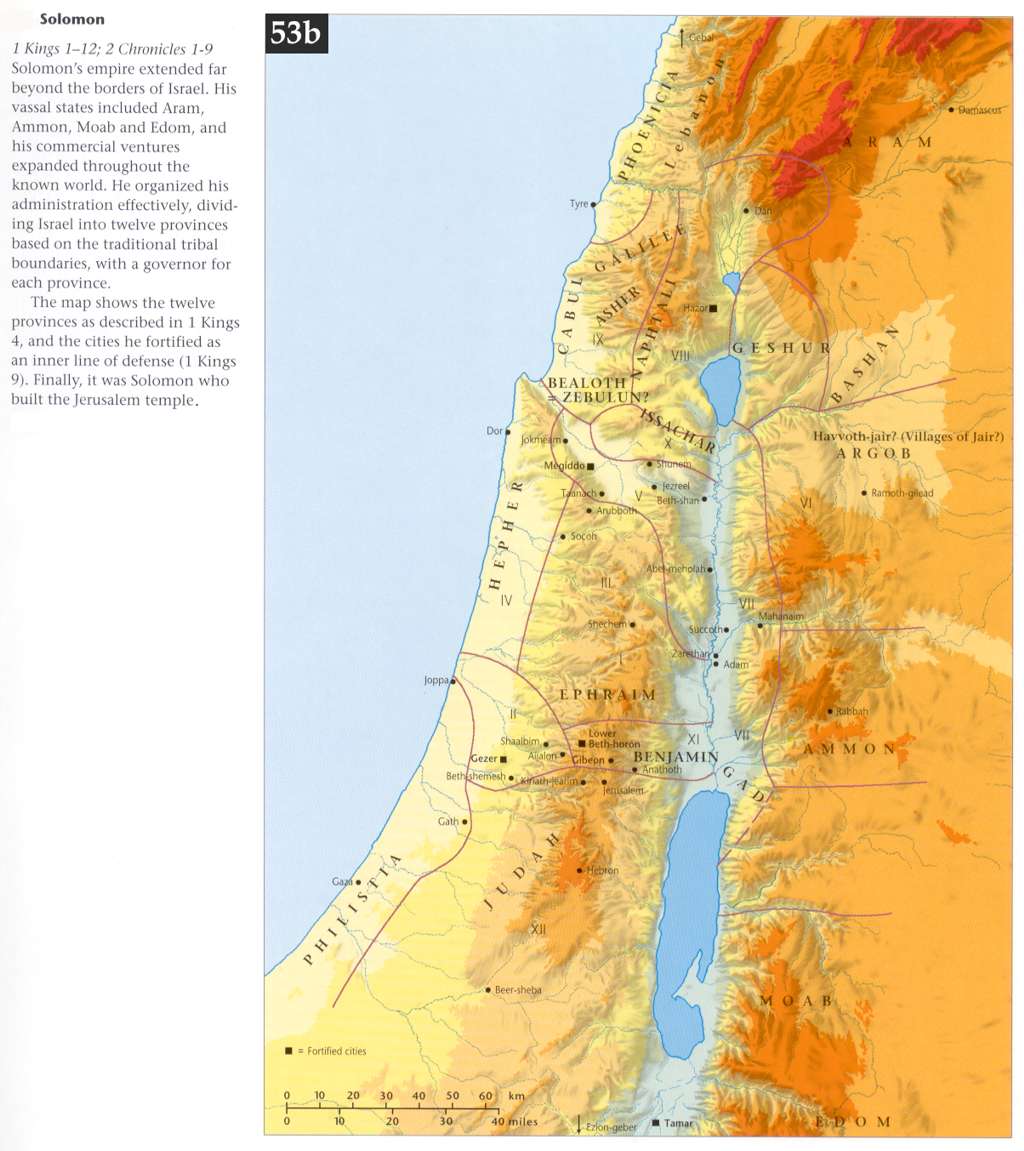
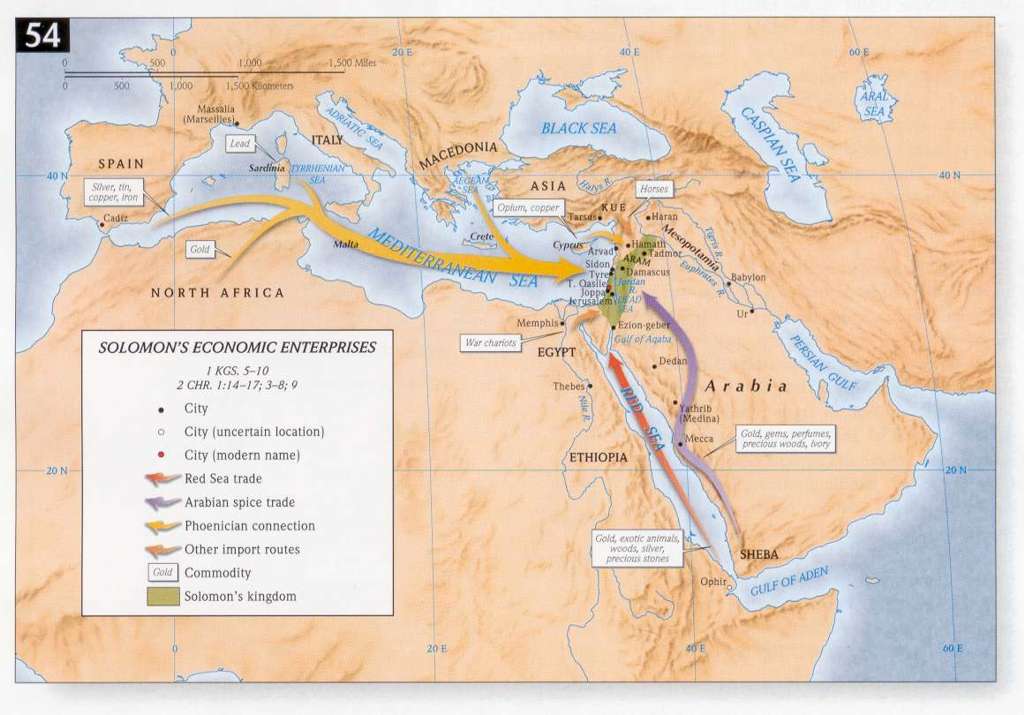
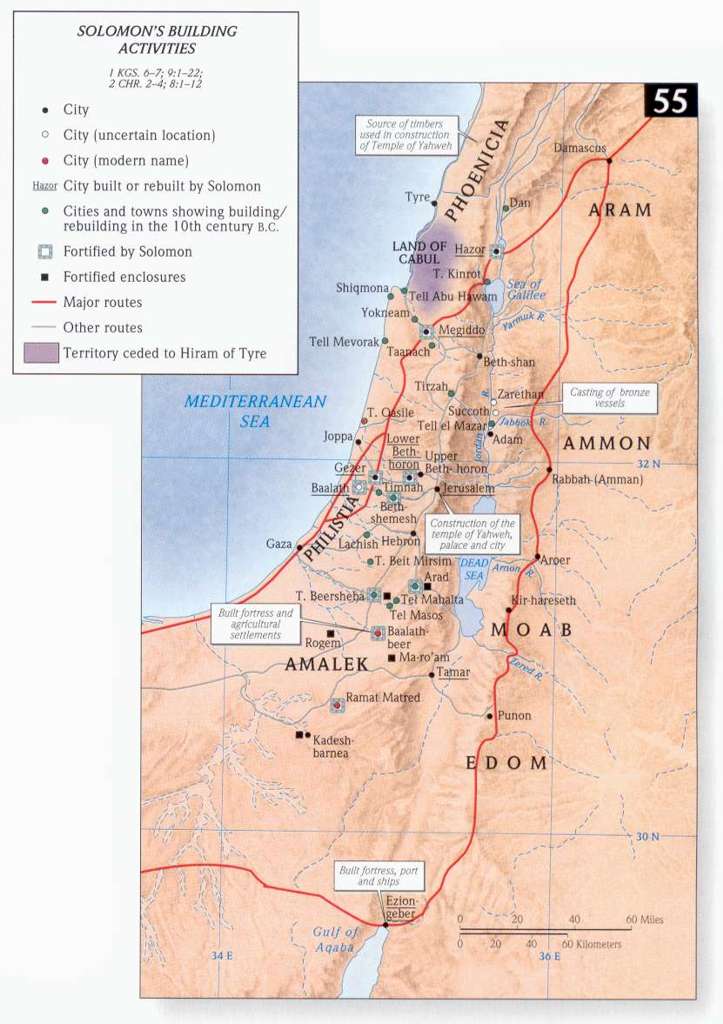
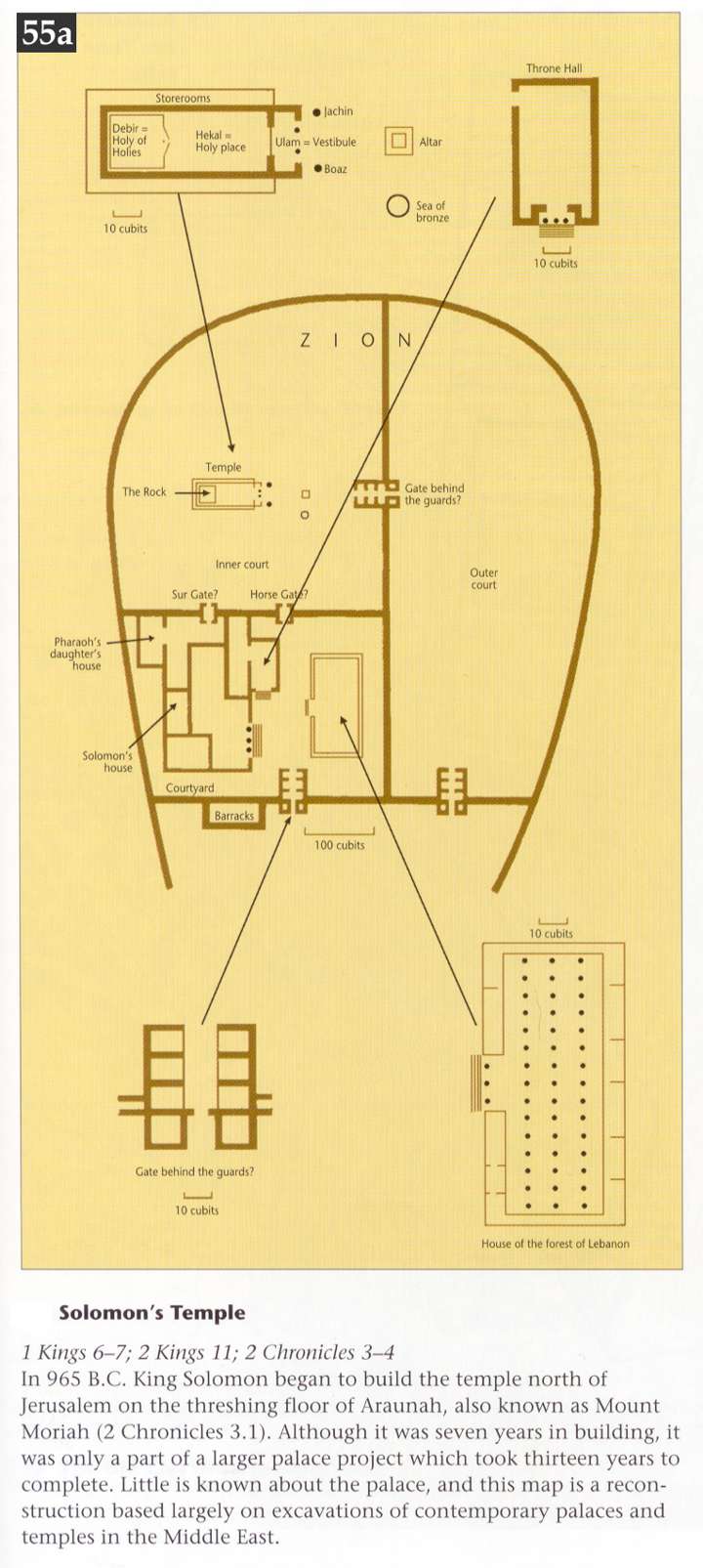
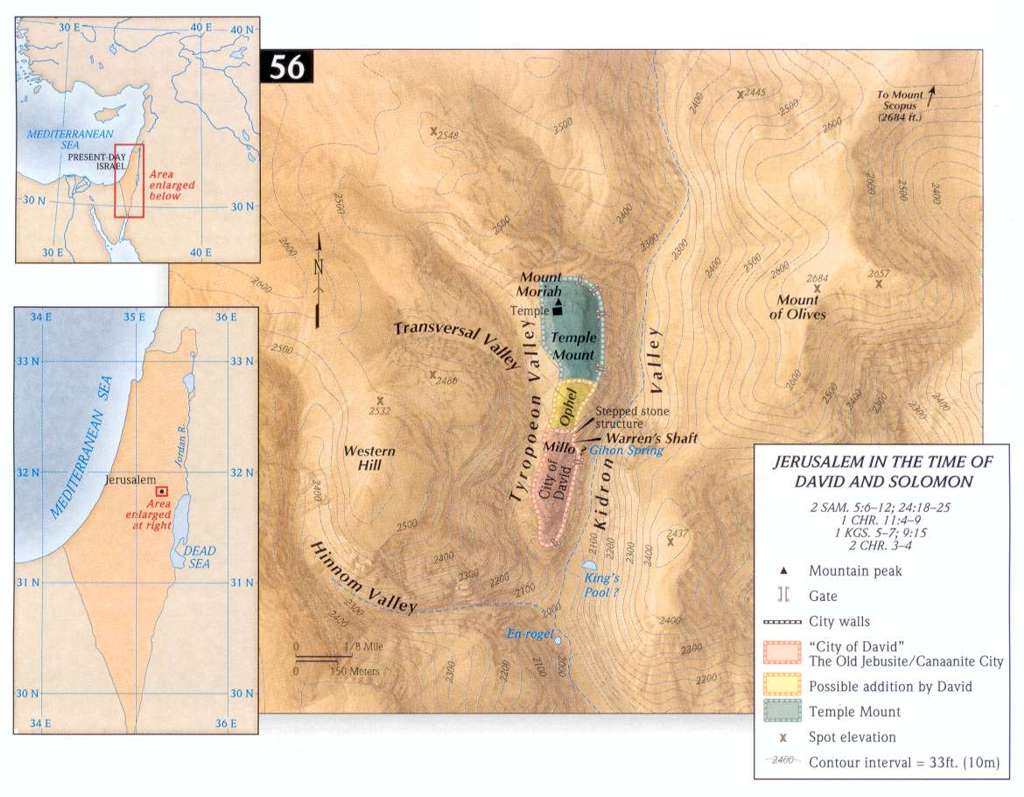
The Kingdoms of Israel and Judah
- The Kingdoms of Israel and Judah (1)
- The Kingdoms of Israel and Judah (2)
- The Kingdoms of Israel and Judah (3)
- The Campaign of Shishak
- Conflicts between Israel and Aram-Damascus
- The Omride Dynasty
- The Golden Ages of the 9th & 8th centuries BCE
- Phoenician Trade and Civilization
- Trade Routes throughout the Middle East
- Travel Routes throughout Palestine
- Elijah and Elisha
- The Revolt of Jehu
- The Rise of Assyria
- Israel & Judah in the days of Jeroboam II and Uzziah
- The Assyrian Empire under Tiglath-Pileser III
- The Syro-Ephraimite War
- Tiglath-Pileser III's Campaigns
- Fall of Samaria and Deportation of Israelites
- The Fall of the Kingdom of Israel
- Assyrian Districts after the Fall of Samaria
- Prophets of the 8th Century BCE
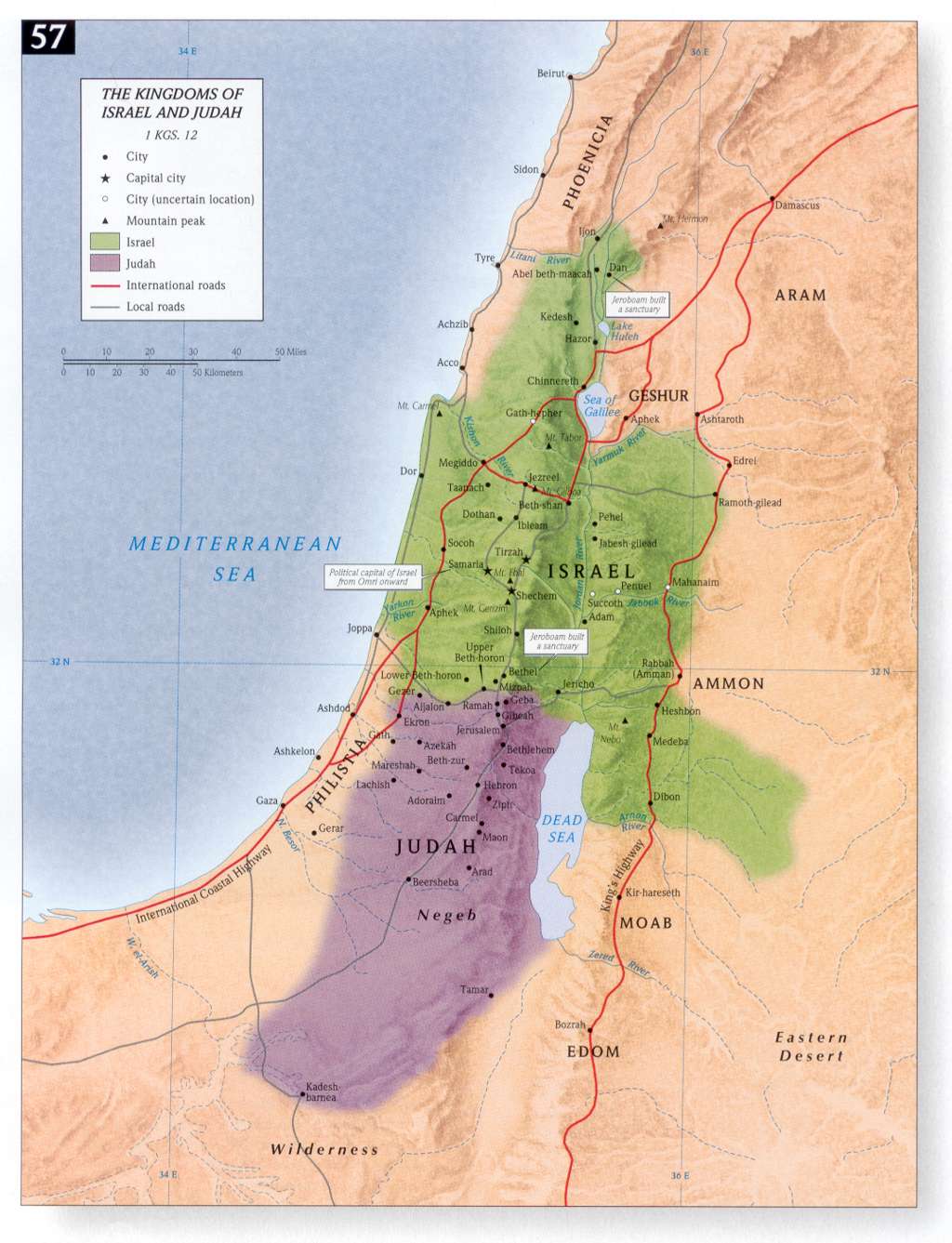

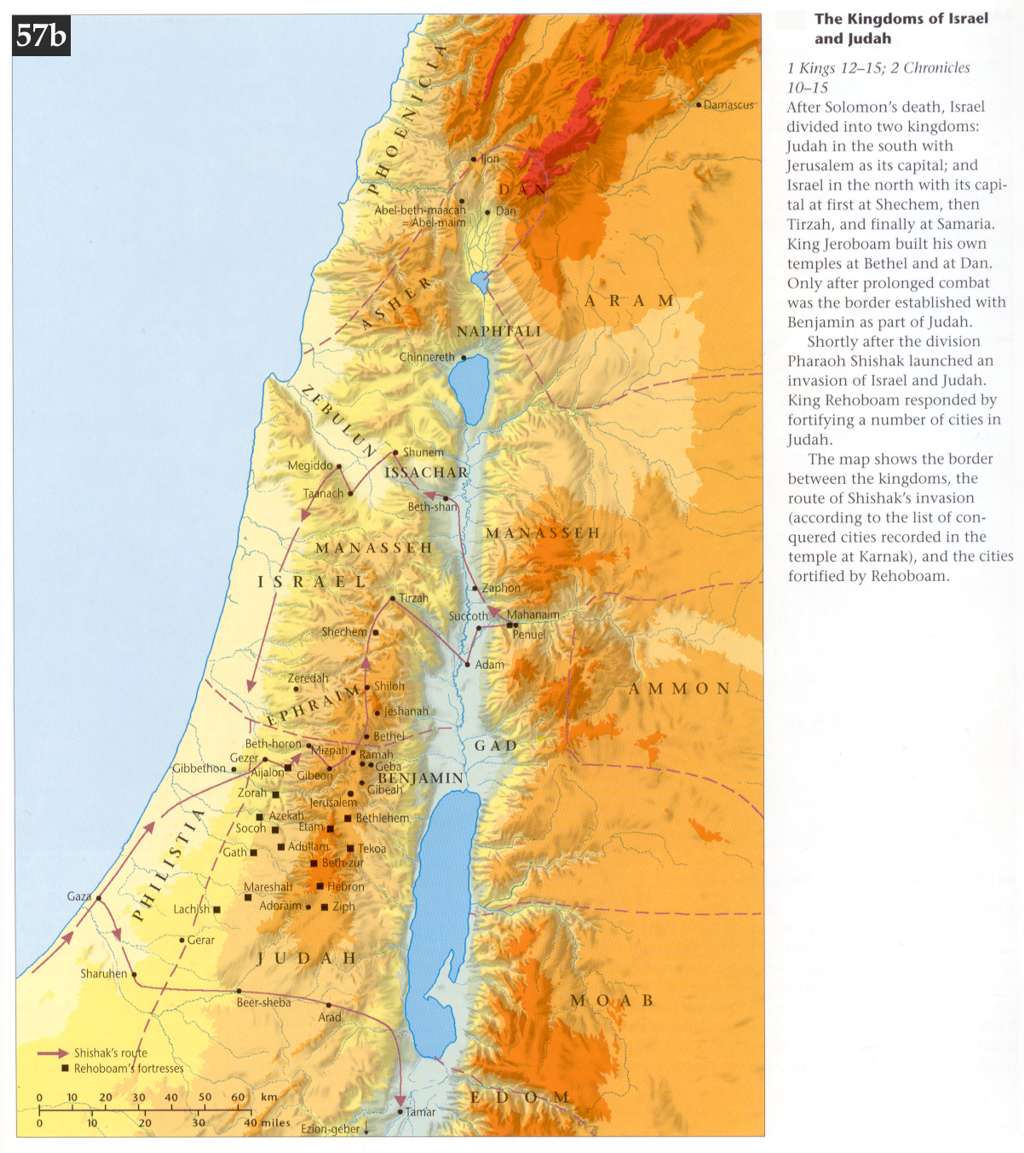
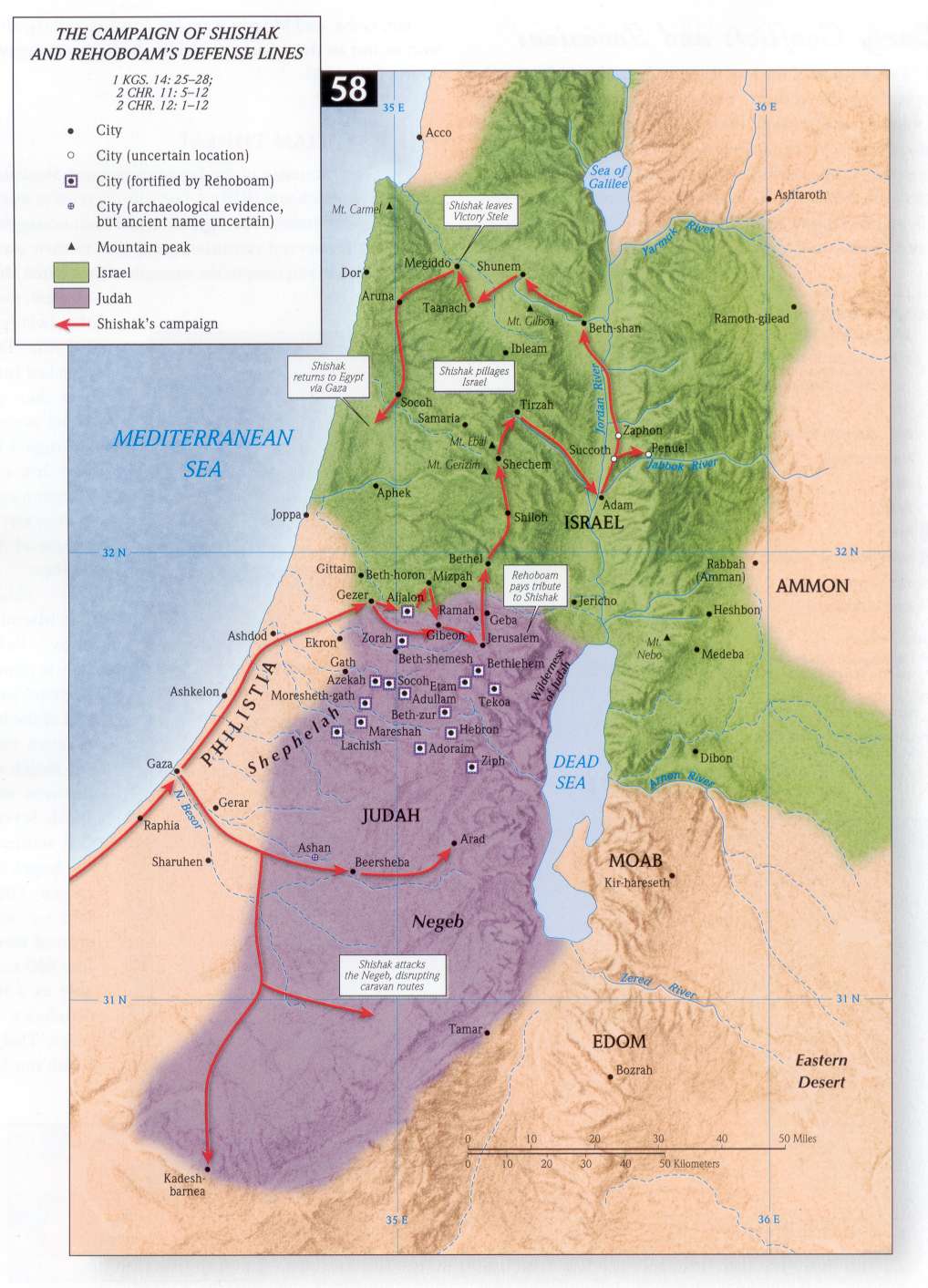
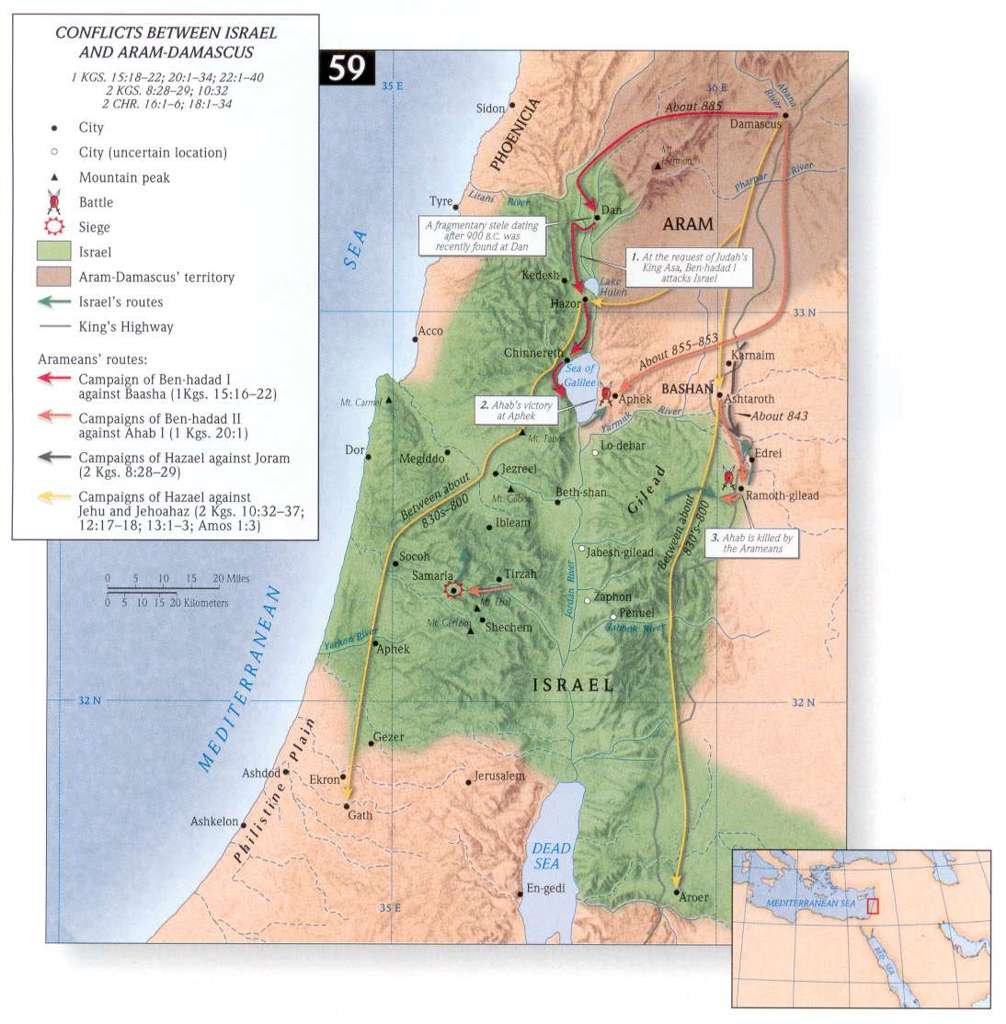
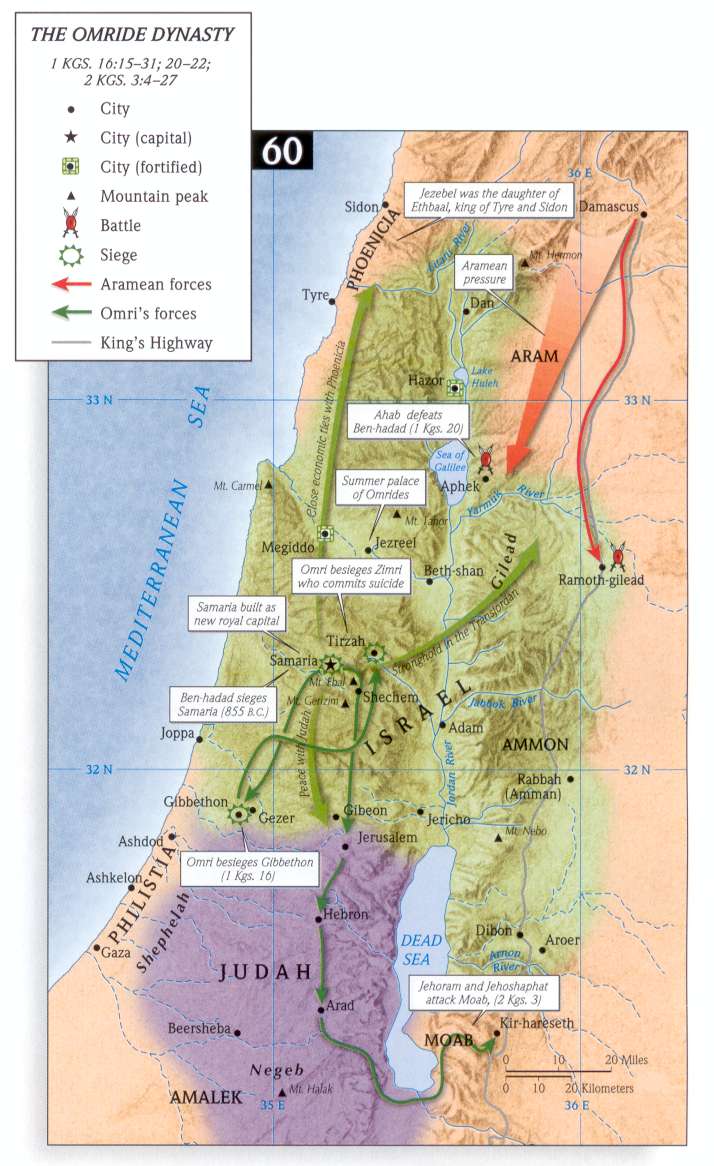
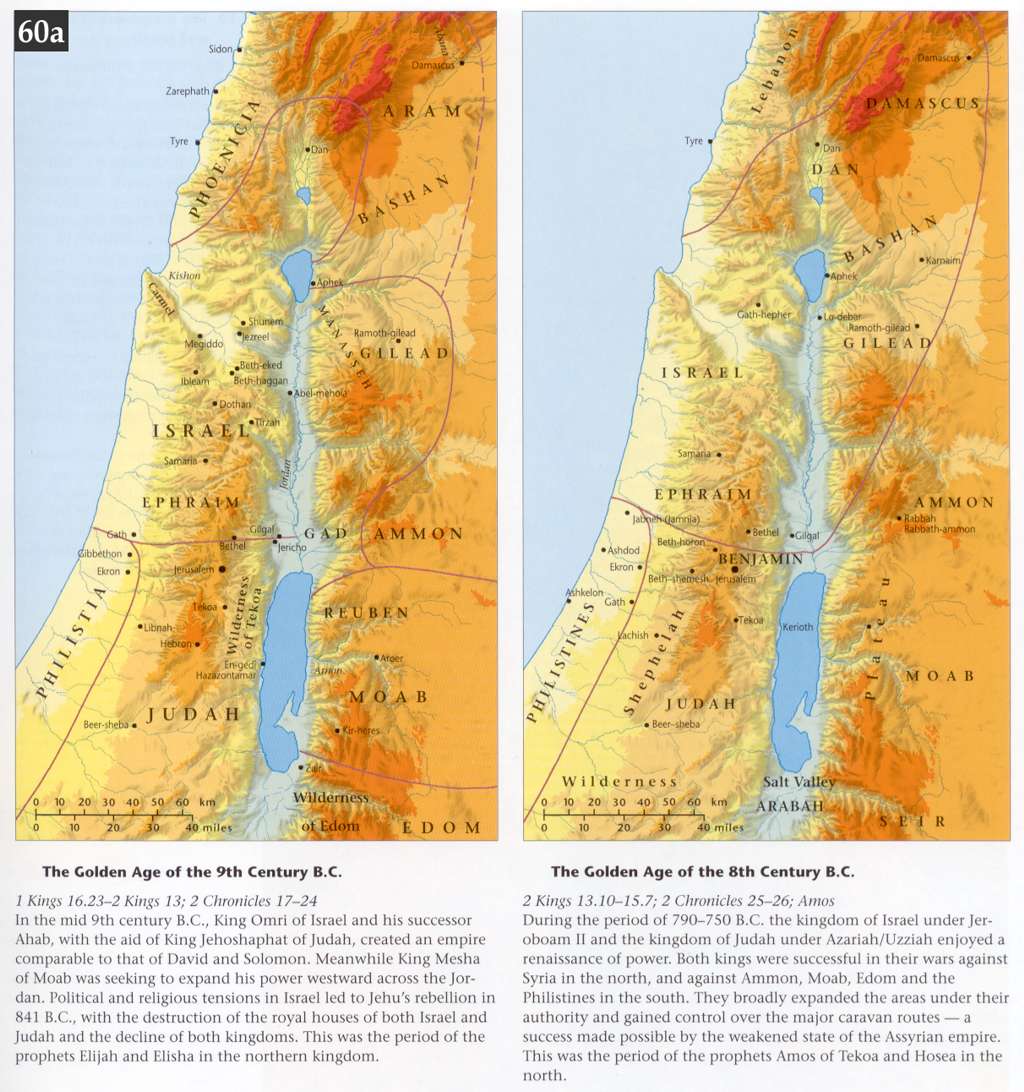
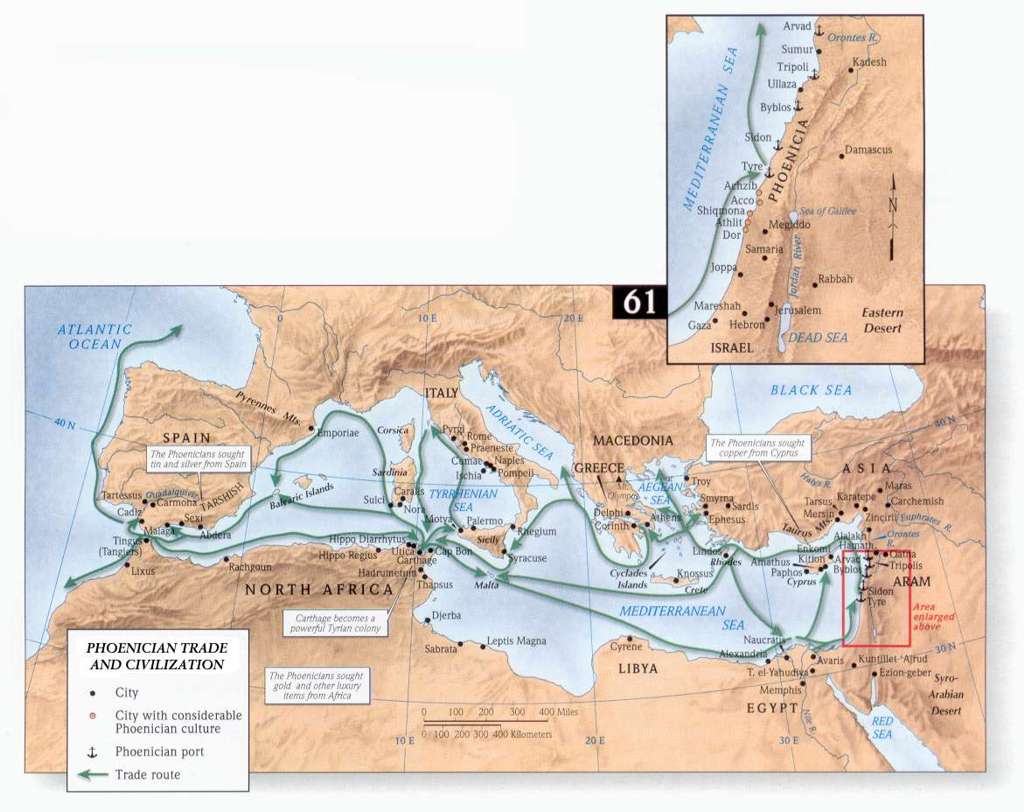
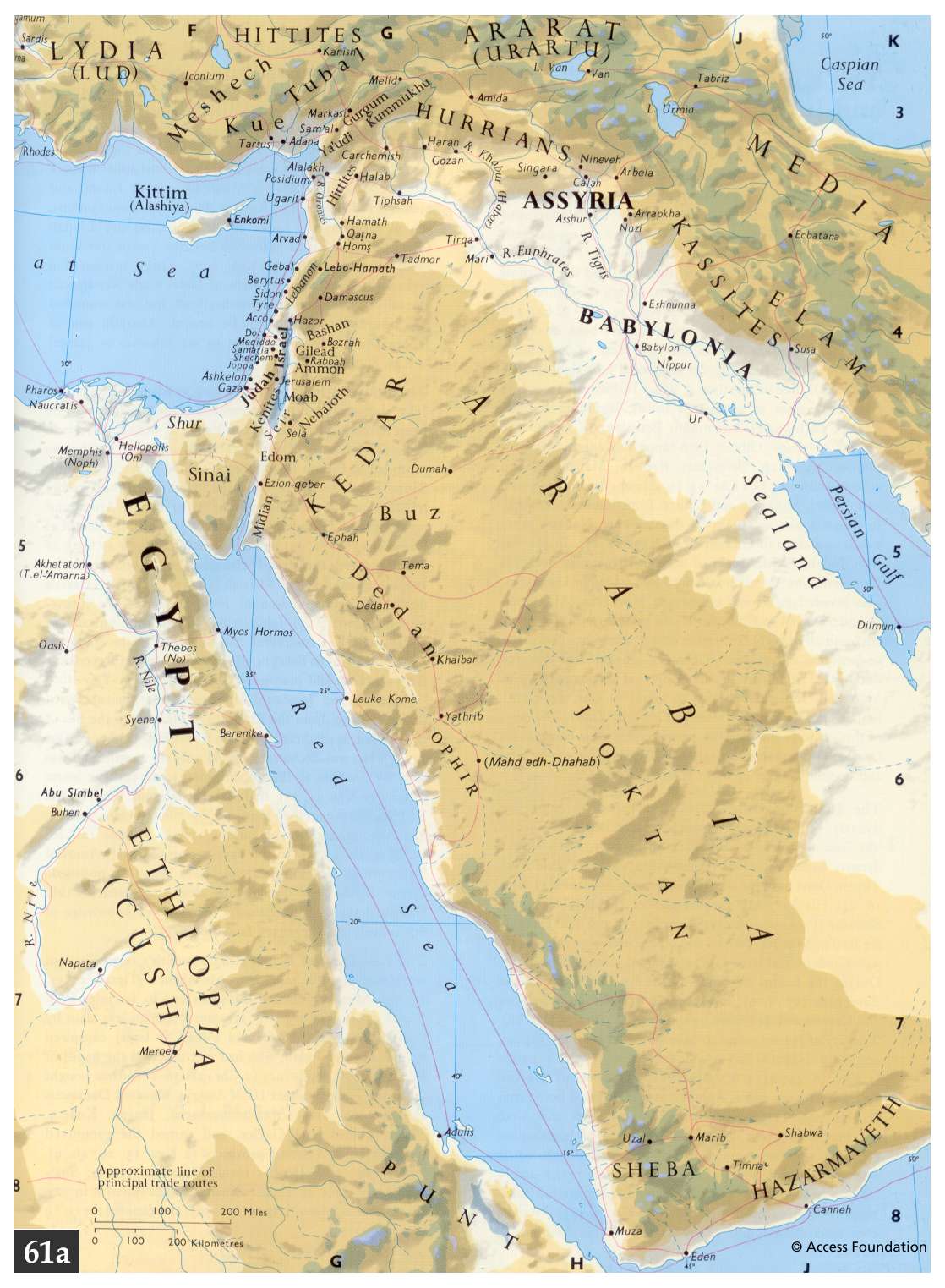
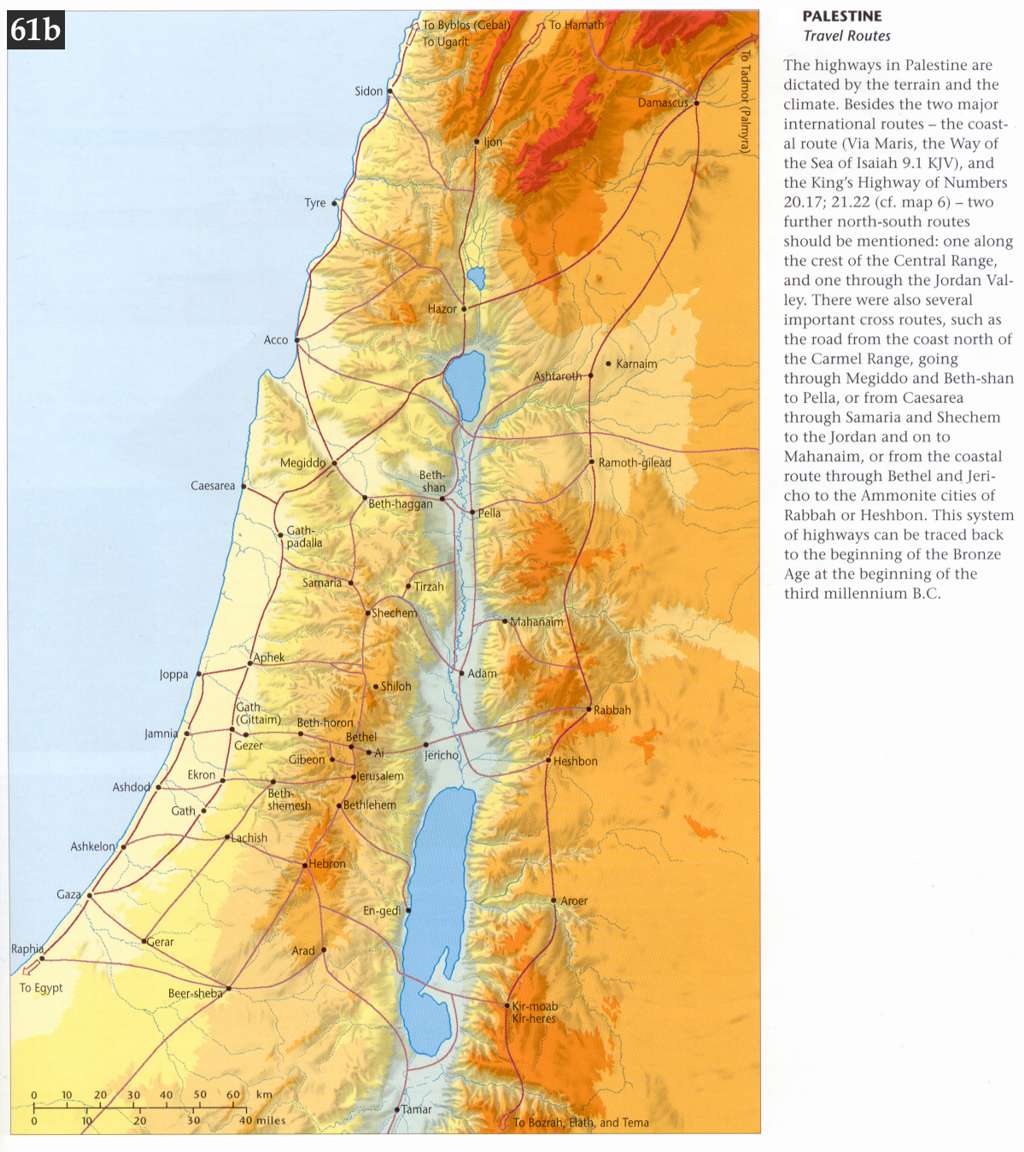
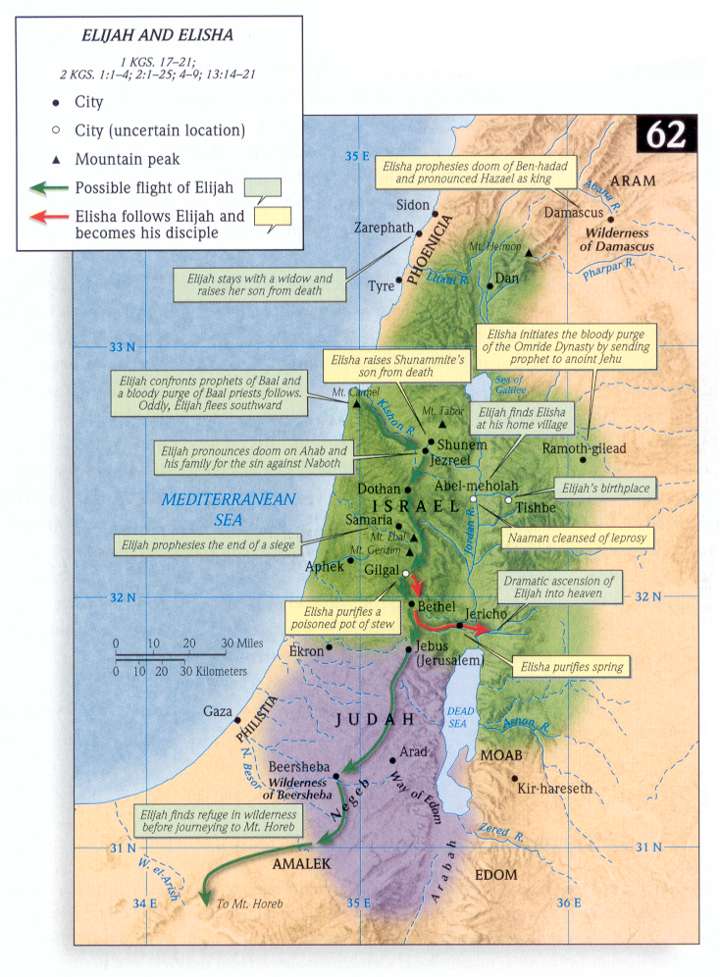
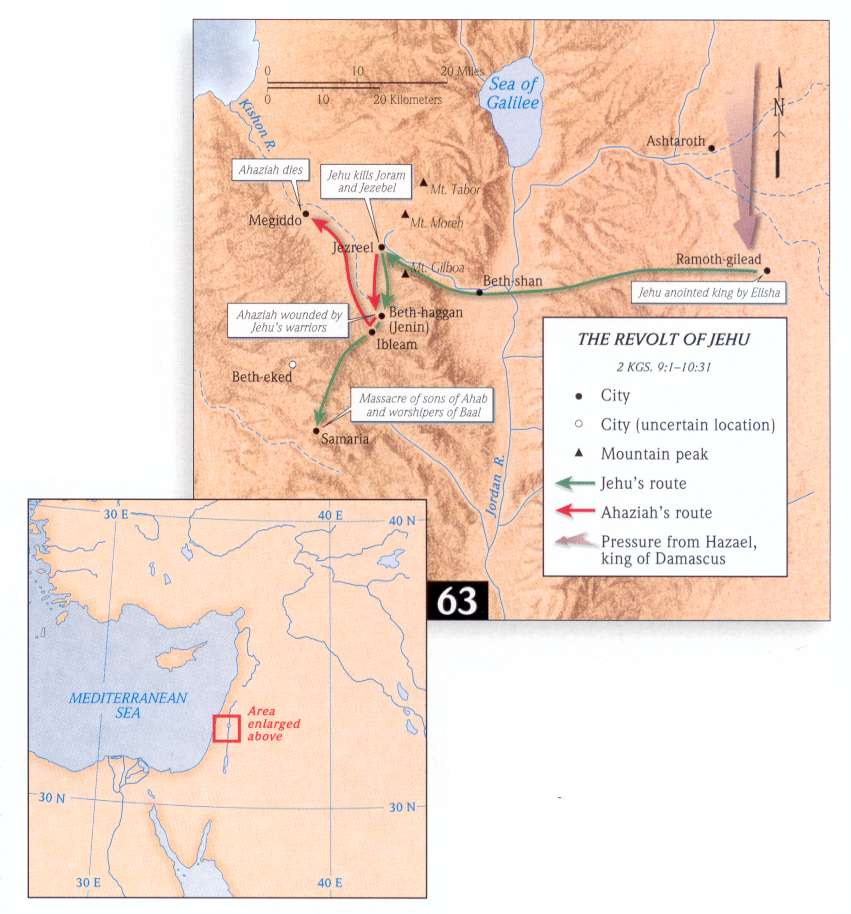
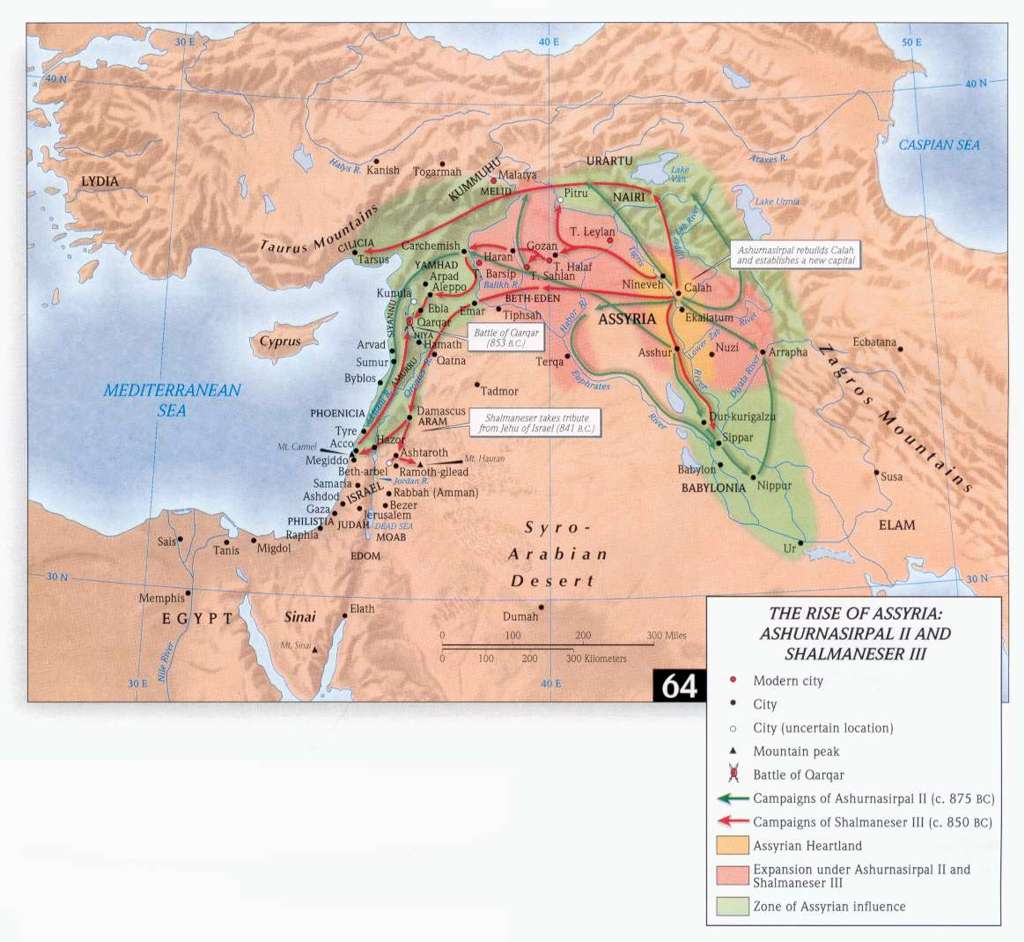
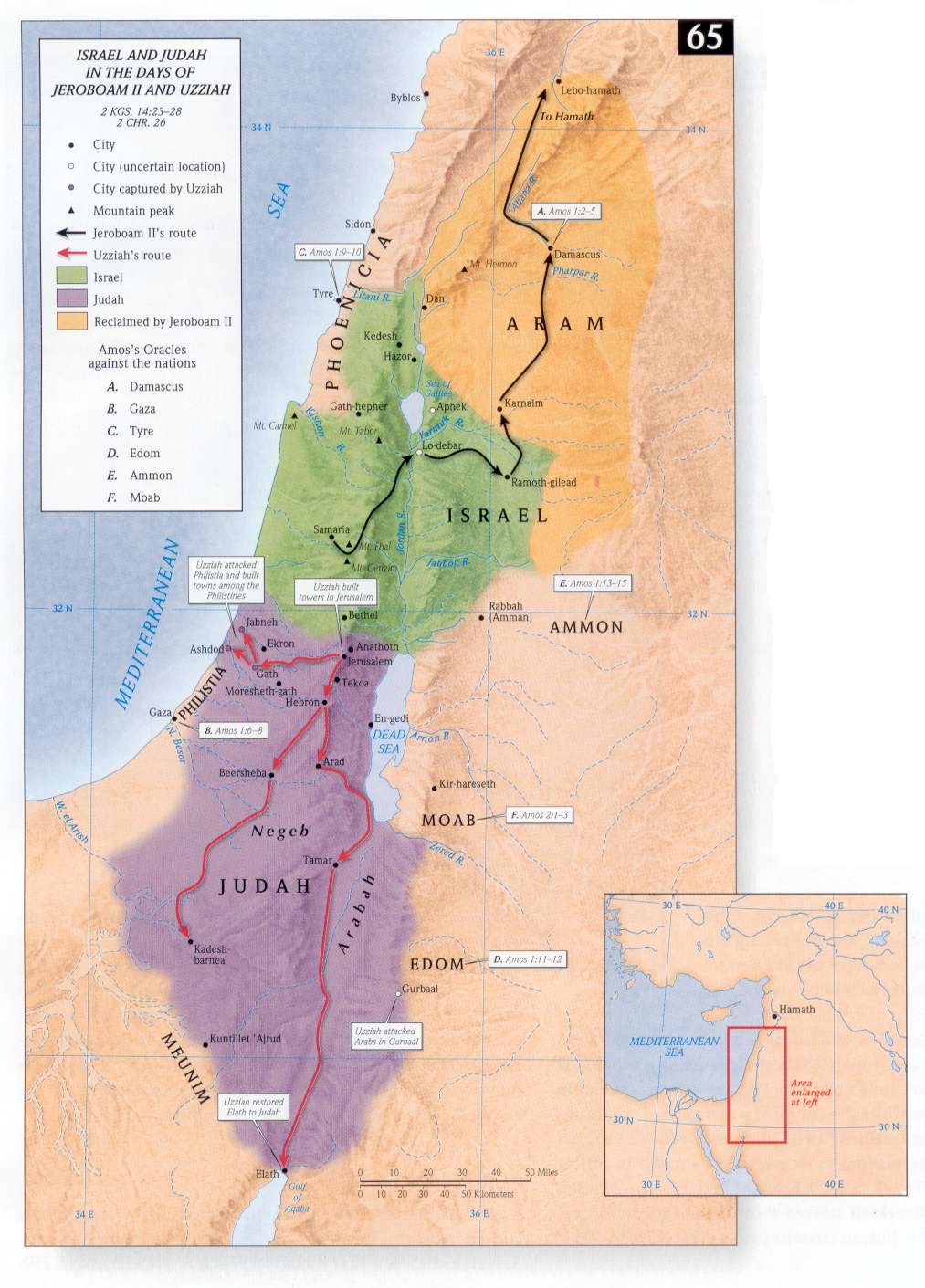
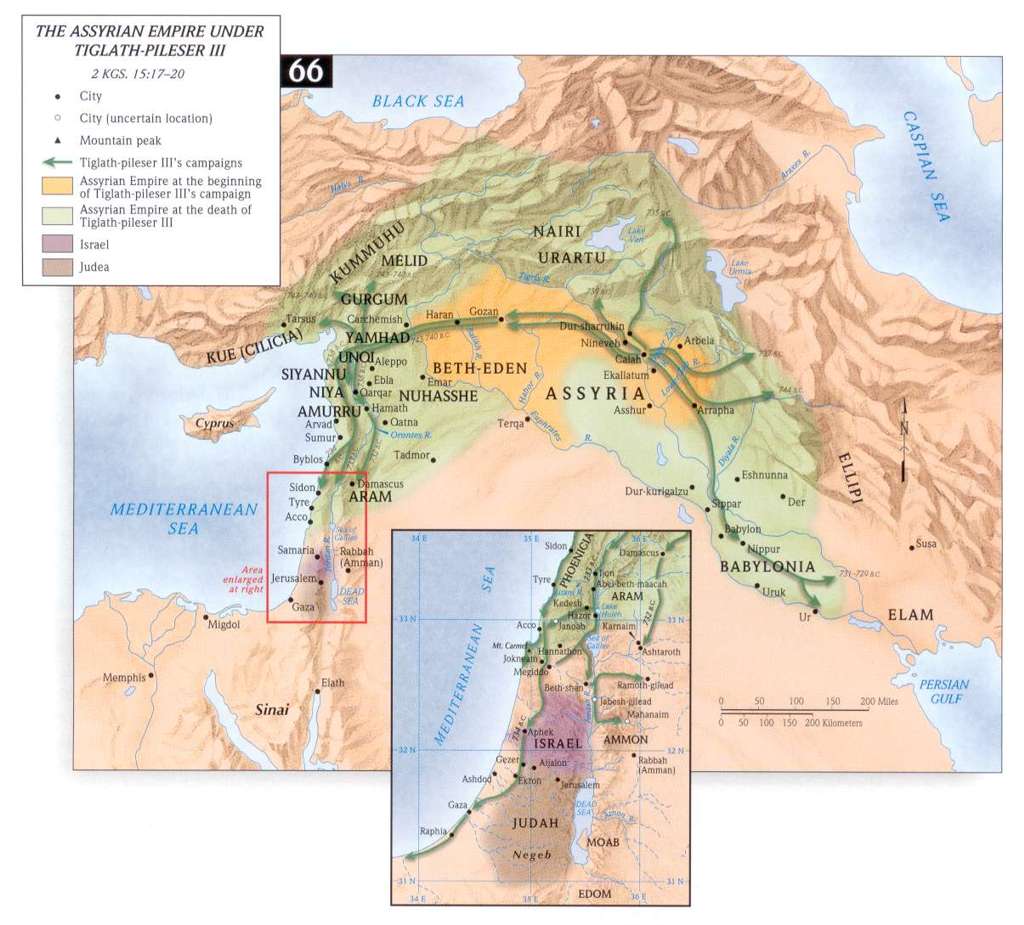
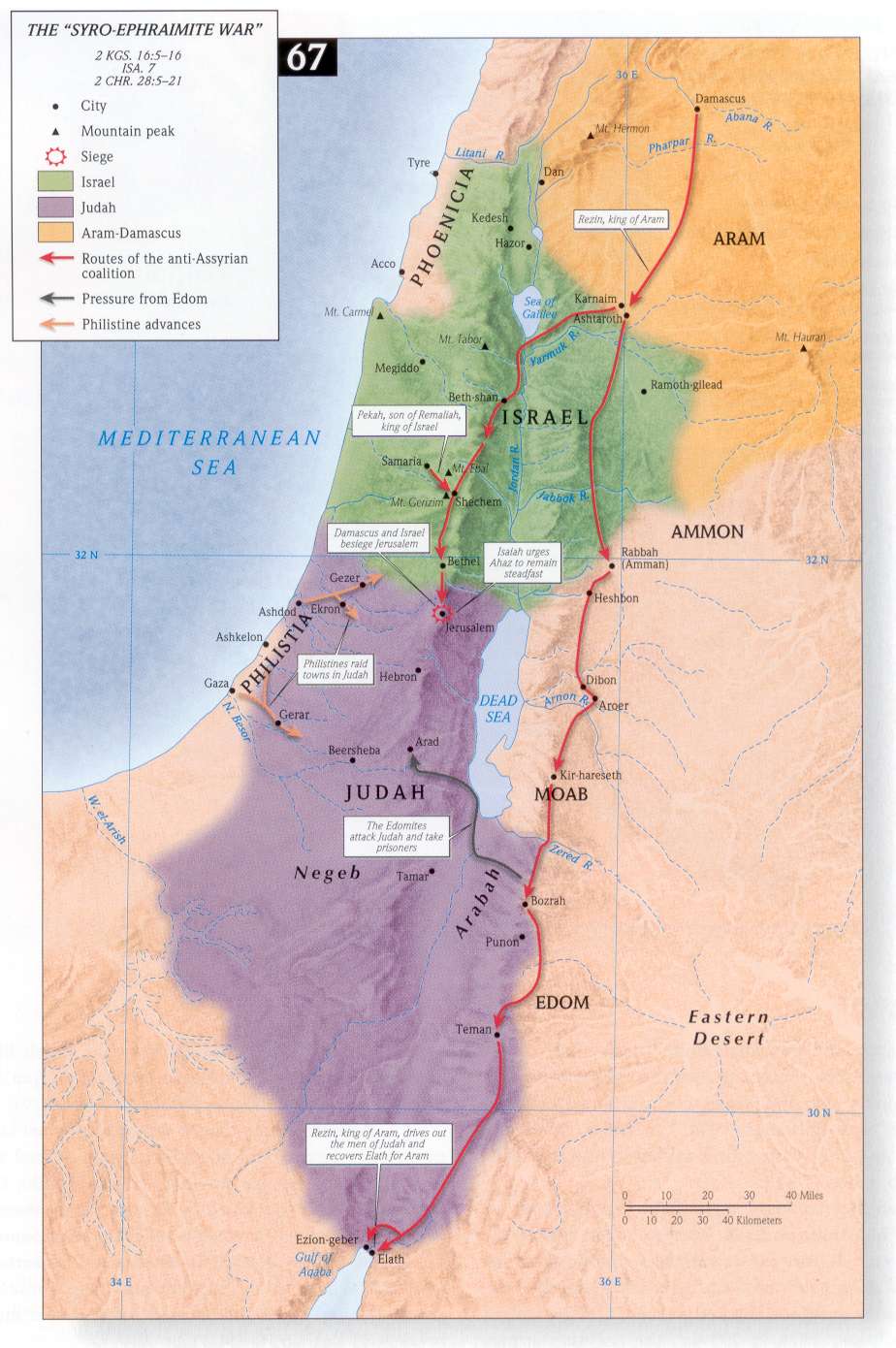
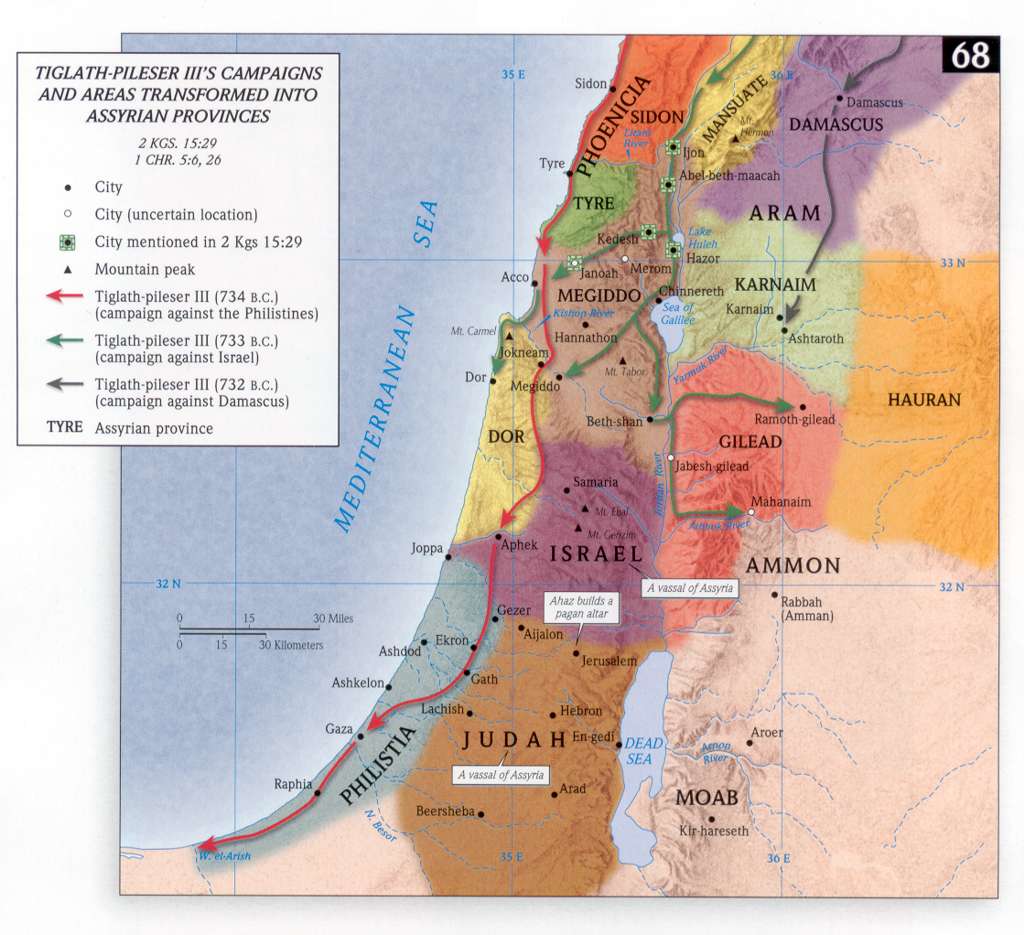
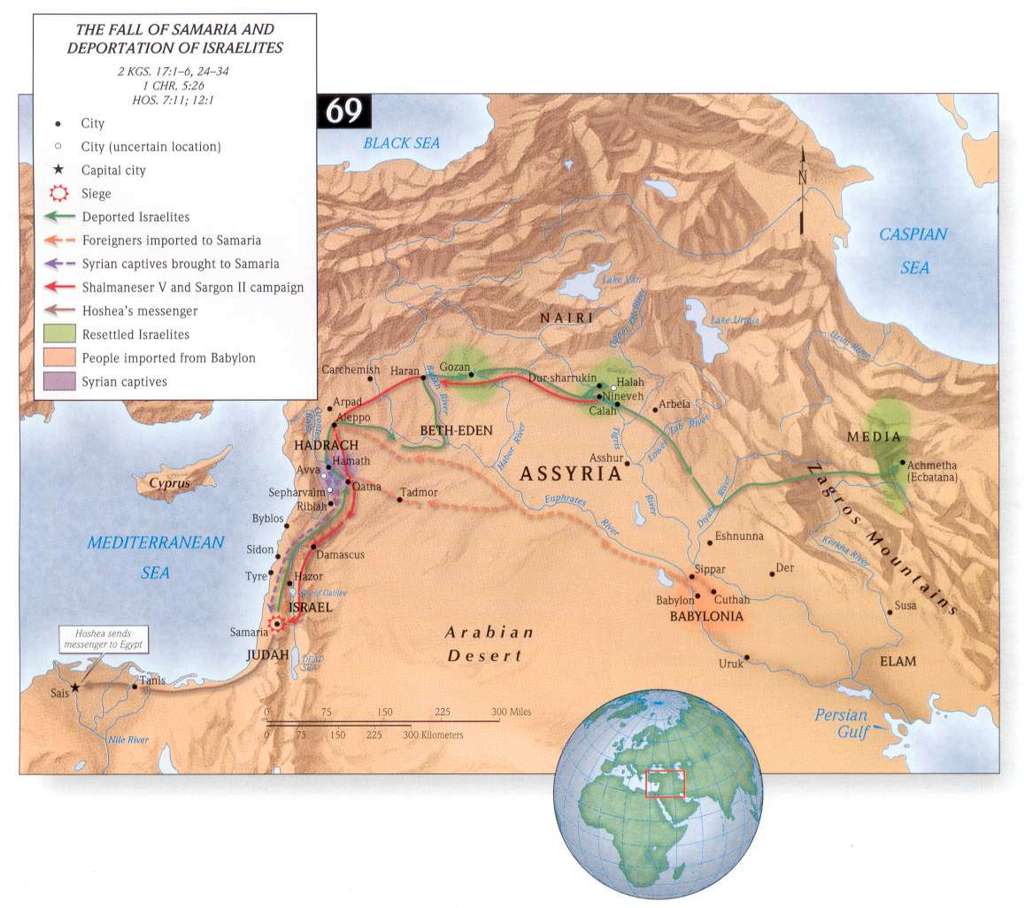
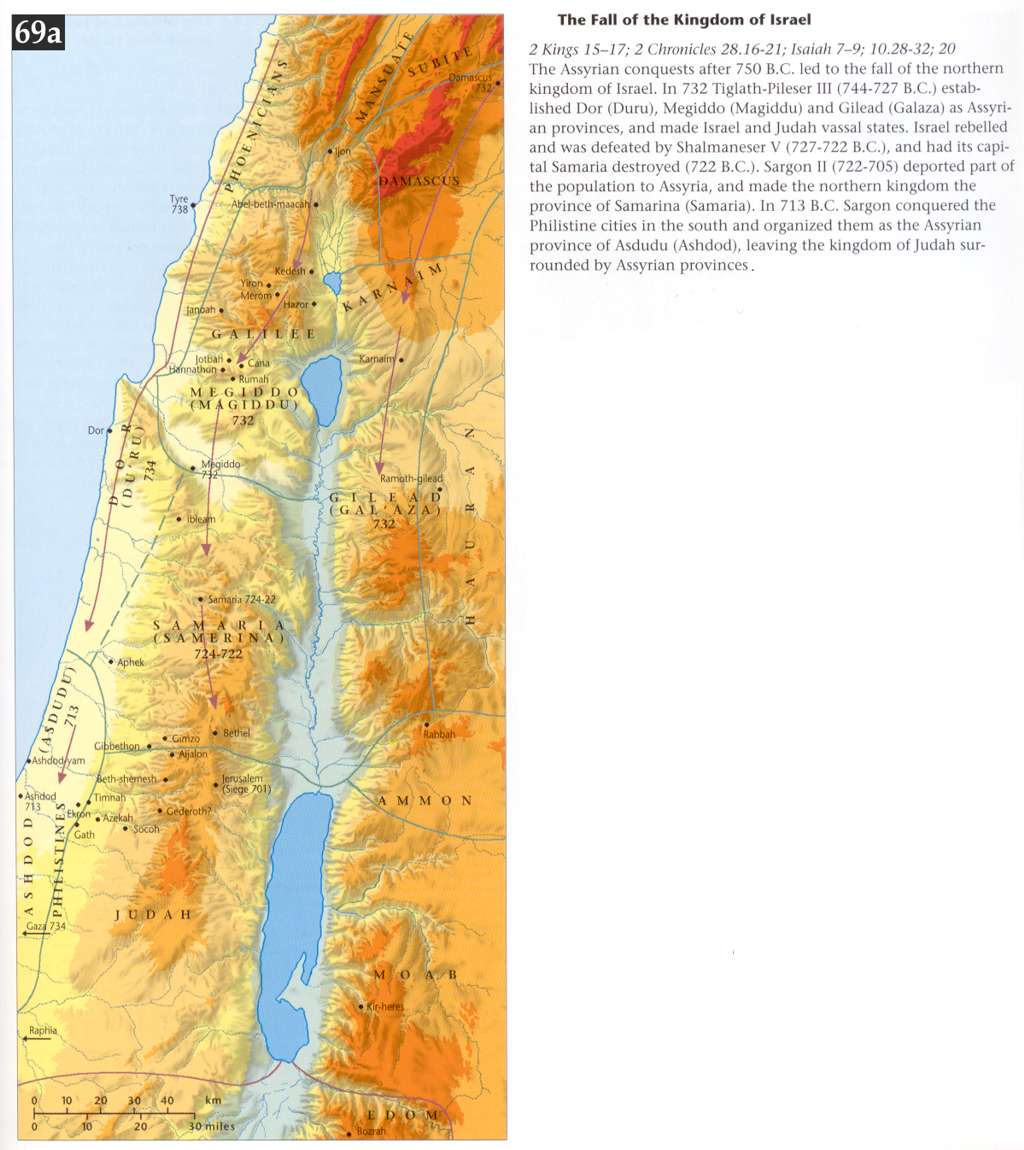
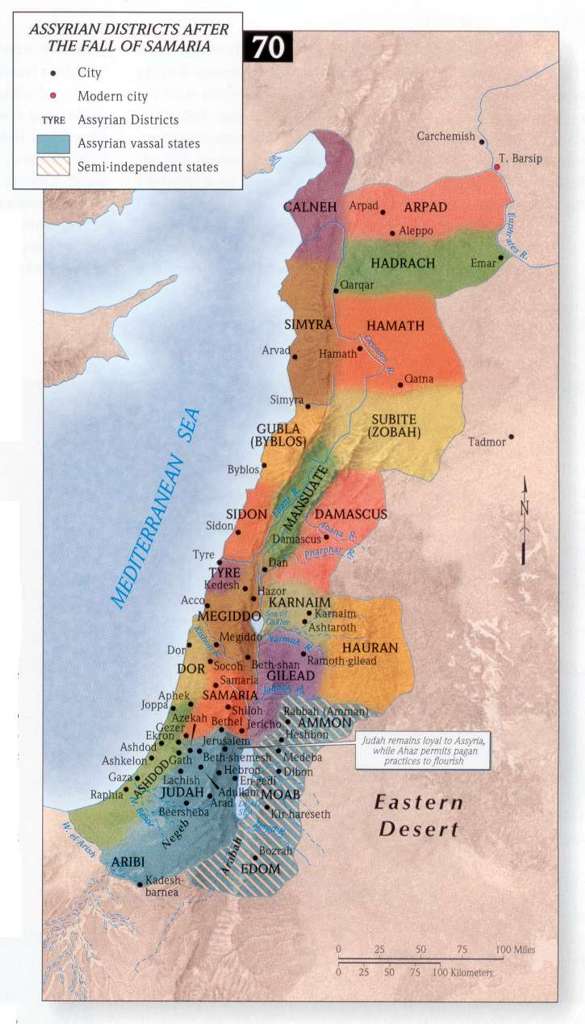
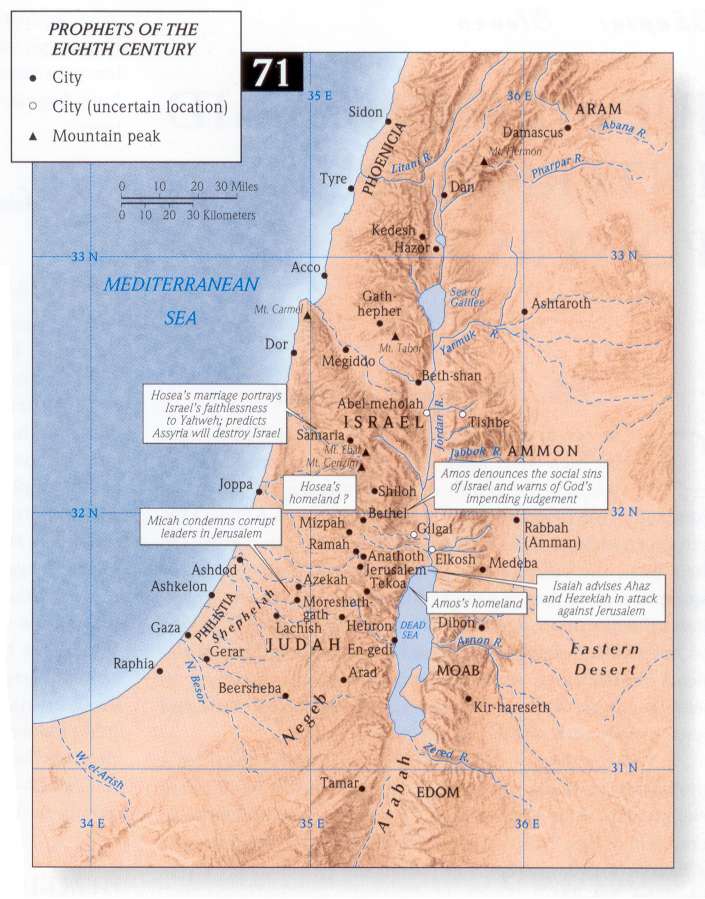
Judah Alone amid International Powers
- Hezekiah's Preparation for Revolt
- Judah under King Hezekiah
- Hezekiah's Jerusalem
- Sennacherib's Campaign against Judah
- Assyria in the 7th century BCE
- The Rise of the Neo-Babylonian Empire
- The Reign of Josiah
- The Districts of Judah under King Josiah
- The Golden Age of King Josiah
- Nebuchadnezzar's Campaigns against Judah
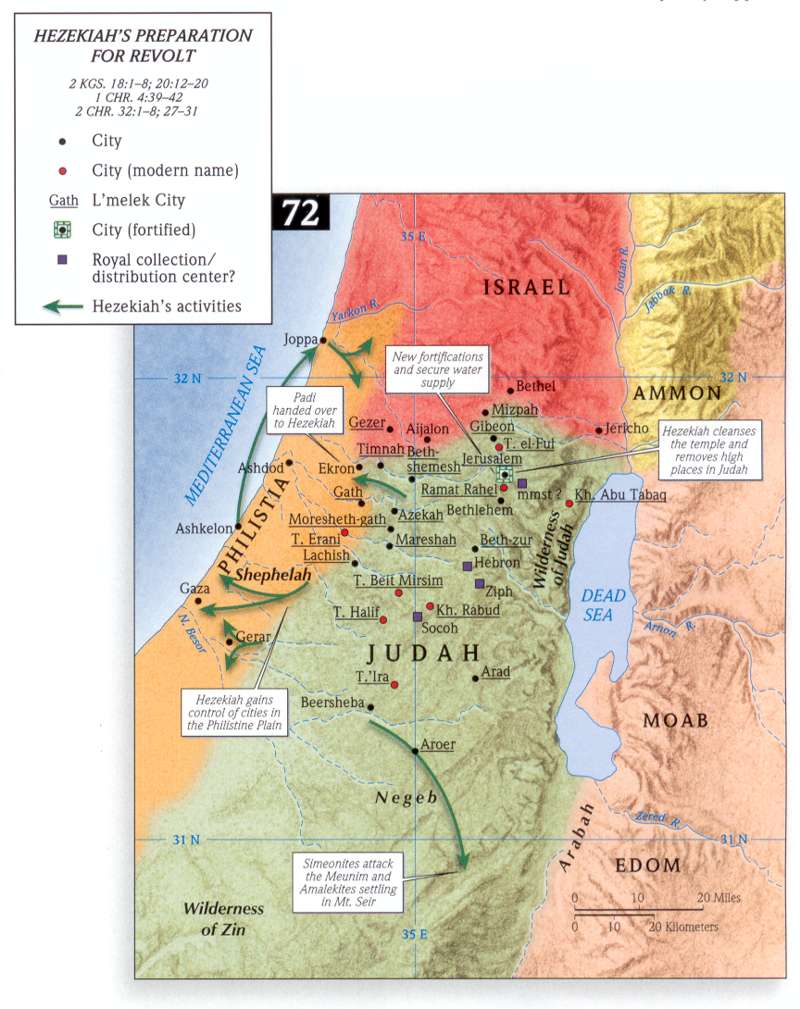
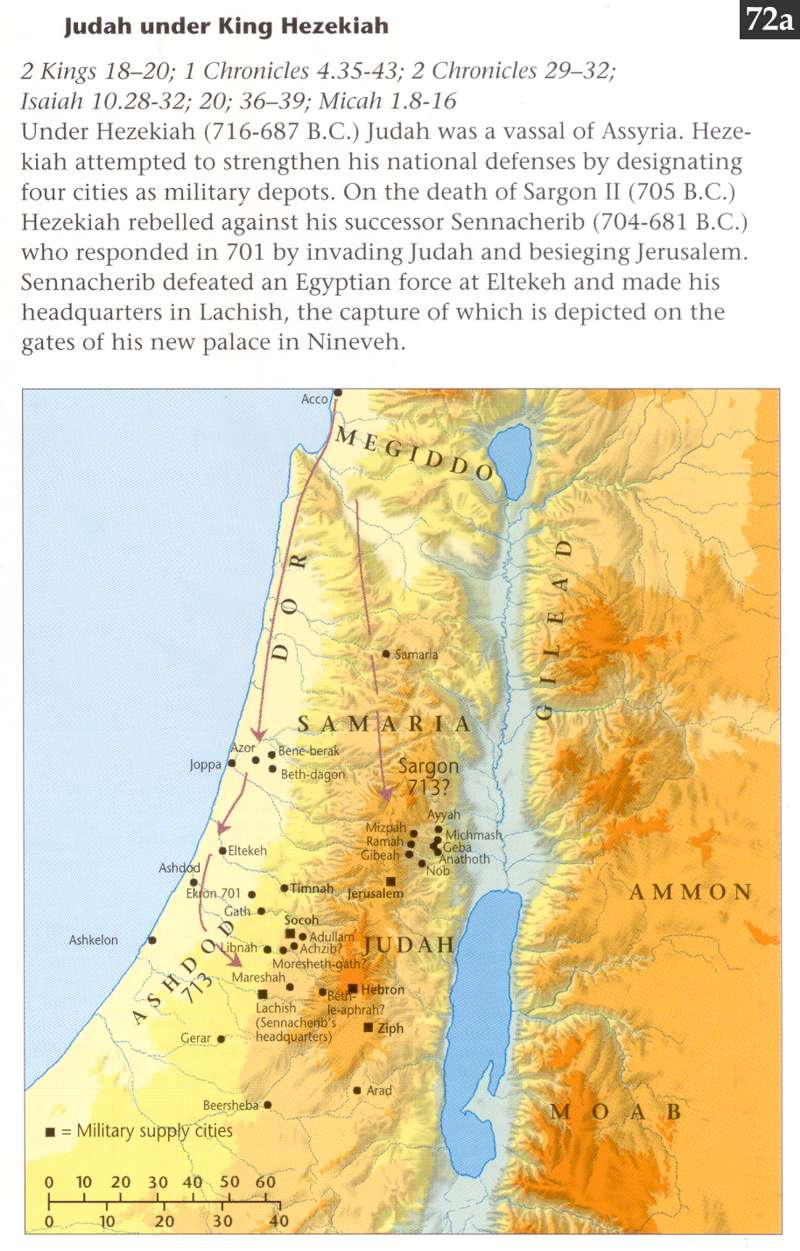
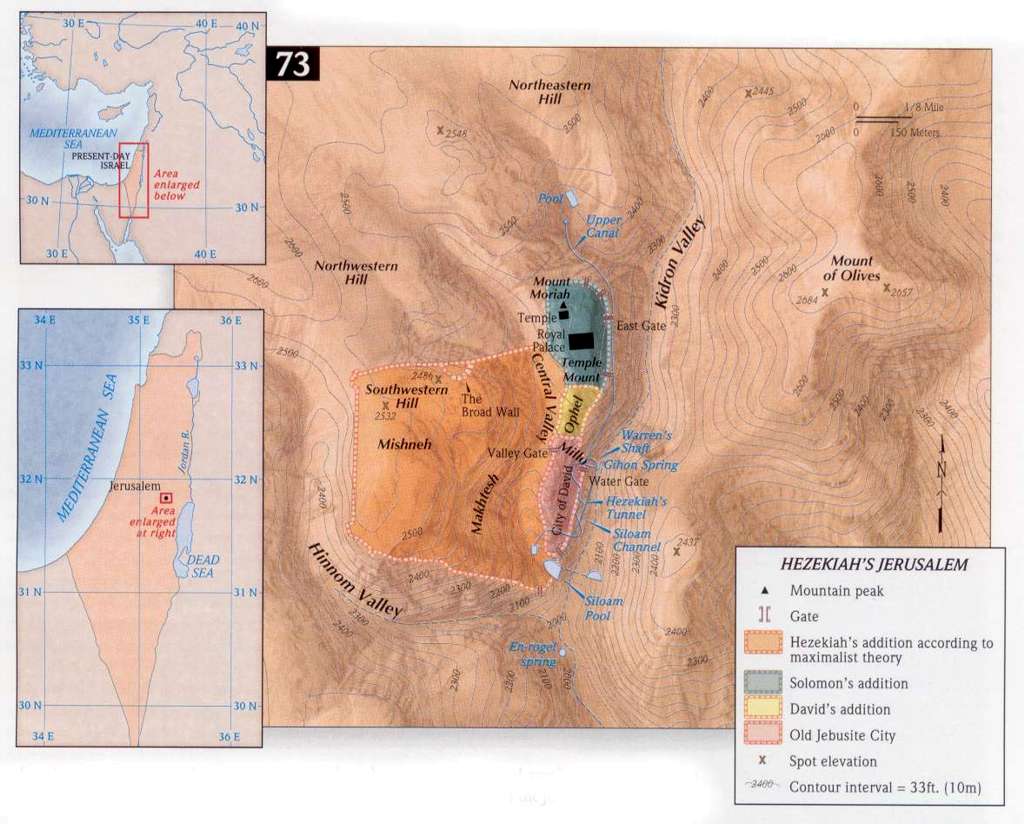
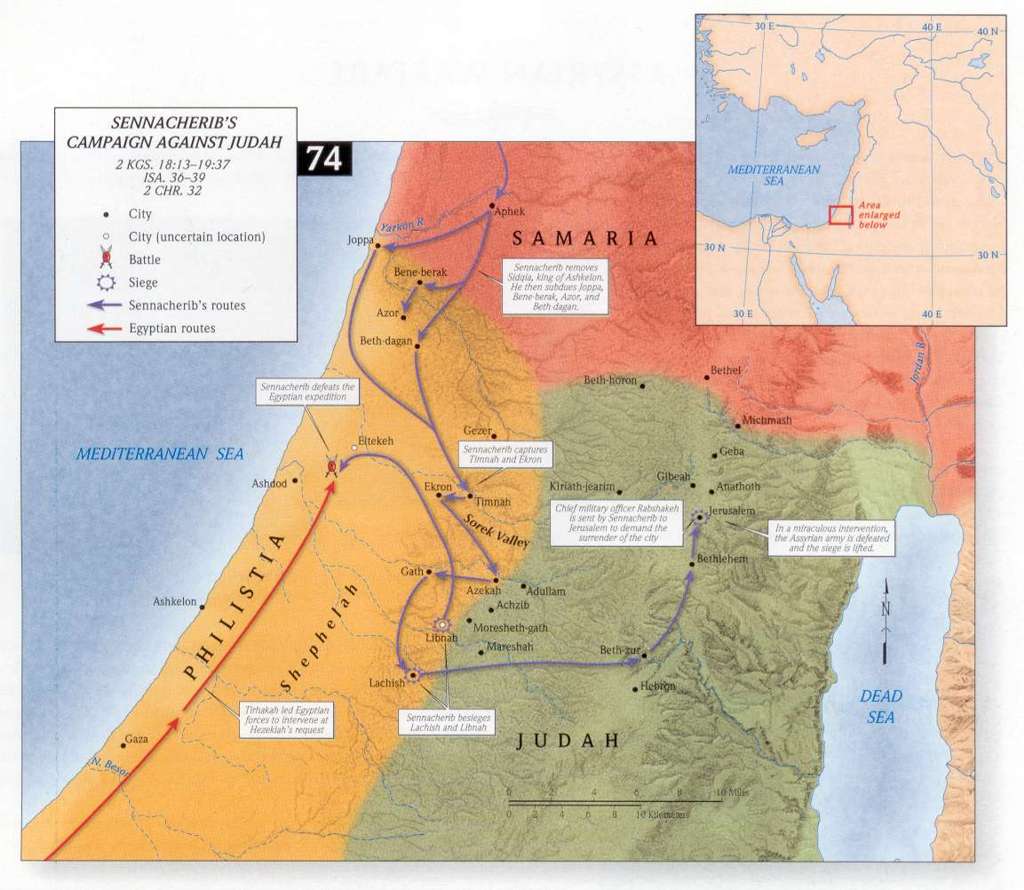
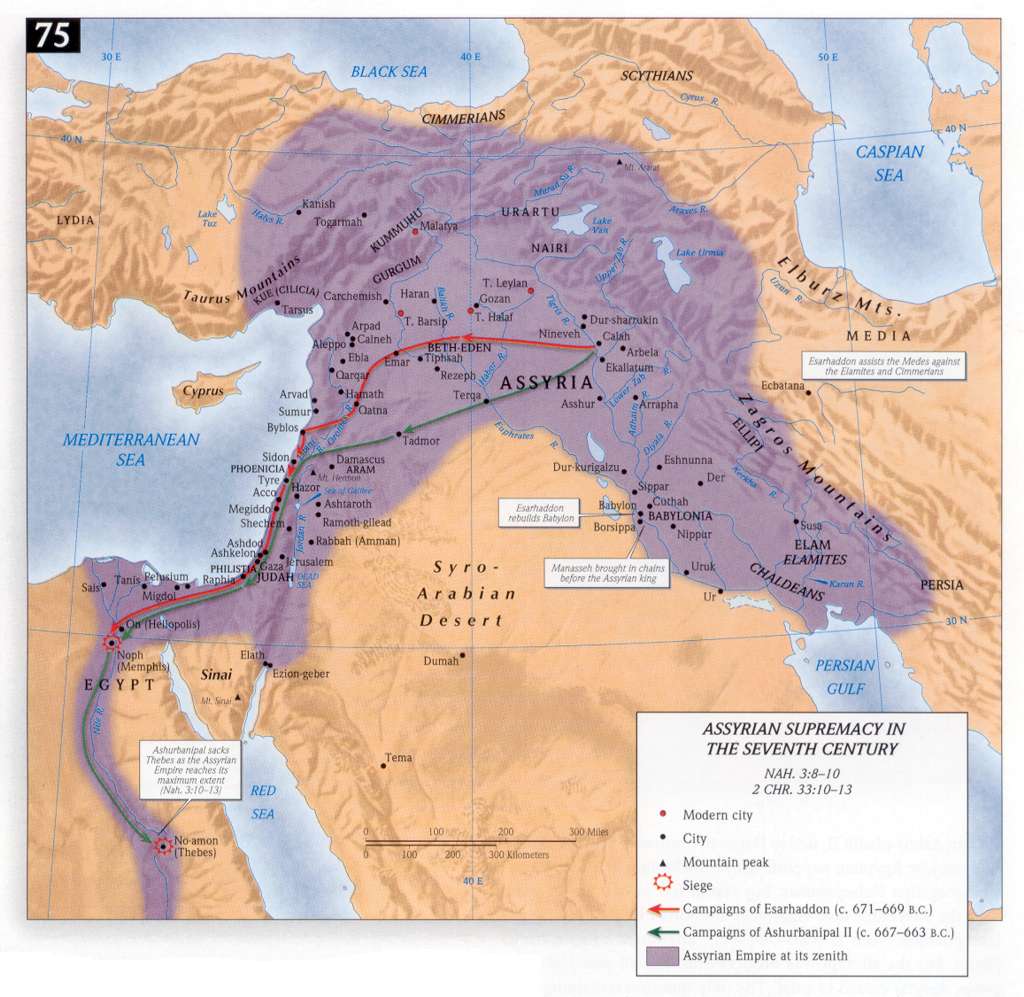
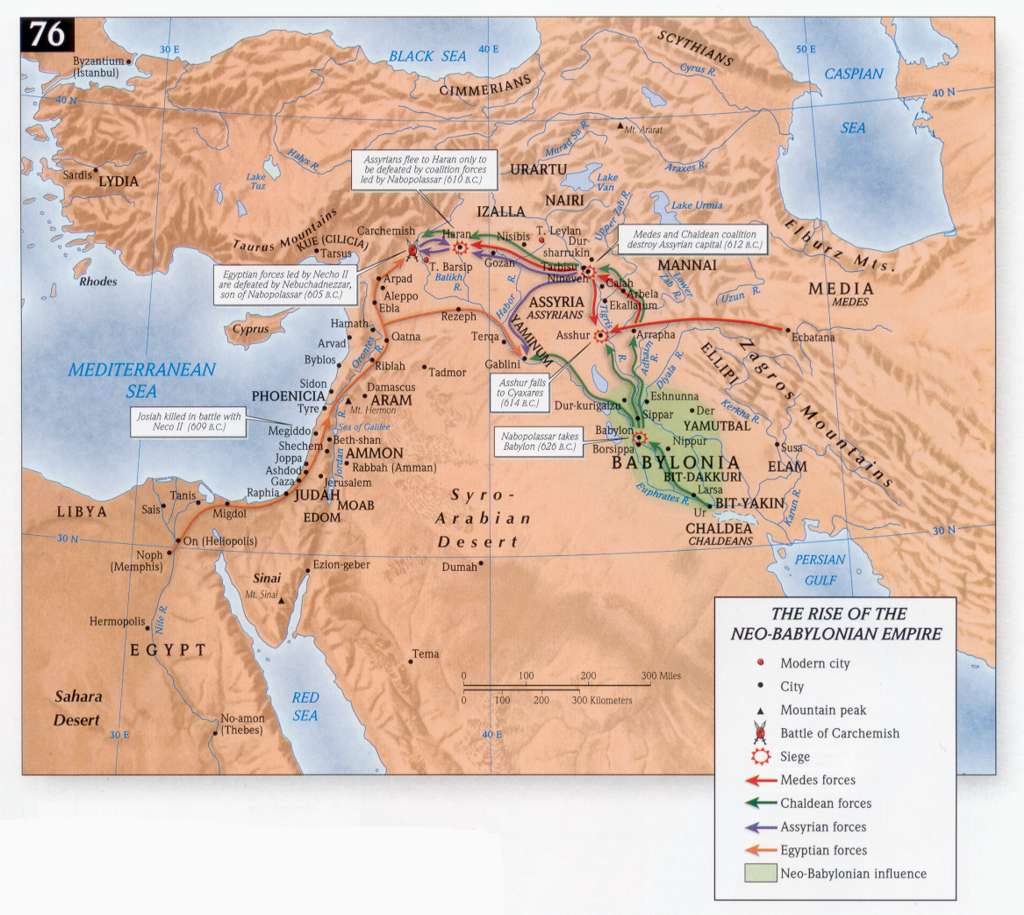
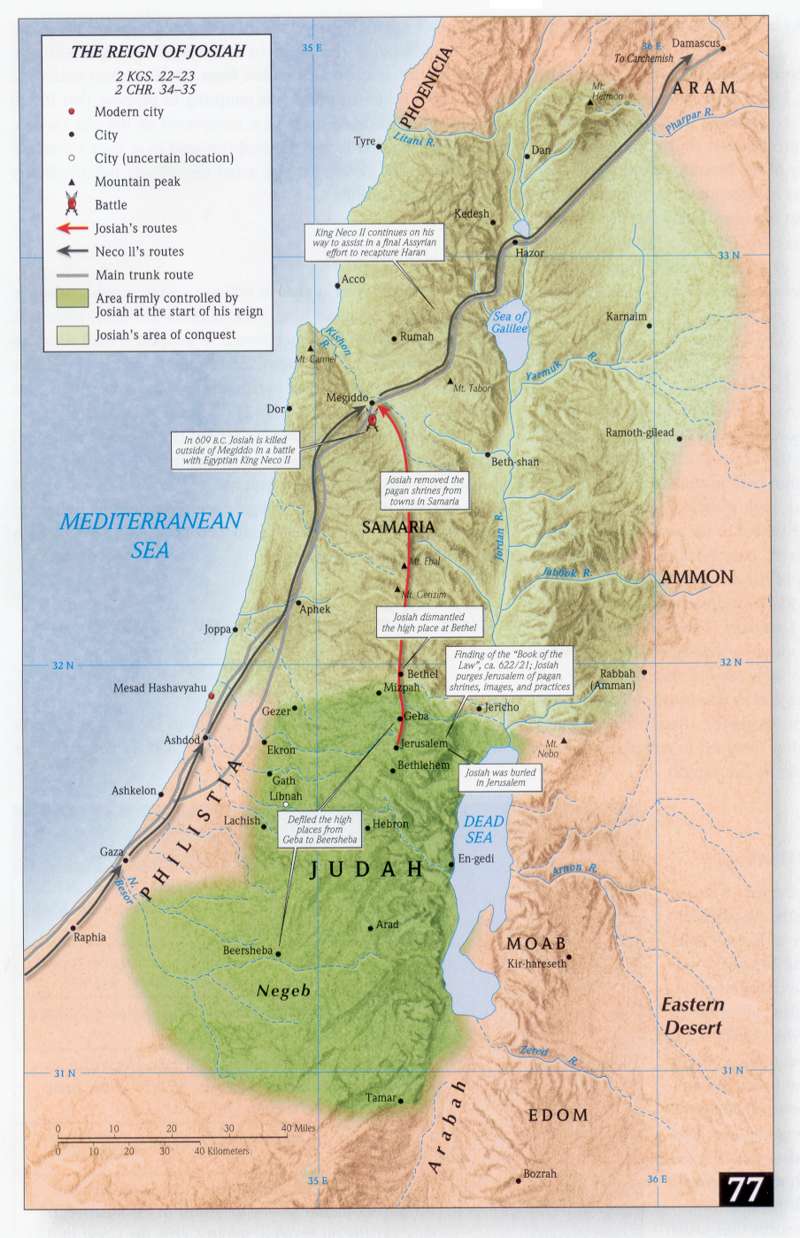
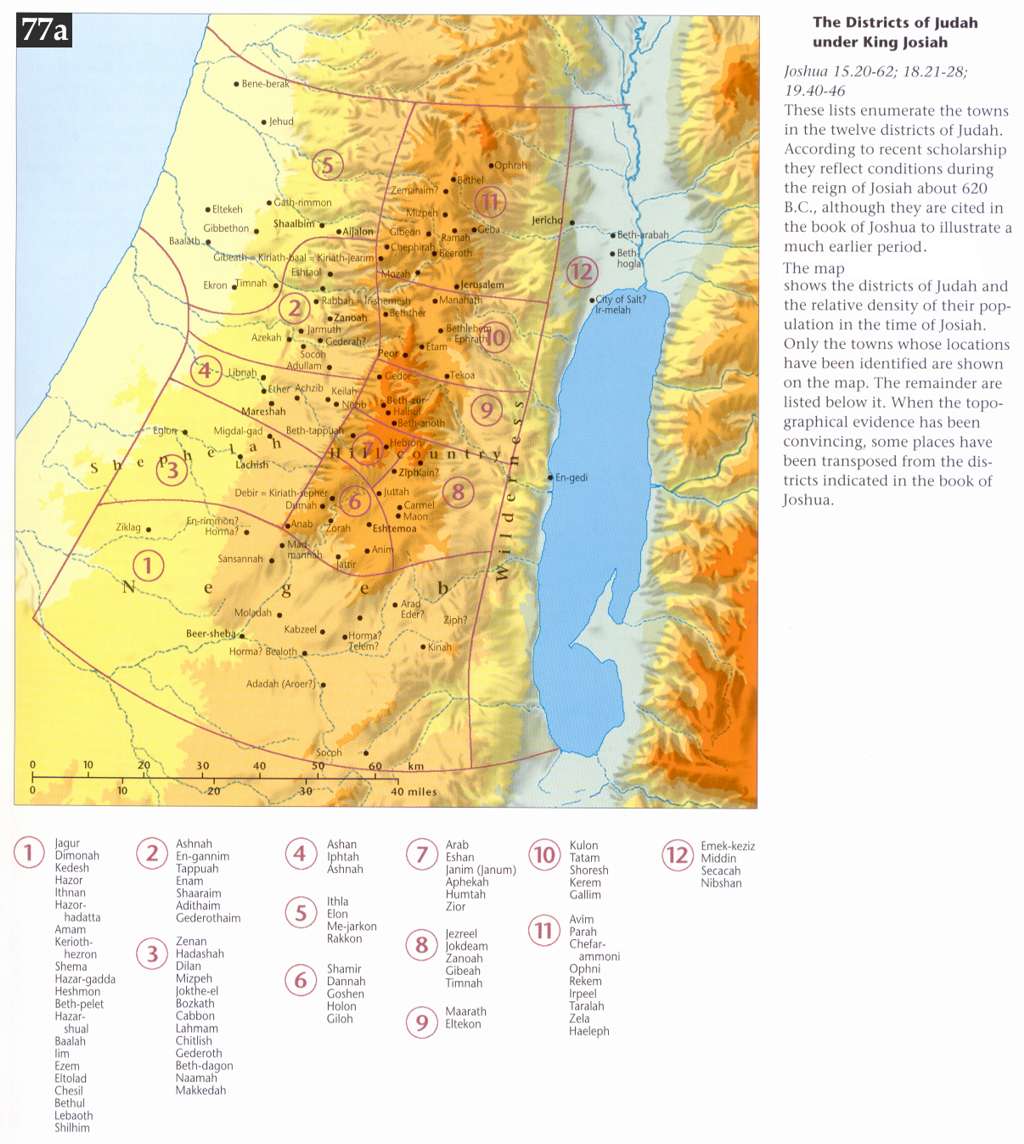
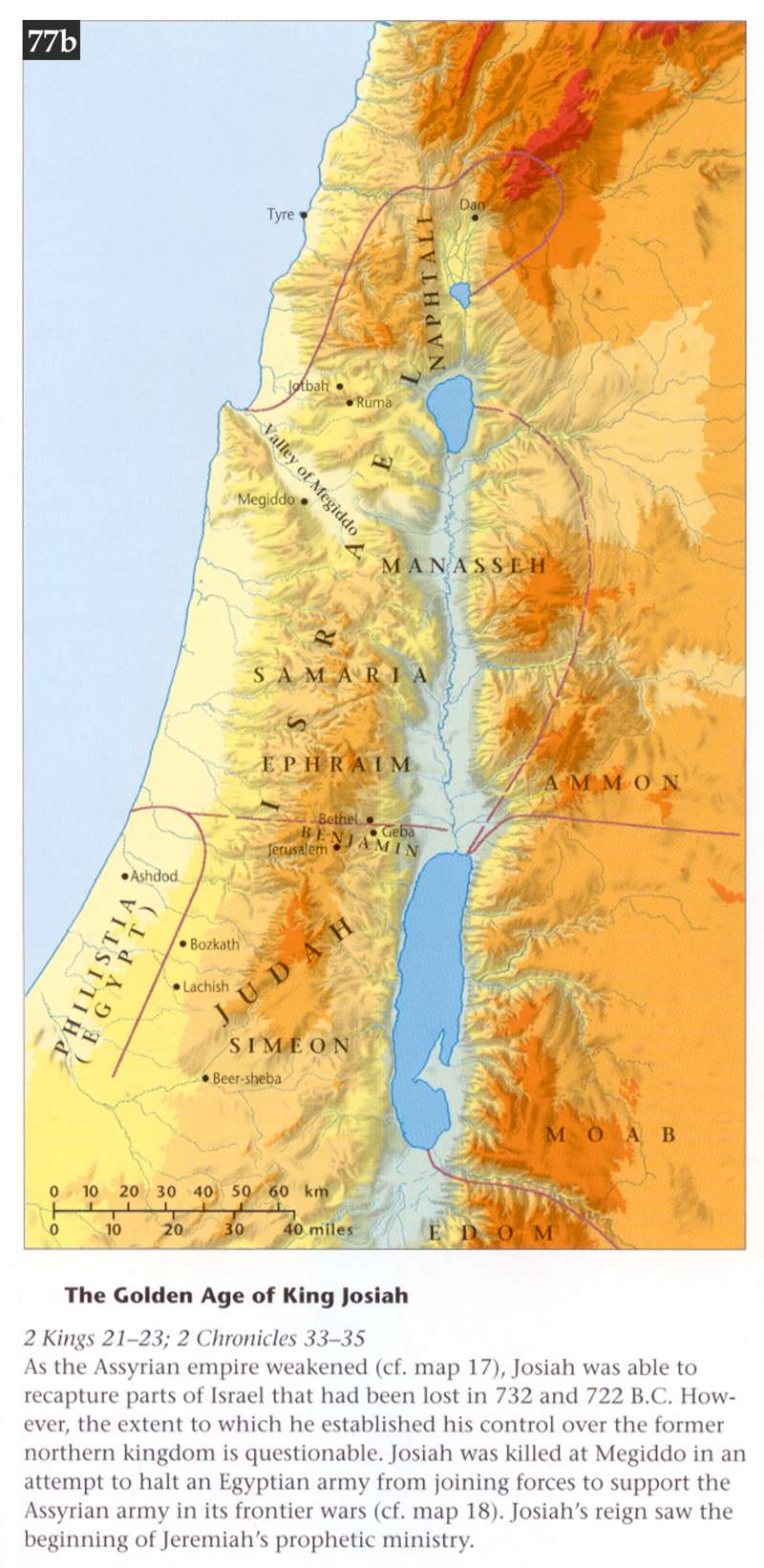
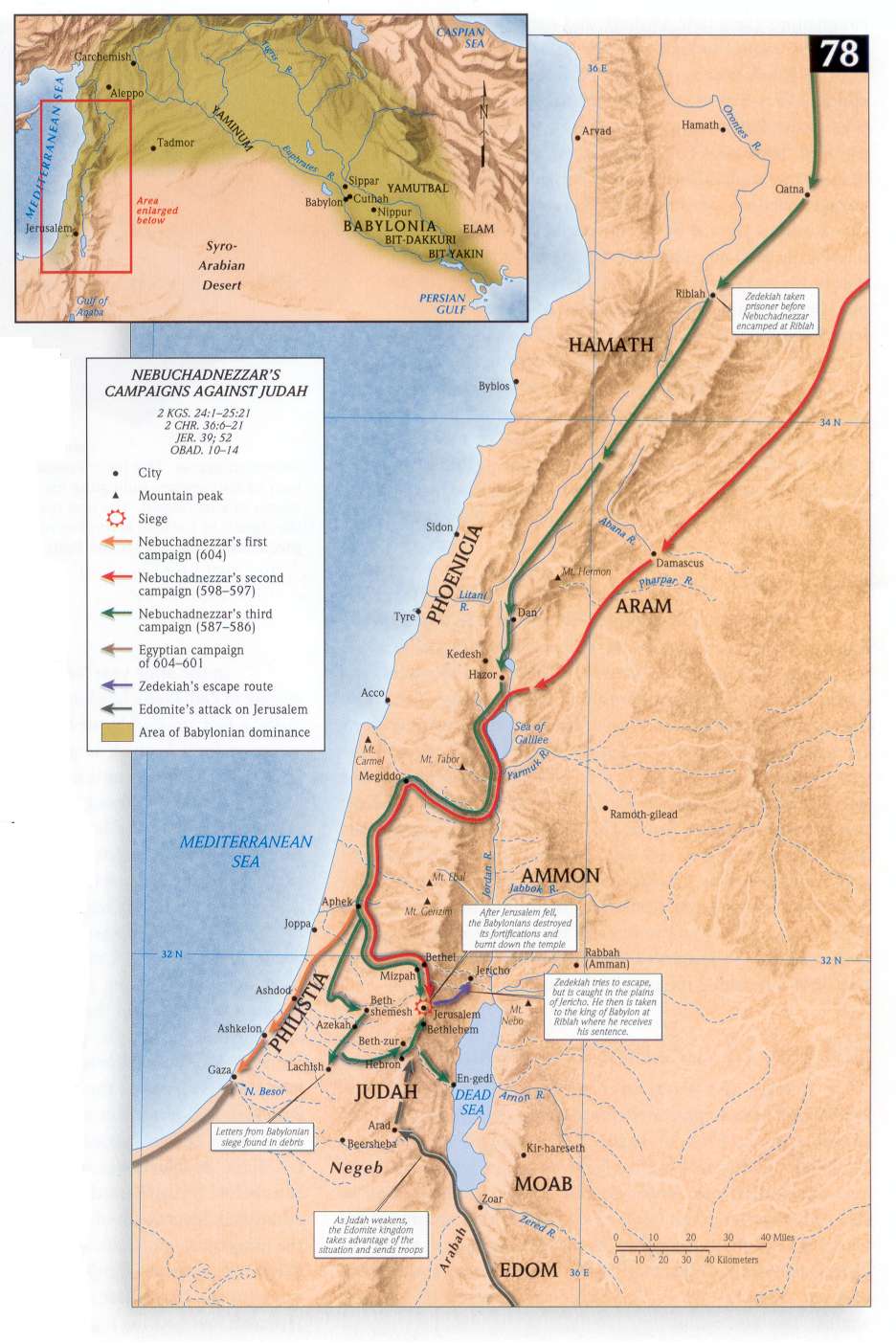
The Babylonian Exile up to the early Rome
- Judah during the Exile
- The Kingdom of Judah
- Exile; Palestine in the Post-Exilic Period
- Jewish Exiles in Babylon
- World Powers of the 6th century BCE
- The Conquests of Cyrus the Great
- The Persian Empire
- The Return of the Jewish Exiles to Judah
- Judah in the 5th century BCE
- Palestine after the Exile
- Alexander the Great's Empire
- The Division of Alexander's Empire ca. 275 BCE
- Palestine under the Ptolemies
- The Seleucid Empire and Antiochus III
- Campaigns of Antiochus IV against Egypt
- The Maccabees in 168 BCE
- Selected Events in the Maccabean Revolt
- Jewish Expansion under the Hasmonean Dynasty
- Pompey's Campaign against Jerusalem
- Early Rome
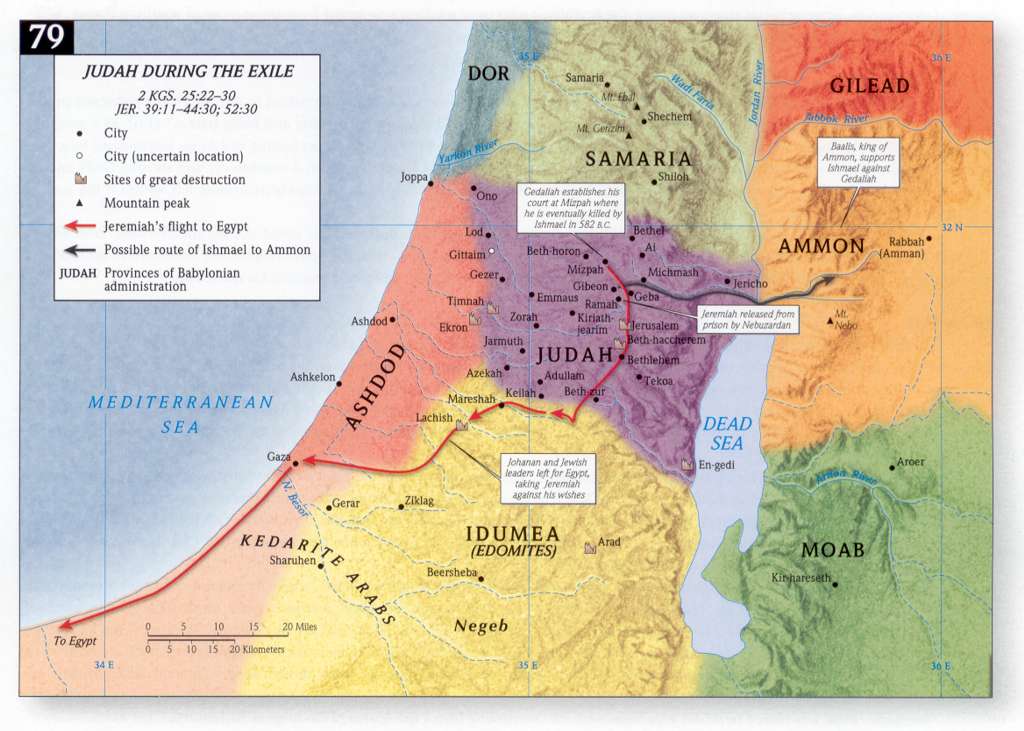
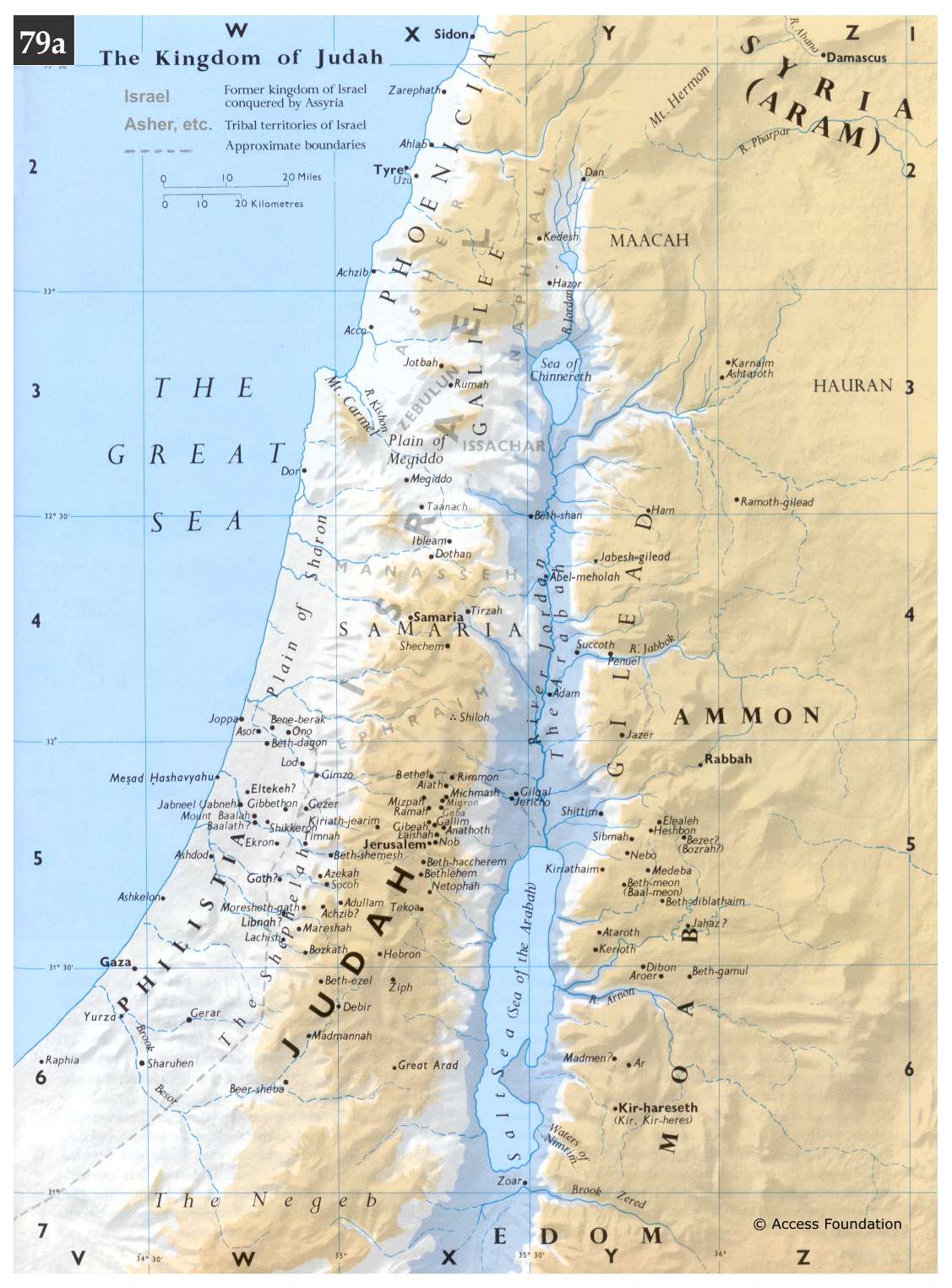
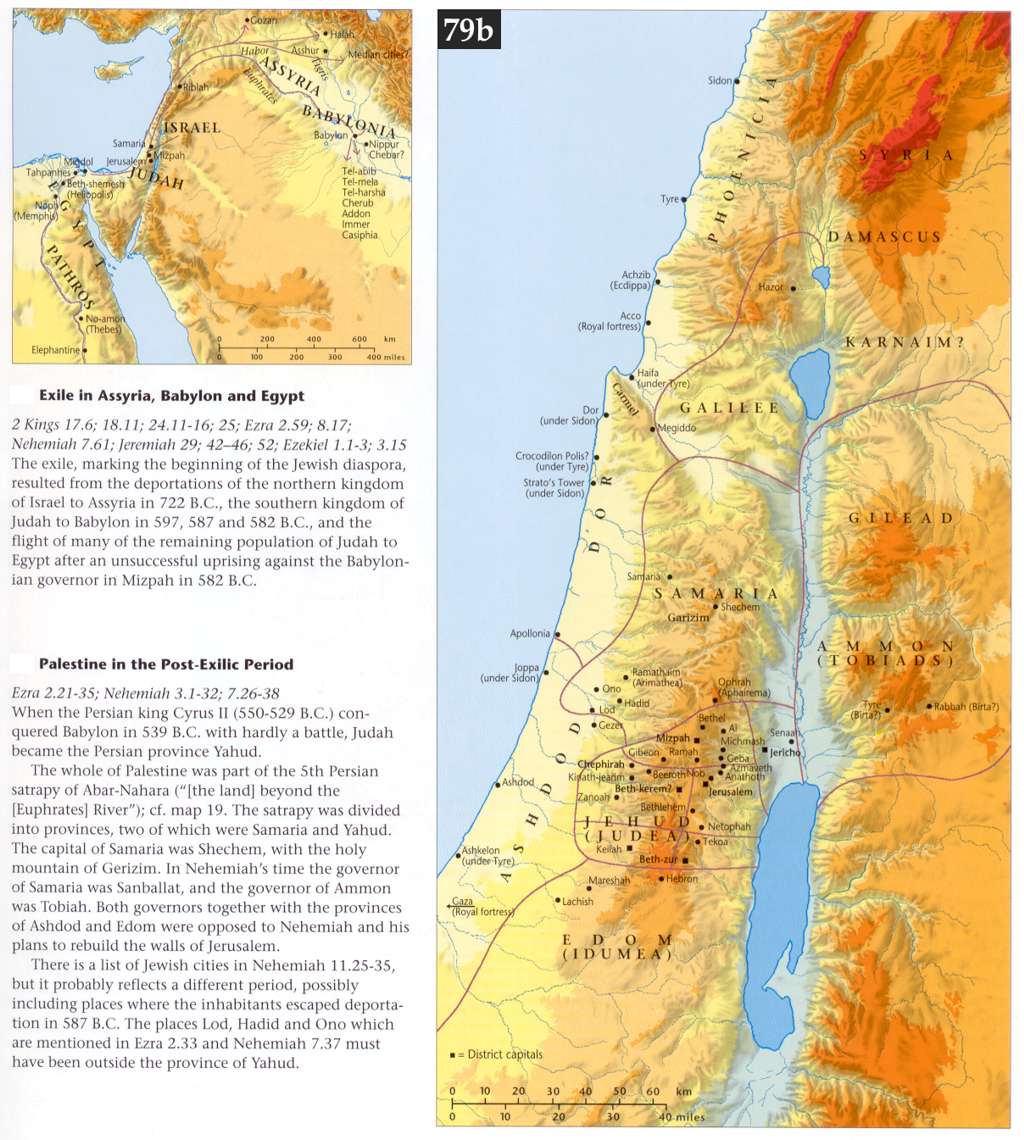
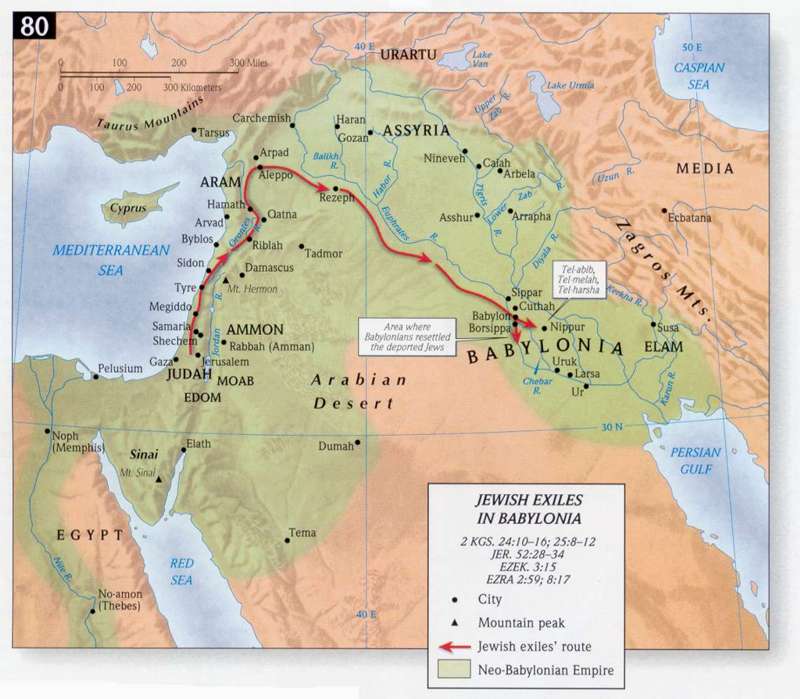
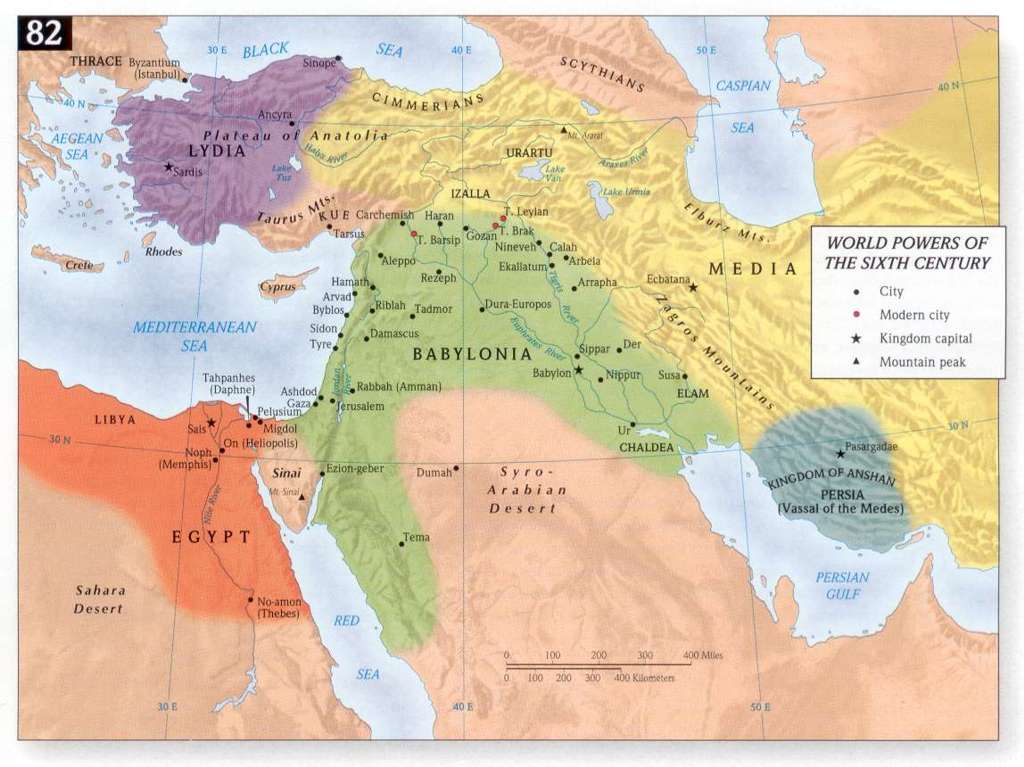
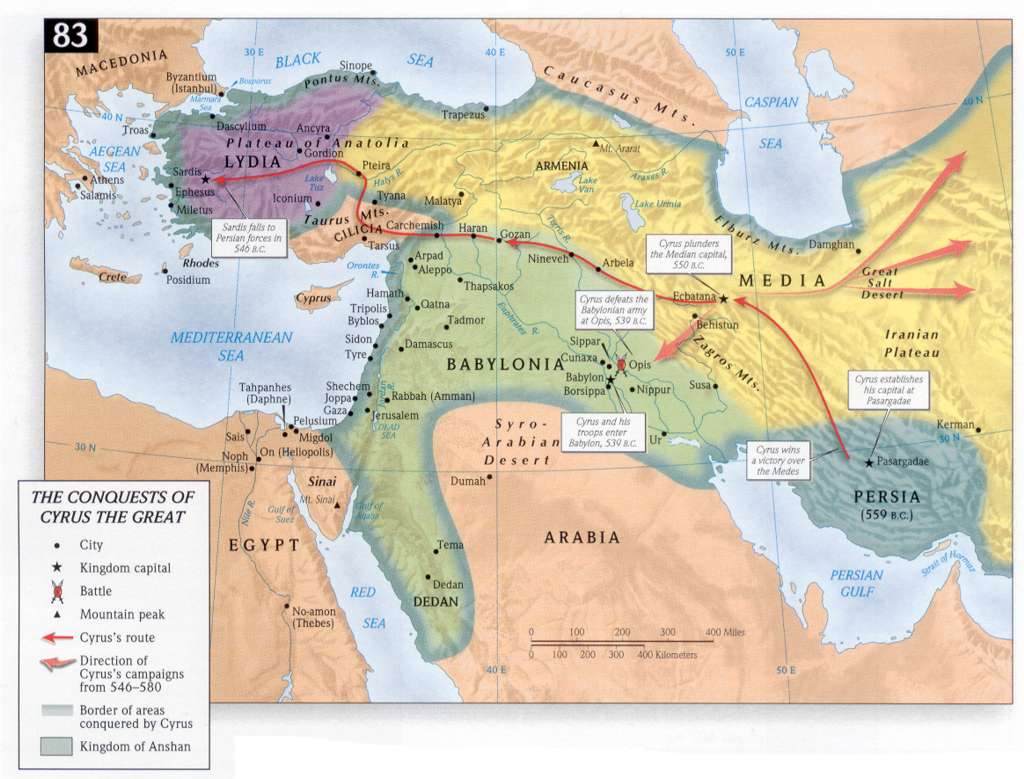
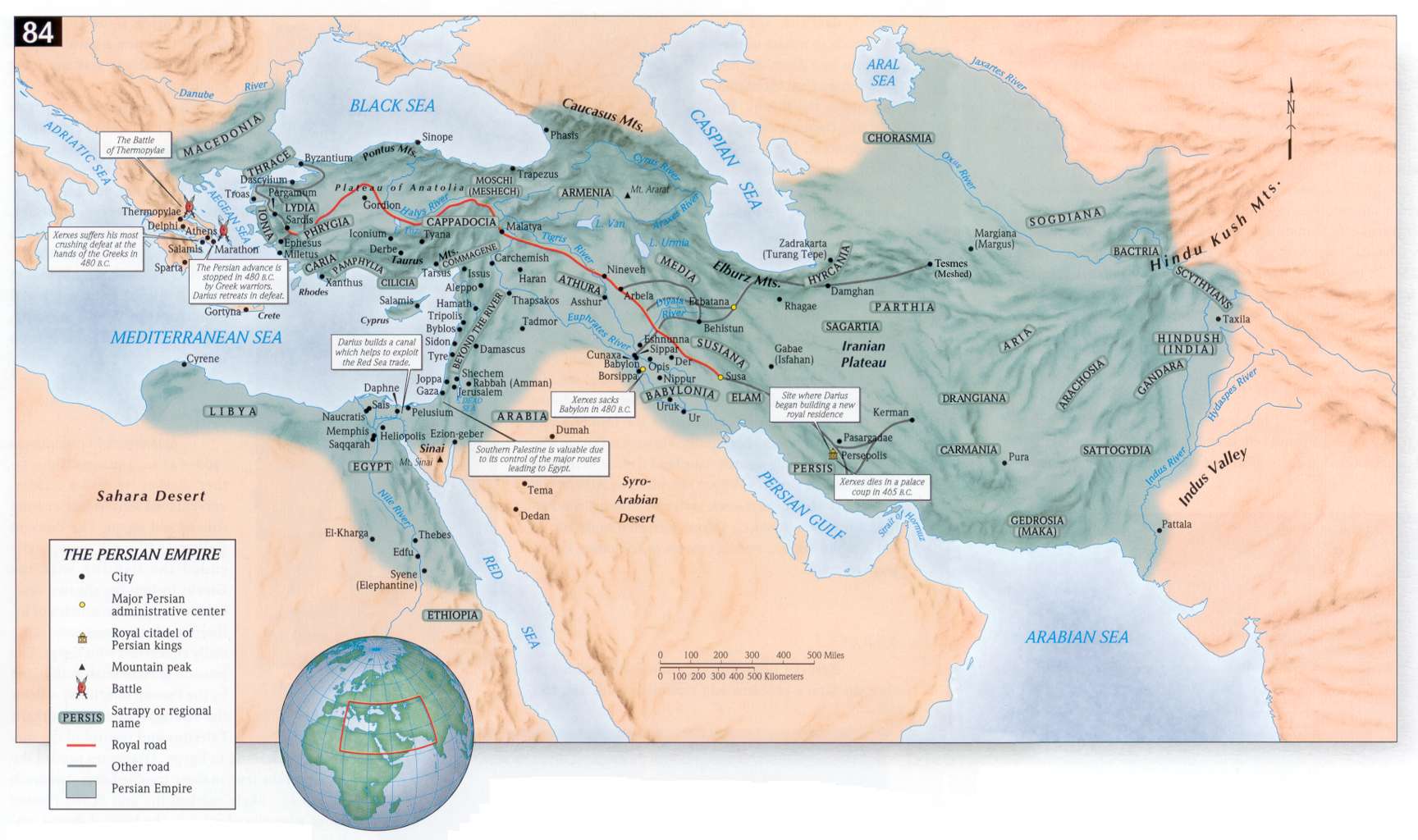
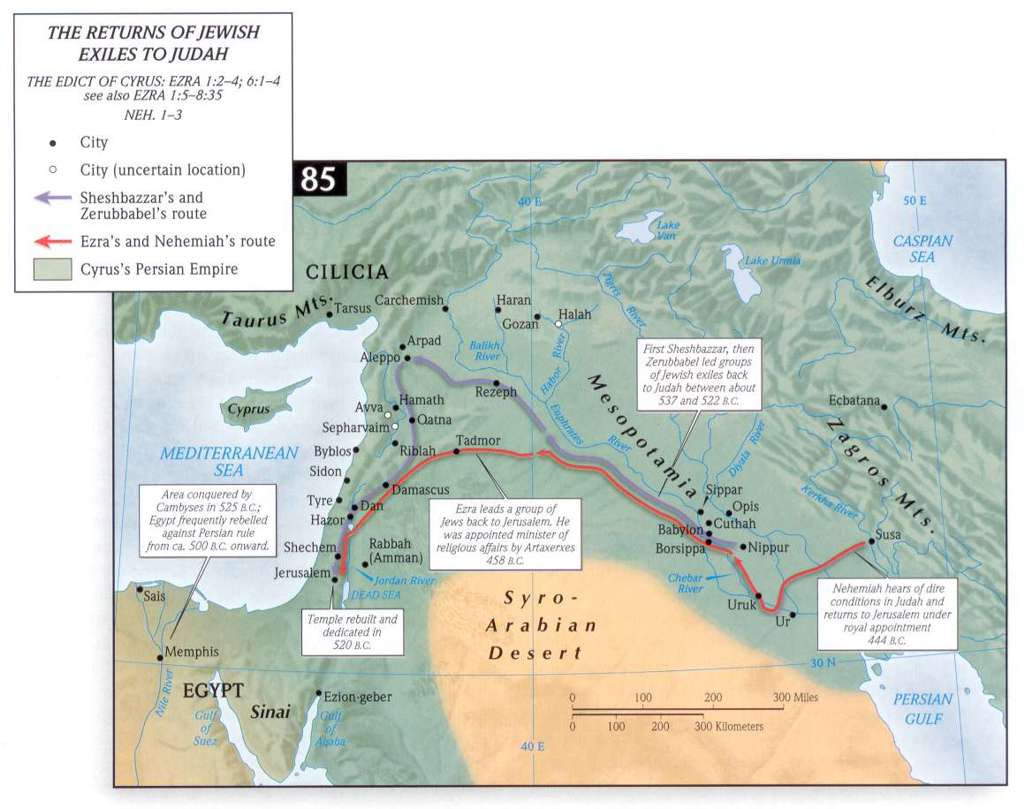
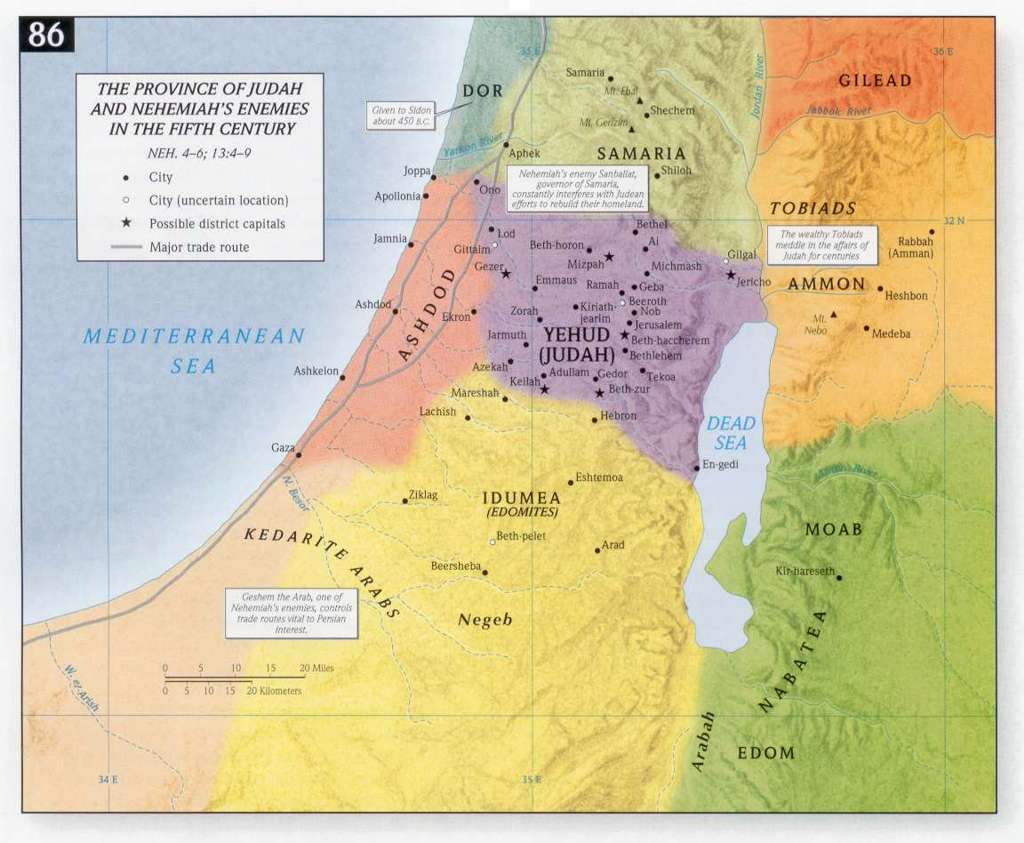
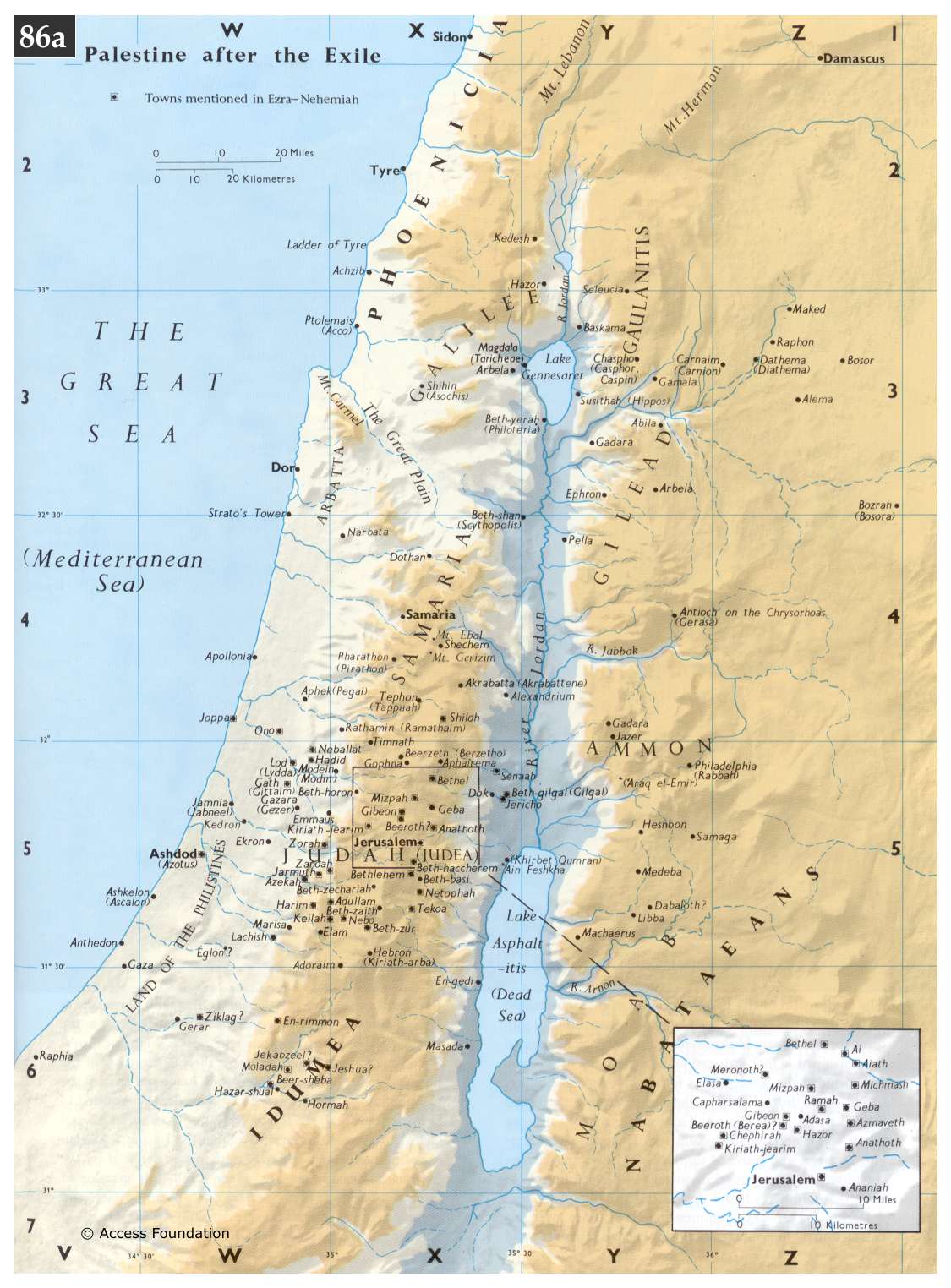
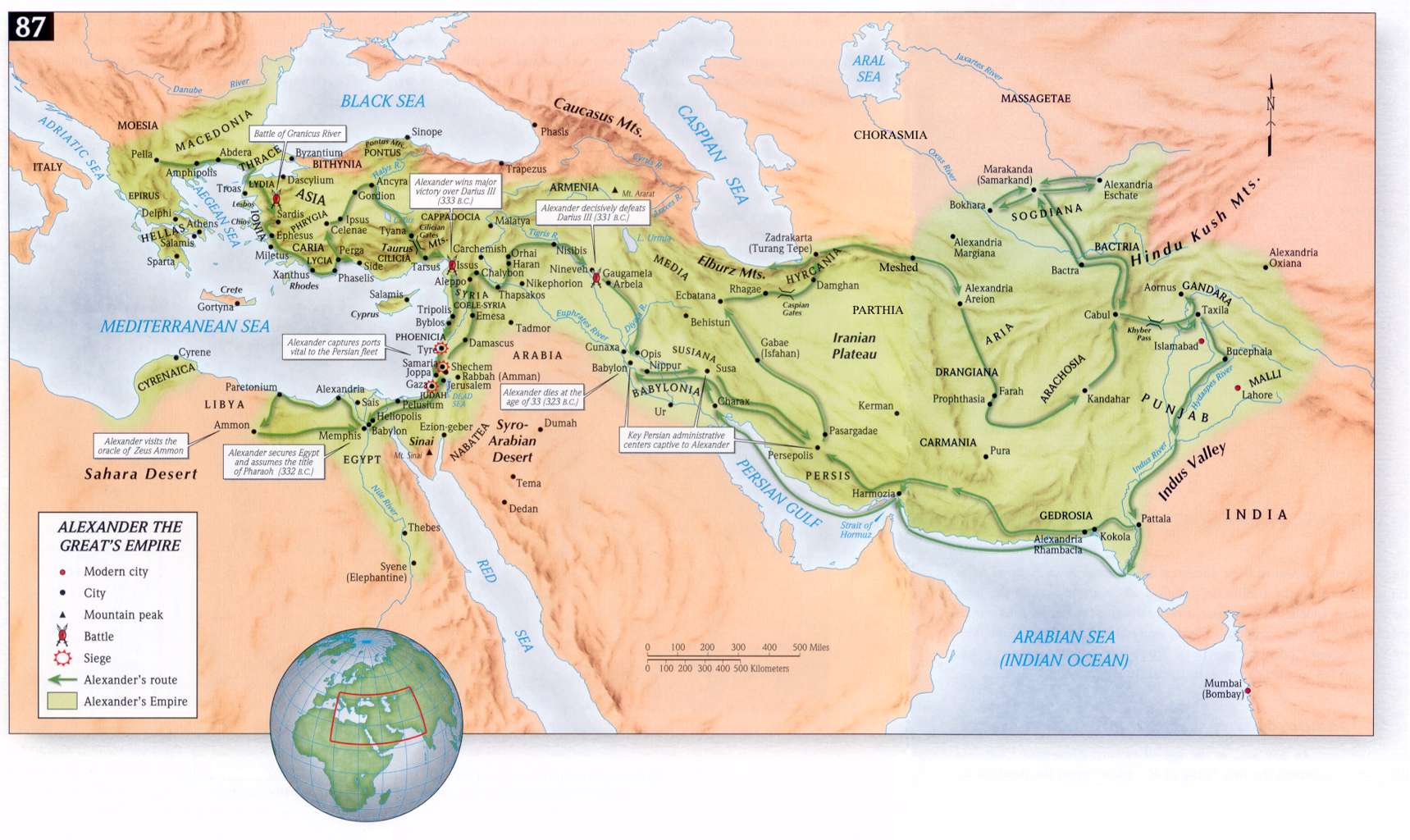
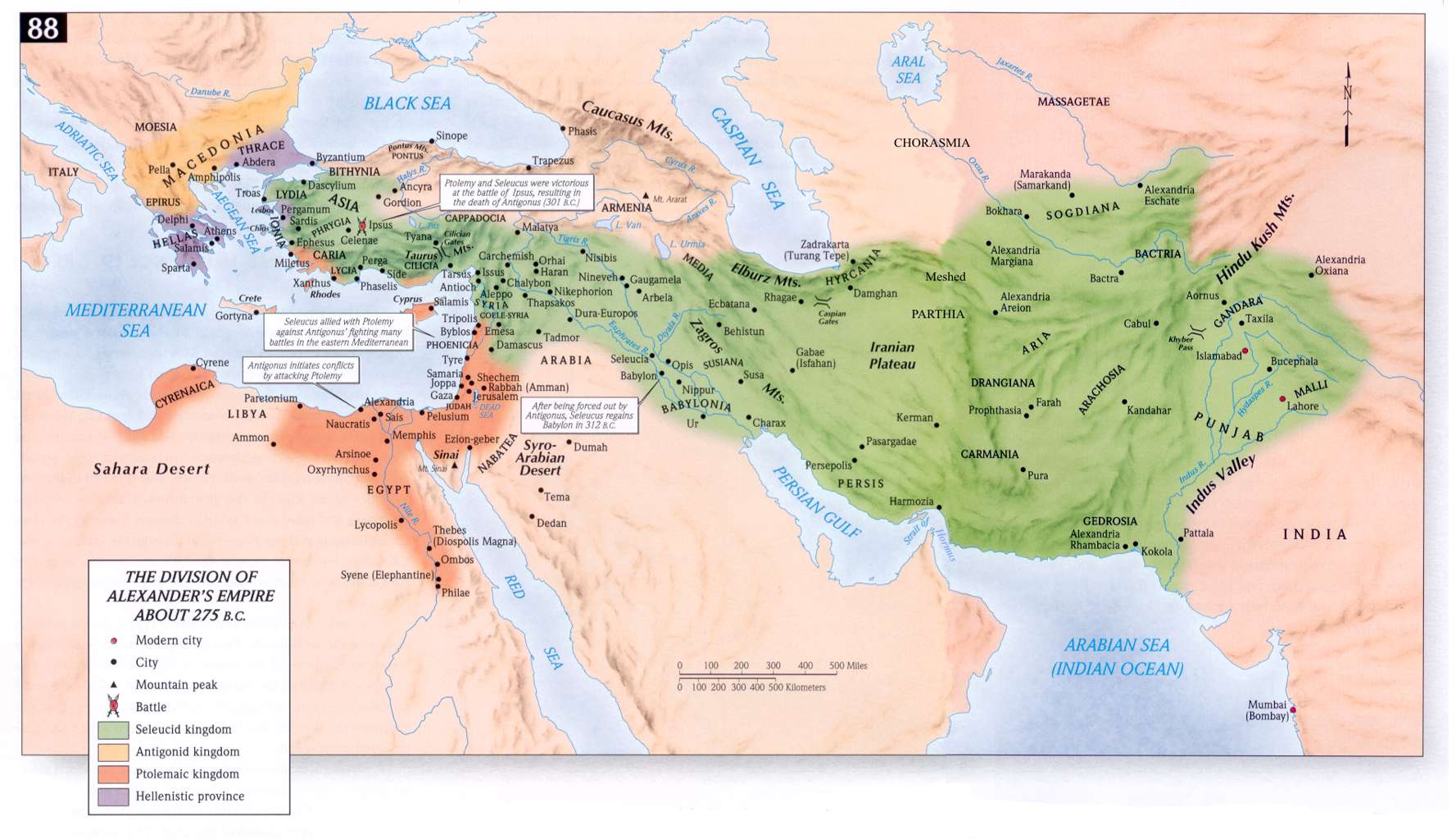
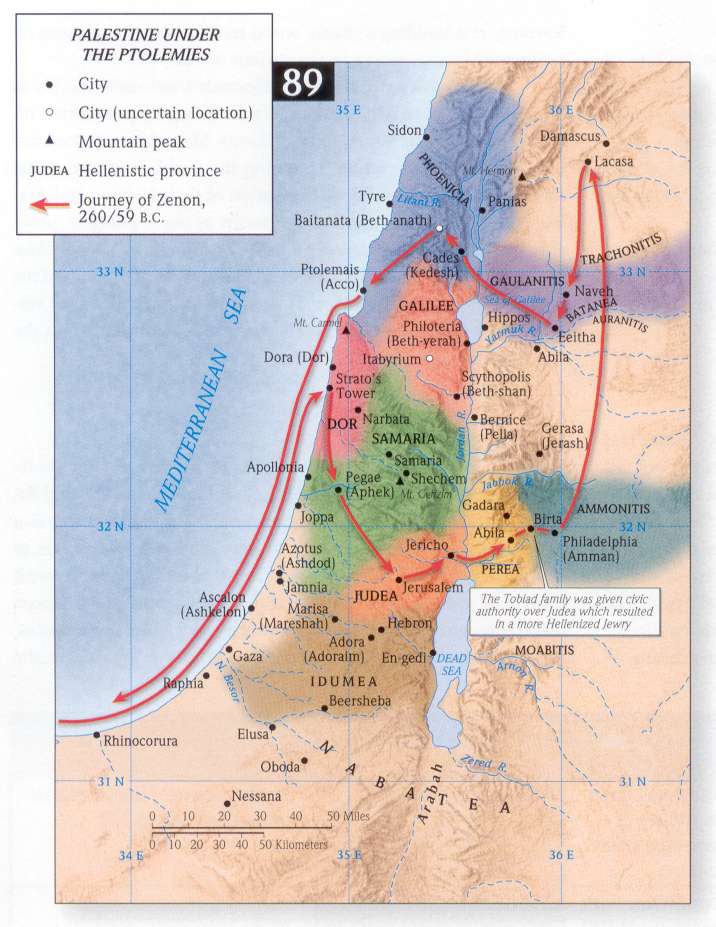
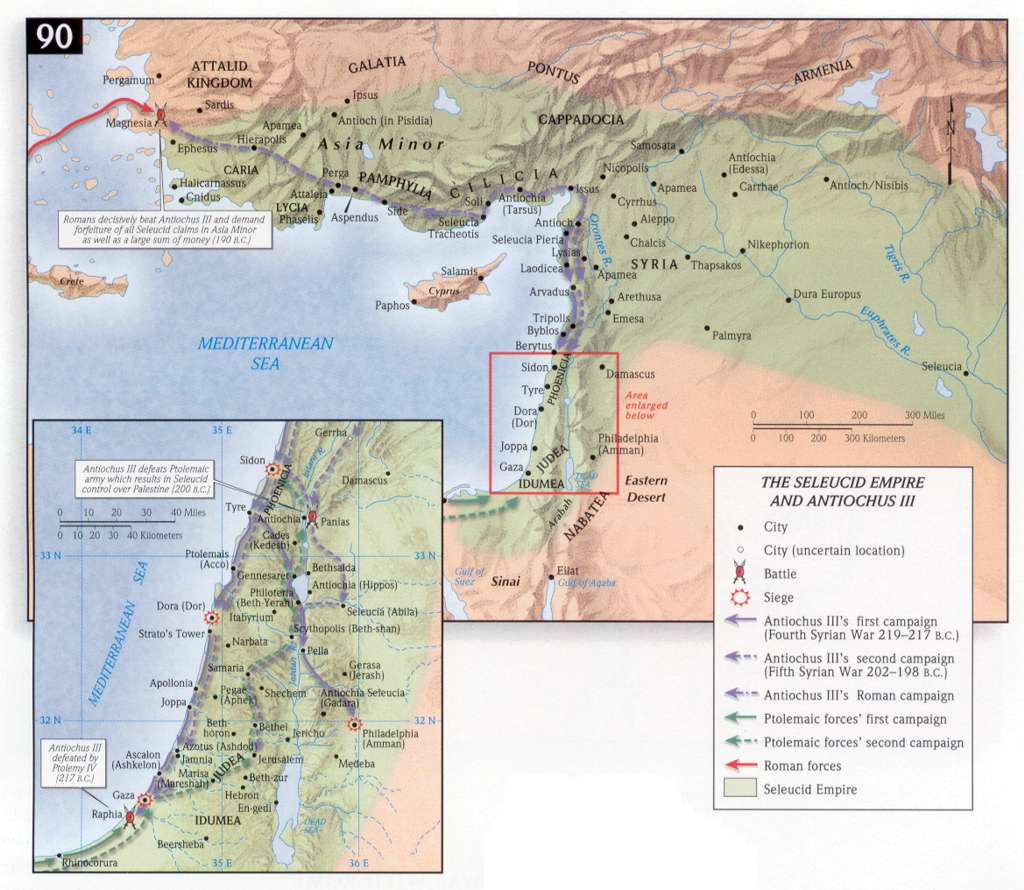
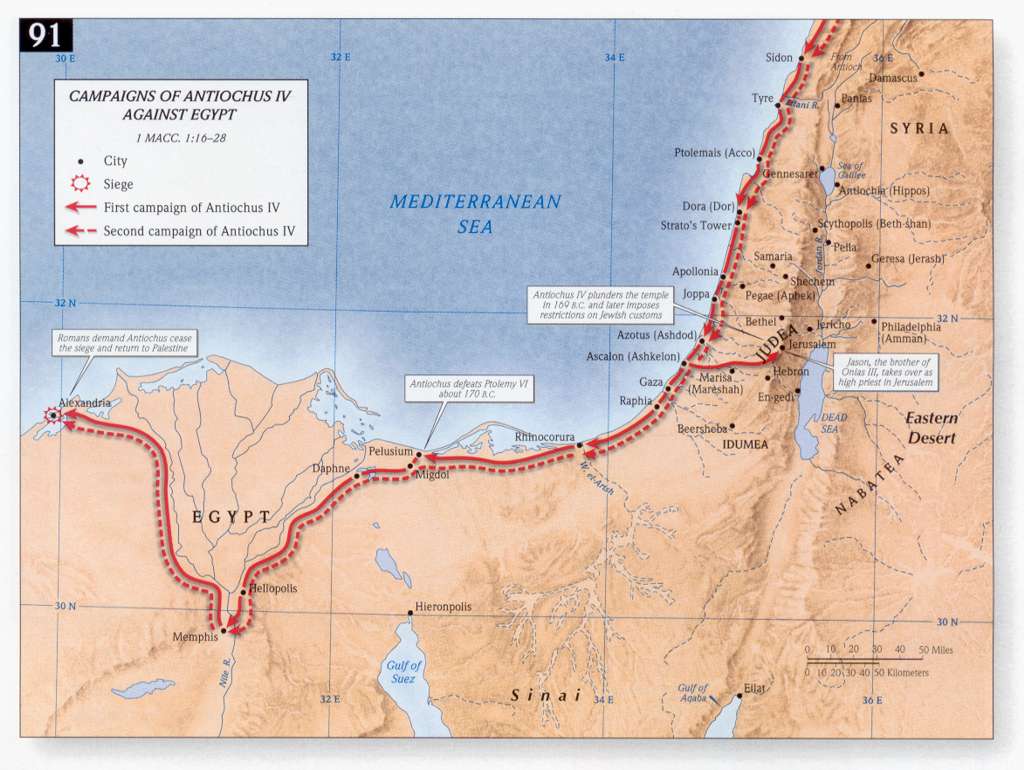
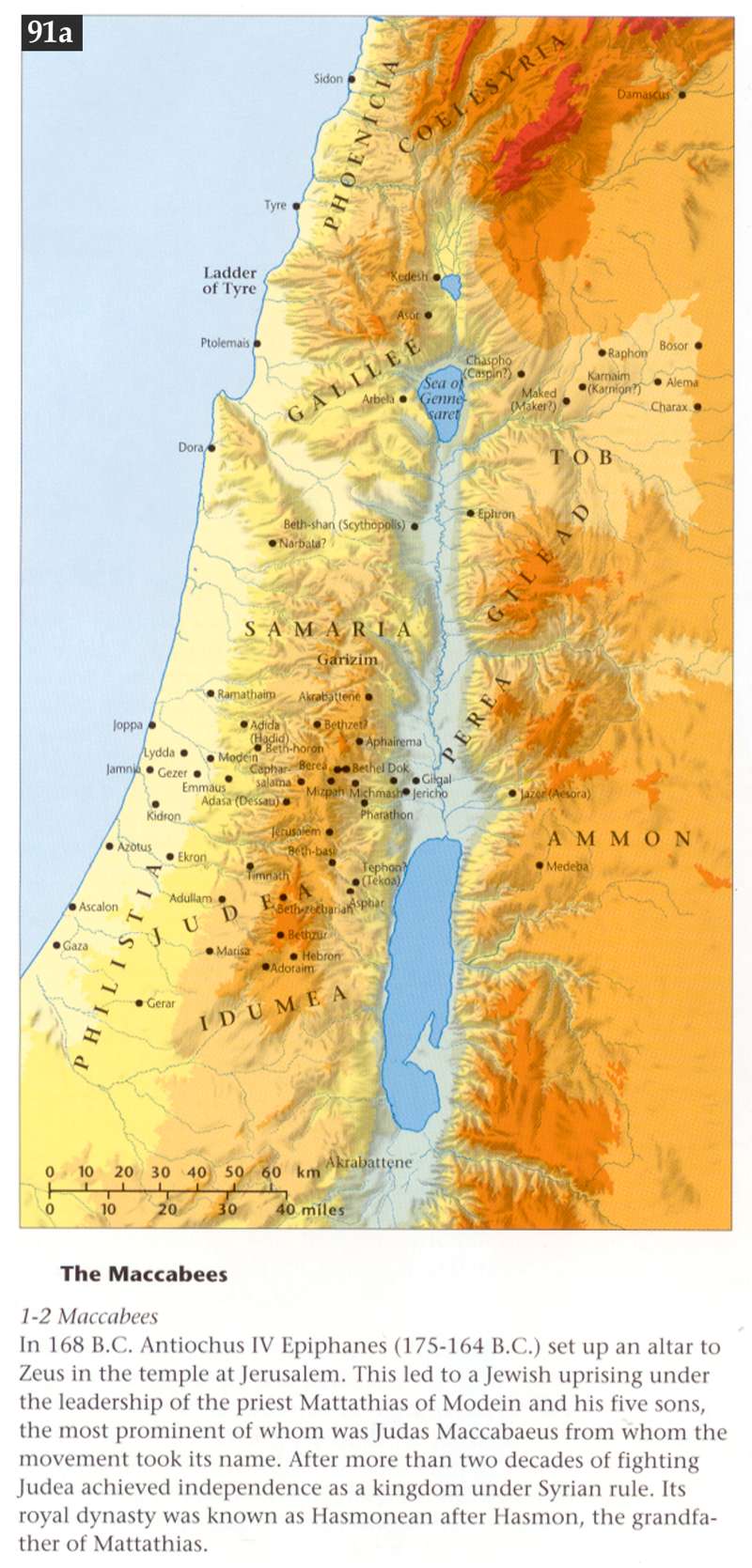
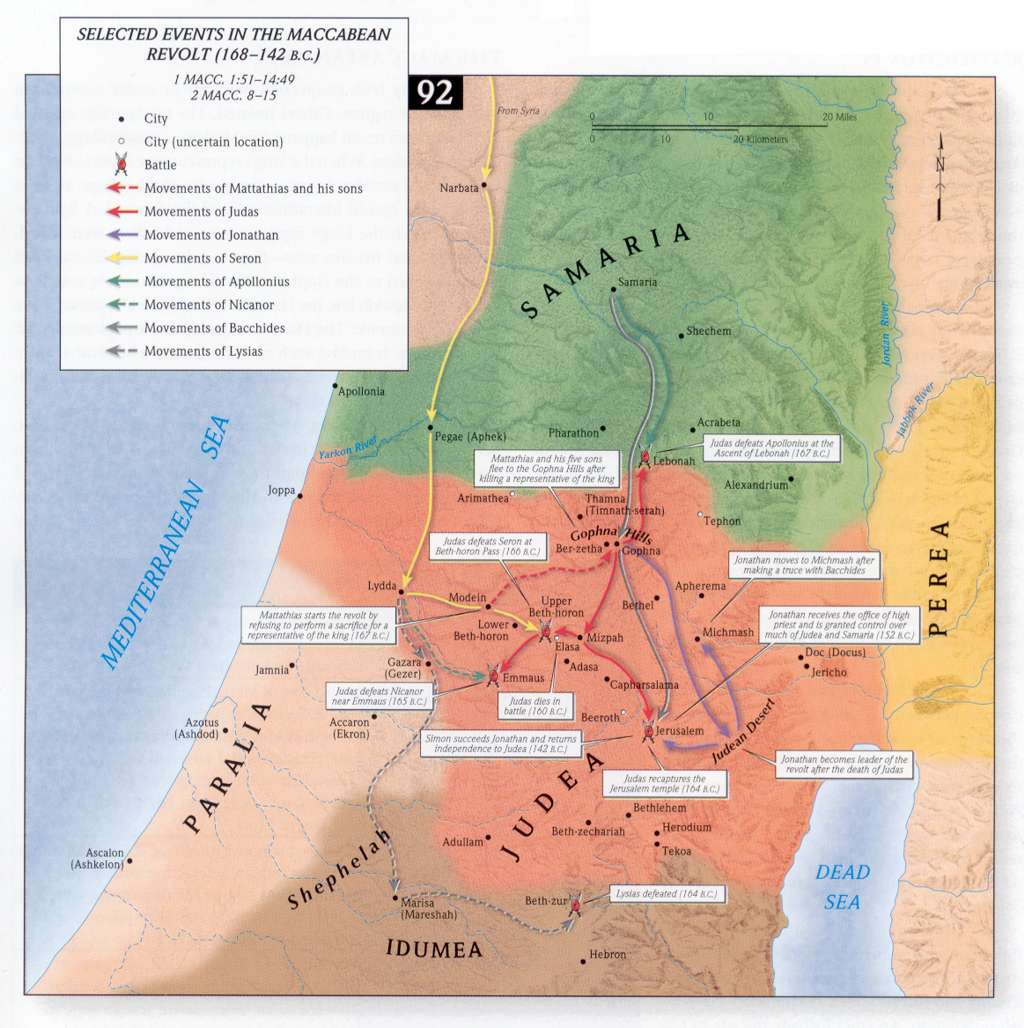
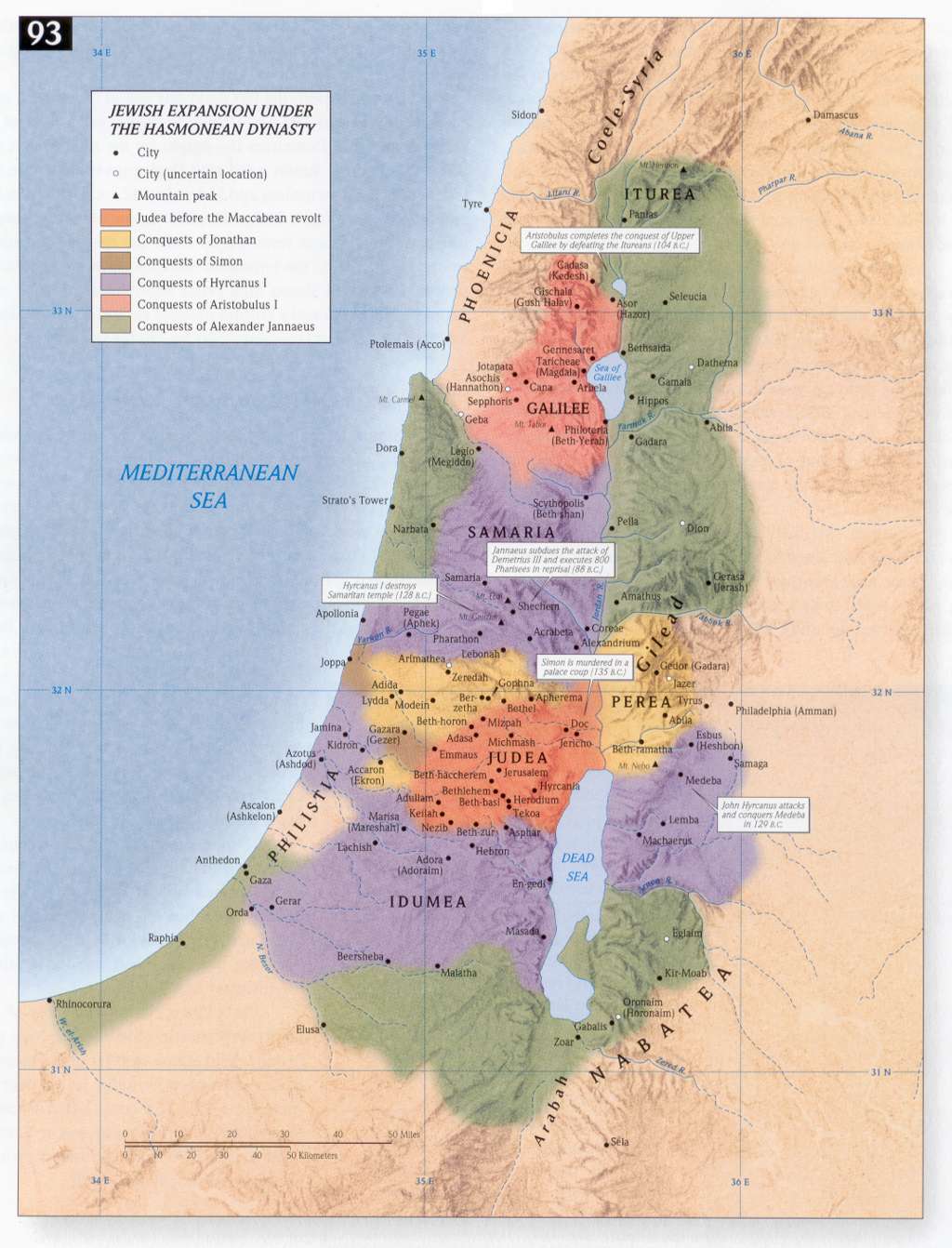
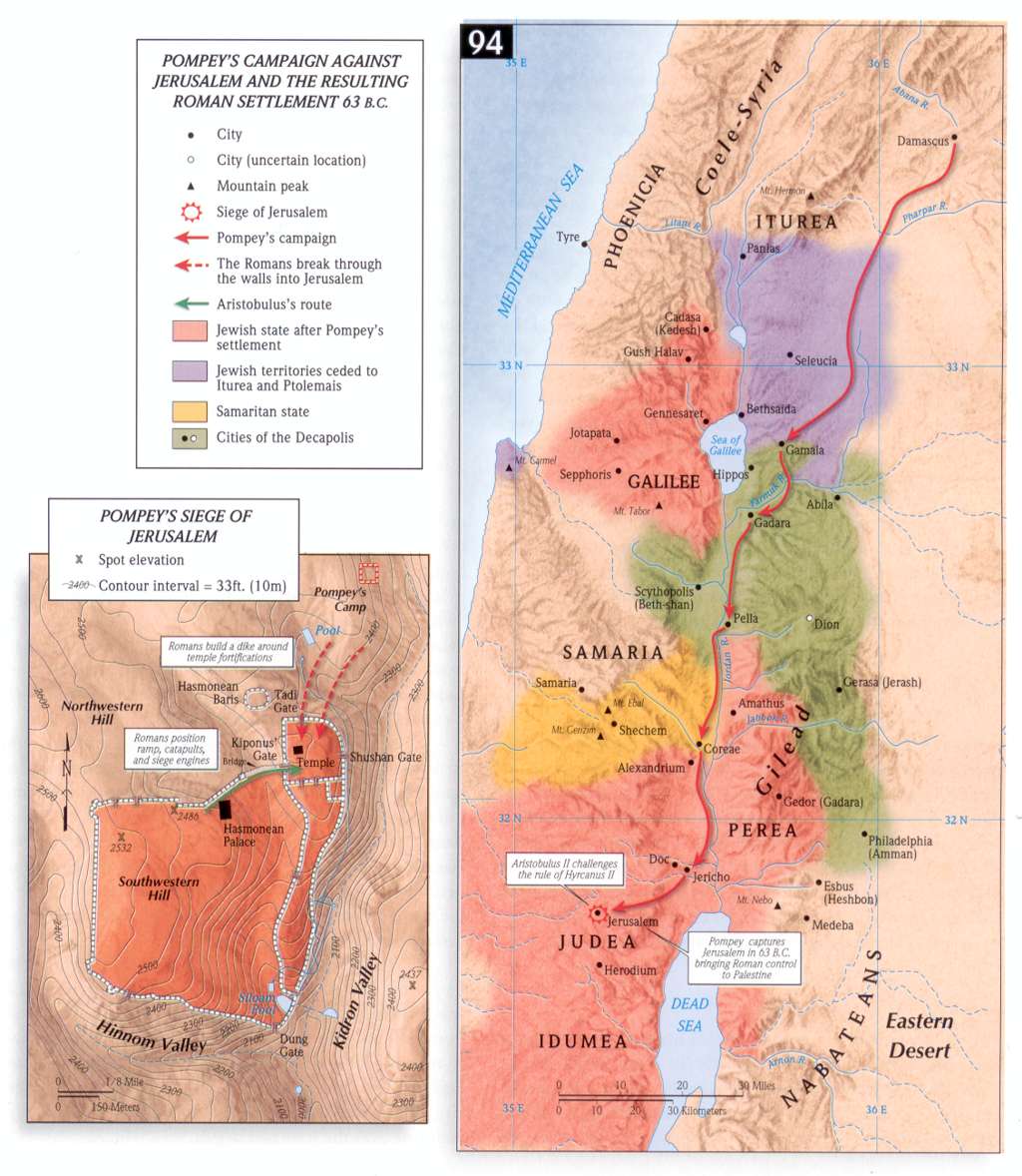
MAPS FROM ESV
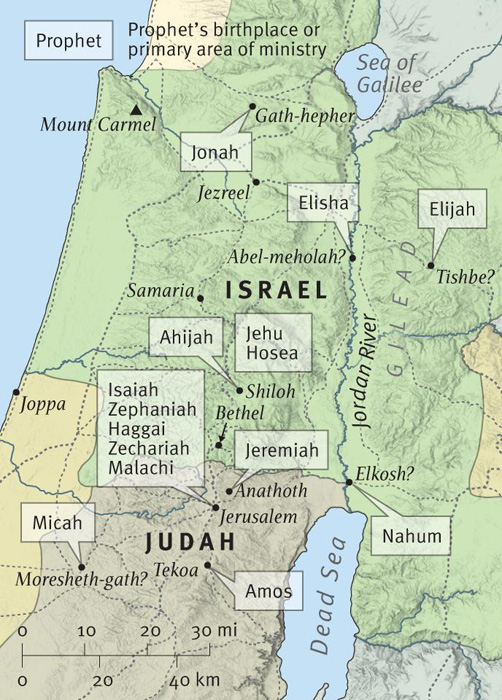
Prophets of Israel and Judah
c. 875–430 B.C.
- Extent of Solomon’s Kingdom
- Israel and Judah in 2 Kings
- Solomon’s Administrative Districts
- The Kingdom Divides
- Syria Captures Gilead
- Resurgence during Azariah, Jeroboam II
- Prophets of Israel and Judah
- Resurgence of Assyrian Influence
- Fall of Samaria, Deportation of Israelites
- Exile to Babylon
- Extent of David’s Kingdom
- Solomon’s International Ventures
- Syria and Israel Attack Judah
- Judah after the Fall of Israel
- Persian Empire at the Time of Ezra
- Persian Empire at the Time of Nehemiah
- Judea under Persian Rule
- Persian Empire at the Time of Esther
- Near East at the Time of Isaiah
- Israel and Judah at the Time of Jeremiah
- Babylonian Empire
- Babylon Attacks Judah
- Jeremiah Prophesies against Egypt
- Near East at the Time of Ezekiel
- Ezekiel’s Vision of Israel’s New Boundaries
- Introduction to Daniel: Babylonian Empire
- Empires of Daniel’s Visions: Persians
- Empires of Daniel’s Visions: Greeks
- Empires of Daniel’s Visions: Ptolemies and Seleucids (Early)
- Empires of Daniel’s Visions: Ptolemies and Seleucids (Late)
- Maccabean Kingdom
P G MATHEW
- 2 Chronicles 7:11-14 Conditions for Restoration
- 2 Chronicles 14-16 - Lessons from King Asa
- 2 Chronicles 32:7-8 How to Win the War
ADRIAN ROGERS - CLICK FOR SERMONS BELOW
- A Conversation with Abraham Lincoln—2 Chronicles 7:14
- America Needs Healing—2 Chronicles 7:14
- It’s Prayer Time in America—2 Chronicles 7:14
- It’s Prayer Time in America—2 Chronicles 7:14
- National Repentance—2 Chronicles 7:14
- How to Praise Your Way to Victory—2 Chronicles 20:1–26
- Praise Your Way to Victory—2 Chronicles 19:11; 20:1–25
- Cleansing the Temple for Revival—2 Chronicles 28:23–27; 29:1–5, 16, 20–36
NIV STUDY BIBLE
- 2 Chr 1
- 2 Chr 1:1
- 2 Chr 1:2–13
- 2 Chr 1:2
- 2 Chr 1:5
- 2 Chr 1:7
- 2 Chr 1:9
- 2 Chr 1:10
- 2 Chr 1:13
- 2 Chr 1:14–17
- 2 Chr 2
- 2 Chr 2:1
- 2 Chr 2:2
- 2 Chr 2:3
- 2 Chr 2:4
- 2 Chr 2:6
- 2 Chr 2:11
- 2 Chr 2:12
- 2 Chr 2:14
- 2 Chr 2:17–18
- 2 Chr 3:1
- 2 Chr 3:3–17
- 2 Chr 3:4
- 2 Chr 3:5
- 2 Chr 3:10
- 2 Chr 3:14
- 2 Chr 3:15
- 2 Chr 4:1
- 2 Chr 4:2
- 2 Chr 4:3
- 2 Chr 4:4
- 2 Chr 4:5
- 2 Chr 4:9
- 2 Chr 4:11–22
- 2 Chr 5:1
- 2 Chr 5:2–7:10
- 2 Chr 5:3
- 2 Chr 5:5
- 2 Chr 5:9
- 2 Chr 5:10
- 2 Chr 5:11–13
- 2 Chr 5:13
- 2 Chr 5:13–14
- 2 Chr 6:1–2
- 2 Chr 6:5–10, 20, 32–34, 38
- 2 Chr 6:9
- 2 Chr 6:10
- 2 Chr 6:13
- 2 Chr 6:14
- 2 Chr 6:16–17
- 2 Chr 6:16
- 2 Chr 6:18–39
- 2 Chr 6:18
- 2 Chr 6:19–21
- 2 Chr 6:21
- 2 Chr 6:22
- 2 Chr 6:24
- 2 Chr 6:24, 26
- 2 Chr 6:24, 32
- 2 Chr 6:26
- 2 Chr 6:28
- 2 Chr 6:32–33
- 2 Chr 6:34
- 2 Chr 6:36–39
- 2 Chr 6:37
- 2 Chr 6:38
- 2 Chr 6:40
- 2 Chr 7:1
- 2 Chr 7:2–3
- 2 Chr 7:6
- 2 Chr 7:8
- 2 Chr 7:10
- 2 Chr 7:13–15
- 2 Chr 7:13
- 2 Chr 7:14
- 2 Chr 7:16, 20
- 2 Chr 7:17–22
- 2 Chr 7:17
- 2 Chr 8:1–16
- 2 Chr 8:2
- 2 Chr 8:8
- 2 Chr 8:11
- 2 Chr 8:12–16
- 2 Chr 9:8
- 2 Chr 9:23
- 2 Chr 9:27–28
- 2 Chr 9:29–31
- 2 Chr 9:29
- 2 Chr 10–28
- 2 Chr 10–11
- 2 Chr 10:1
- 2 Chr 10:15
- 2 Chr 10:16
- 2 Chr 10:19
- 2 Chr 11:2
- 2 Chr 11:3
- 2 Chr 11:4
- 2 Chr 11:5–23
- 2 Chr 11:5
- 2 Chr 11:13
- 2 Chr 11:14
- 2 Chr 11:17
- 2 Chr 11:18–23
- 2 Chr 11:20
- 2 Chr 12:1–12
- 2 Chr 12:1–2
- 2 Chr 12:1
- 2 Chr 12:2
- 2 Chr 12:3–9
- 2 Chr 12:3
- 2 Chr 12:6
- 2 Chr 12:7–8
- 2 Chr 12:12
- 2 Chr 12:14
- 2 Chr 12:15
- 2 Chr 13:1–14:1
- 2 Chr 13:1
- 2 Chr 13:2
- 2 Chr 13:3
- 2 Chr 13:4–12
- 2 Chr 13:4
- 2 Chr 13:6
- 2 Chr 13:7
- 2 Chr 13:8
- 2 Chr 13:9
- 2 Chr 13:10
- 2 Chr 13:11–12
- 2 Chr 13:12
- 2 Chr 13:14
- 2 Chr 13:15
- 2 Chr 13:18
- 2 Chr 13:20–21
- 2 Chr 13:22
- 2 Chr 14:1
- 2 Chr 14:2–16:14
- 2 Chr 14:2
- 2 Chr 14:3
- 2 Chr 14:4
- 2 Chr 14:6
- 2 Chr 14:6–7
- 2 Chr 14:7
- 2 Chr 14:8–15
- 2 Chr 14:8
- 2 Chr 14:9
- 2 Chr 14:11
- 2 Chr 15:1–7
- 2 Chr 15:2
- 2 Chr 15:4
- 2 Chr 15:8–19
- 2 Chr 15:9
- 2 Chr 15:12
- 2 Chr 15:13
- 2 Chr 15:15
- 2 Chr 15:17
- 2 Chr 15:19
- 2 Chr 15:19–16:1
- 2 Chr 16:1–6
- 2 Chr 16:2
- 2 Chr 16:7–10
- 2 Chr 16:7
- 2 Chr 16:8
- 2 Chr 16:9
- 2 Chr 16:10
- 2 Chr 16:11–14
- 2 Chr 16:12
- 2 Chr 16:14
- 2 Chr 17:1–21:3
- 2 Chr 17:1
- 2 Chr 17:2
- 2 Chr 17:6
- 2 Chr 17:7
- 2 Chr 17:7–8
- 2 Chr 17:9
- 2 Chr 17:10
- 2 Chr 17:12
- 2 Chr 17:14–18
- 2 Chr 18:1–19:3
- 2 Chr 18:1
- 2 Chr 18:2
- 2 Chr 18:18
- 2 Chr 18:28
- 2 Chr 18:31
- 2 Chr 18:34
- 2 Chr 19:1–3
- 2 Chr 19:5–11
- 2 Chr 19:6
- 2 Chr 20:1–30
- 2 Chr 20:1
- 2 Chr 20:2
- 2 Chr 20:3–4
- 2 Chr 20:5–19
- 2 Chr 20:9
- 2 Chr 20:12
- 2 Chr 20:15
- 2 Chr 20:20–30
- 2 Chr 20:20
- 2 Chr 20:21
- 2 Chr 20:26
- 2 Chr 20:29
- 2 Chr 20:30
- 2 Chr 20:31
- 2 Chr 20:33
- 2 Chr 20:34
- 2 Chr 20:35–37
- 2 Chr 20:37
- 2 Chr 21:2–20
- 2 Chr 21:2
- 2 Chr 21:4
- 2 Chr 21:5
- 2 Chr 21:7
- 2 Chr 21:8–10
- 2 Chr 21:8
- 2 Chr 21:10
- 2 Chr 21:11–20
- 2 Chr 21:11
- 2 Chr 21:12
- 2 Chr 21:14–19
- 2 Chr 21:19
- 2 Chr 21:20
- 2 Chr 22:1–9
- 2 Chr 22:3–9
- 2 Chr 22:5
- 2 Chr 22:8
- 2 Chr 22:9
- 2 Chr 22:10–24:27
- 2 Chr 22:10–12
- 2 Chr 22:11
- 2 Chr 22:12
- 2 Chr 23:1–11
- 2 Chr 23:2
- 2 Chr 23:3
- 2 Chr 23:11
- 2 Chr 23:13
- 2 Chr 23:16
- 2 Chr 23:17
- 2 Chr 23:18–19
- 2 Chr 23:21
- 2 Chr 24:1–22
- 2 Chr 24:2
- 2 Chr 24:5
- 2 Chr 24:6, 9
- 2 Chr 24:10–12
- 2 Chr 24:19
- 2 Chr 24:20
- 2 Chr 24:23–24
- 2 Chr 24:24
- 2 Chr 24:26
- 2 Chr 24:27
- 2 Chr 25
- 2 Chr 25:1–13
- 2 Chr 25:4
- 2 Chr 25:5–6
- 2 Chr 25:7
- 2 Chr 25:8
- 2 Chr 25:10
- 2 Chr 25:12
- 2 Chr 25:13
- 2 Chr 25:14
- 2 Chr 25:15–16
- 2 Chr 25:16
- 2 Chr 25:20
- 2 Chr 25:22–24
- 2 Chr 25:26
- 2 Chr 26
- 2 Chr 26:1
- 2 Chr 26:4
- 2 Chr 26:5
- 2 Chr 26:6–15
- 2 Chr 26:7
- 2 Chr 26:8
- 2 Chr 26:9
- 2 Chr 26:13
- 2 Chr 26:16–20
- 2 Chr 26:16
- 2 Chr 26:17
- 2 Chr 26:18
- 2 Chr 26:21
- 2 Chr 26:22
- 2 Chr 26:23
- 2 Chr 27
- 2 Chr 27:1
- 2 Chr 27:2
- 2 Chr 27:5–6
- 2 Chr 27:7
- 2 Chr 28
- 2 Chr 28:1
- 2 Chr 28:3
- 2 Chr 28:5–15
- 2 Chr 28:5
- 2 Chr 28:9
- 2 Chr 28:21
- 2 Chr 28:25
- 2 Chr 28:26
- 2 Chr 28:27
- 2 Chr 29:1
- 2 Chr 29:3
- 2 Chr 29:4
- 2 Chr 29:4–11
- 2 Chr 29:7
- 2 Chr 29:8
- 2 Chr 29:9
- 2 Chr 29:10
- 2 Chr 29:12–14
- 2 Chr 29:13
- 2 Chr 29:16
- 2 Chr 29:20–36
- 2 Chr 29:21
- 2 Chr 29:24
- 2 Chr 29:25
- 2 Chr 29:32–35
- 2 Chr 29:36
- 2 Chr 30:1
- 2 Chr 30:2
- 2 Chr 30:6–9
- 2 Chr 30:6
- 2 Chr 30:9
- 2 Chr 30:11
- 2 Chr 30:16
- 2 Chr 30:17–20
- 2 Chr 30:23–27
- 2 Chr 30:24
- 2 Chr 30:27
- 2 Chr 31:2–21
- 2 Chr 31:2
- 2 Chr 31:3–4
- 2 Chr 31:16
- 2 Chr 31:21
- 2 Chr 32:1–23
- 2 Chr 32:7–8
- 2 Chr 32:9
- 2 Chr 32:20
- 2 Chr 32:24–26
- 2 Chr 32:25
- 2 Chr 32:27–29
- 2 Chr 32:31
- 2 Chr 32:32
- 2 Chr 33:1–20
- 2 Chr 33:1
- 2 Chr 33:2
- 2 Chr 33:4
- 2 Chr 33:6
- 2 Chr 33:8
- 2 Chr 33:10
- 2 Chr 33:11–13
- 2 Chr 33:11
- 2 Chr 33:12–13
- 2 Chr 33:14–16
- 2 Chr 33:14
- 2 Chr 33:15
- 2 Chr 33:18–19
- 2 Chr 33:20
- 2 Chr 33:21–25
- 2 Chr 33:21
- 2 Chr 34:1–36:1
- 2 Chr 34:1
- 2 Chr 34:3–35:19
- 2 Chr 34:3
- 2 Chr 34:12
- 2 Chr 34:15
- 2 Chr 34:23–28
- 2 Chr 34:30
- 2 Chr 35:1
- 2 Chr 35:3
- 2 Chr 35:4
- 2 Chr 35:6
- 2 Chr 35:7–8
- 2 Chr 35:18
- 2 Chr 35:20
- 2 Chr 35:21
- 2 Chr 35:22
- 2 Chr 35:24
- 2 Chr 35:25
- 2 Chr 35:27
- 2 Chr 36:2–14
- 2 Chr 36:2
- 2 Chr 36:3
- 2 Chr 36:4
- 2 Chr 36:5–8
- 2 Chr 36:5
- 2 Chr 36:6
- 2 Chr 36:9
- 2 Chr 36:11
- 2 Chr 36:14
- 2 Chr 36:15
- 2 Chr 36:16
- 2 Chr 36:21
- 2 Chr 36:22–23
- 2 Chr 36:23
JOHN SCHULTZ - well done commentary by former missionary
- 2 Chronicles 6:22-42 SOLOMON'S PRAYER
- 2 Chronicles 14-16 ASA'S FAITH AND FAILURE
- 2 Chronicles 17, 18 JEHOSHAPHAT, THE BACKSLIDER
- 2 Chronicles 19, 20 JEHOSHAPHAT, THE OVERCOMER
- 2 Chronicles 26 UZZIAH; or, FAILURE THROUGH PRIDE
- 2 Chronicles 28, 29 HEZEKIAH; Or, FEATURES OF A REVIVAL
- 2 Chronicles 30:1-12 THE ROYAL MESSAGE
- 2 Chronicles 33:10-13 MANASSEH'S CONVERSION
Excerpt - What's the big idea? The post-exilic Jews needed a reminder of who their God was and how He worked. History provided the best lesson for them. “The author uses the history of Judah to demonstrate that God blesses His people when they remain faithful and joyfully worship the Lord.” (Richards, The Bible Reader's Companion)
One writer stated that: " History itself is a call to worship and an invitation to hope. If the struggling community of Jews in Judah will put God first as did godly generations of the past, and show their commitment by a similar zeal for worship, the Lord will surely show His faithfulness to them. The line of David will yet again take Zion’s throne and the kingdom of God be established over all the earth." (Ibid)
How do I apply this? As it did for the Israelites, history can jog our memories. Can you remember times when God blessed you? Such memories are blessings in themselves, as well as encouragements to press on in holiness, with hope and confidence. If you are hard-pressed to recall specific times when God worked in your life, consider your devotional habits. A prayer journal that recalls prayers asked and those answered can act as your own “history” manual. God wants us to remember His works, so we, too, can praise Him for His goodness and have hope for our future!
Well Done notes
- 2 Chronicles 7:14 The Real Enemies Of Revival
- 2 Chronicles 7:14 How To Make A Great Church Even Greater
- 2 Chronicles 7:14 God's Recipe For Power In the Church
- 2 Chronicles 7:14 God's Method For Real Revival
OSWALD CHAMBERS
HANDBOOK OF MANNERS
- 2 Chronicles 17:9 The Royal Edict - Interesting
- 2 Chronicles 19:2 Jehosaphat's Connection with Ahab Reproved
- 2 Chronicles 20:2-4 Prayer the Best Means of Defeating Invasion
- 2 Chronicles 20:20 Faith the Means of National and Personal Prosperity
- 2 Chronicles 21-23 Jehoram, Ahaziah, and Atahaliah: Consequences of a Foreign Marriage
- 2 Chronicles 24-25 Joash and Amaziah
- 2 Chronicles 25:12 Death By Being Thrown from a Rock
- 2 Chronicles 26:10 Towers
- 2 Chronicles 26:15 Engines of War
- 2 Chronicles 28:10 A Sense of Sinfulness A Good Corrective of Evil Passions
- 2 Chronicles 28:22 The Conduct of Ahaz in His Distress
- 2 Chronicles 29:20-29 Restoration of the Temple Worship by Hezekiah
- 2 Chronicles 29:31 After Confirmation
- 2 Chronicles 32:24 Finding God in Hard Places: When Healing may not Necessarily be the Best Things
- 2 Chronicles 33:1-20 The Prodigal Son
- 2 Chronicles 30:1-11 Hezekiah's Zeal for the Glory of God
- 2 Chronicles 32:31 The Weakness and Depravity of Man
- 2 Chronicles 33:10-13 Manasseh's Repentance
- 2 Chronicles 34:27 Josiah's Penitence
- 2 Chronicles 32: The Assyrians
- 2 Chronicles 34-35 Josiah
- 2 Chronicles 36 The Last Reign
- 2 Chronicles 36:13-16 The End
ALEXANDER WHYTE'S Dictionary of Bible Characters in 2 Chronicles
"Far beyond anything indicated by the small price of this work is its exceeding value for thoroughness of verbal exposition, exegetical criticism, and homiletic suggestiveness."—Baptist magazine
"It contains a vast amount of information, which ministers, Sunday-school teachers, and Bible classes may turn to good account." —Christian World
Note: An interesting feature is a set of usually 10-11 questions at the end of each chapter.
- 2 Chronicles 1 Commentary
- 2 Chronicles 2 Commentary
- 2 Chronicles 3 Commentary
- 2 Chronicles 4 Commentary
- 2 Chronicles 5 Commentary
- 2 Chronicles 6 Commentary
- 2 Chronicles 7 Commentary
- 2 Chronicles 8 Commentary
- 2 Chronicles 9 Commentary
- 2 Chronicles 10 Commentary
- 2 Chronicles 11 Commentary
- 2 Chronicles 12 Commentary
- 2 Chronicles 13 Commentary
- 2 Chronicles 14 Commentary
- 2 Chronicles 15 Commentary
- 2 Chronicles 16 Commentary
- 2 Chronicles 17 Commentary
- 2 Chronicles 18 Commentary
- 2 Chronicles 19 Commentary
- 2 Chronicles 20 Commentary
- 2 Chronicles 21 Commentary
- 2 Chronicles 22 Commentary
- 2 Chronicles 23 Commentary
- 2 Chronicles 24 Commentary
- 2 Chronicles 25 Commentary
- 2 Chronicles 26 Commentary
- 2 Chronicles 27 Commentary
- 2 Chronicles 28 Commentary
- 2 Chronicles 29 Commentary
- 2 Chronicles 30 Commentary
- 2 Chronicles 31 Commentary
- 2 Chronicles 32 Commentary
- 2 Chronicles 33 Commentary
- 2 Chronicles 34 Commentary
- 2 Chronicles 35 Commentary
- 2 Chronicles 36 Commentary
NET Bible notes are in the right panel. You can also select the tab for "Constable's Notes." As you scroll the Bible text in the left panel, the notes are synchronized and will scroll to the same passage. This is a very helpful feature.
- 2 Chronicles 1 Commentary
- 2 Chronicles 2 Commentary
- 2 Chronicles 3 Commentary
- 2 Chronicles 4 Commentary
- 2 Chronicles 5 Commentary
- 2 Chronicles 6 Commentary
- 2 Chronicles 7 Commentary
- 2 Chronicles 8 Commentary
- 2 Chronicles 9 Commentary
- 2 Chronicles 10 Commentary
- 2 Chronicles 11 Commentary
- 2 Chronicles 12 Commentary
- 2 Chronicles 13 Commentary
- 2 Chronicles 14 Commentary
- 2 Chronicles 15 Commentary
- 2 Chronicles 16 Commentary
- 2 Chronicles 17 Commentary
- 2 Chronicles 18 Commentary
- 2 Chronicles 19 Commentary
- 2 Chronicles 20 Commentary
- 2 Chronicles 21 Commentary
- 2 Chronicles 22 Commentary
- 2 Chronicles 23 Commentary
- 2 Chronicles 24 Commentary
- 2 Chronicles 25 Commentary
- 2 Chronicles 26 Commentary
- 2 Chronicles 27 Commentary
- 2 Chronicles 28 Commentary
- 2 Chronicles 29 Commentary
- 2 Chronicles 30 Commentary
- 2 Chronicles 31 Commentary
- 2 Chronicles 32 Commentary
- 2 Chronicles 33 Commentary
- 2 Chronicles 34 Commentary
- 2 Chronicles 35 Commentary
- 2 Chronicles 36 Commentary
- Introduction
- 2 Chronicles 1
- 2 Chronicles 12
- 2 Chronicles 13
- 2 Chronicles 14
- 2 Chronicles 15
- 2 Chronicles 16
- 2 Chronicles 17
- 2 Chronicles 19
- 2 Chronicles 20
- 2 Chronicles 21
- 2 Chronicles 22
- 2 Chronicles 23
- 2 Chronicles 24
- 2 Chronicles 25
- 2 Chronicles 26
- 2 Chronicles 27
- 2 Chronicles 28
- 2 Chronicles 29
- 2 Chronicles 30
- 2 Chronicles 33
- 2 Chronicles 36
- 2 Chronicles 1:11-12 Solomon's Request
- 2 Chronicles 1:1-12
- 2 Chronicles 5:7-14 Thank God for Music
- 2 Chronicles 6:2, 14 Dedicating the Temple
- 2 Chronicles 6:1-11 Promises You Can Bank On
- 2 Chronicles 6:7–9, 12–15 Postures of the Heart
- 2 Chronicles 6:12–21 Praising and Asking
- 2 Chronicles 7:1–10 A Joyful Heart
- 2 Chronicles 7:12-18 Look At Me
- 2 Chronicles 7:14 Our Moral Compass
- 2 Chronicles 10a Submissive Leadership
- 2 Chronicles 12:1-8 Down The Up Staircase
- 2 Chronicles 13:10–18 That Thing You Do
- 2 Chronicles 14:1-11 Panic Or Pray?
- 2 Chronicles 15:1-15 Whose Side Is God On?
- 2 Chronicles 15:1-12 Step Up!
- 2 Chronicles 16:1-9 From God's Viewpoint
- 2 Chronicles 16:1-10 To Show His Strength
- 2 Chronicles 16:1-13 A Brilliant Idea
- 2 Chronicles 16:6-13 Beneficial Power
- 2 Chronicles 16:9 A Lock of Hair
- 2 Chronicles 16:9 Not a Simple Story
- 2 Chronicles 17:1-10 A Father To Follow
- 2 Chronicles 17:3-10 Is Fear Healthy?
- 2 Chronicles 17:1-11 A Devoted Heart
- 2 Chronicles 18:28 Choose Your Alliances Carefully
- 2 Chronicles 20:1-22 Battle Praise
- 2 Chronicles 20:1-13 Never Act in Panic
- 2 Chronicles 20:1-17 Nothing Left But God
- 2 Chronicles 20:1, 15-22 A Dangerous Challenge
- 2 Chronicles 20:5-17 What Now?
- 2 Chronicles 20:5-17 “Good Buddy”
- 2 Chronicles 20:1-13 Unconventional Tactics
- 2 Chronicles 20:14–22 A Reason to Sing
- 2 Chronicles 20:17 Anywhere With Jesus
- 2 Chronicles 20:19 Don’t Drown in a Mud Puddle
- 2 Chronicles 20:15-22 Power In Praise
- 2 Chronicles 21:4-20 The Man Nobody Missed
- 2 Chronicles 22:1-9 The Power of Influence
- 2 Chronicles 24:15-22 Speaking the Truth
- 2 Chronicles 25:1-16 Battlefield Baggage
- 2 Chronicles 26:1-23 A Strong Finish
- 2 Chronicles 26a Who Is Great?
- 2 Chronicles 26:3-15 Till He Became Strong
- 2 Chronicles 26 Hearts Lifted Up
- 2 Chronicles 26:15 The Tragic Flaw
- 2 Chronicles 26:3-19 Living Low
- 2 Chronicles 30:21-27 The Miracle Goes On
- 2 Chronicles 32:1-8 Continuing To Trust
- 2 Chronicles 32:1-8a When One Is A Majority
- 2 Chronicles 32:8 A Majority of One
- 2 Chronicles 32:25 The Hidden Rattler
- 2 Chronicles 33:1-16 A Fresh Start
- 2 Chronicles 34:1-13 Early Influences
- 2 Chronicles 34:19-33 Begin With Me
- 2 Chronicles 34:14-21 The Best Find
- 2 Chronicles 34:14-21 Mosquito Paradise
- 2 Chronicles 34:2 Invisible Observer
- 2 Chronicles 36:11-17 It's A Long Story
- 2 Chronicles 36:15-21 Who Knows Best?
- 2 Chronicles 36:15 Don’t Touch the Fence!
| Is There Determination in our Growing? | 2 Chronicles 2:1-6 | Growth, Spiritual; Growth, Church; Determination | David E. Owen |
| The Day God Filled The House | 2 Chronicles 5:13-14 | God, Presence of; Church, Blessings Upon the | Donnie L. Martin |
| The IF of Thanksgiving | 2 Chronicles 7:12-14 | Thanksgiving Day; Thanksgiving; Renewal; America; Revival | J. Mike Minnix |
| Only if or if Only? | 2 Chronicles 7:14 | Revival; Prayer; Repentance | Franklin L. Kirksey |
| God Save Our Country | 2 Chronicles 7:14 | America; Independence Day; Prayer; Family | Michael A. Guido |
| A Country In Need | 2 Chronicles 15:1-15 | New Year; America | Jerry N. Watts |
| Against All Odds | 2 Chronicles 20:1-37 | Victory | Franklin L. Kirksey |
| Right Resolutions | 2 Chronicles 29 | Resolutions; New Year | Terry Trivette |
| The Congregation That Worships | 2 Chronicles 29:28-30 | Worship; Church, Worship | David E. Owen |
- Introduction
- 2 Chronicles 1
- 2 Chronicles 2
- 2 Chronicles 3
- 2 Chronicles 4
- 2 Chronicles 5
- 2 Chronicles 6
- 2 Chronicles 7
- 2 Chronicles 8
- 2 Chronicles 9
- 2 Chronicles 10
- 2 Chronicles 11
- 2 Chronicles 12
- 2 Chronicles 13
- 2 Chronicles 14
- 2 Chronicles 15
- 2 Chronicles 16
- 2 Chronicles 17
- 2 Chronicles 18
- 2 Chronicles 19
- 2 Chronicles 20
- 2 Chronicles 21
- 2 Chronicles 22
- 2 Chronicles 23
- 2 Chronicles 24
- 2 Chronicles 25
- 2 Chronicles 26
- 2 Chronicles 27
- 2 Chronicles 28
- 2 Chronicles 29
- 2 Chronicles 30
- 2 Chronicles 31
- 2 Chronicles 32
- 2 Chronicles 33
- 2 Chronicles 34
- 2 Chronicles 35
- 2 Chronicles 36
- Introduction
- 2 Chronicles 1
- 2 Chronicles 2
- 2 Chronicles 3
- 2 Chronicles 4
- 2 Chronicles 5
- 2 Chronicles 6
- 2 Chronicles 7
- 2 Chronicles 8
- 2 Chronicles 9
- 2 Chronicles 10
- 2 Chronicles 11
- 2 Chronicles 12
- 2 Chronicles 13
- 2 Chronicles 14
- 2 Chronicles 15
- 2 Chronicles 16
- 2 Chronicles 17
- 2 Chronicles 18
- 2 Chronicles 19
- 2 Chronicles 20
- 2 Chronicles 21
- 2 Chronicles 22
- 2 Chronicles 23
- 2 Chronicles 24
- 2 Chronicles 25
- 2 Chronicles 26
- 2 Chronicles 27
- 2 Chronicles 28
- 2 Chronicles 29
- 2 Chronicles 30
- 2 Chronicles 31
- 2 Chronicles 32
- 2 Chronicles 33
- 2 Chronicles 34
- 2 Chronicles 35
- 2 Chronicles 36
- Introduction
- 2 Chronicles 1
- 2 Chronicles 2
- 2 Chronicles 3
- 2 Chronicles 4
- 2 Chronicles 5
- 2 Chronicles 6
- 2 Chronicles 7
- 2 Chronicles 8
- 2 Chronicles 9
- 2 Chronicles 10
- 2 Chronicles 11
- 2 Chronicles 12
- 2 Chronicles 13
- 2 Chronicles 14
- 2 Chronicles 15
- 2 Chronicles 16
- 2 Chronicles 17
- 2 Chronicles 18
- 2 Chronicles 19
- 2 Chronicles 20
- 2 Chronicles 21
- 2 Chronicles 22
- 2 Chronicles 23
- 2 Chronicles 24
- 2 Chronicles 25
- 2 Chronicles 26
- 2 Chronicles 27
- 2 Chronicles 28
- 2 Chronicles 29
- 2 Chronicles 30
- 2 Chronicles 31
- 2 Chronicles 32
- 2 Chronicles 33
- 2 Chronicles 34
- 2 Chronicles 35
- 2 Chronicles 36
- 2 Chronicles 7:14 God's Remedy
- 2 Chronicles 12:1-11 Shields of Brass: Compromise
- 2 Chronicles 14 - 16 Asa: Faith and Failure
- 2 Chronicles 20:1-30 Worship and Spiritual Warfare
- 2 Chronicles 20:12 When we don't have a CLUE!
- 2 Chronicles 26:1-23 Uzziah
- 2 Chronicles 26:1-23 Uzziah (separate notes)
- 2 Chronicles 32:32-33 Manasseh
- 2 Chronicles 1-2 Solomon Begins
- 2 Chronicles 3-5 When God Shows Up
- 2 Chronicles 6-7 Oh God Hear Us
- 2 Chronicles 8-9 So Wise And Yet So Far
- 2 Chronicles 10-12 Survey
- 2 Chronicles 13:1-22 Then It Happened
- 2 Chronicles 14 Getting Vertical King Asa
- 2 Chronicles 14 Getting Vertical King Asa
- 2 Chronicles 15-16 King Asa
- 2 Chronicles 15-16 King Asa
- 2 Chronicles 15-16 King Asa
- 2 Chronicles 17-19 Survey
- 2 Chronicles 20 King Jehoshaphat
- 2 Chronicles 20 King Jehoshaphat
- 2 Chronicles 21-22 Survey
- 2 Chronicles 23-24 Survey
- 2 Chronicles 25 Meddling to One's Hurt
- 2 Chronicles 26-28 Survey
- 2 Chronicles 29 King Hezekiah
- 2 Chronicles 29 King Hezekiah
- 2 Chronicles 30 King Hezekiah
- 2 Chronicles 30 King Hezekiah
- 2 Chronicles 31-32 King Hezekiah
- 2 Chronicles 32 King Hezekiah
- 2 Chronicles 33 Grace So Amazing
- 2 Chronicles 34-35 Josiah
- 2 Chronicles 36 Survey
- 2 Chronicles 10
- 2 Chronicles 12
- 2 Chronicles 14
- 2 Chronicles 15
- 2 Chronicles 16
- 2 Chronicles 17
- 2 Chronicles 18
- 2 Chronicles 19
- 2 Chronicles 20
- 2 Chronicles 21
- 2 Chronicles 24
- 2 Chronicles 25
- 2 Chronicles 26
- 2 Chronicles 27
- 2 Chronicles 28
- 2 Chronicles 29
- 2 Chronicles 30
- 2 Chronicles 31
- 2 Chronicles 32
- 2 Chronicles 33
- 2 Chronicles 34
- 2 Chronicles 36
- 2 Chronicles 17:9 The Royal Edict - Interesting
- 2 Chronicles 19:2 Jehosaphat's Connection with Ahab Reproved
- 2 Chronicles 20:2-4 Prayer the Best Means of Defeating Invasion
- 2 Chronicles 20:20 Faith the Means of National and Personal Prosperity
- 2 Chronicles 24:2 The Life and Character of Joash
- 2 Chronicles 25:9 Amaziah's Conflict Between Duty and Interest
- 2 Chronicles 25:16 The Sin and Danger of Despising God's Counsel
- 2 Chronicles 26:5 Connection Between Diligence and Prosperity
- 2 Chronicles 26:15, 16 The Bad Effects of Prosperity
- 2 Chronicles 28:10 A Sense of Sinfulness A Good Corrective of Evil Passions
- 2 Chronicles 28:22 The Conduct of Ahaz in His Distress
- 2 Chronicles 29:20-29 Restoration of the Temple Worship by Hezekiah
- 2 Chronicles 29:31 After Confirmation
- 2 Chronicles 30:1-11 Hezekiah's Zeal for the Glory of God
- 2 Chronicles 32:31 The Weakness and Depravity of Man
- 2 Chronicles 33:10-13 Manasseh's Repentance
- 2 Chronicles 34:27 Josiah's Penitence
- 2 Chronicles 36:15, 16 Forbearance of God Brought to A Close!
ALTERNATIVE SOURCE - HAS SCRIPTURE POP-UPS
- Introduction
- 2 Chronicles 5
- 2 Chronicles 6
- 2 Chronicles 7
- 2 Chronicles 11
- 2 Chronicles 12
- 2 Chronicles 13
- 2 Chronicles 15
- 2 Chronicles 16
- 2 Chronicles 17
- 2 Chronicles 19
- 2 Chronicles 20
- 2 Chronicles 22
- 2 Chronicles 24
- 2 Chronicles 25
- 2 Chronicles 26
- 2 Chronicles 28
- 2 Chronicles 29
- 2 Chronicles 30
- 2 Chronicles 31
- 2 Chronicles 32
- 2 Chronicles 33
- 2 Chronicles 34
- 2 Chronicles 36
- 2 Chronicles 1:7 -- Click for 2 Chronicles 1:7
- 2 Chronicles 6:10 -- Click for 2 Chronicles 6:10
- 2 Chronicles 7:1, 14 National Sickness- Its Cause -- Click for 2 Chronicles 7:13,14
- 2 Chronicles 7:14 Will Hear From Heaven -- Click for 2 Chronicles 7:14
- 2 Chronicles 7:14 God's Prescription for a Sick Nation -- Click for 2 Chronicles 7:14
- 2 Chronicles 7:14 God's Remedy for a Sick Nation -- Click for 2 Chronicles 7:14
- 2 Chronicles 7:14d -- Click for 2 Chronicles 7:14
- 2 Chronicles 9:1-8 -- Click for 2 Chronicles 9:1
- 2 Chronicles 9:1b -- Click for 2 Chronicles 9:1-8
- 2 Chronicles 12:14 Seeking the Lord -- Click for 2 Chronicles 12:14
- 2 Chronicles 13:12 -- Click for 2 Chronicles 13:12
- 2 Chronicles 14:11 Help Us O Lord -- Click for 2 Chronicles 14:11
- 2 Chronicles 14:11 The Statement of Faith -- Click for 2 Chronicles 14:11
- 2 Chronicles 15:2 -- Click for 2 Chronicles 15:2
- 2 Chronicles 16:9 Relying on God -- Click for 2 Chronicles 16:7-9
- 2 Chronicles 16:9 How God Gives -- Click for 2 Chronicles 16:9
- 2 Chronicles 16:9 The Goodness of Our God -- Click for 2 Chronicles 16:9
- 2 Chronicles 16:9 Nature of God -- Click for 2 Chronicles 16:9
- 2 Chronicles 16:9d -- Click for 2 Chronicles 16:9
- 2 Chronicles 16:9e -- Click for 2 Chronicles 16:9
- 2 Chronicles 17:3 -- Click for 2 Chronicles 17:3
- 2 Chronicles 19:2 -- Click for 2 Chronicles 19:2
- 2 Chronicles 20:14-17 God's Method of Victory -- Click for 2 Chronicles 20:14-17
- 2 Chronicles 20:22 Victory Through Praise -- Click for 2 Chronicles 20:22
- 2 Chronicles 22:1 The Threshing Floor of Ornan -- Click for 2 Chronicles 22:1
- 2 Chronicles 23:16 -- Click for 2 Chronicles 23:16
- 2 Chronicles 24:20 -- Click for 2 Chronicles 24:20
- 2 Chronicles 27:6 -- Click for 2 Chronicles 27:6
- 2 Chronicles 31:21 -- Click for 2 Chronicles 31:21
- 2 Chronicles 33 Manasseh -- Click for 2 Chronicles 33
- 2 Chronicles 33b Manasseh -- Click for 2 Chronicles 33
- 2 Chronicles 33:11-13 Better Sooner Than Later -- Click for 2 Chronicles 33:11-13
- 2 Chronicles 33:12,13 -- Click for 2 Chronicles 33:12,13
- 2 Chronicles 36:15-17 No Remedy -- Click for 2 Chronicles 36:15, 16
- 2 Chronicles 36:15, 16 No Remedy -- Click for 2 Chronicles 36:15-17
- 2 Chronicles 36-16 -- Click for 2 Chronicles 36:16
Commentary Notes by Chapter Identical to C2000 Series
- 2 Chronicles 1
- 2 Chronicles 2
- 2 Chronicles 3
- 2 Chronicles 4
- 2 Chronicles 5
- 2 Chronicles 6
- 2 Chronicles 7
- 2 Chronicles 8
- 2 Chronicles 9
- 2 Chronicles 10
- 2 Chronicles 12
- 2 Chronicles 13
- 2 Chronicles 14
- 2 Chronicles 15
- 2 Chronicles 16
- 2 Chronicles 17
- 2 Chronicles 18
- 2 Chronicles 19
- 2 Chronicles 20
- 2 Chronicles 21
- 2 Chronicles 22
- 2 Chronicles 23
- 2 Chronicles 24
- 2 Chronicles 25
- 2 Chronicles 26
- 2 Chronicles 27
- 2 Chronicles 28
- 2 Chronicles 29
- 2 Chronicles 30
- 2 Chronicles 31
- 2 Chronicles 32
- 2 Chronicles 33
- 2 Chronicles 34
- 2 Chronicles 35
- 2 Chronicles 36
Spurgeon's Comment: The Speaker’s Commentary is issued (August, 1875) as far as the Lamentations. It is costly, too costly for your pockets, and I am therefore somewhat the less sorry to add that it is not what I hoped it would be. Of course it is a great work, and contains much which tends to illustrate the text; but if you had it you would not turn to it for spiritual food, or for fruitful suggestion, or if you did so, you would be disappointed. The object of the work is to help the general reader to know what the Scriptures really say and mean, and to remove some of the difficulties. It keeps to its design and in a measure accomplishes it."
- 2 Chronicles 1
- 2 Chronicles 2
- 2 Chronicles 3
- 2 Chronicles 4
- 2 Chronicles 5
- 2 Chronicles 6
- 2 Chronicles 7
- 2 Chronicles 8
- 2 Chronicles 9
- 2 Chronicles 10
- 2 Chronicles 11
- 2 Chronicles 12
- 2 Chronicles 13
- 2 Chronicles 14
- 2 Chronicles 15
- 2 Chronicles 16
- 2 Chronicles 17
- 2 Chronicles 18
- 2 Chronicles 19
- 2 Chronicles 20
- 2 Chronicles 21
- 2 Chronicles 22
- 2 Chronicles 23
- 2 Chronicles 24
- 2 Chronicles 25
- 2 Chronicles 26
- 2 Chronicles 27
- 2 Chronicles 28
- 2 Chronicles 29
- 2 Chronicles 30
- 2 Chronicles 31
- 2 Chronicles 32
- 2 Chronicles 33
- 2 Chronicles 34
- 2 Chronicles 35
- 2 Chronicles 36
- 2 Chronicles 2:11 A King Sent in Love
- 2 Chronicles 2:11 A King Sent in Love - Sermon Notes
- 2 Chronicles 5:13, 14, 7:1-3 Temple Glories
- 2 Chronicles 6:28-30 The Place of Prayer and Pardon
- 2 Chronicles 11 Exposition
- 2 Chronicles 12 Exposition
- 2 Chronicles 12:8 Servitude or Service - Which?
- 2 Chronicles 12:14 Rehoboam the Unready
- 2 Chronicles 12:14 Rehoboam the Unready - Sermon Notes
- 2 Chronicles 16:9 A Lesson from the Life of King Asa
- 2 Chronicles 17:16 Wanted! - Volunteers
- 2 Chronicles 20:4 The Singing Army
- 2 Chronicles 20:4 Help Asked and Praise Rendered - Sermon Notes
- 2 Chronicles 20 Exposition
- 2 Chronicles 24:2,17, 18 Goodness as a Morning Cloud
- 2 Chronicles 27:6 Jotham's Peculiar Honor
- 2 Chronicles 28:10 A Home Question
- 2 Chronicles 28:22 That King Ahaz
- 2 Chronicles 28:23 Ruins
- 2 Chronicles 28:23 Ruins - Sermon Notes
- 2 Chronicles 30:17-20 To Those Who Feel Unfit for the Communion
- 2 Chronicles 31:1 Reform
- 2 Chronicles 31:21 Life in Earnest
- 2 Chronicles 32:8 Words to Rest On
- 2 Chronicles 33 Exposition
- 2 Chronicles 33:2, 12, 13 Pardon for the Greatest Guilt
- 2 Chronicles 33:9-13 A Miracle of Grace
- 2 Chronicles 33:10, 11 Another Lesson from Manasseh's Life
- 2 Chronicles 33:12, 13 The Old Testament Prodigal
- 2 Chronicles 33:12 Manasseh
- 2 Chronicles 33:15, 18, 19 A Very Early Bible Society
- 2 Chronicles 34 Exposition
- 2 Chronicles 34:27 Self-Humbling
- 2 Chronicles 35:2 Cheer Up, My Comrades
These are being revised - December 13, 2018 - Will post when finished.
STRUCTURAL OUTLINE - 1 CHRONICLES AND 2 CHRONICLES
- I. The Genealogies of God's People (1 Chron. 1:1-9:34)
-
- A. Israel's Roots (1 Chron. 1:1-2:2)
- B. The Breadth and Order of God's People (1 Chron. 2:3-9:1)
-
- 1. Judah in First Place (1 Chron. 2:3-4:23)
-
- a. The Judahite Families (1 Chron 2:3-9)
- b. Descendants of Ram (1 Chron 2:10-17)
- c. Descendants of Caleb (1 Chron 2:18-24)
- d. Descendants of Jerahmeel (1 Chron 2:25-33)
- e. Additional Information on Jerahmeel's Descendants (1 Chron 2:34-41)
- f. Additional Information on Caleb's Descendants (1 Chron 2:42-55)
- g. Additional Information on Ram's Descendants after David (1 Chron 3:1-24)
-
- (1) David's Progeny Born in Hebron and Jerusalem (1 Chron 3:1-9)
- (2) Solomon's Descendants (1 Chron 3:10-16)
- (3) Descendants of Jehoiachin (1 Chron 3:17-24)
- h. Additional Information on the Judahite Families (1 Chron 4:1-23)
- 2. Tribes Easily Forgotten (1 Chron. 4:24-5:26)
-
- a. Simeon (1 Chron 4:24-43)
- b. The Reubenites, the Gadites, the Transjordanian Tribes, and the Half-Tribe of Manasseh - 1 Chronicles 5:1-26
-
- (1) Reuben (1 Chron 5:1-10)
- (2) Gad (1 Chron 5:11-17)
- (3). The Transjordanian Tribes (1 Chron 5:18-22)
- (4). The Half-Tribe of Manasseh (1 Chron 5:23-26)
- 3. Levi in the Center (1 Chron. 6:1-81)
-
- a. The Tribe of Levi (1 Chron 6:1-53)
-
- (1) The Priests Descended from Aaron (1 Chron 6:1-15)
- (2) A Survey of All Three Clans of Levi (1 Chron 6:16-30)
- (3) The Temple Musicians Appointed by David (1 Chron 6:31-47)
- (4) Distinguishing the Duties of the Sons of Aaron (1 Chron 6:48-53)
- b. The Territories of Levi (1 Chron 6:54-81)
- 4. Other Tribes Easily Forgotten (1 Chron. 7:1-40)
-
- a. Issachar (1 Chron 7:1-5)
- b. Benjamin (1 Chron 7:6-12)
- c. Naphtali (1 Chron 7:13)
- d. Manasseh (1 Chron 7:14-19)
- e. Ephraim and Manasseh (1 Chron 7:20-29)
- f. Asher (1 Chron 7:30-40)
- 5. Benjamin in Honor (1 Chron. 8:1-9:1)
-
- a. Geba (1 Chron 8:1-7)
- b. Moab (1 Chron 8:8-13)
- c. Jerusalem (1 Chron 8:14-28)
- d. Gibeon (1 Chron 8:29-40)
- e. All Israel (1 Chron 9:1)
- C. The Continuation of Israel (1 Chron. 9:2-34)
-
- 1. An Introduction (1 Chron 9:2-3)
- 2. The Judahites (1 Chron 9:4-6)
- 3. The Benjamites (1 Chron 9:7-9)
- 4. The Priests (1 Chron 9:10-13)
- 5. The Levites (1 Chron 9:14-34)
- II. The United Kingdom (1 Chron. 9:35-2 Chron. 9:31)
-
- A. The Reign of David (1 Chron. 9:35-29:30)
-
- 1. David Becomes King (1 Chron. 9:35-10:14)
-
- a. Divine Blessing on Saul (1 Chron 9:35-44)
- b. Divine Judgment Against Saul (1 Chron 10:1-14)
- 2. David's Widespread Support (1 Chron. 11:1-12:40)
-
- a. Anointing at Hebron (1 Chron. 11:1-9)
- b. Military Support at Hebron (1 Chron. 11:10-47)
- c. Military Support at Ziklag (1 Chron. 12:1-7)
- d. Military Support at the Desert Stronghold (1 Chron. 12:8-19)
- e. More Military Support at Ziklag (1 Chron. 12:20-22)
- f. More Military Support at Hebron (1 Chron. 12:23-37)
- g. More on the Anointing at Hebron (1 Chron. 12:38-40)
- 3. Preparations for the Temple (1 Chron. 13:1-29:25)
-
- a. David Brings the Ark to Jerusalem (1 Chron. 13:1-16:43)
-
- (1) David's Failed Transfer of the Ark (1 Chron. 13:1-14)
- (2) David's Distinguishing Blessings (1 Chron. 14:1-17)
- (3) David's Successful Transfer of the Ark (1 Chron. 15:1-16:43)
-
- (a) David Forms a New Plan (1 Chron. 15:1-2)
- (b) David Instructs Levites and Priests (1 Chron. 15:3-24)
- (c) David Moves the Ark (1 Chron. 15:25-16:3)
- (d) David Appoints Levites in Jerusalem (1 Chron. 16:4-6)
- (e) David's Psalm (1 Chron. 16:7-36)
- (f) David Appoints Levites and Priests in Jerusalem and Gibeon (1 Chron. 16:37-42)
- (g) David Accomplishes His Plan (1 Chron. 16:43)
- b. David Prepares for the Temple (1 Chron. 17:1-29:25)
-
- (1) David Accepts Commission to Prepare for Solomon (1 Chron. 17:1-27)
- (2) David Secures the Nation and Collects Temple Materials (1 Chron. 18:1-20:8)
-
- (a) David's Victories and Domestic Security (1 Chron. 18:1-17)
- (b) David's Victories Against Ammon and Aram (1 Chron. 19:1-20:3)
- (c) David's Victories Over the Philistines (1 Chron. 20:4-8)
- (3) David Discovers the Temple Site (1 Chron. 21:1-22:1)
- (4) David Commissions Temple Construction (1 Chron. 22:2-19)
- (5) David Transfers Power and Responsibility to Solomon (1 Chron. 23:1-29:25)
-
- (a) Those Whom David Gathered (1 Chron. 23:1-27:34)
-
- (i) David Makes Solomon King (1 Chron 23:1)
- (ii) Gathering Priests and Levites (1 Chron. 23:2-26:32)
- (iii) Military and Civilian Leaders (1 Chron. 27:1-34)
- (b) David's Final Assembly (1 Chron. 28:1-29:25)
-
- (i) Introduction (1 Chron. 28:1)
- (ii) David's First Set of Speeches and Actions (1 Chron. 28:2-19)
- (iii) David's Second Set of Speeches and Actions (1 Chron. 28:20-29:9)
- (iv) David's Third Set of Speeches and Actions (1 Chron. 29:10-25)
- 4. Closure of David's Reign (1 Chron. 29:26-30)
- B. The Reign of Solomon (2 Chron. 1:1-9:31)
-
- 1. Solomon's Great Wisdom and Wealth (2 Chron. 1:1-17)
-
- a. Solomon Receives Divine Promises (2 Chron. 1:1-13)
- b. Solomon Experiences Divine Promises (2 Chron. 1:14-17)
- 2. Solomon's International Assistance (2 Chron. 2:1-18)
- 3. Solomon's Temple-Building Project (2 Chron. 3:1-5:1)
-
- a. Solomon Begins Construction (2 Chron. 3:1-2)
- b. Solomon's Temple Building (2 Chron. 3:3-17)
- c. Solomon's Temple Furnishings (2 Chron. 4:1-10)
- d. Reiteration and Elaboration (2 Chron. 4:11-22)
- e. Solomon Completes Construction (2 Chron. 5:1)
- 4. Solomon's Assembly to Dedicate the Temple (2 Chron. 5:2-7:10)
-
- a. Solomon's Assembly Gathers (2 Chron. 5:2-3)
- b. Solomon's Initial Celebration of the Temple (2 Chron. 5:4-6:2)
- c. Solomon's Praise for the Past (2 Chron. 6:3-11)
- d. Solomon's Prayer for the Future (2 Chron. 6:12-42)
- e. Solomon's Concluding Sacrifices and Celebration (2 Chron. 7:1-7)
- f. Solomon's Assembly Dismisses (2 Chron. 7:8-10)
- 5. Solomon's Response From God (2 Chron. 7:11-22)
- 6. More on Solomon's Building Projects (2 Chron. 8:1-16)
- 7. More on Solomon's International Relations (2 Chron. 8:17-9:21)
- 8. More on Solomon's Great Wisdom and Wealth (2 Chron. 9:22-28)
- 9. Closure of Solomon's Reign (2 Chron. 9:29-31)
- III. The Divided Kingdom (2 Chron. 10:1-28:27)
-
- A. Judgments and Increasing Blessings in Judah (2 Chron. 10:1-21:3)
-
- 1. Rehoboam's Reign (2 Chron. 10:1-12:16)
-
- a. Rehoboam's Early Sin, Prophetic Encounter and Blessing (2 Chron. 10:1-11:23)
-
- (1) Rehoboam's Sin and Israel's Rebellion (2 Chron. 10:1-19)
- (2) Rehoboam's Compliance and Blessing (2 Chron. 11:1-23)
-
- (a) Rehoboam's Compliance With the Prophetic Word (2 Chron. 11:1-4)
- (b) Rehoboam's Blessings for Compliance (2 Chron. 11:5-23)
- b. Rehoboam's Later Sin, Prophetic Encounter and Blessing (2 Chron. 12:1-12)
- c. Closure of Rehoboam's Reign (2 Chron. 12:13-16)
- 2. Abijah's Reign (2 Chron. 13:1-14:1)
-
- a. Opening of Abijah's Reign (2 Chron. 13:1-2)
- b. Abijah's Victory Over Jeroboam (2 Chron. 13:2-21)
- c. Closure of Abijah's Reign (2 Chron. 13:22-14:1)
- 3. Asa's Reign (2 Chron. 14:1-16:14)
-
- a. Opening of Asa's Reign (2 Chron. 14:1b)
- b. Asa Under Divine Blessing (2 Chron. 14:2-15:19)
-
- (1) Asa's Early Years of Reform and Blessings (2 Chron. 14:2-7)
- (2) Asa's Victory, Prophetic Approval and Obedience (2 Chron. 14:8-15:19)
-
- (a) Asa's Victory in Conflict (2 Chron. 14:8-15)
- (b) Asa's Prophetic Approval and Obedience (2 Chron. 15:1-19)
- c. Asa Under Divine Judgment (2 Chron. 16:1-12)
-
- (1) Asa's Failure, Prophetic Disapproval and Disobedience (2 Chron. 16:1-10)
- (2) Asa's Final Years of Judgment (2 Chron. 16:11-12)
- d. Closure of Asa's Reign (2 Chron. 16:13-14)
- 4. Jehoshaphat's Reign (2 Chron. 17:1-21:3)
-
- a. Opening of Jehoshaphat's Reign (2 Chron. 17:1-2)
- b. Jehoshaphat's Earlier Years (2 Chron. 17:3-19:3)
-
- (1) Jehoshaphat's Earlier Fidelity (2 Chron. 17:3-19)
- (2) Jehoshaphat's Earlier Battle (2 Chron. 18:1-19:3)
- c. Jehoshaphat's Later Years (2 Chron. 19:4-20:30)
-
- (1) Jehoshaphat's Reforms (2 Chron. 19:4-11)
- (2) Jehoshaphat's Later Battle (2 Chron. 20:1-30)
- d. Closure of Jehoshaphat's Reign (2 Chron. 20:31-21:3)
- B. Northern Corruption in Judah (2 Chron. 21:4-24:27)
-
- 1. Jehoram's Reign (2 Chron. 21:4-20)
-
- a. Opening of Jehoram's Reign (2 Chron. 21:4-7)
- b. Rebellion Against Jehoram (2 Chron. 21:8-11)
- c. Elijah's Condemnation of Jehoram (2 Chron. 21:12-15)
- d. More Rebellions Against Jehoram (2 Chron. 21:16-17)
- e. Closure of Jehoram's Reign (2 Chron. 21:18-20)
- 2. Ahaziah's Reign (2 Chron. 22:1-9) 3. Joash's Reign (2 Chron. 22:10-24:27)
-
- a. Joash's Rise Over Athaliah (2 Chron. 22:10-23:21)
- b. Joash's Kingship (2 Chron. 24:1-27)
-
- (1) Opening of Joash's Reign (2 Chron. 24:1-3)
- (2) Joash's Early Years of Fidelity (2 Chron. 24:4-14)
- (3) Jehoiada's Death (2 Chron. 24:15-16)
- (4) Joash's Later Years of Infidelity (2 Chron. 24:17-26)
- (5) Closure of Joash's Reign (2 Chron. 24:27)
- C. Deterioration Through Halfhearted Obedience (2 Chron. 25:1-28:27)
-
- 1. Amaziah's Reign (2 Chron. 25:1-28)
-
- a. Opening of Amaziah's Reign (2 Chron. 25:1-2)
- b. Amaziah's Halfhearted Fidelity (2 Chron. 25:3-12)
- c. Amaziah's Trouble From Israel (2 Chron. 25:13)
- d. Amaziah's Infidelity (2 Chron. 25:14-24)
- e. Closure of Amaziah's Reign (2 Chron. 25:25-28)
- 2. Uzziah's Reign (2 Chron. 26:1-23)
-
- a. Opening of Uzziah's Reign (2 Chron. 26:1-5)
- b. Uzziah's Fidelity and Blessing (2 Chron. 26:6-15)
- c. Uzziah's Infidelity and Curse (2 Chron. 26:16-21)
- d. Closure of Uzziah's Reign (2 Chron. 26:22-23)
- 3. Jotham's Reign (2 Chron. 27:1-9)
- 4. Ahaz's Reign (2 Chron. 28:1-27)
-
- a. Opening of Ahaz's Reign (2 Chron. 28:1-5)
- b. Northern Israel's Fidelity to God (2 Chron. 28:6-15)
- c. Ahaz's Infidelity to God (2 Chron. 28:16-25)
- d. Closure of Ahaz's Reign (2 Chron. 28:26-27)
- IV. The Reunited Kingdom (2 Chron. 29:1-36:23)
-
- A. Hezekiah's Reign (2 Chron. 29:1-32:33)
-
- 1. Opening of Hezekiah's Reign (2 Chron. 29:1-2)
- 2. Hezekiah Reestablishes Temple Worship (2 Chron. 29:3-31:21)
-
- a. Hezekiah Initiates Temple Service (2 Chron. 29:3-36)
- b. Hezekiah Unites Israel in Passover Celebration (2 Chron. 30:1-31:1)
- c. Hezekiah's Enduring Provisions (2 Chron. 31:2-21)
- 3. Hezekiah's Inconsistencies During the Assyrian Invasion (2 Chron. 32:1-31)
-
- a. Hezekiah's Inconsistent Military Strategy (2 Chron. 32:1-23)
- b. Hezekiah's Inconsistent Pride (2 Chron. 32:24-26)
- c. Hezekiah's Inconsistent Alliance (2 Chron. 32:27-31)
- 4. Closure of Hezekiah's Reign (2 Chron. 32:32-33)
- B. Manasseh's Reign (2 Chron. 33:1-20)
-
- 1. Opening of Manasseh's Reign (2 Chron. 33:1)
- 2. Manasseh's Heinous Sins (2 Chron. 33:2-9)
- 3. Manasseh's Repentance and Return (2 Chron. 33:10-13)
- 4. Mansseh's Extensive Restorations (2 Chron. 33:14-17)
- 5. Closure of Manasseh's Reign (2 Chron. 33:18-20)
- C. Amon's Reign (2 Chron. 33:21-25)
- D. Josiah's Reign (2 Chron. 34:1-35:27)
-
- 1. Opening of Josiah's Reign (2 Chron. 34:1-3)
- 2. Josiah's Fidelity in Worship Reforms (2 Chron. 34:3-35:19)
-
- a. Josiah's Earlier Reforms (2 Chron. 34:3-7)
- b. Josiah's Later Reforms (2 Chron. 34:8-35:19)
-
- (1) Josiah Repairs the Temple (2 Chron. 34:8-13)
- (2) Josiah Renews Covenant (2 Chron. 34:14-33)
- (3) Josiah Observes Passover (2 Chron. 35:1-19)
- 3. Josiah's Infidelity in Deadly Battle (2 Chron. 35:20-25)
- 4. Closure of Josiah's Reign (2 Chron. 35:26-27)
- E. The Final Years (2 Chron. 36:1-14)
- F. Trouble, Exile and Hope (2 Chron. 36:15-23)
2 Chronicles 1
- 2 Chronicles: List of Major Bible Charts, Maps, & Pictures
- The Reign of Solomon - 2 Chronicles 1:1-9:31
- Solomon's Great Wisdom and Wealth - 2 Chronicles 1:1-17
- Solomon Receives Divine Promise - 2 Chronicles 1:1-13
- Solomon Experiences Divine Promise - 2 Chronicles 1:14-17
2 Chronicles 2
- Solomon's International Assistance - 2 Chronicles 2:1-18
2 Chronicles 3
- Solomon's Temple-Building Project - 2 Chronicles 3:1-5:1
- Solomon Begins Construction - 2 Chronicles 3:1-2
- Solomon's Temple Building - 2 Chronicles 3:3-17
2 Chronicles 4
- Solomon's Temple Furnishing - 2 Chronicles 4:1-10
- Reiteration and Elaboration - 2 Chronicles 4:11-22
2 Chronicles 5
- Solomon Completes Construction - 2 Chronicles 5:1
- Solomon's Assembly to Dedicate the Temple - 2 Chronicles 5:2-7:10
- Solomon's Assembly Gathers - 2 Chronicles 5:2-3
- Solomon's Initial Celebration of the Temple - 2 Chronicles 5:4-6:2
- Celebrative Worship Outside the Most Holy Place - 2 Chronicles 5:4-6
- Placing the Ark in the Most Holy Place - 2 Chronicles 5:7-10
- Celebrative Worship Outside the Most Holy Place - 2 Chronicles 5:11-6:2
2 Chronicles 6
- Chiastic Structure - 2 Chronicles 6:1-11
- Solomon's Praise for the Past - 2 Chronicles 6:3-11
- Blessing the People - 2 Chronicles 6:3
- Praise for Fulfillment of the Promise to David - 2 Chronicles 6:4-6
- Explanation of Solomon's Role - 2 Chronicles 6:7-9
- Praise for Keeping the Promise to David - 2 Chronicles 6:10-11
- Solomon's Prayer for the Future - 2 Chronicles 6:12-42
- Introduction to the Prayer - 2 Chronicles 6:12-13
- Praise and Petitions for the Monarchy - 2 Chronicles 6:14-17
- Praise and Petitions for the Temple - 2 Chronicles 6:18-39
- Praise - 2 Chronicles 6:18
- Petitions in General - 2 Chronicles 6:19-21
- Petition Regarding Oaths - 2 Chronicles 6:22-23
- Petition Regarding Defeat - 2 Chronicles 6:24-25
- Petition Regarding Drought - 2 Chronicles 6:26-27
- Petition Regarding Assorted Disasters - 2 Chronicles 6:28-31
- Petition Regarding Foreigners - 2 Chronicles 6:32-33
- Petition Regarding War - 2 Chronicles 6:34-35
- Petition Regarding National Exile - 2 Chronicles 6:36-39
- Petitions for the Temple and the Monarchy - 2 Chronicles 6:40-42
2 Chronicles 7
- Solomon's Concluding Sacrifices and Celebration - 2 Chronicles 7:1-7
- Divine Fire and Glory - 2 Chronicles 7:1-3
- Numerous Sacrifices - 2 Chronicles 7:4-7
- Solomon's Assembly Dismisses - 2 Chronicles 7:8-10
- Solomon's Response from God - 2 Chronicles 7:11-22
- Introduction - 2 Chronicles 7:11-12a
- Divine Approval of the Temple - 2 Chronicles 7:12b
- Divine Instructions and Assurances to the Nation - 2 Chronicles 7:13-16
- Divine Instructions and Warnings to the Monarchy - 2 Chronicles 7:17-22
2 Chronicles 8
- More on Solomon's Building Projects - 2 Chronicles 8:1-15
- Solomon's Widespread Construction Projects - 2 Chronicles 8:1-6
- Solomon's Extensive Labor Force - 2 Chronicles 8:7-10
- Solomon's Temple Construction - 2 Chronicles 8:11-15
- More on Solomon's International Relations - 2 Chronicles 8:16-9:21
- Introduction - 2 Chronicles 8:16
- Solomon and Hiram Open Maritime Trade - 2 Chronicles 8:17-18
2 Chronicles 9
- Solomon's and Arabian Reactions - 2 Chronicles 9:1-14
- The Queen of Sheba Honors Solomon - 2 Chronicles 9:1-12
- The Queen Comes to Solomon - 2 Chronicles 9:1
- Solomon Answers the Queen's Questions - 2 Chronicles 9:2
- The Queen Admires Solomon - 2 Chronicles 9:3-8
- Gifts to Solomon - 2 Chronicles 9:9
- A Note on Solomon's Wealth from Hiram's Fleet - 2 Chronicles 9:10-11
- Solomon Responds to the Queen's Admiration - 2 Chronicles 9:12a
- The Queen Departs from Solomon - 2 Chronicles 9:12b
- Arabian Kings Acknowledge Solomon - 2 Chronicles 9:13-14
- Solomon and Hiram in Maritime Trade - 2 Chronicles 9:15-21
- More on Solomon's Great Wisdom and Wealth - 2 Chronicles 9:22-28
- Introduction - 2 Chronicles 9:22
- Solomon's Worldwide Recognition (Part 1) - 2 Chronicles 9:23-24
- Solomon's Worldwide Recognition (Part 2) - 2 Chronicles 9:25-28
- Closure of Solomon's Reign - 2 Chronicles 9:29-31
2 Chronicles 10
- The Divided Kingdom - 2 Chronicles 10:1-28:27
- Judgments and Increasing Blessings in Judah - 2 Chronicles 10:1-21:3
- The Reign of Rehoboam - 2 Chronicles 10:1-12:16
- Rehoboam's Early Sin, Prophetic Encounter - 2 Chronicles 10:1-11:22
- Rehoboam's Sin and Israel's Rebellion - 2 Chronicles 10:1-19
- Rehoboam's Foolish Treatment of the North - 2 Chronicles 10:1-17
- All Israel Gathers to Make Rehoboam King - 2 Chronicles 10:1
- Rehoboam and Northern Israel Discuss Terms - 2 Chronicles 10:2-5
- Rehoboam Chooses a Foolish Response - 2 Chronicles 10:6-11
- Rehoboam and Northern Israelites Discuss Terms - 2 Chronicles 10:12-16
- Northern Israelites Return Home - 2 Chronicles 10:16-17
- Rehoboam's Failed Attempt to Oppress Northern Israel - 2 Chronicles 10:18-19
- Rehoboam Sends a Representative - 2 Chronicles 10:18a
- Rehoboam's Representative is Killed - 2 Chronicles 10:18b
- Rehoboam Flees to Jerusalem - 2 Chronicles 10:18c
- Authorial Comment - 2 Chronicles 10:19
2 Chronicles 11
- Rehoboam's Support from Other Northerners - 2 Chronicles 11:16
- Rehoboam's Compliance with the Prophetic Word - 2 Chronicles 11:1-4
- Rehoboam Prepares for Battle - 2 Chronicles 11:1
- Rehoboam Receives a Prophetic Word - 2 Chronicles 11:2-4a
- Rehoboam Turns Back from Battle - 2 Chronicles 11:4b
- Rehoboam's Blessings for Compliance - 2 Chronicles 11:5-23
- Rehoboam's Successful Fortifications - 2 Chronicles 11:5-12
- Rehoboam's Support from Faithful Northerners - 2 Chronicles 11:13-17
- Rehoboam's Support from Priests and Levites - 2 Chronicles 11:13-15
- Rehoboam's Support from Other Northerners - 2 Chronicles 11:16
- Rehoboam's Benefits - 2 Chronicles 11:17
- Rehoboam's Enlarged Family - 2 Chronicles 11:18-23
2 Chronicles 12
- Rehoboam's Later Sin, Humility, and Blessing - 2 Chronicles 12:1-12
- Rehoboam's Strength Leading to Apostasy - 2 Chronicles 12:1
- Shishak's Attack against Judah and Jerusalem - 2 Chronicles 12:2-4
- Rehoboam's Response to the Prophetic Warning - 2 Chronicles 12:5-8
- Shishak's Limited Victory over Jerusalem - 2 Chronicles 12:9
- Rehoboam's Resulting Weakness - 2 Chronicles 12:10-11
- Author's Comment - 2 Chronicles 12:12
- Closure of Rehoboam's Reign - 2 Chronicles 12:13-16
2 Chronicles 13
- The Reign of Abijah - 2 Chronicles 13:1-14:1
- Opening of Abijah's Reign - 2 Chronicles 13:1-2a
- Abijah's Victory Over Jeroboam - 2 Chronicles 13:2b-21
- Abijah Faces Numerically Superior Jeroboam - 2 Chronicles 13:2b-3
- Abijah Delivers Speech to Jeroboam - 2 Chronicles 13:4-12
- Introduction to the Speech - 2 Chronicles 13:4a
- Exhortation Based on David's Throne - 2 Chronicles 13:4b-8a
- Exhortation Based on Temple Service - 2 Chronicles 13:8b-12
- Abijah attacked by Jeroboam - 2 Chronicles 13:13
- Abijah's Reaction and Divine Intervention - 2 Chronicles 13:14-15
- Abijah Defeats Jeroboam - 2 Chronicles 13:16
- Abijah Inflicts Great Losses on Jeroboam - 2 Chronicles 13:17
- Author's Comment - 2 Chronicles 13:18
- Aftermath of Abijah's Battle - 2 Chronicles 13:19-21
- Jeroboam's Curses - 2 Chronicles 13:19-20
- Abijah's Blessings - 2 Chronicles 13:21
- Closure of Abijah's Reign - 2 Chronicles 13:22-14:1
2 Chronicles 14
- The Reign of Asa - 2 Chronicles 14:1b-16:14
- Opening of Asa's Reign - 2 Chronicles 14:1b
- Asa Under Divine Blessing - 2 Chronicles 14:2-15:19
- Asa's Early Years of Reform and Blessing - 2 Chronicles 14:2-7
- Asa's Reforms - 2 Chronicles 14:2-5a
- Asa's Blessings - 2 Chronicles 14:5b-7
- Asa's Victory, Prophetic Approval, and Obedience - 2 Chronicles 14:8-15:19
- Asa's Victory in Conflict - 2 Chronicles 14:8-15
- Asa's Standing Army - 2 Chronicles 14:8
- Asa and Zerah Draw Battle Lines - 2 Chronicles 14:9-10
- Asa Invokes Divine Intervention - 2 Chronicles 14:11
- Asa Defeats Zerah in Battle - 2 Chronicles 14:12-15
- Asa's Army Returns to Jerusalem - 2 Chronicles 14:15b
2 Chronicles 15
- Asa's Prophetic Approval and Obedience - 2 Chronicles 15:1-19
- Prophetic Approval - 2 Chronicles 15:1-7
- Introductory Setting - 2 Chronicles 15:1-2a
- Doctrinal Principle - 2 Chronicles 15:2b
- Historical Illustrations - 2 Chronicles 15:3-6
- Contemporary Application - 2 Chronicles 15:7
- Asa's Response - 2 Chronicles 15:8-19
- Asa's Worship Reforms - 2 Chronicles 15:8
- Asa's Assembly for Reform - 2 Chronicles 15:9-15
- Assembly Called - 2 Chronicles 15:9-10
- Assembly Opening Ceremonies - 2 Chronicles 15:11
- Assembly Oaths - 2 Chronicles 15:12-13
- Assembly Closing Ceremonies - 2 Chronicles 15:14
- Assembly Results - 2 Chronicles 15:15
- Asa's Other Reforms - 2 Chronicles 15:16-18
2 Chronicles 16
- Asa Under Divine Judgment - 2 Chronicles 16:1-12
- Asa's Failure, Prophetic Disapproval, and Disobedience - 2 Chronicles 16:1-10
- Asa's Failure in Conflict - 2 Chronicles 16:1-6
- Asa Threatened - 2 Chronicles 16:1
- Asa Appeals to Syria for Help - 2 Chronicles 16:2-3
- Syria Attacks Israel - 2 Chronicles 16:4
- Asa No Longer Threatened - 2 Chronicles 16:5-6
- Asa's Prophetic Rebuke and Disobedience - 2 Chronicles 16:7-10
- Prophetic Disapproval - 2 Chronicles 16:7-9
- Accusation and Result - 2 Chronicles 16:7
- Contrast with Earlier Conflict - 2 Chronicles 16:8-9
- Accusation and Sentencing - 2 Chronicles 16:9b
- Asa's Response - 2 Chronicles 16:10
- Asa's Final Years of Judgment - 2 Chronicles 16:11-12
- Closure of Asa's Reign - 2 Chronicles 16:13-14
2 Chronicles 17
- The Reign of Jehoshaphat - 2 Chronicles 17:1-21:3
- Opening of Jehoshaphat's Reign - 2 Chronicles 17:1-2
- Jehoshaphat's Earlier Years - 2 Chronicles 17:3-19:3
- Jehoshaphat's Earlier Fidelity - 2 Chronicles 17:3-19
- Jehoshaphat's Strength Explained - 2 Chronicles 17:3-9
- Jehoshaphat's International Blessings - 2 Chronicles 17:10-11
- Jehoshaphat's Strength Elaborated - 2 Chronicles 17:12-19
2 Chronicles 18
- Jehoshaphat's Earlier Battle - 2 Chronicles 18:1-19:3
- Jehoshaphat Visits Ahab - 2 Chronicles 18:1-2a
- Jehoshaphat Agrees to Fight with Ahab - 2 Chronicles 18:2b-27
- Synopsis of Royal Deliberations - 2 Chronicles 18:2b-3
- First Prophetic Inquiry - 2 Chronicles 18:4-5
- Second Prophetic Inquiry - 2 Chronicles 18:6-27
- Jehoshaphat Fights with Ahab - 2 Chronicles 18:28-34
- Ahab's Twofold Plan - 2 Chronicles 18:28-29a
- Ahab Enters Battle - 2 Chronicles 18:29b
- Twofold Results of Ahab's Plan - 2 Chronicles 18:30-34
2 Chronicles 19
- Jehoshaphat Returns to Jerusalem - 2 Chronicles 19:1-3
- Jehoshaphat's Later Years - 2 Chronicles 19:4-20:30
- Later Fidelity - 2 Chronicles 19:4-11
- Jehoshaphat's Extensive Reforms - 2 Chronicles 19:4
- Judicial Reforms Outside Jerusalem - 2 Chronicles 19:5-7
- Appointments Outside Jerusalem - 2 Chronicles 19:5
- Instructions Outside Jerusalem - 2 Chronicles 19:6-7
- Judicial Reforms Within Jerusalem - 2 Chronicles 19:8-11
- Appointments Within Jerusalem - 2 Chronicles 19:8
- Instructions Within Jerusalem - 2 Chronicles 19:9-11
2 Chronicles 20
- Jehoshaphat's Later Battle - 2 Chronicles 20:1-30
- Jehoshaphat's Enemies Attack - 2 Chronicles 20:1
- Jehoshaphat Holds an Assembly in Jerusalem - 2 Chronicles 20:2-19
- Calling of the Assembly - 2 Chronicles 20:2-4
- Ceremony of the Assembly - 2 Chronicles 20:5-19
- Assembly Prays for Help - 2 Chronicles 20:5-13
- Assembly Receives Response - 2 Chronicles 20:14-17
- Assembly Responds with Praise - 2 Chronicles 20:18-19
- Jehoshaphat's Army Marches to Battle - 2 Chronicles 20:20-21
- God Intervenes for Jehoshaphat - 2 Chronicles 20:22-23
- Jehoshaphat's Army Gathers Plunder - 2 Chronicles 20:24-26
- Jehoshaphat Returns and Holds an Assembly - 2 Chronicles 20:27-28
- Jehoshaphat Has Peace and Rest - 2 Chronicles 20:29-30
- Closure of Jehoshaphat's Reign - 2 Chronicles 20:31-21:3
- Summary of Jehoshaphat's Reign - 2 Chronicles 20:31-34
- Jehoshaphat's Maritime Alliance - 2 Chronicles 20:35-37
- Jehoshaphat Builds Ships with Ahaziah - 2 Chronicles 20:35-36a
- Prophetic Condemnation - 2 Chronicles 20:36b-37a
- Jehoshaphat's Ships are Destroyed - 2 Chronicles 20:37b
2 Chronicles 21
- Jehoshaphat's Death, Burial, and Successor - 2 Chronicles 21:1-3
- Corruption through Northern Influence - 2 Chronicles 21:4-24:27
- The Reign of Jehoram - 2 Chronicles 21:4-22:1
- Opening of Jehoram's Reign - 2 Chronicles 21:4-7
- Rebellions against Jehoram - 2 Chronicles 21:8-11
- Rebellion of Edom - 2 Chronicles 21:8-10a
- Rebellion of Libnah - 2 Chronicles 21:10b-11
- Elijah's Condemnation of Jehoram - 2 Chronicles 21:12-15
- More Rebellions against Jehoram - 2 Chronicles 21:16-17
- Rebellions Stir - 2 Chronicles 21:16
- Rebels Attack Judah - 2 Chronicles 21:17a
- Rebellions End - 2 Chronicles 21:17b
- Closure of Jehoram's Reign - 2 Chronicles 21:18-22:1
2 Chronicles 22
- The Reign of Ahaziah - 2 Chronicles 22:2-9
- Opening of Ahaziah's Reign - 2 Chronicles 22:2
- Ahaziah's Wicked Actions - 2 Chronicles 22:3-6
- Reports of Wickedness - 2 Chronicles 22:3-4
- Narrative of Wickedness - 2 Chronicles 22:5-6a
- Closure of Ahaziah's Reign - 2 Chronicles 22:6b-9
- Ahaziah's Family Killed by Jehu - 2 Chronicles 22:8
- Ahaziah is Sought and Captured - 2 Chronicles 22:9a
- Ahaziah Killed by Jehu - 2 Chronicles 22:9b
- Ahaziah Buried without Successor - 2 Chronicles 22:9c
- The Reign of Joash - 2 Chronicles 22:10-24:27
- Joash's Rise over Athaliah - 2 Chronicles 22:10-23:21
- Athaliah's Evil Reign Over Judah - 2 Chronicles 22:10-12
2 Chronicles 23
- Covenant with the King - 2 Chronicles 23:1-3a
- Jehoiada's Plan and Its Implementation - 2 Chronicles 23:3b-10
- Joash's Coronation - 2 Chronicles 23:11
- Athaliah's Reaction to Coronation - 2 Chronicles 23:12-13
- Jehoiada's Plan and Its Implementation - 2 Chronicles 23:14-15
- Covenant with God - 2 Chronicles 23:16-19
- Joash's Peaceful Reign Over Judah - 2 Chronicles 23:20-21
2 Chronicles 24
- Joash's Kingship - 2 Chronicles 24:1-27
- Opening of Joash's Reign - 2 Chronicles 24:1-3
- Joash's Early Years of Fidelity - 2 Chronicles 24:4-14
- Joash Begins Temple Restoration - 2 Chronicles 24:4
- Joash's Failed Collection - 2 Chronicles 24:5
- Joash and Jehoiada Compromise - 2 Chronicles 24:6-7
- Successful Collection - 2 Chronicles 24:8-11
- Joash Completes Temple Restoration - 2 Chronicles 24:12-14
- Jehoiada's Death - 2 Chronicles 24:15-16
- Joash's Later Years of Infidelity - 2 Chronicles 24:17-26
- Joash and Leaders Provoke God - 2 Chronicles 24:17-18
- Zechariah Prophesies against Joash - 2 Chronicles 24:19-20
- Joash Orders Zechariah's Death - 2 Chronicles 24:21-22
- Zechariah's Prophecy Fulfilled - 2 Chronicles 24:23-24
- Joash Assassinated by Leaders - 2 Chronicles 24:25-26
- Closure of Joash's Reign - 2 Chronicles 24:27
2 Chronicles 25
- Deterioration Through Half-Hearted Obedience - 2 Chronicles 25:1-28:27
- The Reign of Amaziah - 2 Chronicles 25:1-26
- Opening of Amaziah's Reign - 2 Chronicles 25:1-2
- Amaziah's Half-hearted Fidelity - 2 Chronicles 25:3-12
- Execution of Assassins - 2 Chronicles 25:3-4
- Half-hearted Fidelity in Battle - 2 Chronicles 25:5-12
- Amaziah Enrolls the People for War - 2 Chronicles 25:5a
- Amaziah Conscripts and Hires Soldiers - 2 Chronicles 25:5b-6
- Amaziah Encounters Prophetic Rebuke - 2 Chronicles 25:7-9
- Amaziah Releases Hired Soldiers - 2 Chronicles 25:10
- Amaziah Gains Victory - 2 Chronicles 25:11-12
- Amaziah's Trouble from Israel - 2 Chronicles 25:13
- Amaziah's Infidelity - 2 Chronicles 25:14-24
- Amaziah Worships Edomite gods - 2 Chronicles 25:14
- Amaziah Encounters Prophetic Rebuke - 2 Chronicles 25:15-16
- Amaziah Receives Judgment for Infidelity - 2 Chronicles 25:17-24
- Amaziah Challenges Jehoash to Battle - 2 Chronicles 25:17-19
- Amaziah Refuses Jehoash's Warnings - 2 Chronicles 25:20
- Amaziah Loses Battle to Jehoash - 2 Chronicles 25:21-24
- Closure of Amaziah's Reign - 2 Chronicles 25:25-28
2 Chronicles 26
- The Reign of Uzziah - 2 Chronicles 26:1-23
- Opening of Uzziah's Reign - 2 Chronicles 26:1-5
- Uzziah's Fidelity and Blessing - 2 Chronicles 26:6-15
- Uzziah's Military Victories - 2 Chronicles 26:6-8
- Uzziah's Domestic Successes - 2 Chronicles 26:9-10
- Uzziah's Military Strength - 2 Chronicles 26:11-15
- Uzziah's Infidelity and Curse - 2 Chronicles 26:16-21
- Powerful Uzziah Enters the Temple - 2 Chronicles 26:16
- Priests Follow Uzziah into Temple - 2 Chronicles 26:17
- Confrontation Between Priests and Uzziah - 2 Chronicles 26:18-19
- Priests Escort Uzziah Out of Temple - 2 Chronicles 26:20
- Powerless Uzziah Barred from Temple - 2 Chronicles 26:21
- Closure of Uzziah's Reign - 2 Chronicles 26:22-23
2 Chronicles 27
- The Reign of Jotham - 2 Chronicles 27:1-9
- Opening of Jotham's Reign - 2 Chronicles 27:1-2
- Jotham's Positive Accomplishments - 2 Chronicles 27:3-6
- Closure of Jotham's Reign - 2 Chronicles 27:7-9
2 Chronicles 28
- The Reign of Ahaz - 2 Chronicles 28:1-27
- Opening of Ahaz's Reign - 2 Chronicles 28:1-5
- Northern Israel's Fidelity to God - 2 Chronicles 28:6-15
- Victorious Israel Takes Plunder and Prisoners - 2 Chronicles 28:6-8
- Israel Receives Prophetic Rebuke - 2 Chronicles 28:9-11
- Israel Responds to Prophetic Rebuke - 2 Chronicles 28:12-13
- Victorious Israel Returns Plunder and Prisoners - 2 Chronicles 28:14-15
- Ahaz's Infidelity to God - 2 Chronicles 28:16-25
- Ahaz Fails to Receive Help from Assyria - 2 Chronicles 28:16-21
- Ahaz's Initial Appeal to Assyria - 2 Chronicles 28:16-19
- Ahaz Seeks Assyrian Help - 2 Chronicles 28:16
- Ahaz's Actions Explained - 2 Chronicles 28:17-19
- Ahaz Receives Negative Response - 2 Chronicles 28:20
- Ahaz's Further Appeal to Assyria - 2 Chronicles 28:21
- Ahaz Intensely Seeks Assyrian Help - 2 Chronicles 28:21a
- Ahaz Receives Further Negative Response - 2 Chronicles 28:21b
- Ahaz Fails to Receive Help from Syrian gods - 2 Chronicles 28:22-25
- Ahaz's Increasing Infidelity - 2 Chronicles 28:22
- Ahaz's Worship of Syrian gods - 2 Chronicles 28:23
- Ahaz's Downfall Explained - 2 Chronicles 28:23b
- Ahaz's Further Worship of Other gods - 2 Chronicles 28:24-25a
- Ahaz's Judgment - 2 Chronicles 28:25b
- Closure of Ahaz's Reign - 2 Chronicles 28:26-27
2 Chronicles 29
- The Reunited Kingdom - 2 Chronicles 29:1-36:23
- The Reign of Hezekiah - 2 Chronicles 29:1-32:33
- Opening of Hezekiah's Reign - 2 Chronicles 29:1-2
- Hezekiah Re-establishes Temple Worship - 2 Chronicles 29:3-31:21
- Hezekiah Initiates Temple Service - 2 Chronicles 29:3-36
- Hezekiah Begins Temple Restoration - 2 Chronicles 29:3
- Hezekiah's Preparations for Temple Services - 2 Chronicles 29:4-19
- Hezekiah Commissions the Priests and Levites - 2 Chronicles 29:4-11
- Hezekiah Commission is Performed - 2 Chronicles 29:12-17
- Levite Participants - 2 Chronicles 29:12-14
- Levite Activities - 2 Chronicles 29:15-17
- Hezekiah Receives Report from Priests and Levites - 2 Chronicles 29:18-19
- Hezekiah Offers Sacrifices in the Temple - 2 Chronicles 29:20-30
- Sacrifices Offered - 2 Chronicles 29:20-24
- Musical Accompaniment - 2 Chronicles 29:25-30
- Hezekiah's Results from Temple Service - 2 Chronicles 29:31-35a
- Hezekiah's Invitation - 2 Chronicles 29:31a
- Assembly's Response - 2 Chronicles 29:31b
- Quantity of Service - 2 Chronicles 29:32-35a
- Hezekiah Completes Temple Restoration - 2 Chronicles 29:35b-36
2 Chronicles 30
- Hezekiah Reunites the Kingdom through Temple Worship - 2 Chronicles 30:1-31:1
- Chiastic Structures - 2 Chronicles 30:1-5, 6-10, 11-22
- Tribes Invited to Jerusalem - 2 Chronicles 30:1
- Attention to Northern Israelites - 2 Chronicles 30:2-12
- Hezekiah Plans the Invitation - 2 Chronicles 30:2-5
- Hezekiah Sends Invitations - 2 Chronicles 30:6-9
- Hezekiah Receives Reactions to Invitation - 2 Chronicles 30:10-12
- Gathering and Reforms before Passover - 2 Chronicles 30:13-14
- Passover Observed - 2 Chronicles 30:15a
- More attention to Northern Israel - 2 Chronicles 30:15b-20
- Worship and Reforms after Passover - 2 Chronicles 30:21-31:21
- First Seven Days - 2 Chronicles 30:21-22
- Seven Day Extension - 2 Chronicles 30:23-31:1a
2 Chronicles 31
- Tribes Return Home - 2 Chronicles 31:1b
- Hezekiah's Enduring Provisions for Temple Services - 2 Chronicles 31:2-21
- Chiastic Structure - 2 Chronicles 31:2-19
- Hezekiah Permanently Establishes Temple Personnel - 2 Chronicles 31:2-8
- Hezekiah Arranges for Priests and Levites - 2 Chronicles 31:2-3
- Hezekiah Orders Contributions - 2 Chronicles 31:4
- Hezekiah's Orders Enthusiastically Obeyed - 2 Chronicles 31:5-7
- Hezekiah Rejoices in Provisions - 2 Chronicles 31:8
- Hezekiah Establishes Permanent Distribution - 2 Chronicles 31:9-21
- Hezekiah Evaluates Provisions - 2 Chronicles 31:9-10
- Hezekiah Orders Storehouse Preparation - 2 Chronicles 31:11a
- Hezekiah's Orders Enthusiastically Obeyed - 2 Chronicles 31:11b-19
- Hezekiah Blessed for His Provisions - 2 Chronicles 31:20-21
2 Chronicles 32
- Hezekiah's Inconsistencies During the Assyrian Invasion - 2 Chronicles 32:1-31
- Hezekiah's Inconsistencies in Military Strategy - 2 Chronicles 32:1-23
- Hezekiah Threatened by a Foreign Nation - 2 Chronicles 32:1
- Hezekiah Depends on Human Strength - 2 Chronicles 32:2-8
- Hezekiah's Defensive Preparations - 2 Chronicles 32:2-5
- Hezekiah's Hypocritical Speech - 2 Chronicles 32:6-8
- Chiastic Structure: 2 Chronicles 32:9-32
- Hezekiah Depends on God - 2 Chronicles 32:9-21
- Hezekiah Threatened - 2 Chronicles 32:9-21
- Hezekiah is Highly Regarded by Foreign Nations - 2 Chronicles 32:22-23
- Hezekiah's Inconsistent Pride - 2 Chronicles 32:24-26
- Hezekiah's Blessings - 2 Chronicles 32:24
- Hezekiah's Judgment - 2 Chronicles 32:25
- Hezekiah's Blessing - 2 Chronicles 32:26
- Hezekiah's Inconsistent Alliance - 2 Chronicles 32:27-31
- Hezekiah's Successes - 2 Chronicles 32:27-30
- Hezekiah's Failure - 2 Chronicles 32:31
- Closure of Hezekiah's Reign - 2 Chronicles 32:32-33
2 Chronicles 33
- The Reign of Manasseh - 2 Chronicles 33:1-20
- Opening of Manasseh's Reign - 2 Chronicles 33:1
- Manasseh's Heinous Sins - 2 Chronicles 33:2-9
- Manasseh's Exile and Restoration - 2 Chronicles 33:10-13
- Manasseh Ignores God - 2 Chronicles 33:10
- Manasseh Taken Captive from Jerusalem - 2 Chronicles 33:11
- Manasseh Prays for Deliverance - 2 Chronicles 33:12
- Manasseh Brought Back to Jerusalem - 2 Chronicles 33:13a
- Manasseh Acknowledges God - 2 Chronicles 33:13b
- Manasseh's Extensive Restorations - 2 Chronicles 33:14-17
- Closure of Manasseh's Reign - 2 Chronicles 33:18-20
- The Reign of Amon - 2 Chronicles 33:21-25
- Opening of Amon's Reign - 2 Chronicles 33:21
- Amon's Relentless Sins - 2 Chronicles 33:22-23
- Closure of Amon's Reign - 2 Chronicles 33:24-25
2 Chronicles 34
- The Reign of Josiah - 2 Chronicles 34:1-35:27
- Opening of Josiah's Reign - 2 Chronicles 34:1-3a
- Josiah's Fidelity in Worship Reforms - 2 Chronicles 34:3b-35:19
- Josiah's Earlier Reforms - 2 Chronicles 34:3b-7
- Reforms in the South - 2 Chronicles 34:3b-5
- Reforms in the North - 2 Chronicles 34:6-7
- Josiah's Later Reforms - 2 Chronicles 34:8-35:19
- Josiah Repairs the Temple - 2 Chronicles 34:8-13
- Initiation of Temple Repairs - 2 Chronicles 34:8
- Money Designated for Temple Repairs - 2 Chronicles 34:9
- Money Given to Supervisors - 2 Chronicles 34:10a
- Money Paid for Temple Repairs - 2 Chronicles 34:10b-11
- Completion of Temple Repairs - 2 Chronicles 34:12a
- Afterword Concerning Levitical Supervisors - 2 Chronicles 34:12b-13
- Josiah Renews Covenant - 2 Chronicles 34:14-33
- Josiah's Leaders Discover the Book - 2 Chronicles 34:14-15
- Josiah Hears the Book - 2 Chronicles 34:16-18
- Josiah Reacts to the Book - 2 Chronicles 34:19-21
- Josiah Receives Prophecy about the Book - 2 Chronicles 34:22-28
- Josiah's Leaders Approach Huldah - 2 Chronicles 34:22
- Josiah's Men Receive Prophecy - 2 Chronicles 34:23-28a
- Josiah's Leaders Return from Huldah - 2 Chronicles 34:28b
- Josiah Renews Covenant According to the Book - 2 Chronicles 34:29-33
- Josiah Gathers Nation for Covenant Renewal - 2 Chronicles 34:29-30a
- Josiah Reads the Book - 2 Chronicles 34:30b
- Josiah and Covenant Renewal - 2 Chronicles 34:31-33
2 Chronicles 35
- Josiah Observes Passover - 2 Chronicles 35:1-19
- Josiah's Passover Introduced - 2 Chronicles 35:1
- Josiah's Preparations for Celebration - 2 Chronicles 35:2-9
- Josiah Readies the Priests and Levites - 2 Chronicles 35:2-6
- Josiah Readies the Sacrifices - 2 Chronicles 35:7-9
- Josiah's Performance of Celebration - 2 Chronicles 35:10-15
- Josiah's Passover Summarized - 2 Chronicles 35:16-19
- Josiah's Infidelity in Deadly Battle - 2 Chronicles 35:20-25
- Josiah Goes Out for Battle against Neco - 2 Chronicles 35:20
- Josiah Hears Warning from Neco - 2 Chronicles 35:21
- Josiah Defiantly Enters Battle - 2 Chronicles 35:22
- Josiah is Seriously Wounded - 2 Chronicles 35:23
- Josiah Returns and Dies - 2 Chronicles 35:24a
- Afterword Concerning Mourning - 2 Chronicles 35:24b-25
- Closure of Josiah's Reign - 2 Chronicles 35:26-36:1
2 Chronicles 36
- The Final Events - 2 Chronicles 36:2-23
- Jehoahaz - 2 Chronicles 36:1-4
- Summary of Jehoahaz's Reign - 2 Chronicles 36:1-2
- Tribute, Exile, and Successor - 2 Chronicles 36:3-4
- Jehoiakim - 2 Chronicles 36:5-8
- Summary of Jehoiakim's Reign - 2 Chronicles 36:5
- Tribute, Exile, and Successor - 2 Chronicles 36:6-8
- Jehoiachin - 2 Chronicles 36:9-10
- Summary of Jehoiachin's Reign - 2 Chronicles 36:9
- Tribute, Exile, and Successor - 2 Chronicles 36:10
- Zedekiah - 2 Chronicles 36:11-21
- Summary of Zedekiah's Reign - 2 Chronicles 36:11-14
- Trouble, Exile, and Restoration - 2 Chronicles 36:15-23
- God has Pity Toward Israel - 2 Chronicles 36:15
- God's Anger Stirred Against Israel - 2 Chronicles 36:16
- God Sends Punishment Against Israel - 2 Chronicles 36:17-20
- God has Pity Toward Israel - 2 Chronicles 36:21-23
- 2 Chronicles 1 Devotional
- 2 Chronicles 2 Devotional
- 2 Chronicles 3:1-5:1 Devotional
- 2 Chronicles 5:2-6:11 Devotional
- 2 Chronicles 6:12-42 Devotional
- 2 Chronicles 7 Devotionals
- 2 Chronicles 8 Devotionals
- 2 Chronicles 9 Devotionals
- 2 Chronicles 10-11 Devotionals
- 2 Chronicles 12:1-14:1 Devotional
- 2 Chronicles 14:2-15:19 Devotional
- 2 Chronicles 16 Devotionals
- 2 Chronicles 17 Devotional
- 2 Chronicles 18:1-27 Devotional
- 2 Chronicles 18:1-19:3 Devotional
- 2 Chronicles 19:4-21:3 Devotional
- 2 Chronicles 20:6 Devotional
- 2 Chronicles 21:4-22:9 Devotional
- 2 Chronicles 22:10-23:21 Devotional
- 2 Chronicles 24 Devotional
- 2 Chronicles 24:20-27 Devotional
- 2 Chronicles 25 Devotional
- 2 Chronicles 26 Devotional
- 2 Chronicles 27 Devotional
- 2 Chronicles 28 Devotional
- 2 Chronicles 29 Devotional
- 2 Chronicles 30:1-31:1 Devotional
- 2 Chronicles 31:2-21 Devotional
- 2 Chronicles 32 Devotional
- 2 Chronicles 33 Devotional
- 2 Chronicles 34 Devotional
- 2 Chronicles 34:1-13 Devotional
- 2 Chronicles 34:14-33 Devotional
- 2 Chronicles 35:1-36:1 Devotional
- 2 Chronicles 36:2-23 Devotional
- 2 Chronicles 36:22-2 Devotional
- 2 Chronicles 36:15-23 Devotional
- 2 Chronicles 1
- 2 Chronicles 2
- 2 Chronicles 3
- 2 Chronicles 4
- 2 Chronicles 5
- 2 Chronicles 6
- 2 Chronicles 7
- 2 Chronicles 8
- 2 Chronicles 9
- 2 Chronicles 10
- 2 Chronicles 11
- 2 Chronicles 12
- 2 Chronicles 13
- 2 Chronicles 14
- 2 Chronicles 15
- 2 Chronicles 16
- 2 Chronicles 17
- 2 Chronicles 18
- 2 Chronicles 19
- 2 Chronicles 20
- 2 Chronicles 21
- 2 Chronicles 22
- 2 Chronicles 23
- 2 Chronicles 24
- 2 Chronicles 25
- 2 Chronicles 26
- 2 Chronicles 27
- 2 Chronicles 28
- 2 Chronicles 29
- 2 Chronicles 30
- 2 Chronicles 31
- 2 Chronicles 32
- 2 Chronicles 33
- 2 Chronicles 34
- 2 Chronicles 35
- 2 Chronicles 36
- 2 Chronicles 2
- 2 Chronicles 11
- 2 Chronicles 12
- 2 Chronicles 13
- 2 Chronicles 14
- 2 Chronicles 15
- 2 Chronicles 16
- 2 Chronicles 17
- 2 Chronicles 18
- 2 Chronicles 19
- 2 Chronicles 20
- 2 Chronicles 21
- 2 Chronicles 24
- 2 Chronicles 26
- 2 Chronicles 28
- 2 Chronicles 29
- 2 Chronicles 30
- 2 Chronicles 31
- 2 Chronicles 32
- 2 Chronicles 33
- 2 Chronicles 34
- 2 Chronicles 35
- 2 Chronicles 36
SOLOMON'S PRAYER. 2 Chronicles 6:22-42.
This is the longest prayer in the Old Testament, and may be fitly compared with the longest in the New, as recorded in John 17. Both are intercessory and provisional. This temple, prepared for God and filled with His glory (v. 14), is a wonderful type of the person and character of the Lord Jesus Christ. What the temple was to Israel, Christ is to the world. What Solomon did on the brazen scaffold (v. 3), Christ did on the accursed tree—open the way for others into the place of blessing. This prayer of Solomon, like the work of Christ, revealed a large and cosmopolitan heart. In it, there was provision made for the—
I. Maligned. "If a man sin against his neighbor,... and an oath be laid,... then hear You and judge" (v. 22). To sin against our neighbor is to sin against God, so those sinned against may confidently appeal to Him, and expect that He will "requite the wicked, and justify the righteous (v. 14). As in Solomon's prayer there was provision made for the maintenance of the character of the righteous, so is there also in the intercession of Christ. Those wronged by their neighbors should believingly commit their case unto the Lord. He will avenge His own.
II. Defeated. Those "put to the worse before the enemy" (v. 24). This is a numerous class. Many there be who have fallen before the power of the enemy, "because they have sinned against God." Sin always leads to defeat (Joshua 7:10, 11). For God's people to be put to the worse before the enemy is to bring dishonor upon the Holy Name. He would have us to be "more than conquerors." But at the temple altar there was a way back for the vanquished to forgiveness and victory. By their returning and confessing God would hear and forgive, and restore them again to the land which He gave them (vv. 24, 25). It mattered not how far they had been driven away by the enemy if they turned their faces towards the House of God, confessing their sins, then deliverance was to be granted them. So may those be saved who have been overcome by temptation and sin, by turning the eye of faith to the provision made by Jesus Christ at the altar of the Cross.
III. Thirsty. "When the Heaven is shut up, and there is no rain, because they have sinned against You" (v. 26). God had different ways of manifesting His displeasure at sin. In a spiritual sense Heaven is still shut up, so that no refreshing rain comes upon the soul of the disobedient and the backsliding. A silent and unresponsive Heaven is a fearful calamity to a thirsty soul, but this thirst is meant to bring us back in heart to the place of confession and blessing. "Then hear You, and forgive,... and send rain" (v. 27). The way to escape the horrors of a closed-up Heaven is to keep in "the good way" of the Lord. Abide in Him. If spiritual dearth has come, there is still in Christ provision for restoration and refreshing. "Look unto Me, and be you saved."
IV. Oppressed. "When the enemies besiege them in the cities of their land;... when every one shall spread forth his hands towards this house, then hear You" (vv. 28-30). The people of God were not exempt from trial and suffering, even in their own cities—in the very midst of all their joys and privileges. Solomon believes that, if the enemy is permitted to besiege them and oppress them, it would be on account of their sin, for in his prayers he says, "When You nearest, forgive." No enemy is able to besiege and imprison any soul that is walking in fellowship with God. It is ever a wile of the Devil to get between us and Him who is the home of our hearts. But if you are really besieged so that you have no liberty to go out and in, in your service for God—out of communication, with head-quarters—then here is the remedy: Spread forth the hands of your faith toward the dwelling-place of God, and forgiveness and deliverance will be yours.
V. Stranger. Even "the stranger which is not of Your people" finds a place in the large heart of this King of Peace. What good news it would be to the stranger who had "come from a far country," drawn by the influence of God's "great name" and "mighty hand," to find that the gate of divine blessing was open for him, and that God was willing to do "according to all that the stranger called to You for" (v. 33). Did not the Ethiopian take advantage of this provision when he came to Jerusalem for to worship? (Acts 8:27). It is still true that those born in the far country of sin, and who are strangers to God and to His people, may have their needs supplied by calling upon the Lord. "Him that comes unto Me, I will in no wise cast out." "He! every one that thirsts, come you to the waters." "You who sometimes were far off are made near by the Blood of Christ" (Ephesians 2:13).
VI. Warrior. "Then if Your people go to war... by the way that You shall send them, and pray unto You toward this city,... then hear, and maintain their cause" (vv. 34, 35). It is of the utmost importance that in going out in holy warfare we should go by the way that God has sent us. The Christian life is a warfare, but not with carnal weapons. Put on the whole armor of God, that you may be able to stand. Praying always with all prayer, that "He may hear from the Heavens your prayer and supplication, and maintain your cause" (v. 35). In Solomon's prayer, as in the work of Christ, there is provision made for certain victory in battling for the Lord. Warriors for God; keep your face towards the holy place of sacrifice and fellowship, and He will maintain your cause.
VII. Captives. "If they sin against You,... and their enemies carry them away captives, yet if they bethink themselves... and turn and pray unto You,... then hear You, and maintain their cause, and forgive" (vv. 36-39). The Lord's people could never be taken away as captives so long as they were obedient to His will. Sin leads to separation from God, and when separated from Him we become an easy prey to the enemy. The only hope for those led captive by the Devil, or the pleasures of the world? is to bethink themselves, and turn to the Lord, saying, "We have sinned, we have done amiss." If we confess our sins, He is faithful and just to forgive. The fire that "came down from Heaven" (chapter 7:1) when Solomon had made an end of praying was the token that his prayer was heard, and that God was ready to do all that had been asked. The coming of the Holy Spirit from Heaven, after Christ had finished His work, is the proof to us that God is ready to fulfill to us all the desires of His heart. "If you ask anything in My Name, I will do it."
ASA'S FAITH AND FAILURE. 2 Chronicles 14-16.
In these chapters we have a faithful biography of Asa. The features of his character, both good and bad, are equally prominent. In the Bible there is no touching up of the negative to give the photograph a more pleasing appearance. As an historian the Spirit of God knows nothing of the are of flattery. As a man is in his heart so is he before God. The life of Asa is full of encouragement and warning to us. We observe his—
I. Good Character. "Asa did that which was good and right in the eyes of the Lord his God" (chapter 14:2). This was a noble start. He refused to be guided by the light of his own eyes, or by the opinions and prejudices of others. It is a good thing to remember that the eyes of the Lord are ever in search of those whose hearts are right with Him, that He might show Himself strong in their behalf (chapter 16:9). Right thinking will lead to right acting, and God's strength is on the side of the righteous. Asa not only "broke down the images," he also "commanded Judah to seek the Lord God of their fathers." It is not enough to put away the wrong. We must seek the right. To give up our idols will avail us nothing unless we turn to God (1 Thessalonians 1:9).
II. Great Faith. Asa's faith was put to the test when his army of 580,000 was met by 1,000,000 Ethiopians and 300 chariots, but it stood the test. "Asa cried unto the Lord his God, and said, Lord, it is nothing with You to help, whether with many or with them that have no power. We rest on You, and in Your Name we go against this multitude" (vv. 11, 12). He looks upon the many as nothing, but the "help of God" as everything. To have God's help is to get an almighty lift. The way to secure His help is to "rest on Him," and go in His Name. This is the work of faith, and faith gains the day, for the "Lord smote the Ethiopians before Asa." He did it, for Asa rested on Him, and trusted in His Name to do it. "This is the victory that overcomes the world, even our faith."
III. Timely Warning. "The Spirit of God came upon Azariah, and he went out to meet Asa, and said, Hear you me, Asa, the Lord is with you while you be with Him...Be you strong therefore,... for your work shall be rewarded" (chapter 15:1-7). This is emphatically a Spirit-inspired message. Why did it come to Asa immediately after his great victory of faith? Because the Spirit of God knew that at that moment there was a danger of him being lifted up with pride, and of falling back into a state of self-confidence. Oh, how anxious the Holy Spirit still is to maintain our faith in God, that His Name might be honored by doing great things for us! "If you would believe, you should see the glory of God" (John 11:40). Take heed how you hear.
IV. Mighty Influence. "They fell to him out of Israel in abundance, when they saw that the Lord his God was with him" (v. 9). Many strangers from the kingdom of Israel joined the ranks of the king of Judah when they saw that God was on his side. Those who gain victories by faith are the most influential of all leaders. All are not born leaders. Many are ready to follow a tune who could never raise it. But the supernatural element must be self-evident in the divinely appointed leader. "My sheep," says Christ, "hear My voice, and they follow Me." Are there not many who would fall out of the kingdom of darkness today if they could but see that the Lord our God is with us? Not with us in theory, but in mighty conquering deeds. Asa's influence was not only attractive, but it was most effectual in turning the whole heart of Judah unto the Lord (vv. 12-14). He constrained them to seek the Lord until "He was found of them." He used his great influence for the best of all purposes—to bring men to God.
V. Sudden Failure. When "Baasha, king of Israel, came up against Judah... Asa brought out silver and gold out of the treasures of the house of the Lord, and sent them to Ben-hadad king of Syria" (chapter 16:1-4). This was a bribe sent to the king of Syria to help him against the king of Judah. Has he forgotten already that Spirit-inspired message of Azariah? (chapter 15:1, 2). Where is his faith now? He began in the spirit. Is he going to end in the flesh? His present unbelief leads him to desecrate the things of God (chapter 15:18). When in his greater trouble with the Ethiopian host he cried unto the Lord and rested on Him, but this is not such a formidable affair, so he thinks to manage it by his own skill and stratagem. God is ignored, and Asa has fallen from grace. Our greatest dangers do not always lie in our greatest temptations, for when we are made conscious of our own helplessness in the face of a great trial, we fortify ourselves by leaning upon God. It is thinking ourselves wise enough and strong enough for the petty occasion that our greatest danger lies. "In all your ways acknowledge Him, and He will direct your paths" (Proverbs 3:6).
VI. Rebellious Attitude. When Hanani the seer rebuked Asa "because he had relied on the king of Syria, and not relied on the Lord his God," Asa, we read, "was wroth with the seer, and put him in a prison house, for he was in a rage with him because of this thing" (chapter 16:7-10). It is an infallible sign of backsliding when a man gets into a rage at the seer of God because he tells him the truth. Casting the man of vision into the prison does not make the vision any the less true. The man of faith will always be a seer, while the man of unbelief will always be blind. Asa makes no attempt to bribe the seer, but he attempts to bridle his lips. Instead of repenting his folly in putting his trust in an arm of flesh, he seeks to justify himself, even to the condemnation of the warning voice of God. To get beyond repentance is to get beyond the hope of recovery. "If we sin we have an Advocate with the Father—Jesus Christ the Righteous" (1 John 2:1).
VII. Miserable End. "Asa... was diseased in his feet, until his disease was exceedingly great, yet in his disease he sought not the Lord, but to the physicians" (v. 12). His sin lay not in seeking the help of the physicians, but in not seeking the help of the Lord. Had not his heart been diseased as well as his feet this sin would never have been laid to his charge. A physician may be a gift from God as much as a seer, but when we trust the gift instead of the Giver, we dishonor God, and expose ourselves to failure and death. It is a melancholy fact that this otherwise great and good man's life is closed with these sorrowful words, "He sought not the Lord." "Let him that thinks he stands take heed lest he fall" (1 Corinthians 10:12). Remember the words of the son of Oded, "The Lord is with you while you be with Him" (2 Chronicles 15:2).
JEHOSHAPHAT, THE BACKSLIDER. 2 Chronicles 17, 18.
"The whole Cross is more easily carried than the half. It is the man who tries to make the best of both worlds, who makes nothing of either."—Drummond.
Of how many of God's people it may be said, as was said of the Galatians, "You did run well: who did hinder you that you should not obey the truth?" Although there are always about us hindrances in abundance, that is no reason why those gifted with the wings of faith should be hindered in their spiritual life. Jehoshaphat, like Asa, began well, but his bright morning soon became clouded with the sorrows of failure. His character affords us both encouragement and warning. We see him—
I. Highly Honored. "The Lord was with him" (chapter 17:3). The presence of God with us is an absolute guarantee of success and sufficiency. The reason why God companied with him was "because he walked in the first ways of his father David." The first ways of David, and of his father Asa, were their best days, when their hearts were simple and perfect toward the Lord. He did not make their sins an excuse for not following after the righteousness of God. The blemishes of others are often made a stumbling-block to their virtues. Christ is the only perfect example.
II. Greatly Encouraged. "His heart was encouraged in the ways of the Lord" (v. 6, margin). When Uzziah was made strong, his heart was lifted up to his destruction (chapter 26:16). When pride lifts the heart, it is lifted out of the ways of the Lord into the way that leads to defeat and death. It is while we are in the ways of the Lord that we may confidently expect His uplifting. The Lord is not going to encourage that man whose manner of life is opposed to His will. "Delight yourself in the Lord, and He shall give you the desires of your heart" (Psalm 37:4).
III. Unequally Yoked. "Now Jehoshaphat joined affinity with Ahab" (chapter 18:1). Now, when he "had riches and honor in abundance." Ahab was well known as an enemy to Jehovah. "He did more to provoke the Lord God of Israel to anger than all the kings that were before him" (1 Kings 16:33). After the friendship was formed there came, of course, the fellowship. "He went down to Ahab to Samaria." The ungodly Ahabs are ever ready enough to have the servants of God to come down to their level. Nehemiah joined no affinity with Tobiah and Sanballat. His answer to them was, "I am doing a great work, so that I cannot come down." Be not unequally yoked with unbelievers. What fellowship has light with darkness? The darkness may need the light badly, but the light can have no fellowship with the darkness. While Christ lived on earth He was constantly walking amidst the dense darkness of human sin and guilt, but He had no fellowship with it. No more can you.
IV. Wholly Surrendered. Not to God, but to the scheming, unprincipled Ahab. How are the mighty fallen? "Will you go with me," said Ahab, and Jehoshaphat answered him, "I am as you are" (chapter 18:3). Compromising has resulted in a voluntary captivity. Yet, at bottom, this answer is false, for the man who has known the power and fellowship of God can never be as that man who has ever been a stranger to God. We sell our liberty in Christ whenever we become the bondslave of any man, or the tool of prejudice or fashion. The fear of man brings a snare. As long as Jehoshaphat was pledged to help Ahab, he was useless to help the cause of God. One is your Master, even Christ. Say to Him, "I am as You are" (2 Chronicles 18:3).
V. Secretly Dissatisfied. When Jehoshaphat proposed that inquiry should be made at the Word of the Lord, Ahab at once "gathered together of prophets four hundred men" (v. 5). These unsent prophets were quite unanimous that it was the mind of Jehovah (whom they knew nothing about) that they should "go up." To the king of Judah the testimony of those four hundred prophets sounded so formal and hollow that he knew there was no message from God in it. Neither numbers nor unanimity can constitute the authority of God. Ahab's prophets were ordained to preach "smooth things," and they did it. Jehoshaphat said, "Is there not a prophet of the Lord besides that we may inquire of him?" (v. 6). Four hundred worldly, men-pleasing preachers may be enough to keep an ecclesiastical machine going, but they are not enough to meet the needs of one single anxious soul who desires to know the mind and will of God. Words are not enough to bring settled conviction into the soul. The Christian who is satisfied with a formal powerless ministry has gone farther away from God than Jehoshaphat.
VI. Shamefully Exposed. "The captain of the chariots compassed him about, but Jehoshaphat cried out, and the Lord helped him" (vv. 30, 31). The king of Israel disguised himself, but an arrow shot at a venture found him out. Jehoshaphat confessed and was saved. Be sure your sin will find you out. But what a sorry part the king of Judah plays in this affair! What a picture of abject helplessness in the face of the enemy—he is utterly demoralized. Who is so powerless in the presence of temptation or opposition as the backslider? Yet, when their sin and folly is acknowledged before God, how ready He is to stretch forth His hand and help. Unbelief makes cowards of us all (v. 32).
JEHOSHAPHAT, THE OVERCOMER. 2 Chronicles 19, 20.
Although Jehoshaphat, through his affinity with Ahab, fell into the mire, we do not find him wallowing in it. He must have been deeply ashamed on his return to Jerusalem, when Jehu, the son of the seer, met him with that sharp rebuke, "Should you help the ungodly?" (v. 2). But this good thing was found in him; he had already "prepared his heart to seek God" (v. 3), and God had already marked his repentance. As we have noted in our last study his steps down to failure and shame, we shall note now his upward steps of faith to victory and joy. His work of faith is seen in—
I. Seeking the Restoration of Others. "Jehoshaphat went out again through the people,... and brought them back unto the Lord God" (chapter 19:4). If they had been led away from the Lord through his evil example, now that he was restored in heart, he loses no time in using his influence for their good. The best work we can do for our fellow men is to bring them back to God. In bringing them to Him, we bring them to the source of peace, power, and plenty. We may bring them back to sobriety, and to the Church, without bringing them back to God. Those who seek to bring men to God show their faith in Him.
II. Justifying the Ways of God. "Now let the fear of the Lord be with you,... for there is no iniquity with the Lord our God, nor respect of persons, nor taking of gifts" (v. 7). These words were spoken to the judges in the land. The basis of their actions was to be the righteousness of God. There is no false dealings with Him, no respect of persons, no taking of bribes. Jehoshaphat found this out to his sorrow and loss when he joined affinity with Ahab, and went to war with him, although Micaiah had warned him in the Name of God about it. But he has learned a lesson, so he now testifies that there is no unrighteousness with God. He will not be bribed to "help the ungodly." "He is the Rock, His work is perfect, a God of truth and without iniquity, just and right is He" (Deuteronomy 32:4).
III. Warning them of the Evils of Backsliding. "Warn them that they trespass not against the Lord, and so wrath come upon you, and upon your brethren" (v. 10). "Burnt bairns dread the fire." The king has learned by bitter experience that there is a vital connection between the trespass of men and the wrath of God. Man cannot sin with impunity. He who goes over the fence of God's will, the serpent of sin will surely bite him. Outside the will of God is always forbidden ground; it leads to Doubting Castle and the tortures of Giant Despair.
IV. Seeking the Help of God in the Day of Trouble. "After this the children of Moab and the children of Ammon... came against Jehoshaphat to battle" (chapter 20:1). After this—after he had decided to follow the Lord fully—the testing time came. The trial of your faith is more precious than gold. The time was when he might have appealed to Ahab for help, having made a treaty with him, but he looks away from man, and "sets himself to seek the Lord" (v. 3). His example is followed by the whole nation, for they "gathered themselves together to ask help of the Lord" (v. 4). Nations, as well as individuals, must believe in the Lord to be saved. The man of faith knows no other refuge than God Himself (Psalm 46:1). He appeals to God (1) as the Almighty One (v. 6); (2) as the Faithful One (v. 7); (3) as the Trusted One. "Our eyes are upon You" (v. 12). Whatever your trouble is, seek help from God, and expect it.
V. Answered Prayer. Jehoshaphat's faith in God is further evidenced by this sudden answer to his prayer. The Spirit of the Lord came upon Jahaziel, as he stood in the midst of the congregation, with this message, "Be not afraid nor dismayed by reason of this great multitude, for the battle is not yours, but God's" (vv. 14, 15). As soon as Jehoshaphat had put his trust in the Lord the battle became His. God takes over the responsibilities of those who cast all their care upon Him. All the man of faith had to do was to "stand still and see the salvation of the Lord" (v. 17). How this was to be done they knew not; it was enough for him that God had promised to do it (Exod. 14:13, 14). Christ fought for us the battle of sin and death. "You shall not need to fight in this battle."
VI. Humble Acceptance. In acknowledgment of God's wondrous grace, he "Bowed his head with his face to the ground,... worshiping the Lord" (v. 18). The revelation of God's saving power has always a head-bowing and heart-hallowing effect upon those to whom it comes in answer to faith and prayer. The true attitude of spiritual victors is that of worshipers. The more deeply we drink of the river of His grace, the more readily shall we bow and worship. He who humbled Himself to the Cross for us has given the death-blow to our pride and self-sufficiency.
VII. Faithful Testimony. "Hear me, O Judah, Believe in the Lord your God, so shall you be established; believe His prophets, so shall you prosper" (v. 20). Jehoshaphat has proved for himself the truth of this, he speaks from experience. Faith in God must lead to faith in His prophets. The fruit of faith is not weakness and instability, but strength and prosperity. The Bible affords us many examples of those who have been strengthened and made successful through their faith in God (see Hebrews 11). "Therefore be not slothful, but followers of them who, through faith and patience, inherit the promises" (Hebrews 6:12).
VIII. Joyful Expectation. "Faith laughs at impossibilities, and says, It shall be done." He believed God, and rejoiced in the hope of a glorious victory. This is seen in his "appointing singers unto the Lord, to go out before the army, and to say, Praise the Lord" (v. 21). Happy is that man who can sing praise to God for His bare word of promise, and go on expecting miracles to be wrought. He shall not be disappointed. "Believe, and you shall see." "When they began to sing and to praise, the Lord set ambushments against the enemy,... and they were smitten" (v. 22). "Then they returned with joy" (v. 27). If the singers had been defeated, then might the enemies of the Bible rejoice; but the God of the Old Testament never fails to fulfill the expectations of all those who trust Him. This is the victory that overcomes the world, even our faith.
UZZIAH; or, FAILURE THROUGH PRIDE. 2 Chronicles 26.
Uzziah was but a lad of sixteen when he was crowned king of Judah. His reign was a long one, extending over fifty-two years. It was good for him that he came under the godly influence of the clear-visioned Zechariah, the burden of whose message was, "If you forsake the Lord you cannot prosper" (chapter 24:20). Who can reckon up the full value of that life, which has been illumined with a definite message from God. Zechariah's word had burned its way into the heart of young Uzziah, for in his days he sought God (v. 5). The story of his life reveals to us—
I. An Encouraging Testimony. The writer of the Chronicles tells us that, "As long as he sought the Lord, God made him to prosper" (v. 5). As long as God got His true place in the life and work of Uzziah, there were no interruptions to the steady march of his rising prosperity. All true and abiding prosperity is "God-made," and the condition of it is seeking to know and how to do His will. Mark that it was "as long as he sought the Lord," and no longer that the divine blessing rested on him and his work. It is ours to go on trusting; it is His to go on blessing.
II. An Assuring Confirmation. "He was marvelously helped until he was strong" (v. 15). God helped him against the Philistines, and against the Arabians (v. 7), to build towers, and to dig many wells (v. 10). He also gave him a great host "that made war with mighty power to help him against the enemy" (v. 13). The help of God is intensely practical. They are always marvelously helped that are helped of God. It is surely God's purpose to make those strong who seek Him, that His will may be done in them. God will still bear them witness, both with signs and wonders, and with divers miracles and gifts (distributions) of the Holy Spirit (Hebrews 2:4). "Be you strong in the Lord, and in the power of His might."
III. A Terrible Fall. "But when he was strong, his heart was lifted up to his destruction" (v. 16). It is a great privilege to be helped of God and made strong, but every privilege has its corresponding temptation and danger. Peter was made strong to walk on the sea, but even then he began to sink. Elijah was made strong to overcome the wicked works of Ahab, yet afterwards he fled before the wrath of Jezebel. Yes, Uzziah fell.
1. The Cause. "His heart was lifted up." Lifted up through pride and self-confidence. As long as he sought the honor of the Lord, God lifted him up, but now that he seeks to honor himself by assuming the priestly office he falls from the grace of God (v. 18). His position as king gave him no right as priest. A man's worldly position gives him no authority or fitness for the holy ministry. Uzziah, in his presumption, was setting aside the revealed will of God. He must have known that the Levites had been chosen of God from among the children of Israel to do the service of the tabernacle. A solemn warning had also been given: "The stranger that comes near shall be put to death" (Numbers 18:6, 7). But, in his own name, and in his own strength, he would go, so his pride led to his fall. It is of the nature of self-righteousness to despise the work and office of the Priestly Savior.
2. The Effect. "He was a leper unto the day of his death" (v. 21). He was wroth, and would not go back when Azariah the priest remonstrated with him, but when the Lord smote him with leprosy "he hastened to go out" (v. 20). Instead of his work being accepted of God, he was smitten with a curse, and driven out from His presence with a lifelong brand of sin upon him. Like many other lepers, the plague was in his head. Having been smitten with a sense of his presumption and sin, God did not need to cast him out of His holy place, for he himself hastened to go out. The holy presence of God is no place of comfort and rest for the unforgiven sinner. Heaven is no home for those who ignore the work of Christ, who is our Great High Priest. He is the One Mediator between God and man; the Way, the Truth, and the Life; no man can come unto the Father but by Him. It was Uzziah's own sin that "cut him off from the house of the Lord" (v. 21). It is the sin of putting proud self in the place of the Lord's Anointed that kindles the wrath of God, and cuts that soul off from fellowship with Him. The man who sets aside God's appointed way of life does it to his own destruction. "There is none other name under Heaven given among men whereby we must be saved."
HEZEKIAH; Or, FEATURES OF A REVIVAL. 2 Chronicles 28, 29.
Lamennais says, "Faith demands action, not tears; it demands of us the power of sacrifice—sole origin of our salvation; it seeks Christians capable of saying, 'We will die for this;' above all, Christians capable of saying, 'We will live tor this.' " The man who can truthfully say, "To me to live is Christ," is revealing Christianity in its sublimest form. Ritual and dogma may have their place, but if the individual life does not manifest itself in bringing glory to God and eternal blessing into the lives of sinful men, they are clouds without water. Hezekiah's revival work was the outcome of his own faith in the Living God— the faith which works by love. We shall try and find some helpful lessons here. We observe some—
I. Evidences that a Revival was Needed.
1. Holy Things are Cut in Pieces. "Ahaz... cut in pieces the vessels of the House of God" (chapter 28:24). These sacred things which had been so useful in the House and service of God became the objects of the wrath and hatred of those who despised Him, whose instruments they were. All those who are seeking to cast discredit upon the books of the Bible are, in their own way, attempting to "cut in pieces the vessels of the House of God." These sixty-six books, which compose the Bible, are so many vessels needed in the House of God for the work of the ministry. Every servant of God is also a vessel in His House, and the ungodly still try, with the sharp tongue of scorn and calumny, to cut their testimony in pieces.
2. The Way of Access is Closed. "He shut up the doors of the House of the Lord" (v. 24). It is surely a sign that a revival is needed when men seek to block the way of others from worshiping God. Ahaz denied Jehovah, then sought to shut others out from the acknowledging of Him as God. There are doors in the temple of every man's heart that may be closed to his own loss and destruction. The door of communion with God may be shut by our love of, and delight in, the things which He hates. Our own unfitness is as a self-closed door. The door of Divine love and light may be closed by our own pride and prejudice. The door of faith and prayer is shut up by the unbelief of our own hearts.
3. The Light of Testimony is Quenched. "They put out the lamps" (chapter 29:7). The lamps of God, aflame with the holy oil, became unbearable to those who loved the darkness of falsehood rather than the light of truth. The Christian's testimony for God is as a flame kindled and sustained by the oil of the Holy Spirit. When this is "put out," it is an insult to God and a grieving of that Spirit, whose character and mission is to make us as a flame of fire. It was a sad experience the foolish virgins had when their lamps went out. It is even the work of the world, the flesh, and the devil to put out the lamp of truth, and to quench the light of testimony, that the darkness of death and desertion may settle down in the House (Church) of God.
4. The Offering of Incense is Given Up. "They have not burned incense" (v. 7). When the lamp of testimony has been put out, the offering up of the incense of prayer and adoration will speedily cease. These two are vitally connected—they live or die together. Testimony for God will be but as sounding brass and tinkling cymbals where the sweet incense of believing prayer is awanting.
5. There is a General Departing from the Worship of God. "Out fathers have forsaken Him, and have turned away their faces from the habitation of the Lord, and turned their backs" (v. 6). There is great need for a revival when the multitude turn their backs upon the House of God. Of course we do not wonder at many turning away their faces from God's House when the doors are shut up and the lamps out. Polished stones, carved wood, and all sorts of material finery have no attractions for a soul hungering for the Bread of Life. But there are many who turn their backs upon God's provision because they prefer the broken cisterns of their own hewing. To turn the back on God is to turn the face to destruction.
II. Evidences that a Revival had Come. There was—
1. A Personal Consecration. "Hezekiah did that which was right in the sight of the Lord" (chapter 29:2). He began by getting himself put right in the eyes of the Lord. It is one thing to pray for a revival, it is quite another to yield ourselves definitely to God, that His will and work may be done in us and by us. A coming shower of blessing is sure to be heralded by drops falling on some individual soul. Seek to be that soul by personal consecration.
2. The Opening of Closed Doors. "He opened the doors of the House of the Lord" (v. 3). Every avenue of the soul that has been closed through indifference and unbelief will be immediately thrown open, and the light of God's truth will have free access to the heart, which should be the House of the Lord. "Clear the darkened windows, and let the blessed sunshine in." All revival comes from the presence of the Lord, who waits outside the closed door, saying, "Behold, I stand at the door and knock, if any man hear, and open, I will come in."
3. A Casting Out of the Unclean. "Sanctify yourselves, and sanctify the house... and carry forth the filthiness out of the holy place" (v. 5). "And the priests went into the inner part, and brought out all the impurity" (v. 16). It is an unmistakable evidence that the power of God's Spirit is moving mightily when His servants take to the work of cleansing the inner part. Out of the heart are the issues of life. If God the Spirit is to dwell in us, the inner sanctuary of the life must be purged of all that is unfitting in His presence. The common Levites had no power to deal with those abominations that were in the inner parts of the temple, the priests had to go in and bring them out to the court, before the Levites could remove them (v. 16). There are evils and hindrances to the work and worship of God that can be seen and dealt with only by those who have had the anointing of the Holy Spirit. Others, like the Levites, may see the sinfulness of certain things, when they have been pointed out, and put them away. "Cleanse You me from secret faults" (Psalm 19:12).
4. Realization of their True Position before God. "The Lord has chosen you to stand before Him, to minister unto Him, and that you should be His ministers, and burn incense" (v. 11, R.V.). A revolution is certain when God's people realize their true relationship to Him as chosen ones.
(1) They are chosen by the Lord—called by His grace.
(2) They are chosen to stand before Him—to wait before Him, and to receive His Word.
(3) Chosen to minister unto Him—to do all in His Name and for His glory. "You are not your own."
(4) Chosen to be His ministers—to carry His Word and will to others.
(5) Chosen to burn incense—to offer unto God the sweet incense of intercessory prayer. You know your calling, brethren; are you walking worthy of it?
THE ROYAL MESSAGE. 2 Chronicles 30:1-12.
All Scripture is given by inspiration of God, and is profitable for doctrine. Let us see if we cannot find some profitable doctrine from the historical facts here chronicled for our spiritual advantage. Observe the—
I. Great Provision. "The priests made an atonement for all Israel: for the king commanded that the burnt-offering and the sin-offering should be made for all Israel" (chapter 29:24). This was the great day of atonement, when reconciliation was made for the people by the blood of sacrifice. The sin-offering speaks of guilt put away, while the burnt-offering declares acceptance with God. There was no message of hope and blessing to the people until the question of sin had been settled. The Gospel of Salvation could only be preached by the apostles after Christ had suffered for us, as the sin-offering; and had risen again, as the burnt-offering. It is through Him we have received the reconciliation (Romans 5:11, R.V.).
II. Urgent Message. These letters, sent from the king, and carried by the posts throughout all Israel, contained—
1. A Call to Repentance. "You children of Israel, turn again unto the Lord God of Abraham" (v. 6). No turning is effectual that is not unto God. The Thessalonians "turned to God from idols." A man may rend his garments and turn to idols, but those whose hearts have been rent will turn to God (Joel 2:13). Repentance is needed, for all have gone astray. God has commanded all men everywhere to repent and believe the Gospel.
2. A Call to Surrender. "Yield yourselves unto the Lord" (v. 8). This royal letter demanded, not only repentance toward God, but a personal consecration of the life to Him. The yielding of ourselves unto God is the evidence that we have in heart turned to Him. "Know you not that your bodies are the members of Christ" (1 Corinthians 6:15). We turn to God for life, then we are to yield ourselves unto Him, as those that are alive from the dead, and our members as instruments of righteousness unto God (Romans 6:13).
3. A Call to Service. "And serve the Lord your God" (v. 8). Acceptable service is the outcome of a consecrated life. Turn, yield, serve—is the royal order. If you are redeemed by the precious Blood of Christ, therefore glorify God in your body and your spirit, which are God's. If you can say, "Whose I am," you ought also to add, "Whom I serve" (Acts 27:23).
4. A Word of Encouragement. "For if you turn unto the Lord, your children shall find compassion... for the Lord your God is gracious and merciful, and will not turn away His face from you" (v. 9). This letter, like the Gospel of Christ, contained the only way into a life of true happiness and usefulness.
III. General Invitation. The king's message was to be "proclaimed throughout all Israel, from Beer-sheba even to Dan" (v. 5). From the southern to the northern extremities of the land. Like the Gospel, it was to be preached to every creature (Mark 16:15). All were invited to "keep the Passover unto the Lord." It was for the glory of God that they should keep in memory that terrible night in Egypt, when they were saved through the blood of the lamb. How much more is it to His glory that we should remember the "Blood of His Cross?" To share in this great deliverance, the Gospel of God invites us.
IV. Twofold Result.
1. Some Mocked. "They laughed them to scorn, and mocked them" (v. 10). The poor postmen had to bear their sneers, but it was the God of Israel, who inspired the message, that was mocked and laughed at. The posts, who passed from city to city as itinerant preachers, were not responsible for the message they carried; they were doing the king's business, and with him they had to do. The messengers of the Cross and the King of Glory are so closely linked together that to despise the one is to despise the other. "Inasmuch as you have done it unto one of the least of these, you have done it unto Me" (Matthew 25:40). Saul was persecuting the saints when the Lord said to him, "Why persecute you Me?" (Acts 9:4).
2. Some Believed. "Nevertheless divers... humbled themselves and came to Jerusalem" (v. 11). No doubt this call was a humbling one. It implied a confession of their sins and a turning away from their own willful, wicked works. It was much easier for some to laugh at the messenger than to do this. Any fool may sneer, but it takes a wise man to repent. Although the Gospel is to be preached to every creature, that does not prove that every creature who hears the message will be saved (Acts 16:34). Only those who repent and believe—who "humble themselves and come" —can partake of the benefits of this Great Passover. Christ, our Passover, sacrificed for us. Whoever will may come.
MANASSEH'S CONVERSION. 2 Chronicles 33:10-13.
"He that finds his Heaven, must lose his sins."—Cowper.
Some lives are virtually blighted and ruined before they are born, because of hereditary tendencies. Manasseh had everything in his favor, being the son of a godly father, yet, in point of principle, he was a moral wreck. How much his mother or his counselors were to blame for this it is difficult to say, but he proved himself to be an enemy to his father and to his God. We note his—
I. Rebellion. To all who feared the Lord, his reign was the "reign of terror." There was an utter disregard to his father's godly example. "He built again the high places which his father had broken down" (v. 3). But not only so, he was possessed with such an evil spirit that he would have his own will and way, to the dishonor and defiance of God, by setting up his own idol in the House of God (v. 7). The essence of rebellion against the Lord is: Not Your will, but mine be done. The Dagon of self is often set up in the temple of God. It is said that Sir John Sloane had the heartless sayings of his unnatural son pasted together, framed and glazed, and hung up on the wall, with these words printed underneath: "Death-blows given to his mother, by George Sloane." Is not every sin a death-blow given by the sinner to the grace and mercy of God?
II. Warning. "The Lord spoke unto Manasseh, and to his people, but they would not hearken" (v. 10). In some way or other God made the young king to know that he was living a life at enmity with Him. If he had no special message sent by the prophet Isaiah, whom he probably caused to be sawn asunder, he had the commandments and ordinances given by the hand of Moses (v. 8). In mercy, God warns before He strikes in judgment. The warning may come through some providential earthquake, or by the still small voice of conscience, or, perhaps, through the lips of some heaven-sent messenger. Not to "hearken" is to continue an unholy warfare against the Almighty.
III. Defeat. "They took Manasseh among the thorns (hooks), and bound him with fetters" (v. 11). Because he denied the Lord, the Lord brought the host of Assyria against him. National backsliding brought national defeat. This is an established principle in the government of God, as the book of Judges, and all past history, clearly teach. As it is nationally, so is it individually. The soul that sins, it shall die. Defeat and bondage like ravenous wolves, will, sooner or later, overtake the God-defying sinner. The Lord has many an unexpected way of "hooking" His enemies. He hooked Saul of Tarsus on his way to Damascus, with the light of truth. Manasseh was hooked with the irons of affliction and reproach (Psalm 107:10, 11). What is man that he should boast himself against God? At any moment He may thrust in His hook of authority, and hurl back the rebel into everlasting doom.
IV. Surrender. "When he was in affliction he besought the Lord his God, and humbled himself greatly before God" (v. 12). While in his affliction and solitary confinement, his guilty past, in all its ghastliness, stares him in the face. He sees that the forces against him are overwhelming, and yields himself a prisoner unto God. Never did an enemy sue for peace more earnestly than did the subdued Manasseh. His repentance was real—he humbled himself and sought the Lord. Before, he sought to slay the truth of God by resisting it; but the truth has conquered. A drunken sailor was once brought to his knees by a Christian worker tenderly saying to him, "Jack, you had a mother." Sometimes memory, as well as patience, has its perfect work. There can be no real repentance that does not lead to God. A man might tremble, as Felix did, or be as deeply convicted as Agrippa, and yet never repent. Feeling sorry for sin, and resolving to do better in the future, is not the repentance that brings life. If our bitterness of soul does not constrain us to seek the forgiveness of God, and to yield ourselves to Him, it is a repentance that needs to be repented of. The evidence of the prodigal's repentance was that "he came to his father" (Luke 15).
V. Victory. "The Lord heard his supplications, and brought him again to Jerusalem, into his kingdom" (v. 13). He comes back a new man to live a new life. Old things have passed away; all things have become new. His was a great deliverance, as all God's deliverances are. He was emancipated from a wicked self and a terrible past by being made a new creation through the grace of God. He only now begins to live; his past life has brought forth nothing but failure and shame. Manasseh is the Saul of the Old Testament. God can save the worst of sinners, but only by the way of repentance and faith. Although this is an example of the grace of God, there is no encouragement to continue in sin, that grace may abound. If one dying thief was saved, that is no proof that other dying thieves will. Although one Blondin crossed the Niagara on a rope, that is no guarantee that anybody could do it. God has commanded all men to repent and believe the Gospel. "Then Manasseh knew that the Lord, He was God" (2 Chronicles 33:13). He knew Him now because he had experienced His saving and restoring power.