

2 CORINTHIANS - PAUL'S MINISTRY IN THE LIGHT OF THE INDESCRIBABLE GIFT
Click chart to enlarge
Charts from Jensen's Survey of the NT - used by permission
Another Chart from Charles Swindoll
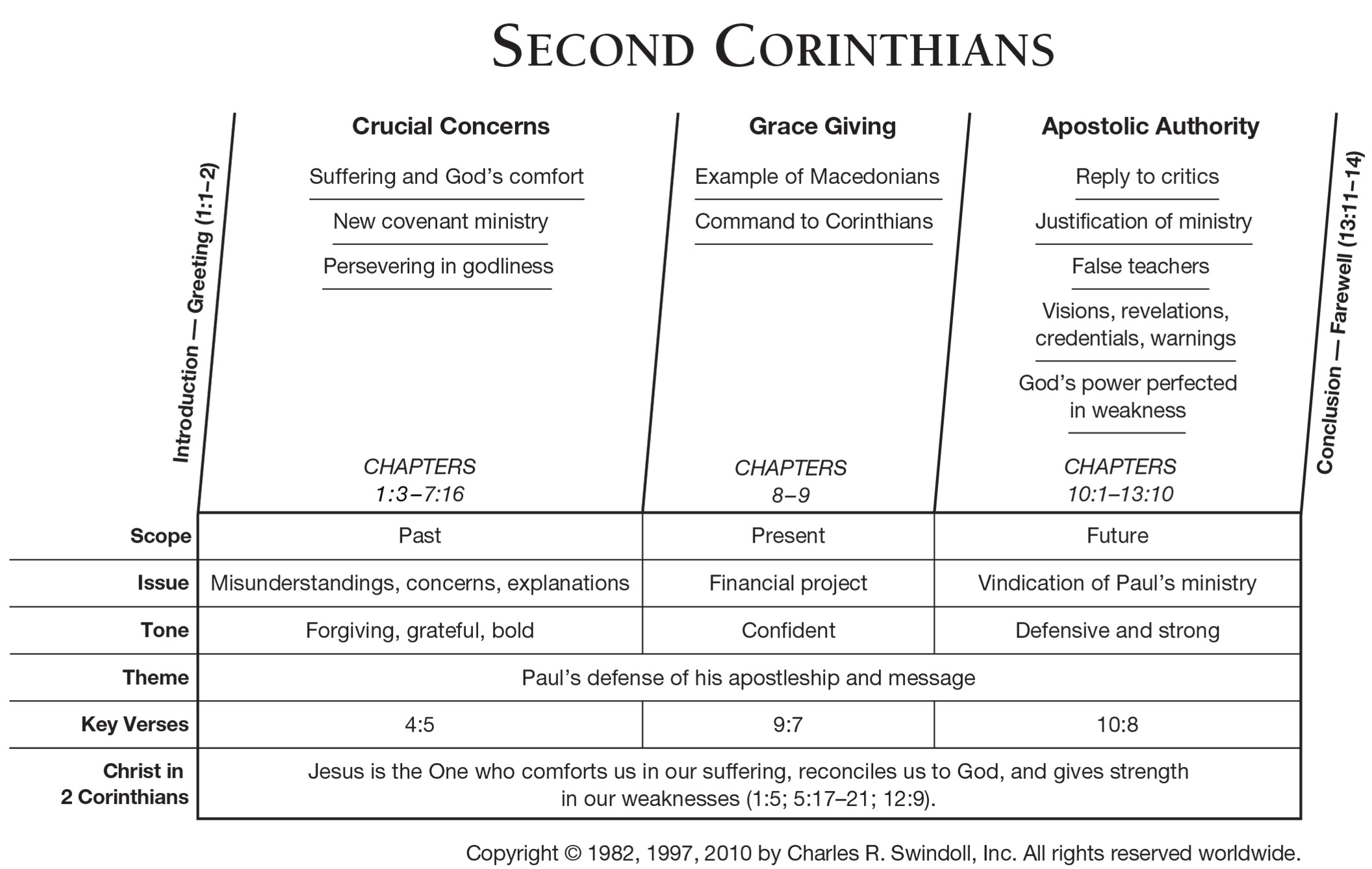
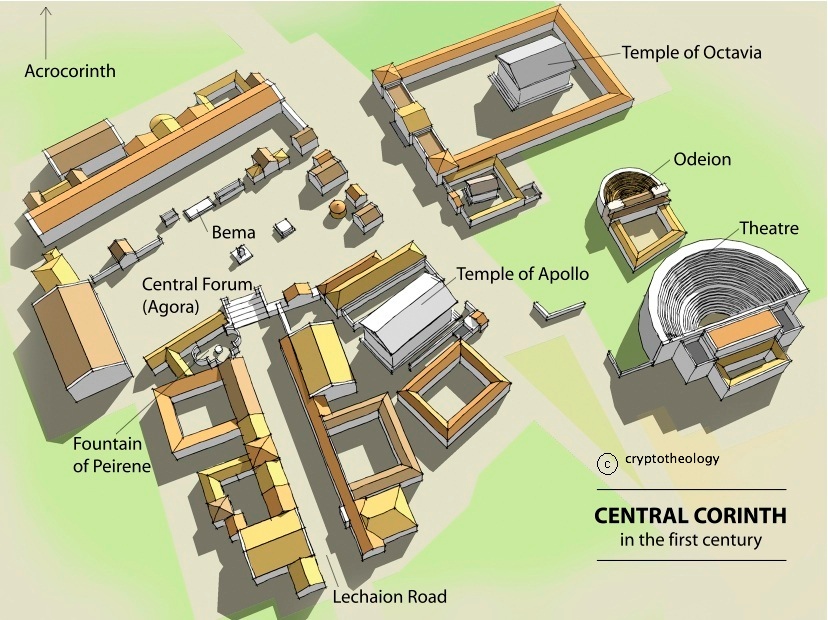
Click to Enlarge
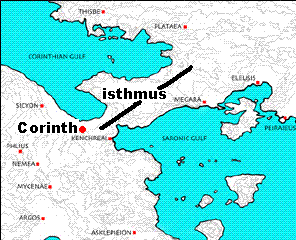
Click to enlarge
Overview of
|
||
| 2Co 1:1-7:16 Character of Paul |
2Co 8:1-9:15 Collection for the Saints |
2Co 10:1-12:21 Credentials of Paul |
| Testimonial & Didactic | Practical | Apologetic |
| Past: Misunderstanding & Explanation |
Present: Practical Project |
Future: Anxieties |
| Apostle's Conciliation, Ministry & Exhortations | Apostle's Solicitation for Judean Saints | Apostle's Vindication of Himself |
| Forgiveness, Reconciliation Gratitude |
Confidence | Vindication |
|
Ephesus to Macedonia: |
Macedonia: Preparation for Visit to Corinth |
To Corinth: |
|
2Co 1:1-7:16 |
2Co 8:1-9:15 |
2Co 10:1-12:21 |
|
2Corinthians written ~ 56-57AD - see Chronological Table of Paul's Life and Ministry |
||
|
Adapted & modified from Jensen's Survey of the New Testament (Highly Recommended Resource) & Wilkinson's Talk Thru the Bible |
||
2 Corinthians 5:20 Therefore, we are ambassadors for Christ, as though God were making an appeal through us; we beg you on behalf of Christ, be reconciled to God. (NASB: Lockman)
Greek: huper Christou oun presbeuomen (1PPAI) os tou theou parakalountos (PAPMSB) di' hemon; deometha (1PPPI) huper Christou, katallagete (2PAPM) to theo.
Amplified: So we are Christ’s ambassadors, God making His appeal as it were through us. We [as Christ’s personal representatives] beg you for His sake to lay hold of the divine favor [now offered you] and be reconciled to God. (Lockman)
Barclay: So then we are acting as ambassadors on Christ’s behalf, for God is sending you his invitation through us. We beseech you on behalf of Christ, be reconciled to God. (Westminster Press)
ESV: Therefore, we are ambassadors for Christ, God making his appeal through us. We implore you on behalf of Christ, be reconciled to God. (ESV)
HCSB: Therefore, we are ambassadors for Christ; certain that God is appealing through us, we plead on Christ’s behalf, “Be reconciled to God.” (Holman Christian Standard Bible - Study notes available online free)
KJV: Now then we are ambassadors for Christ, as though God did beseech you by us: we pray you in Christ's stead, be ye reconciled to God.
NEB: We come therefore as Christ's ambassadors. It is as if God were appealing to you through us: in Christ's name, we implore you, be reconciled to God! (New English Bible - Oxford Press)
NET: Therefore we are ambassadors for Christ, as though God were making His plea through us. We plead with you on Christ’s behalf, “Be reconciled to God!” (NET Bible)
MH: So we are acting on Christ’s behalf and in his place as his special envoys. It is, in reality, God Himself who issues his appeal through our words. As Christ’s representatives, then, we make this entreaty when we preach: “Get reconciled to God!” (Murray Harris' expanded paraphrase of 2Corinthians) (International Greek Testament) (Logos).
NLT: So we are Christ’s ambassadors; God is making his appeal through us. We speak for Christ when we plead, “Come back to God!” (NLT - Tyndale House)
Phillips: We are now Christ's ambassadors, as though God were appealing direct to you through us. As his personal representatives we say, "Make your peace with God." (Phillips: Touchstone)
Weymouth: On Christ’s behalf therefore we come as ambassadors, God, as it were, making entreaty through our lips: we, on Christ’s behalf, beseech men to be reconciled to God.
Wuest: Therefore, on behalf of Christ and in His place we are acting as ambassadors, as though God were saying, I beg of you, please, through us as His intermediate agents. We beg you in Christ’s stead, Be reconciled at once to God. (Eerdmans)
Young's Literal: in behalf of Christ, then, we are ambassadors, as if God were calling through us, we beseech, in behalf of Christ, 'Be ye reconciled to God;'
THEREFORE, WE ARE AMBASSADORS FOR CHRIST, AS THOUGH GOD WERE MAKING AN APPEAL THROUGH US; WE BEG YOU ON BEHALF OF CHRIST, BE RECONCILED TO GOD: huper Christou oun presbeuomen (1PPAI) os tou theou parakalountos (PAPMSB) di' hemon; deometha (1PPPI) huper Christou, katallagete (2PAPM) to theo:
- ambassadors: 2Co 3:6 Job 33:23 Pr 13:17 Mal 2:7 Jn 20:21 Ac 26:17,18 Eph 6:20
- as: 2Co 5:11 6:1 2Ki 17:13 2Ch 36:15 Ne 9:29 Isa 55:6,7 Jer 44:4 Eze 18:31,32
- 2 Corinthians 5 Resources - Multiple Sermons and Commentaries
- See also "shorter version" of commentary on 2 Corinthians 5:20
Therefore (3767) (oun) is a term of conclusion, which should always be a cause to pause and reflect on what is being concluded. Why is the "therefore" there? In intentionally slowing down and learning to interrogate (see interrogate with the 5W/H'S) the text you are in essence learning to meditate on the Scriptures (see the incredible promises God's Word associates with the largely lost discipline of meditation - Joshua 1:8-+, Ps 1:2-+, Ps 1:3-+). Meditation is essentially a "chewing of the cud" of the Scriptures which in turn calls for one to slow down rather than trying to speed read the text (a trap into which one can easily fall when doing a "Through the Bible in a Year" reading program!)
Therefore we are ambassadors - The word or message of reconciliation has been placed or deposited in Paul and now ("therefore") that message needs to be transmitted to those in need of reconciliation. Stated another way, because of the divine act of reconciliation (2Cor 5:18a), the institution of the ministry of reconciliation (2Co 5:18b) and the provision of the message of reconciliation (2Co 5:19b), Paul was to serve His Lord as His ambassador .
Criswell - As a "new creation" (2Co 5:17) of God, believers have a new calling as "ambassadors" of Christ. Their assignment is to preach the message of reconciliation (2Co 5:19, 20) and to perform the ministry of reconciliation (2Co 5:18, 20). Their task is to be carried out with a sense of urgency as they "implore" (beseech, beg) men to be reconciled to God.
Morris - The marvelous truth is that God has already reconciled sinners to Himself by virtue of the sacrifice of His Son. The problem now is that sinners are not yet reconciled to Him. Therefore, He has committed to us "the ministry of reconciliation" and "the word of reconciliation" (2 Corinthians 5:18,19), as His ambassadors, to beseech men to accept His Son and His great work of salvation. This is "the Great Commission."
Guzik - Paul sees that he serves in a foreign land as the representative of a King. The King has a message, and Paul is delivering that message as though God were pleading through us.
Are ambassadors (4243) (presbeuo from présbus = an old man, an aged person, elder, an ambassador) is a verb which means to be an elder, to be/work as an ambassador. The basic idea is to "to function as a representative of a ruling authority” (Louw & Nida) This term is an apt one, for ambassadors in ancient times were usually older, experienced men. Presbeuo was used in the first century to describe the emperor’s legates (generals or governors of Roman province in the first century).
Murray Harris adds that the word group presbeuo/presbus...
was used of the emperor’s legates and of embassies between towns. The corresponding NT noun, presbeia, refers to an “embassy” or “delegation”; or, as an abstract for a concrete noun, “ambassador(s)” (Lk 14:32; 19:14). To be an ambassador in the ancient world (Greek, Roman, or Jewish), as in modern times, involved three things:
(1) a commissioning for a special assignment;
(2) representing the sender; and
(3) exercising the authority of the sender. It was universally expected that an ambassador, whatever his message and however delicate or risky his mission, would be treated with respect and dignity, accorded appropriate hospitality, and guaranteed a safe exit. There was what Philo calls a “law with regard to ambassadors” (De Vita Mosis 1.25), for the envoy represented the messenger and acted on his behalf and in his place, thus embodying his authority. To disregard or insult the envoy was to disregard or insult the sender (Ed: Read of the prophesied lot of ambassadors of cp Jn 15:19, 20). (International Greek Testament) (Logos)
Comment: Ambassadors of Christ will not always be welcomed in this present world with is for the most part radically opposed to God's truth and message of reconciliation for as Christ has warned...
If you were of the world, the world would love its own; but because you are not of the world, but I chose you out of the world, therefore the world hates you. Remember the word that I said to you, 'A slave is not greater than his master.' If they persecuted Me, they will also persecute you; if they kept My word, they will keep yours also. (Jn 15:19, 20)
I have given them Thy word; and the world has hated them, because they are not of the world, even as I am not of the world. (Jn 17:14)
Do not think that I came to bring peace on the earth; I did not come to bring peace, but a sword. For I came to SET A MAN AGAINST HIS FATHER, AND A DAUGHTER AGAINST HER MOTHER, AND A DAUGHTER-IN-LAW AGAINST HER MOTHER-IN-LAW; and A MAN'S ENEMIES WILL BE THE MEMBERS OF HIS HOUSEHOLD. (Mt 10:34, 35, 36)
The present tense indicates that this privileged position of as Christ's ambassador is Paul's (and our) ongoing (continual) duty as long as we are alive. In a sense we are never on "furlough" but are always to be ready to
give a defense (apologia) to everyone who asks you to give an account for the hope (elpis) that is in you, yet with gentleness and reverence" (1Pe 3:15-+), "making the most of the opportunity" seeking to "let (our) speech always be with grace, seasoned, as it were, with salt, so that (we) may know how (we) should respond to each person." (Col 4:5, 6-+)
The only other use of presbeuo (it is not found in the Septuagint) is also by Paul in his epistle to the Ephesians where he asks the saints for prayer that he might with boldness make known the mystery (truth once not known but now divinely revealed) of the Gospel (Eph 6:19-+) and then explains why...
for which I am an ambassador in chains (He is literally in chains in prison; cp Ep 3:1-+, Eph 4:1-+); that in proclaiming it I may speak boldly, as I ought ( = Paul pictures himself as continually under obligation to speak forth the Gospel boldly - not out of legalism but out of love for his Master - see 2Co 5:14+) to speak. (Ephesians 6:20+)
Comment: If one was looking for excuses for not sharing the Gospel as an ambassador for Christ, it would seem Paul had the "perfect excuse" -- "I confined to a jail cell. I'm in prison and in chains." Clearly Paul did not see this as an obstacle but as an opportunity, for as he wrote in Second Timothy "I suffer hardship even to imprisonment as a criminal; but the Word of God (the Gospel) is not imprisoned. For this reason (What reason?) I endure all things (What is he enduring?) for the sake of those who are chosen (elect - Paul did not know who they were, so he treated everyone as if they were elect! A good practice regarding a doctrine that tragically too often creates disunity, dissension and division!), that they also may obtain the salvation which is in Christ Jesus and with it eternal glory." (2Ti 2:9, 10-+) What's my excuse for not being an ambassador for my King, Christ Jesus?
We are ambassadors - While Paul is referring to himself (and his associates), as alluded to above, clearly this "job description" applies to all believers. Our duty as those who have been reconciled to God is to speak to others on God’s behalf, telling them that they do not have to remain alienated from Him. As His ambassadors we are given the authority, privilege and power to speak for Him, and we are to speak as if God were speaking through us. And remember that the lost world needs to hear the message of reconciliation (the Gospel), because most are trying to work their way to heaven and are in desperate need for someone commissioned by the God of heaven to tell them the real truth about how to get to heaven!
Harris sounds a word of caution regarding ambassadors noting that "for all their exalted status, such persons are not plenipotentiaries (Ed: Those invested with full power); they have not been invested with the full power of independent action, for they deliver rather than create the message and lack any authority to alter that message."
John MacArthur (2Corinthians) reminds us of our high and holy calling noting that...
An ambassador is both a messenger for and a representative of the one who sent him, and believers are messengers and representatives of the court of heaven. And just as an ambassador lives in a foreign land, so also do believers. Though citizens of heaven (Phil 3:20-+), they represent their King in this world, where they live “as aliens and strangers” (1Peter 2:11+). They proclaim to the lost, perishing rebels of this fallen world the good news that they can be reconciled to the holy King of heaven: For “Whoever will call on the name of the Lord will be saved.” How then will they call on Him in whom they have not believed? How will they believe in Him whom they have not heard? And how will they hear without a preacher? How will they preach unless they are sent? Just as it is written, “How beautiful are the feet of those who bring good news of good things!” (Ro 10:13, 14, 15-+)
Guzik...
- There is so much in the idea of ambassadors!
- An ambassador does not speak to please his audience, but the King who sent him.
- An ambassador does not speak on his own authority; his own opinions or demands mean little.
- He simply says what he has been commissioned to say.
- But an ambassador is more than a messenger; he is also a representative, and the honor and reputation of his country are in his hands.
Webster...An ambassador is a minister of the highest rank, employed by one prince or state at the court of another, to manage the concerns of his own prince or state, and representing the dignity and power of his sovereign.
Albert Barnes...We are the ambassadors whom Christ has sent forth to negotiate with men in regard to their reconciliation to God. The word here used (presbeuomen, from presbus, an aged man, an elder, and then an ambassador) means to act as an ambassador, or sometimes merely to deliver a message for another, without being empowered to do any thing more than to explain or enforce it...He is sent to do what the sovereign would himself do were he present. They are sent to make known the will of the sovereign, and to negotiate matters of commerce, of war, or of peace, and in general every thing affecting the interests of the sovereign among the people to whom they are sent. At all times, and in all countries, an ambassador is a sacred character, and his person is regarded as inviolable. He is bound implicitly to obey the instructions of his sovereign, and as far as possible to do only what the sovereign would do were he himself present. Ministers are ambassadors for Christ, as they are sent to do what he would do were he personally present. They are to make known, and to explain, and enforce the terms on which God is willing to be reconciled to men. They are not to negotiate on any new terms, nor to change those which God has proposed, nor to follow their own plans or devices, but they are simply to urge, explain, state, and enforce the terms on which God is willing to be reconciled. Of course they are to seek the honour of the sovereign who has sent them forth, and to seek to do only his will. They go not to promote their own welfare; not to seek honour, dignity, or emolument; but they go to transact the business which the Son of God would engage in were he again personally on the earth. It follows that their office is one of great dignity, and great responsibility, and that respect should be showed them as the ambassadors of the King of kings. (2 Corinthians 5:20 Commentary)
Ray Stedman asks...Why do we send ambassadors? Well, because countries do not always relate to each other very well. Things need to be explained, need to be approached with diplomacy and caution and carefulness. That is what an ambassador is to do. He is to be a representative of a government, handling himself with such care and confidence that the message that his government seeks to convey is given in the most painless and least offensive way possible. Now that is dangerous. You can get yourself killed or taken captive as an ambassador in this world today. (2 Corinthians 5:18-6:2 The Word for This Hour)
God’s ambassador has the ministry of reconciliation (2Co 5:18) and a message of reconciliation (2Co 5:19). We are models of reconciliation (2Co 5:21).
Christ (5547) (Christos from chrio = to anoint, rub with oil, consecrate to an office) is the Anointed One, the Messiah, Christos being the Greek equivalent of the transliterated Hebrew word Messiah. In the OT the word "anointed" was closely linked with two offices -- king and high priest. It was prophesied that Jesus, from David's kingly line, would one day hold ultimate authority in our world. As high priest, Jesus offered himself up for us and lives today to make intercession for us. In Jesus' day, then, the Christ was thought of as Israel's deliverer.
Spurgeon wrote "As I came along this morning I felt as if I could bury my head in my hands and weep as I thought of God beseeching anybody. He speaks, and it is done. Myriads of angels count themselves happy to fly at his command. And yet man has so become God's enemy that he will not be reconciled to him. God would make him his friend, and spends the blood of his dear Son to cement that friendship, but man will not have it. See how the great God turns to beseeching his obstinate creature! In this I feel a reverent compassion for God. Must he beseech a rebel to be forgiven? Angels, do you hear it? He who is the King of kings veils his sovereignty and stoops to beseeching his creature to be reconciled to him!
As though God were making an appeal through us - "God is sending you his invitation through us." (William Barclay) "God Himself Who issues his appeal through our words." (Murray Harris) We are as it were "God's mouth piece" to speak forth His desire to reconcile sinners from their war with God, a war they cannot win in this life or the life to come!
Barnes writes...Our message is to be regarded as the message of God. It is God Who speaks. What we say to you is said in His name and on His authority, and should be received with the respect which is due to a message directly from God. The Gospel message is God speaking to men through the ministry, and entreating them to be reconciled. This invests the message which the ministers bear with infinite dignity and solemnity; and it makes it a fearful and awful thing to reject it. (Ed: And a fearful thing to alter it so that it is a message that is not the authentic Gospel, something that is becoming all too common in pulpits across America [cp Paul's strong warning - Gal 1:6, ,7 8] - e.g., witness the rejection of the teaching of the need for a sinner to repent, a teaching that flies in the face of the clear call of Jesus, for He Himself began His ministry saying "The time is fulfilled, and the kingdom of God is at hand; repent [aorist imperative = not a suggestion but a command issued with a sense of urgency!] and believe [present imperative = command to keep believing - genuine believers will keep believing - this does not earn or merit their salvation but demonstrates that they are truly saved!] in the Gospel." Mark 1:15) (2 Corinthians 5:20 Commentary)
Making an appeal (3870) (parakaleo from para = side of, alongside, beside + kaleo [ word study] = call) means literally to call one alongside, to call someone to oneself, to call for, to summon. Parakaleo can include the idea of giving help or aid but the primary sense in the NT is to urge someone to take some action, especially some ethical course of action. Sometimes the word means convey the idea of comfort, sometimes of exhortation but always at the root there is the idea of enabling a person to meet some difficult situation with confidence and with gallantry. See the following discussion for elaboration on the nuances of this great Greek verb.
The present tense calls for continually making an appeal to those not yet reconciled and still at war with Almighty God and thus in desperate need of a "permanent truce" or "peace treaty" lest they pass on to the next world as God's enemies who will suffer eternal separation from him and torturous imprisonment as "war criminals"!
One writer has said that Paul's use of parakaleo in verses like Eph 4:1, Ro 12:1, 1Th 4:1 is “one of the tenderest expressions in all the Bible.”
We see Paul's description of the effect of God making an appeal through him (as His ambassador) in his epistle to the Thessalonians...
And for this reason we also constantly thank God that when you received from us the word of God's message (cp the "word [message] of reconciliation" 2Co 5:19), you accepted it not as the word of men, but for what it really is, the word of God, (How do we know it is the supernatural word of God and not merely the words of men) which also performs its work in you who believe. (1Th 2:13+)
Comment: When Paul went to Thessalonica as God's ambassador, he gave them the message from God, not his message as a man. The impact of that message of reconciliation transformed many of the Thessalonians and resulted in the birth of a local body of believers (church) in that formerly pagan stronghold. Beloved, this should serve to remind all of us who handle the message of reconciliation to give it out faithfully and without adding or taking away from the message. When we do, we can be absolutely confident that God's promise through Isaiah still bears God glorifying fruit...
For as the rain and the snow come down from heaven, And do not return there without watering the earth, And making it bear and sprout, And furnishing seed to the sower and bread to the eater so shall My word be which goes forth from My mouth; It shall not return to Me empty, Without accomplishing what I desire, And without succeeding in the matter for which I sent it. (Isaiah 55:10, 11)
Through us - In using the pronoun "us", Paul is speaking of himself and presumably those who accompanied him (although some commentators consider this an epistolary plural = use of first person plural when in reality he is referring only to himself). However, there is no question that this passage is applicable to
WE BEG YOU ON BEHALF OF CHRIST, BE RECONCILED TO GOD: deometha (1PPPI) huper Christou, katallagete (2PAPM) to theo:
- On behalf of: Job 33:6 Lk 10:16 1Co 4:4,5 1Th 4:8
- be: Job 22:21 Pr 1:22-33 Isa 27:5 Jer 13:16,17 38:20 Lk 14:23
- 2 Corinthians 5 Resources - Multiple Sermons and Commentaries
- See also "shorter version" of commentary on 2 Corinthians 5:20
Making an appeal...we beg - Although the two verbs used in this entreaty are distinctive, their combined use undergirds the impassioned and urgent nature of Paul's entreaty. Don't put this off. Reconciliation is an offer to be received today, as long as it is still called today! Don't procrastinate or hesitate or wait (e.g., until you've "got your act together")!
We beg (1189) (deomai from deo = to bind) means to ask for something with the sense of pleading, beseeching or begging. To request, to ask for with a sense of urgency and a presumed need. When used in the context of prayer deomai means to make petition, to plead, to ask in prayer, to implore (pray for earnestly) and emphasizes the existence of a need. Deomai is a strong way to ask for something - a leper imploring Jesus to heal him (Lk 5:12), a father's desperate plea to Jesus to cast a demon out of his son (Lk 9:38). To beg in English means to ask for earnestly, urgently or insistently. It implies more urgency than simply asking. The related word deesis, means prayer for a particular need (supplication).
We beg pictures this as an urgent command calling for immediate response! Paul is begging unbelievers because they are but a single heart beat away from an eternal separation from God if they refuse God's gracious offer of reconciliation.
Proseuchomai, to pray, is always used of requests addressed to God, whereas deomai, when used in the context of prayer, may be used of requests addressed to man as well. Proseuchomai carries with it a notion of worship which is not present in the word deomai. Deomai emphasizes the intensity of the request.
Paul uses deomai to express the heart's desire of the saints at Corinth regarding financial giving, for they were
begging us with much urging for the favor of participation in the support of the saints (2Corinthians 8:4)
NIDNTT...In the NT deomai occurs only with the meaning to ask request, beseech, beg.
1. It is used in a general sense as a courtesy formula, without any particular object or object clause (cf. the English phrase “I beg you”), followed by direct speech (Acts 8:24; 21:39) or by an infinitive (Acts 26:3).
2. In some passages deomai is used in its full sense of making earnest entreaty, even imploring. There is a warmth, an attractiveness, a winsomeness about it, as in 2Co 5:20 (cf. Acts 2:40); 8:4; 10:2; Gal. 4:12.
3. In all other cases deomai has the religious sense of beseeching Jesus or God. The requests made are quite specific, arising out of real need and expecting definite help of an external or a spiritual nature. Help in a situation of external need is sought from Jesus in Lk 5:12; 9:38. (Brown, Colin, Editor. New International Dictionary of NT Theology. 1986. Zondervan)
TDNT...The original meaning of déomai is “to lack,” “to need,” and of déēsis, “lack.” But there are few traces of this in the LXX and none in the NT.
Richards....This verb (deomai) and its cognate noun, deesis, emphasize the existence of a need. The individual speaking is deeply aware of a personal need, and out of the need comes a cry for specific help. The cry for help may be addressed to Jesus or to the Father and is often uttered in intercession for others
Deomai - 22x in 22v - Matt 9:38; Luke 5:12; 8:28, 38; 9:38, 40; 10:2; 21:36; 22:32; Acts 4:31; 8:22, 24, 34; 10:2; 21:39; 26:3; Ro 1:10; 2 Cor 5:20; 8:4; 10:2; Gal 4:12; 1Th 3:10 NAS = ask(1), beg(6), begged(1), begging(2), beseech(2), implored(1), making request(1), please(1), pray(2), prayed(3), praying(2).
Matthew 9:38 "Therefore beseech the Lord of the harvest to send out workers into His harvest."
Luke 5:12 While He was in one of the cities, behold, there was a man covered with leprosy; and when he saw Jesus, he fell on his face and implored Him, saying, "Lord, if You are willing, You can make me clean."
Luke 8:28 Seeing Jesus, he cried out and fell before Him, and said in a loud voice, "What business do we have with each other, Jesus, Son of the Most High God? I beg You, do not torment me."
Luke 8:38 But the man from whom the demons had gone out was begging Him that he might accompany Him; but He sent him away, saying,
Luke 9:38 And a man from the crowd shouted, saying, "Teacher, I beg You to look at my son, for he is my only boy...40 "I begged Your disciples to cast it out, and they could not."
Luke 10:2 And He was saying to them, "The harvest is plentiful, but the laborers are few; therefore beseech the Lord of the harvest to send out laborers into His harvest.
Luke 21:36 "But keep on the alert at all times, praying that you may have strength to escape all these things that are about to take place, and to stand before the Son of Man."
Luke 22:32 but I have prayed for you, that your faith may not fail; and you, when once you have turned again, strengthen your brothers."
Acts 4:31 And when they had prayed, the place where they had gathered together was shaken, and they were all filled with the Holy Spirit and began to speak the word of God with boldness.
Acts 8:22 "Therefore repent of this wickedness of yours, and pray the Lord that, if possible, the intention of your heart may be forgiven you.
Acts 8:24 But Simon answered and said, "Pray to the Lord for me yourselves, so that nothing of what you have said may come upon me."
Acts 8:34 The eunuch answered Philip and said, "Please tell me, of whom does the prophet say this? Of himself or of someone else?"
Acts 10:2 a devout man and one who feared God with all his household, and gave many alms to the Jewish people and prayed to God continually.
Acts 21:39 But Paul said, "I am a Jew of Tarsus in Cilicia, a citizen of no insignificant city; and I beg you, allow me to speak to the people."
Acts 26:3 especially because you are an expert in all customs and questions among the Jews; therefore I beg you to listen to me patiently.
Romans 1:10-+ always in my prayers making request, if perhaps now at last by the will of God I may succeed in coming to you.
2 Corinthians 5:20 Therefore, we are ambassadors for Christ, as though God were making an appeal through us; we beg you on behalf of Christ, be reconciled to God.
2 Corinthians 8:4 begging us with much urging for the favor of participation in the support of the saints,
2 Corinthians 10:2 I ask that when I am present I need not be bold with the confidence with which I propose to be courageous against some, who regard us as if we walked according to the flesh.
Galatians 4:12 I beg of you, brethren, become as I am, for I also have become as you are. You have done me no wrong;
1 Thessalonians 3:10-+ as we night and day keep praying most earnestly that we may see your face, and may complete what is lacking in your faith?
Deomai - 55x in the non-apocryphal Septuagint - Ge 19:18; 25:21; 43:20; 44:18; Ex 4:10, 13; 32:11, 31; Num 12:11, 13; Dt 3:23; 9:18, 25; Josh 7:7; 1 Sam 13:12; 1Kgs 8:33, 47, 59; 9:3; 13:6; 2Kgs 1:13; 13:4; 2Chr 6:24, 37; Esther 4:17; Job 5:8; 8:5; 9:15; 11:19; 17:1; 19:16; 30:24; 34:20; Ps 28:2; 30:8; 64:1; 119:58; 142:1; Pr 26:25; Isa 37:4; Jer 26:19; Da 4:27, 33f; 6:5, 8, 10f, 13; 9:13, 18, 20; Hos 12:4; Zech 8:21; Mal 1:9;
Yes, he (Jacob) wrestled with the angel and prevailed (Ge 32:28 - Angel = Angel of the LORD); He wept and sought (Lxx = deomai) His favor. He found Him at Bethel And there He spoke with us (Ho 12:4).
Psalm 30:8 To You, O LORD, I called, And to the Lord I made supplication (Lxx = deomai)
Psalm 119:58 I sought (Lxx = deomai) Your favor with all my heart. Be gracious to me according to Your word.
Psalm 142:1 Maskil of David, when he was in the cave. A Prayer. I cry aloud with my voice to the LORD; I make supplication (Lxx = deomai) with my voice to the LORD.
Da 6:11 Then these men came by agreement and found Daniel making petition and supplication (Lxx = deomai) before his God.
In all uses of the verb of reconciliation in 2 Corinthians 5 (2Cor 5:18, 19, 20) the object or goal of the action is God. As Furnish states
reconciliation is not ["only"] of God but from and to God.
On behalf of - The preposition huper means in behalf of or for the sake of. The idea is that an ambassador works both “on behalf of Christ” and “in the place of Christ.” For His sake. In His stead. In the place of Christ. Acting on Christ’s behalf and in His place. In essence we are now to be doing what Christ did when He was on earth.
Murray Harris adds that...
Not only in the words he spoke but also in his whole life Paul was acting in Christ’s name and place. His status was not dependent on the Corinthians to whom he had been sent but on Christ who had sent him (cf. 2Co 1:1). This intimate link between agent and principal is encapsulated in the aphorism of Rabbinic Judaism, “the one who is sent is as the one who sent him,” “a man’s agent is as the man himself.” (International Greek Testament)
Be reconciled (2644)(katallasso from katá = an intensifier + allásso = to change or exchange) means to exchange one thing for another and was used for example to describe the exchange of coins for others of equal value.
The Greeks spoke of people in opposition to each other being “reconciled” or being made friends again. When people change from being at enmity with each other to being at peace, they are said to be reconciled. Katallasso meant to legally reconcile two disputing parties in court and in the New Testament describes the believer's reconciliation with God through Jesus Christ.
Mounce on katallasso - In classical Gk., katallassō usually meant the coming together of two persons after a time of hostility; it was rarely used in a religious sense. This probably derives from the fact that in pagan religions, the human/divine relationship lacked personal involvement and instead required placating the gods. (Mounce's Complete Expository Dictionary)
Theologically reconciliation refers to the change of relationship between God and man. We are all born children of Adam (1Co 15:22, Ro 5:12-+) and as such are naturally children of wrath (Ep 2:3-+) and at enmity with God (Ep 2:11, 12-+, Ep 2:13, 14-+, Ep 2:15-+). Sinners who believe the Gospel are “reconciled to God through the death of His Son" (Ro 5:10-+).
The implication of this command be reconciled is that while God has provided the way for reconciliation and is thus the Reconciler, this reconciliation cannot take place apart from a sinner laying hold of God's great "life preserver" (message of reconciliation) by grace through faith. In other words reconciliation is available for all (some would argue this point) but is effectual only for those who receive it by faith.
Henry Alford writes that in giving the command to be reconciled he is saying that "God was the Reconciler—let this reconciliation have effect on you—enter into it by faith". (2 Corinthians 5 Commentary)
Barnes adds "that man has something to do in this work. He is to be reconciled to God. He is to give up his opposition. He is to submit to the terms of mercy. All the change in the case is to be in him, for God cannot change. God has removed all the obstacles to reconciliation which existed on his part. He has done all that he will do, all that needed to be done, in order to render reconciliation easy as possible. And now it remains that man should lay aside his hostility, abandon his sins, embrace the terms of mercy, and become in fact reconciled to God. (Ed: Don't misunderstand, yes sinners must believe but ultimately salvation is God's master plan, not ours. In contemplating these "deep truths" I am always drawn back to Paul's great doxology concluding with "For from Him and through Him and to Him are all things. To Him be the glory forever. Amen." Ro 11:36-+ Amazing provision. Amazing grace indeed!) (2 Corinthians 5:20 Commentary)
Guzik agrees writing "This makes it clear that the work of reconciliation mentioned previously in the chapter does not work apart from our will and our choice. Who are the ones reconciled to God? Those who have responded to Jesus’ plea, made through His ambassadors, be reconciled to God....We (speaking of unsaved sinners) are not commanded to do the work of reconciliation between us and God. He has done the work; it is merely ours to embrace and receive. (2 Corinthians 5) (Bolding added)
Tony Evan's -One of the things I love in pastoral ministry is to see married couples who are estranged become reconciled and reconnected. There’s nothing more satisfying than seeing hostility turn into harmony, and turmoil turn into peace. What a great message we have for sinners. God wants to restore fellowship with them! (Totally Saved) (Bolding added)
Spurgeon -It is not so much reconcile yourselves as ‘be reconciled.’ Yield yourselves to him who round you now the bands of a man would cast, drawing you with cords of love because he was given for you...Submit yourselves. Yield to the grasp of those hands which were nailed to the cross for you.
Gaebelein -This is the great message of the true minister, and all believers can be true ministers and proclaim the message in Christ’s stead and point sinners to the cross, where He who knew no sin was made sin for us, where redemption full and free is offered to all.
Matthew Henry -It is the great end and design of the Gospel, that word of reconciliation, to prevail upon sinners to lay aside their enmity against God. Faithful ministers are Christ's ambassadors, sent to treat with sinners on peace and reconciliation: they come in God's name, with his entreaties, and act in Christ's stead, doing the very thing he did when he was upon this earth, and what he wills to be done now that he is in heaven. Wonderful condescension! Though God can be no loser by the quarrel, nor gainer by the peace, yet by his ministers he beseeches sinners to lay aside their enmity, and accept of the terms he offers, that they would be reconciled to him, to all his attributes, to all his laws, and to all his providences, to believe in the Mediator, to accept the atonement, and comply with his gospel, in all the parts of it and in the whole design of it.
AN URGENT
MESSAGE!
G Campbell Morgan writes...
What urgency breathes through these words! The subject is that of the reconciliation made possible between man and God, because "God was in Christ reconciling the world unto Himself." That word of reconciliation is committed to those called to serve Christ. They are ambassadors on behalf of Christ. Therefore the urgency. They must deliver their message in a way worthy of the One Who sends them:
"As though God were entreating by us;
we beseech."That was Paul's concept of the way to preach Christ; and it is manifest in all the records we have of his journeys, his spoken messages, as well as in his letters.
The marvel and the glory of the Divine provision, and the terror and peril of human need, were such as to make anything in the nature of indifference to results or coolness in presentation impossible.
Every call was a beseeching. Moreover he dared to say that in this attitude he was representing God; and every soul who knows anything of the real meaning of the Cross, knows that this is a true word. God does not treat human salvation as a matter about which He can be indifferent or careless. The Cross is His passion, His earnestness; may we not dare to say, that by which He entreats men to be reconciled. In face of that, what can be worse than to declare His message as though it were not a message vital, tremendous, demanding all passion and power in its delivery? All this makes us think! And perhaps the thinking is better done alone! (Life Applications from Every Chapter of the Bible)
Looking For Loopholes - Comedian W. C. Fields (1880-1946) could make audiences roar with laughter, yet he himself was chronically unhappy. Religion apparently played no part in his life. But it’s been said that as he faced the possibility of dying, he started to devote time to reading the Bible. When he was asked about his new interest in Scripture, Fields, always the comedian, replied, “I’m looking for loopholes, my friend. Looking for loopholes.”
Fields may not have known Hebrews 9:27, “It is appointed for men to die once, but after this the judgment,” yet he realized that he might soon be standing before God. And he may have been wondering what he would say if asked by the Lord why he should not be judged for his sins.
We will all stand before God someday, so it’s imperative that we prepare to meet Him. But how? The only preparation we need to make is to accept the Lord Jesus Christ as our Savior from sin. He died to take the punishment we deserve (2Corinthians 5:21; 1Peter 3:18). When we admit that we are sinners (Romans 3:23) and ask Him to forgive and save us (Acts 16:31; Romans 10:13), we are brought into a right relationship with God (2Corinthians 5:18, 19).
Are you prepared? There are no loopholes. —Vernon Grounds
How can you go another day?
Respond to Christ, do not delay;
Just trust in Him, His Word believe—
Eternal life you will receive.
—BranonDon't plan to repent at the 11th hour
—you may die at 10:30.
AMBASSADORS FOR CHRIST - Late one night a salesman drove into a strange city and tried to get a room in a hotel. The clerk informed him that there was no vacancy. Disappointed, he started to leave the lobby when a dignified gentleman offered to share his room with him. Gratefully the traveler accepted his kindness.
Just before retiring, the man who had shown such hospitality, knelt and prayed aloud. In his petition he referred to the stranger by name and asked the Lord to bless him. Upon awakening the next morning, he told his guest it was his habit to read the Bible and commune with God at the beginning of each day, and he asked if he would like to join him. The Holy Spirit had been speaking to the heart of this salesman, and when his host tactfully confronted him with the claims of Christ, he gladly received the Savior.
As the two were ready to part, they exchanged business cards. The new believer was amazed to read, “William Jennings Bryan, Secretary of State.”
You see William Jennings Bryan was not only the Secretary of State under Woodrow Wilson, but more importantly he was an ambassador for Christ.
Once you are saved you are transformed into a “new creature” and are given a new mission. You become Christ’s “ambassador.” - from P. R. Van Gorder:
J. Dwight Pentecost states in his book, Designed to Be Like Him, “There can be no higher goal. There can be no higher ambition. There can be no higher purpose than that which the Word of God puts before us as the chief end of the child of God, to glorify God. The greatest goal in the believer’s life is not his own enjoyment of his salvation. His highest goal is not learning the truths of Scripture, nor even teaching and preaching the Word. His greatest goal is to live Jesus Christ so that men may know the Father.”
Just like the prince or son of a King would act like royalty and so must the children of God act. We are ambassadors for God here on earth and we should act like children of God. As believers, being an ambassador for Christ is our true vocation. Page Patterson said in TTU chapel that we are not students, teachers, lawyers, nor doctors in “vocation,” instead, we are ambassadors for Christ!
Representing God - When I stepped up to the checkpoint so I could enter the prison, I was told that my identification card had been misplaced. The guard had to fill out a temporary permission slip so I could get in and teach Bible classes to some of the inmates. After I showed her my driver’s license, she filled out the slip and I was allowed in. When I glanced at the piece of paper, I laughed. In the space provided to indicate who I was representing, the guard had written “God.”
Later, as I drove home, I thought about that permission slip more seriously. The guard may have had a sense of humor, but she was right! Even though I was representing a prison ministry, I was really representing God. I am glad the guard made that connection.
Paul said to the Corinthians, “We are ambassadors for Christ” (2 Corinthians 5:20). As such, we have a responsibility to “walk properly toward those who are outside” the faith (1 Thessalonians 4:12). As followers of Jesus Christ, we represent God wherever we are, and in whatever we do. On the job, in the neighborhood, on the softball team, or on the highway, we are His representatives.
Lord, help us to represent You faithfully in every area of our lives. Amen. — by David C. Egner
Wherever I am, whatever I do,
O God, please help me to live
In a way that makes me credible
As Your representative.
—Egner
Christ sends us out to bring others in.
Dare to Be Different - Since my dad was a pastor, I got stuck with the label known to every pastor’s kid: PK. But, much to the congregation’s disappointment, the title didn’t stop me from being my mischievous little self. I can’t count the times I heard, “Little Joe, you’re the pastor’s son. You should be an example.” But I didn’t want to be an example! I was only 5 and wanted to have fun with my friends!
Let’s face it, being an example is often about being different. But most of us don’t want to be different. We want people to like us, and the safest way to do that is to blend in. But following Christ has never been about blending in. Following Him means to be like Him, to respond to life and relate to people as He did. It’s a little risky and uncomfortable to be different. But that’s what being an “ambassador for Christ” (2 Cor. 5:20) is all about—bringing the wonderful difference of your King to bear on the territory you’ve been assigned: your home, your office, your friendships. Representing the King is not just our calling; it’s a great honor.
In retrospect, I can see how my antics as a PK reflected poorly on my dad. It’s motivating to remember that our non-Jesus attitudes and actions also reflect poorly on our King.
Make a difference by daring to be different!— by Joe Stowell
Show me the way, Lord, let my light shine
As an example of good to mankind;
Help them to see the patterns of Thee,
Shining in beauty, lived out in me.
—Neuer
Dare to be different—
for the Father’s sake.
Truth and Reconciliation - To help heal the wounds left by racial injustices in South Africa, the government extended amnesty to any citizens who would come forward with the truth about crimes they had committed.
Many atrocities were detailed and confessed. Some families learned for the first time the “who, what, when, where, and how” of their loved one’s “extermination.” Many cloaked their confession in “I was just following orders.” For some victim’s families, the truth brought a degree of closure.
As I watched segments of the proceedings on TV, I longed to see expressions of heartfelt repentance and forgiveness. No doubt some genuine healing took place, but it wasn’t obvious from what I saw. Then it occurred to me that truth alone doesn’t bring about reconciliation. That comes only when truth is accompanied by grace. But what is the source of such grace? John said that Jesus was “full of grace and truth” (Jn. 1:14). And Paul said that when Jesus died on the cross, “God was in Christ reconciling the world to Himself” (2 Cor. 5:19).
As Christians, we experience God’s grace and forgiveness in a deeply personal way. Because we are reconciled to Him, we are enabled to extend grace to others.— by Dennis J. De Haan
His grace is sufficient, no one can exhaust it;
Be strong in God's grace—each day it is new.
Draw largely, continually, out of His fullness;
You'll find that His grace is sufficient for you.
—Anon.
Those who know God's grace
will show God's grace.
2 Corinthians 5:21 He made Him who knew no sin to be sin on our behalf, so that we might become the righteousness of God in Him. (NASB: Lockman)
Greek: ton me gnonta (AAPMSA) hamartian huper hemon amartian epoiesen, (3SAAI) hina hemeis genometha (1PAMS) dikaiosune theou en auto.
Amplified: For our sake He made Christ [virtually] to be sin Who knew no sin, so that in and through Him we might become [endued with, viewed as being in, and examples of] the righteousness of God [what we ought to be, approved and acceptable and in right relationship with Him, by His goodness]. (Lockman)
Barclay: He made him who had no acquaintance with sin to be sin for us, that through him we might become the righteousness of God. (Westminster Press)
ESV: For our sake he made him to be sin who knew no sin, so that in him we might become the righteousness of God. (ESV)
HCSB: He made the One who did not know sin to be sin for us, so that we might become the righteousness of God in Him. (Holman Christian Standard Bible - Study notes available online free)
KJV: For he hath made him to be sin for us, who knew no sin; that we might be made the righteousness of God in him.
NEB: Christ was innocent of sin, and yet for our sake God made him one with the sinfulness of men, so that in him we might be made one with the goodness of God himself. (New English Bible - Oxford Press)
NET: God made the one who did not know sin to be sin for us, so that in him we would become the righteousness of God. (NET Bible)
MH: How did that reconciliation come about? Christ was totally devoid of sin. Yet God caused him to be sin on our behalf and in our place, so that as a result of being united with Christ we might become righteous before God. (Murray Harris' expanded paraphrase of 2Corinthians).
NLT: For God made Christ, who never sinned, to be the offering for our sin, so that we could be made right with God through Christ. (NLT - Tyndale House)
Phillips: For God caused Christ, who himself knew nothing of sin, actually to be sin for our sakes, so that in Christ we might be made good with the goodness of God. (Phillips: Touchstone)
Weymouth: He has made Him who knew nothing of sin to be sin for us, in order that in Him we may become the righteousness of God.
Wuest: He who did not know sin in an experiential way, on behalf of us and instead of us, was made [the representative of] sin, in order that, as for us, we might become a righteousness of God in Him. (Eerdmans)
Young's Literal: for him who did not know sin, in our behalf He did make sin, that we may become the righteousness of God in him.
HE MADE HIM WHO KNEW NO SIN TO BE SIN ON OUR BEHALF, SO THAT WE MIGHT BECOME THE RIGHTEOUSNESS OF GOD IN HIM: ton me gnonta (AAPMSA) hamartian huper hemon hamartian epoiesen, (3SAAI) hina hemeis genometha (1PAMS) dikaiosune theou en auto.:
- he: Isa 53:4-6,9-12 Da 9:26 Zec 13:7 Ro 8:3 Ga 3:13 Eph 5:2 1Pe 3:18 1Jn 2:1,2)(who: Isa 53:9 Lk 1:35 Heb 7:26 1Pe 2:22-24 1Jn 3:5
- we: 2Co 5:17 Isa 45:24,25 53:11 Jer 23:26 33:16 Da 9:24 Ro 1:17 3:21-26 Ro 5:19 8:1-4 10:3,4 1Co 1:30 Php 3:9
- 2 Corinthians 5 Resources - Multiple Sermons and Commentaries
- See also "shorter version" of commentary on 2 Corinthians 5:21
THE HEART OF THE
GOSPEL
My hope is built on nothing less
Than Jesus' blood and righteousness.
I dare not trust the sweetest frame,
But wholly trust in Jesus' Name.
(My Hope Is Built)
C H Spurgeon - See ye here the foundation-truth of Christianity, the rock on which our hopes are built. It is the only hope of a sinner, and the only true joy of the Christian, — the great transaction, the great substitution, the great lifting of sin from the sinner to the sinner’s Surety; the punishment of the Surety instead of the sinner, the pouring out of the vials of wrath, which were due to the transgressor, upon the head of his Substitute; the grandest transaction which ever took place on earth; the most wonderful sight that even hell ever beheld, and the most stupendous marvel that heaven itself ever executed, — Jesus Christ, made sin for us, that we might be made the righteousness of God in him! You scarcely need that I should explain the words when the sense is so plain. A spotless Savior stands in the room of guilty sinners. God lays upon the spotless Savior the sin of the guilty, so that he becomes, in the expressive language of the text, sin. Then he takes off from the innocent Savior his righteousness, and puts that to the account of the once-guilty sinners, so that the sinners become righteousness, — righteousness of the highest and divinest source — the righteousness of God in Christ Jesus. (2Cor 5:21 Christ Made Sin)
John MacArthur - With a conciseness and brevity reflective of the Holy Spirit, this one brief sentence, only fifteen words in the Greek text, resolves the dilemma of reconciliation. This sentence reveals the essence of the atonement, expresses the heart of the gospel message, and articulates the most glorious truth in Scripture—how fallen man’s sin-sundered relationship to God can be restored. 2Cor 5:21 is like a cache of rare jewels, each deserving of a careful, reverential examination under the magnifying glass of Scripture. It yields truths about the benefactor, the substitute, the beneficiaries, and the benefit. (MacArthur, J: 2Corinthians. Chicago: Moody Press)
William MacDonald - This verse gives us the doctrinal foundation for our reconciliation. How has God made reconciliation possible? How can He receive guilty sinners who come to Him in repentance and faith? The answer is that the Lord Jesus has effectively dealt with the whole problem of our sins, so now we can be reconciled to God.
Phillip Hughes states that regarding 2Co 5:21...In these few direct words the Apostle sets forth the gospel of reconciliation in all its mystery and all its wonder. There is no sentence more profound in the whole of Scripture; for this verse embraces the whole ground of the sinner’s reconciliation to God and declares the incontestable reason why he should respond to the ambassadorial entreaty. Indeed, it completes the message with which the Christian ambassador has been entrusted.
He - God the Father. Do not miss that this was the Father's plan, the Father's heart to make His sinless Son to be sin on our behalf! Reconciliation is His plan. He initiated it. It flows out of His love (Jn 3:16, Ro 5:8-+, Ro 5:10-+, Eph 2:4, 5-+) Obviously the Father, Son and Spirit were in perfect unity and full agreement with the Crucifixion of Christ. Spurgeon reminds us that since the Triune God
did it, it is well done. I am not careful to defend an act of God: let the man who dares accuse his Maker think what he is at. If God Himself provided the sacrifice, be you sure that He has accepted it.
And so as we study this profound passage, we do well to keep the words of Kruse in mind when he states that...
We obviously stand at the brink of a great mystery and our understanding of it can only be minimal.
Made (4160) (poieo) means to make or to do and can express action either as completed or continued, in this context clearly expressing past completed action (which is also seen in Paul's use of the aorist tense).
Murray writes that when we try to expound on God making Christ sin "Although poieo (made) can mean “make something into something (else),” the meaning in 2Co 5:21 is not “God made the sinless one into sin” (as in the Jerusalem Bible), but “God caused the sinless one to be sin,” where poieo denotes causation or appointment and points to the divine initiative. But we should not forget that matching the Father’s set purpose to deliver Christ up to deal with sin (Acts 2:23; Ro 8:32) was Christ’s own firm resolution to go to Jerusalem to suffer (Mk 8:31; Lk 9:51). Jesus was not an unwilling or surprised participant in God’s action. (International Greek Testament)
Him Who knew no sin - The sinless Lamb of God Christ Jesus. This was an absolute requirement for Jesus to qualify to bear the full wrath of God against the sins for others. Paul is referring specifically to the time of Jesus' incarnation, not to His pre-existent state.
The UBS Handbook says that...The words who knew no sin are a Hebraic expression which means “to have no personal experience with sin.”
Hughes adds that...Only He who was entirely without sin of His own was free to bear the sin of others. And only God-become-Man could achieve this unblemished victory over Satan and death for our fallen and rebellious race. Such a Mediator was absolutely essential for our reconciliation to God.
Guzik notes that "The idea that any man could be sinless was foreign to Jewish thinking (Ecclesiastes 8:5). But when Jesus claimed to be sinless, no one challenged Him (John 8:46). Under the inspiration of the Holy Spirit, Paul carefully chooses his words. He does not say Jesus was made to be a sinner. Jesus never became a sinner, but He did become sin for us. Even His becoming sin was a righteous act of love, not an act of sin. Jesus was not a sinner, even on the cross. But on the cross, the Father treated Him as if He were a sinner. Yet all the while, sin was "outside" of Jesus, not "inside" Him, and a part of His nature (as it is with us).
Spurgeon writes that in regard to Jesus being made to be sin...Christ was not guilty, and could not be made guilty; but He was treated as if he were guilty, because He willed to stand in the place of the guilty. Yea, He was not only treated as a sinner, but he was treated as if He had been sin itself in the abstract. This is an amazing utterance. The sinless One was made to be sin. Sin pressed our great Substitute very sorely. He felt the weight of it in the Garden of Gethsemane, where he “sweat as it were great drops of blood falling to the ground.” The full pressure of it came upon him when he was nailed to the accursed tree. There in the hours of darkness he bore infinitely more than we can tell. (The Heart of the Gospel)
Criswell writes that...This verse is a beautiful and concise summation of the gospel, a gospel of reconciliation. "To be sin" could mean "to be a sin-offering," but this gives the word "sin" two different meanings in the same breath, and it weakens the contrast with "righteousness." Paul does not say that Christ was made a sinner; indeed, His sinlessness is clearly affirmed. What Paul says is that Christ was made "to be sin." The meaning is shown by the similar statement that Christ became a curse for us (Gal. 3:13). He bore the sins of believers so that in the sight of God they might be righteous.
Knew (1097) (ginosko) means to acquire information usually by experience (rather than by intuition), and thus describes a knowledge that goes beyond the merely factual. Generally, the knowledge of ginosko goes beyond the merely factual and in some contexts was used of a special relationship between the person who knows and the object of the knowledge. In the present context ginosko signifies that Jesus did not know sin through direct personal experience. Sin never blemished God's perfect Lamb of God as He was being prepared for the sacrificial offering on the Cross.
Paul uses ginosko in the description of his experience with sin asking...
What shall we say then? Is the Law sin? May it never be! On the contrary, I would not have come to know (ginosko) sin except through the Law; for I would not have known about coveting if the Law had not said, “You shall not covet.” (Ro 7:7)
Comment: In this passage in Romans Paul's use of ginosko supports the idea of knowledge which is gained by personal participation. Here in 2Co 5:21 Paul is stating that this was never the experience of Jesus Christ. Clearly Christ was aware of the reality of sin and He also observed sin in others (cf. Heb 12:3), Paul emphasizes that Christ Himself never had personal involvement in sin.
Murray explains that...Paul’s main focus is on Christ’s freedom from sin as a human being during His whole earthly life, rather than on His pre-incarnate sinlessness. Neither outwardly in act nor inwardly in attitude did Christ sin, and at no time was His conscience stained by sin.
The other New Testament writers repeatedly testify to the sinlessness of Jesus...
The most powerful testimony is found in the Gospels...
(God the Father speaking) and behold, a voice out of the heavens said, “This is My beloved Son, in whom I am well-pleased.” (Mt 3:17)
The writer of Hebrews expresses emphasized the blemish free character of Jesus...
For we do not have a high priest who cannot sympathize with our weaknesses, but One who has been tempted in all things as we are, yet without sin. (Hebrews 4:15)
For it was fitting that we should have such a high priest, holy, innocent, undefiled, separated from sinners and exalted above the heavens; Who does not need daily, like those high priests, to offer up sacrifices, first for His own sins, and then for the sins of the people, because this He did once for all when He offered up Himself. (Hebrews 7:26, 27)
Peter adds that Jesus...
COMMITTED NO SIN (KJV = "did [poieo] no sin"), NOR WAS ANY DECEIT FOUND IN HIS MOUTH; (1Pe 2:22)
(Redemption was by or) with precious blood, as of a lamb unblemished and spotless, the blood of Christ. (1Pe 1:19).
For Christ also died for sins once for all, the just (dikaios = just, righteous) for the unjust, so that He might bring us to God, having been put to death in the flesh, but made alive in the spirit; (1Pe 3:18)
John testified...
And you know that He (Jesus) appeared in order to take away sins; and in Him there is no (absolute negation = absolutely no) sin. (1Jn 3:5)
(Jesus speaking) He who speaks from himself seeks his own glory; but He who is seeking the glory of the One who sent Him, He is true, and there is no unrighteousness in Him. (Jn 7:18).
(Jesus speaking) “Which one of you convicts Me of sin? If I speak truth, why do you not believe Me? (Jn 8:46).
Even the betrayer Judas Iscariot
admitted that "I have betrayed innocent (athoos = free from guilt) blood" (Matthew 27:4)
Pilate, the agent who pronounced Jesus' death sentence was forced to admit (to his great, eternal shame and condemnation!) that Jesus was innocent...
Pilate, who judged and condemned Him, said, "I find in him no fault at all (aitia = a legal technical term for a formal charge or ground for accusation)" (John 18:38)
The Roman centurion who witnessed Jesus dying on the Cross...
Now when the centurion saw what had happened, he began praising God, saying, "Certainly this man was innocent (dikaios = just, righteous)." (Lk 23:47)
C. H. Spurgeon - If our Lord's bearing our sin for us is not the gospel, I have no gospel to preach.
Made...to be sin - The words "to be" are not in the Greek text but are added by the translators. Note Jesus was not made sinful but sin. Paul is not saying that Jesus became a sinner or that God made Him commit sins. The NT (see passages above) repeated testifies to our Lord's sinless state which definitively excludes the possibility that He was ever a sinner. He was not a sinner and He did not become one on the Cross! On the Cross, Christ was not personally guilty of sin. Nor was He punished for ANY SIN OF HIS OWN.
James Smith - He was made sin for us. He was not made a sinner—or He could not have been an acceptable sacrifice for sin. Sin was not transfused into Him, though it was laid upon Him (1Pe 2:24). He was made an offering for sin, or a sin offering, and therefore He was treated as a sinner. The sins of all He represented, of all for whom He became a substitute—were placed to His account. He became answerable for them. He voluntarily undertook to become responsible for them (He 10:7, 9). The whole debt became His (Ro 3:23). Our breaches of the law—were to be answered for by him. Therefore as sin was imputed to Him, or placed to His account, it was punished in His person. All that it was necessary to inflict, in order to satisfy divine justice, and present an example of God's hatred to sin, to the universe, was inflicted on Him. The whole curse of the law (Gal 3:13), the whole desert of sin, the whole of the wrath of God for sin, was put into one cup, and presented to Him. He looked into it and trembled, crying out, "Now is my soul troubled, and what shall I say?" He took it, and fell to the ground, blood oozing from every pore of his body, he cried in bitter agony (Lk 22:44), "If it is possible—let this cup pass from me!" (Mt 26:39) He drank of it, and exclaimed, "My God, my God, why have you forsaken me?" (Mt 27:46) But it pleased the Lord to bruise him, Jehovah put him to grief, when he made his soul an offering for sin (Isa 53:10KJV). O the tremendous agony which He endured! O the depths of woe through which He waded! O the waves and billows of divine wrath, that went over Him! (From The Marvelous Exchange - James Smith)
Related Resource:
Spurgeon - Christ was not guilty, and could not be made guilty; but he was treated as if He were guilty, because He willed to stand in the place of the guilty. Yea, He was not only treated as a sinner, but He was treated as if He had been sin itself in the abstract. This is an amazing utterance. The sinless one was made to be sin.
Isaiah speaks of how Jesus was made to be sin...
Surely our griefs He Himself bore, and our sorrows He carried, yet we ourselves esteemed Him stricken, smitten of God, and afflicted. But He was pierced through for our transgressions, He was crushed for our iniquities The chastening for our well-being fell upon Him, and by His scourging we are healed. 6 All of us like sheep have gone astray, each of us has turned to his own way; But the LORD has caused the iniquity of us all to fall on Him. (Isaiah 53:4, 5, 6)
Comment by John MacArthur: The Father treated Jesus as if He were a sinner by charging to His account the sins of everyone who would ever believe (Ed: Some would say the sins of everyone for all time). All those sins were charged against Him as if He had personally committed them, and He was punished with the penalty for them on the Cross, experiencing the full fury of God’s wrath unleashed against them all. It was at that moment that
Jesus cried out with a loud voice, saying,...'My God, My God, why have You forsaken me?’ (Mt 27:46).
It is crucial, therefore, to understand that the only sense in which Jesus was made sin was by imputation. (Ed: Webster on to impute = to lay the the responsibility or blame for often falsely or unjustly; to reckon, account or credit to one what does not belong to him; to charge something to a person's account). He was personally pure, yet officially culpable; personally holy, yet forensically guilty. But in dying on the cross Christ did not become evil like we are, nor do redeemed sinners become inherently as holy as He is. God credits believers’ sin to Christ’s account, and His righteousness to theirs. (MacArthur, J: 2Corinthians. Chicago: Moody Press)
“Oh, hear that piercing cry!
What can its meaning be?
’My God! my God! oh! why hast thou
In wrath forsaken me?’
“Oh ’twas because our sins
On him by God were laid;
He who himself had never sinn’d,
For sinners, sin was made.”
Nelson's New Illustrated Bible Dictionary adds: In addition to guilt imputed from Adam’s sin, all people are also charged with guilt for their personal sins. This Paul describes as “imputing their trespasses to them” (2Co 5:19). The Lord Jesus, whose supernatural conception and birth freed Him from guilt from Adam’s sin and who committed no personal sin, had no sin counted against Him. But when He died as our substitute, God “made Him who knew no sin to be sin for us” (2Co 5:21) so that He “bore our sins in His own body on the tree” (1Pe 2:24). This is made explicit in the Book of Isaiah, where the prophet says of the Lord Jesus, “The Lord has laid on Him the iniquity of us all” (Is 53:6). (Youngblood, R. F., Bruce, F. F., Harrison, R. K., & Thomas Nelson Publishers. Nelson's New Illustrated Bible Dictionary)
MacDonald adds...We must beware of any idea that on the Cross of Calvary the Lord Jesus Christ actually became sinful in Himself. Such an idea is false. Our sins were placed on Him, but they were not in Him. What happened is that God made Him to be a sin-offering on our behalf. Trusting in Him, we are reckoned righteous by God. The claims of the law have been fully satisfied by our Substitute. (MacDonald, W & Farstad, A. Believer's Bible Commentary: Thomas Nelson)
Hughes makes a good point reminding us that...Not for one moment does He (Jesus) cease to be righteous, else the radical exchange envisaged by the Apostle here, whereby our sin is transferred to Him and His righteousness is transferred to us, would be no more than a fiction or an hallucination.
Sin (noun) (266) (hamartia) literally conveys the sense of missing the mark as when hunting with a bow and arrow (in Homer some hundred times of a warrior hurling his spear but missing his foe). Later hamartia came to mean missing or falling short of any goal, standard, or purpose. Ryrie adds that "this is not only a negative idea but includes the positive idea of hitting some wrong mark." Hamartia is a deviation from God's truth or His moral rectitude (righteousness). It is a deviation from the straight line (and the strait gate), clearly marked off by the "plumb line" of God's Word of Truth (Col 1:5-+, 2Ti 2:15-+, Jas 1:18-+). As someone has well said ultimately sin is man's declaration of his independence from God -- the "apostasy" of the creature from his Creator!
From a Biblical perspective hamartia describes the missing of the ultimate purpose and person of our lives, that purpose being to please God Who is also the Person the sinner misses in time and in eternity, unless they receive by faith the message of reconciliation.
Well might the sun in darkness hide,
And shut his glories in,
When God, the mighty Maker, died
For man, the creature's sin.
--Isaac Watts
Murray writes that when we try to expound on God making Christ sin...we penetrate to the center of the atonement and stand in awe before one of the most profound mysteries in the universe. All the interpretations of the phrase have in common the idea of identification, the understanding that God caused Christ to be identified in some way with what was foreign to his experience, namely human sin. (International Greek Testament)
Oswald Chambers explains this profound truth this way...
What these verses express is beyond the possibility of human experience; they refer only to the experience of Our Lord. The revelation is not that Jesus Christ was punished for our sins, but that, “He hath made Him to be sin for us, Who knew no sin,” that by His identification with it and removal of it, “we might be made the righteousness of God in Him.”
God made His own Son to be sin
that He might make the sinner a saint.The Bible reveals all through that Jesus Christ bore the sin of the world by identification, not by sympathy. He deliberately took upon Himself and bore in His own Person the whole massed sin of the human race, and by so doing He rehabilitated the human race, that is, put it back to where God designed it to be, and anyone can enter into union with God on the ground of what Our Lord did on the Cross. (Approved unto God)
THE GREAT EXCHANGE:
HE TOOK OUR SIN
HE GAVE US HIS RIGHTEOUSNESS!
On our behalf (huper hemon) - In our place (speaks of substitution). If you work backwards in the text, you will notice that the nearest antecedent for "our" is the phrase “ambassadors for Christ” in 2Co 5:20. Some interpret this as Christ was our substitute while others see it as indicating Christ as our representative.
James Smith sums up this great exchange...
Christ takes our sins—that we might take his righteousness!
He suffers—that we might go free.
He is stripped—that we may be clothed.
He is put to death—that we might live.
He is made sin—that we might be made righteous.
O what mercy! "What a mystery of mercy is this! We have no righteousness of our own—our best is but as filthy rags. God requires a righteousness, and one that will meet all the demands of his law, and satisfy his impartial justice, in order to our justification. Jesus, therefore, came to do, and to suffer, all that was necessary to make us righteous, divinely righteous. The righteousness of God, or as righteous as he is righteous. The righteous of God in him. We now, therefore become righteous, perfectly righteous, not by obeying the law—but by faith in Christ—union to Christ—and participation with Christ. Faith brings us to Christ, the Holy Spirit unites us to Christ, and then we participate in all Christ has. His life is our righteousness, his death is our atonement, his intercession is our salvation. He took our place—that we might take his. He came to toil for us—that we may rest with him. He sorrowed for us—that we may rejoice with him. He died for us—that we may live with him. Blessed Redeemer, how wondrous your love! How perfect your work! The Marvelous Exchange - James Smith
That (hina) is a conjunction that is used to introduce a purpose clause, here explaining the purpose of God making His only begotten Son to be sin for us.
Matthew Poole alludes to this great exchange...This is the whole truth of justification stated simply: our sins were on Jesus, and His righteousness is on us. And, "As Christ was not made sin by any sin inherent in him, so neither are we made righteous by any righteousness inherent in us, but by the righteousness of Christ imputed to us.
Might become (1096) (ginomai) to cause to be, to cause to come into existence. The aorist tense speaks of a past, completed, effectual action.
The righteousness of God - The Amplified expands this phrase - "the righteousness of God (what we ought to be, approved and acceptable and in right relationship with Him, by His goodness)." Righteousness (see also definition below) is rightness of character before God and rightness of actions before men. Righteousness of God could be succinctly stated as all that God is, all that He commands, all that He demands, all that He approves, all that He provides through Christ (Click here to read Pastor Ray Pritchard's interesting analysis of righteousness in the Gospel of Matthew).
Righteousness of God - This phrase occurs 7x in the NAS - Ro 1:17, Ro 3:5, Ro 3:21, Ro 3:22, Ro 10:3, 2 Cor 5:21, Jas 1:20
In Romans Paul shows how this righteousness of God is the foundation of the Gospel declaring...
I am not ashamed of the gospel, for it is the power of God for salvation to everyone who believes, to the Jew first and also to the Greek. For in it (in the Gospel) the righteousness of God is revealed from faith to faith; as it is written, “But the righteous man shall live by faith.” (Ro 1:16, 17)
Nelson's New Illustrated Bible Dictionary...The Imputation of Christ’s Righteousness to the Believer. “The blessedness of the man to whom God imputes righteousness” is the theme of the fourth chapter of Romans (also 1Cor 1:30; 2Cor 5:21; Php 3:9). Jesus became the Holy and Just One (Acts 3:14) through His perfect obedience to God’s Law (Ro 5:19). These qualities are imputed in turn “to us who believe in Him who raised up Jesus our Lord from the dead” (Ro 4:24). Because of this the believer will appear before God “faultless” (Jude 1:24). We can stand in God’s presence because Jesus has imputed His righteousness and holiness to us through His sacrificial death on the Cross. (Youngblood, R. F., Bruce, F. F., Harrison, R. K., & Thomas Nelson Publishers. Nelson's New Illustrated Bible Dictionary)
Jamieson - Not merely righteous, but righteousness itself; not merely righteousness, but the righteousness of God, because Christ is God, and what He is we are (1Jn 4:17), and He is “made of God unto us righteousness.” As our sin is made over to Him, so His righteousness to us (in His having fulfilled all the righteousness of the law for us all, as our representative, Jer 23:6; 1Co 1:30). The innocent was punished voluntarily as if guilty, that the guilty might be gratuitously rewarded as if innocent (1Pe 2:24). “Such are we in the sight of God the Father, as is the very Son of God himself” [Hooker].
Charles Hodge says the righteousness of God is...That righteousness of which God is the Author which is of avail before Him, which meets and secures His approval.
Geoff Thomas - God made us the righteousness of God in Christ....He became sin with our sin, so that we might become righteous with his righteousness. Christ took our place, and we take his. We sinned - but Christ suffered. He obeyed - but we sinners are made righteous (righteousness). ( A Message Worthy of Christ’s Ambassadors)
Spurgeon commenting on the righteousness of God...What a grand expression! He makes us righteous through the righteousness of Jesus; nay, not only makes us righteous, but righteousness; nay, that is not all, He makes us the righteousness of God; that is higher than the righteousness of Adam in the garden, it is more divinely perfect than angelic perfection....The righteousness which Adam had in the garden was perfect, but it was the righteousness of man: ours is the righteousness of God.
Harris writes that become the righteousness of God "is a bold restatement of the nature of justification. Not only does the believer receive from God a right standing before him on the basis of faith in Jesus (Philippians 3:9), but here Paul says that “in Christ” the believer in some sense actually shares the righteousness that characterizes God himself (cf. 1Cor 1:30). (Expositor's Bible Commentary )
Spurgeon on the righteousness of God...
Now, here I beg you to notice, that it does not simply say that we might be made righteous but “that we might be made the righteousness of God in Him;” as if righteousness, that lovely, glorious, God-honoring; God-delighting thing — as if we were actually made that. God looks on his people as being abstract righteousness, not only righteous, but righteousness. To be righteous, is as if a man should have a box covered with gold, the box would then be golden; but to be righteousness is to have a box of solid gold. To be a righteous man is to have righteousness cast over me; but to be made righteousness, that is to be made solid essential righteousness in the sight of God. Well now, this is a glorious fact and a most wonderful privilege, that we poor sinners are made “the righteousness of God in him.”
God sees no sin in any one of his people, no iniquity in Jacob when he looks upon them in Christ. In themselves he sees nothing but filth and abomination, in Christ nothing but purity and righteousness. Is it not, and must it not ever be to the Christian one of his most delightful privileges to know that altogether apart from anything that we have ever done, or can do, God looks upon his people as being righteous, nay, as being righteousness, and that despite all the sins they have ever committed, they are accepted in him as if they had been Christ, while Christ was punished for them as if he had been sin. Why, when I stand in my own place, I am lost and ruined; my place is the place where Judas stood, the place where the devil lies in everlasting shame. But when I stand in Christ’s place — and I fail to stand where faith has put me till I stand there — when I stand in Christ’s place, the Father’s everlastingly beloved one, the Father’s accepted one, him whom the Father delighteth to honor — when I stand there, I stand where faith hath a right to put me, and I am in the most joyous spot that a creature of God can occupy. Oh, Christian, get thee up, get thee up into the high mountain, and stand where thy Savior stands, for that is thy place. Lie not there on the dunghill of fallen humanity, that is not thy place now; Christ has once taken it on thy behalf. “He made him to be sin for us.” Thy place is yonder there, above the starry hosts, where he hath raised us up together, and made us sit together in heavenly places in him. Not there, at the day of judgement, where the wicked shriek for shelter, and beg for the hills to cover them, but there, where Jesus sits upon his throne — there is thy place, my soul. He will make thee to sit upon his throne, even as he has overcome, and has sat down with his Father upon his throne. Oh! that I could mount to the heights of this argument to-night; it needs a seraphic preacher to picture the saint in Christ, robed in Christ’s righteousness, wearing Christ’s nature, bearing Christ’s palm of victory, sitting on Christ’s throne, wearing Christ’s crown. And yet this is our privilege! He wore my crown of thorns; I wear his crown, the crown of glory. He wore my dress, nay. rather, he wore my nakedness when he died upon the cross, I wear his robes, the royal robes of the King of kings. He bore my shame; I bear his honor. He endured my sufferings to this end that my joy may be file, and that his joy may be fulfilled in me. He laid in the grave that I might rise from the dead and that I may dwell in him, and all this he comes again to give me, to make it sure to me and to all that love his appearing, to show that all his people shall enter into their inheritance. (2 Corinthians 5:21 Christ--Our Substitute)
Ray Stedman - We learn that God does not take sin lightly, that something has to be done to settle the problem of our evil. But it has been done. That is the point. God has settled the problem of all our sins, every one of them, by placing them upon his Son. He has paid the full penalty that justice demands so that when we come to God He is not compromised by being good to us; His justice has been satisfied. His love, therefore, is free and released to be manifest to us. He accepts us in love and gives us, according to this verse, the righteousness of Christ Himself. I do not understand that either, but I believe it. What a marvelous sense of acceptance and forgiveness and being loved that gives to me. Now do not read that wrongly. It says, "So that in him we might become the righteousness of God." I know a lot of Christians who read that as though it means, "That gives me a chance to start trying to behave. If I work hard all my Christian life to be a good person, then I finally become 'the righteousness of God'". No, he does not say that at all. It is not something that you are going to become, according to the way you behave. It is something you are right now. You start your Christian life on that basis. You already have, instantly, when you believe in Jesus, the righteousness of Christ! You are righteous, you are forgiven, you are restored. That is the way God deals with us. Because we have that righteousness already, we do not have to earn it. It is our delight then to begin to behave like it, and to start being righteous -- because we are righteous. I hope you understand that, because that is the "good news." It is no "good news" to come to somebody and say, "Christ forgave all your sins up to now, but from now on you'd better watch it. You are going to have to pay for all those." No, no, that is not the gospel. The "good news" is they are all forgiven, all your life long, including those you have not even done yet. (The Word for this Hour 2Cor 5:18-62)
Steve Zeisler writes that...
This word righteousness is a magnificent term. Every desire you have for beauty, wholeness, value, purity; every time your heart calls to you to be something worth being, you are longing for the righteousness of God. "Jesus said,
Blessed are those who hunger and thirst for righteousness, for they shall be satisfied.
Our bodies were made for physical sustenance and call out for it when deprived even for a short time.
Our souls were made to know righteousness and a sensitive conscience implores us to be made right with God.
"Be all that you can be," says the Army recruiting slogan, referring, of course, to this life. In some ways (on a much more profound level) this is the message of the Bible: "Be all that you can be." Be the righteousness of God himself in Christ. Jesus became sin so that we might become in Him the righteousness of God. What a wonderful truth!
Jesus Thy Blood and righteousness
My beauty are, my glorious dress;
’Midst flaming worlds in these arrayed,
With joy shall I lift up my head.
(Play)
Righteousness (1343) (dikaiosune from dikaios = being proper or right in the sense of being fully justified being or in accordance with what God requires) is the quality of being upright. In its simplest sense dikaiosune conveys the idea of conformity to a standard or norm and in Biblical terms the "standard" is God and His perfect, holy character. In this sense righteousness is the opposite of hamartia (sin), which is defined as missing of the mark set by God. Righteousness before men to be noticed by them is self righteousness. Righteousness that God accepts is His character reproduced in and through us for His good pleasure.
In its OT original use righteousness meant a right relationship (attained to by faith as in Ge 15:6) with the covenant God that led to loving others as oneself and doing good in order to lead others into the same right relationship with God. Over time, the Jewish interpretation of righteousness narrowed into acts of doing good without the vital root of a right relationship with God.
Cremer writes that...
Righteousness in the biblical sense is a condition of rightness the standard of which is God, which is estimated according to the divine standard, which shows itself in behavior conformable to God, and has to do above all things with its relation to God, and with the walk before Him. It is, and it is called dikaiosune theou (righteousness of God) (Ro 3:21, Ro 1:17), righteousness as it belongs to God, and is of value before Him, Godlike righteousness, see Ep 4:24; with this righteousness thus defined, the gospel (Ro 1:17) comes into the world of nations which had been wont to measure by a different standard.
Related Resources:
- Righteousness - Baker's Evangelical Dictionary of Biblical Theology
- Righteousness - International Standard Bible Encyclopedia
- Torrey Topical Textbook Righteousness
- Easton's Bible Dictionary Righteousness
- Holman Bible Dictionary Righteousness
- Hastings' Dictionary of the Bible Righteousness
- Hastings' Dictionary of the NT Righteousness Righteous, Righteousness
Fountain of never ceasing grace,
Thy saints's exhaustless theme,
Great object of immortal praise,
Essentially supreme;
We bless Thee for the glorious fruits
Thine incarnation gives;
The righteousness which grace imputes,
And faith alone receives.
(Fountain of Never Ceasing Grace)
Someone else has well said that righteousness is that which the Father required, the Son became, the Holy Spirit convinces of, and faith secures.
No righteousness of mine
Can stand before the Throne,
But Christ’s own perfect works are now my very own!
In Christ I’m free!
The Cross of Christ made peace with God for even me!
(No Righteousness of Mine)
In Him - In Christ (cp 2Co 5:17-+). In union with Christ. In (the new) covenant with Christ. In oneness with Christ. "As a result of being united with Christ" (Harris). "In union with Him, and by virtue of our standing in Him" (Henry Alford).
Paul explains to those who had believed the message of reconciliation and were "in Christ" that it was
by His doing you are in Christ Jesus, who became to us wisdom from God, and righteousness and sanctification, and redemption, (1 Co 1:30).
“E’er since by faith I saw the stream
His flowing wounds supply,
Redeeming love has been my theme
And shall be till I die.”
Phil Newton explains that...We can approach God's throne because the same righteousness that belongs to God the Son now, in our union with Christ, belongs to us. The righteousness that God demands and which no man has ever been able to satisfy through adherence to the Law is now found in all that Christ has reconciled to God. (New Creatures)
Harris comments that...Not only does the believer receive from God a right standing before him on the basis of faith in Jesus (Php 3:9), but here Paul says that 'in Christ' the believer in some sense actually shares the righteousness that characterizes God himself.
A Brakel on Christ's righteousness...Christ’s righteousness is imputed to His elect and He clothes them with it; thus in Him they are perfect and are the righteousness of God. Observe this in the following texts: “But now the righteousness of God without the law (that is, the righteousness of Christ) is manifested, being witnessed (that is, being approved of) by the law and the prophets” (Rom. 3:21); “. . . not having mine own righteousness, which is of the law, but that which is through the faith of Christ, the righteousness which is of God by faith” (Phil 3:9); “And ye are complete in Him” (Col. 2:10); “. . . that we might be made the righteousness of God in Him” (2 Cor. 5:21); “He hath covered me with the robe of righteousness” (Isa. 61:10). Suffering is not righteousness. Christ’s suffering was not His righteousness (that is, when considering the definition of suffering), but His righteousness is His perfect fulfillment and performance of the law. If therefore Christ’s righteousness is imputed to us and we are the righteousness of God in Him, then His being subject to and His performance of the law is imputed to us.
- The Christian's Reasonable Service, vol. 1 (indexed)
- The Christian's Reasonable Service, vol. 2 (indexed)
- The Christian's Reasonable Service, vol. 3 (indexed)
- The Christian's Reasonable Service, vol. 4 (indexed)
Harry Ironside...
And upon the cross Christ took the sinner's place, He was treated as though guilty of all the sin and iniquity and unrighteousness of the ages....
On Him almighty vengeance fell,
That would have sunk a world to hell;
He bore it for a chosen race,
And thus becomes our Hiding-Place.And because He, the sinless One, has died in the place of sinners, we, the sinful, may enter into life, may become the righteousness of God in Him. This last verse of our chapter epitomizes the deepest meaning of the cross. It shows the One who was sinless inwardly and outwardly, enduring the wrath of God which we deserved. Our sins put Him on the cross. But, having settled the sin-question to the divine satisfaction, He has been raised from the dead and seated as the glorified Man at God's right hand. There on the throne He is our righteousness. The Father sees every believer in Him, free from all condemnation, made the display of the righteousness of God in Him. He Himself is our righteousness. We are complete in Him. God is satisfied and our consciences are at peace. What a salvation is this!
Devotional by J C Philpot - Our blessed Lord offered himself for sin; that is, that he might put away sin by the sacrifice of himself--"Who his own self bore our sins in his own body on the tree" (1 Pet. 2:24). It was absolutely necessary either that the sinner should suffer in his own person, or in that of a substitute. Jesus became this substitute; he stood virtually in the sinner's place, and endured in his holy body and soul the punishment due to him; for he "was numbered with the transgressors." He thus, by the shedding of his most precious blood, opened in his sacred body a fountain for all sin and all uncleanness (Zech. 13:1).
The cross was the place on which this sacrifice was offered; for as the blood of the slain lamb was poured out at the foot of the altar, sprinkled upon its horns, and burned in its ever-enduring fire, so our blessed Lord shed his blood upon the cross. He there endured the wrath of God to the uttermost; he there put away sin by the sacrifice of himself; he there offered his holy soul and body, the whole of his pure and sacred humanity, in union with his eternal Deity, as an expiation for the sins of his people.
Thus all their sin was atoned for, expiated, put away, blotted out, and will never more be imputed to them. This is the grand mystery of redeeming love and atoning blood. Here the cross shines forth in all its splendor; here God and man meet at the sacrifice of the God-man; and here, amid the sufferings and sorrows, the groans and tears, the blood and obedience of God's dear Son in our nature, grace reigns through righteousness unto eternal life.
Devotional by Octavius Winslow - My reader, it is your highest honor, as it was His deepest shame; your richest glory, as it was His deepest humiliation; that He literally did bear all the sins of all His Church. As truly as we are "made the righteousness of God in Him," He was "made sin," or a sin-offering, for us. Behold how beautifully has the Holy Spirit brought out the doctrines of substitution and union. Of substitution thus, "He has made Him (who knew no sin) to be sin for us." And of union thus, "that we might be made the righteousness of God in Him." Oh amazing truth! Sinking to our deepest dishonor, He raises us to His highest glory. Sinking Himself with our fallen humanity, He raises us to a union with God. Substituting Himself for us, He makes us one with Himself. An affecting thought! Were all our iniquities, and all our "transgressions in all our sins," laid on Jesus? Yes, all! Before His infinite mind, to whom the past and the future are one eternal now, the sins of all His chosen ones, to the remotest period of time, passed in review, and were made to meet on the head of the atoning Lamb. Here is opened the high source of all real blessed ness to a believing soul. Sweet is the spring, and sweet are the streams that flow from it. Reconciliation with God- His free forgiveness- union with His nature- adoption into His family- acceptance in the Beloved- oneness with a risen Head- access within the veil- filial and perpetual communion- and the "peace of God, which, passes all understanding," are among the costly results of Christ bearing sin. And see how completely He has borne the mighty load. The moment our iniquities touched Him, it would seem as though He flung them to an infinite distance, or sunk them to an infinite depth. Never, in point of law and justice, can they appear against the pardoned soul. Laid upon our Surety, condemned, and punished, and pardoned in Him, "there is now no condemnation" of, or for sin, to "those who are in Christ Jesus." How strong is the language which declares this truth: "I have blotted out as a thick cloud your transgressions, and as a cloud your sins;" "You have cast all my sins behind Your back;" "Thus says the Lord, The iniquity of Israel shall be sought for, and there shall be none; and the sins of Judah, and they shall not be found." And why? "Behold the Lamb of God, that takes away the sin of the world!" And may we not account as among the most precious and costly blessings resulting from this truth, its sanctifying tendency? My beloved, the deepest view you can ever have of God's hatred of sin is in the cross of Calvary; and the deepest sense of the "exceeding sinfulness of sin" you can ever feel is its entire pardon, imprinted on your heart with the atoning blood of Jesus, and witnessed by the power and grace of the Holy Spirit. You hate it because it is forgiven; you abhor it because it is pardoned. Oh, powerful and precious motive to holiness! My soul, yield yourself to its sweet influence, draw your constraints to a life of deeper sanctification from the cross; thirst and pant with more intense desire after Divine conformity, as one all whose iniquities, transgressions, and sins are forever cancelled by the heart's blood of God's dear Son. Oh hateful and hated sin, atoned for so richly, pardoned so freely, blotted out so entirely, how can I admire you? how can I love you? how can I cherish you? and how can I yield to you now? You did burden and bow down to the earth the soul of my blessed Lord. You did mar the beauty, and veil the glory, and humble the spirit of my Beloved. You did crimson His body with the bloody sweat- you did wreath His brow with thorns- you did trouble his soul even unto death; and yet you, my transgressions, are forgiven- you, my sins, are covered- you, my iniquities, are not imputed, and that because Jesus, my surety, was wounded, and bruised, and stricken for me! (APRIL)
Made Sin for Us - Words cannot fully express the worth of Christ's work for us on the cross. To think that He endured separation from the Father because of our sins staggers our finite minds. Elizabeth Barrett Browning tried to capture the deep theological significance of this in these poetic words:
"Deserted! God could separate from His own essence rather; And Adam's sins have swept between the righteous Son and Father Yes, once Immanuel's orphaned cry His universe hath shaken It went up single, echoless, 'My God, I am forsaken!"
A girl in Gary, Indiana, terribly burned in a flash fire, lingered between life and death. A delicate and extensive skin graft offered the only hope for her restoration. When the hospital issued a call for volunteer skin donors, a young boy responded. During the surgery, complications set in and the boy died. But through his sacrifice he made it possible for that young girl to be completely restored.
Nothing in our Lord's life called for His death. He was free from sin's fatal infection. Yet He willingly offered Himself to die in our place. A poet wrote:
"He suffered in our stead,
He saved His people thus;
The curse that fell upon His head
Was due by right to us."
Having been restored to God's favor by the sacrifice of His Son, we should lift our hearts to our sinless Substitute. —P R Van Gorder. (Our Daily Bread, Copyright RBC Ministries, Grand Rapids, MI. Reprinted by permission. All rights reserved)
Christ was delivered for sins
that we might be delivered from sin.
-- cp Ro 4:25
C H Spurgeon - Morning and Evening - Mourning Christian! why weepest thou? Art thou mourning over thine own corruptions? Look to thy perfect Lord, and remember, thou art complete in him; thou art in God's sight as perfect as if thou hadst never sinned; nay, more than that, the Lord our Righteousness hath put a divine garment upon thee, so that thou hast more than the righteousness of man-thou hast the righteousness of God. O thou who art mourning by reason of inbred sin and depravity, remember, none of thy sins can condemn thee. Thou hast learned to hate sin; but thou hast learned also to know that sin is not thine-it was laid upon Christ's head. Thy standing is not in thyself-it is in Christ; thine acceptance is not in thyself, but in thy Lord; thou art as much accepted of God to-day, with all thy sinfulness, as thou wilt be when thou standest before his throne, free from all corruption. O, I beseech thee, lay hold on this precious thought, perfection in Christ! For thou art "complete in him." With thy Saviour's garment on, thou art holy as the Holy one. "Who is he that condemneth? It is Christ that died, yea rather, that is risen again, who is even at the right hand of God, who also maketh intercession for us." Christian, let thy heart rejoice, for thou art "accepted in the beloved"-what hast thou to fear? Let thy face ever wear a smile; live near thy Master; live in the suburbs of the Celestial City; for soon, when thy time has come, thou shalt rise up where thy Jesus sits, and reign at his right hand; and all this because the divine Lord "was made to be sin for us, who knew no sin; that we might be made the righteousness of God in him."
Reconciliation - Sin is a fundamental relationship; it is not wrong doing, it is wrong being, deliberate and emphatic independence of God. The Christian religion bases everything on the positive, radical nature of sin. Other religions deal with sins; the Bible alone deals with sin. The first thing Jesus Christ faced in men was the heredity of sin, and it is because we have ignored this in our presentation of the Gospel that the message of the Gospel has lost its sting and its blasting power.
The revelation of the Bible is not that Jesus Christ took upon Himself our fleshly sins, but that He took upon Himself the heredity of sin which no man can touch. God made His own Son to be sin that He might make the sinner a saint. All through the Bible it is revealed that Our Lord bore the sin of the world by identification, not by sympathy. He deliberately took upon His own shoulders, and bore in His own Person, the whole massed sin of the human race— “He hath made Him to be sin for us, who knew no sin,” and by so doing He put the whole human race on the basis of Redemption. Jesus Christ rehabilitated the human race; He put it back to where God designed it to be, and anyone can enter into union with God on the ground of what Our Lord has done on the Cross.
A man cannot redeem himself; Redemption is God’s ‘bit,’ it is absolutely finished and complete; its reference to individual men is a question of their individual action. A distinction must always be made between the revelation of Redemption and the conscious experience of salvation in a man’s life. (Oswald Chambers 2 Corinthians 5:21 Reconciliation)
Substitution -The modern view of the death of Jesus is that He died for our sins out of sympathy. The New Testament view is that He bore our sin not by sympathy, but by identification. He was made to be sin. Our sins are removed because of the death of Jesus, and the explanation of His death is His obedience to His Father, not His sympathy with us. We are acceptable with God not because we have obeyed, or because we have promised to give up things, but because of the death of Christ, and in no other way. We say that Jesus Christ came to reveal the Fatherhood of God, the lovingkindness of God; the New Testament says He came to bear away the sin of the world. The revelation of His Father is to those to whom He has been introduced as Saviour. Jesus Christ never spoke of Himself to the world as one Who revealed the Father, but as a stumbling block (see John 15:22, 23, 24). John 14:9 was spoken to His disciples.
That Christ died for me, therefore I go scot free, is never taught in the New Testament. What is taught in the New Testament is that "He died for all" (not - He died my death), and that by identification with His death I can be freed from sin, and have imparted to me His very righteousness. The substitution taught in the New Testament is twofold: "He hath made Him to be sin for us, Who knew no sin; that we might be made the righteousness of God in Him." It is not Christ for me unless I am determined to have Christ formed in me (by grace through faith). (Oswald Chambers 2 Corinthians 5:21 Substitution)
A Land of Beginning Again - More than four hundred years before Jesus' birth, the Greek poet Agathon said, "Even God cannot change the past." Historically speaking, he was right. What happens cannot be undone. Yet when God sent His Son to die on the cross, He provided a way to erase our sinful past.
Here is how Donald Grey Barnhouse described what Jesus did for us: "Just as a hole in the ocean floor would let sea water into the volcanic fires, creating force that could blow the world apart, so the Lord Jesus Christ by dying and rising again broke through the past and allowed eternity to pour in, shattering, turning and overturning, changing, and altering all things. He took the past of all believers and cleansed it by His blood and transformed the life in such a way that the time-rooted life gave way to life eternal."
The poet said, "I wish there were a land of beginning again." There is. "The blood of Jesus Christ His Son cleanses us from all sin" (1John 1:7). And the hymn writer said, "Calvary covers it all, my past with its sin and stain; my guilt and despair Jesus took on Him there, and Calvary covers it all."
This is the wonder of the gospel. For those who have accepted Christ's offer of forgiveness, He "wiped out the handwriting of requirements that was against us, . . . having nailed it to the cross" (Col 2:14). God has completely cleansed our sin-stained past. —P R Van Gorder. (Our Daily Bread, Copyright RBC Ministries, Grand Rapids, MI. Reprinted by permission. All rights reserved)
Salvation can change the worst sinners
into the most honored saints.
THE SIX-LEGGED LAMB - For he hath made him, who knew no sin, to be sin for us, that we might be made the righteousness of God in him. 2 Corinthians 5:21
When God saves a man, He does more than pardon that sinner of his guilt; He also completely erases the old offenses from the "books," clears the penitent's name, and bestows upon him the perfect righteousness of the Savior. For that reason believers may justly be called "saints," for they stand perfect in Christ!
Dr. Harry A. Ironside used to tell of an experience he had while he was the guest of a western sheep herder. One morning he saw an old ewe lope across the field followed by the strangest looking lamb he had ever seen. It apparently had six legs! The last two seemed to be torn from the body and were just dangling there. The shepherd caught the odd lambkin and brought it to Dr. Ironside for examination. Closer inspection showed that the skin from another lamb had been stretched over its body. The shepherd explained that this little one had been orphaned, and none of the ewes would adopt it. However, a day or two later a rattlesnake killed another young lamb. Its bereaved mother could not be consoled. She also stoutly rejected this orphaned animal when it was offered to her as a substitute. However, when they skinned her own dead lambkin and draped its wooly coat over the orphaned one, she immediately accepted it, because it smelled right to her. Dr. Ironside was much impressed, and said: "What a beautiful picture of substitutionary atonement. We too were once orphans — spiritual outcasts — without hope of Heaven. We were not acceptable to God because of our sin. However, the lovely Lamb of God took the sting of the `old serpent' and died upon the cross for a lost world. Now by receiving Him through faith we are redeemed and made ready for Heaven because His righteousness has been applied to our account."
Sinner, have you been made acceptable to God "in the Beloved"?
*God sees my Savior, and then He sees me
"In the Beloved," accepted and free!
— C. D. Martin
God formed us, sin deformed us,
but Christ alone can transform us!
The Burned-Over Place - Some early settlers were traveling together across the western prairies of the United States. One day they were horrified to see a fire fanned by strong wind coming their way.
As the flames raced closer and closer, one man, to the amazement of the others, set fire to a large patch of grass downwind. The tinder-dry grass burned quickly and left behind a charred and barren area. Then he told them to move onto the burned-over place. They watched as the fire swept toward them until it reached the burned area—and then stopped! They were safe as the fire passed by them on both sides.
The fires of God’s judgment will descend on a wicked world, but God has provided a burned-over place. At Calvary, the fire of God’s justice was met by Jesus. He bore our sin there and fully paid for our transgressions. He made full satisfaction for our sins, and we who have taken our stand by faith in the finished work of Christ are safe in the burned-over place. There is nothing left to burn.
Jesus “bore our sins in His own body on the tree, that we, having died to sins, might live for righteousness—by whose stripes you were healed” (1Pe 2:24). Are you in the burned-over place?— by M. R. De Haan (Our Daily Bread, Copyright RBC Ministries, Grand Rapids, MI. Reprinted by permission. All rights reserved)
The flames of God's judgment can never touch me,
For Jesus has borne all God's wrath on the tree;
I now stand secure in the burned-over place,
A sinner, unworthy, yet saved by His grace!
—Bosch
Jesus died in our place
to provide a place of safety.
The Adam Legacy - Our new grandson Jackson had fine features, soft blemish-free skin, and ten tiny fingers and toes on two little hands and feet. How could any proud Grampa not see him as a “perfect” baby? He certainly was a miracle of divine formation (Psalm 139:13, 14).
The apostle Paul gave us a broader view of such “perfect” little infants when he wrote, "Through one man sin entered the world, and death through sin...Nevertheless death reigned from Adam to Moses, even over those who had not sinned according to the likeness of the transgression of Adam” (Ro 5:12, 13, 14). In other words, every child is born with a tendency to sin. But that’s not Paul’s final word. He also wrote about Jesus, the “last Adam,” who became a “life-giving spirit”(1Cor 15:45).
Long after man’s first sin, a baby was born who was God incarnate (Jn 1:14). God made Christ,“ who knew no sin to be sin for us” (2Corinthians 5:21). When we trust Jesus as our Savior, the Holy Spirit creates within us a new desire to do what is pleasing to God. The flesh still has its pull, but the pull of the Spirit is stronger.
In the “first Adam” we’re all sinners. But let’s concentrate on who we are in the “last Adam.”
One with Adam are we all,
One with Adam in his fall;
But another Adam came—
Fallen sinners to reclaim.
—D. De Haan
If anyone is in Christ, he is a new creation;
old things have passed away. —2 Corinthians 5:17
Calvary's Deepest Pain - After washing His disciples’ feet and celebrating the Passover with them, Jesus led them into a familiar garden and “began to be sorrowful and deeply distressed” (Matthew 26:37). Going a bit farther with Peter, James, and John, He said, “My soul is exceedingly sorrowful, even to death. Stay here and watch with Me” (Mt 26:38).
Then, walking a short distance away, Jesus “fell on His face” before God, saying, “O My Father, if it is possible, let this cup pass from Me; nevertheless, not as I will, but as You will” (Mt 26:39). He did this three times (Mt 26:44).
How do we account for such a surge of emotional turmoil? Only by understanding the “cup” that Jesus asked His Father to take from Him. He was about to bear “the iniquity of us all” (Isaiah 53:6). That “cup” was filled with the sins of the whole world.
The agony of Gethsemane would culminate on the cross in His heart-wrenching cry: “My God, My God, why have You forsaken Me?” (Matthew 27:46). Jesus’ physical pain was nothing compared with Calvary’s deepest pain—the awful reality of being abandoned by His Father. God made Jesus “to be sin for us” (2Corinthians 5:21), so the Father had to turn away from Him.
Praise God for His great love for us! — by Herbert Vander Lugt (Our Daily Bread, Copyright RBC Ministries, Grand Rapids, MI. Reprinted by permission. All rights reserved)
"Man of Sorrows," what a name
For the Son of God who came
Ruined sinners to reclaim!
Hallelujah! What a Savior!
—Bliss
Christ braved the shadow of eternal death
to bring us the sunshine of eternal life.
Whipping Boy - Throughout history, royal families have received special treatment. Often they were exempt from keeping the law or receiving punishment or even discipline. But the royal children still needed to know that when they misbehaved they deserved to be punished. When a prince or princess disobeyed or did poorly in schoolwork, the punishment was given to a “whipping boy” instead. There was no doubt who was really at fault, but it was simply unthinkable for a servant to spank a person of royalty.
The cross of Calvary gives a completely different view of dealing with wrongdoing. Although the servant is at fault, royalty receives the punishment. Jesus Christ, the Prince of Glory, took our place when He died on the cross. He voluntarily became our “whipping boy” and paid the penalty for our sins.
How much we owe to Jesus Christ! How could we ever forget that we have been bought with a price! That’s what kept Paul going when lesser men might have quit. He was confident that because we have a substitute, God is not angry with us. His Majesty’s justice has been satisfied. We are free to live and love as we never have before.
May that motivate us to tell others the good news! —H W Robinson (Our Daily Bread, Copyright RBC Ministries, Grand Rapids, MI. Reprinted by permission. All rights reserved)
When Jesus took our punishment,
God’s wrath was satisfied;
Now we can live at peace with Him
Because for us Christ died.
—Sper
Christ became a curse for us
to remove the curse from us.
His Pain for Our Gain - Every year I hear about people who have their hands and feet nailed to a cross for a brief time to imitate the crucifixion of Christ. These misguided souls may mean well, but their futile self-torture is only a tiny fraction of the Lord’s physical pain—and nothing of His deep spiritual agony.
After a night of humiliating abuse and vicious scourging, which was enough to kill some people, Jesus was wracked with horrendous pain during His 6 hours on the cross. But far worse was the agony in His soul. During the 3 hours of darkness, He endured the God-forsakenness of hell.
The prophet Isaiah declared the suffering Servant to be absolutely without fault, but said, “It pleased the Lord to bruise Him” and to “make His soul an offering for sin” (Isa. 53:10). The apostle Paul said that God made the sinless One “to be sin for us” (2 Cor. 5:21). Not until Jesus knew He had endured the full measure of God’s judgment against our sins did He say, “It is finished!” (Mt. 27:50; Jn. 19:30).
We can only faintly comprehend the mystery of what our Savior endured. But we trust Him and rejoice in the assurance that He paid the full penalty for all our sins. Christ’s deepest pain opened the door to our greatest joy.— by Herbert Vander Lugt (Our Daily Bread, Copyright RBC Ministries, Grand Rapids, MI. Reprinted by permission. All rights reserved)
The Lord was crucified for us;
He gave His life so we would gain
Eternal life and endless joy
In heaven where there is no pain.
—Sper
Christ endured the agony of the cross
so we could enjoy the glory of heaven.
True Faith - Some things in life call for us to be absolutely accurate—to do exactly as the directions say. For instance, I can’t fill out my tax returns any old way I want. I have to do exactly as the tax code requires, or I’ll spend a lot of time explaining myself. Even in a land of liberty, we are bound to follow certain rules.
Adhering to the Bible as the guidebook in our spiritual life is even more vital. Some people may consider these matters to be peripheral and easily ignored, but we must get them right.
That’s why it is distressing to learn that according to the Barna Research Group, 42 percent of Americans think Jesus committed sins. And even 25 percent of professing Christians say He was not sinless. Beyond that, 61 percent of Americans think there are other ways to salvation besides faith in Christ.
These are dangerous deviations from the truth. Our Guidebook, the Bible, is clear—Jesus Christ lived a perfect life, and His sacrificial death is the only way to establish a relationship with God.
We can’t afford to make up our own rules. Only those who call “on the name of the Lord shall be saved” (Ro 10:13). That’s true faith. Any other way leads to eternal death.— by Dave Branon (Our Daily Bread, Copyright RBC Ministries, Grand Rapids, MI. Reprinted by permission. All rights reserved)
I dare not try some other way
And do the best I can;
There is no other way to God
Than His eternal plan.
—Hess
To get into heaven,
it's who you know that counts.
A Brakel alludes to Jesus being made sin from us in his answer to the question of what caused this extreme distress in Christ, especially in His cry in Mt 27:46...
His suffering in Gethsemane which we have just discussed was not due to the sins of the Jews, their rejection, His pity with all the ungodly who perish, the betrayal of Judas, and the offense and contempt which would result from His suffering. He had foreknowledge of all this. It also was not due to fear of the violent and ignominious death before Him, for then He would have been weaker than many martyrs who with joy faced death and courageously endured it.
Instead, the true cause of all His soul’s suffering was first of all that He felt the full extent of what sin is, as well as what it means to be a sinner. He Himself had neither committed sin nor had known sin, for He was holy, undefiled and separate from sinners. But He had removed all sins from the elect by taking their sins upon Himself as if He Himself had committed them, thus standing in their place. He now felt what it meant to break the relationship and the covenant with God, to forsake God, to be disobedient to God, to oppose God, to sin against His law and will, and to be conscious of being a partaker of sin. To behold sin as sin, and to feel it to be such, is unbearable, even if there were no punishment upon sin. This caused David to exclaim, “Against Thee, Thee only, have I sinned, and done this evil in Thy sight” (Ps. 51:4). The Lord Jesus, who was made to be sin for us (2 Cor. 5:21), experienced sin as sin. This was an unbearable condition in Him who loved God perfectly.
Secondly, Christ felt the full force of being separated from God due to sin. It is neither imaginable, nor can it be expressed what terror, unrest, darkness, and misery are experienced, and what a sorrowful condition it is when God in indignation fully separates Himself from a sinner, withdrawing all favor, grace, and light; forsaking, rejecting, and casting him out; leaving him over to himself— man not being able to live without finding relief for his soul somewhere. For a man to have a soul— a soul which cannot satisfy itself and can only be satisfied by something external to itself— and then to have nothing and be unable to find anything for fulfilment; to miss God, who alone is the satisfaction of a rational creature; and to be empty within while weeping in total separation from God, is both unbearable and intolerable. Such will be the eternal punishment of the ungodly, “who will be punished with everlasting destruction from the presence of the Lord, and from the glory of His power” (2 Th. 1:9). The elect were deserving of all this, but the Lord Jesus bore this in their place. Such sorrow of soul exceeds our comprehension.
Thirdly, Christ experienced the full force of the curse, the execution of what it is to be cursed (Gal. 3:10, 13), the just manifestation of divine wrath, the Lord’s anger towards the sinner (Nahum 1:2), the terribleness of falling into the hands of the living God (Heb. 10:31), and the experience of God being a terror (Jer. 17:17). As this cannot be understood by anyone who has not experienced it, so it can only be understood in a small measure by someone who has felt this in principle or by approximation, and cannot be fully understood and expressed by anyone. Let us take the most extreme conception of it as deduced from all the expressions of Scripture, and then consider our perception to be almost nil in comparison to what the Lord Jesus experienced in this respect. Christ was the Son of love, and as such God was not angry with Him. God was wrathful towards sin, however, and in righteously executing justice as Judge, caused Him who had taken sin upon Himself to feel this wrath.
Fourthly, Christ experienced the terror of the devil in full force (Luke 22:53). Due to sin, man has become the property of the devil (2 Tim. 2:26), and therefore the Surety had to endure all the attacks of the devil on behalf of His elect. The tempter tempted Him with subtlety (Mat. 4), departed from Him for a season (Luke 4:13), but came with his greatest power and severest attacks at the very end . . . at the time and hour of his power. Imagine your feeling sin in all its abominableness, utterly forsaken of divine favor, sensibly experiencing the highest degree of the divine wrath and anger of God as just Judge— and at such a moment being attacked and assaulted in the most subtle and horrible manner by the powers of hell. What an extreme state of unspeakable distress this must have been!
Such was Christ’s suffering according to His soul.
This typified that the Messiah who was to come would likewise put Himself in the place of the sinner, would sacrifice Himself on their behalf, and His suffering would be imputed to all believers as if they themselves had made payment for their sins. Consider 2 Cor 5:21, “For He hath made Him to be sin for us, who knew no sin; that we might be made the righteousness of God in Him.” Christ has been made sin for us by the imputation of all the sins of the elect to Himself as Surety, as a sacrifice for sin. Thus, “the Lord hath laid on Him the iniquity of us all” (Isa 53:6). Since Christ has been made sin for us, we by virtue of His merits are made the righteousness of God in Him. This is also evident in the following texts: “Who His own self bare our sins in His own body on the tree” (1 Pet 2:24); “He is the (hilasmos) propitiation (an atoning sacrifice) for our sins” (1 John 2:2). Since the Lord Jesus as High Priest and the Sacrifice has sacrificed Himself for the sins of the elect, He has thus essentially and truly made atonement on behalf of the sinner by His suffering and death.