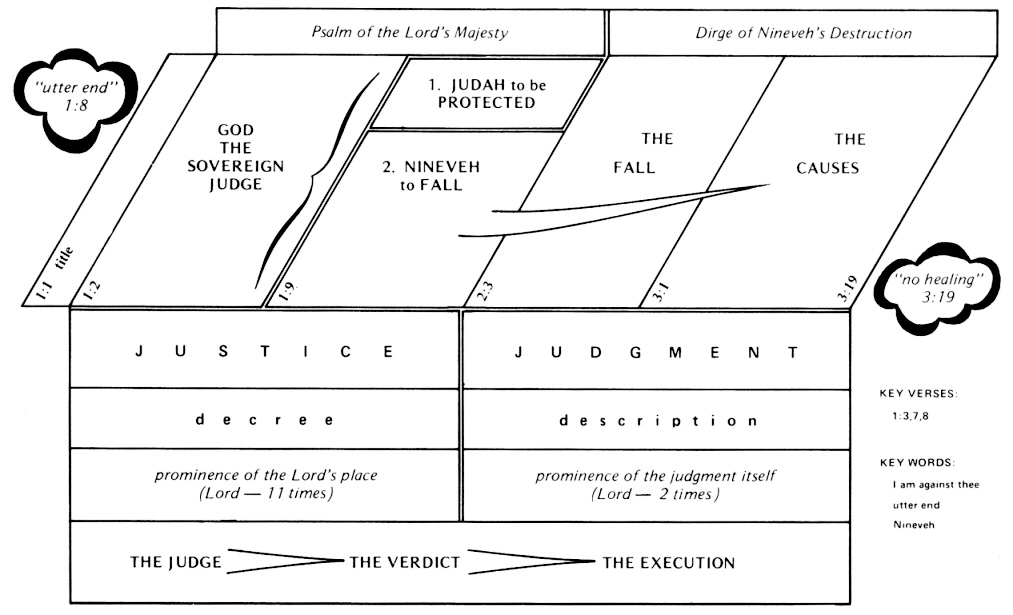
Click chart to enlarge
Chart from recommended resource Jensen's Survey of the OT - used by permission
Nahum Chart from Charles Swindoll
Another Nahum Chart (Other Bible Book Charts)
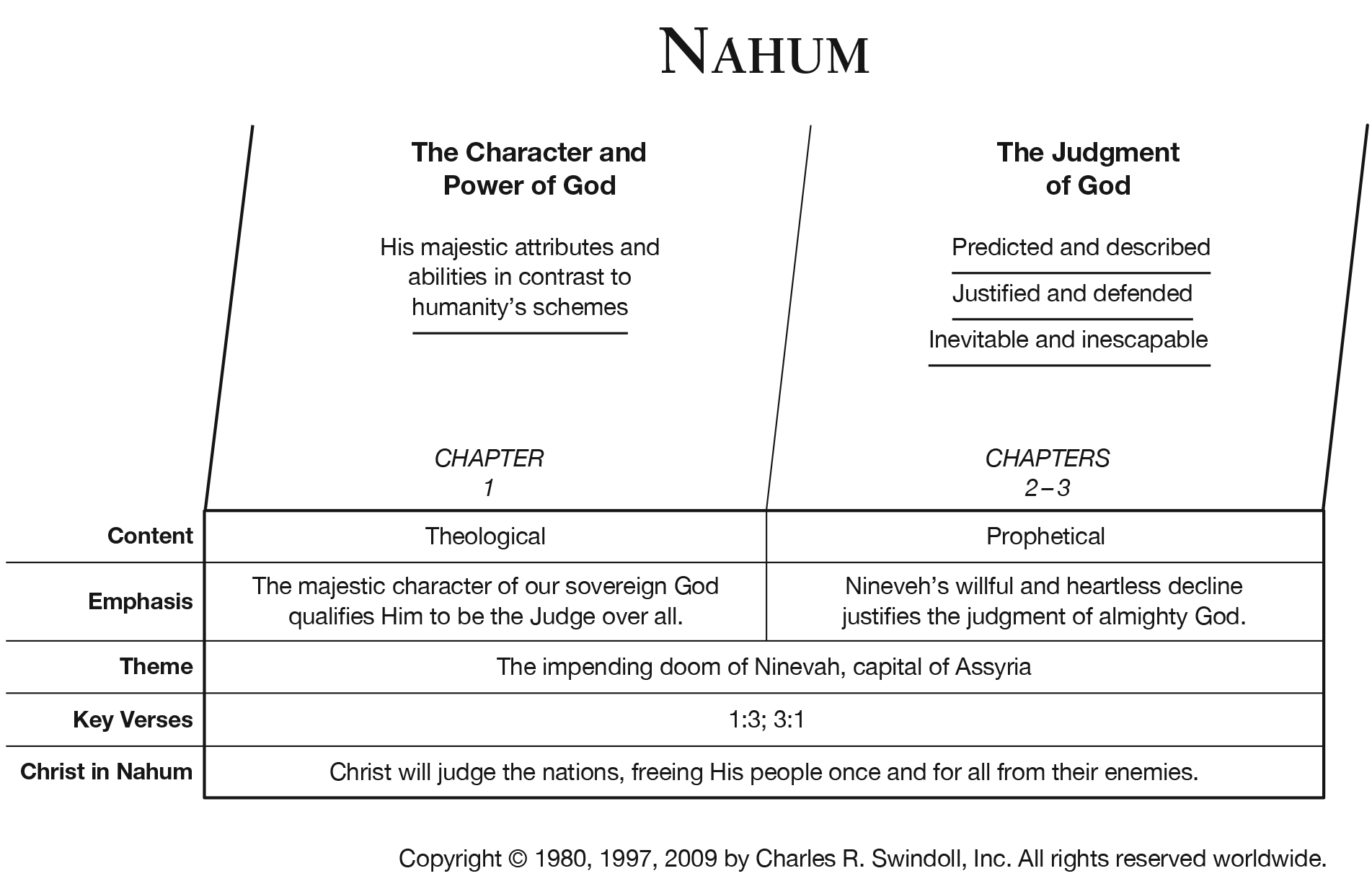


Source: ESV Global Study Bible
MacArthur Study Bible - Intro, Date, Setting, Themes, Interpretative Challenges, Outline
Swindoll Overview - Includes "Listen to Chuck Swindoll’s overview in his audio message" - 27 minutes
KJV Bible Commentary - Intro, Outline and Verse by Verse Commentary
The King James Study Bible Second Edition - short introduction
NKJV Study Bible: New King James Version Study Bible (loads slow) - Introduction, Historical Setting, Purpose, Timeline, Christ in the Scriptures
| NAHUM | ||||
| Character & Power of God |
The Judgment of God |
|||
| Psalm of the Lord's Majesty | Dirge of Nineveh's Destruction | |||
| Theological | Prophetical | |||
|
GOD THE Nah 1:1-8 |
1. Judah to be Protected |
THE FALL Nah 2:3-13 |
THE CAUSES Nah 3:1-19 |
|
|
2. Nineveh to |
||||
|
Destruction of |
||||
| General Principles of Divine Judgment Nah 1:1-8 |
Destruction of Nineveh Deliverance of Judah Nah 1:9-15 |
Description of the Destruction of Nineveh Nah 2:3-13 |
Nineveh's Intractable Sins Nah 3:1-7 |
Nineveh's Inevitable Doom Nah 3:12-19 |
| Verdict of Vengeance Nah 1:1-15 |
Vision of Vengeance Nah 2:1-13 |
Vindication of Vengeance Nah 3:1-19 |
||
| Decree | Description | |||
| JUSTICE | JUDGMENT | |||
| The majestic character of our sovereign God qualifies Him to be the Judge over all |
Nineveh's willful and heartless decline justifies the judgment of God |
|||
|
Key Verses: Nah 1:3,7-8, Nah 3:1, 5-7 |
||||
|
Key Words: See related discussion - key words and marking key words
|
||||
|
JONAH & NINEVEH |
|
| JONAH | NAHUM |
| The Mercy of God | The Judgment of God |
| circa 760BC | circa 660BC |
| Repentance of Nineveh | Rebellion of Nineveh |
| Emphasis on the Prophet | Emphasis on the Prophecy |
| Disobedient Prophet | Obedient Prophet |
| Obedient Nation | Disobedient Nation |
| Deliverance from Water | Destruction by Water |
| The Great Fish | The Great Fulfillment |
| Source: Talk Thru the Bible - Bruce Wilkinson and Kenneth Boa - Recommended | |
| John Phillips has a wonderful alliterative outline of Nahum..
Nahum: Goodbye, Nineveh
|
|

Map of Nineveh

Layout of the City of Nineveh

Assyrian Palaces in Nineveh

Gate of Nineveh

Inside Palace at Nineveh

Relief Hunting Lions from Northern Palace
The Minor Prophets and their Message
- Hosea - The Lord loves Israel despite her sin. 755-15 B.C.
- Joel - Judgment precedes Israel’s future spiritual revival. 835–796* B.C.
- Amos - God is just and must judge sin. 765-50 B.C.
- Obadiah - Sure retribution must overtake merciless pride. 848* B.C.
- Jonah - Divine grace is universal in its sweep. 780-50 B.C.
- Micah - Bethlehem-born Messiah will be mankind’s Deliverer. 740-690 B.C.
- Nahum - Doom is to descend on wicked Nineveh. 630-12 B.C.
- Habakkuk - Justification by faith is God’s way of salvation. 625 B.C. or earlier
- Zephaniah - The Day of the Lord must precede kingdom blessing. 625-10 B.C.
- Haggai - The Lord’s Temple and interests deserve top priority. 520 B.C.
- Zechariah - The Lord will remember His people Israel. 520-15 B.C.; Zech 9–14 after 500 B.C.
- Malachi - Let the wicked be warned by the certainty of judgment. 433-400 B.C.
- All dates are approximate. *The text does not specifically date these prophets. As a result differences of opinion exist concerning the time of their ministries. (from The New Unger’s Bible Handbook)
Christ in All the Scriptures (A M Hodgkin) - The destruction of Nineveh is the one burden of Nahum. The prophet’s name means Comfort, and his word of comfort is for Judah, “The Lord is good, a stronghold in the day of trouble, and He knoweth them that trust in Him” (Nahum 1:7). “Behold upon the mountains the feet of him that bringeth good tidings and publisheth peace,” points forward to the proclamation of the good tidings of the Prince of Peace.
Nineveh. The rest of the prophecy is wholly concerned with Nineveh. The dwelling-place of the prophet is uncertain. It may have been Capernaum, “the city of Nahum.” The time in which he prophesied, from internal evidence, seems to have been between the fall of No-Amon (Thebes) in Upper Egypt, 663 B.C., and the fall of Nineveh, 606 B.C., for he speaks of the one as past (Nahum 3:8–10) and the other as future (Nahum 1:8, 14).
“The prophecy of Nahum is both the complement and the counterpart of the book of Jonah” (Dr. Pussy). God revealed His Name to Moses as showing His two-fold character. “The Lord, the Lord God, merciful and gracious, long-suffering and forgiving iniquity, and that will by no means clear the guilty.” Jonah dwells on the first side of God’s character (Jonah 4:2), Nahum brings out the second. “A jealous God and Avenger is the Lord.... The Lord is slow to anger and great in power, and will not at all acquit the wicked.” God had shown His long suffering to the great city. It had repented at the preaching of Jonah. But though multitudes of individuals were, no doubt, truly turned to the Lord, its repentance as a nation was short-lived, and we find it guilty again of the very sins from which it had repented, violence and insatiable cruelty (Nahum 2:11–12). But beyond all this, Nineveh seems to have been guilty of an open defiance of the living God, as shown in the blasphemous attitude of Sennacherib, and in the allusions of Nahum 1:9, 11.
The doom of the city was delayed two hundred years, but it fell at last, and Nahum’s prophecy was one of unconditional and final destruction. With an over-running flood would God make a full end of her; her name should be utterly cut off, and He would dig her grave. The mustering of the armies round Nineveh, the marshalling of the forces within the city, are described with graphic eloquence.
The destruction of Nineveh was complete. It occurred almost at the zenith of her power. According to Nahum’s prophecy, it came true that the Tigris assisted the attacking army of the Medes and Babylonians in its overthrow (Nahum 2:6), and it was partly destroyed by fire (Nahum 3:13, 15). So deep and so effectually did God dig its grave that every trace of its existence disappeared for ages, and its site was not known. But its excavations since 1841 have been confirming the truth of God’s Word.
The City of Thebes. Among other revelations, we have the actual fall of the city of Thebes, No-Amon, alluded to by Nahum, described on the monuments in the words of Assur-banipal, the Assyrian king, who was its conqueror. He tells us how completely he took the city, carrying off its gold and silver and precious stones, and two lofty obelisks, covered with beautiful sculptures, weighing 2500 talents (over 90 tons), which he raised from their place and transported to Assyria, with a great and countless booty. (Christ in All the Scripture)
A BEAUTIFUL FORESHADOWING OF JESUS OUR PEACE...
Behold, on the mountains the feet of Him
Who brings good news (Lxx = euaggelizo),
Who announces peace!
Nahum 1:15
(cf Isaiah 52:7)
(Quoted in Romans 10:15-note)
Explanation - The following list includes not only commentaries but other Christian works by well known evangelical writers. Most of the resources below are newer works (written after 1970) which previously were available only for purchase in book form or in a Bible computer program. The resources are made freely available by archive.org but have several caveats - (1) they do not allow copy and paste, (2) they can only be checked out for one hour (but can be checked out immediately when your hour expires giving you time to read or take notes on a lengthy section) and (3) they require creating an account which allows you to check out the books free of charge. To set up an account click archive.org and then click the picture of the person in right upper corner and enter email and a password. That's all you have to do. Then you can read these more modern resources free of charge! I have read or used many of these resources but not all of them so ultimately you will need to be a Berean (Acts 17:11+) as you use them. I have also selected works that are conservative and Biblically sound. If you find one that you think does not meet those criteria please send an email at https://www.preceptaustin.org/
Bible Knowledge Commentary - Old Testament - 1608 pages. Dallas Theological Seminary Faculty
Bible Exposition Commentary - Old Testament - Warren Wiersbe - always worth checking
Be amazed By: Wiersbe, Warren W - Hosea, Joel, Jonah, Nahum, Habakkuk, Malachi
Wiersbe's Expository Outlines on the Old Testament by Wiersbe, Warren W
"Even the most difficult Scriptures come alive as Warren Wiersbe leads you book-by-book through the Old Testament and helps you to see the "big picture" of God's revelation. In this unique volume, you will find: • Introductions and/or outlines for every Old Testament book • Practical expositions of strategic chapters • Special studies on key topics, relating the Old Testament to the New Testament • Easy-to-understand expositions that are practical, preachable, and teachable If you have used Dr. Wiersbe's popular BE series, you know how simple and practical his Bible studies are, with outlines that almost teach themselves. If not, you can now discover a wonderful new resource. This work is a unique commentary on every book of the Old Testament. It contains new material not to be found in the BE series.
With the Word - Devotional Commentary - Warren Wiersbe
God's just demands : a commentary on Jonah, Micah and Nahum By: Mackay, John L
Nahum, Zephaniah, Habakkuk; minor prophets of the seventh century B.C. By: Freeman, Hobart E
James Rosscup - A helpful survey by the author of the very fine Introduction to the Old Testament Prophets.
Obadiah, Nahum, Habakkuk and Zephaniah; introduction and commentary By: Eaton, J. H. (John Herbert)
James Rosscup - This is a good exegesis of these books, with much help.
The books of Joel, Obadiah, Jonah, Nahum, Habakkuk, and Zephaniah Published: 1975 John D W Watts
James Rosscup - Watts uses the NEB and gives brief introductions (1–3 pp.) and expositions. He late dates Joel. On problem verses he is usually succinct. Locusts are literal in both chapters, but in the latter case Watts sees them as symbolic of the Lord’s “true Mighty army” (p. 26), whatever that means. He sees a future for Israel in Joel 2:18–27 but leaves vaguely obscure what this means. He refers to use of Joel 2 in Acts 2 but does not discuss the problem of some details not seeming to have been realistically fulfilled in Acts 2. He discusses Joel 3:9ff. in a general haze, and is mediocre among commentaries on these books.
Micah-Malachi Volume: 32 Word Biblical Commentary. Smith, Ralph L
Cyril Barber - Adheres to the format established for this series. Handles textual problems adroitly. Discusses the theological implications of these writings, and provides a variety of insights into the text. A necessary volume.
James Rosscup This quite readable work by a premillennialist covers the overall range of Old Testament prophets, various key subjects under “Prophetism” such as what “to prophesy” means, the prophets’ function, early prophets, Samuel, monarchy prophets, and writing prophets both major and minor. Wood has solid sections on Elijah and Elisha (their spiritual features, episodes, miracles). The Elisha part surveys each miracle. Some sections, as on Hosea, even discuss in some detail leading problems such as whether Gomer was tainted before marriage or became unfaithful later. But sections on the books do not delve into nearly the detail Chisholm gives. Wood does sum up the message well, has an outline on each book, and organizes much on background, character qualities and work of each prophet. He deals with each prophet in relation to the reign he fitted into. Chisholm and Freeman deal more with various problems. Cf. Hobart Freeman, Introd. to the Old Testament Prophets, available now only in some theological libraries.
Nahum, Habakkuk, and Zephaniah : an introduction and commentary By: Baker, David W. (David Weston)
Cyril Barber - Tyndale Old Testament Commentary. Downers Grove, IL: InterVarsity Press, 1988. This readily comprehensible commentary treats with admirable skill God's prediction concerning Nineveh, the Neo-Babylonian empire's chastening of Judah, and Zephaniah's prediction of the Day of the Lord. Approaches the prophetic portions of these books first from an historical point of view, and then from the perspective of amillennial hermeneutics.
James Rosscup - As Baker did in Obadiah in this series, he again presents a brief introduction and a well-studied survey of each book with a good outline, handling most things rather carefully, in a conservative stance. He sees the “Day” of Zephaniah 3 as one of wrath and also hope and help (p. 116), but is very general and vague about when and where and in what form the blessed state will be realized. He is typical of many who do not nail down things in any framework so as to clarify just where he stands.
The books of Nahum, Habakkuk, and Zephaniah New International Commentary on the Old Testament By: Robertson, O. Palmer
Walter C. Kaiser, Jr. "[This] is a first-class theological commentary with unique applications to the present day. His conclusions are balanced and well aimed with regard to the particulars of the immediate historical situation as well as with regard to the overall canonical stance of the ongoing drama of revelation."
James Rosscup - This is a very good conservative work, both perceptive on issues and in lucid style. The writer provides a good translation and commentary, often graphic. He looks at Habakkuk 2:4 from many angles (pp. 173–83), and also clearly catches the picture of living by faith in 3:19 that ties in with 2:4b. To a large extent the explanations of verses are full enough and satisfying. At times, however, questions in serious minds are not dealt with. For example, why make a sweeping statement in Zephaniah 3:12 about no deceit in the future remnant if this is in a state of imperfection and believers still have some deceit when less than absolutely perfect?
Nahum, Zephaniah, Habakkuk; minor prophets of the seventh century B.C. By: Freeman, Hobart E
James Rosscup - A helpful survey by the author of the very fine Introduction to the Old Testament Prophets.
Obadiah, Nahum, Habakkuk and Zephaniah; introduction and commentary By: Eaton, J. H. (John Herbert)
James Rosscup - This is a good exegesis of these books, with much help.
The books of Joel, Obadiah, Jonah, Nahum, Habakkuk, and Zephaniah Published: 1975 John D W Watts
James Rosscup - Watts uses the NEB and gives brief introductions (1–3 pp.) and expositions. He late dates Joel. On problem verses he is usually succinct. Locusts are literal in both chapters, but in the latter case Watts sees them as symbolic of the Lord’s “true Mighty army” (p. 26), whatever that means. He sees a future for Israel in Joel 2:18–27 but leaves vaguely obscure what this means. He refers to use of Joel 2 in Acts 2 but does not discuss the problem of some details not seeming to have been realistically fulfilled in Acts 2. He discusses Joel 3:9ff. in a general haze, and is mediocre among commentaries on these books.
The Minor Prophets : an expositional commentary by Boice, James Montgomery, 292 pages
James Rosscup: The large, two-column pages contain much good material on the relevance of the words for then and for now, dealing with such topics as love, repentance, and sincerity (Hosea 6). A prolonged contemplation of these pages and an application of their principles will produce substantial Christian growth. The author could improve the work by being more definite sometimes in specifying in what framework God will bless Israel in the future (e.g., Hosea 14). Vagueness such as in Joel 2:1-11, where he says the invader is neither locusts nor a human army, is a drawback. Wordiness and wandering in his discussions is another shortcoming, as in using Joel 2:28 to take off into a long discussion of clericalism. He finds fulfillment of Joel 2:28 at Pentecost, yet it would help to point out some aspects that were (Rosscup)
The Minor Prophets - borrow this well done commentary by Charles Feinberg (see also The Major Messages of the Minor Prophets)
Cyril Barber - A forthright study denouncing formalism and heartlessness in worship. Formerly published between 1948 and 1952 in a series of volumes under the title Major Messages on the Minor Prophets, these studies have served well the needs of laypeople for more than thirty years.
Rosscup - A Jewish Christian scholar in Hebrew who taught in Old Testament at Dallas Seminary and later at Talbot Seminary, where he also was Academic Dean, did this exposition of all the minor prophets. Feinberg made biblical prophecy one of his specializations and does a good survey, being aware of interpretive problems, main views, contextual factors and correlation with other Old Testament and New Testament prophetic passages in a premillennial dispensational understanding. This is a I-volume edition of what originally was issued as 5 small volumes.
The Prophets of Israel by Wood, Leon James
James Rosscup - This quite readable work by a premillennialist covers the overall range of Old Testament prophets, various key subjects under “Prophetism” such as what “to prophesy” means, the prophets’ function, early prophets, Samuel, monarchy prophets, and writing prophets both major and minor. Wood has solid sections on Elijah and Elisha (their spiritual features, episodes, miracles). The Elisha part surveys each miracle. Some sections, as on Hosea, even discuss in some detail leading problems such as whether Gomer was tainted before marriage or became unfaithful later. But sections on the books do not delve into nearly the detail Chisholm gives. Wood does sum up the message well, has an outline on each book, and organizes much on background, character qualities and work of each prophet. He deals with each prophet in relation to the reign he fitted into. Chisholm and Freeman deal more with various problems. Cf. Hobart Freeman, Introd. to the Old Testament Prophets, available now only in some theological libraries.
Enjoying the Minor Prophets - a devotional commentary - By: MacDonald, William - same author of Believer's Bible Commentary (see note)
Hearing God's voice above the noise - The Twelve Minor Prophets By: Briscoe, D. Stuart
The Layman's Bible commentary By: Kelly, Balmer H. (Micah through Malachi)
Interpreting the Minor Prophets By: Chisholm, Robert B - conservative, premillennial.
James Rosscup - This well-informed survey is by a professor of Old Testament studies, Dallas Seminary, who wrote on Hosea and Joel in the Bible Knowledge Commentary. Chisholm looks broadly at each prophet’s structure, message, doctrinal themes, literary and rhetorical features. After a brief survey of overall themes—sin, judgment, salvation—he takes up each prophet from Hosea to Malachi successively. On long-range prophecy he is presumably premillennial, but in several texts where one would expect a commitment, he keeps things so vague that one finds no distinct word as to when the fulfillment will come (Hosea 3, 14; Joel 3:9ff.; Zechariah 14, etc.). He surveys each book section by section with much that helps, dealing briefly with main problems. At the end of each survey of a book he sums up points of theology. He views Joel 2:1–11 as meaning a human army but is not distinct on what army and when. The work is good but general. The reader who has the Bible Knowledge Commentary from Dallas Seminary would already have the books covered in greater premillennial specificity in many cases.
Understanding the Old Testament by Scripture Union - All 12 minor prophets. 100 pages.
James Rosscup - This succinct effort gets directly at issues, as in giving three views on what Gomer was when Hosea married her, and views on the woman Hosea took in 3:1. He is fuzzy on what the future of Israel will be (1:10; 2:16–23 etc.) but a bit clearer on 3:5 (p. 7; cf. p. 20). Sometimes he is clear, sometimes vaguely general, as on the heavenly signs in Joel 2. He sees Amos 9:11–15 as not fulfilled literally in such aspects as agricultural prosperity, but figuratively, as if 9:13b proves his view. Reference, he feels, is to the New Jerusalem. Strangely, he also sees Zechariah 14:20–21 as in the New Jerusalem, after describing the verses before where imperfection is evident. Often, though, his work gives the lay reader a good survey without getting bogged down.
Twelve voices for truth confronting a falling world with hope : a study of the minor prophets By: Hayford, Jack W
Thru the Bible with J. Vernon McGee - Proverbs - Malachi
Every prophecy of the Bible: Walvoord, John F
Explore The Book - pdf J.Sidlow Baxter Ezekiel to Malachi
Note: The first 3 resources have no time restriction and allow copy and paste function:
(1) KJV Bible Commentary - Hindson, Edward E; Kroll, Woodrow Michael. Over 3000 pages of the entire OT/NT. Well done conservative commentary that interprets Scripture from a literal perspective. Pre-millennial. User reviews - it generally gets 4/5 stars from users.
Very well done conservative commentary that interprets Scripture from a literal perspective user reviews
The King James Version Bible Commentary is a complete verse-by-verse commentary. It is comprehensive in scope, reliable in scholarship, and easy to use. Its authors are leading evangelical theologians who provide practical truths and biblical principles. Any Bible student will gain new insights through this one-volume commentary based on the timeless King James Version of the Bible.
(2) The King James Study Bible Second Edition 2240 pages (2013) (Thomas Nelson) General Editor - Edward Hindson with multiple contributing editors. Pre-millennial. See introduction on How to Use this Study Bible.
(3) NKJV Study Bible: New King James Version Study Bible (formerly "The Nelson Study Bible - NKJV") by Earl D Radmacher; Ronald Barclay Allen; Wayne H House. 2345 pages. (1997, 2007). Very helpful notes. Conservative. Pre-millennial.
The MacArthur study Bible : new King James version - John MacArthur
ESV study Bible - Excellent resource but not always literal in eschatology and the nation of Israel
NIV Study Bible - (2011) 2570 pages - Use this one if available as it has more notes than edition below. This resource has been fully revised in 2020.
HCSB Study Bible : Holman Christian Standard Bible - General Editor Jeremy Royal Howard (2010) 2360 pages. Conservative. Good notes. Include Holmans excellent maps. One hour limit
Life Application Study Bible : New Living Translation. Has some very helpful notes
NLT Study Bible (Illustration Version)
The Living Insights Study Bible : New International Version - Charles Swindoll. Notes are good but somewhat sparse and not verse by verse.
The David Jeremiah study bible - (2013) 2208 pages. Logos.com - "Drawing on more than 40 years of study, Dr. David Jeremiah has compiled a legacy resource that will make an eternal impact on generations to come. 8,000 study notes. Hundreds of enriching word studies"50+ Essentials of the Christian Faith" articles."
The Experiencing God Study Bible: the Bible for knowing and doing the will of God - Blackaby, Henry (1996) 1968 pages - CHECK THIS ONE! Each chapter begins with several questions under the title "PREPARE TO MEET GOD." Then you will interesting symbols before many of the passages. The chapter ends with a "DID YOU NOTICE?" question. This might make a "dry chapter" jump off the page!
NIV archaeological Study Bible (2005) 2360 pages
The Ryrie study Bible - Charles Ryrie (1978) 2142 pages. Conservative.
The Defender's Study Bible : King James Version by Morris, Henry M.
Wycliffe Bible Commentary - Charles Pfeiffer - 1560 pages (1962). Less detailed than the KJV Bible Commentary. Conservative. Notes are generally verse by verse but brief.
Rosscup - Conservative and premillennial scholars here have been experts in their fields. The work contains brief introductions and attempts to give a verse-by-verse exposition, though it does skip over some verses. The treatments vary with the authors, but as a whole it is a fine one-volume commentary for pastors and students to use or give to a layman. Outstanding sections include, for example: Whitcomb on Ezra-Nehemiah-Esther; Culver on Daniel; Ladd on Acts; Harrison on Galatians; Johnson on I Corinthians; and Ryrie on the Johannine Epistles.
Believer's Bible Commentary - OT and NT - MacDonald, William (1995) 2480 pages. Conservative. Literal. Often has very insightful comments. John MacArthur, says "Concise yet comprehensive - the most complete single-volume commentary I have seen." Warren Wiersbe adds "For the student who is serious about seeing Christ in the Word." One hour limit.
James Rosscup - This work, originally issued in 1983, is conservative and premillennial, written to help teachers, preachers and people in every walk of life with different views, explanation and application.
MISCELLANEOUS RESOURCES
IVP Background Commentary - OT - John Walton
Zondervan Atlas of The Bible By: Umair Mirza
Dictionary of Biblical Imagery - free for use online with no restrictions (i.e., you do not need to borrow this book). Editors Leland Ryken, J C Wilhoit, Tremper Longman III - This is a potential treasure chest to aid your preaching and teaching as it analyzes the meaning of a host of Biblical figures of speech. Clue - use the "One-page view" which then allows you to copy and paste text. One downside is there is no index, so you need to search 3291 pages for entries which are alphabetical.
Dictionary of deities and demons in the Bible (DDD) - 950 pages (1995) Read some of the 65 ratings (4.8/5 Stars). A definitive in depth resource on this subject. Very expensive to purchase.
Unger's bible handbook : a best-selling guide to understanding the bible by Unger, Merrill F
Halley's Bible Handbook Henry H. Halley - (2000) 2720 pages (much larger than original edition in 1965 and no time limit on use). (Halley's Bible handbook : an abbreviated Bible commentary - one hour limit 1965 872 pages)
Rosscup - A much-used older evangelical handbook bringing together a brief commentary on Bible books, some key archaeological findings, historical background, maps, quotes, etc. It is helpful to a lay Bible teacher, Sunday School leader, or pastor looking for quick, pertinent information on a Bible book. This is the 72nd printing somewhat revised. Halley packed in much information. Unger’s is better overall, but that is not to say that Halley’s will not provide much help on basic information.
The Shaw Pocket Bible Handbook - Editor - Walter Elwell (1984) 408 pages.
"This hardback is small in size but packed full of content: Brief summaries of every book of the bible, cultural, archaeological and historical info, word definitions, pictures, maps and charts." Worth checking!
Eerdmans' Handbook to the Bible (1983) 688 pages
The New Unger's Bible Dictionary by Unger, Merrill Frederick, 1909-
Every prophecy of the Bible: Walvoord, John F
The Apologetics Study Bible Understand Why You Believe - Comments from over 90 leading apologists, including: Ted Cabal, Lee Strobel, Chuck Colson, Norm Geisler, Josh McDowell, Albert Mohler, J.P. Moreland, see reviews. Here is a review from The Christian Reviewer.
Baker Encyclopedia of Christian Apologetics by Geisler, Norman
Cyril Barber - This is a goldmine of valuable information! Well-indexed. Covers everything from “Absolute Truth” to “Zen Buddhism.” Extensive articles on such topics as “Agnosticism,” “Annihilationism,” “Bible, Alleged Errors in,” “Gnosticism,” “Miracles in the Bible,” “New Testament Manuscripts,” and “Objections to Resurrection,” “Big Bang Theory,” “Edward John Carnell,” “Christ, Death of,” are only a few of the insightful essays in this masterful work. Each article has been written in an understandable way, and a 28 page bibliography forms a valuable source for further research. An excellent resource.
Evidence That Demands A Verdict - Josh McDowell
The New Evidence that Demands a Verdict - Josh McDowell
More Than A Carpenter - A modern classic by Josh McDowell - Great resource for those who are skeptical that Jesus is fully God, fully Man.
Encyclopedia of Bible difficulties by Archer, Gleason L - or here with no restrictions
Hard Sayings of the Bible - Walter Kaiser
When Critics Ask - Norman Geisler
Today's Handbook of Bible Times & Customs by Coleman, William L
Nelson's New Illustrated Bible Manners & Customs : How the People of the Bible Really Lived by Vos, Howard Frederic
Manners & Customs of the Bible (The New Manners and Customs) Freeman, James M., 1827-1900 Published 1998
The New Manners and Customs of Bible Times: Gower, Ralph, 1933- Published 1987
Manners and Customs of Bible lands By: Wight, Fred Published 1983
Manners and Customs in the Bible By: Matthews, Victor Harold Published 1991
Handbook of life in Bible times By: Thompson, J. A. (John Arthur), 1913-2002 Published 1986
Illustrated dictionary of Bible manners and customs By: Deursen, A. van (Arie), 1891-1963 Published 1982
The Illustrated Guide to Bible Customs & Curiosities by Knight, George W.
Orientalisms in Bible lands, giving light from customs, habits, manners, imagery, thought and life in the East for Bible students By: Rice, Edwin Wilbur, 1831-1929 Published 1910
Bible manners and customs By: Mackie, G. M. 1854-1922 Published 1898
Teach it to your children : how kids lived in Bible days By: Vamosh, Miriam Feinberg, author
Everyday life in Bible times : work, worship, and war By: Embry, Margaret Published 1994
Everyday living : Bible life and times : fascinating, everyday customs and traditions from the people of the Bible Published 2006
The Land and the Book; or, Biblical illustrations drawn from the manners and customs, the scenes and scenery, of the Holy land By: Thomson, William M. (William McClure), 1806-1894 Published 1880
Eastern manners illustrative of the Old Testament history By: Jamieson, Robert, 1802-1880 Published 1838
Scripture manners and customs : being an account of the domestic habits, arts, etc., of Eastern nations mentioned in Holy Scripture Published 1895
Theological Wordbook of the Old Testament by Harris, R. Laird - (5/5 Stars) One of the best OT lexicons for studying Hebrew words.
Here is another link to the TWOT which has no time limit on use and does allow copy and paste. Can be downloaded as PDF.
Vine's Expository Dictionary of Old Testament and New Testament Words - Online pdf
Hebrew Honey: a simple and deep word study of the Old Testament - 330 pages. The definitions have more of a devotional flavor. For example, see the descriptive definition for "Abide" (Hebrew - gur).
Expository Dictionary of Bible Words by Richards, Larry, It does not go into great depth on the Greek or Hebrew words but does have some excellent insights.
So That's What it Means (Theological Wordbook) - Formerly titled "Theological Wordbook" edited by Charles Swindoll. It is now under this new title So That's What it Means and can be borrowed - it is more like a dictionary than a lexicon but the comments are superb! The contributors include Donald Campbell, Wendell Johnston, John Witmer, John Walvoord
Nelson's Expository Dictionary of the Old Testament by Unger, Merrill. Indexed by English word and then any related Hebrew nouns or verbs. Definitions are solid and geared to the lay person.
Synonyms of the Old Testament-Robert Girdlestone
Recommended - Numerous quotes from excellent expositors and commentaries.
- When God is Your Enemy
- Commentary on the Book of Nahum (Pdf)
- Commentary on the Book of Nahum (Online Version)
Excerpt -
DEVOTIONAL QUESTIONS:
1) What attributes does the Lord possess and manifest (like jealous and avenging and wrathful) that we as believers do not possess . . . even though we are growing into Christlikeness?
2) How am I doing at loving my enemies and praying for them?
3) In what ways do people tend to minimize or underestimate the wrath of God?
4) Am I secure in taking refuge in the Lord as my stronghold? Am I eagerly awaiting the return of the Lord and the good news of His triumph over all enemies in the last day?QUOTES FOR REFLECTION: (Ed: the quotes below are just a sample of Paul Apple's well selected quotes from other respected resources)
Stedman: Now the attribute which the prophet Nahum was given to reveal was God's anger. There is no doctrine quite as repugnant to people today as that of the anger of God. This is one doctrine which many would like to forget. There are some who picture God as a kindly gentleman with a merry twinkle in his eye who cannot bear the thought of punishing anyone or judging anyone. Nevertheless, it was Nahum's task to unfold the anger of God and in this prophecy the God of Sinai flashes forth in awful fury, a God before whom man must stand silent and trembling. You cannot read this prophecy without sensing something of the solemnity of this tremendous picture of God. . . The book of Nahum comes some one hundred years after the prophecy of Jonah. During this time, Nineveh had repented of its repentance, and had begun to do the same things again that called forth the threat of judgment through the prophet Jonah. The prophet Nahum was sent to minister to the southern kingdom of Judah at the time of the invasion of the Assyrian king Sennacherib. King Sennacherib who came from the capital city of Syria, Nineveh, invaded Israel at the time of the prophet Isaiah, and it was from this great city in the north that the armies of the Syrians frequently came against the land of Judah and of Israel. But God moved to protect his people and met and destroyed these enemies of the king overnight. Nahum means "consolation," or "comfort," and as the Assyrian army was spread out around the city of Jerusalem, the prophet was given a message of consolation. You can imagine how consoling it was when the armies were right there with their terrible reputation as ruthless warriors, burning and destroying, raping and pillaging, killing the children and sparing no one, to have this prophet stand up in Jerusalem and declare to them that God would destroy Nineveh, the capital city of their enemies. . . Jealousy, that burning zeal for a cause felt so deeply in the heart. This is not the selfish, petty jealousy we exhibit sometimes, but God's overwhelming concern for what he loves. His vengeance, or retribution; his wrath, that towering anger, the blackness of it, the darkness of it, is described here. The word for anger is the word that literally means "heavy breathing," or "hot breathing." And the word for indignation literally means "foaming at the mouth"! You can see how picturesque these words are. The word fierceness in Hebrew literally means "heat," and the word fury means "burning." And all this to describe a God who is terrible in his wrath, moved at last to the point of pouring out his wrath upon that which has awakened it. God in a white-hot passion, burning with a terrible, blistering rage.
Boice: There are three reasons why God was going to destroy Nineveh, according to this prophecy. Two have already been suggested: first, God is a jealous God (He will have no other gods before Him, Exod. 20:3-6), and second, He is an avenging God (the God of all the earth will do right, Gen. 18:25). The prophet gives another reason in the second half of chapter 1 (vv. 7-15); God’s goodness to His people. They have been abused by Nineveh. Now God is going to rise up and make an end to the oppressor.
Constable: However, Yahweh was not out of control in His anger. His anger was slow in coming to the boiling point (cf. Exod. 34:6; Num. 14:18). He waited as long as possible to pour out His judgment (cf. 2 Pet. 3:9).21 This accounts for His allowing the Assyrians to abuse the Israelites for so long. Patience is sometimes a sign of weakness, but not so with the Lord. He is also great in power, which makes the prospect of His releasing His anger terrifying (cf. Deut. 8:17-18). He will not pass over any guilty person and leave him or her unpunished but will bring them to judgment eventually. Whirlwinds and storms manifest this angry aspect of God's character and His power (cf. Job 9:17). He is so great that the clouds are for Him what the dust onthe ground is for humans (cf. 2 Sam. 22:10; Ps. 18:9). The great clouds overhead are like dust to the great God who resides in the heavens.
- Nahum Thumbnail Pictures
- Nahum Google Images
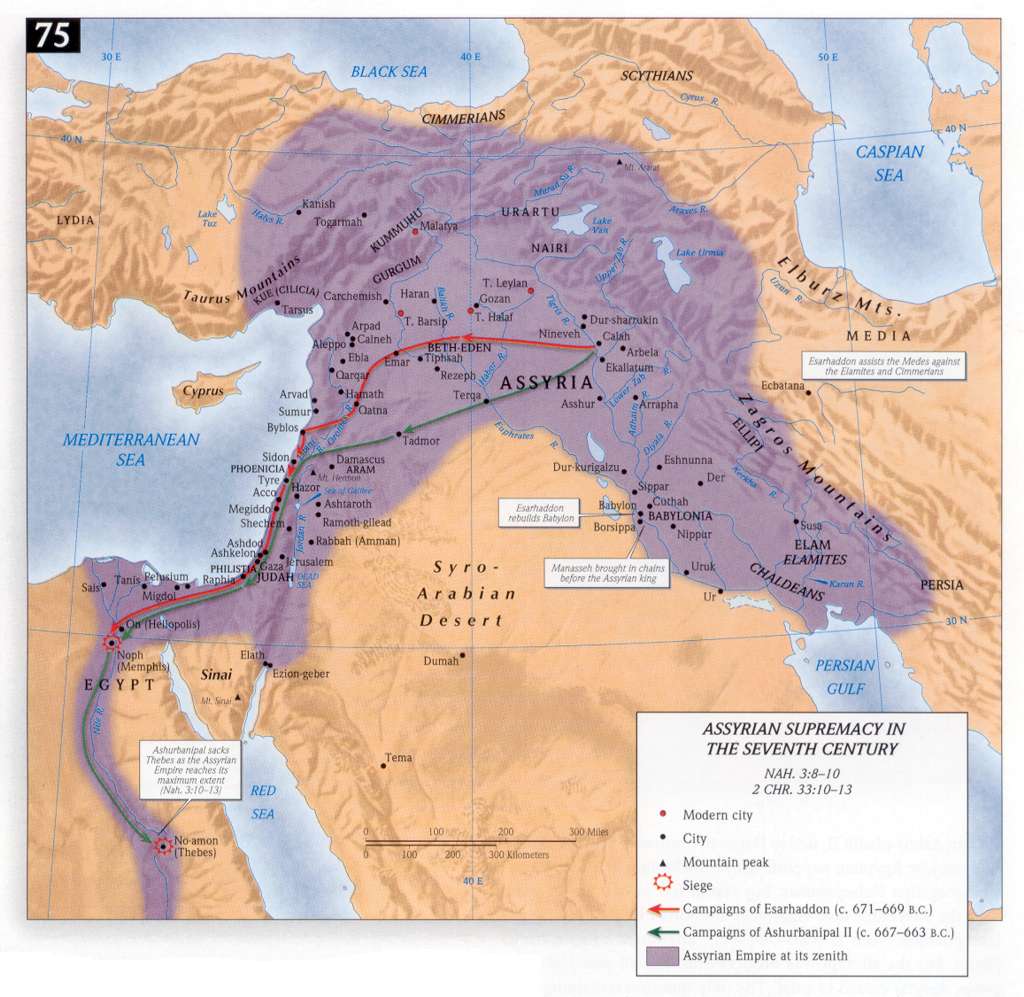
- Map of Assyria and Nineveh - Nahum 3:8-10, 2 Chronicles 33:10-13
- Nahum Fulfillments of Nahum’s Prophecies
- Nahum 1 Nahum the Undertaker of a Nation!
- Nahum 2 Charge!!!
- Nahum 3 Nineveh’s Nose-Dive!
Book Overview - well done - includes a few notes on individual verses
- Nahum 1:1 The Book of the Vision
- Nahum 1:2 God is Jealous
- Nahum 1:3 The Lord is slow to anger
- Nahum 1:3-6 He Rebukes the Sea
- Nahum 1:6 Who Can Stand Before His Indignation?
- Nahum 1:7 The Lord is Good
- Nahum 1:7-8 He Knows those who trust Him
- Nahum 1:9-10 What do we imagine against the Lord?
- Nahum 1:11-14 There is One Come out of thee...
- Nahum 1:15 Behold Upon the Mountains the Feet of Him Who Brings Good News
- Nahum 2:1-2 He that dashes in pieces...
- Nahum 2:3-13 The Shield of His Mighty men is made red
- Nahum 2:13 Behold I was against thee
- Nahum 3:10 Yet was she carried away, she went into captivity
- Nahum 3:17 Which camp in the hedges in the cold day
HINT: Click here to Scroll Bible text synchronized with Constable's notes. Very useful feature!
Note: This resource is listed because it has numerous commentary notes that relate to the OT Prophetic Books
- Israelology: Part 1 of 6 Introduction: Definition of Terms
- Israelology: Part 2 of 6 Israel Present (Note: Article begins on Page 2)
- Israelology: Part 3 of 6 Israel Present (Continued)
- Israelology: Part 4 of 6 - Israel Future (Part One)
- Israelology: Part 5 of 6 - Israel Future (Part Two)
- Israelology: Part 6 of 6 Other Relevant Topics - Illustrations of Israel (including marriage)
- Introduction
- Assyrian History
- The Purpose of God in Dealing with the Assyrian Oppressor
- Nahum 1:1 The Superscription
- Nahum 1:2-6 Jehovah's Majesty in Judgment
- Nahum 1:7-13 His People Comforted and Assured
- Nahum 1:14-15 The Judgment of the Assyrian and the Result
- The Overthrow, Plundering and Destruction of Nineveh
- Nahum 2:1-10 The Capture of Nineveh Announced and Described
- Nahum 2:11-13 The Completeness of the Judgment
- Nineveh's Guilt and Well-Deserved Judgment
- Nahum 3:1-7 The Great Wickedness of Nineveh
- Nahum 3:8-13 Her Fate Like the Fate of No-Amon
- Nahum 3:14-19 Her Well-Deserved and Complete Judgment
Caveat: Be an Acts 17:11 Berean (note): Not always literal, especially on prophetic passages (see example)
James Rosscup writes "This 1858 work supplies much help on matters of the text, word meaning, resolving some problems, etc. Some have found it one of the most contributive sources in getting at what a text means." (Commentaries for Biblical Expositors: An Annotated Bibliography of Selected Works)
Be cautious (Acts 17:11-note): Does not always interpret the Scripture literally and sometimes replaces Israel with the Church (note)
(Click example of his interpretative approach which is often allegorical) (Or another example)
Excerpt on Nahum 1:10 - They are as thorns that entangle one another, and are folded together. They make one another worse, and more inveterate against God and his Israel, harden one another’s hearts, and strengthen one another’s hands, in their impiety; and therefore God will do with them as the husbandman does with a bush of thorns when he cannot part them: he puts them all into the fire together. (2.) They are as drunken men, intoxicated with pride and rage; and such as they shall be irrecoverably overthrown and destroyed. They shall be as drunkards, besotted to their own ruin, and shall stumble and fall, and make themselves a reproach, and be justly laughed at. (3.) They shall be devoured as stubble fully dry, which is irresistibly and irrecoverably consumed by the flame. The judgments of God are as devouring fire to those that make themselves as stubble to them
Best "devotional flavor" commentary on the Minor Prophets
Note: JFB is one of the more literal, conservative older commentaries (prior to 1900). Sample excerpt of eschatological (prophetic, apocalyptic) passage Zechariah 14:2 - "gather all nations, etc. — The prophecy seems literal (compare Joel 3:2). If Antichrist be the leader of the nations, it seems inconsistent with the statement that he will at this time be sitting in the temple as God at Jerusalem (2Thessalonians 2:4); thus Antichrist outside would be made to besiege Antichrist within the city. But difficulties do not set aside revelations: the event will clear up seeming difficulties (Ed: Interesting statement!). Compare the complicated movements, Daniel 11:1-45-note." Comment on Zech 14:11 - "no more utter destruction — (Jer 31:40). Literally, “no more curse” (Rev 22:3-note; compare Malachi 4:6-note), for there will be no more sin. Temporal blessings and spiritual prosperity shall go together in the millennium: long life (Isaiah 65:20-22), peace (Isaiah 2:4-note), honor (Isaiah 60:14-16), righteous government (Isaiah 54:14; Isaiah 60:18). (Zechariah 14 - Commentary Critical and Explanatory on the Whole Bible)
UNABRIDGED VERSION OF Jamieson, Fausset, Brown
See caveat regarding this commentary
Rosscup - This is the best older, overall treatment of a critical nature on the Old Testament Hebrew text verse by verse and is a good standard work to buy. The student can buy parts or the whole of this series. Sometimes it is evangelical, at other times liberal ideas enter...In prophecy it is amillennial. (Commentaries for Biblical Expositors: An Annotated Bibliography of Selected Works).
- Complete Commentary of Nahum on one zip file
- Nahum and Habakkuk - Introductory Notes, Outlines - Pdf
- Nahum - Intro
- Nahum - Eyewitness Account.
- Nahum - Message to Nineveh
- Nahum 1 Intro
- Nahum 1:1-2 Commentary
- Nahum 1:3 Commentary
- Nahum 1:4-5 Commentary
- Nahum 1:6 Commentary
- Nahum 1:7-8 Commentary
- Nahum 1:9-10 Commentary
- Nahum 1:11 Commentary
- Nahum 1:12 Commentary
- Nahum 1:13-14 Commentary
- Nahum 1:15 Commentary
- Nahum 2 Intro
- Nahum 2:1-2 Commentary
- Nahum 2:3 Commentary
- Nahum 2:4 Commentary
- Nahum 2:5-6 Commentary
- Nahum 2:7-10 Commentary
- Nahum 2:11-13 Commentary
- Nahum 3:1-2 Commentary
- Nahum 3:3-4 Commentary
- Nahum 3:5-6 Commentary
- Nahum 3:7 Commentary
- Nahum 3:8 Commentary
- Nahum 3:9-12 Commentary
- Nahum 3:13-17 Commentary
- Nahum 3:18-19 Commentary
| Nahum 1 | Nahum 2 | Nahum 3 |
The Theological Journal Library on galaxie.com - An annual $50 or monthly $5 subscription (click here) is required to view the entire article but will give you access to literally thousands of conservative articles. Click the following links to search by topic, author, or bible reference.
For example...
- Nahum’s Rhetorical Allusions To The Neo-Assyrian Lion Motif-Gordon Johnston
- Nahum’s Rhetorical Allusions to Neo-Assyrian Conquest Metaphors - Gordon Johnston
- Assyrian Brutality - Bob Boyd
ARTICLES ONLINE
- Literary Analysis and the Unity of Nahum by Richard D. Patterson
- Literary Look at Nahum, Habakkuk, and Zephaniah by Richard D. Patterson
- Nahum: Poet Laureate Of The Minor Prophets - Richard D. Patterson
- Nahum, Nineveh & Those Nasty Assyrians - Gordon Franz (Charles Savelle comments: Although this article is a few years old, Gordon Franz has a nice discussion on Nahum, Nineveh, and the Assyrians. This article provides helpful background not only on the book of Nahum, but also Jonah as well.)
- Plundering the Lion's Den - A Portrait of Divine Fury - Nahum 2:3-11 - J Daryl Charles
- A Perfectly Broken Acrostic in Nahum 1? - Thomas Renz
- Nahum, Nineveh, Elkosh - Oswald Allis
- The Book of Nahum - Paul Haupt (Or here)
- The Book of Nahum as a Liturgical Composition: A Prosodic Analysis-Duane Christensen
- The Book of Nahum: The Question of Authorship within the Canonical Process-Duane Christensen
- Jonah and Nahum: English Bible - 96 pages - Robert V McCabe
- The West as Nineveh: How Does Nahum's Message of Judgment Apply to Today? - 31 page article - J Woods
- Nah 1:1
- Nah 1:2–14
- Nah 1:2–3
- Nah 1:2
- Nah 1:3
- Nah 1:3–6
- Nah 1:4
- Nah 1:5
- Nah 1:6
- Nah 1:7
- Nah 1:8
- Nah 1:9–14
- Nah 1:9
- Nah 1:11
- Nah 1:12–14
- Nah 1:12
- Nah 1:13
- Nah 1:14
- Nah 1:15–2:13
- Nah 1:15
- Nah 2:1
- Nah 2:2
- Nah 2:3
- Nah 2:4
- Nah 2:5
- Nah 2:6
- Nah 2:7
- Nah 2:8
- Nah 2:10
- Nah 2:11–13
- Nah 2:11
- Nah 2:13
- Nah 3
- Nah 3:1–7
- Nah 3:1
- Nah 3:2–3
- Nah 3:4
- Nah 3:5
- Nah 3:6
- Nah 3:7
- Nah 3:8
- Nah 3:9
- Nah 3:11
- Nah 3:12
- Nah 3:13
- Nah 3:14
- Nah 3:15
- Nah 3:16
- Nah 3:17
- Nah 3:18–19
- Nah 3:18
- Nah 3:19
- Minor Prophets Study Guide - Questions/Lessons Learned - scroll down to page 67
W J BEECHER
- Walter Kaiser-Preacher's Commentary (Micah through Malachi) - conservative, literal, futuristic- excellent for preaching - Rosscup on Kaiser: A careful evangelical gives contemporary outlines usable to pastors. He has occasional illustrations and serious explanation of the text. He is premillennial, as on Zechariah 14, and packs in much expositional help, relating it strategically to life. (Commentaries for Biblical Expositors: An Annotated Bibliography of Selected Works)
- James Montgomery Boice - conservative, literal, futuristic - excellent for preaching Rosscup comments: The large, two-column pages contain much good material on the relevance of the words for then and for now, dealing with such topics as love, repentance, and sincerity (Hosea 6). A prolonged contemplation of these pages and an application of their principles will produce substantial Christian growth. The author could improve the work by being more definite sometimes in specifying in what framework God will bless Israel in the future (e.g., Hosea 14). Vagueness such as in Joel 2:1-11, where he says the invader is neither locusts nor a human army, is a drawback. Wordiness and wandering in his discussions is another shortcoming, as in using Joel 2:28 to take off into a long discussion of clericalism. He finds fulfillment of Joel 2:28 at Pentecost, yet it would help to point out some aspects that were (Rosscup)
- Micah, Nahum, Habakkuk, Zephaniah- Exegetical and Theological Exposition-New American Commentary- Ken Barker - conservative, literal, futuristic
- Exploring the Minor Prophets John Phillips - Rosscup on John Phillips - A respected popular expositor on a number of biblical books here has two introductory chapters, then a chapter of about 20–30 pp. on each prophet (50 on Zech.). Several charts aid readers, and a detailed outline runs before each exposition. The exposition is in general surveys of sections, at times taking a view on a main problem. In Hosea 1:2, he feels that God had Hosea marry an immoral woman but Phillips offers no help on the moral issue. Phillips is premillennial, seeing Israel’s future kingdom blessings as in the Millennium after Christ’s Second Coming (Hosea 3:5; Joel 3:14ff; Amos 9:15; Zeph. 3:9ff; Zech 2:10–13; 14:1–21). In Mal. 2:15 he has “one” refer to God making husband and wife into one, and in Mal 4:5 he thinks the Elijah will be fulfilled in one of the two witnesses in Rev 11:3-13-note. The work helps on broad coverage, and is quite readable for preachers, church teachers, students and lay people wanting a general devotional sweep. (Ibid)
- Zephaniah (Nahum, Habakkuk) Commentary - Richard Patterson - essentially verse by verse (free online!) - Recommended - Rosscup says "This is an outstanding conservative, detailed work backed by scholarly awareness and expertise. Comments reflect fine-tuned ability in the Hebrew text, philology, exegesis, history, and literature. Patterson has premillennial convictions in the final verses of Zephaniah. He shows the shaky reasoning of critical arguments against the unity of Nahum, and defends unity of Nahum and Habakkuk. In a long Excursus he defends New Testament uses of Habakkuk 2:4-note (pp. 21–23), But some will doubt that he captures the significance of the picture of a hind in Habakkuk 3:19-note when he sees only swiftness ascending and gracefully gliding (262–63). But in most details he is excellent, and the work is well worth the cost and time. (Commentaries for Biblical Expositors: An Annotated Bibliography of Selected Works)
- Ligonier's Top 5 - Caveat Emptor! some are amillennial and not literal/futuristic
- Nahum Articles - Easton, Smith, ISBE
- American Tract Society Nahum
- Bridgeway Bible Dictionary Nahum
- Baker Evangelical Dictionary Nahum, Theology of
- Easton's Bible Dictionary Nahum, Book of Nahum
- Fausset Bible Dictionary Nahum, the Book of Nahum (2) Nahum (1)
- Holman Bible Dictionary Nahum
- Hitchcock Bible Names Nahum
- Hastings' Dictionary of the Bible Nahum
- Hastings' Dictionary of the NT Nahum
- Morrish Bible Dictionary Nahum
- Hawker's Poor Man's Dictionary Nahum
- Watson's Theological Dictionary Nahum
- 1911 Encyclopedia Britannica Nahum
- International Standard Bible Encyclopedia Nahum, the Book of Nahum
- Kitto Biblical Cyclopedia Nahum
- McClintock and Strong's Bible Encyclopedia Nahum
- The Nuttall Encyclopedia Nahum
- 1901 Jewish Encyclopedia Nahum
- Dr Gene Getz - brief (5-15') pithy, practical videos by which present powerful principles for life application! Instructions.
Nahum 1:1-6 God's Wrath: We must never take God's patience for granted, assuming He will not judge sinful humanity simply because it has not happened.
Nahum 1:7-3:19 God's Patience: When tempted to believe God is cruel and lacking in compassion, we should review His extraordinary patience and continual communication, both with His people Israel and with the Gentile nations.
- The Minor Prophets - Nice Overview/Summary of Nahum
Excerpt: Historical and Theological Themes - Nahum forms a sequel to the book of Jonah, who prophesied over a century earlier. Jonah recounts the remission of God’s promised judgment toward Nineveh (Nineveh - Wikipedia), while Nahum depicts the later execution of God’s judgment. Nineveh was proud of her invulnerable city, with her walls reaching 100 ft. high and with a moat 150 ft. wide and 60 ft. deep; but Nahum established the fact that the sovereign God (Nah 1:2–5) would bring vengeance upon those who violated His law (Nah 1:8,14; 3:5–7). The same God had a retributive judgment against evil which is also redemptive, bestowing His loving kindnesses upon the faithful (cf. Nah 1:7,12,13,15; 2:2). The prophecy brought comfort to Judah and all who feared the cruel Assyrians. Nahum said Nineveh would end “with an overflowing flood” (Nah 1:8); and it happened when the Tigris River overflowed to destroy enough of the walls to let the Babylonians through. Nahum also predicted that the city would be hidden (Nah 3:11). After its destruction in 612 B.C., the site was not rediscovered until 1842 A.D.
- Jonah and Nahum: English Bible - Comment: This is a 96 page treatise replete with extensive bibliography, diagrams, and commentary notes - check it out!
- The Fulfillment of the the Prophecies of Nahum against Nineveh - from Evidence that Demands a Verdict
- Minor Prophets - Book Introduction
- Nahum and Habakkuk - Introductory Notes, Outlines
- G Campbell Morgan's devotional/practical thoughts make good fodder for sermon preparation!
- Nahum - Living Messages
Excerpt:
THE LIVING MESSAGE
I. Concerning God
i. To believe in Love is to be sure of His Wrath.
ii. His Wrath must be interpreted by His Love.
II. Concerning Man
i. The Sins against which the Wrath of God proceeds.
a. Pride.
b. Cruelty.
c. Impenitence.
ii. The Conditions of Safety, = "Them that put their Trust in Him.”
Excerpt: Nineveh was to be despoiled of its idols, Nah 1:14; and of its silver and gold, Nah 2:9. This prediction likewise was amply fulfilled. The images of Nineveh (Wikipedia) were swept away, either destroyed or carried off by the conquerors. Enormous amounts of gold and silver were conveyed to Ecbatana by the victorious Medes. Very little of the precious metals have been found in the excavations of recent times. The city was spoiled of all its treasures. The captivity of the inhabitants and their removal to distant provinces were announced, Nah 1:2, 7; 3:18. The place was depopulated and the proud city sank into a mass of ruins and rubbish. It was to disappear and become a perpetual desolation, Nah 1:14; 3:19. For centuries its site has been an arid waste of yellow sand. Every trace of its existence disappeared for ages. Two hundred years after its capture Xenophon, in the retreat of the ten thousand, passed near it, saw the ruins, but knew not what they were, and did not so much as learn the name of Nineveh. Even “garrulous Herodotus,” who visited the spot, had no more to say of it than this: “The Tigris was the river upon which Nineveh formerly stood.” For centuries the only sound heard in its vicinity was the lonely cry of the jackal, and hoarse growl of the hyena. God had said by the mouth of His servant the prophet, “I will make thy grave.” He did. Wide and deep He did dig it; low and deep He buried Nineveh, never more to rise again, save to be gazed at with curious eyes amid dim torchlight by the archaeologist, whose pick and spade have confirmed the Lord’s predictions.
Date - In 3:8–10 the author speaks of the fall of Thebes, which happened in 663BC, as already past. In all three chapters Nahum prophesied Nineveh’s fall, which was fulfilled in 612BC. Nahum therefore uttered this oracle between 663 and 612BC, perhaps near the end of this period since he represents the fall of Nineveh as imminent (Nah 2:1; 3:14,19). This would place him during the reign of Josiah and make him a contemporary of Zephaniah and the young Jeremiah.
Excerpt: OUTSTANDING TEACHINGS:
While God's people had sinned, and GOD in faithfulness had to punish them, still the nations which He used came to know His wrath also, and this was the case with the Assyrian Empire. The collapse of Nineveh and the Assyrian Empire came suddenly. The Medes and Babylonians had besieged the capital for two years when a sudden flood of the Tigris river carried away part of the protecting wall and opened the way for the attacking army to enter and conquer. This was pre-written by Nahum 100 years before. There is a possible reference to the disastrous defeat of Sennacherib as he confronted Jerusalem (2Kings 19:35), in 1:10-13. The untimely end of the king himself is outlined in the following verses.
5. INTERESTING FEATURES:
Ezekiel (Ezek 31:3-14) and Zephaniah (Zeph 2:13-15) besides Jonah concern themselves with Nineveh's fate. The city's walls were 100 feet high and broad enough to drive four spans of chariot horses abreast; there were 1500 watch towers, for defenses. There was never a prophecy more unlikely!
6. KEY TO UNDERSTANDING:
Who but GOD could predict minutely events of such magnitude and infinitude hundreds of years before they came to pass? This is true comfort to those who study prophecy today relating to tomorrow. GOD is faithful.
Excerpt: Theme: The book of Nahum has but one outstanding theme; namely, the destruction of Nineveh. It is a sequel to the message of the prophet Jonah, by whose ministry, the Ninevites were lead to repentance and saved from impending doom. It is evident that they repented of their former repentance, and so gave themselves to idolatry, cruelty, and oppression, that one hundred and twenty years later, Nahum pronounced against them the judgment of GOD in the form of utter destruction. "Nahum's object was to inspire his countrymen, the Jews, with the assurance that, however alarming their position might seem, exposed to the attacks of the mighty Assyrian, who had already carried away the Ten Tribes, yet that not only should the Assyrian fail in his attack on Jerusalem (Isaiah Chs. 36, 37), but Nineveh his own capital would be taken and his empire overthrown; and this not by arbitrary exercise of the Lord's power, but for the iniquities of the city and its people."
- Nahum: Overview - nice chart comparing the two prophets to Nineveh - Jonah and Nahum
- Overview of Minor Prophets
Excerpt: Message: The judgment of Nineveh and the comfort of Judah both reveal the sovereignty, righteousness, and grace of Yahweh.
Purpose: The purpose of Nahum appears to be twofold. First, the book was written to show that God will judge the unrighteous nations. Second, the book was written to comfort God’s people (Judah) by showing them that He will destroy their enemies. As Chisholm notes, “The sovereign Lord, who is the most powerful of all warriors, would avenge the harm done to His covenant people by appropriately and thoroughly judging their Assyrian oppressors.”
Contribution: The major contribution of the Book of Nahum is that it provides clear insight into God’s sovereign right to judge all nations. One might add that Nahum shows how divine judgment can be the source of encouragement.
Excerpt: Why is Nahum so important? Nahum’s singular focus on the impending judgment of Nineveh offers a continuation of the story that began in Jonah. Sometime around 760 BC, God sent Jonah to Nineveh to preach repentance and hope to the Assyrian people, a message they heard and adopted—at least for a time. One hundred years later, during the time of Nahum, the Assyrians had returned to their bullish ways, conquering the northern kingdom of Israel and lording their power over Judah in the south (2Ki 17:1–6; 18:13–19:37). Jonah failed to realize what Nahum reminded the people of Judah: God’s justice is always right and always sure. Should He choose to grant mercy for a time, that good gift will not compromise the Lord’s ultimate sense of justice for all in the end.
What's the big idea? After allowing approximately two hundred years of powerful Assyrian kings and rulers, God announced through Nahum His plans to judge the city of Nineveh. While the book as a whole clearly shows God’s concern over sin, His willingness to punish those guilty of wickedness, and His power to carry out His desire for judgment, it also contains rays of hope shining through the darkness. Most significant, the people of Judah would have immediately taken hope in the idea that Nineveh, their primary oppressor for generations, would soon come under judgment from God. Also, a small but faithful remnant in an increasingly idolatrous Judah would have been comforted by declarations of God’s slowness to anger (Nahum 1:3), His goodness and strength (Nah 1:7), and His restorative power (Nah 2:2).
How do I apply this? No doubt we all have felt overwhelmed by the darkness both within ourselves and in our world. Nahum lived in a dark time, a time in which the faithful few must have wondered how long they would have to resist cultural and spiritual compromise. Have you ever found your will to do what’s right weakening as you became discouraged with what you saw in your life and in the world around you? The prophet Nahum reminds us of God’s active hand, working even in the darkest of times to bring justice and hope throughout the world.
Excerpt: The book of Nahum is God's message of the impending destruction of Nineveh. The prophet's name means ''comfort'' or ''consolation.'' He reminds us of Noah, whose name also means ''rest'' or ''comfort.'' Nahum is the seventh chronologically of the minor prophets, and he ministered during the reign of Hezekiah. About 150 years earlier, God had sent Jonah to deliver His warning to Nineveh. When the city repented, God held back His hand of judgment. Now ''the burden of Nineveh'' was laid upon Nahum's heart by God, and his prophecy graphically foretells the complete desolation of that people who oppressed the Jews. The destruction came 100 years later, when God, in His holiness, dealt harshly with the sin of Nineveh. The great truths of the book of Nahum, for believers today, are its descriptions of God's character and power, for they depict the character and power of Jesus Christ. Few Old Testament books give us as much information on this subject as Nahum. The key verse of the prophecy is, ''The Lord is slow to anger, and great in power, and will not at all acquit the wicked'' (Nahum 1:3)...Like all of the prophets, Nahum looks forward to the time when Christ will come to reign in righteousness and justice. As in every other portion of the Old Testament Scriptures, the Lord's Anointed is visible upon the horizon. In Nahum, we see both His character and His power, and we anticipate His glorious coming.
- Nahum 1 Commentary
- Nahum 2 Commentary - The Lord Was Against Nineveh
- Nahum 3 Commentary - Nineveh Is Laid Waste
- Nahum 1 Commentary for English Readers
- Nahum 2 Commentary for English Readers
- Nahum 3 Commentary for English Readers
- Nahum: Verse by Verse Commentary - Recommended
- Nahum 1-3 Major Points from Nahum - Audio but well done
- Whether We Live or Die - Delivered in 1985.
Excerpt - Message to the Pastors’ Conference Southern Baptist Convention, Dallas, Texas 6-10-85 - "Not in all of my life have I ever prepared an address as minutely and meticulously as I have this one tonight. I have been a pastor fifty-eight years. I began preaching at this pastor’s conference at the invitation of Dr. M. E. Dodd when he founded it something like fifty years ago. And I would think more than thirty times have I spoken to this assembly of God’s anointed undershepherds. But I have never, ever approached a moment like this. And the message tonight, entitled Whether We Live or Die, is delivered, prepared in view of the convocation of our assembled messengers beginning in the morning. The outline of the address, of the study, is this:
The Pattern of Death for a Denomination; then
The Pattern of Death for an Institution; then
The Pattern of Death for a Preacher, a Professor; and then finally,
The Promise of Renascence, and Resurrection, and Revival.
- Nahum 1:1- - click to go to next verse
- Nahum 2:1- - click to go to next verse
- Nahum 3:1- - click to go to next verse
- Nahum 1:2-7 Who is God? Recommended
- Nahum 1:6-7 The Anger and the Goodness (from book BIBLE THOUGHTS)
- Nahum 1:6 is alluded to in Rev 6:17
- Nahum 1:15 is alluded to in Ro 10:15
MAPS COVERING ISRAEL PRE- AND POST-EXILE
These are excellent full color, modern maps with events marked on many of the maps
The Kingdom of David and Solomon
- David's Rise to Power
- David in Conquest of Canaan
- David's Wars of Conquest
- Kingdom of David and Solomon
- The United Monarchy under Solomon (1)
- The United Monarchy under Solomon (2)
- Solomon's Economic Enterprises
- Solomon's Building Activities
- Solomon's Temple
- Jerusalem in the Time of David and Solomon
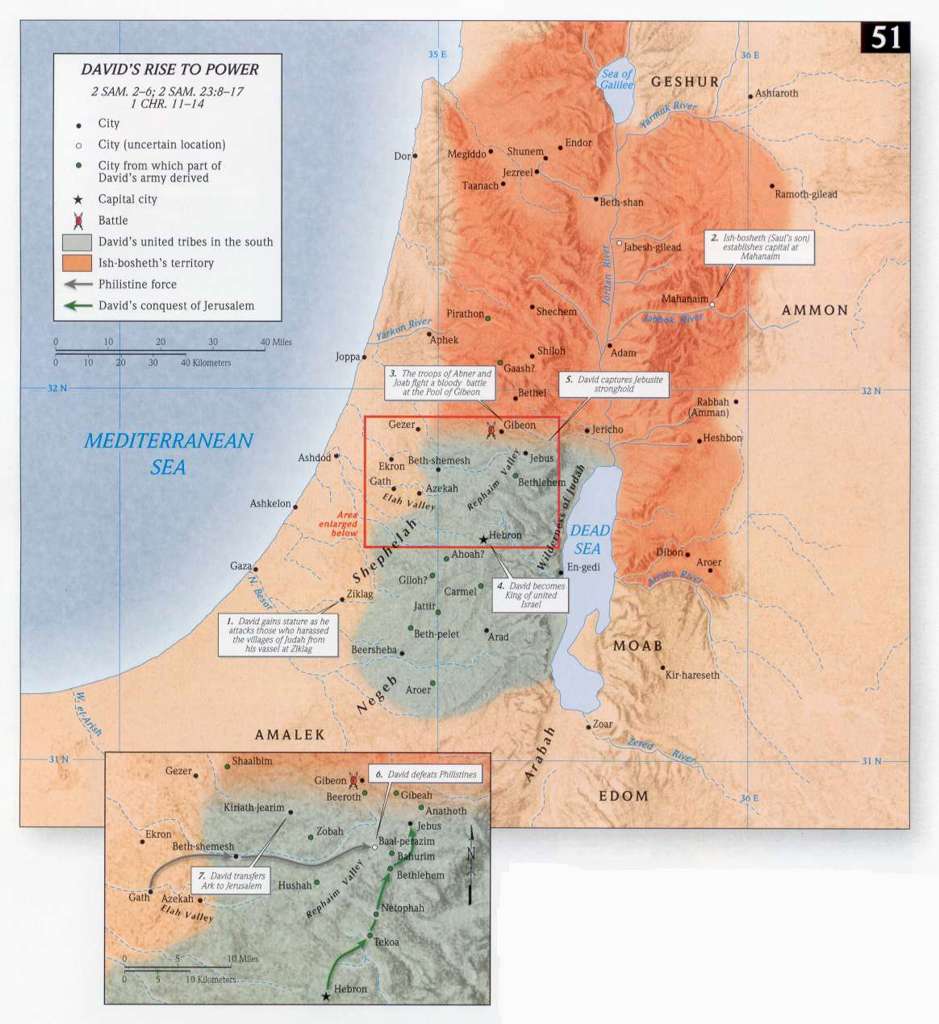
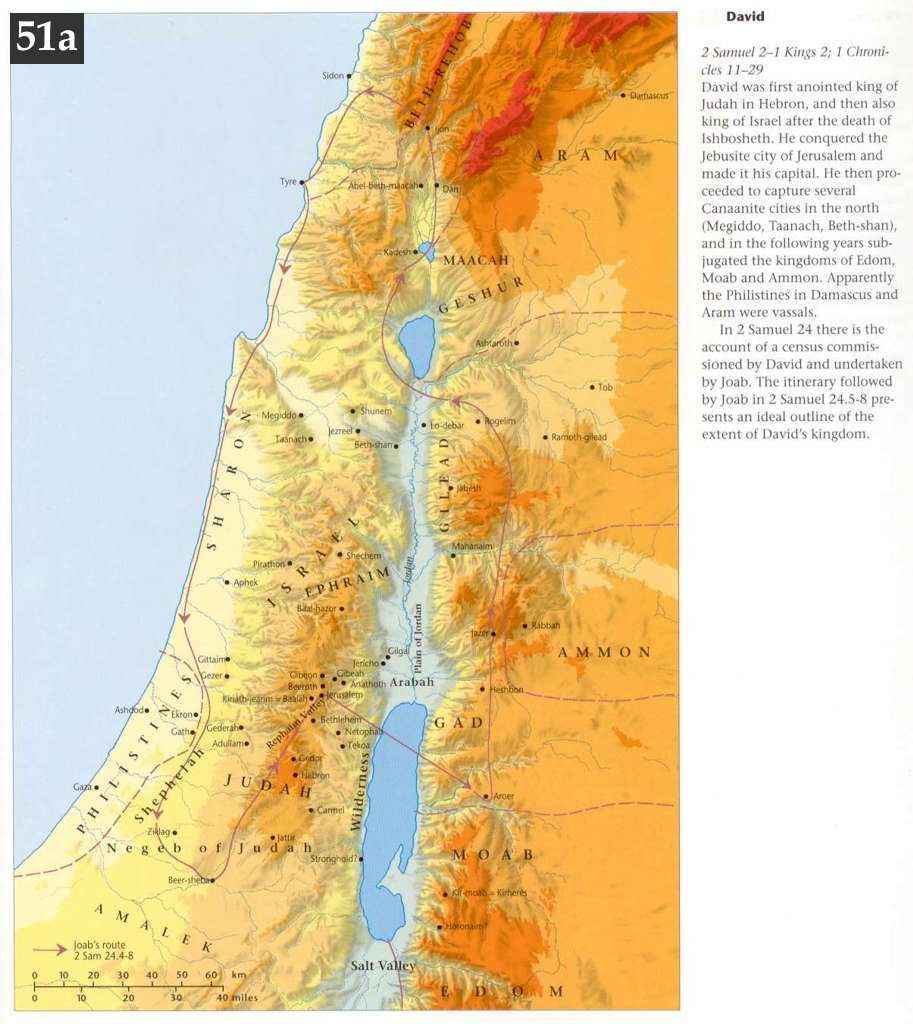
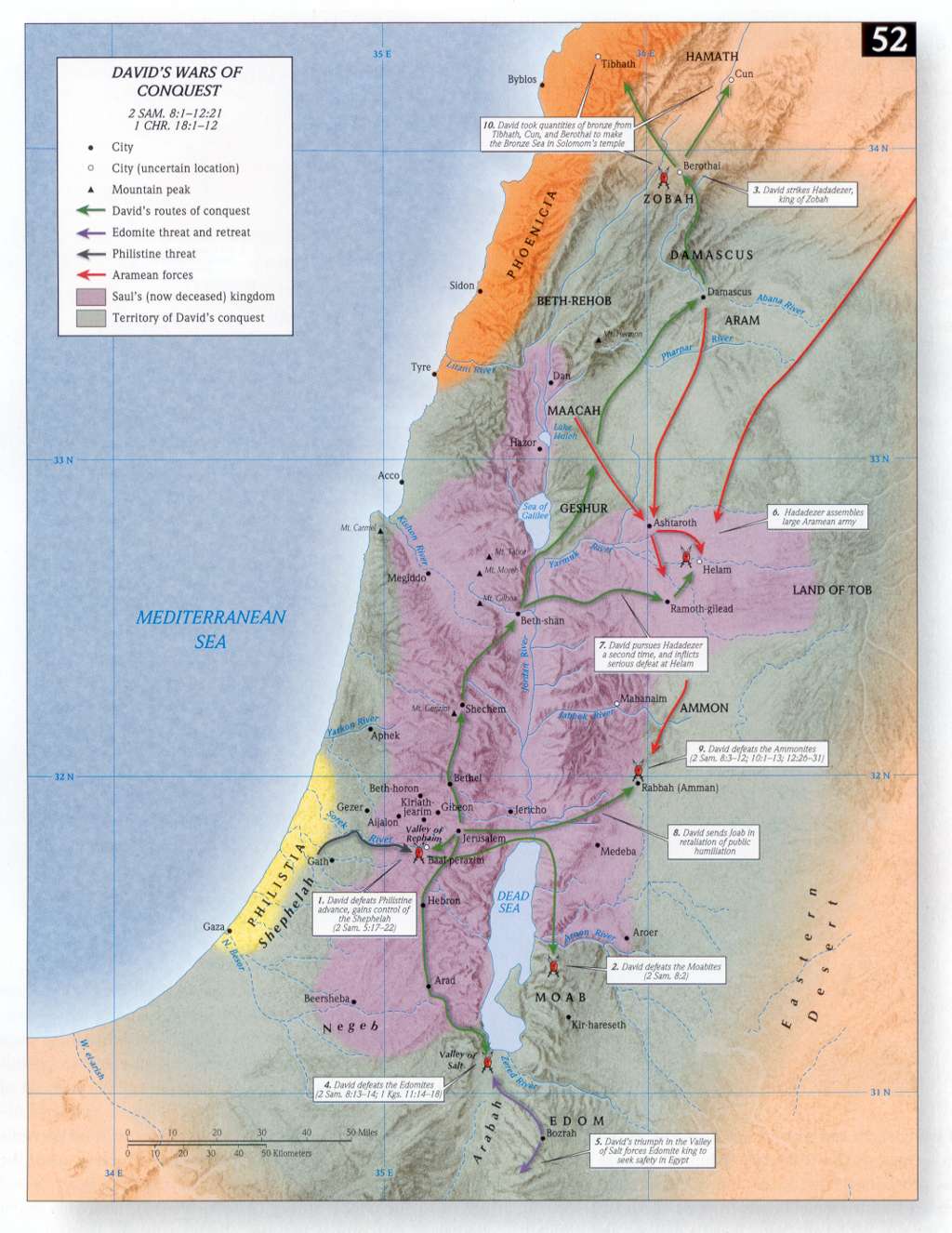
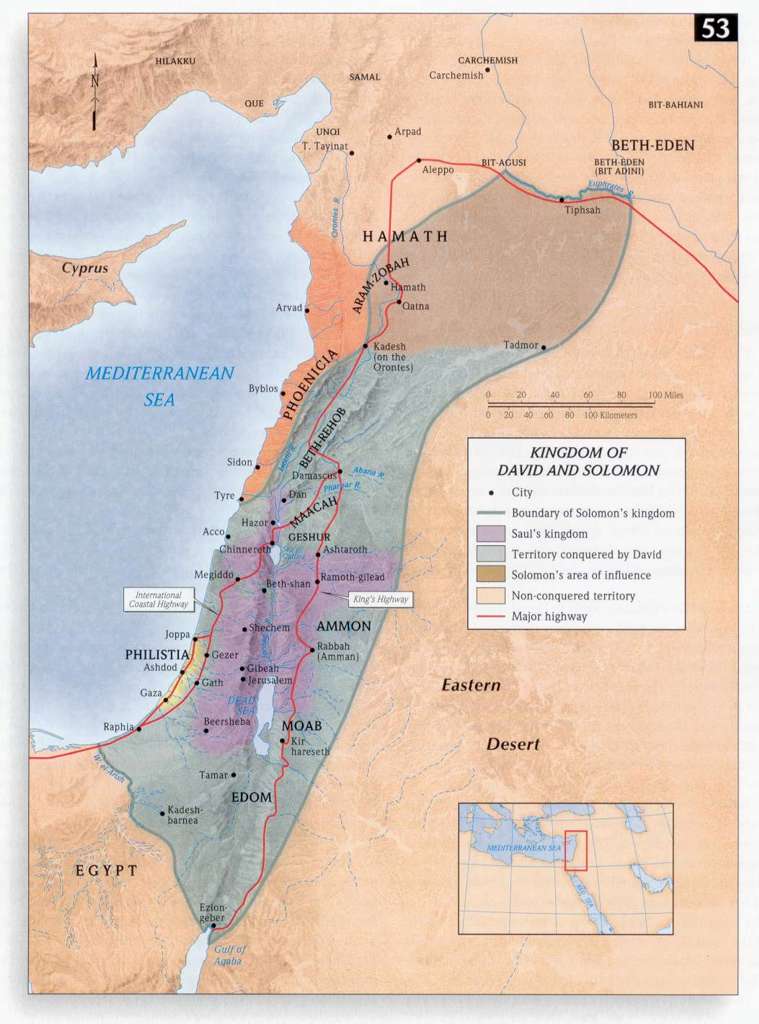
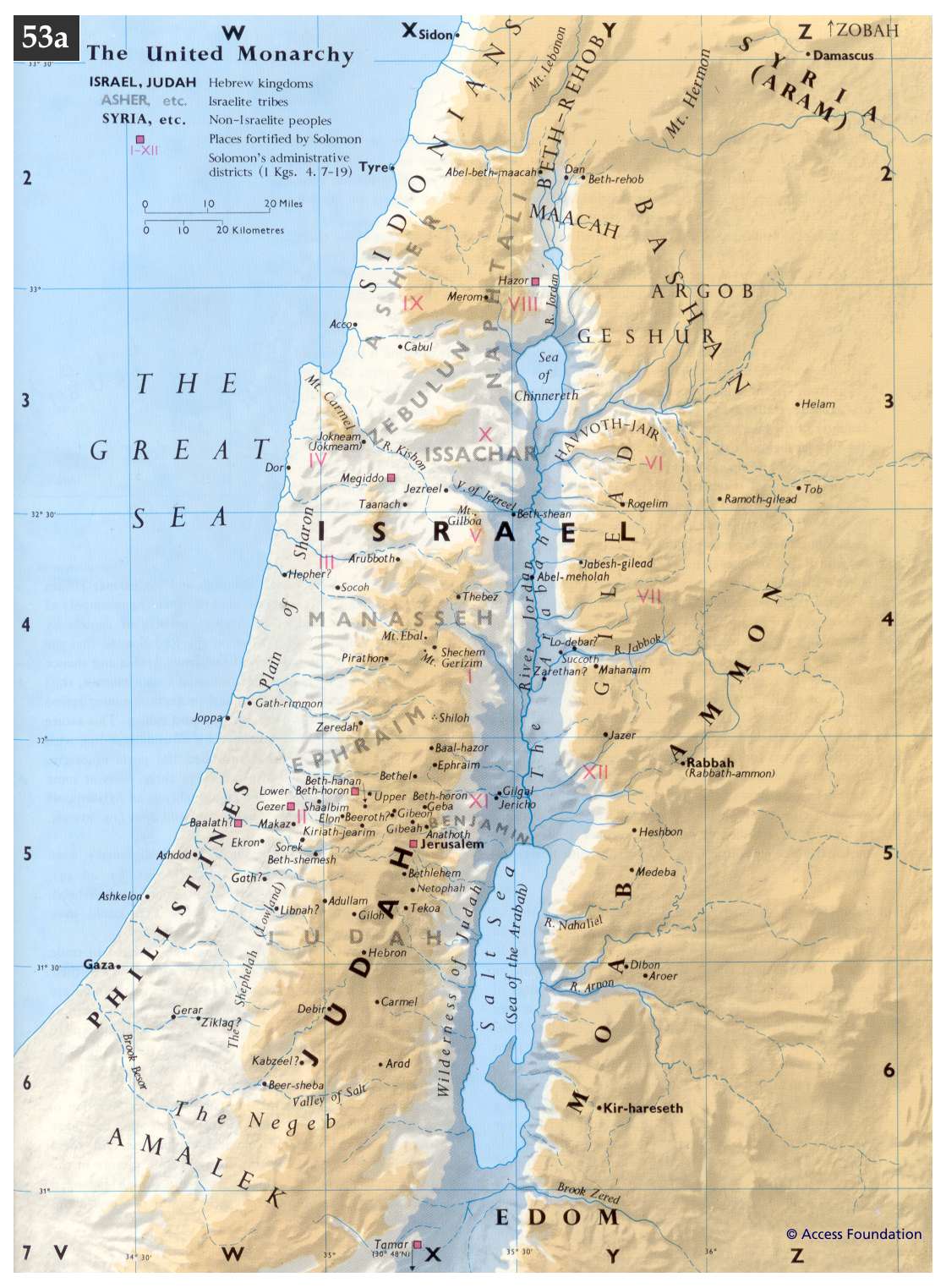
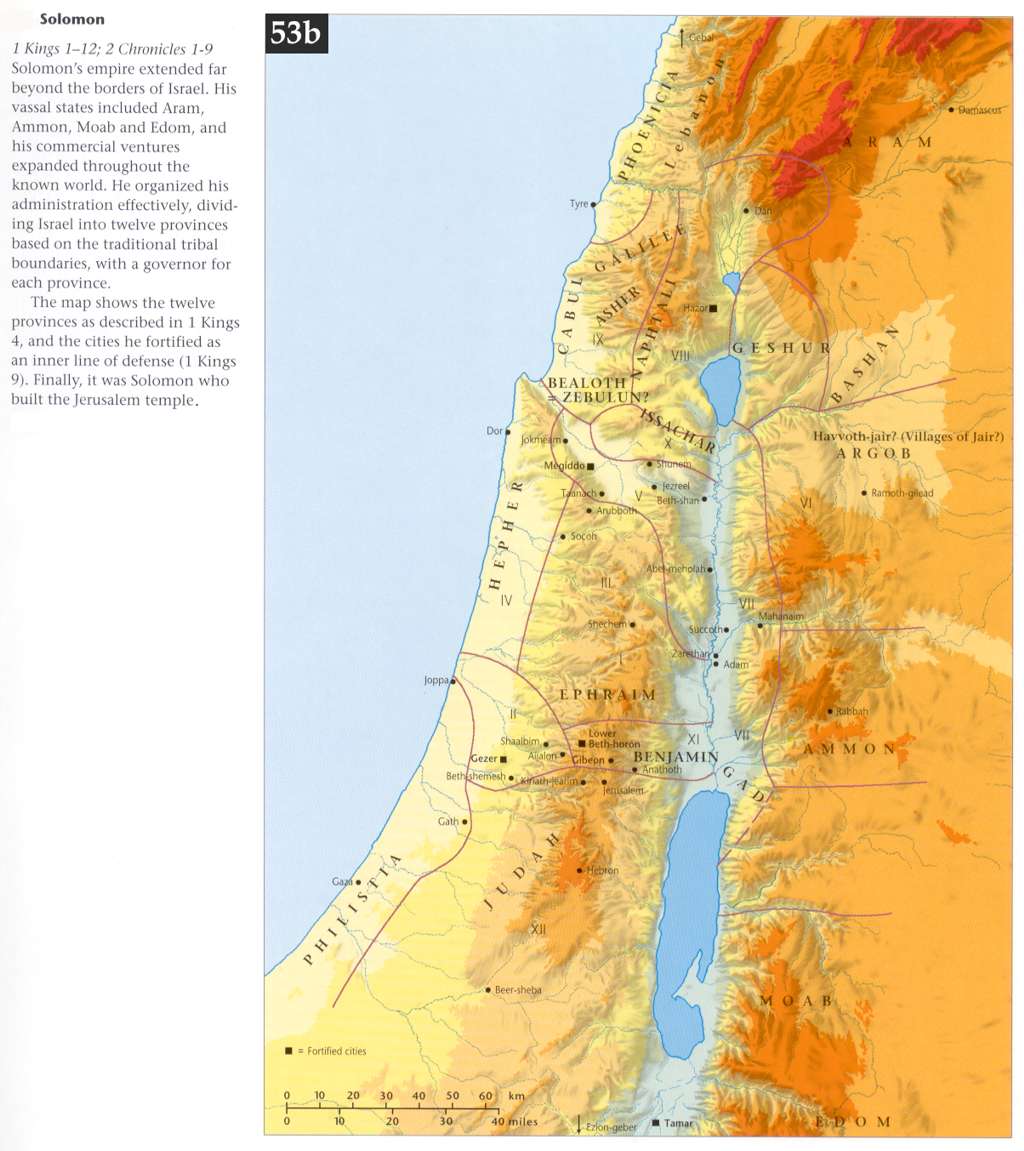
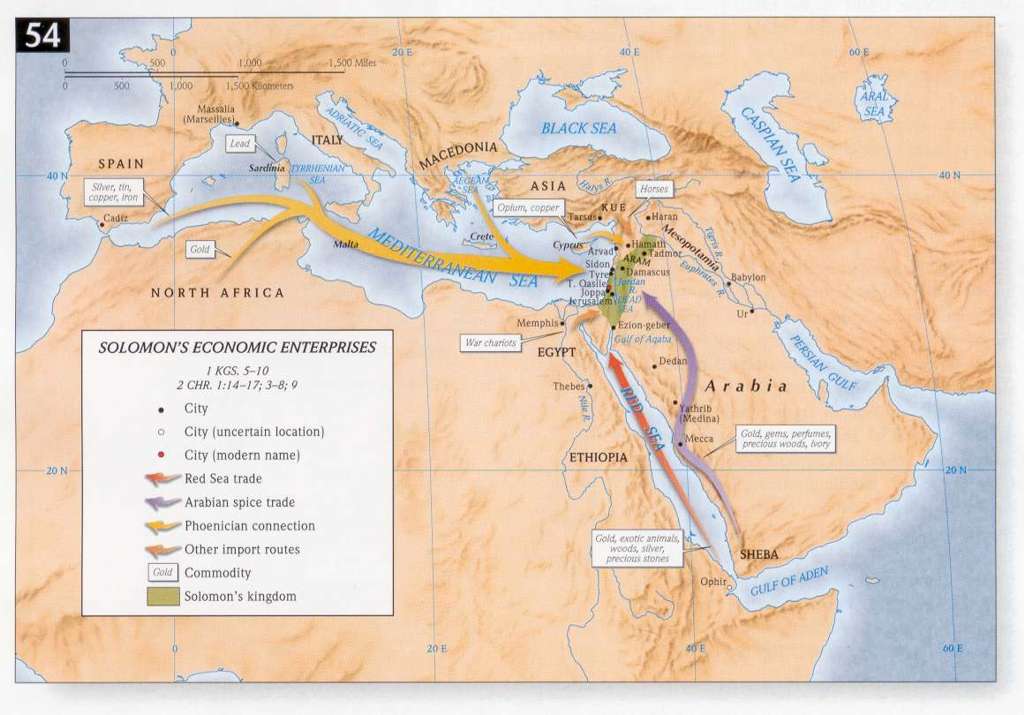
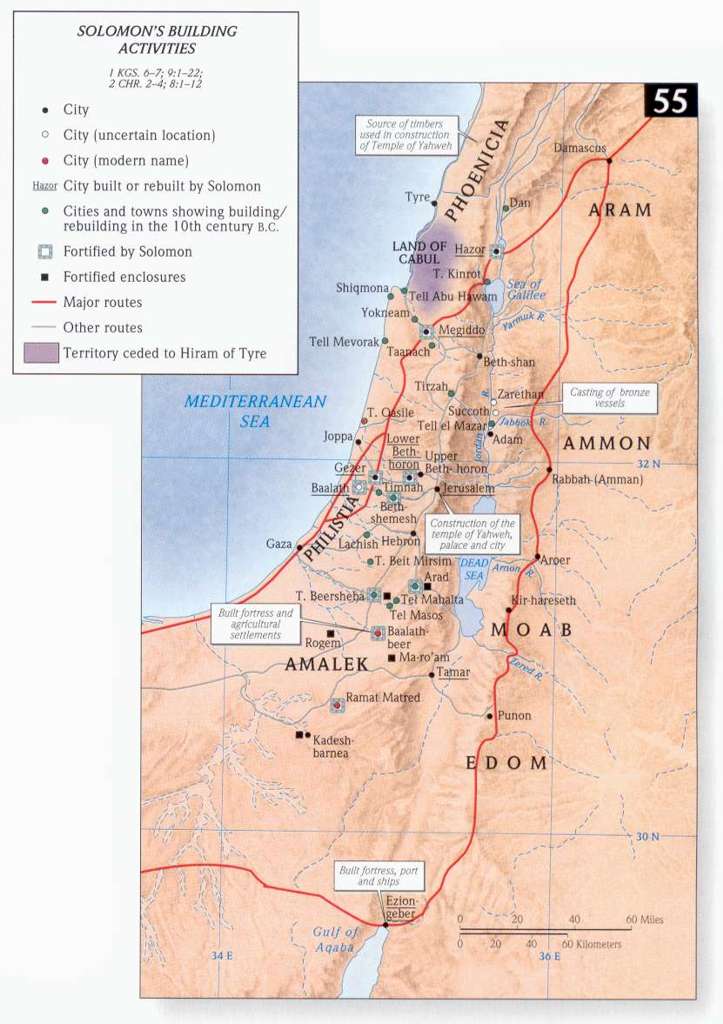
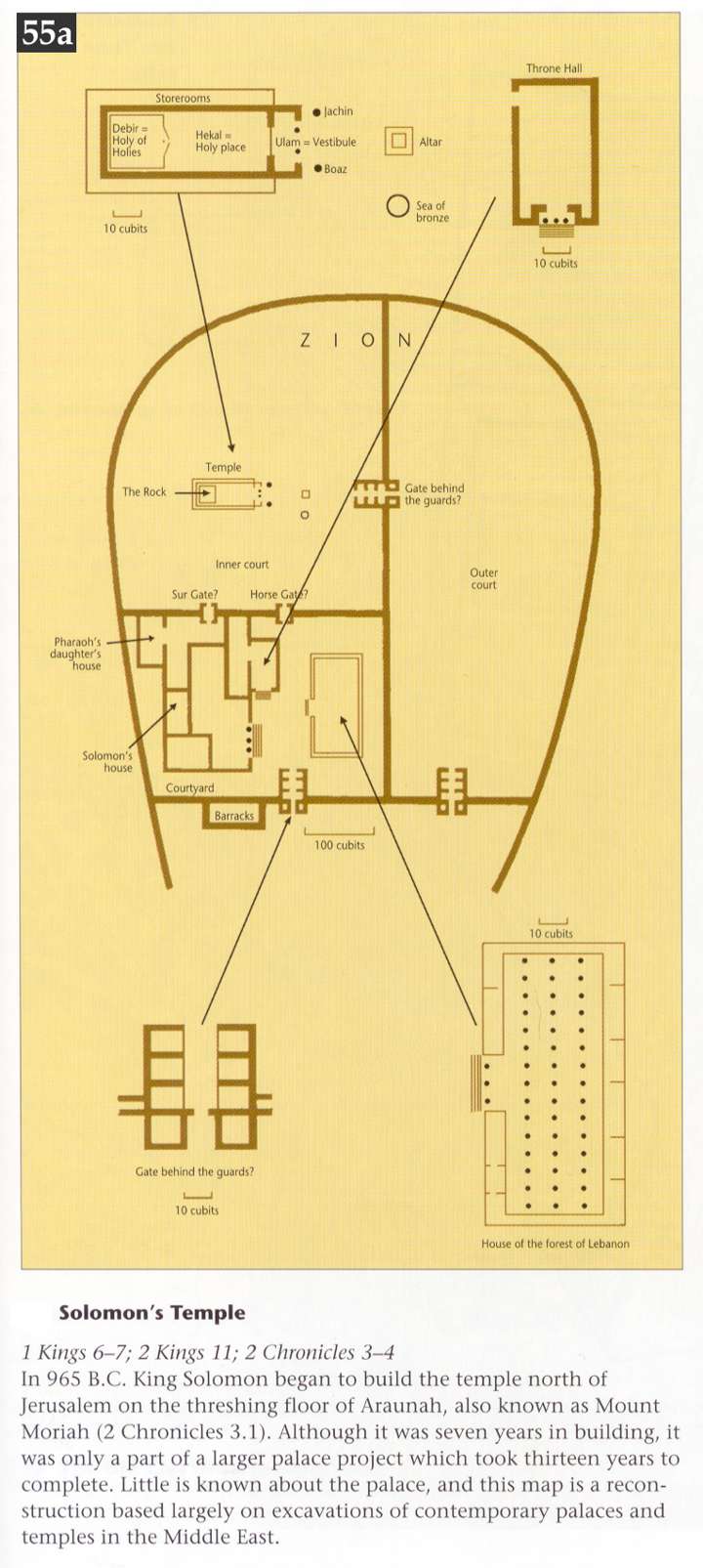
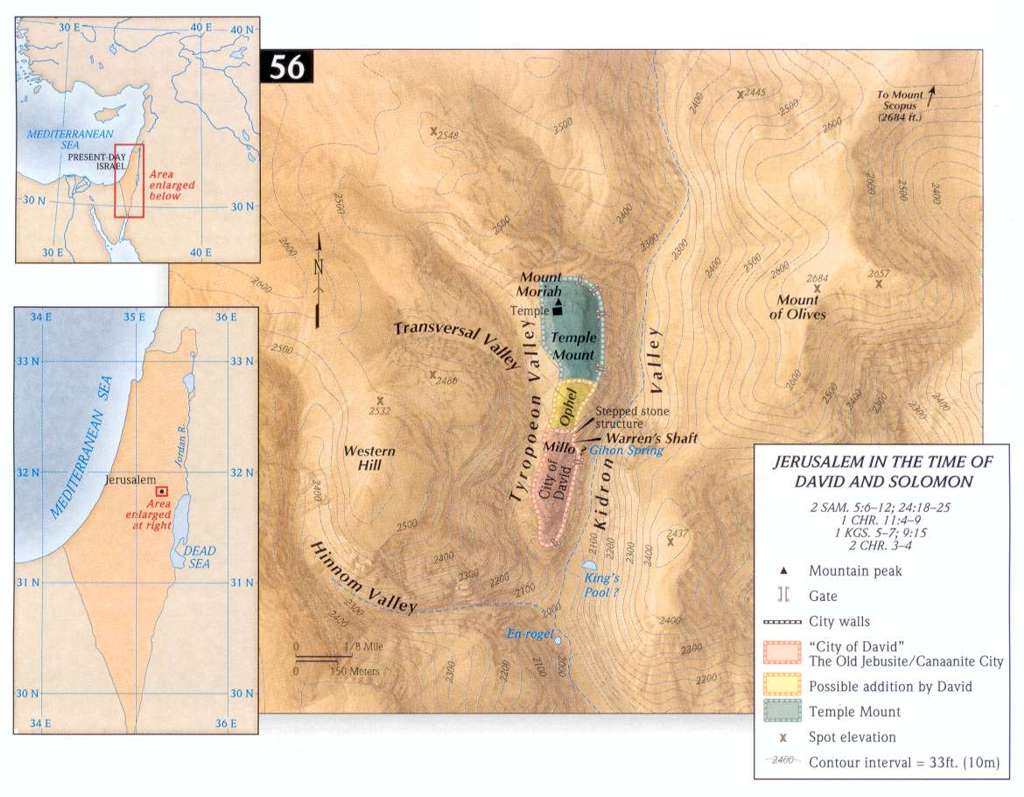
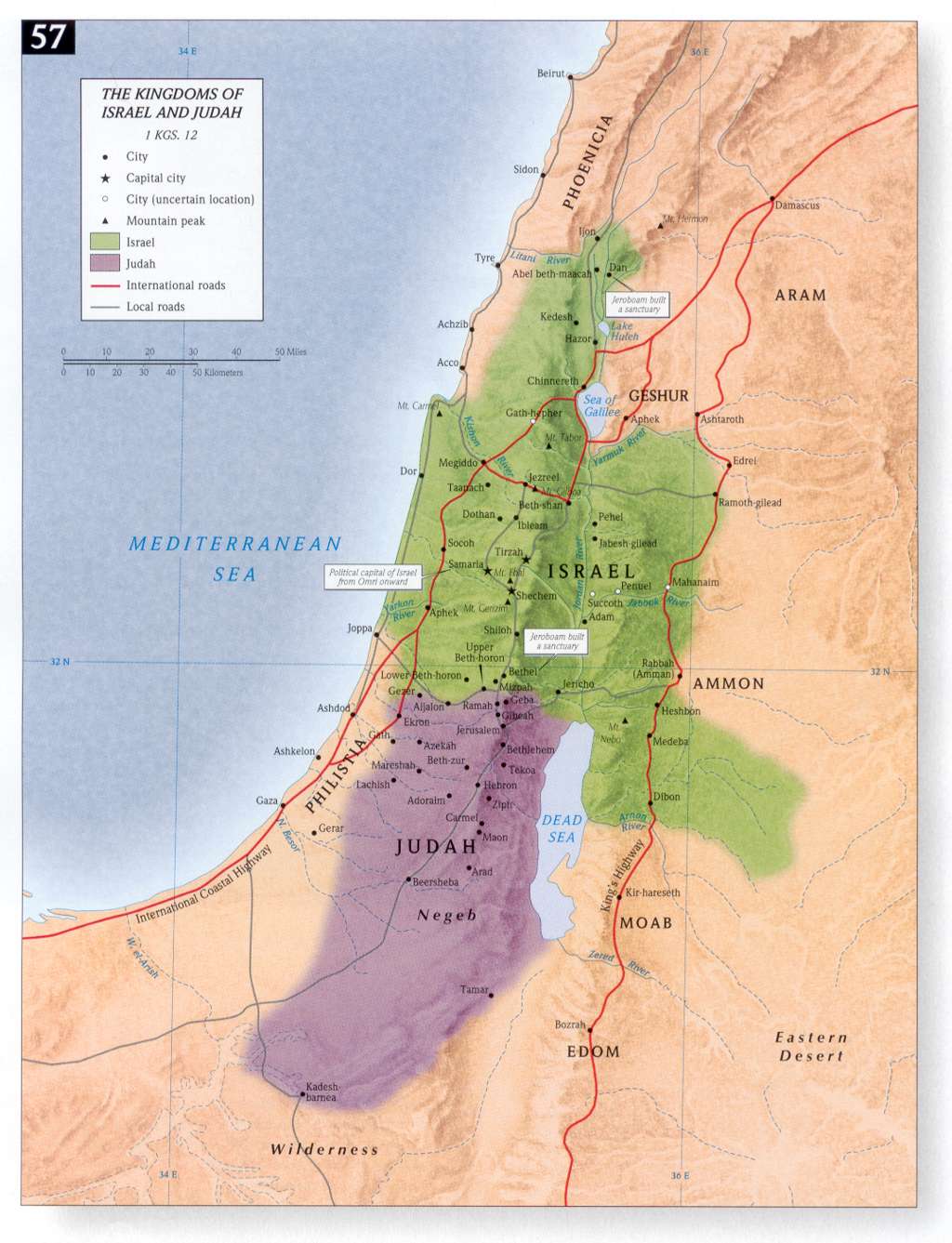
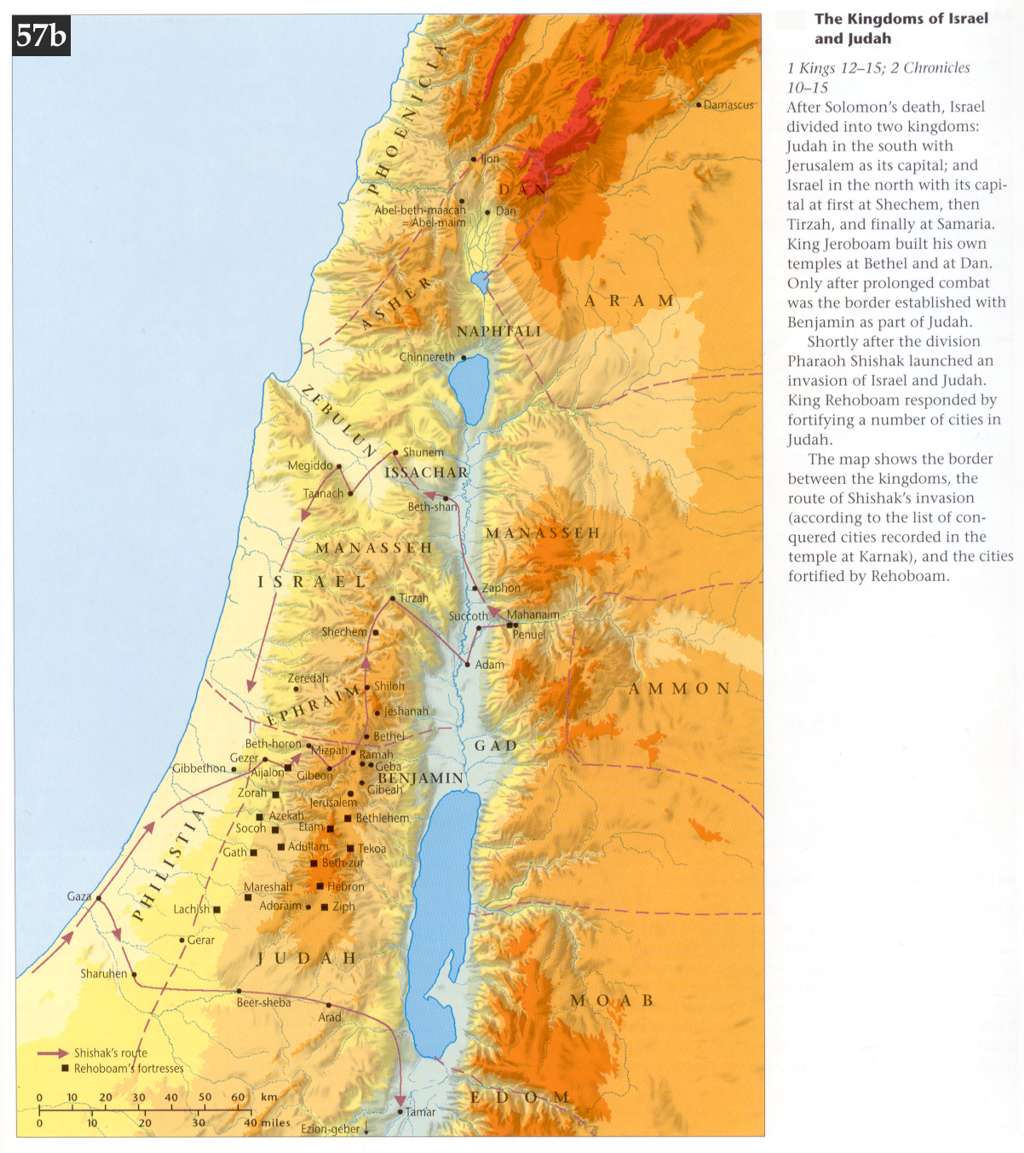
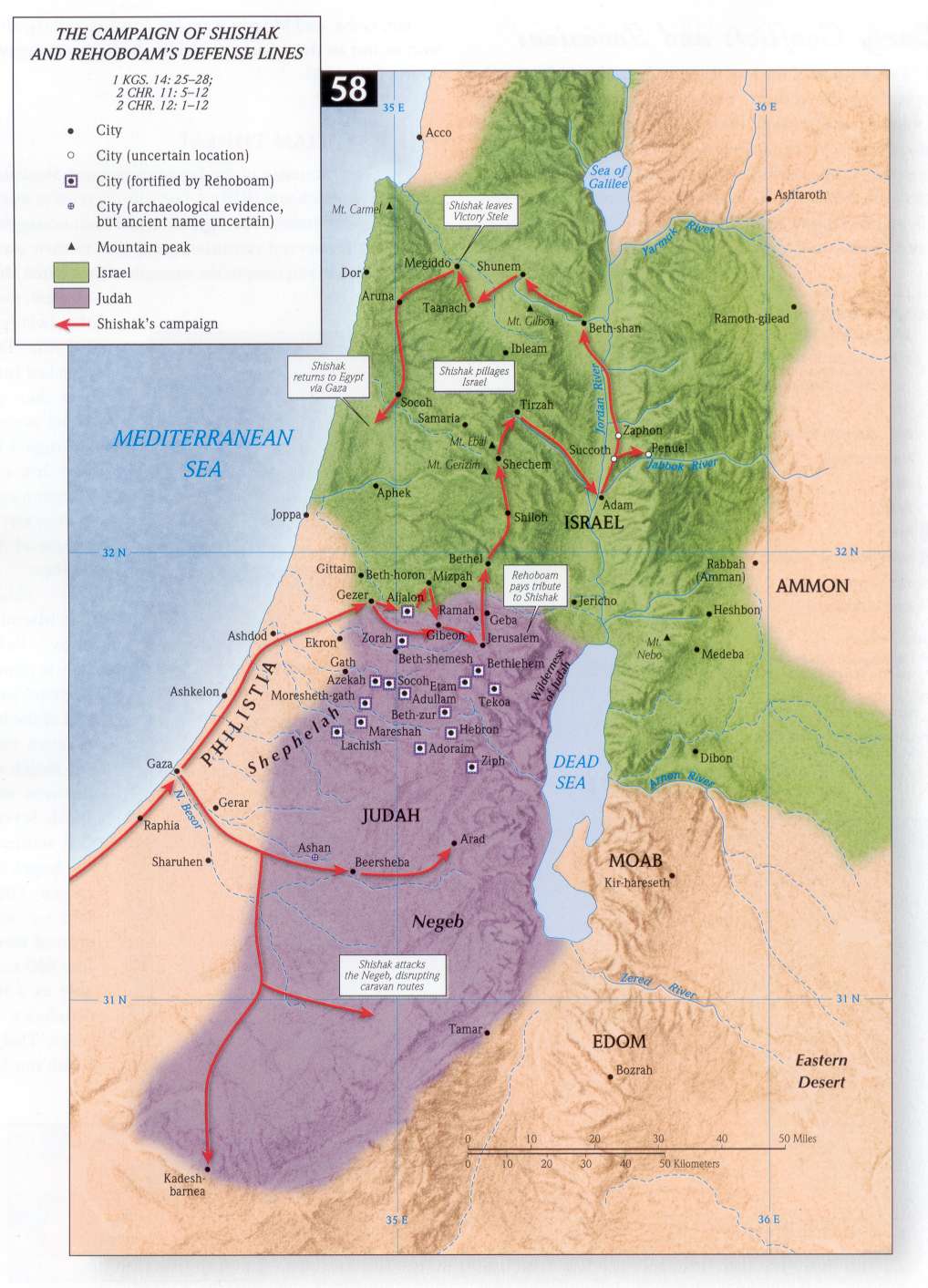
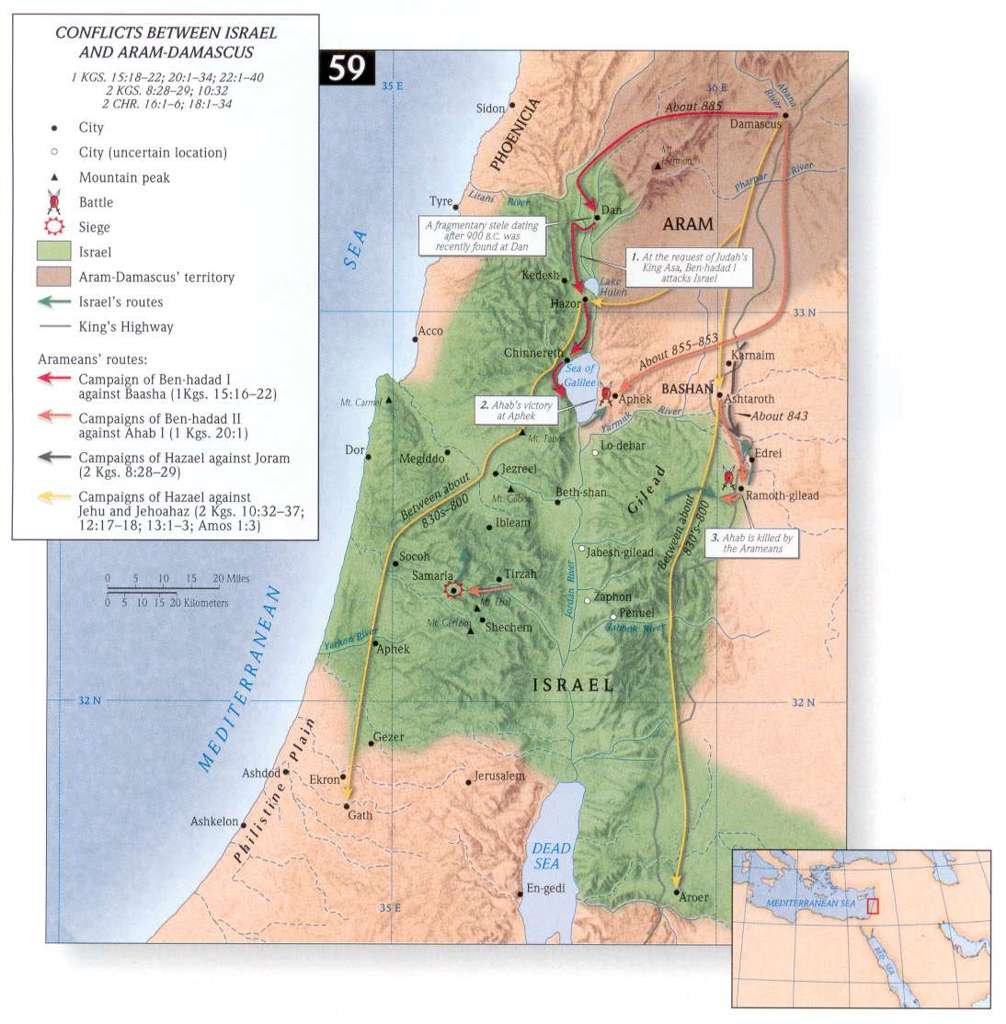
The Kingdoms of Israel and Judah
- The Kingdoms of Israel and Judah (1)
- The Kingdoms of Israel and Judah (2)
- The Kingdoms of Israel and Judah (3)
- The Campaign of Shishak
- Conflicts between Israel and Aram-Damascus
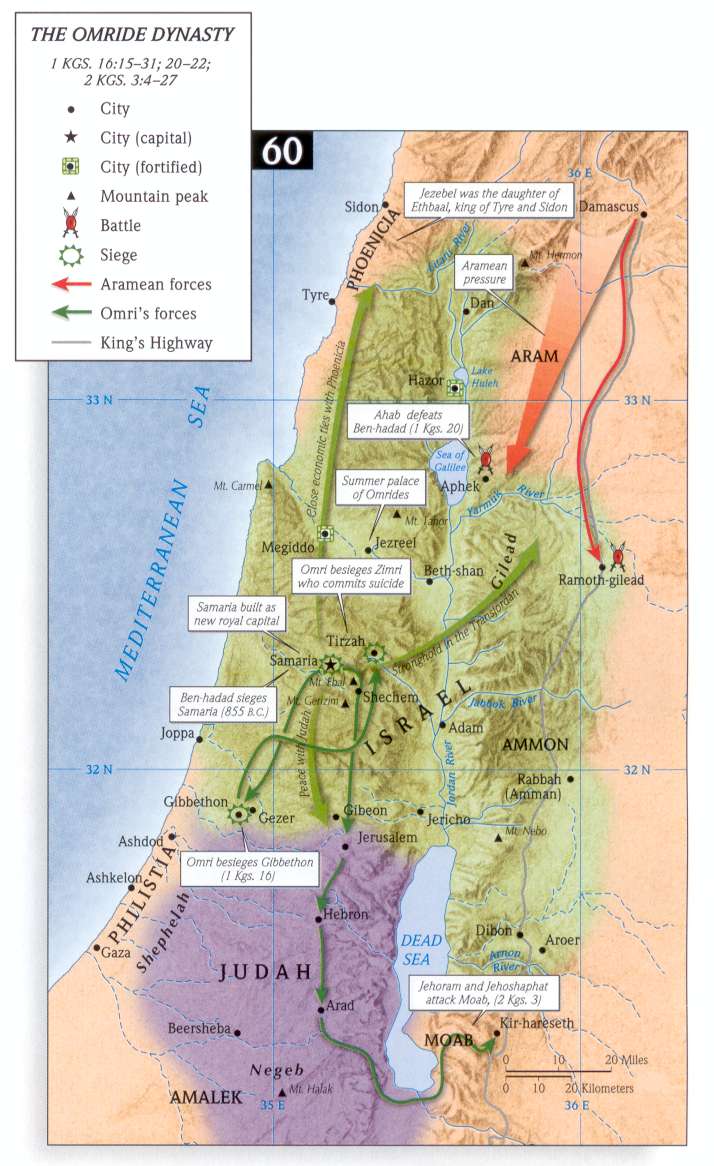
- The Omride Dynasty
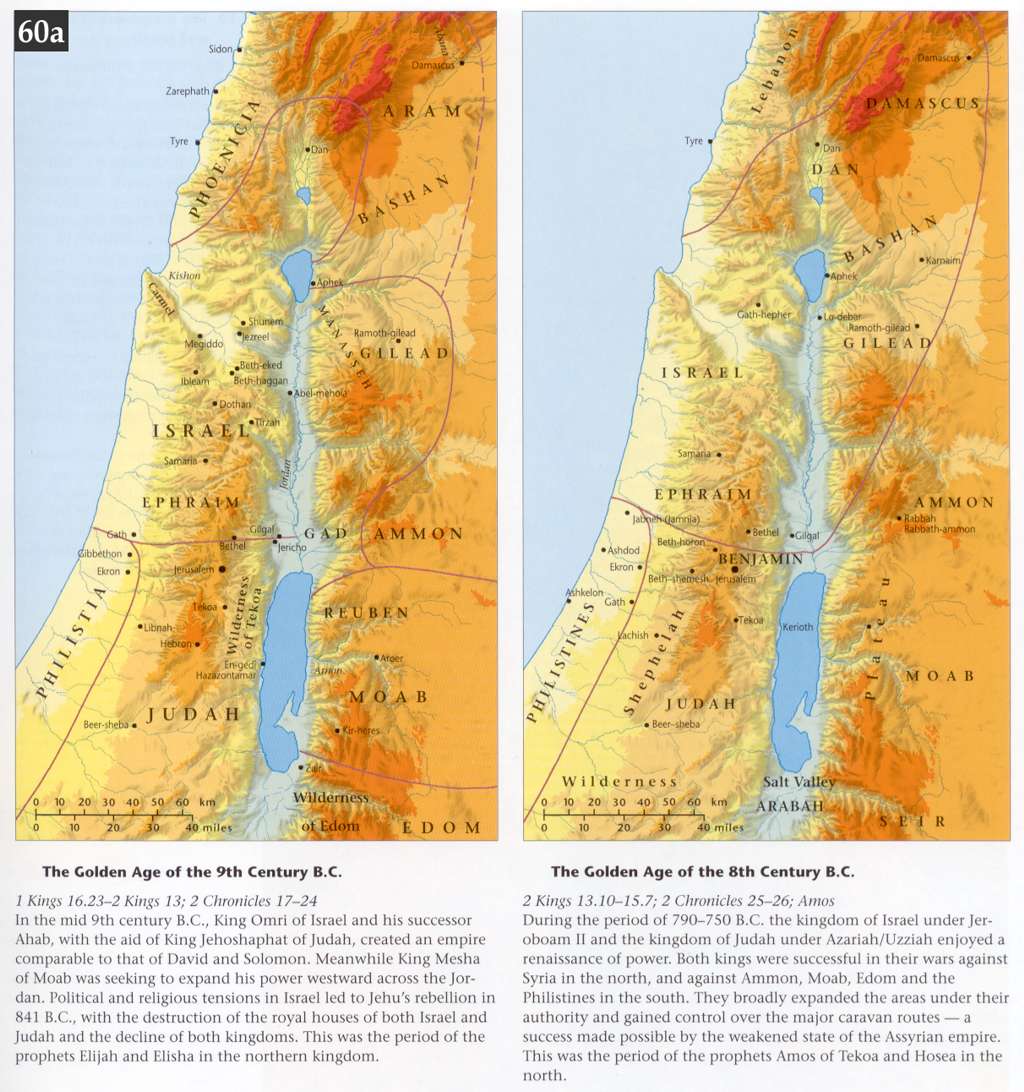
- The Golden Ages of the 9th & 8th centuries BCE
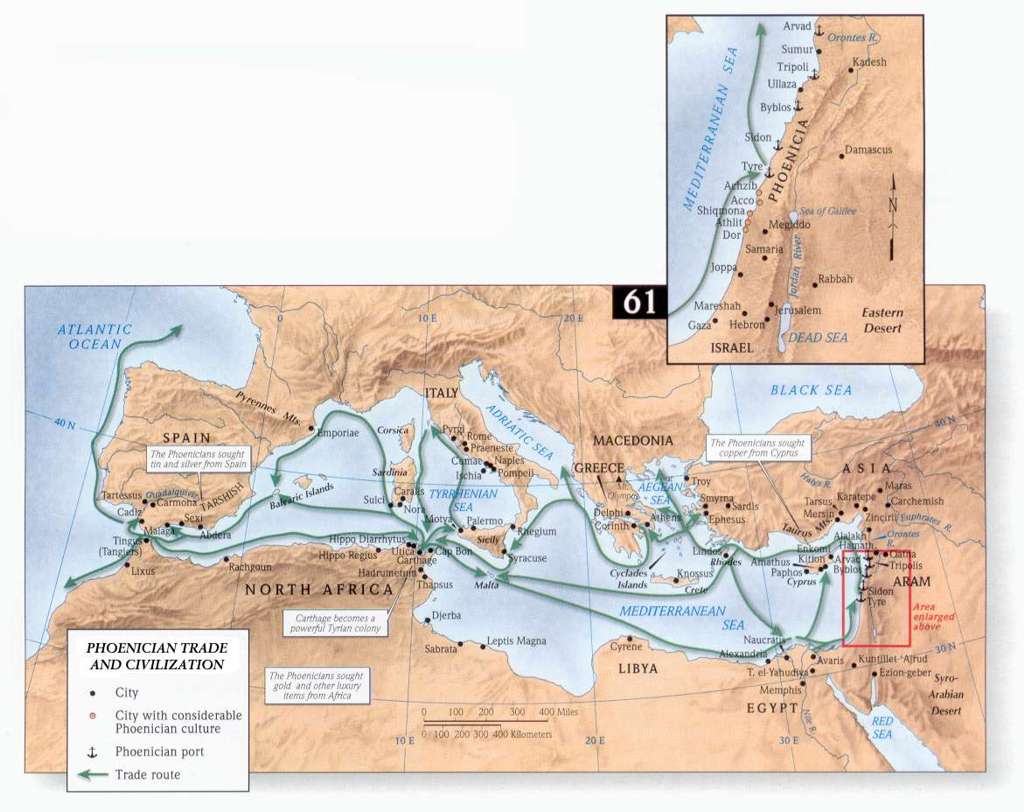
- Phoenician Trade and Civilization
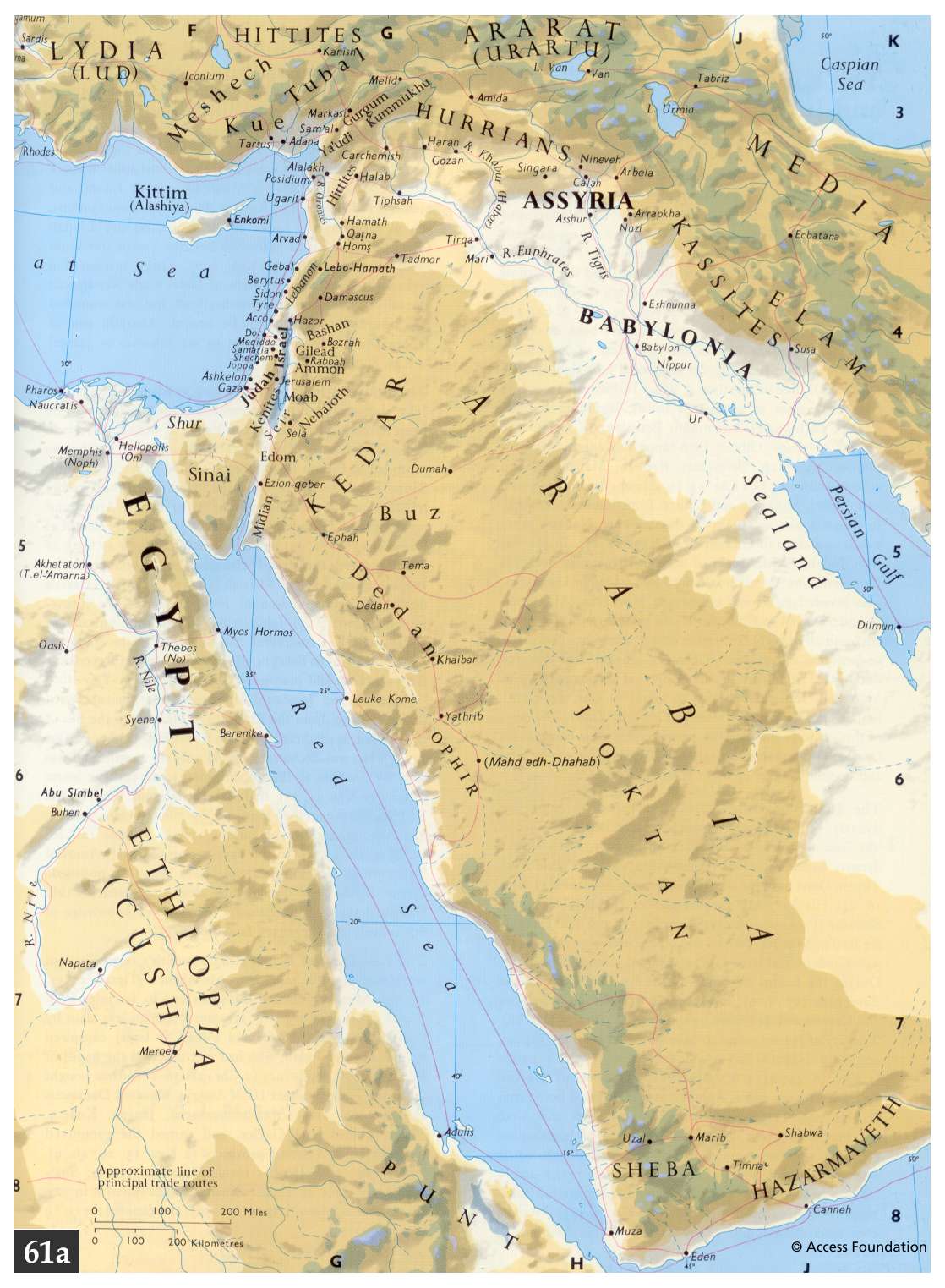
- Trade Routes throughout the Middle East
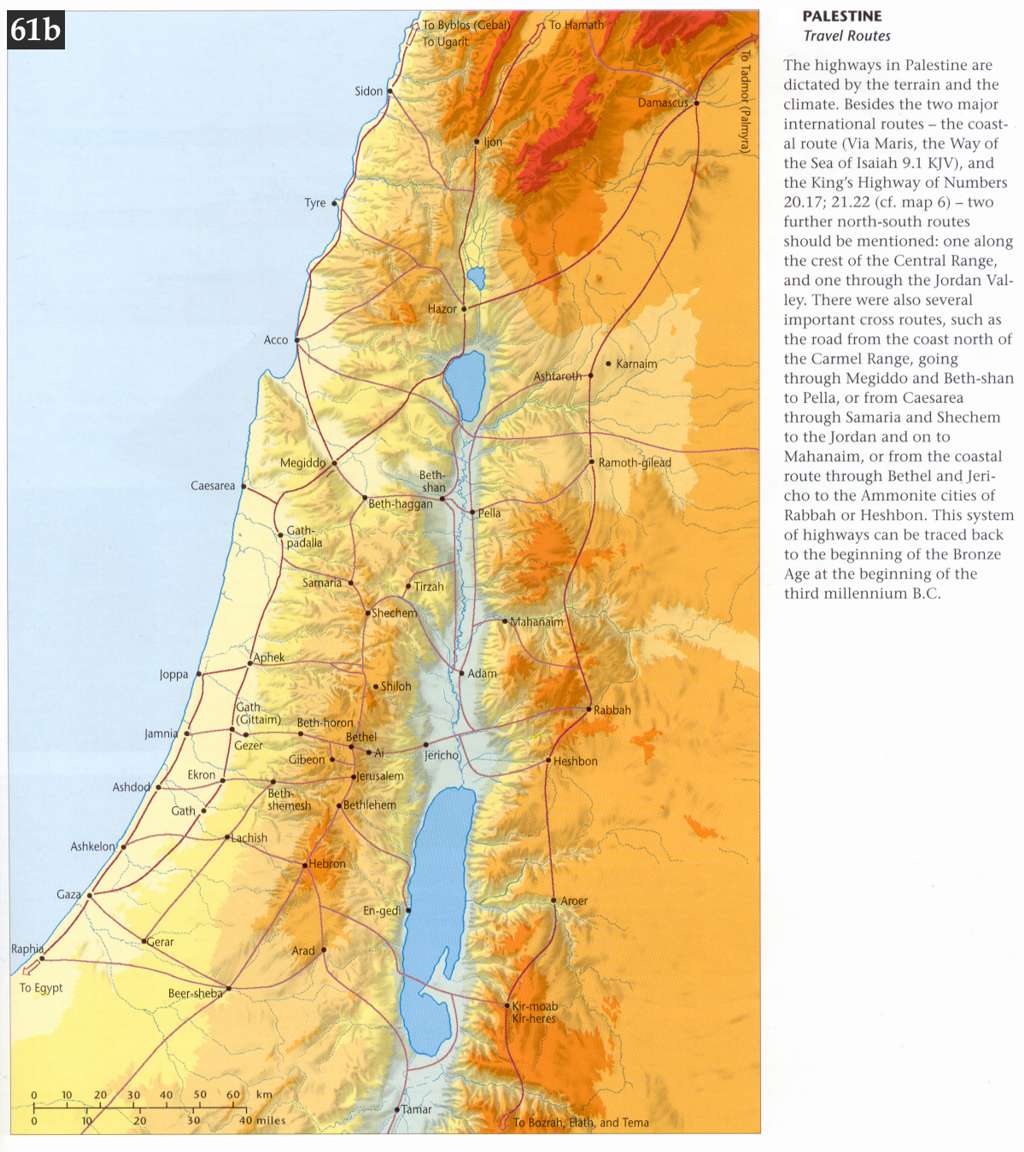
- Travel Routes throughout Palestine
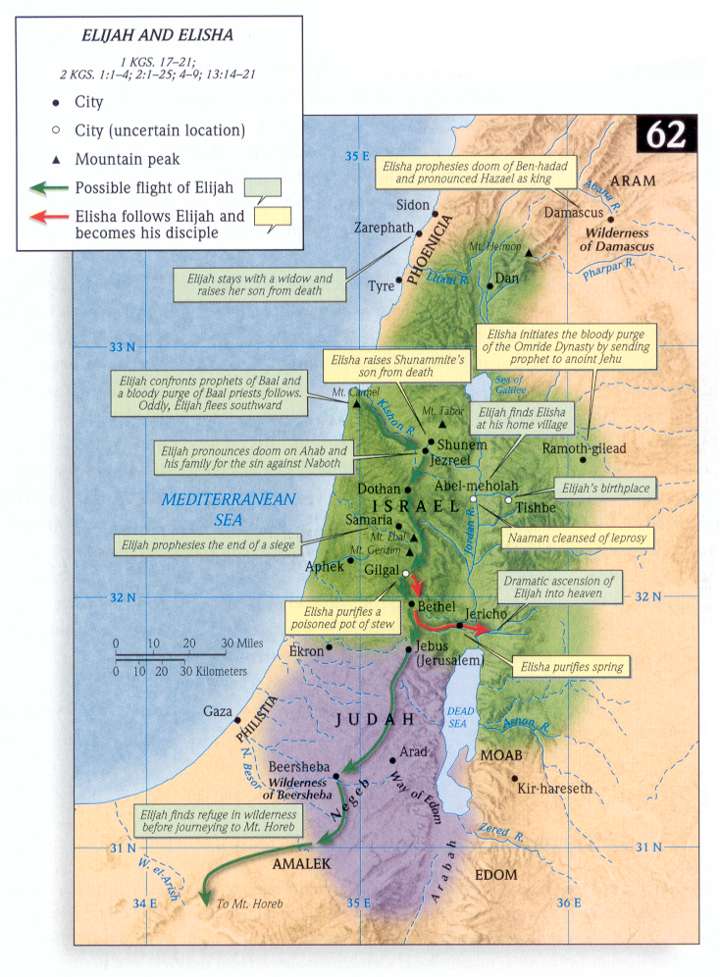
- Elijah and Elisha
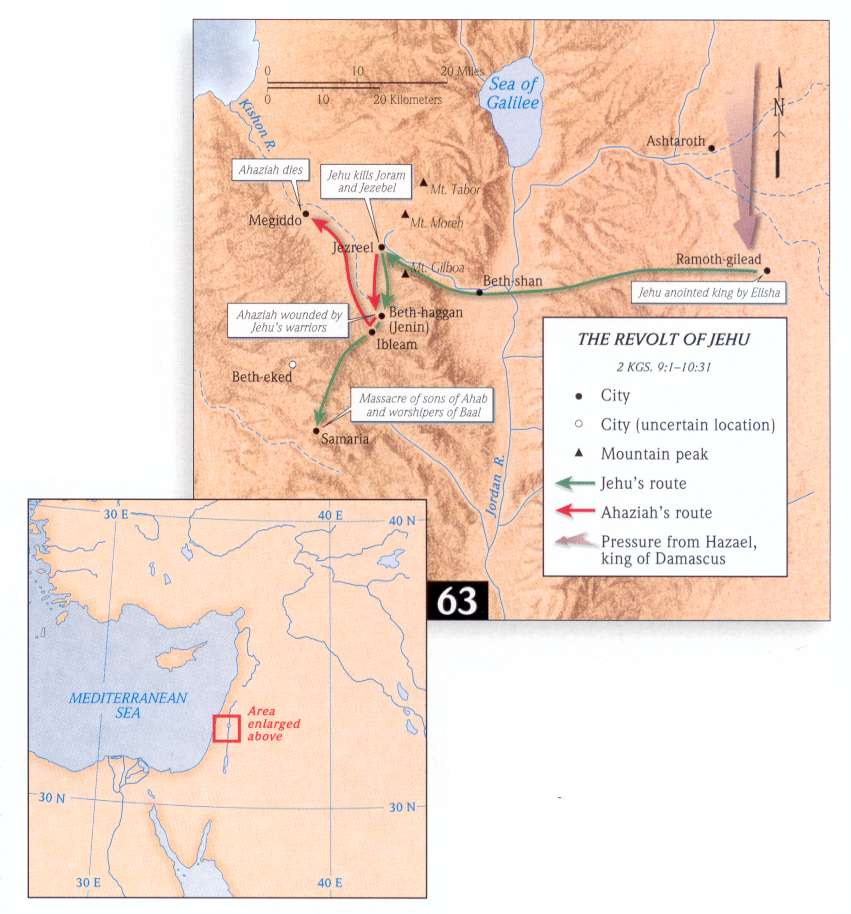
- The Revolt of Jehu
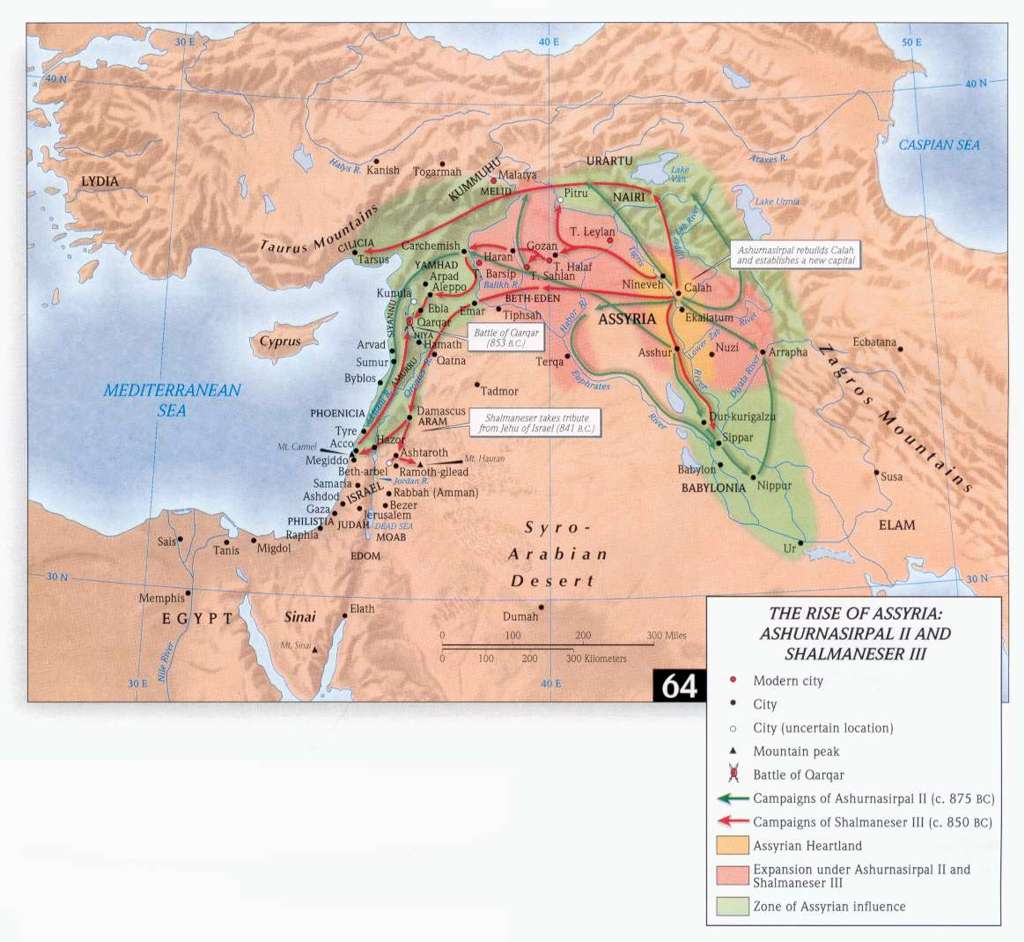
- The Rise of Assyria
- Israel & Judah in the days of Jeroboam II and Uzziah
- The Assyrian Empire under Tiglath-Pileser III
- The Syro-Ephraimite War
- Tiglath-Pileser III's Campaigns
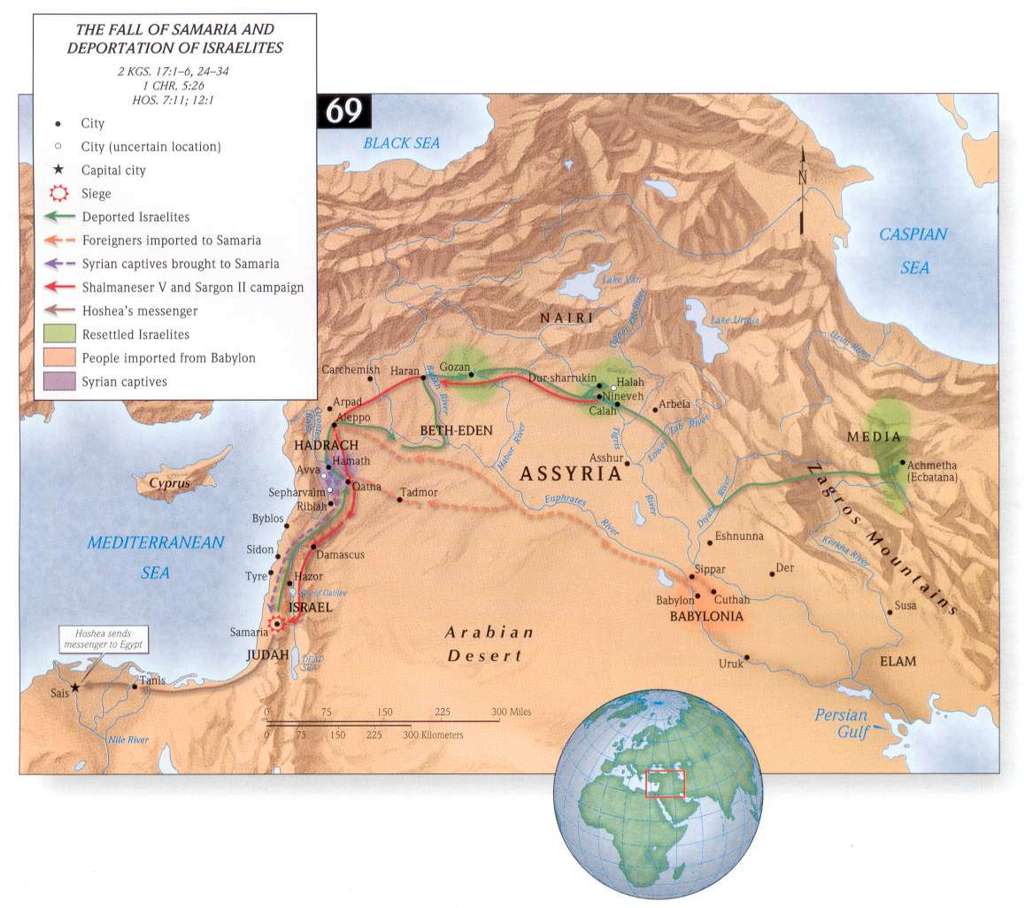
- Fall of Samaria and Deportation of Israelites
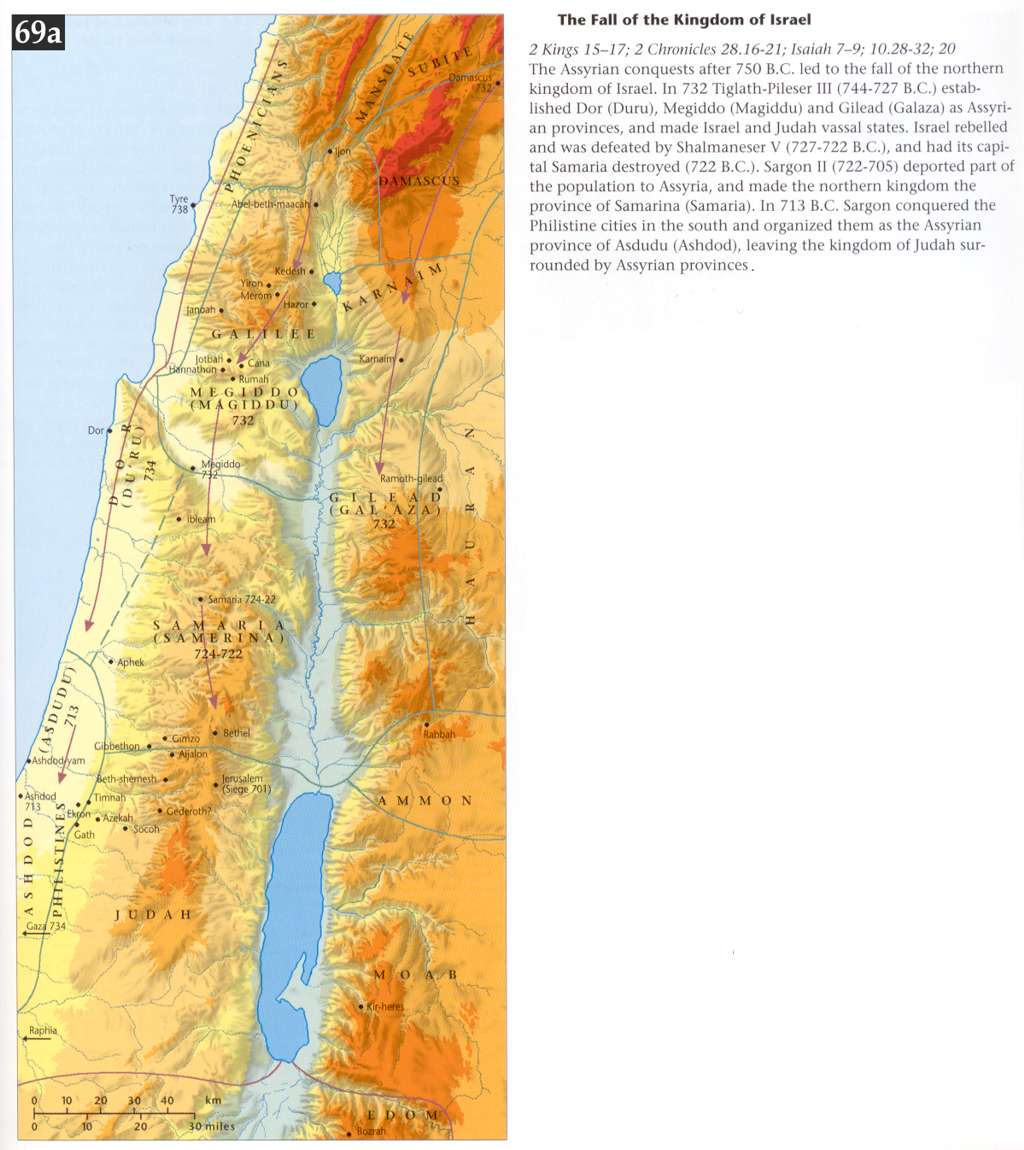
- The Fall of the Kingdom of Israel
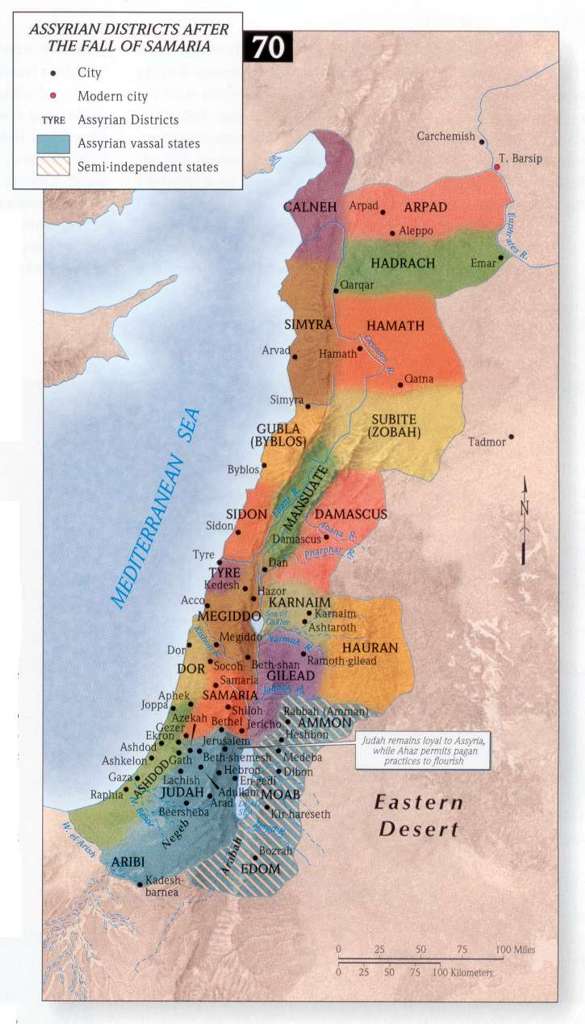
- Assyrian Districts after the Fall of Samaria
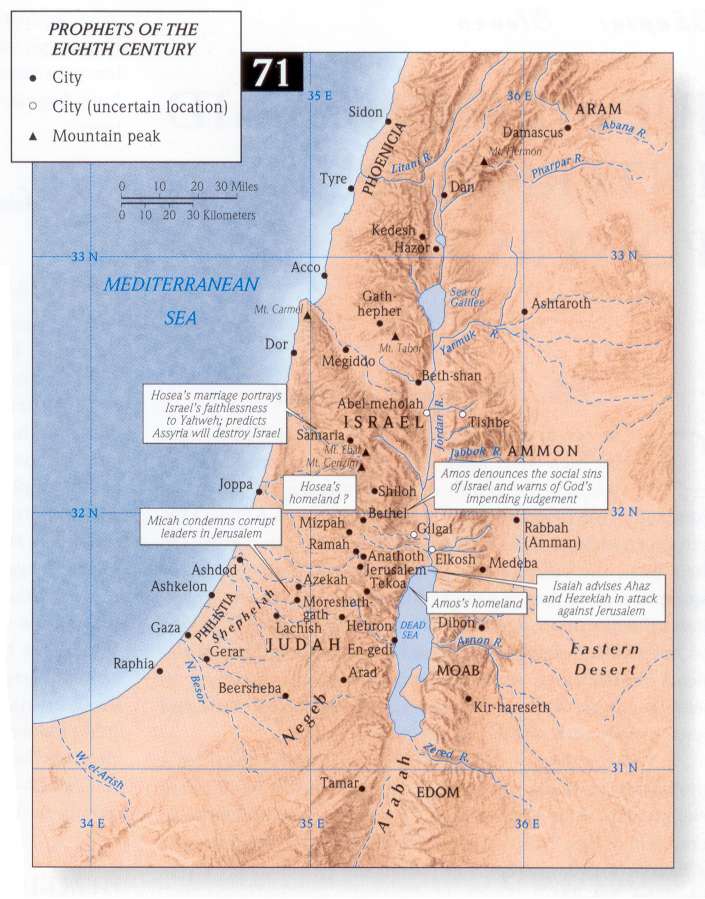
- Prophets of the 8th Century BCE

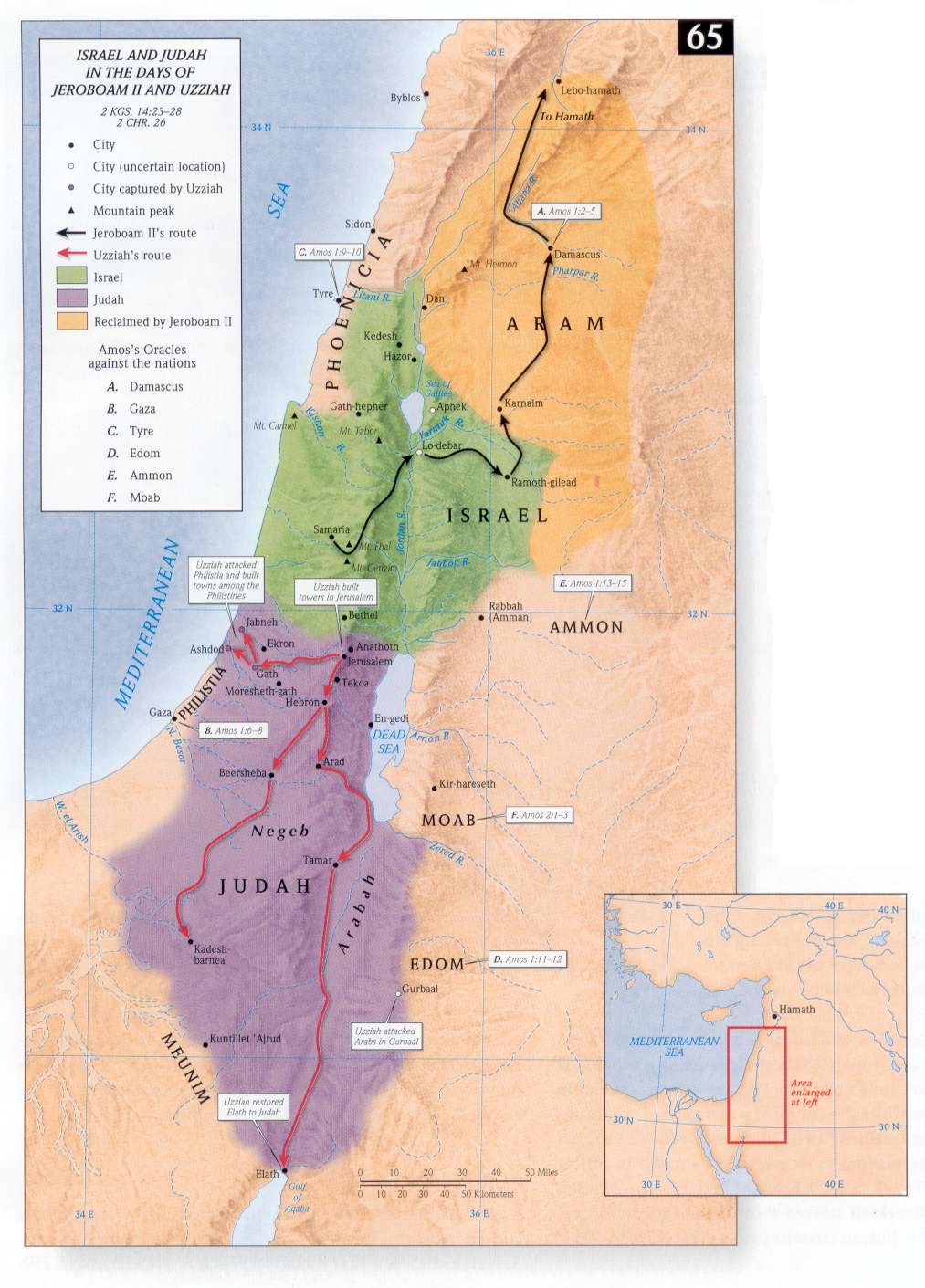
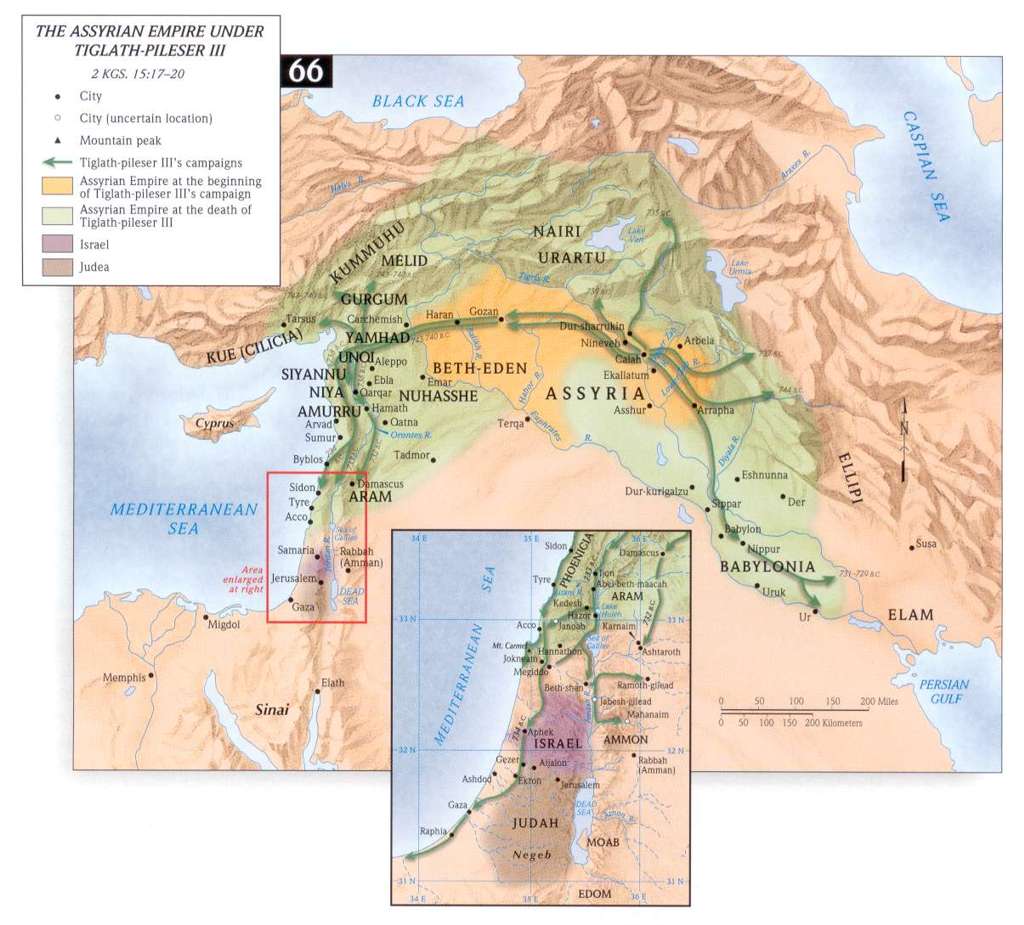
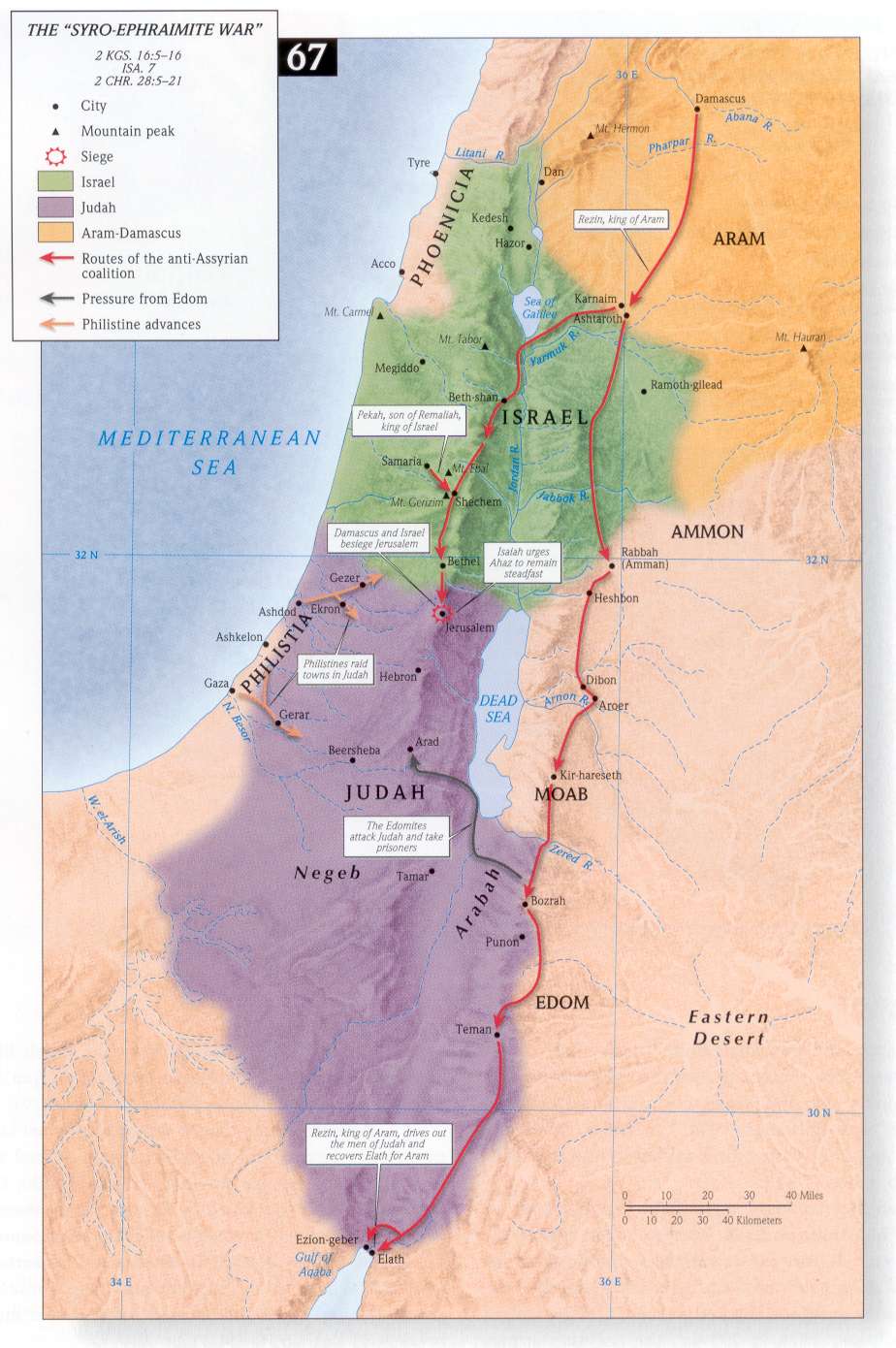
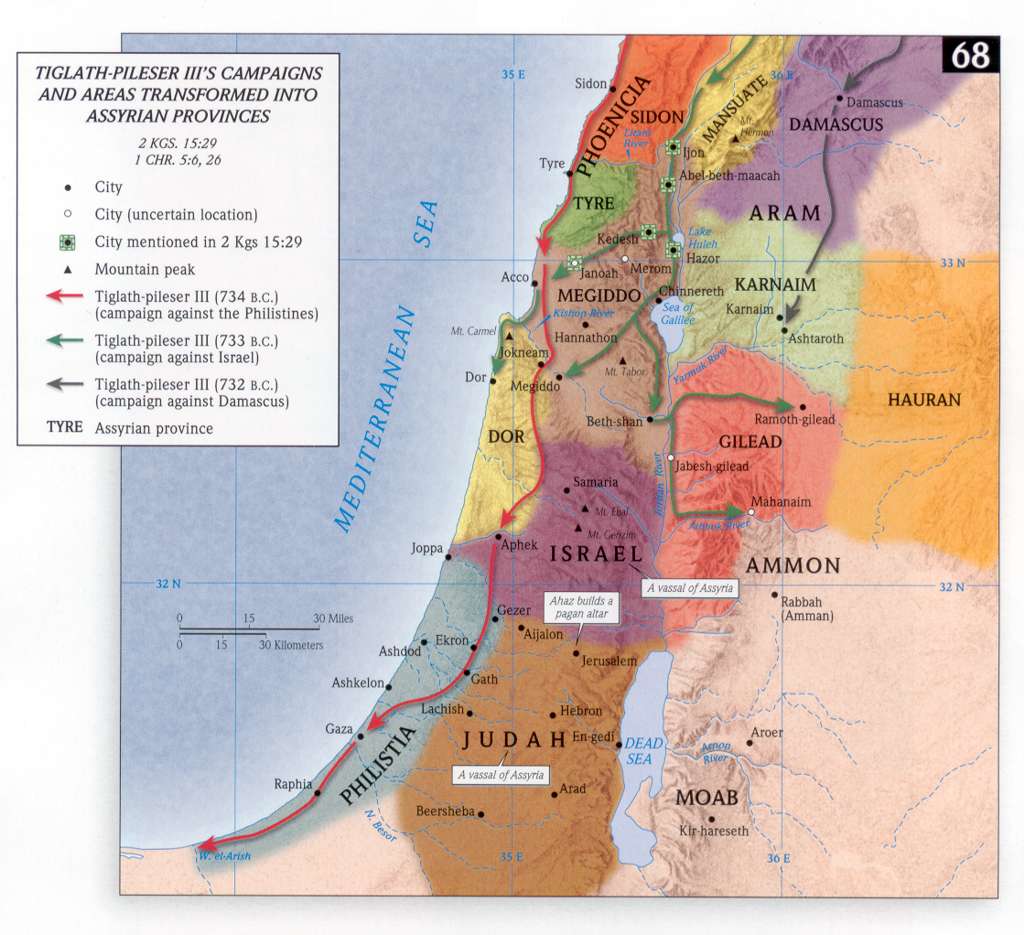
Judah Alone amid International Powers
- Hezekiah's Preparation for Revolt
- Judah under King Hezekiah
- Hezekiah's Jerusalem
- Sennacherib's Campaign against Judah
- Assyria in the 7th century BCE
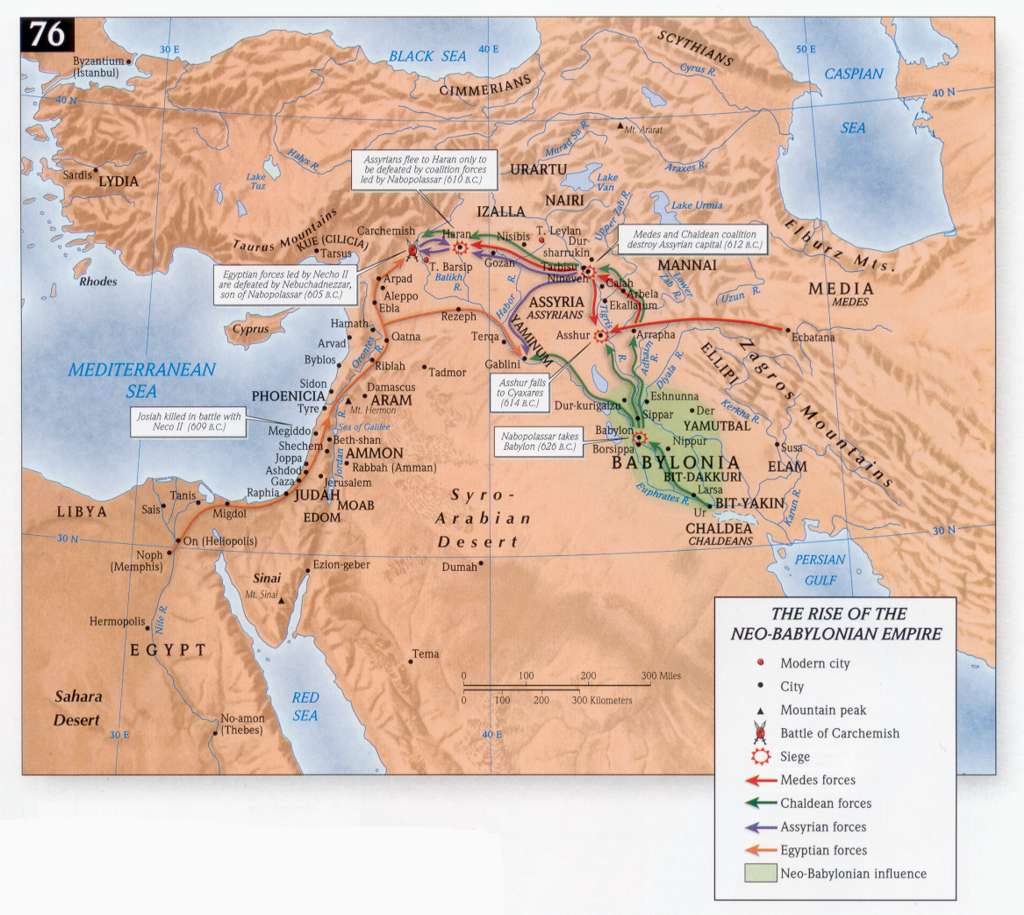
- The Rise of the Neo-Babylonian Empire
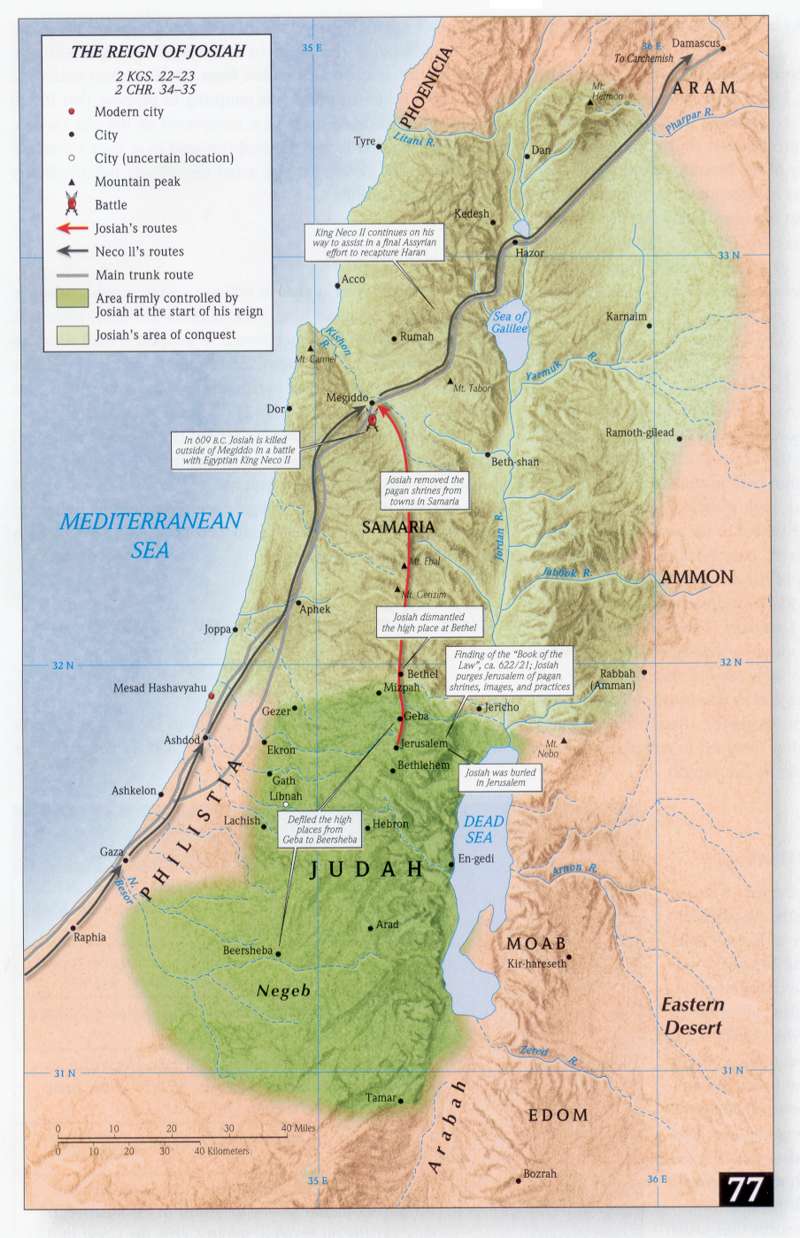
- The Reign of Josiah
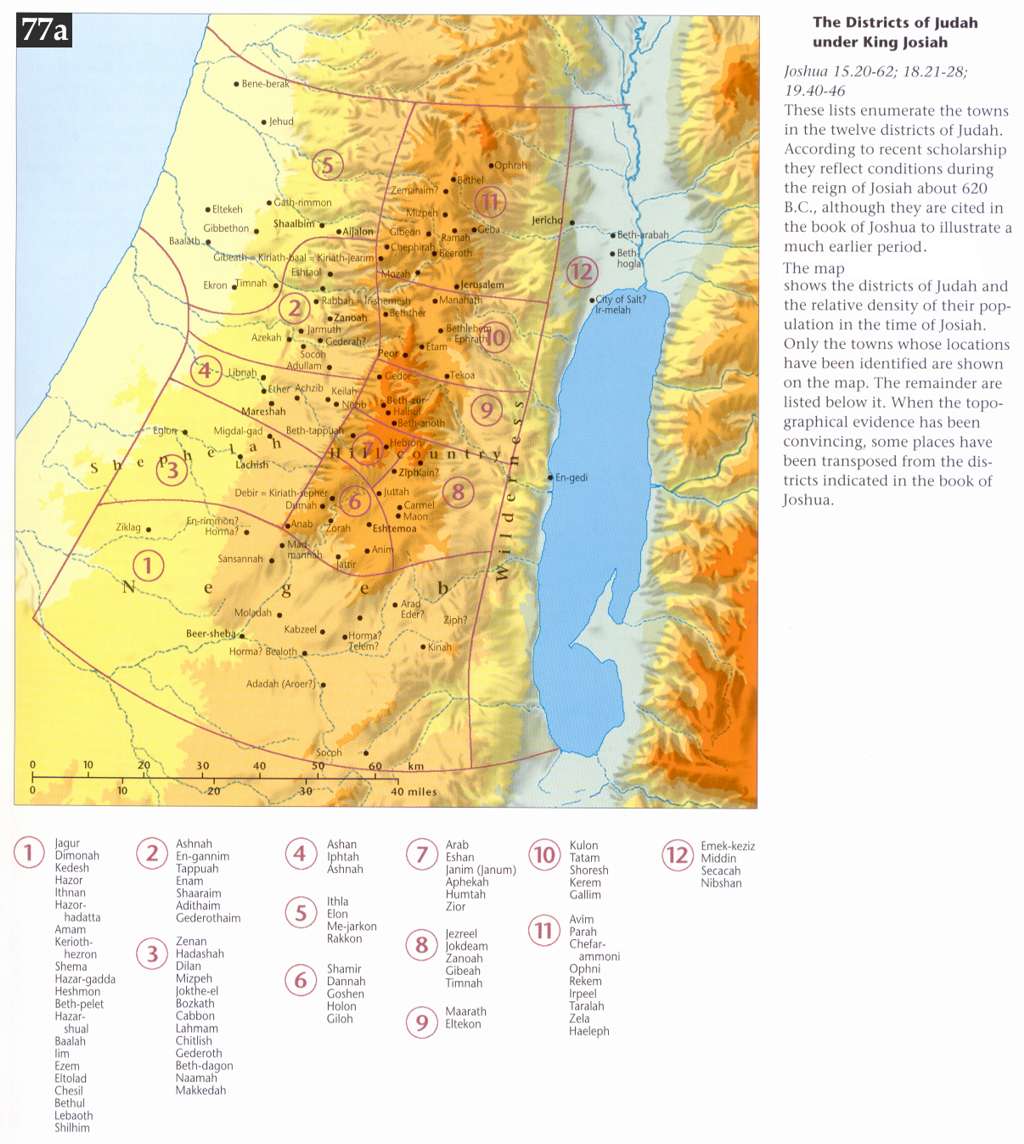
- The Districts of Judah under King Josiah
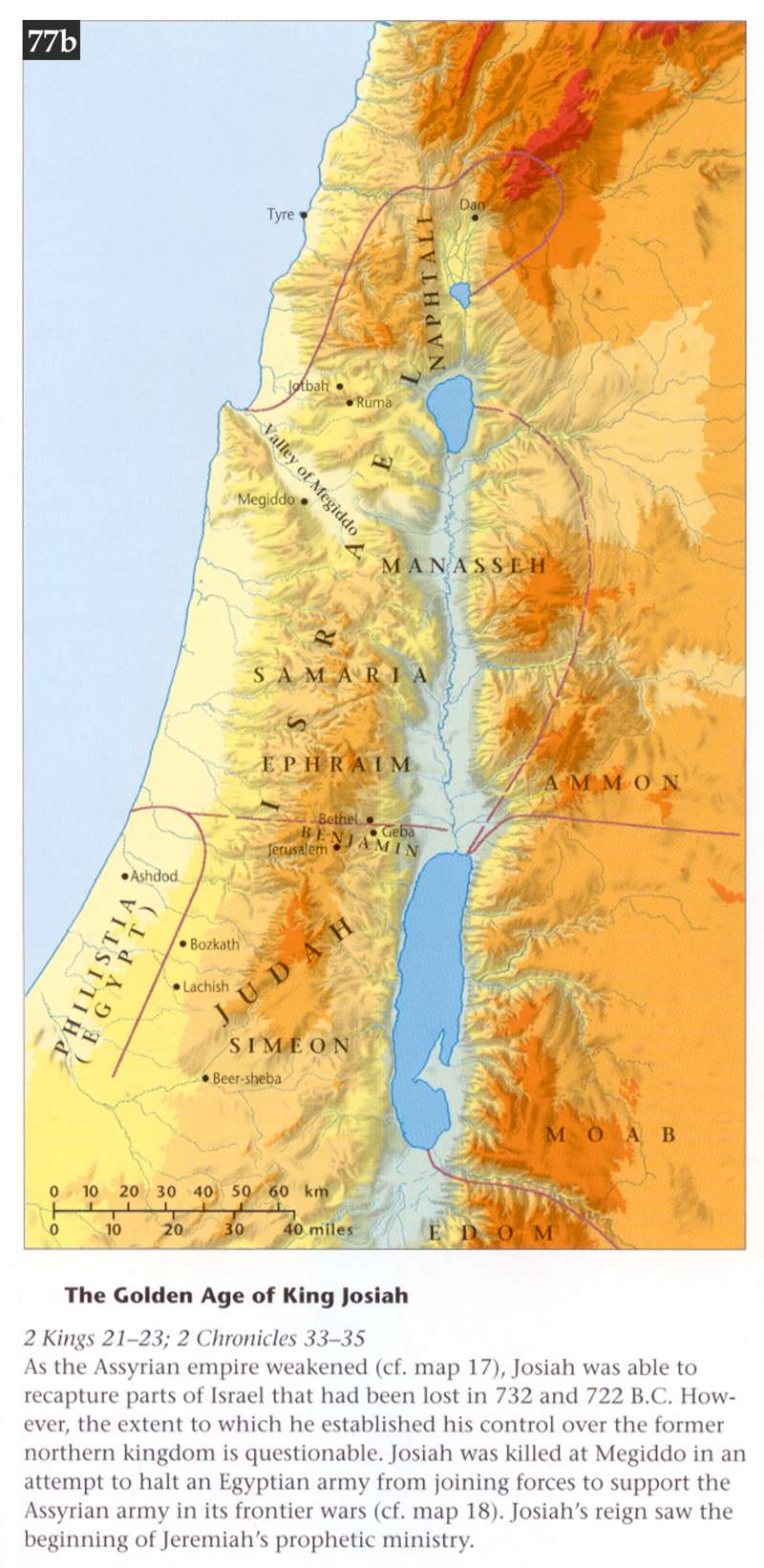
- The Golden Age of King Josiah
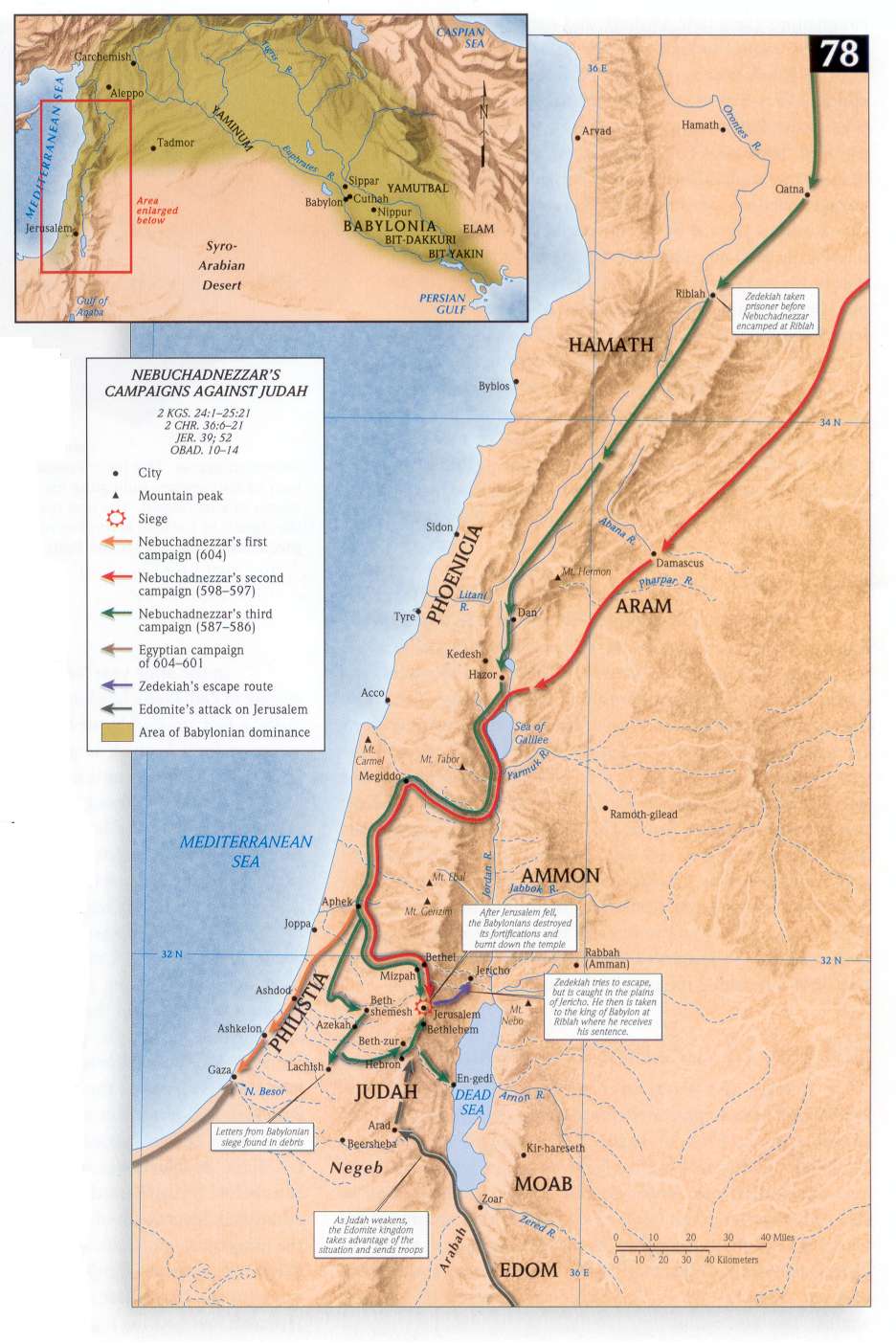
- Nebuchadnezzar's Campaigns against Judah
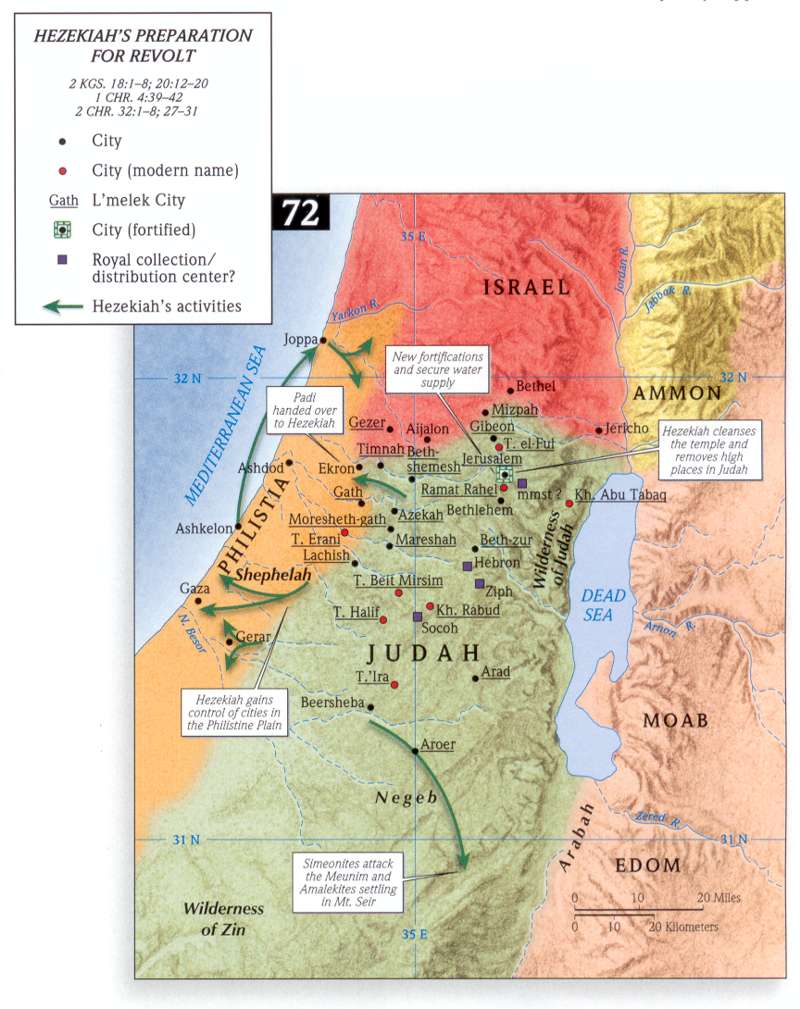
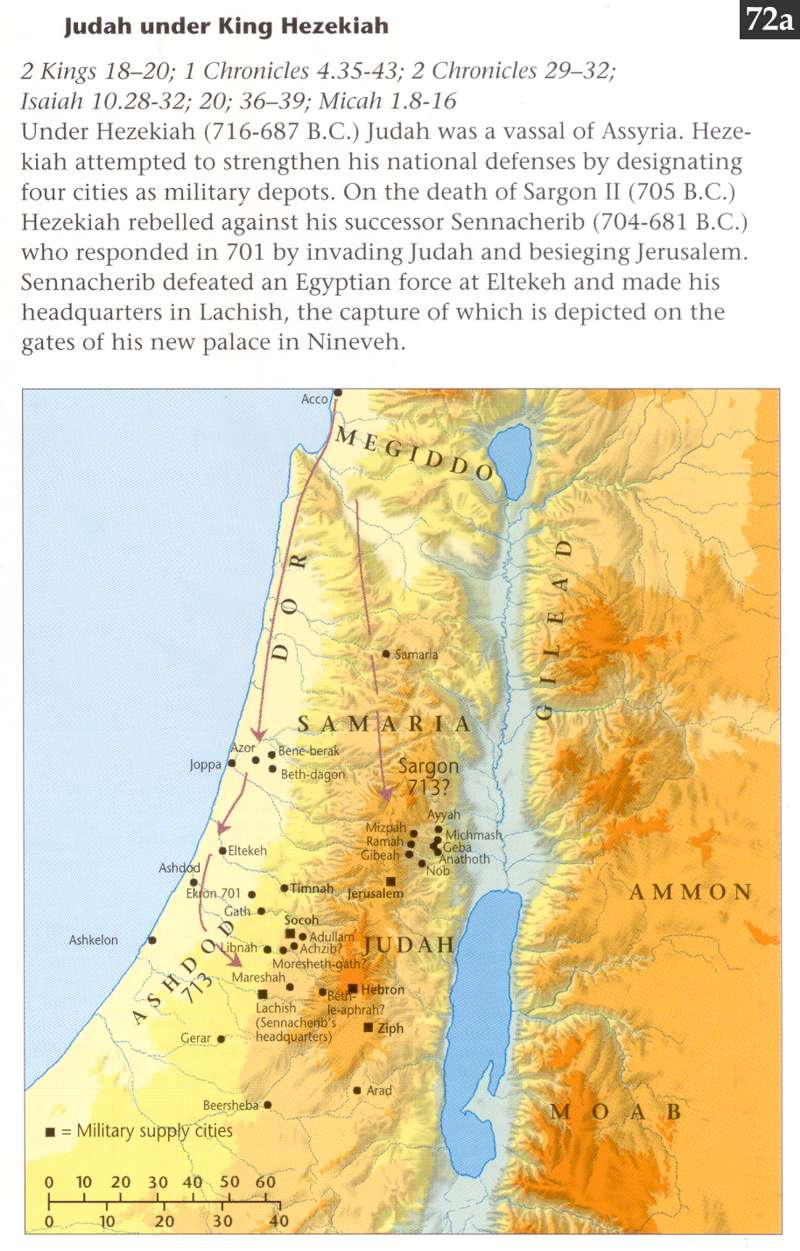
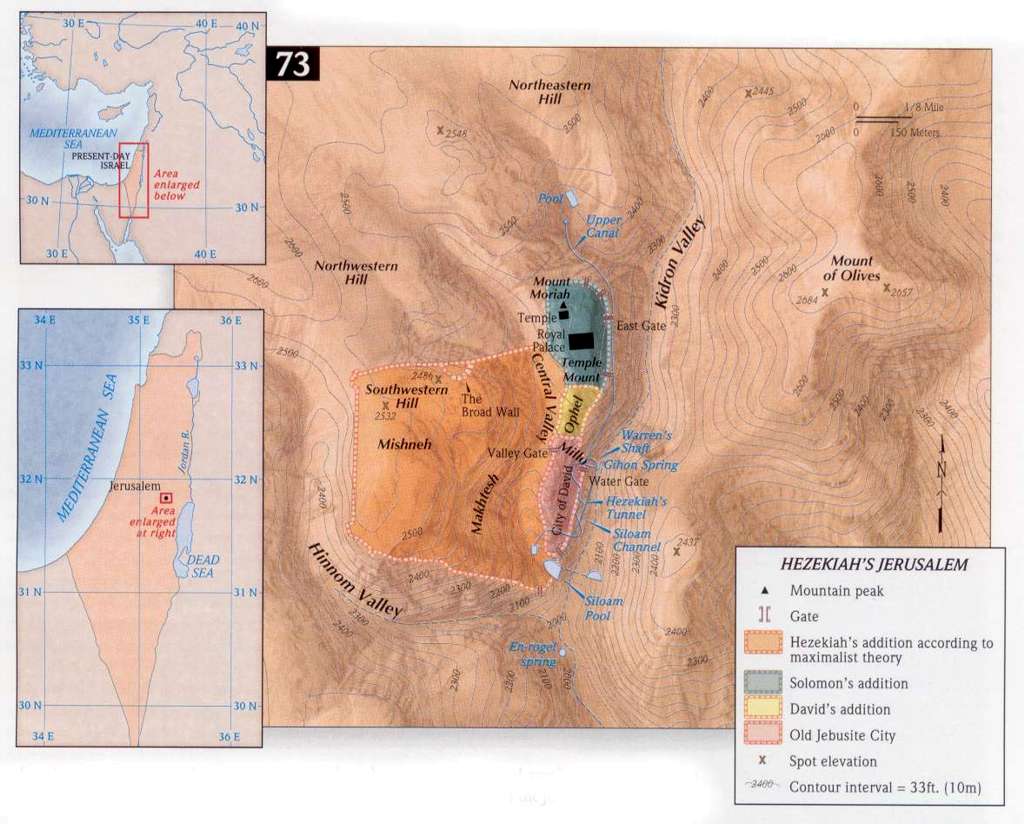
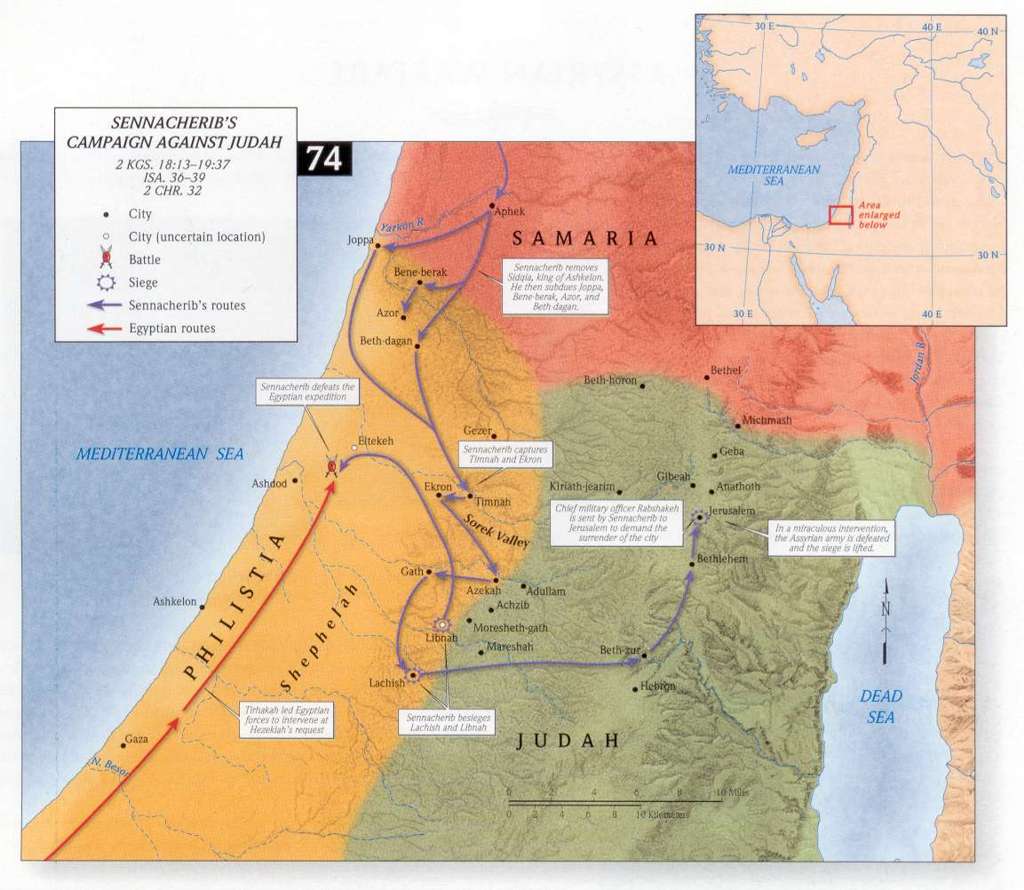
The Babylonian Exile up to the early Rome
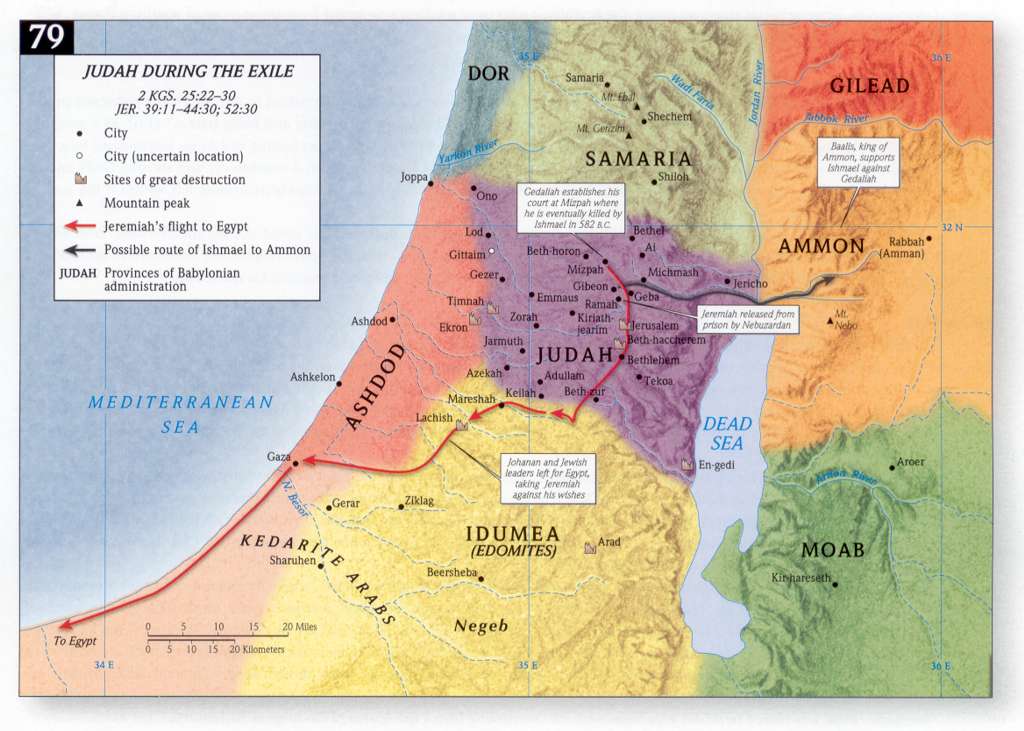
- Judah during the Exile
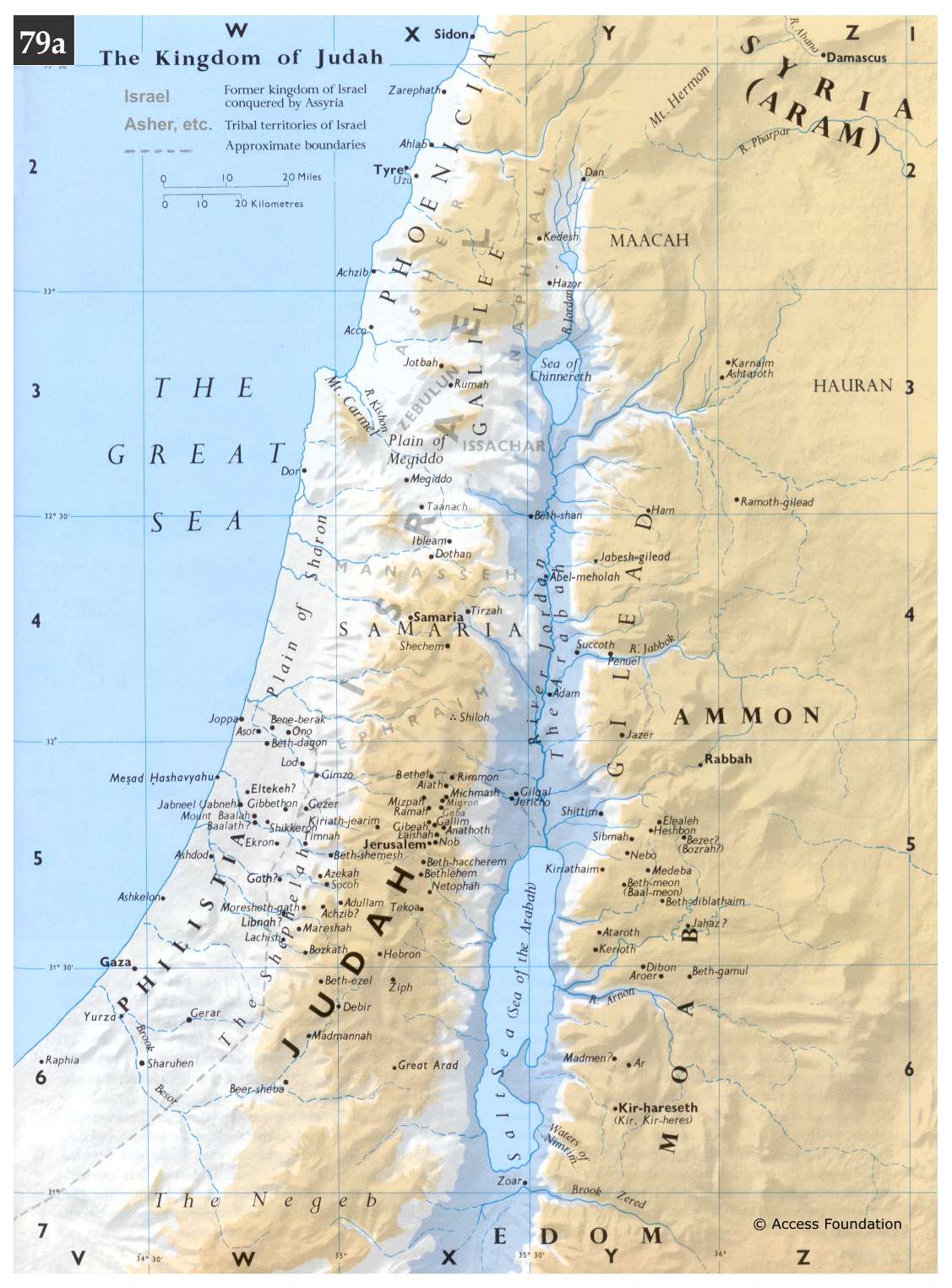
- The Kingdom of Judah
- Exile; Palestine in the Post-Exilic Period
- Jewish Exiles in Babylon
- World Powers of the 6th century BCE
- The Conquests of Cyrus the Great
- The Persian Empire
- The Return of the Jewish Exiles to Judah
- Judah in the 5th century BCE
- Palestine after the Exile
- Alexander the Great's Empire
- The Division of Alexander's Empire ca. 275 BCE
- Palestine under the Ptolemies
- The Seleucid Empire and Antiochus III
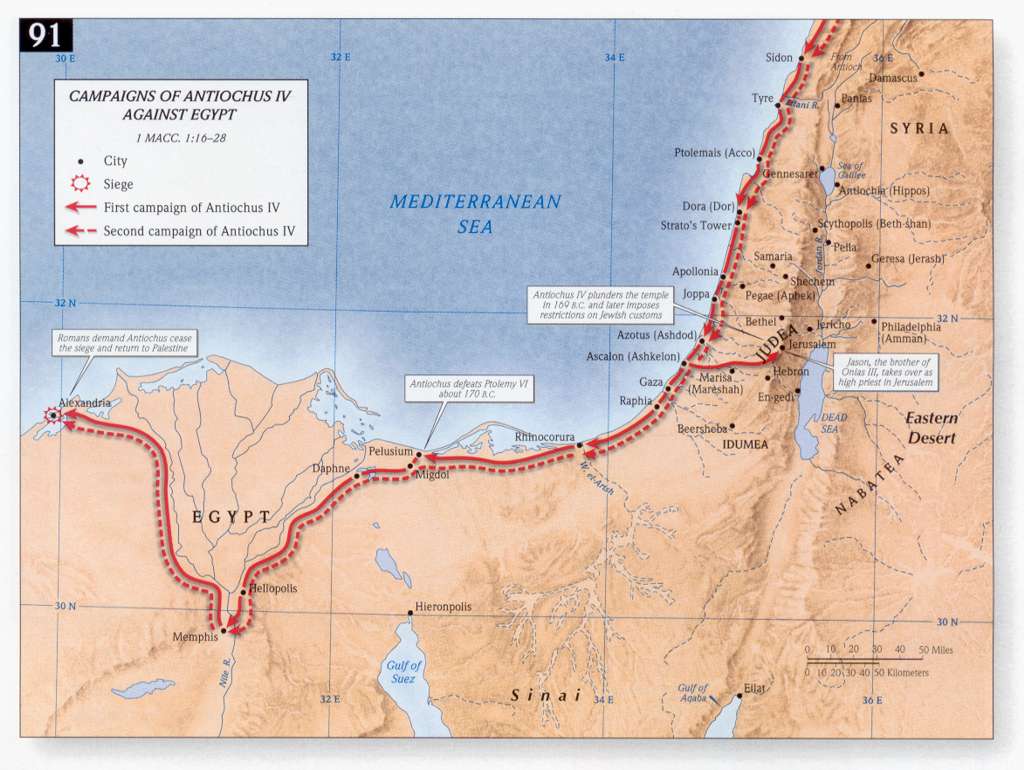
- Campaigns of Antiochus IV against Egypt
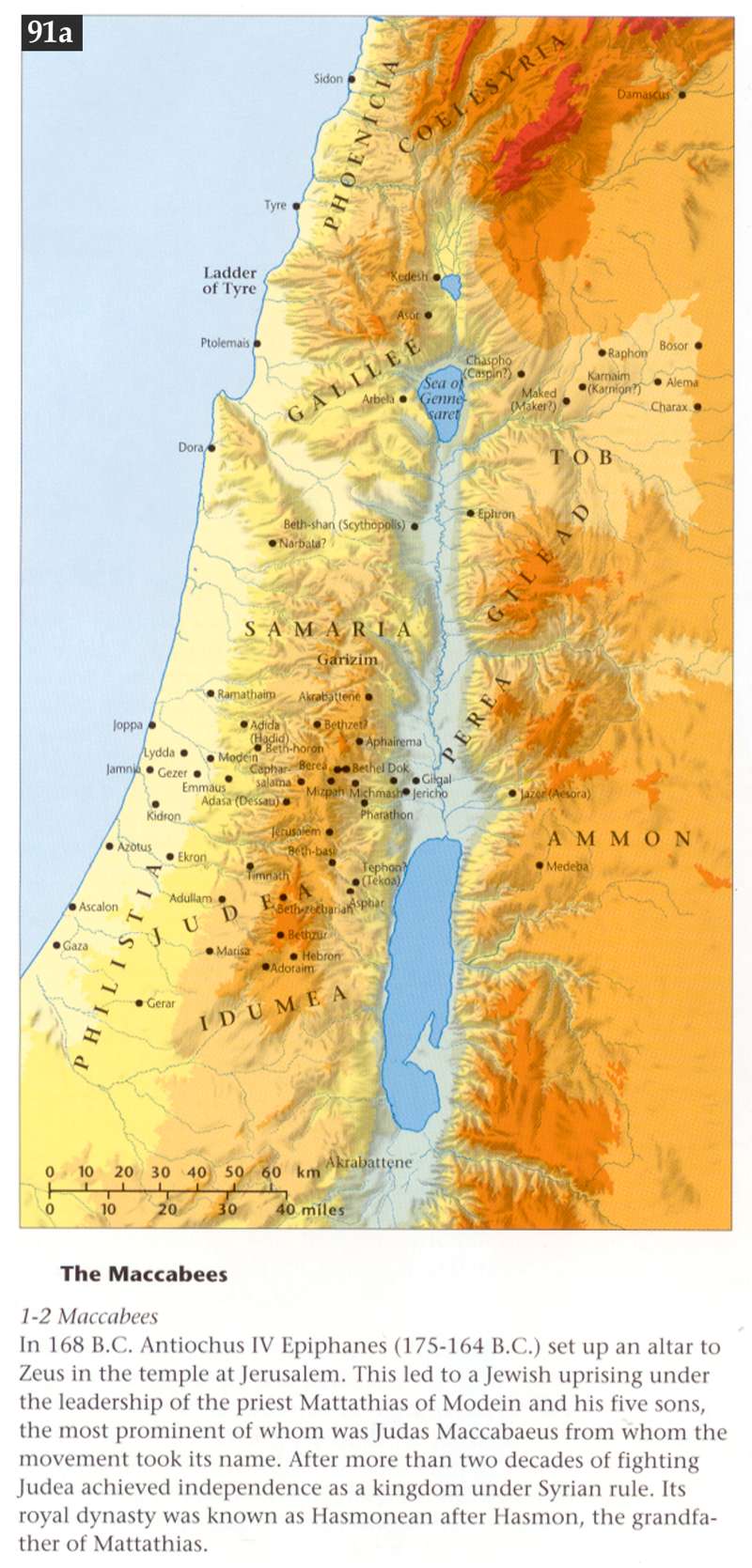
- The Maccabees in 168 BCE
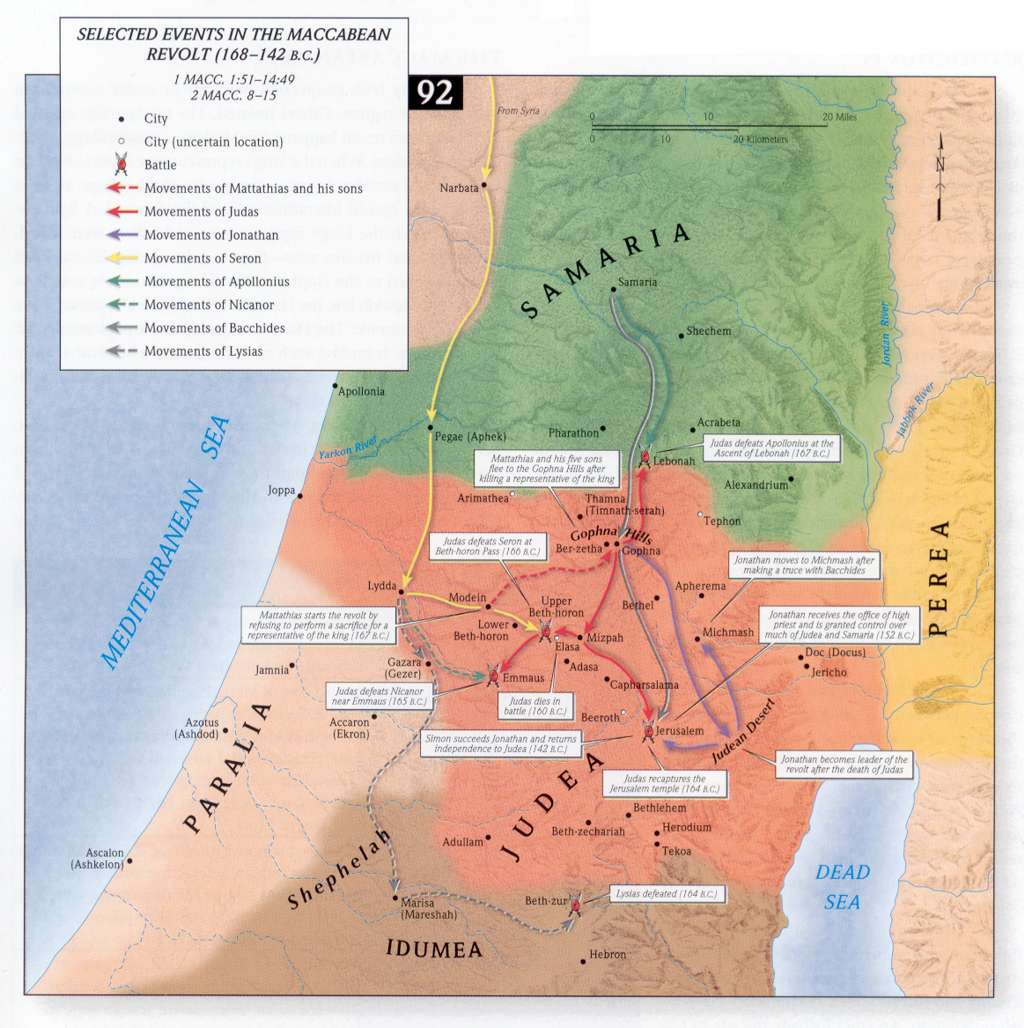
- Selected Events in the Maccabean Revolt
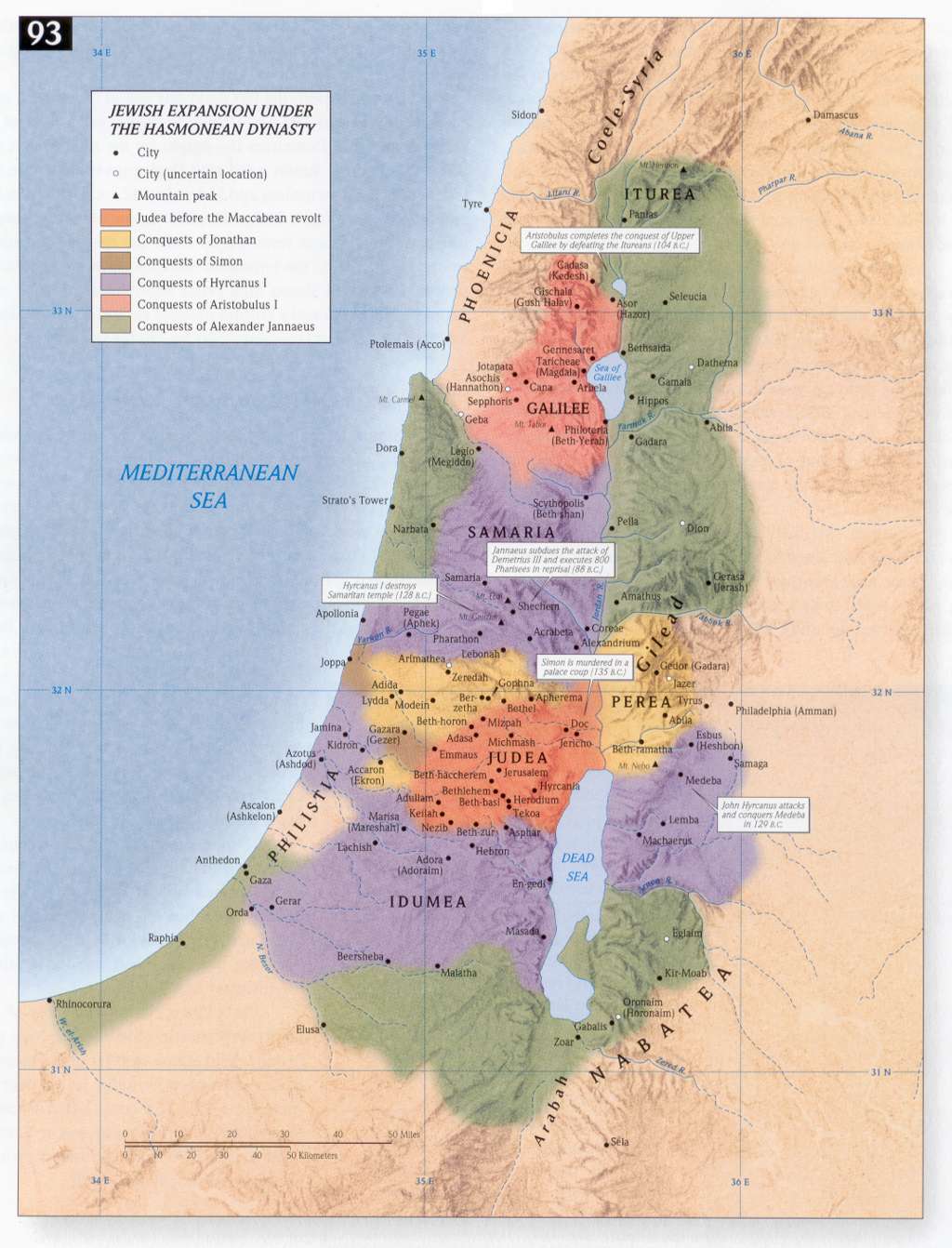
- Jewish Expansion under the Hasmonean Dynasty
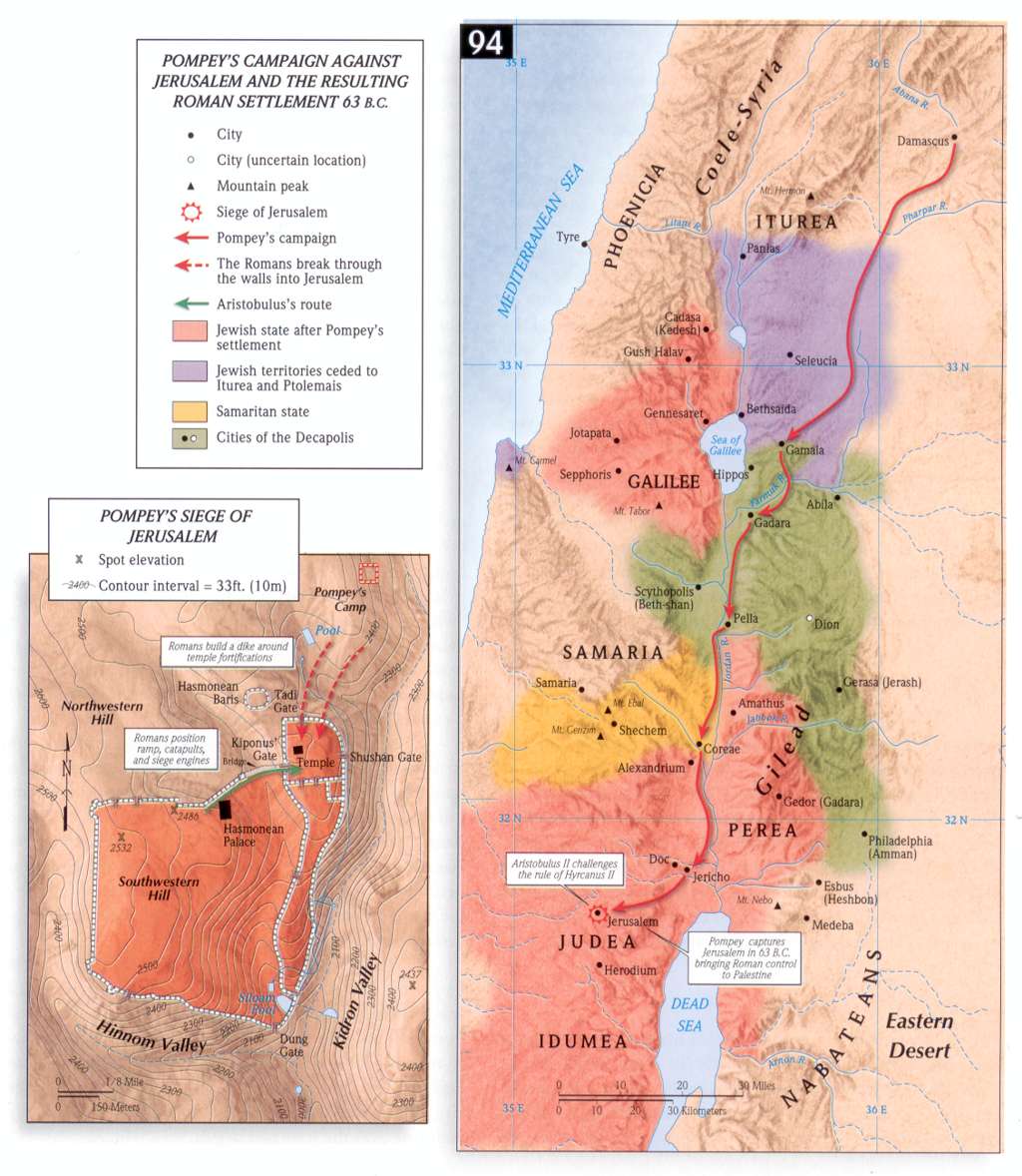
- Pompey's Campaign against Jerusalem
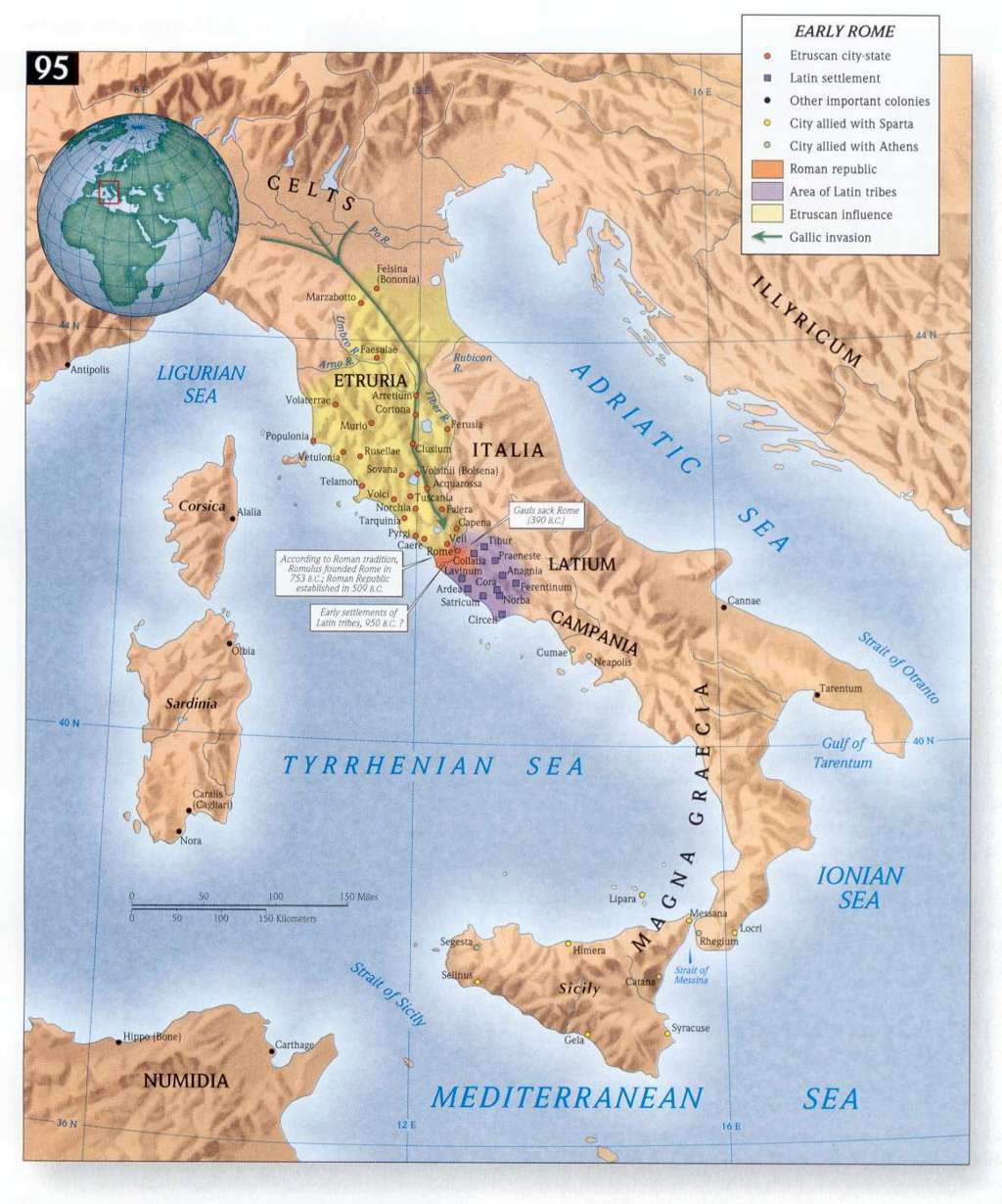
- Early Rome
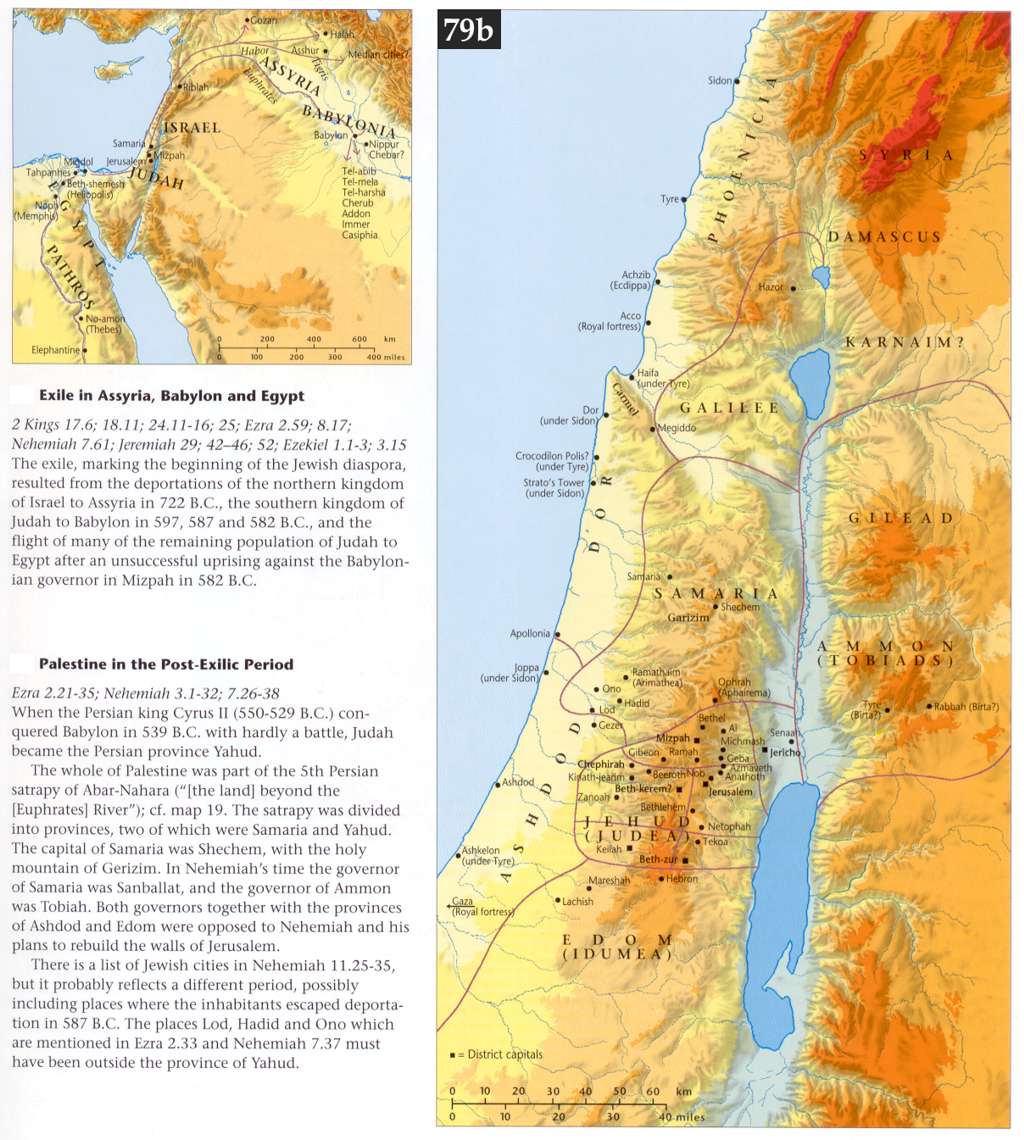
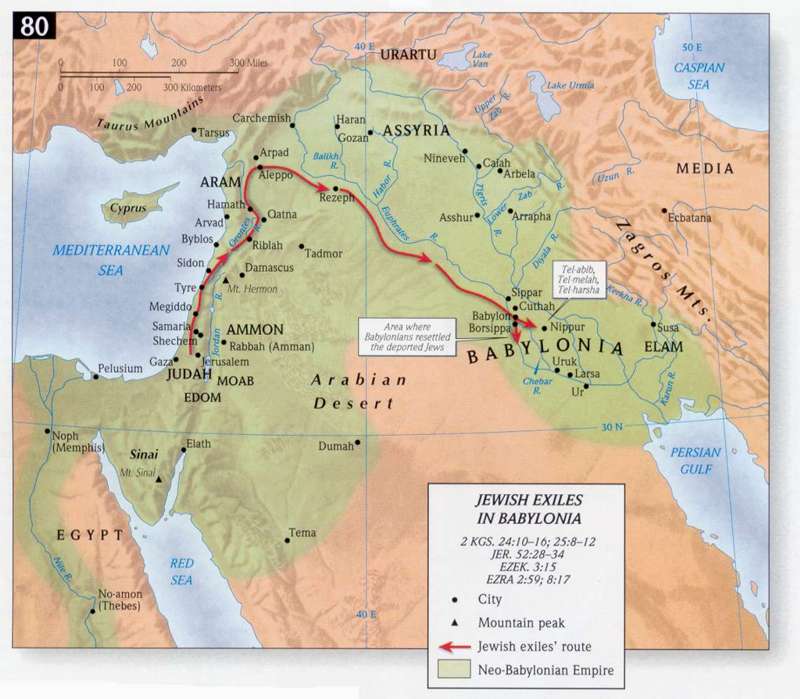
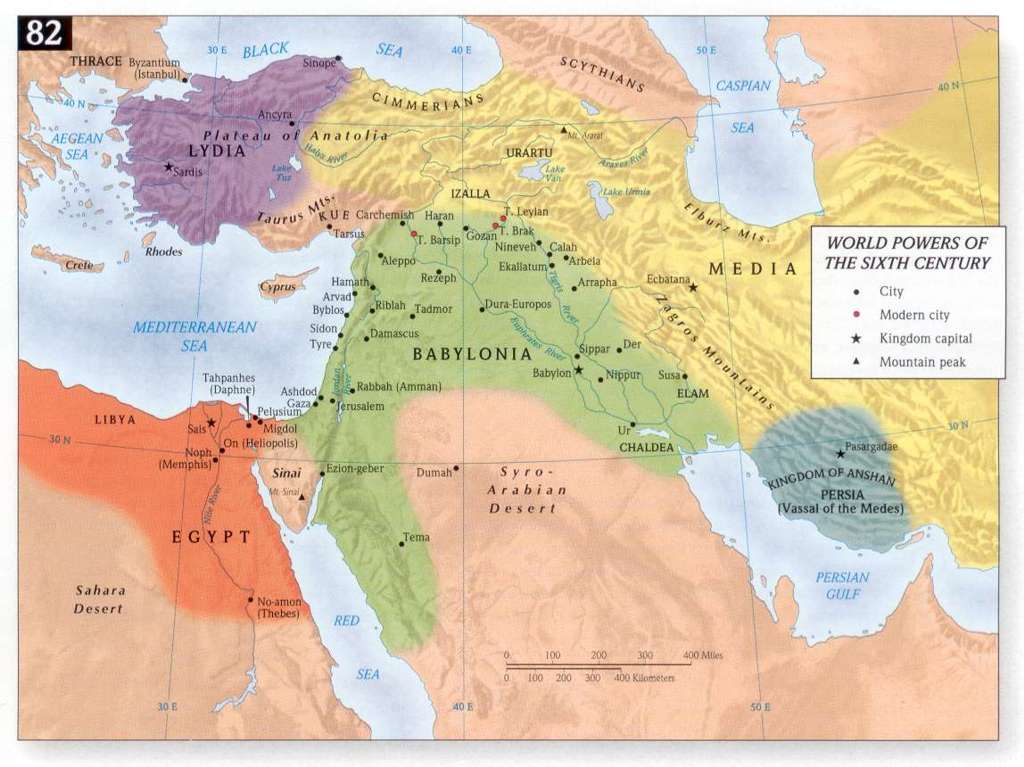
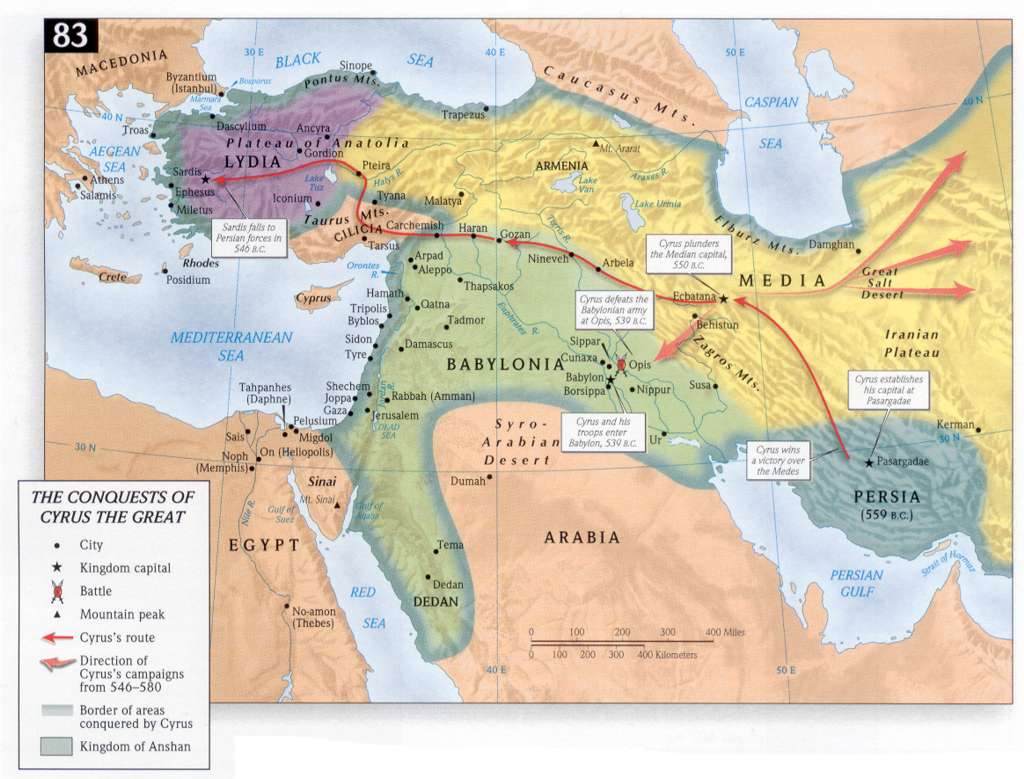
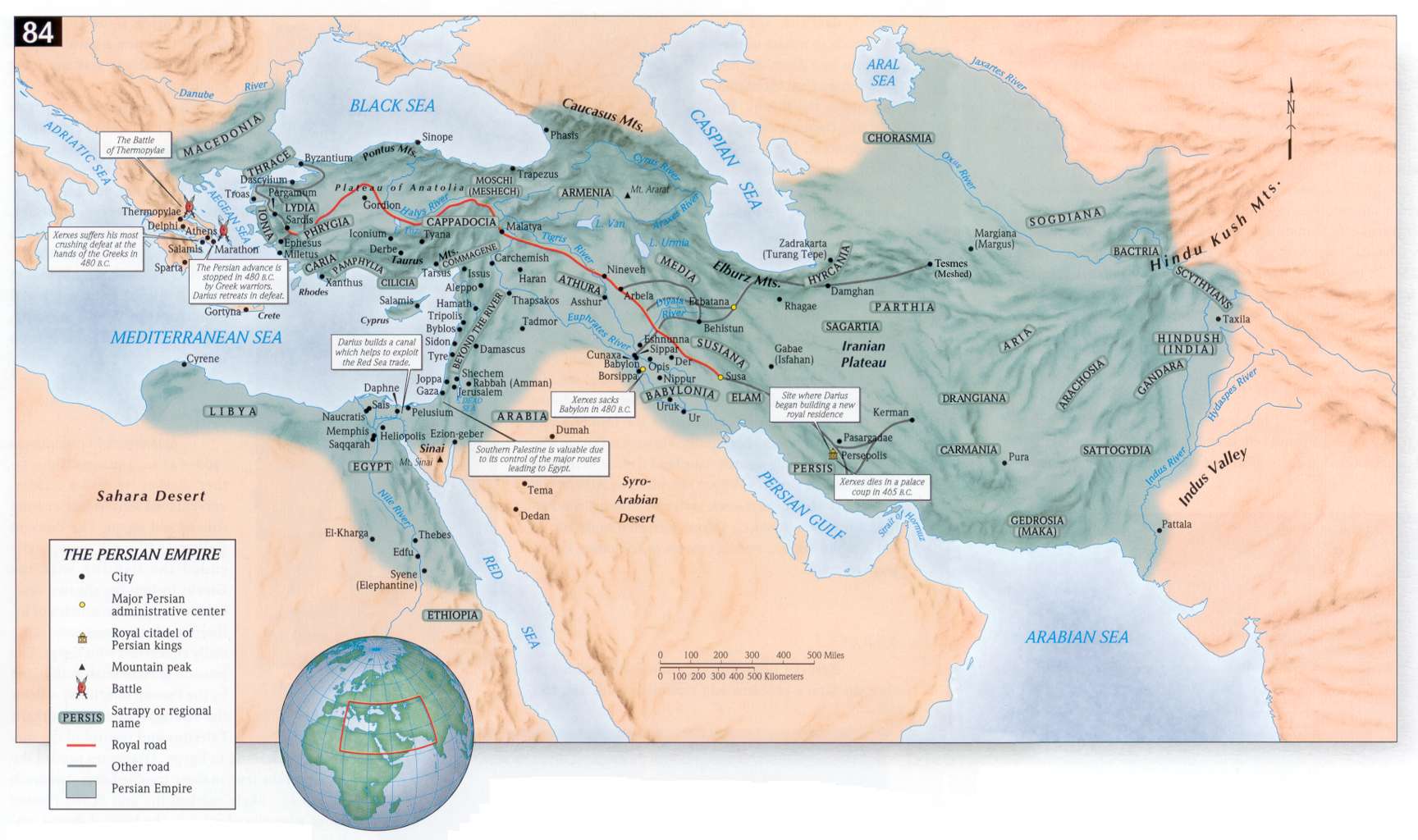
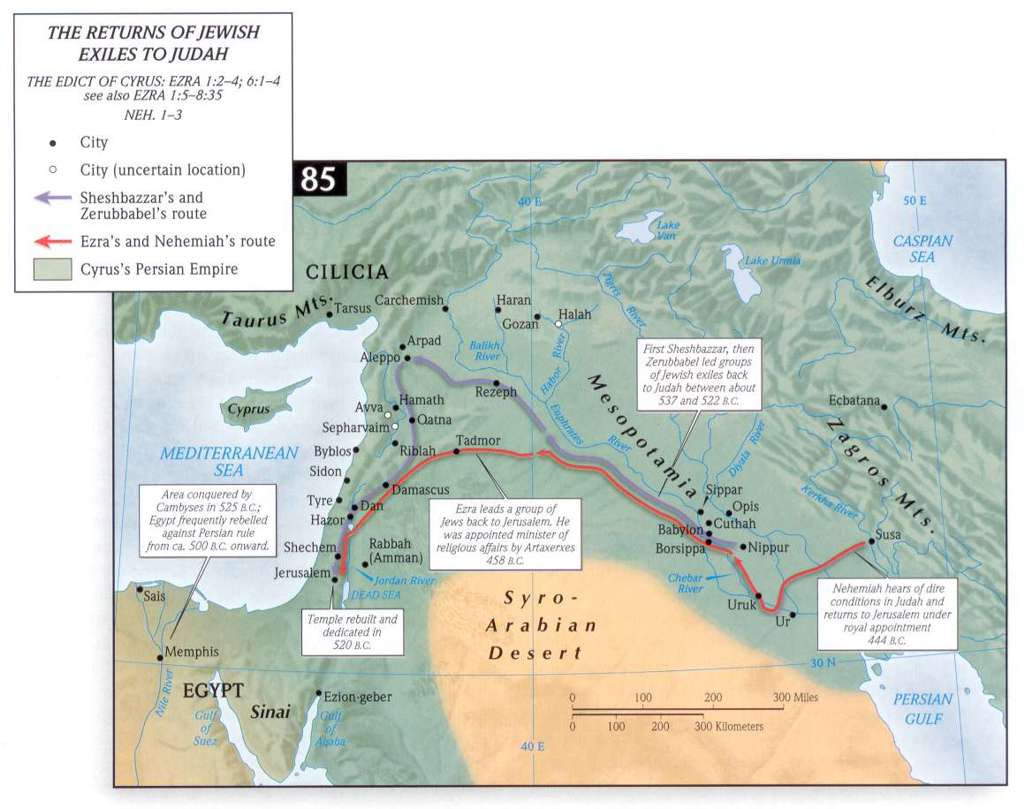
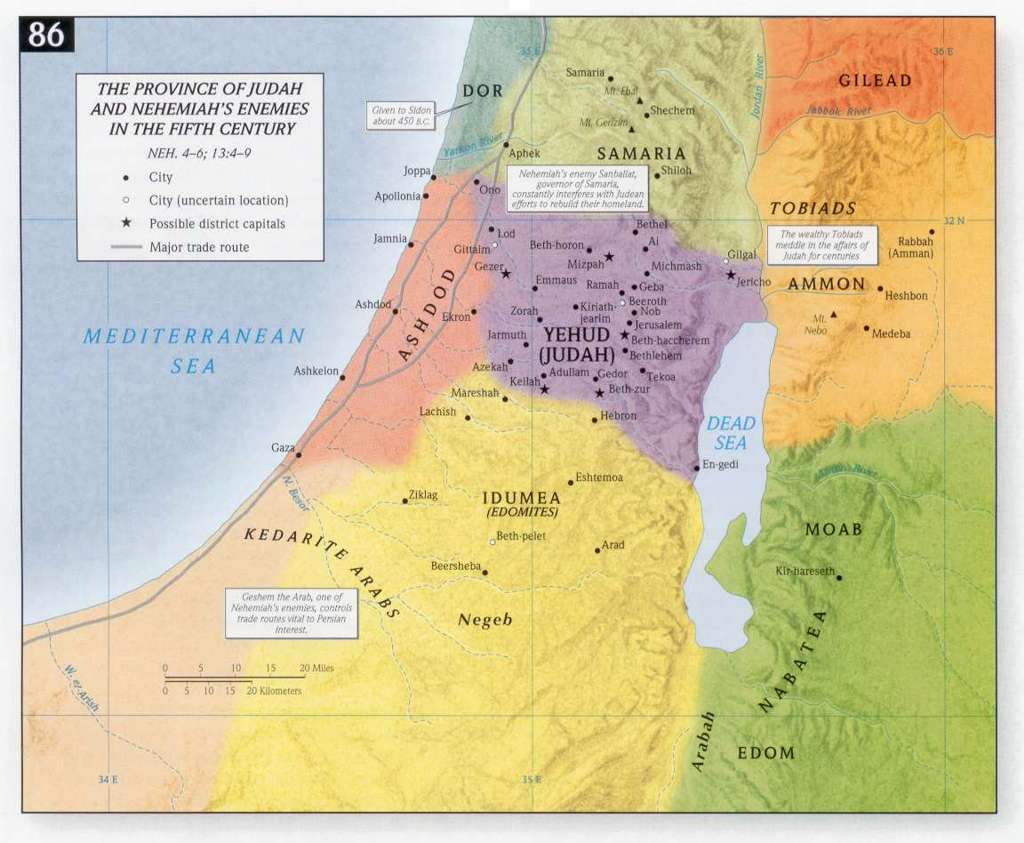
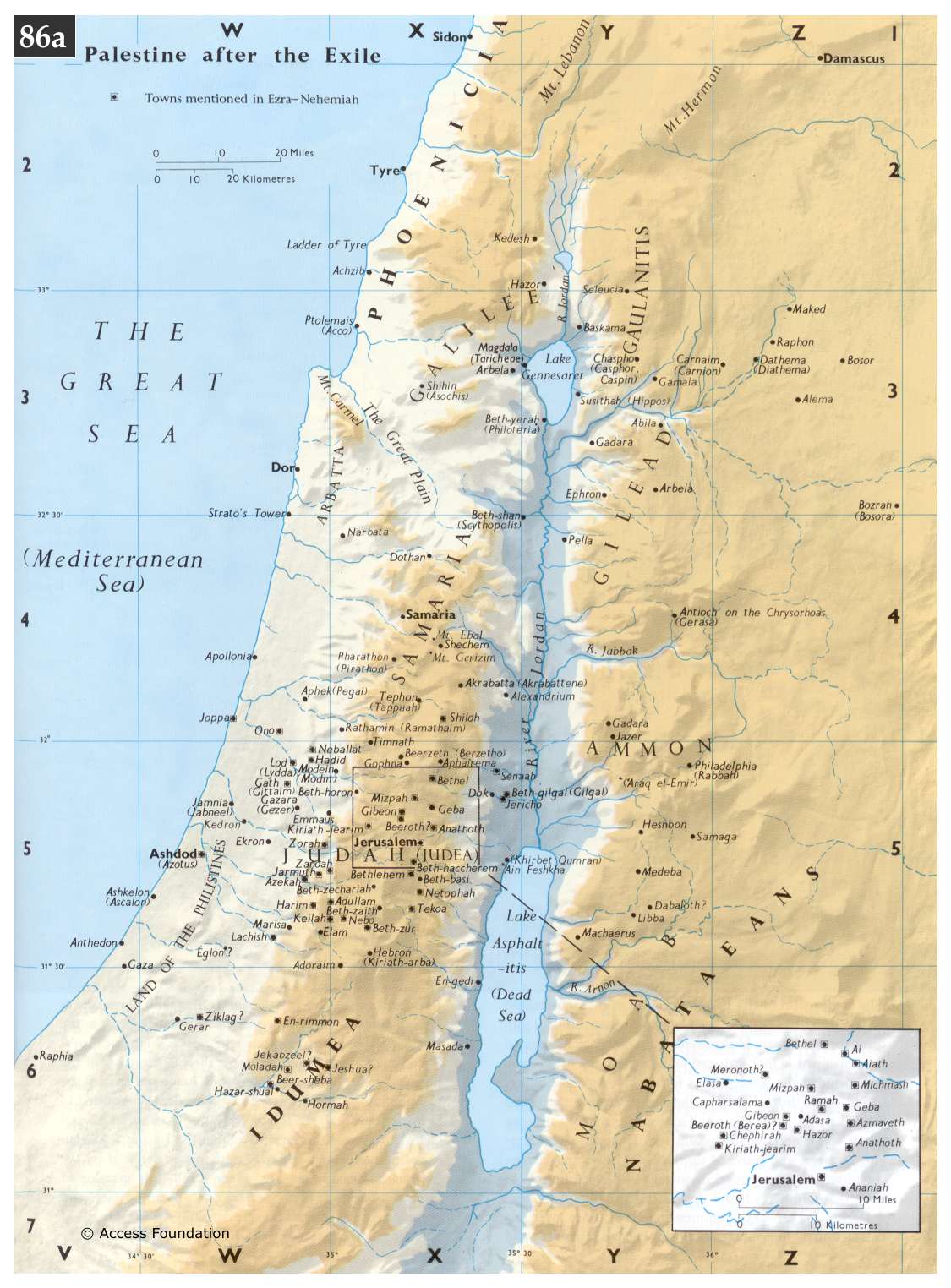
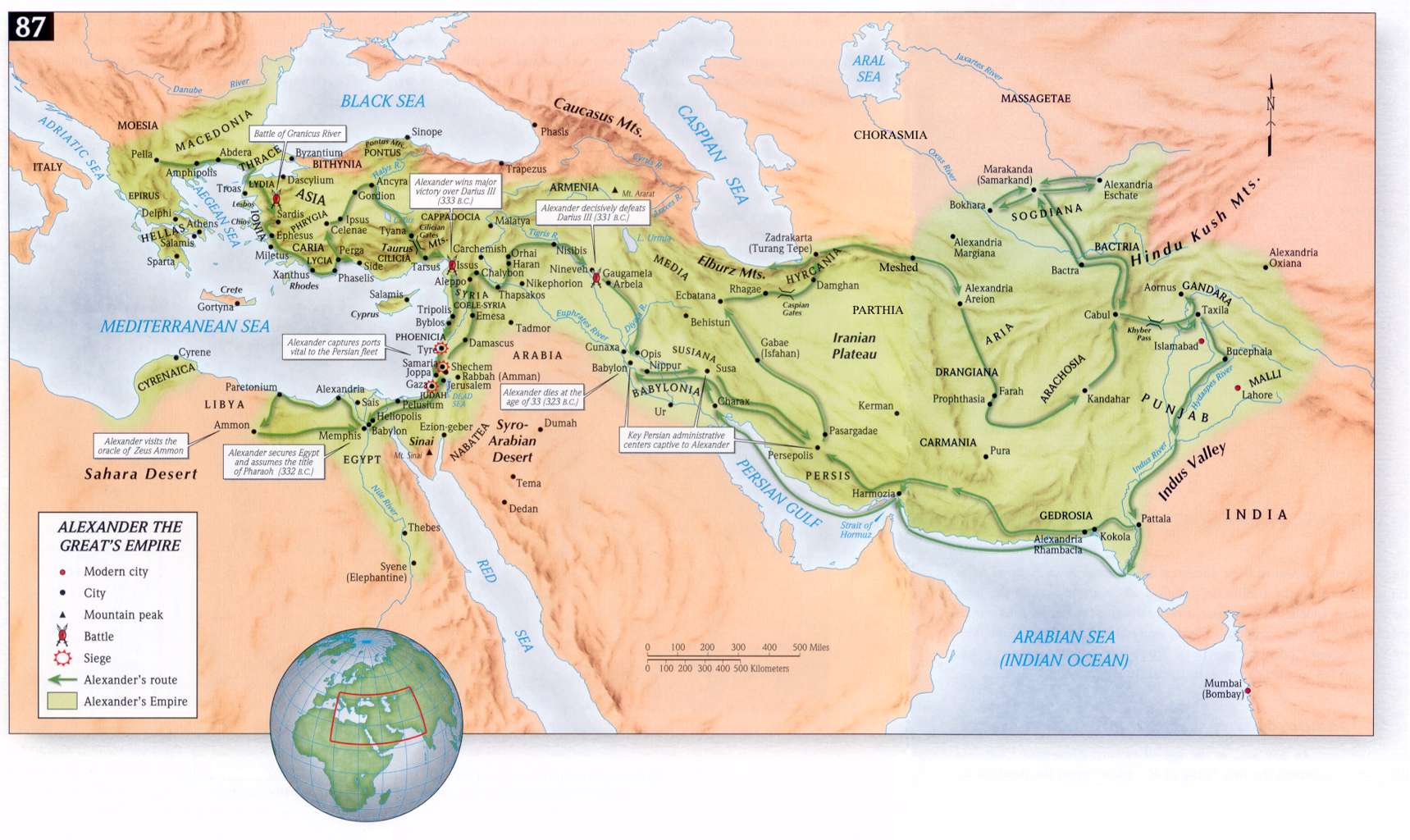
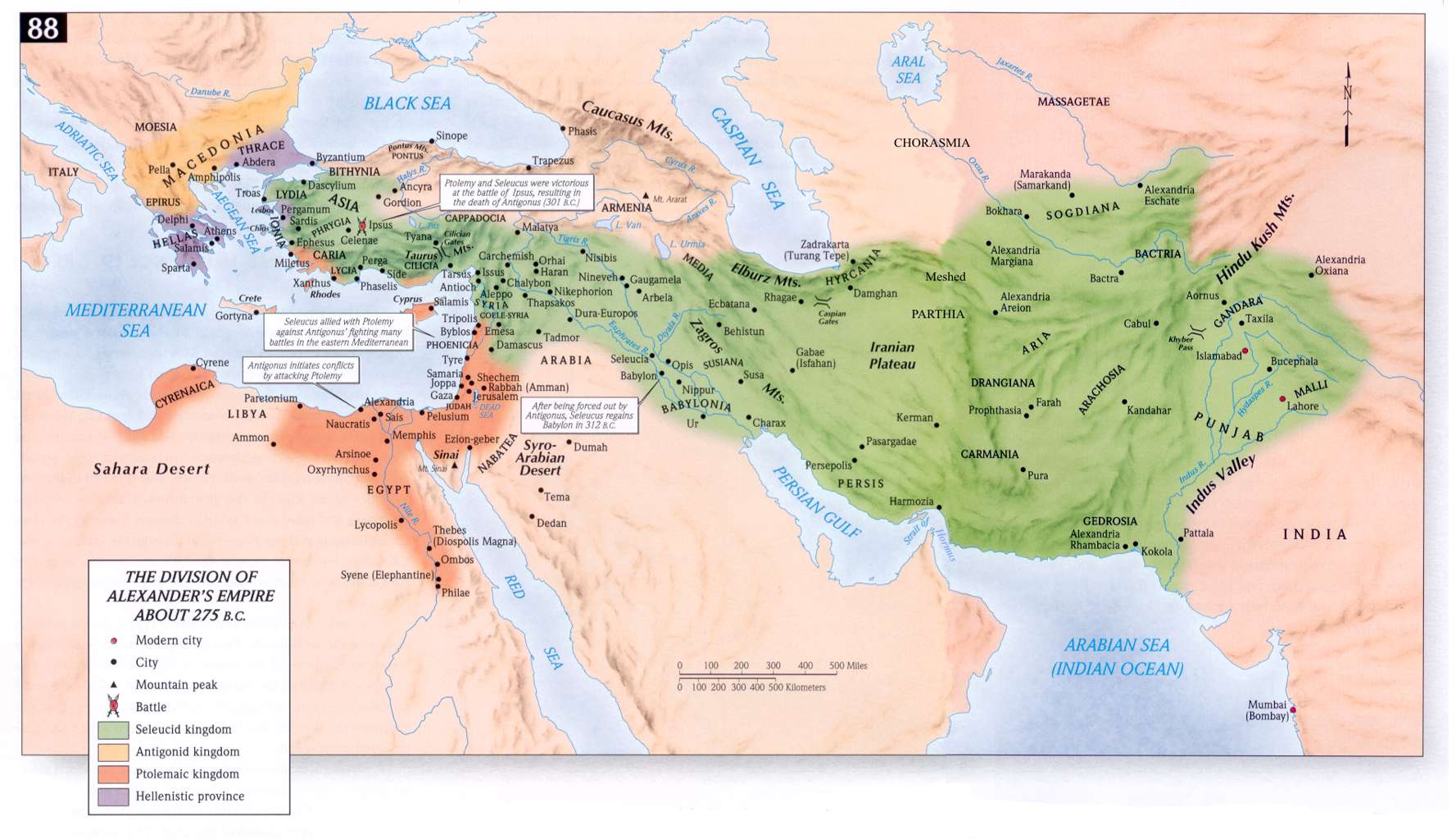
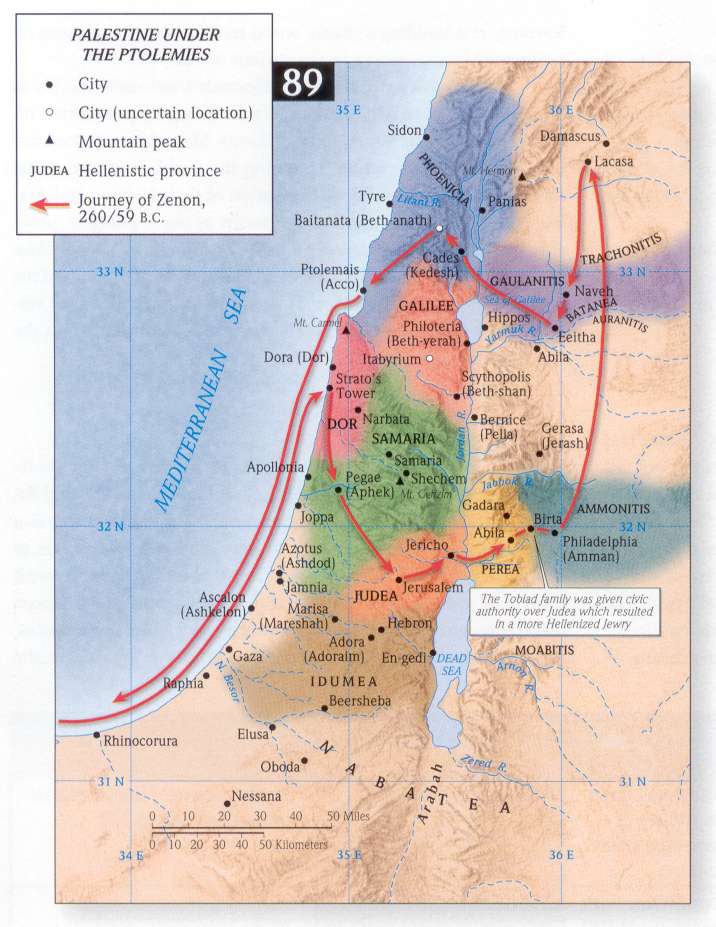
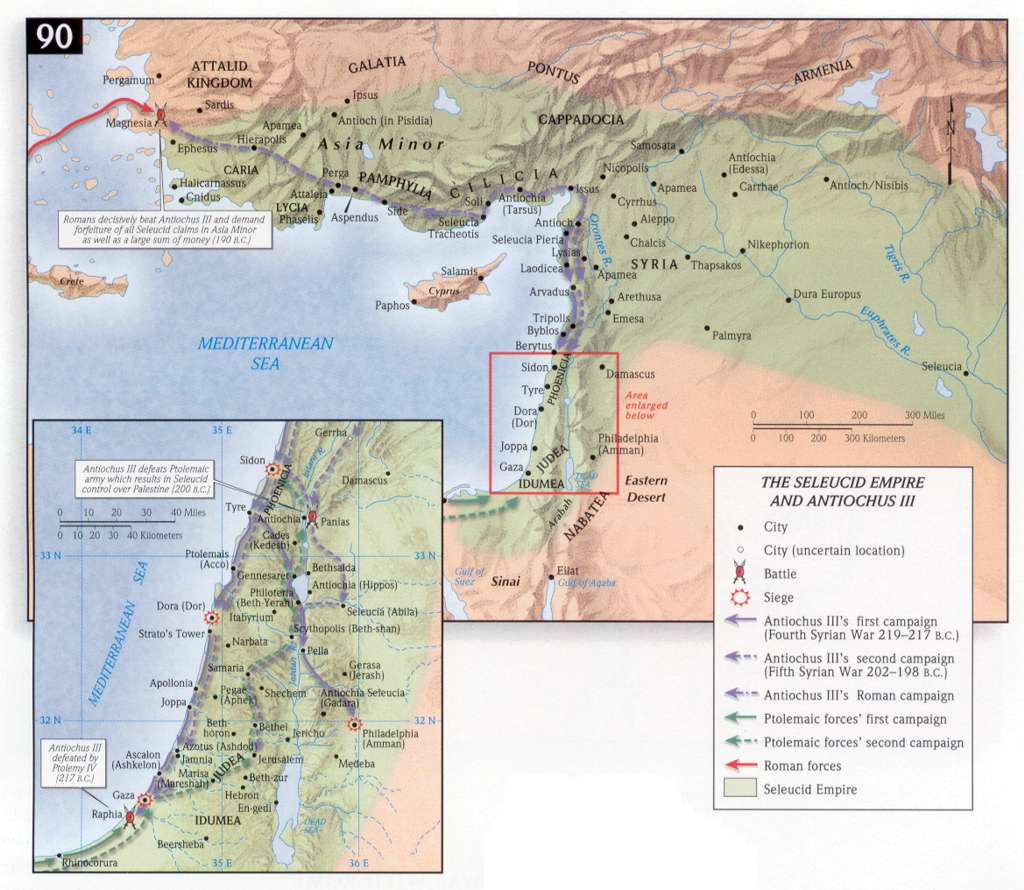
MAPS FROM ESV
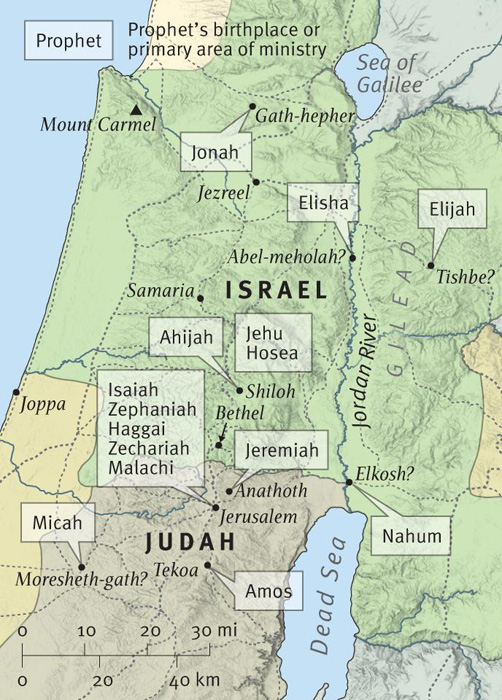
Prophets of Israel and Judah
c. 875–430 B.C.
- Extent of Solomon’s Kingdom
- Israel and Judah in 2 Kings
- Solomon’s Administrative Districts
- The Kingdom Divides
- Syria Captures Gilead
- Resurgence during Azariah, Jeroboam II
- Prophets of Israel and Judah
- Resurgence of Assyrian Influence
- Fall of Samaria, Deportation of Israelites
- Exile to Babylon
- Extent of David’s Kingdom
- Solomon’s International Ventures
- Syria and Israel Attack Judah
- Judah after the Fall of Israel
- Persian Empire at the Time of Ezra
- Persian Empire at the Time of Nehemiah
- Judea under Persian Rule
- Persian Empire at the Time of Esther
- Near East at the Time of Isaiah
- Israel and Judah at the Time of Jeremiah
- Babylonian Empire
- Babylon Attacks Judah
- Jeremiah Prophesies against Egypt
- Near East at the Time of Ezekiel
- Ezekiel’s Vision of Israel’s New Boundaries
- Introduction to Daniel: Babylonian Empire
- Empires of Daniel’s Visions: Persians
- Empires of Daniel’s Visions: Greeks
- Empires of Daniel’s Visions: Ptolemies and Seleucids (Early)
- Empires of Daniel’s Visions: Ptolemies and Seleucids (Late)
- Maccabean Kingdom
Nahum 1 Commentary
- Nahum 1:1 Nineveh Nahum
- Nahum 1:2 his adversaries
- Nahum 1:3 in the storm
- Nahum 1:4 drieth up all the rivers
- Nahum 1:5 burned at his presence
- Nahum 1:7 day of trouble
- Nahum 1:11 imagineth evil
- Nahum 1:12 he shall pass through
- Nahum 1:14 make thy grave
- Nahum 1:15 publisheth peace
Nahum 2 Commentary
- Nahum 2:1 munition
- Nahum 2:2 turned away
- Nahum 2:3 flaming torches
- Nahum 2:4 like the lightnings
- Nahum 2:7 Huzzab
Nahum 3 Commentary
- Nahum 3:7 Nineveh
- Nahum 3:8 populous No
Recommended: NETBible notes are in the right panel. You can also select the tab for "Constable's Notes." As you scroll the Bible text in the left panel, the notes are synchronized and will scroll to the same passage. Also has a nice parallel Bible feature (see Tab = "Parallel"). Select a different Bible translation (see Tab = "Bible"). Open Greek/Hebrew tab. Mouse over shows corresponding English word and has short definition at bottom of right panel.
SEE MULTIPLE DEVOTIONALS BELOW - including those in this list
Rosscup has this comment on Patterson's work in the Wycliffe Exegetical Commentary: This is an outstanding conservative, detailed work backed by scholarly awareness and expertise. Comments reflect fine-tuned ability in the Hebrew text, philology, exegesis, history, and literature. (Commentaries for Biblical Expositors: An annotated bibliography of selected works. Kress Christian Publications)
Caveat: Be an Acts 17:11 Berean (note): Not always literal, especially on prophetic passages
- Nahum 1 Critical Notes - Scroll Down for Topics Below
- Nahum 1:1 The Servant's Burden
- Nahum 1:2-5 Jehovah A Jealous God
- Nahum 1:6,7 God's Goodness and Anger
- Nahum 1:7 The Triumph of Faith
- Nahum 1:9-11 Resistance to God Powerless
- Nahum 1:12-15 The Destruction of the Enemy and the Redemption of God's People
- Nahum 1 Illustrations to Chapter 1
- Nahum 2 Critical Notes - Scroll Down for Topics Below
- Nahum 2:1 The Cause and Preparations of War
- Nahum 2:3-7 The Great Siege and the Vain Defense
- Nahum 2:8-10 The Flight of the Inhabitants and the Plunder of the City
- Nahum 2:11-13 Nineveh Effaced
- Nahum 2 Illustrations to Chapter 2
- Nahum 3 Critical Notes - Scroll Down for Topics Below
- Nahum 3:1 Great Wickedness
- Nahum 3:2-4 Great Judgments and Great Sins
- Nahum 3:5-7 Retributive Punishment
- Nahum 3:8-10 The Destruction of Some A Warning to Others
- Nahum 3:10-13 The Fate of Some Worse than that of Others
- Nahum 3:14-18 The Last Hope Destroyed
- Nahum 3:18 Slumbering Shepherds and Scattered Flocks
- Nahum 3:19 Irretrievable Ruin
- Nahum 3 Illustrations to Chapter 3
- Nahum 1 Commentary - Exposition (scroll down for following homilies)
- Nahum 1:1 A Vision and a Burden
- Nahum 1:1 The Messenger of Judgment
- Nahum 1:1, 2 Great Sins Bringing Great Ruin
- Nahum 1:2-6 The Wrath of God - A Warning
- Nahum 1:2-6 The Divine Vengeance
- Nahum 1:3 The Patience of God
- Nahum 1:3-6 God's Power
- Nahum 1:7 The Divine Goodness
- Nahum 1:7 God Our Stronghold
- Nahum 1:7 The Divine Regard for Trusting Hearts
- Nahum 1:7,8 Consolation in God
- Nahum 1:7,8 Opposite Types of Human Character and Opposite Lines of Divine Procedure
- Nahum 1:8 Pursued By/Into Darkness
- Nahum 1:8-15 Antagonism to God and His Rule
- Nahum 1:8-15 Spiritual Redemption Symbolized
- Nahum 1:9,10 Sin
- Nahum 1:9,14 A Wicked Counselor
- Nahum 1:11-14 Corrupt Kings
- Nahum 1:15 Glad Tidings for God's People
- Nahum 1:15 Three Things Worthy of Note
- Nahum 2 Commentary - Exposition (scroll down for following homilies)
- Nahum 2:1-10 A Predicted Invasion
- Nahum 2:1,2 God the Vindicator of the Oppressed
- Nahum 2:1-3:19 Wicked Nations - They are allowed to exist
- Nahum 2:1-3:19 Wicked Nations - However long they exist, they will be utterly destroyed
- Nahum 2:1-3:19 Wicked Nations - Providence often employs one wicked nation to inflict ruin on another
- Nahum 2:3-13 The Downfall of Nineveh
- Nahum 2:11-13 The Parable of the Lion's Den
- Nahum 2:13 Man Incurring the Divine Displeasure
- Nahum 2:13 The Messengers of Nineveh and the Messengers of Zion
- Nahum 3 Commentary - Exposition (scroll down for following homilies)
- Nahum 3:1-7 Woe to Nineveh
- Nahum 3:1-7 The Guilt and Ruin of Nineveh
- Nahum 3:8-13 The Story of No-Amon
- Nahum 3:8-13 No-Amon, A Sign
- Nahum 3:14-15 Human Efforts Directed Against the Divine Purpose
- Nahum 3:14-19 The Fall of Nineveh
- Nahum 3:16-18 The Instability of Material Greatness
- Nahum 3:19 Hopelessness
- Nahum 3:19 The Overthrow of Evil-Doers A Source of Thankful Joy
James Rosscup writes "This work originally appeared in 1860. The present publication is set up in two columns to the page with the text of the Authorized Version reproduced at the top. Scripture references, Hebrew words, and other citations are relegated to the bottom of the page. The work is detailed and analytical in nature. Introduction, background and explanation of the Hebrew are quite helpful. Pusey holds to the grammatical-historical type of interpretation until he gets into sections dealing with the future of Israel, and here Israel becomes the church in the amillennial vein." (Commentaries for Biblical Expositors: An Annotated Bibliography of Selected Works)
DISCLAIMER - SOME OF THESE ARE EXCELLENT RESOURCES FOR YOU SERMON OR TEACHING PREP BUT I HAVE NOT REVIEWED ALL OF THE TRANSCRIPTS SO THEY MAY BE OF VARIABLE QUALITY - Be a Berean! - Acts 17:11+
FOLLOWING ARE LINKS TO SERMONS WHICH HAVE TRANSCRIPTS
- Nahum 1 - 57 available (11/2020)
- Nahum 2 - 10 available (11./2020)
- Nahum 3 - 10 available (11./2020)
FOLLOWING ARE LINKS TO AUDIO SERMONS
- Nahum 1 - 775 available (11/2020)
- Nahum 2 - 166 available (11./2020)
- Nahum 3 - 203 available (11./2020)
THESE ARE OLDER RESOURCES
NOTE: If you are not familiar with the great saint Charles Simeon see Dr John Piper's discussion of Simeon's life - you will want to read Simeon's sermons after meeting him! - click Brothers We Must Not Mind a Little Suffering (Mp3 even better)
- Nahum 1:2, 6 God a Revenger of Sin
- Nahum 1:7 God a Refuge in Time of Trouble
- Nahum 1:15 The Proper Improvement of God's Mercies
James Rosscup writes "Though old this is well-written and often cited, with many good statements on spiritual truths. Users will find much that is worthwhile, and sometimes may disagree, as when he sees the Jonah account as allegorical (Ed: See Tony Garland's article on the Rise of Allegorical Interpretation)." (Commentaries for Biblical Expositors: An Annotated Bibliography of Selected Works)
- Preface
- The Book of the Twelve
- The Prophet in Early Israel
- The Eighth Century in Israel
- Influence of Assyria Upon Prophecy
- The Seventh Century in Israel
- The Early Years of Josiah (639-625): Jeremiah and Zephaniah
- The Rest of the Century (625-586): The Fall of Nineveh; Nahum and Habakkuk
- Introduction
- Nahum 1 The Vengeance of the Lord
- Nahum 2:1-13 The Siege and Fall of Nineveh
- Nahum 3:1-19 The Siege and Fall of Nineveh
Nahum Commentary
Nahum Sermons
- Nahum 1:7 The Lord is Good - shorter outline
- Nahum 1:7 Trust in the Lord - more detail
Excerpt - The Lord is a stronghold. A hold is a fortress, so He is a strong fortress.
1. In time of trouble the people would run to the fortress for safety. The fortress could withstand the attack.
2. In Proverbs we read, "The name of the Lord is a strong tower, the righteous run into it and are safe."
3. In looking at tho world, the only safe place has always been the Lord.
William Cushing wrote:
O safe to the Rock that is higher than I
My soul in its conflicts and sorrows would fly
So sinful so weary, Thine, Thine would I be,
Thou blest Rock of Ages, I'm hiding in Thee.In the calm of the noontide, in sorrow's lone hour,
In times when temptation casts o'er me its power;
In the tempests of life, on its wide heaving sea,
Thou blest Rock of ages, I'm hiding in Thee.How oft in the conflict, when pressed by the foe,
I have fled to my Refuge and breathed our my woe;
How often when trials like sea billows roll,
Have I hidden in Thee, O Thou Rock of my soul.C. When in trouble, where do you turn? Do you turn within for that extra grit to bear up under the pressure?
1. People often live by motto's.
a. What you can't cure, you must endure.
b. Just grin and bare it.
c. I think I can.
d. Every day and in every way, the world is getting better and better and better.
2. In real trouble, motto's aren't much help.
3. But where do you turn? To a friend, a family member? Have you ever turned to a friend for help, only to find that he had greater problems than you?
4. I would advise you to turn to the Lord, He is a stronghold in the time of trouble, and I want Him to keep a stronghold on me. (Nahum 1:7 Trust in the Lord)
Nahum 1
- Title - Nahum 1:1
- Psalm to Yahweh - Nahum 1:2-8
- Judgment and Salvation - Nahum 1:9-2:2
- Judgment: Nineveh - Nahum 1:9-11
- Salvation: Judah - Nahum 1:12-13
- Judgment: Nineveh - Nahum 1:14
- Salvation: Judah - Nahum 1:15
Nahum 2
- Judgment: Nineveh - Nahum 2:1
- Salvation: Judah and Israel - Nahum 2:2
- Nineveh: A Vision of Its End - Nahum 2:3-13
Nahum 3
- Nineveh: Surety of Its Doom - Nahum 3:1-19
- Sure: Because of its Sin - Nahum 3:1-7
- Sure: Despite Its Advantages - Nahum 3:8-17
- Sure: Despite Its Strength - Nahum 3:18-19
Nahum 1
- Title - Nahum 1:1
- Psalm to Yahweh - Nahum 1:2-8
- Judgment and Salvation - Nahum 1:9-2:2
- Judgment: Nineveh - Nahum 1:9-11
- Salvation: Judah - Nahum 1:12-13
- Judgment: Nineveh - Nahum 1:14
- Salvation: Judah - Nahum 1:15
Nahum 2
- Judgment: Nineveh - Nahum 2:1
- Salvation: Judah and Israel - Nahum 2:2
- Nineveh: A Vision of Its End - Nahum 2:3-13
Nahum 3
Comment: This Reference Tool will aid you in using Scripture to interpret Scripture. John MacArthur says that the Treasury of Scripture Knowledge is "The one book, aside from the Bible itself, that I value most in my studies." Donald Grey Barnhouse testified to the value of using Scripture as a commentary on itself, remarking that "You very rarely have to go outside the Bible to explain anything in the Bible." See discussion of Comparing Scripture with Scripture.
NAHUM 1
Nahum 1:2 A jealous and avenging God is the LORD; The LORD is avenging and wrathful. The LORD takes vengeance on His adversaries, And He reserves wrath for His enemies.
Of the thirty Roman Emperors and Governors who persecuted Christians, not one came to a peaceful end. - D L Moody
Nahum 1:3. Slow to anger.
Make haste to help me.—Psalm 40:13.
Though the Lord often spares reproof, He never spares commendation. He is slow to anger; He makes haste to be gracious. - D L Moody
AN ILLUSTRATION - Micah pressed home to Israel and to us the need of Christ as precedent to victory. If you ever visit Florence in Italy, and go into the Uffizi Gallery, you will see there a magnificent painting of the Battle of Ivry, in which the forces of Henry IV of Navarre are contending against the host led on by his enemies. The picture, true to life, represents a terrific struggle. There is no suggestion of retreat by the one side, nor a suggestion of victory for the other, but both are mingled in awful onslaught, fierce and bloody. But there is one part of the picture from which the artist's brush speaks in no uncertain evidence of the issues of the day. On one side of the picture, up in the corner, hovers a great company of warrior angels, with swords drawn. You know, at once, that God is on the side of Henry IV of Navarre, and you know whose is the victory.
When the Syrian host surrounded Elisha, the man of God, his servant trembled and cried, "How shall we do?" But Elisha said, "Fear not; for they that be with us are more than they that be with them." And when he had prayed, the young man's eyes were opened and he saw the mountain full of horses and chariots of fire round about them.
Sometimes when the forces of evil have arrayed themselves against the good, the conflict has seemed uncertain and sometimes it has seemed as though iniquity was destined to prevail. Even the bravest souls of earth, have been tempted here and tried, because the days were dark, and it seemed, for the time, as if there were no God. But, if we only had the eyes to see, we'd find an angel host about us, leading us on to victory. It is true that vice often wears the purple and virtue is clothed in rags. Truth is often on the scaffold and wrong is on the throne. But you may be sure that within the shadow of the scaffold, God is standing, keeping watch over His own. W. E. B.
Nahum Illustration -
Queen Victoria was celebrating sixty years on the British throne when Rudyard Kipling published his poem “Recessional.” Not everybody in Great Britain liked the poem because it punctured national pride at a time when the empire was at its peak. “Recessional” was a warning that other empires had vanished from the stage of history and theirs might follow in their train. God was still the Judge of the nations. Kipling wrote:
Far-called, our navies melt away;
On dune and headland sinks the fire:
Lo, all our pomp of yesterday
Is one with Nineveh and Tyre!
Judge of the Nations, spare us yet,
Lest we forget—lest we forget!
The prophet Nahum would have applauded the poem, especially Kipling’s reference to Nineveh, for it was Nahum who wrote the Old Testament book that vividly describes the destruction of Nineveh, the event that marked the beginning of the end for the Assyrian Empire. Nahum made it clear that God is indeed the Judge of the nations, and that “[p]ride goes before destruction, and a haughty spirit before a fall” (Prov. 16:18, NKJV). In the seventh century B.C., the very mention of Nineveh brought fear to people’s hearts, but today, Nineveh is mentioned primarily by Bible students, archeologists, and people interested in ancient history. Sic transit gloria! (See McDowell's detailed discussion of Nineveh's Fall) (Warren Wiersbe - Be Amazed)
The Destruction of Nineveh
But with an overwhelming flood he will make an end of [Nineveh]; he will pursue his foes into darkness. [Nahum 1:8]
The prophecy of Nahum needs to be taken with that of Jonah. After Jonah’s ministry in Nineveh, the city was covenanted to the Lord. After a couple of generations, however, the Assyrians reverted to their old ways. When people have a knowledge of God and then rebel against him, they become worse than they were before. The Assyrians became known throughout the ancient world for great cruelty in warfare.
The Assyrian empire dominated the ancient Near East, and both Israel and Judah were forced to recognize its superpower status and pay tribute. When Hoshea, the last king of Israel, conspired with Egypt and withheld tribute, the Assyrians conquered and destroyed the nation. The larger reason Israel was destroyed was for provoking the Lord beyond the limits of his forbearance.
About a century later, God raised up Nahum to predict Nineveh’s doom. Nahum reminded the Ninevites that “the LORD is good, a refuge in times of trouble. He cares for those who trust in him” (Nah 1:7). God had loved and protected the Ninevites of an earlier generation (Jonah 4:11), but the nation had rejected him and had continued in obstinacy for over a century. The Ninevites had seen God’s patience with Israel run out, but they failed to learn from it. Now God’s patience with Assyria had run out, and they too would experience his wrath.
God was angry that Nineveh had rejected him and had become an exceptionally cruel people. From what Nahum writes, however, it seems he was most angry because the Assyrians had attacked Judah, the seat of his government and witness (Nah 1:12–15). God became furious when his church, his covenant ones, was attacked.
Although all three chapters of Nahum are about Nineveh, and his prophecy was doubtless sent to the Assyrians, the primary audience seems to be Judah. The southern kingdom, Judah, also turned its back upon God. Nahum wrote in the early days of Josiah’s reign. The destruction of Nineveh was to be a sign to Judah that God’s patience does run out. With his colleagues, Zephaniah and Jeremiah, Nahum was calling Judah to repentance.
Coram Deo - When your pastor preaches strongly and pointedly, do you take it to heart? Or do you critically apply the message to others? It is easier to point the finger at sin in another’s walk than to admit our own stumblings. Judah missed Nahum’s point—God’s patience may run out. Study your own life to see where you may be provoking the Lord beyond the limits of his long-suffering. (Before the Face of God)
DEVOTIONAL - Leaving the Guilty Unpunished (Nahum 1) - Larry Richards
Seeing God as the God of vengeance, who is filled with wrath, is more than a little disquieting. But it’s important if we are to have an adequate concept of God, and if we are to deal appropriately with crime in our society.
That’s what’s so impressive about this first chapter of Nahum. The prophet said, without qualification, “The LORD is good” (v. 7). But at the same time said, “The LORD is a jealous and avenging God; the LORD takes vengeance and is filled with wrath. The LORD takes vengeance on His foes” (v. 2).
What puts Nahum’s vision of God in perspective is the fact of saying, “The LORD will not leave the guilty unpunished” (v. 3). Reading it, we realize that the wrath of God, and the vengeance of God, are judicial concepts. God the good must and will stand against evil. God the good must and will punish the guilty.
This is a lesson our society desperately needs to learn. Criminals should be charged and punished, not to “rehabilitate” them, or even to “get them off the streets.” Crime should be punished because a state, like God, must take the side of what is righteous and good. And when a person does evil, it is good for society, as it is good for God, to take vengeance.
It’s true that expressions of God’s wrath never go astray, as human expressions of judicial wrath may and all too often do. Yet the principle is clear. Human beings are responsible for the wicked deeds they do. And it is right that those who do evil suffer punishment for their crimes.
Personal Application - Save your sympathy for the victim, not the criminal.
Quotable
“A modern society that outlaws the death penalty does not send a message of reverence for life, but a message of moral confusion. When we outlaw the death penalty, we tell the murderer that, no matter what he may do to innocent people in our custody and care, women, children, old people, his most treasured possession, his life, is secure. We guarantee it—in advance.
Just as a nation that declares that nothing will make it go to war finds itself at the mercy of warlike regimes, so a society that will not put the worst of its criminals to death will find itself at the mercy of criminals who have no qualms about putting innocent people to death.”—Patrick J. Buchanan (The 365 Day Devotional)
Marian Anderson was a renowned African American contralto. Looking for a concert venue in Washington, D.C., her agent discovered that Constitution Hall, owned by the Daughters of the American Revolution (DAR), was available only to white artists. First Lady Eleanor Roosevelt, who was on the DAR board, resigned in protest and helped arrange for the concert to be held instead on the grounds of the Lincoln Memorial. On Easter Sunday, 1939, a record audience gathered there, with millions more listening on the radio. Anderson opened by singing, “My country ‘tis of thee, sweet land of liberty, of thee I sing.” Later she would sing at the inaugurations of Presidents Eisenhower and Kennedy, among many other achievements and awards.
Anderson thought of herself as a musician, not a civil rights hero, but her story of achievement required perseverance, courage, and justice. The book of Nahum is also about courage and justice. It was risky for Nahum to prophesy judgment on Nineveh, because Assyria was a powerful empire known for its cruel treatment of defeated nations and leaders. This message of justice included God’s condemnation of Nineveh’s sin. More than a century after Jonah’s time, Nineveh was completely destroyed in 612 B.C. as an act of divine judgment.
As a prophet, Nahum is among those who constitute the foundation of our faith (Eph. 2:19–20). He ministered during the reign of Josiah, likely overlapping with a young Jeremiah. His name means “comfort” or “consolation” and his message of judgment on Assyria, which had conquered the northern kingdom of Israel in 722 B.C., would certainly have been a word of comfort or consolation for Judah. Nothing is known about his hometown of Elkosh. The book of Nahum is not a narrative like Jonah, but rather resembles other prophetic books in that it is an “oracle” or a “vision,” meaning a prophetic message or sermon. Most oracles contain a message of blessing to balance the one of judgment, but that is not the case here.
Apply the Word
Each generation must take responsibility for its own moral and spiritual choices (Ezek. 18:20–24). In Jonah’s day, the people of Nineveh responded with repentant hearts to the word of the Lord. But the Ninevites of Nahum’s day made different choices and stood guilty before God. Their city would be permanently destroyed as a result of their wickedness. While past church leaders and revivals are a heritage from God, they cannot replace our responsibility to be faithful.
Apply the Word
God’s love cannot ignore or overlook sin. We should rejoice in divine justice and judgment because it represents the triumph of holiness. If these truths or the doctrine of hell are troubling you, consider doing additional Bible study on these topics. You might also read one of the books by C. S. Lewis mentioned above. The Screwtape Letters (borrow) offer “advice” from a senior devil to a junior one, while The Great Divorce (borrow) narrates a “bus tour” from hell to the edges of heaven.
Nahum 1:2
C H Spurgeon
Morning and Evening
“God is jealous.” — Nahum 1:2
Your Lord is very jealous of your love, O believer. Did he choose you? He cannot bear that you should choose another. Did he buy you with his own blood? He cannot endure that you should think that you are your own, or that you belong to this world. He loved you with such a love that he would not stop in heaven without you; he would sooner die than you should perish, and he cannot endure that anything should stand between your heart’s love and himself. He is very jealous of your trust. He will not permit you to trust in an arm of flesh. He cannot bear that you should hew out broken cisterns, when the overflowing fountain is always free to you. When we lean upon him, he is glad, but when we transfer our dependence to another, when we rely upon our own wisdom, or the wisdom of a friend—worst of all, when we trust in any works of our own, he is displeased, and will chasten us that he may bring us to himself. He is also very jealous of our company. There should be no one with whom we converse so much as with Jesus. To abide in him only, this is true love; but to commune with the world, to find sufficient solace in our carnal comforts, to prefer even the society of our fellow Christians to secret intercourse with him, this is grievous to our jealous Lord. He would fain have us abide in him, and enjoy constant fellowship with himself; and many of the trials which he sends us are for the purpose of weaning our hearts from the creature, and fixing them more closely upon himself. Let this jealousy which would keep us near to Christ be also a comfort to us, for if he loves us so much as to care thus about our love we may be sure that he will suffer nothing to harm us, and will protect us from all our enemies. Oh that we may have grace this day to keep our hearts in sacred chastity for our Beloved alone, with sacred jealousy shutting our eyes to all the fascinations of the world!
In Thoughts for the Quiet Hour, C. H. Spurgeon wrote "The Bible is the writing of the living God." He explained that though "Moses was employed to write his histories with his fiery pen, God guided that pen. It may be that David touched his harp and let sweet psalms of melody drop from his fingers, but God moved his hands over the living strings of his golden harp. Solomon sang canticles of love and gave forth words of consummate wisdom, but God directed his lips and made the preacher eloquent. If I follow the thundering Nahum, when his horses plow the waters; or Habakkuk, when he sees the tents of Cushan in affliction; if I read Malachi, when the earth is burning like an oven; or the rugged chapters of Peter, who speaks of fire devouring God's enemies; if I turn aside to Jude, who launches forth anathemas on the foes of God—everywhere I find God speaking. It is God's voice, not man's." The Bible is the only book whose Author is always present when it is read.
The LORD is slow to anger and great in power. NAHUM 1:3
God’s power, one of His primary attributes, is often on display for our good. It supports us in our troubles and strengthens our spiritual life.
In His parting words to the disciples, just prior to His ascension, Jesus promised, “‘But you shall receive power when the Holy Spirit has come upon you; and you shall be witnesses to Me in Jerusalem, and in all Judea and Samaria, and to the end of the earth”’ (Acts 1:8).
Whether our outward circumstances are favorable or unfavorable, these and other divine promises about God’s power are there for us to claim.
—JOHN MACARTHUR Truth for Today
Streams in the Desert - “The Lord hath His way in the whirlwind and storm.” (Nahum 1:3.)
IRECOLLECT, when a lad, and while attending a classical institute in the vicinity of Mount Pleasant, sitting on an elevation of that mountain, and watching a storm as it came up the valley. The heavens were filled with blackness, and the earth was shaken by the voice of thunder. It seemed as though that fair landscape was utterly changed, and its beauty gone never to return.
But the storm swept on, and passed out of the valley; and if I had sat in the same place on the following day, and said, “Where is that terrible storm, with all its terrible blackness?” the grass would have said, “Part of it is in me,” and the daisy would have said, “Part of it is in me,” and the fruits and flowers and everything that grows out of the ground would have said, “Part of the storm is incandescent in me.”
Have you asked to be made like your Lord? Have you longed for the fruit of the Spirit, and have you prayed for sweetness and gentleness and love? Then fear not the stormy tempest that is at this moment sweeping through your life. A blessing is in the storm, and there will be the rich fruitage in the “afterward.”—Henry Ward Beecher.
The flowers live by the tears that fall
From the sad face of the skies;
And life would have no joys at all,
Were there no watery eyes.
Love thou thy sorrow: grief shall bring
Its own excuse in after years;
The rainbow!—see how fair a thing
God hath built up from tears.
—Henry S. Sutton.
Slow to Anger, and Great in Power Nah. 1:3
The Ninevites imagined that in their prosperity they had nothing to fear of the high God and that they could freely continue to sin without being punished. The prophet Nahum responded to this. The Lord is not a weak God who has to watch helplessly their iniquities, but He is of great power and One who will not at all acquit the wicked. In a few instances this great power appears avengingly immediately upon the committed sin: think only of Korah, Dathan and Abiram who took the holy things, and behold, immediately the earth opened its mouth and they sank alive into hell; or think of Ananias and Saphirah, who lied against the Holy Ghost,—and behold, immediately they fell dead by the wrath of the Lord. Commonly, however, the Almighty One restrains His great power temporarily, He holds as it were the avenging arm behind His back, and He postpones the execution of His judgement for a shorter or a longer period,—this is the long-suffering of God.
Let every one apply this to himself. Let everyone place his leprous heart in the fierce light of the Lord’s holiness. What kind of heart lies there. What kind of gathering of iniquities is it from which a waft of thorough decay spreads? In the clear light of the stainless holiness one shall see what swarms in it: unclean plotting, evil considerations, God-dishonouring thoughts, gross lust for sin and love for the world, … our God has seen this of us for years already and He has borne with us. He is of great power but He keeps Himself weak. He is omniscient but He keeps Himself as if He is ignorant of us. His all-seeing eyes were upon us when we in secret polluted our souls, but He held Himself to be blind. He knows everything of us, He knows us better than we do ourselves, because God is more than our hearts, He sees more distinctly and more deeply but He did not break a hair of our head,—that is the long-suffering of God.
Long-suffering,—that includes the word “long”. However, long is not forever. It is true, God is in no hurry with His punishment, and He does not have to be, because we shall not escape Him: even if we took the wings of the morning and if we fled to the ends of the sea, behold He is there; even if we made our abode in hell, behold, He is there! Once a line shall be drawn below our register of sins, and in the final accounting the great power of God shall be revealed. Thanks be unto God that He leaves us some time yet to repent, and that in Jesus Christ we are given a Mediator in whom the holy God will hold the guilty one not guilty. Thanks be unto God in particular that that great power is not only used to destruction but also to redemption,—the great power of the great grace of the great God that is able to convert the most sinful heart! (J J Knapp - The Loins Girded)
SEEING ABOVE THE CLOUDS Nahum 1
Storm clouds gather. Problem is, they’re the wrong kind. We need rain desperately, but these clouds hold no rain. These clouds are depressing, not unlike the kind Winston Churchill described in his first volume on World War II, which he titled The Gathering Storm. I cannot forget his terse, apt description of those months prior to the Nazi blitzkrieg that ultimately leveled much of London: “the future was heavy with foreboding.”
Storm clouds without rain. War clouds without relief.
Such clouds not only cast ominous shadows of uneasiness, they breed pessimism. And unless I miss my guess, many of you are paying more attention to the bad news according to CNN than you are to the Good News according to Christ Jesus, our Lord. You’re better students of world geography, public polls, and the Wall Street Journal’s analysis of our times than you are of God’s sovereign hand in world affairs and His prophetic plan.
Lest you forget, He is still in charge. As the prophet Nahum stated so confidently: “The LORD is slow to anger and great in power; the LORD will not leave the guilty unpunished. His way is in the whirlwind and the storm, and clouds are the dust of his feet” (Nah. 1:3, NIV). Stop. Read that again, only more slowly this time.
When God is in clear focus, His powerful presence eclipses our fears. The clouds become nothing more than “the dust of His feet.”
Seeing above the clouds won’t just happen, however. Not as long as we keep feeding our minds on daily doses of media madness and political pessimism. We need to release our fears and refresh our souls as we spend time in the quiet presence of the living Lord.
When we do, we are then able to get on with life with a lighter heart, better sight, and calmer spirit. We discover again how beautifully the truth can set us free.
I can’t promise that the clouds will be gone, but I can assure you, you won’t be the same. Gathering storm clouds don’t change overnight . . . but by learning to see above them, you’ll change. And in the final analysis, that’s what counts, isn’t it? Not removing the clouds, but seeing above them.
When we have God in clear focus, His powerful presence eclipses our fears. (Day by Day with Charles Swindoll)
STORMS Nahum 1
Blow that layer of dust off the Book of Nahum in your Bible and catch a glimpse of the last part of verse three, chapter one: “The way of the Lord is in the whirlwind and in the storm” (Berkley Version).
That’s good to remember when you’re caught in a rip-snortin’ Texas frog strangler as I was last week. I reminded myself of God’s presence as the rain-heavy, charcoal-colored clouds were split apart by lightning’s eerie fingers and the air shook with earth-shattering, ear-deafening reports of thunder. Once again the Lord, the God of the heavens, was having His way in the whirlwind and the storm.
But how about those storms of life? What about the whirlwinds of disease, disaster, and death? What about the storms of interruptions, irritations, and ill-treatment? Well, if Nahum’s words apply to the heavenly sphere, they also apply to the earthly—to the heartrending contingencies of daily living.
Life is filled with God-appointed storms. A sheet of paper ten times this size would be insufficient to list the whirlwinds of our lives. But two things should comfort us in the midst of daily lightning and thunder. First, we all experience them. Second, we all need them. God has no method more effective. The massive blows and shattering blasts (not to mention the small, constant irritations) smooth us and humble us and force us to submit to the role He has chosen for us.
William Cowper could take the stand in defense of all I have written. He passed through a period of great crisis in his life. Finally one bleak morning he tried to put an end to it all by taking poison. The attempt at suicide failed. He then hired a coach and was driven to the Thames River, intending to throw himself from the bridge but was “strangely restrained.” The next morning he fell upon a sharp knife but the blade broke! He later tried to hang himself but was found and taken down unconscious . . . still alive. Some time later he took up a Bible, began to read the Book of Romans, and was gloriously saved. The God of the storms had pursued him unto the end and won his heart.
After a rich life of Christian experiences, Cowper sat down and recorded his summary of the Lord’s dealings in the familiar words: “God moves in a mysterious way / His wonders to perform; He plants His footsteps in the sea, / and rides upon the storm.”
Before the dust settles, why not ask God to have His way in today’s whirlwind and storm?(Day by Day with Charles Swindoll)
September 21, 2006
The Good And The Bad
The Lord is good, a stronghold in the day of trouble. —Nahum 1:7
Nineveh was in trouble with God. Big trouble! Despite the good work of the reluctant prophet Jonah, Nineveh had returned to its evil ways. The Ninevites had oppressed other countries, worshiped idols, and performed acts of cruelty.
God saw this evil, and through the words of Nahum He spoke of Nineveh’s coming destruction, using words such as wrath and vengeance. Nineveh was about to face judgment.
Why would God’s prophet tell the people of Judah about this? How could Nahum’s frightening words help those who lived in the Promised Land?
There is help for answering those questions in Nahum 1:7-8. His prophecy of the destruction of those who reject God stands in sharp contrast to God’s promise to those “who trust in Him.” The godly, rather than facing judgment, would be cared for. They would have a refuge in Him.
God is not one-sided. He provides refuge, help, and comfort for those who trust Him, and He also sends judgment against those who disobey His standards.
The message for us is the same as it was for Judah. Through trust and obedience, we can enjoy the comfort of God’s refuge—even in times of trouble. —Dave Branon (Our Daily Bread, Copyright RBC Ministries, Grand Rapids, MI. Reprinted by permission. All rights reserved)
How oft in the conflict, when pressed by the foe,
I have fled to my Refuge and breathed out my woe;
How often, when trials like sea billows roll,
Have I hidden in Thee, O Thou Rock of my soul. —Cushing
Everyone must face God as Savior or as Judge.
Nahum 1:1-8
September 4, 2005
God Is Great, God Is Good
When we were children, my brother and I recited this prayer every night before supper: "God is great, God is good. Let us thank Him for this food." For years I spoke the words of this prayer without stopping to consider what life would be like if it were not true—if God were not both great and good.
Without His greatness maintaining order in the universe, the galaxies would be a junkyard of banged-up stars and planets. And without His goodness saying "enough" to every evil despot, the earth would be a playground ruled by the biggest bully.
That simple childhood prayer celebrates two profound attributes of God: His transcendence and His immanence. Transcendence means that His greatness is beyond our comprehension. Immanence describes His nearness to us. The greatness of the almighty God sends us to our knees in humility. But the goodness of God lifts us back to our feet in grateful, jubilant praise. The One who is above everything humbled Himself and became one of us (Psalm 135:5; Philippians 2:8).
Thank God that He uses His greatness not to destroy us but to save us, and that He uses His goodness not as a reason to reject us but as a way to reach us. — Julie Ackerman Link (Our Daily Bread, Copyright RBC Ministries, Grand Rapids, MI. Reprinted by permission. All rights reserved)
Immortal, invisible, God only wise,
In light inaccessible hid from our eyes,
Most blessed, most glorious, the Ancient of Days,
Almighty, victorious—Thy great name we praise. —Smith
When you taste God's goodness,
His praise will be on your lips.
The first African ever to win the Nobel Peace Prize was Albert John Lutuli, a nephew of Zulu kings who himself was elected Chief. Born in modern–day Zimbabwe, he was in 1952 elected President of the African National Congress (ANC), which opposed the apartheid regime in South Africa. During Lutuli’s 15–year leadership of the ANC, their protests were mostly peaceful, including a bus boycott. One reason Lutuli fought for racial justice was his deeply held Christian faith. He said: “My own urge because I am a Christian, is to get into the thick of the struggle . . . taking my Christianity with me and praying that it may be used to influence for good the character of the resistance.”
As we see in today’s reading, justice was also one of the main concerns of the prophet Nahum. Chapter 1 is primarily a description of the character of God, as historically contextualized in His judgment on Nineveh. In the first part of the chapter, Nahum focused on the justice and power of the wrath of God, while in the second part he dealt more with God’s patience and holiness. In today’s reading, we find a poetic picture of a God who hates the worship of false idols, punishes sin, and feels righteous anger at evil (vv. 2–3a). He is slow to anger, great in power, and perfect in justice. We also find a poetic picture of God’s power, conveyed through natural imagery (vv. 3b–5). Like a whirlwind or fierce storm, God’s power is beyond human control. To say He can dry up seas and rivers and cause Bashan, Carmel, and Lebanon (all fruitful places) to wither is to say He has control over even the elements of nature. It’s like saying He can wipe out the corn in Iowa or the oranges in Florida. This kind of absolute power inspires holy fear, as pictured in the mountains quaking and the hills melting.
To conclude, Nahum asks, “Who can withstand his indignation?” (v. 6). No one, of course. God’s wrath is like a consuming fire—it will destroy whatever He chooses. It made no difference that Assyria was a world superpower. This wicked nation would be utterly unable to stand against the righteous power of God.
Apply the Word
Some people want to ignore God’s wrath and judgment. They say there’s the “God of the Old Testament,” but the “God of the New Testament” is all about love. But there is only one God and He’s the God of the whole Bible. He’s merciful and loving in both testaments, and holy and righteous in both testaments. His holy wrath and judgment are found throughout Scripture. The fact that judgment is also a New Testament doctrine can be seen, for example, in Romans 2:1–10.
C H Spurgeon
Daily Help
“The LORD is slow to anger, and great in power” (Nah. 1:3), but the greatness of His power brings us mercy. Dear reader, what is your state this day? Can you by humble faith look to Jesus and say, “My substitute, You are my rock, my trust”? Then, beloved, be not afraid of God’s power, for now that you are forgiven and accepted, now that by faith you have fled to Christ for refuge, the power of God need no more terrify you than the shield and sword of the warrior need terrify those whom he loves. Rather rejoice that He who is “great in power” is your Father and Friend.
C H Spurgeon
Morning and Evening
“The Lord is slow to anger, and great in power.” — Nahum 1:3
Jehovah “is slow to anger.” When mercy cometh into the world she driveth winged steeds; the axles of her chariot-wheels are red hot with speed; but when wrath goeth forth, it toileth on with tardy footsteps, for God taketh no pleasure in the sinner’s death. God’s rod of mercy is ever in his hands outstretched; his sword of justice is in its scabbard, held down by that pierced hand of love which bled for the sins of men. “The Lord is slow to anger,” because he is great in power. He is truly great in power who hath power over himself. When God’s power doth restrain himself, then it is power indeed: the power that binds omnipotence is omnipotence surpassed. A man who has a strong mind can bear to be insulted long, and only resents the wrong when a sense of right demands his action. The weak mind is irritated at a little: the strong mind bears it like a rock which moveth not, though a thousand breakers dash upon it, and cast their pitiful malice in spray upon its summit. God marketh his enemies, and yet he bestirs not himself, but holdeth in his anger. If he were less divine than he is, he would long ere this have sent forth the whole of his thunders, and emptied the magazines of heaven; he would long ere this have blasted the earth with the wondrous fires of its lower regions, and man would have been utterly destroyed; but the greatness of his power brings us mercy. Dear reader, what is your state this evening? Can you by humble faith look to Jesus, and say, “My substitute, thou art my rock, my trust”? Then, beloved, be not afraid of God’s power; for by faith you have fled to Christ for refuge, the power of God need no more terrify you, than the shield and sword of the warrior need terrify those whom he loves. Rather rejoice that he who is “great in power” is your Father and Friend.
Nahum 1:3–8 STRONGHOLD
Nahum is the prophet of Nineveh, that great city which represented the mighty Assyrian empire. In its heyday that empire marched across the world of the ancient near east intimidating the nations. Her cruelty was proverbial and her power invincible. Nation after nation and city after city crumbled before the massive might of the Assyrian military machine. There was no fortress or citadel which seemed able to withstand the force of this monster. Little wonder that she is severely censured as the ‘bloody city’ which exulted in the torture and agony of her victims, 3:1. The plunder and captives of the nations were carried back to Nineveh just as a lion takes the prey back to its den, 2:11–12. The plunderer will now herself be plundered! The destroyer will be destroyed! For all the perpetrators of evil, the day of vengeance and reckoning will eventually come.
The agonising question of breaking hearts and those who are the victims of such ruthless injustice is ‘Yes, but why is the day of judgement so long in coming?’. Nahum supplies an answer to this persistent query. The Lord is ‘slow to anger, and great in power’, 1:3. He does not execute His vengeance in a hurry. That is not because of any inadequacy or weakness in His strength. If He is ‘great in power’, v. 3, why does He not exert that power and summarily right the wrongs of earth?
It is in face of such a delay that Nahum proffers his message of salvation. God’s delay is His longsuffering, giving opportunity for repentance. In this breathing space men can find the shelter they need. Where there is true repentance there is a refuge, for ‘The Lord is good, a stronghold in the day of trouble; and he knoweth them that trust in him’, 1:7. Nahum’s name means ‘consolation’, and this is the comfort in his message.
There is no third option. It is either the fortress for the men of faith, v. 7, or the ‘overrunning flood’ for the foes, v. 8. May we prove the sufficiency and strength of this great stronghold. Its walls are impregnable; its foundations are firm; its strength is invincible; its inhabitants are divinely secure. Let us hide there in all our times of trouble and, like MARTIN LUTHER. sing, ‘A mighty fortress is our God, A bulwark never failing’. (John Bennett-Day by Day Divine Titles)
December 23, 2002
Nahum's Message
READ: Nahum 1:1-8
The Lord is slow to anger and great in power, and will not at all acquit the wicked. —Nahum 1:3
If you ever read the book of Nahum, you're likely to say, "There's not much joy in that book!" That's because Nahum spoke of the destruction of Assyria and its capital city Nineveh.
Nahum revealed the angry side of God as He railed against Assyria (2:13; 3:5). Many years before, in mercy and for His own purposes, He had sent the reluctant prophet Jonah to preach to Nineveh. At that time the people repented, and the city was spared.
Few things are worse than repenting of repentance, but that's what happened to Assyria. A later generation returned to their forefathers' wicked ways. Assyria then attacked Israel, and God determined to punish her.
"The Lord is slow to anger" (1:3). But He is just and will not let sin go unpunished (1:3-6). Nineveh was about to find that out.
Maybe that's why I was so disturbed after talking with an old friend. For many years he had professed to be a believer, but then he turned his back on Christ. His defection raises the question of whether he is a wayward Christian, or perhaps one who never truly believed. In either case, he will find out that the Lord does not let sin go unpunished.
Lord Jesus, I plead with You to protect me from ever repenting of my repentance. Amen.—David C. Egner (Our Daily Bread, Copyright RBC Ministries, Grand Rapids, MI. Reprinted by permission. All rights reserved)
Our sinful ways can sap our joy
And isolate us from the Lord;
Confession and repentance, though,
Assure that we will be restored. —Sper
Once we turn away from sin,
there should be no turning back
God's Moral Integrity
The Lord avenges and is furious....
The Lord is good,...
and He knows those who trust in Him.- Nahum 1:2,7
Bertrand Russell became an atheist after he read the words of Jesus about hell. He apparently wanted a God who would never become angry or punish anyone. Dr. Russell certainly wouldn't like today's scripture reading, which speaks of God
as one who "avenges and is furious."
Personally, I would have trouble believing in a god who never became angry and didn't punish sin. Such a good God would not be a good God. What would you think, for example, of a witness to a brutal murder who felt no emotion and remained indifferent toward punishing the wrongdoer? Would you consider such a person a good person? Hardly!
God gives us a freewill and usually doesn't stop us from carrying out our wrong choices. But He does hold us accountable, and he will judge us.
In Nahum's day, the Ninevites were a cruel people who committed unbelievable atrocities. But the prophet assured the Israelites that God saw the wickedness of those people, was angered by it, and would just plain punish them.
I'm thankful that God possesses that kind of moral integrity. It gives me reason to trust him to keep all his promises, and it assures me that he will right all the wrongs of history. - Herbert Vander Lugt (Our Daily Bread, Copyright RBC Ministries, Grand Rapids, MI. Reprinted by permission. All rights reserved)
Sometimes it seems that sin's ignored
And evil has it's way;
But don't be fooled,
God's eye's aren't closed;
He'll judge us all someday. -Sper
God's judgment may not be immediate, but it is inevitable.
The Lord will take vengeance on His adversaries (Nahum 1:2).
Nahum means "consolation, full of comfort." And that's what Nahum's message of doom upon Nineveh and Assyria brought to the people of Judah. Mighty Assyria had made Judah a vassal state, extracting heavy taxes and inflicting harsh slavery on them. With their security constantly threatened by pillaging raiders from Nineveh, God's people were asking, "Has Jehovah forsaken us? Why does an evil nation pros-per while we suffer?" Against this background—Assyria's pride, cruelty, and seemingly invincible power in contrast to Judah's forlorn hopelessness—Nahum thunders his prophecy: "Nineveh will fall! God has not forsaken His people."
Translating the prophet's message into today's language, it might sound something like this: "Might does not make right. Countries with the most nuclear weapons and the biggest armies are not exempt from divine wrath. Any nation that thwarts justice and oppresses people will ultimately fall into ruin—whether it be Libya, Russia, China, Great Britain, Germany, or the United States."
The next time the evening news shows a dictator living in luxury while the people languish in poverty or innocent victims suffer under the cruelty of tyrants, recall the message of Nahum. The sovereign Ruler of this world will have His day. Justice will prevail. What a Nahum. What a consolation. —D J De Haan (Our Daily Bread, Copyright RBC Ministries, Grand Rapids, MI. Reprinted by permission. All rights reserved)
The highways of history are strewn
with the wreckage of nations that forgot God.
Nahum 1:2
God is Jealous
C H Spurgeon
Believer, your Lord is jealous of your love. Did He choose you? Then He cannot bear that you would choose another. Did He buy you with His own blood? Then He cannot endure that you would think you are your own or that you belong to this world. He loved you with such a love that He would sooner die than you should perish. He cannot endure anything standing between Him and your heart’s love.
He is jealous of your trust. He will not permit you to trust in an arm of flesh. He cannot bear that you should hew broken cisterns that can hold no water (Jer. 2:13).
When we lean on Him, He is glad. But when we transfer our dependence to another, when we rely on our own wisdom or that of a friend, or worst of all, when we trust in any works of our own, then He is displeased, and He will chasten us to bring us back to Him.
He is also jealous of our company. There should be no one with whom we converse so much as with Jesus. To abide in Him alone is true love. To fellowship with the world, to find sufficient solace in our carnal comforts, is grievous to our jealous Lord. He wants us to abide in Him and enjoy His constant fellowship. Many of the trials He sends are to wean our hearts from the creature and fix them more closely on Him.
Let this jealousy, which should keep us near Christ, also comfort us. If He loves so much as to care about our love, we may be sure that nothing will harm us, for He will protect us from all enemies.
May we have grace today to keep our hearts in a sacred purity for our Beloved alone. May we with sacred jealousy shut our eyes to all the fascinations of the world.
Frank Ray - A Correcting Storm
Nahum 1:3 ... the Lord hath his way in the whirlwind and in the storm, and the clouds are the dust of his feet.
A little boy once made himself a little sailboat. And he took the boat out to the water and the little boat got on some waves and it just floated on out in the deep water. The boy tried to wade out to get it, but it was too far and the water was too deep. But he had made the boat with his own hands. So he looked around and collected for himself a pile of rocks. He picked one up and threw it just on the other side of the little boat. Every time a rock would hit the water, it would create ripples. And every time it would create a ripple, it would send the boat back to his direction. The boy kept throwing rocks, creating ripples until the little boat floated right back in his hands.
Well, God made us and sometimes we get satisfied where we are. We begin to skip Bible class. We get to the place where we start going to bed without praying. We reach a point where well show up on some Sundays and miss other Sundays. God will whip up a little wave on the other side of us. The Lord brings us back into a safe harbor. And when God gets through with you, you'll find yourself saying, "Father, I stretch my hand to thee, no other help I know; If thou withdraw thyself from me, whither shall I go."
Even while we're in the storm, God is still smoothing us; He's still working on us. When I was in elementary school, my teacher told us that whenever there is a comma, the writer is giving you breathing room. 2 Corinthians 4:8 We are troubled on every side, (comma: breathing room) yet not in distress; we are perplexed, (comma) but not in despair, we are persecuted, (comma) but not forsaken: we are cast down, (comma) but we aren't destroyed. So in the midst of my storm, He gives me breathing room. I like that about God, because what he's doing is correcting me.
C H Spurgeon - “The Lord is slow to anger, and great in power, and will not at all acquit the wicked.” Nahum 1:3
Have you ever observed that scene in the garden of Eden at the time of the fall? God had threatened Adam, that if he sinned he should surely die. Adam sinned: did God make haste to sentence him? ‘Tis sweetly said, “The Lord God walked in the garden in the cool of the day.” Perhaps that fruit was plucked at early morn, maybe it was plucked at noon-tide; but God was in no haste to condemn; he waited till the sun was well nigh set, and in the cool of the day came, and as an old expositor has put it very beautifully, when he did come he did not come on wings of wrath, but he “walked in the garden in the cool of the day.” He was in no haste to slay. I think I see him, as he was represented then to Adam, in those glorious days when God walked with man. Methinks I see the wonderful similitude in which the unseen did veil himself: I see it walking among the trees so slowly—if it is right to give such a picture—beating its breast, and shedding tears that it should have to condemn man. At last I hear its doleful voice: “Adam, where art thou? Where hast thou cast thyself, poor Adam? Thou hast cast thyself from my favour; thou hast cast thyself into nakedness and into fear; for thou art hiding thyself. Adam, where art thou? I pity thee. Thou thoughtest to be God. Before I condemn thee I will give thee one note of pity. Adam, where art thou?” Yes, the Lord was slow to anger, slow to write the sentence, even though the command had been broken, and the threatening was therefore of necessity brought into force.
Hard Mysteries
The Lord is slow to anger but great in power. Nahum 1:3
Today's Scripture & Insight: Nahum 1:1–7
As my friend and I went for a walk, we talked about our love for the Bible. She surprised me when she said, “Oh, but I don’t like the Old Testament much. All of that hard stuff and vengeance—give me Jesus!”
We might resonate with her words when we read a book like Nahum, perhaps recoiling at a statement such as, “The Lord takes vengeance and is filled with wrath” (Nahum 1:2). And yet the next verse fills us with hope: “The Lord is slow to anger but great in power” (v. 3).
When we dig more deeply into the subject of God’s anger, we understand that when He exercises it, He’s most often defending His people or His name. Because of His overflowing love, He seeks justice for wrongs committed and the redemption of those who have turned from Him. We see this not only in the Old Testament, as He calls His people back to Himself, but also in the New, when He sends His Son to be the sacrifice for our sins.
We may not understand the mysteries of the character of God, but we can trust that He not only exercises justice but is also the source of all love. We need not fear Him, for He is “good, a refuge in times of trouble. He cares for those who trust in him” (v. 7). By: Amy Boucher Pye (Our Daily Bread, Copyright RBC Ministries, Grand Rapids, MI. — Reprinted by permission. All rights reserved)
Father God, You are good. You are loving and You are merciful. Help me to understand more fully some of the mysteries of Your redeeming love today.
God’s justice and mercy intersect at the cross.
God Is Great, God Is Good
The Lord is slow to anger and great in power . . . . The Lord is good, a stronghold in the day of trouble. —Nahum 1:3,7
Today's Scripture: Nahum 1:1-8
When we were children, my brother and I recited this prayer every night before supper: “God is great, God is good. Let us thank Him for this food.” For years I spoke the words of this prayer without stopping to consider what life would be like if it were not true—if God were not both great and good.
Without His greatness maintaining order in the universe, the galaxies would be a junkyard of banged-up stars and planets. And without His goodness saying “enough” to every evil despot, the earth would be a playground ruled by the biggest bully.
That simple childhood prayer celebrates two profound attributes of God: His transcendence and His immanence. Transcendence means that His greatness is beyond our comprehension. Immanence describes His nearness to us. The greatness of the almighty God sends us to our knees in humility. But the goodness of God lifts us back to our feet in grateful, jubilant praise. The One who is above everything humbled Himself and became one of us (Psalm 135:5; Philippians 2:8).
Thank God that He uses His greatness not to destroy us but to save us, and that He uses His goodness not as a reason to reject us but as a way to reach us. By: Julie Ackerman Link (Our Daily Bread, Copyright RBC Ministries, Grand Rapids, MI. — Reprinted by permission. All rights reserved)
Immortal, invisible, God only wise,
In light inaccessible hid from our eyes,
Most blessed, most glorious, the Ancient of Days,
Almighty, victorious—Thy great name we praise.
—Smith
When you taste God's goodness, His praise will be on your lips.
F B Meyer
Our Daily Homily
Nahum 1:3 The Lord hath his way in the whirlwind and in the storm.
GOD’S dealings are often terrible. — He rides on the whirlwind, and wraps Himself in the storm. But the child of God looks beneath the dress to the Father’s heart, which beats with as much love when attired thus as when arrayed in the smiles of a summer eve. The whirlwind serves a useful purpose in cleaning the trees of rotten boughs, and searching the corners of fetid courts; the storm, in deluging the galleys and drains; the clouds, in forming the fertilizing showers on the thirsty land. God is in it all. God is behind the tempests that sweep over and desolate your life: this is his way; and the clouds that overcast your sky are the pavement of his feet; on our side they seem dark and lowering; but on the other side they are like burnished gold, as He steps across them. Whenever clouds are above, remember that God is at hand. They are the dust of his feet.
God’s way is generally hidden. — The clouds as dust conceal Him; but we must not dwell with melancholy foreboding on the clouds, as if they were all. God is behind them, working for us, coming to our rescue, showing Himself strong on our behalf. Whenever the clouds gather over your life, say God cannot be far off—see, the dust He raises in his mighty progress betrays Him.
God counts our great things as very trifling. — A cloud is a great thing to us; it sometimes seems to equal the Alps in magnificence, in height, in girth; but to God it is only as a grain of dust to us. Our difficulties, perplexities, and anxieties, are very little things to Him. With one movement of his hand He could sweep them away, as you can move dust-motes from your table. Trust Him! Your tears are much to Him; your difficulties nothing.
H A Ironside - The Lord is slow to anger and great in power, and will not at all acquit the wicked. The Lord has His way in the whirlwind and in the storm, and the clouds are the dust of His feet. Nahum 1:3
The prophecy of Nahum was directed against the godless and luxurious city of Nineveh. It is a very dark picture of sin and judgment. But this verse shines out like a bright star in a clouded sky. How precious to the soul to know that in all the strife and discord of earth the Lord has His way. He has not vacated His throne as the moral governor of the universe. He controls all the elements, and He causes man’s wrath to praise Him. The very clouds that darken the heavens are the dust of His feet. He is just above them. His heart is ever towards His people, and He is working all things for the good of those who love Him. Soon He will be seen and all troubles will cease.
World chaos reigns! bold lawlessness runs faster!
And Earth’s dark night with deeper darkness grows!
In many lands unparalleled disaster,—
Wars, famines, earthquakes, floods—’mongst many woes.
The darkness deepens!—yes, but Dawn is nearer!
The Lord from Heaven may soon be on His way;
The “Blessed Hope” in these dark days grows dearer,—
Our Savior Christ will come,—“perhaps today!”
—J. Danson Smith
Nahum 1:3
A Funeral Sermon
"The LORD is slow to anger, and great in power, and will not at all acquit the wicked: the LORD hath His way in the whirlwind and in the storm, and the clouds are the dust of His feet."—Nahum 1:3
Massillon, one of the famous divines of France, was called to preach the funeral sermon of the departed king. The vast cathedral was crowded. The reigning king, the royal family, the flower of the French nobility, and the members of the chamber were there. The solemn service was intoned. The organ reverberated its awful and impressive sound. The incense pervaded the atmosphere. The priests retired to their seats. The preacher ascended the pulpit. Massillon arose and stood amid that vast assemblage rigid and pale as a statue. A deathlike silence reigned as he stood there saying naught. His gleaming eye alone indicated self-possession. Solemnly he surveyed them all. Now his eye rested on the emblazoned banners and drooping ensigns—now on the glittering coronets of the nobles—now on the royal family, then on the king, until at length he fixed his gaze upon the coffin. Minutes passed. Some thought he was struck dumb before that august assemblage. At last he slowly raised his hand and turned his glance upon the king, saying, with infinite solemnity, "There is nothing great but God."
THE CROSS AND GOD’S HOLINESS
His wrath is poured out like fire. (NAHUM 1:6)
Many people think that God can just forgive our sins because He’s loving. Nothing could be further from the truth. The cross speaks to us not only about our sin but about God’s holiness.
We usually think of God’s holiness as His infinite moral purity, but there’s more to it than that. The basic meaning of the word holy is “separate,” and when used of God it means, among other things, that He’s eternally separate from any degree of sin. He does not sin Himself, and He cannot abide or condone sin in His moral creatures.
He’s not like the proverbial indulgent grandfather who winks at or ignores a grandchild’s mischievous disobedience. Instead, God’s holiness responds to sin with immutable and eternal hatred. To put it plainly, God hates sin. The psalmist said, “The boastful shall not stand before your eyes; you hate all evildoers,” and “God is a righteous judge, a God who expresses his wrath every day” (Psalm 5:5; 7:11NIV). God always hates sin and inevitably expresses His wrath against it.
The cross expresses God’s holiness in His determination to punish sin, even at the cost of His Son. And it expresses His love in sending His Son to bear the punishment we so justly deserved.
We cannot begin to understand the true significance of the cross unless we understand something of the holiness of God and the depth of our sin. And a continuing sense of the imperfection of our obedience, arising from the constant presence and remaining power of indwelling sin, drives us more and more as believers to an absolute dependence on the grace of God given to us through His Son, our Lord Jesus Christ. (Jerry Bridges - Holiness Day By Day)
Horatius Bonar - THE ANGER AND THE GOODNESS
“Who can stand before his indignation? and who can abide in the fierceness of his anger? his fury is poured out like fire, and the rocks are thrown down by him. The Lord is good, a strong hold in the day of trouble; and he knoweth them that trust in him.”—Nahum 1:6, 7.
THROUGHOUT this chapter, and specially in these verses, let us note these two things, (1.) Jehovah’s anger, (2.) Jehovah’s goodness. They stand out very strongly in this “burden.”
I. Jehovah’s anger.
(1.) It is real. There is such a thing as anger in God. Many are the expressions used concerning it both in this chapter and elsewhere,—jealousy, vengeance, fury, wrath; all to indicate its existence, and to shew us that the human theories of divine universal benevolence are not true; being got up for a purpose, and that purpose to persuade the sinner’s own conscience that he need not be alarmed because of his guilt; and that no one need dread the infliction of punishment, except perhaps a few of the most wicked of our race. But God’s words are not exaggerations, nor words of course. There is a terrible truth contained in these oft repeated words of Scripture, “His anger was kindled.” Loving and gracious as Jehovah is, his anger is real. When Jesus comes the second time he comes to “take vengeance.”
(2.) It is righteous. It is not the rage of selfishness, or passion, or affront. It is judicial anger; the anger of the righteous judge. It is anger against sin, against the sinner; anger because of insulted law and dishonoured righteousness. Nothing in it is unjust, or cruel, or arbitrary. Then the condemned soul will be compelled hereafter to say, it was all right and just; it shall be right and just to all eternity.
(3.) It is terrible. Though calm, it is unutterably awful; nay, overwhelming. No power and no numbers shall be able to stand before it. It shall sweep everything before it like a whirlwind. The expulsion from Paradise, the deluge, the ruin of Sodom, are specimens of its terribleness. The lost soul shall be utterly overwhelmed.
(4.) It is inexorable. Nothing shall turn it aside or soften it when once it is kindled. “The vengeance of eternal fire,” the “everlasting burnings,” the “worm that dieth not,” these are awful words. No bribery, no argument, no influence shall prevail. Nor pity to the poor soul. God will forget to be gracious, repentance shall be hid from his eyes.
O anger of Jehovah, how real, how righteous, how terrible, how inexorable! Yet, let me say one thing, should you be one of the eternally lost, and should you, in the course of your weary and tormented eternity, say to yourself, Oh that God were not so just; then think what a wish that would be for yourself. Your security against unjust and over-severe punishment is that very justice against which you petition. Bad as your case may be at the hands of a just God, it would be unspeakably worse at the hands of an unjust God. The anger of a righteous God is no doubt terrible, but the unbridled fury of an unrighteous God is something too horrible even to think upon.
II. Jehovah’s goodness. He is good, and he doeth good. He is kind to the unthankful and the unworthy. God is love. God loves the sinner.
(1.) His goodness is sincere. He does not utter words of course, nor pretend to feelings which are not in him. His words mean just what they say; his deeds mean just what they indicate; the works of his hands have a most substantial and authentic expression of goodness. God is not a man that he should lie, either in his words of goodness or of anger.
(2.) It is powerful. It is Almighty goodness. He is able to deliver those whom he loves. Their interests are safe in his hands. “He is slow to anger, and great in power.” Who can withstand his love? “It is God that justifieth, who is he that condemneth?”
(3.) It is watchful. His eye is on us at all times, specially in the day of trouble. His is watchful goodness. His is the unsleeping eye, and the untiring hand. He is not weary of blessing. He delights in opportunities for pouring out his love; and our extremities are his opportunities.
(4.) It is unchanging. Like himself, his goodness is without variableness; not ebbing and flowing, but always flowing. His heart is the heart of the unchangeable one. Not like the tides, or the seasons; but like the sky above us, ever one calm arch of gentle, loving azure, embracing earth.
Such is the God with whom we have to do. He is righteous and cannot allow sin to go uncondemned and unpunished. Yet is he good and gracious, not willing to destroy or to take vengeance, a God before whom the sinner may tremble; a God in whom the chief of sinners may find forgiveness. I remind you of two passages which will form the practical improvement of all I have said.
(1.) “The great day of his wrath is come, and who shall be able to stand?” It is not yet come; but it is coming. Judgment lingereth not, damnation slumbereth not. It will be a day of terror for the sinner when the pent up wrath of God shall pour itself out, not in seven vials, or seventy times seven, but in an eternity of vials without number.
(2.) “He is longsuffering to us-ward, not willing that any should perish, but that all should come to repentance.” Such is his goodness now. He is rich in mercy. His patience is beyond all conception or measure. And in his longsuffering there is salvation,—salvation to the uttermost. He pities, yearns, pleads, beseeches, spares, prolongs the day of grace, presents pardon, salvation, life to the ungodliest, free. Yes, freely to the last! Let this longsuffering goodness draw us, melt us, awaken confidence, and win us to love.
Today in the Word
Amy Carmichael’s life seems to have been directed by a series of specific verses from the Bible. We can see how Scripture influenced her life since she had the habit of noting in her Bible the lesson learned and the date it occurred.
When her father died when she was 18, her mother frequently quoted Nahum 1:7: “The Lord is good, a refuge in times of trouble. He cares for those who trust in him.” This strengthened Amy’s already deep faith
Nahum 1:7 - Mention the Lovingkindness of God, Part 2 - Ann Shorb
Excerpt - A flat tire isn’t usually considered a blessing, but in my case it was—maybe it was even a life saver. Last week I shared with you a story of finding blessings even when I discovered a flat tire that changed my plans one Sunday morning. After writing that, I learned that there was an even bigger blessing behind the scene that I wasn’t aware of at the time. (click full devotional)
Help! The Lord is good. Nahum 1:7
THEME: God’s Protective Care SCRIPTURE: Nahum 1:7
1. If you were to design a brand-new superhero suit, what secret weapons would you include in it?
2. How would you use that super suit? Describe the situations and what you’d do.
Parent Tip: For Extra Fun - During the week after this devotion, send a note in your child’s lunch or backpack each day that creatively reminds him or her of Nahum 1:7. You might write the verse in your own words, draw a picture illustrating something from your discussion, or just send a cheery “Remember Nahum 1:7 today!” encouragement.
Have family members read Nahum 1:7.
3. According to this verse, God is like a secret weapon in our lives. How do you think that works?
4. Nahum 1:7 tells us that the Lord is good, but if God is good then why do bad things sometimes happen to us? Explain.
5. If bad things happen, does that mean God is not keeping the promise made in Nahum 1:7? Defend your answer.
Behind the Scenes: Nahum 1:7
When Jonah preached repentance to Nineveh (the capital city of the Assyrian Empire) the people there turned to God and were spared. About a hundred years later, the Assyrians had once again turned away from God. Enter the prophet Nahum, who pronounced God’s coming judgment upon the Assyrian Empire and on Nineveh. This military devastation occurred in 612 BC, a destruction so complete that the city was never rebuilt. It was eventually covered, literally, by the sands of time.[30]
In the midst of this violent upheaval, thousands of Israelites were living in Nineveh under the oppressive hand of their Assyrian captors. Nahum spoke hope directly to these people, promising that God would be their refuge (Nahum 1:7). The Hebrew word translated refuge here (or stronghold in some versions) refers to a heavily fortified place. It suggests the picture of a fortress made of impenetrable rock.[31] In other words, in even the worst circumstances God’s protection for his followers is secure and trustworthy—regardless of what happens.
6. Nahum wrote this message to people who were living under threat of war. What do you think it meant to them when Nahum promised God would be their refuge?
7. What do you think it means for God to be our refuge today? Explain.
8. Nahum 1:7 insists that God cares for those who trust in him. How do we know that’s true?
9. God’s protective care for us is always part of our lives—but not always what we expect it to be. How can Nahum 1:7 help us to trust God even when our lives are going differently than we expected?
10. What’s one thing we can do this week to remind each other that God is good, that he is our refuge, and that he cares for us? Let’s brainstorm ideas.
Parent Tip Encourage family members to be specific in the way they answer “Open Life” questions. Also, allow kids to wait a minute or two in silence before answering. This will give them an opportunity to think through their responses a bit before having to talk about them. (Mike Nappa - Instant Family Devotionals)
Donald Cantrell - Nahum - The writer of this little Old Testament book was none other than Nahum, and his name means “comforter.” The comfort that is found from the writings of Nahum are simple, the Lord was going to judge Nineveh. It is a book discussing the judgment of God upon the city of Nineveh and the Assyrian Empire. The opening verses tell us that this man Nahum was an Elkoshite, and I feel sure one would be hard pressed to have that information stored within your memory bank. This book was a prophetic utterance against the Assyrians, but we have no credible evidence that Nahum ever went there.
Point to Ponder
The name “Elkosh” was a popular name in those days and there were several locations went by this identity. Some say that this city was located in Assyria; others say it was located in the vicinity of Galilee. There are some that want to say that the city of “Capernaum” was called the “city of Nahum.” Most likely Nahum was born in the Northern Kingdom and later moved to the Southern Kingdom. If you will remember in our study of Jonah, we said the he ran from to God, to God, with God, and ahead of God. The backslidden prophet was angry because God did not judge the wickedness of Nineveh, but God does things on his own time schedule and not that of man.
I. - Nahum the Book of Precious Doctrine (Nahum 1)
II. - Nahum the Book of Prophetic Destruction (Nahum 2)
III. - Nahum the Book of Diagnosed Death (Nahum 3)
Point to Ponder
It was between 100 and 150 years after Jonah that Nahum arrives upon the scene and pronounces the coming destruction of the Assyrians. Lest we forget, Jonah preached to Nineveh and the entire nation repented.
Point to Ponder
In the year of 612 B.C. the Medo-Babylonian forces came upon the Assyrian Empire and utterly destroyed them. In Chapter 2, we see Nahum warning the Assyrians to fortify themselves, but any fortification was baseless because the Lord had proclaimed the death of these evil people. It is stunning to see the demise of impenetrable empires fall at the bidding of God. Peter drew his sword against the Roman soldiers; Jesus simply used the cross and his love.
Bonus Reading - Summary of Nahum
In chapter 1, we read about the “Jealousy” of God. The God of Israel is a jealous being and he will not share his position with an idol or idolatry. There are many that think that because they sinned and nothing happened, that God has allowed them to get by with their sinfulness. This is beyond absurd and the justice of God may be sometimes slow but it is always sure. The bible is full of examples of God’s clear expectations and man’s foolish departures. The Lord forewarned Adam that eating the fruit would bring forth death. The first couple ate of the fruit and it took 930 years for the justice of God to come to fruition, but Adam died. The Lord warned mankind that a flood would be coming to destroy the earth and his servant Noah preached for 120 years and then the flood destroyed the world, just as God had foretold.
Point to Ponder
The details of Nahum’s prophecy were so accurate that some of the “Liberal Critics” think that his book was a historical book rather than a prophetical book. This is the way of those that refuse to give God his proper credit and they try to erode the accuracy of the prophetical writings. If you want to book a flight to Nineveh today, tell me when you find a booking agent that can get you there. Do you know why you cannot find Nineveh in today’s culture? The Lord saw that they were totally destroyed, there is no Nineveh today!!!
I. - The Promise of Judgment
II. - The Prevailing of Justice
III. - The Power of Jesus
Point to Ponder
The book of Jonah allows us to see the grace and mercy of God as the Lord sought for the repentance of the Ninevites and the Assyrians. In the book of Nahum we see the judgment and justice of God.
Point to Ponder
There is one that will walk upon the millennial landscape and he will mete out judgment and justice in perfect equality. Those that thought they had gotten by with their sinfulness will find out otherwise at the Great White Throne Judgment Seat of Christ. We will in an age of utter corruption and deceitfulness but in the end Christ will have the power to set things straight. (365 Day Journey Through the Bible)
Nahum 1:7-11 Today in the Word
When Elena Desserich was just five years old, doctors diagnosed her with pediatric brain cancer. Her parents didn’t tell her the news, but somehow she must have come to understand what was happening in the nine months before she died. After her passing in 2007, her parents and little sister found hundreds of her notes written on scraps of paper tucked in random corners all over the house. Elena loved to draw, and many of her notes featured purple hearts and the words, “I love you.” She had hidden them everywhere for her family to find.
Such incredible love in the heart of a dying child inspires awe. God’s love, the source and fountain of all human love, is awe–inspiring as well. In today’s reading, Nahum’s description of God’s character continues, this time focusingon His lovingkindness. He is good, a caring refuge for those who trust in Him (v. 7). This doesn’t mean He’s a pushover. He is just in His condemnation of Nineveh’s sin (vv. 8–10). And He is powerful—there is no escape from His judgment. To be enemies of the Lord is to be doomed. They will be burned up like stubble in a dry field. There is no way to resist His will. No plot can possibly succeed against His sovereign decree. Those who try will be caught in their own traps or made drunk by their own wine—that is, people will reap what they sow. To be God’s enemy is synonymous with being wicked, leading to the opposite inference that to be God’s friend is to pursue love and righteousness.
The identity of the “one” in verse 11 is uncertain. Some commentators think it was Sennacherib (1 Kings 19), while others speculate it might have been Ashurbanipal, the last great emperor of Assyria. In any case, Assyria had chosen the wrong “refuge” or stronghold, trusting in its military power above all. The city of Nineveh was well–known for its strong walls (see September 8). These, however, were nothing compared to the strength and power of God. No refuge is perfectly secure except Him (cf. Pss. 9:9; 46:1; 59:16).
Apply the Word
Reaping what one sows is a general moral principle God has built into the structure of the universe (see Job 4:8). This principle is not absolute, or we would all reap the penalty of death for our sins (Rom. 6:23). God’s grace and mercy rescue and redeem us from normal processes of cause and effect, and getting what we deserve. Even so, we are not to presume upon His grace but rather we are to live as those who have been freed from slavery to sin (Rom. 6:1–6).
Nahum 1:7, Ps 46:1
Memorizing Verses - In our church's vacation Bible school, one of the four-year-old boys rushed jubilantly to his father at the close of the evening's activities and announced proudly that he had learned his Bible verse—Psalm 46:1 "That's great, Jacob! Say it for me," replied his father, Harry. Jacob beamed as he said, "God is our refuge and strength, and our President's in trouble."
Nahum 1:7
Just You and God
Our Daily Bread
My friend Ron wasn’t having a good week. His new job had thrust him in the midst of some people who were foul-mouthed, rude, and obnoxious. Ron is one tough guy, but after 2 months of working in that environment, he wasn’t sure he could tolerate any more ungodly, uncouth behavior.
Ron is by no means alone. Perhaps you too are in an environment that is not friendly to godliness—either at work, at home, or elsewhere. If so, what can you do? Here are some suggestions that may help you survive and even thrive:
Concentrate on God’s goodness and depend on it. Our circumstances do not change the truth that the Lord is good all the time (Nahum 1:7).
Stay true to your convictions. Daniel refused to give in when he was surrounded by the ungodly (Daniel 1).
Immerse yourself in the Bible. Listen to God in His Word. It will encourage you (Psalm 119:49-50).
Do good for those who oppose you. Return good for evil (Matthew 5:44).
Trust God to be your companion. He will never leave you. And He won’t forsake you (Hebrews 13:5).
When it’s just you and God, that’s enough.
When we are weak and in despair,
Our mighty God is near;
He'll give us strength and joy and hope,
And calm our inner fear. —Sper
With God behind you and His arms beneath you, you can face whatever is before you.
THE WAR BIBLE
The LORD is good, a refuge in times of trouble. He cares for those who trust in him. NAHUM 1:7
Herbert, an aging World War II veteran, set his granddaughter Alyssa on his knee one day and told her that he had a special gift for her. He brought out a small leather-covered Bible. “I carried this Bible with me all through the war,” he explained. “As I tramped across Europe, fighting battles or just wondering what was going to happen next, this book was my comfort. It helped me trust that God would take care of me and my wife and baby back home.”
Next, Herbert opened the Bible to a well-thumbed page and read Nahum 1:7 aloud. “This verse was my special promise,” he told Alyssa. “In the war I clung to the truth that God was with me, even in times of trouble. Somehow, knowing that God was aware of my fear helped me enter the refuge of his peace. And after all these years, what I know is that the Lord is good.”
Reading Nahum on the march in Europe, Herbert may or may not have realized that this little prophetic book was written in a context of war similar to what he was experiencing. The “Nazis” of Nahum’s day were the Assyrians, who had already conquered the northern kingdom of Israel. Would they conquer Judah too? No, the Lord would be a refuge to protect the remnant of his followers in the land.
The Lord is still good. He knows each of us by name and knows what we face in the “battles” of our lives. We can trust that when trouble comes he will be our strong refuge.
PRAYER Be my safe place, O God, my God … (NIV Once ad Day Worship and Praise)
Nahum 1:7 - Justice And Mercy Combined
March 21, 2015
Read: Nahum 1:1-9
The Lord is good, a stronghold in the day of trouble. —Nahum 1:7
When a defendant stands before a judge, he or she is at the mercy of the court. If the defendant is innocent, the court should be a refuge. But if the defendant is guilty, we expect the court to exact punishment.
In Nahum, we see God as both a refuge and a judge. It says, “The Lord is good, a refuge in times of trouble” (Nahum 1:7 niv). But it also says, “He will make an end of Nineveh; he will pursue his foes into the realm of darkness” (Nahum 1:8 niv). Over 100 years earlier, Nineveh had repented after Jonah preached God’s forgiveness, and the land was safe (Jonah 3:10). But during Nahum’s day, Nineveh was plotting “evil against the Lord” (Nah. 1:11). In chapter 3, Nahum details Nineveh’s destruction.
Many people know only one side of God’s dealings with the human race but not the other. They think that He is holy and wants only to punish us, or that He is merciful and wants only to show kindness. In truth, He is judge and refuge. Peter writes that Jesus “committed Himself to Him who judges righteously” (1 Peter 2:23). As a result, He “bore our sins in His own body on the tree, that we, having died to sins, might live for righteousness” (1Pe 2:24).
The whole truth about God is good news! He is judge, but because of Jesus, we can go to Him as our refuge.
Lord, never let us underestimate You by seeing only one side of Your role in our lives. Help us to enjoy Your love and kindness while recognizing how much You hate sin.
God’s justice and mercy intersect at the cross.
INSIGHT: Nahum’s prophecy in many ways is a reflection of his name, which means “consolation.” Some believe that the prophet Nahum may have been from Galilee because the fishing village of Capernaum was on the shores of Galilee and Capernaum means “the village or town of Nahum.”
By Dave Branon
James Smith - Handfuls of Purpose - A GOOD STRONGHOLD.
Nahum 1:7.
1. What the Lord is in Himself. "Good."
2. What He is to His People. "A Stronghold."
3. When He is a Stronghold. "In the day of trouble."
4. To whom He is a Stronghold. "Them that trust Him."
5. Consolation for them that trust Him. "He knoweth them."
James Smith - GREAT IS OUR GOD. Nahum 1:1-8.
The prophet is here burdened with a terrible sentence. But while the judgments recorded were against old Nineveh, they are a very solemn revelation to us of the great and terrible God with whom impenitent sinners will have to do.
I. God is Jealous (v. 2). Jealousy may be defined as an uneasy state of mind, under fear that another has engaged the affections of one you love. God is jealous of any rival for our affections and trust, just because His love is so good and true. "Love not the world, nor the things of the world," that you provoke Him not to jealousy. The world and self are His rivals.
II. The Lord's Revenge is Furious (v. 2). When God is for us His power is Almighty; when against us it is equally Almighty. When He avengeth His adversaries it will be with a fury that is overwhelming. O proud man, think of the God with whom ye have to do.
III. The Lord is Slow to Anger (v. 3). He is not what we say of some people, "quiet tempered." All past history is proof of this. In the days before the Flood God gave them 120 years' notice (Gen. 6:3). This longsuffering patience of God is often misconstrued as utter indifference. While His anger comes slowly, bless His Name, His love comes quickly.
IV. The Lord is Great in Power, and will not at all acquit the wicked" (v. 3) How shall we escape if we neglect His great salvation? Here is the answer. "Not at all." What a solemn and urgent truth this is for those who deny His love and ignore His proffered mercy in the Gospel of His grace. "He that believeth not is condemned already" (John 3:18). But the final execution of this sentence awaits the day of His great power (v. 6).
V. The Lord has His Way in the whirlwind, in the storm, the clouds, the rivers, the sea, and the fire (v. 6). We cannot imagine any of the natural forces He has created rebelling against His will. They are all weapons at His disposal. He has His way in them all. We are assured that every atom in the universe is under law. The winds are in His fist, the clouds are the dust of His feet. It is man and fallen angels who are the rebels. But "who shall stand before His indignation?" (v. 6).
VI. "The Lord is Good, a Strong Hold in the Day of Trouble" (v. 7). The Lord is great in power, but also in goodness. His goodness is a strong hold for us in the day of our trouble because of sin, or weakness, or failure. "God is our refuge and strength, a very present help in trouble" (Psa. 46:1). "By grace are ye saved" (Eph. 2:8)
VII. The Lord Knoweth Them that Trust in Him (v. 7). We are known unto God, not by our wisdom, not by our many works, or popularity in the eyes of men, but by our trust in Him. The Lord knoweth such, although the world knows nothing of them. Have faith in God, and rest assured that He knoweth them that trust in Him, and will surely satisfy them with His goodness. Blessed are all they that put their trust in Him.
Two Tails of One City
The book of Jonah has the makings of a great movie plot. It contains a runaway prophet, a terrible storm at sea, the prophet swallowed by a great fish, God sparing the prophet’s life, and the repentance of a pagan city.
But Jonah’s sequel—the book of Nahum—might not be so popular. Nahum ministered in Nineveh just as Jonah had, but about 100 years later. This time, the Ninevites had no interest in repentance. Because of this, Nahum condemns Nineveh and proclaims judgment on the people.
To unrepentant Nineveh, the prophet preached: “The Lord is slow to anger and great in power, and will not at all acquit the wicked” (Nah. 1:3). But Nahum also had a message of mercy. To comfort the people of Judah, he proclaimed: “The Lord is good, a stronghold in the day of trouble; and He knows those who trust in Him” (v.7).
We see in the stories of Jonah and Nahum that with every new generation comes the necessity of an individual response to God. No one’s spiritual life can be handed off to another; we must each choose to serve the Lord from our own heart. God’s message is as fresh today as it was hundreds of years ago: judgment for the unrepentant but mercy for the repentant. How will you respond? - Dennis Fisher, Our Daily Bread
Your mercy, Lord, how great it is
To overrule our sin!
So help us know Your righteousness
And choose to walk therein.
—D. De Haan
God’s judgment is certain, but so is His mercy.
Nahum 1:7
Safest Place In A Storm
READ: Psalm 46:1-11
The safest place in South Florida during the hurricane season may be the National Hurricane Center in Miami. The $5 million structure boasts 10-inch concrete walls designed to withstand the force of 130 mph winds. Because the fierce storms come every year, the Center is there to provide a safe working environment for the people who monitor the weather and issue the warnings. When other residents leave, they must stay.
Just like hurricanes, the storms of our lives arrive with unnerving regularity. Often they strike without warning and linger without welcome, testing the limits of our faith and endurance. But God has given us a place of safety in the midst of our circumstances.
The prophet Nahum wrote,
The Lord is good, a stronghold in the day of trouble; and He knows those who trust in Him (Nahum 1:7).
And the psalmist confidently stated, "God is our refuge and strength, a very present help in trouble. Therefore we will not fear, even though the earth be removed" (Ps. 46:1-2).
God Himself is our center of safety. It is not our strength but His that shields us from the whirling winds of circumstance and change. — David C. McCasland (Our Daily Bread, Copyright RBC Ministries, Grand Rapids, MI. — Reprinted by permission. All rights reserved)
Give me a spirit of peace, dear Lord,
Midst the storms and tempests that roll,
That I may find rest and quiet within,
A calm buried deep in my soul.
--Dawe
When trouble blows into your life,
seek shelter in God.
Nahum 1:8-14 - Description of the Finality of God's Awesome Wrath
Illustration: Watching movies with my kids, whenever the bad guy was knocked down I always made a point to holler “Finish him off!” There’s nothing I hate more than seeing the bad guy inevitably rise up again to make one last attack on the good guy – especially when it would have been so easy to blast him with another couple of rounds. Here we see that God makes certain that he finishes off the wicked and allows no possibility for a second chance. (Paul Apple's commentary - recommended)
C H Spurgeon
Faith's Checkbook
Better Farther On
“Though I have afflicted thee, I will afflict thee nomore.” —Nahum 1:12
THERE is a limit to affliction. God sends it and God removes it. Do you sigh, and say “when will the end be?” Remember that our griefs will surely and finally end when this poor earthly life is over. Let us quietly wait, and patiently endure the will of the Lord till He cometh.
Meanwhile, our Father in heaven takes away the rod when His design in using it is fully served. When He has whipped away our folly, there will be no more strokes. Or, if the affliction is sent for testing us, that our graces may glorify God, it will end when the Lord has made us bear witness to His praise. We would not wish the affliction to depart till God has gotten out of us all the honor which we can possibly yield Him.
There may today be “a great calm.” Who knows how soon those raging billows will give place to a sea of glass, and the sea birds sit on the gentle waves? After long tribulation the flail is hung up, and the wheat rests in the garner. We may, before many hours are past, be just as happy as now we are sorrowful. It is not hard for the Lord to turn night into day. He that sends the clouds can as easily clear the skies. Let us be of good cheer. It is better on before. Let us sing Hallelujah by anticipation.
Nahum 1:12-15 Today in the Word
Earlier this year, researchers at the National Institute of Standards and Technology (NIST) built the world’s most precise clock. It is an experimental atomic clock based on a single aluminum atom, and according to NIST measurements it won’t alter as much as one second in 3.7 billion years. By comparison, the current national clock for civilians, kept by a NIST–F1 cesium fountain clock, can keep to within one second for “only” 100 million years. The NIST physicists call their latest effort a “quantum logic clock.”
By any measure, Nineveh’s time had run out. God had been patient, but He is holy and will not tolerate evil forever. Though Israel was God’s chosen people, this hadn’t exempted them from His judgment on their sins. And though Assyria had been God’s instrument of judgment on the northern kingdom, this wouldn’t protect them from His judgment on their sins as well. Assyria’s military strength and numerous allies wouldn’t matter (v. 12). God’s judgment was a sure thing. This judgment would be more than a military defeat, though that was part of it. It would also be a spiritual defeat, in which false idols were destroyed and God’s supremacy vindicated. The prophecy included a cultural shocker—no descendants and a “vile” or “worthless” grave (v. 14). A family line or people group dying out was the worst fate imaginable.
Nahum spoke of Nineveh’s destruction as an accomplished fact (v. 15). From his point of view, the messenger was already arriving in Judah with the good news of peace—the good news that an antagonist had been defeated. For God’s people, it would be as though a yoke had been broken or chains removed (v. 13). The former conqueror, Assyria, would itself be overthrown and the nation would again be free to celebrate holy days and keep vows, that is, to pursue covenant faithfulness and worship the Lord. How complete would Nineveh’s destruction be? Centuries later, during a battle involving Alexander the Great, he would not even realize that it took place near the site of the former imperial capital.
Apply the Word
Nahum’s picture of the “one who brings good news” (v. 15) reminds us of a picture of a person who spreads the gospel. In the words of Isaiah: “How beautiful on the mountains are the feet of those who bring good news, who proclaim . . . salvation” (52:7; cf. Rom. 10:13–15). Having “beautiful feet” and actively sharing the good news of the gospel is the calling of every follower of Christ. Are we being faithful to bring life–giving news to others and glory to God?
C H Spurgeon
Faith's Checkbook
Immediate Freedom
“For now will I break his yoke from off thee,and will burst thy bonds in sunder.”—Nahum 1:13
THE Assyrian was allowed for a season to oppress the Lord’s people, but there came a time for his power to be broken. Just so, many a heart is held in bondage by Satan and frets sorely under the yoke. Oh, that to such prisoners of hope the word of the Lord may come at once, according to the text: “Now will I break his yoke from off thee, and will burst thy bonds in sunder!”
See! the Lord promises a present deliverance: “Now will I break his yoke from off thee.” Believe for immediate freedom; and, according to thy faith, so shall it be unto thee at this very hour. When God saith “now,” let no man say tomorrow.
See how complete the rescue is to be; for the yoke is not to be removed, but broken; and the bonds are not to be untied, but burst asunder. Here is a display of divine force which guarantees that the oppressor shall not return. His yoke is broken, we cannot again be bowed down by its weight. His bonds are burst asunder, they can no longer hold us. Oh, to believe in Jesus for complete and everlasting emancipation! “If the Son shall make you free, ye shall be free indeed.” Come, Lord, and set free thy captives, according to thy word.
Nahum 1:15
Peace On Earth
"Behold upon the mountains the feet of him that bringeth good tidings, that publisheth peace!"—Nahum 1:15
"At the close of the last war with Great Britain," says an American writer, "the prospects of our nation were shrouded in gloom. Our harbours were blockaded. Communication coastwise between our ports was cut off. Our immense annual products were mouldering in our warehouses. Our currency was reduced to irredeemable paper. Differences of political opinion were embittering the peace of many households. No one could predict when the contest would terminate, or discover the means by which it could much longer be protracted. It happened that one afternoon in February a ship was discovered in the offing, which was supposed to be a cartel, bringing home our commissioners at Ghent from their unsuccessful mission. The sun had set gloomily before any intelligence from the vessel had reached the city. Expectation became painfully intense as the hours of darkness drew on. At length a boat reached the wharf, announcing the fact that a treaty of peace had been signed, and was waiting for nothing but the action of our Government to become a law. The men on whose ears these words first fell rushed in breathless haste into the city to repeat them to their friends, shouting as they ran through the streets, 'Peace! Peace! Peace!' Every one who heard the sound repeated it From house to house, from street to street, the news spread with electric rapidity. The whole city was in commotion. Men bearing lighted torches were flying to and fro, shouting, 'Peace! Peace! Peace!' When the rapture had partially subsided, one idea occupied every mind. But few men slept that night. In groups they were gathered in the streets, and by the fireside, beguiling the hours of midnight by reminding each other that the agony of war was over, and that a worn-out and distracted country was about to enter again upon its wonted career of prosperity. Thus, every one becoming a herald, the news soon reached every man, woman, and child in the city, and filled their hearts with joy."
Climbing Higher - by Selwyn Hughes (Everyday With Jesus)
Look to the mountains—THE FEET OF ONE BRINGING GOOD NEWS AND PROCLAIMING PEACE!—Nahum 1:15
There are numerous references in Scripture where the pursuit of God is likened to a deer climbing steadily, sure-footedly toward the high mountain peaks, and the more we consider the simile, the more rich and rewarding are the truths that flow out of it.
Why does God liken the pursuit of Himself to a deer making its way upward to the high places? And why does He focus so much attention upon the deer's feet? Well, the deer has an amazing ability, when climbing a steep mountain slope, of ensuring that its back feet alight on the exact spot where its front feet were positioned. This perfect correlation between its front and back feet enables the deer to avoid the dangers that would befall a less coordinated animal.
The Bible writers, in drawing attention to the sure-footedness of the deer, are attempting to show (so I believe) that what the deer experiences in the natural realm, we can experience in the spiritual realm. Do you really want to climb higher with God than you have ever gone before? Is there a deep longing in your heart to ascend, like the prophets and seers of old, into the mountain of the Lord? Then take heart—you can. This can be the greatest time of spiritual advance you have ever known. If you supply the willingness, then I promise you—God will supply the power.
Prayer -- O Father, my prayer is—make this the greatest time of my life. I long more than anything to ascend into the mountain peaks with You. I am willing—now send the power. In Jesus' name. Amen.
Nahum 1.14 Life Applications from Every Chapter of the Bible
G Campbell Morgan
I will make thy grave; for thou art vile.—Nahum 1.14
This is the prophecy which sets forth, more clearly than any other, the truth concerning the wrath of God, in its national application. Its burden is that of vengeance. It contains three messages. The first is a statement of the verdict of vengeance (1); the second gives us the vision of that vengeance (2); the third is an argument in vindication of that vengeance (3). It was concerned with Nineveh, and was delivered almost certainly when she was at the height of her power. One hundred years before, Jonah had preached in her streets, and she had repented, and been spared. In the interval she had repented of her repentance, had continued her oppressions and cruelties. Her spirit had become incarnate in one who defied Jehovah (see Nah 1:11, the reference being to Sennacherib) ; therefore, the time of the "full end" had come. In these words we have sentence and verdict. The sentence was that this great and arrogant and brutal power should be buried, the verdict against her being that she was vile. Thus the Divine vengeance is revealed as to its principle of action and its completeness of execution. The whole message is remarkable for the care with which the prophet insisted upon the goodness of God, thus emphasizing the righteousness of His vengeance, in that it proceeds only against those who have finally resisted His mercy. But when that is done, then His wrath makes a full end; it is irresistible, complete, final. All this is good tidings. That pride and cruelty and vice are doomed, because God reigns, is certain, and the certainty is comfort indeed.
F B Meyer
Our Daily Homily
Nahum 2:2 The Lord bringeth again the excellency of Jacob.
Too long Nineveh had exerted her malign influence upon the fortunes of the chosen people;that, to use the expressive simile of Nahum 2:11, it had resembled a den of lions, whence ravenous beasts prowl forth to devour the villagers. The Assyrians, pouring forth from their mighty metropolis, had devastated the excellency of Jacob, the cry of the land had gone up to Jehovah; and He here declares his determination to quell the enemy and avenger, and to bring again the excellency of the people whom He loved.
It may be that you, too, have been carried into captivity, or devastated by strongly besetting sins; though you pray and yearn for emancipation, still you are kept low by the depredations of the power of evil. But be of good cheer; God is moving to your help. He is against those who are against you; He will bring again your excellency. He resembles the mother, whose child is smitten with small-pox. Does she love it less? Nay, but comes nearer, that they may fight the disease together.
You shall excel in faith when the hindrance is removed. The faith that once characterized you shall arouse with its former vigor, and make an open pathway down which heavens beat blessings may enter your life. At its summons the unseen will become more real than the seen, and God will be all in all. You shall excel also in hope. This is the realizing faculty, accepting the assurances of faith, following them as the beacon-lights that guide weary sailors; for hope is more than faith, as the artist is more than the preparer of colors. You shall also excel in love. When self-will looses its hold upon the soul, love springs spontaneously from its soil.
Nahum 2:10 Life Applications from Every Chapter of the Bible
G Campbell Morgan
She is empty and void and waste, and the heart melteth, and the knees smite together, and anguish is in all loins, and the faces of them all are waxed pale. Nahum 2.10
These words describe the effect of the Divine vengeance, as manifested in the city and the people. The condition of the former is set forth with graphic force in three words, "empty, void, waste." There is the utmost of finality in this collocation of words. Nothing remains to be said. The proud city, of splendid architecture, of accumulated treasure, of the utmost luxury, is seen as a dreary, degraded desolation. The literal fulfilment of this Divine sentence is a matter of history. The condition of the people as the result of the vengeance is described with equal force. When the Divinely appointed scourge fell in hammer blows upon the vile nation, the heart melted, that is, in-ward courage failed; therefore, the knees smote' together, that is, outward courage failed; anguish was in all loins, that is, the vital forces were filled with agony; and the faces of all waxed pale, that is they paled in death. What a commentary this prediction, and its historic fulfilment,are on the exclamation of the writer of the letter to the Hebrews, "It is a fearful thing to fall into the hands of the living God." These aspects of the Divine government abide. He is still "slow to anger," but when men or nations persist in wickedness in spite of His patience, then still "with an overrunning flood, He will make a full end." And again we say, this certainly gives the trusting heart comfort and courage. However proudly evil rear its head and vaunt itself, it is doomed.
Nahum 2:1-10 Today in the Word
After finishing dead last among the 32 teams in the 1998 World Cup, no one expected much from the U.S. men’s national soccer team in 2002. Their first opponent, Portugal, was widely considered a dark horse favorite to win the tournament. So when the Americans scored three goals in the first half against the overconfident Portuguese and went on to win the game 3–2, the sports world was stunned! The U.S. team made it to the quarterfinals that year in their best modern World Cup showing ever.
The phrase “how the mighty have fallen” describes the Portuguese defeat in that memorable soccer match, as well as the conquest of Nineveh in today’s reading. Though God’s righteous judgment of Nineveh was clear in chapter 1, Nahum wasn’t ready to leave the topic just yet. Chapter 2 gives us a vivid narrative of the city’s downfall. We might imagine that the messenger of Nahum 1:15 has arrived and is delivering this news or telling this story to a highly appreciative audience. First, there is an announcement, a mocking warning to Nineveh to brace for an attack (v. 1). The narrative then mentions the big picture of national Jewish restoration (v. 2) before picturing the arrival of an impressive enemy army at the gates of Nineveh (v. 3). The battle is soon over in the city’s outer section, as the invaders’ chariots roam freely through the streets (v. 4). Behind the inner walls, things aren’t going well either. Elite Assyrian troops stumble on the way to their defensive positions (v. 5).
Nineveh’s final defeat is pictured in terms of water, as if the city was being swept away by a flood (v. 6). The palace collapses, the battle is lost, the city is plundered, and the people are exiled (vv. 7, 9–10). In fact, many historians believe the Babylonians used the Assyrians’ own dams against them to damage their fortifications. By opening floodgates on the Khoser River, they may have won a swift victory. In a powerful final image that is then true both literally and figuratively, Nineveh spirals down the drain (v. 8).
Apply the Word
Biblical prophets often spoke of the future they were predicting as if it had already happened. They knew they were speaking the absolutely true and unbreakable word of the Lord. Speaking of prophecies as accomplished involved no risk whatsoever. That’s how sure God’s promises are! As Joshua told the Israelites: “Not one of all the good promises the LORD your God gave you has failed” (Josh. 23:14). What good promise of God do you need to believe today?
Nahum 2:11-13 Today in the Word
Lions were a symbol of the Assyrian Empire in Bible times. A pair of enormous stone lions, for example, stood on either side of the entrance to a temple dedicated to Ishtar, Assyrian goddess of fertility and warfare. The lions measured eight–and–a–half feet high and more than seven feet across. Their mouths were open, as if they were roaring, and their expressions communicated power and ferocity. Written on one lion was a prayer to Ishtar as well as a record of a particular king’s achievements. The temple was excavated in 1849 in northern Iraq, and today that lion can be seen in the British Museum in London.
Knowing that lions symbolized the Assyrian Empire shows today’s reading to be highly ironic. Like a marauding lion, Assyria had been on the prowl, hunting and conquering other nations. In Nahum’s prophecy the tables are turned and the hunter becomes the hunted; the fearless become the fearful. “Where now is the lions’ den?” (v. 11) is a taunting question. To American ears this might sound like something we would describe as unsportsmanlike trash talk, but culturally and literarily it was an appropriate way to highlight the meaning of this significant event. The overthrow of Nineveh meant that God’s words were true and His sovereignty absolute. To look at this in terms of the overall biblical storyline, the supreme lion is the Lion of Judah, Jesus Christ (Rev. 5:5).
Assyria would experience a complete reversal of fortune (v. 12). What a contrast with the Nineveh of Jonah’s day—from hearts open to God’s tender mercies to hearts determined to set themselves up against God Himself. Once powerful, Nineveh would become helpless. Once rich, it would be plundered. Once in pursuit of fresh prey, it would become the prey of others. Once a place of security and stability, it would soon see war refugees fleeing for their lives. How would all this happen? Why would chariots go up in smoke? Why would the army be defeated? Why would the empire’s political power vanish? The reason was God’s fearsome statement, “I am against you” (v. 13).
Apply the Word - The results of opposing God are always disastrous. To reject His Word and His gospel is to make oneself His enemy. “Anyone who chooses to be a friend of the world becomes an enemy of God” (James 4:4). One might expect to lose when pitting human knowledge against God’s wisdom and human power against His might. So why do people do it? They are irrational and prideful—sins that can characterize whole societies (like Nineveh) as well as individuals (like Jonah).
Nahum 3:1-19 - GOD IS JUST: WHY NINEVEH WILL FALL
“Shall not the Judge of all the earth do right?” (Gen. 18:25) God is long-suffering, but there comes a time when His hand of judgment falls. “You have rebuked the nations, You have destroyed the wicked; you have blotted out their name forever and ever” (Ps. 9:5, NKJV). Nahum gives three reasons why Nineveh deserved to be judged.
- Their ruthless bloodshed (Nahum 3:1–3)
- Their idolatry (Nahum 3:4–7)
Often in Scripture, idolatry is associated with prostitution, and when you consider that the chief deity of Nineveh was Ishtar, goddess of sexual passion, fertility, and war, you can understand why Nahum used this metaphor. Because of their spiritual blindness, the Assyrians were ensnared by this evil goddess and were under the control of lust, greed, and violence. People become like the god that they worship (Ps. 115:8), for what we believe determines how we behave. Assyria spread this evil influence to other nations and enslaved them by their sorcery. (See the description of the corrupt end-times religious system given in Rev. 17.) In ancient times, prostitutes were often shamed by being publicly exposed, and this is what God promised to do to Nineveh. God would expose Assyria’s nakedness before all the nations, and this would be the end of their evil influence. The magnificent wealthy city would become a heap of ruins.
- Their pride and self-confidence (Nahum 3:8–19).
Like the Book of Jonah, the Book of Nahum ends with a question: “for who has not felt you endless cruelty?” (v. 19, NIV) Nahum emphasizes the same truth that was declared by the Prophet Amos: God punishes cruel nations that follow inhumane policies and brutal practices (Amos 1–2). Whether it’s practicing genocide, exploiting the poor, supporting slavery, or failing to provide people with the necessities of life, the sins of national leaders are known by God and He eventually judges. If you question that fact, go and search for Nineveh. (Warren Wiersbe - Be Amazed).
In 1839, the Amistad sailed for Cuba with a shipload of African slaves. The captives, led by a man known as Cinque, escaped from their chains and took over the ship. As seen in an award–winning movie, also called Amistad, they then attempted to return to Africa but were captured by the U.S. Navy and imprisoned while the case was investigated. Spain tried to pressure President Martin Van Buren into extraditing the group so they could be tried for piracy and murder, but abolitionists succeeded in having the case tried in the United States. Two years after the original mutiny, the Supreme Court finally ruled that they had been taken captive illegally and were thus free to go. Justice had been done!
In vivid and intense language, Nahum 3 reiterates the justice of God’s judgment on Nineveh and poetically addresses the reasons for it—which is, in short, their sins. This “city of blood” (v. 1) was guilty of cruelty, pride, idolatry, deceit, and witchcraft, and one gets the feeling that Nahum’s list is a sampler, not a complete record. The Lord’s justice would be poetic: Sins done in private would be made public. Shamelessness would be shamed. “I will pelt you with filth,” said God, “I will treat you with contempt and make you a spectacle” (v. 6). This may sound extreme, but the literary device of hyperbole (exaggeration for effect) reflects the true heinousness of Nineveh’s sins.
Assyria was not just a superpower, but a sadistic and evil one. History testifies to their bloody cruelties. They are alleged to have cut off enemies’ hands, feet, and noses; gouged out their eyes; flayed or skinned them alive; ripped open pregnant women; beheaded and then burned the bodies in huge piles; and carried out many massacres. Their lust for power is comparable to a lust for sex—the “harlot” (v. 4) is probably Ishtar, goddess of both fertility and war. Given all this, it’s no surprise that no one will mourn the destruction of Nineveh, no one will offer words of comfort. Instead, Assyria’s former victims will rejoice in their liberation (v. 7).
Apply the Word
Justice is often about reaping what we sow. Sowing the wind, the Assyrians were bound to reap the whirlwind (Hos. 8:7). We need to remember, though, that God can and does break this pattern with His mercy and grace. He can make it so that “those who sow in tears will reap with songs of joy” (Ps. 126:5). In Christ, He has made it so that those condemned to death can receive eternal life (John 3:16).
Slapped with a Bible
George Fox was a large man, young, muscular, with piercing eyes, long hair, and a foghorn voice. He felt called by God to battle ungodliness; and occasionally he would run through the villages in stocking feet, shouting, “Woe to the bloody city! Woe to Lichfield! Woe to Nottingham! It is full of lies and robbery!”
Most thought him crazy, but no one ever forgot those words.
Fox was born in 1624, and grew up noticing how few professing Christians displayed the joy and reality of the indwelling Christ. At age 23, he dramatically encountered the Lord. One day when I had been walking, I was taken up in the love of God, so that I could not but admire the greatness of his love. While in that condition, it was opened unto me by the eternal light and power, and I saw clearly that all was done, and to be done, in and by Christ. I saw the harvest white, and the seed of God lying thick on the ground, and none to gather it; for this I mourned with tears.
He began preaching with power that made his audiences quake and tremble, thus giving rise to the name by which they were called—Quakers. Using Nahum 3:1, Fox went from one “bloody” city to another, preaching repentance. In Tickhill, a clerk hit him so hard in the face with a Bible that the blood flowed, then he was dragged out, stoned, beaten, and thrown over the hedge.
Fox spent a total of six years in filthy prisons, dark and caked with repulsive build-ups of excrement. His cells had no benches or mattresses, and they teemed with lice and vermin.
But George Fox pressed on, and by his death in 1691, there were 50,000 Quakers in England and Ireland. Around the globe today, there are a quarter of a million. (Robert Morgan - From This Verse)
Nahum 3:7 Life Applications from Every Chapter of the Bible
G Campbell Morgan
Whence shall I seek comforters for thee?.—Nahum 3.7
The final message of Nahum was concerned with the righteousness of the wrath of God, and is a vindication of the activity of His vengeance. It alternates between descriptions of Nineveh's vice, and Jehovah's judgment. To study it, is to be convinced that the vice demanded the vengeance. In the presence of corruption so complete, of cruelties so brutal, of depravity so profound, any other method than that of a vengeance so complete as to blot out the plague, would have been injustice. In this question there is revealed a principle often insisted upon by these Hebrew prophets. The idea is that in the overthrow of Nineveh, all nations would agree. None would bemoan her. None would pity her. None would be found to comfort her. The principle is that in the underlying conscience of man the sense of justice is never destroyed; and that means that the beauty of righteousness is recognized, and the repulsiveness of evil is admitted. This is ever so. Men and nations go in evil ways, and persist therein; but they do so, knowing the wrong of it. For some fancied temporary advantage, they sin against this deep conviction; but it is still there, and it surges to the surface when the wrath of God proceeds in vengeance; and it always agrees with the rightness' of His action. When the full process of the Divine government has completed its work, the whole universe will agree with its righteousness and its judgment. That which then is doomed, will .be so, not by God only, but by the consent of the whole creation.
Nahum 3:8-13 Today in the Word
The survey discussed earlier on September 9 suggested that Americans are mixing and matching their religious beliefs for personal reasons. Another recent survey focused on American “millennials”—the generation born about 1980 that came of age at the turn of the millennium—sees a similar decline in orthodox Christian beliefs: Twenty–six percent of this generation are not affiliated with any church or faith tradition, even though 41 percent pray daily and 53 percent are “certain God exists.” Only 18 percent attend any worship service weekly. Among all Americans, more than half say they combine their religion with New Age and Eastern beliefs such as astrology and reincarnation.
Although these numbers show a thirst for spirituality, God will not bless those who make up their own truth. They will reap what they sow, just as in today’s reading. This passage is another reminder that God’s judgment is certain because His power is absolute. If the Ninevites doubted, all they needed to do was remember
Thebes (vv. 8–10). Thebes, located about 400 miles south of Cairo on the eastern bank of the Nile River, was the capital of Upper Egypt. Defended by many moats and canals and with strong allies, Thebes was nonetheless destroyed by Assyria in 663 B.C. Assyrian records contain many details of this great victory, such as the exile of the city’s people, the enslavement of its nobles, and the slaughter of its infants. Jeremiah (46:25) and Ezekiel (30:14–16) both prophesied about this.
Nahum’s point was that Nineveh would suffer the same horrifying, humbling fate (vv. 11–13). Though now on top of the world, they would soon be running and hiding like refugees or like women (given that war was a “manly” pursuit in that day and age). Their defenses would fall like ripe figs—a startling simile, like comparing nuclear missiles to dandelion seeds blown away by the wind. Furthermore, the figs do not merely drop and spoil, rather, they are hungrily and effortlessly devoured, just as Nineveh would be by the armies of Babylon.
Apply the Word
In the face of temptation, let us pray our defenses do not drop like ripe figs! When under spiritual attack we must “put on the full armor of God.” We are to “stand firm” with the belt of truth, the breastplate of righteousness, the helmet of salvation, and other spiritual truths pictured as pieces of military equipment. Behind the shield of faith, we are safe from the “flaming arrows of the evil one,” and with the “sword of the Spirit” we can disarm him (Eph. 6:10–18).
Nahum 3:14-19 Today in the Word
How can a loving God judge and destroy? This question applies not only to the city of Nineveh in today’s passage but also to the doctrine of hell. Writer and apologist C. S. Lewis explored this issue in his books The Screwtape Letters and The Great Divorce. He argues that those condemned to hell get not only what they deserve but also what they have chosen. In The Great Divorce he wrote: “There are only two kinds of people in the end: those who say to God, ‘Thy will be done,’ and those to whom God says, in the end, ‘Thy will be done.’ All that are in Hell, choose it. Without that self–choice there could be no Hell. No soul that seriously and constantly desires joy will ever miss it. Those who seek find. To those who knock it is opened.”
One of the challenges of faith is to come to terms with truths that at first glance seem appalling. Judgment and hell are among these. Today’s final reading in the book of Nahum again describes the defeat of Nineveh (vv. 14–15). Though Assyria was a commercial empire and center of world trade, it would be devoured by locusts, as it were. Merchants would take what they could and run (v. 16). Political leaders would disappear during the crisis (vv. 17–18). While a king named Ashur–uballit would try for several years to keep the empire going from another city, Nineveh’s defeat would essentially be the death blow (v. 19). No one would grieve, for “who has not felt your endless cruelty?” The book ends with one of the many rhetorical questions, an effective literary technique in this prophecy.
How are we to respond to the fact that Nineveh was completely wiped out? It was never rebuilt, though archaeologists discovered its ruins in 1842. Was this overkill on God’s part? Not at all. The wonder is that He waits so patiently and offers so much mercy in the face of human wickedness! If we had a true sense of His holiness and our own sin, we would, like Isaiah, fall to the ground in reverence for Him and in horror with ourselves: “Woe to me!” (Isa. 6:5).
Nahum 3:19 F B Meyer Our Daily Homily
Nahum 3:19 There is no assuaging of thy hurt; thy wound is grievous. (r.v.)
This is one of the greatest chapters in Old Testament prophecy. Nahum the Elkoshite was a man of uncommon power of imagination and force of eloquence. His denunciation of Nineveh is remarkably forcible and eloquent. You can almost hear the crack of the whip, the rattling of wheels, and see the heap of corpses that block the passages. Every traveller, from Layard downwards, has attested the literal fulfillment of these predictions. For Nineveh, from the time of her fall to the present, has been utterly waste. Her hurt has never been assuaged. A scar upon the earth’s surface alone marks her site.
From such a spectacle we may well turn to our beloved country, and seriously question whether we are doing all that we can to stay a similar fate. There are many signs that she is being swept along in the same stream as has borne many mighty nations down to ruin. The growing luxury of the rich; the abject poverty of the poor (a child was burned in Whitechapel the other day through the mother having to sell the fire-guard to buy bread); the gross impurity and immorality of our streets; the increasing desecration of the Rest Day; and the overwhelming bill for drink—these things cannot be unpunished. May we not indeed fear that God will soon rise against us? Let us use our influence as citizens, and our prayer as saints, to avert a fate which if it comes will be irretrievable.
Ah, reader, is this thy case? Hast thou an inward hurt, of which no balm or medicine has brought assuagement? Hast thou a wound, so grievous that no art has sufficed to heal it? Take it to the Living Savior. Each of his miracles, in the days of his flesh, has a spiritual counterpart
THE PROBLEM OF BACKSLIDING
Where can anyone be found who has not suffered from your cruelty? Nahum 3:19
TODAY’S READING Nahum 1:7–8; 3:19
THERE WAS A MAN who continually rededicated himself to the Lord. The people in his church had grown weary of his constant backsliding and repenting. It seemed that every few weeks he was back at the altar, once again asking for God’s forgiveness and favor. He always said the same thing: “Lord, take the cobwebs out of my life.”
One day he came forward and uttered the well-worn phrase as he stood beside his pastor, and the pastor responded with a prayer of his own: “Lord, instead of doing that, would you please just kill the spider?”
Maybe that was Ninevah’s problem. When Jonah warned them of God’s judgment and wrath, they turned from their evil ways. They asked God to take the cobwebs out of their lives. But the spider was still alive. Ninevah’s repentance was sincere, otherwise God would not have spared them, but their faithfulness was short-lived. When Nahum came to them 120 years later, they were back to their old tricks, as vile and evil as ever.
Remorse doesn’t always lead to obedience. Guilt and shame don’t always manifest themselves in a changed lifestyle. Regret doesn’t always turn a person from his evil ways. Satan is a sly and elusive foe, and he doesn’t turn loose of people easily. In fact, it is on the heels of repentance that we often feel the enemy’s pull most powerfully. Like an alcoholic trying to free himself from liquor, we find that the allure is greatest when we are sober. It’s easier to fall back into sin than it is to fall into sin in the first place.
Snake handlers understand this principle well. Those who work to milk the venom out of the fangs of poisonous snakes know that the most dangerous part of the process is letting the snake go afterward. That’s when the serpent is angry and vengeful. They say that more people are bitten turning loose of the snake’s neck than when grabbing it.
It’s the same way with repentance. Even the most sincerely remorseful souls will struggle to remain faithful after giving themselves over to God. And that’s why we need to be vigilant. That’s when we most need the help and support of others. That’s when we need to stay in the Word and stay in prayer and meditate on God’s goodness. Because backsliding does happen, but it doesn’t have to happen to us.
REFLECTION When have you struggled to remain faithful to God? What triggered the struggle? Commit today to take the steps needed to remain obedient for the long haul. (Tim Lahaye - Embracing Eternity)
The Lord is good, a strong hold in the day of trouble; and he knoweth them that trust in him.— Nahum 1:7
HERE we come upon an island in Nahum's stormy lake. All is calm in this verse, though the whole context is tossed with tempest.
The text is full of God, and brims over with his praise.
I. GOD HIMSELF "Jehovah is good."
1. Good in himself essentially and independently.
2. Good eternally and unchangeable.
3. Good in each person: Father, Son, and Holy Ghost.
4. Good in all his acts of grace.
5. Good in all former acts of providence.
6. Good in his present act, be it what it may.
7. Good for a stronghold: to be trusted in trouble.
8. Good to his own people, who find their goodness in him.
Let us praise him as good in the most emphatic and unlimited sense.
Whoever else may or may not be good, we know that the Lord is good. Yea, "there is none good but one, that is, God" (Matt. 19:17).
II. GOD TO US. "A strong hold in the day of trouble."
1. Under special circumstances our resort.
The day of trouble, when trial is special and vehement.
The day of trouble: temporary, but yet long enough to last through our life unless the Lord prevent.
The day of trouble: when within, without, around, there seem to be only care, and fear, and want, and grief.
2. Securing our safety at all times: for a stronghold is always strong, even when there is no immediate war.
3. Maintaining our peace. Within the walls of a castle men walk at ease, for they are shut in from enemies.
4. Defying our foes, who dare not attack such a fortress.
5. Abiding for ever the same: always a sure refuge for the needy.
Let us run to him, as the poor people of the open country fly to the walled towns in the time of war.
III. GOD WITH US. "He knoweth them that trust in him."
The term "he knoweth them" includes—
1. His intimate acquaintance with their persons, conditions, etc.
2. His tender care to supply all their necessities.
3. His divine approval of them. To others he says, "l know you not" (Luke 13:25).
4. His loving communion with them, which is the best proof that they are known to him, and are his beloved friends.
5. His open acknowledgment: he owns them now, and will confess them before assembled worlds (Rev. 3:5).
Let us believe in the goodness of the Lord even when we cannot discern it with the eye of sense.
Let us fly to his protection when storms of trouble fall.
Let us confide in his loving care when hunted by our enemies.
Let us take care that we rely upon him, in Christ Jesus, for salvation.
Testimonies
The only place of safety in this world is the one in which we are sure to meet God, and to be "under the shadow of his wing." The Bible sets forth, in grand metaphor, this idea, by speaking of a "fortress into which the righteous runneth, and is safe"; and of a strong tower;' and of the shadow of a great rock." When we were in the Yosemite Valley, lately, our driver told us of a series of terrific earthquakes, which visited the valley several years ago. The few inhabitants who dwelt there were thrown out of their beds in the night. Frail cottages were overturned. Loose rocks were hurled down from the precipices into the valley. These shocks were repeated for several days until the people were panic-stricken and ready to despair. "What did you do?" we inquired. The driver (pointing to the mighty and immovable rock, El Capitan, which rises for three thousand feet on the south side of the valley, and has a base of three solid miles) replied: "We determined to go and camp under old Capitan; for if that ever moved we knew the world would be coming to an end." — Dr. Cuyler
Tamar may disguise herself, and walk in an unaccustomed path, so that Judah may not know her; Isaac, through the dimness of his sight, may bless Jacob, and pass over Esau; want of time may make Joseph forget, or be forgotten of, his brethren; Solomon may doubt to whom of right the child belongeth; and Christ may come to his own, and not be received: but the Lord knoweth them that are his, and his eye is always over them. Time, place, speech, or apparel cannot obscure or darken his eye or ear. He can discern Daniel in the den; and Job, though never so much changed, on the dung-hill. Let Jonah be lodged in the whale's belly, Peter be put into a close prison, or Lazarus be wrapped in rags, or Abel rolled in blood, yet can he call them by name, and send his angels to comfort them. Ignorance and forgetfulness may cause love and knowledge to be estranged in the creature, but the Lord is not incident to either, for his eye, as his essence, is everywhere; he knoweth all things. — Spencer's "Things New and Old"
A safe stronghold our God is still,
A trusty shield and weapon;
He'll help us clear from all the ill
That hath us now o'ertaken.
The ancient Prince of hell
Hath risen with purpose fell;
Strong mail of craft and power
He weareth in this hour,
On earth is not his fellow.
With force of arms we nothing can,
Full soon were we down-trodden;
But for us fights the proper Man,
Whom God himself hath bidden.
Ask ye, "Who is this same?"
Christ Jesus is his name,
The Lord Zebaoth's Son,
He and no other one
Shall conquer in the battle.
— Martin Luther
Many talk of trusting God when indeed they know nothing of real faith. How are we to know who is, and who is not, a believer? This question is hard to answer in times of prosperity, but not in the day of trouble: then the true truster is calm and quiet in his God, and the mere pretender is at his wits' end. Our text seems to hint as much. Everybody can find a bird's nest in winter when the trees are bare, but the green leaves hide them; so are believers discovered by adversity. One thing, however, should*never be forgotten: whether we know believers or not, God knows them. He does not include one hypocrite in the number, nor exclude one sincere truster, even though he be of little faith. He knows infallibly, and universally. Does he know me, even me, as one of those who trust in him? The Lord knoweth them that are his, and they know him as their stronghold. Have I such knowledge?
8. NINEVEH
The next two prophetic areas should be remembered together as they are very similar. The two major cities of the ancient world were Nineveh and Babylon. They were both incredibly strong cities as you will soon see. They were populous and highly militaristic—centers of extremely strong military empires. Yet at around their respective peaks in power and influence, prophecies of doom were cast against their impregnable walls, and soon afterward they were conquered—Nineveh after a three-month (very short) siege and Babylon without a fight.
The first to be investigated will be Nineveh, the evil capital of the Assyrian Empire. Nahum was sent to preach repentance—there was no repentance—and then to prophesy the Lord's will.
1A. SCRIPTURE
Nahum (661—before 612 B.C.)
Nahum 1:8 But with an overflowing flood He will make a complete end of its site, And will pursue His enemies into darkness.
Nahum 1:10 Like tangled thorns, And like those who are drunken with their drink, They are consumed As stubble completely withered.
Nahum 2:6 The gates of the rivers are opened, And the palace is dissolved.
Nahum 3:10 Yet she became an exile, She went into captivity: Also her small children were dashed to pieces At the head of every street; They cast lots for her honorable men, And all her great men were bound with fetters.
Nahum 3:13 Behold, your people are women in your midst! The gates of your land are opened wide to your enemies; Fire consumes your gate bars.
Nahum 3:19 There is no relief for your breakdown, Your wound is incurable. All who hear about you Will clap their hands over you, For on whom has not your evil passed continually? (NASV)
2A. PREDICTIONS AND EXPLANATION
1B. Would be destroyed in a state of drunkenness (Nahum 1:10).
2B. Would be destroyed in "an overflowing flood" (Nahum 1:8, 2:6).
3B. Would be burned (Nahum 3:13).
4B. Totally destroyed ("Your wound is incurable") and never rebuilt (Nahum 3:19).
3A. DATING
For the dating of Nahum, we have George E. Meisinger writing: "The earliest and latest possible date of Nahum are established by the prophet himself. The earliest date is fixed in 3:8 where the prophet looks at the conquest of Noamon (Thebes) as a past event. One learns from the Assyrian Annals that Assurbanipal destroyed Thebes in 663 B.C. [John Bright, A History of Israel (Philadelphia: Westminster Press, 1960), p. 289.]
"The latest possible date is fixed by the nature of the contents of the book, i.e. it looks at the fall of Nineveh as a future event. The Babylonian Chronicle fixes the date of Nineveh's fall as 612 B.C. [D. J. Wiseman, Chronicles of Chaldean Kings (685-556 B.C.) In the British Museum (London: Published by the Trustees of the British Museum, 1956), pp. 24-26.] " 35/12
4A. BACKGROUND
As further study will show, the rivers around Nineveh will play an important part in the history.
"Sennacherib, Ashurbanipal's grandfather," writes Walter A. Mair (The Book of Nahum, Concordia Publishing House, 1959, used by permission), "complained that the river not only rose above its bank repeatedly during the centuries, but also undermined the foundations of some palaces and probably was the cause for their demolition. In his days the river constituted such a menace that he changed its course, perhaps removing some of the bends in order to expedite its flow. He also strengthened the foundations of the temple with 'mighty slabs of limestone,' so that 'its platform might not be weakened by the flood of high water.' " 32/124
Nineveh's defenses were very impressive. From certain sources (Diodorus 12, I, xxvi-xxvii; II. ii.3, iii.2 [12] ; International Standard Bible Encyclopaedia, p. 2148-51 [20]) we can get a fair idea of the specifications of Nineveh.
unequaled in size of all the ancient cities inner wall: 100 feet tall (10-story building), 50 feet thick (6-7 cars abreast), three chariots abreast towers 200 feet tall (20-story) 15 gates, 150 foot wide moat, 7 mile circumference
Austen H. Layard, a specialist on Nineveh and Babylon, made this comment in his book Discoveries Among the Ruins of Nineveh and Babylon (Harper and Brothers, 1953): "An enemy coming from the east, the side on which the inclosure was most open to attack, had consequently first to force a stupendous wall strengthened by detached forts. Two deep ditches and two more walls, the inner being scarcely inferior in size to the outer, had then to be passed before the city could be taken. (According to Mr. Rich, the distance from the inside of the inner wall to the inside of the outer wall was 2007 feet. Allowing 200 feet for the outer, the breadth of the whole fortifications would be about 2200 feet, or not far from half a mile.)
"The remains still existing of these fortifications almost confirm the statements of Diodorus Siculus, that the walls were a hundred feet high, and that three chariots could drive upon them abreast; and lead to the conclusion that in describing the ramparts forming the circuit round the whole city, ancient historians were confounding them with those which inclosed only a separate quarter or a royal residence, as they have also done in speaking of Babylon. Whilst the inner walls were constructed of stone and brick masonry, the outer appear to have consisted of little else than of the earth, loose pebbles, and rubble dug out from the ditches, which were cut with enormous labor into the solid conglomerate rock." 30/660
5A. HISTORY
The history will begin with an eerie analysis by George Meisinger (The Fall of Nineveh, Master's Thesis presented to the faculty of Dallas Theological Seminary, 1968):
"Psammetichus [an Egyptian revolutionary against Assyrian rule] soon began a minor rise in power that forever thwarted Assyrian aspirations in Egypt. The Elamite ter ritory was lost before Asshurbanipal's death. Though minor losses, as they had been minor gains, they were indicative of the fact that the wheels of Providence were now turning against Assyria. Her last act on the stage of History was in process. One of the bewildering riddles of history is that this nation—at her apex in 663 B.C.—fell to oblivion in just fifty-one years, never to be heard from again." 35/65
Assyria seemed to crumble, even though the Nineveh walls were good.
"In the summer of 614 B.C.," continues Meisinger, "Cyaxares marched against Nineveh itself, and though the text becomes defective, it is clear he was unable to breach the walls. He then turned to greener pastures. Tarbis, a few miles northwest of Nineveh, was sacked. Then Cyaxares marched south. Nimrud was sacked. [M. E. L. Mallowan, Nimrud and Its Remains (London: Collins St. James Place, 1966), II, 388, 389, 391.] " 35/82
And further,"Granted that national and/or military reverses in recent years had trod down the moraleof the army, yet one still is unable to explain the wholesale terror exhibited in the 612 debacle by the Assyrian army on that basis. Something extraordinary must account for Nineveh's emotional reaction." 35/88
Meisinger builds his case: "Overwhelming military might cannot satisfy the requirements of Nahum's picture. Allowing that the coalition had all the most advanced techniques, military savvy, and armaments of its era, it still would not be able to penetrate Nineveh's walls with 'ease.' Walls that are one-hundred feet high, with towers manned by a veteran army, plus a hundred and fifty foot wide moat do not succumb easily within three months." 35/88
And then, the final blow. "At the conclusion of Asshurbanipal's reign, the Medes and the confederated tribes of the Umman—Manda 'were fast gathering . . . like vultures awaiting the last moments of their victim [H. R. Hall, The Ancient History of the Near East (London: Methuen and Co. L.T.D., 1932), p. 511] .' The vultures swooped upon their victim in 612 B.C., and thoroughly devoured it." 35/97
A three-month siege is incredible. "When one considers that Psammetichus besieged Ashdod for twenty-nine years [Herodotus, II, 157 (Axotus =Ashdod)] , a city of considerably lesser dimensions than Nineveh, it is amazing that Nineveh fell in just three months. However, the prophet Nahum predicted that this great city would fall with ease. He prophesied that as a ripe fig falls off a tree when shaken, so Nineveh will fall" (Nahum 3:12). 35/87
We now switch from Meisinger to Gleason Archer (A Survey of Old Testament In troduction, Moody Press, 1964): "Nahum 2:6 contains a remarkably exact prediction, for subsequent history records that a vital part of the city walls of Nineveh was carried away by a great flood, and this ruin of the defensive system permitted the besieging Medes and Chaldeans to storm the city without difficulty." (Prediction 2B) 1/341 Nineveh fell hard. The following is a paraphrase from Diodorus of Sicilyll, 26 and 27. 12/
Camped outside the city walls, the king of Assyria, who had been unaware of his deteriorating position militarily and overaware of his victories against the enemy, became lax in his vigilance and began to indulge with his soldiers in a feast of animals and much wine and drinking. This fact of decline in the Assyrians' defenses reached the enemy general, Arbaces, through deserters, and a night attack was pursued. With great success, Arbaces' organized troops routed the disorganized camp of the Assyrians and sent them back in flight to their city with great losses. This battle, decided apparently entirely by the Assyrian drunkenness and disorganization, was the final scene before the actual battle for the city itself—the siege. Realizing the precarious situation he was in, the Assyrian leader, Sardanapallus, made prepar- ations for the defense of his city as well as his kingdom. A prophecy was in the land which stated, "No enemy will ever take Nimus by storm unless the river shall first become the city's enemy." Sardanapallus decided this would never be and therefore felt secure.
The enemy of the Assyrians was very happy with its successes to this point, but could not break down the mighty city walls. The inhabitants had great amounts of food stored away and as a result, the city remained a resistance to the attackers for three years; but after three years and heavy rains, the river, swelling wide, broke down a distance of the city walls and flooded a portion of the city. The king panicked, believing the forementioned prophecy had been completed. He gave up hope and ordered his kingly possessions as well as concubines, etc. into a portion of his palace and sealing off that palace, burned the whole thing down. The siegers, learning of the break in the wall, attacked this point, forcing entry into the city, and took over as victors of the whole city. Arbaces was crowned its king and given supreme authority.
"Extensive traces of ash which represent the sack of the city by Babylonians, Scythians, and Medes in 612 B.C. have been observed in many parts of the Acropolis. Thereafter the city ceased to be important." We now reach the present. Joseph P. Free (Archaeology and Bible History, Scripture Press, 1972), states that "A century ago such familiar Biblical cities as . . . Nineveh . . . and many others were shapeless mounds, the very identity of which, in some cases, had been forgotten." (Prediction 5B) 15/5
Edward Chiera (They Wrote on Clay, Ed. by George C. Cameron, University of Chicago Press, 1966) adds that "If the tourist of today, after all that has been written about the ancient civilizations of Babylon and Assyria, fails to get an accurate conception of what the past was, one can easily imagine that the first travelers crossed and recrossed the land without suspecting that they were close to the historical sites of Babylon and Nineveh. Even scientifically-minded travelers who knew from the Bible of the existence of these two cities, and attempted to find them, several times passed over their very ruins without knowing it." (Prediction 5B) 6/40
Merrill Unger (Unger's Bible Dictionary, Moody Press, 1957, revised 1966) records the devastation of Nineveh: "In 612 B.C. the ancient splendid city and capital of the Assyrian Empire was so completely obliterated, according to its prophesied decimation by Hebrew prophets, that it became like a myth until its discovery by Sir Austen Layard and others in the 19th century. The site has now been extensively excavated." 48/795
George Meisinger speaks to the critics that jeered at even the prior existence of Nineveh: "The priceless records of this once dauntless empire, had been withheld from the annals of world history until the nineteenth century A.D.. Sir Henry Layard, that indefatigable, English pioneer archaeologist, was the first to unlock the mysteries of this nation—a nation which had refused to yield her secrets to mankind for so long. Yet, almost from the first turn of Layard's spade, the city [Nineveh] began to surrender hundreds and then thousands of informative clues to the past. For centuries the only knowledge that such an empire existed was to be found in the direct and indirect statements of Scripture. As the centuries rolled by, and as no archaeological evidence turned up to "substantiate" the Biblical record, doubt began to grow as to whether such a people ever existed. The historian puzzled; the skeptic jeered the scriptural accounts. So complete was Assyria's ex- tinction!" 35/4, 5
Archaeologists face a predicament, writes Merrill Unger: "Nineveh is a site so huge that perhaps it never will be completely excavated. A modern village covers one of the larger palaces. Cemeteries which cannot be disturbed cover other areas. Excavators have to bore through 30-45 feet of debris before Assyrian strata are reached." 48/796
M. E. L. Mallawan (Nimrud and Its Remains, Collins, 1966) vividly records the destruction of Assyria. His description of the downfall is similar to the disaster in Nineveh. "The condition in which we found it [throne room at Fort Shalmanessar] was a dramatic illustration of the final sack: the wall plaster had been packed hard and burnt yellow by the flames and then blackened with soot which had penetrated into the brickwork itself. The intense heat had caused the south wall to bend inwards at a dangerous angle and the floor of the chamber itself was buried under a great pile of burnt debris over a metre and a half in depth, filled with ash, charcoal, small antiquities . . . there were also many hundreds of mutilated fragments of ivory carvings burnt black and gray, sometimes to a high polish from the heat. This debris was mixed with inflammable cereals which consisted of mil- let, barley, wheat, and emmer. I have in my time witnessed the debris of many an ancient fire—at Ur of the Chaldees, at Nineveh, at Arpachiyah, on sites in the Habur and Balih valleys—but never have I seen so perfect an example of a vengeful bonfire, loose-packed as bonfires are, the soot still permeating the air as we approached. After this great holocaust parts of the walls toppled over into the chamber, which was filled to a total height of three metres in all with mud brick. The hard upper packing, amounting to another metre and a half of debris over that of the bonfire, thus finally sealed the contents which were left undisturbed [sic] until we reached them in 1958." 33/ii.434
4A. SPECIFIC FULFILLMENTS
The prophecy mentioned a flood. What follows by Walter Maier (The Book of Nahum, Concordia Publishing House, copyright, 1959) is strong evidence supporting the flood. "Three times Nahum predicts that Nineveh is to be destroyed by a flood ... (Nah 1:8) ... (Nah 2:7) ... (Nah 2:9). This triple emphasis on inundation is more than figura- tive, and the expressions 'gates of the rivers,' 'overrunning flood,' 'pool of water' cannot be described away as poetic imagery." 32/118
George Meisinger says: "It was further shown that even the coalition was unable to account for all the details involved in Nineveh's fall. For this reason, the traditions of a flood were pursued. Sufficient evidence—this paper contends—was presented to demonstrate that a flood solution to Nineveh's collapse is the only satisfactory answer, accounting for all details. A flood that destroyed a degree of Nineveh's defense system permitted the coalition to sack and vent its vengeance on Nineveh." 35/96
Walter Maier states that: "The Babylonian tablet inferentially offers an acceptable background for the fulfillment of Nahum's prophecy. According to its chronology
Nineveh fell in the month of Ab. The season of the heavy rainfall in Nineveh occurs normally in March, while the rivers attain their greatest height in the months of April and May, the period roughly parallel to Ab." 32/118, 119
Meisinger refers to Gadd, (The Fall of Nineveh: The Newly Discovered Babylonian Chronicle, No. 21, 901, In the British Museum, London: Oxford University Press, 1923, pp. 27-30) when he says, "The most famous of the ancient accounts is that of Diodorus who quotes the much earlier Ctesias. He related that assaults were continually made upon the walls without success, but that in the third year (This evidently figures from 614 B.C. when Cyaxares made his abortive attempt to breach the walls of Nineveh. It was not a three-year continual siege, for the Babylonian Chronicle is clear that the Medes were absent from Assyria in 613, and that the Assyrian army was on offensive maneuvers against the Babylonian army that same year a succession of heavy downpours swelled the Euphrates [sic], flooded part of the city, and cast down the wall to a length of 20 stades." 35/89, 90
George Badger records that: "The fact [of the flood] here recorded [Nahum 1:8; 2:7] literally fulfills the prophecy of Nahum and accounts for a stratum of pebble and sand which has been found a few feet below the surface [of the river] in the mounds of Koyoonjuk and Nimrud." 3/1, 78, 79
Some scholars believe the Tigris didn't even flow past ancient Nineveh since it does not at present.
Walter Maier (The Book of Nahum, Concordia Publishing House, 1959) answers these critics and gives reference for further checking: " . . . the majority of scholars have held that the Tigris flowed directly past the city on the west. (Karl Ritter, Die Erdkunde (1822-59), p. 224. Sir Austin Henry Layard, Nineveh and Babylon (1875), p. 77. Felix Jones, "Nineveh's Location," Journal of Royal Asiatic Society 1855, XV, 316, 323. F. E. Peiser, "Tigris to the East of Nineveh," Mitteilungen der Vorderasiatischen Gesellschaft, Ill, 277, 278. C. F. Lehmann and Paul Haupt, Israel, seine Entwickelung im Rahmen der Weltgeschichte, 1911, p. 149. Claude Hermann Walter Johns "Location of Tigris," in Encyclopaedia Britannica. 11th ed., 1911, XIX, Col. 3, 421.)" 32/120
Meisinger adds that "Debate is waning to the effect that this river (Tigris), at high flood level, could not destroy a river gate." 35/93
Not only could the Tigris River have done it, but also there are two other possibilities:
Walter Maier (The Book of Nahum, Concordia Publishing House, copyrighted 1959) continues: "The second river which could have caused the overrunning flood was the Khosr . . . At both of these dams [to hold out the high-water from the Khosr], constructed in the typical Assyrian style, the investigators believe, there was originally a gate or sluice to regulate the water flow. How easy, then, for the besieging army to impound the Khosr River at this place, close the sluices of the agammu, cut off this source of water supply (the water of the Tigris was not drinkable), and then, open the river gates, let the mass of dammed waters sweep down on the doomed city, carry the river gates away, flood the lower sections of the city, and thus help spell the beginning of Nineveh's end! Even today, at the supposed site of the Ninlil Gate in the city's walls, the Khosr broadens to recall the prophet's words: 'Nineveh is like a pool of water " (2:9). 32/121, 122
"The third river, whose gates could have been opened or whose waters could have produced the overrunning flood, is the Tebiltu. This stream, as its name implies (it is significantly derived from the Assyrian verb tabalu, 'to take away,' 'to tear away') could become a raging torrent." 32/123
By way of review, the predictions have been fulfilled.
1. Nineveh fell in a state of drunkenness. Bernard Ramm (Protestant Christian Evidences, Moody Press, 1957) states: "Part of the success of the Medes was due to the optimism of the Ninevites who assumed the enemy was permanently repulsed and gave themselves to drinking and feasting." 43/107
We can honestly assume that:
2. Nineveh was destroyed in a flood.
3. Nineveh was burned
4. Nineveh was totally destroyed.