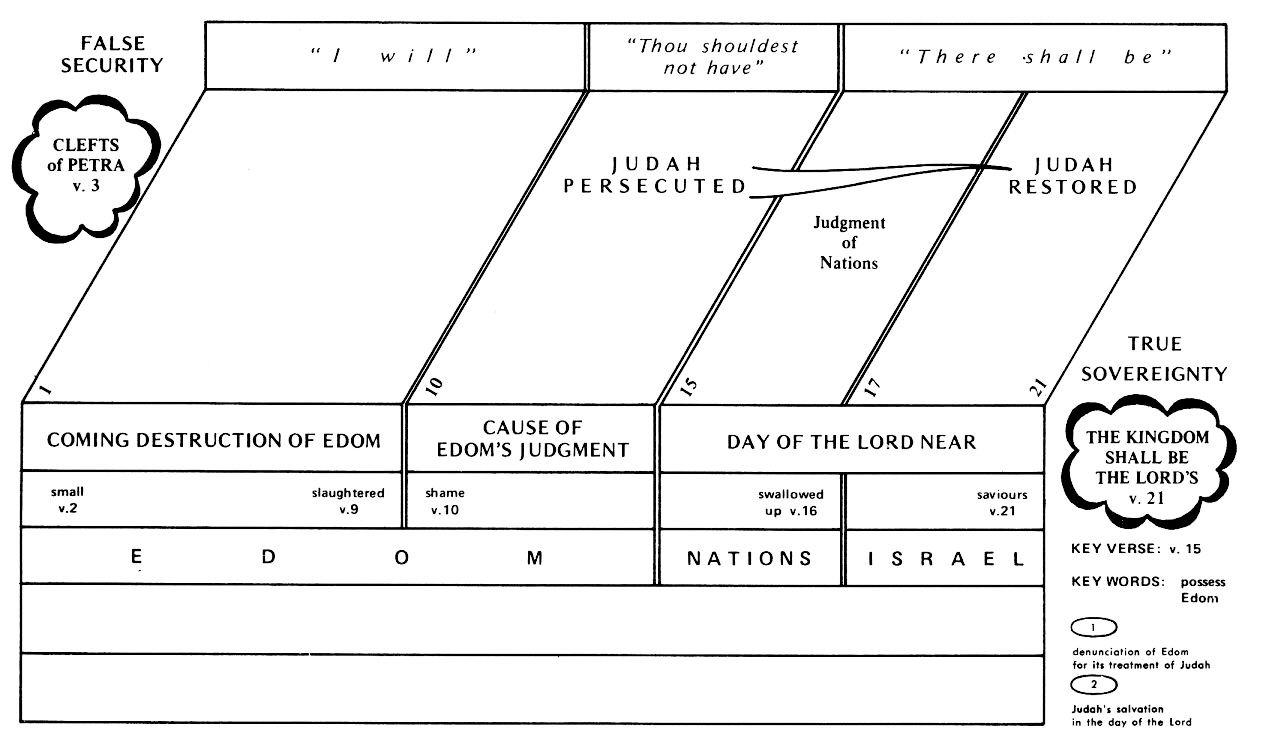
Click chart to enlarge
Chart from recommended resource Jensen's Survey of the OT - used by permission
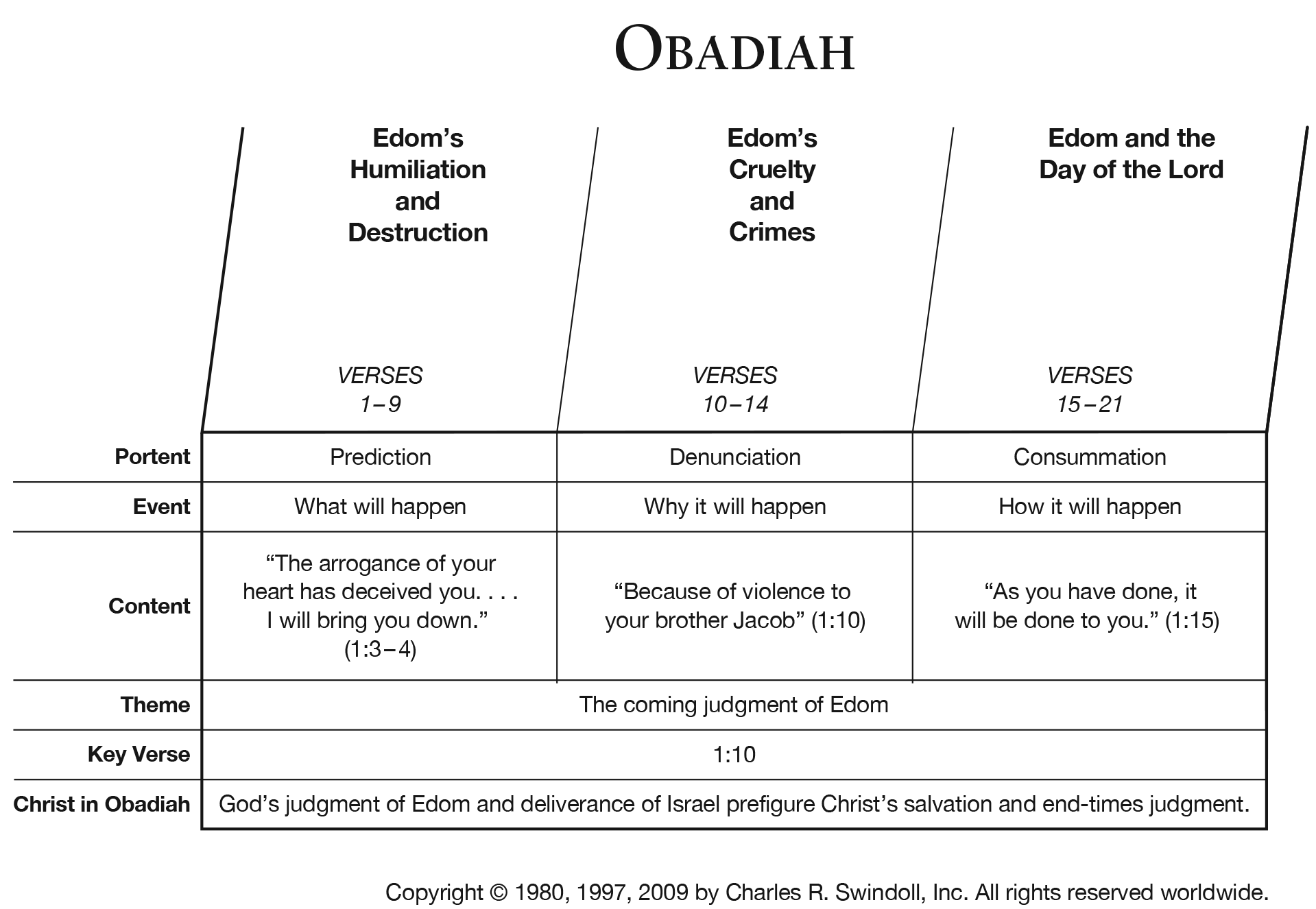
Obadiah Chart from Charles Swindoll
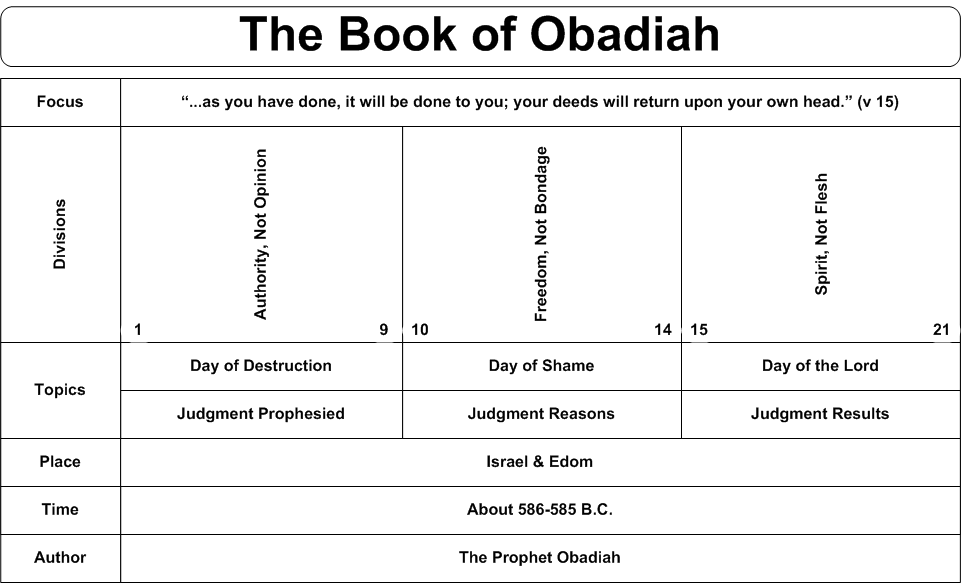
Another Obadiah Chart
MacArthur Study Bible -Intro, Date, Setting, Themes, Interpretative Challenges, Outline
Swindoll Overview - Includes "Listen to Chuck Swindoll’s overview in his audio message"
KJV Bible Commentary - Intro, Outline and Verse by Verse Commentary
The King James Study Bible Second Edition - short introduction
NKJV Study Bible: New King James Version Study Bible (loads slow) - Introduction, Historical Setting, Purpose, Timeline, Christ in the Scriptures

Note uncertainty of date of inception of Obadiah's ministry.
| A Rock that Falls A Kingdom that Endures |
|||
| Obadiah 1-9 | Obadiah 1-9 | Obadiah 15-21 | |
| EDOM'S HUMILIATION & DESTRUCTION |
EDOM'S CRUELTY & CRIMES |
EDOM & THE DAY OF THE LORD |
|
|
PREDICTION: |
DENUNCIATION: |
CONSUMMATION: |
|
| Obadiah 1-9 | Obadiah 10-14 Judah Persecuted |
Obadiah 15-16 Judgment of Nations |
Obadiah 17-21 Judah Restored |
| EDOM | NATIONS | ISRAEL | |
| COMING DESTRUCTION OF EDOM |
CAUSE OF EDOM'S JUDGMENT |
DAY OF THE LORD NEAR |
|
| "The arrogance of your heart has deceived you...I will bring you down." Obadiah 3-4 |
"Because of violence to your brother Jacob" Obadiah 10 |
"As you have done, it will be done to you." Obadiah 15 |
|
| As someone has said "Not our (Edom's) way, but Yahweh!" |
|||
|
Key Words: See related discussion - key words and marking key words
|
|||
|
Interesting Facts about Obadiah The Minor Prophets and their Message
|
|||
|
Christ in All the Scriptures - A M Hodgkin - Between the Gulf of Akaba and the Dead Sea lies a range of precipitous red sandstone heights, known as Mount Mount Seir. Here Esau settled after he had despised his birthright, and his descendants, having driven out the Horites (Genesis 14:6), occupied the whole of the mountain (Deut 2:12). The capital city Sela, or Petra, “Rock (word study of Petra),” was a city unique of its kind amid the works of man (See Images; See Wikipedia on Petra). Perched like an eagle’s nest (Obadiah 1:4) amid inaccessible mountain fastnesses, the dwellings were mostly caves, hewn out of the soft rock (Obadiah 1:3, 6), and placed where you could scarce imagine a human foot could climb. Judgment of Edom. Against this people the prophecy of the unknown prophet Obadiah, “a worshipper of Jehovah,” was directed. To Israel God had commanded (Deut 23:7), “Thou shalt not abhor an Edomite; for he is thy brother.” But Edom had shown an implacable hatred to Israel from the time that he refused him a passage through his country on the way from Egypt to Canaan (Nu 20:14–21) to the day of the destruction of Jerusalem by the Chaldeans, when Edom malignantly cried “Raze it, raze it” (Ps 137:7). For his pride and cruel hatred the total destruction of Edom was decreed (Obadiah 1:3, 4, 10). The people were driven from their rocky home five years after the destruction of Jerusalem, when Nebuchadnezzar, passing down the valley of Arabah, which formed the military road to Egypt, crushed the Edomites. They lost their existence as a nation about a century and a half B.C., and their name perished at the capture of Jerusalem by the Romans. “As thou hast done, it shall be done unto thee.” (Obadiah 1:15) Deliverance for Israel The book closes with the promise of deliverance for Zion: “And the House of Jacob shall possess their possessions.” (Obadiah 17) “The first step in the future successes of the Jews is the recovery of what was previously their own” (Speaker’s Commentary). Obadiah predicts the coming of the Day of the Lord and the establishment of Messiah's Kingdom. |
|||
|
The Old Testament Presents...Reflections of Christ by Paul R. Van Gorder - Excerpt STEPS IN EDOM'S DOWNFALL-- Tracing the stages of Edom's decline is a valuable study.
Yes, it's the old story of the progression of sin. The Old Testament prophet was thundering out the New Testament principle of ''whatever a man soweth, that shall he also reap'' (Galatians 6:7). Read Obadiah 1:15-16 of Obadiah. Five years later, Nebuchadnezzar invaded the mountain stronghold of Edom. The people learned the meaning of Obadiah's words, ''As thou hast done, it shall be done unto thee; thy reward shall return upon thine own head'' (Obadiah 1:15). |
|||
Explanation - The following list includes not only commentaries but other Christian works by well known evangelical writers. Most of the resources below are newer works (written after 1970) which previously were available only for purchase in book form or in a Bible computer program. The resources are made freely available by archive.org but have several caveats - (1) they do not allow copy and paste, (2) they can only be borrowed for one hour (but can be checked out immediately when your hour expires giving you time to read or take notes on a lengthy section) and (3) they require creating an account which allows you to check out the books free of charge. To set up an account click archive.org and then click the picture of the person in right upper corner and enter email and a password. That's all you have to do. Then you can read these more modern resources free of charge! I have read or used many of these resources but not all of them so ultimately you will need to be a Berean (Acts 17:11) as you use them. I have also selected works that are conservative and Biblically sound. If you find one that you think does not meet those criteria please send an email at https://www.preceptaustin.org/
COMMENTARIES
Hosea, Joel, Amos, Obadiah, Jonah, Micah: Trent Butler. Published: Jan 01, 2005 - Holman OT Commentary Series
Amos, Obadiah, Jonah Billy K Smith, (New American Commentary). Nashville: Broadman & Holman, 1995 - very helpful in Sunday School lesson and Sermon Preparation
Rosscup - Smith did the first two, Page wrote on Jonah. Verses gain reasonably full, knowledgeable explanation, with good use of a plethora of assists from scholarly literature, footnoted well, in some pertinent places, even with views, etc. Hebrew words are transliterated, and remarks about the grammar help. A fairly perceptive section appears on Amos 9:11–15, even its relation to Acts 15:13–18 in a futuristic prophetic picture. Page views Jonah as a historical account (217–219). Customs such as sea men casting lots in Jonah 1 (234) receive good illumination, and one finds frequent answers to questions readers usually ask, such as on the miraculous element in Jonah (214–15) and whether the Ninevite revival was spiritually real. This evangelical work is well-done and often firmly profitable for teachers, pastors, and other readers.
Hosea, Joel, Amos, Obadiah, Jonah: Billy K Smith, (Layman's Bible Book Commentary)
Obadiah : an Introduction and Commentary: David W. Baker, 1950 - author Published: 1988 (Tyndale OT Commentary Series)
Rosscup: A good, concise conservative commentary, with Baker on Obadiah, Alexander on Jonah and Waltke on Micah. Overall it is quite competent and carefully thought through. Baker sees Obadiah 21 fulfilled in a king on earth after the Second Advent (p. 43 - Baker writes "This salvation is better seen as eschatological, when the Messianic Kingdom will be inaugurated and Israel will achieve universal dominion under its ideal King - Ge 49:10; cf Ezek. 21:25-27; Rev 5:5-6") and defends the unity of verses 17–21 with the earlier part of the book. Alexander defends an early date of the Book of Jonah (8th century) against several arguments (51–63), and authorship by one writer (63–69), apparently Jonah of 2 Kings 14:25. He favors actual, historical events, not a parable or any fiction form, and capably sums up answers to problems, but appears thin on how to explain a great fish taking in Jonah, though he believes it was a miracle (110–11). Waltke provides a good verse by verse study, enriched by expertise in exegesis, history, customs, etc. (Commentaries for Biblical Expositors: An Annotated Bibliography of Selected Works)
Obadiah and Jonah: a Commentary: Hans Walter Wolff
Mastering the Old Testament [volume 20]: Hosea, Joel, Amos, Obadiah, Jonah Lloyd J Ogilvie - Mastering the Old Testament (A Book by Book Commentary)
The Communicator's Commentary. Hosea, Joel, Amos, Obadiah, Jonah: Lloyd Ogilvie - Published: Jan,1990 (now published as the Preacher's Commentary series)
The Books of Joel, Obadiah, Jonah, and Micah: Leslie C Allen
Cyril Barber - New International Commentary on the Old Testament. Grand Rapids: Wm. B. Eerdmans Publishing Co., 1976. Extensive research into the historic setting coupled with interesting information on the etymology of certain words makes this book worthy of serious consideration. Other treatments of individual books are fuller and may better meet the needs of the expositor
James Rosscup - The author holds that Joel is late pre-exilic or early post exilic, Obadiah is from the early postexilic times. Jonah is a tale perhaps devised by wisdom teachers of the fifth or fourth century B. C. and not by Jonah. Micah is from ca. 701 B. C. The author was lecturer in Old Testament language and exegesis at London Bible College and now is at Fuller Theological Seminary. He has rather thorough word studies and a discussion of many issues, e. g. the relationship of Joel 2:28ff. with Acts 2 and with final times, and Joel 2:32a with Romans 10:13 (pp. 97–105). He shows good awareness of recent scholarly literature on his subjects, but many will not agree with some of his views, such as his suggestion that Jonah is simply a tale made by wisdom writers to convey a message (see p. 191).
Obadiah : a new translation with introduction and commentary P. R. Raabe (Rosscup's third ranked Exegetical commentary on Obadiah)
Obadiah, Nahum, Habakkuk and Zephaniah; introduction and commentary J. H. Eaton (Rosscup's fourth ranked Exegetical commentary on Obadiah)
Hosea-Jonah Stuart Douglas (Word Biblical Commentaries). Waco, Tx: Word Books, 1987. 537 pp.
Rosscup - This is by the Professor of Old Testament at Gordon-Conwell Theological Seminary. Conservative, he believes that Hosea wrote the book and favors chronology that E. Thiele has set forth. He has impressive bibliographies on all the books, some good notes on details in the Hebrew text, summaries to give perspectives in pericopes, and full comments with much light. In Hosea 1:2 he sees a woman tainted by spiritual unfaithfulness of Israelites, who is physically legitimate at marriage to Hosea and has three children with him. He sees Israel’s blessing of 2:18 and 3:5 fulfilled in the church today, in amillennial fashion (pp. 61, 69, 218), for the church “has inherited the restoration promises of Hosea and the rest of the Old Testament (Galatians 3:29)” (218).
A Promise of Hope-- a Call to Obedience: a Commentary on the Books of Joel and Malachi Graham S. Ogden, and Richard R. Deutsch. International Theological Library. Grand Rapids: William B. Eerdmans Publishing Co., 1988.
Cyril Barber - First published in England in 1987. This book moves beyond the traditional grammatical-cultural-historical approach to interpretation to a descriptive-historical exposition of the text. The authors probe the genre of lament literature on the one hand and the religious, moral, and social aspects of the early post-exilic Jewish community on the other. In the process they uncover some unique and interesting facets of these canonical books
The Broadman Bible Commentary - Hosea-Malachi
Bible Knowledge Commentary - Old Testament - 1608 pages. Dallas Theological Seminary Faculty
Be Amazed - Hosea, Joel, Jonah, Habakkuk, Malachi - Warren Wiersbe - see also Bible Exposition Commentary - Old Testament
With the Word - Devotional Commentary - Warren Wiersbe
Wiersbe's Expository Outlines on the Old Testament by Warren Wiersbe
"Even the most difficult Scriptures come alive as Warren Wiersbe leads you book-by-book through the Old Testament and helps you to see the "big picture" of God's revelation. In this unique volume, you will find: • Introductions and/or outlines for every Old Testament book • Practical expositions of strategic chapters • Special studies on key topics, relating the Old Testament to the New Testament • Easy-to-understand expositions that are practical, preachable, and teachable If you have used Dr. Wiersbe's popular BE series, you know how simple and practical his Bible studies are, with outlines that almost teach themselves. If not, you can now discover a wonderful new resource. This work is a unique commentary on every book of the Old Testament. It contains new material not to be found in the BE series.
The Minor Prophets: An Expositional Commentary by James Montgomery Boice, 292 pages
Cyril Barber - The Minor Prophets, by James Montgomery Boice is illustrative of scholarship being applied to the needs of individuals, Heralds the return to the kind of Bible commentary made famous by the Reformers. Boice deals clearly, concisely, and adequately with this sorely neglected segment of the canon. His handling of the text serves as a model of how preaching through these prophetic writings can be relevant to the times and meet people's needs. Indexed. Recommended.
James Rosscup - Boice has a catchy title for each chapter or section of the prophets. Pages are large with two columns and he provides much good material on the relevance then and now, lessons such as God’s love, repentance, sincerity (Hosea 6), etc. If a Christian took time to read these pages and dwelt on the principles over a span of weeks or months, he could grow much by applying them. Boice at times could be more definite in specifying in what framework God will bless Israel in the future, as in Hosea 14. He can be vague, as in Joel 2:1–11 where he says the invader is neither locusts nor a human army (1,107). He can be very wordy and wander on, too, as in using Joel 2:28 as a take-off into a long discussion of clericalism. He sees Joel 2:28 fulfilled at Pentecost, yet it would help if he showed some aspects were not yet fulfilled. He is more to the point on Zechariah 14. (Boice ranks this the highest rated devotional commentary).
The Minor Prophets: Feinberg, Charles Lee Published: Jan 01, 1990
Cyril Barber - Formerly published between 1948 and 1952 in a series of volumes under the title Major Messages on the Minor Prophets, these studies have served well the needs of laypeople for more than thirty years
James Rosscup - A Jewish Christian scholar in Hebrew who taught in Old Testament at Dallas Seminary and later at Talbot Seminary, where he also was Academic Dean, did this exposition of all the minor prophets. Feinberg made biblical prophecy one of his specializations and does a good survey, being aware of interpretive problems, main views, contextual factors and correlation with other Old Testament and New Testament prophetic passages in a premillennial dispensational understanding. This is a I-volume edition of what originally was issued as 5 small volumes. (Rosscup ranks this the highest related expositional commentary).
A Commentary on the Minor Prophets By: Hailey, Homer, 1903- Published: Jan 01, 1972
James Rosscup - A non-technical work of 428 pp. for lay people, taking an amillennial stance on the kingdom issue: in his opinion there will not be a future kingdom for Israel after the Second Advent of Christ (cf. in this work pp. 126, 200, etc.; cf. also his commentary on the Book of Revelation).
Twelve Prophets By: Peter C Craigie, Published: Jan 01, 1984 - The Daily Study Bible Series - beware as he is not always literal in his interpretation
Cyril Barber - These volumes adequately introduce the writing of each minor prophet. The exposition contains something good on each canonical book. Craigie's writings always give evidence of being well researched, and this study is no exception. Interesting sidelights are to be found on the history and culture of the times. The eschatology of these OT writers is marred, however, by the author's amillennialism
Interpreting the Minor Prophets By: Robert B Chisholm, Published: Jan 01, 1990
James Rosscup - This well-informed survey is by a professor of Old Testament studies, Dallas Seminary, who wrote on Hosea and Joel in the Bible Knowledge Commentary. Chisholm looks broadly at each prophet’s structure, message, doctrinal themes, literary and rhetorical features. After a brief survey of overall themes—sin, judgment, salvation—he takes up each prophet from Hosea to Malachi successively. On long-range prophecy he is presumably premillennial, but in several texts where one would expect a commitment, he keeps things so vague that one finds no distinct word as to when the fulfillment will come (Hosea 3, 14; Joel 3:9ff.; Zechariah 14, etc.). He surveys each book section by section with much that helps, dealing briefly with main problems. At the end of each survey of a book he sums up points of theology. He views Joel 2:1–11 as meaning a human army but is not distinct on what army and when. The work is good but general. The reader who has the Bible Knowledge Commentary from Dallas Seminary would already have the books covered in greater premillennial specificity in many cases.
Enjoying the Minor Prophets By: William MacDonald, 1917-2007 Published: Jan 01, 2013 - A 113 page devotional commentary - same authors as the Believer's Bible Commentary below -- recommended
Believer's Bible Commentary - OT and NT - MacDonald, William (1995) 2480 pages. Conservative. Literal. Often has very insightful comments. John MacArthur, says "Concise yet comprehensive - the most complete single-volume commentary I have seen." Warren Wiersbe adds "For the student who is serious about seeing Christ in the Word." One hour limit.
Rosscup - This work, originally issued in 1983, is conservative and premillennial, written to help teachers, preachers and people in every walk of life with different views, explanation and application. The 2-column format runs verse by verse for the most part, usually in a helpfully knowledgeable manner, and there are several special sections such as “Prayer” in Acts and “Legalism” in Galatians. The premillennial view is evident on Acts 1:6, 3:20, Romans 11:26, Galatians 6:16, Revelation 20, etc.
Wycliffe Bible Commentary - Charles Pfeiffer - 1560 pages (1962). 214 ratings Less detailed than the KJV Bible Commentary. Conservative. Notes are generally verse by verse but brief.
Rosscup - Conservative and premillennial scholars here have been experts in their fields. The work contains brief introductions and attempts to give a verse-by-verse exposition, though it does skip over some verses. The treatments vary with the authors, but as a whole it is a fine one-volume commentary for pastors and students to use or give to a layman. Outstanding sections include, for example: Whitcomb on Ezra-Nehemiah-Esther; Culver on Daniel; Ladd on Acts; Harrison on Galatians; Johnson on I Corinthians; and Ryrie on the Johannine Epistles.
The minor prophets By: Theo. Laetsch, D.D. Published: Jan 01, 1956
James Rosscup - This is a very good amillennial commentary on the minor prophets as a whole. Laetsch deals with the text verse-by-verse, grapples with difficult phrases and explains them, uses the Hebrew extensively, and presents illuminating word studies. The lucid presentation helps make it a very interesting commentary to read. In crucial prophetical sections, his strong amillennialism appears. His weakness here is offset by his helpfulness in exegesis generally plus his good background material.
Understanding the Old Testament by Scripture Union - All 12 minor prophets. 100 pages.
James Rosscup - This succinct effort gets directly at issues, as in giving three views on what Gomer was when Hosea married her, and views on the woman Hosea took in 3:1. He is fuzzy on what the future of Israel will be (1:10; 2:16–23 etc.) but a bit clearer on 3:5 (p. 7; cf. p. 20). Sometimes he is clear, sometimes vaguely general, as on the heavenly signs in Joel 2. He sees Amos 9:11–15 as not fulfilled literally in such aspects as agricultural prosperity, but figuratively, as if 9:13b proves his view. Reference, he feels, is to the New Jerusalem. Strangely, he also sees Zechariah 14:20–21 as in the New Jerusalem, after describing the verses before where imperfection is evident. Often, though, his work gives the lay reader a good survey without getting bogged down.
The Prophets of Israel By: Wood, Leon James Published: Jan 01, 1979 - 416 pages
James Rosscup - This quite readable work by a premillennialist covers the overall range of Old Testament prophets, various key subjects under “Prophetism” such as what “to prophesy” means, the prophets’ function, early prophets, Samuel, monarchy prophets, and writing prophets both major and minor. Wood has solid sections on Elijah and Elisha (their spiritual features, episodes, miracles). The Elisha part surveys each miracle. Some sections, as on Hosea, even discuss in some detail leading problems such as whether Gomer was tainted before marriage or became unfaithful later. But sections on the books do not delve into nearly the detail Chisholm gives. Wood does sum up the message well, has an outline on each book, and organizes much on background, character qualities and work of each prophet. He deals with each prophet in relation to the reign he fitted into. Chisholm and Freeman deal more with various problems. Cf. Hobart Freeman, Introd. to the Old Testament Prophets, available now only in some theological libraries.
Preaching the Old Testament : a lectionary commentary By: Allen, Ronald J. (Ronald James), 1949- Published: Jan 01, 2007)
James Rosscup - (THIS CRITIQUE IS NOT ABOUT THE BOOK ABOVE but gives you a sense of who Allen is as a writer.) Allen is skilled in Hebrew and interpretation and writes attractively. He is conservative and premillennial. In his view the locusts are literal in both Chapters 1 and 2, yet supernatural in the latter case. He never seems to clear up what the supernatural locusts are in the future Armageddon time but stays general and vague. They sound like angelic hosts when Allen links them with Revelation 9:11–16. Allen has good emphases about God’s grace, compassion, anger and love in 2:12–17. Apparently he sees the “northern army” of 2:20 as a human one, not identified with the locusts of 2:1–11. He has a long, helpful discussion on whether Acts 2 fulfills the outpouring of the Spirit, and sees a partial fulfillment (p. 95). In 3:9ff., he believes the blessing is in the millennium after the Second Advent, yet he identifies the fountain of verse 18 as the river in the ultimate state, the New Jerusalem (116), and is not clear on why or how he leaps from the millennium to the ultimate bliss.
The Minor Prophets : an exegetical and expository commentary McComiskey, Thomas Edward
Unger's Commentary on the Old Testament (Volume 2 - Isaiah - Malachi) by Unger, Merrill Frederick, 1909- (1981) 972 pages.
Unger's bible handbook : a best-selling guide to understanding the bible by Unger, Merrill F
Rosscup - A former Professor of Old testament at Dallas Seminary, evangelical writer of many scholarly books, did this in his late years. He has sections on each Bible book, archaeology, Major Prophets, Minor Prophets, between the testaments, the four gospels, epistles of Paul, how the Bible came to us, Bible statistics, outline of church history, creation stories, Ur of Abram’s day, Egypt, Assyria, the Chaldean empire, demonism, miracles, Bethlehem, Dead Sea scrolls, Corinth, Ephesus, Rome, etc. The work includes more than 20 charts and 30 maps and has color sections. Unger has good material at some points in surveying passages, dealing with certain problems, etc., and handles the long-range prophecies in a premillennial way. Often he is very cursory.
Evangelical Commentary on the Bible - editor Walter Elwell (1989) 1239 pages. User reviews.
The twelve minor prophets Published: Jan 01, 1926 Robinson, George -- note this book has no time restriction and does allow copy/paste
James Rosscup - This is a reprint of the 1926 edition (New York: Harper and Brothers). He devotes a chapter to each prophet, “Hosea the Prophet of Love,” etc. The studies are terse summaries. On Hosea he lists and comments on steps in Israel’s downfall and has five points on the message to men today. He packs a lot of information in and organizes it well. His word portrait of Jonah is choice (pp. 74–75), and he has interesting accounts of great fish swallowing men. Though brief, the book has frequent material a preacher can use.
STUDY BIBLE
NO RESTRICTIONS
(1) KJV Bible Commentary - Hindson, Edward E; Kroll, Woodrow Michael. Over 3000 pages of the entire OT/NT. Well done conservative commentary that interprets Scripture from a literal perspective. Pre-millennial.
Very well done conservative commentary that interprets Scripture from a literal perspective
The King James Version Bible Commentary is a complete verse-by-verse commentary. It is comprehensive in scope, reliable in scholarship, and easy to use. Its authors are leading evangelical theologians who provide practical truths and biblical principles. Any Bible student will gain new insights through this one-volume commentary based on the timeless King James Version of the Bible.
(2) The King James Study Bible Second Edition 2240 pages (2013) (Thomas Nelson) General Editor - Edward Hindson with multiple contributing editors. . Pre-millennial. See introduction on How to Use this Study Bible.
(3) NKJV Study Bible: New King James Version Study Bible (formerly "The Nelson Study Bible - NKJV") by Earl D Radmacher; Ronald Barclay Allen; Wayne H House. 2345 pages. (1997, 2007). Very helpful notes. Conservative. Pre-millennial.
STUDY BIBLES THAT
CAN BE BORROWED
The MacArthur Study Bible - John MacArthur. Brief but well done notes 1,275 ratings
ESV Study Bible - Excellent resource but not always literal in eschatology and the nation of Israel 6,004 ratings
HCSB Study Bible - conservative notes.
The Holman Illustrated Study Bible Includes the excellent Holman maps but otherwise of little help in serious study.
NIV Study Bible - (2011) 2570 pages - Use this one if available as it has more notes than edition below. This resource has been fully revised in 2020.
Life Application Study Bible : New Living Translation. Has some very helpful notes. 4,445 ratings
The Defender's Study Bible : King James Version by Morris, Henry M. Excellent notes for well known creationist.
Ryrie Study Bible Expanded Edition (1994) 2232 pages
The David Jeremiah study bible - (2013) 2208 pages. 2,272 ratings Logos.com - "Drawing on more than 40 years of study, Dr. David Jeremiah has compiled a legacy resource that will make an eternal impact on generations to come. 8,000 study notes. Hundreds of enriching word studies"50+ Essentials of the Christian Faith" articles."
The Apologetics Study Bible Understand Why You Believe by Norman Geisler
NIV Archaeological Study Bible (2005) 2360 pages 950 ratings (See also Archaeology and the Bible - OT and NT)
NIV Cultural Backgrounds Study Bible. Bringing to Life the Ancient World of Scripture Keener, Craig and Walton, John. Editors (2017)
Believer's Bible Commentary by MacDonald, William (1995) 2480 pages. One of my favorites. Often has some excellent devotional comments.
Dr. John MacArthur, Jr. - "Concise yet comprehensive - the most complete single-volume commentary I have seen."
Warren Wiersbe - "For the student who is serious about seeing Christ in the Word."
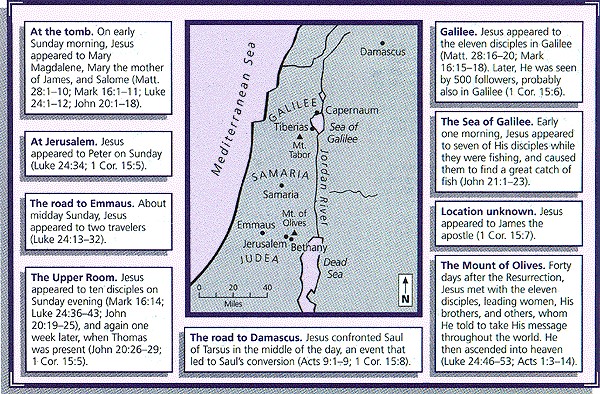
The Word in life Study Bible - interesting format. Not your routine study Bible. Worth checking the very informative notes. (e.g., here is a picture of Jesus' post-resurrection appearances.)
Wycliffe Bible Commentary - Charles Pfeiffer - 1560 pages (1962). 214 ratings Less detailed than the KJV Bible Commentary. Conservative. Notes are generally verse by verse but brief.
Rosscup - Conservative and premillennial scholars here have been experts in their fields. The work contains brief introductions and attempts to give a verse-by-verse exposition, though it does skip over some verses. The treatments vary with the authors, but as a whole it is a fine one-volume commentary for pastors and students to use or give to a layman. Outstanding sections include, for example: Whitcomb on Ezra-Nehemiah-Esther; Culver on Daniel; Ladd on Acts; Harrison on Galatians; Johnson on I Corinthians; and Ryrie on the Johannine Epistles.
New Bible Commentary - (1994)
The Experiencing God Study Bible : the Bible for knowing and doing the will of God - Blackaby, Henry (1996) 1968 pages - CHECK THIS ONE! Each chapter begins with several questions under the title "PREPARE TO MEET GOD." Then you will interesting symbols before many of the passages. The chapter ends with a "DID YOU NOTICE?" question. This might make a "dry chapter" jump off the page! Read some of the 48 ratings
Compact Bible commentary by Radmacher, Earl D; Allen, Ronald Barclay; House, H Wayne, et al - 954 pages. Multiple contributors to the comments which are often verse by verse. The comments are brief but meaty and can really help your study through a given book. A sleeper in my opinion.
NIV archaeological study Bible (2005) 2360 pages 950 ratings (See also Archaeology and the Bible - OT and NT)
NIV cultural backgrounds study Bible. bringing to life the ancient world of scripture Keener, Craig and Walton, John. Editors (2017)
Evangelical Commentary on the Bible - editor Walter Elwell (1989) 1239 pages.
MISCELLANEOUS RESOURCES
IVP Background Commentary - OT - John Walton
Zondervan Atlas of The Bible By: Umair Mirza
Dictionary of Biblical Imagery - free for use online with no restrictions (i.e., you do not need to borrow this book). Editors Leland Ryken, J C Wilhoit, Tremper Longman III - This is a potential treasure chest to aid your preaching and teaching as it analyzes the meaning of a host of Biblical figures of speech. Clue - use the "One-page view" which then allows you to copy and paste text. One downside is there is no index, so you need to search 3291 pages for entries which are alphabetical.
Dictionary of deities and demons in the Bible (DDD) - 950 pages (1995) Read some of the 65 ratings (4.8/5 Stars). A definitive in depth resource on this subject. Very expensive to purchase.
Unger's bible handbook : a best-selling guide to understanding the bible by Unger, Merrill F
Halley's Bible Handbook Henry H. Halley - (2000) 2720 pages (much larger than original edition in 1965 and no time limit on use). (Halley's Bible handbook : an abbreviated Bible commentary - one hour limit 1965 872 pages)
Rosscup - A much-used older evangelical handbook bringing together a brief commentary on Bible books, some key archaeological findings, historical background, maps, quotes, etc. It is helpful to a lay Bible teacher, Sunday School leader, or pastor looking for quick, pertinent information on a Bible book. This is the 72nd printing somewhat revised. Halley packed in much information. Unger’s is better overall, but that is not to say that Halley’s will not provide much help on basic information.
The Shaw Pocket Bible Handbook - Editor - Walter Elwell (1984) 408 pages.
"This hardback is small in size but packed full of content: Brief summaries of every book of the bible, cultural, archaeological and historical info, word definitions, pictures, maps and charts." Worth checking!
Eerdmans' Handbook to the Bible (1983) 688 pages
The New Unger's Bible Dictionary by Unger, Merrill Frederick, 1909-
Every prophecy of the Bible: Walvoord, John F
J.Sidlow Baxter: Explore The Book - pdf Vol. 4 Ezekiel to Malachi
Jensen's Survey of Bible (online) by Jensen, Irving 140 ratings (NT) 133 ratings (OT) This is a classic and in conjunction with the following three resources should give you an excellent background to the Bible book you are studying. Jensen has some of the best Book charts available and includes "key words." He also gives you some guidelines as to how to begin your inductive study of each book.
What the Bible is all about by Mears, Henrietta. This is a classic and is filled with "pearls" from this godly teacher of God's Word.
Talk thru the bible by Wilkinson, Bruce The Wilkinson & Boa Bible handbook : the ultimate guide to help you get more out of the Bible
Today's Handbook of Bible Times & Customs by Coleman, William L
Nelson's New Illustrated Bible Manners & Customs : How the People of the Bible Really Lived by Vos, Howard Frederic
The New Unger's Bible Dictionary by Unger, Merrill Frederick, 1909-
Nelson's Expository Dictionary of the Old Testament by Unger, Merrill. Indexed by English word and then any related Hebrew nouns or verbs. Definitions are solid and geared to the lay person.
Nelson's Expository Dictionary of the Old Testament by Unger, Merrill
HEBREW WORD STUDIES
Theological Wordbook of the Old Testament by Harris, R. Laird - (5/5 Stars) One of the best OT lexicons for studying Hebrew words.
Here is another link to the TWOT which has no time limit on use and does allow copy and paste. Can be downloaded as PDF.
Hebrew honey : a simple and deep word study of the Old Testament by Novak, Alfons, (332 pages) Indexed by English words. No Strong's numbers to help you determine if you are researching the correct Hebrew word. Here is a "work around" - go to page 289 and see if there is an annotation of the Scripture you are studying. E.g., say you want to see if there is anything for "heart" in Ezek 11:19. In the Scripture list find an entry for Ezek 11:19 with the English word "Heart." Now go look up "Heart" (on page 123). It does take some effort, but you might glean an insight not described in other Hebrew lexicons.
Vine's Expository Dictionary of Old Testament and New Testament Words - pdf. The old standby. You can also borrow Vine's complete expository dictionary of Old and New Testament words
Nelson's Expository Dictionary of the Old Testament by Unger, Merrill. Indexed by English word and then any related Hebrew nouns or verbs. Definitions are solid and geared to the lay person.
Expository Dictionary of Bible Words by Richards, Larry, It is does not go into great depth on the Greek or Hebrew words but does have some excellent insights.
So That's What it Means (Theological Wordbook) - Formerly titled "Theological Wordbook" edited by Charles Swindoll. It is now under this new title So That's What it Means and can be borrowed - it is more like a dictionary than a lexicon but the comments are superb! The contributors include Donald Campbell, Wendell Johnston, John Witmer, John Walvoord
Synonyms of the Old Testament-Robert Girdlestone
APOLOGETICS
The Apologetics Study Bible Understand Why You Believe - Comments from over 90 leading apologists, including: Ted Cabal, Lee Strobel, Chuck Colson, Norm Geisler, Josh McDowell, Albert Mohler, J.P. Moreland, see reviews. Here is a review from The Christian Reviewer.
Baker Encyclopedia of Christian Apologetics by Geisler, Norman
Cyril Barber - This is a goldmine of valuable information! Well-indexed. Covers everything from “Absolute Truth” to “Zen Buddhism.” Extensive articles on such topics as “Agnosticism,” “Annihilationism,” “Bible, Alleged Errors in,” “Gnosticism,” “Miracles in the Bible,” “New Testament Manuscripts,” and “Objections to Resurrection,” “Big Bang Theory,” “Edward John Carnell,” “Christ, Death of,” are only a few of the insightful essays in this masterful work. Each article has been written in an understandable way, and a 28 page bibliography forms a valuable source for further research. An excellent resource.
Evidence That Demands A Verdict - Josh McDowell
The New Evidence that Demands a Verdict - Josh McDowell
More Than A Carpenter - A modern classic by Josh McDowell - Great resource for those who are skeptical that Jesus is fully God, fully Man.
Encyclopedia of Bible difficulties by Archer, Gleason L - or here with no restrictions
Hard Sayings of the Bible - Walter Kaiser
When Critics Ask - Norman Geisler
MANNERS AND CUSTOMS
IN THE BIBLE
Today's Handbook of Bible Times & Customs by Coleman, William L
Nelson's New Illustrated Bible Manners & Customs : How the People of the Bible Really Lived by Vos, Howard Frederic
Manners & Customs of the Bible (The New Manners and Customs) Freeman, James M., 1827-1900 Published 1998
The New Manners and Customs of Bible Times: Gower, Ralph, 1933- Published 1987
Manners and Customs of Bible lands By: Wight, Fred Published 1983
Manners and Customs in the Bible By: Matthews, Victor Harold Published 1991
Handbook of life in Bible times By: Thompson, J. A. (John Arthur), 1913-2002 Published 1986
Illustrated dictionary of Bible manners and customs By: Deursen, A. van (Arie), 1891-1963 Published 1982
The Illustrated Guide to Bible Customs & Curiosities by Knight, George W.
Orientalisms in Bible lands, giving light from customs, habits, manners, imagery, thought and life in the East for Bible students By: Rice, Edwin Wilbur, 1831-1929 Published 1910
Bible manners and customs By: Mackie, G. M. 1854-1922 Published 1898
Teach it to your children : how kids lived in Bible days By: Vamosh, Miriam Feinberg, author
Everyday life in Bible times : work, worship, and war By: Embry, Margaret Published 1994
Everyday living : Bible life and times : fascinating, everyday customs and traditions from the people of the Bible Published 2006
The Land and the Book; or, Biblical illustrations drawn from the manners and customs, the scenes and scenery, of the Holy land By: Thomson, William M. (William McClure), 1806-1894 Published 1880
Eastern manners illustrative of the Old Testament history By: Jamieson, Robert, 1802-1880 Published 1838
Scripture manners and customs : being an account of the domestic habits, arts, etc., of Eastern nations mentioned in Holy Scripture Published 1895
Obadiah 1:2
Obadiah 1:3
Obadiah 1:4
Obadiah 1:5
Obadiah 1:6
Obadiah 1:7
Obadiah 1:8
Obadiah 1:9
Obadiah 1:10
Obadiah 1:11
Obadiah 1:12
Obadiah 1:13
Obadiah 1:14
Obadiah 1:15
Obadiah 1:16
Obadiah 1:17
Obadiah 1:18
Obadiah 1:19
Obadiah 1:20
Obadiah 1:21
Caveat: Be an Acts 17:11 Berean (note): Not always literal, especially on prophetic passages
Caveat: Be an Acts 17:11 Berean (note): Not always literal, especially on prophetic passages
Caveat: Be an Acts 17:11 Berean (note): Not always literal, especially on prophetic passages
Caveat: Be an Acts 17:11 Berean (note): Not always literal, especially on prophetic passages
Who Were the Edomites, to Whom Obadiah Wrote?
What Is the Primary Theme of Obadiah?
The Judgment of Edom Enunciated (Obadiah 1:1–9)
The Superscription (Obadiah 1:1a)
The Battle Summons (Obadiah 1:1b–c)
The Nation Subjugated (Obadiah 1:2–4)
The Treasures Stolen (Obadiah 1:5–7)
The Leadership Slain (Obadiah 1:8–9)
The Crimes of Edom Explained (Obadiah 1:10–14)
They Ignored Judah’s Need (Obadiah 1:10–11)
They Rejoiced in Judah’s Demise (Obadiah 1:12)
They Plundered Judah’s Wealth (Obadiah 1:13)
They Prevented Judah’s Escape (Obadiah 1:14)
The Judgment of Edom Expanded (Obadiah 1:15–21)
The Extent of the Judgment (Obadiah 1:15–16)
The Escapees of the Judgment (Obadiah 1:17)
The Execution of the Judgment (Obadiah 1:18)
The Effect of the Judgment (Obadiah 1:19–21)
Caveat: Be an Acts 17:11 Berean (note): Not always literal, especially on prophetic passages
Caveat: Be an Acts 17:11 Berean (note): Not always literal, especially on prophetic passages
Caveat: Be an Acts 17:11 Berean (note): Not always literal, especially on prophetic passages
Note: This resource is listed because it has numerous commentary notes that relate to the OT Prophetic Books
- Israelology: Part 1 of 6 Introduction: Definition of Terms
- Israelology: Part 2 of 6 Israel Present (Note: Article begins on Page 2)
- Israelology: Part 3 of 6 Israel Present (Continued)
- Israelology: Part 4 of 6 - Israel Future (Part One)
Excerpt from Part 4/6: The Remnant of Israel - According to Romans 11:25–27, all Israel will be saved. According to Isaiah 10:20–23, only the Remnant will be saved. This is not a contradiction if understood in the context of Israel’s national salvation. Zechariah 13:8–9 points out that two-thirds of the Jewish population will be destroyed during the Tribulation (Ed: See Great Tribulation). Only the Remnant will survive, the escaped of Isaiah 4:2; Isa 10:20; Isa 37:31–32; Joel 2:32; and Obadiah 17. The remaining one-third become believers, so at that point all Israel and the Remnant of Israel become one and the same, as Micah 2:12–13 shows = "I will surely assemble, O Jacob, all of thee; I will surely gather the remnant of Israel." The all of thee and the Remnant of Israel become identical, for with Israel’s national salvation the whole nation joins the Remnant (Mic 2:12). Then, Messiah returns to rescue them (Mic 2:13).
- Israelology: Part 5 of 6 - Israel Future (Part Two)
- Israelology: Part 6 of 6 Other Relevant Topics - Illustrations of Israel (including marriage)
- Introduction
- Obadiah 1:1-4 Commentary
- Obadiah 1:1-4 Commentary Deceived by Pride
- Obadiah 1:5-9 Commentary
- Obadiah 1:5-9 Commentary - The Destruction of Wisdom
- Obadiah 1:10-14 Commentary
- Obadiah 1:10-14 Commentary - Opposing God's Chosen
- Obadiah 1:15-18 Commentary
- Obadiah 1:15-18 Commentary - The Day of the Lord Upon All Nations
- Obadiah 1:19-21 Commentary
- Obadiah 1:19-21 Commentary - The Kingdom Shall be the Lord's
Caveat: Be an Acts 17:11 Berean (note): Not always literal, especially on prophetic passages
Caution is advised (Acts 17:11): Does not always interpret the Scripture literally and all too often spiritualizes the text and replaces Israel with the Church (note)
Caveat: Be an Acts 17:11 Berean (note): Not always literal, especially on prophetic passages
James Rosscup writes "This 1858 work supplies much help on matters of the text, word meaning, resolving some problems, etc. Some have found it one of the most contributive sources in getting at what a text means." (Commentaries for Biblical Expositors: An Annotated Bibliography of Selected Works)
Caveat: Be an Acts 17:11 Berean (note): Be cautious (Acts 17:11): Does not always interpret the Scripture literally
and sometimes replaces Israel with the Church (note)
Click example of his interpretative approach which is often allegorical (Or another example)
Caveat: Be an Acts 17:11 Berean (note): Not always literal, especially on prophetic passages
- Introduction
- Obadiah 1 Commentary and Critical Notes - topics covered include the following...
- Obadiah 1:1-2 The Solemn Message
- Obadiah 1:3-4 Pride of Heart
- Obadiah 1:5-6 The Irreparable Loss
- Obadiah 1:7-9 Reliance on Broken Reeds
- Obadiah 1:10, 11 Unbrotherly Conduct and Its Consequences
- Obadiah 1:12-14 Violation of Social Duty
- Obadiah 1:15, 16 The Day of Retribution
- Obadiah 1:17 The Kingdom an Asylum in Judgment
- Obadiah 1:18-21 The Kingdom Regained and Enlarged
- Obadiah 1 Illustrations to Chapter 1
Best "devotional flavor" commentary on the Minor Prophets
Note: JFB is one of the more literal, conservative older commentaries (prior to 1900). Sample excerpt of eschatological (prophetic, apocalyptic) passage Zechariah 14:2 - "gather all nations, etc. — The prophecy seems literal (compare Joel 3:2). If Antichrist be the leader of the nations, it seems inconsistent with the statement that he will at this time be sitting in the temple as God at Jerusalem (2Thessalonians 2:4); thus Antichrist outside would be made to besiege Antichrist within the city. But difficulties do not set aside revelations: the event will clear up seeming difficulties (Ed: Interesting statement!). Compare the complicated movements, Daniel 11:1-45." Comment on Zech 14:11 - "no more utter destruction — (Jer 31:40). Literally, “no more curse” (Rev 22:3; compare Malachi 4:6), for there will be no more sin. Temporal blessings and spiritual prosperity shall go together in the millennium: long life (Isaiah 65:20-22), peace (Isaiah 2:4), honor (Isaiah 60:14-16), righteous government (Isaiah 54:14; Isaiah 60:18). (Zechariah 14 - Commentary Critical and Explanatory on the Whole Bible)
See caveat regarding this commentary
Rosscup - This is the best older, overall treatment of a critical nature on the Old Testament Hebrew text verse by verse and is a good standard work to buy. The student can buy parts or the whole of this series. Sometimes it is evangelical, at other times liberal ideas enter...In prophecy it is amillennial. (Commentaries for Biblical Expositors: An Annotated Bibliography of Selected Works).
Caveat: Be an Acts 17:11 Berean (note): Not always literal, especially on prophetic passages
Caveat: Be an Acts 17:11 Berean (note): Not always literal, especially on prophetic passages
Mp3 Audio - Literal, futuristic interpretation Recommended
An annual $50 or monthly $5 subscription (click here) is required to view the entire article but will give you access to literally thousands of conservative articles. Click the following links to search by topic, author, or bible reference.
Representative journal articles:
- Inerrancy And The Minor Prophets -- Mal Couch
- Old Testament Passages Referring To The Day Of The Lord -- Warren Vanhetloo
- The Kingdom Of God In The Old Testament -- Martin J. Selman
- Obadiah Accountability in Relationships - Bob Spender
- The Character Of Israel’s Future In Light Of The Abrahamic And Mosaic Covenants -- Robert Vasholz
- The Bible’s Watchword Day of the Lord -- Richard L. Mayhue
Rosscup on John Phillips - A respected popular expositor on a number of biblical books here has two introductory chapters, then a chapter of about 20–30 pp. on each prophet (50 on Zech.). Several charts aid readers, and a detailed outline runs before each exposition. The exposition is in general surveys of sections, at times taking a view on a main problem. In Hosea 1:2, he feels that God had Hosea marry an immoral woman but Phillips offers no help on the moral issue. Phillips is premillennial, seeing Israel’s future kingdom blessings as in the Millennium after Christ’s Second Coming (Hosea 3:5; Joel 3:14ff; Amos 9:15; Zeph. 3:9ff; Zech 2:10–13; 14:1–21). In Mal. 2:15 he has “one” refer to God making husband and wife into one, and in Mal 4:5 he thinks the Elijah will be fulfilled in one of the two witnesses in Rev 11:3-13. The work helps on broad coverage, and is quite readable for preachers, church teachers, students and lay people wanting a general devotional sweep. (Ibid) Editorial Comment: Phillips very often has a "devotional flavor."
Rosscup comments: This conservative and premillennial work by a professor of OT at Talbot School of Theology has a good bibliography of five pages and a very full discussion of many issues, a rich use of other studies, help in Hebrew exegesis, and a good effort on word meanings. Hebrew words are transliterated into English. Finley sees literal locusts in chaps. 1 and 2 of Joel. One wishes that he had listed and given arguments, yet he does give some when he arrives at individual verses. It sounds as though he believes rich blessing will come to Israel (not the church in this case) in Joel 2:18-27, but it also sounds like he sees it realized in past history. He is not wholly clear. He sees a partial fulfillment of Joel 2:28-32 in Acts 2 and the fulfillment of details of Joel 3:9ff. in the future tribulation period and Messianic Kingdom after the second advent, not in the church or the ultimate state. The treatment of Amos 9:11-15 could be stronger in support for a premillennial view. The discussion about when the fulfillment will come to Israel is seemingly vague. (Rosscup)
- Ligonier's Top 5 - Caveat Emptor! some are amillennial and not literal/futuristic (exception is Irvin Busenitz who is premillennial - read the review)
- Old Testament Commentaries for Bible Expositors 1987-92 -James Rosscup
Rosscup Ranks Commentaries on Minor Prophets
Minor Prophets Overall Ranking by Rosscup
EXEGETICAL COMMENTARIES
1. T. Laetsch (Amill)
2. R. Chisholm (Premill)
3. C. Bullock (Premill)
4. C. F. Keil/ F. Delitzsch (Amill)
EXPOSITIONAL COMMENTARIES
1. Bible Knowledge Commentary entries
2. C. Feinberg
3. J. Boice (Premill)
4. P. Fink (Premill)
DEVOTIONAL COMMENTARIES
1. H. A. Ironside
2. J. Phillips
OBADIAH Overall Ranking by Rosscup
EXEGETICAL COMMENTARIES
1. I. Busenitz (Premill)
2. T. Finley (Premill)
3. P. R. Raabe
4. J. H. Eaton
EXPOSITIONAL COMMENTARIES
1. C. Feinberg (Premill)
2. D. W. Baker
3. P. Beyer (Premill)
4. W. L. Baker (Premill, BKC)
6. H. Wolf (Lib)
7. D. Stuart (Amill)
8. R. Chisholm (Premill)
DEVOTIONAL COMMENTARIES
1. J. M. Boice
2. J. Phillips
3. H. A. Ironside
MIDDLETOWN BIBLE
- See discussion of the Day of the Lord = Obadiah 1:15
- Obadiah, Theology of - Baker's Evangelical Dictionary of Biblical Theology
- Obadiah, Book of - Holman Bible Dictionary
- Obadiah, Book of - Hastings' Dictionary of the Bible
- Obadiah, Book of - ISBE, Easton's
- Obadiah - American Tract Society Bible Dictionary
- Obadiah - Fausset's Bible Dictionary
- Obadiah - Morrish Bible Dictionary
- Obadiah - 1911 Encyclopedia Britannica
- Obadiah - Kitto's Popular Cyclopedia of Biblical Literature
- Obadiah - Cyclopedia of Biblical, Theological and Ecclesiastical Literature
Excerpt: In Elie Wiesel's autobiographical novel, The Town Beyond the Wall, he tells the story of Michael, a young Jew who survived the Holocaust. Michael traveled at great personal risk behind the Iron Curtain to his Hungarian hometown. Though his memory burned with images of the soldiers and police who had brutalized him and his loved ones, Michael returned not for revenge but to satisfy his curiosity. "This, this was the thing I had wanted to understand ever since the war. Nothing else. How a human being can remain indifferent."
- Christlike Humility: We are to evaluate our relationship with God by the extent we demonstrate true humility and compassion in all our endeavors and relationships.Video
Excerpt: As Dr. Angus remarks, Israel had no greater enemy than the Edomites, though they were then close relatives. "They were proud of their wisdom, (Obadiah 8), and of their rocky and impregnable position, (Obadiah 3). But the prophet foretells the uncovering of their treasures, and rebukes their unkind treatment of the Jews, their kinsmen, in rejoicing over their calamities, and encouraging Nebuchadnezzar utterly to exterminate them (Ps 137:7); for all which an early day of retribution was to come; "As thou hast done it shall be done unto thee' (Obadiah 15).But the chosen race themselves had just been carried into captivity; the Holy Land was deserted; and the chastisement denounced against the Edomites might therefore appear not to differ from that which had already inflicted upon the seed of Jacob. The prophet, therefore, goes on to declare that Edom should be as though it had never been, and should be swallowed up forever, while Israel should rise again from her present fall; should repossess not only her own land, but also Philistia and Edom; and finally rejoice in the holy reign (Millennial Reign ) of the promised Messiah."
Sample Comment on Obadiah 19-21 - The land of Edom will be given to the Israelites living in the Negev, or the southern section of the land. God's people, who were once exiles, will once again possess the land that they had taken originally from the Canaanites. Saviors, or deliverers, will rule the hill country of Esau, and the Lord will rule over the entire kingdom (Ed: Cf. Millennial Kingdom).
- Obadiah -Intro, Date, Setting, Themes, Interpretative Challenges, Outline
- When were the Bible books written?
Excerpt: Historical and Theological Themes - The book is a case study of Ge 12:1–3, with two interrelated themes: (1) the judgment of Edom by God for cursing Israel. This was apparently told to Judah, thereby providing reassurance to Judah that the Day of the Lord (Obadiah 15) would bring judgment upon Edom for her pride and for her participation in Judah’s downfall; (2) Judah’s restoration. This would even include the territory of the Edomites (Obadiah 19–21; Isa 11:14-note). Obadiah’s blessing includes the near fulfillment of Edom’s demise (Obadiah 1–15) under the assault of the Philistines and Arabians (2Chr 21:8–20) and the far fulfillment of the nation’s judgment in the first century A.D. and Israel’s final possession of Edom (Obadiah 15–21).
Excerpt: In Hebrew the book is titled hydbu meaning servant of Yahweh. This may have been a popular name as with Ahab's steward who met Elijah (cf. 1 Ki 18)
MAPS COVERING ISRAEL PRE- AND POST-EXILE
These are excellent full color, modern maps with events marked on many of the maps
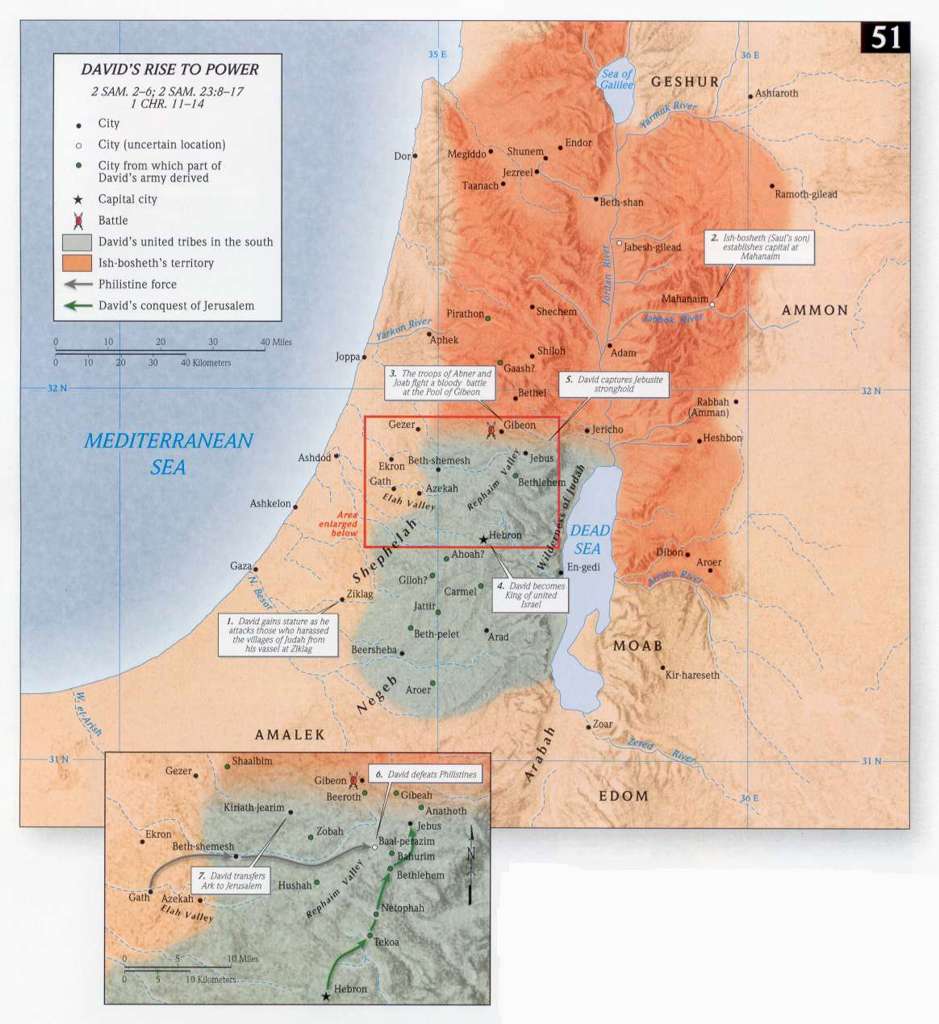
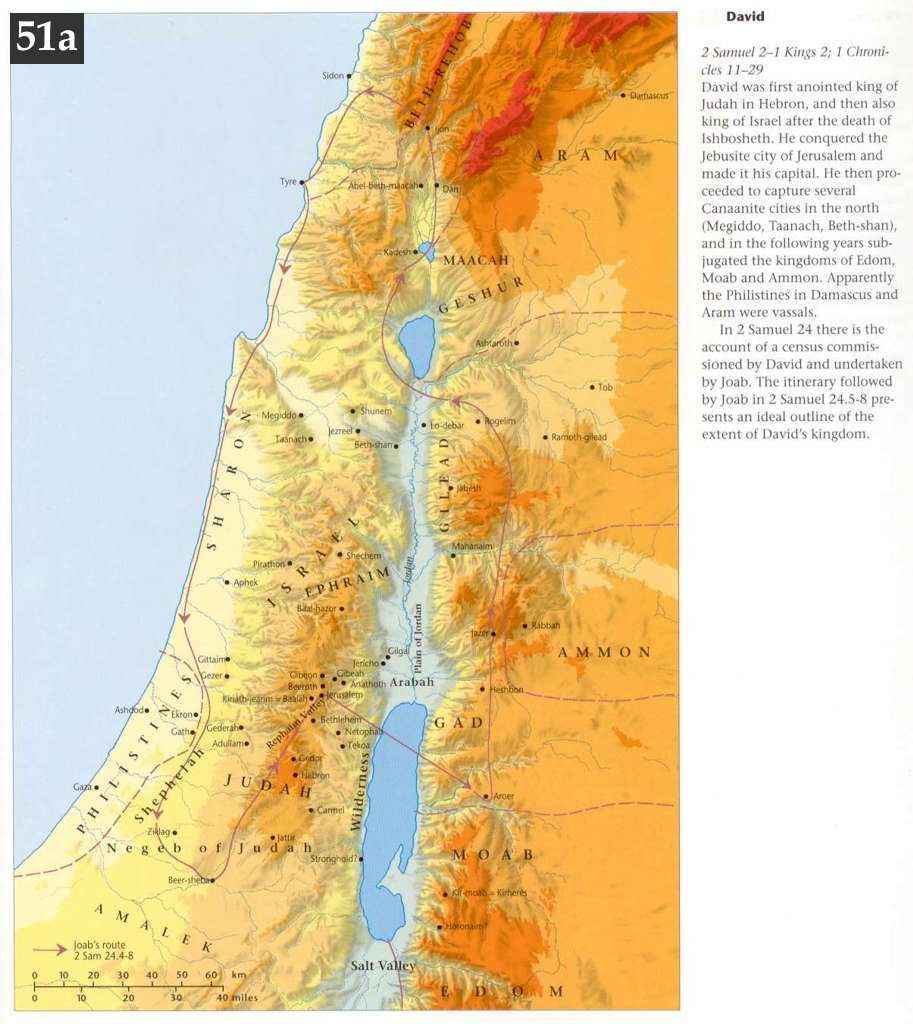
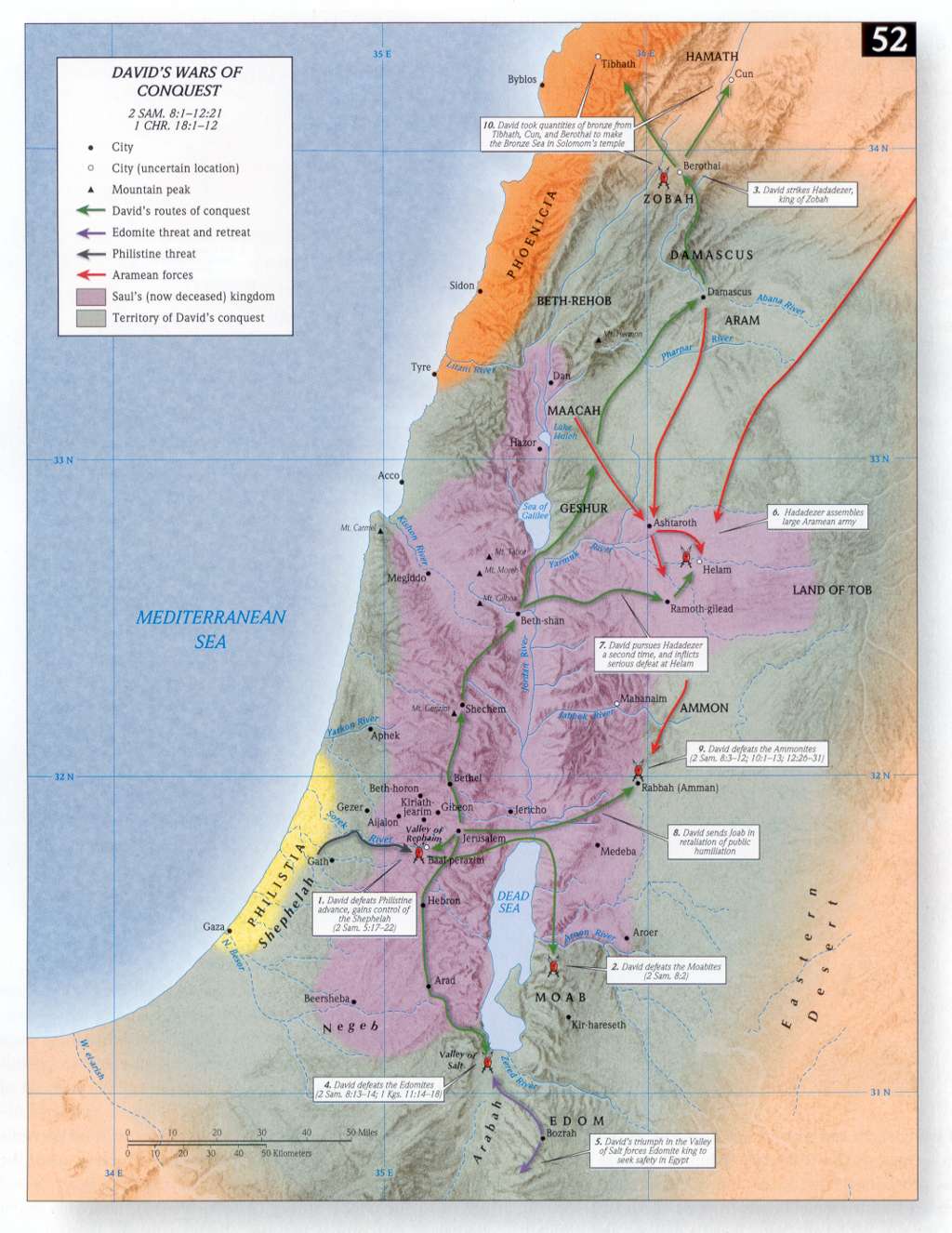
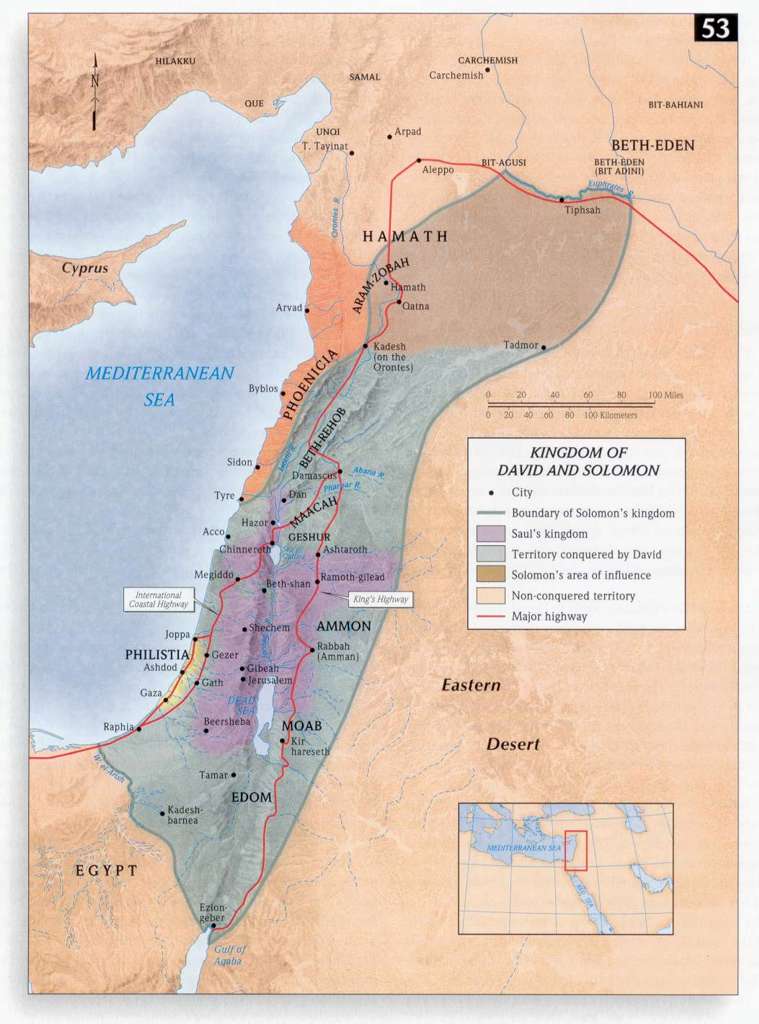
The Kingdom of David and Solomon
- David's Rise to Power
- David in Conquest of Canaan
- David's Wars of Conquest
- Kingdom of David and Solomon
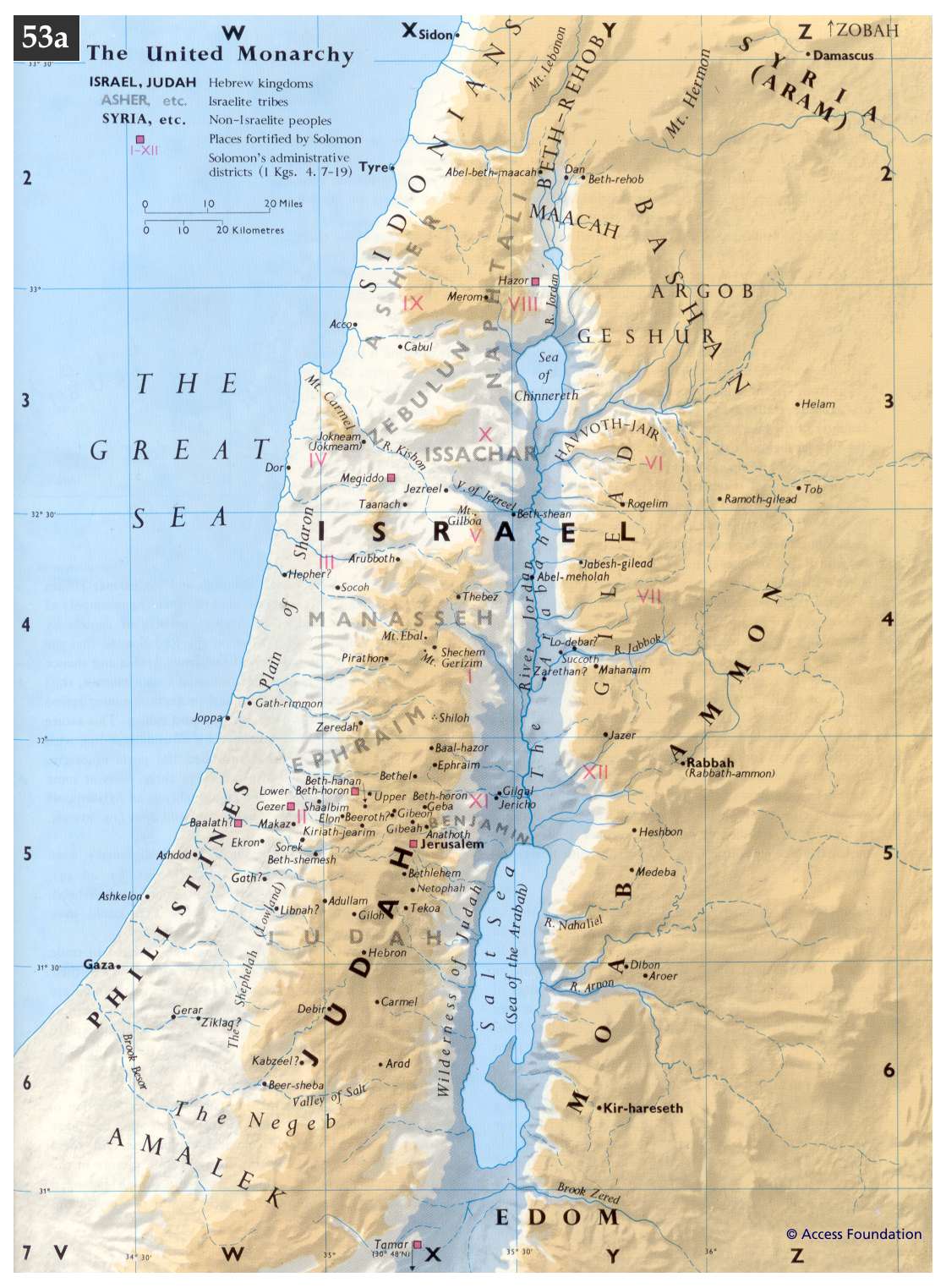
- The United Monarchy under Solomon (1)
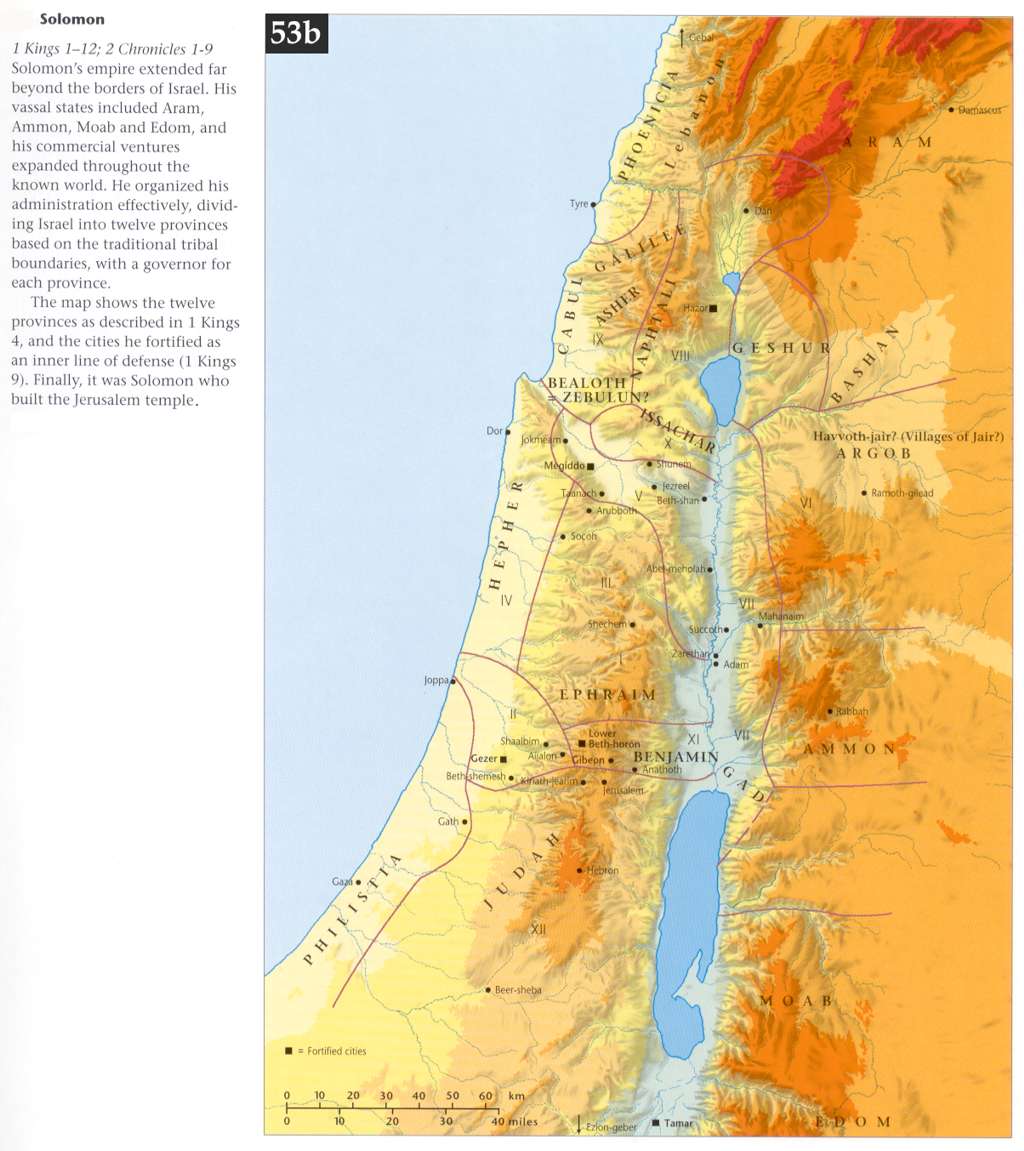
- The United Monarchy under Solomon (2)
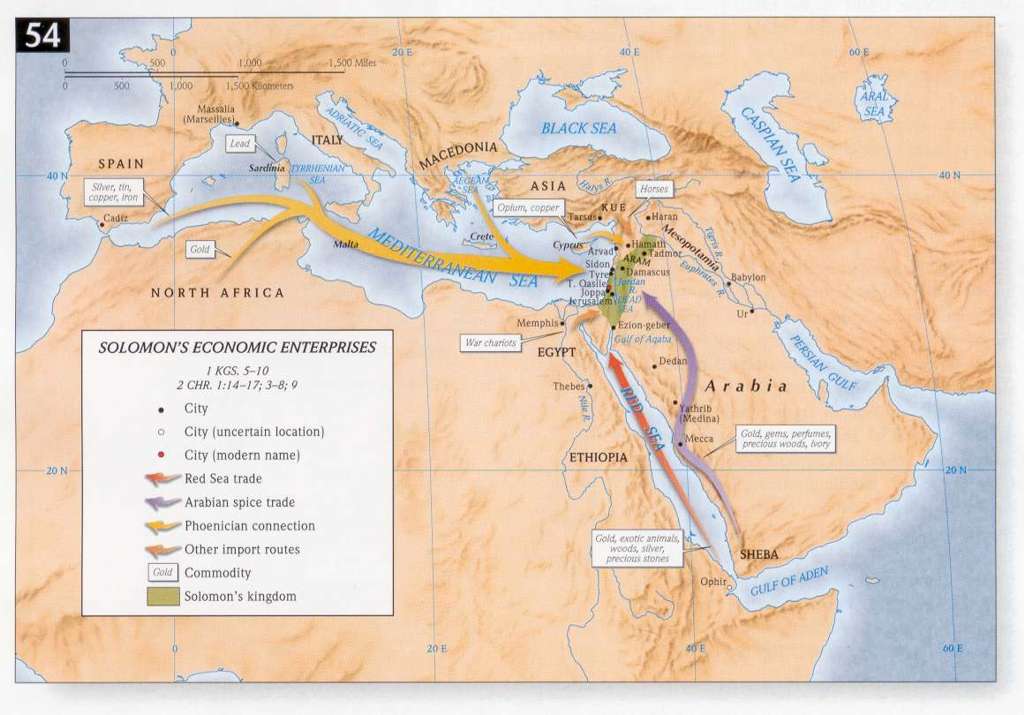
- Solomon's Economic Enterprises
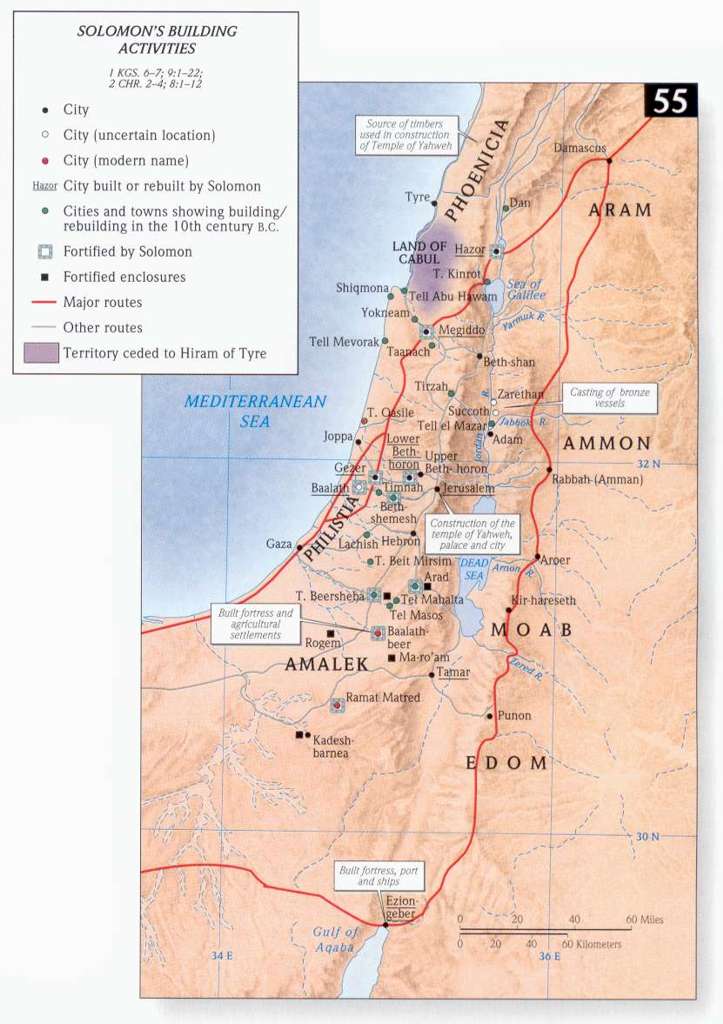
- Solomon's Building Activities
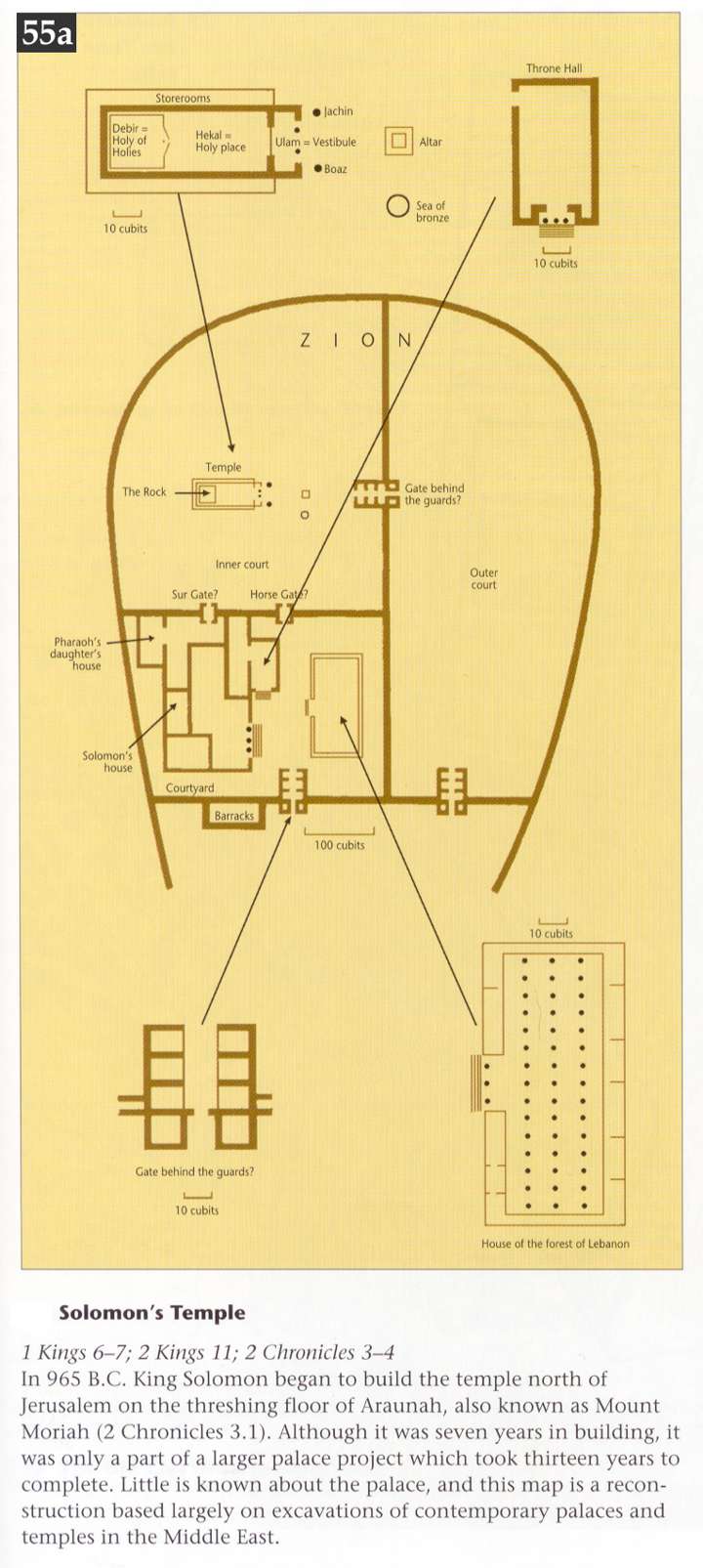
- Solomon's Temple
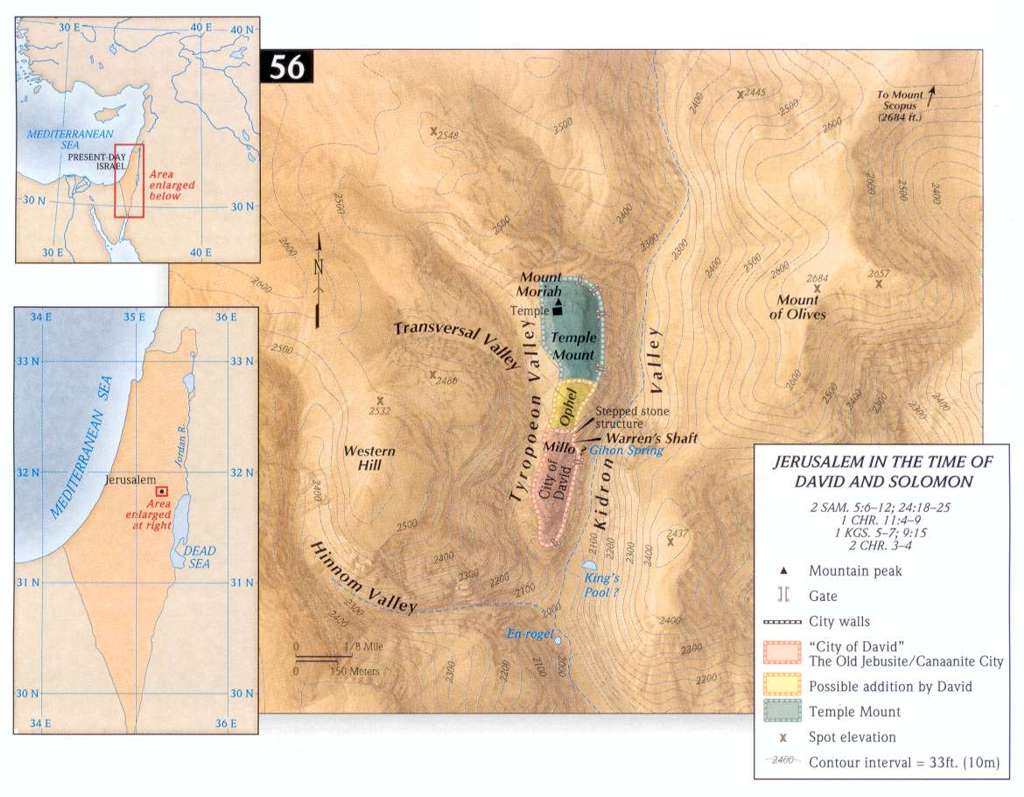
- Jerusalem in the Time of David and Solomon
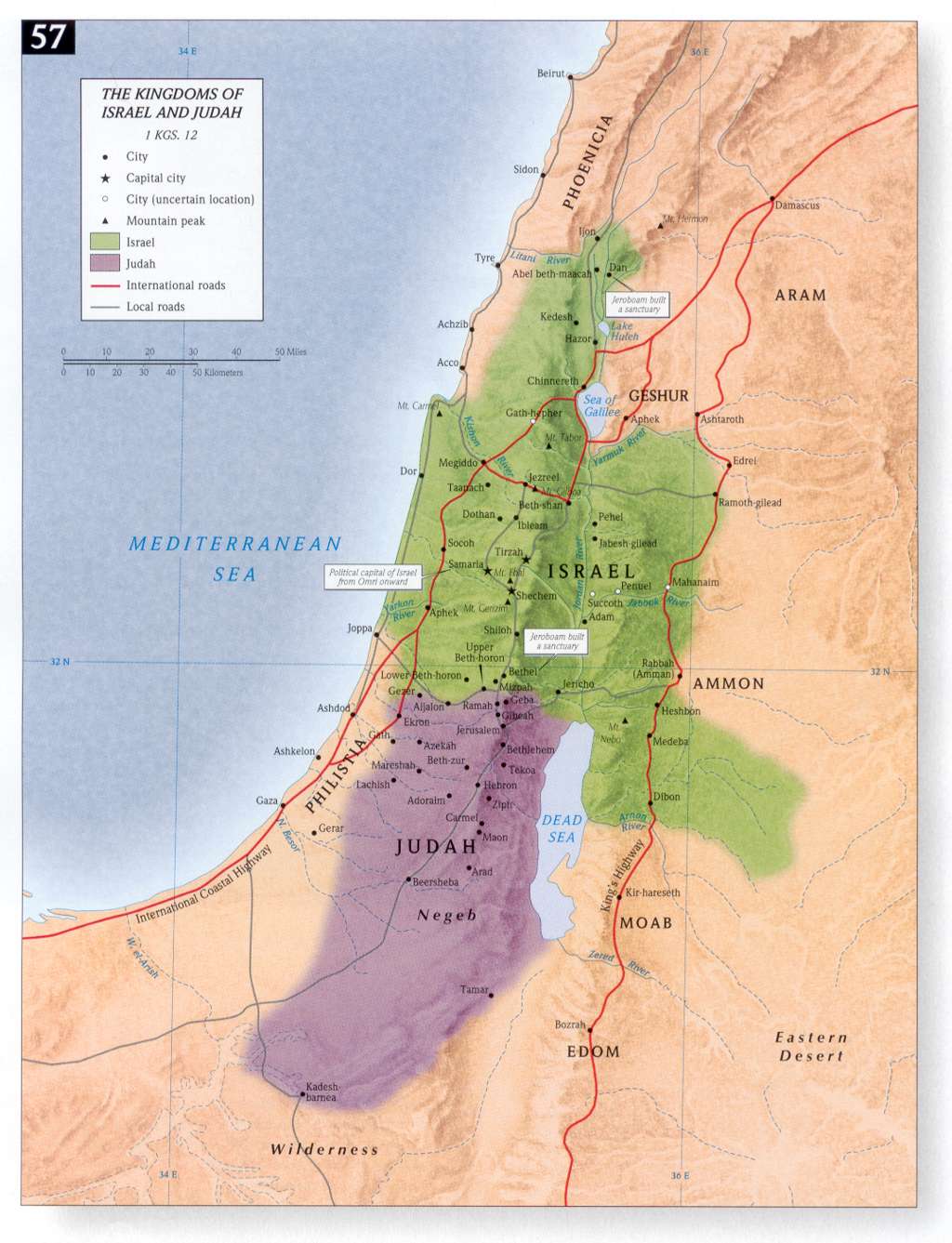
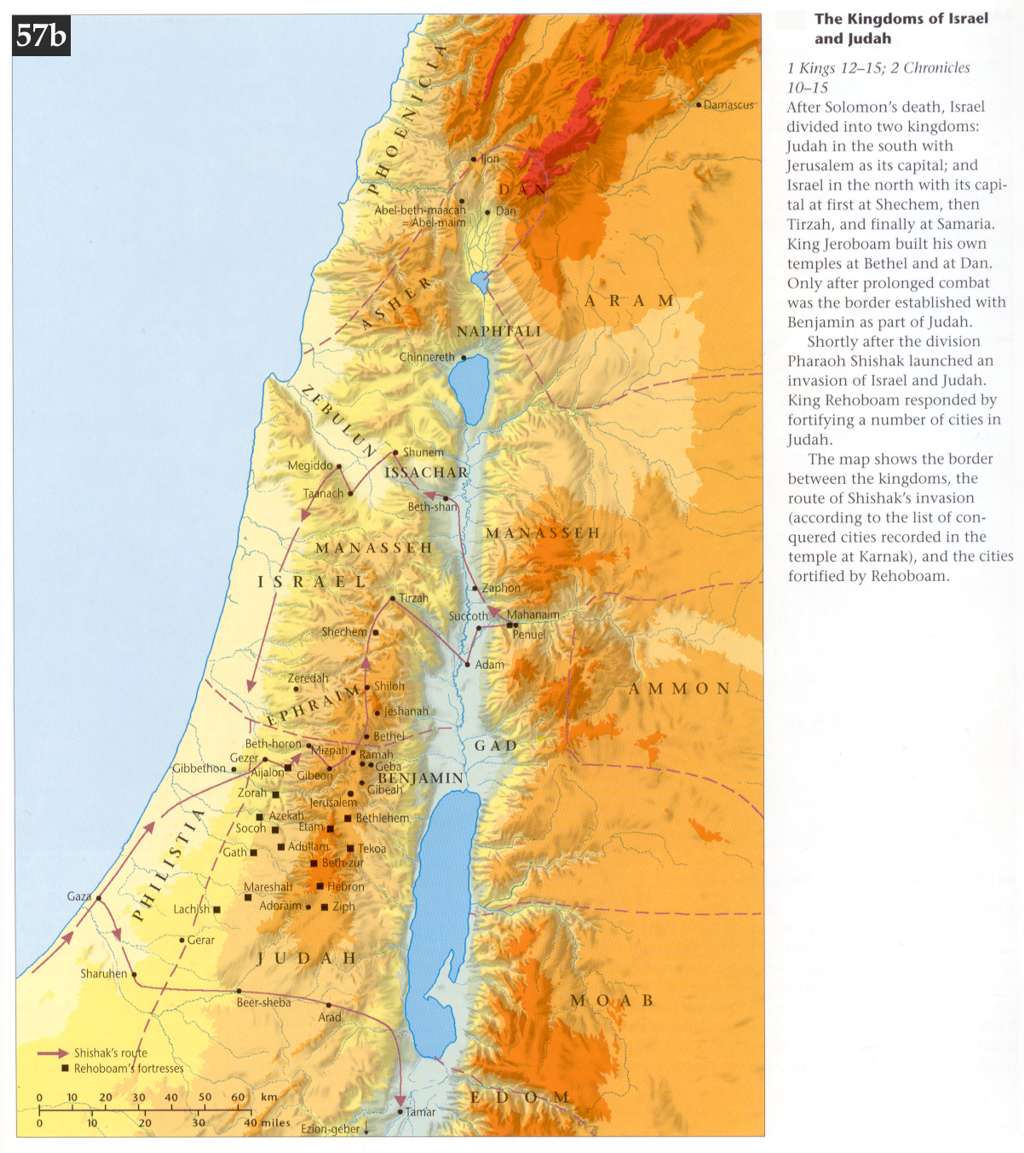
The Kingdoms of Israel and Judah
- The Kingdoms of Israel and Judah (1)
- The Kingdoms of Israel and Judah (2)
- The Kingdoms of Israel and Judah (3)
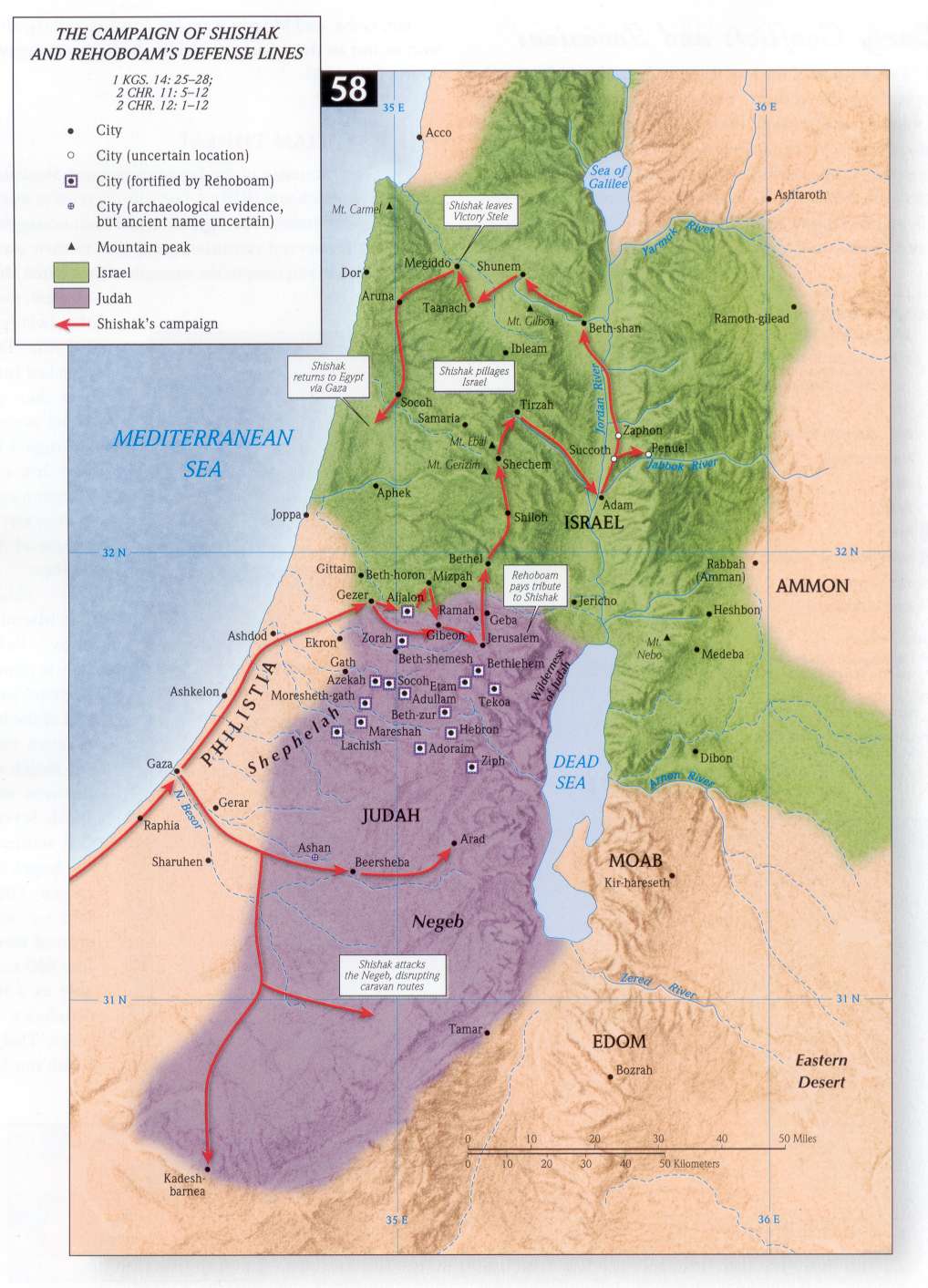
- The Campaign of Shishak
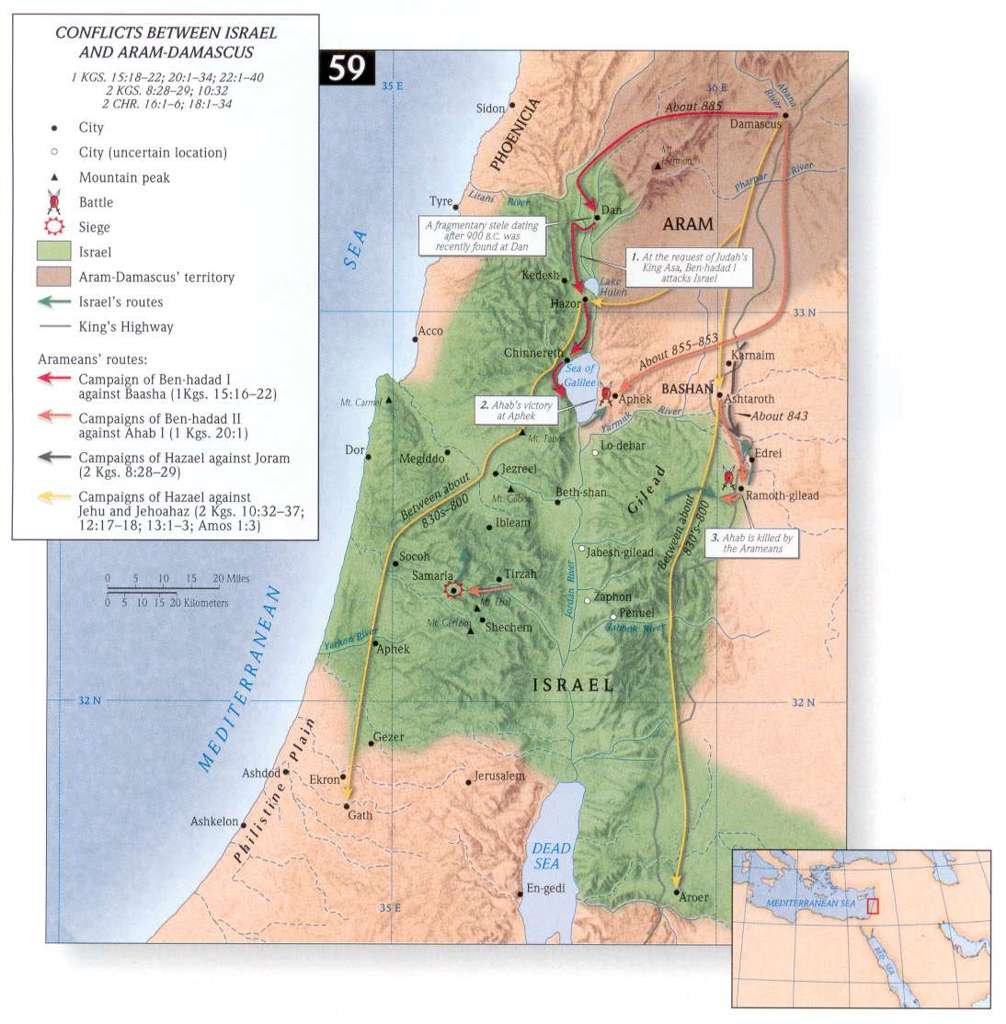
- Conflicts between Israel and Aram-Damascus
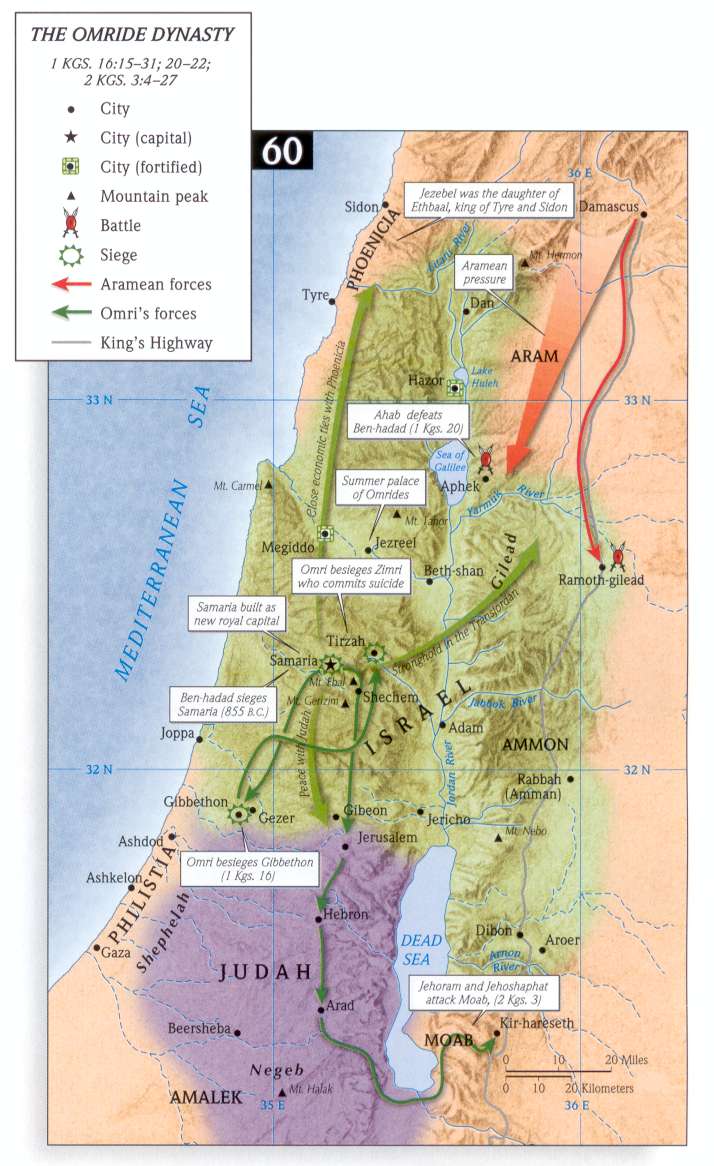
- The Omride Dynasty
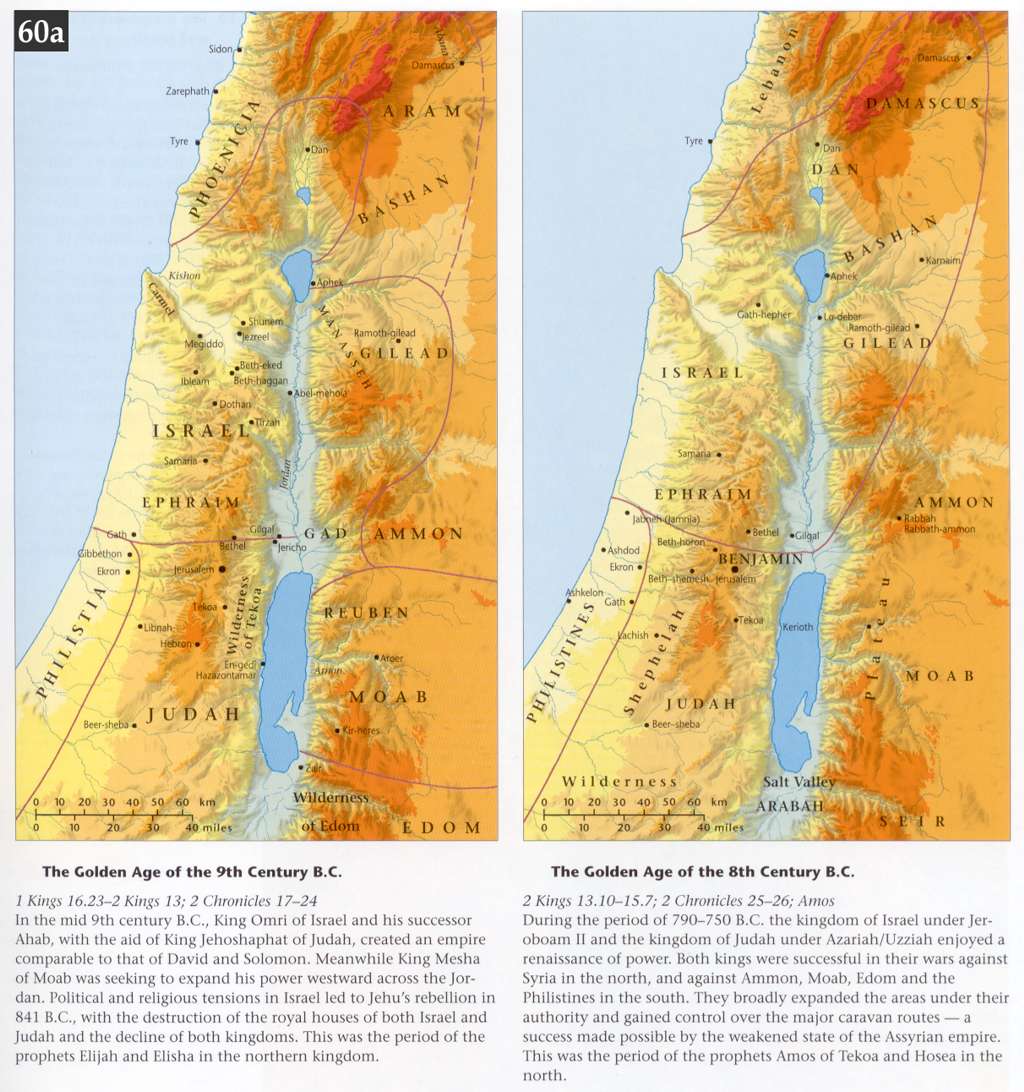
- The Golden Ages of the 9th & 8th centuries BCE
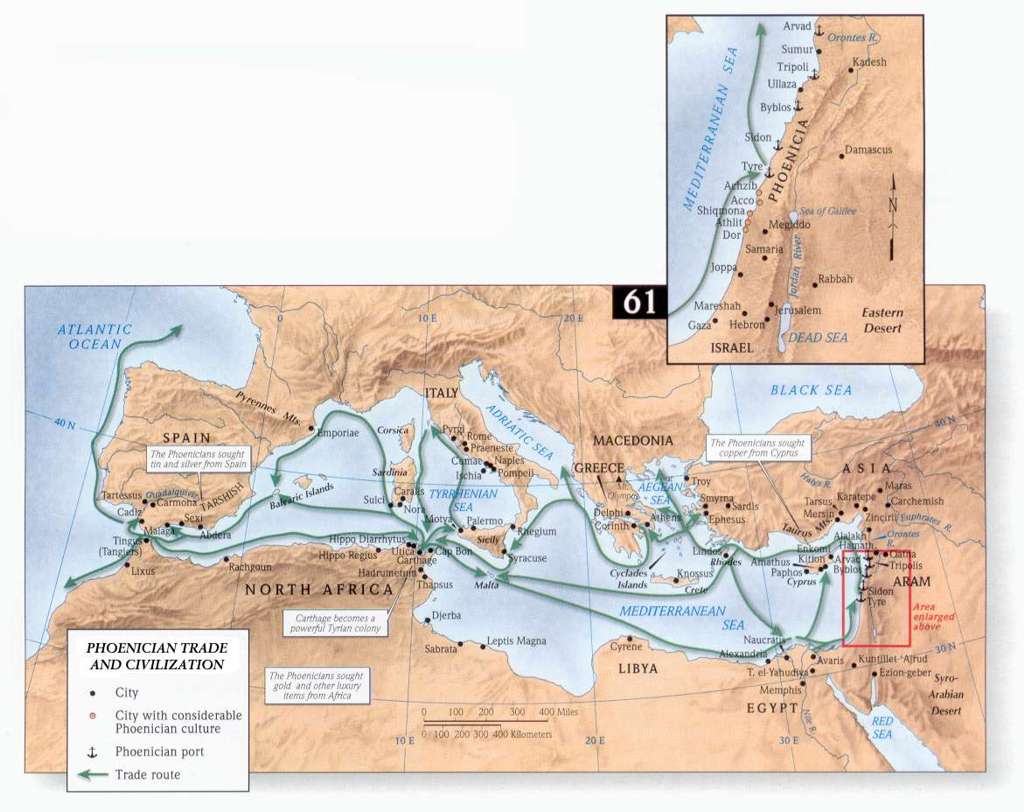
- Phoenician Trade and Civilization
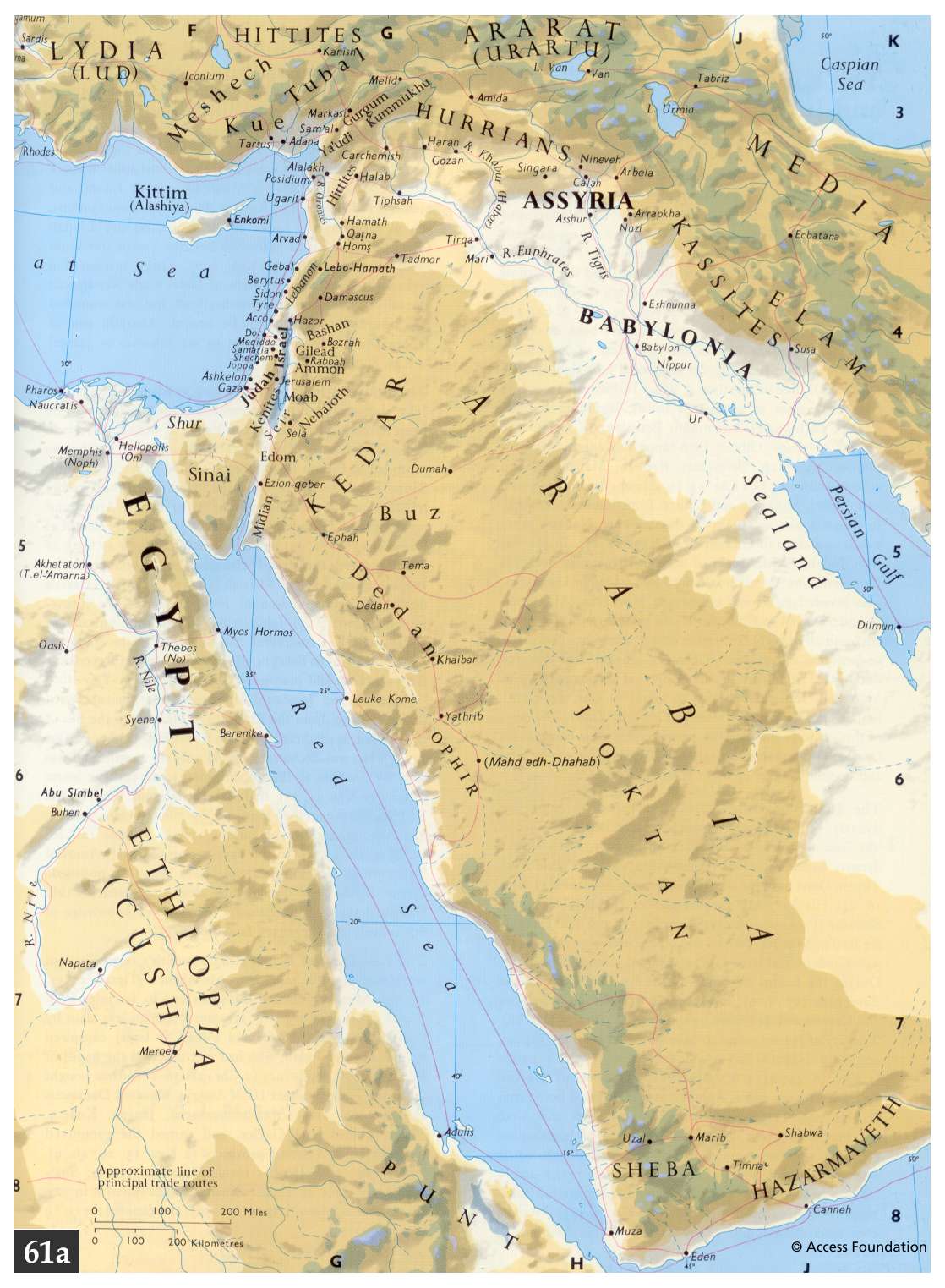
- Trade Routes throughout the Middle East
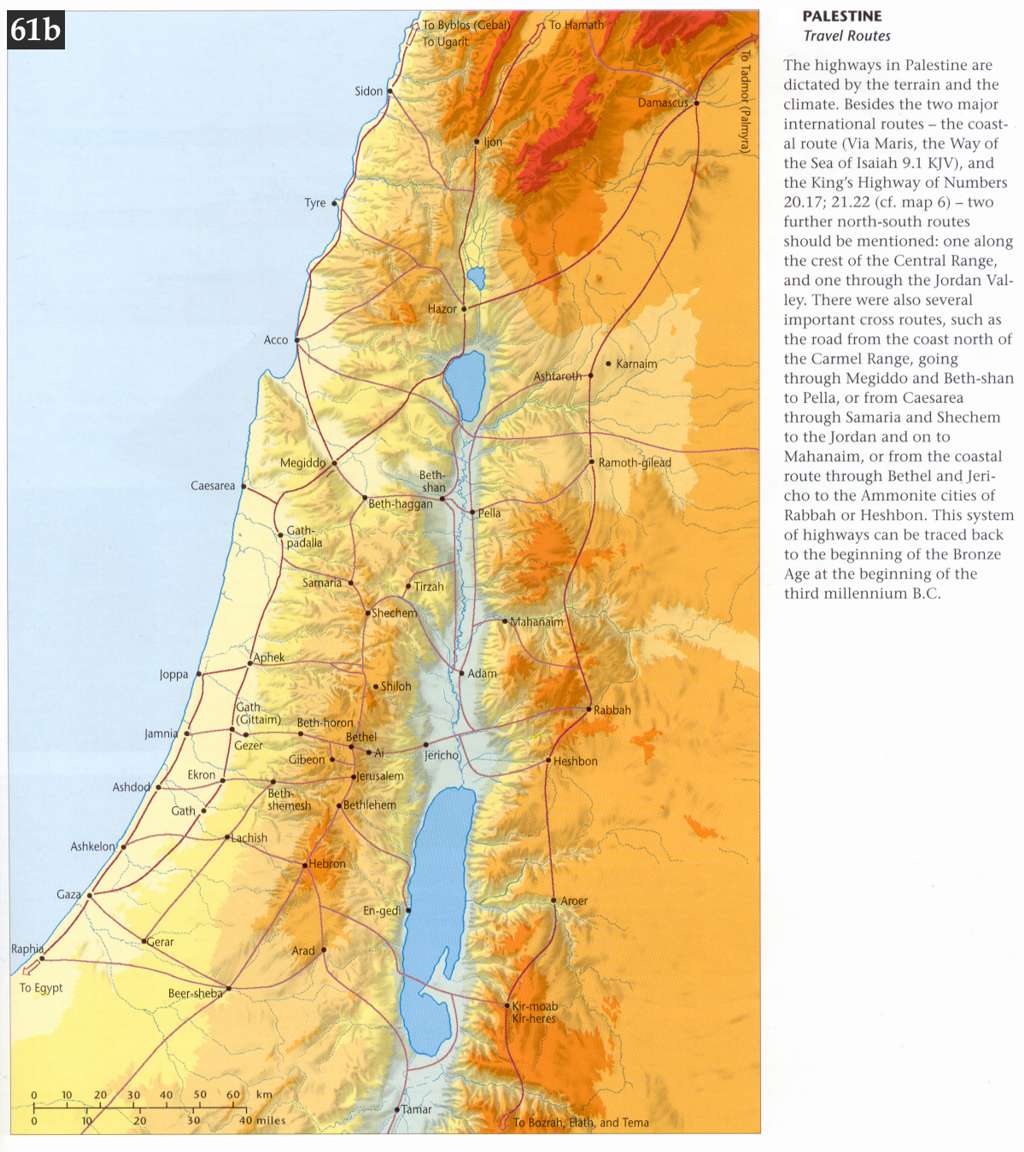
- Travel Routes throughout Palestine
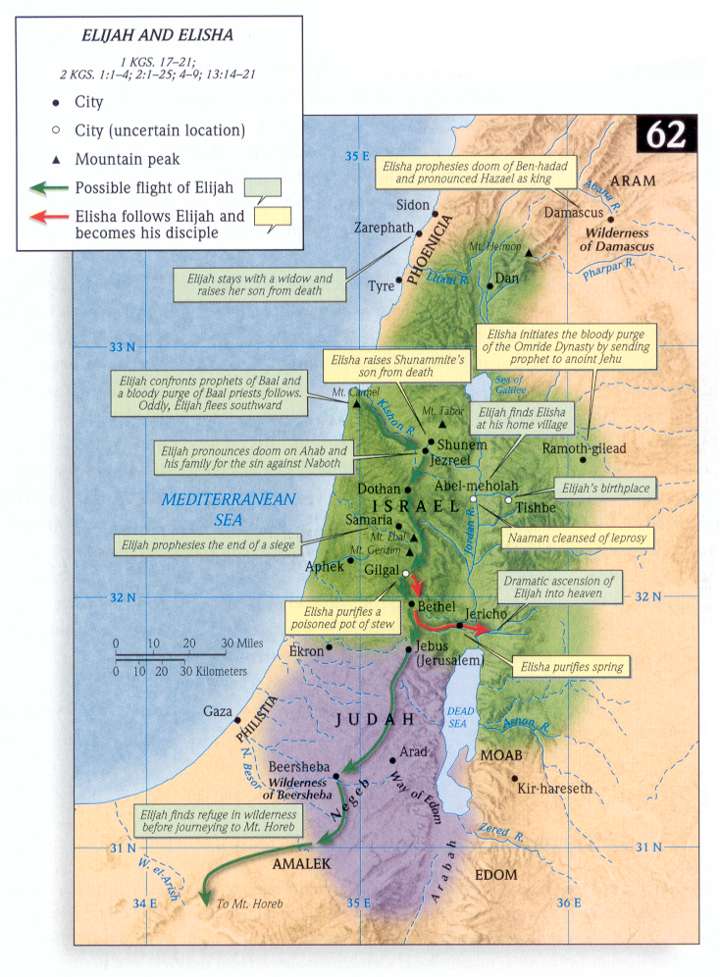
- Elijah and Elisha
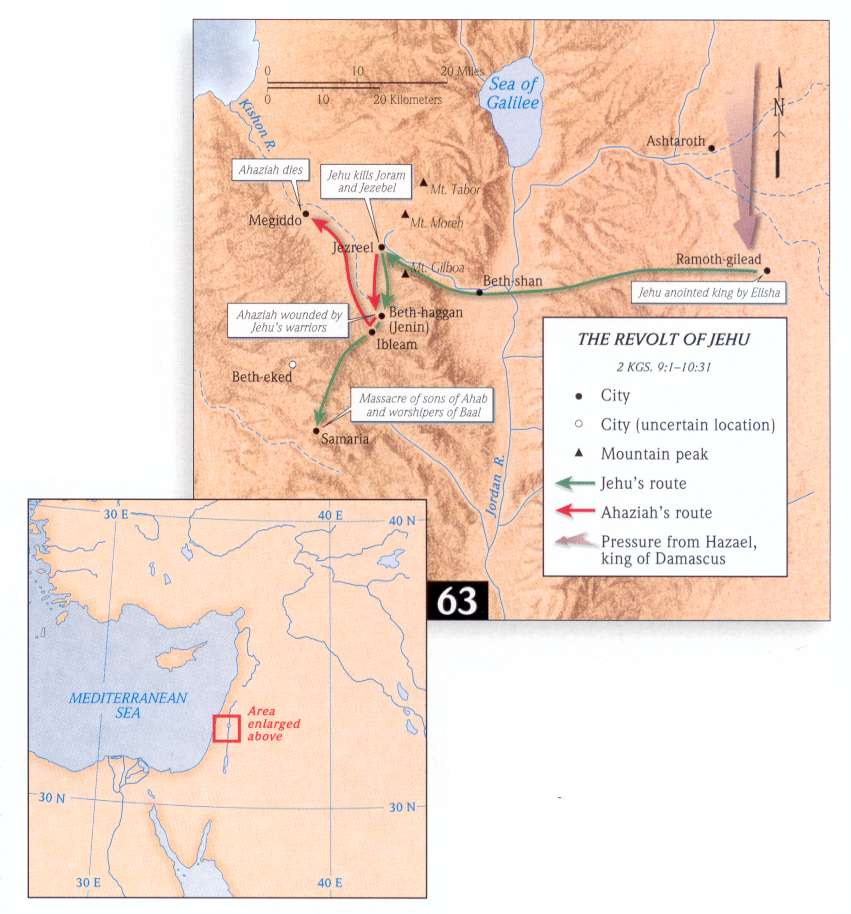
- The Revolt of Jehu
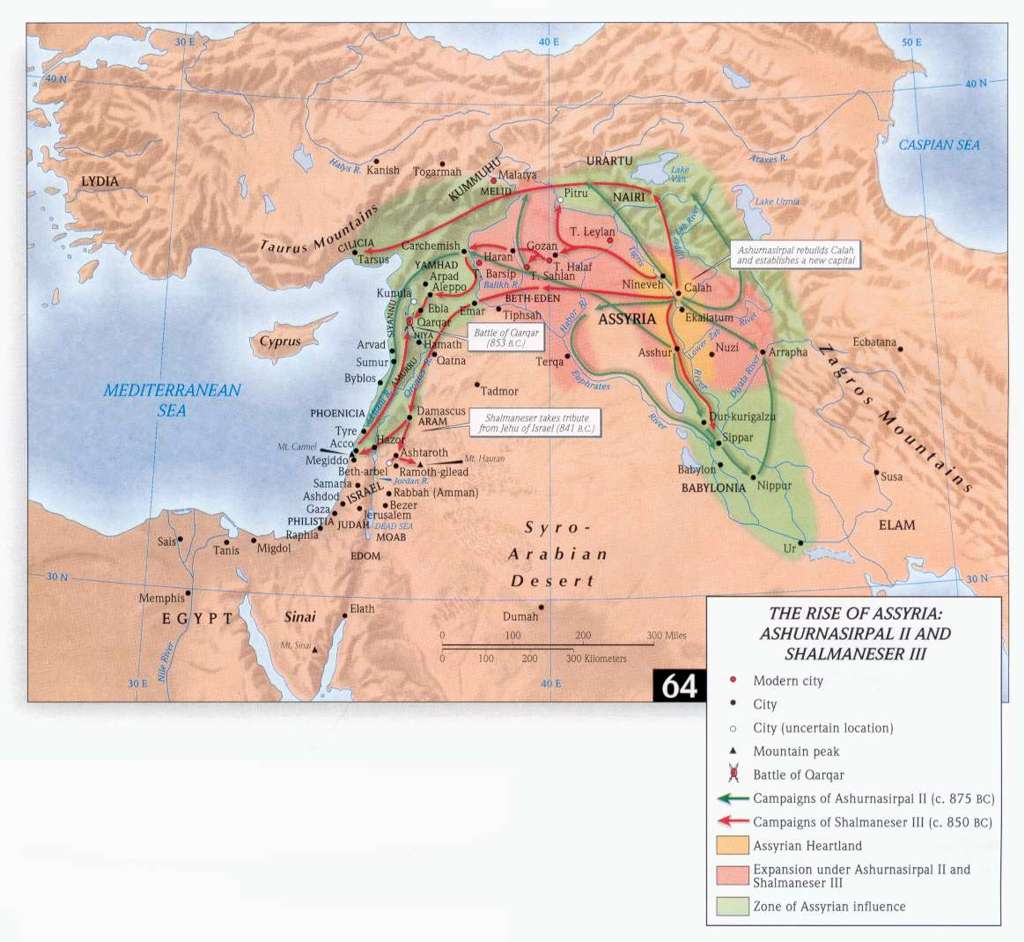
- The Rise of Assyria
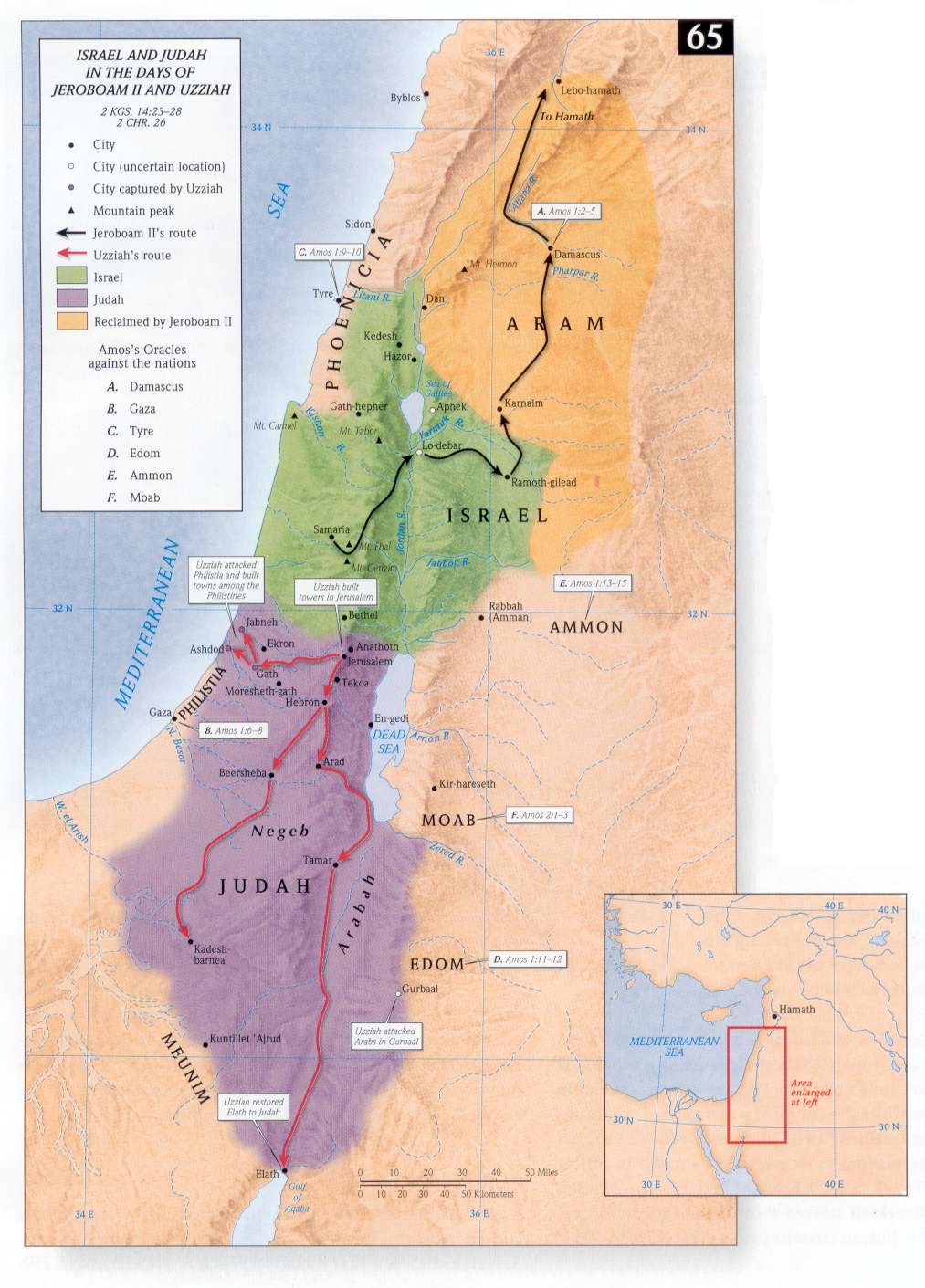
- Israel & Judah in the days of Jeroboam II and Uzziah
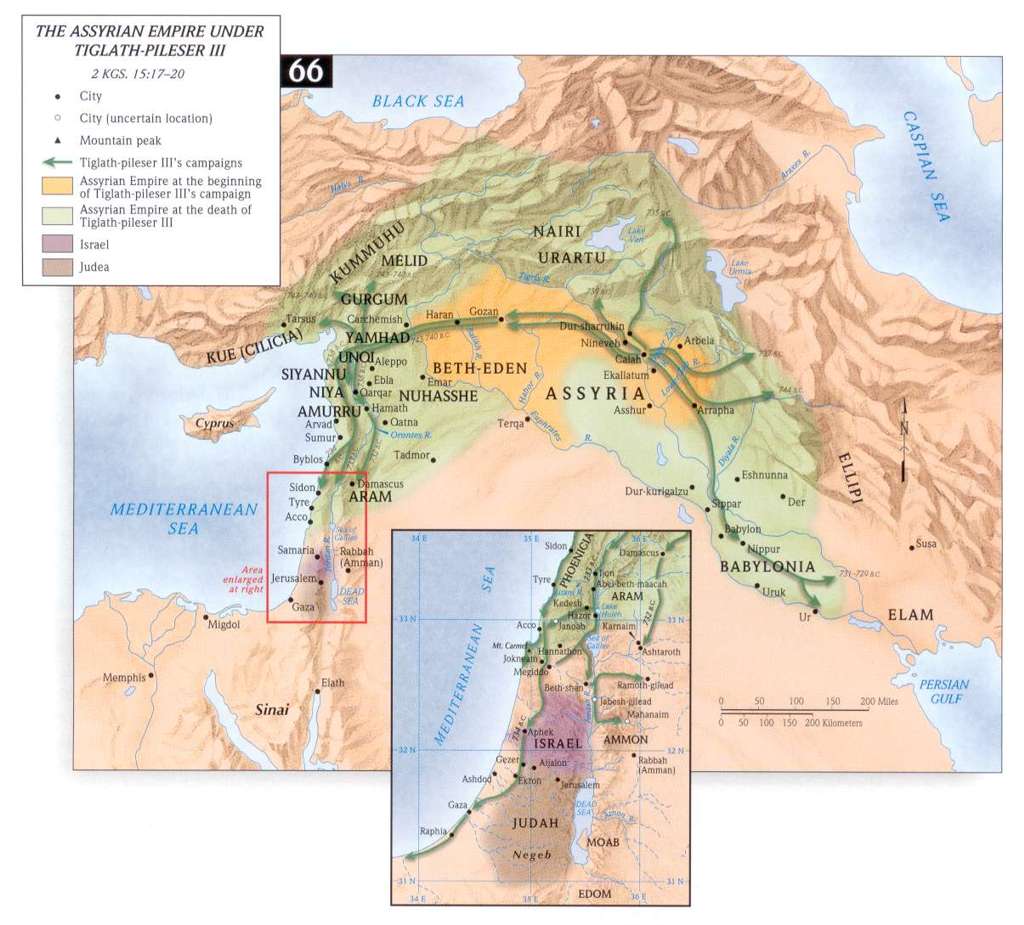
- The Assyrian Empire under Tiglath-Pileser III
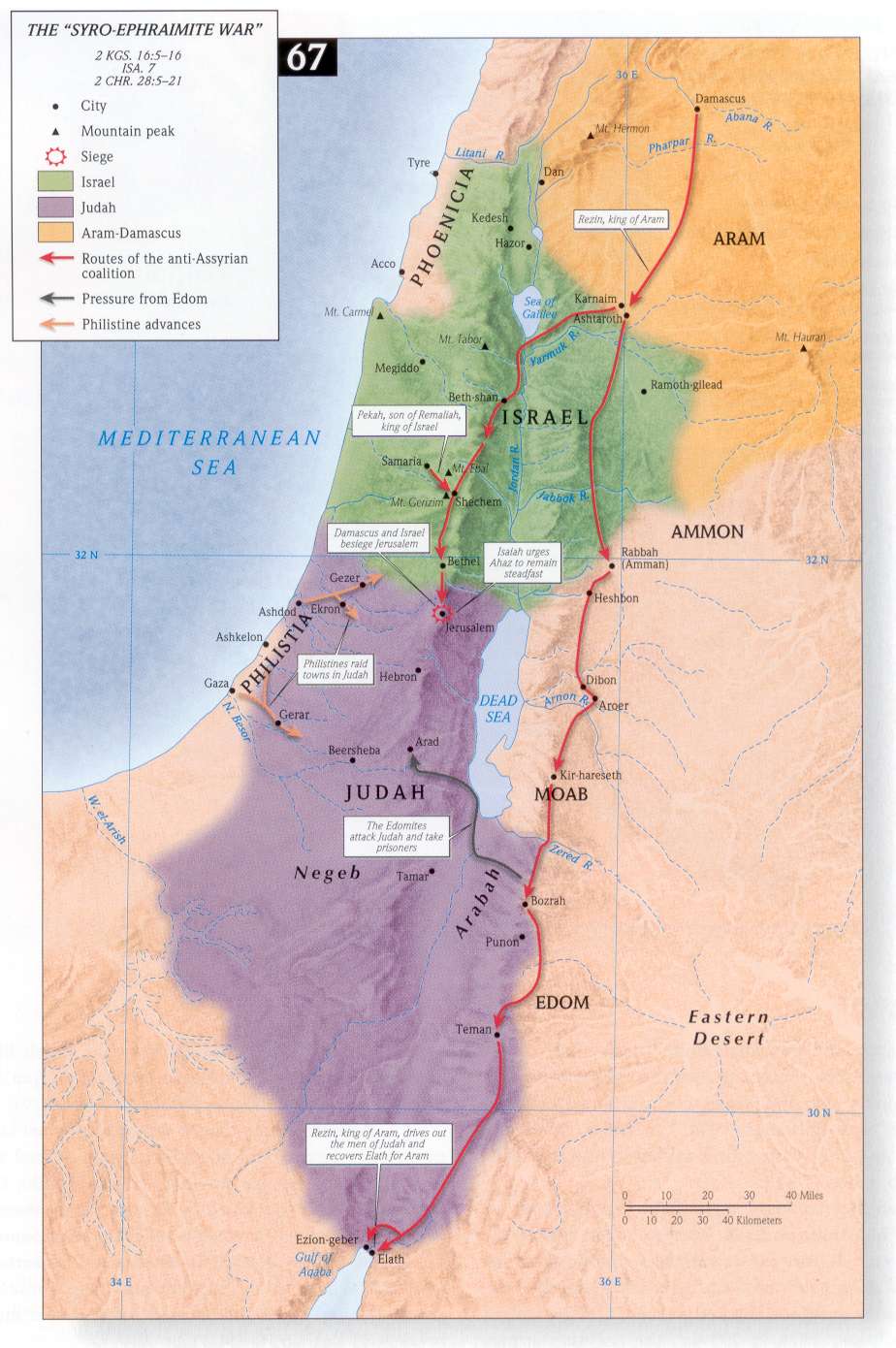
- The Syro-Ephraimite War
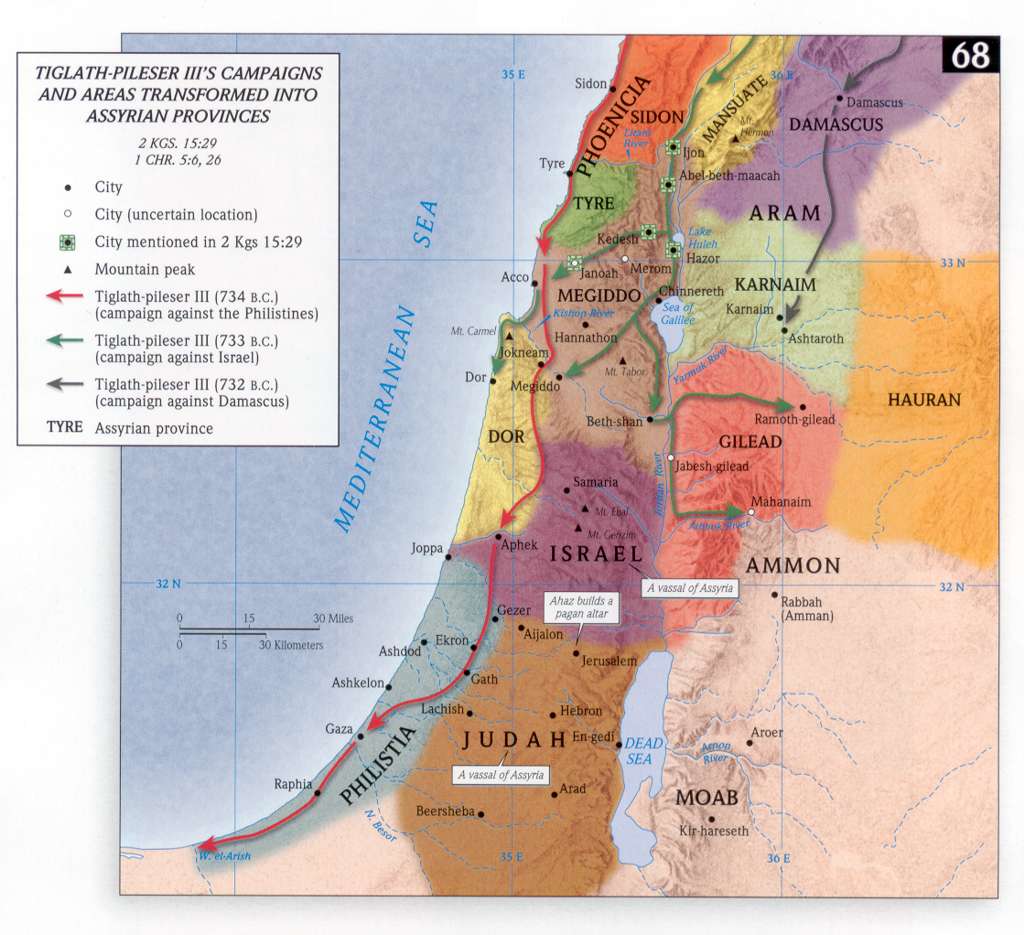
- Tiglath-Pileser III's Campaigns
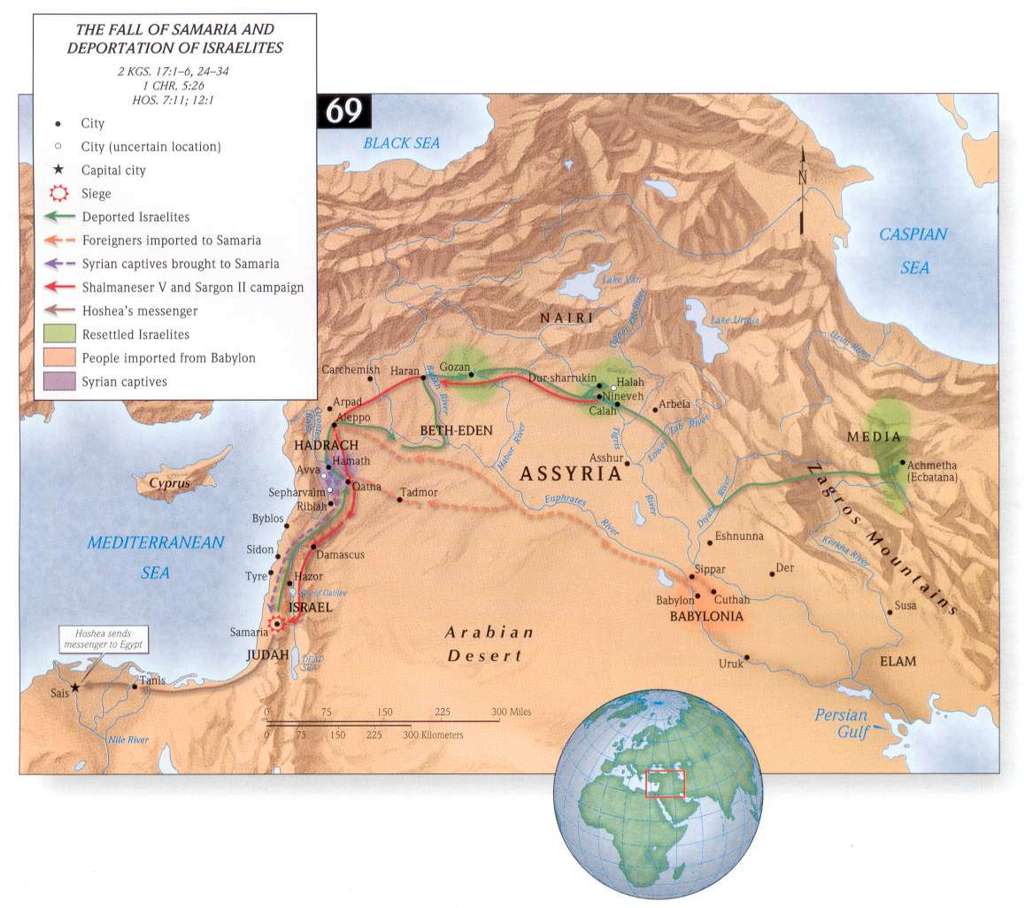
- Fall of Samaria and Deportation of Israelites
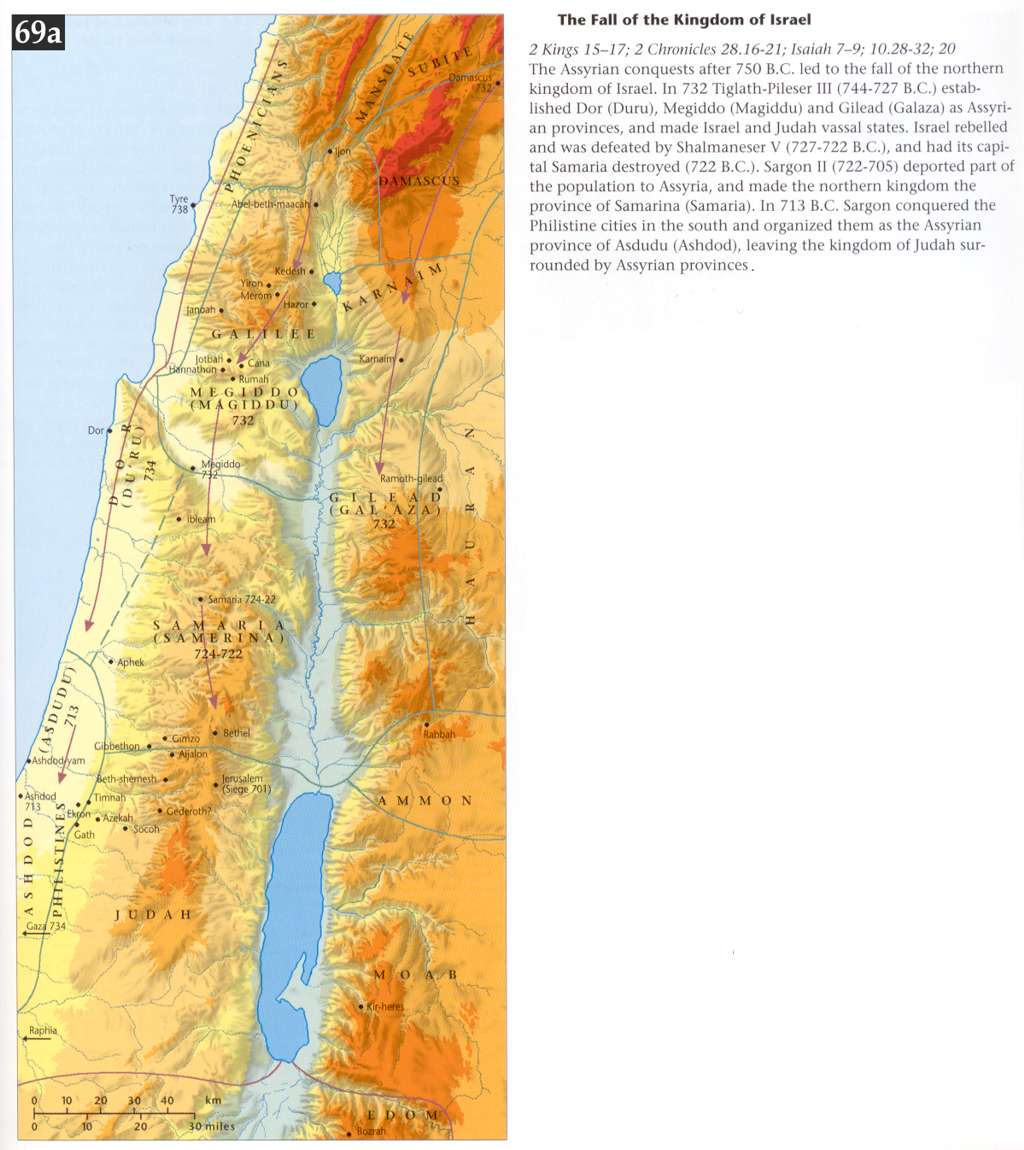
- The Fall of the Kingdom of Israel
- Assyrian Districts after the Fall of Samaria
- Prophets of the 8th Century BCE

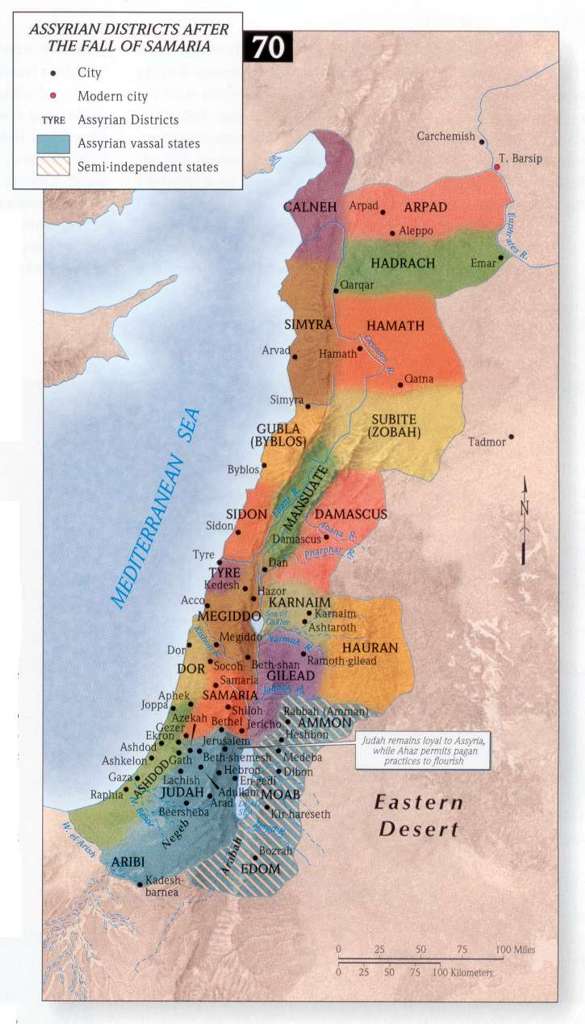
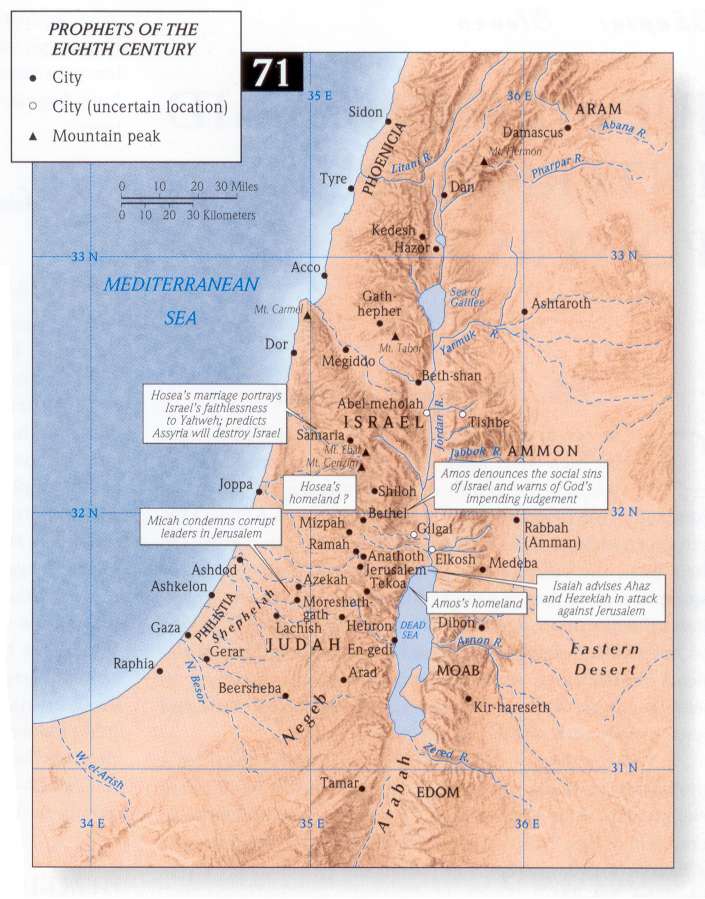
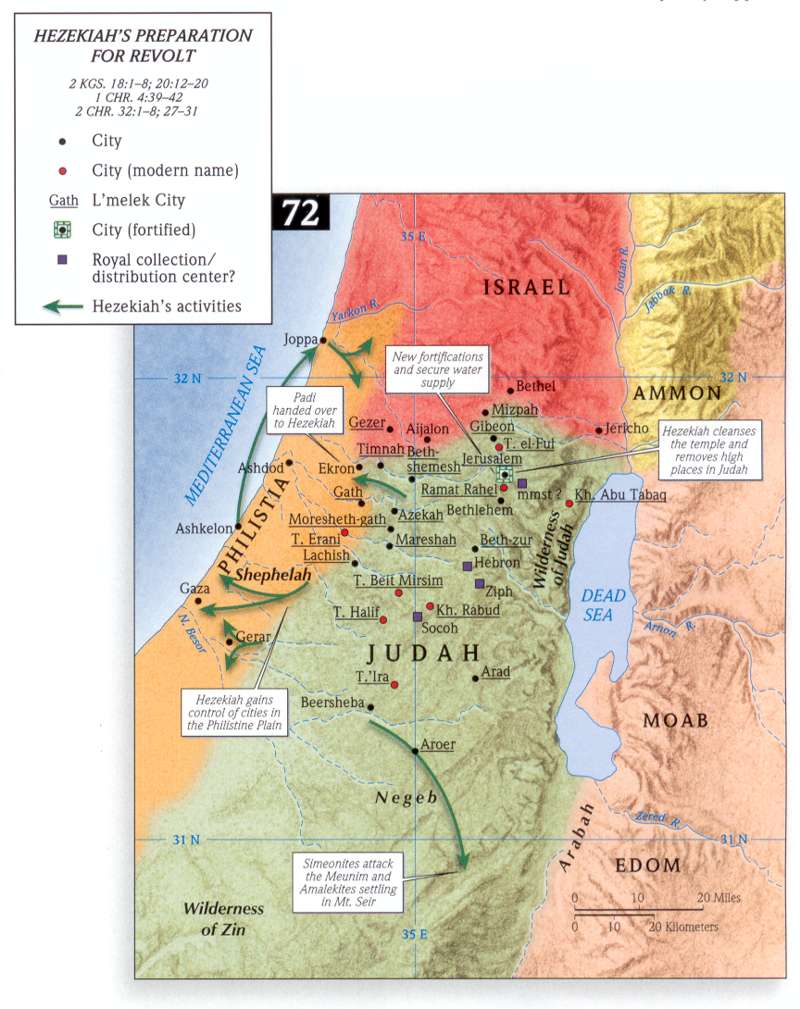
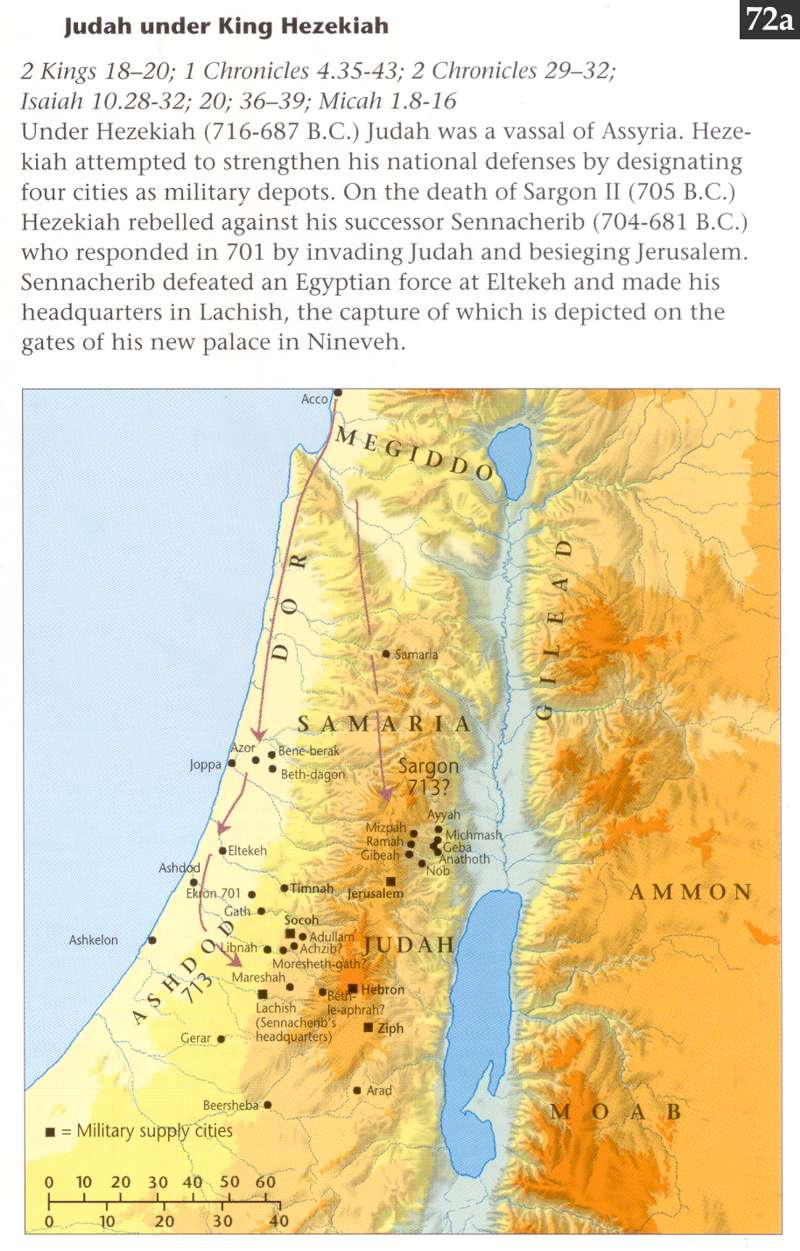
Judah Alone amid International Powers
- Hezekiah's Preparation for Revolt
- Judah under King Hezekiah
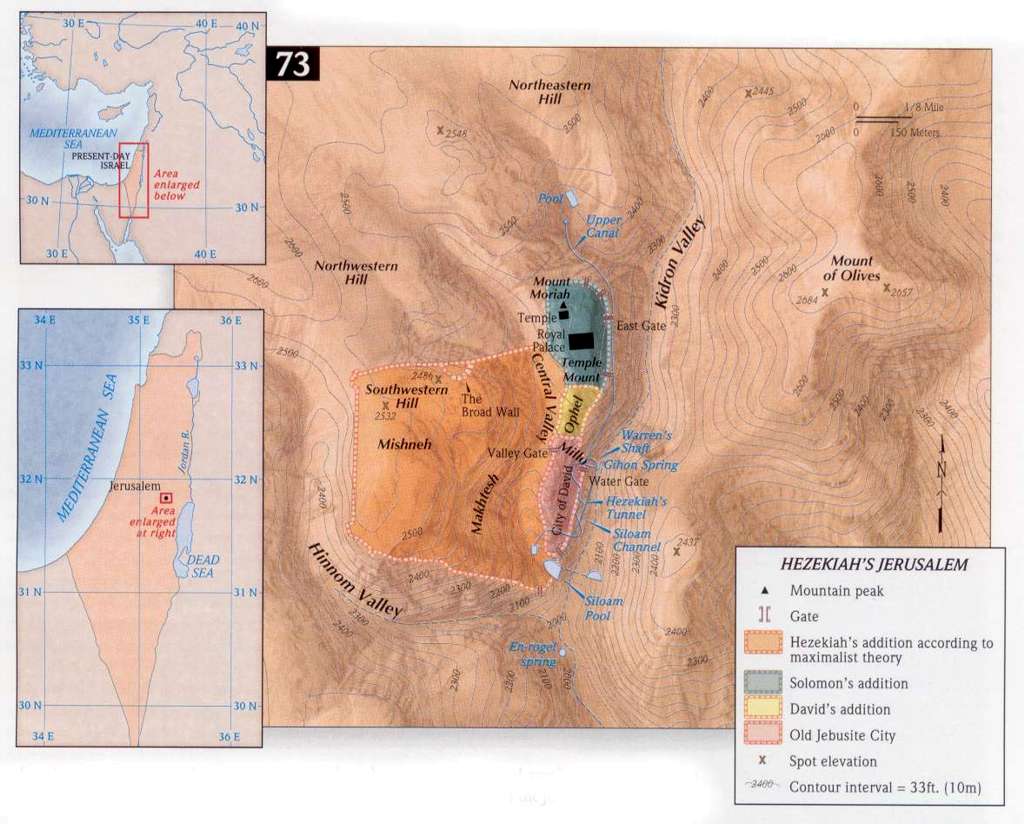
- Hezekiah's Jerusalem
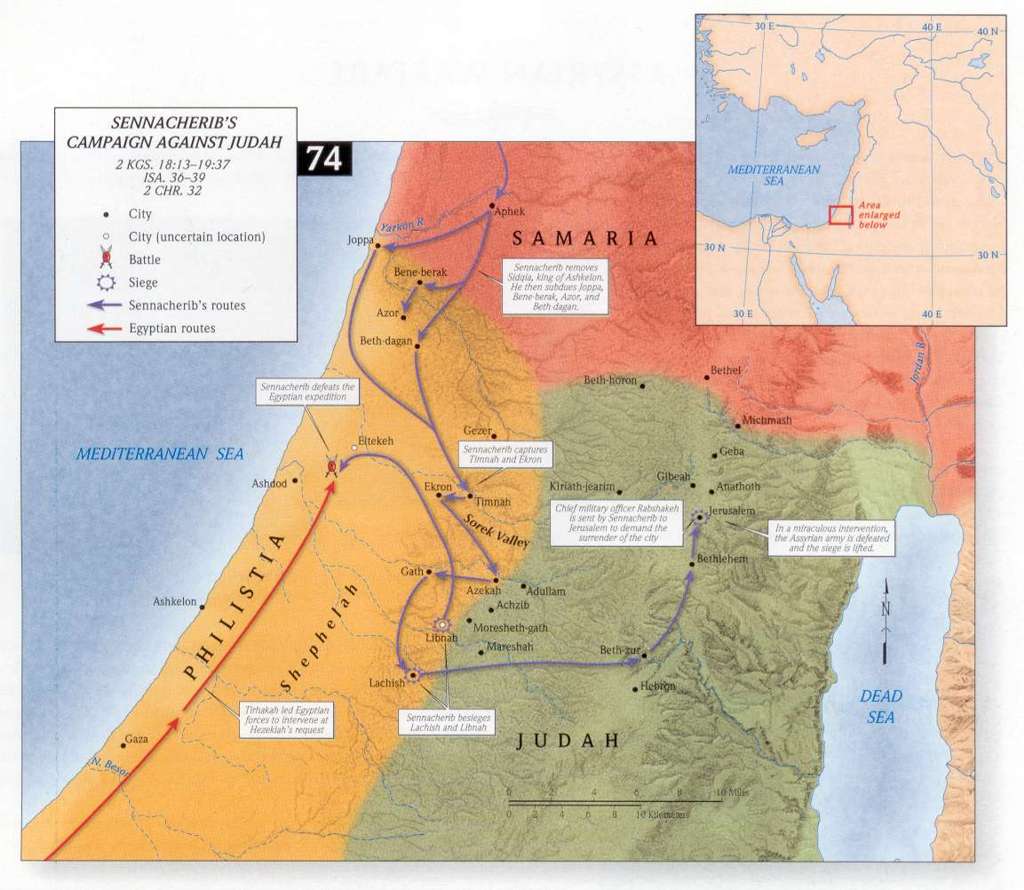
- Sennacherib's Campaign against Judah
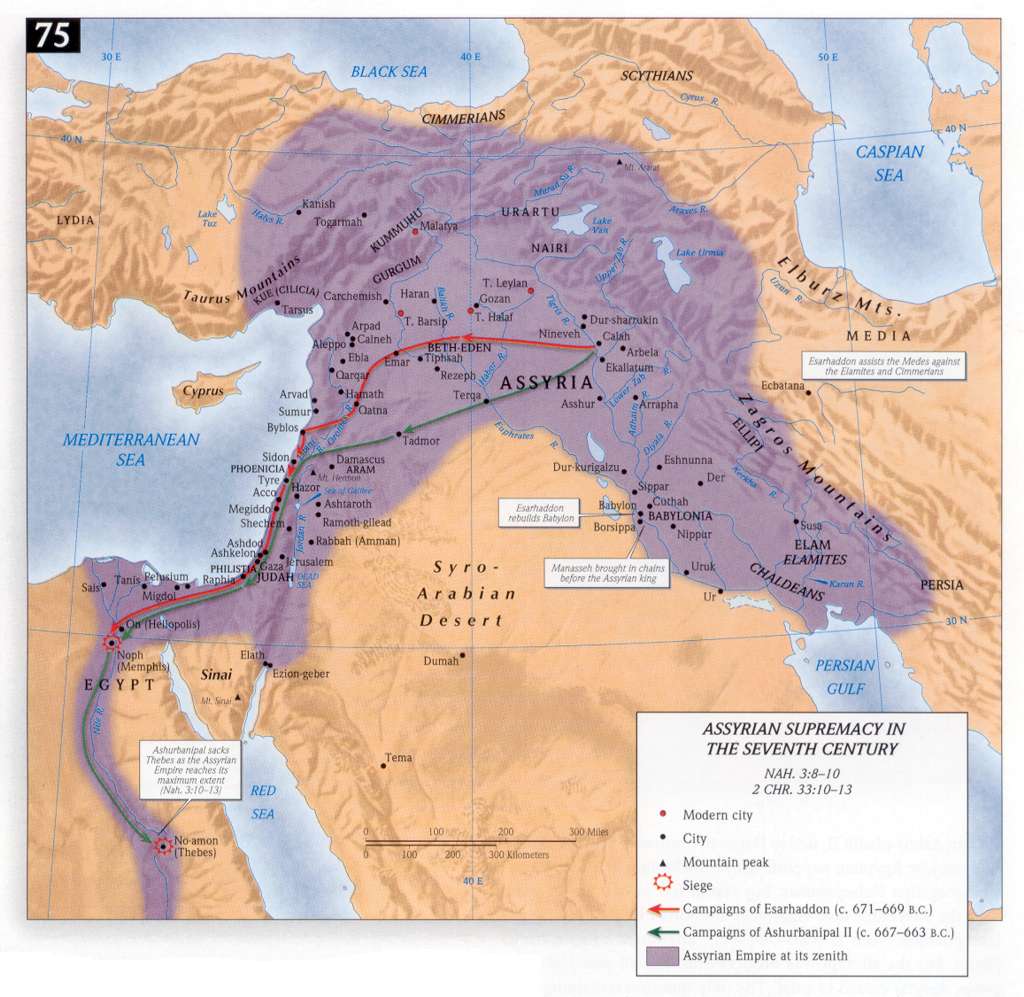
- Assyria in the 7th century BCE
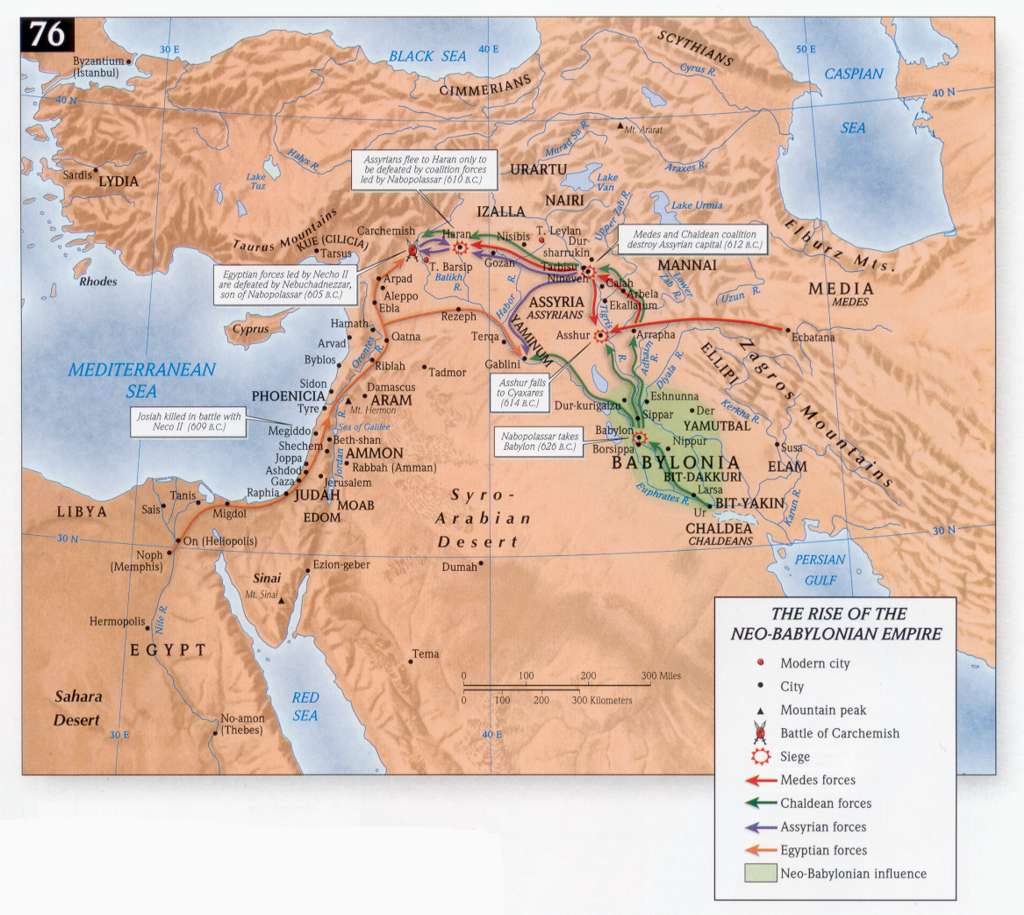
- The Rise of the Neo-Babylonian Empire
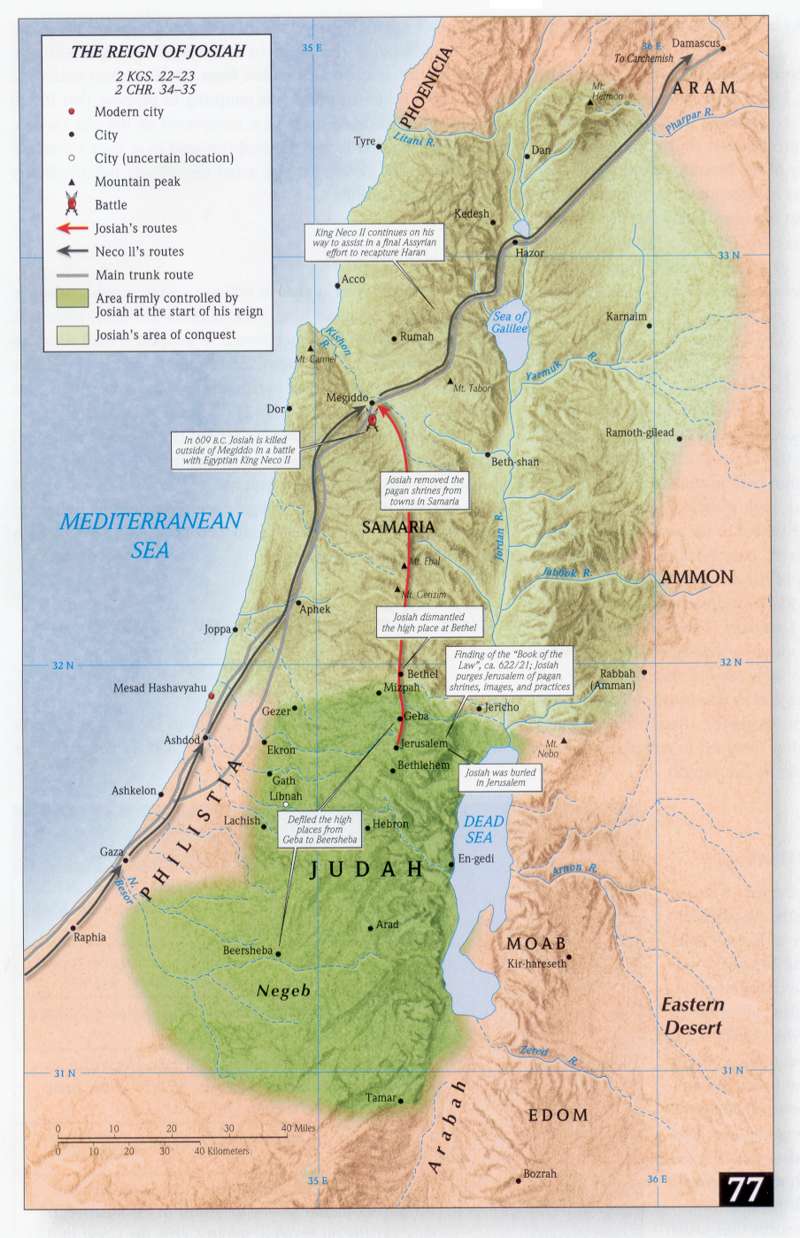
- The Reign of Josiah
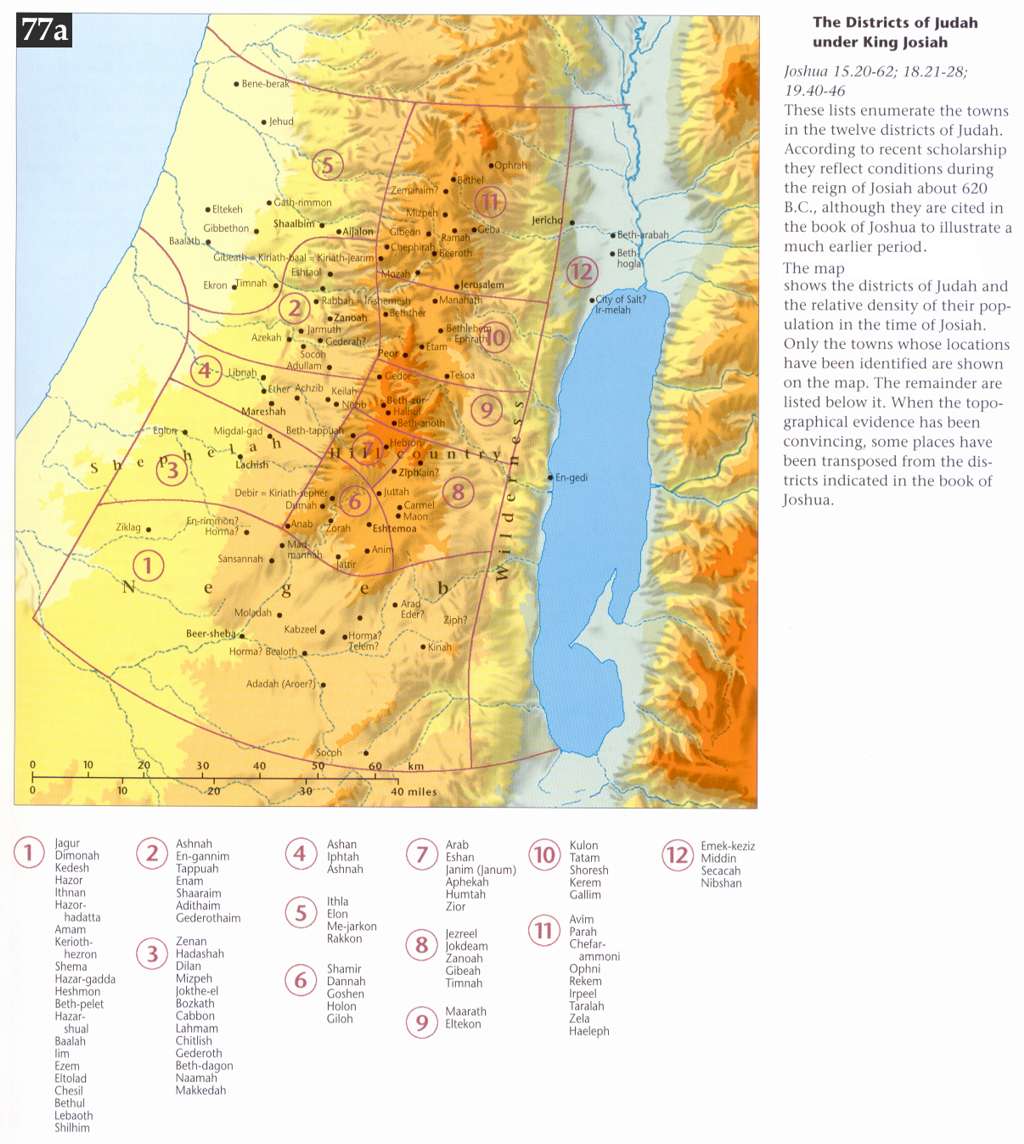
- The Districts of Judah under King Josiah
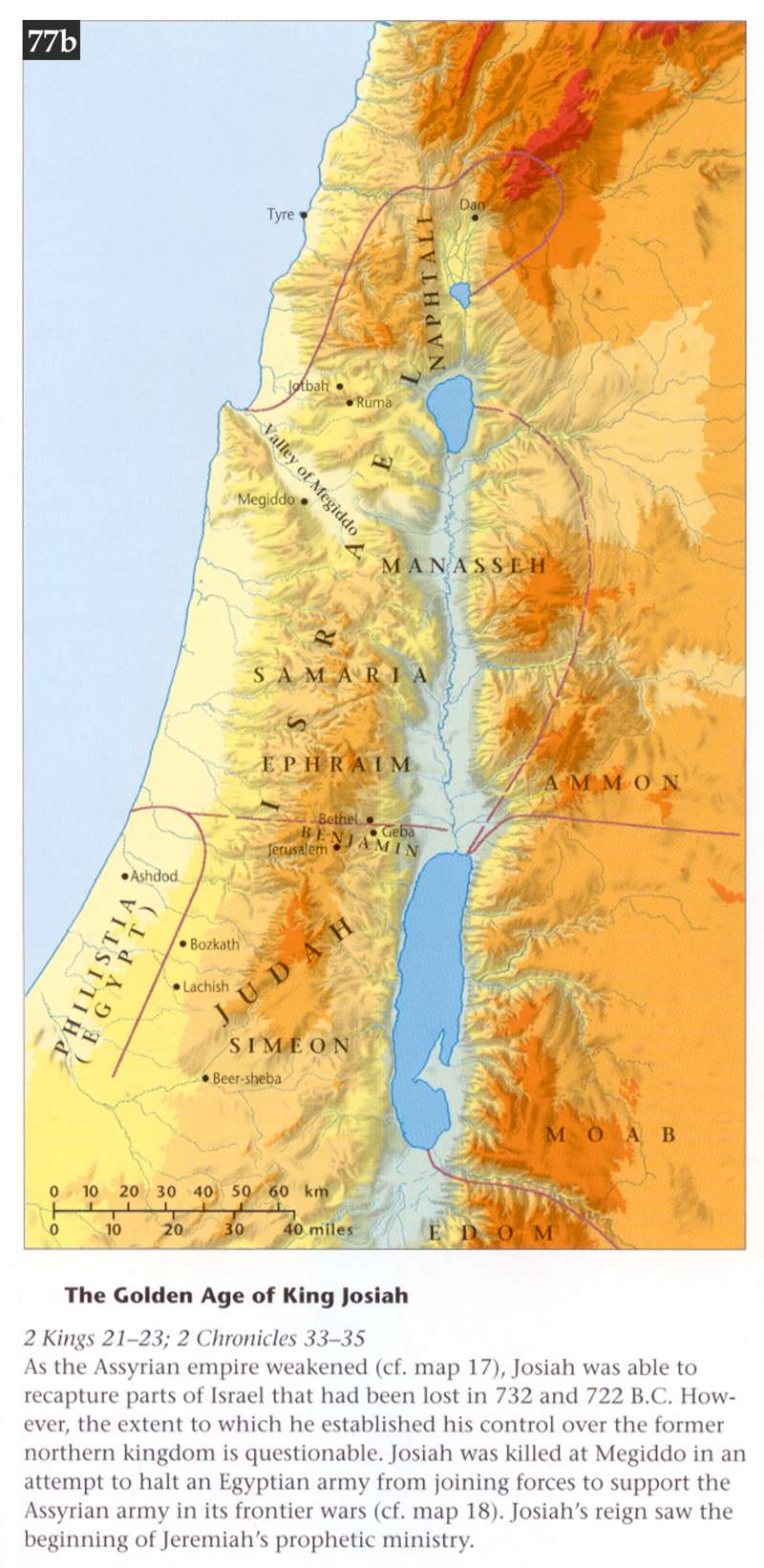
- The Golden Age of King Josiah
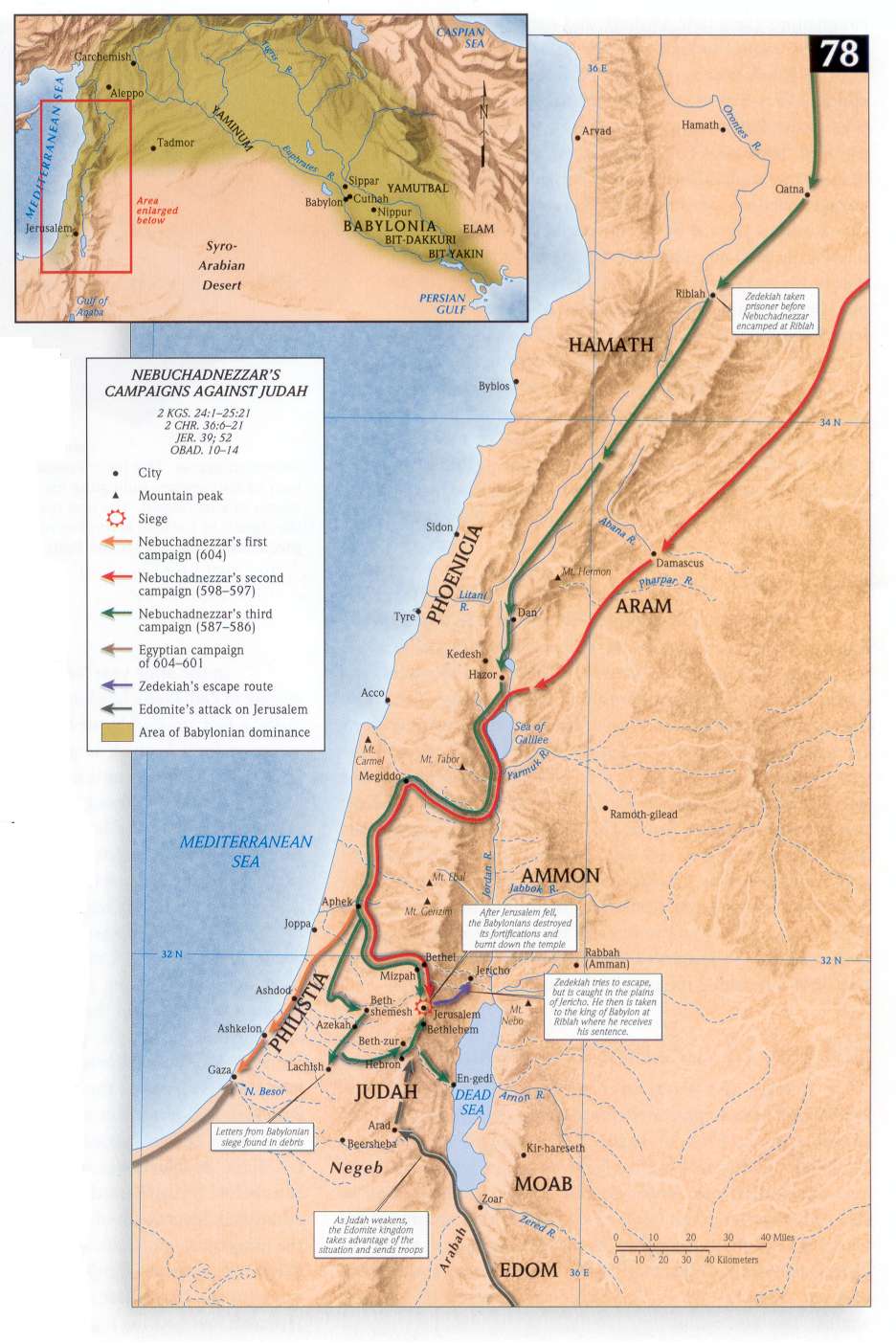
- Nebuchadnezzar's Campaigns against Judah
The Babylonian Exile up to the early Rome
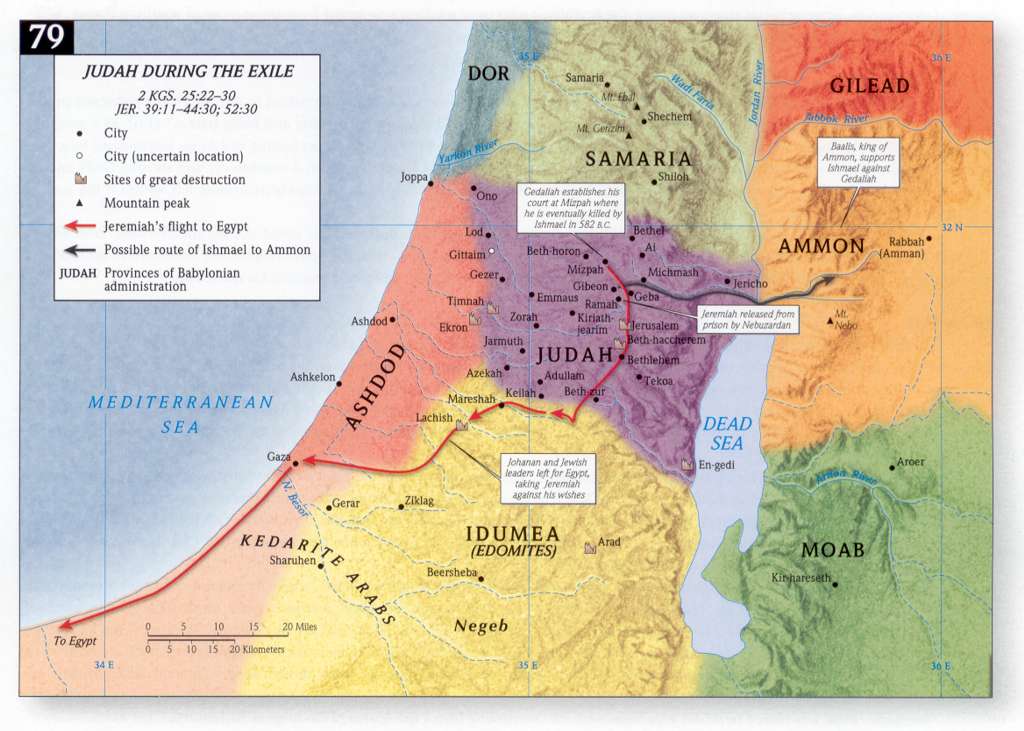
- Judah during the Exile
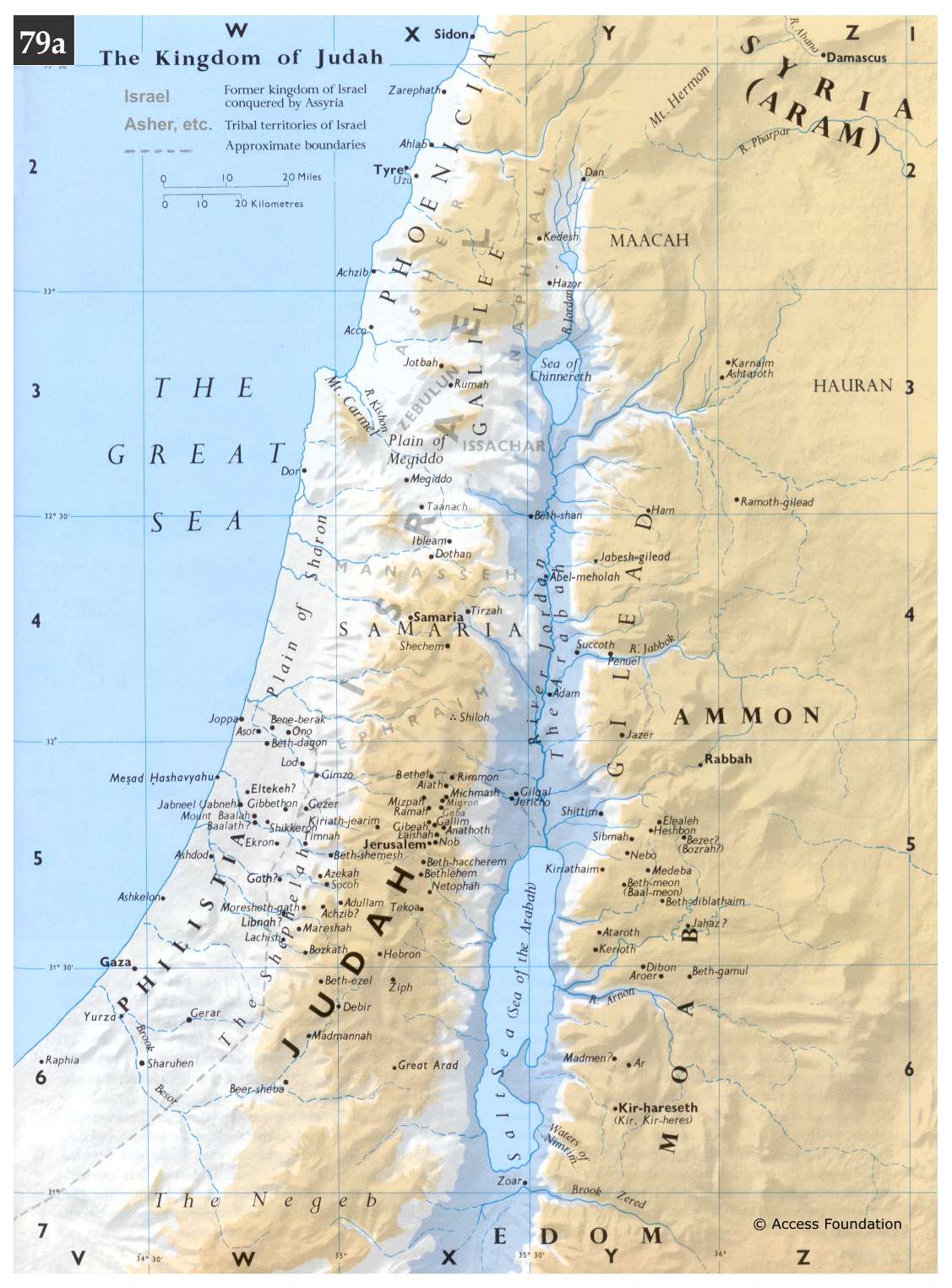
- The Kingdom of Judah
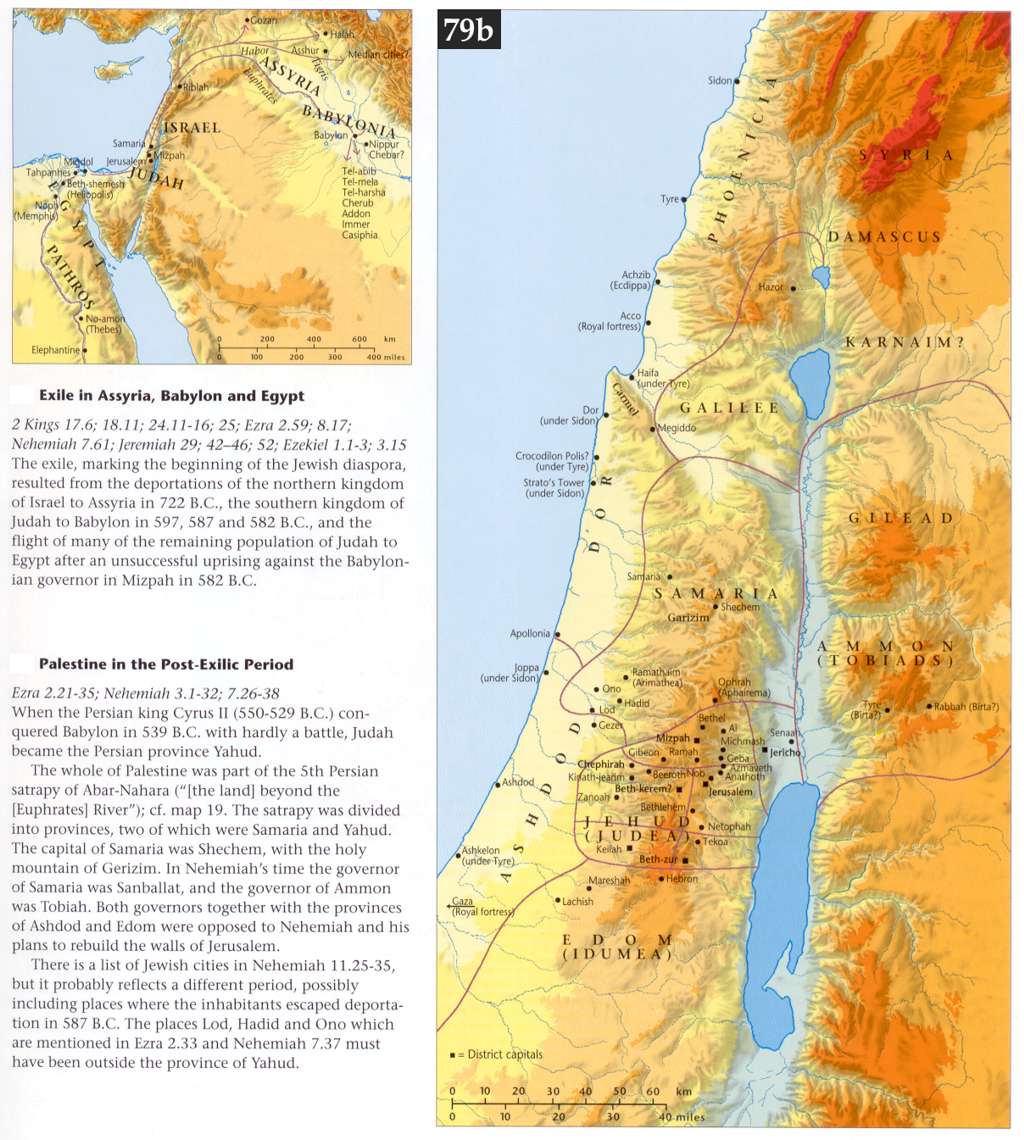
- Exile; Palestine in the Post-Exilic Period
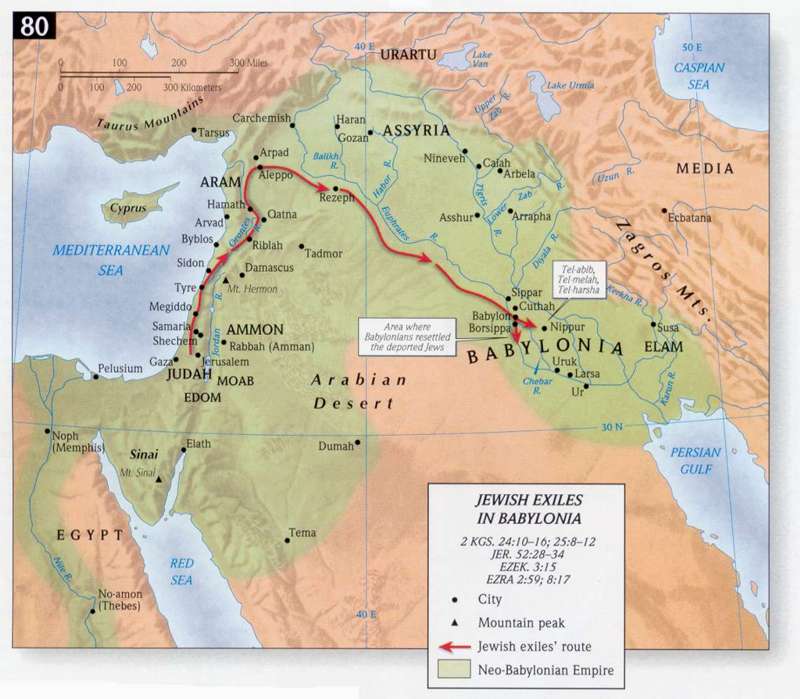
- Jewish Exiles in Babylon
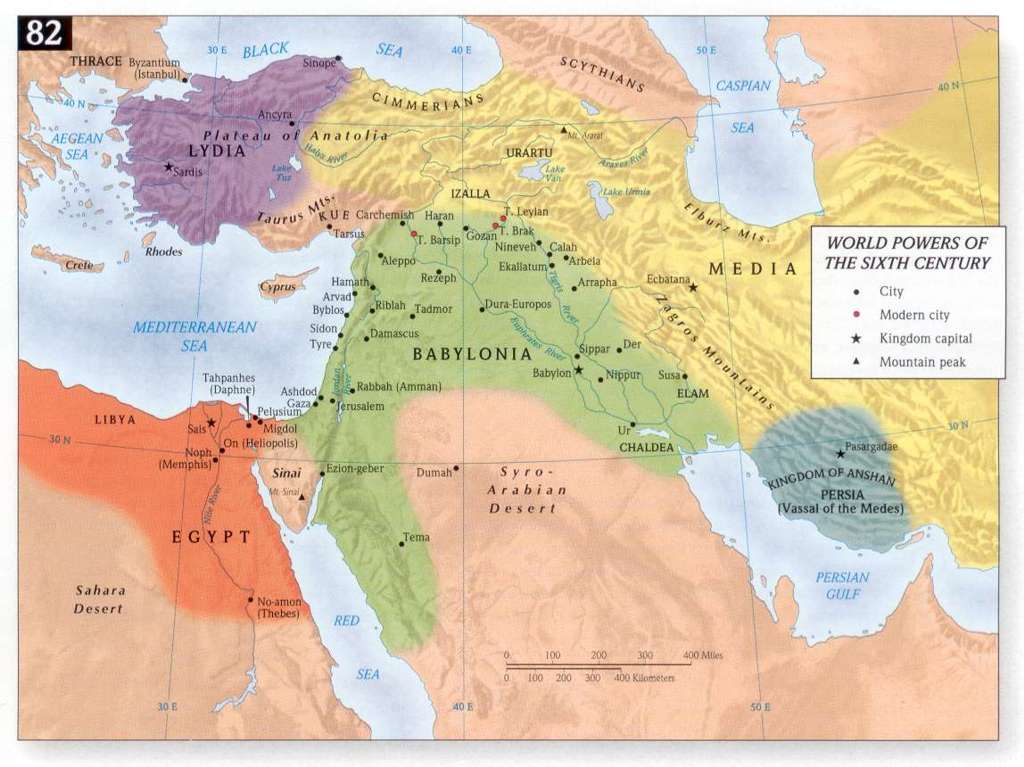
- World Powers of the 6th century BCE
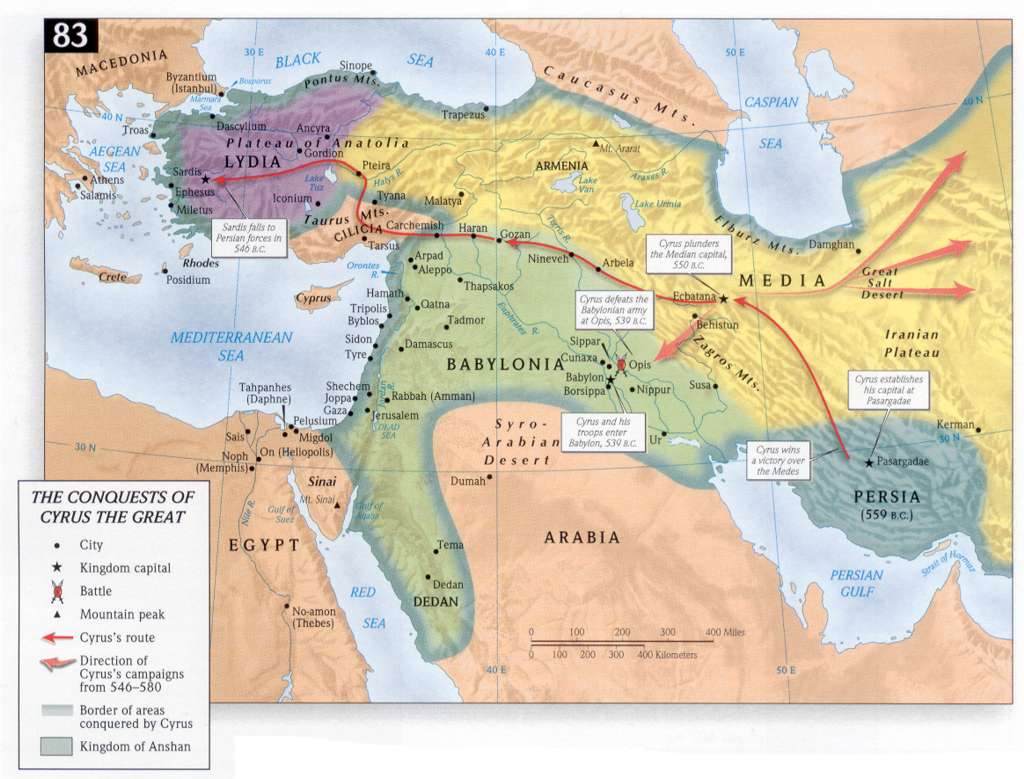
- The Conquests of Cyrus the Great
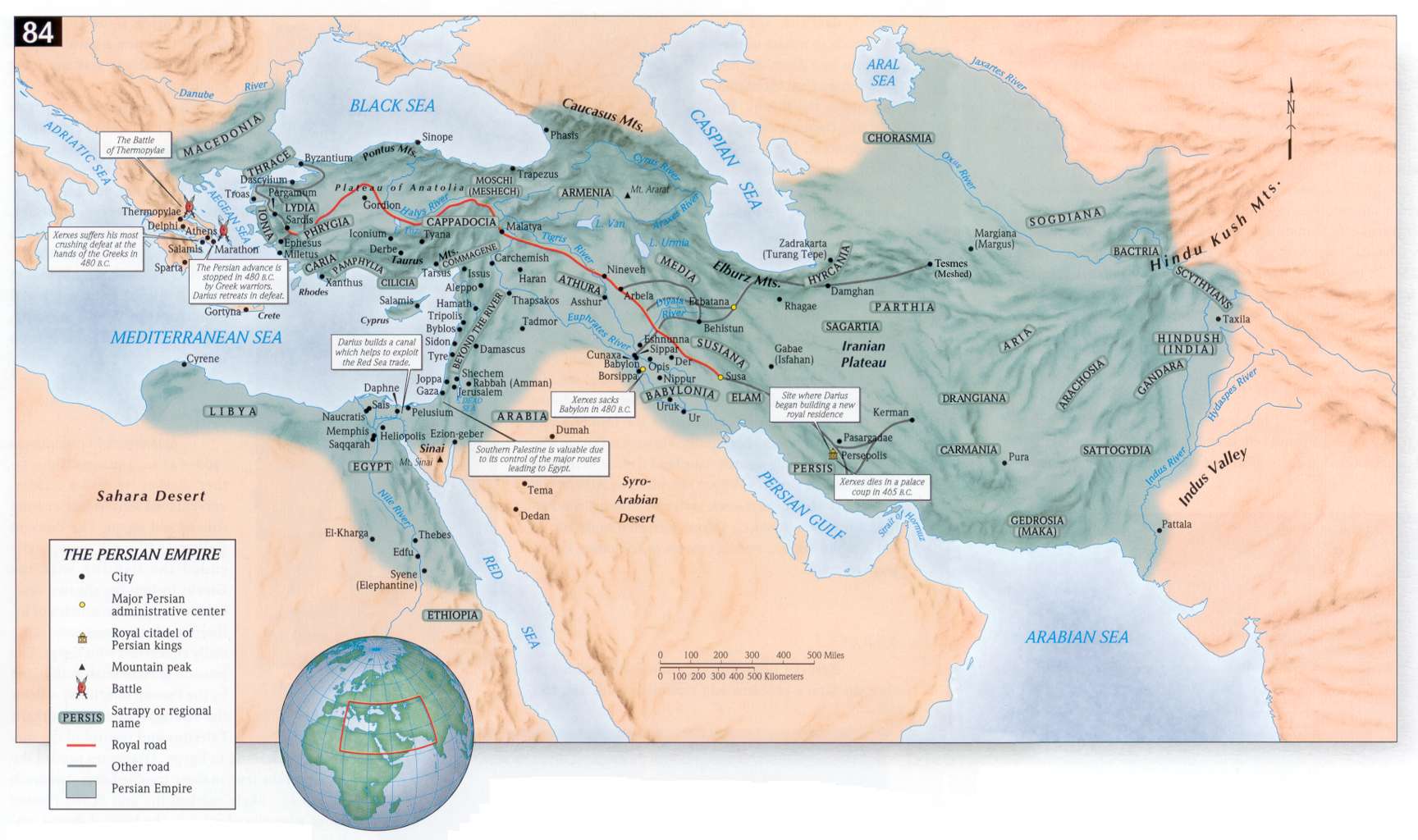
- The Persian Empire
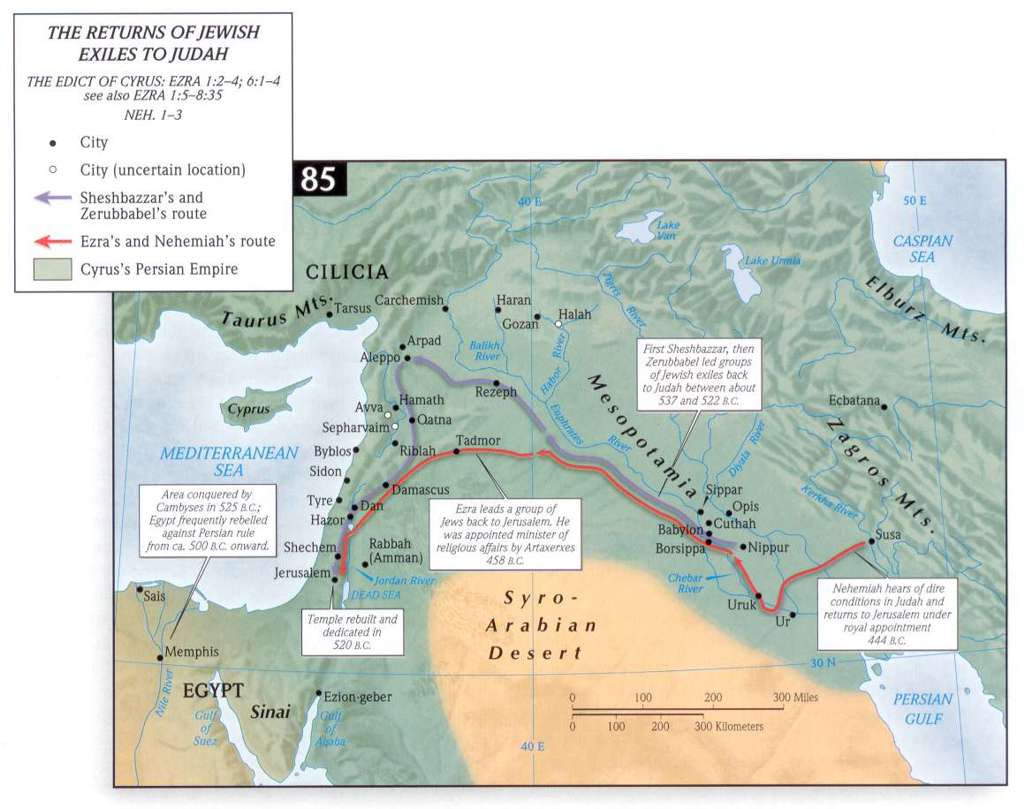
- The Return of the Jewish Exiles to Judah
- Judah in the 5th century BCE
- Palestine after the Exile
- Alexander the Great's Empire
- The Division of Alexander's Empire ca. 275 BCE
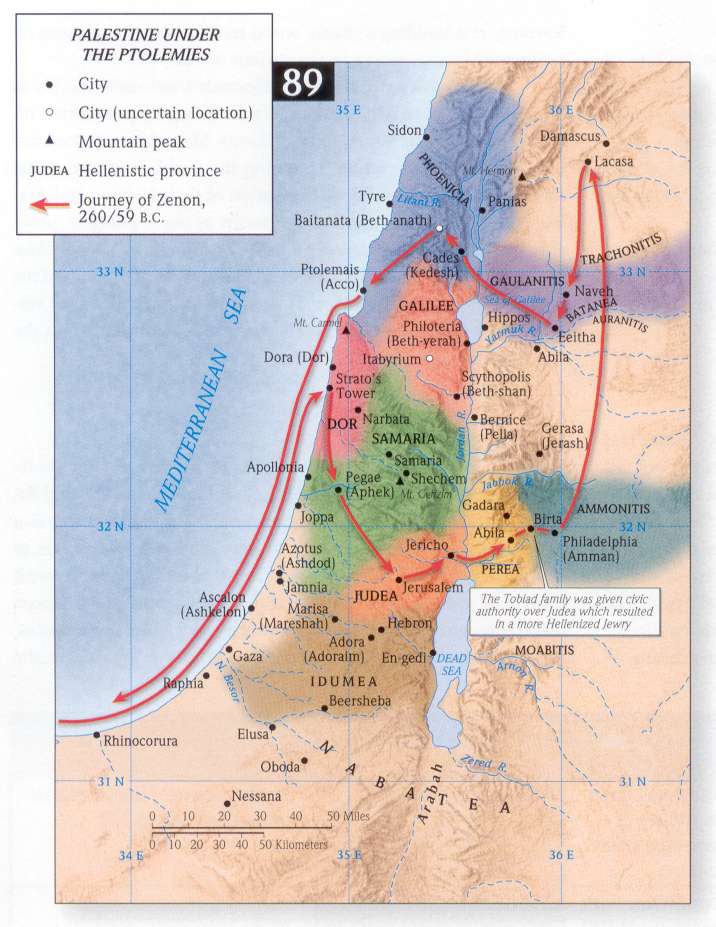
- Palestine under the Ptolemies
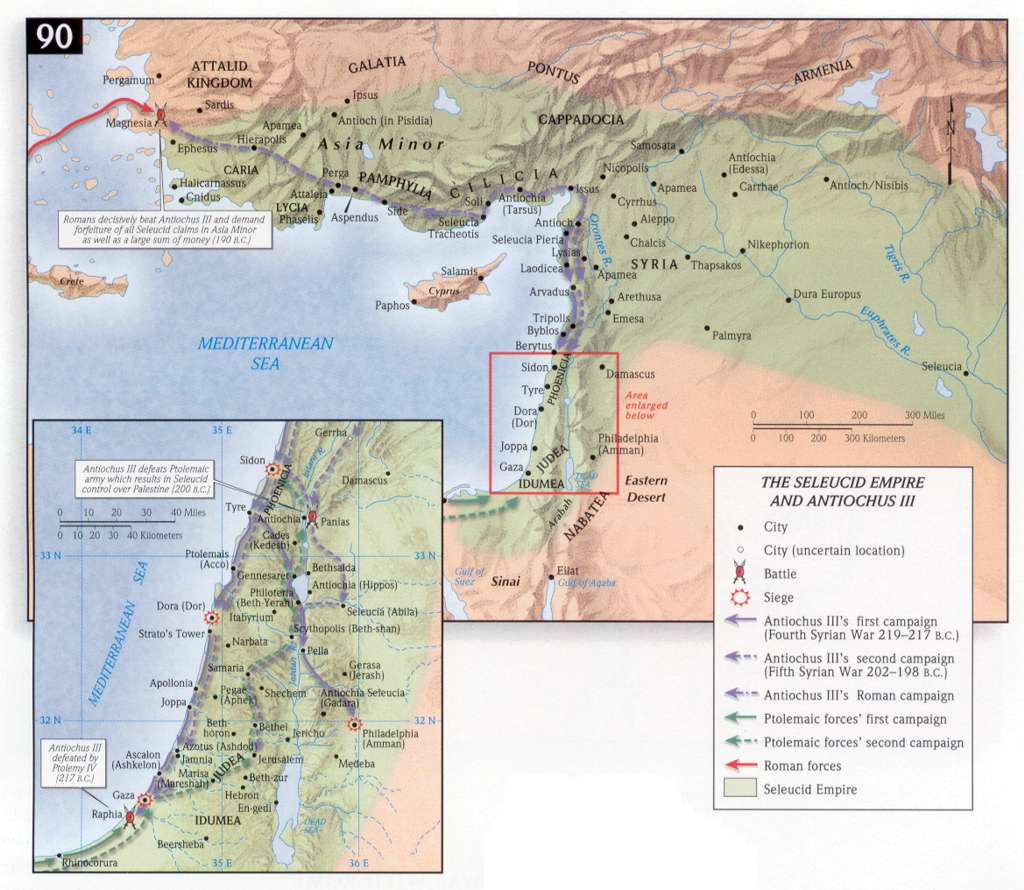
- The Seleucid Empire and Antiochus III
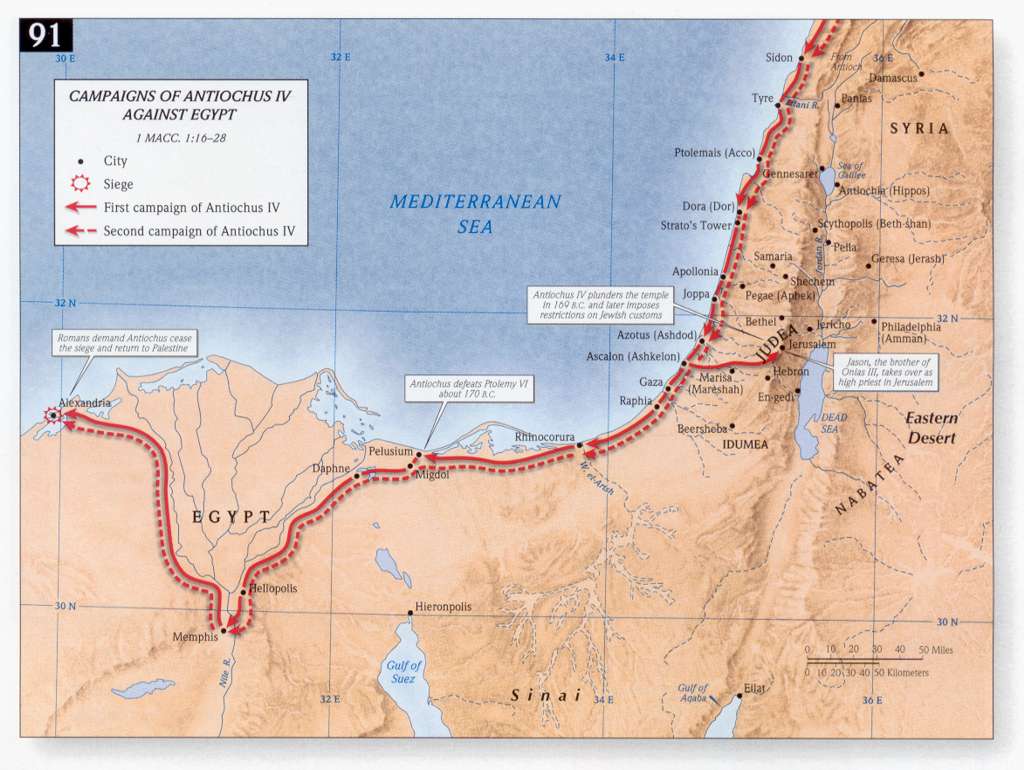
- Campaigns of Antiochus IV against Egypt
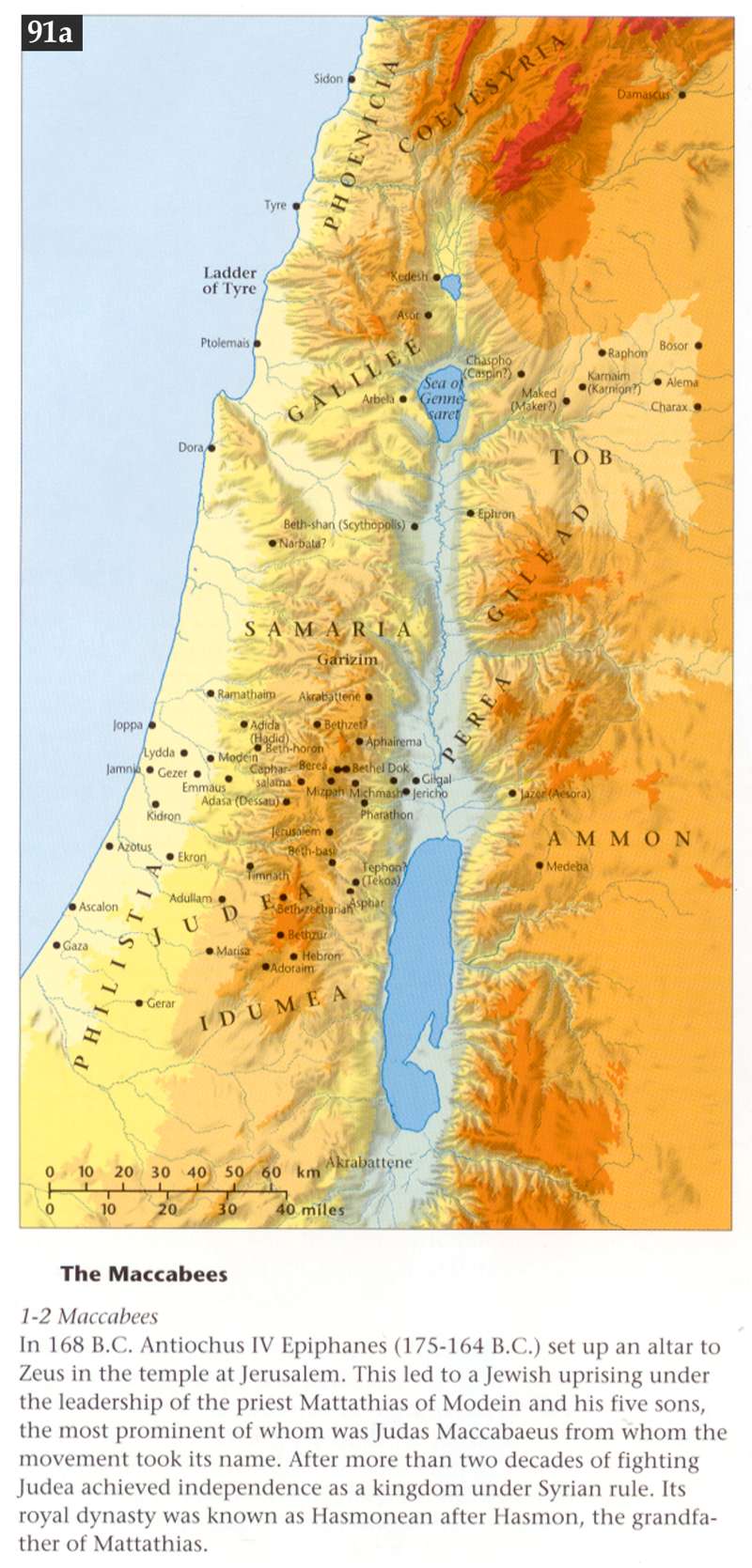
- The Maccabees in 168 BCE
- Selected Events in the Maccabean Revolt
- Jewish Expansion under the Hasmonean Dynasty
- Pompey's Campaign against Jerusalem
- Early Rome
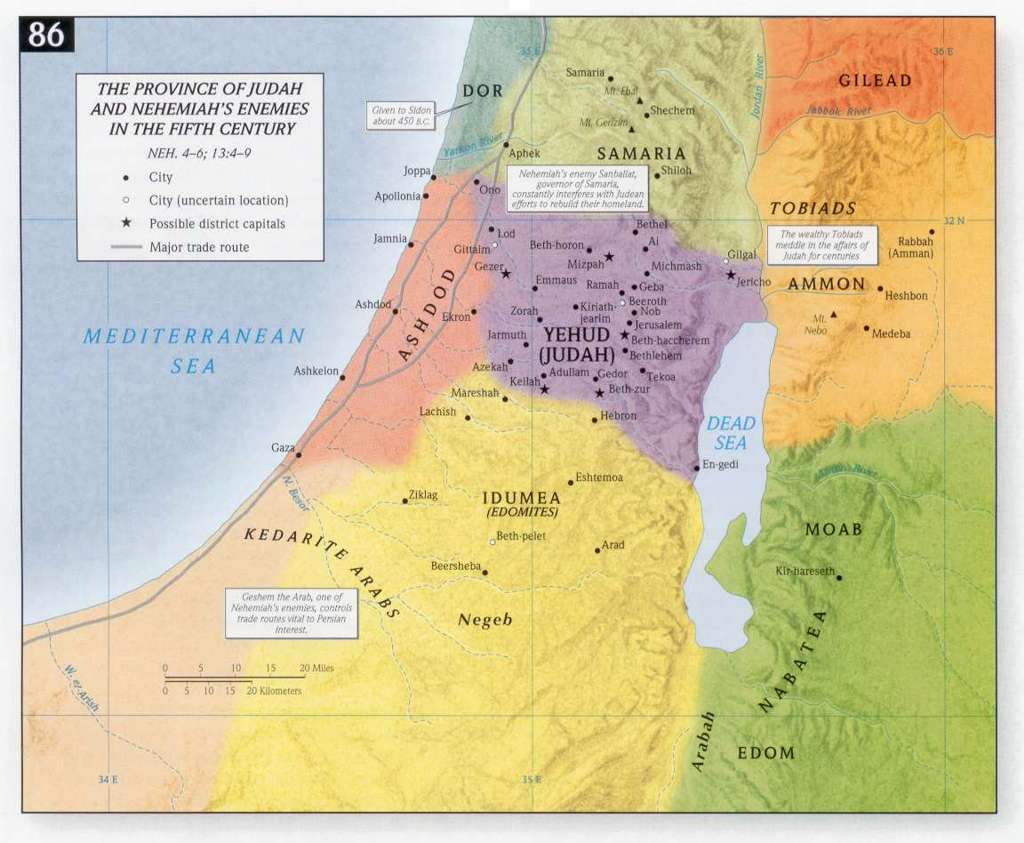
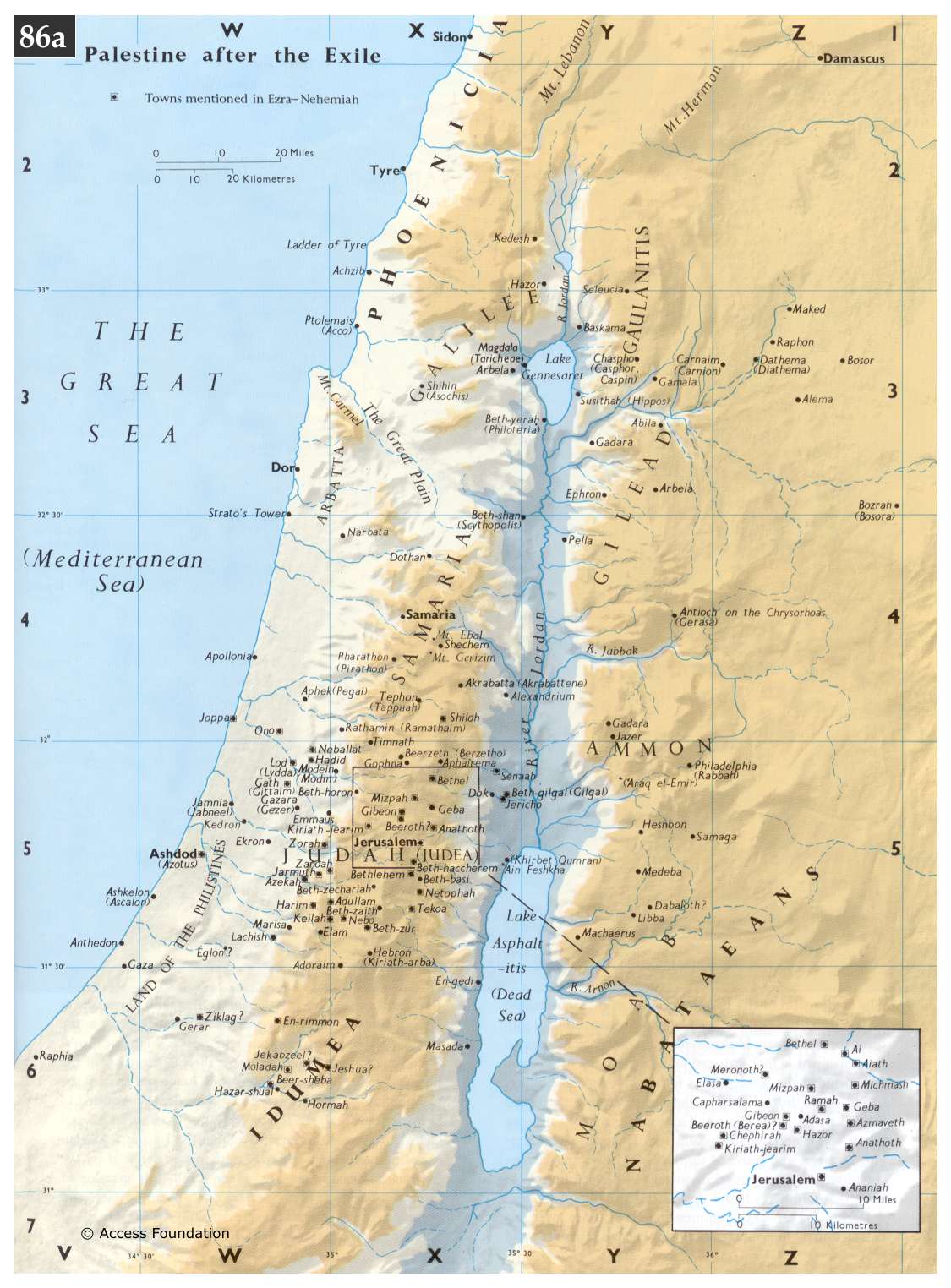
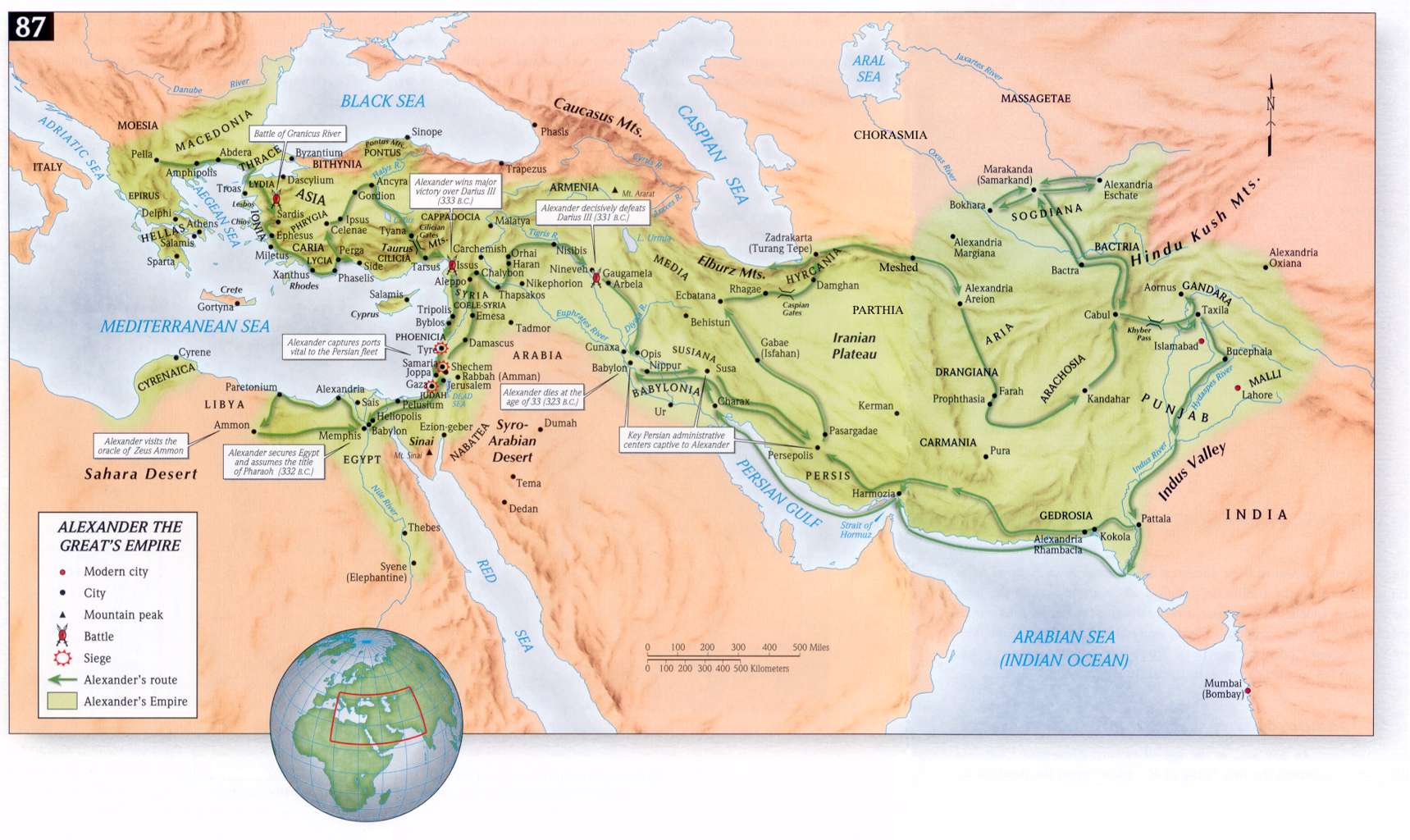
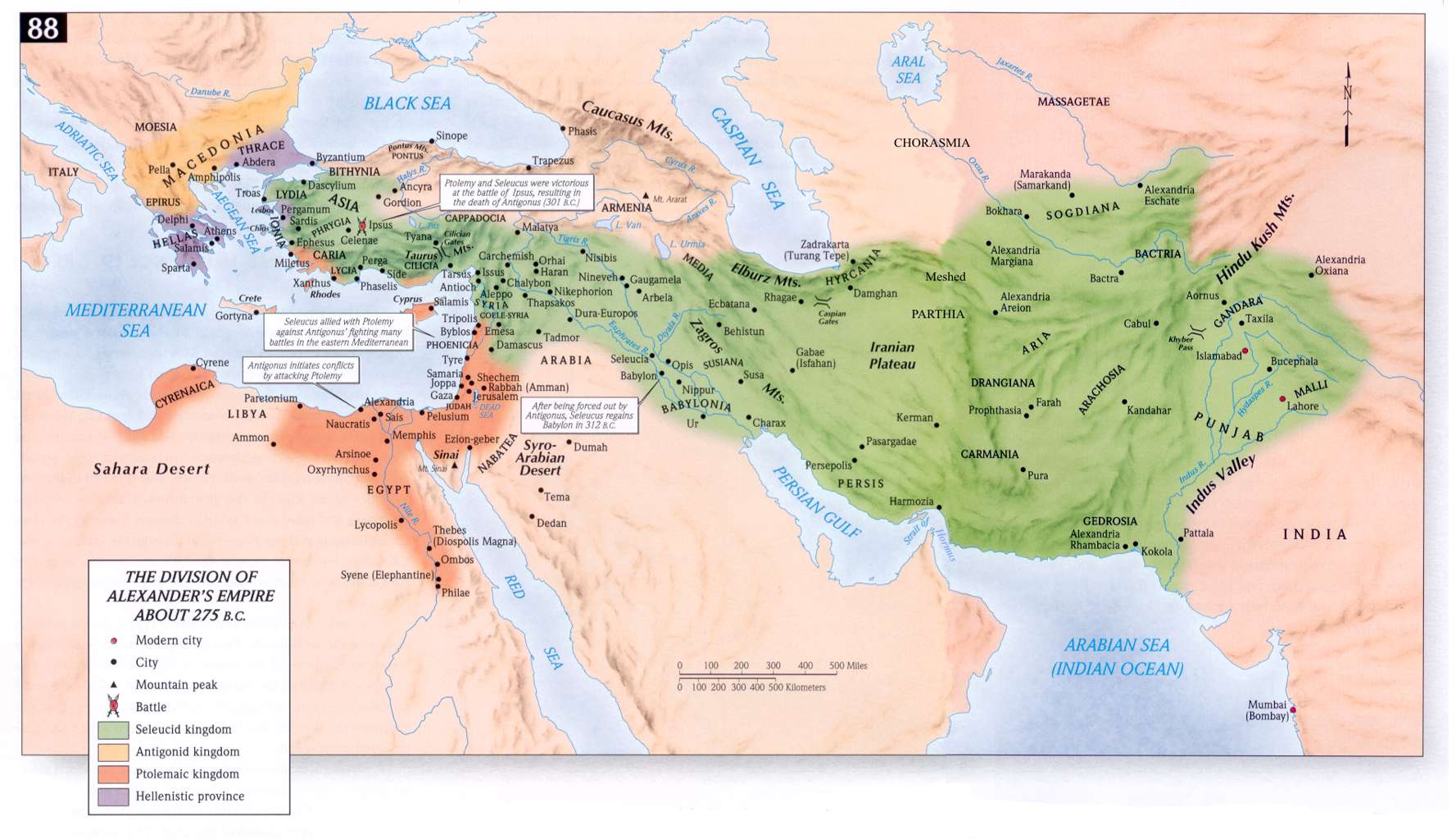
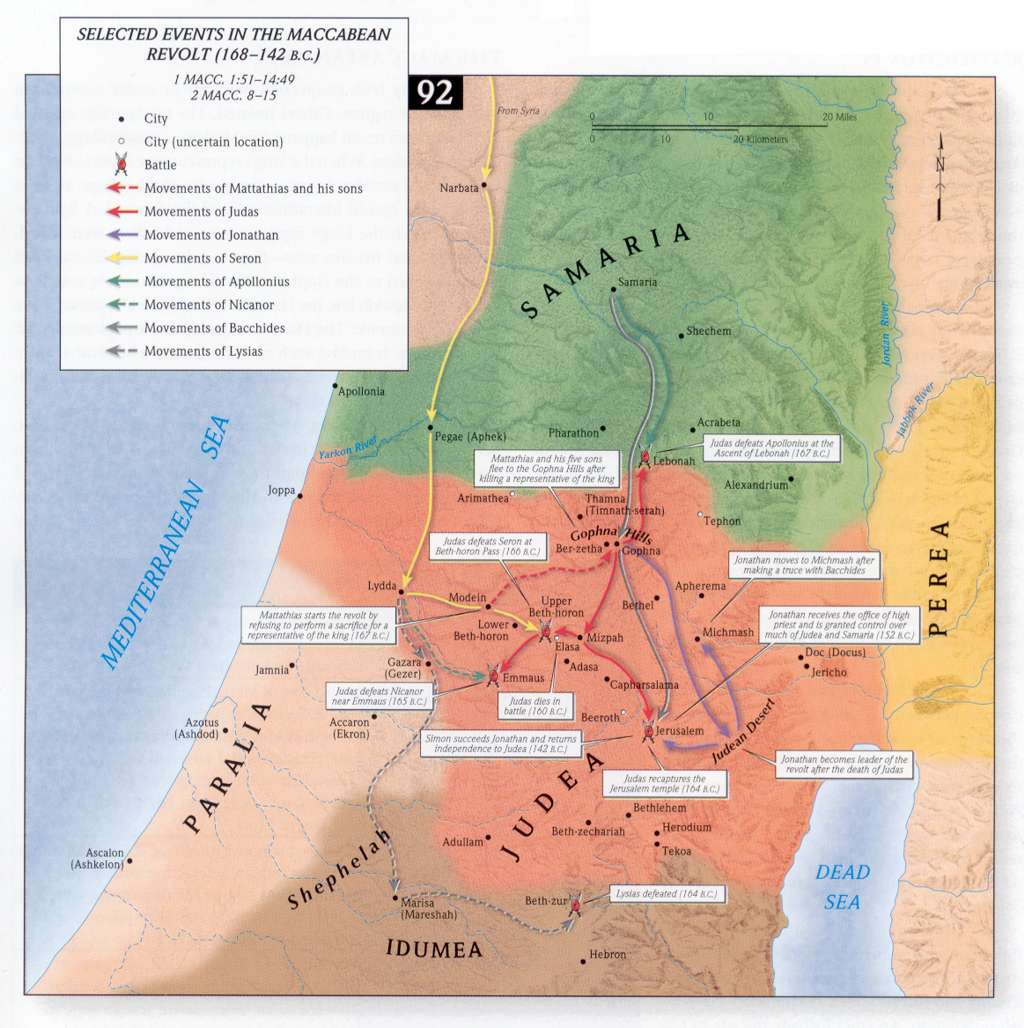
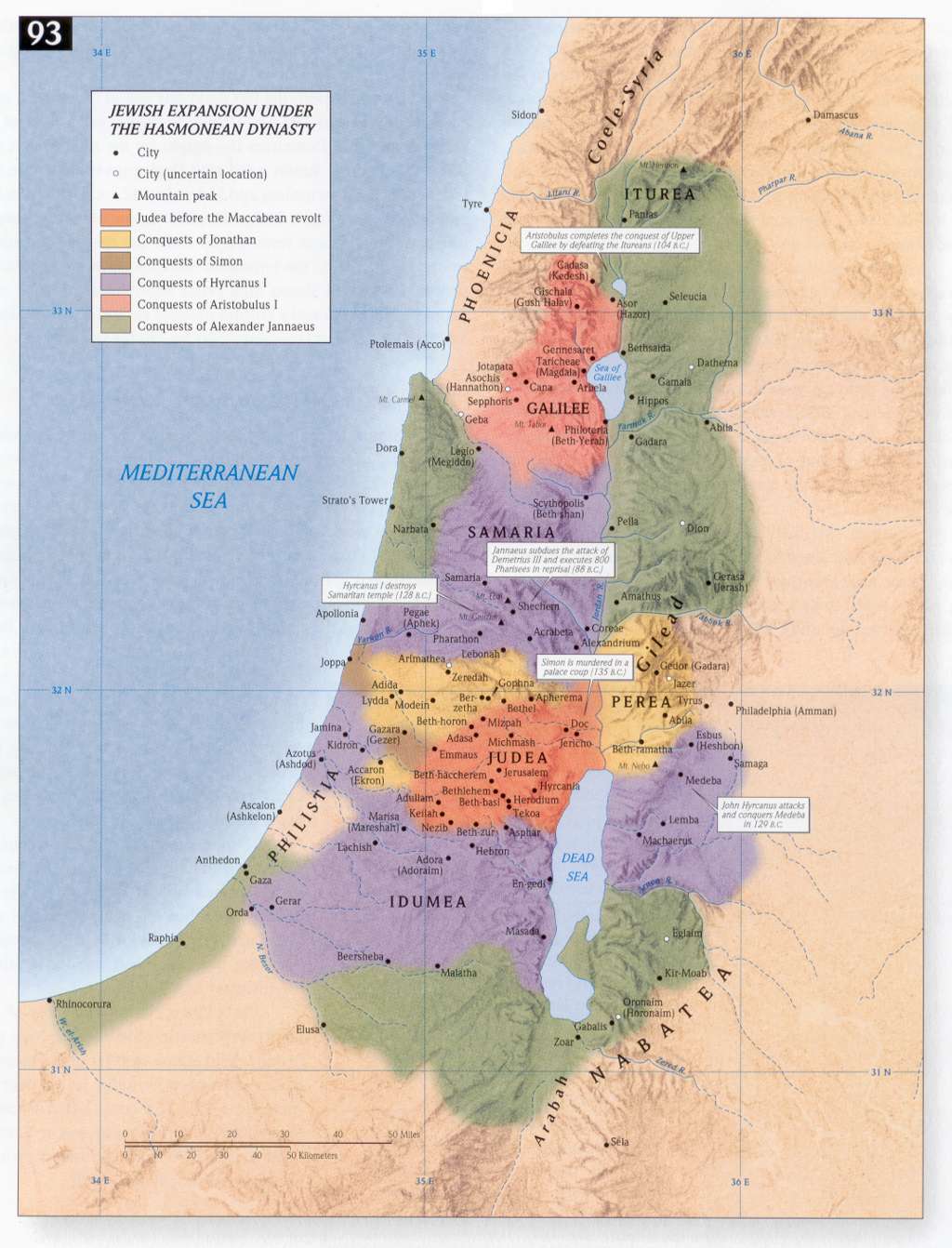
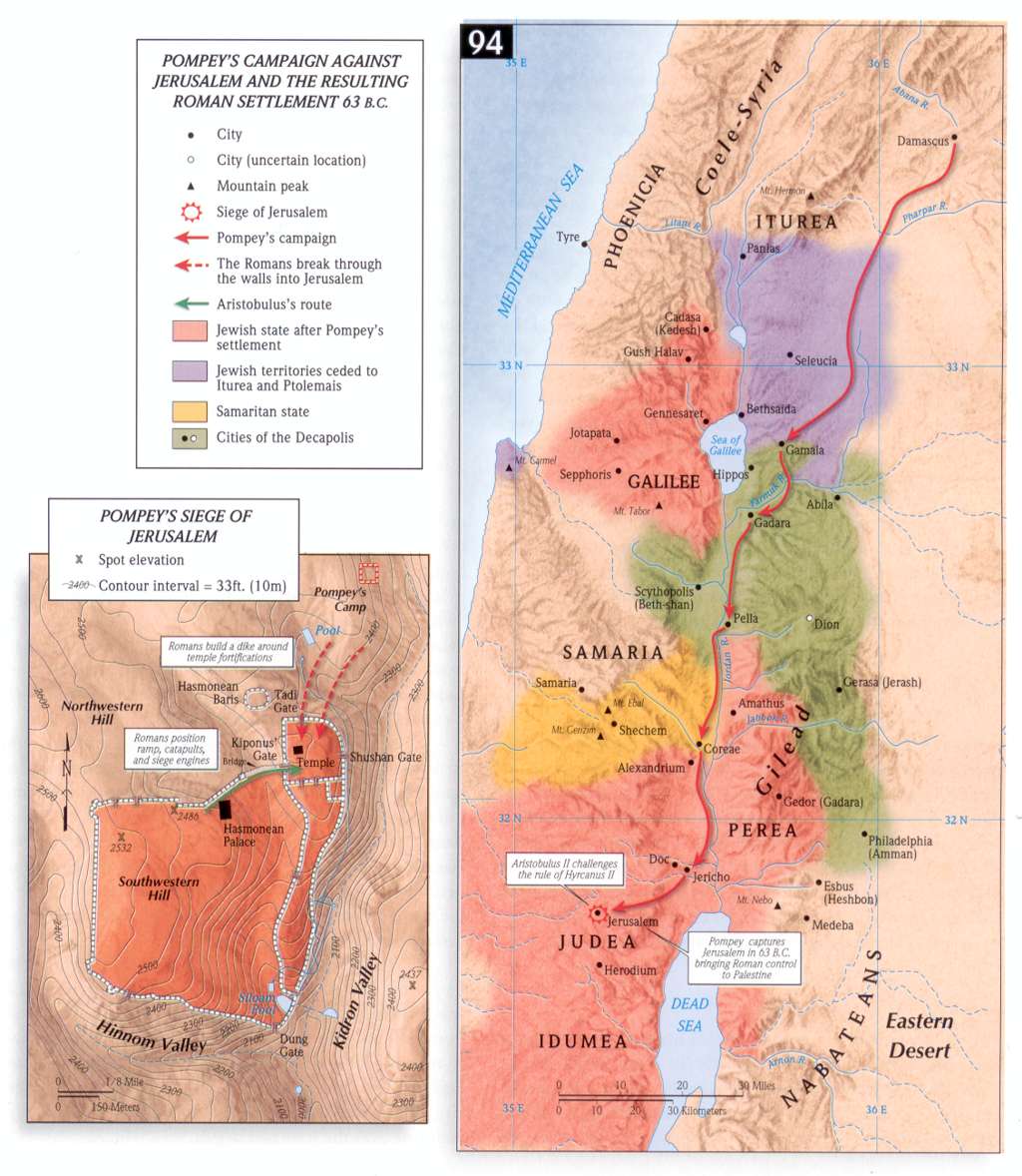
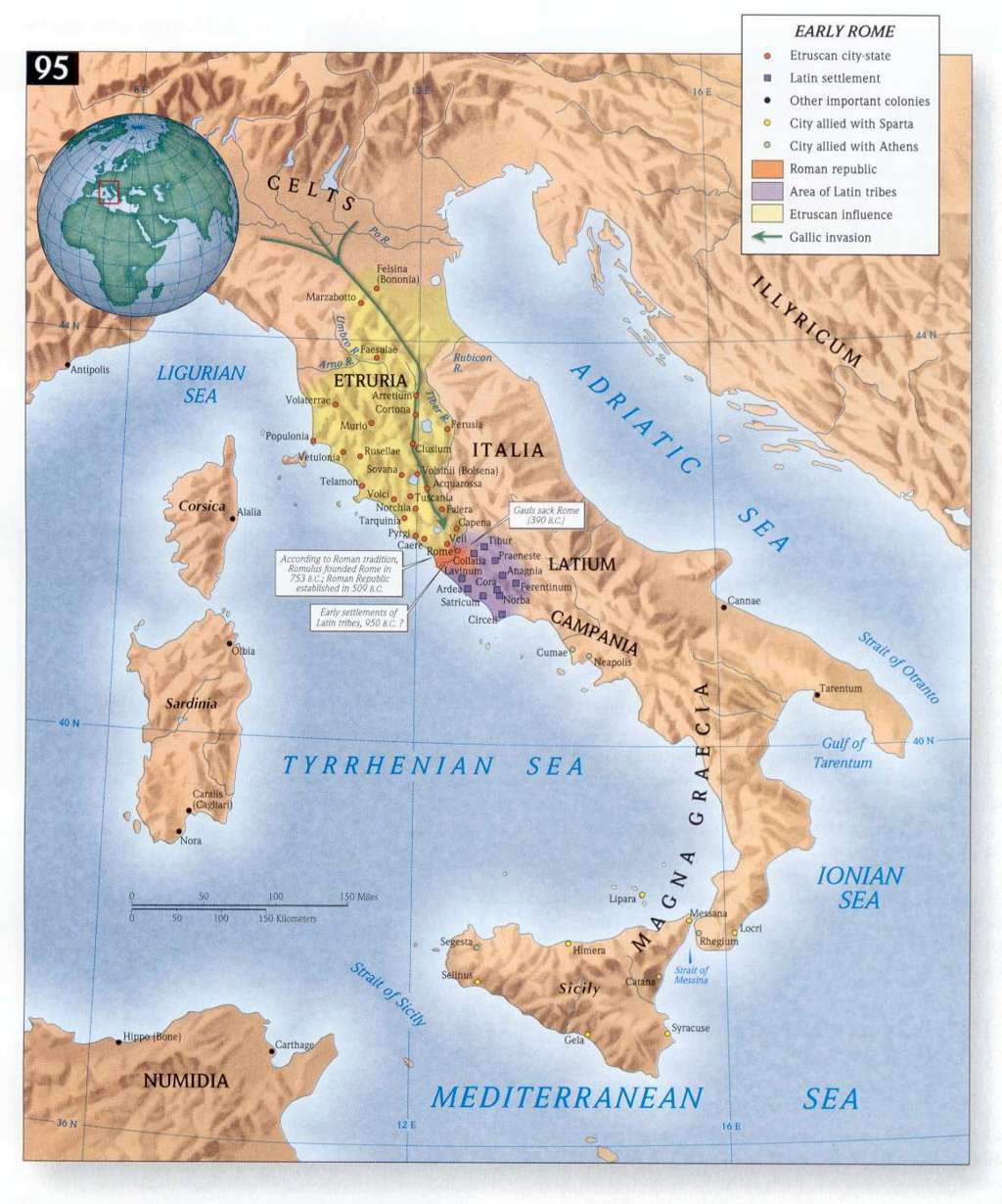
MAPS FROM ESV
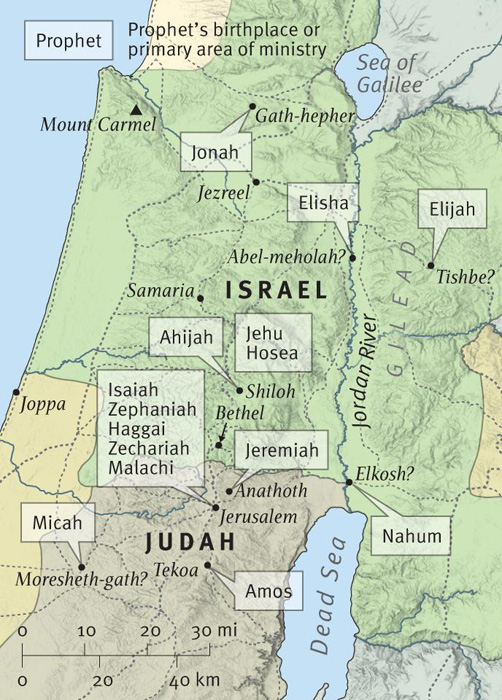
Prophets of Israel and Judah
c. 875–430 B.C.
- Extent of Solomon’s Kingdom
- Israel and Judah in 2 Kings
- Solomon’s Administrative Districts
- The Kingdom Divides
- Syria Captures Gilead
- Resurgence during Azariah, Jeroboam II
- Prophets of Israel and Judah
- Resurgence of Assyrian Influence
- Fall of Samaria, Deportation of Israelites
- Exile to Babylon
- Extent of David’s Kingdom
- Solomon’s International Ventures
- Syria and Israel Attack Judah
- Judah after the Fall of Israel
- Persian Empire at the Time of Ezra
- Persian Empire at the Time of Nehemiah
- Judea under Persian Rule
- Persian Empire at the Time of Esther
- Near East at the Time of Isaiah
- Israel and Judah at the Time of Jeremiah
- Babylonian Empire
- Babylon Attacks Judah
- Jeremiah Prophesies against Egypt
- Near East at the Time of Ezekiel
- Ezekiel’s Vision of Israel’s New Boundaries
- Introduction to Daniel: Babylonian Empire
- Empires of Daniel’s Visions: Persians
- Empires of Daniel’s Visions: Greeks
- Empires of Daniel’s Visions: Ptolemies and Seleucids (Early)
- Empires of Daniel’s Visions: Ptolemies and Seleucids (Late)
- Maccabean Kingdom
- Minor Prophets - Book Introductions
- Amos and Obadiah - Introductory Notes, Outlines
- G Campbell Morgan's devotional/practical thoughts make good fodder for sermon preparation!
- Obadiah - Living Messages
Excerpt: In spite of all difficulty, persecution, and opposition, Jacob will become Israel, and Esau will have judgment by the way of saviors. Restoration and perfection for Jacob; retribution and destruction for Esau. These are certain. Yet the profane may become sacred, for saviors appear upon the mount of Zion. The living message of Obadiah is to individuals also, for all its principles are operating in human life. What sort of man am I? Am I profane as was Esau, or am I like Jacob? I do not think there are any other types. Even those of us who believe in God, who in the deepest of us have faith and real desire to fulfill the purpose of God, are Jacobs. He has to take us to the Jabbok (read Ge 32:22-32), and cripple us in order to crown us. He has to be patient with us; and He is patient, or we had been lost. The God Who chastises us and leads us through trouble is set upon doing us good at the latter end; and all the discipline and trouble, pain and punishment, are in order that at last we may realize our own deepest purpose, and satisfy His heart. Are we profane, doing without God? We may be wonderfully successful materially; we may mount up as eagles; we may be our own gods, acting independently of Heaven, of the spiritual world, and building our nests among the stars; but already God is bringing us down. Our very confederacy with flesh is working our ruin. The profane man can be made sacred, and if we will but recognize that “the kingdom shall be the LORD’s,” and will but kiss His scepter and bow to His control, and bend our proud necks in worship, and our knees in prayer, yielding ourselves to His revealed Saviour King, then He will make again the vessels, and we also may become His chosen. If not, all our boasting and all our building cannot secure our salvation.
Excerpt: Obadiah’s design is to predict the overthrow of Edom. The Idumeans were the neighbors of the Jews, and their kinsmen, being the descendants of Esau, the brother of Jacob. But as they did not show any concern for the misfortunes of Israel, as they rather rejoiced thereat, the cordiality which might have been expected to exist between them gave place to intense and bitter hatred. The Edomites, according to Obadiah, are types of those who ought to be friends and are not, who ought to be helpers in the day of calamity, but who are found on the other side. The prophet touches on their pride and self-confidence, Obadiah 3; then denounces their violence against their brother Jacob in the day of his trouble, Obadiah 10-14. In the remainder of the verses he utters the most terrific predictions as to the final and complete destruction of Edom. The certainty of the future triumphs of Zion and the enlargement of Israel’s borders is announced. Obadiah sees the house of Jacob and the house of Joseph, probably denoting all Israel, dispossessing Edom and occupying their land. Partially and typically the prophecy has been fulfilled, but no doubt it awaits a more complete accomplishment, when God will set His hand to recover His people, and make good to them the promises to the fathers.
The book of Obadiah is a favorite study of modern Jews. In it they read the future of their own people and of Christendom; for they hold that by Edomites are meant Christians who have treated them much as old Edom did their ancestors, and by Edom is specially meant Rome. Kimchi says, “All that the prophets have said about Edom and its destruction in the last times has reference to Rome.” The fifteenth verse of Obadiah (Obadiah 15) is significant: “For the day of the Lord is near upon all the heathen; as thou hast done, it shall be done unto thee: thy reward shall return upon thine own head.” It is lex talionis, the law of retaliation. Back on those who do evil against their fellows rebounds the like injury. A notable instance of it is seen in Judges 8:18, 19 and Jdg 1:5, where we read of the cruelty of Adoni-bezek which returned on himself— “as I have done, so God hath requited me.” Iniquity always recoils. Into the pit, the wicked dig for others, sooner or later they fall. The reprisals of sin are frightful.
Excerpt: Since the Edomites are related to the Israelites (Obadiah 10), their hostility is all the more reprehensible. Edom is fully responsible for her failure to assist Israel and for her open aggression. The fact that God rejected Esau (Ge 25:23; Mal 1:3; Ro 9:13) in no way exonerates the Edomites. Edom, smug in its mountain strongholds, will be dislodged and sacked. But Israel will prosper because God is with her. (Ed: And because He is a covenant keeping God!)
Excerpt: KEY TO UNDERSTANDING: It is imperative that we view Obadiah's utterances from the standpoint of God's over-all purpose. Edom became illustrative of any nation that failed to recognize God's eventual purpose for His chosen people (Ed: Israel, not the Church).
- Download Lesson 1 of Inductive Bible Study on Joel & Obadiah - "Spare Your People, Lord" - includes Obadiah in with double spacing, wide margins
- Note that this free download includes the entire study of Obadiah which is only one lesson - now you have no excuse not to become familiar with Obadiah! Will you tell Obadiah when you see him in heaven that you never read his book?
- Through the Bible Book by Book - Obadiah - here is an excerpt...
I. The Sin of Edom: Pride (Obadiah 1:1-9).
II. Their Greatest Sin: Violence against Judah in the Day of Their Calamity (Obadiah 1:10-14).
III. Their Punishment: National Destruction (Obadiah 1:15-21).
- Zephaniah, Joel, Obadiah, and Habakkuk - scroll down for notes on Obadiah - Here is an excerpt...
if you read this short book and see only the tiny kingdom of Edom, you miss the point of the book. It is that God will judge the nations. In this regard, Edom is seen as a mere representative of all of the nations. What is true of Edom is true of all nations. This is taught in verse 15 where we read: For the day of the LORD draws near on all the nations. As you have done, it will be done to you. Your dealings will return on your own head. The purpose of this prophecy is not merely to chastise Edom. It is so that men will repent of their wrongdoing and return to the Lord. It is so that men repent and thereby stop this prophecy from coming to pass. Prophecy always has that purpose. It is not meant for you to use to draw a futuristic timeline. It is given for you to change your life.
KEY LESSONS
God cares for his people when they suffer.
God warns but will eventually judge those who persecute his people.
God will give victory to his people.
God's faithful people will inherit the kingdom of God in its fullness: The kingdom will be the LORD's(Obadiah 1:21).

Excerpt: How do I apply this? Obadiah’s prophecy focuses on the destructive power of pride. It reminds us of the consequences of living in a self-serving manner, of following through on our own feelings and desires without considering their impact on those around us. Do you struggle to set aside your own wants and desires for those of God and others? Though such pride has been part of the lives of fallen human beings since the tragedy of the fall in Eden, Obadiah offers us a stark reminder to place ourselves under God’s authority, to subject our appetites to His purposes, and to find our hope in being His people when the restoration of all things comes.
- Analysis of Obadiah - Well Done
- Intro:
- India update:
- Show - Map of India(where we went)
- Explain - 2 washing machines in Texas.
- Show – Power point.
- Why the Minor Prophets?
- In the Hebrew bible the minor prophets were combined into 1 book, called “The 12” because of their brevity.
- What does “Minor” mean?
- Minor only in the sense of being shorter than such prophecies as Isaiah & Jeremiah.
- Their message is surely not less important.
- They were Minor Prophets preaching a major message.
- They were small in size but big in truth.
- The Order of the Minor Prophets?
- They are not arranged in chronological order.
- No one is certain what determined their order in the canon.
- Show – chart (chronological order)
- Here’s what we want to look for in each book, each chapter…a three-fold lesson:
- (1) Historical - each of the prophets preached and wrote to meet an immediate need in the lives of the people;
(2) Prophetical - each prophet illustrates or announces something about Israel’s future, in judgment or in restoration;
(3) Practical - the sins of the nations in that day are with us today, and there are many practical lessons for us to learn from these books. (Warren Wiersbe; Outlines Minor Prophet intro)
- (1) Historical - each of the prophets preached and wrote to meet an immediate need in the lives of the people;
- Obadiah:
- The most Minor of the Minor Prophets(shortest)
- Obadiah is like the little bell being struck in the midst of the orchestra’s performance.
- Actually in all the O.T.
- The man Obadiah: 13 figures bear this name in the OT.
- Yet, there is no link with the others.
- The Aim:
- The most Minor of the Minor Prophets(shortest)
- India update:
- Obadiah - Getting off the Sidelines - Excerpt from the introduction of his sermon...
In Elie Wiesel's autobiographical novel, The Town Beyond the Wall, he tells the story of Michael, a young Jew who survived the Holocaust. Michael traveled at great personal risk behind the Iron Curtain to his Hungarian hometown. Though his memory burned with images of the soldiers and police who had brutalized him and his loved ones, Michael returned not for revenge but to satisfy his curiosity. "This, this was the thing I had wanted to understand ever since the war. Nothing else. How a human being can remain indifferent." In a strange way he understood the brutality of the executioners and the prison guards. What he did not understand was the man Wiesel called a spectator, who lived across from the synagogue, the man who peered through his window day after day as thousands of Jews were herded into the death trains. His face "was gazing out, reflecting no pity, no pleasure, no shock, not even anger or interest. Impassive, cold, impersonal. The face was indifferent to the spectacle." There is a bond, Michael thought, between the brutal executioner and the victim, even though the bond is negative. ". . .they belong to the same universe; . . . But this is not true of that Other. The spectator is entirely beyond us. He sees without being seen. He is there but unnoticed." Wiesel concludes, "To be indifferent—for whatever reason—is to deny not only the validity of existence, but also its beauty. Betray, and you are a man; torture your neighbor, you're still a man. Evil is human, weakness is human; indifference is not." Indifference is a deadly sin—forever a spectator on the sidelines of life. Such were the Edomites whom Obadiah addressed in the shortest book in the Old Testament. The Edomites descendants from Esau and lived in a region south of Palestine. The people of Israel descended from Jacob. Just as Jacob and Esau fought, a feud lasted between these two people groups for 800 years. Bitterness and hatred raged. The smoldering animosity between the Israelites and the Edomites bellowed into a blaze when Edom aided Jerusalem's enemy, the great and powerful Babylon, by standing aside as a spectator.
- Book of Obadiah - Bible Survey
- What are the Major Prophets and Minor Prophets?
- Who/what is Edom (Obadiah 1:1, 8)?
- When were Obadiah’s prophecies against Edom fulfilled (Obadiah 1:18-20)?
- Why did God judge Edom so harshly in the book of Obadiah?
Excerpt: The Day of the Lord (Obadiah 1:15-21) What is the Day of the Lord? It is the time when God will judge the enemies of Judah. When is it? Before we answer this question we need to understand what the prophets often had in mind as they spoke or wrote their visions. The Day of the Lord occurs at the Second Coming of Christ when He comes in judgment on the nations for their rebellion against God and mistreatment of God's people. It is a little confusing as your read the prophets to determine which part of their prophecy is going to be fulfilled in the near future and which will be fulfilled during the tribulation (see Great Tribulation) or the Millennium. Perhaps the following drawing will show what the prophet saw and how the events are often separated in time. This concept was first set forth by Chrysostom in the 4th Century.
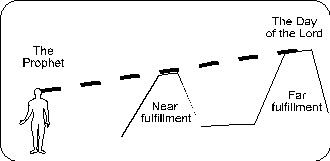
- The Kingdom shall be the Lord's.—Obadiah 1:21
That has ever been the ultimate hope of the men of faith. The prophets of God have always insisted upon His present and active sovereignty; but they have also declared with perfect unanimity that the day will come when that sovereignty will have its perfect victory in the subjugation of all things to Himself in the mind and heart and will of man. That victory is not yet. Men are in His Kingdom, but not willingly. Therefore, they know nothing of the peace and joy which are His will for them. They fight against righteousness, and so fail to find peace and joy, because righteousness fights against them. When in the final order, righteousness is the condition of human life, peace- and joy will inevitably follow. That is what we pray for when we say, "Thy Kingdom come." Faith is the assurance that this prayer will be answered. These final words of Obadiah's prophecy are the more remarkable, seeing that the burden of his message was that of the doom of Edom, the people who had persistently opposed Israel, and practised cruelty towards her. For this sin God would bring her down from her high and proud place, and utterly despoil her; and Israel should be given possession of her rightful inheritance. Having uttered this message, the prophet rose to a greater height, and saw the outworking of the Divine sovereignty, bringing deliverance even to Edom. Out of Zion saviours would come to judge the Mount of Esau, and then "the Kingdom shall be Jehovah's." That remains the one hope for the world and it is the one sufficient secret of confidence in all the days of darkness and travail which lead to the victory.
- Obad 1:1
- Obad 1:2–14
- Obad 1:3
- Obad 1:3–4
- Obad 1:4
- Obad 1:7
- Obad 1:8–10
- Obad 1:9
- Obad 1:11–12
- Obad 1:15–18
- Obad 1:15
- Obad 1:16
- Obad 1:17
- Obad 1:18
- Obad 1:19–20
- Obad 1:19
- Obad 1:20
- Obad 1:21
- Obadiah 1:1 - Click to go to sermons on next verse
Excerpt: The most extended prophecy concerning Edom is found in Obadiah which is entirely devoted to this subject. Obadiah 1-14 speak of the judgment of God upon Edom because of their sins in rejoicing over the captivity of the children of Judah. These prophecies had at least partial fulfillment. The passage, Obadiah 1:15-21, which conclude the book, picture Edom in the Day of the Lord as having experienced divine judgment and being under the domination of the house of Jacob. The age-long controversy between Esau and Jacob will be resolved in Jacob’s favor in keeping with the sovereign choice of God in which it was declared that the elder should serve the younger (Romans 9:12). Taken as a whole, the prophecies relating to Edom have already had amazing fulfillment in so far as God’s judgment has fallen upon them in the past. The ultimate fulfillment awaits the second coming of Christ.
- Obadiah - Be very discerning: Utley is Amillennial and replaces Israel with the Church. Why listed? Because he has interesting grammatical (word and phrase studies) and historical comments
- See Related Resources: Millennium; Israel of God
Conservative notes from Dr Morris who approaches the text seeking it's literal meaning in the context. Millennial. Click the words or phrases after the Scripture for the Study Notes and note that they are from the KJV translation.
- Obadiah 1:1 - Obadiah concerning Edom
- Obadiah 1:3 - clefts of the rock
- Obadiah 1:10 - against thy brother Jacob
- Obadiah 1:15 - day of the LORD
- Obadiah 1:17 - possess their possessions
- Obadiah 1:21 - saviours mount of Esau
Recommended: NETBible notes are in the right panel. You can also select the tab for "Constable's Notes." As you scroll the Bible text in the left panel, the notes are synchronized and will scroll to the same passage. Also has a nice parallel Bible feature (see Tab = "Parallel"). Select a different Bible translation (see Tab = "Bible"). Open Greek/Hebrew tab. Mouse over shows corresponding English word and has short definition at bottom of right panel.
Caveat: Be an Acts 17:11 Berean (note): Not always literal, especially on prophetic passages
Caveat: Be an Acts 17:11 Berean (note): Not always literal, especially on prophetic passages
Caveat: Be an Acts 17:11 Berean (note): Not always literal, especially on prophetic passages
Caveat: Be an Acts 17:11 Berean (note): Not always literal, especially on prophetic passages
James Rosscup writes "This work originally appeared in 1860. The present publication is set up in two columns to the page with the text of the Authorized Version reproduced at the top. Scripture references, Hebrew words, and other citations are relegated to the bottom of the page. The work is detailed and analytical in nature. Introduction, background and explanation of the Hebrew are quite helpful. Pusey holds to the grammatical-historical type of interpretation until he gets into sections dealing with the future of Israel, and here Israel becomes the church in the amillennial vein." (Commentaries for Biblical Expositors: An Annotated Bibliography of Selected Works)
NOTE: If you are not familiar with the great saint Charles Simeon see Dr John Piper's discussion of Simeon's life - you will want to read Simeon's sermons after meeting him! - click Brothers We Must Not Mind a Little Suffering (Mp3 even better)
James Rosscup writes "Though old this is well-written and often cited, with many good statements on spiritual truths. Users will find much that is worthwhile, and sometimes may disagree, as when he sees the Jonah account as allegorical (Ed: See Tony Garland's article on the Rise of Allegorical Interpretation)." (Commentaries for Biblical Expositors: An Annotated Bibliography of Selected Works)
- Introduction
- Obadiah 1-21 Commentary - Edom and Israel
- Israel Under the Persians (539-331 BC)
- From the Return from Babylon to the Building of the Temple (536-516 BC)
Morning and Evening C H Spurgeon
“Even thou wast as one of them.” — Obadiah 1:11
Brotherly kindness was due from Edom to Israel in the time of need, but instead thereof, the men of Esau made common cause with Israel’s foes. Special stress in the sentence before us is laid upon the word thou; as when Caesar cried to Brutus, “and thou Brutus”; a bad action may be all the worse, because of the person who has committed it. When we sin, who are the chosen favourites of heaven, we sin with an emphasis; ours is a crying offence, because we are so peculiarly indulged. If an angel should lay his hand upon us when we are doing evil, he need not use any other rebuke than the question, “What thou? What dost thou here?” Much forgiven, much delivered, much instructed, much enriched, much blessed, shall we dare to put forth our hand unto evil? God forbid!
A few minutes of confession may be beneficial to thee, gentle reader, this morning. Hast thou never been as the wicked? At an evening party certain men laughed at uncleanness, and the joke was not altogether offensive to thine ear, even thou wast as one of them. When hard things were spoken concerning the ways of God, thou wast bashfully silent; and so, to on-lookers, thou wast as one of them. When worldlings were bartering in the market, and driving hard bargains, wast thou not as one of them? When they were pursuing vanity with a hunter’s foot, wert thou not as greedy for gain as they were? Could any difference be discerned between thee and them? Is there any difference? Here we come to close quarters. Be honest with thine own soul, and make sure that thou art a new creature in Christ Jesus; but when this is sure, walk jealously, lest any should again be able to say, “Even thou wast as one of them.” Thou wouldst not desire to share their eternal doom, why then be like them here? Come not thou into their secret, lest thou come into their ruin. Side with the afflicted people of God, and not with the world.
Caveat: Be an Acts 17:11 Berean (note): Not always literal, especially on prophetic passages
Note: Not always literal interpretation
Outline & References
Notes on the Text
- Title - Obadiah 1:1
- Battle Summons - Obadiah 1:1
- Judgment and Hope - Obadiah 1:2-21
- Sentences Against Edom - Obadiah 1:2-9
- Edom: Its Humiliation - Obadiah 1:2-4
- Edom: Its Plundering - Obadiah 1:5-7
- Edom: Its Slaughter - Obadiah 1:8-9
- Accusations Against Edom - Obadiah 1:10-14
- Edom: Its Violence - Obadiah 1:10
- Edom: Its Cruel Indifference - Obadiah 1:11
- Edom: Its Cruel Boasting and Attacks - Obadiah 1:12-14
- The Day of the Lord - Obadiah 1:15-21
- Judgment - Obadiah 1:15-16
- Deliverance - Obadiah 1:17-21
Caveat: Be an Acts 17:11 Berean (note): Not always literal, especially on prophetic passages
Note: The best commentary on Scripture is Scripture (Compare Scripture with Scripture) and these cross references compiled by Torrey are the most comprehensive work of this type with over 500,000 entries. However, always check the context (Keep Context King) to make sure that the cross reference is referring to the same subject as the original Scripture. The Puritan writer Thomas Watson said it this way - "The Scripture is to be its own interpreter or rather the Spirit speaking in it; nothing can cut the diamond but the diamond; nothing can interpret Scripture but Scripture." See an example of the value of comparing Scripture with Scripture. See also Use of Cross-References
Obadiah 1:1
The vision of Obadiah. Thus saith the Lord GOD concerning Edom; We have heard a rumour from the LORD, and an ambassador is sent among the heathen, Arise ye, and let us rise up against her in battle.
concerning - Psalms 137:7; Isaiah 21:11; 34:1-17; 63:1-6; Jeremiah 9:25,26; 25:17,21; Jeremiah 49:17-22; Lamentations 4:21,22; Ezekiel 25:12-14; 35:3-15; Joel 3:19; Amos 1:11,12; Malachi 1:3,4
We -Jeremiah 49:14,15; 51:46; Matthew 24:6; Mark 13:7
and an -Isaiah 18:2,3; 30:4
Arise -Jeremiah 6:4,5; 50:9-15; 51:27,28; Micah 2:13
Obadiah 1:2
Behold, I have made thee small among the heathen: thou art greatly despised.
Numbers 24:18; 1 Samuel 2:7,8; Job 34:25-29; Psalms 107:39,40; Isaiah 23:9; Ezekiel 29:15; Micah 7:10; Luke 1:51,52
Obadiah 1:3
The pride of thine heart hath deceived thee, thou that dwellest in the clefts of the rock, whose habitation is high; that saith in his heart, Who shall bring me down to the ground?
pride -Proverbs 16:18; 18:12; 29:23; Isaiah 10:14-16; 16:6; Jeremiah 48:29,30; 49:16; Malachi 1:4
thou -2 Kings 14:7; 2 Chronicles 25:12
saith -Isaiah 14:13-15; 47:7,8; Jeremiah 49:4; Revelation 18:7,8
Obadiah 1:4
Though thou exalt thyself as the eagle, and though thou set thy nest among the stars, thence will I bring thee down, saith the LORD.
exalt -Job 20:6,7; 39:27,28; Jeremiah 49:16; Habakkuk 2:9
among -Isaiah 14:12-15; Jeremiah 51:53; Amos 9:2
Obadiah 1:5
If thieves came to thee, if robbers by night, (how art thou cut off!) would they not have stolen till they had enough? if the grapegatherers came to thee, would they not leave some grapes?
if robbers -Jeremiah 49:9
how -2 Samuel 1:19; Isaiah 14:12; Jeremiah 50:23; Lamentations 1:1; Zephaniah 2:15; Revelation 18:10
if the -Deuteronomy 24:21; Isaiah 17:6; 24:13; Micah 7:1
Obadiah 1:6
How are the things of Esau searched out! how are his hidden things sought up!
are the -Psalms 139:1; Isaiah 10:13,14; 45:3; Jeremiah 49:10; 50:37; Matthew 6:19,20
how are his -Daniel 2:22
Obadiah 1:7
All the men of thy confederacy have brought thee even to the border: the men that were at peace with thee have deceived thee, and prevailed against thee; they that eat thy bread have laid a wound under thee: there is none understanding in him.
the men of -The Chaldeans, whose agents they became in persecuting the Jews. - Psalms 55:12,13; Jeremiah 4:30; 30:14; Lamentations 1:19; Ezekiel 23:22-25; Revelation 17:12-17
men that were at peace with thee -Heb. men of thy peace. -Jeremiah 20:10; 38:22; *margins
they that eat thy bread -Heb. the men of thy bread. -Psalms 41:9; John 13:18
there is - Isaiah 19:11-14; 27:11; Jeremiah 49:7; Hosea 13:13
Obadiah 1:8
Shall I not in that day, saith the LORD, even destroy the wise men out of Edom, and understanding out of the mount of Esau?
even -Job 5:12-14; Psalms 33:10; Isaiah 19:3,13,14; 29:14; 1 Corinthians 3:19,20
Obadiah 1:9
And thy mighty men, O Teman, shall be dismayed, to the end that every one of the mount of Esau may be cut off by slaughter.
thy -Psalms 76:5,6; Isaiah 19:16,17; Jeremiah 49:22; 50:36,37; Amos 2:16; Nahum 3:13
O -Genesis 36:11; Job 2:11; Jeremiah 49:7,20; Ezekiel 25:13; Amos 1:12
every -Isaiah 34:5-8; 63:1-3
mount -21; Deuteronomy 2:5
Obadiah 1:10
For thy violence against thy brother Jacob shame shall cover thee, and thou shalt be cut off for ever.
violence - Genesis 27:11,41; Numbers 20:14-21; Psalms 83:5-9; 137:7; Lamentations 4:21; Ezekiel 25:12; Ezekiel 35:5,6,12-15; Amos 1:11
shame -Psalms 69:7; 89:45; 109:29; 132:18; Jeremiah 3:25; 51:51; Ezekiel 7:18; Micah 7:10
and -Jeremiah 49:13,17-20; Ezekiel 25:13,14; 35:6,7,15; Malachi 1:3,4
Obadiah 1:11
In the day that thou stoodest on the other side, in the day that the strangers carried away captive his forces, and foreigners entered into his gates, and cast lots upon Jerusalem, even thou wast as one of them.
in the day that the -2 Kings 24:10-16; 25:11; Jeremiah 52:28-30
captive his forces -or, his substance. cast. -Joel 3:3; Nahum 3:10
even -Psalms 50:18; 137:7
Obadiah 1:12
But thou shouldest not have looked on the day of thy brother in the day that he became a stranger; neither shouldest thou have rejoiced over the children of Judah in the day of their destruction; neither shouldest thou have spoken proudly in the day of distress.
thou, etc -or, do not behold, etc. looked. -Ps 22:17; 37:13; 54:7; 59:10; 92:11; Micah 4:11; 7:8-10; Matthew 27:40-43
rejoiced -Job 31:29; Proverbs 17:5; 24:17,18; Lamentations 4:21; Ezekiel 25:6,7; 35:15; Micah 7:8; Luke 19:41
thou have -1 Samuel 2:3; Psalms 31:18
spoken proudly -Heb. magnified thy mouth. -Isaiah 37:24; James 3:5; 2 Peter 2:18; Jude 1:16; Revelation 13:5
Obadiah 1:13
Thou shouldest not have entered into the gate of my people in the day of their calamity; yea, thou shouldest not have looked on their affliction in the day of their calamity, nor have laid hands on their substance in the day of their calamity;
looked -2 Samuel 16:12; Psalms 22:17; Zechariah 1:15
Obadiah 1:14
Neither shouldest thou have stood in the crossway, to cut off those of his that did escape; neither shouldest thou have delivered up those of his that did remain in the day of distress.
neither shouldest -Amos 1:6,9
delivered up -or, shut up. -Psalms 31:8
in the day -12; Genesis 35:3; Isaiah 37:3; Jeremiah 30:7
Obadiah 1:15
For the day of the LORD is near upon all the heathen: as thou hast done, it shall be done unto thee: thy reward shall return upon thine own head.
the day -Psalms 110:5,6; Jeremiah 9:25,26; 25:15-29; 49:12; Lamentations 4:21,22; Ezekiel 30:3; Joel 3:11-14; Micah 5:15; Zechariah 14:14-18
as -Judges 1:7; Psalms 137:8; Ezekiel 35:15; Joel 3:7,8; Habakkuk 2:8; Matthew 7:2; James 2:13
Obadiah 1:16
For as ye have drunk upon my holy mountain, so shall all the heathen drink continually, yea, they shall drink, and they shall swallow down, and they shall be as though they had not been.
as ye -Psalms 75:8,9; Isaiah 49:25,26; 51:22,23; Jeremiah 25:15,16,27-29; 49:12; Joel 3:17; 1 Peter 4:17
swallow down -or, sup up. -Isaiah 42:14; *marg:; Habakkuk 1:9
and they shall be -Isaiah 8:9,10; 29:7,8
Obadiah 1:17
But upon mount Zion shall be deliverance, and there shall be holiness; and the house of Jacob shall possess their possessions.
upon -Isaiah 46:13; Joel 2:32
shall be -Jeremiah 46:28; Amos 9:8
deliverance -or, they that escape. -Jeremiah 44:14,28; Ezekiel 7:16
there shall be holiness -or, it shall be holy. -Isaiah 1:27; 4:3,4; 60:21; Joel 3:17; Zechariah 8:3; 14:20,21; Revelation 21:27
possess -Isaiah 14:1,2; Joel 3:19-21; Amos 9:11-15
Obadiah 1:18
And the house of Jacob shall be a fire, and the house of Joseph a flame, and the house of Esau for stubble, and they shall kindle in them, and devour them; and there shall not be any remaining of the house of Esau; for the LORD hath spoken it.
shall be -Isaiah 10:17; 31:9; Micah 5:8; Zechariah 12:6
the house of Joseph -2 Samuel 19:20; Ezekiel 37:16,19; Amos 5:15; 6:6
for stubble -Psalms 83:6-15; Isaiah 5:24; 47:14; Joel 2:5; Nahum 1:10; 1 Corinthians 3:12
and there -9,10,16
Obadiah 1:19
And they of the south shall possess the mount of Esau; and they of the plain the Philistines: and they shall possess the fields of Ephraim, and the fields of Samaria: and Benjamin shall possess Gilead.
the south -Numbers 24:18,19; Joshua 15:21; Jeremiah 32:44; Amos 9:12; Malachi 1:4,5
the plain -Joshua 13:2,3; 15:33,45,46; Judges 1:18,19; Isaiah 11:13,14; Ezekiel 25:16; Amos 1:8; Zephaniah 2:4-7; Zechariah 9:5-7
the fields of Ephraim -2 Kings 17:24; Ezra 4:2,7-10,17; Psalms 69:35; Jeremiah 31:4-6; Ezekiel 36:6-12,28; Ezekiel 37:21-25; 47:13-21; 48:1-9
Benjamin -Joshua 13:25,31; 18:21-28; 1 Chronicles 5:26; Jeremiah 49:1; Amos 1:13; Micah 7:14
Obadiah 1:20
And the captivity of this host of the children of Israel shall possess that of the Canaanites, even unto Zarephath; and the captivity of Jerusalem, which is in Sepharad, shall possess the cities of the south.
the captivity of this -Jeremiah 3:18; 33:26; Ezekiel 34:12,13; Hosea 1:10,11; Amos 9:14,15; Zechariah 10:6-10
Zarephath -1 Kings 17:9,10; Luke 4:26
Sarepta -which is in Sepharad, shall possess. or, shall possess that which is in Sepharad, they shall possess. -Jeremiah 13:19; 32:44; 33:13
Obadiah 1:21
And saviors (deliverers) shall come up (ascend) on mount Zion to judge the mount of Esau; and the kingdom shall be the LORD'S.
saviours (NAS = "deliverers") -Judges 2:16; 3:9; 2 Kings 13:5; Isaiah 19:20; Daniel 12:3; Joel 2:32; Micah 5:4-9; Zechariah 9:11-17; 10:5-12; 1 Timothy 4:16; James 5:20
to judge -Psalms 149:5-9; Daniel 7:27; Luke 22:30; 1 Corinthians 6:2,3 (Ed: Beloved, this most likely refers to believers who will be judges in the coming Millennial Kingdom! cf Rev 5:10); Revelation 19:11-13; 20:4
and the -Psalms 2:6-9; 22:28; 102:15; Isaiah 9:6,7; Daniel 2:35,44; Da 7:14,27; Zechariah 14:9; Matthew 6:10,13; Luke 1:32,33; Revelation 11:15; 19:6
John MacArthur comments on "deliverers will ascend … to judge." Just as the Lord raised up judges to deliver His people (cf. Ne 9:27), so will He establish similar leaders to help rule in the Millennial Kingdom (cf. 1Co 6:2; Rev 20:4). the kingdom will be the Lord’s. When the nations are judged in the Day of the Lord, He will then set up His Millennial Kingdom, a theocracy in which He rules His people directly on earth (Zec 14:4–9; Rev 11:15) (Borrow The MacArthur Study Bible)
ESV Study Bible - Those appointed by God to deliver the people and bring just governance. The Lord has always been the King over the nations (Obadiah 1:1), but here the prophet promises the future, definitive manifestation of God’s kingly rule from Mount Zion, i.e., Jerusalem. That end-time redemptive reign will be inaugurated by the ministry, death, and resurrection of Jesus the Messiah (Mt 12:28) and consummated at His coming in glory (Matt. 25:34). (Borrow ESV Study Bible)
Caveat: Be an Acts 17:11 Berean (note): Not always literal, especially on prophetic passages