Daniel 10:2
Daniel 10:3
Daniel 10:4
Daniel 10:5
Daniel 10:6
Daniel 10:7
Daniel 10:8
Daniel 10:9
Daniel 10:10
Daniel 10:11
Daniel 10:12
Daniel 10:13
Daniel 10:14
Daniel 10:15
Daniel 10:16
Daniel 10:17
Daniel 10:18
Daniel 10:19
Daniel 10:20
Daniel 10:21
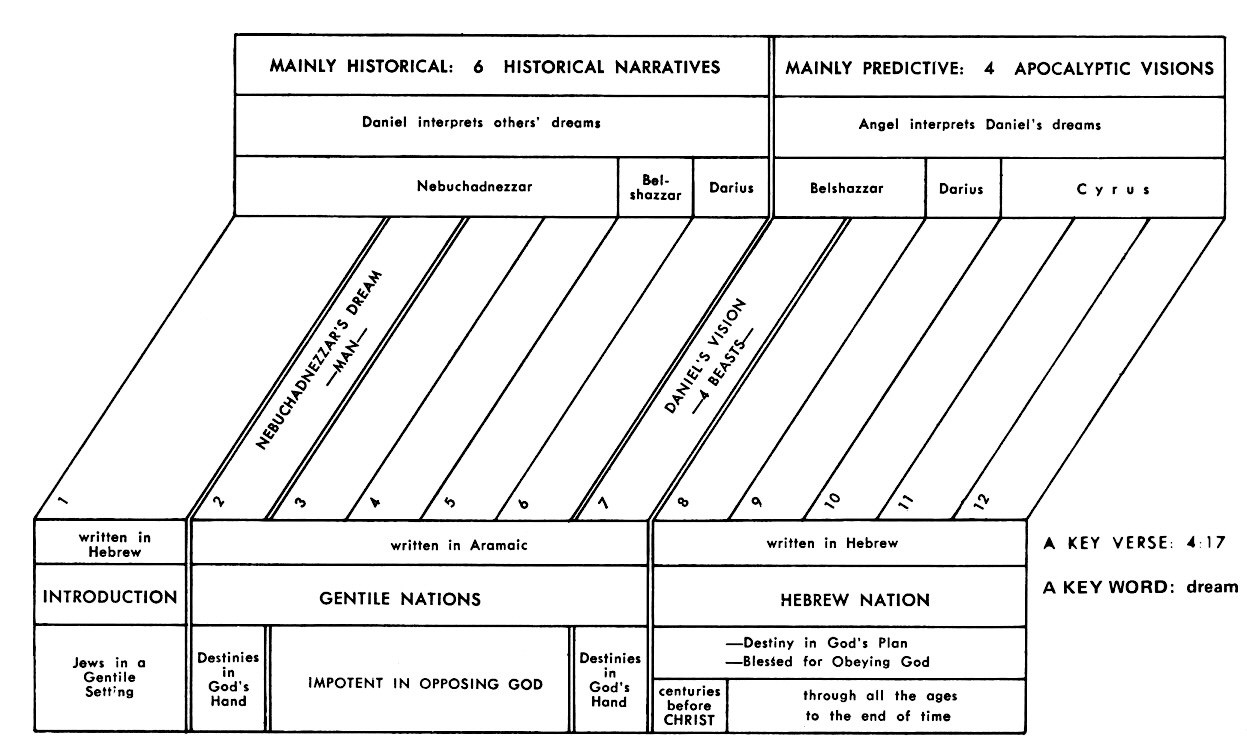 Click chart to enlarge
Charts from recommended resource Jensen's Survey of the OT - used by permission
Daniel 10:1 IN THE THIRD YEAR OF CYRUS KING OF PERSIA A MESSAGE WAS REVEALED TO DANIEL, WHO WAS NAMED BELTESHAZZAR; AND THE MESSAGE WAS TRUE AND ONE OF GREAT CONFLICT, BUT HE UNDERSTOOD THE MESSAGE AND HAD AN UNDERSTANDING OF THE VISION.
- Cyrus: Da 1:21 6:28 2Ch 36:22,23 Ezra 1:1,2,7,8 3:7 4:3,5 5:13, 14, 15, 16, 17 6:3,14 Isa 44:28 45:1
- who: Da 1:7 4:8 5:12) (and the: Da 8:26 11:2 Ge 41:32 Lk 1:20 Rev 19:9
- but: Da 10:14 12:4,9
- Daniel 10 Resources - Multiple sermons and commentaries
Daniel 10:1-11:1 Preparation for vision
Daniel 11:2-12:3 Contents of vision
Daniel 12:4-13 Final instructions/explanation
Key Verse of Daniel 10 -
Now I have come to give you an understanding of what will happen to your people in the latter days, for the vision pertains to the days yet future. (Daniel 10:14)
Importance of Daniel 10 - This chapter is unique in the brief insight it gives regarding the association of high ranking demons with world empires/kings/governments.
|
Predominantly |
Predominately Predictive Prophecy |
||||||||||
| Daniel Interprets Others' Dreams |
Angel Interprets Daniel's Visions |
||||||||||
| 1 | 2 | 3 | 4 | 5 | 6 | 7 | 8 | 9 | 10 | 11 | 12 |
| Nebuchadnezzar | Bel** | Darius | Belshazzar | Darius | Cyrus | ||||||
| - | Dream | - | - | - | - | Vision #1 |
Vision #2 |
Vision #3 |
Vision #4 |
||
| Heb | Written in Aramaic | Written in Hebrew | |||||||||
| Intro | Addresses Gentile Nations | Addresses Israel | |||||||||
**Belshazzar
In the third year - This vision represents the fourth of four visions God gives to Daniel...
Vision #1 - Daniel 7:1 - First year of King Belshazzar (~553BC)
Vision #2 - Daniel 8:1 - Third year of King Belshazzar (~551BC)
Vision #3 - Daniel 9:23 - First year of Darius the Mede (~538/539BC)
Vision #4 - Daniel 10:1 - Third year of Cyrus the Persian (~535/536BC)
HISTORICAL CONTEXT: About 2 years had passed since Daniel's prophecy of the Seventy Weeks in Da 9:24-27. Cyrus had issued the decree allowing the Jews to return to Jerusalem in 538BC (Ezra 1:1, 2Chr 36:23, cf Isa 44:28, 45:1, 13 written ~150 years before Cyrus' decree! Is 44:6,7 is true!). And yet despite the decree of Cyrus granting the Jews in Babylon the freedom to return to their home, only 42,360 (+ 7337 servants + 200 singers = Ezra 2:64, 65; Neh 7:66) desired to return to Jerusalem (See study of remnant). Only a meager number wanted to return and this may well have been the cause of Daniel's mourning as he sensed the lack of concern in the hearts of most of his people. They had become acclimated to the profane in Babylon and no longer had a heart's desire for the holy in Jerusalem. Let us weep and mourn and plead for the modern church that has in so many instances fallen into the wiles and ways of the world, with so few desiring the ancient paths of God's Word (Jer 6:16, 18:15) and His highway of holiness (cf Isa 35:8 ~ holy conduct concordant with His Holy Word).
Recall that Daniel 7, like Daniel 2, reveals the prophetic course of Gentile dominion on the earth (cp "the times of the Gentiles" in Lk 21:24), which explains in part why it is written in Aramaic, the international language ("lingua franca") of Daniel's day. Daniel returns to the Hebrew language beginning in Daniel 8:1 and continuing through Daniel 12:13 primarily because these four visions give very specific details regarding God's plan for the refining and restoration of the nation of Israel. It is a serious hermeneutical mistake to replace "Israel" with the "Church" (see discussion of the "Israel of God" Gal 6:16), for then the "Israel centric" chapters Daniel 8-12 cannot be accurately interpreted.
Daniel (Uses outside of this book = Ezek 14:14, 20, 28:3, Mt 24:15)- “God is my judge”. Here we see Daniel writing initially in the third person, even as he did at the beginning of Daniel 7 (see Da 7:1, 2).
Belteshazzar (Da 1:7; 2:26; 4:8, 9, 18, 19; 5:12; 10:1) - “Bel Protect the King.”
Miller writes that...
Daniel interjected his Babylonian name, “Belteshazzar,” apparently to emphasize that he was indeed the same individual spoken of earlier in the book. (Miller, S. R. - Daniel - New American Commentary)
Cyrus the king of Persia - Cyrus is mentioned 23x in 19v - 2 Chr 36:22f; Ezra 1:1f, 7f; 3:7; 4:3, 5; 5:13f, 17; 6:3, 14; Isa 44:28; 45:1; Dan 1:21; 6:28; 10:1. Some find the use in Da 1:21 somewhat confusing and even contradictory.
Robert Anderson explains...
We are informed in 1:21 that ‘Daniel continued until the first year of King Cyrus’. The texts are not contradictory. What 1:21 does is no more than record that Daniel lived to see the advent of Cyrus and therefore the fall of Babylon and the opportunity to return to the Promised Land. (Anderson, R. A Signs and wonders: A Commentary on the Book of Daniel)
J A Seiss admits that this first verse...
certainly bears the appearances of being the remark of some commentator. It cannot be denied that the matter, style and form of it answer to those of a man writing down his own opinion of Daniel's vision. It reads precisely like the uninspired headings to the chapters in our English Bibles, whilst what follows reads quite differently. It is not according to the way in which Daniel elsewhere expresses himself, and seems to be at variance with other statements of the Book. It extends Daniel's life to " the third year of Cyrus," whereas the conclusion of the first chapter speaks of him as continuing only " unto the first year." It says that Daniel " understood the thing, and had understanding of the vision," whereas Daniel himself, at the end of it (Da 12:8), remarks, " I heard, but I understood not." It says, " the thing was true," seemingly meaning that events had turned out as foretold, just as the later Jews would say in remarking upon the prophecy, inasmuch as they believed it fulfilled in the times and doings of Antiochus Epiphanes; but Daniel could not so speak of his predictions, since he did not live to see them fulfilled; and he does not elsewhere use such language, though the angel repeatedly said that he came to show him the truth. (Daniel 10:1-21, 11:1-35 Voices from Babylon. 1879)
The message (01697)(dabar) refers to what is said, a word, a saying, a message, a communication (Nu 23:5). The ten commandments are ten declarations, statements, or words (Ex 34:28; Dt 4:13;10:4). In Hebrew thought dabar is regarded as an extension of one's personality. Dabar is the very revelation of that individual! How precious that Jesus is the Living Word, the fleshly revelation of the personality of God. Thus the Bible from Ge 1:1 to Rev 22:21 is in a real sense the written revelation of the personality of the LORD God Almighty.
The OT use of dabar is especially important in the phrase the "word of the LORD" which is found 242 times in 225 verses and serves as a technical form for prophetic revelation. Dabar or "word" in the context of the "word of the LORD" may focus on the content (meaning) of what was said, but it also carries overtones of the actual "words" themselves. It was the "word of the Lord" that came to Abram in a vision after his victory over the kings who had captured Lot (Ge 15:1).
The message was true and one of great conflict (cf Da 10:21 "writing of truth"; Da 11:2 "I will tell you the truth" ) - This refers to the entire revelation in Daniel 10-12, even though the predictive prophecy per se was primarily in chapters 11 and 12.
Gabriel (Da 8:16) emphasized to Daniel that the interpretation of his third vision was true...
And the vision of the evenings and mornings which has been told is true; but keep the vision secret, for it pertains to many days in the future." (Note: NAS adds "in the future" which is a reasonable translation given that the literal Hebrew is "for after many days")" (Da 8:26)
Conflict (06635) (tsaba) means a army, warfare, divisions (of an army); as a title of God (Jehovah Sabaoth, LORD of hosts - of armies) with a focus on great power to conquer or rule and also "stressing the fact that God is the ultimate ruler of the universe, but it also reflects something basic in the OT’s view of God and his relationship to Israel’s wars." (Richards)
The question might arise "What great conflict (war)?" Given the fact that this vision pertains to Daniel's people (Da 10:14), it would appear the focus is on the seemingly incessant earthly conflicts that affected Israel (caught in the middle as it were, between the Kings of the North and the Kings of the South) and described in intricate detail in Daniel 11. The great conflict could also allude to the insight into the war in the heavenlies (Da 10:13, 20, 21, Da 11:1), which obviously directly or indirectly affects the wars on earth!
Miller comments that "the KJV understands it to mean that the message was for the distant future, “the time appointed [taking tsaba to mean “service, time of serving”] was long [lit., great].” The KJV’s interpretation would be very unusual and is unlikely." (Miller, S. R. - Daniel - New American Commentary, 18)
Whitcomb commenting on great conflict observes that...
Daniel had already learned of eschatological conflicts in store for his people (Da 7:21, 25; 8:24, 25; 9:27) and of persecutions at the hand of the little horn of the third kingdom even before the time of the end (Da 8:10, 11, 12, 13, 14). But now he was to learn of great angelic conflicts involving Israel and the nations and of seemingly endless struggles between kings of the north and south, also involving Israel. (Whitcomb, J. Daniel Everyman's Bible Commentary)
This chapter introduces the last of Daniel's four visions and Daniel 10 through 12 combine to make one unit of thought and encompass a time period that extends from King Cyrus (~ through the Second Coming of Jesus Christ. Lehman Strauss makes an excellent point regarding chapters 10-12 noting that...
They belong together, therefore these three chapters should be read through several times at one sitting. We have discovered that each of the first nine chapters contains one major subject, so that the chapter divisions are quite excellent. Chapter 10 marks a departure from that pattern. This part of the book of Daniel is no doubt the least read and studied. Most commentators who have written on this book have given less space to these last three chapters than to any three which preceded them. Therefore our approach to this final section of Daniel's prophecy demands humility and our human best, guided by the Holy Spirit. There is hardly anything in the Bible quite like these three chapters. (Lehman Strauss: The Prophecies of Daniel - very well done!)
Understood the message...had an understanding of the vision - These are probably synonymous terms and represents a response to his prayer (Da 10:12). By way of application if you are having difficulty understanding a section of Scripture, then pray!
Norman Geisler - DANIEL 10:1—Did Daniel continue until the first year of Cyrus or the third year of his reign?
PROBLEM: Daniel 1:21 asserts that Daniel “continued until the first year of King Cyrus.” But Daniel 10:1 says that Daniel was still there until the “third year of Cyrus king of Persia.”
SOLUTION: The first passage (Dan. 1:21) does not say Daniel did not continue to live longer. It simply notes that he lived until that glorious year when the Jewish exiles received permission to return to their homeland (cf. Ezra 1:3). The second passage (Dan. 10:1) notes that Daniel also lived even beyond that time.
Further, the word “continued” may imply that he retained his position or continued in Babylon. Although he lived on after Cyrus took over, Daniel would not necessarily have retained his government position with Babylon (cf. Dan. 1:19) after this time, since the Medo-Persians took over. (When Critics Ask - scroll to page 258)
Daniel 10:2 IN THOSE DAYS, I, DANIEL, HAD BEEN MOURNING FOR THREE ENTIRE WEEKS.
- I Daniel: Ezra 9:4,5 Ps 42:9 43:2 Jer 9:1 Mt 9:15 Ro 9:2 Jas 4:9 Rev 11:5
- Daniel 10 Resources - Multiple sermons and commentaries
I, Daniel - Daniel now moves from the third person to the first person, and this pattern is maintained in the remainder of the book.
Why didn't Daniel return to Jerusalem? Cyrus had issued the proclamation allowing return about 2 years earlier. Some postulate he was too old (mid-80's or older). Others postulate he reasoned he would be of greater use to the Jews in Babylon than in Jerusalem. The truth is that the reason is not clearly stated in Scripture.
Mourning (Participle conveys idea of "continually mourning") - This was associated with fasting in Da 10:3. What was he mourning about? The text does not specifically state but Isaiah gives us a clue...
Be joyful with Jerusalem and rejoice for her, all you who love her; Be exceedingly glad with her, all you who mourn ('abal) over her (Isa 66:10, cf the lament of the Jewish captives in Babylon - Ps 137:1, 2, 3, 4, 5)
Comment: Notice the command to be joyful with Jerusalem, etc which will ultimately only be possible in the Millennial reign of the Messiah (cf the context Isa 66:10, 11, 12, 13, 14)
Certainly Daniel loved Jerusalem and as alluded to in the preceding comments, it is a reasonable propose that he was mourning for the city of God which was still largely in ruins. He also may have been mourning for his people, only a small number of whom had chosen to return to Jerusalem (see comment by Strauss below).
Nehemiah, another godly man and man of prayer, shared a similar burden for God's holy people and city, recording...
Now it came about when I heard these words (see Neh 1:1, 2, 3), I sat down and wept and mourned ('abal) for days; and I was fasting and praying before the God of heaven. (Neh 1:4)
Comment: And so we see God's man standing in the gap in intercessory prayer was burdened for God's people and God's place (both of which reflect His Name). Indeed, Daniel was mourning, fasting and praying before God. (cf Da 10:2, 3, 12)
Mourning (056) ('abal) means to bewail or lament and describes mourning rites for the dead and often used figuratively "The land mourns" (Isa 24:4). Biblical mourning for the dead involved emotion usually expressed audibly and visibly (Jer 22:18; Jer 48:36 Ge 37:34; Ps 35:14; Micah 1:8). Ezra mourned over the sin of the exiles (Ezra 10:6). Compare a NT association of prayer and mourning (Mt 9:14, 15).
Mourning - 39x in 38v - NAS = caused lamentations(1), grieve(1), grieved(1), lament(1), mourn(13), mourned(7), mourning(3), mourns(10), pretend to be a mourner(1), went into mourning(1).
Ge 37:34; Ex 33:4; Num 14:39; 1 Sam 6:19; 15:35; 16:1; 2 Sam 13:37; 14:2; 19:1; 1 Chr 7:22; 2Chr 35:24; Ezra 10:6; Neh 1:4; 8:9; Job 14:22; Isa 3:26; 19:8; 24:4, 7; 33:9; 66:10; Jer 4:28; 12:4, 11; 14:2; 23:10; Lam 2:8; Ezek 7:12, 27; 31:15; Dan 10:2; Hos 4:3; 10:5; Joel 1:9f; Amos 1:2; 8:8; 9:5.
Strauss helps us understand Daniel's mourning...
At the time of the vision Daniel was greatly troubled, so much so that he mourned and fasted three weeks. From Ezra 1:1, 2, 3, 4 we learn that it was two years at least since Cyrus had issued his decree permitting Daniel's people to return to Palestine. The concern of Daniel might have been caused from a lack of interest on the part of his people to return to the land. From the twelve tribes then in captivity, only 49,697 desired to return to Jerusalem (Ezra 2:64, 65; Neh 7:66). The seventy years of captivity had expired; at the time of this last vision it was about seventy-two years since the first deportation, and now only a meager number had wanted to return. Daniel mourned for the lack of concern in the hearts of the Jews. (Ibid)
Three entire weeks - Literally the Hebrew reads "three sevens of days" and thus specifically means 21 days of mourning, prayer and fasting (cf Da 9:3 "prayer and supplications, with fasting, sackcloth and ashes")!
Daniel 10:3 I DID NOT EAT ANY TASTY FOOD, NOR DID MEAT OR WINE ENTER MY MOUTH, NOR DID I USE ANY OINTMENT AT ALL UNTIL THE ENTIRE THREE WEEKS WERE COMPLETED.
- Eat: Da 6:18 Isa 24:6-11 1Co 9:27
- Tasty food: Da 11:8 Job 33:20 Am 5:11 Na 2:9
- Nor did: 2Sa 19:24 Mt 6:17
- Daniel 10 Resources - Multiple sermons and commentaries
I did not eat - Daniel describes a fast from items he would normally partake (tasty food...meat...wine) and ointment he would normally apply to his body.
Tasty food ("Pleasant bread" KJV) - This refers literally to "bread that is desirable", those foods which we really enjoy eating (for me, this would be fasting from "tasty ice cream" for 3 weeks - this would be a real sacrificial move on my part! It might be chocolates for you. Or your favorite cappuccino or caffe latte!)
Miller makes an important point that...
Fasting is a neglected discipline for most Christians today, but it was commonly practiced in biblical times. Some have associated fasting with legalism, but only one fast was commanded in the biblical law code. Once a year on the Day of Atonement the people of Israel were to “deny” themselves by fasting and mourning over their sins (Lev 16:29, 30, 31). Even then individuals had to choose to come to Jerusalem and participate in the feast. Other fasts recorded in the Bible were voluntary. Through fasting, a person demonstrated sincerity by denying one of humanity’s strongest urges, that of satisfying hunger.
Fasting is a personal matter between the individual and God. It is voluntary. However, if giants of the faith like Moses, David, Esther, Daniel, Paul, and Jesus himself felt the need to fast, it would seem reasonable that modern saints should be willing to deny themselves in order to pray more earnestly for the furtherance of the kingdom of God in a world that lies in deep spiritual darkness. (Miller, S. R. - Daniel - New American Commentary) (See notes on fasting in Da 9:2; see also John Piper's book - A Hunger for God)
Nor did I use any ointment ("Neither did I anoint myself at all" KJV) - The ancient world did not have the luxuries of hot showers and fragrant deodorants, and thus the practice was to anoint one's body with oils.
Strauss writes that Daniel "had no desire to exalt his external appearance while his internal state was one of sorrow and mourning. From 2Sa 14:2 one may assume that during periods of sorrow and mourning the anointing of the body was omitted. There is a time to mourn, and blessed are they that mourn at the proper time (Mt 5:4). Both at the beginning and end of Daniel's history we find him abstaining from certain foods and habits (Da 1:8-12), such abstinence as would contribute to spiritual growth and knowledge. (Ibid)
Daniel 10:4 ON THE TWENTY-FOURTH DAY OF THE FIRST MONTH, WHILE I WAS BY THE BANK OF THE GREAT RIVER, THAT IS, THE TIGRIS,
- While: Da 8:2 Eze 1:3
- Tigris: Ge 2:14
- Daniel 10 Resources - Multiple sermons and commentaries

First month - Presumably because of the great significance of this prophecy, Daniel documents the exact month, day and year (Da 10:1).From a Jewish perspective the first month would be Abib (Ex 23:15), which was later (in post-exilic times) called Nisan (Neh 2:1) and which corresponds to our months of March/April. This time period would have included two Jewish feasts, the Passover Feast (Celebrated on the 14th of Nisan) which was immediately followed by the Feast of Unleavened Bread (cf Ex 12:14, 15,16, 17, 18), which were to be a memorial of Israel's deliverance from Egyptian bondage. Miller adds that...
Likely the season of the year had been a factor in Daniel’s decision to fast and pray. Passover was the time of Israel’s deliverance from Egypt, and this may have turned Daniel’s thoughts toward the present deliverance and “exodus” of the Israelites from Babylon. (See Daniel: An Exegetical and Theological Exposition of Holy- Page 279)
The first month was Nisan (Abib), corresponding approximately to March–April. This is important because Daniel had been mourning for three full weeks (Da 10:2–3). His mourning therefore overlapped two major Jewish observances: Passover: Nisan 14 (Ex 12:6; Lev 23:5) Feast of Unleavened Bread: Nisan 15–21 (Lev 23:6) By the 24th day, Daniel's three weeks of mourning had ended. This raises an interesting question: Why was Daniel mourning during what normally would have been a time of remembrance and celebration? The context does not explicitly tell us the cause of his mourning. Since this was the third year of Cyrus (Da 10:1), the first group of Jewish exiles had already been permitted to return to Jerusalem (Ezra 1:1–4). Yet Daniel remained in Persia, and the returned remnant was encountering serious opposition and difficulty (Ezra 4:1–5). This may have contributed to his burden, although Daniel does not specifically say so.
Strauss - It must have thrilled the hearts of God's prophets to keep written records of the divine movements, especially when those movements were a fulfillment of a promise or a prophecy. There are numerous incidents of these revelations involving time, such as the birth of Isaac (Ge 17:21, cf., Ge 21:2); the bondage of Israel (Ge 15:13, cf., Ex 12:40); the birth of John the Baptist (Lk 1:11-22, cf., Lk 1:57, 58, 59, 60, 61, 62, 63, 64); and Israel's seventy years in captivity (Jer 25:8, 9, 10, 11, 12, cf., Da 9:2). Whenever God gave a revelation to His prophets, they knew the importance of the divine message. (Ibid)
Great river...Tigris - Tigris (Ge 2:14), the Greek equivalent of the Hebrew chiddeqel (KJV = Hiddekel). In Da 8:2 Daniel was transported in his vision to the banks of the river Ulai and as discussed this may have been a true physical transporting or only in the vision. In the present case one does not have to conjecture, for here he is clearly physically present besides the great river...the Tigris which at one point comes as close as about 20 miles from the capital city of Babylon as it winds its way to empty into the Persian Gulf.
Daniel was apparently physically present beside the river. Compare his earlier vision when he was beside the Ulai Canal (Da 8:2). Interestingly, Daniel was not alone as shown in Da 10:7. So Daniel had companions nearby, but the revelation was given specifically to him, the man of high esteem (Da 10:11,19). The Tigris was one of the great rivers of Mesopotamia, called Hiddekel in Hebrew. Remarkably, it is mentioned as early as Eden “The name of the third river is Tigris...” (Ge 2:14). Daniel is therefore standing beside one of the great waterways of the Persian Empire when God gives him this extraordinary revelation concerning the future of Persia, Greece, Israel, Antichrist, the Great Tribulation, and ultimately resurrection (Da 10–12).
Whitcomb concludes that Daniel's presence on the Tigris at this time (~536BC) "proves that Daniel did not return to Judea with the remnant and confirms the early date of the book (a Maccabean author of the second century B.C. would surely have brought Daniel to Judea!). Daniel was not at the Tigris (only thirty-five miles from Babylon) in a dream (as in Da 8:2) but in reality (see Da 10:7). (Whitcomb, J. Daniel Everyman's Bible Commentary)
Daniel began mourning approximately Nisan 3 for three weeks until Nisan 24. Then the angel tells him “From the first day that you set your heart on understanding this and on humbling yourself before your God, your words were heard.” (Da 10:12) Yet the angelic messenger had been opposed for 21 days (Da 10:13). That closely corresponds to Daniel's three weeks of mourning and prayer. So while Daniel was praying on earth, an unseen spiritual conflict was occurring in the heavenly realm.
When heaven seems silent,
God may already be at work in ways we cannot see.🙏 THOUGHT - Beloved of God, have you ever considered that while you are praying, an unseen spiritual conflict may be taking place in the heavenlies? Daniel prayed for three weeks, unaware that his prayer had been heard “from the first day” and that during those same twenty-one days an intense spiritual conflict was occurring in the unseen realm (Da 10:12–13; cf. Eph 6:12). While Scripture does not explain precisely how our prayers relate to this conflict, Daniel 10 reminds us that far more may be happening in response to prayer than our eyes can see. In short, your prayers may appear inactive on earth but God may be actively working in the unseen realm. Does this not motivate us to prayer more than we do? It should!
Daniel 10:5 I LIFTED MY EYES AND LOOKED, AND BEHOLD, THERE WAS A CERTAIN MAN DRESSED IN LINEN, WHOSE WAIST WAS GIRDED WITH A BELT OF PURE GOLD OF UPHAZ.
- behold: Da 12:6,7 Jos 5:13 Zec 1:8 Rev 1:13, 14, 15
- clothed: Da 12:6,7 Eze 9:2
- Waist: Isa 11:5 Eph 6:14 Rev 1:13-15 15:6,7
- Uphaz: Jer 10:9
I lifted my eyes - Suggesting they had been directed downward, perhaps in the posture of prayer.
Behold (hinneh; Lxx - idou) - Occurs 21x in 20v in Daniel but it is notable that 5 uses occur in chapter 10! (Da 8:3, 5, 15, 19; 10:5, 10, 13, 16, 20; 11:2; 12:5). All the "beholds" occur in the section of Daniel during his visions that deal with what will happen to Israel in the future. Behold (hinneh; Lxx - idou) is an interjection used to call attention to something and is intended to get the reader's attention. In the present context hinneh appears to convey Daniel's sense of excitement at the visitation. When you encounter a "behold" in Scripture, realize that God is trying to "get your attention" regarding what follows.
Certain man - Literally "one man" or "a single man" (cf Da 12:5 "two others were standing")
Man dressed in linen - This same phrase is found in Da 12:6 where we find the location of this individual is above the waters on the river. One is reminded that we will one day be clothed in linen in the final spiritual battle (but cf Rev 20:7-9) "the armies (SAINTS WILL COME MARCHING IN BEHIND KING JESUS!) which are in heaven, clothed in fine linen, white and clean, were following Him on white horses." (Rev 19:14).
Waist girded with a belt of pure gold - See discussion in Da 10:6.
Daniel 10:6 HIS BODY ALSO WAS LIKE BERYL, HIS FACE HAD THE APPEARANCE OF LIGHTNING, HIS EYES WERE LIKE FLAMING TORCHES, HIS ARMS AND FEET LIKE THE GLEAM OF POLISHED BRONZE, AND THE SOUND OF HIS WORDS LIKE THE SOUND OF A TUMULT.
- beryl: Ex 28:20 Eze 1:16 10:9 Rev 21:20
- his face: Eze 1:14 Mt 17:2 Lk 9:29 Rev 1:13-17 19:12
- arms: Eze 1:7 Rev 1:15 10:1
- voice: Eze 1:24 Rev 10:3,4
- Daniel 10 Resources - Multiple sermons and commentaries
WHO IS THE "CERTAIN MAN"?
THE CREATOR (CHRIST)
or
THE CREATED (ANGEL)
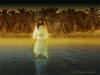
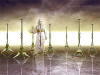
Daniel 10:4-6 Rev 1:12-15
Copyright - Ted Larson


Body...like beryl (tarsis/tarsiys) - A precious gemstone, possibly chrysolite, which was found in the fourth row of the breastplate of th1e high priest (Ex 28:20; 39:13). In Driver's comments on this verse he writes that tarsis "to be the topaz of the moderns - a flashing stone, described by Pliny as ‘a transparent stone with a refulgence like that of gold.’”
Beryl - 6x in 6v - Ex 28:20; 39:13; Song 5:14; Ezek 1:16; 28:13; Dan 10:6. Note use in Ezek 28:13 is thought by some to refer to Satan.
Of a tumult - A noise, a crowd, a multitude. The English word tumult describes the commotion, disturbance or agitation of a multitude, usually accompanied with great noise, uproar and confusion of voices.
The comparison of Daniel's vision with John's vision of the risen glorified Christ is striking:
| DANIEL 10:6 | REVELATION 1:12-16 |
|
face |
head and hair white |
|
eyes |
eyes were |
|
arms and feet like |
feet like burnished bronze, when made to glow in a furnace |
|
sound of his words |
voice was |
The apostle John gives a description of the glorified Christ which has five similarities to Daniel's vision which is strong evidence that this was a vision of the Pre-Incarnate Christ...
Rev 1:12 And I turned to see the voice that was speaking with me. And having turned I saw seven golden lampstands; 13 and in the middle of the lampstands one like a son of man, clothed in a robe reaching to the feet, and girded across His breast with a golden girdle (waist girded with a belt of pure gold). 14 And His head and His hair were white like white wool, like snow (face had the appearance of lightning); and His eyes were like a flame of fire (eyes were flaming torches); 15 and His feet were like burnished bronze (feet like...polished bronze), when it has been caused to glow in a furnace, and His voice was like the sound of many waters (sound of his words like the sound of a tumult). (Rev 1:12-15-see notes)
Some such as W A Criswell feel Daniel was granted a Christophany (see Angel of the LORD) writing that...
This vision was given while Daniel was beside the great river Hiddekel or the Tigris (Da 10:4). The vision of Daniel in Da 10:5, 6 is remarkably similar to that of John in Rev 1:12-17. Almost certainly the greatly beloved statesman-prophet is here granted a Christophany, an appearance of the preincarnate Christ. ( Believer's Study Bible) (See also What is a theophany? What is a Christophany? | GotQuestions.org)
John MacArthur -"Behold" in verse 5 expresses the amazement and shock Daniel experienced when confronted by his heavenly visitor. Some think it may have been Gabriel, Michael, or another angel of equal rank (Ed: E.g., H A Ironside, Leupold, Lang). I believe it was a preincarnate appearance of the Second Person of the Trinity--the Lord Jesus Christ (often referred to as a Christophany). (The Vision of Glory)
Certainly Daniel's description parallels John's Isle of Patmos description of his encounter with the Risen Christ. Compare also the description in Daniel 12 which tends to favor a Christological interpretation...
And one said to the man dressed in linen, who was above the waters of the river, “How long will it be until the end of these wonders?” (Implication: This man...in linen had greater knowledge) 7 I heard the man dressed in linen, who was above the waters of the river, as he raised his right hand and his left toward heaven, and swore by Him who lives forever (Ed: Thus he takes a divine oath) that it would be for a time, times, and half a time (cf Da 7:25, Rev 12:14); and as soon as they finish shattering the power of the holy people, all these events will be completed. (Da 12:6-7)
However, if one interprets the identity of this certain man in the context of Da 10:13, this latter passage does not seem to be compatible with Christ the Creator but with a created angel. Commentators seem to be split in regard to these two interpretations. One might resolve it by saying it is both. In other words, it is possible that that the certain man in Daniel 10:5,6 is a Christophany and the one who touched Daniel and then spoke to him in Da 10:10,11 is a separate angelic being.
John Walvoord - Although there is room for debate even among conservative scholars, the evidence seems more in favor of considering this a theophany. In this case, the man of Da 10:5–6 is to be distinguished from the angel of Da10:10–14 as well as Michael mentioned in 10:13. Although mighty angels are frequently difficult to distinguish from God Himself, as in other visions such as those in Ezekiel and Revelation, the similarity between the man described in 10:5–6 and the glorified Christ in Revelation 1:13–15 has led conservative expositors such as Young and Keil to consider the man a genuine theophany or an appearance of Christ as the Angel of Jehovah.
Whitcomb adds that "it is difficult to accept the view that the heavenly being of Da 10:5-9 is a mere angel. The resemblance to the description of the glory of the Lord in Ezekiel 1:26, 27, 28 and in Revelation 1:12, 13, 14, 15, 16 is so undeniably clear that exceedingly powerful theological arguments would have to be provided to overthrow such an identification.' (Whitcomb, J. Daniel Everyman's Bible Commentary)
As noted above, there are some similarities with Ezekiel's vision...
Ezekiel 1:26 Now above the expanse that was over their heads there was something resembling a throne, like lapis lazuli in appearance; and on that which resembled a throne, high up, was a figure with the appearance of a man. 27 Then I noticed from the appearance of His loins and upward something like glowing metal that looked like fire all around within it, and from the appearance of His loins and downward I saw something like fire; and there was a radiance around Him. 28 As the appearance of the rainbow in the clouds on a rainy day, so was the appearance of the surrounding radiance. Such was the appearance of the likeness of the glory of the Lord. And when I saw it, I fell on my face and heard a voice speaking. (Eze 1:26, 27, 28).
QUESTION - What is a theophany? What is a Christophany?
ANSWER - A theophany is a manifestation of God in the Bible that is tangible to the human senses. In its most restrictive sense, it is a visible appearance of God in the Old Testament period, often, but not always, in human form. Some of the theophanies are found in these passages:
1. Genesis 12:7-9 – The Lord appeared to Abraham on his arrival in the land God had promised to him and his descendants.
2. Genesis 18:1-33 – One day, Abraham had some visitors: two angels and God Himself. He invited them to come to his home, and he and Sarah entertained them. Many commentators believe this could also be a Christophany, a pre-incarnate appearance of Christ.
3. Genesis 32:22-30 – Jacob wrestled with what appeared to be a man, but was actually God (vv. 28-30). This may also have been a Christophany.
4. Exodus 3:2 - 4:17 – God appeared to Moses in the form of a burning bush, telling him exactly what He wanted him to do.
5. Exodus 24:9-11 – God appeared to Moses with Aaron and his sons and the seventy elders.
6. Deuteronomy 31:14-15 – God appeared to Moses and Joshua in the transfer of leadership to Joshua.
7. Job 38–42 – God answered Job out of the tempest and spoke at great length in answer to Job’s questions.
Frequently, the term “glory of the Lord” reflects a theophany, as in Exodus 24:16-18; the “pillar of cloud” has a similar function in Exodus 33:9. A frequent introduction for theophanies may be seen in the words “the Lord came down,” as in Genesis 11:5; Exodus 34:5; Numbers 11:25; and 12:5.
Some Bible commentators believe that whenever someone received a visit from “the angel of the Lord,” this was in fact the pre-incarnate Christ. These appearances can be seen in Genesis 16:7-14; Genesis 22:11-18; Judges 5:23; 2 Kings 19:35; and other passages. Other commentators believe these were in fact angelophanies, or appearances of angels. While there are no indisputable Christophanies in the Old Testament, every theophany wherein God takes on human form foreshadows the incarnation, where God took the form of a man to live among us as Emmanuel, “God with us” (Matthew 1:23).GotQuestions.org
Daniel 10:7 NOW I, DANIEL, ALONE SAW THE VISION, WHILE THE MEN WHO WERE WITH ME DID NOT SEE THE VISION; NEVERTHELESS, A GREAT DREAD FELL ON THEM, AND THEY RAN AWAY TO HIDE THEMSELVES.
- alone: 2Ki 6:17 Ac 9:7 22:9
- Nevertheless: Eze 12:18 Heb 12:21) (And they ran: Ge 3:10 Isa 2:10 Jer 23:24
- Daniel 10 Resources - Multiple sermons and commentaries
Now I Daniel - Daniel uses the personal pronoun "I" fifteen times in Daniel 10! To say that Daniel did not write this book reflects either gross ignorance or arrogance and refutes Jesus' affirmation of Daniel's authorship in Mt 24:15.
I Daniel alone saw - The Hebrew is even more emphatic reading "I saw, I, Daniel, I alone".
Daniel alone saw the vision - This is clearly because God opened his servant's eyes to the supernatural. Beloved, we as natural beings can never see the supernatural unless the Spirit opens the eyes of our heart (cf Paul's prayer Eph 1:18, 19). To be sure, for those who dabble in spiritual darkness (eg, see Animism as practiced by many of the groups of Unreached {by the Gospel} Peoples of the World), God may allow the demonic forces to give "curious" souls a supernatural experience, but not of the "Daniel variety"! The point nevertheless is that God is in complete control of the supernatural world and even Satan cannot move one step without God's sovereign decree (cf Lk 22:31, Job 1:8, 9, 10, 11, 2:3, 4, 5, 6, Zech 3:1, 2). This truth is important to remember, because although there is a very real spiritual war (in the heavenlies and on earth), this warfare does not reflect a power struggle per se. That is, there is never a question that the Creator might not be powerful enough to squash the antics of our Adversary. Closer to the truth, however, is that the struggle between light and dark, good and evil, is a battle over THE TRUTH, that with which the good soldier of Christ Jesus is to gird his or her loins (cf Ep 6:14; all the other "weapons" hang from this belt!) and that which we are to skillfully handle as our sword ("the sword of the Spirit, which is the Word of God" which is in its purest form, the Word of Truth, see Eph 6:17, cf 2Cor 6:7, Col 1:5, 2Ti 2:15, Jas 1:18).
Earlier we read of the hand of the LORD upon Daniel who "even understood all kinds of visions and dreams." (Da 1:17). In your life today as a believer, the Holy Spirit Who indwells you may reveal something to you that those unsaved around you do not see. This of course has nothing to do with new "revelation" (as some falsely teach regarding having received a prophecy from God) but does have to do with you as a godly man or woman seeing the spiritual realities of events, circumstances, etc, in a way that the unsaved cannot see because their eyes are blinded to spiritual truth.
The men who were with me did not see the vision - This is similar to the experience of Saul (later named Paul) on the Damascus Road when the "light from heaven flashed around him" (Acts 9:3), he fell to the ground and heard the voice of Jesus (Acts 9:4). Luke then records that...
The men who traveled with him stood speechless, hearing the voice but seeing no one. (Acts 9:7, cf Acts 22:9)
When God the Father spoke to His Son, John records...
the crowd of people who stood by and heard it were saying that it had thundered; others were saying, “An angel has spoken to Him.” (Jn 12:29)
Those who favor Da 10:5,6 as a Christophany, use this similar NT passage in what was clearly an appearance of Christ.
Strauss comments that "His companions were unable to receive the least of the revelation. Only the man whose perceptions are sharpened by concern and contrition receives fresh revelations from God. As was mentioned before, an analogous case is that of Saul of Tarsus and his companions on the road to Damascus. It is possible for one to be close to the presence and power of God, but through lack of spiritual perception, miss the message. The man with a humble and contrite heart is "a man greatly beloved" (Da 10:11, 19), meaning a man of "desires" or "delights," one in whom God delights (Dt 10:15; Is 62:4)." (Ibid)
Daniel 10:8 SO I WAS LEFT ALONE AND SAW THIS GREAT VISION; YET NO STRENGTH WAS LEFT IN ME, FOR MY NATURAL COLOR TURNED TO A DEATHLY PALLOR, AND I RETAINED NO STRENGTH.
- I was: Ge 32:24 Ex 3:3 Jn 16:32 2Co 12:2,3
- Yet no strength: Da 7:28 8:7,27 Hab 3:16 Mt 17:6 Mk 9:6 Rev 1:17
- turned: Ge 32:25,31 2Co 12:7
- Daniel 10 Resources - Multiple sermons and commentaries
Yet no strength was left in me - This supernatural experience saps Daniel of his strength as is repeatedly emphasized (Da 10:16, 17, cp Da 7:28, Da 8:27). The prophet Habakkuk (who prophesied between approximately 621-609BC) manifested a similar reaction when confronted with the revelation prophesying Judah and Jerusalem's invasion by Babylon (3 Stage: 605, 597, 586BC).
My natural color turned to a deathly pallor - Or we might say today "he was as white as sheet!" or "looks like he had seen a ghost!".
This was not the first apocalyptic vision to take its toll on Daniel. At the end of Daniel's first vision of the four beastly kingdoms and the little horn arising from the 10 horn stage of the fourth kingdom we read...
At this point the revelation ended. As for me, Daniel, my thoughts were greatly alarming me and my face grew pale, but I kept the matter to myself. (Da 7:28)
After Daniel's second vision of the ram (Medo-Persia) and the goat (Greece - Alexander the Great and the Rather Small Horn, Antiochus Epiphanes) we read...
Then I, Daniel, was exhausted and sick for days. Then I got up again and carried on the king's business; but I was astounded at the vision, and there was none to explain it. (Da 8:27)
Daniel 10:9 BUT I HEARD THE SOUND OF HIS WORDS; AND AS SOON AS I HEARD THE SOUND OF HIS WORDS, I FELL INTO A DEEP SLEEP ON MY FACE, WITH MY FACE TO THE GROUND.
- I heard: Da 8:18 Ge 2:21 15:12 Job 4:13 33:15 Song 5:2 Lk 9:32 22:45
- Daniel 10 Resources - Multiple sermons and commentaries
I fell into a deep sleep - This suggest loss of consciousness as a reaction to the supernatural vision. Daniel had a similar reaction to the angel's interpretation of the second vision (Da 8:18).
My face to the ground - An appropriate position if this is indeed a Christophany! Note what happened to men who met God ><> Isaiah = Isa 6:5, Ezekiel = Eze 1:28 Job = Job 42:6 Joshua = Jos 5:13,14 Paul = Acts 9:3, 4, 5; Peter, James and John at the Transfiguration = Mt 17:1, 2, 3, 4, 5, 6, 7John = Rev 4:10, 5:8, 7:11, 19:10; 22:8
Daniel 10:10 THEN BEHOLD, A HAND TOUCHED ME AND SET ME TREMBLING ON MY HANDS AND KNEES.
- hand: Da 10:16,18 8:18 9:21 Jer 1:9 Rev 1:17
- Daniel 10 Resources - Multiple sermons and commentaries
Related Passages:
Revelation 1:17 When I saw Him, I fell at His feet like a dead man. And He placed His right hand on me, saying, “Do not be afraid; I am the first and the last,
JUST ONE
SUPERNATURAL TOUCH
Behold (hinneh; Lxx - idou) - This interjection draws attention to this striking event.
A hand touched me (cf Jesus touching Peter, James and John at the Transfiguration - Mt 17:5, 6, 7, John after he saw Jesus and fell down at His feet as a dead man - Rev 1:17) - The question is this - Is this the same hand of the certain man described in Da 10:5,6? Or could this be another individual? an angel?
On my hands and feet - Daniel seems to have been so overwhelmed by the supernatural events that he cannot even rise to full upright position!
Behold (02009) hinneh is an interjection meaning behold, look, now; if. "It is used often and expresses strong feelings, surprise, hope, expectation, certainty, thus giving vividness depending on its surrounding context." (Baker) Hinneh generally directs our mind to the text, imploring the reader to give it special attention. In short, the Spirit is trying to arrest our attention! And so hinneh is used as an exclamation of vivid immediacy (e.g., read Ge 6:13)! Hinneh is a marker used to enliven a narrative, to express a change a scene, to emphasize an idea, to call attention to a detail or an important fact or action that follows (Isa 65:17, Ge 17:20, 41:17). The first use of hinneh in Ge 1:29 and second in Ge 1:31 - "And God saw all that He had made, and behold, it was very good. And there was evening and there was morning, the sixth day." Hinneh is oftn used in the idiom "Here I am" in Ge 22:1, 7,11 Ge 27:1,18, Ge 31:11, Ge 46:2 Ex 3:4 1Sa 3:4, 3:16, 12:3, 2Sa 1:7, Isa 52:6, Isa 58:9. Hinneh is used most often to point out people but also to point out things (Ge 31:41, 17:4). God uses hinneh to grab man's attention before He brings destruction (Ge 6:13, 17). God uses hinneh when He establishes covenants (Ge 9:9, 15:12, 17 [when Jehovah cut the Abrahamic covenant], Ge 17:4, cp Ge 28:13, 15), when He provided a sacrificial substitute for Isaac (foreshadowing His giving us His only Son!) (Ge 22:13). Hinneh marks the "chance (The Providence of God)" arrival of Boaz at the field where Ruth was gleaning (Ru 2:4-read about this "chance romance" - Indeed, "Behold!"). Hinneh is used to announce the Lord’s sending of a child as a sign and a prophecy of Immanuel-Emmanuel, the Messiah (Isa. 7:14-note). In fact W E Vine says that it is notable that when behold (hinneh) is used in Isaiah, it always introduces something relating to future circumstances.
Spurgeon reminds us that "Behold is a word of wonder; it is intended to excite admiration. Wherever you see it hung out in Scripture, it is like an ancient sign-board, signifying that there are rich wares within, or like the hands which solid readers have observed in the margin of the older Puritanic books, drawing attention to something particularly worthy of observation." I would add, behold is like a divine highlighter, a divine underlining of an especially striking or important text. It says in effect "Listen up, all ye who would be wise in the ways of Jehovah!"
Hinneh is translated in the Septuagint with the interjection idou (strictly speaking a command in the second person idou (strictly speaking a command in the second person aorist imperative, middle voice) a demonstrative particle (used 1377 times in the Septuagint and NT) which is found especially in the Gospels of Matthew and Luke "and giving a peculiar vivacity to the style by bidding the reader or hearer to attend to what is said: : "Behold! See! Lo!" (Thayer) The command is calling for urgent attention. Do this now! Don't delay! It could be loosely paraphrased "Pay attention!" or "Listen up!" to arouse attention and introduce a new and extraordinary fact of considerable importance.
Daniel 10:11 HE SAID TO ME, "O DANIEL, MAN OF HIGH ESTEEM, UNDERSTAND THE WORDS THAT I AM ABOUT TO TELL YOU AND STAND UPRIGHT, FOR I HAVE NOW BEEN SENT TO YOU." AND WHEN HE HAD SPOKEN THIS WORD TO ME, I STOOD UP TREMBLING.
BGT Daniel 10:11 καὶ εἶπέν μοι Δανιηλ ἄνθρωπος ἐλεεινὸς εἶ διανοήθητι τοῖς προστάγμασιν οἷς ἐγὼ λαλῶ ἐπὶ σέ καὶ στῆθι ἐπὶ τοῦ τόπου σου ἄρτι γὰρ ἀπεστάλην ἐπὶ σέ καὶ ἐν τῷ λαλῆσαι αὐτὸν μετ᾽ ἐμοῦ τὸ πρόσταγμα τοῦτο ἔστην τρέμων
--- Daniel (TH) 10:11 καὶ εἶπεν πρός με Δανιηλ ἀνὴρ ἐπιθυμιῶν σύνες ἐν τοῖς λόγοις οἷς ἐγὼ λαλῶ πρὸς σέ καὶ στῆθι ἐπὶ τῇ στάσει σου ὅτι νῦν ἀπεστάλην πρὸς σέ καὶ ἐν τῷ λαλῆσαι αὐτὸν πρός με τὸν λόγον τοῦτον ἀνέστην ἔντρομοςLXE Daniel 10:11 And he said to me, O Daniel, man greatly beloved, understand the words which I speak to thee, and stand upright: for I am now sent to thee. And when he had spoken to me this word, I stood trembling.
KJV Daniel 10:11 And he said unto me, O Daniel, a man greatly beloved, understand the words that I speak unto thee, and stand upright: for unto thee am I now sent. And when he had spoken this word unto me, I stood trembling.
NET Daniel 10:11 He said to me, "Daniel, you are of great value. Understand the words that I am about to speak to you. So stand up, for I have now been sent to you." When he said this to me, I stood up shaking.
CSB Daniel 10:11 He said to me, "Daniel, you are a man treasured by God. Understand the words that I'm saying to you. Stand on your feet, for I have now been sent to you." After he said this to me, I stood trembling.
ESV Daniel 10:11 And he said to me, "O Daniel, man greatly loved, understand the words that I speak to you, and stand upright, for now I have been sent to you." And when he had spoken this word to me, I stood up trembling.
NIV Daniel 10:11 He said, "Daniel, you who are highly esteemed, consider carefully the words I am about to speak to you, and stand up, for I have now been sent to you." And when he said this to me, I stood up trembling.
NLT Daniel 10:11 And the man said to me, "Daniel, you are very precious to God, so listen carefully to what I have to say to you. Stand up, for I have been sent to you." When he said this to me, I stood up, still trembling.
NRS Daniel 10:11 He said to me, "Daniel, greatly beloved, pay attention to the words that I am going to speak to you. Stand on your feet, for I have now been sent to you." So while he was speaking this word to me, I stood up trembling.
NJB Daniel 10:11 He said, 'Daniel, you are a man specially chosen; understand the words that I am about to say; stand up; I have been sent to you now.' He said this, and I stood up trembling.
NAB Daniel 10:11 "Daniel, beloved," he said to me, "understand the words which I am speaking to you; stand up, for my mission now is to you." When he said this to me, I stood up trembling.
YLT Daniel 10:11 'And he saith unto me: Daniel, man greatly desired, attend to the words that I am speaking unto thee, and stand on thy station, for now I have been sent unto thee. 'And when he speaketh with me this word, I have stood trembling.
GWN Daniel 10:11 The man said to me, "Daniel, you are highly respected. Pay attention to my words. Stand up, because I've been sent to you." When he said this to me, I stood up, trembling.
- a man: Da 9:23 Jn 13:23 21:20
- High esteem: Heb. of desires, Da 10:3 Ps 45:11 Song 7:10
- understand: Da 8:16,17 9:22,23
- upright: Ac 26:16
- I stood: Job 4:14-16 37:1 Mk 16:8 Ac 9:6
- Daniel 10 Resources - Multiple sermons and commentaries

Daniel, God's Masterpiece!

DANIEL A MAN OF
HIGH ESTEEM
Man of high esteem (Da 9:23, Da 10:19) - Literally the Hebrew reads "man greatly desired"; "a treasured person"; NET = "you are of great value." (see also Archer's reading below). This description is given to Daniel 2 years earlier (~538BC) in Daniel 9 and now again in chapter 10. It is interesting to note that on both occasions in which Daniel received these commendations, he was praying.
THOUGHT - This can be read you are "a treasured person" or as the NET rendering says "you are of great value," which begs the question, "Am I treasured and is my life of great value to our Great God?" I submit that if you answer "no" today, it can be tomorrow! Enabled by God's Spirit and guided by His Word, we much make the choice to "lay aside every encumbrance and the sin which so easily entangles us, and...run with endurance the race that is set before us, fixing our eyes on Jesus." (Heb 12:1-2) Here's a song to motivate your temporal run for an eternal treasure - Run Like Heaven! Paul says we were saved by grace through faith and are now "His workmanship (poiema), created in Christ Jesus for good works, which God prepared beforehand so that we would walk in them. ." (Eph 2:10). (See Believers Are God's Masterpiece, His Poiema)
Gleason Archer notes that the Hebrew...
literally reads “man of preciousness” (cf. Da 9:23). This remarkable greeting reassured Daniel of the personal love and concern that the Almighty has for each one of his faithful servants. To Daniel this must have been even more incredible than it is for us who know the boundless love of God displayed in the sacrifice of his Son on Calvary. But observe that Daniel’s privileged status as one especially precious to God resulted from his complete absorption in the will and glory of the Lord to whom he had yielded his heart. His was the whole-souled devotion of a Paul or a Moses.
The angel called on Daniel to give his careful attention so as to understand the details of the explanation he was about to give him of the vision he had received. Such attention was certainly needed; for chapter 11 is full of confusing detail couched in somewhat vague terms—from the standpoint of 535BC, at least—though the subsequent fulfillment in Hellenistic times is amazingly accurate. Incidentally, this furnishes an instructive analogy for prophecy students today, since they too (esp. in books like Isaiah, Ezekiel, and Revelation) have to deal with predictions that are capable of varying interpretations but that will someday be fulfilled with similar exactness to those in Daniel 11:1–39. (Gaebelein, F, Editor: Expositor's Bible Commentary)
Why was he a man of high esteem? Daniel knew his God (cf Da 11:32b), did not compromise (Da 1:8), had no ground of accusation or evidence of corruption, remained faithful, and had no negligence (Da 6:4), stood firm regardless of the cost (Da 6:10, cf Mk 8:34-38), was able to take action (because he knew God and he walked in the light of what he knew), allowed God’s word to be a light to him in the midst of many dark places (Da 9:2).
Spurgeon - Daniel 10:11 (Morning and Evening) - And he said to me, "O Daniel, man of high esteem, understand the words that I am about to tell you and stand upright, for I have now been sent to you." And when he had spoken this word to me, I stood up trembling."
Child of God, do you hesitate to appropriate this title? Ah! has your unbelief made you forget that you are greatly beloved too? Must you not have been greatly beloved, to have been bought with the precious blood of Christ, as of a lamb without blemish and without spot? When God smote his only begotten Son for you, what was this but being greatly beloved? You lived in sin, and rioted in it, must you not have been greatly beloved for God to have borne so patiently with you? You were called by grace and led to a Saviour, and made a child of God and an heir of heaven. All this proves, does it not, a very great and superabounding love? Since that time, whether your path has been rough with troubles, or smooth with mercies, it has been full of proofs that you are a man greatly beloved. If the Lord has chastened you, yet not in anger; if he has made you poor, yet in grace you have been rich. The more unworthy you feel yourself to be, the more evidence have you that nothing but unspeakable love could have led the Lord Jesus to save such a soul as yours. The more demerit you feel, the clearer is the display of the abounding love of God in having chosen you, and called you, and made you an heir of bliss. Now, if there be such love between God and us let us live in the influence and sweetness of it, and use the privilege of our position. Do not let us approach our Lord as though we were strangers, or as though he were unwilling to hear us—for we are greatly beloved by our loving Father. “He that spared not his own Son, but delivered him up for us all, how shall he not with him also freely give us all things?” Come boldly, O believer, for despite the whisperings of Satan and the doubtings of thine own heart, thou art greatly beloved. Meditate on the exceeding greatness and faithfulness of divine love this evening, and so go to thy bed in peace. (Morning and Evening)
Daniel 10:12 THEN HE SAID TO ME, "DO NOT BE AFRAID, DANIEL, FOR FROM THE FIRST DAY THAT YOU SET YOUR HEART ON UNDERSTANDING THIS AND ON HUMBLING YOURSELF BEFORE YOUR GOD, YOUR WORDS WERE HEARD, AND I HAVE COME IN RESPONSE TO YOUR WORDS.
- Do not be afraid: Da 10:19 Isa 35:4 41:10,14 Mt 28:5,10 Mk 16:6 Lk 1:13,30 2:10 24:38 Ac 18:9,10 27:24 Rev 1:17
- from: Da 10:2,3 9:3,4,20-23 Isa 58:9 65:24 Ac 10:4,30,31
- Humbling: Lev 16:29,31 Nu 29:7 Ps 69:10
- and I: Da 10:11 9:20, 21, 22 Ac 10:3, 4, 5,30,31
- Daniel 10 Resources - Multiple sermons and commentaries
Do not be afraid - This divine being meets Daniel at his point of his greatest need which was fear. God's Word of Truth brings faith (Ro 10:17) which is the divine antidote for fear (which is driven by doubt in God's Word).
From the first day - God hears our prayer immediately, even when we don't experience an immediate answer.
Set your heart - This speaks of Daniel's single minded focus which we first saw in Daniel 1:8 when "Daniel made up his mind (set his heart) that he would not defile himself with the king's choice food", a decision which was pivotal in setting the entire course of his life.
James affirms the efficacy of resolute praying like Daniel...
Therefore, confess (present imperative) your sins to one another, and pray (present imperative) for one another so that you may be healed. The effective (energeo in the present tense = continually "energized") prayer of a righteous man can accomplish much. (Jas 5:16)
Humbling yourself before God - The Hebrew verb 'anah means to be afflicted, to be oppressed or be bowed down. In this context 'anah denotes humbling in a positive sense (i.e., repentance and/or contrition). The KJV is somewhat misleading in my opinion as it translates it "to chasten thyself."
This verb 'anah is used in describing fasting associated with the Day of Atonement (which was the only fast prescribed by law)...
This shall be a permanent statute for you: in the seventh month, on the tenth day of the month, you shall humble ('anah) your souls and not do any work, whether the native, or the alien who sojourns among you; for it is on this day that atonement shall be made for you to cleanse you; you will be clean from all your sins before the Lord. It is to be a sabbath of solemn rest for you, that you may humble ('anah) your souls; it is a permanent statute. (Lev 16:29, 30, 31, cp Lev 23:27, 32)
Humility, fasting and prayer go together (2Chr 7:13, 14, Ps 35:13). To humble one's self before God is to acknowledge one's proper relationship of the creature to the Creator and to admit our desperate dependence upon Him for everything necessary for life and godliness. Proud people "by definition" don't humble themselves before God. Perhaps one reason I don't pray as much as I should is because of my unwillingness to humble myself, to admit my dependence on God to give me "daily bread", etc.
Come in response to your words - The angel's (I favor this as an angel at this point in the chapter) appearance was clearly a response to Daniel's prayer. The writer of Hebrews describes this function of the angels asking...
Are they not all ministering spirits, sent out to render service for the sake of those who will inherit salvation? (Hebrews 1:14)
John Blanchard makes the point that...
No answer to prayer is an indication of our merit; every answer to prayer is an indication of God's mercy.
William Gurnall adds that...
Never was a faithful prayer lost. Some prayers have a longer voyage than others, but then they return with their richer lading at last, so that the praying soul is a gainer by waiting for an answer.
Richard Sibbes...
When we shoot an arrow, we look to the fall of it; when we send a ship to sea, we look for the return of it; and when we sow seed, we look for a harvest; and so when we sow our prayers into God's bosom, shall we not look for an answer?
In the context of the Millennial Age God says...
It will also come to pass that before they call, I will answer; and while they are still speaking, I will hear. (Is 65:24)
Beyond our utmost wants
His love and power can bless
To praying souls he always grants
More than they can express.
John Newton
I have come - More literally (and emphatically) = "I, myself, have come".
PRAYER:
A POWERFUL WEAPON
A Significant Impact - John Wesley was convinced that the prayers of God's people rather than his preaching accounted for the thousands who came to Christ through his ministry. That's why he said, "God will do nothing except in answer to prayer." An overstatement? Yes. But the fact is that our praying is a powerful weapon in the war between God and Satan.
In today's Scripture reading, Daniel was so disturbed by a revelation about Israel's future that he could do nothing except fast and pray. Three weeks later a heavenly messenger appeared, saying that God had sent him when Daniel prayed, but that the prince of Persia had detained him (Da 10:13). This "prince" was an evil spirit who sought to influence the rulers of Persia to oppose God's plan. He had detained God's messenger, until the archangel Michael came to his aid.
A cosmic conflict between good and evil is continually being fought in the invisible spirit world. Paul reminded us that it involves Christians. He listed the spiritual armor and weaponry we need for these battles (Ephesians 6:13, 14, 15, 16, 17), and then he added "praying always" (Ep 6:18).
Our prayers can have a significant impact on the outcome of those spiritual battles. May we, therefore, faithfully pray as we fight the good fight (1Timothy 1:18). — Herbert Vander Lugt (Our Daily Bread, Copyright RBC Ministries, Grand Rapids, MI. Reprinted by permission. All rights reserved)
Something happens when we pray,
Powers of evil lose their sway,
We gain strength and fear gives way—
Therefore, let us pray. —Anon.
Satan trembles when he sees
The weakest saint upon his knees.
Daniel 10:13 "BUT THE PRINCE OF THE KINGDOM OF PERSIA WAS WITHSTANDING ME FOR TWENTY-ONE DAYS; THEN BEHOLD, MICHAEL, ONE OF THE CHIEF PRINCES, CAME TO HELP ME, FOR I HAD BEEN LEFT THERE WITH THE KINGS OF PERSIA.
- the prince: Da 10:20 Ezra 4:4, 5, 6,24 Zec 3:1,2 Ep 6:12 1Th 2:18
- Michael: Da 10:21 12:1 Jude 1:9 Rev 12:7
- one: or, the first, Col 2:10 1Pe 3:22
- Daniel 10 Resources - Multiple sermons and commentaries
A STRANGE
SUPERNATURAL SCENE!
The prince of the kingdom of Persia - From the context this is not human prince (for a human could not stand against a supernatural being) but is an evil spirit, a fallen angel, a demonic force, who is "over" the empire (government) of Persia! This highly placed demon (some think it could refer to Satan himself given that this was the world's leading empire at the time) somehow exerts a power or force that is able to prevent the good angel from bringing the message to Daniel. In Da 10:20 the angel predicts the coming of the prince of Greece, which in context is a demonic spirit over the empire of Greece. While one cannot be absolutely dogmatic these passages suggest that every empire or possibly every country has a demonic spirit which presumably can exert a godless, anti-God influence over the government. One must be wary in saying much more.
Donald Campbell...
A number of things are of compelling interest regarding this "prince of the kingdom of Persia."
First, it is obvious that he was not a man, for no human being could have resisted a messenger from God.
Second, since he did oppose God's emissary, he must have been one of Satan's evil messengers or demons.
Third, his particular mission apparently was to influence the king of Persia against the people of God.
Fourth, the angelic messenger, with the help of the chief angel Michael, was able to wrest the position of influence with the Persian king away from the evil angel before coming on to Daniel. Thereafter, he was able to influence the Persian rulers in favor of God's people, the Jews. (Borrow Donald Campbell's excellent commentary - Daniel God's Man in a Secular Society - formerly entitled "Daniel, Decoder of Dreams")
Gleason Archer explains that "The powers of evil apparently have the capacity to bring about hindrances and delays, even of the delivery of the answers to believers whose requests God is minded to answer. God’s response was immediate, so far as his intention was concerned. But “the prince of the Persian kingdom” (Da 10:13)—apparently the satanic agent assigned to the sponsorship and control of the Persian realm—put up a determined opposition to the actual delivery of the divine answer. While God can, of course, override the united resistance of all the forces of hell if he chooses to do so, he accords to demons certain limited powers of obstruction and rebellion somewhat like those he allows humans. In both cases the exercise of free will in opposition to the Lord of heaven is permitted by him when he sees fit. But as Job 1:12 and 2:6 indicate, the malignity of Satan is never allowed to go beyond the due limit set by God, who will not allow the believer to be tested beyond his limit (1Cor 10:13)." (Ibid)
Withstanding ('amad) means to stand or take one's stand. In the present context the picture is literally of one "standing opposite".
Twenty one days - What's the message? Delay does not mean denial.
Michael one of the chief princes - This is the first mention by name of the angel Michael, who is later described as "your prince" (Da 10:21) indicating he is Israel's prince, a premise which is substantiated by Da 12:1 where we observe that Michael will arise when Israel is in a time of great distress (which in context is the Great Tribulation). In Jude 1:9 Michael is called an archangel one of the first or highest angels, a leader of the angels. Finally in the last Biblical use, Rev 12:7, Michael is found in heaven waging war with (and defeating) the dragon and his angels.
Miller draws the conclusion that "the implications of these statements are clear. Israel has a mighty angelic supporter in the heavenly realm. Therefore, regardless of Israel’s political, military, and economic weaknesses, its existence is assured because no earthly power can resist their great prince." (Miller, S. R. - Daniel - New American Commentary, 18)
Chief princes - "Chief" indicates an angelic hierarchy as described by Paul in Ephesians who explains to the saints why they must be strong in the Lord (Eph 6:10) and put on the full armor of God to be enabled to stand against this invisible evil army of demonic forces...
For our struggle is not against flesh and blood, but against the rulers, against the powers, against the world forces of this darkness, against the spiritual forces of wickedness in the heavenly places. (Eph 6:12)
Came to help me - God's angels overcame the resisting power of Satan's evil angels.
Strauss writes "True, Daniel did not get immediate response to his prayer, but then the answer that is delayed must not be interpreted as having been denied. The answer was forthcoming even though Daniel did not know it for three full weeks. At the very beginning of his intercession God went into action in behalf of His child and servant. Not only was the prayer heard at once in Heaven but it was likewise answered at once in Heaven. It is healthy for the child of God, who is in the will of God, to know that his prayers are always heard and answered, even though the answer be a direct one, a delayed one, or a denial....Dr. Roy L. Laurin has said: "As a matter of fact the answer may be long in coming, but as a matter of faith it is ours at the time of our asking." Daniel prayed for three full weeks, and though he had received no answer from God, he was given the assurance that his prayer had been heard. (Ibid)
This verse underscores the truth that believers are involved in a spiritual war against powerful, real, invisible demonic forces.
Alan Redpath says it this way "The Christian life is not a playground it is a battleground."
John reminds us ...
You are from God, little children, and have overcome them; because greater is He Who is in you (The Spirit of Christ) than he who is in the world (Satan and his minions). (1Jn 4:4)
The kings of Persia - The plural suggests that the influence of the demonic prince would continue over all the kings of Persia.
CONTINUAL CONFLICT IN HEAVEN
COMES TO A CLOSE
Indeed the Revelation gives us additional insights to suggest the age long war between angelic forces in the heavenlies...
7 And there was war in heaven, Michael and his angels waging war with the dragon. The dragon and his angels waged war, 8 and they were not strong enough, and there was no longer a place found for them in heaven. 9 And the great dragon was thrown down, the serpent of old who is called the devil and Satan, who deceives the whole world; he was thrown down to the earth, and his angels were thrown down with him. 10 Then I heard a loud voice in heaven, saying, “Now the salvation, and the power, and the kingdom of our God and the authority of His Christ have come, for the accuser of our brethren has been thrown down, he who accuses them before our God day and night. 11“And they overcame him because of the blood of the Lamb and because of the word of their testimony, and they did not love their life even when faced with death. 12 “For this reason, rejoice, O heavens and you who dwell in them. Woe to the earth and the sea, because the devil has come down to you, having great wrath, knowing that he has only a short time.” 13 And when the dragon saw that he was thrown down to the earth, he persecuted the woman who gave birth to the male child. 14 But the two wings of the great eagle were given to the woman, so that she could fly into the wilderness to her place, where she was nourished for a time and times and half a time, from the presence of the serpent. (Re 12:7-14)
Grant Richison discusses a potential misapplication of the revelation in these passages...
Some in the spiritual warfare movement believe that “Territorial Spirit” must be bound for the gospel to be effective in a national entity. They call this “Strategic Level Spiritual Warfare.” They believe in three levels of demonic control. Firstly, ground level demons control individuals. Secondly, occult demons give power to magicians, shamans and witches. Lastly, strategic level demons, whose main purpose is to hinder the advance of the gospel, rule geographical regions.
Frank Peretti’s writing (This Present Darkness) is an example of this belief. Peter Wagner (reference) represents a church growth author of this position. Wagner asserts that this belief brought down the Berlin Wall and opened the gospel to Albania. He claimed that 10 million Japanese would come to Christ by the year 2000.
The growing movement of exorcism of territorial spirits does not have biblical foundation. These people pray over neighborhoods, cities and nations to exorcise demons controlling these geographical areas. Some church growth techniques recommend this approach to evangelism. This movement grew out of citywide evangelistic campaigns in Latin America movement and might have its roots in animism.
The argument for waging war on “territorial demons” rests primarily on Daniel 10:13. There is such a thing as territorial demons but there is no biblical basis for claiming victory over demons by name. Daniel did not know about this conflict before the angel told him about it so he did not pray to overcome these demons.
The Bible never suggests that believers are to command demons to give up national territory. In Daniel 10, God sent the Archangel Michael to deal with the fallen angels responsible for Persia and Greece. The content of the gospel itself has “power” “unto salvation” so there is no need for “power encounters” to validate God’s message.
Ro 1:16 “For I am not ashamed of the gospel of Christ, for it is the power of God to salvation for everyone who believes, for the Jew first and also for the Greek.” (Daniel 10:13 Bible Exposition Commentary)
James Rosscup in his review in Master's Seminary Journal on Frank E. Peretti's book This Present Darkness (published in 1986) writes...
Peretti's fast-selling works stress the urgency of prayer in spiritual warfare that encounters unseen angels and demons. The plots are fascinating, and the action fast-moving. His characters engage in eastern meditation, channeling, expanded consciousness, realization of potential claims to be gods, and experience in past and future lives. A novel can be a poor place to learn Christian doctrine and practice. Unfortunately, Peretti and others sometimes go beyond Scripture. He makes holy angels sarcastic and spiteful and victorious only when humans pray. He gives all of them wings and swords, and attributes to them different nationalities. Demons dissolve, fall into many bits, vanish in a red puff, have their heads cut off by angels, and roll like a puppy on black tar. Other distinctions that Scripture never makes include designations of particular demons of lust, lawlessness, deception, complacency, despair, murder, and the like. The author's stories make prayer a priority, which is good. Yet to make God and angels completely dependent on human prayer questions His sovereignty. (See page 21 in Christian Books on the New Age)
Gotquestions adds "Popular fiction, such as the novel This Present Darkness by Frank Peretti, often features lurid descriptions of spiritual battles in which demons are dispatched by sword-wielding angels with a slash, a flash, and a puff of smoke. The implication is that the demons “die” somehow when sliced in half by angelic blades. It should go without saying that our theology should be based on what the Bible says, not contemporary novels. The Bible teaches the reality of spiritual battle (Jude 1:9). But the Bible also says that, after the final judgment, demons will be consigned forever to the lake of fire (Matthew 25:41; Revelation 20:10). Since demons (and angels) do not “die” or suffer physical wounds, what is the point of doing spiritual battle? ( If angels and demons can’t die, what is the point of their engaging in battle? | GotQuestions.org)
QUESTION - Who is the prince of Persia in Daniel 10?
ANSWER - The prince of Persia is only mentioned in Daniel 10, a highly apocalyptic (and therefore at least partially symbolic) section of the book of Daniel. Most likely, the prince of Persia is a reference to an evil spiritual entity that wielded authority over the ancient kingdom of Persia.
The prophet Daniel had received a troubling vision concerning a great war (Daniel 10:1). He went into a three-week period of mourning, fasting, and prayer. In response to Daniel’s prayer, God sent a heavenly messenger to explain the vision. However, the messenger was delayed for those same three weeks, as he explains to Daniel: “But the prince of the Persian kingdom resisted me twenty-one days. Then Michael, one of the chief princes, came to help me, because I was detained there with the king of Persia” (Daniel 10:13). Later, the angel speaking to Daniel predicts further fighting: “Soon I will return to fight against the prince of Persia, and when I go, the prince of Greece will come; but first I will tell you what is written in the Book of Truth. (No one supports me against them except Michael, your prince)” (verses 20–21).
Taking this passage at face value, it seems that the prince of Persia is a fallen angel who in some sense had authority or influence over the physical kingdom of Persia. In Daniel 10, the prophet is praying about the future of his people and their exile in Persia. A heavenly angel is dispatched with the answer, but a demonic “prince of Persia” obstructs the messenger. This action would make sense, as the divine answer involves the overthrow of the Persian Empire. The angelic messenger finally gets some help from the archangel Michael, who is apparently the prince (or one of the princes) of Israel in the angelic realm (Daniel 10:13, 21).
Then the angelic messenger says he will face even more spiritual warfare, returning to fight against the prince of Persia. After that, he will face another spiritual enemy, the prince of Greece (Daniel 10:20). We know from history (and as was prophesied in Daniel) that Greece would be the next world power after Persia, and that Greece would dominate Israel for a time. In this passage, three spiritual entities are mentioned in relation to three earthly nations: the prince of Persia, the prince of Greece, and the prince of Israel (Michael). As the New Testament reminds us, “Our struggle is not against flesh and blood, but against the rulers, against the authorities, against the powers of this dark world and against the spiritual forces of evil in the heavenly realms” (Ephesians 6:12). The battle is real.
It seems that, as events play out on earth, there is corresponding activity in the spiritual realm. Whether or not this spiritual prince of Persia’s fate was tied to that of the physical Persian Empire is unknown. We do know that, if his job was to keep the Persian Empire in a place of dominance over the nation of Israel, he failed. It is interesting to note that Iran is modern Persia, and the leaders of Iran still want to dominate or obliterate the nation of Israel. As a Shiite Muslim nation, Iran persecutes Christian believers as well—so perhaps the spiritual prince of Persia is still active today. But, as with all of Satan’s minions, his time is limited, and he can only go as far as God will allow in accomplishing His perfect will.GotQuestions.org
QUESTION - What are territorial spirits?
ANSWER - “Territorial spirits” is a term some Christians use to identify demonic occupation of a specific geographic location. Ironically, it is also a term pagans use to describe an otherworldly presence believed to be residing in a specific geographical location.
The Christian concept of territorial spirits comes from passages such as Daniel 10; John 12:31; John 14:30; John 16:11; Mark 5:10; and Ephesians 6:12. All of these passages imply that fallen angels have been given some type of responsibility over a certain area. Thus, they seem to be territorial. However, we need to remember that this teaching is inferred; the Bible never explicitly delineates a hierarchy of demonic authority in the world. What the Bible is clear about is that demons are at work in the world and that believers are very much involved in a battle against them.
In Daniel 10, for example, an angel struggled against a demonic adversary the entire time Daniel was praying and fasting. It wasn’t until the end of Daniel’s spiritually focused time that the angel finally broke away and came to Daniel. Ephesians 6 exhorts believers to stand firm against our spiritual adversaries and to remain alert and ready for battle. There is no doubt that our struggle on Earth is mirrored in some way in the spiritual realm.
The problem inherent in the term “territorial spirits” is that some Christians believe it is their duty to engage territorial demons in spiritual warfare. This, however, cannot be justified by Scripture. There is not a single instance in the Bible where someone actively sought out a demon in order to engage it. Demon-possessed individuals were encountered, and some were brought to Jesus and His disciples for healing, but the disciples didn’t go looking for demons to cast out of people. No one in the Bible ever prayed that the “demon princes” of a town be “bound” from working their will against the residents of that town.
Territorial spirits, although not explicitly a scriptural idea, may very well exist, as seen in the previous passages. Whether or not a spirit is “territorial” is really not that important, though. What is important is our response. A believer in Christ has no biblical support to engage in prayer-led spiritual warfare against demons. Rather, a believer needs to be aware that there is a spiritual battle and to take it seriously (1 Peter 5:8). Our lives need to be focused on prayer and on growing in faith. Should we ever encounter a demon, we definitely have the Christ-given authority to deal with it, but we should not go looking for them, territorial or otherwise. GotQuestions.org
The Courier (Daniel 10) - Among his duties as a soldier during World War II, my friend Oscar was a military courier. He would carry messages to other units near the front lines. At dark he made his way through brush and trees to deliver information vital to the battle plan. Several times he ran into enemy patrols and had to change his course. More than once he was shot at.
In our Bible reading today, Daniel described a time that an angel was a courier, carrying a message from heaven to earth. Satan, though, tried to keep the message from getting through. His minion (referred to as the prince of Persia) succeeded in slowing up the angel who had been sent with God's message (Daniel 10:13). And no wonder—it outlined Satan's battle plans.
I'm sure that Satan and his helpers continue to try to block God's messages to man, even in our everyday lives. When we're reading the Bible, for example, interruptions may come. When a sermon is being preached, we may have distracting thoughts. When we feel we need to tell someone about Jesus, our attempts may be hindered. In situations like these, we must humbly cry out to God for help (Da 10:12). He is able to get His message through.— David C. Egner (Our Daily Bread, Copyright RBC Ministries, Grand Rapids, MI. Reprinted by permission. All rights reserved)
For Further Study
Read What Can We Learn From The Angels?
Read What In The World Is Satan Doing?
The wiles of Satan are no match for the wisdom of God.
Daniel 10:14 "NOW I HAVE COME TO GIVE YOU AN UNDERSTANDING OF WHAT WILL HAPPEN TO YOUR PEOPLE IN THE LATTER DAYS, FOR THE VISION PERTAINS TO THE DAYS YET FUTURE."
- latter days: Da 2:28 Ge 49:1 De 4:30 31:21 Isa 2:2 Ho 3:5 Mic 4:1 2Ti 3:1
- vision: Da 10:1 8:26 12:4,9 Hab 2:3 Heb 2:3
- Daniel 10 Resources - Multiple sermons and commentaries
Now I have come to explain to you what will happen to your people in the future, for the vision concerns a time yet to come. (NIV)
THE KEY VERSE
OF DANIEL 10-12
I have come - The angel explains that his primary purpose was to explain what would happen to Israel in the future.
What will happen to your people - The prophecy that the angel elaborates on in Daniel 11 and Daniel 12 has to do with Daniel's people Israel, not the Church. And specifically it speaks of what will happen to Israel in the end of time (the latter days).
Latter days - compare synonymous phrases with eschatological (pertaining to future) implications -
Latter days = Dt 4:30 31:29 Je 30:24 48:47 Da 2:28 10:14
Last days = Isa 2:2 Je 23:20 49:39 Ho 3:5 Mic 4:1 (See The Last Days)
Days to come = Ge 49:1 Isa 27:6 Nu 24:14
The latter days - This is a phrase filled with eschatological implications as several of the seven uses of this phrase (in NAS) point to events concerning Israel's future. For example...
When you (Israel) are in distress (Trouble pictured as a narrow or tight space and the anguish one experiences in adverse circumstances) and all these things have come upon you, in the latter days, you will return to the LORD your God and listen to His voice (Note: This has not happened, so speaks of a future event). 31 For the LORD your God is a compassionate God; He will not fail you nor destroy you nor forget the covenant (Abrahamic covenant) with your fathers which He swore to them. (Dt 4:30, 31, cf Dt 30:1, 2, 3, 4, 5, 6, 7)
Comment: Here the latter days is associated with the return of Israel to her God, which describes a yet future event when Messiah pours out a Spirit of grace and supplication and they look on Jesus Whom they pierced and mourn and repent and believe (cf Zech 12:9, 10, Ro 11:25, 26). Dt 4:31 explains why Jehovah will not destroy the recalcitrant and rebellious nation of Israel --- He is the God of compassion and the God Who keeps covenant, referring to the unconditional covenant promises He made with "your fathers", Abraham, Isaac and Jacob (see Abrahamic versus Mosaic and Abrahamic vs Old vs New). In short, God will not forget Israel and will not "replace" Israel with the Church as sadly is so often taught.
The fierce anger of the LORD will not turn back until He has performed and until He has accomplished the intent of His heart; In the latter days you will understand this. 31:1 “At that time (the latter days),” declares the Lord, “I will be the God of all the families of Israel, and they shall be My people.” (Jeremiah 30:24, 31:1)
Comment: Jeremiah's prophecy also describes the future national repentance of Israel (see Jer 23:6, 30:3, 10, 33:7, 33:24, 25, cf similar time phrase "in those days" speaking of future restoration of Israel - Jer 3:16, 17, 18, Jer 33:14, 15, 16, Jer 50:4, 20, Joel 3:1, 2, Zech 8:23 this last verse referring to the Millennium). The latter days and in those days will come to "fruition" and reach their summum bonum (Latin = "highest good") and perfect fulfillment at the glorious Second Coming of the Messiah at which time "all Israel" (Ro 11:26 = "all" equates with all who believe in Messiah, which Zech 13:8,9 says will be 1/3 of Israel at His Second Coming)
Constable comments: The people did not understand this prophecy fully when the prophet first gave it, but they would in the far distant future. Similarly, God told Daniel to seal up his prophecy because it was not time for His people to understand it yet (Da 12:4, 9).
In Daniel 2 in response to Nebuchadnezzar's demand to know his dream and the interpretation, Daniel and his three friends had prayed and God had answered, Daniel affirming...
However, there is a God in heaven who reveals mysteries, and He has made known to King Nebuchadnezzar what will take place in the latter days. This was your dream and the visions in your mind while on your bed. (Da 2:28)
Comment: In context Nebuchadnezzar's dream portrayed the history of Israel in terms of Gentile domination of the the holy land and holy people (Jews) (corresponds to the "times of the Gentiles" Lk 21:24, cf Rev 11:2) beginning with Nebuchadnezzar and extending to the future Second Coming of the Messiah and the establishment of His indestructible kingdom which will fill the whole earth (Da 2:35), and bring an end once and for all time to Gentile dominion and oppression of Israel (Da 2:44).
Campbell comments on latter days...
The prophecies of chapters 11 and 12 define these "latter days" to be the history of Israel in the "70 weeks" of her prophetic program with particular emphasis on her sufferings under Antiochus Epiphanes (Da 11: and his antitype-Antichrist of the end times. (Borrow Donald Campbell's excellent commentary - Daniel God's Man in a Secular Society - formerly entitled "Daniel, Decoder of Dreams")
There are a number of relatively similar time phrases in the eschatological section of Daniel
Da 8:17 = the time of the end
Da 8:19 = the appointed time of the end
Da 8:26 = pertains to many days in the future
Da 9:26 = even to the end there will be war
Da 10:14 = in the latter days...pertains to the days yet future
Da 11:27 = the end is still to come at the appointed time
Da 11:35 = until the end time; because it is still to come at the appointed time
Da 11:40 = at the end time
Da 12:4 = until the end of time
Da 12:6 = until the end of these wonders
Da 12:9 = until the end time
Daniel 10:15 WHEN HE HAD SPOKEN TO ME ACCORDING TO THESE WORDS, I TURNED MY FACE TOWARD THE GROUND AND BECAME SPEECHLESS.
BGT Daniel 10:15 καὶ ἐν τῷ αὐτὸν λαλῆσαι μετ᾽ ἐμοῦ τὰ προστάγματα ταῦτα ἔδωκα τὸ πρόσωπόν μου ἐπὶ τὴν γῆν καὶ ἐσιώπησα
--- Daniel (TH) 10:15 καὶ ἐν τῷ λαλῆσαι αὐτὸν μετ᾽ ἐμοῦ κατὰ τοὺς λόγους τούτους ἔδωκα τὸ πρόσωπόν μου ἐπὶ τὴν γῆν καὶ κατενύγηνLXE Daniel 10:15 And when he had spoken with me according to these words, I turned my face to the ground, and was pricked in the heart.
KJV Daniel 10:15 And when he had spoken such words unto me, I set my face toward the ground, and I became dumb.
NET Daniel 10:15 While he was saying this to me, I was flat on the ground and unable to speak.
CSB Daniel 10:15 While he was saying these words to me, I turned my face toward the ground and was speechless.
ESV Daniel 10:15 When he had spoken to me according to these words, I turned my face toward the ground and was mute.
NIV Daniel 10:15 While he was saying this to me, I bowed with my face toward the ground and was speechless.
NLT Daniel 10:15 While he was speaking to me, I looked down at the ground, unable to say a word.
NRS Daniel 10:15 While he was speaking these words to me, I turned my face toward the ground and was speechless.
NJB Daniel 10:15 When he had said these things to me, I prostrated myself on the ground, without saying a word;
NAB Daniel 10:15 While he was speaking thus to me, I fell forward and kept silent.
YLT Daniel 10:15 'And when he speaketh with me about these things, I have set my face toward the earth, and have been silent;
GWN Daniel 10:15 When he said this to me, I bowed down with my face touching the ground and was silent.
- I turned my face: Da 10:9 8:18 Eze 24:27 33:22 Lk 1:20
- Daniel 10 Resources - Multiple sermons and commentaries
BOWED DOWN BY THE
INCREDIBLE PROPHETIC WORD
These words - The words about what would happen to Israel in the latter days.
I turned my face toward the ground - lit., “I set my face earthward” NET - "I was flat on the ground" Have you ever fallen flat on your face before the LORD? It is a good position for creatures before their Creator!
Became speechless - Daniel was obviously overcome and overwhelmed by the prophecy of days yet future and how it would impact Israel.
THOUGHT- Beloved, our attitude should be the same as Daniel (cf Heb 6:12)! God's Word regarding His complete control of history ("HIS story") should fill us with holy fear and awe which in turn strengthens our faith (Ro 10:17) and give us courage to "be (present imperative see our need to depend on the Holy Spirit to obey) steadfast, immovable, always abounding in the work of the Lord, knowing that your toil is not in vain in the Lord!" (1Co 15:58) Paul explains that "whatever was written in earlier times was written for our instruction, so that through perseverance and the encouragement of the Scriptures we might have hope." (Romans 15:4)
Daniel 10:16 AND BEHOLD, ONE WHO RESEMBLED A HUMAN BEING WAS TOUCHING MY LIPS; THEN I OPENED MY MOUTH AND SPOKE AND SAID TO HIM WHO WAS STANDING BEFORE ME, "O MY LORD, AS A RESULT OF THE VISION ANGUISH HAS COME UPON ME, AND I HAVE RETAINED NO STRENGTH.
- Resembled: Da 10:5,6,18 8:15 9:21 Eze 1:26 Php 2:7,8 Rev 1:13
- touching: Da 10:10 Isa 6:7 Jer 1:9 Eze 3:27 33:22 Lk 1:64 21:15
- my Lord: Da 10:17 12:8 Ex 4:10,13 Jos 5:14 Jud 6:13,15 13:8 Jn 20:28
- Anguish: Da 10:8,9 7:15,28 8:17,27 Ec 1:18
- Daniel 10 Resources - Multiple sermons and commentaries
TOUCHED BY
AN ANGEL!
And behold (hinneh; Lxx - idou), one who resembled a human being (Literally = as the manner of the sons of men) - Daniel's mouth was touch one with a human appearance which in context is almost certainly a benevolent angel.
Touching my lips - Daniel's need = speechless. God's provision = touching his lips. A similar picture is found with a number of God's prophets enabling them to speak (cf Is 6:7, Je 1:9 Eze 3:27 33:22, cf Lk 1:64 21:15)
Anguish (tsir) means pain, pangs and is used 4x in the NAS - 1Sa 4:19; Isa 13:8; 21:3; Da 10:16
Daniel 10:17 "FOR HOW CAN SUCH A SERVANT OF MY LORD TALK WITH SUCH AS MY LORD? AS FOR ME, THERE REMAINS JUST NOW NO STRENGTH IN ME, NOR HAS ANY BREATH BEEN LEFT IN ME."
- servant: Mt 22:43,44 Mk 12:36
- talk: Ge 32:20 Ex 24:10,11 33:20 Judges 6:22 13:21, 22, 23 Isa 6:1, 2, 3, 4, 5 Jn 1:18
- There remains: Da 10:8
- Daniel 10 Resources - Multiple sermons and commentaries
No strength in me - Daniel is overwhelmed, breathless and physically spent.
Gleason Archer notes that Daniel's situation "parallels the awe of young Isaiah in 740BC, after seeing the vision of God’s throne. Isaiah could only exclaim, “Woe to me!… I am ruined! For I am a man of unclean lips, and my eyes have seen the king, the Lord Almighty” (Isa 6:5). A seraph put a live coal to Isaiah’s lips, to grant his mouth new power to speak to Israel in God’s name. Similarly here, the angel’s touch was all Daniel needed to regain his speech. (Ibid)
Daniel 10:18 THEN THIS ONE WITH HUMAN APPEARANCE TOUCHED ME AGAIN AND STRENGTHENED ME.
- again: Da 10:10,16 8:18
- Strengthened: 1Sa 23:15 Job 16:5 23:6 Isa 35:3,4 Lk 22:32,43 Ac 18:23 2Co 12:9,10 Eph 3:16 Php 4:13 Col 1:11
- Daniel 10 Resources - Multiple sermons and commentaries
Touched me again - First to speak when speechless, then to be strengthened when without strength. Believers today do not speak by nor are they strengthened by the touch of angels but by power of the indwelling Spirit of Christ.
Strengthened me - Once again Daniel's need = strength. God's provision = The angel's strengthening touch (See the parallel principle in the NT - Php 4:13, 2Co 12:9, 2Cor 12:10)
Daniel 10:19 HE SAID, "O MAN OF HIGH ESTEEM, DO NOT BE AFRAID. PEACE BE WITH YOU; TAKE COURAGE AND BE COURAGEOUS!" NOW AS SOON AS HE SPOKE TO ME, I RECEIVED STRENGTH AND SAID, "MAY MY LORD SPEAK, FOR YOU HAVE STRENGTHENED ME."
- O man: Da 10:11 9:23 Jn 11:3,5,36 15:9-14 19:26 21:20
- Do not be afraid: Da 10:12 Judge 6:23 Isa 41:10,14 43:1,2 Lk 24:36, 37, 38 Jn 14:27 16:33 Rev 1:17
- Take courage: Jos 1:6,7,9 Isa 35:4 Hag 2:4 Zec 8:9,13 1Co 16:13 Eph 6:10 2Ti 2:1
- May my lord speak: 1Sa 3:9,10
- You have: Da 10:18 Ps 138:3 2Co 12:9
- Daniel 10 Resources - Multiple sermons and commentaries
O man of high esteem - Reassuring words are repeated (cf Da 9:23, 10:11).
Do not be afraid - Second time Daniel had to be reassured not to fear (Da 10:12). Whether it was a Christophany or an angelic personage, it was supernatural and it was emotionally and physically draining an productive of a sense of fear.
Peace be with you (Hebrew = shalom; Lxx = eirene {Theodotion}) - Sometimes this phrase was used in the sense of a greeting but clearly that is not the case in this verse. Daniel needed to be assured that all was well. Shalom conveys the sense of completeness, soundness, welfare, health, sense of well being, security.
Take courage and be courageous (hazaq/chazaq) - means to be strong, to be courageous, to overpower. In context it speaks of internal strength of character (cf Joshua's double encouragement in Joshua 1:6, 7, 9, cf Hag 2:4, 1Co 16:13, Eph 6:10, 2Ti 2:1)
As soon as he spoke...I received strength - How? The context would suggest the "power" of the angel's encouraging words produced an inner strength and resolve (cf the power of words spoken to one anxious in heart - Isa 35:4, cf Heb 3:13).
May the lord speak - Daniel now had the strength to hear what would happen to Israel in the latter days. (Da 10:14)
Whitcomb comments that "By way of spiritual application, no man can hear and respond properly to the Word of God unless and until he has been illumined by the Holy Spirit. Only as one receives "an anointing from the Holy One" can he have "ears to hear," for "His anointing teaches you about all things" (1Jn 2:20, 27). It was because Israel lacked spiritual strength that they cried out to Moses: "Speak to us yourself and we will listen; but let not God speak to us, lest we die" (Ex 20:19). (Whitcomb, J. Daniel Everyman's Bible Commentary)
Take courage and be courageous - NET renders it "Be strong! Be really strong!"
Daniel 10:20 THEN HE SAID, "DO YOU UNDERSTAND WHY I CAME TO YOU? BUT I SHALL NOW RETURN TO FIGHT AGAINST THE PRINCE OF PERSIA; SO I AM GOING FORTH, AND BEHOLD, THE PRINCE OF GREECE IS ABOUT TO COME.
- to fight: Da 10:13 Isa 37:36 Ac 12:23
- the prince of Greece: Da 7:6 8:5, 6, 7, 8,21 11:2, 3, 4
- Daniel 10 Resources - Multiple sermons and commentaries
Do you understand why I came - This seems to be an unusual question in view of Da 10:12, 14, in which the angel had stated his purpose.
Miller notes that "Young probably is correct in regarding the question as a device to call Daniel’s “attention to what has already been said.” Leupold believes that this was necessary because of “Daniel’s weak and perturbed state” in which he was unable to retain “all that he had been told.”
Return to fight against the prince of Persia - This invisible spiritual war would continue for over two hundred more years (538-331BC), until the Persians were defeated by Alexander the Greek in 331BC. This spiritual aerial battle would be taking place at the time of the dramatic events of the book of Esther (483-473BC), events that one would certainly surmise the demonic prince of Persia had a significant role. Recall that the Jews were in danger of total annihilation because of the royal degree of the king. Did the good angel have some role in turning the tide? We will avoid conjecture now but look forward to heaven when hopefully we will be given spiritual insight into these dramatic events. Or consider opposition to Nehemiah (445-415BC) and his work in rebuilding the wall around Jerusalem.
The prince of Greece is about to come - The empire of Greece followed Persia in 331BC and just as with the Persian Empire, the Grecian Empire on earth would be affected by invisible angelic warfare in the heavenlies.
Strauss - H. C. Leupold on the ministry of God's angels: "A helpful thought is suggested here: the good angels of God cooperate harmoniously with one another in the performance of their work in the kingdom of God. One helps the other where help is needed. That is one example of how God's will is done in Heaven, according to the third petition. The perfect unity of the Church is in evidence at least in the kingdom of glory. And the fact that certain of these angels of God are great and mighty does not cause any rivalry or opposition among them." An excellent lesson is here for our personal application. (Ibid)
Daniel 10:21 "HOWEVER, I WILL TELL YOU WHAT IS INSCRIBED IN THE WRITING OF TRUTH. YET THERE IS NO ONE WHO STANDS FIRMLY WITH ME AGAINST THESE FORCES EXCEPT MICHAEL YOUR PRINCE.
- I will: Da 8:26 11:1-12:13 Isa 41:22,23 43:8,9 Amos 3:7 Ac 15:15,18
- Michael: Da 10:13 9:25 12:1 Jude 1:9 Rev 12:7
- Daniel 10 Resources - Multiple sermons and commentaries
The writing of truth - The Word of Truth, the Word of God. As fascinating as was the invisible angelic warfare over empires, the angel now directs Daniel's attention to the more important Word of God.
Michael your prince (Da 10:13, 21, 12:1, Jude 1:9, Rev 12:7) - This phrase refers not just to Daniel individually but to Israel nationally (Da 12:1).
Miller - No one except Michael supported Gabriel in his spiritual warfare—not because no one else was available but because no one else was needed.
Campbell sums up Daniel 10 commenting on...
What an amazing, though mysterious chapter this is! From it we learn specifically that, while evil angels were seeking Israel's destruction, Gabriel, Michael, and the other angels of God were protecting their interests. But Daniel was to understand, and so are we, that this same struggle continues throughout all of world history. One wonders, in fact, what sort of conflict may be going on in the spiritual realm in our own precarious times.
This chapter gives us a glimpse into the unseen. It enables us to see that, behind the political and social conditions of the world in every generation, there has been angelic influence, both good and evil.
Of particular importance is the inside look at Satan's network of evil, for Satan and his evil spirits form a vast, invisible structure working behind the scenes in the governments of the world. Of course, on the other hand, the Holy Spirit as well as good angels minister through godly rulers (Heb 1:14). But Satan and his demons are very active and seek to promote in every way possible the satanic world system. (Borrow Donald Campbell's excellent commentary - Daniel God's Man in a Secular Society - formerly entitled "Daniel, Decoder of Dreams")
A Basis For Confidence (Daniel 10:1-21) - A government official recently said we have no way of making sure that a terrorist group or a madman will not obtain nuclear weapons. Some people responded to his words by saying that the human race is on the verge of destroying itself.
Most people, however, tend to be more hopeful and don't think that such a disaster is likely. Is such a view foolish and naive? What is the proper response to doomsday predictions?
Bible-believing Christians can be optimistic about the future because of their confidence in God's Word. Daniel 10 assures us that God is always in control, so we can be confident that all will end well for those who are trusting in Him. Daniel had fasted and prayed, but for 3 weeks he had heard nothing. Finally an angel appeared and explained that he had been detained by an evil spirit until the archangel Michael had arrived to help him (Da 10:13). He went on to show the prophet that though the battle between the invisible forces of good and evil would continue (v.20), God would surely win the war (Daniel 11-12).
It's comforting to know that God permits the rise of evil forces and orchestrates their fall as part of His master plan. Through it all, He draws unbelievers to Himself and brings about the eternal good of His children. — Herbert Vander Lugt (Our Daily Bread, Copyright RBC Ministries, Grand Rapids, MI. Reprinted by permission. All rights reserved)
What God is doing you may not know now;
But someday you'll understand why;
Questions that taunt you and trouble your mind
Will one day have heaven's reply. --Hess
Because God is in control, we have nothing to fear.