Isaiah 1:2
Isaiah 1:3
Isaiah 1:4
Isaiah 1:5
Isaiah 1:6
Isaiah 1:7
Isaiah 1:8
Isaiah 1:9
Isaiah 1:10
Isaiah 1:11
Isaiah 1:12
Isaiah 1:13
Isaiah 1:14
Isaiah 1:15
Isaiah 1:16
Isaiah 1:17
Isaiah 1:18
Isaiah 1:19
Isaiah 1:20
Isaiah 1:21
Isaiah 1:22
Isaiah 1:23
Isaiah 1:24
Isaiah 1:25
Isaiah 1:26
Isaiah 1:27
Isaiah 1:28
Isaiah 1:29
Isaiah 1:30
Isaiah 1:31

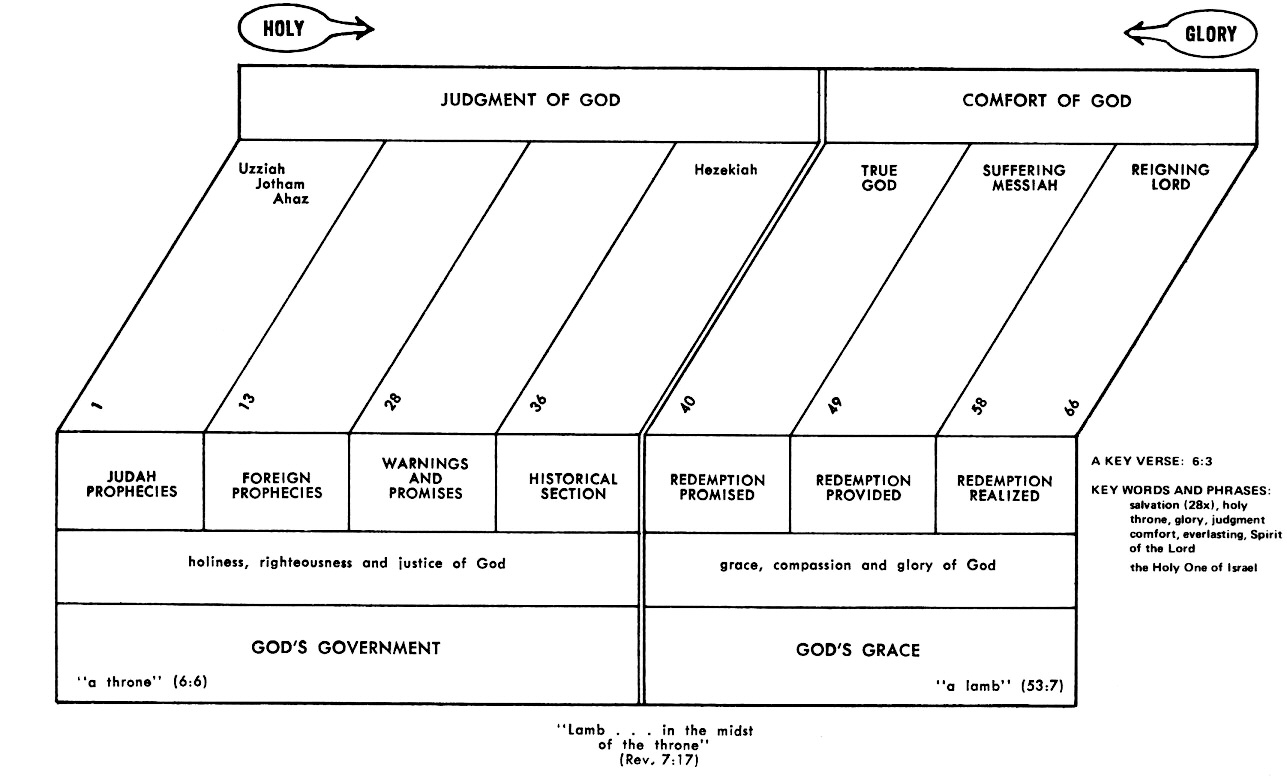
Click chart to enlarge
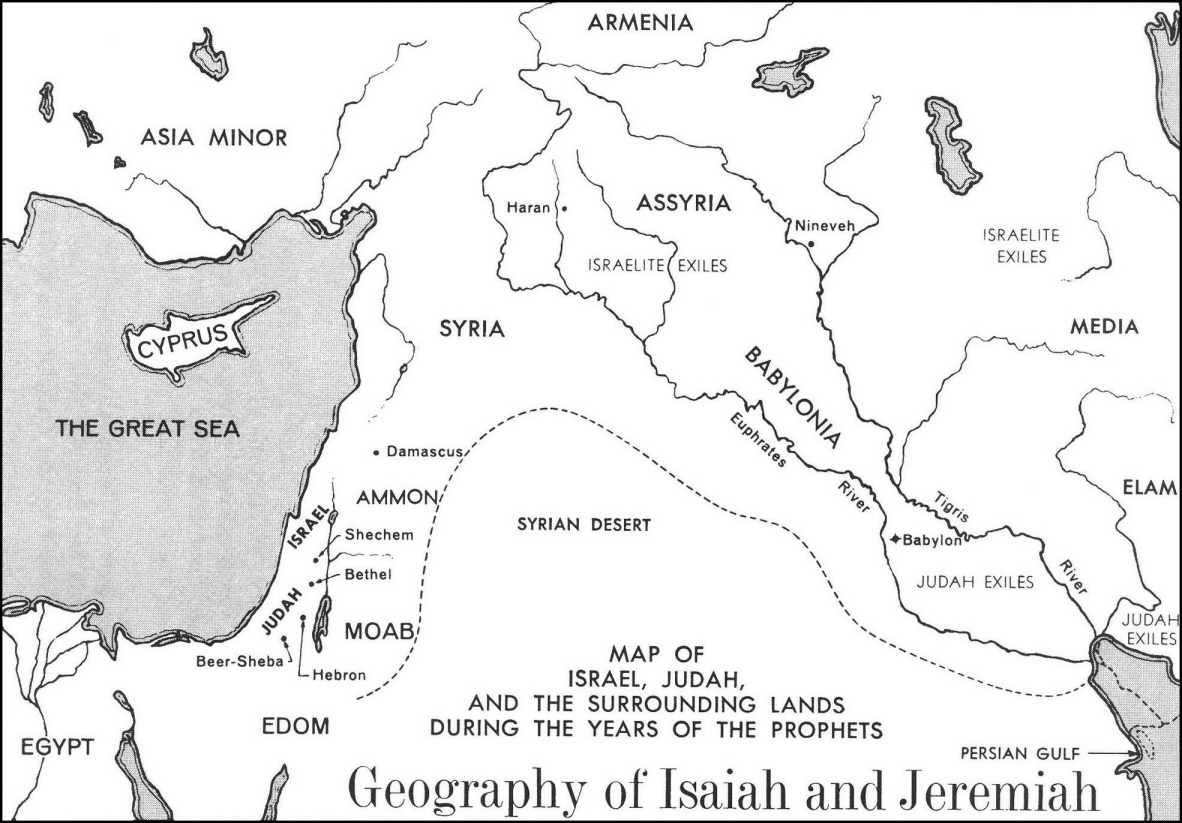
Click chart to enlarge
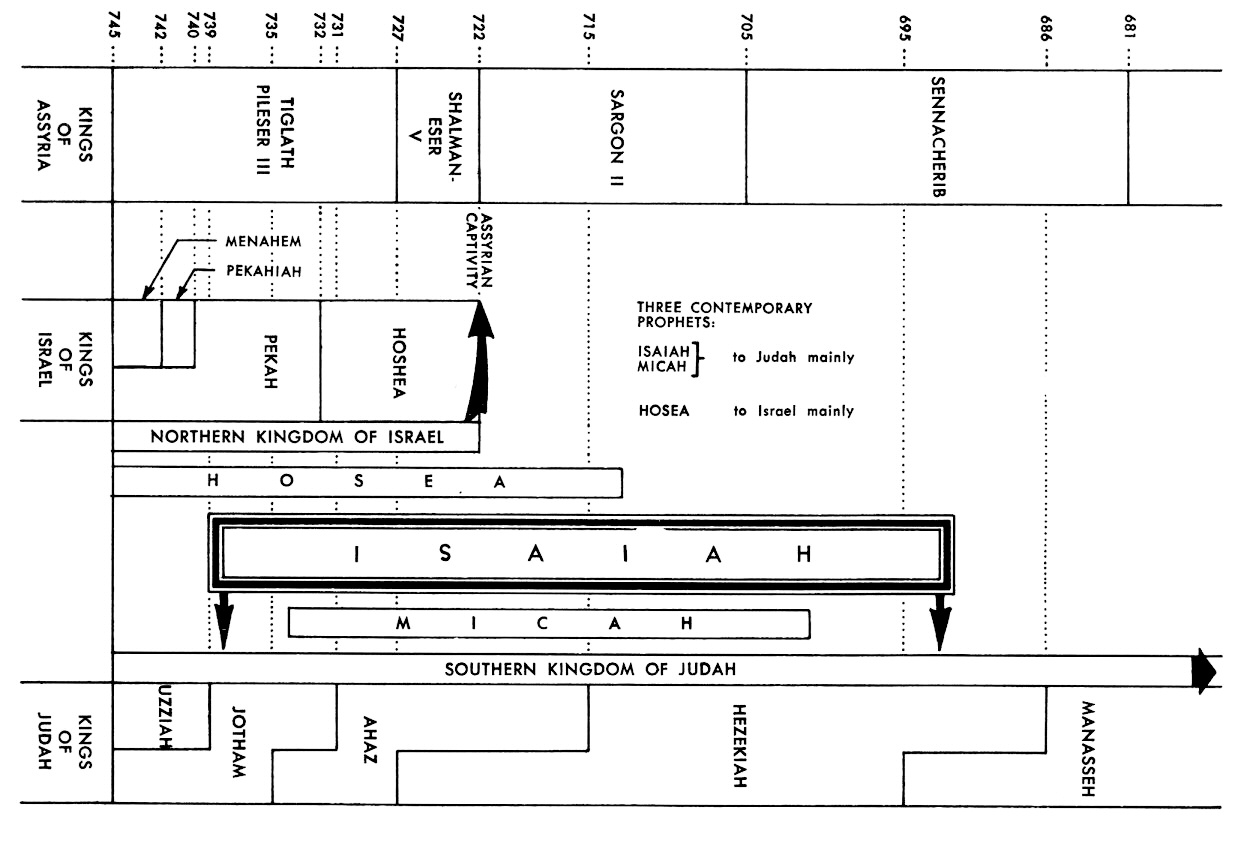
Chart from recommended resource Jensen's Survey of the OT - used by permission
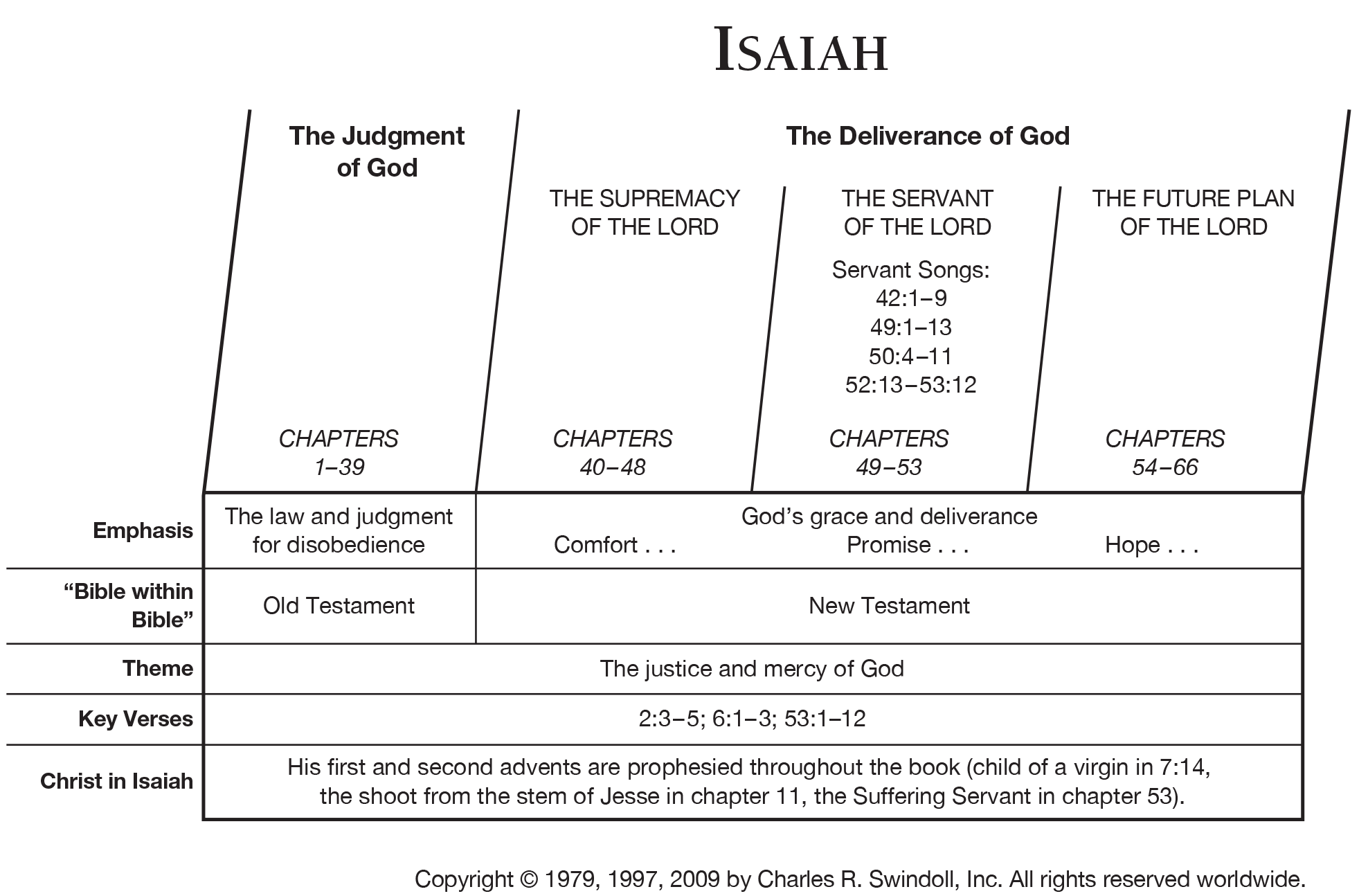
Another Isaiah Chart from Charles Swindoll
Isaiah 1:5 Where * will you be stricken again, as you continue in your rebellion? The whole head is sick and the whole heart is faint. (NASB: Lockman)
English Translation of the Greek (Septuagint): Why should ye be smitten any more, transgressing more and more? the whole head is pained, and the whole heart sad.
Amplified: Why should you be stricken and punished any more [since it brings no correction]? You will revolt more and more. The whole head is sick, and the whole heart is faint (feeble, sick, and nauseated). (Amplified Bible - Lockman)
KJV: Why should ye be stricken any more? ye will revolt more and more: the whole head is sick, and the whole heart faint.
NET: Why do you insist on being battered? Why do you continue to rebel? Your head has a massive wound, your whole body is weak. (NET Bible)
NJB: Where shall I strike you next, if you persist in treason? The whole head is sick, the whole heart is diseased, (NJB)
NLT: Why do you continue to invite punishment? Must you rebel forever? Your head is injured, and your heart is sick. (NLT - Tyndale House)
Young's Literal: Wherefore are ye stricken any more? Ye do add apostasy! Every head is become diseased, and every heart is sick.
Where will you be stricken again, as you continue in your rebellion? The whole head is sick and the whole heart is faint:
- Isa 9:13,21; Jeremiah 2:30; 5:3; 6:28, 29, 30; Ezekiel 24:13; Hebrews 12:5, 6, 7, 8
- Rebellion - 2Ch 28:22; Jeremiah 9:3; Rev 16:8-11, Isa 1:23; Neh 9:34; Jeremiah 5:5,31; Da 9:8, 9, 10, 11; Zeph 3:1-4
Israel is personified as a person with a serious, even potentially fatal illness.
THE FOLLY OF UNABATED REBELLION AGAINST GOD
This section shows the folly of Judah's continuing rebellion against God, which led to continued chastisement by Jehovah (from the head to sole so to speak, Isa 1:6). Is there some pet sin you are refusing to relinquish? If you are a believer, it is sheer folly for you to cling to your "pet sin", for as a legitimate son you will experience the disciplining hand of the Lord (cp He 12:5, 6-note, 7, 8, 9-note), that you might come to share His holiness (He 12:10-note) and bring forth the peaceful fruit of righteousness (He 12:11-note)
Note that if this prophecy was in fact sounded at the end of King Uzziah's reign and the beginning of Jotham's reign, this would have been a time in which there was some degree of prosperity. It's very difficult to hear "doom and gloom" when the stock market continues to climb to record highs!
Where will you be stricken again? Isaiah's point is that God’s rod of chastisement has not succeeded, even though their body is covered with wounds and bruises! Brute beasts are more responsive than Judah.
Spurgeon paraphrases it as "What is the use of chastisement to such people? It is supposed that punishment is always healthful, and that we grow the better for it, but God says, “Why should ye be stricken any more?”
Stricken again - Stricken pictures Judah's persistence in rebellion and thus the continual sowing of seeds of corruption that would eventually yield the fruit of divine judgment in exile to Babylon.
Jeremiah and Ezekiel make statements similar to Isaiah emphasizing Judah's stubborn resistance to Jehovah's rod of chastisement…
In vain I have struck your sons; They accepted no chastening. Your sword has devoured your prophets Like a destroying lion. (Jer 2:30)
O Lord, do not Your eyes look for truth? You have smitten them, but they did not weaken; You have consumed them, but they refused to take correction. They have made their faces harder than rock; They have refused to repent. (Jer 5:3)
“In your filthiness is lewdness. because I would have cleansed you, yet you are not clean, you will not be cleansed from your filthiness again until I have spent My wrath on you. (Ezekiel 24:13)
Stricken (05221) (nakah) means to strike, to beat, to strike down, to slay, to kill. Depending on the context, nakah can reflect beating lightly or severely, literally or figuratively (Jer 18:18). Nakah is applied to the infliction of punishment on an individual or to the judgments of God by the plague, pestilence, sickness or even blindness (nakah used in each of the following - Ge 19:11, Nu 14:12: Ex 7:25). Isaiah uses nakah to describe the judgments inflicted on the nation as the punishment of their crimes.
Nakah is the same verb used of the smiting of the Messiah…"Surely our griefs He Himself bore, and our sorrows He carried; yet we ourselves esteemed Him stricken, smitten (Lxx = plege = a sudden hard blow, as laid on one by a whip-like instrument or the effect caused by the blow = stroke, stripe, wound, bruise) of God, and afflicted. (Isaiah 53:4+)
Nakah - Uses in Isaiah - Isa. 1:5; 5:25; 9:13; 10:20, 24; 11:4, 15; 14:6, 29; 27:7; 30:31; 37:36, 38; 49:10; 50:6; 53:4; 57:17; 58:4; 60:10; 66:3.
Yet the people do not turn back to Him who struck (nakah) them, nor do they seek the Lord of hosts. (Isa 9:13)
Spurgeon writes that…
One of God’s ways of bringing people to himself is by chastisement and affliction. He had tried that method upon Judah; he had used his rod so long that, at last, he exclaimed, “Why should ye be stricken any more?” What is the good of my sending any more affliction upon you? “
Now, whenever the rod is of no more use, there will be a sharper instrument to follow. When men can no longer be chastened for their good, the axe of execution is ready to be brought forth. What a sorrowful description is here given of the people of Judah and their land! (Exposition of Isaiah)
Matthew Poole comments… It is to no purpose to seek to reclaim you by one chastisement after another and therefore I will utterly forsake and destroy you at once.
Albert Barnes adds that the sense of where will you be stricken again is…‘what part of the body can be found on which blows have not been inflicted? On every part there are traces of the stripes which have been inflicted for your sins.’ The idea is taken from a body that is all covered over with weals or marks of blows, and the idea is, that the whole frame is one continued bruise, and there remains no sound part to be stricken. The particular chastisement to which the prophet refers is specified in Isaiah 1:7, 8, 9. In Isaiah 1:5,6, he refers to the calamities of the nation, under the image of a person wounded and chastised for crimes. (Barnes' Notes on the Old Testament - Volume VII).
As you continue in your rebellion - They were incorrigible to the highest degree -- they even turned their afflictions into opportunities/motivations for rebellion (sin)!
Isaiah makes an interesting link in these passages between sin and sickness, and indeed each of these maladies weakens us and makes it impossible to enjoy life as God intended. There may also be an allusion to God's promise to his chosen people in the OT to keep them free from disease if they were obedient (Dt 7:12, 14, 15) and conversely to bring disease upon them for disobedience (Dt 28:59). However a note of caution is in order, for we would make a grave mistake to assume that all sickness is punishment for sin, for the Bible does not teach this (cp Jesus words of caution to His disciples - Jn 9:2, 3, 11:4)
Whole (03605) (kol) refers to all or every one of something. Isaiah speaks of every fiber of the being of those in Judah as "infected" and/or "corrupted", amplified by the statement in the next passage "nothing sound in it", in case one thought "Well surely you are not referring to virtually the entire nation?" (The remnant of believing Jews was present as an exception but it was very small - cp Isa 1:9)
Sick (02483) (choli) denotes any kind of illness and here is used figuratively to picture the ever present evil of Judah and Jerusalem. Lxx uses ponos = speaks of distress, affliction, anguish caused by hard, difficult circumstances.
Choli - 22v in OT - Deut. 7:15; 28:59, 61; 1 Ki. 17:17; 2 Ki. 1:2; 8:8f; 13:14; 2 Chr. 16:12; 21:15, 18f; Ps. 41:3; Eccl. 5:17; 6:2; Isa. 1:5; 38:9; 53:3, 4; Jer. 6:7; 10:19; Hos. 5:13 and rendered as affliction(1), disease(2), grief(1), griefs(1), illness(3), sick(1), sickness(14), sicknesses(1).
J C Philpot explains the whole head… whole heart is sick…
Every thought, word, and action is polluted by sin.
Every mental faculty is depraved …
the will chooses evil;
the affections cleave to earthly things;
the memory, like a broken sieve, retains the bad and lets fall the good;
the judgment, like a bribed or drunken judge, pronounces heedless or wrong decisions;
the conscience, like an opium eater, lies asleep and drugged in stupefied silence.
When all these 'master faculties of the mind' are so drunken and disorderly—need we wonder that the bodily members are a godless, rebellious crew? Lusts call out for gratification. Unbelief and infidelity murmur. Tempers growl and mutter. Every bad passion strives hard for the mastery. O the evils of the human heart, which, let loose, have filled earth with misery, and hell with victims—which deluged the world with the flood—burnt Sodom and Gomorrah with fire from heaven—and are ripening the world for the final conflagration! Every sin—which has made this fair earth a 'present hell' has filled the air with groans, and has drenched the ground with blood—dwells in your heart and mine!
Now, as this is opened up to the conscience by the Spirit of God, we feel indeed to be of all men most sinful and miserable—and of all most guilty, polluted, and vile. But it is this—and nothing but this—which cuts to pieces our 'fleshly righteousness, wisdom, and strength'—which slays our delusive hopes—and lays us low at the footstool of mercy—without one good thought, word, or action to propitiate an angry Judge. It is this which brings the soul to this point—that if saved, it can only be saved by the free grace, sovereign mercy, and tender compassion of Almighty God!
Isaiah 1:6 From the sole of the foot even to the head there is nothing sound in it, only bruises, welts and raw wounds, not pressed out or bandaged, nor softened with oil. (NASB: Lockman)
English Translation of the Greek (Septuagint): From the feet to the head, there is no soundness in them; neither wound, nor bruise, nor festering ulcer are healed: it is not possible to apply a plaister, nor oil, nor bandages.
Amplified: From the sole of the foot even to the head there is no soundness or health in [the nation’s body]—but wounds and bruises and fresh and bleeding stripes; they have not been pressed out and closed up or bound up or softened with oil. [No one has troubled to seek a remedy.] (Amplified Bible - Lockman)
KJV: From the sole of the foot even unto the head there is no soundness in it; but wounds, and bruises, and putrifying sores: they have not been closed, neither bound up, neither mollified with ointment.
NET: From the soles of your feet to your head, there is no spot that is unharmed. There are only bruises, cuts, and open wounds. They have not been cleansed or bandaged, nor have they been treated with olive oil. (NET Bible)
NJB: from the sole of the foot to the head there is nothing healthy: only wounds, bruises and open sores not dressed, not bandaged, not soothed with ointment, (NJB)
NLT: You are sick from head to foot--covered with bruises, welts, and infected wounds--without any ointments or bandages. (NLT - Tyndale House)
Young's Literal: From the sole of the foot -- unto the head, There is no soundness in it, Wound, and bruise, and fresh smiting! They have not been closed nor bound, Nor have they softened with ointment.
From the sole of the foot even to the head there is nothing sound in it, only bruises, welts and raw wounds, not pressed out or bandaged, nor softened with oil:
- Job 2:7,8; Luke 16:20,21
- Bruises - 2Ch 6:28,29; Ps 77:2; Jeremiah 6:14; Jeremiah 30:12; Nahum 3:19
- Not pressed - Job 5:18; Psalms 38:3, 4, 5; Jeremiah 6:14; 8:21,22; 33:6; Hosea 5:12,13; Malachi 4:2; Matthew 9:12; Luke 10:34
Spurgeon comments that "The nation had been so beaten that it was covered all over with bruises and sores. It seemed to be of no use to afflict Israel any more; and there are some persons in the world who have been chastened in every conceivable way, and yet they are none the better. There are graves in the cemetery where lie asleep those they love; the house that was their joy has long ago been sold, and they have not a roof to call their own; they have seen themselves at death’s door by fever and by other diseases; and yet all that God’s rod has done for them has come to nothing. The old Roman lictors (officer among the Romans, who bore an ax and rods, as ensigns of his office and whose duty it was An officer among the Romans, who bore an ax and fasces or rods, as ensigns of his office) carried an axe bound up in a bundle of rods; and, when the rods had been tried, and had failed, then came the axe. And if the milder forms of chastisement do not bring men to repentance, sooner or later will come the axe of destruction."
Sole … to the head… nothing sound - Speaks of the pervasive aspect of their sinful condition.
J C Ryle speaks of the sole to head pervasive nature of sin "Concerning the extent of this vast moral disease called "sin," let us beware that we make no mistake. The only safe ground is that which is laid for us in Scripture. "Every imagination of the thoughts of his heart" is by nature "evil," and that "continually." "The heart is deceitful above all things, and desperately wicked" (Ge 6:5; Je 17:9). Sin is a disease which pervades and runs through every part of our moral constitution and every faculty of our minds. The understanding, the affections, the reasoning powers, the will, are all more or less infected. Even the conscience is so blinded that it cannot be depended on as a sure guide, and is as likely to lead men wrong as right, unless it is enlightened by the Holy Spirit. In short, "from the sole of the foot even unto the head there is no soundness" about us (Is 1:6). The disease may be veiled under a thin covering of courtesy, politeness, good manners and outward decorum, but it lies deep down in the constitution." (J. C. Ryle. Holiness)
Nothing sound - In other words wholly filled with unsoundness.
Nothing (0369) (ayin) meaning negation or nonexistence. The Septuagint (LXX) translates ayin with the Greek negative particle (ouk) signifying absolute negation, which emphasizes the completeness of Judah's deficiency soundness. The Great Physician gives presents a bleak outlook regarding Judah's spiritual health and all because they had refused the Physician's advice! It's not good to ignore a medical doctor's advice, but it's far worse to ignore the Great Physician!
Bruises (02250) (chabbuwrah/habburah) is a wound, "stripe" (KJV) or welt (wound in form of a lump caused by a blow). There are only 5 uses in the OT (Ge 4:23; Ex 21:25; Ps 38:5; Pr 20:30; Is 1:6; 53:5), and two are in Isaiah, the first describes Judah's bruises (in context referring to her sins) and the second describing the Messiah Who was…
was pierced through for our transgressions, He was crushed for our iniquities (cp Isa 1:4); The chastening for our well-being fell upon Him, and by His scourging (habburah - KJV = "stripes") we are healed (Heb = rapha; Lxx = iaomai = to heal, used of "healing" from sin in Jn 12:40, Ac 28:27). (Isaiah 53:5)
Sound (04974) (metom) speaks of wholeness, and in context refers figuratively primarily to the spiritual health.
Used 4x in the OT - Jdg. 20:48; Ps. 38:3, 7; Isa. 1:6 and rendered as entire(1), sound(1), soundness(2).
Psalm 38:3 There is no soundness (Heb = metom; Lxx = iasis = healing, cure, deliverance from a variety of ills or conditions that lie beyond physical maladies) in my flesh because of Thine indignation; There is no health (KJV = "rest" - Hebrew = shalom which means peace) in my bones because of my sin.
Spurgeon: There is no soundness in my flesh because of thine anger. Mental depression tells upon the bodily frame; it is enough to create and foster every disease, and is in itself the most painful of all diseases. Soul sickness tells upon the entire frame; it weakens the body, and then bodily weakness reacts upon the mind. One drop of divine anger sets the whole of our blood boiling with misery.
Neither is there any rest in my bones because of my sin. (KJV) Deeper still the malady penetrates, till the bones, the more solid parts of the system, are affected. No soundness and no rest are two sad deficiencies; yet these are both consciously gone from every awakened conscience until Jesus gives relief. God's anger is a fire that dries up the very marrow; it searches the secret parts of the belly. A man who has pain in his bones tosses to and fro in search of rest, but he finds none; he becomes worn out with agony, and in so many cases a sense of sin creates in the conscience a horrible unrest which cannot be exceeded in anguish except by hell itself.
Psalm 38:7 For my loins are filled with burning; and there is no soundness in my flesh.
Oil (08081) (shemen) generally referred to pure or refined olive oil which was used as a perfume or ointment as it could applied directly to the skin and wonderfully cleanse and soothe wounds and injuries.
H A Ironside comments that…There is no breach of relationship suggested here. Judah was still owned of God, but her moral state was such as demanded discipline. Yet that discipline she had despised until it seemed to be useless to chasten her further. The sore seemed too deep to be healed; the whole head (Isa 1:5) was sick and the heart faint Isa 1:5). Everywhere the evidences of inward corruption were manifest. Soundness, there was none; nor had their hearts turned to Him that He who had smitten might bind them up in His grace and longsuffering. (Expository Notes on the Prophet Isaiah)
J C Philpot writes of…
Wounds, and bruises, and putrefying sores (Isaiah 1:5, 6)
Every thought, word, and action is polluted by sin.
Every mental faculty is depraved.
The will chooses evil.
The affections cleave to earthly things.
The memory, like a broken sieve, retains the bad and lets fall the good.
The judgment, like a bribed or drunken judge, pronounces mindless or wrong decisions.
The conscience, like an opium eater, lies asleep and drugged in stupefied silence.
When all these 'master faculties of the mind' are so drunken and disorderly—need we wonder that
the bodily members are a godless, rebellious crew?
Lusts call out for gratification.
Unbelief and infidelity murmur.
Tempers growl and mutter.
Every bad passion strives hard for the mastery.
O the evils of the human heart, which, let loose, have filled earth with misery, and hell with victims; which deluged the world with the flood—burnt Sodom and Gomorrah with fire from heaven—and are ripening the world for the final conflagration!
Every sin which …
has made this fair earth a 'present hell';
has filled the air with groans; and
has drenched the ground with blood;
dwells in your heart and mine!
Now, as this is opened up to the conscience by the Spirit of God—we feel indeed to be of all men most sinful and miserable—and of all most guilty, polluted, and vile. But it is this—and nothing but this—which cuts to pieces our 'fleshly righteousness, wisdom, and strength'—which slays our delusive hopes—and lays us low at the footstool of mercy—without one good thought, word, or action to propitiate an angry Judge.
It is this which brings the soul to this point— that if saved, it can only be saved by the free grace, sovereign mercy, and tender compassion of Almighty God.
Isaiah 1:7 Your land is desolate, Your cities are burned with fire, Your fields --strangers are devouring them in your presence; It is desolation, as overthrown by strangers. (NASB: Lockman)
English Translation of the Greek (Septuagint): Your land is desolate, your cities burned with fire: your land, strangers devour it in your presence, and it is made desolate, overthrown by strange nations.
Amplified: [Because of your detestable disobedience] your country lies desolate, your cities are burned with fire; your land—strangers devour it in your very presence, and it is desolate, as overthrown by aliens. (Amplified Bible - Lockman)
KJV: Your country is desolate, your cities are burned with fire: your land, strangers devour it in your presence, and it is desolate, as overthrown by strangers.
NET: Your land is devastated, your cities burned with fire. Right before your eyes your crops are being destroyed by foreign invaders. They leave behind devastation and destruction. (NET Bible)
NJB: your country a desolation, your towns burnt down, your soil, foreigners lay it waste before your eyes, a desolation like devastation by foreigners. (NJB)
NLT: Your country lies in ruins, and your cities are burned. As you watch, foreigners plunder your fields and destroy everything they see. (NLT - Tyndale House)
Young's Literal: Your land is a desolation, your cities burnt with fire, Your ground, before you strangers are consuming it, And a desolation as overthrown by strangers!
Your land is desolate, your cities are burned with fire, your fields--strangers are devouring them in your presence; it is desolation, as overthrown by strangers:
- Land - Isa 5:5,6,9; 6:11; 24:10, 11, 12; Leviticus 26:34; Deuteronomy 28:51; 2Chr 28:5,16, 17, 18, 19, 20, 21; Ps 107:34,39; Jeremiah 6:8
- Burned - Isa 9:5; 34:9; Jeremiah 2:15
- Strangers - Isa 5:17; Deut 28:33,43,48, 49, 50, 51, 52; Lam 5:2; Ezekiel 30:12; Hos 7:9; 8:7
Your land (erets) - the Promised Land occupied by Israel.
Desolate… desolations (08077)(shemamah) means desolation or waste and can refer to the condition of land, cities and houses as a result of neglect or devastating war (e.g., Ex. 23:29; Lev. 26:33; Isa. 1:7) and of Israel's idols as a result of God's judgment (Mic. 1:7). It is used figuratively of princes being clothed with devastation under the same conditions (Ezek. 7:27). God's judgment is figuratively referred to as His cup of desolation (Ezek 23:33). Lxx = eremos = of an empty or uninhabited place abandoned, lonely, desolate. Desolate = deserted of people and in a state of bleak and dismal emptiness. Synonyms = Bleak. Stark. Bare. Dismal. Grim. Godforsaken! Abandoned. Empty. Barren.
Spurgeon - Now, to translate all this into plain English, I have known men who have been chastened for their sins, and by their sins; God has chastised them, and they have been severely chastised; but no obedience, no repentance, has followed upon the chastisement. Men have been brought, by their sin, from wealth to poverty, from competence to actual want. Have we not seen them by drunkenness brought to rags, and by vice brought to rottenness? Have we not seen men brought to the very gates of hell by their iniquities, yet still they have clung to those iniquities? They have begun to drink the cup of their own damnation, and even when they realized what they were doing, they have still clutched the burning chalice in their hands, and have willingly drained it to the last dregs. Oh, it is horrible, it is terrible, to see at what a cost men will ruin their own souls! They go to perdition as if they were at a steeplechase; no hedge is too high, and no brook too wide for them, and they ride to destruction at a desperate pace. If we who are God’s people were half as earnest in serving him as the ungodly are in their efforts to be lost, what great service we should render to him! God reminded these people of all that he had done to them by way of chastening; yet no good had come of it. (Exposition on Isaiah 1)
Ironside observes that "Prophetically, Isaiah beholds the sad result of all this cold-hearted indifference to the message he brought. Their country was soon to be desolate and their fair cities were to be destroyed by conflagration. (Expository Notes on the Prophet Isaiah)
R C Sproul sees Isaiah's potent proclamation in chapter 1 as an example the modern pastors' need to consider writing…
What if a preacher today talked like this in a congregation of Christians? “Hellfire and brimstone” preaching has just about disappeared. Yet Isaiah was one of the most educated men of his time. He was a member of the nobility, traveling in the highest circles of Israel. There is some evidence that he was of the royal house, though this inference is contested by some scholars. When Isaiah spoke his fiery words he was not a crazy preacher standing on a street corner with a sign. His words carried weight. We can learn from Isaiah that there is indeed a time and a place for wise, educated preachers to talk straight to their congregations about sin.
Isaiah called them “Sodom and Gomorrah (Isa 1:10).” He told them that God was sick and tired of their religious activities, their sacrifices and festivals, because they were ignoring true social justice (Isa 1:11, 12, 13, 14, 15). He advised them to start defending the good, seeking justice, reproving the ruthless, defending the orphan, and pleading for the widow. He did not tell them to take the easy way, to set up a political bureaucracy to do these things. Rather, he told them that each of them needed to stand up publicly and be counted on the side of justice for the oppressed.
God’s invitation is issued in Isa 1:18, “Come now, let us reason together.” God told the people who had been indicted that, if they would repent, their sins would be washed away, and they would eat the best of the land. He also told them that, if they continued to rebel, it was they who would be eaten—by the sword. With such options, what was clearly reasonable was heartfelt repentance.
What Isaiah delivered was part of the “whole counsel of God,” the rest of the story we often prefer not to hear. There are times when pastors must speak the whole counsel. Does your church stifle or intimidate your pastor, perhaps unintentionally, so that some subjects about sin are off-limits from the pulpit? Give him the freedom to speak all of God’s Word to you. (Sproul, R. Vol. 3: Before the face of God: Book three: Ligonier Ministries)
Isaiah 1:8 The daughter of Zion is left like a shelter in a vineyard, Like a watchman's hut in a cucumber field, like a besieged city. (NASB: Lockman)
English Translation of the Greek (Septuagint): The daughter of Sion shall be deserted as a tent in a vineyard, and as a storehouse of fruits in a garden of cucumbers, as a besieged city.
Amplified: And the Daughter of Zion [Jerusalem] is left like a [deserted] booth in a vineyard, like a lodge in a garden of cucumbers, like a besieged city [spared, but in the midst of desolation]. (Amplified Bible - Lockman)
KJV: And the daughter of Zion is left as a cottage in a vineyard, as a lodge in a garden of cucumbers, as a besieged city.
NET: Daughter Zion is left isolated, like a hut in a vineyard, or a shelter in a cucumber field; she is a besieged city. (NET Bible)
NJB: The daughter of Zion is left like a shanty in a vineyard, like a shed in a cucumber field, like a city besieged. (NJB)
NLT: Jerusalem stands abandoned like a watchman's shelter in a vineyard or field after the harvest is over. It is as helpless as a city under siege. (NLT - Tyndale House)
Young's Literal: And left hath been the daughter of Zion, As a booth in a vineyard, As a lodge in a place of cucumbers -- as a city besieged.
The daughter of Zion is left like a shelter in a vineyard, like a watchman's hut in a cucumber field, like a besieged city:
- Isa 4:4; 10:32; 37:22; 62:11; Ps 9:14; Lamentations 2:1; Zechariah 2:10; 9:9; John 12:15
- Job 27:18; Lam 2:6
- Besieged - Is 8:8; 10:32; Jeremiah 4:17; Luke 19:43,44
THE CITY OF ZION'S
THREE COMPARISONS
The daughter of Zion (see notes on Zion)- Jerusalem is personified.
Spurgeon comments that "The land had been so harried and worried by invaders that it was little better than a poor shanty; the nation was comparable to a poor hut which the Arabs put up in the vineyard just to sleep in: “a lodge in a garden of cucumbers, as a besieged city.”
Shelter (05521) (sukkah) is a term used to describe temporary shelters where one dwells, as booths, huts, tents, etc. In context this word pictures the devastation and depopulation of Judah, because he foresees God’s people reduced to living in temporary shelters. Sukkah (booth) is the Hebrew word used in the Feast of Booths (Tabernacles) - Leviticus 23:34, 42, 43.
Like a watchman's hut in a cucumber field - The accurate interpretation of this simile (see terms of comparison) requires some knowledge of the practices of Isaiah's day (if interpretation is to be accurate interpretation context must rule - in this case the agricultural "context"). To his original audience Isaiah's picture would have been readily understood as an image of desolation. Why so? The answer is that crude huts were temporary shanties used by watchmen in late summer to keep the birds away from the crops, but once the season ended, the huts were abandoned.
Constable adds that "Many Israelite families lived in villages but built little shelters in their fields and camped there during the harvest season. After the harvest these little shacks looked pitiful, abandoned, useless, and deteriorating. (Isaiah - Expository Notes)
Like a besieged city - Again a knowledge of the historical context is mandatory to arrive at the most accurate interpretation of this simile. In ancient times cities were walled for protection and impeded easy invasion by enemy forces, which instead would surround the city thus cutting it off from all supplies necessary for normal life. Such sieges might last many months or even years, but the end result was the same in that eventually the besieged city would experience desperation and hunger (cp a description of the horrible conditions in Dt 28:49, 50, 51, 52, 53, 54, 55, 56, 57+).
QUESTION: "What does the Bible mean when it refers to a 'Daughter of Zion'?"
ANSWER: The “daughter of Zion” is mentioned several times in the Old Testament, usually in prophecy and once in poetry. “Zion” meant Jerusalem and, later, Israel as the people of God. “Daughter of Zion,” then, does not refer to a specific person. It’s a metaphor for Israel and the loving, caring, patient relationship God has with His chosen people.
As a representation of the people of Israel, the daughter of Zion is described in several different situations:
2 Kings 19:21: A people confident in the deliverance of their God. When Assyria threatened Jerusalem, King Hezekiah went to the Lord. In response, God sent Isaiah to reassure Hezekiah that Jerusalem would not fall to Assyria, and God considered the threatening insult to “the virgin daughter of Zion” as a personal affront to Himself.
Isaiah 1:8: A hut, abandoned after judgment came to an evil family. Here, Isaiah compares the rebellion of Judah to a sick body in a devastated land. The daughter of Zion is left as a lone remnant—a shelter hidden in the vineyard or a hut in a cucumber field that barely escaped destruction.
Jeremiah 4:31: A woman in labor, helpless before attackers. The steadfastness of Hezekiah was rare in Judah—most kings encouraged rebellion against God instead of loyalty to God. Jeremiah warns that if the nation does not turn away from evil, God will punish them severely. And the people will be helpless against it—as helpless as a woman in labor.
Isaiah 62:11: A people awaiting salvation. After the punishment of exile, God promises restoration to Israel. He will rejoice over His chosen people again. And in verse 11, He promises the daughter of Zion, “Lo, your salvation comes; behold His reward is with Him, and His recompense before Him.”
Micah 4:13: A bull that threshes his enemies. In verse 10, God warns that the daughter of Zion will suffer as much as a woman in labor. But in verse 13, He promises vengeance. The weak, powerless woman will become a bull with horns of iron and hoofs of bronze that will crush its enemies.
Zechariah 9:9: A land awaiting its king. This prophecy promises Israel’s enemies will be destroyed, but also speaks about a more permanent solution to the problem of sin. “Rejoice greatly, O daughter of Zion! Shout in triumph, O daughter of Jerusalem! Behold, your king is coming to you; he is just and endowed with salvation, humble, and mounted on a donkey, even on a colt, the foal of a donkey.” Despite the consistent rebellion of the daughter of Zion against her Father, He promises to restore her and present her with a Deliverer-King in the form of Jesus.
Daughter implies that God is a loving father. He cherishes and loves His people, even while they reject Him. By using the metaphor “daughter of Zion,” God showed how He felt for the rebellious Israelites: frustrated, angry, but always with an eye to the future when the relationship would be restored, and He could once again return to them and welcome them into His arms (Zechariah 2:10). (Gotquestions - recommended resource)
Isaiah 1:9 Unless the LORD of hosts Had left us a few survivors, we would be like Sodom, We would be like Gomorrah (NASB: Lockman)
English Translation of the Greek (Septuagint): And if the Lord of Sabaoth had not left us a seed, we should have been as Sodom, and we should have been made like Gomorrha.
Amplified: Except the Lord of hosts had left us a very small remnant [of survivors], we should have been like Sodom, and we should have been like Gomorrah. [Gen. 19:24, 25; Ro 9:29.] (Amplified Bible - Lockman)
KJV: Except the LORD of hosts had left unto us a very small remnant, we should have been as Sodom, and we should have been like unto Gomorrah.
NET: If the LORD who commands armies had not left us a few survivors, we would have quickly become like Sodom, we would have become like Gomorrah. (NET Bible)
NJB: Had Yahweh Sabaoth not left us a few survivors, we should be like Sodom, we should be the same as Gomorrah. (NJB)
NLT: If the LORD Almighty had not spared a few of us, we would have been wiped out as completely as Sodom and Gomorrah. (NLT - Tyndale House)
Young's Literal: Unless Jehovah of Hosts had left to us a remnant, Shortly -- as Sodom we had been, To Gomorrah we had been like!
Unless the LORD of hosts had left us a few survivors:
- Lamentations 3:22; Habakkuk 3:2; Romans 9:29
- Remnant - Isa 6:13; 10:22; 17:6; 24:13; 37:4,31,32; 1Kings 19:18; Ezek 6:8; 14:22; Joel 2:32; Zech 13:8,9; Mt 7:14; Ro 9:27; 11:4, 5, 6
Unless… left us… we… we - Unless means except, the idea is when saying that if something does not happen, something else will happen. Notice how Isaiah identifies with his people referring to "us" (we) instead of saying "you". Do you see the sovereign hand of the covenant keeping God, Yahweh, here called Jehovah Sabaoth, LORD of hosts (of armies) which speaks of His attributes of sovereignty, omniscience & omnipotence. In other words, He is able to preserve a remnant of believing Israel in the end times in the Time of Jacob's Trouble.
Had left (Remnant) (03498)(yathar) means to be left over, remain, remain over, leave 1a) (Qal) remainder (participle) 1b) (Niphal) to be left over, remain over, be left behind 1c) (Hiphil) 1c1) to leave over, leave 1c2) to save over, preserve alive 1c3) to excel, show pre-eminence 1c4) to show excess, have more than enough, have an excess. Although 4 different Hebrew words express the concept of remnant) Yathar refers to one portion of a quantity which has been divided and generally refers to the smaller part remaining. Remnant can mean that which is spared, preserved, escaped, survived, and thus that which is not in a condition of danger or death. The idea of the remnant is “those being left” or “having escaped,” especially a portion of a community which has escaped a devastating calamity and will form the basis for a new community.
A few survivors - More literally this reads "a little remnant", and the Septuagint (LXX) translates it with the noun sperma or seed. As long as there is a seed a plant line can be propagated. God in His grace has preserved a seed to propagate the line of Israel. Specifically, the remnant almost always refers to believing Jews (those who like Abraham have been declared righteous by faith, cp Ge 15:6). In contrast to the attitude and actions of the majority who did what was right in their own eyes (cp Jdg 21:25), the faithful remnant were those who did what right in the sight of Jehovah their King! The implication from Isaiah's declaration in this verse is that most of the Jews in Isaiah's day were not believers , not part of the faithful remnant who feared (reverentially) Jehovah and therefore who had not entered into the covenant of Abraham by grace through faith.
In Romans 9-11 Paul deals specifically with the Jewish question "What will happen to Israel? Will the Jews be saved?". In his 3 chapter "treatise" dealing with this question, he alludes to the remnant twice declaring…
And Isaiah cries out concerning Israel, "THOUGH THE NUMBER OF THE SONS OF ISRAEL BE AS THE SAND OF THE SEA, IT IS THE REMNANT THAT WILL BE SAVED; (Ro 9:7-note)
In the same way then, there has also come to be at the present time a remnant (of Israel) according to God's gracious choice. (Ro 11:5-note)
As an aside, I have noticed that Romans 9-11 are often quickly passed over in sermon series on Romans, and occasionally not preached upon at all! This is a mistake for without a proper understanding of these 3 chapters in Romans, one can never truly understand God's dealings with Israel, especially His dealings which are yet future. Given this widespread deficiency in the modern church in the understanding of Romans 9-11, Tony Garland has performed a great service to the body of Christ by making his 12 hour course on these chapters freely available on the internet - Romans 9-11 What Will Happen to Israel?.
If you are confused about God's plan for Israel, then this series is for you (click). Each link will in turn give you several choices including an Mp3 message and brief transcript notes. The Mp3's are long (avg 70+ min) but are in depth and thoroughly Scriptural with many quotations from the Old Testament, which is often much less well understood than the NT by most Evangelicals. Garland takes a literal approach to Scripture, and his love for the Jews and passion to see them saved comes through very clearly on these 12 hours of teaching! Take your home Bible Study group through this series if you dare. Take notes on the tapes as the transcripts are a very abbreviated version of the audio messages. This course is highly recommended for all who love Israel! I think you will agree that Tony Garland, despite coming to faith after age 30 as an engineer, clearly has been given a special anointing by God to promulgate the truth concerning Israel and God's future plan for the Jews. He has also produced more than 20 hours of superb audio teaching in his verse by verse commentary on the Revelation (in depth transcripts also available - and similar studies are in progress on the heavily prophetic book of Daniel and should be completed in 2009) which will unravel (in a way you did not think was possible considering the divergent interpretations) God's final message of the triumph and return of the our Lord Jesus Christ as the King of kings and Lord of lords! Maranatha!
We would be like Sodom, We would be like Gomorrah:
- Genesis 18:26,32; 19:24; Deuteronomy 29:23; Lamentations 4:6; Amos 4:11; Zephaniah 2:9; Luke 17:29,30; 2Peter 2:6)
Like Sodom...like Gomorrah - "Like" or "as" these are in a sense "code words" which usually identify a simile, one of the common forms of comparison used in Scripture. Whenever you encounter a term of comparison (most commonly simile or metaphor), stop and ask what the writer is comparing (Or why?, etc - Interrogate the text with the 5W'S & H - like a reporter). In the present context, the names Sodom and Gomorrah, speak not only of places of despicable, abominable evil, but of the complete and utter destruction that was God's recompense for that evil. Faithless Judah deserved no less, but because of God's covenant lovingkindness to His unconditional covenant with Abraham, Isaac and Jacob would spare a remnant of Jewish "seed" in every generation, looking forward to His fulfillment of the promise He made to Abraham to give his descendents the land of Israel, a promise that has not yet been completed.
for all the land which you see, I will give it to you and to your descendants forever. (Genesis 13:15)
And I will establish My covenant between Me and you and your descendants after you throughout their generations for an everlasting covenant, to be God to you and to your descendants after you. And I will give to you and to your descendants after you, the land of your sojournings, all the land of Canaan, for an everlasting possession; and I will be their God. (Genesis 17:8-9)
More importantly it would be out of the seed of the remnant of believing Israel that the Messiah would one day come into the world, which was also God's promise to Abraham. As Paul wrote in Galatians…
Now the promises were spoken to Abraham and to his seed. He does not say, "And to seeds," as referring to many, but rather to one, "And to your seed," that is, Christ. (Galatians 3:16)
QUESTION - What does the Bible mean when it refers to a remnant?
ANSWER - A remnant is a left-over amount from a larger portion or piece, whether it is food, material from which a garment is fashioned, or even a group of people. Although remnants could be looked upon as worthless scraps, and many times are, God assigned high value to those of His people whom He had set aside for holy purposes, those He labels as “remnants” in several places in the Bible. To begin, in Isaiah 10 the story is told of the Lord’s judgment upon the Assyrians. In verse 12 God says, “I will punish the king of Assyria for the willful pride of his heart and the haughty look in his eyes.” He continues in verses 17-18: “The Light of Israel will become a fire, their Holy One a flame; in a single day it will burn and consume his thorns and his briars. The splendor of his forests and fertile fields I will completely destroy, as when a sick man wastes away.”
God then relates how His people will turn back to Him as a result of this tremendous display of His strength—His utter destruction of most of Assyria: “In that day the remnant of Israel, the survivors of the house of Jacob, will no longer rely on him who struck them down but will truly rely on the LORD, the Holy One of Israel. A remnant will return, a remnant of Jacob will return to the Mighty God” (Isaiah 10: 20, 21). He goes on to assure the remaining Israelites that they need not fear the Assyrians, for soon He will destroy them.
There are other remnants—those left over from a larger group—in the Bible, even though the word remnant isn’t used to describe them. Noah and his family were the remnant saved out of the millions on the earth before the flood (Genesis 6). Only Lot and his two daughters survived the destruction of Sodom and Gomorrah, a very small remnant, indeed (Genesis 19). When Elijah despaired that he was the only one left in Israel who had not bowed down to idols, God assured him that He had reserved a remnant of 7,000 “whose knees have not bowed down to Baal and all whose mouths have not kissed him" (1 Kings 19).
God’s sovereign choice as to whom He will save can also be seen in the New Testament: “Isaiah cries out concerning Israel: ‘Though the number of the Israelites be like the sand by the sea, only the remnant will be saved. For the Lord will carry out His sentence on earth with speed and finality’” (Romans 9:27-28). This implies that great multitudes of the Israelites would be cast off. If only a remnant was to be saved, many must be lost, and this was just the point which Paul was endeavoring to establish. While the word remnant means “what is left,” particularly what may remain after a battle or a great calamity, in this verse, it means “a small part or portion.” Out of the great multitude of the Israelites, there will be so few left as to make it proper to say that it was a mere remnant.
Of course, the most blessed remnant is that of the true Church, the body of Christ, chosen out of the millions who have lived and died over the centuries. Jesus made it clear that this remnant would be small when compared to the number of people on the earth throughout history. “Many” will find the way to eternal destruction, but “few” will find the way to eternal life (Matthew 7:13-14). We who believe in Jesus Christ as our Lord and Savior can, with great peace, rest in the fact that we belong to the “remnant.”GotQuestions.org
Dwight Pentecost in his book Thy Kingdom Come : Tracing God's Kingdom Program and Covenant Promises (borrow book) has a nice summary of the doctrine of the remnant…
1. The fact of a preserved remnant
- Isaiah 4:2
- Jeremiah 3:14
- Ezekiel 6:8
- Micah 4:6,7; 5:3
2. The remnant preserved by divine power
- Isaiah 1:9; 11:11,12
- Jeremiah 23:3; 31:7
- Ezekiel 6:8
- Micah 2:12–13
3. The remnant will be small
- Isaiah 65:8,9
- Jeremiah 50:20
- Joel 2:32
4. The remnant is a believing remnant
- Isaiah 10:20, 21, 22, 23, 24, 25,2 6, 27; 24:13, 14, 15
- Jeremiah 50:20
- Ezekiel 6:8, 9, 10; 39:22, 25, 26, 27, 28, 29
- Joel 2:32
- Zephaniah 3:13
- Zechariah 13:9
5. The remnant of Assyria a type of the remnant of the Tribulation
- Isaiah 37:31; 32
6. The remnant a witness for Jehovah
- Isaiah 24:14, 15; 66:19
- Ezekiel 14:22, 23
- Micah 5:7
- Malachi 3:16, 17
7. The remnant will be restored to the land
- Isaiah 11:11, 12; 65:9, 10
- Jeremiah 23:3
- Micah 2:12; 4:6, 7
- Zephaniah 2:6, 7
8. The covenants will be fulfilled in the remnant
a. The Abrahamic Covenant
- Isaiah 65:8, 9; 10:21, 22
b. The Davidic Covenant
- Micah 4:7
- Jeremiah 23:3, 4, 5, 6
c. The Palestinian Covenant
- Isaiah 11:11, 12; 65:9, 10
- Jeremiah 23:3
- Micah 2:12; 4:6, 7
- Zephaniah 2:6, 7
- Jeremiah 50:20
- Joel 2:32
- Zephaniah 3:13