
"I shall not want"
| JEHOVAH ROI Part 2 THE SHEPHERD WHO BECAME THE LAMB Jehovah Roi - Part 1 Jehovah Roi - Part 1 Continued |
||||
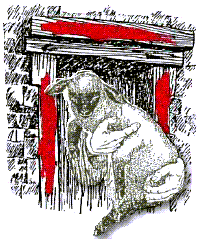
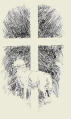
| THE SHEPHERD | THE LAMB | |||
Who is the Shepherd in Psalm 23? What was David's profession? Why?
David depicting himself as a sheep who is totally dependent upon His personal ("my") Shepherd's provision, is saying that he has no lack, no need, no want, for everything he genuinely needs has been provided for by His Shepherd, Who is Jehovah, the self-existent, self-sufficient God Who Himself needs nothing and thus is able to provide everything and anything His sheep need "pertaining to life and godliness" (see note 2 Peter 1:3).
JEHOVAH ROI: |
What do we learn about the "Lamb" in Genesis 22? In Genesis 22:2 God instructs Abraham "Take now your son, your only son, whom you love, Isaac, and go to the land of Moriah, and offer him there as a burnt offering" As Abraham and Isaac were walking toward the mount, (Ge 22:7) "Isaac spoke to Abraham his father and said, "My father!" And he said, "Here I am, my son." And he said, "Behold, the fire and the wood, but where is the lamb for the burnt offering ?" "Abraham said, "God will provide (literally "see") for Himself the lamb for the burnt offering, my son." So the two of them walked on together. (Ge 22:8) Later as Abraham is ready to complete the sacrifice of his son, he (Ge 22:13) "raised his eyes and looked, and behold, behind him a ram caught in the thicket by his horns; and Abraham went and took the ram and offered him up for a burnt offering in the place of his son." And in recognition of God's miraculous provision (Ge 22:14) "Abraham called the name of that place the LORD Will Provide, (Jehovah Jireh) as it is said to this day, "In the mount of the LORD it will be provided." So we see that the question here and in essence in the whole OT was "Where is the Lamb?" Answering prophetically Abraham says "Jehovah" will provide or more literally "Jehovah will see". The idea is that Jehovah "sees" the "need" before it arises and provides for the need. The English word "provide" is derived from the Latin "pro" = "before" + "videre" = "to see" and thus conveys the same idea of God seeing beforehand. In sum, then, not only did Jehovah foresee Abraham's need for a lamb but even more significantly He also foresaw mankind's need for the Lamb. IN THE OLD TESTAMENT THE QUESTION WAS: |
|||
| How does John 10:11 help us understand Who the Shepherd is?
John 10:11 (commentary) (Jesus addressing Pharisees)
Why is Jesus called the "Good Shepherd"? In context, clearly because He is willing to lay down His life for the sheep. The Greek word "for" is "huper" which means "in place of", thus speaking of the substitutionary sacrifice of Jesus Christ.
JESUS: |
What role does the lamb play in Exodus 12?
Exodus 12:5, 6, 7,11 (see commentary)
|
|||
|
How does Zechariah prophetically describe the Good "Shepherd"?
This prophecy concerning the "Shepherd" was quoted by the "Good Shepherd" Himself just after He had celebrated the Passover feast ("the Last Supper") with His disciples and was walking to the Mt of Olives (Mt 26:31) and was fulfilled when all the disciples fled at His arrest (Mt 26:56). |
What does Paul teach about the "symbolism" of the lamb? 1Cor 5:7 Clean out the old leaven so that you may be a new lump, just as you are in fact unleavened. For Christ our Passover also has been sacrificed. The Jewish NT version paraphrases 1Co 5:7 "for our Pesach Lamb, the Messiah, has been sacrificed" It is clear that Paul is teaching that the OT feast of Passover (and the Passover Lamb) foreshadowed the death of the NT Passover Lamb, Jesus, the Lamb of God of which Isaiah also spoke in:
This verse from Isaiah was directly applied to Christ by Philip in (Acts 8:32) CHRIST THE |
|||
|
What does the writer of Hebrews teach about the Shepherd? Hebrews 13:20,21 (notes) Now the God of peace, who brought up from the dead the Great Shepherd of the sheep through the blood of the eternal covenant, even Jesus our Lord equip you in every good thing to do His will, working in us that which is pleasing in His sight, through Jesus Christ, to whom be the glory forever and ever. Amen. Notice how this truth parallels "I shall not want (or lack)" for the Greek word "equip" describes placing something in its appropriate condition, making it suitable for "every good work". The smiting of our Good Shepherd was followed by the resurrection of our Great Shepherd. JESUS: |
How did John the Baptist announce Jesus' arrival?
IN THE NEW TESTAMENT THE ANSWER IS: |
|||
| How does Peter refer to the "Shepherd"? When does this occur?
1 Peter 5:4 (note) And when the Chief Shepherd appears, you will receive the unfading crown of glory. In context this description refers to a future event, when Christ returns to set up His earthly kingdom at the end of the "great tribulation". (cf notes Revelation 22:12-note)
JESUS: |
How does John describe the Lamb in heaven?
Revelation 5:6 (note)
The Lamb is in heaven today bearing on His body for all eternity the marks of the "New Covenant (note)" (Luke 22:20), a truth that ensures without a doubt that all who are in the "New Covenant" with Him "by grace...through faith (see note Ephesians 2:8) are eternally secure, "knowing that you were not redeemed redeemed with perishable things like silver or gold from your futile way of life inherited from your forefathers, but with precious blood (you must read Spurgeon's note) as of a lamb unblemished (amomos) and spotless (aspilos) , the blood of Christ. (see notes 1 Peter 1:18; 1:19) and thus the the redemption price has been "paid in full" (see note) which is another way to translate Jesus' words on the cross - "It is finished!" (John 19:30) . Let us behold the LAMB for He alone is worthy of our praise!. IN HEAVEN ALL CREATION DECLARES: |
|||
|
Revelation 7:17 (note) the LAMB in the center of the throne will be their SHEPHERD, and will guide them to springs of the water of life and God will wipe every tear from their eyes. THE LAMB WILL BE OUR SHEPHERD The LORD of hosts my Shepherd is-- The LAMB Who died to save us is Related Resource: |
||||


- All Heaven Declares
- Salvation Belongs to Our God
- O Lamb of God
- Just As I Am
- Are You Washed in the Blood
- There is Power in the Blood
- Behold the Glories of the Lamb
- O Lamb of God Most Holy
- Lamb of God I Look to Thee
- Look to the Lamb of God
- Little Lamb Who Made Thee?
- A Lamb Goes Uncomplaining Forth
- Lamb of God Our Souls Adore Thee
- Behold the Lamb of God
- Hark! Ten Thousand Voices Crying
- What Wondrous Love is This (To God and to the Lamb I will sing - Fernando Ortega)
Spurgeon's Devotional - 1 Peter 1:19 (see note)
Standing at the foot of the cross, we see hands, and feet, and side, all distilling crimson streams of precious blood.
It is "precious" because of its redeeming and atoning efficacy. By it the sins of Christ's people are atoned for; they are redeemed from under the law; they are reconciled to God, made one with him.
Christ's blood is also "precious" in its cleansing power; it "cleanseth from all sin." "Though your sins be as scarlet, they shall be as white as snow." Through Jesus' blood there is not a spot left upon any believer, no wrinkle nor any such thing remains. O precious blood, which makes us clean, removing the stains of abundant iniquity, and permitting us to stand accepted in the Beloved, notwithstanding the many ways in which we have rebelled against our God.
The blood of Christ is likewise "precious" in its preserving power. We are safe from the destroying angel under the sprinkled blood. Remember it is God's seeing the blood which is the true reason for our being spared. Here is comfort for us when the eye of faith is dim, for God's eye is still the same.
The blood of Christ is "precious" also in its sanctifying influence. The same blood which justifies by taking away sin, does in its after-action, quicken the new nature and lead it onward to subdue sin and to follow out the commands of God. There is no motive for holiness so great as that which streams from the veins of Jesus.
And "precious," unspeakably precious, is this blood, because it has an overcoming power. It is written, "They overcame through the blood of the Lamb." How could they do otherwise? He who fights with the precious blood of Jesus, fights with a weapon which cannot know defeat. The blood of Jesus! sin dies at its presence, death ceases to be death: heaven's gates are opened.
The blood of Jesus! we shall march on, conquering and to conquer, so long as we can trust its power!
- See article on TETELESTAI-Paid in Full
IT IS FINISHED ("paid in full"): tetelestai (3rd Person Singular Perfect Passive Indicative): Note that Jesus did NOT say "I am finished" but that His work of redemption had been completed. Jesus had fulfilled the task for which He came to earth as the God Man. In Jesus' day when someone had a debt and it was paid off, they would write the Greek word TETELESTAI on that certificate signifying 'PAID IN FULL', which is the exact word Jesus uttered as His last exclamation before dying. (cp Mark 10:45 "ransom")
This Greek word tetelestai is unfamiliar to our modern culture, but it was a common word used in everyday life in Jesus' time. For example, a servant would use it when reporting to his or her master, “I have completed the work assigned to me” (cf Jesus' words in John 4:34 and in John 17:4) where the related Greek verb teleioo is used with the same idea as in Jn 19:30. Jesus had brought to completion all the Father had desired for Him to accomplish as the sinless God Man.
When a PRIEST examined an animal sacrifice and found it faultless, this word would apply. Jesus, of course, is the perfect Lamb of God, without spot or blemish.
When an ARTIST completed a picture, or a WRITER a manuscript, he or she might say, “It is finished!” The death of Jesus on the cross “completes the picture” that God had been painting, the story that He had been writing, for centuries, yea even before the foundation of the world and from all eternity! Because of the cross, we can now understand the ceremonies and prophecies in the OT.
As mentioned above, perhaps the most meaningful and picturesque use of tetelestai was that of the MERCHANTS or BANKERS of Jesus' day who would say “The debt is paid in full!” Papyri receipts for taxes have been recovered with the word tetelestai written across them, meaning “paid in full.” That person can never be held liable for that debt again. Not only does it indicate that the payer had enough to cover the debt, it also assures us that the payee is finally satisfied. He can't demand more later. He received exactly what was due. Jesus completely paid the debt we owed, and it will be remembered against us no more forever. Hallelujah, what a Savior! When Jesus gave Himself up for us on the cross, Jesus fully met the righteous demands of the Holy God and His Holy Law. Jesus' death as a "sacrificial Lamb" paid our sin debt in full, for "the wages of sin is death" (see Romans 6:23). None of the Old Testament sacrifices could take away sins. The blood of animals only temporarily "covered" sin. But the Lamb of God shed His blood, "for the redemption of the transgressions that were committed under the first covenant" (see He 9:15) and that precious blood takes away the sins of the world (John 1:29; He 9:24; 25; 26; 27; 28-see notes He 9:24; 25; 26; 27; 28).
When a Roman citizen was convicted of a crime, the law of that day threw him in prison. They prepared a "Certificate of Debt" that listed all the crimes he was convicted of on it, and nailed it to his cell door for all to see. It remained nailed there so all would be assured that he served his full sentence, and "paid in full" the penalty for his crimes. When Jesus shouted Tetelestai from the cross, it was the same word that was stamped across the Certificate of Debt after a criminal completed his prison term. It would literally mean "Paid in Full" for all your crimes (cf notes Colossians 2:14). Then the criminal was given the certificate. He would be able to produce it to show that his crimes were "paid in full." He could never become a victim of "double jeopardy." Or paying for the same crime twice.
We owed a debt we could never repay. He paid a debt He did not owe!
"But drops of grief can ne'er repay
The debt of love I owe:
Here, Lord, I give myself away,
'Tis all that I can do! "--Watts
There was once a rather eccentric evangelist named Alexander Wooten, who was approached by a flippant young man who asked, “What must I do to be saved?” “It’s too late!” Wooten replied, and went about his work. The young man became alarmed. “Do you mean that it’s too late for me to be saved?” he asked. “Is there nothing I can do?” “Too late!” said Wooten. “It’s already been done! The only thing you can do is believe.” So that when you stand before God on Judgment Day, where your sins once appeared in God’s book, it will simply say, "Paid in full!" Which means the only thing that could keep you out of heaven is gone!
"'Tis finished!" on the Cross He said,
In agonies and blood;
'Tis finished! now He lives to plead
Before the face of God.
'Tis finished! here our souls can rest,
His work can never fail;
By Him, our Sacrifice and Priest,
We enter through the veil.
Within the holiest of all,
Cleansed by His precious blood,
Before Thy throne Thy children fall,
And worship Thee, our God.
Boldly our heart and voice we raise,
His Name, His blood, our plea;
Assured our prayers and songs of praise
Ascend by Him to Thee.
by James G. Deck
THE DANGER OF SHEEP STRAYING: AN ILLUSTRATION (from a Sermon Prone to Wander)
Korean Air, flight #007 (you may remember this from October, 1983) departed Anchorage, Alaska for a direct flight to Seoul, Korea. Unknown to the pilot and the crew, the computer engaging the flight navigation system contained a 1-1/2 degree routing error. At the point of departure, the mistake was unnoticeable. 100 miles out, the deviation was still so small as to be undetectable. But as the giant 747 continued on its journey through the Aleutians and out over the Pacific, the error was picked up by Soviet radar. Jets were scrambled for the intercept, and over Mainland Russia, hundreds of miles off course, #007 was shot out of the sky, and all aboard were lost. A small error made at the departure point resulted in a tragic trajectory and a destructive finish. May the Lord help us to keep comparing where we are going with the navigation charts so we stay on course and not wander into the enemy's territory.—George Wood
Ps 119:176 I have gone astray like a lost sheep; seek Your servant, For I do not forget Your commandments.
Psalm 119:176 This is the finale, the conclusion of the whole matter: I have gone astray like a lost sheep — often, wilfully, wantonly, and even hopelessly, but for thine interposing grace. In times gone by, before I was afflicted, and before thou hadst fully taught me thy statutes, I went astray. "I went astray" from the practical precepts, from the instructive doctrines, and from the heavenly experiences which thou hadst set before me. I lost my road, and I lost myself. Even now I am apt to wander, and, in fact, have roamed already; therefore, Lord, restore me.
Seek thy servant. He was not like a dog, that somehow or other can find its way back; but he was like a lost sheep, which goes further and further away from home; yet still he was a sheep, and the Lord's sheep, his property, and precious in his sight, and therefore he hoped to be sought in order to be restored. However far he might have wandered he was still not only a sheep, but God's "servant, "and therefore he desired to be in his Master's house again, and once more honored with commissions for his Lord. Had he been only a lost sheep he would not have prayed to be sought; but being also a "servant" he had the power to pray. He cries, "See thy servant, "and he hopes to be not only sought, but forgiven, accepted, and taken into work again by his gracious Master. Notice this confession; many times in the psalm David has defended his own innocence against foul mouthed accusers, but when he comes into the presence of the Lord his God he is ready enough to confess his transgressions. He here sums up, not only his past, but even his present life, under the image of a sheep which has broken from its pasture, forsaken the flock, left the shepherd, and brought itself into the wild wilderness, where it has become as a lost thing. The sheep bleats, and David prays, "Seek thy servant."
His argument is a forcible one, — for l do not forget thy commandments. I know the right, I approve and admire the right, what is more, I love the light, and long for it. I cannot be satisfied to continue in sin, I must be restored to the ways Of righteousness. I have a home sickness after my God, I pine after the ways of peace; I do not and I cannot forget thy commandments, nor cease to know that I am always happiest and safest when I scrupulously obey them, and find all my joy in doing so. Now, if the grace of God enables us to maintain in our hearts the loving memory of God's commandments it will surely yet restore us to practical holiness. That man cannot be utterly lost whose heart is still with God. If he be gone astray in many respects, yet still, if he be true in his soul's inmost desires, he will be found again, and fully restored. Yet let the reader remember the first verse of the psalm while he reads the last: the major blessedness lies not in being restored from wandering, but in being upheld in a blameless way even to the end. Be it ours to keep the crown of the causeway, never leaving the King's highway for By path Meadow, or any other flowery path of sin. May the Lord uphold us even to the end. Yet even then we shall not be able to boast with the Pharisee, but shall still pray with the publican, "God be merciful to me a sinner; "and with the Psalmist, "Seek thy servant."
EXPLANATORY NOTES AND QUAINT SAYINGS.
Psalm 119:176 I have gone astray like a lost sheep. Though a sheep go astray, yet it is soon called back by the voice of the shepherd: "My sheep hear my voice." Thus David when he went against Nabal was called back by the Lord's voice in a woman; and when he had slain Uriah he was brought again by Nathan. And therefore if we will be sheep, then though we sometimes go astray, yet we must be easily reclaimed. — Richard Greenhorn.
Psalm 119:176 I have gone astray like a lost sheep, driven out by storm, or dark day, or by the hunting of the dogs chased out from the rest of the flock. — David Dickson.
Psalm 119:176 I have gone astray like a lost sheep, etc. And this is all the conclusion— "a lost sheep!" This long psalm of ascriptions, praises, avowals, resolves, high hopes, ends in this, that he is a perishing sheep. But, stay, there is hope— "Seek thy servant." "I have gone astray like a lost sheep." The original is of the most extensive range, comprehending all time past, and also the habitual tendencies of the man. The believer feels that he had gone astray when the grace of God found him; that he had gone astray many times, had not the grace of God prevented it. He feels that he went astray on such and such unhappy occasions. He also feels that he hath gone astray in all that he hath done; and indeed that he is astray now. But the word expresses the habitual tendency likewise — I go astray like a lost sheep, and this rendering is in keeping with the prayer, "Seek thy servant." The third member is also properly rendered in keeping with it: "I go astray like a lost sheep; seek thy servant; for I do not forget thy commandments." All this is descriptive of the remaining corruption that is in the believer. He is not unmindful of the Lord; he has the root of the matter in him, the seed of divine life; yet he does go astray; whence the necessity of the prayer: "Seek thy servant." Isaiah's description of men, although conveyed in the same terms, is evidently more sweeping, as the context words show: "All we like sheep have gone astray; we have turned every one to his own way; and the Lord hath laid on him the iniquity of us all." This would seem to apply to the race of man. Rather is the experience of the Psalmist similar to that described by the apostle Paul: "I find a law, that when I would do good, evil is present with me. For I delight in the law of God, after the inward man: But I see another law in my members, warring against the law of my mind, and bringing me into captivity to the law of sin which is in my members." And the Psalmist had the same remedy at the early period, as had the apostle in the later times; for God's salvation is one. The Psalmist's remedy was, "Seek thy servant; "the apostle's, :"O wretched man that I am! Who shall deliver me from the body of this death? I thank God through Jesus Christ our Lord." — John Stephen.
Psalm 119:176 I have gone astray. The original word signifies either the turning of the foot, or the turning of the heart, or both, out of the way. "I have gone astray like a lost sheep; "that is, I have been deceived, and so have gone out of the way of thy holy commandments. Satan is an ill guide, and our hearts are no better: he that follows either, quickly loseth himself; and until God seeketh us (as David prays in the next words), we cannot find our way when we are once out of it. — Joseph Caryl.
Psalm 119:176 I have gone astray. Gotthold one day saw a farmer carefully counting his sheep as they came from the field. Happening at the time to be in an anxious and sorrowful mood, he gave vent to his feelings and said: Why art thou cast down, my soul? and why disquieted with vexing thoughts? Surely thou must be dear to the Most High as his lambs are to this farmer. Art thou not better than many sheep? Is not Jesus Christ thy shepherd? Has not he risked his blood and life for thee? Hast thou no interest in his words: "I give unto my sheep eternal life, and they shall never perish, neither shall any pluck them out of my hand"? Joh 10:28. This man is numbering his flock; and thinkest thou that God does not also count and care for his believing children and elect, especially as his beloved Son has averred, that the very hairs of our head are all numbered? Mt 10:30. During the day, I may perhaps have gone out of the way, and heedlessly followed my own devices; still, at the approach of evening, when the faithful Shepherd counts his lambs, he will mark my absence, and graciously seek and bring me back. Lord Jesus, "I have gone astray like a lost sheep; seek thy servant; for I do not forget thy commandments." — Christian Striver (1629-1693), in Gotthold's Emblems.
Psalm 119:176 I have gone astray, etc. Who is called "the man after God's own heart"? David, the Hebrew king, had fallen into sins enough — blackest crimes— there was no want of sin. And, therefore, unbelievers sneer, and ask, "Is this your man after God's own heart?" The sneer, it seems to me, is but a shallow one. What are faults, what are the outward details of a life, if the inner secret of it, the remorse, temptations, the often baffled, never ended struggle of it, be forgotten?...David's life and history, as written for us in those psalms of his, I consider to be the truest emblem ever given us of a man's moral progress and warfare here below. All earnest souls will ever discover in it the faithful struggle of an earnest human soul towards what is good and best. Struggle often baffled— sore baffled — driven as into entire wreck; yet a struggle never ended, ever with tears, repentance, true unconquerable purpose begun anew. — Thomas Carlyle, (1795-1881), in "Heroes and Hero Worship."
Psalm 119:176 For I do not forget thy commandments. In all my wandering; with my consciousness of error; with my sense of guilt; I still do feel that I love thy law, thy service, thy commandments. They are the joy of my heart, and I desire to be recalled from all my wanderings, that I may find perfect happiness in thee and in thy service evermore. Such is the earnest wish of every regenerated heart. For as such a one may have wandered flora God, yet he is conscious of true attachment to him and his service; he desires and earnestly prays that he may be "sought out, "brought back, and kept from wandering any more. — Albert Barnes.
Psalm 119:176 For I do not forget thy commandments. The godly never so fall but there remains in them some grace, which reserves a hope of medicine to cure them: so David here. Albeit he transgressed some of God's commandments, yet he fell not into any full oblivion of them. — William Cowper.
Psalm 119:176 I do not think that there could possibly be a more appropriate conclusion of such a Psalm as this, so full of the varied experience and the ever changing frames and feelings even of a child of God, in the sunshine and the cloud, in the calm and in the storm, than this ever clinging sense of his propensity to wander, and the expression of his utter inability to find his way back without the Lord's guiding hand to restore him; and at the same time with it all, his fixed and abiding determination never to forget the Lord's commandments. What an insight into our poor wayward hearts does this verse give us— not merely liable to wander, but ever wandering, ever losing our way, ever stumbling on the dark mountains, even while cleaving to God's commandments! But at the same time what a prayer does it put into our mouths, "Seek thy servant, "— "I am thine, save me." Yes, blessed be God! there is One mighty to save. "Kept by the power of God through faith unto salvation." — Barton Bouchier.
As far as I have been able, as far as I have been aided by the Lord, I have treated throughout, and expounded, this great Psalm. A task which more able and learned expositors have performed, or will perform better; nevertheless, my services were not to be withheld from it on that account, when my brethren earnestly required it of me. — Augustine.
HINTS TO PREACHERS.
1. My confession: "I have gone astray."
2. My profession: "thy servant."
3. My petition: "seek thy servant."
4. My plea: "for I do not forget, "etc.