Judges 19:2
Judges 19:3
Judges 19:4
Judges 19:5
Judges 19:6
Judges 19:7
Judges 19:8
Judges 19:9
Judges 19:10
Judges 19:11
Judges 19:12
Judges 19:13
Judges 19:14
Judges 19:15
Judges 19:16
Judges 19:17
Judges 19:18
Judges 19:19
Judges 19:20
Judges 19:21
Judges 19:22
Judges 19:23
Judges 19:24
Judges 19:25
Judges 19:26
Judges 19:27
Judges 19:28
Judges 19:29
Judges 19:30
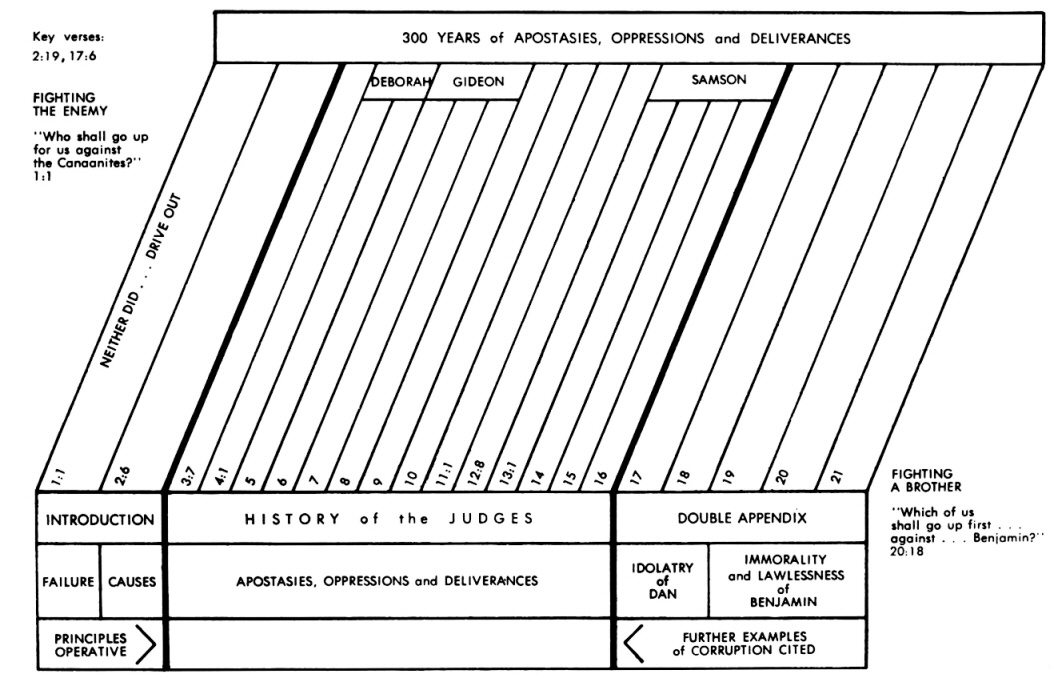
Chart from recommended resource Jensen's Survey of the OT - used by permission
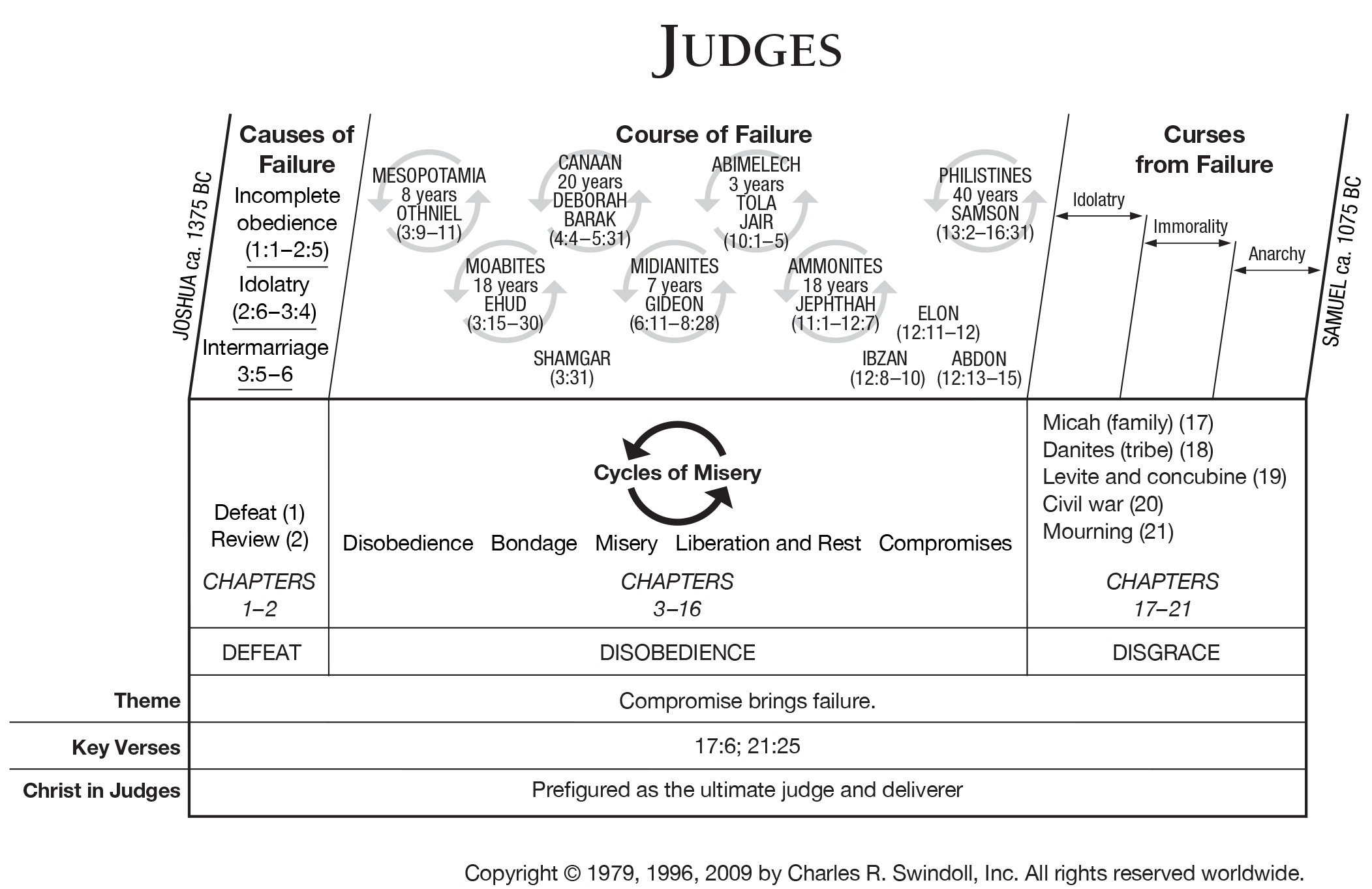
Chart on Judges - Charles Swindoll
|
RECYCLING SIN |
|||||
| Jdg 1:1-3:6 | Jdg 3:7-16:31 | Jdg 17:1-21:25 | |||
| Introduction | History of the Judges | Appendix | |||
| Causes of the Cycles THE REASON |
Curse of the Cycles THE RECORD |
Conditions in the Cycles THE RESULTS |
|||
| Failure to Complete Conquest Jdg 1:1-36 God's Judgment for Failure Jdg 2:1-3:6 |
Curse of the Cycles |
Conditions in the Cycles |
|||
| Living with Canaanites |
War with the Canaanites |
Living Like the Canaanites |
|||
| Religious Laxity |
Political Uncertainty |
Moral Anarchy |
|||
| About 350 Years of Israel's History - Almost 25%! From Compromise to Confusion! |
|||||
|
RECYCLING SIN |
|||||
| Jdg 1:1-3:6 | Jdg 3:7-16:31 | Jdg 17:1-21:25 | |||
| Introduction | History of the Judges | Appendix | |||
| Causes of the Cycles THE REASON |
Curse of the Cycles THE RECORD |
Conditions in the Cycles THE RESULTS |
|||
| Failure to Complete Conquest Jdg 1:1-36 God's Judgment for Failure Jdg 2:1-3:6 |
Curse of the Cycles |
Conditions in the Cycles |
|||
| Living with Canaanites |
War with the Canaanites |
Living Like the Canaanites |
|||
| Religious Laxity |
Political Uncertainty |
Moral Anarchy |
|||
| About 350 Years of Israel's History - Almost 25%! From Compromise to Confusion! |
|||||

Another Timeline of Israel's History
Click to Enlarge
from Jensen's Survey of the OT
Click to Enlarge
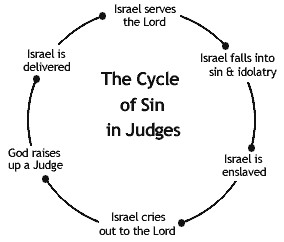
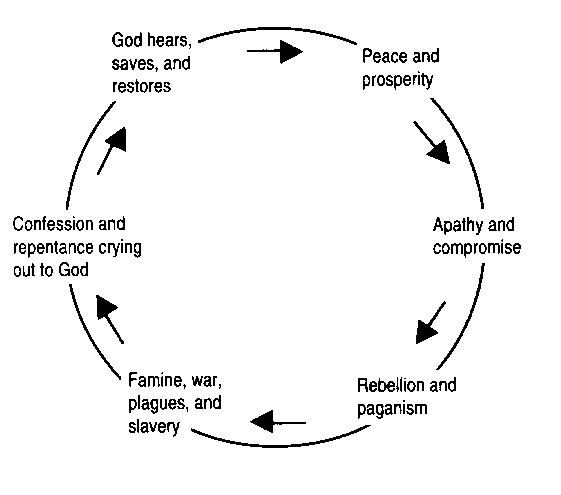
Other ways to describe Israel's cycle…
- Rest > Rebellion > Retribution > Repentance (?) > Restoration
- Sin > Suffering/Servitude > Supplication > Salvation
- Apathy > Apostasy > Affliction > Answered Prayer
- Disobedience > Desperation > Deliverance
- Disobedience > Bondage >Misery > Liberation and Rest > Compromises
Judges 19:1 Now it came about in those days, when there was no king in Israel, that there was a certain Levite staying in the remote part of the hill country of Ephraim, who took a concubine for himself from Bethlehem in Judah.
- when there was no king in Israel, - Jdg 17:6 18:1 21:25
- hill country of Ephraim- Jdg 17:1,8 Jos 24:30,33
- concubine - Ge 22:24 25:6 2Sa 3:7 5:13 16:22 19:5 20:3 1Ki 11:3 2Ch 11:21 Es 2:14 Song 6:8,9 Da 5:3 Mal 2:15,
- Bethlehem-judah, Jdg 17:8 Ge 35:19 Mt 2:6
- Judges 19 Resources - multiple sermons and commentaries
Related Passage:
Genesis 2:24 (GOD'S PREFERENCE RATHER THAN CONCUBINES) - For this reason a man shall leave his father and his mother, and be joined to his wife; and they shall become one flesh.
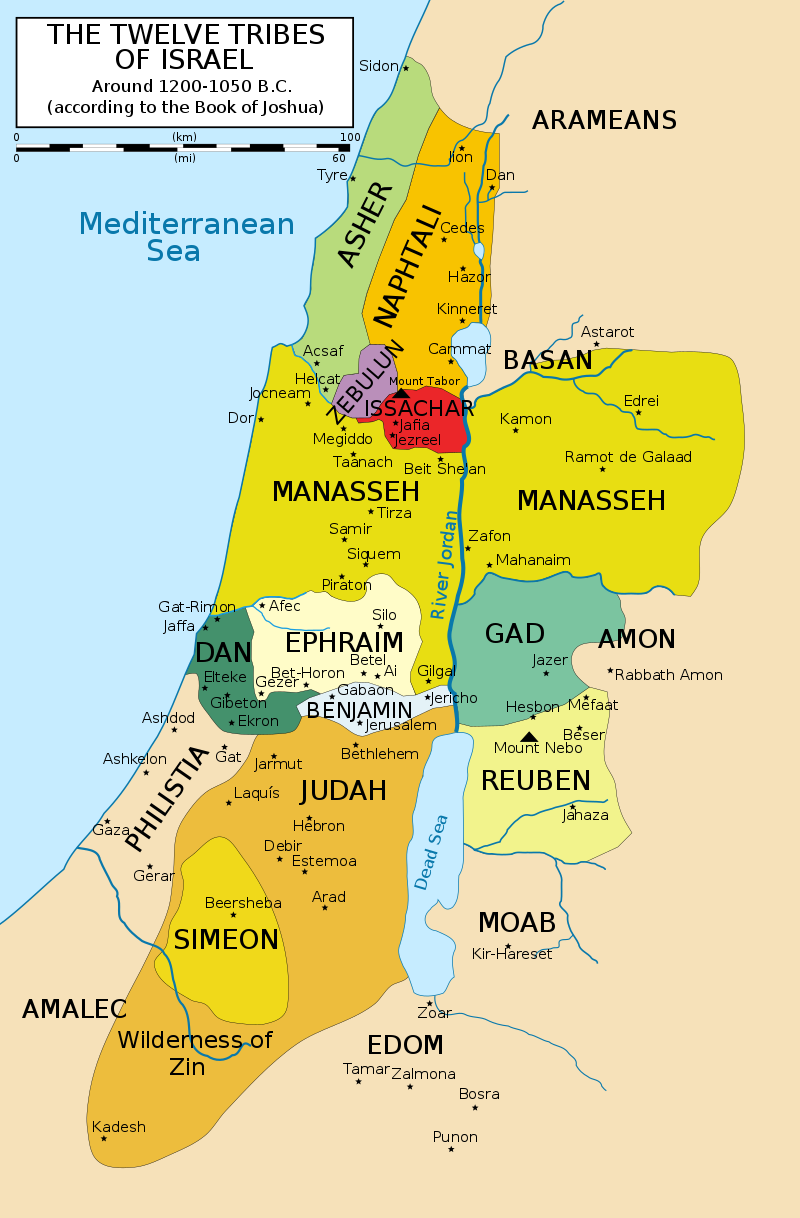
Location of Ephraim
NO KING
NO AUTHORITY
The idolatry of Judges 17-18 now moves to the near "stepchild" of immorality in Judges 19 and both of these sins are evidence of Israel's general apostasy. Sadly another "stepchild" of apostasy is anarchy which breaks forth in a bloody civil war in Judges 20-21. America is teetering on the slippery slope of apostasy which has led to general approval of unspeakable immorality (cf Ro 1:32) and growing warning signs of anarchy in the looting and rioting in the streets of America in the 2020's! Revive us O God!
THOUGHT - When Jesus is not on the throne of my heart in the morning, statistically speaking, I am very likely to do what is right in my own eyes in the next 16 waking hours! What about you, beloved? We must crown Him King of our heart every morning (He is always the King, but we need to acknowledge and surrender to His loving Lordship) and rely on His royal gift of the Holy Spirit to walk in a manner worthy of the LORD, to please Him in all respects, bearing fruit in every good work, all for his glory (Gal 5:16, Col 1:9,10). Amen? Amen!
Warren Wiersbe adds that "The basic cause of Israel’s plight was their independence from God and their indifference to His law. Nothing can be right when every man does what is right in his own eyes. It was a time of moral and spiritual darkness (Isaiah 8:20NLT = "Look to God's instructions and teachings! People who contradict his word are completely in the dark."). (See context in With the Word: The Chapter-by-Chapter Bible Handbook or borrow With the Word - this is an excellent succinct source of ideas for preaching and teaching).
HCSB makes an interesting comment that "The Levite is nameless, as is almost every character in this story. This highlights the fact that this episode is not unique but was characteristic of these lawless times." (See context in CSB Study Bible or borrow the HCSB Study Bible)
Now it came about in those days, when there was no king in Israel - No king indicates the Israelites in general (there were some exceptions like Manoah and his wife and Ruth, Naomi and Boaz) refused to bow to the rulership of their rightful king Jehovah. And the result is that in this section there is one of the most shocking episodes of Israel's history which led one commentator to title this chapter "The Death of Morality". Nietzsche was no theologian but his statement would be a good subtitle to Judges 19-21 -- “If God is dead, then everything is permitted.” The sordid events in Judges 19-21 appear to have occurred early in the 300+ year period of the Judges, because Phinehas, the grandson of Aaron, was still ministering as high priest (Jdg 20:28; cf. Nu 25:7, 11), and because the tribes were still able to function as a unit (cf. Joshua 22:9-34). Another thought is there would have been a need for a long time span between the disgraceful behavior of the tribe of Benjamin and the choice of a Benjamite as king, even a king (Saul) from the notorious town of Gibeah (1Sa 10:26)!
David Guzik writes that "What unfolds in the rest of this chapter is so distasteful that the commentator F.B. Meyer recommended not reading it. Commenting on this first verse, he wrote: “It will be sufficient to ponder these words, which occur four times in the book, without reading further in this terrible chapter, which shows the depths of the depravity to which may sink apart from the grace of God.”
Ed comment - I strongly disagree with F B Meyer for at least three reasons - (1) 2Ti 3:16-17 says ALL Scripture is profitable including Judges 19-21, (2) this chapter is a picture of the depths of human depravity, seeds inherited from Adam (Ro 5:12) which are present in every one of our hearts, seeds that can be "watered" and can grow into "destructive plants", and (3) finally as Paul clearly teaches in 1Cor 10:6 "these things happened as examples for us, so that (PURPOSE) we would not crave evil things as they also craved." So "grit your teeth" and read these gory, grisly, gruesome chapters 19-21.
One of the main lessons from Judges 18-19 (and there are many lessons) is that when evil is not dealt with promptly and properly, it has a tendency to grow. One is reminded of Paul's rhetorical question "Do you not know that a little leaven leavens the whole lump of dough?" (1Co 5:6). As the sordid tale unfolds we see that sin in the city of Gibeah eventually infected the tribe of Benjamin and led to a bloody civil war in the land of Israel. In a moral universe, God has established certain fixed laws which when violated will bring destruction as a natural consequence (cf principle of sowing and reaping - Gal 6:7-8). Tragically, history is full of illustrations of this fact and most of us have some personal examples that would attest to validity of these principles! The Book of Proverbs has a few sage words reminding us that…
- Righteousness exalts a nation; but sin is a disgrace to any people” (Pr 14:34).
- The unfaithful are destroyed by their duplicity” (Pr 11:3).
- The wicked shall fall by his own wickedness” (Pr 11:5).
- The violence of the wicked will drag them away, for they refuse to do what is right” (Pr 21:7).
- Where there is no vision (word from God), the people are unrestrained (run wild as we see in Judges 19), but happy is he who keeps the law." (Pr 29:18)
Gary Inrig - We see that same mindset all around us. “Who am I to judge? It’s your thing. Whatever.” Our society is filled with gross immorality, defended by suave, articulate, attractive spokespersons. You can scarcely find a perversion that someone is not willing to defend as essential to human freedom. I am reminded of the man who summarized his life in these words: “I have spent the best years of my life giving people the lighter pleasures and all I get is abuse and the existence of a hunted man.” Who was that poor, persecuted, misunderstood humanitarian? Al Capone, the gangster. When God goes, everything and anything goes. That is the lesson of Scripture and history, and it is presented in vivid detail here in the book of Judges. It is a story of “3 Rs,” except they are not “reading, ’riting, and ’rithmetic” but “rape, revenge, and reaping.” (Borrow Hearts of Iron, Feet of Clay)
That there was a certain Levite staying in the remote part of the hill country of Ephraim - Note the first problem appears to be a Levite living outside of a Levitical town (cf Nu 35:7, Josh 21:41)! That is not a good start! And if you thought that the Jonathan in Judges 17-18 was a reprobate, then you'll probably conclude that this unnamed Levite was an scoundrel of the basest sort. He spent most of his time partying (Jdg 19:4, 6, 8, 22), walked in darkness and jeopardized his life and the lives of those with him (Jdg 19:9-14), treated his concubine in the most shocking manner while she was alive and after she was dead his actions and lie precipitated a civil war in Israel.
Why a Levite in Jdg 17-18 and Jdg 19? One thought is that they were supposed to be teachers of the law, men set apart from the mundane, the profane, the corruption of the evil world. But the point these chapters make is that even these "holy" men were wholly unholy! That's how bad it had gotten in Israel because they failed to utterly destroy the pagans and their abominable idolatry and immorality and were seduced into the ever deepening vortex of sin's power.
Who took a concubine (pilegesh) for himself from Bethlehem in Judah - A Levite was supposed to be a set apart man, a man who could teach Israel the word and by default who was called to give them an example of the holy Word lived out in a life of holiness. While having a concubine was not condemned by the Word of God, it clearly was not God's first choice and certainly not for one who was to be a living example to the lay people! But these were the days of if it feels good, then go ahead and do it. It is right in your own eyes, even if it is not pleasing in the eyes of God!
A concubine was a lawful wife who was guaranteed only food, clothing, and marital privileges (Ex 21:7-11; Dt 21:10-14). If a man's wife was barren, he sometimes took a concubine so he could establish a family. And so one of her main functions was to bear children who would be considered legitimate offspring. However these children would not necessarily receive any inheritance (Ge 25:1-6). Though the law controlled concubinage the Lord did not approve or encourage it. Several of the patriarchs had children with concubines including Abraham with Hagar (Ge 16); Jacob with Bilhah and Zilpah (Ge 30:4-13) Others who had concubines included Gideon, Saul, David, and Solomon (who had 300! = 1Ki 11:3). It should be noted however that although a concubine was, in a sense, a legal mistress, we never see such a family life blessed by God!
David Guzik makes an interesting comment on concubines - Significantly, we never see this kind of family life blessed by God. The New Testament makes it clear that from the beginning God’s plan was one man and one woman to be one flesh forever (Matthew 19:4–6), and each man is to be a “one-woman man” (1 Timothy 3:2).
Wiersbe - A concubine was a lawful wife who was guaranteed only food, clothing, and marital privileges (Ex. 21:7–11; Deut. 21:10–14). Any children she bore would be considered legitimate; but because of her second-class status, they wouldn’t necessarily share in the family inheritance. (See context in The Bible Exposition Commentary)
Andrew Boling writes that "Judges 17-18 relate the breakdown of religious life; chapters 19-21 show that the breakdown of religious life may bring further disastrous consequences, that the resulting immorality can threaten the very existence of a political unit. Society is a unity; its depravity cannot be contained within narrow, watertight compartments. Depravity and breakdown in one area of society, if uncorrected, will lead to deterioration and breakdown in other areas and, finally, even to the destruction of society itself. (ED: WOE! AS WE WATCH SOCIETY IN AMERICA UNRAVELING IN WAYS WOULD HERETOFORE NEVER EVEN DREAMED POSSIBLE!) The writer of Judges maintains that these events occurred because there were no qualified leaders to effect God’s purposes (ED: MORE TO THE POINT - THERE WAS NO KING - GOD SHOULD HAVE BEEN BUT HAD BEEN "DETHRONED!" DOES THAT SOUND LIKE AMERICA IN 2022?). Though the judges could engineer brief periods of peace, there was no established godly leadership capable of permanently halting the evils described in these chapters. “Israel had no king” expresses both the writer’s diagnosis of the disease in Israel and his indication of the cure." (Borrow Evangelical Commentary on the Bible. See also Boling's full 380 page commentary on Judges)
Concubine (06370)(pilegesh) concubine in the Bible was a true wife but of secondary rank and does not as is not a "kept mistress." The concubine did not cohabit with a man UNLESS she was married to him. Although she cohabitated with the husband, the man could repudiate and send her away with a small gift. However, clearly having a concubine is a variation of polygamy which is the practice of having more than one wife at the same time. In Judges 19 in the days when everyone did what was right in his own eyes, the Levite had a concubine and is referred to as son-in-law in Jdg 19:5 and the concubine's father is referred to as his father-in-law in Jdg 19:4, so clearly the Bible is teaching the concubine was married to the Levite. We see a stratification between wife and concubine in 1Ki 11:3 where Solomon "had seven hundred wives, princesses, and three hundred concubines, and his wives turned his heart away." To sleep with a king's concubine would have indicated plans to usurp the throne (2 Sam. 3:7; 16:21, 22; cf. 1 Ki. 2:21-24). Men who are known to have had concubines include some famous Biblical characters (as an aside I note Joseph and Daniel and none of the prophets are in this list -- just pondering that thought!) - Nahor (Ge 22:24), Abraham (Ge 25:6), Jacob (Ge 35:22), Eliphaz (Ge 36:12), Saul (2Sa 3:7), David (2Sa 5:13; 15:16; 16:21), Solomon (1Ki. 11:3), Caleb (1Chr 2:46), Manasseh (1Chr 7:14), Rehoboam (2Chr. 11:21), Abijah (2Chr 13:21) and Belshazzar (Da 5:2). Many of these men were kings and in ancient times a concubine was often a sign of wealth and a status symbol. Concubinage seems to have evolved with men who sought concubines because their wives could not bear children (Abraham Ge 16:1-16 Jacob Ge 30:4-5 So she [Rachel] gave him her maid Bilhah as a wife, and Jacob went in to her. Bilhah conceived and bore Jacob a son.") and in both situations the wives presented their maidservants to their own husbands. It is notable that Isaac did not have a concubine because Rebekah was not barren. This practice degenerated (that's a good way to look it) into a regular custom amony the Jews. It is surprising that unfaithfulness of a concubine was not considered a true act of adultery (Lev. 19:20). When a son had intercourse with the concubine of his father, a type of family punishment was inflicted on him (Gen. 35:22; 1 Chr. 5:1). It was not the penalty of death demanded for adultery with the father's wife, though.Children of a concubine were not viewed as illegitimate. They were considered part of the family, and, in fact, their names occasionally appear in the family's genealogies (Gen. 22:24).
Pilegesh - 37x in 35v - concubine(22), concubines(14), paramours(1). Gen. 22:24; Gen. 25:6; Gen. 35:22; Gen. 36:12; Jdg. 8:31; Jdg. 19:1; Jdg. 19:2; Jdg. 19:9; Jdg. 19:10; Jdg. 19:24; Jdg. 19:25; Jdg. 19:27; Jdg. 19:29; Jdg. 20:4; Jdg. 20:5; Jdg. 20:6; 2 Sam. 3:7; 2 Sam. 5:13; 2 Sam. 15:16; 2 Sam. 16:21; 2 Sam. 16:22; 2 Sam. 19:5; 2 Sam. 20:3; 2 Sam. 21:11; 1 Ki. 11:3; 1 Chr. 1:32; 1 Chr. 2:46; 1 Chr. 2:48; 1 Chr. 3:9; 1 Chr. 7:14; 2 Chr. 11:21; Est. 2:14; Cant. 6:8; Cant. 6:9; Ezek. 23:20
in the Bible denotes a female conjugally united to a man, but in a relation inferior to that of a wife. Among the early Jews, from various causes, the difference between a wife and a concubine was less marked than it would be amongst us. The concubine was a wife of secondary rank. There are various laws recorded providing for their protection (Ex. 21:7; Deut. 21:10-14), and setting limits to the relation they sustained to the household to which they belonged (Gen. 21:14; 25:6). They had no authority in the family, nor could they share in the household government.
The immediate cause of concubinage might be gathered from the conjugal histories of Abraham and Jacob (Gen. 16;30). But in process of time the custom of concubinage degenerated, and laws were made to restrain and regulate it (Ex. 21:7-9).
Christianity has restored the sacred institution of marriage to its original character, and concubinage is ranked with the sins of fornication and adultery (Matt. 19:5-9; 1 Cor. 7:2).
Picture of Hagar (concubine of Abraham)

The difference between wife and concubine was less marked among the Hebrews than among us, owing to the absence of moral stigma. The difference probably lay in the absence of the right of the bill of divorce, without which the wife could not be repudiated. With regard to the children of wife and of concubine, there was no such difference as our illegitimacy implies. The latter were a supplementary family to the former; their names occur in the patriarchal genealogies, (Genesis 22:24; 1Chr 1:22) and their position and provision would depend on the father?s will. (Genesis 25:6) The state of concubinage is assumed and provided for by the law of Moses. A concubine would generally be either (1) a Hebrew girl bought of her father; (2) a Gentile captive taken in war; (3) a foreign slave bought; or (4) a Canaanitish woman, bond or free. The rights of the first two were protected by the law, (Exodus 21:7; 21:10-14) but the third was unrecognized and the fourth prohibited. Free Hebrew women also might become concubines. To seize on royal concubines for his use was probably the intent of Abner?s act, (2Samuel 3:7) and similarly the request on behalf of Adonijah was construed. (1Kings 2:21-24)
QUESTION - What is a concubine? Why did God allow men to have concubines in the Bible?
ANSWER - In the Bible, a concubine is a woman who lives with a man as if she were a wife, but without having the same status as a wife. Concubines in the patriarchal age and beyond held an inferior rank—they were “secondary” wives. A concubine could not marry her master because of her slave status, although, for her, the relationship was exclusive and ongoing. Early on, it seems that concubines were used to bear children for men whose wives were barren (see Genesis 16:1–4). Later, it seems that concubines were kept simply for sexual pleasure (see 2 Chronicles 11:21). Concubines in Israel possessed some of the same rights as legitimate wives, without the same respect.
Although it’s true the Bible nowhere explicitly condemns concubinage, a condemnation can be found implicitly from the beginning of time. According to Genesis 2:21-24, God’s original intent was for marriage to be between one man and one woman, and that has never changed (Genesis 1:27). As a matter of fact, a study of the lives of men like King David and King Solomon (who had 300 concubines; 1 Kings 11:3) reveals that many of their problems stemmed from polygamous relationships (2 Samuel 11:2-4).
The Bible never explains why God allowed men to have concubines. He allowed divorce and polygamy, too, although neither was part of His original plan for marriage. Jesus said God allowed divorce because of the hardness of men’s hearts (Matthew 19:8). We can assume the same hardness of heart led to polygamy and concubinage.
We can also surmise a reason based on the culture of the day. Unmarried women in ancient times were completely dependent on their family members, such as their fathers, brothers, etc. If for some reason a woman had no family members or her husband had died or divorced her, she would be left with few options for survival. Most women in ancient times were uneducated and unskilled in a trade. Providing for themselves was very difficult, and they were vulnerable to those who would prey upon them. For many women in dire situations, becoming a concubine was a much more suitable option than prostitution, homelessness, or death. At least a concubine would be provided a home and afforded a certain amount of care.
It appears God allowed the sin of concubinage, in part, to provide for women in need, although it was certainly not an ideal situation. Sin is never ideal. Christians should be reminded that, just because God allows a sin for a time, it does not mean God is pleased with it. Many Bible narratives teach that God can take what some people mean for evil and use it for good (e.g., Genesis 50:20).GotQuestions.org
Related Resource:
BETHLEHEM [ISBE] BETHLEHEM - beth'-le-hem (bethlechem; Baithleem, or Bethleem, "house of David," or possibly "the house of Lakhmu," an Assyrian deity):
I. Bethlehem Judah:
Bethlehem Judah, or EPHRATH or EPHRATHAH (which see) is now Beit Lahm (Arabic = "house of meat"), a town of upward of 10,000 inhabitants, 5 miles South of Jerusalem and 2,350 ft. above sea level. It occupies an outstanding position upon a spur running East from the watershed with deep valleys to the Northeast and South It is just off the main road to Hebron and the south, but upon the highroad to Tekoa and En-gedi. The position is one of natural strength; it was occupied by a garrison of the Philistines in the days of David (2 Sam 23:14; 1 Ch 11:16) and was fortified by Rehoboam (2 Ch 11:6). The surrounding country is fertile, cornfields, fig and olive yards and vineyards abound. Bethlehem is not naturally well supplied with water, the nearest spring is 800 yds. to the Southeast, but for many centuries the "low level aqueduct" from "Solomon's Pools" in the ArTas valley, which has here been tunneled through the hill, has been tapped by the inhabitants; there are also many rock-cut cisterns.
1. Early History:
In 1 Ch 2:51 Salma, the son of Caleb, is described as the "father of Bethlehem." In Gen 35:19; 48:7 it is recorded that Rachel "was buried in the way to Ephrath (the same is Beth-lehem)." Tradition points out the site of Rachel's tomb near where the road to Bethlehem leaves the main road. The Levites of the events of Jdg 17; 19 were Bethlehemites. In the list of the towns of Judah the name Bethlehem occurs, in the Septuagint version only in Josh 15:57.
2. David the Bethlehemite:
Ruth, famous chiefly as the ancestress of David, and of the Messiah, settled in Bethlehem with her second husband Boaz, and it is noticeable that from her new home she could view the mountains of Moab, her native land. David himself "was the son of that Ephrathite of Bethlehem-judah, whose name was Jesse" (1 Sam 17:12). To Bethlehem came Samuel to anoint a successor to unworthy Saul (1 Sam 16:4): "David went to and fro from Saul to feed his father's sheep at Bethlehem" (1 Sam 17:15). David's "three mighty men" "brake through the host of the Philistines, and drew water out of the well of Beth-lehem, that was by the gate, and took it, and brought it to David" (2 Sam 23:14,16). Tradition still points out the well. From this town came those famous "sons of Zeruiah," David's nephews, whose loyalty and whose ruthless cruelty became at once a protection and a menace to their royal relative: in 2 Sam 2:32 it is mentioned that one of them, Asahel, was buried "in the sepulchre of his father, which was in Bethlehem."
3. Later Bible History:
After the time of David, Bethlehem would appear to have sunk into insignificance. But its future fame is pointed at by Micah (5:2): "But thou, Beth-lehem Ephrathah, which art little to be among the thousands of Judah, out of thee shall one come forth unto me that is to be ruler in Israel; whose goings forth are from of old, from everlasting."
In the return of the Jews captive Bethlehemites re-inhabited the place (Ezr 2:21; Neh 7:26 "men"; 1 Esdras 5:17 "sons").
4. The Christian Era:
In the New Testament Bethlehem is mentioned as the birthplace of the Messiah Jesus (Mt 2:1,5; Lk 2:4,25) in consequence of which event occurred Herod's "massacre of the innocents" (Mt 2:8,26). Inasmuch as Hadrian devastated Bethlehem and set up there a sacred grove to Adonis (Jerome, Ep. ad Paul, lviii.3) it is clear that veneration of this spot as the site of the Nativity must go back before 132 AD. Constantine (circa 330) founded a basilica over the cave-stable which tradition pointed out as the scene of the birth, and his church, unchanged in general structure though enlarged by Justinian and frequently adorned, repaired and damaged, remains today the chief attraction of the town. During the Crusades, Bethlehem became of great importance and prosperity; it remained in Christian hands after the overthrow of the Latin kingdom, and at the present day it is in material things one of the most prosperous Christian centers in the Holy Land.
II. Bethlehem of Zebulun:
Bethlehem of Zebulun (Josh 19:15) was probably the home of Ibzan (Jdg 12:8,20) though Jewish tradition is in support of (1). See Josephus, Ant, V, vii, 13. This is now the small village of Beit Lahm, some 7 miles Northwest of Nazareth on the edge of the oak forest. Some antiquities have been found here recently, showing that in earlier days it was a place of some importance. It is now the site of a small German colony. See PEF, I, 270, Sh V. E. W. G. Masterman
Israel 's Moral Condition and the War on Benjamin CHAPTER 19
The Levite and His Concubine
1. The Levite and the unfaithful woman (Jdg 19:1-21)
2. The fate of the concubine (Jdg 19:22-30)
The results of departure from God are now revealed in the awful corruption and violence so faithfully recorded in this chapter. The moral condition of Israel has gone down to the same level of the Canaanites; they sank even lower than the nations whom God had doomed to destruction. We do not repeat the horrible details of this deed of lust and violence. Apostasy from God, rejection of the truth is followed by moral corruption. Ro1:26, 27, 28, 29, 30, 31, 32 shows the vileness of the Gentiles, who turned their backs to the light and did not glorify God. 2Ti 3:1, 2, 2Ti 3:3, 4, 5 contains the description of the moral corruption of the last days of the present age, the conditions of those who claim to be "religious" and yet are apostates. The days of Lot , with their vileness, are to precede the coming of the Son of Man (Lk 17:28, 29, 30). Evidences that such moral corruption and violence exist today throughout professing Christendom are only too numerous.
Judges 19:1 And it came to pass in those days when there was no king in Israel.
It will be sufficient to ponder these words, which occur four times in this book, without reading further in this terrible chapter, which shows the depths of depravity to which man may sink apart from the grace of God. Where Christ is not enthroned as King, drunkenness, impurity, cruelty, selfishness, are supreme, and pursue their ravages unchecked. How different where He reigns in righteousness, and where his will is done as it is done in heaven!
The Book of Judges depicts the state of the heart which has not admitted the Kingship of our Savior. Where there is no recognition of this, and a man does as he likes, then the heart breeds all manner of uncleanness; and sin when it is finished bringeth forth death.
In connection with the present marvellous movement afoot in our colleges, five hundred, Japanese students met recently under the motto, “Make Jesus King.” Oh that this might be our life-motto! We must crown Him lord of all.
Let young men and women, who may read these words, specially ponder this suggestion. Perpetual failure in life indicates failure in consecration. If you are continually broken in upon by raids of evil, it is certain that you have never enthroned the Son of God. He is never Savior in the fulness of his power till He is acknowledged King. Directly the coronation has taken place, He assumes the responsibility of putting down all rule, authority, and power; overcoming the evils that had held sway; and bringing every thought into captivity. Such are the warnings and appeals of this chapter and the next. “Make Jesus King.”
Related Resources:
- Who was Ephraim in the Bible? | GotQuestions.org
- What can we learn from the tribe of Ephraim? | GotQuestions.org
Judges 19:2 But his concubine played the harlot against him, and she went away from him to her father's house in Bethlehem in Judah, and was there for a period of four months.
- played the harlot - Lev 21:9 Dt 22:21 Eze 16:28
- Judges 19 Resources - multiple sermons and commentaries
THE CONCUBINE'S
ANGER OR HARLOTRY
But his concubine played the harlot against him - NET = "she got angry at him." NRSV = became angry with him." NJB = "in a fit of anger his concubine left him" BBE = "was angry with him." CSB, ESV, GWT, NAB, NIV = "was unfaithful to him." She should have been killed as the law required and could have been if there was a devotion to holiness and obedience to Scripture. Leviticus records that "If there is a man who commits adultery with another man's wife, one who commits adultery with his friend's wife, the adulterer and the adulteress shall surely be put to death." (Lev 20:10).
TECHNICAL NOTE - The sense of the phrase played the harlot is not clear. The NET Bible in fact translates the phrase as "she got angry at him," which is quite a bit different than saying she went an committed adultery (with another man) against him. The NET Note first gives the alternative reading and then explains why they favor the idea of "angry" -- "Or “was unfaithful to him.” Many have understood the Hebrew verb וַתִּזְנֶה (vattizneh) as being from זָנָה (zanah, “to be a prostitute”), but it may be derived from a root meaning “to be angry; to hate” attested in Akkadian (see HALOT 275 s.v. II זנה)."
In support of the translation as angry and not adultery is the finding in one version of the Septuagint (A) which translates the Hebrew with the verb orgizo which means to become angry, even furious. Personally I tend to favor that she became angry rather than committed adultery, but one clearly cannot be dogmatic as is shown by the divergence of opinions by excellent modern Bible translations!
And she went away from him to her father's house in Bethlehem in Judah, and was there for a period of four months - So for whatever reason (anger or adultery) she had returned to her father's home in Bethlehem in Judah (to distinguish from other Bethlehem). There is an old saying that absence makes the heart grow fonder, so apparently the longer she was gone, the more the Levite missed her, so he heads for Bethlehem, but this is when things begin to go rapidly downhill as the story unfolds.
QUESTION - What can we learn from the story of the Levite and his concubine?
ANSWER - The concluding chapters of Judges highlight the fact that everyone did what was right in his own eyes (Judges 17:6; 21:25). One of the stories that demonstrate the chaos and lawlessness of the time is the account of the Levite and his concubine, which begins in Judges 19. The Levite had a concubine who had run away and been unfaithful to him. From the very start, there is the problem of a Levite (of the priestly tribe) having a concubine, and then there is the problem of the woman being involved in a sexual relationship with someone not her husband.
The Levite found his concubine back at her parents’ home. As the Levite was bringing the concubine back to his own home, he stopped for the night in Gibeah, a town of the Benjamites. An older man insisted, for safety, that the Levite and his concubine stay at his home instead of in the town square. That night, “some of the wicked men of the city surrounded the house. Pounding on the door, they shouted to the old man who owned the house, ‘Bring out the man who came to your house so we can have sex with him’” (Judges 19:22). The host tried to reason with them, but they would not listen. To spare himself, the Levite sent his concubine outside. The degenerate mob abused her all that night (verse 25). When the man opened the door in the morning, the mob had departed, and the concubine’s dead body lay “in the doorway of the house, with her hands on the threshold” (verse 27).
The Levite picked up the concubine’s body and placed it on his donkey and traveled home. He then cut up her body into twelve pieces—one for each tribe of Israel—and sent the pieces throughout the land. The macabre packages provoked the intended response; everyone who learned of the crime began talking: “Such a thing has never been seen or done, not since the day the Israelites came up out of Egypt. Just imagine! We must do something! So speak up!” (Judges 19:30).
The tribes of Israel (minus Benjamin) came together and decided to have the men who raped and murdered the Levite’s concubine put to death. But when they confronted the people of Benjamin, the Benjamites chose to protect the guilty parties and refused to turn them over for justice (Judges 20:12–14). A civil war erupted, and the tribe of Benjamin was eventually defeated. All but 600 men of Benjamin were killed (Judges 20:47–48).
Judges 21 records the aftermath of the war over the Levite and his concubine. After a period of mourning, the leaders of the other eleven tribes sought to find a way to keep the tribe of Benjamin alive. Their solution was to punish the city of Jabesh Gilead, who did not respond to the call to gather against the Benjamites. The punishment was that the 600 Benjamite men were allowed to steal young women from Jabesh Gilead to take as their wives.
This grotesque and alarming series of events concludes with the fitting words of Judges 21:25: “In those days Israel had no king; everyone did as they saw fit.” Readers reeling from the immoral activities of these closing chapters of Judges can take some comfort in the fact that Scripture clearly condemns these activities. Crimes such as befell the Levite’s concubine are what happens when the law is spurned and everyone does as he sees fit.
This dark period of Israel’s history would soon lead to the demand for an Israelite king, an act that would help to some degree yet would also reveal the need for a perfect King and Messiah—Jesus Christ. GotQuestions.org
Judges 19:3 Then her husband arose and went after her to speak tenderly to her in order to bring her back, taking with him his servant and a pair of donkeys. So she brought him into her father's house, and when the girl's father saw him, he was glad to meet him.
- went after her- Jdg 15:1
- went after her- Ge 50:21 Lev 19:17 20:10 Ho 2:14 Mt 1:19 Jn 8:4,5,11 Ga 6:1
- speak tenderly to her - Heb. to her heart, Ge 34:3
- to bring - Jer 3:1
- his servant - Nu 22:22
- Judges 19 Resources - multiple sermons and commentaries
Genesis 50:21 (JOSEPH) “So therefore, do not be afraid; I will provide for you and your little ones.” So he comforted them and spoke kindly to them.
Ruth 2:13 (BOAZ) Then she said, “I have found favor in your sight, my lord, for you have comforted me and indeed have spoken kindly to your maidservant, though I am not like one of your maidservants.”
LEVITE LONGS FOR
LOST CONCUBINE
Then her husband arose and went after her to speak tenderly to her in order to bring her back - Speak tenderly is literally “to speak to her to the heart,” seeking to reconcile with her, so that she might return. LIke Shechem seeking to comfort Dinah whom he wished to marry (after he had raped her!) "And he was deeply attracted to Dinah the daughter of Jacob, and he loved the girl and spoke tenderly to her (spoke to her heart)." (Genesis 34:3) Joseph and Boaz also spoke words of encouragement (see passages above)
Taking with him his servant and a pair of donkeys. So she brought him into her father's house, and when the girl's father saw him, he was glad to meet him - This Levite was of sufficient means to have a servant and two "cars" (so to speak). Clearly the concubine wife received him because the text says she brought him into her father's house instead of slamming the door in his face.
Judges 19:4 And his father-in-law, the girl's father, detained him; and he remained with him three days. So they ate and drank and lodged there.
- Judges 19 Resources - multiple sermons and commentaries
FATHER-IN-LAW'S
DETENTION
And his father-in-law, the girl's father, detained him; and he remained with him three days. So they ate and drank and lodged there - The Hebrew word for detained (chazaq) means to be firm so that this was more than a polite suggestion to stay a few days. In fact the father insisted that the Levite stay and may simply reflect the strong call to show hospitality in the Middle Eastern culture (cf. Ge 24:55). So they ate and drank suggests this was a time of imbibing wine and not just eating and drinking water.
Keil and Delitzsch notes the fact that the father-in-law "constrained him (יַחֲזֶק־בֹּו, lit. held him fast) to remain there three days” is evidence that the Levite had succeeded in reconciling his wife. (Judges 19 Commentary)
Judges 19:5 Now it came about on the fourth day that they got up early in the morning, and he prepared to go; and the girl's father said to his son-in-law, "Sustain yourself with a piece of bread, and afterward you may go."
- Sustain yourself Jdg 19:8 Ge 18:5 1Sa 14:27-29 30:12 1Ki 13:7 Ps 104:15 Jn 4:34 Ac 9:19
- with a piece of bread - Jdg 19:22
- Judges 19 Resources - multiple sermons and commentaries
STAY ANOTHER
NIGHT
Now it came about on the fourth day that they got up early in the morning, and he prepared to go - He did not want to travel and night and so sought to be an early start which may have resulted in a completely different story if he had followed through and made an early departure!
And the girl's father said to his son-in-law, "Sustain yourself with a piece of bread, and afterward you may go - Little did the father-in-law know that his persistent pressure to delay the Levite would eventually cost him his daughter's life!
Judges 19:6 So both of them sat down and ate and drank together; and the girl's father said to the man, "Please be willing to spend the night, and let your heart be merry."
- let your heart be merry - Jdg 19:9,21 9:27 16:25 Ru 3:7 1Sa 25:36 Es 1:10 Ps 104:15 Lk 12:19 1Th 5:3 Rev 11:10,13
- Judges 19 Resources - multiple sermons and commentaries
EAT, DRINK
AND BE MERRY
This Levite's motto seems to be something like the old commercial which said "You only go around once, so go for all the gusto you can get!" This Levite seems to have no self-control and is a sad example of a holy man to the secular Israelites!
So both of them sat down and ate and drank together; and the girl's father said to the man, "Please be willing to spend the night, and let your heart be merry - NET - "Why not stay another night and have a good time!" (Jdg 19:6NET). The NLT and NRSV say "so the two men sat...together" to eat and drink. Thus presumably the concubine was not present during the meals. This is somewhat sad, as the woman seems to be ignored throughout most of this narrative and is treated more like chattel or personal property than as a person cared for. Notice how after she is repeatedly savagely raped and down on the ground, the languorous Levite does not even bend over initially to pick her up (until he had to but only because she was dead) but just barked at her, literally commanding her to get up (Jdg 19:29)!
Judges 19:7 Then the man arose to go, but his father-in-law urged him so that he spent the night there again.
- Judges 19 Resources - multiple sermons and commentaries
MORE PRESSURE
TO STAY
Then the man arose to go, but his father-in-law urged him so that he spent the night there again - NET - "convinced him." BBE (paraphrase) "would not let him go." CSB = "persuaded." ESV = "pressed." The Hebrew word "urged" (patsar) mean to push or press, so clearly the father-in-law was putting some pressure on the Levite to stay.
Judges 19:8 And on the fifth day he arose to go early in the morning, and the girl's father said, "Please sustain yourself, and wait until afternoon"; so both of them ate.
- Judges 19 Resources - multiple sermons and commentaries
LEVITE ARISES
EARLY TO LEAVE
And on the fifth day he arose to go early in the morning - The delay on the fifth day proved to be as disastrous as Lot's hesitation in (Ge 19:16) which proved fatal for his wife (Ge 19:26) as it would prove fatal for the Levite's concubine.
Keil and Delitzsch notes the father-in-law issues "an imperative, “Tarry till the day turns,” i.e., till mid-day is past." (Judges 19 Commentary)
And the girl's father said, "Please sustain yourself, and wait until afternoon"; so both of them ate - The father's speech is full of Bedouin terminology. "Afternoon" is literally "the pitching [natah] of the day," as one would pitch a tent for the night. In Jdg 19:9 he spoke of the "camping" (chanah) of the day and described the Levite's home as a 'ohel = "tent".
Judges 19:9 When the man arose to go along with his concubine and servant, his father-in-law, the girl's father, said to him, "Behold now, the day has drawn to a close; please spend the night. Lo, the day is coming to an end; spend the night here that your heart may be merry. Then tomorrow you may arise early for your journey so that you may go home."
- the day - Lk 24:29
- tomorrow - Pr 27:1 Jas 4:13,14
- Judges 19 Resources - multiple sermons and commentaries
THE DEADLY
DELAY!
When the man arose to go along with his concubine and servant, his father-in-law, the girl's father, said to him, "Behold (hinneh) now, the day has drawn to a close please spend the night. - NET - "Look! The day is almost over! Stay another night!"
Treasury of Scripture Knowledge on the day has drawn to a close - Heb. it is the pitching time of the day, Jer 6:4. That is, it was near the time in which travellers ordinarily pitched their tents, to take up their lodging for the night. In the latter part of the afternoon, eastern travellers begin to look out for a place for this purpose. So Dr. Shaw observes, "Our constant practice was to rise at break of day, set forward with the sun, and travel to the middle of the afternoon; at which time we began to look out for encampments of Arabs; who, to prevent such parties as ours from living at free charges upon them, take care to pitch in woods, valleys, or places the least conspicuous."
Lo (hinneh), the day is coming to an end; spend the night here that your heart may be merry. Then tomorrow you may arise early for your journey so that you may go home - NET = "Since the day is over, stay another night here and have a good time. You can get up early tomorrow and start your trip home."
Keil and Delitzsch - the Levite did not consent to remain any longer, but set out upon the road, and came with his companions to before Jebus, i.e., Jerusalem, which is only two hours from Bethlehem (compare Rob. Pal. ii. 375 and 379). עַד־נֹכַח, to before Jebus, for the road from Bethlehem to Shiloh went past Jerusalem. (Judges 19 Commentary)
Behold (02009) hinneh is an interjection meaning behold, look, now; if. "It is used often and expresses strong feelings, surprise, hope, expectation, certainty, thus giving vividness depending on its surrounding context." (Baker) Hinneh generally directs our mind to the text, imploring the reader to give it special attention. In short, the Spirit is trying to arrest our attention! And so hinneh is used as an exclamation of vivid immediacy (e.g., read Ge 6:13)! Hinneh is a marker used to enliven a narrative, to express a change a scene, to emphasize an idea, to call attention to a detail or an important fact or action that follows (Isa 65:17, Ge 17:20, 41:17). The first use of hinneh in Ge 1:29 and second in Ge 1:31 - "And God saw all that He had made, and behold, it was very good. And there was evening and there was morning, the sixth day."
Spurgeon reminds us that "Behold is a word of wonder; it is intended to excite admiration. Wherever you see it hung out in Scripture, it is like an ancient sign-board, signifying that there are rich wares within, or like the hands which solid readers have observed in the margin of the older Puritanic books, drawing attention to something particularly worthy of observation." I would add, behold is like a divine highlighter, a divine underlining of an especially striking or important text. It says in effect "Listen up, all ye who would be wise in the ways of Jehovah!"
Hinneh in Judges - Jdg. 1:2; Jdg. 3:24; Jdg. 3:25; Jdg. 4:22; Jdg. 6:15; Jdg. 6:28; Jdg. 6:37; Jdg. 7:13; Jdg. 7:17; Jdg. 8:15; Jdg. 9:31; Jdg. 9:33; Jdg. 9:36; Jdg. 9:37; Jdg. 11:34; Jdg. 13:3; Jdg. 13:5; Jdg. 13:7; Jdg. 13:10; Jdg. 14:5; Jdg. 14:8; Jdg. 14:16; Jdg. 16:10; Jdg. 17:2; Jdg. 18:9; Jdg. 18:12; Jdg. 19:9; Jdg. 19:16; Jdg. 19:22; Jdg. 19:24; Jdg. 19:27; Jdg. 20:7; Jdg. 20:40; Jdg. 21:8; Jdg. 21:9; Jdg. 21:19; Jdg. 21:21
Judges 19:10 But the man was not willing to spend the night, so he arose and departed and came to a place opposite Jebus (that is, Jerusalem). And there were with him a pair of saddled donkeys; his concubine also was with him.
- Jebus - Jdg 1:8 Jos 15:8,63 Jos 18:28 2Sa 5:6
- Judges 19 Resources - multiple sermons and commentaries
Related Passage:
Genesis 14:18 And Melchizedek king of Salem (FROM SHALEM - PEACE - JERUSALEM) brought out bread and wine; now he was a priest of God Most High.
Psalm 76:2 His tabernacle is in Salem; His dwelling place also is in Zion.
Judges 1:21 But the sons of Benjamin did not drive out the Jebusites who lived in Jerusalem; so the Jebusites have lived with the sons of Benjamin in Jerusalem to this day.
2 Samuel 5:6-9 Now the king (DAVID WINS JERUSALEM) and his men went to Jerusalem against the Jebusites, the inhabitants of the land, and they said to David, “You shall not come in here, but the blind and lame will turn you away”; thinking, “David cannot enter here.” 7 Nevertheless, David captured the stronghold of Zion, that is the city of David. 8 David said on that day, “Whoever would strike the Jebusites, let him reach the lame and the blind, who are hated by David’s soul, through the water tunnel.” Therefore they say, “The blind or the lame shall not come into the house.” 9 So David lived in the stronghold and called it the city of David. And David built all around from the Millo and inward.
TO JEBUS, JERUSALEM
ZION, CITY OF DAVID
But the man was not willing to spend the night, so he arose and departed and came to a place opposite Jebus (that is, Jerusalem). And there were with him a pair of saddled donkeys; his concubine also was with him (Jos 15:63): See Jdg 1:21; Ge 10:16. Jebus = early title for Jerusalem because of Jebusite control (Jdg 1:21) until David wrested it away to become his capital (2Sa 5:6-9). Another early name for the city was Salem (Ge 14:18; cf. Ps 76:2).
JEBUS ; JEBUSI; JEBUSITE [ISBE] (MAP) - je'-bus, jeb'-u-si, jeb'-u-zit (yebhuc, ha-yebhuci): "Jebus" is an old name for Jerusalem (Jdg 19:10,11; 1Chr 4:5 parallel 2Sa 5:6-9, "the same is Jerus"; see preceding article). "Jebusi" (literally, "Jebusite") is also used as a name for the city in the King James Version (Josh 18:16,28; compare Josh 15:8); the Revised Version (British and American) correctly renders "Jebusite" (see JERUSALEM). "Jebusites," for the people (in the King James Version Ge 15:21; Ex 3:8,17, etc), does not occur in Hebrew in the plural; hence, in the Revised Version (British and American) is always rendered in the singular, "Jebusite." The "Jebusite" is said in Gen 10:16; 1Chr 1:14 to be the 3rd son of Canaan, i.e. of the country of Canaan. Elsewhere he represents a tribe separate from the Canaanites. He stands between Heth and the Amorite (compare Nu 13:29; Josh 11:3; Ezek 16:3,15). In the lists of the peoples inhabiting Palestine the "Jebusite" is always placed last, a fact indicative, probably, of their smaller number.
Jebus - 4x - Jdg 19:10; Jdg 19:11; 1Chr 11:4; 1Chr 11:5
To what race the Jebusites belonged is doubtful. Their name does not seem Semitic, and they do not make their appearance till after the patriarchal period.
The original name of Jerusalem was Babylonian, Uru-Salim, "the city of Salim," shortened into Salem in Gen 14:18 and in the inscriptions of the Egyptian kings Ramses II and Ramses III. In the Tell el-Amarna Letters (1400 BC) Jerusalem is still known as Uru-Salim, and its king bears a Hittite name, implying that it was at the time in the possession of the Hittites. His enemies, however, were closing around him, and one of the tablets shows that the city was eventually captured and its king slain. These enemies would seem to have been the Jebusites, since it is after this period that the name "Jebus" makes its appearance for the first time in the Old Testament (Jdg 19:10,11).
The Jebusite king at the time of the conquest was Adoni-zedek, who met his death at Beth-boron (Josh 10:1 ff; in 10:5 the word "Amorite" is used in its Babylonian sense to denote the inhabitants of Canaan generally). The Jebusites were a mountain tribe (Nu 13:29; Josh 11:3). Their capital "Jebus" was taken by the men of Judah and burned with fire (Jdg 18), but they regained possession of, and held, the fortress till the time of David (2 Sam 5:6 ff).
When Jerusalem was taken by David, the lives and property of its Jebusite inhabitants were spared, and they continued to inhabit the temple-hill, David and his followers settling in the new City of David on Mt. Zion (Josh 15:8,63; Jdg 1:21; 19:11). And as Araunah is called "king" (2 Sam 24:23), we may conclude that their last ruler also had been lowed to live. His name is non-Sem, and the various spellings of it (compare 1 Ch 21:15, "Ornan") indicate that the Hebrew writers had some difficulty in pronouncing it. The Jebusites seem ultimately to have blended with the Israelite population. -- James Orr
Judges 19:11 When they were near Jebus, the day was almost gone; and the servant said to his master, "Please come, and let us turn aside into this city of the Jebusites and spend the night in it."
- the Jebusites - Jdg 19:10 1:21 Ge 10:16 Jos 15:63 2Sa 5:6
- Judges 19 Resources - multiple sermons and commentaries
BAD JUDGMENT
TRAVELING AT NIGHT
When they were near Jebus, the day was almost gone; and the servant said to his master, "Please come, and let us turn aside into this city of the Jebusites and spend the night in it - Note that Bethlehem was only about 6 miles from Jebus/Jerusalem but the day was almost over. During the period of the Judges, it was dangerous to travel in the daytime (Jdg 5:6) and even more so at night. The Levite didn't want to stay in Jerusalem because it was in the hands of the pagan Jebusites. Thus he pressed on four miles to Gibeah so he could be with his own people. Little did he know that his own people would be as wicked or even more than the pagans were.
Keil and Delitzsch - the day had gone far down when they were by Jebus (רַד, third pers. perf., either of יָרַד with י dropped like תַּתָּה in 2Sa 22:41 for נָתַתָּה, or from רָדַד in the sense of יָרַד), the attendant said to his master, “Come, let us turn aside into this Jebusite city, and pass the night in it.” But his master was unwilling to enter a city of the foreigners (נָכְרִי is a genitive), where there were none of the sons of Israel, and would pass over to Gibeah. (Judges 19 Commentary)
JEBUS; JEBUSI; JEBUSITE [ISBE] - je'-bus, jeb'-u-si, jeb'-u-zit (yebhuc, ha-yebhuci): "Jebus" is an old name for Jerusalem (Jdg 19:10,11; 1 Ch 4:5 parallel 2 Sam 5:6-9, "the same is Jerus"; see preceding article). "Jebusi" (literally, "Jebusite") is also used as a name for the city in the King James Version (Josh 18:16,28; compare 15:8); the Revised Version (British and American) correctly renders "Jebusite" (see JERUSALEM). "Jebusites," for the people (in the King James Version Gen 15:21; Ex 3:8,17, etc.), does not occur in Hebrew in the plural; hence, in the Revised Version (British and American) is always rendered in the singular, "Jebusite." The "Jebusite" is said in Gen 10:16; 1 Ch 1:14 to be the 3rd son of Canaan, i.e. of the country of Canaan. Elsewhere he represents a tribe separate from the Canaanites. He stands between Heth and the Amorite (compare Nu 13:29; Josh 11:3; Ezek 16:3,15). In the lists of the peoples inhabiting Palestine the "Jebusite" is always placed last, a fact indicative, probably, of their smaller number.
To what race the Jebusites belonged is doubtful. Their name does not seem Semitic, and they do not make their appearance till after the patriarchal period.
The original name of Jerusalem was Babylonian, Uru-Salim, "the city of Salim," shortened into Salem in Gen 14:18 and in the inscriptions of the Egyptian kings Ramses II and Ramses III. In the Tell el-Amarna Letters (1400 BC) Jerusalem is still known as Uru-Salim, and its king bears a Hittite name, implying that it was at the time in the possession of the Hittites. His enemies, however, were closing around him, and one of the tablets shows that the city was eventually captured and its king slain. These enemies would seem to have been the Jebusites, since it is after this period that the name "Jebus" makes its appearance for the first time in the Old Testament (Jdg 19:10,11).
The Jebusite king at the time of the conquest was Adoni-zedek, who met his death at Beth-boron (Josh 10:1 ff; in 10:5 the word "Amorite" is used in its Babylonian sense to denote the inhabitants of Canaan generally). The Jebusites were a mountain tribe (Nu 13:29; Josh 11:3). Their capital "Jebus" was taken by the men of Judah and burned with fire (Jdg 18), but they regained possession of, and held, the fortress till the time of David (2Sa 5:6 ff).
When Jerusalem was taken by David, the lives and property of its Jebusite inhabitants were spared, and they continued to inhabit the temple-hill, David and his followers settling in the new City of David on Mt. Zion (Josh 15:8,63; Jdg 1:21; Jdg 19:11). And as Araunah is called "king" (2Sa 24:23), we may conclude that their last ruler also had been lowed to live. His name is non-Sem, and the various spellings of it (compare 1Chr 21:15 Ornan) indicate that the Hebrew writers had some difficulty in pronouncing it. The Jebusites seem ultimately to have blended with the Israelite population. James Orr
Judges 19:12 However, his master said to him, "We will not turn aside into the city of foreigners who are not of the sons of Israel; but we will go on as far as Gibeah."
- Judges 19 Resources - multiple sermons and commentaries
A FATEFUL
TRIP TO GIBEAH
However, his master said to him, "We will not turn aside into the city of foreigners who are not of the sons of Israel; but we will go on as far as Gibeah - Since Gibeah was under Israelite control, it should have been safer...NOT! Bethlehem their site of origin was about six miles south of ancient Jerusalem; and Gibeah, their destination, about five miles north so they had made only about a 10 mile journey that afternoon, indicating that their departure could not have been much earlier than 3:00 P.M. Ramah, mentioned as an alternate stop, was yet two miles further north. However, the little group found no place to lodge in Gibeah, the city that would become the birthplace and subsequent capital of Saul (1Sa 10:26).
ESV Study note - Gibeah was about 4 miles (6 km) north of Jerusalem. Archaeologists have discovered a massive-destruction level (c. 1100 b.c.) at the site of Gibeah, which may correspond with the destruction in Jdg 19-20. The city was soon rebuilt, with an imposing rectangular fortress dating to the time of Saul (Gibeah was Saul’s hometown; 1Sa 10:26). The Levite considered Gibeah a safer place to spend the night than Jerusalem, because it was a Benjaminite city (Jdg. 19:14, 16); this, however, was a tragically fatal misjudgment. (See ESV Study Bible or borrow the ESV study Bible)
Gary Inrig - But the Levite rejected the idea because it was a Canaanite city, and he was convinced that the Jebusites would be unreliable and even unsafe hosts. This is hugely ironic in light of what was to happen. The fact is that Israel had become so depraved that it had out-Canaanized the Canaanites. So they pressed on for another five miles to a town in Benjamin called Gibeah, arriving at sunset. (Borrow Hearts of Iron, Feet of Clay)
QUESTION - What is the significance of Gibeah in the Bible?
ANSWER - Several places in the Bible are named Gibeah, which simply means “a hill.”
The most prominent Gibeah was a central city in the territory assigned to the tribe of Benjamin (Joshua 18:28) located about five miles north of Jerusalem. Gibeah of Benjamin was the hometown of Saul (1 Samuel 10:26) and sometimes referred to in the Bible as “Gibeah of Saul” (1 Samuel 11:4; 15:34; Isaiah 10:29). Its inhabitants were called the Gibeathites (1 Chronicles 12:3). After Saul was anointed king over Israel, he returned to live in Gibeah and made it the royal capital during his reign (1 Samuel 10:26; 22:6; 23:19).
Earlier, in the book of Judges, chapters 19—21, Gibeah of Saul was the scene of a horrific rape and murder that resulted in an intertribal war against the tribe of Benjamin. A Levite and his concubine were traveling from Bethlehem to Ephraim and stopped for lodging in Gibeah. Since Israelites lived in Gibeah, they expected to be warmly received. But no one offered them hospitality except an old man originally from Ephraim.During the night, some wicked men of Gibeah went to the old man’s house and demanded to have sex with the Levite visitor. The old man was so ashamed of their outrageous conduct that he offered the men his virgin daughter and the Levite’s concubine. The townsmen refused, so the Levite sent his concubine outside. Through the night, the men of Gibeah raped and abused the woman and then left her for dead. To bring attention to this outrage, the Levite chopped up the concubine’s body into twelve parts and sent one to each of the tribes of Israel. The other tribes took vengeance by killing the inhabitants of Gibeah and devastating the tribe of Benjamin. So horrendous was this brutal crime that it became a lingering symbol of Israel’s wickedness and sin (Hosea 9:9; 10:9).
Another tragic event that occurred in Gibeah of Saul is recorded in 2 Samuel 21. When David was king, a famine plagued Israel for three years. The Lord told David the reason for the scarcity: “It is on account of Saul and his blood-stained house; it is because he put the Gibeonites to death” (2 Samuel 21:1). David then asked the Gibeonites (to be distinguished from the Gibeathites) what he could do to repay them, and they asked for seven of Saul’s sons to be put to death. King David gave them two of Saul’s sons and five of his grandsons, and they were hanged in Gibeah (2 Samuel 21:8–9).
The Bible identifies another city named Gibeah in the hill country of the tribe of Judah, southwest of Jerusalem (Joshua 15:57). Scholars believe this Gibeah may have been the home of King Abijah’s wife Maakah (2 Chronicles 13:2) and possibly a place named after one of Caleb’s descendants (1 Chronicles 2:49). The exact location of this Gibeah is unknown.
A town in the hill country of the tribe of Ephraim was also called Gibeah. Aaron’s son Eleazar was buried there, and his son Phineas inherited the land (Joshua 24:33). The precise location of this Gibeah remains uncertain as well.
Gibeah of God, Gibeath-elohim, meaning “hill of God,” was the site where the prophet Samuel predicted that the recently anointed King Saul would meet a company of prophets and prophesy together with them there (1 Samuel 10:5–6).
Another Gibeah, Gibeath-haaraloth, meaning “hill of the foreskins,” was the spot between the Jordan River and Jericho, near Gilgal, where Joshua used flint knives to circumcise the sons of Israel that had been born during the 40 years of wandering the wilderness (Joshua 5:3).
In the KJV, Gibeah, a hill near Kiriath-jearim, was where Abinadab housed the ark of the covenant after its return from the Philistines until David transported it to the house of Obed-edom (1 Samuel 7:1; 2 Samuel 6:1–4;). Most other translations simply say that Abinadab lived “on the hill,” but the Hebrew word used is a form of Gibeah. GotQuestions.org
GIBEAH [ISBE] - gib'-e-a (gibh`ah, "hill"): The Hebrew word denotes generally an eminence or hill, in distinction from har, which is used for mountain, or mountain range. A city described as belonging to Benjamin (Josh 18:28; Jdg 19:14) Gibeah of Benjamin (1 Sam 13:2,15; 14:16), Gibeah of the children of Benjamin (2 Sam 23:29), Gibeah of Saul (1 Sam 11:4; Isa 10:29), and possibly, also, Gibeah of God (1 Sam 10:5 margin);
- Related Resource - See picture of Tel and Wikipedia article

1. History:
The narrative in which it first appears is one of extraordinary and tragic interest, casting priceless light on the conditions prevailing in those days when "there was no king in Israel" (Jdg 19 ff). A Levite sojourning on the farther side of Mt. Ephraim was deserted by his concubine who returned to her father's house in Beth-lehem-judah. Thither he went to persuade her to return. Hospitably entertained by her father, he tarried till the afternoon of the fifth day. The evening was nigh when they came over against Jebus--Jerusalem--but, rejecting his servant's suggestion that they should lodge in this "city of a stranger"--i.e. the Jebusite--the Levite pressed on, and when they were near to Gibeah the sun set. They entered the city and sat down in the street. The laws of hospitality today do not compel the entertainment of strangers who arrive after sunset. But it may have been through disregard of all law that they were left unbefriended. An old man from Mt. Ephraim took pity on them, invited them to his house, and made himself responsible for their necessities. Then follows the horrible story of outrage upon the Levite's concubine; the way in which he made known his wrongs to Israel; and the terrible revenge exacted from the Benjamites, who would not give up to justice the miscreants of Gibeah.
Gibeah was the home of Saul, the first king of Israel, and thither he returned after his election at Mizpah (1 Sam 10:26). From Gibeah he summoned Israel to assemble for the relief of Jabesh-gilead, which was threatened by Nahash the Ammonite (1 Sam 11:4 ff). In the wars of Saul with the Philistines, Gibeah seems to have played a conspicuous part (1 Sam 13:15). Here were exposed the bodies of the seven sons of Saul, slain by David's orders, to appease the Gibeonites, furnishing the occasion for Rizpah's pathetic vigil (2 Sam 21:1 ff). Gibeah is mentioned in the description of the Assyrian advance on Jerusalem (Isa 10:29).
2. Identification:
The site now generally accepted as that of Gibeah is on Teleil el-Ful, an artificial mound about 4 miles North of Jerusalem, a short distance East of the high road to Shechem. A little way North of Teleil el-Ful (See picture and Wikipedia article), the high road bifurcates, one branch turning eastward to Jeba`, i.e. Geba (which should be read instead of "Gibeah" in Jdg 20:31); the other continuing northward to Bethel. Not far from the parting of the ways, on the road to Jeba` lies erRam, corresponding to Ramah (Jdg 19:13). At Gibeah, about 30 furlongs from Jerusalem, Titus encamped for the night on his advance against the city from the North Teleil el-Ful quite satisfactorily suits all the data here indicated.
The words in Jdg 20:33 rendered by the King James Version "the meadows of Gibeah," the Revised Version (British and American) "Maareh-geba"--simply transliterating--and the Revised Version, margin "the meadow of Geba" (or Gibeah), by a slight emendation of the text, read "from the west of Gibeah," which is certainly correct. W. Ewing
Gibeah was a city given notoriety in the subsequent history of Israel...
Hosea 9:9 They have gone deep in depravity As in the days of Gibeah; He will remember their iniquity, He will punish their sins.
Hosea 10:9 From the days of Gibeah you have sinned, O Israel; There they stand! Will not the battle against the sons of iniquity overtake them in Gibeah?
Judges 19:13 And he said to his servant, "Come and let us approach one of these places; and we will spend the night in Gibeah or Ramah."
- Gibeah - Jos 18:25,26,28 1Sa 10:26 Isa 10:29 Ho 5:8
- Judges 19 Resources - multiple sermons and commentaries
And he said to his servant, "Come and let us approach one of these places; and we will spend the night in Gibeah or Ramah - The Levite didn't want to stay in Jerusalem because it was in the hands of the pagan Jebusites. Thus he pressed on four miles to Gibeah so he could be with his own people. But the men of Gibeah turned out to be as wicked as the heathen around them! Up to that time apparently the Benjamites' immorality was not well known, or else the news simply had not reached the Levite's "remote" home area (cf. v1).
Keil and Delitzsch - “Come (לְךְ = לְכָה, Nu 23:13) we will draw near to one of the places (which he immediately names), and pass the night in Gibeah or Ramah.” These two towns, the present Jeba and er Râm, were not a full hour’s journey apart, and stood opposite to one another, only about two and a half or three hours from Jerusalem (see at Josh 18:25, 28). (Judges 19 Commentary)
Judges 19:14 So they passed along and went their way, and the sun set on them near Gibeah which belongs to Benjamin.
- Judges 19 Resources - multiple sermons and commentaries
GIBEAN OF
BENJAMIN
So they passed along and went their way, and the sun set on them near Gibeah which belongs to Benjamin - As darkness set in unbeknownst to the Levite, they were entering a town of spiritual darkness.
Judges 19:15 And they turned aside there in order to enter and lodge in Gibeah. When they entered, they sat down in the open square of the city, for no one took them into his house to spend the night.
- for no one took them into his house - Jdg 19:18 Ge 18:2-8 19:2,3 Mt 25:35,43 Heb 13:2
- Judges 19 Resources - multiple sermons and commentaries
THE FIRST CLUE:
NO GIBEAHITE HOSPITALITY!
And they turned aside there in order to enter and lodge in Gibeah. When they entered, they sat down in the open square of the city, for no one took them into his house to spend the night - Hebrew = "Heb "and he entered and sat down, and there was no one receiving them into the house to spend the night." The city square was an open area just inside the city gate, and it was the logical place for visitors to wait and according to ancient Near Eastern custom, strangers might expect to receive hospitality. Since there were no "Holiday Inns" in the Middle East, travelers would come into the square and could generally expect an invitation to stay the night. But then these were the days of the Judges (lovers of self seems to describe these days 2Ti 3:1,2) and there were no offers. They would have had to spend the night there if no invitation was forthcoming. After the hospitality of Bethlehem, it must have seemed strange that no one offered them lodging. But it was too late to venture out onto the dark roads. This should have been a warning that something was wrong since hospitality was lacking.
God commanded hospitality among the people of God writing "When a stranger resides with you in your land, you shall not do him wrong. 'The stranger who resides with you shall be to you as the native among you, and you shall love him as yourself; for you were aliens in the land of Egypt: I am the LORD your God." (Lev 19:33-34)
Daniel Block on no one took them into his house - “The last clause in v. 15 would have been shocking anywhere in the ancient Near East. But it is especially shocking in Israel. The social disintegration has infected the very heart of the community. People refuse to open their doors to strangers passing through. It makes no difference that these travelers are their own countrymen.” (Borrow Judges, Ruth. Vol. 6: New American Commentary)
HOSPITALITY; HOST [ISBE] - hos-pi-tal'-i-ti, host (philoxenia, "love of strangers," xenos, "guest," "friend"; pandocheus, "innkeeper"):
1. Among Nomads:
When the civilization of a people has advanced so far that some traveling has become necessary, but not yet so far that traveling by individuals is a usual thing, then hospitality is a virtue indispensable to the life of the people. This stage of culture was that represented in ancient Palestine and the stage whose customs are still preserved among the present-day Arabs of the desert. Hospitality is regarded as a right by the traveler, to whom it never occurs to thank his host as if for a favor. And hospitality is granted as a duty by the host, who himself may very soon be dependent on some one else's hospitality. But none the less, both in Old Testament times and today, the granting of that right is surrounded by an etiquette that has made Arabian hospitality so justly celebrated. The traveler is made the literal master of the house during his stay; his host will perform for him the most servile offices, and will not even sit in his presence without express request. To the use of the guest is given over all that his host possesses, stopping not even short of the honor of wife or daughter. " `Be we not all,' say the poor nomads, `guests of Ullah? Has God given unto them, God's guest shall partake with them thereof: if they will not for God render his own, it should not go well with them' " (Doughty, Arabia Deserta, I, 228). The host is in duty bound to defend his guest against all comers and to lay aside any personal hatred--the murderer of father is safe as the guest of the son.
2. In the Old Testament:
An exquisite example of the etiquette of hospitality is found in Gen 18:1-8. The very fact that the three strangers have passed by Abraham's door gives him the privilege of entertaining them. When he sees them approaching he runs to beg the honor of their turning in to him, with oriental courtesy depreciates the feast that he is about to lay before them as "a morsel of bread," and stands by them while they eat. Manoah (Jdg 13:15) is equally pressing although more matter-of-fact, while Jethro (Ex 2:20) sends out that the stranger may be brought in. And Job (31:32) repels the very thought that he could let the sojourner be unprovided for. The one case where a breach of hospitality receives praise is that of Jael (Jdg 4 through 5), perhaps to be referred to degeneration of customs in the conflicts with the Canaanites or (perhaps more plausibly) to literary-critical considerations, according to which in Jdg 5 Sisera is not represented as entering Jael's tent or possibly not as actually tasting the food, a state of affairs misunderstood in Jdg 4, written under later circumstances of city life. (For contrasting opinions see "Jael" in Encyclopedia Biblica and HDB.)
3. The Table-Bond:
It is well to understand that to secure the right to hospitality it is not necessary, even in modern times, for the guest to eat with his host, still less to eat salt specifically. Indeed, guests arriving after sunset and departing the next morning do not, as a rule, eat at all in the tent of the host. It is sufficient to enter the tent, to grasp a tent-pin, or even, under certain circumstances, to invoke the name of a man as host. On the other hand, the bond of hospitality is certainly strengthened by eating with one's host, or the bond may actually be created by eating food belonging to him, even by stealth or in an act of theft. Here a quite different set of motives is at work. The idea here is that of kinship arising from participation in a common sacrificial meal, and the modern Arab still terms the animal killed for his guest the dhabichah or "sacrifice" (compare HDB, II, 428). This concept finds its rather materialistic expression in theory that after the processes of digestion are completed (a time estimated as two nights and the included day), the bond lapses if it is not renewed. There seem to be various references in the Bible to some such idea of a "table-bond" (Ps 41:9, e.g.), but hardly in connection directly with hospitality. For a discussion of them see BREAD; GUEST; SACRIFICE.
Judges 19:16 Then behold, an old man was coming out of the field from his work at evening. Now the man was from the hill country of Ephraim, and he was staying in Gibeah, but the men of the place were Benjamites.
- his work - Ge 3:19 Ps 104:23 128:2 Pr 13:11 14:23 24:27 Ec 1:13 5:12 Eph 4:28 1Th 4:11,12 2Th 3:10
- Judges 19 Resources - multiple sermons and commentaries
A HOSPITABLE
OLD MAN
Then behold (hinneh, an old man was coming out of the field from his work at evening. Now the man was from the hill country of Ephraim, and he was staying in Gibeah, but the men of the place were Benjamites - In a culture where inns or hostels were nonexistent, it was incredible that anyone would refuse hospitality to a stranger. Yet the Levite and his party were ignored till an old man from the same tribal area as the Levite came on the scene. Instead of being received by the Benjamites of the city, the group was offered lodging by another Ephraimite, also a stranger in the city. This Ephraimite was residing in Gibeah on a temporary basis, somewhat as Lot had been living in Sodom. Like Lot, the old man did not share the morals of the townspeople. Hospitality is one of the sacred laws of the East, and no stranger was to be neglected; but only one man in the city showed any concern, and he was an Ephraimite. He not only took them into his home but also used his own provisions to feed them and their animals.
ESV Study note - In a striking irony—and a commentary on the degenerate state of affairs in Israel—the Levite found hospitality, not from the residents of Gibeah, but from an outsider, a sojourner. (See ESV Study Bible or borrow the ESV study Bible)
Judges 19:17 And he lifted up his eyes and saw the traveler in the open square of the city; and the old man said, "Where are you going, and where do you come from?"
- Where are you going Ge 16:8 32:17
- Judges 19 Resources - multiple sermons and commentaries
And he lifted up his eyes and saw the traveler in the open square of the city; and the old man said, "Where are you going, and where do you come from - Apparently none of the residents of Gibeah even showed enough interest to engage the Levite in conversation. Selfish, self-centered and inhospitable would be a good description.
Judges 19:18 And he said to him, "We are passing from Bethlehem in Judah to the remote part of the hill country of Ephraim, for I am from there, and I went to Bethlehem in Judah. But I am now going to my house, and no man will take me into his house.
- the house - Jdg 18:31 20:18 Jos 18:1 1Sa 1:3,7
- will take me into, Jdg 19:5 Ps 26:9 Jn 15:6
- Judges 19 Resources - multiple sermons and commentaries
INHOSPITABLE
GIBEAHITES
And he said to him, "We are passing from Bethlehem in Judah to the remote part of the hill country of Ephraim, for I am from there, and I went to Bethlehem in Judah. But I am now going to my house, and no man will take me into his house. KJV = "to the house of the LORD"): Several translations (including NIV & NKJV) have as in the Hebrew text "house of the Lord" but meaning is unclear. One possibility is that the Levite was going to visit the Tabernacle at Shiloh but we cannot be definitive.
TECHNICAL NOTE on I am now going to my house - " Hebrew “I went to Bethlehem in Judah, but [to] the house of the LORD I am going.” The Hebrew text has “house of the LORD,” which might refer to the shrine at Shiloh. The LXX. reads “to my house.” TREASURY OF SCRIPTURE KNOWLEDGE ADDS "The LXX. read, [eis ton oikon mou ego poreuomai:] "I am going to my own house;" which is probably the true reading, as we find (Jdg 19:29) that he really went home; yet he might have gone previously to Shiloh, or to "the house of the Lord," because that was also in mount Ephraim."
Judges 19:19 "Yet there is both straw and fodder for our donkeys, and also bread and wine for me, your maidservant, and the young man who is with your servants; there is no lack of anything."
- both straw and fodder - In those countries principally devoted to pasturage, they made little or no hay: but as they raised corn, they took great care of their straw for cattle, which by their mode of threshing was chopped very small. See note on Ge 24:32.
- Judges 19 Resources - multiple sermons and commentaries
GENEROSITY OF
THE EPHRAIMITE
Yet there is both straw and fodder for our donkeys, and also bread and wine for me, your maidservant, and the young man who is with your servants; there is no lack of anything - "By calling his concubine the old man's "female servant," the Levite emphasizes their dependence on him for shelter." (NET NOTE).
Judges 19:20 And the old man said, "Peace to you. Only let me take care of all your needs; however, do not spend the night in the open square."
- Peace to you. - Jdg 6:23 Ge 43:23,24 1Sa 25:6 1Ch 12:18 Lk 10:5,6 Jn 14:27 1Co 1:3
- Only let me take care of all your needs- Ro 12:13 Ga 6:6 Heb 13:2 Jas 2:15,16 1Pe 4:9 1Jn 3:18
- do not spend the night in the open square - Ge 19:2,3 24:31-33
- Judges 19 Resources - multiple sermons and commentaries
GENUINE HOSPITALITY
AND SOBER WARNING
And the old man said, "Peace (shalom) to you. Only let me take care of all your needs; however, do not spend the night in the open square - The old man knew the character of the men of Gibeah.
Keil and Delitzsch - The old man replied, “Peace to thee,” assuring him of a welcome by this style of greeting; “only all thy wants upon me,” i.e., let me provide for them. Thus the friendly host declined the offer made by his guest to provide for himself. “Only do not pass the night in the market-place.” (Judges 19 Commentary)
Peace (07965) shalom from salam/salem/shalam = to be safe, sound, healthy, perfect, complete [1Ki 7:51, Neh 6:18]) signifies a sense of well-being and harmony both within and without - Completeness, wholeness, peace, health, welfare, safety, soundness, tranquility, prosperity, fullness, rest, harmony; the absence of agitation or discord, a state of calm without anxiety or stress.
Judges 19:21 So he took him into his house and gave the donkeys fodder, and they washed their feet and ate and drank.
- So he took him into his house - Ge 24:32 43:24
- they washed - Ge 18:4 1Sa 25:41 2Sa 11:8 Lk 7:44 Jn 13:4,5,14,15 1Ti 5:10
- Judges 19 Resources - multiple sermons and commentaries
A GOOD START
HOSPITALITY GIVEN
So he took him into his house and gave the donkeys fodder, and they washed their feet and ate and drank - This old man is a good example for all believers to seek to emulate. His later actions in offering his virgin daughter are not to be imitated.
Wiersbe - God’s people are commanded to practice hospitality. It’s one of the qualifications for a pastor (1 Tim. 3:2; Titus 1:8). “Do not forget to entertain strangers, for by so doing some people have entertained angels without knowing it” (Heb. 13:2, NIV). (See context in The Bible Exposition Commentary)
Judges 19:22 While they were making merry, behold, the men of the city, certain worthless fellows, surrounded the house, pounding the door; and they spoke to the owner of the house, the old man, saying, "Bring out the man who came into your house that we may have relations with him."
- they were making merry - Jdg 19:6,7 16:25
- the men of the city - Jdg 20:5 Ge 19:4 Ho 9:9 10:9
- certain worthless fellow - sons of Belial - Dt 13:13 1Sa 1:16 2:12 10:27 25:25 2Sa 23:6,7 2Co 6:15
- Bring out the man - Ge 19:5 Ro 1:26-27 1Co 6:9 Jude 1:7
- Judges 19 Resources - multiple sermons and commentaries
Related Passages:
Genesis 13:13 Now the men of Sodom were wicked exceedingly and sinners against the LORD.
Genesis 19:4-9 Before they lay down, the men of the city, the men of Sodom, surrounded the house, both young and old, all the people from every quarter; 5 (SAME WORDS IN TIME OF SODOM AND GOMORRAH!) and they called to Lot and said to him, “Where are the men who came to you tonight? Bring them out to us that we may have relations with them.” (HERE'S THE POINT - IN THE DAYS OF THE JUDGES ISRAEL WAS AS WICKED AS SODOM AND GOMORRAH!) 6 But Lot went out to them at the doorway, and shut the door behind him, 7 and said, “Please, my brothers, do not act wickedly. 8 “Now behold, I have two daughters who have not had relations with man; please let me bring them out to you, and do to them whatever you like; only do nothing to these men, inasmuch as they have come under the shelter of my roof.” 9 But they said, “Stand aside.” Furthermore, they said, “This one came in as an alien, and already he is acting like a judge; now we will treat you worse than them.” So they pressed hard against Lot and came near to break the door.
Romans 1:26-27 For this reason God gave them over to degrading passions; for their women exchanged the natural function for that which is unnatural, 27 and in the same way also the men abandoned the natural function of the woman and burned in their desire toward one another (GOOD DESCRIPTION OF THE MEN OF GIBEAH), men with men committing indecent acts and receiving in their own persons the due penalty of their error.
1 Corinthians 6:9 Or do you not know that the unrighteous will not inherit the kingdom of God? Do not be deceived; neither fornicators, nor idolaters, nor adulterers, nor effeminate, nor homosexuals,
Jude 1:7 just as Sodom and Gomorrah and the cities around them, since they in the same way as these indulged in gross immorality and went after strange flesh, are exhibited as an example in undergoing the punishment of eternal fire.
HOMOSEXUAL IN GIBEAH
SEEK VISITING MEN
While they were making merry, behold (hinneh, the men of the city, certain worthless (beliyyaal; Lxx = paranomos) fellows, surrounded the house - Gibeah had become the modern version of Sodom! The "wicked men" are literally sons of Belial worthless scoundrels bent on evil. Specifically they were active, aggressive homosexuals engaging in practices plainly condemned in Scripture (Lev 18:22; Lev 20:13). Ps 18:4-5 clearly implies a relationship between Belial and Sheol and so the term was idiomatic for “sons of hell.” Sadly the worthless men were not just a few, for the entire tribe of Benjamin proved worthless when confronted with the sin of a few of their citizens! (Jdg 20:12-13)
MacArthur notes that the phrase worthless fellows "elsewhere is used for idolaters (Dt 13:13), neglecters of the poor (Dt 15:9), drunks (1Sa 1:16), immoral people (1Sa 2:12), and rebels against the civil authority (2Sa 20:1; Pr 19:28). (See context MacArthur Study Bible,)
ESV Study note - This section closely echoes Gen. 19:4-9; indeed, it is likely that the author intentionally patterned this text after the Genesis account, as if to say, “Things are as bad now as they were in the days of Sodom and Gomorrah!” (See ESV Study Bible or borrow the ESV study Bible)
NET NOTE - Hebrew literally reads “the men of the city, men, the sons of wickedness.” The phrases are in apposition; the last phrase specifies what type of men they were. It is not certain if all the men of the city are in view, or just a group of troublemakers. In Jdg 20:5 the town leaders are implicated in the crime, suggesting that all the men of the city were involved. If so, the implication is that the entire male population of the town were good-for-nothings! Woe!
Adam Clarke on certain worthless fellows - “Rascals and miscreants of the deepest dye; worse than brutes, being a compound of beast and devil inseparably blended.”
Pounding the door; and they spoke to the owner of the house, the old man, saying, "Bring out the man who came into your house: BANG! BANG! BANG! The verb form of pounding indicates that there was an increasingly loud pounding on the door. This was a command not a polite or casual request. Bring out the man is a similar to the request made by the men of Sodom who "called to Lot and said to him, "Where are the men who came to you tonight? Bring them out to us that we may have relations with them." (Ge 19:5)
The desire of these worthless fellows is clear. Homosexuality was common among the Canaanites but then these are not Canaanites but Benjaminites! Israel God's peculiar, chosen people had become as wicked and abominable as Sodom and Gomorrah (cf Dt. 32:32; Isa. 1:10; Isa 3:9)!
THOUGHT- Since this story is early in the period of Judges (cf Phinehas in Jdg 20:28), it emphasizes how incredibly quickly men who do not know God or the mighty deeds of God (Jdg 2:10) and who fail to drive out the Canaanite enemies (Jdg 1:21) of their flesh can plunge to such depths of depravity. This section of Scripture should cause us all to be so wary of the power of the flesh when it is given full reign.
That we may have relations (yada; Lxx - ginosko) - The same expression is found in Ge 19:5 "Bring them out to us that we may have relations with them.” In essence Gibeah had become like Sodom, a city so wicked that God wiped it off the face of the earth (Ge19). The men of the city were indulging in immoral practices that were contrary to nature and the laws of God. The word "know" (Yada) means "to have sexual experience with." These sinners were excited because a new man was in town, and they wanted to enjoy him! Little did they know that they were unleashing the fury of God on the entire tribe of Benjamin to the point that they were almost entirely destroyed!
NET NOTE on have relations - Hebrew is literally “so we can know him.” On the surface one might think they simply wanted to meet the visitor and get to know him, but their hostile actions betray their double-talk. The old man, who has been living with them long enough to know what they are like, seems to have no doubts about the meaning of their words (see Jdg 19:23).
Arthur Cundall comments on their conduct as follows - In his concern for the accepted conventions of hospitality the old man was willing to shatter a code which, to the modern reader, appears of infinitely more importance, namely, the care and protection of the weak and helpless. Womanhood was but lightly esteemed in the ancient world; indeed it is largely due to the precepts of the Jewish faith, and particularly the enlightenment which has come through the Christian faith, that women enjoy their present position. The old man was willing to sacrifice his own virgin daughter and the Levite’s concubine to the distorted lusts of the besiegers, rather than allow any harm to befall his principal guest. (Borrow Judges & Ruth: Tyndale Old Testament Commentary)
Worthless (wicked, Belial)(01100) beliyyaal from belî + yaʿal: "not, without" and "to be of use, worth, or profit.") A worthless person,"without profit," good for nothing to himself or others, and capable of nothing but mischief. Some feel that the word Belial can be traced to the false god Baal, and is also a term for yoke (they cast off the yoke of decency), and a term for entangling or injuring.The LXX renders it according to the context by the terms paranomos, anomia, and aphrōn, i.e. "lawless, lawlessness, witless." In intertestamental literature, the term was used of Satan. Paul used Belial as a synonym of Satan (cf. 2Co 6:15). Elsewhere the expression is associated with idolatry (Dt 13:13), drunkenness (1Sa 1:16) and rebellion (1Sa 2:12). Beliyyaal usually occurs in such expressions as "sons) of Belial" (Dt. 13:14; Jdg 19:22; 1 Samuel 2:12; 2 Chr 13:7), a "daughter of Belial" (1 Samuel 1:16), "man or men of" (1 Samuel 25:25; 2 Samuel 16:7; 1 Kings 21:13; Proverbs 16:27), or a "worthless witness" (Proverbs 19:28). It appears alone in 2 Samuel 23:6 and Job 34:18. In Proverbs 6:12, the "worthless man" is equated with the "wicked man," ’îsh ʾāwen. He is a plotter of evil (Proverbs 16:27) as well as a counsellor of villainy" (Nahum 1:11) and a mocker of justice (Proverbs 19:28). There is one use we would all do well to ponder and in the power of the Spirit affirm as true in our life from time to time...
I will set no worthless (beliyyaal) thing before my eyes; I hate the work of those who fall away; It shall not fasten (dabaq) its grip on me. (Psalm 101:3)
Beliyyaal - 27x in 26v - base(1), destruction(1), rascally(1), scoundrels*(1), ungodliness(1), wicked(3), worthless(18), worthless one(1). Dt. 13:13; Dt. 15:9; Jdg. 19:22; Jdg. 20:13; 1 Sam. 1:16; 1 Sam. 2:12; 1 Sam. 10:27; 1 Sam. 25:17; 1 Sam. 25:25; 1 Sam. 30:22; 2 Sam. 16:7; 2 Sam. 20:1; 2 Sam. 22:5; 2 Sam. 23:6; 1 Ki. 21:10; 1 Ki. 21:13; 2 Chr. 13:7; Job 34:18; Ps. 18:4; Ps. 41:8; Ps. 101:3; Prov. 6:12; Prov. 16:27; Prov. 19:28; Nah. 1:11; Nah. 1:15
BELIAL [ISBE] BELIAL - be'-li-al, bel'-yal (beliya`al; Beliar): This name, occurring very frequently in the Old Testament, has the sense of "worthlessness" (compare 2 Sam 23:6 margin); accordingly in such phrases as "sons of Belial" (Jdg 20:13; 1 Sam 10:27, etc.), "men of Belial" (1 Sam 30:22; 1 Ki 21:13, etc.), which the English Revised Version usually retains, the American Standard Revised Version more correctly renders, "base fellows" (so "daughter of Belial" 1 Sam 1:16, "wicked woman"). There is here no suggestion a proper name. Afterward, however, "Belial" became a proper name for Satan, or for Antichrist (thus frequently in the Jewish Apocalyptic writings, e.g. in XII the Priestly Code (P), Book Jubilees, Asc Isa, Sib Or). In this sense Paul used the word in 2 Cor 6:15, "What concord hath Christ with Belial?" (Beliar). Bousset thinks that Paul's "man of sin" in 2 Thess 2:3, where some authorities read "man of lawlessness," is a translation of this term. The sense at least is similar. James Orr
See also Wikipedia Article on Belial
Have relations (know) (03045) yada to know, to learn, to perceive, to discern, to experience, to confess, to consider, to know people relationally, to know how, to be skillful, to be made known, to make oneself known, to make to known. Yada is the usual Hebrew euphemism for sexual relations (cf. Ge 4:1) and the same expression is found in Ge 19:5, where the men of Sodom wanted to have homosexual relations with (to know) Lot’s guests. As noted below in several examples, the Septuagint translates yada often with the Greek verb ginosko, which conveys the sense of to know by experience and/or to know intimately (as used in Mt 1:25KJV and ESV which says Joseph "knew her not" which the NAS paraphrases "kept her a virgin"). And many of the uses of yada also have this experiential emphasis as with the Greek ginosko.
Judges 19:23 Then the man, the owner of the house, went out to them and said to them, "No, my fellows, please do not act so wickedly; since this man has come into my house, do not commit this act of folly.
- the man - Ge 19:6,7
- folly - Jdg 20:6 Ge 34:7 Jos 7:15 2Sa 13:12
- Judges 19 Resources - multiple sermons and commentaries
THE OLD MAN'S
OUTRAGE
Then the man, the owner of the house, went out to them and said to them, "No, my fellows, please do not act so wickedly; since this man has come into my house, do not commit this act of folly (nebalah; Lxx = aphrosune = foolishness, lack of prudence) - An expression of outrage at the willful perversion of what is right and natural. The host courageously and correctly described their desires as wickedness and folly and a vile thing, and he tried to prevent them from raping his guest.
Folly (disgraceful)(05039) nebalah from nabal - to be senseless or foolish) means senselessness, disgrace, folly, foolish. It describes a general disregard for moral and spiritual claims. One who is nebalah is senseless, impious and a disgrace, and his actions are sinful folly. Sins of immorality such as request for homosexual relations are an act of folly (Jdg 19:23,24). Premeditated rape was a deed of folly, "a disgraceful thing." (2Sa 13:12) Taken something that was under the ban, as Achan did, was a crime worthy of death (Josh 7:15). Lying with Jacob's daughter was a disgraceful thing (Ge 34:7). Vine writes "Its use in 1 Sam. 25:25 signifies "disregarding God's will." Nebālâ is most often used as a word for a serious sin (Ge. 34:7)."
Judges 19:24 "Here is my virgin daughter and his concubine. Please let me bring them out that you may ravish them and do to them whatever you wish. But do not commit such an act of folly against this man."
- them - Ge 19:8 Ro 3:8
- humble ye - Ge 34:2 Dt 21:14
- Judges 19 Resources - multiple sermons and commentaries
Related Passage:
Genesis 19:8 (LOT'S SIMILAR ATTEMPT TO DEFEND THE TWO ANGELIC VISITORS) “Now behold, I have two daughters who have not had relations with man; please let me bring them out to you, and do to them whatever you like; only do nothing to these men, inasmuch as they have come under the shelter of my roof.”
ATTEMPTS TO APPEASE
THE HOMOSEXUAL LUSTS
This verse could be subtitled "When Hospitality is Taken to the Extreme (or Too Far)"! The man should have protected all in the house not provided for those outside the house!
Here (KJV = "behold" - hinneh) is my virgin daughter and his concubine. Please let me bring them out that you may ravish them - NET = "Here are my virgin daughter and my guest's concubine. I will send them out and you can abuse them and do to them whatever you like. But don't do such a disgraceful thing to this man!" Lot had been willing to commit his daughters to a similar fate (See Ge 19:8 above), but the angels rescued them. In those days the place of a woman was often very lowly, and sadly the act of folly (or disgraceful thing) was to molest a man! However clearly the Israelites normally considered the rape of a woman disgraceful (Ge 34:7 = "a [nebalah] disgraceful thing"), and women who were promiscuous were also condemned to death for their behavior (Dt 22:21 = "an act of folly [nebalah]"). In each of these passages the same Hebrew word is used - nebalah signifying a vile deed emanating from moral perversity.
Wiersbe - Like Lot in Sodom, the host offered them his daughter, which shows the low estimate some men in that day had of women and of sexual purity. (See context in The Bible Exposition Commentary)
Why would this old man even be willing to offer his virgin daughter? The rites of hospitality are regarded as sacred and inviolable in the East. A man who has admitted a stranger under his roof, is bound to protect him even at the expense of his life. On these high notions only, the influence of which an Asiatic mind alone can appreciate, can the present transaction be either excused or palliated. Nevertheless, the fact that the Levite and his host would offer the women to the men in lieu of a homosexual relationship was far from a godly choice. Either sexual sin is equally wrong; however, the reaction of these spiritually impoverished people shows that even in a time when sexual immorality was prevalent, homosexuality was still regarded as the worst possible form of sexual abuse!
THOUGHT - How a father could offer his own daughter as a sacrifice to the lusts of a mob is difficult to understand. Yet many parents today allow their sons' and daughters' minds and hearts to be violated by what they see and hear in movies, on television, and at rock concerts. Chastity of mind and heart is essential for chastity of the body. (See context in The Bible Exposition Commentary)
and do to them whatever you wish. But do not commit such an act of folly (nebalah; Lxx = aphrosune = foolishness, lack of prudence) against this man - The tragedy of this story lies not only in the decadence of Gibeah, but also in the callous selfishness of men who would betray defenseless women to be brutally violated for a whole night. When there is no king (in Israel) LIFE BECOMES CHEAP!
A society that reduces love to lust
will not long have any residual respect for human life
-- David Jackman
David Jackman - A society that reduces love to lust will not long have any residual respect for human life. Other people become mere objects. Human life is expendable and cheap, so a baby in the womb becomes “the fetus”; “it,” not he or she. And a woman has a right to choose to do away with it if it is inconvenient. If old people increase in number and become a drain on the state, then let the state’s medically approved agents “put them out of their misery.” Abortions and euthanasia “on demand” are symptoms of the same disease that surfaces in rape, crimes of violence, and the mental cruelty, petty tyrannies, and personal violence that characterize so many homes. We must not be surprised to find child abuse, incest, robbery with violence, and murders increasing. “If God is dead,” said Nietzsche, “then everything is permitted.” (ED: IS THIS NOT A PAGAN'S PARAPHRASE OF Jdg 21:25?) It’s all perfectly logical. So the Christian response which simply wrings its hands in despair, or washes them in resignation, is unworthy of followers of Christ. We have grown far too sentimental about evil in our cozy Christian ghettoes (ED; WOE!). Cushioned from its effects through the Christian heritage and capital on which the church in the West has lived for decades, we have somehow imagined ourselves and our churches to be immune from sin’s ravages. (ED: BUT AS 1Pe 4:17 SAYS "IT IS TIME FOR JUDGMENT TO BEGIN WITH THE HOUSEHOLD OF GOD" AS INDICATED BY THIS MAY, 2022 REPORT - Southern Baptist Sex Abuse Report Stuns, From Pulpit to Pews) We have believed the liberal humanists, who tell us that man is getting better and kinder, without reminding us that all such advances have had Christian foundations and impetus. We often seem surprised, if not overwhelmed, when we encounter evil head-on, because we do not really believe the Bible’s teaching about human depravity and about our own hearts. (See context in The Preacher's Commentary Series, Judges, Ruth. Page 277)
Keil and Delitzsch - The old man sought, as Lot had done, to defend his guests from such a shameful crime by appealing to the sacred rights of hospitality, and by giving up his own virgin daughter and the concubine of his guest (see the remarks on Ge 19:7, 8). נְבָלָה, folly, used to denote shameful licentiousness and whoredom, as in Ge 34:7 and Dt. 22:21. עַנּוּ אֹותָם, “humble them.” The masculine is used in אֹותָם and לָהֶם as the more general gender, instead of the more definite feminine, as in Gen. 39:9, Ex. 1:21, etc. (Judges 19 Commentary)
Judges 19:25 But the men would not listen to him, so the man seized his concubine and brought her out to them. And they raped her and abused her all night until morning, then let her go at the approach of dawn.
- they raped - Ge 4:1
- and abused - Jer 5:7,8 Ho 7:4-7 9:9 10:9 Eph 4:19
- Judges 19 Resources - multiple sermons and commentaries
LUST DRIVES
RAPACIOUS RAPE
But the men would not listen to him, so the man (THE LEVITE) seized (chazaq - "became powerful" took by force) his concubine and brought her out to them. And they raped (yada; Lxx - ginosko) her and abused ('alal; Lxx - empaizo - ridiculed, made fun of, mocked) her all night until morning, then let her go at the approach of dawn - NET = "The men refused to listen to him, so the Levite grabbed his concubine and made her go outside." This is unimaginable weakness and cowardice for a husband (or for any man), especially a Levite, one who is supposed to be wholly given (Nu 8:16) to God. The Levite himself brought her forth unto them and surrendered the concubine (his secondary wife!) to their immoral sexual desires in an attempt to protect himself! This is the very one he had "spoken tenderly to" her! Words are cheap when there is no king in authority. This sordid scene suggests why the concubine had left her husband in the first place! She ended up being essentially sacrificed to save his skin as the men sexually "abused" her all night.
Seized (chazaq) is translated in the Septuagint with exago meaning the Levite led his concubine out! He did not suggest she go out to the worthless men but this evil husband knowingly led his concubine into the hands of these evil men to protect his own skin, doing what was right in his own eyes!
When bringing out the fullness of the original Hebrew, Adam Clarke, due to modesty, will not even translate into English - he leaves it in Latin so only the learned will be able to understand the full implications of their crime!
Constable on the action of the Levite toward his concubine - He threw her out of the house as one tosses a scrap of meat to dogs. There is no mention that the old stranger did so with his daughter. Imagine the fight the concubine must have put up as her husband tried to wrestle her out of the door to save his own cowardly skin. Clearly he did not really love this woman or he would have defended her and even offered himself in her place. His actions speak volumes about his views of women, himself, and God’s will. Now it is easier for us to understand why this woman left him earlier (v. 2).
HCSB - The similarities with the narrative of Sodom and Gomorrah heighten the differences. The perpetrators were not pagans but Israelites. There were no angels to step in and rescue the innocent parties. There was no judgment from heaven at daybreak as with Sodom and Gomorrah. (See context CSB Study Bible or borrow the HCSB Study Bible)
Seized (02388)(chazaq) conveys the basic meaning of to be or become strong, to make strong or strengthen, in the Hiphil (as in Jdg 19:25) to take hold of or seize ("retain His anger" - Mic 7:18), in the Hithpael to strengthen oneself (to take courage 1 Sa 30:6). To be courageous. To overpower. Chazaq describes strength - severity of a famine (a "strong" famine) (2 Ki 25:3, Jer 52:6), strength of humans to overpower (David and Goliath 1 Sa 17:50, cf 1 Sa 17:35 = seized;, Amnon and Tamar = 2 Sa 13:14), in a battle, to capture (2 Chr 8:3), Samson's last demonstration of supernatural strength he prays "please strengthen me" (Jdg 16:28). Used in the charge "Be strong and courageous" (Josh 1:6, 7, 9,18, Josh 10:25, "be firm" = Josh 23:6; "Be strong and courageous" = Dt 31:6-7, 23). Chazaq used 12 times in Ex 4-14 of hardening Pharaoh's heart (cf similar use in Josh 11:20). In a great passage in Da 11:32 we read "“By smooth words he will turn to godlessness those who act wickedly toward the covenant, but the people who know their God will display strength (chazaq) and take action.""
Abused (05953) 'alal can have a variety of meanings determined by the context. It can mean "glean" with the idea of killing or capturing the enemy down to last man (Jdg 20:45, Jer 6:9) and in this sense means to exercise power over another person, generally in bad sense, hence = "to maltreat." It can mean to glean, to go over a second time, to harvest what is left in a field after the normal harvest process (Lev 19:10; Dt 24:21). 'Alal can mean to inflict, to deal with or to make an action which causes pain or suffering to another, justified or not, with a focus that this is done with considerable zeal or energy (La 1:22; 2:20; 3:51). It can mean to deal harshly, abuse, mistreat (Ex 10:2; Nu 22:29; Jdg 19:25; 1Sa 6:6; 31:4; 1Chr 10:4; Jer 38:19).
Judges 19:26 As the day began to dawn, the woman came and fell down at the doorway of the man's house where her master was, until full daylight.
- where her master was - Jdg 19:3,27 Ge 18:12 1Pe 3:6
- Judges 19 Resources - multiple sermons and commentaries
RAVAGED CONCUBINE
FALLS DOWN
As the day began to dawn, the woman came and fell down at the doorway of the man's house where her master was, until full daylight. The Levite had not anticipated the mass assault his concubine had succumbed to, but his words in Jdg 19:28 seem callous nonetheless. Should he not have shown concern for her long before daybreak? And did he really expect her to be in any condition to travel? It is little wonder that he is called impersonally her "master" rather than "husband" in Jdg 19:26, 27?
NET NOTE on master - The Hebrew term here translated “master,” is plural. The plural indicates degree here and emphasizes the Levite’s absolute sovereignty over the woman.
Judges 19:27 When her master arose in the morning and opened the doors of the house and went out to go on his way, then behold, his concubine was lying at the doorway of the house, with her hands on the threshold.
- Judges 19 Resources - multiple sermons and commentaries
HOW COULD
THE LEVITE SLEEP?
When her master arose in the morning and opened the doors of the house and went out to go on his way, then behold (hinneh), his concubine was lying at the doorway of the house, with her hands on the threshold - This picture implies that he had slept that evening while she was undergoing such a terrible fate. His attitude (he seems to have gotten a "good night's sleep") and his actions (seemingly oblivious to the night of horror and ready to go on his journey) speak of his selfishness, his callousness ("Get up & let's go" Jdg 19:28!) and his disrespect for human life. To this Levite the concubine seems to have been little more than chattel, to be treated as one would a piece of property when in fact she was a being created in the image of God. These were indeed dark days for God's chosen people. How far might any of us slide down into the stench of the corruption that is catalyzed by the lusts of deceit emanating from our wicked flesh, if we did not have the King reigning in our life!!?
NET NOTE on master - The Hebrew term here translated “master,” is plural. The plural indicates degree here and emphasizes the Levite’s absolute sovereignty over the woman.
Judges 19:28 And he said to her, "Get up and let us go," but there was no answer. Then he placed her on the donkey; and the man arose and went to his home.
- but there was no answer - Jdg 20:5 1Ki 18:29
- Judges 19 Resources - multiple sermons and commentaries
THE LEVITE'S
CALLOUS COMMAND
And he said to her, "Get up (command) and let us go," but there was no answer. Then he placed her on the donkey; and the man arose and went to his home - Picture this despicable Levite standing over this helpless beaten woman and commanding her to GET UP! One would have thought seeing her supine, would have prompted some element of compassion in him to kneel down to help her up. The only helping up was to put her body on the donkey! There is not even a note of dismal and sadness over his loss! This Levite is "heartless!" He hardly seems to have any feeling whatsoever. What a picture of the utter depravity in these horrid, abominable days of the Judges!
It is interesting that the text does not say she was dead and remember in Jdg 19:26 she came and fell at the doorway, indicating she was alive at that time. Furthermore, the fact that she did not answer his command, does not indicate she was dead. She could just as easily have been unconscious given the night of terror she had just experienced. So what does this tell us? It at least raises the possibility that she was not actually dead when he placed her on the donkey and went home. There is certainly a possibility that the Levite himself took her life. Given his subsequent lying as a witness, this possibility should not be completely discarded!
Arthur Cundall writes that "It is not only the action of the men of Gibeah which reveals the abysmally low moral standards of the age; the indifference of the Levite who prepared to depart in the morning without any apparent concern to ascertain the fate of his concubine, and his curt, unfeeling command when he saw her lying on the threshold (Jdg 19:27, 28), these show that, in spite of his religion, he was devoid of the finer emotions. The sense of outrage does not appear to have influenced him until he realized that she was dead, when he lifted her body on to one of the asses and continued his journey." (See context in Judges & Ruth: Tyndale Old Testament Commentary)
This night of horror made a powerful impact on the nation, and centuries later the prophet Hosea recalled the depth of Gibeah's corruption centuries later writing…
They have gone deep in depravity As in the days of Gibeah; He will remember their iniquity, He will punish their sins… 10:9 From the days of Gibeah you have sinned, O Israel; There they stand! Will not the battle against the sons of iniquity overtake them in Gibeah? (Hosea 9:9; 10:9).
Judges 19:29 When he entered his house, he took a knife and laid hold of his concubine and cut her in twelve pieces, limb by limb, and sent her throughout the territory of Israel.
- cut her in twelve pieces - Jdg 20:6,7 Ro 10:2
- limb by limb - Dt 21:22,23
- Judges 19 Resources - multiple sermons and commentaries
Related Passage:
1 Samuel 11:6-7 (SAUL WHEN THE SPIRIT OF GOD HAD COME UPON HIM) - Then the Spirit of God came upon Saul mightily when he heard these words, and he became very angry. 7 He took a yoke of oxen and cut them in pieces, and sent them throughout the territory of Israel by the hand of messengers, saying, “Whoever does not come out after Saul and after Samuel, so shall it be done to his oxen.” Then the dread of the LORD fell on the people, and they came out as one man.
Deuteronomy 21:22-23 “If a man has committed a sin worthy of death and he is put to death, and you hang him on a tree, 23 his corpse shall not hang all night on the tree, but you shall surely bury him on the same day (for he who is hanged is accursed of God), so that you do not defile your land which the LORD your God gives you as an inheritance.
AN UNSPEAKABLY
INHUMAN ACT OF DEFILEMENT
When he entered his house, he took a knife and laid hold of his concubine and cut her in twelve pieces, limb by limb, and sent her throughout the territory of Israel - This is bizarre butchery (and possibly murder as discussed below)! The Levite's despicable desecration and mutilation of his concubine is described. His concubine had been sacrificed to the lust of the men of Gibeah. Instead of giving her a proper burial, he cut up her body as one divides the carcass of a sacrificial animal (Ex 29:17; Lev. 1:6, 12; Lev 8:20) and then sent a part of her body to each of the Twelve Tribes, including the leaders of the offending tribe, Benjamin (ONE CAN ONLY IMAGINE THEIR RESPONSE!) The dismemberment was a message that needed only slight explanation. The tragedy is that the Levite seeking to stir up resentment and revenge was himself so selfish and insensitive and ultimately the accomplice to the murder in forcing her to go out to the men. One thinks that he should have dismembered himself and sent 12 pieces to the 12 tribes!
One writer suggests that apparently the recipients of this gruesome parcel were expected to respond to the appeal or else risk being struck with the sword themselves. The same technique was used at Gibeah by King Saul, who cut up oxen and circulated them throughout Israel to raise an army (See above on 1Sa 11:7).
Wiersbe - Had the Levite gone to Shiloh where the tabernacle stood (Jdg 18:31), and consulted with the high priest, he could have dealt with the matter according to the Law of God and avoided causing inciting a civil war. Unfortunately once tempers were ignited in the other 11 tribes, it was difficult to stop the fire from spreading. (See context in The Bible Exposition Commentary)
Keil and Delitzsch - Sending the dissected pieces of the corpse to the tribes was a symbolical act, by which the crime committed upon the murdered woman was placed before the eyes of the whole nation, to summon it to punish the crime, and was naturally associated with a verbal explanation of the matter by the bearer of the pieces. See the analogous proceeding on the part of Saul (1Sa 11:7), and the Scythian custom related by Lucian in Toxaris, c. 48, that whoever was unable to procure satisfaction for an injury that he had received, cut an ox in pieces and sent it round, whereupon all who were willing to help him to obtain redress took a piece, and swore that they would stand by him to the utmost of their strength. (Judges 19 Commentary)
ILLUSTRATION - In April 2004, photos were released depicting American soldiers abusing prisoners at the Iraqi prison at Abu Ghraib. As this scandal was exposed, there was widespread disgust and disbelief that American soldiers could behave in such a way. During the Viet Nam War, the My Lai massacre inspired similar revulsion. After the massacre was uncovered and Lieutenant William Galley was imprisoned for his part in it, one news report depicted him sitting in his cell, shaking his head, and saying, “It couldn’t be wrong or I’d feel remorse about it.” It is hard to imagine how a man could be involved in such a brutal act and not know that it was wrong, but the book of Judges tells us that it is possible.
Judges 19:30 And it came about that all who saw it said, "Nothing like this has ever happened or been seen from the day when the sons of Israel came up from the land of Egypt to this day. Consider it, take counsel and speak up!"
- consider - Jdg 20:7 Pr 11:14 13:10 15:22 20:18 24:6
- Judges 19 Resources - multiple sermons and commentaries
LEVITE'S DISMEMBERED "MEMORANDUM"
HAS THREE COMMANDS
And it came about that all who saw it said, "Nothing like this has ever happened or been seen from the day when the sons of Israel came up from the land of Egypt to this day. : tribe of Benjamin was included in the summons, but refused, thus identifying themselves with the action of the men of Gibeah. The shock of seeing the girl’s dismembered body and undoubtedly hearing the story of this undeniable outrage against the law of God caused Israel to consider this the greatest atrocity of the nation’s early history. It brought a tremendous reprisal.
TECHNICAL NOTE - NET NOTE- Codex Alexandrinus (A) of the (original) LXX has the following additional words: “And he instructed the men whom he sent out, ‘Thus you will say to every male Israelite: “There has never been anything like this from the day the Israelites left Egypt till the present day.” ’
Valley Bible Church on Judges 19 This could be the most gruesome story ever related in Scripture. Why is it here? The answer is here for us in Jdg 19:30: "And it came about that all who saw it said, 'Nothing like this has ever happened or been seen from the day when the sons of Israel came up from the land of Egypt to this day. Consider it, take counsel and speak up." This episode illustrates how low the children of Israel could go, even in the treatment of their own people and was a call to clean up their act.
Consider it, take counsel and speak up - (See G Campbell Morgan below) - Three commands from the man who was the initiator of the crime against his own concubine. The "kingless" Levite was doing what was right in his own eyes, seeking to protect his own hide! The verbs which close the chapter are perfects of consequence, expressing the results which the Levite expected from this action (see Keil and Delitzsch).
Unfortunately the evil memorandum had the expected effect. Men (even generally godless men whose conscience is not totally seared by evil) tend to disregard and tolerate evil until it becomes so blatant that it can be tolerated no further. Then they go to the opposite extreme and feel great surprise, horror, and shock at the logical consequences of the very evils they have been complacently tolerating.
Warren Wiersbe was right when he wrote "When spiritual leaders fail to obey God and set godly examples, the church and the community suffer, and ultimately the whole nation decays (ED: SEE TRAGIC EXAMPLE ABOVE). One incident of lawlessness can cause a national crisis. It makes a difference when God’s people are truly salt and light in a decaying and dark society (Mt 5:13–16, cf Php 2:14-15)." (See context in With the Word: The Chapter-by-Chapter Bible Handbook or borrow With the Word - this is an excellent succinct source of ideas for preaching and teaching).
Daniel Block makes a sad but true comment that "it is truly remarkable that this nameless Levite from an obscure place in Ephraim was able to accomplish what none of the divinely called and empowered deliverers had been able to do. Not even Deborah and Barak had been able to galvanize support and mobilize the military resources of the nation to this extent. (Borrow Judges, Ruth. Vol. 6: New American Commentary)
Judges 19.30 Consider of it; take counsel, and speak.
This, and the next two chapters, tell the story of a Levite, and in them again a clear mirror is held up to the times, revealing the most startling moral conditions, and showing how good and evil conflicted during the period. These particular words reveal the effect produced upon the people by the terrible message conveyed by the portions of this dead woman. In the story there are several things we do well to note. First, we must recognize the imperfection of the times as revealed in the practice of polygamy and concubinage among the chosen people. And yet, even in these matters, we see how far they were in advance of the peoples of the land. There is evidenced a moral sense, and an ideal of virtue which stands in striking contrast to the practices of the other nations. The fact that a Levite took to himself a concubine shows a low level of morality, but this must be considered in the light of the times. When this is done, we notice the sacredness which characterized his thought of his relation to her. This was entirely distinct from the loose conceptions of the Canaanitish people. Then again, the terrible degeneracy of a section of the chosen people is seen in the action of the men of Gibeah, which was nothing less than that of the men of Sodom of long before. And once more, on the other hand, the method of the Levite, drastic and terrible, by which he drew the attention of Israel to the sin of these men, is a revelation of the conscience of the better part of the people concerning purity. All this portrays the results of the loss of the keen sense of the Kingship of God. (Borrow Life applications from every chapter of the Bible).
The Levite of Ephraim Judges 19 Henri Rossi
Judges 17 and Judges 18 have shown us the religious condition of Israel and the influence exercised over them by the pseudo‑sacerdotal class. This self‑styled priesthood, religiously corrupted, kept up religious corruption among the people. If the scenes with which chapter 17 commenced, belonged as we have seen to the times preceding the Judges, their transmission was necessary in order to set before us a picture of the solemn gradation of evil in Israel. It is somewhat the line which the Spirit of God follows in Luke's gospel, where the facts are grouped out of their chronological order, for the purpose of giving effect as a whole to certain moral truths.
Samson, the last of the Judges, still invoked Jehovah on certain memorable occasions of his life. The Levite of Judah only invoked Him over the head of his images and seraphim. The Levite of Ephraim, whose history we are about to consider, did not, alas! invoke Him at all. As far as he was concerned it seemed as if Jehovah no longer existed, and yet this man belonged to a class set apart to the service of Jehovah, for that of the priesthood, and of the house of God.
In Judges 19, we have the Levite of Ephraim in his connection not with the religious, but with the moral, state of the people. The latter was even worse than the former. The woman that the Levite had taken, left him, after being unfaithful to him. He went after her, following the bent of his own heart, and united himself to this degraded women, doing just what pleased himself. This satisfied the woman's father, who saw therein the reinstatement of his daughter. Alas! this act was also, without his being aware of it, the justification of the evil and a sanction to the defilement - all the more serious, carrying with it, as it did, the weight of the sacred position of this man. The father detained his son‑in‑law, for the longer he remained, the more public and conspicuous did the reinstatement of his daughter become. The kindness of the world is manifested toward us in proportion as we serve its interests; it does not object to alliance with the family of God. The Levite allowed himself to be belated on his way. Having only his conscience, instead of God, as his guide, he yielded to the influence of others, missed his opportunity, and fell into evil.
This man, who had allied himself to a prostitute, would not turn in to the Jebusites. It is sometimes thus with Christians. They shrink from open association with the world, whilst at the same time the hidden springs of their own lives are impure. It is possible to be very strict as to one's public walk and yet very lax as to personal holiness.
"We will not turn aside hither into the city of a stranger, that is not of the children of Israel" (Jdg 19:12). The Levite was more attached to his people than to Jehovah, or rather, he did not take the latter into consideration at all. Avoiding the Jebusites from national pride rather than from piety, he seemed to imply that whatever came from Israel must necessarily be all right, when Israel had already outrageously abandoned Jehovah. These principles remain unchanged, and the ruin of our day is as much characterized by them as that of God's ancient people. Every sect in Christendom is boasted about in contrast with the heathen nations; when, as to matter of fact, Christendom itself has become the haunt of every sort of corruption, moral and religious.
The Levite soon perceived that he was not received in the midst of a people whom God had expressly commanded not to forsake the Levite (Dt. 12:19). Corrupted profession did not offer a shelter to the servant of Jehovah. (I do not speak here of the moral character of this man). We see in Jdg 19:18 the feelings which such treatment produced in his heart: "I am now going to the house of Jehovah; and there is no man that receiveth me to house." An isolated stranger who sojourned amid the corruption of Gibeah, and like Lot in Sodom, aware of it, for he said: "Only lodge not in the street" (Jdg 19:20), received the traveller into his house. A frightful thing ensued. The impure passions of men who bore the name of Jehovah equalled in horror those of the accursed city. Such things, taking place in Israel, were worse than the history of Lot, for, as dead flies cause the ointment to stink, so the corruption of the people of God is the worst of all. Moreover, we do not see any intervention of angels to deliver the just. Like Lot, the host of the Levite speaks at the door, accepting one evil to avoid a worse, and this is necessarily the principle of action of believers who go on with the world. God preserved this man from seeing his house defiled by these infamous wretches, but for him there was no other way visible. The Levite gave up his wife to dishonour. This issue might have been avoided by an appeal to God, remembering His protection in former days. Could He not, as formerly, have smitten the people with blindness? But no cry of anguish went up to Him; from the heart of the Levite to Jehovah the passage was barred.
The wretched woman, recovered from her earlier course of prostitution, without repentance or exercise of conscience, died from the dreadful consequences of what she formerly hankered after. God allowed the evil to run its full course, but, as the succeeding chapters will inform us, out of this frightful evil He brought glory to Himself.
The word of God presents two great subjects to us. What God is on the one hand; what man is on the other. God never attempts to cover up man's actual state, for, if He did, He would not be the God who is light; and His word would be false in both its presentations. As to man, God depicts him as indifferent, amiable, or religious according to nature, violent or corrupt, always selfish, hypocritical, ungodly, apostate; without law, under law, under grace, and that in all circumstances and in every degree‑-while God also shows us the work of His grace in the heart of man under all its forms and in all its gradations. We obtain thus a divine picture of our state, and are forced to the conclusion that we have no resource in ourselves, and that our only resource is in the heart of God.
L M Grant...JUDGES 19 ANOTHER LEVITE'S DIVERSION
The history of a different Levite was involved in the moral corruption that afflicted Israel in the time of the Judges. We are reminded in verse 1 that there was no king in Israel, but in spite of that a Levite should have been preserved from evil by the Word of God. More than once in the Book of Numbers God insisted "the Levites shall be mine" (Nu 3:12, 45). God claimed them in place of the firstborn in Israel (Nu 3:41). Therefore they ought to have been examples to the rest of the people. But instead we have seen a Levite involved in spiritual corruption in Chapters 17 and 18, and now in moral corruption.
This Levite took a concubine. "Marriage is honorable among all" (Heb 13:4), but co-habiting together apart from marriage is dishonorable. Often this is done because the man does not want the responsibilities of marriage. In the Old Testament various believers took concubines, but it was never with God's approval, though God bore with it at the time.
If marriage had taken place, the woman may not have been guilty of sexual relations with other men. She may have felt herself more or less free because she was not married. Yet this was sad confusion. However, it seems she did not give herself up to prostitution, but rather went back to her father's house, being there four months (Jdg 19:2).
The Levite at least had concern enough for her to go to speak kindly to her so that she would come back with him. If he had decided to forgive her, why did he not then offer to marry her? The woman's father was glad to meet the Levite, but even he did not suggest they should be married. How like the laxity of our times!
The young woman had agreed to return with the Levite to his home, but her father detained him for three days of social enjoyment (Jdg 19:4). When Abraham's servant went to find a wife for Isaac (Gen. 24:55,56), he would not consent to being detained, but this Levite remained for the three days and planned to leave early the fourth day. But the woman's father urged him to stay another day (Jdg 19:7) and he gave in to this. Then on the fifth day, instead of leaving early, he succumbed to the urging of remaining till afternoon! Again the woman's father urged him to remain over night and go the next morning (Jdg 19:9). But he felt, evidently, that he had given in too much already, and they started their journey late in the day (Jdg 19:10). This wavering indecision is a sad comment on the character of the Levite, one who had the place of the Lord's servant!
ALMOST LEFT WITHOUT SHELTER
(JUDGES 19:11-21)
They could not travel far, and when darkness was near they passed near to Jerusalem, named Jebus at the time, for it was still in the hands of the Jebusites. The man had a servant with him who suggested staying at Jebus (Jdg 19:11), but the Levite did not favor staying in a Gentile city, and decided they should go to Gibeah, a city of Benjamin (Jdg 19:12-13). By the time they arrived, darkness had fallen (Jdg 19:14).
They evidently asked in Gibeah if they could find lodging, but no one was willing to take them in, so they sat in the town square (Jdg 19:15). Such was the coldness of Israelites toward Israelites at the time. They might have fared better in the Jebusite city!
However, it happened that an old man came in just then from working in his field. He was not a Benjamite, but came also from the mountains of Ephraim (Jdg 19:16), and he was concerned to see people in the open without lodging. Asking the Levite where they had come from and where they were going, he found they belonged in Ephraim too, but that they could find no lodging in Gibeah (vv.18-19). The old man kindly invited them to his house, giving food for both themselves and their donkeys. He knew the danger of spending the night in the open (Jdg 19:21).
GROSS WICKEDNESS IN ISRAEL
(JUDGES 19:22-30)
Sadly, here in Israel the wickedness of Sodom was repeated (Gen. 19:4, 5). Perverted men surrounded the house and beat on the door, demanding that the visiting man would be given to them so they could abuse him homosexually. Though the old man pled with them, they were adamant, but they were given, not the Levite, but his concubine, whom they abused sexually all night, then let her go (Jdg 19:24, 25). She was able only to get back to the door of the house before collapsing and dying (Jdg 19:26).
How could the Levite's conscience be clear before God in giving up the woman to this horrible violence? But we have seen there were previous steps of disobedience to God and spiritual degradation, and God allowed this to progress to this terrible point.
Surely the Levite ought to have been humbled to the dust before God, but when finding the poor woman on the ground at the door, he said to her, "Get up and let us be going" (v.28). He did not realize she was dead, but if she had not been dead, he was still being heartlessly inconsiderate.
He took her dead body back to his home, but instead of stopping to consider his own criminal responsibility in this whole matter, he decided to make a public outcry against Gibeah. The means he took was gruesome. He cut the woman's body into 12 pieces and sent them to the 12 tribes of Israel, evidently with a report of what had happened (Jdg 19:29). The Levite wanted revenge on a national scale, but we see no sign of self-judgment on his own part.
However, this method of raising righteous indignation in Israel was successful. All who received this kind of information accompanied by part of a dead body, were greatly incensed against the perpetrators of the crime (Jdg 19:30). Does this mean it was right to do it this way. No, indeed! The case ought to have been addressed more locally, and settled in the courts without becoming a national scandal. But where were the local authorities to be appealed to? Thus is illustrated the great weakness of Israel at the time
F B Meyer…JUDGES 19 A TERRIBLE CRIME
This and the following chapters hold up the mirror to human nature, and reveal what is in the heart of man apart from the grace of God. The Bible not only tells us of the remedy, but reveals to us the deadliness of the disease. We might wonder why so much is said about the blood of the Son of God, if we had not been told of the depravity and blackness of men's hearts. We must not suppose that these were sinners apart from others. We have all one human heart, and the same tendencies are in us each. Man is horrified when these reveal themselves in their naked hideousness in the lives of others, but is inclined to justify them in himself. But God justly brands with the same guilt the thought and intention of the heart, which is only restrained from breaking into open sin by the conventionalities of good society.
If you are standing near Christ, with your hand locked in His, it will not harm you to look over the jutting precipice into these seething depths. But if it be not so with you, pass over this record until your soul has become pure with a purity which turns from sin to Christ, with the shame that filled His holy soul in the days of His flesh, and made Him stoop to the ground (John 8:6).
Many interesting lessons are taught of the manners of the times. Unhappily, drunkenness was already invading the homes of the people (Judges 19:5, 6, 7, 8, 9). The surprise at the withholding of hospitality shows how general it was to entertain strangers in those simple, old-world days (Judges 19:11, 12, 13, 14, 15). The conversation with the old man reminds us how often the most generous feelings reveal themselves in the most unlikely quarters (Judges 19:16-21). In the subsequent assault upon his house, he was prepared to make any sacrifice in order to save him whom he was sheltering under his roof. So careful of the honor of the home, so careless of the honor of woman. One of the divinest traits in the religion of Jesus Christ, is the sanctity with which He has invested womanhood.
We are reminded of a similar scene at the gates of Sodom; but there were no angels here to stay the deeds of violence. Alas! that the redeemed people of the Lord had sunk to so low a depth (1Cor. 6:9-11).
This incident is spoken of afterwards as the beginning of Israel's corruption, and a pattern of much after sin (Hos. 9:9; 10:9).
Josephus places this narrative at the beginning of the Judges. Phinehas, the grandson of Aaron, was living while these events took place (Judges 20:28). (F. B. Meyer. CHOICE NOTES ON JOSHUA THROUGH 2 KINGS)