Matthew 5:2
Matthew 5:3
Matthew 5:4
Matthew 5:5
Matthew 5:6
Matthew 5:7
Matthew 5:8
Matthew 5:9
Matthew 5:10
Matthew 5:11
Matthew 5:12
Matthew 5:13
Matthew 5:14
Matthew 5:15
Matthew 5:16
Matthew 5:17
Matthew 5:18
Matthew 5:19
Matthew 5:20
Matthew 5:21
Matthew 5:22
Matthew 5:23
Matthew 5:24
Matthew 5:25
Matthew 5:26
Matthew 5:27
Matthew 5:28
Matthew 5:29
Matthew 5:30
Matthew 5:31
Matthew 5:32
Matthew 5:33
Matthew 5:34
Matthew 5:35
Matthew 5:36
Matthew 5:37
Matthew 5:38
Matthew 5:39
Matthew 5:40
Matthew 5:41
Matthew 5:42
Matthew 5:43
Matthew 5:44
Matthew 5:45
Matthew 5:46
Matthew 5:47
Matthew 5:48

Sermon on the Mount
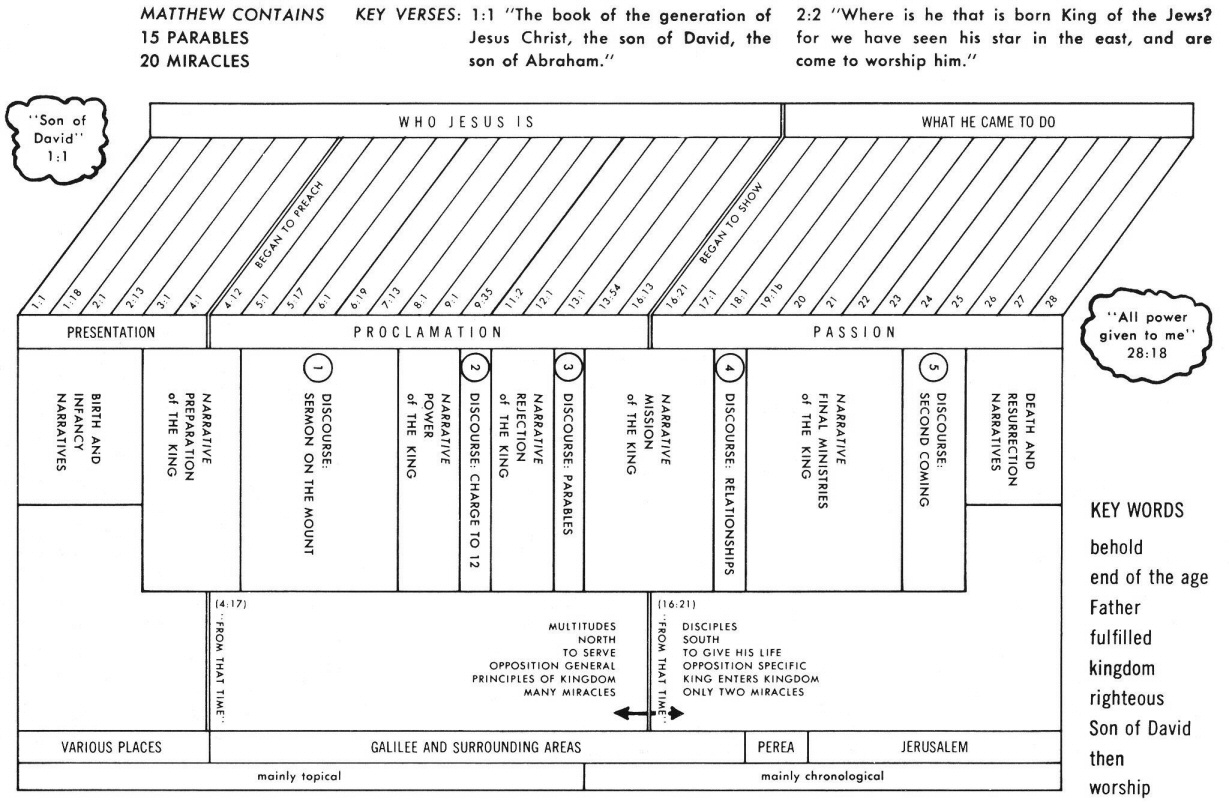
Click chart to enlarge
Charts from Jensen's Survey of the NT - used by permission
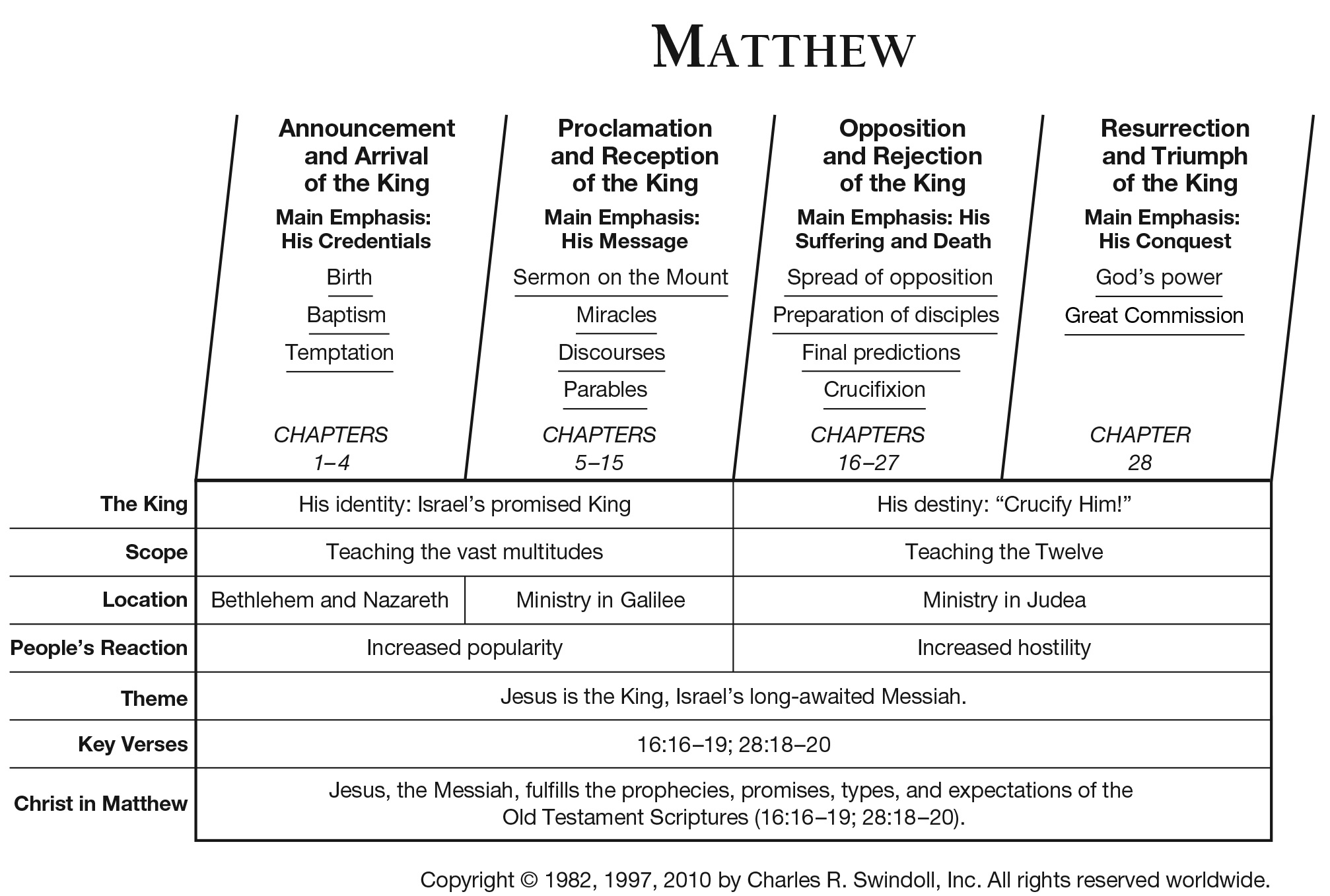
Another Chart from Charles Swindoll
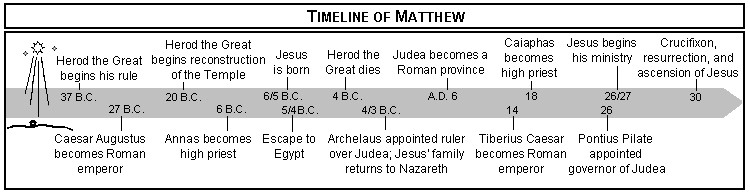
THE LIFE OF JESUS AS COVERED
BY MATTHEW (shaded area)
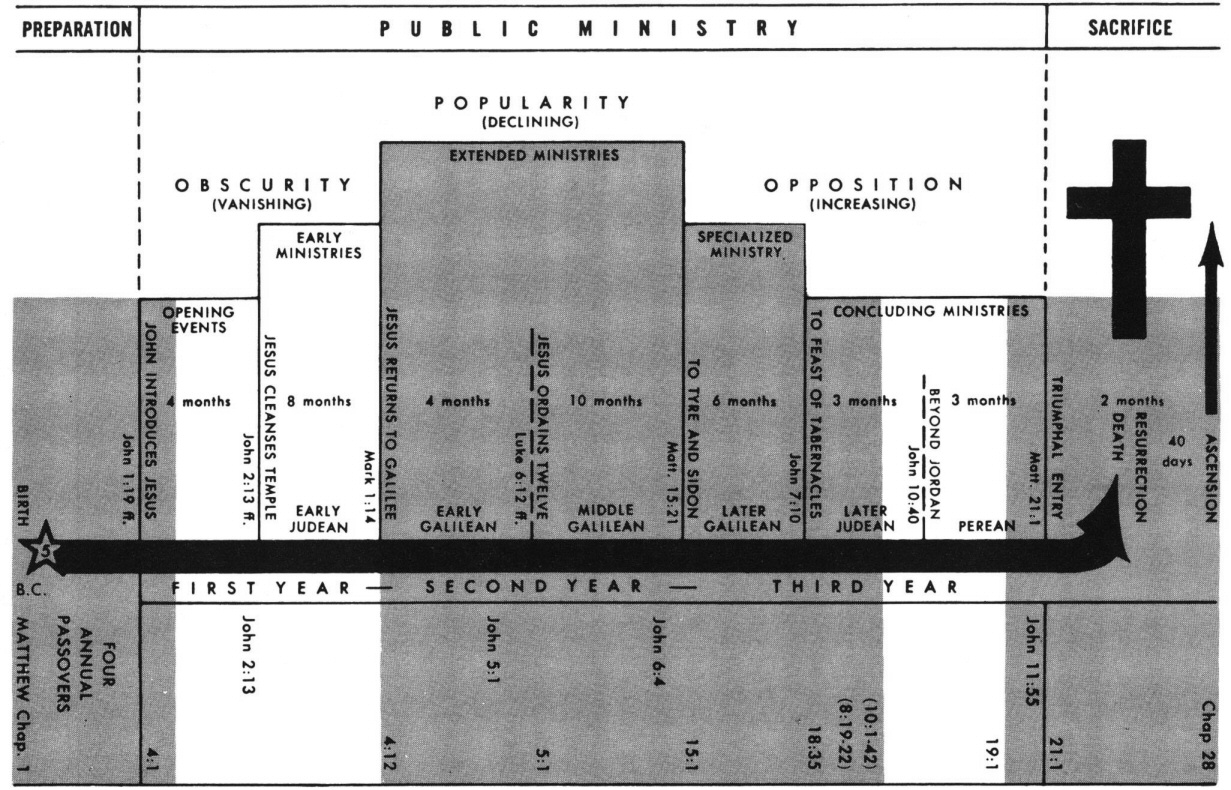
Click chart to enlarge
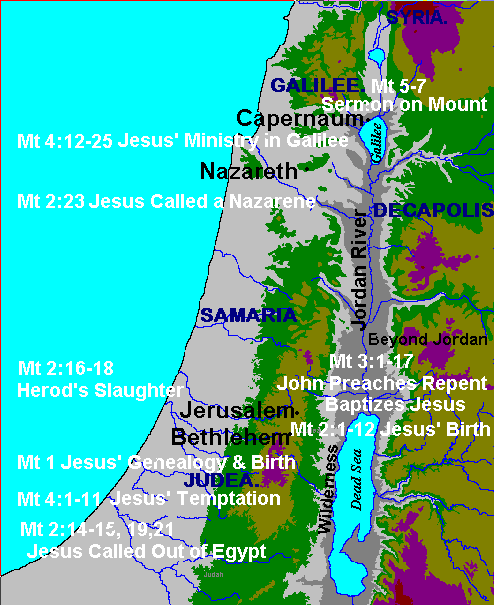
Jesus Birth and Early Years
Leading up to the Sermon on the Mount
Matthew 1-7

Source: Ryrie Study Bible
Matthew 5:4 "Blessed are those who mourn, for they shall be comforted. (NASB: Lockman)
Greek: makarioi oi penthountes, (PAPMPN) hoti autoi paraklethesontai. (3PFPI)
Amplified: Blessed and enviably happy [with a happiness produced by the experience of God’s favor and especially conditioned by the revelation of His matchless grace] are those who mourn, for they shall be comforted! (Amplified Bible - Lockman)
KJV: Blessed are they that mourn: for they shall be comforted.
NLT: God blesses those who mourn, for they will be comforted. (New Living Translation - Tyndale House)
Philips: How happy are those who know what sorrow means for they will be given courage and comfort! (New Testament in Modern English)
Wuest: Spiritually prosperous are those who are mourning, because they themselves shall be encouraged and strengthened by consolation.
Young's Literal: `Happy the mourning--because they shall be comforted.
BLESSED ARE THOSE WHO MOURN: makarioi oi penthountes, (PAPMPN):
- Ps 6:1-9; 13:1, 2, 3, 4, 5; 30:7, 8, 9, 10, 11; 32:3, 4, 5, 6, 7; 40:1, 2, 3; 69:29,30; 116:3, 4, 5, 6, 7; Ps 126:5,6; Isa 12:1; 25:8; 30:19; 35:10; 38:14, 15, 16, 17, 18, 19; 51:11,12; 57:18; Isa 61:2,3; 66:10; Jer 31:9, 10, 11, 12,16,17; Ezek 7:16; 9:4; Zech 12:10, 11, 12, 13, 14; 13:1; Lk 6:21,25; 7:38,50; 16:25; Jn 16:20, 21, 22; 2Cor 1:4, 5, 6, 7; 2Cor 7:9,10; Jas 1:12; Rev 7:14, 15, 16, 17; 21:4
- Matthew 5 Resources - Multiple Sermons and Commentaries
Our attitude toward sin, a true sorrow for sin. (Wiersbe)
Blessed is the man who mourns like one mourning for the dead. (Barclay)
Happy the mourning (Young's Literal)
Blessed the mourning ones.
(Notice that the verb "are" is not present in the original Greek and has been added by most of the translations in this beatitude as well as all the others).
SPIRITUAL BROKENNESS
LEADS TO SPIRITUAL HEALTH
J C Ryle said "A right knowledge of the way to heaven is to feel that we are on the way to hell...To be sensible of our corruption and abhor our own transgressions is the first symptom of spiritual health...We must know the depth and malignancy of our disease in order to appreciate the Great Physician."
Thomas Watson - 'Blessed are those who mourn.' We must go through the valley of tears—to paradise! Mourning would be a sad and unpleasant subject to address—were it not that it has blessedness going before, and comfort coming after. Mourning is put here, for repentance. It implies both sorrow, which is the cloud, and tears which are the rain distilling in this golden shower! (Beatitudes)Spiritual brokenness or sacred sorrow is the pathway to spiritual blessedness. Once our spiritual brokenness is understood and acknowledged then and only then can the consolation of heaven be experienced. The darkness and depth of depravity of our soul in Adam must be grasped before we can experience the blessing of God's comfort brought about by the bestowal of the righteousness of Christ as birthed in our soul by the Spirit of Christ.
As Stephen Olford said "The Bible makes it clear that such brokenness is precipitated by God’s revelation of the sinfulness of our heart. "Despite his anti-religious prejudices, Sigmund Freud, the Austrian scientist and psychologist (1856–1939), confirms this biblical evidence. He wrote that “original sin is a fact, since psychoanalysis has revealed a whole world of rottenness, villany and sin, which had not … been suspected by psychologists—even though its presence was clearly enough attested by the New Testament”
Ray Pritchard - This is one of the strangest statements in the Bible. It is a paradox and a mystery. “Blessed are those who mourn,” said Jesus. Happy are the sad!
Alexander Maclaren introduces this beatitude remarking that...
An ordinary superficial view of these so-called Beatitudes is that they are simply a collection of unrelated sayings. But they are a great deal more than that. There is a vital connection and progress in them. The jewels are not flung down in a heap; they are wreathed into a chain, which whosoever wears shall have ‘an ornament of grace about his neck.’ They are an outgrowth from a common root; stages in the evolution of Christian character.
Now, I tried to show in the former sermon (The First Beatitude) how the root of them all is the poverty of spirit which is spoken of in the preceding verse (Mt 5:3); and how it really does lie at the foundation of the highest type of human character, and in its very self is sure of possessing the Kingdom of Heaven.
And now I turn to the second of these Beatitudes. Like all the others, it is a paradox, for it starts from a wholly different conception from the common one, of what is man’s chief good. If the aims which usually engross us are really the true aims of life, then there is no meaning in this saying of our Lord, for then it had been better not to sorrow at all than to sorrow and be comforted. But if the true purpose for which we are all gifted with this solemn gift of life is that we may become ‘imitators of God as dear children,’ then there are few things for which men should be more thankful than the sacred sorrow, than which there are few instruments more powerful for creating the type of character which we are set here to make our own. All lofty, dignified, serious thinkers and poets (who for the most of men are the best teachers) had spoken this same thought as well as Christ. But He speaks it with a difference all His own, which deepens incalculably its solemnity, and sets the truth of the otherwise sentimental saying, which flies often in the face of human nature, upon immovable foundations.
Let me ask you, then, to look with me, in the simplest possible way, at the two thoughts of our text, as to who are the mourners that are ‘blessed,’ and as to what is the consolation that they receive.
‘Blessed are they that mourn.’ Ah! that is not a universal bliss. All mourners are not blessed. It would be good news, indeed, to a world so full of miseries that men sometimes think it were better not to be, and holding so many wrecked and broken hearts, if every sorrow had its benediction. But just as we saw in the preceding discourse that the poverty which Christ pronounced blessed is not mere straitness of circumstances, or lack of material wealth, so here the sorrow, round the head of which He casts this halo of glory, is not that which springs from the mere alteration of external circumstances, or from any natural causes. The influence of the first saying runs through all the Beatitudes, and since it is ‘the poor in spirit’ who are there pronounced happy, so here we must go far deeper than mere outward condition, in order to find the ground of the benediction pronounced. Let us be sure, to begin with, of this, that no condition, be it of wealth or woe, is absolutely and necessarily good, but that the seat of all true blessedness lies within, in the disposition which rightly meets the conditions which God sends.
So I would say, first, that the mourners whom Christ pronounces ‘blessed’ are those who are ‘poor in spirit.’ The mourning is the emotion which follows upon that poverty. The one is the recognition of the true estimate of our own characters and failings; the other is the feeling that follows upon that recognition. The one is the prophet’s clear-sighted ‘I am a man of unclean lips’; the other is the same prophet’s contemporaneous wail, ‘Woe is me, for I am undone! (Isa 6:5)’
And surely, brethren, if you and I have ever had anything like a glimpse of what we really are, and have brought ourselves into the light of God’s face, and have pondered upon our characters and our doings in that—not ‘fierce’ but all-searching, ‘light’ that flashes from Him, there can be no attitude, no disposition, more becoming the best, the purest, the noblest of us, than that ‘Woe is me, for I am undone!’
Oh, dear friends, if—not as a theological term, but as a clinging, personal fact—we realize what sin against God is, what must necessarily come from it, what aggravations His gentleness, His graciousness, His constant beneficence cause, how facilely we do the evil thing and then wipe our lips and say, ‘We have done no harm,’ we should be more familiar than we are with the depths of this experience of mourning for sin.
I cannot too strongly urge upon you my own conviction—it may be worth little, but I am bound to speak it—that there are few things which the so-called Christianity of this day needs more than an intenser realisation of the fact, and the gravity of the fact, of personal sinfulness. There lies the root of the shallowness of so much that calls itself Christianity in the world to-day. It is the source of almost all the evils under which the Church is groaning. And sure I am that if millions of the people that complacently put themselves down in the census as Christians could but once see themselves as they are, and connect their conduct with God’s thought about it, they would get shocks that would sober them. And sure I am that if they do not thus see themselves here and now, they will one day get shocks that will stupefy them. And so, dear friends, I urge upon you, as I would upon myself, as the foundation and first step towards all the sunny heights of God-likeness and blessedness, to go down, down deep into the hidden corners, and see how, like the elders of Israel whom the prophet beheld in the dark chamber, we worship creeping things, abominable things, lustful things, in the recesses within. And then we shall possess more of that poverty of spirit, and the conscious recognition of our own true character will merge into the mourning which is altogether blessed. (The Second Beatitude)
ILLUSTRATION OF MOURNING - When George Whitefield preached for the first time in the open air it was to the Kingswood miners in Bristol, England. On a later occasion he wrote that he could see they were moved by “the white gutters made by their tears, which plentifully fell down their black cheeks … hundreds and hundreds of them were soon brought under deep conviction, which happily ended in a sound and thorough conversion.”
As J I Packer said...
A sense of defilement before God is not morbid, neurotic or unhealthy in any way. It is natural, realistic, healthy, and a true perception of our condition.
Blessed...mourn - A paradox (as was Mt 5:3 - where the "poor" receive a "kingdom"!) and foolishness to the natural man who cannot understand Jesus' words because they are spiritually appraised (1Co 2:14) In fact John Stott remarks that...
One might almost translate this second beatitude ‘Happy are the unhappy’ in order to draw attention to the startling paradox it contains. What kind of sorrow can it be which brings the joy of Christ’s blessing to those who feel it? It is plain from the context that those here promised comfort are not primarily those who mourn the loss of a loved one, but those who mourn the loss of their innocence, their righteousness, their self-respect. It is not the sorrow of bereavement to which Christ refers, but the sorrow of repentance. This is the second stage of spiritual blessing. It is one thing to be spiritually poor and acknowledge it; it is another to grieve and to mourn over it. Or, in more theological language, confession is one thing, contrition is another. (Stott, John: The Message of the Sermon on the Mount: Intervarsity Press)
Blessed (3107) (makarios [word study]) means spiritual prosperous, independent of circumstances because it is a state bestowed by God and not a feeling felt.
Note that Jesus does not mean, "Blessed are grim, cheerless Christians" and neither does He mean, "Blessed are those who are mourning over the difficulties of life" as is explained in more detail below.
Adam Clarke - the person whom Christ terms happy is one who is not under the influence of fate or chance, but is governed by an all-wise providence, having every step directed to the attainment of immortal glory, being transformed by the power into the likeness of the ever-blessed God. (Clarke, A. Clarke's Commentary: Matthew)
The Amplified Version (which often functions much like a "mini-lexicon") adds "Blessed and enviably happy [with a happiness produced by the experience of God’s favor and especially conditioned by the revelation of His matchless grace]
“Lord, let me weep for nought but sin,
And after none but thee;
And then I would-oh, that I might-
A constant mourner be!”
Mourn (3996) (pentheo from pénthos = mourning) means to mourn for, lament. Pentheo denotes loud mourning such as the lament for the dead or for a severe, painful loss. It is grief and sorrow caused by profound loss, especially death. Mourning can reflect an outward expression of sorrow. It is to experience sadness or grief as the result of depressing circumstances or the condition of persons and so to be sad, to grieve, to bewail or to lament. Grieving over a personal hope (relationship) that dies,
Pentheō ("mourn over a death") refers to "manifested grief"severe enough to take possession of a person and hence cannot be hid. This is the same meaning of penthéō throughout antiquity.
In context, Jesus is surely calling for mourning over one's sins (and the sins of the world), for those sins have brought and continue to bring death. Obviously, this mourning is not like that of the sinner who howls loudly when its sins find him out (2Co 7:10).
As C H Spurgeon said "let a man once feel sin for half an hour, really feel its tortures, and I warrant you he would prefer to dwell in a pit of snakes than to live with his sins... If you can look on sin without sorrow then you have never looked on Christ.
Sinclair Ferguson asks "Is Jesus, then, giving us a word of general encouragement in what he says here, assuring us that sorrow will eventually abate? Is he saying, 'Keep going. It will soon pass. Time heals all wounds'? That would be far too superficial a reading of the Sermon on the Mount. Jesus is speaking about life in the kingdom of God. The poverty he describes is in a man's spirit, not his pocket. Similarly, the grief Jesus describes is man's mourning over his own sinfulness; it is regret that he has proved a disappointment to the Lord. Numbed by the discovery of his poverty of spirit, he learns to grieve because of it. Here, then, is another characteristic of the Christian. He does not excuse his sin, or belittle it, or ignore it...As with all spiritual graces, it is possible for us to be deceived about the real nature of this mourning. It is emphatically not to be equated with a heavy and depressive spirit. It is emphatically not to be equated with a heavy and depressive spirit. Some of us by nature are melancholic, and sink more easily in our spirits. We become introverted and develop a poor image of ourselves that surfaces in the way we look at or address others, even in the way we hold our heads and walk. But all of these things can be characteristics of a person who is absorbed in himself; rather than is poor in spirit. By contrast, the man who genuinely mourns because of his sin has been drawn out of himself to see God in his holiness and grace. It is this – his sight of God – that has made him mourn. Paradoxically, it is the same sight of God that will bring him comfort. The God against whom he has sinned is one who forgives sinners! (Ferguson, Sinclair: Sermon on the Mount :Banner of Truth)
Lenski writes that "Behind this sorrow of the godly lies the recognition of the merciless power of sin and of our helplessness to ward it off and to escape. Hence this mourning is a constant cry to God in their distress. (Lenski, R. C. H. The Interpretation of St. Matthew's Gospel. Minneapolis, MN.: Augsburg Publishing House)
Note that in Mt 5:4 pentheo is in the present tense which speaks of a constant mourning, which is exactly the reaction that sin should continually have on us. Beware when you can sin with indifference for you are not far from callousness. Martin Luther felt that one's entire life must be one of continuous contrition and repentance -- not that we go around continually morose, but that we are ever aware of the evil and destructive capacity of sin, both ours and those around us (including our nation, cp Pr 14:34)
Pentheo 10x in NT translated mourn, 6; mourned, 1; mourning, 3. The KJV translates it bewail, 1; mourn, 7; wail, 2.
Matthew 5:4 "Blessed are those who mourn, for they shall be comforted.
Matthew 9:15 And Jesus said to them, "The attendants of the bridegroom cannot mourn as long as the bridegroom is with them, can they? But the days will come when the bridegroom is taken away from them, and then they will fast.
Mark 16:10 She went and reported to those who had been with Him, while they were mourning and weeping.
Luke 6:25 "Woe to you who are well-fed now, for you shall be hungry. Woe to you who laugh now, for you shall mourn and weep.
1 Corinthians 5:2 And you have become arrogant, and have not mourned instead, in order that the one who had done this deed might be removed from your midst.
2 Corinthians 12:21 I am afraid that when I come again my God may humiliate me before you, and I may mourn over many of those who have sinned in the past and not repented of the impurity, immorality and sensuality which they have practiced.
James 4:9 (note) Be miserable and mourn and weep; let your laughter be turned into mourning, and your joy to gloom. (All these commands are in the decisive aorist imperative)
Revelation 18:11 (note) "And the merchants of the earth weep and mourn over her, because no one buys their cargoes any more;
Revelation 18:15 (note) "The merchants of these things, who became rich from her, will stand at a distance because of the fear of her torment, weeping and mourning,
Revelation 18:19 (note) "And they threw dust on their heads and were crying out, weeping and mourning, saying, 'Woe, woe, the great city, in which all who had ships at sea became rich by her wealth, for in one hour she has been laid waste!'
Gilbrant - The verb pentheō (cf. the cognate noun penthos, “mourning”) means “to lament, to mourn, to grieve,” usually on behalf of a dead person. The association of mourning with visible signs, such as loud weeping or beating one’s breast, occurs both in the New Testament (e.g., Mark 16:10; Luke 6:25) and papyri (Moulton-Milligan; cf. Nehemiah 8:9). The mourning process in the ancient world was very dramatic, and pentheō was one of the strongest words in the Greek language for “sorrowing.” Mourning was so much a part of society’s response to death that if there were no mourners, “professional mourners” were hired (Payne, “Burial and Mourning,” The New Bible Dictionary pp.170f.; cf. Amos 5:16f.; 8:10f.). Pentheō renders six Hebrew terms in the Septuagint, but ordinarily it translates a form of ’āval, “to mourn.” Abraham “mourned” for Sarah when she died (Genesis 23:2). Jacob mourned because he thought Joseph was dead (Genesis 37:34); his mourning was typically dramatic: “Then Jacob tore his clothes, put on sackcloth and mourned for his son many days” (NIV). Later we read he did not eat either. Such was the extent of his grief that he said he would continue grieving until his own death (verse 35). A different usage occurs in Numbers when the people mourned after learning the bad report of the returning spies (excluding Caleb and Joshua; 14:39). In another way the call to mourning is a summons to repentance and a warning of judgment (Amos 1:2; 8:8; Joel 1:9,10; Isaiah 3:26). In the age to come, however, joy will replace mourning (Isaiah 61:3; 66:10). Pentheō occurs 10 times in the New Testament. Matthew may be echoing the Old Testament idea noted above that in the age to come those who mourn will be “comforted” (Matthew 5:4). Luke 6:21, a parallel text, reads “weep” (klaiō [2772]) instead of “mourn,” an indication of the close association between the two (cf. Mark 16:10; James 4:9; Revelation 18:11,15,19). In both passages Jesus’ intent was to show that the most terrible sorrow could be transformed into wonderful peace and joy. Although the Messianic Age will bring joy to some, it will bring mourning to others. This too repeats the Old Testament motif that mourning is one of the results of judgment (e.g., Luke 6:25; Revelation 18:15,19; cf. 18:20). Mourning and grieving are also signs of repentance and humility before the Lord (James 4:9). Probably here too Old Testament imagery is at work. The prophet Joel advised the priests of the land to “put on sackcloth” (Joel 1:13, NIV), and he urged humility and repentance. Isaiah donned sackcloth himself, apparently acting out the repentance to which he summoned Israel (cf. Isaiah 20:2). In 1 Corinthians 5:2 Paul wrote that the shameless sin committed in their church should have led them all into a deep and painful sorrow, yet they were “puffed up” with haughtiness. (Complete Biblical Library Greek-English Dictionary)
Pentheo is found 45 times in the Septuagint or LXX. -
Gen 23:2; 37:34f; 50:3; Num 14:39; 1Sa 6:19; 15:35; 16:1; 2 Sam 13:37; 14:2; 19:1; 1Chr 7:22; 2Chr 35:24; Ezra 10:6; Neh 1:4; 8:9; Job 14:22; Ps 35:14; 78:63; Isa 3:26; 16:8; 19:8; 24:4, 7; 33:9; 61:2f; 66:10; Jer 4:28; 12:4; 14:2; 16:5; 23:10; 31:21; Lam 1:4; 2:8; Ezek 31:15; Dan 10:2; Hos 4:3; 10:5; Joel 1:9f; Amos 1:2; 8:8; 9:5
The first use of pentheo in the Lxx describes the mourning of Abraham for his wife Sarah (Ge 23:2). Pentheo describes Jacob mourning for his son Joseph whom he thought had been killed (Ge 37:34, 35). Samuel grieving over Saul and his failure to obey (1Sa 15:35, 16:1). David for his son Absalom (2Sa 13:37, 19:1). All Judah and Jerusalem for King Josiah (2Chr 35:24). Ezra mourning over the unfaithfulness of the exiles in marrying foreign women. Ezra 10:6, cp 10:1, 2). Nehemiah mourning over the great distress of the remnant who were back in Jerusalem (Neh 1:4). The people weeping and mourning upon hearing the Words of the Law read (Neh 8:9). Figuratively of Zion or Jerusalem's gates mourning over the coming destruction (Isa 3:6). When Messiah returns to comfort all who mourn (Isa 61:2-3). Daniel mourned for 3 entire weeks (Da 10:1) Several verses refer to "the land" (the land of Israel) mourning over the sin of the chosen people (cp Jer 23:10 because of the curse, Hos 4:3, Joel 1:10)
It is interesting to note that the Greek Stoics regarded such mourning as something to be avoided and the pointlessness (as seen in this secular view) was a popular theme in Greek philosophy. One imagines what their shock must have been to read Jesus' words which can be paraphrased as
"Happy those who continually mourn as one laments over a loved one who had died"!
Trench says that pentheo means "to grieve with a grief which so takes possession of the whole being that it cannot be hid. (Trench, R. C. Synonyms of the New Testament. Hendrickson Publishers. 2000)
Pentheo is the word which is used for mourning for the dead, for the passionate lament for one who was loved. This is the quality of mourning Jesus is calling for as we see our sins the way God sees them and His Spirit convicts us of sin. (cp John 16:8, Acts 2:37, Zech 12:10)
The English word mourn means to feel or express grief or sorrow.
In Classical Greek in most uses of pentheo, it expresses a sorrow which is outwardly expressed in some way, such as by tear or laments. Among the Greeks the verb and noun (penthos) were used especially for public mourning.
Not surprisingly, pentheo is often connected with the term "weep" and it describes the mourning which cannot be hidden. It describes not only a grief which brings an ache to the heart, but also a grief which brings tears to the eyes.
Barclay comments that pentheo "is defined as the kind of grief which takes such a hold on a man that it cannot be hid. It is not only the sorrow which brings an ache to the heart; it is the sorrow which brings an ache to the heart; it is the sorrow which brings the unrestrainable tears to the eyes. Here then indeed is an amazing kind of bliss: Blessed is the man who mourns like one mourning for the dead. (William Barclay's Daily Study Bible - Matthew 5)
Notice that here in Mt 5:4 Jesus uses pentheo in the present tense which speaks of a continual state of mourning or mourning as one's lifestyle! Spiritual mourning is not just an isolated or limited act in life. It is a continual part of the believer’s life. The present tense shows that spiritual mourning has lasting dimensions in the life of the Christian. Wuest conveys the sense of the verb tense rendering it "Spiritually prosperous are those who are mourning, because they themselves shall be encouraged and strengthened by consolation."
MacArthur notes that in Greek there are nine words that express sorrow, but that "of the nine terms used for sorrow, the one used here (pentheo, mourn) is the strongest, the most severe. It represents the deepest, most heart-felt grief, and was generally reserved for grieving over the death of a loved one. It is used in the Septuagint (Greek Old Testament) for Jacob’s grief when he thought his son Joseph was killed by a wild animal (Ge 37:34). It is used of the disciples’ mourning for Jesus before they knew He was raised from the dead (Mark 16:10). It is used of the mourning of world business leaders over the death of its commerce because of the destruction of the world system during the Tribulation (Rev. 18:11, 15). The word carries the idea of deep inner agony, which may or may not be expressed by outward weeping, wailing, or lament. When David stopped hiding his sin and began mourning over it and confessing it (Ps. 32:3–5), he could declare, “How blessed is he whose transgression is forgiven, whose sin is covered! How blessed is the man to whom the Lord does not impute iniquity, and in whose spirit there is no deceit!” (vv. 1–2). (MacArthur, J: Matthew 1-7 Chicago: Moody Press)
As A W Pink so eloquently phrases it (see full quote below) "this “mourning” is by no means to be confined unto the initial experience of conviction and contrition, for observe the tense of the verb: it is not “have mourned,” but “mourn”—a present and continuous experience. The Christian himself has much to mourn over. The sins which he now commits—both of omission and commission—are a sense of daily grief to him, or should be, and will be, if his conscience is kept tender. An ever-deepening discovery of the depravity of his nature, the plague of his heart, the sea of corruption within—ever polluting all that he does—deeply exercises him. Consciousness of the surgings of unbelief, the swellings of pride, the coldness of his love, and his paucity of fruit, make him cry, “O wretched man that I am.” (Ro 7:24) (Matthew 5:3-4: The Beatitudes) (Bolding added)
Pentheo "is most frequent in the LXX for mourning for the dead, and for the sorrows and sins of others" (McNeile).
"There can be no comfort where there is no grief" (Bruce).
Sorrow should make us look for the heart and hand of God and so find the comfort latent in the grief. (But remember that in the present context the grief is not sorrow in general as affects all mankind but sorrow over grieving the heart of God with our sins against Him, cf Gen 39:9, 2Sa 12:13, Ps 51:3-4, Ezek 6:9).
“Lord, let me weep for nought but sin,
And after none but thee;
And then I would-oh, that I might-
A constant mourner be!”
(C H Spurgeon)
This word describes brokenness over our estrangement by our sin and how prone we are to wander.
Ps 34:18 The Lord is near to the brokenhearted, and saves those who are crushed in spirit.
Spurgeon's comment: The Lord is nigh unto them that are of a broken heart. Near in friendship to accept and console. Broken hearts think God far away, when He is really most near them; their eyes are holden so that they see not their best Friend. Indeed, He is with them, and in them, but they know it not. They run hither and thither, seeking peace in their own works, or in experiences, or in proposals and resolutions, whereas the Lord is nigh them, and the simple act of faith will reveal Him.
And saveth such as be of a contrite spirit. What a blessed token for good is a repentant, mourning heart! Just when the sinner condemns himself, the Lord graciously absolves him. If we chasten our own spirits the Lord will spare us. He never breaks with the rod of judgment those who are already sore with the rod of conviction. Salvation is linked with contrition.
Ps 51:17 The sacrifices of God are a broken spirit; A broken and a contrite heart, O God, Thou wilt not despise.
Spurgeon's Comment: The sacrifices of God are a broken spirit. All sacrifices are presented to thee in one, by the man whose broken heart presents the Saviour's merit to thee. When the heart mourns for sin, thou art better pleased than when the bullock bleeds beneath the axe. "A broken heart" is an expression implying deep sorrow, embittering the very life; it carries in it the idea of all but killing anguish in that region which is so vital as to be the very source of life. So excellent is a spirit humbled and mourning for sin, that it is not only a sacrifice, but it has a plurality of excellences, and is preeminently God's sacrifices. A broken and a contrite heart, O God, thou wilt not despise. A heart crushed is a fragrant heart. Men contemn those who are contemptible in their own eyes, but the Lord seeth not as man seeth. He despises what men esteem, and values that which they despise. Never yet has God spurned a lowly, weeping penitent, and never will he while God is love, and while Jesus is called the man who receiveth sinners. Bullocks and rams he desires not, but contrite hearts he seeks after; yea, but one of them is better to him than all the varied offerings of the old Jewish sanctuary.
Isa 57:15 For thus says the high and exalted One Who lives forever, whose name is Holy, "I dwell on a high and holy place, and also with the contrite and lowly of spirit in order to revive the spirit of the lowly and to revive the heart of the contrite.
Spurgeon comments: That is a wonderful verse. You notice that the prelude to it explains the greatness and the holiness of God; and then, like an eagle swooping out of the shy even down to the earth, we find God coming from his high and lofty place to dwell with humble and contrite hearts. Not with the proud,— not with you who think yourselves good and excellent,— does God dwell; but with men who feel their sin, and own it; with men who feel their unworthiness, and confess it. I will read this verse again to impress it upon your memory: “Thus saith the high and lofty One that inhabiteth eternity, whose name is Holy; I dwell in the high and holy place, with him also that is of a contrite and humble spirit, to revive the spirit of the humble, and to revive the heart of the contrite ones.”
><>><>><>
F B Meyer (Our Daily Walk) comments: THIS VERSE has reference to God's two Homes--the macrocosm of the great universe and the microcosm of the human heart. Our God is so great that the Heaven of heavens cannot contain Him, but He is so lowly and humble that He will stoop to fill the heart of a child. He bids us learn of Him, for He is meek and lowly in heart.
The humble and contrite heart. It seems almost too wonderful to believe that the Eternal One will care to come and live with the child of Time; that the Infinite and Holy God will descend to the narrow limits of a human heart! (see John 14:23).
PRAYER
Spirit of purity and grace,
Our weakness, pitying, see;
O make our hearts Thy dwelling-place,
And worthier Thee. AMEN.><>><>><>
J. C. Philpot (Daily Portions) comments: O what a mystery that God should have two dwelling-places! The "heaven of heavens" that "cannot contain him;" and the humble, broken, and contrite heart! But in order that the Lord of heaven might have a place in which he could live and lodge, God gives to his people gifts and graces; for he cannot come and dwell in the carnal mind, in our rebellious nature, in a heart full of enmity and wickedness; he therefore makes a lodging-place for himself, a pavilion in which the King of glory dwells, the curtains of which are like the curtains of Solomon. His abode is that holy, divine nature which is communicated at regeneration--"the new man, which after God is created in righteousness and true holiness." Thus Christ dwells in the heart by faith; and is "in his people, the hope of glory." And this made Paul say, "I am crucified with Christ; nevertheless I live; yet not I, but Christ lives in me; and the life which I now live in the flesh, I live by the faith of the Son of God, who loved me, and gave himself for me."
This is the object of God's dealings--that the Lord God might dwell in his people; that there might be a union between the Church and her covenant Head--"I in them, and they in me, that they might be perfect in one." This is the unfolding of the grand enigma, the solution of the incomprehensible mystery, "God manifest in the flesh,"--that the Lord God might dwell in his people; "I will dwell in them, and walk in them; and I will be their God, and they shall be my people;" and thus glorify himself by filling their hearts with his grace and glory, as Solomon's temple was of old, and that they might enjoy him, and be with him when time shall be no more. This is the grand key to all the Lord's dealings with the soul, and all his mysterious leadings in providence--that the Lord God might dwell in the hearts of his people here, and be eternally glorified in them in a brighter and a better world.
Isa 66:1,2 Thus says the LORD "Heaven is My throne, and the earth is My footstool. Where then is a house you could build for Me? And where is a place that I may rest? For My hand made all these things. Thus all these things came into being," declares the Lord. "But to this one I will look. To him who is humble and contrite of spirit, and who trembles at My word.
Spurgeon comments: The text first of all teaches us that God rejects all material temples as the places of his abode; but, secondly, it informs us that God has made a choice of spiritual temples, wherein he will dwell...
Only God is pleased to say that the man who trembleth at his word, the man of broken heart, the man who is poor in spirit, is such an one as he will look to; these are his temples, — these, and these only, the men in whom he will dwell. And I am so thankful for this, beloved friends, because this is a state which, through God’s grace, is attainable by all here whom the Lord shall call...
...“of a contrite spirit,” that is, the man that feels his sin and hates it, that mourns that he should have rebelled against God, and desires to find mercy. Now, God will come to such, because there is purity in that heart. “Oh,” saith the contrite spirit, “I do not see any purity in my heart.” No, but what do you see, then? “Oh, I see all manner of sin and evil, and I hate myself because it is so.” There is purity in that hatred; at any rate there is a something that God loves in that hatred in your soul, of the sin that is within, and He will come to you, for there is something there that is akin to His own holiness: He has put it there. You have begun to appeal for mercy. Oh, then, God’s mercy will come, for mercy delights to visit misery. Mercy is always at home where there is a sinner confessing sin...
Depth of mercy! can there be
Mercy still reserved for me?
Can my God His wrath forbear
Me, the chief of sinners, spare?I have long withstood His grace,
Long provoked Him to His face,
Would not hearken to His calls,
Grieved Him by a thousand falls.Now incline me to repent;
Let me now my sins lament;
Now my foul revolt deplore,
Weep, believe, and sin no more.Therefor me the Saviour stands,
Holding forth His wounded hands;
God is love! I know, I feel,
Jesus weeps and loves me still.
Charles Wesley
(Upbeat version by Red Mountain Church)
...I will close, lastly, with this: Those that are of this character secure A Great Blessing. God says he will look to them. That means several things. It means consideration. Whoever and whatever God may overlook, he will look upon a broken heart. This means approbation. Though God does not approve of the most costly building that is meant to be his house, he approves of every one that trembles at his word. It means acceptance. Though God will accept no materialism in his worship, he will accept the sighs and cries of a poor broken spirit. It means affection. Be they who they may that do not receive God’s help, contrite spirits shall have it. And it means benediction. “To this man will I look.” I was reading the other day in an old author the following reflection as near as I can remember it. Saith he, “There may be a child in the family that is very weak and sickly. There are several others that are also out of health, but this one is sorely ill. And the mother says to the nurse, ’You shall see after the rest, but to this one will I look — even to this one that is so sore sick and so exceeding weak.’” So God does not say to his angels, “You shall look after the poor and the contrite, I have other things to do,” but he saith, “Go ye about, ye spirits, be ye ministering spirits to those that are stronger, and bear them up in your hands, lest they dash themselves against a stone; but here is a poor soul that is very poor: I will look after him myself. Here is a poor spirit that is very broken: I will bind that up myself. Here is a heart that trembles very much at my word: I will comfort that heart myself;” and so, he that telleth the number of the stars, and calleth them all by name — he healeth the broken in heart; he bindeth up their wounds. Out of special love to them he will do it himself. I should like to be the means of comfort to some contrite spirit to-night. Very likely the Lord will say, “No, I will not make you the means of it.” Very well, Master: be it as thou wilt; but thou wilt do it thyself. When we write books and tracts, we wish that we might comfort the desponding. Very likely the Lord will say, “No, no.” What should we reply to this? “Lord, thou canst do it better than we could. There are some sores we cannot reach, some diseases that laugh at our medicines, but, good Lord, thou canst do it.” And the Lord will come to you, poor broken down in heart, — he will come. Don’t despair. Though the devil says you will never be saved, don’t believe it; and above all, turn your eyes full tears to Christ on the cross, and trust him. There is salvation in no other, but there is salvation in the crucified Redeemer. (Read Spurgeon's full message on this passage - Living Temples for the Living God)
><>><>><>
Many despise warning, and perish. Happy is he who trembles at the word of the Lord. Josiah did so, and he was spared the sight of the evil which the Lord determined to send upon Judah because of her great sins. Have you this tenderness? Do you practice this self-humiliation? Then you also shall be spared in the evil day. God sets a mark upon the men that sigh and cry because of the sin of the times. The destroying angel is commanded to keep his sword in its sheath till the elect of God are sheltered: these are best known by their godly fear, and their trembling at the Word of the Lord. (Faith's Checkbook - see April 3)
Isaiah 61:3 To grant those who mourn in Zion, Giving them a garland instead of ashes, The oil of gladness instead of mourning, The mantle of praise instead of a spirit of fainting. So they will be called oaks of righteousness, The planting of the LORD, that He may be glorified. (C H Spurgeon has an entire book on this one verse! "The Mourner's Comforter") (See also Spurgeon's sermon Comfort and Comforting or listen to the MP3)
The great characteristic of Jeremiah, the Weeping Prophet, was that he wept for his people (Jeremiah 9:1; 13:17).
David Brainerd's journal on October 18, 1740 has this entry...
"In my morning devotions my soul was exceedingly melted, and bitterly mourned over my exceeding sinfulness and vileness."
John MacArthur has an excellent discussion of "How can I truly mourn over sin?" The following discussion summarizes his thoughts. On the "negative side" you need to remove the things which hinder you from mourning, especially "the things that make us content with ourselves, that make us resist God’s Spirit and question His Word, and that harden our hearts. A stony heart does not mourn. It is insensitive to God". One of greatest hindrances is a failure to let go of our love for a pet sin. Be assured that this will turn your heart to stone. Puritan Thomas Watson writes that the love of sin “makes sin taste sweet and this sweetness in sin bewitches the heart”. (cf note Hebrews 3:13)
MacArthur also mentions other hindrances including despair, conceit, presumption, procrastination ("one of these days I'll take a look at my sins"...sure you will! Not! Delays do not make Christianity easier. The folly of taking your time when you stand under divine judgment makes less sense than purposely sleeping in a house that you know is on fire), and excessive merriment (click Happy are the Sad and scroll down).
On the positive side we can cultivate a heart soil that is fertile for the growth of genuine mourning over sins (and those in our church, our community, our country) by getting a fresh glimpse of the holiness of God, especially as demonstrated in His sacrifice for sins on the Cross. (e.g., see notes 1 Peter 1:14, 15-16, 1:17, 18-19). This vital discipline has been beautifully expressed by Christina Rossetti in her poem "Good Friday"
Am I a stone and not a sheep,
That I can stand, O Christ, beneath Thy cross,
To number drop by drop Thy Blood’s slow loss
And yet not weep?
Not so those women loved
Who with exceeding grief lamented Thee;
Not so fallen Peter weeping bitterly;
Not so the thief was moved;
Not so the Sun and Moon
Which hid their faces in a starless sky.
A horror of great darkness at broad noon-
I, only I.
Yet give not oe’r
But seek Thy sheep, true Shepherd of the flock;
Greater than Moses, turn and look once more
And smite a rock.
One has to be careful that their mourning is not just an emotional reaction but that there is true confession, repentance and genuine mourning. John MacArthur addresses this question of how one can know they are mourning as Christ teaches...
Knowing whether or not we have godly mourning is not difficult. First, we need to ask ourselves if we are sensitive to sin. If we laugh at it, take it lightly, or enjoy it, we can be sure we are not mourning over it and are outside the sphere of God’s blessing. (see for example Saul's regret not mourning over his sin in 1Sa 15:30)...The godly mourner will have true sorrow for his sins. His first concern is for the harm his sin does to God’s glory, not the harm its exposure might bring to his own reputation or welfare. If our mourning is godly we will grieve for the sins of fellow believers and for the sins of the world. We will cry with the psalmist, “My eyes shed streams of water, because they do not keep Thy law” (Ps. 119:136). We will wish with Jeremiah that our heads were fountains of water that we could have enough tears for weeping (Jer. 9:1; cf. Lam. 1:16). With Ezekiel we will search out faithful believers “who sigh and groan over all the abominations which are being committed” around us (Ezek. 9:4; cf. Ps. 69:9). We will look out over the community where we live and weep, as Jesus looked out over Jerusalem and wept (Luke 19:41). The second way to determine if we have genuine mourning over sin is to check our sense of God’s forgiveness. Have we experienced the release and freedom of knowing our sins are forgiven? Do we have His peace and joy in our life? Can we point to true happiness He has given in response to our mourning? Do we have the divine comfort He promises to those who have forgiven, cleansed, and purified lives? The godly mourners “who sow in tears shall reap with joyful shouting. He who goes to and fro weeping, carrying his bag of seed, shall indeed come again with a shout of joy, bringing his sheaves with him” (Ps 126:5–6)." (MacArthur, J: Matthew 1-7 Chicago: Moody Press)
William Barclay commenting on "blessed are those who mourn" reminds us that "the very first word of the message of Jesus was, “Repent!” No man can repent unless he is sorry for his sins. The thing which really changes men is when they suddenly come up against something which opens their eyes to what sin is and to what sin does. A boy or a girl may go his or her own way, and may never think of effects and consequences; and then some day something happens and that boy or girl sees the stricken look in a father’ or a mother’s eye’s; and suddenly sin is seen for what it is....Christianity begins with a sense of sin. Blessed is the man who is intensely sorry for his sin, the man who is heart-broken for what his sin has done to God and to Jesus Christ, the man who sees the Cross and who is appalled by the havoc wrought by sin. It is the man who has that experience who will indeed be comforted; for the experience is what we call penitence, and the broken and the contrite heart God will never despise (Psalm 51:17). The way to the joy of forgiveness is through the desperate sorrow of the broken heart. (Matthew 5 Commentary - Daily Study Bible - online)
Richards writes concerning "blessed are those who mourn" "It is best to understand this phrase in the context of Jesus' purpose in the Beatitudes, where he contrasted the values of his kingdom with those of the world. This world considers blessed, not those who mourn, but the hedonistic and pleasure-seeking, who find "happiness" in transitory experience. It is the one who is dissatisfied and pained by what this world has to offer who will find the comfort that is offered by a living relationship with God. (Richards, L O: Expository Dictionary of Bible Words: Regency)
George Barlow was right when he said "There is no progress possible to the man who does not see and mourn over his defects."
John R. W. Stott spoke of the value of mourning when he said that "We can stand before the cross only with a bowed head and a broken spirit."
Chambers alludes to "those who mourn" over sin and relates it to repentance writing that...
Repentance always brings a man to this point: ‘I have sinned.’ The surest sign that God is at work is when a man says that and means it. Anything less than this is remorse for having made blunders, the reflex action of disgust at himself. The entrance into the Kingdom is through the panging pains of repentance crashing into a man’s respectable goodness; then the Holy Ghost, Who produces these agonies, begins the formation of the Son of God in the life. The new life will manifest itself in conscious repentance and unconscious holiness, never the other way about. The bedrock of Christianity is repentance. Strictly speaking, a man cannot repent when he chooses; repentance is a gift of God.
The old Puritans used to pray for ‘the gift of tears.’
If ever you cease to know the virtue of repentance, you are in darkness. Examine yourself and see if you have forgotten how to be sorry.
As Sinclair Ferguson states "Some Christians never seem to discover this reality of life in God's kingdom. It is grace that makes us mourn for our sinfulness. The law of God convicts us of our sin (as it did Paul; see Ro 7:7-12). But it is the grace of God that melts our hearts and causes a right attitude toward that sin, in sorrow, shame, and mourning. Is this not a gloomy picture of what it means to be a Christian? Admittedly it is a contrast – and perhaps an antidote – to the contemporary notion that being a Christian means being on a constant emotional `high.' But is it true to say that the Christian constantly lives in a state of mourning, always crying out, `What a wretched man I am' (Ro 7:24)? (Ferguson, Sinclair: Sermon on the Mount :Banner of Truth)
As you read the words of Frank W Boreham regarding mourning, apply his thoughts to mourning over sins (yours, your church's, your nation's)...
The tendency is to become insensitive. We get used to things. Our susceptibilities become seared. The doctor, who nearly fainted at his first operation, learns in time to look upon pain without emotion...It is not easy under such conditions to keep the spirit fresh and the heart tender. Blessed are they that mourn! (NB: present tense) Mourning implies a soft, copious, heartfelt grief--a grief that has broken all restraint and finds relief in welcome floods of tears...Unless we are constantly on our guard against it, we are all in danger of being drawn into the horrible vortex of insensibility (Ed note: specifically insensibility to sin!)
J C Ryle writes that "those who mourn" refers to "those who sorrow for sin, and grieve daily over their own shortcomings. These people are more concerned about sin than about anything on earth: the remembrance of it is grievous to them; the burden of it is intolerable. Blessed are all such! “The sacrifices of God are a broken spirit” and a contrite heart (Psalm 51:17). One day they will weep no more: “they will be comforted.” (Ryle, J. C. Matthew)
Adam Clarke comments that "those who, feeling their spiritual poverty (Mt 5:3), mourn after God, lamenting the iniquity that separated them from the fountain of blessedness. Every one flies from sorrow, and seeks after joy, and yet true joy must necessarily be the fruit of sorrow. The whole need not (do not feel the need of) the physician, but they that are sick do; i.e. they who are sensible of their disease (Mt 9:10-13). Only such persons as are deeply convinced of the sinfulness of sin, feel the plague of their own heart, and turn with disgust from all worldly consolations, because of their insufficiency to render them happy, have God’s promise of solid comfort. (Clarke, A. Clarke's Commentary: Matthew) (Bolding added)
Spurgeon - These seem worse off than the merely poor in spirit, for "they mourn." They are a stage higher, though they seem to be a stage lower. The way to rise in the kingdom is to sink in ourselves. These men are grieved by sin, and tried by the evils of the times; but for them a future of rest and rejoicing is provided. Those who laugh shall lament, but those who sorrow shall sing. How great a blessing is sorrow, since it gives room for the Lord to administer comfort! Our griefs are blessed, for they are our points of contact with the divine Comforter. The beatitude reads like a paradox, but it is true, as some of us know full well. Our mourning hours have brought us more comfort than our days of mirth. (The Gospel of the Kingdom: A Popular Exposition of the Gospel According to Matthew)
Guzik - The ancient Greek grammar indicates an intense degree of mourning. Jesus does not speak of casual sorrow for the consequences of our sin, but a deep grief before God over our fallen state. What do those who mourn actually mourn about? Their mourning is over just anything, but they mourn over sin. To really be followers of Jesus, we must mourn over our sin and the ruin and separation from God that comes to our life from sin. We also mourn the general destruction and separation sin brings, far beyond the personal consequences to ourselves.
Dwight Pentecost quips that "Our Lord did not promise, “Blessed are they that moan, for they shall. be comforted,” but, “Blessed are they that mourn.” When we carry some burden that brings tears, our natural response is to complain, to moan, to question God’s wisdom and benevolence, God’s right to do this to us. He did not say, “Those who moan will be comforted,” but, “those who mourn.” The biblical concept of mourning is recognizing a need, and then presenting that need to the God of all comfort. When one, in desperation, oppression, loneliness, bereavement, discouragement, anxiety, earnestness, desire, devotion, presents his need to God, God commissions the angels of heaven to dry tears from his eyes." (Pentecost, J. D. Design for living: Lessons in Holiness from the Sermon on the Mount. Kregel Publications)
Phil Newton draws an important distinction regarding the correct interpretation and application of Mt 5:4, noting that this "
is a favorite verse at funerals...as the assurance that in the time of bereavement and loss, they can be certain that God will give comfort. But this verse is not speaking to that issue. Others suppose that it is the assurance of comfort for some deprivation in life or some loss of perceived privilege. Some mourn because of being caught in a sin or deed that brings about certain consequences of great discomfort. So they comfort themselves that as they mourn they will eventually be comforted from this time of distress. They mourn over the penalty not over the deed. As the Puritan pastor in London, Thomas Watson, penned, “To mourn only for fear of hell is like a thief that weeps for the penalty rather than the offense” [The Beatitudes, 62]. There is no promise of comfort in this situation. Some mourn due to hurt feelings or perceived wrongs or personal injustices or the inability to accomplish personal goals, but that is not the type of mourning spoken of in this text. Mourning also has nothing to do with the habits of our lives. Some people are naturally melancholy so that they can easily weep or easily feel pity over a situation or quickly shed tears for a loss. But this is not a promise of blessing for a particular type of personality. To sum it up in one phrase, “It is not the sorrow of bereavement to which Christ refers, but the sorrow of repentance” [John Stott, 40-41].
...spiritual mourning does not begin by pointing at everyone else’s sins and shortcomings. It starts with me....How does this deep, inward spiritual mourning develop and continue in our lives?
1. It results from seeing God as holy. Sinclair Ferguson concurs, “It is this—his sight of God—that has made him mourn. Paradoxically, it is the same sight of God that will bring him comfort” [The Sermon on the Mount: Kingdom Life in a Fallen World, 19]. Where do we see God? We look into the pages of God’s Word, that infallible revelation of God. We meditate upon Scripture. We contemplate the Lord; see how he has worked in creation and most of all, in redemption. We look at the Incarnation of Jesus Christ, to his perfectly holy life, and then to the cross. Gaze upon Him who is so utterly holy that for Him to forgive just one sinner, it required that He pour out the vials of His wrath upon His own Son in a propitiatory fashion.
2. It is the apprehension of the nature of sin. David’s penitential Psalm 51 expressed this so clearly: “‘for I know my transgressions, and my sin is ever before me. Against You, You only, I have sinned and done what is evil in Your sight, so that You are justified when you speak and blameless when You judge” (Ps 51:3-4). Sin is ultimately an offense against God and his holy law. Thomas Watson adds, “David, that he might be a mourner, kept his eye full upon sin. See what sin is, and then tell me if there will be not enough in it to draw forth tears” [87]. It is God who is offended by our sin! It is God the Creator who lovingly sustains us, who even restrains us from following headlong after our own lusts, who tenderly places roadblocks in our way lest we face more of his judgment—it is this God against whom we sin!
3. It is the comprehension of sin as the source of our enmity with God, and consequently our hopelessness to change our own hearts. That produces spiritual mourning as we see the heavy toll requited for our sin: enemies of God; dead in trespasses and sins; children of wrath.
4. Spiritual mourning focuses upon sins in particular and not just general. It is not terribly difficult for a person to join the crowd by saying, “I’m a sinner,” for he generally adds, “I’m a sinner like everyone else.” But to get more specific, to address our own deeds, our thoughts, our attitudes, our tongue, our mistreatment of others, our neglect of spiritual disciplines, our ingratitude, our lusts, our impure thoughts, our disobedience to parents, our greed, our self-centeredness, our pride, and our arrogance, will bring us to the shocking reality of our sinfulness. Watson wrote, “A wicked man will say he is a sinner, but a child of God says, I have done this evil” [64].
5. Spiritual mourning produces hatred for sin and a repentant heart that desires to be holy. The American myth of Christianity without holiness knows nothing of spiritual mourning. When the sins of the world are just as prevalent within the church as outside the church, it tells us that true spiritual mourning—this character of true conversion—has not been near as widespread as statistics would state. Spiritual mourning targets sin, applies the cross of Christ, pleads with the Lord for deliverance, and exercises the spiritual disciplines that will help to shape the believer in conduct and character like that of Jesus Christ. He takes seriously Paul’s exhortation to the Ephesians, “Therefore be imitators of God, as beloved children” (Eph 5:1).
Do you know something of this spiritual mourning as a reality in your life? My friend, without it there will be no repentance, and without repentance there is no life (Luke 13:3). (See complete sermon Matthew 5:4:The Blessing of Mourning) (Bolding added)
Newton also has some practical thoughts on how mourning functions in a person's life...
In conversion - Spiritual mourning begins in conversion; it is the pathway to repentance. It comes as a gift of God’s grace that enables us to see our sin as an offense against God, and to understand the judgment of God that weighs against us. This is where the promise, “for they shall be comforted,” shines. When a person faces his own lost condition before God, and sees his unworthiness of forgiveness, and yet God in His mercy saves him, then you can be assured that he is “comforted!” The word implies that God comes near to him with great consolations. It is not a comfort that leads to cockiness as though he deserved what God did, but a comfort that humbles him, that spills forth in continual gratitude as he is converted to Christ.
In Sanctification - Spiritual mourning continually operates in the life of the Christian. For as he sins it brings grief, and grief causes him to turn to Christ and the sufficiency of His death; then he is comforted again. “Whenever the Christian is conscious of his own sin,” writes Ferguson, “he will be grieved by it” [20]. Grief leads to repentance, and comfort. Watson adds, “The soul of the Christian is most eased when it can vent itself by holy mourning” [76]. It was this same idea that Martin Luther put at the top of his Ninety-five Theses that he nailed to the church door at Wittenberg. “When our Lord and Master Jesus Christ said, “Repent” (Mt 4:17), he willed the entire life of believers to be one of repentance.” Jeremiah Burroughs, another Puritan, offers us great insight on why mourning is part of our sanctification.
As weeds grow very rank in summer time, now in the winter the frost nips the weeds and keeps them under; but if it be a long frost it kills them. And so doth a mournful condition; if it be sanctified, it kills the vermin, it kills our lusts, and is a special means of mortification in the soul; and therefore blessed are they that do mourn, and carry themselves graciously in a mourning condition [The Saints’ Happiness, 38].
In glorification - You can easily see the progress, going from conversion—and the justification that takes place, to sanctification, and finally to glorification. It is not that spiritual mourning follows into glorification, but it is the pathway to it. For the ultimate comfort promised by Christ, “for they shall be comforted,” has a future dimension that points to that time of glorification forever in the Lord’s presence. It is that blessed hope of the Christian, that time in which the mortal shall put on immortality, death will no longer be in the picture; sin and death will have long been put asunder as enemies under the feet of Christ. And who can describe the measure of Christ’s eternal comfort? (See complete sermon Matthew 5:4:The Blessing of Mourning) (Bolding added)
Mourning is hateful and irksome to poor human nature: from suffering and sadness our spirits instinctively shrink. It is natural for us to seek the society of the cheerful and joyous. The verse now before us presents an anomaly to the unregenerate, yet is it sweet music to the ears of God’s elect: if “blessed” why do they “mourn?” If they mourn, how can they be blessed? Only the child of God has the key to this paradox, for “happy are they who sorrow” is at complete variance with the world’s logic. Men have, in all places and in all ages, deemed the prosperous and the gay to be the happy ones, but Christ pronounces blessed those who are poor in spirit and who mourn.
Now it is obvious that it is not every species of mourning which is here referred to. There are thousands of mourners in the world today who do not come within the scope of our text: those mourning over blighted hopes, over financial reverses, over the loss of loved ones. But alas, so far from many of them coming beneath this Divine benediction, they are under God’s condemnation; nor is there any promise that such shall ever be Divinely “comforted.”
There are three kinds of “mourning” referred to in the Scriptures:
a natural, such as we have just referred to above;
a sinful, which is a disconsolate and inordinate grief, refusing to be comforted, or a hopeless remorse like that of Judas;
and a gracious, a “godly sorrow,” of which the Holy Spirit is the Author.
The “mourning” of our text is a spiritual one. The previous verse indicates clearly the line of thought here: ”Blessed are the poor in spirit, for theirs is the kingdom of heaven.” Yes,” Blessed are the poor,” not the poor in purse, but the poor in heart: those who realize themselves to be spiritual bankrupts in themselves, paupers before God. That felt poverty of spirit is the very opposite of the Laodiceanism which is so rife today, that self-complacency which says, “I am rich, and increased with goods, and have need of nothing.” In like manner it is spiritual mourning which is in view here. Further proof of this is found in the fact that Christ pronounces these mourners “blessed.” They are so because the Spirit of God has wrought a work of grace within them, and hence they have been awakened to see and feel their lost condition. They are “blessed” because God does not leave them at that point: “they shall be comforted.”
“Blessed are they that mourn.” The first reference is to that initial mourning which ever precedes a genuine conversion, for there must be a real sense of sin before the remedy for it will even be desired. Thousands acknowledge that they are sinners, who have never mourned over the fact.
Take the woman of Luke 7:36-50, who washed the Saviour’s feet with her tears: have you ever shed any over your sins?
Take the prodigal in Luke 15: before he left the far country he said, “I will arise and go unto my Father and say unto Him, Father, I have sinned against heaven, and before Thee, And am no more worthy to be called Thy son “ (Luke 15:21)—where shall we find those today with this sense of their sinnership?
Take the publican of Luke 18: why did he “smite upon his breast” and say “God be merciful to me a sinner?” (Luke 18:13) Because he felt the plague of his own heart.
So of the three thousand converted on the day of Pentecost: they were “pricked in their heart, and cried out.” (Acts 2:37)
This “mourning” springs from a sense of sin, from a tender conscience, from a broken heart. It is a godly sorrow over rebellion against God and hostility to His will. In some cases it is grief over the very morality in which the heart has trusted, over the self-righteousness which has caused such complacency. This “mourning” is the agonizing realization that it was my sins which nailed to the Cross the Lord of glory. When Israel shall, by faith, see Christ, “they shall mourn for Him” (Zech. 12:10). It is such tears and groans which prepare the heart to truly welcome and receive the “balm of Gilead,” (Jer 8:22, 46:11) the comfort of the Gospel. It is, then, a mourning over the felt destitution of our spiritual state, and over the iniquities that have separated between us and God. Such mourning always goes side by side with conscious poverty of spirit.
THE CLOSER ONE LIVES TO GOD,
THE MORE ONE WILL MOURN!
But this “mourning” is by no means to be confined unto the initial experience of conviction and contrition, for observe the tense of the verb (in Mt 5:4 - mourn = pentheo in the present tense): it is not “have mourned,” but “mourn”—a present and continuous experience. The Christian himself has much to mourn over. The sins which he now commits—both of omission and commission—are a sense of daily grief to him, or should be, and will be, if his conscience is kept tender (Ed: I must ask, dear reader, how is your conscience? Are you keeping it tender by cultivating it with communion, with time in His Holy presence in His Holy Word and in prayer?). An ever-deepening discovery of the depravity of his nature, the plague of his heart, the sea of corruption within—ever polluting all that he does—deeply exercises him. Consciousness of the surgings of unbelief, the swellings of pride, the coldness of his love, and his paucity of fruit, make him cry, “O wretched man that I am.” (Ro 7:24-note) A humbling recollection of past offences: “Wherefore remember that ye being in time past” (Eph. 2:11-note).
Yes, “Ourselves also, which have the firstfruits of the Spirit, even we ourselves groan within ourselves” (Romans 8:23-note). Does not the Christian groan under the disciplining rod of the Father: “No chastening for the present seemeth to be joyous, but grievous” (Heb. 12:11-note). And is he not deeply grieved by the awful dishonour which is now done to the Lord Jesus on every hand? The fact is that the closer the Christian lives to God, the more will he mourn overall that dishonours Him: with the Psalmist he will say, “Horror hath taken hold upon me because of the wicked that forsake Thy law” (Psalm 119:53), and with Jeremiah, “My soul shall weep in secret places for your pride; and mine eyes shall weep sore and run down with tears, because the Lord’s flock is carried away captive” (Jer 13:17). But blessed be God, it is written, “Go through the midst of the city, through the midst of Jerusalem, and seta mark upon the foreheads of the men that sigh and that cry for all the abominations that be done in the midst thereof” (Ezek. 9:4). So too there is a sympathetic mourning over the sufferings of others: “Weep with them that weep” (Romans 12:15).
But let us return to the primary thought of our verse: “Blessed are they that mourn” has immediate reference to the convicted soul sorrowing over his sins. And here it is most important to note that Christ does not pronounce them “blessed” simply because they are mourners, but because they are such, mourners as “shall be comforted.” There are not a few in Christendom today who glory in their grief and attempt to find comfort in their own inward wretchedness—as well seek health from our sicknesses. True comfort is not to be found in anything in self—no, not in perceiving our own vileness—but in Christ alone. Distress of soul is by no means always the same thing as evangelical repentance, as is clear from the case of Cain (Gen. 4:13). But where the Spirit produces in the heart a godly sorrow for sin, He does not leave him there, but brings him to look away from sin to the Lamb of God, and then he is “comforted.” The Gospel promises no mercy except to those who forsake sin and close with Christ. (Pink, A. W. An Exposition of the Sermon on the Mount) (Bolding added)
The Puritan writer Thomas Watson in his exposition of Mt 5:4 (Beatitudes) has a treatise on mourning which is too lengthy to quote in its entirety. Here are a few snippets to entice you to read his sobering exposition on an all too seldom contemplated subject...
We have in our hearts the seed of the unpardonable sin. We have the seed of all those sins for which the damned are now tormented! And shall we not mourn? He who does not mourn, has surely lost the use of his reason....
There is a fivefold mourning which is false and spurious.
A despairing kind of mourning. Such was Judas' mourning. He saw his sin, he was sorry, he made confession, he justifies Christ, he makes restitution (Matthew 27). Judas, who is in hell, did more than many nowadays! He confessed his sin...
A hypocritical mourning. The heart is very deceitful. It can betray as well by a tear—as by a kiss. Saul looks like a mourner, and as he was sometimes 'among the prophets' (1 Samuel 10:12) ...The true penitent labors to make the worst of his sin. Saul labors to make the best of sin...
A forced mourning. When tears are pumped out by God's judgments, these are like the tears of a man who has the stone, or that lies upon the rack. Such was Cain's mourning. (Genesis 4:13). His punishment troubled him more than his sin! To mourn only for fear of hell is like a thief that weeps for the penalty, rather than the offence. The tears of the wicked are forced by the fire of affliction!
An external mourning; when sorrow lies only on the outside. 'They disfigure their faces' (Matthew 6:16-note). The eye is tender—but the heart is hard. Such was Ahab's mourning. 'He tore his clothes and put sackcloth on his flesh, and went softly' (1Ki 21:27). His clothes were torn—but his heart was not torn. He had sackcloth but no sorrow. He hung down his head like a bulrush—but his heart was like granite. There are many who may be compared to weeping marbles, they are both watery and flinty.
A vain fruitless mourning. Some will shed a few tears—but are as bad as ever. They will deceive and be unclean. Such a kind of mourning there is in hell. The damned weep—but the continue to blaspheme God.
What is the RIGHT gospel-mourning?...It is spontaneous and free. It must come as water out of a spring, not as fire out of a flint. Tears for sin must be like the myrrh which drops from the tree freely without cutting or forcing. Gospel-mourning is spiritual; that is, when we mourn for sin more than suffering. Pharaoh says, "Take away the plague!" He never thought of the plague of his heart. A sinner mourns because judgment follows at the heels of sin—but David cries out, 'My sin is ever before me' (Psalm 51:3-note). God had threatened that the sword should ride in circuit in his family—but David does not say, 'The sword is ever before me'—but 'My sin is ever before me'. The offence against God troubled him. He grieved more for his treason against God—than the bloody axe.
In particular, our mourning for sin, if it is spiritual, must be under this threefold notion:
1. We must mourn for sin, as it is an act of hostility and enmity against God. Sin not only makes us unlike God—but contrary to God: 'They have walked contrary unto me' (Leviticus 26:40). Sin affronts and resists the Holy Spirit (Acts 7:51). Sin is contrary to God's nature; God is holy; sin is an impure thing. Sin is contrary to his will. If God be of one mind—sin is of another. Sin does all it can to spite God. The Hebrew word for 'sin' signifies 'rebellion'. A sinner fights against God (Acts 5:39). Now when we mourn for sin as it is a walking contrary to heaven, this is a gospel-mourning.
2. We must mourn for sin, as it is the highest ingratitude against God. It is a kicking against the breasts of mercy. God sends his Son to redeem us, his Spirit to comfort us. We sin against the blood of Christ, the grace of the Spirit—and shall we not mourn? We complain of the unkindness of others, and shall we not lay to heart our own unkindness against God? Caesar took it unkindly that his son, Brutus, should stab him—'and you, my son!' May not the Lord say to us, 'These wounds I have received in the house of my friend!' (Zechariah 13:6). Israel took their jewels and earrings and made a golden calf of them. The sinner takes the jewels of God's mercies and makes use of them to sin. Ingratitude is a 'crimson sin' (Isaiah 1:18-note). Sins against gospel-love are worse in some sense, than the sins of the devils, for they never had an offer of grace offered to them. Now when we mourn for sin as it has its accent of ingratitude upon it, this is an evangelical mourning.
3. We must mourn for sin as it is a privation; it keeps good things from us; it hinders our communion with God. Mary wept for Christ's absence. 'They have taken away my Lord!' (John 20:13). So our sins have taken away our Lord. They have deprived us of his sweet presence. Will not he grieve, who has lost a rich jewel? When we mourn for sin under this notion, as it makes the Sun of Righteousness withdraw from our horizon; when we mourn not so much that peace is gone, and trading is gone—but God is gone, 'My beloved had withdrawn himself' (Song 5:6); this is a holy mourning. The mourning for the loss of God's favor—is the best way to regain His favor. If you have lost a friend, all your weeping will not fetch him again—but if you have lost God's presence, your mourning will bring your God again. (cp Jas 4:8-note)
Gospel-mourning sends the soul to God. When the prodigal son repented, he went to his father. 'I will arise and go to my father' (Lk 15:18). Jacob wept and prayed (Hosea 12:4). The people of Israel wept and offered sacrifice (Jdg 2:4,5). Gospel-mourning puts a man upon duty. The reason is, that in true sorrow there is a mixture of hope, and hope puts the soul upon the use of means. That mourning which like the 'flaming sword' keeps the soul from approaching to God, and beats it off from duty—is a sinful mourning. It is a sorrow hatched in hell. Such was Saul's grief—which drove him to the witch of Endor (1Sa 28:7). Evangelical mourning is a spur to prayer. The child who weeps for offending his father goes to his presence and will not leave until his father is reconciled to him. Absalom could not be quiet 'until he had seen the king's face' (2Sa 14:32, 33).
Gospel-mourning is for sin in particular. The deceitful man is occupied with generalities. It is with a true penitent as it is with a wounded man. He comes to the surgeon and shows him all his wounds. Here I was cut with the sword; here I was shot with a bullet. So a true penitent bewails all his particular sins. 'We have served Baal' (Judges 10:10). They mourned for their idolatry. And David lays his fingers upon the sore—and points to that very sin which troubled him (Psalm 51:4-note). 'I have done this evil!' He means his blood-guiltiness. A wicked man will say he is a sinner—but a child of God says, 'I have done this evil!' Peter wept for that particular sin of denying Christ. It is reported that Peter never heard a rooster crow—but he fell a-weeping. There must be a particular repentance, before we have a general pardon.
Gospel tears must drop from the eye of faith. 'The father of the child cried out with tears, 'Lord, I believe' (Mark 9:24). Our disease must make us mourn—but when we look up to our Physician, who has made a remedy of his own blood, we must not mourn without hope. Believing tears are precious. When the clouds of sorrow have overcast the soul, some sunshine of faith must break forth. The soul will be swallowed up of sorrow, it will be drowned in tears—if faith does not keep it up from sinking. Though our tears drop to the earth—yet our faith must reach heaven. After the greatest rain, faith must appear as the rainbow in the cloud. The tears of faith are bottled as precious wine. 'You keep track of all my sorrows. You have collected all my tears in your bottle. You have recorded each one in your book' (Ps 56:8-note).
Gospel-mourning is joined with self-loathing. The sinner admires himself. The penitent loathes himself. 'You shall loath yourselves in your own sight for all your evils' (Ezekiel 20:43). A true penitent is troubled not only for the shameful consequence of sin—but for the loathsome nature of sin; not only the sting of sin—but the deformed face of sin. How did the leper loathe himself! (Leviticus 13:45). The true mourner cries out, O these impure eyes! this heart which is a conclave of wickedness! He not only leaves sin—but loathes sin. He who has fallen in the dirt loathes himself (Hosea 14:1).
Gospel-mourning must be purifying. Our tears must make us more holy. We must so weep for sin, as to weep out sin. Our tears must drown our sins. We must not only mourn—but turn. 'Turn to me with weeping' (Joel 2:12). What good is it, to have a watery eye and a whorish heart? It is foolish to say it is day, when the air is full of darkness; so to say you repent, when you draw dark shadows in your life. It is an excellent saying of Augustine, 'He truly bewails the sins he has committed, who never commits the sins he has bewailed'. True mourning is like the 'water of jealousy' (Nu 5:12-22). It makes the thigh of sin to rot. 'You broke the heads of the monster in the waters.' (Ps 74:13-note). The heads of our sins, these monsters, are broken in the waters of true repentance. True tears are cleansing. They are like a flood that carries away all the rubbish of our sins away with it. The waters of holy mourning are like the river Jordan wherein Naaman washed and was cleansed of his leprosy (2Ki 5:11, 12, 13, 14). It is reported that there is a river in Sicily where, if the blackest sheep are bathed, they become white; so, though our sins be as scarlet—yet by washing in this river of repentance, they become white as snow (Isaiah 1:18-note). Naturalists say of the serpent, before it goes to drink it vomits out its poison. In this 'be wise as serpents'. Before you think to drink down the sweet cordials of the promises, cast up the poison that lies at your heart. Do not only mourn for sin—but break from sin.
Gospel-mourning must be joined with hatred of sin. 'What indignation!' (2Cor 7:11-see commentary). We must not only abstain from sin—but abhor sin. The dove hates the least feather of the hawk. A true mourner hates the least motion to sin. A true mourner is a sin-hater. Amnon hated Tamar more than ever he loved her (2Sa 13:15). To be a sin-hater implies two things: first, to look upon sin as the most deadly evil—as the essence of all evil. It looks more ghastly than death or hell. Second, to be implacably incensed against it. A sin-hater will never admit of any terms of peace. The war between him and sin is like the war between Rehoboam and Jeroboam. 'There was war between Rehoboam and Jeroboam all their days' (1Ki 14:30). Anger may be reconciled—hatred cannot. True mourning begins in the love of God—and ends in the hatred of sin.
Gospel-mourning in some cases is joined with restitution. It is as well a sin to violate the name of another—as the chastity of another. If we have eclipsed the good name of others, we are bound to ask them for forgiveness. If we have wronged them in their estate by unjust, fraudulent dealing, we must make them some compensation. Thus Zacchaeus, 'If I have taken anything from any man by false accusation, I restore him fourfold' (Luke 19:8), according to the law of Ex 22:1. James bids us not only look to the heart but the hand: 'Cleanse your hands, you sinners, and purify your hearts' (Jas 4:8-note). If you have wronged another, cleanse your hands by restitution. Be assured, without restitution—no remission.
Gospel-mourning must be a speedy mourning. We must take heed of adjourning our repentance, and putting it off until death. As David said, 'I will pay my vows now' (Psalm 116:18-note), so should a Christian say, 'I will mourn for sin now.' 'Blessed are you that weep now' (Lk 6:21). God has encircled us in the compass of a little time, and charges us immediately to bewail our sins. 'Now God calls all men everywhere to repent' (Acts 17:30). We know not whether we may have another day granted us. Oh let us not put off our mourning for sin until the making of our will. Do not think holy mourning is only a deathbed duty. You may seek the blessing with tears, as Esau when it is too late. How long shall I say that I will repent tomorrow? Why not at this instant? 'Delay brings danger'. Caesar's deferring to read his letter before he went to the Senate-house, cost him his life. The true mourner makes haste to meet an angry God, as Jacob did his brother; and the present he sends before, is the sacrifice of tears.
Gospel-mourning for sin is perpetual. There are some who at a sermon will shed a few tears—but they are soon dried up. The hypocrite's sorrow is like a vein opened and presently stopped. The Hebrew word for 'eye' signifies also 'a fountain', to show that the eye must run like a fountain for sin and not cease; but it must not be like the Libyan fountain which the ancients speak of—in the morning the water is hot, at midday cold. The waters of repentance must not overflow with more heat in the morning, at the first hearing of the gospel; and at midday, in the midst of health and prosperity, grow cold and be ready to freeze. No! it must be a daily weeping. As Paul said, 'I die daily' (1Cor 15:31), so a Christian should say, 'I mourn daily'. Therefore keep open an outflow of godly sorrow, and be sure it is not stopped until death. 'Let your tears flow like a river. Give yourselves no rest from weeping day or night' (Lam 2:18). It is reported of holy John Bradford that scarcely a day passed him wherein he did not shed some tears for sin. Daily mourning is a good antidote against backsliding. I have read of one that had an epilepsy, and being dipped in seawater, was cured. The washing of our souls daily in the brinish waters of repentance is the best way both to prevent and cure the falling into relapses.
(And the preceding is only a "snippet" of Thomas Watson's treatise on Mourning - highly recommended)
FOR THEY SHALL BE COMFORTED: hoti autoi paraklethesontai (3PFPI):
- Matthew 5 Resources - Multiple Sermons and Commentaries
DIVINE COMFORT
FOR MOURNERS
For - pause and ponder every encounter with this instructive term of explanation.
They (845) (autos) is the personal pronoun and it is noteworthy that it is placed emphatically in the sentence. Kenneth Wuest conveys this nuance rendering it...
because they themselves shall be encouraged and strengthened by consolation.
What is the point? The point is that this beatitude of God's comfort is reserved exclusively for they who live life with a contrite heart which is mournful over sin and it is only "they" (and they alone) who will have their tears wiped away by the loving hand of Jesus Christ.
Not all those who "mourn" over their sin will be comforted...
For the sorrow that is according to the will of God produces a repentance without regret, leading to salvation, but the sorrow (grief, sadness, pain in one's mind, always the opposite of joy, elation, blessedness) of the world produces death. (2 Co 7:10)
Shall be comforted - This verb is future tense (Click for Macarthur's point below that the future tense can be used to express certainty). When in the future? Do we have to wait until we see Jesus face to face to be comforted. In a word, no! Primarily Jesus means that the comfort is dispensed future to the time one mourns (primarily a mourning over sin) -- in other words the comfort "at once follows the mourning" (Lenski). It means the comfort is there when one mourns and is broken over sin, for Scripture teaches that God is near the brokenhearted (Ps 34:18-note). There is also a sense in which there will be a future eschatological fulfillment when Messiah returns in Person to rule and to comfort in the Millennium. (see D A Carson's note below) In other words, God will comfort now and then. And this pattern of present and future fulfillments is not unusual in Scripture, for even in the previous beatitude, the promise of the kingdom of heaven has a "now" and a future fulfillment. Grace has a present and a future component, for Peter speaks of "the grace to be brought to you at the revelation of Jesus Christ." (1Pe 1:13-note) Redemption has a now and then component for all believers have been redeemed by His blood (1Pe 1:18-note), but there will be a future aspect for Paul writes that we are "waiting eagerly for our adoption as sons, the redemption of our body." (Ro 8:23-note) And so it would not be surprising that God would supply a present, immediate comfort and a future comfort, when "there shall no longer be any mourning" (Rev 21:4-note, cp Rev 7:17-note).
And below are two OT examples of "future comfort", the first in the context of Israel's regathering the prophet Jeremiah declares...
Then (in the Messianic Kingdom = Millennium) the virgin shall rejoice in the dance, and the young men and the old, together, for I will turn their mourning into joy, and will comfort them, and give them joy for their sorrow. And I will fill the soul of the priests with abundance, and My people shall be satisfied with My goodness," declares the LORD. (Jer 31:13, 14)
Isaiah 61 records another OT passage that speaks of future comfort...
The Spirit of the Lord GOD is upon me, Because the LORD has anointed me To bring good news to the afflicted; He has sent me to bind up the brokenhearted, To proclaim liberty to captives, And freedom to prisoners;2 To proclaim the favorable year of the LORD, and the day of vengeance of our God; to comfort all who mourn, 3 To grant those who mourn in Zion, Giving them a garland instead of ashes, The oil of gladness instead of mourning, The mantle of praise instead of a spirit of fainting. So they will be called oaks of righteousness, The planting of the LORD, that He may be glorified.
Comment: Isa 61:1 describes Jesus, while Isa 61:2 describes the time which had its onset at His first appearance (the favorable year) and then His return at the end of the Great Tribulation (the day of vengeance) which in turn is followed by the establishment of His Millennial Reign, and it is this latter time period to during which He will comfort all who mourn. When Jesus quoted this passage (Isaiah 61:1,2) in the synagogue and stated that it was fulfilled in Him (Lk 4:16, 17, 18, 19, 20, 21), He stopped quoting Isa 61:2, just before the day of vengeance. This final aspect of His work will be accomplished at His second coming (cp My year of redemption in Isa 63:4). Isa 61:3 amplifies the comfort that God will give to all who mourn in Zion (Jerusalem). Again, the text speaks primarily to the time when the Redeemer returns at the end of the Great Tribulation and "all (all who mourn - see note on this verse) Israel will be saved" (Ro 11:26-note) (they are those Jews who mourn over sin).
Comforted (3870) (parakaleo from para = beside, from close beside + kaleo = to call) means literally to call to one's side and so refers to the act of calling someone to one’s side in order to help one.
The passive voice speaks of the subject receiving comfort from a source outside himself or herself. God Himself is the Comforter. The Lord will call the mourner to Himself, and speak the words of pardon, peace, and life eternal, to their hearts (cf Mt 11:28)
The noun form of parakaleo (parakletos) is translated "Comforter" (KJV, "Helper" in NAS) and is what is referred to as a verbal adjective which refers to aid of any kind. In Classic Greek a "parakletos" referred to a legal advisor, a pleader, a proxy, or an advocate. The idea was one who would come forward in behalf of and as the representative of another. John is the only NT writer to use parakletos and four times for the Holy Spirit and once for Jesus...
And I will ask the Father, and He will give you another Helper (Comforter, KJV), that He may be with you forever (John 14:16)
But the Helper (Comforter, KJV), the Holy Spirit, whom the Father will send in My name, He will teach you all things, and bring to your remembrance all that I said to you. (John 14:26)
When the Helper (Comforter, KJV) comes, whom I will send to you from the Father, that is the Spirit of truth, who proceeds from the Father, He will bear witness of Me, (John 15:26)
But I tell you the truth, it is to your advantage that I go away; for if I do not go away, the Helper (Comforter, KJV) shall not come to you; but if I go, I will send Him to you. (John 16:7)
My little children, I am writing these things to you that you may not sin. And if anyone sins, we have an Advocate with the Father, Jesus Christ the righteous; (1John 2:1)
Comment: In rabbinical literature parakletos could indicate one who offers legal aid or who intercedes on behalf of someone else and similarly in this context parakletos undoubtedly signifies a legal Advocate or Counsel for the defense
The Holy Spirit is called a Paraclete (parakletos) because He undertakes Christ’s office in the world while Christ is not in the world as the God–Man in bodily form. In addition, the Holy Spirit is also called the Paraclete because He acts as Christ’s substitute on earth. The Parakletos in the widest sense it means “a helper, a succorer (Derivation - from Latin succurrere to run up, run to help, from sub- up + currere to run), one who aids another.” In the three passages in the Gospel noted above, the Holy Spirit is the Comforter to the saint, not that He comforts him in the sense of consoling him merely, but that He is sent to be the One to come to the aid of the Christian in the sense of ministering to him in his spiritual life. In 1John 2:1 the Lord Jesus is the parakletos of the believer in the sense that He pleads our cause before our heavenly Father in relation to sin in the life of the Christian, praying us back into fellowship with God by the way of our confession and the cleansing blood (cf Hebrews 7:25-note, Ro 8:34-note)
Kent Hughes reminds us that "God's comfort is relational. It comes in the form of his divine companionship. He is our ally. He personally binds up our sorrows and consoles us. How comprehensive our comfort is! It is immediate. It comes to us alone. It comes personally in the Person of the Holy Spirit. And it is based on the forgiveness of our sins. That is why we are called "blessed." What a stupendous paradox! Jesus stands truth on its head to get our attention, and he says, "Would you be comforted? Then mourn. Would you be happy? Then weep." (Hughes, R. K. Sermon on the Mount: The Message of the Kingdom. Crossway Books)
Only when a person mourns (and weeps) over his or her own sinfulness will that person be comforted by the only Comforter who can relieve their spiritual distress. To those who mourn God grants pardon, forgiveness, deliverance, strength and reassurance. Jesus Christ with His own precious blood has fully satisfied all our sins (1John 1:6, 7, 8, 9), and delivered us from all the power of evil. You can either sweep your sins "under the rug" or you can put them under the blood. The choice is yours beloved.
Hughes asks "Have you experienced that in your life? Have you been flat on your face before God mourning over your sins and failures and found Him to come and place His hand on your shoulder and deep within your soul you know His peace that passes all understanding. If you are carrying a deep burden of sin and you sense that grief even to the point that it is beyond you to carry, drop it at the feet of Jesus and receive His pardon and grace. He speaks to the soul with pardon and release and assurance that all your sins are under His blood...The saddest thing in life is not a sorrowing heart, but a heart that is incapable of grief over sin, for it is without grace. Without poverty of spirit no one enters the kingdom of God. Likewise, without its emotional counterpart - grief over sin - no one receives the comfort of forgiveness and salvation. For Christians, mourning over sin is essential to spiritual health. It is significant that the first of Martin Luther's famous 95 Theses states that the entire life is to be one of continuous repentance and contrition. It was this attitude in the Apostle Paul that caused him to affirm, well along into his Christian life, that he was the chief of sinners (1Ti 1:15).(Hughes, R. K. Sermon on the Mount: The Message of the Kingdom. Crossway Books)
As discussed above, shall be comforted is future tense which might at first suggest one would have to wait until we see Jesus face to face in order to receive comfort. Obviously that is not the case and in fact the future tense in Greek can also be used to indicate certainty.
John MacArthur explains that...
the comfort of Matthew 5:4 is future only in the sense that the blessing comes after the obedience; the comfort comes after the mourning.
As we continually mourn (present tense) over our sin, we shall be continually comforted-now, in this present life. God is not only the God of future comfort but of present comfort.
“God our Father” already has “given us eternal comfort and good hope by grace” (2Th 2:16). Even God’s written Word is a present comforter, given for our encouragement and hope (Ro. 15:4-note). And as God Himself gives us comfort and His Word gives us comfort, we are called to comfort each other with the promises of His Word (1Th 4:18-note; cf. 2Co 1:6; 7:13; 13:11; etc.).
Happiness comes to sad people because their godly sadness leads to God’s comfort. “Come to Me, all who are weary and heavy-laden,” Jesus says, “and I will give you rest” (Mt 11:28).
He will lift the burden from those who mourn over sin, and He will give rest to those who are weary of sin. As often as we confess our sin, He is faithful to forgive, and for as long as we mourn over sin He is faithful to comfort. (MacArthur, J. Matthew 1-7 Macarthur New Testament Commentary Chicago: Moody Press) (Bolding added)
Hughes agrees writing...
Notice that the comfort is actually immediate. Don't misinterpret the future tense, which is used merely to sequence mourning and comfort. The actual sense of Christ's words is, "Blessed are the mourners, for they will be immediately comforted, and they will continue to be so." (Hughes, R. K. Sermon on the Mount: The Message of the Kingdom. Crossway Books)
Broadus commenting on the OT idea that the Messiah was to "comfort ye My people" (Isa 40:1) notes that...
The later Jews caught this conception, and in the Talmud the Messiah is sometimes called Menahem, ‘comforter.’ At the time of his birth some truly devout ones (the godly remnant of Jesus' day) were ‘waiting for the consolation of Israel.’ (Lk 2:25)
D A Carson in the Expositor's Bible Commentary explains those who mourn writing that...
The godly remnant of Jesus' day weeps because of the humiliation of Israel, but they understand that it comes from personal and corporate sins. The psalmist testified, "Streams of tears flow from my eyes, for your law is not obeyed" (Ps 119:136; cf. Ezekiel 9:4). When Jesus preached, "The kingdom of heaven is near," he, like John the Baptist before him, expected not jubilation but contrite tears. It is not enough to acknowledge personal spiritual bankruptcy (Mt 5:3) with a cold heart. Weeping for sins can be deeply poignant (Ezra 10:6; Ps 51:4; Da 9:19, 20) and can cover a global as well as personal view of sin and our participation in it. Paul understands these matters well (cf. Ro 7:24-note; 1Cor 5:2; 2Cor 12:21; Php 3:18-note). "Comfort, comfort my people" (Isa 40:1) is God's response.
These first two beatitudes (Mt 5:3, 4) deliberately allude to the Messianic blessing of Isaiah 61:1, 2, 3 (cf. also Luke 4:16, 17, 18, 19), confirming them as eschatological and Messianic. The Messiah comes to bestow "the oil of gladness instead of mourning, and a garment of praise instead of a spirit of despair" (Isa 61:3). But these blessings, already realized partially but fully only at the consummation (Rev 7:17-note, Re 21:3, 4-note), depend on a Messiah Who comes to save His people from their sins (Mt 1:21; cf. also Mt 11:28, 29, 30). Those who claim to experience all its joys without tears mistake the nature of the kingdom. (Gaebelein, F, Editor: Expositor's Bible Commentary 6-Volume New Testament. Zondervan Publishing)
Alexander Maclaren also agrees that the comfort Jesus promises ...
is both present and future. As for the present, the mourning which is based, as our text bases it, on poverty of spirit, will certainly bring after it the consolation (comfort) of forgiveness and of cleansing. Christ’s gentle hand laid upon us, to cause our guilt to pass away, and the inveterate habits of inclination towards evil to melt out of our nature, is His answer to His child’s cry, ‘Woe is me, for I am undone!’ And anything is more probable than that Christ, hearing a man thus complain of himself before Him, should fail to send His swift answer.
Ah, brethren! you will never know how deep and ineffably precious are the consolations which Christ can give, unless you have learned despair of self, and have come helpless, hopeless, and yet confident, to that great Lord. Make your hearts empty, and He will fill them; recognise your desperate condition, and He will lift you up. The deeper down we go into the depths, the surer is the rebound and the higher the soaring to the zenith. It is they who have poverty of spirit, and mourning based upon it, and only they, who pass into the sweetest, sacredest, secretest recesses of Christ’s heart, and there find all-sufficient consolation.
In like manner, that consolation will come in its noblest and most sufficing form to those who take their outward sorrows and link them with this sense of their own ill-desert. Oh, dear friends, if I am speaking to any one who to-day has a burdened heart, let such be sure of this, that the way to consolation lies through submission; and that the way to submission lies through recognition of our own sin. If we will only ‘lie still, let Him strike home, and bless the rod,’ the rod will blossom and bear fruit. The water of the cataract would not flash into rainbow tints against the sunshine, unless it had been dashed into spray against black rocks. And if we will but say with good old Dr. Watts,
‘When His strokes are felt,
His strokes are fewer than our crimes,
And lighter than our guilt,’
it will not be hard to bow down and say, ‘Thy will be done,’ and with submission consolation will be ours.
Is there anything to say about that future consolation? Very little, for we know very little. But ‘God Himself shall wipe away all tears from their eyes.’ The hope of that consolation is itself consolation, and the hope becomes all the more bright when we know and measure the depths of our own evil. Earth needs to be darkened in order that the magic, ethereal beauty of the glow in the western heavens may be truly seen. The sorrow of earth is the background on which the light of heaven is painted.
So, dear friends, be sure of this, that the one thing which ought to move a man to sadness is his own character. For all other causes of grief are instruments for good. And be sure of this, too, that the one thing which can ensure consolation adequate to the grief is bringing the grief to the Lord Christ and asking Him to deal with it. His first word of ministry ran parallel with these two Beatitudes. When He spoke them He began with poverty of spirit, and passed to mourning and consolation, and when He opened His lips in the synagogue of Nazareth He began with, ‘The Spirit of the Lord is upon Me, because He hath anointed Me to preach good tidings unto the poor, to give unto them that mourn in Zion a diadem for ashes, the oil of joy for mourning, the garment of praise for the spirit of heaviness.’ (The Second Beatitude)
Matthew Poole writes that "They shall be comforted, either in this life, with the consolations of the Spirit, or with their Master's joy in the life that is to come, Isa 61:3; Jn 16:20; Jas 1:12.
Chip Bell - Are you troubled? Are you suffering? Are you terribly hurt and disappointed? Are you discouraged or crushed or despairing? Congratulations! The comfort of God’s kingdom belongs to you.
Mourning hardly seems like occasion for congratulations. When things don’t go well for us, we want to complain as if this verse said, “Blessed are those who moan.” But Jesus says, sorrow is an occasion for joy, for celebration. That doesn’t mean you shouldn’t be sad. It means you should also rejoice if you’re sad. Because if you’re mourning, then you get it, you understand just how broken and ugly this world is. You’ve experienced the trauma and tragedy that comes from a fallen world; the mess that comes from man run amok; the wages that come from sin. You’ve experienced the sting of death, the corruption of disease, the pain of broken relationships.
Because of that, you have a much better chance of recognizing that this world is not the way it is supposed to be and we are just not equipped to live like this. It really stinks! You have a much better chance of recognizing that we were really meant to live in a world without sin, and so you have a much better chance of seeking reality in God’s kingdom. How fortunate! Congratulations! You’re just the kind of person that belongs in the kingdom of heaven.
When things go well for us, it’s easy to get comfortable living on this planet. But ultimately we don’t belong here. This planet isn’t our home; it’s just a layover! And if things are comfortable for you here, you might be inclined to fool yourself into settling down for a long stay. But if your life is full of pain and sorrow, then congratulations! You are the kind of person who can’t wait to get out of this place and start our real lives in the kingdom of God.
Blessed are those who mourn, for they will be comforted.
LET THE TEARS FLOW - A DEVOTIONAL - It isn't good to brood about our sins nor to lament constantly over our shortcomings. But neither should we take them too lightly. To disobey the moral law of a holy God is a serious thing. Although as Christians we bask in the warm glow of divine forgiveness, we must never minimize the awful reality of sin.
A young pastor visited Dundee, Scotland, shortly after Robert Murray McCheyne died at age thirty. Many people had come to Christ because of McCheyne's ministry, and the visitor wanted to know the secret of his great influence. The old sexton of McCheyne's church led the preacher into the rectory and showed him some of McCheyne's books lying on a table. Then he motioned to the chair the evangelist had used, and said, "Sit down and put your elbows on the table." The visitor obeyed. "Now put your head in your hands." He complied. "Now let the tears flow; that's what McCheyne did." Next he led him into the church and said, "Put your elbows on the pulpit." The visitor did. "Now put your face in your hands." He obeyed. "Now let the tears flow; that's what McCheyne used to do."
Robert Murray McCheyne cried freely over his sins and over those of his people. By contrast, our emotions are often hardened toward sin. We need to be more sensitive to the convicting voice of God's Spirit and more determined to live a separated life. We may rejoice in God's forgiveness, but we should never be afraid to mourn for our sins.—D. C. Egner (Our Daily Bread, Copyright RBC Ministries, Grand Rapids, MI. Reprinted by permission. All rights reserved)
Calvary proves that sin troubles God—
Does it trouble you?
Blessed are those who Mourn
"Blessed are those who mourn, for they will be comforted."—Matthew 5:4
Robert Murray McCheyne was born in Edinburgh, studied arts and divinity at the University of Edinburgh and is 1836 became minister of St. Peter's Church, Dundee. He lived to be only thirty years old, dying of typhus in 1843. He pastored only seven years and was often stricken with illness. Yet in his short life he made a great impact upon his church, his town, his country; and the world.
Shortly after his death a young pastor visited St. Peter's, McCheyne's former church. He wanted to know why McCheyne had such a great influence in his life. The old maintenance man of St. Peter's led the preacher into the rectory and showed him some of McCheyne's books lying on a table. Then he motioned to the chair he had used, and said, "Sit down and put your elbows on the table." The young pastor sat. "Now put your head in your hands." He placed his head in his hands. "Now let the tears flow; that's what McCheyne did!" Next the old man led him into the church and said, "Put your elbows on the pulpit." The visitor did. "Now put your face in your hands." He complied. "Now let the tears flow; that's what McCheyne used to do!"
Are you grieved by the condition of this world? Today in prayer take heart and come to the One who will turn your mourning into joy, Jesus Christ.
"Man's inhumanity to man/Makes countless thousands mourn!"—Robert Burns (From Generation to Generation)
Those Who Mourn
Blessed are those who mourn, because they will be comforted.—Matthew 5:4
God wants us to experience His joy (John 15:11). Yet we cannot experience His joy until we have mourned over our sin. If we do not grieve over the weight of our sin, we have no concept of sin's devastating power. If we treat our sin lightly, we demonstrate that we have no sense of the enormity of our offense against almighty God. Our sin caused the death of God's Son. It causes us to fall short of what God intends (Rom. 3:23). It brings pain and sorrow to others, as well as to ourselves.
The Bible says that those who grieve over their sin will draw near to God (James 4:8–10). Those who mourn and weep over their sin are in a position to repent (Luke 4:18–19). There cannot be repentance without the realization of the gravity of sin. Regret for sin's consequences is not the same as sorrow for sinning against holy God. Confession of sin is not necessarily an indication of repentance. Repentance comes only when we acknowledge that our transgression has come from a heart that is far from God, and we are brokenhearted over our grievous offenses against holy God.
Jesus said that those who are heartbroken over their sin will find comfort. They will experience new dimensions of God's love and forgiveness. His infinite grace is sufficient for the most terrible sin. Do not try and skip the grieving process of repentance in order to move on to experience joy. God will not leave you to weep over your sin but will forgive you, comfort you, and fill you with His joy. (Experiencing God Day by Day)
DRY EYES - A DEVOTIONAL - I read a news report about a woman who hadn't shed a tear in 18 years. The reason for her dry eyes was physical, not emotional. Doctors said she was a victim of a rare condition called Sjogren's syndrome. For some unknown reason, antibodies attacked her tear glands as if they were undesirable foreign organisms.
This reminds me of a spiritual problem among the people of God—people who should and could cry, but don't. They need to learn what Jesus meant when He said, "Blessed are those who mourn" (Mt 5:4).
Sometimes we think tears are a sign of weakness. But if this were the case, why did Jesus cry? (Lk 19:41). Why did James tell Christians to weep over their sins? (James 4:9).
True, people differ in the way they express their emotions. But literal tears aren't the real issue. What's important is the attitude of the heart. The real issue is how deeply we sense the implications of our sins. Are we filled with Godly sorrow? Are we pained by the tragic consequences our sin creates in our relationships with others? I'm not talking about putting on a phony show of sorrow, but do we feel some of the same sorrow God feels about evil? Are we willing to turn from it? Or do we have dry eyes? — Mart De Haan
The Lord wants us to mourn our sin,
To grieve what brings Him pain;
And if the sorrow changes us,
Our tears won't be in vain. —SperIndifference to evil is a great evil.
Kent Hughes draws this beatitude to a very pragmatic conclusion asking...Do you acknowledge that there is nothing within you to commend you to God? Are you mourning? Do you ache with the guilt of your sin before God and man? If so, and if you are a Christian, return to the Lord and be restored to fellowship. If you are not a believer, come to him now and he will give you the kingdom. He will put his robe on your shoulders, his ring on your hand, his sandals on your feet, and will prepare a feast for you. You will be comforted! That is what he has done for Charles Colson and multitudes of others. Colson says of his own experience:
That night when I . . . sat alone at my car, my own sin - not just dirty politics, but the hatred and evil so deep within me - was thrust before my eyes, forcefully and painfully. For the first time in my life, I felt unclean, and worst of all, I could not escape. In those moments of clarity I found myself driven irresistibly into the arms of the living God.
Charles Colson followed his mourning to God (Ed suggestion: Whether you are a saint or a searching skeptic you will enjoy Colson's engaging autobiography Born Again). And so can you. Be comforted now! (Hughes, R. K. Sermon on the Mount: The Message of the Kingdom. Crossway Books)
Spurgeon's devotional "The Mourner Comforted"...BY the valley of weeping we come to Zion. One would have thought mourning and being blessed were in opposition, but the infinitely wise Saviour puts them together in this beatitude. What He has joined together let no man put asunder. Mourning for sin—our own sins, and the sins of others—is the Lord’s seal set upon His faithful ones. When the Spirit of grace is poured upon the house of David, or any other house, they shall mourn. By holy mourning we receive the best of our blessings, even as the rarest commodities come to us by water. Not only shall the mourner be blessed at some future day, but Christ pronounces him blessed even now. The Holy Spirit will surely comfort those hearts which mourn for sin. They shall be comforted by the application of the blood of Jesus, and by the cleansing power of the Holy Ghost. They shall be comforted as to the abounding sin of their city and of their age by the assurance that God will glorify Himself, however much men may rebel against Him. They shall be comforted with the expectation that they shall be wholly freed from sin before long, and shall soon be taken up to dwell forever in the glorious presence of their Lord. (Faith's Checkbook)
Max Lucado - Blessed are those who mourn, for they shall be comforted.MATTHEW 5:4, NKJV
To mourn for your sins is a natural outflow of poverty of spirit.… Many know they are wrong, yet pretend they are right. As a result, they never taste the exquisite sorrow of repentance.
Of all the paths to joy, this one has to be the strangest. True blessedness, Jesus says, begins with deep sadness.
R C Sproul - Mourning and Selfishness
“Blessed are those who mourn, for they will be comforted.” [Matt. 5:4]
We have surveyed Luke’s version of Jesus’ most famous sermon. Now we turn to Matthew’s version of the same, or a quite similar, message—the Sermon on the Mount. Like any teacher, Jesus probably preached this sermon more than once. Luke and Matthew may provide versions preached on two occasions. In any event, Matthew records a much more detailed text.
Let’s begin with the second beatitude: “Blessed are those who mourn.” Some have tried to restrict this to mourning for sin. It is certainly true that those who mourn for sin will be refreshed by the Holy Spirit. Nevertheless, Jesus is being more general here. He is speaking of the faithful when they undergo genuine grief.
True grief is one of the most godly emotions. We don’t always recognize this because self-pity masquerades as grief. Self-pity arises from a self-centered heart, but grief occurs when we lose something we love deeply.
Jesus was acquainted with grief. His grief in the face of death arose, not simply from a sense of personal loss, but primarily from his sensitivity to the fact that God’s glory had been diminished, that something holy and precious had been lost. Jesus wept for Lazarus, even though he knew he was going to raise him from the dead. And Jesus always had a special place in his heart for widows.
A vicious myth with Greek stoic roots permeates Christianity. The myth maintains that when a loved one dies we must not cry, because grief shows a lack of confidence in God. Somehow, expressing grief is said to compromise God’s sovereignty, to deny his providential, fatherly care for his children. On the contrary, the Scriptures teach that refusing to grieve shows an unwillingness to trust God. To refuse to grieve is to deny God’s love.
The Bible teaches that we are bound to one another with cords of love. When that cord is severed by the death of a dear friend it is proper to express one’s affection through sorrow. Those who in death are precious in the sight of the Lord ought to be precious in our sight as well.
Coram Deo - Christianity involves the full range of emotions, including joy, peace, love, anguish, grief, and anger. Each is legitimate under certain biblical conditions and each was displayed in our Savior’s life. Don’t arbitrarily stifle what might be a genuine emotion prompted by the Spirit.
THE RESULT OF GODLY MOURNING
Blessed are those who mourn, for they shall be comforted.—MATT. 5:4
The positive result for those who mourn is very clear: “they shall be comforted.” God reserves the blessing of His comfort exclusively for the contrite of heart. Those of us who mourn over sin will have our tears wiped away by Jesus’ loving hand.
The Old Testament similarly speaks of God’s comfort for the true spiritual mourners. Isaiah said that Messiah would come “to comfort all who mourn, to grant those who mourn in Zion, giving them a garland instead of ashes, the oil of gladness instead of mourning” (Isa. 61:2–3; cf. Ps. 23:4).
In one sense, this “comfort” will be realized only when we meet our Messiah face-to-face. In heaven the Lord “will wipe away every tear from [our] eyes; and there will no longer be any death; there will no longer be any mourning, or crying, or pain” (Rev. 21:4). Even the most discontented Christian is assured that eternal comfort awaits God’s children in glory.
But God is also the God of present comfort. As we continually mourn over sin, He will continually comfort us. The Scripture declares that “God our Father” has already “given us eternal comfort and good hope by grace” (2 Thess. 2:16; cf. Rom. 15:4; 2 Cor. 1:3). May we walk, therefore, in the light and joy of His blessed comfort, even on this side of its heavenly fulfillment.
ASK YOURSELF Have you given up hope of finding comfort in your here and now? The promise of God’s comfort can be yours to claim as you grieve over sin and surrender your heart to holiness. You needn’t wait to feel relief. It’s as near as your next humble prayer. (John MacArthur)
TRUE HAPPINESS VS. WORLDLY HAPPINESS
Blessed are those who mourn, for they shall be comforted.—MATT. 5:4
The world still operates according to the old popular song lyrics that say, “Pack up your troubles in your old kit bag, and smile, smile, smile.” This philosophy basically tells us to hide all our problems and pretend to be happy; and of course people apply this outlook to sin all the time.
Nevertheless Jesus says, “Blessed are those who mourn.” Godly mourning and confession of sins bring the only kind of happiness worth having—godly happiness that no amount of human effort, optimistic pretense, or positive thinking can produce.
There is a real need in today’s church to cry instead of laugh. The foolishness, frivolity, and embracing of the world’s view of happiness in the name of Christianity should make us mourn, because we know the difference between empty happiness and true happiness. God’s rebuke to the self-satisfied and indulgent happy is strong: “Draw near to God and He will draw near to you. Cleanse your hands, you sinners; and purify your hearts, you double-minded. Be miserable and mourn and weep; let your laughter be turned into mourning and your joy to gloom. Humble yourselves in the presence of the Lord, and He will exalt you” (James 4:8–10).
True happiness does not ignore sin or make light of it; instead it sorrows over sin, turns from it, and flees to God for genuine forgiveness. And in so doing, it finds lasting joy.
ASK YOURSELF Does this message sound depressing and cheerless to you? Have you bought the world’s line that happiness can be found only by ignoring sin, not by dealing with it? Aren’t you tired, though, of constantly coming up empty, never quite satisfied? Run weeping into the welcoming arms of God’s forgiveness.
(John MacArthur - Daily Readings from the Life of Christ)
ARE YOU MOURNING AS CHRIST COMMANDS?
Blessed are those who mourn, for they shall be comforted.—MATT. 5:4
Two crucial determinants will tell you if you are mourning over sin as Jesus commands. First, you will have true sensitivity to and sorrow for your sins. Your primary concern will be how your sin detracts from God’s glory, not how its exposure might embarrass you or hurt your reputation.
The mock piety of hypocrites demonstrates no sensitivity to sin, only to their personal prestige and pride (cf. Matt. 6:1–18). Likewise, the mock gratitude of those like the Pharisees who think they are better than others (cf. Luke 18:11) certainly does not show mourning for sin. King Saul twice admitted he had sinned when he did not destroy King Agag and all the Amalekites, and even asked Samuel for pardon, but he was more concerned for his own honor than God’s (1 Sam. 15:10–35).
If your mourning is godly, you will lament the sins of other believers and the world, as well as your own. You will agree with the psalmist, “My eyes shed streams of water, because they do not keep Your law” (Ps. 119:136). You will weep over your community, as Jesus did over His (Luke 19:41).
The second way to know if you are mourning rightly is to check your sense of God’s forgiveness. Have you experienced the sense of spiritual freedom and real release that comes with knowing your sins are forgiven? Can you point to true happiness, peace, and joy in your life that only God gives in response to mourning for sin (cf. Ps. 126:5–6)?
ASK YOURSELF What is your main problem with sin—only that it gives you that sick feeling of guilt and hypocrisy? Only that it seems to expose you around those who know you best? Take all the personal inconveniences out of the equation, and be more gravely concerned that your sin offends the God you profess to serve. (John MacArthur - Daily Readings from the Life of Christ)
HINDRANCES TO TRUE MOURNING: PRESUMPTION AND PROCRASTINATION
Blessed are those who mourn, for they shall be comforted.—MATT. 5:4
We talked yesterday about two specific sins that hinder biblical mourning. Let’s consider two others today. The sin of presumption is actually a form of pride. Presumption is satisfied with cheap grace and expects God to forgive just a little bit because it sees so little to be forgiven. It leads us to think our sins are not really bad enough for us to confess them, repent of them, and forsake them. But Isaiah exhorts sinners as follows: “Let the wicked forsake his way and the unrighteous man his thoughts; and let him return to the Lord, and He will have compassion on him, and to our God, for He will abundantly pardon” (Isa. 55:7). The kind of gospel (so popular today) that omits any need for repentance and mourning is a false, unscriptural gospel—or as Paul calls it, “a different gospel” (Gal. 1:6).
Procrastination, as the term suggests, hinders true mourning simply by putting it off. We tend to think when things are better and the time is more convenient, we will ask God to cleanse and forgive our sins. But that is foolish and risky because “you do not know what your life will be like tomorrow. You are just a vapor that appears for a little while and then vanishes away” (James 4:14). If we do not deal with sin sooner rather than later, we can’t be sure God’s comfort will ever come.
The best and surest way to eliminate hindrances to mourning is to look, through prayer and the Word, to the holiness of God and Christ’s great atoning sacrifice for sins.
ASK YOURSELF Unlike some of our sins, these tend to be more subtle and soft-pedaled. But sins of all kinds are capable of blinding us to our utter dependence on God and His forgiveness. Ask Him to reveal to you any hidden sins, wanting to bring to the surface everything that dishonors Him. (John MacArthur - Daily Readings from the Life of Christ)
MAINTAINING SPIRITUAL SENSITIVITY
“Blessed are those who mourn, for they shall be comforted” (Matt. 5:4).
Sin is a serious issue with God. He never winks at it or takes it lightly.
Satan desires to desensitize Christians to the heinousness of sin. He wants you to stop mourning over sin and start enjoying it. Impossible? Many who once thought so have fallen prey to its power. It usually doesn’t happen all at once. In fact, the process can be slow and subtle—almost imperceptible. But the results are always tragic.
How can you remain alert to the dangers of sin and protect yourself from compromise? First, be aware of your sin. David said, “My sin is ever before me” (Ps. 51:3). Isaiah cried out, “Woe is me, for I am ruined! Because I am a man of unclean lips, and I live among a people of unclean lips” (Isa. 6:5). Peter said to Jesus, “Depart from me, for I am a sinful man, O Lord!” (Luke 5:8). Paul called himself the chief of sinners (1 Tim. 1:15). Those men shared a common awareness of their own sinfulness, and it drove them to God for forgiveness and cleansing.
Second, remember the significance of the cross. If you allow a pattern of sin to develop in your life, you’ve forgotten the enormous price Christ paid to free you from its bondage.
Third, realize the effect sin has on others. The psalmist said, “My eyes shed streams of water, because they do not keep Thy law” (Ps. 119:136). Jesus mourned over Jerusalem, saying, “O Jerusalem, Jerusalem, who kills the prophets and stones those who are sent to her! How often I wanted to gather your children together, the way a hen gathers her chicks under her wings, and you were unwilling” (Matt. 23:37). Your heart should ache for those who are enslaved to sin.
Finally, eliminate anything that hinders your sensitivity to sin, such as deliberately sinning, rejecting God’s forgiveness, being proud, presuming on God’s grace, or taking sin lightly. Such things will quickly dull your spiritual senses and give Satan the opportunity to lead you into greater sin.
Suggestions for Prayer: Thank God that He brings comfort and happiness to those who mourn over their sin. ✧ Ask Him to guard your heart from anything that will diminish your sensitivity to the awfulness of sin.
For Further Study: Read 1 Samuel 15. ✧ What was Saul’s sin? ✧ Did he mourn over his sin? Explain. (John MacArthur - Drawing Near)
Mourning over sin - Miss Bertha Smith was a Southern Baptist missionary to China and Taiwan for forty-two years. In 1961 she retired, and the following year returned to the United States with the instruction of the Lord to “go home and tell.” Right up to the time of her death in 1988 (she was nearly 100) she issued the call for personal purity and openness before God and testified of the supernatural working of God in those who obey Him.
She recalled an occasion when one of the Southern Baptist missionaries suffered serious eye problems as a result of optical neuritis. The other missionaries believed that if they could get holy enough the Lord could heal. They set aside a day to pray to seek confirmation from the Lord that He was indeed going to heal the eye. On the appointed day Dr. Culpepper touched his wife’s head with olive oil and read from James 5:16 that we are to confess our sins one to another. As Miss Bertha stretched out her hand to pray, she was convicted of a wrong attitude toward another missionary, which she needed to make right. Instantly she stopped to ask forgiveness of that individual, and that missionary also confessed a wrong attitude toward her. After that, she reported, “heaven just came down and it was glorious! We prayed all day long. We all received assurance in our hearts that Mrs. Culpepper would never have another attack on her eye again. That was the beginning of … revival.” The missionaries were convicted that the same heart-searching and humbling were needed in their prayers for a spiritual awakening in the land. They returned to their mission posts during a time when China was plagued internally by the rise of communism and externally by war with Japan. Miracles marked the spread of the gospel in the midst of the Japanese invasion and later communist ascendency. Hundreds of Spirit-filled, powerful Chinese preachers were raised up. Among many that Miss Bertha saw raised up was Watchman Nee.… “Church members should get their sins forgiven and keep their forgiveness up to date,” says Miss Bertha. “They need to get on their knees alone with the Lord and put their sins, One-by-one, over on the cross of Christ; then ask the Lord to fill them up. They’ll know they are filled when the Lord fills their souls with joy. They will become bold as lions in their witnessing.”
“Miss Bertha: Approaching 100 With Fervor” by Jim Hylton with Don Turner. Fulness (Fort Worth: Fulness House, Inc. May-June 1988), pp. 28–29.
HINDRANCES TO TRUE MOURNING: LOVE OF SIN
Blessed are those who mourn, for they shall be comforted.—MATT. 5:4
A general love of sin is the greatest hindrance to true spiritual mourning, because holding on to sins causes our hearts to harden.
One of the less advertised but more common sins is the sin of despair, which is essentially the same as giving up on God and putting ourselves outside His grace—refusing to believe He can save or help us. The prophet Jeremiah wrote this of such people: “But they will say, ‘It’s hopeless! For we are going to follow our own plans, and each of us will act according to the stubbornness of his evil heart’ ” (Jer. 18:12). Despair attempts to hide God’s mercy behind our self-made cloud of doubt.
Another hindrance to mourning is the sin of conceit. It seeks to hide the sin itself and tell us we really have nothing to mourn about. Conceit is analogous to a physician treating cancer as if it were just a common cold. If Christ had to shed His blood on the cross for our sin, then sin must be significant and something over which we must mourn.
To be a true mourner, it’s imperative that you remove all basic, sinful hindrances that keep you from mourning. Otherwise you will grieve the Holy Spirit, question the truth of His Word, and restrict His grace from plowing up your hard heart and leading you to obey Him.
ASK YOURSELF It’s time to get honest about your sins today, identifying and confessing anything that stands between you and free-flowing fellowship with your Lord and Savior. Is it despair? Conceit? Whatever it is, you probably know it well. Repent of it all. And walk again in the beauty and freedom of holiness. (John MacArthur - Daily Readings from the Life of Christ)
Henry Blackaby - THE CHARACTER OF THE CALLED: MOURNFUL
“Blessed are those who mourn, for they shall be comforted.”—Matthew 5:4
The word mourn is not a pleasant word, but a sad word that describes a deep pain in the heart. When we hear it, the first thought is usually related to death. Yet we mourn for many reasons: death of a loved one, broken relationships, financial loss, tragedy in our world, and unsaved family or friends—and the list continues. When we reach the point of mourning over circumstances in our lives, we are usually in a very desperate place. As we consider Jesus’s words, we must ask for His perspective. We must ask the Holy Spirit to reveal what God-centered mourning looks like. Jesus had just stated, as recorded in the previous verse, that persons who are “poor in spirit” hold the keys to the kingdom of heaven in their hands. Then His next words discussed mourning. So what is God-centered mourning? God-centered mourning is a deep grief over sin in our lives or in the lives of those around us. While it is true that God comforts those who mourn over the death of a loved one, Jesus was not discussing that issue here. Rather, He was saying, “Blessed are those who are poor in spirit, who recognize their helpless state and who grieve or mourn over their sin.” Paul says it like this in Romans 7:
For I know that in me (that is, in my flesh) nothing good dwells; for to will is present with me, but how to perform what is good I do not find. For the good that I will to do, I do not do; but the evil I will not to do, that I practice. Now if I do what I will not to do, it is no longer I who do it, but sin that dwells in me. I find then a law, that evil is present with me, the one who wills to do good. For I delight in the law of God according to the inward man. But I see another law in my members, warring against the law of my mind, and bringing me into captivity to the law of sin which is in my members. O wretched man that I am! Who will deliver me from this body of death? I thank God—through Jesus Christ our Lord!—Romans 7:18–25
When we see our sin from God’s perspective, we are deeply grieved. Often, we might feel like Paul, in that a battle is raging within us. Although we will to do good, we sometimes fail. As we recognize this, a deep sense of grief over our sin comes upon us. However, we can “thank God—through Jesus Christ our Lord,” who will forgive us, thus bringing the comfort Jesus promised to those who mourn. We will see ourselves as the prophet Isaiah saw himself and said, “Woe is me, for I am undone! Because I am a man of unclean lips, and I dwell in the midst of a people of unclean lips; for my eyes have seen the King, the Lord of hosts” (Isaiah 6:5).
Why do you think Jesus said that “those who mourn” are “blessed”? They are blessed because they will “be comforted”—they will have immediate and unlimited access to the Holy Spirit, our Comforter! Mourning over our sin creates a dependence on God. This dependence on God keeps our hearts sensitive to Him and allows us to live out the call of God.
Lord, I thank You for providing the Comforter to me. As I reflect on my life and the many times I have sinned this week, I pray that You forgive me and fill me with Your presence. May my fellowship with You grow more intimate each day. Through this relationship, keep me from sin and continuously draw me closer to You. Lord, help me remain dependent upon You, so I will honor You in my daily walk. Amen.
A Lesson in Crying
Blessed are those who mourn, for they shall be comforted. -MATTHEW 5:4
Has your heart ever been broken? What broke it? Cruelty? Failure? Unfaithfulness? Loss? Perhaps you've crept into the darkness to cry. It's good to cry. "Tears are the only cure for weeping," said Scottish preacher George MacDonald. A little crying does one good.
Our tears attract our Lord's lovingkindness and tender care. He knows our troubled, sleepless nights. His heart aches for us when we mourn. He is the "God of all comfort, who comforts us in all our tribu¬lation" (2 Corinthians 1:3-4). And He uses His people to comfort one another.
But tears and our need for comfort come back all too frequently in this life. Present comfort is not the final answer. There is a future day when there will be no death, no sorrow, no crying, for all these things will "have passed away" (Revelation 21:4). There in heaven God will wipe away every tear. We are so dear to our Father that He will be the one who wipes the tears away from our eyes; He loves us so deeply and personally.
Remember, "Blessed are those who mourn, for they shall be comforted."—DR (Our Daily Bread, Copyright RBC Ministries, Grand Rapids, MI. — Reprinted by permission. All rights reserved)
Think ofa land of no sorrow,
Think ofa land of no fears,
Think of no death and no sickness,
Think of a land of no tears.
—Anonymous
God cares and shares in our sorrow.
THOUGHT - Dearly beloved, do you acknowledge that there is nothing within you to commend you to God? Are you mourning? Do you ache with the guilt of your independent lifestyle which has brought such grief to the heart of God?
If so, and if you are a Christian, return to the Lord and be restored to fellowship.
If you are not a believer, come to the "Balm of Gilead" now and be healed. Not only will you be healed eternally but the King will give you His eternal Kingdom. And just as the father welcomed the prodigal son home (see Luke 15:11-32), the Heavenly Father will put His robe on your shoulders, His ring on your hand, His sandals on your feet, and will prepare a feast for you. Take heart! You will be comforted now and throughout all the ages to come!
Daniel Iverson knew that "the path of the righteous is like the light of dawn, that shines brighter and brighter until the full day" (Pr 4:18) when he wrote the chorus:
Spirit of the Living God, fall fresh on me.
Spirit of the Living God, fall fresh on me.
Melt me, mold me, fill me, use me.
Spirit of the Living God, fall fresh on me.
In his book Blessed Are Ye, F B Meyer has this chapter on mercy -
"Blessed are they that mourn: for they shall be comforted."--Matt. 5:4.
THE Son came out from the infinite blessedness of God to give man the key to perfect blessedness, not only in the life hereafter, but in this, so that in human hearts, also, the tide might rise, which is ever full in the heart of the Infinite One. Blessedness is more than gladness, pleasure, the rapture of possession--perhaps words cannot define it--but the heart knows when it enters upon its heritage.
The conditions of human life, which men naturally dread, are shown by Jesus to be the elements out of which blessedness becomes possible. He goes carefully through the various experiences to which our race is heir--our tears, poverty, hunger, temptation, persecution--and shows that these are the material out of which blessedness is produced, as the moisture of the air is necessary for the production of the glories of sunrise and sunset.
So comprehensive and far-reaching is this beatitude, that attempts have been made to limit its scope and diminish its range of blessing. Surely those only can be meant who sorrow with a godly sorrow that needs no repentance! It is remarkable how persistently men have interposed such reservations on the munificence and largeness of God's gifts. They assure one another that God cannot mean all He says, and that it will be a profound mistake to trust too absolutely in His assurances. But, in spite of it all, notice the calm strength of these words, " Blessed are they that mourn: for they shall be comforted." Surely it means that every sorrow carries in itself a clue to blessedness, and that there is no sorrow for which there are not healing and help in the Gospel of Christ. In this soil grow all the herbs which are suitable for the healing of broken hearts. For all mourning He has the oil of joy; for every heavy-laden spirit a garment of praise.
Let no mourner turn away from these words, as though they meant all else but him; and were too wonderful, too rare, for those to participate in whose sorrow is ordinary and common. Like all the blessings of the gospel, they are for whosoever will. They may be safely trusted to the uttermost. Whoever thou art, and whatever the awful sorrow which is gnawing at thine heart, thou shalt be comforted. The seed of a harvest of blessedness is hidden in these dark pods. An eternal weight of glory is within thy reach, which will make thy present affliction, when reviewed from the distant future, seem light in comparison. Even though, till now, thou hast not professed thyself a Christian, thy grief may be the means of leading thee to the source of everlasting consolation. Only do not wrap thyself around with the heavy garments of proud disappointment, do not shut thyself up alone with thy grief, do not let it harden and corrode thee, but humble thyself under the mighty hand of God.
THERE ARE
FIVE FOUNTAINS
OF TEARS
(1) That opened by bereavement.
Sometimes the blow is sudden and unexpected; we had no idea that that light farewell was to be the last, and that the face would never turn back to give another sunny smile where the path passes out of sight. Sometimes the dear one fades as autumn leaves or the waning moon, visibly, gradually, inevitably. As long as there is life, we are too eager on its careful tending to give way to tears; but when all is over, in moments of reaction and despair, the fountains of the great deep are broken up. Then Rachel weeps for her children, and refuses to be comforted, because they are not; Martha and Mary weep to heart-break at their brother's grave.
For such there is comfort. Not in talking about change or diversion; not in platitudes about the common lot of man; not in invoking Time to festoon the ruin by hanging drapery of flowers and creeping plants; but by opening the heart to God, that He may instil, first by drops, then by slender rills, and afterward by torrents, His own blessed peace. It is God that the bereaved soul needs most of all; and if bereavement leads to Him; if the soul, deprived of its natural support and comfort, turns its thought and desire to the infinite light; if it is led to feel the futility and failure of all that earth can give, and seeks the treasures which are hidden in the hand of God for all who come for them; if the spirit, in its brokenness, seeks the tender touch of the Good Physician for its wounds and bruises, then comfort will arise, the Comforter will come, Jesus will say, "I am glad for your sakes I was not there, to the intent that ye may believe."
The face is the mirror of the heart, and how often in the calm, gentle look on the countenance, the reposeful manner, the tender thoughtfulness for others, which characterize those whose life has been bereft of its light and joy, we recognize that this beatitude has been fulfilled. " Blessed are they that mourn: for they shall be comforted." Not in the full life, but in the emptied one; not in the sunny path, but in the shadowed one; not in the house dight for the wedding, but in that where darkened attire and subdued undertones tell of recent sorrow, will you find that rare plant growing most prolifically, which Jesus called blessedness.
(2) That opened by care and disappointment.
We enter life with such high hope. Not more gay is the colt, careering across the field, startled by the scream of the engine and the rush of the train of carriages! How soon are we caught, and curbed, and put to the collar! Can it be that the lightheartedness, the spring, the absence of care, are forever ended? Ideals blurred and disappointed, years eaten with the canker-worm, sunny mornings overcast by thick clouds! Poverty in circumstance, feebleness of health, disappointment in love, the heart bereft of love, the spirit broken by harsh tyranny, the constant limitation of small means, dread of the pauper's dole. How countless are the ills to which we are subject in this world! From how many sources are the salt drops contributed to the brine of the ocean of grief! But Christ says that blessedness may be found even here.
There are compensations in grief, and care, and disappointment. How many have confessed that they had never known the love of God, if human love had not disappointed them; had never found the true riches, unless they had lost the heaped-up stores on which their hearts were fixed; had never realized the meaning of the Eternal and Divine, till the transience and vanity of earthly things were no longer the text of the preacher, but the experience of the heart? It is in moments of heart-break at the failure of all our hopes, that the Interpreter comes near to show unto man what is right for him. Then God is gracious unto him, and is heard saying, " Deliver from going down into the pit, let his life behold the light." Life without pain and trial is like a Chinese picture, with no depth or shadow.
(3) That opened by the undertones of life.
Even in lives which do not share in the causes of grief already mentioned there is a dark undercurrent, a sense of sadness, and oppressive melancholy. Low and plaintive chords hide in every instrument, subtly underlie the most rapturous outbursts, and perhaps touch us more than they. There are shady, lonely, forbidding spots, the lairs of fever and malaria, in the loveliest woods, on the fairest summer days; expressions of unrest and dissatisfaction cross the sunniest faces; wailing notes sweep over every harp strung by earth's poets. " Vanity of vanities, all is vanity." It is the old complaint, and as true as it is old.
But this is well. There may be blessedness here. The heart of man must have some bitters in the cup of life, or he would drain it to intoxication and death. There must be freckle in the leaf, and stain on the flower, or man would forget that they were made to fade. Broken cisterns drive to the Fountain of living waters. The vanity of all discloses the conclusion of the whole matter. The creaking tree impels the bird to build in the clefts of the rock.
(4) That opened by sorrow for sin.
This is the work of the Spirit of God. Trouble may make us rebellious, passionate, hard; but when the Spirit of God comes to us, already broken and crushed by trouble, and speaks to us of the love of God, of the ideals we have missed, of the stains and rents with which we have defiled our robes, of the hurt we have done to those entrusted to us for our succor and comfort, of the tears we have caused to flow, of the stumbling-blocks we have cast before the weak, of the talents we have buried, of the thorns we have sown, tears of godly sorrow flow freely, and of these there is no need to repent. Let man's heart be brought by the Spirit of God under the cross, and in contact with the broken heart of Christ; let us look on Him whom we pierced; let us realize what sin is in the sight of the love and grief of God, and the strongest will battle in vain with the tears that rise unbidden to the eyes. But each tear is the seed-germ of blessedness. Blessed mourning this!
It is better to mourn for sin than for its consequences. It is not difficult to do the latter. When we are reaping the bitter penalty of mistake and crime, it is easy to be regretful. "Oh, that I had not done this! Would that I had been more thoughtful and careful! Might I but have my chance again!" So we all exclaim often enough. But this is not sorrow for sin.
That is deeper, nobler mourning far. Its tears are purer. In it is no taint of selfishness or dread of penalty. The convicted sinner weeps with unfeigned anguish, as he sees what his sin has meant to God, to Divine Love and human, to those who have passed beyond his recall, or must forever be influenced for the worse by his irrevocable past. And God carefully gathers up these tears, puts them in His bottle, writes them in His book.
(5) That opened by the anguish of the world.-
No true man can witness this unmoved. Every breath of air is laden with cries and sighings and prayers for help. " The whole world groaneth and travaileth together in pain." Children in an agony of fear beneath the heavy hand of drunken mothers and fathers; women wronged, maltreated, deserted; young hearts thrust relentlessly back from those whom they had been wont to count true; the slave in the Arabian dhow, the Armenian subjected to nameless indignity and torture, the cancer-ward, the madhouse, the torture-chamber of disease--Ah, nay God, my very soul writhes as I write, when wilt Thou bring this scene of woe to an end! how long ere Thou dost arise to say that there shall be no more delay!
But it is blessed to mourn thus, for they that share with Christ in His griefs for men shall share His triumph when He sees of the travail of His soul and is satisfied; when He shall have destroyed the works of the Devil, and put down all rule, authority, and power. And even now there is blessedness in arising to relieve, so far as we can, the sorrow around us, for it is in helping others that we cease to brood over our own misfortunes, it is in wiping the tears of men that we forget to weep.
All that brings us in contact with the Man of sorrows, and acquaints us with His grief, is wholesome and blessed. If you would know Jesus, you must find Him, where Jairus is weeping over his daughter, and the widow is following her boy to the grave, in the porches of Bethesda and the dark shadows of Gethsemane, and such sorrow as we have been describing takes us there.
How bravely and nobly does Christ speak. All others sit as still in the presence of uncontrollable sorrow as Job's comforters did; or they endeavor, with well-meant words, to divert the troubled heart from its sources of anguish, but he says, do not be afraid of sorrow, or evade it, or count it as a wilderness; face it; bow yourself under the mighty hand of God; look up into His face, and believe that all has been permitted with the tenderest purpose; ask Him to tell you His secret: trust Him through all: out of the wrestle of the dark night will come the salutation of the Prince at the break of day.
In the judgment of Christ there is no grief that cannot be consoled, no mourner that cannot be comforted, no woe out of which the oil of joy cannot be extracted. Let us dare believe this, and turn to Him, though our faces be wet with tears, and our backs torn and bleeding, believing that He has balm enough, anodynes, and cordials, to turn the shadow of death into the morning.
A sense of the love of God, that it is in, around, over, and beneath us; always and everywhere; in every circumstance, glad or sorrowful; in every experience, patent to the world, or hidden in our hearts.
The secret of humility, which resigns itself to the circumstances of life, because it has learnt to trace them, either to the appointment, or permission, of a love that cannot err, or be unkind.
The realization of the unseen and eternal, which encompasses our little life, as the blue ether does our world, dipping into its valleys, lying about its mountains, and encompassing its path.
The presence of the Comforter.--" I will send Him unto you," the Master said. How vast the change He wrought. Before He came, the disciples were benumbed in hopeless grief. Paralyzed with pain, they sat crushed and hopeless in the upper room till the glad hour, when Jesus was revealed as risen, living, glorified, by the blessed Paraclete. Then their sorrow was turned into joy; and there was fulfilled the Saviour's assurance that He would see them again, and their hearts should be glad and their joy none should take away. It is from the darkness of the pit that men see the stars; and in the darkness of sorrow we behold the face of Christ, revealed by the Holy Spirit.
The hope of Heaven.--There we shall meet again the beloved and sainted dead; whilst tears will be wiped from off all faces by the hand of God. The adversities and pangs of earth submerged in the exceeding joy. All sin, and failure, and shortcoming forever terminated. The mystery of evil explained; the entail of sin ended: Death and Hades cast into the Lake of Fire: whilst--
Truth, and peace, and love, shall ever shine
About the supreme throne
Of Him, in whose happy-making sight alone,
When once our heavenly-guided soul shall climb,
Then all this earthly grossness quit,
Attired with stars, we shall forever sit
Triumphing over death, and chance, and thee, O Time.
Thou, who hast ascended on high that Thou mightst give the Holy Spirit to comfort us in all our sorrows and afflictions; impact him to me also, that I may be able to comfort others with his tender consolations. F. B. Meyer. Blessed Are Ye.
><>><>><>
F B Meyer on THE PASSIVE SIDE OF THE BLESSED LIFE (Matt. 5:1-12.) (Click for first part of Meyer's discussion)
Many ancient authorities place meekness next, and it seems the natural order, for the soul that realizes its own nothingness and helplessness is likely to be meek. The meek are so occupied with their desire that God's grace should pass through them to their fellows that they are prepared to sink all considerations of their own standing and position so long as nothing may interfere with the effect for which they long. Their only thought is to carry their point, to bless men who do not want to be blessed, to vanquish hate by love, and rebellion by loving-kindness and tender mercy. They cannot afford, therefore, to be always standing on their own dignity and defending their own rights. These are willingly cast into the furnace to augment the flame, that the obdurate metal may be fused. "Being reviled, we bless; being persecuted, we endure; being defamed, we entreat. We are made as the filth of the world, the offscouring of all things; but all things are for your sakes, that the abundant grace through the thanksgiving of many may abound to the glory of God."
The way to become meek is to be absorbingly taken up with the love of Christ for me. Be lowly before God, allowing His love to enter and fill thy heart, and thou wilt find it easy to be meek towards man. Thy pride will be driven out by the expulsive power of the new affection. Thou wilt be prepared to accept flouts and sneers, if only thou canst bless and help others; even as God who answers not the blasphemous and hard things that are said against Him, but continues to send His rain and cause His sun to shine to bring men back in penitence to His heart.
It would be a great mistake, however, to suppose that the meek are cowardly, deficient in strength of purpose or force of will: they are among the strongest and most strenuous of men. But they are strong in patience and strenuous in seeking the salvation of others. Let the cause of righteousness, justice, or truth be in question, none are so unbending or stalwart as they. Of the wrongs done to themselves they are disposed to take no count, but they dare not refrain from bearing witness, both by speech and act, whenever the sacred majesty of truth is assailed and in danger of being trampled under foot.
It is natural that the meek should become those that mourn. They feel keenly the evil of sin and the sanctity of sorrow; like Him who sighed as He touched the tongue of the dumb, groaned as he came to the grave of His friend, and wept as He beheld the city.
Of all mourners, Jeremiah is one of the most plaintive. There is no lyric on the page of history to be compared with the Book of Lamentations:
"Mine eye runneth down with rivers of water."
"Mine eye poureth down and ceaseth not."
"Mine eye affecteth my soul."
When we turn from the sin of the world, the woes of men, the high-handed wrong of the great, and the abject poverty, sorrow, and anguish of heart of the oppressed, to the sin of our own hearts, the broken ideals, the frustrated purposes, the perpetual contrast between what we would be and what we are, surely our tears must have more salt in them, and cut deeper courses in their flow.
There surely is no need to show the way for mourning such as this. Look above thee and see the Christ stand, so pure, so chaste, so glorious in the light in which He arrays Himself as with a garment, and thou wilt abhor thyself and repent in the dust. Look around thee, and try to estimate the weight of a world's apostasy, the deluge of tears, the hurricane of sighs, that mount up to heaven. "Ah, it's a sair world, my masters!"
But the mourners are not content to shed tears only, they hunger and thirst after righteousness. St. Augustine says that they hunger and thirst after the Righteous One, " Jesus Christ the Righteous." They were made for Him, and will never be satisfied until they attain to the fruition of all their hopes, to know Him, and the power of His resurrection and the fellowship of His sufferings.
Without doubt such is their supreme desire, and as included in this they hunger and thirst for the ultimate triumph of righteousness in their own hearts and in the world of men. Every moan of pain, every consciousness of failure, every temporary triumph of reactionary and destructive forces, elicits the more urgent and persistent prayer, "Thy Kingdom come." The personal coming of the Lord is desired not primarily because the Bride desires the Bridegroom, but because the subject longs for the triumph of that Kingdom which is righteousness, joy, and peace in the Holy Ghost.
This aspiration is noble. Some hungers are ignoble, despicable, and base. But this is shared in by God Himself, whose Spirit longs with inexpressible desire to bring to an end the present condition of things in the vindication and manifestation of His sons. The angels, as they behold the evil and pain of our earth; the champion of the rights of men, who wrestles with the hydra-headed and protean evil of his age; the wronged womanhood of the harem and the street; the dumb creation groaning and travailing with enormous and cruel wrongs, all join in this blessed hunger and thirst, the aspiration which amounts to a sure and certain hope that cannot be ashamed.
Thou needest not be taught this, for thou hast often felt it. Amid the violet light of a dying summer's day, when soft and lovely music, songs without words, is filling the entranced and listening air, when some heroic stand for liberty is drowned and quenched in blood, when the white robes of the soul have been stained and polluted by some recent fall, then the soul hungers with an intolerable pain, and thirsts, as the wounded hart for water-brooks, that righteousness should set up its blessed and all-conquering reign. F. B. Meyer. The Directory of the Devout Life