Matthew 6:2
Matthew 6:3
Matthew 6:4
Matthew 6:5
Matthew 6:6
Matthew 6:7
Matthew 6:8
Matthew 6:9
Matthew 6:10
Matthew 6:11
Matthew 6:12
Matthew 6:13
Matthew 6:14
Matthew 6:15
Matthew 6:16
Matthew 6:17
Matthew 6:18
Matthew 6:19
Matthew 6:20
Matthew 6:21
Matthew 6:22
Matthew 6:23
Matthew 6:24
Matthew 6:25
Matthew 6:26
Matthew 6:27
Matthew 6:28
Matthew 6:29
Matthew 6:30
Matthew 6:31
Matthew 6:32
Matthew 6:33
Matthew 6:34
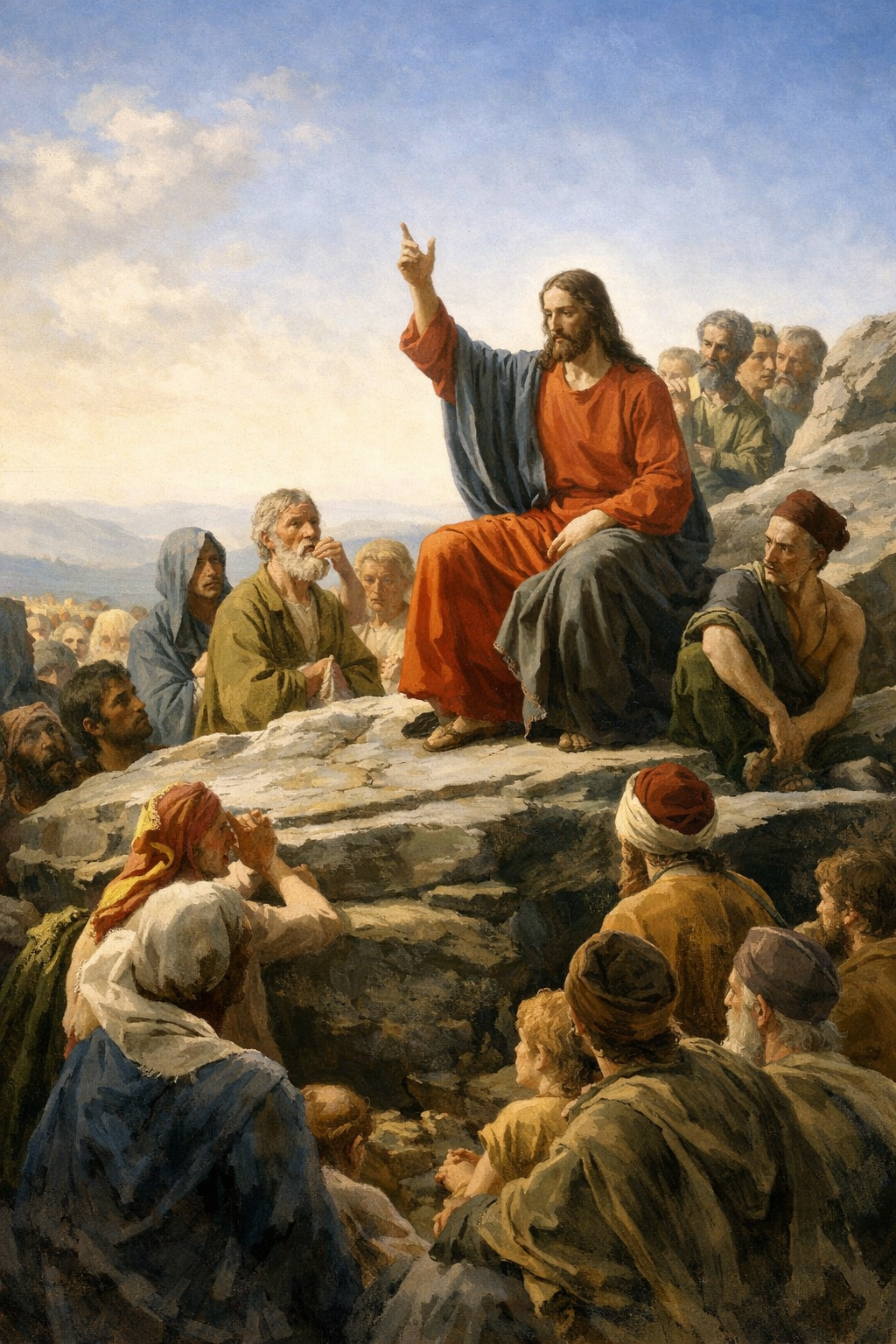
Sermon on the Mount
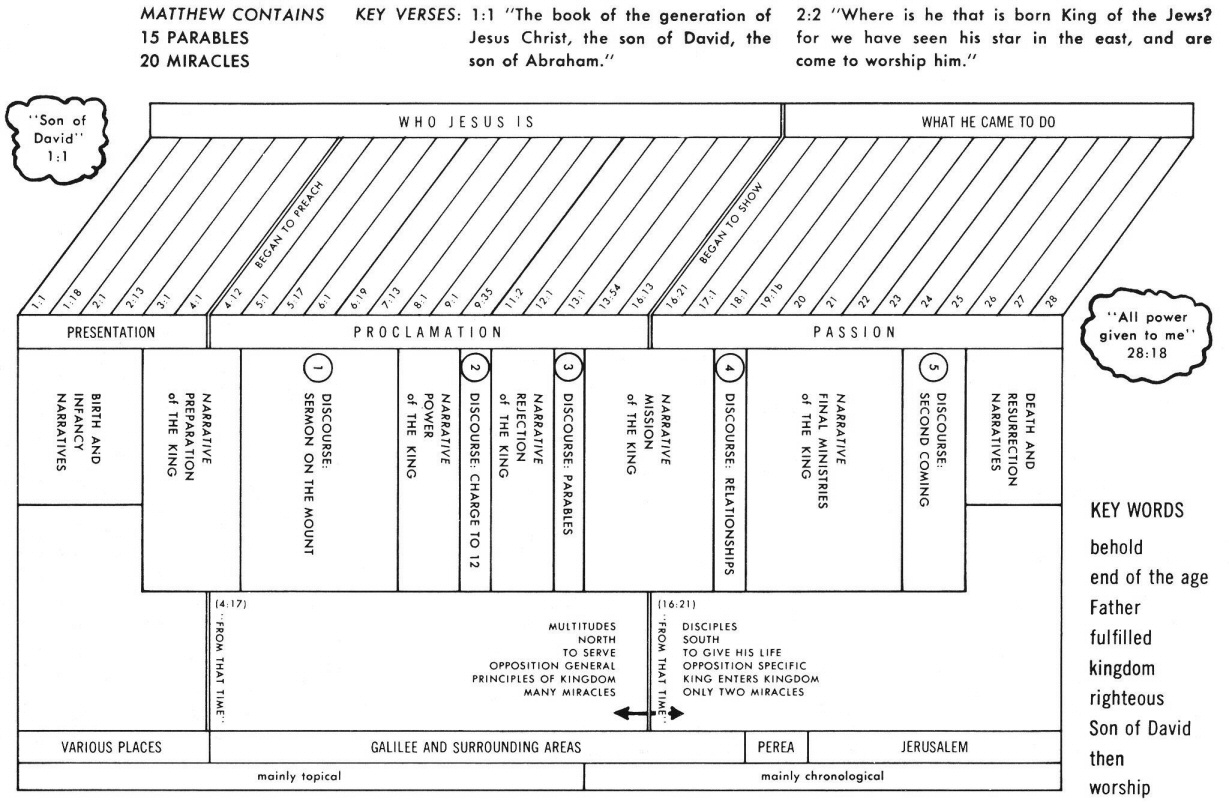
Click chart to enlarge
Charts from Jensen's Survey of the NT - used by permission
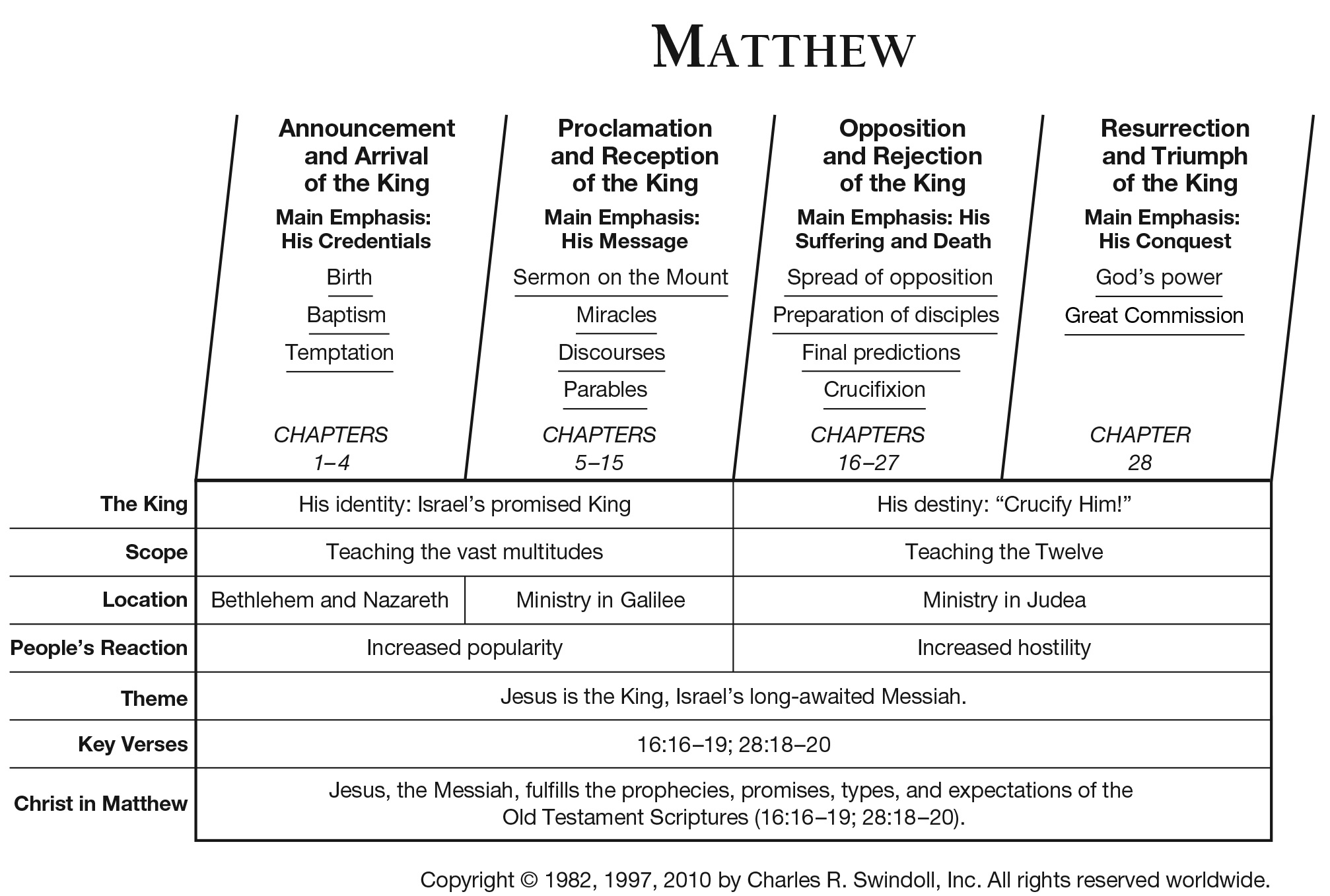
Another Chart from Charles Swindoll
THE LIFE OF JESUS AS COVERED
BY MATTHEW (shaded area)
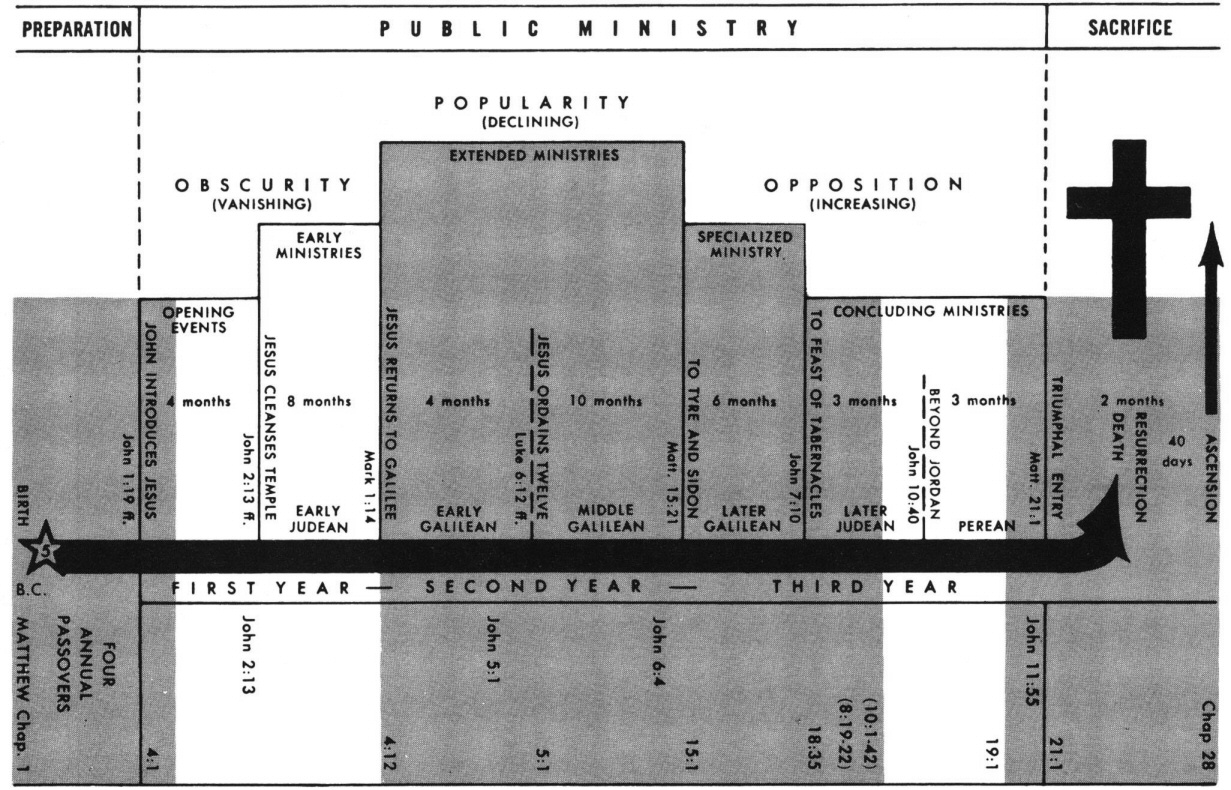
Click chart to enlarge
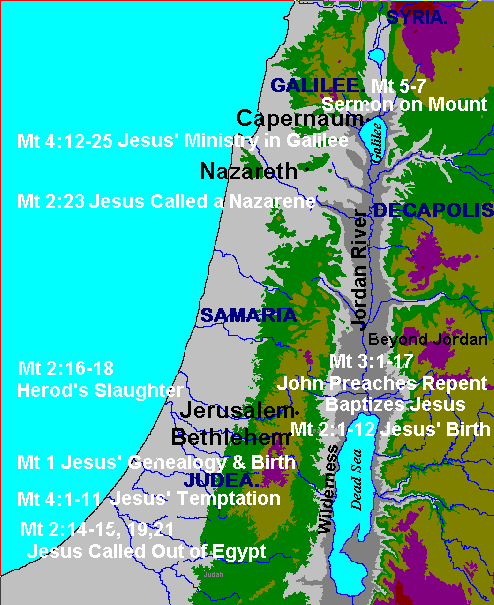
Jesus Birth and Early Years
Leading up to the Sermon on the Mount
Matthew 1-7

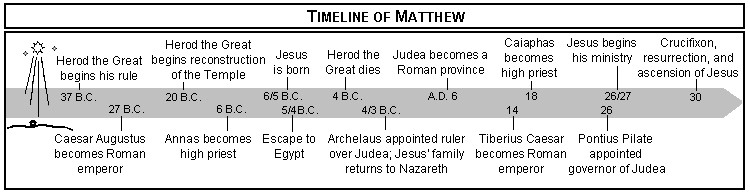
Source: Ryrie Study Bible
Matthew 6:30 "But if God so clothes the grass of the field, which is alive today and tomorrow is thrown into the furnace, will He not much more clothe you? You of little faith! (NASB: Lockman )
Greek: ei de ton chorton tou agrou semeron onta (PAPMSA) kai aurion eis klibanon ballomenon (PPPMSA) ho theos houtos amphiennusin, (3SPAI) ou pollo mallon umas, oligopistoi?
Amplified: But if God so clothes the grass of the field, which today is alive and green and tomorrow is tossed into the furnace, will He not much more surely clothe you, O you of little faith? (Amplified Bible - Lockman)
KJV: Wherefore, if God so clothe the grass of the field, which to day is, and to morrow is cast into the oven, shall he not much more clothe you, O ye of little faith?
NLT: And if God cares so wonderfully for flowers that are here today and gone tomorrow, won't he more surely care for you? You have so little faith! (NLT - Tyndale House)
Philips: Now if God so clothes the flowers of the field, which are alive today and burnt in the stove tomorrow, is he not much more likely to clothe you, you 'little-faiths'? (New Testament in Modern English)
Wuest: And in view of the fact that the herbage of the field, which is in existence today and tomorrow is thrown into a furnace, God thus clothes, will He not the sooner clothe you, you of little faith?
Young's Literal: `And if the herb of the field, that to-day is, and to-morrow is cast to the furnace, God doth so clothe--not much more you, O ye of little faith?
But if God so clothes the grass of the field, which is alive today and tomorrow is thrown into the furnace, will He not much more clothe you?: ei de ton chorton tou agrou semeron onta (PAPMSA) kai aurion eis klibanon ballomenon (PPPMSA) ho theos houtos amphiennusin, (3SPAI) ou pollo mallon umas, oligopistoi
- Psalms 90:5,6; 92:7; Isaiah 40:6, 7, 8; Luke 12:28; James 1:10,11; 1Peter 1:24
- Mt 8:26; 14:31; 16:8; 17:17; Mark 4:40; 9:19; Luke 9:41; John 20:27; Hebrews 3:12
- Matthew 6 Resources - Multiple Sermons and Commentaries
- Matthew 6:25-34 Overcoming Materialism - Study Guide- John MacArthur
- Matthew 6:25-34 Overcoming Materialism- John MacArthur
- Matthew 6:25-30a: Overcoming Financial Worry 1 - Study Guide- John MacArthur
- Matthew 6:25-30a: Overcoming Financial Worry 1- John MacArthur
- Matthew 6:25-30a: Overcoming Financial Stress- John MacArthur
- Matthew 6:25-34: Overcoming Financial Worry 2 - Study Guide- John MacArthur
- Matthew 6:25-34: Overcoming Financial Worry 2- John MacArthur
C H Spurgeon's comments - Wherefore, if God so clothe the grass of the field, which to day is, and tomorrow is cast into the oven, shall he not much more clothe you, O ye of little faith It is not merely that lilies grow, but that God himself clothes them with surpassing beauty, These lilies, when growing, appear only as the grass, commonplace enough; but Solomon could not excel them when God has put them in their full array of cloth of gold. Will he not be sure to take care of us, who are precious in his sight? Why should we be so little trustful as to have a doubt upon that point? If that which is so very short lived is yet so bedecked of the Lord, depend upon it, he will guard immortal minds, and even the mortal bodies with which they are associated. “Little faith ” is not a little fault; for it greatly wrongs the Lord, and sadly grieves the fretful mind. To think the Lord who clothes lilies will leave his own children naked is shameful. O little faith, learn better manners! (Commentary)
Furnace (2863) (klibanos) was a large round earthen dome or pot, two or three feet high, narrowing toward the top. This being first heated by a fire made within, the dough or paste was spread upon the side of the pot to bake, thus forming thin cakes. This method of baking is still used in the Middle East and was common, as it is still, around the island of Cyprus.
Dried grass was an important fuel source in the sparsely treed land of Palestine.
Jesus' point is that the grass (as is true with the lilies) is alive for a few hours or days, and then is gone. And yet despite the fact that the grass and flowers are temporary creations, God still provides for them. It follows that if God provides for the temporary aspects of creation, will He not provide for the eternal? The answer obviously is "yes" and even much more so.
BECOME
A "SPIRITUAL BIRDWATCHER"
and/or
A "SPIRITUAL GARDNER"
As practical application, you might consider taking up the "avocation" of "spiritual bird watching" and/or "spiritual gardening." One cannot help but wonder whether bird watchers and gardeners worry less? Although you might think it somewhat unorthodox, consider setting up a bird feeder that you can easily observe and then every time you see one of God's beautiful creatures, ask God by His Spirit to bring the simple but profound truths of Jesus' message on worry to mind (cf Pr 23:7a, Ro 12:2 renewing your mind, Phil 4:8-9 dwelling on what is true and practicing it brings peace). Might such an "exercise" of meditating upon the trustworthy, dependable watch care of our Father for our feathered friends begin to free us from fretting?!
Much (4183) (polus) means many, much of number, quantity or amount, like a great crowd, loud mourning, plentiful harvest, late hour, long time, etc.
More (3123) (mallon an adverb comparative of mála = very) means very, very much, exceedingly.
This phrase "pollo mallon" means all the more and when referring to quantity means greater abundance, but as used here refers to greater certainty.
James uses a similar analogy to picture the life of the "rich and famous" writing...
let the rich man glory in his humiliation, because like flowering grass he will pass away. For the sun rises with a scorching wind, and withers the grass; and its flower falls off, and the beauty of its appearance is destroyed; so too the rich man in the midst of his pursuits will fade away. (James 1:10,11)
You of little faith: humas, oligopisto
- Mt 8:26; 14:31; 16:8; 17:17; Mark 4:40; 9:19; Luke 9:41; John 20:27; Hebrews 3:12
- Matthew 6 Resources - Multiple Sermons and Commentaries
- Matthew 6:25-34 Overcoming Materialism - Study Guide- John MacArthur
- Matthew 6:25-34 Overcoming Materialism- John MacArthur
- Matthew 6:25-30a: Overcoming Financial Worry 1 - Study Guide- John MacArthur
- Matthew 6:25-30a: Overcoming Financial Worry 1- John MacArthur
- Matthew 6:25-30a: Overcoming Financial Stress- John MacArthur
- Matthew 6:25-34: Overcoming Financial Worry 2 - Study Guide- John MacArthur
- Matthew 6:25-34: Overcoming Financial Worry 2- John MacArthur
Little faith (3640) (oligopistos from olígos = little + pístis = faith, firm persuasion, conviction) means having but little faith and so incredulous or lacking confidence in God and His Word of Truth. Faith here is not just mental assent but a firm conviction to the truth, a surrender to the truth and a conduct emanating from that surrender. In sum, faith shows itself genuine by a changed life.
Worrying shows that one has “little faith” in what God can do and that He is able to meet all of our needs.
This expression "little faith" is used four times in Matthew, once in Luke (Luke 12:28), as an encouragement to growth in faith as well as a gentle reproof.
And He said to them, "Why are you timid, you men of little faith?" Then He arose, and rebuked the winds and the sea; and it became perfectly calm. (Mt 8:26)
And immediately Jesus stretched out His hand and took hold of him, and said to him, "O you of little faith, why did you doubt?" (Mt 14:31)
"But Jesus, aware of this, said, "You men of little faith, why do you discuss among yourselves that you have no bread?" (Mt 16:8)
The perfect cure for worry is trust in God. Faith is total confidence in the provision of God.
Therefore, a lack of faith will lead to a life of psychological anxiety. Since this lack of faith is identified with sin, Adams is correct in asserting that man’s emotional problems stem from his sin (J. Adams, Christian Counselors’ Manual. p. 117 ff.). In the Sermon on the Mount we have then, not only a directive for spiritual well-being, but the model of a manual of mental health as well. (Hindson, E, Woodrow Kroll: KJV Bible Commentary. Nashville: Thomas Nelson.)
Spurgeon wrote in a devotional entitled "Divine Provision" that...
CLOTHES are expensive, and poor believers may be led into anxiety as to where their next suit will come from. The soles are thin; how shall we get new shoes? See how our thoughtful Lord has provided against this care. Our heavenly Father clothes the grass of the field with a splendor such as Solomon could not equal: will He not clothe His own children? We are sure He will. There may be many a patch and a darn, but raiment we shall have. A poor minister found his clothes nearly threadbare and so far gone that they would hardly hold together; but as a servant of the Lord, he expected his Master to find him his livery. It so happened that the writer on a visit to a friend had the loan of the good man’s pulpit, and it came into his mind to make a collection for him, and there was his suit. Many other cases we have seen in which those who have served the Lord have found Him considerate of their wardrobe. He who made man so that when he had sinned he needed garments, also in mercy supplied him with them; and those which the Lord gave to our first parents were far better than those they made for themselves. (Faith's Checkbook))
The great saint George Mueller (Click for example of Mueller's amazing faith) once said that
The beginning of anxiety is the end of faith, and the beginning of true faith is the end of anxiety.
J C Ryle writing that Jesus
suggests to us that over-carefulness about the things of this world is most unworthy of a Christian. One great feature of paganism is living for the present. Let the pagan be anxious if he wants to; he knows nothing of a Father in heaven. But let the Christian, who has clearer light and knowledge, give proof of it by his faith and contentment. When we are bereaved of those we love, we are not to “grieve like the rest of men, who have no hope” (1Thessalonians 4:13). When we are tried by anxieties about this life, we are not to be over-careful, as if we had no God, and no Christ. (Matthew 6:25-34 Expository Thoughts)
G Campbell Morgan...
"Wherefore, if God so clothe the grass of the field, which to-day is, and to-morrow is cast into the oven, shall He not much more clothe you, O ye of little faith?"
The emphatic words are, "much more," and it is important that we grasp their true meaning. The lily cannot toil, it cannot spin. You can do both; and if GOD takes care of the flowers which He has not gifted with this power of reason to toil and work for self-preservation, how much more the creatures to whom He has given this super abounding gift, and to whom He perpetually gives Himself in immediate and living presence.
Let us now look at the other two arguments briefly.
He passes from this first statement, which shows how unnecessary care is if we are the children of such a Father, and He says "Therefore" once again. "Therefore take no thought, saying, What shall we eat? or, What shall we drink? or, Wherewithal shall we be clothed? (For after all these things do the Gentiles seek:) for your heavenly Father knoweth that ye have need of all these things."
Do not be anxious about these lower things, but there is something you ought to be anxious about. Do not always be planning and scheming even to the point of anxiety about food and raiment; "but seek."
No life is complete that does not feel upon it some great compulsion, driving it. We want to learn to be loving and patient with all sorts of people, but it is difficult to have patience with some men! Their eye never gleams, they have no passion, no power; they drift. A man that is a real man has something that drives, something that creates enthusiasm.
Now, says the Master, I have told you not to be anxious about these things. But there is something you are to be anxious about, something to seek, something to consume you. There is something that ought to drive you, making every nerve tingle and throb, and every artery flow with force. What is it? (Matthew 6:25-34 Commentary)
F B Meyer has the following devotional on Mt 6:31-32 CHRIST'S TEACHING ABOUT TRUST - LET US trust God to care for us! This was the life that Jesus lived.
He would not even make stones into bread; nor eat until His Father bade Him and sent the angels to minister to Him. He speaks out of His heart when He bids us trust our Father's care.
It is better to trust in God than to accumulate riches. The moth and rust destroy, thieves steal, all earthly goods are perishable and precarious. How many have placed their savings in stocks and shares, in banks and companies, and have lost every penny! Whilst others who have been unable to save and have lived to help their fellow-men, have found that God has made provision for them and carried them "even to hoar hairs."
Trust in God gives clearness of vision. When we are thinking partly of doing God's work in the world, and partly of lining our own nest, we are in the condition of the man whose eyes do not look in the same direction. There is a squint in our inner vision. We are endeavouring to serve two masters, and our judgment is therefore distorted. Who has not often experienced this? You have tried to ascertain God's will, or to form a fight judgment about your life, but constantly your perception of duty has been obscured by the thought that, if you decided in a certain direction, you would interfere with your interests in another. Your eye has not been single, and you have walked in darkness. When, however, you feel so absorbed in God's interests that you are indifferent to your own, all becomes clear, and you leave Him to care for all results. "Mind my business," said Queen Elizabeth to one of her ambassadors, "and I will look after yours."
Let us not think that God is niggardly and stinting in His gifts. He gives fish as well as bread when He feeds the crowds; colours as well as leaves when He clothes the flowers. You have been adopted into His Family, and may call Him "Abba, Father." Surely this act of grace shows a special love on His part. Would He have taken such care of the spiritual, and have none for the physical? The ungodly may worry about their maintenance; but a child of God may be sure that His needs will be supplied.
PRAYER - Thou art our portion, our God, our Father. Thou art more than father and mother to those who trust Thee. Thou lovest us with a tender pity that never fails or wearies. Encompass us with Thy guardian care, and realise in us Thy highest purposes. AMEN. (Our Daily Walk)
FOUR times in Matthew our Lord uses the expression "O ye of little faith," and each time the application is to a different problem. The first occurrence of the phrase is in Matthew 6:30: "Wherefore, if God so clothe the grass of the field, which today is, and tomorrow is cast into the oven, shall He not much more clothe you, O ye of little faith?"
This is part of the well-known passage from the Sermon on the Mount dealing with our daily anxieties. Nowhere is faith more needed nowadays. Many Christians seem to think of worry as a "white sin," as though God had made an exception in that case and we were allowed to fret and grieve, with no provision being made for our relief. People think they simply must worry, but God's Word is explicit that we are to be anxious about nothing (Phil. 4:6), casting all our care upon God (1 Pet. 5:7)—letting not our hearts be troubled (John 14:1). Why did Jesus say "Let not your heart be troubled" if we cannot help it?
So our Lord tells us: "Take no thought for your life, what ye shall eat, or what ye shall drink" (v. 25). Of course, we know that "thought" here means anxious thought and not the forethought and planning that are necessary for any business. It is not work, but worry, that kills—the feverish tension and uneasiness that soon wear down mind and body. The man who lives in the will of God need never worry about food, clothes, and the vexations of daily experience. It does no good, it is positively forbidden in the Word, and God has promised to supply all the believer's needs (Phil. 4:19).
The Lord Jesus speaks in this passage of the birds and the lilies as illustrations of God's care. Here cynics have objected that the sparrow falls just the same. But the idea is that no matter what happens, we are in God's care. The mistake is in limiting His care to temporal welfare—but God does not guarantee to save us from trouble and danger. His care goes beyond that: come what will, our lives are hid with Christ, and no matter what happens to our health or our money, we ourselves—our spirits—are safe in Him.
The heart of the whole matter is found in verse 33: "But seek ye first the kingdom of God, and His righteousness; and all these things shall be added unto you." We make "all these things" our chief concern but Christ makes them merely incidental. These things should be marginal and God central in our lives, but we put them on the main track and God is switched to the sidetrack, to be called upon only in trouble.
"Sufficient unto the day is the evil thereof." Each day has enough troubles of its own. But we insist upon borrowing from tomorrow and crossing the bridge before we reach it. No Christian should worry. His sole business is to know the will of God and do it. Whatever his occupation may be, it is only to pay expenses while he is about his real business. But we reverse the whole matter and make our trade the main business with God's will an outside affair that is considered now and then, if at all. Consequently, when trouble and vexation come we fret and worry.
Our "little faith" shows up daily in this matter of care. The believer who has gained through faith the conquest of care has found life here, even in this troublesome world, a blessed experience. Truly, the peace of God will garrison the hearts and minds of those who are careful for nothing but thankful for everything. Vance Havner
Matthew 6:31 "Do not worry then, saying, 'What will we eat?' or 'What will we drink?' or 'What will we wear for clothing? (NASB: Lockman )
Greek: me oun merimnesete (2PAAS) legontes, (PAPMPN) Ti phagomen? (1PAAS) e, Ti piomen? (1PAAS) e, Ti peribalometha? (1PAMS)
Amplified: Therefore do not worry and be anxious, saying, What are we going to have to eat? or, What are we going to have to drink? or, What are we going to have to wear? (Amplified Bible - Lockman)
KJV: Therefore take no thought, saying, What shall we eat? or, What shall we drink? or, Wherewithal shall we be clothed?
NLT: So don't worry about having enough food or drink or clothing. (NLT - Tyndale House)
Philips: So don't worry and don't keep saying, 'What shall we eat, what shall we drink or what shall we wear?! (New Testament in Modern English)
Wuest: Therefore, stop worrying, saying, What shall we eat? or, What shall we drink? or, With what shall we clothe ourselves?
Young's Literal: therefore ye may not be anxious, saying, What may we eat? or, What may we drink? or, What may we put round?
Do not worry then, saying, `What will we eat?' or `What will we drink?' or `What will we wear for clothing?: me oun merimnesete (2PAAS) legontes, (PAPMPN) Ti phagomen? (1PAAS) e, Ti piomen? (1PAAS) e, Ti peribalometha? (1PAMS)
- Mt 4:4; 15:33; Leviticus 25:20-22; 2Chronicles 25:9; Psalms 37:3; 55:22; 78:18-31; Luke 12:29; 1Peter 5:7
- Matthew 6 Resources - Multiple Sermons and Commentaries
- Matthew 6:25-34 Overcoming Materialism - Study Guide- John MacArthur
- Matthew 6:25-34 Overcoming Materialism- John MacArthur
- Matthew 6:25-30a: Overcoming Financial Worry 1 - Study Guide- John MacArthur
- Matthew 6:25-30a: Overcoming Financial Worry 1- John MacArthur
- Matthew 6:25-30a: Overcoming Financial Stress- John MacArthur
- Matthew 6:25-34: Overcoming Financial Worry 2 - Study Guide- John MacArthur
- Matthew 6:25-34: Overcoming Financial Worry 2- John MacArthur
STOP WORRYING
Therefore (3767) (NAS = "then") indicates that Jesus is drawing a conclusion based on the preceding truth that in view of the fact that God provides for the basic needs of the birds and the flowers, and then even more so for His own sons and daughters, we have no need to worry. Worry over the essentials of life has no place in the believer's life - God will provide for our needs (but not our "greeds").
Jesus explains in the next verse that this is the way Gentiles live, which is not surprising in view of the fact that God is not their Father (contrary to what the pundits often say, we are not all one big family of God - unbelievers have Satan as their father [cp John 8:44, note Colossians 1:13], only believers have God as their Father) and they have no sense of God's watch care and so it is only natural for them to focus on temporal needs.
Jesus is attempting to awaken His listeners (so that they might become hearers who are doers or who hearken) to understand that they serve a different "master" and should focus on kingdom priorities because God knows their needs.
Spurgeon comments - Therefore take no thought, saying , What shall we eat? or, What shall we drink? or, Wherewithal shall we be clothed? “Be not anxious ” is the right interpretation. Think, that you may not have to be anxious. Do not for ever be following the world's Trinity of cares. The questions in this verse are taken out of the worldlings’ catechism of distrust. The children of God may quietly work on from day to day, and cast all foreboding cares from them; (Commentary)
Worry (3309) (merimnao from merimna from merizo = divide - draw different directions ~ distraction - which is exactly what anxiety does to most of us!) expresses a strong feeling for something or someone, often to the point of being burdened. Although this can be a "positive" concern, in most of the NT uses it refers to an anxious concern, based on apprehension about possible danger or misfortune, and so it means to be worried about, to be anxious about, to be apprehensive (viewing the future with anxiety or alarm), to be unduly concerned, to be burdened with anxious care or cumbered with many cares and in simple terms to worry.
John Walvoord - Cure for Anxiety, 6:25-34 -The place of material gain in life carries over into the problem of anxious care. Because they could trust God for time as well as eternity, they were not to spend their time worrying about their provision of food and drink and raiment for the body. Like the fowl of the air, they were to trust divine provision; and like the lilies of the field, God would care for them. The argument was advanced that if God can care for the grass of the field, existing only for a day and then used for fuel for the oven, how much more will He clothe and care for those who are the objects of His great salvation? Although concern for earthly things characterized the unbelieving Gentile world, Christ reminded them that their Father knows their needs and that they should seek first His kingdom and His righteousness, and that God would add the necessary temporal things to them. The chapter concludes, accordingly, on the note that they should not have anxious care about tomorrow but rather concern themselves with serving God today. (Matthew 6 - The Life of Faith in the Kingdom)
Our English word worry is equivalent to the Greek word merimnao. It is a combination of two words: merizo, meaning "to divide," and nous, meaning "mind." Worry really means "to divide the mind." It means we are double-minded rather than single-minded. The apostle James warned, "A double-minded man [is] unstable in all his ways" (James 1:8). When we are double-minded, we resemble a monster with two heads facing in opposite directions, or we are like rudderless boats, unable to steer straight, "driven and tossed by the wind" (James 1:6). - George Sweeting
Charles Haddon Spurgeon, the great nineteenth-century preacher, once said that he worried for weeks before a speaking engagement, even to the extent of hoping he would break a leg and miss the event. When he finally entered the pulpit to give the speech, he was exhausted!
Then Spurgeon faced up to his fear. He asked himself, What is the worst thing that could happen to me during my sermon? Whatever it was, he decided, the heavens would not collapse. He knew that he had been magnifying his fears. Once he faced his worries for what they were, he relaxed, simply because his mind was no longer divided.- George Sweeting
A FEW THOUGHTS ON
WORRY/ANXIETY
See also Anxiety/Worry Quotes, Devotionals and Illustrations
- The devil would have us continually crossing streams that do not exist.
- Worry casts a big shadow behind a small thing.
- If we worry, we cannot trust. If we trust we won't worry.
- God never asks us to bear tomorrows burdens with todays grace!
- It is comforting to know that the Lord Who guides us sees tomorrow more clearly than we see yesterday!
- Worry means we believe more in our PROBLEMS than in God's PROMISES!
- Have you ever noticed that "I" is always found in the center of anx-I-ety?
- You're only cooking up trouble when you stew about tomorrow.
- Put your cares in God's hands. He'll put His peace in your heart! (cp Ps 55:22)
- Worrying is paying interest on troubles that may never come due!
- Worry is carrying a burden God never intended us to bear.
- The way to be anxious about nothing is to be prayerful about everything.
- When we put our cares in God's hands, He puts His peace in our hearts.
- Worry is a small trickle of fear that meanders through the mind until it cuts a channel into which all other thoughts are drained.
- Worry is like a rocking chair; it will give you something to do, but it won't get you anywhere.
- Worry is the interest we pay on tomorrow's troubles.
- Worry over tomorrow pulls shadows over today's sunshine.
- You can't change the past, but you can ruin a perfectly good present by worrying about the future.
Matthew 6:32 "For the Gentiles eagerly seek all these things; for your heavenly Father knows that you need all these things. (NASB: Lockman)
Greek: panta gar tauta ta ethne epizetousin; (3PPAI) oiden (3SRAI) gar ho pater umon ho ouranios hoti chrezete (2PPAI) touton apanton.
Amplified: For the Gentiles (heathen) wish for and crave and diligently seek all these things, and your heavenly Father knows well that you need them all. (Amplified Bible - Lockman)
KJV: (For after all these things do the Gentiles seek:) for your heavenly Father knoweth that ye have need of all these things.
NLT: Why be like the pagans who are so deeply concerned about these things? Your heavenly Father already knows all your needs, (NLT - Tyndale House)
Philips: That is what pagans are always looking for; your Heavenly Father knows that you need them all. (New Testament in Modern English)
Wuest: For all these things the pagan Gentiles are diligently seeking. For your heavenly Father knows that you are in constant need of all these things.
Young's Literal: for all these do the nations seek for, for your heavenly Father doth know that ye have need of all these
For the Gentiles eagerly seek all these things: panta gar tauta ta ethne epizetousin (3PPAI)
- Mt 5:46,47; 20:25,26; Psalms 17:14; Luke 12:30; Ephesians 4:17; 1Thessalonians 4:5
- Matthew 6 Resources - Multiple Sermons and Commentaries
- Matthew 6:25-34 Overcoming Materialism - Study Guide- John MacArthur
- Matthew 6:25-34 Overcoming Materialism- John MacArthur
- Matthew 6:25-30a: Overcoming Financial Worry 1 - Study Guide- John MacArthur
- Matthew 6:25-30a: Overcoming Financial Worry 1- John MacArthur
- Matthew 6:25-30a: Overcoming Financial Stress- John MacArthur
- Matthew 6:25-34: Overcoming Financial Worry 2 - Study Guide- John MacArthur
- Matthew 6:25-34: Overcoming Financial Worry 2- John MacArthur
THE PAGAN WORLD'S
SEEKING
All these things - Note that in the original Greek sentence this phrase is placed first for emphasis. The passage is rendered more literally "for all these the Gentiles continually seek."
C H Spurgeon - We are to excel those who are aliens and foreigners: things which “Gentiles seek ” are not good enough for the Israel of God. The men of the world seek after earthly things, and have no mind for anything beyond: we have a heavenly Father, and therefore we have higher aims and aspirations. Moreover, as our Father knows all about our necessities, we need not be anxious; for he is quite sure to supply all our needs. Let the Gentiles hunt after their many carnal objects; but let the children of the Lord leave their temporal wants with the Lord of infinite grace, and then let them follow after the one thing needful. (Commentary)
Gentiles (1484) (ethnos) in the Jewish sense as used here refers to the nations or the Gentiles in general. This phrase ("the Gentiles" refers to all who are not Israelites and implies idolatry and ignorance of the true God. The idea than is that of heathen or pagan.
The Lord is implying that worrying over temporal, material necessities like the Gentiles do is unbecoming to a child of the King! The love of material things characterizes the Gentiles (the heathen, the pagans), and in fact is in one sense only reasonable. Since they are without God and without hope in this world, it is natural that they seek to accumulate possessions which are the only security they possess (albeit a deceptively empty security). They don't possess, nor would they understand the promises of God to provide and so it seems wise for the heathen to accumulate all they can (and "can all they get"!)
On the other hand, when citizens of the Kingdom of heaven make the pursuit of material things the goal of their life and seek security in temporal treasures, they put themselves on the level of the heathen who has no god. What may be fitting for the heathen is unfitting for the children of the Living God.
Lawrence Richards - The pagan is gripped by anxiety because he faces an uncertain tomorrow. The Christian, who has a personal relationship with God as his Father, relies on One who not only knows, but also controls tomorrow. When we appreciate how much God loves us, we no longer feel pressure to “run after” even the necessities of life. This frees us to set right priorities, and “seek first His kingdom and His righteousness”. What a joy to worry about nothing except pleasing Jesus! (365 Day Devotional Commentary)
Eagerly seek (1934) (epizeteo from epí = intensifies meaning + zeteo = to seek) to search for or inquire after and then to desire or crave.
The present tense indicates this is their continual activity regarding material things for they do not know God as their heavenly Father -- they can never accumulate enough "things".
Earlier we saw that because they don't know the Living God, they pray with meaningless repetition, supposing that they will be heard because of their many words.
Harry Ironside - The nations of the world make the pursuit of these temporal things the main object of life. We are not to imitate them in this, but rather to be concerned first of all with pleasing God, and ordering our behavior in accordance with the righteous principles of His kingdom.
Constable - Since God provides so bountifully for His own, it is not only foolish but pagan to fret about the basic necessities of life. The fretting disciple lives as an unbeliever who disbelieves and disregards God. Such a person devotes too much of his or her attention to the accumulation of material goods and disregards the more important things in life. (Tom Constable's Expository Notes on the Bible)
for your heavenly Father knows that you need all these things: oiden (3SRAI) gar ho pater humon ho ouranios hoti chrezete (2PPAI) touton apanton
- Mt 6:8; Ps 103:13; Luke 11:11, 12, 13; 12:30
- Matthew 6 Resources - Multiple Sermons and Commentaries
- Matthew 6:25-34 Overcoming Materialism - Study Guide- John MacArthur
- Matthew 6:25-34 Overcoming Materialism- John MacArthur
- Matthew 6:25-30a: Overcoming Financial Worry 1 - Study Guide- John MacArthur
- Matthew 6:25-30a: Overcoming Financial Worry 1- John MacArthur
- Matthew 6:25-30a: Overcoming Financial Stress- John MacArthur
- Matthew 6:25-34: Overcoming Financial Worry 2 - Study Guide- John MacArthur
- Matthew 6:25-34: Overcoming Financial Worry 2- John MacArthur
Knows (1492) (eido - perfect tense = oida) speaks of knowledge which comes from one's state of being and in case since it refers to God, it is synonymous with His omniscience. It reflects an absolute, positive, beyond a peradventure of a doubt, knowledge of our situation, independent of whether we "feel" like He knows or cares. The point is He always knows our deepest need.
Need (5535) (chrezo from chreia = need, necessity) means to have need of. God knows our personal needs (and our greeds), but we can count on Him supplying only our needs. (See Anne Ortlund's devotional - Fix Your Eyes On Jesus - 44 excellent meditations when you struggle financially)
These things include food, drink, clothing, the essentials of life. Have you just lost your job and need a job? Guess what? God knows! This provides us with a great incentive to pray with confidence for our needs as Jesus taught in Mt 6:8.
The psalmist reminds us that ...
Just as a father has compassion on his children, so the LORD has compassion on those who fear Him. (Psalms 103:13) (Spurgeon commenting on this verse writes that "Fathers feel for their children, especially when they are in pain; they would like to suffer in their stead, their sighs and groans cut them to the quick: thus sensitive towards us is our Heavenly Father. His pity never fails to flow, and we never cease to need it.)
Peter echoes the truth of our Father's watch care exhorting his readers to...
Humble yourselves, therefore, under the mighty hand of God, that He may exalt you at the proper time casting all your anxiety (merimna) upon Him, because He cares for you. (see notes on fear and anxiety in 1 Peter 5:6-7)
CONTENTMENT - If we could look behind the unexpected events in our lives, we would be amazed to see God wonderfully providing for our needs. The insignificant turns in the road, the seemingly unimportant events, the often unexplained happenings—all are part of God's loving care. His gracious providence is also evident in our tangible provisions. In Bristol, England, George Muller operated an orphanage for two thousand children. One evening, knowing they had no food for break-fast the next morning, Muller called his workers together and explained the situation. After two or three prayed, Muller said, "That is sufficient. Let us rise and praise God for prayer answered." The next morning they could not push open the great front door. To see what was holding it closed, they went out the back door and around the building. Stacked up against the front door were boxes filled with food. One of the workers later remarked, "We know Who sent the baskets, but we do not know who brought them!" God uses many messengers and means to deliver His gifts, whether they are material or spiritual provisions. We may not always recognize that His hand is working behind the scenes, but it is. Sometimes we get down to the last of our resources, but we can rest assured that the Father knows exactly what we need. And this brings contentment to our hearts. Knowing the Source, we can leave to Him the method of His supply. —P.R.V. (Our Daily Bread, Copyright RBC Ministries, Grand Rapids, MI. Reprinted by permission. All rights reserved)
God often sends His help by way of human hands.
See also
Bread to Hold - In his book God’s Psychiatry, Charles L. Allen tells this story:
“As World War II was drawing to a close, the Allied armies gathered up many hungry orphans. They were placed in camps where they were well-fed. Despite excellent care, they slept poorly. They seemed nervous and afraid. Finally, a psychologist came up with the solution. Each child was given a piece of bread to hold after he was put to bed. This particular piece of bread was just to be held—not eaten. The piece of bread produced wonderful results. The children went to bed knowing instinctively they would have food to eat the next day. That guarantee gave the children a restful and contented sleep.”
First Things First - In the late 19th century John Wanamaker opened a department store in Philadelphia. Within a few years that enterprise had become one of the most successful businesses in the country. But operating his store wasn’t Wanamaker’s only responsibility. He was also named Postmaster General of the United States, and he served as superintendent for what was then the largest Sunday school in the world at Bethany Presbyterian Church. When someone asked him how he could hold all those positions at once, he explained. “Early in life I read, ‘Seek ye first the kingdom of God, and His righteousness, and all these things shall be added unto you.’ The Sunday school is my business, all the rest are the things.” One evidence of Wanamaker’s desire to keep the Lord’s work first in his life was a specially constructed soundproof room in his store. Every day he spent 30 minutes there praying and meditating upon God’s Word. He had his priorities straight!