Matthew 6:2
Matthew 6:3
Matthew 6:4
Matthew 6:5
Matthew 6:6
Matthew 6:7
Matthew 6:8
Matthew 6:9
Matthew 6:10
Matthew 6:11
Matthew 6:12
Matthew 6:13
Matthew 6:14
Matthew 6:15
Matthew 6:16
Matthew 6:17
Matthew 6:18
Matthew 6:19
Matthew 6:20
Matthew 6:21
Matthew 6:22
Matthew 6:23
Matthew 6:24
Matthew 6:25
Matthew 6:26
Matthew 6:27
Matthew 6:28
Matthew 6:29
Matthew 6:30
Matthew 6:31
Matthew 6:32
Matthew 6:33
Matthew 6:34
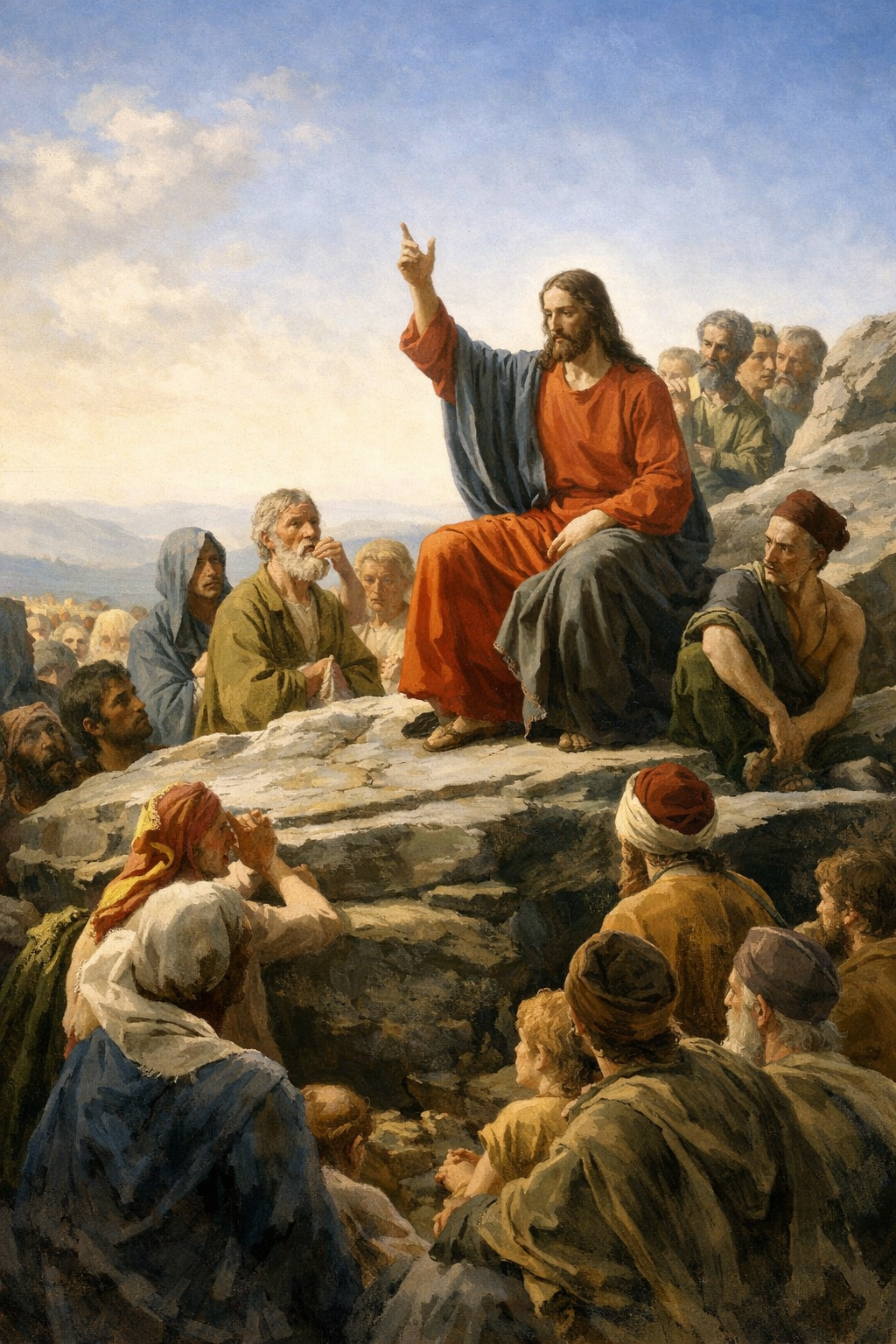
Sermon on the Mount
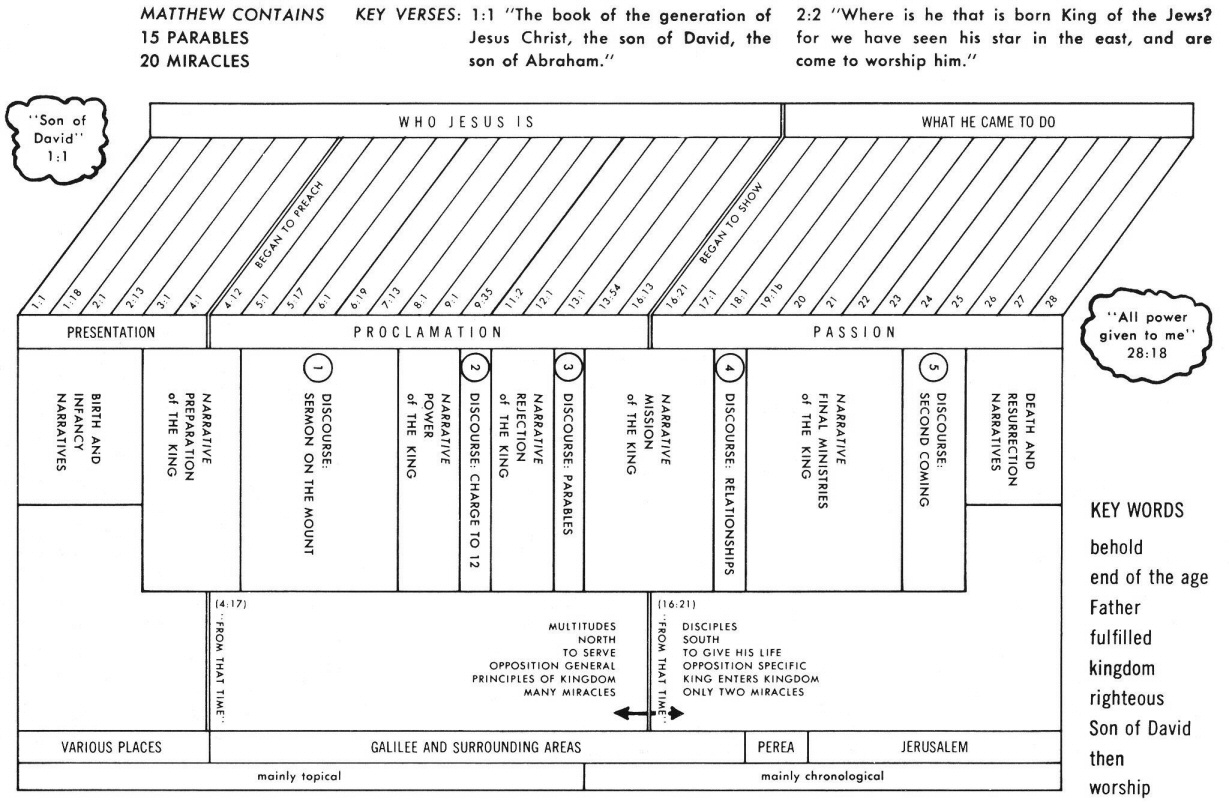
Click chart to enlarge
Charts from Jensen's Survey of the NT - used by permission
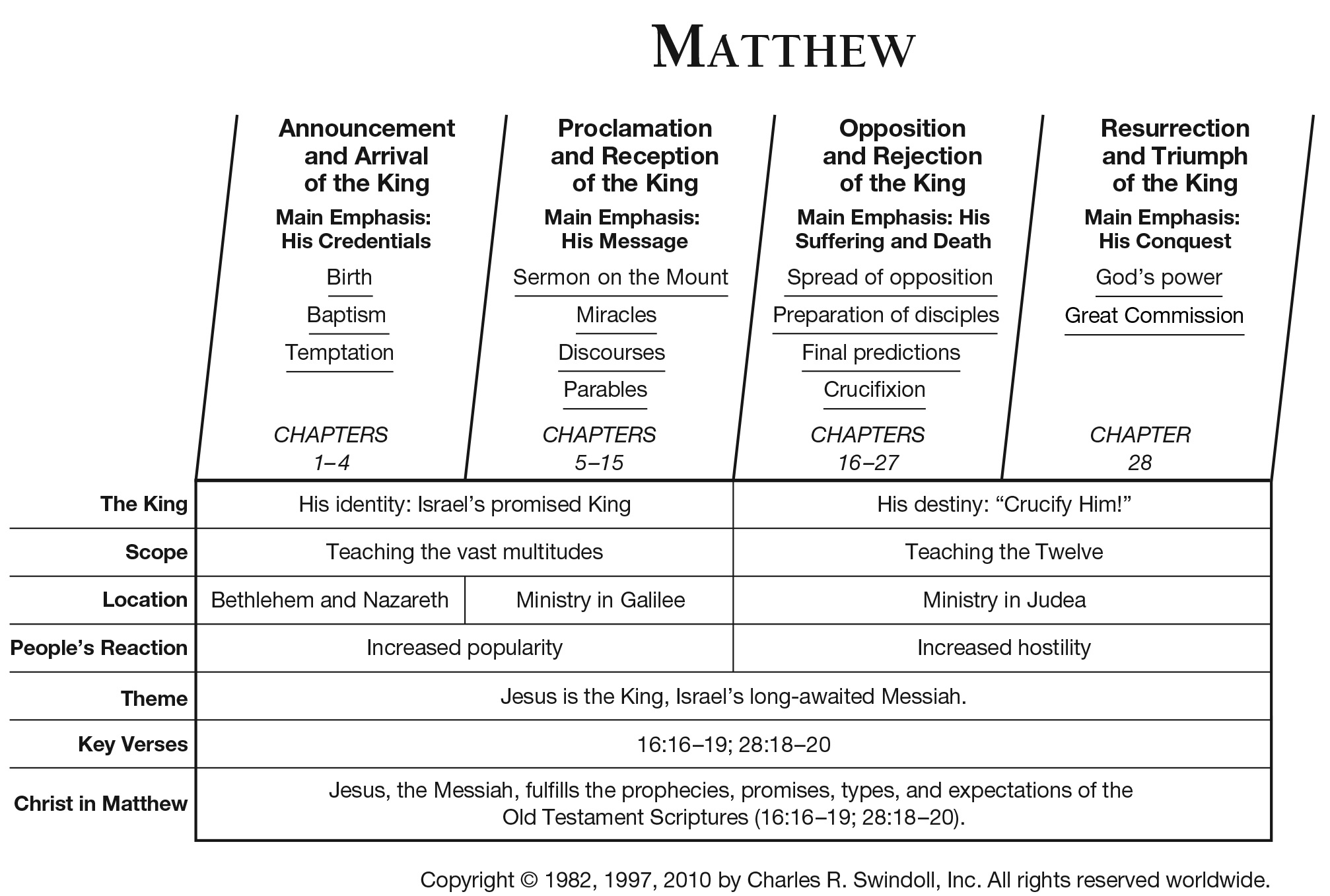
Another Chart from Charles Swindoll
THE LIFE OF JESUS AS COVERED
BY MATTHEW (shaded area)
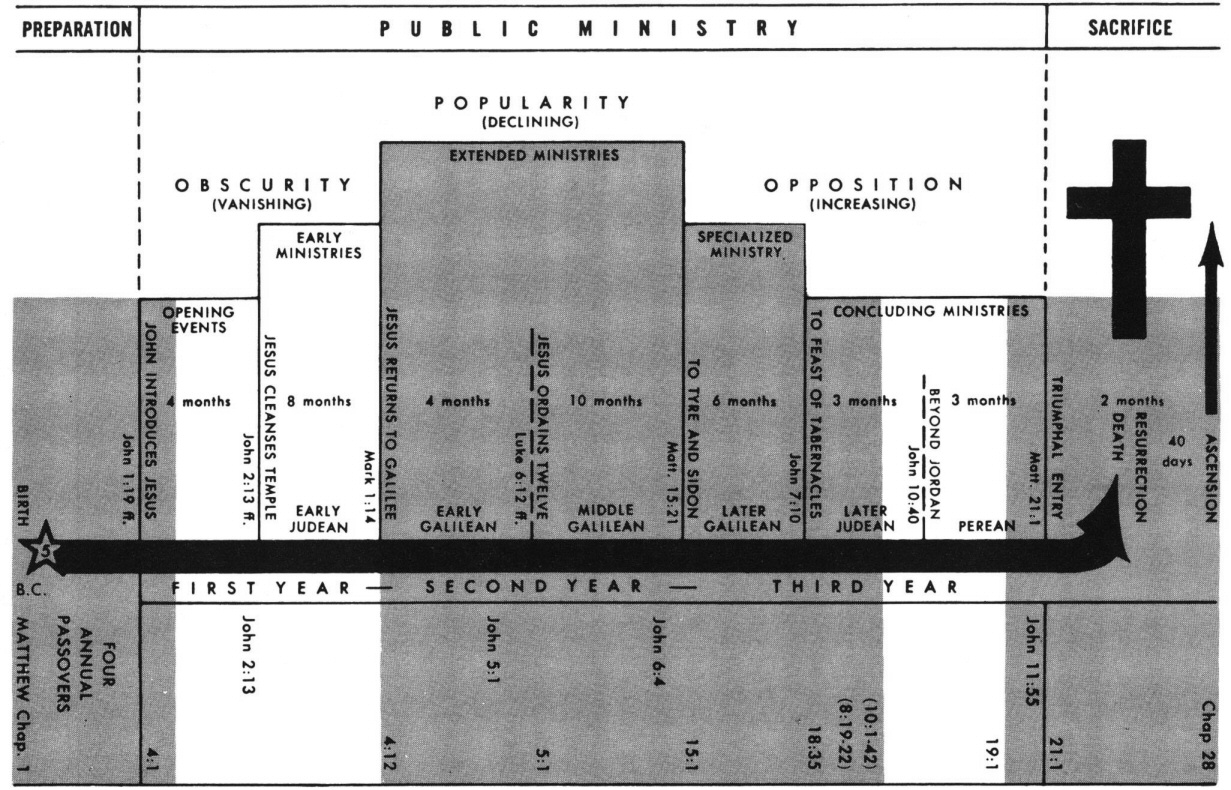
Click chart to enlarge
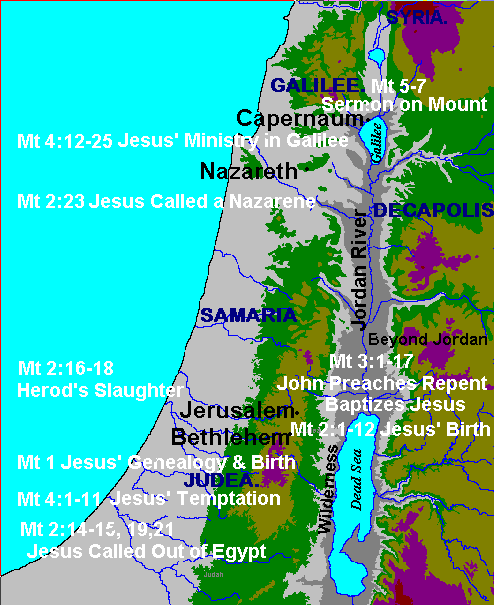
Jesus Birth and Early Years
Leading up to the Sermon on the Mount
Matthew 1-7
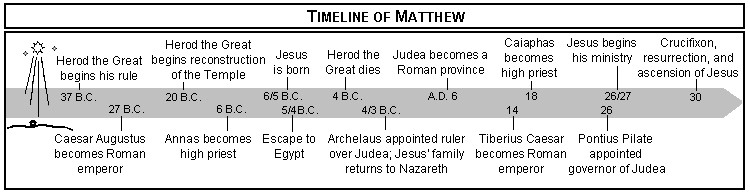
Source: Ryrie Study Bible
Matthew 6:7 And when you are praying, do not use meaningless repetition as the Gentiles do, for they suppose that they will be heard for their many words. (NASB: Lockman)
Greek: Proseuchomenoi (PMPMPN) de me battalogesete (2PAAS) hosper hoi ethnikoi, dokousin (3PPAI) gar hoti en te polulogia auton eisakousthesontai. (3PFPI)
Amplified: And when you pray, do not heap up phrases (multiply words, repeating the same ones over and over) as the Gentiles do, for they think they will be heard for their much speaking (Amplified Bible - Lockman)
KJV: But when ye pray, use not vain repetitions, as the heathen do: for they think that they shall be heard for their much speaking.
NLT: When you pray, don't babble on and on as people of other religions do. They think their prayers are answered only by repeating their words again and again. (NLT - Tyndale House)
Philips: And when you pray don't rattle off long prayers like the pagans who think they will be heard because they use so many words. (New Testament in Modern English)
Wuest: Moreover, when praying, do not repeat the same thing over and over as the pagans do, for they think that they will be heard because of their multiplicity of words. (Wuest: Expanded Translation: Eerdmans)
Young's Literal: And -- praying -- ye may not use vain repetitions like the nations, for they think that in their much speaking they shall be heard
AND WHEN YOU ARE PRAYING, DO NOT USE MEANINGLESS REPETITION AS THE GENTILES DO, FOR THEY SUPPOSE THAT THEY WILL BE HEARD FOR THEIR MANY WORDS: Proseuchomenoi (PMPMPN) de me battalogesete (2PAAS) hosper hoi ethnikoi, dokousin (3PPAI) gar hoti en te polulogia auton eisakousthesontai. (3PFPI)
- Use - 1 Kings 18:26, 27, 28, 29; Ecclesiastes 5:2,3,7; Acts 19:34
- Repetition - Mt 26:39,42,44; 1Kings 8:26-54; Daniel 9:18,19
- Gentiles Mt 6:32; 18:17
- Matthew 6 Resources - Multiple Sermons and Commentaries
Do not heap up phrases (multiply words, repeating the same ones over and over) (Amplified Bible - Lockman)
When - Not "if you pray" but "when you pray". Praying is an expected activity of a disciple.
C H Spurgeon's comments…
To repeat a form of prayer a very large number of times has always seemed to the ignorantly religious to be a praiseworthy thing; but assuredly it is not so. It is a mere exercise of memory, and of the organs of noise-making: and it is absurd to imagine that such a parrot exercise can be pleasing to the living God. The Mahometans and Papists keep to this heathenish custom; but we must not imitate them.
God does not need us to pray for his information, for he “knoweth what things ye have need of ”; nor to repeat the prayer over and over for his persuasion, for as our Father he is willing to bless us. Therefore let us not be superstitious and dream that there is virtue in “much speaking .” In the multitude of words, even in prayer, there wanteth not sin.
Repetitions we may have, but not “vain repetitions. ” Counting beads, and reckoning the time occupied in devotion, are both idle things. Christians’ prayers are measured by weight, and not by length. Many of the most prevailing prayers have been as short as they were strong. (Commentary)
Praying (4336)(proseuchomai from pros = toward, facing, before [emphasizing the direct approach of the one who prays in seeking God’s face] + euchomai = originally to speak out, utter aloud, express a wish, then to pray or to vow. Greek technical term for invoking a deity) in the NT is always used of prayer addressed to God (to Him as the object of faith and the One who will answer one’s prayer) and means to speak consciously (with or without vocalization) to Him, with a definite aim (See study of noun proseuche).
All uses of proseuchomai by Matthew -
Matt. 5:44; Matt. 6:5; Matt. 6:6; Matt. 6:7; Matt. 6:9; Matt. 14:23; Matt. 19:13; Matt. 23:14; Matt. 24:20; Matt. 26:36; Matt. 26:39; Matt. 26:41; Matt. 26:42; Matt. 26:44
Proseuchomai encompasses all the aspects of prayer -- submission, confession, petition, supplication (may concern one's own need), intercession (concerned with the needs of others), praise, and thanksgiving.
Vine says that proseuchomai carries with it a notion of worship (but see the Greek word for worship = proskuneo) which is not present in the other words for prayer (eg, aiteo, deomai, both of which involve spoken supplication)
Wuest adds that the prefixed preposition pros "gives it the idea of definiteness and directness in prayer, with the consciousness on the part of the one praying that he is talking face to face with God… (thus proseuchomai) speaks also of the consciousness on the part of the one who prays, of the fact of God’s presence and His listening ear.
Meaningless repetition (945) (battologeo from báttos = a proverbial stammerer + lógos = word) means to speak foolishly, to babble (to talk enthusiastically or excessively, including utterance of meaningless or unintelligible sounds) or to chatter (to utter rapid short sounds suggestive of language but inarticulate and indistinct - squirrels chatter).
The idea is talking much but without content or repeating the same thing over and over again. The term describes useless speaking without distinct expression of purpose as contrasted to succinct, knowledgeable speech. It means to speak in a way that images the kind of speech pattern of one who stammers, to use the same words again and again or to speak without thinking. It is to utter meaningless and mechanically repeated phrases, as characterized the pagan modes of prayer to their idols.
Spurgeon writes that…
It is not very easy to repeat the same words often without it becoming a vain repetition. A repetition, however, is not forbidden, but a “vain” repetition. And how greatly do they err who measure prayers by the yard. They think they have prayed so much because they have prayed so long, whereas it is the work of the heart — the true pouring out of the desire before God — that is the thing to be looked at.
Quality not quantity: truth, not length.
Oftentimes the shortest prayers have the most prayer in them.
---
The heathen repeat over and over again the same words… This is sheer mockery. God is not deaf or forgetful, neither does he delight in mere sounds. Prayer is the intelligent approach of the mind of man to the mind of God, and in that coming we must not think of adding to the divine knowledge, which is infinite, or dictating to the divine will, which is sovereign. (The Interpreter)
In short Jesus is saying a prayer's length or wordiness does not equate with it efficacy.
A sad truth is that although Jesus said not to use meaningless repetition in prayer, this is actually what the recitation of the so-called "Lord's Prayer" (Mt 6:9-13) has become to many people reciting it in churches on Sundays. It has become a rote, mechanical, heartless action. Now before you send me a email accusing me of being mean spirited and/or judgmental, in fairness, there are undoubtedly some who are reciting the "Lord's Prayer" from a sincere and pure heart, and from them this beautiful model prayer ascends to the throne as a "soothing aroma" to our Father. What we all must remember is that Jesus gave a strong warning for us to continually "beware" of the danger of falling into the subtle trap of heartless dead formalism and ritualism. None of us is immune to this trap beloved. Remember that prayer is relational not ritual!
Many words suggest the prayers of the hypocritical unbelieving scribes and Pharisees droned on and on, as if there excessive length made them ore acceptable or more likely to secure an affirmative reply to a petition. Lengthy prayer per se is not always wrong, for Scripture does have some beautiful lengthy prayers (e.g., 2 Chronicles 6:14-42, Nehemiah 9, Daniel 9, etc).
Robertson quoting Bruce writes that “The Pagans thought that by endless repetitions and many words they would inform their gods as to their needs and weary them (‘fatigare deos’) into granting their requests"
Jesus is not saying one can never repeat a phrase for He Himself repeated the same request in the garden
And He left them again, and went away and prayed a third time, saying the same thing once more. (Mt 26:44)
Certainly perseverance in prayer is encouraged…
And He said to them, "Suppose one of you shall have a friend, and shall go to him at midnight, and say to him, 'Friend, lend me three loaves; for a friend of mine has come to me from a journey, and I have nothing to set before him'; and from inside he shall answer and say, 'Do not bother me; the door has already been shut and my children and I are in bed; I cannot get up and give you anything.' "I tell you, even though he will not get up and give him anything because he is his friend, yet because of his persistence he will get up and give him as much as he needs. "And I say to you, ask, and it shall be given to you; seek, and you shall find; knock, and it shall be opened to you. "For everyone who asks, receives; and he who seeks, finds; and to him who knocks, it shall be opened. (Luke 11:5-10)
Jesus' target is not prayer length (He prayed through the night Luke 6:12) but prayer motive. He is emphasizing that prayer is not a matter of repetition but of relationship. God is not manipulated by a petitioner's recitation of words in accordance with a set formula. Prayer is much about changing us, our character, our will, and our values, even while we seek for God’s response.
Remember the pagan prayers of Elijah's adversaries in 1Kings 18? They prayed (raved) on and on and even crying loudly and cutting themselves, thinking in their deceived state that they were increasing the chances of receiving the answer they desired from those who are really no gods at all…
So Elijah said to the prophets of Baal, "Choose one ox for yourselves and prepare it first for you are many, and call on the name of your god, but put no fire under it." 26 Then they took the ox which was given them and they prepared it and called on the name of Baal from morning until noon saying, "O Baal, answer us." But there was no voice and no one answered. And they leaped about the altar which they made. 27 And it came about at noon, that Elijah mocked them and said, "Call out with a loud voice, for he is a god; either he is occupied or gone aside, or is on a journey, or perhaps he is asleep and needs to be awakened." 28 So they cried with a loud voice and cut themselves according to their custom with swords and lances until the blood gushed out on them. 29 And it came about when midday was past, that they raved until the time of the offering of the evening sacrifice; but there was no voice, no one answered, and no one paid attention. (1Kings 18:25-29)
In our modern world, the Tibetan Buddhists continue the ancient practice of a "prayer wheel", a revolving cylinder inscribed with written prayers. Some Christian religions have a set formula of prayers that are prayed by memory. or use beads to stimulate a ritual of prayer, which Jesus would describe as "meaningless repetition… many words"! The mindless chanting of the Hare Krishna devotees, or the repetitious prayers of the Muslim or Hindu are other modern examples of this ancient practice of meaningless repetition or “babbling”.
Hendriksen draws our attention to the fact that…
Many of the most striking and fervent prayers recorded in Scripture are brief and pithy; such as that of: Moses (Ex 32:31, 32), Solomon (for an understanding heart, 1Kings 3:6-9), Elijah (I Kings 18:36, 37), Hezekiah (2Kings 19:14-19), Jabez (1Chr 4:10), Agur (Pr 30:7-9), the publican (Luke 18:13), the dying thief (Luke 23:42), Stephen (Acts 7:60), and Paul (for the Ephesians, Eph 3:14-19). To this class belong also the many sentence prayers or ejaculations of Nehemiah (Neh. 4:4, 5; 5:19; 6:9; 13:14, 29, 31). Christ’s high priestly or intercessory prayer, too, can hardly be called lengthy (John 17), and the Lord’s Prayer, which he taught his disciples to pray, is certainly marked by brevity (Mt 6:9-13; Luke 11:2-4). (Hendriksen, W., & Kistemaker, S. J. New Testament Commentary: Exposition of the Gospel According to Matthew Grand Rapids: Baker Book House)
Matthew 6:8 So do not be like them; for your Father knows what you need before you ask Him. (NASB: Lockman)
Greek: me oun homoiothete (2PAPS) autois, oiden (3SRAI) gar o pater humon on chreian echete (2PPAI) pro tou humas aitesai (AAN) auton
Amplified: Do not be like them, for your Father knows what you need before you ask Him. (Amplified Bible - Lockman)
KJV: Be not ye therefore like unto them: for your Father knoweth what things ye have need of, before ye ask him.
NLT: Don't be like them, because your Father knows exactly what you need even before you ask him! (NLT - Tyndale House)
Philips: Don't be like them. After all, God, who is your Father, knows your needs before you ask him. (New Testament in Modern English)
Wuest: Therefore, do not be like them, for your Father knows the things you have need of before you ask Him for them.
Young's Literal: be ye not therefore like to them, for your Father doth know those things that ye have need of before your asking him
SO DO NOT BE LIKE THEM; FOR YOUR FATHER KNOWS WHAT YOU NEED BEFORE YOU ASK HIM: me oun homoiothete (2PAPS) autois, oiden (3SRAI) gar o pater humon on chreian echete (2PPAI) pro tou humas aitesai (AAN) auton:
- Mt 6:32; Ps 38:9; 69:17, 18, 19; Luke 12:30; John 16:23, 24, 25, 26, 27; Philippians 4:6
- Matthew 6 Resources - Multiple Sermons and Commentaries
So (oun) means therefore a term of conclusion.
Jesus' point is that we don't have to repeat our requests in a meaningless way like the Gentiles do. However this verse does raise the question why pray at all if He knows? If God has ordained all things, won't He do whatever He's going to do, with or without my prayers? If God is sovereign why pray? Remember that when we pray, we are not informing God of anything He doesn't already know as David prayed…
O LORD, Thou hast searched me and known me.
Thou dost know when I sit down and when I rise up;
Thou dost understand my thought from afar.
Thou dost scrutinize my path and my lying down,And art intimately acquainted with all my ways.
Even before there is a word on my tongue,
Behold, O LORD, Thou dost know it all. (Psalm 139:1-4)
What you need - Emphasize "need" not "want", although He knows our "wants" also.
Need (5532) (chreia from chraomai = to use, make use of or chreos = a debt) means a necessity, what is needed or the occasion of need.
Harry Ironside writes that…
He who knows all our needs better than we know them ourselves would have us lay them before Him in childlike simplicity, not as though He needed to be made willing to aid by our constant pleading (Matthew 6:8). It is true that elsewhere our Lord speaks of importunate prayer, but that is not to be confounded with empty repetitions of certain pious phrases.
Spurgeon comments that…
Being God’s child has innumerable and joyous privileges. He said, “Bring out the best robe and put it on him” (Luke 15:22). I will be clothed in the robe of my Savior’s righteousness. My shoes will be iron and brass (Deut. 33:25), and He will put a gold crown on my head (1 Pet. 5:4).
Because I am His child, He will feed me; bread will be given, and my water will be sure (Is. 33:16). He that feeds the birds will never let His children starve (Matt. 6:26). If a good farmer feeds the barnyard hens, the sheep, and the cattle, certainly God will not let His children starve.
If my Father clothes the lilies (Matt. 6:28), do you think that He will let me go naked? If He feeds the birds, who neither sow nor reap nor gather into barns (Matt. 6:26), do you think that He will let me go hungry? God forbid! My Father knows the things I have need of before I ask Him (Matt. 6:8), and He will give me all I need.
If I am His child, then I have a place in His heart today, and I will have a share in His house above. “The Spirit Himself bears witness with our spirit that we are children of God, and if children, then heirs—heirs of God and joint heirs with Christ, if indeed we suffer with Him, that we may also be glorified together” (Ro 8:16–17). We are heirs of God and joint heirs with Christ! All things are ours—the gift of God, the purchase of a Savior’s blood:
This world is ours, and worlds to come;
Earth is our lodge, and heaven our home.
MY FATHER KNOWS
by Sarepta Henry
I know my heav’nly Father knows
The storms that would my way oppose;
But He can drive the clouds away,
And turn the darkness into day.
I know my heav’nly Father knows
The balm I need to soothe my woes;
And with His touch of love divine
He heals this wounded heart of mine.
I know my heav’nly Father knows
How frail I am to meet my foes;
But He my cause will e’er defend,
Uphold and keep me to the end.
I know my heav’nly Father knows
The hour my journey here will close;
And may that hour, O faithful Guide,
Find me safe sheltered by Thy side.
He Knows
- He Knows THEM THAT ARE HIS 2 Timothy 2:19
- He Knows THE WAY OF THE RIGHTEOUS Psalm 1:6
- He Knows OUR HEARTS Luke 16:15
- He Knows OUR FRAME Psalm 103:14
- He Knows THEM THAT TRUST IN HIM Nahum 1:7
- He Knows WHAT WE NEED Matthew 6:8
- He Knows HOW TO DELIVER THE GODLY 2 Peter 2:9
Before you ask Him - He is omniscient. What a comforting thought this should be to those who by grace through faith in His Son have been brought by His Spirit into His family and have the privilege of calling Him "Father".
Clearly nothing we can say will surprise God and this includes your motives, your secret thoughts and even the next word out of your mouth. This means when you pray you don't have to try to explain to God to help Him understand your plight or your request. In fact He got the message before you ever even sent it!
"As a father knows the needs of his family, yet teaches them to ask in confidence and trust, so does God treat his children" (Hill, Matthew).
With this liberating truth in mind as a background to answer the question "Why pray?", the next point is that we pray to express our total dependence upon our Heavenly Father. Prayer is not for God's good, but for ours. He doesn't "need" our prayers but we need to pray. Now, don't misunderstand, for absolutely while our Father desires our prayers, they do not "add" anything to who He is. In other words, God doesn't need the information we give Him, but He encourages us to give Him the information anyway.
Ray Pritchard illustrates it this way…
Picture a father watching his four-year-old daughter trying to put together a puzzle. She tries and tries but she just can't get the pieces in the right place. Her father watches with great interest but he doesn't interfere. Finally, she comes over and crawls in his lap and says, "Daddy, would you help me put my puzzle together?" He smiles and bends down and together they begin to pick up each piece. One by one they put the puzzle together. Now why didn't the father help his daughter earlier? For one thing, she didn't ask for his help. For another, he wanted her to try on her own. And most of all, he wanted her to ask him for his help. When she did, he was honored and gladly helped her finish the puzzle. Is this not a picture of how our Heavenly Father deals with his children? Although he longs to come to our aid, often he waits until we specifically ask him. Sometimes he wants us to come to the end of our own pitiful resources before he intervenes. When we cry out in despair, he is honored as we express our complete dependence upon him. Every prayer is the cry of a child saying, "Help, Father, I can't do this by myself." (If God is Sovereign, Why Pray?)
Phil Newton writes that
the danger that we face is not with prayer beads but mindlessly going through a routine of praying, maybe even using a prayer notebook, but paying no attention to what we are saying. Rather than engaging our minds and hearts, rather than thinking upon the Scripture as we pray, rather than consciously seeking the Father, we may fall prey to mulling through a series of religious sounding words but do nothing more than the Hare Krishna. It is not the size of our prayers or the vocabulary of our prayers or the wordiness of our prayers that gets us a hearing with the Father. It is because we come to him in dependence upon the righteousness of Christ, casting ourselves upon his resources, and looking to him as our Father that grants our hearing. He “knows what you need before you ask Him,” so your prayer does not need to be an attempt at manipulating the Father to give you what you want. For you cannot. It is rather a time to quiet your heart before him, to pour out your needs, and to cling to him in faithful dependence. (Sermon)
God is honored by persistent faith as Jesus explained in Luke 18:1-8 in His story of the unjust judge in which the woman returned again and again to plead her case to him. Finally, the judge gave in to her request. Jesus applies this to our Father in heaven asking…
now shall not God bring about justice for His elect, who cry to Him day and night, and will He delay long over them? "I tell you that He will bring about justice for them speedily. (Luke 18:7-8)
Jesus is not saying God is like the unjust judge. His point is that if an unjust judge can be swayed by the persistence of a widow, God's heart will be moved by the persistent prayers of his people because persistent prayer expresses desperate dependence on Him. And so we see that when we pray, it reminds us that in the end everything depends on God and not on us. God isn't concerned about our words when we pray. What matters is that our hearts be focused on Him. Fervent prayers move God to action because they come from persistent faith in the face of desperate circumstances.
Why else should we pray? Because God commands us to pray. And because prayer changes things. The first thing it changes is us! In prayer we are reminded that He is God and we are not. And prayer can change the course of events in the lives of people and nations.
Ray Pritchard explains
We do not pray to inform God of anything. Because God knows all things from the beginning to the end, he knows the future as well as he knows the past. It is not as if God “needs” our prayers in order to gather accurate information. God doesn’t need our prayers, but we need to pray. We pray in order to express our complete dependence on our Heavenly Father. We pray to build our faith. We pray because he is God and we are not. We pray because God has ordained that our prayers are part of his unfolding plan for the universe” (And When You Pray: The Deeper Meaning of the Lord’s Prayer)
Warren Wiersbe in answer to the often asked question "Why pray if He already know our needs?" - Because prayer is the God-appointed way to have these needs met (see James 4:1–3). Prayer prepares us for the proper use of the answer. If we know our need, and if we voice it to God, trusting Him for His provision, then we will make better use of the answer than if God forced it on us without our asking. (Wiersbe, W: Bible Exposition Commentary)
Weight of Prayer - Shortly after World War II, a woman entered a grocery store and asked for enough food for a Christmas dinner for her children. When the owner inquired how much she could afford, she answered, “My husband was killed in the war. Truthfully, I have nothing to offer but a little prayer.” The man, an unbeliever, was unmoved by the woman’s need, and said sarcastically, “Write your prayer on a piece of paper and you can have its weight in groceries.”
To his surprise, she plucked a folded note out of her pocket and handed it to him. “I already did that during the night while I was watching over my sick child,” was her immediate reply.
Without even reading it, he put it on one side of his old-fashioned scales. “We’ll see how much food this is worth,” he muttered. To his dismay, nothing happened when he put a loaf of bread on the other side. But he was even more upset when he added other items and still nothing happened. Finally he blurted out, “Well, that’s all it will hold anyway. Here’s a bag. You’ll have to put these things in yourself. I’m busy!”
With a tearful “Thank you,” the lady went happily on her way.
The grocer later discovered that the scale was out of order.
As the years passed, he often wondered if that was just a coincidence. Why did the woman have the prayer already written before he asked for it? Why did she come at exactly the time the mechanism was broken? Whenever he looks at the slip of paper that bears her petition, he is amazed, for it reads, “Please, dear Lord, give us this day !” (Our Daily Bread: A Daily Devotional)
A group of scientists are directing their thoughts and needs into the heavens, but not to the God of the Bible. They have calculated that as many as fifty million civilizations may exist somewhere in space, and they believe that some of them may have found methods to improve our lives and control the time of death. In November, 1974, these scientists, using special technology, beamed a message to a cluster of stars on the outer edge of our galaxy. But even if that signal were picked up, they estimate that it would take forty-eight thousand years for an answer to come back.
To Christians, these efforts seem ridiculous and destined to failure. Yet those scientists are serious about their efforts, while we, who do have contact with "another world," sometimes act as if our prayers are not heard. Every child of God has the opportunity to get in touch, not with other creatures, but with the Creator Himself! We have immediate access through prayer to the One who stretched out all the galaxies in the heavens. He hears us the instant we pray and answers according to His will. Through the wonderful privilege of prayer, every Christian can come to One who is all-powerful, who listens in heaven, and who can and does change the affairs of people.
In light of our relationship to Him, we can send our messages to heaven with renewed confidence, because we know personally our God-listener. —M. R. De Haan II (Our Daily Bread, Copyright RBC Ministries, Grand Rapids, MI. Reprinted by permission. All rights reserved)
When we bend our knees to pray,
God bends His ear to listen.