Jonah 4:2
Jonah 4:3
Jonah 4:4
Jonah 4:5
Jonah 4:6
Jonah 4:7
Jonah 4:8
Jonah 4:9
Jonah 4:10
Jonah 4:11
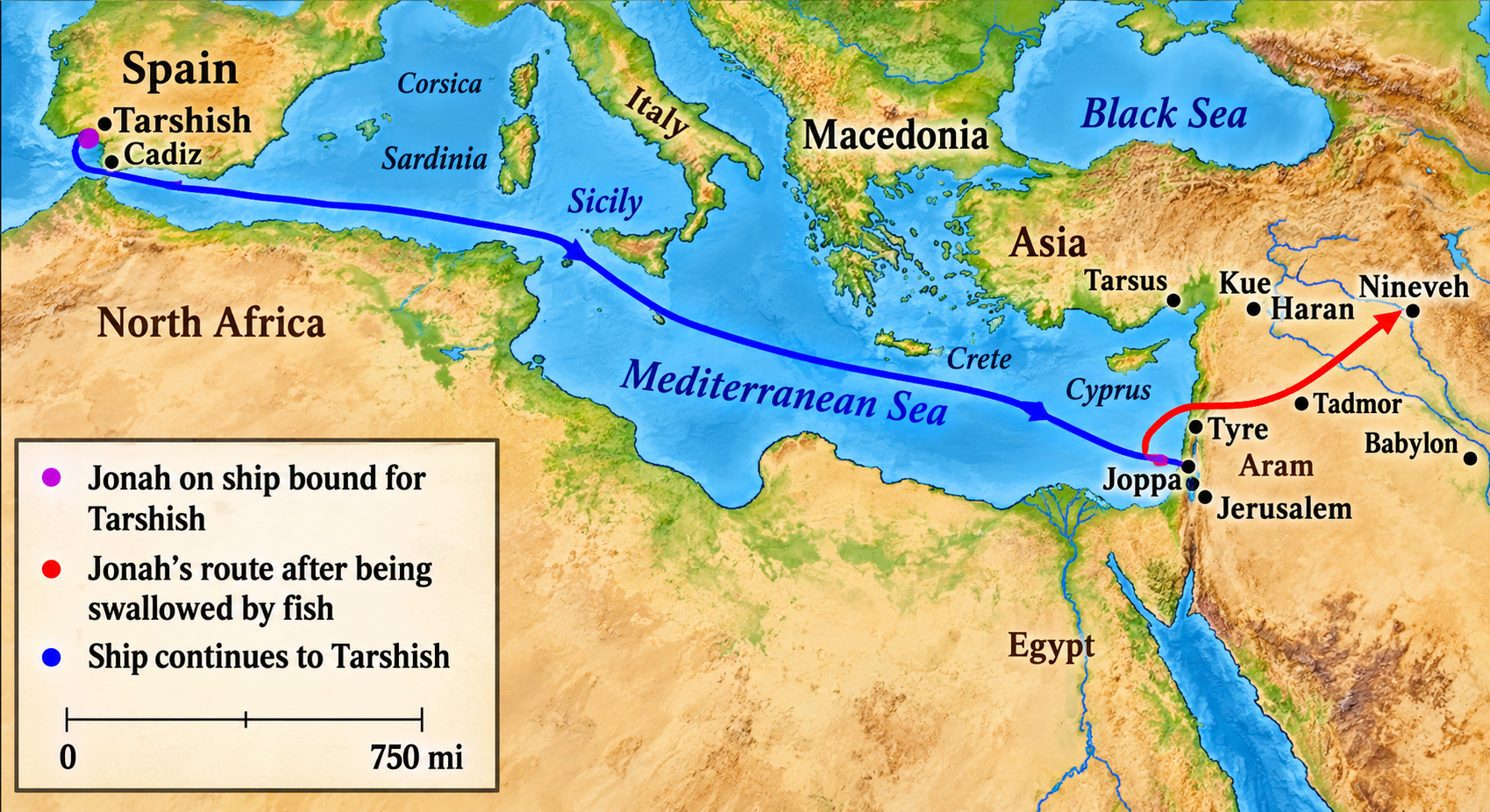
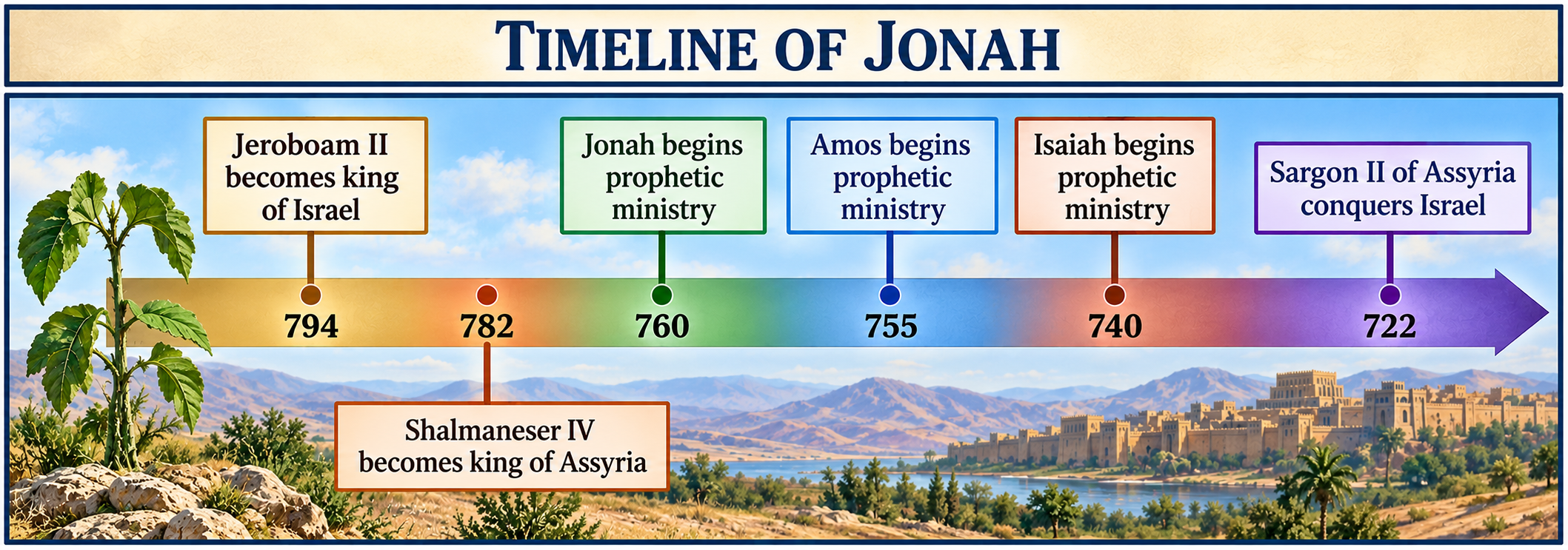
Jonah 4:1 But it greatly displeased Jonah and he became angry.
KJV But it displeased Jonah exceedingly, and he was very angry.
NET This displeased Jonah terribly and he became very angry.
NLT This change of plans greatly upset Jonah, and he became very angry.
ESV But it displeased Jonah exceedingly, and he was angry.
BGT καὶ ἐλυπήθη Ιωνας λύπην μεγάλην καὶ συνεχύθη
LXE But Jonas was very deeply grieved, and he was confounded.
CSB But Jonah was greatly displeased and became furious.
NIV But Jonah was greatly displeased and became angry.
YLT And it is grievous unto Jonah -- a great evil -- and he is displeased at it;
- Jon 4:9 Mt 20:15 Lu 7:39 15:28 Ac 13:46 Jas 4:5,6

JONAH'S REACTION
TO NINEVEH'S REPENTANCE
But - Term of contrast with Jonah 3:10 "When God saw their deeds, that they turned from their wicked way, then God relented concerning the calamity which He had declared He would bring upon them. And He did not do it." So instead of rejoicing over thousands of souls saved for all eternity, Jonah has essentially the opposite reaction.
Nineveh repented,
but Jonah resented.
This is an amazing chapter and makes the point that Jonah could preach the right message, in the right city, at the right time, and see extraordinary results while still possessing the wrong attitude. Nineveh repented, but Jonah resented. The city experienced a spiritual transformation while the prophet who preached to them still needed transformation himself. This reminds us that successful ministry is not necessarily evidence of a surrendered heart. God may graciously accomplish His purposes through us while still having much work to accomplish within us. (Amen or Oh My!) Jonah's message was right, his obedience was real, and the results were remarkable, but his heart was still out of step with the heart of God (Jon 3:5–10; 4:1–4). We must never confuse God's blessing on the message with God's approval of every attitude in the messenger. The power that brought Nineveh to repentance belonged to God, not Jonah. Jonah was God's instrument, but the instrument itself still needed repair. The right message can come through a heart that still needs correction. This truth makes me think of some very powerful preachers in recent years who were preaching while carrying on illicit affairs! The fact is that a successful ministry is no substitute for a surrendered heart. Isn't that always the bottom line? The heart of every problem is the problem in the heart!
ILLUSTRATION - When Oliver Cromwell sat for the official portrait that would portray his appearance for generations to come, the artist told him that he would paint his face with a touch up. Cromwell had an ugly wart on his face and the artist wanted to paint him without the wart. But Cromwell said, "Paint me warts and all. Give the true representation." If I had been Jonah and if I were writing my experiences with the Lord, I would have been tempted to stop writing after chapter three. (Lowell Johnson)
When sinners repent, heaven rejoices.
God's people should too.
It greatly displeased Jonah - More literally it reads “It was evil to Jonah, a great evil.” Jonah was not just displeased but sadly greatly displeased. The Septuagint (LXX) translates displeased with lupeo whoch means to become sad, sorrowful or distressed at the salvation of so many Gentiles. There is a sad irony in this narrative. Nineveh had turned from its evil (raʿah, Jonah 3:10), so God relented concerning the calamity (raʿah) He had threatened. But God's decision not to bring that calamity was regarded by Jonah as a great evil (raʿah gedolah).
It was easier to get Jonah out of the fish
than to get Nineveh out of Jonah's heart!
H L Ellison - The literal translation is “But it was evil to Jonah with great evil.” In other words, the term “evil” (rāʿāh), which has been repeatedly applied to the Ninevites, now characterizes the prophet. By objecting to the character and actions of God, Jonah as effectively put himself out of fellowship with God as the evil and ignorant heathen (cf. Rom 2:1). But God showed him the same compassion as he had shown Nineveh. Why was Jonah so angry? Rabbinic literature contains the idea, which is still very popular, that on the basis of Deuteronomy 18:21–22 he would be regarded as a false prophet. True enough, once the first wave of terror had passed and destruction did not come. (Expositor's Bible Commentary)
Bitterness turns our attention inward until our comfort
matters more than another person's welfare.
Bob Utley - “it greatly displeased Jonah” The ADJECTIVE (BDB 949) and VERB (BDB 949, KB 1269, Qal IMPERFECT) are COGNATES, which intensifies the meaning (cf. Neh. 2:10). Jonah was angry that God was going to spare Nineveh.
Jonah uses רעה often and in several senses: (1) wickedness, Jonah 1:2 (2) calamity, Jonah 1:7, 8; 3:10; 4:2; (3) displeased, Jonah 4:1; (4) discomfort, Jonah 4:6. The term used of Ninevites is now used of Jonah (cf. The Expositors Bible Commentary, vol. 7, p. 385). What a reversal! Sin without light is one thing, but sin with light is far more serious and condemnable (cf. Luke 12:48).
NET NOTE - “It was evil to Jonah, a great evil.” The cognate accusative construction רוַיֵּרע … רָעָהַ (vayyera’ … ra’ah) emphasizes the great magnitude of his displeasure (e.g., Neh 2:10 for the identical construction; see IBHS 167 §10.2.1g). DISPLEASED The verb רָעַע (ra’a’) means “to be displeasing” (BDB 949 s.v. רָעַע 1; e.g., Ge 21:11, 12; 48:17; Nu 11:16; 22:34; Josh 24:15; 1Sa 8:6; 2Sa 11:25; Neh 2:10; 13:8; Pr 24:18; Jer 40:4). The use of the verb רָעַע (“to be evil, bad”) and the noun רָעָה (“evil, bad, calamity”) here in Jonah 4:1 creates a wordplay with the use of רָעָה in Jonah 3:8–10. When God saw that the Ninevites repented from their moral evil (רָעָה), he relented from the calamity (רָעָה) that he had threatened—and this development greatly displeased (רָעָה) Jonah.
Nineveh's evil displeased God,
but God's mercy toward Nineveh displeased Jonah.
And he became angry (charad; LXX - sugcheo - became troubled, stirred up, dismayed) - God saw Nineveh's repentance and withheld judgment. Jonah saw Nineveh's deliverance and became angry. Thus his displeasure evolved into out and out anger! He literally "burned" with anger! By implication who would he be angry with? While he was undoubtedly angry with the Ninevites, he was angry with God and His provision of grace to the vile pagans. Jonah was deeply incensed that God had spared Nineveh. Clearly Jonah's heart was far from God's heart (cf 2Pe 3:9, 1Ti 2:4)
God’s burning anger “cooled off” when the Ninevites repented,
but Jonah’s anger was “kindled” when God did not destroy Nineveh
NET NOTE on he became angry - Heb “it burned to him.” The verb חָרָה (kharah, “to burn”) functions figuratively here (hypocatastasis) referring to anger (BDB 354 s.v. חָרָה). It is related to the noun חֲרוֹן (kharon, “heat/burning”) in the phrase “the heat of his anger” in Jonah 3:9. The repetition of the root highlights the contrast in attitudes between Jonah and God: God’s burning anger “cooled off” when the Ninevites repented, but Jonah’s anger was “kindled” when God did not destroy Nineveh.
Jonah wanted mercy for himself and justice for Nineveh. God wanted Jonah to understand that the mercy he had received was the same mercy Nineveh desperately needed. Jonah's reaction reminds us of the elder brother in Luke 15:25–32, for both Jonah and the brother were angry because someone they considered undeserving received compassion.
THOUGHT - It is possible to be theologically correct and spiritually wrong-hearted. Jonah's theology in verse 2 is excellent. He knows God is gracious, compassionate, slow to anger, and abundant in lovingkindness. His problem is that he does not want those truths applied to people he despises. Beloved, we can subtly fall into the same trap when we rejoice that God has forgiven us but struggle when He shows extraordinary mercy to someone we believe deserves judgment. Grace is easy to celebrate when we are receiving it. The real test may come when God gives it to someone we think does not deserve it. Ultimately, that exposes the very nature of grace, the reality that none of us deserves it.
Spurgeon Exposition - A nice prophet this! Jonah was a man of a somewhat ugly disposition, yet I think he has been misunderstood. He was the true child of Elijah, the prophet of fire. Elijah was a rough, stern servant of the Lord, who felt that the indignities which had been done to Jehovah deserved instant and terrible punishment; and he seemed almost to wish to see that punishment inflicted, as he accused the people unto God, saying, “the children of Israel have forsaken thy covenant, thrown down thine altars, and slain thy prophets with the sword; and I, even I only, am left; and they seek my life, to take it away.” He was bravely stern for God, and Jonah was cast in a similar mold. He seemed to feel, “I have been sent of God to tell these people that they will be destroyed for their sin. Now, if they are not destroyed, it will be thought that I have not preached the truth, and, what is far more serious, it will be thought that God does not keep his word.” His whole thought was taken up with the honour of God, and his own honour as involved in that of the Lord. There are many people, nowadays, who seem to think everything of man, and very little of God; and, consequently, they fall into grievous errors. Jonah, on the contrary, thought everything of God, and very little of men. He fell into an error by so doing, and there was a want of balance of judgment, yet is Jonah’s error so very seldom committed that I am half inclined to admire it in contrast with the error on the other side. He felt that it would be better for Nineveh to be destroyed than for God’s truthfulness to be jeopardized even for a single moment. God would not have us push even concern for his honour too far; but we are such poor creatures that, very often, when we are within an inch of the right course, we fall into a snare of the enemy. It was so with Jonah, when he was exceedingly displeased and very angry at what God had clone in sparing the repentant people of Nineveh.
Jonah presents a searching question for anyone who teaches God's Word: Do I want God's message to prove me right, or do I want God's message to change people's hearts? Jonah had faithfully announced judgment, but when that warning produced repentance and repentance resulted in mercy, he was angry. The greatest success of Jonah's preaching exposed one of the greatest weaknesses of Jonah's heart.
Grieved By Grace
READ: Jonah 3:10-4:11
It displeased Jonah exceedingly, and he became angry. --Jonah 4:1
In his book The Divine Intruder, James Edwards portrays the prophet Jonah as a man who was grieved by the grace of God. Jonah had been told by God to preach repentance to the people of Nineveh, but he believed that the wicked city deserved to be destroyed for its brutality and cruelty, not pardoned.
After a futile attempt to run away from God, Jonah finally obeyed and proclaimed judgment on Nineveh. Then the unthinkable happened—the people repented.
Greatly angered, Jonah poured out his frustration to the Lord: "I fled previously to Tarshish; for I know that You are a gracious and merciful God, slow to anger and abundant in lovingkindness, One who relents from doing harm" (Jonah 4:2).
Like Jonah, we may feel that certain people deserve God's judgment, not His forgiveness. Because of what they've done to us or those we love, we can't hope anything but the worst for them. James Edwards reminds us, however, that the story of Jonah ultimately points a finger at us. He asks, "Will we bind God by our judgments, or will we free God to transform our enemies—even ourselves—by grace?"
God calls us to reach out to the people in our lives to whom He longs to show His love and mercy. —David C. McCasland (Our Daily Bread, Copyright RBC Ministries, Grand Rapids, MI. Reprinted by permission. All rights reserved)
To pray that God will save our foes
Is difficult to do
Until we recognize that we
Deserve God's judgment too.
—Sper
You can stop showing mercy to others
when God stops showing mercy to you.
(cp Mt 6:12, Mt 6:14, 15)
Lowell Johnson - Two books recently became best-sellers - "Disappointed With God" by Phillip Yancey (ED: SADLY YANCEY FELL INTO GRIEVOUS SIN IN 2026 - an eight-year extramarital affair with a married woman) and "When God Doesn't Make Sense" by James Dobson. Jonah would have written the foreword for both of those books. The word "displeased" means "to do evil or to do bad." Notice: Jonah was displeased at God; not the Ninevites! Jonah thought it was an evil or bad thing that God did in sending revival to the Ninevites. The idea is that Jonah was absolutely irritated that God would send revival to Nineveh! He was upset with God's mercy and grace toward Nineveh. You might expect someone to be upset with God's chastening or judgment. They might think that God was unfair to send such, but here God is moving in love and mercy. Or, someone might be displeased if their faithful labor was unsuccessful, but God rewarded his labor. He was successful and folks were saved. Notice: He was Angry! The word "angry" here means "to bum." Jonah was burning mad at God on the inside. He had reached the boiling point. Some get angry at the Lord because of the loss of health or the loss of a loved one but Jonah was angry at God because God was too good and kind and merciful. Jonah wanted judgment to fall; not mercy! God didn't live up to Jonah's expectations and he was mad!• Man is always the angriest when he is wrong!
I wrote down some things about anger that I want to share:
- An angry man is seldom reasonable and a reasonable man is seldom angry.
- A man is about as big as the things that make him angry.
- Every moment you are angry, you lose a minute of happiness.
- The more you grow up, the less you blow up.
- Anger manages everything badly.
- Swallowing angry words is always easier than eating them.
- Anger is a feeling that makes your mouth work faster than your mind.
- When you're right, you can afford to keep your temper. When you're wrong, you can't afford to lose it.
When I have lost my temper,
I have lost my reason, too.
I'm never proud of anything That angrily I do.When I have talked in anger,
And my cheeks were flaming red,
I have always spoken something
That I wish I had not said.In anger I have never done
A kindly deed or wise,
But many things for which I felt
I should apologize.In looking back across my life
And all I've lost or made,
I can't recall a single time
When fury ever paid.
--anonymous
James Smith - JONAH 4:1–6 JONAH DISPLEASED
There is a great difference between mere obedience and sympathy. Every parent sees it when the one child has to be driven to obey, and when the other delights in it, because in full sympathy with the parents’ plans and purposes. The elder brother in the parable (Luke 15) had been obedient, but he had no sympathy with the father in making such an ado over the returning prodigal. There are many Christians like this, they obey from sheer necessity, but they have no joy in the will and purposes of God. Such seems to have been the character of Jonah. He obeyed from a powerful sense of duty, but had not entered joyfully into all the mind of the Lord.
I. His Complaint. “It displeased Jonah exceedingly, and he was very angry,” or, as it might be rendered, he was very hot, greatly perplexed and excited. He saw now what perhaps he did not expect to see—Nineveh in sackcloth and prayer. The Assyrians, being the enemies of Israel, he probably was secretly rejoicing in the prospect of their downfall. It is so easy to mix our own selfish motives with the purposes of God, and bring confusion to our own souls. It is here where thousands are making shipwreck, they set up then own opinions and think that God is bound by His honour to conform to their plans. Perhaps Jonah was thinking of his own honour as a prophet when he got so excited. He had been crying, “Yet forty days and Nineveh shall be overthrown.” Now that God was going to spare the city, what would they think of him as a prophet? We are not much use in the Lord’s service until we are willing to become fools for Christ. It is ours to obey and to trust. Opinions formed apart from the light of God’s Word will sooner or later bring the blush of confusion to your face.
II. His Prayer. “He prayed unto the Lord.” If Jonah’s heart had been filled with anger against the Lord, how could he pray? No one can pray with anger in their heart. This is the remedy for all unholy passion—get to your knees. It is wonderful how our creeds get corrected in our prayers. Open up your heart to God, and your crooked things will be made straight. In Jonah’s prayer there is a revelation. Here we get the reason why he fled from God at the first. He says: “I fled, for I knew that thou art a gracious God.” This is the very reason why some of us have fled to Him. What does he mean? Perhaps this: “I knew that Thou art such a merciful God, that although I prophesied its destruction, Thou would forgive them, so my preaching would be in vain, and I would be mocked for my trouble.” There was much of both good and evil in Jonah, but something more might be learned from this—
III. His Testimony. His description of God’s character is simply grand. “Gracious, merciful, slow to anger, of great kindness, and ready to turn from judgment.” How could he be angry at such a God? He is gracious to consider the sinner’s need, and merciful to forgive their iniquities. My friend, can you say, like Jonah, “I know Him.” He is slow to anger. What a mercy. This is an age of hurry and excitement and “Go.” The Devil knows that his days are short, and he is driving this world—“that lieth in the wicked one”—at express speed. The Devil is always in a hurry “The wheels of God grind slow, but they grind exceeding small.” God is slow to anger, but He is quick to forgive. “There is life for a look.” This is the reason why some of you are spared till to-day, who have been wasting your time in selfishness and sin. “God is slow to anger.” Why despise such great kindness, and weary out the patience of God? Oh, remember, that although God is slow to anger, when He does strike, it will be the blow of the Almighty.
IV. His Foolish Request. “O Lord, take my life from me, it is better for me to die than to live” Is it? How do you know? Here again is another manifestation of self. “Better for me.” Oh, yes, it is the old story: “Suffer me first.” This is the fly in the ointment of much of our Christian service—“Self-seeking.” But there is some faith mingled with his faults. If he knew it would be better for him to die, then he had a good hope for the world to come. Would it be better for you? Paul said, “to depart and be with Christ is far better.” It takes faith to die in gladness, alone in the midst of heathen.
V. His Watchfulness. “So Jonah went out of the city, and made him a booth.” He might have shared the hospitality of the king, but he preferred a booth outside the city. “Moses chose rather to suffer affliction with the people of God, than enjoy the pleasures of sin for a season.” Those who testify against the world aught not to live as the world. “Come out from among them lest ye perish with them.” The command to Lot was, “Flee to the mountains, tarry not in all the plain.” He sat under his booth till he might see what would become of the city. Do you know anything about calmly waiting to see what God will do? It is a solemn time. The doctor has given up that child, the mother has committed it to God, and is waiting in silence to see what God will do. There are times in Christian work when we know not what to do; we have to sit down like Jonah till we might see what the Lord will do. God is worth waiting on. Beloved friends, have patience with God. “They that wait upon the Lord shall renew their strength” (Isa. 40:31).
VI. His Great Joy. “The Lord prepared a gourd, and made it come up over Jonah, so Jonah was exceeding glad.” How quickly God can turn our sadness into gladness. This gourd is supposed to be the palm-christ, a plant like the running ivy, with broad leaves the shape of a man’s hand. Every leaf might remind him of the hand of the Almighty. What a shelter—to be covered with Jehovah’s hands—no wonder he was glad. This sheltering gourd was the gift of God—a handful on purpose for a weary, downcast pilgrim. How often has God raised a gourd for us in our day of trouble. It was given for a twofold purpose. (1) To be a shadow over his head. (2) To deliver him from his grief. Is not this what you need—shelter from danger, and deliverance from inward grief. This gourd raised by the Lord seems to be a passing chadow of the Cross. Here sinners find a refuge from the piercing rays of Divine vengeance and deliverance from their sins and sorrows. This double salvation every one of us need. Christian, in the day of your trial, sit under its shadow, and wait and see what God will do. Unsaved one, here is a resting place for you, here is deliverance from your grief. No matter how deep your need, sit here and see what God will do for you. “Come unto Me all ye that labour and are heavy laden, and I will give you rest.” He is “mighty to save.”
Jonah 4:2 He prayed to the LORD and said, “Please LORD, was not this what I said while I was still in my own country? Therefore in order to forestall this I fled to Tarshish, for I knew that You are a gracious and compassionate God, slow to anger and abundant in lovingkindness, and one who relents concerning calamity.
KJV And he prayed unto the LORD, and said, I pray thee, O LORD, was not this my saying, when I was yet in my country? Therefore I fled before unto Tarshish: for I knew that thou art a gracious God, and merciful, slow to anger, and of great kindness, and repentest thee of the evil.
NET He prayed to the LORD and said, "Oh, LORD, this is just what I thought would happen when I was in my own country. This is what I tried to prevent by attempting to escape to Tarshish!– because I knew that you are gracious and compassionate, slow to anger and abounding in mercy, and one who relents concerning threatened judgment.
NLT So he complained to the LORD about it: "Didn't I say before I left home that you would do this, LORD? That is why I ran away to Tarshish! I knew that you are a merciful and compassionate God, slow to get angry and filled with unfailing love. You are eager to turn back from destroying people.
ESV And he prayed to the LORD and said, "O LORD, is not this what I said when I was yet in my country? That is why I made haste to flee to Tarshish; for I knew that you are a gracious God and merciful, slow to anger and abounding in steadfast love, and relenting from disaster.
BGT καὶ προσεύξατο πρὸς κύριον καὶ εἶπεν ὦ κύριε οὐχ οὗτοι οἱ λόγοι μου ἔτι ὄντος μου ἐν τῇ γῇ μου διὰ τοῦτο προέφθασα τοῦ φυγεῖν εἰς Θαρσις διότι ἔγνων ὅτι σὺ ἐλεήμων καὶ οἰκτίρμων μακρόθυμος καὶ πολυέλεος καὶ μετανοῶν ἐπὶ ταῖς κακίαις
LXE And he prayed to the Lord, and said, O Lord, were not these my words when I was yet in my land? therefore I made haste to flee to Tharsis; because I knew that thou are merciful and compassionate, long-suffering, and abundant in kindness, and repentest of evil.
CSB He prayed to the LORD: "Please, LORD, isn't this what I said while I was still in my own country? That's why I fled toward Tarshish in the first place. I knew that You are a merciful and compassionate God, slow to become angry, rich in faithful love, and One who relents from sending disaster.
NIV He prayed to the LORD, "O LORD, is this not what I said when I was still at home? That is why I was so quick to flee to Tarshish. I knew that you are a gracious and compassionate God, slow to anger and abounding in love, a God who relents from sending calamity.
- he prayed (KJV): 1Ki 19:4 Jer 20:7
- I fled (KJV): Jon 1:3 Lu 10:29
- thou art (KJV): Ex 34:6,7 Nu 14:18,19 Ps 78:38 86:5,15 145:8 Ho 11:8,9 Joe 2:13,14 Mic 7:18
- and of (KJV): Jon 3:10 Ex 32:14 Ps 90:13 Jer 18:8 Am 7:3,6
Related Passages:
Exodus 34:6-7 Then the LORD passed by in front of him and proclaimed, “The LORD, the LORD God, compassionate and gracious, slow to anger, and abounding in lovingkindness and truth; 7 Who keeps lovingkindness for thousands, Who forgives iniquity, transgression and sin; yet He will by no means leave the guilty unpunished, visiting the iniquity of fathers on the children and on the grandchildren to the third and fourth generations.”
Numbers 14:18 ‘The LORD is slow to anger and abundant in lovingkindness, forgiving iniquity and transgression; but He will by no means clear the guilty, visiting the iniquity of the fathers on the children to the third and the fourth generations.’
Psalm 86:15 But You, O Lord, are a God merciful and gracious, Slow to anger and abundant in lovingkindness and truth.
Psalm 103:8 The LORD is compassionate and gracious, Slow to anger and abounding in lovingkindness.
Psalm 145:8 The LORD is gracious and merciful; Slow to anger and great in lovingkindness.
Joel 2:13 And rend your heart and not your garments.” Now return to the LORD your God, For He is gracious and compassionate, Slow to anger, abounding in lovingkindness And relenting of evil.
Nehemiah 9:17 “They refused to listen, And did not remember Your wondrous deeds which You had performed among them; So they became stubborn and appointed a leader to return to their slavery in Egypt. But You are a God of forgiveness, Gracious and compassionate, Slow to anger and abounding in lovingkindness; And You did not forsake them.
THIS IS EXACTLY WHAT I
THOUGHT WOULD HAPPEN!
He prayed to the LORD and said - It is hard to believe he was able to pray burning with anger! Notice the sad irony. Jonah prayed in chapter 2 when he was distressed because he needed God's mercy. Now he prays in chapter 4 because he is distressed that God has shown mercy to Nineveh. In the fish Jonah was thankful that God had spared him. Outside Nineveh Jonah was angry that God had spared them. My, how fast one can change when their circumstances change! Jonah rejoiced when grace rescued him from destruction but resented when that same grace rescued Nineveh from destruction.
“He prayed his best prayer in the worst place...
and he prayed his worst prayer in the best place.”...
“His first prayer came from a broken heart,
but his second prayer came from an angry heart.”
--- Warren Wiersbe
Please LORD, was not this what I said while I was still in my own country? - “This is what I feared” (NEB), “It is just as I feared” (REB), “I knew from the very beginning” (CEV). Jonah is saying “This is exactly what I was afraid would happen!” This gives us information that chapter 1 withheld. Jonah 1:3 simply told us that Jonah fled “from the presence of the LORD.” Now Jonah explains his motive. He knew something about God's character that made the mission to Nineveh intolerable to him. His problem was not defective theology. His theology was remarkably accurate. His heart was the problem.
NET NOTE - Heb “Is this not my saying while I was in my own country?” The rhetorical question implies a positive answer (“Yes, this was the very thing that Jonah had anticipated would happen all along!”) so it is rendered as an emphatic declaration in the translation.
Therefore in order to (term of purpose) forestall this I fled to Tarshish - NLT = "That is why I ran away to Tarshish!" Jonah's admssion that he fled in order to forestall this (repentance of Ninevites) are revealing. Jonah hoped that by refusing to preach God's warning, he could prevent Nineveh from receiving the opportunity to repent. Think of the irony. God sent Jonah to Nineveh because God was compassionate toward sinners. Jonah fled from Nineveh because he did not want God to be compassionate toward those sinners. Jonah's flight to Tarshish was therefore more than reluctance about a difficult assignment. It represented a profound disagreement with God's purpose. Jonah was not merely running from God's command, but was resisting God's compassion.
NET NOTE - The narrator skillfully withheld Jonah’s motivations from the reader up to this point for rhetorical effect—to build suspense and to create a shocking, surprising effect. Now, for the first time, the narrator reveals why Jonah fled from the commission of God in 1:3—he had not wanted to give God the opportunity to relent from judging Nineveh! Jonah knew that if he preached in Nineveh, the people might repent and as a result, God might more than likely relent from sending judgment. Hoping to seal their fate, Jonah had originally refused to preach so that the Ninevites would not have an opportunity to repent. Apparently Jonah hoped that God would have therefore judged them without advance warning. Or perhaps he was afraid he would betray his nationalistic self-interests by functioning as the instrument through which the LORD would spare Israel’s main enemy. Jonah probably wanted God to destroy Nineveh for three reasons: (1) as a loyal nationalist, he despised non-Israelites (cf. 1:9); (2) he believed that idolaters had forfeited any opportunity to be shown mercy (cf. 2:9–10); and (3) the prophets Amos and Hosea had recently announced that God would sovereignly use the Assyrians to judge unrepentant Israel (Hos 9:3; 11:5) and take them into exile (Amos 5:27). If God destroyed Nineveh, the Assyrians would not be able to destroy Israel. The better solution would have been for Jonah to work for the repentance of Nineveh and Israel.
For (term of explanation) I knew that You are a gracious (channun - describing God as freely showing undeserved favor, kindness, and mercy to those who have no claim upon it; LXX - eleemon - One Who shows pity and concern for people in need) and compassionate (rachum - deep, heartfelt compassion toward those who are needy, helpless, or undeserving; LXX - oiktirmon - pert. to being concerned about another’s unfortunate state or misery) God, slow to anger (Arek aph - אֶרֶךְ אַפַּיִם , literally “long of nose,” = delaying His righteous wrath and giving sinners opportunity to repent; LXX - makrothumos - "a long fuse" - being self-controlled in the face of provocation) and abundant in lovingkindness (hesed ; LXX -), and one who relents concerning calamity - Jonah gives one of the greatest descriptions of God in the entire book, listing five divine attributes, all of which he had personally benefited from in Jonah 1-2! Jonah's mindset was "It was good for "me" but not for "thee!"" Jonah's head knowledge failed to yield a right heart response.
Jonah knew God's creed
but resisted God's compassion.
Gracious emphasizes God's favor toward those who do not deserve it. Compassionate (rachum) conveys God's tender mercy and pity toward those in need. Jonah had personally experienced both. He deserved judgment for his rebellion, yet God rescued him from the sea and recommissioned him. One might call this an antithetical irony! Jonah was alive because God is gracious and compassionate, yet Jonah was angry because God is gracious and compassionate. God's grace was wide enough for Nineveh, but Jonah's heart was not.
“Jonah certainly had good theology,
but it stayed in his head and never got to his heart.”
-- Warren Wiersbe
Slow to Anger is literally “long of nostrils,” an idiom describing someone who is slow to become angry. God does not rush impulsively into judgment. Nineveh's forty-day warning itself demonstrated this truth. God could have destroyed the city immediately. Instead He sent Jonah, announced judgment, and provided time in which the Ninevites could repent. The forty days were not merely a countdown to judgment; they were a window for repentance.
Lovingkindness is Hebrew hesed, one of the great theological words of the Old Testament. Note God's lovingkindness is not a trickle, but a might rushing river. It speaks of God's steadfast, loyal, faithful love. Jonah knew God was not reluctantly merciful. He was “abundant” in lovingkindness. Jonah wanted God's hesed for Israel and for himself, but he struggled profoundly when God's compassion reached beyond Israel to Israel's enemies. Jonah wanted to put boundaries around a compassion God refused to confine.
One Who Relents Concerning Calamity (raʿ; LXX - kakia - state involving difficult circumstances, trouble) - As discussed in notes on Jonah 3:9, this does not mean that God discovered He had made a mistake or underwent a change in His moral character. God's announced judgment was a genuine warning, and when Nineveh turned from its wickedness, God withheld the calamity He had threatened. Jeremiah later states the principle explicitly: when God announces judgment against a nation and “that nation...turns from its evil,” God may relent concerning the calamity announced against it (Jer 18:7–8). God's character had not changed. Nineveh's relationship to the unchanging God had changed because Nineveh repented.
NET NOTE on slow to anger is a great word picture - Heb “long of nostrils.” Because the nose often expresses anger through flared nostrils it became the source of this idiom meaning “slow to anger” (e.g., Ex 34:6; Num 14:18; Neh 9:17; Pss 86:15; 103:8; 145:8; Jer 15:15; Nah 1:3; BDB 74 s.v. אָרֵךְ). CALAMITY - The noun רָעָה (ra’ah, “calamity, disaster”) functions as a metonymy of result—the cause being the threatened judgment (e.g., Ex 32:12, 14; 2 Sam 24:16; Jer 18:8; 26:13, 19; 42:10; Joel 2:13; Jonah 4:2). The classic statement of God’s willingness to relent from judgment when a sinful people repent is Jer 18:1–11. Jonah is precisely correct in his listing of the LORD’s attributes. See Exod 34:6–7; Num 14:18–19; 2 Chr 30:9; Neh 9:17, 31–32; Ps 86:3–8, 15; 103:2–13; 116:5 (note the parallels to Jonah 2 in Ps 116:1–4); Ps 145:8; Neh 9:17; Joel 2:13.
Ellison has an interesting note - What is clear is that Jonah was finding fault with God as he really is, not as he imagined him to be. This trait is more common among godly men than we sometimes realize. It explains why those who pride themselves on their loyalty to Scripture hold doctrines that stand in plain contradiction to the revealed character of God. (Expositor's Bible Commentary)
Spurgeon's Exposition - This was as much as if he had said to the Lord, “I went and did thy bidding, and told the Ninevites that they would be destroyed; but I knew in my heart that, if they repented, thou wouldst not carry out thy threat, and now thou art too gracious, too kind, to these wicked people.” It is a strange thing, is it not, that Jonah was angry because his message was blessed to his hearers? As a good commentator says, “When Christ sees of the travail of his soul, he is satisfied; but when Jonah saw of the travail of his soul, he was dissatisfied.” There are some men who leave off preaching because they do not succeed; but here was one who was ready to give up because he did succeed. It is strange that such a good man as Jonah was should fall into such a foolish state of mind; but God still has a great many unwise children. You can find one if you look in the right place; I mean, in a looking-glass. We are all foolish at times; and it should be remembered that, although Jonah was foolish, and wrong in certain respects, there is this redeeming trait in his character, — we might never have known the story of his folly if he had not written it himself. It shows what a true-hearted man the prophet was, that he just unveiled his real character in this Rook. Biographies of men are seldom truthful, because the writers cannot read the hearts of those whom they describe; and if they could read them, they would not like to print what they would see there. But here is a man, inspired of God to write his own biography, and he tells us of this sad piece of folly, and does not attempt in the least degree to mitigate the evil of it.
It is possible to preach grace successfully
and still need grace desperately.
Calamity (evil) (07451) raʿ/ raʿah (רַע / רָעָה) is a broad Hebrew word meaning bad, evil, wicked, harmful, undesirable, painful, or disastrous, with its precise sense determined by the context. In the moral and spiritual sense, it describes wickedness, sin, and conduct that is contrary to God's holy character and standard (Ge 6:5; Dt 9:18; Pr 8:13). But raʿ does not always refer to moral evil. It can also describe harm, adversity, distress, misery, affliction, or calamity that comes upon a person (Ge 44:34; Ps 23:4). Thus, raʿ may describe either the evil people do or the painful consequences and calamities people experience. Ultimately, Scripture presents the LORD as the final standard by which what is morally good or evil is determined. In short: Raʿ ranges from moral wickedness that is contrary to God's character to adversity, harm, distress, or calamity, and the context determines which sense is intended.
Raʿ / Raʿah (רַע / רָעָה) in Jonah - Jonah 1:2, 7, 8, Jonah 3:8, 10, Jonah 4:1, 2, 6
Jonah 1:2 – God sees Nineveh's wickedness (raʿah).
Jonah 3:8 – They turn from their wicked (raʿah) way.
Jonah 3:10 – God does not bring the threatened calamity (raʿah) upon them.
Jonah 4:2 – Jonah knew God was One Who “relents concerning calamity (raʿah).”So the theological movement is striking: Nineveh turned from its raʿah of SIN, so God withheld the raʿah of JUDGMENT. More literally, Nineveh turned from the raʿah it was doing, and God withheld the raʿah it deserved.
Lowell Johnson has some pithy comments - Doesn't Jonah 4:2 sound like good news! Yet, he was furious that God was too gracious; too merciful; too slow to anger; too abundant in lovingkindness. Jonah addressed God as LORD and accused Him of wrongdoing! Wait a minute, Jonah. The LORD is someone you obey and worship and trust; not someone you argue with. Jonah wasn't complaining that God was a God of mercy and grace as much as he was WHERE God displayed His mercy and grace. As long as God's grace and mercy was shown to him and his people, it was all right; he didn't complain. But when it was for Nineveh - well, that's different.
Actually, Jonah slandered God - In Prayer!
(1) By Blaming God - He blamed God for his sin of disobedience of fleeing to Tarshish. He said that God's grace caused him to disobey. I've heard folks blame God for their sin. "Well, if God hadn't put that strong desire or drive in me, I wouldn't have committed that sin."
(2) By Belittling God - What caused others to praise God (Joel 2: 13; Ex. 34:6) - His mercy, love, grace, kindness - caused Jonah to belittle God. Jonah's prayer was just a prayer of complaint. It would have been much better not to have prayed the prayer at all than to pray a prayer of complaint. Everything about the prayer was bad. It didn't honor God or edify Jonah for praying the prayer. His was a prayer of a scorner, a quitter. It was a prayer that insulted God and discredited His wisdom and grace. The prayer was all about Jonah; not God. There are ten personal pronouns in Jonah 4:2-3
Jonah: Reluctant Obedience
The prophet Jonah provides another good example— or, rather, a counterexample —of what it means to live by faith. When the Lord commands him to go to Nineveh, he immediately begins to question and calculate, worrying about all the possible consequences of his actions and second guessing the Lord in his own mind (Jonah 4:2). He quickly decides not to obey the Lord, attempting instead to flee from His presence by boarding a ship bound for Tarshish:
“He went down to Joppa and found a ship going to Tarshish; so he paid his fare and went on board, to go with them to Tarshish, away from the presence of the LORD” (Jonah 1:3).
You can run, as the saying goes, but you cannot hide. The ship that he is on encounters severe storms and the cargo is jettisoned in an attempt to save the ship and passengers (Jonah 1:4-6). Shipwreck is narrowly avoided, but only after Jonah explains himself to his comrades and persuades them to throw him overboard, as well (Jonah 1:7-16). He is then swallowed by a great fish and, after calling upon the Lord from within its belly, is spit back up onto dry land. (Jonah 1:17 – 2:10).
The moral of this story— quite clearly —is that much of what we experience as external adversity actually reflects our own inner conflicts—often our own stubborn refusal to submit to the will of God for our life. Jonah’s decision to go to Tarshish was a desperate attempt to evade both his duty and his destiny; to live in deference to his fears instead of his faith; to substitute his short-sighted preferences for God’s perfect will—a desperate attempt to circumvent God’s clear leading in his life. Alas, at the end of the story, Jonah remains very troubled, reluctantly obeying God, to be sure, but still not trusting him wholly (Jonah 3:10 – 4:8) (See this blogsite Yeshua21)
Jonah 3:10-4:11 Anger Or Applause?
How do we react when God shows mercy to people we think deserve punishment? If we are resentful, it may indicate that we have forgotten how much the Lord has forgiven us.
After Jonah followed God's second call to preach His coming judgment on Nineveh (Jonah 3:1, 2, 3, 4), the people of the city turned from their evil lifestyle, so the Lord did not destroy them (Jonah 3:10). God's mercy made Jonah angry. He told God he had been afraid this would happen, and that's why he fled to Tarshish in the first place. "I know that You are a gracious and merciful God, . . . One who relents from doing harm" (Jonah 4:2).
But the Lord said to Jonah, "Should I not pity Nineveh, that great city, in which are more than one hundred and twenty thousand persons?" (Jonah 4:11).
God's marvelous grace is greater than all our sin. "For by grace you have been saved through faith, and that not of yourselves; it is the gift of God" (Ep 2:8). Because of His grace to us, we should "be kind to one another, tenderhearted, forgiving one another, even as God in Christ forgave [us]" (Jonah 4:32).
Instead of being angry when God is merciful, we should applaud. — David C. McCasland (Reprinted by permission from Our Daily Bread Ministries. Please do not repost the full devotional without their permission.)
What love the Father has bestowed on me!
For this I cannot help but thankful be;
I read His Word, His promises embrace,
And daily praise Him for His matchless grace.
—Hess
We can stop showing mercy to others
when Christ stops showing mercy to us.
Jonah 4:3 “Therefore now, O LORD, please take my life from me, for death is better to me than life.”
KJV Therefore now, O LORD, take, I beseech thee, my life from me; for it is better for me to die than to live.
NET So now, LORD, kill me instead, because I would rather die than live!"
NLT Just kill me now, LORD! I'd rather be dead than alive if what I predicted will not happen."
ESV Therefore now, O LORD, please take my life from me, for it is better for me to die than to live."
BGT καὶ νῦν δέσποτα κύριε λαβὲ τὴν ψυχήν μου ἀπ᾽ ἐμοῦ ὅτι καλὸν τὸ ἀποθανεῖν με ἢ ζῆν με
LXE And now, Lord God, take my life from me; for it is better for me to die than to live.
CSB And now, LORD, please take my life from me, for it is better for me to die than to live."
NIV Now, O LORD, take away my life, for it is better for me to die than to live."
YLT And now, O Jehovah, take, I pray Thee, my soul from me, for better is my death than my life.'
- take (KJV): Nu 11:15 Nu 20:3 1Ki 19:4 Job 3:20,21 6:8,9 Jer 20:14-18 Php 1:21-25
- for (KJV): Jon 4:8 Job 7:15,16 Ec 7:1 1Co 9:15
Related Passages:
Numbers 11:15 “So if You are going to deal thus with me, please kill me at once, if I have found favor in Your sight, and do not let me see my wretchedness.”
Numbers 20:3 The people thus contended with Moses and spoke, saying, “If only we had perished when our brothers perished before the LORD!
1 Kings 19:4 (ELIJAH) But he himself went a day’s journey into the wilderness, and came and sat down under a juniper tree; and he requested for himself that he might die, and said, “It is enough; now, O LORD, take my life, for I am not better than my fathers.”
Job 3:3, 20-21 (JOB SAID) “Let the day perish on which I was to be born, And the night which said, ‘A boy is conceived.’ ...20 “Why is light given to him who suffers, And life to the bitter of soul, 21 Who long for death, but there is none, And dig for it more than for hidden treasures,

JONAH DESIRES
TO DIE
Therefore now - Term of conclusion and an expression of time. “Therefore” connects Jonah's shocking request directly to his complaint in verse 2. Because God had spared Nineveh, Jonah no longer wanted to live. His anger over God's mercy had become so intense that he asked God to take his life. Now speaks of his desire for immediate death.
O LORD, please take my life from me - Note that this is the second time Jonah has expressed a willingness to die. In Jonah 1:12 he told the sailors, “Pick me up and throw me into the sea.” Here he explicitly asks God to take his life. What a dramatic shift for In chapter 2 Jonah desperately thanked God for preserving his life. Now, because God has preserved the lives of the Ninevites, Jonah asks to lose his life.
Jonah rejoiced when God spared him,
but wanted to die when God spared them.
For (term of explanation) death is better to me than life - Jonah's judgment of what was “better” had become distorted by his anger. God certainly did not agree that Jonah's death was better. In fact, God refuses Jonah's request and instead begins patiently teaching His prophet. This is one of the dangers of uncontrolled anger which can distort our perspective until God's good purposes appear bad and our own misguided desires appear good. What a striking contrast Jonah presents. On one hand, Nineveh had been under a sentence of death and wanted to live. On the other hand, Jonah had been given life and wanted to die. The pagan Ninevites humbled themselves before God, while God's prophet argued with God.
There is a powerful lesson in Jonah's reaction. While the great fish had dealt with Jonah's outward rebellion, there remained a deeper problem in his heart. Jonah had obeyed God's command and gone to Nineveh, but his feet had arrived in Nineveh before his heart had arrived at God's compassion for Nineveh. Here's the point. It is possible to obey God outwardly while inwardly resenting what God is doing. Jonah 4 shows that God desires more than reluctant compliance. He wants the heart of His servant to reflect the heart of his Master.
Outward obedience does not
necessarily mean inward submission.
Lowell Johnson - "It is better for me." We see who Jonah was really interested in. Jonah was on an ego trip. He became a self-appointed adviser to God. God didn't answer his request because He knew Jonah didn't mean it. And by not answering his prayer, God moved again in mercy and grace upon Jonah. Are we any better than Jonah? Jonah didn't want to see the Ninevites saved because he hated them. But do we really want to see folks saved? Do we really have compassion for the lost?
A. J. Gordon wrote:
"I have long since ceased to pray, 'Lord Jesus, have compassion on a lost world! ' I remember the day when I seemed to hear the Lord rebuke me for making such a prayer. He seemed to say to me, "I have had compassion on a lost world, and now it's time for you to have compassion. I have given My heart; now give yours!"
Jonah 4:4 The LORD said, “Do you have good reason to be angry?”
KJV Then said the LORD, Doest thou well to be angry?
NET The LORD said, "Are you really so very angry?"
NLT The LORD replied, "Is it right for you to be angry about this?"
ESV And the LORD said, "Do you do well to be angry?"
BGT καὶ εἶπεν κύριος πρὸς Ιωναν εἰ σφόδρα λελύπησαι σύ
LXE And the Lord said to Jonas, Art thou very much grieved?
CSB Jonah 4:4 The LORD asked, "Is it right for you to be angry?"
NIV Jonah 4:4 But the LORD replied, "Have you any right to be angry?"
YLT Jonah 4:4 And Jehovah saith, 'Is doing good displeasing to thee?'
- Doest thou well to be angry (KJV): or, Art thou greatly angry, Jon 4:9 Nu 20:11,12,24 Ps 106:32,33 Mic 6:3 Mt 20:15 Jas 1:19,20
IS YOUR ANGER
JUSTIFIED?
The LORD said, “Do you have good reason to be angry (charad; LXX - lupeo - distressed - in perfect tense = speaks of his ongoing state) - God calls for an inward investigation - "Is your heart right?" What is striking is what God does not do. Jonah has just accused God of being too merciful and has asked to die (Jonah 4:2–3). Yet God does not rebuke him harshly or abandon him. Instead, God asks Jonah a question. The gracious God Who patiently dealt with wicked Nineveh now patiently deals with His angry prophet.
God was slow to anger toward Nineveh.
Jonah was quick to anger because God was slow to anger.
Do you have good reason to be angry (charad; LXX - lupeo - become sad, sorrowful, distressed) - The amazing thing about the book of Jonah is that it ends right where it started - with a rebellious prophet! The Hebrew expression הַהֵיטֵב חָרָה לָךְ (hahêteb charah lakh) can be rendered, “Is it right for you to be angry?” or “Do you do well to be angry?” The same question, with a specific object, appears again in Jonah 4:9 concerning the plant. God is forcing Jonah to examine whether his anger is morally justified. In effect God asks “Jonah, is your anger right simply because you feel it strongly?” That is an important distinction. The intensity of an emotion does not establish the righteousness of that emotion. Jonah felt strongly, but God wanted him to think biblically about what he felt.
To be angry (charad; LXX - lupeo - become sad, sorrowful, distressed) - The Hebrew verb charah (חָרָה) literally carries the idea of burning or becoming hot and is frequently used of anger. Jonah was burning with anger because Nineveh had been spared. But the irony is extraordinary. Jonah had just praised God as “slow to anger” (Jonah 4:2), while Jonah himself was quick to anger. God was slow to anger toward Nineveh; Jonah was quick to anger because God was slow to anger. That contrast exposes the difference between God's heart and Jonah's heart.
The first use of angry in Scripture is instructive. "but for Cain and for his offering He had no regard. So Cain became very angry and his countenance fell. 6 Then the LORD said to Cain, “Why are you angry? And why has your countenance fallen?" (Ge 4:5-6) Then the amazing grace available to Cain in Ge 4:7 "If you do well, will not your countenance be lifted up? And if you do not do well, sin is crouching at the door; and its desire is for you, but you must master it.” God's Spirit would have enabled him to master it but Cain chose NOT to master it. And we all know the rest of the tragic story in Ge 4:8-15,16. We don't know how Jonah's story ended because there is no answer recorded to God's question in Jonah 4:11. Heaven will be a very interesting place won't it, for then we we know fully just as we have been fully known! (1Co 13:12-13).
Charles Spurgeon - How kind of God to speak thus gently to his rebellious servant. Are any of you given to anger? Might not the Lord say to you, “Doest thou well to be angry, so soon, — so often, — so long, — about such little things?”
Notice how God uses a question. God could simply have told Jonah, “Your anger is wrong.” Instead, He asks a question that requires Jonah to examine himself.We see God repeatedly using questions like this throughout Scripture. (Adam) “Where are you?” (Ge 3:9) “Why are you angry?” (Ge 4:6) “Where is Abel your brother?” (Ge 4:9) “Where were you when I laid the foundation of the earth?” (Job 38:4) “Do you love Me?” (Jn 21:15) God's questions are not requests for information He lacks. They are often instruments for exposing something we have failed to see about ourselves. Here the question turns Jonah's attention away from Nineveh and toward Jonah's own heart. Interestingly, Jonah does not answer God's question.
Angry (burn) (02734) charah means to burn or be kindled with anger, and in the Hithpael, charah is used 4x (Ps 37:1, 7,8, Pr 24:19) always meaning "to worry" and describing the agitation, irritation or vexation resulting from active worry. Charah is used in reference to the anger of both man and God.
Chārāh (חָרָה) literally conveys the idea of burning or kindling and is most often used figuratively of anger that becomes heated or inflamed, whether human or divine. Thus Potiphar's anger “burned” after his wife's accusation against Joseph (Ge 39:19), Moses' anger “burned” when he saw Israel's golden calf (Ex 32:19), and Saul's anger was greatly kindled when he heard of the Ammonite threat (1Sa 11:6). The word frequently describes the righteous anger of the LORD against sin and rebellion, as when His anger burned against Moses' excuses (Ex 4:14), Israel's idolatry (Ex 32:10), Miriam and Aaron's opposition to Moses (Nu 12:9), Uzzah's irreverence toward the ark (1Chr 13:10), and Judah's persistent idolatry (2Ki 23:26; Ps 106:40). Depending on its grammatical form and context, chārāh can also describe raging or being incensed (Isa 41:11; 45:24), burning zeal or earnestness as when Baruch zealously repaired Jerusalem's wall (Neh 3:20), and even fretting or becoming inwardly heated with worry, which believers are commanded to avoid when confronted by evildoers (Ps 37:1–2; Pr 24:19–20). Thus the underlying picture throughout is that of something burning intensely within, whether expressed as anger, zeal, agitation, or passionate determination.
Used in Jon. 4:1; Jon. 4:4; Jon. 4:9
Lowell Johnson - Jonah 3 tells us of the great revival that came in Nineveh as Jonah preached all over Nineveh, "Yet forty days, and Nineveh will be destroyed." Jonah so hated the Ninevites that he wanted God to destroy them, but the whole nation repented and turned to God. In Jonah 4:1-3, Jonah vented his displeasure with God for saving the people and said that it would be better for him to die than to live - Jonah 4: 1-3 After Jonah vents his displeasure to God and says some things to God, God is going to say some things to Jonah. Like a physician probing a wound before he medicates it to bring about its healing, so God probes the heart of Jonah with a searching question - Jonah 4:4 God is trying to reason with Jonah. Jonah's attitude and spirit are wrong and God is trying to show him they are wrong. It's possible to do the right thing in the wrong way. Jonah preached like God told him to, but he did it with a spirit that stunk to high heaven.
Notice Jonah 4:4 again:
If Jonah had been honest in answering God's question, he would have given a strong "no." He most certainly does not do well to be angry as he is. He has no cause whatsoever to justify his anger. Jonah didn't even answer God. He just goes to the east side of the city, builds him a lean-to for a shade, watches for God to destroy the city and pouts when God doesn't do what he wants God to do. What disrespect Jonah shows to God. What dishonor! God asked him a question - and Jonah refuses to answer - But hold on ... God is going to ask him the question again and this time he'll answer. God can't reason with Jonah, so He is going to send a worm into his life to teach him a lesson.
God has used some unique messengers to get His message over to us. A burning bush for Moses; a donkey for Balaam; a rooster for Peter - now, a worm for Jonah.
Notice Jonah 4: 7: God prepared. It's a word you see all through the book of Jonah -
- Jonah 1:4 - wind;
- Jonah 1:17- fish;
- Jonah 4:6 - plant;
- Jonah 4:8 - vehement east wind;
- Jonah 4:7 - a worm.
That word, prepared, means to appoint or to ordain.God spoke to the worm and told it what to do and it did it.
I heard about a man who talked to worms. He was a good fisherman and he mostly used worms to fish with. He would say, "O.K., worm get out there and do your job. Go out there and call some fish up. Get out there and catch me a fish." The thing about it was, the worm obeyed!
If all the Sleeping Folk will Awake Up
If all the Lukewarm Fire Up
If all the Dishonest Confess Up
If all the Disquieted Sweeten Up
If all the Discouraged Check Up
If all the Depressed Look Up
If all the E-Stranged Make Up
If all the Gossipers Shut Up
If all the Dry Bones Shake Up
If all the Church Members Pray up
The Church would have REVIVAL
God spoke to a worm and taught Jonah some important lessons - About Theology and Psychology and Cardiology.
What kind of theology did this worm teach Jonah? He taught him that his God was too small. We sing "How Great Thou Art." Well, how big is your God? Is He a really great God or have you, like Jonah, reduced God to be like you?
God’s Compassion - Karen Huang
The Lord replied, “Is it right for you to be angry?” Jonah 4:4
I didn’t like Sadie. My colleague was often rude to me, so I avoided her. So when she heard about an evangelistic meeting in my church and asked if she could go with me, I was indifferent. “I’ll see,” I mumbled.
Days passed, and the topic seemed forgotten. But God hadn’t forgotten. I could feel His gaze, waiting for me to reach out to Sadie. One day, while I was praying, a question pervaded my thoughts: Think about your response to Sadie. Is it right?
Ouch! The question reminded me of what God asked the prophet Jonah after the people of Nineveh repented: “Is it right for you to be angry?” (Jonah 4:4). Jonah had warned the Ninevites of God’s judgment for their sin (3:1-4). Strangely, however, when they repented and God “did not bring on them the destruction he had threatened” (v. 10), “this seemed very wrong” to Jonah “and he became angry” (4:1). He believed that the cruel enemies of Israel had gotten off easily (vv. 1-3) and deserved punishment.
But God corrected Jonah, pointing out his lack of compassion for the Ninevites, who had no true spiritual understanding (vv. 5-11). God, “gracious and compassionate . . . slow to anger and abounding in love” (v. 2), cares about the welfare of all people, no matter what they’ve done. Let’s extend God’s compassion to others too—helping them to know and love Him.
Reflect & Pray
Why can it be difficult to show compassion to some people in your life? How can God help you extend it to them?
Loving Father, please help me to see others the way You do and show them Your compassion.
Today's Insights - Jonah wanted God to destroy the wicked Ninevites and became angry when He forgave them and spared their lives (3:10–4:1). The prophet even objected to God being “gracious and compassionate . . . slow to anger and abounding in love” (Jonah 4:2). Jonah didn’t want Him to extend His grace to the gentiles. But our sovereign God has the right to show mercy to whomever He chooses (v. 11; see Exodus 33:19; Romans 9:15). As believers in Jesus and His “chosen people” (1 Peter 2:9), we’re “to be like God” (Ephesians 4:24)—compassionate, kind, patient, loving, and forgiving (Colossians 3:12-14). Today, God can help us show compassion to others, even to difficult people. (Reprinted by permission from Our Daily Bread Ministries. Please do not repost the full devotional without their permission.)
Tactical Distractions
July 21, 2016
Read: Jonah 4
The Lord replied, “Is it right for you to be angry?” Jonah 4:4
It became painfully clear the first time my wife and I collaborated on a writing project that procrastination was going to be a major obstacle. Her role was to edit my work and keep me on schedule; my role seemed to be to drive her crazy. Most times, her organization and patience outlasted my resistance to deadlines and direction.
I promised to have a certain amount of writing done by the end of one day. For the first hour, I plugged away diligently. Satisfied with what I’d accomplished so far, I decided to take a break. Before I knew it, my time was up. In trouble for sure, I thought of a way out. I set about doing a couple of chores my wife despised and which always netted me praise when I did them.
Are you dodging duties God makes clear He wants you to tackle?
My plan failed.
I sometimes play the same games with God. He brings specific people into my life He wants me to serve or tasks He wants me to accomplish. Like Jonah, who went another way when God gave Him an assignment (Jonah 4:2), I need to set aside my own feelings. I often try to impress God with good deeds or spiritual activity when what He really wants is obedience to His priorities. Inevitably, my plan fails.
Are you dodging duties God makes clear He wants you to tackle? Trust me: Real contentment comes from doing it in His strength and in His way. By Randy Kilgore (Reprinted by permission from Our Daily Bread Ministries. Please do not repost the full devotional without their permission.)
Loving Father, help us to recognize our busyness and distractions for what they so often are—disobedience and inattention to the work You have given us to do.
Obedience pleases God.
INSIGHT: In Exodus 34 God describes Himself as “the compassionate and gracious God, slow to anger, abounding in love . . . forgiving wickedness . . . and sin” (vv. 6–7). It is ironic that these divine attributes angered Jonah (Jonah 4:1), who wanted Nineveh destroyed, not forgiven. This was the very reason he initially refused to go to the Ninevites to preach God’s message of repentance and forgiveness (v. 2).
Jonah 4:4 Angry with God! (James Smith)
"The Lord asked: Have you any right to be angry?" Jonah 4:4
Jonah quarreled with his God. And who has not? We may not
speak as plainly as he did—but we have been in the same sullen
temper, and manifested the same morose spirit.
Very few are well satisfied with the Lord's plans.
Fewer still are always pleased with the Lord's works.
How many quarrel with His sovereignty!
What hard things have been spoken against it!
How many complain of His providence—and think it
unwise, unkind, and almost unjust!
Beloved, we are often angry with God!
This temper shows itself . . .
in fretfulness,
in complaining,
in sullen gloom.
"Have you any right to be angry?"
Angry with your Father . . .
whose wisdom is infinite,
whose love is as constant as the day, and
who constantly showers His blessings upon you!
Angry with your God, who has . . .
pardoned all your heinous sins,
provided for your innumerable needs,
blessed you with countless spiritual blessings!
Surely it is a sin, a grievous sin, not to be pleased . . .
with all that He does,
with all that He has provided,
and with all that He requires.
"Have you any right to be angry?"
Getting It Right On The Inside
Then the Lord said, “Is it right for you to be angry?” —Jonah 4:4
I love the story of Jonah! It’s full of drama and important life lessons. After stubbornly refusing to do God’s will, Jonah finally preached a revival service in Nineveh that would have made him one of the most successful missionaries of his time. When the people repented and turned from their wicked ways—and when God relented and turned from His anger against them—you would have expected Jonah to rejoice. Instead, he was angry that God was merciful. Why? Although he was finally obeying God by doing the right thing in the right place, he was deeply flawed on the inside.
Like Jonah, if we are not careful, we can be spiritually “looking good” on the outside, but far from God in our hearts. He is most interested in what we are like on the inside. His Word is “sharper than any two-edged sword, piercing even to the division of soul and spirit” (Heb. 4:12). With it, He performs divine surgery to remove the greed, dishonesty, hatred, pride, and selfishness that live in the deep shadows of our hearts.
So the next time the Holy Spirit convicts you and asks you about your bad attitude (see Jonah 4:4)—listen carefully. Surrender and let Him change you from the inside out. By Joe Stowell (Reprinted by permission from Our Daily Bread Ministries. Please do not repost the full devotional without their permission.)
I confess, heavenly Father, that I know what it’s like
to be more concerned about my outward obedience
than my inner rebellion. I want to look good to others.
Forgive me. Change me and make me pure within.
If God controls you on the inside, you’ll be genuine on the outside.
Jonah 4:5 Then Jonah went out from the city and sat east of it. There he made a shelter for himself and sat under it in the shade until he could see what would happen in the city.
KJV So Jonah went out of the city, and sat on the east side of the city, and there made him a booth, and sat under it in the shadow, till he might see what would become of the city.
NET Jonah left the city and sat down east of it. He made a shelter for himself there and sat down under it in the shade to see what would happen to the city.
NLT Then Jonah went out to the east side of the city and made a shelter to sit under as he waited to see what would happen to the city.
ESV Jonah went out of the city and sat to the east of the city and made a booth for himself there. He sat under it in the shade, till he should see what would become of the city.
BGT καὶ ἐξῆλθεν Ιωνας ἐκ τῆς πόλεως καὶ ἐκάθισεν ἀπέναντι τῆς πόλεως καὶ ἐποίησεν ἑαυτῷ ἐκεῖ σκηνὴν καὶ ἐκάθητο ὑποκάτω αὐτῆς ἐν σκιᾷ ἕως οὗ ἀπίδῃ τί ἔσται τῇ πόλει
LXE And Jonas went out from the city, and sat over against the city; and he made for himself there a booth, and he sat under it, until he should perceive what would become of the city.
CSB Jonah left the city and sat down east of it. He made himself a shelter there and sat in its shade to see what would happen to the city.
NIV Jonah went out and sat down at a place east of the city. There he made himself a shelter, sat in its shade and waited to see what would happen to the city.
YLT And Jonah goeth forth from the city, and sitteth on the east of the city, and maketh to himself there a booth, and sitteth under it in the shade, till that he seeth what is in the city.
- Jonah (KJV): Jon 1:5 1Ki 19:9,13 Isa 57:17 Jer 20:9
- till (KJV): Ge 19:27,28 Jer 17:15,16 Lu 19:41-44
Related Passages:
Matthew 9:36 Seeing the people, He felt compassion for them, because they were distressed and dispirited like sheep without a shepherd.
Luke 19:41-44 When He approached Jerusalem, He saw the city and wept over it, 42saying, “If you had known in this day, even you, the things which make for peace! But now they have been hidden from your eyes. 43“For the days will come upon you when your enemies will throw up a barricade against you, and surround you and hem you in on every side, 44and they will level you to the ground and your children within you, and they will not leave in you one stone upon another, because you did not recognize the time of your visitation.”
Romans 9:1-3 I am telling the truth in Christ, I am not lying, my conscience testifies with me in the Holy Spirit, 2that I have great sorrow and unceasing grief in my heart. 3For I could wish that I myself were accursed, separated from Christ for the sake of my brethren, my kinsmen according to the flesh,
Acts 20:31 “Therefore be on the alert, remembering that night and day for a period of three years I did not cease to admonish each one with tears.
JONAH RESTS AND
OBSERVES NINEVEH
Jonah's actions reveal that although Nineveh had repented and God had relented from the announced calamity (Jonah 3:10), Jonah was not ready to accept the outcome. He leaves the city, takes up a position east of it, constructs a temporary shelter, and waits. The final words explain why: “until he could see what would happen in the city.”
Then Jonah went out from the city and sat east of it. - Jonah had entered Nineveh as God's messenger. Now he leaves Nineveh as a disappointed spectator. There is an interesting contrast with Abraham. When God announced judgment upon Sodom, Abraham interceded for the city (Ge 18:22–33). When God withheld judgment from Nineveh, Jonah sat outside the city apparently waiting to see what would happen. Abraham stood before the LORD pleading for a wicked city. Jonah sat outside a wicked city waiting to see what God would do with it. Why east? The text does not explicitly explain.
NET NOTE- EAST - Heb “from the east” or “from the front.” When used to designate a location, the noun קֶדֶם (qedem) may mean “front” (BDB 869 s.v. קֶדֶם 1.a) or “east” (BDB 869 s.v. 1.b). The construction קֶדֶם + preposition מִן (min, “from”) means “from the front” = “in front of” (Job 23:8; Ps 139:5; Isa 9:11) or “from the east” = “eastward, on the east side” (Gen 3:21; 12:8; Num 34:11; Josh 7:2; Ezek 11:23). Because the morning sunrise beat down upon Jonah (v. 8) and because the main city gate of Nineveh opened to the east, the term probably means “on the east side” of the city. But “in front of” the city would mean the same in this case.
There he made a shelter for himself and sat under it in the shade - Shelter is sukkah (סֻכָּה), meaning a booth, hut, or temporary shelter, often constructed from branches and foliage. Notice the words “for himself.” Jonah provides what shade he can for himself. But his little shelter will prove inadequate, preparing the way for God's provision of the plant in verse 6.
Bitterness often produces
self-inflicted isolation.
until he could see what would happen in the city - Jonah apparently still hopes or waits to see whether something might happen to Nineveh. Perhaps the repentance would prove temporary. Perhaps judgment would still fall.
Spurgeon's Exposition - To see those forty days out; half hoping, perhaps, that there would come an earthquake, to shake the city down; and then, under his little booth of boughs, he would not be hurt by the failing edifices. In as sulky and surly a spirit as he could be, he put himself to great inconveniences. The damp of the night fell on him, and the heat of the sun would soon wither up the branches. If, dear friends, like Jonah, you want to complain, you will soon have something to complain of. People who are resolved to fret, generally make for themselves causes for fretfulness.
NET NOTE- Apparently Jonah hoped that he might have persuaded the LORD to “change his mind” again (see 3:8–10) and to judge Nineveh after all.
Jonah should have stayed in Nineveh and discipled the new converts, but, instead, he was watching for God to do something that God was not going to do because He spared the city.
Jonah wanted God to think like him, act like him, hate like him, judge like him, be prejudiced like him.
Jonah was sitting there pouting and sulking and out of sorts with God because God wouldn't let Jonah reduce Him to Jonah's level and destroy the city.
What causes Christians to pout and to get out of sorts?
You can usually spot a person in church who is out of sorts and one who has a sour attitude about something.
Here's the amazing thing to me: God didn't give up on Jonah. He was so patient with Jonah in spite of his sorry spirit.
I would have probably said, "Jonah, after all I've done for you and after all I've delivered you from and you still have no honor or respect for Me, I'm through with you!"
I'm glad God didn't give up on Jonah,
because there's a little bit of Jonah in all of us.
We'd better be glad we can't reduce God to act like us!
When God couldn't reason with Jonah, He sent a worm to teach His stubborn prophet a lesson.
God still sends worms today - things that He has ordained to change our attitude and spirit.
Sometimes the worm is financial set backs or loss of health or loss of a job - but He does it for our good.
COMMENT - The “worm” represents providential interruptions God can use to expose and correct our hearts, not necessarily a sign that every loss or illness is a specific act of discipline. When Jonah would not learn merely by hearing, God taught him through experience. God used the plant, the worm, the scorching wind, and the sun as object lessons to expose Jonah's heart. God can use small things to accomplish large spiritual purposes. One tiny worm destroyed the plant that had become extremely important to Jonah. God was more concerned about Jonah's character than Jonah's comfort. The loss of the plant exposed what the presence of the plant had concealed. Never underestimate the small instruments in the hand of a sovereign God. Sometimes God removes a comfort to expose how attached we have become to the comfort. Jonah was “extremely happy about the plant” (Jon 4:6), but furious when it disappeared (Jon 4:9). God may use difficult providences to correct our attitudes. Scripture says His discipline is “for our good, so that we may share His holiness” and "bring forth the peaceful fruit of righteousness." (Heb 12:10,11; cf. Pr 3:11,12). The loss of a blessing can reveal more about our heart than the enjoyment of the blessing. Jonah's reaction to the plant exposed the disproportion between his compassion for a plant and his lack of compassion for thousands of people (Jon 4:10–11). We should be cautious about interpreting another person's suffering. Scripture does not permit us to assume that every illness, financial setback, or loss is God's discipline for a particular sin (Job 1:8–12; Jn 9:1,2,3). But whatever God permits, He can use for our spiritual good (Ro 8:28; Jas 1:2,3,4). Sometimes the blessing teaches us about God's goodness; sometimes its removal teaches us about ourselves.
God may disturb our comfort
in order to correct our character.
Jonah 4:6 So the LORD God appointed a plant and it grew up over Jonah to be a shade over his head to deliver him from his discomfort. And Jonah was extremely happy about the plant.
KJV And the LORD God prepared a gourd, and made it to come up over Jonah, that it might be a shadow over his head, to deliver him from his grief. So Jonah was exceeding glad of the gourd.
NET The LORD God appointed a little plant and caused it to grow up over Jonah to be a shade over his head to rescue him from his misery. Now Jonah was very delighted about the little plant.
NLT And the LORD God arranged for a leafy plant to grow there, and soon it spread its broad leaves over Jonah's head, shading him from the sun. This eased his discomfort, and Jonah was very grateful for the plant.
ESV Now the LORD God appointed a plant and made it come up over Jonah, that it might be a shade over his head, to save him from his discomfort. So Jonah was exceedingly glad because of the plant.
BGT καὶ προσέταξεν κύριος ὁ θεὸς κολοκύνθῃ καὶ ἀνέβη ὑπὲρ κεφαλῆς τοῦ Ιωνα τοῦ εἶναι σκιὰν ὑπεράνω τῆς κεφαλῆς αὐτοῦ τοῦ σκιάζειν αὐτῷ ἀπὸ τῶν κακῶν αὐτοῦ καὶ ἐχάρη Ιωνας ἐπὶ τῇ κολοκύνθῃ χαρὰν μεγάλην
LXE And the Lord God commanded a gourd, and it came up over the head of Jonas, to be a shadow over his head, to shade him from his calamities: and Jonas rejoiced with great joy for the gourd.
CSB Then the LORD God appointed a plant, and it grew up to provide shade over Jonah's head to ease his discomfort. Jonah was greatly pleased with the plant.
NIV Then the LORD God provided a vine and made it grow up over Jonah to give shade for his head to ease his discomfort, and Jonah was very happy about the vine.
YLT And Jehovah God appointeth a gourd, and causeth it to come up over Jonah, to be a shade over his head, to give deliverance to him from his affliction, and Jonah rejoiceth because of the gourd with great joy.
- the Lord (KJV): Jon 1:17 Ps 103:10-14
- gourd (KJV): or, palmcrist, Heb. Kikajon, [Qiyqayown <Strong's H7021>,] probably the palma Christi, called {kiki,} or {kouki,} by the Egyptians, and {Elkherod} by the Arabs, from which caster oil is extracted. It is as large as the olive tree, has leaves like those of a vine, sometimes as broad as the brim of a hat, and is of very quick growth.
- So (KJV): Es 5:9 Pr 23:5 Isa 39:2 Am 6:13 Lu 10:20 1Co 7:30
- was exceeding glad (KJV): Heb. rejoiced with great joy

GREAT JOY OVER
A LITTLE SHADE
So - So connects this verse with Jonah sitting outside Nineveh in his inadequate shelter (Jonah 4:5) as Jonah is waiting to see what will happen to the city.
the LORD God appointed (mānāh; LXX - prostasso - to issue an official directive, to command, order) a plant - Appointed is mānāh (מָנָה), a key word in Jonah describing God's sovereign appointments. God appointed a great fish (Jonah 1:17), appointed a plant (Jonah 4:6), appointed a worm (Jonah 4:7), and appointed a scorching east wind (Jonah 4:8). The pattern is striking. God commands His creation and creation responds. The one creature in the book who repeatedly struggled to obey his Creator was Jonah, the prophet of God.
NET NOTE- APPOINTED - The verb מָנָה (manah) in the Piel stem is used elsewhere in Jonah meaning “to send, to appoint” (Jonah 2:1; 4:6–8; HALOT 599 s.v. מנה 2; BDB 584 s.v. מָנָה). PLANT - The noun קִיקָיוֹן (qiqayon, “plant”) has the suffixed ending וֹן- which denotes a diminutive (see IBHS 92 §5.7b), so it can be nuanced “little plant.” For the probable reason that the narrator used the diminutive form here, see the note on “little” in v. 10.
and it grew up over Jonah to be a shade over his head - The rapid growth indicates God's special providential provision. Attempts have been made to identify the exact plant, traditionally a castor-oil plant, but the identity is uncertain and is not the point of the text. Jonah had already made himself a shelter (Jonah 4:5), but apparently it did not provide sufficient protection from the intense sun. God graciously supplements Jonah's inadequate shelter with supernatural provision. Jonah is angry because God has shown compassion to Nineveh, yet God continues showing compassion to Jonah.
The prophet who objected to God's mercy toward Nineveh
was sitting beneath God's mercy toward himself.
to deliver him from his discomfort. The word translated “discomfort” is related to the Hebrew word raʿah, meaning evil, trouble, calamity, or distress. This same word-family has been deliberately woven throughout Jonah. Jonah is upset because God delivered Nineveh from calamity, while Jonah gladly accepts God's deliverance from his own discomfort.....DISCOMFORT - Here the narrator puns on the meaning “discomfort” created by the scorching desert heat, but God’s primary motivation is to “deliver” Jonah—not from something as trivial as physical discomfort from heat—but from his sinful attitude about God’s willingness to spare Nineveh. This gives the term an especially ironic twist: Jonah is only concerned about being delivered from his physical “discomfort,” while God wants to deliver him from his “evil attitude.”
NET NOTE - DELIVER - God’s primary motivation in giving the plant to Jonah was not simply to provide shade for him because the next day the LORD killed the plant (v. 7). God’s primary motivation was to create a situation to “rescue” Jonah from his bad attitude.....Jonah thought that God was providing him shade, but God was really working to deliver him from his evil attitude, as the ensuing dialogue indicates.
And Jonah was extremely happy about the plant Literally, the Hebrew piles up the idea of greatness: Jonah “rejoiced over the plant with great joy.” Jonah's values are "messed up!" Earlier Jonah experienced great displeasure over Nineveh's deliverance (Jonah 4:1). Now he experiences great joy over a plant. The problem is the enormous contrast between Jonah's attitude toward his personal comfort and his attitude toward thousands of human lives.
We can rejoice more over God’s gifts than over God Himself. Jonah was “exceedingly glad” because of the plant, but angry over God's mercy to Nineveh. The condition of our heart is often revealed by what makes us exceedingly glad and what makes us exceedingly angry. A blessing can become an idol when our happiness depends upon it rather than upon God.
Spurgeon - Those who are angry with God show the littleness of their minds. “Little things please little minds;” so a gourd made Jonah glad.
NET NOTE- This cognate accusative construction ironically mirrors the identical syntax of v. 1, “he was angry with great anger.” The narrator repeated this construction to emphasize the contrast between Jonah’s anger that Nineveh was spared and his joy that his discomfort was relieved.
Jonah cared deeply about something temporary that made him comfortable.
God cared deeply about eternal souls who desperately needed His mercy.
God is preparing Jonah for the climactic question of the book. If Jonah can care so deeply about a plant that benefits him, should not God care about the people of Nineveh? (Jonah 4:10–11).
Lowell Johnson - Psychology Jonah 4:6-9
Jonah went from "exceedingly glad" to exceedingly sad in three verses. Why? Because God messed with his comfort zone. Feelings are fickle and fragile. What makes you glad or sad or mad reveals a lot about your soul's condition. Jonah 4:6 - This is the only time in the book of Jonah that he was glad or happy. What does it take to make you sad or glad or mad? Let me show you how fickle our feelings are: At a football game with 50,000 fans, half of the fans are for one team and half for the other. The feelings of the fans change depending on the direction of a piece of pig skin with air in it. And if someone pops off at the mouth about the losing team, a fight might break out. Or come to church and let someone say something someone doesn't like and they'll pout and sulk or stop coming at all. God is in control of our comfort and discomfort - He was with Jonah and He is with us.
It is like an eagle. An eagle builds the foundation of her nest with large sticks and mud. Then she puts branches of thorns and covers the thorns with small twigs, leaves, and feathers. When it gets time for her babies to fly out of their comfortable nest, she tears up the nest down to the thorns. That makes it uncomfortable so they will want to get out of the nest and fly. God often does the same with us.
Our problem is our ego. One man described bad ego problems as Edging God Out. A good ego would be Exalting God Only. That was the problem with Jonah. He cared more about a plant than he did about the people of Nineveh. Make sure you don't make God send a worm in your life.
SUMMARY COMMENT: To reiterate, what makes us glad, sad, or mad can reveal the condition of our heart. In other words, it may reveal what has captured your heart. Jonah was “extremely happy about the plant” (Jon 4:6), yet angry enough to want to die when it disappeared (Jon 4:8–9). His rapidly changing emotions exposed misplaced priorities. Jonah's happiness depended upon his circumstances rather than upon God. When God provided shade, Jonah was exceedingly glad. When God removed it, Jonah became exceedingly angry. Jonah's emotions changed because his circumstances changed; God wanted Jonah's heart to change.
Circumstance-controlled happiness
will rise and fall with circumstances.Circumstance-controlled happiness will rise and fall with circumstances (AKA "Happiness depends on what happens!". Circumstance-controlled happiness is as fragile as Jonah's plant. Compare Hab 3:17-18 and Php 4:11-13. Comfort can become an idol without our realizing it. There was nothing wrong with enjoying the shade. The problem was that Jonah became more emotionally invested in preserving his comfort than in seeing people preserved from judgment. God controls both our comforts and our discomforts. God “appointed a plant” (Jon 4:6), “appointed a worm” (Jon 4:7), and “appointed a scorching east wind” (Jon 4:8). Jonah saw a plant, worm, wind, and sun; faith sees the sovereign God behind them. Sometimes God disturbs our comfort because He is developing our character. Jonah wanted God to change his circumstances; God wanted to change Jonah.
Like the illustration of the eagle's nest becoming uncomfortable when it is time for the young to fly, God may permit circumstances that move us beyond spiritual complacency. “He disciplines us for our good, so that we may share His holiness” (Heb 12:10). Our response when a blessing is removed may reveal whether we were enjoying the gift or beginning to worship the gift. Job provides the healthier response: “The LORD gave and the LORD has taken away. Blessed be the name of the LORD” (Job 1:21). Jonah's deepest problem was self-centeredness. His comfort, his reputation, his preferences, and his desires had become more important to him than God's compassion for Nineveh. The memorable acronym fits: EGO can become “Edging God Out,” whereas our goal (ED: AND THE CURE) should be “Exalting God Only.” Compare Jn 3:30. Jonah cared more about losing a plant than Nineveh's people losing forever in eternal punishment. God exposes this distorted value system in Jonah 4:10–11. Jonah pitied a temporary plant for which he had done nothing, while God had compassion on a city filled with human beings He had created. When our comfort becomes more important than God's compassion, our priorities need correction. Remember that our comfort is only of temporary value, but God's work on our character has eternal value (cf 1Ti 4:7, 8, 9, 10).
In addition to Pastor Johnson's application above, another application is not so much to “Make sure God doesn't send a worm,” but “When God permits a worm, ask what He may be teaching me.” Stated another way, the question is not merely, “What did I lose?” but “Why did losing it affect me so deeply?” Of course, we should not assume every loss or discomfort is specific divine discipline, but we can allow every circumstance to drive us toward greater trust, humility, and Christ-likeness (Ro 8:28, 29; Jas 1:2, 3, 4). God may remove something around us in order to reveal something within us.
What does it take
to make me glad, sad, or mad?Jonah's plant provides a searching spiritual diagnostic question we should all periodically ask ourselves: What does it take to make me glad, sad, or mad? If a relatively small change in circumstances can rob us of joy, produce bitterness, or make us angry with God, perhaps the problem is not merely what happened around us but what had gained too much importance within us or within our lives. Biblical joy has a deeper foundation as penned by another prophet “Though the fig tree should not blossom...yet I will exult in the LORD, I will rejoice in the God of my salvation” (Hab 3:17,18).
Vance Havner - SAINTS IN THE SHADE Consider him... lest ye be wearied and faint in your minds. Hebrews 12:3.
Elijah under the juniper, the Disobedient Prophet in 1 Kings 13, Jonah under the gourd vine—God's weary prophets did not fare so well in the shade (Jonah 4:1-11). Shady rest is no place for tired preachers! The next day after a great day can be a dangerous day. Satan does some of his worst work on exhausted Christians when nerves are frayed and the mind is faint. We may, like Elijah, fancy we are the survivors among the saints. Like the prophet of Jeroboam's day, we may fall prey to subtle temptation. Like Jonah, we may be irritable and out of sorts. It is better to be a Nathaniel under a fig tree or Zacchaeus up a sycamore. Jesus knows when we pray and when we are "up a tree." Keep your eyes on Him lest ye faint and be weary and collapse in the shade!
The Good And The Bad
The Lord God prepared a plant [for] shade . . . [and] a worm, and it so damaged the plant that it withered. —Jonah 4:6-7
The story of the rebellious prophet Jonah shows us how God desires to use both blessings and trials to challenge us and change us for the better. Five times in the book of Jonah it says that the Lord prepared circumstances for him—both good and bad.
In Jonah 1:4 we read that the Lord sent a storm. It says He “sent out a great wind on the sea, and there was a mighty tempest on the sea.” After the mariners discovered that Jonah was the reason for this storm, they threw him overboard (Jonah 1:15). Then God “prepared a great fish to swallow Jonah” to save him from drowning (Jonah 1:17).
Later in the book we read that “the Lord God prepared a plant” to shade Jonah (Jonah 4:6). Then we see that God prepared a worm to kill the vine as well as a scorching wind and sun to beat down upon him (Jonah 4:7-9). These circumstances were used to reveal Jonah’s rebellious attitude. Only after that revelation could God directly confront Jonah’s heart problem.
As we face different situations, we should remember that God is sovereign over both the blessings and the troubles that come our way. He desires to use everything to build our character (James 1:1-5). He uses both good and bad to transform us and guide us on our journey. By Dennis Fisher (Reprinted by permission from Our Daily Bread Ministries. Please do not repost the full devotional without their permission.)
The Maker of the universe
Knows every need of man,
And made provision for that need
According to His plan.
—Crane
Jonah 4:7 But God appointed a worm when dawn came the next day and it attacked the plant and it withered.
KJV But God prepared a worm when the morning rose the next day, and it smote the gourd that it withered.
NET So God sent a worm at dawn the next day, and it attacked the little plant so that it dried up.
NLT But God also arranged for a worm! The next morning at dawn the worm ate through the stem of the plant so that it withered away.
ESV But when dawn came up the next day, God appointed a worm that attacked the plant, so that it withered.
BGT καὶ προσέταξεν ὁ θεὸς σκώληκι ἑωθινῇ τῇ ἐπαύριον καὶ ἐπάταξεν τὴν κολόκυνθαν καὶ ἀπεξηράνθη
LXE And God commanded a worm the next morning, and it smote the gourd, and it withered away.
CSB When dawn came the next day, God appointed a worm that attacked the plant, and it withered.
NIV But at dawn the next day God provided a worm, which chewed the vine so that it withered.
YLT And God appointeth a worm at the going up of the dawn on the morrow, and it smiteth the gourd, and it drieth up.
- prepared (KJV): Job 1:21 Ps 30:6,7 102:10
- it withered (KJV): Ps 90:5,6 Isa 40:6-8 Joe 1:12

ANOTHER DIVINE APPOINTMENT:
A HOT ONE!
But - The word “But” abruptly reverses Jonah's happiness. God was more interested in Jonah's character than Jonah's comfort.
God appointed a worm Again we encounter the Hebrew verb manah (מָנָה), meaning to appoint, prepare, assign, or designate and emphasizing God's sovereignty over everything. What a contrast with Jonah 1 where God appointed a great fish and now a little worm, but both were intended to get Jonah's attention! The worm may have been small but God's purpose was not small! This recalls God's sovereignty over apparently insignificant things. Jesus taught that not even a sparrow falls apart from the Father's knowledge and care (Mt 10:29–31).
The Lord gives and takes away.
Blessed be the Lord.
NET NOTE - Or “appointed.” The verb מָנָה (manah) in the Piel stem means “to send, to appoint” (Ps 61:8; Jonah 2:1; 4:6–8; Dan 1:5, 10–11; HALOT 599 s.v. מנה 2; BDB 584 s.v. מָנָה).
The gourd provided Jonah's shade,
but the worm exposed Jonah's heart.
God was more interested in Jonah's character than Jonah's comfort. The plant provided shade, but God's ultimate purpose was not simply to make Jonah comfortable. The plant, worm, sun, and wind became God's classroom for His prophet. God's painful providences may have gracious purposes.
when dawn came the next day - God's plan was simple but powerful. The plant had accomplished the first part of God's lesson by creating affection in Jonah. Now the worm would accomplish the next part by creating loss. Jonah needed to care about the plant before its destruction could expose what was in his heart.
God first gave Jonah something to love,
then removed it to reveal what Jonah loved.
WHEN THE
PLANT WITHERS
and it attacked the plant and it withered - Attacked conveys the idea of striking or smiting. The tiny worm attacked the plant at precisely the point necessary to accomplish God's purpose. What appeared to Jonah as an irritating natural event was actually part of God's carefully designed lesson. The plant that had produced Jonah's “great joy” disappeared almost as quickly as it had appeared. God was teaching Jonah about the temporary nature of earthly comforts. Jonah had become emotionally attached to something that existed only briefly and that he had neither planted nor caused to grow (Jonah 4:10). The plant and worm are preparing Jonah for God's climactic comparison in verses 10–11. Earthly comforts are temporary by nature and were never intended to bear the weight of our ultimate trust.
THOUGHT - Every believer has to beware of a “plant,” some God-given person, possession, comfort, or circumstance that subtly becomes more precious to us than the God Who gave it. Our “plant” can be anything we depend upon for security or happiness. Anything God gives us can become spiritually dangerous when we begin trusting the gift instead of the Giver. Sometimes God removes a comfort not because the comfort itself is evil but because He is accomplishing something more important in us than maintaining our comfort. What feels like loss may become God's means of loosening our grip on something that has begun to take His place. In fact, God sometimes teaches us more through what He takes away than through what He gives. What plant has He withered in your life that He might get your full devotion?
God appointed the gourd for Jonah's comfort
and the worm for Jonah's correction.
Appointed (04487) mānāh (מָנָה) is a Hebrew verb whose basic meaning is “to count, number, reckon, calculate, or tally,” but its significance extends beyond simple arithmetic. At its heart, mānāh describes the deliberate act of reckoning something, determining its extent, assigning it a place or portion, and therefore exercising purposeful control over it. This underlying concept explains how the verb develops naturally from “to count” in the Qal and Niphal stems to “to appoint, assign, ordain, or designate for a particular purpose” in the intensive stems. The various meanings are therefore related: what is counted is reckoned; what is reckoned may be assigned; and what is assigned is placed within an ordered purpose.
The Basic Idea – To Count or Number
In the Qal, mānāh most commonly means to count or number. It can describe counting people (2Sa 24:1; 1Chr 21:1), money (2Ki 12:10–11), sheep (Jer 33:13), days (Ps 90:12), stars (Ps 147:4), or even the dust of the earth (Ge 13:16). It sometimes occurs alongside sāphar, another verb meaning “to count” or “number,” as when Solomon describes Israel as “a great people who cannot be numbered or counted for multitude” (1Ki 3:8; cf. 1Ki 8:5).
But mānāh frequently conveys more than merely determining a numerical total. It suggests counting with purpose. A shepherd numbers his sheep because they belong to his care (Jer 33:13); money is counted out because it is being distributed for a particular purpose (2Ki 12:10–11); military forces are numbered because their strength and availability are being assessed (1Ki 20:25; 1Chr 21:1).
Thus mānāh may be pictured as counting with intentionality.
Counting, Reckoning, and Determining
From the idea of counting comes the related sense of reckoning, calculating, determining, or assigning.
This can be seen dramatically in Isaiah's prophecy concerning Messiah:
“He Himself bore the sin of many, and interceded for the transgressors.” He was “numbered with the transgressors” (Isa 53:12).
The Servant was not simply included in a numerical calculation. He was reckoned, classified, or assigned a place among transgressors.
Likewise, in Isaiah 65:12 God declares that He will “destine” rebellious people for the sword. Here mānāh carries the idea of allotting or assigning a destiny.
Thus the semantic progression is understandable: COUNT → RECKON → ASSIGN → APPOINT.
Numbering Can Imply Authority and Control
A particularly important nuance of mānāh is that the one who numbers something demonstrates knowledge of it and, in some contexts, authority over it. This is beautifully illustrated in Psalm 147:4: “He counts the number of the stars; He gives names to all of them.” Human beings cannot possibly count all the stars, but God not only numbers them, He names them. The point is far greater than God's mathematical ability. The innumerable universe is completely known, ordered, and governed by its Creator. Nothing is outside His knowledge or sovereign control.
This may also help illuminate David's sinful numbering of Israel (2Sa 24:1; 1Chr 21:1). The problem was not necessarily arithmetic itself. The narrative suggests that David's numbering reflected an improper confidence in military strength and human resources rather than dependence upon God. Whatever precise aspects constituted David's sin, Scripture clearly presents his census as an act that incurred divine displeasure.
To number our days is to reckon carefully with their limited quantity
and therefore order our lives wisely in light of eternity.“Teach Us to Number Our Days” The same verb occurs in the familiar prayer: “So teach us to number our days, that we may present to You a heart of wisdom.” (Ps 90:12) Here mānāh obviously means more than keeping a calendar. To number our days is to reckon carefully with their limited quantity and therefore order our lives wisely in light of eternity. We cannot control how many days God gives us, but we can recognize that they are numbered and seek wisdom concerning how we use them.
The Intensive Meaning – To Appoint or Ordain
The significance of mānāh becomes especially important in the intensive stems, where the verb commonly means “to appoint, assign, designate, prepare, or ordain.” Something or someone is deliberately assigned to a particular role, responsibility, experience, or purpose. Thus the king appointed Daniel's daily food ration (Da 1:5, 10), and an official was appointed over Daniel and his companions (Da 1:11). Job similarly laments that “wearisome nights have been appointed to me” (Job 7:3). The emphasis is therefore not merely that something exists or happens, but that it has been assigned or designated.
Mānāh in Jonah – God's Sovereign Appointments
The theological significance of mānāh becomes especially vivid in Jonah, where it is used repeatedly to emphasize God's sovereign control over His creation. God “appointed a great fish” to swallow Jonah (Jon 1:17). God “appointed a plant” to grow over Jonah and provide shade (Jon 4:6). God “appointed a worm” to attack the plant (Jon 4:7). God “appointed a scorching east wind” (Jon 4:8). These are not presented as random events. Each is mānāh. Each is specifically appointed by God to accomplish His purpose. And notice the extraordinary diversity of God's instruments: A great fish. A rapidly growing plant. A tiny worm. A scorching wind. The Creator commands the great and the small, the pleasant and the painful, the animate and the inanimate.
The Fish, Plant, Worm, and Wind Were All God's Servants This is perhaps the most important theological implication of mānāh in Jonah. The fish was appointed to preserve Jonah. The plant was appointed to comfort Jonah. The worm was appointed to remove Jonah's comfort. The wind was appointed to intensify Jonah's discomfort. Yet all four served the same sovereign God. God used one instrument to rescue His prophet and another to rebuke His prophet. He used one to provide comfort and another to remove comfort. The appointment changed, but the Appointer did not. Behind every mānāh stands the sovereign LORD accomplishing His purposes.
A Helpful Theological Balance - Mānāh strongly emphasizes God's sovereignty, but we should be cautious about concluding that we can identify every difficult circumstance in our own lives as a specific divine appointment with a particular explanation that we know. Jonah had inspired revelation telling him that God appointed the fish, plant, worm, and wind. We normally do not receive such an explanation for individual circumstances. What we can affirm is the broader biblical truth that nothing lies outside God's sovereign rule and that He is able to work through every circumstance for His purposes and for the ultimate good of His people (Ps 115:3; Ro 8:28–29; Eph 1:11).
MANAH - 27X/27V - appoint(1), appointed(9), count(3), counted(2), counts(1), destine(1), muster(1), number(4), numbered(5), numbers(1). Gen. 13:16; Num. 23:10; 2 Sam. 24:1; 1 Ki. 3:8; 1 Ki. 8:5; 1 Ki. 20:25; 2 Ki. 12:10; 1 Chr. 9:29; 1 Chr. 21:1; 1 Chr. 21:17; 1 Chr. 27:24; 2 Chr. 5:6; Job 7:3; Ps. 61:7; Ps. 90:12; Ps. 147:4; Eccl. 1:15; Isa. 53:12; Isa. 65:12; Jer. 33:13; Dan. 1:5; Dan. 1:10; Dan. 1:11; Jon. 1:17; Jon. 4:6; Jon. 4:7; Jon. 4:8
Summary Definition
Mānāh (מָנָה) means fundamentally to count, number, reckon, or calculate, but because deliberate numbering involves determining, identifying, and assigning, the word naturally develops the further meanings to allot, designate, appoint, or ordain. In its ordinary Qal and Niphal uses, it frequently refers to counting people, objects, money, animals, stars, or days (Ge 13:16; 2Ki 12:10; Ps 90:12; 147:4). In other contexts it means to reckon or assign someone to a particular category or destiny, as when the Servant is “numbered with the transgressors” (Isa 53:12). In the intensive stems, mānāh especially emphasizes purposeful appointment, whereby someone or something is designated to fulfill a particular function. This meaning is especially prominent in Jonah, where Yahweh appoints the great fish (Jon 1:17), the plant (Jon 4:6), the worm (Jon 4:7), and the scorching east wind (Jon 4:8). Thus mānāh moves conceptually from counting to reckoning, from reckoning to assigning, and from assigning to sovereign appointment. In Jonah it becomes a powerful expression of divine providence: God knows His creatures, numbers them, commands them, assigns them their place, and employs both the great and the small, the comforting and the painful, to accomplish His sovereign purposes.
But God also prepared a worm! (John MacDuff, "The Prophet of Fire" 1877)
"And the Lord God prepared a gourd, and made it to come up over Jonah, and soon it spread its broad leaves over Jonah's head, shading him from the sun. This eased some of his discomfort, and Jonah was very grateful for the gourd. But God also prepared a worm!When the morning rose the next day, it smote the gourd so that it soon died and withered away." Jonah 4:6-7
There is surely great comfort in the thought that the bounds of our life are divinely appointed . . .
Our lots in life,
our occupations,
our positions,
our dwellings,
what the fatalist calls 'our destinies',
what heathen mythology attributed to 'the Fates';
all this is marked out by Him who "sees the end from the beginning."
It is He who takes us to a place of solitude.
It is He who takes us from solitude.
It is He who takes us to our sweet shelters of prosperity, with their sparkling brooks of joy.
It is He who, when He sees fit, sends the worm.
Oh, it is our comfort to know, in this mysterious, raveled, varied life of ours, that the Great Craftsman has the threads of our existence in His own hands; weaving the complex pattern, evolving good out of evil, and order out of confusion.
James Smith - JONAH 4:7–11 JONAH SILENCED
Every visible thing is stamped with uncertainty. All our earthly comforts will, sooner or later, wither and die. The countenance of nature herself, although governed by unerring law, is continually changing. Kingdoms and nations change. What changes have taken place in our homes, and among our friends. How many old faces are gone, how many new faces have come.
“Change on all around I see,
Oh, Thou who changeth not,
Abide with me.”
When all earthly things shall wax old and pass away like a garment, the unchanging Saviour still remains. “Blessed are all they that trust in Him.” We have here—
I. A Short Lived Pleasure. “God prepared a worm the next day, and it smote the gourd that it withered.” God can prepare the worm as well as the gourd. While we are enjoying our gourd of pleasure, we are apt to forget that there may be a worm at the root. How many little unseen things may be at work in the night. Receive your mercies with humble thankful hearts. Are there not many whose gourd has suddenly withered. That child which used to be the delight of your eye—God prepared the worm of disease, and it has withered away. That husband that used to cast over you his protecting hands has suddenly withered away. That mother who used to be your gourd, in delivering you from your grief, has been cut down by the worm of death. Oh, this world is strewed all over with withered gourds. Each ruin says to us, “Set not your heart on the things which are seen, for they are temporal.” Every earthly thing has its worm. The worm of time is already working at the root of your present worldly pleasures. That gourd of false profession will turn out a lifeless mass on the day of God’s fierce anger. God has prepared a worm that will bring to ruin every refuge of lies. What an awful discovery to awaken on the resurrection morning, to find our hopes, like Herod’s body, eaten up of worms. The incorruptible Christ has paid an incorruptible price for your incorruptible soul.
“Here everlasting springs abide,
And never-withering flowers.”
The heart that has laid hold on Christ has received a portion that can never fade away. (1Pe 1:4)
II. An Overcoming Trial. “And it came to pass, when the sun did rise, that God prepared a vehement east wind, and the sun beat upon the head of Jonah that he fainted.” Alas, for you, if your joys are bound up in your circumstances, instead of in your God. It is so easy and natural to be more anxious about the gift than the Giver. It does seem strange at first sight, how God dealt with Jonah. He prepared a gourd to cover him, then a worm to vex him, then a wind to smite him. We may find fault, but we cannot mend it. The Divine Teacher is not obliged to explain Himself to His stupid pupils. A great and merciful purpose is here. This piercing east wind upon Jonah’s defenceless head was a sore trial. It has been said that “When the wind is in the east, ’tis neither good for man nor beast,” but this does not tally with our own good Scottish proverb: “It is an ill wind that blaws naebody guid.” The winds are in His fists, and are flung out, not at random, but for a definite purpose. It was by a strong east wind that the Lord divided the Red Sea. The cutting, biting, withering winds of affliction are all for some gracious purpose. I once made the remark to a farmer, that these cold winds would hinder the growth. “Yes,” he said, “they hinder the growth upwards, but they help the growth downwards; they make the roots take a firmer hold.” Then welcome affliction that drives the root of our being deeper into the things of the unseen world, and makes us more fit to stand in the time of tempest. Jonah fainted. Poor fellow, he was like the seed that had no depth of earth, and withered away when the scorching sun fell upon it. David said, “I had fainted, unless I had believed.” If we have no faith in God we have nothing to save us from fainting in the time of trial. To you who are growing faint thinking there is no salvation for you, “Only believe.” Weary workers, remember that “He giveth power to the faint.”
III. A Pointed Question. God said to Jonah, “Doest thou well to be angry?” Jonah’s answer was that of a man who is perfectly honest, but whose heart was likely to deceive him. “I do well to be angry, even unto death.” The great lesson seemingly that God wished to teach Jonah was that “Sin worketh death,” both in the nation and individual. Israel had turned away from God. Idolatry, like the worm at Jonah’s gourd, was eating the life out of the nation. Righteousness exalteth a nation. Now that Nineveh was on its knees seeking mercy and righteousness, God would lift it up. The same principle reigns to-day; the Divine word is, “Them that honour Me, I will honour.” God looketh on the heart. Jonah was more concerned about the gourd of his own comfort than the salvation of the heathen city. Such are certain signs of a staggering faith. Faith in God is the death-blow to all this miserable self-interest.
IV. A Silencing Argument. “Thou hast had pity on the gourd, and should not I spare Nineveh, wherein are more than six-score thousand persons that cannot discern between their right hand and their left hand?” What a wonder, that God should condescend to reason with a man. There is much in God’s dealings with us that we can never understand, and must be received by faith. God uses two powerful arguments to silence the doubts and fears of His servant.
1. THE ARGUMENT OF SOVEREIGNTY. God has a right to do as He will with His own. Proud man would even question this right and show displeasure at God’s dealings, because he cannot comprehend His meaning. It is awful presumption to suppose that the purposes of God are to be subordinated to the reasonings of men. Paul’s argument is conclusive. Nay, Oh man, who art thou that repliest against God? Shall the thing formed say to Him that formed it: “Why hast thou made me thus?” Then there is—
2. THE ARGUMENT OF PITY. The Lord reminds Jonah that there are sixty thousand persons in Nineveh that cannot discern between the right hand and the left—60,000 babies. What a place the children have in the heart of God; what a claim their utter helplessness makes upon Divine mercy. Nineveh was spared, partly through the mute intercession of these 60,000 infant priests. You cannot tell how much your home has been blessed because of these helpless children. Mothers, make room for the children; every baby is a blessing, a priest that maketh intercession for you. These arguments seem to have silenced Jonah, for we hear his voice no more. He quietly allows God to have the last word. Has God settled all your difficulties and silenced all your arguments? Don’t keep up a controversy with the Almighty. Yield your will to Him, and what you cannot grasp with the intellect, believe with the heart. There is a story in ancient history of a monarch who, when some of his subjects rebelled against him, subdued them, then loaded them with precious gifts. One of his nobles asked why he was so kind to his enemies. He said, “I subdued them by my power, I must now win them by my love.” It is thus that Jesus Christ, the greater than Jonah, would win us to Himself. By the power of his convicting Spirit He would show us the blackness of our evil hearts, that He might bring us to repentance and confession. Then He lavishly bestows upon us the great gifts of His grace, love, peace, joy, rest, and eternal life. He blesses all he conquers. Has He conquered you?
Jonah 4:8 When the sun came up God appointed a scorching east wind, and the sun beat down on Jonah’s head so that he became faint and begged with all his soul to die, saying, “Death is better to me than life.”
KJV And it came to pass, when the sun did arise, that God prepared a vehement east wind; and the sun beat upon the head of Jonah, that he fainted, and wished in himself to die, and said, It is better for me to die than to live.
NET When the sun began to shine, God sent a hot east wind. So the sun beat down on Jonah's head, and he grew faint. So he despaired of life, and said, "I would rather die than live!"
NLT And as the sun grew hot, God arranged for a scorching east wind to blow on Jonah. The sun beat down on his head until he grew faint and wished to die. "Death is certainly better than living like this!" he exclaimed.
ESV When the sun rose, God appointed a scorching east wind, and the sun beat down on the head of Jonah so that he was faint. And he asked that he might die and said, "It is better for me to die than to live."
BGT καὶ ἐγένετο ἅμα τῷ ἀνατεῖλαι τὸν ἥλιον καὶ προσέταξεν ὁ θεὸς πνεύματι καύσωνος συγκαίοντι καὶ ἐπάταξεν ὁ ἥλιος ἐπὶ τὴν κεφαλὴν Ιωνα καὶ ὠλιγοψύχησεν καὶ ἀπελέγετο τὴν ψυχὴν αὐτοῦ καὶ εἶπεν καλόν μοι ἀποθανεῖν με ἢ ζῆν
LXE And it came to pass at the rising of the sun, that God commanded a burning east wind; and the sun smote on the head of Jonas, and he fainted, and despaired of his life, and said, It is better for me to die than to live.
CSB As the sun was rising, God appointed a scorching east wind. The sun beat down so much on Jonah's head that he almost fainted, and he wanted to die. He said, "It's better for me to die than to live."
NIV When the sun rose, God provided a scorching east wind, and the sun blazed on Jonah's head so that he grew faint. He wanted to die, and said, "It would be better for me to die than to live."
YLT And it cometh to pass, about the rising of the sun, that God appointeth a cutting east wind, and the sun smiteth on the head of Jonah, and he wrappeth himself up, and asketh his soul to die, and saith, 'Better is my death than my life.'
- that God (KJV): Jon 4:6,7 1:4,17 Eze 19:12 Rev 3:19
- vehement (KJV): or, silent
- and the sun (KJV): Ps 121:6 Song 1:6 Isa 49:10 Rev 7:16
- and wished (KJV): Jon 4:3 Lev 10:3 1Sa 3:18 2Sa 15:25,26 Job 2:10 Ps 39:9

WHEN GOD TURNS
UP THE HEAT!
When the sun came up God appointed (mānāh; LXX - prostasso - to issue an official directive, to command, order) a scorching east wind - The next divine appointment (Jonah 1:17, 4:6, 7, 8) supplement the heat of the sun. God appointed the fish to rescue Jonah, the plant to comfort Jonah, the worm to deprive Jonah, and the wind to discipline Jonah. The scorching east wind was associated with heat and devastation because it blew from the dry desert regions (cf. Ge 41:6, 23; Ex 10:13; Hos 13:15). Jonah quickly goes from supernatural shade to supernatural wind.
and the sun beat down on Jonah’s head - Beat down is nakah, meaning to strike or smite and is the same verb used in the preceding verse when the worm “attacked” or struck the plant. God is steadily intensifying the lesson.
Sometimes God removes our shade
to expose our heart.
so that he became faint - The prophet who had been “extremely happy” over the plant (4:6) is now fainting because the plant is gone. God is exposing how deeply Jonah's happiness has become connected to his circumstances. As an aside, "happy" depends on what "happens," while God's blessing is fully satisfied independent of the circumstances.
Jonah pitied the plant because it benefited Jonah.
God pitied Nineveh because He loved its people.
and begged with all his soul to die, saying, “Death is better to me than life.” - NET - "So he despaired of life," This is Jonah's second request for death in the chapter. Jonah has decided what is “better” based upon his immediate circumstances and emotions. But God sees what Jonah cannot see. God is using Jonah's discomfort to teach him something far more valuable than shade. Jonah thought the great problem was the scorching sun. God knew the greater problem was Jonah's heart.
Both Moses (Nu 11:14,15) and Elijah (1 Kings 19:4) became so discouraged that they made the same request to die. Moses was overwhelmed by the burden of ministry (Nu 11:14–15). Elijah was exhausted and discouraged following opposition and apparent failure (1Ki 19:4). Jonah was angry because God's will did not agree with his will (Jon 4:1–3, 8–9). We lose our perspective when we focus on ourselves and fail to look by faith to the Lord (Heb. 12:1–2). There is irony in the three "death wishes" of these men - Moses wanted to die because the people would not change. Jonah wanted to die because the people did change! Elijah wanted to die because his enemies threatened him. Jonah wanted to die because God spared his enemies. Moses collapsed under ministry's burden, Elijah under ministry's opposition and Jonah under God's mercy. God answered all three discouraged servants not by granting their request for death, but by continuing His work in their lives.
Jonah cared more about losing his shade
than Nineveh losing its souls.
Jonah rejoiced in the gift but “forgot the God who sent it.” In the same way, people can make their possessions, relationships, comforts, or other earthly blessings into their own “gourds.” God may mercifully allow such things to wither so that His people learn to depend upon the Giver rather than His gifts. What initially appears to be painful loss may therefore become spiritual mercy if it turns the heart back to God. Sometimes God allows our “gourd” to wither so that we will stop trusting His gifts and begin trusting the God Who gave them.
Spurgeon - Jonah was soon up, and soon down. Yesterday, he “was exceeding glad of the gourd;” today, he is fainting because of the heat of the sun. If we allow our mercies to become too sweet to us, they will soon become, by their withdrawal, too bitter for us. When we feel too much affection for the creature, we shall soon find a great deal of affliction from the creature. “The sun beat upon the head of Jonah, that he fainted, and wished in himself to die.”
Tony Evans - What a lineup God used to go after Jonah this time: a plant, a worm, and a “scorching east wind” (4:8). It’s all at His command, and God can tell the waves or the wind what to do with you when you get to where you think you have moved beyond His presence. (Tony Evans
Oswald Chambers - The judgments of God are for another purpose than the vindictive spirit of man would like to make out. It was this that gave Jonah the sulks with the Almighty, and the same spirit is seen in the elder brother (Lk 15:27,28,29)—jealous of God’s generosity to others. You never find that spirit in the prophets.
GOD'S WILL PERFORMED TO PLEASE GOD - Jonah 4 - It isn’t enough to simply know God’s will and do it; we must also do it to please him. Jonah finally got to Nineveh and delivered God’s message, but his attitude was all wrong. He hated the people to whom he was preaching and finally went outside the city and pouted, hoping God would destroy it (Jonah 4). - Warren Wiersbe
Charles Swindoll - THE PERIL OF DISCOURAGEMENT AND DEPRESSION
Even though you may be a godly person, you can hear that kind of depressing stuff only so long before it begins to demoralize your spirit, dragging you down. You want to walk with God, but you’re with a few people who just won’t. Invariably they’re vocal, petty, and negative. They don’t want to go God’s way, they want to go their way. And they’re always looking back to how great things used to be (before you came along). Dr. Howard Hendricks used to say, “Those good old times are what created these bad new times that we’re having these days.” My faithful mentor is right on target, isn’t he? We like to look back on those “good old times,” and we don’t even want to give the challenging new times a chance. The rabble never realizes that. Moses heard this sad bunch gripe and complain and grumble. He heard it continually. He heard it so much he wanted to gag. “Now Moses heard the people weeping throughout their families, each man at the doorway of his tent; and the anger of the LORD was kindled greatly, and Moses was displeased” (Numbers 11:10). Can’t you see Moses walking up and down those lines of tents, listening to the constant complaining? There’s griping. There’s crying. There are frowns and long faces, wagging heads and grim countenances. And before long it begins to wear the old man down. The text says he was “displeased.” Now, I wish I could say that Moses passed all these perils with flying colors. Three out of four, he did. But here’s the one he just didn’t handle. I can identify with him. I really understand. Moses wanted so much for his people to see the God he had seen in the burning bush, to trust the cloud that moved unerringly toward Canaan, but they didn’t. He wanted them to develop a heavenly appetite that delights in heavenly food, but they wouldn’t. Finally, they wore him down, and he became discouraged. It should be no surprise that we hear him blurt this out to God: Why have You been so hard on Your servant? And why have I not found favor in Your sight, that You have laid the burden of all this people on me? Was it I who conceived all this people? Was it I who brought them forth, that You should say to me, “Carry them in your bosom as a nurse carries a nursing infant”. . . . ? Where am I to get meat to give to all this people? For they weep before me, saying, “Give us meat…!” I alone am not able to carry all this people, because it is too burdensome for me. So if You are going to deal thus with me, please kill me at once [he’s really low, isn’t he?], if I have found favor in Your sight, and do not let me see my wretchedness. (Numbers 11:11–15, brackets mine) Can you understand how he felt? Have you ever been that low? The deeper you commit yourself, the heavier the burden. The faster the pace, the heavier the anchor. Listen, the greater the dreams God may give you, the more persistent will be the rabble who puts them down. They will complain, and fuss, and fume. And if you listen to ’em long enough, you’ll get downright depressed. I once knew a young man who taught in a West Los Angeles junior high school. He was trying to teach math to a group of kids that included a “rabble” who didn’t want to learn anything. He told me, “Pastor Chuck, what I’m really doing is teaching a class on discipline. And in the meantime I throw in a little math.” He told me he once spent part of a class getting hold of a kid, finally tackling him on a desk. “I wanted to tell him some things,” he said. That actually happened in his classroom. Do you think that teacher ever faced discouragement? He had a Master’s degree in mathematics, was passionate about his subject, and knew how to teach. But he spent most of his time putting out fires unrelated to his calling. Instead of wrestling with formulas and equations, he found himself wrestling with unruly students. May I give you a tip? (No extra charge for this insight.) As soon as a group gets large enough, the rabble will show up. As that Bible class you teach increases in size, sooner or later you’ll get the rabble. You go to a Bible school, a seminary, a Christian college, you’ll find the rabble there. You visit a church of any size, you will find the rabble. You start a church, it’s only a matter of time. It’s true of groups in the church, Sunday school classes, choirs. No matter what, when you get a large enough group together, you will find the rabble. That means that when you want your life to please the Lord, when you want very much to count for Christ, sooner or later you will be rubbing shoulders with the rabble, with those who don’t want to please God at all. And if you don’t watch it, you will let them get the best of you, and you will succumb to discouragement and depression. One of the greatest battles I faced as a seminary student involved the rabble. I was naive enough to believe that the men who taught us were all men of God. I was strange enough to think that if you really applied yourself in study, it would be worth it all. But a small percentage of my fellow students couldn’t have cared less about their studies. I had to battle discouragement around those guys. Now, I wasn’t the super saint who never sinned and who came through life untarnished. But my goals clashed with a number of fellow students, and we had some confrontations. It was unpleasant, even depressing. If you focus on those confrontations, however, you will stay discouraged. That’s what happened to Moses. He heard weeping behind one too many tent flaps and finally whimpered, “Lord, take my life.” That’s the ultimate expression of depression. An exhausted Elijah once muttered similar words beneath a scrawny tree in the wilderness.
Jonah said the same thing under a withered vine outside the walls of Nineveh (Jonah 4:1-3). Both were ready to quit; both asked the Lord for a quick death. But the Lord refused to take the life of Elijah or Jonah, and He wasn’t about to take Moses’ life, either. But He did take care of the problem. Again Moses had been trying to do too much, so the Lord spread out his work load. You can read it for yourself in Numbers 11:16-25. God took care of his need. But as soon as that peril exited stage right, another one emerged stage left. Right on the heels of the first came the second. That’s how it is when we determine to walk with God. The perils can come one after the other. (See Great Lives: Moses: A Man of Selfless Dedication - Page 290)
A T Robertson - Jonah's Disappointment at God's Mercy
“But it displeased Jonah exceedingly, and he was angry” (Jonah 4:1). Instead of rejoicing at this glorious result, he got angry and flew into a rage with God himself. He dared even to justify his former disobedience: “I pray thee, O Jehovah, was not this my saying, when I was yet in my country? Therefore I hasted to flee unto Tarshish!” (Jonah 4:2 a). So quickly in his anger has he forgotten the experience in the big fish. “For I knew that thou art a gracious God, and merciful, slow to anger, and abundant in lovingkindness, and repentest thee of the evil” (Jonah 4:2 b). That was the language of impertinence and rebellion against the very character of God. “Therefore now, O Jehovah, take, I beseech thee, my life from me; for it is better for me to die than to live” (Jonah 4:3). That is the climax of bitter resentment against the love and mercy of God who had sent him to Nineveh.
God patiently said to Jonah, “Doest thou well to be angry?” (Jonah 4:4). Jonah refused to answer. What was the matter with him? He cared more for the vindication of his own proclamation of the ruin of the city than for the lives of the people. He sensitively and foolishly imagined that these very people, whose lives had been spared, would call him a false prophet. He had said that yet forty days and Nineveh would be destroyed and now that was not going to happen. Jonah felt himself put in a bad light with the people. He had rather have his way than save souls. He had rather have his way than God's way. He actually felt himself superior to God. If he could not have his own way, he preferred death to life. He thought he knew better how to run the kingdom of God than God Himself. So soon has Jonah forgotten the storm and the fish.
So in a huff he “went out of the city, and sat on the east side of the city, and there made him a booth, and sat under it in the shade, till he might see what would become of the city” (Jonah 4:5). What a picture for us all! There was still a chance that God might destroy the city and vindicate Jonah's preaching. At any rate, he would give God a chance before he finally condemned Him!
God was kind to Jonah as He is to us all. He treated Jonah as a spoiled child as many a preacher has been. He gave him an object lesson. He caused a gourd to grow quickly over the booth to be a shade over his head against the hot rays of the sun. Jonah was exceedingly glad of the gourd vine over his head. Then a worm in the morning cut the gourd and it withered and “the sun beat upon the head of Jonah, that he fainted, and requested for himself that he might die, and said, It is better for me to die than to live” (Jonah 4:8). Here he is again upset, this time over a mere trifle and ready to fling his life away for a whim. Then God speaks to Jonah: “Doest thou well to be angry for the gourd?” Imagine the reply of Jonah to the Lord: “I do well to be angry, even unto death” (Jonah 4:9).
Some people, like Jonah, become sulky when they cannot have their way in every detail of life. Jonah now, for this second offense, deserved to die, but God was merciful to him as He was to the people of Nineveh. God plainly applies the kindergarten lesson from the gourd to Jonah, who grieved over the loss of the gourd vine. “Should not I have regard for Nineveh, that great city, wherein are more than sixscore thousand persons that cannot discern between their right hand and their left hand; and also much cattle?” (Jonah 4:11). There was no answer from Jonah to this telling and overwhelming question. He was silenced, if not convinced. Please note God's pity for the cattle also as well as for the ignorant people of Nineveh, and for the stubborn and willful prophet. Surely we are all wandering sheep, preachers and all. What a call is the story of Jonah and Nineveh to sinners today to turn to God while His mercy still holds out toward us all.
Jonah 4:9 Then God said to Jonah, “Do you have good reason to be angry about the plant?” And he said, “I have good reason to be angry, even to death.”
KJV And God said to Jonah, Doest thou well to be angry for the gourd? And he said, I do well to be angry, even unto death.
NET God said to Jonah, "Are you really so very angry about the little plant?" And he said, "I am as angry as I could possibly be!"
NLT Then God said to Jonah, "Is it right for you to be angry because the plant died?" "Yes," Jonah retorted, "even angry enough to die!"
ESV But God said to Jonah, "Do you do well to be angry for the plant?" And he said, "Yes, I do well to be angry, angry enough to die."
BGT καὶ εἶπεν ὁ θεὸς πρὸς Ιωναν εἰ σφόδρα λελύπησαι σὺ ἐπὶ τῇ κολοκύνθῃ καὶ εἶπεν σφόδρα λελύπημαι ἐγὼ ἕως θανάτου
LXE And God said to Jonas, Art thou very much grieved for the gourd? And he said, I am very much grieved, even to death.
CSB Then God asked Jonah, "Is it right for you to be angry about the plant?" "Yes," he replied. "It is right. I'm angry enough to die!"
NIV But God said to Jonah, "Do you have a right to be angry about the vine?" "I do," he said. "I am angry enough to die."
YLT And God saith unto Jonah: 'Is doing good displeasing to thee, because of the gourd?' and he saith, 'To do good is displeasing to me -- unto death.'
- Doest thou well to be angry (KJV): or, Art thou greatly angry, Jon 4:4
- I do well to be angry (KJV): or, I am greatly angry, Ge 4:5-14 Job 18:4 40:4,5
- even (KJV): Judges 16:16 Job 5:2 Mt 26:38 2Co 7:10 Rev 9:6
WHEN ANGER ARGUES
WITH GOD
Then God said to Jonah, “Do you have good reason to be angry (charad; LXX - lupeo - distressed - in perfect tense = speaks of his ongoing state) about the plant?” - God now returns to essentially the same question He asked Jonah in Jonah 4:4: “Do you have good reason to be angry?” But this time God adds the revealing words “about the plant.” God is inviting Jonah to evaluate his anger rather than merely experience it. The plant has become God's object lesson, exposing the enormous difference between what mattered to Jonah and what mattered to God. There is a sobering principle here that unexamined anger eventually begins to justify itself.
Jonah was more disturbed by a dying plant
than by a dying city.
And he said, “I have good reason to be angry (charad; LXX - lupeo - distressed - in perfect tense = speaks of his ongoing state), even to death - Instead of being humbled by God's question, Jonah essentially says, “Yes, I have every right to be angry, even angry enough to die!” Jonah's response is astonishingly bold. He does not reconsider. He essentially tells God, “Yes, my anger is justified.” Jonah had become so consumed by anger that he was willing to argue his case with God and insist that his anger was justified. This shows how deeply anger can distort spiritual perception. Jonah had reached the point where he was defending his anger before the very God whose compassion had provoked it.
Anger blinds us when we become more determined to justify it than to let God correct it. The danger is not merely becoming angry, but becoming convinced that our anger must be right. Jonah's anger had become so deeply rooted that he defended it even when God challenged it. When we argue with God to defend our attitude, the problem is no longer our circumstances but our heart. Jonah wanted God to vindicate his anger; God wanted to transform his heart.
NET NOTE - Heb “unto death.” The phrase עַד־מָוֶת (’ad-mavet, “unto death”) is an idiomatic expression meaning “to the extreme” or simply “extremely [angry]” (HALOT 563 s.v. מָוֶת 1.c). The noun מָוֶת (“death”) is often used as an absolute superlative with a negative sense, similar to the English expression “bored to death” (IBHS 267–69 §14.5). For example, “his soul was vexed to death” (לָמוּת, lamut) means that he could no longer endure it (Judg 16:16), and “love is as strong as death” (כַמָּוֶת, kammavet) means love is irresistible or exceedingly strong (Song 8:6). Here the expression “I am angry unto death” (עַד־מָוֶת) means that Jonah could not be more angry. Unfortunately, this idiomatic expression has gone undetected by virtually every other major English version to date (KJV, NKJV, RSV, NRSV, ASV, NASB, NIV, NJB, JPS, NJPS). The only English version that comes close to representing the idiom correctly is BBE: “I have a right to be truly angry.”
Even to death is essentially saying, “I am angry enough to die.” Jonah insists that his anger over the plant is justified “even to death.” Jonah is deeply disturbed over the death of one plant, yet apparently remains unmoved by the prospect of the death of thousands of people.
It is a puzzle to me why Jonah should so readily offer to give his life for the sake of pagan (1:5) sailors when a few weeks later he gets angry that God saves the life of 120,000 pagan Ninevites.
Spurgeon - Jonah had gotten into such a bad spirit that he could even brave it out with his God (to face someone defiantly, refuse to back down, or boldly persist in one's position despite being challenged). Oh, that we might be preserved from such an evil temper! It is well for us that, “Like as a father pitieth his children, so the Lord pitieth them that fear him.” When a child is in a fever, and says a great many naughty things, his father puts it down to the sickness rather than to the child. So it was with God’s poor fainting servant Jonah.
Uncontrolled anger can become spiritual stubbornness. At first we are angry about a circumstance; eventually we may become angry with God for allowing the circumstance. Instead of asking God to change our heart, we begin insisting that God should change His ways.
Lowell Johnson - Cardiology Jonah 4:9-11
God is not just interested in what you do, but, also, why you do it - your motive.
You can do the right thing the wrong way and from a wrong motive.
The prodigal's elder brother - He didn't do anything wrong, but his heart wasn't right.
David prayed: "Create in me a right spirit."
God needs to run an EKG on (ALL OF) us - a heart read-out, to examine our heart; our motives. How does it all end? Did Jonah ever get his heart and spirit right?
We're not told in the book, but I believe he did or he would not have written this last chapter. Notice how the book ends in Jonah 4:11. It ends with a question mark. It is the only book in the Bible that ends in a question mark! (ED NOTE: Since punctuation marks were not part of the original Hebrew manuscripts, it is better to say: Jonah is unusual because its final sentence is a question from God. Also Nahum ends with a question - Nahum 3:19)
One reason for this and one reason we are not told whether Jonah got right is that the Book of Jonah is not primarily about Jonah. It's about God - His love and grace; His patience and mercy; His working in the lives of His people, even when they rebel against Him.
Chapter three ends on a spiritual high note; chapter four ends with the sour disposition of Jonah.
Chapter three ends with God reaching down in mercy, grace and love to the Ninevites; chapter four shows Jonah in a sour rage against God and God's behavior.
SUMMARY COMMENTS - God is concerned not only with our conduct but with our heart. Jonah's outward ministry had been successful, but his inward attitude was seriously wrong. Scripture repeatedly emphasizes that “the LORD looks at the heart” (1Sa 16:7; cf. Pr 16:2). We can do the right thing with the wrong spirit. Jonah finally went to Nineveh and preached God's message, but chapter 4 reveals that his heart had not caught up with his obedience. External obedience does not necessarily equal internal surrender. God wants more than compliance; He wants conformity of our heart to His. Jonah proclaimed God's message but did not share God's compassion. The great issue in Jonah 4 is whether Jonah's heart will become like God's heart. We all need a spiritual EKG. David prayed, “Create in me a clean heart, O God, and renew a steadfast spirit within me” (Ps 51:10). We need God to examine not merely our actions but the motives, attitudes, resentments, and desires beneath them (Ps 139:23–24).
God's questions to Jonah function like a spiritual heart examination. “Do you have good reason to be angry?” (Jon 4:4, 9). God was probing beneath Jonah's behavior to expose what was happening in his heart.
God patiently works on His servants even after He has worked through them. God had already used Jonah to bring His message to Nineveh, but God was not finished with Jonah. God cared about the prophet as well as the prophet's preaching.
The book intentionally leaves Jonah's final response unstated. It is reasonable to think Jonah may have learned the lesson, especially since the narrative portrays him so candidly, but the text never explicitly tells us. The unanswered question turns toward the reader: Do I share God's compassion for people who need His mercy?
“Am I doing my Father's will with a
heart increasingly like my Father's heart?”THOUGHT - Jonah had a successful ministry but an unhealthy heart. Nineveh had changed, but Jonah still needed changing. God therefore turns His attention from the wickedness of Nineveh to the heart of His prophet. We too need to pray with David, “Search me, O God, and know my heart. Try me and know my anxious thoughts and see if there be any hurtful way in me, and lead me in the everlasting way.” (Ps 139:23, 24). The ultimate question is not simply, “Am I doing God's will?” but “Am I doing God's will with a heart increasingly like God's?”
The Trouble With Me
Selfishness comes in many forms, and we are all prone to it. I was reminded of this while driving on a toll road. My wife Ginny and I were hoping to get home early that evening, but a traffic jam held us up for almost 2 hours.
Although Ginny mentioned that there may have been a serious accident up ahead, I gave this little thought and kept grumbling about the delay. But when the traffic began to flow again, we saw six mangled cars next to the highway. A wave of conviction swept over me. "Forgive me, Lord," I prayed, "and please help the victims and their families."
The Bible gives many examples of selfish attitudes. Jonah was upset because a worm had destroyed a vine that shaded him from the scorching sun (Jonah 4:9). Yet he didn't care that many men, women, and children in Nineveh might be destroyed.
In Mark 10:37, we read that two disciples selfishly asked for positions of power in Christ's coming kingdom. And in Paul's first letter to the Corinthian church, we see many examples of selfish behavior (Jonah 1:10; 3:3; 5:1; 6:6, 7, 8; 11:21).
God calls us to put the good of others ahead of our selfish desires (1Cor 10:24). Forgive us, Lord, and help us to do just that! — Herbert Vander Lugt (Our Daily Bread, Copyright RBC Ministries, Grand Rapids, MI. Reprinted by permission. All rights reserved)
O Lord, how often selfishness
Will raise its ugly head,
So help us, Lord, to conquer it
And show Your love instead.
—D. De Haan
The heart of our problem is selfishness in our heart.
When self sits on the throne, gratitude soon disappears.
Selfishness focuses on what we lack rather than what God has provided.
The problem with selfishness is that enough is never enough.
Self-centered hearts are seldom satisfied hearts.
Discontent is often the fruit of desires that have become too important to us.
A heart occupied with self will always find something about which to complain.
TODAY IN THE WORD -
But God said to Jonah, “Do you have a right to be angry about the vine?” - Jonah 4:9
In recent years, educational studies have discovered that different people have different styles of learning. Some learn best through verbal interaction--in lectures or books. Others learn visually--seeing images or symbols helps them to remember or communicate information. Still others learn experientially, interacting with physical materials or environments in order to understand them.
Jonah, it would seem, is an experiential learner. This reluctant prophet only learns when God places him in live-action parables. In growing and withering the vine, for example, God leads Jonah in an experience of grace in order to explain His mercy for the Ninevites.
Jonah knows God is gracious. Indeed, it angers Him (Jonah 4:2). He doesn’t want God to show grace to the Gentile Ninevites, but only to Israel. God’s question to Jonah, “Do you have a right to be angry?” suggests that Jonah doesn’t understand the nature of grace. His response to the gift of the vine confirms this; God graciously shelters Jonah from the desert sun, but when the vine withers, Jonah is angry again.
This time he justifies his anger (Jonah 4:9). He asserts his right to shade in the desert; he asserts his “right” to grace. But God tells Jonah the vine was a gift, just as much as His mercy on the Ninevites is a gift. Neither the sheltering vine (a means of grace in the desert) nor the forgiveness of God can be earned, only received.
TODAY ALONG THE WAY - Jonah tried to limit God’s mercy to others, but demanded it as a right for himself. His attitude is worth pondering. Are we sometimes the “reluctant prophets”? Do we hoard God’s kindness to ourselves? Or are we willing to testify to His mercy to whomever He sends us? Today, like Samuel, say to the Lord, “Here I am, send me.” Ask for an opportunity this week to speak of God’s kindness to someone you may have previously been reluctant to talk to. Then wait and see whom God will bring your way and follow God’s leading.
Morning and Evening C H Spurgeon
“God said to Jonah, Doest thou well to be angry?” — Jonah 4:9
Anger is not always or necessarily sinful, but it has such a tendency to run wild that whenever it displays itself, we should be quick to question its character, with this enquiry, “Doest thou well to be angry?” It may be that we can answer, “YES.” Very frequently anger is the madman’s firebrand, but sometimes it is Elijah’s fire from heaven. We do well when we are angry with sin, because of the wrong which it commits against our good and gracious God; or with ourselves because we remain so foolish after so much divine instruction; or with others when the sole cause of anger is the evil which they do. He who is not angry at transgression becomes a partaker in it. Sin is a loathsome and hateful thing, and no renewed heart can patiently endure it. God himself is angry with the wicked every day, and it is written in His Word, “Ye that love the Lord, hate evil.” Far more frequently it is to be feared that our anger is not commendable or even justifiable, and then we must answer, “NO.” Why should we be fretful with children, passionate with servants, and wrathful with companions? Is such anger honourable to our Christian profession, or glorifying to God? Is it not the old evil heart seeking to gain dominion, and should we not resist it with all the might of our newborn nature? Many professors give way to temper as though it were useless to attempt resistance; but let the believer remember that he must be a conqueror in every point, or else he cannot be crowned. If we cannot control our tempers, what has grace done for us? Some one told Mr. Jay that grace was often grafted on a crab-stump. “Yes,” said he, “but the fruit will not be crabs.” We must not make natural infirmity an excuse for sin, but we must fly to the cross and pray the Lord to crucify our tempers, and renew us in gentleness and meekness after His own image.
Jonah 4:10 Then the LORD said, “You had compassion on the plant for which you did not work and which you did not cause to grow, which came up overnight and perished overnight.
KJV Then said the LORD, Thou hast had pity on the gourd, for the which thou hast not laboured, neither madest it grow; which came up in a night, and perished in a night:
NET The LORD said, "You were upset about this little plant, something for which you have not worked nor did you do anything to make it grow. It grew up overnight and died the next day.
NLT Then the LORD said, "You feel sorry about the plant, though you did nothing to put it there. It came quickly and died quickly.
ESV And the LORD said, "You pity the plant, for which you did not labor, nor did you make it grow, which came into being in a night and perished in a night.
BGT καὶ εἶπεν κύριος σὺ ἐφείσω ὑπὲρ τῆς κολοκύνθης ὑπὲρ ἧς οὐκ ἐκακοπάθησας ἐπ᾽ αὐτὴν καὶ οὐκ ἐξέθρεψας αὐτήν ἣ ἐγενήθη ὑπὸ νύκτα καὶ ὑπὸ νύκτα ἀπώλετο
LXE And the Lord said, Thou hadst pity on the gourd, for which thou has not suffered, neither didst thou rear it; which came up before night, and perished before another night:
CSB So the LORD said, "You cared about the plant, which you did not labor over and did not grow. It appeared in a night and perished in a night.
NIV But the LORD said, "You have been concerned about this vine, though you did not tend it or make it grow. It sprang up overnight and died overnight.
YLT And Jehovah saith, 'Thou hast had pity on the gourd, for which thou didst not labour, neither didst thou nourish it, which a son of a night was, and a son of a night perished,
- had pity on (KJV): or, spared
- came up in a night (KJV): Heb. was the son of the night, 1Sa 20:31 Ge 17:12 *marg:
JONAH'S PLANT
COMPASSION
Then - Marks progression in the narrative. God now explains the purpose of the plant, worm, wind, and Jonah's discomfort.
the LORD said, “You had compassion on the plant - NET - "You were upset about this little plant" Had compassion is chus (חוּס), meaning to pity, have compassion upon, spare, or have concern for. This same verb provides the crucial connection with the next verse, where God asks “Should I not have compassion on Nineveh...?” (Jonah 4:11) The argument turns on this word. Jonah had compassion on the plant. God had compassion on Nineveh. God does not condemn Jonah simply for caring about the plant. Instead, He uses Jonah's concern to expose his inconsistency “Jonah, if you can care about a plant, why do you object when I care about people?”
NET NOTE - HAD COMPASSION - Heb “were troubled.” The verb חוּס (khus) has a basic three-fold range of meanings: (1) “to be troubled about,” (2) “to look with compassion upon,” and (3) “to show pity, to spare [someone from death/judgment]” (HALOT 298 s.v. חוס; BDB 299 s.v. חוּס). Clearly, here God is referring to Jonah’s remorse and anger when the plant died (vv. 7–9), so here it means “to be troubled about” (HALOT 298 s.v. 1.c) rather than “to pity” (BDB 299 s.v. c). Elsewhere חוּס describes emotional grief caused by the loss of property (Gen 45:20) and the death of family members (Deut 13:9 [ET 13:8]). The verb חוּס is derived from a common Semitic root which has a basic meaning “to pour out; to flow” which is used in reference to emotion and tears in particular. This is seen in the Hebrew expression תָחוּס עֵין (takhush ’en, “the eyes flow”) picturing tears of concern and grief (c.f., Gen 45:20; Deut 13:9 [ET 13:8]). The verb חוּס will be used again in v. 11 but in a different sense (see note on v. 11). THE PLANT - The noun קִיקָיוֹן (qiqayon, “plant”) has the suffixed ending וֹן- which denotes a diminutive (see IBHS 92 §5.7b); so it can be nuanced “little plant.” The contrast between Jonah’s concern for his “little” plant (v. 10) and God’s concern about this “enormous” city (v. 11) could not be greater! Jonah’s misplaced priorities look exceedingly foolish and self-centered in comparison to God’s global concern about the fate of 120,000 pagans.
for which you did not work and which you did not cause to grow - Jonah had invested nothing in the plant. He had not cultivated the soil, planted the seed, watered it, or tended it. Yet when it disappeared, Jonah was devastated.
which came up overnight and perished overnight - Literally the Hebrew has “which was a son of a night and perished [as] a son of a night.”: it came into existence in a night and disappeared in a night. The plant was extraordinarily temporary.
Saints of the Gourd Vine - Thou hast had pity on the gourd... and should not I spare Nineveh, that great city? Jonah 4:10, 11.
Jonah was worried about a gourd but not concerned about Nineveh. Too many of us are more occupied with the gourd vines of our own comfort than burdened over the need of a world. Then, too, Nineveh's repentance made Jonah appear mistaken in his prophecy of doom. It may be that some prophets today may almost seem disappointed if men repent when they expected ruin instead. A turning to God among sinners today would make some Jonahs peevish, for their programs did not anticipate an upset.
Beware of getting wrought up over a gourd, more interested in sitting in the shade than in rejoicing over the salvation of souls. And how a complacent fundamentalism needs to get out from under its arbors and trellises, losing its life to find it in evangelizing a lost world! - Vance Havner
Jonah 4:11 “Should I not have compassion on Nineveh, the great city in which there are more than 120,000 persons who do not know the difference between their right and left hand, as well as many animals?”
KJV And should not I spare Nineveh, that great city, wherein are more than sixscore thousand persons that cannot discern between their right hand and their left hand; and also much cattle?
NET Should I not be even more concerned about Nineveh, this enormous city? There are more than one hundred twenty thousand people in it who do not know right from wrong, as well as many animals!"
NLT But Nineveh has more than 120,000 people living in spiritual darkness, not to mention all the animals. Shouldn't I feel sorry for such a great city?"
ESV And should not I pity Nineveh, that great city, in which there are more than 120,000 persons who do not know their right hand from their left, and also much cattle?"
BGT ἐγὼ δὲ οὐ φείσομαι ὑπὲρ Νινευη τῆς πόλεως τῆς μεγάλης ἐν ᾗ κατοικοῦσιν πλείους ἢ δώδεκα μυριάδες ἀνθρώπων οἵτινες οὐκ ἔγνωσαν δεξιὰν αὐτῶν ἢ ἀριστερὰν αὐτῶν καὶ κτήνη πολλά
LXE and shall not I spare Nineve, the great city, in which dwell more than twelve myriads of human beings, who do not know their right hand or their left hand; and also much cattle?
CSB Should I not care about the great city of Nineveh, which has more than 120,000 people who cannot distinguish between their right and their left, as well as many animals?"
NIV But Nineveh has more than a hundred and twenty thousand people who cannot tell their right hand from their left, and many cattle as well. Should I not be concerned about that great city?"
YLT and I -- have not I pity on Nineveh, the great city, in which there are more than twelve myriads of human beings, who have not known between their right hand and their left -- and much cattle!'
- should (KJV): Jon 4:1 Isa 1:18 Mt 18:33 Lu 15:28-32
- Nineveh (KJV): Jon 1:2 3:2,3
- sixscore (KJV): It is generally calculated that the young children of any place are a fifth of the inhabitants, and consequently the whole population of Nineveh would amount to about 600,000; which is very inferior to that of London and Paris, though they occupy not one quarter of the ground. In eastern cities there are large vacant spaces for gardens and pasturages, so that there might be very "much cattle."
- that cannot (KJV): De 1:39
- and also (KJV): Ps 36:6 Ps 104:14,27,28 Ps 145:8,9,15,16
Related Passages:
Isaiah 1:18 “Come now, and let us reason together,” Says the LORD, “Though your sins are as scarlet, They will be as white as snow; Though they are red like crimson, They will be like wool.
Matthew 18:33 ‘Should you not also have had mercy on your fellow slave, in the same way that I had mercy on you?’
Luke 15:28-32 (NINEVEH'S REPENTANCE ANALOGOUS TO THE PRODIGAL) “But he became angry and was not willing to go in; and his father came out and began pleading with him. 29 “But he answered and said to his father, ‘Look! For so many years I have been serving you and I have never neglected a command of yours; and yet you have never given me a young goat, so that I might celebrate with my friends; 30 but when this son of yours came, who has devoured your wealth with prostitutes, you killed the fattened calf for him.’ 31 “And he said to him, ‘Son, you have always been with me, and all that is mine is yours. 32 ‘But we had to celebrate and rejoice, for this brother of yours was dead and has begun to live, and was lost and has been found.’”
Deuteronomy 1:39 ‘Moreover, your little ones who you said would become a prey, and your sons, who this day have no knowledge of good or evil, shall enter there, and I will give it to them and they shall possess it.
Psalm 36:6 Your righteousness is like the mountains of God; Your judgments are like a great deep. O LORD, You preserve man and beast.
GOD'S LOGIC FOR HIS
COMPASSION FOR NINEVEH
Should I not have compassion on Nineveh they great city - NET - "Should I not be even more concerned about Nineveh, this enormous city?" God's questions were like His spiritual EKG of Jonah's heart. And so Jonah ends with a question from God. Jonah does not answer. In a sense, God leaves the question for Jonah and for every reader to answer. Note the direct contrast with Jonah 4:10 where Jonah had compassion on the plant and here God asks “Should I not have compassion on Nineveh?” God reasons from the lesser to the greater. Jonah cared about one plant that existed for only a short time and that he had neither planted nor cultivated. How much more appropriate is God's concern for an entire city filled with human beings? Jonah wanted the right to pity his plant while denying God the right to pity Nineveh.
The final question of Jonah is really a question about our hearts:
Do we share God's compassion for people?
NET NOTE - The emphatic use of the independent pronouns “you” and “I” (אַתָּה, ’attah, and אֲנִי, ’ani) in vv. 10 and 11 creates an ironic comparison and emphasizes the strong contrast between the attitudes of Jonah and the LORD. Heb “You … Should I not spare …?” This is an a fortiori argument from lesser to greater. Since Jonah was “upset” (חוּס, khus) about such a trivial matter as the death of a little plant (the lesser), God had every right to “spare” (חוּס) the enormously populated city of Nineveh (the greater). The phrase “even more” does not appear in Hebrew but is implied by this a fortiori argument. HAVE COMPASSION - Heb “Should I not spare?”; or “Should I not show compassion?” The verb חוּס (khus) has a basic three-fold range of meanings: (1) “to be troubled about,” (2) “to look with compassion upon,” and (3) “to show pity, to spare (someone from death/judgment)” (HALOT 298 s.v. חוס; BDB 299 s.v. חוּס). In v. 10 it refers to Jonah’s lament over the death of his plant, meaning “to be upset about” or “to be troubled about” (HALOT 298 s.v. 1.c). However, here in v. 11 it means “to show pity, spare” from judgment (BDB 298 s.v. b; HALOT 298 s.v. 1.a; e.g., 1 Sam 24:11; Jer 21:7; Ezek 24:14). It is often used in contexts which contemplate whether God will or will not spare a sinful people from judgment (Ezek 5:11; 7:4, 9; 8:18; 9:5, 10; 20:17). So this repetition of the same verb but in a different sense creates a polysemantic wordplay in vv. 10–11. However, the wordplay is obscured by the appropriate translation for each usage—be upset about” in v. 10 and “to spare” in v. 11—therefore, the translation above attempts to bring out the wordplay in English: “to be [even more] concerned about.”
in which there are more than 120,000 persons - God sees Ninveh not merely as an evil empire or an enemy nation but as people. Jonah saw Nineveh. God saw 120,000-plus individuals. This is one of the great missionary truths of Jonah. Behind cities, nations, cultures, and political powers are individual human beings who matter to God. Jonah saw enemies; God saw people who needed mercy.
who do not know the difference between their right and left hand - There are two principal interpretations. Some understand the 120,000 as young children, too young to distinguish right from left. If so, Nineveh's total population would have been considerably larger. Others understand the expression more broadly as describing people who were morally and spiritually ignorant, unable to discern rightly before God. The second interpretation fits particularly well with the book's emphasis on the spiritual ignorance of the pagan world, though the expression could also naturally describe young children. The text does not explicitly identify them as children, so it is best not to be dogmatic. Either way, God's point is clear: Nineveh contained an enormous number of helpless, spiritually needy human beings who were objects of His compassion.
NET NOTE - Heb “their right from their left.” Interpreters wonder exactly what deficiency is meant by the phrase “do not know their right from their left.” The expression does not appear elsewhere in biblical Hebrew. It probably does not mean, as sometimes suggested, that Nineveh had 120,000 small children (the term אָדָם, ’adam, “people,” does not seem to be used of children alone). In any case, it refers to a deficiency in discernment that Jonah and the initial readers of Jonah would no doubt have considered themselves free of. For partial parallels see 2 Sam 19:35; Eccl 10:2; Ezek 22:26; 44:23.
as well as many animals - This is an unexpected ending! This emphasizes the breadth of the consequences that Nineveh's destruction would have produced. Interestingly, the animals had participated in Nineveh's extraordinary expression of mourning (Jonah 3:7–8). God's reference to them reinforces His compassionate concern for His creation (cf. Ps 145:9). Psalm 36:6 says, “You preserve man and beast.” God's providential care is not restricted to humanity. The animals also live because He sustains them. Psalm 104 develops this truth beautifully. God provides water for “all the beasts of the field” (Ps 104:10–13), vegetation for cattle (Ps 104:14), and food for the creatures that depend upon Him “They all wait for You to give them their food in due season.” (Ps 104:27; cf. Ps 104:21, 28–30) It is worth noting that after the flood, God's covenant with Noah explicitly extended beyond humanity “I Myself do establish My covenant with you, and with your descendants after you; and with every living creature that is with you.” (Ge 9:9–10) God identifies Himself as the covenant-making Creator Who has concern for the world He made, including its animal life. God's concern even appears in seemingly small details of the Mosaic Law. Deuteronomy 22:6, 7 prohibited taking both a mother bird and her young, thereby placing limits on human exploitation of animal life. Leviticus 22:27, 28 prohibited sacrificing a newborn animal before its eighth day and prohibited slaughtering a cow or sheep together with its offspring on the same day.
The Creator's compassion
extends to His creation.
Warren Wiersbe - The phrase in Jonah 4:11 “and also much cattle” reminds us of God’s concern for animal life. God preserves both man and beast (Ps. 36:6), and the animals look to God for their provision (104:10–30). God has made a covenant with creation (Gen. 9:1–17); and even in the law of Moses, He shows concern for His creation (Deut. 22:6–7; Lev. 22:26–28). An understanding of God is the basis for a true ecology (ED NOTE: Biblical care for creation begins with the Creator, not creation itself. The earth does not belong ultimately to humanity “The earth is the LORD'S, and all it contains.” - Ps 24:1 So biblical stewardship avoids two extremes: we neither worship creation nor abuse creation; we care for creation because it belongs to the Creator. Biblical stewardship begins with the confession, “The earth is the LORD'S.”). (Bible Exposition Commentary)
Perhaps the most powerful feature of Jonah is that we never hear Jonah's answer. God does not conclude: “Jonah finally understood.” Instead: “Should I not have compassion...?”
Then the book ends. Why? Because now the question passes from Jonah to the reader. Do we share God's compassion for people unlike us? Do we want God's mercy extended to those we regard as undeserving? Can we rejoice when God's grace reaches our enemies? Do we care more about our plants, our comfort, our preferences, and our conveniences than about people who need God's mercy? God's final question to Jonah becomes God's searching question to us.
Jonah teaches us that obedience involves more than going where God sends and saying what God commands. God desires His servants to share His compassion for the people to whom He sends them. Jesus provides the perfect contrast to Jonah “Seeing the people, He felt compassion for them, because they were distressed and dispirited like sheep without a shepherd.” (Mt 9:36) Jonah sat outside Nineveh hoping to see what would happen to it. Jesus looked upon Jerusalem and wept over it (Lk 19:41). Jonah looked at sinners and wanted judgment. Jesus looked at sinners and was moved with compassion.
Spurgeon on 120,000 - This is always supposed to mean infants, and I judge that the supposition is a correct one. So Nineveh had a population of over one hundred and twenty thousand who were under two years old, so it must have been an immense city. Who can tell the blessing that even infants bring to us? It may be that God spares London for the sake of the children in it. What a deal the Lord Jesus Christ made of children! He suffered the little children to come unto him, and forbade them not. Does God care for children? Ay, that he does; and so should his servants! They are the better part of the human race; there is more in them that is admirable than there is in us who are grown up. They are, in many respects, a blessing to the city, as these six-score thousand little ones were to Nineveh. But how singularly does God add —Jon 4:11. And also much cattle? Does God care for cattle? He does; and how that fact should teach his servants to be kind to all brute creatures! There is some truth in those lines of Coleridge, — “He prayeth best, who loveth best All things, both great and small,” for everything that lives should be the object of our care for the sake of him who gave them life; and if he has given us to have dominion over all sheep and oxen, and the birds of the air, and so forth, let not our dominion be that of a tyrant, but that of a kind and gentle prince who seeks the good of that which is under his power. Here ends the story of Jonah which he tells himself; and he did not add anything to it because nothing needs to be added. The Lord’s question to him was altogether unanswerable, and Jonah felt it to be so. Let us hope that, during the rest of his life, he so lived as to rejoice in the sparing mercy of God. He had stood outside the door, like the elder brother who was angry, and would not go in, and who said to his father,” Lo, these many years do I serve thee, neither transgressed I at any time thy commandment: and yet thou never gavest me a kid, that I might make merry with my friends: but as soon as this thy son was come, which hath devoured thy living with harlots, thou hast killed for him the fatted calf.” But after his father had said to him, “Son, thou art ever with me, and all that I have is thine,” I hope that he went in, and I trust that Jonah also went in and lived with the penitent Ninevites, and that all were happy together in the love of the God who had been so gracious to them.
Jonah 4 - SINCE GOD HAS COMPASSION ON LOST PEOPLE, SHOULDN'T WE?
I want to apply this message in two specific ways. The first has to do with the fact that God has brought over 400 students from every continent on the globe to our doorstep. Many are from countries where missionaries are not allowed. Many are lonely and want American friends. If they come and live in our city for four or more years and we never reach out to them in friendship, if we’re not burdened about their relationship with God, are we not, like Jonah, sleeping obliviously in the hold of the ship or sitting comfortably under our shade tree, while the world around us is about to perish?
According to International Students, Inc., less than 15 percent of international students in the United States today are touched by any Christian ministry. That means that fully 85 percent are never touched by the gospel in any way. In addition, 70 percent will never see inside an American home, and 80 percent will never have a Christian friend. Those are tragic figures! If you let us know, we will try to link you with an international student so that you can become their friend. I have resources available which will help you know how to befriend an international student. I know we’re all busy people. But shouldn’t we make time to show God’s kindness to these dear people He has brought to us?
The second application has to do with our church adopting an unreached people group. This is a strategy that makes the task of world evangelization more bite-sized. As you may know, there are approximately 11,000 unreached people groups in the world today. A “people group” is defined as the largest number of people among whom the gospel can spread without encountering barriers of culture or language. They are “unreached” if they do not have a viable, indigenous, self-evangelizing church in their midst, open to everyone in that people group.
There are approximately 600 evangelical churches in the world per unreached people group. The adopt-a-people strategy tries to link churches with unreached peoples so that the church focuses on the particular group until it is reached. It involves making a commitment to pray, to give and, where possible, to send personnel to see a particular people group reached. It also involves linking our church with a mission agency that has targeted that people group or even has begun to engage them in ministry.
Flagstaff Christian Fellowship has supported a missionary couple, who came to Christ years ago as students at NAU, and who were sent out from this church. They now work with NGM Indian Tribal Outreach, with their focus on several unreached Indian tribes in Mexico. They have encouraged us to focus on and formally adopt the Durango Aztec Nahuatl people, a tribe of about 800 who live in two remote regions in central Mexico. Two NGM families, the Silks and the Elkins, who live in Durango, about 125 miles away, are seeking to reach this tribe. There is one believing family in the tribe, but no church or pastor. Wycliffe Bible Translators is just beginning the work of translating the Bible into their language. Gary Milton from our church has gone down twice to do dental work for them.
We want this to be a burden that God puts on your heart, not just another program the church comes up with. We believe this is a tangible, practical way that we, as a church, can be a part of the final task of seeing the church planted amongst every people group, the Lord willing by the year 2000. Over the next several weeks we’ll be doing more to inform you about what it means to adopt a people group and how you can be involved. If you’re not informed about the area of world missions, commit to educating yourself. For now, will you begin to pray regularly for the Durango Aztec Nahuatl people? Pray for your own heart toward the lost, that God will break through any apathy or selfish focus that you may have fallen into and give you His compassion for the lost. Since our God has compassion on lost people, should not we? - from a sermon by Steven Cole