Ezra 10:2
Ezra 10:3
Ezra 10:4
Ezra 10:5
Ezra 10:6
Ezra 10:7
Ezra 10:8
Ezra 10:9
Ezra 10:10
Ezra 10:11
Ezra 10:12
Ezra 10:13
Ezra 10:14
Ezra 10:15
Ezra 10:16
Ezra 10:17
Ezra 10:18
Ezra 10:19
Ezra 10:20
Ezra 10:21
Ezra 10:22
Ezra 10:23
Ezra 10:24
Ezra 10:25
Ezra 10:26
Ezra 10:27
Ezra 10:28
Ezra 10:29
Ezra 10:30
Ezra 10:31
Ezra 10:32
Ezra 10:33
Ezra 10:34
Ezra 10:35
Ezra 10:36
Ezra 10:37
Ezra 10:38
Ezra 10:39
Ezra 10:40
Ezra 10:41
Ezra 10:42
Ezra 10:43
Ezra 10:44
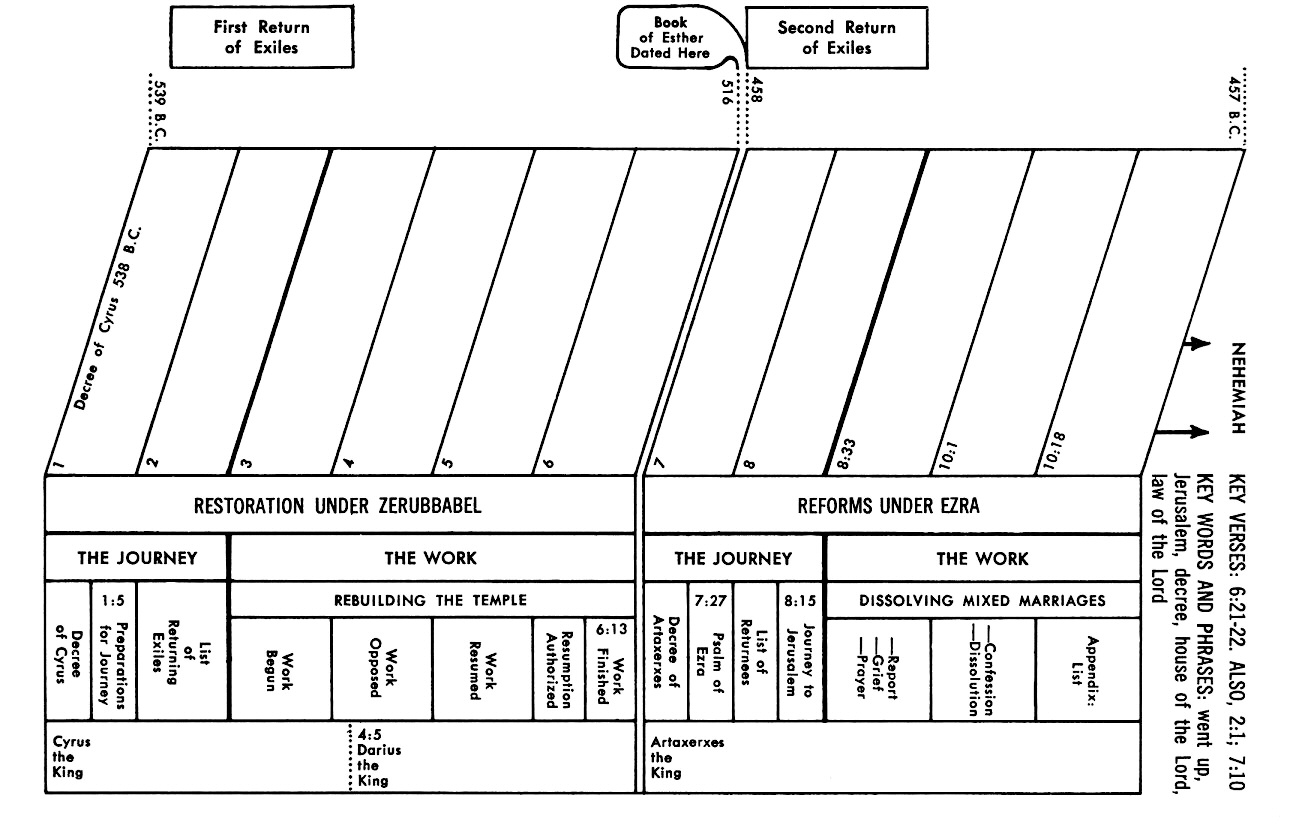
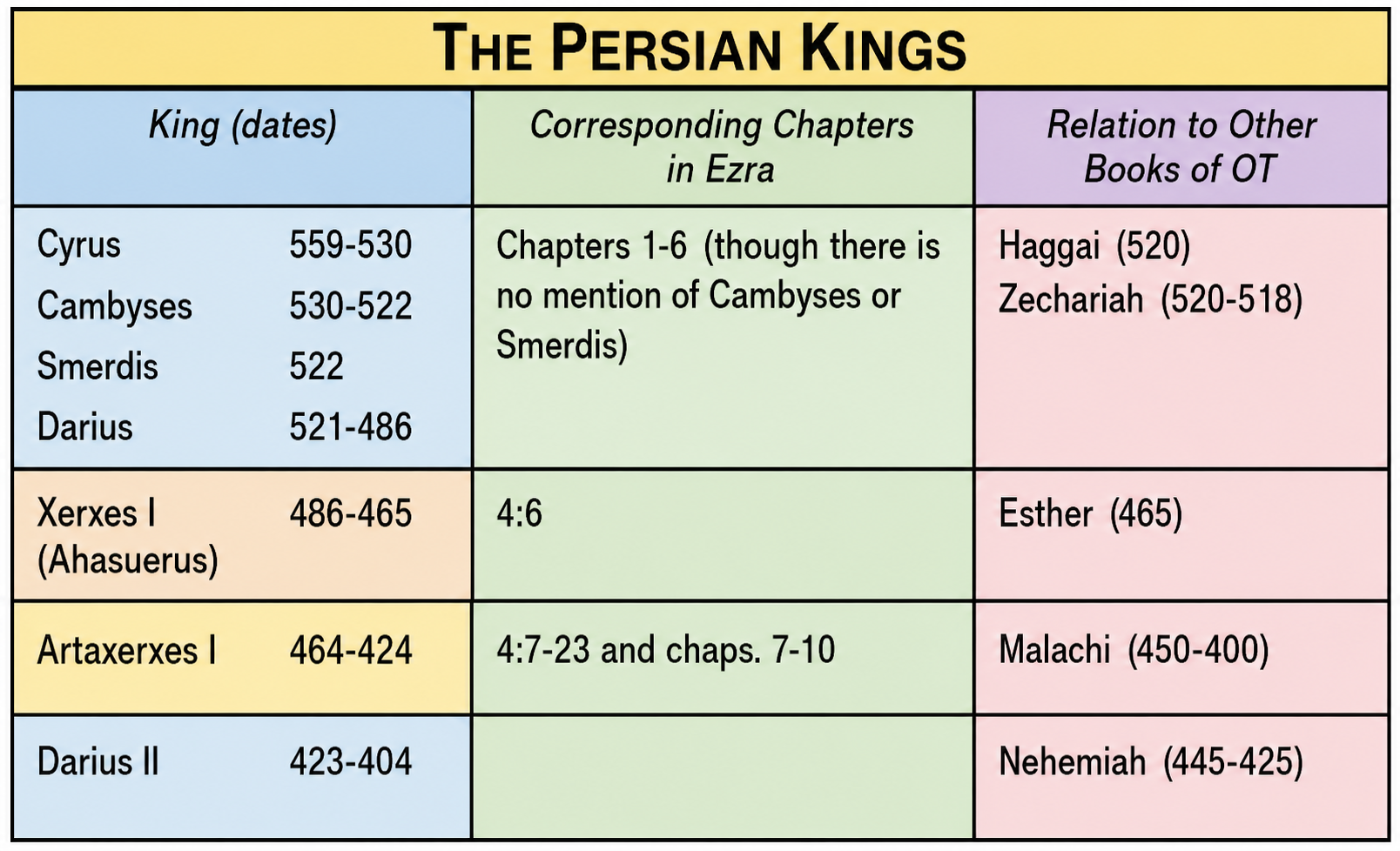
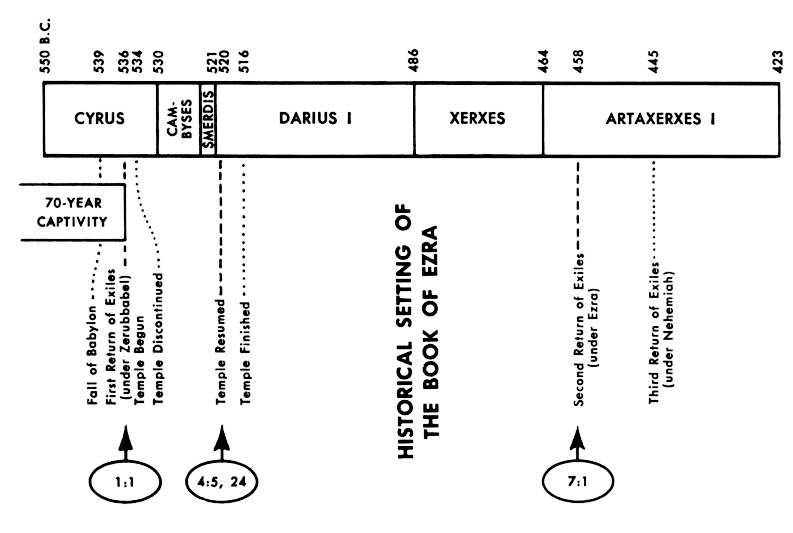
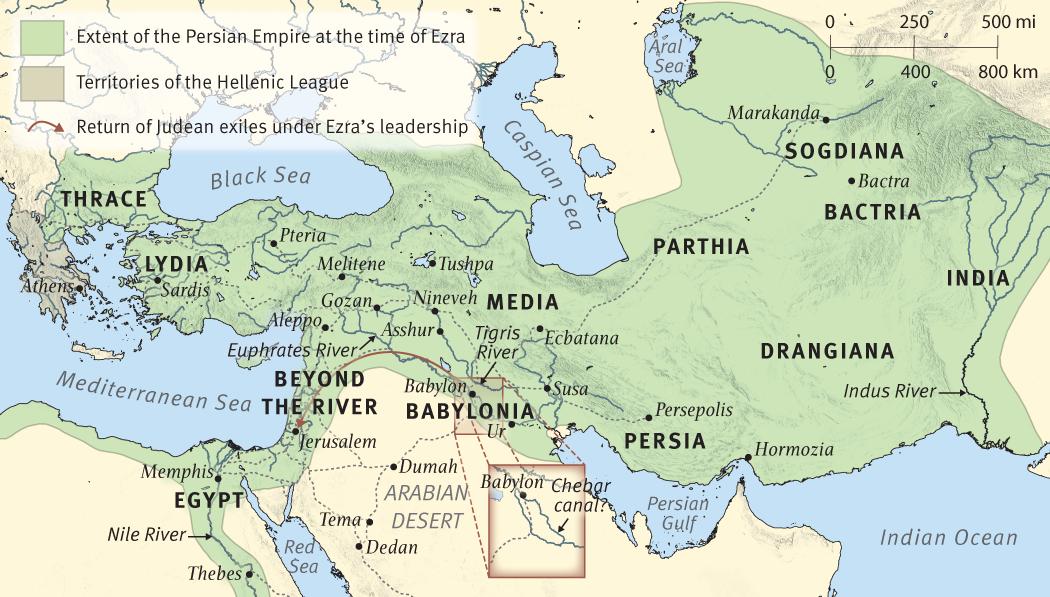
Source: ESV Maps
EZRA UNDER CONSTRUCTION
JUST A FEW NOTES NOW
WILL FINISH IF THE LORD WILLS
Ezra 10:1 Now while Ezra was praying and making confession, weeping and prostrating himself before the house of God, a very large assembly, men, women and children, gathered to him from Israel; for the people wept bitterly.
- when Ezra (KJV): Da 9:3,4,20 Ac 10:30
- when he had (KJV): Lev 26:40,41 Ps 32:5 Ho 14:2 1Jn 1:8-10
- weeping (KJV): Ps 119:136 Jer 9:1 Jer 13:17 Zec 12:10 Lu 19:41 Ro 9:2
- before the house (KJV): 1Ki 8:30 1Ki 9:3 2Ch 20:9
- a very great (KJV): De 31:12 2Ch 20:13 Ne 10:28 Joe 2:16-18 Ac 21:5
- very sore (KJV): Heb. a great weeping, Jud 2:4,5 Ne 8:9
Now while Ezra was praying and making confession, weeping and prostrating himself before the house of God, a very large assembly, men, women and children, gathered to him from Israel; for the people wept bitterly
Bob Utley - Note the different VERBS to describe Ezra's spiritual attitude toward God (cf. Ezra 9:6). (1) "praying" (BDB 813, KB 933, Hithpael INFINITIVE CONSTRUCT) (2) "making confession" (BDB 392, KB 389, Hithpael INFINITIVE CONSTRUCT) (3) "weeping" (BDB 113, KB 129, Qal PARTICIPLE) (4) "prostrating" (BDB 656, KB 709, Hithpael PARTICIPLE) ▣ "prostrating himself" This VERB (BDB 656, KB 709 Hithpael PARTICIPLE) means to fall down before the Lord (cf. Deut. 9:18,25). The normal physical position for prayer was standing with eyes and hands lifted to heaven. In some occasions kneeling was a way to show intensity (cf. Ezra 9:5). Prostration was an even further act of humility. ▣ "before the house of God" Apparently, Ezra went to the temple to pray at the time of the evening sacrifice (cf. Ezra 9:5). ▣ "a very large assembly, men, women and children gathered" The small group that came and reported the sin to Ezra (cf. Ezra 9:4) has now swelled to a large group of all age groups (cf. Neh. 8:2). Usually only men above the age of thirteen (i.e., bar mitzvah) would have been a part of this kind of group. One wonders if these particular Jewish women and children had been affected by the taking of foreign wives (cf. Mal. 2:10-16). ▣ "for the people wept bitterly" Ezra's humility and confession sparked a spiritual repentance among the returnees. Whether ignorance or apathy had allowed the sin to develop during these many years is uncertain, but God's word revealed the covenantal issue.
David Guzik - The power of Ezra’s confession was not merely in the words recorded in Ezra 9:6-15. It was in the depth of heart that prompted the prayer, here shown by weeping, and bowing down before the house of God. He prayed this prayer and humbled himself on behalf of the people publicly, before a very large assembly of men, women, and children.. Bowing down before the house of God: The Hebrew grammar “implies that Ezra kept on ‘throwing himself down’ on the ground.” (Yamauchi)....wept very bitterly: This shows that the people were also struck by the conviction of sin and the need to confess and repent. They sorrowed over the sin of the covenant community just as Ezra had done....The Bible has much to say about the confession of sin, and we can surmise some general guidelines about it: (1) · Confession should be made to the one sinned against. (2) · Confession publicly of specific sins should be made within the circle of people affected by those sins. (3) Confession of general spiritual need, while being discrete about the specific sin, is appropriate when the circle of the people affected by the sin is either personal or very small. (4) Confession should be appropriately specific. (5) Confession should be thorough.
J Edwin Orr - “Confession of sins is a neglected doctrine. It only comes into its rightful place in times of revival, when the Holy Spirit comes in doubly-convicting power and makes it impossible for the erring believer to have any peace of mind until the wrong is confessed whenever necessary.”
J. Edwin Orr quoted the observations of a high-ranking army officer upon the work of the Spirit in his Scottish town: “Those of you who are at ease have little conception of how terrifying a sight it is when the Holy Spirit is pleased to open a man’s eyes to see the real state of heart…. Men who were thought to be, and who thought themselves to be good, religious people…have been led to search into the foundation upon which they were resting, and have found all rotten, that they were self-satisfied, resting on their own goodness, and not upon Christ. Many turned from open sin to lives of holiness, some weeping for joy for sins forgiven.” (Borrow The Second Evangelical Awakening)
Believer's Study Bible - vv1,2 This example of the leadership of Ezra, who is "weeping, and bowing down before the house of God" (v. 1), and the response of the people in confessing that "we have trespassed against our God" (v. 2) are the ingredients of sustained revival and renewal.
Matthew Henry - Ezra encourages to reformation - Ezra 10:1-5. Shechaniah owned the national guilt. The case is sad, but it is not desperate; the disease threatening, but not incurable. Now that the people begin to lament, a spirit of repentance seems to be poured out; now there is hope that God will forgive, and have mercy. The sin that rightly troubles us, shall not ruin us. In melancholy times we must observe what makes for us, as well as against us. And there may be good hopes through grace, even where there is the sense of great guilt before God. The case is plain; what has been done amiss, must be undone again as far as possible; nothing less than this is true repentance. Sin must be put away, with a resolution never to have any thing more to do with it. What has been unjustly got, must be restored. Arise, be of good courage. Weeping, in this case, is good, but reforming is better. As to being unequally yoked with unbelievers, such marriages, it is certain, are sinful, and ought not to be made; but now they are not null, as they were before the gospel did away the separation between Jews and Gentiles.
Ralph Davis - The contagious sorrow of a saving despair (Ezra 10:1) Ezra was an Israelite and yet also a high government agent. Here he is, throwing sophistication to the winds in a paroxysm of grief ("weeping and throwing himself down," the latter verb form represents a reflexive participle), and this brings together a crowd of males, females, and minors that had caught and were sharing Ezra's attitude.
Steven Cole - Genuine Repentance (Ezra 10:1-44)
We live in a day of glib repentance. Some years ago, an evangelical author and leader was exposed for carrying on an affair over an extended period of time. He repented, went through a year of counseling, and was publicly restored to the ministry.
I sincerely hope that his repentance was genuine. Only God knows the man’s heart. But the radio interview that I heard with him and his wife left me wondering if his repentance was genuine. The interviewer asked him how he had fallen into this sin. He used the story of the American pilot who had flown his small plane past all of the Soviet Union’s sophisticated radar and warning systems and landed in Red Square in Moscow.
This Christian leader seemed to be saying that he had all his defenses in place, but the enemy sneaked this sin into his life and there was nothing he could have done to prevent it. He was a victim of Satan’s clever tactics! His wife chimed in, making it sound as if her poor husband had caught a bad case of adultery, much like we catch the flu! It was interesting that when President Clinton was caught in his immorality, this Christian leader was one of three that he called on for spiritual counsel.
The Bible is clear that there is both genuine and false repentance. Twice Pharaoh told Moses, “I have sinned” (Exod. 9:27; Exod 10:16), but he did not truly repent. Esau felt bad and wept over giving away his birthright, but he did not truly repent (Heb. 12:17). Judas felt remorse over betraying Jesus and even said that he had sinned (Matt. 27:4), but he did not repent.
If we want to be right before God, we must make sure that our repentance is genuine, not glib. Our text is not comprehensive, but it does give some marks of genuine repentance:
Genuine repentance involves heartfelt sorrow before God for our sins and prompt action to correct them.
The problem concerned the Jewish exiles who had returned to the land, but had taken pagan wives in disobedience of God’s commandment (Deut. 7:1-4; Ezra 9:1-2). Ezra 10:11 sums up what they must do to correct the situation: “Make confession to the Lord God of your fathers, and do His will.” Their confession before God, if it was genuine, would reflect heartfelt sorrow for what they had done. That sorrow would not be words only. It would also manifest itself in obedience to do His will.
1. Genuine repentance involves heartfelt sorrow before God for our sins.
Ezra’s deep mourning over the sins of the exiles led others to gather around him, see their own sins, and weep bitterly over them (Ezra 10:1). A spokesman for the people, Shecaniah (Ezra 10:2), confesses the sin and proposes to Ezra that the people make a covenant to correct the sin. Shecaniah himself is not in the list of offenders, but perhaps his father is the Jehiel, son of Elam, of Ezra 10:26. Six members of the clan of Elam had married foreign wives.
Ezra acted on Shecaniah’s proposal by calling the exiles to Jerusalem, where they all shivered in the December rain (Ezra 10:9). They agreed that they had sinned and, except for four men who opposed the plan (Ezra 10:15), agreed to the plan of action. A commission was appointed to examine each case. Presumably if the foreign wife had put away her idols and swore allegiance to the God of Israel, nothing further was required. But in the other cases, where the wife refused to give up her idols, the marriages were dissolved, presumably with arrangements for compensation to care for the wives and children involved. I will deal with the matter of divorce in light of biblical teaching in a moment. For now, let’s look at four marks of genuine repentance:
A. GENUINE REPENTANCE MUST BE PRIMARILY TOWARD GOD.
Ezra was prostrating himself and praying “before the house of God” (Ezra 10:1). Shecaniah admits, “We have been unfaithful to our God” (Ezra 10:2). It was with God that they made this covenant because they trembled at His commandment (Ezra 10:3). They needed to confess their sins to the Lord and do His will (Ezra 10:11).
While sin always hurts other people and we need to ask their forgiveness when we sin against them, sin is first and foremost against God Himself. That is why David, after committing adultery with Bathsheba and having her husband murdered, said, “I have sinned against the Lord” (2 Sam. 12:13). He wrote (Ps. 51:4), “Against You, You only, I have sinned and done what is evil in Your sight.” Certainly David had sinned against Bathsheba and even more so against her husband, Uriah.
But those sins were nothing in comparison with David’s offense against the holy God. When a believer sins, he gives occasion to the enemies of the Lord to blaspheme (2 Sam. 12:14). Unbelievers will mock God and justify their own sins when they hear of a believer’s sin. Thus our sin is primarily against God, which means that our repentance must be primarily toward Him also.
B. GENUINE REPENTANCE FEELS DEEPLY THE WRONG OF OUR SINS.
Paul says that godly sorrow “produces a repentance without regret, leading to salvation, but the sorrow of the world produces death” (2 Cor. 7:10). Both Ezra and those who gathered around him wept bitterly because they saw how unfaithful God’s people had been and they trembled at God’s word that warns of His righteous judgment on sin (Ezra 9:4; Ezra 10:3, 14).
Our sorrow should be proportional to the magnitude of our sin. It would not be appropriate or necessary to weep over relatively minor sins, although we should keep a tender conscience toward all sins. We should confess such sins to the Lord and move on, praying for strength to avoid these sins in the future. But, if we have sinned in a major way, it is appropriate to be deeply grieved over what we have done. After denying that he knew Jesus, Peter went out into the night and wept bitterly (Luke 22:62).
Our grief over major sins should also stem from our understanding of the serious consequences that our sins bring both on ourselves and on others. Even though we are God’s people, our sins can arouse His “fierce anger” (Ezra 10:14; Ezra 9:14) on us and on our children. I fear that too many Christians view God only as loving and forgiving, so that we have lost our fear of Him. It is worth pondering that when Moses asked to see God’s face, “the Lord passed by in front of him and proclaimed, ‘The Lord, the Lord God, compassionate and gracious, slow to anger, and abounding in lovingkindness and truth; who keeps lovingkindness for thousands, who forgives iniquity, transgression, and sin” (Exod. 34:6-7). We all like this picture so far!
But God doesn’t stop there. He continues (and we must continue also), “yet He will by no means leave the guilty unpunished, visiting the iniquity of fathers on the children and on the grandchildren to the third and fourth generations.” The realization that my sins get visited on my children and grandchildren should cause me to feel them deeply and turn from them.
C. GENUINE REPENTANCE ACCEPTS THE RESPONSIBILITY FOR WHAT WE HAVE DONE.
If there is any blaming, it is not genuine repentance. If there are any excuses, it is not genuine repentance. Genuine repentance says, “I have sinned,” or “we have been unfaithful” (Ezra 10:2). Genuine repentance exonerates God as David did (Ps. 51:4b), “So that You are justified when You speak and blameless when You judge.”
Marion Barry, the former mayor of Washington, D.C., who was caught on videotape using cocaine in a prostitute’s room, “admitted that his cocaine problem came about because he cared too deeply, for too long, about too many other people’s needs” (cited by George Will, Newsweek [12/31/90], p. 72)! In the recent trial of the Yosemite serial killer, his attorney argued that he was not responsible for his atrocious crimes because of his difficult childhood. Thankfully, the jurors rejected that reasoning. But as you know, we live in a culture where everyone is a victim because of some psychological “disease” for which they are not responsible. But genuine repentance always accepts full responsibility for what we have done. But there is a fourth mark:
D. GENUINE REPENTANCE SEES HOPE IN THE MIDST OF DESPAIR.
After confessing the unfaithfulness of the people in marrying foreign women, Shecaniah interjects, “Yet now there is hope for Israel in spite of this” (Ezra 10:2). The reason that there is hope is because our God is “compassionate and gracious, slow to anger, and abounding in lovingkindness and truth; who keeps lovingkindness for thousands, who forgives iniquity, transgression, and sin” (Exod. 34:6-7). That is how God reveals Himself to us! David quotes those words of hope in Psalm 103 and then goes on to say, “Just as a father has compassion on his children, so the Lord has compassion on those who fear Him, for He Himself knows our frame; He is mindful that we are but dust” (Ps. 103:8-9, 13-14). Because God is always ready to forgive and restore the repentant sinner, the thought of repentance opens a door of hope to those who are suffering the consequences of their sins.
Thus the first mark of genuine repentance is heartfelt sorrow before God for our sins. But sorrow alone is not enough:
2. Genuine repentance takes prompt action to correct our sins.
True repentance requires not only admitting our wrong to God and others, but also taking practical steps of obedience to correct our wrongs. With some sins, such as murdering or permanently injuring someone, we can never fix the wrong we committed. Some problems are so complex that they cannot be corrected instantly. But that should not be an excuse for not taking action at all. We should devise a plan that can lead us into full obedience to Christ. Repentance should take place as quickly as possible in light of the complexity of the problem.
A. GENUINE REPENTANCE TAKES THE NECESSARY ACTION TO CORRECT OUR SINS, EVEN WHEN IT IS PERSONALLY DIFFICULT TO DO SO.
Sometimes our sin results in problems for which are no easy solutions. This was one of those situations. To allow those in mixed marriages to continue in them would seemingly condone such behavior and would draw many Jews into religious syncretism right at the time that purity and separation were essential.
Only 111 Jewish men are listed as guilty of this sin, which was only 0.4 percent of the 28,774 exiles who had returned under Zerubbabel (Edwin Yamauchi, Expositor’s Bible Commentary [Zondervan], 4:676). The list may be representative of classes of people, rather than a list of every man who had sinned, in which case it would be much larger. Even so, we may be inclined to think that Ezra was making a mountain out of a molehill.
But as Paul said with reference to tolerating sin in the Corinthian church, “a little leaven leavens the whole lump” (1 Cor. 5:6). If the problem had not been confronted, it would have spread even farther. Since the Jewish exiles who had returned were so few in number, to allow this sin to continue could have effectively diluted their distinctiveness as God’s people. In His righteous anger, God could have destroyed the people until there was no remnant left (Ezra 9:14). Thus Ezra believed that it was necessary to break up these wrongful marriages, in spite of God’s declared hatred of divorce (Mal. 2:16). The fact that he fasted and prayed before acting on this argues that he did the right thing, although it was not easy.
To break up these marriages meant separating fathers from their wives and children, who would be sent back to their pagan roots, which was not good either. I think that Ezra believed that breaking up these marriages and restoring purity to the nations was a lesser evil than allowing the mixed marriages to continue and thereby threatening the spiritual purity of the nation in both the present and the future. Either way was difficult and painful.
Walter Kaiser, Jr. (SEE Hard Sayings of the Old Testament [IVP], p. 142) argues that when our text says that these wives should be put away “according to the law” (Ezra 10:3), it refers back to Deuteronomy 24:1-4, which permits divorce if the husband finds “some indecency” in his wife. He says that this could not refer to adultery, which was punishable by death. “Thus it had to be something else that brought shame on God’s people. What could bring greater shame than the breaking of the covenant relationship and the ultimate judgment of God on all the people?”
Should believers today who find themselves in mixed marriages divorce their mates? Clearly not! The New Testament commands that a believer should not enter such a relationship (2 Cor. 6:14-7:1). But it is also clear that if a believer is already in such a relationship, he or she should live in a godly manner, seeking to be a testimony of Christ by his or her behavior (1 Cor. nbeliever chooses to leave, the believer is not bound by the marriage and, as I understand it, is free to remarry. The only other biblical ground that permits (not requires) divorce is the sexual immorality of one of the partners (Matt. 5:32; Matt 19:8-9). In such cases, I always counsel repentance and reconciliation, because it glorifies God more than divorce does.
But there is another way that our text applies to us today: Just as separating from their pagan wives (and, in some cases, children) was a difficult and painful thing to do, so we must separate ourselves from our sins, no matter how difficult or painful. Jesus said,
If your hand or your foot causes you to stumble, cut it off and throw it from you; it is better for you to enter life crippled or lame, than to have two hands or two feet and be cast into the eternal fire. If your eye causes you to stumble, pluck it out and throw it from you. It is better for you to enter life with one eye, than to have two eyes and be cast into the fiery hell (Matt. 18:8-9).
Jesus was using shocking language to get us to see how serious sin is and that we must take radical action to get it out of our lives, even when it is very difficult. Sometimes, as in the situation in Ezra’s day, there are no easy solutions.
Years ago, a young woman who had recently started attending my church in California told me that she wanted to be baptized, but she had a problem. She had been living with a man for 12 years and they had a seven-year-old daughter together. She knew that it was not right to give a confession of faith through baptism and continue living with a man outside of marriage. But he was her daughter’s father, and she did not know if it was right to leave him.
At first I assumed that they must fall under common-law marriage laws, but I discovered that California does not recognize common-law marriage. So I was not sure what to do. I could not marry a believer to an unbeliever or I would be disobeying 2 Corinthians 6:14. Yet in another sense, they were already a family unit, and I didn’t want to pull the little girl away from her daddy.
I sought counsel from several pastors and seminary professors. The general consensus was that they were in all respects (except legally) married, and thus she should get the marriage legalized before a justice of the peace. But then I found out that the husband was a libertarian who took great pride in the fact that he didn’t need a piece of paper from the government to tell him that he was married. He yelled and cussed at me on the phone for over an hour, accusing me of breaking up his family.
I told him that I was not breaking up his family, since I advised her to marry him. He was breaking up his own family by fighting the law of the state. If he really loved her, he would provide her the legal protection of marriage, so that she at least had property rights. It turned out that he loved his libertarian opinions more than he loved his live-in partner. When he adamantly refused to marry her, she took their daughter and left him. I then baptized her. It was certainly not an easy, neat solution. But I believe that she demonstrated true repentance by being obedient to God in spite of the personal difficulties.
B. GENUINE REPENTANCE TAKES THE NECESSARY ACTION TO CORRECT OUR SINS, EVEN WHEN IT IS POTENTIALLY DIVISIVE TO DO SO.
Verse 15 mentions in passing that four men opposed the proposed covenant to divorce these pagan women. But I’m sure that there was far more angry dissension than is recorded here. Ezra would have been attacked as being an insensitive, unloving, self-righteous man who had no compassion for all these hurting people.
If Ezra is the author of Psalm 119 (as many scholars believe), many verses in that psalm reflect attacks on the author. He was the object of reproach and contempt (Ps 119:22, 39, 42). Princes were talking against him (Ps 119:23). The arrogant derided him and forged lies against him (Ps 119:51, 69, 86). Many persecuted him, dug pits for him, and waited to destroy him (Ps 119:84, 85, 95, 110). He had many persecutors and adversaries (Ps 119: 157). Even though he was obeying God’s Word, he was not a popular, well-loved guy!
Some may think that Ezra was wrong to force all the Jews into the covenant under the threat of confiscating their property and excluding them from the assembly (Ezra 10:8). Wasn’t he just getting outward conformity without genuine heartfelt repentance?
In one sense, I’m sure that Ezra hoped that every man would take the necessary action to correct his sins out of a personal, uncoerced repentance toward God. But in another sense, as a leader of God’s covenant people, Ezra had to maintain certain minimum standards of biblical righteousness or the whole community would become tainted by sin and the testimony of God would be diluted to the point of uselessness. So he imposed the covenant on all.
The application for us is that God’s desire for His church is that every member would correct his sins because of heartfelt repentance before God. But even if some members strongly disagree, the leaders must enforce holy standards on the whole body, or the testimony of Christ will be destroyed.
Whenever church discipline gets to the whole church level, it is potentially divisive. Those who are inclined toward mercy or who do not understand God’s standards of holiness will complain that the leaders lack compassion, that they are not practicing grace, and that they are being judgmental and unloving.
But if a sinning member refuses to repent after the biblical steps are followed (Matt. 18:15-17; Gal. 6:1), the Bible is clear that he must be publicly removed from the fellowship and that other members are not to associate with him, except to exhort him to repentance (1 Cor. 5:1-13). Maintaining the purity of the church is more important than the potential strife and division that can erupt in the process of church discipline. Paul’s command is not fuzzy: “Remove the wicked man from among yourselves” (1 Cor. 5:13).
Conclusion
Thus genuine repentance involves heartfelt sorrow before God for our sins and prompt action to correct them, even when it is difficult and potentially divisive.
There are many today who teach that all that a sinner has to do is to believe in Jesus, and that repentance has nothing to do with salvation. It should come later, they would say, but to call sinners to repentance is to confuse faith and works. But Jesus said that He came to call sinners to repentance (Luke 5:32). In the Great Commission Jesus said “that repentance for forgiveness of sins would be proclaimed in His name to all the nations” (Luke 24:47). Paul summed up his gospel as “solemnly testifying … of repentance toward God and faith in our Lord Jesus Christ” (Acts 20:21). We must begin the Christian life by repentance and faith.
But repentance is not just something that we must do at the beginning of salvation. It is something that should characterize believers all of their lives. As the Holy Spirit convicts us through God’s Word of our sins, we should go on repenting. In Eastern Europe, those who are nominal Christians in the Roman Catholic and Orthodox Churches have a word for those who are true Christians: “Repenters.” I think that we need to adopt that term in America. True Christians should be genuine, lifelong “Repenters.” May it be so of each of us!
Discussion Questions
- What should we do if we do not feel sorrow for our sins? We can’t fake it or work it up. So what should we do?
- Why should we see repentance as a source of hope rather than as a matter of despair?
- Does repentance mean that God removes the consequences of our sins? If He does not, why should we repent?
- Do you think Ezra was right or wrong to require these men to divorce their wives? Support your answer biblically. Why are believers today to remain with unbelieving mates?
- When and for what sins should church discipline be exercised? How should we respond to the charge that it is judgmental? Support your answer biblically.
Brian Bell - Nehemiah 10:1-44
- SHECHANIAH’S CHALLENGE (Neh 10:1-4)
- Step #6 – He Listens (Neh 10:1-4)
- Shechaniah admits their sin (Neh 10:2a). Shechaniah means,dweller in Jehovah or Inhabited of the Lord. One of the Lord’s people w/whom He is pleased to dwell.
- (similar to) SheKIniah (Chaldee word meaning resting place) – Not found in the bible, but Jews used this term later to describe, the visible majesty of the divine presence.
- Shechaniah gives hope in spite of their sin. (Neh 10:2b)
- When things look dark, there is always a ray of hope.
- Every night in our sky is Gods reminder of that great truth. (stars)
- Shechaniah challenges them to covenant with God. (Neh 10:3)
- Shechaniah challenges them to face their responsibility. (Neh 10:4)
- Shech was an honest man, a man of hope, an encourager, a man who loved the law.
- Shechaniah admits their sin (Neh 10:2a). Shechaniah means,dweller in Jehovah or Inhabited of the Lord. One of the Lord’s people w/whom He is pleased to dwell.
- Step #6 – He Listens (Neh 10:1-4)
- PUBLIC OATH (Neh 10:5-17)
- Step #7 – He makes a Proclamation (Neh 10:5-9)
- Step #8 – He calls them to public repentance (Neh 10:10-12)
- Step #9 – He questions them (Neh 10:13-17)
- December 20, 457bc – cold & heavy rain season (Neh 10:13)
- Let’s deal with the leaders 1st…then they can help.
- Not everyone agreed to obey (Neh 10:15)
- The bibles so honest (no Cinderella story)
- No hearsay, 1 on 1 investigation. (Neh 10:16,17)
- It took them from December to April to do this. All marriages were annulled.
- 17 priests, 10 Levites, 87 other men were found guilty of marrying heathen wives.
- When the spiritual leaders are backslidden what can we expect of the rest of the people?
- Spiritual building is just like the physical building projects…they take time,…they are a process.
- We actually won’t be “complete” until we reach heaven.
- Meanwhile people are watching your spiritual building going up.
- THEIR SIN PUT AWAY (Neh 10:18-44)
- Step #10 – Follow Up (Neh 10:18-44)
- Those who did confess their sins publicly, offered a sacrifice, & put away their pagan wives & children.
- This experience was painful for them.
- It was the only way to keep the nation pure. [“cut it off”…“pluck it out”…“cast it far from you”]
- There is no easy way to deal with sin…just shake it into the fire.
- Is there any sin you need to eradicate?
- Do you know how to exterminate it?
- Do you need accountability to make sure you will follow through w/it?
- When will you deal with it?
- Those who did confess their sins publicly, offered a sacrifice, & put away their pagan wives & children.
- How’d you like your name on this list?
- I thought He’d remember our sin no more?
- This was a consequence here…but no list there.
- End - Only one thing left…Zerubbabel rebuilt the Temple, Ezra rebuilt the People, now it is time to rebuilt the Wall.
- The Lord chooses for his contractor, a Jew serving in the court of Artaxerxes. His name…Nehemiah.
- He will lead the 3rd Holy Land trip. [Departure: Babylon. Destination: Jerusalem. Purpose of trip: Construction work-party on the wall around Jerusalem]
- Step #10 – Follow Up (Neh 10:18-44)
Ezra 10
The prayer of a righteous person is powerful and effective. - James 5:16
TODAY IN THE WORD
The old saying quips that you can’t be a leader if nobody follows you. So part of the question of leadership is How do you get people to follow you? Different leaders have tried different tactics. Authoritarian rulers rely on exerting power to mandate obedience. Some bosses manipulate employees with a mixture of threats and bribes. And probably nearly every parent has at one time told a child to follow “Because I said so!”
Ezra demonstrates that spiritual leadership provides a different model for why people will follow: the power and conviction of a godly example. Notice in our passage that the national repentance that transpired was not instigated by Ezra’s decree, insistence, manipulation, or threat. Instead, while he wept and prayed at the temple, the people noticed and were spiritually moved (v. 1).
Shecaniah spoke for the people in admitting their culpability for the sin of intermarriage with the pagan women. He also understood a key spiritual truth: “We have been unfaithful to our God… But in spite of this, there is still hope for Israel” (v. 2). He encouraged Ezra to take the bold step of a public assembly, with confession and restitution. Ezra responded the way he had when confronted with the challenge of leaving Persia without the king’s troops for protection—he fasted and prayed and trusted the Lord (vv. 4-6).
The gravity of the assembly was emphasized by the penalty for failure to attend (v. 8). Although not every Jewish man had married a heathen wife, the standing of the entire community before God was at stake. In case the situation was not bad enough, the weather captured the dreary circumstances as it poured rain on the gathered nation (vv. 9, 13). Ezra’s proclamation here was brief: he explained their sin and what they must do to remedy their disobedience.
“The whole assembly responded with a loud voice: ‘You are right! We must do as you say’ ” (v. 12). Ezra’s godly example gave him the authority to instruct the people on repentance and restitution before God. The people agreed to reject their idolatrous marriages, and within a few weeks they had complied with the instructions.
APPLY THE WORD
Ezra’s leadership included humility, courage, and, above all, a commitment to know and obey God. This spiritual leadership transforms others and inspires them to seek God more faithfully. Certainly, church leaders should have these qualities; but even if you aren’t ordained or hired by a Christian ministry, you can still affect others with your example of love for God and your trust in Him. Your prayers can be some of your most powerful tools of spiritual leadership.
Ezra 10:1-17
Do not hide your face from me when I am in distress. Turn your ear to me; when I call, answer me quickly. - Psalm 102:2
TODAY IN THE WORD
The late Sam Rayburn, legendary Texas congressman and former speaker of the House of Representatives, once offered this advice to other members of Congress: “On any piece of legislation, if you’re convinced in your heart that something is right, do it, go after it, fight for it, even if you find yourself in a minority of one.”
Ezra wasn’t a politician, but he knew that he was doing the right thing in seeking God’s forgiveness and confronting the people who had entered into unholy marriages with non-Israelites. And in this case, he was not alone. Ezra’s deep and sincere grief brought forward a large group of people who were also deeply distressed over this violation of God’s Law.
This was a difficult issue, but the Law of Moses on this point could not have been more clear. Speaking of Israel’s dealings with the Canaanites around them, Moses said, “Do not intermarry with them” (Deut. 7:3). But apparently the practice of marrying foreign women had been widespread among the returned Jewish exiles, and these marriages must have been tolerated for some time.
Ezra called for the hard but necessary step of separating the Israelite offenders from their unlawful spouses. The outdoor meeting at which he issued this decision must have been quite
a sight: thousands of people gathered near the temple, shivering from the fear of God’s punishment and the cold winter rain that was falling on them. Ezra wanted to be sure each case was thoroughly reviewed, so he allowed local judges and elders to hear the cases in their districts. This way, any foreign wives who had become true followers of the God of Israel could make a case for staying with their husbands.
TODAY ALONG THE WAY
Getting involved in sin and then trying to undo the damage can be compared to driving down an extremely narrow alley between two buildings and coming to a brick wall. The only way out is to go back the way you came in, except that going back will be a lot harder. How much better to avoid those narrow alleys. Today is a good day for a mid-week checkup to examine your heart before the Lord and make any needed corrections. And our God is faithful to help you!
Ezra 10:2 Shecaniah the son of Jehiel, one of the sons of Elam, said to Ezra, “We have been unfaithful to our God and have married foreign women from the peoples of the land; yet now there is hope for Israel in spite of this.
- Shechaniah (KJV): Ezr 10:26 Ne 3:29
- Elam (KJV): Ezr 2:7,31 Ne 7:12,34
- We have trespassed (KJV): Shechaniah here speaks in the name of the people, not acknowledging himself culpable; for he is not in the following list., Compare, Jas 2:9 Ex 34:12 Ne 13:27
- yet now there is hope (KJV): Ex 34:6,7 Isa 55:6,7 Jer 3:12,13 1Jn 1:7-9
Shecaniah the son of Jehiel, one of the sons of Elam, said to Ezra, “We have been unfaithful to our God and have married foreign women from the peoples of the land; yet now there is hope for Israel in spite of this.
Bob Utley - "Shecaniah" This (BDB 1016) was one of the sons of a guilty offender who is listed in Ezra 10:26, who had a repentant heart. He acknowledged his family's sin and that of the returnees. ▣ "Elam" The Hebrew text has "eternity" (i.e., 'olam, BDB 761) but most translations, ancient (LXX, Peshitta) and modern (JPSOA), read the Qere "Elam" (BDB 743). The Hebrew words differ only by the second similar Hebrew letter (waw and yod). ▣ "from the peoples of the land" In pre-exilic days this referred to the Jewish population, but in this context and period it refers to the population of the Persian province Beyond the River. For a good discussion of the changing meaning of this term see Roland deVaux, Ancient Israel, vol. 1, pp. 70-72. ▣ "yet now there is hope" Ezra's teaching ministry and actions had kindled a corporate contrition. YHWH's promises and merciful character kindled hope (BDB 876) for (1) forgiveness (2) fulfillment of future promises (3) assurance of His personal presence (cf. 2 Chr. 20:9)
Ryrie - Shecaniah. Spokesman for the offenders, he does not appear in the list of those who had married foreign wives, but his father does (v. 26). He may have based his hope on the promise of Deut. 30:8-10.
Ralph Davis - The major role of a minor character (Ezra 10:2-4)
-
Shecaniah admits to Israel's corporate unfaithfulness (to "be unfaithful, treacherous," comes from the root maal, used in this chapter in vv. 2,6,10). He in no way evades the state of matters, yet he appends two "And now" (veatah) statements:
"And [or ‘yet'] now there is hope for Israel over this" (2b);
"And now let us cut a covenant with our God" (3a).The first word is "hope," but Shecaniah's idea of hope is not some vague optimism. Rather, it is a call to covenant with God, a definitive covenant in which there is fruit that shows repentance. It is a repentance that takes the hard road: "to put away all the wives and their children." Hope is often hard hope. Then in verse 4 Shecaniah both places responsibility upon Ezra for leadership in the matter ("Rise, for this matter is upon you"), and at the same time offers him the support and encouragement of the people ("and we are with you - be strong and act").
Perhaps we should add Shecaniah to the Onesiphoruses and Epaphrodituses of the Bible - little-known folks whose faithfulness in their place made a difference for the kingdom of God.
Ezra 10:3 “So now let us make a covenant with our God to put away all the wives and their children, according to the counsel of my lord and of those who tremble at the commandment of our God; and let it be done according to the law.
- let us make (KJV): {Nichrath berith,} "let us cut a covenant:" De 29:12 Jos 9:6 2Ki 11:17 2Ch 29:10 2Ch 34:31,32 Ne 9:38 Ne 10:29-39
- put away (KJV): Heb. bring forth
- according to the counsel (KJV): 2Ch 30:12
- of those that (KJV): Ezr 9:4 2Ch 34:21,27 Ps 119:59,120 Isa 66:2 Eze 9:4
- at the commandment (KJV): De 7:2,3 Jos 23:12,13
- let it (KJV): Ne 8:14 Ne 13:1-3 Isa 8:20 Shechaniah's counsel, which he was then so clear in, will not hold now: such marriages, it is certain, are contrary to the will of God, and ought not to be made; but they are not null. Our rule under the gospel is {Quod fieri non debuit, factum valet,} "That which ought not to have been done must, when done, abide." See 1Co 7:12,13
So now let us make a covenant with our God to put away all the wives and their children, according to the counsel of my lord and of those who tremble at the commandment of our God; and let it be done according to the law.
Derek Kidner - . “One fact to be borne in mind about the issue as a whole is that divorce was permitted in Israel (Deuteronomy 24:1); and broken marriages had been rife at this time for the very opposite of the present reason: i.e., there had been a scandalous number of Jewish wives abandoned in favour of heathen women (Malachi 2:10-16).....While divorce is always hateful to God (Malachi 2:16), and a witness to human ‘hardness of heart’ (Mark 10:5), the situation described in Ezra 9-10 was a classic example of one in which the lesser of two evils had to be chosen. If a serious reason for divorce could ever exist, this had a better claim than most to come within that category.” (See Ezra and Nehemiah - Ezra 10)
Bob Utley - "now let us make a covenant with our God" This VERB (BDB 503, KB 500, "cut") is a Qal IMPERFECT used in a COHORTATIVE sense. In one way this is a strange statement. They already had a covenant with God. However, possibly through ignorance, these returnees did not know the Torah. With Ezra's teaching (cf. Ezra 7:21), they became aware of their transgression and now wanted a covenant renewal. ▣ "to put away all the wives and their children" This was the consequences of their choices. I am sure it was painful for the Jews as well as these members of their families. It is hard for modern westerners who are so influenced by individual rights to understand the corporate nature of the Bible. The health and faithfulness of the "holy seed" was crucial to God's plan of universal redemption. ▣ "according to the counsel of my lord" The term "lord" is the Hebrew word adon (BDB 10), which meant "master," "owner," "husband," or "lord." Here it refers to Ezra (cf. I Esdras 8:90). It is PLURAL, which some take as a reference to God (i.e., Vulgate), but it probably is a PLURAL OF MAJESTY acknowledging Ezra's spiritual and political stature. ▣ "those who tremble at the commandment of our God" See note at Ezra 9:4 and Special Topic: Terms for God's Revelation. ▣ "let it be done according to the law" The VERB (BDB 793, KB 889) is a Niphal IMPERFECT used in a JUSSIVE sense. This is the recognition that there were divine guidelines (cf. Deut. 7:1-5); that covenant has requirements (cf. Ezra 10:4), as well as benefits.
Believer's Study Bible - Shechaniah, who had married an idolatrous wife (v. 2), suggested a plan for immediate reformation. He called for a special covenant with God in which the people would seek to do their utmost to dissolve their mixed marriages, sending their idolatrous wives and children out of the country. Shechaniah may have believed the marriages were invalid as well as wrong. Doubtless he was familiar with the Mosaic law concerning the "certificate of divorce" (Deut. 24:1; cf. Matt. 19:6, note). Although Ezra had not expressed his desires, Shechaniah observed his reaction to this impurity in the people and offered what he supposed Ezra would direct the people to do. Malachi, writing about the same time as Ezra, declared that God "hates divorce" (Mal. 2:16). Shechaniah evidently believed that the unique situation of reestablishing the people of God demanded absolute purity in marriage. One should not develop a contemporary approach to marriage or divorce from this extraordinary incident, since God gives clear and explicit instructions elsewhere regarding marriage and divorce (cf. Gen. 2:24, note; Matt. 19:6, note).
Ryrie - covenant. The most binding form of self-committal they could make. The children would go with their mothers (e.g., Ishmael went with Hagar; Gen. 21:14).
Ezra 10:4 “Arise! For this matter is your responsibility, but we will be with you; be courageous and act.”
- Arise (KJV): Jos 7:10-26 1Ch 22:16,19 Ec 9:10
- for this matter (KJV): By the decree of Artaxerxes, Ezra was authorised to do every thing that the law of God required. Ezr 7:23-28 Mk 13:34
- we also will (KJV): Jos 1:16-18 1Ch 28:10,21
- be of good (KJV): Isa 35:3,4 Heb 10:24 Heb 12:12,13
Arise! For this matter is your responsibility, but we will be with you; be courageous and act.
Bob Utley - Arise" This VERB (BDB 877, KB 1086, Qal IMPERATIVE) is often used of God arising from His throne for action (cf. Num. 10:35; 2 Chr. 6:41; Isa. 2:19,21). Here it refers to a metaphor (cf. Jdg. 4:14) for the returnees to act on their confession and commitment. ▣ "we will be with you" This refers to Ezra himself and those who tremble at the word of God (cf. Ezra 9:4; Ezra 10:3). These sinful leaders must put away their foreign, pagan wives and their children by them. ▣ be courageous and act - These VERBS (BDB 304, KB 302, "be strong" and BDB 793, KB 889, "do") are both Qal IMPERATIVES. The first VERB has a good parallel in Deut. 31:6. This was God's word to Joshua several times (cf. Jos. 1:6,Jos 7.9.18). This admonition to action is reminiscent of the Shema (Deut. 6:4, "hear and do!"). A good parallel for the second command is 1 Chr. 28:10. Put feet to your prayers!
G Campbell Morgan Be of good courage and do it.—Ezra 10.4
The sincerity and passion of Ezra's vicarious repentance produced immediate results. The people had gathered about him during the long hours of the day, and it would seem that they were brought to a keen consciousness of the enormity of their sin as they saw how this man was affected thereby. At last one of their number, Shecaniah, spoke to him, acknowledging the sin and suggesting the remedy. In these words he urged Ezra to courageous action. It was true advice, and that for which Ezra had been waiting. He immediately responded, first calling them into sacred covenant, that they would put away the evil thing from among them; and then proceeding to lead them in the carrying out of that covenant along the line of strict and impartial justice and severity. All the marriages contracted with the women of the land were disannulled. By these drastic measures the people were brought back into the place of separation. How widespread the evil was, may be gathered from the list of the names with which the record closes. Priests, Levites, princes, rulers, and people had been guilty. None was exempt from the reformation, which was carried out with complete thoroughness. Such action is ever the true outcome, and only satisfactory expression, of sorrow over sin. The man who sets himself "to seek, to do, to teach" the law of God invariably brings himself into places where sorrow will be his portion, and intrepid courage necessary.
F B Meyer - Ezra 10:4 We also will be with thee: be of good courage, and do it.
This narrative reminds us of the story of Achan, who took of the accursed thing, and kindled the anger of the Lord against the children of Israel. There must be confession and the putting away of evil ere communion with God can be reestablished.
It is not given to every one to be an Ezra. There are abuses to deal with, and wrongs to right, on every side; but they require to be dealt with by those who are specially adapted or qualified for the work. Be always ready to do such work, if there should be no one else. It was the life motto of a great man always to act as though there were no one else who would. Still, Nehemiahs and Ezras are not given very largely to the Church or the world; and, for the most part, we must be content to be of those who say, “Be of good courage, and do it; we also will be with thee.” But though this seems but a little thing, it may lead to great results. Many a man has been urged to a noble deed by the encouragement he received at a critical hour from some unknown and obscure disciple.
If you cannot do a great thing, identify yourself with one who can. Stand by him, identify yourself with him in public or private, by sympathy and prayer. Though the strongholds of evil are great and high, they may be swept away before an avalanche of snowflakes, anyone of which would melt in the warm hand of a child.
Oh for more of that magnanimity, which is quick to recognize the matters that belong to certain elect souls-not envying, nor disparaging, but frankly confessing their eminent qualifications, and falling in to further and accelerate their success, which will be the gain of all!
Ezra 10:5 Then Ezra rose and made the leading priests, the Levites and all Israel, take oath that they would do according to this proposal; so they took the oath.
- arose (KJV): Pr 1:5 Pr 9:9 Pr 15:23 Pr 25:11,12 Pr 27:9
- made (KJV): Ezr 10:3 Ne 5:12 Ne 10:29 Ne 13:25 Mt 26:63
Then Ezra rose and made the leading priests, the Levites and all Israel, take oath that they would do according to this proposal; so they took the oath
Bob Utley - "priests. . .Levites. . .Israel" These were the three levels of Jewish society (cf. Ezra 9:1). ▣ "take oath" This VERB (BDB 989, KB 1396) is used twice in this verse (Hiphil IMPERFECT andNiphal IMPERFECT). It means to swear to God as an act of worship (cf. Deut. 6:13; Deut 10:20; Ezek. 16:8). Ezra believed they had a change of heart, but still required that they act on that change both by actions (cf. Ezra 10:4) and oath.
Ralph Davis - A Process of Discipline - Ezra 10:5-44 Preliminary commitment (Ezra 10:5) Ezra succeeds in getting the priests, Levites, and laity to enter into the covenantal proposal.
Ezra 10:6 Then Ezra rose from before the house of God and went into the chamber of Jehohanan the son of Eliashib. Although he went there, he did not eat bread nor drink water, for he was mourning over the unfaithfulness of the exiles.
- the chamber (KJV): Ne 13:5
- Johanan (KJV): Ne 3:1,20 Ne 12:10,22 Ne 13:28
- he did eat (KJV): De 9:18 Job 23:12 Joh 4:31-34
- he mourned (KJV): Ezr 9:4 Isa 22:12 Da 9:3
Then Ezra rose from before the house of God and went into the chamber of Jehohanan the son of Eliashib. Although he went there, he did not eat bread nor drink water, for he was mourning over the unfaithfulness of the exiles
Bob Utley - "Jehohanan the son of Eliashib" Many have used this person to assert that Ezra is chronologically after Nehemiah, but both are very common names and we cannot be too dogmatic on the sketchy history of this period. The name Eliashib can refer to (1) a person who helped Ezra (cf. Ezra 10:6; Neh. 12:10,22,23) (2) a Levitical singer who had married a pagan (cf. Ezra 10:24) (3) a son of Zattu who had married a pagan (cf. Ezra 10:27) (4) a son of Bani who had married a pagan (cf. Ezra 10:36) (5) the high priest during Nehemiah's rebuilding of the walls of Jerusalem (cf. Neh. 3:1,20,21; Neh 13:4,7,28). The name Jehohanan can refer to (1) a son of Bebai who married a pagan (cf. Ezra 10:28) (2) a priest who returned with Zerubabbel (cf. Neh. 12:13) (3) a Levitical singer who participated in the dedication of the walls of Jerusalem (cf. Neh. 12:42). These are both very common names and they cannot be identified with precision. For a good brief discussion of this issue of chronology, see Derek Kidner, "Ezra and Nehemiah," Tyndale Commentary Series, pp. 146-158. ▣ "he did not eat bread nor drink water" This was a total fast (cf. Exod. 34:28; Deut. 9:18; Jonah 3:7). Ezra was very concerned about these acts of unfaithfulness towards YHWH (cf. Ezra 9:3-15; Ezra 10:1).
Ryrie - According to Josephus, Joiakim was high priest at this time, but it is entirely possible that his son, Eliashib, and great-grandson, Jehohanan (Neh. 12:10), had private rooms in the Temple precincts.
Ralph Davis - Persisting grief (Ezra 10:6)1 Ezra's sorrow (remember verse 1) was no spectacle for the benefit of the crowd. I remember that in my college days a rather famous men's Christian Quartet visited our campus. They took a break in the middle of their concert and went behind the stage curtain. A friend of mine was sitting in a side balcony that gave him an angle most of us did not have. He said that just before the quartet walked through the curtain to resume the concert he saw one of them suddenly plaster on a big smile. He was not that way back stage, but he wanted to sport the glowing smile for public view. Ezra was not like that, for he went to Jehonanan's private room (apparently in the temple) and continued mourning (in Hebrew it's a participle, indicating continuing action), refusing to eat food or drink water. Is Ezra's fasting not a reflection of Moses' fasting (Exod 34:28; Deut 9:18) after the bull-calf episode of Exodus 32?2 Is Ezra a "second Moses" here?
Matthew Henry - He assembles the people - Ezra 10:6-14. There is hope concerning people, when they are convinced, not only that it is good to part with their sins, but that it is necessary; we must do it, or we are undone. So rich is the mercy, and so plenteous the redemption of God, that there is hope for the vilest who hear the gospel, and are willing to accept of free salvation. When sinners mourn for their sins, and tremble at the word of God, there is hope that they will forsake them. To affect others with godly sorrow or love to God, we must ourselves be affected. It was carefully agreed how this affair should be carried on. That which is hastily resolved on seldom proves lasting.
Ezra 10:7 They made a proclamation throughout Judah and Jerusalem to all the exiles, that they should assemble at Jerusalem,
- they made (KJV): Ezr 1:1 2Ch 30:5
They made a proclamation throughout Judah and Jerusalem to all the exiles, that they should assemble at Jerusalem
Bob Utley - It must be remembered how small the territory that the returnees had been allocated by the Persian court. Only Jerusalem and a small part of the territory of Judah before the exile made up post-exilic Judah. Therefore, it was possible for all the people to come to Jerusalem as Ezra commanded.
Ralph Davis - Public assembly (Ezra 10:7-14) Apparently the leaders ("they"), not Ezra, called the assembly. No one was over 40-50 miles from Jerusalem. Non-participation would mean excommunication (verse 8). This was before the days of the pampered church. The date (Ezra 10:9: 9th month, 20th day) was December 19, 458 B.C. This was the rainy season. As Yamauchi notes, December and January are cold months in Jerusalem, with temperatures in the 50's and 40's. Both their offense and the heavy rain made them tremble. Note the breakdown of the passage:
Accusation (Ezra 10:10) [You have been unfaithful -- mealtem, from maal]
Demand (Ezra 10:11) [make confession, separate yourselves]
Willingness (vEzra 10:12)
Postponement (Ezra 10:13)
[reasons: rainy conditions (Ezra 10:13a) and extensive numbers (Ezra 10:13b)]
Proposal (Ezra 10:14)
Their proposal was that offenders appear by appointment. Fensham3 notes: "Their local leaders and judges who knew their circumstances were to accompany them [the accused]. This last proposal is very important. The people wanted a fair investigation in which every case would be carefully scrutinized with the aid of leaders who had an intimate knowledge of the circumstances." The design was "to turn away the heat of the anger of our God from us." Note the reason for separation from these foreign wives was not because these wives were ethnically different but because they were pagan and didn't convert to Yahwism.
Ezra 10:8 and that whoever would not come within three days, according to the counsel of the leaders and the elders, all his possessions should be forfeited and he himself excluded from the assembly of the exiles.
- And that whosoever (KJV): Ezr 7:26 Jud 21:5 1Sa 11:7
- forfeited (KJV): Heb. devoted, Lev 27:28 Jos 6:19
- himself separated (KJV): Ne 13:3 Mt 18:17 Joh 9:22,34 Joh 16:2 1Co 5:13
and that whoever would not come within three days, according to the counsel of the leaders and the elders, all his possessions should be forfeited and he himself excluded from the assembly of the exiles
Morgan - “The man who sets himself ‘to seek, to do, to teach’ the law of God invariably brings himself into places where sorrow will be his portion, and intrepid courage necessary.”
Bob Utley - forfeited - This is the Hebrew term (BDB 355, KB 353, Hophal IMPERFECT) herem, which denotes something given to God (cf. Lev. 27:28-29), like Jericho (cf. Deut. 13:12-18; Jos. 6:17-19; Jos 7:1,11,15, "under the ban"). Apparently those who refused to assemble also refused to put away their foreign wives and children, therefore, their property was given to the temple (or the priests, cf. Lev. 27:21) and they personally were excommunicated ("excluded," BDB 95, KB 110, Niphal IMPERFECT) from the people of God. For a good brief discussion of herem, see Robert B. Girdlestone, Synonyms of the Old Testament, pp. 278-281.
Ryrie - 10:8 Notice the haste with which the matter was expedited. forfeited. I.e., given to the Temple (Lev. 27:28).
Ezra 10:9 So all the men of Judah and Benjamin assembled at Jerusalem within the three days. It was the ninth month on the twentieth of the month, and all the people sat in the open square before the house of God, trembling because of this matter and the heavy rain.
- the ninth month (KJV): That is, some time in December, which is the coldest and most rainy time of the year in Palestine. Dr. Russel, in his account of the weather at Aleppo, which very much resembles that in Judea, says, that the natives reckon the severity of the winter, which they call {marbania,} to last but forty days, beginning from the 12th of December, and ending the 20th of January, and that this computation comes in fact very near the truth: and that the air during this time is excessively piercing, even to those that are just come from a cold climate. Ezr 7:8,9 Es 2:16
- trembling (KJV): 1Sa 12:17,18 Jer 10:10,13
- great rain (KJV): Heb. showers
So all the men of Judah and Benjamin assembled at Jerusalem within the three days. It was the ninth month on the twentieth of the month, and all the people sat in the open square before the house of God, trembling because of this matter and the heavy rain.
Bob Utley - "the men of Judah and Benjamin" The vast majority of the returnees were from pre-exilic Judah, which was made up of (1) the tribe of Simeon (2) the tribe of Benjamin (3) the tribe of Judah (4) most of the tribe of Levi (priests and Levites). The northern tribes were taken into exile in 722 B.C. by Assyria and most were assimilated into their exiled lands. ▣ "the ninth month" This refers to the month of Kislev which was midwinter, therefore, they were trembling not only from Ezra's statement but also from the cold brought on by the winter rains. Sed ANE Calendars ▣ This verse records eye-witness details of this event. This is Ezra's journal!
Believer's Study Bible - (vv. 9-15) This is December, the time for the early rains in Israel, which in this year were especially heavy. The weather conditions would make a massive and hasty departure of the pagan wives difficult, even dangerous. Presumably, the displaced wives would be traveling back to their homes.
Ryrie - 10:9 Gathering together on Dec. 8, 457, the people trembled because of fear of God's punishment and because of the chilling rain characteristic of that time of the year.
Ezra 10:10 Then Ezra the priest stood up and said to them, “You have been unfaithful and have married foreign wives adding to the guilt of Israel.
- taken (KJV): Heb. caused to dwell, or, brought back
- to increase (KJV): Ezr 9:6 Nu 32:14 Jos 22:17,18 2Ch 28:13 Mt 23:32
Then Ezra the priest stood up and said to them, “You have been unfaithful and have married foreign wives adding to the guilt of Israel.
Bob Utley - Ezra calls on them for a public, cultic acknowledgment of their covenant violation (cf. Ezra 10:19). This was not the only sin of Israel (i.e., "adding to the guilt of Israel"), but it was a significant sin of God's people.
Ezra 10:11 “Now therefore, make confession to the LORD God of your fathers and do His will; and separate yourselves from the peoples of the land and from the foreign wives.”
- make confession (KJV): Lev 26:40-42 Jos 7:19 Ps 32:5 Pr 28:13 Jer 3:13 1Jn 1:7-9
- do his (KJV): Isa 1:16-18 Isa 56:4 Ro 12:2 Col 1:10 Heb 13:21
- separate (KJV): Ezr 9:1 Ne 13:3 2Co 6:17
- and from the (KJV): De 7:3,4 1Co 2:12-14
Now therefore, make confession to the LORD God of your fathers and do His will; and separate yourselves from the peoples of the land and from the foreign wives
Bob Utley - "make confession" This VERB (BDB 793, KB 889, Qal IMPERATIVE) shows the seriousness and mandatory nature of their confession (this verse has three IMPERATIVES). The Hebrew term "confession" (BDB 392) also means "to give praise to." Confession was an act of religious worship (cf. Jos. 7:19). This same Hebrew NOUN is used in Neh. 12:27,31,38,40 to describe the Levitical choir praising God. It was also used of "thank offerings" (cf. 2 Chr. 29:31; Ps. 50:14,23; Amos 4:5; Jer. 17:26; Jer 33:1).
Spurgeon - Perhaps you have the notion that repentance is a thing that happens at the commencement of the spiritual life, and has to be got through as one undergoes a certain operation, and there is an end of it. If so, you are greatly mistaken; repentance lives as long as faith. Towards faith I might almost call it a Siamese twin. We shall need to believe and to repent as long as ever we live.
Henry Morris - separate yourselves. This edict of complete separation from the people of the land, even to the point of divorcing their pagan wives, seems severe but it was necessary for the divine mission of Israel to be accomplished. It was his marriages with "strange wives" that first led to King Solomon's downfall and to the introduction of idolatry into the kingdom of Israel. Once again the same problem had produced a pervasive compromise with their "abominations," so it had to be stopped, cost what it may. Ezra had been given complete authority by Artaxerxes not only to teach to the people of Israel the laws of God but also to enforce those laws through magistrates and judges which He would establish, even to the extent of capital punishment when necessary (Ezra 7:25-26).
Ezra 10:12 Then all the assembly replied with a loud voice, “That’s right! As you have said, so it is our duty to do.
- As thou hast said (KJV): They all resolved to do what Ezra had commanded; and they did put away their wives, even those by whom they had children, (ver. 44,) each of whom doubtless received a portion according to the circumstances of her husband, and was not turned away desolate. Humanity must have dictated this, and no law of God is contrary to humanity.
- so must we do (KJV): Ezr 10:3,4 Ne 13:23 Ps 78:37,57
Then all the assembly replied with a loud voice, “That’s right! As you have said, so it is our duty to do
Ezra 10:12 Imperative Obedience "As Thou hast said so must we do" (Ezra 10:12KJV)
Iain Paisley (from "A Text A Day Keeps the Devil Away" - Amen to that title!)
Obedience is imperative in the service of the Lord. God's commandment must not be broken. Any breach therein must be instantly put right. There must be no dilly-dallying in the path of disobedience. We must make haste to obey God.
As Thou Hast Said so We Must Do Reverently
God has to be obeyed in the spirit of reverence and godly humility. This is an age of irreverence. A holy God is neither feared nor obeyed. The fear of God is the beginning of wisdom and reverence is its offspring.
With humility and respect we should in all godliness seek to obey God as becomes His Holiness and Purity.
As Thou Hast Said so We Must Do Repentingly
The returning tribes had sinned and broken those very commandments of God, the violation of which had caused their captivity. No wonder Ezra refused to drink water and fasted because of the transgression of the people.
No wonder he called on them to repent and make confession and separate themselves from the unequal yoke under which they had harnessed themselves and from their strange wives to which they had joined themselves.
Without such repentance the fierce wrath of God was bound to fall. This work must be done repentingly.
As Thou Hast Said so We Must Do Resolutely
The work must be done resolutely. There can be no going back; no lessening in the separation; no diluting of the judgment. Each unholy alliance must be smashed. Each God-cursed marriage annulled. Each unequal yoke broken.
The whole separation process must be processed and duly registered. It must be done with resolution.
It look from the first day of the tenth month to the first day of the first month to get the job done (see Ezra 10:16-17).
This is the way our sins must be dealt with reverently, repentingly and resolutely. Let us then do it, each day.
Ezra 10:13 “But there are many people; it is the rainy season and we are not able to stand in the open. Nor can the task be done in one or two days, for we have transgressed greatly in this matter.
- the people (KJV): Ezr 10:18-44 Mt 7:13,14
- we are many that have transgressed in this thing (KJV): or, we have greatly offended in this thing
But there are many people; it is the rainy season and we are not able to stand in the open. Nor can the task be done in one or two days, for we have transgressed greatly in this matter
Bob Utley - 10:13-14 "Nor can this task be done in one or two days" These separations involved some investigation. Apparently some of the wives had truly become proselytes and were raising their children in the YHWHistic traditions, while others remained pagan. It is possible that these Hebrew men had put away their Jewish wives (cf. Ma1. 2:10-16) in order to marry these foreign wives. This really caused problems with inheritance rights. There were 110 cases investigated in 75 days, but we do not know how many other cases were involved.
Ryrie - Vs. 10:13-14 Because of the rain and the time needed to straighten out the many cases, the procedure of verse 14 was agreed upon.
Ezra 10:14 “Let our leaders represent the whole assembly and let all those in our cities who have married foreign wives come at appointed times, together with the elders and judges of each city, until the fierce anger of our God on account of this matter is turned away from us.”
- our rulers (KJV): De 17:9,18,19 2Ch 19:5-7
- the fierce (KJV): Nu 25:4 De 13:17 Jos 7:26 2Ch 29:10 2Ch 30:8 Ps 78:38 Isa 12:1
- for this matter be turned from us (KJV): or, be turned from us, till this matter be dispatched.
Let our leaders represent the whole assembly and let all those in our cities who have married foreign wives come at appointed times, together with the elders and judges of each city, until the fierce anger of our God on account of this matter is turned away from us
Ezra 10:15 Only Jonathan the son of Asahel and Jahzeiah the son of Tikvah opposed this, with Meshullam and Shabbethai the Levite supporting them.
- were employed (KJV): Heb. stood
- Meshullam (KJV): Ne 3:6 Ne 10:20 Ne 12:33
- Shabbethai (KJV): Ne 11:16
Only Jonathan the son of Asahel and Jahzeiah the son of Tikvah opposed this, with Meshullam and Shabbethai the Levite supporting them - Only four men opposed the plan.
Yamauchi - “Why these four men opposed the measure is unclear. Perhaps they were protecting themselves or their relatives. Perhaps they viewed the measures of separation as too harsh. Less probably they were fanatics who wished no delay in implementing the measure.” (See Ezra, Nehemiah, Esther - Page 25)
Bob Utley - There was not unanimity (four men were opposed, see 1 Chr. 21:1; Dan. 8:25; 17:14, where the same idiom is used) on this issue, but a clear majority. This is obviously an eye-witness detail. ▣ "Meshullam" Of the men listed in this verse nothing else is known. Some try to link Meshullam with a man by the same name who worked on the walls of Jerusalem (cf. Neh. 3:4,6), but this was a common name. Notice the number of times people by this name are mentioned, in 1 Chronicles—3:19; 5:13; 8:17; 9:7,8,11,12; and in Nehemiah—3:6; 8:4; 10:7,20; 11:7; 12:13,16,25,33.
Ralph Davis - Minority resistance (Ezra 10:15) Fensham seems to see them as opposing such a deliberate process as was proposed, but it is probably more likely that these men stood opposed to the whole procedure. Perhaps they thought it too harsh; perhaps they wanted to protect relatives involved. Yamauchi4 points out that if Meshullam in verse 15 is the same as the Meshullam son of Bani in verse 29, then he himself had married a foreign wife.
Matthew Henry - Reformation effected - Ezra 10:15-44. The best reformers can but do their endeavour; when the Redeemer himself shall come to Zion, he shall effectually turn away ungodliness from Jacob. And when sin is repented of and forsaken, God will forgive it; but the blood of Christ, our Sin-offering, is the only atonement which takes away our guilt. No seeming repentance or amendment will benefit those who reject Him, for self-dependence proves them still unhumbled. All the names written in the book of life, are those of penitent sinners, not of self-righteous persons, who think they have no need of repentance.
Ezra 10:16 But the exiles did so. And Ezra the priest selected men who were heads of fathers’ households for each of their father’s households, all of them by name. So they convened on the first day of the tenth month to investigate the matter.
- to examine the matter (KJV): De 13:14 Job 29:16 Joh 7:51
But the exiles did so. And Ezra the priest selected men who were heads of fathers’ households for each of their father’s households, all of them by name. So they convened on the first day of the tenth month to investigate the matter.
Bob Utley - In spite of opposition, Ezra's proposals were acted on by the heads of the families/clans.
Ryrie - Vs. 10:16-17 Three months were required to complete the investigations.
Ralph Davis - Careful work (Ezra 10:16-44) The investigation/hearings lasted from the first day of the 10th month (verse 16, cf. verse 9) until the first day of the first month (verse 17), three months of work, finishing on March 27, 457 B.C.5 They had probably married these foreign wives after their return to Judah. There were offenders at all levels - priests, Levites, laity. According to the listing, the offenders included 17 priests, 6 Levites, 1 singer, 3 gatekeepers, 84 laity, for a total of 111 (depending on the text). This indicates pretty careful work, weighing, investigating about 1.2 cases per day, or a little more than that, assuming they took Sabbaths off. It was not done in haste; this was no hatchet job. It took about 75 days for 111 cases. Note what is not told, viz., what happened to the divorced women and children. Probably they went back to their extended families, but that is not the concern of this text. Necessary measure The marriage crisis here is on a par with the crisis of the earlier community in 4:2. But there is a difference. The 536 B.C. community repulsed being diluted; the 458 B.C. community had begun to succumb. Israel resisted the direct danger, but submitted to the subtle one. As Myers6 has noted, we have 111 names in a community of 30,000 (or maybe 50,000). If all the offenders are listed, that is a very, very small percentage. Yet the purging must be done. Yamauchi7 says that what happened to a community that was lax about intermarriage is clear from the Elephantine settlement [Jewish settlement in Egypt], where both lay leaders and priests married outside the confessing community. The Jews at Elephantine worshiped not only Yahweh but the goddess Anath-Yahweh.
Ezra 10:17 They finished investigating all the men who had married foreign wives by the first day of the first month.
- the first day (KJV): The cases brought before the council were either so many, or so complicated, that, though they separated themselves from other employments, yet they were three whole months in examining into their affairs, and making the necessary separations required by the law. Ezr 10:17
They finished investigating all the men who had married foreign wives by the first day of the first month
David Guzik - The whole process took many weeks because so many men had taken pagan wives. The questioning was necessary because they needed to examine if one of these wives had genuinely decided to serve the Lord God and to forsake her native religions.. If the pagan wife had decided to keep her primary allegiance with her former people and their idols, she could not live among the covenant community and had to be divorced. To the end of the chapter, there is a list showing that only about 114 of these pagan wives refused to embrace the God of Israel and had to be divorced. Yamauchi calculates that it was less than one-half of one percent of the people who were guilty of this pagan intermarriage and who had to divorce their wives. Though it was such a small percentage, it still had to be dealt with strongly – and it was. It also shows that most of the foreign wives joined the people of God in their hearts as well as their homes. In the New Testament believers are also instructed to marry within the faith. Marriages to unbelievers are condemned (2 Corinthians 6:14) and widows (as one example of the unmarried) are directly commanded to marry within the faith (1 Corinthians 7:39). However, Paul specifically commanded that if a believer is married to an unbeliever, they are to remain in the marriage, if at all possible, both for the opportunity of a witness to the unbelieving spouse and for the benefit it brings to the children (1Co 7:12-17)
Ezra 10:18 Among the sons of the priests who had married foreign wives were found of the sons of Jeshua the son of Jozadak, and his brothers: Maaseiah, Eliezer, Jarib and Gedaliah.
- the sons (KJV): Ezr 9:1 Lev 21:7,13-15 1Sa 2:22-24 Ne 13:28 Jer 23:11,14 Eze 44:22 Mal 2:8,9 1Ti 3:11
- Jeshua (KJV): Ezr 2:2 Ezr 3:2 Ezr 5:2 1Ch 6:14,15 Ne 12:10 Hag 1:1 Zec 3:1, Joshua
- Maaseiah (KJV): Ne 8:4,7
Among the sons of the priests who had married foreign wives were found of the sons of Jeshua the son of Jozadak, and his brothers: Maaseiah, Eliezer, Jarib and Gedaliah
Morgan on the priests - “None was exempt from the reformation, which was carried out with complete thoroughness. Such action is ever the true outcome, and only satisfactory expression, of sorrow over sin.”
Bob Utley - 10:18-43 If you are interested in a detailed discussion of the etymology of these Hebrew names, a good brief source is The Expositor's Bible Commentary, vol. 4, pp. 674-676. 10:18 "Among the sons of the priests" The priests had been divided into divisions by David (cf. 1 Chronicles 23); only four of them returned (cf. Ezra 2:36-38). Those same four are named here. ▣ "the sons of Jeshua" Even the family of the first returning High Priest with Zerubabbel was not exempt from this sin nor was their family's sin covered up. I Esdras 9:19 asserts that Jeshua himself was not involved.
Ryrie - Vs. 10:18-19 The four members of the high priest's family pledged (lit., gave their hands) a special pledge (2 Kings 10:15). Vs. 10:18-44 The names of 113 individuals are listed in these verses (17 priests, 10 Levites, and 86 others).
Ezra 10:19 They pledged to put away their wives, and being guilty, they offered a ram of the flock for their offense.
- gave their hands (KJV): They bound themselves in the most solemn manner to do as the rest of the delinquents had done, and make and acknowledgment to God of their iniquity, by offering each a ram for a trespass offering. 2Ki 10:15 1Ch 29:24 2Ch 30:8 *marg: La 5:6 Ga 2:9
- a ram (KJV): Lev 5:15,16 Lev 6:4,6
They pledged to put away their wives, and being guilty, they offered a ram of the flock for their offense - According to the requirement in Lev. 6:4, 6.
Bob Utley - "They pledged" It literally says, "gave their hand" (BDB 678, KB 733, Qal IMPERFECT and 388 construct, cf. 2 Kgs. 10:15; 1 Chr. 29:24; 2 Chr. 30:8; Ezek. 17:18; I Esdras 9:20). This was a cultural gesture of sealing an agreement. ▣ "being guilty, they offered a lamb" This refers to the guilt offering of Lev. 5:14-26, which involves unintentional sin. It is not certain whether only the priest offered the sacrifice or if each of the offenders offered the sacrifice.
Ezra 10:20 Of the sons of Immer there were Hanani and Zebadiah;
- Immer (KJV): Ezr 2:37 1Ch 24:14 Ne 7:40
Of the sons of Immer there were Hanani and Zebadiah;
Ezra 10:21 and of the sons of Harim: Maaseiah, Elijah, Shemaiah, Jehiel and Uzziah;
- Harim (KJV): Ezr 2:39 1Ch 24:8 Ne 7:42
and of the sons of Harim: Maaseiah, Elijah, Shemaiah, Jehiel and Uzziah
Ezra 10:22 and of the sons of Pashhur: Elioenai, Maaseiah, Ishmael, Nethanel, Jozabad and Elasah.
- Pashur (KJV): Ezr 2:38 1Ch 9:12 Ne 7:41
and of the sons of Pashhur: Elioenai, Maaseiah, Ishmael, Nethanel, Jozabad and Elasah.
Ezra 10:23 Of Levites there were Jozabad, Shimei, Kelaiah (that is, Kelita), Pethahiah, Judah and Eliezer.
- Jozabad (KJV): Ezr 8:33 Ne 11:16
- Kelita (KJV): Ne 10:10
Of Levites there were Jozabad, Shimei, Kelaiah (that is, Kelita), Pethahiah, Judah and Eliezer.
Bob Utley - 10:23-24 These same divisions of the Levites are mentioned in the genealogy of chapter 2 (cf. Ezra 2:40-42). No mention is made of any Nethinim (cf. Ezra 2:43-54) having taken foreign wives, nor of Solomon's servants (cf. Ezra 2:55-59).
Ezra 10:24 Of the singers there was Eliashib; and of the gatekeepers: Shallum, Telem and Uri.
Of the singers there was Eliashib; and of the gatekeepers: Shallum, Telem and Uri.
Ezra 10:25 Of Israel, of the sons of Parosh there were Ramiah, Izziah, Malchijah, Mijamin, Eleazar, Malchijah and Benaiah; 26and of the sons of Elam: Mattaniah, Zechariah, Jehiel, Abdi, Jeremoth and Elijah;
- Moreover of Israel (KJV): That is, as Calmet observes, simple Israelites; thus distinguished from the priests, Levites, and singers, mentioned in ver. 18, 23, 24.
- sons of Parosh (KJV): Ezr 2:3 Ne 7:8
Of Israel, of the sons of Parosh there were Ramiah, Izziah, Malchijah, Mijamin, Eleazar, Malchijah and Benaiah; 26and of the sons of Elam: Mattaniah, Zechariah, Jehiel, Abdi, Jeremoth and Elijah;
Ezra 10:26 and of the sons of Elam: Mattaniah, Zechariah, Jehiel, Abdi, Jeremoth and Elijah;
- Elam (KJV): Ezr 10:2 Ezr 2:7,31 Ezr 8:7 Ne 7:12,34
- Jehiel (KJV): Ezr 10:2
and of the sons of Elam: Mattaniah, Zechariah, Jehiel, Abdi, Jeremoth and Elijah
Ezra 10:27 and of the sons of Zattu: Elioenai, Eliashib, Mattaniah, Jeremoth, Zabad and Aziza;
- Zattu (KJV): Ezr 2:8 Ne 7:13
and of the sons of Zattu: Elioenai, Eliashib, Mattaniah, Jeremoth, Zabad and Aziza
Ezra 10:28 and of the sons of Bebai: Jehohanan, Hananiah, Zabbai and Athlai;
- Bebai (KJV): Ezr 2:11 Ezr 8:11 Ne 7:16
and of the sons of Bebai: Jehohanan, Hananiah, Zabbai and Athlai
Ezra 10:29 and of the sons of Bani: Meshullam, Malluch and Adaiah, Jashub, Sheal and Jeremoth;
- Bani (KJV): Ezr 2:10 Ne 7:15, Binnui
- Malluch (KJV): Ne 10:4
and of the sons of Bani: Meshullam, Malluch and Adaiah, Jashub, Sheal and Jeremoth;
Ryrie - Vs. 10:29 Meshullam gave up his foreign wife, though he had opposed the agreement (v. 15).
Ezra 10:30 and of the sons of Pahath-moab: Adna, Chelal, Benaiah, Maaseiah, Mattaniah, Bezalel, Binnui and Manasseh;
- Pahathmoab (KJV): Ezr 2:6 Ezr 8:4 Ne 7:11
and of the sons of Pahath-moab: Adna, Chelal, Benaiah, Maaseiah, Mattaniah, Bezalel, Binnui and Manasseh
Ezra 10:31 and of the sons of Harim: Eliezer, Isshijah, Malchijah, Shemaiah, Shimeon,
- Harim (KJV): Ezr 2:32 Ne 7:35
- Malchiah (KJV): This variation only exists in the translation, the original being uniformly Malchijah, or rather, Malkeeyah. Ne 3:11, Malchijah
and of the sons of Harim: Eliezer, Isshijah, Malchijah, Shemaiah, Shimeon
Ezra 10:32 Benjamin, Malluch and Shemariah;
Benjamin, Malluch and Shemariah;
Ezra 10:33 of the sons of Hashum: Mattenai, Mattattah, Zabad, Eliphelet, Jeremai, Manasseh and Shimei;
- Hashum (KJV): Ezr 2:19 Ne 7:22
of the sons of Hashum: Mattenai, Mattattah, Zabad, Eliphelet, Jeremai, Manasseh and Shimei
Ezra 10:34 of the sons of Bani: Maadai, Amram, Uel,
- Bani (KJV): Ezr 10:29
of the sons of Bani: Maadai, Amram, Uel
Ezra 10:35 Benaiah, Bedeiah, Cheluhi,
Benaiah, Bedeiah, Cheluhi,
Ezra 10:36 Vaniah, Meremoth, Eliashib,
Vaniah, Meremoth, Eliashib,
Ezra 10:37 Mattaniah, Mattenai, Jaasu,
Mattaniah, Mattenai, Jaasu,
Ezra 10:38 Bani, Binnui, Shimei,
Bani, Binnui, Shimei,
Ezra 10:39 Shelemiah, Nathan, Adaiah,
Shelemiah, Nathan, Adaiah,
Ezra 10:40 Machnadebai, Shashai, Sharai,
Machnadebai, Shashai, Sharai,
Ezra 10:41 Azarel, Shelemiah, Shemariah,
Azarel, Shelemiah, Shemariah,
Ezra 10:42 Shallum, Amariah and Joseph.
Shallum, Amariah and Joseph.
Ezra 10:43 Of the sons of Nebo there were Jeiel, Mattithiah, Zabad, Zebina, Jaddai, Joel and Benaiah.
- Nebo (KJV): Ezr 2:29 Ne 7:33
Of the sons of Nebo there were Jeiel, Mattithiah, Zabad, Zebina, Jaddai, Joel and Benaiah.
Ezra 10:44 All these had married foreign wives, and some of them had wives by whom they had children.
- strange wives (KJV): Pr 2:16 Pr 5:3,20
- and some of them (KJV): This observation was probably intended to shew that only a few of them had children, and also how rigorously the law was put in execution. According to a passage in Justin Martyr's Dialogue with Trypho, a Jew, Ezra offered a paschal lamb on this occasion, and addressed the people thus: "And Ezra said to the people, This pass-over is our Saviour and our Refuge; and if ye will be persuaded of it, and let it enter into your hearts, that we are to humble to Him in a sign, and afterwards shall believe in Him, this place shall not be destroyed for ever, saith the Lord of hosts; but, if ye will not believe in Him, nor hearken to his preaching, ye shall be a laughing-stock to the Gentiles." This was probably a marginal note added by some early Christian.
All these had married foreign wives, and some of them had wives by whom they had children
David Guzik points out that "Ezra here disappears from the Biblical record for about thirteen years, when he appears again in the Book of Nehemiah. His passion then was the same as it was at the end of the Book of Ezra: to transform the people of God by bringing them the word of God."
Henry Morris - strange wives. These pagan wives and their children were not simply turned out to fend for themselves. The customs of the time--as well as simple considerations of right and wrong--would require that any dowry a wife had brought into her marriage be returned to her and she would go back to her parents' home. Both she and her children, if any, would again become members of the family of her parents.
Bob Utley - The Hebrew is very difficult. Derek Kidner, "Ezra and Nehemiah" Tyndale Commentary Series, p. 72, footnote #2, shows the problem: (1) "and some of them (MASCULINE ) were women and they (MASCULINE) appointed sons"; (2) Young's Literal Translation of the Bible, p. 321, has "and there are of them women ‒ who adopt sons"; (3) the Septuagint has "all these had taken strange wives and begotten sons of them"; (4) the Revised Standard Version quotes I Esdras 9:36, "all of these had married foreign women, and they sent them away with (their) children"
Ryrie - 10:44 The presence of children in some families made the separations more difficult but did not stop the divorces. For the moment the nation was purified, though the same sin returned 12 years later (Neh. 10:30), and again 30 years later (Neh. 13:23).
Ralph Davis - Remaining questions Remember the exact problem Ezra and Judah faced here: some of them had taken pagan wives who had remained pagan; there had been no conversion to Yahweh. The question faces us: Is Ezra 9-10a model for the church to follow? What follows is my attempt at an answer; it is not likely the last word on the matter. Principially, yes. What we see in Ezra 9-10is Exodus 34:11-16 and Deuteronomy 7:1-5 applied in a new post-exilic situation. Do those texts not still apply to the church? Aren't such texts what informs Paul's stricture in 1 Corinthians 7:39 that, e.g., a Christian widow is free to marry "only in the Lord" (see the commentaries on this text)? Marriage within the covenant people is regulated by the word of God - there is always a concern for the seed, for godly seed. So much trouble and compromise inevitably enter the Christian's calling when he/she marries an unbeliever. Ezra's action in these chapters could be viewed (anachronistically) as a corporate application of Matthew 5:29-30. Particularly, no. Let us make a distinction at the outset. The situation Paul faces in 1 Corinthians 7:12ff. is different from that of Ezra 9-10. Paul is speaking of marriages that were originally marriages between pagans but became mixed because one of the spouses was converted to Christ. In that situation, if the unbeliever is willing to continue the marriage, the Christian should not try to end the marriage. In such a case, Paul may see the influence in the union going in favor of the gospel.
The problem in Ezra involves covenant people contracting marriages with pagans. If this occurs in a new covenant context, i.e., in the church, such Christians should be - in accord with Matthew 18:15-20 - admonished and pursued to repent of such deliberate, blatant sin. If there is repentance, would that require divorce? I don't think so. Why not? Wouldn't Ezra 9-10point that way? Not necessarily. Is not Ezra 9-10a unique situation, a unique emergency? Remember what was a stake a la the Elephantine example above: the survival of a definable people of God in this world. Hence the drastic measures. As Holmgren has said: "Sometimes preservation of a way of life dictates a policy which disappoints the democratic, ecumenical spirit" (cited in Breneman). In this light Breneman's view is probably correct: Ezra 9 and 10 "are descriptive, not prescriptive."8
the New Testament (1877)
BRIAN BILL - SERMONS GOSPEL OF JOHN
- Expository Bible Study Notes for John - 48 messages - click for notes on chapter
BRIDGEWAY COMMENTARY
D Edmond Hiebert review - Greek text. Valuable introduction espouses the conservative view regarding introductory problems. The notes on the Greek text set forth its meaning concisely. (An Introduction to the NT)
Cyril Barber - Plummer, Alfred. The Gospel According to St. John. Published a century ago, this study of the Greek text of John's gospel first appeared in the Cambridge Greek Testament.
- John 10:1-16 Jesus: The Good Shepherd
- John 10:1-11 I'll Take What's Behind That Door
- John 10:9-10 Knocking On Heaven's Door
- John 10:27-29 How To Be Sure You Have Eternal Security
D A CARSON - BORROW
- The Gospel according to John Pillar Commentary Series
OSWALD CHAMBERS MY UTMOST FOR HIS HIGHEST DEVOTIONALS ON GOSPEL OF JOHN
- Does He Know Me . . . ? John 10:3 John 20:17, 27, John 21:15-17
- The True Shepherd and His Sheep (John 10:1-6)
- The Door to Abundant Life (John 10:7-10)
- Why Follow Jesus? (John 10:11-21)
- Secure Forever (John 10:22-30)
- Reasons To Believe (John 10:30-42)
COLLEGE PRESS - PAUL BUTLER - Gospel of John
NOTE: This is potentially a useful resource but be aware it is from the perspective of Church of Christ. Be a Berean - Acts 17:11.
- John 10:1-10 THE GOOD SHEPHERD
- John 10:1-18 THE GOOD SHEPHERD
- John 10:1-18 THE GOOD SHEPHERD
- John 10:7-14 TEEN SUICIDE-A CRY FOR HELP
- John 10:9-18 THE ABUNDANT LIFE
- John 10:10 LIFE ABOUNDING
- John 10:9-16 THE CITIZENS OF HEAVEN
- John 10:16 THE KIND OF FOLKS IN HEAVEN
- John 10:16 WHEN WE ALL GET TO HEAVEN
- John 10:22 THE FEAST OF LIGHTS
- John 10:21-30 SAVED FOREVER
- John 10:22 THE FEAST OF LIGHTS
- John 10:22-23 THE FEAST OF LIGHTS
- John 10:27-30 ONCE SAVED ALWAYS SAFE
- John 10:27-30 ONCE SAVED, ALWAYS SAFE
- John 10:27-30 HOW CAN GOD SAVE ME FOREVER?
- John 10:27-30 SAFE IF SAVED
- Gospel of John - 41 Messages - click for sermon notes on chapter
J LIGON DUNCAN - sermon transcripts - also Derek Thomas, David Strain
- John 10:1-21 The Lord's My Shepherd
- John 10:1-21 The Problem with Shepherds and Sheep
- John 10:7-18 Delectable Mountains and Enchanted Ground
EARLY CHURCH
ALFRED EDERSHEIM
JUSTIN EDWARDS - Family Bible NT
EXPOSITOR'S BIBLE COMMENTARY - Gospel of John by Merrill Tenney
- The Expositor's Bible Commentary - 1994 edition - Abridged - New Testament - BORROW
DON FORTNER - sermon transcripts on the Gospel of John
- Sermons on John - 98 files - click for notes on chapter
- Sermons on John 132 files - click for notes on chapter
FUNERAL MESSAGE
Rosscup - A good scholar is at his best here. He is exhaustive and excellent, though this work is old. (Commentaries for Biblical Expositors)
D Edmond Hiebert - An older commentary by a noted conservative French scholar of the past century. Still outstanding as an evangelical interpretation of the fourth gospel, even if unaware of recent critical trends. (An Introduction to the NT)
- Commentary on John - Volume 1 - John 1 - massive introduction (328 pages)
- Commentary on John - Volume 2 - John 2-10
BRUCE GOETTSCHE - sermon transcripts on the Gospel of John
GOTQUESTIONS - Related to the Gospel of John
- John 10:1-5 How is Jesus the “True Shepherd” in John 10:1-5?
- John 10:7 What did Jesus mean when He said “I am the door” (John 10:7)?
- John 10:10 What does it mean that the thief comes only to steal, kill, and destroy (John 10:10)?
- John 10:11 What did Jesus mean when He said “I am the good Shepherd?”
- John 10:16 Who are the “other sheep” mentioned in John 10:16?
- John 10:30 What did Jesus mean when He said, ‘I and the Father are one’ (John 10:30)?
- John 10:30 Is Jesus God? Did Jesus ever claim to be God?
JAMES GUNN - 61 expositions - click below for section under which are multiple individual expositions
SCOTT HARRIS - Grace Bible Church - sermon transcripts on Gospel of John
NORMAN HARRISON
- John: Life, Love and Light: Gospel and Epistle of John
- Life, Love and Light - Gospel and Epistle of John - 1929
WILLIAM HENDRIKSEN - BORROW
- Exposition of the Gospel according to John - chapters 1-6
- Exposition of the Gospel according to John - chapters 7-21
E W HENGSTENBERG
Rosscup - This work, recently reprinted, has much judicious material tying the thought to Old Testament background theology. At times it is very provocative (cf. on Jn. 1:15, 30, “He is preferred before me,” italics mine). Hengstenberg is one of the towering older names, well-known for Christology of the Old Testament, for example. (Commentaries for Biblical Expositors)
Cyril Barber - Rich in grammatical and syntactical insights, this reverent and devout work ably treats the life and labors of Christ as recorded in John's gospel. A rewarding work that will handsomely repay the time spent reading it.
- Commentary on the Gospel of John Volume 1 (John 1-8)
DAVID HOLWICK
- Over 75 sermon transcripts - frequent illustrations
ALVAH HOVEY
D Edmond Hiebert review - Greek text. A full verse-by-verse exposition of John by an accomplished conservative Baptist scholar of the past century. Still valuable for its unfolding of the meaning of the text.(An Introduction to the NT)
R KENT HUGHES - BORROW
Cyril Barber - An expositional commentary of rare excellence. Covers the theme of John’s gospel in the best evangelical tradition. Designed for lay people.
- John: That You May Believe (536 pages) Preach the Word series)
D Edmond Hiebert review - Greek text. A 180-page introduction, in which the author rejects the traditional view of authorship, deals fully with the critical problems. The commentary is based on the author's rearrangement of the text of the gospel. Valuable for the discerning advanced student. (An Introduction to the NT)
Rosscup - Bernard, J. A. Gospel According to St. John (International Critical Commentary). Edinburgh: T. & T. Clark, 1928. A liberal work, now outdated as to literature but long held in high esteem on critical and exegetical matters.
- Jesus Is the Good Shepherd Who Is Gathering His Flock (10:1-21)
- Jesus Claims to Be the Messiah and to Be One with God (10:22-42)
JOHN H JOWETT
- John 10:1-6 The Shepherd of the Sheep
- John 10:7-10 Christ the Door
- John 10:11-15 The Good Shepherd
- John 10:16 Christ’s Other Sheep
- John 10:17-18 The Father’s Love for the Redeeming God-Man
- John 10:19-31 Shall Never Perish
- John 10:32-42 The Charge of Blasphemy Refuted
LOWELL JOHNSON - sermons on John - click here for sermons below on one page
- Jesus: The Gateway To Glory John 10:1-10
- The Heavenly Shepherd John 10:11, 14-15, 17-18, 27-30
- The Eternal Security of the Believer John 10:27-30
HAMPTON KEATHLEY IV
D Edmond Hiebert review - The material in this volume of 650 two-column pages is divided into four parts under each section of the gospel: textual and grammatical; exegetical and critical; doctrinal and ethical; homiletical and practical. While much of the material is dated, it contains an abundance of riches for those willing to dig into its contents. (An Introduction to the NT)
DAVID LEGGE - sermons on the Gospel of John
R C LENSKI - BORROW
LIFE APPLICATION - BORROW
- John: Life Application Bible Studies - 125 pages - study notes
- Life Application Study Bible
- The MacArthur Study Bible - Borrow
- John 10:1–10 I Am the Door
- John 10:11–21 I Am the Good Shepherd
- John 10:22–24 I and the Father Are One, Part 1
- John 10:25–42 I and the Father Are One, Part 2
- John 10:22-42 I and the Father Are One, Part 3
- John 10:30 (et al) Making Himself Equal With God
- John 10 Abundant Life
- John 10 How Strong Is God's Grip?
WILLIAM MACDONALD - BORROW
- Believer's Bible Commentary - brief but excellent comments Genesis to Revelation.
HENRY MAHAN - Sermon transcripts on John - distinct from commentary in next section
- John 10:14-15 On the Trail of His Sheep
- John 10:14-18 The Shepherd and His Sheep
- John 10:14-18 The Shepherd Of The Sheep
- John 10:16 On The Trail of His Sheep
- John 10:19-31 The Sheep Of The Shepherd
- John 10:22-30 The Security of the Sheep
MASTER'S BIBLE CHURCH - In depth (eg, 20 pages on Jn 7:37-39!) -
- John 10:1-6 Shepherds, Sheep and Thieves
- John 10:7-10 The Door to Abundant Life
- John 10:11-15 The Good Shepherd
- John 10:16-21 The Goodness of Our Shepherd
- John 10 Commentary - audio
- BORROW Thru the Bible - John 1-10
- BORROW Thru the Bible - John 11-21
James Rosscup - A well-organized, suggestively rich lighter, devotional commentary by the famous preacher and writer of a well-known series on Bible characters (Abraham, Moses, Elijah, etc.) and several other insightful devotional books. Here is a commentary by a bright light that can refresh personally, stimulate messages and help illustrate them.
- John 10:4 The Blessed Life of Trust
- John 10:11 The Ideal Shepherd
- John 10:40-42 The Works of an Ungifted Worker
- John 10:4 God's Guiding Hand in our Lives
- John 10:14 Christ the Good Shepherd
- John 10:41 (ODH)
- John 10:41-42 Modern Miracles
JOHN R MILLER - Devotional Hours with the Bible
G CAMPBELL MORGAN
- The Gospel According to John - BORROW
- 1 2 3 4 5 6 7 8 9 10 11 12 13 14 15 16 17 18 19 20 21
- John 10:1 door into the sheepfold
- John 10:2 the shepherd
- John 10:3 the porter
- John 10:6 parable
- John 10:7 I am the door
- John 10:8 thieves and robbers
- John 10:9 go in and out
- John 10:10 more abundantly kill, and to destroy
- John 10:11 good shepherd
- John 10:14 he good shepherd
- John 10:16 other sheep I have
- John 10:19 lay it down take it again
- John 10:22 lay it down take it again
- John 10:27 they follow me hear my voice
- John 10:28 out of my hand
- John 10:29 my Father’s hand
- John 10:30 one
- John 10:34 written in your law
- John 10:35 scripture cannot be broken
- John 10:36 the Son of God
- John 10:41 John did no miracle
LEON MORRIS - BORROW
- The Gospel according to John: the English Text With Introduction, Exposition and Notes - New International Commentary New Testament
- Reflections on the Gospel of John - 776 pages (2000)
- Studies in the Fourth Gospel - 382 pages (1969) This is not his commentary in the NICNT listed above, but his writing are always generally excellent. One user writes "This volume concerns controversies over authorship, date, and theological questions that Leon Morris deliberately didn't address in his full commentary."
ROBERT NEIGHBOUR
JAMES NISBET - Church Pulpit Commentary
- John 10
- John 10:1-11 Existing or Truly Living
- John 10:1–11 Called by Name
- John 10:1-10 Blessed Forgetfulness
- John 10:1-10 Cat Gate
- John 10:1-10 Tuning In
- John 10:1-15 More Than Good Advice
- John 10:3 God's Favorites
- John 10:3 More Than Good Advice
- John 10:3 On a First Name Basis
- John 10:3 He Calls Us By Name
- John 10:7-10 Only One Door
- John 10:7-11 Living Life to the Maximum
- John 10:7-18 Pink Sheep
- John 10:9 Only One Door
- John 10:9 Doors Open and Shut
- John 10:9–10 Life to the Full
- John 10:10 Let's Live Before We Die
- John 10:10 Not Much in Between
- John 10:11 Dying for Others
- John 10:11 A Missing Sheep
- John 10:11 Meet Shrek
- John 10:14-30 Herd Instinct
- John 10:15 He Guards Me Well
- John 10:22-30 The Great Earthquake
- John 10:22-39 Magic or Miracle
- John 10:24-42 Miracle or Magic
- John 10:25-39 No Snatching
- John 10:27 Known In Heaven
- John 10:27 Stop Talking, Start Listening Part 1
- John 10:27 Stop Talking, Start Listening Part 2
- John 10:28-29 In His Grip
- John 10:29 In His Hand
- John 10:30 One God, Not Three
- John 10:30 Beyond Our Understanding
- John 10:30 Jesus Unique in All the World
- John 10:30How to Know There's a God
- John 10:35 Truth That Endures
- John 10:40-42 Epitaph
- John 10:41 Gone But Not Forgotten
- John 10:41 An Ordinary Guy
PASTOR LIFE - sermons
| The Grinch That Stole Christmas | John 10 :10 | Christmas; Jesus, Birth of | Jack Woodard |
| Chattanooga Shooting Memorial Service | John 10 :10 | Funeral; America; Honor in Service; Death; Violence; Remembering | Alan Stewart |
| The Purpose Driven Shepherd | John 10 :1-14 | Jesus, Blessings of; Guidance, God's | Vince Hefner |
| How We Know His Voice | John 10 :1-5 | God, Voice of; Voice of God; Listening to God; Shepherd, The | Johnny L. Sanders |
| Keeping Christ in Hanukkak | John 10 :22-31 | Christmas; Hanukkak; Light of the World | David E. Owen |
| Seven Reasons Why A Saved Person Cannot Be Lost | John 10 :27-29 | Salvation; Faith; Blessed Assurance; Eternal Security | Adrian Rogers |
| How To Be Sure I'm Saved | John 10 :27-30 | Salvation; Faith; Blessed Assurance; Eternal Security | Dean Haun |
ARTHUR PEAKE
PETER PETT
JOHN PHILLIPS
- Exploring the Gospels. John - BORROW
A W PINK
- Christ the Door (John 10:1-10)
- Christ the Good Shepherd (John 10:11-21)
- Christ One with the Father (John 10:32-42)
- John 10:11-18 I Have Authority to Lay it Down
- John 10:1-21 My Abandoned Life for Your Abundant Life
- John 10:14-18 The Depth of Christ's Love: Its Freedom
- John 10:11-18 I Have Other Sheep That Are Not of This Fold
- John 10:15-16 I Have Other Sheep That Are Not Of This Fold
- John 10:16 I Have Other Sheep
- John 10:16 I Am God Almighty, Be Fruitful
- John 10:22-30 Jesus Is Precious Because He Gives Eternal Life
- John 10:22-42 I and the Father Are One
POPULAR COMMENTARY ON THE NEW TESTAMENT - Gospel of John authored by William Milligan and William Moulton
WIL POUNDS
PREACHER'S OUTLINE AND SERMON BIBLE
- The Preacher's outline & sermon Bible - BORROW -
- The Church’s Fifth Column John 10:1-10
- The Good Shepherd John 10:11-21
- Saved Completely John 10:22-33
- The Deity of Jesus Christ John 10:22-42
RBC BOOKLET
REFORMATION STUDY BIBLE
- John 10
- John 10:1
- John 10:2
- John 10:3
- John 10:4
- John 10:5
- John 10:6
- John 10:7
- John 10:8
- John 10:9
- John 10:10
- John 10:11
- John 10:12
- John 10:14
- John 10:15
- John 10:16
- John 10:17
- John 10:18
- John 10:19
- John 10:20
- John 10:22
- John 10:23
- John 10:24
- John 10:25
- John 10:26
- John 10:27
- John 10:28
- John 10:29
- John 10:30
- John 10:31–33
- John 10:34–38
- John 10:34
- John 10:35
- John 10:37
- John 10:38
- John 10:39
NOTE: The link below is just to the first verse of the chapter (e.g., John 1:1). In the top right corner of the page you will find a link to go to the next verse by verse comment. There are literally hundreds of comments - e.g., there are 4 separate studies on John 1:1 - John 1:1 John 1:1b John 1:1c John 1:1d, then you can go to John 1:2, John 1:3, John 1:4, John 1:5, etc, etc. Read Introduction to John
ADRIAN ROGERS SERMONS ON JOHN
Click here to access the titles listed below - the Pdf has 1387 pages of sermons. Rogers is conservative, pithy and practical! He is one of the stellar expositors of the twentieth century. Highly recommended to aid your sermon and teaching preparation.
- A Time of Terror and a Word of Hope—John 10:10
- Abundant Living Through Abundant Liberty—John 10:10; John 11:14–44; John 12:1–10
- How to Be Sure You Are Eternally Secure, Part One—John 10:27–29
- How to Be Sure You Are Eternally Secure, Part Two—John 10:27–28
- Seven Reasons Why a Saved Person Cannot Be Lost—John 10:27–29
- John 10:1-6 The Good Shepherd, Part 1
- John 10:7-9 The Good Shepherd, Part 2
- John 10:19-42 Safe in His Hands
- John 10:10 The Good Shepherd Part 3
- John 10:11-18 The Good Shepherd, Part 4
SERMON AUDIO
NOTE: There are literally 1000's of sermons but the quality varies so please exercise a Berean mindset (Acts 17:11). Here is an example of a Pdf on John 4. The Pdfs often give some useful teaching and preaching ideas/insights.
SERMON NOTES
The following topics are discussed on Handfuls of Purpose (click)
- THE SHEPHERD. John 10:1-10
- THE GOOD SHEPHERD. John 10:11-18
- THE SAFETY OF THE SHEEP. John 10:22-30
RUSSELL SMITH - sermons
R C SPROUL - BORROW
- John - 440 pages - expositional commentary
- John 10:9 The Door
- John 10:9 The Only Door
- John 10:10 Life More Abundant
- John 10:11 Whose Goodness Never Fails”
- John 10:14, 15 Our Own Dear Shepherd
- John 10:16 Other Sheep and One Flock
- John 10:17 The Father’s Love to His Dying Son
- John 10:27: The Sheep and Their Shepherd
- John 10:27-30: The Security of Believers; or, Sheep Who Shall Never Perish
- John 10:28 Life Eternal
- John 10:28 Perseverance without Presumption
- John 10:39-42 A Cheering Incident at Bethabara
- John 10:39-42 Jesus and His Forerunner
SPURGEON'S SERMON NOTES
SPURGEON'S EXPOSITIONS
SPURGEON'S DEVOTIONALS
CLAUDE STAUFFER - Verse by verse studies
- John 10 Jesus the Good Shepherd
SAM STORMS
- THE GOOD SHEPHERD AND HIS LOVE FOR “HIS OWN”: JOHN 10:1-21
- SAFELY SECURED IN THE GRACIOUS AND GREAT GRIP OF GOD: JOHN 10:22-30
STUDY BIBLES - THESE ARE FREE ONLINE
- KJV Bible Commentary - Hindson, Edward E; Kroll, Woodrow Michael. Over 3000 pages of the entire OT/NT.
- The King James Study Bible Second Edition 2240 pages (2013) Pre-millennial. See introduction on How to Use this Study Bible.
- NKJV Study Bible: New King James Version Study Bible (formerly "The Nelson Study Bible - NKJV") by Earl D Radmacher; Ronald Barclay Allen; Wayne H House. 2345 pages Pre-millennial.
- The Wycliffe Bible Commentary - only the New Testament
STUDY BIBLES - BORROW
- Zondervan NIV Study Bible
- HCSB Study Bible : Holman Christian Standard Bible - 2360 pages. Conservative. Good notes. Include Holmans excellent maps.
- Life Application Study Bible: Old Testament and New Testament: Has some very helpful notes especially with application of texts.
- MacArthur Study Bible - John MacArthur. Brief but well done notes for conservative, literal perspective.
- ESV Study Bible - Excellent resource but not always literal in eschatology and the nation of Israel
- Life Application Study Bible
- Ryrie Study Bible
- David Jeremiah Study Bible
CHARLES SWINDOLL - BORROW
MERRILL TENNEY - BORROW
- John the Gospel of Belief: An Analytic Study of the Text
- The Expositor's Bible Commentary - 1994 edition - Abridged - New Testament - section on John by Merrill Tenney
- John 10:1-11 The Good Shepherd
- John 10:11-21 What Does a Good Shepherd Do?
- John 10:22-42 Testimony of Jesus' Works
- The Shepherd of the Sheep - John 10:1-6
- A Shepherd - John 10:1
- I am the gate for the sheep . . . I am the good shepherd - John 10:7-21
- Jesus' Kingdom Ministry: In Jerusalem - Jesus the Messiah - John 10:22-42
DAVID THOMPSON - Sermons
ELMER TOWNS - BORROW
JOHN TRAPP - commentary
VALLEY BIBLE CHURCH - sermon transcripts on the Gospel of John
INSTRUCTIONS - There are 182 sermons on John. The church changed their links so now the best way to retrieve the Transcript in Pdf is by clicking on the INDEX PAGE FOR SERMONS ON JOHN. Then hunt for the chapter and verse you desire. When you find the text in which you are interested, select "DOWNLOADS" and then select TRANSCRIPT (average about 5 pages - Here is an example from sermon #669 "The Word Incarnate - Part 3" John 1:14)
THOMAS WATSON
B F WESTCOTT
D Edmond Hiebert review - One of the classical commentaries on John. Still richly rewarding in spite of its age. An admirable presentation of the conservative position. (An Introduction to the NT)
- Commentary on the Gospel of John or see another source archived by chapter below.
- Introduction to John (almost 100 pages) John 4
WARREN WIERSBE - ALL BELOW CAN BE BORROWED
- The Bible Exposition Commentary (or here Bible Exposition Commentary - New Testament)
- Be alive (John 1-12): Get to Know the Living Savior by Wiersbe, Warren (1986) 160 pages. 277 ratings
- Be Transformed (John 13-21): Christ's Triumph Means Your Transformation by Wiersbe, Warren (1986) 160 pages. 377 ratings
- Wiersbe's Expository Outlines on the New Testament by Wiersbe, Warren W
- With the Word - Devotional Commentary - Warren Wiersbe - Comments on individual chapters.
SERMONS BY VERSE - Older expositions and sermons
The Slain Shepherd Family Churchman John 10:11-15 The Son's Work Approved of the Father J. Brown, D. D. John 10:11-15 The Stimulating Power of the Consciousness of Being Loved S. A. Tipple. John 10:11-15 The True Sheep Archdeacon Manning. John 10:11-15 The Understanding Between Shepherd and Sheep J. E. Vernon, M. A. John 10:11-15 This Fold and the Other Sheep W. Arnot, D. D. John 10:11-15 United in Anticipation of Death John 10:11-15 Unity Defined F. W. Robertson, M. A. John 10:11-15 Unity the Final Purpose of God Dean Stanley. John 10:11-15 Victim and Priest J. O. Dykes, D. D. John 10:11-15 Mutual Knowledge J.R. Thomson John 10:14 The Good Shepherd Alexander Maclaren John 10:14 The Same Yesterday, and Today, and Forever George Brown John 10:14, 15 The Great Offering J.R. Thomson John 10:15 'Other Sheep' Alexander Maclaren John 10:16 The Sheep of the Other Fold J.R. Thomson John 10:16 The Unity of the Flock J.R. Thomson John 10:16 The Death of Christ B. Thomas John 10:17, 18 The Dedicated Life D. Young John 10:17, 18 Calumny Confuted J.R. Thomson John 10:19-21 Christ's Words and Deeds David Davies. John 10:19-21 Solomon's Porch Bp. Ryle., Bp. Wordsworth. John 10:22-23 Temple Views of Winter H. J. Bevis. John 10:22-23 The Beauties of Winter H. H. Dobney. John 10:22-23 The Lawfulness of National and Ecclesiastical Festivals J. Fawcett, M. A. John 10:22-23 The Lord in Our Assemblies John 10:22-23 The Moral Uses of Winter H. Bushnell, D. D. John 10:22-23 The Origin and Character of the Feast of Dedication J. Fawcett, M. A., Dean Stanley. John 10:22-23 Winter R. Philip, D. D. John 10:22-23 Winter as an Emblem H. Grey, D. D. John 10:22-23 The Explanation of Unbelief J.R. Thomson John 10:24-26 Answering the Call C. H. Spurgeon. John 10:24-39 Believers Must not Go Before Christ Newman Hall. John 10:24-39 Believers Need not Fear that They Shall Perish John 10:24-39 Christ Entitled to Divine Honours John 10:24-39 Christ Knows Us Thoroughly C. H. Spurgeon. John 10:24-39 Christ's Account of Himself T. Whitelaw, D. D. John 10:24-39 Christ's Sheep Pulpit Analyst John 10:24-39 Christ's Two Natures Pulpit Treasury John 10:24-39 Eternal Life S. Martin. John 10:24-39 Final Perseverance Bp. Westcott. John 10:24-39 God an Impregnable Refuge R. Brewin. John 10:24-39 Life Eternal C. H. Spurgeon. John 10:24-39 Religious Scepticism D. Thomas, D. D. John 10:24-39 The Almighty Hand R. Brewin. John 10:24-39 The Divinity of Christ W. S. Dewstoe John 10:24-39 The Divinity of Christ John 10:24-39 The Eternal Life of Christ's Flock E. V. Gerhart D. D. John 10:24-39 The Least Saints Shall not Perish John 10:24-39 The Oneness of Christ with the Father Canon Liddon. John 10:24-39 The Order of Thought Archdeacon Watkins. John 10:24-39 The Safety of Believers John 10:24-39 The Safety of the Saints C. H. Spurgeon. John 10:24-39 The Safety of the Saints John 10:24-39 The Safety of the Saints Memoir of J. Janeway. John 10:24-39 The Safety of the Saints John Stevenson., D. Thomas, D. D. John 10:24-39 The Scene and Circumstances Archdeacon Farrar. John 10:24-39 The Security of Believers C. Hodge, D. D. John 10:24-39 The Sheep and the Shepherd C. H. Spurgeon. John 10:24-39 The Sheep of Christ H. Cooke, D. D., W. H. Van Doren, D. D. John 10:24-39 The Test of Piety John 10:24-39 The Unity of God Anecdotes on New Testament Texts John 10:24-39 The Unity of God to be Believed J. Trapp. John 10:24-39 The Works of the Christ C. J. Ridgeway, M. A. John 10:24-39 The Sheep and Their Shepherd Charles Haddon Spurgeon John 10:27 Quis Separabit? George Brown John 10:27, 28 The Shepherd and the Sheep B. Thomas John 10:27-30 The Father's Perfect Protection D. Young John 10:29 Christ's Reverence for Scripture J. W. Reeve, M. A. John 10:31-33 Indisputable Evidence John 10:31-33 Religious Intolerance D. Thomas, D. D. John 10:31-33 The Courage of Christ John 10:31-33 The Evidential Value of Christ's Works Canon Liddon John 10:31-33 The Integrity of Scripture Cannon Miller. John 10:31-33 The Works of Christ Archbishop Trench. John 10:31-33 The Works of Jesus the Works of God J. W. Burn. John 10:31-33 A Cheering Incident At Bethabara C. H. Spurgeon. John 10:39-42 A Season of Retirement T. Whitelaw, D. D. John 10:39-42 And Went Away Beyond Jordan W. L. Watkinson. John 10:39-42