Isaiah 37:2
Isaiah 37:3
Isaiah 37:4
Isaiah 37:5
Isaiah 37:6
Isaiah 37:7
Isaiah 37:8
Isaiah 37:9
Isaiah 37:10
Isaiah 37:11
Isaiah 37:12
Isaiah 37:13
Isaiah 37:14
Isaiah 37:15
Isaiah 37:16
Isaiah 37:17
Isaiah 37:18
Isaiah 37:19
Isaiah 37:20
Isaiah 37:21
Isaiah 37:22
Isaiah 37:23
Isaiah 37:24
Isaiah 37:25
Isaiah 37:26
Isaiah 37:27
Isaiah 37:28
Isaiah 37:29
Isaiah 37:30
Isaiah 37:31
Isaiah 37:32
Isaiah 37:33
Isaiah 37:34
Isaiah 37:35
Isaiah 37:36
Isaiah 37:37
Isaiah 37:38
Click to Enlarge
Isaiah 37:1 And when King Hezekiah heard it, he tore his clothes, covered himself with sackcloth and entered the house of the LORD.
NLT When King Hezekiah heard their report, he tore his clothes and put on sackcloth and went into the Temple of the LORD to pray.
- it came: 2Ki 19:1-19
- he rent: Isa 36:22 2Ki 22:11 Jer 36:24 Jon 3:5,6 Mt 11:21
- and went: Ezr 9:5 Job 1:20,21
Related Passages:
2Ki 19:1 And when King Hezekiah heard it, he tore his clothes, covered himself with sackcloth and entered the house of the LORD.
HEZEKIAH MODELS WHERE TO
RUN WHEN IN DISTRESS
And when Note this time marker. Always pause to ask questions like what happens when, why it happens, and to whom it happens. These simple questions, when guided by the Spirit, train us to meditate fruitfully on God’s Word. Such Spirit energized thoughtful reflection leads to spiritual understanding and blessing, as Scripture promises to those who meditate on His law day and night. (Joshua 1:8, Ps 1:1,2,3).
King Hezekiah heard it, he tore his clothes (note), covered himself with sackcloth (note) and entered the house of the LORD. - When Hezekiah hears the Assyrian threats, he responds not with panic or political maneuvering, but with actions that symbolize humility. Hezekiah's actions signify genuine repentance, grief (see grieving) over the blasphemy against God, and wholehearted dependence on the LORD in the face of overwhelming danger. Hezekiah’s response models the proper spiritual posture in crisis, bringing fear and distress into God’s presence rather than relying on human strength, alliances, or strategies. By seeking the LORD first, King Hezekiah demonstrates faith that God alone is sufficient to defend His people. As Ps 46:1 declares, “God is our refuge and strength, a very present help in trouble.” Hezekiah recognized the seriousness of the Assyrian threats. Leaving behind worldly alliances, he turned to God in faith and humility.
🙏 THOUGHT - When faced with this adverse circumstance, Hezekiah's "righteous reflex" was to run to Jehovah's presence. This reminds me of Pr 18:10 "The name of the LORD is a strong tower; The righteous runs into it and is safe (Hebrew word = sagab which pictures one lifted up above the ongoing fray beneath them. The problem may still be present, but in God's Name, the Spirit supernaturally lifts you "above" the problem! If you will let Him!) ." What is your first "refex response" when the crisis occurs in your life (and we all have crises of one degree or another)? Do you run into the Name, Jehovah Ezer: The LORD your Helper?
Bob Utley "tore his clothes, covered himself with sackcloth" These are two signs of mourning in Jewish culture. The king is following the actions of his officials who related the message from King Sennacherib (cf. 1 Kgs. 18:37). It is significant to note that when Hezekiah heard these words he immediately went to the house of the Lord. Hezekiah was one of the godly kings of Judah.
EXCURSUS ON TEARING CLOTHES IN SCRIPTURE - The tearing of garments in Scripture is an ancient and vivid expression of mourning, grief, shock, repentance, or holy outrage. Its earliest appearance occurs when Reuben and Jacob mourn the apparent death of Joseph (Genesis 37:29, 34). Throughout the Old and New Testaments, faithful individuals tore their clothes in response to devastating loss or spiritual crisis: David at the deaths of Saul and Jonathan (2 Samuel 1:11–12), Elisha when Elijah was taken up (2 Kings 2:11–12), Job in overwhelming calamity (Job 1:20), Jephthah upon realizing the cost of his vow (Judges 11:34–35), Mordecai after learning of Haman’s genocidal decree (Esther 4:1), Ahab when confronted with divine judgment (1 Kings 21:27), and Paul and Barnabas when blasphemously worshiped as gods (Acts 14:14). This act was often accompanied by other signs of humility such as sackcloth, dust, or shaved heads (Job 1:20; Job 2:12; 2 Samuel 3:31). Conversely, the refusal to tear garments could signal spiritual hardness, as when King Jehoiakim and his officials showed no fear or repentance while destroying God’s prophetic word (Jeremiah 36:23–24). Notably, the high priest was forbidden to tear his garments, reflecting the sanctity and distinctiveness of his office (Leviticus 21:10). While the practice continues today in the Jewish rite of keriah, Scripture ultimately insists that outward signs must correspond to inward reality: “Rend your heart and not your garments” (Joel 2:13), with the promise that the LORD is gracious, compassionate, and near to the brokenhearted (Joel 2:13; Psalm 34:18).
Dictionary of Biblical Imagery (online) has this note under "Garments" - Another major motif is the tearing of clothes as a ritual gesture of grief or as an act of uncontrollable rage. Indeed, one of the best indices to the emotionalism of the ancient Hebrews is the frequency with which we read about people tearing their garments in a display of strong feeling. To cite just three specimens, Reuben tears his clothes when he returns to the pit and finds Joseph missing (Ge 37:29), Ezra rends his garments when he learns about the Israelites’ intermarriage (Ezra 9:3), and King Hezekiah tears his clothes when he receives the threatening letter from the Assyrian king (Is 37:1). If we trace the three dozen explicit references to people’s tearing their clothing, we find four main categories of crisis-grief or mourning over the loss of something or someone, sorrow for sin in an act of repentance, fear or alarm and anger or frustration.
SACKCLOTH AND ASHES - In the Old Testament, sackcloth and ashes served as a visible expression of mourning, humiliation, and repentance, symbolizing inner sorrow and a humbled heart before God. Sackcloth—a coarse, uncomfortable garment—signified self-abasement, while ashes represented ruin and desolation. Individuals wore sackcloth in personal grief, as when Jacob mourned Joseph (Genesis 37:34) and David lamented Abner’s death (2 Samuel 3:31). Sackcloth with ashes often marked national crisis or repentance, seen vividly when Mordecai and the Jews responded to Haman’s decree with fasting, weeping, and ashes (Esther 4:1–3), and when Nineveh—from king to commoner—repented at Jonah’s warning, prompting God’s mercy (Jonah 3:5–10). Scripture also records this posture among leaders and prophets seeking God’s favor or confessing sin, including Hezekiah (Isaiah 37:1), Ahab (1 Kings 21:27), Daniel (Daniel 9:3), and the elders of Jerusalem (Lamentations 2:10). Ultimately, sackcloth and ashes were outward signs of inward humility; it was not the ritual itself but the repentant heart God regarded (1 Samuel 16:7). When repentance was genuine, God responded with grace—so David could say, “You have turned for me my mourning into dancing… You have loosed my sackcloth and clothed me with gladness” (Psalm 30:11).
Grieving in the Old Testament — In the Old Testament, the Israelites expressed sorrow over national disasters, the death of loved ones, personal repentance, and corporate guilt through a wide range of embodied actions that visibly communicated inner anguish before God and the community. These practices included tearing the outer robe (Gen. 37:29, 34; 44:13; Judg. 11:35; 2 Sam. 1:11; 3:31; 13:31; 1 Kgs. 21:27; 2 Kgs. 6:30; Job 1:20; Jer. 41:5), putting on sackcloth (Gen. 37:34; 2 Sam. 3:31; 1 Kgs. 21:27; Isa. 22:12; Jer. 48:37; Ezek. 7:18; Amos 8:10), removing shoes (2 Sam. 15:30; Isa. 20:3; Ezek. 24:17, 23; Mic. 1:8), placing hands on the head (2 Sam. 13:19; Jer. 2:37), putting dust on the head (Josh. 7:6; 1 Sam. 4:12; Neh. 9:1; Job 2:12), sitting or lying on the ground (Lam. 2:10; Ezek. 26:16; 2 Sam. 12:16; Isa. 47:1), beating the breast and mourning aloud (1 Sam. 25:1; 2 Sam. 11:26; Nah. 2:7), cutting the body (Deut. 14:1; Jer. 16:6; 41:5; 47:5; 48:37), fasting (2 Sam. 1:12; 12:16, 21; 1 Kgs. 21:27; 1 Chr. 10:12; Neh. 1:4), chanting formal laments (2 Sam. 1:17; 3:31; 2 Chr. 35:25), shaving or pulling out hair as a sign of baldness (Lev. 21:5; Job 1:20; Isa. 22:12; Jer. 16:6; 41:5; 47:5; 48:37; Ezek. 7:18; Amos 8:10), trimming the beard (Lev. 21:5; Jer. 48:37), and covering the head or face (2 Sam. 15:30; 19:4). Scripture presents these actions as outward signs of profound inner grief; however, it also warns that some similar practices were rooted in pagan and ancestral worship—such as cutting or gashing the body, tattooing, shaving parts of the head or beard, and extreme acts intended to attract a deity’s attention, as seen in Baal worship (Lev. 19:28; 21:5; Deut. 14:1; 1 Kgs. 18:28). This contrast is illustrated by the sailors of Tyre, who cried loudly, threw dust on their heads, wallowed in ashes, made themselves bald, and wore sackcloth in their mourning (Ezek. 27:30–31; cf. Jer. 25:34; Mic. 1:10), underscoring the biblical distinction between covenantal lament before the LORD and mourning practices shaped by idolatrous belief.
Isaiah 37:2 Then he sent Eliakim who was over the household with Shebna the scribe and the elders of the priests, covered with sackcloth, to Isaiah the prophet, the son of Amoz.
NLT And he sent Eliakim the palace administrator, Shebna the court secretary, and the leading priests, all dressed in sackcloth, to the prophet Isaiah son of Amoz.
- Isa 37:14 36:3 2Ki 18:18 19:2 22:12-14 2Ch 20:20 Joe 1:13
Related Passages:
2Ki 19:2 Then he sent Eliakim who was over the household with Shebna the scribe and the elders of the priests, covered with sackcloth, to Isaiah the prophet the son of Amoz.
HEZEKIAH WISELY SENDS
ENVOYS TO ISAIAH
Then - Marks progression in the narrative and in this context it marks the decisive moment when Hezekiah moves from mourning before God to seeking God’s authoritative word through His prophet,
He sent Eliakim who was over the household with Shebna the scribe and the elders of the priests, covered with sackcloth, to Isaiah the prophet, the son of Amoz. King Hezekiah sends his envoy, not in glorious attire, but clothed in sackcloth as a visible sign of mourning, to seek counsel from the prophet Isaiah. This action reveals Hezekiah’s faith-filled leadership for rather than turning to political alliances or military strategies like many previous kings had done, he deliberately sought the Word of the LORD through God’s appointed messenger Isaiah.
Some of the other kings had prophets but sadly refused to consult them (Saul 1Sa 28:6,7, Ahab blames Elijah 1Ki 18:17,18, Hezekiah's father Ahaz refused God's offer of a sign - Isa 7:10-12). Many kings had prophets readily available, yet rejected God’s word because it confronted their pride, fear, or desire for control (cf. 2Ch 36:15, 16).
The sackcloth underscores the seriousness of the crisis and the posture of submission with which they approach God's prophet. This scene teaches that in moments of fear and uncertainty, God’s people must look first to God’s Word for clarity, correction, and hope. True wisdom is found not in human calculation but in humble reliance on the LORD, Who Alone directs the path of those who trust Him. As Pr 3:5–6 instructs, “Trust in the LORD with all your heart, and do not lean on your own understanding. In all your ways acknowledge Him, and He will make straight your paths.”
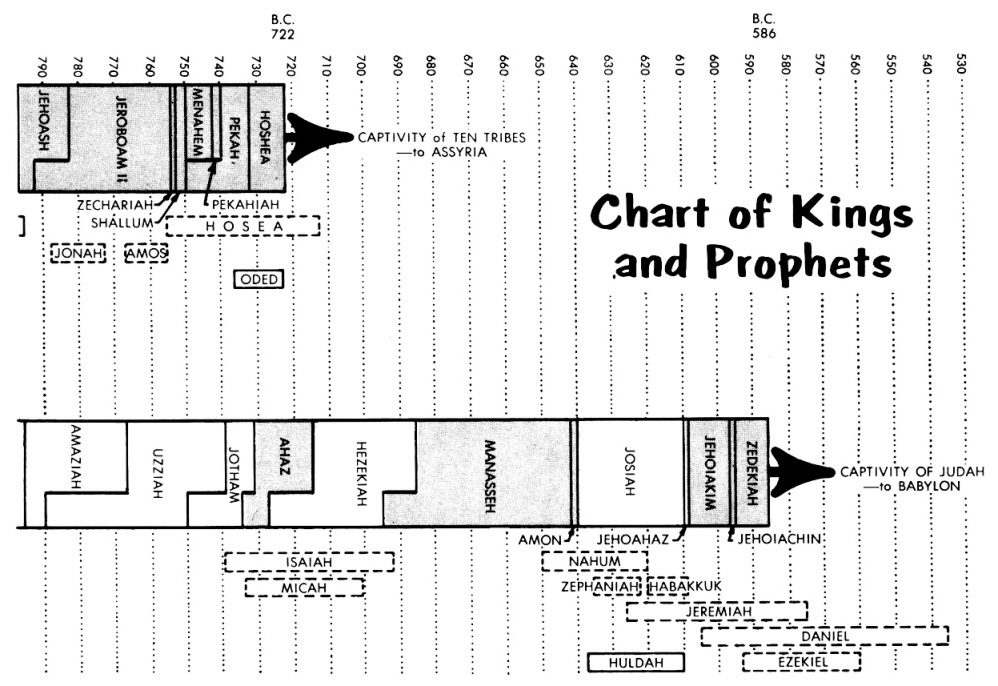
The prophet Isaiah devoted his attention primarily to Judah and Jerusalem. He had access to the royal court, and his advice was usually heard with respect, even if in the end it was disregarded. In particular, Isaiah insisted that Judah should not rely upon aid from Egypt (Isa. 19:1-22; 30:1-7; 31:1-3).
John Oswalt: All the delegation were in sackcloth by this time. One wonders if Isaiah’s and Shebna’s eyes met for a moment as both remembered the time when Isaiah had denounced the then prime minister and prophesied his humiliation (Isa 22:15-19). So also Eliakim may have remembered Isaiah’s words about too much weight being hung on a new peg (Isa 22:23-25). At any rate, the king’s example had touched the entire government establishment at last. God was their only hope. Why had they not realized it sooner? . . . It is of great significance that both here and in the next incident Hezekiah’s greatest concern is the honor of God. This is surely a testimony to the essential greatness of Hezekiah’s heart. He is not first concerned with his or his nation’s survival. He is chiefly concerned that their action have provided the vehicle whereby God’s name has been brought into contempt. Furthermore, he knows that if God’s glory is made paramount, then the nation will survive. It was the putting of survival first which had brought them to this perilous state. (See The Book of Isaiah, Chapters 1–39 - Page ix)
QUESTION - Who was Eliakim son of Hilkiah? | GotQuestions.org
ANSWER - Eliakim son of Hilkiah was an important figure during the reign of King Hezekiah of Judah. Eliakim was known for his role as royal steward during a tremendous political and military crisis. His service in Hezekiah's administration, particularly during the Assyrian siege of Jerusalem, reveals his significance as a faithful and trusted leader. Eliakim’s actions demonstrate wisdom, loyalty, and trust in God. During his brief but significant presence in the Bible during a challenging time, Eliakim models the steadfastness of those who sought to defend the city and its people.
Eliakim’s story is recorded in the books of 2 Kings and Isaiah, where he is described as the steward or palace administrator during Hezekiah’s reign. His position was one of considerable influence, as he managed the royal household and served as an advisor to the king. Eliakim is first mentioned during the Assyrian invasion of Judah when the Assyrian army besieges Jerusalem: “[The Assyrian envoy] called for the king; and Eliakim son of Hilkiah the palace administrator, Shebna the secretary, and Joah son of Asaph the recorder went out to them” (2 Kings 18:18).
The historical context in which Eliakim son of Hilkiah lived is critical. The Assyrian Empire, under King Sennacherib, had already conquered the northern kingdom of Israel and was now threatening the southern kingdom of Judah. Sennacherib’s army was known for its brutality, and the siege of Jerusalem was part of the Assyrians’ broader campaign to subjugate the region. As the Assyrian forces surrounded the city, the Assyrian envoy, the Rabshakeh, delivered a speech intended to demoralize the people of Jerusalem and make them question God and Hezekiah’s leadership (2 Kings 18:28–30).
Eliakim and his colleagues were sent to meet with the Rabshakeh. During the exchange, Eliakim asked the Assyrian official to not speak in Hebrew: “Please speak to your servants in Aramaic, since we understand it. Don’t speak to us in Hebrew in the hearing of the people on the wall” (2 Kings 18:26). Eliakim’s concern was that, if the people of Jerusalem heard and understood what the Assyrians were saying, they would be that much more demoralized. However, the Rabshakeh refused to speak in Aramaic and continued to communicate in Hebrew, further inciting fear among the citizens of Jerusalem.
Eliakim’s actions reflect his commitment to maintaining calm and order in the city. After the meeting with the Assyrian envoy, Eliakim and the other officials tore their clothes in grief and returned to Hezekiah, reporting the blasphemous words they had heard. In response, Hezekiah sought guidance from the prophet Isaiah, who delivered a message of reassurance. Isaiah prophesied that God would defend Jerusalem and that Sennacherib would fail in his siege. In Isaiah 37:6–7, Isaiah tells Hezekiah’s officials, “This is what the Lord says: Do not be afraid of what you have heard—those words with which the underlings of the king of Assyria have blasphemed me. Listen! When he hears a certain report, I will make him want to return to his own country, and there I will have him cut down with the sword.”
Eliakim’s role extended beyond the immediate crisis. Isaiah 22 contains a prophecy about Eliakim’s future leadership and his authority in Judah: “In that day I will summon my servant, Eliakim son of Hilkiah. I will clothe him with your robe and fasten your sash around him and hand your authority over to him. He will be a father to those who live in Jerusalem and to the people of Judah. I will place on his shoulder the key to the house of David; what he opens no one can shut, and what he shuts no one can open” (Isaiah 22:20–22). This prophecy foretells Eliakim’s rise to even greater authority, symbolized by his having the “key to the house of David,” which represents the stewardship of the royal household and the responsibility for guiding the people of Judah.
The description of Eliakim as a “father to those who live in Jerusalem” in Isaiah 22:21 emphasizes his role as a compassionate and caring leader, someone who would lead with integrity and wisdom. His leadership contrasts with that of Shebna, the previous steward, who had misused his position for personal gain (see Isaiah 22:15–19). Eliakim’s appointment to this position was a divinely ordained act that would stabilize Judah. He was not only Hezekiah’s servant but God’s.
Isaiah 37:3 They said to him, “Thus says Hezekiah, ‘This day is a day of distress, rebuke and rejection; for children have come to birth, and there is no strength to deliver.
NLT They told him, "This is what King Hezekiah says: This is a day of trouble, insult, and disgrace. It is like when a child is ready to be born, but the mother has no strength to deliver it.
- his day, Isa 25:8 33:2 2Ki 19:3 2Ch 15:4 Ps 50:15 91:15 116:3,4 Jer 30:7 Ho 5:15 6:1 Rev 3:19
- blasphemy: or, provocation, Ps 95:8
- for the: Isa 26:17,18 66:9 Ho 13:13
Related Passages:
2Ki 19:3 They said to him, “Thus says Hezekiah, ‘This day is a day of distress, rebuke, and rejection; for children have come to birth and there is no strength to deliver.
A DAY OF DEEP
DISTRESS
hey said to him, “Thus says Hezekiah, ‘This day is a day of distress, rebuke and rejection; for children have come to birth, and there is no strength to deliver (yalad; LXX - tikto - bring forth). Judah’s situation was like that of a child ready to be born but lacking the strength to be delivered—a moment of complete helplessness. All the conditions were present, yet there was no power to bring life forth. Humanly speaking, the only outcome appeared to be death. The image underscores Judah’s utter inability to save itself and highlights the desperation of the moment, where survival could come only through intervention beyond human resources.
THOUGHT - Moments of crisis strip away every illusion of self-sufficiency, exposing the limits of human strength thus compelling God’s people to rest entirely upon Him alone. Been there, done that, as I am sure you have also! When earthly resources fail and human wisdom proves inadequate, deliverance is clearly something that does not arise from within us, nor from any arm of flesh, but from above, from the sovereign hand of the Almighty God. In such moments, our feeble faith learns once again where true help is found, echoing the confident testimony of the psalmist: “My help comes from the LORD, who made heaven and earth” (Ps. 121:2).
Deliver (03205) yalad meaning “to bear, bring forth, beget, or be delivered”—is a foundational term in Scripture, occurring about 490 times and spanning literal, metaphorical, and theological uses. At its core it denotes giving birth and producing offspring, first appearing in God’s judgment on Eve, where pain in “bringing forth” children is multiplied (Gen. 3:16), and extending to both maternal and paternal roles (Gen. 4:18; Exod. 1:19; 1 Kgs. 3:17–18). It is used of humans and animals alike (Gen. 30:39; Job 39:1–2), of distress likened to labor pains (Isa. 13:8; Jer. 30:6), and of frustration or evil being “brought forth” (Isa. 26:18; Job 15:35). Theologically, yālad underscores God’s sovereign control over life: He opens barren wombs to fulfill His covenant promises (Gen. 16:1, 16; 20:17–18; 45:7), “begot” Israel as a nation (Deut. 32:18), and speaks of His paternal care for Ephraim (Jer. 31:20) and His bearing of Samaria and Jerusalem (Ezek. 23:4, 37). Most significantly, it frames messianic hope—Isaiah foretells the birth of Immanuel (Isa. 7:14), and Psalm 2:7 declares the king whom God has “begotten,” a relationship of love later interpreted in the New Testament as fulfilled in Christ’s resurrection and exaltation (Acts 13:33; Heb. 1:3–5; 5:5).
TWOT In its narrowest sense yālad describes the act of a woman in giving birth to a child (e.g. Exodus 1:19; 1 Kings 3:17-18), but it is sometimes used of the father's part in becoming a parent (e.g. Genesis 4:18; Genesis 10:8, 24, 26; Genesis 22:23; Genesis 25:3; 1 Chron. 1:10-20; Proverbs 23:22). It may be used with reference to the whole procedure involved in producing a child (e.g. Genesis 38:27-28) or it may even be specifically applied to the pains of a woman prior to the actual birth (e.g. Genesis 35:16; Micah 5:3). Although predominantly used of human beings it is occasionally used of animals (e.g. Genesis 30:39; Genesis 31:8; Job 39:1-2; Jeremiah 14:5; Ezekiel 31:6). A man's part in the production of a child is generally represented" by the Hiphil but sometimes the Qal is used. [Critics sometimes explain this usage as due to documentary division. It is claimed that the Hiphil usage as in Genesis 11 is characteristic of P and the Qal as in Genesis 10 betokens J. It is more likely that the different forms mean different things. In most every instance actual paternity is represented by the Hiphil and a more general relationship like relationship of peoples (the Table of Nations, Genesis 10) uses the Qal. Thus Psalm 2:7 is not causative, but refers to a relation of love. The Qal is used. R.L.H.] In the Piel the verb means "to do the office of midwife." Except for Exodus 1:16 this usage is confined to the Piel participle. Both Niphal and Pual are commonly used for the passive of the Qal. Hophal is used occasionally with the same meaning (Genesis 40:20; Ezekiel 16:4-5). Hithpael is used once to mean "declare their pedigrees" or "register by ancestry" (Numbers 1:18).
The word is often used in a figurative sense. Thus it may refer to a city or nation as having given birth to its inhabitants (e.g. Isaiah 23:4; Isaiah 51:18; Ezekiel 16:20). It may refer to the wicked as having brought forth evil, lies or stubble (e.g. Job 15:35; Psalm 7:15; Isaiah 33:11). "Bringing forth wind" is used as a vivid figure of frustration (Isaiah 26:18). Often yālad is used as a simile for distress (e.g. Isaiah 42:14; Jeremiah 30:6; Micah 4:10). Once it speaks of the day as bringing forth the events that will occur in it (Proverbs 27:1). God is spoken of as having given birth to Israel (Deut. 32:18). The word may be followed by an accusative, but is often used without an object. When used in the passive the effective agent is generally introduced by lamed.
The word does not necessarily point to the generation immediately following. In Hebrew thought, an individual by the act of giving birth to a child becomes a parent or ancestor of all who will be descended from this child. Just as Christ is called a son of David and a son of Abraham, yālad may show the beginning of an individual's relationship to any descendant.
The various derivatives indicate special aspects or relationships that are in some way connected with birth, though sometimes this relation is rather distant.
The word is used in several important theological connections.
A constant threat to the Lord's promise that the patriarchs' seed would be innumerable and a blessing to all the families of the earth was the barrenness of their wives (Genesis 16:1; Genesis 17:17; Genesis 18:13; Genesis 25:21). But God fulfilled his promise by causing their barren wombs to bear. Then too, during such times of crisis in the life of his people, the Lord demonstrated his sovereign saving control of their destiny by promising that elect women "would give birth to sons who would save their people (Judges 13:3, 5, 7; 1 Samuel 1:2-10). This theme finds its consummation in the birth of Jesus Christ (Isaiah 7:14; Isaiah 9:5; Matthew 1).
Great joy accompanied the birth of a son. But some found the trials of life so severe that they wished they had never been born (Job 3:3; Jeremiah 15:10; Jeremiah 20:14). More tragic, however, is the case of Judas Iscariot who, because of his betrayal of Jesus, would have been better off had he never been born (Luke 16:24).
The apostasy of Israel becomes more painful and tragic in the light of the reality that the Lord "begot" them, a metaphor denoting that he gave them life and cared for them during their tender years (Deut. 32:18; cf. Ezekiel 17:20; Ezekiel 23:4, 37). See ʾāb "father" and ben "son".
yālad in Psalm 2:7 (note that it is not Hiphil) refers to the relationship of love between the Father and the Son. The NT interprets it of Christ's resurrection and session at the Father's right hand (Acts 13:33; Hebrews 1:3-5; Hebrews 5:5) (cf. Buswell, J. O., Systematic Theology of the Christian Religion [Zondervan, 1962] pp. 1, 107-112; 11, 18).
bear(13), bearing(3), bears(6), became(1), became the father(144), become the father(2), become the fathers(1), beget(3), begetting(1), begot(2), begotten(3), birth(2), birthday*(1), bore(85), born(73), borne(20), bring forth(5), brings forth(1), brought them forth(1), brought forth(6), child(2), childbirth(10), children(1), children born(1), deliver(1), delivered(1), descended(2), father(1), fathered(2), fathers(1), gave me birth(1), gave you birth(2), gave birth(25), gave birth to a child(2), give birth(13), give birth the midwife(1), give delivery(1), given it birth(1), given birth(4), gives birth(2), gives delivery(1), giving birth(2), had(17), had sons(1), has(1), have(2), labor(5), labor has borne(1), labor the midwife(1), laid(1), midwife(1), midwives(6), produced(1), registered by ancestry(1), sired(1), sires(2), takes effect(1). Gen. 3:16; Gen. 4:1; Gen. 4:2; Gen. 4:17; Gen. 4:18; Gen. 4:20; Gen. 4:22; Gen. 4:25; Gen. 4:26; Gen. 5:3; Gen. 5:4; Gen. 5:6; Gen. 5:7; Gen. 5:9; Gen. 5:10; Gen. 5:12; Gen. 5:13; Gen. 5:15; Gen. 5:16; Gen. 5:18; Gen. 5:19; Gen. 5:21; Gen. 5:22; Gen. 5:25; Gen. 5:26; Gen. 5:28; Gen. 5:30; Gen. 5:32; Gen. 6:1; Gen. 6:4; Gen. 6:10; Gen. 10:1; Gen. 10:8; Gen. 10:13; Gen. 10:15; Gen. 10:21; Gen. 10:24; Gen. 10:25; Gen. 10:26; Gen. 11:10; Gen. 11:11; Gen. 11:12; Gen. 11:13; Gen. 11:14; Gen. 11:15; Gen. 11:16; Gen. 11:17; Gen. 11:18; Gen. 11:19; Gen. 11:20; Gen. 11:21; Gen. 11:22; Gen. 11:23; Gen. 11:24; Gen. 11:25; Gen. 11:26; Gen. 11:27; Gen. 16:1; Gen. 16:2; Gen. 16:11; Gen. 16:15; Gen. 16:16; Gen. 17:17; Gen. 17:19; Gen. 17:20; Gen. 17:21; Gen. 18:13; Gen. 19:37; Gen. 19:38; Gen. 20:17; Gen. 21:2; Gen. 21:3; Gen. 21:5; Gen. 21:7; Gen. 21:9; Gen. 22:20; Gen. 22:23; Gen. 22:24; Gen. 24:15; Gen. 24:24; Gen. 24:36; Gen. 24:47; Gen. 25:2; Gen. 25:3; Gen. 25:12; Gen. 25:19; Gen. 25:24; Gen. 25:26; Gen. 29:32; Gen. 29:33; Gen. 29:34; Gen. 29:35; Gen. 30:1; Gen. 30:3; Gen. 30:5; Gen. 30:7; Gen. 30:9; Gen. 30:10; Gen. 30:12; Gen. 30:17; Gen. 30:19; Gen. 30:20; Gen. 30:21; Gen. 30:23; Gen. 30:25; Gen. 30:39; Gen. 31:8; Gen. 31:43; Gen. 34:1; Gen. 35:16; Gen. 35:17; Gen. 35:26; Gen. 36:4; Gen. 36:5; Gen. 36:12; Gen. 36:14; Gen. 38:3; Gen. 38:4; Gen. 38:5; Gen. 38:27; Gen. 38:28; Gen. 40:20; Gen. 41:50; Gen. 44:27; Gen. 46:15; Gen. 46:18; Gen. 46:20; Gen. 46:22; Gen. 46:25; Gen. 46:27; Gen. 48:5; Gen. 48:6; Gen. 50:23; Exod. 1:15; Exod. 1:16; Exod. 1:17; Exod. 1:18; Exod. 1:19; Exod. 1:20; Exod. 1:21; Exod. 2:2; Exod. 2:22; Exod. 6:20; Exod. 6:23; Exod. 6:25; Exod. 21:4; Lev. 12:2; Lev. 12:5; Lev. 12:7; Lev. 22:27; Lev. 25:45; Num. 1:18; Num. 11:12; Num. 26:29; Num. 26:58; Num. 26:59; Num. 26:60; Deut. 4:25; Deut. 15:19; Deut. 21:15; Deut. 23:8; Deut. 25:6; Deut. 28:41; Deut. 28:57; Deut. 32:18; Jdg. 8:31; Jdg. 11:1; Jdg. 11:2; Jdg. 13:2; Jdg. 13:3; Jdg. 13:5; Jdg. 13:7; Jdg. 13:8; Jdg. 13:24; Jdg. 18:29; Ruth 1:12; Ruth 4:12; Ruth 4:13; Ruth 4:15; Ruth 4:17; Ruth 4:18; Ruth 4:19; Ruth 4:20; Ruth 4:21; Ruth 4:22; 1 Sam. 1:20; 1 Sam. 2:5; 1 Sam. 2:21; 1 Sam. 4:19; 1 Sam. 4:20; 2 Sam. 3:2; 2 Sam. 3:5; 2 Sam. 5:13; 2 Sam. 11:27; 2 Sam. 12:15; 2 Sam. 12:24; 2 Sam. 14:27; 2 Sam. 21:8; 2 Sam. 21:20; 2 Sam. 21:22; 1 Ki. 1:6; 1 Ki. 3:17; 1 Ki. 3:18; 1 Ki. 3:21; 1 Ki. 3:26; 1 Ki. 3:27; 1 Ki. 11:20; 1 Ki. 13:2; 2 Ki. 4:17; 2 Ki. 19:3; 2 Ki. 20:18; 1 Chr. 1:10; 1 Chr. 1:11; 1 Chr. 1:13; 1 Chr. 1:18; 1 Chr. 1:19; 1 Chr. 1:20; 1 Chr. 1:32; 1 Chr. 1:34; 1 Chr. 2:3; 1 Chr. 2:4; 1 Chr. 2:9; 1 Chr. 2:10; 1 Chr. 2:11; 1 Chr. 2:12; 1 Chr. 2:13; 1 Chr. 2:17; 1 Chr. 2:18; 1 Chr. 2:19; 1 Chr. 2:20; 1 Chr. 2:21; 1 Chr. 2:22; 1 Chr. 2:24; 1 Chr. 2:29; 1 Chr. 2:35; 1 Chr. 2:36; 1 Chr. 2:37; 1 Chr. 2:38; 1 Chr. 2:39; 1 Chr. 2:40; 1 Chr. 2:41; 1 Chr. 2:44; 1 Chr. 2:46; 1 Chr. 2:48; 1 Chr. 2:49; 1 Chr. 3:1; 1 Chr. 3:4; 1 Chr. 3:5; 1 Chr. 4:2; 1 Chr. 4:6; 1 Chr. 4:8; 1 Chr. 4:9; 1 Chr. 4:11; 1 Chr. 4:12; 1 Chr. 4:14; 1 Chr. 4:18; 1 Chr. 6:4; 1 Chr. 6:5; 1 Chr. 6:6; 1 Chr. 6:7; 1 Chr. 6:8; 1 Chr. 6:9; 1 Chr. 6:10; 1 Chr. 6:11; 1 Chr. 6:12; 1 Chr. 6:13; 1 Chr. 6:14; 1 Chr. 7:14; 1 Chr. 7:16; 1 Chr. 7:18; 1 Chr. 7:21; 1 Chr. 7:23; 1 Chr. 7:32; 1 Chr. 8:1; 1 Chr. 8:7; 1 Chr. 8:8; 1 Chr. 8:9; 1 Chr. 8:11; 1 Chr. 8:32; 1 Chr. 8:33; 1 Chr. 8:34; 1 Chr. 8:36; 1 Chr. 8:37; 1 Chr. 9:38; 1 Chr. 9:39; 1 Chr. 9:40; 1 Chr. 9:42; 1 Chr. 9:43; 1 Chr. 14:3; 1 Chr. 14:4; 1 Chr. 20:6; 1 Chr. 20:8; 1 Chr. 22:9; 1 Chr. 26:6; 2 Chr. 11:19; 2 Chr. 11:20; 2 Chr. 11:21; 2 Chr. 13:21; 2 Chr. 24:3; Ezr. 10:3; Neh. 12:10; Neh. 12:11; Job 1:2; Job 3:3; Job 5:7; Job 11:12; Job 14:1; Job 15:7; Job 15:14; Job 15:35; Job 24:21; Job 25:4; Job 38:21; Job 38:28; Job 38:29; Job 39:1; Job 39:2; Ps. 2:7; Ps. 7:14; Ps. 22:31; Ps. 48:6; Ps. 78:6; Ps. 87:4; Ps. 87:5; Ps. 87:6; Ps. 90:2; Prov. 17:17; Prov. 17:21; Prov. 17:25; Prov. 23:22; Prov. 23:24; Prov. 23:25; Prov. 27:1; Eccl. 3:2; Eccl. 4:14; Eccl. 5:14; Eccl. 6:3; Eccl. 7:1; Cant. 6:9; Cant. 8:5; Isa. 7:14; Isa. 8:3; Isa. 9:6; Isa. 13:8; Isa. 21:3; Isa. 23:4; Isa. 26:17; Isa. 26:18; Isa. 33:11; Isa. 37:3; Isa. 39:7; Isa. 42:14; Isa. 45:10; Isa. 49:21; Isa. 51:18; Isa. 54:1; Isa. 55:10; Isa. 59:4; Isa. 65:23; Isa. 66:7; Isa. 66:8; Isa. 66:9; Jer. 2:27; Jer. 6:24; Jer. 13:21; Jer. 14:5; Jer. 15:9; Jer. 15:10; Jer. 16:3; Jer. 17:11; Jer. 20:14; Jer. 20:15; Jer. 22:23; Jer. 22:26; Jer. 29:6; Jer. 30:6; Jer. 31:8; Jer. 49:24; Jer. 50:12; Jer. 50:43; Ezek. 16:4; Ezek. 16:5; Ezek. 16:20; Ezek. 18:10; Ezek. 18:14; Ezek. 23:4; Ezek. 23:37; Ezek. 31:6; Ezek. 47:22; Dan. 11:6; Hos. 1:3; Hos. 1:6; Hos. 1:8; Hos. 2:3; Hos. 5:7; Hos. 9:11; Hos. 9:16; Hos. 13:13; Mic. 4:9; Mic. 4:10; Mic. 5:3; Zeph. 2:2; Zech. 13:3
Isaiah 37:4 ‘Perhaps the LORD your God will hear the words of Rabshakeh, whom his master the king of Assyria has sent to reproach the living God, and will rebuke the words which the LORD your God has heard. Therefore, offer a prayer for the remnant that is left.’”
NLT But perhaps the LORD your God has heard the Assyrian representative defying the living God and will punish him for his words. Oh, pray for those of us who are left!"
- perhaps: Jos 14:12 1Sa 14:6 2Sa 16:12 Am 5:15
- to reproach: Isa 37:23,24 36:20 51:7,8 1Sa 17:26,36 2Ki 19:4,22,23 2Ch 32:15-19
- and will: Isa 37:23 Ps 50:21
- lift up: 1Sa 7:8 12:19,23 2Ch 32:20 Ps 106:23 Joe 2:17 Jas 5:16
- for the: Isa 1:9 8:7,8 10:5,6,22 2Ki 17:18 18:9-16 2Ch 28:19 Ro 9:27
Related Passages:
2Ki 19:4 Perhaps the LORD your God will hear all the words of Rabshakeh, whom his master the king of Assyria has sent to reproach the living God, and will rebuke the words which the LORD your God has heard. Therefore, offer a prayer for the remnant that is left.’”
WHEN GOD'S NAME
IS REPROACHED
Perhaps - PERHAPS expresses humble submission, not uncertainty about God’s power. It acknowledges that God’s intervention is sovereign, not automatic or deserved.
the LORD your God will hear the words of Rabshakeh, whom his master the king of Assyria has sent to reproach (charaph; LXX - oneidizo = revile, disparage, insult) the living God, and will rebuke the words which the LORD your God has heard. - This plea expresses humble dependence on God in a moment of utter helplessness. Hezekiah’s messengers express hope grounded in God’s honor (see Moses' prayer based on God's honor - Ex 32:11-14), trusting that the LORD will hear the blasphemous words spoken by the Assyrian spokesman and act to defend His own name.
Therefore, offer a prayer (tepillah; LXX - proseuche) for the remnant (sheerith; LXX - leimma) that is left Because the crisis concerns God’s glory, the proper response is intercession, not strategy. Isaiah is asked to act as a mediating prophet, seeking God’s word and will. Remnant acknowledges Judah’s weakness and smallness after Assyrian devastation.
This passage teaches that even when God’s people are weak, fearful, and few in number, they may confidently appeal to Him to act for His glory and for their deliverance. Prayer becomes the bridge between human helplessness and divine power. As Psalm 50:15 declares, “Call upon Me in the day of trouble; I will deliver you, and you shall glorify Me.”
Reproach (revile, scorn, taunt) (02778) charaph means to reproach or to agitate someone about something, especially to cast blame or scorn on them. It refers to sarcastic challenge in a mocking or insulting manner. It suggests a jeeringly provoking insult or challenge. As explained below this word actually as 3 senses. Vine says the idea "to say sharp things, reproach." The root with the meaning "to be sharp" is found in Northwest and South Semitic languages. In Hebrew the verb refers to a manner of speech, i.e., to reproach someone. The word appears about 50 times in the Old Testament, once in Psa. 42:10: "As with a sword in my bones, mine enemies reproach me; while they say daily unto me, Where is thy God?"" Charaph is more than mere rude talk, this strong verb denotes demeaning something or someone by complete devaluation, defiance, or despising
Charaph has three contextual meanings, though by far its most common sense is “to reproach, taunt, or revile.” In this usage it describes hostile mockery directed against individuals, God’s people, or God Himself, as seen in the taunts of enemies (Ps. 119:42), Goliath’s defiance of Israel (1 Sam. 17:10), and Assyria’s blasphemous reproach of the living God (2 Kgs. 19:4). Less frequently, the verb can mean to remain through the winter or harvest season, referring to lingering or dwelling (Isa. 18:6), and in a rare legal sense it can mean to engage or betroth, describing the lawful acquisition of a woman for marriage (Lev. 19:20).
Remnant (07611)(sheerith/she'eriyth) means the rest, residue, remainder, remnant 1a) rest, what is left 1b) remainder, descendants. She'eriyth is derived from the verb shāʾar (“to remain, be left over”), consistently carries the idea of what survives after loss, judgment, or elimination, and is the Old Testament’s primary word for the “remnant.” While it can denote something morally neutral, such as leftover wood (Isa. 44:17) or territory (Isa. 15:9), it most often refers to survivors of catastrophe, whether among the nations (Jer. 47:4; Amos 1:8) or within Israel itself (Jer. 40:11; 42:2). The prophets use it especially to describe those left after divine judgment—sometimes a threatened remnant (Jer. 44:7, 12), but more often a preserved remnant by grace, promised restoration and future blessing (2 Kgs. 19:31; Isa. 37:32; Mic. 5:7–8; Zech. 8:11–12). This concept reaches back to Joseph’s declaration that God preserved a remnant through famine (Gen. 45:7) and forward to prophetic hope, where God fulfills His covenant promises through a faithful remnant of Israel (Zech. 8:6–13; cf. Rom. 11:25–29). In every usage, sheʾērît emphasizes survival by divine purpose, not human strength.
Scofield summarizes the Remnant: In the history of Israel a remnant may be discerned, a spiritual Israel within the national Israel. In Elijah's time 7000 had not bowed the knee to Baal (1Ki 19:18). In Isaiah's time, Israel had been reduced to only a few godly "survivors" (Isa 1:9), for whose sake God still forebore to destroy the nation. During the captivities the remnant appears in Jews like Esther, Mordecai, Ezekiel, Daniel, Shadrach, Meshach, and Abednego. At the end of the seventy years of Babylonian captivity it was the remnant that returned under Ezra and Nehemiah. At the advent of our Lord, John the Baptist, Simeon, Anna, and those "who were looking forward to the redemption of Jerusalem" (Lk 2:38) were the remnant. During the Church Age the remnant is composed of believing Jews (Ro 11:4 - 5). But an important aspect of the remnant is prophetic. During the great tribulation a remnant out of all Israel will turn to Jesus as Messiah, the "sealed" Israelites of Rev 7:3-8.
A prophetic aspect of remnant concept is seen in these verses (Note: Not all use sheerith) - Jeremiah 15:11-21; Jeremiah 23:3-8; Jeremiah 31:7; Jeremiah 31:14; Isaiah 1:9; Ezekiel 6:8; Ezekiel 8:11-14; Ezekiel 9:4; Ezekiel 11:16-21; Joel 2:32; Amos 5:15; Micah 2:12; Micah 4:1; Micah 5:3; Micah 7:18; Zephaniah 2:7; Zephaniah 3:13; Haggai 1:14; Zechariah 8:6; Malachi 3:16-18; Romans 11:5.
Prayer (08605) tepillah from palal = to intervene, to interpose, to pray) describes the act of speaking to God, of making requests of Him. Request, petition. Often in the form of a plea "Hear my prayer" (Ps 4:1 - cp Ps 6:9, 39:12, 54:2, 55:1, 61:1, Da 9:17 - all of these uses are translated in Lxx with proseuche the general word for prayer and is used only of prayer to God). The root verb palal conveys the idea of to cause another to intervene or arbitrate in one's case. And indeed this is exactly what we are often doing in prayer asking Him to intervene?
As an aside it should be noted that there are no less than twelve Hebrew words that are rendered pray (or prayer) in English. The first Hebrew word indicating the general idea of prayer is the verb palal (06419), with the derivative noun tepillah. The Septuagint usually translates palal with the Greek proseuchomai, the most common word for prayer in the NT.
In the Old Testament, tepillâh (“prayer”) is a central term for verbal обращения to God, appearing prominently in the Psalms and historical narratives. Five psalms are explicitly labeled “a prayer” in their superscriptions (Pss. 17; 86; 90; 102; 142), all rendered in the Septuagint with proseuchē, a usage that has shaped the devotional practice of “praying the Psalms.” The term also introduces prophetic prayer, as in Habakkuk 3:1, and is frequently paired with related expressions such as “cry” or “supplication” (1 Kgs. 8:28; Ps. 6:9; Dan. 9:3), highlighting prayer as spoken dependence, lifted hands (Ps. 141:2), or heartfelt words (Ps. 54:2). From David’s response to God’s covenant (2 Sam. 7:27), Solomon’s temple prayers (1 Kgs. 8; 9:3), Hezekiah’s plea for healing (2 Kgs. 20:5), Manasseh’s repentance (2 Chr. 33:18–19), and the intercessions of Nehemiah, Job, Jonah, and Daniel (Neh. 1; Job 16:17; Jonah 2:7; Dan. 9), Scripture presents prayer as both personal and corporate, offered in ordinary life and extreme circumstances. While many texts affirm that God hears and accepts prayer (Ps. 6:9; 66:20; 102:17; Prov. 15:29; Isa. 38:5), others soberly warn that prayer may be refused when accompanied by persistent rebellion (Jer. 7:16; Ps. 80:4; Isa. 1:15), reinforcing that prayer is relational, covenantal, and inseparable from obedience—hence the temple’s designation as “a house of prayer” (Isa. 56:7).
Isaiah 37:5 So the servants of King Hezekiah came to Isaiah.
NLT After King Hezekiah's officials delivered the king's message to Isaiah,
Related Passages:
2Ki 19:5 So the servants of King Hezekiah came to Isaiah.
FROM HUMAN INTIMIDATION
TO DIVINE INQUIRY
So the servants of King Hezekiah came to Isaiah Having humbled himself before God in the temple, Hezekiah now acts through his representatives. Sending servants shows Hezekiah's orderly action. He is not panicking. The servants of Hezekiah come to the prophet Isaiah to deliver their message and seek the LORD’s guidance.
This action reflects Hezekiah’s confidence in God’s word spoken through Isaiah and his clear recognition that true deliverance does not come through military strength, alliances, or human wisdom, but through divine revelation. By turning to God’s prophet, the king places the crisis squarely in the LORD’s hands and submits himself to whatever God declares.
This reminds us that when we experience moments of fear, confusion, or uncertainty, the wisest and safest response is to seek direction from God’s Word rather than rely on our own understanding. God’s word alone provides true clarity when circumstances are dark, confusing or threatening. As Psalm 119:105 affirms, “Your word is a lamp to my feet and a light to my path.”
Isaiah 37:6 Isaiah said to them, “Thus you shall say to your master, ‘Thus says the LORD, “Do not be afraid because of the words that you have heard, with which the servants of the king of Assyria have blasphemed Me.
NLT the prophet replied, "Say to your master, 'This is what the LORD says: Do not be disturbed by this blasphemous speech against me from the Assyrian king's messengers.
- Thus shall: 2Ki 19:5-7 22:15-20
- Be not: Isa 7:4 10:24,25 35:4 41:10-14 43:1,2 51:12,13 Ex 14:13 Lev 26:8 Jos 11:6 2Ch 20:15-20 Mk 4:40 5:36
Related Passages:
2Ki 19:6 Isaiah said to them, “Thus you shall say to your master, ‘Thus says the LORD, “Do not be afraid because of the words that you have heard, with which the servants of the king of Assyria have blasphemed Me.
Isaiah said to them, “Thus you shall say to your master, ‘Thus says the LORD, “Do not be afraid because of the words that you have heard, with which the servants of the king of Assyria have blasphemed Me. Isaiah’s word in Isaiah 37:6 was at once encouraging, condemning, and precise. It encouraged Hezekiah and the people by calling them away from fear and back to trust in the Lord, assuring them that Assyria’s threats did not have the final word. At the same time, it sharply condemned the Assyrian envoys for their blasphemy, exposing their arrogance as an affront not merely to Judah but to the living God Himself. Finally, Isaiah’s message was strikingly specific emphasizing that God would act in a defined way, by putting a spirit within the Assyrian king that would cause him to hear a report, withdraw, and ultimately fall by the sword in his own land. The prophecy left no room for vague hope—it anchored Judah’s confidence in the clear, sovereign purpose of God.
This verse teaches that fear loses its power when God’s people rest in His sovereign awareness and righteous action. When God is present and attentive, anxiety has no rightful place. As Isaiah 41:10 declares, “Fear not, for I am with you; be not dismayed, for I am your God; I will strengthen you, I will help you, I will uphold you with My righteous right hand.”
Isaiah 37:7 “Behold, I will put a spirit in him so that he will hear a rumor and return to his own land. And I will make him fall by the sword in his own land.”’”
NLT Listen! I myself will make sure that the king will receive a report from Assyria telling him that he is needed at home. Then I will make him want to return to his land, where I will have him killed with a sword.'"
- I will: Isa 10:16-18,33,34 17:13,14 29:5-8 30:28-33 31:8,9 33:10-12 2Ki 7:6 Job 4:9 15:21 Ps 58:9
- send a blast upon him: or, put a spirit into him
- I will cause: Isa 37:36-38 2Ch 32:21
Related Passages:
2Ki 19:7 Behold, I will put a spirit in him so that he will hear a rumor and return to his own land. And I will make him fall by the sword in his own land.”’”
THE LORD TAKES THE
MATTER IN HAND
Behold (hinneh; LXX - idou) Spurgeon reminds us that "Behold is a word of wonder; it is intended to excite admiration. Wherever you see it hung out in Scripture, it is like an ancient sign-board, signifying that there are rich wares within, or like the hands which solid readers have observed in the margin of the older Puritanic books, drawing attention to something particularly worthy of observation." I would add, behold is like a divine highlighter, a divine underlining of an especially striking or important text. It says in effect "Listen up, all ye who would be wise in the ways of Jehovah!"
I will put a spirit in him so that he will hear a rumor and return to his own land. And I will make him fall by the sword in his own land.”
Behold (02009) hinneh is an interjection meaning behold, look, now; if. "It is used often and expresses strong feelings, surprise, hope, expectation, certainty, thus giving vividness depending on its surrounding context." (Baker) Hinneh generally directs our mind to the text, imploring the reader to give it special attention. In short, the Spirit is trying to arrest our attention! And so hinneh is used as an exclamation of vivid immediacy (e.g., read Ge 6:13)! Hinneh is a marker used to enliven a narrative, to express a change a scene, to emphasize an idea, to call attention to a detail or an important fact or action that follows (Isa 65:17, Ge 17:20, 41:17). The first use of hinneh in Ge 1:29 and second in Ge 1:31 - "And God saw all that He had made, and behold, it was very good. And there was evening and there was morning, the sixth day." Hinneh is oftn used in the idiom "Here I am" in Ge 22:1, 7,11 Ge 27:1,18, Ge 31:11, Ge 46:2 Ex 3:4 1Sa 3:4, 3:16, 12:3, 2Sa 1:7, Isa 52:6, Isa 58:9. Hinneh is used most often to point out people but also to point out things (Ge 31:41, 17:4). God uses hinneh to grab man's attention before He brings destruction (Ge 6:13, 17). God uses hinneh when He establishes covenants (Ge 9:9, 15:12, 17 [when Jehovah cut the Abrahamic covenant], Ge 17:4, cp Ge 28:13, 15), when He provided a sacrificial substitute for Isaac (foreshadowing His giving us His only Son!) (Ge 22:13). Hinneh marks the "chance (The Providence of God)" arrival of Boaz at the field where Ruth was gleaning (Ru 2:4-read about this "chance romance" - Indeed, "Behold!"). Hinneh is used to announce the Lord’s sending of a child as a sign and a prophecy of Immanuel-Emmanuel, the Messiah (Isa. 7:14-note). In fact W E Vine says that it is notable that when behold (hinneh) is used in Isaiah, it always introduces something relating to future circumstances.
Isaiah 37:8 Then Rabshakeh returned and found the king of Assyria fighting against Libnah, for he had heard that the king had left Lachish.
NLT Meanwhile, the Assyrian representative left Jerusalem and went to consult his king, who had left Lachish and was attacking Libnah.
- Rabshakeh: 2Ki 19:8,9 Nu 33:20,21
- Libnah: Jos 10:29,31-34 21:13 2Ki 8:22 2Ch 21:10
- Lachish: Jos 12:11 15:39
Related Passages:
2Ki 19:8 Then Rabshakeh returned and found the king of Assyria fighting against Libnah, for he had heard that the king had left Lachish.
Then Rabshakeh returned and found the king of Assyria fighting against Libnah, for he had heard that the king had left Lachish.
Libnah is about 25 mi SW of Jerusalem.
Isaiah 37:9 When he heard them say concerning Tirhakah king of Cush, “He has come out to fight against you,” and when he heard it he sent messengers to Hezekiah, saying,
NLT Soon afterward King Sennacherib received word that King Tirhakah of Ethiopia was leading an army to fight against him. Before leaving to meet the attack, he sent this message back to Hezekiah in Jerusalem:
- he heard: 1Sa 23:27,28
Related Passages:
2Ki 19:9 When he heard them say concerning Tirhakah king of Cush, “Behold, he has come out to fight against you,” he sent messengers again to Hezekiah saying,
When he heard them say concerning Tirhakah king of Cush, “He has come out to fight against you,” and when he heard it he sent messengers to Hezekiah, saying,
Tirhakah," known in history as "Taharkah," was the next to the last king of the twenty-fifth (Ethiopian) dynasty in Egypt.
Isaiah 37:10 “Thus you shall say to Hezekiah king of Judah, ‘Do not let your God in whom you trust deceive you, saying, “Jerusalem will not be given into the hand of the king of Assyria.”
NLT "This message is for King Hezekiah of Judah. Don't let this God you trust deceive you with promises that Jerusalem will not be captured by the king of Assyria.
- Let not: Isa 36:4,15,20 2Ki 18:5 19:10-13 2Ch 32:7,8,15-19 Ps 22:8 Mt 27:43
Related Passages:
2Ki 19:10 Thus you shall say to Hezekiah king of Judah, ‘Do not let your God in whom you trust deceive you saying, “Jerusalem will not be given into the hand of the king of Assyria.”
Thus you shall say to Hezekiah king of Judah, ‘Do not let your God in whom you trust deceive you, saying, “Jerusalem will not be given into the hand of the king of Assyria.”
Isaiah 37:11 ‘Behold, you have heard what the kings of Assyria have done to all the lands, destroying them completely. So will you be spared?
NLT You know perfectly well what the kings of Assyria have done wherever they have gone. They have crushed everyone who stood in their way! Why should you be any different?
- Isa 37:18,19 10:7-14 14:17 36:18-20 2Ki 17:4-6 18:33-35
Related Passages:
2Ki 19:11 Behold, you have heard what the kings of Assyria have done to all the lands, destroying them completely. So will you be spared?
‘Behold (hinneh; LXX - idou), you have heard what the kings of Assyria have done to all the lands, destroying them completely. So will you be spared?
Isaiah 37:12 ‘Did the gods of those nations which my fathers have destroyed deliver them, even Gozan and Haran and Rezeph and the sons of Eden who were in Telassar? 13‘Where is the king of Hamath, the king of Arpad, the king of the city of Sepharvaim, and of Hena and Ivvah?’”
NLT Have the gods of other nations rescued them--such nations as Gozan, Haran, Rezeph, and the people of Eden who were in Tel-assar? The former kings of Assyria destroyed them all!
- the gods: Isa 36:20 46:5-7
- Gozan: 2Ki 17:6 18:11 19:12
- Haran: Haran, the Carrhe of the Greeks and Romans, is situated in the north-west part of Mesopotamia, between the Euphrates and the river Chebar; about 110 miles west of Nisibis, 90 east of Bir, 100 south of Diarbekir, and 170 north of Palmyra. Ge 11:31 12:14 28:10 29:4 Ac 7:2
- Eden: It is probable that this Eden is the country near Diarbekir, on the Tigris, called Madon, according to Asseman. Ge 2:8 Eze 27:23 28:13 Am 1:5
- Telassar: Telassar is probably the same as Ellasar, Ge 14:1, as the Jerusalem Targum reads; for both of which the Syriac has Dolassar; and perhaps, as Doederlein supposes, the same as Sharra, a city of Mesopotamia, half a mile from the Euphrates. 2Ki 19:12, Thelasar
Related Passages:
2Ki 19:12 Did the gods of those nations which my fathers destroyed deliver them, even Gozan and Haran and Rezeph and the sons of Eden who were in Telassar?
Did the gods of those nations which my fathers have destroyed deliver them, even Gozan and Haran and Rezeph and the sons of Eden who were in Telassar? 13‘Where is the king of Hamath, the king of Arpad, the king of the city of Sepharvaim, and of Hena and Ivvah?’”
Isaiah 37:13 ‘Where is the king of Hamath, the king of Arpad, the king of the city of Sepharvaim, and of Hena and Ivvah?’”
NLT What happened to the king of Hamath and the king of Arpad? What happened to the kings of Sepharvaim, Hena, and Ivvah?"
- Hamath: Isa 10:9 36:19 Jer 49:23
- Hena: Hena is probably the same as Anah, a city of Mesopotamia, situated on an island in the Euphrates.
- Ivah: 2Ki 17:24,30,31, Ava, Avites, 2Ki 18:34 19:13
Related Passages:
2Ki 19:13 Where is the king of Hamath, the king of Arpad, the king of the city of Sepharvaim, and of Hena and Ivvah?’”
Where is the king of Hamath, the king of Arpad, the king of the city of Sepharvaim, and of Hena and Ivvah?
Isaiah 37:14 Then Hezekiah took the letter from the hand of the messengers and read it, and he went up to the house of the LORD and spread it out before the LORD.
NLT After Hezekiah received the letter and read it, he went up to the Lord's Temple and spread it out before the LORD.
- received: 2Ki 19:14
- and Hezekiah went: Isa 37:1 1Ki 8:28-30,38 9:3 2Ch 6:20-42 Ps 27:5 62:1-3 74:10 76:1-3 Ps 123:1-4 143:6 Joe 2:17-20
Related Passages:
2Ki 19:14 Then Hezekiah took the letter from the hand of the messengers and read it, and he went up to the house of the LORD and spread it out before the LORD.
GIVING THE CRISIS
OVER TO GOD
Then Hezekiah took the letter from the hand of the messengers and read it, and he went up to the house of the LORD and spread it out before the LORD. - The point was not that God needed to read the message, as though He were unaware of its contents, but that He might give deliberate attention to the matter. By spreading the letter before the Lord, Hezekiah was symbolically placing the crisis into God’s hands. This act expressed complete dependence and trust: Hezekiah was no longer strategizing, negotiating, or defending himself, but formally committing the entire situation to the Lord for His evaluation and judgment. In doing so, he acknowledged that the issue ultimately concerned God’s honor and that only God could render a decisive and righteous verdict.
Isaiah 37:15 Hezekiah prayed to the LORD saying,
NLT And Hezekiah prayed this prayer before the LORD:
- 1Sa 7:8,9 2Sa 7:18-29 2Ki 19:15-19 2Ch 14:11 20:6-12 Da 9:3,4 Php 4:6,7 Jas 5:13
Related Passage:
2Ch 32:20 But King Hezekiah and Isaiah the prophet, the son of Amoz, prayed about this and cried out to heaven.
2Ki 19:15 Hezekiah prayed before the LORD and said, “O LORD, the God of Israel, who are enthroned above the cherubim, You are the God, You alone, of all the kingdoms of the earth. You have made heaven and earth.
Hezekiah prayed to the LORD saying,
Ryrie - This brief, beautiful prayer shows great faith in God and asks only that His glory be vindicated (v. 20). Compare 2 Chron. 20:5-12; Jer. 32:17-25; Acts 4:24-30 for prayers of those in similar straits.
Isaiah 37:16 “O LORD of hosts, the God of Israel, who is enthroned above the cherubim, You are the God, You alone, of all the kingdoms of the earth. You have made heaven and earth.
NLT "O LORD Almighty, God of Israel, you are enthroned between the mighty cherubim! You alone are God of all the kingdoms of the earth. You alone created the heavens and the earth.
- Lord: Isa 6:3 8:13 2Sa 7:26 Ps 46:7,11
- dwellest: Ex 25:22 1Sa 4:4 Ps 80:1 99:1 Heb 4:16
- thou art: Isa 37:20 43:10,11 44:6 45:22 54:5 1Ki 18:32 2Ki 5:15 Ps 86:10 Rev 11:15-17
- thou hast: Isa 40:28 44:24 Ge 1:1 Ps 146:6 Jer 10:10-12 Joh 1:3 Col 1:16
Related Passage:
2Ki 19:15 Hezekiah prayed before the LORD and said, “O LORD, the God of Israel, who are enthroned above the cherubim, You are the God, You alone, of all the kingdoms of the earth. You have made heaven and earth.
O LORD of hosts, the God of Israel, who is enthroned above the cherubim, You are the God, You alone, of all the kingdoms of the earth. You have made heaven and earth.
Hezekiah's approach is quite in contrast to the elders of Israel when faced with a defeat & 3000 dead Israeli soldiers in a battle against the Philistines in 1Sa4:3 - they sought not the LORD of hosts but the ark of the covenant at Shiloh. When our enemies overwhelm us don't run to the "wooden box" (the ark) but run to the strong tower of the LORD of hosts [& all of His other sufficient Names (Pr18:10)]
Isaiah 37:17 “Incline Your ear, O LORD, and hear; open Your eyes, O LORD, and see; and listen to all the words of Sennacherib, who sent them to reproach the living God.
NLT Listen to me, O LORD, and hear! Open your eyes, O LORD, and see! Listen to Sennacherib's words of defiance against the living God.
- Incline: 2Ch 6:40 Job 36:7 Ps 17:6 71:2 130:1,2 Da 9:17-19 1Pe 3:12
- hear: Isa 37:4 2Sa 16:12 Ps 10:14,15 74:10,22 79:12 89:50,51
Related Passage:
2Ki 19:16 “Incline Your ear, O LORD, and hear; open Your eyes, O LORD, and see; and listen to the words of Sennacherib, which he has sent to reproach the living God.
Incline Your ear, O LORD, and hear; open Your eyes, O LORD, and see; and listen to all the words of Sennacherib, who sent them to reproach the living God.
Isaiah 37:18 “Truly, O LORD, the kings of Assyria have devastated all the countries and their lands,
NLT "It is true, LORD, that the kings of Assyria have destroyed all these nations, just as the message says.
- the kings: 2Ki 15:29 16:9 17:6,24 1Ch 5:26 Na 2:11,12
Related Passage:
2Ki 19:17 “Truly, O LORD, the kings of Assyria have devastated the nations and their lands
Truly, O LORD, the kings of Assyria have devastated all the countries and their lands,
Isaiah 37:19 and have cast their gods into the fire, for they were not gods but the work of men’s hands, wood and stone. So they have destroyed them.
NLT And they have thrown the gods of these nations into the fire and burned them. But of course the Assyrians could destroy them! They were not gods at all--only idols of wood and stone shaped by human hands.
- And have: Isa 10:9-11 36:18-20 46:1,2 Ex 32:20 2Sa 5:21
- cast: Heb. given
- no gods: Isa 40:19-21 41:7 44:9,10,17 Ps 115:4-8 Jer 10:3-6,11 Ho 8:6
Related Passage:
2Ki 19:18 and have cast their gods into the fire, for they were not gods but the work of men’s hands, wood and stone. So they have destroyed them.
and have cast their gods into the fire, for they were not gods but the work of men’s hands, wood and stone. So they have destroyed them.
Isaiah 37:20 “Now, O LORD our God, deliver us from his hand that all the kingdoms of the earth may know that You alone, LORD, are God.”
NLT Now, O LORD our God, rescue us from his power; then all the kingdoms of the earth will know that you alone, O LORD, are God."
- that all: Isa 42:8 Ex 9:15,16 Jos 7:8,9 1Sa 17:45-47 1Ki 8:43 18:36,37 Ps 46:10 59:13 67:1,2 83:17,18 Eze 36:23 Mal 1:11
- even: Isa 37:16
Related Passage:
2Ki 19:19 Now, O LORD our God, I pray, deliver us from his hand that all the kingdoms of the earth may know that You alone, O LORD, are God.”
Now, O LORD our God, deliver us from his hand that all the kingdoms of the earth may know that You alone, LORD, are God.”
Isaiah 37:21 Then Isaiah the son of Amoz sent word to Hezekiah, saying, “Thus says the LORD, the God of Israel, ‘Because you have prayed to Me about Sennacherib king of Assyria,
NLT Then Isaiah son of Amoz sent this message to Hezekiah: "This is what the LORD, the God of Israel, says: This is my answer to your prayer concerning King Sennacherib of Assyria.
- Whereas: Isa 38:3-6 58:9 65:24 2Sa 15:31 17:23 2Ki 19:20,21 Job 22:27 Ps 91:15 Da 9:20-23 Ac 4:31
Related Passage:
2Ki 19:20 Then Isaiah the son of Amoz sent to Hezekiah saying, “Thus says the LORD, the God of Israel, ‘Because you have prayed to Me about Sennacherib king of Assyria, I have heard you.’
Then Isaiah the son of Amoz sent word to Hezekiah, saying, “Thus says the LORD, the God of Israel, ‘Because you have prayed to Me about Sennacherib king of Assyria,
See note on 2 Ki 19:20-36. God answers out of His long-established purposes for His people. -Isaiah used the themes of the sovereignty and the faithfulness of God to reassure Hezekiah that he need not fear. God is in control of His world and can defend His people. See notes on Ge15:13-16; 18:14; 24:3,7,50.
God answered Hezekiah's prayer through the prophet's oracle against Sennacherib, Assyria's proud and scornful king. The answer of captivity for Assyria meant productivity for Judah. God's answer was based on His covenant commitment to David (2 Sa 7)
Isaiah 37:22 this is the word that the LORD has spoken against him: “She has despised you and mocked you, The virgin daughter of Zion; She has shaken her head behind you, The daughter of Jerusalem!
NLT This is the message that the LORD has spoken against him: 'The virgin daughter of Zion despises you and laughs at you. The daughter of Jerusalem scoffs and shakes her head as you flee.
- The virgin: Isa 23:12 Jer 14:17 La 1:15 2:13 Am 5:2
- the daughter: Isa 1:8 10:32 62:11 Ps 9:14 Zep 3:14 Zec 2:10 9:9 Mt 21:5
- hath despised: Isa 8:9,10 1Sa 17:36,44-47 Ps 2:2-4 27:1-3 31:18 46:1-7 Joe 3:9-12
- shaken: Job 16:4 Ps 22:7,8 Mt 27:39
Related Passage:
2Ki 19:21 “This is the word that the LORD has spoken against him: ‘She has despised you and mocked you, The virgin daughter of Zion; She has shaken her head behind you, The daughter of Jerusalem!
this is the word that the LORD has spoken against him: “She has despised you and mocked you, The virgin daughter of Zion; She has shaken her head behind you, The daughter of Jerusalem!
Isaiah 37:23 “Whom have you reproached and blasphemed? And against whom have you raised your voice And haughtily lifted up your eyes? Against the Holy One of Israel!
NLT 'Whom do you think you have been insulting and ridiculing? Against whom did you raise your voice? At whom did you look in such proud condescension? It was the Holy One of Israel!
- Whom hast: Isa 37:10-13 Ex 5:2 2Ki 19:4,22 2Ch 32:17 Ps 44:16 73:9 74:18,23 Rev 13:1-6
- against whom: Isa 10:13-15 14:13,14 Ex 9:17 Pr 30:13 Eze 28:2,9 Da 5:20-23 Da 7:25 2Th 2:4
- the Holy One: Isa 10:20 12:6 17:7 30:11,12 41:14,16 43:3,14 Ex 15:11 Eze 39:7 Hab 1:12,13
Related Passage:
2Ki 19:22 ‘Whom have you reproached and blasphemed? And against whom have you raised your voice, And haughtily lifted up your eyes? Against the Holy One of Israel!
Whom have you reproached and blasphemed? And against whom have you raised your voice And haughtily lifted up your eyes? Against the Holy One of Israel!
Isaiah 37:24 “Through your servants you have reproached the Lord, And you have said, ‘With my many chariots I came up to the heights of the mountains, To the remotest parts of Lebanon; And I cut down its tall cedars and its choice cypresses. And I will go to its highest peak, its thickest forest.
NLT 'Whom do you think you have been insulting and ridiculing? Against whom did you raise your voice? At whom did you look in such proud condescension? It was the Holy One of Israel!
- thy servants: Heb. the hand of they servants, Isa 37:4 36:15-20 2Ki 19:22,23
- By the: Isa 10:13,14 36:9 Ex 15:9 Ps 20:7 Da 4:30
- tall cedars thereof, and the choice fir trees thereof: Heb. tallness of the cedars thereof and the choice of the fir trees thereof. Isa 10:18 14:8 Eze 31:3-18 Da 4:8-14,20-22 Zec 11:1,2
- of his Carmel: or, and his fruitful field, Isa 29:17
Related Passage:
2Ki 19:23 Through your messengers you have reproached the Lord, And you have said, “With my many chariots I came up to the heights of the mountains, To the remotest parts of Lebanon; And I cut down its tall cedars and its choice cypresses. And I entered its farthest lodging place, its thickest forest.
Through your servants you have reproached the Lord, And you have said, ‘With my many chariots I came up to the heights of the mountains, To the remotest parts of Lebanon; And I cut down its tall cedars and its choice cypresses. And I will go to its highest peak, its thickest forest.
Isaiah 37:25 ‘I dug wells and drank waters, And with the sole of my feet I dried up All the rivers of Egypt.’
NLT I have dug wells in many a foreign land and refreshed myself with their water. I even stopped up the rivers of Egypt so that my armies could go across!"
- with the sole: Isa 36:12 1Ki 20:10 2Ki 19:23,24
- besieged: or, fenced and closed
Related Passage:
2Ki 19:24 I dug wells and drank foreign waters, And with the sole of my feet I dried up All the rivers of Egypt.”
I dug wells and drank waters, And with the sole of my feet I dried up All the rivers of Egypt.
Isaiah 37:26 “Have you not heard? Long ago I did it, From ancient times I planned it. Now I have brought it to pass, That you should turn fortified cities into ruinous heaps.
NLT 'But have you not heard? It was I, the LORD, who decided this long ago. Long ago I planned what I am now causing to happen, that you should crush fortified cities into heaps of rubble.
- long ago: etc. or, how I have made it long ago, and formed it of ancient times, Should I now bring it to be laid waste, and defenced cities to be ruinous heaps?.
- how I: Isa 10:5,6,15 45:7 46:10,11 Ge 50:20 Ps 17:13 76:10 Am 3:6 Ac 2:23 4:27,28 1Pe 2:8 Jude 1:4
Related Passage:
2Ki 19:25 ‘Have you not heard? Long ago I did it; From ancient times I planned it. Now I have brought it to pass, That you should turn fortified cities into ruinous heaps.
Have you not heard? Long ago I did it, From ancient times I planned it. Now I have brought it to pass, That you should turn fortified cities into ruinous heaps.
Isaiah 37:27 “Therefore their inhabitants were short of strength, They were dismayed and put to shame; They were as the vegetation of the field and as the green herb, As grass on the housetops is scorched before it is grown up.
NLT 28 'But I know you well-- your comings and goings and all you do. I know the way you have raged against me.
- their inhabitants: Isa 19:16 Nu 14:9 2Ki 19:26 Ps 127:1,2 Jer 5:10 37:10
- of small power: Heb. short of hand
- as the grass of: Isa 40:6-8 Ps 37:2 90:5,6 92:7 103:15 129:6 Jas 1:10,11 1Pe 1:24
Related Passage:
2Ki 19:26 Therefore their inhabitants were short of strength, They were dismayed and put to shame; They were as the vegetation of the field and as the green herb, As grass on the housetops is scorched before it is grown up.
Therefore their inhabitants were short of strength, They were dismayed and put to shame; They were as the vegetation of the field and as the green herb, As grass on the housetops is scorched before it is grown up
Isaiah 37:28 “But I know your sitting down And your going out and your coming in And your raging against Me.
NLT 28 'But I know you well-- your comings and goings and all you do. I know the way you have raged against me.
- I know: Ps 139:2-11 Pr 5:21 15:3 Jer 23:23,24 Rev 2:13
Related Passage:
2Ki 19:27 But I know your sitting down, And your going out and your coming in, And your raging against Me.
But I know your sitting down And your going out and your coming in And your raging against Me
Isaiah 37:29 “Because of your raging against Me And because your arrogance has come up to My ears, Therefore I will put My hook in your nose And My bridle in your lips, And I will turn you back by the way which you came.
NLT And because of your arrogance against me, which I have heard for myself, I will put my hook in your nose and my bridle in your mouth. I will make you return by the road on which you came.'"
- rage: Isa 37:10 36:4,10 2Ki 19:27,28 Job 15:25,26 Ps 2:1-3 46:6 93:3,4 Na 1:9-11 Joh 15:22,23 Ac 9:4
- tumult: Ps 74:4,23 83:2 Mt 27:24 Ac 22:22
- will I: Isa 30:28 Job 41:2 Ps 32:9 Eze 29:4 38:4 Am 4:2
Related Passage:
2Ki 19:28 Because of your raging against Me, And because your arrogance has come up to My ears, Therefore I will put My hook in your nose, And My bridle in your lips, And I will turn you back by the way which you came.
Because of your raging against Me And because your arrogance has come up to My ears, Therefore I will put My hook in your nose And My bridle in your lips, And I will turn you back by the way which you came
The Assyrians were notorious for their brutal treatment of captives, often leading prisoners away with ropes attached to hooks driven through the nose or lips. This practice served both as physical control and as psychological terror, publicly humiliating the defeated and warning others against rebellion. Assyrian reliefs and inscriptions repeatedly depict this method, underscoring the empire’s deliberate use of cruelty as a tool of imperial policy. Against this backdrop, biblical references to being led “with hooks” would have evoked vivid and horrifying imagery for ancient audiences, highlighting the severity of Assyrian domination and the very real fate Judah faced apart from divine deliverance.
Isaiah 37:30 “Then this shall be the sign for you: you will eat this year what grows of itself, in the second year what springs from the same, and in the third year sow, reap, plant vineyards and eat their fruit.
NLT 30 Then Isaiah said to Hezekiah, "Here is the proof that the LORD will protect this city from Assyria's king. This year you will eat only what grows up by itself, and next year you will eat what springs up from that. But in the third year you will plant crops and harvest them; you will tend vineyards and eat their fruit.
- this shall: Isa 7:14 38:7 Ex 3:12 1Ki 13:3-5 2Ki 19:29 20:9
- Ye shall: Isa 7:21-25 Lev 25:4,5,20-22
Related Passage:
2Ki 19:29 Then this shall be the sign for you: you will eat this year what grows of itself, in the second year what springs from the same, and in the third year sow, reap, plant vineyards, and eat their fruit.
Then this shall be the sign for you: you will eat this year what grows of itself, in the second year what springs from the same, and in the third year sow, reap, plant vineyards and eat their fruit
God promised that, although Judah would be devastated in the short term, within three years the land would recover and return to normal productivity. What Assyria had stripped away would be restored by the Lord’s provision, signaling that the devastation was temporary and under divine control. At the same time, God gave a far greater assurance: Jerusalem itself would not fall. According to Isaiah 37:33, the Assyrian king would not enter the city, shoot an arrow there, raise a siege ramp, or even approach it with a shield. Together, these promises affirmed both restoration for the nation and preservation for the city, underscoring that Judah’s future depended not on Assyria’s power but on the Lord’s sovereign protection.
Isaiah 37:31 “The surviving remnant of the house of Judah will again take root downward and bear fruit upward.
NLT And you who are left in Judah, who have escaped the ravages of the siege, will take root again in your own soil, and you will flourish and multiply.
- remnant that is escaped of the house of Judah: Heb. escaping of the house of Judah that remaineth, Isa 1:9 6:13 10:20-22 Jer 44:28
- take: Isa 27:6 65:9 2Ki 19:30,31 Ps 80:9 Jer 30:19 Ro 9:27 11:5 Ga 3:29
Related Passage:
2Ki 19:30 The surviving remnant of the house of Judah will again take root downward and bear fruit upward.
The surviving remnant of the house of Judah will again take root downward and bear fruit upward
Isaiah 37:32 “For out of Jerusalem will go forth a remnant and out of Mount Zion survivors. The zeal of the LORD of hosts will perform this.”’
NLT For a remnant of my people will spread out from Jerusalem, a group of survivors from Mount Zion. The passion of the LORD Almighty will make this happen!
- the zeal: Isa 37:20 9:7 59:17 2Ki 19:31 Joe 2:18 Zec 1:14
Related Passage:
2Ki 19:31 For out of Jerusalem will go forth a remnant, and out of Mount Zion survivors. The zeal of the LORD will perform this.
For out of Jerusalem will go forth a remnant and out of Mount Zion survivors. The zeal of the LORD of hosts will perform this
Isaiah 37:33 “Therefore, thus says the LORD concerning the king of Assyria, ‘He will not come to this city or shoot an arrow there; and he will not come before it with a shield, or throw up a siege ramp against it.
NLT "And this is what the LORD says about the king of Assyria: His armies will not enter Jerusalem to shoot their arrows. They will not march outside its gates with their shields and build banks of earth against its walls.
- He: Isa 8:7-10 10:32-34 17:12,14 33:20 2Ki 19:32-35
- shields: Heb. shield
- cast: Eze 21:22 Lu 19:43,44
Related Passage:
2Ki 19:32 Therefore thus says the LORD concerning the king of Assyria, “He will not come to this city or shoot an arrow there; and he will not come before it with a shield or throw up a siege ramp against it.
Therefore, thus says the LORD concerning the king of Assyria, ‘He will not come to this city or shoot an arrow there; and he will not come before it with a shield, or throw up a siege ramp against it
Isaiah 37:34 ‘By the way that he came, by the same he will return, and he will not come to this city,’ declares the LORD.
NLT The king will return to his own country by the road on which he came. He will not enter this city, says the LORD.
- Isa 37:29 Pr 21:30
Related Passage:
2Ki 19:33 By the way that he came, by the same he will return, and he shall not come to this city,”’ declares the LORD.
By the way that he came, by the same he will return, and he will not come to this city,’ declares the LORD
Isaiah 37:35 ‘For I will defend this city to save it for My own sake and for My servant David’s sake.’”
NLT For my own honor and for the sake of my servant David, I will defend it."
- I will: Isa 31:5 38:6 2Ki 20:6
- for mine: Isa 43:25 48:9-11 De 32:27 Eze 20:9 36:22 Eph 1:6,14
- and for: 1Ki 11:12,13,36 15:4 Jer 23:5,6 30:9 33:15,16 Eze 37:24,25
Related Passage:
2Ki 19:34 For I will defend this city to save it for My own sake and for My servant David’s sake.’”
For I will defend this city to save it for My own sake and for My servant David’s sake.
Isaiah 37:36 Then the angel of the LORD went out and struck 185,000 in the camp of the Assyrians; and when men arose early in the morning, behold, all of these were dead.
NLT That night the angel of the LORD went out to the Assyrian camp and killed 185,000 Assyrian troops. When the surviving Assyrians woke up the next morning, they found corpses everywhere.
- the angel: Isa 10:12,16-19,33,34 30:30-33 31:8 33:10-12 Ex 12:23 2Sa 24:16 2Ki 19:35 1Ch 21:12,16 2Ch 32:21,22 Ps 35:5,6 Ac 12:23
- and when: Ex 12:30 Job 20:5-7 24:24 Ps 46:6-11 76:5-7 1Th 5:2,3
Related Passage:
2Ki 19:35 Then it happened that night that the angel of the LORD went out and struck 185,000 in the camp of the Assyrians; and when men rose early in the morning, behold, all of them were dead.
Then the angel of the LORD went out and struck 185,000 in the camp of the Assyrians; and when men arose early in the morning, Behold (hinneh; LXX - idou), all of these were dead.
Isaiah 37:37 So Sennacherib king of Assyria departed and returned home and lived at Nineveh.
NLT Then King Sennacherib of Assyria broke camp and returned to his own land. He went home to his capital of Nineveh and stayed there.
- Sennacherib: Isa 37:7,29 31:9
- Nineveh: Ge 10:11,12 Jon 1:2 3:3 Na 1:1 Mt 12:41
Related Passage:
2Ki 19:36 So Sennacherib king of Assyria departed and returned home, and lived at Nineveh.
So Sennacherib king of Assyria departed and returned home and lived at Nineveh
Isaiah 37:38 It came about as he was worshiping in the house of Nisroch his god, that Adrammelech and Sharezer his sons killed him with the sword; and they escaped into the land of Ararat. And Esarhaddon his son became king in his place.
NLT One day while he was worshiping in the temple of his god Nisroch, his sons Adrammelech and Sharezer killed him with their swords. They then escaped to the land of Ararat, and another son, Esarhaddon, became the next king of Assyria.
- his god: Isa 37:10 14:9,12 36:15,18 2Ki 19:36,37 2Ch 32:14,19,21
- Armenia: Heb. Ararat, Ge 8:4 Jer 51:27
- Esarhaddon: A.M. 3336, B.C. 668. Ezr 4:2
Related Passage:
2Ki 19:37 It came about as he was worshiping in the house of Nisroch his god, that Adrammelech and Sharezer killed him with the sword; and they escaped into the land of Ararat. And Esarhaddon his son became king in his place.
It came about as he was worshiping in the house of Nisroch his god, that Adrammelech and Sharezer his sons killed him with the sword; and they escaped into the land of Ararat. And Esarhaddon his son became king in his place.
Esar-haddon, called Asar-addinus in the Canon of Ptolemy, was the third son of Sennacherib; and having reigned twenty-nine years over the Assyrians, he took advantage of the anarchy and confusion which followed the death of Mesessimordacus, and seized upon Babylon; which he added to his former empire, and reigned over both for thirteen years; when he was succeeded by his son Saosduchinus,