Ezra 4:2
Ezra 4:3
Ezra 4:4
Ezra 4:5
Ezra 4:6
Ezra 4:7
Ezra 4:8
Ezra 4:9
Ezra 4:10
Ezra 4:11
Ezra 4:12
Ezra 4:13
Ezra 4:14
Ezra 4:15
Ezra 4:16
Ezra 4:17
Ezra 4:18
Ezra 4:19
Ezra 4:20
Ezra 4:21
Ezra 4:22
Ezra 4:23
Ezra 4:24
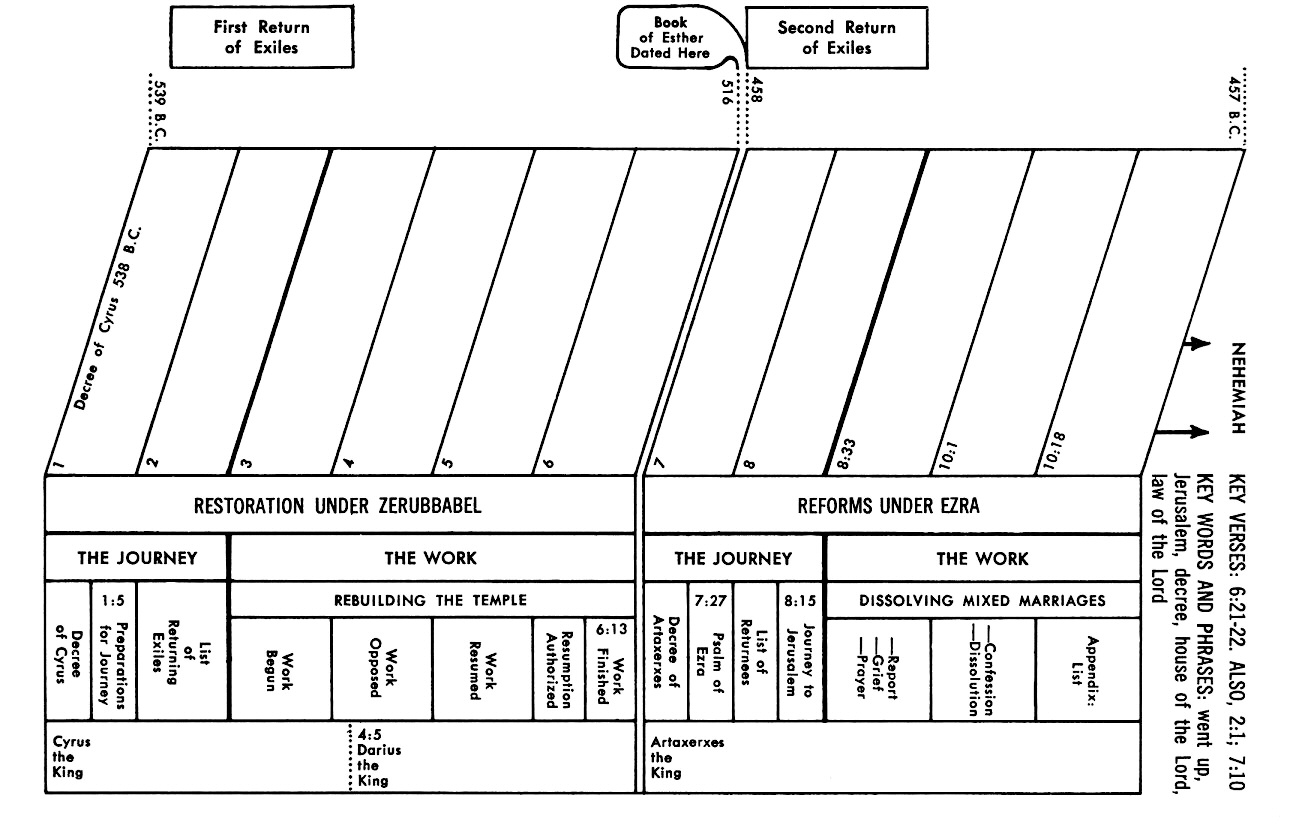
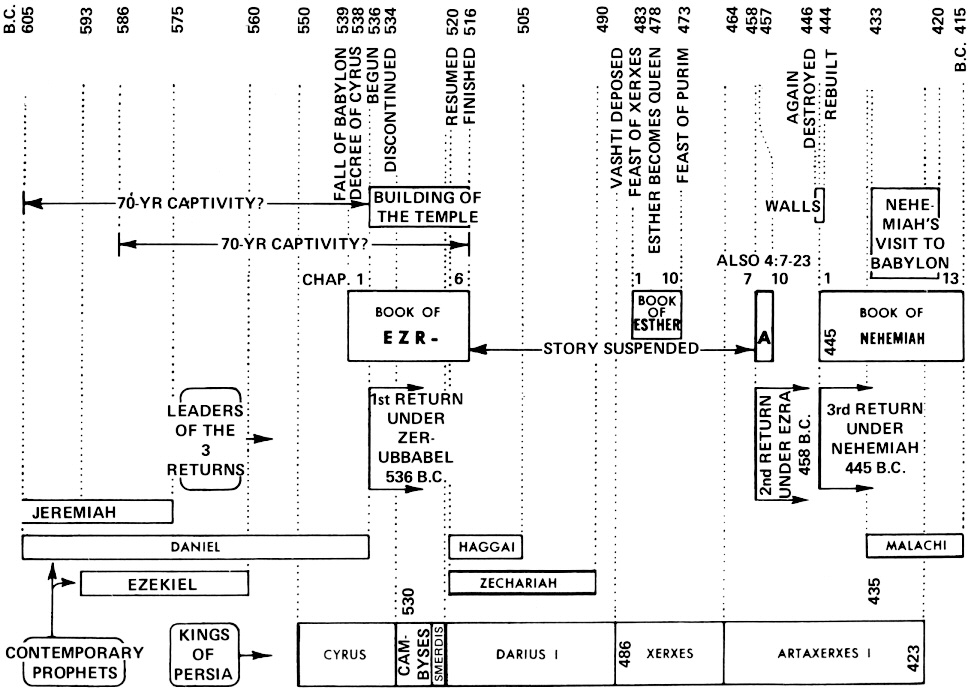
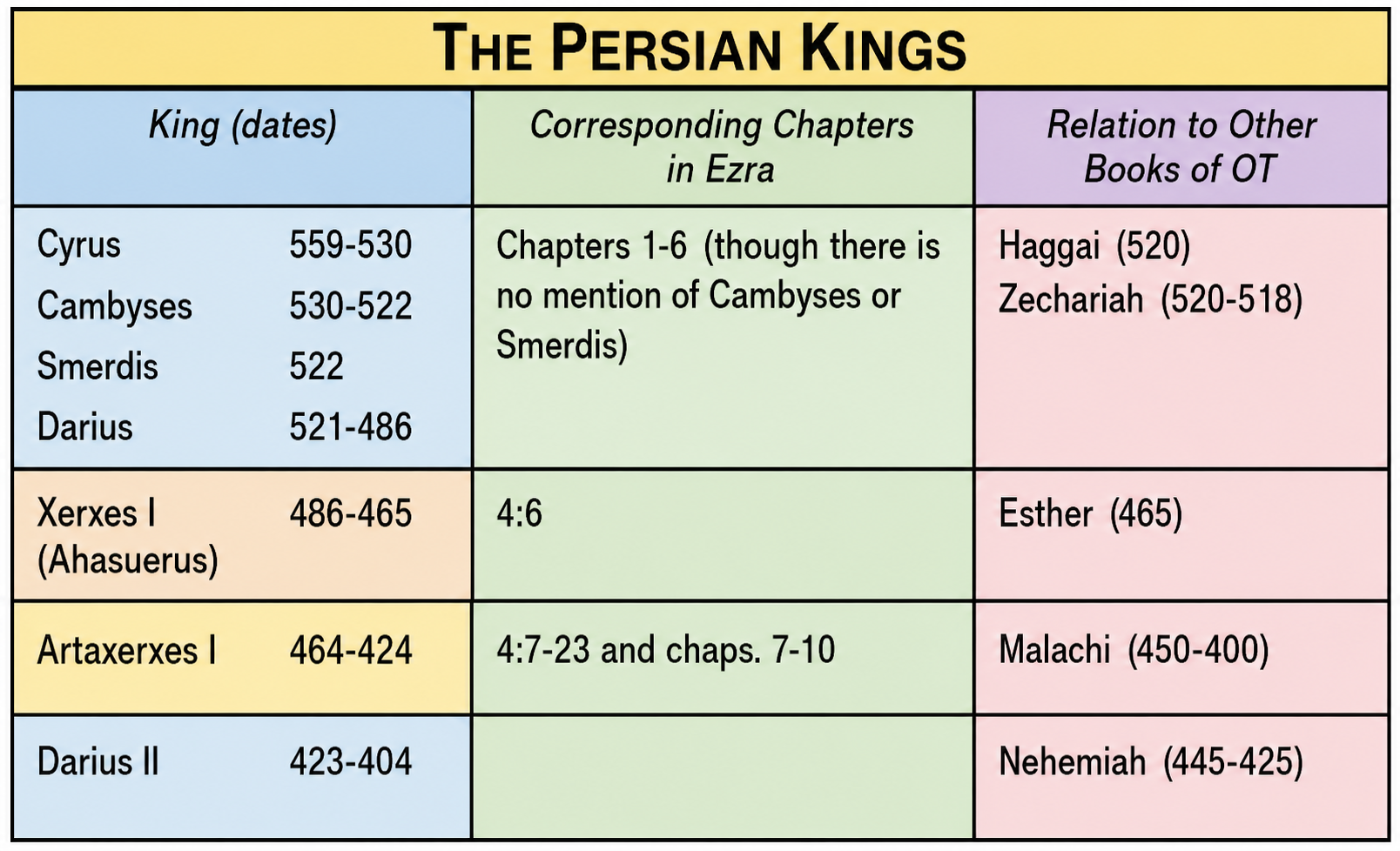
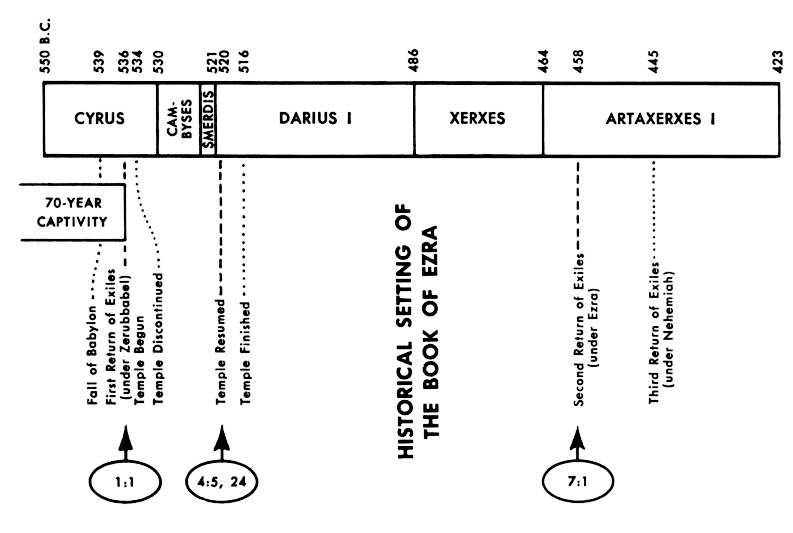
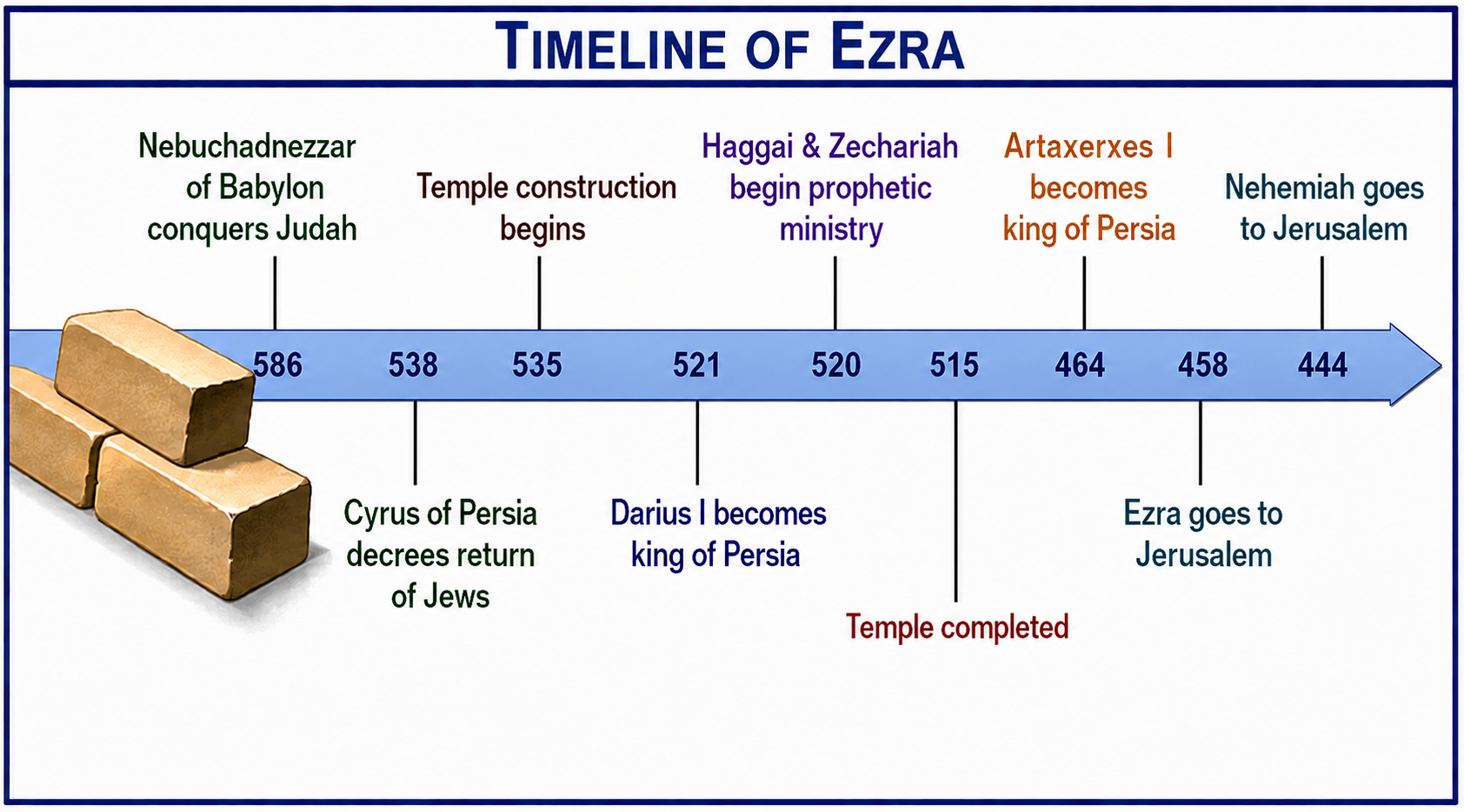
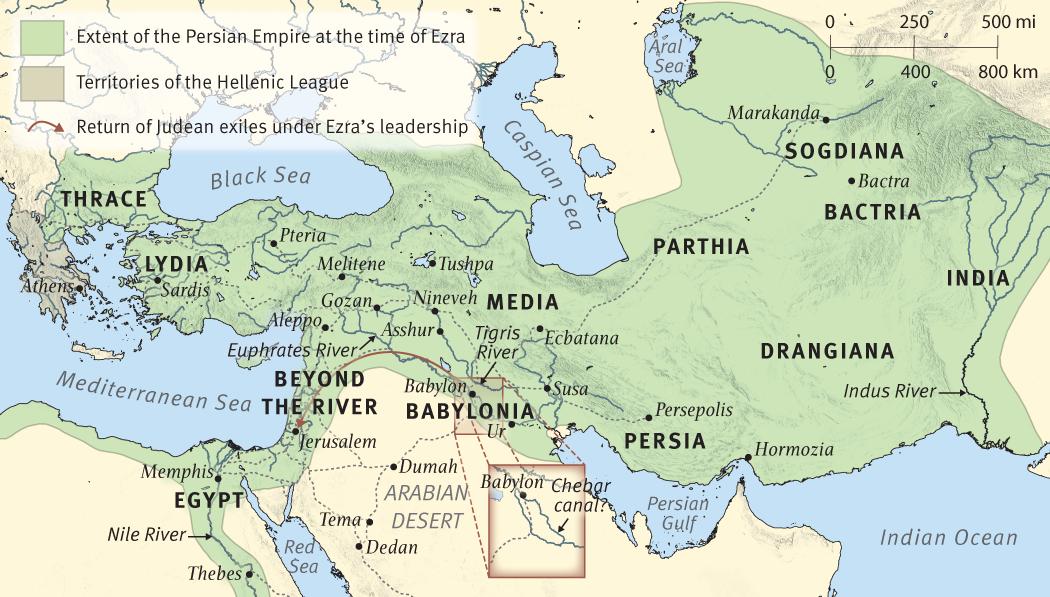
Source: ESV Maps
EZRA UNDER CONSTRUCTION
JUST A FEW NOTES NOW
WILL FINISH IF THE LORD WILLS
Ezra 4:1 Now when the enemies of Judah and Benjamin heard that the people of the exile were building a temple to the LORD God of Israel,
- the adversaries (KJV): These were the Samaritans, the descendants of the various nations with which the kings of Assyria had peopled Israel, when they had carried the original inhabitants captive. Ezr 7:9 1Ki 5:4,5 1Ch 22:9,10 Ne 4:1-11 Da 9:25 1Co 16:9
- children of the captivity (KJV): Heb. sons of the transportation, Ezr 1:11 *marg: Ezr 6:16,19,20 Ezr 10:7,16 Da 5:13
Now when the enemies of Judah and Benjamin heard that the people of the exile were building a temple to the LORD God of Israel,
David Guzik - Judea was not completely empty of inhabitants in the two generations of when much of the Jewish population of Judah was exiled in Babylon. There was a remnant descended from the lowest and poorest of the land that was left behind in the exile (Jeremiah 39:10), combined with the few who had drifted into the largely desolate area. These people were not happy that Judah and Benjamin had come back to Judea and therefore they were their adversaries. Those who drifted into Judea were related to the Samaritans, those brought into the lands of the former kingdom of Israel after its fall to the Assyrians (733 B.C.), who intermarried with those left behind after the exile. In the two generations of exile after the fall of the kingdom of Judah, they had also expanded somewhat into the lands of Judah.....The noise from the dedication ceremony at the end of Ezra 3 got the attention of these scattered peoples, alerting them that the returning Jews were serious about re-establishing a permanent presence in Judea.
John Walton - enemies of exiles. The land of Israel and Judah was not uninhabited at the time of the return from exile. The descendants of those people who had not been taken to Babylonia as well as those who had been brought into that area by the Assyrians (2 Kings 17:1-6) would have existed as distinct population groups. The fact that the writer of Ezra identifies them as “enemies” suggests that there had already been clashes with these people (Ezra 3:3) and that their offer of help in rebuilding the temple was not an honest one. In any case it is likely their understanding of Yahweh worship differed from that of the returned exiles (see 2 Kings 17:33). That would help explain Zerubbabel’s curt answer to them. (IVPBBOT page 462)
Bob Utley - "the enemies" There was a delay from the starting of the temple in 536 B.C. to the completion in 516 b.c. Ezra explains that the delay was because of Judah's enemies (the surrounding people groups), while the prophet Haggai explains that it was because of Jewish apathy. The presence of opposition is foreshadowed in Ezra 3:3. ▣ "Judah and Benjamin" There were thirteen tribes. When they split in 922 B.C., ten tribes went with the northern group and three (really four if one counts the Levites) stayed with the southern group. Judah, Benjamin, Simeon, and most of Levi made up Judah. This phrase was used often in the historical books of Kings and Chronicles to refer to the southern kingdom. In this context it implies that most of the Jews who returned were from the Babylonian exiles (i.e., 605, 597, 586, 582 B.C.). The northern tribes, exiled by Assyria in 722 B.C., were deported to Media and the vast majority of them never returned to Palestine. ▣ "the people of the exile" This is the descriptive title for the returning Jews. It implies that some of the opposition came not only from the half-Jewish descendants of the remaining Jews who had intermarried with pagan immigrants, but also possibly from Jews who were never exiled and had not intermarried. The returning Jews had a fervor for YHWH which came across as an elitism. They wanted no hint of paganism or idolatry, which had cost them their land, their freedom, and their worship! They also wanted no part of the indigenous Jewish leadership.
Ryrie - the enemies. Descendants from the intermarriages of Israelites and foreigners who were transplanted to Samaria by Esarhaddon, king of Assyria, in 669 B.C. in fulfillment of the prophecy of Isa. 7:8, which was uttered in 734 B.C. (2 Kings 17:24). This procedure by the Assyrians effectively stifled nationalistic spirit and created a syncretistic religion. Zerubbabel and Joshua refused the offer of help.
Matthew Henry - The adversaries of the temple - Ezra 4:1-5 - Every attempt to revive true religion will stir up the opposition of Satan, and of those in whom he works. The adversaries were the Samaritans, who had been planted in the land of Israel, 2 Kings 17. It was plain that they did not mean to unite in the worship of the Lord, according to his word. Let those who discourage a good work, and weaken them that are employed in it, see whose pattern they follow.
Steven Cole - Spiritual Setbacks (Ezra 4:1-24)
Chuck Swindoll has a book titled, Three Steps Forward, Two Steps Back [Thomas Nelson, 1980]. That title fits Ezra 4. God had stirred up the heart of the pagan King Cyrus to issue a decree for the Jews to return to their land and rebuild His temple. Hurrah, one step forward! Fifty thousand Jews responded by giving up their lives in Babylon and making the long, dangerous trek back to the land. Two steps forward! They rebuilt the altar, gathered in Jerusalem, celebrated the Feast of Booths, and laid the foundation for the new temple. Three steps forward!
Then the enemy hit and the work on the temple stopped. One step back. The work ceased for 16 long years. Two steps back. They were still in the land (one step ahead), but there was no center for worship in Jerusalem. The people, intimidated by their enemies, settled into a routine of life that got along without temple worship until God stirred up the prophets Haggai and Zechariah (Ezra 5:1), who got the rebuilding of the temple moving again.
Last week we looked at a new beginning with God. New beginnings are exciting and filled with hope. Things don’t have to be as they have been during our time in Babylon. By His abundant grace, we can turn back to the Lord and start afresh. But no sooner have we turned back than the enemy hits and we suffer a spiritual setback. The spiritual high that we have enjoyed is followed by a deep spiritual low. We’re not sure that we want to ride the roller coaster back up only to face another sickening drop. So we settle into spiritual mediocrity. That’s what happened in Ezra 4. The lesson for us is…
Whenever you make a commitment to the Lord, be prepared to face the enemy’s unrelenting attempt to set you back.
Verse 1 says that the enemies of Judah and Benjamin heard that they were building a temple to the God of Israel. We cannot build, whether a church building to further the ministry or building our own spiritual lives, without the enemy hearing about it. He will come prowling, subtly at first, but more aggressively if we resist his first attempts. To be forewarned is to be forearmed:
1. Our spiritual enemy will vigorously oppose every attempt at spiritual advance.
It is crucial to remember this! What often happens is, a person makes a new beginning with God, either at conversion or after a time of captivity in Babylon (the world). He naively assumes that since he has now turned to the Lord, everything will go well from here on out. Finally, God is now on his side. His hopes have never been higher. Just then—wham! The enemy hits, he goes down, and he feels lower than he did before he turned back to the Lord.
Satan has a number of tricks or tools in his bag:
(1) THE ENEMY’S MOST DANGEROUS TRICK IS TO LURE US INTO COMPROMISE UNDER THE GUISE OF COOPERATION.
Their first ploy was, “Let us build with you, for we, like you, seek your God; and we have been sacrificing to Him since the days of Esarhaddon king of Assyria” (Ezra 4:2). If that day was like our day, Zerubbabel and Jeshua probably didn’t have a waiting list of those who wanted to help, but couldn’t because there were so many workers. Along come some locals who offer to work with them. It could have been a bridge of outreach, to build relationships while they worked together. It was an opportunity to befriend their neighbors.
In light of that, their answer hits us in the face like a wet dishrag: “You have nothing in common with us in building a house to our God; but we ourselves will together build to the Lord God of Israel, as King Cyrus, the king of Persia has commanded us” (4:3). How rude can you get! That’s no way to win friends!
But they were right. To find out why they were right, you have to understand 2 Kings 17:24-41. These people had been brought from Babylon and its surrounding areas into the Northern Kingdom after its fall in 722 B.C. At the beginning of their living there, they did not fear the Lord, and He sent lions that killed some of them. They assumed that their problems stemmed from not knowing the custom of the god of the land. So they called in a priest from Israel who taught them about the Lord. They began sacrificing to the Lord, but they also continued worshipping their own gods from Babylon. As 2 Kings 17:41 sums up, “So while these nations feared the Lord, they also served their idols; their children likewise and their grandchildren, as their fathers did, so they do to this day.”
The problem of these people (who were the forefathers of the New Testament Samaritans) was syncretism. They blended false religions with the worship of the one true God. They added God to their pantheon, but they never dropped their idols. If they had worked together with the returned exiles, the Lord’s people would have fallen into spiritual compromise, mingling idolatry with the worship of God.
The danger of the appeal of these enemies was that their words were not absolute lies. They were partially true. They did worship God and sacrifice to Him. The problem was, they did not worship God alone! Some of the returned remnant could have accused Zerubbabel and Jeshua of being too hard on these men: “They believe in God, just as we do. Why not make peace with them and let them work together with us?” The answer is, for the same reason that you don’t drink water that is only a little bit polluted. It will poison you!
There are great pressures today to compromise the gospel by joining with those who claim to believe it, but who add things to it that totally destroy the grace of God. The Roman Catholic Church believes that Jesus is God and that He died on the cross to save us from our sins. They believe that we are saved by grace through faith in Christ. The only “little” problem is, they believe that we are not saved by faith in Christ alone. They believe that to be saved we must add our works to what Christ did on the cross. Evangelical pastors are under immense pressure to work with the Catholic Church in the cause of Christ. Many influential evangelical leaders have signed two documents urging us to bridge the gap with Rome. But if we do, we compromise the pure gospel of God’s grace and mingle it with the idols of worldly religion.
If we resist the enemy’s subtle approach, he will show his true colors by a more aggressive opposition.
(2) THE ENEMY OFTEN USES THE TOOL OF DISCOURAGEMENT.
“Then the people of the land discouraged the people of Judah” (Ezra 4:3). We are not told specifically how they did this. Maybe they said, “If you rebuild this temple, it’s just going to get torn down again.” Maybe they knew that thousands would flock to Jerusalem to worship at the temple, and said, “We don’t want this kind of traffic in our backyard! Build your temple somewhere else.” If it were our day, they would be down at city hall, protesting the zoning laws or environmental impact!
Satan often uses the tool of discouragement. He whispers to us, “What you’re doing won’t make any difference in this world or in eternity. Those kids you teach don’t appreciate your efforts. Why bother? Just quit and enjoy yourself.” He tries to discourage pastors when people we have worked with turn against us, spread unjustified criticism, and lead others out of the church. “You see! You’re just laboring in vain!”
(3) THE ENEMY OFTEN USES FEAR TO FOLLOW DISCOURAGEMENT.
After discouraging the people, “they frightened them from building” (Ezra 4:4). When you’re discouraged, fear can easily creep in. Many a pastor has wrestled with thoughts like, “What if your critics get you fired? How are you going to make a living and support your family? What if the critics lead away the big givers? How is your church going to make its budget?” Discouragement quickly turns into many fears about the future.
(4) THE ENEMY USES MISINFORMATION AND FALSE ACCUSATIONS TO OPPOSE AND UNDERMINE GODLY LEADERS.
They “hired counselors against them to frustrate their counsel all the days of Cyrus king of Persia” (4:5). Whether these hired counselors operated at the royal court or whether they circulated among the Jews, or both, they spread half-truths and misinformation to undermine the leadership of Zerubbabel and Jeshua. “These men are just out to build a kingdom for themselves. They’re going to rebel against the king. They’re lining their own pockets with the construction money.” The rumors started flying to frustrate the counsel of these godly leaders.
In Ezra 4:6-23, we have a long parenthesis where Ezra shares examples of the opposition that came later. He carefully names the different kings that he is referring to so that his readers would not misunderstand. These later examples did not concern the rebuilding of the temple, but of the city and the walls during the reign of King Artaxerxes (Ezra 4:12), whom Nehemiah served. Israel’s enemies wrote this letter to Artaxerxes that was filled with false accusations and half-truths. They said that if the city were rebuilt, the Jews would stop paying taxes (4:13). That will get any king’s attention!
The critics also claimed to be loyal to the king. The literal phrase is, “we eat the salt of the palace” (Ezra 4:14). The Egyptian kings had made salt a royal monopoly, and perhaps the Persians had also. Our English word salary comes from the Latin salarium, which was the ration of salt given to soldiers. Thus we have the expression, “a man is not worth his salt” (Edwin Yamauchi, Expositor’s Bible Commentary [Zondervan], 4:632). But, being loyal to the palace, the critics claimed that they did not want to see the king dishonored by these rebellious Jews. Thus they advised him to look it up in his record books and he would find that Jerusalem had a record of being a rebellious and evil city (Ezra 4:12, 15). If he didn’t stop them, they would be true to their past and rebel again.
Again, these were half-truths and misinformation. True, Israel had rebelled in the past against tyrants who had forced them into subjection. But to smear the city with such broad strokes was both unfair and untrue. The Lord had told Jeremiah to tell the people to seek the welfare of Babylon and pray to the Lord on its behalf while they were there (Jer. 29:7). No mention is made about that here. Satan uses the same trick to smear God’s servants today. He takes a partial truth and paints it with broad strokes to make a man of God look extreme or unstable.
(5) IF NEED BE, THE ENEMY WILL FORM COALITIONS TO OVERWHELM THE GODLY BY SHEER FORCE OF NUMBERS.
Scholars think that Ezra 4:7 may constitute a letter that we do not have a copy of, whereas the following verses describe another letter that is quoted. But in both cases, the letters came from multiple parties joined together against the Jews. The ploy behind such tactics is to imply, “Everyone is against these people.” Just look at the names and different backgrounds. If all of these men from such different backgrounds and places can agree together against these Jews, the Jews must be the problem! The majority must be right; these Jews are the source of the trouble!
Even so today, the enemy operates by appealing to popular opinion against the Lord’s people: “These narrow-minded, intolerant, Bible-believing Christians are the problem. They’re like the Taliban, trying to impose their views on everyone else! The majority of Americans believe in God, but we don’t believe in such an intolerant, unloving God as these people do. We believe in the basic teachings of the Bible, but we aren’t so narrow or old fashioned as to think that it is literally true.” So they claim to believe in God, but support “reproduction rights,” which means killing babies; and “celebrating diversity,” which means promoting homosexuality.
(6) AT TIMES, THE ENEMY WILL USE GOVERNMENT EDICTS AND SHEER FORCE TO BLOCK OUR SPIRITUAL ADVANCE.
King Artaxerxes issued a decree to stop the work, providentially adding, “until a decree is issued by me” (Ezra 4:21). Thankfully, that decree was issued after Nehemiah tactfully sought the king’s permission to return and rebuild the walls of Jerusalem. But on this occasion, king’s decree in hand, Israel’s enemies went quickly and stopped the Jews by force of arms (Ezra 4:23). Ezra 4:24 goes back chronologically to Ezra 4:5, not to verse 23. The result of the opposition was that the work on God’s house ceased for 16 years.
Even so, the enemy today works through government channels and judicial cases to enact laws that oppose Christianity and to prohibit Christians from living as God would have us to live. We now have no-fault divorce laws that undermine the lifelong commitment of marriage and enable couples to split up for any reason. Laws protect mothers from killing unwanted children, right up to the point of birth. The day is not very far away in which it will be illegal to spank your child without being charged with child abuse. A final tactic of Satan is,
(7) THE ENEMY DOES NOT GIVE UP IN HIS OPPOSITION TO OUR SPIRITUAL PROGRESS.
Ezra 4:6-23 chronicle events that happened up to 80 years after the events of Ezra 4:1-5, 24. Ezra may have included these later events not only to give examples of opposition, but also to prove that the decision to reject the help of the enemies (Ezra 4:1) was right. Also, these verses show that Ezra’s later strong contention against the mixed marriages of the returned exiles was well-founded (Derek Kidner, Ezra & Nehemiah, Tyndale Old Testament Commentaries [IVP], p. 48). They also show the unrelenting nature of Satan’s opposition. He does not give up after one setback. He keeps on countering whatever the Lord’s people try to do to move ahead spiritually. If he can get you to kick back and give up, he has achieved his objective. That leads to…
2. There are many wrong ways to respond to the enemy’s attacks.
(1) GIVE UP ON YOUR SPIRITUAL GOALS AND GO BACK TO YOUR OLD WAY OF LIFE.
The prophet Haggai shows that many of the Jews had gotten distracted with building their own homes and thus had neglected building the Lord’s house (Hag. 1:4). I’ve seen this happen over and over. Someone gets excited about serving the Lord. They jump into their new ministry with enthusiasm. But the enemy hits them, often with criticism from fellow believers. They get hurt, drop out, and think, “If that’s the thanks I get for trying to serve, forget it.” They may still attend church occasionally, but they never will get involved in serving again.
(2) SETTLE FOR SECOND BEST SPIRITUALLY.
Some of the Jews may have thought, “Well, at least we’re out of Babylon and back in the land. If we can’t have a temple, we’ll have to do without.” But without the temple, the Jews couldn’t worship God as they should have. They wouldn’t have had the spiritual center for the nation. Some Christians try to make a new beginning with the Lord, but the enemy attacks. They back off and decide to settle into a mediocre spiritual existence.
(3) BLAME GOD OR GOD’S LEADERS FOR NOT DOING WHAT YOU THINK THEY SHOULD HAVE DONE.
Perhaps some of the people grumbled against Zerubbabel and Jeshua for their scheme of rebuilding the temple: “Things were going okay before we started this project. Why did our leaders ever get us into this battle? Maybe it wasn’t God’s will.”
We need to keep in mind that we wrestle not against flesh and blood, but against the unseen spiritual forces of wickedness in the heavenly places (Eph. 6:12). Otherwise, when things go wrong at church or in your relationships with other Christians, it’s easy to grumble against God or against the leaders God has put over you. Instead of working together, praying together, and moving ahead with what the Lord wants done, the church can fragment into angry factions, each blaming the other for problems that really are coming from the enemy.
(4) CONCLUDE THAT IT MUST NOT BE GOD’S TIME AND THAT WHEN HE WANTS IT DONE, IT WILL GET DONE.
I realize that God does have His timetable, and that often it does not coincide with my timetable! But through Haggai 1:2, the Lord quotes this people as saying, “The time has not come, even the time for the house of the Lord to be rebuilt.” So they focused on building their own homes and 16 years after the temple foundation had been laid, there was no further progress.
It’s easy to spiritualize our laziness by saying that it must not be the Lord’s will or His timing for something to happen that He wants us to take the initiative to do. We mistakenly assume that if the Lord is in it, we won’t have hassles, setbacks, and frustrations trying to get it done.
Reading Christian biographies can help here. You hear about a man like Hudson Taylor and wrongly assume that he started the China Inland Mission and (presto!) thousands came to Christ. He did start the mission and eventually thousands did come to Christ, but not without innumerable problems and setbacks that had to be overcome. Reading the story of what he went through can give you the perspective and strength to endure when you face strong opposition in whatever God calls you to do.
Thus our spiritual enemy will vigorously oppose every attempt at spiritual advance. There are some wrong ways to respond to his attacks. Finally,
3. There are some biblical strategies for overcoming the enemy’s tactics.
There are many more strategies than I can list here but, for sake of time, I will mention four:
(1) KNOW THE ENEMY.
In 2 Corinthians 2:11, Paul has just told the church to forgive the man who had sinned, but repented. Then he explains, “so that no advantage would be taken of us by Satan, for we are not ignorant of his schemes.” From the Garden of Eden on (including our text), the Bible shows us how craftily Satan works to tempt and deceive God’s people. To know his schemes arms you to stand and fight when he strikes.
(2) RESIST THE ENEMY.
James 4:7 tells us, “Resist the devil and he will flee from you.” You don’t have to memorize seven steps or special prayers to overcome the devil. Just say no! Put your spiritual armor in place (Eph. 6:10-20) and resist!
(3) SUBMIT AND DRAW NEAR TO GOD.
Before telling us to resist the devil, James 4:7 says, “Submit therefore to God.” He goes on to say, “Draw near to God and He will draw near to you” (4:8). If God allows the enemy to cause you trials, your responsibility is to submit to God, knowing that He can lift the trials the minute He sees that it is for your good. Rather than pull away from God in the trial, draw near to Him, knowing that He cares for you (1 Pet. 5:7-11).
(4) PERSEVERE IN THE FACE OF OPPOSITION.
It’s a lifelong battle. If we try to do anything significant for the Lord, the enemy will hear that we’re building and will stir up opposition. If we give up, he wins and God’s kingdom suffers. If we persevere, His kingdom advances.
Conclusion
When he was seven years old, his family was forced out of their home and he had to work to help support them. When he was nine, his mother died. At 22, he lost his job as a store clerk. He wanted to go to law school, but lacked the education. At 23, he went into debt to become a partner in a small store. At 26, his business partner died, leaving him a huge debt that took years to repay.
At 28, after courting a girl for four years, he asked her to marry him. She said no. At 37, on his third try, he was elected to Congress, but two years later, he failed to be reelected. At 41, his four-year-old son died. At 45, he ran for the Senate and lost. At 47, he failed as the vice-presidential candidate. At 49, he again ran for the Senate and lost. At 51, he was elected president of the United States. Many consider that man, Abraham Lincoln, the greatest leader our country has ever had (Leadership, Winter, 1983). Lincoln suffered numerous setbacks in his personal life and career, but he persevered and eventually succeeded.
You will suffer numerous setbacks if you commit yourself to the Lord and try to follow Him. Be prepared for the enemy’s attacks and don’t give up!
Discussion Questions
- How can we know when cooperation with unsaved religious people crosses the line into spiritual compromise?
- If Satan is going to oppose any attempts at spiritual advance that we make, why should we try?
- Someone shares something that you think may be a half-truth or false accusation against someone else. What should you say? How should you respond?
- How can we know whether a hindrance to a spiritual advance is due to the enemy or to it not being God’s timing right now?
Brian Bell - Nehemiah 4:1-24
- Intro:
- In a chess game you can many times be placed in Check but still come out ahead & even win the game.
- Here we’ll see the enemy place them in check a couple times…but let’s see how the game ends up.
- Chapter 4 is a little hard to follow because it doesn’t flow exactly chronologically.
- Ezra 4:1-5 & 4:24-6:22 flow as one unit, describing the building of the temple from its beginning with king Cyrus to its completion under king Darius.
- So basically Ezra 4:6-23 is inserted to describe future hostility against the returnees, who tried to rebuild the walls under king Xerses & Artaxerxes.
- I think Ezra wanted us to know that the hostility continued afterwards.
- In a chess game you can many times be placed in Check but still come out ahead & even win the game.
- RESTORATION RESISTANCE (Ezra 4)
- When God starts to bless; Satan starts to battle.
- Although another way to keep your enemy off your back is to not do anything for the Lord; Live an unaggressive & lazy life…and guaranteed, the enemy will leave you alone.
- Every work of the Lord draws the attention of the enemy.
- Satan has the same tool belt he’s been using for ages. Let’s look at a few of these ol’ tools.
- Let’s look at the 1st tool out of Satan’s tool belt…
- [Ezra 4:1] The Tool of Infiltration (Ezra 4:1-3) Let us build with you
- This sounds innocent enough, but this was a golden cup of poison. What’s the problem?
- 2 Kings 17:24Then the king of Assyria brought people from Babylon, Cuthah, Ava, Hamath, & from Sepharvaim, & placed them in the cities of Samaria instead of the children of Israel; and they took possession of Samaria & dwelt in its cities.
- These are Jews that had intermarried with w/the Assyrians, making the 1/2 breed Samaritans of the NT.
- This is the story of the Bad Samaritans!
- 2 Kings 17:24Then the king of Assyria brought people from Babylon, Cuthah, Ava, Hamath, & from Sepharvaim, & placed them in the cities of Samaria instead of the children of Israel; and they took possession of Samaria & dwelt in its cities.
- Are there any partnerships you’re involved with that you should reevaluate?
- Not all volunteers have the right motive, they may be working for the enemy.
- What weapon do we have to fight against Infiltration?
- Not being unequally yoked. Being careful of partnerships with the world.
- This sounds innocent enough, but this was a golden cup of poison. What’s the problem?
- 6b [Ezra 4:2] The Tool of Discouragement (Ezra 4:4a) …tried to discourage the people of Judah.
- Often Discouragement is brought about by different fears.
- Is.12:2 Behold, God is my salvation, I will trust and not be afraid; For YAH, the LORD, is my strength and song; He also has become my salvation.
- When we yield to discouragement, it is usually because we give too much thought to the past or to the future.
- Thomas Edison said of discouragement, When down in the mouth remember Jonah - he came out all right.
- Never doubt in the dark what God told you in the light.
- What weapon do we have to fight against Discouragement?
- Knowing what GOD has called us to. Not worrying about yesterday or tomorrow, focusing on today.
- Often Discouragement is brought about by different fears.
- 6c [Ezra 4:3] The Tool of Trouble (Ezra 4:4b) They troubled them in building.
- This can still happen in our building projects, & life situations today...The questions we need to ask ourselves are:
- Is this a timing issue? Is God doing something else behind the scene we can’t see yet?
- What weapon do we have to fight against Trouble?
- The reminder that God is bigger than any troublemaker, any Goliath's, in our lives.
- This can still happen in our building projects, & life situations today...The questions we need to ask ourselves are:
- 6d [Ezra 4:4] The Tool of Frustration (Ezra 4:5a) …hired counselors…to frustrate their purpose.
- Play the role of the Oyster that makes something beautiful out of its irritations.
- What weapon do we have to fight against Frustration?
- Pray, not anxiety or worry.
- 6e [Ezra 4:5] The Tool of Fatigue (Ezra 4:5b) …all the days of Cyrus.
- Some times it just doesn’t let up…
- Like the tactic that is used to flush someone out of their house, or using interrogation methods w/continuous music or sounds.
- Though not Politically Correct, what my older brother Mark used to do was a game he referred to as Chinese water torture...as he’d pin me down w/his knees on my shoulders, then tap w/his finger on my chest. Drip, drip, drip (saying, Chinese water torture).
- The tool of fatigue. I’ve seen many Christians fall to this weapon, of being so physically tired that it subsequently wears on them emotionally & spiritually.
- What weapon do we have to fight against Fatigue?
- Continual physical, emotional, & spiritual refreshment.
- 6f [Ezra 4:6] The Tool of Accusation (Ezra 4:6) they wrote an accusation against the inhabitants of Judah & Jerusalem
- This tool worked…The construction had to stop. Ezra 4:24
- We do not live in a fairy book world where everyone lives Happily ever after.
- The enemy won this battle…but didn’t win the war. (& that’s key)
- Satan has a wonderful arsenal of accusations for us; & a whole army to carry out his bidding. And unfortunately...many Christians lining up to be used also.
- What weapon do we have to fight against accusations that come our way?
- Expect it & Evaluate it.
- This tool worked…The construction had to stop. Ezra 4:24
- Does Satan use these same tools today?
- He only has 3 channels at his disposal to tempt us: Himself, world system, our flesh
- He only has 3 tactics to tempt us: the lust of our eyes, lust of our flesh, pride of life.
- What can we do to counter his attacks?
- Submit to God, resist the devil & he will flee from you. James 4:7
- Every work of the Lord draws the attention of the enemy.
- He may win a few battles but never the war.
- Ezra 4:6-16 - The accusatory letter written to Ahasueras/Xerxes. I’ll read Ezra 4:12-16
- The deception? It’s for the kings sake. We have you in mind dear King.
- Ezra 4:17-22 - The kings answer. You’re right (Ezra 4:19). Make them stop (Ezra 4:21). They stopped em (Ezra 4:23,24)
- When God starts to bless; Satan starts to battle.
Dale Ralph Davis - No Surprises or Let the Troubles Begin (Ezra 4)
"Do not be surprised, brothers, if the world hates you" (1 John 3:13)
We are still with the returnees from exile circa 538 B.C. as they proceed to work on the rebuilding of the temple. (Chronological and Background Charts of the Old Testament ) The thrust of Ezra 4 is fairly direct.
I. The World Subtly Hates You - Ezra 4:1-3
Here we see hatred and enmity under the guise of friendship. Here are people, seemingly from the area of Samaria, who offer their assistance to Zerubbabel and company in the temple rebuilding project (Ezra 4:2). But, according to verse 1, the writer clearly labels them "enemies of Judah and Benjamin," and Zerubbabel, Jeshua and the leaders of Israel have the discernment (Ezra 4:3) to see them for what they really are.
Yet, the approach they use is so affable and ecumenical: "Let us help you build because, like you, we seek your God" (Ezra 4:2). They refer to the Assyrian king Esarhaddon, which should raise our suspicions, as it did Israel's. Note the place of this king in Assyrian chronology:
Shalmaneser V 727-722 B.C.
Sargon II 721-705 B.C.
Sennacherib 704-681 B.C.
Esarhaddon 681-669 B.C.
These folks in Ezra 4:2 were, to a large degree, pagan imports who had already settled into an established syncretism (see and read 2 Kings 17:24-41, esp. vv. 33,41). The finds of 4th century papyri at Wadi Daliyeh (located a ways above Jericho) seem to support this. A great number of skeletons were also found here, the remains of families of Samaria who vamoosed before Alexander the Great in 331 B.C. "A good proportion of their personal names included the names of such deities as Qos (Edomite), SHR (Aramaic), Chemosh (Moabite), Ba'al (Canaanite), and Nebo (Babylonian)."2
The point? Separation is urgent (Ezra 4:3). There are times when narrowness and intolerance is the way to faithfulness.
II. The World Obviously Hates You - Ezra 4:4-5
There is nothing subtle about the opposition in these verses. One could imagine some Israelites wondering if it wouldn't have been better to have accepted the syncretists' offer, for now the latter turn with a withering campaign of hostility against the people of Judah. The Hebrew text stresses the ongoing, wearing effect of this opposition in that it uses three participles in Ezra 4:4-5a (indicating continuing action): they kept on making their hands drop; kept frightening them; kept hiring counselors against them. The intimidation must have occurred on site (Ezra 4:4), with the hired professionals working the halls of power back in Persia (Ezra 4:5). Apparently all this proved effective; they wanted to stop Judah from building (Ezra 4:4), and they did (Ezra 4:24).
The point here is that intimidation is powerful. The prophet Haggai had to address this stop-work situation in 520 B.C.
III. The World Persistently Hates You - Ezra 4:6-23
To follow matters chronologically, see the list of Persian kings and dates in the Introduction to this series. What we have in this section is an ongoing description of conflict, intimidation, and enmity.
Before discussing all of Ezra 4:6-23 and its function, let me make some remarks on scattered details:
Ezra 4:6 contains an accusation against Judah in the reign of Ahasuerus (or Xerxes). Yamauchi points out that when Darius died at the end of 486 B.C., Egypt rebelled; Xerxes had to march west to suppress the revolt. The Persians gained control by the end of 483 B.C.3 If the accusation in verse 6 had to do with an innuendo alleging revolt by Judah during this time, one can imagine what a volatile concern that would be for the Persians with Egypt already on their hands.
Verse 7 apparently deals with a second accusation (later than that of verse 6), this one leveled during the reign of Artaxerxes. Then verse 8 indicates a third accusation, also under Artaxerxes, of which we have a copy preserved in Ezra 4:11-16, with its flattery, fawning, innuendo, and apparent concern for Persian interests in taxes (Ezra 4:13) and security (Ezra 4:16).
Estimates indicate that somewhere between 20 and 35 million dollars worth of taxes were collected annually by the Persian king. Palestine, a part of the fifth satrapy, was assessed only 350 silver talents, worth about $680,000 in 1952 terms. The Persians took a good amount of the gold and silver coins and melted them down, storing them as bullion. Little of the taxes were returned to assist the provinces.4
All sorts of accusations seem to be flying off to the Persian court in Ezra 4. That is very true-to-life. Near Eastern kings - Persians were no exceptions - used elaborate systems of informers and spies.
Now we come back to the function of Ezra 4:6-23. These verses seem to interrupt the flow of events. Verses 1-5 report opposition in the time of Cyrus and into the beginning of the reign of Darius (522 B.C.). Then in verses 6-23 we read an ongoing description of opposition to Judah down through the years. But in verse 24 we are wrenched back to the early reign of Darius. If we read in chronological order, we would read verses 1-5, then verse 24, then verses 6-23.
What has happened? Well, it is as though the writer, who is relating the earlier days after the return from exile, began telling us about the opposition Judah experienced right from the first, and then decided that he would simply go on and pile up all the opposition that Judah had experienced through the years. So, he simply kept checking off this accusation, that opposition, down through Artaxerxes' reign. But at verse 24, it is as if he says, "Now we need to go back to the time-period that my record here in Ezra 4 really concerns; let's get back to about 520 B.C., early in Darius' reign, when the work on the temple stopped because Judah seemed under so much duress."
This non-sequential order, however, is not deceptive, for the writer gives clear indicators (giving us the names of the respective kings) so that we can keep the chronology straight, and the specific objects of construction also help us detect the different situations. Note especially verses 12-13, where the people of Judah draw fire for rebuilding the city and its walls, not the temple as in verses 1-5 and 24. [This opposition in verses 8-23 under Artaxerxes was effective in bringing the project to a stop. It may have been that because of their lack of security the people of Judah wanted to rebuild the city and walls, but were doing it without official authorization, and so their enemies reported and exposed them].
In any event, in Ezra 4:24 we are back at the temple and back in the early reign of Darius (ca. 520 B.C.). You must remember that Ezra 4:6-23 constitutes a sort of big bracket piece, breaking up the chronology of chapter 4. The writer does this for topical reasons. The writer wants to overwhelm his readers with a sense of the unceasing opposition that Judah has faced through these years, as if he says, "You might just as well see the whole massive glob of it." His method of writing is intended to reinforce his point: opposition is relentless.
IV. Conclusion
Ezra 4; then, is a dose of realism.5 It sobers up the too eager disciple who has never realized that the life of foxes and birds may hold luxuries that following the Son of Man never sees (Luke 9:58).
REBUILDING THE TEMPLE Ezra 4:1, 4-5
When the adversaries of Judah and Benjamin heard that the descendants of the captivity were building the temple… They troubled them in building, and hired counselors against them to frustrate their purpose (Ezra 4:1, 4-5).
In August, 1857, Cyrus Field and his company, Atlantic Telegraph, attempted to lay a telegraph cable from England to North America, but the cable broke at twelve thousand feet under the ocean surface and could not be recovered. During the next nine years, Field and his men made three more unsuccessful attempts. Finally, in July, 1866, they succeeded in laying hundreds of miles of cable across the Atlantic.
Field's task took nine years, but Israel spent almost twenty-one years rebuilding the temple. The work began in 537 B.c. and was finally completed in 516 B.C. Israel's enemies continually stopped the work; one period lasted as long as seventeen years. People of less perseverance might have given up, but Israel had a deep desire to worship God.
Paul wrote about Christ's patience, or, more exactly, His perseverance, in his second letter to the Thessalonians (3:5). We may not understand why an all-powerful God demonstrated patient determination in His humanity, but we are to follow His pattern of perseverance.
We may not give up family and home as He did, but dare we cling too tightly? We may not hunger, but should we be fat and spoiled? We may not suffer and die, but why are we unwilling? Disciples persevere; they are willing to lose life to gain it. (Reprinted by permission from Our Daily Bread Ministries. Please do not repost the full devotional without their permission.)
Ezra 4
Do not turn me over to the desire of my foes, for false witnesses rise up against me. - Psalm 27:12
TODAY IN THE WORD
Christ Liberty Family Life Center in Avondale Estates, Georgia, was a church focused on serving the poor, providing youth ministry, and worshiping in their leased building. They were forced to leave their building just a few months later, however, when the city enforced a zoning ordinance requiring churches to have a minimum of three acres of property. Without a suitable building, tutoring classes and youth ministry had to be canceled, and attendance dwindled as the church was forced to move from one temporary location to another.
Our text today depicts how difficult it can be to carry out the Lord’s work in the face of opposition. As we saw, others will notice when we praise and serve God—but they won’t always be happy about it.
The news of the rebuilding of the temple was met with hostility by the people living in the land, mostly various tribes who had been resettled into Samaria during the Assyrian Empire after Israel had been taken captive (see 2 Kings 17:24-41). Their claim to worship God was true; the problem was that they mixed the worship of the Lord with worship of their own gods (2 Kings 17:33). Zerubbabel understood the spiritual stakes. They could not dilute or defile the true worship of the true God with pagan rituals and sacrifices (v. 3).
The peoples of the land revealed their true motives by their actions. Instead of a desire to participate in worship, they were opposed to the return of Israelites, the restoration of the temple, and the reassertion of Jewish faith and identity. Since their first plan to corrupt the building of the temple failed, they turned to another strategy: political and legal manipulation. They sent letters to the Persian monarchs accusing the Jews of insubordination (v. 15). They preyed on that most sensitive subject for a ruler: his pocketbook. They alleged that a re-established Jewish presence would undermine royal revenues and even imperial control of the region (vv. 13, 16).
The ploy succeeded. The Persian king ordered the work to stop. The Samarian peoples enforced the decree. As a result, construction of the temple ceased for over a decade.
APPLY THE WORD
This low point in the story should encourage us—because even today, we will face opposition when we are serving and praising God. This is not retaliation for obnoxious provocation; this is spiritual resistance to the work of the Lord. When these times come, we can take comfort knowing that we are not the first of God’s people to experience opposition. Reading the psalms is especially helpful as they cry out for God’s righteousness, justice, and protection to prevail.
Ezra 4:1-24
God chose the foolish things of the world to shame the wise; God chose the weak things of the world to shame the strong. - 1 Corinthians 1:27
TODAY IN THE WORD
Former Soviet premier Nikita Khrushchev often denounced Joseph Stalin in an attempt to move the Soviet people away from idolizing the brutal deceased dictator. During one public meeting at which Khrushchev was denouncing Stalin, someone in the crowd shouted, “You were one of Stalin’s colleagues! Why didn’t you stop him?”
“Who said that?” Nikita Khrushchev roared. The place went quiet as the audience froze in fear. Then in a quiet voice, Khrushchev said, “Now you know why.”
Some people are so intimidating they can stop us in our tracks, while others are more subtle in their attempts to manipulate us. The exiles of Israel experienced both kinds of opposition once word got out to the surrounding peoples that the Jerusalem temple was being rebuilt. These “enemies of Judah” first tried to join God’s people in the work so they could disrupt it, and when that didn’t work, they tried to intimidate them into quitting.
The people in question were primarily the descendants of the pagan peoples that the Assyrian Empire had imported into the northern kingdom of Israel after conquering and deporting the Israelites to Assyria. This policy helped to ensure that a conquered area would not rise up in a new fervor of nationalism. Zerubbabel’s enemies were a mixed group in every sense–the ancestors of the mixed-race Samaritans of Jesus’ day.
Ezra 4 is disjointed chronologically because Ezra went on to show the long history of opposition that the returning exiles faced. The events of verses 6 through 23 are a historical parenthesis that covers the period of time to King Artaxerxes, who reigned many years later.
TODAY ALONG THE WAY
The exiles who returned to Jerusalem to rebuild the temple must have looked foolish and weak to the people around them. But those workers and worshipers who obeyed God by returning to the land of Israel with Zerubbabel and Joshua were still God’s choice to accomplish His will.
Ezra 4:2 they approached Zerubbabel and the heads of fathers’ households, and said to them, “Let us build with you, for we, like you, seek your God; and we have been sacrificing to Him since the days of Esarhaddon king of Assyria, who brought us up here.”
- Zerubbabel (KJV): Ezr 1:5 Ezr 2:2 Ezr 3:2,12
- Let us (KJV): Pr 26:23-26 2Co 11:13-15 Ga 2:4 2Ti 3:8 2Pe 2:1,2
- we do (KJV): 2Ki 17:24,27-33,41
- Esarhaddon (KJV): Ezr 4:10, Asnappar, 2Ki 19:37
- Assur (KJV): Ge 10:11 Ps 73:8 Isa 37:37, Assyria, Ho 14:3, Asshur
they approached Zerubbabel and the heads of fathers’ households, and said to them, “Let us build with you, for we, like you, seek your God; and we have been sacrificing to Him since the days of Esarhaddon king of Assyria, who brought us up here
Alexander Maclaren - The proposal to unite in building the Temple was a political move; for, in old-world ideas, co-operation in Temple-building was incorporation in national unity. The calculation, no doubt, was that if the returning exiles could be united with the much more numerous Samaritans, they would soon be absorbed in them.”
F B Meyer - There may seem to be great loss and needless sacrifice in dispensing with the help of Rehum and Shimshai; but if once we accepted their help, we should discover to our cost that they were adversaries still, and that their only desire was to retard our efforts.
Bob Utley - "approached Zerubbabel" The VERB (BDB 620, KB 670) is a Qal IMPERFECT. It is surprising with the significance of Jeshua so prominent in chapter 3 (cf. Ezra 4:2,9) that Zerubbabel would be approached here in this chapter. Probably it was because he represented the legal authority of the Persian government. I Esdras 5:68 has "and Jeshua" here (cf. R. H. Charles, The Apocrypha and Pseudepigrapha of the Old Testament, vol. 1, p. 40). ▣ "and the heads of fathers' households" The aspect of clanism is prominent in the list of people in chapter 2. Leadership was a shared experience among the returnees. This matches the "elders" of Moses' wilderness wandering period (cf. Exod. 18:13-27). Notice that all three leadership spheres are mentioned in Ezra 4:3: (1) Zerubbabel ‒ political (2) Jeshua ‒ religious (3) heads of father's households ‒ traditional tribal (clan). ▣ "Let us build with you" This VERB (BDB 124, KB 139) is a Qal IMPERFECT, used in a COHORTATIVE sense. ▣ "for we have been sacrificing to Him" The VERB (BDB 256, KB 261 is a Qal PARTICIPLE), denotes current action. The Jews of the Exile had ceased to sacrifice because of the Mosaic restrictions (Deuteronomy) about sacrifice away from the central sanctuary. The very fact that these people continued to sacrifice showed they were not in conformity to the Pentateuchinal guidelines. ▣ "since the days of Esarhaddon, king of Assyria" This is a statement from the Samaritan leaders. They had been exiled by the Assyrian Empire in 722 B.C. This particular Assyrian king's military exploits are not known to us, but he reigned from 681 to 669 B.C. It is obvious that these Samaritans were claiming to be YHWHists (cf. 2 Kgs. 17:24-41), but the Aramaic documents from the Elephantine Papyri show us their syncretic tendencies.
Believer's Study Bible - The "adversaries of Judah and Benjamin" (v. 1) were descendants of those whom Esarhaddon, king of Assyria (681-669 B.C.), had imported to Samaria, continuing a long-standing Assyrian policy (cf. 2 Kin. 17:24-41). This mixed race "feared the Lord, yet served their own gods" (2 Kin. 17:33). They were the ancestors of the group known in the N.T. as "Samaritans" (cf. also 2 Kin. 17:29). Zerubbabel appealed to the decree of Cyrus in his insistence that only the genuine worshipers of Yahweh would rebuild the temple (v. 3).
F B Meyer - Ezra 4:2 Let us build with you.
At first the world does its best to intimidate the Church; then it asks to be permitted to join with it. A most subtle temptation this. The child of God is greatly inclined to yield; the proposal seems so harmless, and so likely to be a means of blessing to the poor, hungry, weary world. But there is only one condition on which the world may be admitted; it must yield a true and humble submission to the cross, and be willing to give up all for Jesus— conditions which the world will not consider for a moment; and so its heart is filled with bitterness and gall, and it sets itself to hinder where it had professed willingness to help.
There are five things of which we are expressly bidden to beware— they are five phases of an unequal yoke: fellowship with unrighteousness; communion with darkness; concord with Belial; part with an unbeliever; agreement with idols. Let us beware of these things, and cleanse ourselves from all filthiness of the flesh and spirit. There may seem to be great loss and needless sacrifice in dispensing with the help of Rehum and Shimshai; but if once we accepted their help, we should discover to our cost that they were adversaries still, and that their only desire was to retard our efforts.
We sometimes shrink from some great undertaking for God, and are inclined to accept the proffered aid of wealthy but ungodly men. But their help may be purchased by the cost of all that makes our work worth doing. “Be ye not unequally yoked together with unbelievers; for what fellowship bath righteousness with unrighteousness?”
“Yea, with one mouth, O world, though thou deniest, Stand thou on that side, for on this am I.”
Ezra 4:3 But Zerubbabel and Jeshua and the rest of the heads of fathers’ households of Israel said to them, “You have nothing in common with us in building a house to our God; but we ourselves will together build to the LORD God of Israel, as King Cyrus, the king of Persia has commanded us.”
- Ye have nothing (KJV): Ne 2:20 Joh 4:22,23 Ac 8:21 Ro 9:4,5 3Jn 1:9,10
- king Cyrus (KJV): Ezr 1:1-3 Ezr 6:3-5 2Ch 36:22,23 Isa 44:28 Isa 45:1,4 Mt 10:16
But Zerubbabel and Jeshua and the rest of the heads of fathers’ households of Israel said to them, “You have nothing in common with us in building a house to our God; but we ourselves will together build to the LORD God of Israel, as King Cyrus, the king of Persia has commanded us.” - Help of the Samaritans was refused.
G Campbell Morgan - Men of faith have often fallen into this blunder, and have associated with themselves those not sharing their faith, and therefore in the deepest sense opposed to their enterprises. These leaders were not deceived. They detected the peril.....Such inclusion of the unyielded is, moreover, a wrong done to them, as it gives them a false sense of security.
Bob Utley - we ourselves will together build - The key word is yhd (BDB 403), which denotes unity (cf. Ezra 3:1). The building itself had a community aspect. It was a task that in and of itself brought and established a sense of identity.
G Campbell Morgan Ye have nothing to do with us to build an house unto our God. Ezra 4.3.
This chapter gives us the account of the opposition of the Samaritans to the work of Temple building, an opposition which proved successful for a time. The first method of opposition was that of an offer of co-operation. Zerubbabel was asked to admit into partnership such as were really enemies of the work. It was a very subtle pent. Human reasoning, acting on the level of policy merely, might be inclined to think that there could be no harm, but only advantage in gaining help from any source. Men of faith have often fallen into this blunder, and have associated with themselves those not sharing their faith, and therefore in the deepest sense opposed to their enterprises. These leaders were not deceived. They detected the peril. Their reasoning was complete, in that it was illuminated by their faith, and took in all the quantities in coming to a decision. This is seen in the answer of Zerubbabel: "Ye have nothing to do with us to build an house unto our God." The words reveal a principle of perpetual application, and persistent urgency. God must be our God, before we can build a house for Him. Men who are not submitted to Him, can have no part in doing His work. That is a false breadth which proposes to seek the aid of those in rebellion against God, in the doing of the work which is in the interest of His Kingdom. Such inclusion of the unyielded is, moreover, a wrong done to them, as it gives them a false sense of security. To have done many works for the King is of no value, so long as He has to say "I never knew you."
Samaritan - SAMARITANS - sa-mar'-i-tanz (shomeronim; Samareitai, New Testament; (singular), Samarites): The name "Samaritans" in 2 Ki 17:29 clearly applies to the Israelite inhabitants of the Northern Kingdom. In subsequent history it denotes a people of mixed origin, composed of the peoples brought by the conqueror from Babylon and elsewhere to take the places of the expatriated Israelites and those who were left in the land (722 BC). Sargon claims to have carried away only 27,290 of the inhabitants (KIB, II, 55). Doubtless these were, as in the case of Judah, the chief men, men of wealth and influence, including all the priests, the humbler classes being left to till the land, tend the vineyards, etc. Hezekiah, who came to the throne of Judah probably in 715 BC, could still appeal to the tribes Ephraim, Manasseh, Issachar, Asher and Zebulun (2 Ch 30:5,10,11,18 ff); and the presence of these tribesmen is implied in the narrative of Josiah's reformation (2 Ch 34:6 f). Although the number of the colonists was increased by Esar-haddon and Osnappar (Assur-bani-pal, Ezr 4:2,9 f), the population, it is reasonable to suppose, continued prevailingly Israelite; otherwise their religion would not so easily have won the leading place. The colonists thought it necessary for their own safety to acknowledge Yahweh, in whose land they dwelt, as one among the gods to be feared (2 Ki 17:24 ff). In the intermixture that followed "their own gods" seem to have fallen on evil days; and when the Samaritans asked permission to share in building the temple under Zerubbabel, they claimed, apparently with a good conscience, to serve God and to sacrifice to Him as the Jews did (Ezr 4:1 f). Whatever justification there was for this claim, their proffered friendship was turned to deadly hostility by the blunt refusal of their request. The old enmity between north and south no doubt intensified the quarrel, and the antagonism of Jew and Samaritan, in its bitterness, was destined to pass into a proverb. The Samaritans set themselves, with great temporary success, to frustrate the work in which they were not permitted to share (Ezr 4:4 ff: Neh 4:7 ff. etc.).
From the strict administration of the Law in Jerusalem malcontents found their way to the freer atmosphere of Samaria. Among these renegades was Manasseh, brother of the high priest, who had married a daughter of Sanballat, the Persian governor of Samaria. According to Josephus, Sanballat, with the sanction of Alexander the Great, built a temple for the Samaritans on Mt. Gerizim, of which Manasseh became high priest (Ant., XI, vii, 2; viii, 2 ff). Josephus, however, places Manasseh a century too late. He was a contemporary of Ezra and Nehemiah (Neh 13:28).
When it suited their purpose the Samaritans claimed relationship with the Jews, asserting that their roll of the Pentateuch was the only authentic copy (see PENTATEUCH, THE SAMARITAN); they were equally ready to deny all connection in times of stress, and even to dedicate their temple to a heathen deity (Josephus, Ant, XII, v, 5). In 128 BC, John Hyrcanus destroyed the temple (XIII, ix, 1). In the time of Christ the Samaritans were ruled by procurators under the Roman governor of Syria. Lapse of years brought no lessening of the hatred between Jews and Samaritans (Ant., XX, vi, 1). To avoid insult and injury at the hands of the latter, Jews from Galilee were accustomed to reach the feasts at Jerusalem by way of Peraea. "Thou art a Samaritan, and hast a demon" was an expression of opprobrium (Jn 8:48). Although Jesus forbade the Twelve to go into any city of the Samaritans (Mt 10:5), the parable of the Good Samaritan shows that His love overleaped the boundaries of national hatred (Lk 10:30 ff; compare 17:16; Jn 4:9).
During the Jewish war Cerealis treated the Samaritans with great severity. On one occasion (67 AD) he slaughtered 11,600 on Mt. Gerizim. For some centuries they were found in considerable numbers throughout the empire, east and west, with their synagogues. They were noted as "bankers" money-changers, For their anti-Christian attitude and conduct Justinian inflicted terrible vengeance on them. From this the race seems never to have recovered. Gradually-dwindling, they now form a small community in Nablus of not more than 200 souls. Their great treasure is their ancient copy of the Law.
Ezra 4:1-5 Him Only
January 11, 2004
Read: Ezra 4:1-5 | Bible in a Year: Genesis 27-28; Matthew 8:18-34
We alone will build to the Lord God of Israel, as King Cyrus the king of Persia has commanded us. —Ezra 4:3
A Christian youth organization in Singapore learned that the local horse-racing club wanted to donate a significant sum of money to its work. The gift would be helpful, but the organization had taken a position against gambling. Now it had to decide whether accepting money from a racing club that derived its revenue from gambling would compromise its commitment to Christ.
Zerubbabel, Jeshua, and the heads of the families of Israel faced a similar dilemma. They were being offered help to rebuild the temple by Assyrian settlers in the land who had intermarried with remnants of the tribes of Israel. Later known as Samaritans, these people were adversaries of Israel (Ezra 4:1). Zerubbabel’s response was decisive: “We alone will build to the Lord God.” Why such exclusivity? In 2 Kings 17:33, we learn that those who offered help “feared the Lord, yet served their own gods.”
We need to be reminded often of the first commandment: “You shall have no other gods before Me” (Exodus 20:3). Although the Lord can use even unbelievers to accomplish His purposes, we are never to compromise our loyalty to Him. By our words and our actions we must show that we worship Him and Him only. (Reprinted by permission from Our Daily Bread Ministries. Please do not repost the full devotional without their permission.)
The dearest idol I have known,
Whate'er that idol be,
Help me to tear it from Thy throne
And worship only Thee.
—Cowper
There are many ways to worship God,
but only one God to worship.
Ezra 4:4 Then the people of the land discouraged the people of Judah, and frightened them from building,
- discouraged: Ezr 3:3 Ne 6:9 Isa 35:3,4 Jer 38:4
- frightened: Ne 4:7,8,11
Then the people of the land discouraged (raphah) the people of Judah, and frightened them from building - Discouragement is one of the devil's most effective weapons.
Edwin Yamauchi - To discourage’ is literally ‘to weaken the hands,’ a Hebrew idiom (cf. Jeremiah 38:4). (See Ezra, Nehemiah, Esther - Page 156 or The Expositor's Bible Commentary: 1 Chronicles-Job - Page 409)
Bob Utley - "the people of the land" Before the Exile this term referred to the landed nobility (JB notes, p. 573, says it refers to "those with landed property," cf. 2 Kgs. 23:30,35). After the Exile it referred to the poorest people of the land (cf. 2 Kgs. 25:12; Jer. 39:10; Jer 40:7; Jer 52:16). Here, in this context, it seems to refer to the people of the Persian province known as "the land Beyond the River" (i.e., Palestine and Lebanon). In Ezra it refers to the descendants of Jews and pagans (who were imported by Assyria) who had a partial knowledge of YHWH (cf. Ezra 10:2,11; Neh. 10:31). From Ezra 4:4-5 one would surmise that this term refers to the Persian governmental leadership of the province located in Samaria. ▣ "discouraged the people of Judah" This is literally "letting drop the hands" (BDB 951, KB 1276, Piel PARTICIPLE, cf. Jer. 38:4). It is an idiom for losing heart or energy (cf. 2 Chr. 15:7; Jer. 38:4). ▣ "frightened them" This is another Piel PARTICIPLE, which is used only here in the OT (BDB 117, KB 132). Apparently the surrounding nations mocked their ability, resources, and authority (cf. Ezra 4:5).
Henry Morris - people of the land. These "people of the land" thus demonstrated their insincerity in offering to help build the temple. They claimed to worship the true God of creation as Israel did (Ezra 4:3), but actually they had mixed this with the worship of the pagan gods of Israel's ancient adversaries (2 Kings 17:33). It was vital that true Biblical theism not be corrupted with pagan pantheism.
Believer's Study Bible - The "people of the land" (cf. 3:3) included the "adversaries" mentioned in v. 1, as well as the local population.
Discouraged (07503) raphah means to sink, to become slack, to relax, to cease (Jdg. 8:3; 2 Sa 24:16; Neh. 6:9; Ps. 37:8), to desist or leave alone (Ex. 4:26; Dt. 9:14; Jdg. 11:37; Job 7:19), to become discouraged, to become disheartened, to become weak, to become feeble, to let drop or let go (Job 27:6; = figuratively; Pr. 4:13 = figuratively; Song 3:4 = literally), to discourage, to leave alone, to let go, to forsake or abandon someone (Deut. 4:31; Deut 31:6, 8; Josh. 1:5; Josh 10:6; Ps. 138:8), to be lazy (Ex. 5:8, 17; Josh. 18:3; Prov. 18:9). Raphah is used 14x with yad = hand (Josh 10:6 = do not abandon = "slack not thy hand", 2 Sa 4:1KJV, 2 Sa 24:16, 1 Chr 21:15, 2 Chr 15:7KJV, Ezra 4:4KJV, a (good) prayer in Neh 6:9, Isa 13:7 = in the Tribulation; Jer 6:24 read Jer 6:24KJV; Jer 38:4 read Jer 38:4KJV, Jer 50:43 = hands hang limp, Ezek 7:17, Ezek 21:7 = hands will be feeble; Zeph 3:16)
Ezra 4:5 and hired counselors against them to frustrate their counsel all the days of Cyrus king of Persia, even until the reign of Darius king of Persia.
- hired (KJV): Ps 2:1,2 Na 1:11 Ac 24:1-27
- Darius (KJV): Ezr 4:24 Ezr 5:5-17 Ezr 6:1-18
and hired counselors against them to frustrate their counsel all the days of Cyrus king of Persia, even until the reign of Darius king of Persia.
Bob Utley - "hired counselors against them" This would have involved a period from 536 B.C. to sometime in Darius I's reign (522-486 B.C.). It was a consistent, sustained, political strategy! Again the time element is problematic. Does this imply that the actions of Zerubbabel and Jeshua started in Cyrus' day? If so, it seems that Sheshbazzar and Zerubbabel must be the same person who began the temple in 536 B.C. (cf. Ezra 5:16) because if they are separate governors then a date of 520 B.C. (Haggai prophecies) fits Zerubbabel's day better. Does this imply that there was legal opposition which started in Sheshbazzar's day, but was continued and reinforced until Zerubbabel, Jeshua, and the heads of families' response in Ezra 4:3?
Henry Morris - frustrate their purpose. Ezra 4:6-24 seem to constitute a general summary by Ezra of the opposition received against the rebuilding of the temple during the reigns of four different emperors of Persia: first Cyrus (approximately 550-530 B.C.), later also Ahasuerus (or Xerxes), Artaxerxes I and Darius Hystaspes. The precise chronology and identification of these kings are uncertain and controversial, even among conservative scholars, but the general history and message are clear.
Ryrie - hired counselors. Probably public relations experts at the court in Susa. Since Daniel was dead, the Jews had no one at court to counter the enemies' propaganda.
Ezra 4:6 Now in the reign of Ahasuerus, in the beginning of his reign, they wrote an accusation against the inhabitants of Judah and Jerusalem.
- Ahasuerus (KJV): Heb. Ahashverosh, This was Cambyses, son of Cyrus, who succeeded his father, A.M. 3475, and reigned seven years and five months.
- wrote (KJV): Mt 27:37 Ac 24:5-9,13 Ac 25:7 Rev 12:10

Now in the reign of Ahasuerus, in the beginning of his reign, they wrote an accusation against the inhabitants of Judah and Jerusalem.
Derek Kidner - “Ahasuerus, familiar to us from the book of Esther…. The mention of him here marks simply the passage of time, which had still not cooled the enemy’s antagonism. But evidently nothing came of this attempt.” (Ezra and Nehemiah)
Bob Utley - "Now in the reign of Ahasuerus" This chapter is very confusing unless one sees the Jewish mentality behind its structure. It is not in chronological order. Ezra 4:6-23 is a parenthesis which deals with a period of Samaritan opposition over many years covering not only the rebuilding of the second temple but the finishing of the walls of Jerusalem under Nehemiah. ▣ "Ahasuerus" Historians assert that this is the Hebrew name for Esther's husband, who is known by his Greek name as Xerxes I, who was the son of Darius I. He reigned from 486 B.C. to 464 B.C. Notice that from Zerubbabel's time (about 520 B.C., cf. Ezra 4:24) we have moved into the future (as we had moved into the past in Ezra 4:5) to show consistent opposition to the rebuilding of the temple and the walls of Jerusalem by the inhabitants of the Province Beyond the River. Brief Outline of Historical Allusions to Persian Kings
Henry Morris - Ahasuerus is considered the Hebrew equivalent of Xerxes, probably the Xerxes whose fleet was defeated by the Greeks in 480 B.C. If so, he was probably also the Ahasuerus who married Queen Esther (Esther 1:1). Others identify him as Cambysses, the son of Cyrus.
Believer's Study Bible - (Ezra 4:6-24) Though many claim that much of ch. 4 confuses the chronology of the book, actually it simply recounts the history of opposition to the rebuilding of the temple. In the following list, rulers are identified with sections of ch. 4 to which they belong. This may help clarify the problem: Cyrus the Great, 550-530 B.C. (vv. 1-5); Ahasuerus (Xerxes I), 486-464 B.C. (v. 6); and Artaxerxes I, 464-424 B.C. (vv. 7-23). Ezra simply presented the entire history of local opposition to their work. Verse 24 returns to the chronology begun in vv. 1-5 by referring to "Darius king of Persia" (cf. v. 5). This Darius is Darius I Hystaspis (522-486 B.C.).
Matthew Henry - The building of the temple is hindered - Ezra 4:6-24. It is an old slander, that the prosperity of the church would be hurtful to kings and princes. Nothing can be more false, for true godliness teaches us to honour and obey our sovereign. But where the command of God requires one thing and the law of the land another, we must obey God rather than man, and patiently submit to the consequences. All who love the gospel should avoid all appearance of evil, lest they should encourage the adversaries of the church. The world is ever ready to believe any accusation against the people of God, and refuses to listen to them. The king suffered himself to be imposed upon by these frauds and falsehoods. Princes see and hear with other men's eyes and ears, and judge things as represented to them, which are often done falsely. But God's judgment is just; he sees things as they are.
Ezra 4:7 And in the days of Artaxerxes, Bishlam, Mithredath, Tabeel and the rest of his colleagues wrote to Artaxerxes king of Persia; and the text of the letter was written in Aramaic and translated from Aramaic.
- Artaxerxes (KJV): This Artaxerxes was one of the Magi, who usurped the throne after the death of Cambyses, for seven months, feigning himself to be Smerdis, brother of Cambyses: he is called Oropoestus by Justin, Smerdis by Herodotus, Mardus by AEschylus, and Sphendatates by Ctesias.
- Bishlam (KJV): or, in peace
- companions (KJV): Heb. societies, Ezr 4:9,17 Ezr 5:6
- the Syrian tongue (KJV): That is, probably, both the language and character were Syrian or Chaldaic; and therefore, from the 8th verse of this chapter, to ch. 7:27, the original is not Hebrew, but Chaldee, in those parts which consist of letters, decrees, etc., originally written in that language. 2Ki 18:26 Isa 36:11 Da 2:4
And in the days of Artaxerxes, Bishlam, Mithredath, Tabeel and the rest of his colleagues wrote to Artaxerxes king of Persia; and the text of the letter was written in Aramaic and translated from Aramaic
Edwin Yamuchi - The letter was probably dictated in Persian to a scribe, who translated it into Aramaic and wrote it down in Aramaic script. (See The Expositor's Bible Commentary: 1 Chronicles-Job - Page 413 or Ezra, Nehemiah, Esther - Page 160)
Bob Utley - "Artaxerxes, king of Persia" Artaxerxes was the successor of Xerxes I and reigned from 464 to 423 B.C. It was during his reign that Ezra (Ezra 7-10) and Nehemiah (the book of Nehemiah) lived and worked. ▣ "Bishlam" Most English translations (NASB, NRSV, NKJV, TEV, JPSOA, Peshitta) consider this a proper name (BDB 133). The Septuagint understands the word as literally "in peace" (i.e., shalom, BDB 1022, KB 1532), meaning "in agreement with" or "with the approval of." The Anchor Bible, vol. 14, p. 32, says it means "concerning Jerusalem" or "on the Jerusalem affair (NJB)." ▣ "Midhredath" See note at Ezra 1:8. This is a different person than the man by the same name in Babylon. ▣ "written in Aramaic and translated from Aramaic" It must be remembered that the Persians spoke Persian, but used Aramaic as the official language of the empire because of the wide variety of languages in the ancient Near East. Aramaic is a Semitic language which was used by the Assyrians.
Henry Morris - Syrian tongue. The "Syrian tongue" is the Aramaic language. Although the Old Testament was written in Hebrew, a few portions are written in Aramaic. One such section is Ezra 4:8-6:18.
Ryrie - Artaxerxes (464-424). Tabeel. Perhaps the same person as Tobiah in Neh. 2:19. Aramaic. The commercial language of the time. Ezra 4:8-6:18 was originally written in Aramaic. See note on Dan. 2:4.
John Walton - use of Aramaic. Aramaic, a close relative of Hebrew, was already an important language in the Assyrian period (see comment on 2 Chron 32:18), and both the Babylonians and the Persians employed it as the international diplomatic language. While they kept internal documents in Persian (often translated from the Aramaic), correspondence from officials like Tabeel would have been written in Aramaic. In this way, bureaucrats in every part of the empire had a common language for use in carrying out the king’s business (compare the Roman use of Greek and modern diplomatic use of French). (IVPBBOT page 462)
Ezra 4:8 Rehum the commander and Shimshai the scribe wrote a letter against Jerusalem to King Artaxerxes, as follows–
scribe (KJV): or, secretary, Ezr 4:9 2Sa 8:17 2Sa 20:25 2Ki 18:18
Rehum the commander and Shimshai the scribe wrote a letter against Jerusalem to King Artaxerxes, as follows
Bob Utley - "Rehum the commander" This would have been the highest ranking Persian official in this list who dictated the letter. ▣ "Shimshai the scribe" We learn from Herodotus (Hist. 3.128) that each Persian satrap had a special scribe appointed by the Persian king to keep tabs on them. ▣ "wrote" This begins the Aramaic section (cf. Ezra 4:8 through 6:18). Much of Ezra is made up of official documents translated into the text. I believe that there are three different letters referred to in this section. There is one in Ezra 4:6, 7, and 8.
Henry Morris - Artaxerxes. This is believed to be either the short-lived King Smerdis, who succeeded Cambysses or the emperor who granted Ezra the decree to go to Jerusalem as he had requested (Ezra 7:13) and later to Nehemiah as well (Nehemiah 2:1-8). Thus, he was possibly the stepson of Queen Esther.
Believer's Study Bible - From this verse to Ezra 6:18, the original language is Aramaic rather than Hebrew. Aramaic, like Hebrew, is a Semitic language and served as the official language for the Persian Empire.
Ezra 4:9 then wrote Rehum the commander and Shimshai the scribe and the rest of their colleagues, the judges and the lesser governors, the officials, the secretaries, the men of Erech, the Babylonians, the men of Susa, that is, the Elamites,
- companions (KJV): Chal, societies
- the Dinaites (KJV): 2Ki 17:24,30,31
- Apharsathchites (KJV): Ezr 5:6 Ezr 6:6, Apharsachites
- Susanchites (KJV): Es 1:2 Es 2:3 Da 8:2
- Elamites (KJV): Ge 10:22 Isa 21:2 Jer 25:25 Jer 49:34 Eze 32:24 Ac 2:9
then wrote Rehum the commander and Shimshai the scribe and the rest of their colleagues, the judges and the lesser governors, the officials, the secretaries, the men of Erech, the Babylonians, the men of Susa, that is, the Elamites
Bob Utley - "their colleagues, the judges and the lesser governors, the officials, the secretaries" These terms are all uncertain, but possibly relate to levels of governmental officials in Samaria or the Province Beyond the River. It is possible that these are the personal names of people from the exiled people groups (from Erech, Babylon; from Susa, Elamites, cf. the Qere of the MT, also see Oxford Study Bible and Expositor's Bible Commentary, vol. 4, pp. 632-33 footnote #9). The implication of the list is that everyone agreed with the accusations and complaints against the newly returned Jews. ▣ "the men of Erech" Erech was a major city of the Sumerians (cf. Gen. 10:10). The people of Samaria are describing themselves according to the geographical location from which they originally came. This is the first of a series of geographical groups which made up the returnees (cf. Ezra 4:10) to the Province Beyond the River (cf. Ezra 4:11b). 4:10 "Osnappar" This probably refers to Ashurbanipal, who was the son of Esarhaddon (681-609 B.C., cf. Ezra 4:2). He reigned from 669 to 627 B.C. This last great king of Assyria completed the deportations begun by his father. This may refer to the deportation of Shusha (Susa) in 645 /B.C. to the area of Samaria.
Ryrie - This imposing list added authority to their letter.
Ezra 4:10 and the rest of the nations which the great and honorable Osnappar deported and settled in the city of Samaria, and in the rest of the region beyond the River. Now
- And the rest (KJV): Ezr 4:1 2Ki 17:24-41
- noble Asnapper (KJV): Ro 13:7
- at such a time (KJV): Chal, Cheeneth, Ezr 4:11,17 Ezr 7:12
and the rest of the nations which the great and honorable Osnappar deported and settled in the city of Samaria, and in the rest of the region beyond the River. Now
Henry Morris - Asnapper. Asnapper is believed to be the same as Ashurbanipal, the last truly great king of the Assyrian empire. the river. The "river" here means the Euphrates.
Ryrie - Osnappar. Ashurbanipal, king of Assyria (668-626), who completed the transplanting of the people begun by Esarhaddon (vv. 1-2). the River. The Euphrates. Now. Equivalent to "etc." (See also in vv. 11, 17; 7:12.)
Ezra 4:11 this is the copy of the letter which they sent to him: “To King Artaxerxes: Your servants, the men in the region beyond the River, and now
this is the copy of the letter which they sent to him: “To King Artaxerxes: Your servants, the men in the region beyond the River, and now
Bob Utley - The message to Artaxerxes (Artaxerxes I Longimanus, 465-424 B.C.), the Persian king (cf. Ezra 4:7), begins here and runs through Ezra 4:16.
Ezra 4:12 let it be known to the king that the Jews who came up from you have come to us at Jerusalem; they are rebuilding the rebellious and evil city and are finishing the walls and repairing the foundations.
- rebellious (KJV): Ezr 4:15,19 2Ki 18:20 2Ki 24:1 2Ch 36:13 Jer 52:3 Eze 17:12-21 Lu 23:2-5 Ac 24:5 1Th 5:22 1Pe 2:13-15
- bad city (KJV): Ps 48:1,2 Isa 1:21-23 Lu 13:34
- set up (KJV): or, finished, Ne 1:3 Da 9:25
- joined (KJV): Chal, sewed together
let it be known to the king that the Jews who came up from you have come to us at Jerusalem; they are rebuilding the rebellious and evil city and are finishing the walls and repairing the foundations
Derek Kidner - It should hardly need emphasising that the walls and foundations are those of the city, not the Temple; but the two operations are often confused. By the reign of Artaxerxes the new Temple had been standing for half a century. (Ezra and Nehemiah)
Bob Utley - "let it be known to the king" The two Aramaic VERBS in this verse and Ezra 4:13,22, and 5:8 are the same. (1)"known" (BDB 1095), Qal PASSIVE PARTICIPLE (2) "be" (BDB 1089) Peal IMPERFECTS used in a JUSSIVE sense ▣ "finishing the walls" It is obvious that we have jumped from the finishing of the temple (cf. Ezra 1-5) to the finishing of the walls (cf Ezra 4:16,21; Ezra 7-10, and Nehemiah).
Ezra 4:13 “Now let it be known to the king, that if that city is rebuilt and the walls are finished, they will not pay tribute, custom or toll, and it will damage the revenue of the kings.
- if this city (KJV): Ne 5:4 Ps 52:2 Ps 119:69
- pay (KJV): Chal, give
- toll (KJV): Ezr 7:24 Mt 9:9 Mt 17:25 Ro 13:6,7
- revenue (KJV): or, strength
Now let it be known to the king, that if that city is rebuilt and the walls are finished, they will not pay tribute, custom or toll, and it will damage the revenue of the kings
Bob Utley - 4:13-16 The Samaritans' accusation was based on three things: (1) they will not pay taxes (2) they have rebelled in the past and (3) they will rebel again and take away the Province Beyond the River ▣ "will damage the revenue of the kings" This Aramaic VERB (BDB 1102, Haphel IMPERFECT) is used several times in the OT, here in reference to a Persian king (cf. Ezra 4:15,22; Dan. 6:2), as is the related Hebrew VERB (BDB 634, cf. Esth. 7:4). There seem to be three consequences in the letter allowing the Jews to rebuild the walls of Jerusalem. (1) loss of tax revenue (2) loss of face (reputation) and (3) loss of land (the Jews once controlled Palestine and they would try to do it again) ▣ "of the kings" This PLURAL refers to future kings of the Persian Empire or is an example of the Hebrew grammatical feature called the PLURAL OF MAJESTY.
Ryrie - Ezra 4:13-16 Notice the three-pronged appeal: if the Jews were not stopped, the king would suffer financially (v. 13), his honor would be damaged (v. 14), and he would lose that part of his kingdom (vv. 15-16).
Ezra 4:14 “Now because we are in the service of the palace, and it is not fitting for us to see the king’s dishonor, therefore we have sent and informed the king,
- have maintenance (KJV): etc. Chal, are salted with the salt of the palace, Salt is reckoned among the principal necessaries of life, (Ecclus. 39:26 or 31;) hence, by a very natural figure, salt is used for food or maintenance in general. I am well informed, says Mr. Parkhurst, that it is a common expression of the natives in the East Indies, "I eat such a one's salt," meaning, I am fed by him. Salt was also, as it still is, among eastern nations, a symbol of friendship and hospitality; and hence, to eat a man's salt, is to be bound to him by the ties of friendship.
- and it was (KJV): Eze 33:31 Joh 12:5,6 Joh 19:12-15
Now because we are in the service of the palace, and it is not fitting for us to see the king’s dishonor, therefore we have sent and informed the king
Bob Utley - "we are in the service of the palace" This is literally "we eat the salt of the palace," which was a Near Eastern metaphor for friendship and association (BDB 1100). Possibly this is a reference to a vow symbolized by eating salt. ▣ "the king's dishonor" The term "dishonor" (BDB 1102) is literally "nakedness," which became a metaphor for shame or dishonor.
Ezra 4:15 so that a search may be made in the record books of your fathers. And you will discover in the record books and learn that that city is a rebellious city and damaging to kings and provinces, and that they have incited revolt within it in past days; therefore that city was laid waste.
- made (KJV): within the same, Chal, in the midst thereof
- this city (KJV): Ezr 4:12 Ne 2:19 Ne 6:6 Es 3:5-8 Da 6:4-13 Ac 17:6,7
- moved (KJV): Chal
- for which (KJV): 2Ki 24:20 2Ki 25:1,4 Jer 52:3-34
so that a search may be made in the record books of your fathers. And you will discover in the record books and learn that that city is a rebellious city and damaging to kings and provinces, and that they have incited revolt within it in past days; therefore that city was laid waste
Ryrie - 4:15 record books, kept sometimes for centuries in archives deposited in various cities. Note also 5:17; 6:1; Est. 2:23; Est 6:1-2. rebellious city. Not against Persia but against the Assyrians in 701 B.C. and the Babylonians in 600 and 589.
David Guzik - Cleverly calling attention to Jerusalem’s sinful past, the Samaritans argued that allowing the building work to continue would make it so that the king of Persia would have no dominion beyond the River. Their attack by letter was a skillful combination of truth and lies. It was true that Jerusalem had a sinful past; yet with these returned exiles, it truly was the past and not the present. However, that truth was completely irrelevant because of the great lie – the lie that the Jews and the builders of Jerusalem had a rebellious intent.
John Walton - nature of the royal archives. Archives would have included annals and chronicles. Royal annals were kept throughout the ancient Near East, with most examples coming from mid-second millennium Hittite kings and from ninth- to sixth-century Assyria and Babylon. The annals could be represented by annalistic royal inscriptions giving detailed accounts of military campaigns. In addition there are court chronicles that give information of important events in each year. No annals from Achaemenid Persia have as yet been discovered by archaeologists, though it is likely that the Persian bureaucracy would also have made an effort to amass as much as possible of the official records of the Assyrians and Babylonians. This would have given them historical perspective 465 EZRA 4:16—5:14 on the peoples they now ruled. It is thus possible that the request that the royal archives be searched would have included previous dealings with Israel and Judah (particularly the annals of Sargon II, Sennacherib and Nebuchadnezzar) as well as more recent events recorded by the Persian scribes(IVPBBOT page 462)
Ezra 4:16 “We inform the king that if that city is rebuilt and the walls finished, as a result you will have no possession in the province beyond the River.”
- thou shalt have (KJV): Ezr 4:20 2Sa 8:3 1Ki 4:24
We inform the king that if that city is rebuilt and the walls finished, as a result you will have no possession in the province beyond the River.
Ezra 4:17 Then the king sent an answer to Rehum the commander, to Shimshai the scribe, and to the rest of their colleagues who live in Samaria and in the rest of the provinces beyond the River: “Peace. And now
- companions (KJV): Chal, societies, Ezr 4:7,9
- Peace (KJV): Ezr 5:7 Ezr 7:12 Lu 10:5 Ac 23:26 Ro 1:7
- at such a time (KJV): Ezr 4:10,11
Then the king sent an answer to Rehum the commander, to Shimshai the scribe, and to the rest of their colleagues who live in Samaria and in the rest of the provinces beyond the River: “Peace. And now
Ezra 4:18 the document which you sent to us has been translated and read before me.
the document which you sent to us has been translated and read before me.
Ezra 4:19 “A decree has been issued by me, and a search has been made and it has been discovered that that city has risen up against the kings in past days, that rebellion and revolt have been perpetrated in it,
- I commanded (KJV): Chal, by me a decree is set
- search (KJV): Ezr 4:15 Ezr 5:17 Ezr 6:1,2 De 13:14 Pr 25:2
- and it is found (KJV): 2Ki 18:7 2Ki 24:20 Eze 17:13-19
- made insurrection (KJV): Chal, lifted up itself
A decree has been issued by me, and a search has been made and it has been discovered that that city has risen up against the kings in past days, that rebellion and revolt have been perpetrated in it
Ezra 4:20 that mighty kings have ruled over Jerusalem, governing all the provinces beyond the River, and that tribute, custom and toll were paid to them.
- mighty kings (KJV): 1Ki 4:21,24 1Ch 18:3 Ps 72:8
- beyond (KJV): Ezr 4:16 Ge 15:18 Jos 1:3,4
- toll (KJV): 1Ch 18:6,13 1Ch 19:19 2Ch 9:14,23,24 2Ch 17:11 2Ch 26:7,8
that mighty kings have ruled over Jerusalem, governing all the provinces beyond the River, and that tribute, custom and toll were paid to them.
Bob Utley - This is a purposeful overstatement which continues the provocative flavor of this letter. Neither David nor Solomon ruled over the entire area west of the Euphrates River (but Solomon was close to doing so).
Ezra 4:21 “So, now issue a decree to make these men stop work, that this city may not be rebuilt until a decree is issued by me.
- Give ye (KJV): etc. Chal, Make a decree, Ezr 4:19
So, now issue a decree to make these men stop work, that this city may not be rebuilt until a decree is issued by me
Ryrie - The king did in fact revoke this decision later (in 444 B.C.; Neh. 2).
Bob Utley - It is surprising that Artaxerxes responded positively to these letters (i.e., Ezra 4:7 & Ezra 4:8-16), since he is the very one who allowed Ezra to return and bring others with him and also responded so positively to Nehemiah's request to go and rebuild the walls of the city of Jerusalem.
Ezra 4:22 “Beware of being negligent in carrying out this matter; why should damage increase to the detriment of the kings?”
- why should (KJV): Ezr 4:13 Es 3:8,9 Es 7:3,4
Beware of being negligent in carrying out this matter; why should damage increase to the detriment of the kings
Ezra 4:23 Then as soon as the copy of King Artaxerxes’ document was read before Rehum and Shimshai the scribe and their colleagues, they went in haste to Jerusalem to the Jews and stopped them by force of arms.
- Rehum (KJV): Ezr 4:8,9,17
- they went up (KJV): Pr 4:16 Mic 2:1 Ro 3:15
- force (KJV): Chal, arm
Then as soon as the copy of King Artaxerxes’ document was read before Rehum and Shimshai the scribe and their colleagues, they went in haste to Jerusalem to the Jews and stopped them by force of arms
Bob Utley - "stopped them by force of arms" From Nehemiah 1:3 it seems that the Samaritans not only stopped them, but destroyed the work they had done (cf. The Jewish Study Bible, p. 1677). However, this possibly refers to the rubble remaining from the destruction of Nebuchadnezzar II in 586 B.C.
Ezra 4:24 Then work on the house of God in Jerusalem ceased, and it was stopped until the second year of the reign of Darius king of Persia.
- So (KJV): Ne 6:3,9 Job 20:5 1Th 2:18
- Darius (KJV): This was Darius Hystaspes, one of the seven princes who slew the usurper Smerdis: he ascended the throne of Persia, A.M. 3483, B.C. 521, and reigned 36 years. Ezr 5:5 Ezr 6:1 Hag 1:15
Then work on the house of God in Jerusalem ceased, and it was stopped until the second year of the reign of Darius king of Persia.
Bob Utley - This relates to Ezra 4:5. The temple commissioned by Cyrus was completed under Darius. It must be remembered that Ezra 4:6-23 is a historical parenthesis describing the continual opposition of the Samaritans throughout the rebuilding period of the temple (Ezra 1-5) and the city (Ezra 7-10; Nehemiah). ▣ "Darius I" This is not the Darius of the book of Daniel (cf. Ezra 5:31; Ezra 6:1-27). This is Darius I Hastrapes, the Persian ruler from 522 to 486 B.C.
Henry Morris - Darius. Darius Hystapses is known to history as Darius the Great. It was he who left the famous Behistun Inscription chronicling his military conquests in three languages (Persian, Elamite and Babylonian) on a great vertical escarpment northwest of Babylon. These writings enabled Sir Henry Rawlinson to decipher the ancient Babylonian language.
Believer's Study Bible - This verse continues the narrative from 4:5. The rebuilding of the temple had commenced in the time of Cyrus (3:11; 5:16, 17). Opposition caused it to cease for about 16 years until "the second year of the reign of Darius." During this period of cessation, the prophets Haggai and Zechariah inspired the returned exiles to resume their work (Ezra 5:1, 2).
Ryrie - The work on the Temple was halted until 520 B.C. In that same year Haggai urged Zerubbabel to begin rebuilding the Temple (Ezra 5:1). This verse connects chronologically with verse 5 (vv. 6-23 form a parenthesis tracing the history of opposition).