|
"We will walk in the NAME of the LORD our God forever and ever."
The Righteous Run into the Strong Tower of |
||||||
|
Refiner's Fire |
Response |
Revelation |
Reflection |
|||
|
Ge 22:1 After these things God tested (Hebrew = nacah translated in Septuagint - LXX with Greek verb peirazo [see word study]) Abraham [Note: Not "tempted Abraham". Why not? Read Jas 1:13] Why does God test? Ex 20:20 'Moses said to the people "Do not be afraid; for God has come in order to test (nacah) you, and in order that the fear of Him may remain with you, so that you may not sin."
Dt 8:2 "And you shall remember all the way which the LORD your God has led you in the wilderness these 40 years, that He might humble (means to be bowed down) you, testing (nacah) you, to know what was in your heart, whether you would keep His commandments or not."
Dt 8:16 " “In the wilderness He fed you manna which your fathers did not know, that He might humble you and that He might test (nacah) you, to do good for you in the end." What is the purpose of the test in these passages from Deut? To humble us 1Pe 1:6; 1:7 (see notes 1Pe 1:6; 1:7) In this you greatly rejoice, even though now for a little while, if necessary, you have been distressed by various trials, that the proof of your faith, being more precious than gold which is perishable, even though tested (dokimazo) by fire, may be found to result in praise and glory and honor at the revelation of Jesus Christ Jas 1:2, 3, 4 Consider it all joy, my brethren, when you encounter various trials, knowing that the testing of your faith produces endurance. And let endurance have its perfect result, that you may be perfect and complete, lacking in nothing. (see notes Js 1:1; 1:2; 1:3; 1:4) Ge 22:2 Take Your son GO OFFER Only son parallels the NT phrase "only begotten" the Greek word monogenes which describes Jesus in John 1:14 and Isaac in He 11:17-note Whom you love ('ahab) (definition) - first use of "love" in Scripture Burnt offering = Hebrew 'olah = burnt sacrifice (Related to our English "holocaust"!)… key feature of an 'olah appears to be that among the Israelite sacrifices only 'olah is wholly burned, rather than partially burned and eaten by the worshipers and/or the priest. Thus, the whole animal is brought up to the altar and the whole is offered as a gift in homage to Yahweh. Whole offering would be a better rendering in English to convey the theology. It is indeed burned, but the burning is essentially secondary to the giving of the whole creature to Yahweh. Thus this offering symbolized total surrender of the heart and life of the worshiper to God! Ge 22:4 3rd day saw "the place" Think of what Abe must have been thinking as he walks along! Remember that in Ge 21:12 God had promised him that "Through Isaac his descendants would be named". This would have been about 15 years earlier (estimate based on fact that Isaac now a young lad capable of carrying wood on back). So now the son of promise is to be sacrificed… the dilemma? How will God fulfill His covenant promise that through Isaac the line of Abraham would come? Ge 22:11 <BUT> contrast - Angel of the LORD Will the Refiner test us beyond what we are able to endure? See 1Cor 10:13 (note) Do you really believe this? The founder of the China Inland Mission (now Overseas Missionary Fellowship), J. Hudson Taylor, used to hang in his home a plaque with two Hebrew words on it: “Ebenezer” Ebenezer means… Jehovah Jireh means… “The Lord will see to it.” And so whether he looked back or ahead, Hudson Taylor knew the Lord was at work, and he had nothing to fear. |
Ge 22:1 Here I am (Behold me) How immediate and complete was his surrender? Ge 22:3 Rose early> Saddle> Took> Split Wood > Arose > Went to the place told Ge 22:5 What will they do at Moriah? What does this express about his faith? We will Worship Delayed obedience The fact that they will return is clearly an indication Abraham believed God's promise that through Isaac his descendants would be named and that God's promise would not be thwarted. Remember that Abraham is about 115-130 years old (one cannot be dogmatic) so he has walked with Jehovah for at least 40 years and has grown to know and trust God's character and His Faithfulness Abraham understands that covenant calls for withholding nothing from God
How does Abraham's response compare with Job's when he was severely tried? Job 1:20, 21 Ge 22:6 Wood on Isaac (not child) (cf Jesus bearing His own cross in Jn19:17 and bearing our sins in His body on the cross in 1Pe 2:24 (note) Note that "wood" is translated in the Septuagint - LXX with the Greek word "Xulon" which is the same word Luke chooses for the cross in Acts 5:30! Fire & knife Walked together Genesis Rabbah, the Jewish midrash, comments that Isaac with the wood on his back is like a condemned man, carrying his own cross! Ge 22:8 God will see for Himself KJV God will provide Himself RSV "God will provide Himself the Lamb" (Future tense) Where is Abraham's trust and confidence? In Whom? Ge 22:9 To place God had told (v2 = Mt Moriah) Altar/arranged wood/bound Isaac Laid him on altar on top of wood
Ge 22:10 Stretched out hand/knife to slay his son What is God teaching us about real worship? How does the burnt offering relate to the act of worship? If we are to "worship" we must come to Him with total, unconditional surrender & obedience. This is the foundation for genuine worship. Ge 22:11 Behold me (Here I am) What parallel do you see in the following passage between father Abraham's actions and God the Father's actions some 2000 years later?
Ro 8:32 (note) He who did not spare His own Son, but delivered Him up for us all, how will He not also with Him freely give us all things? In light of God's gift of His Son as our substitute "ram caught in the bush" what should our response be as those who by faith are "Abraham's offspring" (Gal 3:29), "like Isaac… children of promise" (Gal 4:28)? What do we learn about real worship from the following passage? Ro12:1; 12:2 (see notes Ro 12:1; 12:2) I urge you therefore, brethren, by the mercies of God (as revealed in Romans 1-11), to present (LXX uses this verb as a technical term for priest’s placing an offering on the altar & it convey the idea of total surrender or yielding up) your bodies a living and holy (set apart from the world and unto God's use) sacrifice, acceptable (pleasing like the aroma of smoke arising from the burnt offering in the OT) to God, which is your spiritual service of worship. And do not be conformed (stop being continually "poured into the mold") to this world (a way of thinking completely opposed to and rebellious against God) , but be (being continually) transformed (continually being changed from the inside out) by the renewing (a brand new way of thinking) of your mind, that you may prove (test and approve) what the will of God is, that which is good and acceptable and perfect. (See commentary on Romans 12:1 and Romans 12:2)
|
Ge 22:2 Moriah What do the following passages teach us about Mt Moriah? 2 Sa 24:24-25 Site of Solomon's Temple = Temple Mount = same ridge as Golgotha ("skull") (See explanatory note in previous column) What did Abraham believe? What had God promised? He 11:17; 18; 19 By faith Abraham, when he was tested, offered up Isaac; and he who had received the promises was offering up his only begotten son. It was he to whom it was said, IN ISAAC YOUR DESCENDANTS SHALL BE CALLED He considered that God is able (dúnamai = possesses inherent ability) to raise men even from the dead; from which he also received him back as a type. (see notes Heb 11:17;18; 19) Philippians 4:19 all of your needs…not all your "greeds" (see note) Jehovah ("I Am"… everything you will ever need) sees our needs & provides for those needs. The greatest gift ensures all the rest. Ge 22:7 Where is the Lamb? Abraham trusting wholly in his Covenant Partner explains that God will provide the lamb. This clearly foreshadows God's provision of the "Lamb of God" some 2000 years after Abraham's willingness to sacrifice his son. Jn 1:29 Lamb of God (see notes on Jehovah Roi the Shepherd Who became the Lamb) What did God "know"? Ge 22:12 Abraham feared God Not withheld your son, your only son from Me Fear of God is manifest is obedience to His commands, which also equates with faith. To fear God means to believe his word fully and absolutely, and to be loyal to his directives. Fear God here means to reverence Him as sovereign, trust Him implicitly & obey Him w/o question. (Related topic: How To Handle Fear) God does not delight in the external acts and the ritual of worship. God always inspects the giver, before he inspects the gift. Ge 22:13 Raised eyes, looked, behold What principle do you see pictured in Abraham taking the ram caught in thicket and offering it instead of Isaac? Clearly we see the pattern of a substitutionary sacrifice. The ram was God’s provision in place of Isaac, and Jesus Christ is God’s substitutionary provision for the whole world. In this experience, Abraham saw Christ by faith (or because of his faith and obedience). John records Jesus' words to the disbelieving Jews in which He declared "Your father Abraham rejoiced to see My day, and he saw it and was glad." John 8:56 Ge 22:14 Named place Jehovah Jireh Jehovah will provide or "Jehovah sees" The-Lord-Will-Provide" is a play on the verb translated "provided." The verb means basically "see". The English word "provide" is from the Latin (pro = before + videre = vision) meaning literally to "see beforehand." God sees our need before it arises and makes provision for it. Have you come to know Him as this kind of God? Rote religion can never substitute for purity of heart Who revealed Himself to Abraham? Click study of Angel of the LORD What did Jesus promise us in the NT in Matthew 5:8 (note)? What is Jesus' incredible promise in John 14:21? What is the warning in He 12:14 (note)? |
Faith not shown to be real until it is tested God's ways are so much higher than man's ways -- we tend to look at the temporal when we need to focus on the eternal! Immediate unconditional obedience (absolute surrender, whole hearted response) Delayed obedience = immediate disobedience Partial obedience = complete disobedience Real faith is not believing in spite of the evidence but obeying in spite of the consequences From this study of Jehovah Jireh, how would you define real worship? Worship is surrender of all we are to God. It is holding nothing back. It is obediently giving Him what He wants and trusting Him to supply whatever we might need. 'worship involves a willingness to surrender all to Him, holding nothing back. How foreign to the modern concept of ''worship'' where one's senses are pampered to rather than having one's heart laid bare, broken and contrite! God did not want Isaac's life He wanted Abraham's heart. Paul writes that "if you belong to Christ, then you are Abraham's offspring, heirs according to promise." (Galatians 3:29 ) What does God want from you beloved descendant of Abraham, the "friend of God"? Do you obey without reservation when God tests you or allows you to be tested? OR Do you hesitate, negotiate, argue or resist and in so doing avoid obeying immediately? What is your "Isaac" that you dearly love and you would rather God not ask you to release to Him? How would you answer God's question… "Do you love Me more than ___________ ?" Can you honestly say… "Whatever you want God"? Are you afraid of what the Almighty might do? Dearly beloved, remember that Jehovah stands behind His name and is forever the Covenant keeping God! In light of so great a Substitute Who provided for our salvation and so powerful an example in Abraham's offering, how can we each not be willing to… "Watch over (guard from dangers = pix of watchman standing guard on the watchtower of the walled fortress) your heart with all diligence (calls for vigilant effort, not just letting go and letting God), for from it flow the springs of life (Life is the ability to exercise all one's vital power to the fullest; death is the opposite)." (Pr 4:23) "like the Holy One who called us, be holy ourselves also in all our behavior" (1Pe 1:15) "cleanse ourselves from all defilement of flesh and spirit, perfecting holiness in the fear of God." (2Cor 7:1) John Flavel very wisely observed that, "The greatest difficulty in conversion is to win the heart to God; and the greatest difficulty after conversion is to keep the heart with God." Christianity is a religion of the heart. It is not a system of moral conduct. It is the life of Christ in a man's soul. Salvation is the work of God in a man's heart. The conviction of sin, repentance, faith, and worship are all works of the heart. The kingdom of God is not in meat and drink, things of the body; but in righteousness, peace, and joy in the Holy Spirit. These are things of the heart. What is my "Isaac" that I need to lay on the altar? Remember that God's infinite provision is always greater than our finite problem. Although we do not know when God revealed the truth of resurrection to Abraham, we know that Abraham had such knowledge. The important application for each of us is to not doubt "in the dark" what God has told us clearly in the light. God is Jehovah ("I Am") and He says "I Am… everything you will every truly need to live this Christian life. As Jehovah Jireh God can and will provide exactly what we need when we need it, for His timing is perfect. Remember that with God, His delay is not necessarily denial, but as with Abraham is so ordained that it might bring about a deep "surgery" within our heart. May it be true of us that when we come through the Refiner's Fire like Abraham, that our Father will say "now my son or daughter, I know that you fear Me in a right, reverential sense." 1Samuel 15:22, 23 Records these fearful words to Saul… Behold (listen up!), to obey is better than sacrifice, and to heed than the fat of rams. For rebellion (reserving the rights to make the final decisions in my life) is as the sin of divination, and insubordination is as iniquity and idolatry. Because you have rejected the word of the LORD, He has also rejected you from being king.
David pleads with God for he understands God's desire for an "internal offering"… O Lord, open my lips, that my mouth may declare Thy praise. For Thou dost not delight in sacrifice, otherwise I would give it. Thou art not pleased with burnt offering. The sacrifices of God are a broken spirit; A broken and a contrite heart, O God, Thou wilt not despise. (Ps 51:15, 16, 17) If your desire is to be holy and set apart for Jehovah, play and pray the beautiful chorus… Purify my heart Let me be as gold and precious silver Purify my heart Let me be as gold, pure gold Refiner's fire My heart's one desire Is to be holy Set apart for You Lord I choose to be holy Set apart for You my Master Ready to do Your will |
|||
Related Resources:
- Covenant: Withholding Nothing from God
- Faith Tested and Crowned (Genesis 22:1-14) by Alexander Maclaren
- Jehovah Jireh by Alexander Maclaren
- Jehovah Jireh -International Standard Encyclopedia of the Bible
- Jehovah Jireh - Sermon by C H Spurgeon
- Jehovah Jireh - Sermon by Alexander Maclaren
- What God Goes By - Study of Names of God by Brian Bill
- American Tract Society Jehovah-Jireh
- Easton's Bible Dictionary Jehovah-Jireh
- Fausset Bible Dictionary Jehovah Jireh
- Holman Bible Dictionary Jehovah-Jireh
- Hitchcock Bible Names Jehovah-Jireh
- Hastings' Dictionary of the Bible Jehovah-Jireh
- Hawker's Poor Man's Dictionary Jehovah-Jireh
- Smith Bible Dictionary Jehovah-jireh
- McClintock and Strong's Bible Encyclopedia Jehovah-Jireh
- The Jewish Encyclopedia Jehovah-Jireh
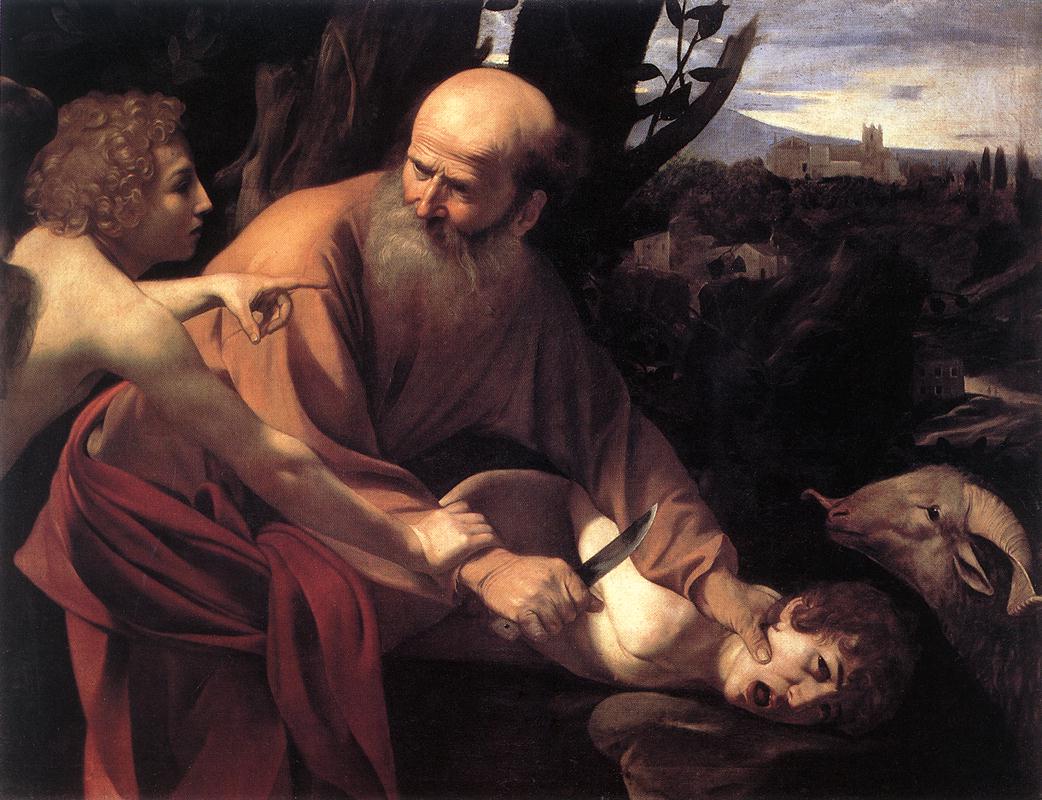
Genesis 22:1 Now it came about after these things (Ask "When?", "What things?" time phrases), that God tested (Hebrew = nasah = try, prove, often used in OT of God testing the faith and faithfulness of men; LXX = peirazo [word study]) Abraham, and said to him, "Abraham!" And he said, "Here I am."
Genesis 22:2 And He said, "Take now (Not later! Don't debate. Delayed obedience is disobedience!) your son, your only son, whom you love, Isaac, and go to the land of Moriah; and offer him there as a burnt offering (Heb = olah = a whole burnt offering, a voluntary offering by fire, the smoke of which ascended as a soothing aroma to the Lord. Nothing was held back. When the person offering the sacrifice laid his hand on the head of the sacrifice, it was accepted as an atonement on his behalf. The Greek or Lxx translates it with = holokautoma = wholly consumed, root of English "holocaust") on one of the mountains of which I will tell you."
Comment: Oswald Chambers warns us that "Abraham did not choose what the sacrifice would be. Always guard against self-chosen service for God. Self-sacrifice may be a disease that impairs your service. If God has made your cup sweet, drink it with grace; or even if He has made it bitter, drink it in communion with Him. If the providential will of God means a hard and difficult time for you, go through it. But never decide the place of your own martyrdom, as if to say, "I will only go to there, but no farther." God chose the test for Abraham, and Abraham neither delayed nor protested, but steadily obeyed. If you are not living in touch with God, it is easy to blame Him or pass judgment on Him. You must go through the trial before you have any right to pronounce a verdict, because by going through the trial you learn to know God better. God is working in us to reach His highest goals until His purpose and our purpose become one." from The Supreme Climb - My Utmost For His Highest. See also another devotional by Chambers of same title The Supreme Climb
Genesis 22:3 So Abraham rose early in the morning and saddled his donkey, and took two of his young men with him and Isaac his son; and he split wood for the burnt offering, and arose and went to the place of which God had told him.
Comment: Notice Abraham did not confer with others, not even his own "thoughts" on what was God's will in the matter. When you know God's will, then do it! He never asks us to do what He does not enable us to accomplish. In this way truly it is from Him, through Him and to Him! And so we can rightly exclaim, "To Him be all glory, honor, power and dominion in this age and throughout eternity. Amen!"
Genesis 22:4 On the third day Abraham raised his eyes and saw the place from a distance.
Genesis 22:5 And Abraham said to his young men, "Stay here with the donkey, and I and the lad will go yonder; and we will worship (shachah = to bow down, prostrate oneself, crouch, to do reverence; English "worship" means to look at someone's "worth-ship", so to worship God is to respect and honor Him for Who He is; Lxx = proskuneo = from pros = toward + kuneo = kiss = literally "to kiss toward someone as token of respect or homage) and return (Lxx has first person plural = "we ill return"!) to you." (How could Abraham be so confident "we" will return? See note Hebrews 11:19)
Genesis 22:6 And Abraham took the wood of the burnt offering and laid it on Isaac his son, and he took in his hand the fire and the knife. So the two of them walked on together.
Genesis 22:7 And Isaac spoke to Abraham his father and said, "My father!" And he said, "Here I am, my son." And he said, "Behold, the fire and the wood, but where is the lamb for the burnt offering?"
Genesis 22:8 And Abraham said, "God will provide for Himself the lamb for the burnt offering, my son." So the two of them walked on together.
Genesis 22:9 Then they came to the place of which God had told him; and Abraham built the altar there, and arranged the wood, and bound his son Isaac, and laid him on the altar on top of the wood.
Genesis 22:10 And Abraham stretched out his hand, and took the knife to slay his son.
Genesis 22:11 But the Angel of the LORD (see related study) called to him from heaven, and said, "Abraham, Abraham!" And he said, "Here I am."
Genesis 22:12And He said, "Do not stretch out your hand against the lad, and do nothing to him; for now I know that you fear (Hebrew = yare' = means a reverence and respect toward God, not a shaking fear. God is reverenced when a person respects Him for Who He is and this rightly understood fear of God is seen when we walk in His ways motivated by loving obedience, cf Jn 14:15), God, since you have not withheld your son, your only son, from Me."
Genesis 22:13 Then Abraham raised his eyes and looked, and behold, behind him a ram caught in the thicket by his horns; and Abraham went and took the ram, and offered him up for a burnt offering in the place of his son.
Genesis 22:14 And Abraham called the name of that place The LORD Will Provide, as it is said to this day, "In the mount of the LORD (Jehovah) it will be provided."
(Most conservative sources feel that 2000 years later, Mt Moriah, if not identical, was at least in the same mountain range north of Jerusalem, on which stood a lonely hill named Golgotha ["Skull"] where God the Father offered up His Son, His only begotten Son Whom He loved, as a substitute for all who would one day by faith enter into the Abrahamic Covenant and by extension into the New Covenant in the precious blood as of a lamb unblemished and spotless, the blood of Christ, our "Jehovah Jireh")
Genesis 22:15 Then the Angel of the LORD (see related study) called to Abraham a second time from heaven,
Genesis 22:16 and said, "By Myself I have sworn, declares the LORD, because you have done this thing, and have not withheld your son, your only son,
Genesis 22:17 indeed I will greatly bless you, and I will greatly multiply your SEED (not plural seeds but masculine singular "seed" see Galatians 3:16 for the prophetic significance) as the stars of the heavens, and as the sand which is on the seashore; and your SEED (singular) shall possess the gate of their enemies.
Genesis 22:18 "And in your SEED (singular) all the nations of the earth shall be blessed, because you have obeyed My voice."
Genesis 22:19 So Abraham returned to his young men, and they arose and went together to Beersheba; and Abraham lived at Beersheba.
Related Resource:
- Is My Sacrifice Living - My Utmost For His Highest - Oswald Chambers
- Booklet by Joe Stowell - When The Going Gets Tough
2Sa 24:24-25 However, the king said to Araunah (also called "Ornan), "No, but I will surely buy it from you for a price, for I will not offer burnt offerings to the LORD my God which cost me nothing." So David bought the threshing floor and the oxen for fifty shekels of silver. And David built there an altar to the LORD, and offered burnt offerings and peace offerings. Thus the LORD was moved by entreaty for the land, and the plague was held back from Israel.
2Chronicles 3:1 Then Solomon began to build the house of the LORD in Jerusalem on Mt Moriah, where the LORD had appeared to his father David, at the place that David had prepared, on the threshing floor of Ornan the Jebusite.
Hebrews 11:17; 18; 19 By faith Abraham, when he was tested (Greek = peirazo [see word study] = a morally neutral word = whether the test results in good or evil depends on the intent of the one giving the test and the response of the recipient to the test) , offered up (prosphero = used over 50 times in Leviticus to refer to offering of sacrifices) Isaac; and he who had received the promises (referring to the Abrahamic Covenant) was offering up his only begotten son (same Greek word is used of Jesus in John 3:16) 18 it was he to whom it was said, "IN ISAAC YOUR DESCENDANTS SHALL BE CALLED (quoting Ge 21:12)."19 He considered (Greek = logizomai [word study]= to think about something in a detailed and logical manner and then drawing conclusions through the use of reason) that God is able (dunatos = pertaining to having the ability to perform some function) to raise men even from the dead; from which he also received him back as a type (parabole from para = alongside, beside + ballo = throw = describes an illustration thrown alongside truth to make the latter easier to understand). (He 11:17; 18; 19-see notes He 11:17; 18; 19)
1Co 10:13 (note) No temptation has overtaken you but such as is common to man & God is faithful, who will not allow you to be tempted beyond what you are able, but with the temptation will provide the way of escape also that you may be able to endure it.
Philippians 4:19-note And my God shall supply all your needs according to His riches in glory in Christ Jesus. (Click for comments on this verse)
Eight Cows On The Altar - Ge 22:1-12 - Pastor Ed Dobson was speaking to a congregation on “putting all on the altar” in total surrender to Christ. After the service, an old German farmer came forward. He told Dobson that he had eight cows that were dying, which would mean great financial loss, and he had been struggling with accepting this as God’s will. Then he said, “Because of your message, I have found peace. Tonight I put them all on the altar.”
Christ’s lordship touches every area, every relationship, every concern of our lives. If we are willing to submit to Him, any loss in life will be seen as an opportunity of giving back to God what is rightfully His and trusting Him to provide what is needed.
When God told Abraham to sacrifice Isaac, He seemed to be undermining His own purposes. Isaac was the son of promise through whom God would bless the world. Yet Abraham’s faith had grown strong over the years, and baffled though he must have been, he said, “God will provide for Himself the lamb” (Genesis 22:8).
The issue is the same for us. Can we entrust everything to God—our possessions, job, health, family? If we commit ourselves to Him each day and thank Him for every blessing, our confidence in Him will survive any test. — Dennis J. De Haan (Our Daily Bread, Copyright RBC Ministries, Grand Rapids, MI. Reprinted by permission. All rights reserved)
You have longed for sweet peace and for faith to increase,
And have earnestly, fervently prayed;
But you cannot have rest or be perfectly blest
Until all on the altar is laid. —Hoffman
Submission to God
means taking our hands off what belongs to Him.
“God tested Abraham.” Genesis 22:1
In universities everywhere, mid-May brings late-night study sessions, caffeine-fueled writing binges, and ulcer-inducing stress as students are preparing for final exams—those critically important tests to determine how well the student has learned the lessons of the semester.
Let’s look at a familiar incident in the life of Abraham through that lens.
Genesis 22 begins by saying, “God tested Abraham.” In other words, it’s like Abraham’s big exam. And what is the test? God is about to test Abraham’s allegiance to the one true God in a most stressful way.
So let’s review: God called out Abraham to the city of Ur. Ur was an advanced culture and a highly sophisticated town, but it was rampant with idolatry. When God passed out this test to Abraham, Abraham was wandering through Canaan—yet another pagan, idolatrous region. And keep in mind that in pagan idolatry, the highest demonstration of loyalty to one’s god was to offer—you guessed it—your children as a sacrifice.
With that in mind, look back at Genesis 22:1. The text actually says that it is the God who tests Abraham. This is in contrast to those lifeless forms of wood and stone that were the idols of the pagan Canaanites. And it’s the one true God who comes to Abraham and gives him the following test.
Would the loyalty and allegiance of Abraham to the genuine Creator God match the misplaced loyalty and devotion of the surrounding nations to their false idols? The test is simple yet very demanding: “Abraham,” God says, “Take your son, your only son, Isaac, whom you love . . . and sacrifice him.”
That’s the test, plain and simple. It’s a pass/fail exam with no room for grading on the curve. If Abraham obeys, demonstrating his allegiance, loyalty, and trust in the promises of God, he passes the test. If he refuses, he retains control over his son’s destiny, but fails to demonstrate his commitment to following God no matter what the cost.
Well, we know the rest of the story. In fact, it’s amplified and explained beautifully in the book of Hebrews where the writer explains that Abraham by faith obeyed, reckoning that even if Isaac died, God could raise him from the dead (Hebrews 11:17-19).
So what does Abraham’s test have to do with us? While God won’t ask you to literally sacrifice a child on an altar, He does often require the things in your life that are precious to you. Think about it. Isaac was God’s gift to Abraham. All of God’s promises were wrapped up in that miracle child. How easy it would have been for Abraham to love Isaac more than he loved God. Or to put it another way, to love the gift more than the Giver! The test may be the same for you. God always wants to know that nothing in your life is more important or more valuable than your relationship to Him. It may even be a sinful pattern that for some reason provides temporary kicks, comfort, or security. Do you love Him more than the sin in your life?
If by faith you can believe with Abraham that when God takes something from you, God will give something back in even better terms, then you will pass the test and give Him all He demands and all He desires. Whether it’s your money, your possessions, your career, your dreams, or even your children to His service—everything we give to Him is an opportunity to pass the test and in worship prove to Him that nothing in our lives is of greater value than His friendship and fellowship.
As you face the tests of this week, know that your Tester loves you deeply and is ready to help you pass, like Abraham, with flying colors!
YOUR JOURNEY…
- What tests are you currently facing? What can you learn from the example of Abraham to help you pass the test with flying colors?
- James 1:2-4 also addresses the issue of tests. Based on this passage, what is God testing and why?
- If you’re one of those people who has always dreaded taking exams, ask the Lord to change your perspective about His tests. Think through the reasons that He wants to test you, and trust Him to supply the courage and faith you need to pass the exam in a way that glorifies Him.
Bread: Jehovah-jireh - Elmer Towns
“I shall not want” (Ps. 23:1). Life's basic needs are provided by Jehovah-jireh, “The LORD Shall Provide.”
When Jesus taught His disciples to pray, “Give us this day our daily bread” (Matt. 6:11), He was including all of our daily needs. “Bread” meant food, water, clothing, a roof over our heads, strength for the journey and anything else needed to keep body and soul together. These provisions are from Jehovah-jireh.
God also provides what we need to offer Him in the way of sacrifice. In this context we can note that the phrase Jehovah-jireh is one of the few names for God that is given by man, rather than revealed by God Himself. Abraham had been commanded to take his son Isaac to Mount Moriah and to sacrifice him to the LORD (see Gen. 22). In obedience, and as an act of faith, Abraham took his son to the point of death, even lifting the knife for the ultimate sacrifice. But Jehovah-jireh stopped him and provided “a ram caught in a thicket by his horns” (v. 13). Abraham took the ram and offered it to God. Then “Abraham called the name of the place, TheLORD-Will-Provide [Jehovah-jireh]; as it is said to this day, 'In the Mount of The LORD it shall be provided'“ (v. 14, NKIV).
When young Isaac had asked about the lamb for the sacrifice, his father Abraham had promised, “My son, God will provide himself a lamb for a burnt-offering” (v. 8). Some translators place the comma differently and translate this verse, “God will provide himself, [as] a lamb for a burnt-offering.” Although the Hebrew literally says “God will provide for Himself the lamb for a burnt-offering,” the fact is true that God did give Himself through His Son Jesus Christ as the offering for the sins of the world (see Zech. 12:10; John 1:29; 3:16). In this sense, Jesus Christ was the ultimate provision of Jehovah-jireh, the God who supplies both our physical and our spiritual needs. (Borrow My Father's names : the Old Testament names of God and how they can help you know him more intimately)
Jehovah Jireh - Kenneth Hemphill (Borrow The Names of God - page 200 - highly recommended).
In Genesis 22 , we come to the final step, the last hurdle, in the faith-building pilgrimage of Abraham. The child of promise, Isaac, has been provided by El Shaddai. God calls Abraham to take his son Isaac to Mt. Moriah and offer him as a sacrifice. The drama of the story is unsurpassed in Scripture. Abraham and Isaac leave the servants and walk alone to the mountain of sacrifice. Isaac bears the wood that will kindle the fire to consume the sacrifice. When he inquires about the lamb for the sacrifice, Abraham's faith response is that the Lord Himself will provide the lamb for the sacrifice.
The scene is set as the lad is bound and laid upon the wood and Abraham is poised with knife in hand, prepared to sacrifice his only beloved son. The angel of the Lord stops the proceedings and Abraham replaces his son with a ram caught in a nearby thicket. God tells Abraham that He is Jehovah Jireh, the Lord will provide.
- We can know that God is our Provider.
- He can supply every need that we encounter.
- We can also be assured that we can trust God with our most treasured possession.
- When we lay that which we value most on the altar of sacrifice, God will raise it up.
- What in your life are you afraid to release?
- Are you struggling with finances and afraid to tithe?
- Are you clinging to your own sense of security and anxious about retirement?
- You can be assured that Jehovah Jireh can provide
James Smith - JEHOVAH-JIREH. Genesis 22:14.
"The Lord will Provide." This was Abraham's testimony to the goodness of God in providing a ram to take the place of his son on the altar. It will also be our testimony when we have accepted as our Sacrifice Him who was caught in the thicket of our sins and led to the altar of the Cross. Jehovah-Jireh—
I. He Provides the Right Thing. "A ram." A Substitute. One to take the place, and die in the stead of him who was devoted to death. Because of sin we were under condemnation, under the curse, devoted to death. God knew what was needed. Only He could provide the needed sacrifice. Neither education nor civilisation could avail, but regeneration through the blood of God's appointed Lamb. "He loved me, and gave Himself for me" (Gal. 2:20). "Christ our Passover sacrificed for us" (1 Cor 5:7).
II. He Provides at the Right Place. "On the mount of the Lord." The place as well as the offering was part of the Divine arrangement. The Cross was as much the appointment of God as the coming of His Son. It is very significant that on the same mount, perhaps on the very spot, where the ram was caught in the thicket that was to die in the stead of Isaac, Jesus the Lamb of God was caught among the cords and nails of the Cross and offered as a sacrifice for our sins. Mount Calvary was the mount of the Lord. That same mount was the place of communion to Abraham. By the blood of His Cross we are made nigh unto God.
III. He Provides at the Right Time. Just when the knife was uplifted and the death stroke about to fall, the voice was heard and the substitute seen. God's clock is never one moment behind. Faith will be tried, and may be tested to the utmost limit. The point of despair may be just reached, but He will not try above what we are able to bear, and will with the temptation make a way of escape. Man's extremity is God's opportunity. We have to get to an end of ourselves to see the beginnings of grace. When we get to "Lord save me, I perish" (Matt. 8:25), then immediately His saving hand is stretched forth. Abraham's faithfulness led to thankfulness. It is always so. Believe and thou shalt see. "The Lord will provide." We, too, may say it—
1. CONFIDENTLY. For having given us His Son, how will He not "with Him freely give us all things" (Rom. 8:32). He is "able to do exceeding abundantly (Eph. 3:20).
2. EXPECTANTLY. "He is faithful who hath promised" (Heb. 11:11). He will provide wisdom for the meek, strength for the weak, weapons for the warfare, comfort for the time of sorrow, grace for every need here, and a place in the mansion above.
3. CONTINUALLY. Hath He not said, "I will never leave thee nor forsake thee," so that we may boldly say, "The Lord is my helper, I will not fear." In life, in death, and in eternity, Jehovah-Jireh.
James Smith - PROVISION FOR NEED “And Abraham called that place Jehovah Jireh” (Gen. 22:14).
The name of Jehovah Jireh is a monument of a great discovery and a great deliverance. It means either the Lord will see, or the Lord will provide. In common speech these two words “see” and “provide” are distinct in their meaning. Yet the moment we deal with God the two words are found to be one and the same, for His pre-vision means His pro-vision.
“In the mount of the Lord it (A.V.)—He (R.V.)—shall be seen.” Surely here we have a hint and explanation of John 8:56. God gave Abraham insight into the mystery of the Cross.
We can say that the Lord has now provided for man’s great needs.
I. For Man’s Insensibility and Slumber, He has provided in the Person of the Holy Spirit an Awakener, One to rouse us from the slumber of sin.
II. For Man’s Sin, the precious Blood of Christ. It is not left to the sinner to provide a sacrifice (Gen. 22:8), for God Himself has done this. The Lord Jesus died in our stead, as the ram died in the stead of Isaac. Dr. Dinsdale T. Young has so splendidly declared: “Every day I live, yes, every day, this possesses me more and more completely in mind and heart—that that death was a substitution. I know it is an old-fashioned word, a word that is spurned in some quarters. I confess that it satisfies my guilty conscience and comforts my troubled heart, and gives me a joy in my religion incomparable. When I look up and say, He took my place, I cannot understand it. But He did it. He bore my sins in His own body on the Tree.”
III. For Man’s Ignorance, His Word, the Bible. Read Psalm 119:98 and 99. We must be people of the one Book, whatever other books we may possess and read. We must give the Bible its chief place in our lives.
IV. For Man’s Weakness, the Holy Spirit. How weak is man. But the Holy Spirit communicates strength, through Regeneration and Renewal.
V. For Man’s Emptiness, the Divine Fulness. There is fulness of blessing for all who believe. It pleased the Father that in His beloved Son all fulness should dwell, and when He comes and fills my heart and life with His holy and blessed presence I have the fulness.
VI. For Man’s Loneliness, the Divine Companionship. He has promised never to leave us.
What ample and blessed provision He has made for all our needs.
F B Meyer - Genesis 22:14
Jehovah Jireh; In the Mount of the Lord it shall be provided. (R.V.)
Abraham knew it would be. Probably he never told Sarah what God had asked of him till he and the lad were safely back in the tent. What need to trouble her? Her weak faith could not have stood the ordeal. It was with an unfaltering tone that the patriarch told his young men that they two would presently return. Even though he should actually take Isaac’s life, he was sure that he would receive him again from the altar in health. It was only at the very last moment that God indicated the ram as the sufficient substitute. So God’s deliverances always come; they are provided in the mount of trial and sacrifice.
When the foe seems secure of victory. — So it was with Israel. Pharaoh, with his hosts, counted on an easy victory, the precipices around, the sea in front. To the eye of sense it seemed impossible to escape: all hope died. It was just then that the Almighty cleft a path through the mighty deep.
“In the fourth hour of the night.” — Strength was well-nigh exhausted in long battling with the waves. For hours the disciples with difficulty had kept themselves afloat. It seemed as if they must give in through physical collapse. It was then that the form of Jesus drew nigh unto the ship.
On the night before execution. — Thus Peter lies sleeping whilst the Church is gathered in prayer. Tomorrow he will be a corpse. But the angel comes then to open the prison doors.
So you may have come to an end of your own strength, and wisdom, and energy. The altar, wood, and fire are ready, the knife upraised, your Isaac on the point to die: but even now God will provide. Trust Him to indicate the way of escape.
Oswald Chambers - The Eternal Goal Genesis 22:15-19
My goal is God Himself, not joy, nor peace.
Nor even blessing, but Himself, my God;
‘Tis His to lead me there, not mine, but His—
“At any cost, dear Lord, by any road!”
One thing I know, I cannot say Him nay;
One thing I do, I press towards my Lord;
My God my glory here, from day to day,
And in the glory there my Great Reward.
F. Brook
In blessing I will bless thee . . . because thou hast obeyed My voice. Genesis 22:17-18
The spirit of obedience gives more joy to God than anything else on earth. Obedience is impossible to us naturally, even when we do obey, we do it with a pout in our moral underlip, and with the determination to scale up high enough and then “boss my boss.” In the spiritual domain there is no pout to be removed because the nature of God has come into me. The nature of God is exhibited in the life of Our Lord, and the great characteristic of His life is obedience. When the love of God is shed abroad in my heart by the Holy Ghost (Romans 5:5), I am possessed by the nature of God, and I know by my obedience that I love Him. The best measure of a spiritual life is not its ecstasies, but its obedience. “To obey is better than sacrifice.”
1. The Supreme Call of God (Genesis 22:15)
When God first called to Abraham there was still a dim gulf between them, God had to call and Abraham to answer (v. 1). Now that gulf is bridged. “The angel of the Lord called a second time out of heaven, . . .” i.e., an inward state of soul, and Abraham is so near to God that he does not need to reply; he is in the place of unimpeded listening. Is there any impediment between my ears and God’s voice?
The call of God is a call in accordance with the nature of God, not in accordance with my idea of God. At first, Abraham did not interpret the call along the line of the nature of God because he did not know it; he interpreted it along the line of the Chaldaic tradition and took it to mean he was to kill his son. The supreme crisis in Abraham’s faith has now been reached, all his imperfect conceptions of God have been left behind and he has come now to understand God. Always beware of self-assertiveness, it bruises our relationship to God, and distorts the manifestation of His nature in us. Abraham was neither an amateur providence nor a moral policeman, he simply believed God.
2. The Supreme Reality of God (Genesis 22:16)
Abraham has come to the place where he is in touch with the very nature of God, he understands the reality of God, and God, as it were, unveils Himself to him in a burst of enthusiasm. There is no possibility of questioning on my part when God speaks, if He is speaking to His own nature in me; prompt obedience is the only result. When Jesus says “Come unto Me,” I simply come; when He says “Trust in God in this matter,” I do not try to trust, I do trust. An alteration has taken place in my disposition which is an evidence that the nature of God is at work in me.
3. The Supreme Character of God (Genesis 22:17-18)
The promise of God stands in relation to Abraham’s tried and willing obedience. The revelation of God to me is determined by my character, not by God’s (Psalms 25-26). If I am mean, that is how God will appear to me.
Tis because I am mean, Thy ways so oft
Look mean to me.
By the discipline of obedience, I come to the place Abraham reached and see God as He is. The promises of God are of no use to me until by obedience I understand the nature of God. We read some things in the Bible three hundred and sixty-five times and they mean nothing to us, then all of a sudden we see what they mean, because in some particular we have obeyed God, and instantly His character is revealed. “For how many soever be the promises of God, in Him is the yea” (rv). The “yea” must be born of obedience; when by the obedience of our life, we say “Amen,” “So let it be,” to a promise, then that promise is made ours.
4. The Supreme Reward (Genesis 22:19)
The more we have to sacrifice for God, the more glorious is the reward presently. We have no right to choose our sacrifice, God will let us see where the sacrifice is to come, and it will always be on the line of what God has given us, our “Isaac,” and yet His call is to sacrifice it. God is always at work on the principle of lifting up the natural and making it and the spiritual one, and very few of us will go through with it. We will cling to the natural when God wants to put a sword through it. If you go through the transfiguration of the natural, you will receive it back on a new plane altogether. God wants to make eternally our own what we only possessed intermittently.
In the beginning we do not train for God, we train for work, for our own aims, but as we go on with God we lose all our own aims and are trained into God’s purpose. Unless practical work is appointed by God, it will prove a curse (cf. John 17:13). “At any cost, by any road,” means nothing self-chosen. The Bible does not say that God blessed Abraham and took him to heaven; but that He blessed him and kept him on earth. The maturity of character before God is the personal channel through which He can bless others. If it takes all our lifetime before God can put us right, then others are going to be impoverished. We need to hurry and climb our Mount Moriah, come to the place where God can put an end to the dim gulf between Him and ourselves, then He will be able to bless us as He did Abraham.
No language can express the ineffable blessedness of the supreme reward that awaits the soul that has taken its supreme climb, proved its supreme love, and entered on its supreme reward. What an imperturbable certainty there is about the man who is in contact with the real God! Thank God, the life of the Father of the Faithful† is but a specimen of the life of every humble believer who obediently follows the discipline of the life of faith. What a depth of transparent rightness there must be about the man who walks before God, and the meaning of the Atonement is to place us there in perfect adjustment to God. “Walk before Me, and be thou perfect,” not faultless, but blameless, undeserving of censure in the eyes of God†††.
JEHOVAH JIREH - Nathan Stone - excerpt from The Names of God
THE NAME Jehovah-jireh is one a number of names compounded with Jehovah. Natur lly these names owe something of their significance t the name Jehovah itself which as we have learned, reveals God as the eternal self-existent One, the God of revelation, the God of moral and spiritual attributes—of righteousness, holiness, love, and therefore of redemption, the God who stands in special covenant relation to Israel in contrast to Elohim, the general name of God in relation to all the nations.
Most of these compound names of God arise out of some historic incident, and portray Jehovah in some aspect of His character as meeting human need.
HISTORICAL SETTING
The historic incident out of which the name Jehovah jireh rises is one of the most moving and significant in the Word of God. The story is found in Genesis 22 . It is the story of the last and greatest crisis in the life of Abraham. Every event in his life has led up to this supreme hour from the time of his call to a high destiny, through every vicissitude, through every joy, through every trial or failure, through every measure of success and blessing, through every hope and promise and assurance. All had been in preparation for this event. The great promise had been fulfilled, the supreme hope of his life realized. He had settled down to live the rest of his life in peace and in joyous anticipation of the larger fulfillment of the promise through the centuries, and its final spiritual fulfillment. The rationalistic critics have long been silenced who denied or doubted the reality of the Patriarchs as actual persons, but interpreted them merely as ideal and imaginary figures around which ancient Hebrew tradition cast its national origins and early history. For apart from our faith in the Bible as the inspired revelation of God, and its Old and New Testament testimony, to the reality of Abraham as a historic person, abundant evidence has been brought to light in recent years and decades as to the historicity of the persons and the veracity of the events to dispel all doubts and invalidate all objections.
In this incident Elohim appears to Abraham with the astounding command to offer up as a sacrifice, a burnt offering, his only and well-beloved son Isaac. Abraham, apparently, is not aware that this is a testing. His feelings can scarcely be imagined. His tremendous faith, in view of all the circumstances, is, perhaps, not sufficiently appreciated. The record reveals not a word of objection or remonstrance on his part. But if he laughed in his heart with joyful hope, even though perhaps mingled with a little doubt, when this son was promised to him, how deep his anguish and perplexity must have been at this amazing request from the God who had been so good to him. Yet the faith which enabled him to believe such a staggering promise in the first place is now sufficient for an even more staggering demand. This incident, then, reveals Abraham's obedience and faith, Isaac's willing submission, and Jehovah's gracious pro-vision of a substitute in his place.
THE MEANING OF THE NAME
Before we discuss the derivation and meaning of this name, it will be well to briefly recall the happenings which occasioned its use. On the way to the place of sacrifice Isaac cannot contain his curiosity about the lamb for the burnt offering. "Behold the fire and wood"; he said, "but where is the lamb for a burnt offering?" (Gen. 22:7). Abraham's answer to this question is that God will provide Himself a lamb. It is not necessary to suppose that Abraham thought of an ordinary lamb in this answer, although he may have had some such dim hope in his mind. At any rate, in his instructions to his young men to wait for him he says: "I and the lad will go yonder and worship, and come again to you" (v. 5). It is only at the last moment, when Isaac lies bound up-on the altar, and any such hope he may have entertained is gone, and the knife in his upraised hand is about to descend, that the voice of the angel of Jehovah arrests and stays his hand, and Abraham looks about and sees a ram caught in a thicket by its horns, which he offers up instead of his son. Then in verse 14 we read in the Authorized Version of our Bible: "And Abraham called the name of that place Jehovah-jireh: as it is said to this day, In the mount of the Lord [Jehovah] it shall be seen." In the American Standard Version of our Bible, however, instead of "it shall be seen," it reads "it shall be provided." Still another rendering of this important word is "he shall be seen." Thus, "in the mount of Jehovah, he shall be seen or provided."
First of all it must be understood that in this name Jehovah-jireh, the word jireh is simply a transliteration of a Hebrew word which appears many times throughout the Scriptures and is translated for what it means. Only its unusual significance here, its connection with this remarkable event, and its union with the title Jehovah has brought it down to us as a compound name of God. It is simply a form of the verb to see. What connection can there be then between the word see and provide, for both of these English words are used to translate the one Hebrew word, and they certainly seem to be quite distinct in their meaning? It must be admitted, too, that in the great majority of cases where this word occurs in the Hebrew Bible, it is translated "see" or "appear." Why then should we translate it "provide" here?
One reason for this, no doubt, as one writer declares,' is, that with God, to see is also to foresee. As the One who possesses eternal wisdom and knowledge, He knows the end from the beginning. As Elohim He is all-knowing, all-wise, and all-powerful. From eternity to eternity He foresees everything. But another word for seeing is vision, from the Latin word video—to see. Thus with God foreseeing is prevision. As the Jehovah of righteousness and holiness, and of love and redemption, having prevision of man's sin, and fall, and need, He makes provision for that need. For provision, after all, is merely a compound of two Latin words meaning "to see beforehand." And we may learn from a dictionary that provide is simply the verb and prevision the noun of seeing beforehand. Thus to God prevision is necessarily followed by provision, for He certainly will provide for that need which His foreseeing shows Him to exist. With Him prevision and provision are one and the same thing. All this is certainly expressed in the term Jehovah-jireh; and it is quite correct and in its proper significance to translate this name of God Jehovah jireh, "God will provide."
Another form of the word from which jireh is derived is also used of men in the sense of foresee. It is translated "seer" or "prophet." Several references are made in the Scriptures to Samuel the Seer and the Book of Samuel the Seer (I Chr 9:22; 26:28; II Sam. 15:27; II Chron. 16:7). The word is ro'eh which, as can easily be seen, is much like jireh. In I Samuel 9:9 it is stated that the prophet formerly was called a seer. Even as late as the time of Isaiah (30:10) this was the word sometimes used for a prophet. Here the prophet Isaiah speaks of a people who say to the seers: "See not; and to the prophets, Prophesy not unto us right things." A prophet is, of course, one who foresees, and since seer, or ro'eh, is the same as prophet, it consequently means one who foresees.
Besides this the word jireh is translated in Genesis 22:8, even in our Authorized Version of the Bible, as provide. Abraham here said to Isaac: "My son, God will provide himself a lamb for a burnt offering." Even if we were to translate here, "God will see to it," or "God will see for Himself a lamb for a burnt offering," the meaning would be exactly the same as provide.
The importance of the words used here can hardly be overestimated, and afford striking evidence and confirmation of the hand of God in revelation. "Abraham called the name of the place Jehovah-jireh: as it is said to this day, In the mount of the.Lord it or he shall be seen." "It shall be seen"—jeroeh—the same word as jireh. That is, God's provision shall be seen. In the mount of the Lord! What was this mount of the Lord? In Genesis 22:2 the command comes to Abraham: "Take now thy son, thine only son Isaac, whom thou lovest, and get thee into the land of Moriah; and offer him there upon one of the mountains which I will tell thee of." The significant word here is the word Moriah, of which more will be said later. This word, many He-brew scholars agree, is a kindred word to jireh, derived from the same root. Its ending is an abbreviated form of the name Jehovah. Thus it may be rendered "seen" or "provided of Jehovah." All of this confirms and justifies our translation of the word jireh as "seeing" or "appearing and providing," and invests this name of Jehovah with a wealth of meaning and significance.
THE SIGNIFICANCE OF THIS NAME
This name is significant, first of all, because it is a commemoration—a commemoration of a great deliverance. This was the primary reason for naming the scene of this event Jehovah-jireh. It was a constant reminder of the wonderful grace of the Jehovah who had wrought this deliverance. Now that it was all over, and Abraham had learned the lesson God was teaching him and could see something of God's glorious purpose in it all, he sought only to magnify the grace of Jehovah. His magnifying of this grace was in proportion to the deep and dark perplexity that had filled his soul on the way to the mount. Had God really spoken to him and called him? Did the Elohim mean what He had said? Could He really mean what He said now? Such may have been Abraham's thoughts. But his joy and gratitude were in proportion to his sorrow and despair at the terrible prospect before him—the overwhelming horror that must have flooded his soul at the thought, yes, the very act of plunging the knife of sacrifice into the body of his own son, his only son, the son so longed for, hoped for, prayed for, the child of their old age. What a great and glorious deliverance it was that Jehovah's grace had provided, and how unexpected and dramatic! Man's extremity is ever God's opportunity, not only for deliverance but to teach also wonderful lessons of His purpose as well as providence.
Surely out of this experience of Jehovah's delivering grace there must have come a purer, more spiritual relationship of love between this father and son. This must have been one lesson the experience was intended to convey. As one great commentator has declared, it was that he should no more love his beloved son as his flesh and blood, but solely and only as the gracious gift and possession of God, as a good entrusted to him by God; which he was to be ready to render back to Him at any moment (Delitzsch) . According to the words of the angel of Jehovah it is fullest proof of Abraham's faith and obedience, "seeing thou hast not withheld thy son, thine only son from me." And He might have added, "Even as I will not withhold my only and well-beloved Son as the great provision for man's redemption." For this, after all, is the chief lesson of the story, the deliverance of Isaac through the provision of a substitute. For just as Abraham is about to slay him, the voice of the angel of Jehovah arrests him: "Lay not thine hand upon the lad, neither do anything unto him." And there in the thicket is the substitute provided by Jehovah.
A further significance of this name of God lies in the expectation of something yet to come. Even if we were to translate Jehovah-jireh as "the Lord doth provide" rather than "will provide," it would be Abraham's testimony to the fact that Jehovah is a God who always provides; that as He provided then He would also pro-vide in the future—deliverance from death, the oil of joy for the ashes of sorrow and mourning, blessings for obedience, even though obedience be made perfect through sufferings. The naming of the place Jehovah-jireh was meant to be proverbial of this very thing—"as it is said to this day."
But this naming of the place was more than proverbial with Abraham. He can hardly have emerged from such a remarkable and solemn experience without feeling or realizing that it had far deeper significance than the test of his own faith only. The profound import of the occasion is strikingly attested by the most solemn language of Jehovah Himself calling from heaven a second time after the lamb of His provision had been offered, and saying, "By myself have I sworn, saith Jehovah." The word translated "saith" is the particular word used of Jehovah when making the most solemn prophetic utterances. Some translate it "utterance," others, "oracle."
Then follows an emphatic confirmation of the promises to make Abraham a multitude, and a blessing to the world "because thou hast done this thing," and "because thou hast obeyed my voice." There are various allusions in the New Testament to this great transaction that indicate that Abraham saw far more than the immediate provision and deliverance in it. It was more than proverbial. He saw in it a prediction. He called the name of the place Jehovah-jireh; not merely Jehovah doth provide but Jehovah will provide. And then, "as it is said to this day, In the mount of Jehovah it shall be seen" or "it shall be provided." One of the most noted of medieval Jewish commentators also understood this expression to mean, "God will manifest Himself to His people."
THE REALIZATION
What then was that provision which Abraham saw, dimly perhaps, with the eye of faith? What was the reality of which Isaac, and the lamb, were but types? Certainly Abraham understood the reality of sin, and realized the need for atonement. The numerous altars he built and the offerings he sacrificed attest that fact. Why then the demand for Isaac as an offering? Was it not to impress upon Abraham more deeply the temporary character of these sacrifices; that it was impossible that the blood of bulls and goats should take away sins (Heb. 10:4); that they were only shadows of which some-thing infinitely worthier should be the substance and reality? Thus Isaac was exhibited as the pattern of one under the judgment of God for sin. Animals cannot take away the sins of men. Animals cannot be consecrated to God instead of men. "Lebanon is not sufficient to burn, nor the beasts thereof sufficient for a burnt offering" (Isa. 40:16). Only one of like nature, if one worthy enough can be found, can make such atonement and consecration. Here again in the deliverance of Isaac as he was about to be offered Abraham received more than an inkling of the fact that not even Isaac, that none born of flesh alone, is sufficient for that. For Isaac was offered and received back only in a figure (Heb. 11:19), and the lamb became his substitute also.
Surely 'God was teaching Abraham that the only sacrifice acceptable to Him is the one chosen and appointed by Himself. "Wherewithal shall I come before the Lord, and bow myself before the high God? Shall I come be-fore him with burnt offerings, with calves of a year old? Will the Lord be pleased with thousands of rams .. . shall I give my first-born for my transgression, the fruit of my body for the sin of my soul?" says Micah 6:6-7.
In the mount of the Lord it shall be seen or provided, and that mount is Moriah which, as already stated, means appearance or provision of God. It was this Mount Moriah which later became the site of the Temple and the center of Israel's worship, its sacrificial system. In II Chronicles 3:1 it is written: "Then Solomon began to build the house of the Lord [Jehovah] at Jerusalem in mount Moriah, where Jehovah appeared unto David his father, in the place that David had prepared in the threshing floor of Ornan, the Jebusite." It was here, in David's time, that God in His mercy staved the hand of avenging justice when David offered the sacrifices of substitution. The very heart of Israel's religion, centered in the Temple on Mount Moriah, was its substitutionary sacrifices. A Jewish interpretation of Genesis 22:14 is: "God will see and choose that very place to cause His Shekinah to rest thereon and to offer the offerings."
But, like Abraham, the true and faithful Israelite must have realized that the sacrifice of animals was only a shadow of something to come. Jehovah's gracious promise to Solomon in II Chronicles 7 to set His heart and eyes and His glory on that place indicate something in-finitely nobler than animal sacrifice.
Isaiah and Micah make sublime predictions concerning the mountain of the house of the Lord. Zechariah speaks of the glory of that holy mountain, the mountain of Jehovah of hosts. What was the glory of that mountain? Surely it was no temple made with hands! Surely it was not all the beasts on Jewish altars slain. The Abraham who looked not for an earthly city but for one "which hath foundations, whose builder and maker is God," also looked for a better and more enduring sacrifice; for the Mount Moriah of which he spoke saying: "In the mount of the Lord it shall be seen." be-came the site of Calvary and the scene of that grand and awful sacrifice of God's only begotten and well-beloved Son, who was put under judgment for sin, and became our Substitute. Perhaps Abraham understood better than we realize the wonder of Jehovah's provision for man's redemption when he said: "In the Mount of Jehovah, he will appear.
" Was it not this to which the Lord Jesus Christ Himself referred in John 8:56, when He said: "Your father Abraham rejoiced to see my day: and he saw it, and was glad."
Abraham and Isaac, as father and only begotten son. are both types of Jehovah's full and glorious provision for man's sin and need. "God so loved the world that he gave his only begotten Son ..." (John 3:16).
And Paul speaks of God as "he that spared not his own Son. but delivered him up for us all . . ." (Rom. 8:32).
"Who was delivered up for our trespasses . . ." (Rom. 4:25).
And John says again: "ln this was manifested the love of God toward us, in that God sent his only begotten Son into the world, that we might live through him" (1 John 4:9).
On Mount Moriah Jehovah was teaching Abraham what He Himself was prepared to provide. He was teaching the awful cost to Himself of the provision of the sacrifice for sin. Does it break your heart, Abraham, to give up, to slay, yes, by your own hand, as an innocent sacrifice, your well-beloved and only son? Then think of the awful and infinite cost to Me of what I am prepared to do for man. The thing that Abraham fore-shadowed on Mount Moriah was realized, accomplished, when God's Son upon the cross cried, "It is finished."
Isaac asks, "Where is the lamb?" Abraham answers, "God will provide himself a lamb." John the Baptist announces,
"Behold the Lamb of God, which taketh away the sin of the world" (John 1:29).
This was the Lamb provided and slain from the foundation of the world but manifested on Mount Moriah for us; through whose precious blood, even the blood of Christ, as of a lamb without blemish and without spot, we are redeemed (1 Peter 1:18, 19).
This Lamb is the center of heaven's glory and the object of its adoration. Ten thousand times ten thousand, and thousands of thousands say with a loud voice:
"Worthy is the Lamb that was slain to receive power, and riches, and wisdom, and might, and honor, and glory and blessing." Yes, and every creature will join in saying: "Blessing and honor, and glory, and power, be unto him that sitteth upon the throne, and unto the Lamb forever and ever" (Rev. 5:11-13).
God will provide Himself a lamb. In the mount of the Lord it shall be seen, it shall be provided. In the mount of the Lord He was seen, He was provided, even Jesus Christ, the Lamb of God, our Saviour, our Lord, to whom be glory forever, and who is over all God blessed forever. Amen. (The Names of God)
The Provider - Lehman Strauss (from In God's Waiting Room Learning Through Suffering - Recommended Read)
The first important truth of Philippians 4:19 is that God is the Provider. The apostle said that the Lord is "my God." When Paul received the Lord Jesus on his way to Damascus, he was brought immediately into a personal relationship with God. I fear that the belief many persons have in the God of the Bible is merely intellectual and academic, not experiential. They believe God is omnipotent--that He has an ability that knows no inability--but they know nothing of a personal, intimate relationship with Him. Sometimes people inside our churches, as well as those outside, know about God, but they do not know Him. Paul knew Him as the provider of all his needs.
In the Old Testament the Hebrew name for God the provider is Jehovah-jireh. It appears in Genesis 22 when Abraham, in obedience to God's command, took his son Isaac to Mount Moriah to offer him for a burnt offering. After father and son had arrived at the designated place and prepared the altar, Isaac said to his father, "Behold the fire and the wood: but where is the lamb for a burnt offering? And Abraham said, My son, God will provide himself a lamb for a burnt offering" (Genesis 22:7-8). And that is precisely what God did: He provided a substitute to die in the place of Isaac (v. 13). "And Abraham called the name of that place Jehovah-jireh" (v. 14), meaning "the Lord will provide." But keep this fact in mind: Abraham did not experience God's miraculous provision without first giving obedience to God's command. Abraham was not presumptuous; rather, he displayed implicit faith and obedience. He became acquainted with Jehovah-jireh.
Do you know who Jehovah-jireh is? He is the God who provides. He is the God of the Bible, and the God and Father of our Lord Jesus Christ. It is through personal faith in Christ that we gain that experiential knowledge of God. Jesus said, "I am the way, the truth, and the life: no man cometh unto the Father, but by me" (John 14:6). Can you say with the apostle that Jehovah-jireh is "my God"?
Index of Strauss' Book In God's Waiting Room Learning Through Suffering
- 1. Great Moments in Marriage, and Then...
- 2. God Is in Control
- 3. The Arrows of the Almighty
- 4. In Time of Need
- 5. He Cares
- 6. All You Need
- 7. A Soft Pillow for Troubled Hearts and Suffering Bodies
- 8. The God of All Comfort
- 9. That Strange Love of God
- Epilogue
Jehovah-Jireh - Robert Neighbour
"And Abraham called the name of that place Jehovah-jireh: as it is said to this day, In the mount of the LORD it shall be seen" (Gen. 22:14).
Jehovah-jireh signifies, The Lord will provide. The word is often used as a promise for the supply of our daily food, and God does promise us all our needs according to His riches in Glory, by Christ Jesus" (Phil. 4:19).
The word, Jehovah-jireh, however, has particular reference to God's provision of a sacrifice. Jesus Christ is Himself this provision. Whenever a poor lost sinner is overwhelmed with his sins, he can go and stand at the foot of the Cross, and, as he sees there the Crucified dying in his stead he can say, Jehovah-jireh, the Lord will provide.
Nor need we hesitate to know that since He Who provided us so great a salvation at so great a cost will surely provide us all things else that we need. An hour can never be so dark but what God will give the light. A task will never be so heavy but that God will lift the load.
If God "spared not His own Son, but delivered Him up for us all, how shall He not with Him also freely give us all things?" (Rom. 8:32).
We need not fear. The God who provided the Cross will also provide many riches of grace in the ages to come. God did the hardest thing for us that could be done when He gave us Christ, His only begotten Son to die upon the hill of Calvary. Such a God, with such a love, and with such wealth of glory will surely shower upon us, age after age, the unspeakable provisions of His grace.
Thus let Jehovah-jireh be our most precious heritage. God will provide. (1) He did provide for our redemption in the gift of Christ upon the Cross. (2) He does now provide for our every need both temporal and spiritual. (3) He will provide for us all things richly to enjoy throughout all eternity.
Jehovah-Jireh - Robert Neighbour
"And Abraham called the name of that place Jehovah-Jireh: as it is said to this day, In the mount of the Lord it shall be seen" (Gen. 22:14).
God had commanded Abraham to take Isaac, his only son, unto the land of Moriah and to offer him there as a burnt-offering unto God. Abraham had risen up early in the morning and had gone a three-day journey. Then, on the third day, Abraham lifted up his eyes and saw the place afar off. He took the wood of the burnt-offering and laid it upon Isaac, his son; he took the fire in his hand, and the knife, and they both went on together.
As Abraham and Isaac journeyed, Isaac said, "Behold the fire and the wood, but where is the lamb for a burnt-offering?" Abraham said, "My son, God will provide Himself a lamb for a burnt offering: so they went, both of them together." Finally Abraham prepared the altar, laid the wood in order, bound Isaac his son, and laid him upon the wood. "And Abraham stretched forth his hand and took the knife to slay his son." Quickly out of Heaven the angel of the Lord called unto Abraham saying, "Lay not thy hand upon the lad, neither do thou anything unto him."
Abraham lifted his eyes and looked, and, behold, behind him a ram caught in a thicket by his horns. As Abraham took the ram and offered him as a burnt offering in the stead of his son, he looked down the centuries and saw Christ crucified, and he was glad.
So Abraham called the name of the place Jehovah-Jireh, the Lord will provide.
1. First of all in Christ, on the Cross, God has provided a Saviour, in the sinner's stead. This is the chief provision of the grace of God.
Illustration: A story has its setting on Lake Erie. The ship is afire. John Maynard, the pilot is at the wheel. The passengers and the crew have thronged the prow of the ship. The captain knows their only hope lies in running the ship into the bank, before the flames reach the front of the boat. Through the smoke, and above the roar of the flames the captain cried, "John Maynard," and the answer came back, "Aye, Aye, captain." Then the captain cried again: "John, can you hold the boat steady for one more minute?" John Maynard, with one hand already burned to a crisp, grasped the wheel, with his other hand, and cries "Aye, aye, captain I will hold her." And so, as the ship reached the bank, and passengers and crew rushed to the shore for safety, John Maynard fell back in the flames. He had died that they might live. And, Jesus Christ died, the just for the unjust that He might bring us to God.
2. God also provided for every need of life. He gives us an abundance of spiritual blessings. He also supplies abundantly, each physical blessing. He Who feeds the sparrow and clothes the flower of the field, will surely provide for His own. His name is Jehovah-Jireh, "the Lord will provide."
Abraham Offers Isaac or Finds Jehovah-Jireh - Robert Neighbour
- The Supreme Test (Gen. 22:1,2).
- The Three Days' Journey (Gen. 22:3,4).
- Where Is the Lamb? (Gen. 22:7).
- Isaac Bound (Gen. 22:9).
- In the Stead of His Son (Gen. 22:13).
- Jehovah-jireh (Gen. 22:14).
- Because Thou Hast Done This Thing (Gen. 22:16,17).
Abraham offering up Isaac has always stood with the orthodox as a striking and beautiful type of God offering up His Son.
To be sure the critic would rob us of this meaningful message, and tell us that Abraham, of his own volition, was only following out the heathen custom of his day — a most hideous and barbaric rite, — the sacrifice of his son to appease the wrath of an avengeful God.
In spite of the critic we come believing; and we sit at the feet of our Lord to-day and ask Him to teach us the deeper meanings of this trying test with which God, Himself, did test Abraham.
The Supreme Test
"And it came to pass after these things, that God did prove Abraham, and said unto him, Abraham; and he said, Here am I. And he said, Take now thy son, thine only son, whom thou lovest, even Isaac, and get thee into the land of Moriah; and offer him there for a burnt-offering upon one of the mountains which I will tell thee of" (Gen. 22:1,2, A. S. V.).
1. The testing of Abraham was, in no sense, a temptation to sin. James 1:13: "Let no man say when he is tempted, I am tempted of God: for God cannot be tempted with evil, neither tempteth He any man."
A man may be tempted to evil by the drawings out of his own flesh; or else by the enticings of the devil; but he is never tempted of God to do evil.
God does often test saints.
God led the children of Israel forty years in the wilderness to prove them, to know what was in them and to see whether they would keep His commandments (see Deut 8:2).
God tried out His servant Job; He permitted satan to divest him of his possessions and even to put his hand upon his body. Yet, in all of Job's trials, while satan was seeking to pull him down and to wreck his faith, God was only testing him that He might lift him up, and lead him to better things. It is good to see the latter days of Job and to observe the "end of the Lord, that the Lord is very pitiful, and of tender mercy" (James 5:11).
Thus can we say, James 1:12: "Blessed is the man that endureth temptation: for when he is tried, he shall receive the crown of life, which the Lord hath promised to them that love Him."
2. The testing of Abraham was a supreme test. The command was, "Take now thy son, thine only son Isaac, whom thou lovest * * and offer him."
(1) Isaac was a son of promise. In him Abraham's all was staked. There was no other son to take his place, none other who could stand in his stead. With Isaac slain every promise of God to Abraham would be done away. The type is plain. Jesus Christ, too, was a Son of promise. There was no other son to take His place. He was God's only begotten. In Him and in Him alone could God save the lost. There was no other name under Heaven and among men whereby we must be saved.
(2) Isaac was the son of his father's love. This was made doubly true, because Abraham had waited so many years for the birth of Isaac. He had sometimes almost despaired that Isaac would' be born. When at last, Isaac came as a babe to bless his home, Abraham was overwhelmed with joy. His whole heart was centered in his son.
Jesus Christ was the Son of the Father's love. "This is My beloved Son." These were the words that came from the blue, as Christ was baptized. Christ was God's beloved Son, for He had been one with the Father from all eternity. He and the Father were one.
(3) Isaac was the son of Abraham's Old age. Christ was the Son of Eternity. He was from everlasting unto everlasting. Again the type is manifested.
(4) Abraham's offering up of Isaac was a supreme MARK OF HIS UNSWERVING LOVE AND FIDELITY TO God. Jesus Christ offered up on the Cross is God's greatest proof of His love to us. "God commendeth His love toward us, in that, while we were yet sinners, Christ died for us" (Rom. 5:8).
The Three Days' Journey
"And Abraham rose early in the morning, and saddled his ass and took two of his young men with him, and Isaac his son; and he clave the wood for t
e burnt-offering, and rose up, and went onto the place of which God had told him. On the third day Abraham lifted up his eyes, and saw the place afar off" (Gen. 22:3, 4, A. S. V.).
1. Abraham obeyed promptly. When the word came to offer up Isaac, Abraham rose up early in the morning and started out to obey God's command. Prompt obedience is the only obedience that merits praise. The commandments of the Lord require haste. Hesitancy spells disaster.
During all the ages there never was a moment that God, the Father held back from man the gift of His Son. Neither did Christ tarry by the way. Even the Garden of Gethsemane scene suggests no desire on Christ's part to loiter on the way to His Cross.
2. Abraham and Isaac went a three days' journey. Three days in the Bible speaks of death, burial and resurrection. The objective of that memorable trip had to do with the Cross of Christ.
Far back in eternity Jesus Christ began His journey toward the Cross of Calvary. He was a Lamb slain from before the foundation of the world. He was foreordained to die by the determinate council and foreknowledge of God. Long before God said, "Let Us make man," Jesus Christ was the crucified, in the will of God.
When Christ was born of Mary, He only continued the pathway toward the Cross which He had been treading for many ages.
3. Abraham placed the wood of the burnt-offering on Isaac. Even so did Christ carry His Cross. "And He bearing His Cross went forth into a place called the place of a skull" (John 19:17).
There are many to-day given to the wearing of tiny gold crosses. These crosses are fastened on shining chains. The Cross of Christ was rugged. He first bore the Cross and afterward the Cross bore Him.
"In the Cross of Christ I glory,
Towering o'er the wrecks of time,
All the light of Sacred Story,
Gathers round its head sublime."
4. Two young men went part of the way and then tarried behind. Christ had twelve Apostles, but as the mob came to His arrest, they all forsook Him and fled (see Matt. 26:56). To be sure, as He hung on the Cross, "all His acquaintances, and the women that followed Him from Galilee, stood afar off, beholding these things" (Luke 23:49); and John and Mary and some others stood near by at the foot of the Cross (see John 19:25, 26) however, none could travel with Him around the cycle of His suffering. He went alone.
5. From Isaac there is no recorded word of reproach, only a question — Where is the sacrifice? Jesus Christ went unresistingly toward His Cross. He went as a lamb to the slaughter, and as a sheep dumb before its shearers (see Isa. 53:7). Only once did Christ question the Father, when He said "My God, My God, why hast Thou forsaken Me?"
6. Abraham and Isaac went both. Jesus Christ could well say: "The Father is with Me" (John 16:31). All of the weary way from the upper room to Gethsemane; from Gethsemane to Pilate's judgment hall, by way of the home
f Annas and of Caiaphas; from the hall of Pilate to the whipping post, and from the whipping post to the Cross, did the Father walk with Jesus. Yes, God was with Him.
It was only when God laid iniquity upon Him, when God made Him to be sin for us (see II Cor, 5:21), that the Father hid His face.
Where Is the Lamb?
"And Isaac spake unto Abraham his father, and said, My Father: and he said, Here am I, my son. And he said, Behold, the fire and the wood: but where is the lamb for a burnt-offering" (Gen. 22:7, A. S. V.).
1. The question that troubled Isaac was the question of many an Old Testament saint. They saw many lambs led forth to the slaughter, they knew that those lambs looked forward to a sacrifice yet to come, — and they often asked where is the Lamb? When will Christ be born? When will the Messiah come?
2. Abraham responded: "God will PROVIDE HIMSELF a LAMB for the burnt offering." Surely this was true. All the lambs sacrificed in the days of Israel made necessary the sacrifice of the Lamb of God, God's Lamb.
Those lambs were pledges of God's coming Lamb. Those lambs had no power to take away sin. Hebrews 10:11-14: "And every priest standeth daily ministering and offering oftentimes the same sacrifices, which can never take away sins: but this Man, after He had offered one sacrifice for sins for ever, sat down on the right hand of God; from henceforth expecting till His enemies be made His footstool. For by one offering He hath perfected for ever them that are sanctified."
3. God did provide HIMSELF a Lamb. We needed the Lamb that we might be saved. We could not get to God apart from the Lamb of God, for Christ said: "No man cometh unto the Father but by Me." However, God needed a Lamb also. God loved us, but God could not come nigh unto us, unless Christ died. Our God was a Holy and a Just God. He could not receive the unholy nor justify the guilty: therefore God needed a Lamb. Every blessing God has bestowed upon us is ours in Christ Jesus. Every manifestation of God's grace is possible alone in Christ Jesus. God provided HIMSELF a Lamb, as His only channel of blessing toward man.
4. John the Baptist gave us the answer to Isaac's question. As Christ approached the waters of the Jordan, John cried: "Behold the Lamb."
Oh, that the children of Israel would to-day discern the meaning of the words of John! Oh, that they might see in Christ the fulfillment of all their sacrificial lambs!
Since the day that the Temple was destroyed by Titus there has been no more sacrifice. Sacrifice is not needed, for those types were all fulfilled in Christ — He is the Lamb of God that taketh away the sin of the world.
Isaac Bound
"And they came to the place which God had told him of; and Abraham built the altar there, and laid the wood in order, and bound Isaac his son, and laid him on the altar, upon the wood" (Gen. 22:9, A. S. V.).
1. Abraham took the wood and laid it upon Isaac. Even so did God "lay on Him the iniquity of us all." God placed our sins upon our Isaac. He put Him to grief. Sometimes the question is asked, Who crucified the Saviour? Peter said: "Ye have taken, and with wicked hands have crucified and slain." But Peter prefaced his words with: "Him being delivered by the determinate counsel and foreknowledge of God." Thus while man crucified Christ God let man have his way, that thereby He might fulfill His will.
2. Abraham bound Isaac. From the foot of the Cross the mockers cried, "Let Him now come down from the Cross, and we will believe Him" (Matt. 27:42). They also cried: "He saved others, Himself He cannot save" (Matt. 27:42).
Both of these accusations were true, but they were true from a different view point than that in which they were spoken by those blasphemous Jews.
Jesus Christ did not hang on the Cross because He was helpless to resist the onslaught of His enemies. They were no more to Him than the chaff on a summer threshing floor before the wind. One breath from His mouth would have swept them all away.
Neither men, demons nor devil could have nailed Christ to the Cross against His will. They prevailed only because Christ opened not His mouth. They overcome Him because He yielded Himself to their cruelties.
The reason Christ died was because His Father bound Him and laid Him upon the Cross. He could not break the Father's will, for He Himself was wholly one with the Father. Therefore Christ could say, "I lay down My life, that I might take it again. No man taketh it from Me, but I lay it down of Myself. * * This commandment have I received of My Father" (John 10:17,18).
3. Abraham took the knife to slay his son. This is just what God did. "He hath put Him (Christ) to grief." "Thou shalt make His soul an offering for sin" (Isa. 53:10).
Some may wish to charge God with cruelty. To such we would say, "Be not rash with thy mouth." God certainly sent His Son to be the Saviour of the world (see John 4:14). God certainly delivered Christ to die on the Cross (see Acts 2:23). God sent forth His Son to redeem them that were under the Law (see Gal. 4:4,5).
The wickedness of the men who crucified the Lord is not at all lessened by the fact that the Cross was predestined of God. The men who crucified the Lord were free moral agents; they took Christ of their own stubborn will, and with wicked hands they crucified Him. In no sense were they forced to carry out God's will and plan. God did not enter into their hellish conspiracy; God did not sit in their conclaves, as they went about to slay the Lord.
However, if God had no part in the death of Christ, and if therefore our Lord was overpowered and slain a martyr to a holy cause, then Jesus Christ is robbed of His Deity and left a weak and helpless man.
In the Stead of His Son
"And Abraham lifted up his eyes, and looked, and behold behind him a ram caught in a thicket by his horns: and Abraham went and took the ram, and offered him up for a burnt offering in the stead of his son" (Gen. 22:13).
When Abraham lifted his hand to slay his son, God cried: "Abraham, Abraham, * * Lay not thine hand upon the lad, neither do thou any thing unto him." Here the type breaks and it is transferred to the ram caught by its horns in the thicket. In the seventh sub-division we will take up this thread again. Just now let us look at the ram, which was to be taken in the stead of the son.
1. In that ram the doctrine of substitution is plainly set forth. We were under the curse, but Christ was made a curse for us. We were under eternal death, but He tasted the cup of death for us.
In the little Book of Philemon, Paul is sending back a runaway slave who had been saved in the jail at Rome. Paul writes a letter urging Philemon to receive Onesimus back, no longer, however, as a slave, but as a brother beloved in the Lord. In fact Paul urges that he should be received as a partner, even as he, Paul, would have been received; thus Paul said: "If he owes thee ought, put that to my account."
Thus does Jesus Christ send us back to God. Our sins are all gone, our record is made clean; our position is that of a son, not a servant. Christ carries us to the Father's heart, even as He Himself is in the Father's heart. He also presents His claim, "If he oweth Thee ought, put it to My account."
And God did lay our sins on Jesus Christ. The whole account against us was settled on the Cross.
"What! Lay my sins on Jesus,
God's well beloved Son,
Yes, 'tis a truth most precious,
That God Himself hath done."
2. Not only was the ram a type of Christ dying for us, but Abraham so understood it. It was a trying moment to the aged patriarch as he raised his own hand to slay his son. It was a blessed moment when Abraham heard God's voice saying, "Lay not thine hand upon the lad;" and as Abraham turned and saw the ram, he also was exceeding glad.
The Lord doubtless referred to this very scene when He said: "Abraham saw My day and was glad" (John 8:56).
- And should not we rejoice. Is it nothing to us that we are taken out from the sentence of death, that our sins are gone? How can the sinner refuse so great salvation?
- Would' Abraham slay his son with the substitute close at hand, held by his horns in the thicket?
- Will the sinner rush on to death and hell when the Substitute is crouching at the door?
- Why not believe Christ this very hour and live?
GE 22:14 ABRAHAM CALLED THE NAME OF THAT PLACE JEHOVAH-JIREH The Lord will provide
I. THE LORD WILL PROVIDE FOR THE BODY. Temporal blessings, no less than spiritual, come to us through the medium of the covenant of grace.
1. The Lord will provide food for the body. He will bring round the seasons without fail, and make corn to grow for the service of man.
2. The Lord will provide raiment for His people. For forty years in the wilderness, amid the wear and tear of journey and of battle, the raiment of the Israelites waxed not old because Jehovah provided for them; and doth He not still remember His own?
3. The Lord will provide for His people protection. Many times are they delivered in a most wonderful way, and to the astonishment of the world.
II. THE LORD WILL PROVIDE FOR THE SOUL.
1. Jehovah has provided a Lamb; in the gift of His Son we have the guarantee for the supply of every needed blessing.
2. The Lord will provide for you His Holy Spirit. The gift of the Spirit comes to us through the atonement of Christ, and the sufficiency of the Sacrifice entailed and implied the promise of the Spirit, so that He who hath provided the Lamb is confidently to be trusted for this also.
3. The Lord will provide for the soul an eternal home, as is clear from that word, “I go to prepare a place for you.” When the toils of life’s pilgrimage are over there remaineth a rest for the people of God. (J. Thain Davidson, D. D.)
Alexander Maclaren - Genesis 22:14 JEHOVAH JIREH
And Abraham called the name of that place Jehovah Jireh (that is, The Lord will provide) (Ge 22:14).
As these two, Abraham and Isaac, were traveling up the hill, the son bearing the wood and the father with the sad burden of the fire and the knife, the boy said: “Where is the lamb?” and Abraham, thrusting down his emotion and steadying his voice, said: “My son, God will provide Himself a lamb.” When the wonderful issue of the trial was plain before him and he looked back upon it, the one thought that rose to his mind was of how, beyond his meaning, his words had been true. So he named that place by a name that spoke nothing of his trial but everything of God's provision—“The Lord will see,” or “The Lord will provide.”
What the Words Mean
The words have become proverbial and threadbare as a commonplace of Christian feeling. But it may be worth our while to ask for a moment what it was exactly that Abraham expected the Lord to provide. We generally use the expression in reference to outward things and see in it the assurance that we shall not be left without the supply of the necessities for which, because God has made us to feel them, He has bound Himself to make provision. And most blessedly true is that application of them, and many a Christian heart in days of famine has been satisfied with the promise when the bread that was given has been scant.
But there is a meaning deeper than that in the words. It is true, thank God! that we may cast all our anxiety about all outward things upon Him in the assurance that He who feeds the ravens will feed US, and that if lilies can blossom into beauty without care, we shall be held by our Father of more value than these. But there is a deeper meaning in the provision spoken of here. What was it that God provided for Abraham? What is it that God provides for us? A way to discharge the arduous duties which, when they are commanded, seem all but impossible for us and which, the nearer we come to them, look the more dreadful and seem the more impossible. And yet, when the heart has yielded itself in obedience and we are ready to do the thing that is enjoined, there opens up before us a possibility provided by God, and strength comes to us equal to our day, and some unexpected gift is put into our hand which enables us to do the thing of which Nature said: “My heart will break before I can do it”; and in regard to which even Grace doubted whether it was possible for us to carry it through. If our hearts are set in obedience to the command, the farther we go on the path of obedience, the easier the command will appear, and to try to do it is to ensure that God will help us to do it.
This is the main provision that God makes, and it is the highest provision that He can make for there is nothing in this life that we need so much as to do the will of our Father in heaven. All outward wants are poor compared with that. The one thing worth living for, the one thing which in being secured we are blessed and being missed we are miserable, is compliance in heart with the commandment of our Father, and the compliance wrought out in life. So, of all gifts that He bestows upon us and of all the abundant provision out of His rich storehouses is not this the best, that we are made ready for any required service? When we get to the place we shall find some lamb “caught in the thicket by its horns”; and heaven itself will supply what is needful for our burnt offering.
And then there is another thought here which, though we cannot certainly say it was in the speaker's mind, is distinctly in the historian's intention, “The Lord will provide.” Provide what? The lamb for the burnt offering which He has commanded. It seems probable that that bare mountaintop which Abraham saw from afar and named Jehovah Jireh, was the mountain-top on which afterward the Temple was built. And perhaps the wood was piled for the altar on that very piece of primitive rock which still stands visible, though Temple and altar have long since gone, and which for many a day was the place of the altar on which the sacrifices of Israel were offered. It is no mere forcing of Christian meanings on to old stories but the discerning of that prophetic and spiritual element which God has impressed upon these histories of the past, especially in all their climaxes and crises, when we see in the fact that God provided the ram which became the appointed sacrifice, through which Isaac's life was preserved, a dim adumbration of the great truth that the only Sacrifice which God accepts for the world's sin is the Sacrifice which He Himself has provided.
This is the deepest meaning of all the sacrificial worship, as of Israel so of heathen nations—God Himself will provide a Lamb. The world had built altars, and Israel, by divine appointment, had its altar too. All these express the want which none of them can satisfy. They show that man needed a Sacrifice and that Sacrifice God has provided. He asked from Abraham less than He gives to us. Abraham's devotion was sealed and certified because he did not withhold his son, his only son, from God. And God's love is sealed because He has not withheld His only-begotten Son from us.
So this name that came from Abraham's grateful and wondering lips contains a truth which holds true in all regions of our wants. On the lowest level, the outward supply of outward needs; on a higher, the means of discharging hard duties and a path through sharp trials; and, on the highest of all, the spotless sacrifice which alone avails for the world's sins—these are the things which God provides.
The Conditions in the Case
So, note again on what conditions He provides them. The incident and the name became the occasion of a proverb, as the historian tells us, which survived down to the period of his writing, and probably long after, when men were accustomed to say, “In the mount of the Lord it shall be provided.” The provision of all sorts that we need has certain conditions as to the when and the where of the persons to whom it shall be granted. “In the mount of the Lord it shall be provided.” If we wish to have our outward needs supplied, our outward weaknesses strengthened, power and energy sufficient for duty, wisdom for perplexity, a share in the Sacrifice which takes away the sins of the world, we receive them all on the condition that we are found in the place where all God's provision is treasured. If a man chooses to sit outside the baker's shop, he may starve on its threshold. If a man will not go into the bank, his pockets will be empty though there may be bursting coffers there to which he has a right. And if we will not ascend to the hill of the Lord, and stand in His holy place by simple faith, and by true communion of heart and life, God's amplest provision is nought to us; and we are empty in the midst of affluence. Get near to God if you would partake of what He has prepared. Live in fellowship with Him by simple love and often meditate on Him if you would drink in of His fullness. And be sure of this, that howsoever within His house the stores are heaped and the treasury full, you will have neither part nor lot in the matter unless you are children of the house. “In the mount of the Lord it shall be provided.” And round it there is a waste wilderness of famine and of death.
When the Provision Comes
Further, note when the provision is realized. When the man is standing with the knife in his hand and the next minute it will be red with the son's blood—then the call comes: “Abraham!” and then he sees the ram caught in the thicket. There had been a long weary journey from their home away down in the dry, sunny south, a long tramp over the rough hills, a toilsome climb with a breaking heart in the father's bosom, and a dim foreboding gradually stealing on the child's spirit. But there was no sign of respite or of deliverance. Slowly he piles together the wood, and yet no sign. Slowly he binds his boy and lays him on it, and still no sign. Slowly, reluctantly, and yet resolvedly, he unsheathes the knife, and yet no sign. He lifts his hand, and then it comes.
That is God's way always. Up to the very edge we are driven before His hand is put out to help us. Such is the law, not only because the next moment is always necessarily dark nor because God will deal with us in any arbitrary fashion and play with our fears, but because it is best for us that we should be forced to desperation and out of desperation should “pluck the flower, safety.” It is best for us that we should be brought to say, “My foot slippeth!” and then, just as our toes are sliding upon the glacier, the help comes and “Thy mercy held me up.” “The Lord is our helper, and that right early.” When He delays, it is not to trifle with us but to do us good by the sense of need as well as by the experience of deliverance. At the last moment, never before it, never until we have found out how much we need it, and never too late, comes the Helper.
So “it is provided” for the people that quietly and persistently tread the path of duty and go wherever His hand leads them without asking anything about where it does lead. The condition of the provision is our obedience of heart and will. To Abraham doing what he was commanded, though his heart was breaking as he did it, the help was granted—as it always will be.
What to Do with the Provision
And so, lastly, note what we are to do with the provision when we get it.
Abraham christened the anonymous mountaintop, not by a name that reminded him or others of his trial, but by a name that proclaimed God's deliverance. He did not say anything about his agony or about his obedience. God spoke about that, not Abraham. He did not want these to be remembered, but what he desired to hand on to later generations was what God had done for him. Oh! dear friends, is that the way in which we look back upon life? Many a bare, bald mountaintop in your career and mine we have names for. Are they names that commemorate our sufferings or God's blessings? When we look back on the past, what do we see? Times of trial or time of deliverance? Which side of the wave do we choose to look at, the one that is smitten by the sunshine or the one that is all black and purple in the shadow? The sea looked at from the one side will be all a sunny path, and from the other, dark as chaos. Let us name the heights that lie behind us, visible to memory, by names that commemorate, not the troubles that we had on them, but the deliverances that on them we received from God.
This name enshrines the duty of commemoration—yes! and the duty of expectation. “The Lord will provide.” How do you know that, Abraham? And his answer is, “Because the Lord did provide.” That is a shaky kind of argument if we use it about one another. Our resources may give out, our patience may weary. If it is a storehouse that we have to go to, all the com that is treasured in it will be eaten up some day; but if it is to some boundless plain that grows it that we go, then we can be sure that there will be a harvest next year as there has been a harvest last.
And so we have to think of God not as a storehouse but as the soil from which there comes forth, year by year and generation after generation, the same crop of rich blessings for the needs and the hungers of every soul. If we have to draw from reservoirs we cannot say, “I have gone with my pitcher to the well six times, and I shall get it filled at the seventh.” It is more probable that we shall have to say, “I have gone so often that I durst not go any more”; but if we have to go not to a well but to a fountain, then the oftener we go, the surer we become that its crystal cool waters will always be ready for us. “Thou hast been with me in six troubles; and in seven thou wilt not forsake me,” is a bad conclusion to draw about one another; but it is the right conclusion to draw about God.
And so, as we look back upon our past lives and see many a peak gleaming in the magic light of memory, let us name them all by names that will throw a radiance of hope on the unknown and unclimbed difficulties before us and say, as the patriarch did when he went down from the mount of his trial and deliverance, “The Lord will provide.”
Adrian Rogers - (or listen here A Dress Rehearsal for Calvary) HEBREWS 11:17-19; GENESIS 22:1-14
What a great song. Thank you my dear sister. For all of the music this morning, thank you choir and orchestra and Jim Whitmire. Thank you, Lord Jesus.
Take God's Word, find please if you would, the book of Hebrews 11 and in a few moments we're going to look at verses 17-19.
Now as you hold your Bible in your hand may I tell you, look at me, may I tell you there is no book like the Bible. None. None whatsoever. The book that you hold in your hand is one book and yet it is sixty-six books. There are thirty-nine books in the Old Testament. There are twenty-seven in the New Testament. They were written over a period of about fifteen hundred years by at least forty different authors in three different languages, people from all backgrounds and walks of life. But when you bring them together, they don't make sixty-six books. They make one book. One book that is bound together. It has one hero, His name is Jesus. It has one villain, he is the devil. It has one theme, it is salvation. It has one purpose, the glory of God. And so if you read the Bible anywhere, you're going to find standing somewhere in the shadows you're going to find the Lord Jesus. And that's what we're going to see today as we look in the life of a man whose name was Abraham. He's the father of the faithful, the brightest star in the Hebrew heaven. A name that is revered around the world, Father Abraham, the father of the faithful. And we're going to look back in history, centuries before Jesus Christ was born upon this earth and we're going to find a wonderful depiction of the life of our Lord Jesus Christ.
Now look if you will at the scripture that we have here in the New Testament before we go back to the Old Testament. Hebrews 11:17. "By faith, Abraham, when he was tried..." that is, tested, "... offered up Isaac: and he that had received the promises offered up his only begotten son, of whom it was said, That in Isaac shall thy seed be called:...".
Now how was he able to do this? Well verse 19 tells us, "Accounting that God was able to raise him up, even from the dead; from whence also he received him in a figure."
Now the word "figure" means a type, an illustration. In the Old Testament, God gave illustrations, types, prophecies, figures of that which is to come in the New Testament. Now why did God do that? Well many reasons, but one reason, friend, listen to me. It is one of the great confirmations of the inspiration of the scripture. When you see way back here centuries, and centuries, and centuries before Jesus Christ was even born that God gives figures and types and prophecies of the Lord Jesus Christ.
Not only is it, therefore, a confirmation of the inspiration of the scriptures, but correspondingly it is a confirmation of the deity of our Lord and Savior Jesus Christ as we see Him pictured there, tucked away in the Old Testament. Don't get the idea that the Old Testament is about something other than Jesus. All of the Bible is about Jesus. It's all about Jesus. And furthermore, it is there that we might have the joy that we're going to have this morning of discovering and feasting on these things that are tucked away in the Old Testament.
By the way, before we get to the Old Testament, let me give you a couple verses here to prove what I am talking about is not mere fancy. Put down in your margin John 8:56. Jesus is talking to the unbelieving Jews of His day who boasted in Abraham. And here's what Jesus said to those Jews. "Your father,..." talking about Abraham ".... Your father Abraham rejoiced to see My day and he saw it and was glad." Abraham, Jesus said, saw My day. Now I want to remind you, this was centuries before Jesus was born. Ha, ha.
Let me give you another verse. Galatians 3:18. "And the scripture, foreseeing that God would justify the heathen through faith, preached before the gospel unto Abraham, saying, In thee shall all nations be blessed." The phrase that I want to ex-, ex-, extract from that verse is "that the gospel was preached to Abraham." "The scriptures foreseeing that God would justify the heathen through faith, preached before the gospel unto Abraham...".
Now, having said that, let's go to this passage of scripture. Go backward in your Bible to Genesis 22. Just, Genesis the first book. Find the first book. Fast forward twenty-two chapters and you're going to come to our text, and you're going to come to the basis of our text today in Genesis 22.
Now there are some things I want you to see. What I'm going to do right now is give you a portrait of Jesus that is found in the Old Testament. Are you ready for it? I want you to see and delight yourself and feast on a portrait of Jesus found in the Old Testament. Actually, a prophecy of His coming crucifixion on the cross. I want you to see it and believe it and then I want, I want you to ask yourself this question: What does that mean to me today? What does it mean to me personally?
Number one. THE FIRST THING I WANT YOU TO SEE IS THE SPECIAL PERSON WHO IS DESCRIBED. Now the person who is described is Isaac. But you're going to see that Isaac is a picture of Jesus. Look if you will in Genesis twenty-two, one and two. "And it came to pass after these things, that God did tempt..." that is, test Abraham "... and said unto him Abraham: and he said, Behold, here I am. And he said, God said, Take now thy son, thine only son Isaac, whom thou lovest, and get thee into the land of Moriah; and offer him there for a burnt offering upon one of the mountains which I will tell thee of."
Now, Isaac therefore becomes a picture of the Lord Jesus Christ. Let me give you about six ways or more that He is a picture of the Lord Jesus Christ. First of all, his miracle birth was prophesied. Go back even further now to Genesis 18 and begin in verse 9. The angel is coming to visit with Abraham and to make a prophesy. "And they said unto him, to Abraham, where is Sarah thy wife? And he said, Behold, in the tent. And he said, I will certainly return unto thee according to the time of life; and, lo, Sarah thy wife shall have a son. And Sarah heard it in the tent door, which was behind him. Now Abraham and Sarah were old and well stricken in age; and it ceased to be with Sarah after the manner of women." That is, Sarah had gone through the menopause. And, "... Therefore Sarah laughed within herself, saying, After I am old shall I have pleasure, my lord being old also? And the Lord said unto Abraham, Wherefore did Sarah laugh, saying, Shall I of a surety bear a child, which am old?"
Now here's what the angel says, "Is any thing too hard for the Lord?" I want to ask you that question. Is anything too hard for God? Of course not. Is anything too hard for the Lord? "...At the time appointed I will return unto thee, according to the time of life, and Sarah shall have a son."
Now Isaac was born of a miracle. Jesus was born of a miracle. Put in your margin, Isaiah 7:14. "Therefore the Lord himself shall give you a sign behold a virgin shall conceive and bear a son and shall call His name Immanuel."
Not only was his miracle birth prophesied, but his birthday was preset. Look in Genesis now twenty-one verses one and two. "And the Lord visited Sarah as he had said, and the Lord did unto Sarah as he had spoken. For Sarah conceived, and bare Abraham a son in his old age...". Now don't miss this "... at the set time of which God had spoken to him." God not only prophesied the birth, but God prophesied the set time of the birth. Well, what does that have to do with Jesus? Put in your margin Galatians four four. "But when the fullness of time was come, God set forth His Son made of a woman." Isaac was born at a set time. Jesus was born at a set time.
Now, here's the third thing. Isaac's name was divinely given. Genesis seventeen nineteen. "And God said, Sarah thy wife shall bear thee a son and thou shalt call his name Isaac." Compare that to the New Testament. Matthew 1:21. Speaking of Mary, "And she shall bring forth a son and thou shalt call his name Jesus." Isaac was born of a miracle, Jesus was born of a miracle. Isaac was born at a set time, Jesus was born at a set time. Isaac was prenamed, Jesus was prenamed.
Isaac again was conceived of a miracle. Genesis 18:14, "... is anything too hard for the Lord?" Remember that Abraham was a hundred years old and Sarah was ninety years old when it happened. When the angel came to Mary and said Mary, you're going to have a baby, Mary said, "how can this be?" Luke 1:34, "... seeing I know not a man." That is, I'm still a virgin. "How can this be? And the angel said to Mary, for with God nothing shall be impossible." What did the angel say to Abraham? Is there anything too hard for God? What did the angel say to Mary? With God nothing shall be impossible. Sometimes our Jewish friends have difficulty believing in the virgin birth. Friend, every Jew that you see today upon the face of the earth is here because of a miracle birth. Every one of them.
Now, Isaac was loved of his father, Genesis 22:2. "and he said, Take now thy son, thine only son Isaac, whom thou lovest....". Ladies and gentlemen I told you last week this is the first time the word "love" is found in the Bible. Right here. "Take your son whom you love." In Genesis 22:16, he's called Abraham's only son. Compare that now to John three sixteen. "For God so loved the world that He gave His only begotten Son that whosoever believeth in Him should not perish." We think about God loving the world. But friend, I want you to know that God loved His Son before He loved the world. John fifty, John 5:20. "For the Father loveth the Son and showeth Him all things that Himself doeth."
Listen, he was offered, Isaac was offered up as a sacrifice. Jesus was offered as a sacrifice. Genesis 22:2. "And he said, Take now thy son, thine only son Isaac, whom thou lovest, and get thee into the land of Moriah; and offer him there for a burnt offering upon one of the mountains which I will tell thee of." And again John three sixteen, "For God so loved the world that He gave his only begotten son...".
Isaac was raised from the dead. Genesis 22:4. "Then on the third day Abraham lifted up his eyes, and saw the place afar off." God said to Abraham, Abraham, take your son and offer him as a burnt offering. Abraham takes his son and counts the days, one, two, three. He comes to the place there, where the offering is to be made.
Now, he takes his son and he starts up Mount Moriah to offer his son. How was he able to do that? Well, remember Hebrews eleven verse 19? He was "accounting that God was able to raise him up even from the dead." Now watch this, "whence also he received him in a figure." That is, in Abraham's mind for three days Isaac was dead. From the day that God said Abraham take him and offer him until the day that Abraham got him back, in Abraham's mind he was dead. Abraham received him from the dead.
Now, what is the gospel that you and I preach? That Christ died for our sins, that He was buried and was raised again the third day. I Corinthians fifteen verses three through four. Abraham received Isaac back in a figure. God the Father received Jesus back literally. So, what we're talking about here is the, a special person. Isaac represents prefigures Jesus. Have you got that? Then move to the second thing.
NOT ONLY A SPECIAL PERSON, BUT I WANT YOU TO SEE A SPECIFIC PLACE THAT IS DESIGNATED. I want you to see how this comes together. Now look in Genesis 22:2. "And he said..." God said, "... Take now thy son, thine only son Isaac, whom thou lovest, and get thee into the land of Moriah; and offer him there for a burnt offering upon one of the mountains which I will tell thee of." Now He didn't just say go offer him. He said, I have a specific place that I want you to do.
Now look in Genesis 22:4. And upon, "Then on the third day Abraham lifted up his eyes, and saw the place afar off." Now think with me friend about our universe. There are a hundred million known galaxies in our universe. We don't know what's beyond that. In those great galaxies that stretch across the sky, there is one galaxy known as the milky way. That milky way is one hundred thousand light years across. That's one hundred million billion miles from rim to rim. God goes into that great galaxy out of all of the millions of galaxies and God finds one little insignificant sun, our sun. Ninety three million miles away from the earth. And God looks there at that one sun and around that sun are orbiting a number of planets. God takes one little planet, a speck of cosmic dust called the Earth and God says, "the earth is the Lord's." And then on the Earth, that globe there, God takes one land, the land of Israel. And God calls that land "My land." And then out of that land that God calls His land, He tightens the focus a little more and God takes in that land one city, the city of Jerusalem. And God calls that city "My holy city." And then in that holy city, God takes one hill, Mount Moriah, and He calls that "My holy hill". That becomes the focal point of all of the universes. A little limestone ridge. God said, "Abraham, I will show you a place, a specific place. You take your only son. You take your only son that you love. You take him there and offer him in the place that I will show you."
The name "Moriah" literally means foreseen of the Lord. The place is not incidental. The place is not accidental. It is the same place that Jesus would one day pour out His life's blood. Put down Luke 22:23, "And when they were come to the place which is called Calvary, there they crucified Him." Not a place, the place. The same place.
Now we've talked about a person, we've talked about a place. NOW LET'S TALK ABOUT THE PURPOSE THAT IS DESIGNATED HERE. Genesis 22:2, "And he said, Take now thy son, thine only son Isaac, whom thou lovest, and get thee into the land of Moriah; and offer him there for a burnt offering upon one of the mountains which I will tell thee of." This speaks of the cross. When Isaac was to be offered in that same place that Jesus was to die.
Think of the suffering of the cross that is pictured. Look if you will in Genesis twenty-two verses four through eight, "Then on the third day Abraham lifted up his eyes, and saw the place afar off. And Abraham said unto his young men, Abide ye here with the ass; and I and the lad will go yonder and worship, and come again to you." Abraham says, he's going to be slain, but we're both coming back. You talk about faith. We're going to go worship and come again to you. "And Abraham took the wood of the burnt offering and laid it upon Isaac his son; and he took the fire in his hand, and a knife: and they went both of them together. And Isaac spake unto Abraham his father, and said, father: and he said, Here am I, my son. And he said..." Isaac said, "... Behold the fire and the wood: but where is a lamb for the burnt offering? And Abraham said, My son, God will provide himself a lamb for a burnt offering: so they went both of them together."
Now, father and son come to a point beyond which the others cannot go. You stay here and father and son went to commune together. That tells me of dark Gethsemane where Jesus left Peter, James and John and the other disciples and He went alone to commune with His Father facing Calvary, and Isaac looks at his father. In Abraham's hand there is a torch, a fire in one hand. There is a knife in his other hand. Isaac can read his father's face. He begins now to know what is about to happen.
Think of what must have been going through Isaac's heart as he sees his father go up without a lamb, only with his own son up to that place of sacrifice. Think of what must have been in Abraham's heart. I know when my first son was born I ceased to think so much of the love of Jesus and I thought more of the love of a father. Though both are infinite in their love. I thought how it must have moved the Father's heart to give His only Son to die upon that cross. Think of how much the Lord Jesus suffered. Think how much God the Father suffered as it is pictured here.
Think of the suffering of the cross. Think of the suffering of the cross. Look in Genesis 22:9. "And they came to the place which God had told him of; and Abraham built an altar there, and laid the wood in order, and bound Isaac his son, and laid him on the altar upon the wood."
Use, use your sanctified imagination. Here's the altar. Here's the wood. Here's the torch. Here's the knife. Abraham says, "come here, son. Hold out your hands. " And Abraham begins to bind those hands. Now I remind you that Abraham is well beyond one hundred years of age. I remind you that Isaac is not a child as we sometimes see pictured. Isaac is a strapping young man. He could have easily out run the old man.
He could have taken the old man and bound him. But he presents himself to be bound. You know what Jesus said? "No man takes my life from me. I lay it down of my self." Here you see the son submitting himself to the father. They said of Jesus, "He saved others, himself he could not save." They were so wrong. He saved others, Himself He would not be saved. He could have come down from that cross, but He did not.
Notice in Genesis 22:6, "And Abraham took the wood of the burnt offering, and laid it upon Isaac his son;...". Wood is a symbol of humanity. It speaks about the wood of our wickedness being laid upon the Lord Jesus Christ. As you see Isaac bearing that wood going up this mountain that one day Jesus would one day die on, think of John 19:17, "And he, Jesus, bearing his cross went forth into a place called the place of a skull, which is called Golgatha." Isaac goes up that mountain bearing the wood upon which he was to die. Jesus goes up the same mountain bearing that wooden cross upon which He was to die. Think of the sacrifice of the cross that is pictured. Abraham has a knife and he has a torch, and he has ropes. The cord speaks of the binding power of sin. The knife speaks of the bleeding power of sin. The fire speaks of the burning power of sin because the fires of God's wrath would burn themselves out upon the Lord Jesus Christ.
Now, we've talked about the purpose which was sacrifice. NOW I WANT YOU TO THINK ABOUT THE PROMISE THAT'S DECLARED HERE. We've talked about a person, we've talked about a place, we've talked about a purpose, now let's look at a promise. In Genesis twenty-two beginning in verse 11, Abraham is about now to sacrifice Isaac. Isaac has laid down his life. He had become one with his father. His father now is about to make this offering, accounting that God the Father is able to raise him up. Genesis twenty-two verse 11, "And the angel of the Lord called out unto him out of heaven, and said, Abraham, Abraham: and he said, Here am I. And he said, the angel said to Abraham, Lay not thine hand upon the lad, neither do thou any thing unto him: for now I know that thou fearest God, seeing thou hast not witheld thy son, thine only son from me. And Abraham lifted up his eyes, and looked, and behold behind him a ram caught in a thicket by his horns: and Abraham went and took the ram, and offered him up for a burnt offering in the stead of his son. And Abraham called the name of that place...". Now don't you miss this, this is the whole sermon. "... Jehovah-jireh: as it is has been said to this day, In the mount of the Lord it shall be seen."
Now the figure changes. The knife does not fall upon Isaac who is representing the Lord Jesus Christ. Now the picture changes and Isaac now represents us and there is a ram caught in the thicket. As I have told you before, this ram, this ram crowned with thorns. His horns locked in a thorny thicket is taken and this ram becomes a substitute for Isaac. Isaac gets up off the altar and the ram is slain in his stead. And the knife did not fall that day upon Isaac because one day it would fall upon the Lord Jesus Christ.
Now, Isaac had asked his father. "Father, where is the lamb?" Abraham said, "God will provide Himself a lamb." And God did. God did. Remember what John the Baptist said when he saw Jesus coming? "Behold, the lamb of God that taketh away the sin of the world." When Abraham saw what God did. When Abraham saw that ram that was to take the place the Isaac and give Isaac back to his bosom, give Isaac back as it were from the dead to Abraham, Abraham named that place Mount Moriah, Abraham named it Jehovah-jireh. Now what does that mean? It means the Lord will provide.
Now, friend, listen to me. I don't know what need you have. You listen to your pastor. The Lord is there to provide that need. The Lord will provide. In that day, what was he going to provide? Himself a lamb. Where was He going to provide it? In the mount of the Lord it shall be seen. When, is He going to provide it? It shall be seen. He's talking about the day when Jesus Christ would die upon the cross.
Now, it's time to wrap it up. There's so much I could say, I have gone too fast. But I wanted you to get the whole picture. Now what does this mean to you today? And what does this mean to world missions? Are you ready to apply it to your heart?
Listen friend, if there were ever a promise, ever a promise that God would have been tempted to renig upon, ever a promise that God might be tempted not to keep, it would have been the promise to send Jesus. If there were ever a time when God would say, I change my mind, that would have been the time. But I want you to put down this verse. It is very important because it sums it all up. It is Romans 8:32. "He that spared not his own son, but delivered him up for us all, how shall he not with him also freely give us all things." Do you get the logic there in Romans eight thirty-two? He that spared not His own son.
Now when Abraham is taking Isaac up at the last moment, God said, "Abraham, don't do it." God spared Abraham's son. But God did not spare His own Son. Jesus Christ, the Son of God is the one who is prefigured and prophesied here in Genesis 22. God provided Himself a lamb. It doesn't say that God would provided a lamb for Himself. God becomes the lamb. God was in Christ reconciling the world unto Himself. God provided Himself as a lamb. God in human flesh died.
God the mighty maker died for man, the creature's sin. God died at Calvary for you. Does that mean anything to you? That God laid down His own dear Son upon that altar that the fires of God's wrath burned themselves out upon God's own dear Son.
Because God so loved the world that He gave His only begotten Son.
Now you listen to me. You on the back row, you listen to me. You over here, you listen to me. You mister businessman, you listen to me. Listen to what the apostle Paul said in Romans 8:32. "For if God spared not his own son, but delivered him up freely for us all; how shall he not also with him freely give us all things?"
My son is with me here in the city these weeks. We're doing a project together. I love him with all my heart. His name is Steve, my first born son. If you were to ask me, "Adrian, can I have your son?" Why should I give you my son? "Well, I want to torture him and then kill him for some cause that I have. Will you give me your son?" No, I won't give you my son. I don't love you that much. No, I would not give you my son that you might torture him and put him to death. For whatever cause, I would not do that.
But suppose I loved you and your cause enough, your need enough that I were to give you my own son that he would die in ignominy and shame, be brutalized. If I loved you enough to give you my son and then you said, "Can I also have his computer? Can I also have his sport jacket? Can I also have his automobile?" Of course. If I did not spare the son, would I not also with him freely give you all things? Friend, if God gave Jesus, He's not going to hold anything else back. Do you understand that? If God gave Jesus and delivered Him up freely for us all, how shall He not also with Him freely give us all things? He is the God who provides. If God gave the one great gift, He's going to give all of the others.
I have proved it in life. When I needed a Savior and I said, "Lord Jesus, save me." He provided salvation. When He called me to preach and I didn't know how I was going to do it. My dad said, "Son, I wish I could send you to college, but I can't. I don't have the resources." I said, "That's alright. God has called me. God will provide." For eight years, seven of them married, I went to higher education and God provided. God met my every need. When Joyce and I walked through the valley of the shadow of death and a little baby was taken to heaven. We looked for a surcease, we looked for comfort. Where would we go? He was there and He provided the need of every heart. When I began to preach, I wondered what would I preach. First three or four times I preached, I said, Well, I preached the whole Bible. Now what am I going to do? That was over a half a century ago. How am I going to preach? I stand before you to tell you that God has provided Sunday after Sunday after Sunday after Sunday from the deep well of His Word. God provides. God provides.
And one of those days when my feet touch the chilly waters of the river of death. And that day is coming for all of us if Jesus tarries. My Provider, Jehovah-jireh, will be there. "He that spared not his own son, how shall he not also with him freely give us all things?"
Now we're talking about world missions. If you're wondering, OH, if God calls me to missions, how will I do it? How will I make it? What will I do? I'll tell you how you will make it. Jehovah-jireh will provide it for you. A missionary back in the days when they sailed to the mission field, was about to get on the boat. Walking up the gang plank, the trunks had been packed. They couldn't fly home on a 747 like we do today. The missionary and his family were going. A good friend walked up to the missionary just before he got on the boat and handed the missionary an envelope that was sealed.
And said, don't open this envelope. Don't ever open it until you come to the place if you ever do where you don't know what else to do, where else to turn. You've run out of resources. You have a need that there is no other answer to, then open this envelope. The missionary put it in his breast pocket. Most of us would have taken it out, you know, to see what's in it. The missionary put it in his vest pocket. Stayed his full tenure on the mission field. Came home and held up the envelope. It was still sealed. Never been opened. Because through sickness, sorrow, tears, pain and toil, there never ever was a time when there was not a provision that God did not answer. His name is Jehovah-jireh. And the God who gave the first great gift is the God who will see us through.
Bow your heads in prayer. Heads are bowed. Eyes are closed. Now friend, God spared not His own Son for you. God wants you to be saved. You're saved by trusting Jesus. Believe that He shed His precious blood on the cross for you and that God raised Him from the dead. The Bible says, "Believe on the Lord Jesus Christ and you'll be saved."
Would you pray, Lord Jesus, come into my heart. Forgive my sin. Save me, save me today. Thank You for doing it. In Your name I pray, amen.
Pastor, if I pray a prayer like that would Jesus save me? Well, if you're sincere. How can I know if I'm sincere? The Bible test is are you willing to make it public? Jesus said, if you're ashamed of me, I'll be ashamed of you. If you confess me before men, I'll confess you before my Father in heaven. We're going to sing an invitational verse in a moment. The ministers of our church are going to stand here at the head of each of these isles all the way across the front (music begins) to welcome those of you who will be coming forward here.
If you're in the balcony, you may go to the banner that says "Redeemer" the one to my right over there in the corner. Or the one the says "Messiah", the one to my left and your right. Just make your way there. And if today, once and for all, now and forever you are willing to trust Jesus Christ as your personal Savior and Lord. You want to know that your sin if forgiven. You want peace and purpose in life, you want a home in heaven and you want to be absolutely certain if you died today you would go to heaven, then I want you to leave your seat and come forward. And I want you to say to the minister, I'm trusting Jesus. We'll take a Bible, we'll guide you in this decision, answer any questions we can answer, and seal it in prayer. It will take just a few moments. You'll be so glad you did it. Don't let the devil intimidate you. And don't let the devil keep you from coming.
Now if you don't want to come, there are not enough angels in heaven to drag you down this isle because God wouldn't allow it. But if you do want to come, there're not enough demons in hell or anywhere else to keep you from coming. You may come.
The Bible says, whosoever will may come. Others of you are saved, some of you have never had believer's baptism. You need to come and say, Look I know I'm saved but I want to make an appointment for my Baptism. You're living in disobedience if you're not baptized as a believer in Christ. And you can't grow when you're living in willful disobedience. You need to come and say, "I want to be baptized. I want to make an appointment for my baptism." Others of you may need to come and say I want to transfer my membership. I want to place my membership here. If this is where you worship and God speaks to you, you just come and say I want to place my membership here.
Now, some of you feel that God is calling you to full time vocational missions. I want you to come this morning (Cough) and tell the minister I I'm just placing my life in God's hand for His call upon my life. Respectfully I'm going to ask that no one leave during the invitation. All of us be in a spirit of prayer. If you're with a friend that needs to come forward, you may volunteer to come forward with your friend. How beautiful that is. We're going to pray. Then we're going to stand. And on the first stanza I want you to step out.
Lord Jesus, bring I pray, the lost to You. Help those dear Lord, who need a church home to answer. Lord, those that You're calling into vocational missions, help them to say "yes". In Your Holy name, amen. Let's stand together. You step out and come
Herschel Hobbs - God Tests the Promise Bearer (Gen. 22:1-2, 7-12)
God tested Abraham by telling him to offer up Isaac as a burnt offering. As they proceeded, Isaac asked about the lamb, and Abraham told him the Lord would provide. At the last moment, the angel of the Lord stopped Abraham from killing his son.
Genesis 22:1-2: And it came to pass after these things, that God did tempt Abraham, and said unto him, Abraham: and he said, Behold, here I am. 2 And he said, Take now thy son, thine only son Isaac, whom thou lovest, and get thee into the land of Moriah; and offer him there for a burnt offering upon one of the mountains which I will tell thee of.
Did tempt is the Hebrew word nasa, which also can mean “tested” (NIV, NASB). The context shows that this is the meaning here. God does not tempt people to do evil (Jas. 1:13), but He does test them so they may grow spiritually. As in the Book of Job, the reader is told something at the beginning that the main character did not know. Neither Job nor Abraham was aware that he was about to be tested. However, even the readers are left in the dark about why Job and Abraham were tested. Some light is shed on this as each story is told.
The test is stated in verse 2. Take... get (“go,” NIV)... offer (“sacrifice,” NIV) are the imperatives. Abraham was told to take... Isaac and offer him ... for a burnt offering. Notice how God described Isaac; thy son, thine only son Isaac, whom thou lovest. Genesis 22:2 has much in common with 12:1. Both begin with imperatives. The imperatives have three parts, which move from the least to the most intimate. Both call for a faith-response to God’s call. In 12:1 it was to leave for a land that God would show Abram; in 22:2 it was to go to a mountain that God would tell him of.
Abraham clearly understood what this meant. Burnt offerings were totally consumed on the altar of sacrifice. Pagan people had the practice of sacrificing their sons as part of their religion. Now God was telling Abraham to offer his son (something the Old Testament later condemned, 2 Kings 16:3). In order to understand why this was such a great test, we need to fill in the highlights of the events between Genesis 12 and 22. God made a covenant with Abraham, in which the Lord promised to give him a son. From a human point of view, this seemed impossible because of Abraham’s age (100 years) and because of Sarah’s age (90 years; 17:17; 21:5). Abraham dared to patiently believe the Lord would keep this promise, and He did.
Isaac was the son of promise. In passing we remember that Ishmael was also Abraham’s son; but God had made it clear that Isaac, not Ishmael, was the son through whom the promise would be fulfilled (17:19-21). Isaac thus was Abraham’s hope for the future and also the hope for the fulfillment of God’s promises to Abraham about blessing all nations through him and the child of promise. Thus Abraham was being asked to do something that seemed to contradict all that God previously had told him to do.
Thus the test of Abraham’s faith had several characteristics: (1) It was sudden and unexpected. (2) It came at a time when all seemed fulfilled in the life of Abraham. Isaac, the child of promise, had been born. (3) It was an intensely personal test, having to do with offering up his beloved son. (4) It was a severe test, calling on Abraham to do something that seemed contrary to God’s goodness.
Many of the tests we face have some or all of these qualities. Tests usually come without warning for reasons we do not understand at the time. They often come when everything seems to be going smoothly. All tests are intensely personal. If you are the one who is on the ash heap like Job, no one but you knows how painful it is. The tests of life often seem to contradict God’s goodness. He seems to allow us to pass through trials that make no sense, that even seem to deny His love and care for us.
Abraham is a good model for how to respond to such tests. His feelings must have been in turmoil, but he immediately obeyed (v. 3). When Abraham and Isaac arrived at the mountain, Abraham told his helpers to stay at the foot of the mountain; he and Isaac were to go up the mountain and they would return (vv. 4-5). Then the two of them and all that was needed for a burnt offering, except the sacrificial animal, headed up the mountain (v. 6).
Genesis 22:7-8: And Isaac spake unto Abraham his father, and said, My father: and he said, Here am I, my son. And he said, Behold the fire and the wood: but where is the lamb for a burnt offering? 8And Abraham said, My son, God will provide himself a lamb for a burnt offering: so they went both of them together.
We wonder about Isaac’s thoughts during this time. We don’t know his age. Verse 12 refers to him as a lad, but this same word is used of the “young men” servants in verse 5. Isaac could have been an older child, a youth, or a young adult. He was old enough to help carry the equipment up the hill. His only recorded words were a question, Behold the fire and the wood: but where is the lamb for a burnt offering?
Abraham’s answer was, My son, God will provide himself a lamb for a burnt offering. Derek Kidner noted that God will provide “might almost be called his lifelong motto; many have lived by it since.” Abraham’s response to Isaac was immortalized in the name he gave to the place (see on v. 14). But in a greater sense, Isaac’s question sums up the Old Testament; the New Testament answer is John 1:29.
Although the text does not say anything specific about Isaac’s trust, it seems to be implied in his response throughout. He accepted his father’s explanation and trusted the Lord to provide. At some point Isaac realized he was the intended sacrifice, but he seems to have accepted this without resisting. The text is clear about the mutual love and respect of father and son. This is seen in the words my father and my son. It is also seen after Abraham had responded to his son’s question in the clause they went both of them together.
Genesis 22:9-12: And they came to the place which God had told him of; and Abraham built an altar there, and laid the wood in order, and bound Isaac his son, and laid him on the altar upon the wood. 10And Abraham stretched forth his hand, and took the knife to slay his son.11 And the angel of the LORD called unto him out of heaven, and said, Abraham, Abraham: and he said, Here am I. 12And he said, Lay not thine hand upon the lad, neither do thou anything unto him: for now I know that thou fearest God, seeing thou hast not withheld thy son, thine only son from me.
In verses 9-10, the action seems to be in slow motion in order to emphasize the drama of what was happening. Notice the words that describe in detail step-by-step what Abraham did. Came to the place... built an altar. . . laid the wood in order . . . bound Isaac . . . laid him on the altar . . . stretched forth his hand... took the knife. Then at the very moment when Abraham was ready to kill Isaac, the angel of the LORD stopped him. Abraham had passed the test. He proved that he feared the Lord because he did not withhold his son, his only son, from the Lord. The proof that one fears the Lord is total obedience to Him.
Hebrews 11:17-19 gives this explanation of Abraham’s faith: “By faith Abraham, when God tested him, offered Isaac as a sacrifice. He who had received the promises was about to sacrifice his one and only son, even though God had said to him, ‘It is through Isaac that your offspring will be reckoned.’ Abraham reasoned that God could raise the dead, and figuratively speaking, he did receive Isaac back from death” (NIV).
What was achieved by this test? Abraham and Isaac were the key links in the chain of God’s redemptive plan. Their faith had to be strong enough to be able to fulfill this strategic role. Abraham would become the father of the faithful.
Our spiritual growth is not a steady upward line but a line that sometimes levels off into a plateau and sometimes even moves downward. The upward movement depends on how we respond to the tests of life. If we pass the test, our faith moves to higher ground.
God Shows He Will Provide a Way (Gen. 22:13-14)
God provided a ram for the offering instead of Isaac. Abraham named the place to commemorate how the Lord had provided.
Genesis 22:13-14: And Abraham lifted up his eyes, and looked, and behold behind him a ram caught in a thicket by his horns: and Abraham went and took the ram, and offered him up for a burnt offering in the stead of his son. 14And Abraham called the name of that place Jehovah-jireh: as it is said to this day, In the mount of the LORD it shall be seen.
Jehovah-jireh means “the LORD will provide” (NIV). The word “provide” is the same one found in verse 8 when Abraham told Isaac, God will provide. The word appears a third time in the expression In the mount of the LORD it shall be seen or “On the mountain of the LORD it will be provided” (NIV). Raʾa is the Hebrew word for “see”; “provide,” in the sense of “see to it,” is a secondary meaning. In fact, our English word provide (as does our word providence)comes from a prefix meaning “before” or “forward” (pro) and a word meaning “to see” (videre; note our word video). Hence, “to provide” literally is to “see ahead” or “see beforehand.” Thus in saying, “God will provide,” Abraham was expressing his faith that God not only sees but that He also provides; Abraham was expressing his trust in the providence of God. God is good, and He is faithful to provide what He has promised.
The provision of the ram foreshadowed the way God provided for human sin. Just as the ram was sacrificed in the stead of Isaac, so the Lamb of God was sacrificed for the sins of the world—in the stead of you and me. God did not demand that Abraham actually sacrifice his only beloved son, but God did give His only beloved Son as a sacrifice for sinners. God’s beloved Son died in our stead so we might not have to die the death that our sins deserve.
Several items in Genesis 22 foreshadow Jesus’ death for our sins. (1) Isaac asked, Where is the lamb? (v. 7). The New Testament answer is, “Behold the Lamb of God, which taketh away the sin of the world” (John 1:29). (2) Abraham was willing to offer his only son, Isaac. God actually did offer His only Son, Jesus. (3) Isaac was willing to submit to being put to death as a sacrifice. The Son of God submitted Himself to death on the cross. (4) The ram’s death took the place of Isaac’s death. The Lamb of God’s death took the place of our deaths. Indeed, God provided a way—a way for Abraham and Isaac and a way for us. JEHOVAH-JIREH!
God Affirms Trustful Obedience (Gen. 22:15-16a, 18)
God responded to Abraham’s obedience by reaffirming His promise to make Abraham a blessing to all nations. This would be done through his seed.
Genesis 22:15-16a, 18: And the angel of the LORD called unto Abraham out of heaven the second time, and said... 18And in thy seed shall all the nations of the earth be blessed; because thou hast obeyed my voice.
In the Old Testament God often spoke through the angel of the LORD. This was true in verse 11, and for the second time in this account in verse 15. The angel of the LORD reaffirmed the promise of Genesis 12:3 with one significant addition. In 12:3 God promised, “In thee shall all families of the earth be blessed.” In 22:18 God used in thy seed instead of “in thee.”
Two earlier passages and a New Testament passage help us understand what this means: Genesis 3:15; 17:7; and Galatians 3:16. When we studied Genesis 3:15, we saw that seed can be used figuratively of an individual (either a child or a later descendant) or of a group. Genesis 17:7 tells us that God made His covenant not only with Abraham but also with his seed. At times Abraham’s seed is used collectively of the people of Israel. This is surely true of the passages about the multitude of his seed (see 13:16; 15:5; 22:17). At other times, the child of promise is the seed. In Galatians 3:16 Paul taught that Jesus is the true seed of Abraham who fulfills God’s promise.
God used Isaac to continue the line of promise through his son Jacob or Israel, whose 12 sons became the people of Israel. Through this line was born the seed of the woman prophesied in Genesis 3:15 and the seed of Abraham, Jesus Christ. Ultimately Jesus Christ is the One through whom all the nations of the earth shall be blessed.
God’s word, Because thou hast obeyed my voice, affirmed Abraham’s obedience to God’s call. The Hebrew word for hast obeyed (samaʿ) literally means “to hear” or “to hearken,” but figuratively it means “to obey.” From the biblical point of view, to hear God’s word is to obey Him. Hearing without obeying is not really hearing Him. Obedience and faith are two sides of the same thing. Sometimes we separate them in order to avoid the misunderstanding that by obeying God’s commandments one can earn salvation.
We speak of salvation by grace through faith, not of works (Eph. 2:8-9). But the “works” Paul warned against were different from the “works” James called for (Jas. 2:14-26). Paul was speaking of works of merit designed to earn salvation; James was speaking of the kind of obedience that puts faith into action. Both Paul and James used Abraham as an example. Abraham was justified by faith (Gen. 15:6; Rom. 4:3, 9, 13-16; Gal. 3:6-9), and his faith was expressed by obeying God (Gen. 22:18; Jas. 2:21-24). When Abraham heard God’s call to leave home, he obeyed because he trusted God. When he was told to take Isaac and offer him as a sacrifice, he obeyed because he trusted God.
Faith (trust) and obedience are two sides of the same reality. Both are responses to God and His word. Faith is believing in God and trusting Him to keep His word. Obedience is acting on that faith in actions that do what God says to do.
When we walk with the Lord in the light of His Word
What a glory He sheds on our way! Let us do His good will;
He abides with us still, and with all who will trust and obey.
Robert Neighbour - 1 Kings 17:1-24 Jehovah-Jireh INTRODUCTORY WORDS
Our God is the God who is enough. There is no good thing which He withholds from them who walk uprightly. Our God is able to make all grace abound unto us, so that we, having all sufficiency in all things, may abound unto every good word and work.
Let us spend a few moments in observing some particular places in which our God supplies our need.
1. God meets our physical needs. Before ever God created man, He created the beasts and the birds and all vegetation to provide food and raiment for man. In each separate creation for man's welfare, God said, "It was good."
God also placed in the heavens above, two great lights to give light upon the earth; He stored the physical earth, itself, with minerals such as coal, and wood, oil, iron, brass, silver, gold, and all things to meet man's need.
When David wrote, he said, "I have never seen the righteous forsaken, nor his seed begging bread."
The Lord Jesus plainly said, Be not anxious, saying, "What shall we eat? or, What shall we drink? or, Wherewithal shall we be clothed?" For, said He,—"Your Heavenly Father knoweth that ye have need of all these things."
2. God supplies our spiritual needs. These needs are many. First of all, man needed salvation from sin. This was fully provided in Christ, in His vicarious death upon the Cross.
Man needed strength with which to combat the enemy, and with which to meet the demands for holy living. This also was fully provided in the gift of the Holy Spirit.
Man needed spiritual understanding. The natural man could not receive the things of God, nor could he understand them. The Holy Spirit came to be our Teacher and to reveal these very things unto us.
Man needed wisdom with which to meet the issues of life. This is also freely given us of God. To those who ask, nothing doubting, God giveth liberally and upbraideth not.
3. God supplies our eternal need. Man is not created for the period that spans the cradle to the grave. He is created for all eternity. God has therefore provided in Christ Jesus that this eternity may be spent with Him above.
God has builded mansions beyond the skies. He has prepared a city, of which He is "Builder and Maker." He has fashioned a new heaven and a new earth wherein dwelleth righteousness. These things are proclaimed in the Word of God; and, if they were not so, God would not have told us of them.
God not only supplies our eternal abiding places, but He provides redemption by the Blood of His Cross, by which we may enter in through the gates into the City.
Let us take courage. He who watches over the sparrow, watches over us. He who clothes the grass of the field and the lily of the valley, will clothe us. In every need our God is our Jehovah-Jireh.
"Tenderly guide us, O Shepherd of love,
To the green pastures and waters above,
Guarding us ever by night and by day,
Never from Thee would we stray.
What though the heavens with clouds be o'ercast!—
Fearful the tempest, and bitter the blast!
Still with the light of Thy Word on the way,
Never from Thee would we stray."
JEHOVAH JIREH - And Abraham said, "My son, God will provide for Himself the lamb for a burnt offering" (Genesis 22:8).
Imagine Abraham's feelings when the Lord told him to offer Isaac as a sacrifice. Think of what went through his mind when they climbed Mount Moriah and Isaac asked, "Where is the lamb?" Yet Abraham had faith that God would provide, and he assured Isaac of his confidence. He was right. God pointed out a ram in the thicket. As a result, Abraham called the place Jehovah-Jireh, which means "the Lord will provide."
In the centuries that have followed, God has continued to demonstrate that He provides for His own. Dr. Robert Schindler and his wife, Marian, founded a mission hospital associated with radio station ELWA in Monrovia, Liberia. In their book Mission Possible they wrote, "For us, it was a continued exercise of faith that we would have the right drugs and supplies at the right time. We recall how much we counted on our X-ray machine, something we take for granted [at home]. We even had the opportunity to get an extra one when a friend of ours, a doctor with the U.S. Embassy, asked if we could use a portable X-ray machine… But then as the months dragged out, we knew it must be lost at sea. Then one day our big X-ray machine stopped working. We found it was a major problem which would take several months to fix… But that very afternoon, the ELWA truck pulled up to the hospital with a huge crate from port. You guessed it—it was the portable X-ray machine! We plugged it in, and it worked! We didn't lose a day for X-rays."
Lord, thank You for being our Provider. —D. C. Egner (Our Daily Bread, Copyright RBC Ministries, Grand Rapids, MI. Reprinted by permission. All rights reserved)
God's provisions
are always greater than our problems.
GENESIS 22:8 JEHOVAH JIREH
And Abraham said, "My son, God will provide for Himself the lamb for a burnt offering" (Genesis 22:8).
Imagine Abraham's feelings when the Lord told him to offer Isaac as a sacrifice. Think of what went through his mind when they climbed Mount Moriah and Isaac asked, "Where is the lamb?" Yet Abraham had faith that God would provide, and he assured Isaac of his confidence. He was right. God pointed out a ram in the thicket. As a result, Abraham called the place Jehovah-Jireh, which means "the Lord will provide."
In the centuries that have followed, God has continued to demonstrate that He provides for His own. Dr. Robert Schindler and his wife, Marian, founded a mission hospital associated with radio station ELWA in Monrovia, Liberia. In their book Mission Possible they wrote,
"For us, it was a continued exercise of faith that we would have the right drugs and supplies at the right time. We recall how much we counted on our X-ray machine, something we take for granted [at home]. We even had the opportunity to get an extra one when a friend of ours, a doctor with the U.S. Embassy, asked if we could use a portable X-ray machine. . . . But then as the months dragged out, we knew it must be lost at sea. Then one day our big X-ray machine stopped working. We found it was a major problem which would take several months to fix. . . . But that very afternoon, the ELWA truck pulled up to the hospital with a huge crate from port. You guessed it—it was the portable X-ray machine! We plugged it in, and it worked! We didn't lose a day for X-rays."
Lord, thank You for being our Provider. —D. C. Egner (Our Daily Bread, Copyright RBC Ministries, Grand Rapids, MI. Reprinted by permission. All rights reserved)
God's provisions are always greater than our problems.
Life At Its Best - Ge 22:1-14 - Abraham's heart must have pounded as he stood on Mount Moriah with his son Isaac. He had offered many sacrifices during his lifetime, but this one was different. God was asking him to place his promised son on the altar and yet retain his confidence in God's love and integrity.
When it was clear that Abraham was ready to slay Isaac, an angel stopped him and provided a ram instead. Abraham had totally surrendered his all to the Lord. And his son Isaac was returned to him.
This idea of total submission is illustrated in the animal world. When two wolves fight over a territorial boundary, the conflict ends in an unusual way. When one animal realizes he can't win, he indicates surrender by exposing the underside of his neck to the teeth of his adversary. For some unexplainable reason, the victor does not kill him. Instead, he allows the conquered to go free.
We must be willing to give to Christ what is most precious to us. He wants more than our spare time and leftover possessions; He wants to be Lord of everything in our lives. Only when we are willing to let go of what we love the most can we experience the freedom that comes by yielding to Him. Surrender is the secret to life at its best! — Mart De Haan (Our Daily Bread, Copyright RBC Ministries, Grand Rapids, MI. Reprinted by permission. All rights reserved)
All to Jesus I surrender,
All to Him I freely give;
I will ever love and trust Him,
In His presence daily live. --Van de Venter
Let God have your life;
He can do more with it than you
Jehovah-Jireh - In my early years as a pastor, I served in small churches where finances were often tight. Sometimes our family finances felt the weight of that pressure. On one occasion, we were down to the last of our food and payday was still several days away. While my wife and I fretted about how we would feed our kids in the next few days, our doorbell rang. When we opened the door, we discovered two bags of groceries. We had not told anyone of our plight, yet our provider God had led someone to meet that need.
This reminds me of the Old Testament account of Abraham when he was asked to sacrifice his son Isaac. At just the right moment, God provided a ram instead. Abraham called this place Jehovah-Jireh, “The-Lord-Will-Provide” (Ge. 22:14). He is the One who still cares deeply for His children.
Jesus said, “Your Father knows the things you have need of before you ask Him” (Matt. 6:8). He is constantly caring for and seeking the best for us—a reminder that in times of hardship, need, and fear, we have Someone who cares. Peter wrote that we can cast all our cares upon Jesus, because He cares for us (1Peter 5:7). We can turn to Him in our time of need. — Bill Crowder (Our Daily Bread, Copyright RBC Ministries, Grand Rapids, MI. Reprinted by permission. All rights reserved)
I know not by what methods rare
The Lord provides for me;
I only know that all my needs
He meets so graciously. —Adams
What God promises, God will provide.
GOD'S GUIDANCE, PROVISION
A number of times in the Old Testament, the name "Jehovah" is joined to other names that reveal some of God's distinct characteristics. Abraham said that the place where God supplied a ram should be called "The-Lord-Will-Provide." This name, which is sometimes rendered "Jehovah-Jireh," indicates that God sees beforehand what our needs are, and He provides for them.
A young newlywed planned to entertain some friends. Lacking some necessary items, she went to a neighbor to borrow them. After giving the items to her, the friend asked, "Is that all you want?" "Yes, I think so," the young bride answered. Then her neighbor, an experienced hostess, handed her some other items, explaining that she would need them as well. Later the young woman remarked, "I was so thankful I went to someone who knew exactly what I needed and was willing to supply it."
How well that describes God. Through the sacrifice of His Son, He has given us salvation. But that's not all. He also provides power through the Holy Spirit so that we can do His will. "He who did not spare His own Son, but delivered Him up for us all, how shall He not with Him also freely give us all things?" (Rom. 8:32). Jehovah-Jireh. The Lord will provide. —P.R.V. (Our Daily Bread, Copyright RBC Ministries, Grand Rapids, MI. Reprinted by permission. All rights reserved)
Where God guides, He provides.
The Father's Love - In his autobiography, a well-known TV personality describes the time when he asked, "If God the Father is so all-loving, why didn't He come down and go to Calvary?" That comment reveals how little he understood the love of a good earthly father and the depth of love revealed in the Trinity.
Consider the love an earthly father has for his son. In Genesis 22, we read that God asked Abraham to sacrifice his son Isaac. We can only imagine the agony in his heart as he and the boy climbed the mountain. Surely Abraham must have wished he could take Isaac's place.
As a father and grandfather myself, I would choose to die in place of my offspring, if given the choice.
Our love as earthly fathers is but a faint reflection of our heavenly Father's love for His Son and for us. Because of the close relationship between the Father and the Son, Jesus could say, "I and My Father are one" (John 10:30). And the Bible tells us that "God was in Christ reconciling the world to Himself" (2Corinthians 5:19). Without a doubt, therefore, the Father did share His Son's pain at Calvary.
How wonderful to know that we have a loving Father in heaven! Because Jesus died for us, we can be forgiven and personally experience the Father's love. — Herbert Vander Lugt (Our Daily Bread, Copyright RBC Ministries, Grand Rapids, MI. Reprinted by permission. All rights reserved)
Died He for me, who caused His pain?
For me, who Him to death pursued?
Amazing love! How can it be
That Thou, my God, shouldst die for me? —Wesley
The Father's love knows no limit.
Promises And Commands- Author and pastor Steve Lawson says he often hears a disturbing statement from people involved in a lifestyle that directly contradicts a command of Scripture. In order to justify their actions, they say, "Hey! God wants me to be happy, and this will make me happy." Apparently these people want to believe God's promises to bless them, but they ignore His commands to be holy.
Consider Abraham's response to a difficult situation. He had been promised that he would father a nation of innumerable people. What joy this must have held out for him! Then God commanded that Abraham sacrifice his only son. In the patriarch's mind, the command was in obvious conflict with the promise (Gen. 15:5; 22:2).
How could God's promise be fulfilled if Abraham obeyed the command? If he would have reacted like the people Steve Lawson was talking about, he would have told God to forget it. Yet he didn't. He obeyed God's command, and he saw God provide a substitute sacrifice. Abraham obeyed God and the promise was kept.
We need to remember that our duty is to obey God's commands. His duty is to keep His promises. In God's way of doing things, those two things never conflict. — Dave Branon (Our Daily Bread, Copyright RBC Ministries, Grand Rapids, MI. Reprinted by permission. All rights reserved)
Obeying God at first seems hard
Until we come to see
That all He asks is for our good
And makes life full and free. --DJD
The way of obedience is the way of blessing.
A Test of Faith - When I was a boy, I disliked the story of Abraham going to Mount Moriah to sacrifice his son Isaac. Why would God tell Abraham to do such a thing? I was an only son, and I didn't want that happening to me! My parents assured me that God was testing Abraham's faith. And he passed that test. Even with the knife in his hand, Abraham believed God (Gen. 22:8, 9, 10). He had learned that the Lord could be trusted.
It is easy to make a profession of faith. But the real test comes when God asks us to lay our dearest treasures on the line. As with Abraham, the issue becomes one of obedience. A businesswoman lost a high-paying job because she wouldn't compromise her standards. And a pastor was driven from his church when he obeyed God's Word and spoke out about racism in his congregation.
Shouldn't these people have been rewarded when they did the right thing? Faith meets its toughest test when we feel that the Lord has not rewarded our faithfulness.
You may be faced with giving back to God something you feel He has given you. Learn to see this test as an opportunity to demonstrate your faith in the One who always keeps His promises—even when you don't understand. — Haddon W. Robinson (Our Daily Bread, Copyright RBC Ministries, Grand Rapids, MI. Reprinted by permission. All rights reserved)
Be still, my soul—the Lord is on thy side!
Bear patiently the cross of grief or pain;
Leave to thy God to order and provide—
In every change He faithful will remain. —von Schlegel
Faith is the ability to see God in the dark.
Genesis 22:9 GIVE OR TAKE?
"Abraham built an altar...and bound Isaac, his son, and laid him on the altar." Genesis 22:9
What more poignant account can you find in all the Old Testament than the dramatic scene described in today’s text? The heart of Abraham must have nearly broken when God said, “Take now thy son, thine only son Isaac, whom thou lovest,...and offer him there for a burnt offering” (Gen. 22:2). But notice Abraham’s response. He quickly arose and traveled 3 days with Isaac until they reached the place of sacrifice. I wonder what thoughts crowded his mind during that long journey. Did he doubt God’s wisdom? Surely this question must have raced through his mind: If Isaac, who was born as the result of a miracle, is the son of promise, why is God asking me to slay him? The patriarch, Abraham, however, did not retreat, disobey, or turn aside to avoid making this ultimate sacrifice. Instead, he gave his son back to God. His yieldedness was regarded with these words of divine approval: “...now I know that thou fearest God, seeing thou hast not withheld thy son, thine only son from Me” (Gen. 22:12).
Pastor William Sangster went into a hospital room to visit a little girl who was losing her sight. Fear seemed to grip the youngster as with nearly blind eyes she turned her face toward the preacher. “Oh, Dr. Sangster, God is taking away my sight.” God’s servant leaned over the trembling child and said tenderly, “Don’t let Him take it; give it to Him.”
Dear friend, are you struggling with God’s will? Is some cherished plan or possession or person being removed from your life? Don’t let Him take it; give it to Him. - P. R. Van Gorder (Our Daily Bread, Copyright RBC Ministries, Grand Rapids, MI. Reprinted by permission. All rights reserved)
Is your all on the altar of sacrifice laid? Your heart does the Spirit control? You can only be blest and have peace and sweet rest As you yield Him your body and soul. Hoffman
The Christian’s greatest joy and usefulness is found in letting God fully possess His own property.
Genesis 22:1-2 ABRAHAM OFFERS ISAAC
God tested Abraham, and said to him, ... "Take now your son, your only son Isaac, whom you love, and go to the land of Moriah, and offer him there as a burnt offering" Genesis 22:1-2
In Charles Dickens's David Copperfield, the character Traddles lent his good name to Mr. Micawber's money-making scheme. After Copperfield expressed concern, Traddles reassured himself and Copperfield by saying, "He told me, only the other day, that it was provided for. That was Mr. Micawber's expression, `Provided for.'
Like Traddles, we want assurance that we have been provided for. We even rely on slogans like "You're in good hands with Allstate." Somehow these deceive us into believing that someone will provide for us. Our need for reassurance reveals our uncertainty about whether God can truly meet all our needs.
By providing a ram for the sacrifice, God taught Abraham and future generations that he could provide when life itself was on the line. If God was concerned about one person's lifeblood, then He must take notice of all humanity's lifebeat.
The people of Christ's day missed the point of Isaac on the altar; they could only strengthen their faith when their sacrifice preceded God's provision. They certainly were not going to offer themselves; they wanted the glory and power of an earthly kingdom, not an-other gruesome sacrifice. But God gave them what they needed, not what they wanted. He put an end to their kingmaking passions by sacrificing the King.
We can be certain that God will freely give His children all good things—in His unexplainable, unexpected, but all-wise way.
He Will Provide - Pastor Roy S. Nicholson told of a time when he had no money to buy food. Determined to trust God for his needs and not tell anyone, he and his wife presented their case to the Lord in prayer.
The next morning he set the table for breakfast, confident that the Lord would provide something to eat. Just then a boy from their Sunday school came to the house with a sack of flour and some milk. Tears welled up in the pastor’s eyes. No sooner had he left than “Granny” Turner appeared at the door carrying a large serving tray loaded with Virginia ham, eggs, grits and gravy, hot biscuits, butter, jelly, and coffee. Nicholson was filled with praise to God.
Abraham faced an even more serious test of faith. God had told him he would become the father of a great nation, but then God asked him to sacrifice his promised son Isaac on the altar. How could Abraham do such a thing? Many years of trusting God for his long-awaited son had taught him that his confidence in God would be fully rewarded. “God will provide for Himself the lamb,” he told Isaac.
Faith like that is not born in a day. It’s the result of years of seeing God’s faithfulness to His promises, and it grows as we daily choose to believe what He says. — Dennis J. De Haan (Our Daily Bread, Copyright RBC Ministries, Grand Rapids, MI. Reprinted by permission. All rights reserved)
Prayer - Lord, forgive us for not trusting You more. When we face times of testing, may we follow Abraham’s example and believe You will provide exactly what we need.
Man’s poverty is never a strain on God’s provision.
Lightning and Thunder - When we see lightning flash across the sky, we expect the roar of thunder to follow. If there were no lightning, there would be no thunder because one causes the other.
It's like that with faith. Just as thunder always follows lightning, good works always follow true faith.
The relationship between faith and works is explained in the New Testament writings of Paul to the Ephesians, and in a brief letter from James. At first glance, these authors seem to contradict each other. Paul insisted, "By grace you have been saved through faith, … not of works" (Eph. 2:8, 9). But James declared, "A man is justified [declared righteous] by works, and not by faith only" (Jas. 2:24).
In context though, James wasn't denying that we are saved by faith. He referred to Abraham, saying that he "believed God, and it was accounted to him for righteousness" (Jas 2:23). This belief occurred years before Abraham gave evidence of his faith by preparing to offer his son as a sacrifice (Jas 2:21). Nor was the apostle Paul denying the value of works, for right after stating that we are saved by faith alone he said that we are saved "for good works" (Eph. 2:10).
What about you? Has the "lightning" of personal faith in Christ been followed by the "thunder" of good works? — Haddon W. Robinson (Our Daily Bread, Copyright RBC Ministries, Grand Rapids, MI. Reprinted by permission. All rights reserved)
DIGGING DEEPER
Read Genesis 15:1-6 and Genesis 22:1-14.
Why did God give righteousness to Abraham?
How did Abraham prove his faith?
We are saved by faith alone,
but faith that saves is never alone.
Not Taken, But Given- All of us hope that we will be the exception to Jesus' words, "In the world you will have tribulation" (Jn. 16:33, cp Acts 14:22, 2Ti 3:12, Php 1:29). But if we realize that hardship may be our Father's wise plan for our lives, we will not be surprised and shocked when painful difficulty or tragedy occurs.
William Sangster (1900-1960), the noted English preacher, visited a young girl in the hospital at a time when doctors were struggling in vain to keep her from becoming blind. With sadness she said to him, "God is going to take away my sight." He listened but at first made no reply. Then he answered compassionately, "Don't let Him, Jessie. Give it to Him." "I don't understand," she responded. So he explained, "Try to pray this prayer: 'Father, if I must lose my sight, help me to give it to You.'"
If we know that a loved one will probably die, or if we are told that we may be permanently disabled, let us give it to God as a love-offering. As Abraham surrendered his precious son Isaac on Mount Moriah (Gen. 22:1-14), so let us pray, "Father, I am not clinging fiercely to this cherished person or this rich blessing that has temporarily been mine. I am grateful to You for lending me this life-enriching good, but now I freely give it to You." — Vernon C. Grounds (Our Daily Bread, Copyright RBC Ministries, Grand Rapids, MI. Reprinted by permission. All rights reserved)
Some through the waters, some through the flood,
Some through the fire, but all through the blood,
Some through great sorrow, but God gives a song,
In the night season and all the day long. --Young
God designs what we go through;
we decide how we go through it.
In a sermon titled Faith Tested and Crowned on Genesis 22 Alexander Maclaren distinguished between being tempted and being tried. He said that…
the former word conveys the idea of appealing to the worst part of man, with the wish that he may yield and do the wrong. The latter means an appeal to the better part of man, with the desire that he should stand.
"Temptation says, 'Do this pleasant thing; do not be hindered by the fact that it is wrong.'
Trial or proving says, 'Do this right and noble thing; do not be hindered by the fact that it is painful.'"
Satan tempts us to bring out the worst in us.
God tests us to bring out the best, which is exactly the result in Abraham's life in his supreme test in Genesis 22.
Joe Stowell…
In the Old Testament, one of God’s names is Jehovah Jireh—our provider—and He always lives up to His name. He stands ready to provide abundant grace so that we can bear up until He has finished His work in the trial (2Co 12:7, 8, 9, 10). He gives us a peace that passes understanding as we trust and rely on Him with a grateful heart (Php 4:6; Phip 4:7). He gives wisdom to see our tough times from His point of view (Jas 1:5). He gives us the assurance that He will stick it out with us and not leave or forsake us, so that we can confidently say, “The Lord is my helper; I will not be afraid. What man can do to me?” (He 13:6-).
So, chin up! Our troubles and trials have not escaped the notice of the One who comes alongside to help when it seems like the load is too much to bear.
The One who knows your load limit promises to limit your load! (Load Limits - Strength for the Journey)
Warren Wiersbe adds some practical thoughts on the great Name Jehovah jireh…
Two statements reveal the emphasis of this passage:
“God will provide Himself a lamb for a burnt offering” (Genesis 22:8); and “Jehovah-jireh” (Genesis 22:14), which means, “The Lord will see to it,” that is, “The Lord will provide.”
As he climbed Mount Moriah with his son, Abraham was confident that God would meet every need.
On what could Abraham depend?
He certainly could not depend on his feelings, for there must have been terrible pain within as he contemplated slaying his son on the altar. He loved his only son, but he also loved his God and wanted to obey Him.
Nor could Abraham depend on other people. Sarah was at home, and the two servants who accompanied him were back at the camp. We thank God for friends and family members who can help us carry our burdens, but there are some trials in life that we must face alone. It is only then that we can see what our Father really can do for us!
Abraham could depend on the promise and provision of the Lord. He had already experienced the resurrection power of God in his own body (Ro 4:19; 20; 21-see notes Ro 4:19; 20; 21), so he knew that God could raise Isaac from the dead if that was His plan. Apparently no resurrections had taken place before that time, so Abraham was exercising great faith in God.
According to Ephesians 1:19; 20 (see notes) and Ephesians 3:20; 21(see notes), believers today have Christ’s resurrection power available in their own bodies as they yield to the Spirit of God. We can know “the power of His resurrection” (Philippians 3:10) as we face the daily demands and trials of life. When the situation appears to be hopeless, ask yourself, “Is anything too hard for the Lord?” (Genesis 18:14) and remind yourself, “I can do all things through Christ who strengthens me” (Philippians 4:13NKJV).
God did provide the sacrifice that was needed, and a ram took Isaac’s place on the altar (Genesis 22:13). Abraham discovered a new name for God—“Jehovah-jireh”—which can be translated “The Lord will see to it” or “The Lord will be seen.” The statement “In the mount of the Lord it shall be seen” helps us understand some truths about the provision of the Lord.
Where does the Lord provide our needs?
In the place of His assignment. Abraham was at the right place, so God could meet his needs. We have no right to expect the provision of God if we are not in the will of God.
When does God meet our needs?
Just when we have the need and not a minute before. When you bring your requests to the throne of grace, God answers with mercy and grace “in time of need” (Hebrews 4:16). Sometimes it looks like God waits until the last minute to send help, but that is only from our human point of view. God is never late.
How does God provide for us?
In ways that are usually quite natural. God did not send an angel with a sacrifice; He simply allowed a ram to get caught in a bush at a time when Abraham needed it and in a place where Abraham could get his hands on it. All Abraham needed was one animal, so God did not send a whole flock of sheep.
To whom does God give His provision?
To those who trust Him and obey His instructions. When we are doing the will of God, we have the right to expect the provision of God. A deacon in the first church I pastored used to remind us, “When God’s work is done in God’s way, it will not lack God’s support.” God is not obligated to bless my ideas or projects, but He is obligated to support His work if it is done in His way.
Why does God provide our every need?
For the great glory of His name! “Hallowed be Thy name” is the first petition in the Lord’s Prayer (Matt 6:9, 10, 11, 12, 13-notes), and it governs all the other requests. God was glorified on Mount Moriah because Abraham and Isaac did the will of the Lord and glorified Jesus Christ. We must pause to consider this important truth." (Wiersbe, W. W: Be Obedient Wheaton, Ill.: Victor Books) (Bolding added)
Below is an excerpt from C H Spurgeon's sermon Jehovah Jireh…
I believe that the truth contained in the expression “Jehovah-jireh” was ruling Abraham’s thought long before he uttered it and appointed it to be the memorial name of the place where the Lord had provided a substitute for Isaac. It was this thought, I think, which enabled him to act as promptly as he did under the trying circumstances. His reason whispered within him,
If you slay your son, how can God keep his promise to you that your seed shall be as many as the stars of heaven?
He answered that suggestion by saying to himself,
Jehovah will see to it!
As he went upon that painful journey, with his dearly beloved son at his side, the suggestion may have come to him,
How will you meet Sarah when you return home, having imbrued your hands in the blood of her son? How will you meet your neighbors when they hear that Abraham, who professed to be such a holy man, has killed his son?
That answer still sustained his heart —
Jehovah will see to it! Jehovah will see to it! He will not fail in his word. Perhaps he will raise my son from the dead; but in some way or other he will justify my obedience to him, and vindicate his own command. Jehovah will see to it.
This was a quietus to every mistrustful thought.
I pray that we may drink into this truth, and be refreshed by it.
If we follow the Lord’s bidding, He will see to it that we shall not be ashamed or confounded.
If we come into great need by following His command, He will see to it that the loss shall he recompensed.
If our difficulties multiply and increase so that our way seems completely blocked up, Jehovah will see to it that the road shall be cleared.
The Lord will see us through in the way of holiness if we are only willing to be thorough in it, and dare to follow wheresoever He leads the way.
We need not wonder that Abraham should utter this truth, and attach it to the spot, which was to be forever famous: for his whole heart was saturated with it, and had been sustained by it. Wisely he makes an altar and a mountain to be memorials of the truth which had so greatly helped him. His trials had taught him more of God, — had, in fact, given him a new name for his God; and this he would not have forgotten, but he would keep it before the minds of the generations following by naming the place Jehovah-Jireh.
Genesis 22:1-14.
I. A life of faith and self-denial has usually its sharpest trials at or near its beginning. A stormy day has generally a calm close. But Abraham's sorest discipline came all sudden, like a bolt from blue sky. Near the end, and after many years of peaceful, uneventful life, he had to take a yet higher degree in the school of faith. Sharp trial means increased possession of God. So his last terrible experience turned to his crowning mercy.
1. The very first words of this solemn narrative raise many questions.
We have God appointing the awful trial. The Revised Version properly replaces 'tempt' by 'prove.' The former word conveys the idea of appealing to the worse part of a man, with the wish that he may yield and do the wrong. The latter means an appeal to the better part of a man, with the desire that he should stand. Temptation says: 'Do this pleasant thing; do not be hindered by the fact that it is wrong.' Trial, or proving, says: 'Do this right and noble thing; do not be hindered by the fact that it is painful.' The one is 'a sweet, beguiling melody,' breathing soft indulgence and relaxation over the soul; the other is a pealing trumpet-call to high achievements.
God's proving does not mean that He stands by, watching how His child will behave. He helps us to sustain the trial to which He subjects us. Life is all probation; and because it is so, it is all the field for the divine aid. The motive of His proving men is that they may be strengthened. He puts us into His gymnasium to improve our physique. If we stand the trial, our faith is increased; if we fall, we learn self-distrust and closer clinging to Him. No objection can be raised to the representation of this passage as to God's proving Abraham, which does not equally apply to the whole structure of life as a place of probation that it may be a place of blessing. But the manner of the trial here presents a difficulty. How could God command a father to kill his son? Is that in accordance with His character? Well, two considerations deserve attention. First, the final issue; namely, Isaac's deliverance, was an integral part of the divine purpose from the beginning of the trial; so that the question really is, Was it accordant with the divine character to require readiness to sacrifice even a son at His command? Second, that in Abraham's time, a father's right over his child's life was unquestioned, and that therefore this command, though it lacerated Abraham's heart, did not wound his conscience as it would do were it heard to-day. It is impossible to conceive of a divine injunction such as this being addressed to us. We have learned the inalienable sacredness of every life, and the awful prerogative and burden of individuality. God's command cannot enforce sin. But it was not wrong in Abraham's eyes for a father to slay his son; and God might shape His message to the form of the existing morality without derogation from His character, especially when the result of the message would be, among other things, to teach His abhorrence of human sacrifices, and so to lift the existing morality to a higher level.
2. The great body of the history sets before us Abraham standing the terrible test.
What unsurpassable beauty is in the simple story! It is remarkable, even among the scriptural narratives, for the entire absence of anything but the visible facts. There is not a syllable about the feelings of father or of son. The silence is more pathetic than many words. We look as into a magic crystal, and see the very event before our eyes, and our own imaginations tell us more of the world of struggle and sorrow raging under that calm outside than the highest art could do. The pathos of reticence was never more perfectly illustrated. Observe, too, the minute, prolonged details of the slow progress to the dread instant of sacrifice. Each step is told in precisely the same manner, and the series of short clauses, coupled together by an artless 'and,' are like the single strokes of a passing bell, or the slow drops of blood heard falling from a fatal wound. The homely preparations for the journey are made by Abraham himself. He makes no confidante of Sarah; only God and himself knew what that bundle of wood meant. What thoughts must have torn his soul throughout these weary days! How hard to keep his voice round and full while he spoke to Isaac! How much the long protracted tension of the march increased the sharpness of the test! It is easier to reach the height of obedient self-sacrifice in some moment of enthusiasm, than to keep up there through the commonplace details of slowly passing days. Many a faith, which could even have slain its dearest, would have broken down long before the last step of that sad journey was taken.
The elements of the trial were two: first, Abraham's soul was torn asunder by the conflict of fatherly love and obedience to God. The narrative intimates this struggle by continually insisting on the relationship between the two. The command dwells with emphasis on it: 'thy son, thine only son Isaac, whom thou lovest.' He takes with him 'Isaac his son'; lays the wood on 'Isaac his son.' Isaac 'spake unto Abraham his father'; Abraham answers, 'Here am I, my son'; and again, 'My son, God will provide.' He bound 'Isaac his son'; he 'took the knife to slay his son'; and lastly, in the glad surprise at the end, he offers the ram 'in the stead of his son.' Thus, at every turn, the tender bond is forced on our notice, that we may feel how terrible was the task laid on him--to cut it asunder with his own hand. The friend of God must hold all other love as less than His, and must be ready to yield up the dearest at His bidding. Cruel as the necessity seems to flesh and blood, and specially poignant as his pain was, in essence Abraham's trial only required of him what all true religion requires of us. Some of us have been called by God's providence to give up the light of our eyes, the joy of our homes, to Him. Some of us have had to make the choice between earthly and heavenly love. All of us have to throne God in our hearts, and to let not the dearest usurp His place. In our weakness we may well shrink from such a test. But let us not forget that the trial of Abraham was not imposed by his own mistaken conceptions of duty, nor by a sterner God than the New Testament reveals, but is distinctly set before every Christian in essence, though not in form, by the gentle lips from which flowed the law of love more stringent and exclusive in its claims than any other: 'He that loveth father or mother more than Me is not worthy of Me.'
The conflict in Abraham's soul had a still more painful aspect in that it seemed to rend his very religion into two. Faith in the promise on which he had been living all his life drew one way; faith in the later command, another. God seemed to be against God, faith against faith, promise against command. If he obeys now, what is to become of the hopes that had shone for years before him? His whole career will be rendered nugatory, and with his own hand he will crush to powder his life's work. That wonderful short dialogue which broke the stern silence of the journey seems to throw light on his mood. There is nothing in literature sacred or secular, fact or fiction, poetry or prose, more touching than the innocent curiosity of Isaac's boyish question, and the yearning self-restraint of the father's desperate and yet calm answer. But its value is not only in its pathos. It seems to show that, though he knew not how, still he held by the hope that somehow God would not forget His promise. Out of his very despair, his faith struck, out of the flint of the hard command, a little spark which served to give some flicker of light amid the darkness. His answer to his boy does not make his sacrifice less, but his faith more. The writer of the Epistle to the Hebrews gives a somewhat different turn to his hopes, when he tells us that he offered up the heir of the promises, 'accounting that God was able to raise him from the dead.' Both ways of clinging to the early promise, even while obeying the later command, seem to have passed through his mind. The wavering from the one to the other is natural. He is sure that God had not lied before, and means what He commands now. He is sure that there is some point of reconciliation--perhaps this, perhaps that, but certainly somewhat. So he goes straight on the road marked for him, quite sure that it will not end in a blind alley, from which there is no exit. That is the very climax of faith--to trust God so absolutely, even when His ways seem contradictory, as to be more willing to believe apparent impossibilities than to doubt Him, and to be therefore ready for the hardest trial of obedience. We, too, have sometimes to take courses which seem to annihilate the hope and aims of a life. The lesson for us is to go straight on the path of clear duty wherever it leads. If it seem to bring us up to inaccessible cliffs, we may be sure that when we get there we shall find some ledge, though it may be no broader than a chamois could tread, which will suffice for a path. If it seem to bring us to a deep and bridgeless stream, we shall find a ford when we get to the water's edge. If the mountains seem to draw together and bar a passage, we shall find, when we reach them, that they open out; though it may be no wider than a canon, still the stream can get through, and our boat with it.
3. So we have the climax of the story--faith rewarded.
The first great lesson which the interposition of the Divine voice teaches us, is that obedience is complete when the inward surrender is complete. The outward act was needless. Abraham would have done no more if the flashing knife had buried itself in Isaac's heart. Here is the first great proclamation of the truth which revolutionises morality and religion, the beginnings of the teaching which culminates in the ethics of the Sermon on the Mount, and in the gospel of salvation, not by deeds, but through faith. The will is the man, the true action is the submission of the will. The outward deed is only the coarse medium through which it is made visible for men: God looks on purpose as performance.
Again, faith is rewarded by God's acceptance and approval. 'I know that thou fearest God,' not meaning that He learned the heart by the conduct, but that, on occasion of the conduct, He breathes into the obedient heart that calm consciousness of its service as recognised and accepted by Him, which is the highest reward that His friend can know. 'To be well pleasing to Him' is our noblest aim, which, cherished, makes sacrifice sweet, and all difficult things easy. 'Nor know we anything more fair Than is the smile upon Thy face.'
Again, faith is rewarded by a deeper insight into God's will. Much has been said about the sacrifice of Isaac in its bearing upon the custom of human sacrifice. We do not believe that Abraham was led to his act by a mistaken idea, borrowed from surrounding idolatries.
His position as the sole monotheist amid these, the absence of evidence that human sacrifice was practised then among his neighbours, and, above all, the fact of the divine approval of his intention, forbid our acceptance of that theory. Nor can we regard the condemnation of such sacrifices as the main object of the incident. But no doubt an incidental result, and, we may perhaps say, a subsidiary purpose of it, was to stamp all such hideous usages with the brand of God's displeasure. The mode of thought which led to them was deeply rooted in the consciousness of the Old World, and corresponded to a true conception of the needs of humanity. The dark sense of sin, the conviction that it required expiation, and that procurable only by death, drove men to these horrid rites. And that ram, caught in the thicket, thorn-crowned and substituted for the human victim, taught Abraham and his sons that God appointed and provided a lamb for an offering. It was a lesson won by faith. Nor need we hesitate to see some dim forecast of the great Substitute whom God provided, who bears the sins of the world. Again, faith is rewarded by receiving back the surrendered blessing, made more precious because it has been laid on the altar. How strange and solemn must have been the joy with which these two looked in each other's faces! What thankful wonder must have filled Abraham's heart as he loosed the cord that had bound his son! It would be many days before the thrill of gratitude died away, and the possession of his son seemed to Abraham, or that of life seemed to Isaac, a common thing. He was doubly now a child of wonder, born by miracle, delivered by miracle. So is it ever. God gives us back our sacrifices, tinged with a new beauty, and purified from earthly alloy.
We never know how sweet our blessings are till we have yielded them to Him. 'There is no man that hath left' anything or any person for Christ's sake and the gospel's who will not 'receive a hundred-fold more in this life, and in the world to come life everlasting.'
Lastly, Abraham was rewarded by being made a faint adumbration, for all time, of the yet more wondrous and awful love of the divine Father, who, for our sakes, has surrendered His only-begotten Son, whom He loved. Paul quotes the very words of this chapter when he says: 'He that _spared_ not His _own Son_, but delivered Him up for us all.' Such thoughts carry us into dim regions, in which, perhaps, silence is best. Did some shadow of loss and pain pass over the divine all-sufficiency and joy, when He sent His Son? Was the unresisting innocence of the son a far-off likeness of the willing eagerness of the sinless Sufferer who chose to die? Was the resolved surrender of the father a faint prelude of the deep divine love which gave His only Son for us? Shall we not say, 'Now I know that Thou lovest me, because Thou hast not withheld Thy Son, Thine only Son, from me'? Shall we not recognise this as the crown of Abraham's reward, that his act of surrender of his dearest to God, his Friend, has been glorified by being made the mirror of God's unspeakable gift of His Son to us, His enemies?
II. THE CROWNING TEST AND TRIUMPH OF FAITH
The first words of this lesson give the keynote for its meaning. 'God did prove Abraham'; the strange command was a test of his faith. In recent times the incident has been regarded chiefly as embodying a protest against child-sacrifices, and no doubt that is part of its intention, and their condemnation was part of its effect, but the other is the principal thing. Abraham, as the 'Father of the Faithful,' has his faith tested by a series of events from his setting out from Haran, and they culminate in this sharpest of all, the command to slay his son. The life of faith is ever a life of testing, and very often the fire that tries increases in heat as life advances. The worst conflicts are not always at the beginning of the war.
Our best way of knowing ourselves is to observe our own conduct, especially when it is hard to do nobly. We may easily cheat ourselves about what is the basis and ruling motive of our lives, but our actions will show it us. God does not 'test' us as if He did not know what was gold and what base metal, but the proving is meant to make clear to others and ourselves what is the worth and strength of our religion. The test is also a means of increasing the faith which it demonstrates, so that the exhortation to 'count it all joy' to have faith tried is no overstrained counsel of perfection.
The narrative plainly declares that the command to sacrifice his son was to Abraham unmistakably divine. The explanation that Abraham, living beside peoples who practised child-sacrifice, heard but the voice of his own conscience asking, 'Canst thou do for Jehovah what these do for Moloch?' does not correspond to the record. No doubt God does speak through conscience; but what sent Abraham on his terrible journey was a command which he knew did not spring up within, but came to him from above. We may believe or disbelieve the possibility or the actuality of such direct and distinguishable commands from God, but we do not face the facts of this narrative unless we recognise that it asserts that God made His will known to Abraham, and that Abraham knew that it was God's will, not his own thought.
But is it conceivable that God should ever bid a man commit a crime? To the question put in that bald way, of course there can be but one answer, No. But several conditions have to be taken into account. First, it is conceivable that God should test a man's willingness to surrender what is most precious to him, and what all his hopes are fixed on; and this command was given with the purpose that it should not be obeyed in fact, if the willingness to obey it was proved. Again, the stage of development of the moral sense at which Abraham stood has to be remembered. The child-sacrifices around him were not regarded as crimes, but as worship, and, while his affections were the same as ours, and his father's heart was wrung, to slay Isaac did not present itself to him as a crime in the way in which it does so to us. God deals with men on the moral and spiritual level to which they have attained, and, by descending to it, raises them higher.
The purpose of the command was to test faith, even more than to test whether earthly love or heavenly obedience were the stronger. There is a beautiful and instructive climax in the designations of Isaac in Ge 22:2, where four times he is referred to, 'thy son, thine only son,' in whom all the hopes of fulfilment of the divine promise were concentrated, so that, if this fruit from the aged tree were cut off, no other could ever grow; 'whom thou lovest,'--there the sharp point pierces the father's heart; 'even Isaac,' in which name all the ties that knit him to Abraham are gathered up. Each word heightens the greatness of the sacrifice demanded, and is a fresh thrust of the dagger into Abraham's very life. Each suggests a reason for not slaying Isaac, which sense might plead. God does not hide the painfulness of surrender from us. The more precious the treasure is, the more are we bound to lay it on the altar. But it was Abraham's faith even more than his love that was tested. The Epistle to the Hebrews lays hold on this as the main element in the trial, that he who 'had received the promises' was called to do what seemed to blast all hope of their being fulfilled. What a cruel position to have God's command and God's promise apparently in diametrical opposition! But faith loosened even that seemingly inextricable tangle of contradiction, and felt that to obey was for man, and to keep His promise was for God. If we do our duty, He will see to the consequences. 'Tis mine to obey; 'tis His to provide.' Nothing in literature is more tenderly touched or more truly imagined than that long, torturing journey--Abraham silent, Isaac silently wondering, the servants silently following. And, like a flash, at last 'the place' was seen afar off. How calmly Abraham speaks to the two followers, mastering his heart's throbbing even then! 'We will worship, and come again to you'--was that a 'pious fraud' or did it not rather indicate that a ray of hope, like pale light from a shrouded sun, shone for him? He 'accounted that God was able to raise him up even from the dead.' Somehow, he knew not how, Isaac slain was still to live and inherit the promises. Anything was possible, but that God's word should fail was impossible. That picture of the father and son alone, the one bearing the wood, the other the fire and the knife, exchanging no word but once, when the innocent wonder of Isaac's question must have shaken Abraham's steadfastness, and made it hard for him to steady his voice to answer, touches the deepest springs of pity and pathetic sublimity. But the answer is in the same spirit as that to the servants, and indicates the same hope. 'God will provide Himself a lamb, my son.' He does not know definitely what he expects; he is ready to slay Isaac, but his faith is not quenched, though the end seems so inevitable and near. Faith was never more sharply tested, and never more triumphantly stood the test.
The divine solution of the riddle was kept back till the last moment, as it usually is. The place is slowly reached, the hill slowly climbed, the altar built, the unresisting Isaac bound (with what deep thoughts in each, who can tell?), the steady hand holding the glittering knife lifted--a moment more and it will be red with heart's blood, and not till then does God speak. It is ever so. The trial has 'its perfect work.' Faith is led to the edge of the precipice, one step farther and all is over. Then God speaks, all but just too late, and yet 'right early.' The willingness to make the sacrifice is tested to the utmost, and being proved, the sacrifice is not required.
Abraham had said to Isaac, 'God will provide a lamb,' and the word 'provide' is that which appears in the name he gave to the place--Jehovah-_jireh_. The name, then, commemorated, not the servant's faith but the Lord's mercy, and the spirit of it was embodied in what became a popular saying, 'In the mount of the Lord it shall be provided.' If faith dwells there, its surrenders will be richly rewarded. How much more dear was Isaac to Abraham as they journeyed back to Beersheba! And whatever we lay on God's altar comes back a 'hundred-fold more in this life,' and brings in the world to come life everlasting.
"The Lord will provide,"—
The Tower of Trust.
by John MacDuff
From his book - COMMUNION MEMORIES and the chapter entitled The Great Resolve
It is always desirable for a conquering army either to be near its supplies, or to keep up its line of communication. That broken, all is lost. The Christian has his promise of assured help—"My God shall supply all your needs, according to His riches in glory by Christ Jesus" (Phil 4:19). "The Lord will provide." Ah, that future! that unknown, sometimes dark and chequered future, how many a thought it costs! Who can forecast the varying scenes of changeful life? It is like walking up some sequestered dell; every turn in the path presents something new. A cluster of flowers here, a rotten branch or decaying tree there—now a flowing stream, now a quiet pool, now a sprawling cascade; now a gleam of sunlight, now the driving rain or muttering thunder. But each apparently capricious turn in life's way, all its accidents and incidents, are the appointments of Infinite Wisdom and "those who know Your Name shall put their trust in You."
Trust—trust in the goodness, and mercy, and faithfulness of God, is surely one at least of the great lessons which a Communion Season inculcates. Looking to these symbols and pledges of unutterable love, you can confidently make the challenge—"He who spared not His own Son, but delivered Him up for us all, how shall He not with Him also freely give us all things?" (Romans 8:32). A child in the midst of the storm can muffle its head in its father's arms and fall asleep. God is your Father! Walk up and down in the strength of that Gospel Name. Every earthly father does in a small scale to his family what the Great Parent does on a large scale to all His people. From that glorious Tower on the Hill of Ordinances you can look through the embrasures behind, as well as before. Survey the landmarks of the bygone pilgrimage! Count up your Ebenezers (Ed: Ebenezer means "Stone of help" [ 1Sa 4:1, 5:1, 7:12] - see Related Study of God's Name Jehovah Ezer: The LORD our Helper)—the providential interpositions of the past, and then say—taking these as pledges and guarantees for the time to come, "You have been my help—leave me not, neither forsake me, O God of my salvation." The future, as we have already said, with all its vicissitudes, is in His keeping and ordering. You may work the loom—the shuttle may be in your hands but the pattern is all His—the intermingling threads of varied hue, even what are dark and somber. Talk not of a tangled web, when it is that of the Great Craftsman. Confide in that heart of Infinite Love. Shall we dream of being wiser than God? Shall we dream of correcting His Book of Sovereign decrees? of altering the building-plans of the Divine Architect? No! trust His loving heart, where sense cannot trace His hand. Trust is a staff not for level plains and smooth highways. It is the alpenstock, the pilgrim prop for the mountaineer, for the rugged ascent, the slippery path, the glacier crevasse.
As the El-Shaddai—the All-sufficient, God has said, "I will never leave you, I will (in the redundant emphasis and energy of the original) "never, never, never forsake you." He is a Rich Provider, a Sure Provider, a Willing Provider, a Wise Provider. JEHOVAH-JIREH! "We will walk in this name of the Lord our God forever and ever."
"This is the resting place, let the weary rest; and this is the place of repose"—
"The Lord will provide." Genesis 22:14
The Elim-palms only environed Israel's temporary resting-place—marked one of the many wilderness camping-grounds on the way to Canaan. In the very next words after the recorded tent-pitching by the twelve wells, we read, "Then they left Elim" (Ex. 16:1).
If "Get up, go away! For this is not your resting place," be the watchword for all God's pilgrims still, what, it may be asked, of the untrodden journey? What of tomorrow's march? What of the unknown future?
"The Lord will provide!" That future is in the keeping of the God of the pillar-cloud, and we may well leave it there. These refreshing palm-groves at one encampment may well be taken as pledges of His faithfulness and loving care, until the last stage of the wilderness journey be reached, and 'the fields of living green' appear in view.
How beautiful the impress of the Divine hand in the works of outer nature. Every blade of grass, every forest leaf, how perfect, in symmetry of form, and in tenderness of color! With what exquisite elegance He has pencilled every flower, delicately poised it on its stalk, or spread a pillow for its head on the tender sod! The God who has "so clothed the grass of the field," will not be forgetful of the lowliest of His covenant family.
It is for us to say, as we lie passive in His hands, "O Lord, come to my aid!" He, portioning out for us as He sees fit, and having His own infinite reasons for what may appear perplexing to us—we, with an unquestioning and unreasoning faith, fully trusting His power, tenderness, vigilance, love. He does not consult our short-sighted wisdom in what He does. The clouds do not consult the earth as to when they shall visit its fruits and flowers—its cornfields and forests, with their watery treasures. The pining plant does not dictate to the cloud-reservoirs as to when they shall unseal their hidden stores. These give a kindly and needful supply "in due season," and the earth has never yet (for six thousand years) had to complain of them as miserly distributors of their Creator's bounty.
So it is with the soul. He who makes the clouds His chariot—who opens and shuts at will the windows of heaven—locking and unlocking the springs of the great deep—says to all His people, 'Trust Me; I will give you all needed present blessings; I will come to you like the winter rains, like the spring rains that water the earth. I do not pledge myself as to how or when the rain shall fall—but I will send down showers in season; there will be showers of blessing.'
Happy for us, if we are able to respond with a declaration of entire confidence in a present, personal God, in whom we live, and move, and have our being! Behold the sun of the natural heavens, the great central luminary—a dumb unfeeling mass of matter—holding its dependent planets in their orbits, controlling their unerring movements; they, in calm, silent submission, yielding obedience to the will of this sovereign lord! How much more may we hold on our way in the orbit of undeviating obedience, exulting in Jehovah's ever-present power and love; so that in the most remote solitude, as well as the most dense crowd, we can say, 'Alone, yet not alone, for my Father is with me!'
And if we thus confide in God, He will confide in us. Beautiful are the words of the prophet, "You meet him who rejoices and works righteousness; those that remember You in Your ways." Those that remember You and confide in You, "You meet them!" The Lord comes out halfway to meet the confiding heart.
Let us listen to the words of Him who spoke as never man spoke, "Take no thought" (that is to say, Do not be over-anxious or over-careful) "for tomorrow." That 'tomorrow' is in the hands of One boundless in His resources, infinite in His compassion. He not only distributes the destiny of His people, but He molds and adapts them for their lots and positions in life. Just as in outer nature He adapts the varied classes in the vegetable world for different climates. As the palm was the tree of the desert, the olive that of Palestine, the cedar, of Lebanon—so is it with every tree of righteousness. They too are "the planting of the Lord;" and wherever planted, there, in their varied ways, they may 'glorify' Him.
Do not charge God with insincerity, when He declares, through His inspired Apostle, that all things work together for good to those who love Him. "No good thing will He withhold from those who walk uprightly." If He leads you along a rough and thorny road, hear His loving voice thus reassuring your faith and lulling your misgivings, 'Your heavenly Father knows that you have need of all these things.' He foresees and anticipates every emergency that can overtake you. He can ward off every danger, and disarm every foe. As you may be now surveying the yet-untrodden road, leading 'uphill and downhill, to the city of habitation,' remember the words of Him who has said, "I will never leave you, nor forsake you."
"Leave, oh leave your fond aspirings,
Bid your restless heart be still;
Cease, oh cease your vain desirings,
Only seek your Father's will.
Leave behind your faithless sorrow,
And your every anxious care;
He who only knows the morrow
Can for you its burden bear.
Leave the darkness gathering o'er thee,
Leave the shadow land behind;
Realms of glory lie before thee,
Enter in, and welcome find."
"Commit your way to the Lord; trust also in Him,
and He shall bring it to pass."
Psalm 37:5
Abraham named the place "Jehovah-jireh." (The Lord Will Provide) This name has now become a proverb: "On the mountain of the Lord it will be provided." Genesis 22:14
I would assert eternal Providence,
And justify the ways of God to men.
"Our God is in heaven and does whatever He pleases!" Psalm 115:3
"For I know that the Lord is great; our Lord is greater than all gods. The Lord does whatever He pleases in heaven and on earth, in the seas and all the depths!" Psalm 135:5-6
"Hallelujah! For the Lord our God, the Almighty, reigns!" Revelation 19:6
- Providence Asserted
- Providence Defined
- God's Providence Results from His Nature. It is Holy, Just, Benevolent,
Wise, Supreme and Sovereign, Sure and Stable, Powerful and Irresistible
- God's Providence is Universal
- Practical Remarks on the Nature of Providence
- God's Providence is Retributive
Some Explanation of the Delays of Providence in Punishing the Wicked
How Divine Forbearance Should Be Regarded—and How it May Be Abused
Several Principles of the Doctrine of Providence over Wicked Men Illustrated in the Life and End of Judas Iscariot
- The Mysteries of God's Providence
- Practical Remarks on the Mysteries of God's Providence
- The Special Kindness of Providence Towards Godly Men
- Practical Remarks on the Special Kindness of Providence Towards Godly Men
- Alternate Light and Darkness in Providence,, Illustrated in the Case of Job
- God's Providence Towards His Church Renders Unnecessary All
Tormenting Fears Respecting Her Safety and Final Triumph
Providences are long chains with many links in them. If one link were missing, the event would fail. But it is God's chain and God's plan. The thing is fixed. The outcome is not doubtful.
"I know that You can do all things; no plan of Yours can be thwarted." Job 42:2
"My purpose will stand, and I will do all that I please. What I have said, that will I bring about; what I have planned, that will I do." Isaiah 46:10-11
"The plan of Him who works out everything in conformity with the purpose of His will." Ephesians 1:11
"This is the plan determined for the whole world." Isaiah 14:26
Matthew Henry on Genesis 22…
A new name is given to the place, to the honour of God, and for the encouragement of all believers, to the end of the world, cheerfully to trust in God in the way of obedience: Jehovah-jireh, The Lord will provide (v. 14), probably alluding to what he had said (v. 8), God will provide himself a lamb. I was not owing to any contrivance of Abraham, nor was it in answer to his prayer, though he was a distinguished intercessor; but it was purely the Lord's doing. Let it be recorded for the generations to come,
1. That the Lord will see; he will always have his eye upon his people in their straits and distresses, that he may come in with seasonable succour in the critical juncture.
2. That he will be seen, be seen in the mount, in the greatest perplexities of his people. He will not only manifest, but magnify, his wisdom, power, and goodness, in their deliverance. Where God sees and provides, he should be seen and praised. And, perhaps, it may refer to God manifest in the flesh.
ILLUSTRATION - "BUT YOU WILL NEED THIS" - Able to do exceeding abundantly above all that we ask or think (Ephesians 3:20 ). A young bride was going to entertain some friends, and lacking a few necessary things, went to a neighbor to borrow. "Is that all you want?" asked the generous neighbor. "Yes, I think so," replied the bride. "But you will need this, and that, and the other," said the experienced woman, naming the articles. "I was so thankful," said the young hostess afterward, "that I went to some one who knew just exactly what I needed better than I did myself, and was willing to supply it." Our Heavenly Father knows our needs better than we do, and in the richness of His love He supplies our known and unknown lack. From the C. E. World.
Loins Girded - It Shall Be Seen Gen. 22:14
When we read the history of Abraham completely, we repeatedly come across this short, but significant remark: “And there he built an altar unto the Lord.”Wherever he came upon his pilgrim journeys, his first work was to built an altar and in this manner his whole career was marked by erected altars as milestones. He always left a holy trace upon his way. Blessed is the man whose course through life still speaks to later generations of prayer and worship and the fear of God.
The most holy altar that was built by the father of all the faithful was on Mount Moriah. There his faith was tested in the severest measure, because the Lord demanded his only begotten son from him, after attaching such glorious promises of the Messiah to him. Instead of doubting the Lord’s promises in the least, Abraham held fast to the belief that the Almighty One would fulfil them, even if He had to bring back from the dead his son Isaac, whom he loved, so that he really did receive him back in a kind of resurrection. If anyone would ask him what made him fit for such a hard sacrifice, Abraham himself answered him. In the depth of his soul there was a thought that immediately rose to the surface when Isaac asked him: “Where is the lamb?”because he answered him instantly: “God will provide himself a lamb for a burnt offering.”And after everything was finished, he transfixed the supporting thought of a providing and caring God in the name of that place: “Moriah,—the LORD shall provide!”
The LORD shall provide! That be our motto upon all the paths we are led along, not least of all upon the steep path that leads us to the mount of sacrifice. A miraculous power radiates from it. When we walk in darkness, frightened by the fears of life, or hurt by anxious cares,—the LORD shall provide! When we are faced with that which we do not understand, if we cannot explain God’s ways like Abraham, and when we walk in riddles,—then we still bow obediently under God’s will, supporting us with the thought: The LORD shall provide! When we stand at the deathbed of one of our loved ones and father takes along our daily bread into the grave,—let us put the hand upon our mouth and point upward with the words: the LORD shall provide!
We can be sure that He shall do it. He provided for our greatest need when Jesus Christ, Isaac’s Son, climbed upon the mount of sacrifice, bearing the tree to pay for our guilt. If the Lord did not withhold from us that Only One, would He not give us with Him all other things? The LORD shall provide!
Herbert Lockyer - JEHOVAH-JIREH—The Lord Will Provide (Genesis 22:14)
Mohammed declared that he received from Gabriel 99 divine names, sufficient for him to present the whole Being of God, which he utterly failed to do. Here is a further compound name, and one of the most precious among all of God's scriptural titles. Although Abraham knew God as his Friend, he continued to make fresh discoveries of Him, and as memorials coined new names so Jehovah-Jireh stands as a monument of a great discovery and of a remarkable deliverance, the full story of which is found in Genesis 22. The margin of our Bible tells us that this name means "The Lord will see" or "The Lord will provide." That there is a good deal of difference between these two meanings as far as man is concerned, is seen in the fact that to foresee is one thing, but to provide is another. But when we come to deal with God the two are found to be one and the same.
Are not our hearts comforted as we remember that His pre-vision means His pro-vision, which is what is meant by His combined name that Abraham gave to the place where he found the ram provided as a substitute for Isaac. What an expression of wondrous fullness and meaning is Jehovah-Jireh! Because of His omniscience and perfection of character, He is able to provide for, or supply, the need whatever it may be. We may foresee a need that may arise, yet be incapable of making any provision at all for the need. What He foresees, He can furnish. A comparison of renderings is profitable. For instance in the KJV, we read, "In the mount of the LORD, it shall be seen," the margin of the RSV reads, "He will be seen." The KJV has "In the mount of the LORD, It shall be provided"—the RV "He shall be provided."
Further, these alternative readings become more emphatic as we connect them with Moriah, which, in the Hebrew, is a kindred word to Jireh, taken from "Jehovah seeing," and can be translated, "seen of JAH" or, "the vision of Jehovah." Thus, there is a far deeper and more solemn application of Moriah than we realize!
"In the mount of the LORD, or in Moriah (that is, where Jehovah shall see) It or He (Jehovah) shall be seen."
Immediately we ask, who is the infinite power and love of Jehovah that shall be seen upon Mount Moriah making provision, by substitutionary sacrifice, for all the demands of Almighty GOD-Elohim? "Jehovah shall provide"—"Jehovah shall be seen"? As Elohim God demanded the sacrifice of Isaac, but as Jehovah He made complete provision of a substitute for the son Abraham willingly offered. What God commanded, He supplied. Augustine expressed it, "Command what Thou wilt, then give what Thou commandest" Paul puts it, "Faithful is He that calleth you, who also will do it" (1 Thessalonians 5:24).
Abraham's faith endured many trials, but that of Moriah was the summit of them all. But out of the severe test the patriarch emerged with a new name and seal,
The Lord Will See to It.
Abraham evinced a growing faith in God, which He himself cultivated, and now he came to learn in a new way the truth of God's all-sufficiency. Hence his reply to Isaac's question as to the animal for sacrifice, "The Lord will see to it that there is a lamb for the burnt offering." Even if he had to plunge his knife into Isaac, Abraham believed that God was able to raise his son from the dead. His faith was willing to go to the limit, for he knew that, "The Lord will see to it" (Hebrews 11:19).
The three interpretations of the name Abraham gave to the place God brought him to, are worthy of comparison—
• The Lord shall appear, an allusion to the divine interposition by which Isaac was saved from death.
• The Lord shall see, in the sense of looking out and selecting the offerings that should afterwards be presented in the Temple.
• The Lord shall provide. Here we have a backward glance to Abraham's answer, "God will provide Himself the lamb for the burnt-offering" (Genesis 22:8).
The latter interpretation, as given in the ASV, suggests at least three aspects of spiritual import, namely:
1. A Memorial of Divine Intervention.
2. A Mirror of the Lamb of Glory.
3. A Message of God's Goodness to Mankind in General, and to the Saints in Particular.
First of all, then, we think of Moriah the place as being commemorative of Abraham's deliverance. The interesting thing is that this is the first recorded instance in Scripture of the naming of a place after a divine interposition or manifestation; a practice afterwards frequently observed as by Jacob at Bethel and Peniel, and Moses at Rephidim. Surely, if ever a spot was worthy of remembrance by a special designation it was Mount Moriah, not so much, however, as Dr. Thomas Whitelaw, in his Jehovah-Jesus published in 1913, points out—
"In order to consecrate the spot or invest it with peculiar sanctity, as if discerning with the eye of faith the sacred uses to which in the distant future it should be put, not merely to assist Abraham's own remembrance of the awful experiences through which he had passed on his journey to the mount and in his transactions there with his son and his God—these things, one can imagine would never pass from the patriarch's recollection, rather would be engraven on his memory with an iron pen and lead in the rock for ever—but to magnify the grace of God which had wrought out for him so marvellous a deliverance."
We cannot enter into the agony of Abraham's heart staggering under the heavy load of sorrow at having to slay his own son, the son of promise for whom he had waited for 25 years. This fine lad was dearer to the aged patriarch than life, and when asked the innocent question, "Father, where is the Iamb for a burnt-offering?" his soul must have been lacerated to the very quick. What grief and overwhelming horror of soul darkness must have descended upon Abraham when the mount was reached, the altar prepared and Isaac bound upon it, and the knife uplifted to plunge into the lad's heart!
But God's obedient friend was to prove that in a paradoxical way, what had been divinely commanded was never intended; that the call to such a supreme sacrifice was only intended to test the reality of faith, which God vindicated. Abraham went through the dread transaction most obediently up to the last act, when suddenly his uplifted hand was' stayed, and a substitute provided in "the ram caught in the thicket." So strong faith prevailed—Isaac was spared, and Abraham prevented from slaying his son. And it was to commemorate such a divine intervention that he named the place Jehovah-Jireh—THE LORD WILL PROVIDE.
While Abraham believed that God would not suffer His promise to be defeated, and would thus raise Isaac from the dead, the deliverance from death in the nick of time was unexpected, as most of God's deliverances are. In such an hour as they are not looked for they appear. "Man's extremity is God's opportunity." Surely that intervention is one of the most dramatic in Scripture! How startled Abraham must have been as he heard the divine voice say, "Abraham! lay not thine hand upon the lad," especially after hearing the same voice command, "Take thine only son, whom thou lovest, and offer him for a burnt-offering." Dr. Whitelaw remarks, "Ah! there is no actor like God. When He steps upon the stage, all human actors are put into the shade."
In the second place, there is the typical value of that grim scene on Mount Moriah. Isaac asked the question, "Behold the fire and the wood, but where is the lamb?" Two thousand years later John the Baptist answered this question, "Behold the Lamb of God!" We read of Abraham and Isaac that they went together to "the place of which God had told him," and once again we behold the two going forward together to Mount Calvary in holy consent and unison. "God so loved the World that He gave His only begotten Son" (John 3:16). But what a difference between Moriah and Calvary! Isaac was about to be offered but spared at the last moment and a ram sacrificed in his stead. The knife, however, was not stayed at Calvary, but was plunged deep into the heart of God's only begotten Son. The Father did not produce a substitute for His Son at the final moment. "He gave His only begotten Son," because He, as the Holy Ram, was to be the Substitute for sinners who deserved to die. "He gave Himself for—on behalf of—our sins."
Calvary was not a tragedy that could be avoided as the one at Moriah was. "The place called Calvary" was seen afar off even from the foundation of the world. When, in a past eternity, Love drew salvation's plan, the Father and the Son went forward deliberately until the "green hill far away without a city wall" was reached, where the Father gave—gave to the uttermost for our redemption. Perhaps the Crucifixion Day was the day our Lord spoke of to the Jews, "Your father Abraham rejoiced to see My day, and he saw it and was glad" (John 8:56), which He had in mind as He thought of Moriah, The Son, typified by Isaac, acquiesced in the sacrifice. The aged patriarch could never have captured and bound his agile, strong son without his consent At Calvary, Christ's life was not taken by force, it was willingly given.
The answer of Abraham to Isaac's question as to where the lamb was coming from for the sacrifice gathers added significance as we think of the provision God has made for the deepest need of sinners. "God will provide Himself a lamb." God Himself in the Person of His Son provided "the Lamb without blemish and without spot," for our deliverance from sin's curse and dominion. At the Cross, He became the universal Provider of redemption, providing life for our death, atonement for our guilt, strength for our weakness, Heaven for our Hell. Because God spared not His own Son, but delivered Him up for all, in virtue of the Lamb of Calvary, He stands ready to "freely give us all things" (Romans 8:32). Now, the sinner can do nothing whatever for his salvation. The Lord has seen to it, both for time and eternity.
Thirdly, we have the promise and assurance of God's goodness in Jehovah-Jireh. In the matter of temporal provision for mankind in general, God daily proves Himself to be the unfailing Provider. "The eyes of all—man and beast—wait upon Him, for He giveth (them their meat in due season."
He daily spreads a glorious feast,
And at His table dine,
The whole creation—man and beast,
And He's a friend of mine.
For those of us redeemed by the blood of the Lamb, we have the promise, "My God shall supply all your need according to his riches in glory by Christ Jesus" (Philippians 4:19). These words of Paul are the New Testament version of Jehovah-Jireh, and the all means ALL, whether our needs are spiritual, physical or material. Food, clothing, and the sustenance of life, are nothing to Him to provide who never forgets to feed the sparrows (Matthew 6:25-34).
When Jesus sent forth the Seventy He knew all about the need that would face them, and when they returned it was with the confession that they lacked nothing (Luke 22:35). The heart of the Lord is as large as His power is infinite, and as we cast all our care upon Him, we experience how deeply He cares for us, and is at hand to provide when need arises.
Say not, my soul, "From whence can God relieve my care?
Remember that Omnipotence hath servants everywhere.
His methods are sublime; His heart profoundly kind;
God never is before His time, and never is behind.
When faced with a legitimate, pressing need, faith can say, The Lord will see to it. The seeing implied here is a kindly, friendly, interested seeing, a seeing that cares and sympathizes and provides for the need it sees, and God's vision issues in provision. Trials, sorrows, and disappointments may be ours, but in all situations we can prove that it is true that God will provide.
Tho' troubles assail and dangers affright
Tho' friends should all fail and foes all unite;
Yet one thing secures us, whatever betide,
The Scripture assures us,
"The Lord will provide."
GE 22:1-18 GOD DID TEMPT ABRAHAM
The trial of Abraham
I. THE CIRCUMSTANCES OF ABRAHAM WHEN THIS TRIAL CAME. His hope was set on Isaac as the medium through which God’s promise could be fulfilled, and he had been encouraged by observing him rising year after year to the age and stature of manhood.
II. GOD’S CONNECTION WITH THE TRIAL. He subjected Abraham to a testing trial in order to prove his faith.
1. There was no attempt in the action of God, bearing upon Abraham, in the least to diminish the patriarch’s affection for his son.
2. In the command binding Abraham to offer up his son there was an assertion of Jehovah’s right to be regarded as the supreme object of His creatures’ love.
III. ABRAHAM UNDER AND AFTER THE TRIAL.
1. His fear of God was tested by this trial.
2. His faith in God was tested by the trial. But the result was blessed to him in these four ways:
(1) He obtained an attestation from heaven of his fear and of his faith.
(2) He obtained a new revelation of Messiah as the atoning Surety.
(3) He brought back with him alive his only son, whom he loved.
(4) He held “Jehovah-jireh” in the grasp of his faith, and had Him pledged to care for him always.
Application:
1. Learn that true faith is sure to be tested faith.
2. Learn that all love must be subordinated to love for God.
3. Learn that the only way to be truly strong is to have faith in God.
4. Learn that God will never fail under the leanings of faith.
5. Learn from this text that no one need expect an attestation of his fear and faith except when these are revived and exercised. (J. Kennedy, D. D.)
Abraham’s trial
It is by trial that the character of a Christian is formed. Each part of his character, like every part of his armour, is put to the proof; and it is the proof that tests, after all, the strength both of resistance and defence and attack.
I. The voice of God to Abraham was NOT HEARD IN AUDIBLE WORDS; it was a voice in the soul constantly directing him to duty and self-sacrifice. The voice told him, as he thought--I do not for a moment say as God meant--that his duty was to sacrifice his son. The memories of olden days may have clung and hovered about him. He remembered the human sacrifices he had seen in his childhood; the notion of making the gods merciful by some action of man may still have lingered in his bosom. We have here the first instance of that false and perverse interpretation which made the letter instead of the spirit to rule the human heart.
II. As Abraham increases in faith HE GROWS IN KNOWLEDGE, until at last more and more he can hear “Lay not thy hand upon thy son.” “God will provide Himself a sacrifice” bursts from his lips before the full light bursts upon his soul. In this conflict Abraham’s will was to do all that God revealed for him to do. In every age and in every station faith is expressed in simple dutifulness, and this faith of Abraham is, indeed, of the mind of Christ. We may be perplexed, but we need not be in despair. When we arrive on Mount Moriah, then the meaning of the duty God requires of us will be made clear. And as we approach the unseen, and our souls are more schooled and disciplined to God, we shall find that to offer ourselves and lose ourselves is to find ourselves in God more perfect. (Canon Rowsell.)
Abraham’s sacrifice
The birth of Isaac brought Abraham nearer to God; though he had believed in Him so long, it was as if he now believed in Him for the first time--so much is he carried out of himself, such a vision has he of One who orders ages past and to come, and yet is interested for the feeblest of those whom He has made. Out of such feelings comes the craving for the power to make some sacrifice, to find a sacrifice which shall not be nominal but real.
I. The Book of Genesis says, “God did tempt Abraham.” The seed did not drop by accident into the patriarch’s mind; it was not self-sown; it was not put into him by the suggestion of some of his fellows. It was his Divine Teacher who led him on to his terrible conclusion, “The sacrifice that I must offer is that very gift that has caused me all my joy.”
II. Abraham must know what God’s meaning is: he is certain that in some way it will be proved that He has not designed His creature to do a wicked and monstrous thing, and yet that there is a purpose in the revelation that has been made to him; that a submission and sacrifice, such as he has never made yet, are called for now. He takes his son; he goes three days’ journey to Mount Moriah; he prepares the altar and the wood and the knife; his son is with him, but he has already offered up himself. And now he is taught that this is the offering that God was seeking for; that when the real victim has been slain, the ram caught in the thicket is all that is needed for the symbolical expression of that inward oblation.
III. When this secret has been learnt, every blessing became an actual vital blessing; every gift was changed into a spiritual treasure. Abraham had found that sacrifice lies at the very root of our being; that our lives depend upon it; that all power to be right and to do right begins with the offering up of ourselves, because it is thus that the righteous Lord makes us like Himself. (F. D. Maurice, M. A.)
Abraham’s temptation
A temptation had come upon Abraham; he thought that it was the right thing to do, and that he was called to do it; so after brooding over it intently for several days, he was irresistibly drawn to take the knife for the purpose of slaying his son.
I. Since the child of promise had been born to him, his natural tendency had been to repose on Isaac rather than on God. After a while he would awake to the troubled consciousness that it was not with him as in other days; that he had sunk from the serene summit on which he once stood. Brooding thus from day to day he came to feel as if a voice were calling him to prove himself by voluntarily renouncing the son that had been given him. He was driven wild, fevered into madness, through the fervour of his desire to maintain trust in the great Father, even as now men sometimes are by the lurid burning of distrust.
II. But did not God tempt him? you say. Is it not so recorded? Yes, undoubtedly; in the patriarch’s mind it was God tempting him. The narrative is a narrative of what took place in his mind; the whole is a subjective scene, portrayed objectively. The old Canaanite practice of offering human sacrifices suggested to Abraham the cultivation and manifestation of trust by immolating his son.
III. Although God did not suggest the crime, yet He was in the trial--the trial of maintaining and fostering trust without allowing it to lead him by perversion into crime.
IV. We see God penetrating and disengaging the grace in Abraham which lay behind the wrongness. He divided between the true motive of the heart and the false conclusion of the weak brain. He notes and treasures every bit of good that blushes amidst our badness. (S. A. Tipple.)
The crucial test
I. THERE COME TIMES IN HUMAN LIFE WHEN MEN MUST UNDERGO A CRUCIAL TEST. A man can have but one trial in his lifetime; one great sorrow, beside which all other griefs dwindle into insignificance.
II. THE CRUCIAL TEST CAN ONLY TAKE PLACE IN REFERENCE TO THAT WHICH WE LOVE AND VALUE MOST. DO we so hold that which is dearest to us upon earth, that we could surrender it at the Divine bidding?
III. Abraham’s answer, “My son, God will provide Himself a lamb,” IS THE SUM OF ALL MEDIATORIAL HISTORY; it is the main discovery of love. After all, what has the world done but to find an altar? It found the Cross; it never could have found the Saviour.
IV. The narrative shows WHAT GOD INTENDS BY HIS DISCIPLINE OF MAN. He did not require Isaac’s life; He only required the entire subordination of Abraham’s will. (J. Parker, D. D.)
Lessons from the trial of Abraham
1. We learn from this passage the lesson that God taught Abraham that all souls and all beings are His, and that our greatest and dearest possessions are beneath His control and within His grasp.
2. We learn also a lesson of obedience. Abraham was called upon to make the greatest possible sacrifice, a sacrifice that seemed to clash with the instinct of reason, affection, and religion alike, and yet without a murmur he obeyed the command of God. We learn, too, that for wise reasons God sometimes permits the trial of His people’s faith--not to weaken, but to strengthen it, for He knows that if it be genuine, trial will have the same effect which the storm produces on the kingly oak, only rooting it more firmly in the soil.
4. We learn that God’s provisions are ever equal to His people’s wants. Man’s extremity is God’s opportunity. He giveth to all men liberally and upbraideth not. (J. W. Atkinson.)
Abraham offering Isaac
All the elements of piety were in this act. The voice of the Lord heard and obeyed is essential to religion. The unshaken conviction that all He requires is best, though one lose thereby all but Himself, is the substance of religion. Abraham heard and did and trusted. Thus he became our worthy example.
I. His TRIAL. What could it mean? Abraham had the traditions and prejudices of his time. No man can be much above them. With all the manifestations of Jehovah to him, there yet lingered in his mind the common ideas of God and of His requirements which the common people had. He was in conflict between the two. The sense of sin and guilt was universal; the hope of propitiation as well. Human sacrifice was common. It represented the most stern exaction by the offended deity and the greatest gift which the transgressor could make. Popular custom helped the conceit in the patriarch. While heathen were so ready to show their faith in the false god, much more must he exhibit as great for the true. Could he withhold the choicest thing while imagining the Almighty asked for it, then his was a partial, not a single and complete, fealty. Isaac must not rival Jehovah in his affection. More and more plain the issue became, till his intense impressions seemed the solemn accents of his Maker, bidding him take the precious life. So far, at least, must he be willing to blot out every means by which his darling desire might be gained. Was not this an early illustration of the crucial test: “He that loveth son or daughter more than Me is not worthy of Me”?
II. HIS OBEDIENCE. “Doubtless,” one says, “while Abraham lifted up the knife to slay his son, the sun was turned to darkness to him, the stars left their places, and earth and heaven vanished from his sight. To the eye of sense, all was gone that life had built up, and the promise had come actually to an end for evermore; but to the friend of God all was still as certain as ever--all absolutely sure and fixed. The end, the promise, nay even the son of the promise--even he, in the fire of the burnt-offering--was not gone, because that was near and close at hand which could restore: the great Power which could reverse everything. The heir was safe in the strong hope of him who accounted that God was able to raise him up even from the dead.” The offering, so far as the offerer was concerned, had been made. His obedience to the word he thought to hear was perfect. God’s will and his were one.
III. His ACCEPTANCE. From that lofty summit in the land of Moriah there went up to heaven the sweet savour of acceptable sacrifice before any fire was kindled on the altar. So in the grossest darkness it may be still, where they who know not of the true God bring as perfect a gift. But piety and humaneness alike impel all who have heard the protest from the lips of Jehovah to speed with it to them whose sacrificial knives are about to be bathed in the blood of their firstborn. Thus again Christ arrests the devout and teaches them His righteousness.
IV. HIS DELIVERANCE. The place was “Jehovah-jireh “ indeed, for the Lord bad provided Himself the lamb for the burnt-offering. The sacrifice in its outward form should not fail. Here was the Divine sanction of the method of substitution. Here was foreshadowed the ritual of Tabernacle and Temple, and, most dimly, “the offering of the body of Jesus Christ once for all.” Isaac need not die, but the animal must. We need not perish, but the Christ must give His flesh and blood for the life of the world. The victim was God’s choice in the first instance: He was in the last. In the smoke and flames of this first sacrifice ascended not only the tribute of a penitent and adoring soul, but also the unutterable gratitude for a life given back as from the dead. (DeWitt S. Clark.)
Abraham’s trial, obedience, and reward
I. ABRAHAM’S TRIAL.
1. Purpose of this trial. Not to discover something unknown; but to test the strength of a recognized faith. To illustrate the gift of Christ; whose day Abraham saw afar off.
2. The nature of this trial.
(1) The sacrifice of a son. An only son. A well-beloved son.
(2) By the father’s own hands.
(3) A son of promise.
Through whom was expected the fulfilment of the covenant. In whom this great believer’s hopes centred. What is the trial of our faith as compared with this? How little does our faith in God call us to surrender. Yet the “trial of our faith is more precious than of gold which perisheth.”
II. ABRAHAM’S OBEDIENCE.
1. He did not wait for the repetition of the command, nor demand additional evidence concerning it. Did not imagine he might have mistaken its nature. Did not question the love or wisdom of God. Did not wait till he perfectly understood its purpose.
2. It was prompt. To hear was to obey. Rose early. Prepared at once.
3. It was ruled by precedence. Told no one his purpose. What might Sarah and Isaac have done or said to hinder the execution of the plan? Conceals it from his young men. The wood was cleft at home and taken with him. There might be none on the spot. That might be a hindrance.
4. It was marked by great self-control. Does not by manner express a mental burden. The affecting conversation with Isaac by the way.
5. It was distinguished by an heroic confidence in God. The Lord will provide. He fully believed he should return to the young men with Isaac. Expected he would be raised from the dead (Rom 4:16-22).
III. ABRAHAM’S REWARD. Having built an altar, he bound his son. Non-resistance of Isaac (“Jesus, the Son of God, became obedient unto death.” “No man taketh My life from Me,” &c. Isaac, at twenty-five years of age, might have resisted, but did not). Learn--
1. Receive with submission the trial of our faith.
2. Cheerfully and promptly obey God.
3. The Lord has provided. Jesus died willingly. (J. C. Gray.)
Temptation a trial
When a person took the first Napoleon a shot-proof coat of mail, the emperor fired many shots at it, whilst the inventor had it on. Finding it answered, the emperor gave the maker a reward. Storms of trial, sacrifices to be made, obedience required, or loving services demanded, will test us. Constantine thus tested the Christians in his household, when he required them to give up their religion under a heavy penalty. Those, however, who were faithful he took into his particular favour and service.
Trials reveal God to us
It is the mission of trouble to make earth worth most and heaven worth more. I suppose sometimes you have gone to see a panorama, and the room has been darkened where you were sitting--this light put out, and that light put out, until the room was entirely darkened where you sat. Then the panorama passed before you, and you saw the towns and villages, the cities and the palaces. And just so God in this world comes to us and puts out this light of joy, this light of worldly prosperity, and this light of satisfaction; and when He has made it all dark around us, then He makes to pass before our souls the palaces of heaven and the glories that never die. (Dr. Talmage.)
Abraham’s faith tried and triumphant
The significance of the transaction is rooted in the fact that Abraham was not a mere private individual, but in a very special sense a representative man. God’s communications to him were made, not for his own sake alone, but also for that of those who should come after him. There was a revelation through Abraham as well as to him; and in this transaction God was seeking not only to develop Abraham’s faith to its highest exercise, but at the same time to instruct him and all his spiritual children in their duty to their covenant Lord. It was literal fact, but it was also acted parable. I would say that the whole story was meant to reveal the universal law to this effect, that what is born of God must be consecrated to God; that the children of promise are at the same time the children of consecration, and so there is no more difficulty in the command to sacrifice Isaac than there is in the injunction to cast out Ishmael. Both alike arose out of the representative character of Abraham and his seed, and through both alike a revelation has been made for all time. The one says to unbelievers, “Ye must be born again”; the other says to believers, “I beseech you by the mercies of God that ye present your bodies a living sacrifice, holy, acceptable, unto God, which is your reasonable service.” The whole transaction, therefore, literal fact as it was, was at the same time the acted hieroglyphic of a spiritual revelation foreshadowing the self-sacrifice of the Christian to his Lord. But now leaving the merely expository for the time, let us take with us one or two practical lessons suggested by the whole subject.
1. And in the first place we may learn that the people of God should expect trial on the earth’. Here is one of the greatest saints subjected to the severest of tests, and that not as an isolated experience but as the last of a series which began when he was called to leave his country and his kindred in the land of the Chaldees. So when we are required to pass through ordeals that seem to us inexplicable let us not imagine that some strange thing has happened to us. And Tholuck is right when he says: “I find in all Christians who have passed through much tribulation, a certain quality of ripeness which I am of opinion can be acquired in no other school. Just as a certain degree of solar heat is necessary to bring the finest sorts of fruit to perfection, so is fiery trial indispensable for ripening the inner man.” Nor is this all: trial may come upon the believer for the sake of others rather than for his own. The chemist darkens the room when he would show some of his finest experiments; and when God designs to let others see what His grace can enable His people to endure, He darkens their history by trial. So God, by our trials, may be seeking to show through us what His grace can do; may be making manifest the reality of His presence with His people in the fire, in such a way as to bring others in penitence to His feet. Thus we too may vicariously endure, and so enter into what Paul has called “the fellowship” of the Saviour’s sufferings. What a sting does that take out of many of our trials!
2. But we may learn in the second place, that if we would stand trial thoroughly we must meet it in faith. Tribulation by itself will not improve our characters. The patriarch did not know the way God was taking with him; but he knew God. He had received such proof of His tenderness, His faithfulness, and His wisdom in the past that he could trust Him now; and so putting his hand in the Divine grasp, he was once more upheld by God’s strength. Andrew Fuller has well said that a man has only as much faith as he can command in the day of trial.
3. Finally, we may learn that faith triumphant is always rewarded. At the end of this dreadful ordeal the Lord renewed the covenant with Abraham; and in the belief of many writers, it was on this occasion that he was permitted to see Christ’s day and to rejoice in the assurance thereby given him that his hope should never be belied. (W. M. Taylor, D. D.)
Abraham’s trial
I. ITS LEGALITY. Would God command to kill who saith, Thou shalt not kill?
(1) The supreme Lawgiver, who made that law, can out of His uncontrollable sovereignty, dispense with His own law.
(2) God did not command Abraham to do this, as it was an act of rebellion against His own moral law (which was not now promulgated, as after by Moses) nor against the law of nature, which is writ in every man’s heart, and so in Abraham’s (Rom 2:14-15), but as it was an act of obedience to the great Lawgiver; and therefore it was necessary that Abraham should well know it was God, and not the devil, who tempted him to this act, which in itself seemed so unnatural for a father to kill his own son, and wherein God seemed so contrary to Himself, and to His own positive precepts and promises; this Abraham knew well,
(a) from special illumination;
(b) from familiar experience of God’s speaking to him, whose voice he knew as well as the voice of his wife Sarah’s.
(c) This voice came not to him in a dream (which would have been more uncertain, and less distinguishable from the devil’s deceit), but while Abraham was awake; for it is not said that he stayed till he was awaked out of sleep, but immediately he rose up and addressed himself to his business, which intimates he understood his author from the plainest manner of speaking to him, without any ambiguity in so arduous an affair.
II. What were the DIFFICULTIES of Abraham’s duty under this command of God?
1. God saith not to him, Take thy servants, but thy son. Oh then what a cutting, killing command was this to Abraham, Take (not thy servant, but) thy son!
2. Thy only son. Had he had many sons, the trial had been more bearable. Here was another aggravation; for a tree to have but one branch and to have that lopped off; for a body to have but one member, and to have that dismembered.
3. Yet higher, Whom thou lovest (Gen 22:2). Isaac was a gracious and dutiful son, obedient both to his earthly and to his heavenly Father, and therefore Abraham did love him the more; had he been some graceless son, his grief had been the less.
4. Higher than that, Isaac was the son of God’s promise--In him shall thy seed be called. So he was the son of all his father’s hope of posterity, yet his expectation hereof, and of the accomplishment of God’s promise (given to relieve him, when his mouth was out of taste with all His other mercies), as victory (Gen 14:1-24.), protection and provision (Gen 15:1): he could take no joy in his former conquest or present promise, because childless (Gen 5:2)--must by this means be cut off in the offering up of Isaac.
5. But the greatest conflict of all was, that the Messiah was promised to come of Isaac, and so the salvation of the world did seem to perish with Isaac’s perishing.
Notwithstanding all these difficulties, Abraham acts his part of obedience--
1. With all alacrity and readiness to obey, he rose up early (Gen 22:3), making no dilatory work about it. Thus David did, saying, I made haste, and delayed not (Psa 119:60).
2. The constancy and continuance of this his ready obedience it is a wonder how his heart was kept in such an obedient frame for three days together, all the time of his travelling from Beersheba to Mount Moriah.
3. Abraham’s prudence in leaving his servants and the ass at the foot of the hill (Gen 22:5).
4. Abraham’s confidence herein.
(1) Speaking prophetically, we will both of us come again to God Gen 22:5), and
(2) God will provide Himself a lamb (Gen 22:8). Abraham believed to receive his son again from the dead (Heb 11:19). Yet this cannot be the genuine sense. As Abraham did, so every child of Abraham ought to evidence their fear and love to God (Gen 22:12). (C. Ness.)
Trial of Abraham
This is the most extraordinary command which we find in Scripture. In order to set it in the most intelligible and instructive light, I shall make the following inquiries.
I. LET US INQUIRE, WHETHER GOD HAD A RIGHT TO GIVE THIS COMMAND TO ABRAHAM.
1. In the first place, God did not command Abraham to murder Isaac, or to take away his life from malice prepense. He required him only to offer him a burnt sacrifice; and though this implied the taking away of life, yet it did not imply anything of the nature of murder.
2. In the next place, it must be allowed that God Himself had an original and independent right to take away that life from Isaac, which He had of His mere sovereignty given him. It is a Divine and self-evident truth, that He has a right to do what He will with His own creatures. And this right God not only claims, but constantly exercises, in respect to the lives of men. He taketh away, and who can hinder Him? And He takes away when, and where, and by whom He pleases.
3. Farthermore, God has a right to require men to do that at one time which He has forbidden them to do at another. Though He had forbidden men to offer human sacrifices in general, yet He had a right to require Abraham, in particular, to offer up Isaac as a burnt sacrifice. And after He had required him to sacrifice Isaac, He had a right to forbid him to do it, as He actually did.
II. WHETHER ABRAHAM COULD KNOW THAT THIS COMMAND CAME FROM GOD. Now it must be granted by all, that if Abraham did sacrifice Isaac, or offer him upon the altar, he really thought God did require him to do it; and, if he did really think so, it must have been owing either to his own heated imagination, or to the delusion of some evil spirit, or else to some real evidence of God’s requiring him to sacrifice his son. But it is evident that it could not be owing to his own heated imagination; because there was nothing in nature to lead him to form such an imagination. The command was contrary to everything that God had before required of him; it was contrary to what God had revealed in respect to human sacrifices; and it was contrary to all the natural instincts, inclinations, and feelings of the human heart. Nor is there any better reason to think that he was under the delusion of some evil spirit. We can by no means suppose that God would suffer such an excellent man as Abraham to be deluded in such an extraordinary case, by the great deceiver; nor that Satan would be disposed to tempt Abraham to do what he really thought would be for the glory of God. Nor can we suppose, if Satan viewed it as a criminal action, that he would have restrained him from committing the crime. But if Abraham was not led to think that God required him to sacrifice his son, by a wild imagination, nor by the delusion of an evil spirit, then we are constrained to conclude that he had clear and conclusive evidence of the command’s coming from God.
III. WHY GOD COMMANDED ABRAHAM TO SACRIFICE HIS SON.
1. It is evident that Abraham’s offering Isaac upon the altar was a lively type or representation of God’s offering Christ as a sacrifice for the sins of the world.
2. God meant, by the command in the text, to try or prove whether Abraham loved Him sincerely and supremely.
IV. WHETHER THIS COMMAND TO ABRAHAM ANSWERED THE END WHICH GOD PROPOSED IN GIVING IT. And we find that Abraham did actually and punctually obey both the letter and spirit of the command; by which he gave an infallible evidence that he loved God sincerely and supremely.
1. He obeyed, in contrariety to all the natural feelings and affections of the human heart.
2. The cheerfulness and promptitude with which he obeyed the Divine command increase the evidence of the sincerity and supremacy of his love to God.
3. His obedience to the command to sacrifice his son was obedience to the mere will of God; which renders it, in the highest possible degree, evidential of his real and supreme love to Him.
Improvement--
1. It appears from Abraham’s ready obedience to the command in the text, that those who are willing to obey God, can very easily understand the real meaning of his commands.
2. Did Abraham exhibit the highest evidence of his sincere and supreme love to God, by obedience to His command? Then we learn that this is the only way for all good men to exhibit the highest evidence of their sincere and supreme love to God.
3. It appears from the obedience of Abraham to the Divine command, that all true obedience to God flows from pure disinterested love to Him.
4. It appears from God’s design in giving the command in the text, and from the effects of it, that Christians have no reason to think it strange concerning the fiery trials which they are called to endure. God has a good design in all their trials. (N. Emmons, D. D.)
Abraham’s trial
1. This trial is wholly unexpected. For several years the patriarch has been the recipient of great and uninterrupted prosperity. Instead of going through the bleak and barren desert he has been walking in the garden, which is smiling with the flowers of richness, fertility, and hope. How speedily may the heart be bereft of all joy and filled with poignant sorrow!
2. This trial is wholly unprecedented. Abraham is not a foreigner to suffering. He had been separated from his country and friends at the age of seventy-five. He had been driven by famine from the land of promise into a distant country. The companion of his youth and the affectionate partner of all his fortunes had been forced from him again and again. You may say, “I am the man that hath seen and felt affliction;” yet sterner calamities may be coming upon you than any you have ever experienced.
3. This trial is an assault upon the object which the patriarch loves and values most. He loves and values his son Ishmael. He loves and values his wife Sarah. He loves and values his own life. Isaac, however, is the son of promise, the root from which the final blossom is to be the Messiah, and on this account he must love and value him most of all. To slay him with his own hand, this is the climax of trial to Abraham--it cannot ascend higher. A man can only have one such trial in his lifetime. But if no such surrender has been demanded from us; then our trials have been only secondary. They have scattered a few blossoms, and swept away a little fruit, but they have not touched the root; the tree remains as healthy and vigorous as ever. Let us not heave one rebellious sigh, lest, instead of the wind, the whirlwind should come to us in all its terrific fury. (A. McAuslane, D. D.)
Trial of Abraham’s faith
We notice--
I. The AUTHOR of the trial (Gen 22:1). What has God to do with my trials? is the first question which wisdom always asks. When that is settled, we know where we are and what to do.
II. The NATURE of the trial (Gen 22:2). It was no ordinary requirement. Any father’s heart would sink within him at such a command. The history of the future of which hope had dreamed was a fable. The book of life was to be closed when nothing but the title-page had been written.
III. The PROGRESS of the trial (Gen 22:3-10). It was not one downright blow of trouble, but protracted trial. Days came and went, and found it unconcluded. Good men never graduate from trouble. Christian life itself, in one view, is trial--an escaping from old conditions, a breaking of fetters, a climbing to higher levels--all accomplished with pain and cost. Life is a race for life. Life is a battle for life. And so likewise its incidental troubles have a self-perpetuating power. Long after the gale has gone down the ocean keeps its restlessness, and under the serenest sky the after-surge of the storm moans upon the beach. It is so in human life. The shock of sorrow comes and passes, but the soul is not at rest. The old grief comes back in thought and dreams, and life can never again be what it was.
IV. The ENDING of the trial (Gen 22:11-14). The long agony was over, and the issue was all the sweeter for the bitterness which had preceded it. Accepting this story of Abraham’s trial as a type of human life, we find certain practical truths emphasized.
1. Men make mistakes in their judgment of experience. What they think the best, may be the worst possible for them; what they think the worst, may be the best. Humanly judging, the command to sacrifice Isaac was the end of Abraham’s hopes; in fact, it was the beginning of his prosperity. It is so always. God plans behind and works through a cloud, but always for the best.
2. Clearly, also, in the practical conduct of life, faith is superior to reason. We can trust, and are wise in trusting for some things which can never be argued.
3. In our dealings with God, obedience is safety. Men are not to stop to calculate chances, nor wait until they think they see their way clear. Whatever God appoints is to be undertaken at once and without question. Men ruin themselves sometimes with what they call their prudence. There is no prudence in anything that limits exact obedience to the Divine requirements. (E. S. Atwood.)
The trial of Abraham’s faith
I. IT WAS A TRIAL FOR WHICH ABRAHAM HAD BEEN CAREFULLY PREPARED.
1. By his spiritual history.
2. By a life of trial.
II. IT WAS A TRIAL OF REMARKABLE SEVERITY.
1. The violence done to his natural feelings.
2. The violence done to his feelings as a religious man.
III. THIS TRIAL WAS ENDURED IN THE SPIRIT OF AN EXTRAORDINARY FAITH. His obedience was--
1. Unquestioning.
2. Complete.
3. Marked by humility.
4. Inspired by trust in a personal God.
IV. GOD REWARDED HIS FAITHFUL ENDURANCE OF THE TRIAL.
1. By taking the will for the deed.
2. By renewing His promises.
3. By turning the occasion of the trial into a revelation of the day of Christ.
(1) He sees represented the sacrifice of the only-begotten and well-beloved Son of God.
(2) There is suggested to him the idea of substitution.
(3) The resurrection of Christ and His return to glory are also represented.
Learn:
1. That the most distinguished of God’s servants are often subjected to the greatest trials.
2. That trials test the strength and spirituality of our faith.
3. That trials well endured set spiritual truths in a clearer and more affecting light. (T. H. Leale.)
Abraham offering Isaac
The crowning test of Abraham’s life, in which all preceding trials culminated. The greatness of the test appears in the exceptional character of the demand. It appeared as a direct contradiction of God’s promise. Abraham’s obedience was--
1. Prompt. The command came in the night. Early next morning, Abraham “rose up . . . and took . . . Isaac,” &c.
2. Persistent. He had the sustaining force which enabled him to maintain his purpose unwaveringly during the period of suspense between the command and the full obedience to it.
3. Perfect. He accepted the command as meaning the unreserved and unconditional offering up of Isaac, with the faith that God would say “enough” when the obedience came up to the measure of the demand. When that would be, it was for God, not Abraham, to decide. It was for him to obey; and he did obey. When he lifted up the knife, the sacrifice was complete. Isaac bad already been sacrificed upon the altar of a father’s heart. All the agony of giving up had been endured. Only the tragedy, and not the real sacrifice was prevented. (D. Davies.)
Abraham’s trial
I. THE DIFFICULTY AND ITS EXPLANATION. God seems to have required of Abraham what was wrong. He seems to have sanctioned human sacrifice. My reply is--
1. God did not require it. You must take the history as a whole, the conclusion as well as the commencement. The sacrifice of Isaac was commanded at first, and forbidden at the end. Had it ended in Abraham’s accomplishing the sacrifice, I know not what could have been said; it would have left on the page of Scripture a dark and painful blot. My reply to God’s seeming to require human sacrifice is the conclusion of the chapter. God says, “Lay not thine hand upon the lad.” This is the final decree. Thus human sacrifices were distinctly forbidden. He really required the surrender of the father’s will. He seemed to demand the sacrifice of life.
2. But further still. God did not demand what was wrong. It did not seem wrong to Abraham. It is not enough defence to say God did not command wrong. Had God seemed to command wrong, the difficulty would be as great. Abraham’s faith would then have consisted in doing wrong for the sake of God. Now it did not. Abraham lived in a country where human sacrifices are common; he lived in a day when a father’s power over a son’s life was absolute. He was familiar with the idea; and just as familiarity with slavery makes it seem less horrible, so familiarity with this as an established and conscientious mode of worshipping God removed from Abraham much of the horror we should feel.
II. THE NATURE OF THE TRIAL.
1. We remark, first, this trial was made under aggravated circumstances. The words in which God’s command was couched were those of accumulated keenness. To subdue the father in the heart, that a Roman has done, and calmly signed his son’s death-warrant; but to subdue it, not with Roman hardness, but with deep trust in God and faith in His providence, saying, It is not hate but love that requires this--this was the nobleness, this the fierce difficulty of Abraham’s sacrifice; this it was which raised him above the Roman hero.
2. We remark, secondly, Abraham was to do this; his son was to die by his own hand, not by a delegate. He was to preclude escape. We do our sacrifices in a cowardly way; we leave loopholes for escape. We do not with our own hand, at His call, cut asunder the dearest ties. We do not immediately take the path of duty, but wait till we are forced into it; always delaying in the hope that some accident may occur which will make it impossible. Them conscience says, with a terrible voice: “You must do it and with your own hand. The knife must be sharp and the blow true. Your own heart must be the sacrifice, and your own hand the priest. It must not be a sacrifice made for you by circumstances.”
III. HOW THE TRIAL WAS MET.
1. Without ostentation.
2. Abraham was in earnest.
If you make a sacrifice, expecting that God will return you your Isaac, that is a sham sacrifice, not a real one. Therefore, if you make sacrifices, let them be real. You will have an infinite gain: yes; but it must be done with an earnest heart, expecting nothing in return. There are times, too, when what you give to God will never be repaid in kind. Isaac is not always restored; but it will be repaid by love, truth, and kindness. God will take you at your word. He says, “Do good and lend, hoping for nothing in return.” Lessons:
1. The Christian sacrifice is the surrender of will.
2. For a true sacrifice, there must be real love.
3. We must not seek for sacrifices.
You need make no wild, romantic efforts to find occasions. Plenty will occur by God’s appointment, and better than if devised by you. Every hour and moment our will may yield as Abraham’s did, quietly, manfully, unseen by all but God. These are the sacrifices which God approves. This is what Abraham meant when he said “My son, God will provide Himself a lamb for a burnt-offering.” (F. W. Robertson, M. A.)
The greatest trial of all
Satan tempts us that he may bring out the evil that is in our hearts; God tries or tests us that He may bring out all the good. The common incidents of daily life, as well as the rare and exceptional crises, are so contrived as to give us incessant opportunities of exercising, and so strengthening, the graces of Christian living.
I. GOD SENDS US NO TRIAL, WHETHER GREAT OR SMALL, WITHOUT FIRST PREPARING US.
II. GOD OFTEN PREPARED US FOR COMING TRIAL BY GIVING US SON, IN NEW AND BLISSFUL REVELATION OF HIMSELF.
III. THE TRIAL CAME VERY SUDDENLY.
IV. THE TRIAL TOUCHED ABRAHAM IN HIS TENDEREST POINT.
V. IT WAS ALSO A GREAT TEST OF HIS FAITH.
VI. IT WAS A TEST OF HIS OBEDIENCE.
VII. THIS TEST DID NOT OUTRAGE ANY OF THE NATURAL INSTINCTS OF HIS SOUL. (F. B. Meyer, B. A.)
Faith tested and crowned
A life of faith and self-denial has usually its sharpest trials at or near its beginning. The stormy day has generally a calm close. But Abraham’s sorest discipline came all sudden, like a bolt from blue sky. Near the end, and after many years of peaceful, uneventful life, he had to take a yet higher degree in the school of faith. Sharp trial means increased possession of God. So his last terrible experience turned to his crowning mercy.
I. THE VERY FIRST WORDS OF THIS SOLEMN NARRATIVE RAISE MANY QUESTIONS.
We have God appointing the awful trial. The Revised Version properly replaces “tempt” by “prove.” The former word conveys the idea of appealing to the worst part of a man, with the wish that he may yield and do the wrong. The latter means an appeal to the better part of a man, with the desire that he should stand. God’s proving does not mean that He stands by, watching how His child will behave. He helps us to sustain the trial to which He subjects us. Life is all probation; and because it is so, it is all the field for the Divine aid. The motive of His proving men is that they may be strengthened. He puts us into His gymnasium to improve our physique. If we stand the trial, our faith is increased; if we fall, we learn self-distrust and closer clinging to Him. No objection can be raised to the representation of this passage as to God’s proving Abraham which does not equally apply to the whole structure of life as a place of probation that it may be a place of blessing. But the manner of the trial here presents a difficulty. How could God command a father to kill his son? Is that in accordance with his character? Well, two considerations deserve attention. First, the final issue; namely, Isaac’s deliverance was an integral part of the Divine purpose, from the beginning of the trial; so that the question really is, Was it accordant with the Divine character to require readiness to sacrifice even a son at His command? Second, that in Abraham’s time, a father’s right over his child’s life was unquestioned, and that therefore this command, though it lacerated Abraham’s heart, did not wound his conscience as it would do were it heard to-day.
II. THE GREAT BODY OF THE STORY SETS BEFORE US ABRAHAM STANDING THE TERRIBLE TEST.
What unsurpassable beauty is in the simple story! It is remarkable, even among the Scriptural narratives, for the entire absence of anything but the visible facts. There is not a syllable about the feelings of father or of son. The silence is more pathetic than many words. We look as into a magic crystal, and see the very event before our eyes, and our own imaginations tell us more of the world of struggle and sorrow raging under that calm outside than the highest art could do. The pathos of reticence was never more perfectly illustrated. Observe, too, the minute, prolonged details of the slow progress to the dread instant of sacrifice. Each step is told in precisely the same manner, and the series of short clauses, coupled together by an artless “and,” are like the single stroke of a passing bell, or the slow drops of blood heard falling from a fatal wound. The elements of the trial were too: First, Abraham’s soul was torn asunder by the conflict of fatherly love and obedience. The friend of God must hold all other love as less than His, and must be ready to yield up the dearest at His bidding. Cruel as the necessity seems to flesh and blood, and especially poignant as his pain was, in essence Abraham’s trial only required of him what all true religion requires of us. Some of us have been called by God’s providence to give up the light of our eyes, the joy of our homes, to Him. Some of us have had to make the choice between earthly and heavenly love. All of us have to throne God in our hearts, and to let not the dearest usurp His place. The conflict in Abraham’s soul had a still more painful aspect in that it seemed to rend his very religion into two. Faith in the promise on which he had been living all his life drew one way; faith in the latter command, another. God seemed to be against God, faith against faith, promise against command. We, too, have sometimes to take courses which seem to annihilate the hope and aims of a life. The lesson for us is to go straight on the path of clear duty wherever it leads. If it seems to bring us up to inaccessible cliffs, we may be sure that when we get there we shall find some ledge, though it may be no broader than a chamois could tread, which will suffice for a path. If it seem to bring us to a deep and bridgeless stream, we shall find a ford when we get to the water’s edge.
III. So WE HAVE THE CLIMAX OF THE STORY--FAITH REWARDED.
- The first great lesson which the interposition of the Divine voice teaches us, that obedience is complete when the inward surrender is complete. The will is the man, the true action is the submission of the will. The outward deed is only the coarse medium through which it is made visible for men. God looks on purpose as performance.
- Again, faith is rewarded by God’s acceptance and approval. “I know that thou fearest God.” Not meaning that he learned the heart by the conduct, but that on occasion of the conduct He breathes into the obedient heart that calm consciousness of its service as recognized and accepted by Him, which is the highest reward that his friend can know.
- Again faith is rewarded by a deeper insight into God’s word. That ram, caught in the thicket, thorn-crowned and substituted for the human victim, taught Abraham and his sons that God appointed and provided a lamb for an offering. It was a lesson won by faith, Nor need we hesitate to see some dim forecast of the great substitute God provided, who bears the sins of the world.
- Again, faith is rewarded by receiving back the surrendered blessing, made more precious because it has been laid on the altar.
- Lastly, Abraham was rewarded by being made a faint adumbration, for all time, of the yet more wondrous and awful love of the Divine Father, who, for our sakes, has surrendered His only-begotten Son, whom He loved. (A. Maclaren, D. D.)
The temptation of Abraham
1. Trials increase with time.
2. There is a gradation in service, and the trial is in proportion to the rank.
3. God’s servants are tested most severely at their strongest point.
4. In proportion to the uses to be made of a thing, so is it tested.
5. In the Bible history individual virtues are tried in turn.
I. GOD TESTED ABRAHAM’S POWER OF SIMPLE OBEDIENCE.
II. GOD TESTS THE POWER OF PERFECT SURRENDER.
III. IN ALL GOD’S DEALINGS WITH MEN THERE IS A REVELATION, AND THE GREAT TRUTH UNFOLDED AT THE CROSS IS HERE IN GERM AND SEED. (Anon.)
Abraham’s great trial
1. No narrative in Scripture more solemn and affecting, more graphic in its delineation, than this.
2. Profound instruction here as to the power and reward of faith.
I. THE TIME AT WHICH THE TRIAL CAME. “After these things”--after all his rich and ripe experience, after all that be had done and suffered, after all that he had gained and lost, in his repeated trials, after all Divine promises and Divine manifestations. There is no guarantee that our worst trials are over, till we have sighed out our spirits upon the bosom of our great Father.
II. THE NATURE OF THE TRIAL ITSELF. What could be a greater contradiction than this, that the child in whose seed mankind was to be blessed, was now to be slain? Only let us yield implicit obedience to Divine commands, and contradictions will explain themselves; the mysteries of providence, of life and death, shall all be unfolded; for “the secret of the Lord is with them that fear Him.”
III. THE PURPOSE FOR WHICH THE TRIAL OCCURRED. It was the final and grand development of the patriarch’s faith; that was the end sought and attained. Not the sacrifice of Isaac, but of Abraham himself. When this was complete, it was enough (Homilist.)
Abraham’s victory
I. THE TRIAL.
1. An unexpected trial.
2. A trial between the present and the future.
3. A trial without any precedent.
4. A trial between man and God.
II. THE VICTORY.
1. A victory after a long struggle.
2. A complete victory over self.
3. A victory revealing the trust God had placed in him.
4. A victory which obtained fresh tokens of the Divine love.
Lessons:
1. That a religion without sacrifice is worthless to us.
2. The shadow directs our attention to the reality--the Saviour’s Cross. (Homilist.)
Perfect faith
I. THE TESTING OF FAITH.
II. GOD’S MANIFEST APPROVAL OF PERFECT FAITH.
1. God manifests His approval by abstracting the pain consequent on obedience to the command.
2. God manifests His approval by providing a sacrifice which shall be at once vicarious and a thank-offering.
3. God repeats His promise of blessing, and confirms it by a solemn covenant. (F. Hastings.)
Abraham’s sacrifice
I. HE SACRIFICED HIS OWN REASON. No argument. Simply faith.
II. HE SACRIFICED HIS OWN AMBITIOUS DESIRES. His only son was to be slain.
III. HE SACRIFICED NATURAL AFFECTION. TO murder an only child in cold blood required a strong nerve and a wondrous fixedness of purpose.
IV. HE SACRIFICED HIS OWN GOOD REPORT. Was willing to be branded as a murderer, for the sake of winning the approval of God. (Homilist.)
Faith’s trial; or, Abraham’s example practically applied
I. THE FATHER OF THE FAITHFUL. Example is an invariable element in every man’s education. More or less he is sure to be shaped by it.
II. ABRAHAM’S EXAMPLE ATTAINABLE.
Abraham is a favourite subject for the artist’s pencil. But in most of the paintings we behold a figure erect and commanding, his countenance ploughed with stern lines of determination, an eye which makes resistance quail and tremble, and features which display a natural decision of character capable of pursuing its object at any cost. You would think love an easy sacrifice for such a being; you would say at the very first glance, “I could tell beforehand that man would give up his all to accomplish his purpose; I can understand his offer of Isaac.” I recollect seeing a painting the very opposite of all this. Before me stood the Patriarch, a decrepid and weak old man; he had lost his stature, for years had bent him down; there was a shrinking back from the deed, a rebellion in every joint; his face harrowed with grief, wearing an expression of intense agony, and evidently appalled by the act it was contemplating; his arm half lifted up, and apparently questioning whether he should do the deed or not. My first impression was, “It is wrong, utterly wrong.” And yet there was something on that canvas which kept me gazing, and at last altered my opinion entirely. There was a certain speech about the uplifted eye which you could not mistake; there was a peculiar and inexplicable expression overshadowing the agony of feature; there was a heavenly something about the countenance which told you that, after all, the deed would be done, and that the struggles you saw were but the weakness of man contending in unequal and unavailing effort with the might of the Spirit. The man would evidently draw back, but the God would as evidently triumph. Human power was all directed to avoid the sacrifice; but heavenly power--God working in that refractory heart to will and to do of His good pleasure--would certainly consummate the offering. That painting was a faithful likeness. I recognized Abraham. The Patriarch was not by nature a firm man; much less was he a stern man of cold heart. There are facts of his previous life which prove him to have been originally of a somewhat shrinking and cowardly disposition. We look in vain for moral firmness in the case of Sarah’s sojourn in Egypt. He resorted to a falsehood as a safeguard against his fears lest strangers should slay him to obtain his wife; and notwithstanding he saw the evil and mischief resulting from this deception, he again practised it on Abimelech with the same purpose. His domestic life altogether indicates a pliant and yielding disposition. The short narration of Sarah’s imperious and overbearing conduct in Ishmael’s case (Gen 13:8-10) is very significant. The division of land with Lot goes to prove the same point; there is no stern demand of strict justice; he does not insist upon his due; he does not even award the nephew his portion of territory; but he gives up his right of adjudication, which he possessed by seniority and patriarchal title, and meekly does he allow his younger relative to select his own land and pasturage. Even in his prayer for Sodom, there evidently is seen the pitying and earnest, yet fearful and undecided suppliant: he does not sternly leave the city to its doom; he does not put forth one general supplication for mercy; but the ground of his petition is moved and shifted in a way, which, to say the least, is not the act of a firm unyielding nature. Yet if these proofs do not establish the contrary of constitutional boldness, there is at least no proof of its existence; there is nothing to indicate that the parent’s sacrifice had any sort of origin or support in natural disposition. We know that one who was weak in bodily presence, and in speech contemptible, was chosen out of the rest as the very chiefest of the apostles; and the probability is that one of the most infirm and naturally unlikely of all the Patriarchs was made strong out of weakness, and distinguished above many physical and mental Samsons, as a Father in grace. We are apt to consider such examples far above, out of our reach. We reckon them as giants from the womb, instead of giants by grace. We attribute to them natural powers which we have not. In fact we treat them as superhuman beings of a different race, and moving in a different sphere, But though the power provided is amply sufficient to enable us to emulate the faith of Abraham, yet you object, that you will not have the same scope for the exercise of that power; your circumstances are different; you are never likely to be commanded to take a son of special promise and slay him as a sacrifice to God. True, the deed is great, and probably, as a single act, it stands and will stand alone and unequalled; but there is often, as it were, a congeries of trials, which may even surpass, in its sum total, the amount of suffering which Abraham endured. A long succession of lesser sacrifices, following one on the heels of another, and keeping you in a state of constant depression for years, may call for more than the strength of faith required for Isaac’s sacrifice. Sustained labour--sorrow scattered over a large surface--is far more difficult to bear than any crushing but momentary load. A strong man may easily walk twenty-four miles a day for a fortnight together; but break up this distance, and distribute it over the entire day and night; compel him to walk half a mile in each half hour. The distance is the same, but the effect is altogether different. The harassed traveller cannot bear this unceasing drain on his strength; he has no unbroken rest, no time for nature to recruit before her energies are again taxed; and often has such an attempt ended in almost fatal exhaustion. There is an analogy between body and soul; a number of little trials are more than equal to a great one; like the half mile to each half hour, they keep the moral bow continually strained and bent, and thus tend to destroy its elasticity. You may kill a man with drops of water as well as by immersing him in a flood.
III. THE NATURE OF FAITH’S TRIAL.
God tries men; Satan tempts them. God sits as a refiner of silver, to purify it; Satan as a base coiner, to alloy it.
Both often use fire; but the fire of heaven burns out the dross, whilst the fire of hell amalgamates more and more base metal with the lump. The two operations are diametrically opposed, though the means are often the same. God sits as a refiner of His people; His object is to purify and not to punish; and hence our surest escape from sorrow is not to struggle against the sorrow itself, but against the sin which demanded it. But since God alone gives trial efficacy, why cannot He give the efficacy without the trial? of what use is trial? how does God employ it? Some speak of the believer’s trial as though it were a means employed by God, for His own information, to find out the qualities of our heart and the strength of our faith. But the Lord knows such facts without trial. Our Creator is not a mere spiritual experimentalist, who needs a long course of practical tests before He can arrive at the truth. His science is not inductive, but intuitive. A mere volition on His part is more searching than the most careful analysis of the chemist, or all the combination, separation, and comparison of the philosopher. A look of God can resolve the intricate mesh-work of the human heart into single strands, and make every spiritual pulse as apparent as though it were the heaving of a volcano. The Lord “knoweth our flame “--every part as well as all--every weakness as well as every faculty; andeven the unconceived thought--the “thought afar off “--is understood by Him. It is not necessary, then, that we should be put to the proof, in order that God may estimate our amount of faith and love; neither is it needful for our Maker to try our strength by actually piling burdens upon our shoulders, for He can tell to the very grain what we can bear, and what will crush us. The promise that He “will not suffer us to be tempted above that we are able to bear,” clearly implies a previous knowledge of the extent of our ability, Yes! God can weigh in the delicate balances of His Omniscience every power, bodily, mentally, or spiritual; a mere glance reveals to Him every weakness of our soul; and therefore trial is not intended to usurp the province of Omniscience, or to teach that which the Lord knows without teaching. Why, then, does God try His people? How does He employ trial? He aims, not at a knowledge of their condition, but at development of it. His object is to open out to your own eye the book of your heart, to display before you the letters which He Himself has already seen, and to pour such a light upon them that their true meaning and character may be understood by you. The frequent aim of sorrow is to “show My people their transgression, and the house of Jacob their sins.” At other times trial is sent, not so much to point out actual sin, as to expose some internal weakness--some latent tendency to evil. There is a flaw in the metal, and since it has escaped your notice, God puts the lump in the proof-house, and that flaw is soon made visible--David’s impure affections, and Peter’s “fear of man,” were thus brought to the light. Or, perhaps, there is some muscle of the soul shrunken for the want of use--some talent buried and wrapt in a napkin--and temptation is to us as a gymnasium, strengthening that which was weak by athletic exercise, and gradually developing that “which was attenuated even to deformity, until the might of the Spirit has by trial so completely matured our strength that the babe in Christ stands forth in all the gnarled muscle and staining sinew of spiritual manhood.
IV. THE REALITY OF TRIAL.
Abraham’s offer of Isaac was not “a solemn farce,” as a scoffer has said; but it was a real sacrifice--real, as God who searches the heart counts reality. The father’s entire plan bears the impress of a fixed conviction that Isaac must die, and die by his parent’s hands. There are many who can behave most heroically with trial in the far and uncertain distance. So long as self-denials and sacrifices are indefinitely shadowed in the dim future, so long as they are problematical, who so ready as these pseudo-Abrahams to meet them! There have been sad instances of this spiritual dealing in promissory notes, given under the impression that no call for the money would ever be made, and that men may live, and satisfy both their neighbours and themselves, on the credit of this mere paper sacrifice. God does not require from us loud assertions of what we would do under circumstances which we never expect to occur; He does not desire us to tell the world how unflinchingly we would bear the tortures of persecution, and die in the flames for the sake of Christ; but He requires some practical and real proof of our obedience. Conditional faith is very easy; gifts ungiven do not cost much; zeal, without a field for work, is readily kindled; but the true proof that you possess the spirit of Abraham is this--are you ready in act or deed to give up this or that jewel as he gave up Isaac? Are you willing to surrender any possession, or endure any suffering, in the full belief that God will ask and receive it from you?
V. FAITH TRIED BY DUBIOUS OR CONFLICTING COMMANDS.
VI. FAITH TRIED BY A CONFLICTING PROMISE AND COMMAND.
he command to slay Isaac seemed to be given in the very face of previous promise. On Isaac was the covenanted future of Abraham built. “But My covenant will I establish with Isaac.” What a strange and mysterious contradiction! Here is the forefather of the Redeemer--the boy from whom Christ is hereafter to be born; and he is to die as a sacrificial lamb--a burnt-offering--a type of Christ. As though God with one fell blow would destroy the hope of Israel, and in the very act of destruction mock His servant with the sign He had established as a guarantee that the hope would be fulfilled. It was like using the earnest of our inheritance to sweep away and devastate our inheritance itself. It was like employing the seal of the covenant as an instrument wherewith to cancel the covenant itself. This alone was a fearful trial of faith. And can our circumstances ever resemble these? We believe they can, and often do. God may have placed you in a position of great spiritual peril. Your soul seems to be endangered. He has promised to save you, and yet has surrounded you with such a complication of snares and dangers, that salvation appears impossible. Cares “like a wild deluge “ sweep over you; your business is all-engrossing; it demands your closest attention; it calls you early from your bed, and only allows you to retire when it has thoroughly drained the energies of mind and body; your family is increasing around you; you dare not slacken your labours; starvation or this drudgery lies before you. Now such a case appears to be utterly incompatible with the growth of piety; it seems a fiat contradiction of the promise, “Peace I leave with you.” Yet it is clear that God has put a necessity upon you to remain in this employment; He has so contrived circumstances that you cannot escape without violating duties on all hands. If you abandon your calling, then a much worse condition threatens. You dare not lay down and die; this were suicide, and if you have lives depending on you, it were murder too. If your employment were in itself wrong and immoral, then it would be different; in such a case God calls you out, and at all risks, even though you had a thousand Isaacs to leave, you must go. But as it is, your occupation is right in itself, yet owing to your own weakness and infirmities, it has an influence, as all business has, to draw your soul from Christ, and plunge it in a sea of anxieties. Your companions also may be among those spiritual fools who say in their hearts there is no God, and laugh at your scruples. You cannot rid yourself of them; they may be employed by your master; or they may be a part of your necessary stock-in-trade; at all events, for some reason or other, escape from their society may be as impossible as giving up your calling altogether. Or perhaps your very family may be profane; the father who begat you may look coldly on you as a saint; your piety may wean you even from a mother’s heart; for Christ’s sake you must remain like a leper in your family--alone, and when not alone, still worse--a butt for mockery, or a thing to be loathed. And all these grievous spiritual stumbling-blocks, or some of them, or other which we have not named, may stand in your way to heaven, and there is no possible turning by which you may rightly avoid them. In fact, to stay or to go seems fraught with your soul’s peril. How then can you be saved? Now such a position may appear hostile to your soul’s welfare; it may seem like handing you over to the wiles and power of Satan; it may wear the aspect of imminent peril; but if only you go on your way as Abraham journeyed with the doomed Isaac to Moriah, trusting in God’s love and faithfulness, you will eventually find that this road right through the enemy’s camp was really your safest road after all; your mind and your habits may be so formed, that nothing but constant “fightings without” keep up the necessary fightings within; like many a soldier after the flesh, you may not be fit for peace service; the luxuries of repose may prove more fatal to you than the enemy’s whole park of artillery; so that war is actually your safest occupation; resisting strong temptations may be the securest employment for you. Or perhaps God has some work for you to perform in the world’s heart--some poor half-wrecked bark to draw out of the whirling sucking vortex--some soul to be converted from the error of his ways, and to shine at last as your joy and crown of rejoicing before the presence of Christ. At all events, you may be quite sure that though every possible spiritual danger were accumulated round you, yet is that position nought but a master-piece of strategy, planned by the Captain of your salvation for your safety. Only trust in the Lord’s wisdom, and lean upon His strength, and the very spear of the foe shall be your defence, warding off some more dangerous and unseen weapon; the sharp bosses of the world’s buckler shall be the steel on which you sharpen your own sword; the number of your enemies shall be but an index of your imparted graces; the fierceness of the fight shall only predicate the splendour of your triumph and the brightness of your everlasting crown.
VII. FAITH SACRIFICING AFFECTION.
The heart of the Patriarch was the primary point of assault in his trial of faith. The flocks of the Patriarch were not asked. It had been a great sacrifice to give up those large possessions of which we are told, some years previously to Isaac’s offer, that “Abram was very rich in cattle, in silver, and in gold.” But though the command left them untouched, what would they be when the heir was gone? And Isaac was now Abraham’s only son. Ishmael was gone--gone at God’s command (Gen 21:13). And how painfully must the dear boy’s name have struck on the father’s ear, when he was told to take “thine only ISAAC”--“thy Laughter!” Oh! God touched more than one sensitive cord of Abraham’s heart when He said, “Take Isaac.” It told the father of that ungrateful mockery with which he heard the promise of a son pronounced; it told him how a forgiving God had pardoned the offence, and turned the laughter of mockery into the laughter of joy; it told him of the many years he had spent with this Isaac--this “Laughter”--to wipe away his tears and wreath sorrow itself into smiles. And now he is to take this Isaac--and God, when He dooms the son to death, and the father to kill him, calls him “Thine only Laughter.” And then to complete this array of the son’s claims on his father’s heart, the Lord terms him thy son, “whom thou lovest “--as though there were any occasion to tell Abraham that. The reason of all this is obvious; it was to make manifest the Divine purpose; it was to say in plain language, “Lovest thou Me more than these?” God is not contented if you only give Him what you can easily spare; He will not be satisfied with a mere secondary treasure; but often He demands your chief delight, and bids you surrender the most precious thing you have. There is to be no reserve--no treasure kept back--no bidding God to take anything except that. There are many ways in which your faith is thus tried, and your love is called to give up its treasures. True, you are not told to offer up an Isaac on the altar; but there are other things which are “Isaacs” to you, and which God requires you to surrender; the” great possessions” were the young ruler’s Isaac, pharisaism was that of Paul, and expected worldly greatness was that of all the apostles who followed Christ in the days of His flesh. Everything dear to us, whether within or without, may be our Isaac; and oftentimes we find that the most hidden of our idols is our dearest. What can be dearer to you than your own will--that inbred desire to walk where you list, do as you like, and live for yourself? it is your nature; it is like the instinctive love of life; it is that for which the carnal man craves. And God invariably says with respect to this Isaac; “Take him, dear though he be, and offer him up in a place that I will show thee”--that place is Calvary. But frequently this cherished will assumes some more special form; it appears as some particular disposition or tendency of nature; there is some pleasure in which your tastes lead you to indulge, some unholy employment which mere avarice induces you to continue, some bad companion whose image has crept into your heart. Or it may be that some object, good in itself, stands between you and your God--between your love and your duty. And this trial is often heightened by God’s selecting a particular mode of giving, as well as by His choosing a gift we prize. God not only demanded Isaac, but He also fixed upon the most trying process of surrender. “Give Me thy son, and offer him up.” Abraham knew what that meant. If Isaac had been sent, like Ishmael, into the wilderness, and there left to perish of thirst, still had it been a gift of the child to God. But a mere gift was not all which God demanded; the means of bestowment were as essential as the gift itself. Abraham must sacrifice Isaac like a mere sheep on the altar. How many pangs did that act require l Even the mere preparations demanded more than a martyr’s fortitude. Knife and fire! Just the two things from which affection most abhorrently recoils. So fearful in their operation! So violent in their work! So terrible for memory to dwell upon. It is related of an ancient painter that he once chose for his subject the sacrifice of Iphigenia by her father, and over Agamemnon’s face he painted a veil, thus rendering the features invisible. The artist’s friends remonstrated on this singular omission. “You have obscured,” said they, “the chief personage in your group; you have concealed the father.” “Ah,” said the painter,” “I could not describe his features”; and so he thought the veil more significant than any impotent attempt to depict agony, which no canvas nor words can convey. We must adopt the same wise plan; silence is the best comment upon the anguish of Abraham; the heart alone can paint it. But, however painful the operation which God selects, we must adopt it; for to change the mode of sacrifice, or to murmur at it, is just as much a proof of deficient faith, as to withhold the object. Alas! This impatience of the Lord’s mode of trial is all but universal. We seem contented with submitting to the bare loss of some treasure, and appear to think this meagre submission entitles us to find fault with the way in which that loss befel us. The merchant does not pine under his ruin, but impatience overmasters him when he thinks of the fact that a son’s extravagance, or a friend’s treachery was the agency which God permitted; if only he had miscalculated his expenses, overrated his profits, or been defrauded by strangers, and thus being ruined, he could have submitted; at least he thinks he could. The parent loses his child; perhaps the stroke fell upon him with appalling suddenness, or the visitation was attended with severe pain, and long continued struggles with death; he fancied that he could have given up his boy in any other way without a murmur; if only time to say farewell had been granted, or if he had seen his darling sink into death as into a calm and painless sleep, he could have said, “Thy will be done”; but oh! that violent wrenching apart of soul and body, that pillow unwatched and unsoothed, that far distant grave unwatered by a tear, untold by an epitaph, or unadorned by a flower; these are the food on which a murmuring spirit feeds; these are the excuses to which want of submission clings. Or perhaps the sacrificed Isaac may be of quite a different kind; some privilege is taken away, some means of usefulness removed, and it is possible that all this may have been brought about by the authority of those dear to you; they care not for religion, they are taken up with business, they compel you, as far as possible, to relinquish what they call your weakness and absurdity, and since you will not go with them to the same excess of riot and worldliness, they throw every obstacle they can in the way of your progress; the taunt, the sneer, the profane jest, and the positive prohibition are all tried in turn; your heart is almost broken as it views such barriers reared by such hands. Oh l if the sword were to be the instrument which cut you and your privileges asunder; if a dungeon were to shut you out from your means of grace, instead of that parlour and that circle of loved hearts which like a chain surround you; if the edicts of some bloodthirsty ruler or some savage council were to utter your sentence of banishment from your means of grace, and not those words spoken by lips which have kissed you, and by tongues which have soothed you even as a babe, then you could bear your sad lot. All this is wrong; our faith is seriously defective; we have not learnt to say, “Thy will be done,” until we can give not only what the Lord wills, but as the Lord wills.
VIII. FAITH OPPOSITE AFFECTION.
One half of the Patriarch’s sacrifice is frequently forgotten--men see the father surrendering the son, but they overlook the husband giving up the wife; they do not remember that the same weapon which slew the child would inevitably divide asunder the parents. Abraham was called to pierce one heart and break another; and the same blow would certainly do both. How could Sarah survive Isaac’s death stroke? The probability is that the command was purposely kept from her, lest she, who had imperiously sent Ishmael away against her husband’s wish, should now step in like a robbed lioness, snatching Isaac from his father’s hands, and thus preventing obedience. Besides, the account tells us that God’s purpose was to try Abraham--not Sarah--and therefore to him alone was the afflicting command given, and from him alone was this sacrifice of faith required. With Sarah in this state of unconsciousness, what a terrible awakening was before her! And supposing Isaac were at length given back, would Sarah’s love for Abraham recover from such a shock? Could she ever bear to be supported or fondled with that hand which had once been spotted with her Isaac’s blood? But in any case what a trial of the heart was here! We speak truth when we say that a large share of the Patriarch’s sacrifice consisted in opposing, as well as surrendering, his affections--in wounding Sarah as well as killing Isaac. God calls you frequently to thwart your heart, and to oppose things and persons you love. He does not always require you to give up the object; but He leaves it in your possession and bids you contend against it. It is not enough to resist love’s influence against God, nor will it suffice that it should lie passive and submissive beneath the Saviour’s power; but we must even strive to make it an active and influential agent in Christ’s work of winning souls. Love must not be drummed out of the regiment as a vagabond sin, but it must be disciplined into a “good soldier of Jesus Christ”--a recruiting sergeant for the Lord’s army. Love must turn preacher, and “persuade men.”
IX. FAITH DARING THE WORLD’S REPUTE.
What will the servants of Abraham say? How will the Canaanite mock? Even if Isaac be restored, yet what will they say, should the bare purpose of that journey to Moriah ever transpire? And if the Patriarch should return alone; what then? What a difference between the Patriarch and many of us I He had reproaches awaiting him of such a character as to make the firmest man stagger--reproaches founded on principles which were true in the general way, and only false in his special case; and here are we hesitating at every step, however slight, wondering and fearing what this friend, or that neighbour, may say. “How strange it will seem” is our excuse for omitting many a duty, and perpetrating many a sin. I have but to quote to you half-a-dozen opinions against your obedience to God; I have but to show you that this or that act of discipleship will incur a laugh, or a sneer, or a curse, from your acquaintance, and you draw back; I have but to prove that open profession of Christ will be followed by your being cast out from some privileged “Synagogue of Satan,” and you timidly hide your Saviour, you content yourself with a hole-and-corner piety, your discipleship is only an invisible dress, you come to Jesus by night, the fear of man is your snare. Abraham must have expected to draw down upon himself the reproaches even of those who loved God; Melchisedec the priest, and Sarah the wife, and Eliezer the servant, would probably all unite in upbraiding him. And the name, too, how hard to hear--“Murderer!”
X. PROMPT FAITH.
The difference between an excuse and a reason is, that the former is the offspring of desire, the latter is the result of judgment; one is forced into being by self-justification, the other is deliberately conceived by conviction; one is a mere invention, the other is a discovery. Now Abraham had no reason for delay; yet had he many possible excuses. Why not take some days or at least some hours to make his preparations for almost a week’s journey; food must be obtained, tents must be packed, wood must be hewn, and arrangements must be made for so long an absence. Affection might have lingered over a thousand so-called necessaries, and multiplied its preparations, in order to lengthen out the span of Isaac’s life. The youth himself must be allowed time to get ready; and, above all, Sarah’s mind must be prepared for his absence, or else what will she say to his sudden and mysterious journey? True, the servants may tell her, “He is gone to do sacrifice”; but will not her obvious answer be, “Why should he conceal such a deed from me? why should he so suddenly conceive such a purpose? why disappear like a thief in the night?” Surely the husband may spare her this woe I surely he may lull her suspicions by giving her a few days’ warning that he and Isaac are about to go and offer sacrifice in a place which God will show him, and thus reconcile her to the journey! The heart might easily have seized on any or all these excuses to prolong the son’s life, and defer the dreadful slaughter. And to facilitate this immediate obedience, we find the Patriarch using the most simple preparations, and actually sharing in the labour of making them. With servants in abundance, he yet saddles the ass with his own hands; he then takes Isaac and two young men, and the four cleave the wood--i.e., the dry fuel which it was necessary to carry with them in order to kindle the damp wood they might find near the place of sacrifice. A tardy and hesitating commencement of Christian duty is so utterly opposed to the spirit of the gospel that the bare existence of reluctance is a just cause for doubting the genuineness of our faith. One of the most hopeless forms which ungodliness takes is the pseudo-obedience of unbelief, and fear, and hesitation. Oh! there is a force in prompt obedience which completely baffles the enemy of souls; he has no time to manufacture snares; he has no opportunity of throwing down stumbling-blocks before you; but there you are in possession, so to speak, of the heights, and too firm and strongly entrenched for him to disturb your position. Promptitude is the very strategem Satan employs so successfully against us; he anticipates our obedience with his rebellious suggestions; he is throwing up barricades before us while we are questioning whether we will go forward or not. Alacrity is thus the very weapon specially adapted to foil him. History tells us that promptness and rapidity of movement were the keys to Napoleon’s most splendid victories; he no sooner conceived a plan of campaign than his whole army was in swift march to execute it; his adversary’s outposts, driven in by what appeared to them a mysterious and omnipresent antagonist--his artillery, flashing and booming from heights which the foe thought it useless and absurd to occupy--these were the couriers who made the first announcement of his approach to the enemy. At times this prompt appearance in the field served of itself to force the opposing army into a hasty and full retreat; and if this effect did not follow, then did the conqueror’s columns move with the same swiftness to the attack as they had shown on their march, and they fell upon the surprised and panic-struck foe as though they had been transformed into a literal “thunderbolt of war,” hurled by a second Mars. And why may not we use the same tactics in spiritual warfare with the same success?
XI. DELIBERATE FAITH.
True diligence begins her work by earnest inquiry; she first looks, and then runs; she first prepares, and then sets out; neither is her course, when commenced, like an arrow from a bow--slower and slower, as she goes on, but it is like iron attracted towards a loadstone--faster and faster as she approaches it. She does not move like some showy ensign on a flagstaff--flapping and waving in all directions, yet always confined to one point--but like the sails of some gallant ship, she catches and keeps the wind, her canvas filled with the heavenly breeze, and pressing onwards towards port. She has an eagle’s eye and an eagle’s wing--looking and soaring to the sun--and not a swallow’s uncertain flight,now skimming the water, now gliding along the ground, now circling in the air, and yet never flying towards a given point. The desire of true diligence is, not motion, but motion towards an object; she runs, looking to Jesus; she presses to the mark. First of all, deliberation is needed to ascertain the fact and the genuineness of the Divine command; for until that is known, true faith can do nothing. Abraham was sure of this fact at once, but, as we have seen, it is different with us, and often much doubt surrounds the question. Diligence, therefore, begins by seeking Divine illumination; for no time is gained which is gained at the expense of God’s teaching--no time is wasted which is spent in supplication of the Spirit. Yet there must be no manufacture of doubts for the sake of waiting to have them removed; there must be no halting of unbelief after the Lord has uttered a reply quite clear and definite enough for a ready faith to hear, In fine, your questions must be like those of the child who has lost its way, and pants for home--not like those of the sluggard, who, when he is called, still lies rubbing his eyes, and asking a score of inquiries as to the time, and weather, and temperature, just to delay the act of rising, and, if possible, to discover an excuse for further sleep. And then, while this earnest and sincere inquiry of the Lord is going on, and we are learning what we knew not, a second purpose will be attained; we shall be strengthened as well as taught; the answer to our prayer for teaching will include might as well as instruction; the Lord will add power to knowledge; the Spirit will at the same time mark out our road, and prepare us for it. True obedience does the Lord’s will at the Lord’s time; it is neither before nor after; it is neither rash nor slow. But what has all this to do with Abraham’s example? he did not tarry, but set out almost immediately; two or three hours after the vision he was on his way. Yet, notwithstanding this early start, the deliberate character of the Patriarch’s faith was most thoroughly tested by the three days’ journey to Moriah . . . It had been comparatively., easy for him to leave his couch under the immediate influence of the vision, rouse Isaac from his bed, take him to some neighbouring hill, and there sacrifice him before the morning had dawned. But God required him to be a burning and shining light, and not a mere flashing meteor; He resolved to expose the flame to rough winds, and to sustain combustion, in order to give us an example of that holy fire kindled by the Spirit, which no wind can blow out, and no time can burn out. At first the full extent of Isaac’s loss might not present itself to Abraham’s mind. He was probably carried beyond himself by the abundance of the revelation given unto him. The first excitement of the Lord’s sudden appearance to him was cooled down; his obedience was clearly not the result of entrancement; he could stand, as it were, calmly in God’s presence for three long days, holding Isaac in his extended and untired arms for the Lord to take him when He chose. And then this period of suspense served not only to try the real and enduring character of Abraham’s faith, but it also gave time for that necessary and painful work of counting the cost. In fact, he had time to estimate what the Lord’s will really was in all its extent and consequences, and thus to obey God with his eyes open. The Saviour is not contented that He should know the value of what He asks; we must know it too. Christ will have an intelligent surrender of all you have. You must reckon what you give to Him, not with a purse-proud spirit, but with the steady purpose of a man who makes over all his property to another, and numbers up pounds, and fields, and houses, to see that nothing is wanting. Thus prepared by earnest inquiry, imparted grace, patience, and a foresight of sorrows, our obedience will not be that hybrid monster of a day, begotten from the adulterous union of so-called religion with excitement or fear; but it will be the calm, holy, long-lived offspring of the Spirit--obedience which can rise with the lark, and like a bird of passage on its migration, continue on the wing till the distant clime is reached--obedience so unchangeable, that even were it three years instead of three days, or three centuries instead of three years, still would God’s true servant bend his willing steps to the distant Moriah, and at last take the knife to consummate the act with as much holy strength of purpose as if he had rushed from the scene of the night vision to the place of sacrifice.
XII. FAITH CLEARING, THE WAY OF EXPECTED OBSTACLES.
It is not enough to foresee a difficulty or to blunder onwards, encountering hindrances as they come, but, so far as we can, we must previously remove out of our path everything which may impede or stop us. Many obstacles are insurmountable and fatal when discovered after they are reached, and yet are mere trifles if seen and provided against at a distance. How easy for a general to dislodge the mere handful of enemies which lie in yonder wood in ambush; yet let him march his whole force past the ambuscade, and only take measures against it when his army is attacked, then are his troops thrown into most serious confusion, and perhaps driven back panic-stricken. The traveller across the desert may easily guard against the drought of his journey beforehand; he has nothing to do but to fill his water-skin, and sling it across his shoulders; but if he delays preparation till the moment of thirst, what agonies--perhaps agonies even to death--does it entail i It is self-confidence, and not faith, which despises precaution, and expects no obstacle till it comes; it is presumption, and not filial confidence, which will not anticipate the obstacles God has revealed, or use the means to overcome them which He has given. A foresight of difficulty, and precaution against future obstacles, are as much the Spirit’s work as is strength for the actual battle. What, if Abraham had not hewn the wood, or had left the fire or the knife at home, depending on the moment of sacrifice to provide him with these necessaries! Would that have been genuine faith? Would you not have questioned his sincerity if the Bible had told us that he took Isaac to Moriah, and lo! the wet wood of the mountain would not kindle? Would you not have suspected an obedience which was arrested by the want of a knife or fire? If Abraham had returned with an unslain Isaac on such grounds as these, you would have refused to own him as an example of faith. Another remarkable instance of this same careful forethought is seen when, at some distance from Moriah, Abraham stopped the servants who attended his journey, and bade them “Abide here with the ass, and I and the lad will go yonder and worship.” It is clear that Abraham’s purpose was to secure himself against the certain interference of these servants. Without having received a direct command from God to submit, there is not a single right-minded man on earth who would, or could, or ought to, have quietly permitted such a deed to be done. They would certainly have interfered. “Well! if they did, was not Abraham’s purpose of obedience perfect? Could he not have said, “I was quite willing, but they prevented me”? Now, the faith of excitement would have gone carelessly on, without any forethought or precaution against this obstacle. Oh! what a contrary spirit often prevails among so-called disciples of Christ, and professors of Abrahamic faith. Instead of the Patriarch’s foresight and energy of purpose, they welcome difficulties as saviours from self-denial. They snatch at any obstruction, magnify it a thousand-fold, esteem it an impassable barrier, and call it an interposition of Providence.
XIII. ACTIVE FAITH
The son must be given--and something more--the father must be the immediate giver. Behold a priest is even at hand! Why not send Melchisedec to me? he is Thy priest; the office is peculiarly his; let the work be his; let him slay my Isaac. No! Abraham, the Lord requires thy active faith, therefore “Take the knife.” How desirable such a plan must have appeared for many reasons! Melchisedec would share in the act; the priestly sacrificer would at once be a guarantee for the character of Isaac’s slaughter, and would in some measure silence the reproaches which such a deed would bring on the Patriarch. It would be evident to all that the deed was done from religious motives. But no! All this alleviation must Abraham forego; his faith must be active--not passive--he must take the knife. Faith must be active. She must not wait till houses, and lands, and friends are wrenched out of her possession, but when the Saviour’s cause requires it, she must forsake them; she must become the agent in her worldly loss; she must, so far as earth is concerned, be both ruiner and ruined. Are we to wait till accident robs us of them, or till God takes them from us by some signal calamity? No! The deprivation is to be our own act; we are to cut off the hand; we are to pluck out the eye; we are to amputate the foot. She is not like an unwilling child who requires the mother to rise up out of her place and force the toy from his hand; but she resembles the sweet and ready child, who, at a word, catches up the forbidden plaything, and runs with outstretched arms to put it in the mother’s lap. Thus, the believer must often be the executioner of his own joys--the slayer of his own Isaac. But there must be no mere self-torture, for torture’s sake; none of those lashings, and horse-hair shirts, or hot iron floor, or beds of thorns, or starving, which are often prescribed as trials of faith. If you act on your own judgment and responsibility, you are a presumptuous tormentor; your sacrifice has no relationship to that of Abraham, for if he had done as you do, he would have taken Isaac without any Divine command to Moriah, he would have slain him upon the altar, he would have been a murderer. Faith, then, must not walk alone: she must not mark out her own course; her activity must be that of obedience, and not of independent and self-prescribed action. Her first inquiry must be, “Lord, what wilt Thou have me to do?” and immediately she must set about doing it.
XIV. PASSIVE FAITH.
There stands a weak and aged man, his form bent, and his hand trembling. And there, on the wood, lies a youth in all the bloom and power of bursting manhood, his age about twenty-five, his muscle developed, his form displaying all that wiry strength which ultimately endured the shocks of one hundred and eighty years. Why, Abraham would have shaken and staggered in such a grasp as Isaac’s hand could give. A blow from the son’s arm, and the father had rolled helplessly down the sides of Moriah. Doing often includes suffering; but suffering does not in itself always include doing; there is a suffering which is strictly passive; we have solely to endure. Yet when we speak of any part of Christian character or conduct as passive, it must be a very contrast to apathy.
XV. FAITH REWARDED.
The reward of faith is so named because it is given to faith, and not because it is given for faith. The relation therefore of faith to blessing is not the relation of a price to a purchase, but that which the excavation of a channel bears to the water which is afterwards to flow into it. And what of the reward itself? What was it in Abraham’s case? One part of that reward was the restoration of Isaac. Yet what was this more than the father would have enjoyed if the son had never been taken to Moriah? Was not Isaac returned, the same Isaac as Isaac given? No! he was not; Isaac after being offered and restored, could not be the same to Abraham as if he had been unoffered and unrestored; he was a different son--a more precious son--a thousand-fold more precious. Could Isaac be the same boy to him? Supposing by some fearful accident I had almost destroyed the child of my love; for days I watched him as life seemed rapidly ebbing; but suddenly a change appeared, and the physician told me he was out of danger; what would be my future feelings to that child? Why! under such circumstances even hatred has been known to warm into affection; and how much more will a father’s ready heart be kindled into an intensity of fondness! Our Saviour Himself founds some of His most beautiful parables on the principle that a thing lost, but restored, is dearer far to the finder than a thing never lost at all. Isaac restored was literally a reward--a thing given to faith--a thing which Abraham never possessed before. And then what a hallowed and sacred association would ever after cling to that boy! he had actually been solemnly offered to God. Isaac was an ever-present image of God’s favour--a living memorial of the Lord’s faithfulness--he was grace incarnated--grace “manifest in the flesh.” A trial sanctified is always a trial rewarded; it always sweetens the true believer’s blessings; and though he may have no more outward causes of happiness than before--yea, though he may have even fewer--yet has the soul’s palate been so freshened and improved that his actual perception of joy is tenfold greater; the change is not in the food, but in the quickened appetite of the eater. But the consummation of faith’s reward in Abraham’s case was when, for the first time, he gazed on that incarnate Saviour born of his Isaac’s seed. Great must have been his joy when he saw the Eternal Son in all the glory of His Godhead; but when he beheld his Lord becoming in very deed a child of Isaac and a Redeemer of the whole world, oh then he could understand in all their fulness and their depth those promises which were confirmed and enlarged on that mount where his faith was so tried--then could he estimate in all its unmerited richness the infinite value of faith’s reward. And doubtlessly Abraham’s constant and eager eye was fixed on that great consummation of faith. And if faith thus keeps her constant eye fixed on this bright, holy, and Christ-pervaded consummation of her reward, the result is certain--our efforts will all take the direction of our heart, our steps will follow our eye, our thoughts and actions will tend upwards, and we shall gradually be “changed into the same glory” we contemplate, “from glory to glory, as by the Spirit of the Lord.” (D. F.Jarman, M. A.)
The claims of Divinity and humanity reconciled
On Mount Moriah the religious life of Abraham reached its maturity, and his knowledge of the Divine nature attained its greatest spiritual depth. On Mount Moriah, the type of the future Mount Calvary, we may see the synthesis of the infinite truths, the light of which has streamed in its meridian fulness from the Cross of the God-man. Let us proceed to consider:--
I. God’s first commandment, ENFORCING THE CLAIMS OF DIVINITY. “They came to the place which God had told him of; and Abraham built an altar there, and laid the wood in order, and bound Isaac his son, and laid him on the altar upon the wood. And Abraham stretched forth his hand, and took the knife to slay his son.”
II. God’s second commandment, ORDAINING THE CLAIMS OF HUMANITY. “And the angel of the Lord called unto him out of heaven, and said, Abraham, Abraham: and he said, Here am I. And He said, Lay not thine hand upon the lad, neither do thou anything unto him.”
III. The scene of DIVINE REVELATION. “Abraham called the name of that place Jehovah-jireh: as it is said to this day, In the mount of the Lord it shall be seen. “I. THE VOICE OF DIVINE TRUTH, we are clearly told, called upon Abraham to sacrifice the natural life of his only son. The destiny of man, as revealed to us throughout Holy Writ, is to share the attributes of God’s eternal life. The words spoken through Moses in Gen 1:26, “God said, Let us make man in our image, after our likeness”; and the words of 2Pe 1:4, “That by these ye might be partakers of the Divine nature”; and the words of St. John the Divine, “Having His Father’s name written in their foreheads,” all express the same great truth, that man was created to be a partaker of the attributes of God. It follows, therefore, that the attributes of the uncreated Divine life are the laws of the human life, and that every revelation or glory of God imposes an obligation and a duty on man. The sovereign attribute in the life of God is consequently the ruling principle in the true life of man. What, then, is that sovereign attribute? “God is love” (1Jn 4:8). Sacrifice on earth in human life is the analogue of love in the Divine life. Consequently the same supremacy which belongs to love among the attributes of God, also belongs to sacrifice among the duties of man. Hence throughout the history of religion, from the earliest passages of the book of Genesis to the visions of the eternal life in the heavenly mansions, unfolded to us in the revelation of St. John the Divine, sacrifice is the highest effort of the human soul, in the exercise of which man finds the approach to God, and the blessed rest of his own nature. Hence it fellows, that the difference between a high-principled and an unprincipled life is simply the difference between a life of love and a life of selfishness; a life of self-indulgence, in which no altar is erected on the low ground; and a life of self-sacrifice, in which man rises above the lower, baser instincts of his being in obedience to the Divine call. This one central law of the Divine kingdom was revealed to Abraham at the first, when he was summoned by the call of principle to leave his country, his kindred, and his father’s house. The faith of Abraham, whereby he obeyed that voice, was simply the submission of his soul to the ruling principle of love expressed in self-sacrifice. The growth in his soul of the power of that Divine principle was the development of his faith. That development was progressive throughout his life, as it is still in the history of every individual soul. In his conduct towards Pharaoh, and towards Abimelech, we see the temporary lapse from the high ground of faith and self-sacrifice to the low level of earthly selfishness and expediency. As time went on, and the patriarch’s vision of Divine truth became clearer and fuller, and the new letters were added to his name, significant of a higher destiny and a wider influence, he was inspired by God to express in the outward rite of circumcision that inward and spiritual principle which was the governing law of his life. Circumcision of the heart, in the spirit, and not of the letter, was the expression of the deep truth that man is to reflect the Divine love by self-sacrifice Throughout his career the power of this principle had become stronger and stronger in the soul of Abraham. He had yielded his whole soul in obedience to “the first and great commandment: ‘Thou shalt love the Lord thy God, with all thy heart, and with all thy soul, and with all thy mind.’” The mighty significance of this general principle had overpowered his entire being. The first and great commandment, although it is the sun of human righteousness, has other commandments revolving in the spiritual system, not in antagonism to it, but in harmony with it and deriving their light from it. In ascending Mount Moriah Abraham saw nothing in the universe but the one great principle: “Thou shalt love the Lord thy God.” Whatever sacrifices were necessary in order to give expression to that love, he was ready to make. The firmly-grasped knife and the outstretched arm represent the strong, resolute self-surrender of the soul that has, in obedience to the call of Divine truth, risen to the heights on which it shrinks not from the sharpest pangs of inward agony, that are necessary in order to offer to God the sacrifice which He asks. The great truth taught in this passage is the absolute sovereignty of the love of God over the human soul. The destiny of man is to bear in his being the image of God, in which he was created. That is the highest principle which must reign over all other forces in human life. In the command to sacrifice Isaac, the eternal Spirit is still teaching Abraham the same great principle in a different form of practice. As he had been taught at first to subordinate the love of country and clanship to the love of God, so he is now commanded to bring the love of family under the dominion of the same sovereign principle. The ascent of Mount Moriah, and the sacrifice of Isaac, are an eternal obligation laid upon man. We can inherit no land of spiritual promise without recognizing it. The nation, the family, the individual, is called upon to make this sacrifice. There is no high future promise to the nation that withholds from God the natural life of its Isaac, by regulating its national action in obedience to low temporal expediency, instead of hearkening to the voice of the unseen eternal life. The voice of earthly wisdom, on the level plain of mere natural reason, bids the nation value only the out, ward form of its future life. Its command is: “Give to the young life that secular knowledge which will enable it to answer the questions, ‘ What shall I eat? what shall I drink? wherewithal shall I be clothed?’ extend commerce, multiply possessions, and heap up the means of luxury, and then the national future will be great--Isaac will obtain that rich and good land of promise. But if you act on high principles--giving education in the spiritual truths that reveal the love of Christ; maintaining the ministry of the mysteries of God; going even to war for the rescue of the weak nations carried captive by the strong; losing the profits of commerce; and expending the fat of the national frame in the adventurous toils imposed by the behests of national honour and good faith--you will impoverish the earthly future that lies before your posterity.”The policy of shrinking from war at the expense of principle is not noble or Christian. There are times in which God demands the greatest sacrifice which a nation can make, namely, the blood of its youth shed upon the field of battle in obedience to an idea. No nation, which resolutely determines to remain upon the low grounds of selfish ease and shameful peace, can inherit a great future, for it is guilty of withholding from the altar the lower life of Isaac, and thereby forfeiting the higher destiny of his spiritual being. The nation which never rises into the high ground of principle to erect an altar of national sacrifices; which never prepares the wood for the burnt-offering, and is fired by no generous enthusiasm, but coldly and calculatingly barters its honour for the extension of its trade; which shrinks from considering itself bound by the obligations of solemnly plighted national faith; which lets the knife of sacrifice fall from its nerveless hand, rather than imperil the ease and luxury of its life--is a nation which is finding its life for the moment, in order to lose it for ever. In the life of the family, God still calls upon the heirs of the land of promise to sacrifice, as the condition of rising into possession of life’s noblest blessing. The ancient voice, “Take now thy son, thine only son Isaac, whom thou lovest, and get thee into the land of Moriah; and offer him there for a burnt-offering upon one of the mountains which I will tell thee of,” is appealing to the conscience of the fathers of England to-day. The man of the world loves his Isaac, and desires to further his prospects, and to see him the heir of a rich future. Without Christ, deaf to the call of the spiritual voice, he lives the low-toned life of the world’s level; his heart knows nothing of the wood of burnt-offerings, or of the fire of spiritual enthusiasm; he coldly calculates his gains, and multiplies his silver and gold; he recognizes no cords of Divine love, but casts away from him the constraining bands of spiritual motives, and relaxes all the higher obligations of the inner life; he performs no sacrifice of homage to the unseen majesty of the King of Life; offers no prayer, no praise, no alms, and never extends a single effort of his soul in painful self-denial. He has the reward of cold, selfish expediency, and low-toned, short-sighted worldly prudence. He becomes rich, and has saved the life of his Isaac to inherit the fat plains of his earthly prosperity. But there is really no land of promise on the plain which he has inherited. That life of low-toned, selfish, prayerless, cold-hearted money-getting, carries within itself a power that disinherits his descendants. The low tone, and the moral feebleness of his career, ensure to his family after him social decay and poverty of destiny. The man who will not ascend the Moriah of the Cross, by living a life of self-sacrifice and obedience to the Divine voice, cannot hope to secure a real Canaan for his race. On the other hand, there are families who, when they seem to be destroying the life and prospects of their Isaac, are in obedience to God’s voice preparing for the certain entrance into Canaan. The noble-hearted, highly-educated young missionary in the Church’s distant fields of labour; the young clergymen of brave energy and keen intellect, toiling in voluntary poverty and noble obscurity amid the haunts of vice and sin in our great cities; the student who, seeking to enlighten his fellow-men, gives himself to the ungainful pursuits of science or literature; the young soldier who devotes his life to the loyal duties of ill-requited service to his country--all these to the vulgar eye of worldly expediency seem to be offered, as Isaac, in obedience to an unpractical idea, and in wanton forfeiture of the Canaan of worldly prospects. To the individual soul, as to the nation and the family, the call to ascend the Moriah of sacrifice comes with authority. To the unspiritual man of the world the obedience of the soul to this strange command seems as great a mystery as the offering of Isaac. To him every hour spent in prayer, in meditation, in gathering the materials that fire the enthusiasm of Christian love, in tightening the cords of religious obligation, and wielding the instrument of searching self-denial, seems wasted, vainly spent in shedding the vital energy that should live to enter that Canaan of the world and the flesh, which is the only land of promise that he can realize. But the true spiritual seed of Abraham for ever acknowledges the love of God as the highest rule of life.
II. God’s second commandment ORDAINING THE CLAIMS OF HUMANITY. The love of God, as a universal principle, demands the sacrifice of man’s all. Abraham felt this, and was willing to express the sincerity of his devotion by sacrificing the life of his son. But a corrective voice from heaven revealed to him a second qualifying commandment, not at variance with, but “like unto” and explanatory of the inner, deeper meaning of the first. The forms of sacrifice, which God imposes upon the soul, are not ends meritorious in themselves, but simply means of cultivating and expressing in the human being the energy of Divine love. As soon as the love has become perfect, the need of the sacrifice passes away. As soon as the principle of love has exacted the homage of perfect self-surrender from man, and acknowledged it in the words, “Now I know, seeing thou hast not withheld,” then the obligation of sacrifice is abrogated in the words, “Lay not thine hand upon the lad, neither do thou anything unto him.” God required from Abraham an unreserved willingness to sacrifice his son, as an expression of obedience to the first law of life, “Thou shalt love the Lord thy God.” But God equally forbade the slaughter of Isaac, in obedience to the second commandment, “Thou shalt love thy neighbour as thyself.” Every form of life existing is an expression of Divine love. The sacrifice of physical life is, therefore, for ever inconsistent with the love of God, except when it is required for the creation or preservation of some higher form of life. The consecration of murder, as a means of expressing love to God, would have led to the mutual destruction of mankind, and the extinction of that life in the universe which it is the highest purpose of God to create and sustain. It is true that the expression of the infinite love of God upon the Cross of Calvary was given at the cost of a human life voluntarily laid down. The self-sacrifice of Jesus Christ seems to the superficial the destruction of a human life, and inconsistent with that love of life which flows from the love of God. But the work of Christ and the revelation of God did not end upon the Cross. The second commandment, enforcing the claims of humanity, likewise in the purpose of the Father required obedience. “Therefore doth My Father love Me, not simply, because I lay down My life,” but “because I lay down My life that I might take it again.” In the power of the resurrection following upon the sacrifice of Calvary, and loosing the pains of death, we see the operation of that second law, the authority of which arrested the hand of Abraham, saying, “Lay not thine hand upon the lad, neither do thou anything unto him.” The fruitless sacrifice of life, which is not justified by a subsequent resurrection of life in a higher form, is based upon an imperfect interpretation of the great commandment, and contrary to the full truth of God. The risen life is the proof of the accepted sacrifice. “I am He that liveth, and was dead; and behold, I am alive for evermore.” A sacrifice which is a mere expenditure of life, leading on to no renewal, is contrary to God’s will. Sacrifices that lead on to no raising of life into a higher form are forbidden by the second voice of God. That there should be in every land witnesses to the supreme claims of God’s love, in the persons of those who forsake the secular toils of the world, and give themselves up entirely to the religious life, is essential, in order to enable the nation to rise to the heights of principle upon which God manifests Himself. In the entire devotion of such lives the nation ascends the Mount Moriah. Where such devotion is withheld, God’s presence is not realized. But it is hardly necessary to point out that, although God demands the submission of human life to His rule in sacrifice, He does not require all men to give themselves up to that unceasing devotion of outward, physical, liturgical sacrifice, which would arrest the growth and healthy progress of society. To injure human society, and cramp the lawful energies of the state in the name of religion, as the Roman Church has often striven to do, is to slay the Isaac of progressive hopeful humanity, the heir of the Promised Land of the future. So also the state and society led into the high places of devotion, bound in willing submission by the cords of religious obligation, and recognizing the penetrating power of the principle of sacrifice, is for ever an offering acceptable to God, and passes on in the career of its history, fitted by its high self-devotion to inherit the land of the promises. But the state and society weakened, maimed, bleeding, dying, under the fruitless, senseless, purposeless bondage of superstitiously tightened restrictions, and the fatal stroke of fanatical self-torture, is a victim slain in defiance of the protestant voice, “Lay not thine hand upon the lad.” In the same manner the lessons of this passage are applicable to the sacrifices of the individual soul. Prayer and fasting must not be withheld. In them the human being offers to God on his altar its mental and bodily energies in self-sacrifice. When the offering has not been withheld, the soul rises to a nobler walk, stronger existence, and a clearer vision of God. But there is a tendency in the human being to pervert self-sacrifice into self-slaughter. It is possible so to pray and fast as to make the body unhealthy, the mind feeble, and the will morbid and unstrung. They who carry religions exercises into that extreme, which is injurious to the growth and health of true human life, are losing the balance of truth, and are deaf to the Divine protest, “Lay not thine hand upon the lad.”
III. THE SCENE OF THE DIVINE REVELATION OF TRUTH. “Abraham called the name of that place Jehovah-jireh; as it is said to this day, In the Mount of the Lord it shall be seen.” The Mount Moriah, the mount on which the Lord reveals Himself, is the type of the supernatural life of the Church of Christ. As it was upon the mount that Abraham received the teaching of the Divine voice which enabled him to recognize the harmony of the two commandments seemingly contradictory, so it is only the guidance of the Spirit of God in the Church that enables men to reconcile the two great principles opposed to each other in modern life--law and liberty. The old freedom of the plain is not the same as the freedom of the Mount of God. The freedom of the natural man, who knows not the claims of the Divine law of love, is very different from the freedom of the crucified but risen life of man, who ban received the spirit which makes him love God and obey Him, not in the servile fear of the bondsman, but in the glorious liberty of the child. The guidance of the Holy Spirit, which abides in the Church, can alone give us the enjoyment of this blessed freedom, that comes not from the defiance, but from the fulfilment of the law of life in Jesus Christ: “Where the Spirit of the Lord is, there is liberty.” This realization of blessedness, of power, of widely-extended beneficence to others; this foretaste of the glories of an endless life in the future, only comes to those who have striven to climb the steep, toilsome mount of Christian self-dedication, on which the air of pure life is breathed, and from which the true views of a soul elevated and enlightened are obtained. To nations no less than to individuals is this revelation necessary. The nation which banishes the name of God from the schools of its youth, and from its organism of government, in the hope of increasing human happiness and power, has no promise. That liberty which expresses the love of our neighbour has its root in the love of God, National religion is the guardian of the national liberty. Until the nation has learnt to obey the command of religion enjoining self-denial and self-sacrifice--saying: “Take thy growing life and offer him unto Me,” it can never hear the true charter of liberty: “Lay not thine hand upon the lad.” (H. T. Edwards, M. A.)
The ordeal
I. THE TRIAL OF ABRAHAM’S FAITH AND OBEDIENCE, AND THE CONDUCT OF THE PATRIARCH UNDER IT.
1. The trial. Fearfully severe.
2. The conduct of the patriarch under the trial. He did not consult with flesh and blood, but listened to the voice of faith, which assured him of the perfect wisdom and unchangeable love of God (Heb 11:17-19). The issue of the trial.
II. THE INCIDENTS RECORDED HERE ARE TYPICAL OF THE SACRIFICE OF CHRIST. Application:
1. The subject teaches us to cultivate resignation to the Divine will.
2. The time of trial is the time for the exercise of faith in God.
3. Those who believe in Christ, and trust in His vicarious sacrifice, shall be saved; saved from all temporal evil, for nothing shall by any means hurt them; but above all, they shall be saved flora spiritual and eternal death, and enjoy life eternal in heaven. (The Evangelical Preacher.)
The trial of Abraham
I. THE PATRIARCH’S PAINFUL TRIAL.
1. The subject of requisition.
2. The prescribed manner of compliance.
II. THE PATRIARCH’S EXEMPLARY CONDUCT.
1. The promptness of his obedience.
2. The prudence of his measures.
3. His inflexible perseverance,
III. THE BLESSINGS OF WHICH IT WAS PRODUCTIVE.
1. Isaac was spared.
2. A testimony of Divine approbation was experienced.
3. A gracious repetition of promise was received.
IV. THE INSTRUCTIVE TENDENCY OF THE WHOLE.
1. The will of God revealed to man is a sufficient reason for prompt obedience.
2. Our greatest earthly blessings may be productive of very painful exercises.
3. Severe trials are strictly consistent with the enjoyment of Divine favour.
4. A lively faith in God manifests itself by a regular course of cheerful obedience. (Sketches of Sermons.)
The tried of Abraham’s faith
I. THE PERSONAL TEST AND DISCIPLINE.
II. THE GREAT MORAL AND RELIGIOUS LESSON HERE TAUGHT. God was loved better than Son--loved even though He slew.
III. THE FACT BECOMES A TYPICAL PROMISE. God has provided (W. H.Davison.)
Abraham’s temptation
I. HIS TRIAL.
II. HIS OBEDIENCE.
1. Prompt.
2. Protracted.
3. Perfect.
III. HIS REWARD.
1. A numerous seed, instead of one Son.
2. To be the progenitor of the Messiah, because willing to give up Isaac.
3. He also received the most express and gratifying assurance of Jehovah’s approval and friendship.
Application:
1. God tries the faith of all His people. The principle is, that we are not fit to possess any treasure unless we are ready to give up that treasure at God’s command at any moment. You say you love God; but you also love your child, friend, property, life. Which do you love most?
2. Let our obedience be like Abraham’s. As soon as you know God’s will, submit to it.
3. God will reward the patience of faith. (The Congregational Pulpit.)
Trial of Abraham’s faith
I. THE SEVERITY OF THIS TRIAL.
1. It was a trial that put the severest possible strain upon him in the tenderest relations of his natural life. Isaac was his son, his only son.
2. It was a trial that put the severest possible strain upon him in the tenderest relations of his spiritual life.
(1) In respect to the promise of God (Gen 17:19).
(2) In respect to the covenant of God.
3. The severity of this trial is unparalleled, save in the experience of Abraham’s God (Rom 8:32; Joh 3:16).
II. ABRAHAM’S CONDUCT.
1. In obedience he was prompt, believing, perfect.
2. His obedience was inspired by faith.
3. His obedience was perfect (Gen 22:9-10).
III. GOD’S INTERPOSITION.
1. God did interpose.
2. God’s interposition was timely.
Lessons:
1. It is God’s plan to test the faith of His children (1Pe 1:7).
2. God’s children should rejoice when their faith is tested.
3. The more cheerfully we bear the tests of faith, the more we honour God.
4. No one will be tried beyond what he is able to bear. (D. C. Hughes, M. A.)
Abraham’s temptation and obedience
I. WHAT THIS TRIAL WAS.
1. It came from God Himself.
2. It comprehended the loss of a child, and of a peculiarly dear and precious child. He was his Isaac too; and how much does that word comprehend! the son of his old age; his beloved Sarah’s child; one who had been promised him and whom he had looked for with eager expectation, not months but years, before he came; a child of miracle, born out of due time, to be regarded as an almost immediate gift from heaven!
3. And he is to lose him, not as we generally lose our children, by sickness, but by a violent death, and that death to be inflicted by his own hand--Abraham is to slay him. And, moreover, he is to be a burnt-offering. This includes more than the slaying of him--a dismembering of him when slain and the consuming of his mangled body in the flames.
4. And the time, too, when this trial fell on Abraham must have made it worse. “After these things”--i.e., just after losing Ishmael, he is called upon to give up Isaac.
II. His CONDUCT UNDER IT.
1. Prompt obedience.
2. Determined, unflinching obedience.
3. His obedience was also calm.
III. Let us now see what lay at the bottom of all this; WHAT THAT MIGHTY PRINCIPLE WAS WHICH ACTUATED ABRAHAM IN IT. And we are not left in doubt of this point. It was faith. “By faith,” says St. Paul, “Abraham when he was tried, offered up Isaac.” And by faith, as we apply the term here to Abraham, we mean, not a belief in this or that great gospel-truth only, but a belief in the Divine character and word generally, a faith embracing all the glorious perfections of Jehovah and all the glorious promises and declarations of his lips. This led Abraham to sacrifice his son. There are three things which commonly actuate mankind in their conduct-reason, feeling, and interest. All these we find in this case put aside. Abraham did not act from either of them, but from a principle which was in opposition to them all. (C. Bradley, M. A.)
The appointed sacrifice; or, Abraham’s faith
I. THE TRIAL OF FAITH. Very heavy must have been Abraham’s heart when he heard God’s strange message. But he would not refuse to trust God. Job 23:8-12; comp. 1Pe 1:5-7.)
II. THE OBEDIENCE OF FAITH. Not a base profession. He obeyed promptly, and without murmuring.
III. THE REWARD OF FAITH.
1. He won God’s approval.
2. He received God’s explanation of what had seemed so strange.
3. He gained God’s solemn assurance to comfort and gladden him.
IV. THE SACRIFICE OF ISAAC AS TYPICAL OF THE DEATH OF CHRIST.
1. It was an appointed sacrifice.
2. It was a willing (self-) sacrifice.
3. It was a mystery of salvation. (W. S. Smith, B. D.)
Abraham tempted to offer up his son
I. THE TRIAL ITSELF.
1. The time of it. The same things may be more or less trying as they are connected with other things. If the treatment of Job’s friends had not been preceded by the loss of his substance, the untimely death of his children, the cruel counsel of his wife, and the heavy hand of God, it had been much more tolerable; and if Abraham’s faith and patience had not been exercised in the manner they were anterior to this temptation, it might have been somewhat different from what it was. It is also a much greater trial to be deprived of an object when our hopes have been raised, and in a manner accomplished respecting it, than to have it altogether withheld from us. It was “after these things that God did tempt Abraham”--that is, after five-and-twenty years waiting; after the promise had been frequently repeated; after hope had been raised to the highest pitch; yea, after it had been actually turned into enjoyment; and when the child had lived long enough to discover an amiable and godly disposition.
2. The shock which it was adapted to produce upon his natural affections is also worthy of notice. The command is worded in a manner as if it were designed to harrow up all his feelings as a father: “Take now thy son, thine only son (of promise), Isaac, whom thou lovest”--or, as some read it, “Take now that son . . . that only one of thine . . . whom thou lovest . . . that ISAAC!” And what! Deliver him to some other hand to sacrifice him! No; be thou thyself the priest; go “offer him up for a burnt-offering!” But the shock which it would be to natural affection is not represented as the principal part of the trial; but rather what it must have been to his faith. It was not so much his being his son, as his only son of promise; his Isaac, in whom all the great things spoken of his seed were to be fulfilled.
II. THE CONDUCT OF ABRAHAM UNDER THIS SHARP TRIAL. We have here a surprising instance of the efficacy of Divine grace, in rendering every power, passion, and thought of the mind subordinate to the will of God. There is a wide difference between this and the extinction of the passions. This were to be deprived of feeling; but the other is to have the mind assimilated to the mind of Christ, who, though He felt most sensibly, yet said, “If this cup may not pass from Me, except I drink it, Thy will be done!”
III. THE REWARD CONFERRED UPON HIM. A repetition of the promised blessing.
IV. THE GENERAL DESIGN OF THE WHOLE.
1. Though it was not the intention of God to permit Abraham actually to offer a human sacrifice, yet He might mean to assert His own right as Lord of all to require it, as well as to manifest the implicit obedience of faith in the conduct of His servant. Such an assertion of His right would manifest His goodness in refusing to exercise it.
2. But in this transaction there seems to be a still higher design; namely, to predict in a figure the great substitute which God in due time should see and provide. The very place of it, called “the mount of the Lord” (verse 14.), seems to have been marked out as the scene of great events; and of that kind, too, in which a substitutional sacrifice was offered and accepted.
3. One reason of the high approbation which God expressed of Abraham’s conduct might be its affording some faint likeness of what would shortly be His own. (A. Fuller.)
Temptation a test
Temptation is that which puts to the test. Trials sent by God do this. A test is never employed for the purpose of injury. A weight is attached to a rope, not to break but to prove it. Pressure is applied to a boiler, not to burst it but to certify its power of resistance. The testing process here confers no strength. But when a sailor has to navigate his ship under a heavy gale and in a difficult channel; or when a general has to fight against a superior force and on disadvantageous ground, skill and courage are not only tested but improved. The test has brought experience, and by practice is every faculty perfected. So, faith grows stronger by exercise, and patience by the enduring of sorrow. Thus alone it was that “God did tempt Abraham.” (Newman Hall, LL. B.)
Take now thy son, thine only son Isaac, whom thou lovest
Sacrificial obedience
I. THE SACRIFICE DEMANDED BY GOD.
1. That which was prized the most.
2. That which tested faith the most.
3. That which God gave Himself.
II. THE WAY IN WHICH THIS SACRIFICE WAS RENDERED BY ABRAHAM.
1. It was rendered promptly. “And Abraham rose up early in the morning.”
2. It was rendered prayerfully. “Abide ye here, and I and the lad will go yonder and worship.” Prayer prepares for sacrifice.
3. It was rendered heroically (Gen 22:8-9).
4. It was rendered observantly. “The place which God had told him of.” “Laid the weed in order.”
III. THE ULTIMATE SACRIFICE ACCEPTED BY GOD.
1. It was substitutionary.
2. It was sufficient. (The Congregational Pulpit.)
The offering of Isaac
I. THAT WE ARE OFTEN EXPOSED TO GREAT TRIALS WITHOUT ANY REASON BEING ASSIGNED FOR THEIR INFLICTION.
II. THAT EVEN IN OUR SEVEREST TRIALS, IN THE VERY CRISIS AND AGONY OF OUR CHASTISEMENT, WE HAVE HOPE IN THE DELIVERING MERCY OF GOD (Gen 22:5; Gen 22:8). It is often so in human life; the inward contradicts the outward. Faith substitutes a greater fact for a small one. “You will get better,” we say to the patient, when perhaps we mean that he will be healed with immortality; and when we meet him in heaven, he will tell us that we were right when we said he would live.
III. THAT WE ARE OFTEN MADE TO FEEL THE UTTERMOST BITTERNESS OF A TRIAL IN ITS FORETELLING AND ANTICIPATION. Sudden calamities are nothing compared with the lingering death which some men have to die.
IV. THAT FILIAL OBEDIENCE ON OUR PART HAS EVER BEEN FOLLOWED BY SPECIAL TOKENS OF GOD’S APPROVAL (Gen 22:16). More than mere Hebrew redundancy of language in the promise. It reads like a river full to overflow. “Because thou hast done this thing,” &c. I call upon you to witness whether you yourselves have not, in appropriate degrees, realized this same overflowing, and all-comforting blessing of God, in return for your filial obedience.
V. OTHER POINTS OF COINCIDENCE as between the old experience and the new will occur on reading the text, such as--
1. The unconscious aggravations of our suffering made by inquiries such as Isaac’s (Gen 22:7).
2. The wonderfulness of the escapes which are often made for us by Divine Providence (Gen 22:13).
3. The sanctification of special places by sweet and holy memories of deliverance and unexpected joy (Gen 22:14). (J. Parker, D. D.)
An educational command
Abraham must have been conscious that the way that led to the perfecting of his faith was the way of renunciation and self-denial. The sight of the Canaanite sacrifices of children must have led Abraham to self-examination, whether he would be strong enough in renunciation and self-denial to do what these heathen did, if his God desired it of him. But if this question was once made the subject of discussion in Abraham’s heart, it had also to be brought to a definite and real decision. That was the substratum for the Divine demand in Abraham’s soul. Objectively, the following are the deduction from this point of view. The culminating point of worship in the religions of nature was human sacrifice. The covenant religion had to separate itself in this respect from heathenism; the truth in it had to be acknowledged, and the falsehood denied. In the command to offer up Isaac, the truth of the conviction that human life must be sacrificed as an unholy thing, is acknowledged, and by the arresting intervention of God, the hideous distortion of this truth which had arisen in heathenism is condemned and rejected. (Kurtz.)
Human sacrifices among the heathen
No reader of the Old Testament needs to be informed that this hateful kind of offering defiled the religious rites of the Canaanites several centuries later. But there are probably few readers who have sufficiently realized how ancient or how widespread among primitive religions was a custom which has come to be associated only with the lowest type of barbarism. Yet traces of it, reliable enough, though dimmed now through lapse of ages, meet the inquirer among the primitive population of far-sundered localities, and in stages of civilization which even we should call advanced. Its prevalence among all men of Hamitic race who observed the same type of religion as the tribes of Canaan is a fact well known. This of itself fastens the dark stigma on some of the most polished and powerful states of antiquity; on Tyre, for example, and on all the great Punic colonies, such as Cyprus, Rhodes, and Carthage. Egypt itself was not exempt. But what is less generally noticed is, that among Aryan peoples a similar custom widely obtained in the earliest periods, and sprang out of a similar nature-worship. It has left its mark on several of the most familiar legends of Greek literature. It was practised in the Mithras cult of Persia, which lingered to the age of Hadrian. It is found among the ancient Pelasgians, as at Eleuis in the worship of Demeter; in Attica and Arcadia, in that of Artemis; in Tenedos and Chios, in that of Bacchus. It is probable, indeed, that the immolation of a human victim to divinities like Bacchus or Demeter was reserved for great occasions. Among the milder Pelasgians, it did not become so regular a part of worship as those sacrifices, for example, which annually appeased the tutelary sun-god of Carthage, or the massacre of infants by passing them through the fire to the Chemosh of Moab or the Molech of Phoenicia. The general results of research on this painful subject, however, goes to show that even the milder faiths of early Greece sprang out of, or were grafted on, the same original idolatry of the generative and productive forces in nature which found favour among older races in Babylon, Phoenicia, and Canaan. Wherever the influence of that dark religion stretched, it bore of necessity two ghastly fruits--cruelty and lust: the orgies of the grove and the sacrifice of human blood. (J. O. Dykes, D. D.)
Mature faith--illustrated by Abraham’s offering up Isaac
I. THE TRIAL ITSELF. Every syllable of the text is significant. If George Herbert were speaking of it, he would say the words are all a case of knives cutting at Abraham’s soul. There is scarce a single syllable of God’s address to him, in the opening of this trial, but seems intended to pierce the patriarch to the quick. Look. “Take now thy son.” What! a father slay his son! Was there nothing in Abraham’s tent that God would have but his son?
II. THE PATRIARCH UNDER THE TRIAL. In Abraham’s bearing during this test everything is delightful. His obedience is a picture of all the virtues in one, blended in marvellous harmony. It is not so much in one point that the great patriarch excels as in the whole of his sacred deed.
1. First notice the submission of Abraham under this temptation.
2. Abraham’s prudence. Prudence may be a great virtue, but often becomes one of the meanest and most beggarly of vices. Prudence rightly considered is a notable handmaid to faith; and the prudence of Abraham was seen in this, that he did not consult Sarah as to what he was about to do.
3. Abraham’s alacrity. He rose up early in the morning.
4. Abraham’s forethought. He did not desire to break down in his deeds. Having cleft the wood, he took with him the fire, and everything else necessary to consummate the work. Some people take no forethought about serving God, and then, if a little hitch occurs, they cry out that it is a providential circumstance, and make an excuse of it for escaping the unpleasant task. Oh, how easy it is when you do not want to involve yourselves in trouble, to think that you see some reason for not doing so!
5. Abraham’s perseverance. He continues three days in his journey, journeying towards the place where he was as much to sacrifice himself as to sacrifice his child.
III. THE BLESSING WHICH CAME TO ABRAHAM THROUGH THE TRIAL OF HIS FAITH. The blessing was sevenfold.
1. The trial was withdrawn; Isaac was unharmed.
2. Abraham had the expressed approval of God. “Now I know that thou fearest God.”
3. Abraham next had a clearer view of Christ than ever he had before--no small reward. “Abraham saw My day,” said Christ. “He saw it and was glad.”
4. More than that, to Abraham God’s name was more fully revealed that day. He called Him Jehovah-jireh, a step in advance of anything that he had known before. “If any man will do His will, he shall know of the doctrine.”
5. To Abraham that day the covenant was confirmed by oath. The Lord swore by Himself.
6. Then it was that Abraham had also a fuller promise with regard to the seed.
7. God pronounced over Abraham’s head a blessing, the like of which had never been given to man before; and what if I say that to no single individual in the whole lapse of time has there ever been given, distinctly and personally, such a blessing as was given to Abraham that day! First in trial, he is also first in blessing; first in faithfulness to his God, he becomes first in the sweet rewards which faithfulness is sure to obtain. (C. H.Spurgeon.)
The gospel of Abraham’s sacrifice of Isaac
If the Messiah be anywhere symbolised in the Old Testament, He is certainly to be seen upon Mount Moriah, where the beloved Isaac, willingly bound and laid upon the altar, is a lively foreshadowing of the Well-beloved of heaven yielding His life as a ransom
I. First, THE PARALLEL. YOU know the story before you; we need not repeat it, except as we weave it into our meditation. As Abraham offered up Isaac, and so it might be said of him that he “ spared not his own son,” so the ever blessed God offered up His Son Jesus Christ, and spared Him not.
1. There is a likeness in the person offered. Isaac was Abraham’s son, and in that emphatic sense, his only son; hence the anguish of resigning him to sacrifice. Herein is love! Behold it and admire! Consider it and wonder! The beloved Son is made a sacrifice!
(1) Remember that in Abraham’s case Isaac was the child of his heart. I need not enlarge on that, you can readily imagine how Abraham loved him; but in the case of our Lord what mind can conceive how near and dear our Redeemer was to the Father?
(2) Remember, too, that Isaac was a most lovely and obedient son. We have proof of that in the fact that he was willing to be sacrificed, for being a vigorous young man, he might have resisted his aged father, but he willingly surrendered himself to be bound, and submitted to be laid on the altar. How few there are of such sons! “Though He were a Son yet learned He obedience.” It was His meat and His drink to do the will of Him that sent Him.
(3) It must not be forgotten, too, that around Isaac there clustered mysterious prophecies. Isaac was to be the promised seed through which Abraham should live down to posterity and evermore be a blessing to all nations. But what prophecies gathered about the head of Christ I What glorious things were spoken of Him before His coming! He was the conquering seed destined to break the dragon’s head. He was the messenger of the covenant, yea, the covenant itself.
2. The parallel is very clear in the preface of the sacrifice. Let us show you in a few words. Abraham had three days in which to think upon and consider the death of his son; three days in which to look into that beloved face and to anticipate the hour in which it would wear the icy pallor of death. But the Eternal Father foreknew and foreordained the sacrifice of His only begotten Son, not three days nor three years, nor three thousand years, but or ever the earth was Jesus was to His Father “the Lamb slain from the foundation of the world.” Remember, that Abraham prepared with sacred forethought everything for the sacrifice. But what shall I say of the great God who, through the ages, was constantly preparing this world for the grandest event in its history, the death of the Incarnate God? All history converged to this point.
3. We will not tarry, however, on the preface of the sacrifice, but advance in lowly worship to behold the act itself.
(1) When Abraham came at last to Mount Moriah, he bade his servants remain at the foot of the hill. Now, gather up your thoughts, and come with me to Calvary, to the true Moriah. At the foot of that hill God bade all men stop. The twelve have been with Christ in his life-journey, but they must not be with Him in His death throes. Eleven go with him to Gethsemane; only three may draw near to Him in His passion; but when it comes to the climax of all, they forsake Him and flee; He fights the battle singly.
(2) Do you observe that Isaac carried the wood!--a true picture of Jesus carrying His cross.
(3) A point worthy of notice is, that it is said, “that they went both of them together.” He who was to smite with the knife, and the other who was to be the victim, walked in peaceful converse to the altar. “They went both together,” agreeing in heart. It is to me delightful to reflect that Christ Jesus and His Father went both together in the work of redeeming love. In that great work which we are saved, the Father gave us Christ, but Christ equally gave us Himself.
(4) They proceeded together, and at last, Isaac was bound, bound by his father. So Christ was bound, and He saith, “Ye could have no power against Me unless it was given to you of My Father.”
(5) The parallel goes still further, for while the father binds the victim, the victim is willing to be bound. Isaac might have resisted, but he did not; there are no traces of struggling; no signs of so much as a murmur.
(6) Yet the parallel runs a little further, after having been suspended for a moment--Isaac was restored again. He was bound and laid upon the altar, the knife was drawn, and he was in spirit given up to death, but he was delivered. Leaving that gap, wherein Christ is not typified fully by Isaac, but the ram, yet was Jesus also delivered. He came again, the living and triumphant Son, after He had been dead. Isaac was for three days looked upon by Abraham as dead; on the third day the father rejoiced to descend the mountain with his son. Jesus was dead, but on the third day He rose again.
(7) What followed the deliverance of Isaac? From that moment the covenant was ratified.
(8) Isaac, also, had that day been the means of showing to Abraham the great provision of God. That name, Jehovah-jireh, was new to the world; it was given forth to men that day from Mount Moriah; and in the death of Christ men see what they never could have seen else, and in His resurrection they beheld the deepest of mysteries solved. God has provided what men wanted.
II. I have to HINT AT SOME POINTS IN WHICH THE PARALLEL FALLS SHORT.
1. Isaac would have died in the course of nature. When offered up by his father, it was only a little in anticipation of the death which eventually must have occurred. But Jesus is He “who only hath immortality,” and who never needed to die. His death was purely voluntary, and herein stands by itself, not to be numbered with the deaths of other men.
2. Moreover, there was a constraint upon Abraham to give Isaac. I admit the cheerfulness of the gift, but still the highest law to which His spiritual nature was subject, rendered it incumbent upon believing Abraham to do as God commanded. But no stress could be laid upon the Most High. If He delivered up His Son, it must be with the greatest freeness. Oh! unconstrained love--a fountain welling up from the depth of the Divine nature, unasked for and undeserved! What shall I say of this? O God, be Thou ever blessed! Even the songs of heaven cannot express the obligations of our guilty race to Thy free love in the gift of Thy Son!
3. Isaac did not die after all, but Jesus did.
4. Isaac, if he had died, could not have died for us. (C. H. Spurgeon.)
A difficulty removed
How could God command Abraham to sacrifice his son? We reply: God never intended the death of Isaac. He saw the end from the beginning, and knew that the life of Isaac would not be taken. The command was only a severe test of the absolute faith and unswerving obedience of His servant Abraham. A story may illustrate this. In the Napoleon wars, it is said that once the emperors of Austria and Russia and the king of Prussia were discussing the relative absolute, unquestioning obedience of their soldiers. Each claimed the pre-eminence, in this regard, for his own soldiers. They were sitting in a room in the second story. To test the matter, they agreed that each in turn should call up the sentinel at the door, and command him to leap out of the window. First the Prussian monarch called his man. “Leap out of the window,” was the order. “Your Majesty,” said the soldier, “it would kill me.” He was then dismissed, and the Austrian soldier was called. “Leap out of that window,” commanded the emperor. “I will,” said the man, “if you really mean what you say.” He was in turn dismissed, and the Czar called his man. “Leap out of that window,” cried the Czar. Without a word in reply, the man crossed himself, and started to obey, but of course was stopped before he had reached the window. Were the sovereigns guilty of murder? Surely not, because their purpose was not to sacrifice their soldiers, but only to test their obedience. This anecdote may throw more light on the first difficulty than perhaps many a logical argument could do. God’s purpose must be judged, not by His command alone, but by the story in its completeness. Then only will our judgment be a correct one.
GE 22:5 ABIDE YE HERE WITH THE ASS; AND I AND THE LAD WILL GO YONDER AND WORSHIP
Helps and hindrances of a Christian life
I. In the path of faith, HUMAN HELP IS PROFITABLE.
II. In the path of faith, HUMAN HELP IS LIMITED.
III. In the path of faith, HUMAN HELP MUST RECEIVE A TIMELY DISMISSAL.
IV. In the path of faith, THE GRANDEST TRIUMPHS HAVE BEEN ACHIEVED ALONE. (H. T. Miller.)
Lessons
1. Saints bent to the work of God will turn anything back that may trouble them in it.
2. Inferior things may and must be inhibited by souls above them in case of hindering from God.
3. Saints freed from incumbrances do speed to duties.
4. Humble submission to the hardest part of worship will God’s servants readily yield. Both Abraham and Isaac.
5. Return to relations, and relation duties is just after the worship of God.
6. Better events come after believing worship sometimes than saints are aware of. (G. Hughes, B. D.)
GE 22:8 GOD WILL PROVIDE HIMSELF A LAMB
God’s provision of a lamb in Christ
This incident shows us in what lies the value of that sacrifice, and with what feelings we should regard it.
I. THE SACRIFICE WHICH GOD APPROVES MUST RE OF HIS OWN APPOINTING.
II. THE SACRIFICE WHICH GOD HAS PROVIDED IS SUPREMELY WORTHY OF ACCEPTANCE, AND GRACIOUSLY SUITED TO OUR CONDITION.
1. It has reconciled us to God.
2. It has procured the forgiveness of sins.
3. It opens the way to endless bliss.
III. THE ACCEPTANCE OF THE SACRIFICE GOD HAS PROVIDED IS THE TURNING POINT OF A MAN’S SPIRITUAL HISTORY.
1. It includes all the rest--repentance, faith, love, obedience.
2. It gives efficiency to all the rest.
3. It is the true test of spiritual character.
Abraham’s answer to his son’s question
I. THERE IS THE IDEA OF SUBSTITUTION. This is the pivotal fact in the scheme of redemption.
II. THIS WAS AN ACT OF DIVINE SOVEREIGNTY,
III. THE FUNDAMENTAL DEFECT IN THE RELIGION OF NATURE. It affords no lamb to complete the sacrifice.
IV. THE IMMINENCE OF ISAAC’S PERIL SUGGESTS THE DANGER IN WHICH UNGODLY SINNERS CONSTANTLY LIVE.
V. MUCH MIGHT BE SAID OF ISAAC’S FAITH IN THIS TRANSACTION--his weakness, his submission to parental authority, &c.
VI. HERE IS THE FIRE GOD’S UNAPPEASED JUSTICE; AND HERE IS THE WOOD: YOUR UNHOLY MEAT AND LIFE; BUT WHERE IS THE LAMB? God demands worship. A sacrifice He will have; but, with those two factors, justice and sin, no acceptable offering can be made. Bring the Lamb of God to the altar of worship, or expect yourself to be immolated on that altar, a victim of His offended justice and His broken law! (E. O. Frierson, D. D.)
GE 22:9 BOUND ISAAC HIS SON, AND LAID HIM ON THE ALTAR
The love of the Father
Of all the many parts of the great truths concerning our redemption, which stand out in the history of Abraham and his son, there is one which seems to need especial consideration. We have a very striking view, not only of the love of God the Son in consenting to go through, as man, the suffering of death, but also of the exceeding tender love of the Father towards us, who could consent to give His Son to death. We know, indeed, that, according to the mysterious decrees of God, it was the Son who suffered on the Cross, not the Father, though one with Him; that the Son died for our sins, that the Son came down from heaven, that the Son was nailed to the wood, that the Son went through the sorrows of death, that the Son gave Himself for us all. But can it have cost the Father nothing, to have sent the Son down from heaven, to have bidden Him go forth from His sight, and to tarry in this evil, wicked world? Can it have cost the Father nothing to have consented to that great task of suffering which the Son undertook? Can He have looked unmoved on the shame and scorn which fell on Him, even in the hour of His birth? Can He have looked unmoved on the Holy Child in the manger, and in His after scenes of reproach, When He was spoken against, blasphemed, hated, disbelieved? Can He, above all, have seen Him, unmoved, in those still more sorrowful acts, when He flung Himself down upon the ground in the garden, in the anguish of His soul, when His sweat was as it were great drops of blood, when He was dragged to prison and to death, when the crown of thorns was bound around His head, when He was scourged and spit upon, when He trembled beneath the weight of His cross, when He was lifted thereon, when the sharp nails were driven into His hands and feet, when the great thirst came upon Him, when the blood streamed down the Cross? Could an earthly father, with an earthly father’s love, have watched his son through such acts as these, without the keenest, sharpest grief, without the deepest sorrow, even though no hand was laid upon him, and he had no such acts of suffering to go through himself? And so does the Holy Ghost design, we must suppose, in picturing to ourselves Abraham’s sorrow as he walked by his son’s side, as he gazed upon him along that bitter road, as his heart swelled with grief, as he bound him with trembling fingers to the wood, as in an agony he lifted up the knife, that we should see in these things the grief of our heavenly Father in giving His Son to die. And so in seeing His grief, we see also His exceeding tender love towards us; and without lessening one jot or tittle--which God forbid--the love of our Saviour, love which is unspeakable, unfathomable, past knowing, past finding out, we yet get to raise the love of the Father to a greater height than we have ever been wont to give it. And in truth, as we get to observe more truly the proportion of faith, and to know the love of the Father, so shall we also get to learn more deeply the love of the Son. Instead of contrasting the love of the one with that of the other, we shall get to combine them in our minds without confusing them. All our thoughts will be of love; the love of God, of the one true God, of the Father, of the Son, of the Holy Ghost, in their separate persons and offices, will engross our souls, and thus, our hearts being stirred within us in gazing on the mystery of Divine love, we shall, I trust, learn and show forth more and more of love ourselves; for this is the highest grace of all, this outlasts the world, this never faileth, this is the bond of perfectness, this is the very joy and occupation of heaven itself. (Bishop Armstrong.)
GE 22:10 ABRAHAM STRETCHED FORTH HIS HAND, AND TOOK THE KNIFE TO SLAY HIS SON
Abraham’s sacrifice of Isaac
I. That we may properly ascertain the extent of Abraham’s virtue, we must consider THE RELATIVE SITUATION IN WHICH HE IS PLACED AT THIS CRITICAL PERIOD. Two Abrahams combated one against the other; but divine and heavenly principles raise him far above those which are carnal and terrestial. Grace triumphs over nature. Abraham makes a double sacrifice to God; an exterior sacrifice upon the mountain, and an interior sacrifice in the secret of his soul. In the one he takes his son and binds him; in the other he immolates to God the sentiments of his soul. Outwardly it is Isaac who is offered up, inwardly it is Abraham who suffers and who sacrifices himself. Abraham goes out of himself, and rises indeed to God. Never did the Deity regard the sacrifice with so much pleasure--never did heaven behold so delightful a spectacle.
II. In fact, the sacrifice of Abraham has been handed down to us as A GREAT AND SPLENDID TYPE OF THE SACRIFICE OF THE CROSS. Abraham immolates his only son. God also sacrifices His own Son. Behold the agreement which subsists between these two sacrifices, and which obliges us to consider one of these objects in the other as in the most perfect type; but behold the difference which distinguishes them, and which discovers to us how much the image sinks below the original. Go to Moriah, and you will there find a victim who follows the priest without knowing at first whither he is going, and who asks his father, where is the lamb for a burnt-offering? Turn your eye towards Calvary, and you will see Jesus Christ who exposes himself voluntarily to the sword of His Father, and who perfectly acquainted with His destiny, says to Him, Lo, I come to do Thy will, O God. There angels are sent from heaven to arrest the arm of Abraham; here devils issue from hell to hasten the death of Jesus Christ. In the sacrifice of Isaac, the fire, the knife, the sacrificer, are visible, but the victim does not at first appear; in the sacrifice of Jesus Christ, the victim appears first, but the knife, which is the sword of divine justice, and the fire, which consists in the ardour of his wrath and judgments, are invisible, are only seen by the eyes of faith. Upon the mountain of Moriah Abraham sacrifices his son to his Master, to his Benefactor, to his Creator, to his God; upon the mount of Calvary, God immolates his Son for the salvation of men, who are nothing but meanness, misery, and corruption. (Abbadie.)
The perfection of Abraham’s friendship with God
God is to this man a friend to be trusted, even though He slay; to be loved better than an only son; to be obeyed where reason refuses its light to justify the command, and nature with all her voices can only exclaim against it. It is the perfection of a man’s friendship with God to be thus loyal. It puts the all-perfect Lord, Whose name is Love, in His just place. It pays Him such honour as is His due. Irreligious minds, it is true, cannot rise so high as to comprehend this. To them, such an absolute sacrifice of everything to the Supreme must sound both unreasonable and unnatural. Even religious men are apt to find the air upon this height of sacrifice too rare for them to breath with comfort. It is only at moments of somewhat similar trial, when the Christian is lifted above his usual self-indulgent level, that he can taste a similar blessedness, or feel his heart at one with that ancient saint upon Moriah. None the less does this act of Abraham express the kind of self-surrender which must be natural to any one who perfectly knows God, and is in close friendship with Him, and therefore can repose in Him an unfaltering trust that He will act like God. To souls made perfect and set free from the shadows of earth into that vision of the Eternal Face for which it is our present blessedness to long, such a temper of sacrifice as Abraham attained may prove to be not natural only, but easy, and even rapturous. (J. O. Dykes, D. D.)
A typical transaction
Isaac was eminently a type of Christ; but throughout the whole of this instance how beautiful and striking! Look at the father; can anything be more analogous than Abraham’s conduct and our heavenly Father’s? Why did God say to Abraham, “Take now thy son, thine only son Isaac, whom thou lovest, and get thee into the land of Moriah: and offer him there for a burnt-offering”? Why did He make Abraham himself prepare all the materials? Why did He make him take the knife himself, and the fire in his hand? Because it was exactly what our heavenly Father Himself has done, and because it was to be an appeal to our feelings, that we might have some understanding of what our Father has done. Did not our Father take His Son, His only Son, whom He loved, and offer him up upon a Mount, as a burnt-offering for us? Did He not take the knife? Did He not say, “Awake, O sword, against My Shepherd”? Did He not Himself bruise that Son? “It pleased the Lord to bruise Him.” Did He not Himself lay on that Son all those afflictions, and Himself literally cause that death, that His own demands and justice might be satisfied for your transgressions and mine? The parallel runs entirely through the deed. Thus He prepared the Son; He prepared a body for Him; He sent Him into the world, sent afflictions on Him, bruised Him, grieved Him, unsheathed the sword against Him, and made Him a burnt-offering in the furnace of His own wrath. Where shall we find the Lamb? This is what perplexed Isaac, and what perplexed the whole universe. “My son,” said Abraham, “God will provide Himself a Lamb.” So He did. “God so loved the world, that He gave His only begotton Son”; and therefore, when He came, “Behold the Lamb of God.” said his precursor, “that taketh away the sin of the world.” (C. Molyneux, B. A.)
Prohibition of human sacrifice
Several Greek myths have been compared with this narrative; but the similarity exists but remotely in some external circumstances. Iphigenia, Agamemnon’s daughter, was to be sacrificed to Diana, and the priest Calchas was on the point of performing the fearful ceremony, when the virgin was carried away by the goddess in a cloud, and an animal offering was presented in her stead. But the motive for the intended sacrifice was perverse and barbarous; Agamemnon had killed a stag sacred to Diana; and the incensed goddess would only be reconciled if the king’s eldest and dearest daughter were offered to her. The future fate of Iphigenia was enveloped in mystery; it was only many years later that her abode was accidentally discovered by her wandering brother Creates. Thus, the cruel command, devoid of purpose or moral end, was the result of divine wrath and caprice. But the trial of Abraham was as important as regards the doctrine which it involved, as it was pure in the motive from which it arose. (M. M. Kalisch, Ph. D.)
The Lord will provide
I. Let us consider WHAT GOD HAD PROVIDED FOR ABRAHAM IN TIME PAST.
1. The Lord provided for him an unusual measure of faith.
2. God had provided for Abraham a ram for a burnt-offering in the stead of his son.
II. Let us consider THE INFERENCE WHICH ABRAHAM DREW FROM WHAT GOD HAD PROVIDED FOR HIM IN TIME PAST. “Jehovah-jireh,”said he, “the Lord will provide.” So much as to say, “What lie has done is a pledge and an earnest of what lie will do. Since He has shown so much of His grace and goodness to me in time past, He will show more in time to some.” Do you ask, What will He provide?
1. He will provide for us in the life that now is.
2. God will provide for us in that life which is to come.
Conclusion:
1. How precious is the grace of faith.
2. How devoted should we be to the service of God.
3. And lastly, how firm and assured should be the Christian’s confidence in his God. (D. Rees.)
Jehovah-jireh
I. WHAT WILL GOD PROVIDE? Two answers may be given to this question. One is furnished by the direct teaching of the passage, and the other by its inferential teaching.
1. It is clear from the direct teaching of this passage that God will provide for the greatest necessities of His people. This was what He did for Abraham. And now the cross of Jesus stands before us as the grand illustration of the truth and meaning of this great covenant name, Jehovah-jireh. The Lord promised to provide a ransom; and the ransom is provided.
2. And then there is an inferential teaching from this name- that He will provide for our lesser necessities. Jehovah has bridged the great gulf that once lay between us and heaven, and He will certainly bridge all the smaller gulfs that may meet us on our way.
II. How WILL GOD PROVIDE?
1. Wisely. He seeth the end from the beginning, and is infallible in all His plans and purposes. “The work of the Lord is perfect.” An important part of His work is to provide for His people. And when we apply the word “perfect” to this work, what an assurance we have of the wisdom that marks it! It is only when we lose confidence in this feature of God’s work that our hearts are troubled. Not long ago a Christian merchant met, unexpectedly, with some very great losses. He began to doubt the wisdom of that Providence which could allow such trials to overtake him. He returned to his home one evening in a gloomy and despairing state of mind. He sat down before the open fireplace in his library, “tossed with the tempest” of doubt and destitute of comfort. Presently his little boy, a thoughtful child of six or seven years, came and sat on his knee. Over the mantel-piece was a large illuminated card containing the words--“His work is perfect.” The child spelled out the words, and pointing to them, said, “Papa, what does perfect mean here?” And then, before his father, who was somewhat staggered by the inquiry, could make a reply, there came another question from the little prattler: “Doesn’t it mean that God never makes a mistake?” This was just the thought that troubled father needed to have brought before his mind. If the angel Gabriel had come down from heaven to help him, he could have suggested nothing more timely. And then the father, clasping the little one to his bosom, exclaimed, “Yes, my precious darling, that is just what it means.” His confidence in God revived. The dark cloud that had settled down upon him was scattered.
2. Tenderly. He is the God of the dew-drop as well as of the thunder and the tempest. He is the God of the tender grass as well as of the gnarled and knotted mountain oak.
3. Faithfully. He will provide for His people, not the things that they would most like to have here--not those that are the most pleasant and agreeable--but those that are the best. The foundation promise of the covenant is--“No good thing will He withhold.”
II. WHY DOES HE THUS PROVIDE FOR HIS PEOPLE? Two motives operate with Him to do this. One of these has reference to His people; the other has reference to Himself.
1. The motive in His people which leads God thus to reveal Himself as their Provider is their need--their weakness, or their want.
2. The motive in Himself is because He has the fulness required to meet our necessities. In us is weakness, in Him is strength; in us is ignorance, in Him is wisdom; in us is poverty, in Him is riches; in us is emptiness, in Him is fulness. And it is from the blending of these two elements--this weakness in us and this strength in Him--that the resultant force is found which will lead us on to victory. Let us take a familiar illustration of this statement. Yonder is a little fly. It is walking over the ceiling of the room with its head downwards, and yet it walks as safely as you or I do on the floor of the same room with our heads up. And now let us take our stand near yonder massive rock, over which the waves of the ocean are dashing continually. See, there is a little mollusc clinging to the smooth side of that rock. The sea sends up its mighty billows to dash in foam and thunder on that rock. But they can no more move that mollusc that clings there, than they can move the rock itself from its firm base. And what gives to these feeble creatures the security that attends them in their positions of danger? Under the foot of the fly, as it walks over the ceiling, is a little vacant space, a point of emptiness. And there is the same under the shell of the mollusc, as it clings to the rock. The power of the atmosphere is brought to bear on that point of emptiness in the foot of the fly and the shell of the mollusc. This gives to the fly and to the mollusc all the security and support they realize. And the same principle applies to spiritual things. “When I am weak,” said St. Paul, “then I am strong.” When I feel my weakness, i.e., and take hold of the strength that is offered me, then I am strong. The fly and the mollusc make use of the weakness that is in them to draw strength from the atmosphere by which they are surrounded. This gives to the fly the strength of the ceiling over which it walks: and to the mollusc the firmness of the rock to which it clings. And in the same way the Christian who feels his own weakness and takes hold of God’s strength is made as strong--yes! tell it out with boldness, for it is the truth--is made as strong as the omnipotent arm on which he leans, and the Almighty Jehovah to whom he clings. (R. Newton, D. D.)
Jehovah will provide
I. Look at the words AS THEY BEAR ON THAT GRAND CENTRAL EVENT IN THE WORLD’S HISTORY TO WHICH THEY HAD A PROSPECTIVE REFERENCE, AND IN WHICH THEY WERE DESTINED TO FIND THEIR FULL ACCOMPLISHMENT. For in this same place nearly two thousand years after--on or near the spot to which Abraham gave the name of “Jehovah will provide”--Jehovah did provide a Lamb for a burnt-offering, whose death will be the theme of all heaven throughout eternity! God never knew another from the beginning. I doubt not that Isaac was a Divinely ordained type of Him. Was Isaac the child of the promise? The true Child of the promise was Christ. Was Isaac long promised and long waited for before his birth? Four thousand years elapsed, of promise and long expectation, ere Simeon took up the Child Jesus in his arms, saying, “Mine eyes have seen Thy salvation.” Was Isaac’s birth supernatural? “The Holy Ghost shall come upon thee, and the power of the Highest shall overshadow thee; therefore also that Holy Thing which shall be born of thee shall be called the Son of God.” Did Isaac meekly submit to be bound to the altar on the wood? “He is led as a lamb to the slaughter, and as a sheep before her shearers is dumb, so He openeth not His mouth.” But here the resemblances seem to stop. Or, if there be anything, as I doubt not there is much, in the semblance of Isaac’s death and resurrection, yet assuredly it is here but a shadow. For no sinner might ever die to expiate sin; and our God never would have a human sacrifice even to prefigure the true. But now behold, at last, “the Man that is God’s fellow!” Behold the Lamb for a burnt-offering--O yes, consumed by the fire of that Divine holiness and justice, of which the fire of all the burnt-offerings was but the shadow.
II. “HATH APPEARED.” Abraham used the future tense--will provide. Are you in deep perplexity as to your path, and fearful of taking a false step? Write Jehovah-jireh, the Lord will provide counsel. The name of this Lamb is Wonderful, Counsellor--“I will instruct thee, and teach thee in the way in which thou shelf go; I will guide thee with Mine eye.” Are you called to some arduous duty? Write Jehovah-jireh, the Lord will provide strength--“My strength is made perfect in weakness.” Are you straitened as to temporal provision? Write still this word, Jehovah-jireh, for “your heavenly Father knoweth that ye have need of these things.” Do you anticipate painfully the conflict with the last enemy? Write Jehovah-jireh--“O death, I will be thy plagues; O grave, I will be thy destruction.” And as for the eternity beyond, still write Jehovah-jireh, for “the Lamb, which is in the midst of the throne, shall feed them and shall lead them unto living fountains of waters; and God shall wipe away all tears from their eyes.” (C. J. Brown, D. D.)
God the provider
I. WHAT DOES GOD PROVIDE FOR HIS PEOPLE? For their wants:
1. Here.
2. Hereafter.
II. WHEN IS IT THAT GOD PROVIDES FOR HIS PEOPLE? Just when He sees fit; just as it accords with His infinite wisdom, and not as it accords with our carnal conceptions. He has “a set time” to favour Zion.
1. In life.
2. In sickness.
3. In death.
III. HOW DOES GOD PROVIDE FOR HIS PEOPLE? Little do we know of the numberless expedients to which God has recourse in His providence. (R. Luggar.)
The Lord will provide
No man who will tread in the steps of Abraham, that is, believe God and obey Him, will ever want a place on which to write Jehovah-jireh. He who shall do this may inscribe Jehovah-jireh on his purse, his table, his cupboard, his trade, his temptation, his trials, his afflictions, his dying day, and his future immortality. Faith--Obedience--The Lord will provide, are three points in the economy of God, as inseparable as the attributes of the Divine nature. (J. Bate.)
Money provided
Long before the establishment of Bible societies, the Rev. Peter Williams, a pious, distinguished clergyman of Wales, seeing that his countrymen were almost entirely destitute of the Bible, and knowing that the work of the Lord could not prosper without it, undertook, though destitute of the means, to translate and publish a Welsh Bible for their use. Having expended all his living, and being deeply involved in debt, with the work unfinished, he expected every hour to be arrested and imprisoned, without the means or hope of release. One morning he had taken an affectionate leave of his family for the purpose of pursuing his pious labours, with an expectation that he should not be permitted to return, when, just as he was mounting his horse, a stranger rode up and presented him a letter. He stopped and opened it, and found, to his astonishment, that it contained information that a lady had bequeathed him a legacy of £300 sterling. “Now,” said he, “my dear wife, I can finish my Bible, pay my debts, and live in peace at home.” (J. Bate.)
Food provided
A lady, who had just sat down to breakfast, had a strong impression upon her mind that she must instantly carry a loaf of bread to a poor man, who lived about half a mile from her house, by the side of a common. Her husband wished her either to postpone taking the loaf of bread till after breakfast, or to send it by her servant; but she chose to take it herself instantly. As she approached the hut, she heard the sound of a human voice. Willing to hear what it was, she stepped softly, unperceived, to the door. She now heard the poor man praying, and among other things he said. “O Lord, help me! Lord, Thou wilt help me; Thy providence cannot fail; and although my wife, myself, and children have no bread to eat, and it is now a whole day since we bad any, I know Thou wilt supply me, though Thou shouldst again rain down manna from heaven.” The lady could wait no longer; she opened the door, “Yes,” she replied, “God has sent you relief. Take this loaf, and be encouraged to cast your care upon Him who careth for you,” and when you ever want a loaf of bread, come to my house.” (J. G. Wilson.)
Our Provider
The Lord has made full provision for every human being. Behold the fields of fertile earth! Count the millions of acres on which we can grow food for man and beast. There is enough for each, for all, and for evermore.
1. He will provide a path for our life. You have seen a book without a title-page, and may have thought, “My life is like this book; I came into the world by chance, as a mite is found on the cheese.” The Lord made provision for your life. He gave a body in which your spirit could live, eyes with which to see, the power of speech, the command of thought; and, having provided you with a beginning, He also prepared a path in the world for your life.
2. The Lord will provide us with love. When you came into the world, He looked upon you with love, and His heart never changes. God is said to be like a sun. You can open your door and let in the blessed sunlight; and in the same way, you may open the chambers of your soul and be filled with the love of God.
3. The Lord will provide us with pardon.
4. The Lord also provides salvation for us.
5. He has provided for us peace of soul. Yesterday, when coming down Oxford Street, I noticed a painter on the top of a very high ladder. People were passing to and fro continually, yet the painter did not look down, and he did not appear to have the slightest anxiety. I stood and heard him humming a song. He was in a dangerous position; on the top of a high ladder resting upon the flags with people passing who might jog against the ladder and knock it over; yet he sang forth in gladness, and when he saw me nodded with delight. What was the secret? I will tell you. At the foot of the ladder stood a man holding it firmly, and this man was his safeguard. The painter had perfect peace up there on the ladder; he knew that his friend at the bottom was holding it, and that if any one came near the ladder unawares, the man at the bottom of it would warn them off. Likewise, the Lord provides peace for all His people. He holds our souls in
His hands, and nothing shall happen to us unknown to Him. He orders our steps, directs our paths, and numbers the very hairs of our heads. The man who knows this fact enjoys a solid peace which nothing can shake.
6. Let me close by showing that He will provide us with the power of true manhood. (W. Birch.)
The cure for care
I. The first thing that God provides for His people is--PROTECTION IS DANGER.
It is wonderful how many illustrations we find, both in the Bible and out of it, of the way in which God provides protection in danger for His people. When we open the Bible for these illustrations, they meet us everywhere--Noah, Joseph, Moses, Jonah, Daniel. The animal and the vegetable kingdom afford us plenty of illustrations of this same truth. Look at the scales of the crocodile, and the thick, tough hide of the rhinoceros, and the powerful trunk of the elephant, and the strength and courage of the lion. Look at the turtle, with the castle that it carries about with it, and the snail crawling along with its house on its back. When you see how God provides for the protection of all these different creatures, you see how each of them illustrates the truth which Abraham was taught on Mount Moriah, when he called the name of it Jehovah-jireh. A friend of mine has a very powerful microscope. One day he showed me some curious specimens through it. Among these were some tiny little sea animals. They were so small that they could not be seen with the naked eye. They are made to live on the rocks under the water; and, to protect themselves from being swept away by the force of the waves, they are furnished with the tiniest little limbs you ever saw. Each of these is made exactly in the shape of an anchor. This they fasten in the rock; and as I looked at them with wonder through the microscope, I thought. Why, even among these very little creatures we see Jehovah-jireh, too! The Lord provides for their protection. And every apple and pear and peach and plum that grows shows the same thing, in the skin which is drawn over them for their protection. And so does every nut, in the hard shell which grows round its kernel. And so does every grain of wheat, and every ear of Indian corn, in the coverings so nicely wrapped around them to keep them from harm. And God is doing wonderful things all the time for the protection of His people. A Christian sailor, when asked why he remained so calm in a fearful storm, said, “If I fall into the sea, I shall only drop into the hollow of my Father’s hand, for He holds all these waters there.”
II. The second thing that God provides for His people is--RELIEF IN TROUBLE.
Here is a striking illustration of the way in which God can provide this relief, when it is needed. Some years ago there was a Christian man in England, who was in trouble. He was poor, and suffered much from want of money. A valuable property had been left to him. It would be sufficient to make him comfortable all the rest of his life, if he could only get possession of it. But in order to do this, it was necessary to find out some deeds connected with this property. But neither he, nor any of his friends, could tell where those deeds were to be found. They had tried to find them for a long time; but all their efforts had been in vain. At last, God provided relief for this man in his trouble in a very singular way. On one occasion, Bishop Chase, who was then the Bishop of Ohio, in America, was on a visit to the city of Philadelphia. He was stopping at the house of Mr. Paul Beck. One day, while staying there, he received a letter from one of the bishops of the Church of England. This letter was written to Bishop Chase, to ask him to make some inquiries about the deeds relating to the property of which we have spoken. The letter had been sent out first to Ohio, and then to Washington, where the bishop had been. From there it had been sent on after him to Philadelphia. If Bishop Chase had received this letter in Ohio, or in Washington, he would probably have read it, and then have said to himself, “I can’t find out anything about these deeds,” and would have written to his friend, the English bishop, telling him so. But the letter came to him while he was at Mr. Beck’s house. Mr. Beck was present when the letter was received. The bishop read it to him. When Mr. Beck heard the letter read, he was very much astonished. “Bishop Chase,” said he, “it is very singular that this letter should have come to you while you are at my house. Sir, I am the only man in the world that can give you the information asked for in this letter. I have the deeds in my possession. I have had them for more than forty years, and never could tell what to do with them, or where to find the persons to whom they belong.” How wonderful it was that this letter, after coming across the ocean, and going from one place to another in this country, should reach the bishop while he was in the house, and in the presence of the only man in the world who could tell about those lost deeds! And if the poor man to whom the property belonged, when he came into possession of it, knew about the singular way in which those deeds were found, he certainly would have been ready to write upon them, in big round letters, the words, “Jehovah-jireh--the Lord will provide.” God provided relief for him in his trouble.
III. But there is a third thing that the Lord will provide, and that is--SALVATION FOR THE SOUL.
Here is an illustration of a man who was very much burdened with care on account of his soul, and who had this care cured by the salvation which Jesus provides. Many years ago there was a very celebrated preacher, whose name was the Rev. George Whitefield. He went travelling all over England and this country preaching the gospel, and did a great deal of good in this way. One day a brother of Mr. Whitefield’s heard him preach. The sermon led him to see what a sinner he was, and he became very sorry on account of his sins. He was burdened with care because he thought his soul could not be saved; and for a long time it seemed as if he could get no relief from this burden. And the reason of it was that he was not willing to believe the word of Jesus. It is only in this way that we can be saved. When we read the promises of Jesus in the Bible, we must believe that He means just what he says. We must trust His word, and then we shall be saved. Well, one evening this brother of Mr. Whitefield was taking tea with the Countess of Huntingdon. This was an earnest Christian lady, who took a great interest in all good ministers, and the work they did for Jesus. She saw that the poor man was in great trouble of mind, and she tried to comfort him as they took their tea by talking to him about the great mercy of God to poor sinners through Jesus Christ. “Yes, my lady,” said the sorrowful man, “I know what you say is true. The mercy of God is infinite. I am satisfied of this. But, ah! my friend, there is no mercy for me. I am a wretched sinner, a lost man.” “I am glad to bear it, Mr. Whitefield,” said Lady Huntingdon. “I am glad in my heart that you have found out you are a lost man.” He looked at her with great surprise. “What, my lady!” he exclaimed, “glad, did you say? glad at heart that I am a lost man?” “Why, certainly I am, Mr. Whitefield,” said she; “for you know, Jesus Christ came into the world ‘ to seek and to save them that are lost.’ And if you feel that you are a lost man, why, you are just one of those that Jesus came to save.” This remark had a great effect on Mr. Whitefield. He put down the cup of tea that he was drinking, and clapped his hands together, saying, “Thank God for that! Thank God for that!” He believed God’s promise then. That cured his care. It took away his trouble. It saved his soul. He was taken suddenly ill and died that same night, but he died happy.
Spurgeon - Jehovah-jireh
Observe, as you read this chapter, that this was not the first time that Abraham had thus spoken. When he called the name of the place Jehovah-jireh he had seen it to be true--the ram caught in the thicket had been provided as a substitute for Isaac: Jehovah had provided.
But he had before declared that truth when as yet he knew nothing of the Divine action, when he could not even guess how his extraordinary trial would end. His son Isaac had said to him, “Behold the fire and the wood, but where is the lamb for a burnt-offering?” and the afflicted father had bravely answered, “My son, God will provide.” In due time God did provide, and then Abraham honoured Him by saying the same words, only instead of the ordinary name for God he used the special covenant title--Jehovah. That is the only alteration; otherwise in the same terms he repeats the assurance that “the Lord will provide.” That first utterance was most remarkable; it was simple enough, but how prophetic!
1. It teaches us this truth, that the confident speech of a believer is akin to the language of a prophet. The man who accepts the promise of God unstaggeringly, and is sure that it is true, will speak like the seers of old; he will see that God sees, and will declare the fact, and the holy inference which comes of it. The believer’s child-like assurance will anticipate the future, and his plain statement--“God will provide “--will turn out to be literal truth.
2. True faith not only speaks the language of prophecy, but, when she sees her prophecy fulfilled, faith is always delighted to raise memorials to the God of truth.
3. Note yet further, that when faith has uttered a prophecy, and has set up her memorial, the record of mercy received becomes itself a new prophecy. Abraham says, “Jehovah-jireh--God will see to it”; what was he doing but prophesying a second time for future ages?
I. When Abraham said “ Jehovah will provide,” he meant us, first of all, to learn that THE PROVISION WILL COME IN THE TIME OF OUR EXTREMITY. The Lord gave our Lord Jesus Christ to be the Substitute for men in view of the utmost need of our race.
II. Secondly, upon the mount THE PROVISION WAS SPONTANEOUSLY MADE for Abraham, and so was the provision which the Lord displayed in the fulness of time when He gave up His Son to die.
III. But, thirdly, we ought to dwell very long and earnestly upon the fact that for man’s need THE PROVISION WAS MADE BY GOD HIMSELF. The text says, “Jehovah jireh,” the Lord will see to it, the Lord will provide. None else could have provided a ransom. Neither on earth nor in heaven was there found any helper for lost humanity. I will only interject this thought here--let none of us ever interfere with the provision of God. If in our dire distress He alone was our Jehovah-jireh, and provided for us a Substitute, let us not think that there is anything left for us to provide. O sinner, do you cry, “Lord, I must have a broken heart”? He will provide it for thee. Do you cry, “Lord, I cannot master sin, I have not the power to conquer my passions”? He will provide strength for thee. Do you mourn, “Lord, I shall never hold on and hold out to the end. I am so fickle”? Then He will provide perseverance for thee.
IV. That which God prepares for poor sinners is A PROVISION MOST GLORIOUSLY MADE. God provided a ram instead of Isaac. This was sufficient for the occasion as a type; but that which was typified by the ram is infinitely more glorious. In order to save us God provided God. I cannot put it more simply. He did not provide an angel, nor a mere man, but God Himself. Come, sinner, with all thy load of sin: God can bear it; the shoulders that bear up the universe can well sustain thy load of guilt. God gave thee His Godhead to be thy Saviour when He gave thee His Son. But He also gave in the person of Christ perfect manhood--such a man as never lived before, eclipsing even the perfection of the first Adam in the garden by the majestic innocence of His nature. When Jesus has been viewed as man, even unconverted men have so admired His excellence that they have almost adored Him. Jesus is God and man, and the Father has given that man, that God, to be thy Redeemer.
V. Fifthly, THE PROVISION WAS MADE EFFECTIVELY. Isaac did not die: the laughter in Abraham’s house was not stifled; there was no grief for the patriarch; he went home with his son in happy companionship, because Jehovah had provided Himself a lamb for a burnt-offering. The ram which was provided did not bleed in vain; Isaac did not die as well as the ram; Abraham did not have to slay the God-provided victim and his own son also. No, the one sacrifice sufficed. Beloved, this is my comfort in the death of Christ I hope it is yours--that He did not die in vain.
VI. Turn we then, sixthly, to this note, that we may well glorify Jehovah-jireh because THIS PROVISION WAS MADE FOR EVERY BELIEVER. VII. But now I close with a remark which will reveal the far-reaching character of my text. “Jehovah-jireh” is true concerning all necessary things. The instance given of Abraham being provided for shows us that the Lord will ever be a Provider for His people. As to the gift of the Lord Jesus, this is A PROVISION WHICH GUARANTEES ALL OTHER PROVISION. “He that spared not His own Son, but delivered Him up for us all, how shall He not with Him also freely give us all things?” (C. H. Spurgeon.)
The Lord will provide
A poor woman, holding the hand of her little boy, recently said to the preacher, “Sir, the word ‘Jehovah-jireh’ has been a great comfort to us through this child. Owing to my husband’s long illness we were in great want. But one Sunday Robert came running home and said: ‘Cheer up, father and mother, the Lord will be sure to provide; Jehovah-jireh!’ And often after that, when we have been in trouble, he has said: ‘Come, let us sing a verse of Jehovah-jireh--
‘“Though troubles assail and dangers affright,
Though friends should all fail, and foes all unite,
Yet one thing secures us, whatever betide,
The Scripture assures us--The Lord will provide.”’
“Once, when we had no food left, he again told us not to forget Jehovah-jireh. He went out, but came back in a few minutes holding up a shilling he had found on the pavement, and saying: ‘Here’s Jehovah-jireh, mother; I was sure He would provide!’” Who will say this betokened childish ignorance and not Christian wisdom? Might not our philosophy be more sound, if we were more as “little children”? We know who said, “Out of the mouth of babes and sucklings Thou hast perfected praise.” Hast not help often come to the people of God as unexpectedly, giving rise to the proverb, “Man’s extremity is God’s opportunity”? Should we not gratefully acknowledge such “interposition of Providence”; such special help from Jehovah the Provider. (Newman Hall, LL. B.)
In the mount of the Lord it shall be seen
1. The Lord will be seen. In His special providence to His servants in their afflictions.
2. The time when He will be seen. “In the mount,” i.e., when things are brought to an extremity; when we think there is no more help nor hope, that is the time when the Lord will be seen.
I. IT IS GOD’S USUAL MANNER TO BRING HIS CHILDREN TO EXTREMITIES.
1. And the first cause why the Lord doth so usually do it is, when He brings afflictions on His children; He lets it run along till they may think there is no more help nor hope, that so it may be an affliction to them. If a man were in a smoky house, and had a door opened, it were no difficulty for him to shift himself out of it; but when we are shut up, that is it which makes it difficult; and that it might be so, the Lord suffers it to come to an extremity.
2. Secondly, the Lord brings us to an extremity because the Lord might be sought to; for so long as the creatures can do us any good, we will go no further; but when they fail us, we are ready to look up to the Lord; as it is with men which are on the seas, when they are in an extremity, those that will not pray at any other time, will pray now, and be ready to say with these in the prophet Hosea, “Come and let us return unto the Lord; for He hath torn, and He will heal us; He hath smitten, and He wilt bind us up” Hos 6:1); and the reason is, because where the creature ends, the Lord must begin, otherwise there can be no help at all.
3. Thirdly, the Lord doth it, because that hereby it comes to pass that the Lord may be known to be the helper; that when we are delivered He may have all the praise.
4. Fourthly, the Lord doth it, because all that we have, we may have as a new gift; therefore the Lord suffers us, as it were, to forfeit our leases, as it were, that He may renew them; otherwise we should think ourselves to be freeholders.
5. Fifthly, the Lord doth it because He may teach us by experience to know Him. But here some man will be ready to say, Why cannot that be without these extremities? To this I answer, you must know when a man goes on in a course, without any troubles or changes, his experience is to no purpose; for he hath no great experience of the Lord. But when a man is in tribulation, that brings experience; and experience, hope; for it is another kind of experience that is so learned, than that which comes without it; and indeed nothing is well learned till it be learned by experience.
6. Lastly, the Lord does it for proof and trial, as in the case of Abraham.
II. IN THE TIME OF EXTREMITIES WILL THE LORD BE SEEN, AND NOT BEFORE. Why?
1. Because the Lord knows this is the best way to draw forth the practice of many graces and good duties, which otherwise would be without use.
2. Because He would give a time to men to repent and meet Him in, which is good for His children; otherwise we would not seek unto the Lord.
3. To let us know the vanity of the creature. The use of it is to teach us not to make too much haste for deliverance in the time of distress, but to wait upon the Lord, yea, depend upon His providence when we seem to be without help. If we look upon the creature, yet then are we to depend upon the Lord, so as never to say there is no help, but on the contrary to say, “I will trust in Him though He kill me.”
III. GODLY MEN’S EXTREMITIES ARE BUT TRIALS, SENT FOR THEIR GOOD; NOT PUNISHMENT SENT FOR THEIR HURT AND RUIN. Ay, but what is that good? Why, this; first, it shall increase grace in your hearts; for as the gold which is tried loseth nothing but dross, and so is made the better thereby, so it is with our afflictions, for “the trial of our faith,” saith the apostle, “bringeth forth patience”; for the greater thy trial is, the more it strengthens thy faith, and so increaseth comfort; for when the afflictions of the apostle abounded, his consolation abounded also. Again, you shall have the greater wages; for when a man hath a friend that hath been employed about any great thing for him, why, the greater the trouble was which he did undergo for him, the more will he be beholden to him, and the greater reward will he bestow upon him; even so, the greater the trials are from the Lord, the greater benefit will come to us by them. (J. Preston.)
God’s providence
The celebrated Richard Boyle, Earl of Cork, who rose from a humble station in life to the highest rank, and passed through strange and trying vicissitudes, used these words as his motto, and ordered them to be engraved on his tomb: “God’s providence is my inheritance.” (Old Testament Anecdotes.)
Trust in the Lord
Paul Gerhardt, the German poet and preacher, after ten years of pastoral work in Berlin, was deprived of his charge by the King of Prussia, and expelled from the country. He turned towards Saxony, his native land, accompanied by his wife and little children, all on foot, without means and without prospect. They stopped at a village inn to pass the night, and there the poor woman naturally gave way to a burst of sorrow and anxiety. Her husband endeavoured to comfort her, especially dwelling upon the words of Scripture, “Trust in the Lord with all thine heart, and lean not to thine own understanding; in all thy ways acknowledge Him, and He shall direct thy paths.” The same evening two gentlemen entered the inn parlour, and mentioned that they were on their way to Berlin to seek the deposed clergyman, Paul Gerhardt, by order of Duke Christian, of Merseburg, who desired to settle a considerable pension on him as a compensation for the injustice from which he had suffered. (Fifteen Hundred Illustrations.)
GE 22:16 BY MYSELF HAVE I SWORN
God Himself the foundation of our hopes
“By Myself have I sworn. ” By Himself God swears to us; by His power, His tenderness, His sympathy, He assures our hearts.
1. If we take up afresh any work for God, He is pledged--by Himself pledged to us--not to despise that work, to guide us in it, to accept it at our hands.
2. If we turn again to any cross--find the home darkened, or business difficult, or health still failing--if we find that holiday and rest do not sweep away the cloud: behind the cloud is God, strengthening for the cross is God, and by Himself He swears to us that, bearing that cross, it shall lead us to a crown.
3. If we are troubled by the dimness of the future, if perplexities thicken even as the years--and the responsibilities of the years--in-crease day by day, God is pledged--by Himself pledged--to guide every trustful follower. Only follow on to know the Lord. Why, beyond all that dim future there is heaven, our Father’s home and ours. And every step between the little now and that bright home is as sure as is that home and as is this now. (T. Gasqucine, B. A.)
The promise confirmed to Abraham by an oath
“Often before had God promised,” says Augustine, “but never sworn.” It was in recognition of the evidence which had just been afforded of His servant’s staunch loyalty to the covenant, that the Eternal was pleased in this unexampled manner to reduplicate securities for His own faithfulness, previous to this oath, Abraham had the word of God, and no more, on which to build his confidence. On that bare guarantee he had shown that he could build securely. Because he had judged it impossible for God to lie, therefore he had that day surrendered the one visible security which he possessed for the fulfilment of God’s word, by sacrificing the life on which its fulfilment turned. He trusted the All-truthful and Almighty to keep faith with His friend in His own way. For that very reason did a generous promiser vouchsafe to the man something more than a naked word. “To him that hath shall be given.” “Because thou hast done this thing, and hast not withheld thy son, thine only one, from Me, therefore by Myself have I sworn that in blessing I will bless thee.” Thenceforth, as the New Testament explains, the believer possessed, not one, but “two immutable things” on which to rest. Through Abraham’s obedience have we all obtained this “strong consolation.” (J. O. Dykes, D. D.)
GE 22:18 IN THY SEED SHALL ALL THE NATIONS OF THE EARTH BE BLESSED
Blessing in Abraham’s seed
1. There was to be a seed, a natural seed, including a spiritual seed, and this again including an individual seed.
2. The seed of Abraham is to have a relation to all the families of the earth. As Abraham was not a head of all mankind, like Adam or Noah, it was necessary to emphasize the universality of the blessing.
3. The benefit conveyed by the seed is here characterized by the word “blessed.” Blessing is like mercy in this: that it sums up in one word the whole salvation of which the Bible is the gospel. It involves redemption and regeneration, both of which are necessary to salvation. (Prof. J. G. Murphy)
A great promise
1. This promise
(1) narrows down previous Messianic anticipations, inasmuch as it points to the family instead of the race, as the source whence the Great Benefactor should arise;
(2) vastly widens them, inasmuch as it indicates that the beneficent work of that Benefactor will be universal.
2. We conclude that this is an anticipation of Christ, because
(1) it has proved to be an accurate description of Him;
(2) it is only true of Him;
(3) New Testament distinctly applies the Scripture to Him. This warranted, we look for the advent of Christ as for--
I. THE ADVENT OF A BENEFACTOR FROM AMONG THE JEWS. This suggests-
1. The proper interest we should take in the Jewish people.
2. The solemn warning that contact with what is most sacred does not ensure blessing.
II. THE ADVENT OF A BENEFACTOR FOR THE WORLD. We may adoringly notice--
1. The way in which Christ has already been a universal blessing.
2. The future that there yet must be for Christianity. (Homilist.)
All nations blessed in Abraham’s seed
I. SOME OF THE REASONS FOR GIVING THIS DESCRIPTION OF THE MESSIAH: “The seed of Abraham.”
1. Christ is called the seed of Abraham because He was to assume human nature; to be truly man; a man like ourselves.
2. Christ was called the seed of Abraham, that additional evidence of His claims as Messiah might be given when He came into the world.
3. There is a third reason why He is called, why, in fact, He was made, the seed of Abraham. There is, after all, a peculiar relation between Christ and the Jews, as His brethren after the flesh.
II. Let us now consider THE IMPORT OF THE DECLARATION, “In thy seed shall all the nations of the earth be blessed.”
1. In the first place, there is its Divinely revealed truth.
2. The religion of Christ is calculated to produce human happiness, because it exhibits the Divinely-prescribed method by which the guilty may obtain pardon; in other words, that great doctrine of human hope and joy, that of justification by faith in the atonement and intercession of the Saviour.
3. In further examining this Divine system, to discover its adaptation to human happiness, we find the great, the singular, promise of the Holy Spirit.
4. Another adaptation to human happiness in Christianity is found in its explicit enforcement of those relative duties on which the welfare of society so much depends.
5. The last of these adaptations is, the kind and merciful spirit of the Gospel. (R. Watson.)
The Lord Will Provide
Olney Hymns,
William Cowper
The saints should never be dismay’d,
Nor sink in hopeless fear;
For when they least expect His aid,
The Saviour will appear.
This Abraham found: he raised the knife;
God saw, and said, “Forbear!
Yon ram shall yield his meaner life;
Behold the victim there.”
Once David seem’d Saul’s certain prey;
But hark! the foe’s at hand;
Saul turns his arms another way,
To save the invaded land.
When Jonah sunk beneath the wave,
He thought to rise no more;
But God prepared a fish to save,
And bear him to the shore.
Blest proofs of power and grace divine,
That meet us in His Word!
May every deep-felt care of mine
Be trusted with the Lord.
Wait for His seasonable aid,
And though it tarry, wait;
The promise may be long delay’d,
But cannot come too late.
The Lord Will Provide
In some way or other the Lord will provide;
It may not be my way,
It may not be thy way;
And yet, in His own way,
“The Lord will provide.”
Refrain
Then, we’ll trust in the Lord,
And He will provide;
Yes, we’ll trust in the Lord,
And He will provide.
At some time or other the Lord will provide;
It may not be my time,
It may not be thy time;
And yet, in His own time,
“The Lord will provide.”
Despond then no longer; the Lord will provide;
And this be the token—
No word He hath spoken
Was ever yet broken:
“The Lord will provide.”
March on then right boldly; the sea shall divide,
The pathway made glorious,
With shoutings victorious
We’ll join in the chorus,
“The Lord will provide.”
Jehovah Jireh
My feeble hope in miracles had waned,
My faith that He would soon provide was strained,
Then, prompted by His Spirit, my heart cried,
Jehovah Jireh! My Savior will provide.
“My needs were great but greater than my need
Was He—Jehovah Jireh, so quick to heed
And help, to hold, to hide me from the storm
And shelter through the darkest night till morn.
--Charles U. Wagner