Matthew 5:2
Matthew 5:3
Matthew 5:4
Matthew 5:5
Matthew 5:6
Matthew 5:7
Matthew 5:8
Matthew 5:9
Matthew 5:10
Matthew 5:11
Matthew 5:12
Matthew 5:13
Matthew 5:14
Matthew 5:15
Matthew 5:16
Matthew 5:17
Matthew 5:18
Matthew 5:19
Matthew 5:20
Matthew 5:21
Matthew 5:22
Matthew 5:23
Matthew 5:24
Matthew 5:25
Matthew 5:26
Matthew 5:27
Matthew 5:28
Matthew 5:29
Matthew 5:30
Matthew 5:31
Matthew 5:32
Matthew 5:33
Matthew 5:34
Matthew 5:35
Matthew 5:36
Matthew 5:37
Matthew 5:38
Matthew 5:39
Matthew 5:40
Matthew 5:41
Matthew 5:42
Matthew 5:43
Matthew 5:44
Matthew 5:45
Matthew 5:46
Matthew 5:47
Matthew 5:48
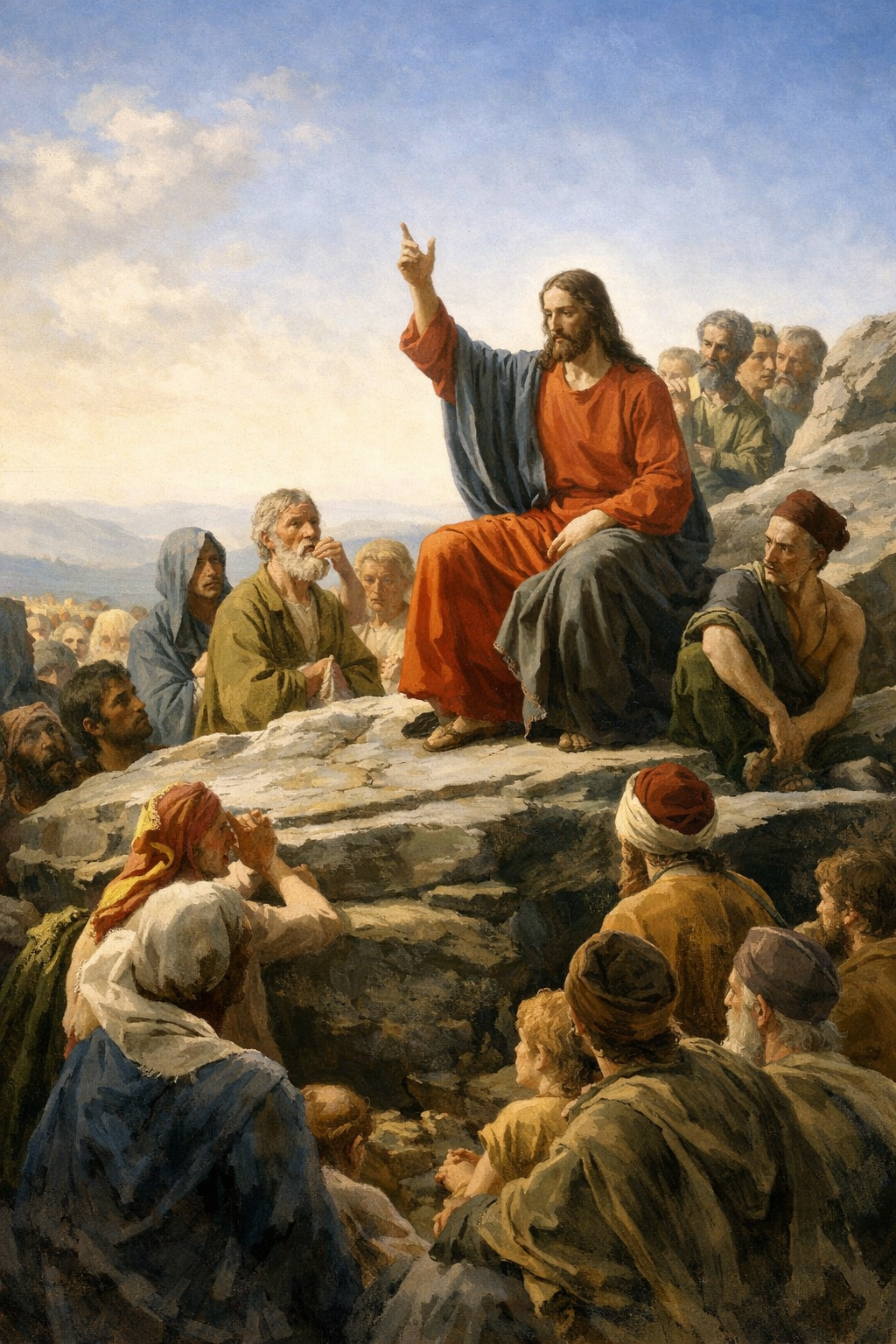
Sermon on the Mount
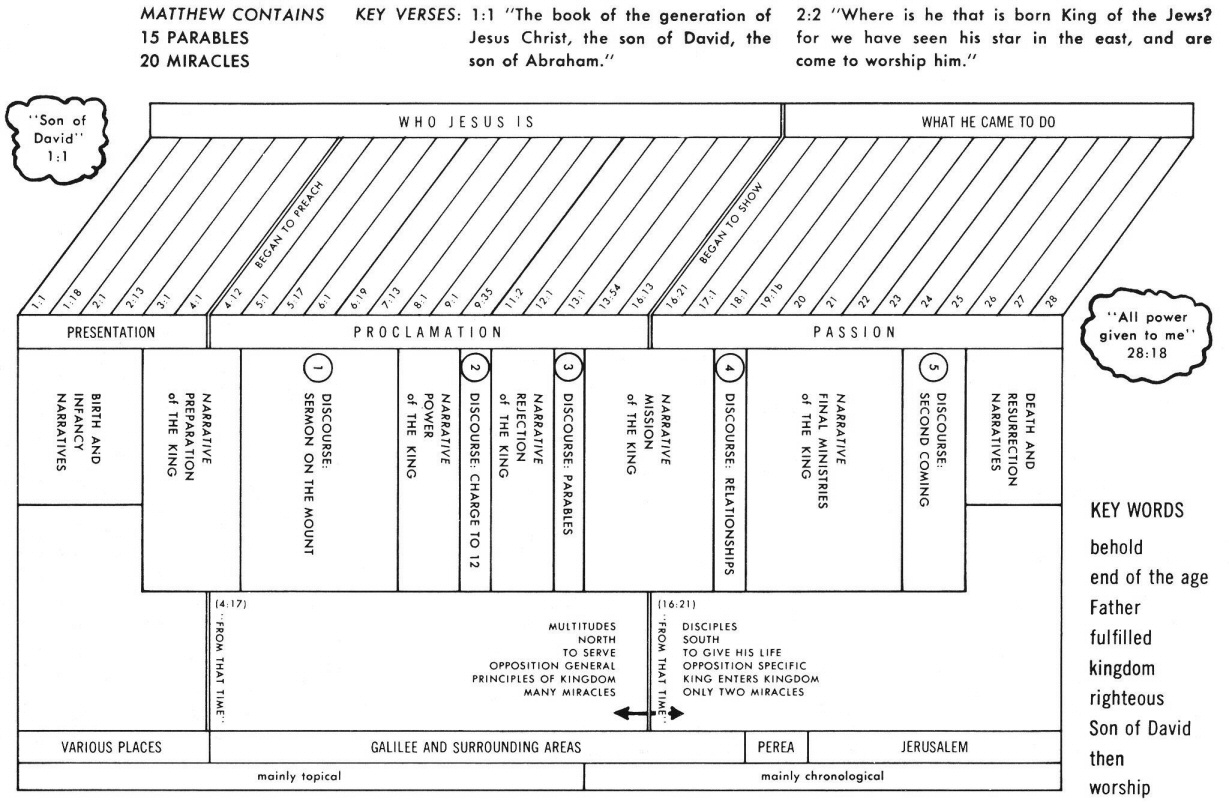
Click chart to enlarge
Charts from Jensen's Survey of the NT - used by permission
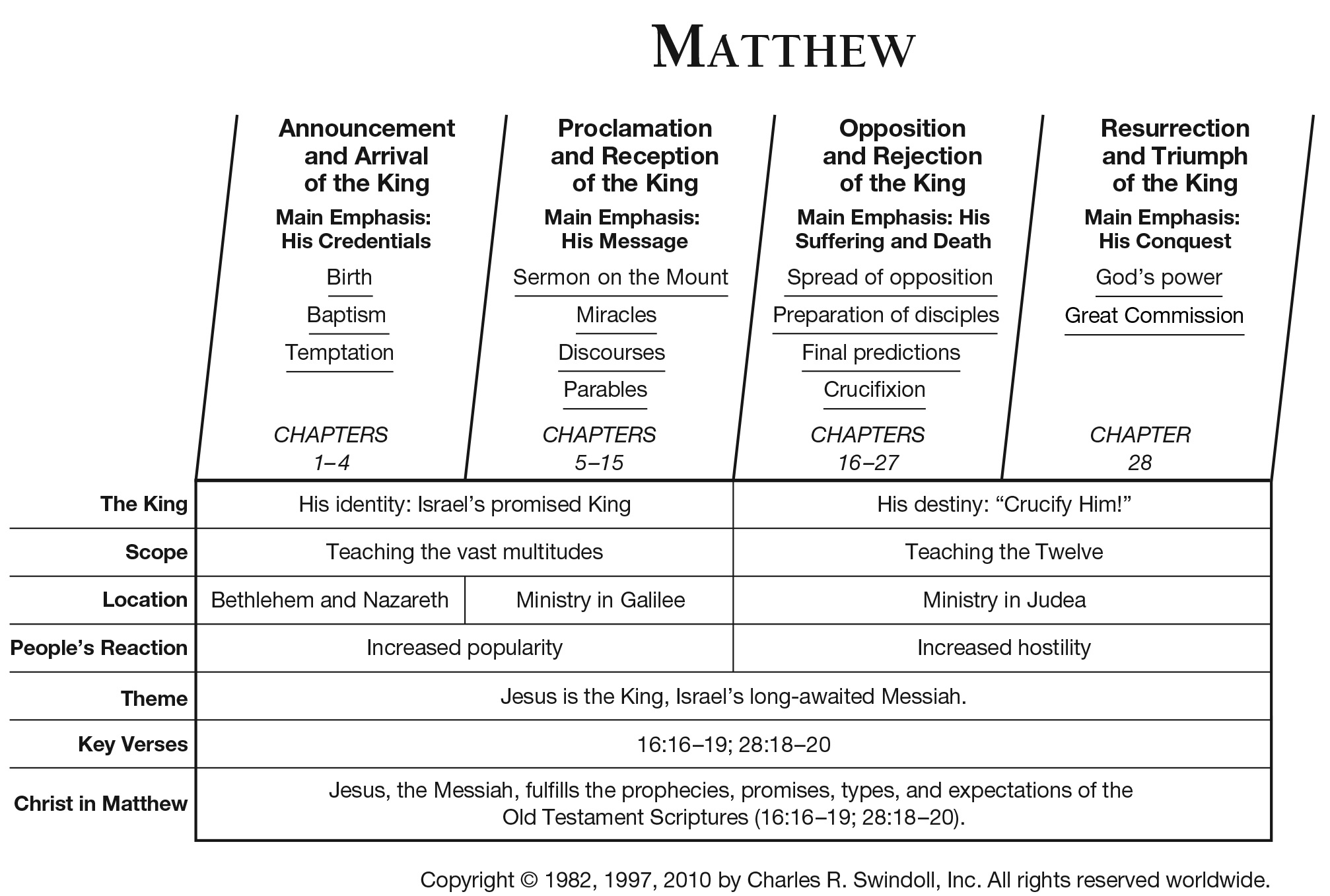
Another Chart from Charles Swindoll
THE LIFE OF JESUS AS COVERED
BY MATTHEW (shaded area)
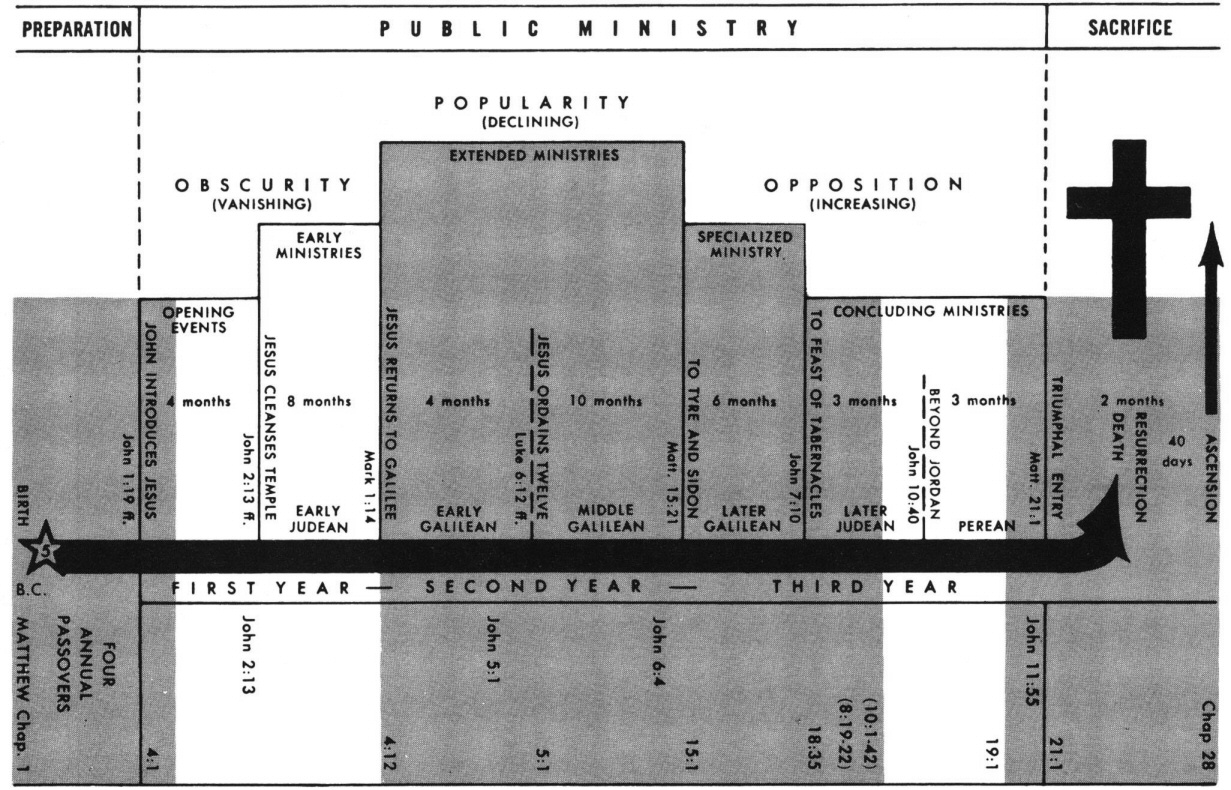
Click chart to enlarge
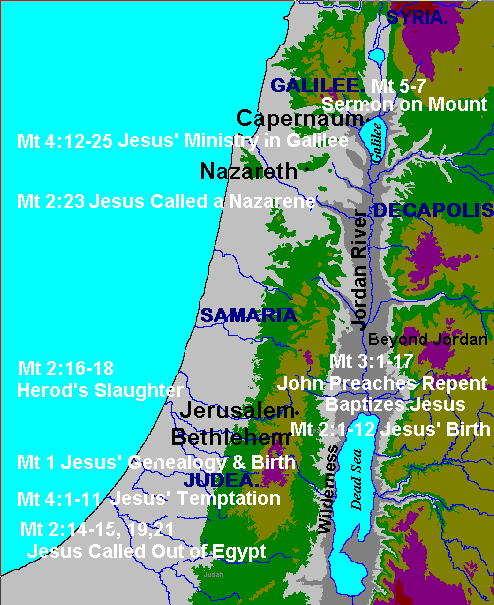
Jesus Birth and Early Years
Leading up to the Sermon on the Mount
Matthew 1-7

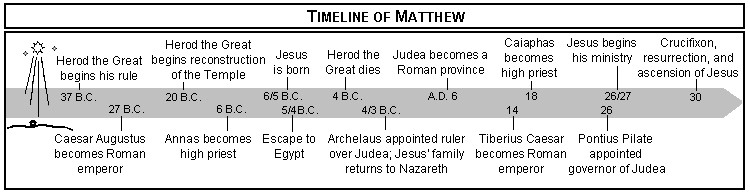
Source: Ryrie Study Bible
Matthew 5:7 Blessed are the merciful, for they shall receive mercy (NASB: Lockman)
Greek: makarioi oi eleemones, oti autoi eleethesontai. ( 3PFPI )
Amplified: Blessed (happy, to be envied, and spiritually prosperous—with life-joy and satisfaction in God’s favor and salvation, regardless of their outward conditions) are the merciful, for they shall obtain mercy! (Amplified Bible - Lockman)
Barclay: O the bliss of the man who gets right inside other people until he can see with their eyes, think with their thoughts, feel with their feelings, for he who does that will find others do the same for him and will know that that is what God in Jesus Christ has done.
KJV: Blessed are the merciful: for they shall obtain mercy. (Westminster Press)
Philips: Happy are the merciful, for they will have mercy shown to them! (New Testament in Modern English)
Wuest: Spiritually prosperous are those who are merciful, because they themselves shall be the objects of mercy.
Young's Literal: Happy the kind--because they shall find kindness.
BLESSED ARE THE MERCIFUL: makarioi hoi eleemones:
- Mt 6:14,15; 18:33, 34, 35; 2Samuel 22:26; Job 31:16-22; Psalms 18:25; 37:26; Psalms 41:1, 2, 3, 4; 112:4,9; Proverbs 11:17; 14:21; 19:17; Isaiah 57:1; 58:6-12; Daniel 4:27; Micah 6:8; Mark 11:25; Luke 6:35; Ephesians 4:32; 5:1; Colossians 3:12; James 3:17
| THE SERMON ON THE MOUNT An Outline |
|
| Chapter | Subject |
| Mt 5:3-9 | Character |
| Mt 5:10-12 | Conflict |
| Mt 5:13-7:27 | Conduct |
KINGDOM CHARACTERISTICS:
MERCIFUL
Pastor Phil Newton offers a well worded synopsis regarding the significance and purpose of the Beatitudes writing that "The Beatitudes were not given as commands but as realities for those who are part of Christ’s kingdom. We might call them Kingdom-Characteristics or Kingdom-Evidences. They describe the believer, and by the same token, they are effective instruments to root out unbelief in the heart and expose an unregenerate condition. They do reflect attitudes of the heart, but they also explain the way believers will relate not only to God but also to those about them. Without attempting to slice them too neatly, it does appear that the first four Beatitudes focus primarily toward the believer’s relationship with God, while the latter four aim primarily toward others. We must take care at boxing them too tightly, though, for the all Beatitudes have to do with kingdom life, and thus each of them will impact relationships Godward and manward. (Matthew 5:7 The Blessing of Mercy).
Keep the historical context in mind as you study this "be attitude". The religious leadership in Jesus’ day tended toward being judgmental and merciless ("mercy less") because of their demand for rigorous observance of the law. The Scribes and Pharisees did not receive God’s mercy because they had become so self-satisfied with their own religious attainments that they did not sense their dangerous condition of total spiritual bankruptcy and their desperate need for God's rich mercy.
Charles Simeon writes that "THERE can be no doubt but that every Minister should set forth the peculiar doctrines of the Gospel with frequency and firmness. If he lay not the foundation well, he can never hope to have his labours crowned with success. On the other hand, it becomes him very earnestly to inculcate the necessity of a Christian temper: and, if he be not attentive to this, he must expect, that, whilst his people are filled with head-knowledge, they will dishonour their profession both by their spirit and conduct. Our blessed Lord, throughout this whole discourse, shews us the importance of cultivating holy and heavenly dispositions: and, at the same time that he corrects the false notions which were entertained respecting the nature of his kingdom, declares unequivocally, that it is the practical Christian, and he only, that is truly blessed. (Matthew 5:7 The Reward of Mercifulness)
Blessed (see makarios) means spiritually prosperous, independent of one's circumstances because it is a state bestowed by God and not a feeling felt. Fortunate, approved of God, happy independent of happenings.
Merciful (1655) (eleemon from eleos = mercy) (Click for in depth study of eleos) refers to one who is actively compassionate or one who is benevolently merciful involving thought and action. It reflects being concerned about people in their need. One might say they are "mercy full"! The idea is that they possess a compassionate heart leading one to acts of mercy, the purpose of which is to relieve the suffering and misery of the object of that compassion. It sometimes meant giving money to a needy person. As referring to believers eleemon refers not merely to those who express acts of mercifulness, but who have this attribute as a result of the indwelling Spirit of Christ.
Eleemon is used only here and in Hebrews 2:17-note (but used 20 times in the Septuagint or LXX, mostly referring to the compassion of God, the uses in Proverbs referring to men: Ex 22:27, 34:6, 2Chr 30:9, Neh 9:17, 31, Ps 88:15, 103:8, 103:8; 111:4; 112:4; 116:5; 145:8; Pr 11:17; 19:11; 20:6; 28:22; Jer 3:12; Joel 2:13; Jonah 4:2)
“Blessed are the mercy full” (those "full" of mercy)
Believers deserve hell but because of God's mercy and forgiveness receive heaven!
The basic idea of eleemon is "to give help to the wretched, to relieve the miserable." Here the essential thought is that mercy gives attention to those in misery. From this we make the important distinction between mercy and grace. Grace is shown to the undeserving; mercy is compassion to the miserable. Thus the synonym for mercy is compassion
Mercy is not simply feeling compassion but exists when something is done to alleviate distress. This is nicely illustrated in the Old Testament by the "mercy seat" in the holy of holies. This was the place where the Lord God accepted the propitiatory (satisfactory) sacrifice to atone for the nation’s sins, once each year on the "Day of Atonement" (see Lev 16:2,13, 14, 15). Here at the mercy seat God was moved with pity and compassion for the sinful people, and took action to reconcile them to himself through accepting the blood of a goat in their stead. (See also notes on God's Attribute of Mercy).
AN "IMPOSSIBLE"
MERCY
In Lamentations (see Lam 3:19, 20, 21, 22, 23 "His compassions [mercies] never fail. They are new every morning") we see the Lord’s mercies being new each morning. And who does He demonstrate such bountiful mercies to? Toward His undeserving, rebellious, stiff necked chosen people! This observation helps us to understand the character of the mercy Jesus is calling for in those who claim to be citizens of His Kingdom. It is an "impossible" mercy (for the natural man) and is only "Him-possible" (supernatural in the Spirit controlled regenerate man or woman).
In short, being merciful is a characteristic that demands of us a disposition of heart and life that is contrary to human nature. Indeed a merciful heart is a characteristic Jesus says of a citizen of the Kingdom, one who has received a supernatural "heart transplant" (Ezekiel 36:25, 26, 27, 2Co 5:17 - notice how Ezek 36:27 enables one to be mercy filled). This Beatitude then begs the question from all who would profess Christ as Savior - Does the demonstration or lack of demonstration of mercy affirm us or condemn us (respectively)?
Merciful means “full of mercy.” Just as a graceful person is one full of grace, the merciful person is the one who is full of the fountain of mercy, who is full of God. Mercy moves the merciful to bestow mercy. The merciful man is the man who is full of love, and who loves with the love of God. He is the man in whose life the cross has done a transforming work to conform him to Jesus Christ; that which is not a natural characteristic of his life becomes the character and pattern of his life. But just as the Lord tells his people to be holy because he is holy, he also calls for his people to reflect his mercy. Sometime we want to hide from the Bible’s description of Christians as merciful. It is a characteristic that demands of us a disposition of heart and life that is contrary to human nature.
Ray Pritchard explains that mercy includes three elements…
1. ”I see the need”—that’s recognition.
2. “I am moved by the need”—that’s motivation.
3. “I move to meet the need”—that’s action.
Having a feeling of sorrow over someone's bad situation I now want to try to do something about it. Mercy is more than a feeling, but not less than that. Mercy begins with simple recognition that someone is hurting around you. But mere seeing or feeling isn’t mercy. Mercy moves from feeling to action. It is active compassion for those in need.
Tasker explains, "The merciful are those who are conscious that they are themselves the unworthy recipients of God’s mercy, and that but for the grace of God they would be not only sinners, but condemned sinners."
William Barclay noted the Hebrew word (hesed) for "merciful" has the idea of "the ability to get right inside the other person's skin until we can see things with his eyes, think things with his mind, and feel things with his feelings."
Leon Morris observes "These are people who show by their habitual merciful deeds that they have responded to God's love and are living by His grace. They will receive mercy on the last day."
Nothing proves that we have been forgiven (received God's mercy) better than our own readiness to forgive (dispense God's mercy)!
The point is that Jesus is referring to those who as their lifestyle demonstrate mercy. Their life is not one of an occasional show of mercy but a continually inclination to show mercy. (Sermon on Matthew 5:7)
Mercy is love in action.
And still wherever mercy shares
Her bread with sorrow, want and sin
And love the beggar’s feast prepares,
The Uninvited Guest comes in.
Unheard, because our ears are dull,
Unseen, because our eyes are dim,
He walks our earth, the Wonderful,
And all good deeds are done to Him.
The Uninvited Guest is Jesus
Mercy serves as a constant reminder that we are living under God’s mercy, as spiritual paupers (Mt 5:3) daily in need of His great mercy, and only able to call ourselves “Citizens of the Kingdom of Heaven” because the King has emptied Himself of His royal prerogatives and in mercy has stooped to meet our need through the provision of His life, death, resurrection and sending of His Spirit. Beloved, mercy known will result in mercy shown. Ask God to show you who and how you can be merciful to this day, this week, this year… He will be faithful to show you… and then you won't miss the blessing of basking in His overflow of mercy in your life… for the King's commanded contains His promise…
"Give, and it will be given to you; good measure, pressed down, shaken together, running over, they will pour into your lap. For by your standard of measure it will be measured to you in return." (Luke 6:38, cf Deut 15:10, Proverbs 28:27 [remember giving will not always be money but sometimes an even more valuable commodity, your time, as you demonstrate mercy received to one who is needy], Eccl 11:1, 2, Galatians 6:7)
FOR THEY SHALL RECEIVE MERCY: hoti autoi eleethesontai. (3PFPI):
- Hosea 1:6; 2:1,23; Ro 11:30; 1Co 7:25; 2Cor 4:1; 1Timothy 1:13,16; 2Ti 1:16, 17, 18; Heb 4:16; 6:10; James 2:13; 1Pe 2:10
As you hope for mercy, show mercy.
-Spurgeon
For - Always pause and ponder this instructive term of explanation.
Spurgeon - They forgive, and they are forgiven. They judge charitably, and they shall not be condemned. They help the needy, and they shall be helped in their need. What we are to others, God will be to us. Some have to labour hard with their niggardliness in order to be kind; but the blessing lies not only in doing a merciful act, but in being merciful in disposition. Followers of Jesus must be men of mercy; for they have found mercy, and mercy has found them. As we look for "mercy of the Lord in that day ", we must show mercy in this day. (The Gospel of the Kingdom: A Popular Exposition of the Gospel According to Matthew)
Receive mercy (1653) (eleeo from eleos [word study]) means “to feel sympathy with the misery of another, especially such sympathy which manifests itself in action, less frequently in word.” Describes the general sense of one who has compassion or person on someone in need.
It indicates being moved to pity and compassion by tragedy and includes the fear that this could happen to me. To see someone in dire need (including one who may not deserve the misfortune), to have compassion on them, and to give help to remove the need.
In the active voice eleeo means to show mercy and so to be greatly concerned for someone in need and/or to help someone because of pity.
Mt 5:7 uses eleeo in the passive voice means to be shown mercy, with the accompanying senses of compassion or pity. It conveys the active desire to remove the misery of the person who is shown mercy.
NIDNTT (click for 4 page article on eleos/eleeo) writes of the root word eleos that in classical Greek -- It is “the emotion roused by contact with an affliction which comes undeservedly on someone else” (R. Bultmann, TDNT II 477), viz. compassion, pity, mercy. These feelings are the reverse of envy at another’s good fortune. There is also an element of fear that one might have to suffer in the same way. Aristotle in his Poetics stated that tragedy aroused pity and terror and these caused katharsis, purging. From Plutarch onwards we find the expressions eleon echo, to find mercy, and kat' eleon, out of compassion. eleos was used as a technical term for the end of the speech for the defence, in which the accused tried to awaken the compassion of the judges.
Vincent writes that eleeo means "to succor or to show compassion… The (root) word (eleos) emphasizes the misery with which grace deals; hence, peculiarly the sense of human wretchedness coupled with the impulse to relieve it, which issues in gracious ministry. Bengel remarks, “Grace takes away the fault, mercy the misery.”
Vine writes that eleeo "signifies, in general, "to feel sympathy with the misery of another," and especially sympathy manifested in act, (a) in the Active Voice, "to have pity or mercy on, to show mercy" to, e.g., Matt. 9:27; Matt. 15:22; Matt. 17:15; Matt. 18:33; Matt. 20:30, 31 (three times in Mark, four in Luke); Rom. 9:15, 16, 18; Rom. 11:32; Rom. 12:8; Phil. 2:27; Jude 1:22, 23; (b) in the Passive Voice, "to have pity or mercy shown one, to obtain mercy," Matt. 5:7; Rom. 11:30, 31; 1Cor. 7:25; 2Cor. 4:1; 1Tim. 1:13, 16; 1Pet. 2:10.
Eleeo - 29x in 26v in NAS - The NAS renders eleeo as - found mercy(1), had mercy(4), has mercy(2), have mercy(15), mercy(1), receive mercy(1), received mercy(3), show mercy(1), shown mercy(3), shows mercy(1).
Matt 5:7; 9:27; 15:22; 17:15; 18:33; 20:30, 31; Mark 5:19; 10:47, 48; Luke 16:24; 17:13; 18:38, 39; Ro 9:15-note, Ro 9:18-note; Ro 11:30-note, Ro 11:31-note, Ro 11:32-note; Ro 12:8-note; 1Cor 7:25; 2 Cor 4:1; Phil 2:27-note; 1Ti 1:13, 16; 1Pe 2:10-note.
It is notable that 11/29 uses are in the aorist imperative which is a command calling for specific, definitive, immediate (even urgent) attention (obedience) (Matt 9:27; 15:22; 17:15; 20:30, 31; Mark 10:47, 47; Luke 16:24; 17:13; 18:38, 39)
Eleeo - 81x in the non-apocryphal Septuagint (LXX) -
Gen 33:5, 11; 43:29; Ex 23:3; 33:19; Num 6:25; Deut 7:2; 13:17; 28:50; 30:3; 2Sa 12:22; 2Kgs 13:23; 2Chr 36:17; Job 19:21; 24:21; 27:15; 41:12; Ps 6:2; 9:13; 25:16; 26:11; 27:7; 30:10; 31:9; 41:4, 10; 51:1; 56:1; 57:1; 86:3, 16; 119:29, 58, 132; 123:3; Prov 12:13; 14:21; 17:5; 19:17; 21:10; 22:9; Isa 9:17, 19; 12:1; 13:18; 14:1; 27:11; 30:18f; 33:2; 44:23; 49:10, 13, 15; 52:8f; 54:7f; 55:7; 59:2; Jer 6:23; 7:16; 12:15; 30:18; 31:20; 42:12; 50:42; Lam 4:16; Ezek 5:11; 7:4, 9; 8:18; 9:5, 10; 24:14; 39:25; Hos 1:6f; 2:1, 4, 23; 14:3; Amos 5:15; Zech 1:12, 17;
Paul repeatedly uses eleeo to describe the mercy of God…
30 For just as you once were disobedient to God, but now have been shown mercy because of their disobedience,
31 so these also now have been disobedient, in order that because of the mercy shown to you they also may now be shown mercy.
32 For God has shut up all in disobedience that He might show mercy to all. (See Ro 11:30-note, Ro 11:31-note, Ro 11:32-note) And notice Paul's reaction to this "concentration" of God's mercy (Ro 11:33ff-note)
MacArthur has an interesting insight noting that…
Mercy is integral to God’s redemptive work for man. From the time of the Fall, man has had no way back to God except through His merciful grace. It is not surprising, therefore, that in the New Testament and the Greek Old Testament (Septuagint) various forms of the verb eleeo (to have mercy) are used some five hundred times. (MacArthur, J: Matthew 1-7 Chicago: Moody Press)
Matthew's arrangement that the first four beatitudes express our total dependence upon God and the next three are the outworking in everyday life of that dependence upon Him.
In his note on the use of eleeo in Romans 12:8 Dr John MacArthur notes that this verb…
carries the joint idea of actively demonstrating sympathy for someone else and of having the necessary resources to successfully comfort and strengthen that person.
The gifted Christian who shows mercy is divinely endowed with special sensitivity to suffering and sorrow, with the ability to notice misery and distress that may go unnoticed by others, and with the desire and means to help alleviate such afflictions. This gift involves much more than sympathetic feeling. It is feeling put into action. The Christian with this gift always finds a way to express his feelings of concern in practical help. He shows his mercy by what he says to and what he does for the one in need.
The believer who shows mercy may exercise his gift in hospital visitation, jail ministry, or in service to the homeless, the poor, the handicapped, the suffering, and the sorrowing. This gift is closely related to that of exhortation, and it is not uncommon for believers to have a measure of both. (MacArthur, J: Romans 9-16. Chicago: Moody Press)
This beatitude is similar to Psalm 18:25
With the kind and merciful You will show Yourself kind and merciful, with an upright man You will show Yourself upright, (Amplified)
Spurgeon writes: With the merciful thou wilt shew thyself merciful; with an upright man thou wilt shew thyself upright. Every man shall have his meat weighed in his own scales, his corn meted in his own bushel, and his land measured with his own rod. No rule can be more fair, to ungodly men more terrible, or to the generous man more honourable. How would men throw away their light weights, and break their short yards, if they could but believe that they themselves are sure to be in the end the losers by their knavish tricks! Note that even the merciful need mercy; no amount of generosity to the poor, or forgiveness to enemies, can set us beyond the need of mercy. Lord, have mercy upon me, a sinner.
John Stott notes that this beatitude, too, is tied to the context.
"It is `the meek' who are also `the merciful'. For to be meek is to acknowledge to others that we are sinners; to be merciful is to have compassion on others, for they are sinners too" (Stott, p. 48, The Message of the Sermon on the Mount).
Holman New Testament Commentary adds that,,,
"Kingdom servants must reflect in their own hearts the heart of the King. That they are part of the Kingdom implies that they are objects of mercy. They are "others-oriented." What we have received in such abundance, we must dispense abundantly. (Holman New Testament Commentary: Matthew)
Barnes emphasizes that…
Nowhere do we imitate God more than in showing mercy. In nothing does God more delight than in the exercise of mercy, Exodus 34:6; Ezekiel 33:11, 1 Timothy 2:4; 2 Peter 3:9. To us, guilty sinners; to us, wretched, dying, and exposed to eternal woe, he has shown his mercy by giving his Son to die for us; by expressing his willingness to pardon and save us; and by sending his Spirit to renew and sanctify the heart. Each day of our life, each hour, and each moment, we partake of his undeserved mercy. All the blessings we enjoy are proofs of his mercy. If we also show mercy to the poor, the wretched, the guilty, it shows that we are like God; we have his spirit, and shall not lose our reward. And we have abundant opportunity to do it. Our world is full of guilt and woe, which we may help to relieve; and every day of our lives we have opportunity by helping the poor and wretched, and by forgiving those who injure us, to show that we are like God. (Matthew 5.) (Bolding added)
The stress is on the feelings of pity showing itself in action, and not just existing in thought only. Mercy in the abstract is absolutely meaningless to Jesus. Compassion in action.
Grace is getting what we do not deserve.
Justice is getting what we do deserve.
Mercy is not getting what we do deserve.
Distinguish grace from mercy…
| COMPARISON OF GRACE AND MERCY |
|
| GRACE | MERCY |
| God’s solution to man’s sin | God’s solution to man’s misery |
| Covers the sin | Removes the pain |
| Gives us what we do not deserve | Does not give us what we do deserve |
| Grace is that unearned favor which saves us. . |
Mercy is that undeserved favor which forgives us. |
| Deals with the cause of sin | Deals with the symptoms of sin |
| Offers pardon for the crime | Offers relief from the punishment |
| Cures or heals the "disease" | Eliminates the pain of the "disease" |
| Regarding salvation it says "Heaven" |
Regarding salvation it says "No Hell" |
| Says "I pardon you" |
Says "I pity you" |
| Grace is the Good Samaritan's action that brought restoration to the man - Grace lifts the beaten man upon his own donkey and carries him to the inn for complete recovery, paying the complete price on the pitiful man’s behalf. (Lu 10:30-37) | Mercy is the Good Samaritan stopping to help the Jewish man who had been beaten and stripped by robbers - Mercy stops and stoops toward one who has nothing to offer the giver and has never shown favor to the giver. (Lu 10:30-37) |
Dwight Pentecost explains the rich reward of mercy flowing from a believer's life, writing that…
"To show mercy because we have received mercy demonstrates the life of Christ, the work of the Cross in a man’ life, and permits God to open up the windows of heaven and pour out blessing upon us. A man whose life is lived by the love of God manifested at the Cross will find his life flooded by the love of God. God, the source of mercy, has caused His mercies to flood my life through the cross. His righteousness will manifest itself through my life in loving, gracious concern. As His righteousness is perfected in me, His blessings may fall upon me. Mercy is the manifestation of the righteousness of Christ in the life of the child of God that opens a life to the blessings of God." (Pentecost, D: Design for Living: Lessons in Holiness from the Sermon on the Mount)
Showing mercy is evidence
that we have received mercy
Matthew 5:7 is often misinterpreted as a formula for how to get along with people - be nice to them and they in turn will be nice to you. The logic is that the way to receive benefit from people is to bestow some benefit on them. We all know from our personal experience that while this may be true some of the time, it is not always true. Clearly, this is not what Jesus is teaching. Neither is He teaching that by a believer's demonstration of mercy, he or she earns credits so that one day at the judgment God will show them mercy because they had earned it. Here is the point in a nutshell - Showing mercy does not make us believers (it's not the a condition God demands of us before He lets us in the Kingdom). To the contrary, showing mercy demonstrates we are believers. This godly (God-like) mercy Jesus is referring to is not a natural characteristic of the human heart. Mercy belongs to God and He gives it to His children to dispense to those in need. In the dispensing process, those individuals show that they are true believers and also receive the wonderful reward of more mercy from God. We can't out give His mercy to us. We give. He bestows more.
And one day future, believers receive His mercy at the Judgment Seat of Christ (for believers only). Paul alludes to this "future mercy" in his "prayer" (or "wish") for his dear friend Onesiphorus…
15 You are aware of the fact that all who are in Asia turned away from me, among whom are Phygelus and Hermogenes.
16 The Lord grant mercy to the house of Onesiphorus for he often refreshed me, and was not ashamed of my chains;
17 but when he was in Rome, he eagerly searched for me, and found me--
18 the Lord grant to him to find mercy from the Lord on that day (day of the Judgment Seat of Christ)-- and you know very well what services he rendered at Ephesus. (see notes 2 Timothy 1:15-18)
Clearly Onesiphorus as a believer is not in need of mercy in the same sense as when he was an unbeliever. But he, as is true of all believers, will stand before Christ at which time all his works as a human being on earth will be judged. It is at this time which Paul is seeking for his dear friend to find mercy and receive his eternal reward based on his works in the body, whether good or bad. The same idea is seen in (1Cor 3:10-15) where only those deeds done in Christ for the glory of God will survive the testing fires and endure for eternity. May we all find mercy on that awesome day in time and eternity. Amen.
To reiterate, notice that this beatitude begins and ends with mercy. Those who are merciful will receive God’s mercy. And yet Jesus is not saying that God’s mercy depends on our mercy. Everything in the spiritual life begins and ends with God. What Jesus is saying is that as God pours out His rich mercies on us, we respond by showing mercy to others, which causes us to receive even more mercy from God. If God did not forgive and keep on forgiving, if he did not continue to pour out his mercy like the “gentle rain from heaven,” we would be utterly and completely lost. I receive mercy from God. I show mercy to others. I receive more mercy from God. I have more in the end than I had in the beginning.
Albert Barnes adds that…
Some think "receive mercy" speaks of a reward in the future… to an extent these verses speak of mercy given in a tangible way… and Jesus clearly says such "mercy" will be repaid in the future.The same sentiment is found in Matthew 10:42. Whosoever shall give a cup of cold water only unto one of these little ones, in the name of a disciple, shall not lose his reward. See Matthew 25:34-40. It should be done to glorify God; that is, in obedience to his commandments, and with a desire that he should be honoured; and feeling that we are benefiting one of his creatures. Then he will regard it as done to him, and will reward us. (Matthew 5)
Believers can only demonstrate mercy because God gives them His mercy. Before we were saved, we were in great need and God being rich in mercy held back His just and righteous judgment from us. Paul explained that…
you were dead in your trespasses and sins, 2 in which you formerly walked according to the course of this world, according to the prince of the power of the air, of the spirit that is now working in the sons of disobedience.3 Among them we too all formerly lived in the lusts of our flesh, indulging the desires of the flesh and of the mind, and were by nature children of wrath, even as the rest. 4 But God, being rich in mercy, because of His great love with which He loved us, 5 even when we were dead in our transgressions, made us alive together with Christ (by grace you have been saved),6 and raised us up with Him, and seated us with Him in the heavenly places, in Christ Jesus,7 in order that in the ages to come He might show the surpassing riches of His grace in kindness toward us in Christ Jesus. (Ephesians 2:1-7)
In his second letter to the Corinthians Paul wrote…
Blessed be the God and Father of our Lord Jesus Christ,
the Father of mercies and God of all comfort (2Cor 1:3)
Shakespeare was not wrong when he wrote (Merchant of Venice) that…
The quality of mercy is not strained;
It droppeth as the gentle rain from heaven.
Indeed genuine godly mercy always comes down from on high, having its source in the infinite riches of God's mercy and raining down on mercy needing men and woman on earth.
John wrote that "as many as received Him (Jesus), to them He gave the right to become children of God, even to those who believe in His name" (John 1:12)
So now believers are citizens of the Kingdom of Heaven, and sons of the Most High God (El Elyon - God Most High) and Luke explains how as such we are to bear God's "family resemblance" as God's "mercy dispensers" as it were…
"But love (present imperative) your enemies, and do good (present imperative), and lend (present imperative), expecting nothing in return; and your reward will be great, and you will be sons of the Most High; for He Himself is kind to ungrateful and evil men." "Be (present imperative) merciful, just as your Father is merciful.) (Luke 6:35-36)
Warren Wiersbe summed it up in his usual pithy way --”Mercy is a bridge God built to mankind. Mercy is a bridge we build toward others.”
James warns somewhat sternly that…
judgment will be merciless to one who has shown no mercy; mercy triumphs over judgment. (James 2:13)
There is some disagreement on the interpretation, some interpreting this as a reference to the Judgment Seat of Christ when believers might lose rewards because they failed to show mercy. A greater number of commentators (of the conservative evangelical tradition) favor the first part of James' statement as a reference to non-believers, those who have never shown a God-like mercy because they were not able to, having never been born again. Thus in the passage these commentaries feel that James gives us a "benchmark" if you will by which one can evaluate whether their profession is genuine or not. (See more discussion here). The last section of James 2:13 is less problematic teaching that those who have received the mercy of God ("Mercy" here in a sense personified as the believer's "Defense Attorney") will win the case for their client (the believer) over the opposing "attorney" (Judgment).
Later in Matthew's gospel Jesus gives a scathing rebuke to the merciless religious leaders declaring
"Woe to you, scribes and Pharisees, hypocrites! For you tithe mint and dill and cummin (they would carefully count out the leaves and seeds, separating out one for God from each ten counted and boasted in such self-righteous minutiae), and have neglected the weightier (rabbinic tradition divided the law into light and heavy categories) provisions of the law (they were indifferent to basic ethics): justice and mercy and faithfulness; but these are the things you should have done without neglecting the others" (Mt 23:23, cf Micah 6:8)
John MacArthur has an interesting commentary on Jesus' declaration noting that…
Almost without exception, false religions strongly magnify the insignificant and minimize or entirely ignore the truly spiritual. The worldly is idolized; the spiritual is disregarded. (MacArthur, J: Matthew 16-23 Macarthur New Testament Commentary Chicago: Moody Press)
How is it possible to show mercy (in the form of forgiveness) like God showed us mercy? The only way is by "Christ in us" (Col 1:27). By the "Spirit of Christ" the Spirit-controlled person has access to His power to love (Gal 5:22-23) the offender and demonstrate mercy. Remember, you become like God who is merciful. God chose to forgive us and show His mercy to us on the basis of the death of Christ, and now we can choose to demonstrate that same kind of mercy to those who "sin" against us. It is not natural but supernatural, the gift and fruit of God's Spirit.
How can believers show mercy? What actions can (and should) we take?
1. Forgive
Read Jesus' parable in Matthew 18:21-35, in which Peter asked Jesus if forgiveness "times 7" was enough. Jesus began by explaining that the Kingdom of Heaven could be compared to the teaching in this parable, and thus this teaching applied to Kingdom citizens or believers. The slave was unable to pay the king an "impossible" debt and sought release and forgiveness which was granted out of compassion (Mt 18:26, 27, 32). The forgiven slave was in turn unwilling to forgive a lesser debt, throwing the debtor into prison. (Mt 18:28, 29, 30) The lord was informed, was angry and handed him to the torturers asking should he not have had mercy even as he had received mercy (Mt 18:33, 34).
Boice explains that there are three main points to this parable…
The parable of the forgiven but unforgiving debtor makes three points. First, there is a judgment coming. Jesus did not pass over that teaching. He spoke of forgiveness, but He also spoke clearly of what happened to the wretched man in His story. He was cast into prison until he should pay back all he owed. That judgment hangs over everyone who has not experienced God's forgiveness through Christ. Second, there is forgiveness. God does forgive. God sent Jesus to be the basis for that forgiveness. Third, the only sure proof of a person's having received God's forgiveness through true faith in Jesus is a transformed heart and a changed life. How do we get that down into the practical areas of our lives, so that we actually begin to treat others as we have been treated? It is by standing before the thrice holy God and thus seeing ourselves as the vile sinners we are—vile and yet forgiven through the death of God's own beloved Son. That awareness should humble us so that we have simply no other option but to be forgiving to others from our heart. (Boice, J M: The Parables of Jesus )
As new creations in Christ, whose hearts of stone has been replaced with a heart that beats for God, believers are benefactors of the rich mercy of the "King" (Eph 2:4-note) and as such should be motivated to show mercy, including mercy in the form of forgiveness (cf Col 3:12, 13-note Eph 4:32-note, Eph 5:1-note, Mt 6:12, 14, 15-note, Ro 12:20, 21-note) In the same way that we are forgiven we will forgive others (cf 1 Pet 3:8-note)
The question we must ask is am I bearing a grudge, maintaining bitterness, seeking revenge, or holding someone as an "emotional hostage"? The call of the King is to forgive as those who have been greatly forgiven. Release them from the "sentence of condemnation" or indebtedness toward you. Now when you do this, does it mean that your emotions over a hurt are immediately erased and made perfect? Kent Hughes addresses this question writing…
“The fact that you have forgiven and continue to forgive is a sign of grace, despite the ambivalences and imperfections of your forgiveness” (Hughes, R. K. Sermon on the Mount: The Message of the Kingdom. Crossway Books)
2. Have Compassion
Embrace the fallen and downtrodden. Paul exhorts believers in Galatians 6:1
Brethren, even if a man is caught (apprehended, taken by surprise, caught red-handed) in any trespass, you who are spiritual (walking in the Spirit Gal 5:16-note, filled with the Spirit Ep 5:18, 19, 20-note; Col 3:16-note, evidencing fruit of Spirit Gal 5:22-23-note, mature in the faith 1Co 2:15; Heb 5:13-14-note), restore (present imperative - “mend” or “repair” mend or make whole or perfect, of setting bones, mending nets) such a one in a spirit of gentleness (see notes on meekness Matthew 5:5); each one looking to yourself (Keeping an eye on like a runner on the goal, emphasizing a continual, diligent attentiveness with the consciousness that no one is immune from falling into sin 1Co 10:12), lest you too be tempted.
Rather than speaking about or acting vindictively toward the sinning brother in this passage we are to gently restore them, showing mercy by the action of restoration. Notice how the beatitude of meekness is integrally related to a forgiving spirit. .
3. Giving
God has made us stewards of all He has given us and we demonstrate the mercy of God to others by the way we give to meet pressing needs. John writes…
But whoever has the world's goods, and beholds (not a hasty glance but seeing a Christian in need of the necessities of life over a long period) his brother in need and closes his heart against him, how does the love of God abide in him? Little children, let us not love with word or with tongue, but in deed and truth. (1John 3:17-18, cf James 2:15-17-note, Acts 9:36, Gal 6:10, Heb 13:16-note)
John is not referring to a chance encounter with someone in need, as it would be impossible to help all such needs, but a continual refusal to help a truly needy fellow Christian with whom we are in frequent contact and who really needs the help we have the resources to provide. Thus, mercy does not mean we are to throw our resources to the wind, but to as good stewards use them wisely in meeting the needs of those in distress.
4. Speaking
Mercy is found in speaking the gospel of Christ, the good news of forgiveness and mercy, to fellow sinners.
The Psalmist declares,
“Let the redeemed of the Lord say so, whom He has redeemed from the hand of the adversary” (Ps 107:2)
Peter echoes this thought writing
But you are A CHOSEN RACE, A royal PRIESTHOOD, A HOLY NATION, A PEOPLE FOR God's OWN POSSESSION, that you may proclaim the excellencies of Him who has called you out of darkness into His marvelous light; for you once were NOT A PEOPLE, but now you are THE PEOPLE OF GOD; you had NOT RECEIVED MERCY, but now you have RECEIVED MERCY. (1 Pet 2:9-10).
As believers who have receive such infinite mercies we should now show mercy by proclaiming Jesus Christ as Redeemer to those still in bondage to sin and under an imminent sentence of eternal death (John 3:18, Heb 12:25, 1Jo 5:10)
5. Praying
We show mercy when we pray for the conversion of unbelievers. Is it because others deserve to know Christ and his forgiveness? Mercy was not given to us in our unregenerate state because we deserved it but because God is rich in mercy. As Peter declares…
Blessed be the God and Father of our Lord Jesus Christ, Who according to His great mercy has caused us to be born again to a living hope through the resurrection of Jesus Christ from the dead, to obtain an inheritance which is imperishable and undefiled and will not fade away, reserved in heaven for you, (cf 1Peter 1:3-4-note)
And so we pray because none of us deserve to know Christ, none deserve forgiveness, and none are even seeking after God (Ro 3:11-note). We pray because as the recipients of "His great mercy", a mercy we long for others to know and appropriate through placing their faith in the Lord Jesus Christ. By definition, the only people who receive mercy are those who don’t deserve it. If you deserve it, it’s not mercy. Therefore, the basis for this verse is not how you want others to treat you but how God has already treated you. “Do unto others as God has done unto you.”
Merciful describes one who forgives another who is in the wrong, and this display of the forgiving aspect of mercy is poignantly demonstrated by Joseph in the treatment of his errant, "caught red handed" brothers…
17 'Thus you shall say to Joseph, "Please forgive, I beg you, the transgression of your brothers and their sin, for they did you wrong."' And now, please forgive the transgression of the servants of the God of your father." And Joseph wept when they spoke to him. 18 Then his brothers also came and fell down before him and said, "Behold, we are your servants."
19 But Joseph said to them, "Do not be afraid, for am I in God's place? 20 "And as for you, you meant evil against me, but God meant it for good in order to bring about this present result, to preserve many people alive. 21 "So therefore, do not be afraid; I will provide for you and your little ones." So he comforted them and spoke kindly to them. (Genesis 50:17-21)
Kent Hughes offers some serious warnings in regard to personal application of Jesus' parable writing that…
The first is this: If we have no mercy toward those who are physically and economically in distress, we are not Christians. Notice I did not say we become Christians by showing mercy toward the unfortunate, but that we are not believers if we are unwilling to show mercy to them. The second test involves the corresponding aspect of mercy - forgiveness. The test is this: If we refuse to exercise mercy by extending forgiveness, we are not Christians. Of course, it is frightening to maintain that we cannot be truly forgiven unless we have forgiving spirits. But it is true, because when God's grace comes into our hearts it makes us merciful. Forgiveness demonstrates whether we have been forgiven. So the telling line is this: If we refuse to be merciful, there is only one reason - we have never understood the grace of Christ. We are outside grace and are unforgiven. Jesus taught this in the Parable of the Unmerciful Slave (Matthew 18:21-35). (see note) … The Lord here warns the religious person who attends church, can recite the appropriate answers, leads an outwardly moral life, but holds a death grip on his grudges. Jesus warns the one who will not forgive his relatives or his former business associates regardless of their pleas. He warns the one who nourishes hatreds, cherishes animosities, and otherwise lives in settled malice. Such a person had better take stock of his life. Some words of qualification are in order. The warning is not for those who find that bitterness and hatred recur even though they have forgiven the offender. The fact that you have forgiven and continue to forgive is a sign of grace, despite the ambivalences and imperfections of your forgiveness. The warning is for those who have no desire to forgive. Their souls are in danger. There may also be some who find forgiveness difficult because they have been recently offended and are still in such emotional shock that they cannot properly respond. The warning is not for these. The overall lesson is, if we are Christians, we can forgive and will forgive, however imperfectly it may be. We cannot live like the miserable brothers who divided over a dollar bill. (Hughes, R. K. Sermon on the Mount: The Message of the Kingdom. Crossway Books)
For an incredible example of forgiveness click here for the testimony by Corrie Ten Boom. As you read this convicting illustration, take note of whether her dispensing of mercy was countered by a receipt of mercy from God in an unusual "package".
A Modern Example
of "Mercy Full"
A modern example of mercy is seen in Calcutta which has one of the largest leprosy populations in all of India. While the government does provide packets of medicine for leprosy patients, most of the lepers have no one willing to bandage their sores. With their acts of service (bandaging the sores of the lepers), the Bible college students with the Gospel for Asia have been demonstrating God's compassion and love for those shunned by most of the Indian society. As a result of demonstrating mercy to the often shunned and otherwise hopeless lepers throughout India, the Lord has blessed these efforts tremendously. In many of the leper colonies, fellowship groups of new believers have sprung up, and some of these have matured into churches. The believers of one church recently had the joy of sending the first young man from their leper colony to one of Gospel for Asia's Bible colleges to prepare for full-time ministry! May we as believers in America go out in the same power of the Spirit, demonstrating God's mercy to "the spiritual lepers" that are all around us and may God bless our efforts allowing us as His children to bear much fruit that will bring glory to Him and will endure throughout eternity. Amen.
Solomon writes that "He who despises his neighbor sins, but happy is he who is gracious to the poor. (Proverbs 14:21) [Amplified rendering "He who despises his neighbor sins [against God, his fellowman, and himself], but happy (blessed and fortunate) is he who is kind and merciful to the poor."]
Note what Jesus desires in the following passage…
And as Jesus passed on from there, He saw a man, called Matthew, sitting in the tax office; and He * said to him, "Follow Me!" And he rose, and followed Him. 10 And it happened that as He was reclining at the table in the house, behold many tax-gatherers and sinners came and were dining with Jesus and His disciples. 11 And when the Pharisees saw this, they said to His disciples, "Why is your Teacher eating with the tax-gatherers and sinners?" 12 But when He heard this, He said, "It is not those who are (spiritually) healthy who need a physician, but those who are sick. 13 "But go and learn (this phrase was commonly used by rabbis to rebuke those who did not know what they should have known) what this means, 'I DESIRE COMPASSION, AND NOT SACRIFICE (quoting Hosea 6:6),' for I did not come to call the righteous, but sinners." (Matthew 9:9-13)
Puritan Thomas Watson offered this explanation for the promise attached to this beatitude. He said that it is only the merciful who have “good security” in heaven. They will be paid with an “over-plus.”
“For every wedge of gold you part with, you will have a weight of glory. For a cup of cold water, a river of pleasure at God’s right hand. The interest comes to far greater than the principal. Your after crop of glory will be so great that though you spend a thousand years you will not take it all in.” (Matthew 5:1-12 The Beatitudes: An Exposition)
When Alexander Maclaren finished his exposition of this verse, he closed by challenging his congregation to
“move among men as copies of God.” What a powerful image that is—to be “copies of God.”
Francis of Assisi expressed the Maclaren's challenging description is a similarly beautiful way…
Lord Make Me an Instrument
Lord, make me an instrument of Your peace.
Where there is hatred, let me show love;
Where there is injury, pardon;
Where there is doubt, faith;
Where there is despair, hope;
Where there is darkness, light;
And where there is sadness, joy.
O divine Master, grant that I may not
So much seek to be consoled as to console,
To be understood as to understand;
To be loved as to love;
For it is in giving that we receive;
It is in pardoning that we are pardoned;
And it is in dying
That we are born to eternal life.
Pastor Phil Newton relates the concept that mercy shown to one should overflow in mercy to others in Victor Hugo's novel Les Miserables, writing that… :
Victor Hugo picked upon on this idea (whether from a biblical view or not, I really don’t know) in the well-known novel, Les Miserables. The story takes place during a time of upheaval in France. Jean Valjean, the main character, is a poor tree trimmer that steals a loaf of bread to feed his sister’s family. Convicted of stealing, he spends 18 years in the slave galleys, rowing the seas in misery. Upon his release, his attitude is hard and crusty, ready for vengeance. By chance he stays in the home of a priest because no one else will give him lodging, and during the night he robs the priest of a silver candlestick and escapes from the town. Later when apprehended, he is brought to the priest for identification, who then tells the police, ‘I gave him the candlestick.’ Then he picks up another and said that he gave him a pair of candlesticks but he had forgotten the other when he left. Released by the police, he stumbled out of the village, smitten by the mercy shown by the priest. His life changes as he was affected by mercy. After being mistaken one more time as a criminal, he refuses to head down that path again, and spends the rest of his life showing mercy to the unfortunate, even to those that had wronged him. In the end, the man that hunted him for years is overcome by the mercy Jean Valjean displayed, and lets him go. Though Victor Hugo may strain implications at points, he effectively shows the residual effects of mercy. (Matthew 5:7 The Blessing of Mercy) (Bolding added)
Mercy is giving them a piece of your heart, not a "piece of your mind" (see Our Daily Bread)…
There's a legend about a rabbi who welcomed a weary traveler into his home for a night of rest. After learning that his guest was almost a hundred years old, the rabbi asked about his religious beliefs. The man replied, "I'm an atheist." Infuriated, the rabbi ordered the man out, saying, "I cannot keep an atheist in my house." Without a word, the elderly man hobbled out into the darkness.
The rabbi was reading the Scriptures when he heard a voice, "Son, why did you throw that old man out?"
"Because he is an atheist, and I cannot endure him overnight!"
The voice replied, "I have endured him for almost a hundred years." The rabbi rushed out, brought the old man back, and treated him with kindness.
When we treat unbelievers with contempt, we're not serving God. He wants us to love them as He has loved us. Jude said, "Keep yourselves in the love of God, looking for the mercy of our Lord Jesus Christ unto eternal life. And on some have compassion, … but others save with fear, … hating even the garment defiled by the flesh" (vv.21-23). We can still love sinners while hating their sin.
God's abundant mercy to us is the motivation for us to be merciful to others. --H V Lugt (Our Daily Bread, Copyright RBC Ministries, Grand Rapids, MI. Reprinted by permission. All rights reserved)
It's better to give others a piece of your heart than a piece of your mind.
In Faith's Checkbook Spurgeon has a devotional on this beatitude entitled "We Receive as We Give"
It is not meet that the man who will not forgive should be forgiven, nor shall he who will not give to the poor have his own wants relieved. God will measure to us with our own bushels, and those who have been hard masters and hard creditors will find that the LORD will deal hardly with them.
"He shall have judgment without mercy, that hath shewed no mercy."
This day let us try to give and to forgive. Let us mind the two bears - bear and forbear. Let us be kind, gentle, and tender. Let us not put harsh constructions upon men's conduct, nor drive hard bargains, nor pick foolish quarrels, nor be difficult to please. Surely we wish to be blessed, and we also want to obtain mercy: let us be merciful, that we may have mercy. Let us fulfill the condition, that we may earn (Note: one cannot earn their salvation - that is not Spurgeon's point, but it could be misconstrued that way. Salvation is by grace through faith alone.) the beatitude.
Is it not a pleasant duty to be kind? Is there not much more sweetness in it than in being angry and ungenerous? Why, there is a blessedness in the thing itself! Moreover, the obtaining of mercy is a rich reward (see Luke 6:35). What but sovereign grace could suggest such a promise as this'. We are merciful to our fellow mortal in pence, and the LORD forgives us "all the debt." (Faith's Checkbook Pt 1 Pt 2 Pt 3 Pt 4 ) (Bolding added)
Be motivated by "Four-Eyed Living" to enable you to practice this the "be attitude" of being "mercy full"…
A South American minnow-like fish is called "four eyes" because it knows how to make the best of two worlds. The Creator designed its large bulging eyes with an air lens on the upper half and a water lens on the lower half. As it cruises along the surface of the water, it is able to look at the world above and the world below.
In a sense, believers in Christ must be like this little fish. As we go through life, we need to look above to heaven and also below to the world around us. The heavenward look enables us to focus on what God says is true and right, and the "earthward" look helps us see opportunities to demonstrate Christlike compassion to people who are entangled in sin.
In the Sermon on the Mount, Jesus talked about seeking righteousness and showing mercy (Mt. 5:6-7). The apostle Paul reinforced these two concepts when he told the Corinthians to uphold God's standards but also show mercy to a repentant brother (1 Cor 5:1-5; 2 Cor 2:1-7).
No one is in a better position to see both worlds clearly than those who have Christ living within. Our eyes have been opened to God's truth, and we have the Spirit to enable us to respond in love to the needs around us. That's what "four-eyed living" is all about. –M R De Haan II
What wisdom lies in gentleness!
What force true meekness holds!
As truth combines with Christlike love,
A tale of good unfolds. –DJD
Keep God's truth in your head and His love in your heart.
M R DeHaan writes…
In the Sermon on the Mount, the Lord Jesus teaches us to combine idealism with realism. He shows us how to keep from getting so wrapped up in life as it is that we don't see life as it should be. On the other hand, He teaches us to avoid making the equally destructive mistake of becoming so attached to our ideals that we make impossible demands on those around us.
Columnist Sidney J. Harris wrote about the negative effects of impractical idealism. He described an author who had so much to give in his books, but so little to offer in real life. When Harris first read this writer's works, he thought they were "like a breath of fresh air in a fetid chamber… He was big on Humanity, with a capital H, on family ties and folkways and children and animals and flowers… " But, as Harris laments, it was not an idealism borne out in the author's own life. At home the man was a tyrant to his wife and a terror to his children. He had an unrealistic ideal of what others should be, and he could not tolerate their imperfections.
Christ instructs us to maintain a balance. His own example shows us how to respond in truth and love to those who are imperfect. He teaches us to be right but never to exclude mercy. If we follow Christ's example, we will hold to the highest ideals, but we'll always be in touch with the real world because our hearts are filled with love.—M. R. De Haan II
A righteous heart makes room for mercy.
F B Meyer discusses THE ACTIVE SIDE OF THE BLESSED LIFE (Matt. 5:1-12)
LET us now turn to the active side of the Blessed Life. The merciful are not content with bearing wrong, they pity the wrongdoer, pity him with a great compassion, because they realize that the heart which inflicts wrong must itself be tortured by remorse, scourged with the whips of the Furies, and certain to have an even more terrible awakening to shame and everlasting contempt. The merciful, therefore, go forth with a great longing to deliver the evildoer from himself.
It was thus that the Master felt when He bore the sins of His murderers in His own body on the tree, prayed for their forgiveness, and from His throne of glory sent the Spirit to turn the hearts of fathers to their children, and of the disobedient to the wisdom of the just.
The eyes of mercy are deep 'with compassionate glances, full of tears, the homes of prayer; the feet of mercy are soft in their tread, for they will not break the bruised reed, nor quench the smoldering spark in the dimly-burning flax; the voice of mercy is generous to the fallen, gentle to the weak, and gracious to the offender; from the heart of mercy soothing balm flows to the wounds of sinners, of sufferers, and of the world.
The only way in which thou canst become merciful is to remember how much mercy thou needest and hast obtained. "Seeing," said the Apostle, "that we have obtained mercy, we faint not." Ah, think of the ten thousand talents that have been forgiven thee, and thou wilt not take thy brother by the throat and demand the hundred pence in which he is a defaulter. Hast thou forgotten the moment when thou heardest thy Lord say, "Thy sins, which were many, are all forgiven thee"? and art thou going to resent the approach of a sinful soul, which loathes the miserable past and longs to be emancipated from the burden of unforgiven sin? Remember thine own exceeding bitter cry which God has recorded in His book," Have mercy upon me, O God, according to Thy loving-kindness: according unto the multitude of Thy tender mercies."
The divinely merciful become, in the very nature of things, the pure of heart. They have come to estimate by their own inner experiences, and by the long effort which the inveterate sin of others has demanded, how terrible and horrible a thing sin is. The mother who has nursed one of her children through some loathsome and painful disease is filled with horror at it, and will take extravagant precautions to ward off the least germ or microbe that menaces her home. Only those who have been forgiven again and again, and who have forgiven, are quick to discern the first symptom of impurity, and to turn from it with shuddering horror. Yes; and to know what sin costs to those that have to deliver the sinner is such a revelation of the bitter suffering of the Redeemer, that, in view of what impurity costs Him, the soul flees from every taint of uncleanness, lest it should add one pang more to that heart which is already pierced through with many sorrows.
The way to purity is by love. Wouldest thou be pure, love Christ best of all, and love sinful men with a great pity, and love shall be in thee like a fire. It is said that, when Adam and Eve were created and lived in Eden, they needed no garment of any kind, because the native innocence emitted rays of light which enswathed their persons as an atmosphere. As much may be said of love, for where it fills the heart it sheds forth light and fire, which proceed from the very centre of our being, as the fire of God in the midst of the burning bush.
The pure in heart are naturally the peacemakers, because they cannot rest satisfied that the world of men should remain alienated from the life and holiness of God. They become, therefore, messengers of peace and benediction, seeking to reconcile between God and man, or between man and man, which is a most needful work, if ever the wrongs of time are to be righted, and earth become the home of love.
The way to this is to ask God to tell thee what work He is doing in the world, and whether thou mayest be permitted to help Him. He will tell thee that, having laid the foundations of peace in the Cross, He is going on to reconcile all things to Himself, whether they be in heaven, or on earth, or under the earth; and if thou wouldst have fellowship with Him, thou must set thyself to deal with all that breaks peace in thyself and in others.
Often in their prayers God's servants ask Him to help them. Without doubt the phrase can be abundantly justified; but does it not suggest that God is to shape His activities to the mould of our schemes, and accompany us along our chosen path? Is it not better to realize that all the burden and responsibility rest upon Him who is mighty; and that all working, whether to will or do, must emanate from Him as the fountain, and pass through us as the channel, sub-merging us as it passes forth to its blessed and victorious end?
Pre-eminently God is entitled "the God of Peace." He is ever engaged in healing the wounds and reconciling the enmities of the world. As nature covers the battlefield with golden harvests, so does God seek to undo the results of feud and strife, and lay foundations of justice for the temple of peace. Blessed indeed are they whom He associates with Himself in such pacific ministries.
But all such become persecuted and hated. It cannot be otherwise, apparently, in such a world as this. To have fellowship with the Lamb we must have fellowship in His rejection and suffering. The servant is not above his Lord, and therefore the Master said sadly: "Ye shall indeed drink of My cup, and be baptized with the baptism that I am baptized with."
It is impossible to follow the Lord closely, and not be bespattered by the mud that was cast at Him. Indeed, to miss it may fill us with questionings. The soldier who follows the colonel through the thick of the fight will almost certainly have some scar to carry to his after years. We must see to it that all the evil is said against us falsely, and that we are reproached for the name of Christ. Is this thine experience? Be of good cheer. Thou art on the track bedewed by the tears and blood of the martyrs of Jesus, and as they overcame so shalt thou. Be thou faithful unto death, and He shall give thee a crown of life. But through all thou shalt have a secret joy, a secret supply of strength, and a sweet intimacy with Him who before Pontius Pilate witnessed the good confession.
It should be noticed that these beatitudes run in a parallel line with 1 Cor. 13., and show what Love can be and do.
Poverty in spirit is Love in her chosen garb of humility, for she vaunteth not herself, and is not puffed up.
Meekness is Love in the presence of wrong. Mourning is Love in tears. Hunger is Love's appetite. Mercy is Love on her errands of beneficence. Purity is Love on fire. Peacemaking is Love's effort to adjust the wrong of the world. Persecution is Love's requital at the hands of those whom she would help. And Love is all this, intensely, perennially, constantly, because she cannot help it. Character has been defined as being what a man is in the dark; and Love is all this, not for fee or reward, not for notoriety or advertisement, but because she cannot be other. To be this is to be herself.
But who is sufficient for these things? How can they be originated and perpetuated? What is their nutriment and support? There is but one reply. The Holy Spirit must come upon thee and overshadow thee; Christ must be formed in thee; Heaven must descend to thee before it can shine out from thee.
It has been said that there is neither Cross nor Pentecost in the Sermon on the Mount, but surely they are implied. The broad, much-trodden road foretells the great city whither it leads, and these wonderful chapters inevitably conduct to Calvary and the Upper Room.
Let a man seek to attain to Christ's ideal, and he will discover the infinite disparity between its crystal heights and his ineffectual efforts to clamber to their majestic crest; he will need the propitiation and cleansing of the Blood of the Cross; he will confess to the weakness and impotence of the Flesh; he will lie at the feet of the Crucified as one dead, until the life of His resurrection enters to infill, indwell, and empower.
There is no hope of our being able to realize this exquisite portraiture by imitation or even by mediation. No; He who originally conceived this ideal, who Himself lived it, must incarnate Himself within us by the Holy Spirit, that He may reproduce in and through us that which He has inspired us to desire. He must give us what He commands; He must be in us what He prescribes. F. B. Meyer. The Directory of the Devout Life
In his book Blessed Are Ye, F B Meyer has this chapter on mercy -
IT GOETH FORTH AND RETURNETH
"Blessed are the merciful: for they shall obtain mercy."--Matt. 5:7.
NOTICE where our Saviour puts this beatitude, the heart of which is mercy. It follows that longing after righteousness which is the characteristic of the righteous, because mercy is the white flower on the stem of a righteous life. Indeed, the absence of mercy in our temper and disposition shows that our righteousness is that of the ceremonialist, as that of Saul, who was blameless as touching the righteousness which is of the law, but utterly devoid of those Christian virtues which indicate the presence of the truly holy heart. The religion which is devoid of mercy is that of the exterior form, but destitute of the inward power. It was therefore with a Divine insight that our Lord put mercy after righteousness--first, because a man must be right before he can be merciful; and second, he must be rightly adjusted with the Fountain of mercy so that the Divine quality of mercy can pass unhindered through him, and approve him to be a son of the All-Merciful. Search your heart, and see if you have learnt forgiveness for the sinning, and pity for the sorrowful; not otherwise can you account yourself righteous after God's fashion.
Mercy is the exclusive prerogative of Christianity. The schools of ancient morality had four cardinal virtues--justice in human relations, prudence in the direction of affairs, fortitude in bearing trouble and sorrow, temperance or self-restraint; but they knew nothing of mercy, which is not natural to the human heart. It is an exotic which Christ brought with Him from heaven. As long as the Lord Jesus tarried amongst men, He poured forth mercy in its double form of forgiveness and succor, to those that hated and to those that were wronged; and when He passed back to the Father, the Church took up His blessed work, and came to the world, as the dew distilling on the parched pastures, to become the saviour and regenerator of society. She found the most horrible practices in vogue, which she stayed; the most preposterous customs, which she tempered; amusements and games, which she discountenanced and finally abolished. She extended her beneficent sceptre to captives, and women oppressed with innumerable wrongs, and little children. Regardless of her own sufferings, she existed apparently for the sole reason of ministering to those that wronged and oppressed her, as well as to those who were being trampled under foot by greed and lust and hate. Thus mercy sprang out of the ground in response to the righteousness which looked down from heaven.
I. THE QUALITY OF MERCY.
It is evidently a phase of love, for each of these beatitudes enshrines some aspect of the Love of God in the soul of man.
The first is Love in her humility, with such great thoughts of the possibilities within her reach that she counts herself not to have attained.
The second is Love in tears, bewailing the lovelessness of the world.
The third is Love suffering wrong in the hope of vanquishing it.
The fourth is Love impelled by insatiable desire for fuller satisfaction.
The fifth, of which we are now treating, is Love retaliating on wrong.
The sixth is Love burning with a faith so pure that evil cannot withstand.
The seventh is Love so equable that it can quiet and steady anger and strife.
The eighth is Love misunderstood and persecuted.
Each is therefore a facet on which the sunlight falls, and from which it is reflected at a new angle, and with a new beauty. Let the Love of God dwell in you richly, and as it passes out from you to strike the many evils of the world, each phase of sin will elicit and reflect some special quality. Some day it may appear that sin was permitted, in order to set forth the perfect beauty of Divine love, just as clouds unravel the contents of the light into rainbow hues.
There is a distinction between Meekness and Mercifulness.--Meekness is the passive, mercy the active side of Love. The meek man entering into union with the love of God, which is ever-suffering beneath the wrong of the world, and knowing that the power of evil will presently be broken by meek forbearance, suffers with the long-suffering of God. But mercy goes farther. It takes measures with the wrong-doer. In mercy our love issues forth toward the perpetrator of injury, pitying, bending down with tender hand and gentle touch, pouring in oil and wine, and endeavoring, by the coals of fire it heaps on the offender, to melt his obdurate heart, and bring him to a happier state. Mercy seeks out the wrong-doer, if so be that it may lead him to repentance, notices the first symptom of return and meets it, welcomes him with kisses, undoes the injury which he has wrought to himself, and reinstates him in the old place.
There is also some difference between mercy and forgiveness. Love is the parent and root of all. Grace is love coming forth to meet those who had forfeited all claim upon it. Forgiveness is love assuring the wrong-doer that the past is forgotten. Mercy tries to ameliorate the condition of the sinner. Whenever wrong is done you, think less of what you suffer than of the state of his heart, its darkness and misery, who has done the ill, and when you have conceived of it, seek to alleviate it. This is mercy.
II. THE CIRCUMSTANCES WHICH AWAKE MERCY.
First, Sin rain
Psalm 51. we have the plaintive cry of a broken heart.
" Have mercy upon me, O God, according to Thy lovingkindness: according unto the multitude of Thy tender mercies blot out my transgressions, against Thee, Thee only, have I sinned, that the bones which Thou hast broken may rejoice."
Forgiveness is not enough, the broken bones cry out for mending. Forgiveness does not necessarily include reparation of the hurt, which wrong-doing inflicts on the wrong-doer. The drunkard may be forgiven, and yet have to bear the results of injury to his body and nerve; nevertheless, when such an one is forgiven, he may also count on the mercy of God, pitying that trembling, palsied hand, and that wrecked constitution, and endeavoring so far as may be possible, to undo the havoc, and to bring again his flesh as fair as that of a little child. Thus mercy rejoices against judgment.
Second, Suffering.--
Luke 10:37 tells of the mercy of the stranger to which even the Scribe bore unwilling testimony.
"Which of these," asked the Lord, after He had vividly portrayed Priest, Levite, and Samaritan, " proved neighbor to him that fell among the thieves?" And the Scribe was compelled to admit, " He that showed mercy on him."
In such a state of things as that which surrounds us in any great city, we must be careful to allow our mercy to flow freely forth. Nothing is worse than to be always checking it from fear of imposition. Better to be deceived and wronged now and again, than to be always withholding the hand. We must take care, of course, not to harm men by encouraging them in idleness and lying fraud. It is the truest mercy often to withhold the dole of charity from those who would misspend it. We must see to it, also, that we are not content with the impulsive act of benevolence, which flings some coin to the outstretched hand to save itself the trouble of investigating the need, and ascertaining the best way of meeting it. Mercy may refuse to give on the spur of the moment, that it may help permanently and efficiently. We must be very careful, also, not to entrust the giving of our alms to the paid hand of agents and professional almoners. Organized charity is a symptom of Christianity which retains the name of Christ, but from which His Spirit has fled. If mercy is to rise spontaneously and perennially, it must be nurtured by personal contact with sorrow and suffering. Its own hands must bind the sores, and smooth the pillow, and arrange the disordered room, and watch through the night-vigils.
Third, Ignorance and Infirmities.--
Hebrews 2:17, 10:15. Our Lord Jesus is a merciful and faithful High Priest … touched with the feeling of our infirmities, and able to have compassion on the ignorant and erring.
Mercy does not wait for sorrow and need to appeal to her. She goes to seek them. She does not wait for the injury to be wrought on her, before being prompted to retaliate in heaven's own kind, but her lovely form casts a light as it passes through the squalid street, climbing the creaking staircase, and pursuing the victims of the great wrong of the world where they hide their festering sores. Oh, beautiful is the light on Mercy's face, when she beholds some scene of want and woe, from which the refinement and culture of the world would turn, disgusted and loathing. This is work that she loves. Here she is in her element. She needs no teaching, for the heaven-born instincts of her heart prompt her. Her voice is musical with the tones of the Incarnate Saviour. Her hand is deft and soft. Her tread is beautiful as it passes along the mountain track; rugged, storm-swept, difficult to the foot. To have seen her would make you think that you had met one of the daughters of the family of God.
III. THE BENEDICTION
It has been noticed that the three first beatitudes touch the lower plane of our experience by which need has to be met with its opposite. Hence the blessedness consists in imparting the appropriate satisfaction, but the fifth, sixth, and seventh--that is, the three which lie on the hither side of desire--are those of the saint, whose blessedness consists in having more of the quality already possessed. Hence, mercy is the appropriate reward of those who already show it.
Have you ever noticed the way in which these attributes of the blessed life demand the coming of the Comforter? Matthew 5. demands John 15, 16. The commandments of the forty days demand the gift of Pentecost. The traits of Christian character must be burnt in by the Baptism of Fire. There must be a power yet to be revealed by which these rare and precious exotics may be made to bloom on the wintry soil of the soul. The law of love is given in all its fulness on this mount of beatitudes, as the law of righteousness amid the thunders of Sinai, that being hopeless of ourselves, we may be shut up to faith in the Holy Ghost, who alone can work in us the fruit of the Divine life. " The fruit of the Spirit is love, joy, peace, long-suffering, gentleness, meekness."
The merciful alone experience all the mercifulness of God.--It was after Job had pitied and prayed for his friends that his own captivity was brought again. " See," says the apostle, " the end of the Lord, that He is full of pity, and merciful." If we go through the world ministering to others, God will come and minister to us. His angels will come around us with their gentle ministry, doing for us as we have sought to do for others. " Blessed is he that considereth the poor, the Lord will remember him in time of trouble."
In one of His most striking parables our Lord depicts the forgiven steward, who took his brother by the throat, demanding payment, as forfeiting the clemency which his Lord's mercy had brought him. " Shouldest not thou also have had mercy on thy fellow-servant, as I had mercy upon thee? And he delivered him up to the tormentors." That cannot mean that God ever withdraws His mercy from the soul He has once forgiven, because God cannot change His mind, but it means surely that the unmerciful cannot claim God's mercy. If, therefore, thou hast not forgiven, thou hast not been forgiven. Each time you utter the Lord's Prayer--Forgive, according to the measure of my own forgiveness --you really say, Do not forgive me because I have not forgiven, and I dare not ask Thee to do for me what I have not done for my brother sinner.
Be sure that in coming days you will need forgiveness, more, perhaps, than you realize, for you do not know yourself; but, at such a time, the failure to show mercy will arise, and, lifting its voice, will plead against you and overpower your plea for forgiveness.
The merciful may count on mercy from their fellows.--None are treated so mercilessly as the merciless. With what measure ye mete it shall be measured to you again. Let any one be censorious in criticism, vindictive and malicious, quick to resent a wrong, bitter and uncharitable in speech, relentless in demanding reparation; and the time will come when that soul will need mercy from its fellows, and meet the stolid stare of indifference. " And Adonibezek said, Threescore and ten kings, having their thumbs and their great toes cut off, gathered their meat under my table: as I have done, so God hath requited me."
On the other hand, those who are tender and gentle in their judgment, patient and forbearing in disposition, peaceable and easy to be entreated, quick to forgive the wrong-doer, and to repair the wrong, will never be in need of mercy, but in hours of darkness and peril, forgotten acts of kindness will arise from long-buried seeds, and mercy which had gone forth to bless others will return from its long journey and many errands, in time to comfort and requite the heart from which it started forth. " Blessed are the merciful, for they shall obtain mercy."
How great has been Thy goodness to me, O Lord, who am not worthy of the least of all Thy mercies; make me tender and forgiving to my fellow servants, as Thou hast been to me; that their hearts may, in turn, be softened, and taught the law of mercy and long-suffering. F. B. Meyer. Blessed Are Ye
J. Hamilton's sermon on "Blessed are the merciful."
This does not mean the soft and easy natures which confound the distinctions of right and wrong. Nor does it mean that mere humanity and kindliness which are native to some spirits, and which find a pleasure in seeing all around them happy. But the mercifulness of the text is a principle and a grace. It comes from the happy sense of forgiveness. It is the mercifulness of one who not only seeks to obtain mercy, but who has obtained it already.
I. Mercifulness is commiseration for suffering men. Though under the government of a God of love, this world is the abode of much suffering, because it has been, and still is, the theatre of much sin. God leaves the Christian here that he may be the channel of God's beneficence and the perpetuation of His Master's kindness.
II. Mercifulness is compassion for the souls of men. This sort of mercy is a surer test of piety. Blessed are they whose pity, like the Divine compassion, seeks the lost.
III. The merciful man is considerate of the comfort and feelings of others—of their health and comfort. From want of forethought, or want of timely activity on their own part, people who are not cruel often perpetrate great cruelties. Blessed are they whose thoughtful vigilance and sympathetic delicacy make them the guardians and the comforters of acute and tender natures, a balm to those feelings which are over-exquisite, and a tonic to those which are too susceptible.
IV. The merciful man is considerate of his neighbour's character. Perhaps there is no production of our world so66 rare and precious, and yet none which has so many enemies or is so generally attacked, as character. We are apt, in needlessness or bitterness, to take up or even get up a prejudice against particular persons; their oddities, their opposition to our opinions, their successful rivalry in our own line of life, make us severe or hostile censors, and too ready to believe or repeat what is spoken to their disadvantage. But nothing can be more alien to the spirit of the Gospel. It urges us to resemble God Himself, who is the great Guardian of reputations and the Avenger of injured rectitude.
V. The merciful man is merciful to his beast. Blessed are the merciful; for their merciful disposition is an indication of what they are, and an earnest of what awaits them. They have found mercy, and they shall obtain mercy. (J. Hamilton, Works, vol. vi., p. 1.)
Alexander Maclaren - The Fifth Beatitude
‘Blessed are the merciful: for they shall obtain mercy.’—Matt. 5:7.
The divine simplicity of the Beatitudes covers a divine depth, both in regard to the single precepts and to the sequence of the whole. I have already pointed out that the first of the series is to be regarded as the root and germ of all the subsequent ones. If for a moment we set it aside and consider only the fruits which are successively developed from it, we shall see that the remaining members of the sequence are arranged in pairs, of which each contains, first a characteristic more inward and relating to the deep things of individual religion; and second a characteristic which has its field of action in our relations to men.
For example, the mourners and the meek are paired. Those who hunger and thirst after righteousness and the merciful are paired. ‘The pure in heart’ and ‘the peacemakers’ are paired.
Now that sequence can scarcely be accidental. It is the application in detail of the great principle which our Lord endorsed in its Old Testament form when He said that the first great commandment, the love of God, had a companion consequent on and like unto it, the love of our neighbour. Religion without beneficence, and beneficence without religion, are equally maimed. The one is a root without fruit, and the other a fruit without a root. The selectest emotions, the lowliest faith, the loftiest aspirations, the deepest consciousness of one’s own unworthiness—these priceless elements of personal religion—are of little worth unless there are inseparably linked with them meekness, mercifulness, and peacemaking. ‘What God hath together, let not man put asunder.’ If any joined Christian people have neglected the service of man for the worship of God they are flying in the face of Christ teachings. If any antagonists of Christianity attack it on the ground that it fosters such neglect, they mistake the system that they criticise, and are judging it by the imperfect practice of the disciples instead of by the perfect precepts of the Master.
So, then, here we have a characteristic lodged in the very heart of this series of Beatitudes which refers wholly to our demeanour to one another’. My remarks now will, therefore, be of a very homely, commonplace, and practical kind.
I. Note The Characteristic On Which Our Lord Here Pours Out His Blessing, Mercy.
Now, like all the other members of this sequence, with the exception, perhaps, of the last, this quality refers to disposition much rather than to action Conduct is included of course; But conducted only secondarily. Jesus Christ always puts conduct second, as all wise and great teachers do. As a man thinketh in his heart so is he.’ That is the keynote of all noble morality. And none has over carried it out more thoroughly than has the morality of the Gospel. It is a poor translation and limitation of this great word which puts in the foreground merely merciful actions. The mercifulness of my text is, first and foremost, a certain habitual way of looking at and feeling towards men, especially to men in suffering and need, and most especially to men who have proved themselves bad and blameworthy. It is implied that a rigid retribution would lead to severer methods of judgment and of action.
Therefore the first characteristic of the merciful man is that he is merciful in his judgments; not making the worst of people, no Devil’s Advocate in his estimates of his fellows; but, endlessly, and, as the world calls it, foolishly and incredibly, gentle in his censures, and ever ready to take the charitable—which is generally the truer—construction of acts and motives. That is a very threadbare thought,—brother, but the way to invest commonplace with startling power is to bring it into immediate connection with our own life and conduct. And if you will try to walk by this threadbare commonplace for a week, I am mistaken if you do not find out that it has teeth to bite and a firm grip to lay upon you. Threadbare truth is not effete until it is obeyed, and when we try to obey it, it ceases to be commonplace. I may remind you that this mercifulness, Again, which is primarily an inward emotion, and a way, as I said, of thinking of, and of looking at unworthy people, must necessarily, of course, find its manifestation in our outward conduct. And there will be, what I need not dilate upon, a readiness to help to give , to forgive not only offences against society and morality, but offences against ourselves.
I need not dwell longer upon this first part of my subject. I wished mainly to emphasise that to begin with action, in our understanding of mercifulness, is a mistake, and that we must clear our hearts of antipathies and antagonisms and cynical suspicions, if we would inherit the blessings of our text.
Before I go further, I would point out the connection between this incumbent duty of mercifulness and the preceding virtue of meekness. It is hard enough to bear ‘the spurns that patient merit of the unworthy takes,’ without one spot of red in the cheek, one perturbation or flush of anger in the heart; and to do that might task us all to the utmost. But that is not all that Christ’s ethics require of us. It is not sufficient to exercise the passive virtue of meekness; there must of mercifulness. And to call for that be the active one is to lay an additional weight upon our consciences, and to strain and stretch still further the obligation under which we come. We have not done what the worst men and our most malicious enemies have a right to receive from us when we say, with the cowardly insincerity of the world, ‘I can forgive but I cannot forget.’ That is no forgiveness, and that is no mercifulness. It is not enough to stand still, unresisting. There must be a hand of helpfulness stretched out, and a gush of pity and mercifulness in the heart, if we are to do what our Master has done for us all, and what our Master requires us to do for one another. Mercifulness is the active side of the passive meekness.
Further, in a word, I would note here another thing, and that is, what a sad stern, true view of the condition of men in the world results from noticing that the only three qualities in regard to our relation to them which Christ sets in this sevenfold tiara of diamonds are meekness in the face of hatred and mercifulness in the face weakness and wickedness; peace making in the face of hostility and wrangling. What a world in which we have to live, where the crowning graces are those which presuppose such vices as these do! Ah! dear friends, ‘as sheep in the midst of wolves’ is true to-day. And the one conquering power is patient gentleness, which recompenses all evil with good and is the sole means of transforming and thus overcoming it.
People talk a great deal, and a good deal of it very insincerely, about their admiration for these precepts gathered together in this chapter. If they would try to live them for a fortnight, they would perhaps pause a little longer than some of them do before they said, as do people that detest the theology of the New Testament, ‘The Sermon on the Mount is my religion.’ Is it? It does not look very like it. At all events, if it is, it is a religion behind which practice most wofully limps.
II. Let Me Ask You To Look At What I Have Already In Part Referred To,
The place in this series which Mercifulness holds.
Now, of course, I know, and nothing that I say now is to be taken for a moment as questioning or underestimating it, that, altogether apart from religion, there is interwoven into the structure of human nature that sentiment of mercifulness which our Lord here crowns with His benediction. But it is not that natural, instinctive sentiment—which is partially unreliable, and has little power apart from the reinforcement of higher thoughts to carry itself consistently through life—that our Lord is here speaking about; but it is a mercifulness which is more than an instinct, more than a sentiment, more than the natural answer of the human heart to the sight of compassion and distress, which is, in fact, the product of all that has preceded it in this linked chain of characteristics and their blessings.
And so I ask you to recall these. ‘Poor in spirit,’ ‘mourning,’ ‘meek,’ ‘hungering and thirsting after righteousness’-these are the springs that feed the flow of this river; and if it be not fed from them, but from the surface-waters of human sentiment and instinct, it will dry up long before it has availed to refresh barren places, and to cool thirsty lips. And also the preceding promises, ‘theirs is the kingdom of heaven’;’ they shall be comforted’;’ they shall inherit the earth; ‘they shall be filled.’ These are experiences which, again, are another collection of the head-waters of this stream That is to say, the true, lasting, reliable, conquering mercifulness has a double source. The consciousness of our own weakness, the sadness that creeps over the heart when it makes the discovery of its own sin, the bowed submission primarily to the will of God, and secondarily to the antagonisms which, in subservience to will, we may meet in life, and the yearning desire for a fuller righteousness and a more lustrous purity in our own live and characters these are the experiences which will make a man gentle in his judgment of his brother, and full of melting charity in all his dealings with him. If I know how dark my own nature is, how prone to uncommitted evils, how little I have to thank myself for the virtues that I have practised, which are largely due to my exemption from temptation and to my opportunities, and how little I have in my own self that I can venture to bring to the stern judgment which I am tempted to apply to other people, then the words of censure will falter on my tongue, and the bitter construction of my brother’s conduct and character will be muffled in silence. Except as to open out breakings,’ said one of the very saintliest of men, ‘I want nothing of what Judas and Cain had! If we feel this, we shall ask ourselves, Who art thou that judgest another man’s servant?’ and the condemnation of others will stick in our throats when we try to utter it.
And, on the other hand, if I, through these paths of self-knowledge, and lowly estimate of self, and penitent confession of sin, and flexibility of will to God, and yearning, as for my highest food and good, after a righteousness which I feel I do not possess, have come into the position in which my poverty is, by His gift, made rich, and the tears are wiped away from off my face by His gracious hand, and a full possession of large blessings bestowed on my humble will, and the righteousness for which I long imparted to me, shall I not have learned how divine a thing it is to give to the unworthy, and so be impelled to communicate what I have already received? ‘Be ye therefore imitators of God, as beloved children and walk in love as Christ also hath loved us.’ They only are deeply, through and through, universally and always merciful who have received mercy. The light is reflected at the same angle as it falls, and the only way by which there can come from our faces and lives a glory that shall lighten many dark hearts, and make sunshine in many a shady place, is that these hearts shall have turned full to the very fountain itself of heavenly radiance, and so’ have received of the Lord that which also’ they ‘deliver’ unto men.
And so, brethren, there are two plain, practical exhortations from these thoughts. One is, let us Christian people learn the fruits of God’s mercy, and be sure of this, that our own mercifulness in regard to men is an accurate measure of the amount of the divine mercy which we have received. The other is, let all of us learn the root of man’s mercy to men. There is plenty a sort, of philanthropy and beneficent and benevolent work and feeling to-day, entirely apart from all perception of, and all faith in, the Gospel of Jesus Christ, in so far as the individuals who exercise that beneficence are concerned. I, for my part, am narrow enough to believe that the streams of non-Christian charitableness, which run in our land and in other lands to-day, have been fed from Christ’s fountain, though the supply has come underground, and bursts into light apparently unconnected with its source. If there had been no New Testament there would have been very little of the beneficence which flouts the New Testament to-day. Historically, it is the great truths, which we conveniently summarise as being evangelical Christianity, that have been mother to the new charity that, since Christ, has been breathed over the world. I, for my part, believe that if you strike out the doctrine of universal sinfulness, if you cover over the Cross of Christ, if you do not find in it the manifestation of a God who is endlessly merciful to the most unworthy, you have destroyed the basis on which true and operative benevolence will rest. So then, dear brethren, let us all seek to get a humbler and a truer conception of what we ourselves are, and a loftier and truer faith of what God in Christ is; and then to, remember that if we have these, we are bound to, and we shall, show that we have them, by making that which is the anchor our hope the pattern of our lives.
III. Lastly Notice The Requital, ‘They Shall Obtain Mercy.
Now, it is a wretched weakening of that great thought to suppose that it means that if A. is merciful to B., B. will be merciful to A. That is sometimes true, and sometimes it is not. It does not so very much matter whether it is true or not; that is not what Jesus Christ means. All these beatitudes are God’s gifts and this is God’s gift too. It is His mercy which the merciful man obtains.
But you say: ‘Have you not just been telling us that this sense and experience of God’s mercy must precede my mercy, and now you say that my mercy must precede God’s?’ No; I do not say that it must precede it; I do say that my mercifulness is, as it were, lodged between the segments of a golden circle, and has on one side the experience of the divine mercy which quickens mine by thankfulness and imitation; on the other side, the larger experience of the divine mercy which follows upon my walking after the example of my Lord.
This is only one case of the broad general principle, ‘to him that hath shall be given, and from him that hath not shall be taken even that which he hath.’ Salvation is no such irreversible gift as that once bestowed a man can go on anyhow and it will continue; but it is given in such a fashion as that, for its retention, and still more for its increase, there must be a certain line of feeling and of action.
Our Lord does not mean to say, of course, that this one isolated member of a series carries with it the whole power of bringing down upon a man the blessings which are only due to the combination of the whole series, but that it stands as one of that linked band which shall receive the blessing from on high. And the blessing here is stated in accordance with the. particular Grace in question, according to that great law of retaliation which brings life unto life and death unto death.
No man who, having received the mercy of God, lives harsh, hard, self-absorbed, implacable, and uncommunicative, will keep that mercy in any vivid consciousness or to any blessed issue. The servant took his fellow-servant by the throat, and said, ‘Pay me that thou owest,’ and his master said, ‘Deliver him to the tormentors until he pay the uttermost farthing.’
You receive your salvation as a free gift; you keep it by feelings and conduct correspondent to the gift.
Though benevolence which has an eye to self is no benevolence, it is perfectly legitimate, and indeed absolutely necessary, that whilst the motive for mercifulness is me mercy received, the encouragement to mercifulness should be mercy still to be given. Walk in love, as Christ also hath loved us; and when you think of your own unworthiness, and of the great gifts which a gracious God has given, let these impel you to move amongst men as copies of God, and be sure that you deepen your spiritual life, not only by meditation and by faith, but by practical work and by showing towards all men mercy like the mercy which God has bestowed upon you.