1 Chronicles 4:2
1 Chronicles 4:3
1 Chronicles 4:4
1 Chronicles 4:5
1 Chronicles 4:6
1 Chronicles 4:7
1 Chronicles 4:8
1 Chronicles 4:9
1 Chronicles 4:10
1 Chronicles 4:11
1 Chronicles 4:12
1 Chronicles 4:13
1 Chronicles 4:14
1 Chronicles 4:15
1 Chronicles 4:16
1 Chronicles 4:17
1 Chronicles 4:18
1 Chronicles 4:19
1 Chronicles 4:20
1 Chronicles 4:21
1 Chronicles 4:22
1 Chronicles 4:23
1 Chronicles 4:24
1 Chronicles 4:25
1 Chronicles 4:26
1 Chronicles 4:27
1 Chronicles 4:28
1 Chronicles 4:29
1 Chronicles 4:30
1 Chronicles 4:31
1 Chronicles 4:32
1 Chronicles 4:33
1 Chronicles 4:34
1 Chronicles 4:35
1 Chronicles 4:36
1 Chronicles 4:37
1 Chronicles 4:38
1 Chronicles 4:39
1 Chronicles 4:40
1 Chronicles 4:41
1 Chronicles 4:42
1 Chronicles 4:43
|
1107 |
1011 |
971 |
931 |
853 |
722 |
586 |
||||
| 1 Samuel | 2 Samuel | 1 Kings | 1 Kings | 2 Kings | ||||||
|
31 |
1-4 | 5-10 | 11-20 | 21-24 | 1-11 | 12-22 | 1-17 | 18-25 | ||
|
1 Chronicles 10 |
1Chr 11-19 |
1Chr 20-29 |
2 Chronicles |
2 Chronicles |
2 Chronicles |
|||||
|
Legend: B.C. dates at top of timeline are approximate. Note that 931 BC marks the division of the Kingdom into Southern Tribes (Judah and Benjamin) and Ten Northern Tribes. To avoid confusion be aware that after the division of the Kingdom in 931 BC, the Southern Kingdom is most often designated in Scripture as "Judah" and the Northern Kingdom as "Israel." Finally, note that 1 Chronicles 1-9 is not identified on the timeline because these chapters are records of genealogy. |
||||||||||
THE DOWNWARD SPIRAL
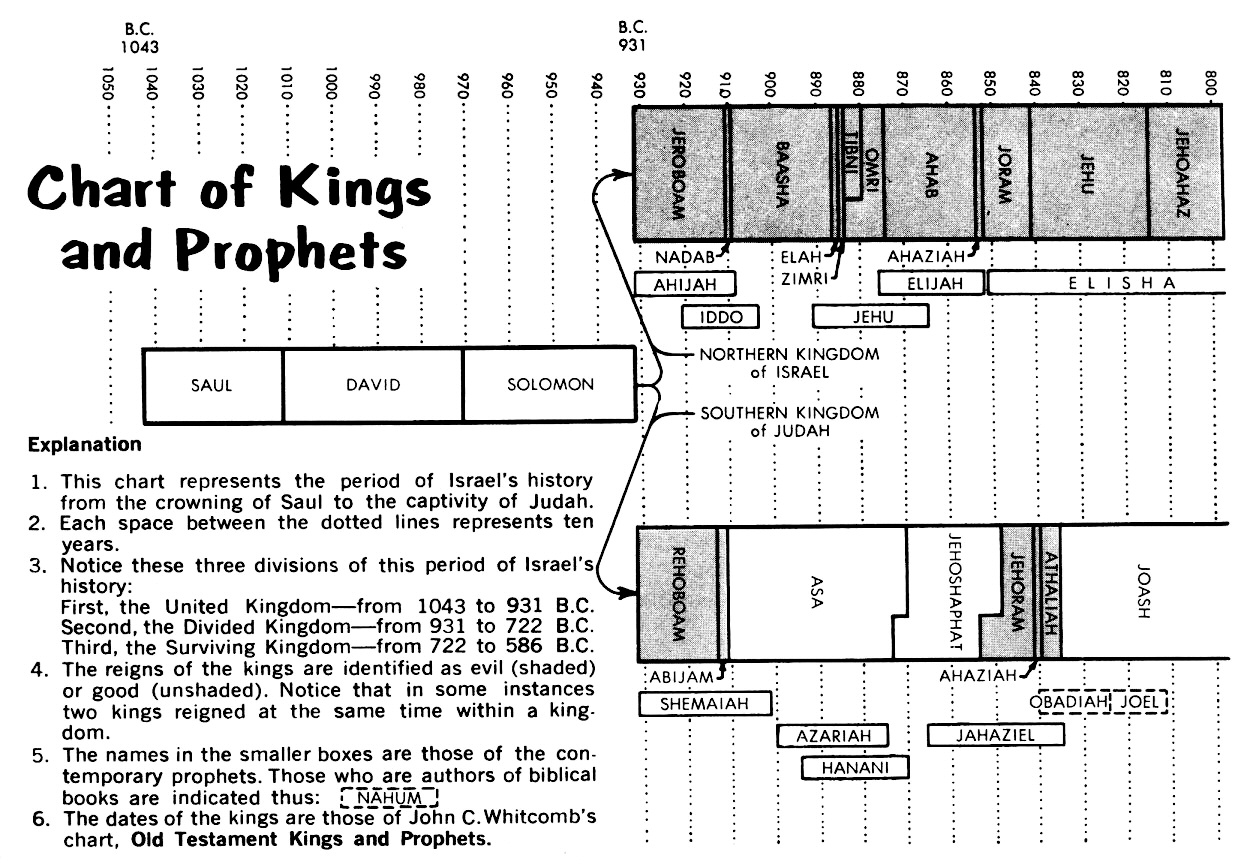
Click to Enlarge
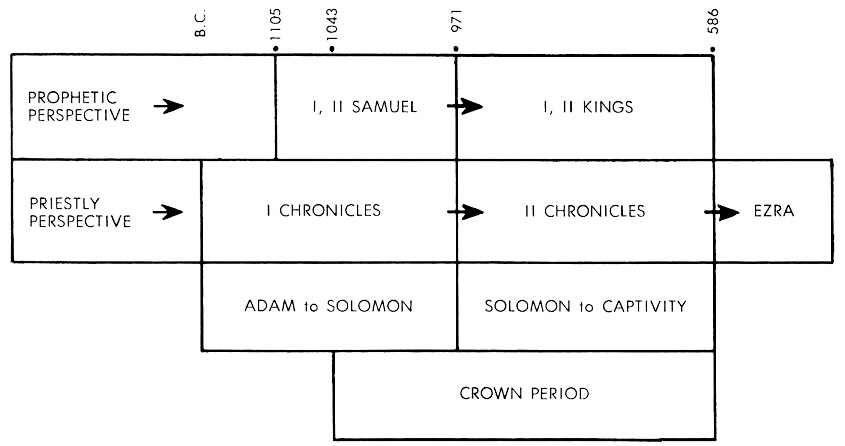
Comparison of 1 Samuel thru 2 Chronicles

| FIRST CHRONICLES SUMMARY CHART |
|
| 1 Chronicles 1-9:44 | 1 Chronicles 10:1-39:30 |
| Royal Line of David |
Reign of David |
| 12 Tribes of David's Reign |
Highlights of David's Reign |
| Genealogies | History |
| Ancestry | Activity |
| 1000's of Years | Circa 33 Years |
1 Chronicles 4:1 The sons of Judah were Perez, Hezron, Carmi, Hur and Shobal.
- Perez (KJV): 1Ch 2:5 Ge 38:29 46:12 Nu 26:20,21 Ru 4:18 Mt 1:3 Lu 3:33, Phares, Esrom
- Carmi (KJV): 1Ch 2:7-9, Chelubai, 1Ch 2:18, Caleb
OUTLINE:
- The Descendants of Judah (1Ch 4:1–23)
- The Descendants of Simeon (1Ch 4:24–43)
Related Passages:
1 Chronicles 2:7-9 The son of Carmi was Achar, the troubler of Israel, who violated the ban. 8 The son of Ethan was Azariah. 9 Now the sons of Hezron, who were born to him were Jerahmeel, Ram and Chelubai.
Believer's Study Bible - The genealogies in this section (1Ch 4:1-23) are appendices for the various tribal branches which do not seem to fit logically into the framework of the groups presented earlier (cf. 1Ch 4:2:1-3:24). Five generations of the "sons of Judah" are represented here: Perez is Judah's son; Hezron the grandson; Carmi is the third generation, whether he is identified with Caleb or with the grandson of Zerah the brother of Perez (Josh. 7:1); Hur and Shobal are the fourth and fifth generations, or the son and grandson of Caleb (cf. 2:19, 50).
Eugene Merrill - Having traced the Davidic line specifically and in detail (chap. 3), the chronicler returned to that of Judah generally. His intent here was: (a) to provide genealogical and geographical information and (b) to show the preeminence of the role of the Davidic tribe of Judah among the tribes by dealing with Judah first and by appealing to the antiquity of her residence in her allotted area (4:22b). (See Bible Knowledge Commentary: Old Testament - Page 595)
The chronicler gives special attention to Judah because this tribe became the royal tribe of Israel and the line through which the Messiah would come (Genesis 49:10). Payne points out that "None of the genealogies of Judah recorded in 4:1-23 appear elsewhere in Scripture."
The sons of Judah were Perez, Hezron, Carmi, Hur and Shobal. - Note that this might be a bit confusing because only Perez was an actual son of Judah. The others listed were were leaders of various clans.
Nancy Dawson writes "The brief summary of Judah in the earliest of the genealogies, Numbers 26:19–22, belies the ultimate glorious and triumphant meaning and outcome of his progeny, one ending with God himself incarnate. Nothing in Judah’s personal life would seem to indicate this ultimate outcome. He counseled his brothers to deliver their younger sibling Joseph to the Midianites to be sold into slavery (Genesis 37:26–27); he married a Canaanite (Genesis 38:1–2); and he had sex with his own daughter-in-law (believing she was a prostitute), leaving her pregnant (Genesis 38:18–26). In spite of all this, God, who sees the heart and who graciously forgives sin, made through Judah’s father, Jacob, the magnificent promise that “The scepter will not depart from Judah, nor the ruler’s staff from between his feet, until he to whom it belongs shall come and the obedience of the nations shall be his” (Genesis 49:10). David knew himself to be that ruler (1 Samuel 16:1, 12; 1 Kings 8:16) but only imperfectly, for he too looked for such a descendant (Psalm 18:50; 89:3–4, 35–37; 110:1). The New Testament corroborates the Old Testament importance of Judah and his dynasty. Eleven times the name appears, almost as many as all the other tribes combined. Even more striking is the epithet of Jesus as “the Son of David,” linking David the messianic prototype with the Anti-type himself. (See All the Genealogies of the Bible: Visual Charts - Page 204)
God’s purposes are not
thwarted by human sin.
Perez is listed first because he became the primary ancestral line leading to David and ultimately to Jesus Christ (Ruth 4:18–22; Matthew 1:3). Perez was born through the unusual and "morally complicated" incident involving Judah and Tamar in Genesis 38. Yet even through human failure and scandal, God sovereignly advanced His covenant purposes. Perez’s inclusion reminds us that divine grace often works through broken and unexpected circumstances. That's why it's called "amazing grace!"
Hezron was a descendant of Perez (not a brother) and became one of the great family heads within Judah. Much of the earlier genealogy in Chronicles has already focused on his descendants because the Davidic line flowed through him.
Carmi is a descendant connected with the Carmite clan (Nu 26:6). The Carmites as the descendants of Carmi, who was part of the tribe of Reuben (Jacob’s firstborn son). Carmi is connected with Achan (“the troubler of Israel”) (1 Chronicles 2:7, Joshua 7:1).
Hur (for more on "Hur" see note) is especially significant in Judah’s history. He became the ancestor of Bethlehem through his son Salma (1 Chronicles 2:50–51). The Hur in 1 Chronicles 4:1 was a descendant of Judah, likely the same Hur whose grandson Bezalel built the tabernacle. His family line represents faithfulness and service to God’s purposes. Thus Hur stands within the broader ancestral framework leading toward David and the Messiah. Jewish tradition also associates Hur with the faithful leader who helped support Moses’ hands during Israel’s battle with Amalek (Exodus 17:10–12). In Exodus 17:12, Hur is portrayed as a trusted leader standing beside Moses and Aaron. Later, in Exodus 24:14, Moses entrusted leadership to Aaron and Hur while he went up Mount Sinai.
Shobal became associated with Kiriath-jearim (1 Chronicles 2:52), a city later connected with the Ark of the Covenant before its transfer to Jerusalem (1 Samuel 7:1–2).
Henry Morris - The descendants of Judah (chapters 2-4) and Levi (chapters 6,9) are given in more detail than those from the other ten tribes. This correlates with the fact that one was the kingly tribe (Genesis 49:10) and the other the priestly tribe (Deuteronomy 33:8-10). All of these genealogies seem superficially incomplete, sometimes even contradictory and unorganized. No doubt most of the problems could be solved if they had been preserved in complete form. Many different men had identical names in ancient Israel, just as in modern America. These lists were apparently compiled by Ezra the scribe (or at least someone from his time) after the return from the Babylonian captivity, using all the available records he could find still preserved. It was important for him to establish the inheritance of the various families as accurately as possible, since they had originally been given by God in perpetuity (Leviticus 25:23-55). As incomplete as these may have been on the human level, they do give us assurance that God does not forget His promises and that He has kept these genealogies in complete form on the divine level. Furthermore, their inclusion in the divinely inspired Scriptures of the Old Testament (note Paul's testimony in 2 Timothy 3:16,17) assures us that these lists of names are "profitable" to the "man of God." If nothing else, they show us that God does care about all individuals--not just nations or leaders of nations--and these Old Testament records are not just myths or allegories but are real historical records of real people and real events. (Defender's Study Bible)
QUESTION - Who was Perez in the Bible? | GotQuestions.org
ANSWER - Perez was one of the sons of Judah through an illicit affair with his daughter-in-law, Tamar. Perez’s twin brother was Zerah. In the biblical genealogies, Perez is listed as an ancestor of King David and of Jesus Christ.
The name Perez in Hebrew means “breach” or “he who bursts forth,” and it refers to how he was born.
Judah, one of Jacob’s twelve sons, was leader of the Israelite tribe bearing his name. His sons were Er, Onan, and Shelah. Judah arranged for the marriage of his oldest son, Er, with a Canaanite woman named Tamar. But Er, who was “wicked in the sight of the Lord,” died before producing an offspring, leaving Tamar a childless widow (Genesis 38:7).
Er’s next oldest unmarried brother, Onan, was required to enter into a levirate marriage with Tamar, with a goal of producing an heir for his deceased brother. But Onan refused to have a child with Tamar, knowing the offspring would be heir to his brother’s estate and not his own. So, the Lord punished Onan with death (Genesis 38:8–10).
Judah’s third son, Shelah, was not yet old enough to marry, so Judah told Tamar to return to her father’s house and wait for Shelah to grow up. When Shelah came of age, Judah failed to keep his promise, and Tamar took matters into her own hands.
She devised a plan to entice Judah into having sex with her and thus produce an heir. She covered her face and disguised herself as a prostitute. The plan worked. Tamar became pregnant with twin boys as a result of her encounter with Judah. When the time came to give birth, Zerah’s hand emerged from the womb first, so the midwife tagged the child’s wrist with a red thread to identify him as the firstborn. But then Zerah pulled his hand back, and suddenly Perez burst forth from Tamar’s womb, earning his name and the rights of the firstborn (Genesis 38:27–30).
Both Tamar and Judah sinned in their immoral union, but God worked through their sinfulness to bring about the birth of Jesus Christ through their bloodline (Ruth 4:18–22; Matthew 1:3; Luke 3:33). The Messiah is called Lion of the Tribe of Judah (Revelation 5:5), having descended from Judah through Perez.
Perez fathered two sons, Hezron and Hamul, and became the ancestral leader of the Perezite clan (Genesis 46:12; Numbers 26:20). The family was well respected, as evidenced by this blessing pronounced upon Boaz when he committed to redeem Ruth: “Then the elders and all the people standing in the gate replied, ‘We are witnesses! May the LORD make this woman who is coming into your home like Rachel and Leah, from whom all the nation of Israel descended! May you prosper in Ephrathah and be famous in Bethlehem. And may the LORD give you descendants by this young woman who will be like those of our ancestor Perez, the son of Tamar and Judah’” (Ruth 4:11–12, NLT).
It was through Perez’s son Hezron that King David and, eventually, Jesus Christ descended.
When the Israelites returned from captivity in Babylon, 468 Perezites were chosen to live in Jerusalem (1 Chronicles 9:4; Nehemiah 11:4, 6). The Bible says they were “all outstanding men.”
Related
- What can we learn from the tribe of Judah? | GotQuestions.org
- Who was Judah in the Bible? | GotQuestions.org
- What does it mean that the scepter will not depart from Judah (Genesis 49:10)?
- Who/what is the Lion of the tribe of Judah? | GotQuestions.org
QUESTION - Who was Hur in the Bible? | GotQuestions.org
ANSWER - There are three separate men named Hur mentioned in the Bible, all in the Old Testament.
The least-known of the three is simply mentioned by name in Nehemiah 3:9.
He was the father of Rephaiah, one of the rulers of Jerusalem who repaired a section of the walls of Jerusalem when Nehemiah was overseeing the rebuilding process (see the book of Nehemiah for more about the reconstruction of the Jerusalem walls after the Israelites returned from their exile in Babylon and Persia).
Another Hur in the Bible was one of the five rulers of Midian in the time of Moses.
When this Hur appears in Scripture, the Israelites were wandering in the desert as God’s punishment for their lack of trust and obedience concerning taking possession of the Promised Land (Numbers 14). While God’s people were in the land of Shittim, the Midianites there deceived them, leading them into sexual immorality and idolatry. So God commanded Moses to take revenge on the Midianites and their chiefs: Evi, Rekem, Zur, Hur, and Reba. Every Midianite man was killed, including all five chiefs (Numbers 31:7–8). This battle was the last that Moses led before his death (verse 1).
The most well-known Hur appears in the book of Exodus.
He is described as being from the tribe of Judah. As Hur is most often mentioned in conjunction with Aaron, Moses’ brother and high priest of the Israelites, it is likely that Hur also had a place of authority among the people. Hur is one of the two men who held up Moses’ arms during the Israelites’ battle against the Amalekites. When the Amalekites attacked the Israelites on their way to the Promised Land, Moses stood on a hill overlooking the battle, staff in hand, and raised his arms in a position of prayer (Exodus 17:8–9). As long as Moses’ arms were raised, the Israelites prevailed, but, when he lowered his hands, the Amalekites began to overtake the Israelites (verse 11). So, when Moses’ arms grew tired, he sat on a stone and Aaron and Hur stood beside him to hold up his arms. Due to Aaron and Hur’s support, “[Moses’] hands remained steady till sunset. So Joshua overcame the Amalekite army with the sword” (Exodus 17:12–13).
Previously, when Moses ascended Mount Sinai to receive the Ten Commandments, he left Aaron and Hur in charge of the people. They did a poor job, for, when Moses returned, he found that the people had created a golden calf to worship in place of the Lord. Aaron himself cast the idol (Exodus 32:2–4). While Hur’s involvement in the idolatry is unclear, it is likely that, as a leader in Israel, Hur was either complicit or complacent in the matter.
The last piece of information the Bible gives us of Hur of the tribe of Judah is that he was grandfather to Bezalel (Exodus 31:2), the craftsman who was filled with God’s Spirit to oversee the construction of the tabernacle and the Ark of God. According to one Jewish tradition, Hur was married to Moses’ sister, Miriam. Another tradition says that Hur was Miriam’s son. Yet another Jewish tradition has Hur standing up to the idolaters at Mt. Sinai and being murdered by them—after which Aaron was much more compliant with the crowd’s demands. Such speculations are interesting but cannot be confirmed in Scripture.
The name “Hur” is also known due to the character “Judah Ben-Hur” in the movie Ben-Hur. However, the character in the movie is not based on any of the men named “Hur” in the Bible.
1 Chronicles 4:2 Reaiah the son of Shobal became the father of Jahath, and Jahath became the father of Ahumai and Lahad. These were the families of the Zorathites.
- Reaiah (KJV): 1Ch 2:52, Haroeh
- Zorathites (KJV): 1Ch 2:53,54 Jos 15:33 Judges 13:25
This verse continues tracing the descendants within the tribe of Judah.
Reaiah the son of Shobal - Note Reaiah is called Haroeh in 1Ch 2:52 and was founder of the Zorathites the family that gave rise to Samson (Jdg 13:2).
became the father of Jahath, and Jahath became the father of Ahumai and Lahad. These were the families of the Zorathites. The names in this verse represent family heads or clan leaders, preserving the tribal identity of Israel after the Babylonian exile.
1 Chronicles 4:3 These were the sons of Etam: Jezreel, Ishma and Idbash; and the name of their sister was Hazzelelponi.
- Etam (KJV): Judges 15:11 2Ch 11:6
These were the sons of Etam: Jezreel, Ishma and Idbash; and the name of their sister was Hazzelelponi.
1 Chronicles 4:4 Penuel was the father of Gedor, and Ezer the father of Hushah. These were the sons of Hur, the firstborn of Ephrathah, the father of Bethlehem.
- Gedor (KJV): 1Ch 4:18,39 Jos 15:36
- Hur (KJV): 1Ch 2:19-20,50
Related Passages:
1Ch 2:19-20,50 When Azubah died, Caleb married Ephrath, who bore him Hur. 20 Hur became the father of Uri, and Uri became the father of Bezalel. (2:50) These were the sons of Caleb. The sons of Hur, the firstborn of Ephrathah, were Shobal the father of Kiriath-jearim,
Penuel was the father of Gedor, The expression “father of” frequently means “founder,” “ancestor,” or “leader” of a clan or settlement. Gedor was a town in Judah’s hill country (Joshua 15:58).
and Ezer the father of Hushah likely identifies Ezer as the ancestral head connected with Hushah, another Judahite settlement or clan.
These were the sons of Hur Hur was an important descendant within Judah’s line. Earlier genealogies connected Hur with the region around Bethlehem (1 Chronicles 2:50–51). Jewish tradition often associates Hur with the faithful companion of Moses and Aaron who helped support Moses’ hands during Israel’s battle with Amalek (Exodus 17:10–12), though Scripture does not state definitively that they are the same individual.
the firstborn of Ephrathah, the father of Bethlehem. Ephrathah (or Ephrath) was closely associated with Bethlehem. In Genesis 35:19, Rachel was buried “on the way to Ephrath (that is, Bethlehem).” Over time “Ephrathah” became another designation connected with the Bethlehem region and its clans.
1 Chronicles 4:5 Ashhur, the father of Tekoa, had two wives, Helah and Naarah.
Related Passages:
1Ch 2:24 After the death of Hezron in Caleb-ephrathah, Abijah, Hezron’s wife, bore him Ashhur the father of Tekoa.
2 Sa 14:2 So Joab sent to Tekoa and brought a wise woman from there and said to her, “Please pretend to be a mourner, and put on mourning garments now, and do not anoint yourself with oil, but be like a woman who has been mourning for the dead many days;
Amos 1:1 The words of Amos, who was among the sheepherders from Tekoa, which he envisioned in visions concerning Israel in the days of Uzziah king of Judah, and in the days of Jeroboam son of Joash, king of Israel, two years before the earthquake.
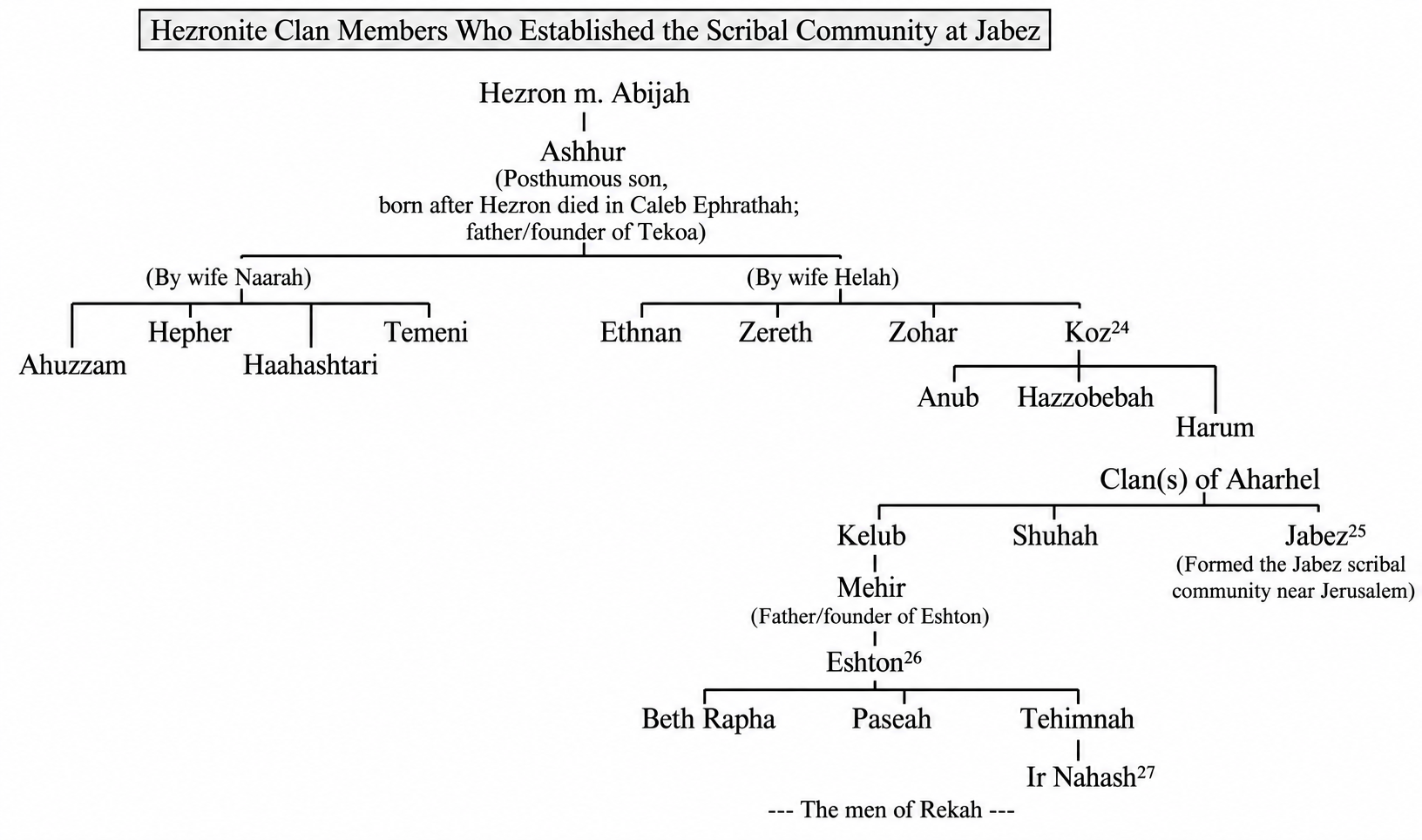
Ashhur, the father of Tekoa, “Ashhur” is identified as “the father of Tekoa,” meaning he was likely the founder, leading ancestor, or clan head associated with the town of Tekoa. Tekoa was a town in the hill country of Judah located south of Bethlehem. It later became famous as the hometown of Amos, the shepherd prophet whom God called to proclaim judgment and justice to Israel (Amos 1:1). Tekoa was also strategically important because of its elevated position overlooking the wilderness regions.
TECHNICAL NOTE - In this section of genalogies, the reader can be easily confused. Why? Because there is mingling of place names / geographic names and personal names, in which the original settlers or founders of a place often lent their names to the place, as with Tekoa in this passage. Unless one recognizes that fact, the lineages can be extremely confusing or even meaningless. The genealogies show that names may be of both places and persons.
had two wives, Helah and Naarah reflects the practice of polygamy that appears at various points in Old Testament history.
1 Chronicles 4:6 Naarah bore him Ahuzzam, Hepher, Temeni and Haahashtari. These were the sons of Naarah.
DESCENDANTS OF
ASHUR'S FIRST WIFE
Naarah bore him Ahuzzam, Hepher, Temeni and Haahashtari. These were the sons of Naarah. The chronicler is carefully distinguishing the descendants that came through each wife, preserving clan identity and inheritance structure within Judah.
1 Chronicles 4:7 The sons of Helah were Zereth, Izhar and Ethnan.
DESCENDANTS OF
ASHUR'S OTHER WIFE
The sons of Helah (WIFE #2) were Zereth, Izhar and Ethnan. The sons from Ashhur’s other wife Helah is clearly distinguished emphasizing the Chronicler's aim to preserve family and clan identities within Judah’s tribal structure. Very little is known about these individuals outside this genealogy.
1 Chronicles 4:8 and Koz became the father of Anub and Zobebah, and the families of Aharhel the son of Harum.
And Koz - He is the fourth son of Helah.
Became the father of Anub and Zobebah (aka Hazzobebah as on the chart above), and the families ("clan" on chart above) of Aharhel the son of Harum As in many parts of Chronicles, the phrase “became the father of” often carries the broader meaning of founding or becoming the ancestor of clans or family groups, NOT merely immediate biological fatherhood. Thus the NLT renders it "and Koz, who became the ancestor of Anub, Zobebah, and all the families (NET = "CLANS") of Aharhel son of Harum." (1Ch 4:8NLT) In other words from Aharhel came 3 Clans, headed by Kelub, Shuhah and Jabez.
1 Chronicles 4:9 Jabez was more honorable than his brothers, and his mother named him Jabez saying, “Because I bore him with pain.”
- more (KJV): Ge 34:19 Isa 43:4 Ac 17:11
- Jabez (KJV): i.e. Sorrowful
- I bare him (KJV): 1Ch 7:23 Ge 3:16 35:18 1Sa 4:21
THE MORE
HONORABLE JABEZ
Jabez was more honorable than his brothers In the middle of long genealogical lists, the chronicler suddenly pauses to focus on Jabez because his life stood out spiritually. The phrase “more honorable than his brothers” does not necessarily mean Jabez was famous, wealthy, or powerful. The Hebrew idea of being “honorable” carries the sense of weightiness, dignity, spiritual integrity, and godly character. Jabez distinguished himself not merely by status but by his relationship with God.
and his mother named him Jabez saying, “Because I bore him with pain.” Note that Jabez is also the name of a place (1Ch 2:55). “Jabez” sounds like the Hebrew word for pain or sorrow. His mother explained the name: “Because I bore him with pain.” In the ancient world, names often reflected circumstances surrounding birth, parental hopes, or prophetic significance. Jabez entered life under the shadow of suffering and hardship.
1 Chronicles 4:10 Now Jabez called on the God of Israel, saying, “Oh that You would bless me indeed and enlarge my border, and that Your hand might be with me, and that You would keep me from harm that it may not pain me!” And God granted him what he requested.
THE PRAYER
OF JABEZ
Now Jabez called on the God of Israel, saying, “Oh that You would bless me indeed - literally, “blessing You would bless me.” He is not seeking mere material prosperity, but the fullness of God’s gracious favor upon his life. He is not asking in a selfish way, but in recognition that all true blessing comes from God alone. Note the four uses of "that" identifying 4 specific requests, four specific, faith-filled requests.
It is the blessing of the LORD that makes rich,
And He adds no sorrow to it.
-- Proverbs 10:22
and enlarge my border, his refers to enlargement of territory, influence, responsibility, or inheritance. In the context of Israel’s covenant land promises, territory symbolized divine blessing and stewardship. Jabez is asking God to expand what has been entrusted to him. Spiritually, it reflects a desire for greater usefulness and effectiveness in God’s purposes rather than selfish ambition.
and that Your hand might be with me, The “hand” of God symbolizes divine power, guidance, protection, enablement, and favor. Jabez understood that blessing and enlargement without God’s sustaining presence would be dangerous and empty. This request reflects deep dependence upon God. Similar language appears throughout Scripture when God’s empowering presence rests upon His servants (Ezra 7:6; Acts 11:21). Jabez knew that blessing and expansion would be meaningless without God’s sustaining presence. This reflects the same dependence Moses expressed in Exodus 33:15 “If Your presence does not go with us, do not lead us up from here.”
and that You would keep me from harm that it may not pain me!” The “hand” of God symbolizes divine presence, power, guidance, protection, enablement, and favor. Jabez understood that blessing and enlargement without God’s sustaining presence would be dangerous and empty. This request reflects deep dependence upon God. Similar language appears throughout Scripture when God’s empowering presence rests upon His servants (Ezra 7:6; Acts 11:21).
And God granted him what he requested. - Note the four uses of "that" identifying 4 specific requests, four specific, faith-filled requests.
Sadly the prayer of Jabez been misapplied as a promise for Christian prosperity in almost a “name-it-claim-it” formula.
Vance Havner - Havner's Threefold Prayer
We settle for molehills when we could have mountains. Some years ago, I felt led to make a threefold prayer:
Like Hezekiah, I asked for an extension of time (see 2 Kings 20:1-6);
Like Jabez, I asked for an enlargement of coast (see 1 Chron. 4:10); and,
Like Elisha, I asked for an enduement of power (see 2 Kings 2:9).
That is a big order, but God likes to show us great and mighty things which we know not.
James Smith - THE PRAYER OF JABEZ. 1 Chronicles 4:9, 10.
1. It was a prayer to GOD.
2. It was the prayer of an HONOURABLE MAN.
3. It was an EARNEST prayer. "Oh, that thou wouldest!"
4. It was a prayer for DEFINITE BLESSING. "Bless me indeed."
5. It was a prayer for ENLARGED POSSESSIONS. "Enlarge my coast."
6. It was a prayer for POWER AND GUIDANCE. "That thine hand might be with me."
7. It was a prayer for PROTECTION FROM EVIL. "Keep me from evil, that it may not grieve me."
8. It was a prayer that was ANSWERED. "God granted him that which he requested."
A W Tozer - No Little Failures —1 Chronicles 4:10
When Simpson succeeded it was in a big way. When he failed he made great failures. It had to be so. Men of his caliber do not make little mistakes. They fly too high and too far to steer their courses by city maps. They ask not, “What street is that?” but “What continent?” And when they get off of the course for a moment they will be sure to pull up a long way from their goal. Their range and speed make this inevitable. Little men who never get outside of their own yards point to these mistakes with great satisfaction. But history has a way of disposing of these critics by filing them away in quiet anonymity. She cannot be bothered to preserve their names. She is too busy chalking up the great successes and huge failures of her favorites. WNG108–109
Lord, give me the boldness to attempt big things for You—so that whether I succeed or fail it will be in a big way! Amen.
David Jeremiah - AVOIDING PAIN 2 TIMOTHY 2:22
Once there was a man who prayed that God would protect him from evil. His prayer was like the prayer Jesus taught His disciples, except he went further. This man expressed a specific reason for wanting to avoid temptation: “Oh . . . that You would keep me from evil, that I may not cause pain!” (1 Chronicles 4:10). The man was Jabez, an Old Testament saint who displayed mature wisdom in his prayer.
Whenever we yield to temptation or succumb to evil, we are not the only ones who are hurt. There is usually a friend, a spouse, a child, or some other person who is caused pain by our choice. Even if our decision to sin is purely internal, in the realm of our thoughts, our sinful actions will diminish our future impact on others by the loss of energy and spiritual vitality spent in dealing with our sin. Therefore there are always three reasons not to sin: pain to ourselves, pain to others, and pain to God. No parent likes to witness the failure of his or her children, and God certainly takes no pleasure when we fail.
When you pray, “Lead me not into temptation,” keep Jabez’s insight in mind: that you might not cause pain in anyone’s life.
Each temptation leaves us better or worse;
neutrality is impossible.
ERWIN W. LUTZER
Daily Light on the Daily Path - “Oh that you would bless me, . . . and that you would keep me from harm. . . .” And God granted what he asked.
The blessing of the Lord makes rich, and he adds no sorrow with it.—“When he is quiet, who can condemn? When he hides his face, who can behold him?”
Salvation belongs to the Lord; your blessing be on your people!—Oh, how abundant is your goodness, which you have stored up for those who fear you and worked for those who take refuge in you, in the sight of the children of mankind!—“I do not ask that you take them out of the world, but that you keep them from the evil one.”
“Ask, and it will be given to you; seek, and you will find; knock, and it will be opened to you. For everyone who asks receives, and the one who seeks finds, and to the one who knocks it will be opened.”—The Lord redeems the life of his servants; none of those who take refuge in him will be condemned.
1 Chron. 4:10; Prov. 10:22; Job 34:29; Ps. 3:8; Ps. 31:19; John 17:15; Matt. 7:7–8; Ps. 34:22
C H Spurgeon - The prayer of Jabez 1 Chronicles 4:10
Learn to make a distinction between some things which you think to be spiritual blessings and others which are blessings indeed. Let me show you what I mean. Is it certainly a blessing to get an answer to your prayer after your own mind? I always like to qualify my most earnest prayer with ‘not as I will, but as thou wilt.’ Not only ought I to do it, but I would like to do it, because otherwise I might ask for something which it would be dangerous for me to receive. God might give it to me in anger, and I might find little sweetness in the grant, but much soreness in the grief it caused me. You remember how Israel of old asked for flesh and God gave them quails; but while the meat was yet in their mouths the wrath of God came upon them. Ask for the meat, if you like, but always put in this: ‘Lord, if this is not a real blessing, do not give it to me;’ ‘bless me indeed!’ I hardly like to repeat the old story of the good woman whose son was ill, a little child near death’s door; she begged the Puritan minister to pray for his life. He did pray very earnestly, but put in, ‘If it be thy will, save this child.’ The woman said, ‘I cannot bear that: I must have you pray that the child shall live. Do not put in any ifs or buts.’ ‘Woman,’ said the minister, ‘it may be you will live to rue the day that ever you wished to set your will up against God’s will.’ Twenty years afterwards she was carried away in a fainting fit from under Tyburn gallows-tree, where that son was put to death as a criminal. Although she had lived to see her child grow up to be a man, it would have been infinitely better for her had the child died, and infinitely wiser had she left it to God’s will. Do not be quite so sure that what you think an answer to prayer is any proof of divine love.
C H Spurgeon 1Ch 4:10 -“If only you would bless me.”
He was called Jabez because his mother bore him with sorrow. It will sometimes happen that where there is the most sorrow in the cause, there will be the most pleasure in the sequel. As the furious storm gives place to the clear sunshine, so the night of weeping precedes the morning of joy. Sorrow the forerunner; gladness the prince it ushers in. Cowper says, “The path of sorrow, and that path alone, leads to the place where sorrow is unknown.” As for this Jabez, whose aim was so well pointed, his fame so far sounded, his name so lastingly embalmed—he was a man of prayer. The honor he enjoyed would not have been worth having if it had not been vigorously contested and equitably won. His devotion was the key to his promotion. Those are the best honors that come from God, the award of grace with the acknowledgment of service. The best honor is that which one gains in communion with the Most High. Jabez, we are told, was more honorable than his brothers, and his prayer is recorded, as if to intimate that he was also more prayerful than his brothers. He prayed for God’s blessing. Perhaps in this place Jabez may have put the blessing of God in contrast with the blessings of people. People will bless us when we do well for ourselves; they will praise the one who is successful in business. Nothing succeeds like success; nothing has so much approval of the general public as one’s prosperity. They do not weigh people’s actions in the balances of the sanctuary but in other scales. We will find those about us who will commend us if we are prosperous or, like Job’s comforters, condemn us if we suffer adversity. Perhaps there may be some feature about their blessings that may please us because we feel we deserve them; they commend us for our patriotism, for our generosity. But after all, what is there in the verdict of people? At a trial the verdict of the policeman who stands in the court or of the spectators who sit in the courthouse amounts to nothing. The only thing that is of importance at all will be the verdict of the jury and the sentence of the judge. So it will little avail us, whatever we may do, how others commend or censure; their blessings are not of any great value, but, “If only you, Lord, would bless me, that you would say, ‘Well done, good and faithful servant.’ Commend the feeble service that through your grace my heart has rendered; that will be to bless me indeed.”
“Oh . . . that you would keep me from harm.”
“Why are you sleeping? Rise and pray that you may not enter into temptation.”—“The spirit indeed is willing, but the flesh is weak.”
Two things I ask of you; deny them not to me before I die: Remove far from me falsehood and lying; give me neither poverty nor riches; feed me with the food that is needful for me, lest I be full and deny you and say, “Who is the Lord?” or lest I be poor and steal and profane the name of my God.
The Lord will keep you from all evil; he will keep your life.—“I will deliver you out of the hand of the wicked, and redeem you from the grasp of the ruthless.”—We know that everyone who has been born of God does not keep on sinning, but he who was born of God protects him, and the evil one does not touch him.—“Because you have kept my word about patient endurance, I will keep you from the hour of trial that is coming on the whole world, to try those who dwell on the earth.”—The Lord knows how to rescue the godly from trials.
1 Chron. 4:10; Luke 22:46; Matt. 26:41; Prov. 30:7–9; Ps. 121:7; Jer. 15:21; 1 John 5:18; Rev. 3:10; 2 Pet. 2:9
Daily Light on the Daily Path - “When he calls to me, I will answer him; I will be with him in trouble; I will rescue him.”
Jabez called upon the God of Israel, saying, “Oh that you would bless me and enlarge my border, and that your hand might be with me, and that you would keep me from harm so that it might not bring me pain!” And God granted what he asked.—“Ask what I shall give you.” And Solomon said to God, . . . “Give me now wisdom and knowledge to go out and come in before this people.”—And God gave Solomon wisdom and understanding beyond measure, and breadth of mind like the sand on the seashore.
And Asa cried to the Lord his God, “O Lord, there is none like you to help, between the mighty and the weak. . . . O Lord, you are our God; let not man prevail against you.” So the Lord defeated the Ethiopians before Asa.
O you who hear prayer, to you shall all flesh come.
Ps. 91:15; 1 Chron. 4:10; 2 Chron. 1:7–8, 10; 1 Kings 4:29; 2 Chron. 14:11–12; Ps. 65:2
John Bennett - 1 Chronicles 4:10 JABEZ CALLED … GOD GRANTED
In this chapter the writer is giving some detail of the genealogy of the tribe of Judah, and Jabez stands out for particular mention amongst a long list of names. His mother is referred to but not named. All the attention is centred on Jabez to mark him out.
His Status. He is distinguished as ‘more honourable than his brethren’. The first man to be described like this is Shechem the son of Hamor, Gen. 34:19. He was guilty of defiling Dinah the daughter of Jacob. His honour is compared to a most ungodly company; but here the description of Jabez is in contrast to men belonging to the kingly tribe of Judah. Whatever the honour was, it was divinely recognized. All of our life and service is being estimated now in light of the future.
His Sorrow. His mother bore him in sorrow and his name bore continual witness to this. Sorrow at childbirth is a reminder of the fall, Gen. 3:16; here a more severe and unusual aspect of birth sorrow may have been in the mind of his mother. After her experience of ‘hard labour’, Rachel named her son ‘Ben-oni’ meaning ‘the son of my sorrow’. But unlike Benjamin, Jabez was to carry his name unchanged throughout life. We have all known some who have been called to carry with them constantly some personal weight of sorrow.
His Supplication. In this one mention of Jabez in the Bible there is the record of a sincere supplication which God answered by granting his request. It is left to encourage us to appreciate God’s response to our prayers. The first request was for the blessing of the presence of the God of Israel. The word ‘bless’ here means ‘to kneel’. He desired greater communion in his life. He then asks for progress in the enlargement of his coast. His desire was to enjoy more of the divine provision of the land which God had given. But there was also the desire for power in knowing the hand of God in his life and service. The final plea was for preservation from evil. He knew that evil would cause him grief. Let us also have such holy desires.
His Satisfaction. God granted that which Jabez requested. Each request was for the ultimate glory of God. No doubt the result brought great joy into his life. Let us pray today as he did.
John Butler - Wise Praying
“Jabez called on the God of Israel, saying, Oh that thou wouldest bless me indeed, and enlarge my coast, and that thine hand might be with me, and that thou wouldest keep me from evil, that it may not grieve me! And God granted him that which he requested.” (1 Chronicles 4:10)
INSERTED in the genealogies in today’s Bible reading is a very wise prayer by a man named Jabez. There are three important requests in this prayer. They are requests for the power of God, the presence of God, and the purity of God.
Power of God. “Oh that thou wouldest … enlarge my coast.” The word “coast” here means borders. Jabez wanted God to give him power to conquer more land from the evil Canaanites, land which God said was Israel’s land. We still need to pray that God will help us enlarge our borders over evil. Too often we let sin keep us small in character, small in conviction, and small in service for the Lord. Jabez wanted none of that small stuff—he wanted a large dedication to the Lord; he wanted to have every area of his life victorious. Let us pray for the power of God to enlarge our borders over sin.
Presence of God. “That thine hand might be with me.” Asking that God’s hand would be with you is another way of asking for God’s presence. Jabez desired God to be with him. Like Moses of old, Jabez greatly desired the presence of God. Today few people want the company of God. They seem to instead prefer to be as far from God as possible. They frequent dens of iniquity where God will not be, and they stay away from such places as church where God is sure to be. But it is perilous to be without the Lord, so we need, as Jabez did, to pray for God’s presence in our lives.
Purity of God. “That thou wouldest keep me from evil, that it may not grieve me!” Jabez wanted to a holy. So he prayed for the purity of God in his life. Many, however prefer guile to godliness, but not Jabez. And note that Jabez said he did not want to have evil in his life because it would grieve him. Jabez was smart in that he recognized that sin brings sorrow not happiness. Sin advertises itself as pleasure, but the pleasure is short and disappointing—then comes sorrow.
J C Philpot - Keep me from evil
"And Jabez called on the God of Israel, saying, Oh that. . . .You would keep me from evil, that it may not grieve me! And God granted him that which he requested." 1 Chronicles 4:10
Jabez was a poor burdened sinner who could not keep himself. If he could keep himself, this petition would be an idle mockery. He need not to have fallen outwardly to teach him this. There are inward falls—slips of the tongue—glances of the eye—filthy desires—roving imaginations—covetous projects—proud desires—idolatrous lustings—secret backslidings into carnality and worldliness.
A blessing indeed
"And Jabez called on the God of Israel, saying, Oh that You would bless me indeed." 1 Chronicles 4:10
To be—weaned from idols—delivered from broken cisterns—separated in spirit and affection from the world—and have our heart fixed on things above—is a blessing indeed. To feel an appetite after God's Word—to receive the truth in the love of it—to have sweet and holy communion with Jehovah—and to live under the solemn anointings of the blessed Spirit—is a blessing indeed. That such a wretch and filthy monster of iniquity should have a smile from the great and holy Jehovah, seems a blessing too great—but would be a blessing indeed!
Adrian Rogers - CLICK HERE FOR HIS FULL SERMON - God’s Formula for Greatness 1 Chronicles 4:7–10
Here was Jabez, who said, “Lord, I want you to enlarge my coasts.” (1 Chronicles 4:10) William Carey, the founder of modern missions, said, “O God, O God, help me to be the man that you want me to be.” And then he put something in words that has been in my heart ever since I first read it: “Attempt great things for God; expect great things from God.” And, oh, would to God that we had that sanctified ambition where we refuse to dream little dreams! The Bible says, “The people that do know their God shall be strong, and do exploits.” (Daniel 11:32)....
The Power of Jabez’s Prayer - So, notice the purpose of his prayer—that he would be blessed indeed. Notice the power of his prayer. Look again: “And that thine hand might be with me.” (1 Chronicles 4:10) Let me tell you why Jabez was so honorable: He did not want the blessing without the Blesser. He wanted God’s hand to be upon him in power. He realized that, dear friend, if you have the blessing and you don’t have the Blesser, you really don’t have anything at all. And so he says, “Lord, I want you to be with me.”....
The Protection of Jabez’s Prayer - But now I want you to notice not only the purpose of the prayer, “Enlarge me”; not only the power of the prayer, “And that your hand might be upon me”; but I want you to notice the protection of the prayer. Look at it again in verse 10: “And that thou wouldest keep me from evil, that it may not grieve me!” (1 Chronicles 4:10) You see how honorable this man was? He knew there was a devil. He knew there is sin in the world. And he knew that the more you do for God, and the more you achieve for God, and the higher your spiritual ambitions are, the more the devil is going to turn the artillery of hell upon you. I told you before, when God opens the windows of heaven to bless you, the devil is going to open the doors of hell to blast you.....The way to escape the devil’s attention is just say nothing, do nothing, be nothing for God.
Jabez’s Satisfied Condition...“And God granted him that which he requested.” (1 Chronicles 4:10) Isn’t that beautiful? That’s the way I know his prayer was in the will of God. His prayer was not some falsely motivated prayer. He was praying exactly what God had put in his heart to pray, for the Bible says God gave him what he asked for. I told you in the beginning of this thing that the Bible says, “Them that honour me I will honour.” (1 Samuel 2:30) That’s what God says. Jabez honored God. He wasn’t afraid to ask God for something big.
Thou are coming to a King,
Large petitions with thee bring;
For His grace and power are such,
None can ever ask too much.
—JOHN NEWTON
(PLAY THIS BEAUTIFUL HYMN)
.....Do you know what satisfaction is? Friend, satisfaction is just finding the will of God and getting in on it. Do you know what success is? It is just finding which way God is going and joining Him. It is the progressive realization of the will of God for your life. That’s what success is. You don’t spell success f-a-m-e. You don’t spell success m-o-n-e-y. You don’t spell success happiness. Success is just praying to God, and getting your prayers answered, and being exactly where God wants you to be, doing God’s work in God’s way.....
Let me give you a verse, my dear friends, in Psalm 37:4: “Delight thyself in the LORD: and he shall give thee the desires of thine heart.” (Psalms 37:4) Whatever you want, God will give you, if you delight yourself in the Lord. Don’t be afraid to trust God.....
Here was a man with a sanctified ambition! Here was a man with a specified petition! Here was a man with a satisfied condition! He was heard, and God blessed him! And the God that blessed Jabez is the God that wants to bless you.
J C Philpot - "O that you would bless me indeed!" 1 Chronicles 4:10
An "indeed" blessing is what the soul is seeking after which has ever felt the misery and bitterness of sin, and ever tasted the sweetness of God's salvation. And these "indeed" blessings are seen to be spiritual and eternal. Compared with such blessings as these, it sees how vain and empty are all earthly things, what vain toys, what idle dreams, what passing shadows. It wonders at the folly of men in hunting after such vain shows, and spending time, health, money, life itself, in a pursuit of nothing but misery and destruction. Every passing funeral bell that it hears, every corpse borne slowly along to the grave that it sees, impresses it with solemn feelings as to the state of those who live and die in their sins. Thus it learns more and more to contrast time with eternity, earth with heaven, sinners with saints, and professors with possessors. By these things it is taught, with Baruch, not "to seek great things" for itself, but real things; things which will outlast time, and fit it for eternity. It is thus brought to care little for the opinion of men as to what is good or great, but much for what God has stamped his own approbation upon, such as a tender conscience, a broken heart, a contrite spirit, a humble mind, a separation from the world and everything worldly, a submission to his holy will, a meek endurance of the cross, a conformity to Christ's suffering image, and a living to God's glory.
As, then, the gracious Lord is pleased to indulge it with some discovery of himself, shedding abroad a sweet sense of his goodness and mercy, atoning blood, and dying love, it is made to long more and more for the manifestation of those blessings which alone are to be found in him. For his blessings are not like the mere temporal mercies which we enjoy at his hands, all of which perish in the using, but are forever and ever; and when once given are never taken away. They thus become pledges and foretastes of eternal joys, for they are absolutely irreversible.
When Isaac had once blessed Jacob in God's name, though the blessing had been obtained by deceit, yet having been once given, it could not be recalled. He said, therefore, to Esau, "I have blessed him, and he shall be blessed." So when the Lord has blessed his people with any of those spiritual blessings which are stored up in his inexhaustible fullness, these blessings are like himself, unchanging and unchangeable; for "he is in one mind and none can turn him;" "The same yesterday, today, and forever."
J C Philpot - "And enlarge my coast." 1 Chronicles 4:10
A coast means a boundary line such as divides one territory from another, or terminates a country, as the sea coast is the boundary of our island. Every quickened soul has a coast; that is, a territory of inward experience, which is limited and bounded by the line that the Holy Spirit has drawn in his conscience. As the Lord divided the tribes, to cast their inheritance by line (Psalm 78:55), so has he cast the lot for every vessel of mercy, and his hand has divided it unto them by line (Isaiah 34:17). This is as it were the tether which fastens down every quickened soul to his own appointed portion of inward experience. Within this tether he may walk, feed, and lie down. It is "the food convenient for him," the strip of pasture allotted him. He cannot, he dare not break this tether, which is fastened round a tender conscience, and every stretching forth beyond his measure to boast in another man's line of things, cuts into and galls this tender conscience. But the living soul cannot but earnestly desire to have his coast enlarged. He wants more light, more life, more feeling, more liberty, more knowledge of God in Christ, more faith, hope, and love, and to have his narrow, contracted, shut-up heart enlarged in prayer, in meditation, in communion, in affection to the people of God.
He is not satisfied with the scanty pasture allotted him, but wants a larger measure of heavenly teaching, to be indulged with more filial confidence in, and access unto God, and be more delivered from that fear which has torment. "God shall enlarge Japheth, and he shall dwell in the tents of Shem" (Gen. 9:27). "I will run the way of your commandments, when you shall enlarge my heart" (Psalm 119:32).
This enlargement of their border the Lord had sworn to Israel, and to give them all the land which he had promised unto their fathers; and therefore when he had said, "Sing, O barren, you that did not bear," he adds, "enlarge the place of your tent, and let them stretch forth the curtains of your habitations; spare not, lengthen your cords, and strengthen your stakes" (Isaiah 54:1, 2).
Have you any of these fervent desires after light, love, and liberty, that the world, pride, lust, unbelief, covetousness, and carnality may not shut up your heart, but that you may know the love of Christ that passes knowledge, so as to be filled with all the fullness of God? These are good desires, and very different from rushing presumptuously forward, and chattering about liberty while you are slaves of corruption. It is one thing to look through the park gates, and another to enjoy the estate; but it is far better to look through the gates with wishful desires, than to break down the fence as a trespasser. To look upon the coffer is not to be put into possession of the writings, but it is better to wait and cry for the key of David than break it open, and steal the deeds. And he that is kept in the narrow, narrow path between sloth and presumption will be at solemn seasons crying out with Jabez, "O that you would enlarge my coast!"
QUESTION - What is the prayer of Jabez? | GotQuestions.org
ANSWER - The prayer of Jabez is found in a historical note within a genealogy: “Jabez was more honorable than his brothers. His mother had named him Jabez, saying, ‘I gave birth to him in pain.’ Jabez cried out to the God of Israel, ‘Oh, that you would bless me and enlarge my territory! Let your hand be with me, and keep me from harm so that I will be free from pain.’ And God granted his request” (1 Chronicles 4:9–10). The prayer has become well-known due to the publication of the best-selling book, The Prayer of Jabez: Breaking Through to the Blessed Life (2000), by Dr. Bruce Wilkinson with David Kopp.
Little is known of Jabez, other than he was a descendant of Judah, he was an honorable man, and his mother named him “Jabez” (meaning “sorrowful” or “sorrow-maker”) because his had been a painful birth. In his prayer, Jabez cries out to God for protection and blessing. Using a play on words, Jabez, the “man of sorrow,” asks God to keep him from that sorrow that his name both recalled and foreboded.
The prayer of Jabez in 1 Chronicles 4:10 contains an urgent request for four things:
1) God’s blessing. Jabez acknowledges that the God of Israel is the source of all blessing, and he asks God for His grace. No doubt, this request was based, at least in part, on God’s promise of blessing to Abraham and his descendants (Genesis 22:17).
2) An expansion of territory. Jabez prays for victory and prosperity in all his endeavors and that his life would be marked by increase.
3) The presence of God’s hand. This was Jabez’s way of asking for the guidance of God and His strength to be evident in his daily existence.
4) Protection from harm. Jesus taught His disciples to pray in this way: “Father in heaven . . . deliver us from the evil one” (Matthew 6:9, 13). Jabez looks to God in confidence as his defender.
Jabez’s goal in his prayer was to live free from sorrow, and the last thing we read about him is that God heard and answered his prayer. Like Solomon’s humble prayer for wisdom (1 Kings 3:5–14), Jabez’s devout prayer for blessing was answered. The success Jabez enjoyed outweighed the sorrow of his beginning. The prayer of Jabez overcame the name of Jabez.
The prayer of Jabez is a good example of how we should make prayer a priority in our lives. We should always look to God for our help in time of need, and we can take our requests straight to the throne of grace (Hebrews 4:16). Along with the prayers of Hannah, Jonah, Hezekiah, Paul—and of course our Lord’s model prayer (Matthew 6:9–13)—the prayer of Jabez provides a wonderful instance of a child of God approaching the Majesty on High in humility, faith, and reliance upon God’s goodness.
1 Chronicles 4:11 Chelub the brother of Shuhah became the father of Mehir, who was the father of Eshton.
Chelub the brother of Shuhah became the father of Mehir, who was the father of Eshton. This verse is another example of the chronicler preserving smaller family branches within Judah. Though these individuals are otherwise largely unknown, their inclusion contributes to the broader goal of maintaining tribal continuity and covenant identity after the Babylonian exile. After exile, the restored Jewish community needed accurate genealogical records to establish inheritance rights, tribal identity, and covenant continuity. The chronicler therefore carefully preserved even lesser known branches of Judah’s families.
Chelub may be related linguistically to the name Caleb, though they are not necessarily the same person. The chronicler identifies him specifically as “the brother of Shuhah,” likely to distinguish him from other similarly named individuals or family branches.
1 Chronicles 4:12 Eshton became the father of Beth-rapha and Paseah, and Tehinnah the father of Ir-nahash. These are the men of Recah.
- Irnahash (KJV): or, the city of Nahash, 1Ch 4:12
Eshton became the father of Beth-rapha and Paseah - As elsewhere in Chronicles, the phrase “became the father of” often refers not only to direct descendants but also to founders or ancestral heads of clans, towns, or settlements. “Beth-rapha” literally means “house of Rapha” or possibly “house of healing,” depending on the root meaning. “Paseah” appears elsewhere as a family name among those connected with the postexilic community (Nehemiah 3:6).
and Tehinnah the father of Ir-nahash. These are the men of Recah. “Tehinnah” became “the father of Ir-nahash,” likely meaning founder or ancestral leader of a settlement called Ir-nahash. “Ir-nahash” means “city of the serpent” or “city of bronze,” since the Hebrew word nahash can refer either to a serpent or copper/bronze depending on context.
1 Chronicles 4:13 Now the sons of Kenaz were Othniel and Seraiah. And the sons of Othniel were Hathath and Meonothai.
- Kenaz (KJV): Jos 15:17 Judges 1:13 Jdg 3:9-11
Now the sons of Kenaz were Othniel and Seraiah. And the sons of Othniel were Hathath and Meonothai.
Kenaz was connected with the Calebite families of Judah. The Kenizzites may originally have had Edomite or non-Israelite roots, but through covenant identification they became fully incorporated into Judah.
Othniel became Israel’s first judge after the death of Joshua (Judges 3:7–11). He was closely associated with Caleb, as Caleb’s younger brother or nephew. Othniel first appears when he courageously captured Kiriath-sepher and received Caleb’s daughter Achsah as his wife (Joshua 15:16–17). Through Othniel, God delivered Israel from oppression under Cushan-rishathaim of Mesopotamia. His judgeship brought forty years of peace to the land. Unlike many later judges, whose lives became morally compromised, Othniel’s record remains largely positive and spiritually stable.
QUESTION - Who was Othniel? | GotQuestions.org
ANSWER - Othniel, the first judge, is first mentioned in Joshua 15:17 as “Othniel son of Kenaz, Caleb’s brother.” As a nephew of Caleb, Othniel took on the challenge of conquering the city of Debir (or Kiriath Sepher) and driving out the Canaanites there. As the victor, Othniel received the reward of Achsah, Caleb’s daughter, as his wife. Othniel had two sons named Hathath and Meonothai and was from the tribe of Judah (1 Chronicles 4:13).
Othniel lived in Debir in the land of Judah after this time. Through his wife’s influence, he obtained from his uncle Caleb the upper and lower springs in the land of the Negeb (Joshua 15:19).
Othniel is important in biblical history as the first judge listed in the Book of Judges. After eight years of bondage to Cushan-Rishathaim, king of Mesopotamia, the people cried out to God for help (Judges 3:9). In response, the LORD “raised up for them a deliverer, Othniel son of Kenaz, Caleb’s younger brother, who saved them. The Spirit of the Lord came on him, so that he became Israel’s judge and went to war. The Lord gave Cushan-Rishathaim king of Aram into the hands of Othniel, who overpowered him. So the land had peace for forty years, until Othniel son of Kenaz died” (Judges 3:9–11).
We find in this passage that 1) Othniel was raised up as a judge and leader in Israel, 2) he defeated the king of Mesopotamia, and 3) Othniel and the Israelites lived in peace following this time. Othniel’s leadership spanned a long time, covering approximately 1350—1310 BC.
Othniel is the first of 12 judges listed in the Book of Judges. His judgeship covered a transitional period connecting the leaders of the past to the leaders of his time. He was related to Caleb, who had left Egypt as a freed slave and entered the Promised Land as a leader.
Important lessons learned from the life of Othniel include the influence of family, the role of the Holy Spirit in empowering a person’s life, and the tremendous value of godly leadership in keeping peace among a community of people.
Interestingly, the tomb of “Othniel Ben Kenaz” is believed to be located in Hebron. Preceded by Joshua and followed by Ehud in Israel’s history, Othniel’s important legacy endures still today among the great leaders of Israel.
1 Chronicles 4:14 Meonothai became the father of Ophrah, and Seraiah became the father of Joab the father of Ge-harashim, for they were craftsmen.
- Ge-harashim (KJV): that is, craftsmen. 2Ki 24:14 Ne 11:35
Meonothai became the father of Ophrah, and Seraiah became the father of Joab the father of Ge-harashim, for they were craftsmen - As elsewhere in Chronicles, “father of” can mean founder, ancestral head, or clan leader rather than merely immediate biological fatherhood. This Joab is not the famous military commander who served under David. Rather, he was an earlier ancestral figure associated with “Ge-harashim.”
Ge-harashim means “Valley of Craftsmen” or “Valley of Artisans.” The explanation follows immediately: “for they were craftsmen.” The Hebrew word harashim refers to skilled workers such as woodworkers, metalworkers, engravers, stonecutters, or other artisans. This is a fascinating glimpse into the occupational organization of ancient Israel. Entire clans or settlements could become associated with specialized trades and craftsmanship.
1 Chronicles 4:15 The sons of Caleb the son of Jephunneh were Iru, Elah and Naam; and the son of Elah was Kenaz.
- Caleb (KJV): Nu 13:6,30 14:6-10,24,30 Jos 14:6-14 15:13-20 Judges 1:12-14
This verse returns to the family line of Caleb.
The sons of Caleb the son of Jephunneh were Iru, Elah and Naam; and the son of Elah was Kenaz. The phrase “Caleb the son of Jephunneh” is important because it distinguishes this Caleb from other individuals named Caleb mentioned elsewhere in the genealogies. This is the famous Caleb who, together with Joshua, faithfully trusted God when the twelve spies were sent into Canaan (Numbers 13–14). Caleb stands as one of the great examples of faith in the Old Testament. Because of his wholehearted trust in God, Caleb alone (along with Joshua) from the unbelieving generation entered the Promised Land (Numbers 14:24). Even at age eighty-five, Caleb still displayed remarkable faith and courage, asking for the hill country occupied by the Anakim giants because he trusted the LORD to give victory (Joshua 14:10–12).
QUESTION - Who is Caleb in the Bible? | GotQuestions.org
ANSWSER - The story of Caleb, a faithful man of God, begins in the book of Numbers. After being delivered from bondage in Egypt, the Israelites were led by God to the border of the land of Canaan, a land “flowing with milk and honey” that God had promised they would inherit (Exodus 3:8, 17). Moses had chosen twelve men, one from each tribe, to scout the land before entering. Among them was Caleb, representing the tribe of Judah. The twelve men spied out the land for forty days and then came back to Moses. They reported that the land was indeed fruitful but its inhabitants were the mighty descendants of Anak. Terrified by the size and strength of the Canaanites, ten of the spies warned Moses not to enter Canaan (Numbers 13:23–33).
Caleb silenced the murmuring, fearful men by saying, “We should go up and take possession of the land, for we can certainly do it” (Numbers 13:30). Caleb took his stand because he followed the Lord wholeheartedly (Joshua 14:8–9). Caleb knew of the promises of God to the Israelites, and, despite the evidence of his own eyes regarding the obstacles, he had faith that God would give them victory over the Canaanites.
Unfortunately, the people of Israel ignored Caleb and listened to the report of the other spies. They were so frightened that they wept all night and even wished they had died at the hands of their slave masters in Egypt (Numbers 14:1–4). They turned on Caleb and Joshua (the spy from Ephraim) and wanted to stone them on the spot (Numbers 14:6–10). God was exceedingly angry with the people and threatened to destroy them until Moses interceded for them. God relented, but He decreed that the people would wander in the wilderness until all of that faithless generation had died. But God said that “my servant Caleb has a different spirit and follows me wholeheartedly” and gave him the promise that he would own all the land he had seen as a spy (Numbers 14:11–24).
The Israelites wandered in the wilderness for forty years until all of that generation, except Joshua and Caleb, died (Numbers 14:29–30). After the forty years of wandering and five more years of war within Canaan, Caleb was 85 years old; yet he was as strong as ever and able to fight the same Anakites that had frightened his countrymen. His confidence was born out of his absolute faith in the promises of God (Joshua 15:13–14).
Caleb’s territory in Canaan included “Kiriath Arba, that is, Hebron. (Arba was the forefather of Anak.) From Hebron Caleb drove out the three Anakites—Sheshai, Ahiman and Talmai, the sons of Anak. From there he marched against the people living in Debir (formerly called Kiriath Sepher)” (Joshua 15:13–15). Othniel, a nephew of Caleb, captured Kiriath Sepher and was given Caleb’s daughter Aksah to wed (verses 16–17). Later, Aksah asked her father to include some springs of water as part of her inheritance (verses 18–19), and Caleb gave them to her. Later still, Othniel, Caleb’s son-in-law, became Israel’s first judge (Judges 3:7–11).
From the accounts of the life of Caleb, we see a faithful man who trusted God to fulfill His promises when others allowed their fears to override their small faith. Even into his later years, Caleb remained steadfast in his faith. God blessed Caleb for his faithfulness and patience, an encouragement to us to believe God. Like Caleb, we should be prepared to follow God in every circumstance, patiently waiting for Him to fulfill His promises and ready to take action when the time is right.
1 Chronicles 4:16 The sons of Jehallelel were Ziph and Ziphah, Tiria and Asarel.
The sons of Jehallelel were Ziph and Ziphah, Tiria and Asarel. Though little is known about these individuals outside this passage, the chronicler includes them as part of the broader preservation of Judah’s family lines after the Babylonian exile.
Ziph is especially interesting because the name is associated elsewhere with towns in Judah’s territory (Joshua 15:24, 55). One of these wilderness regions later became connected with David during the years he fled from Saul (1 Samuel 23:14–24). The people known as the Ziphites informed Saul about David’s whereabouts, leading to several dramatic episodes in David’s wilderness wanderings.
1 Chronicles 4:17 The sons of Ezrah were Jether, Mered, Epher and Jalon. (And these are the sons of Bithia the daughter of Pharaoh, whom Mered took) and she conceived and bore Miriam, Shammai and Ishbah the father of Eshtemoa.
- Eshtemoa (KJV): 1Ch 4:19 6:57 Jos 15:50, Eshtemoh, 1Ch 21:24 1Sa 30:28
The sons of Ezrah were Jether, Mered, Epher and Jalon. (And these are the sons of Bithia the daughter of Pharaoh, whom Mered took) and she conceived and bore Miriam, Shammai and Ishbah the father of Eshtemoa. - “Whom Mered took” refers to marriage.
Bithia the daughter of Pharaoh This is one of the rare places where an actual daughter of Pharaoh is mentioned in Scripture outside the Exodus narrative. Her name, “Bithia,” likely means “daughter of Yahweh,” suggesting that she had become identified with the covenant people and their God. This is remarkable. Egypt had long represented oppression and bondage in Israel’s history, yet here a daughter from Pharaoh’s household becomes incorporated into Judah through marriage. Scripture repeatedly shows that Gentiles who turned toward the true God could become part of the covenant community.
The mention of Eshtemoa is significant because it later became one of the towns connected with David. After David defeated the Amalekites, he sent spoil to Eshtemoa among the cities of Judah (1 Samuel 30:28).
1 Chronicles 4:18 His Jewish wife bore Jered the father of Gedor, and Heber the father of Soco, and Jekuthiel the father of Zanoah.
- Jered (KJV): 1Ch 1:2
- the father of (KJV): 1Ch 4:4,39 2:42 Jos 15:58
- Heber (KJV): Ge 46:17
- Socho (KJV): i.e. inclosure; his branch. 1Ch 4:18 2Ch 11:7, Shocho, 1Ch 28:18, Also, Jos 15:35,48 1Sa 17:1 1Ki 4:10, (1) A city of Judah, Jos 15:35 1Sa 17:1 1Ki 4:10 2Ch 11:7, (2) Another city of Judah, Jos 15:48
- Jekuthiel (KJV): i.e. the fear or veneration or preservation of God; God is almightiness, Jos 15:34
- Bithiah (KJV): i.e. worshiper of Jah; daughter of Jah. daughter of Pharaoh. 1Ki 3:1,6 7:8 9:16,24 2Ch 8:11
- Mered (KJV): 1Ch 4:17
His Jewish wife bore Jered the father of Gedor The phrase “His Jewish wife” is therefore probably intended to distinguish Mered’s Israelite wife from Bithia, his Egyptian wife. “Father of” in Chronicles often means founder, ancestral head, or leading clan representative associated with a town or district. Gedor was a settlement in Judah’s hill country (Joshua 15:58). Thus Jered likely became the ancestral leader connected with that region.
and Heber the father of Soco, Soco (or Socoh) was an important Judahite town in the Shephelah region. It later became associated with the Valley of Elah where David confronted Goliath (1 Samuel 17:1).
Soco (or Socoh) was another important town in Judah, especially known from the region where David later confronted Goliath in the Valley of Elah (1 Samuel 17:1). The genealogy ties these settlements to ancestral clan leaders within Judah.Soco (or Socoh) was another important town in Judah, especially known from the region where David later confronted Goliath in the Valley of Elah (1 Samuel 17:1). The genealogy ties these settlements to ancestral clan leaders within Judah.
and Jekuthiel the father of Zanoah Zanoah was a Judahite town later rebuilt after the exile (Nehemiah 3:13). The name Jekuthiel may mean “God gathers” or “God preserves,” a fitting idea within genealogies focused on covenant continuity.
1 Chronicles 4:19 The sons of the wife of Hodiah, the sister of Naham, were the fathers of Keilah the Garmite and Eshtemoa the Maacathite.
- Hodiah (KJV): or, Jehudijah, mentioned before, 1Ch 4:18
- Keilah (KJV): Jos 15:44 1Sa 23:1-13
The sons of the wife of Hodiah, the sister of Naham, were the fathers of Keilah the Garmite and Eshtemoa the Maacathite.
Keilah was an important town in the lowland region of Judah (Joshua 15:44). It later became known in the life of David. In 1 Samuel 23, David rescued Keilah from a Philistine attack, yet afterward learned that the people of the city might betray him to Saul, forcing him to flee. Thus Keilah became associated both with deliverance and with the instability of human loyalty.
Eshtemoa was another significant Judahite town in the hill country south of Hebron (Joshua 15:50). David later sent spoil there after defeating the Amalekites (1 Samuel 30:28). The phrase “the Maacathite” may indicate some connection by ancestry, marriage, or clan association with Maacah or the Maacathites, a people group known elsewhere in the Old Testament.
1 Chronicles 4:20 The sons of Shimon were Amnon and Rinnah, Benhanan and Tilon. And the sons of Ishi were Zoheth and Ben-zoheth.
The sons of Shimon were Amnon and Rinnah, Benhanan and Tilon. And the sons of Ishi were Zoheth and Ben-zoheth. Like many names in Chronicles, most of these individuals are otherwise unknown in Scripture.
1 Chronicles 4:21 The sons of Shelah the son of Judah were Er the father of Lecah and Laadah the father of Mareshah, and the families of the house of the linen workers at Beth-ashbea;
- Shelah (KJV): 1Ch 2:3 9:5 Ge 38:5 46:12 Nu 26:20 Ne 11:5, Shiloni
The sons of Shelah the (THIRD SON - 1Ch 2:3) son of Judah were Er the father of Lecah and Laadah the father of Mareshah, This verse traces another branch of Judah’s descendants outside the royal line of Perez. Shelah was Judah’s third surviving son through the daughter of Shua (Genesis 38:5). Unlike Perez, through whom came David and ultimately the Messiah, Shelah’s descendants became associated with settlements and skilled occupations within Judah. Mareshah became an important fortified city in Judah’s lowland region (Joshua 15:44; 2 Chronicles 11:8).
and the families of the house of the linen workers at Beth-ashbea; This is one of the fascinating occupational notes in Chronicles. Entire family groups were known for their expertise in linen production. Linen was highly valuable in Israel because it was used for priestly garments (Exodus 28:39–42), Temple ministry, fine clothing, and commercial trade.
1 Chronicles 4:22 and Jokim, the men of Cozeba, Joash, Saraph, who ruled in Moab, and Jashubi-lehem. And the records are ancient.
and Jokim, the men of Cozeba, Joash, Saraph, who ruled in Moab, and Jashubi-lehem. And the records are ancient.
1 Chronicles 4:23 These were the potters and the inhabitants of Netaim and Gederah; they lived there with the king for his work.
- 1Ch 4:14 Ps 81:6
These were the potters and the inhabitants of Netaim and Gederah; Potters occupied an important place in ancient society. Pottery production required significant skill, and entire family groups could become identified with the craft, much like the earlier “house of the linen workers” (1 Chronicles 4:21).
they lived there with the king for his work This is especially significant. These craftsmen apparently served directly under royal authority, likely supplying pottery or skilled labor for the king’s administrative, domestic, military, or Temple related needs. The phrase reflects how specialized workers supported the functioning of the kingdom. Not everyone served Israel through warfare or leadership; many faithfully served through skilled labor and practical craftsmanship. This verse beautifully illustrates an important biblical principle: ordinary work done faithfully can be sacred service to God.
C H Spurgeon - 1Ch 4:23 “They were the potters and residents of Netaim and Gederah. They lived there in the service of the king.” All labor is honorable. No one ever needs to be ashamed of an honest calling. Whether a potter or a gardener, or whatever else one’s occupation may be, the workman need never blush at the craft or toil by which he earns his honest wage. The sluggard may well be ashamed of his sloth but not the diligent person of his industry. The Word of God does not disparage the humblest calling. There is scarcely a trade or occupation that is not mentioned in sacred Scripture. The rough hand and the rugged face of the peasant are to be preferred before the dainty finger and the sleek form of the Pharisee. And the election of grace has comprised people of all sorts—herdsman and fisherman, brick maker and tent maker, those who plowed the soil and those who plowed the sea. From all ranks and classes and conditions of people, God has been pleased to call forth his own. And he has loved them, nonetheless, because they have had to soil their hands with potter’s clay or bend their backs to till the field. Wretched is the clown who sits in the shade while his comrades work in the sun. There is an honor then and a dignity, too, in humble, honest toil. The Bible itself does not disdain to record the humble craftsman’s name. To serve a king always was and still is deemed a thing to be desired. But there is a King it is real honor to serve—an honor angels appreciate—which archangels delight in. That King is the King of kings.
1 Chronicles 4:24 The sons of Simeon were Nemuel and Jamin, Jarib, Zerah, Shaul;
- The sons of Simeon (KJV): This genealogy differs in many particulars from those in the parallel places; probably being occasioned by the same person's having several names.
- Nemuel (KJV): Ge 46:10 Ex 6:15, Jemuel
- Jarib (KJV): Nu 26:12-14, Jachin
- Zerah (KJV): Ge 46:10, Zohar
OUTLINE:
- The Descendants of Judah (1Ch 4:1–23)
- The Descendants of Simeon (1Ch 4:24–43)
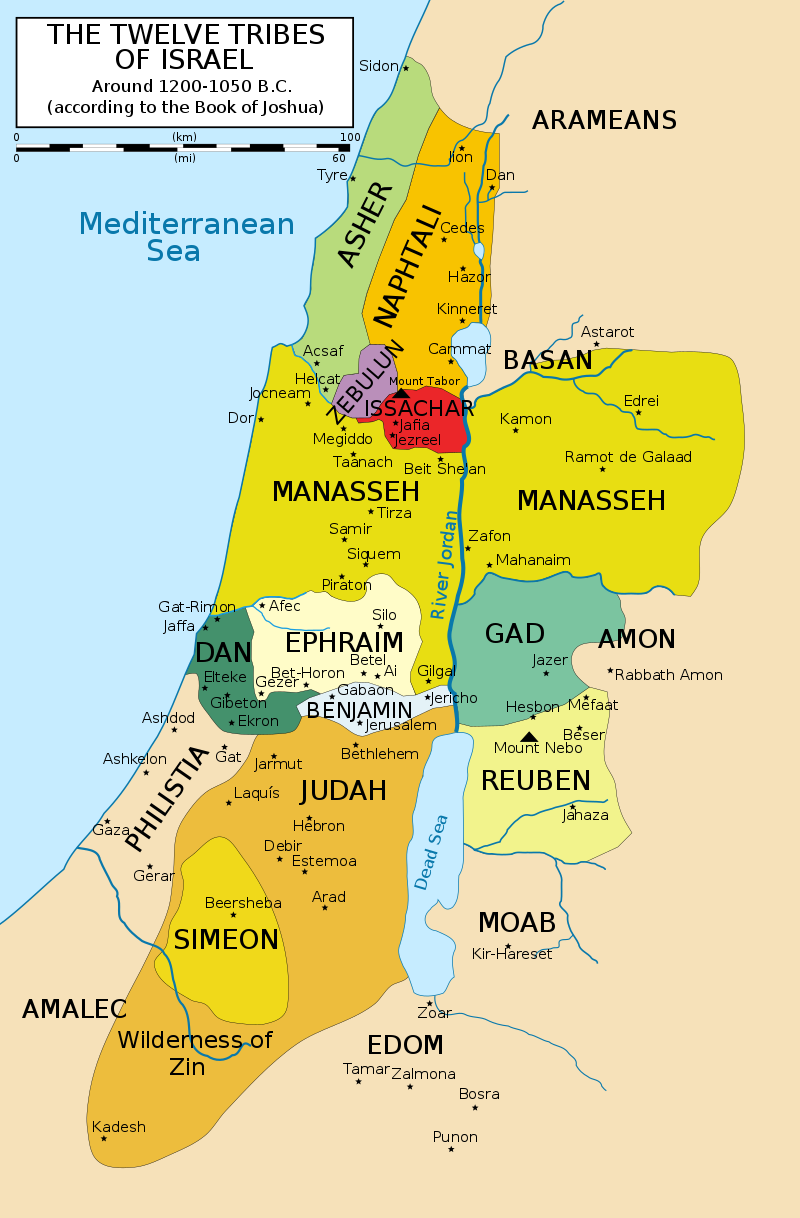
Note Tribe of Simeon Within the Tribe of Judah
DESCENDANTS OF
SIMEON
The sons of Simeon were Nemuel and Jamin, Jarib, Zerah, Shaul; Simeon was the second son of Jacob and Leah (Genesis 29:33). Although Simeon originally held a prominent tribal position as one of Jacob’s sons, his tribe later diminished significantly in influence and size within Israel. This decline traces back in part to Jacob’s prophecy in Genesis 49:5–7. Simeon and Levi had violently attacked Shechem after the defilement of their sister Dinah (Genesis 34). Because of their uncontrolled anger, Jacob declared: “I will disperse them in Jacob, And scatter them in Israel” (Genesis 49:7). That prophecy was fulfilled historically Levi was scattered throughout Israel in priestly cities, while Simeon gradually lost tribal prominence and became absorbed largely within Judah’s territory (Joshua 19:1, 9).
Nancy Dawson adds "The tribe of Simeon received an inheritance of land and cities within the southern limits of the tribe of Judah, in effect becoming a clan within Judah (SEE "SIMEON" IN MAP ABOVE). The reasons for this seem multifold: (1) Judah’s tribal allotment of land was “more than they needed,” so Simeon’s inheritance “was taken from the share of Judah” (Joshua 19:9); (2) an unexplained lack of propagation (cf. 1 Chronicles 4:27); (3) by the time of the second census, Simeon’s tribe was the least of all and had suffered the greatest losses; (4) related to the barbaric revenge of Simeon (and Levi) against Hamor the Hivite, who had defiled their sister Dinah, in which they slaughtered the entire city of Shechem, “killing every male” (Genesis 34:25; see Genesis 34); and (5) the judgment of Yahweh upon the Israelites who were seduced into sexual immorality and the worship of Baal of Peor by Moabite women (Numbers 25:5); specifically, an Israelite man named Zimri, the son of Salu (the leader of a Simeonite family) brought a Midianite woman named Kozbi, the daughter of Zur, into the camp where they engaged in sexual immorality “right before the eyes of Moses and the whole assembly of Israel … at the tent of meeting” (Numbers 25:6–9, 14–15), resulting in the immediate deaths of Zimri and Kozbi and a plague that killed twenty-four thousand Israelites (Numbers 25:9). Perhaps the explanation for the decline of the tribe of Simeon is to be found in Jacob’s prophetic blessing on his sons (Genesis 49) where Simeon received no blessing at all.
Frederick Mabie: The second half of ch. 4 (vv.24–43) provides the genealogical summary of the tribe of Simeon, whose history was intertwined with that of Judah, given that Simeon’s tribal territory was located within the tribal territory of Judah (cf. Jos 19:1–9).
J. Barton Payne: Simeon, with Levi, was scattered among the tribes because of the massacre of Shechem (Gen 34:24-30; 49:5-7).
August Konkel: Simeon was partner with Judah when the settlement in Canaan began (Jdg 1:1–3). The settlements of Simeon were located within territory of Judah (cf. Josh 19:1), in the southern regions. Simeon did not proliferate as did the other tribes (1 Chron 4:27). The history of Simeon was necessarily included with that of Judah, but the people of Simeon were distinguished from the divinely chosen tribe of royalty. Simeon therefore is first in the numeration of the tribes following the history of the royal family.
Over the course of time Simeon was effectively subsumed into Judah
and ceased to be a distinct tribal entity.
Frederick Mabie: Following a brief genealogical sketch of the Simeonites (1Ch 4:24–27) that includes a brief notation on the small size of Simeon vis-à-vis Judah (1Ch 4:27), the Chronicler enumerates the towns that were settled by the descendants of Simeon (cf. Jos 19:1–9). The tribal territory of Simeon occupied a small area completely surrounded by the tribal territory of Judah. Over the course of time Simeon was effectively subsumed into Judah and ceased to be a distinct tribal entity. This near landlessness of Simeon together with that of Levi reflects the prophetic “blessing” of Jacob on his sons, which includes the scattering of Levi and Simeon (Ge 49:5–7) in the light of their response to the situation with their sister Dinah (cf. Ge 34). The Chronicler’s inclusion of the descendants of Simeon along with their long-lost tribal inheritance may be intended to instill hope that God’s covenantal promises (land and otherwise) still have significance for his people
J.A. Thompson: The section on Simeon serves to underline several features of the Chronicler's thinking. In the beginning of his discussion about the sons of Israel (1Ch 2:1–2) he refers to the twelve tribes. The concept of twelve tribes was an ideal. Simeon, in fact, disappeared as a geographical and political entity long before the Chronicler wrote. Simeon's earlier history is also obscure, but its association with southern Judah was remembered. He is given a place among the lots set out in Josh 19:1–9, where the point is made that “Judah's portion was more than they needed. So the Simeonites received their inheritance within the territory of Judah.” It seems odd to us that the Chronicler should detail the genealogical history of a tribe that, by his day, had all but vanished. But he is presenting the ideal of Simeon as one of the tribes of Israel in tension with the historical reality of Simeon as a nonentity. He selectively portrays the vitality of Simeon in order to show that historical circumstances have not brought an end to the ideal plan of God. By extension, the whole nation of Israel was a mere shadow of its Davidic glory by the time the Chronicler wrote, and yet he is asserting that ideal of Israel has not perished in God's eyes. Beersheba was a focal point for Simeon, though his area was absorbed into Judah in David's time. Expansion of Simeon into Philistine areas (vv. 39–41) and into Edomite areas (vv. 42–43) brought them once again into regions occupied by Judah. It was evidently well known that Simeon was incorporated into Judah. Whether Simeon continued to maintain its tribal identity is impossible to say. Some of the towns referred to in 1 Chr 4:24 are mentioned in Nehemiah 11 as being resettled by the returning exiles in areas to the south of Judah. They may have found people in these areas whom they recognized as their kinsmen. But enough has been recorded to secure the place of Simeon within the family of Israel and to stress the significance of the idea of “all Israel.”
QUESTION - Who was Simeon in the Bible? | GotQuestions.org
ANSWER - The name Simeon is used of four men in the Bible: Simeon, son of Jacob (Genesis 29:33); Simeon, a man in Jerusalem who met the baby Jesus (Luke 2:25); Simeon, named in the lineage of Jesus (Luke 3:30); and Simeon of the church in Antioch (Acts 13:1). This article will focus on two Simeons: the son of Jacob and the man mentioned in Luke 2.
Simeon in the Old Testament is the second-born son of Jacob, born to Jacob’s wife Leah. Jacob was the patriarch, or father, of the twelve tribes of Israel and had received the Abrahamic Covenant (Genesis 28:14–15).
Simeon was a man of anger and violence. His sister Dinah was taken and defiled by a Hivite named Shechem, a son of the ruler of that area (Genesis 34:2). When Jacob and his sons learned of this, “they were shocked and furious, because Shechem had done an outrageous thing in Israel by sleeping with Jacob’s daughter—a thing that should not be done” (Genesis 34:7). All the brothers conspired to initiate a plan to establish a false treaty with Hamor’s family (Genesis 34:13). The treaty involved all the men of the city being circumcised (verse 15). But, instead of the family of Jacob and the family of Hamor living peacefully together as Hamor was led to believe (Genesis 34:21), the sons of Jacob, including Simeon, sought to avenge their sister. After the men of the city had been circumcised, while they were still in pain, Simeon and Levi “took their swords and attacked the unsuspecting city, killing every male. They put Hamor and his son Shechem to the sword and took Dinah from Shechem’s house and left” (Genesis 34:25–26). Jacob rebuked Simeon and Levi for their bloody act: “You have brought trouble on me by making me obnoxious to the Canaanites and Perizzites, the people living in this land” (Genesis 34:30).
Later, as Jacob was nearing death, he gave his sons a patriarchal blessing. At that time, he remembered the sins of Simeon and Levi, saying, “Simeon and Levi are brothers—their swords are weapons of violence. Let me not enter their council, let me not join their assembly, for they have killed men in their anger and hamstrung oxen as they pleased. Cursed be their anger, so fierce, and their fury, so cruel! I will scatter them in Jacob and disperse them in Israel” (Genesis 49:5–7). Jacob’s words came to pass as, centuries later, after the conquest of the Promised Land, the tribe of Simeon was small and was forced to share territory with Judah, a larger and more powerful tribe (Joshua 19:1–9). The curse on Simeon reminds us that vengeance belongs only to God (Genesis 4:15; Psalm 38:20; 1 Peter 3:9).
The Bible also shows that Simeon was a man of envy and hatred. He and his brothers were jealous of their father’s love for Joseph and angered by Joseph’s dreams that the brothers construed as arrogance, so they sold Joseph into slavery (Genesis 37). Simeon was then complicit in leading their father to believe that Joseph had been killed by a fierce animal. Later, Joseph, as vizier of Egypt, tested his brothers and imprisoned Simeon until his brothers returned from Canaan (Genesis 42:18–19, 24).
Despite Simeon’s wrongdoing, we see God’s love and grace. Simeon was justly rebuked and cursed by his father, but he was also honored by Jacob as recorded in two special moments. The first occurs when Jacob, still grieving the supposed death of Joseph, is presented with the possibility that he might lose Simeon as well and equates Simeon with his two favorite children, Joseph and Benjamin: “You have deprived me of my children. Joseph is no more and Simeon is no more, and now you want to take Benjamin. Everything is against me” (Genesis 42:36). We also see Jacob’s grace when he recognizes Joseph’s sons as being equal to Reuben and Simeon, his first and second born. In this blessing of his grandchildren, Jacob, despite Simeon’s prior violence, murder, and lies, recognizes Simeon’s rightful place in the family.
In Revelation 7:7 the tribe of Simeon is listed in a place of honor, among the twelve tribes of Israel who are sealed by God’s protection in the tribulation. Simeon, son of Jacob, is referenced throughout the Pentateuch and seven times in the book of Joshua. Simeon and/or the tribe that bears his name is also mentioned in the historical records of 1 and 2 Chronicles and in the book of Ezekiel.
QUESTION - What can we learn from the tribe of Simeon? | GotQuestions.org
ANSWER - Each of the twelve sons of Israel / Jacob received a blessing from his father just before Jacob’s death. The twelve sons were the progenitors of the twelve tribes of Israel, and the blessing contained prophetic information about the future of each tribe. In the case of the tribe of Simeon, which was paired in the prophecy with the tribe of Levi, Jacob prophesied, “Simeon and Levi are brothers—their swords are weapons of violence. Let me not enter their council, let me not join their assembly, for they have killed men in their anger and hamstrung oxen as they pleased. Cursed be their anger, so fierce, and their fury, so cruel! I will scatter them in Jacob and disperse them in Israel” (Genesis 49:5–7).
Jacob pronounces a curse upon the anger of Simeon and Levi, no doubt remembering when they treacherously and barbarously destroyed the Shechemites, an act Jacob deeply resented for the barbarous way in which it was done and the reproach it brought upon his entire family (Genesis 34:24–30). Simeon’s anger was evil, not because indignation against sin is unwarranted, but because his wrath was marked by deeds of fierceness and cruelty. Righteous anger and indignation, the kind Jesus exhibited in cleansing the temple, for example, is never characterized by cruelty. The swords of Simeon, which should have been only weapons of defense, were weapons of violence to do wrong to others, not to save themselves from wrong.
Jacob’s pronouncement “I will divide them in Jacob, and scatter them in Israel” came true. The tribe of Simeon was the smallest and weakest of all the tribes at the close of their sojourn in the wilderness, as noted in the second census of Moses (Numbers 26:14), and the tribe of Simeon was omitted from the blessing of Moses (Deuteronomy 33:8). Further, because of its size, the tribe of Simeon was forced to share territory with Judah, a larger and more powerful tribe (Joshua 19:1–9). Jacob did not cut the descendants of Simeon off from any part in the promised inheritance, but he did divide and scatter them.
As Christians, we learn from the tribe of Simeon that anger is the cause of a great deal of sin when it is allowed to boil over without restraint, resulting in a scenario in which hurts are multiplied (Proverbs 29:11). Anger leaves devastation in its wake, often with irreparable consequences. Furthermore, while anger against sin is not unwarranted, we ought always to be very careful to distinguish between the sinner and the sin, so as not to love or bless the sin for the sake of the person, nor to hate or curse the person for the sake of the sin.
Jacob’s statement “Let me not enter their council; let me not join their assembly” is a lesson for us as well. We are not to take the counsel of the angry man because he is unstable and exhibits an inability to control his passions. When anger is a defining trait in another’s life, it is an indication of the lack of self-control, which is a hallmark of believers (Galatians 5:22–23). An angry person makes a poor counselor, and, in fact, his company should be avoided, especially when the sin of anger is unconfessed and there is no attempt to deal with it in a godly manner.
Finally, Simeon and Levi appeared to be inseparable brothers who are often mentioned together in Scripture, an indication that, like many brothers and sisters, they may have “brought out the worst in each other.” Christian parents who see this type of relationship developing in siblings whose influence upon one another is unhealthy, would do well to consider separating them from one another in circumstances where their unfortunate tendency to spur one another to wrong may exert itself.
1 Chronicles 4:25 Shallum his son, Mibsam his son, Mishma his son.
Shallum his son, Mibsam his son, Mishma his son. This verse traces the descending line from Shaul mentioned in the previous verse (1 Chronicles 4:24). The chronicler is continuing to preserve Simeon’s family structure and covenant continuity.
1 Chronicles 4:26 The sons of Mishma were Hammuel his son, Zaccur his son, Shimei his son.
The sons of Mishma were Hammuel his son, Zaccur his son, Shimei his son. The chronicler continues following the descending family line from Shaul through Mishma, preserving the continuity of Simeon’s tribal identity after generations of decline and dispersion.
1 Chronicles 4:27 Now Shimei had sixteen sons and six daughters; but his brothers did not have many sons, nor did all their family multiply like the sons of Judah.
- like to (KJV): Heb. unto, Nu 2:4,13 26:14,22
Now Shimei had sixteen sons and six daughters In the ancient world, large families were often viewed as signs of strength, blessing, and clan stability. Shimei’s unusually large number of children made him stand out within the Simeonite genealogy. The mention of daughters as well as sons is somewhat noteworthy, since genealogies usually emphasize male descendants.
but his brothers did not have many sons, Although Shimei’s immediate household was large, the broader Simeonite clan structure did not expand significantly overall.
nor did all their family multiply like the sons of Judah. This statement is extremely important historically and theologically. The tribe of Simeon never experienced the numerical growth, territorial strength, or royal prominence that characterized the tribe of Judah. Several factors help explain this: (1) Jacob’s prophecy in Genesis 49:5–7 foretold Simeon’s scattering because of the violence committed at Shechem. (2) Simeon’s inheritance was enclosed within Judah’s territory (Joshua 19:1–9), leading eventually to absorption into Judah. (3) Census records in Numbers show Simeon experiencing one of the sharpest population declines among the tribes during the wilderness period (compare Numbers 1:23 with Numbers 26:14).
David Guzik: The census data both at the beginning and the end of the Book of Numbers indicates that the population of the tribe of Simeon decreased radically during the wilderness years of the exodus. They were among the largest tribes at the beginning and among the smallest tribes at the end.
1 Chronicles 4:28 They lived at Beersheba, Moladah and Hazar-shual,
- Beersheba (KJV): Jos 15:28,29 19:2,3,9
They lived at Beersheba, Moladah and Hazar-shual, Beer-sheba was situated twenty miles south of Hebron, according to Eusebius and Jerome, in whose time it was occupied by a Roman garrison. Beersheba became one of the most important southern cities in Israel and often marked the southern boundary of the land in the phrase “from Dan to Beersheba” (Judges 20:1). Moladah was a town in the southern Negev region originally allotted to Judah and later associated with Simeon’s inheritance (Joshua 15:26; 19:2). After the exile, it was reoccupied by returning Israelites (Nehemiah 11:26). Hazar-shual means “village of the fox” or “settlement of jackals.” It too was located in the southern territory shared between Judah and Simeon (Joshua 15:28; 19:3).
1 Chronicles 4:29 at Bilhah, Ezem, Tolad,
- Bilhah (KJV): Jos 19:3, Balah-Azem
- Tolad (KJV): Jos 19:4, Eltolad
at Bilhah, Ezem, Tolad, These towns formed part of Simeon’s inheritance within the southern territory of Judah. The chronicler is continuing to map the settlements occupied by the Simeonites after previously tracing their genealogy.
1 Chronicles 4:30 Bethuel, Hormah, Ziklag,
- Bethuel (KJV): Jos 19:4, Bethul
- Ziklag (KJV): 1Ch 12:1 Jos 15:31 19:5 1Sa 27:6 30:1 Ne 11:28
Bethuel is likely another form of the town elsewhere called Bethul or Bethuel in the southern allotments of Simeon and Judah (Joshua 19:4). The name means “house of God,” reflecting the common Hebrew use of beth (“house”) in place names.
Hormah Hormah arries a significant historical background. The name means “destruction” or “devoted to destruction.” Earlier in Israel’s wilderness history, the region became associated with judgment after Israel presumptuously attempted to invade Canaan without God’s blessing and suffered defeat (Numbers 14:39–45). Later, under divine direction, Israel defeated the Canaanites there, and the place became known as Hormah (Numbers 21:1–3). Thus Hormah stood as both a reminder of human presumption and disobedience, and a testimony to God’s later victory and judgment upon Israel’s enemies.
Ziklag, Ziklag became especially important in the life of David. While fleeing from Saul, David received Ziklag from Achish king of Gath (1 Samuel 27:5–7). Ziklag became David’s temporary base of operations before he became king over all Israel. One dramatic episode occurred there when the Amalekites raided and burned the city, carrying away the women and children captive (1 Samuel 30). David sought the LORD, pursued the Amalekites, and recovered everything. During that crisis Scripture records “David strengthened himself in the LORD his God” (1 Samuel 30:6).
1 Chronicles 4:31 Beth-marcaboth, Hazar-susim, Beth-biri and Shaaraim. These were their cities until the reign of David.
- and Hazarsusim (KJV): Jos 19:5,6, Hazar-susah, Beth-lebaoth, Sharuhen
Beth-marcaboth, Hazar-susim, Beth-biri and Shaaraim. These towns formed part of Simeon’s inheritance in the southern regions of Judah. Because Simeon’s inheritance lay within Judah’s territory (Joshua 19:1, 9), the tribe increasingly lost separate political identity over time.
These were their cities until the reign of David.
August Konkel: In Joshua these cities are presented as an inheritance (vv. 1, 9), but in Chronicles they are described as native dwellings of the Levites. The Chronicler presents an alternate perspective of settlement, unrelated to the conquest, which appears to have been present in his sources (Japhet 1979). This was God’s design for his people to accomplish his purpose. The Chronicler interrupts the Joshua source to point out that this was the situation when David came to reign (1 Chron 4:31). This chronological notation is critical to the purpose of his history. The reign of David and Solomon becomes the ideal of the kingdom of God. Historically, the nation has had opportunity to return to this dominion of God. This is the essence of what the nation of Israel was meant to be. In the viewpoint of the Chronicler, Israel may yet be what it is.
1 Chronicles 4:32 Their villages were Etam, Ain, Rimmon, Tochen and Ashan, five cities;
- Etam (KJV): Ether, or Etham, Jos 19:7, Ether, Remmon
Their villages were Etam, Ain, Rimmon, Tochen and Ashan, five cities;
1 Chronicles 4:33 and all their villages that were around the same cities as far as Baal. These were their settlements, and they have their genealogy.
- Baal (KJV): Jos 19:8, Baalath-beer
and all their villages that were around the same cities as far as Baal. “Baal” here probably refers to a location name such as Baalath-beer (Joshua 19:8), rather than direct worship of the false god Baal. Ancient Israelite place names sometimes preserved older Canaanite terminology even after Israel occupied the land. The phrase “as far as Baal” establishes the geographical extent of Simeon’s settlements in the southern Negev region.
These were their settlements, and they have their genealogy. This statement is extremely important in Chronicles. The genealogical records established: covenant identity, tribal belonging, inheritance rights, and continuity with Israel’s ancestral past. For the postexilic community, this mattered deeply. After the Babylonian captivity, many Israelites needed to prove their lineage in order to reclaim land, participate fully in covenant life, or serve in official capacities (Ezra 2:59–63).
The chronicler therefore repeatedly emphasizes preserved genealogies because they testified that God had not abandoned His people despite exile and national judgment.
1 Chronicles 4:34 Meshobab and Jamlech and Joshah the son of Amaziah,
Meshobab and Jamlech and Joshah the son of Amaziah, This section (1 Chronicles 4:34–43) shifts from genealogies and settlements to describing prominent Simeonite clan leaders and their migrations during later periods of Israel’s history.
Frederick Mabie: Following a list of Simeonite clan leaders (vv.34–38), the Chronicler summarizes the successful tribal expansion of Simeon to the west (vv.39–41) and to the east/southeast (vv.42–43). The description of this expansion is reminiscent of the Danite tribal migration noted in Judges 17–18 (compare Jdg 18:7, 27–28 with vv.39– 41 above). The exact location of the Hamites (vv.40–41; cf. 1Ch 1:8–16; Ge 10:6–20) is unknown, but their association with the Arabian Meunites (v.41) might imply the western or southwestern Negev region. The Meunites are also associated with the southern region of Transjordan and parts of the Sinai.
1 Chronicles 4:35 and Joel and Jehu the son of Joshibiah, the son of Seraiah, the son of Asiel,
and Joel and Jehu the son of Joshibiah, the son of Seraiah, the son of Asiel, - These men belonged to the tribe of Simeon and were likely clan chiefs or family leaders involved in the migrations and territorial expansions described later in the chapter (1 Chronicles 4:38–43). This Jehu is not the later king of Israel who destroyed the house of Ahab (2 Kings 9–10). Rather, he is a Simeonite family leader from an earlier or unrelated branch.
1 Chronicles 4:36 and Elioenai, Jaakobah, Jeshohaiah, Asaiah, Adiel, Jesimiel, Benaiah,
and Elioenai, Jaakobah, Jeshohaiah, Asaiah, Adiel, Jesimiel, Benaiah, These men belonged to the tribe of Simeon and likely served as clan heads, chiefs, or leading representatives among the Simeonites during the migrations and conquests described in the following verses.
1 Chronicles 4:37 Ziza the son of Shiphi, the son of Allon, the son of Jedaiah, the son of Shimri, the son of Shemaiah;
Ziza the son of Shiphi, the son of Allon, the son of Jedaiah, the son of Shimri, the son of Shemaiah; This verse traces the ancestry of Ziza through several generations, emphasizing legitimate family lineage and recognized leadership within the tribe of Simeon.
1 Chronicles 4:38 these mentioned by name were leaders in their families; and their fathers’ houses increased greatly.
- mentioned by name (KJV): Heb. coming by names, 1Ch 5:24 Ge 6:4
these mentioned by name were leaders in their families The chronicler specifically notes that the men just listed were recognized clan leaders or chiefs within the tribe of Simeon. Their names were preserved because they exercised responsibility, influence, and leadership over their family groups.
and their fathers’ houses increased greatly. This indicates that the Simeonite clans under these leaders experienced substantial growth in population, livestock, or influence. Indeed, the following verses describe Simeonite expansion into regions suitable for grazing and settlement (1 Chronicles 4:39–43). There is an interesting contrast here with the earlier statement that Simeon as a tribe did not multiply like Judah (1 Chronicles 4:27). While the tribe overall remained comparatively smaller and less influential, certain family groups nevertheless experienced significant growth.
August Konkel: Enrollment in a genealogical record is an indication of notable rank: families are remembered by their leading representatives. A “chieftain” may be the leader of a tribe or a military leader (cf. Num 1:4, 16), but the term is used as the title of a respected and exalted individual (Gen 23:6; 34:2).
Mark Boda: These descendants are seen as enjoying great success as “the house of their fathers exploded greatly” (NLT, “their families grew”) a verb that is used in relation to an explosion of human population (Gen 28:14; Exod 1:12; 2 Chr 11:23; Isa 54:3; Hos 4:10) as well as of material wealth (Gen 30:30, 43; Job 1:10).
Andrew Hill: The example of geographical expansion is a reminder of the reality that territorial boundaries were always shifting, given the rise and fall of political fortunes in the ancient world. In the past the nation of Israel prospered materially and expanded geographically in accordance with her collective obedience to the stipulations of Yahweh’s covenant. The Chronicler understands that the earth is the Lord’s (Ps. 24:1) and that as owner of the land, God can restore to Israel what he once gave them (e.g., Deut. 1:8; 3:18; 8:10). Likewise, Israel has received the land as a divine gift by faith in Yahweh’s covenant promises, and so by means of covenant renewal Israel can again be restored in the land of her ancestors (cf. Neh. 9:36–37; 10:28–39).
1 Chronicles 4:39 They went to the entrance of Gedor, even to the east side of the valley, to seek pasture for their flocks.
- Gedor (KJV): 1Ch 4:4,18 Jos 12:13, Geder, Jos 15:58
They went to the entrance of Gedor, even to the east side of the valley, to seek pasture for their flocks. Gedor was likely a region or settlement near the southern hill country or wilderness border areas. Some uncertainty remains about the exact location, but the context suggests a frontier pasture region suitable for shepherding.
Iain Duguid: Some Simeonites expanded westward in successful search for pasture, possibly at the time of Hezekiah’s campaign in Philistine territory (4:34–41;3 2 Kings 18:8). Yet another group went eastward into the region of Edom, remaining separate from Judah (1 Chron. 4:42–43). The Simeonites are included among those who “were residing” with Judah and Benjamin at the time of Asa (2 Chron. 15:9). The tribe may not have been strong, but they did occupy the land they were given, experiencing provision and victory as they expanded.
1 Chronicles 4:40 They found rich and good pasture, and the land was broad and quiet and peaceful; for those who lived there formerly were Hamites.
- the land (KJV): Judges 18:7-10
- Ham (KJV): These were probably either Philistines or Egyptians, who dwelt at Gedor. Ge 9:22-29 10:6 Ps 78:51 105:23
This verse explains what the Simeonite clans discovered when they expanded into the region near Gedor.
They found rich and good pasture, and the land was broad and quiet and peaceful; The land provided abundant grazing for livestock. In the ancient Near East, fertile pastureland was extremely valuable, especially for shepherding communities like the Simeonites. The description recalls the language often used of God’s provision and blessing upon the land.
for those who lived there formerly were Hamites. The “Hamites” refers to peoples descended from Ham (Genesis 10). The term here likely refers broadly to earlier inhabitants of the region connected ethnically with Hamitic groups such as Egyptians, Canaanites, or related southern peoples. The statement “formerly” suggests these Hamitic inhabitants had either diminished, migrated, or become vulnerable before the Simeonite expansion described in the following verses.
1 Chronicles 4:41 These, recorded by name, came in the days of Hezekiah king of Judah, and attacked their tents and the Meunites who were found there, and destroyed them utterly to this day, and lived in their place, because there was pasture there for their flocks.
- these written (KJV): 1Ch 4:33-38
- Hezekiah (KJV): 2Ki 18:8-12 Isa 14:28-32
- the habitations (KJV): Or, the Meunnim, or Maonites. Jud 10:12 Jer 49:20 Ac 17:26
- pasture (KJV): Nu 32:1-4
These, recorded by name This refers back to the Simeonite clan leaders named in the previous verses (1 Chronicles 4:34–38). The chronicler emphasizes again that these were recognized family heads and leaders whose actions were preserved in tribal records.
came in the days of Hezekiah king of Judah, This places the event historically during the reign of one of Judah’s godliest kings, Hezekiah (715–686 BC approximately).
and attacked their tents and the Meunites who were found there, and destroyed them utterly to this day, and lived in their place, The “Meunites” were likely a nomadic or semi nomadic people living in the southern wilderness regions, possibly connected with Arabian or Edomite groups. The reference to “tents” suggests a pastoral, migratory lifestyle rather than fortified urban settlements. Destroyed them utterly indicates decisive military defeat and removal from the region.
because there was pasture there for their flocks Again the practical motivation appears clearly: the Simeonites needed grazing land for their expanding livestock holdings. They settled the area after displacing its former inhabitants.
1 Chronicles 4:42 From them, from the sons of Simeon, five hundred men went to Mount Seir, with Pelatiah, Neariah, Rephaiah and Uzziel, the sons of Ishi, as their leaders.
- mount Seir (KJV): Ge 36:8,9 De 1:2
From them, from the sons of Simeon, five hundred men went to Mount Seir, Mount Seir refers to the mountainous region south and southeast of the Dead Sea, traditionally associated with the descendants of Esau and the nation of Edom (Genesis 36:8–9). This Simeonite expedition likely occurred as part of continued efforts to secure pastureland and settlement territory for their growing clans. The number “five hundred men” suggests an organized military or settlement force rather than a small migration group. These were likely armed clan warriors capable of securing and defending territory.
with Pelatiah, Neariah, Rephaiah and Uzziel, the sons of Ishi, as their leaders. These four men served as recognized leaders or commanders of the expedition.
August Konkel: The Chronicler also knows of a later expansion to the east into the territory of Edom (1 Chron 4:42–43). The traditional Mount Seir is located to the southeast of the Dead Sea. A military force of five hundred Simeonites was involved in the raid; David’s soldiers numbered four hundred (1 Sam 22:2) or six hundred (23:13). The Amalekites were decimated in wars with Saul (1 Sam 14:48; 15:2–3) and David (1 Sam 30:1; 2 Sam 8:12). The Simeonites attacked at a time when the Amalekites were weakened after a military disaster. While other tribes expanded peacefully, the Simeonites were legendary for their violent ways (Gen 34:25–29; 49:5–7). The Chronicler reports the Simeonites as living in these areas until this day. It is possible that this is not just the time in which the record was written, but to the time of the Chronicler himself. The Babylonian exile never deported all of the Israelite peoples.
J. Barton Payne: For after the division of Solomon’s kingdom in 930 B.C., elements of Simeon either moved to the north or at least adopted its religious practices (cf. the inclusion of Beersheba along with the shrines of Ephraim that are condemned in Amos 5:5).… Other Simeonites carried on in a seminomadic life in isolated areas that they could occupy, such as those noted at the close of this chapter.
1 Chronicles 4:43 They destroyed the remnant of the Amalekites who escaped, and have lived there to this day.
- They destroyed the remnant: That is, those who escaped in the war which Saul, and afterwards David, made against them. Ex 17:14-16 De 25:17-19 1Sa 15:7,8 30:17 2Sa 8:12
- to this day (KJV): De 34:6 Judges 1:26 2Ch 5:9 Jer 44:6 Mt 27:8 28:15
They destroyed the remnant of the Amalekites who escaped, and have lived there to this day. The Amalekites were long standing enemies of Israel descending from Amalek, a grandson of Esau (Genesis 36:12). The Amalekites first attacked Israel shortly after the Exodus (Exodus 17:8–16). Because of their persistent hostility and cruelty toward God’s people, the LORD declared ongoing judgment against them “The LORD will have war against Amalek from generation to generation” (Exodus 17:16). Later Saul was commanded to execute judgment upon Amalek but failed to obey fully (1 Samuel 15). David repeatedly fought Amalekite raiders (1 Samuel 27:8; 30:1–20). The phrase the remnant of the Amalekites who escaped likely refers to surviving groups that had avoided earlier defeats and continued living in the southern wilderness regions around Mount Seir.
QUESTION - Who were the Amalekites? | GotQuestions.org
ANSWER - The Amalekites were a formidable tribe of nomads living in the area south of Canaan between Mount Seir and the Egyptian border. They resisted the Israelites during the time of the exodus, and they remained perennial foes of God’s people.
The Amalekites are not listed in the table of nations in Genesis 10, as they did not originate until after Esau’s time. The “territory of the Amalekites“ is mentioned in Genesis 14:7 as being conquered by kings during Abraham’s time, but this reference is likely an example of prolepsis, a representation of something ”out of time.” The territory was designated by the name of its future, well-known inhabitants during Moses’ time. Balaam refers to the Amalekites as “first among the nations” (Numbers 24:20), but he most likely meant only that the Amalekites were the first ones to attack the Israelites upon their exodus from Egypt or that the Amalekites were “first” in power at that time. Genesis 36 identifies the Amalekites as descendants of Amalek, the son of Eliphaz and grandson of Esau (verses 12 and 16). So, the Amalekites were somehow related to, but distinct from, the Edomites.
Scripture records the long-lasting feud between the Amalekites and the Israelites and God’s direction to wipe the Amalekites off the face of the earth (Exodus 17:8–13; 1 Samuel 15:2; Deuteronomy 25:17). Why God would call His people to exterminate an entire tribe is a difficult question, but a look at history may give some insight.
Like many desert tribes, the Amalekites were nomadic. Numbers 13:29 places them as native to the Negev, the desert between Egypt and Canaan. The Babylonians called them the Sute, Egyptians the Sittiu, and the Amarna tablets refer to them as the Khabbati, or “plunderers.”
The Amalekites’ unrelenting brutality toward the Israelites began with an attack at Rephidim (Exodus 17:8–13). This is recounted in Deuteronomy 25:17–19 with this admonition: “Remember what the Amalekites did to you along the way when you came out of Egypt. When you were weary and worn out, they met you on your journey and attacked all who were lagging behind [typically women and children]: they had no fear of God. When the LORD your God gives you rest from all the enemies around you in the land he is giving you to possess as an inheritance, you shall blot out the name of Amalek from under heaven. Do not forget!”
The Amalekites later joined with the Canaanites and attacked the Israelites at Hormah (Numbers 14:45). In Judges they banded with the Moabites (Judges 3:13) and the Midianites (Judges 6:3) to wage war on the Israelites. They were responsible for the repeated destruction of the Israelites’ land and food supply.
In 1 Samuel 15:2–3, God tells King Saul, “I will punish the Amalekites for what they did to Israel when they waylaid them as they came up from Egypt. Now go, attack the Amalekites and totally destroy everything that belongs to them. Do not spare them, put to death men and women, children and infants, cattle and sheep, camels and donkeys.”
In response, King Saul first warns the Kenites, friends of Israel, to leave the area. He then attacks the Amalekites but does not complete the task. He allows the Amalekite King Agag to live, takes plunder for himself and his army, and lies about the reason for doing so. Saul’s rebellion against God and His commands is so serious that he is rejected by God as king (1 Samuel 15:23).
The escaped Amalekites continued to harass and plunder the Israelites in successive generations that spanned hundreds of years. First Samuel 30 reports an Amalekite raid on Ziklag, a Judean village where David held property. The Amalekites burned the village and took captive all the women and children, including two of David’s wives. David and his men defeated the Amalekites and rescued all the hostages. A few hundred Amalekites escaped, however. Much later, during the reign of King Hezekiah, a group of Simeonites “killed the remaining Amalekites” who had been living in the hill country of Seir (1 Chronicles 4:42–43).
The last mention of the Amalekites is found in the book of Esther where Haman the Agagite, a descendant of the Amalekite king Agag, connives to have all the Jews in Persia annihilated by order of King Xerxes. God saved the Jews in Persia, however, and Haman, his sons, and the rest of Israel’s enemies were destroyed instead (Esther 9:5–10).
EDITORIAL NOTE: When Haman and his sons were executed (Esther 9:5–10), it symbolically represented the final downfall of Amalek’s spirit of opposition to God’s people.
The Amalekites’ hatred of the Jews and their repeated attempts to destroy God’s people led to their ultimate doom. Their fate should be a warning to all who would attempt to thwart God’s plan or who would curse what God has blessed (see Genesis 12:3).
Related: