
How can one find peace in a world filled with enmity, strife & anxiety?
JEHOVAH SHALOM is the ONLY ANSWER
"Our help is in the NAME of JEHOVAH, Who made heaven & earth."
Ps 124:8 (Spurgeon's Note)
|
RUN INTO THE STRONG TOWER OF |
||||||||||||||
| THE UNIVERSAL PROBLEM | HIS UNFAILING PROVISION | OUR UNCEASING PRACTICE | ||||||||||||
|
What is Peace? Hebrew = Shalom
What's the Anxiety/Worry = Be anxious = How did we lose The "big" answer? Ro 5:12 "through one man sin entered into the world & death through sin & so death spread to all men, because all sinned" Sin brought spiritual death (& later physical death) the ultimate "disturbance of our peace" oneness & harmony between God & man. Unconfessed sin always results in disturbed peace (Pr 28:13, Ps 32:1-6, Pr 3:7-8)
How do we lose Let's look at Israel's example in Judges 6 & what we learn about man & about God. Israel is a "picture" of our rebellious flesh, so as Paul teaches there is great value in observing Israel's actions & God's interactions with them. [Click] What's the context of Judges? Judges is a "good" bad example to remember & is summed up in Jdg 21:25 (cf Jdg 17:6, Pr 29:18) "In those days there was NO KING in Israel. EVERYONE did what was right in his OWN eyes." (cp Isa 53:6) How did this happen to Israel who was to be holy as God is holy? Short Sad Summary: (See Jdg 2:10, 11, 12) After Joshua's death... "A generation...arose who...did not know (1) Jehovah (His Person) or the (2) work which He had done for Israel (His Power) & in (see Judges 3:7) they "forgot the LORD their God". THEN Israel... "did evil in sight of Jehovah & served Baals (see Jdg 2:11), they "Provoked Jehovah to anger" (see Jdg 2:12)" & "they forsook Jehovah & served Baal & the Ashtaroth" (see Jdg 2:13) IN SUM: Israel FORGOT God's PERSON and POWER, FORSOOK Him & begin to FEAR other gods who are no gods at all. A new generation arose which forgot Him Who, as Jehovah‑jireh, had provided redemption from bondage in Egypt through the blood of the Passover Lamb, and with great and mighty wonders had led them out. They were no longer mindful of Him who, as Jehovah‑rophe, had healed their sicknesses and sorrows. They suffered defeats because they turned their backs upon Him who, as Jehovah‑nissi, had been their banner of victory in trial and struggle. They would not sanctify themselves to Him who, as Jehovah‑M'Kaddesh, had sanctified them to His cause, but they corrupted themselves with idolatries and their abominations. Thus they lost their purity, peace, prosperity, and liberty.
Nathan Stone in Names of God writes "Israel could not appear to realize its destiny as a special & separate people, set apart to Jehovah's service & purpose in the midst of the [pagan] nations. They seemed unable to rise above a material conception and plane of living. To live, to multiply, to inherit the land ‑ this seemed to them a sufficient fulfillment of their function, an error common to this very day. It is not difficult to understand, then, the attraction of the grossly materialistic gods of the heathen for them. Without a sense of mission there was no common purpose of uniting as one people. Without spiritual vision they fell an easy prey to the appetites & lusts of the flesh. Every apostasy brought punishment & misery ‑ a chastening of Jehovah to awaken them to their spiritual calling....Every succeeding apostasy called for even severer chastening by means of the surrounding nations ‑ chastenings which not only deprived them of the fruits of their land and labors, but brought them into slavery. Without obedience to Jehovah they had no right to the land. His people must be more than mere tillers of the soil & dressers of vineyards (in any age); otherwise they should not enjoy the land. They tilled & planted, but they did not reap. As Jehovah had sown spiritual seed in their hearts, & they had allowed their idolatrous neighbors to trample & tear it out by the imitation of their corrupt idolatries, so now these same heathen embittered & endangered Israel's physical existence." Lv 26 background for Jdg 6:1-24 Clear Instructions for Peace Lev 26:1, 2, 3, 4, 5 6 Do "not make for yourselves idols-keep My Sabbaths & reverence My sanctuary (Why?) I am the LORD What was the condition Lev 26:3 'IF you WALK in My statutes & KEEP My commandments so as to CARRY them out" (4) THEN [PROSPERITY] I shall give you rains in their season so that the land will yield its produce [PEACE] (5-6) will...live securely...I shall grant PEACE in the land so that you may lie down with no one making you tremble. [POWER] (Lev 26:7) will chase enemies What is the immediate context of Judges 6? When? After 40 yr of peace - this peace was based on external circumstances of no war but one wonders if most of Israel had a peace with & of God? What? Israel did evil in sight of LORD Result? God gave Israel > hands of enemies ~ the point is that entire promised land was ravaged). Compare God's prophetic warnings in (Dt 28:30, 33, 51) How did Israel respond? Hid in dens, caves, strongholds - repetition intensifies the depth of their fear (instead of running to hide in the cleft of the Rock of their salvation they ran to the rocks & clefts cf Dt 32:4,15,18) What is the picture? Fear, anxiety, terror = loss of peace Doing evil (sin) in the sight of God (Jdg 6:1) will disturb peace Result = Israel brought low (see Ps 106:43) Reaction = Israel cried out to LORD Comment: "brought...low" is translated in Greek Septuagint by a word which means to "lead the life of a beggar"! Here were the children of the King in the land of plenty flowing with milk & honey & yet because of their stiff necked disobedience they were reduced to live like mere paupers. Israel is a picture of our flesh, so the question to all believers is - "Am I living like a beggar?" or "Am I experiencing life "abundantly" in Christ (Jn 10:10b) which is God's will for all His children? God will not force us to obey Him for He desires that our obedience (which is a manifestation of our faith) come from a heart of love not legalism. (cf Jn 14:15). What does Isa 57:20-21 teach about peace?
What are we to do when we are worried, troubled, distressed, afraid? I rest beneath the Almighty’s shade, |
"Grace & PEACE be multiplied to you in the KNOWLEDGE of God & of Jesus our Lord seeing that His divine power has granted to us everything pertaining to life & godliness, through the TRUE KNOWLEDGE of Him Who called us by His own glory & excellence." (2Pe 1:2-3) Peter (who experienced great disturbance of peace) teaches that God's peace comes from true, experiential (not just theoretical) knowledge of the Source of peace, God & Jesus our Lord How did God (1) God Sent His Word via prophet (see Judges 6:7, 8, 9, 10, contrast Lam 2:14) and reminded them - He had brought the UP from Egypt, OUT from slavery & Delivered from hand of ALL oppressors & Dispossessed & gave them the land. But despite all God did for them, they did not obey (they did fear the Amorite gods) (cf summary Judges 2:1, 2, 3, 2:11, 12, 13; 17, 19). This was meant to be a "wake up" call. 2) THEN God sent "The Word" (see Rev 19:13) The Angel of the LORD > Gideon (see >100 Names of Christ ) Where did the
Threshing was generally on an elevated location & not in a winepress - undoubtedly reflects Gideon's fear to stay out of view of marauding Midianites. Keep this context in mind as you see what the Angel of the LORD says to Gideon. What are His commands & promises? Jdg 6:12 Jehovah is w/ you O valiant warrior So here we see: (1) God's presence promised (2) Gideon's potential prophesied Jdg 6:14 "Go in this your strength & deliver" (LXX= sozo = save) Israel from the hand of Midian. Have I not sent you?" Jdg 6:16 "Surely I will be with you, and you shall defeat Midian as one man." (Another way to translate v16 is "I Am is with you") Jdg 6:23 "PEACE to you, do not fear. You shall not die." God recognizes in Gideon something that Gideon does not see himself. God sees our potential. He sees us for what we can become, as He works in our lives. He is in the business of taking "nobodies" (cf 1Sa 16:7) & transforming them by His presence in their lives. He begins with us where we are be it in the winepress or on some mundane job, etc. He knows our weaknesses, our faults, our shortcomings but He does not say "If you get those things out of your life, then I'll be able to use you." He takes our inadequacy and transforms it by His adequacy (cf 2Co 12:9, 2Co 12:10, see Spurgeon) God sees beyond our fears & frailties. God does not save us & use us for what we are but for what by His grace we may become in Christ. What are Gideon's responses?
Had God abandoned them? Do you ever feel like Gideon? Note Gideon's ignorance of... (1) Who He is speaking with - he calls Him "lord" or adon = title used to convey respect (2) God's ways. Remember that "peace" is multiplied in a true knowledge (2Pe 1:2), not in ignorance which helps understand why Gideon is fearful & does not have peace independent of the circumstances.
Note Gideon's myopic vision - he looks at the visible not at Jehovah's omnipotence. Aren't we all a little like Gideon, with a tendency to look at the impossibility of the task, forgetting to look at the potency of our sovereign God. Stated another way, when we like Gideon question our suitability for any God-given task, we are actually questioning God's choice of us & His ability to use us as He chooses. When God sends us, He has already assured us that he will be with us & give us the power to accomplish the assignment.
Gideon's eyes begin to open to recognize the LORD Who agrees to show him a sign. God meets us where we are.
Gideon feared for his life in God's presence. He may have known of God's warning to Moses in Ex 33:20"no man can see Me & live!" In any event Gideon displays a reasonable response of sinful man in the presence of holy God, an attitude that is all too lacking in modern man. But again God meets his need by speaking peace to him.
This act would memorialize this event in Gideon's mind for there would be times in the near future when he needed to remember that Jehovah Shalom was with him to give him peace & wholeness even in the most distressing, impossible circumstances. When confronted with the storms of life, do you recall the times in your life when God said "Peace to you"? Who is prophesied
Keep in mind the
JEHOVAH SHALOM He is the Prince of Peace promised in the Old Testament (Isa. 9:6). Before His birth Zacharias announced Him as the Dayspring ("Sunrise" NASB) from on high who had visited His people "to guide our feet into the way of peace" (Lk 1:78, 79), while at His birth a multitude of the heavenly host sang "peace on earth" (Lk 2:14). Jesus also preached & promised peace. To a woman He had healed He said "Your faith has saved you; go in peace." (Lk 7:50) & to another "Daughter, your faith has made you well; go in peace." (Lk 8:48) How He wept over Jerusalem which would reject Him, saying: "If you had known in this day, even you, the things which make for peace ! But now they have been hidden from your eyes." (Lk 19:42). His first words to His fearful disciples after rising from the dead are, "Peace be with you." (Jn 20:19,21) The burden of Peter's first message to the Gentiles was "the preaching (of) peace through Jesus Christ (He is Lord of all)" (Acts 10:36). Paul adds that Jesus "came and preached peace to you which were afar off, and to them that were nigh" (Ep 2:17). He accomplished that peace for us. "Therefore, having been justified by faith, we have peace with God through our Lord Jesus Christ," (Ro 5:1). "...While we were enemies we were reconciled to God through the death of His Son (Ro 5:10 ), for "God was in Christ reconciling the world to Himself," (2Cor 5:19) continues Paul, "through Him (Jesus) to reconcile all things to Himself, having made PEACE through the blood of His Cross; through Him, I say, whether things on earth or things in heaven." (Col 1:20). By His own precious blood He broke down the barrier of sin that stood between us and God and opened for us that new and living way into the holiest of all (Heb 10:19-23). And we who believe in the Lord Jesus Christ may enter there with boldness in the full assurance of a perfect reconciliation and peace. But the measure or degree of our sanctification to Him and our continued trust in Him (manifest by our obedience) is the measure of our peace in Him (Read that sentence again for it is the key to the unbroken peace OF God). "The peace of God, which surpasses all comprehension, will guard your hearts and your minds in Christ Jesus." says the apostle (Php 4:7), but he suggests in Php 4:6 that it depends on the measure of our trust, and in Php 4:9 on the measure of our obedience ("Practice [continuously] these things"). In Colossians 3:15 Paul tells us we are to "Let the peace of Christ rule (act like an umpire calling "peace" or "no peace") in your hearts". For to be spiritually minded or have one's "mind set on the Spirit is life and peace (Ro 8:6), and many believers are often more or less focused on fleshly desires, which is to lack that peace. Peace is one aspect of the fruit of the Spirit (Gal 5:22), 'the Spirit Who sanctifies us" (2Th 2:13, 1Pe 1:2). Paul prays that "the God of peace Himself sanctify you entirely & may your spirit & soul & body be preserved complete, (in His peace) without blame at the coming of our Lord Jesus Christ" (1Th 5:23). Through Jesus our Jehovah Shalom, we have peace WITH God. He is also to us the peace OF God. There is no hope of peace apart from Him either for individuals or nations. First comes righteousness (including a walk of obedience or holiness) then comes peace. To this eternal maxim both Old and New Testaments give clear witness. For example, "the work of righteousness (doing what is right, obeying, living a holy life) will be peace, & the service of righteousness, quietness and confidence forever" (Isa 32:17). The the only righteousness acceptable to God is the righteousness of the Lord Jesus Christ and those upon whom He bestows it through their faith (manifest by obedience) in Him. Those who are not thus righteous do not know the "PATH OF PEACE" (see Ro 3:11,Ro 3:17). That mysterious type of Christ, Melchizedek, is first "king of righteousness, & then also king of Salem, which is king of peace" (Heb 7:2). It is "Glory to God in the highest, & (then) on earth peace among men with whom He is pleased." (Luke 2:14). First righteousness, then peace. Col 1:19 For it was the Father's good pleasure for all the fullness to dwell in Him (Christ), 20 and through Him to reconcile all things to Himself, having made PEACE through the blood of His Cross; through Him, I say, whether things on earth or things in heaven.21 And although you were formerly alienated and hostile in mind, engaged in evil deeds, 22 yet He has now reconciled you in His fleshly body through death, in order to present you before Him holy and blameless and beyond reproach Eph 2:14+ For He Himself (Christ) is our PEACE, who made both groups (Jew & Gentile) into one and broke down the barrier of the dividing wall, (click here for discussion of this wall) 15 by abolishing in His flesh the enmity, which is the Law of commandments contained in ordinances, so that in Himself He might make the two into one new man, thus establishing PEACE, 16 and might reconcile them both in one body to God through the cross, by it having put to death the enmity. 17 AND HE CAME AND PREACHED PEACE TO YOU WHO WERE FAR AWAY, (Gentiles) & PEACE TO THOSE WHO WERE NEAR; (Jews) Wayne Barber's sermons on... Eph 2:11-15: Christ Author of our Peace; Eph 2:15-18: Christ Author of Peace -2 Click sermon by Ray Stedman How is His peace characterized? Jn 14:27 PEACE I leave with you; My PEACE I give to you; not as the world gives do I give to you. Do not let your heart be troubled, nor let it be fearful. (See comment) Peace that Jesus gives is not the absence of trouble, but is rather the confidence that He is there with you always Jn 16:33 "These things I have spoken to you, so that in Me you may have PEACE. In the world you have tribulation, but take courage; I have overcome the world." Peace is not in the absence of danger but in the presence of God. |
What is key to "'IF you walk in My statutes & keep My commandments so as to carry them out..." Obedience is the key to His blessing, His peace & His presence. Leviticus was the Old Covenant (Dt 28:1-2) but now the law is written on our hearts (Jer 31:33, Heb 8:10) and we have the Holy Spirit Who enables us to walk in His statutes under grace not under law (Ezek 36:26,27, Php 2:13NLT, Ro 8:4). Compare the blessing in Jn 14:21 "He who has My commandments & keeps (tereo present tense - not perfection but direction) them is the one who loves Me & he who loves Me will be loved by My Father & I will love him & will disclose (emphanizo manifest, come into view, appear) Myself to him." Who will disclose Himself to the one who is obedient? Jesus, our Jehovah Shalom & in His presence we will experience His peace which surpasses understanding. In Jdg 6:6 what did Israel do when they lost their peace? Israel cried out to Jehovah BUT NOT because of their SIN against Jehovah but because of Midian (Jdg 6:6; 6:7) God still heard & responded! (= Mercy - not giving us what we deserve) When we are in distress an appropriate response is to "cry out" to Jehovah Shalom. What must we do to obtain peace from Jehovah Shalom? Ro 5:1 Therefore, having been justified (declared righteous) BY FAITH, we have PEACE WITH God through our LORD JESUS CHRIST - our JEHOVAH SHALOM The "secret" of genuine peace WITH God is found in trusting Christ, not just the first time but every day for the "rest" (pun intended) of our life, this latter trust manifesting itself in obedience and the ongoing sense of the peace OF God. (See Search for Peace, or here)
What's the promise Great peace have those who love (continually, LXX: agapao) God's law and nothing causes them to stumble (LXX : skandalon) (Spurgeon's note) Do you love God's law?
What's the promise The STEADFAST (undeviating) of mind Thou will keep in PERFECT PEACE (shalom shalom), because he TRUSTS in Thee. 4 "Trust in the LORD forever, for in GOD the LORD, we have an everlasting Rock (KJV marginal note translates it as "the Rock of ages"). It was from this latter expression that Augustus Toplady got the idea for one of the greatest hymns in the English language, Rock of Ages. Seeking shelter in a cleft in a rocky crag during a violent thunderstorm he experienced peace, safety, & shelter from the storm just as believers do today when they learn to run into the Strong Tower of Jehovah Shalom. Steadfast mind (click for brief discussion of "steadfast") = means to lean on God in total confidence & security & TRUST is the ultimate expression of that confidence. The Object of that trust is Jehovah (Who gives Shalom Shalom) (See Devotional) (Play and ponder the words of the hymn "Peace, Perfect Peace" based on Isa 26:3. See devotional). Peace Perfect Peace Peace, perfect peace – by thronging duties pressed? Peace, perfect peace– w sorrows surging round? Peace, perfect peace – w loved ones far away? Peace, perfect peace – our future all unknown? Jesus we know, and He is on the throne How does Paul tell us Php 4:6 Be anxious for nothing, but in everything by prayer and supplication with thanksgiving let your requests be made known to God. (Php 4:7 And the PEACE of God, which surpasses all comprehension, will guard your hearts and your minds in Christ Jesus. (Jehovah Shalom) 8 Finally, brethren, whatever is true, whatever is honorable, whatever is right, whatever is pure, whatever is lovely, whatever is of good repute, if there is any excellence and if anything worthy of praise, dwell on these things. 9 The things you have learned and received and heard and seen in me, practice these things, and the God of PEACE (Jehovah Shalom) will be with you. (Php 4:8, 9) Now the God of peace be with you all. Amen Ro 15:33 Now may the Lord of peace Himself continually grant you peace in every circumstance. The Lord be with you all ! 2Th 3:16 From Paul's prayers (above) for peace what common denominator brings peace? The presence of Jehovah Shalom --the "God of peace be with you" the "Lord of peace...be with you" RESOURCES ON "PEACE" Peace is Ultimately If you are not experiencing the peace of Christ because of stress, this booklet from Radio Bible Class may be just what your Great Physician has prescribed to facilitate Surviving the Storms of Stress How Can A Parent Find Peace Of Mind? booklet takes "a look at what our heavenly Father has said about what it takes for troubled parents to find peace of mind." When we keep our MIND focused on the Lord of Peace, He gives us His peace of MIND for as a man thinks in his heart so he is. James Hastings excellent 332 page book entitled The Christian doctrine of peace (1922) Torrey's Topics "Spiritual Peace" & Peace": both link to NASB references which are subdivided into several categories to facilitate learning how God's Word characterizes peace. Jehovah Shalom God the Father “God of peace” (Heb 13:20) God the Son “Prince of peace” (Isaiah 9:6) God the Spirit “Spirit...of peace” (Eph 4:3). The Puritan Thomas Watson wrote that...
Peace that Jesus gives is not the absence of trouble, but is rather the confidence that He is there with you always. Since the beginning of recorded history, the entire world has been at peace less than 8% of the time! It bears repeating that of 3530 years of recorded history, only 286 years saw peace. Moreover, in excess of 8000 peace treaties were made & broken. During this period there were 14,351 wars, large & small, in which 3.64 billion people were killed. The Source of Peace Peace with God (Ro 5:1 God of peace (Ro 15:33, Ro 16:20; Php 4:9 1Th 5:23, Heb 13:20) The peace of God (Php 4:7) The Lord of peace (2Th 3:16) In 1555, Nicholas Ridley was burned at the stake because of his witness for Christ. On the night before Ridley's execution, his brother offered to remain with him in the prison chamber to be of assistance and comfort. Nicholas declined the offer and replied that he meant to go to bed and sleep as quietly as ever he did in his life. Because he knew the peace of God, he could rest in the strength of the everlasting arms of his Lord to meet his need. So can we! Two kinds 1. Experiential (Php 4:7)—day by day experience of the believer, can be forfeited. 2. Judicial (Ro 5:1)—The war with God is over. A person can experience # (2) & not #(1). Example of WWII Japanese who hid for years in jungles, long after peace was established between the warring nations. Matthew Henry wrote that...
Grace and Peace by J. Hampton Keathley, III , Th.M. Facing the Future: A Prescription for Peace (John 14) by Bob Deffinbaugh Peace Like a River by Richard Strauss |
||||||||||||
|
CLICK MORE NOTES ON JEHOVAH SHALOM Drop thy still dew of quietness |
||||||||||||||




Peace (07965) (shalom - more in depth from salam/salem/shalam = verb meaning to be safe, to be sound, healthy, unscathed [Job 9:4], to be at peace, to be finished or completed [1Ki 7:51, Neh 6:18], uninjured in mind or body) signifies a sense of well-being and harmony both within and without, health, wholeness, happiness, quietness of soul, preservation, prosperity, tranquility, security, safety and includes all that makes life worthwhile.
The general meaning behind the root sh-l-m is that of completion & fulfillment & thus of entering into a state of wholeness & unity (oneness) signified by a restored relationship, especially wholeness of the relationship between a person and God.
Shalom also conveys the sense of being at peace with God and involves more than forgiveness of sin, in that fullness of life, prosperity, and peace with men is the expected result of shalom.
In narrative books shalom typically is used to describe an absence of hostility or strife. In the psalms and the prophets it goes beyond this, so that in at least 2/3 of the biblical references shalom indicates a total fulfillment that comes when individuals experience God's presence.
Shalom can describe a peace can that focuses on security or a sense of safety which can bring feelings of satisfaction, well-being, and contentment.
As you study this Hebrew word, keep in mind that shalom means much more than the cessation of violence and hostility. There is considerable difference between peace and a truce. Former President Herbert Hoover understood this truth as show by his statement that "Peace is not made at the Council table or by treaties, but in the hearts of men." There is no single English word that can truly convey the richness of the meaning of the Hebrew word shalom.
Shalom is used as a greeting and also as a way of inquiring after someone' state of being and conveys the idea of wanting the very best for him in life. Shalom is still used today in Israel in greeting and thus wishing one another well, saying in essence "may all things be prosperous with you." The idea is to be happy, to be whole, to be right with God, fellow humans, and creation. Shalom always means everything which makes for a man's highest good.
Peace is the opposite of the rivalry, instability, and division brought by envy and ambition.
Someone has well said that
Peace in the Jewish sense is the symphony of life made meaningful through a right relationship with God. (New Geneva study Bible: Thomas Nelson: Nashville)
The Greeks greeted one another with "Grace!" but the Jewish NT writers went one step further in addressing one of the deepest needs of every man by adding "peace" in many of their introductions, substituting "eirene" for "shalom"
MacDonald has said that the combination of "grace and peace" is in one sense "in miniature, the gospel for the whole world." (MacDonald, W. Believer's Bible Commentary).
The essence of the gospel is "grace, therefore peace". Through the gospel we are all brought under His grace and therefore have peace with God and peace within. The gospel is not so much about not fighting but about wholeness of life (shalom) as God intended it.
Shalom - 210v in the NAS - Ge 15:15; Ge 26:29, 31; 28:21; 29:6; 37:4, 14; 41:16; 43:23, 27f; 44:17; Exod 4:18; 18:7, 23; 32:6; Lev 26:6; Num 6:26; 25:12; Deut 2:26; 20:10f; 23:6; 29:19; Josh 9:15; 10:21; Judg 4:17; 6:23f; 8:9; 11:13, 31; 18:6, 15; 19:20; 21:13; 1 Sam 1:17; 7:14; 10:4; 16:4f; 17:18, 22; 20:7, 13, 21, 42; 25:5f, 35; 29:7; 30:21; 2 Sam 3:21ff; 8:10; 11:7; 15:9, 27; 17:3; 18:28f, 32; 19:24, 30; 20:9; 1 Kgs 2:5f, 13, 33; 4:24; 5:12; 20:18; 22:17, 27f; 2 Kgs 4:23, 26; 5:19, 21f; 9:11, 17ff, 22, 31; 10:13; 20:19; 22:20; 1 Chr 12:17f; 18:10; 22:9; 2 Chr 15:5; 18:16, 26f; 19:1; 34:28; Ezra 9:12; Esth 2:11; 9:30; 10:3; Job 5:24; 15:21; 21:9; 25:2; Ps 4:8; 28:3; 29:11; 34:14; 35:20, 27; 37:11, 37; 38:3; 41:9; 55:18, 20; 69:22; 72:3, 7; 73:3; 85:8, 10; 119:165; 120:6f; 122:6ff; 125:5; 128:6; 147:14; Prov 3:2, 17; 12:20; Eccl 3:8; Song 8:10; Isa 9:6f; 26:3, 12; 27:5; 32:17f; 33:7; 38:17; 39:8; 41:3; 45:7; 48:18, 22; 52:7; 53:5; 54:10, 13; 55:12; 57:2, 19, 21; 59:8; 60:17; 66:12; Jer 4:10; 6:14; 8:11, 15; 9:8; 12:5, 12; 13:19; 14:13, 19; 15:5; 16:5; 20:10; 23:17; 25:37; 28:9; 29:7, 11; 30:5; 33:6, 9; 34:5; 38:4, 22; 43:12; Lam 3:17; Ezek 7:25; 13:10, 16; 34:25; 37:26; Dan 10:19; Obad 1:7; Mic 3:5; 5:5; Nah 1:15; Hag 2:9; Zech 6:13; 8:10, 12, 16, 19; 9:10; Mal 2:5f
Shalom while most commonly translated as "peace" is rendered by a number of English words in the NAS - close(2), ease(1), favorable(1), friend*(1), friendly terms(1), friends*(2), greet(1), greet*(5), greeted*(1), health(1), how(1), Peace(2), peace(153), peaceably(1), peaceful(2), peacefully(3), perfect peace(1), prosperity(3), rose(1), safe(2), safely(7), safety(6), secure(1), state(1), trusted(1), welfare(14), well(17), well-being(5), who were at peace(1), wholly(1).
R. C. Sproul comments...
Shalom...first of all means an interlude of safety from the ravages of warfare. The insecurity that comes from war made its mark on these (Hebrew) people. They looked for the day when the swords would be beaten into plowshares (Micah 4:3). The Old Testament concept of peace ascends into a theological vision. It is a vision of a new relationship between God and us, and with each other: a relationship of friendship. In sin we are estranged from God (Ge 3:8, 9, 10, Ro 5:12), but in Christ we have peace with God....The fruit of peace with God is peace with others (Gal 5:22)....Too often we desire to be the recipients of joy and peace. We wait for it to come to us through other people and circumstances. However, Jesus said, “Blessed are the peacemakers,” (Mt 5:9) suggesting we should initiate peace. Anticipate how you can actively bring peace and joy to a situation, relationship, or task. (Sproul, R.: Before the face of God )
It is surely no accident that God named His holy city "Jerusalem". The meaning of "Jerusalem" is somewhat debated, especially the first part ("jerus-") which many feel means ‘foundation’. There is more agreement on the second part of the name as a cognate of the word "shalom". Thus Jerusalem is variously translated in modern evangelical references as "city of peace", “possession of peace,” “foundation of peace” "founded peaceful" , and "city of wholeness". How wonderful that believers shall one day dwell in the "New Jerusalem" (Rev 3:12, Re 21:2) eternally at peace and oneness with our great God and Father through Jesus Christ our Lord..
The Evangelical Dictionary of Biblical Theology has a nice summary of shalom:
"The biblical concept of peace...rests heavily on the Hebrew root "sh-l-m", which means to be complete or to be sound. The verb conveys both a dynamic and a static meaning—to be complete or whole or to live well. The noun had many nuances, but can be grouped into four categories:
(1) shalom as wholeness of life or body (i.e., health);
(2) shalom as right relationship or harmony between two parties or people, often established by a covenant (see covenant of peace in Nu 25:12,13; Is 54:10; Ezek 34:25,26) and, when related to Yahweh, the covenant was renewed or maintained with a peace offering;
(3) shalom as prosperity, success, or fulfillment (Lev 26:3, 4, 5, 6, 7, 8, 9); and
(4) shalom as victory over one's enemies or absence of war. Shalom was used in both greetings and farewells. It was meant to act as a blessing on the one to whom it was spoken: May your life be filled with health, prosperity, and victory. As an adjective, it expressed completeness and safety. In the New Testament, the Greek word eirene is the word most often translated by the word “peace.” Although there is some overlap in their meanings, the Hebrew word shalom is broader in its usage, and, in fact, has greatly influenced the New Testaments use of eirene."
Nathan Stone in his work Names of God (recommended) has some great insights on Peace or Shalom:
"This word is one of the most significant in the Old Testament, its various shades of meaning harmonizing with the doctrine of the atonement as the basis of peace with God. It is translated sometimes as "whole," as in Dt 27:6: "Thou shalt build the altar of Jehovah thy God of whole ["uncut" in NASB] stones." As "finished" the same word is used in Da 5:26: "God hath numbered thy kingdom, and finished it ["put an end" NASB]." So Solomon "finished" the temple (1Ki 9:25). As "full" it is used in Ge 15:16: "The iniquity of the Amorites is not yet full. ["complete" in NASB]" It is used in the sense of making good a loss and is translated as "make good" in Exodus 21:34; 22:5, 6, and in other similar passages in the laws of Israel relating to losses inflicted by carelessness. Thus also it is translated as restitution or repay. In the physical and material sense of wholeness or completeness it is translated as "welfare" and "well." In Ge 43:27 Joseph inquires concerning the welfare of his brothers, and using the same word again in the same verse asks if their father is well.. So Joab in 2Sa 20:9, before dealing the treacherous and fatal blow, asks Amasa, "Art thou in health [NASB "well"] my brother?" It is quite frequently used as "render" and "pay" or "perform" in the sense of fulfilling or completing obligations. This is particularly true of vows rendered to the Lord. "pay thy vows unto the most High," says the psalmist (Ps 50:14). "When thou shalt vow a vow unto Jehovah thy God, thou shalt not be slack to pay it: for Jehovah thy God will surely require it of thee; and it would be sin in thee" (Dt. 23:21). On the contrary, "the wicked borroweth and payeth not again" (Ps 37:21). It is translated "requite" and "recompense" in a few instances. As the One who deals justly and makes right, Jehovah says in Dt 32:35, "To me belongeth vengeance, and recompense [shillem]." (Stone, Nathan: Names of God. Moody)
The basic idea underlying all the various translations of shalom is a harmony of relationship or a reconciliation based upon the completion of a transaction, the payment of a debt, the giving of satisfaction. Therefore this word is most often and most appropriately translated "peace". It expressed the deepest desire and need of the human heart. It represented the greatest measure of contentment and satisfaction in life.
Of King ',Solomon it was said that in his reign Judah and Israel I dwelt safely (that is, in confidence and peace), every 'man under his vine and under his fig tree (1Ki 4:25). It was to be characteristic of the reign of Messiah, the righteous Branch of David, of whom Solomon was typical, that Judah and Israel should dwell safely in peace (Je 23:6, cf Je 23:17).
One of the great names of Messiah was to be "Prince of Peace" (Isa 9:6), and Jerusalem, Messiah's city, means city of peace or possession of peace.
Shalom is the word used in "peace offering." The peace offering was one of the blood sacrifices of which the shed blood was the atonement on which reconciliation and peace were based (Lev 3; Lev 7:11‑21). In the peace offering this restoration of fellowship between God and man, broken by sin, but now atoned for by the shed blood, was indicated by the fact that both God and man, priest and people, partook of the offering. The various shades of meaning contained in this word all indicate that every blessing, temporal and spiritual, is included in restoring man to that peace with God which was lost by the fall."
The LORD bless you and keep you
The LORD make His face shine upon you & be gracious to you
The LORD lift up His countenance on you & give you SHALOM .
(Nu 6:24, 25, 26)
Dictionary of Biblical Imagery (page 2128) - PEACE
For the ancient Greeks and Romans, peace was more important in theory than in practice. They deified the concept in the goddess Pax or Eirene. She was a youthful female, holding in her left arm a horn of plenty, a cornucopia, and in her right hand an olive branch or the wealthy infant Plutus. She was one of the Horae, a goddess with power to make things grow, personifying the seasons.
By contrast, in the Bible peace is a key characteristic of God and a prominent concept. As in its ancient counterparts, the Bible’s prominent meaning of peace is political. But the political meanings of peace are associated with emotional and physical meanings and numerous images from the military, agriculture and home. The Hebrew šālēm (from which comes the familiar Hebrew noun šālôm) literally refers to being uninjured, safe and sound, or whole. The Greek eirēneuō refers mainly to being in political peace.
Peace as Political Justice. When Isaac and Abimelech make a covenant of “peace,” they pledge not to harm each other physically (Gen 26:29, 31; Josh 9:15). Jesus speaks of an ambassador as someone who seeks terms of peace between warring nations (Lk 14:31–32).
If “peace” is literally political negotiations, the Bible builds onto this image the larger truth of complete reconciliation, physical and emotional, between feuding parties. In the Bible genuine peace is always just and moral. God’s “covenant of peace” is made possible by obedient priests who prevent God’s wrath (Num 25:12). Peace is seeking the well-being of others and of oneself. Deborah, called a prophet and a judge, brought political, just and moral peace to Israel for forty years (Judg 5:1–31).
Jesus preached the “good news of peace,” healing and doing good (Acts 10:36 RSV). False prophets say, “Peace, peace,” when there is no peace, because they have neither healed the people’s wounds nor ended their greediness and injustice (Jer 6:14; 8:11). The biblical peacemaker is therefore physician as well as prophet. Gideon could go to Penuel “in peace,” breaking down its towers and killing all the men of the city, because he was doing *“justice” to a city that did not give the Israelites food (Judg 8:9, 17). A wise woman brought peace to the city Abel by convicting a political rebel (2 Sam 20:1–2, 14–22).
Thus “peacemaker” was a political position, an ambassador of peace-someone who ended wars, brought physical safety and health to people, sought people’s well-being, and brought justice. Jesus is the Prince of Peace because Jesus makes Jew and Gentile one, breaking their dividing wall of hostility and reconciling them (Is 9:6; Eph 2:14–17).
The peacemaker/prophet/ambassador is the model for the preacher. Philo notes that “heralds establishing peace” come to suspend wars, wearing sandals so as to be “very swift-footed” with the news they carry (Embassy to Gaius 13). So too the NT preacher is a “herald” bringing reconciliation between God and human beings, and between people (Rom 10:15; Eph 6:15; 2 Cor 5:16–20).
The biblical prophet, like the political ambassador, stood at the crossroads of advancing armies with potential good news. John the Baptist was such a prophet who was to guide people into a way of peace (Lk 1:79). Unfortunately, not all who heard him wanted to heed his message. He was killed. So was Jesus.
Peace in Figurative Language. As noted, peace in its classical understanding was personified as the youthful female Pax. Biblically, she would be a strong, wise, swift and determined warrior, the personified Wisdom of Proverbs (Prov 3:13–17) holding a horn of plenty to signify God’s riches and an olive branch as a symbol of reconciliation.
In the Bible the political and just aspects of peace are expressed in a variety of figurative images. *“Feet” is a common synecdoche for a person running swiftly over difficult terrain to bring good news (Is 52:7; Nahum 1:15; Rom 10:15; Eph 6:15). Peace guards not only one’s body but also one’s inmost self, the heart (Phil 4:7). It “rules” or “judges” among many hearts (Col 3:15). Peace is also personified as a scouting patrol that advances to observe an enemy’s land, or as a messenger dove (Gen 8:8–12). If a home welcomes God’s messenger, that messenger’s “peace” remains there; if not, the peace returns to the messenger (Mt 10:13). Peace cannot remain where it is not welcomed.
Peace also can be imaged in more organic ways. God will give peace to a repentant Jerusalem in the same way as a mother provides a “stream” of milk to a nursing child (Is 66:10–13). Peace can also be a dark, fertile soil in which the *“fruit” of righteousness grows if the sower is a peaceful or just person. Rain may contain peace (Jas 3:17–18). Peace also is the fruit sown by the Holy Spirit or through righteous discipline (Gal 5:22; Heb 12:11). What does the fruit of peace look like? It has no spots or faults (2 Pet 3:14). Peace is a quality that can grow over time if it is well planted, well sown and well watered.
- BORROW this excellent book - The Names of God (Index of 14 Names)
When the angelic messengers declared the coming of the Lord in human flesh, they declared:
“Glory to God in the highest,
And on earth peace among men with whom
He is pleased.” (Luke 2:14)
The coming of Jesus brought about the possibility of peace. The Hebrew word shalom, in the compound name for God in this chapter, is translated “peace,” but it means much more than the cessation of violence and hostility. There is a considerable difference between peace and a truce. It is glorious good news that Jehovah is peace.
As the twentieth century drew to a close, we were continually reminded that earthly peace has not yet become reality, and what little peace we have is fragile at best. Even after an end to the war in Bosnia and Kosovo, NATO forces remain deployed in numerous hot spots around the world. Political unrest in Indonesia threatens to boil over at any time, and the latest outbreak of violence between the Palestinians and Israelis reminds us of their deep-seated and longstanding enmity toward one another.
What about peace in our churches, our communities, our homes, and our hearts? The tragedy in Littleton, Colorado, shook our world as few recent incidents have shaken us. We find it incomprehensible that two teenagers could be so angry or evil that they could plot the deaths of hundreds of their fellow students and ultimately kill 13 of them—and themselves. How could the peace of this small upper-middle-class community be shattered so decisively and swiftly? The increasing number of psychological counselors and clinics in our country shows how fragile peace is in many of our families. Yet we earnestly desire peace. Jehovah Shalom tells us that peace can become reality.
This name is first used in the sixth chapter of Judges. At this point in Israel's history, we are nearly two hundred years removed from the revelation of God as Jehovah Mekadesh, the God who sanctifies. Moses and Joshua have passed off the scene. The hope of the Promised Land had now been realized, and the land had been divided among the tribes of Israel. Yet, even though they had taken the land, there was no unity among the people. Let's look briefly at the characteristics of that day so that we might better understand the name “The Lord is Peace.”
THE PERIOD OF THE JUDGES
Israel's early years in Canaan bear great similarity to the conditions we see in the world today. There was no central worship. This period was characterized as a time when every man did what was right in his own eyes. They believed they were a law unto themselves. The people of Israel, who had been set apart as a holy people unto God, had lost the sense of being a special people and their standards had been compromised.
Some of the people were tempted to turn to the gods of the people around them. These gods of polytheism were fertility gods, gods of sun and moon and harvest. When the wandering Israelites saw the fertile farms of their pagan neighbors, they were tempted to turn to their gods for help. No doubt they continued to remember the God of Israel, but they were willing to accommodate themselves to the gods of polytheism. Their whole existence revolved around possessing the land and accumulating all they could. Short-term goals became the focus of their lives. We can see why they were so attracted to the materialistic gods of the heathen. Without a sense of mission, there was no unity and no purpose among the people of Israel. Simply put, they had failed to realize their destiny as the people of God, a unique people set apart for His purpose and His service. Without spiritual vision and purpose, they fell prey to the appetites and desires of the flesh and became like the pagan culture in which they lived.
The similarities to our own nation are so obvious that we shouldn't miss them. Our country was once populated with those seeking religious and political freedom. Our founders had a passion to be one nation under God, and God's blessings were poured out upon our nation. Yet, in our generation, it seems that we have taken God's blessings for granted, and in the process we have begun to bow down to the gods of materialism. We have lost our moral anchor and we have seen the resulting anarchy and violence that haunts our inner cities, our high schools, and our homes.
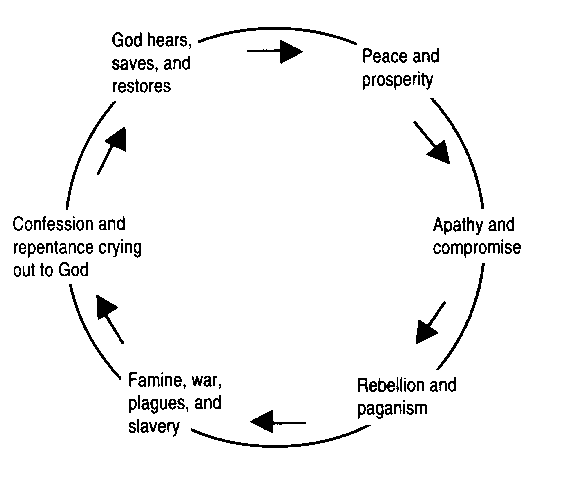
When you read the Book of Judges, you will notice a cyclical pattern, a recurring sequence of sin, followed by punishment, followed by a season of repentance and deliverance. The deliverer was usually an anointed judge or military leader provided by the sovereign hand of God. The judge would bring deliverance and there would be spiritual renewal for a short period of time. Then the cycle of sin and punishment would be repeated. When Israel took God's blessings for granted, they began to sin, and their sin resulted in a loss of God's power and provision in their lives. Then, in their spiritual poverty, they would once again cry out to God, and in His mercy He would send another deliverer. Unfortunately, each time the cycle was repeated, it became more severe.
Ultimately, Israel lost the fruit of their land and labor. They sank into virtual slavery inside the Promised Land, this bountiful land that had been given for Israel's provision. Remember, Canaan had been described as a land flowing with milk and honey. When the Israelite spies had first visited the valley of Eshcol, they had cut down a single cluster of grapes and carried it on a pole between two men (Num. 13:23). Now, however, the people were living an impoverished existence in a land of plenty. Without obedience to God, Israel had no right to the land, and one heathen nation after another swept over the land, reaping what Israel had sown.
Perhaps you are thinking that this story sounds remarkably like your own spiritual pilgrimage. You know that you have been saved; you have been delivered from Egypt and you occupy the Promised Land of salvation. Yet you find yourself going through endless cycles of rebellion and loss of blessing, followed by repentance and spiritual deliverance. You wonder if there will ever be an end to the cycles of rebellion and defeat. If you know the consequences of disobedience, why do you repeat these self-defeating behavior patterns?
One day while I was playing golf with a deacon friend in a former pastorate, we began to discuss some of the personal challenges he was facing. He was struggling in his business and his marriage. Finally, I posed a simple question to help him to focus on more positive times in his life. “Tell me about the best times in your marriage and life.” He thought about my question for a few minutes and then responded, “Without doubt, the greatest times I have experienced in my personal life have been when I was walking in obedience to the Word of God.”
At the moment he gave me that response, he was actually in a period of rebellion. He came to understand that his own personal rebellion had caused the problems he was now facing. Yet his stubborn will kept him from repentance and deliverance.
THE CONQUERING MIDIANITES
For our study of the name Jehovah Shalom, we will pick up the story of Israel's rebellion in Judges 6:
Then the sons of Israel did what was evil in the sight of the LORD; and the LORD gave them into the hands of Midian seven years. And the power of Midian prevailed against Israel. Because of Midian the sons of Israel made for themselves the dens which were in the mountains and the caves and the strongholds. For it was when Israel had sown, that the Midianites would come up with the Amalekites and the sons of the east and go against them. So they would camp against them and destroy the produce of the earth as far as Gaza, and leave no sustenance in Israel as well as no sheep, ox, or donkey. For they would come up with their livestock and their tents, they would come in like locusts for number, both they and their camels were innumerable; and they came into the land to devastate it. So Israel was brought very low because of Midian, and the sons of Israel cried to the LORD. (vv. 1-6)
It's not a very pleasant picture. The children of Israel would plant their crops and the Lord would provide an abundance, but before they could harvest the fields, the Midianites and Amalekites would bring devastation. While destroying the fields, they would steal the livestock. The text indicates that they left no sustenance for Israel and that consequently the Israelites were brought very low. They were devastated and humiliated.
Gideon, God's Deliverer
In verse 7, we begin the second phase in the cycle. We are told that Israel cried out to the Lord because of the attack of the Midianites. The Lord responded by sending a prophet who reminded them that God had delivered them from the slavery of Egypt and had disposed of the nations, giving Israel the land of promise. They, on the other hand, had not obeyed God's command concerning total allegiance to Him. They had feared the gods of the Amorites.
Nevertheless, God in His infinite mercy was prepared to deliver them once again. When God is about to work in human affairs, He seeks first a human instrument through whom He will bring deliverance. With no fanfare, we are told that the angel of the Lord sat under an oak tree as Gideon, the son of Joash, was beating out wheat to save it from the Midianites (6:11). It has always fascinated me that God calls out ordinary people like us while we are being faithful in the rather mundane affairs of everyday life. As we discuss the text, you will notice that Gideon himself questioned whether he was qualified to accomplish anything of significance for God. Let's look at the dialogue between Gideon and the messenger of the Lord.
“And the angel of the LORD appeared to him and said to him, 'The LORD is with you, O valiant warrior.' Then Gideon said to him, 'O my lord, if the LORD is with us, why then has all this happened to us? And where are all His miracles which our fathers told us about, saying, “Did not the LORD bring us up from Egypt?” But now the LORD has abandoned us and given us into the hand of Midian'” (vv. 12-13).
Repeatedly in Scripture, we find this classic confrontation between the call of God and the reluctance of man to step out in faithful obedience. You may think back to the call of Moses at the burning bush. How can man, who is a created being, say to the Creator, “I am unwilling to fulfill the task for which you have created and called me?”
Actually, in this passage in Judges, before Gideon doubts his own suitability to accomplish the deliverance of Israel, he appears to call into question the presence and power of the Lord. Gideon wants to know why Israel is experiencing so many disasters if God is on their side. His thinking is simple. If God is with them, the Midianites should not be pillaging their fields. The people of Israel should not be living like animals in caves. He is correct in thinking that it is incongruous for the people of God to be living in such defeat and abject poverty, but he is wrong to conclude that their situation points to the weakness of God.
His second question is similar to the first. Where are the miracles? The people of Israel often rehearsed the story of God's redemption and provision. They knew that He had delivered Israel from bondage in Egypt and miraculously saved them at the Red Sea. The stories of God's provision during the wilderness wanderings would have been well known. Therefore, the question appears reasonable to Gideon. Why are we not experiencing God's provision in our day? Although the angel does not immediately answer Gideon's questions, the answers become apparent as the story unfolds.
These two questions may have frequently come to your mind in relationship to your own spiritual life, or your own church. You may be asking where is God's presence and His provision in my own life. This story and the name Jehovah Shalom should give you wonderful good news about God's desire to reveal Himself to you in His sufficiency.
Go … Have I Not Sent You?
The Lord's response to Gideon's question is a commission to deliver Israel. “And the LORD looked at him and said,'Go in this your strength and deliver Israel from the hand of Midian. Have I not sent you?'” (6:14). I find it exciting and challenging to think that God would use the same man who was questioning His provision and presence to be the deliverer through whom He would reveal His supernatural activity. All the Lord needs is a yielded vessel. When God tells Gideon to go in his strength, it is a divine affirmation that Gideon is capable of doing whatever God calls him to do. We have the same affirmation from God today when He calls us to serve Him by talking to our neighbor or ministering to a friend or teaching a class.
It is at this point that Gideon attempts a second strategic end run. Rather than questioning God's presence or power, he questions his own suitability. These questions sound much more pious and humble. “And he said to Him, 'O Lord, how shall I deliver Israel? Behold, my family is the least in Manasseh, and I am the youngest in my father's house'” (v. 15). Sound familiar? Do you remember the excuses Moses gave? “Who am I to go?” “I'm not a good speaker.” We need to remember that all of our excuses are simply that—excuses. When we attempt to question our suitability for any God-given task, we are actually questioning God's choice of us and His ability to use us as He chooses. The Lord's answer to Gideon is reassuring, but firm: “Surely I will be with you, and you shall defeat Midian as one man” (v. 16). When God sends us, He has already assured us that He will be with us and give us the power to accomplish the assigned mission.
Most people who know the story of Gideon remember that he requested a sign from the Lord. Truth is, he asked for several signs. Gideon asked the angel not to leave until he could return with an offering that he will lay out before the angel. He requested a sign to prove to himself that this was truly a messenger from God. When Gideon returned with the offering, the angel instructed him to lay the offering on the rock before him. The angel took the staff that was in his hand and touched the meat and the unleavened bread and fire sprang forth from the rock, consuming the offering.
The next line from the mouth of Gideon may be one of the great understatements of Scripture. “When Gideon saw that he was the angel of the LORD, he said,'Alas, O Lord GOD! For now I have seen the angel of the LORD face to face'” (v. 22). You may be thinking, What was his first clue? Could it have been the consuming fire that leaped from the rock?
“We shouldn't make light of Gideon's perception that this was a messenger from God. Some of us might have missed or, at least dismissed, what Gideon saw. Perhaps God doesn't speak to us in such a dramatic manner, but He continually gives us clear evidence of His presence. When we miss the obvious sign of His presence, we are equally likely to ignore His call to serve Him. Perhaps we see a need or an opportunity in our church or our community. We have the deep impression that something needs to be done to resolve this glaring need. A Christian friend encourages us to take advantage of this opportunity, assuring us that we are the person for the task. Yet we quickly dismiss it as someone else's responsibility, claiming we are not qualified or we are too busy thrashing out wheat. Could it be that we just ignored the fire that leaped from the rock?
The Lord Is Peace
Gideon's response is one of holy fear. He realized that he stood in the presence of a messenger from Holy God. The Hebrew person knew that mortal man could not stand in the presence of Holy God and live. The messenger first assured him that he would not die. “And the LORD said to him, 'Peace to you, do not fear; you shall not die.'” In grateful response, Gideon built an altar in that place and named the altar “The LORD is Peace.”
Our English word peace translates to the Hebrew shalom. You might be wondering what shalom means. It is one of the most significant terms in the Old Testament. When you visit the Holy Land today, you will hear the word shalom frequently, both as a greeting when you meet someone, or as a blessing when you depart.
The word can be translated in several different ways. It can mean “whole,” in the sense of “complete.” In Deuteronomy, for example, we read: “You shall build the altar of the LORD your God of uncut stones; and you shall offer on it burnt offerings to the LORD your God.” The word translated “uncut,” referring to a whole or complete stone, is the Hebrew word shalom. In 1 Kings 9:25, the same word is translated as “finished.” The reference is to the completion of the temple. In Genesis 15:16, Moses uses the word shalom when he states that the iniquity of the Amorites was not yet complete or full.
When shalom is used in relationship to one's physical being it can be translated as “well” or “wholeness.” There are approximately twenty instances in the Bible where shalom is translated as “perfect.” One of my favorites is 1 Chronicles 29:19 where David prays that God might give his son Solomon a perfect heart. “And give to my son Solomon a perfect heart to keep Thy commandments, Thy testimonies, and Thy statutes, and to do them all, and to build the temple, for which I have made provision.” In 1 Kings 8, we have the beautiful prayer of dedication offered to God by Solomon after the temple was completed. After the prayer, Solomon stood to his feet and blessed all the assembly of Israel. First he blesses God for His faithfulness in fulfilling His promises and then he prays for His continued presence and blessing so that all the people of the earth may know that the Lord is God. He ends the blessing with a challenge to Israel:” 'Let your heart therefore be wholly devoted to the LORD our God, to walk in His statutes and to keep His commandments, as at this day'” (1 Kings 8:61). Solomon prays that the people of Israel will have a shalom, a wholly devoted heart, even as he had experienced through the prayer of his father, David.
The fundamental idea behind the word shalom is wholeness in one's relationship with God. Shalom defines a harmony of relationship based upon the completion of a transaction, the giving of satisfaction. It does not mean that we simply have a truce, where outward conflict disappears but inner turmoil remains. It is not merely an uneasy cease-fire! In that sense, it is appropriate that shalom is translated some 170 times in our English Bible as peace.
Shalom expresses the deepest need and desire of the human heart. In our experience, it means a sense of contentment, a freedom from guilt, and a satisfaction with life itself. There is, of course, a requirement. It means that we must have a pure heart before God and live in obedience with His Word and His plan.
A Final Look at Gideon's Questions
Do you remember the two questions asked by Gideon? If God is for us, why are we so afflicted? Where are all the miracles? The answers to these questions are found in the revelation that Jehovah is peace. The people of Israel had expected that they would experience peace once they had been delivered from Egypt and the wilderness wandering and had inhabited the Promised Land. The people of Israel were in the Promised Land but outside the will of God. They had neglected God and ignored His statutes. They were not focused on their unique calling to be about His mission. They didn't understand that peace was not to be found in a physical location, but only in relationship with their creator.
People today make the same mistake when they are empty inside and struggling with their circumstances. They often think that they will have peace if they could move to another location or if they were married to a different person or had a different job. They believe that peace will come when they change the outward circumstances of their life. Like Gideon, they are crying out, “If you are with me, why is my life such a mess?” But we will never know God's peace until we are reconciled with our Creator and live according to His purpose and plan.
Look at these simple truths expounded by Jeremiah and Isaiah. Jeremiah wrote: “ 'For I know the plans that I have for you,' declares the LORD, 'plans for welfare and not for calamity to give you a future and a hope'” (Jer. 29:11). God promises that Israel can seek and find Him and be gathered together in peace. God's purpose has always been for us to be at peace with God, ourselves, and others. Yet in our rebellion we have become alienated. The prophet Isaiah graphically describes our condition:
But the wicked are like the tossing sea,
For it cannot be quiet,
And its waters toss up refuse and mud.
“There is no peace,” says my God, “for the wicked.”
--Isa. 57:20-21
We will never know peace
when we live in rebellion against God.
You may be wondering how we, with our human failings, can ever be at peace with a God who is holy. That's a good question and one that can only be answered when we understand the full significance of the name Jehovah Shalom. Do you remember how the angelic messengers heralded the coming of Christ? “Glory to God in the highest, And on earth peace among men with whom He is pleased” (Luke 2:14). In John 14:27, Jesus promises His followers that He would give them peace of a different quality than what the world offered. Jesus is the Prince of Peace promised by the prophet Isaiah (Isa. 9:6); therefore, He alone can give us peace; He alone can reconcile sinners to a holy God. He lived a life without sin, and therefore He alone is qualified to pay the transaction price to reconcile man to God (2 Cor. 5:21). If you want to experience Jehovah Shalom, you must turn from your sin and accept Jesus' payment for your sin by inviting Him to come into your life.
Perhaps you are certain that you have accepted Christ as your personal Savior, and yet you know that you are not experiencing wholeness in your relationship with God or others. You couldn't say truthfully that you know true peace. Are you living in obedience to God's Word? Could it be that you, like Israel in the period of the judges, are repeating the cycle of sin and disobedience, and thus have forfeited your peace? Have you, like the people of Israel, treated God as a nonentity, ignoring His Word and taking His blessings for granted? Have you craved for the riches of the land more than you crave for the approval of God? If so, you must return to the source of peace—Jehovah Shalom. Repent for areas of disobedience. Resolve to obey His statutes (ED: NOT SELF RESOLVE BUT SPIRIT ENERGIZED RESOLVE!) and ask God to create in you a pure heart. Involve yourself in His mission to make Himself known to the nations.
There is no peace for the wicked and there is
no peace when we ignore God's purpose and His statutes.
There is no peace for the wicked and there is no peace when we ignore God's purpose and His statutes. We are like the waters that cast up their dirt and mire. But the good news is that Jehovah Shalom wants to reveal Himself to you. Place yourself before Him as an offering and see if He does not show Himself faithful.
Oswald Chambers - Is Your Hope In God Faint And Dying?
"Thou wilt keep him in perfect peace whose imagination is stayed on Thee." Isaiah 26:3
Is your imagination stayed on God or is it starved? The starvation of the imagination is one of the most fruitful sources of exhaustion and sapping in a worker's life. If you have never used your imagination to put yourself before God, begin to do it now. It is no use waiting for God to come; you must put your imagination away from the face of idols and look unto Him and he saved. Imagination is the greatest gift God has given us and it ought to be devoted entirely to Him. If you have been bringing every thought into captivity to the obedience of Christ, it will be one of the greatest assets to faith when the time of trial comes, because your faith and the Spirit of God will work together. Learn to associate ideas worthy of God with all that happens in Nature - the sunrises and the sunsets, the sun and the stars, the changing seasons, and your imagination will never be at the mercy of your impulses, but will always be at the service of God.
"We have sinned with our fathers; . . . and have forgotten" - then put a stiletto in the place where you have gone to sleep. "God is not talking to me just now," but He ought to be. Remember Whose you are and Whom you serve. Provoke yourself by recollection, and your affection for God will increase tenfold; your imagination will not be starved any longer, but will be quick and enthusiastic, and your hope will be inexpressibly bright.
READ: Isaiah 57:15-21
The wicked are like the troubled sea, . . . whose waters cast up mire. --Isaiah 57:20
I fight a losing battle with black silt on the lake bottom near our cabin. In the morning before my grandchildren awaken, I rake the lake bottom close to the dock so they can wade on clean sand.
It works well--until noon. That's when the powerboaters begin to run, pulling an assortment of people on a variety of devices. They make waves, which carry fresh silt to the shore. Even when no high-speed craft appear, the wind usually rises about then, creating neat little whitecaps. They too stir up the silt and deposit it, covering the cleared lake bottom with black gunk and littering it with debris.
Imagine a sea that is always churning with turbulence. The foaming restlessness never quiets, sending up plumes of dirt and mire. Isaiah described the wicked that way (57:20). Their lives are like a frothy, wave-tossed, unsettled, restless sea--never calm, never at peace (v.21).
Peace is available to all who believe in Christ. Not only can we be at peace with God, but we can have the peace of God firmly settled in our hearts (Jn. 14:27).
If you don't have peace, if you are worn out by the turbulence of unrest, turn in faith to Jesus. He has the power to calm the restless sea of your life. —David C. Egner
If life feels like a storm-tossed sea
With crashing waves of endless pain,
Then turn to Christ and trust in Him,
He'll give you peace that will remain.
--Sper
Christ calls the restless ones to find their rest in Him.
• Christ calls the restless to rest in Him, and in His peace He quiets every fear.
• Those who trust Christ may face fire, yet sleep in peace, upheld by everlasting arms. (Isaiah 43:2-3)
• When hearts rest in Christ, even the darkest night cannot steal His peace.
• Christ gives a peace that outlasts prisons, flames, and fear.
• The one who has peace with God can sleep in the shadow of death without fear. (Psalm 23:4)
• Christ invites the anxious heart to discover a rest the world cannot touch.
• When Christ steadies the soul, circumstances lose their power to shake us. (Psalm 112:7, Psalm 46:1-2, Jn 14:27)
When Christ steadies the soul, outward storms lose their power to rule the heart. Peace is not found in calmer circumstances but in a greater confidence—confidence in the God Who remains unshaken when everything else trembles (cf Pr 18:10) He keeps the steadfast mind in perfect peace (Isaiah 26:3). His presence is our very present help in trouble (Psalm 46:1–2). His peace stands sentry over the heart, guarding it from fear and despair (Philippians 4:6–7). Even when life offers nothing but uncertainty, like Habakkuk we can still rejoice, for our security does not rest in what is fragile but in the One who is faithful (Habakkuk 3:17–18). Christ Himself becomes the anchor of our soul (Hebrews 6:19). When He holds us, circumstances may press us, but they cannot shake us loose from hope (hope sure NOT hope so like the world's hope).
READ: Isaiah 26:1-9
You will keep him in perfect peace, whose mind is stayed on You, because he trusts in You. --Isaiah 26:3
We spend approximately 30 percent of our lives sleeping—or trying to sleep. Today there are more than 300 sleep disorder clinics in the United States. There are also 90 million Americans who snore, and they (or the people who share a room with them) spend about $200 million a year on anti-snoring remedies.
Think of it! Nearly a third of our entire lives sleeping! Yet how much do we plan and prepare spiritually for those important hours of sleep?
For many years, a friend of mine has followed a simple guideline he refers to as HWLW, which stands for "His Word the Last Word." Every night, just before turning out the light, he reads a passage from the Bible or meditates on a verse he has memorized. Before he goes to sleep, he wants the last word he thinks about to be from God—not the evening news or the weather, not the late-night talk-show host or the celebrity guest, but a final word from the Lord.
Is it possible that the words of Isaiah 26:3 could apply to our subconscious as well as our conscious minds? Wouldn't "perfect peace" for the person "whose mind is stayed on" the Lord make for a good night's sleep?
Why don't we all try it? "His Word the Last Word"—spiritual preparation for a peaceful night's sleep! — David C. McCasland (Reprinted by permission from Our Daily Bread Ministries. Please do not repost the full devotional without their permission.)
Putting It Into Practice
Before going to sleep, read a portion from the Bible
or recall a verse you read earlier in the day.
Meditate on God and your relationship with Him.
Before you turn out the light,
turn to the light of God's Word.
(cf Pr 6:21,22)
When life presses in and your heart begins to tremble, remember that peace isn’t found in quieter circumstances, but in a closer Christ. Storms may surround you, but they do not have to control you. When fears "knock," let faith answer the door (cf Php 4:8). When the ground beneath you shakes, stand on Christ the Solid Rock Who never moves. Before worries steal your rest, rest your heart in the steadfast love of Jesus. He does not lose His grip. He does not lose His calm. And when He steadies the soul, circumstances lose their power to shake us. (See How To Handle Fear-Pt 1, How to Handle Fear-Pt 2, How To Handle Fear-Pt 3, How to Handle Fear-Pt 4)
Fear knocked at the door.
Faith answered.
No one was there.
Fear is generated by unbelief, and unbelief strengthened by fear.
Nothing can cure us of fear till God cures us of unbelief.
- Francis Burkitt
God is the God of Romans 15:33; 2 Corinthians 13:11; 1 Thessalonians 5:23; Hebrews 13:20
- God ordains Isaiah 26:12
- God speaks, to his saints Psalm 85:8
- Christ is the Lord of 2 Thessalonians 3:16
- Christ is the prince of Isaiah 9:6
- Christ gives 2 Thessalonians 3:16
- Christ guides into the way of Luke 1:79
- Christ is our Ephesians 2:14
- Is through the atonement of Christ Isaiah 53:5; Ephesians 2:14,15; Colossians 1:20
- Bequeathed by Christ John 14:27
PREACHED
- By Christ Ephesians 2:17
- Through Christ Acts 10:36
- By ministers Isaiah 52:7; Romans 10:15
- Announced by angels Luke 2:14
- Follows upon justification Romans 5:1
- A fruit of the Spirit Romans 14:17; Galatians 5:22
- Divine wisdom is the way of Proverbs 3:17
ACCOMPANIES
- Faith Romans 15:13
- Righteousness Isaiah 32:17
- Acquaintance with God Job 22:21
- The love of God's law Psalm 119:165
- Spiritual-mindedness Romans 8:6
- Established by covenant Isaiah 54:10; Ezekiel 34:25; Malachi 2:5
PROMISED TO
- The Church Isaiah 66:12
- The Gentiles Zechariah 9:10
- Saints Psalm 72:3,7; Isaiah 55:12
- The meek Psalm 37:11
- Those who confide in God Isaiah 26:3
- Returning backsliders Isaiah 57:18,19
- We should love Zechariah 8:19
- The benediction of ministers should be Numbers 6:26; Luke 10:5
SAINTS
- Have in Christ John 16:33
- Have, with God Isaiah 27:5; Romans 5:1
- Enjoy Psalm 119:165
- Repose in Psalm 4:8
- Blessed with Psalm 29:11
- Kept in perfect Isaiah 26:3
- Ruled by Colossians 3:15
- Kept by Philippians 4:7
- Die in Psalm 37:37; Luke 2:29
- Wish, to each other Galatians 6:16; Philippians 1:2; Colossians 1:2; 1 Thessalonians 1:1
OF SAINTS
- Great Psalm 119:165; Isaiah 54:13
- Abundant Psalm 72:7; Jeremiah 33:6
- Secure Job 34:29
- Passes all understanding Philippians 4:7
- Consummated after death Isaiah 57:2
- The gospel is good tidings of Romans 10:15
- Supports under trials John 14:27; 16:33
THE WICKED
- Know not the way of Isaiah 57:2; Romans 3:17
- Know not the things of Luke 19:42
- Promise, to themselves Deuteronomy 29:19
- Are promised, by false teachers Jeremiah 6:14
- There is none for Isaiah 48:22; 57:21