Nehemiah 10:2
Nehemiah 10:3
Nehemiah 10:4
Nehemiah 10:5
Nehemiah 10:6
Nehemiah 10:7
Nehemiah 10:8
Nehemiah 10:9
Nehemiah 10:10
Nehemiah 10:11
Nehemiah 10:12
Nehemiah 10:13
Nehemiah 10:14
Nehemiah 10:15
Nehemiah 10:16
Nehemiah 10:17
Nehemiah 10:18
Nehemiah 10:19
Nehemiah 10:20
Nehemiah 10:21
Nehemiah 10:22
Nehemiah 10:23
Nehemiah 10:24
Nehemiah 10:25
Nehemiah 10:26
Nehemiah 10:27
Nehemiah 10:28
Nehemiah 10:29
Nehemiah 10:30
Nehemiah 10:31
Nehemiah 10:32
Nehemiah 10:33
Nehemiah 10:34
Nehemiah 10:35
Nehemiah 10:36
Nehemiah 10:37
Nehemiah 10:38
Nehemiah 10:39
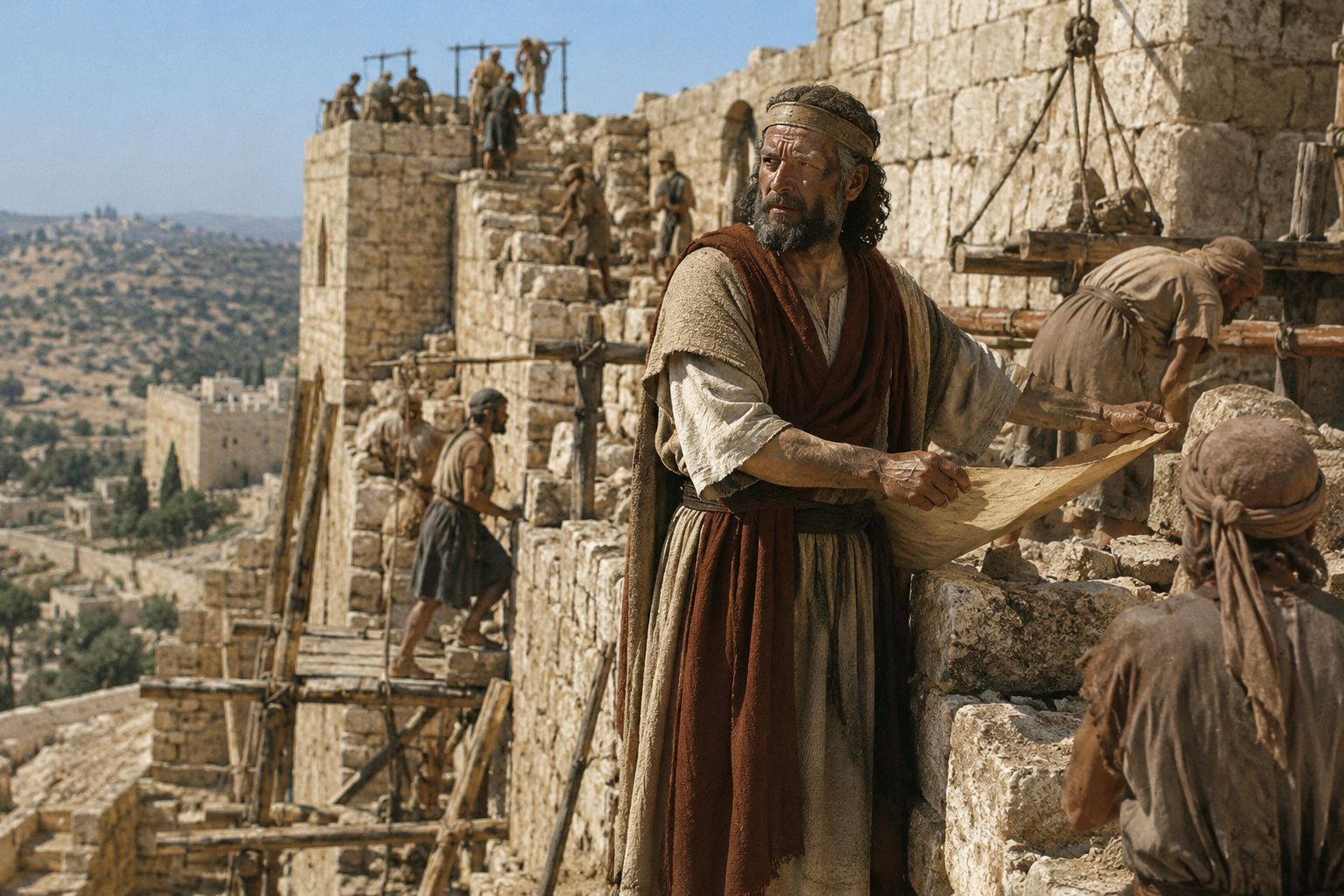
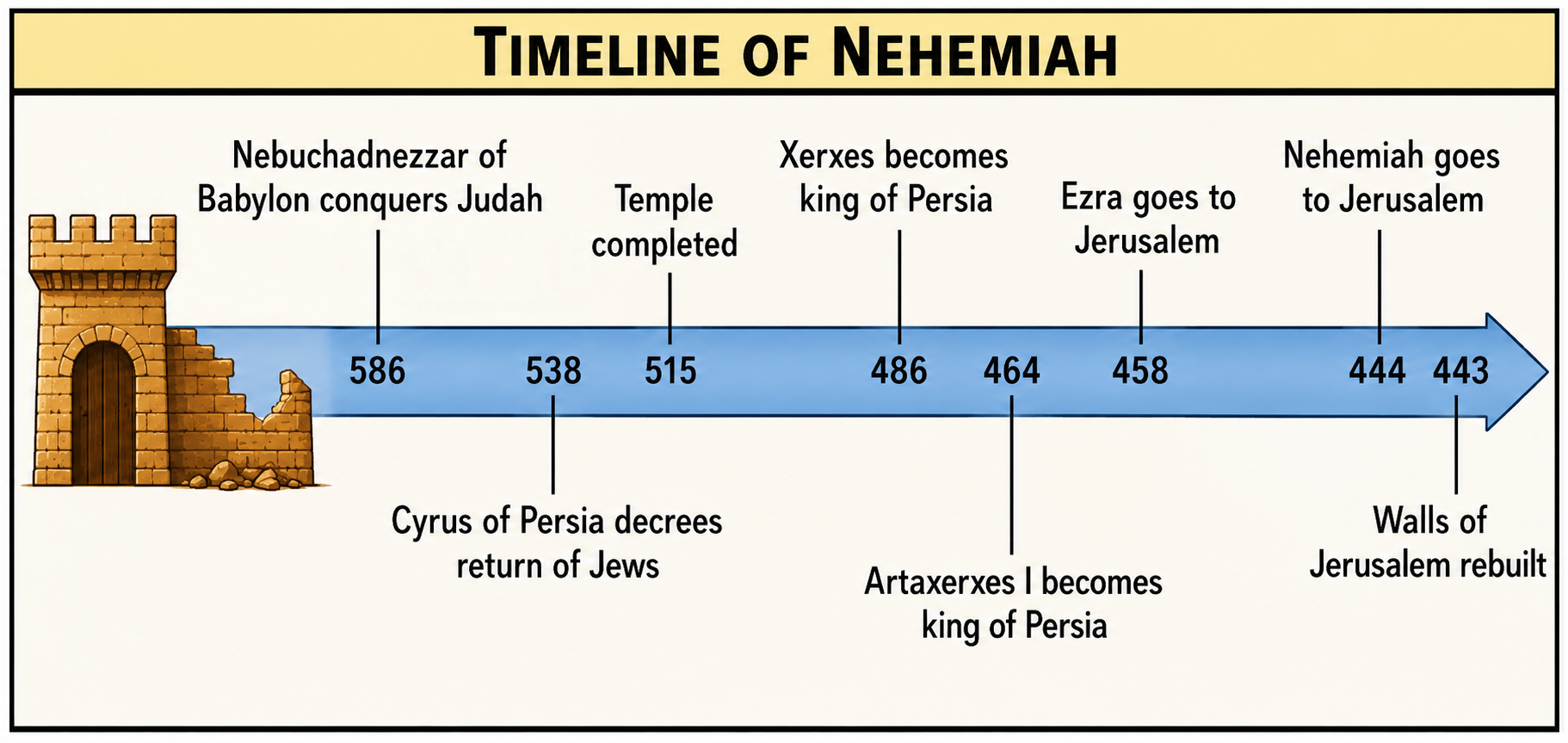
NEHEMIAH UNDER CONSTRUCTION:
JUST A FEW NOTES NOW.
WILL FINISH IF THE LORD WILLS
Nehemiah 10:1 Now on the sealed document were the names of: Nehemiah the governor, the son of Hacaliah, and Zedekiah,
- those that sealed (KJV): Heb. at the sealings, Ne 9:38
- Nehemiah (KJV): Ne 8:9
- Tirshatha (KJV): or, governor, Ne 7:70 Ezr 2:63
- son of Hachaliah (KJV): Ne 1:1
Now on the sealed document were the names of: Nehemiah the governor, the son of Hacaliah, and Zedekiah,
Henry Morris - Nehemiah, the Tirshatha. The governor was Nehemiah, and he was first to sign this renewed covenant by Israel to keep God's laws.
Believer's Study Bible - Nehemiah is identified as the tirshatha (Heb.), i.e., the governor (cf. Ezra 2:63, note). He was the first to place his seal upon the covenant (cf. 9:38) by which the people bound themselves with an oath to remain separate from the heathen and to obey the commandments and ordinances of God (vv. 29-33). Nehemiah was followed by Zedekiah, probably the same as Zadok the scribe, perhaps Nehemiah's secretary (13:13). The heads of all the priestly houses also attached their seals (vv. 2-8), beginning with the high-priestly house of Seraiah, which was probably represented by Eliashib, the current high priest.
Matthew Henry - The covenant, Those who signed it - Neh 10:1-31. Conversion is separating from the course and custom of this world, devoting ourselves to the conduct directed by the word of God. When we bind ourselves to do the commandments of God, it is to do all his commandments, and to look to him as the Lord, and our Lord.
Nehemiah 10:2 Seraiah, Azariah, Jeremiah,
- Seraiah (KJV): Ne 3:23 Ne 11:11 Ne 12:1,33,34
Seraiah, Azariah, Jeremiah,
Nehemiah 10:3 Pashhur, Amariah, Malchijah,
- Pashur (KJV): Ne 11:12
- Amariah (KJV): Ne 12:2,13
- Malchijah (KJV): The original is uniformly Malchijah, or rather, Malkeeyah. Ne 3:11 Ne 8:4, Malchiah
Pashhur, Amariah, Malchijah
Nehemiah 10:4 Hattush, Shebaniah, Malluch,
- Hattush (KJV): Ne 3:10
- Shebaniah (KJV): Ne 12:14
- Malluch (KJV): Ne 12:2
Hattush, Shebaniah, Malluch,
Nehemiah 10:5 Harim, Meremoth, Obadiah,
- Harim (KJV): Ne 3:11
- Meremoth (KJV): Ne 3:4,21 Ne 12:3
Harim, Meremoth, Obadiah,
Nehemiah 10:6 Daniel, Ginnethon, Baruch,
- Ginnethon (KJV): Ne 12:4, Ginnetho
- Baruch (KJV): Ne 3:20
Daniel, Ginnethon, Baruch,
Nehemiah 10:7 Meshullam, Abijah, Mijamin,
- Meshullam (KJV): Ne 3:6 Ne 8:4 Ne 11:11 Ne 12:13,25-33
- Abijah (KJV): Ne 12:4
- Mijamin (KJV): Mijamin and Miamin are the same in the original, [Miyamin <Strong's H4326>,] which is a defective form of [Minyamin <Strong's H4509>,] Miniamin. Ne 12:5, Miamin, Ne 12:17,41, Miniamin
Meshullam, Abijah, Mijamin,
Nehemiah 10:8 Maaziah, Bilgai, Shemaiah. These were the priests.
- Bilgai (KJV): Ne 12:5, Bilgah
- Shemaiah (KJV): Ne 3:29 Ne 12:6,18,42 Ezr 10:21
Maaziah, Bilgai, Shemaiah. These were the priests.
Nehemiah 10:9 And the Levites: Jeshua the son of Azaniah, Binnui of the sons of Henadad, Kadmiel;
- Jeshua (KJV): Ne 3:19 Ne 7:43 Ne 8:7 Ne 9:4
- Henadad (KJV): Ne 3:18,24 Ne 12:8,24
And the Levites: Jeshua the son of Azaniah, Binnui of the sons of Henadad, Kadmiel
Nehemiah 10:10 also their brothers Shebaniah, Hodiah, Kelita, Pelaiah, Hanan,
- Shebaniah (KJV): Ne 8:7 Ne 9:4,5 Ezr 10:23
also their brothers Shebaniah, Hodiah, Kelita, Pelaiah, Hanan,
Nehemiah 10:11 Mica, Rehob, Hashabiah,
- Hashabiah (KJV): Ne 11:15,22 Ne 12:24 Ezr 8:19,24
Mica, Rehob, Hashabiah,
Nehemiah 10:12 Zaccur, Sherebiah, Shebaniah,
- Sherebiah (KJV): Ne 8:7 Ne 9:4 Ne 12:8
Zaccur, Sherebiah, Shebaniah
Nehemiah 10:13 Hodiah, Bani, Beninu.
- Beninu (KJV): i.e. our son; our edification, <Strong's H1148>. Ne 10:13
Hodiah, Bani, Beninu.
Nehemiah 10:14 The leaders of the people: Parosh, Pahath-moab, Elam, Zattu, Bani,
- Parosh (KJV): Ne 3:11 Ne 7:8,11-13, Zattu, Ezr 2:3-70 The original is uniformly Zattu.
- Bani (KJV): Ne 7:15, Binnui, Ezr 2:10
The leaders of the people: Parosh, Pahath-moab, Elam, Zattu, Bani
Nehemiah 10:15 Bunni, Azgad, Bebai,
- Azgad (KJV): Ne 7:16,17 Ezr 2:11,12 Ezr 8:11,12 Ezr 10:28
Bunni, Azgad, Bebai
Nehemiah 10:16 Adonijah, Bigvai, Adin,
- Bigvai (KJV): Ne 7:19-21 Ezr 2:14-16 Ezr 8:14
Adonijah, Bigvai, Adin
Nehemiah 10:17 Ater, Hezekiah, Azzur,
Ater, Hezekiah, Azzur,
Nehemiah 10:18 Hodiah, Hashum, Bezai,
- Hashum (KJV): Ne 7:22-73 Ezr 2:17-70
Hodiah, Hashum, Bezai,
Nehemiah 10:19 Hariph, Anathoth, Nebai,
Hariph, Anathoth, Nebai,
Nehemiah 10:20 Magpiash, Meshullam, Hezir,
- Magpiash (KJV): i.e. killer of moths; collector; plague of the moth; the plague is consumed, <Strong's H4047>, Ne 10:20
Magpiash, Meshullam, Hezir,
Nehemiah 10:21 Meshezabel, Zadok, Jaddua,
- Meshezabeel (KJV): i.e. freed by God, Ne 3:4
Meshezabel, Zadok, Jaddua,
Nehemiah 10:22 Pelatiah, Hanan, Anaiah,
Pelatiah, Hanan, Anaiah,
Nehemiah 10:23 Hoshea, Hananiah, Hasshub,
Hoshea, Hananiah, Hasshub,
Nehemiah 10:24 Hallohesh, Pilha, Shobek,
Hallohesh, Pilha, Shobek,
Nehemiah 10:25 Rehum, Hashabnah, Maaseiah,
Rehum, Hashabnah, Maaseiah,
Nehemiah 10:26 Ahiah, Hanan, Anan,
Ahiah, Hanan, Anan,
Nehemiah 10:27 Malluch, Harim, Baanah.
Malluch, Harim, Baanah
Nehemiah 10:28 Now the rest of the people, the priests, the Levites, the gatekeepers, the singers, the temple servants and all those who had separated themselves from the peoples of the lands to the law of God, their wives, their sons and their daughters, all those who had knowledge and understanding,
- the rest (KJV): Ne 7:72,73 Ezr 2:36-43,70
- all they (KJV): Ne 9:2 Ne 13:3 Lev 20:24 Ezr 9:1,2 Ezr 10:11-19 2Co 6:14-17
- unto the law (KJV): Ro 1:1
- every one (KJV): Ne 8:2 Ps 47:7 Ec 5:2 Jer 4:2
Now the rest of the people, the priests, the Levites, the gatekeepers, the singers, the temple servants and all those who had separated themselves from the peoples of the lands to the law of God, their wives, their sons and their daughters, all those who had knowledge and understanding,
Bob Utley - This mentions several groups that served in the temple.▣ "all those who had knowledge and understanding" See note at Neh. 8:2. This seems to refer to the children.
Nehemiah 10:29 are joining with their kinsmen, their nobles, and are taking on themselves a curse and an oath to walk in God’s law, which was given through Moses, God’s servant, and to keep and to observe all the commandments of GOD our Lord, and His ordinances and His statutes;
- clave (KJV): Isa 14:1 Ac 11:23 Ac 17:34 Ro 12:9
- entered (KJV): Ne 5:12,13 Ne 13:25 De 27:15-26 De 29:12-14 2Ch 15:13,14 Ps 119:106 Ac 23:12-15,21
- to walk (KJV): 2Ki 10:31 2Ki 23:3 2Ch 6:16 2Ch 34:31 Jer 26:4
- given (KJV): De 33:4 Mal 4:4 Joh 1:17 Joh 7:19
- by (KJV): Heb. by the hand of
- to observe (KJV): De 5:1,32 Ps 105:45 Eze 36:27 Joh 15:14 Tit 2:11-14
- the Lord (KJV): Ps 8:1,9
are joining with their kinsmen, their nobles, and are taking on themselves a curse and an oath to walk in God’s law, which was given through Moses, God’s servant, and to keep and to observe all the commandments of GOD our Lord, and His ordinances and His statutes
Bob Utley - "a curse and an oath to walk in God's law" This is a covenant renewal service much like Jos. 8:30-35 and 24:1ff. These renewal ceremonies were based on the covenant blessings and cursings summarized in Leviticus 26 and Deuteronomy 28. Obedience and disobedience had consequences in this life and the next! The term "walk" is a biblical metaphor for lifestyle faith. God's word/teachings are a path for His people to follow (e.g., Ps. 119:105; Pro. 6:23). ▣ "the commandments. . .ordinances. . .statutes" The revelation of God to God is characterized by several terms. Notice the list and parallelism of Ps. 19:7-9. Terms for God's Revelation
Nehemiah 10:30 and that we will not give our daughters to the peoples of the land or take their daughters for our sons.
- Ex 34:16 De 7:3 Ezr 9:1-3,12-14 Ezr 10:10-12
and that we will not give our daughters to the peoples of the land or take their daughters for our sons
Henry Morris - not give our daughters. Disobeying this command of God (Exodus 34:12-16) had already led the returned exiles into trouble (Ezra 9,10), and it was still a problem even after the renewed covenant was in effect (Nehemiah 13:23-25).
Ryrie - 10:30-39 The people agreed (1) not to marry heathens (see note on Deut. 7:3-4), (2) to keep the Sabbath and holy days free of commercial activity (see notes on Ex. 20:8-11 and Amos 8:5), (3) to observe the sabbatical year (see note on Ex. 23:10-11), and (4) to support the Temple.
Bob Utley - "and that we will not give our daughters to the people of the land or take their daughters for our sons" This does not refer to racial exclusion, but religious exclusion (cf. Exod. 34:12-16; Ezra 9:10; Neh. 13:23-28). This was a major issue in restored Judah.
Nehemiah 10:31 As for the peoples of the land who bring wares or any grain on the sabbath day to sell, we will not buy from them on the sabbath or a holy day; and we will forego the crops the seventh year and the exaction of every debt.
- the people (KJV): Ne 13:15-22 Ex 20:10 Lev 23:3 De 5:12-14 Isa 58:13,14 Jer 17:21,22
- on the holy day (KJV): Ex 12:16 Lev 16:29 Lev 23:21,35,36 Col 2:16
- and that we (KJV): Ex 23:10,11 Lev 25:4-7 2Ch 36:21
- the exaction (KJV): Ne 5:1-13 De 15:1-3,7-9 Mt 6:12 Mt 18:27-35 Jas 2:13
- debt (KJV): Heb. band, Isa 58:6
As for the peoples of the land who bring wares or any grain on the sabbath day to sell, we will not buy from them on the sabbath or a holy day; and we will forego the crops the seventh year and the exaction of every debt
Bob Utley - As for the peoples of the land who bring wares or any grain on the sabbath day to sell" The indigenous habitants of the Persian province who were supposedly "YHWHistic" were violating the Sabbath requirements. This is one example of the problems of trying to work with or associate with the inhabitants who were in the land when the returnees arrived. See Sabbath (OT) ▣ "and we will forgo the crops the seventh year" This is a second feature of Mosaic law which was a means of acknowledging YHWH's ownership of the land and His care and concern for the needy (cf. Exod. 23:10-11; Lev. 25:4-7,20-22). ▣ "and the exaction of every debt" This is a third element related to Moses' law. All debts were cancelled on the seventh year (cf. Deut. 15:1-2; Deut 31:10), which was called the Sabbath year. They were serious about reinstating the Mosaic law in its fullness. YHWH had a special care and concern for the poor and powerless.
Matthew Henry - Their engagement to sacred rites - Neh 10:32-39. Having covenanted against the sins of which they had been guilty, they obliged themselves to observe the duties they had neglected. We must not only cease to do evil, but learn to do well. Let not any people expect the blessing of God, unless they keep up public worship. It is likely to go well with our houses, when care is taken that the work of God's house goes on well. When every one helps, and every one gives, though but little, toward a good work, the whole will come to be a large sum. We must do what we can in works of piety and charity; and whatever state we are placed in, cheerfully perform our duty to God, which will be the surest way to ease and liberty. As the ordinances of God are the appointed means of support to our souls, the believer will not grudge the expense; yet most people leave their souls to starve.
Nehemiah 10:32 We also placed ourselves under obligation to contribute yearly one third of a shekel for the service of the house of our God:
- to charge (KJV): Ge 28:22 Pr 3:9
- the third part (KJV): According to the law, every one above twenty years of age was to give half a shekel to the sanctuary for a ransom for their souls. But, on account of the general poverty of the people, occasioned by their wars, and captivity, and by heavy tributes, etc., in the land of their captivity, this sum was reduced to the third part of a shekel. Ex 30:11-16 Mt 17:24-27 2Co 8:12
We also placed ourselves under obligation to contribute yearly one third of a shekel for the service of the house of our God:
Bob Utley - "to contribute yearly one third of a shekel for the service of the house of our God" In Exod. 30:11-16, it is a half of a shekel given to the tabernacle, but it is not given annually. Exactly what the fee paid for is delineated in Neh. 10:33. In the pre-exilic period, the king supported the cost of the temple, but in the post-exilic community the cost was shared among the people.
Ryrie - 10:32 The one-third-shekel tax was a revival of an earlier command (though requiring a lesser amount than previously; see note on Ex. 30:11-16). The reduced rate may indicate something of the poverty of the people at this time.
Nehemiah 10:33 for the showbread, for the continual grain offering, for the continual burnt offering, the sabbaths, the new moon, for the appointed times, for the holy things and for the sin offerings to make atonement for Israel, and all the work of the house of our God.
- the showbread (KJV): Lev 24:5 2Ch 2:4
- the continual burnt (KJV): Nu 28:1-29:40 Heb 10:11
- all the work (KJV): 2Ch 24:5-14
for the showbread, for the continual grain offering, for the continual burnt offering, the sabbaths, the new moon, for the appointed times, for the holy things and for the sin offerings to make atonement for Israel, and all the work of the house of our God
Bob Utley - "the showbread" See Ex 25:23-30. See Show Bread of the Presence ▣ "the continual grain offering" See Num. 28:1-8. ▣ "the continual burnt offering" See Ex 29:38-42; Nu 28:1-.8 ▣ "the sabbaths, the new moon, for the appointed times" See Num. 28:9-10,11-15; Num 29:39-40. See Feasts of Israel ▣ "for the sin offerings to make atonement for Israel" See Lev. 4:1-5:13 and Num. 15:23-29. See Atonement
Believer's Study Bible - The "showbread," which consisted of no more than 12 cakes of fine flour presented on the Sabbath, was primary in importance because it was the bread of God's presence. "The regular grain offering" was a combination of flour and fine olive oil which was presented morning and evening with the lambs of "the regular burnt offering." The Law called for wood to be continuously burning upon the altar (cf. Lev. 6:12), which then was ready morning and evening for sacrifice. See chart, "The Levitical Offerings," Lev. 1:2.
Nehemiah 10:34 Likewise we cast lots for the supply of wood among the priests, the Levites and the people so that they might bring it to the house of our God, according to our fathers’ households, at fixed times annually, to burn on the altar of the LORD our God, as it is written in the law;
- cast (KJV): 1Ch 24:5,7 1Ch 25:8,9 Pr 18:18
- the wood offering (KJV): It was the business of the Nethinim to procure the wood for the fires of the temple: but it is probable few of them returned to their former masters after the captivity; and therefore they found it necessary to cast lots among the priests, Levites, and people, who should furnish the wood at appointed times. This bringing of the wood to the temple at last became a great day; and was constituted into a feast, called by Josephus, [Xylophoria,] "the carrying of the wood" (Bell. 1. ii. c. 17. sec.6). Ne 13:31 Lev 6:12 Jos 9:27 Isa 40:16
- at times (KJV): Heb 10:3-7
- as it is written (KJV): Lev 6:12,13
Likewise we cast lots for the supply of wood among the priests, the Levites and the people so that they might bring it to the house of our God - Necessary to keep the fire going on the altar (Lev. 6:12).
Bob Utley - "we cast lots for the supply of wood" The casting of lots was a mechanical way (like the Urim and Thummim) to discern God's will. In this case the lots help divide the responsibility for wood for the burnt offerings among the returnees. Each family was responsible for a period of time. This later turns into a feast (cf. Josephus, Wars 17.6) See Urim and Thummim
according to our fathers’ households, at fixed times annually, to burn on the altar of the LORD our God, as it is written in the law
Nehemiah 10:35 and that they might bring the first fruits of our ground and the first fruits of all the fruit of every tree to the house of the LORD annually,
- Ex 23:19 Ex 34:26 Lev 19:23-26 Nu 18:2,12 De 26:2 2Ch 31:3-10 Pr 3:9,10 Mal 3:8-12
and that they might bring the first fruits of our ground and the first fruits of all the fruit of every tree to the house of the LORD annually
Bob Utley - "the first fruits" Giving God the first ripened fruit was a way to show God's ownership of the entire harvest. These offerings helped support the priests. See Exod. 22:29; Exod 23:19; Exod 34:26; Deut. 26:1-11; and Ezek. 44:30.
Nehemiah 10:36 and bring to the house of our God the firstborn of our sons and of our cattle, and the firstborn of our herds and our flocks as it is written in the law, for the priests who are ministering in the house of our God.
- the firstborn (KJV): Ex 13:2,12-15 Ex 34:19 Lev 27:26,27 Nu 18:15,16 De 12:6
- unto (KJV): Nu 18:9-19 1Co 9:6-14 Ga 6:6
and bring to the house of our God the firstborn of our sons and of our cattle, and the firstborn of our herds and our flocks as it is written in the law, for the priests who are ministering in the house of our God
Bob Utley - "the firstborn of our sons and of our cattle" this was a way to show God's ownership of all things. See Exodus 13. See Firstborn
Nehemiah 10:37 We will also bring the first of our dough, our contributions, the fruit of every tree, the new wine and the oil to the priests at the chambers of the house of our God, and the tithe of our ground to the Levites, for the Levites are they who receive the tithes in all the rural towns.
- the firstfruits (KJV): Lev 23:17 Nu 15:19-21 Nu 18:12,13 De 18:4 De 26:2
- to the chambers (KJV): Ne 13:5,9 1Ki 6:5-10 2Ch 31:11,12
- and the tithes (KJV): Lev 27:30-33 Nu 18:21,24-32 2Ch 31:6 Mal 3:8,10
We will also bring the first of our dough, our contributions, the fruit of every tree, the new wine and the oil to the priests at the chambers of the house of our God, and the tithe of our ground to the Levites, for the Levites are they who receive the tithes in all the rural towns
Bob Utley - "we will also bring the first of our dough" See Lev. 23:17. ▣ "and the tithe of our ground to the Levites" See Lev. 27:30. See Tithing in the Mosaic Legislation
Believer's Study Bible - The tithe of firstfruits (cf. Num 18:12, 13) had been neglected so that the Levites were not receiving needed support (cf. Mal. 3:8). Through the covenant, the people renewed their pledge to sustain the Levites (but cf. 13:6, note). The Levites also were required to give a tithe of the tithes (v. 38; Num. 18:26) to support the priests (v. 39).
Nehemiah 10:38 The priest, the son of Aaron, shall be with the Levites when the Levites receive tithes, and the Levites shall bring up the tenth of the tithes to the house of our God, to the chambers of the storehouse.
- when the Levites (KJV): Nu 18:26-28
- the tithe (KJV): The tithes of all the produce of the fields were brought to the Levites; and out of these a tenth part was given to the priests, which is here called the tithe of the tithes: see the parallel passages.
- the treasure house (KJV): Ne 13:12,13 1Ch 9:26 2Ch 31:11,12
The priest, the son of Aaron, shall be with the Levites when the Levites receive tithes, and the Levites shall bring up the tenth of the tithes to the house of our God, to the chambers of the storehouse.
Bob Utley - "The priest. . .shall be with the Levites" This was one of the checks and balances procedures installed to insure the taxation system. ▣ "the tenth of the tithes" The Levites were required to tithe to the priests (cf. Num. 18:26). In the OT there were many Levites so the priests got all they needed from their tithe, but in these days there were few Levites. The priests, however, did not want to alter the Mosaic regulations. There is some confusion about exactly how the tithing system in Israel worked. From Deut. 14:22-29
- individuals brought a tithe to the central sanctuary for two years
- the third year the tithe was paid locally to benefit the poor
- every seventh year the fields lay fallow so there was no tithe of produce
In this passage (Neh. 10:32-39), all non-produce items were brought to the priests in Jerusalem, but the produce was brought to the Levites in the local towns, who then tithed that to Jerusalem. The special offerings like "the first fruits" or "first born" were also taken to Jerusalem.
Ryrie - 10:38-39 On the tithe, see notes on Lev. 27:30-33 and Mal. 3:8. The Levites had to tithe the tithes given to them in order to support the serving priests, porters, and singers.
Nehemiah 10:39 For the sons of Israel and the sons of Levi shall bring the contribution of the grain, the new wine and the oil to the chambers; there are the utensils of the sanctuary, the priests who are ministering, the gatekeepers and the singers. Thus we will not neglect the house of our God.
- For the children (KJV): De 12:6-11,17 De 14:23-27 2Ch 31:12
- the children (KJV): Nu 18:30
- we will not (KJV): Ne 13:10,11 Ps 122:9 Heb 10:25
For the sons of Israel and the sons of Levi shall bring the contribution of the grain, the new wine and the oil to the chambers; there are the utensils of the sanctuary, the priests who are ministering, the gatekeepers and the singers. Thus we will not neglect the house of our God.
Bob Utley - new wine" See Biblical Attitudes Toward Alcohol and Alcoholism. ▣ "Thus we will not neglect the house of our God" All of the provisions mentioned in Neh. 10:34-39 were to equip the temple and its personnel for its regular duties.
Ryrie - not neglect. Exactly what they had been doing, giving preference to building their own homes rather than the Temple (Hag. 1:1-4).