Isaiah 38:2
Isaiah 38:3
Isaiah 38:4
Isaiah 38:5
Isaiah 38:6
Isaiah 38:7
Isaiah 38:8
Isaiah 38:9
Isaiah 38:10
Isaiah 38:11
Isaiah 38:12
Isaiah 38:13
Isaiah 38:14
Isaiah 38:15
Isaiah 38:16
Isaiah 38:17
Isaiah 38:18
Isaiah 38:19
Isaiah 38:20
Isaiah 38:21
Isaiah 38:22
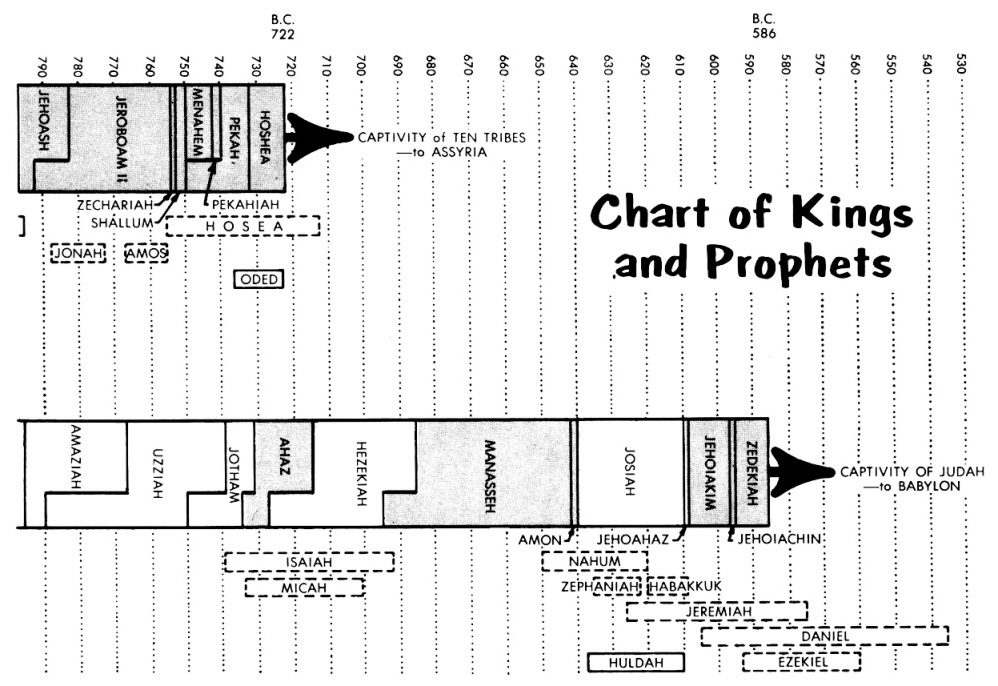
Click to Enlarge
Isaiah 38:1 In those days Hezekiah became mortally ill. And Isaiah the prophet the son of Amoz came to him and said to him, “Thus says the LORD, ‘Set your house in order, for you shall die and not live.’”
NLT About that time Hezekiah became deathly ill, and the prophet Isaiah son of Amoz went to visit him. He gave the king this message: "This is what the LORD says: Set your affairs in order, for you are going to die. You will not recover from this illness."
- was Hezekiah: 2Ki 20:1-11 2Ch 32:24-26 Joh 11:1-5 Ac 9:37 Php 2:27-30
- And Isaiah: Isa 37:21 39:3,4
- Set your house in order: Heb. Give charge concerning thy house, 2Sa 17:23 Ec 9:10
- for you shall die: Jer 18:7-10 Jonah 3:4,10
Related Passages:
2 Kings 20:1 In those days Hezekiah became mortally ill. And Isaiah the prophet the son of Amoz came to him and said to him, “Thus says the LORD, ‘Set your house in order, for you shall die and not live.’”
2 Chronicles 32:24-26 In those days Hezekiah became mortally ill; and he prayed to the LORD, and the LORD spoke to him and gave him a sign. 25 But Hezekiah gave no return for the benefit he received, because his heart was proud; therefore wrath came on him and on Judah and Jerusalem. 26 However, Hezekiah humbled the pride of his heart, both he and the inhabitants of Jerusalem, so that the wrath of the LORD did not come on them in the days of Hezekiah.
PREPARE TO
MEET YOUR GOD!
In those days Always ask "what days?" or "What time is this?" Unfortunately this is not an easy answer. While this time phrase at first glance seems to link the current event to the same general period as the Assyrian crisis, after God’s dramatic deliverance from Sennacherib (2 Kings 19), this is far from established
William MacDonald for example writes "The events of chapter 20 are generally believed to have taken place earlier, probably in the early part of chapter 18, during the first invasion of Sennacherib (see v. 6)." (Borrow Believer's Bible Commentary)
ESV Study Bible (borrow) - 2Kings 20:1-19 represent a “flashback” to the period around 713-712 b.c., some 12 years before Sennacherib’s invasion and some 15 years before Hezekiah’s death (cf. 2Ki 20:6). (ESV Study Bible note on 2Chr 32:24-26, 31) These events preceded Sennacherib’s invasion by a few years. The sign was the miraculous backward movement of the shadow, signifying the extension of Hezekiah’s life in answer to prayer. Related to this incident was the king’s proud display of his wealth before the Babylonian envoys. This incurred God’s wrath, but Hezekiah and the people’s humble repentance (see 2 Chron. 7:14) is said to have spared Jerusalem in the days of Hezekiah (see 2 Kings 20:16-18). Even a good king such as Hezekiah could contribute to Judah’s fate; like Josiah (2 Chron. 34:28), however, he was spared from seeing it in his days.
Reformation Study Bible - There is good reason to believe that this incident and the reception of the Babylonian envoys (vv. 12-19) occurred before the Assyrian invasion of Judah in 701 b.c., because according to Babylonian documents, Merodach-baladan (v. 12) died in 703 b.c. (ED: 2 YEARS BEFORE THE ASSYRIAN INVASION DESCRIBED IN CHAPTER 19) Since God added fifteen years to Hezekiah's life (v. 6), he would have been ill in 702 b.c. or before.
For a more detailed discussion of the chronology see Patterson page 271-272.
Hezekiah became mortally ill - Heb "was sick to the point of dying"; NRSV "became sick and was at the point of death." The phrase indicates a sickness that was humanly incurable, literally “sick unto death.” This was not a mild affliction but a crisis that confronted Hezekiah with his own mortality, stripping away royal power, military security, and recent triumph. The illness of Hezekiah probably occurred just before the invasion of Sennacherib into the land of Judah. Sennacherib's invasion took place in 701 B.C., the fourteenth year of the reign of Hezekiah (18:13). Hezekiah had 15 years of life added to him as a result of God's mercy in answering his prayer, and died in 686 B.C., after a reign of 29 years (beginning in 715 B.C.; cf. 18:2).
Paul Apple (page 614) - He had the physical symptoms and all of the uncertainty about his condition before he received the word from Isaiah about his prognosis. Only about 39 years old; had a lot of responsibility on his shoulders – not just a personal issue – the continuity of the kingdom of Judah was at stake – larger issues in play here Think of how disturbed we become with the relatively minor ailments that afflict us … How would we react if we were struck down with a mortal illness? Let’s see how it played out with Hezekiah
And Isaiah the prophet the son of Amoz came to him and said to him, “Thus says the LORD, ‘Set your house in order, for you shall die and not live.’” The illness of Hezekiah probably occurred just before the invasion of Sennacherib into the land of Judah. Sennacherib's invasion took place in 701 B.C., the fourteenth year of the reign of Hezekiah (2Ki 18:13). Hezekiah had 15 years of life added to him as a result of God's mercy in answering his prayer, and died in 686 B.C., after a reign of 29 years (beginning in 715 B.C.; cf. 2Ki 18:2).
SET YOUR HOUSE
IN ORDER
Set your house in order is a idiomatic phrase in English that comes directly from the Bible. For Hezekiah it entailed practical preparation and spiritual preparation (AND THIS CAN BE APPLIED TO ALL OF US!) - Practically it means to settle royal and family affairs, arrange succession and governance and put legal, financial, and household matters in order. Spiritually it means examine one's heart before God, repent where necessary and prepare to meet God. The point Isaiah is making is for Hezekiah to prepare fully, outwardly and inwardly, for death.
🙏 THOUGHT - Dear believer is this not good advice for all of us to apply (when the time is near) -- to prepare our affairs practically and to prepare our hearts spiritually? I am reminded of John's command which the Spirit frequently uses like a goad on my heart "Now, little children, abide (present imperative see our need to depend on the Holy Spirit to obey) in Him, so that (term of purpose) when He appears, we may have confidence and not shrink away from Him in shame at His coming." (1Jn 2:28). In short, get your affairs in order. Make things right before it’s too late!
ESV Study Bible - The events of Isaiah 38-39 take place near the time of the deliverance from Assyria in Isaiah 36-37. But “in those days” is intentionally vague. Isaiah 38:6 clarifies that Hezekiah’s illness occurred prior to Isaiah 36-37. Isaiah locates the events of chs. 38-39 here in order to establish the context for Isaiah 40-55. Hezekiah became sick. Unlike the crisis of Isaiah 36-37, which was national in scope, this crisis is only personal. at the point of death. Hezekiah began his reign at 25 years of age and reigned for 29 years (2 Ki 18:2). With 15 years added to his life after this illness (Isa 38:5), he would have been only 39 when this illness struck him (“In the middle of my day,” v10). “You shall not recover” offers Hezekiah the opportunity to pray for a different outcome, as many prophecies do (cf. Jer 18:1-11; Jonah 3:4).....The failure to trust in the Lord was met with a prophecy that the treasures he had shown the Babylonians and some of his own descendants would be carried off to Babylon.
Paul Apple - INTRODUCTION: God seeks people that will worship Him in Spirit and truth. Do we look at our lives as an opportunity to offer up praise and thanksgiving in worship? When we are confronted with the prospect of death, we very quickly re-evaluate our priorities and goals in life. We come to the account this morning of the death sentence issued to godly King Hezekiah. Make no mistake, he was a hero figure in Judah – one of the most godly kings despite having a wicked father – King Ahaz and eventually a wicked son Manasseh. He restored worship; he tore down the idol worship; he demonstrated a heart of faith in turning to the Lord for deliverance; yet as we shall see next week – because of his battles with pride, he was not without some points of weakness
2 Kings 18:1-7 – half his reign occurred as a result of the 15 years God tacked on here; vs. 13 – it was the 14th year of King Hezekiah when the events of Isaiah 36-37 occurred – 701 B.C.
This story in Isaiah 38-39 seems to be reported out of chronological sequence (although some would argue that point). The events prophecy deliverance from Assyria which we just saw Jerusalem experiencing in Isaiah 36-37. It is not uncommon for the biblical record to present things from more of a thematic order rather than a strict chronological order. It is evident that chaps. 36-39 form a hinge for the two main sections of Isaiah’s prophecy:
I. First half of book -- Dealing with the threat from Assyria
II. Second half of book -- Dealing with the later threat from Babylon
From that perspective, Isaiah 38-39 form a nice bridge – providing closure from the issues related to Assyria and introducing the threat from Babylon. However, some would argue for a normal historical chronology since the parallel passage in Kings maintains the same order without the structural thematic needs; and since the events surrounding the Assyrian threat covered a wide range of years. Regardless, the lessons for us today will be the same.
Lying at the heart of the book, it is not surprising that the main theme of Isaiah receives special focus here: God wants His chosen people to turn only to Him for deliverance and salvation. Here we have a concrete historical example of the implications of Divine Deliverance. (Bible Outlines Page 613)
Isaiah 38:2 Then Hezekiah turned his face to the wall and prayed to the LORD,
NLT When Hezekiah heard this, he turned his face to the wall and prayed to the LORD,
- turned: Hezekiah's couch was probably placed in a corner, which is the place of honour in the East; in which, turning on either side, he must turn his face to the wall; by which he would withdraw himself from those attending him in his apartment. 1Ki 8:30 Ps 50:15 91:15 Mt 6:6
Related Passages:
2 Kings 20:2 Then he turned his face to the wall and prayed to the LORD, saying,
PRAYER AS HEZEKIAH'S
REFLEX RESPONSE TO CRISIS
Then - Notes progression in the story, in this case rapid progression by Hezekiah. This signals his immediate response. Hezekiah does not delay, debate, or seek human counsel first. The word connects directly to Isaiah’s announcement of impending death, showing that prayer is his instinctive reflex in crisis.
He turned his face to the wall This physical action is deeply symbolic. Turning to the wall suggests withdrawal from all human distraction, all courtiers, physicians, and even the prophet himself. It speaks of solitude, privacy, and undivided attention. In Hebrew thought, bodily posture often mirrors inner disposition and here it conveys Hezekiah's total focus and earnestness before God.
And prayed to the LORD, saying Hezekiah's response demonstrates that prayer is not a ritual or a formality but symbolizes act of dependence. Hezekiah does not argue with Isaiah, protest the message, or resign himself to fate. He goes directly to the life Giver and Sustainer! Prayed (his action) marks prayer as the means by which faith responds to reality. The object of His prayer is decisive, as he prays to Yahweh, the covenant-keeping God, not to a godless idol like his counterpart Sennacherib was doing when he died (2Ki 19:37). This invokes God’s faithfulness, character, and past promises. The crisis is placed squarely within the covenant relationship, not outside of it.
When God’s word brings us to the end of all human hope, the proper response is not despair or distraction, but focused, personal prayer that turns fully toward Him alone.
Warren Wiersbe - King Ahab turned to the wall and pouted because he didn’t get his own way (1 Kings 21:4), but that wasn’t the attitude of Hezekiah. Perhaps in looking toward the wall of his room he also looked toward the temple, which is what the Jews were supposed to do when they prayed (2 Chron. 6:21, 26, 29, 32, 34, 38)
Isaiah 38:3 and said, “Remember now, O LORD, I beseech You, how I have walked before You in truth and with a whole heart, and have done what is good in Your sight.” And Hezekiah wept bitterly.
NLT "Remember, O LORD, how I have always tried to be faithful to you and do what is pleasing in your sight." Then he broke down and wept bitterly.
- Remember: Ne 5:19 13:14,22,31 Ps 18:20-27 20:1-3 Heb 6:10
- I have: Ge 5:22,23 6:9 17:1 1Ki 2:4 2Ch 31:20,21 Job 23:11,12 Ps 16:8 Ps 32:2 Joh 1:47 2Co 1:12 1Jn 3:21,22
- a perfect: 1Ki 15:14 1Ch 29:9,19 2Ch 16:9 25:2 Ps 101:2 119:80
- wept: 2Sa 12:21,22 Ezr 10:1 Ne 1:4 Ps 6:8 102:9 Ho 12:4 Heb 5:7
- sore: Heb. with great weeping
Related Passages:
2 Kings 20:3 Remember now, O LORD, I beseech You, how I have walked before You in truth and with a whole heart and have done what is good in Your sight.” And Hezekiah wept bitterly.
2 Chronicles 31:20-21 Thus Hezekiah did throughout all Judah; and he did what was good, right and true before the LORD his God. 21 Every work which he began in the service of the house of God in law and in commandment, seeking his God, he did with all his heart and prospered.
2 Kings 18:3-6 He did right in the sight of the LORD, according to all that his father David had done. 4 He removed the high places and broke down the sacred pillars and cut down the Asherah. He also broke in pieces the bronze serpent that Moses had made, for until those days the sons of Israel burned incense to it; and it was called Nehushtan. 5 He trusted in the LORD, the God of Israel; so that after him there was none like him among all the kings of Judah, nor among those who were before him. 6 For he clung to the LORD; he did not depart from following Him, but kept His commandments, which the LORD had commanded Moses.
Remember now, O LORD - Hezekiah appeals directly to Yahweh’s covenantal awareness, not because God forgets, but because remember in Scripture often means to act faithfully in accordance with a relationship. This is not presumption, it is prayer grounded in covenant. And while remember is in the imperative, it is not as if Hezekiah is commanding God, but it speaks of urgency and understands that the petitioner as a believer has an open door to plead with God (cf Heb 4:16).
I beseech You This is the language of urgent entreaty, not entitlement. Hezekiah does not demand but pleads. The king who commanded armies now approaches God as a dependent servant, giving all God's people a beautiful example to emulate.
How I have walked before You in truth - The verb walked describes Hezekiah’s entire manner of life. Before You emphasizes Hezekiah's Coram Deo lifestyle, ever conscious of living under God’s gaze (Pr 15:3), not merely public righteousness, but integrity lived before the face of God. Truth here points to faithfulness, reliability, and sincerity, not sinless perfection. In other words, it speaks of direction, not perfection. Hezekiah appeals to a life oriented toward God generally characterized by absence of duplicity or hypocrisy.
And with a whole heart A whole heart signals undivided loyalty. His devotion was not partial, strategic, or occasional. In Kings, a “whole heart” contrasts sharply with kings who followed God and idols.
Study these passages on whole heart for you edification and motivation - 1Ki 8:61 1Ki 11:4 1Ki 15:3,14 2Ki 20:3 1Ch 12:38 1Ch 28:9 29:19 2Ch15:17 2Ch 16:9 2Ch 19:9 2Ch25:2. See also Job 1:1.
And have done what is good in Your sight Hezekiah measured his life by God’s evaluation, not human success or political legacy. Good reflects covenant obedience, especially his reforms, trust in the LORD, and rejection of idolatry (See 2Ki 18:3-6; 2Ch 31:20-21)
And Hezekiah wept bitterly - The prayer ends not with triumph, but with tears. These are not manipulative "crocodile tears," but the honest grief of a godly man facing death, probably with thoughts of unfinished work, and the certainty of separation from this temporal life. Scripture does not rebuke his weeping. God responds to it. Tears did not draw God's response, but the sincerity of Hezekiah's heart did touch God's compassionate heart!
Faithful believers may appeal to their life lived sincerely before God, not as a claim meriting God's favor, but as an expression of relational trust and can also pour out real sorrow, knowing that tears and integrity can coexist in genuine prayer.
Isaiah 38:4 Then the word of the LORD came to Isaiah, saying,
NLT Then this message came to Isaiah from the LORD:
Related Passages:
2 Kings 20:4 Before Isaiah had gone out of the middle court, the word of the LORD came to him, saying,
RAPID DIVINE
RESPONSE
Then (time phrase) Isaiah had gone out of the middle court This emphasizes immediacy. Isaiah has not yet even exited the royal complex when God speaks. The timing underscores that Hezekiah’s prayer was answered almost instantly, without any significant delay. God’s response was not hesitant or reluctant. The middle court refers to an interior courtyard of the royal complex, a transitional space between the king and the outside world. Isaiah is in motion, leaving after delivering a hard word of judgment, when God intervenes. This highlights that divine mercy interrupts the path of judgment. One can imagine how Isaiah himself might have been taken aback by God's call to make an "about face!"
the word of the LORD came to him - This is a technical prophetic phrase indicating direct divine revelation, not Isaiah’s opinion or emotional reaction. The reversal that follows comes solely from God’s sovereign initiative and grace. What changes is not God’s awareness, but the course of action He has chosen to reveal in response to prayer. God pursues His prophet, reinforcing the truth that God is active, attentive, and responsive, especially to humble prayer offered in faith and sincerity.
Saying introduces a new divine directive to Isaiah, signaling a reversal or addition to the previous message. What a reversal -- the prophet who just announced death is about to proclaim life. God’s final word, not the first word, will define the outcome.
🙏 THOUGHT - God hears sincere prayer and can intervene with immediate mercy, even after judgment has been pronounced. What appears settled is never beyond the reach of God’s compassionate response to humble faith. This is good for us to remember, when we reason to ourself over some situation that it is final and settled and so we might as well not pray over it. We might be surprised like Hezekiah was at how God responds!
Isaiah 38:5 “Go and say to Hezekiah, ‘Thus says the LORD, the God of your father David, “I have heard your prayer, I have seen your tears; behold, I will add fifteen years to your life.
NLT "Go back to Hezekiah and tell him, 'This is what the LORD, the God of your ancestor David, says: I have heard your prayer and seen your tears. I will add fifteen years to your life,
- and say: 2Sa 7:3-5 1Ch 17:2-4
- God: Isa 7:13,14 1Ki 8:25 9:4,5 11:12,13 15:4 2Ch 34:3 Ps 89:3,4 Mt 22:32
- I have heard: 2Ki 19:20 Ps 34:5,6 Lu 1:13 1Jn 5:14,15
- I have seen: Ps 39:12 56:8 147:3 2Co 7:6 Rev 7:17
- I will: Job 14:5 Ps 116:15 Ac 27:24
Related Passages:
2 Kings 20:5-6 “Return and say to Hezekiah the leader of My people, ‘Thus says the LORD, the God of your father David, “I have heard your prayer, I have seen your tears; behold, I will heal you. On the third day you shall go up to the house of the LORD. “I will add fifteen years to your life, and I will deliver you and this city from the hand of the king of Assyria; and I will defend this city for My own sake and for My servant David’s sake.”’”
RAPID DIVINE
REVERSAL
Go and say to Hezekiah the leader of My people - God interrupts Isaiah mid-departure (cf. v. 4). The command is urgent and decisive. The verdict of death is not final when prayer intervenes. Heaven responds swiftly when faith cries out. Calling Hezekiah the leader of people is God's affirmation of Hezekiah’s covenant role. Though sick and near death, he is still God’s appointed shepherd. Illness does not nullify calling. Leadership is defined by divine appointment, not physical strength.
Thus says the LORD - This is not Isaiah’s opinion, prognosis, or optimism. It is divine speech. The authority of the message rests entirely on Yahweh’s self-revelation.
The God of your father David - God anchors His response in covenant faithfulness. Hezekiah is heard not merely as an individual but as a Davidic king. The promise flows through God’s enduring commitment to David (2Sa 7:12-16).
I have heard (shama) your prayer - Heard is shama which means not just to hear, but to respond with action to what was heard is translated obey 81 times in the Bible. Prayer reached heaven. God does not merely acknowledge that prayer was spoken but declares that it was received. This affirms prayer as real, effectual communion with God.
This passage recalls God's words in Isaiah 65:24
“It will also come to pass that before they call, I will answer; and while they are still speaking, I will hear.
I have seen your tears - Tears are part of prayer. God does not separate emotion from faith. He sees what words cannot carry. This phrase reveals divine compassion as well as divine attentiveness.
🙏 THOUGHT - When was the last time your prayer was accompanied by tears? Have you ever shed tears when you prayed? Wet eyes often speak of a soft heart. The old Puritans used to pray for the gift of tears. For the Puritans, tears were not emotionalism for its own sake. They saw tears as a gracious work of God, evidence of a heart truly affected by sin, grace, Christ’s sufferings, and God’s glory. Thomas Watson wrote “A sinner’s tears are precious. Tears dropping from the eye are like pearls dropping from the crown.” Richard Baxter often lamented dryness of heart and urged believers to pray until truth “worked upon the affections.” Tears are the blood of the soul, and they are never shed in vain when faith is mixed with them.
Behold (hinneh) - In context this is A marker of divine intervention. What follows is unexpected, gracious, and sovereign. God draws attention to the reversal He is about to perform.
I will add fifteen years to your life (15 years from 701 B.C) - This is a direct, sovereign promise from the LORD, the "Divine Mathematician." ADD emphasizes divine initiative; i.e., Hezekiah does not negotiate or earn these years. God grants them. The specific number underscores that human life is under God’s precise control, not chance or medical prognosis. The sentence of death announced earlier (v.1) is reversed by grace in response to prayer. Only God has the power of life and death. Ultimately there is never a situation beyond His intervention, if He wills to restore health or extend days.
While not everyone agrees with this statement, a numbr of writers do think that without Hezekiah's the extension of life, Manasseh would not have been born. If that is true, then in effect Hezekiah's petition preserved the line of the Messiah. One computations says that according to 2 Kings 21:1, Manasseh was twelve years old when he began to reign, which means he was born three years after God extended Hezekiah’s life.
Isaiah 38:6“ I will deliver you and this city from the hand of the king of Assyria; and I will defend this city.”’
NLT and I will rescue you and this city from the king of Assyria. Yes, I will defend this city.
- Isa 12:6 31:4 37:35 2Ch 32:22 2Ti 4:17
Related Passages:
2 Kings 20:6 “I will add fifteen years to your life, and I will deliver you and this city from the hand of the king of Assyria; and I will defend this city for My own sake and for My servant David’s sake.”’”
DELIVERANCE AND DEFENSE
FOR JERUSALEM
I will deliver you and this city - God links personal deliverance with corporate deliverance. Hezekiah’s life is bound up with Jerusalem’s future. The king’s preservation is not merely for his own benefit but for the sake of God’s redemptive purposes for His people. Leadership matters; the fate of the city is intertwined with the faith and life of its king.
From the hand of the king of Assyria - This identifies the threat explicitly and historically. The danger is not abstract but is Assyrian power, the most terrifying military force of the ancient world. By naming the enemy, God demonstrates that no earthly power, however brutal or vast, lies beyond His authority. What Assyria holds in its “hand,” God can remove effortlessly.
And I will defend this city - The emphasis shifts from deliverance to protection. God is not merely reacting to danger; He is actively committing Himself as Jerusalem’s defender. This language portrays God as a divine warrior and guardian, standing watch over His chosen city. Jerusalem’s safety does not rest in walls, weapons, or alliances, but in God’s personal defense.
Gary Smith on Isaiah 38:4-6 - Almost immediately (cf. 2 Kgs 20:4–5) God spoke a word of hope for Isaiah to give to Hezekiah. God’s answer did not indicate that fifteen years would be added to Hezekiah’s life because he was so faithful and had done so many devout works. Isaiah does not present God’s response as a merited payback for the king’s good deeds; it is simply and completely divine grace. There is no doubt that God does hear prayers and sees the tears of those who weep. A humble response by a sick person is important in his eyes, for this is an indication of the status of a person’s heart. Nevertheless, God does graciously act from time to time in totally undeserving and quite surprising ways that often have nothing to do with a person’s past deeds or prayers. Hezekiah never asked to live for fifteen more years or for God to deliver the city of Jerusalem (it was not being attacked by Sennacherib at this time), but God’s gracious promises went far beyond Hezekiah’s ability to ask or imagine what he needed (cf. Eph 3:20–21). God’s plans took into consideration future situations that people were unaware of. God himself connected his gracious action at this point to his faithfulness to David (cf. Isa 37:35), his concern “to deliver” (nāṣal as in Isa 36:14, 15, 18, 20) and “defend” (gānan as in Isa 37:35) the city of Jerusalem, and his plans to use Hezekiah in the midst of the Assyrian crisis a few years later in 701 BC (about three years after this incident). Of course at this point Hezekiah probably had no idea that in the next few years the Assyrians would defeat all the fortified cities of Judah and surround Jerusalem, but God could foresee the bigger picture and knew that he needed to teach Hezekiah to trust him completely. Looking back on this incident in relationship to events in chaps. 36–37, one might suggest that God was taking Hezekiah through a preliminary trial that challenged him to trust God at this point in order to prepare the king for another big event that would test his faith a few years later when Sennacherib surrounded the city of Jerusalem. (See Isaiah 1-39 - Volume 15 - Page 640)
Isaiah 38:7 “This shall be the sign to you from the LORD, that the LORD will do this thing that He has spoken:
NLT "'And this is the sign that the LORD will give you to prove he will do as he promised:
- Isa 38:22 7:11-14 37:30 Ge 9:13 Jud 6:17-22,37-39 2Ki 20:8-21
Related Passages:
2 Kings 20:9-11 Isaiah said, “This shall be the sign to you from the LORD, that the LORD will do the thing that He has spoken: shall the shadow go forward ten steps or go back ten steps?” 10So Hezekiah answered, “It is easy for the shadow to decline ten steps; no, but let the shadow turn backward ten steps.” 11Isaiah the prophet cried to the LORD, and He brought the shadow on the stairway back ten steps by which it had gone down on the stairway of Ahaz.
Isaiah 38:21-22 Now Isaiah had said, “Let them take a cake of figs and apply it to the boil, that he may recover.” 22 Then Hezekiah had said, “What is the sign that I shall go up to the house of the LORD?”
A CONFIRMATORY SIGN
FROM THE LORD
This shall be the sign ('oth; LXX - semeion) to you from the LORD - In this context a sign (Heb. ’ôt) is a God-given confirmation meant to authenticate a divine promise. God does not rebuke Hezekiah for asking but graciously condescends to strengthen faith that has already turned toward Him in prayer. The source of the sign is explicitly from the LORD, not from Isaiah, nature, or human manipulation which underscores divine control of the situation.
That the LORD will do the thing that He has spoken - The sign is not an end in itself but it serves to point to the promise of healing. God links the miracle directly to His word, teaching that His spoken promise precedes and governs the sign, not the other way around. The emphasis is on God’s faithfulness to what He has already declared, reinforcing that God's promise is reliable even before visible confirmation.
Sign (0226) 'oth means a signal, a mark a miracle and is used to describe amazing events such as God bringing Israel out of Egypt (Ex 4:8, 9, Nu 14:22) or a sign serving to authenticate the message as from God (1Sa 2:34, 10:7, 9) in contrast to the signs from false prophets (Dt 13:1, 2). King Hezekiah received a sign from Jehovah that the He would add fifteen years to his life (Isa 38:1, 2, 3, 4, 5, 6, 7, 8; Gideon - Jdg 6:17+) As an aside, while the Bible does record individuals asking for signs of divine approval or affirmation, this process is not to be the norm. In other words, it is usually not best to test God by asking Him for signs! Perhaps better is the prayer of the sick boy's father in Mark (Mk 9:24)!
NET NOTE - The Hebrew term אוֹת (’ot, “sign”) can refer to a miraculous event (see v. 11), but it does not carry this sense inherently. Elsewhere in Isaiah the word usually refers to a natural occurrence or an object/person vested with special significance (see 8:18; 19:20; 20:3; 37:30; 55:13; 66:19). Only in 38:7–8, 22 does it refer to a miraculous deed that involves suspending or overriding natural laws.
'OTH - 77V - banners(1), omens(1), pledge(1), sign(43), signs(30), standards(1), witness(1), wondrous(1). Gen. 1:14; Gen. 4:15; Gen. 9:12; Gen. 9:13; Gen. 9:17; Gen. 17:11; Exod. 3:12; Exod. 4:8; Exod. 4:9; Exod. 4:17; Exod. 4:28; Exod. 4:30; Exod. 7:3; Exod. 8:23; Exod. 10:1; Exod. 10:2; Exod. 12:13; Exod. 13:9; Exod. 13:16; Exod. 31:13; Exod. 31:17; Num. 2:2; Num. 14:11; Num. 14:22; Num. 16:38; Num. 17:10; Deut. 4:34; Deut. 6:8; Deut. 6:22; Deut. 7:19; Deut. 11:3; Deut. 11:18; Deut. 13:1; Deut. 13:2; Deut. 26:8; Deut. 28:46; Deut. 29:3; Deut. 34:11; Jos. 2:12; Jos. 4:6; Jos. 24:17; Jdg. 6:17; 1 Sam. 2:34; 1 Sam. 10:7; 1 Sam. 10:9; 1 Sam. 14:10; 2 Ki. 19:29; 2 Ki. 20:8; 2 Ki. 20:9; Neh. 9:10; Job 21:29; Ps. 65:8; Ps. 74:4; Ps. 74:9; Ps. 78:43; Ps. 86:17; Ps. 105:27; Ps. 135:9; Isa. 7:11; Isa. 7:14; Isa. 8:18; Isa. 19:20; Isa. 20:3; Isa. 37:30; Isa. 38:7; Isa. 38:22; Isa. 44:25; Isa. 55:13; Isa. 66:19; Jer. 10:2; Jer. 32:20; Jer. 32:21; Jer. 44:29; Ezek. 4:3; Ezek. 14:8; Ezek. 20:12; Ezek. 20:20
Isaiah 38:8 “Behold, I will cause the shadow on the stairway, which has gone down with the sun on the stairway of Ahaz, to go back ten steps.” So the sun’s shadow went back ten steps on the stairway on which it had gone down.
NLT I will cause the sun's shadow to move ten steps backward on the sundial of Ahaz!'" So the shadow on the sundial moved backward ten steps.
- I will cause the shadow on the stairway: Jos 10:12-14 2Ki 20:11 2Ch 32:24,31 Mt 16:1
Related Passages:
2 Kings 20:9-11 Isaiah said, “This shall be the sign to you from the LORD, that the LORD will do the thing that He has spoken: shall the shadow go forward ten steps or go back ten steps?” 10 So Hezekiah answered, “It is easy for the shadow to decline ten steps; no, but let the shadow turn backward ten steps.” 11 I saiah the prophet cried to the LORD, and He brought the shadow on the stairway back ten steps by which it had gone down on the stairway of Ahaz.
2 Chronicles 32:24, 31 In those days Hezekiah became mortally ill; and he prayed to the LORD, and the LORD spoke to him and gave him a sign....31 Even in the matter of the envoys of the rulers of Babylon, who sent to him to inquire of the wonder that had happened in the land, God left him alone only to test him, that He might know all that was in his heart.
Joshua 10:12-14 Then Joshua spoke to the LORD in the day when the LORD delivered up the Amorites before the sons of Israel, and he said in the sight of Israel, “O sun, stand still at Gibeon, And O moon in the valley of Aijalon.” 13 So the sun stood still, and the moon stopped, Until the nation avenged themselves of their enemies. Is it not written in the book of Jashar? And the sun stopped in the middle of the sky and did not hasten to go down for about a whole day. 14 There was no day like that before it or after it, when the LORD listened to the voice of a man; for the LORD fought for Israel.
JEHOVAH'S SIGN
EXPLAINED & FULFILLED
Behold (hinneh; LXX - idou) is marker calling for one's careful, full attention. What follows is not symbolic, but a description of a concrete, observable act of God meant to arrest doubt and command faith.
I will cause the shadow on the stairway The miracle is attributed explicitly to the LORD’s direct agency. There is no intermediary, no mechanism explained, no appeal to astronomy but only sovereign divine will acting upon creation. God chooses not to move the sun itself in the description, but its visible measure. The shadow is what humans track and verify. The sign is therefore experiential and publicly confirmable. This was a stepped structure functioning as a time-marker, similar to a sundial. Time itself is being measured not abstractly but spatially—step by step.
Which has gone down with the sun on the stairway of Ahaz, to go back ten steps.” - Isn't a bit ironic that Ahaz's son Hezekiah asked for a sign that would be fulfilled at his father's stairway, while Ahaz himself refused to ask God for a sign (Isa 7:11-14)! Ahaz's false piety and true pride! God declared that He would make the shadow move backward ten steps, something that could not happen naturally.
Any attempt at an explanation of how this
was accomplished would be pure speculation.
-- Norman Geisler
So the sun’s shadow went back ten steps on the stairway on which it had gone down The reversal of the shadow signifies a reversal of natural expectation, reinforcing that the God of Israel rules not only life and death, but time itself. The specificity of ten steps underscores the measurable, verifiable nature of the miracle. This was not a vague or symbolic sign, but was observable and undeniable. The number corresponds exactly to Hezekiah’s request, confirming that God not only answered, but answered precisely. Imagine Hezekiah's emotions as the shadow supernaturally went back up the stairs!
Ryrie - A westward facing flight of stairs on which, normally, the declining sun would cause a shadow to move upward. As a confirmatory sign to Hezekiah, the shadow went down 10 steps.
Behold (02009) hinneh is an interjection meaning behold, look, now; if. "It is used often and expresses strong feelings, surprise, hope, expectation, certainty, thus giving vividness depending on its surrounding context." (Baker) Hinneh generally directs our mind to the text, imploring the reader to give it special attention. In short, the Spirit is trying to arrest our attention! And so hinneh is used as an exclamation of vivid immediacy (e.g., read Ge 6:13)! Hinneh is a marker used to enliven a narrative, to express a change a scene, to emphasize an idea, to call attention to a detail or an important fact or action that follows (Isa 65:17, Ge 17:20, 41:17). The first use of hinneh in Ge 1:29 and second in Ge 1:31 - "And God saw all that He had made, and behold, it was very good. And there was evening and there was morning, the sixth day." Hinneh is oftn used in the idiom "Here I am" in Ge 22:1, 7,11 Ge 27:1,18, Ge 31:11, Ge 46:2 Ex 3:4 1Sa 3:4, 3:16, 12:3, 2Sa 1:7, Isa 52:6, Isa 58:9. Hinneh is used most often to point out people but also to point out things (Ge 31:41, 17:4). God uses hinneh to grab man's attention before He brings destruction (Ge 6:13, 17). God uses hinneh when He establishes covenants (Ge 9:9, 15:12, 17 [when Jehovah cut the Abrahamic covenant], Ge 17:4, cp Ge 28:13, 15), when He provided a sacrificial substitute for Isaac (foreshadowing His giving us His only Son!) (Ge 22:13). Hinneh marks the "chance
Spurgeon reminds us that "Behold is a word of wonder; it is intended to excite admiration. Wherever you see it hung out in Scripture, it is like an ancient sign-board, signifying that there are rich wares within, or like the hands which solid readers have observed in the margin of the older Puritanic books, drawing attention to something particularly worthy of observation." I would add, behold is like a divine highlighter, a divine underlining of an especially striking or important text. It says in effect "Listen up, all ye who would be wise in the ways of Jehovah!"
Norman Geisler - 2 KINGS 20:11—How could the shadow retreat by ten degrees on the stairway of Ahaz?
PROBLEM: In response to Hezekiah’s prayer, God instructed Isaiah to prophesy to Hezekiah that God would add 15 years to Hezekiah’s life. When he heard this, Hezekiah asked for a sign to confirm God’s promise. The sign was that the shadow would retreat ten degrees. But, this would involve making the shadow go backward instead of forward as the sun set. How could the shadow retreat?
SOLUTION: Obviously, this was a miracle. Hezekiah realized that it would not be a miraculous confirmation of God’s promise if the sign involved some phenomenon that could be easily explained (2 Kings 20:10). It was the miraculous nature of the event that qualified it as a sign from God. Any attempt at an explanation of how this was accomplished would be pure speculation. Although God can employ the forces of nature to accomplish His purposes, He can also accomplish His will in a way that defies natural explanation. God can perform miracles, and this was a miracle. (When Critics Ask)
Isaiah 38:9 A writing of Hezekiah king of Judah after his illness and recovery:
NLT When King Hezekiah was well again, he wrote this poem about his experience:
- writing: Isa 12:1-6 Ex 15:1-21 Jud 5:1-31 1Sa 2:1-10 Ps 18:1 *title Ps 30:11,12 107:17-22 116:1-4 118:18,19 Jon 2:1-9
- he had: De 32:39 1Sa 2:6 Job 5:18 Ho 6:1,2 2Ch 29:30
HEZEKIAH'S REFLECTIONS FROM
THE EDGE OF THE GRAVE
A writing of Hezekiah king of Judah after his illness and recovery The Hebrew term (miktāb) indicates a written composition, not a spoken oracle. This signals that what follows is reflective and deliberate, likely composed after careful thought. Scripture pauses to let us hear the inner spiritual reflections of a godly ruler, revealing his theology of life, death, prayer, and deliverance. The focus shifts from national events to the king’s soul. The phrase after his illness marks a transition from crisis to reflection. The illness was life-threatening and terminal by divine declaration (Isa 38:1). Writing after the illness shows that suffering has now become interpreted suffering—pain processed through the lens of God’s mercy and purpose. Recovery emphasizes restoration, not mere survival. Hezekiah is not only spared death but given renewed life. This phrase frames the entire psalm that follows as gratitude born from resurrection-like deliverance. The king writes as one who has passed from the shadow of death back into the land of the living.
Hezekiah's Song is broken three main sections:
- Hezekiah's recital of his sickness (Isa 38:9-14),
- Hezekiah's feelings about death and life (Isa 38:15-18),
- Hezekiah's promise to praise the Lord as long as he lived (Isa 38:19-20).
TSK - We have here Hezekiah's thanksgiving song, which he penned by Divine direction, after his recovery. He might have used some of the Psalms of David his father, as he had appointed the Levites to praise the Lord with the words of David, 2 Ch 29:30, but the occasion here was extraordinary. His heart being full of devout affections, he would not confine himself to the compositions he had, though of Divine inspiration, but offered up his praises in his own words. The Lord put a new song into his mouth. He put his thanksgiving into writing, that he might review it himself afterwards, for the reviving of the good impressions made upon him by the providential interference, and that it might be recommended to others also for their use upon the like occasion.
Warren Wiersbe - Hezekiah the singer (Isa. 38:9–22) The prophet Isaiah recorded the psalm Hezekiah wrote after he had been healed and given fifteen more years of life (Isa. 38:9–20). It’s likely that Hezekiah wrote other psalms as well (see v. 20 kjv and nasb) because we read about “the men of Hezekiah” in Proverbs 25:1. This title suggests that the king had a special “guild” of scholars who worked with the Scriptures and copied the manuscripts.3 The psalm that Hezekiah wrote in commemoration of his sickness and deliverance certainly is filled with vivid imagery that teaches us a great deal about life and death. This is especially true in the NIV translation.
Hezekiah saw life as a journey that ended at the gates of death, or “Sheol,” (she'ol) the Hebrew word for the realm of the dead (v. 10). He was in the prime of his life and yet was being robbed of the rest of his years. (He was probably thirty-seven or thirty-eight years old.) Perhaps he was thinking of Psalm 139:16 where David declares that God has written in His book the number of each person’s days. Hezekiah lamented that he was leaving the land of the living and would see his friends no more.4 Keep in mind that the full light had not yet been given concerning immortality, the intermediate world, and the resurrection (2 Tim. 1:10).
But death is not only the end of a journey; it’s also like taking down a tent (v. 12). Paul used the tent image in a similar way (2 Cor. 5:1–4) and so did Peter (2 Peter 1:13–14). But Hezekiah also pictures his impending death as a weaving being taken off the loom (v. 12). God “wove us” in our mother’s womb (Ps. 139:13–16) before birth, and during our lives, He wanted to weave us into something beautiful and useful for His glory. Hezekiah was being cut off before the pattern was completed. Day and night, the king was in anxiety and suffering, like a helpless bird being attacked by a hungry lion (vv. 13–14). All he could do was mourn like a dove or cry out like a thrush or a swift.
In verse 15, the atmosphere changes and he gives thanks to God for His mercy in rescuing him from the pit (vv. 17–18). God not only saved his life, but He cleansed his record and put his sins behind His back (v. 17; see Isa. 43:25; Mic. 7:19). The Lord had disciplined the king because of his pride (2 Chron. 32:24), but now the king promised to “walk humbly” for the rest of his life (v. 15). Hezekiah dedicated himself to praising the Lord and telling the next generation what the Lord had done for him. Perhaps that’s when he organized “the men of Hezekiah” so that the biblical manuscripts would be carefully copied and protected. However, Hezekiah’s pride reared its ugly head again and the king once more had to be rebuked.
Isaiah 38:10 I said, “In the middle of my life I am to enter the gates of Sheol; I am to be deprived of the rest of my years.”
NLT I said, "In the prime of my life, must I now enter the place of the dead? Am I to be robbed of my normal years?"
- Isa 38:1 Job 6:11 7:7 17:11-16 2Co 1:9
DEPRIVED OF YEARS
IN THE PRIME OF LIFE
I said - Hezekiah recalls his inner dialogue, not a public prayer. The phrase signals reflection after deliverance. Hezekiah is recounting how he reasoned when death seemed certain. Scripture allows us to see the honest thoughts of a godly man before faith was strengthened by divine intervention.
Bob Utley - This is a psalm written by Hezekiah. He was well aware of wisdom literature and he promoted the use of Psalms (cf. 2 Chr. 29:25-30). However, it does not appear in the parallel of 2 Kgs. 20:1-11.
In the middle of my life - Literally “in the quiet/prime of my days.” Hezekiah expected more years. Death felt premature, not merely inevitable.
J. Alec Motyer observes that Hezekiah sees death as an interruption of vocation, not merely existence. His life was mid-mission—reforms incomplete, leadership unfinished. The anguish comes from a sense of being cut off before purpose was fulfilled.
In the middle of my life. The king was probably in his thirties or forties when he fell sick. (Borrow MacArthur Study Bible)
I am to enter the gates of Sheol (she'ol) - Sheol refers to the realm of the dead, the place of silence and separation from earthly life. Gates stresses finality and no return.
John Oswalt stresses that “gates” convey irreversibility. Hezekiah sees death as a closed system—once inside, earthly service ends. This reflects Old Testament realism about death rather than developed resurrection hope.
Bob Utley - "the gates of Sheol" The "gates of death" are mentioned in Job 38:17; Ps. 9:13; 107:18; and Matt. 16:18 (where "Sheol" is called "hades"). This is imagery of death as a prison.
I am to be deprived of the rest of my years - NIV = "be robbed of the rest of my years." Death is viewed as loss, not gain. Hezekiah mourns unfulfilled service, worship, and witness—not just existence. This line reveals that his desire to live is not rooted in pleasure, but in purpose.
Bob Utley - "deprived of the rest of my years" The age of one's life was seen as a marker of God's approval (i.e. Moses, cf. Deut. 34:7; Joshua, cf. Josh. 24:29). For one to die before having a child would be seen as a judgment of God (cf. Ps. 55:23; 89:45,46-48; Prov. 10:27).
David Guzik highlights that Hezekiah is grieving lost opportunity, not just lost longevity. Worship, leadership, testimony—these are the years he believes he is losing.
Sheol (07585) she'ol in the Old Testament is the realm of the dead—the grave, the depths, the underworld—to which all people descend at death (Gen 37:35; Job 30:23). It is depicted as a dark, subterranean place entered through the grave, marked by gloom, silence, and separation from the living and from active participation in God’s works (Ps 88:4–6, 10–12; Job 10:21–22; Isa 38:18). Though cut off from earthly life, those in Sheol possess a conscious awareness of a bleak existence (Job 14:13–22). Sheol is personified as greedy and insatiable, never satisfied (Pr 30:15–16; Isa 5:14), sometimes portrayed as a raging sea (Ps 18:4, 15–16) or as an enemy that threatens the righteous (Ps 22:6). It is also called Abaddon (Ps 88:11) and the pit (shakhat), the place of decay and destruction (Ps 16:10; 49:9; 103:4).
In Israelite thought, all the dead—regardless of status—join their ancestors in Sheol (Job 30:23). Wisdom literature contrasts Sheol with the “path of life,” warning that folly and immorality lead downward to death (Pr 2:18–19; 5:5–6; 9:18; 15:24). At times, Sheol simply means death itself or extreme danger that would end in death apart from divine rescue (Dt 32:22; Ps 9:17; 139:8). Jonah describes his near-death experience as being in “the belly of Sheol,” meaning he was as good as dead (Jonah 2:2).
Sheol is not portrayed in the Old Testament as a place of final punishment but as the universal destination of the dead, dreaded because God is no longer praised there (Ps 6:5), yet escape from it is a blessing granted by God (Ps 30:3). In later biblical revelation, Sheol corresponds to Hades (Acts 2:27) and is distinct from Gehenna, the final place of judgment into which even Hades/Sheol will be thrown (Rev 20:14–15).
Erwin Lutzer has an excellent summary of Sheol in his book One Minute After You Die (borrow book)::
The most important word in the Old Testament that speaks of the afterlife is the Hebrew word sheol, which occurs sixty-five times in the Old Testament. In the King James Version of the Bible it is translated “hell” thirty-one times, “grave” thirty-one times, and “pit” three times. This inconsistency in translation has caused some to be confused regarding what sheol really means.
First, we must remember that elsewhere in the Bible, sheol is clearly distinguished from hell (I’ll comment more on this later). And second, just because it is sometimes translated “grave,” this does not mean that it refers only to the literal grave. Some people who believe that it refers to the grave and nothing more assume that when we die, we just die like a dog; i.e., since our bodies have died, our existence has ended.
Not so. Of course, sheol can be translated “grave” in some contexts, because the word includes the concept of the grave. But what seems clear is that the writers of the Old Testament believed that to go to sheol was not only to go to the grave but also to experience a conscious afterlife.
There is a Hebrew word that can only be translated “grave”—kever—but the writers often preferred the word sheol because it encompassed the region of departed spirits who were conscious, either in bliss or torment. The word sheol never means just a physical grave.
For the purpose of greater clarity, more recent translations of the Bible sometimes do not attempt to use an English equivalent to translate sheol. They simply let the Hebrew word stand as it is. For example, in the very first use of the word in the Old Testament, the New American Standard Bible quotes Jacob as saying, “Surely I will go down to Sheol in mourning for my son” (Genesis 37:35).
So here are some facts we should know in order to understand what the Old Testament means by the word sheol.
First, there is a clear distinction between the grave, where the body rests, and sheol, where the spirits of the dead gather. Although graves are usually in shallow earth or even above the earth, sheol is always thought of as down under, somewhere in a hollow part of the earth. Isaiah writes that when the king is overthrown, “Sheol from beneath is excited over you to meet you when you come; it arouses for you the spirits of the dead, all the leaders of the earth; it raises all the kings of the nations from their thrones” (Isaiah 14:9; see also verse 10). Sheol is not impersonal; it is a place of activity.
Second, sheol is often spoken of as a shadowy place of darkness, a place that is not a part of this existence. Another prophet, Ezekiel, says that Tyre will be “[brought] down with those who go down to the pit, to the people of old, and I will make you dwell in the lower parts of the earth, like the ancient waste places, with those who go down to the pit [sheol], so that you will not be inhabited; but I will set glory in the land of the living” (Ezekiel 26:20).
Job speaks of the inhabitants of sheol as in pain. “The departed spirits tremble under the waters and their inhabitants. Naked is Sheol before Him, and Abaddon has no covering” (Job 26:5–6).
Third, after death one can be united with his ancestors in sheol. Jacob went down into sheol and was “gathered to his people” (Genesis 49:33). Abraham was assured by the Lord that he would go down to his fathers in peace (Genesis 15:15). Some have interpreted this as simply a reference to the fact that the bones of a particular family were often buried together. But the clear implication is that there would be a reunion of some kind in the world beyond.
That the word sheol refers to the realm of departed spirits seems unmistakable. What seems equally clear is that those who entered this region did not all have the same experience. For some, it was a region of gloom; but for others, it was a place where they would dwell with God.
Asaph, the author of many of the psalms, wrote, “Nevertheless I am continually with You; You have taken hold of my right hand. With Your counsel You will guide me, and afterward receive me to glory. Whom have I in heaven but You? And besides You, I desire nothing on earth” (Psalm 73:23–25). He expected to see the glory of God at death; indeed, he speaks about heaven.
Fourth, there are hints in the Old Testament that sheol has different regions. Both the wicked and the righteous are said to go to sheol. Jacob went into sheol, but so did rebellious people, such as Korah and Dathan. This explains why there is a “lower region.” The Lord says, “For a fire is kindled in My anger, and burns to the lowest part of Sheol, and consumes the earth with its yield, and sets on fire the foundations of the mountains” (Deuteronomy 32:22).
The reason there are two different realms in sheol is best explained by remembering that sheol has two different kinds of inhabitants. “This is the way of those who are foolish.… As sheep they are appointed for Sheol; death shall be their shepherd; and the upright shall rule over them in the morning, and their form shall be for Sheol to consume so that they have no habitation. But God will redeem my soul from the power of Sheol, for He will receive me” (Psalm 49:13–15). Other Old Testament passages make a similar contrast (Job 24:19; Psalms 9:17; 16:10; 31:17; 55:15).
Perhaps one of the clearest expressions of immortality in the Old Testament comes from the book of Daniel. “Many of those who sleep in the dust of the ground will awake, these to everlasting life, but the others to disgrace and everlasting contempt” (Daniel 12:2). Daniel not only believed that there were two classes of people who would live either in bliss or contempt, but that their bodies would also arise someday. This is an explicit reference to the New Testament doctrine of the resurrection of the body.
The Old Testament makes a sharp distinction between the wicked and the righteous, with the clear implication that they have separate destinies in the afterlife. Though this division of sheol is not expressly stated, later rabbis clearly taught that sheol has two compartments.
Sheol, then, is a general term for the nether world, the region of departed spirits. As the scholar B. B. Warfield wrote, “Israel from the beginning of its recorded history cherished the most settled conviction of the persistence of the soul in life after death.… The body is laid in the grave and the soul departs for sheol.” Here the righteous and the wicked enter, though when they arrive, they do not have the same experience.
If the door to the afterlife is open but a crack in the Old Testament, it is thrown wide open in the New. Here we have detailed descriptions of both the righteous and the unbelievers after death. Based on this information, we are better able to answer the question of what we can expect one minute after we have breathed our last. (From Lutzer's book which I highly recommend One Minute After You Die -- borrow book)
Bob Utley - Old Testament - All humans go to Sheol (there are no Semitic cognate roots and the etymology is uncertain), which was a way of referring to the place where the dead live or the grave, mostly in Wisdom Literature and Isaiah. In the OT it was a shadowy, conscious, but joyless existence (cf. Job 10:21-22; 38:17) See SPECIAL TOPIC: SHEOL, I. B.
- For a good summary see John H. Walton, ANE Thought and the OT, pp. 320-321.
- Sheol characterized
- a place of descent, Num. 16:30; Job 7:9; Ps. 88:3-4; Isa. 29:4; 57:9
- associated with God's judgment (fire), Deut. 32:22
- a prison with gates, Job 38:17; Ps. 9:13; 107:18; Job 2:6
- a land of no return, Job 7:9 (an Akkadian title for death)
- a land/realm of darkness, Job 10:21-22; 17:13; 18:18; Ps. 88:6; Lam. 3:6
- a place of silence, Ps. 28:1; 31:17; 94:17; 115:17; Isa. 47:5
- associated with punishment even before Judgment Day, Ps. 18:4-5
- associated with abaddon (destruction; see SPECIAL TOPIC: ABADDON. . .APOLLYON), in which God is also present, Job 26:6; Ps. 139:8; Amos 9:2
- associated with "the Pit" (grave), Ps.16:10; 88:3; Isa. 14:15; Ezek. 31:15-17
- wicked descend alive into Sheol, Num. 16:30,33; Job 7:9; Ps. 55:15
- personified often as an animal with a large mouth, Num. 16:30; Prov. 1:12; Isa. 5:14; Hab. 2:5
- people there called Repha'im (i.e. "spirits of the dead"), Job 26:5; Prov. 2:18; 21:16; 26:14 Isa. 14:9-11)
- however, YHWH is present even here, Job 26:6; Ps. 139:8; Prov. 15:11
Isaiah 38:11 I said, “I will not see the LORD, The LORD in the land of the living; I will look on man no more among the inhabitants of the world.
NLT I said, "Never again will I see the LORD GOD while still in the land of the living. Never again will I see my friends or laugh with those who live in this world.
- Job 35:14,15 Ps 6:4,5 27:13 31:22 116:8,9 Ec 9:5,6
I said, “I will not see the LORD This does not deny future hope but expresses the loss of visible fellowship with God in this life—especially temple worship. To “see the LORD” is covenant language for enjoying God’s presence among His people. Death meant the end of public praise and conscious participation in God’s redemptive work on earth.
I will not see. Hezekiah feared that death would terminate his fellowship with the Lord. (Borrow MacArthur Study Bible)
Bob Utley - The ancient Hebrews did not see death as a reunion and fellowship with God, but a separation from life and the God of life. The OT has little light to shine on the afterlife. Even the NT is somewhat veiled in this area, though it does give more information. See William Hendriksen, Borrow The Bible On The Life Hereafter Verse 11 refers to worshiping YHWH in the temple on the Sabbath and feast days.
Oswalt clarifies that this refers to loss of covenant experience, not annihilation. To “see the LORD” means participation in temple worship and public acknowledgment of God’s rule.
The LORD in the land of the living Hezekiah contrasts the living world—where God’s acts are witnessed and proclaimed—with the silence of death. Life is valued because it is the arena in which God’s faithfulness is experienced and declared. His sorrow is theological as much as personal.
Motyer notes that life is defined relationally. To live is to experience God’s faithfulness among His people. Death means exclusion from that sphere of testimony.
I will look on man no more among the inhabitants of the world. Death lso means separation from human community. Kingship is relational—governing, teaching, judging, reforming—and all of that would cease. Hezekiah grieves the loss of shared life, not just breath.
Goldingay emphasizes the communal dimension: death severs human relationships and responsibility, which for a king is especially painful.
Isaiah 38:12 “Like a shepherd’s tent my dwelling is pulled up and removed from me; As a weaver I rolled up my life. He cuts me off from the loom; From day until night You make an end of me.
NLT My life has been blown away like a shepherd's tent in a storm. It has been cut short, as when a weaver cuts cloth from a loom. Suddenly, my life was over.
- is removed: Job 7:7 Ps 89:45-47 102:11,23,24
- as a: Isa 1:8 13:20
- have cut: Job 7:6 9:25,26 14:2 Jas 4:14
- he will cut: Job 7:3-5 17:1 Ps 31:22 119:23
- with pining sickness: or, from the thrum
Like a shepherd’s tent A shepherd’s tent is temporary and mobile. Life, once assumed stable, is suddenly revealed as fragile and easily dismantled. Hezekiah recognizes how quickly what feels permanent can be taken away.
my dwelling is pulled up and removed from me The verbs imply force and suddenness. Life is not gently concluded but abruptly taken down, reinforcing his sense of helplessness. Death is not negotiated—it invades.
Oswalt stresses the passive verbs: life is taken, not relinquished. Hezekiah feels acted upon.
shepherd's tent... a weaver. Two comparisons with transient articles illustrate how death removes in a moment what may have seemed so permanent. (Borrow MacArthur Study Bible)
As a weaver I rolled up my life He cuts me off from the loom Here Hezekiah views his life as a woven fabric, suggesting meaning, design, and intentionality. The image implies that a pattern exists, but it seems unfinished.
Bob Utley -38:12 Hezekiah uses two images to describe the end of his earthly life.
- the taking down of a tent (cf. 2 Cor. 5:1; 2 Pet. 1:13,14)
- cloth cut from a loom
There is a question of how to translate the first word in the MT, דור (BDB 189, KB 217). - "dwelling," form found only here (BDB 190, #4, KB 217 I), NASB, NRSV, NJB, JPSOA, REB
- "generation," life-span, common meaning of the root (BDB 189 I, KB 217 II), LXX, Peshitta, NKJV, TEV
There is also a question about the VERB (גלה, BDB 162, KB 191). It could mean - "rolled up" from גלל, BDB 164 II, Niphal PERFECT, cf. Isa. 34:4 (used in this sense only here), UBS Text Project, p. 94, gives it a "B" rating< /li>
- "removed" from גלה, Niphal PERFECT, a unique meaning here, usually it means either
- uncover, reveal
- to go away, send away
Most English translations use option #2, following the MT, but #1 fits the context well.
He cuts me off God is acknowledged as the ultimate actor. Even in anguish, Hezekiah does not blame fate or chance—God’s sovereignty is painful but unquestioned. The cutting short of the thread feels abrupt, as though the story ends mid-sentence.
Goldingay notes the tension: Hezekiah sees meaning in life (woven fabric) but experiences premature termination. God is acknowledged as sovereign, even when His timing feels incomprehensible.
From day until night You make an end of me Time compresses. What should take years seems to happen in a single day. The repetition reinforces the relentless pace of decline.
Bob Utley- "From day until night You make an end of me" This is idiomatic language (cf. Job 4:20; Ps. 73:14) of a complete action.
Guzik points out the sense of rapid deterioration—no long decline, just sudden collapse.
Shortness of our lives: Job 7:6, 7 9:25, 26 14:1, 2 Ps 37:2 39:5, 6 Ps 90:4-6, 9, 10 Ps 102:3, 11, Ps 103:15,16 Ps 144:4 Isa 38:12,13 40:6,7 Jas 1:10, 11 4:14 1Pe 1:24 2Ki19:26
Isaiah 38:13 “I composed my soul until morning. Like a lion–so He breaks all my bones, From day until night You make an end of me.
NLT I waited patiently all night, but I was torn apart as though by lions. Suddenly, my life was over.
- as a lion: 1Ki 13:24-26 20:36 Job 10:16,17 16:12-14 Ps 39:10 50:22 51:8 Da 6:24 Ho 5:14 1Co 11:30-32
I composed my soul until morning Hezekiah tried to endure quietly, waiting for dawn in hope that relief might come. Nights stretch long during suffering, and morning becomes a marker of survival rather than joy.
Like a lion–so He breaks all my bones God’s hand feels overwhelming and violent, like a predator crushing its prey. This is not blasphemy but faithful honesty. It is personal lament spoken within relationship with God.
Bob Utley- "Like a lion ‒ so He breaks all my bones" Hezekiah's death is seen as an action of the sovereign Lord. The OT monotheism attributed all causes to the one God. The ancients did not recognize secondary causes (cf. Isa. 14:24-27; 45:7; Amos 3:3b). See full note on "one causality" at Isa. 14:24-27. The Hebrew uses strong imagery to describe God's actions, here a lion.
From day until night You make an end of me - This verse is repetition of finality described in the previous verse. The repeated line underscores despair. Nothing has changed for each day still feels like the last.
Isaiah 38:14 “Like a swallow, like a crane, so I twitter; I moan like a dove; My eyes look wistfully to the heights; O Lord, I am oppressed, be my security.
NLT Delirious, I chattered like a swallow or a crane, and then I moaned like a mourning dove. My eyes grew tired of looking to heaven for help. I am in trouble, Lord. Help me!"
- a crane: Job 30:29 Ps 102:4-7
- I did mourn: Isa 59:11 Eze 7:16 Na 2:7
- mine eyes: Ps 69:3 119:82,123 123:1-4 La 4:17
- I am: Ps 119:122 143:7
- undertake for me: or, ease me
Like a swallow, like a crane, so I twitter (TEV ‒ "my voice was thin and weak") I moan like a dove The sounds are weak, broken, and unintelligible. Prayer has become groaning rather than eloquence. Hezekiah shows that God hears even inarticulate faith.
Bob Utley- As Isa. 38:13 describes the Lord's power, Isa. 38:14 describes Hezekiah's weakness. MOAN ‒ Qal IMPERFECT, (ED: IMPERFECT DEPICTS OVER AND OVER) cf. Isa. 16:7; 59:11; Ezek. 7:16; Nah. 2:7. It denotes sorrow for a current situation.
I moan... be my security. In his helplessness, Hezekiah pleaded with God to deliver him from impending death. (Borrow MacArthur Study Bible)
My eyes look wistfully to the heights Though strength is gone, direction remains upward. Faith persists even when words fail.
Bob Utley on "look wistfully" ‒ Qal PERFECT, used of prayer to God in Ps. 79:8; 116:6; 142:6
O Lord, I am oppressed, be my security This is legal language: “Be my guarantor.” Hezekiah places his entire case in God’s hands. He cannot save himself; only divine intervention can secure his life.
Bob Utley on oppressed ‒ this form is found only here. The Pual VERBAL form in Isa. 23:12 means "crushed." Maybe Hezekiah was thinking of Ps. 103:6 or Ps 146:7. be my security This IMPERATIVE (Qal IMPERATIVE) expresses Hezekiah's request based on his weakness. The verb means a pledge (cf. Job 17:3; Ps. 119:122). YHWH Himself was Hezekiah's hope and guarantee!
Isaiah 38:15 “What shall I say? For He has spoken to me, and He Himself has done it; I will wander about all my years because of the bitterness of my soul.
NLT But what could I say? For he himself had sent this sickness. Now I will walk humbly throughout my years because of this anguish I have felt.
- What: Jos 7:8 Ezr 9:10 Ps 39:9,10 Joh 12:27
- I shall: 1Ki 21:27
- in the: 1Sa 1:10 2Ki 4:27 Job 7:11 10:1 21:25
What shall I say? God’s action leaves him speechless. Theology yields to worshipful silence.
For He has spoken to me, and He Himself has done it God’s word and God’s action are inseparable. Hezekiah submits fully to divine sovereignty without protest.
Bob Utley - 38:15 "He has spoken. . .He Himself has done it" This reflects the sovereignty of the monotheistic God of Israel. He speaks, it happens (cf. Genesis 1; Isaiah 55:11)!
He Himself has done it. The king had complete confidence in God. (Borrow MacArthur Study Bible)
I will wander about all my years - I will walk humbly all my years because of this anguish of my soul. (Isa 38:15NIV) Now I will walk humbly throughout my years because of this anguish I have felt. (Isa 38:15NLT) I will walk slowly all my years because I am overcome with grief. (Isa 38:15NET)
Wander (01718) - A verb meaning to walk softly, to go along, to wander. It describes the happy and joyous days of the psalmist as he led his group to the temple to worship God (Ps. 42:4[5]), using steps of delight and joy. On the other hand, it describes Hezekiah's anguished walk during his life in the bitterness of his soul (Isa. 38:15).
Complete Word Study Dictionary, The - The Complete Word Study Dictionary – Old Testament.
because of the bitterness of my soul The “bitterness of my soul” refers to the deep anguish and sorrow Hezekiah felt when he faced the reality of death and the seeming end of his life and reign.
Bob Utley - The third line ov v. 15 can be translated in three ways.
- I walk all my years (NASB, REB)
- I err about all my years
- All my sleep has gone away (NRSV, TEV, JPSOA)
The UBS Text Project, p. 97, gives option #1 a "C" rating and explains it as "taking short steps, as people do when walking in a processional (Ps. 42:5)."
The VERB (Hithpael IMPERFECT) basically means "to walk deliverately slow" (NKJV).
Isaiah 38:16 “O Lord, by these things men live, And in all these is the life of my spirit; O restore me to health and let me live!
NLT Lord, your discipline is good, for it leads to life and health. You have restored my health and have allowed me to live!
- Isa 64:5 De 8:3 Job 33:19-28 Ps 71:20 Mt 4:4 1Co 11:32 2Co 4:17 Heb 12:10,11
O Lord, by these things men live, And in all these is the life of my spirit;
O restore me to health and let me live
restore me... let me live! The king's survival was God's accomplishment. (Borrow MacArthur Study Bible)
Isaiah 38:17 “Lo, for my own welfare I had great bitterness; It is You who has kept my soul from the pit of nothingness, For You have cast all my sins behind Your back.
NLT Yes, it was good for me to suffer this anguish, for you have rescued me from death and have forgiven all my sins.
- for peace I had great bitterness: or, on my peace came great bitterness, Job 3:25,26 29:18 Ps 30:6,7
- in love to my soul delivered it from the pit: Heb. loved my soul from the pit, Ps 30:3 40:2 86:13 88:4-6 Jon 2:6
- thou hast cast: Isa 43:25 Ps 10:2 85:2 Jer 31:34 Mic 7:18,19
Lo, for my own welfare I had great bitterness;
It is You who has kept my soul from the pit of nothingness,
For You have cast all my sins behind Your back
my sins behind Your back. Hezekiah felt his sickness was somehow related to his sinfulness. To be rid of the latter was to be rid of the former also. (Borrow MacArthur Study Bible)
Bob Utley - "For You have cast all my sins behind Your back" This psalm is related to Hezekiah's relief that he has been delivered from Sheol. Yet, somehow in Jewish mentality, disaster is always linked to sin. It is not certain how any of Hezekiah's actions were seen by YHWH to deserve early death. However, it is a wonderful statement that God forgives and forgets. Please compare Psalm 103:11-14; Isaiah 1:18; 43:2-5; 44:22; Jeremiah 31:34; and Micah 7:19. This is such an important truth-when God forgives, God forgets! Many believers claim God's forgiveness based on Bible promises, but have not yet experienced the complete joy of God's forgetfulness!
Here the word shalom (Heb.), literally "peace," is an allusion to salvation. Cf. Prov. 3:2, note.
Isaiah 38:18 “For Sheol cannot thank You, Death cannot praise You; Those who go down to the pit cannot hope for Your faithfulness.
NLT For the dead cannot praise you; they cannot raise their voices in praise. Those who go down to destruction can no longer hope in your faithfulness.
- the grave: Ps 6:5 30:9 88:11 115:17,18 Ec 9:10
- they that: Nu 16:33 Pr 14:32 Mt 8:12 25:46 Lu 16:26-31
For Sheol (she'ol) cannot thank You, Death cannot praise You; Sheol equivalent here to death; i.e., in death one is cut off from the living who can praise God.
Those who go down to the pit cannot hope for Your faithfulness
Motyer clarifies that this is not denial of afterlife, but emphasis on earthly testimony.
Cannot hope. Hezekiah's understanding of the resurrection of believers was incomplete. The same was true of others throughout much of the OT. But he was right in recognizing that death ended his opportunity for earthly praise and worship in the presence of men. (Borrow MacArthur Study Bible)
Isaiah 38:19 “It is the living who give thanks to You, as I do today; A father tells his sons about Your faithfulness.
NLT Only the living can praise you as I do today. Each generation can make known your faithfulness to the next.
- the living: Ps 146:2 Ec 9:10 Joh 9:4
- father: Ge 18:19 Ex 12:26,27 13:14,15 De 4:9 6:7 Jos 4:21,22 Ps 78:3-6 145:4 Joe 1:3
It is the living who give thanks to You, as I do today;
Bob Utley - "It is the living who give thanks to You" This is a word play on (1) a living person can give thanks to YHWH but not the dead (i.e. YHWH saved him from death so he can praise Him) (2) the name/title YHWH is from the VERB "to be." YHWH is the ever living, only living God.
A father tells his sons about Your faithfulness
Bob Utley - A father tells sons about Your faithfulness" It was the parents' task to teach the children about YHWH (cf. Deut. 4:9-10; 5:29; 6:1-3,7,13,20-25; 11:19; 32:46; Ps. 78:5-7). "Your faithfulness" This concept of faith, faithfulness is a crucial biblical concept. YHWH is faithful to Himself, His covenant, and the restoration of His creation. He calls on those who know Him to be faithful also.
father... sons. Word about God's faithfulness passed from generation to generation (Dt 4:9; 6:7; Ps 78:3, 4). If Hezekiah at this point had no heir, he had another reason for frustration over dying in the prime of life. (Borrow MacArthur Study Bible)
Isaiah 38:20 “The LORD will surely save me; So we will play my songs on stringed instruments All the days of our life at the house of the LORD.”
NLT Think of it--the LORD has healed me! I will sing his praises with instruments every day of my life in the Temple of the LORD.
- therefore: Ps 9:13,14 27:5,6 30:11,12 51:15 66:13-15 145:2
- to the stringed: Ps 150:4 Hab 3:19
The LORD will surely save (yasha) me;
Bob Utley - "The Lord will surely save me" Notice the "salvation" here involved physical deliverance from death allowing future worship in the temple, cf. Isa. 38:22; 2 Kgs. 20:5, much like Ps. 23:6.
So we will play my songs on stringed instruments
play my songs... at the house of the Lord. Hezekiah was so overwhelmed with gratitude to God that he felt compelled to express it appropriately throughout the 15 years he had left on earth.(Borrow MacArthur Study Bible)
All the days of our life at the house of the LORD
Isaiah 38:21 Now Isaiah had said, “Let them take a cake of figs and apply it to the boil, that he may recover.”
NLT Isaiah had said to Hezekiah's servants, "Make an ointment from figs and spread it over the boil, and Hezekiah will recover."
- For Isaiah: 2Ki 20:7 Mk 7:33 Joh 9:6
Related Passages:
2 Kings 20:7 Then Isaiah said, “Take a cake of figs.” And they took and laid it on the boil, and he recovered.
HEALING BY PROMISE
AND BY POULTICE
Now Isaiah had said - This signals prophetic authority in action. Isaiah is not acting as a physician but as the Lord’s commissioned messenger. The healing that follows is rooted in God’s promise (2Ki 20:5–6), not in medical expertise. The prophet speaks because God has already spoken.
Let them take a cake of figs - Isaiah's instruction is specific, simple, and surprising. A cake of figs was a common poultice in the ancient Near East, known for softening and drawing out infection. Yet Scripture carefully avoids crediting the figs themselves with healing power. God often uses ordinary means to accomplish extraordinary purposes, ensuring that faith rests in Him, not the instrument. (cf clay to eyes of blind man Jn 9:15).
And apply it to the boil - 2Ki 20:7 adds "they took and laid it on the boil." They is not specified but must have been attendants of the king. Immediate obedience follows. There is no argument, no delay, no skepticism. The king who had been helpless in bed now submits to a humble, mundance act. The boil (in context clearly life-threatening infection - as a physician I have seen infections like necrotizing fasciitis which can be quickly fatal) emphasizes the seriousness of Hezekiah’s condition and the improbability of recovery apart from divine intervention.
Boil is Hebrew shechin - The skin disease of boils was one of the ten plagues brought by the Lord on Egypt (Ex 9:9-11). The Lord threatens boils if Israel will not obey him (Dt. 28:27, 35). God is viewed as the ultimate reason for the disease, even in the case of Job, where the more immediate agent is Satan (Job 2:7), and the proximate cause may well have been germs.
That he may recover - 2Ki 20:7 has the result - and he recovered (chayah - "he lived") An apt subtitle for this verse woulde be "Obedience Applied, Healing Supplied." The outcome is stated briefly and decisively. Scripture does not say the figs healed him; it simply states the result. The healing is complete, effective, and unmistakable, confirming that God’s word spoken in verses 5–6 is now fulfilled. The means served the promise, not the other way around.
God heals by His sovereign word, yet often chooses humble, ordinary means, so that our trust rests not in methods, medicine, or rituals, but in Him alone. Notice that in this case Hezekiah participated in the answer to the prayer. Have you ever prayed a prayer and you were called to participate in order to assure the answer to the prayer? See "Paradoxical Principle of 100% Dependent and 100% Responsible"
Bob Utley- "Let them take a cake of figs, and apply it to the boil, that he may recover" We know from other ancient Israeli documents that figs were used as a medicine (also in Ugarit). Here we have the exact nature of Hezekiah's illness (i.e. a boil). Whether it was some kind of cancerous growth or a boil at a vulnerable place is uncertain. Notice it is YHWH who heals, but court physicians who apply medicine (i.e. figs). Again the ancients did not differentiate between the divine cause and a natural cause. All causation is attributed to God. He is intimately involved in His world, His covenant people, and in individual lives! This verse has three JUSSIVES (FUNCTION LIKE COMMANDS) (1) Let them take ‒ Qal IMPERFECT used in a JUSSIVE sense; (2) Let them apply it (lit. "rub") ‒ Qal IMPERFECT used in a JUSSIVE sense (3) Let him live ‒ Qal JUSSIVE. For full notes on "one causality" see Isa. 14:24-27.
Isaiah 38:22 Then Hezekiah had said, “What is the sign that I shall go up to the house of the LORD?”
NLT And Hezekiah had asked, "What sign will prove that I will go to the Temple of the LORD three days from now?"
- What: 2Ki 20:8 Ps 42:1,2 84:1,2,10-12 118:18,19 122:1 Joh 5:14
Related Passages:
2 Kings 20:8 Now Hezekiah said to Isaiah, “What will be the sign that the LORD will heal me, and that I shall go up to the house of the LORD the third day?”
Then Hezekiah had said - Hezekiah responds directly to the prophet. This shows the king engaging with God through God’s appointed messenger. His faith is not mystical but is anchored in the revealed word through God's mouthpiece, Isaiah.
“What is the sign ('oth; LXX - semeion) - This is not unbelief but seeking confirmation. In Scripture, a sign often serves as a divine authentication of God’s promise (cf. Gideon, Ahaz, Isaiah 7). Hezekiah is asking for assurance, not proof.
RYRIE points out that "Though this verse is placed at the end of the chapter, the sign is the one of Isa 38:8. "
NOTE: THE FOLLOWING PHRASE IS ABSENT FROM ISAIAH'S TEXT - "That the LORD will heal (rapha/rophe; LXX - iaomai = literally deliverance from physical disease) me" - Hezekiah attributes healing exclusively to Yahweh, not to Isaiah, medicine, or chance. Though a poultice of figs is mentioned later (v. 7), the king understands that means do not replace the Healer.
That I shall go up to the house of the LORD -The goal of healing is not merely survival or comfort, but restored worship. To go up to the temple signals renewed public devotion, gratitude, and fellowship with the LORD. Apparently his sickness has kept him from going to the Temple and he desires to be back in the presence of the LORD. True faith listens to God’s word, trusts His power, and desires healing not for self-indulgence, but for renewed devotion to Him.
NOTE: THE FOLLOWING PHRASE IS ABSENT FROM ISAIAH'S TEXT - The third day - This indicates confidence that recovery will be real and relatively swift, an expectation of a specific, verifiable fulfillment and a time frame that allows the sign to be tested. The mention of a definite day underscores that God’s promises operate in real history, not vague spiritual optimism.
Hezekiah teaches us that it is not faithless to seek confirmation when God speaks, especially when the purpose is restored worship. However you might see discussion Is it acceptable to “lay out a fleece” before God in prayer?
Sign (0226) 'oth means a signal, a mark a miracle and is used to describe amazing events such as God bringing Israel out of Egypt (Ex 4:8, 9, Nu 14:22) or a sign serving to authenticate the message as from God (1Sa 2:34, 10:7, 9) in contrast to the signs from false prophets (Dt 13:1, 2). King Hezekiah received a sign from Jehovah that the He would add fifteen years to his life (Isa 38:1, 2, 3, 4, 5, 6, 7, 8; Gideon - Jdg 6:17+) As an aside, while the Bible does record individuals asking for signs of divine approval or affirmation, this process is not to be the norm. In other words, it is usually not best to test God by asking Him for signs! Perhaps better is the prayer of the sick boy's father in Mark (Mk 9:24)!
NET NOTE - The Hebrew term אוֹת (’ot, “sign”) can refer to a miraculous event (see v. 11), but it does not carry this sense inherently. Elsewhere in Isaiah the word usually refers to a natural occurrence or an object/person vested with special significance (see 8:18; 19:20; 20:3; 37:30; 55:13; 66:19). Only in 38:7–8, 22 does it refer to a miraculous deed that involves suspending or overriding natural laws. The sign outlined in vv. 14–17 involves God’s providential control over events and their timing, but not necessarily miraculous intervention.
Bob Utley - SIGN IN OLD TESTAMENT
- The Semitic root
- The NOUN "sign" is used
- as a marker of time, Gen. 1:14
- as a marker of person, Gen. 4:15
- as a marker of covenant, Gen. 9:12,13,17; 17:11
- as a marker of a faith promise, Exod. 3:12
- as a miracle to affirm God's representative (i.e., Moses), Exod. 4:8 (twice),9,17,28,30; 7:3; 8:23, etc.
- tribal standard, Num. 2:2; Ps. 74:4
- as a warning, Num. 16:38; 17:10
- There are several "signs" in the OT
- a sign (or mark) for Cain's protection ‒ Gen. 4:15
- a rainbow for no more floods ‒ Gen. 9:12-17
- the blood on the door ‒ Exod. 12:13
- the Sabbath ‒ Exod. 31:12-17; Ezek. 20:12,20
- plate made from the censers of Korah ‒ Num. 16:36-40
- phylacteries and frontlets ‒ Deut. 6:8; 11:18
- the stones taken from the midst of the Jordan ‒ Josh. 4:6
- certain words spoken by Philistines to Jonathan ‒ 1 Sam. 14:10
- agricultural crops over three seasons ‒ 2 Kgs. 19:29-34; Isa. 37:30
- movement of shadow on the stairs ‒ 2 Kgs. 20:8-11; Isa. 38:5-8
- birth of a son to Ahaz ‒ Isa. 7:11,14
- an altar in Egypt ‒ Isa. 19:19-22
- YHWH made known to the nations ‒ Isa. 66:18-19 (cf. Isa. 11:10,11-16; 19:22)
- mark on forehead of faithful followers in Jerusalem ‒ Ezek. 9:4 (cf. Rev. 7:3; 14:1)
See NIDOTTE, vol. 4, pp. 1224-1228, "Sign and Symbol: Theology of."
- It is used often in Isaiah.
- special birth, Isa. 7:14
- Isaiah's children, Isa. 8:18
- altar and pillar in Egypt, Isa. 19:19-20
- Isaiah's dress, Isa. 20:3
- harvest, Isa. 37:30
- sparing Jerusalem from Assyria, Isa. 38:7
- Hezekiah's healing, Isa. 38:22
- false signs, Isa. 44:25
- agricultural blessings, Isa. 55:13
- missionaries to the nations, Isa. 66:1
- The NOUN "sign" is used
- OT ‒ BDB 68, KB 559
The terms "wonder," "sign," "portent" (BDB 68, KB 559) are synonymous (cf. Deut. 4:34; 7:19; 29:2) with "sign," "mark" (BDB 16, KB 26). It is used often in Exodus and Deuteronomy, but only twice in Isaiah (i.e., Isa. 8:18 and 20:3). - BDB has two main usages.
- a special demonstration of God's power (i.e., the plagues of the Exodus)
- a token of future events or symbolic acts denoting future events (cf. Isa. 20:3; Ezek. 12:6-11; 24:24; Zech. 3:8)
These usages show God's knowledge of the future and His ability to set its course. He reveals things to His people so they will trust and follow Him!