
Hosea's Unconditional Love for Gomer
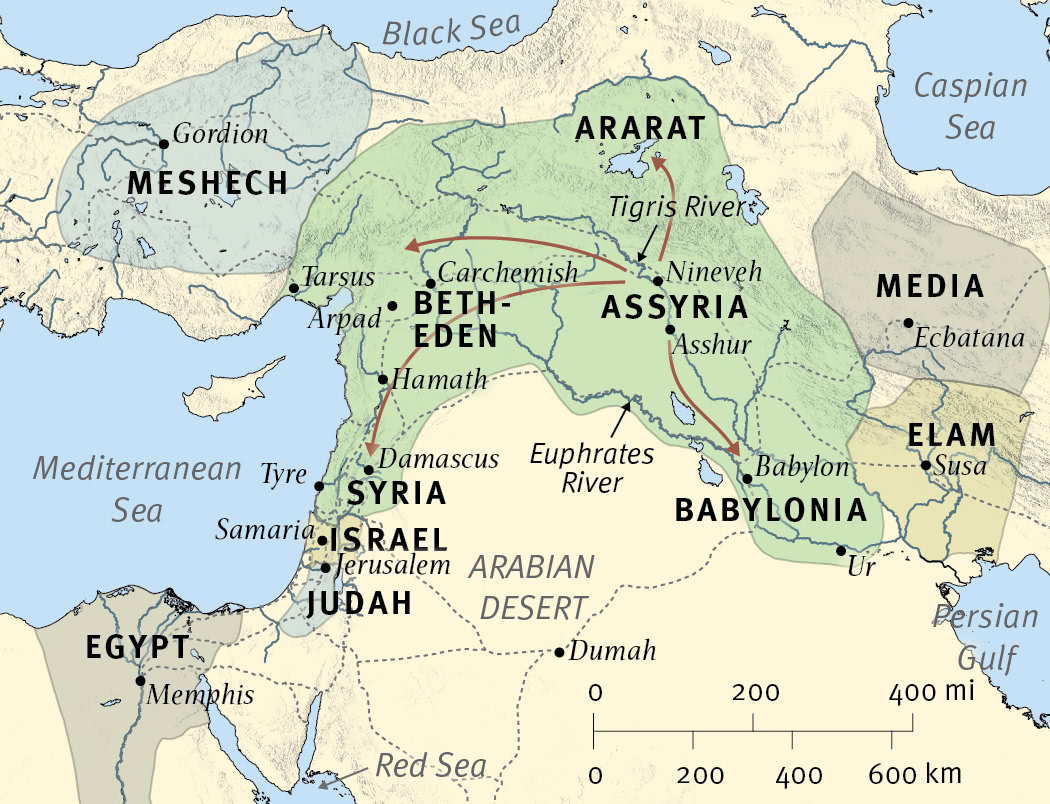
Source: ESV Global Study Bible
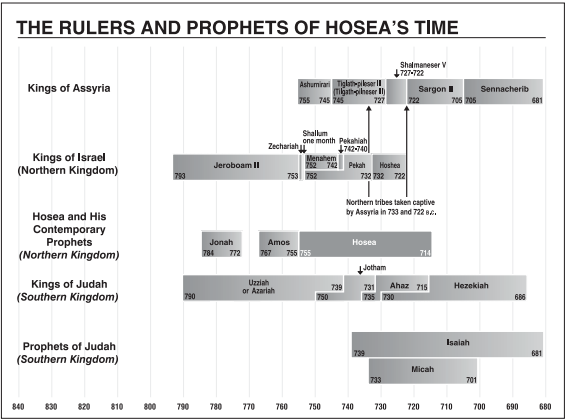
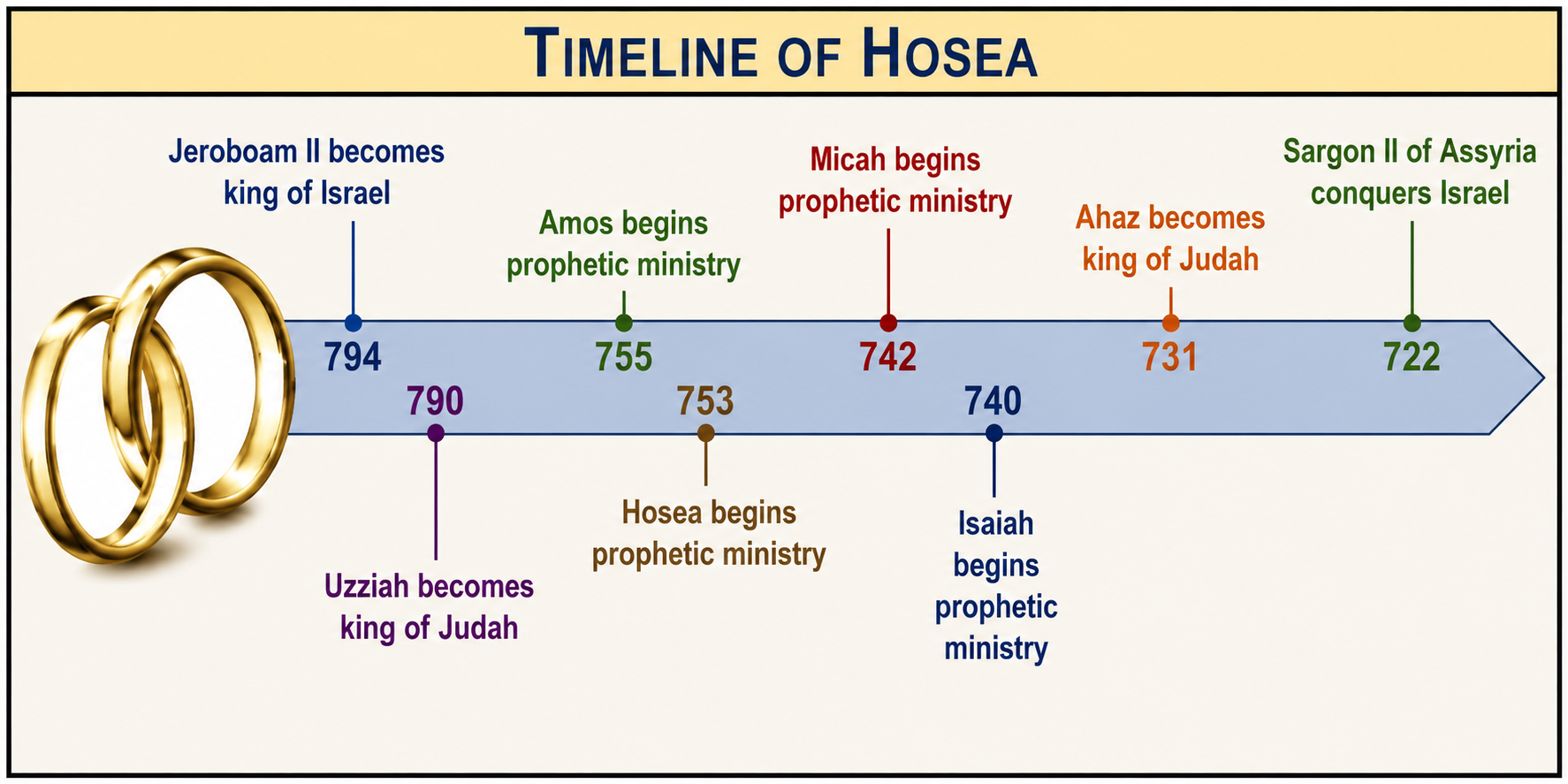
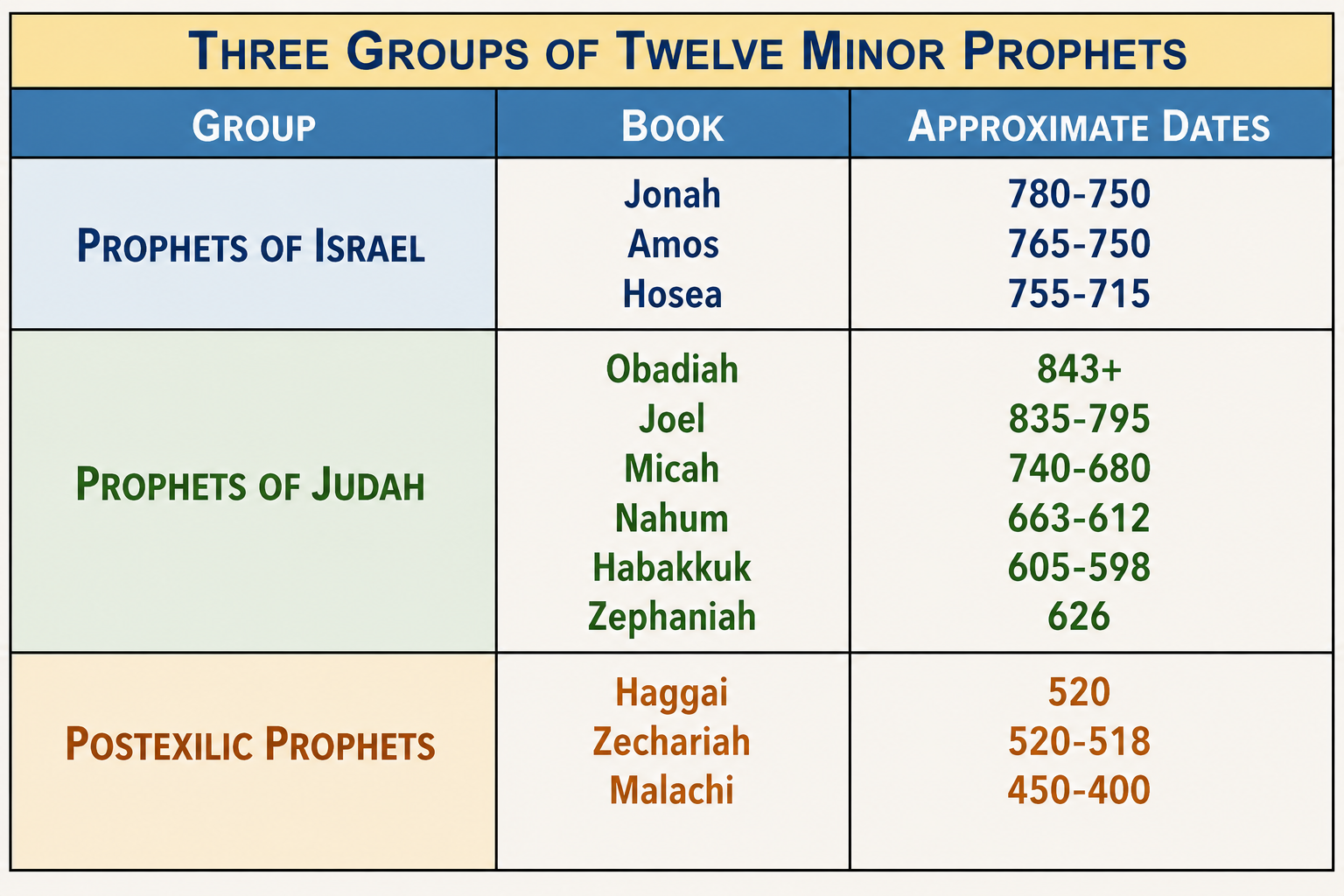
OUTLINE OF HOSEA
I. The Prodigal Wife, Hosea 1:1-3:5
A. Her Unfaithfulness, Hosea 1:1-11
B. Her Punishment, Hosea 2:1-13
C. Her Restoration and Israel's, Hosea 2:14-23
D. Her Redemption, Hosea 3:1-5
II. The Prodigal People, Hosea 4:1-14:9
A. The Message of Judgment, Hosea 4:1-10:15
1. The indictment, Hosea 4:1-19
2. The verdict, Hosea 5:1-15
3. The plea of Israel, Hosea 6:1-3
4. The reply of the Lord, Hosea 6:4-11
5. The crimes of Israel, Hosea 7:1-16
6. The prophecy of judgment, Hosea 8:1-10:15
B. The Message of Restoration, Hosea 11:1-14:9
1. God's love for the prodigal people, Hosea 11:1-11
2. God's chastisement of the prodigal people, Hosea 11:12-13:16
3. God's restoration of the prodigal people, Hosea 14:1-9
Borrow Ryrie Study Bible - page 1292
Hosea 14:1 Return, O Israel, to the LORD your God, For you have stumbled because of your iniquity.
KJV O Israel, return unto the LORD thy God; for thou hast fallen by thine iniquity.
NET Return, O Israel, to the LORD your God, for your sin has been your downfall!
NLT Return, O Israel, to the LORD your God, for your sins have brought you down.
BGT ἐπιστράφητι Ισραηλ πρὸς κύριον τὸν θεόν σου διότι ἠσθένησας ἐν ταῖς ἀδικίαις σου
LXE Return, O Israel, to the Lord thy God; for the people have fallen through thine iniquities.
CSB Israel, return to Yahweh your God, for you have stumbled in your sin.
ESV Return, O Israel, to the LORD your God, for you have stumbled because of your iniquity.
NIV Return, O Israel, to the LORD your God. Your sins have been your downfall!
YLT Turn back, O Israel, unto Jehovah thy God, For thou hast stumbled by thine iniquity.
- return (KJV): Ho 6:1 12:6 1Sa 7:3,4 2Ch 30:6-9 Isa 55:6,7 Jer 3:12-14 4:1 Joe 2:12,13 Zec 1:3,4 Ac 26:18-20
- thou (KJV): Ho 13:9 Jer 2:19 La 5:16 Eze 28:14-16

"About! Face!'
RETURN O
SINNER
Hosea's final chapter opens with one last tender and urgent appeal for repentance. After all of Israel's idolatry, spiritual adultery, self-reliance, and stubborn rebellion, Yahweh still calls His people to “Return.” Judgment is deserved, but the door of repentance is still open. Compare Hosea 12:6, “Therefore, return to your God.”
Return (shub; LXX - epistrepho - turn back, repent), O Israel - Shub is one of the great words for repentance in the Old Testament. Its basic sense is to turn back, return, or reverse direction. Israel had repeatedly turned away from Yahweh (Hos 7:13; 11:7); now they are commanded to turn back to Him. Biblical repentance is therefore more than feeling sorry about sin. It involves a decisive change of direction, turning from sin and returning to God (cf. Isa 55:6–7; Jer 3:12–14; Joel 2:12–13). “O Israel” - There is tenderness in this address. Yahweh does not say, “Go away, Israel,” but “Return, O Israel.” After thirteen chapters documenting their persistent unfaithfulness, God is still calling His covenant people back to Himself. What amazing grace!
Derek Kidner: The first word, ‘Return’, is an old friend, a strong feature of the book. Up to now it has brought only disappointment and reproach. Basically it means ‘turn’; and Israel has habitually turned the wrong way. They have been ‘bent on turning away from me’, as Hos 11:7 puts it. This, incidentally, was obscured by the older translations that spoke of ‘backsliding’, which has a sound of failure rather than perversity, whereas in fact there had been a flat refusal to respond (Hos 11:5), born of pride (Hos 7:10) and of settled preference (‘their deeds do not permit them to return to their God’, Hos 5:4). Any response to the great call, ‘Come, let us return to the Lord . . .’, had so far been as shallow as a passing impulse (Hos 6:1, 4). But God will not give up – how could He? If their repentance has been shallow, He will deepen it. There is warmth in the emphatic form of the word ‘return’ here (la; Ho 14:2 uses the ordinary form), and the preposition is a strong one. We could almost translate it, ‘Oh turn, Israel, right back to the Lord.’ Even the familiar words, ‘your God’, have gained a new intensity from the threat which Israel’s fickleness had seemed to pose to her marriage-bond with the Lord. Against all deserving, the marriage holds; He is still hers. Here is the costly equivalent of His word to the cuckolded Hosea: ‘Go again, love a woman who is beloved of a paramour . . .; even as the Lord loves the people of Israel, though they turn to other gods’ (3:1). (The Message of Hosea)
Bob Utley - "Return" This is a Qal IMPERATIVE. "Return" is a recurrent theme in Hosea (e.g. Hosea 3:5; 5:4; 6:1; 7:10,16; 11:5; 12:6; 14:1-2). True repentance brings physical and spiritual benefits! Remember that repentance is related to personal relationship (i.e. "return to the Lord your God," e.g. Hosea 2:13; 4:6; 8:14; 13:6; Amos 4:6,9,10,11) as much as it is to rules!
Notice the progression is not merely return from your idols to better behavior but utlimately return to the LORD your God. Indeed, genuine repentance is not mechanical but relational. Sin is against Yahweh and breaks fellowship while repentance brings the sinner back into fellowship with the Holy One (cf. Ps 51:4; Lk 15:18–20). This call to return O Israel also recalls Hosea's relationship with Gomer. Gomer had gone after other lovers, yet Hosea was commanded to go after her and love her again (Hos 3:1–3). Hosea's marriage had become a living picture of the very message with which his prophecy concludes. So just as Gomer was to return to her husband. Israel was to return to her Husband (see Israel the Wife of Jehovah)
Robert Chisholm - Though this final appeal would surely be rejected by His arrogant and stubborn nation (cf. Hos 10:12-15), it would instill hope in the hearts of a righteous remnant and provide the repentant generation of the future with a model to follow in returning to the Lord (cf. Hos 3:5; 5:15b-6:3). (See The Bible Knowledge Commentary Minor Prophets - Page 27)
To the LORD your God - Notice again the beautiful covenant expression your God in spite of all the abominable deeds Israel had committed! The One to Whom Israel must return is not a stranger. He is Yahweh, their covenant God, the One Who redeemed them from Egypt and had cared for them throughout their history (Hos 12:9; 13:4–5) and Who remains faithful to His Covenant.
John MacKay on "TO" in the phrase "to the LORD" - The preposition ʿad, ‘to’, conveys the thought of ‘right up to’, not merely ‘in the general direction of’. It is a picture of close fellowship and loving embrace, without any scope for further wandering. Furthermore, it is a tribute to the LORD’S gracious and persevering commitment to the covenant that he still allows himself to be called, ‘your God’. (Hosea: A Mentor Commentary)
Against all deserving, the marriage holds;
He is still hers.
-- Derek Kidner
For you have stumbled (kashal; LXX - astheneo become sick, weak, powerless) because of your iniquity ('avon; LXX - adikia - generally disregard for what is right;) - NET = "for your sin has been your downfall!' Hosea identifies both Israel's condition and its cause. Israel had stumbled, and the obstacle over which they had fallen was their own iniquity! Is this not a picture of all of us beloved! Assyria would be the instrument of their destruction, but Assyria was not the fundamental cause. Israel was being brought down by their own sin, even as declared earlier in Hosea 5:5 “Israel and Ephraim stumble in their iniquity.”
The principle to not miss is that sin is deceitful and always promises freedom but eventually will stumble the sinner. What Israel thought would strengthen and secure them (idols, kings, alliances) ultimately brought them down (cf. Pr 13:6; 14:34; Jer 2:19). But don't miss the mercy of Yahweh, for although Israel had fallen, He was still calling them to arise and return. Their iniquity was great, but God's grace is always greater and in His boundless mercy the invitation to repent remained. Amazing grace indeed, for sinners such as all of us!
Lloyd Ogilvie: The first step in returning to God is to accept responsibility for departing from Him. When we have stumbled and are flat on our faces, we tend to blame others and circumstances for tripping us. Hosea is very direct in confronting Israel with the undeniable truth, “You have stumbled because of your iniquity.” Persistent sin, ʿāwōn, that became habitual caused the nation to stumble, kāšal. God’s repeated overtures of love, guidance, and blessings were consistently denied. (See The Preacher's Commentary - Vol. 22: Hosea / Joel / Amos)
Bob Utley - "stumbled" The OT imagery for unstable footing is used to describe the spiritual life. Sure footing is a sign of a healthy spiritual life, while stumbling (Qal PERFECT) is a sign of sin (cf. Hosea 5:5b; Isa. 3:8; 59:10,14; Jer. 46:6).
No matter how far Israel had wandered, the road of repentance
still led home: “Return...to the LORD your God.”
THOUGHT - Hosea does not end by telling sinners to try harder but by telling them to return to God. When we stumble in our sin, our fallen flesh tempts us either to hide from God (Pr 28:13) or to attempt to repair ourselves before approaching Him. God's invitation is far more gracious: RETURN! Confess the sin, forsake it, and come back to the God against Whom you have sinned (1 Jn 1:9).
Gary Smith: Hosea is not offering a last-minute reprieve from Assyrian defeat but hope after the fall of the nation. God still has plans for those who faithfully serve him and do not trust in the idols of other nations. (See Hosea, Amos, Micah - Page 193)
Pulpit Commentary: The foregoing part of this book abounds with denunciations of punishment; this closing chapter superabounds with promises of pardon. Wave after wave of threatened wrath had rolled over Israel and come in unto their soul; now offer after offer of grace is made to them.
H. D. Beeby: The move from ch. 13 to ch. 14 is like traveling from one age to another, or even from one world to another. We have become accustomed to Hosea juxtaposing good news with bad news. But nothing quite prepares us for the quick transference from the darkness of ch. 13 to the warm and brilliant light of ch. 14. And yet, in its own way, the book follows the common pattern of Isaiah, Ezekiel, Amos, and even Jeremiah in the Septuagint version, of putting the best news at the end. The pattern is wider even than the message of the prophets. Where we usually speak of night and day, Genesis tells of day and night, Exodus tells of bondage and liberation, and so on. It is almost as though the theme of death/resurrection is present in Scripture wherever we look and that Hosea is only echoing the dominant theme with his own extreme Galilean accent. (See Hosea: Grace Abounding)
Matthew Henry concise - Hosea 14:1-3 (Updated and Modernized) - Israel is exhorted to return to the LORD, turning from sin and idols and casting himself upon God's mercy and grace (Hos 14:1; Isa 55:6–7; Joel 2:12–13). True repentance is not merely turning from sin but turning to God in faith, worship, and obedience (1 Th 1:9; Acts 20:21). “Take away all iniquity” (Hos 14:2) is the confession of people who recognize that sin is a burden they cannot remove themselves and a stumbling block over which they have repeatedly fallen (Hos 14:1; Ps 38:4; Mic 7:19). Only God can completely forgive and remove our guilt: “As far as the east is from the west, so far has He removed our transgressions from us” (Ps 103:12; cf. Isa 1:18; 43:25; 1 Jn 1:9). “Receive us graciously” expresses complete dependence upon God's undeserved favor. They do not dictate what form His goodness must take but entrust themselves to the God Who knows what is truly good for them (Ps 84:11; Mt 7:11; Ro 8:32). Significantly, Hosea tells them, “Take words with you and return to the LORD” (Hos 14:2). They were not to come relying upon sacrifices or religious performance, but with words expressing genuine confession and repentance from the heart (Ps 51:16–17; Isa 57:15; 66:2). This beautifully pictures the sinner's return to God: recognize your sin, confess your helplessness, ask God to remove your guilt, appeal to His grace, and trust His provision of forgiveness, which finds its ultimate fulfillment in Jesus Christ, “in whom we have redemption, the forgiveness of sins” (Col 1:14; cf. Eph 1:7; 1 Pe 2:24). And because even our praying needs divine instruction, we should come as the disciples did, “Lord, teach us to pray” (Lk 11:1), asking the Spirit to help us in our weakness (Ro 8:26). The repentant sinner does not bargain with God or attempt to remove his own guilt. He comes empty-handed, with words of confession and faith, asking God to do what only God can do: “Take away all iniquity and receive us graciously.”
C H Spurgeon - The joyous return
‘O Israel, return unto the LORD thy God; for thou hast fallen by thine iniquity. Take with you words, and turn to the LORD: say unto him, Take away all iniquity, and receive us graciously.’ Hosea 14:1–2
The Lord helps us to return to him by giving a direction how to pray. A minister said to me last Thursday evening what I have often felt to be true: ‘We need to make coming to Christ very plain, for many people are so ignorant that they almost need to have the words of confession and faith put into their mouths. They need somebody to kneel down side by side with them and utter the very words that they should speak to the Lord.’ There is much more truth in this statement than inexperienced persons may think. So here the Lord does, as it were, put the words into the sinner’s mouth. ‘Take with you words, and … say unto him’. He says the words, that the sinner may make them his own and say them after him. In this condescending style he teaches the returning sinner how to pray. What a gracious God he is! Suppose a case. A great king has been grievously offended by a rebellious subject, but in kindness of heart he wills to be reconciled. He invites the rebel to sue for pardon. He replies, ‘O King, I would be forgiven, but how can I properly approach your offended majesty? I am anxious to present such a petition as you can accept, but I know not how to draw it up.’ Suppose this great king were to say, ‘I will draw up the petition for you,’ what confidence the supplicant would feel in presenting the petition! He brings to the king his own words. He prays the prayer he is bidden to pray. By the very fact of drawing up the petition, the monarch pledged himself to grant it. O my hearer, the Lord puts it into your mouth to say this morning, ‘Take away all iniquity’. May you find it in your heart to pray in that fashion! That prayer is best which is offered in God’s own way and is of God’s own prompting. May you present such a prayer at once!
SERMON SUMMARY - C H Spurgeon - The joyous return
1. The Call to Return (Hosea 14:1)
A Loving Invitation:
Spurgeon highlights God's merciful call to His wandering people to come back home.
Stop Making Excuses:
He warns that making excuses or trusting in worldly things (like idols or human strength) will not save us.
2. The Reason to Return (Hosea 14:1)
The Weight of Sin:
Spurgeon points out that our sorrows and failures are a direct result of our own sins.
Returning to Grace:
The only remedy for a broken life and a fallen state is to go directly back to God, who is rich in mercy.
[1]
3. The Help Provided (Hosea 14:2)
Words to Pray:
Spurgeon explains that returning to God does not require performing grand rituals or bringing physical sacrifices. Instead, it requires sincere prayer.
Surrender:
He emphasizes that true repentance means confessing our sins and asking God to take them away completely and accept us freely.
4. The Joy of Salvation (Hosea 14:3)
Finding Mercy:
Spurgeon focuses on the beautiful truth that "in God, the fatherless find mercy".
The Return to Joy:
When a person turns away from trusting in themselves and instead trusts in what God has done through Jesus, their sorrow is turned into profound joy.
The Main Takeaway -
Spurgeon wanted his listeners to understand that returning to God is the only way to find true peace. He frequently urged his congregation to stop trying to save themselves through their own good works, and to simply run to Jesus to receive His joy and grace.
God’s Gardens
SCRIPTURE: Hosea 14:1–9
INTRODUCTION: Have you ever “messed up”? The people of Hosea’s time had “messed up,” but God was calling them back. If they returned, He said, they would be His:
1. Lilies (v. 5).
2. Cedars of Lebanon (v. 5 NIV).
3. Olive Trees (vv. 5–6). Also see Psalm 52:8.
4. Wheat (v. 7). “They shall be revived like grain.”
5. Grapes (v. 7). “They shall . . . grow like a vine. Their scent shall be like the wine of Lebanon.” Also see John 14:1–5.
6. Cyprus Trees (v. 8).
CONCLUSION: Jesus said in John 15:1, “My Father is the Gardener” (NIV). You are God’s plantings; we are His garden.
James Smith - THE FINAL APPEAL HOSEA 14
Again we hear the pathetic voice of that inextinguishable love that “suffers long and is kind.” They had fallen by their iniquity, but here is hope.
I. The Urgent Call. We may regard this call as fourfold.
1. TO RETURN. “O Israel, return unto the Lord thy God” (v. 1.) He is still thy God, even when you have lusted after other gods and caused Him to hide His face from thee. There is no remedy for Israel’s sin, nor for ours, but to return to the Lord, and in humility and faith own Him as “My Lord and my God,” even as Thomas did (John 20:28).
2. TO PRAYER. “Take with you words, … and say unto Him, Take away all iniquity, and receive us graciously” (v. 2). The separating causes are in their “iniquity;” the uniting elements are all in the graciousness of our God. This kind of praying is very definite business. There are many who hope their sins may be forgiven, but who have never said a word to God about them. Here is a simple but God-given formula for such: “Take with you words and say: Take away my iniquity, and receive me graciously, for Jesus’ sake.”
3. TO PRAISE. “So will we render the calves of our lips.” The calves of the lips are more precious to God than the calves of the stall. The true priestly offering in this age is, “The sacrifices of praise unto God continually.” That is the richest and ripest fruit of lips, “giving thanks to His Name” (Heb. 13:15). “Oh that men would praise the Lord for His goodness and wonderful works” (Psa. 107:8, 15, 21, 31).
4. TO OPEN CONFESSION. Verse 3 is very emphatic, which simply means: No mighty nation shall save us. No material instruments of battle can deliver us (horses and chariots). No works of our own hands can inspire us. But we will trust in the eternal love of our Father God, with whom such orphans find mercy. “Believe in thine heart, and confess with thy mouth the Lord Jesus,” and prove in your own daily experience His mightiness to save. Now note—
II. The Divine Promises.
1. “I will HEAL their backsliding” (v. 4). To heal a wound is something better than merely binding it up. To Israel, backsliding was a festering sore; but in answer to their pleading He will heal them. There is no disease so deeply rooted in our moral nature that our Great Physician cannot heal. He can “heal all our diseases.” This disease of backsliding—a wilful desertion from the Word and Will of God—is perhaps one of the most inveterate.
2. “I will LOVE THEM FREELY” (v. 3). This is the love that is not restrained because of our unworthiness. To the pardoned and restored soul His love flows as fully and as freely as if they had never sinned. What an encouragement this is to the ministers of the Gospel of our Lord Jesus Christ. To him that cometh He says, “I will in no wise cast out.”
3. “I will be AS THE DEW unto Israel” (v. 5). The dew falls gently, silently, and effectively in the night. The Lord will yet be to the nation of Israel as refreshing dew in the long night of their drought and affliction. Meanwhile, all who turn unto Him in the night of their sorrow and need will find His Presence as the dew, a real though invisible something gently falling upon their thirsty souls. If we had eyes to see nature as God sees it, we would doubtless behold many symbols of His wonderful works toward the children of men.
4. “FROM ME IS THY FRUIT FOUND” (vv. 6–8). Fruit is always the result of favourable conditions, and a manifestation of the character of the tree. Jehovah reminds them that the many rich mercies to be enjoyed would not be as a reward of merit, or a product of mere chance, but as an outcome of Divine activity in them and through them. We are reminded here of the parable of the vine (John 15). “The branch cannot bear fruit of itself. No more can ye.” The vine might say to the branch: “From me is thy fruit found, for without me ye can do nothing by way of fruitfulness.” If we abide in Him as a branch, and He abideth in us as the Source of our supply, then from Him shall “much fruit be found” (Gal. 5:22–24).
Hosea 14:2 Take words with you and return to the LORD. Say to Him, “Take away all iniquity And receive us graciously, That we may present the fruit of our lips.
KJV Take with you words, and turn to the LORD: say unto him, Take away all iniquity, and receive us graciously: so will we render the calves of our lips.
NET Return to the LORD and repent! Say to him: "Completely forgive our iniquity; accept our penitential prayer, that we may offer the praise of our lips as sacrificial bulls.
NLT Bring your confessions, and return to the LORD. Say to him, "Forgive all our sins and graciously receive us, so that we may offer you our praises.
BGT λάβετε μεθ᾽ ἑαυτῶν λόγους καὶ ἐπιστράφητε πρὸς κύριον τὸν θεὸν ὑμῶν εἴπατε αὐτῷ ὅπως μὴ λάβητε ἀδικίαν καὶ λάβητε ἀγαθά καὶ ἀνταποδώσομεν καρπὸν χειλέων ἡμῶν
LXE Take with you words, and turn to the Lord your God: speak to him, that ye may not receive the reward of unrighteousness, but that ye may receive good things: and we will render in return the fruit of our lips.
CSB Take words of repentance with you and return to the LORD. Say to Him: "Forgive all our sin and accept what is good, so that we may repay You with praise from our lips.
ESV Take with you words and return to the LORD; say to him, "Take away all iniquity; accept what is good, and we will pay with bulls the vows of our lips.
NIV Take words with you and return to the LORD. Say to him: "Forgive all our sins and receive us graciously, that we may offer the fruit of our lips.
YLT Take with you words, and turn to Jehovah, Say ye unto Him: 'Take away all iniquity, and give good, And we do render the fruit of our lips.
- with, Job 34:31,32 Joel 2:17 Mt 6:9-13 Lu 11:2-4, 18:13
- away: 2Sa 12:13 24:10 Job 7:21 Ps 51:2-10 Isa 6:7 Eze 36:25-26 Mic 7:19 Zec 3:4 Joh 1:29 Ro 11:27 Titus 2:14 Heb 10:4 1Jn 1:7 3:5
- receive: etc. or, give good, Mt 7:11 Lu 11:13 15:21-24 Eph 1:6,7 2:7,8 2Ti 1:9
- the calves: Ps 69:30,31 Heb 13:15 1Pe 2:5,9
Related Passages:
Joel 2:17 Let the priests, the LORD’S ministers, Weep between the porch and the altar, And let them say, “Spare Your people, O LORD, And do not make Your inheritance a reproach, A byword among the nations. Why should they among the peoples say, ‘Where is their God?’”
Luke 18:13 “But the tax collector, standing some distance away, was even unwilling to lift up his eyes to heaven, but was beating his breast, saying, ‘God, be merciful to me, the sinner!’
2 Samuel 12:13 Then David said to Nathan, “I have sinned against the LORD.” And Nathan said to David, “The LORD also has taken away your sin; you shall not die.
Psalm 51:16-17 For You do not delight in sacrifice, otherwise I would give it; You are not pleased with burnt offering. 17The sacrifices of God are a broken spirit; A broken and a contrite heart, O God, You will not despise.
Hebrews 13:15 Through Him then, let us continually offer up a sacrifice of praise to God, that is, the fruit of lips that give thanks to His name.
Proverbs 12:14 A man will be satisfied with good by the fruit of his words, And the deeds of a man’s hands will return to him.
Proverbs 13:2 From the fruit of a man’s mouth he enjoys good, But the desire of the treacherous is violence.
Isaiah 55:7 Let the wicked forsake his way And the unrighteous man his thoughts; And let him return to the LORD, And He will have compassion on him, And to our God, For He will abundantly pardon.
Ezekiel 36:25-26 Then I will sprinkle clean water on you, and you will be clean; I will cleanse you from all your filthiness and from all your idols. 26 “Moreover, I will give you a new heart and put a new spirit within you; and I will remove the heart of stone from your flesh and give you a heart of flesh.
THE PROCESS OF REPENTANCE
BEGINS WITH OUR WORDS TO GOD
Take words with you and return to the LORD. Say to Him, “Take away all iniquity And receive us graciously, That we may present the fruit of our lips - Hosea not only calls Israel to repentance, but remarkably gives them the very words of repentance they are to speak. Yahweh does not leave His wandering people wondering how they can return. In effect He says, “Come back to Me, and here is what you should say.” What a beautiful picture of divine grace!
Take words with you - They were not first told to bring bulls, goats, grain offerings, or money. They were to bring words, words flowing from genuinely broken, repentant hearts. This does not mean sacrifices were inherently wrong, for God Himself had commanded them under the Mosaic Law. Rather, sacrifices without repentance had become empty religious ritual (cf. 1 Sa 15:22; Ps 51:16–17; Hos 6:6; Isa 1:11–17). What Yahweh desired was heartfelt confession and genuine return. The words are important because true repentance does not merely feel sorrow; it acknowledges sin before God (Ps 32:5; 51:3–4; Pr 28:13; 1 Jn 1:9).
Reformation Study Bible - Words of confession accompanied by obedience please God, not half-hearted sacrifices (Hos 5:6; 6:6; 8:11-13). A precise wording for confession is suggested in Hos 14:2, 3.
And return to the LORD - This repeats the command of Hos 14:1 and emphasizes that repentance is fundamentally a change of direction. Israel was not merely to stop worshiping idols. They were to turn from idols and return to Yahweh Himself. Biblical repentance is both negative and positive as Paul describes in 1Th 1:9 writing to the Thessalonians "you turned to God from idols to serve a living and true God."
Say to Him - Israel is commanded to address the God against Whom they have sinned. There is no blaming Assyria, their kings, their circumstances, or one another. They must come directly before Yahweh and confess sin and request forgiveness. It is fascinating that God Himself supplies the words Israel was to say! The God Who commanded repentance graciously taught these sinners how to approach Him. This recalls David's prayer, “O Lord, open my lips, that my mouth may declare Your praise” (Ps 51:15), and the disciples' request, “Lord, teach us to pray” (Lk 11:1).
Take away all iniquity and receive us graciously- NET = "Completely forgive our iniquity."In short, we must ask for forgiveness and cast ourselves on God's grace and mercy. What a magnificent request! Israel was to ask Him to remove the sin itself. The word all is important. Genuine confession does not bargain with God over cherished sins or ask Him to forgive some while allowing us to retain others. Sin had caused Israel to “stumble” (Hos 14:1). Now they ask Yahweh to remove the very iniquity over which they had fallen. The request, "Take away all iniquity," also recognizes that only God can forgive sin, while receive us graciously appeals solely to His unmerited favor. They come asking not on the basis of their merit but God's grace. They have nothing with which to bargain.
John MacKay on take away (forgive) - Forgive employs the usual Hebrew idiom of ‘to lift, to take off’ (cf. Exod. 34:7; Mic. 7:18), as though a burden would be raised from their shoulders, and any barrier in the way of their acceptance by their King removed by him. They are to implore God to do this as he is the only one who can achieve the desired outcome. (Hosea: A Mentor Commentary)
Bob Utley - "Take away all iniquity" The VERB (Qal IMPERFECT) is surrounded by IMPERATIVES. This phrase occurs several times (7) in the OT with YHWH as its subject (cf. Exod. 34:7; Num. 14:18; Ps. 32:5; 85:2; Isa. 33:24; Hosea 14:2; Micah 7:18) and always means "remove iniquity" (cf. NIDOTTE, vol. 3, p. 162). It is a plea from truly repentant covenant people.
That we may present the fruit of our lips - The Hebrew literally speaks of “the bulls/calves of our lips,” an unusual expression which pictures verbal praise and thanksgiving being offered to God as a sacrifice. Instead of offering animal sacrifices, the repentant people promise to offer "the fruit of our lips," that is, sacrifices of heartfelt praise and thanksgiving flowing from forgiven hearts (cf. Ps. 51:16-17; Heb. 13:15). God has always desired genuine repentance and worship from the heart rather than mere outward ritual.
John MacKay on the fruit of our lips - They will present not offerings of animal sacrifices but instead offerings from their lips as they sincerely confess, pray to, and praise the LORD in adoration and thanksgiving (cf. Ps. 51:14–17). They now recognise that is what he truly desires (contrast Hosea 5:6). (Hosea: A Mentor Commentary)
🙏 THOUGHT - We do not need elaborate words to return to God. We need honest words from a repentant heart. When we sin, our fallen flesh wants to hide, minimize, rationalize, or excuse what we have done. Hosea teaches us instead to take words and return. Name the sin, confess it, ask God to cleanse it, receive His gracious forgiveness, and then let forgiven lips become praising lips (Ps 32:5; 51:10–17; 1 Jn 1:9).
Bob Utley - present the fruit of our lips - The VERB (Piel COHORTATIVE) basically means "to complete," here to pay a vow (e.g. 2 Sam. 15:7; Ps. 50:14; 66:13; 116:14,18; Isa. 19:21). This refers to confession, prayer, and praise (cf. Heb. 13:15). This passage is used by modern Judaism to rationalize the place of prayer as a substitute for sacrifice (cf. Ps. 50; 69:30-31). Mosaic Judaism ceased with the destruction of Jerusalem and the temple in A.D. 70, by the Roman army under Titus. Mosaic Judaism requires a temple and priests! Modern Judaism is not Mosaic; it is Talmudic and rabbinical.
Derek Kidner: The offering of words, which began with one kind of confession, the acknowledgment of sin, now turns into confession in its other sense, the acknowledgment of God in praise. (See The Message of Hosea)
Hosea 14:3 “Assyria will not save us, We will not ride on horses; Nor will we say again, ‘Our god,’ To the work of our hands; For in You the orphan finds mercy.”
KJV Asshur shall not save us; we will not ride upon horses: neither will we say any more to the work of our hands, Ye are our gods: for in thee the fatherless findeth mercy.
NET Assyria cannot save us; we will not ride warhorses. We will never again say, 'Our gods' to what our own hands have made. For only you will show compassion to Orphan Israel!"
NLT Assyria cannot save us, nor can our war-horses. Never again will we say to the idols we have made, 'You are our gods.' No, in you alone do the orphans find mercy."
BGT Ασσουρ οὐ μὴ σώσῃ ἡμᾶς ἐφ᾽ ἵππον οὐκ ἀναβησόμεθα οὐκέτι μὴ εἴπωμεν θεοὶ ἡμῶν τοῖς ἔργοις τῶν χειρῶν ἡμῶν ὁ ἐν σοὶ ἐλεήσει ὀρφανόν
LXE Assur shall never save us; we will not mount on horseback; we will no longer say to the works of our hands, Our gods. He who is in thee shall pity the orphan.
CSB Assyria will not save us, we will not ride on horses, and we will no longer proclaim, 'Our gods! ' to the work of our hands. For the fatherless receives compassion in You."
ESV Assyria shall not save us; we will not ride on horses; and we will say no more, 'Our God,' to the work of our hands. In you the orphan finds mercy."
NIV Assyria cannot save us; we will not mount war-horses. We will never again say 'Our gods' to what our own hands have made, for in you the fatherless find compassion."
YLT Asshur doth not save us, on a horse we ride not, Nor do we say any more, Our God, to the work of our hands, For in Thee find mercy doth the fatherless.'
- Asshur: Ho 5:13 7:11 8:9 12:1 2Ch 16:7 Ps 146:3 Jer 31:18-22
- we will not: De 17:16 Ps 20:7,8 33:17 Isa 30:2,16 31:3 36:8
- neither: Ho 14:8 2:17 Isa 1:29 2:20 27:9 Eze 36:25 37:23 43:7-9 Mic 5:10-14 Zec 13:2
- for: Ex 22:22-24 Ps 10:14 68:5 146:9 Pr 23:10,11 Joh 14:18
Related Passages:
Deuteronomy 17:16 “Moreover, he shall not multiply horses for himself, nor shall he cause the people to return to Egypt to multiply horses, since the LORD has said to you, ‘You shall never again return that way.’
Isaiah 30:1-3 “Woe to the rebellious children,” declares the LORD, “Who execute a plan, but not Mine, And make an alliance, but not of My Spirit, In order to add sin to sin; 2 Who proceed down to Egypt Without consulting Me, To take refuge in the safety of Pharaoh And to seek shelter in the shadow of Egypt! 3 “Therefore the safety of Pharaoh will be your shame And the shelter in the shadow of Egypt, your humiliation.
Isaiah 31:1 Woe to those who go down to Egypt for help And rely on horses, And trust in chariots because they are many And in horsemen because they are very strong, But they do not look to the Holy One of Israel, nor seek the LORD!
Hosea 5:13 When Ephraim saw his sickness, And Judah his wound, Then Ephraim went to Assyria And sent to King Jareb. But he is unable to heal you, Or to cure you of your wound.
Hosea 7:11 So Ephraim has become like a silly dove, without sense; They call to Egypt, they go to Assyria.
Hosea 12:1 Ephraim feeds on wind, And pursues the east wind continually; He multiplies lies and violence. Moreover, he makes a covenant with Assyria, And oil is carried to Egypt.
Hosea 10:13 You have plowed wickedness, you have reaped injustice, You have eaten the fruit of lies. Because you have trusted in your way, in your numerous warriors,
Psalm 33:16-17 The king is not saved by a mighty army; A warrior is not delivered by great strength. 17 A horse is a false hope for victory; Nor does it deliver anyone by its great strength.
Exodus 22:22 “You shall not afflict any widow or orphan.
Deuteronomy 10:18 “He executes justice for the orphan and the widow, and shows His love for the alien by giving him food and clothing.
THE FRUIT OF
REPENTANCE
Assyria will not save (yasha' - in Ho 1:7, 13:4, 10, 14:3) us, We will not ride on horses; Nor will we say again, ‘Our god,’ To the work of our hands; For in You the orphan finds mercy. This verse beautifully expresses the marks of genuine repentance. Notice the words “not...not...nor...again” describing a genuine repentance involves a decisive repudiation of former dependencies. Israel renounces the very things in which she had placed her confidence including foreign alliances ("Assyria will not save us"), military strength ("we will not ride on horses," likely an allusion to Egypt's cavalry; cf. Isa. 31:1), and idolatry ("we will not say again, 'Our god,' to the work of our hands").
Gary Smith: In the final analysis, political alliances cannot save people, provide true independence, or bring prosperity. Foreign nations are fickle and undependable, the military strength of kings rises and wanes, and such associations require payment of heavy taxes. There is a better way. Having turned to their covenant God, the people now vow to trust in his power, not war-horses, to control political affairs. God’s power is made complete through human weakness. His name is glorified when he brings the victory. (See Hosea, Amos, Micah - Page 194)
Bob Utley - "Assyria will not save (yasha') us" In this verse there are allusions to political alliances and the things that human leaders tend to trust: (1) foreign alliances (Assyria's treaties, i.e. Hosea 5:13), (2) military power (Egyptian horses, cf. Ps. 20:7; 33:17; Isa. 2:7; 30:16; 31:1), (3)idols ("work of our hands," i.e. Canaanite fertility gods) ▣ "To the work of our hands" Hosea ridicules idolatry in Hos. 4:12; 14:3; Isaiah in Isa. 2:18,20; 17:7-9; 31:7; and Jeremiah in Jer. 10:3-5,8-9,14-15. This attitude reflects Exod. 20:4-5; 34:17; Lev. 19:4; 26:1; Deut. 4:15-19,25; 5:8.
The irony is striking for Israel had looked to Assyria as a potential savior, but Assyria would become her destroyer (2 Ki 17:3–6; Hos 11:5) This is one of Hosea's great lessons: Whatever we trust instead of God may ultimately become the very thing that exposes the foolishness of our trust.
In short, the nation finally acknowledges that no political power, military resource, or man-made idol can provide the salvation that belongs to the LORD alone. Instead, Israel is to cast herself upon God's mercy, confessing, "For in You the orphan finds mercy." The orphan, having no earthly protector or provider, pictures one who is utterly helpless and completely dependent upon God. True repentance always involves turning from every false refuge and turning to the Lord alone, recognizing that He is the only Savior who graciously receives and restores those who humbly trust in Him. (cf. Ps. 20:7; Isa. 31:1; Jer. 17:5-8).
We will not ride on horses - Israel's problem was confidence in horses instead of confidence in Yahweh. Horses represented military strength and human power, particularly cavalry and chariots. Israel had been specifically warned against multiplying horses and depending upon military might (Dt 17:16; cf. Isa 30:1–3, 16; 31:1). The psalmist expresses the opposite attitude declaring “Some boast in chariots and some in horses, but we will boast in the name of the LORD, our God.” (Ps 20:7) And again “A horse is a false hope for victory; nor does it deliver anyone by its great strength.” (Ps 33:17)
H. Ronald Vandermey: By this statement Israel was finally admitting that the importation of horses from Egypt (begun in the time of Solomon, 1 Kings 10:28) was in direct rebellion to the command of Moses not to return to Egypt in search of horses (Deut. 17:16). To the Hebrews, the horse represented a weapon of war, the multiplication of which signaled a lack of trust in the Lord (cf. Psalm 20:7; 33:17; Prov. 21:31; Isa. 30:16; 31:1; Amos 4:10). (See Hosea & Amos- Everyman's Bible Commentary - Page 75)
Nor will we say again, ‘Our god,’ To the work of our hands - (see Hosea 2:8, 13; 3:1; 4:12; 8:5, 6; 10:5, 6; 13:2) NLT = "Never again will we say to the idols we have made, 'You are our gods.'" Israel vows to be finished with idolatry. As shown in 1Th 1:9 genuine repentance involves turning from idols to the living God.
H. Ronald Vandermey: In this third verse, Israel repents specifically of three besetting sins: reliance upon Assyria for salvation, dependence upon Egypt for military aid, and trust in man-made idols for spiritual blessing. Each of those sins drives home the extent to which Israel had rebelled against God in searching for security and blessing (Hos 7:11; 8:6; 13:2). (See Hosea & Amos- Everyman's Bible Commentary - Page 75)
Never worship the work of your hands;
worship the God whose hands made you.
🙏 THOUGHT - There is a caution in this passage for fallen men can make “gods” out of the work of our hands including our accomplishments, careers, possessions, wealth, ministries, reputation, abilities, or anything else we create and then begin to trust for security, significance, or satisfaction (Dt 8:17–18; Lk 12:16–21; Col 3:5). Do you have any idols? If so, discard them so that nothing is between you and God.
For in You the orphan finds mercy (racham; LXX - eleeo - of helping someone because of pity) - The NET translation has an interesting nuance - "For only you will show compassion to Orphan Israel!" Here is the theological heart of the confession. Israel finally recognizes that the helpless find their help. The orphan was one of the most vulnerable members of ancient society, lacking the father who normally provided protection, provision, and legal defense (Ex 22:22–24; Dt 10:18; Ps 68:5). Thus the orphan becomes a beautiful picture of utter dependence.
NET NOTE - Hebrew = “For the orphan is shown compassion by you.” The present translation takes “orphan” as a figurative reference to Israel, which is specified in the translation for clarity.
James Mays: Yahweh is a God whose compassion (1:6, 8; 2:3, 25) is especially given to those without strength to gain their own rights (Ex. 22:22f.; Deut. 27:19). Israel, now desolate as an orphan, can only appeal to the compassion of a God whose special concern is the helpless. (See Hosea (1969): A Commentary - Page 187)
Reformation Study Bible - orphan finds mercy. This alludes to the earlier theme of loss and restoration of love illustrated by Hosea's marriage and his daughter, Lo-ruhama (1:6; 2:2-4, 14-23).
Bob Utley - "For in You the orphan finds mercy" - YHWH is again depicted as a merciful parent as in Hosea 11:1-4 (cf. Ps. 68:5; Lam. 5:3). The orphan represents the powerless and vulnerable people of society. YHWH's people should care for these kinds of people (e.g. Exod. 22:21-24; Deut. 10:18-19; 14:29; 16:11-12; 24:17,19; 26:12-13; 27:19). The VERB "finds mercy" Pual IMPERFECT) is the same as one of Hosea's children (negated) in Hosea 1:6; 2:4, but mercy is restored in Hosea 2:1,19,23 and here! This is a covenant term like "My people" (cf. Hosea 1:9 vs. 2:1).
We may not trust Assyria, horses, or carved idols, but our fallen flesh continually manufactures modern equivalents: money, influence, intelligence, possessions, relationships, government, accomplishments, or our own abilities. Anything we depend upon to provide what ultimately only God can provide can become a functional idol (cf. Jer 17:5–8; Mt 6:24).
Mercy (have compassion, mercy)(07355) racham from rechem = womb ~ suggesting a connection between the place of the developing child and the strong feelings of love a mother has toward her child) speaks a deep love of one for another rooted in some "natural" bond (cp rechem = womb). Racham manifests itself as an "emotional" response to one's needs. Racham means to feel another's pain so deeply that you are moved to do something about it. Racham means to have compassion, to have mercy, to find mercy. "The word pictures a deep, kindly sympathy and sorrow felt for another who has been struck with affliction or misfortune, accompanied with a desire to relieve the suffering." (Baker)
Racham is only used one time of a person saying he loves God (Ps. 18:1). More often racham is used of God saying He will or will not have compassion on people. Ps 103:13 compares God's compassion for those who fear Him to a father's compassion for his children.
RACHAM - 45V -6X IN HOSEA - Exod. 33:19; Deut. 13:17; Deut. 30:3; 1 Ki. 8:50; 2 Ki. 13:23; 2 Ki. 13:25; 2 Ki. 14:3; Ps. 18:1; Ps. 102:13; Ps. 103:13; Ps. 116:5; Prov. 28:13; Isa. 9:17; Isa. 13:18; Isa. 14:1; Isa. 27:11; Isa. 30:18; Isa. 49:10; Isa. 49:13; Isa. 49:15; Isa. 54:8; Isa. 54:10; Isa. 55:7; Isa. 60:10; Jer. 6:23; Jer. 12:15; Jer. 13:14; Jer. 21:7; Jer. 30:18; Jer. 31:20; Jer. 33:26; Jer. 42:12; Jer. 50:42; Lam. 3:32; Ezek. 39:25; Hos. 1:6; Hos. 1:7; Hos. 2:1; Hos. 2:4; Hos. 2:23; Hos. 14:3; Mic. 7:19; Hab. 3:2; Zech. 1:12; Zech. 10:6
Matthew Henry Concise (Revised and modernized) - Hosea 14:4-8 - Israel will return and seek the LORD, and those who truly seek Him will not seek Him in vain (Hos 14:1–2; Jer 29:13). God’s anger will be turned away, and He will “love them freely” (Hos 14:4), not because they deserve His love, but because of His own grace and good pleasure (Dt 7:7–8; Eph 1:4–6; 2Ti 1:9). God Himself will become everything they need. He will be “like the dew to Israel” (Hos 14:5), quietly and graciously supplying the life and strength that produce spiritual growth and fruitfulness (Ps 133:3; Isa 44:3–4).
Israel will “blossom like the lily” (Hos 14:5), becoming beautiful and flourishing under God’s gracious care (cf. Mt 6:28–29). Yet their growth will not merely be outward. They will “take root like the cedars of Lebanon” (Hos 14:5). The lily pictures beauty above ground, while the roots picture strength and stability beneath the surface. Much of genuine spiritual growth occurs where no one else can see it, as believers become increasingly “rooted and built up in Him” (Col 2:7; cf. Eph 3:17).
Their growth will also spread outward: “His shoots will sprout” (Hos 14:6). Like a healthy vine extending its branches, a spiritually healthy life influences others through good works and godly character (Jn 15:5, 8; Col 1:10). Their “beauty will be like the olive tree” and their fragrance “like the cedars of Lebanon” (Hos 14:6). Holiness gives beauty to the life, while spiritual fruit brings blessing to others (Ps 1:3; Php 1:11).
Those who “live in his shadow” will also flourish (Hos 14:7). They do not merely run to God temporarily when trouble comes, but make Him their abiding refuge: “He who dwells in the shelter of the Most High will abide in the shadow of the Almighty” (Ps 91:1; cf. Ps 36:7). A life transformed by God can become a source of blessing to those around it (Ge 12:2–3; Mt 5:14–16).
The great evidence of Israel’s transformation is Ephraim’s declaration, “What more have I to do with idols?” (Hos 14:8). The idols once loved are now rejected. This demonstrates the transforming power of divine grace and the true nature of repentance: turning from sin and turning to God (1Th 1:9; Ezek 14:6). God’s promises and grace provide the power for this transformation, for it is God who works in His people “both to will and to work for His good pleasure” (Php 2:13; cf. Titus 2:11–12).
Even Israel’s painful discipline had served God’s gracious purpose. Through judgment He exposed the folly of their idolatry and brought them to repentance. As Isaiah says concerning God’s discipline of Israel, “the full price of the pardoning of her sin” would be demonstrated in the removal of her idols (Isa 27:9; cf. Heb 12:10–11). Sanctified affliction can therefore produce the “peaceful fruit of righteousness.”
Finally, God declares, “I have answered and will regard him. I am like a luxuriant cypress; from Me comes your fruit” (Hos 14:8). Everything Israel needs ultimately comes from Him. God is their refuge, protection, life, strength, and source of fruitfulness. The same principle is expressed by Jesus: “He who abides in Me and I in him, he bears much fruit, for apart from Me you can do nothing” (Jn 15:5; cf. Gal 5:22–23).
The great message of Hosea 14:4–8 is that the God who restores His people also transforms them. His grace produces deeper roots, wider branches, beautiful character, abundant fruit, and a decisive turning away from idols. And behind it all stands God’s declaration: “From Me comes your fruit.”
C H Spurgeon - The orphan’s father
‘For in thee the fatherless findeth mercy.’ Hosea 14:3
I always like to see how a man treats children. You learn a great deal about a man when you see that. Some men abhor children, and almost wish that they could exterminate them. As to the fatherless children they say, ‘Let them go to the workhouse: we cannot be troubled with them.’ The gentle-hearted one never sees a little child in want without feeling the utmost pity. I feel more sorry for a suffering child than even for a man or a woman. Adults have a measure of a power to help themselves, but if there is poverty in the house, the little one may pine away, but cannot get relief. Little boys and girls have suffered much in this great city when their parents’ home has been desolated by poverty, frequently caused by drink and other sins. Who knows the sufferings of the little ones when father dies? I confess it touches my heart that little children should suffer as they do. When men are wicked, one is almost thankful that there should be poverty following their sin to whip them out of it, but these lambs, ‘what have they done?’ Any tender heart feels this. Is this not a wonderful text which lets us gaze into the heart of God: ‘in thee the fatherless findeth mercy’? Great God, the seraphim adore thee. Angels, day without night, stand waiting to do thy bidding. Thy voice is the thunder, and the glance of thine eye is the lightning. At thy bidding kings die, dynasties decay, and empires are blotted out, yet thou carest for little children and widows. It is very beautiful to me. I feel as if I could trust him all the better for that, and come with my daily burdens and cares, and my sins too, and feel sure that he will not refuse me. This is the Father of Jesus, I am sure. How like the Son is to the Father, for if the Father is thus the children’s Patron, what think you of the Son and of his likeness to his Father, when he said, ‘Suffer the little children to come unto me, and forbid them not: for of such is the kingdom of God.’ Does this not encourage you to come, as you see the heart of God laid bare in the blessed statement of the text?
SUMMARY OF SERMON - C H Spurgeon - The orphan’s father
It is Sermon No. 1695, based on the Bible verse: "For in you the fatherless finds mercy"
(Hosea 14:3).
The core message of the sermon focuses on the comfort and hope that God provides to the helpless.
Key Themes of the Sermon
God's Tender Nature:
Spurgeon contrasts the harshness of false gods with the loving nature of the true God, who specializes in protecting the defenseless.
A Helper for the Helpless:
He explains that an orphan has no natural helper, and uses this as a picture of what life is like without God.
[1]
The Fatherhood of God:
He teaches that when humans lose every earthly object of dependence, they can cast themselves entirely on the living God, wh
Spurgeon and Orphan Care -
Beyond his sermon, C. H. Spurgeon was actively involved in caring for children who had lost their parents. Inspired by his friend and fellow pastor George Müller, Spurgeon sparked a culture of orphan care and adoption within his own church. He helped fund and oversee an orphanage, and his son Charles Spurgeon, Jr., eventually took charge of it.
Robert Hawker - In thee the fatherless findeth mercy.—Hosea 14:3.
SWEET thought! In Jesus, and the relationship which he hath condescended to place himself in, all his poor followers may find a supply to fill up every vacancy. My soul! contemplate Jesus in this blessed feature of character. What relation do we need? The fatherless are commanded to look to him whose name is the everlasting Father. The motherless also, for he hath said, “As one whom his mother comforteth, so will I comfort thee.” Doth death make a breach between the husband and the wife? then the scripture saith, “Thy Maker is thine husband, the Lord of Hosts is his name.” Are we friendless? “Jesus is the friend that loveth at all times, that sticketh closer than a brother.” In short, there is no situation among the affinities of life, the kinder charities of nature, but what Jesus fills, and infinitely transcends all. Pause, my soul; over this view of Jesus, and behold how he graciously proposeth himself to supply all wants, and to fill all vacancies. Jesus is both the Father, the Friend, the Brother, the Husband, the whole in one of all relationships and of all connexions. And amidst all the changes the fluctuating circumstances of human affairs, the frailties and infirmities of our own hearts, and the hearts of others, which sometimes separate chief friends, what a blessed thought it is, “Nothing can separate from the love of Christ!” Precious Lord! give me to cry out with the church, under the full assurance of thine unalterable love, “This is my beloved, and this is my friend, O daughter of Jerusalem.”
C H Spurgeon - “In thee the fatherless findeth mercy.” Hosea 14:3.
THIS is an excellent reason for casting away all other confidences and relying upon the Lord alone. When a child is left without its natural protector, our God steps in and becomes his guardian: so also when a man has lost every object of dependence, he may cast himself upon the living God and find in him all that he needs. Orphans are cast upon the fatherhood of God, and he provides for them. The writer of these pages knows what it is to hang on the bare arm of God, and he bears his willing witness that no trust is so well warranted by facts, or so sure to be rewarded by results, as trust in the invisible but ever-living God.
Some children who have fathers are not much the better off because of them, but the fatherless with God are rich. Better have God and no other friend than all the patrons on the earth and no God. To be bereaved of the creature is painful, but so long as the Lord remains the fountain of mercy to us, we are not truly orphaned. Let fatherless children plead the gracious word for this morning, and let all who have been bereaved of visible support do the same. Lord, let me find mercy in thee! The more needy and helpless I am, the more confidently do I appeal to thy loving heart.
Hosea 14:4 I will heal their apostasy, I will love them freely, For My anger has turned away from them.
KJV I will heal their backsliding, I will love them freely: for mine anger is turned away from him.
NET "I will heal their waywardness and love them freely, for my anger will turn away from them.
NLT The LORD says, "Then I will heal you of your faithlessness; my love will know no bounds, for my anger will be gone forever.
BGT ἰάσομαι τὰς κατοικίας αὐτῶν ἀγαπήσω αὐτοὺς ὁμολόγως ὅτι ἀπέστρεψεν ἡ ὀργή μου ἀπ᾽ αὐτῶν
LXE I will restore their dwellings, I will love them truly: for he has turned away my wrath from him.
CSB I will heal their apostasy; I will freely love them, for My anger will have turned from him.
ESV I will heal their apostasy; I will love them freely, for my anger has turned from them.
NIV "I will heal their waywardness and love them freely, for my anger has turned away from them.
YLT I heal their backsliding, I love them freely, For turned back hath Mine anger from him.
- heal: Ho 11:7 Ex 15:26 Isa 57:18 Jer 3:22, 5:6, 8:22, 14:7, 17:1,4 33:6 Mt 9:12,13
- I will love: De 7:7-8 Zep 3:17 Ro 3:24 Eph 1:6 Eph 2:4-9 2Ti 1:9 Titus 3:4
Related Passages:
Exodus 15:26 And He said, “If you will give earnest heed to the voice of the LORD your God, and do what is right in His sight, and give ear to His commandments, and keep all His statutes, I will put none of the diseases on you which I have put on the Egyptians; for I, the LORD, am your healer.”
Isaiah 57:18 “I have seen his ways, but I will heal him; I will lead him and restore comfort to him and to his mourners,
Jeremiah 3:22 “Return, O faithless sons, I will heal your faithlessness.” “Behold, we come to You; For You are the LORD our God.
Jeremiah 31:31-34 (SPIRITUAL HEALING OF ISRAEL AT THE SECOND COMING) “Behold, days are coming,” declares the LORD, “when I will make a new covenant with the house of Israel and with the house of Judah, 32not like the covenant which I made with their fathers in the day I took them by the hand to bring them out of the land of Egypt, My covenant which they broke, although I was a husband to them,” declares the LORD. 33“But this is the covenant which I will make with the house of Israel after those days,” declares the LORD, “I will put My law within them and on their heart I will write it; and I will be their God, and they shall be My people. 34“They will not teach again, each man his neighbor and each man his brother, saying, ‘Know the LORD,’ for they will all know Me, from the least of them to the greatest of them,” declares the LORD, “for I will forgive their iniquity, and their sin I will remember no more.”
Zechariah 12:10 “I will pour out on the house of David and on the inhabitants of Jerusalem, the Spirit of grace and of supplication, so that they will look on Me whom they have pierced; and they will mourn for Him, as one mourns for an only son, and they will weep bitterly over Him like the bitter weeping over a firstborn.
Zechariah 13:1 “In that day a fountain will be opened for the house of David and for the inhabitants of Jerusalem, for sin and for impurity.
Jeremiah 14:7 “Although our iniquities testify against us, O LORD, act for Your name’s sake! Truly our apostasies have been many, We have sinned against You.
Hosea 6:1 “Come, let us return to the LORD. For He has torn us, but He will heal us; He has wounded us, but He will bandage us.
Hosea 7:1 When I would heal Israel, The iniquity of Ephraim is uncovered, And the evil deeds of Samaria, For they deal falsely; The thief enters in, Bandits raid outside,
Jeremiah 3:22 “Return, O faithless sons, I will heal your faithlessness.” “Behold, we come to You; For You are the LORD our God.
Deuteronomy 7:7-8 “The LORD did not set His love on you nor choose you because you were more in number than any of the peoples, for you were the fewest of all peoples, 8but because the LORD loved you and kept the oath which He swore to your forefathers, the LORD brought you out by a mighty hand and redeemed you from the house of slavery, from the hand of Pharaoh king of Egypt.
Zephaniah 3:17 “The LORD your God is in your midst, A victorious warrior. He will exult over you with joy, He will be quiet in His love, He will rejoice over you with shouts of joy.
Ephesians 2:4-5 But God, being rich in mercy, because of His great love with which He loved us, 5 even when we were dead in our transgressions, made us alive together with Christ (by grace you have been saved),
Romans 5:8 But God demonstrates His own love toward us, in that while we were yet sinners, Christ died for us.
1 John 4:10 In this is love, not that we loved God, but that He loved us and sent His Son to be the propitiation for our sins.
1 John 4:19 We love, because He first loved us.
GOD PROMISES
RESTORATION
I will heal (rapha/rophe; LXX - iaomai - figuratively of deliverance from sin and its evil consequences restore, make whole) their apostasy (meshubah - waywardness, faithlessness, backsliding) - Sin is depicted as a spiritual disease that wounds the heart and corrupts the whole person and needs holistic (holy) healing (Hos 5:13,14, Isa 1:5,6, Isa 53:5, Jer 17:9, 14, cf Jesus' words Mt 9:12, 13; Mk 2:17; Lk 5:31,32). Hosea concludes on a magnificent note of grace and restoration which will be fulfilled at the Second Coming when all Israel is saved (Ro 11:26,27). “Apostasy” (meshubah) describes turning away, backsliding (but Israel did not just backslide but overtly rejected Yahweh), or faithlessness. Israel's fundamental disease was not Assyria, military weakness, or economic instability. It was a heart continually turning away from Yahweh (cf. Hos 11:7; Jer 3:22). Notice God's remedy: “I will heal.”
John MacArthur - The ultimate fulfillment of these blessings must be millennial, since Israel has not repented and will not do so in the manner of Hos 14:2, 3 until the end of the Great Tribulation (cf. Zec 12:10-13:1, Jer 30:7, Da 12:1). (See MacArthur Study Bible)
Apostasy is pictured as a spiritual sickness requiring divine healing. Israel was called to recognize the disease and return to Yahweh, but only Yahweh could heal the diseased heart (cf. Jer 17:14; Jer 30:17). Jeremiah contains a striking parallel “Return, O faithless sons, I will heal your faithlessness.” (Jer 3:22) The Great Physician does more than treat the symptoms. He heals the underlying heart condition (giving them a circumcised heart - Dt 10:16, Dt 30:6, Jer 4:4, Col 2:11, Ro 2:28,29, Php 3:3, Acts 7:51) that caused Israel repeatedly to wander from Him. (cf Ezek 36:24–28, Jer 32:37-40, Ezek 11:17-20, Dt 30:1-6)
There is a beautiful word relationship here. The noun translated apostasy comes from the same word family as “return” (shub). Israel had turned away from Yahweh. Yahweh commanded them to turn back to Him. When they returned, Yahweh promised to heal their turning away. That is grace dealing not merely with the consequences of sin but with its underlying problem.
Bob Utley - "I will heal their apostasy" In verses 4-8 YHWH speaks! The VERB is a Qal IMPERFECT. Healing is an OT imagery for forgiveness (cf. Hosea 5:13; 6:1; 7:1; 11:3; Ps. 103:3; Isa. 57:18; Jer. 3:22). The term "apostasy" is literally "turning back" (cf. Hosea 11:7). It is used in Jeremiah for turning away from YHWH (cf. Jer. 2:19; 3:22; 5:6; 8:5; 14:7; Judah is called faithless in Hosea 3:6,8,11,14; also notice 7:24). If Israel "turns back" (i.e. repents) from sin (cf. Hosea 14:1) YHWH will "heal their turning back" (i.e. apostasy) tendencies! His anger has "turned away from them" (cf. Deut. 30:1-10). Notice the series of sound word plays on shub (BDB 996; see note below).
H. Ronald Vandermey: For God’s part (vv. 4-5a), restoration will involve three elements: (1) a healing of the apostasy that had separated the nation from God (cf. Exod. 15:26); (2) a gracious gift of love that freely forgives all sin (cf. Rom. 3:24); and (3) a renewal of the blessings on the land that will be poured out like the dew. (SEE Hosea & Amos- Everyman's Bible Commentary - Page 76)
I will love (aheb/ahab; LXX -agapao) them freely (nedabah; LXX - homologos = openly, willingly) - NLT = "my love will know no bounds" Freely carries the idea of voluntarily, willingly (used of "freewill offering" Lev 7:16), graciously, without payment or merit. God's love is not something Israel would earn or merit. Do not misunderstand -- God never stopped loving Israel. Yahweh's love is soley because it is His gracious disposition to do so, completely independent of any merit on the loved one's part! This is particularly striking after everything Hosea has recorded about Israel. They had committed spiritual adultery, pursued Baal, trusted foreign nations, practiced injustice, and repeatedly rejected God's prophets. What could Israel possibly offer to make herself worthy of Yahweh's love? Nothing! Amazing grace indeed! To be sure, God's love ultimately finds its explanation not in the loveliness of its object but in the character of the One Who loves (cf. Eph 2:4–5; 1 Jn 4:10, 19).
Spurgeon says, “This sentence, I will love them freely, is a body of divinity in miniature. He who understands its meaning is a theologian, and he who can dive into its fullness is a true master in divinity.”
Bob Utley - "I will love them freely" This VERB love (Qal IMPERFECT) is parallel to "heal" in line 1. Grace (YHWH's unchanging character, cf. Mal. 3:6), not merit (humans ever-changing heart and motives), is the key to the New Covenant (cf. Jer. 31:31-34; Ezek. 36:22-36; Eph. 2:8-9,10). However, an initial and ongoing response is demanded, not only repentance and faith (cf. Deut. 30; Mark 1:15; Acts 2:21), but also obedience and perseverance.
For My anger has turned away from them. Because His righteous anger has been fully satisfied by Christ on the Cross, His covenant love can once again be poured out upon His repentant people. This fitting conclusion echoes the central message of Hosea's own life: just as Hosea loved (ʾāhab) Gomer and graciously restored her despite her unfaithfulness, so the LORD will one day love Israel again and restore her according to His covenant promises. Thus, the book that begins with Israel's spiritual adultery ends with God's triumphant grace. The gospel is always good news for the repentant backslider, for God's final word to those who return to Him is not condemnation but forgiveness, healing, and restoration.
How could God's anger turn away from them? Ultimately the only way is because their sins had been placed on His Son on the Cross (1Pe 2:24). Thus His anger will only be turned away from the believing Jewish remnant, but unbelieving Israel will still experience His wrath.
Bob Utley - "My anger has turned away from them" The term "anger" (BDB 60) is from the Hebrew root "nose" or "face." Anger can be seen in a red face and hard breathing. Here, it is an anthropomorphism for YHWH's deep feelings. There is a play on the word "turn back" or "return" (shub) in this context: return, Hosea 14:1, return to, Hosea 14:2, turn away, Hosea 14:4, also in Hosea 14:7
NET NOTE - The verb שָׁב, shav, “will turn” (Qal perfect 3rd person masculine singular from שׁוּב, shuv, “to turn”) continues the wordplay on שׁוּב in 14:1–4[2–5]. If Israel will “return” (שׁוּב) to the LORD, he will heal Israel’s tendency to “turn away” (מְשׁוּבָתָה, méshuvatah) and “turn” (שָׁב) from his anger.
There is tremendous encouragement here for anyone who has wandered from God. The answer to apostasy is not merely “try harder.” God's call is “Return,” and His promise is “I will heal.” We come confessing our sin and renouncing our false objects of trust, but the healing itself comes from God.
Apostasy (04878) meshubah describes turning away, apostasy, disloyalty, or faithlessness toward God. Derived from shub/sub, “to turn,” it pictures a change of direction in which God’s people turn away from Yahweh and their covenant responsibilities. It can describe forsaking God for idols (Jer 5:6–7), persistently refusing to return to Him (Jer 8:5), trusting human or political power rather than Yahweh (Hos 11:5–7), or adopting a generally rebellious way of life. Proverbs warns that “the waywardness of the naive will kill them” (Pr 1:32). In Hosea, Israel had become “bent on turning from Me” (Hos 11:7), showing that backsliding had become an entrenched pattern of life. Yet meshûbâ does not describe an incurable condition. God graciously promises, “I will heal their apostasy, I will love them freely, for My anger has turned away from them” (Hos 14:4; cf. Jer 3:22). Thus, meshûbâ portrays the tragedy of turning away from God, while Hosea 14:4 displays the greater grace of God who is able to heal the backslider who returns to Him.
MESHUBAH - 12V - apostasies(3), apostasy(2), faithless(4), faithlessness(1), turning(1), waywardness(1). Prov. 1:32; Jer. 2:19; Jer. 3:6; Jer. 3:8; Jer. 3:11; Jer. 3:12; Jer. 3:22; Jer. 5:6; Jer. 8:5; Jer. 14:7; Hos. 11:7; Hos. 14:4
Turned (turn away or back, bring or go back, restore) (07725) shub/sub is is a common verb (over 1000x) meaning to turn, to return, to go back, to do again, to change, to withdraw, to bring back, to reestablish, to be returned, to bring back, to take, to restore, to recompense, to answer, to hinder.
In his discussion of shub/sub, Victor Hamilton writes that "The Bible is rich in idioms describing man’s responsibility in the process of repentance (Ed: The examples Hamilton gives do not however use sub/shub). Such phrases would include the following: “incline your heart unto the Lord your God” (Josh 24:23): “circumcise yourselves to the Lord” (Jer 4:4); “wash your heart from wickedness” (Jer 4:14); “break up your fallow ground” (Hos 10:12) and so forth. All these expressions of man’s penitential activity, however, are subsumed and summarized by this one verb sub. For better than any other verb it combines in itself the two requisites of repentance: to turn from evil and to turn to the good." In the Qal stem it has been suggested that there are ten different meanings for šûb with subdivisions within each, plus a few uses difficult to pinpoint (Holladay, p. 59ff.). Of these two or three merit special observance. To begin with, the basic meaning of šûb “to (re)turn” implying physical motion or movement appears over 270 times. A few times God is the subject, “At the appointed time I will return to you (Sarah),” (Ge 18:14). Most often the subject is a person: “I (Abraham) and the lad (Isaac) will go yonder and worship, and return to you” (Gen 22:5). In the Hiphil there are eighty-seven occurrences of šûb in the sense of “bring back, carry back.”
Second, often (over 120 times) šûb acts as a sort of an auxiliary verb whose function is to repeat the action of the second verb: “and ‘again’ Isaac dug the wells (wayyāšōb yiāq wayyapōr,” Ge 26:18).
The third important use of šûb in the Qal, and theologically the most crucial, is in passages dealing with the covenant community’s return to God (in the sense of repentance), or turning away from evil (in the sense of renouncing and disowning sin), or turning away from God (in the sense of becoming apostate). In such contexts šûb in the Qal is used 129 times. By contrast, in the Hiphil šûb is used only eleven times when discussing the divine-human relationship. “turn back (Qal imperative) and ‘let yourself be turned from your idols’ (Hiphil) from your idols” (Ezek 14:6).
Taking all stems into consideration, Holladay (p. 117) concludes that there are a total of 164 uses of šûb in a covenantal context. The majority of them, as one might expect, are to be found in the classical/literary prophets 113 times, with Jeremiah leading the way (forty-eight times). By way of contrast with Jeremiah, the covenantal usage of šûb is found only six times in the first thirty-nine chapters of Isaiah (maybe only five if we read Jer 30:15 not, “in returning (to God) and rest shall you be saved,” but “in sitting still yāšab, i.e. abstention from foreign alliances, resting shall you be saved”). In the remaining twenty-seven chapters it is found only four times: Jer 44:22; 55:7; 57:17; 59:20. Thus, we encounter the interesting phenomenon of two prophets back to back in the canon, the first virtually silent on the subject and the second quite vocal. Perhaps the paucity of references in Isaiah is the prophet’s way of saying the die has already been cast. Quite poignantly God says to Isaiah, “Make the heart of this people fat … lest they be converted (šûb) and healed.” A point of no return has been reached. God has foreseen the stubbornness of his people and has incorporated it into his plan. The prophet, therefore, is not to be frustrated (Mt 13:13ff.).
It should be noted that in a number of places šûb means “to return from exile.” In the Qal: naturally in Ezra and Neh (Ezra 2:1; Neh 7:6); also Isa 10:22; Jer 22:10; Zech 10:9, inter alia; in the Hiphil: 1Ki 8:34; Jer 12:15, inter alia. The association between the ideas of a return from exile and a return to the covenant should be obvious. A return from exile was reclamation as much as a return from any form of sin. That God should permit either return is corroborative of his covenantal faithfulness.
To be sure, there is no systematic spelling out of the doctrine of repentance in the OT. It is illustrated (Psalm 51 - see also sub in Ps 51:13) more than anything else. Yet the fact that people are called “to turn” either “to” or “away from” implies that sin is not an ineradicable stain, but by turning, a God-given power, a sinner can redirect his destiny. There are two sides in understanding conversion, the free sovereign act of God’s mercy and man’s going beyond contrition and sorrow to a conscious decision of turning to God. The latter includes repudiation of all sin and affirmation of God’s total will for one’s life. (Online - Theological Wordbook of the Old Testament- R Laird Harris, Gleason L Archer Jr., Bruce K Waltke)
Hosea 14:4 God Forgives Disobedience
READ: Hosea 14
I will heal their backsliding. I will love them freely. —Hosea 14:4
I’ll never forget the painful lesson I learned in early childhood about disobedience. My father, who had been mowing our lawn, interrupted his work to go shopping. He left the push mower standing near some flowers and ordered me not to touch it while he was gone. But I disobeyed him and gave it a push. To my shock, the mower veered and knocked over several flowers.
When Dad returned, I blubbered, “I didn’t mean to do it! ”Wisely, he replied, “Why did you do it then? ”I knew the truth—I did mean to push the mower. My sin wasn’t that I mowed the flowers down, it was that I disobeyed my father.
This childhood lesson is a reminder to be sorry for disobedience and not just the consequences. Rather than blubber to God, “I didn’t mean to do it, ”I do what Hosea told wayward Israel to do: “Take words [of repentance] with you, and return to the Lord” (Hosea 14:2). I tell the Lord honestly that I knew His will but chose to disobey, and I cry out for His mercy. Praise God, He forgives!
Are you grieved that you chose to disobey, and not merely sorry about the consequences? Then “take words with you, and return to the Lord” today. He promises to forgive you of your sin, for He loves you freely (v.4).—Joanie Yoder (Reprinted by permission from Our Daily Bread Ministries. Please do not repost the full devotional without their permission.)
I’ve strayed, O Lord, and turned aside,
I’ve disobeyed Your voice;
But now with contrite heart I turn
And make Your will my choice.
—D. De Haan
Repentance keeps the way clear in our walk with God.
Repentance is the heart's U-turn back to God.
Repentance keeps yesterday's sin from hindering today's walk with God.
The closer we walk with God, the quicker we should be to repent of sin.
Repentance removes the obstacles that hinder our walk with God.
Repentance clears the path for closer fellowship with God.
A repentant heart keeps short accounts with God.
Repentance turns us from the wrong road and restores us to God's way.
Confession clears away what sin puts between us and fellowship with God.
Repentance keeps sin from becoming a roadblock in our walk with God.
The road back to fellowship with God is always marked by repentance.
Sin leads us away; repentance turns us back toward God.
Repentance does not merely admit the wrong road; it turns and walks on God's road.
Where sin disrupts fellowship, repentance opens the way to restoration.
A heart quick to repent stays close to God
Repentance clears away what sin puts in the path of our fellowship with God.
Hosea 14:4-9 Today in the Word
The ways of the Lord are right; the righteous walk in them, but the rebellious stumble in them. Hosea 14:9
The winds were furious. Waves rose far above the boat, dumping water onto the disciples. In a panic, the frightened men woke up Jesus. Calmly, He spoke a few words. Then everything went completely still; everything, that is, except the racing hearts of the disciples, who wondered who could calm a storm through His words.
The shift between Hosea 13 and 14 is equally dramatic. The squall of furious judgment against Israel subsided; the instant repentance and forgiveness entered the picture. As Hosea recorded these words, Israel had not even approached the point of confession yet, but God spoke of their repentance as if it had already happened. His anger was gone, and now He was prepared to bless them as He had always intended. We see the eternal perspective of God, that He could speak such tender words of forgiveness and compassion while His people were mired in rebellion.
The fruitfulness of Israel had returned. Instead of being influenced by the cultural tide, the Israel that God envisioned was an instrument of blessing to the rest of the world (v. 7). God compared Himself to the dew, no longer in reference to its quick disappearance but rather to its consistent provision day after day. It’s amazing how quickly the picture completely changed at the mere expression of genuine repentance.
Many theologians believe this passage refers to the millennial kingdom of Christ, a time when Jesus will rule in righteousness, healing the chronic condition of man’s sinfulness (v. 4). But the message has powerful, practical implications for us today. Hosea concluded his message to Israel with the perfect, simple synopsis. The ways of the Lord are right! Our success or failure in following His ways determines the end results of our lives. It’s that simple. Rebellion brings destruction and downfall. Those who stray from the Word of God are doomed. But obedience brings the flourishing promises of God into our lives, and the benefits are passed on to the people around us!Apply the Word
The verse for today makes things clear cut for us—live according to God’s ways, and He will pour His blessings on us and use us to accomplish His goals and establish His kingdom. But if we give our heart to some other object, any other authority created by God or fashioned by man, we will face dire consequences. The biggest punishment is the absence of a personal, loving relationship with Him! Thank God for the wisdom of His Word and renew your commitment to follow Him.
C H Spurgeon - Grace abounding
‘I will love them freely.’ Hosea 14:4
This subject invites backsliders to return; indeed, the text was specially written for such—‘I will heal their backsliding; I will love them freely.’ Here is a son who ran away from home. He enlisted for a soldier. He behaved so badly in his regiment that he had to be drummed out of it. He has been living in a foreign country in so vicious a way that he has reduced his body by disease. His back is covered with rags; his character is that of the vagrant and felon. When he went away he did it on purpose to vex his father’s heart, and he has brought his mother’s grey hairs with sorrow to the grave. One day the young lad receives a letter full of love. His father writes—‘Return to me, my child; I will forgive you all; I will love you freely.’ Now if this letter had said—‘If you will humble yourself so much, I will love you; if you will come back and make me such-and-such promises, I will love you;’ if it had said, ‘If you will behave yourself for the future, I will love you,’—I can suppose the young man’s proud nature rising; but surely this kindness will melt him. Surely the generosity of the invitation will at once break his heart, and he will say, ‘I will offend no longer, I will return at once.’ Backslider, without any condition you are invited to return. ‘I am married unto you,’ saith the Lord. If Jesus ever did love you he has never left off loving you. You may have left off attending to the means of grace; you may have been very slack at private prayer, but if you ever were a child of God you are a child of God still, and he cries ‘How can I give thee up?’
Morning and Evening - C H Spurgeon
“I will love them freely.” —Hosea 14:4
This sentence is a body of divinity in miniature. He who understands its meaning is a theologian, and he who can dive into its fulness is a true master in Israel. It is a condensation of the glorious message of salvation which was delivered to us in Christ Jesus our Redeemer. The sense hinges upon the word “freely.” This is the glorious, the suitable, the divine way by which love streams from heaven to earth, a spontaneous love flowing forth to those who neither deserved it, purchased it, nor sought after it. It is, indeed, the only way in which God can love such as we are. The text is a death-blow to all sorts of fitness: “I will love them freely.” Now, if there were any fitness necessary in us, then he would not love us freely, at least, this would be a mitigation and a drawback to the freeness of it. But it stands, “I will love you freely.” We complain, “Lord, my heart is so hard.” “I will love you freely.” “But I do not feel my need of Christ as I could wish.” “I will not love you because you feel your need; I will love you freely.” “But I do not feel that softening of spirit which I could desire.” Remember, the softening of spirit is not a condition, for there are no conditions; the covenant of grace has no conditionality whatever; so that we without any fitness may venture upon the promise of God which was made to us in Christ Jesus, when he said, “He that believeth on him is not condemned.” It is blessed to know that the grace of God is free to us at all times, without preparation, without fitness, without money, and without price! “I will love them freely.” These words invite backsliders to return: indeed, the text was specially written for such—“I will heal their backsliding; I will love them freely.” Backslider! surely the generosity of the promise will at once break your heart, and you will return, and seek your injured Father’s face.
C H Spurgeon - Backsliding healed
‘I will heal their backsliding.’ Hosea 14:4
There is consolation in the very fact that the Lord here looks upon the grievous sin of backsliding under the image of a disease. It is not said, ‘I will pardon their backsliding’, which is included in the term, but ‘I will heal’ it, as though he said, ‘My poor people, I do remember that they are but dust; they are liable to a thousand temptations through the fall, and they soon go astray, but I will not treat them as though they were rebels; I will look upon them as patients and they shall look upon me as a physician.’ There is consolation in the very fact that God should condescend for Jesus’s sake thus to look upon our loathsome, abominable, ill-deserving, hell-deserving sin as being not so much a condemning iniquity in his sight as a disease upon which he looks, pitying us that we should endure the power of it. And then observe that, having looked at backsliding as a disease, he does not say, ‘I will put this diseased one away.’ Under the legal dispensation he who had leprosy or any contagious disease must be put without the camp, but it is not here said, ‘I will banish them for their backsliding.’ My dear friends, if we had been put out of God’s church, and if we had never been allowed again to come to his table, we confess we have richly deserved to have it so, but it is not so written here. It is not, ‘I will put them in quarantine; I will expel them out of the goodly land and from amongst my people’, but ‘I will heal their backsliding’. Much less does he say, ‘I will destroy them because of their backsliding.’ Some will have it that God’s people may sin, partially and finally, so as never to be the Lord’s beloved again; they sin themselves out of the covenant; but we have not so learned Christ, neither have we so understood the Fatherhood of our God.
SUMMARY OF SERMON Backsliding healed "Backsliding Healed
"
is
a well-known sermon and devotional
by the 19th-century preacher Charles H. Spurgeon. It is based on Hosea 14:4, which says: "I will heal their backsliding, I will love them freely."
Spurgeon’s message focuses on God's incredible grace and mercy toward believers who have wandered away from Him.
Here are the key takeaways from Spurgeon's teachings on this topic:
What is Backsliding?
Drifting away:
Backsliding happens when a believer slowly loses their passion for God, neglects private prayer, and drifts into old, sinful habits.
Wandering sheep:
Just like a sheep wanders away from its shepherd, a backslider strays from the safety and closeness of God's love.
How God Heals Backsliding
He forgives all sins:
The healing of backsliding begins when God completely forgives the person who has strayed. He removes their guilt and welcomes them back into His family.
His love is free:
God’s love is not earned through good behavior. Spurgeon emphasizes that God loves His children "freely"—without limits, conditions, or payment.
He heals without waiting:
God does not tell the backslider to fix their own wounds before coming home. Instead, He calls them to return just as they are, and He does the healing Himself.
How to Return to God
Stop trying to earn salvation:
Spurgeon taught that returning to God means realizing your salvation is a free gift. You cannot fix your own heart or earn God's favor through your own effort.
Renounce other trusts:
You must stop trusting in yourself or the world and rely entirely on God.
Confess and trust:
Turn to God with a humble heart, confess your mistakes, and trust in His unfailing promise to restore you.
Hosea 14:5 I will be like the dew to Israel; He will blossom like the lily, And he will take root like the cedars of Lebanon.
KJV I will be as the dew unto Israel: he shall grow as the lily, and cast forth his roots as Lebanon.
NET I will be like the dew to Israel; he will blossom like a lily, he will send down his roots like a cedar of Lebanon.
NLT I will be to Israel like a refreshing dew from heaven. Israel will blossom like the lily; it will send roots deep into the soil like the cedars in Lebanon.
BGT ἔσομαι ὡς δρόσος τῷ Ισραηλ ἀνθήσει ὡς κρίνον καὶ βαλεῖ τὰς ῥίζας αὐτοῦ ὡς ὁ Λίβανος
LXE I will be as dew to Israel: he shall bloom as the lily, and cast forth his roots as Libanus.
CSB I will be like the dew to Israel; he will blossom like the lily and take root like the cedars of Lebanon.
ESV I will be like the dew to Israel; he shall blossom like the lily; he shall take root like the trees of Lebanon;
NIV I will be like the dew to Israel; he will blossom like a lily. Like a cedar of Lebanon he will send down his roots;
YLT I am as dew to Israel, he flourisheth as a lily, And he striketh forth his roots as Lebanon.
- as the dew: De 32:2 2Sa 23:4 Job 29:19 Ps 72:6 Pr 19:12 Isa 18:4 26:19 Isa 44:3 Mic 5:7
- he shall: Song 2:1,2,16 4:5 Mt 6:28 Lu 12:27
- cast: Heb. strike, 2Ki 19:30 Ps 72:16 Isa 27:6 Isa 35:2 Eze 17:22-24 Eph 3:17
Related Passages:
Psalm 104:16 The trees of the LORD drink their fill, The cedars of Lebanon which He planted,
Psalm 72:6 May he come down like rain upon the mown grass, Like showers that water the earth.
2 Kings 19:30 ‘The surviving remnant of the house of Judah will again take root downward and bear fruit upward.
Isaiah 27:6 In the days to come Jacob will take root, Israel will blossom and sprout, And they will fill the whole world with fruit.
Isaiah 35:1-2 (IN THE MILLENIUM) The wilderness and the desert will be glad, And the Arabah will rejoice and blossom; Like the crocus 2 It will blossom profusely And rejoice with rejoicing and shout of joy. The glory of Lebanon will be given to it, The majesty of Carmel and Sharon. They will see the glory of the LORD, The majesty of our God.
GOD WILL WATER, BLOOM
AND ROOT ISRAEL
The imagery now changes dramatically from judgment to restoration, from barrenness to flourishing.
I will be like the dew to Israel - In Israel's climate, with its long dry season and limited summer rainfall, dew was essential for sustaining vegetation (cf. Ge 27:28; Dt 33:13, 28). It provided refreshing moisture during periods when rain was scarce. Thus Yahweh pictures Himself as the source of Israel's renewed vitality and fruitfulness. This is especially striking because Hosea had previously used dew to picture Israel's fleeting faithfulness declaring “Your loyalty is like a morning cloud and like the dew which goes away early.” (Hos 6:4) On one hand Israel's love was like dew, quickly disappearing. On the other hand Yahweh Himself will be like dew, continually giving life. This prophecy promises a complete reversal of Hosea 13:15, where judgment was pictured as the scorching east wind that would dry up Israel's spring and fountain.
Dew appears quietly and mysteriously, often under clear skies, unlike rain, which the Canaanites associated with the storm god Baal. The picture emphasizes that Israel's blessing and fruitfulness come from Yahweh, not Baal. God needs no storm or visible source to provide for His people; He can supply their needs when no source of provision is apparent (cf. Dt 8:3–4; Php 4:19).
Warren Wiersbe has an interesting note on dew - Biblical images must be studied carefully and identified accurately, for the same image may be used with different meanings in different contexts. The dew is a case in point. In Hosea 6:4, it represents the fleeting religious devotion of the hypocrites, while in Hos 13:3, it symbolizes the transiency of the people who think they’re so secure. Both Jesus and Satan are represented by the lion (Rev. 5:5; 1 Peter 5:8). (See Bible Exposition Commentary)
C A Fox - The dew does not fall on rude or stormy nights; there must be stillness and repose. And it does not fall on cloudy nights; there must be nothing of cloud between our souls and God if we would have His dews. The dew does not fall on the world’s beaten highways, but on the green grass, on the least and lowliest blade of life; for God cherishes all He plants. Grace always attracts dew.
Bob Utley - "the dew" Dew (literal here, not like Hosea 6:4; 13:3) is the only source of moisture in Israel between the two rainy periods and is crucial for crops to mature. Verses 5-7 describe the agricultural signs of YHWH's blessings (cf. Lev. 26; Deut. 27-28). There is a series of JUSSIVES in Hosea 14:5-6: (1) "blossom," Hosea 14:5 ‒ Qal IMPERFECT ‒ JUSSIVE in meaning (2) "will stake its roots," Hosea 14:5 (but in this context of positive promises, "will take root") ‒ Qal JUSSIVE (3) "sprout" (lit. "go"), Hosea 14:6 ‒ Qal IMPERFECT ‒ JUSSIVE in meaning (4) "will be" ‒ Qal JUSSIVE
H. Ronald Vandermey: In picturing the beauty of the fruit that Israel will cultivate in her new relationships to God (Isa. 62:3; Jer. 32:41; Zeph. 3:16-17; Zech. 9:16-17), Hosea employs much of the imagery that is found in the love song of the Hebrews, the Song of Solomon: the lily – emphasizing Israel’s newfound beauty and purity cedars of Lebanon – strength and stability – deeply rooted sprouts on the shoots – new life olive tree – usefulness – used not only domestically but also in foreign trade fresh fragrance blossom like the vine wine of Lebanon – celebrated for its aroma, flavor, and medicinal restorative properties (SEE Hosea & Amos- Everyman's Bible Commentary - Page 76)
He will blossom like the lily - The lily provides a picture of beauty, freshness, and abundant growth. Israel, formerly withered by sin and judgment, will once again blossom under Yahweh's gracious provision. Earlier Hosea had declared “Ephraim is stricken, their root is dried up, they will bear no fruit.” (Hos 9:16) Now God graciously completely reverses the picture. Israel does not blossom in order to obtain God's blessing, but blossoms because God has blessed her. The fruitfulness is the result of His grace, not the cause of it.
ESV Study Bible on like the lily - The Hebrew term can refer to several different lily-like flowers; all are prized for their beauty.
And he will take root like the cedars of Lebanon - The words the cedars is supplied to convey the imagery, for Lebanon was famous for its magnificent, enduring trees, particularly its cedars (Ps 92:12; 104:16) and these cedars were well known to have deep roots. A lily might blossom beautifully but appear fragile. Yahweh therefore adds the picture of deep roots. Israel's restoration will not merely be attractive above ground; it will possess stability beneath the surface.
Derek Kidner: Without labouring the details, we can gain from this a threefold impression of Israel revived and reconciled to God. First, freshness (dew, flowers, fragrance, beauty, shade); secondly, stability (rooted like the poplar, perhaps; or like Lebanon; verse 5); thirdly, vigour (the spreading shoots of new growth, verse 6; the ‘corn in abundance’, verse 7, NEB). (SEE The Message of Hosea)
Bob Utley - "Lebanon" This is the nation north of Israel called Phoenicia, whose capital is Tyre. It was famous for its large cypress trees. In this context. (1) trees, Hosea 14:5 (parallel to city). (2) trees, Hosea 14:6 (parallel to olive trees). (3) wine, Hosea 14:7 (parallel to vine). In context, this may be a veiled reference to Ba'al (as 14:2d), who Jezebel from Tyre, brought into Israel. The fertility of Lebanon was from YHWH, not Ba'al (cf. Hosea 14:8). See TREES.
🙏 THOUGHT - The same principle applies to our spiritual lives. Fruitfulness cannot be manufactured independently of God. Jesus said, “He who abides in Me and I in him, he bears much fruit, for apart from Me you can do nothing” (Jn 15:5). As roots draw unseen nourishment from the soil, believers must continually draw upon Christ and His Word (Col 2:6–7; 3:16). And there is an important balance here. God desires both blossoms and roots: visible fruit in our lives and deep, hidden dependence upon Him. A flourishing Christian life is never merely external. Deep roots in God produce beautiful fruit before men (Ps 1:1–3; Jer 17:7–8).
God supplies the dew; we produce the blossom.
His grace is the root of all our fruit.
Dictionary of Biblical Imagery, page 728 - DEW - Dew is moisture condensed from the warm air by the cold ground. It is important in Palestine and Syria for the prosperity of cultivated crops and natural vegetation. From April to October there is little rain, so dew is essential for the continued flourishing of vegetation. In some of the wilderness areas the heavy dews are the primary source of water for the natural vegetation, crops, vineyards and even for small animals. OT references to dew include the night and morning mists as well as the ground dew (Ex 16:13; Num 11:9; 2 Sam 17:12). To be exposed to the night air is to become covered in dew (Judg 6:37–40, Song 5:2; Dan 4:15).
At the literal level dew is part of God’s creative work in nature. Along with rain, ice, frost and the sea, the creation of dew points to the glory of the God’s creative power (Job 38:28–30; Prov 3:20). It is linked with rain as something on which nature depends and whose existence in turn depends on the word of God (1 Kings 17:1).
The symbolic meanings of dew flow from its physical properties. Because dew is a source of the very water on which life depends, it symbolizes blessing, favor or prosperity. When Isaac blesses Jacob, he asks that God give him “the dew of heaven” along with “the fatness of the earth” and “plenty of grain and wine” (Gen 27:28 RSV). In a promise of blessing, God describes himself as “dew to Israel” (Hos 14:5). Dew is associated with the of provision of manna in the wilderness (Ex 16:13–14; Num 11:9). The promise of blessing, whether to Esau (Gen 27:28), covenant Israel (Deut 33:13) or restored Israel at a point in the future (Zech 8:12), is pictured as dew from heaven, along with the earth’s abundance of crops and new wine (Deut 33:28). In the eschaton the blessing and prosperity of restoration of the remnant of Jacob will be “like dew from the LORD” among the peoples (Mic 5:7). The favor of a king is like dew on the grass in contrast to his rage, which is like the roar of a lion (Prov 19:12). By contrast, lack of dew was considered an evidence of curse, the reversal of blessing (2 Sam. 1:21; 1 Kings 17:1; Hag 1:10).
Because of the association of dew with morning, the image of dew points to life, youthfulness and resurrection. Job laments that he thought he would live a long and full life, like dew lying on a branch all night (Job 29:19). In Psalm 110:3 the poet puts dew alongside the imagery of womb and morning as an image of how “youth will come to you” (RSV). In the day of salvation the dead in the dust of the ground will live as dew brings back life to the earth (Is 26:19).
The physical properties of dew also yield a kaleidoscope of individual symbols. The covering and refreshing quality of the dew on Mt. Hermon pictures the kindred unity of those who believe in God and join together in pilgrimage to the temple (Ps 133:3). Elsewhere the ability of dew to enclose every exposed surface is used to describe how an army will trap those it is pursuing (2 Sam 17:12). The fact that dew evaporates quickly in sunlight makes it a symbol of something that is transient and ephemeral, similar to chaff or smoke escaping through a window (Hos 6:4; 13:3; cf. Ex 16:13–14; Is 18:4).
Dew is a multifaceted image and symbol whose usage in the Bible is firmly rooted in the climatic conditions of a region where dew serves a vital function relatively foreign to the experiences of the Western world.
QUESTION - What does it mean that God will be like the dew to Israel (Hosea 14:5)?
ANSWER - The book of Hosea gives us a beautiful portrait of God’s grace. The prophet’s mission included experiencing the betrayal of an unfaithful wife. God used that broken relationship as an analogy. God is Hosea. Hosea’s wife’s sexual infidelity represents Israel’s spiritual adultery through idol worship and abandoning God’s holy laws. Through Hosea, God promises to remain faithful, first disciplining His people and then graciously restoring them to intimacy with Himself: “Then I will heal you of your faithlessness; my love will know no bounds, for my anger will be gone forever. I will be to Israel like a refreshing dew from heaven. Israel will blossom like the lily; it will send roots deep into the soil like the cedars in Lebanon” (Hosea 14:4–5, NLT).
Dew results from moisture condensation as warm air mixes with the cool night air. It appears as tiny droplets or a fine mist blanketing the ground, plants, and other surfaces. In ancient Israel’s arid climate, dew provided an essential source of moisture for successfully growing and harvesting plants.
God is like the dew in that He sends down refreshment, nourishment, healing, and new life to the wayward children of Israel. The people had been dead in sin, but God promised that they would bloom again like the beautiful lilies because He would water their dry and thirsty souls. The Lord’s healing, heaven-sent dew would cause the new plant to grow healthy and strong. The nation would be established again, sending deep roots down into fertile soil like the great cedars in Lebanon. Israel would be rebuilt on a solid, unshakable foundation.
Elsewhere in Scripture, God is like the dew in that His teachings “fall like rain” and His words “descend like dew, like showers on new grass, like abundant rain on tender plants” (Deuteronomy 32:2). The prophet Isaiah affirms the life-giving quality of God’s Word: “The rain and snow come down from the heavens and stay on the ground to water the earth. They cause the grain to grow, producing seed for the farmer and bread for the hungry. It is the same with my word. I send it out, and it always produces fruit. It will accomplish all I want it to, and it will prosper everywhere I send it” (Isaiah 55:10–11, NLT).
God is like the dew in that He consistently and mysteriously provides for our daily needs. When God sustained Israel in the wilderness, He nourished them with manna, the miraculous bread from heaven (Exodus 16:13–21). The historical record associates manna with dew: “When the dew settled on the camp at night, the manna also came down” (Numbers 11:9).
In Isaiah 18:4, the Lord looked down from heaven and prepared the nations for his harvest “as quietly as the heat rises on a summer day, or as the morning dew forms during the harvest” (NLT). Just as the dew causes new life to sprout from the ground, so God will raise the dead out of the earth: “But your dead will live, LORD; their bodies will rise—let those who dwell in the dust wake up and shout for joy—your dew is like the dew of the morning; the earth will give birth to her dead” (Isaiah 26:19).
Since dew is a source of refreshing and revitalization for plant life, it symbolizes refreshment and blessing throughout the Scriptures. In Psalm 133:1–3, King David likened the dew of Mount Hermon falling on the mountains of Zion to the blessing of God’s people dwelling together in harmony. When Isaac blessed Jacob, he prayed, “May God give you heaven’s dew and earth’s richness—an abundance of grain and new wine” (Genesis 27:28). Dew is also a sign of renewal and prosperity in the Bible (Micah 5:7; Job 29:19). In wisdom literature, God’s infinite knowledge covers the whole realm of creation like dew, yet remains a mystery to humans (Job 38:28; Proverbs 3:20; Psalm 147:8; Jeremiah 14:22; Job 36:28). The king’s favor was “like dew on the grass” (Proverbs 19:12).
God is like the dew, pouring out His grace and blanketing our lives with His great faithfulness. His steadfast love and tender mercies appear anew every morning, exactly like the dew (Lamentations 3:22).
Hosea 14:5 Dewdrops
READ: Hosea 14:1-9
I will be like the dew to Israel; he shall grow like the lily. --Hosea 14:5
It was a summer morning, and the first rays of sun were falling across my garden. The prior evening the leaves on the tender corn were drooping from intense heat and lack of rain. But in the morning the spikes were straight and fresh, and each leaf was adorned with sparkling drops of dew. During the night, the cooling air caused moisture to condense into dewdrops, refreshing the wilted vegetation.
This, according to the prophet Hosea, is a picture of what the Lord would do for His people. God said, "I will be like the dew to Israel" (Hosea 14:5).
When our spirits droop, when we are burdened by a load of cares, or when we are carrying the guilt of sin, the Lord offers His mercy and grace to be like refreshing dew to our souls.
Just as the dew appears in the quiet of the night to moisten the plants, so too the refreshing dew of God's forgiveness, comfort, and strength comes in the quiet times of prayer and meditation on His Word.
Why are the lives of so many Christians faded, wilted, and powerless? In most cases, it is because they neglect spending time alone each day with God in prayer and in the study of His Word.
Do you need the refreshment of God's dewdrops? —M. R. De Haan (Reprinted by permission from Our Daily Bread Ministries. Please do not repost the full devotional without their permission.)
Drink deep of God's goodness, His faithfulness too,
Leave no room for doubting and fear;
His Word is the water of life pure and true,
Refreshing and cooling and clear.
—Hess
For spiritual refreshment, drink from the fountain of God's Word
For a thirsty soul, drink deeply from the well of God's Word.
When your soul is dry, refresh it with the living water of God's Word.
A spiritually thirsty heart finds refreshment in the Word of God.
Drink daily from God's Word and keep your soul refreshed.
God's Word is a fountain that never runs dry.
A dry soul needs a deep drink from the Word of God.
For spiritual drought, draw deeply from the well of Scripture.
Refresh your heart daily at the fountain of God's truth.
The deeper you drink from God's Word, the stronger your soul becomes.
When the soul thirsts, God's Word is an unfailing fountain.
Don't let your soul run dry; drink daily from God's Word.
God's Word refreshes the soul that thirsts for truth. (Ps 1:2–3; 19:7; 119:25; Jer 15:16)
When your soul is dry, drink deeply from the never-failing fountain of God's Word.
J C Philpot - Hosea 14:5
Sometimes the Lord, without applying His word with any very great and distinguishing power to the heart, makes “his truth to drop” with a measure of sweetness into the soul. This is as rain or dew, according to His own gracious declaration, “My doctrine shall drop as the rain; my speech shall distil as the dew.” The dropping, then, of His doctrine, or, as the word means, His “teaching,” as rain, and the distilling of His gracious speech as dew, kindle in the soul a love of the truth, and wherever this is felt there is salvation, for we read of those who perish that “they received not the love of the truth that they might be saved.” There is a receiving of the truth, and a receiving of the love of the truth. These two things widely differ. To receive the truth will not necessarily save; for many receive the truth who never receive the love of the truth. Professors by thousands receive the truth into their judgment, and adopt the plan of salvation as their creed; but are neither saved nor sanctified thereby. But to receive the love of the truth by the truth as it is in Jesus being made sweet and precious to the soul, is to receive salvation itself. It is in this way that the gospel is made the power of God unto salvation; and therefore the Apostle, speaking of “the preaching of the cross,” says that “it is to them that perish foolishness, but unto us which are saved it is the power of God.” Now it is impossible that this power should be felt without its having an alluring effect upon the soul, whereby it comes out from every evil thing and cleaves to the Lord with purpose of heart.
Streams in the Desert - “I will be as the dew unto Israel.” (Hosea 14:5.)
THE dew is a source of freshness. It is nature’s provision for renewing the face of the earth. It falls at night, and without it the vegetation would die. It is this great value of the dew which is so often recognized in the Scriptures. It is used as the symbol of spiritual refreshing. Just as nature is bathed in dew, so the Lord renews His people. In Titus 3:5 the same thought of spiritual refreshing is connected with the ministry of the Holy Ghost—“renewing of the Holy Ghost.”
Many Christian workers do not recognize the importance of the heavenly dew in their lives, and as a result they lack freshness and vigor. Their spirits are drooping for lack of dew.
Beloved fellow-worker, you recognize the folly of a laboring man attempting to do his day’s work without eating. Do you recognize the folly of a servant of God attempting to minister without eating of the heavenly manna? Nor will it suffice to have spiritual nourishment occasionally. Every day you must receive the renewing of the Holy Ghost. You know when your whole being is pulsating with the vigor and freshness of Divine life and when you feel jaded and worn. Quietness and absorption bring the dew. At night when the leaf and blade are still, the vegetable pores are open to receive the refreshing and invigorating bath; so spiritual dew conies from quiet lingering in the Master’s presence. Get still before Him. Haste will prevent your receiving the dew. Wait before God until you feel saturated with His presence; then go forth to your next duty with the conscious freshness and vigor of Christ.—Dr. Pardington.
Dew will never gather while there is either heat or wind. The temperature must fall, and the wind cease, and the air come to a point of coolness and rest—absolute rest, so to speak—before it can yield up its invisible particles of moisture to bedew either herb or flower. So the grace of God does not come forth to rest the soul of man until the still point is fairly and fully reached.
“Drop Thy still dews of quietness,
Till all our strivings cease:
Take from our souls the strain and stress;
And let our ordered lives confess
The beauty of Thy peace.
“Breathe through the pulses of desire
Thy coolness and Thy balm;
Let sense be dumb, its beats expire:
Speak through the earthquake, wind and fire,
O still small voice of calm!”
Hosea 14:6 His shoots will sprout, And his beauty will be like the olive tree And his fragrance like the cedars of Lebanon.
KJV His branches shall spread, and his beauty shall be as the olive tree, and his smell as Lebanon.
NET His young shoots will grow; his splendor will be like an olive tree, his fragrance like a cedar of Lebanon.
NLT Its branches will spread out like beautiful olive trees, as fragrant as the cedars of Lebanon.
BGT πορεύσονται οἱ κλάδοι αὐτοῦ καὶ ἔσται ὡς ἐλαία κατάκαρπος καὶ ἡ ὀσφρασία αὐτοῦ ὡς Λιβάνου
LXE His branches shall spread, and he shall be as a fruitful olive, and his smell shall be as the smell of Libanus.
CSB His new branches will spread, and his splendor will be like the olive tree, his fragrance, like the forest of Lebanon.
ESV his shoots shall spread out; his beauty shall be like the olive, and his fragrance like Lebanon.
NIV his young shoots will grow. His splendor will be like an olive tree, his fragrance like a cedar of Lebanon.
YLT Go on do his sucklings, And his beauty is as an olive, And he hath fragrance as Lebanon.
- branches: Ps 80:9-11 Eze 17:5-8 31:3-10 Da 4:10-15 Mt 13:31 Joh 15:1 Ro 11:16-24
- spread: Heb. go
- and his beauty: Ps 52:8 128:3
- his smell: Ge 27:27 Song 4:11-15 2Co 2:14,15 Php 4:18
Related Passages:
Isaiah 61:3 To grant those who mourn in Zion, Giving them a garland instead of ashes, The oil of gladness instead of mourning, The mantle of praise instead of a spirit of fainting. So they will be called oaks of righteousness, The planting of the LORD, that He may be glorified.
Jeremiah 11:16 The LORD called your name, “A green olive tree, beautiful in fruit and form”; With the noise of a great tumult He has kindled fire on it, And its branches are worthless.
THE BEAUTY OF THE FRUIT
OF RESTORED ISRAEL
His shoots will sprout - Shoots refers to the young branches that extend outward from a healthy, growing plant. The picture is one of expansion and vigorous new growth. Israel had previously been pictured as having a dried-up root that could bear no fruit (Hos 9:16), but now the root is alive and the branches are spreading.
Remember that these agricultural metaphors are all descriptions of Yahweh's restoration of Israel when she repents, an event that will occur at the end of this age when Messiah returns (cf Ro 11:26-27, Zech 12:10, Zech 13:8,9).
ESV Study Bible on shoots will sprout - Here the imagery depicts an expanding kingdom like the growth of a great tree: Israel’s original calling was to spread its influence through the whole world.
John Walton - plant metaphors. Yahweh’s relationship with Israel is likened to dew that provides the only moisture available to flowers and trees during the dry months of summer (see Is 26:19). The lily is not common in Palestine today, though it can be found in some areas. There is dispute whether it was more common in antiquity or not. In addition, God’s life-giving essence insures the fertility and virility of the nation so that it continues to grow and expand, like the massive root system of the olive tree. Comparison is also made to the great cedars of Lebanon—considered the most useful of the large growth trees in the ancient Near East. It was prized for its lumber (1 Kings 6:9-10), a source for construction and a symbol of wealth in Mesopotamian literature, including the Gilgamesh Epic and the annals of many kings from the Sumerians through the Assyrians. (Page 760 The IVP Bible Background Commentary: Old Testament)
And his beauty will be like the olive tree - The olive tree was one of the most familiar and valuable trees in Israel. It was an evergreen, retaining its distinctive silvery-green foliage year round and often living for centuries. Thus it provides a fitting picture of beauty, vitality, usefulness, and enduring life (cf. Ps 52:8; 128:3; Jer 11:16).
Bob Utley - "olive tree. . .grain. . .vine" The three main crops of Palestine are olive oil, grains, and grapes. YHWH gave them this fertile land (e.g. Deut. 8:7-9; 11:9-12). These were from YHWH, not Ba'al! The restoration of God's people to the land flowing with milk and honey is described as agricultural abundance (cf. Amos 9:13-15), but in reality it is the intimacy of the personal relationship with the Covenant God that is the greatest joy of a restored and renewed people/family!
And his fragrance like the cedars of Lebanon - Cedars is added but fits the context. Lebanon was famous for its magnificent forests, particularly its cedars (Ps 92:12; 104:16). The cedar was prized not only for its strength and durability but also for its distinctive refreshing fragrance. Thus Israel's future restoration will not only be visible in her beauty but perceptible in the pleasing character of her renewed life.
In summary, God's grace does not merely bring His people back from death. It causes them to flourish with new growth, enduring beauty, and a fragrance that testifies to the life He has given them.
C H Spurgeon - Grace reviving Israel
“I will be as the dew unto Israel: he shall grow as the lily, and cast forth his roots as Lebanon. His branches shall spread, and his beauty shall be as the olive tree, and his smell as Lebanon. They that dwell under his shadow shall return; they shall revive as the corn, and grow as the vine: the scent thereof shall be as the wine of Lebanon.” Hosea 14:5–7
The most beautiful tree in a garden is the one that bears the most fruit: and there is a promise given to a Christian that after his branches have spread, his beauty shall be as the olive tree; that is, he shall grow and be laden with fruit. The olive tree is evergreen; and so is the beauty of the Christian. Alas for the beautiful Christians we have in some of our places of worship on Sunday! Glorious Christians! If they could be packed up and sent to heaven just as they are, provided their appearances were true indications of their state, what a blessed thing it would be! But alas! On the Monday they have not the same sort of dress they had on Sunday, and therefore they have not the same kind of actions. Dear friends, there is so much Sunday religion in these days! Now, I like a Monday religion, and a Tuesday religion, and a Wednesday religion, and a Thursday religion, and a Friday religion, and a Saturday religion. I do not think the religion of the pulpit, or the religion of the pen, is to be relied upon. I think it is the religion of a draper’s shop, the religion of a corn exchange, religion in a house, religion in the street, and the religion of a fireside, that proves us to be God’s children. But how would some of you come off if you were weighed in these balances? Fine fellows, on Sunday; but poor creatures on Monday! You are not well arrayed then; but ah! If you were Christians, you would always be well arrayed: yes, you would always be as beautiful as the olive tree.
Hosea 14:7 Those who live in his shadow Will again raise grain, And they will blossom like the vine. His renown will be like the wine of Lebanon.
KJV They that dwell under his shadow shall return; they shall revive as the corn, and grow as the vine: the scent thereof shall be as the wine of Lebanon.
NET People will reside again in his shade; they will plant and harvest grain in abundance. They will blossom like a vine, and his fame will be like the wine from Lebanon.
NLT My people will again live under my shade. They will flourish like grain and blossom like grapevines. They will be as fragrant as the wines of Lebanon.
BGT ἐπιστρέψουσιν καὶ καθιοῦνται ὑπὸ τὴν σκέπην αὐτοῦ ζήσονται καὶ μεθυσθήσονται σίτῳ καὶ ἐξανθήσει ὡς ἄμπελος τὸ μνημόσυνον αὐτοῦ ὡς οἶνος Λιβάνου
LXE They shall return, and dwell under his shadow: they shall live and be satisfied with corn, and he shall flower as a vine: his memorial shall be to Ephraim as the wine of Libanus.
CSB The people will return and live beneath his shade. They will grow grain and blossom like the vine. His renown will be like the wine of Lebanon.
ESV They shall return and dwell beneath my shadow; they shall flourish like the grain; they shall blossom like the vine; their fame shall be like the wine of Lebanon.
NIV Men will dwell again in his shade. He will flourish like the grain. He will blossom like a vine, and his fame will be like the wine from Lebanon.
YLT Return do the dwellers under his shadow, They revive as corn, and flourish as a vine, His memorial is as wine of Lebanon.
- that: Ps 91:1 Song 2:3 Isa 32:1-2
- revive: Ho 6:2 Ps 85:6 138:7 Isa 61:11 Joh 11:25 12:24 1Co 15:36-38
- grow: or, blossom, Ho 14:5 *marg: Song 6:11 Zec 8:12
Related Passages:
Psalm 91:1 He who dwells in the shelter of the Most High Will abide in the shadow of the Almighty.
Isaiah 32:1-2 Behold, a king will reign righteously And princes will rule justly. 2Each will be like a refuge from the wind And a shelter from the storm, Like streams of water in a dry country, Like the shade of a huge rock in a parched land.
Isaiah 4:6 There will be a shelter to give shade from the heat by day, and refuge and protection from the storm and the rain.
Isaiah 25:4 For You have been a defense for the helpless, A defense for the needy in his distress, A refuge from the storm, a shade from the heat; For the breath of the ruthless Is like a rain storm against a wall.
Hosea 6:2 “He will revive us after two days; He will raise us up on the third day, That we may live before Him.
ISRAEL'S FUTURE
RESTORATION CONTINUED
Those who live in his shadow - ESV = "They shall return and dwell beneath my shadow" NET = "People will reside again in his shade." The picture is of people finding shelter, protection, and refreshment beneath the shade of a flourishing tree. In the hot climate of Israel, shade was a vivid image of relief and security (cf. Ps 91:1; Isa 4:6; 25:4). Israel, once spiritually barren and unable even to save herself, will become a source of blessing to others because Yahweh has first restored and blessed her. Some see Israel itself as the tree rather than God (see below).
Robert Chisholm offers another interpretation of in his shadow not of God but of Israel - His shade (or shadow) could refer to the Lord's protection (cf. Hos 14:8, where He is compared to a "pine tree"; also cf. Isa. 4:6). However, as Keil notes, it is more likely that "Israel is itself the tree beneath whose shade the members of the nation flourish with freshness and vigor" This seems more consistent with the imagery in Hosea 14:5-6, which compares Israel to trees. (See The Bible Knowledge Commentary Minor Prophets - Page 28)
Bob Utley - "Those who live in his shadow" The VERB (Qal PERFECT) means to sit or to dwell. This is imagery for (1) YHWH as a mother bird who protects her young under her wings (cf. Ps. 17:8; 36:7; 57:1; 63:7; Matt. 23:27). (2) because of the agricultural context of Hosea 14:5-7 and 8, this probably refers to God as a provider of a fruitful symbolic tree (cf. Hosea 14:8; Ezek. 17:22-24). It is YHWH, not Ba'al, who is the source of fertility and stability (cf. Hosea 14:8).
Will again raise grain - ESV = "they shall flourish like the grain." Again is important, for it points out what had been lost through judgment will be restored. Earlier Hosea had warned that Israel's threshing floor and wine press would fail to feed them (Hos 9:2), and that their crops would be consumed (Hos 8:7). Now the imagery is completely reversed. The land once devastated under divine discipline becomes productive again.
ESV Study Bible on "flourish like the grain" - Israel again becomes a choice vine, which was her design from the beginning (cf. Hos 10:1). The landscape here depicted is an Eden-like paradise, illustrating covenant renewal by the replanting of Israel as a lush garden (cf. Hos 2:14-23).
Compare this prophetic promise to that in Hosea 2:21–22...
“It will come about in that day that I will respond,” declares the LORD. “I will respond to the heavens, and they will respond to the earth, 22 And the earth will respond to the grain, to the new wine and to the oil, And they will respond to Jezreel.
Robert Chisholm - The picture of Israelites again growing grain points to the return of covenantal blessing (cf. Deut. 28:4, 8, 11; 30:9; Hosea 2:21-23; Amos 9:13-15). (See The Bible Knowledge Commentary Minor Prophets - Page 28)
Note how Hosea's prophecy moves from barrenness to abundance, from famine to harvest and from judgment to restoration.
And they will blossom like the vine - The vine was a familiar biblical symbol of fruitfulness, abundance, and blessing (Ps 80:8–11; Isa 27:6). This imagery is particularly striking because Hosea had earlier described Israel as “a luxuriant vine” that selfishly produced fruit and used its prosperity to multiply idolatrous altars (Hos 10:1).
His (Israel's) renown (remembrance, memorial, fame) will be like the wine of Lebanon - Restored Israel will have global fame and recognition in the Messianic Age that follows this present age. Lebanon was celebrated for the excellence of its agricultural produce, and its wine apparently enjoyed a notable reputation. Hosea uses that reputation as a picture of Israel's future fame, attractiveness, and excellence. Earlier Israel had become notorious for idolatry, injustice, deceit, and rebellion. Her name would be associated with shame and judgment. But God's restorative grace will so thoroughly transform her that her renown will become something desirable and excellent.
Robert Hawker - They shall revive as the corn.—Hosea 14:7
SWEET promise to comfort a soul like mine, under so many and such frequent languishing graces! How often hath it appeared to my view as if the gracious seed had perished? It was small, indeed, in its first beginning, like the grain of mustard-seed; and no sooner had it appeared, than I perceived it almost choked with the tares of corruption, unbelief, and Satan’s rubbish. I was soon led to suspect God’s work upon my soul. Surely, I said, this is not grace. Presently I could see no more of it. I was ignorant that by thus dying to self the Holy Ghost was opening to my view the only living in Jesus. In a moment unlooked for it revived as the corn. Ah! from whence the source? Not from self, not from labours, not from exertions: can dead roots live? The Holy Ghost taught me this must be Jesus. Your life, he said, is hid with Christ in God. Here are the springs of grace; here, from hence, flow the streams of that river which make glad the city of God. Here, then, is faith’s view of God’s glory in Christ. Here is the promise. They shall revive as the corn. And thus it is fulfilled. In me, (saith that precious Redeemer) is thy fruit found. Mark this down, my soul. Both root and fruit are in one and the same, even Jesus. Spiritual attainments are in Jesus, not in the greenest buddings or fairest blossoms of our own labours. Live then, my soul, wholly upon Jesus, and then thou wilt revive as the corn. Suppose it trodden down, suppose the tares of the wicked rise to oppose it, yet if Jesus be the root, and the springs of grace in him flow, as they cannot but flow, to keep alive all the branches in him, there shall be, there must be, at last, a glorious harvest. Oh! what a volume doth the soul sometimes read at once in that short promise, “Because I live, ye shall live also.” Hail! hail thou glorious root out of a dry ground! Thou wilt send forth the golden ears for thine own garner. Thou wilt weed out every thing that annoys. Thou wilt water, and by the sweet influences of thy blood, thy word, and spirit, thou wilt shine upon the standing corn. And when, by all thy gracious husbandry, (for the whole work and glory is thine,) thou hast caused the plentiful crop to hang down their heads in all the humbleness of self-abasement, as the token of ripeness, thou wilt command thine angel to put in the sickle of death, and take home every stalk and every grain of the precious seed to thy garner in heaven.
Robert Hawker —They shall grow as the vine.—Hosea 14:7.
AND how doth the vine grow? Why, in those soils that are favourable to it, vines are not erect like trees, neither are they fixed, as we do our vines, against walls; but the vine creeps along upon the ground, and rests its tender stalk and branches upon the nearest prop that will stay it. And, my soul, is it not so with the believer that wholly leans upon Jesus, and throws the arms of faith wholly upon Him, as the staff, and stay, and support of all confidence? And there is another property of the vine which carries with it a striking resemblance to the believer, namely, the tenderness of its nature, and danger to which it is exposed. How very weak, and poor, and frail, and helpless is the child of God! What can a believer perform in himself? And what an host of foes is he exposed to! Corruption within, and the enemy on every side, make his case truly like the vine, exposed to the wild beast, and nipping winds, and storms, which every moment threaten to destroy it. And there is a third particularity by which both are known. While flourishing, to what an extensive length will the vine throw out her branches, and what an abundance of fruit will it bear! And doth not the believer, in this sense, grow as the vine, when, from being ingrafted in Jesus, and nourished by him, and from him, his fruit being found, sends forth the graces and fruits of the Spirit, and brings forth some thirty, some sixty, and some an hundred fold? And, to mention no more, what a likeness is there between the dry, unpromising stick of the vine, and the lifeless and unpromising appearance of the believer! As Jesus himself, when upon earth, was like a root out of a dry ground, so all his followers now are men every where wondered at. Precious Jesus! thou glorious Vine of thy church! cause me to be so united to thee, as a branch in thee, the one heavenly Plant thy Father hath planted, that in thee my fruit may be found; that I may be perpetually receiving fresh communications from thee, and living upon thee, and to thee, and rejoicing in thee, the Source and Fountain of all that is gracious here, and the everlasting Spring of glory, happiness, and joy, that shall be hereafter.
Streams in the Desert - “They that dwell under his shadow shall return; they shall revive as the corn and grow as the vine.” (Hosea 14:7.)
THE day closed with heavy showers. The plants in my garden were beaten down before the pelting storm, and I saw one flower that I had admired for its beauty and loved for its fragrance exposed to the pitiless storm. The flower fell, shut up its petals, dropped its head; and I saw that all its glory was gone. “I must wait till next year,” I said, “before I see that beautiful thing again.”
That night passed, and morning came; the sun shone again, and the morning brought strength to the flower. The light looked at it, and the flower looked at the light. There was contact and communion, and power passed into the flower. It held up its head, opened its petals, regained its glory, and seemed fairer than before. I wonder how it took place—this feeble thing coming into contact with the strong thing, and gaining strength!
I cannot tell how it is that I should be able to receive into my being a power to do and to bear by communion with God, but I know it is a fact.
Are you in peril through some crushing, heavy trial? Seek this communion with Christ, and you will receive strength and be able to conquer. “I will strengthen thee.”
YESTERDAY’S GRIEF
The rain that fell a-yesterday is ruby on the roses,
Silver on the poplar leaf, and gold on willow stem;
The grief that chanced a-yesterday is silence that incloses
Holy loves when time and change shall never trouble them.
The rain that fell a-yesterday makes all the hillsides glisten,
Coral on the laurel and beryl on the grass;
The grief that chanced a-yesterday has taught the soul to listen
For whispers of eternity in all the winds that pass.
O faint-of-heart, storm-beaten, this rain will gleam tomorrow,
Flame within the columbine and jewels on the thorn,
Heaven in the forget-me-not; though sorrow now be sorrow,
Yet sorrow shall be beauty in the magic of the morn.
—Katherine Lee Bates.
Hosea 14:8 O Ephraim, what more have I to do with idols? It is I who answer and look after you. I am like a luxuriant cypress; From Me comes your fruit.
KJV Ephraim shall say, What have I to do any more with idols? I have heard him, and observed him: I am like a green fir tree. From me is thy fruit found.
NET O Ephraim, I do not want to have anything to do with idols anymore! I will answer him and care for him. I am like a luxuriant cypress tree; your fruitfulness comes from me!
NLT "O Israel, stay away from idols! I am the one who answers your prayers and cares for you. I am like a tree that is always green; all your fruit comes from me."
BGT τῷ Εφραιμ τί αὐτῷ ἔτι καὶ εἰδώλοις ἐγὼ ἐταπείνωσα αὐτόν καὶ ἐγὼ κατισχύσω αὐτόν ἐγὼ ὡς ἄρκευθος πυκάζουσα ἐξ ἐμοῦ ὁ καρπός σου εὕρηται
LXE What has he to do any more with idols? I have afflicted him, and I will strengthen him: I am as a leafy juniper tree. From me is thy fruit found.
CSB Ephraim, why should I have anything more to do with idols? It is I who answer and watch over him. I am like a flourishing pine tree; your fruit comes from Me.
ESV O Ephraim, what have I to do with idols? It is I who answer and look after you. I am like an evergreen cypress; from me comes your fruit.
NIV O Ephraim, what more have I to do with idols? I will answer him and care for him. I am like a green pine tree; your fruitfulness comes from me."
YLT O Ephraim, what to Me any more with idols? I -- I afflicted, and I cause him to sing: 'I am as a green fir-tree,' From Me is thy fruit found.
- What: Ho 14:2,3 Job 34:32 Ac 19:18-20 1Th 1:9 1Pe 1:14-16 4:3,4
- I have: Job 33:27 Jer 31:18-20 Lu 15:20 Joh 1:47,48
- I am: Isa 41:19 55:13 60:13
- From me: Joh 1:16 15:1-8 Ga 5:22,23 Eph 5:9 Php 1:11 2:13 4:13 Jas 1:17
ISRAEL TO
REJECT IDOLS
O Ephraim, what more have I (Yahweh speaks in v8) to do with idols? NET = "I do not want to have anything to do with idols anymore!" NLT = "O Israel, stay away from idols!" The rhetorical question, "What more have I to do with idols?" expects a negative response and signifies Yahweh's charge for the complete and final end of Israel's idolatry. The LORD Himself has decisively broken the power of idolatry, so that idols no longer have any place in His people's lives.
Robert Chisholm - The contrast with Ephraim's earlier attitude is stark (cf. Hos 2:8; 4:17; 8:4-6; 13:2). (See The Bible Knowledge Commentary Minor Prophets - Page 28)
It is I who answer and look (shur) after you - NLT = "I am the one who answers your prayers and cares for you."Israel had repeatedly sought answers from the wrong sources. They consulted idols (Hos 4:12), appealed to Assyria (Hos 5:13), and pursued foreign alliances (Hos 7:11; 12:1). But idols cannot hear, speak, answer, save, or deliver (Ps 115:4–8; Isa 44:9–20; 46:5–7). Instead of seeking guidance from all these godless sources, Israel will discover that it is the LORD alone Who answers their prayers and watches over them with continual care. The phrase look after you conveys the idea of looking upon, watching, observing, and caring for. Israel had looked everywhere else for protection and provision, but Yahweh in effect reminds them, “I am the One watching over you.”
Bob Utley - "what more have I to do with idols" This is a Hebrew idiom of rejection (e.g. Jdg 11:12; 2Sa 16:10; 19:22; 1 Kgs. 17:18; 2 Kgs. 3:13; 2 Chr. 35:21; John 2:4). ▣ "It is I who answer" Idols cannot answer, but YHWH can. This same VERB (BDB 772, KB 851) is used repeatedly in Hosea 2:21-22, which sets the stage for the great promise of Hosea 2:23! ▣ "and look after you" This VERB (BDB 1003 II, KB 1449, Qal IMPERFECT) has the connotation of "regard with watchful care," (root "to bend down to look at"). This same VERB is used in Hosea 13:7 with the connotation of "lie in wait to ambush" (cf. Jer. 5:26). Context is determinative! The God of Israel is alive and attentive, while the gods of Canaan are lifeless idols of wood and metal who cannot see, hear, speak, move, or help! ▣ "I am like a luxuriant cypress" This is the only place in the OT that God is described as a tree.
Look (shur) is the same verb used to describe the leopard in Hos 13:7 "So I will be like a lion to them; Like a leopard I will lie in wait (shur) by the wayside.
I am like a luxuriant cypress -The exact identification of the tree is uncertain; translations include cypress, fir, pine, or evergreen tree. The important point is that Yahweh compares Himself to a flourishing evergreen, providing enduring life, shelter, and fruitfulness. There may also be deliberate irony here. Israel had practiced idolatry under luxuriant trees (Hos 4:13). Now Yahweh declares, in effect, “You do not need the sacred trees associated with your false worship. I am your true source of life.”
ESV Study Bible on I am like a luxuriant cypress - Nowhere else in the OT is the Lord likened to a tree, which leads some to suggest that these words are spoken by Israel. However, in Hos 5:12 Hosea uses an equally bold comparison of the Lord with “a moth” and “dry rot,” so this suggestion is unnecessary. An “evergreen” tree is ever full of life and strength.
From Me comes your fruit - The irony is that once Israel had sought fruitfulness from their worship of Baal, the supposed fertility god, but now Yahweh says He is the Source of their fruit. Every spiritual blessing, every measure of fruitfulness, and every evidence of life originates in Him alone. This recalls the words of Jesus regarding fruitfulness of belivers, our Lord declaring "I am the vine, you are the branches; he who abides in Me and I in him, he bears much fruit, for apart from Me you can do nothing." (Jn 15:5).
Bob Utley - "From Me comes your fruit" YHWH, not Ba'al, is the source of blessing. What a tragedy when God's people do not know this truth.
When we recognize that God answers us, watches over us,
sustains us, and produces our fruit, idols lose their attraction.
Look (behold, regard)(07789) shur means “to look,” “to gaze,” “to behold,” “to regard,” and, in certain contexts, “to lie in wait.” It occurs in the OT only in the Qal (simple) stem. The basic idea is that of looking at or observing something. It can describe looking out from a high place. In the Song of Solomon, the bridegroom calls his bride, “Come with me from Lebanon... look from the summit of Amana, from the summit of Senir and Hermon” (Song 4:8). Similarly, Balaam “looked” upon Israel from the heights (Nu 23:9). Job uses shûr in the sense of seeing or gazing when he laments, “The eye of him who sees me will behold me no longer” (Job 7:8). Elihu likewise commands, “Look at the heavens and see; and behold the clouds, they are higher than you” (Job 35:5).
Shûr can also mean to regard, pay attention to, or take notice of. Elihu declares concerning empty cries, “Surely God will not listen to vanity, nor will the Almighty regard it” (Job 35:13). Job similarly describes the adulterer who waits for darkness, saying, “No eye will see me” (Job 24:15).
In other contexts, shûr carries the idea of watching closely or lying in wait. Jeremiah describes wicked men who “lie in wait as a fowler”, setting traps to catch people (Jer 5:26). Hosea uses the same vivid imagery of divine judgment: because Israel became proud, forgot the LORD, and persisted in sin, God declares, “Like a leopard I will lie in wait by the wayside” (Hos 13:6–7). The One Israel had forgotten was now watching them, not to overlook their rebellion, but to bring the judgment their sin deserved.
The word also appears in forms or constructions that may convey the idea of going with, accompanying, or presenting something, as in the prophetic descriptions associated with Israel’s unfaithfulness (cf. Isa 57:7ff). The feminine participial form is also used of a “caravan” in Ezekiel 27:25.
Thus, the central picture behind shûr is focused observation: to look, behold, watch, regard, or watch for someone. In Hosea 13:7, the meaning becomes ominous: Yahweh is pictured as a leopard concealed beside the road, watching and waiting to confront His rebellious people.
SHUR - 14V - behold(5), beholds(1), lie in wait(1), look(2), notices(1), regard(1), regards(1), see(1), watch(1). Num. 23:9; Num. 24:17; Job 7:8; Job 17:15; Job 20:9; Job 24:15; Job 33:14; Job 34:29; Job 35:5; Job 35:13; Job 35:14; Jer. 5:26; Hos. 13:7; Hos. 14:8
TREE, TREES The special status of trees (even individual trees) in the Bible is explainable partly by the fact that the Palestinian world is arid, with trees scarce. Buildings made from wood are not the norm (as in the Western world) but a luxury. In such a world, even the planting of a single tree (Gen 21:33) or the burial of someone under an oak tree (Gen 35:8) might merit mention. If wood as a building material is scarce, it becomes a mark of superiority if a royal bower boasts a house with beams of cedar and rafters of pine (Song 1:17). The 250 generic references to trees in the Bible are thus not to be interpreted as evidence of their abundance (with the exception of the common olive tree) but of the special status of trees in a world where they are scarce. (see full discussion on page 2990 - Dictionary of Biblical Imagery)
G Campbell Morgan - Hosea 14:8 - Once more we have the words of Jehovah. They constitute the Divine pre-diction of the ultimate victory of the Divine Love. The name Ephraim means fruitfulness, and that thought has been present throughout. When the prophet was dealing with the punishment of pollution, he had declared that Israel was a luxuriant vine, producing its own fruit (see Hos 10.1 and my note). Now the word of Jehovah stands in direct and intended contrast to that. The day will come when Ephraim will say to Jehovah: "From me is Thy fruit found." As in the former passage, we pointed out that the "his" was emphatic, so here let us note that the "Thy" is emphatic. The day will come when Ephraim, that is, Israel as the vine of God, will bring forth the fruit which He seeks; no longer wild grapes, but the grapes of His culture. And that will be when Ephraim is completely redeemed from idols, and answers and regards Jehovah. Then will be the time of abounding life, out of which the true fruit will come. That will result as the victory of the love of Jehovah. Note the opening words of this, final message of Jehovah: "I will heal their backsliding; I will love them freely." Thus, this most wonderful book ends in a song of triumphant love. This is the more arresting from the fact that no prophecy more clearly reveals the appalling character of sin, and the terrible nature of judgment. Yet love is its master note. Indeed, it is this which reveals the sinfulness of sin, and vindicates the righteousness of judgment. That amazing love, which Hosea so radiantly set forth, found its ultimate and complete revelation, in the fulness of time, in the Son of God's love, and in the awe-inspiring mystery of His Cross.
C H Spurgeon - Where to find fruit
‘From me is thy fruit found.’ Hosea 14:8
If I could bear fruit without my God, I would loathe the accursed thing, for it would be the fruit of pride—the fruit of an arrogant setting up of myself in independence of the Creator. No; the Lord deliver us from all faith, all hope, all love which do not spring from himself! May we have none of our own-manufactured graces about us. May we have nothing but that which is minted in heaven, and is therefore made of the pure metal. May we have no grace, pray no prayer, do no works, serve God in nothing except as we depend upon his strength and receive his Spirit. Any experience which comes short of a knowledge that we must get all from God, is a deceiving experience. But if you have been brought to find everything in him, beloved, this is a mark of a child of God. Cultivate a spirit of deep humiliation before the Most High; seek to know more your nothingness, and to prove more the omnipotence of the eternal God. There are two books I have tried to read, but I have not got through the first page yet. The first is the book of my own ignorance, and emptiness, and nothingness—what a great book is that! It will take us all our lives to read it, and I question whether Methuselah ever got to the last page. There is another book I must read, or else the first volume will drive me mad—it is the book of God’s all-sufficiency. I have not got through the first word of that, much less the first page, but reading the two together, I would spend all my days. This is heaven’s own literature, the wisdom which comes from above. Less than nothing I can boast, and yet ‘I can do all things through Christ which strengtheneth me.’ ‘Having nothing yet possessing all things.’
C H Spurgeon - Idols abolished
‘Ephraim shall say, What have I to do any more with idols?’ Hosea 14:8
The essence of idolatry is this—to love anything better than God, to trust anything more than God, to wish to have a God other than we have, or to have some signs and wonders by which we may see him, some outward symbol or manifestation that can be seen with the eye or heard with the ear, rather than to rest in an invisible God and believe the faithful promise of Him whom ‘eye hath not seen, nor ear heard’. In some form or other this great sin is the main mischief in the heart of man; even in saved men this is one of the developments of remaining corruption. We may very easily make an idol of anything, and in different ways. No doubt many mothers and fathers make idols of their children; so many husbands and wives idolize each other, and we may even make idols of ministers, even as there were idol shepherds of old. Equally is it certain that many a thoughtful man makes an idol of his intellect, and many another makes an idol of his gold, or even of that little home wherein he enjoys so much content. The ignorant papist holds up his crucifix and worships that, and that is his idol; but men who are better instructed often take the Bible and read that, but, failing to get through the letter into the spirit, they trust in the mere act of Scripture reading and make even the word itself to become an idol to them through their resting in a mere creed, or in bare Bible reading, and not pressing through it to hearty spiritual worship of God himself. Anything, however holy, which comes between us and the personal dealing of our soul with God, as he is revealed in Christ Jesus, by faith, love and hope, becomes an idol to us.
SERMON SUMMARY - Idols abolished Spurgeon uses the verse to explore the pervasive nature of idolatry and to call believers to cast away anything that takes the place of God in their hearts. [1, 2]
Key Points of the Sermon
What is an Idol?
Spurgeon teaches that idolatry is not just the act of bowing down to physical statues or false gods. Instead, an idol is anything
that comes between a person and their personal relationship with God.
[1, 2, 3]
Common Modern Idols:
He warns that people can easily make idols out of good things if they love or trust them more than God. Common examples include:
Family members (spouses or children)
Money, intellect, or a comfortable home
Ministers or religious habits
The pursuit of self-exaltation
The Danger of Idolatry:
Spurgeon notes that any form of love that divides the heart from Jesus will eventually lead to sorrow, pain, and spiritual dryness.
The Resolute Question:
The sermon concludes by challenging Christians to ask themselves with absolute determination: "What have I to do any more with idols?"
The Remedy:
Spurgeon points believers to the foot of the cross. He argues that by looking at the sacrificial love of Jesus, a person's desire for worldly idols fades away.
C H Spurgeon - Where to find fruit
‘From me is thy fruit found.’ Hosea 14:8
If I could bear fruit without my God, I would loathe the accursed thing, for it would be the fruit of pride—the fruit of an arrogant setting up of myself in independence of the Creator. No; the Lord deliver us from all faith, all hope, all love which do not spring from himself! May we have none of our own-manufactured graces about us. May we have nothing but that which is minted in heaven, and is therefore made of the pure metal. May we have no grace, pray no prayer, do no works, serve God in nothing except as we depend upon his strength and receive his Spirit. Any experience which comes short of a knowledge that we must get all from God, is a deceiving experience. But if you have been brought to find everything in him, beloved, this is a mark of a child of God. Cultivate a spirit of deep humiliation before the Most High; seek to know more your nothingness, and to prove more the omnipotence of the eternal God. There are two books I have tried to read, but I have not got through the first page yet. The first is the book of my own ignorance, and emptiness, and nothingness—what a great book is that! It will take us all our lives to read it, and I question whether Methuselah ever got to the last page. There is another book I must read, or else the first volume will drive me mad—it is the book of God’s all-sufficiency. I have not got through the first word of that, much less the first page, but reading the two together, I would spend all my days. This is heaven’s own literature, the wisdom which comes from above. Less than nothing I can boast, and yet ‘I can do all things through Christ which strengtheneth me.’ ‘Having nothing yet possessing all things.’
SERMON SUMMARY- Where to find fruit
Charles Haddon Spurgeon's
sermon titled "Where to Find Fruit
" is
based on Hosea 14:8, which states,
"From me is thy fruit found."
He teaches that all spiritual nourishment and our ability to do good works come entirely from God, rather than our own strength. [1]
Spurgeon's main points about finding fruit include:
The Source of Fruit (Union with Christ)
The Root and the Branch:
Just as a branch can only bear grapes if it is connected to the root, believers can only produce good fruit through their union with Jesus.
[
All in Christ:
Every good work we do was first "in Christ" before it is brought forth through us. We are completely dependent on His grace and power.
The Twofold Meaning of Fruit
Fruit We Feed On:
The Lord provides all the spiritual nourishment we need. Whenever we come to God, we find a ready supply of grace, peace, and strength for every problem.
Fruit We Produce:
This refers to the good works and virtues that believers are enabled to show in their daily lives.
How Believers Bring Forth Fruit
Spurgeon explained that believers should actively search for God's blessings and show their faith through action by:
- Looking up to God with earnest and eager prayers.
- Planning ways to be useful and helpful to others.
- Meditating on how to do good deeds.
- Persevering in hard work and continuing in God's service.
Morning and Evening - C H Spurgeon - “From me is thy fruit found.”—Hosea 14:8
Our fruit is found from our God as to union. The fruit of the branch is directly traceable to the root. Sever the connection, the branch dies, and no fruit is produced. By virtue of our union with Christ we bring forth fruit. Every bunch of grapes have been first in the root, it has passed through the stem, and flowed through the sap vessels, and fashioned itself externally into fruit, but it was first in the stem; so also every good work was first in Christ, and then is brought forth in us. O Christian, prize this precious union to Christ; for it must be the source of all the fruitfulness which thou canst hope to know. If thou wert not joined to Jesus Christ, thou wouldst be a barren bough indeed.
Our fruit comes from God as to spiritual providence. When the dew-drops fall from heaven, when the cloud looks down from on high, and is about to distil its liquid treasure, when the bright sun swells the berries of the cluster, each heavenly boon may whisper to the tree and say, “From me is thy fruit found.” The fruit owes much to the root—that is essential to fruitfulness—but it owes very much also to external influences. How much we owe to God’s grace-providence! in which he provides us constantly with quickening, teaching, consolation, strength, or whatever else we want. To this we owe our all of usefulness or virtue.
Our fruit comes from God as to wise husbandry. The gardener’s sharp-edged knife promotes the fruitfulness of the tree, by thinning the clusters, and by cutting off superfluous shoots. So is it, Christian, with that pruning which the Lord gives to thee. “My Father is the husbandman. Every branch in me that beareth not fruit he taketh away; and every branch that beareth fruit he purgeth it, that it may bring forth more fruit.” Since our God is the author of our spiritual graces, let us give to him all the glory of our salvation.
James Smith - THE SECRET OF A GREAT CHANGE
“Ephraim is joined to idols; let him alone” (Hosea 4:17). “Ephraim shall say, What have I to do any more with idols? I have heard Him, and observed Him” (Hosea 14:8).
What a startling change we have here! The first speaks of a nation hugging its idols in spite of prophetic warnings concerning the dire consequences of such conduct, whilst the second Scripture depicts a nation—the same stubborn and wilful people of Israel—throwing away these very selfsame idols. Naturally we are interested in tracing the reason for swift and sudden decisions, especially if they are those of a strong-willed and stubborn folk, and we are not left in ignorance of the secret. We might remark that the discovery of the secret of such a change is not merely interesting, it is a vital matter, affecting our own moral and spiritual condition, for herein is disclosed God’s way of weaning us from the world, and from vice and sin and self.
First, we are introduced to a nation wedded to its idols. Those were sad, sad days in the history of God’s chosen people. Prophet after prophet had been sent with messages of love to a backsliding people, but all to no purpose, for they persisted in their evil courses. And now comes the Divine verdict: “Ephraim is joined to idols, let him alone.” To be left alone was just what they desired, yet no worse thing could possibly have happened to them. Sometimes when men and women of the world are pressed by earnest Christians to become concerned about their souls, and so seek the Lord in repentance and faith, they exclaim: “Why do you trouble me? Leave me alone.” We are told that travellers in Arctic regions are sometimes so overcome with the cold that, sinking down exhausted upon the snow, they beg of their companions as a special favour, to be left to rest and sleep for a wee while. But that request is never granted. How false and cruel would be these fellow travellers if they did not shake the drowsy one, compelling him to keep on the move, for to be left alone means death. “Let us alone” (Luke 4:34), was the sinner’s ignorant cry of the Saviour. Nay, more than that, it was a cry inspired by the evil one. May God never grant that request of any reader of this page!
“Hugging idols—I make no pretence to godliness, but I am not doing that,” is that what you say? Pray remember this, that what a man thinks most of—money, position, pleasure, appetite, applause—that is his god. Frankly now, answer this question: “What comes first in your life? Who, what, is your first thought in the morning, and your last thought at night?” Can you say:
“I think of my blessed Redeemer,
I think of Him all the day long.”
Not one unsaved soul can answer in the affirmative. And, please remember, whatever comes first in your life is your god. Hugging sins and pleasures. Is that true of you? Perhaps, alas! some would sorrowfully confess that it is not so much they hugging their sins as their sins hugging them in a dreadful embrace. Oh! He loves you too much to leave you alone just yet. If in Hosea 4:17 He says “Let him alone,” in 11:8, He exclaims, “How shall I give you up, Ephraim?”
The sequel is seen in our second Scripture, where we have a nation throwing away its idols. But how was, or rather, how will this be brought about? This stupendous change is the result of the expulsive power of a new affection, brought about by personal contact with the Lord, by hearing Him and observing Him. This is a prophecy that will be fulfilled by and by in the history of the Jews. But it may be fulfilled in every experience here and now. Wedded to idols and idols wedded to you, yet there is deliverance through Him. To know Him is life eternal, with all its accompanying blessing. “I have heard Him”—why, faith comes by hearing and hearing by the Word of God. “I have observed Him”—that is how affection springs.
It is reported that a great sculptor spent eight years in producing the face of the Lord Jesus, and at last wrought one in which the emotions of love and sorrow were so perfectly blended that beholders wept as they looked upon it. Subsequently being solicited to employ his great talent on a statue of Venus, he replied: “After gazing so long into the face of Christ, think you I can now turn my attention to a heathen goddess?” And he spurned the offer. Here is the secret of weanedness from idols:
“I have heard the voice of Jesus,
Tell me not of aught beside;
I have seen the face of Jesus,
All my soul is satisfied.”
F B Meyer - Hosea 14:8 I am like a green fir tree. From Me is thy fruit found.
This chapter abounds with picturesque natural imagery. The dew distilling on the parched herbage, as the sign of the Holy Spirit. The blossoming lily, fragile but beautiful, an emblem of the retiring grace and purity of Christian character. The roots of Lebanon, descending far down into the valley, anchoring in its rugged strength, significant of the stability which in each Christian should mingle with grace. The silver beauty of the olive, the cool aromatic breath of the wind that has passed over the snows and slopes of Lebanon, commemorating the beauty and fragrance of the influence of the child of God. The covering shadow, the yellowing corn, the delicious scent of the vine, when it gives a good smell, to denote the gifts and graces of holy living. And finally, all of these summed up in the cry of Ephraim, “I am like a green fir-tree.” O child of God, canst thou appropriate this wealth of imagery for thyself? Are the facts which these symbols denote true of thy life? Be not content to be as the lily, seek also to be as the rooted strength of Lebanon; be not satisfied with the similitudes of beauty, seek also those of usefulness. And above all, be an evergreen, never showing signs of autumnal decay.
But, amid it all, remember the caution — “From Me is thy fruit found.” Count naught thine own but sin. Thou hast nothing thou didst not receive; thou couldst do nothing apart from Jesus. It is only as thou abidest in Him, and He in thee, that thou canst bring forth any fruit, or be fragrant, or serve any good purpose in the world.
“As some rare perfume in a vase of clay
Pervades it with a fragrance not its own,
So, when Thou dwellest in a mortal soul,
All heaven’s own sweetness seems around it thrown.”
Hosea 14:9 Whoever is wise, let him understand these things; Whoever is discerning, let him know them. For the ways of the LORD are right, And the righteous will walk in them, But transgressors will stumble in them.
KJV Who is wise, and he shall understand these things? prudent, and he shall know them? for the ways of the LORD are right, and the just shall walk in them: but the transgressors shall fall therein.
NET Who is wise? Let him discern these things! Who is discerning? Let him understand them! For the ways of the LORD are right; the godly walk in them, but in them the rebellious stumble.
NLT Let those who are wise understand these things. Let those with discernment listen carefully. The paths of the LORD are true and right, and righteous people live by walking in them. But in those paths sinners stumble and fall.
BGT τίς σοφὸς καὶ συνήσει ταῦτα ἢ συνετὸς καὶ ἐπιγνώσεται αὐτά διότι εὐθεῖαι αἱ ὁδοὶ τοῦ κυρίου καὶ δίκαιοι πορεύσονται ἐν αὐταῖς οἱ δὲ ἀσεβεῖς ἀσθενήσουσιν ἐν αὐταῖς
LXE Who is wise, and will understand these things? or prudent, and will know them? for the ways of the Lord are straight, and the righteous shall walk in them: but the ungodly shall fall therein.
CSB Let whoever is wise understand these things, and whoever is insightful recognize them. For the ways of the LORD are right, and the righteous walk in them, but the rebellious stumble in them.
ESV Whoever is wise, let him understand these things; whoever is discerning, let him know them; for the ways of the LORD are right, and the upright walk in them, but transgressors stumble in them.
NIV Who is wise? He will realize these things. Who is discerning? He will understand them. The ways of the LORD are right; the righteous walk in them, but the rebellious stumble in them.
YLT Who is wise, and doth understand these? Prudent, and knoweth them? For upright are the ways of Jehovah, And the righteous go on in them, And the transgressors stumble therein!
- wise: Ps 107:43 Pr 1:5,6 4:18 Jer 9:12 Da 12:10 Mt 13:11,12 Joh 8:47 Joh 18:37
- for: Ge 18:25 De 32:4 Job 34:10-12,18,19 Ps 19:7,8 119:75,128 Eze 18:25 33:17-20 Zep 3:5 Ro 7:12
- and the: Job 17:9 Ps 84:5,7 Pr 10:29 Isa 8:13-15 Mt 11:19
- but: Lu 2:34 4:28,29 7:23 Joh 3:19,20 9:39 15:24 Ro 9:32,33 2Co 2:15,16 2Th 2:9-12 1Pe 2:7,8
Related Passages:
Psalm 25:8 Good and upright is the LORD; Therefore He instructs sinners in the way.
Psalm 18:30 As for God, His way is blameless; The word of the LORD is tried; He is a shield to all who take refuge in Him.
Deuteronomy 30:19-20 “I call heaven and earth to witness against you today, that I have set before you life and death, the blessing and the curse. So choose life in order that you may live, you and your descendants, 20 by loving the LORD your God, by obeying His voice, and by holding fast to Him; for this is your life and the length of your days, that you may live in the land which the LORD swore to your fathers, to Abraham, Isaac, and Jacob, to give them.”
Psalm 1:6 (ONLY TWO WAYS) For the LORD knows the way of the righteous, But the way of the wicked will perish.
Matthew 7:13-14 (TWO WAYS) “Enter through the narrow gate; for (EXPLAINS WHY ONE MUST ENTER THE NARROW GATE) the gate is wide and the way is broad that leads to destruction, and there are many who enter through it. 14 “For the gate is small and the way is narrow that leads to life, and there are few who find it.
Matthew 7:24-27 (TWO SPIRITUAL FOUNDATIONS) “Therefore everyone who hears these words of Mine and acts on them, may be compared to a wise man who built his house on the rock. 25 “And the rain fell, and the floods came, and the winds blew and slammed against that house; and yet it did not fall, for it had been founded on the rock. 26 “Everyone who hears these words of Mine and does not act on them, will be like a foolish man who built his house on the sand. 27 “The rain fell, and the floods came, and the winds blew and slammed against that house; and it fell–and great was its fall.”
Psalm 107:43 Who is wise? Let him give heed to these things, And consider the lovingkindnesses of the LORD.
Ecclesiastes 12:13-14 The conclusion, when all has been heard, is: fear God and keep His commandments, because this applies to every person. 14 For God will bring every act to judgment, everything which is hidden, whether it is good or evil.
TWO RESPONSES TO
THE SAME REVELATION
Whoever - This marks a universal invitation and challenge to every reader or hearer, opening the appeal beyond Hosea's immediate audience
is wise (chakam; LXX - sophos - acquired intelligence characterized by the ability to use knowledge for correct behavior), let him understand (bin/biyn cp Hos 4:13b; LXX - suniemi - "put the pieces together") these things - Hosea concludes with a timeless call for every reader to respond wisely to his message. Biblical wisdom means recognizing God's truth and ordering one's life accordingly (Pr 1:7; 9:10; Jas 3:13). These things most naturally embraces the truths Hosea has proclaimed throughout the book. The wise person learns from Israel's tragic history and from Yahweh's dealings with His people. Biblical wisdom is not merely possessing information; it is seeing life from God's perspective and responding appropriately to His revelation (Ps 111:10; Pr 1:7; 9:10). Hosea is saying, in effect, “Do not merely read Israel's history. Learn from it!”
1 Corinthians 10:6; 11 Now these things happened as examples for us, so that we would not crave evil things as they also craved....10:11 Now these things happened to them as an example, and they were written for our instruction, upon whom the ends of the ages have come.
Romans 15:4 For whatever was written in earlier times was written for our instruction, so that through perseverance and the encouragement of the Scriptures we might have hope.
Gary Smith: The danger is that people will read what Hosea has said and not understand it, miss the subtle nuances of his bold analogies, or be offended by his metaphors. The reader must not let the difficulty of his poetry, the theology of judgment for sins, or the hopeful passages close his or her mind to the message of this book. Although misinterpretation is always a danger, a more common problem is to understand the words but be unmoved by their meaning. Hosea exhorts the wise person to realize and fully comprehend the implications and significance of what God has revealed. Internalizing the truth of God’s Word is one of the wisest things anyone can do. People must be open to the convicting power of the Spirit and be constantly asking how Hosea’s words apply to their lives. (See Hosea, Amos, Micah - Page 196)
Whoever is discerning (bin/biyn; LXX - sunetos), let him know (yada; LXX - epiginosko - know exactly, completely) them - Know goes beyond mere awareness. The discerning person recognizes, accepts, and takes to heart the spiritual realities Hosea has presented. Jesus repeatedly issued a similar challenge: “He who has ears to hear, let him hear” (Mt 11:15; 13:9, 43). Godly wisdom is not merely intellectual knowledge but spiritual discernment that recognizes God's truth and responds in obedient faith. Such wisdom is found only in those whose minds have been enlightened by God and whose hearts are devoted to Him (cf. 1 Cor. 2:6-8, 15,16; Col. 2:3; 2 Tim. 1:7).
Bob Utley - This is a wisdom proverb much like the book of Revelation, "Let him who has an ear hear." The VERBS "understand" (BDB 106, KB 619) and "discern" (BDB 106, KB 122) are both JUSSIVES (the second in meaning, but not form). The words of Hosea must be read more than once and enacted! ▣ "Whoever" This closing wisdom saying focuses on an individual (not corporate) response to Hosea's teaching. The nation was unable to repent, but individuals can respond to God's love appropriately! Choice is an individual covenantal concept (cf. Ezek. 18; 33). We are responsible individually because we must respond to God individually. Notice the two admonitions related to wisdom. (1) let him understand these things ‒ Qal JUSSIVE (2) let him know then ‒ Qal IMPERFECT used in a JUSSIVE sense ▣ "the ways. . .walk. . .stumble" Here are three terms that describe the life of faith in images of physical walking (e.g. Pr 23:19). This reflects OT Wisdom Literature's "the two ways": choose God, walk in Him and live or choose sin and walk in it (cf. Deut. 30:15-20; Rom. 8:4-5). The early church was originally called "the Way" in Acts. Biblical faith is a lifestyle. Eternal life has observable characteristics. ▣ "right. . .righteous" The Hebrew root is a "straight edge" (i.e. measuring river reed). Today we would say a "ruler." Therefore, all Hebrew words for "sin" refer to a deviation from this standard. The standard is God Himself!
For the ways of the LORD are right ("straight" - yashar; LXX - euthus - upright) - Here is the theological foundation for everything Hosea has said. Yahweh's ways are always right. His commands are right. His judgments are right. His discipline is right. His call to repentance is right. His mercy is right. His restoration is right. The "ways of the LORD" are always right because they reflect His holy, righteous, and unchanging character. In contrast to "a way which seems right to a man, but its end is the way of death" (Pr. 16:25), God's path always leads to life, blessing, and fellowship with Him. The same divine truth, however, produces two radically different responses in next passages.
And the righteous will walk in them - Here we move from understanding to walking. This is biblical wisdom in action. The righteous do not merely agree that God's ways are right; they walk in them. (cf Dt 5:33; Ps 119:1–3; Jas 1:22–25) Walk describes the habitual direction of one's life. The righteous person is not sinlessly perfect, but the trajectory of his life is to order his steps according to God's revealed will (direction not perfection).
Lloyd Ogilvie: The epilogue of verse 9 serves as a conclusion to the whole prophecy of Hosea but also provides us with the final step of returning to and remaining in fellowship with God. The wise and prudent and righteous person has discovered that “the ways of the Lord are right.” There are only two ways to live—to walk in the ways of the Lord or to stumble over them. And the only way to walk in the way of the Lord is to surrender our will to Him. When we trust Him each step of the way, He will reveal His will and give us the courage to obey. (See The Preacher's Commentary - Vol. 22: Hosea / Joel / Amos)
Robin Routledge: The language reflects wisdom traditions. The contrast between those who do and those who do not follow the right path is a common theme in wisdom texts (Prov. 10:29; 16:17; 21:8). It also recalls the choice set before the people in Deuteronomy (e.g. Deut. 30:15). Walking in Yahweh’s ways is another closely related Deuteronomic theme (Deut. 30:16; cf. 10:12; 11:22; 28:9), and the verse is also similar to Deuteronomy 32:29. It draws, then, on both wisdom and covenant traditions to encourage the discerning reader to choose the path of obedience to Yahweh, which leads to life. By contrast, those who rebel against him and his words will stumble and fall. (See Hosea: An Introduction and Commentary - Page 180)
Knowledge of Scripture without obedience
is not biblical wisdom.
But - This term of contrast separate all of mankind in to two groups with radically different behaviors and destinies.
John MacArthur - Representative of the theme of the book, Hosea's epilogue concludes the prophecy by presenting the reader with two ways of living (cf. Dt 30:19, 20; Ps 1:1-6). He appeals to all readers to be wise, to choose the Lord's way, for His ways are right (cf. Ps 107:43; Ecc 12:13, 14). (See MacArthur Study Bible)
Transgressors (pasha; LXX - asebes - ungodly) will stumble (kashal) in them - The same ways of God in which the righteous walk become the occasion for the rebellious to stumble.
Trent Butler: The last words in Hosea's book (the rebellious stumble in them) form an artistic inclusio with the same thought in Hosea 14:1 (HCSB “You have stumbled in your sin”; NIV “Your sins have been your downfall!”), giving a frame to this concluding chapter. Foolish Israel stumbles through life sinning and following any path but God's. They can display their wisdom only by hearing the prophetic call to repent, turning away from their path of sin, and turning to God for forgiveness. That for Hosea is righteousness. (See Holman Old Testament Commentary - Hosea, Joel, Amos- Page 107)
In short, Hosea thus ends by presenting a clear choice to every generation: walk in the Lord's righteous ways and live, or reject them and stumble to your own ruin.
🙏 THOUGHT - Israel's history has been placed before us as a warning (1 Co 10:6, 11). We have watched Israel repeatedly hear God's Word without obeying it, receive God's blessings without thanking Him, experience God's discipline without immediately repenting, and seek from idols what only Yahweh could provide. The wise reader does not finish Hosea saying merely, “What a terrible thing Israel did.” He asks where am I trusting something other than God? Where am I resisting His Word? Where am I walking in my own way rather than His? Where do I need to return?
God's ways are always right, so the only question is
whether we will walk in them or stumble over them.
Wise (02450) chakam from verb chakam - to be wise) means wise, shrewd, i.e., a capacity for understanding and discernment (Pr 10:8). It can mean skilled, i.e., pertaining to the knowledge of a craftsman in some technical work (Ex 35:10, 25; 36:1, 2, 4, 8; Isa 3:3; Jer 10:9; Eze 27:8) Chakam is an adjective which can refer to professional skill and ability, or to moral character and a person’s relationship with God. It also refers to a “God-fearing person,”
The way home: an exposition of Hosea 14 - Derek Kidner
While Themelios is primarily concerned with the academic interests of the student of theology, we recognize that the ultimate aim of such study, and particularly of study of the Bible, is to enable us to understand and respond to the Word of God. From time to time, therefore, Themelios will publish an exposition of a passage of Scripture, designed not primarily to solve exegetical puzzles, nor even as an example of expository preaching (though it may well be taken as such), but ‘for our own souls’ good’. The first such contribution is from Derek Kidner, the Warden of Tyndale House, Cambridge, whose gift for concise and illuminating exposition is already well known from his Tyndale Old Testament Commentaries on Genesis, Psalms and Proverbs.
This little chapter of only nine verses,1 as quiet and gentle as its predecessors are tumultuous, leads us back again through the main areas of the book of Hosea, this time on our way home. Israel is being beckoned, and the way is signposted with the landmarks she has passed on her journey into the far country.
‘Draw near to God …’ (Hosea 14:1–3)
The first word, ‘Return,’ is an old friend, a strong feature of the book. Up to now it has brought only disappointment and reproach. Basically it means ‘turn’; and Israel has habitually turned the wrong way. They have been ‘bent on turning away from me’, as 11:7 puts it. This, incidentally, was obscured by the older translations that spoke of ‘backsliding’, which has a sound of failure rather than perversity, whereas in fact there had been a flat refusal to respond (11:5), born of pride (7:10) and of settled preference (5:4, ‘Their deeds do not permit them to return to their God’). Even the sudden change of mind which had prompted the words, ‘Come, let us return to the Lord’, had been as shallow as a passing impulse (6:1, 4). But God will not give up—how could he?2 If their repentance has been shallow, he will deepen it. There is warmth in the emphatic form of the word, ‘Return’ (la; verse 2 uses the ordinary form), and the preposition is a strong one.3 We could almost translate it, ‘Oh turn, Israel, right back to the Lord.’ Even the familiar words ‘your God’ have gained a new intensity from the threat which Israel’s fickleness had seemed to pose to her marriage bond with the Lord. Against all deserving, the marriage holds; he is still hers. Here is the costly equivalent of his word to the cuckolded Hosea: ‘Go again, love a woman who is beloved of a paramour …, even as the Lord loves the people of Israel, though they turn to other gods’ (3:1).
Repentance, then, will be first and foremost personal. ‘I will allure her … and … she shall answer as in the days of her youth’ (2:14f.). As George Adam Smith finely puts it, ‘Amos cries, “Turn, for in front of you is destruction;” but Hosea, “Turn, for behind you is God.” ’4
For all its warmth, though, God’s call is exacting. It leaves no room for humbug: there must be ‘fruit that befits repentance’. Already 12:6 (Hebrew, verse 7) has held up to us the challenging implications of the word ‘return’. Manward, it will mean, ‘Hold fast to love and justice;’ heavenward, ‘Wait continually for your God.’ It is the second of these that our chapter will be chiefly spelling out.
First, then, ‘Take with you words’ (verse 2). Words can be facile, but so can actions. A major contrast in this book is between articulate, meaningful encounter, and the mere formalities and gifts which people try to substitute for it. ‘With their flocks and their herds they shall go to seek the Lord, but they will not find him’ (5:6). Sub-personal religion never will (cf. 5:15).
These ‘words’ are to be without reservations or excuses. God has spoken of ‘your iniquity’ (verse 1); man must accept and echo that (verse 2), not jib at it as he did in 12:8 (Hebrew, verse 9), with his boast, ‘they shall find in me none iniquity that were sin’ (RV).
But what of the next plea, ‘Accept that which is good’? The AV, perhaps scenting salvation by works, gave the rather forced translation, ‘Receive (us) graciously.’ Another just-possible rendering is mentioned by G. A. F. Knight (Torch Commentary): ‘Receive (us), O Good One.’ But more probably it is simply a plea that God will accept the offering from the lips and the heart which he has required of his people. This chimes in with the famous saying in 6:6 about the things which he desires above sacrifice, and with Psalm 51:17; perhaps, too, with the verbal echo, obscured in translation, between God’s call, ‘Take with you …’, and man’s responding plea, ‘Accept (lit. ‘take’) …’
The offering of words, which began with one kind of confession, the acknowledgment of sin, now turns into confession in its other sense, the acknowledgment of God in praise. The Hebrew of verse 2c is awkward again: lit., ‘and we will render bullocks, our lips’; but at least the word ‘render’ gives a good clue to the sense. It is the term used for paying one’s vows (e.g., Ps. 116:14), in due gratitude for answered prayer. Lips, then, will be our votive offering, our ‘bullocks’. But the point is made more gracefully in the Greek and Syriac versions, which read the same consonants to mean ‘the fruit of our lips’, and this is how Hebrews 13:15 quotes it.
So far, then, the positive side of repentance has been uppermost. The runaway must return, the sinner plead, the formalist use his mind and lips, to come back into fellowship with God. It is a turning to the light.
Now with verse 3 comes the negative requirement, a turning from the old ways, in a clear farewell to futile hopes and false beliefs. Both are familiar from the earlier chapters. For security, Israel has been flitting like ‘a silly senseless pigeon’ (7:11, NEB) between the two great powers of the day: placating Assyria, cultivating Egypt (that source of chariots and horses, verse 3a; cf. Is. 31:1). Those two names appear in almost every chapter in the latter half of Hosea—for Israel was as loth as we are to think God relevant to practical affairs. His name carried no weight in politics. As a consequence, Israel’s outlook had become as worldly as her friends’. ‘Ephraim mixes himself with the peoples; … Aliens devour his strength, and he knows it not’ (7:8f.).
As for false beliefs, the gods of verse 3b are constantly in evidence throughout this book. Hosea’s scorn for them is as total as Israel’s infatuation. ‘Men’, he exclaims, ‘kiss calves!’ ‘A workman’ made the thing they bow to, using the very gold that the true God had lavished on them (13:2; 8:5; 2:8). The lunacy and ingratitude of all this is of course more obvious to us than are its modern counterparts. But as long as man-made deities, visible and invisible, keep their power to seduce us, verse 3b will still have words for us to use.
The trustful climax of the confession is beautifully if freely expressed in NEB: ‘for in thee the fatherless find a father’s love’—which brings out the allusion in the Hebrew to the way the book began, with the prophet’s broken marriage and disowned daughter, Lo-ruhamah, which means virtually ‘Unloved’ (1:6). For Lo-ruhamah was to be re-named Ruhamah, ‘She is loved’ (2:1, 23), in token of the Lord’s reclaiming grace for Israel. The word is usually translated by some expression for pity, which it certainly implies; but it is an emotional word, well suited to express a father’s or a mother’s tender affection (cf. Ps. 103:13; Is. 49:15). Once again this chapter has taken up the opening themes of the book, filling them with hope.
‘… and he will draw near to you’ (Hosea 14:4–7)
Now God speaks, and the whole scene lights up before us. The word ‘(Re)turn’ still echoes through the chapter, as it has echoed through the whole book. It was heard in verses 1 and 2, and will reappear in verse 7; meanwhile it comes twice in verse 4, first concealed in the word ‘faithlessness’ (verse 4, RSV; lit., ‘turning’; i.e., ‘apostasy’, NEB), to remind us that our waywardness is incurable until God heals it, and then in the assurance of the last line that his anger has turned away. Between these two reminders of the past comes one of the purest expressions of what the New Testament will call grace, prevailing over the language of judgment and desert heard in 9:15 (‘I will love them no more’). The NEB translates our present line, ‘Of my own bounty I will love them.’ We can notice, too, a striking contrast, not only between this outgoing love and the scant affection of Israel’s paramours (2:7), but between this tireless Giver and the reluctant hirelings of 8:8f.
After the perfect clarity of these promises—and clarity is vital to the anxious and conscience-stricken—the poetry is free to spread itself in the next verses (5–7). All the imagery of them is from nature, at its happiest and most bountiful.
Without labouring the details, we can gain from this a threefold impression of Israel revived and reconciled to God. First, freshness (dew, flowers, fragrance, beauty, shade); secondly, stability (rooted like the poplar, perhaps; or like Lebanon; verse 5);5 thirdly, vigour (the spreading shoots of new growth, verse 6; the ‘corn in abundance’, verse 7, NEB).6
But such a summary is only useful if it makes us look more closely at the passage, which has all the grace and vitality to match the realities of which it speaks. There is nothing stifling or constricting in the divine love expressed here. Like the river of Ezekiel 47, it brings life to everything it reaches.
The appeal pressed home (Hosea 14:8)
‘O Ephraim!’ In Hosea such an exclamation has more than once laid bare the heart of the prophecy and of its ultimate Author. Like David’s cry, ‘O my son Absalom!’ or our Lord’s ‘O Jerusalem, Jerusalem!’ it has voiced both love and anguish—‘What shall I do with you, O Ephraim?’ ‘How can I give you up, O Ephraim!’ (6:4; 11:8). Now (as I see it) it is as though God turns to reason with the hearer for the last time—for the penitent words of verses 2f. and the fair prospect of verses 4–7 were part of an invitation (verses 1, 2a) which has yet to be accepted and made Israel’s own.
The plea (on this view)7 rests on the incomparable claims of God. Can he any longer8 be spoken of, even thought of, in the same breath as idols? Can Egypt’s or Assyria’s protection compete with his? Do they answer when you call? Do they care as he cares?
The last two lines of verse 8 read strangely until we remember that Hebrew thought has none of our inhibitions against mixed metaphors. God, these lines can well be saying, has all the constancy of the evergreen, all the richness of the fruit tree. Ephraim, if he is to live up to his own name (‘For God has made me fruitful …’, Gn. 41:52), need look no further.
To the reader (Hosea 14:9)
Whether the prophet himself or an editor added these words need hardly concern us here. The point that they drive home is that the prophecy is open-ended: its eloquence and passion could win Israel to repentance or could leave her unmoved. The response was hers to make. But not only hers. The ‘whoever’ of this verse suddenly exposes us to the same searching encounter, for the word of God goes on speaking; it never slips safely into the past. The rightness of God’s ways as revealed in this book is so far above us in both holiness and love, as to leave self-sufficient man without excuse, self-condemned, while those who turn into the way of righteousness find themselves met more than half-way.
‘To turn aside from thee is hell,
To walk with thee is heaven.’
The comment of G. A. F. Knight on this verse deserves to be the last word:
‘Therefore, dear reader, so runs the content of this Epilogue, ask yourself the question—how would you apply this message of Hosea to your own knowledge and experience of Israel’s God?’
| HOSEA AND GOMER | YAHWEH AND ISRAEL |
|---|---|
|
Hosea marries Gomer (1:3). |
Yahweh is betrothed to Israel (2:19). |
|
Hosea is a faithful husband (3:3). |
Yahweh is a faithful “husband” (1:7). |
|
Hosea’s love is unrequited (3:1). |
Yahweh’s love is unrequited (3:1). |
|
The relationship disintegrates (3:1). |
The relationship disintegrates (2:2). |
|
Gomer pursues other men (3:1). |
Israel pursues other gods (4:1). |
|
Gomer is indifferent to Hosea’s feelings (3:1). |
Israel is indifferent to Yahweh’s feelings (11:1). |
|
Hosea has a daughter whose name Lo-Ruhama means “Not Loved” (1:6). |
Yahweh will not have pity on His wayward children in Israel (5:6). |
|
Hosea has a son whose name Lo-Ammi means “Not My People” (1:9). |
Yahweh declares that the Israelites are not His people (1:9). |
|
Hosea redeems and restores the adulterous Gomer (3:2). |
Yahweh redeems and restores the unfaithful nation, Israel (14:4–8). |