Hosea 13:2
Hosea 13:3
Hosea 13:4
Hosea 13:5
Hosea 13:6
Hosea 13:7
Hosea 13:8
Hosea 13:9
Hosea 13:10
Hosea 13:11
Hosea 13:12
Hosea 13:13
Hosea 13:14
Hosea 13:15
Hosea 13:16
Hosea 13:17
xx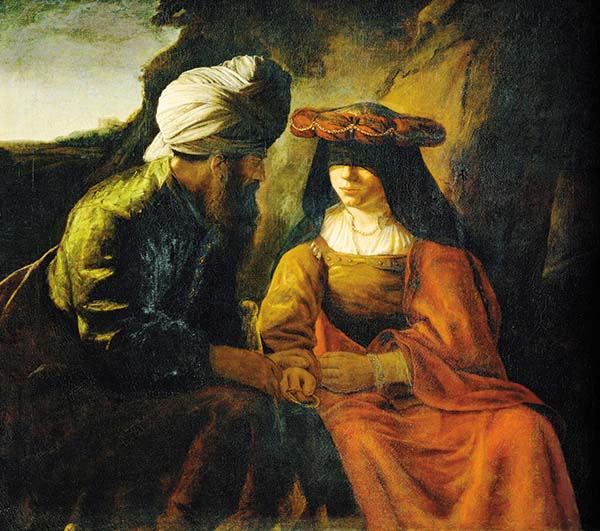
Hosea's Unconditional Love for Gomer
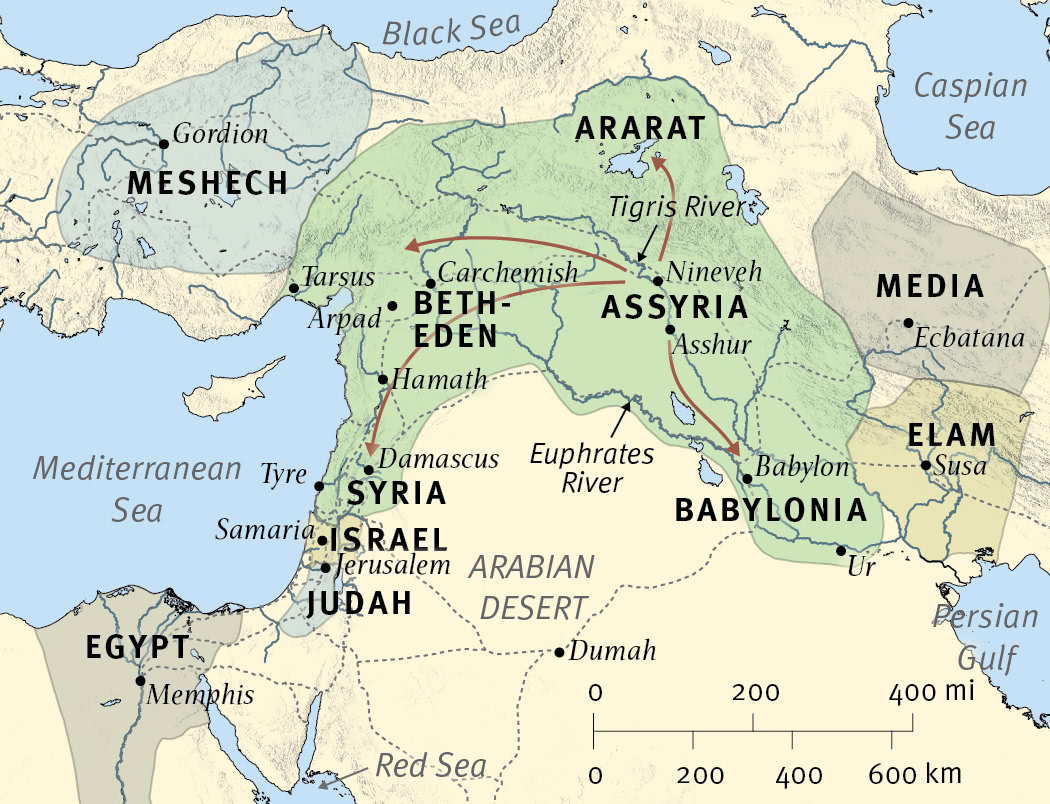
Source: ESV Global Study Bible
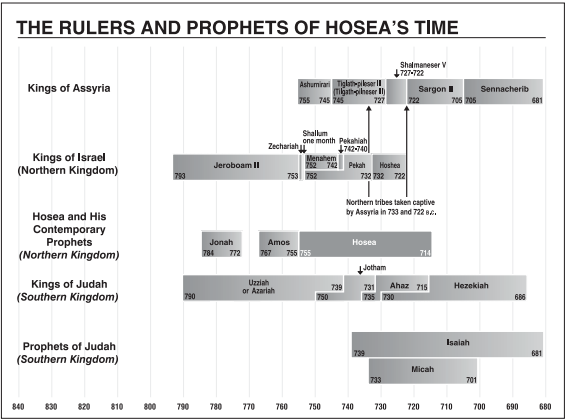
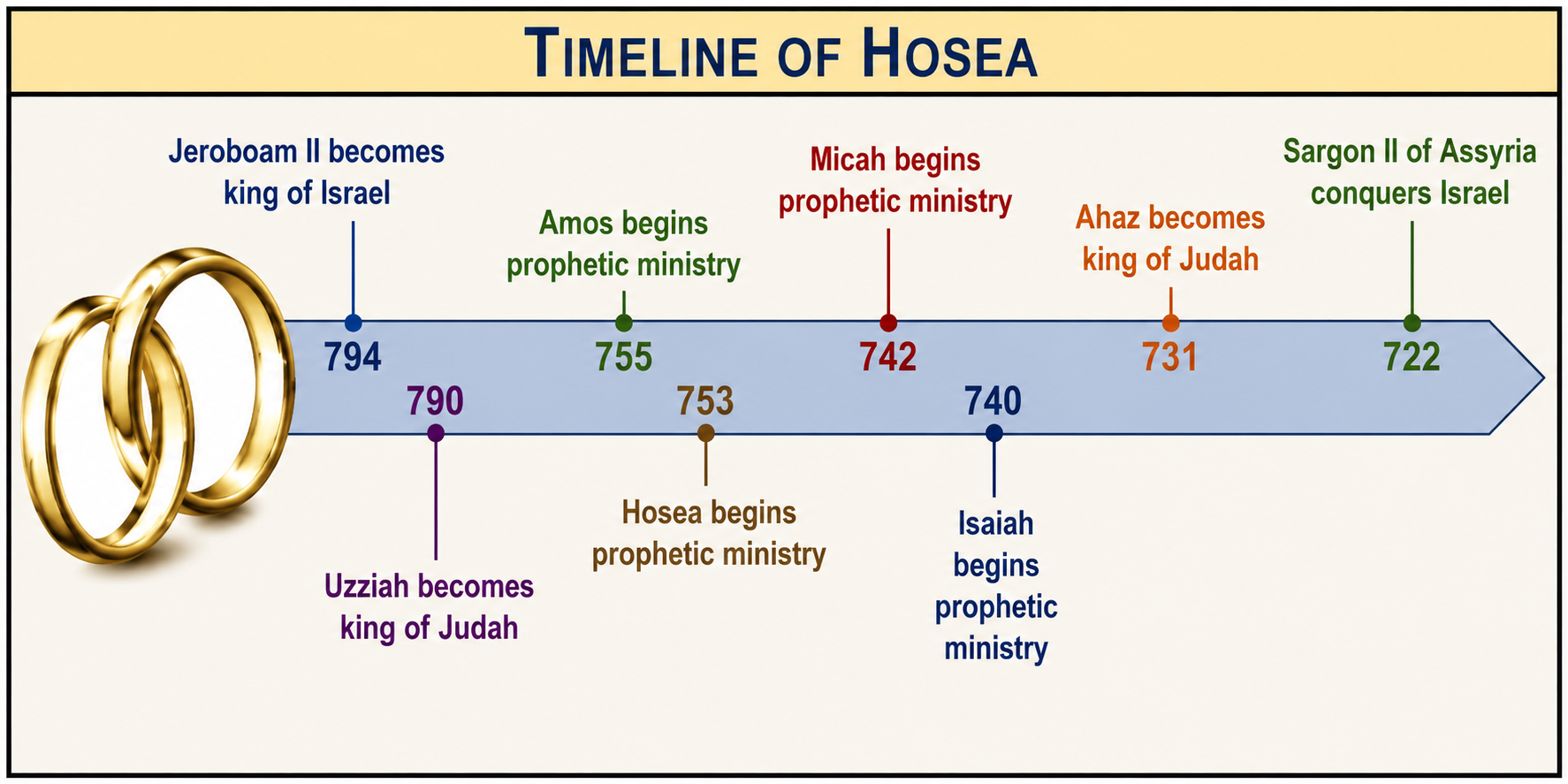
OUTLINE OF HOSEA
I. The Prodigal Wife, Hosea 1:1-3:5
A. Her Unfaithfulness, Hosea 1:1-11
B. Her Punishment, Hosea 2:1-13
C. Her Restoration and Israel's, Hosea 2:14-23
D. Her Redemption, Hosea 3:1-5
II. The Prodigal People, Hosea 4:1-14:9
A. The Message of Judgment, Hosea 4:1-10:15
1. The indictment, Hosea 4:1-19
2. The verdict, Hosea 5:1-15
3. The plea of Israel, Hosea 6:1-3
4. The reply of the Lord, Hosea 6:4-11
5. The crimes of Israel, Hosea 7:1-16
6. The prophecy of judgment, Hosea 8:1-10:15
B. The Message of Restoration, Hosea 11:1-14:9
1. God's love for the prodigal people, Hosea 11:1-11
2. God's chastisement of the prodigal people, Hosea 11:12-13:16
3. God's restoration of the prodigal people, Hosea 14:1-9
Borrow Ryrie Study Bible - page 1292
Hosea 13:1 When Ephraim spoke, there was trembling. He exalted himself in Israel, But through Baal he did wrong and died.
KJV When Ephraim spake trembling, he exalted himself in Israel; but when he offended in Baal, he died.
NET When Ephraim spoke, there was terror; he was exalted in Israel, but he became guilty by worshiping Baal and died.
NLT When the tribe of Ephraim spoke, the people shook with fear, for that tribe was important in Israel. But the people of Ephraim sinned by worshiping Baal and thus sealed their destruction.
BGT κατὰ τὸν λόγον Εφραιμ δικαιώματα αὐτὸς ἔλαβεν ἐν τῷ Ισραηλ καὶ ἔθετο αὐτὰ τῇ Βααλ καὶ ἀπέθανεν
LXE According to the word of Ephraim he adopted ordinances for himself in Israel; and he established them for Baal, and died.
CSB When Ephraim spoke, there was trembling; he was exalted in Israel. But he incurred guilt through Baal and died.
ESV When Ephraim spoke, there was trembling; he was exalted in Israel, but he incurred guilt through Baal and died.
NIV When Ephraim spoke, men trembled; he was exalted in Israel. But he became guilty of Baal worship and died.
YLT When Ephraim speaketh tremblingly, He hath been lifted up in Israel, When he becometh guilty in Baal he dieth.
NKJ When Ephraim spoke, trembling, He exalted himself in Israel; But when he offended through Baal worship, he died.
NJB When Ephraim used to speak, all trembled; he was a power in Israel; but once he had incurred guilt with Baal, he died.
- Ephraim: 1Sa 15:17 Pr 18:12 Isa 66:2 Lu 14:11
- exalted: Nu 2:18-21 Nu 10:22, 13:8,16, 27:16-23 Jos 3:7 1Ki 12:25
- offended: Ho 11:2 1Ki 16:29-33 18:18,19 2Ki 17:16-18
- died: Ge 2:17 Ro 5:12 2Co 5:14
Related Passage:
Genesis 2:17 but from the tree of the knowledge of good and evil you shall not eat, for in the day that you eat from it you will surely die.”
Romans 5:12 Therefore, just as through one man sin entered into the world, and death through sin, and so death spread to all men, because all sinned–
Ephesians 2:1 And you were dead in your trespasses and sins,
Amos 2:2 “So I will send fire upon Moab And it will consume the citadels of Kerioth; And Moab will die amid tumult, With war cries and the sound of a trumpet.
Ezekiel 18:31 “Cast away from you all your transgressions which you have committed and make yourselves a new heart and a new spirit! For why will you die, O house of Israel?
EPHRAIM WHO CAUSED TREMBLING
WOULD SOON TREMBLE!
When Ephraim spoke, there was trembling - Trembling (retheth) is used only here and refers to an emotional response of fear or dread before a powerful person and in this case a group (Ephraim). Ephraim was the largest of the 12 tribes and once possessed enormous influence and great respect. When Ephraim spoke, others trembled or stood in awe. It reminds me of the old commercial "When E F Hutton talks people listen." (it supposedly had excellent stock market advice) Ephraim was the leading tribe of the Northern Kingdom, and Israel's first northern king, Jeroboam I, was an Ephraimite (1Ki 11:26; 1Ki 12:20). The tribe had enjoyed prominence from early in Israel's history (Ge 48:17–20; Dt 33:13–17). The picture is of a people who once possessed authority, dignity, and influence.
NET NOTE - In Hosea the name "Ephraim" does not refer to the tribe, but to the region of Mount Ephraim where the royal residence of Samaria was located. It functions as a synecdoche of location (Mount Ephraim) for its inhabitants (the king of Samaria; e.g., Hos 5:13; 8:8, 10). The rulers of Ephraim (i.e., Samaria) issued many political decisions in the 8th century B.C. which brought "terror" to the other regions of the Northern Kingdom, as well as to Judah: "hearts shook as the trees of the forest shake before the wind" (Isa 7:2; 2Ki 16:5). Trembling - The noun רְתֵת (rtet, “terror, trembling”) appears only here in OT (BDB 958 s.v. רְתֵת; HALOT 1300-1301 s.v. רְתֵת). However, it is attested in 1QH 4:33, where it means “trembling” and is used as a synonym with רַעַד (raʿad, “quaking”). It also appears in Mishnaic Hebrew, meaning “trembling” (G. Dalman, Aramäisch-neuhebräisches Handwörterbuch, 406, s.v. רעד). This is the meaning reflected in the Greek recensions of Aquila, Symmachus, and Theodotion, as well as Jerome’s Latin Vulgate.
Bob Utley - "When Ephraim spoke there was trembling" There are two possible understandings of this verse. This is an unusual use of the term "Ephraim" because it seems not to be a reference to the entire Northern Ten Tribes, but to the arrogance ("He exalted himself," BDB 669, KB 724, Qal PERFECT) of that individual tribe only (e.g. Jdg. 8:1; 12:1). The fear of this tribe can be seen in that when it spoke, the other tribes "trembled" (BDB 958). Remember that Ephraim and Manasseh are half-tribes because they are the children of Joseph (cf. Gen. 48), but they represent the largest tribe, both geographically and numerically. The second possibility is that Ephraim stands for the leaders and king of the capital, Samaria. It was the first king (i.e. Jeroboam I) who set up the golden calves as a rival to the Jerusalem temple (cf. 1 Kgs. 16:31). It was Ahab and Jezebel who brought Ba'al worship to Israel (cf. 1 Kgs. 16:31).
He exalted himself in Israel - Most of the translations say "he was exalted in Israel." (Hos 13:1NIV), which speaks of other tribes holding this tribe in high esteem. But what can happen when other exalt you? The flesh soon begins to exalt itself, so both translations are probably accurate. Hosea's larger message also warns repeatedly against the pride that accompanied Israel's prosperity (Hos 5:5; 7:10; 10:1–2; 12:8). God had elevated Ephraim, but Ephraim eventually exalted himself. What had been received as God's blessing became an occasion for pride (cf. Dt 8:11–14, 17–18; Pr 16:18).
Trent Butler: In the days of the judges, Ephraim tried to assert leadership and strength before the other tribes (Judg. 8:1). Again under King Jeroboam II, Ephraim as the Northern Kingdom expanded its territory and influence (2 Kgs. 14:26–27). In those days Ephraim's voice caused other tribes or other nations to tremble in terror. Hosea depicts a different Ephraim, a dead Ephraim. What caused the death of this tribe and nation? They were guilty in their love affair with Baal and suffered its punishment (Hos. 4:15; 5:15; 10:2). (See Holman Old Testament Commentary - Hosea, Joel, Amos- Page 94)
Warren Wiersbe - The name “Ephraim” is found thirty-seven times in Hosea’s prophecy. Sometimes “Ephraim” is a synonym for the whole Northern Kingdom, but here the prophet was addressing the tribe of Ephraim in particular. Ephraim and Manasseh were the sons of Joseph whom Jacob “adopted and whose birth order he reversed (Gen. 48). Manasseh was the firstborn, but Jacob gave that honor to Ephraim. The people of Ephraim felt they were an important tribe that deserved to be listened to and obeyed. After all, Joshua came from Ephraim (Nu 13:8) and so did the first king of the Northern Kingdom, Jeroboam I (1Ki 11:26). The tabernacle of testimony was pitched in Shiloh which was in Ephraim (Josh. 18:1). In their arrogance, the tribe of Ephraim created problems for both Gideon (Judges 7:24–25; 8:1–3) and Jephthah (Jdg 12:1–6). After the death of King Saul, the Ephraimites refused to submit to David’s rule (2Sa 2:8–11); in fact, they had a strong prejudice against the tribe of Judah, the ruling tribe (2Sa 19:40–43). When the Northern Kingdom was established, so powerful were the Ephraimites that the kingdom was even called by their name. (See Bible Exposition Commentary)
James Mays - References to Ephraim’s pre-eminence appear in such texts as the blessing of Jacob on Ephraim and Manasseh (Gen. 48) and in Judg. 8:1-4. Joshua (Josh. 24:30) and Jeroboam I (I Kings 11:26; 12:20) were Ephraimites. (See Hosea (1969): A Commentary - Page 172)
But - This term of contrast introduces the tragic reversal of Ephraim.
Through Baal (ba'al) he did wrong (asam) - NIV = "he became guilty of Baal worship" The expression “did wrong” translates ʾāšam, which can convey becoming guilty or incurring guilt as rendered by the NIV. Ephraim's downfall was specifically connected with Baal worship. What political enemies could not accomplish, idolatry accomplished from within. Israel exchanged Yahweh, the source of her life and blessing, for a lifeless idol (Hos 2:8, 13; 4:17; 9:10; 11:2). Ephraim's downfall did not begin with Assyria attacking from without, but with idolatry corrupting from within.
🙏 THOUGHT - Spiritual decline begins when something else takes the place in our hearts that belongs to God alone. (Ex 20:3; Mt 6:24). When was the last time you ask God's Spirit to search your heart for idols (Ps 139:23,24)? Most of us have an annual physical checkup but far more important is an annual (or much more fequent) spiritual checkup.
Bob Utley - Baal" This refers to the male fertility god of the Canaanite pantheon (cf. Hosea 2:8; 9:10). For an excellent reference BORROW William Foxwell Albright's book, Archaeology and the Religion of Israel, page 72ff.
and died (spiritually) - In Baal, he died! This phrase does not necessarily mean that Ephraim immediately ceased to exist physically. It describes the devastating "death like" spiritual condiciton and ultimately the national consequences of abandoning the life giving God for lifeless idols. Israel's idolatry placed the nation under God's judgment and eventually culminated in destruction and exile by Assyria (Hos 9:17; 13:9, 16; 2Ki 17:6–18). Assyria eventually destroyed the nation externally, but Baal worship had already destroyed it spiritually from within.
Pusey - Death is the penalty of sin. Ephraim died spiritually. For sin takes away the life of grace, and separates from God, the true life of the soul, the source of all life. He “died more truly, than he who is dead and at rest.” Of this death, our Lord says4, Let the dead bury their dead; and S. Paul5, She who liveth in pleasure is dead while she liveth. He died also as a nation and kingdom, being sentenced by God to cease to be.(The Minor Prophets:)
Bob Utley - "he did wrong and died" This refers to the powers and preeminence of the tribe ceasing ("died" BDB 559, KB 562, Qal IMPERFECT with waw, used as imagery for YHWH's judgment, e.g. of Moab in Amos 2:2; of Israel in Ezek. 18:31).
J. Andrew Dearman: Who in their right mind would increase activities associated with their demise, as if the description of “death” at the hands of Baal in the previous verse was not enough to convince hearers of the continuing threat posed by idolatry? In his sarcasm Hosea draws on the essentials of the first two commandments of the national covenant (Exod. 20:3–6; Deut. 5:7–10), both of which are violated by the description of Israelite religious practices here in Hos. 13:1–2. (The Book of Hosea)
Duane Garrett: Hosea already looks upon Ephraim as “dead,” that is, as having passed into history and with no more hope of recovery or return. The single thing to which he attributes Ephraim's fall, moreover, is the cult of Baal. For Hosea the apostasy, crime, and immorality of the people stemmed from this one fundamental deviation from God's Torah. (See Hosea, Joel: An Exegetical and Theological Exposition)
Ephraim rose when God was his strength,
but began to die when an idol captured his heart.
🙏 THOUGHT - Past spiritual privilege is no guarantee of present spiritual health. A person, church, or nation may once have enjoyed great influence and blessing, yet decline when God's gifts replace God Himself as the object of devotion (Dt 8:11–14; Rev 2:4–5). Idolatry does not require a literal Baal but can be anything that captures the allegiance, affection, and trust that belong to God Alone (Col 3:5; 1Jn 5:21).
KJV Life Application Study Bible - Cycles of Judgment/Salvation in Hosea. Judgment - Hosea 1:2-9; 2:2-13; 4:1-5:14; 6:4-11:7; 11:12-13:16, Salvation - Hosea 1:10-2:1; 2:14-3:5; 5:15-6:3; 11:8-11; 14:1-9. God promises to judge, but he also promises mercy. Here you can see the cycles of judgment and salvation in Hosea. Prophecies of judgment are consistently followed by prophecies of forgiveness.
Did wrong (guilty, condemned) (0816) asam is a verb which means to be liable for a wrongdoing, implying the one who is liable will suffer or be punished for their guilt (eg, Hos 10:2). Guilt before God is the result of sin and was used of individuals (Lev 5:2–5; Nu 5:6, 7); congregations (Lev 4:13); or nations (Ezek. 25:12; Hos 13:16) In Lev 5:6-7 not only was the person guilty but restitution was to be made plus 20%, which the goal being atonement and forgiveness. NET Note says that while asam means "are guilty," the verb is sometimes used metonymically with the meaning "to suffer the consequences of guilt," the effect being substituted for the cause.
TWOT - The primary meaning of the word asam seems to center on guilt, but moves from the act which brings guilt to the condition of guilt to the act of punishment. In any particular passage it is often difficult to determine which thrust the word has....It may denote acts of sin, responsibility for sin, punishment, and even the aftermath of punishment. Perhaps, one may hold that the ʾašam connotes the totality of alienation from God, including its consequences.
ASAM - 32V - Lev. 4:13; Lev. 4:22; Lev. 4:27; Lev. 5:2; Lev. 5:3; Lev. 5:4; Lev. 5:5; Lev. 5:17; Lev. 5:19; Lev. 6:4; Num. 5:6; Num. 5:7; Jdg. 21:22; 2 Chr. 19:10; Ps. 5:10; Ps. 34:21; Ps. 34:22; Prov. 30:10; Isa. 24:6; Jer. 2:3; Jer. 50:7; Ezek. 6:6; Ezek. 22:4; Ezek. 25:12; Hos. 4:15; Hos. 5:15; Hos. 10:2; Hos. 13:1; Hos. 13:16; Joel 1:18; Hab. 1:11; Zech. 11:5
Matthew Henry's Concise (Updated with Modern English) - Hosea 13:1-8 - While Ephraim feared the LORD and depended upon Him, the tribe occupied a place of prominence and influence in Israel. “When Ephraim spoke, there was trembling; he exalted himself in Israel” (Hos 13:1). But when Ephraim turned from the living God to Baal, his spiritual decline began: “Through Baal he did wrong and died” (Hos 13:1). The people became increasingly devoted to their idols, even “kissing the calves” as an expression of worship and allegiance (Hos 13:2; cf. 1Ki 19:18). But God will not share His glory with idols: “I am the LORD, that is My name; I will not give My glory to another” (Isa 42:8; cf. Ex 20:3–5). Those who trust in idols ultimately become like the lifeless things they worship and will be put to shame (Ps 115:4–8; Isa 44:9–11).
Israel's tragedy was especially serious because God had been so good to them. He reminds them, “I have been the LORD your God since the land of Egypt; and you were not to know any god except Me, for there is no savior besides Me” (Hos 13:4). He had known and cared for them “in the wilderness, in the land of drought” (Hos 13:5), providing food, protection, and guidance (Dt 8:2–4, 15–16). He then brought them into the abundance of the Promised Land (Dt 6:10–12). Yet God's blessings became the occasion for their pride: “As they had their pasture, they became satisfied, and being satisfied, their heart became proud; therefore they forgot Me” (Hos 13:6). Moses had warned Israel of this very danger: “When you have eaten and are satisfied...then your heart will become proud and you will forget the LORD your God” (Dt 8:10–14; cf. Dt 32:15).
Prosperity therefore became spiritually dangerous
because the gifts caused them to forget the Giver.
Prosperity therefore became spiritually dangerous because the gifts caused them to forget the Giver. Satisfaction led to pride, pride led to forgetfulness, and forgetfulness led to idolatry. This is a recurring biblical warning: “In the day of prosperity be happy, but in the day of adversity consider” (Ec 7:14), and “Let him who thinks he stands take heed that he does not fall” (1Co 10:12). Material abundance is not inherently evil, but when prosperity produces self-sufficiency, it can quietly weaken our dependence upon God (Pr 30:8–9; 1Ti 6:17).
Because Israel persistently rejected the God who had rescued and blessed them, the Lord announces severe judgment, describing Himself as a lion, leopard, and bear robbed of her cubs (Hos 13:7–8). The imagery is deliberately terrifying. The God who had lovingly shepherded Israel would now confront them in judgment because they had persistently despised His goodness and refused to return to Him (Hos 11:1–4; 13:7–9). Greater privilege ALWAYS brings greater responsibility (Amos 3:2; Lk 12:47–48). God's patience should lead us to repentance, never to presumption (Ro 2:4–5).
Israel's experience warns us that prosperity can sometimes test our hearts more subtly than adversity. Trouble often drives us toward God; abundance can tempt us to believe we no longer need Him. We must therefore guard against allowing God's blessings to replace God Himself in our affections (Dt 8:17-18; Mt 6:33).
Hosea 13:2 And now they sin more and more, And make for themselves molten images, Idols skillfully made from their silver, All of them the work of craftsmen. They say of them, “Let the men who sacrifice kiss the calves!”
KJV And now they sin more and more, and have made them molten images of their silver, and idols according to their own understanding, all of it the work of the craftsmen: they say of them, Let the men that sacrifice kiss the calves.
NET Even now they persist in sin! They make metal images for themselves, idols that they skillfully fashion from their own silver; all of them are nothing but the work of craftsmen! There is a saying about them: "Those who sacrifice to the calf idol are calf kissers!"
NLT Now they continue to sin by making silver idols, images shaped skillfully with human hands. "Sacrifice to these," they cry, "and kiss the calf idols!"
BGT καὶ προσέθετο τοῦ ἁμαρτάνειν ἔτι καὶ ἐποίησαν ἑαυτοῖς χώνευμα ἐκ τοῦ ἀργυρίου αὐτῶν κατ᾽ εἰκόνα εἰδώλων ἔργα τεκτόνων συντετελεσμένα αὐτοῖς αὐτοὶ λέγουσιν θύσατε ἀνθρώπους μόσχοι γὰρ ἐκλελοίπασιν
LXE And now they have sinned increasingly, and have made for themselves a molten image of their silver, according to the fashion of idols, the work of artificers accomplished for them: they say, Sacrifice men, for the calves have come to an end.
CSB Now they continue to sin and make themselves a cast image, idols skillfully made from their silver, all of them the work of craftsmen. People say about them, "Let the men who sacrifice kiss the calves."
ESV And now they sin more and more, and make for themselves metal images, idols skillfully made of their silver, all of them the work of craftsmen. It is said of them, "Those who offer human sacrifice kiss calves!"
NIV Now they sin more and more; they make idols for themselves from their silver, cleverly fashioned images, all of them the work of craftsmen. It is said of these people, "They offer human sacrifice and kiss the calf-idols."
YLT And now do they add to sin, And make to them a molten image of their silver, By their own understanding -- idols, A work of artisans -- all of it, Of them they say, who are sacrificers among men, 'The calves let them kiss.'
NKJ Now they sin more and more, And have made for themselves molded images, Idols of their silver, according to their skill; All of it is the work of craftsmen. They say of them, "Let the men who sacrifice kiss the calves!"
NJB And now they compound their sins by casting images for themselves out of their silver, idols of their own invention, the work of craftsmen, all of it! 'Sacrifice to them,' they say! Men bestow kisses to calves!
- now: Nu 32:14 2Ch 28:13 33:23 Isa 1:, 30:1 Ro 2:5 2Ti 3:13
- sin more and more: Heb. add to sin
- have made: Ho 2:8, 8:4, 10:1 Ps 115:4-8 Isa 46:6 Jer 10:4 Hab 2:18,19
- according: Ho 11:6 Ps 135:17,18 Isa 44:17-20 45:20 46:8 Jer 10:8 Ro 1:22-25
- the men that sacrifice: or, the sacrificers of men
- kiss: 1Sa 10:1 1Ki 19:18 Ps 2:12 Ro 11:4
Related Passages:
1 Kings 19:18 “Yet I will leave 7,000 in Israel, all the knees that have not bowed to Baal and every mouth that has not kissed him.”
1 Kings 12:28–30 So the king (Jeroboam) consulted, and made two golden calves, and he said to them, “It is too much for you to go up to Jerusalem; behold your gods, O Israel, that brought you up from the land of Egypt.” 29 He set one in Bethel, and the other he put in Dan. 30 Now this thing became a sin, for the people went to worship before the one as far as Dan.
Hosea 8:4 They have set up kings, but not by Me; They have appointed princes, but I did not know it. With their silver and gold they have made idols for themselves, That they might be cut off.
Hosea 11:2 The more they called them, The more they went from them; They kept sacrificing to the Baals And burning incense to idols.
KISS THE
LIFELESS IDOL
And now (Hosea shifts to the present state of affairs in Ephraim) they sin (chata'; LXX - hamartano) more and more, - NLT - "Now they continue to sin by making silver idols." Israel had already become guilty through Baal worship (Hos 13:1), but instead of repenting, they multiplied their sins. The Hebrew literally reads "And now do they add to sin." Piling up sins one after another is the sad picture. One act of idolatry prepared the way for another. Isn't this exactly the deceptive nature of sin? (Rhetorical) Sin is the progressive, enslaving nature of sin, because once we begin to tolerate a sin our fallen flesh takes deeper in the darkness and producing more sin (Jn 8:34, Ps 1:1; Ro 6:16, 19; 2Ti 3:13). James describes the same downward progression in which our fallen fleshly desire conceives, gives birth to sin, and sin ultimately “brings forth death” (Jas 1:14–15). Sin never intends to remain merely a visitor; if welcomed, it seeks to become master.
Sin draws on sin.
-- E B Pusey
John Phillips - The crisis was on its way. On one side of the scale, Israel's sins multiplied and ripened for judgment. On the other side, portents of doom grew clearer. Already Assyria was on the march. (See Exploring the Minor Prophets: An Expository Commentary - Page 63)
Pusey - This seems to be a third stage in sin. First, under Jeroboam, was the worship of the calves. Then, under Ahab, the worship of Baal. Thirdly, the multiplying of other idols, penetrating and pervading the private life, even of their less wealthy people. The calves were of gold; now they made them molten images of their silver, perhaps plated with silver. (The Minor Prophets:)
H. D. Beeby: There may be in Hosea 13:2 a build-up of sarcastic irony. The people sin far more than their primitive forefathers because their culture and technology and craftsmanship enable them to make bigger, better, and more beautiful idols than their competitors. Their industry has now prospered: “No need to import consumer goods. We now make everything ourselves. Look, none of your cheap and nasty idols whose heads may drop off. Only the best! Feel the quality! Solid silver and, mind you, made by experts. Oh yes, we’re a developed nation.” (See Hosea: Grace Abounding - Page 20)
NET NOTE - The phrase יוֹסִפוּ לַחֲטֹא (yosifu lakhatoʾ, “they add to sin”) is an idiom meaning either (1) “they sin more and more,” or (2) “they continue to sin” (see BDB 415 s.v. יָסַף 2.a; HALOT 418 s.v. יסף 3.b). The English versions are divided: (1) “they sin more and more” (KJV, RSV, NASB, NIV), and (2) “they go on sinning” (NJPS), “they continue to sin” (NAB), and “they (+ “still” in TEV and NCV) keep on sinning” (NRSV, NLT).
And make for themselves molten images - Notice they made "little g" gods for themselves. Instead of worshiping God as He had revealed Himself, they manufactured gods according to their own desires (cf 2Ti 4:3,4), gods that would not judge them but allow them freedom to commit sins. This is the essence of idolatry when man created in the image of God creates a god in his own image rather than submitting to the God Who created man (Ex 20:4-5; Isa 44:9-17; Ro 1:23-25).
Bob Utley - "molten images. . .idols" This may refer to the golden calves of Bethel and Dan (cf. line 5). However, these descriptions do not exactly fit them. They were made of wood and overlaid with gold. Therefore, this may refer to images at local Ba'al shrines (cf. Hosea 2:8; Isa. 40:19-20; 44:12-17; 46:6-7; Jer. 10:3-5).
When men refuse to conform their lives to God,
they are tempted to remake God to conform to their lives.
Idols (atsab) skillfully made from their silver, All of them the work of craftsmen - Note the irony. These supposedly powerful gods were nothing more than human workmanship. The worshipers supplied the silver, craftsmen supplied the skill, and then the people bowed before what their own hands had made! This is the height of deception. Isaiah ridicules the same absurdity stating that a man uses part of a tree for fuel and makes the remainder into a god before which he bows (Isa 44:14–17; cf. Ps 115:4–8). No matter how costly, beautiful, or skillfully made, the idol is spiritually worthless and eventually brings spiritual death to the worshiper.
Pusey - KJV = "idols according to their own understanding" - They employed ingenuity and invention to multiply their idols. They despised the wisdom and commands of God Who forbad it. The rules for making and coloring the idols were as minute as those, which God gave for His own worship. Idolatry had its own vast system, making the visible world its god and picturing its operations, over against the worship of God its Creator. But it was all, their own understanding. The conception of the idol lay in its maker’s mind. It was his own creation. He devised, what his idol should represent; how it should represent what his mind imagined; he debated with himself, rejected, chose, changed his choice, modified what he had fixed upon; all according to his own understanding. Their own understanding devised it; the labor of the craftsmen completed it. What man could do for it, he did. But man could not breathe into his idols the breath of life; there was then no spirit, nor life, nor any effluence from any higher nature, nor any deity residing in them. From first to last it was all man’s work; and man’s own wisdom was its condemnation. The thing made must be inferior to its maker. (The Minor Prophets:)
NET NOTE - skillfully made - The term כִּתְבוּנָם (kitvunam, “according to their skill”; preposition כְּ + feminine singular noun תְּבוּנָה, tvunah + third person masculine plural suffix) is an abbreviated form of כִּתְבוּנָתָם (kitvunatam; GKC 255-56 §91.e). תְּבוּנָה means “understanding, faculty, skill” (BDB 108 s.v. תְּבוּנָה 1). It refers to a builder skillfully constructing a house (Prov 24:3), God skillfully fashioning creation (Ps 136:5; Prov 3:19), and a craftsman skillfully making an idol (Hos 13:2).
John Walton - See the comments on Judges 17:3 (page 271 "consecrated to the Lord to make image"); Isaiah 40:19 (page 626 "manufacture of idols"); Isaiah 44:17-18 (page 629 "how images are “brought to life.”) for discussion of the manufacturing techniques employed in the creation of idols in the ancient Near East. The acquisition and use of the skills necessary to fashion these images is simply a further example, according to Hosea, of Israel’s intent to syncretize or corrupt its worship with false gods. (IVP Bible Background Commentary page 759)
Israel made idols with their hands,
but eventually those idols mastered their hearts.
They say of them, “Let the men who sacrifice (zabach; LXX - thuo) kiss the calves - Kissing is a way of expressing devotion and homage. He continues the description of the tragic picture of spiritual deception! Instead of worshiping the living God, the people expressed devotion by kissing golden calves, a customary act of homage and allegiance to an idol (cf. 1Ki 19:18). Such behavior appears utterly irrational, but that is precisely what happens when people exchange the truth of God for the lie (Ro 1:25). Having rejected God's truth, God gave them over to futile thinking, darkened minds, and hardened hearts (Ro 1:21-28; Eph. 4:17-19). The result was not only the absurdity of kissing lifeless idols but, ultimately, even sacrificing their own children to false gods (cf. Ps. 106:37-38; Jer. 19:5). This is the devastating progression of idolatry from believing a lie which leads to spiritual blindness, moral insanity, and ever-deepening bondage to sin.
ESV Study Bible - The excavations at Ashkelon have uncovered an example of calf worship in a sanctuary from the sixteenth century b.c. A small, solid bronze calf was discovered, and around it were remains of a pottery shrine that housed the calf. Calf worship, of course, was a problem throughout the history of Israel (see Exodus 32; 1 Kings 12). (See ESV Study Bible)
Pusey on they say of them - Error, if it is strong enough, ever persecutes the truth, unless it can corrupt it. Idol-worship was striving to extirpate the worship of God, which condemned it.(The Minor Prophets:)
Bob Utley - "Let the men who sacrifice kiss the calves" We learn from 1 Kgs. 19:18 that kissing the idol's feet (Roland deVaux, Ancient Israel, p. 334, thinks they blew kisses at the idol) was part of Ba'al worship (the VERB could be an IMPERFECT or a JUSSIVE, NASB). This is one example of how the supposed worship of YHWH, by means of the golden calves, was corrupted into Ba'al worship. They worshiped what they made but it could not see, hear, or act! For historical examples of kissing idols' feet, see IVP Bible Background Commentary (OT), p. 759.
Jon Courson - Proskuneo, the Greek word translated “worship” literally means “to turn and kiss.” This is the relationship the Lord desires to have with us. Instead, we see His people kissing calves instead. (SEE Jon Courson's Application Commentary)
John Walton - (IVP Bible Background Commentary kiss calf idols. On the black stele of Shalmaneser III the Israelite king Jehu is portrayed kissing the ground before the Assyrian king. In Enuma Elish the tribunal of gods kisses the feet of Marduk after he has put down the rebellion and established himself as head of the pantheon. This was the common act of submission offered to kings and gods. Likewise the kissing of the idol involved kissing its feet in an act of homage, submission and allegiance. In the Mari letters the governor of Terqa, Kibri-Dagan, advises Zimri-Lim, king of Mari, to come to Terqa to kiss the feet of the statue of the god Dagan.)
You worship Him in the way you conduct your business, carry on your social life,
the way you run your home, and the way you act out on the street
—not only in the way you act in the sanctuary.
J Vernon McGee - kiss the calves - This was a form of worship. The people were actually going up and kissing those golden calves! There are many people today who think that to kiss a certain image or to kiss a certain area of ground is to worship God. On one of our tours to Israel there was a lady who got down on her hands and knees at the Garden Tomb and started kissing the place. I immediately took her by the arm and reminded her that we had been told not even to drink the water in that land and that she must get up out of the dirt. “Oh,” she said, “that doesn’t make any difference. This is a holy place; this is where my Lord was buried.” Then I said to her, “He’s not here today. He is the living Christ at God’s right hand. You cannot kiss Him today, but you can worship Him and praise Him.” It is nonsense to go around kissing something as an act of worship of the living and true God. You worship Him, my friend, by the life that you live. You worship Him in the way you conduct your business, carry on your social life, the way you run your home, and the way you act out on the street—not only in the way you act in the sanctuary. We are the ones who have made a distinction between the sanctuary and the street, but in God’s sight there is no difference at all. (See Hosea/Joel)
Robert Chisholm - NIV's "They offer human sacrifice" literally reads, "sacrificers of men kiss calves." The Bible speaks of child sacrifice in conjunction with worship of the god Molech (cf. Lev. 18:21; 20:2-5; 2 Kings 23:10), which was apparently sometimes combined with Baal worship (cf. Jer. 32:35). However, the word used here, "men" (ʾād̠ām), does not suggest child sacrifice. A more likely interpretation is that "sacrificers of men" is idiomatic, meaning "sacrificers among men" or "men who sacrifice" (cf. kjv, nasb). (See Bible Knowledge Commentary: Old Testament - Page 1405)
TECHNICAL NOTES - NET NOTE - the men who sacrifice Heb “Those among men who offer sacrifices.” The genitive construct זֹבְחֵי אָדָם (zovkhe ʾadam, “the sacrificers of men”) is misunderstood by NIV as an objective genitive phrase: “they offer human sacrifice(s).” Such a classification is questionable: (1) nowhere else in the book does Hosea accuse Israel of human sacrifice, and (2) archaeological evidence does not provide any evidence of human sacrifice in the Northern Kingdom during Iron Age I (1200-722 b.c.) (ED: HOWEVER NOTE THE SEPTUAGINT TRANSLATION = "Sacrifice [COMMAND IN AORIST IMPERATIVE] men, for the calves have come to an end." NOTE ALSO THE ESV = "Those who offer human sacrifice kiss calves!" NIV is similar. Cf Isa 57:5) This phrase should be classified as a genitive of species: the genitive represents the whole class or kind of a species (men). The construct represents a part of the whole or subspecies within the whole (those who sacrifice): “those among men who offer sacrifice” (those who offer sacrifices). The expression “a fool of men” in Pr 15:20 provides a similar example. The genitive represents the whole class/species (men), and the construct represents a part of the whole/subspecies (a fool): “a foolish man.” This is the tactic adopted by most English versions: “the men that sacrifice” (KJV), “the men who sacrifice” (NASB), and “they appoint men to sacrifice [to them]” (NJPS). Kiss the calve - Heb “They kiss calves!” The verb יִשָּׁקוּן (yishaqun) may be parsed as an imperfect (“they kiss [calves]”) or jussive (“let them kiss [calves]!”). Paragogic nun endings (ן + יִשָּׁקוּ) are attached to imperfects to connote rhetorical emphasis. It is used either (1) to mark out an action that is contrary to normal practice and deviates from normal expectations (those who worship the calf idol are, in effect, kissing calves!), or (2) to express strong emotion (in this case disgust) at the action of the calf idolaters (they kiss calves!). For the function of paragogic nun, see IBHS 516-17 §31.7.1.
🙏 THOUGHT - MARK IT DOWN - We may never bow before a silver calf, but idolatry remains a danger whenever something created receives the love, trust, devotion, or obedience that belongs to the Creator (Mt 6:24; Col 3:5; 1Jn 5:21, 1Co 10:12). Israel warns us (see 1Co 10:6,11) not to accommodate the first steps away from God. Whatever replaces God as the object of our devotion will eventually shape our thinking, control our affections, and determine our destiny. Has anything replaced the living God as the King of your heart? If so, identify it, confess and repent, for there is nothing more beautiful than the Name of Jesus!
Idols (images)(06091) atsab (from verb atsab = to shape, fashion) denotes a false god as represented by a manufactured image — specifically, an object shaped by human craft. It is not a general term for a deity, nor a neutral word for a statue. Every use carries an implicit accusation, because the word's own etymology names the fatal flaw: the thing was made. It is always in the plural idolatry never produced one god. It produced a pantheon, and every household, high place, and border town added to it — which is why Baal himself appears in Scripture as "the Baals" (Judges 2:11). The plural also highlights the contrast -- Yahweh has a name, is one, and speaks in the first person singular. ʿAtsabbîm are a category, interchangeable, countable, replaceable, more like a heap rather than a Person.
The term is used for the idols worshiped by Israel and Judah (Hos. 4:17; 8:4; 13:2; Isa. 10:11; Zech. 13:2), as well as those of Samaria (Mic. 1:7), the Philistines (2 Sam. 5:21), Babylon (Isa. 46:1), and the pagan nations (Ps. 115:4; 135:15). It appears alongside words for molten images (Hos. 13:2) and other terms for idols (Jer. 50:2), underscoring the folly of worshiping man-made gods rather than the Creator (Ro 1:25). In Hosea, the declaration, "Ephraim is joined to idols" (Hos. 4:17), depicts a people who had become inseparably attached to lifeless objects they themselves had fashioned, having abandoned the worship of the true God.
ʿĀtsāb is the idol considered as product: always plural, always contemptuous, always naming the absurdity of a god who owes his existence to his worshiper. The word links, by root and by wordplay, the act of shaping to the experience of sorrow so that you fashion it physically, and it wounds you spiritually! Scripture's verdict is that such gods cannot see, cannot answer, cannot walk, and cannot save; that they will be shattered and their names erased; and that those who make them are slowly remade in their likeness. The only remedy the prophets offer is exchange turning from dead thing that were formed to the Living God Who forms (cf 1Th 1:9)
ATSAB - 17V - idols(13), images(4). 1 Sam. 31:9; 2 Sam. 5:21; 1 Chr. 10:9; 2 Chr. 24:18; Ps. 106:36; Ps. 106:38; Ps. 115:4; Ps. 135:15; Isa. 10:11; Isa. 46:1; Jer. 50:2; Hos. 4:17; Hos. 8:4; Hos. 13:2; Hos. 14:8; Mic. 1:7; Zech. 13:2
Hosea 13:3 Therefore they will be like the morning cloud And like dew which soon disappears, Like chaff which is blown away from the threshing floor And like smoke from a chimney.
KJV Therefore they shall be as the morning cloud, and as the early dew that passeth away, as the chaff that is driven with the whirlwind out of the floor, and as the smoke out of the chimney.
NET Therefore they will disappear like the morning mist, like early morning dew that evaporates, like chaff that is blown away from a threshing floor, like smoke that disappears through an open window.
NLT Therefore, they will disappear like the morning mist, like dew in the morning sun, like chaff blown by the wind, like smoke from a chimney.
BGT διὰ τοῦτο ἔσονται ὡς νεφέλη πρωινὴ καὶ ὡς δρόσος ὀρθρινὴ πορευομένη ὥσπερ χνοῦς ἀποφυσώμενος ἀφ᾽ ἅλωνος καὶ ὡς ἀτμὶς ἀπὸ ἀκρίδων
LXE Therefore shall they be as a morning cloud, and as the early dew that passes away, as chaff blown away from the threshing-floor, and as a vapor from tears.
CSB Therefore, they will be like the morning mist, like the early dew that vanishes, like chaff blown from a threshing floor, or like smoke from a window.
ESV Therefore they shall be like the morning mist or like the dew that goes early away, like the chaff that swirls from the threshing floor or like smoke from a window.
NIV Therefore they will be like the morning mist, like the early dew that disappears, like chaff swirling from a threshing floor, like smoke escaping through a window.
YLT Therefore they are as a cloud of the morning, And as dew, rising early, going away, As chaff tossed about out of a floor, And as smoke out of a window.
NKJ Therefore they shall be like the morning cloud And like the early dew that passes away, Like chaff blown off from a threshing floor And like smoke from a chimney.
NJB That is why they will be like morning mist, like the dew that quickly disappears, like the chaff whirled from the threshing-floor, like smoke escaping through the window.
- as the morning: Ho 6:4
- as the chaff: Ps 1:4 68:2 83:12-17 Isa 17:13 41:15,16 Da 2:35
FOUR SIMILES SIGNAL
TRANSITORY STATE OF IDOLATERS
Therefore - Term of conclusion which connects Israel's persistent idolatry in Hos 13:1–2 with the judgment that follows
Trent Butler: The prophetic therefore introduces a prediction of disaster, a warning of judgment to come. Israel appeared on the historical scene as an ephemeral entity, vanishing as quickly as morning mist or early dew. The nation came and went like chaff blowing in the wind or smoke escaping through a window. (See Holman Old Testament Commentary - Hosea, Joel, Amos- Page 94)
They will be like the morning cloud (cf. Isa. 44:22; Hos. 6:4) - The simile (identified by "like..." or "as...") is striking. A morning cloud may appear substantial, but under the heat of the rising sun it quickly disappears. So it would be with Ephraim. Once powerful and influential (Hos 13:1), the nation would soon vanish as a political power under God's judgment. What appears strong apart from God can disappear with remarkable speed (cf. Ps 37:35–36; Jas 4:14) (I think of the powerful but godless Third Riech under Adolf Hitler).
NET NOTE - like the morning cloud The phrase כְּעֲנַן־בֹּקֶר (ké’anan-boqer, “like a cloud of the morning”) occurs also in Hos 6:4 in a similar simile. The Hebrew poets and prophets refer to morning clouds as a simile for transitoriness (Job 7:9; Isa 44:22; Hos 6:4; 13:3; HALOT 858 s.v. עָנָן 1.b; BDB 778 s.v. עָנָן 1.c).
And like dew which soon disappears - Hebrew - “like the early rising dew that goes away” Another unmistable simile which the reader could easily understand. Hosea has used this same picture before. Israel's loyalty to God was “like the dew which goes away early” (Hos 6:4). Now there is a striking correspondence in that their devotion to God had been fleeting (like dew), and their national existence would become fleeting (soon disappears). Their disappearing devotion would be followed by disappearing prosperity and ultimately disappearance from the Promised Land God had given them! Sin eventually produces a harvest consistent with what has been sown (Gal 6:7–8).
Like chaff (mot - see note) which is blown away from the threshing floor - A third simile in case they missed the meaning of the first two! In this agrarian society, everyone understood this metaphor. At the threshing floor, grain was tossed into the air so that the wind would carry away the light, worthless chaff while the heavier grain fell back to the ground. Chaff therefore became an excellent biblical picture of the wicked swept away by divine judgment (Ps 1:4–6; 35:5; Isa 17:13; cf. Mt 3:12). Ephraim thought of himself as substantial, but separated from God he would prove weightless (easily blown away) before the winds of judgment.
NET NOTE - like chaff that is blown away Heb “storm-driven away”; cf. KJV, ASV “driven with the whirlwind out.” The verb יְסֹעֵר (ysoʿer, Poel imperfect third person masculine singular from סָעַר, saʿar, “to storm”) often refers to the intense action of strong, raging storm winds (e.g., Jonah 1:11, 13). The related nouns refer to “heavy gale,” “storm wind,” and “high wind” (BDB 704 s.v. סָעַר; HALOT 762 s.v. סער). The verb is used figuratively to describe the intensity of God’s destruction of the wicked whom he will “blow away” (Isa 54:11; Hos 13:3; Hab 3:14; Zech 7:14; BDB 704 s.v.; HALOT 762 s.v.).
John Walton - chaff on threshing floor. Once again Hosea uses a series of images that would easily conjure up pictures in his audience’s minds— scenes from everyday life. Among them is the threshing floor where farmers bring their grain to be crushed under the feet of the oxen or by a threshing sledge (see the comment on Hos 10:11). The worthless residue that remained on the surface of this installation would swirl about as the winds blew it about. This illustration, combined with the morning mist and wisps of smoke, speaks of the short-term aspects of life—an apt comparison between the eternity of Yahweh and the ephemeral character of other gods and their idols. (IVP Bible Background Commentary page 759)
And like smoke from a chimney - NET = "like smoke that disappears through an open window." In this picture, Hosea reminds that that smoke may be clearly visible for a moment, but it quickly disperses and disappears. The fourth image reinforces the same truth of what Israel considered permanent was actually passing away (cf. Ps 68:2; 102:3). All four emphasize brevity, instability, and disappearance. Israel had exchanged the eternal God for temporary idols, and consequently everything they depended upon would itself prove temporary.
Bob Utley - "chimney" Literally this is "window". Chimneys were non-existent in the ancient world. The buildings had small windows close to the ceiling for the purpose of letting the smoke out. Many homes placed the fire in the center of the room and allowed the smoke to exit at whatever window was possible.
Warren Wiersbe - idols are nothing, and those who worship them become like them—nothing (Ps. 115:8). Hosea compared the people to the “nothings” with which they were familiar: morning dew that the sun burns away; chaff that the wind blows away; smoke that disappears out the window and is seen no more. (See Bible Exposition Commentary)
Whatever replaces God will eventually disappoint us because only God is permanent enough to bear the full weight of our trust (Ps 62:5–8; Isa 26:4). Possessions, success, influence, pleasure, and human approval can disappear as quickly as morning mist (1Jn 2:15–17; Jas 4:14). When we exchange the eternal God for temporary idols, we should not be surprised when what we trusted in disappears.
KJV Bible Commentary (online) - All of these (ED: beastly similes) indicate that although Israel may have had the appearance of substance and prosperity, her days are numbered and she will pass away.
CHAFF - Dictionary of Biblical Imagery (online)
Chaff evokes an image of lightness, instability and worthlessness. Scripture uses many harvest or agricultural images as figures of judgment: pruning, pulling weeds, threshing, picking, sorting sheep and goats, and winnowing (Mt 13:30; Lk 22:31). In winnowing, grain is threshed in order to separate the kernel of grain from the husk and straw. The mixture is thrown into the air with a winnowing fork or shovel. The wind blows the light husks away, the heavier straw falls near the edge of the threshing floor, and the grain falls back to the floor to be collected. Both the light husks and the heavier straw are referred to in the words translated “chaff” in the Bible.
In Scripture chaff illustrates something that is trivial, harmless and light: “slingstones are like chaff” to leviathan (Job 41:28 NIV; cf. 13:25). Furthermore, chaff is something that is ephemeral, dead and worthless in contrast to something that is stable, flourishing and alive. The wicked are like chaff compared to the righteous, who are like a living, fruitful tree (Ps 1:3–4). Chaff is something that is easily driven away and discarded by the wind. Again, such are the wicked (Ps 35:5; cf. Job 21:18; Is 40:24; 41:15; Jer 13:24; Dan 2:25). In Scripture the image of chaff parallels images of blown tumbleweeds (Ps 83:18; Is 7:13), fine dust (Is 29:5; 41:2), the morning mist, the early dew and smoke escaping through a window (Hos 13:3).
One of the terms used for chaff, qaš, also includes the meaning “straw” or “stubble” (cf. Ex 5:12). Metaphorically, chaff pictures something not worth keeping, to be burned up by fire-whether God’s enemies (Ex 15:7; Num 1:10) or apostate Israel (Is 5:24) or the faithful being sifted by Satan. This is the category of imagery John the Baptist uses when he speaks of Jesus with a winnowing fork in his hand to gather the wheat into the barn and to burn up the chaff (achyron) with fire (Mt 3:12; Lk 3:17).
Hosea 13:4 Yet I have been the LORD your God Since the land of Egypt; And you were not to know any god except Me, For there is no savior besides Me.
KJV Yet I am the LORD thy God from the land of Egypt, and thou shalt know no god but me: for there is no saviour beside me.
NET But I am the LORD your God, who brought you out of Egypt. Therefore, you must not acknowledge any God but me; except me there is no Savior.
NLT "I have been the LORD your God ever since I brought you out of Egypt. You must acknowledge no God but me, for there is no other savior.
BGT ἐγὼ δὲ κύριος ὁ θεός σου στερεῶν οὐρανὸν καὶ κτίζων γῆν οὗ αἱ χεῖρες ἔκτισαν πᾶσαν τὴν στρατιὰν τοῦ οὐρανοῦ καὶ οὐ παρέδειξά σοι αὐτὰ τοῦ πορεύεσθαι ὀπίσω αὐτῶν καὶ ἐγὼ ἀνήγαγόν σε ἐκ γῆς Αἰγύπτου καὶ θεὸν πλὴν ἐμοῦ οὐ γνώσῃ καὶ σῴζων οὐκ ἔστιν πάρεξ ἐμοῦ
LXE But I am the Lord thy God that establishes the heaven, and creates the earth, whose hands have framed the whole host of heaven: but I shewed them not to thee that thou shouldest go after them: and I brought thee up out of the land of Egypt, and thou shalt know no God but me; and there is no Saviour beside me.
CSB I have been Yahweh your God ever since the land of Egypt; you know no God but Me, and no Savior exists besides Me.
ESV But I am the LORD your God from the land of Egypt; you know no God but me, and besides me there is no savior.
NIV "But I am the LORD your God, who brought you out of Egypt. You shall acknowledge no God but me, no Savior except me.
YLT And I am Jehovah thy God from the land of Egypt, And a God besides Me thou dost not know, And a Saviour -- there is none save Me.
NKJ "Yet I am the LORD your God Ever since the land of Egypt, And you shall know no God but Me; For there is no Savior besides Me.
NJB But I have been Yahweh your God since your days in Egypt when you knew no god but me, since you had no one else to save you.
- I am: Ho 12:9 Ex 20:2 Ps 81:9,10 Isa 43:3,10 44:6-8
- for: Isa 43:11-13 45:21,22 Ac 4:12
Related Passages:
1 Timothy 2:5 For there is one God, and one mediator also between God and men, the man Christ Jesus,
Psalms 20:7 Some boast in chariots and some in horses, But we will boast in the name of the LORD, our God.
Isaiah 44:6 “Thus says the LORD, the King of Israel and his Redeemer, the LORD of hosts: ‘I am the first and I am the last, And there is no God besides Me.
Isaiah 43:3 “For I am the LORD your God, The Holy One of Israel, your Savior; I have given Egypt as your ransom, Cush and Seba in your place....11 “I, even I, am the LORD, And there is no savior besides Me.
Isaiah 43:14 Thus says the LORD your Redeemer, the Holy One of Israel, “For your sake I have sent to Babylon, And will bring them all down as fugitives, Even the Chaldeans, into the ships in which they rejoice....15 Truly, You are a God who hides Himself, O God of Israel, Savior!
Isaiah 45:5-6 “I am the LORD, and there is no other; Besides Me there is no God. I will gird you, though you have not known Me; 6 That men may know from the rising to the setting of the sun That there is no one besides Me. I am the LORD, and there is no other,
Isaiah 45:20-22 “Gather yourselves and come; Draw near together, you fugitives of the nations; They have no knowledge, Who carry about their wooden idol And pray to a god who cannot save. 21 “Declare and set forth your case; Indeed, let them consult together. Who has announced this from of old? Who has long since declared it? Is it not I, the LORD? And there is no other God besides Me, A righteous God and a Savior; There is none except Me. 22 “Turn to Me and be saved, all the ends of the earth; For I am God, and there is no other. (ED: Isaiah 45:22 WAS THE VERSE THE HOLY SPIRIT USED TO SAVE CHARLES SPURGEON! SEE HIS TESTIMONY).
Exodus 20:3 “You shall have no other gods before Me.
Deuteronomy 5:7 ‘You shall have no other gods before Me.
GOD'S FAITHFULNESS
ISRAEL'S UNFAITHFULNESS
Yet I have been the LORD your God Since the land of Egypt (cf Hos 11:1; 12:9, 13) Yahweh begins by reminding Israel that He is “your God,” the God who delivered them from Egypt (Hos 11:1). This recalls the opening of the Ten Commandments (Ex 20:2–3; Dt 5:6–7) and emphasizes that Yahweh Alone is Israel’s God and Savior.
Yahweh alone had been their Helper in times of danger. Yet Israel foolishly looked elsewhere for deliverance, trusting in kings and rulers (Hos 13:10), military power (Hos 14:3), and idols (Hos 13:2; 14:3) rather than depending completely on Yahweh.
Bob Utley - "Yet I have been the Lord your God Since the land of Egypt" This is how YHWH introduced His Ten Commandments (cf. Exod. 20:2; Deut. 5:6). This, again, is a reference to the Exodus as the courtship and honeymoon time between YHWH and Israel (cf. Hosea 13:5; 2:14; 9:10; 12:9).
And you were not to know (yada - speaks of intimacy = "cared" in Hos 13:5) any god except Me, For there is no Savior (yasha'; LXX - sozo - rescue, liberate, keep from harm, heal, preserve) besides Me - The statement contrasts Israel’s unfaithfulness with Yahweh’s unchanging faithfulness. He had always been their God and had never changed. Israel was to know no other god because no other god had acted in their history or delivered them (BEEN THEIR "SAVIOR"). The LORD reminds Israel of His unique covenant relationship with them, which began when He redeemed them from slavery in Egypt (CF "SAVIOR"). Thereafter, from the Exodus onward, Yahweh Alone had been their God, their Protector, and their Provider.
They were to acknowledge (know) no other god, for every idol and every false refuge was powerless to save. Throughout Hosea, the prophet contrasts the futility of trusting in foreign alliances (Hos. 5:13; 7:11; 8:9-10; 14:3), military strength (Hos. 8:14; 10:13), and material prosperity (Hos. 9:6; 12:8) with the security which alone is found in trusting Yahweh (Hos. 6:1-3; 10:12; 14:8).
Bob Utley - "you were not to know any god except Me" This phrase is in the Ten Commandments (cf. Exod. 20:3; Deut. 5:7). The VERB (BDB 393, KB 390, Qal IMPERFECT) implies intimate, personal relationship (BDB 446, KB 448, Hiphil PARTICIPLE, e.g. Isa. 43:3,11,14; 45:15,21-22; 63:8).
Duane Garrett makes a very interesting observation - This allusion to the husband and wife analogy (ED: BROUGHT OUT BY THE USE OF yada WHICH SPEAKS OF INTIMACY) allows Hosea to develop a final portrait of the denouement of the fertility cult. Metaphorically, Israel's adultery produced a child to whom she cannot properly give birth (cf Hos 13:13 comments); on a much more gruesome and literal level, the pregnant mothers in Israel will be ripped open by Assyrian soldiers (Hos 13:16). Mother Israel had sought to obtain children through gods other than Yahweh, and the results were catastrophic! (See Hosea, Joel: An Exegetical and Theological Exposition)
God's declaration ("explanation"), "there is no Savior besides Me," affirms His absolute uniqueness and anticipates Isaiah's repeated proclamation that "I am the LORD, and there is no other" (Isa. 44:6; 45:5-6, 20-22). Moreover, the truth that Yahweh alone could save Israel had profound implications for the nation’s foreign policy. Yet instead of trusting Him for deliverance, Israel’s leaders repeatedly looked to powerful nations such as Assyria and Egypt for help (cf. Hos 14:3).The lesson is timeless: God's people are always tempted to place their confidence in human resources rather than in the Eternal God, but true deliverance belongs to the Lord alone (cf. Ps. 20:7; Jonah 2:9).
Bob Utley - "For there is no savior besides Me" YHWH was the only One and the only Redeemer (Hiphil PARTICIPLE, e.g. Isa. 43:3,11,14; 45:15,21-22; 63:8; also note Deut. 32:39).
Henry Morris - There is no true God but the Creator, and there is no Savior but that same Creator. Israel was reminded here--as we should be today--that the only God who is real is both Creator and Savior. No other imagined deity or force of nature can accomplish either creation or salvation.
Savior (deliver, help) (03467) yasha' (See also yeshua from which we get our word "Jesus") is an important Hebrew verb which means to help, to save, to deliver. The root in Arabic is "make wide" which underscores the main thought of yasha' as to bring to a place of safety or broad pasture in contrast to a narrow strait which symbolizes distress or danger. TWOT adds that the concept of "wide" "connotes freedom from distress and the ability to pursue one’s own objectives. To move from distress to safety requires deliverance. Generally the deliverance must come from somewhere outside the party oppressed. In the OT the kinds of distress, both national and individual, include enemies, natural catastrophies, such as plague or famine, and sickness. The one who brings deliverance is known as the “savior.” (Online Theological Wordbook of the Old Testament)
YASHA' IN HOSEA - Hos 1:7 Hos 13:4, Hos 13:10, Hos 14:3
Hosea 13:5 I cared for you in the wilderness, In the land of drought.
KJV I did know thee in the wilderness, in the land of great drought.
NET I cared for you in the wilderness, in the dry desert where no water was.
NLT I took care of you in the wilderness, in that dry and thirsty land.
BGT ἐγὼ ἐποίμαινόν σε ἐν τῇ ἐρήμῳ ἐν γῇ ἀοικήτῳ
LXE I tended thee as a shepherd in the wilderness, in an uninhabited land.
CSB I knew you in the wilderness, in the land of drought.
ESV It was I who knew you in the wilderness, in the land of drought;
NIV I cared for you in the desert, in the land of burning heat.
YLT I -- I have known thee in a wilderness, In a land of droughts.
NKJ I knew you in the wilderness, In the land of great drought.
NJB I cared for you in the desert, in the land of dreadful drought.
NRS It was I who fed you in the wilderness, in the land of drought.
RSV It was I who knew you in the wilderness, in the land of drought;
NAB I fed you in the desert, in the torrid land.
GWN I took care of you in the desert, in a dry land.
BBE I had knowledge of you in the waste land where no water was.
ASV I did know thee in the wilderness, in the land of great drought.
- know: Ex 2:25 Ps 1:6 Ps 31:7 Ps 142:3 Na 1:7 1Co 8:3 Ga 4:9
- in the wilderness: De 2:7 Dt 8:15 Dt 32:10 Jer 2:2,6
- great drought: Heb. droughts, Ps 63:1
Related Passages:
Deuteronomy 2:7 “For the LORD your God has blessed you in all that you have done; He has known your wanderings through this great wilderness. These forty years the LORD your God has been with you; you have not lacked a thing.”’
Deuteronomy 8:15 “He led you through the great and terrible wilderness, with its fiery serpents and scorpions and thirsty ground where there was no water; He brought water for you out of the rock of flint.
Deuteronomy 32:10 “He found him in a desert land, And in the howling waste of a wilderness; He encircled him, He cared for him, He guarded him as the pupil of His eye.
Jeremiah 2:2; 6 “Go and proclaim in the ears of Jerusalem, saying, ‘Thus says the LORD, “I remember concerning you the devotion of your youth, The love of your betrothals, Your following after Me in the wilderness, Through a land not sown....(2:6) “They did not say, ‘Where is the LORD Who brought us up out of the land of Egypt, Who led us through the wilderness, Through a land of deserts and of pits, Through a land of drought and of deep darkness, Through a land that no one crossed And where no man dwelt?’
YAHWEH REMINDS ISRAEL
OF HIS FAITHFUL CARE
The tragedy is the God they were now forgetting was the very God Who had sustained them when they had nothing and could do nothing for themselves.
I cared (yada; LXX - poimaino - shepherded, took care of) for you - I cared = Literally "I knew you." Cared is yada which normally meaning “to know” and is so translated by KJV (and others), but in context yada conveys more than intellectual awareness. Indeed, it speaks of Yahweh's personal recognition, intimate relationship, and providential care for Israel, a sense picked up by the LXX translation where the verb poimaino means literally to serve as one who tends shepp, caring for them and leading them to pasture. The point is that Yahweh knew Israel's needs and faithfully provided for them (Dt 2:7; 8:2–4).
Bob Utley - "I cared for you in the wilderness" The VERB (Qal PERFECT) is literally "to know" (i.e. meaning chosen and given special knowledge of YHWH). God's special care of Israel showed His love (cf. Deut. 32:10-14). The ancient Greek and Syriac translations have "fed" (BDB 944) instead of "cared." (1) "I cared (lit. knew) for you" ‒ ידעתיך, MT (2)"I fed you" ‒ רעיתיך, LXX, Peshitta
in the wilderness (midbar; LXX - eremos - an empty or uninhabited place) - The wilderness speaks of the 40 years God led Israel and where Israel learned complete dependence upon God, for there were no crops to harvest, no permanent homes, and no natural resources sufficient to sustain such a multitude. Yet God provided manna from heaven (Ex 16:4, 14–15), water from the rock (Ex 17:6, Ps 78:15,16, Isa 48:21, cf 1Co 10:4), guidance by cloud and fire (Ex 13:21, 22), and preserved even their clothing and feet during forty years of wandering (Dt 8:4; Dt 29:5). Indeed as Moses had reminded them, “The LORD your God has been with you; you have not lacked a thing” (Dt 2:7).
In the land of drought - Literally, this describes a land of intense dryness and burning heat. The point is that the environment could not sustain Israel, but God could ans HE DID! Moses called it “the great and terrible wilderness, with its fiery serpents and scorpions and thirsty ground where there was no water” (Dt 8:15). Israel's survival therefore could not be credited to favorable circumstances. They survived because God sustained them for those 40 years.
Bob Utley - In the land of drought - This CONSTRUCT, which is found only here in the OT, means "intense heat and dryness." It is a way of alluding to YHWH's supernatural provision of water during the wilderness wandering period (e.g. Exod. 15:22-26; 17:1-7; Num. 20:2-13; 21:16; Deut. 32:10-14).
NET NOTE - land of drought Heb “land of intense drought” or “intensely thirsty land.” The noun תַּלְאֻבוֹת (talʾuvot) occurs in the OT only here. It probably means “drought” (BDB 520 s.v. תַּלְאֻבָה). The related Arabic verb means “to be thirsty,” and the related Arabic noun means “a stony tract of land.” The plural form (singular = תַּלְאֻבָה, talʾuvah) is a plural of intensity: “a [land] of intense drought.” The term functions as an attributive genitive, modifying the construct אֶרֶץ (ʾerets, “land”). The phrase is variously rendered: “land of (+ “great” in KJV) drought” (RSV, NASB), “thirsty land” (NJPS), “thirsty desert” (CEV), “dry, desert land” (TEV), and the metonymical (effect for cause) “land of burning heat” (NIV).
🙏 THOUGHT - Our wilderness experiences can become some of God's greatest classrooms. When our resources disappear and our strength is insufficient, we discover afresh that God Himself is our all sufficient supply (2Co 12:9–10; Php 4:19). And when God later brings us into seasons of abundance, we must never forget the lessons learned in the wilderness. The point is beware when you are in prosperity, for you may begin to develop selective amnesia and forget the good hand of the LORD in your past. This is one reason it is good to frequently (daily) offer thanks to God for His goodness and mercies (which are new every morning). Have you thanked Him yet today for His provision of yesterday? Take a moment to declare your heartfelt gratitude to Him now. And try to be specific in your thanksgiving.
Wilderness (04057) midbār means wilderness or desert. midbār is used to describe three types of country in general: pastureland (Joshua 2:22; Psalm 65:12 [H 13]; Jeremiah 23:10), uninhabited land (Deut. 32:10; Job 38:26; Proverbs 21:19; Jeremiah 9:1), and large areas of land in which oases or cities and towns exist here and there. The wilderness of Judah has at least a half-dozen cities in it. The wilderness of Jordan (the alluvial plain) contains cities, and the wilderness of Sinai has within it a number of oases. midbār is also used figuratively (Hosea 2:5; Jeremiah 2:31). The largest tracts called midbār are Sinai, the Negeb, the Jordan Valley, and the Arabian desert. Specific wilderness areas are: Beer-sheba (Genesis 21:14), Paran (Genesis 21:21; Numbers 10:12; Numbers 12:16; Numbers 13:3, 26; 1 Samuel 25:1), Sin (Exodus 16:1; Ex 17:1; Nu 33:11-12), Sinai (Numbers 1:19, etc; Exodus 19:1-2; Leviticus 7:38); Zin (Numbers 13:21 etc.; Deut. 32:51; Joshua 15:1), Bethaven (Joshua 18:12), Judah (Judges 1:16; Psalm 63 title), Ziph (1 Samuel 23:14; 1 Samuel 26:2), Maon (1 Samuel 23:24-25), Gibeon (2 Samuel 2:24), Damascus (1 Ki 19:15), Edom (2 Kings 3:8), Jeruel (2 Chron. 20:16) Shur (Exodus 15:22; Exodus 16:1; Numbers 1:19 etc.), Etham (Numbers 33:8), Kedemoth (Deut. 2:26), Tekoa (2 Chron. 20:20), Kadesh (Psalm 29:8; Psalm 63 title), and Egypt (Ezekiel 20:35). The wilderness is often described negatively as without grapes, fountains, pools of water, rivers, pleasant places—or as in a notable statement: "Can God furnish a table in the wilderness?" (Psalm 78:19). (Earl Kalland in TWOT - online)
C H Spurgeon - “I did know thee in the wilderness, in the land of great drought.” —Hosea 13:5
Yes, Lord, thou didst indeed know me in my fallen state, and thou didst even then choose me for thyself. When I was loathsome and self-abhorred, thou didst receive me as thy child, and thou didst satisfy my craving wants. Blessed for ever be thy name for this free, rich, abounding mercy. Since then, my inward experience has often been a wilderness; but thou hast owned me still as thy beloved, and poured streams of love and grace into me to gladden me, and make me fruitful. Yea, when my outward circumstances have been at the worst, and I have wandered in a land of drought, thy sweet presence has solaced me. Men have not known me when scorn has awaited me, but thou hast known my soul in adversities, for no affliction dims the lustre of thy love. Most gracious Lord, I magnify thee for all thy faithfulness to me in trying circumstances, and I deplore that I should at any time have forgotten thee and been exalted in heart, when I have owed all to thy gentleness and love. Have mercy upon thy servant in this thing!
My soul, if Jesus thus acknowledged thee in thy low estate, be sure that thou own both himself and his cause now that thou art in thy prosperity. Be not lifted up by thy worldly successes so as to be ashamed of the truth or of the poor church with which thou hast been associated. Follow Jesus into the wilderness: bear the cross with him when the heat of persecution grows hot. He owned thee, O my soul, in thy poverty and shame—never be so treacherous as to be ashamed of him. O for more shame at the thought of being ashamed of my best Beloved! Jesus, my soul cleaveth to thee.
“I’ll turn to thee in days of light,
As well as nights of care,
Thou brightest amid all that’s bright!
Thou fairest of the fair!”
Hosea 13:6 As they had their pasture, they became satisfied, And being satisfied, their heart became proud; Therefore they forgot Me.
KJV According to their pasture, so were they filled; they were filled, and their heart was exalted; therefore have they forgotten me.
NET When they were fed, they became satisfied; when they were satisfied, they became proud; as a result, they forgot me!
NLT But when you had eaten and were satisfied, you became proud and forgot me.
BGT κατὰ τὰς νομὰς αὐτῶν καὶ ἐνεπλήσθησαν εἰς πλησμονήν καὶ ὑψώθησαν αἱ καρδίαι αὐτῶν ἕνεκα τούτου ἐπελάθοντό μου
LXE According to their pastures, so they were completely filled; and their hearts were exalted; therefore they forgot me.
CSB When they had pasture, they became satisfied; they were satisfied, and their hearts became proud. Therefore they forgot Me.
ESV but when they had grazed, they became full, they were filled, and their heart was lifted up; therefore they forgot me.
NIV When I fed them, they were satisfied; when they were satisfied, they became proud; then they forgot me.
YLT According to their feedings they are satiated, They have been satiated, And their heart is lifted up, Therefore they have forgotten Me,
NKJ When they had pasture, they were filled; They were filled and their heart was exalted; Therefore they forgot Me.
NJB I pastured them, and they were satisfied; once satisfied, their hearts grew proud, and therefore they forgot me.
- to: Ho 10:1 De 8:12-14 32:13-15 Ne 9:25,26,35 Jer 2:31
- therefore: Ho 8:4 De 6:10-12 Dt 32:18 Ps 10:4 Isa 17:10 Jer 2:32
Related Passages:
Hosea 10:1 (ISRAEL'S PROSPERITY) Israel is a luxuriant vine; He produces fruit for himself. The more his fruit, The more altars he made; The richer his land, The better he made the sacred pillars.
Deuteronomy 6:10-12 “Then it shall come about when the LORD your God brings you into the land which He swore to your fathers, Abraham, Isaac and Jacob, to give you, great and splendid cities which you did not build 11 and houses full of all good things which you did not fill, and hewn cisterns which you did not dig, vineyards and olive trees which you did not plant, and you eat and are satisfied, 12 then watch yourself, that you do not forget the LORD who brought you from the land of Egypt, out of the house of slavery.
Deuteronomy 8:10-14 “When you have eaten and are satisfied, you shall bless the LORD your God for the good land which He has given you. 11 “Beware that you do not forget the LORD your God by not keeping His commandments and His ordinances and His statutes which I am commanding you today; 12 otherwise, when you have eaten and are satisfied, and have built good houses and lived in them, 13 and when your herds and your flocks multiply, and your silver and gold multiply, and all that you have multiplies, 14 then your heart will become proud and you will forget the LORD your God who brought you out from the land of Egypt, out of the house of slavery.
Deuteronomy 31:20 (YAHWEH'S PROPHECY RE PROSPERITY) “For when I bring them into the land flowing with milk and honey, which I swore to their fathers, and they have eaten and are satisfied and become prosperous, then they will turn to other gods and serve them, and spurn Me and break My covenant.
Deuteronomy 32:15-18 “But Jeshurun grew fat and kicked– You are grown fat, thick, and sleek– Then he forsook God who made him, And scorned the Rock of his salvation. 16 “They made Him jealous with strange gods; With abominations they provoked Him to anger. 17 “They sacrificed to demons who were not God, To gods whom they have not known, New gods who came lately, Whom your fathers did not dread. 18 “You neglected the Rock Who begot you, And forgot the God who gave you birth.
Isaiah 17:10 For you have forgotten the God of your salvation And have not remembered the rock of your refuge. Therefore you plant delightful plants And set them with vine slips of a strange god.
Jeremiah 2:32 “Can a virgin forget her ornaments, Or a bride her attire? Yet My people have forgotten Me Days without number.
Hosea 2:13 “I will punish her for the days of the Baals When she used to offer sacrifices to them And adorn herself with her earrings and jewelry, And follow her lovers, so that she forgot Me,” declares the LORD.
Hosea 4:6 My people are destroyed for lack of knowledge. Because you have rejected knowledge, I also will reject you from being My priest. Since you have forgotten the law of your God, I also will forget your children.
Hosea 8:14 For Israel has forgotten his Maker and built palaces; And Judah has multiplied fortified cities, But I will send a fire on its cities that it may consume its palatial dwellings.
THE PROGRESSION OF PROSPERITY
TO PRIDE TO "ANMESIA"
This verse describes a dangerous spiritual progression. God's gifts, which should have produced gratitude, instead produced satisfaction, pride, and forgetfulness of God.
As they had their pasture - Pasture continues the shepherding metaphor alluded to in Hos 13:5. The picture is of animals brought into rich pasture where they have everything they need. God had cared for Israel in “the wilderness, in the land of drought” (Hos 13:5), and then brought them into a land of abundance, “a good land...in which you will eat food without scarcity” (Dt 8:7–10). Their prosperity was not self-made. (O, how easy it is for us to fall into his trap beloved!) It was God's gracious provision (Dt 8:18; Ps 23:1–2).
They became satisfied (saba; LXX - empiplemi - filled up) - Satisfaction should have produced thanksgiving. Instead, their abundance weakened their sense of dependence upon God. Instead of "Savior sufficient" they became "self sufficient." Moses had specifically warned Israel about this danger declaring “When you have eaten and are satisfied...then watch yourself, that you do not forget the LORD” (Dt 6:11–12; cf. Dt 8:10–14). There is nothing wrong with being satisfied with God's provision, but the danger comes when we become satisfied with God's gifts without remaining satisfied in God Himself (Ps 63:5; 73:25–26). The gifts should always remind us of the Giver!
Bob Utley - What a tragedy! God's blessings ("satisfied" [twice] BDB 959, KB 1302, the first Qal IMPERFECT and the second Qal PERFECT with waw) turned into self-centered pride and spiritual fatness (cf. Deut. 6:10-12; 8:11-20; 32:13-15).
David Guzik - It is a strange and terrible aspect of human nature that when times are good, we often forget the God who blessed us.When times are bad we are often more likely to turn our hearts back to God. At the end of the 20th Century, Americans were in a season of unprecedented prosperity.Yet statistics show that in the 1990s churchgoers gave a smallest percentage of their income in contributions since the Great Depression.Sadly, often when we are filled, then we find our hearts exalted, and soon we forget God.
And being satisfied, their heart became proud - Literally = “their heart became exalted” (Septuagint - "lifted [hupsoo] their heart") They began to think "Look what we have accomplished!" And that made them proud of their prosperity! Prosperity should generate praise to Yahweh!
Hosea gives a basic spiritual principle that should serve as a warning to all of us. This was the turning point for Israel. They had plenty in the temporal, which distracted their heart and eyes from the eternal! Their God given prosperity produced self-sufficiency not great thanksgiving. Israel began to regard God's blessings as though they were their own accomplishments (Woe!). Moses had warned them not to say, “My power and the strength of my hand made me this wealth” (Dt 8:17). Paul asks the humbling question, “What do you have that you did not receive?” (1Co 4:7). Every blessing should humble us because every good thing ultimately comes from God (Jas 1:17). Amen? Amen!
Therefore they forgot (shakach/shakah; LXX - epilanthanomai - not just forgetting but completely forgetting!) Me - Note the progression from provision to satisfaction to pride to forgetfulness. This is a warning for all people of every age! Obviously Israel did not necessarily forget that Yahweh existed, but they simply ceased living in conscious dependence upon Him. Is this not so easy for us to do when we get caught up in the busyness of our day? (Rhetorical!) God was no longer central to their affections, worship, and daily lives. Their prosperity had pushed their Husband and loving Provider to the margins of their mind. They effectively fulfilled Moses' prophetic warning almost word for word: “Then your heart will become proud and you will forget the LORD your God” (Dt 8:14; cf. Dt 32:15).
KJV Life Application Study Bible Self-sufficiency is as destructive today as it was in Hosea's time. Do you see your constant need of God's presence and help? Learn to rely on God, both in good times and bad. If you are traveling along a smooth and easy path right now, beware of forgetting who gave you your good fortune. Don't depend on your gifts; depend on the Giver.
If we’re not very careful, we’ll be enamored
with His blessings rather than with Him.
-- Jon Courson
Bob Utley - "Therefore they forgot Me" Here is the tragedy. They took the physical, but missed the truly valuable—a personal relationship with the only Creator, Redeemer God (cf. Hosea 2:13; 4:6; ;8:14; Deut. 8:14; 31:16,20; 32:15,18; Jdg. 10:6).
The problem was not their prosperity. The heart of their problem was what happened in their hearts while enjoying their prosperity.
🙏 THOUGHT - Don't move past this verse too quickly. Let us all ponder the reality that while adversity has obvious dangers, prosperity has more subtle ones. In trouble how often we have cried out "Help Lord, I need You!” But in abundance we can quietly begin living as though we do not truly need Him! That is why Paul warned the prosperous “not to be conceited or to fix their hope on the uncertainty of riches, but on God” (1Ti 6:17). What's the antidote? In everything give thanks (1Th 5:18). God's blessings should lead us toward the Giver, not away from Him. The more He gives us, the more reasons we have to thank Him, depend upon Him, and remember that everything (NO EXCEPTIONS) we possess came from His benevolent hand (Dt 8:18). Ponder (and pray) the words of David that relate to this subject...
“Yours, O LORD, is the greatness and the power and the glory and the victory and the majesty, indeed everything that is in the heavens and the earth; Yours is the dominion, O LORD, and You exalt Yourself as head over all. Both riches and honor come from You, and You rule over all, and in Your hand is power and might; and it lies in Your hand to make great and to strengthen everyone. Now therefore, our God, we thank You, and praise Your glorious name. But who am I and who are my people that we should be able to offer as generously as this? For all things come from You, and from Your hand we have given You." (1Chr 29:11-14).
Empty hands often cry out to God.
Full hands must guard against forgetting Him!
Forgot (07911) shakach/shakah means to forget, ignore, to cease to care, (Niphal) to be forgotten, (Piel) to cause to forget, (Hiphil) to make or cause to forget, (Hithpael) to be forgotten.
Shakach/shakah "indicates that something has been lost to memory, or a period of time has softened the memory of it....It is an especially important word with respect to God and His people: God never forgets them (Isa. 49:15); they are not to forget their God, His covenant, and His deeds (Deut. 4:9, 23, 31; 6:12; 8:11; 9:7; 25:19; 32:18). But God does not pass over, wink at, or forget the wickedness of His people (Lam. 5:20; Amos 8:7). Those who forget God wither away (Job 8:13), as well as all the nations who forget Him. The helpless must not be left alone (Ps. 10:12). God’s Law must not be forgotten (Ps. 119:61, 83, 93). Wisdom’s teachings are not to be forgotten (Prov. 3:1; 4:5)." (Warren Baker - The Complete Word Study Dictionary: OT)
The most common usage of shākhach is in the sense of forgetting the Covenant with Yahweh. Such behavior was naturally a conscious choice, a morally evil one. Once this forgetting occurred, Yahweh then punished the people for violation of the Covenant (Jdg. 3:7). Indeed, this forgetting and punishing is the main focus of the Book of Judges and most of the prophetic Books, dominating the structure of these works. The absurdity of the circumstance is best expressed hyperbolically, akin to a woman forgetting her infant (Isa. 49:15) or a young woman who forgets her jewelry (Jer. 2:32).
SHAKACH IN MINOR PROPHETS - Hos. 2:13; Hos. 4:6; Hos. 8:14; Hos. 13:6; Amos 8:7
C H Spurgeon - The prosperous man’s reminder
‘I did know thee in the wilderness, in the land of great drought. According to their pasture, so were they filled; they were filled, and their heart was exalted; therefore have they forgotten me.’ Hosea 13:5–6
I will put to you one question. Can you find in the word of God one instance of a man of God who was injured by his troubles? Do they not all, like Job, come out of the furnace of affliction much profited thereby? Let me then ask another question. Is it not almost a rule with us, though it ought not to be, that our prosperity is our loss? David, when hunted like a partridge on the mountains, glorified the Lord his God, but David, when he abode in a palace, sinned again and again, so that the Holy Spirit draws a distinction between his earlier and his latter life, for it is written of Jehoshaphat that he walked before the Lord ‘in the first ways of his father David’. Solomon, the wisest man that ever lived, was not proof against prosperity. He had all he could desire, and then his earthly loves stole away his heart. Take one case which will give both sides of the matter. See Hezekiah with Sennacherib’s letter, spreading it before the Lord in faith: he is then an example in history, a man of God to be envied for his prayer of faith. He is far fallen when his realm is at peace and his riches are multiplied, for he becomes boastful and displays to the Babylonian ambassadors all his treasures, and provokes the Lord his God. I wish you great prosperity, but far more do I wish you great peace, that you may carry a full cup with a steady hand. There is need to pray for men who are going uphill lest they fall upon their high places. In our low estate grace will surely be given, for the Lord pities us, but when we are rising we have double need to pray, for ‘God resisteth the proud’.
SERMON SUMMARY - “The Prosperous Man’s Reminder
” is
a well-known sermon preached by the 19th-century British preacher Charles Haddon Spurgeon.
The sermon, delivered in 1878, is based on Hosea 13:5–8
, which warns against the spiritual dangers of wealth and earthly success. You can read or listen to the full message on the Spurgeon Library
archive.
The Text:
"According to their pasture, so were they filled; they were filled, and their heart was exalted; therefore have they forgotten Me."
(Hosea 13:6)
The Warning:
Spurgeon addresses a common human tendency: when life is comfortable, prosperous, and full, people often forget God and become prideful.
The Reminder:
God reminds the prosperous man of his humble origins—his time in the "wilderness" and "land of great drought"—to cultivate humility and gratitude.
Key Takeaways
Spurgeon breaks the sermon down into several vital spiritual reminders for those enjoying earthly blessings:
Prosperity is a severe test:
Spurgeon argues that adversity is often easier to handle than prosperity. When people have everything they need, they mistakenly believe they no longer need God.
[1]
Forgetfulness is a sin:
As a person's "pasture" fills up with wealth, success, or comfort, their heart tends to lift up in pride. This pride leads directly to forgetting the One who provided the blessings.
[1]
Remember your roots:
The sermon urges believers to look back at their "wilderness" days—the times of struggle, spiritual drought, or brokenness. Remembering where you came from keeps you grounded.
[1, 2]
True safety is found in dependence:
God often keeps His people in challenging situations because He knows they cannot handle the "trial of prosperity". True safety is not found in wealth, but in continually relying on God's grace.
[1]
Spurgeon’s overarching message is a call for wealthy or successful believers to practice active humility, ensuring that their temporal blessings do not distract them from their eternal relationship with God.
Hosea 13:7 So I will be like a lion to them; Like a leopard I will lie in wait by the wayside.
KJV Therefore I will be unto them as a lion: as a leopard by the way will I observe them:
NET So I will pounce on them like a lion; like a leopard I will lurk by the path.
NLT So now I will attack you like a lion, like a leopard that lurks along the road.
BGT καὶ ἔσομαι αὐτοῖς ὡς πανθὴρ καὶ ὡς πάρδαλις κατὰ τὴν ὁδὸν Ἀσσυρίων
LXE And I will be to them as a panther, and as a leopard.
CSB So I will be like a lion to them; I will lurk like a leopard on the path.
ESV So I am to them like a lion; like a leopard I will lurk beside the way.
NIV So I will come upon them like a lion, like a leopard I will lurk by the path.
YLT And I am to them as a lion, As a leopard by the way I look out.
NKJ "So I will be to them like a lion; Like a leopard by the road I will lurk;
NJB So now I shall be like a lion to them, like a leopard I shall lurk beside the road,
NRS So I will become like a lion to them, like a leopard I will lurk beside the way.
RSV So I will be to them like a lion, like a leopard I will lurk beside the way.
NAB Therefore, I will be like a lion to them, like a panther by the road I will keep watch.
GWN So I will be like a lion. Like a leopard I will wait by the road to ambush you.
- Ho 5:14 Isa 42:13 Jer 5:6 La 3:10 Am 1:2 3:4,8
Related Passages:
Hosea 5:14 For I will be like a lion to Ephraim And like a young lion to the house of Judah. I, even I, will tear to pieces and go away, I will carry away, and there will be none to deliver.
Jeremiah 2:4:7 “A lion has gone up from his thicket, And a destroyer of nations has set out; He has gone out from his place To make your land a waste. Your cities will be ruins Without inhabitant.
Jeremiah 5:6 Therefore a lion from the forest will slay them, A wolf of the deserts will destroy them, A leopard is watching their cities. Everyone who goes out of them will be torn in pieces, Because their transgressions are many, Their apostasies are numerous.
Amos 3:8 A lion has roared! Who will not fear? The Lord GOD has spoken! Who can but prophesy?
Leviticus 26:21-22 ‘If then, you act with hostility against Me and are unwilling to obey Me, I will increase the plague on you seven times according to your sins. 22 ‘I will let loose among you the beasts of the field, which will bereave you of your children and destroy your cattle and reduce your number so that your roads lie deserted.
Deuteronomy 32:24 ‘They will be wasted by famine, and consumed by plague And bitter destruction; And the teeth of beasts I will send upon them, With the venom of crawling things of the dust.
Ezekiel 14:21 For thus says the Lord GOD, “How much more when I send My four severe judgments against Jerusalem: sword, famine, wild beasts and plague to cut off man and beast from it!
YAWHEH SHIFTS FROM
PROVIDER TO JUDGE
So - KJV has "therefore" which is a more obvious marker that Yahweh is drawing a conclusion based on the previous truths about provision and prosperity. In short, the so connects God's severe judgment which will now be stated with Israel's response to His abundant blessings in Hos 13:5–6. God cared for them, they became satisfied, their hearts became proud, and they forgot Him. Therefore the God who had been their Provider would now confront them as their Judge.
NET NOTE - So - The vav consecutive + preterite form וָאֱהִי (vaʾehi) introduces a consequential or result clause; cf. NAB “Therefore,” NCV “That is why.”
I will be like a lion to them - NET = "I will pounce on them like a lion." The lion is the "king of the jungle" and depicts overwhelming strength and sudden, irresistible judgment, as when the lion pounces on his prey. Earlier Hosea had pictured the LORD as a lion whose roar would cause His people to come trembling back to Him (Hos 11:10), an image which failed to produce an appropriate response in His hard hearted people. Now the imagery is more severe. The God Israel had rejected would now become the One, from whom they could not escape (cf. Hos 5:14; Amos 3:8). This is a sobering reminder that God's patience must never be mistaken for indifference toward persistent sin (Ro 2:4–5) (Perhaps we all need to read that sentence again!) Notice the stark contrast between the animal attack and the shepherding imagery of Hosea 13:6!
Leon Wood - “The three mentioned – lion, leopard, and bear – were all native to Palestine and known for their relentless manner of killing prey.” (See The Expositor's Bible Commentary - Abridged Edition- Page 234)
Bob Utley - In Hosea, YHWH being described as a lion or lioness can be both positive ‒ YHWH as protector, Hosea 11:10-11 and negative ‒ YHWH as judge, Hosea 5:14; 13:7-8 (also note Amos 1:2; 3:4,8; 5:19) See LIONS IN THE OT
CSB Study Bible - Those who are lulled into believing God is indulgent of our sins are shocked into reality by this picture of God being like a lion (cp. Hosea 11:10), a leopard, or a bear, tearing, ripping, and devouring.
Duane Garrett has an interesting comment - The meaning of these lines is self-evident; what is surprising is that Yahweh describes himself in such ferocious, bestial terms. Here again we face Hosea's willingness to use language and metaphor that is surprising if not inappropriate to our ears. We should not assume that these similes were acceptable or unremarkable to Hosea's audience, notwithstanding the willingness of other prophets to use similar language (e.g., Amos 3:4,8; 5:19). To hear God described as beastly in his brutality— devouring human flesh like a vicious carnivore—is jolting. The purpose of such a depiction is to cut through the foggy notion of an indulgent God that their theology and ritual had given them and so awaken the audience to the reality of divine fury. (See Hosea, Joel: An Exegetical and Theological Exposition)
Robin Routledge: The imagery here, of being torn apart by wild animals, is relentless. Yahweh, who was their Saviour, will become their destroyer; their shepherd will attack the flock as a predator. In this, there appears to be progression (Eidevall 1996: 197– 199). The reference to a lion (šaḥal; cf. Hos 5:14) alerts people to the threat: Yahweh has become their enemy. That threat intensifies with the leopard lurking (šûr) by the path, waiting to pounce. Then there is a ferocious attack, this time of a she-bear separated from her cubs, who rips open the chest cavity and exposes the heart. Finally, what is left is devoured by a lioness (lābîʾ) and torn apart by wild animals, emphasizing the completeness of the destruction. (Hosea: An Introduction and Commentary)
Like a leopard I will lie in wait by the wayside - NET = "like a leopard I will lurk by the path." Yahweh continues the similes which should leave no doubt about the severity of His message! Thus a leopard adds the ideas of watchfulness, stealth, suddenly springing on an unprepared people. Israel may have imagined that judgment was distant because prosperity continued, but God declares that judgment was already waiting along their path. Jeremiah later uses similar imagery: “A lion from the forest will slay them, a wolf of the deserts will destroy them, a leopard is watching their cities” (Jer 5:6). I am reminded of Paul's words in Ro 1:18 that "the wrath of God is (already being) revealed from heaven against all ungodliness and unrighteousness of men who suppress the truth in unrighteousness."
John Walton - leopard. The idea of the leopard as a silent, stalking hunter fits God’s role as the destroyer of the unprepared and the unvigilant Israel (see Jer 5:6). The cunning leopard appears in wisdom literature as well. For instance, there is a short fable about the leopard in the Assyrian Words of Ahiqar. In it the leopard attempts to trick a goat by offering to lend the goat his coat to shelter itself from the cold. The goat escapes and calls back that the leopard was merely hoping for its hide. Leopards still inhabit some regions of Israel (En Gedi) but in antiquity were not as common as lions. (IVP Bible Background Commentary page 759)
The fact that the One Who had provided would now become the One Who would Judge does not mean that His character had changed. God's character is immutable. What changed was Israel's relationship to Him. The same holy God Who faithfully cared for His covenant people must now judge their persistent rebellion against His holiness. God's goodness should have led them to gratitude and repentance, but instead Israel continued to show "think lightly of the riches of His kindness and tolerance and patience, not knowing that the kindness of God...(was leading them)...to repentance. But because of (their) stubbornness and unrepentant heart (they were) storing up wrath for (themselves) in the day of wrath and revelation of the righteous judgment of God." (Ro 2:4–5).
There is also another important principle here that greater privilege brings greater accountability. God had redeemed Israel from Egypt, cared for them in the wilderness, given them His covenant, and brought them into abundance. Therefore their rejection of Him was especially serious: “You only have I chosen among all the families of the earth; therefore I will punish you for all your iniquities” (Amos 3:2). Jesus echoed this principle declaring "From everyone who has been given much, much will be required; and to whom they entrusted much, of him they will ask all the more." (Lk 12:48).
🙏 THOUGHT - The takeaway for all of us is to never interpret God's present blessings as evidence that He is unconcerned about persistent sin. His patience is an opportunity to repent, not permission to continue (read Ec 8:11, cf 2Pe 3:9).
Never mistake God's patience with sin
for God's approval of sin!
Hosea 13:8 I will encounter them like a bear robbed of her cubs, And I will tear open their chests; There I will also devour them like a lioness, As a wild beast would tear them.
KJV I will meet them as a bear that is bereaved of her whelps, and will rend the caul of their heart, and there will I devour them like a lion: the wild beast shall tear them.
NET I will attack them like a bear robbed of her cubs– I will rip open their chests. I will devour them there like a lion– like a wild animal would tear them apart.
NLT Like a bear whose cubs have been taken away, I will tear out your heart. I will devour you like a hungry lioness and mangle you like a wild animal.
BGT ἀπαντήσομαι αὐτοῖς ὡς ἄρκος ἀπορουμένη καὶ διαρρήξω συγκλεισμὸν καρδίας αὐτῶν καὶ καταφάγονται αὐτοὺς ἐκεῖ σκύμνοι δρυμοῦ θηρία ἀγροῦ διασπάσει αὐτούς
LXE I will meet them by the way of the Assyrians, as a she-bear excited, and I will rend the caul of their heart, and the lions' whelps of the thicket shall devour them there; the wild beasts of the field shall rend them in pieces.
CSB I will attack them like a bear robbed of her cubs and tear open the rib cage over their hearts. I will devour them there like a lioness, like a wild beast that would rip them open.
ESV I will fall upon them like a bear robbed of her cubs; I will tear open their breast, and there I will devour them like a lion, as a wild beast would rip them open.
NIV Like a bear robbed of her cubs, I will attack them and rip them open. Like a lion I will devour them; a wild animal will tear them apart.
YLT I do meet them as a bereaved bear, And I rend the enclosure of their heart.
- as a: 2Sa 17:8 Pr 17:12 Am 9:1-3
- wild beast: Heb. beast of the field, Ps 80:13 Isa 5:29 56:9 Jer 12:9
Related Passages:
Proverbs 17:12 Let a man meet a bear robbed of her cubs, Rather than a fool in his folly.
A PICTURE OF FEROCIOUS
DEVASTATING JUDGMENT
I will encounter them like a bear robbed of her cubs - The "animal parade" continues as Yahweh now gives them the frightening picture of a jealous mother bear protecting her cubs, a warning given to all hikers in the Rocky mountains. Indeed, a mother bear deprived of her young is proverbial for extreme ferocity and danger (2Sa 17:8; Pr 17:12). Israel had repeatedly resisted God's warnings and refused to return to Him (Hos 7:10; Hos 11:5, 7). They would now encounter not merely the armies of Assyria but Yahweh's fierce, irresistible, and devastating judgment working through those armies. The terrifying reality is that Israel's fundamental problem was not Assyria, but it was a jealous God against Whom they had been an unfaithful wife, continually rebelling against her Husband (see Israel the Wife of Jehovah).
And I will tear open their chests - Literally, the expression refers to tearing open "the enclosure of the heart," probably referring to the chest or rib cage which encloses the heart. This is especially graphic language which emphasizes the severity of the coming divine judgment. The very people whose “heart became proud” and who consequently “forgot Me” (Hos 13:6) would now experience judgment directed, in vivid imagery, at the region of their faithless hearts! Note the irony in this picture, because their fundamental problem had been their heart problem (Hos 4:11; 7:14; 10:2).
There I will also devour them like a lioness - Israel had abandoned Yahweh for gods that could neither save nor protect them (Hos 13:2, 4). Now the LORD describes His judgment as a lion devouring its prey. Yahweh had used this imagery before “I will be like a lion to Ephraim...I, even I, will tear to pieces and go away” (Hos 5:14). When God acts in judgment, no idol, king, army, or human strategy can rescue them from His hand (Dt 32:39; Hos 13:10).
As a wild beast would tear them - Yahweh adds one more animal metaphor to emphasize how devastating their judgment would be. Note how the "animal parade" piles up descriptions of the overwhelming power of a lion, of lurking and sudden striking of the leopard, of terrifying ferocity of a mother bear and finally of the ripping open of the people like a wild beast.
These severe animal metaphors remind us that God's love must never be separated from His holiness. The God Who is “compassionate and gracious, slow to anger” is also the God who “will by no means leave the guilty unpunished” (Ex 34:6,7). To reiterate His patience gives sinners opportunity to repent, but persistent rejection of His grace eventually encounters His judgment (Ro 2:4,5; 2Pe 3:9,10).
J Vernon McGee - There is a prophetic sidelight here that is very interesting. In Daniel’s vision (ch. 7) Babylon is pictured as a lion, Greece (under Alexander the Great) is pictured as a leopard, and the empire of Media-Persia is pictured as the bear. Now here in Hosea’s prophecy God is saying that in the future He will come against them like a lion and a leopard, but in the immediate future He will come like a bear—represented by Media-Persia, which at that early date was dominated by Assyria. God says, “I will meet them as a bear that is bereaved of her whelps.” There is nothing more ferocious than a mother bear that has been robbed of her cubs, and she is an apt illustration of the brutal Assyrian army. (See Hosea/Joel)
E B Pusey - What God does, He does mostly through instruments, and what His instruments do, they do fulfilling His Will through their own blind will or appetite.
Hosea 13:9 It is your destruction, O Israel, That you are against Me, against your help.
KJV O Israel , thou hast destroyed thyself; but in me is thine help .
NET I will destroy you, O Israel! Who is there to help you?
NLT "You are about to be destroyed, O Israel-- yes, by me, your only helper.
BGT τῇ διαφθορᾷ σου Ισραηλ τίς βοηθήσει
LXE O Israel, who will aid thee in thy destruction?
CSB I will destroy you, Israel; you have no help but Me.
ESV He destroys you, O Israel, for you are against me, against your helper.
NIV "You are destroyed, O Israel, because you are against me, against your helper.
NKJ "O Israel, you are destroyed , But your help is from Me.
NJB Israel, you have destroyed yourself though in me lies your help.
NRS I will destroy you, O Israel; who can help you?
RSV I will destroy you, O Israel; who can help you?
NAB Your destruction, O Israel! who is there to help you?
GWN You are destroying yourself, Israel. You are against me, your helper.
BBE I have sent destruction on you, O Israel; who will be your helper?
- thou: Ho 14:1 2Ki 17:7-17 Pr 6:32 8:36 Isa 3:9,11 Jer 2:17,19 4:18 5:25 Mal 1:9
- but: Ho 13:4 De 33:26 Ps 33:20 46:1 121:1,2 146:5 Eph 1:3-5 Tit 3:3-7
Related Passages:
Exodus 18:4 The other was named Eliezer, for he said, “The God of my father was my help, and delivered me from the sword of Pharaoh.”
Deuteronomy 33:26 “There is none like the God of Jeshurun, Who rides the heavens to your help, And through the skies in His majesty.
Deuteronomy 33:29 “Blessed are you, O Israel; Who is like you, a people saved by the LORD, Who is the shield of your help And the sword of your majesty! So your enemies will cringe before you, And you will tread upon their high places.”
1 Samuel 7:12 Then Samuel took a stone and set it between Mizpah and Shen, and named it Ebenezer, saying, “Thus far the LORD has helped us.”
Psalms 33:20 Our soul waits for the LORD; He is our help and our shield.
Psalms 37:40 The LORD helps them and delivers them; He delivers them from the wicked and saves them, Because they take refuge in Him.
Psalms 115:9 O Israel, trust in the LORD; He is their help and their shield.
Psalms 121:1-2 (Psalm 121:1-2) A Song of Ascents. I will lift up my eyes to the mountains; From where shall my help come? 2 My help comes from the LORD, Who made heaven and earth.
Psalms 124:8 Our help is in the name of the LORD, Who made heaven and earth.
Psalms 146:5 (ISRAEL'S HELP AND HOPE) How blessed is he whose help is the God of Jacob, Whose hope is in the LORD his God,
TURNING AGAINST THE
ONLY ONE WHO COULD HELP!
It is your destruction, O Israel - NJB "Israel, you have destroyed yourself" The sense of this passage is that “You have brought this destruction upon yourself.” Israel could not blame Assyria, circumstances, weak leadership, or even God. Their ruin was the consequence of their own persistent rebellion and abominable idolatry (Hos 4:6; 7:13; 8:1; 10:13). Earlier God had pleaded, “Return, O Israel, to the LORD your God, for you have stumbled because of your iniquity” (Hos 14:1). Sin is ultimately self-destructive. As Proverbs says, “He who sins against me injures himself” (Pr 8:36; cf. Pr 5:22–23; Gal 6:7–8).
NET NOTE - The MT reads שִׁחֶתְךָ (shikhetkha, “he destroyed you”; Piel perfect third person masculine singular from שָׁחַת, shakhat, “to destroy” + second person masculine singular suffix). The BHS editors suggest שׁחתיךָ (“I will destroy you”; Piel perfect first person common singular + second person masculine singular suffix). Contextually, this fits: If the Lord is intent on destroying Israel, there is no one who will be able to rescue her from him. This reading is also followed by NCV, NRSV, and TEV.
J Vernon McGee - KJV = thou hast destroyed thyself; - We often blame God for what happens to us. When you feel like that, this is a good verse to turn to. You have destroyed yourself, and you are responsible for your condition. But you can get help from God; He will furnish help to you. (See Thru the Bible Hosea/Joel)
That you are against Me - NIV = "because you are against me, against your helper." This is a frightening thought. Finite man against the omnipotent God! And yet herein is the fundamental cause of Israel's ruin. Their deepest problem was not that Assyria was against them, but that they were against God! They had rejected His covenant, ignored His prophets, worshiped Baal, and trusted human kings and foreign alliances rather than Yahweh (Hos 7:11–13; 8:4; 10:13). No nation can ultimately prosper while setting itself against the God Who gave it life and blessing (Dt 28:15; Isa 1:2–4). America are you listening?
Against your help ('ezer; LXX - boetheo = run to the aid of one who cries for help) - NET = "Who is there to help you?" ESV - "for you are against me, against your Helper." This makes Israel's rebellion especially tragic. The One they opposed was the very One who could save them, the One to Whom they should cried for help! God had delivered them from Egypt (Hos 13:4), cared for them in the wilderness (Hos 13:5), and provided abundantly for them (Hos 13:6). He had explicitly declared, “There is no Savior besides Me” (Hos 13:4). Yet Israel rejected their only Savior and then sought "salvation" from kings, idols, and foreign powers (Hos 5:13; 7:11; 8:4–6). The tragic irony is that Israel had rejected their HELPER and therefore became HELPLESS! (See study of the great Name of Yahweh - Jehovah Ezer: The LORD our Helper)
The KJV renders it "in me is thine help" - Jon Courson writes “You’ve destroyed yourself,” the Lord says, “but IN Me—not from Me, but IN Me—is your help.” We read in 2 Corinthians 1:20 that all of the promises of God IN Jesus are “yea and amen.” That is, when we’re walking with Jesus, everything we need is found IN Him. He doesn’t give us life, He is our life. He doesn’t give us bread, He is the bread. He doesn’t show us the way. He is the way. (SEE Jon Courson's Application Commentary)
Bob Utley - "That you are against Me, against your help" The Hebrew text is ambiguous. The UBS Text Project, pp. 266-267, gives three possibilities. (1) "that which has caused your destruction, O Israel, is that you are against me (who is your help)" (2) "that which has cause your destruction, O Israel, is that in me alone is your help (while you looked for it elsewhere)" [JPSOA] (3) "that which has caused your destruction, O Israel, is that in me, you look for your help (that is, trusting blindly in my longsuffering and patience)" What an irony! Israel had forsaken her only help (i.e. YHWH, cf., Jer. 2:17,19). The LXX and Peshitta translations have, "For who will help you?"
Lloyd Ogilvie: The final stage of the sin of pride and arrogance is to be helpless yet unwilling to cry out for God’s help. Throughout Israel’s history God identified Himself as the Helper. The patriarchs, prophets, priests, and psalmists discovered that He was the only reliable help in trouble. Adversity was a constant recall to trust the Helper and say with the psalmist, “Behold, God is my helper” (Ps. 54:4). Israel’s darkest day came, however, when the people sank to the lowest levels of willful independence in which they no longer could admit their helplessness or call on God as their Helper. Life tumbled in, destruction was imminent, human helpers had failed. And yet, the people were helpless to confess their helplessness. The persistent refusal of God’s help became a habitual pattern. They could no longer say and live the assurance that, “God is our refuge and strength, a very present help in trouble” (Ps. 46:1). Hosea 13 captures the plight of the helpless people of the northern kingdom and the final pleas of the rejected Helper of Israel.....An exposition of this chapter in the context of a helplessness made more helpless by an inability to cry for help enables us to deal with our contemporary manifestations of this malady. Many of our listeners are on the edge of addiction to self-help. Some have resisted God’s help so long that they have fallen into the greatest need of all—of not knowing they have a need. Those who are not yet at this point may still be open to realize the drift into the addiction. And surely we all know people whose helplessness has reached the stage of refusing to ask for God’s help. (See The Preacher's Commentary - Vol. 22: Hosea / Joel / Amos)
J Vernon McGee - We often blame God for what happens to us. When you feel like that, this is a good verse to turn to. You have destroyed yourself, and you are responsible for your condition. But you can get help from God; He will furnish help to you. (See Hosea/Joel)
Israel's greatest enemy was not Assyria
but its own rebellion against the God who alone could help.
Israel's problem was not a shortage of divine help. Their problem was rejecting the Helper! This recalls God's lament elsewhere: “My people would not listen to My voice, and Israel did not obey Me. So I gave them over to the stubbornness of their heart” (Ps 81:11,12; cf. Isa 30:15).
This principle reaches beyond ancient Israel who is ever an OT picture of our fallen flesh. Our fundamental problem in Adam (Ro 5:12) is rebellion against the very God in Whom Alone salvation is found. Yet God has graciously provided salvation in His Son: “There is salvation in no one else” (Acts 4:12; cf. Jn 14:6). To reject God's provision is ultimately to reject our only hope of rescue (Jn 3:18, 36; Heb 2:3).
There is no greater tragedy than turning against
the very God Who is our only Help.
(Take a moment to praise Jehovah My Help)
Help (05828) 'ezer is a masculine noun which means help, support. It can also refer to a helper or one who assists and serves another with what is needed as in Ge 2:18. Ezer refers to aid or assistance that is given, whether material or immaterial. It is often Jehovah Who helps His people. Jehovah is called the shield or protection of Israel's help (Dt 33:29).
'EZER - 21V - help(18), helper(2), helpers(1). Gen. 2:18; Gen. 2:20; Exod. 18:4; Deut. 33:7; Deut. 33:26; Deut. 33:29; Ps. 20:2; Ps. 33:20; Ps. 70:5; Ps. 89:19; Ps. 115:9; Ps. 115:10; Ps. 115:11; Ps. 121:1; Ps. 121:2; Ps. 124:8; Ps. 146:5; Isa. 30:5; Ezek. 12:14; Dan. 11:34; Hos. 13:9
Matthew Henry Concise Commentary (revised and updated to modern English) - Hosea 13:9-16 -- Israel had brought destruction on itself through persistent rebellion, but Israel could not rescue itself. Its only help was in the LORD (Hos. 13:9). The same truth applies to our spiritual condition. Sin brings ruin that we are powerless to undo, and our only hope of deliverance is God's saving grace (Eph. 2:1–5, 8–9; Titus 3:3–7).
God's granting our desires
is not always evidence of His approval.
God sometimes gives people what they stubbornly demand, even when what they desire will ultimately harm them. Israel demanded a king, and God gave them one in His anger (Hos. 13:10,11; 1Sa 8:5–7; 10:19). What a solemn warning: God's granting our desires is not always evidence of His approval. For God's children, however, both His giving and His taking away are governed by His wisdom and love (Job 1:21; Ro 8:28, 32). But those who persist in rebellion eventually discover that sin brings anguish and judgment (Hos. 13:12–13; Ro 2:4, 5).
Yet judgment would not have the final word. Even while announcing Israel's ruin, God pointed toward a greater deliverance: “Shall I ransom them from the power of Sheol? Shall I redeem them from death?” (Hos. 13:14). This anticipates the ultimate victory accomplished through the death and resurrection of Jesus Christ. Paul draws on Hosea's language when celebrating Christ's triumph: “O death, where is your victory? O death, where is your sting?” (1 Cor 15:54–57; cf. Heb. 2:14,15). What Israel could never accomplish for itself, God Alone could accomplish.
Nevertheless, Israel still had to experience the consequences of its rebellion. Ephraim might appear fruitful, but God's judgment would come like a scorching east wind, drying up its spring and stripping away its treasures (Hos. 13:15). Fruitfulness apart from God cannot last. Only fruit produced through dependence upon Him has eternal value (Ps 1:3, 4; John 15:5, 16, cf Gal. 5:22–23).
Hosea therefore closes this section with a sobering warning. Persistent rebellion against God ultimately brings devastating consequences (Hos. 13:16). Sin promises life but produces death. God Alone can deliver us from both sin and its consequences. Therefore our response should be to turn to Him in repentance, faith, and dependence, remembering that “in Me is your help” (Hos. 13:9; cf. Hos. 14:1–4).
Woes, more terrible than any from the most cruel warfare, shall fall on those who rebel against God. From such miseries, and from sin, the cause of them, may the Lord deliver us.
Hosea 13:10 Where now is your king That he may save you in all your cities, And your judges of whom you requested, “Give me a king and princes”?
KJV I will be thy king: where is any other that may save thee in all thy cities? and thy judges of whom thou saidst, Give me a king and princes?
NET Where then is your king, that he may save you in all your cities? Where are your rulers for whom you asked, saying, "Give me a king and princes"?
NLT Now where is your king? Let him save you! Where are all the leaders of the land, the king and the officials you demanded of me?
BGT ποῦ ὁ βασιλεύς σου οὗτος καὶ διασωσάτω σε ἐν πάσαις ταῖς πόλεσίν σου κρινάτω σε ὃν εἶπας δός μοι βασιλέα καὶ ἄρχοντα
LXE Where is this thy king? let him even save thee in all thy cities: let him judge thee, of whom thou saidst, Give me a king and a prince.
CSB Where now is your king, that he may save you in all your cities, and the rulers you demanded, saying, "Give me a king and leaders"?
ESV Where now is your king, to save you in all your cities? Where are all your rulers-- those of whom you said, "Give me a king and princes"?
NIV Where is your king, that he may save you? Where are your rulers in all your towns, of whom you said, 'Give me a king and princes'?
YLT Thou hast destroyed thyself, O Israel, But in Me is thy help, Where is thy king now -- And he doth save thee in all thy cities? And thy judges of whom thou didst say, 'Give to me a king and heads?'
- I will be thy king: or, Where is thy king, "King Hosea being then in prison, 2 Ki 17:4." Ps 10:16 44:4 47:6,7 74:12 89:18 149:2 Isa 33:22 43:15 Jer 8:19 Zec 14:9 Joh 1:49
- where: Ho 13:4, 10:3 De 32:37-39 Jer 2:28
- thy judges: Ho 8:4 Judges 2:16-18 1Sa 8:5-6,19,20 12:11,12 1Ki 12:20
Related Passages:
1 Samuel 8:5-6; 19; 20 and they said to him, “Behold, you have grown old, and your sons do not walk in your ways. Now appoint a king for us to judge us like all the nations.” 6But the thing was displeasing in the sight of Samuel when they said, “Give us a king to judge us.” And Samuel prayed to the LORD. 19 Nevertheless, the people refused to listen to the voice of Samuel, and they said, “No, but there shall be a king over us, 20 that we also may be like all the nations, that our king may judge us and go out before us and fight our battles.”
1 Kings 12:20 It came about when all Israel heard that Jeroboam had returned, that they sent and called him to the assembly and made him king over all Israel. None but the tribe of Judah followed the house of David.
Hosea 8:4 They have set up kings, but not by Me; They have appointed princes, but I did not know it. With their silver and gold they have made idols for themselves, That they might be cut off.
Hosea 10:3 Surely now they will say, “We have no king, For we do not revere the LORD. As for the king, what can he do for us?”
Psalm 20:7 Some boast in chariots and some in horses, But we will boast in the name of the LORD, our God.
Psalm 10:16 The LORD is King forever and ever; Nations have perished from His land.
TRUSTING THE WRONG
SOURCE OF SECURITY
Where now is your king - This is a rhetorical question which highlights the futility of trusting human leaders! This is a good word for all us in America for we often think the president as the answer to our woes! Only God is the answer! This is a question filled with irony. Israel wanted kings, trusted kings, and looked to political leadership for security. Now that judgment was coming, God asks in effect, “Where is that king you trusted? Can he save you now?” Israel's kings had proved powerless to deliver the nation from the consequences of its rebellion (Hos 10:3, 7, 15). The contrast with Hos 13:4 is striking: “There is no savior besides Me.” Israel had rejected the only true Savior and placed its confidence in human saviors who could not save (Ps 146:3; Isa 31:1, 3).
That he may save you in all your cities - Israel's fortified cities would soon face the Assyrian invasion, and their king would be powerless to rescue them. Scripture repeatedly warns against placing ultimate confidence in human power: “Do not trust in princes, in mortal man, in whom there is no salvation” (Ps 146:3; cf. Ps 20:7; 33:16–17). A king may have armies, weapons, wealth, and political influence, but none of these can deliver when God Himself brings judgment.
Bob Utley - This seems to be another reference that relates to Hosea's negative attitude toward the monarchy (cf. Hosea 7:3-7; 8:4,10,13; 10:3), but it may also reflect Deuteronomy 28 (esp. Hosea 13:36,52). (1) The line 11a, "I gave you a king in My anger," reflects 2 Sam. 8:4-9. (2) The next line, 11b, represents the exile by Assyria (cf. 2 Kgs. 17:1-6). "Where now is your king" The MT has "I want to be your king," (or "I will be"), but several ancient translations (LXX, Peshitta, and Vulgate) emend the text to read like the NASB.
Allen Guenther: Israel’s king has become the primary symbol of national hope. In a few carefully chosen lines, God unscrolls the sorry history of the monarchy in the Northern Kingdom. The nation resented the insecurity of depending on leaders (judges) whom God chose. So under Samuel, they petitioned for a king “like other nations” (1 Sam. 8; 12). Such a leader would be able to fight their battles and provide security for the people (cf. 1 Sam. 8:20). In that respect, their request was a rejection of God as King. Still, the monarchy was a gracious gift, a concession to serve a people of little faith. Once established, it would continue if and only if the people and king obeyed God (1 Samn. 12:14-15). Disobedience would set God’s hand against his people. The history of the monarchy, particularly in the north, was one long decline. Apparently, at the time this prophecy was spoken, Israel’s king had been assassinated or deposed: Where now is your king? The removal of the king was God’s way of showing the futility of trusting in human resources. That was the act of the One against whom the nation had taken its stand. (See Hosea, Amos: Believers Church Bible Commentary)
J Vernon McGee - When Israel asked for a king, God gave Saul to them. “And took him away in my wrath.” He took the last king, Hoshea, away from the northern kingdom, He took Zedekiah away from the southern kingdom, and He did it in His wrath. Judgment! It was His judgment in the beginning, and His judgment at the end.(See Hosea/Joel)
And your judges (rulers)(shaphat) - Judges here probably refers broadly to Israel's rulers or governing officials. The very leaders Israel expected to provide order, security, and deliverance were themselves helpless. Human government has a God-given purpose (Ro 13:1–4), but in effect can become an idol when people expect from political leaders what only God can ultimately provide.
Of whom you requested, “Give me a king and princes” - This looks back to Israel's demand in the days of Samuel: “Now appoint a king for us to judge us like all the nations” (1Sa 8:5). Their request was not merely political. God told Samuel, “They have not rejected you, but they have rejected Me from being king over them” (1Sa 8:7; cf. 1Sa 10:19; 12:12). Israel wanted a visible human king like the surrounding nations rather than continuing to trust Yahweh as their true King.
Yahweh was continuing to expose the bankruptcy of Israel's misplaced trust. The very thing they demanded as their security ultimately proved incapable of saving them. This principle applies far beyond kings, because anything we look to for the security, deliverance, satisfaction, or hope that belongs ultimately to God can become a functional idol (Ps 20:7; 62:9–10; Jer 17:5–8). Money, influence, government, possessions, relationships, or personal ability may all be legitimate gifts, but they make very poor gods.
THOUGHT- God sometimes allows our false securities to fail so that we can ultimately discover that our true security lies in Him! Israel had to learn painfully that human help can never replace divine help.
C H Spurgeon - Sermon Notes - Hosea 13:10—“I will be thy king.”
This was God’s declaration to Israel, meeting a great want, and saving the people from a great burden.
They were to be spared the expense and danger arising from a human monarch, and to find government and headship in God himself.
This did not content their unspiritual nature, and they desired a king, like the nations around them. By this desire they angered the Lord, and missed a great privilege.
To us the Lord presents the same privilege in a high spiritual sense, and if we are wise we shall accept it.
I. THE CRAVING OF NATURE. “Give me a king.”
We do not go into the political question of the right or wrong of monarchy in the abstract: that would be too vexed a discussion, and unsuitable for our present engagement. We are quite content with the form of government of our own land.
But we speak morally and spiritually of individual need.
Man was happy in the garden while God was his King; but when he became a rebel against the King of kings, he was forced to accept another lord.
“Give me a king” is—
1. The cry of weakness. Man needs some one to look up to.
2. The sigh of distress. In straits he sighs for the wise and the strong to counsel and succour him.
3. The prayer of thoughtfulness.
Anarchy of soul is terrible; each passion fights for mastery.
A kingless, aimless life is misery. Idleness is hard work: the purposeless are unhappy.
King Self is a poor, mean, despicable despot, foolish and feeble.
The World is a cruel and ungrateful master.
4. The desire of experience.
Folly proved makes us desire a Lawgiver.
Danger felt makes us long for a Protector.
Responsibility weighing upon us makes us sigh for a Superior, who will undertake to choose our way, and direct us in it.
II. THE ROYAL ANSWER OF GRACE. “I will be thy King.”
1. Eminently condescending. Our God comes to rule over—
A ruined, bankrupt, desolated realm.
Torn to pieces by contending pretenders.
Surrounded by mighty and relentless enemies.
Full of unruly members.
Nothing but infinite love could prompt him to assume such a throne, or to wear a crown which cost him so dear. “Behold your King!”
2. Abundantly satisfactory; for—
He has power to subdue every inward rebel.
He has a character worthy of dominion. It is a great honour to submit to such a Prince.
He has more than the wisdom of Solomon to arrange every matter.
He has goodness to bless, and he is as ready as he is able to make his reign a period of happiness, peace, and prosperity.
He has love with which to command affectionate obedience.
3. Infinitely consoling—
To be protected by his omnipotence.
To be ruled by absolute perfection.
To be governed by a King who can neither be defeated, nor die, nor abdicate, nor change.
To find in God far more of greatness and goodness than could be dreamed of as existing in the best of earthly sovereigns.
4. Gloriously inspiring—
To live and die for such a Leader.
To claim possession of human hearts for such a Benefactor.
To have such an Example for obedient imitation.
To be for ever linked with a Potentate so majestic.
III. THE DELIGHT OF LOYALTY. Our answer to the promise of the text is this—“Thou art my King, O God”: Ps. 44:4.
If we unreservedly accept our King—
1. We look to see and share his glory ere long. Isa. 33:17.
2. We expect present deliverances. Ps. 44:4.
3. We repose in delicious confidence in the wisdom, goodness, and immutability of all his arrangements.
4. We seek to extend his dominions. Matt. 6:10.
5. We glory in his name with unspeakable delight. His history is our meditation, his promise is our sustentation, his honours are our glory, and his person is our adoration. His throne is our haven and our heaven. He, himself, is all our salvation, and all our desire. 2 Sam. 23:5.
PLEAS FOR HOMAGE
Is Jesus in very deed and truth my King? Where is the proof of it? Am I living in his kingdom of “righteousness, and peace, and joy in the Holy Ghost” now? (Rom. 14:17.) Am I speaking the language of that kingdom? Am I following “the customs of the people” (Jer. 10:3) which are not his people? or, do I “diligently learn the ways of his people”? (Jer. 12:16.) Am I practically living under the rule of his laws? Have I done heart-homage to him? Am I bravely and honestly upholding his cause, because it is his, not merely because those around me do so? Is my allegiance making any practical difference to my life to-day?—Miss Havergal.
God is the ultimate foundation of all human society; without him you can neither cement nor govern society. The mad attempt, if you remember, was made in France. The governing council decreed that there was no God. What was the result? Anarchy, confusion, license, bloodshed, terror. Robespierre, one of the leading spirits of the Revolution, had to declare to his comrades in conclave assembled, “If there be no God, we must make one—we cannot govern France without him.”—J. Cynddylan Jones.
What, then, shall we render for this inestimable favour, in taking us to be his subjects? Oh, let us offer him not only the tenths of our labours, but the first-fruits of our affections: let us open not only the doors of our lips, but the gates of our hearts, that the King of glory may come in. And when thou vouchsafest, O my Lord, to come with thy high majesty under my low roof; and to work a miracle, by having that greatness, which the world containeth not, contained in a little corner of my breast; vouchsafe also to send thy grace for the harbinger of thy glory!
Possess me wholly, O my Sovereign! Reign in my body, by obedience to thy laws; and in my soul, by confidence in thy promises: frame my tongue to praise thee, my knees to reverence thee, my strength to serve thee, my desires to covet thee, and my heart to embrace thee.—Sir R. Baker, on “The Lord’s Prayer.”
The Lord in our text assumes the throne, not so much by the election of his subjects as by his election of them; and the act is not an ascent to a higher dignity than that which he naturally possesses, but a descent of love to a position which is for our gain rather than his own. He comes to us with this sweet willingness to reign over us, and it is our wisdom joyfully to accept the infinite privileges of his endless dominion.
Hosea 13:11 I gave you a king in My anger And took him away in My wrath.
KJV I gave thee a king in mine anger, and took him away in my wrath.
NET I granted you a king in my anger, and I will take him away in my wrath!
NLT In my anger I gave you kings, and in my fury I took them away.
BGT καὶ ἔδωκά σοι βασιλέα ἐν ὀργῇ μου καὶ ἔσχον ἐν τῷ θυμῷ μου
LXE And I gave thee a king in mine anger, and kept him back in my wrath.
CSB I give you a king in My anger and take away a king in My wrath.
ESV I gave you a king in my anger, and I took him away in my wrath.
NIV So in my anger I gave you a king, and in my wrath I took him away.
YLT I give to thee a king in Mine anger, And I take away in My wrath.
- Ho 10:3 1Sa 8:7-9 10:19 12:13 15:22,23 16:1 31:1-7 1Ki 12:15,16,26-32 14:7-16 2Ki 17:1-4 Pr 28:2
YAHWEH GIVES AND TAKES
AWAY A KING
I gave you a king in My anger - This verse ompletes the thought begun in verse 10. Israel had demanded human kings rather than trusting Yahweh as their King. God granted their request, but what they demanded eventually became part of their judgment. In My anger looks back to Israel's demand, “Now appoint a king for us to judge us like all the nations” (1Sa 8:5). God told Samuel that beneath their request lay a deeper spiritual problem: “They have not rejected you, but they have rejected Me from being king over them” (1Sa 8:7; cf. 1Sa 10:19; 12:12). God permitted them to have what they demanded, but His granting of their request did not mean He approved of the unbelief and misplaced confidence behind it.
NET NOTE - I gave you a king - The prefix-conjugation verb אֶתֶּן (ʾetten, “I gave”) refers to past-time action, specifying a definite past event (the enthronement of Saul); therefore, this should be classified as a preterite. While imperfects are occasionally used in reference to past-time events, they depict repeated action in the past.
There is a sobering principle here that sometimes God's judgment takes the form of giving people what they insist upon having. Psalm 106 describes Israel craving what God had not intended for them “So He gave them their request, but sent a wasting disease among them” (Ps 106:15). Romans 1 repeatedly describes judgment in similar terms: “God gave them over” to the consequences of their chosen rebellion (Ro 1:24, 26, 28). They did not want to honor Him, so He gave them over to dishonorable situations (lesbianism, male homosexuality, a depraved mind). One of the most frightening answers to persistent rebellion can be God's saying, in effect, “You insist on having it; then have it.”
KJV Life Application Study Bible God had warned the people of Israel that kings would cause more problems than they would solve, and he reluctantly gave them Saul as their first king (1 Samuel 8:4-22). The second king, David, was a good king, and Solomon, David's son, had his strengths. But after the nation divided in two, the northern kingdom never had another good ruler. Evil kings led the nations deeper into idolatry and unwise political alliances. Eventually the evil kings destroyed the nation; with Hoshea, the northern kingdom's kings were cut off (2 Kings 17:1-6).
And took him away in My wrath - Just as God sovereignly permitted kings to arise, He could remove them in judgment. The Northern Kingdom experienced repeated assassinations, coups, and rapid changes of rulers, especially during its final decades (2Ki 15:8–30). Ultimately Israel's monarchy itself disappeared when Assyria conquered Samaria and carried the people into exile (2Ki 17:5–6, 18).
Robert Chisholm feels "Hosea 13:11b refers to the cessation of Israel's kingship with Hoshea (2 Kings 17:1-6)." (See Bible Knowledge Commentary: Old Testament - Page 1405
🙏 THOUGHT - Be careful in what you insist that God give you! A much safer request is “Lord, give me what You know is best, and keep me from anything that would take Your place in my heart” (Mt 6:10; 26:39; 1Jn 5:14). God's greatest blessing is not always giving us what we want; sometimes it is withholding what would draw our hearts away from Him.
Hosea 13:12 The iniquity of Ephraim is bound up; His sin is stored up.
KJV The iniquity of Ephraim is bound up; his sin is hid.
NET The punishment of Ephraim has been decreed; his punishment is being stored up for the future.
NLT "Ephraim's guilt has been collected, and his sin has been stored up for punishment.
BGT συστροφὴν ἀδικίας Εφραιμ ἐγκεκρυμμένη ἡ ἁμαρτία αὐτοῦ
LXE Ephraim has framed a conspiracy of unrighteousness, his sin is hidden.
CSB Ephraim's guilt is preserved; his sin is stored up.
ESV The iniquity of Ephraim is bound up; his sin is kept in store.
NIV The guilt of Ephraim is stored up, his sins are kept on record.
YLT Bound up is the iniquity of Ephraim, Hidden is his sin,
- De 32:34-35 Job 14:17 Job 21:19 Ro 2:5
Related Passages:
Hosea 7:2 And they do not consider in their hearts That I remember all their wickedness. Now their deeds are all around them; They are before My face.
Hosea 8:13 As for My sacrificial gifts, They sacrifice the flesh and eat it, But the LORD has taken no delight in them. Now He will remember their iniquity, And punish them for their sins; They will return to Egypt.
Hosea 9:9 They have gone deep in depravity As in the days of Gibeah; He will remember their iniquity, He will punish their sins.
Deuteronomy 32:34-35 ‘Is it not laid up in store with Me, Sealed up in My treasuries? 35 ‘Vengeance is Mine, and retribution, In due time their foot will slip; (See "Sinners in the Hands of an Angry God") For the day of their calamity is near, And the impending things are hastening upon them.’
Job 14:17 “My transgression is sealed up in a bag, And You wrap up my iniquity.
Job 21:19 “You say, ‘God stores away a man’s iniquity for his sons.’ Let God repay him so that he may know it.
Romans 2:5 But because of your stubbornness and unrepentant heart you are storing up wrath for yourself in the day of wrath and revelation of the righteous judgment of God,
THE INEVITABILITY
OF JUDGMENT
The iniquity ('avon; LXX - adikia - disregard for what is right) of Ephraim is bound up (tsarar) - NET = "The punishment of Ephraim has been decreed" Bound up translates tsarar, which can describe something wrapped, tied, or bundled together for preservation, preserved for future use (in this case their future judgment!) The picture is of Ephraim's guilt being carefully preserved rather than lost or forgotten. In other words this passage portrays their guilt as being carefully wrapped up and securely stored away before God. Nothing had been overlooked or forgotten. Though judgment had been delayed, every act of rebellion remained on God's record, awaiting the appointed time of reckoning.
NET NOTE - iniquity of Ephraim - The noun עָוֹן ('avon) has a threefold range of meanings: (1) “iniquity” (so KJV, NASB, NRSV), (2) “guilt” (so NAB, NIV), and (3) “punishment” (BDB 730 s.v. עָוֹן). The oracle of Hos 13:12-13 announces that Israel’s punishment, though momentarily withheld, will suddenly come upon her like labor pains that will kill her. Is bound up - Heb “has been bound.” צָרַר (tsarar, “to bind”) refers elsewhere to the action of scribes binding a document into a sealed scroll of safekeeping (Isa 8:16; HALOT 1058 s.v. I צרר 1; BDB 864 s.v. צָרַר 1). Here it figuratively depicts the record of Israel’s sins being written down and permanently bound in a sealed scroll for safekeeping (cf. NCV, TEV “are on record”). The guilt of Israel’s sin will be retained.
If only God’s people had confessed and repented of their sin, they could have received His forgiveness. But because they refused to acknowledge their sin and turn back to Him, their guilt remained and judgment was inevitable. Have you confessed your sins today? Have I?
His sin (chattat/chattath; LXX - hamartia) is stored up (tsapan/sapan) - Stored up (tsapan/sapan) means to hide, treasure, or preserve something for future use. Here the idea is that Ephraim's sins were being kept on record for the day of reckoning. In other words the imagery is that of a debt preserved for future payment or a legal record kept until the day of judgment. God's delay in judgment did not mean that He had overlooked their rebellion. Israel had repeatedly refused God's calls to return (Hos 7:10; 11:5, 7), and accumulated guilt was awaiting judgment.
Bob Utley - "His sin is stored up" The VERB (Qal PASSIVE PARTICIPLE) is imagery for "remembered" or "cataloged" (cf. Hosea 7:2; 8:13; 9:9). This refers to YHWH's judicial decision of Israel's guilt, written on a legal document.
H. D. Beeby: In vv. 12 and 13 the direct address to Israel changes to the third person and we leave behind the kings and princes. Nevertheless, the continuity is there. God’s indictment of Israel continues. What has changed is that we have moved from the particular to the general: from sins of idolatry, sins of complacence and pride, sins of the sinning kings, to “sin” and “iniquity” (or “guilt”). The verses form a kind of summary. (See Hosea: Grace Abounding - Page 18)
Duane Garrett: The only clear analogy to this verse is the seventh vision of Zechariah (Zech 5:5–11), in which the prophet sees a container that is said to contain the “iniquity in all the land.” When the cover is removed, he sees a woman named “Wickedness” sitting in the container. Angels then seal the container and carry it off to “Shinar” (Babylonia) where a “house” will be built for it. This text is itself subject to various interpretations, but it is fairly certain the idea is that the evil of Israel must be returned to the land of their exile, to a pagan people who would venerate Wickedness as a goddess. That is, the return of exiles to Judah and the building of a temple for Yahweh has as its counterpart the return of iniquity to Babylonia and the building of a temple for her. (See Hosea, Joel: An Exegetical and Theological Exposition)
Reformation Study Bible - Lest they be diminished or forgotten, transgressions are figuratively tied up and then stored in a safe place for future retribution
God's patience must never
be confused with God's forgetfulness.
Israel may have imagined that her sins had been forgotten because punishment was not immediate, but God had simply reserved them for the proper time (cf. Deut. 32:34-35; Ro 2:5). This verse underscores the sobering truth that unconfessed and unforgiven sin never disappears on its own but remains until God either, in His grace, forgives it or, in His justice, judges it! The idea is pay day some day. Either we pay or Christ pays (Jn 19:30 - "Paid in full")! And so for us as believers, this verse highlights the immeasurable blessing that, through Christ, our sins are not merely stored away but are completely forgiven, removed, and remembered no more (Ps. 103:12; Isa. 43:25; Col. 2:13-14). Hallelujah! Thank You Jesus! Amen!
Iniquity (punishment, guilt) (05771) 'avon from verb 'avah = to bend, twist, distort) describes the iniquity, evil, punishment or guilt which is associated with a twisting of the standard or deviation from it. Since there is a deliberate twisting or perverting, 'avon describes sin that is particularly evil. It may also describe the punishment or disaster that befalls those who practice wickedness. 'Avon also describes a conscious twisting or distorting as implied by the fact that David says "I kept myself from my iniquity." (2Sa 22:24) Israel made a choice to return to the sins of her ancestors (Jer. 11:10; 13:22). The punishment that goes with this deliberate act as a consequence is indicated by the word also (Ge 4:13; Isa 53:11). This word for sin can also indicate the guilt that results from the act of sin as implied in Moses' prayer in Nu 14:19. Avon is the Hebrew word which most distinctly unites sins of all kinds with their penal consequences. Avon is not only the iniquity but can also indicate the guilt that results from the act.
The LXX translates avon in Hosea 13:13 with adikia which means a condition of not being right, whether with God, according to the standard of His holiness and righteousness or with man, according to the standard of what man knows to be right by his conscience.
Hosea 13:13 The pains of childbirth come upon him; He is not a wise son, For it is not the time that he should delay at the opening of the womb.
PARAPHRASE - The pains of judgment have overtaken Ephraim like labor pains, but he is a foolish son. When the moment comes to emerge into life, he refuses to respond and remains where death is inevitable.”
KJV The sorrows of a travailing woman shall come upon him: he is an unwise son; for he should not stay long in the place of the breaking forth of children.
NET The labor pains of a woman will overtake him, but the baby will lack wisdom; when the time arrives, he will not come out of the womb!
NLT Pain has come to the people like the pain of childbirth, but they are like a child who resists being born. The moment of birth has arrived, but they stay in the womb!
BGT ὠδῖνες ὡς τικτούσης ἥξουσιν αὐτῷ οὗτος ὁ υἱός σου οὐ φρόνιμος διότι οὐ μὴ ὑποστῇ ἐν συντριβῇ τέκνων
LXE Pains as of a woman in travail shall come upon him: he is thy wise son, because he shall not stay in the destruction of thy children.
CSB Labor pains come on him. He is not a wise son; when the time comes, he will not be born.
ESV The pangs of childbirth come for him, but he is an unwise son, for at the right time he does not present himself at the opening of the womb.
NIV Pains as of a woman in childbirth come to him, but he is a child without wisdom; when the time arrives, he does not come to the opening of the womb.
YLT Pangs of a travailing woman come to him, He is a son not wise, For he remaineth not the time for the breaking forth of sons.
GWN They have the opportunity to live again, but they are not smart enough to take it. They are like a baby who is about to be born but won't come out of its mother's womb.
- sorrows: Ps 48:6 Isa 13:8 21:3 Jer 4:31 13:21 22:23 30:6 49:24 Mic 4:9,10 1Th 5:3
- an: Pr 22:3 Ac 24:25
- for he: 2Ki 19:3 Isa 26:17 37:3 Ac 16:29-34 2Co 6:2 Heb 3:7,8
- long: Heb. a time
ISRAEL IS LIKE AN INFANT
STUCK IN BIRTH CANAL!
The pains of childbirth come upon him; Hosea compares Ephraim to a child who foolishly refuses to be born. In ancient childbirth, a baby that lingered in the birth canal endangered both its own life and that of its mother. This verse pictures Ephraim as a child who has come to the moment of birth but refuses, foolishly and fatally, to be born.
He is not a wise son, Ephraim is pictured as the child being born. He is “unwise” because when the critical moment arrives, he fails to respond in the one way that could lead to life. The tragedy is not merely that judgment has arrived, but that Israel remains stubborn and unresponsive when repentance is urgently needed, at the very moment when decisive action is required (he is "stuck" in the birth canal so to speak, which may require a C-section to avoid infant death. God was going to "cut" but it would not be a divine "C-section" to preserve life but one which would bring death!). Rather than responding to God's discipline with repentance and entering into a new life of covenant obedience, Ephraim resisted and remained in rebellion. What should have been the painful but life-giving process of repentance instead became the pathway to judgment and death.
The birth pains could have resulted in life,
but Ephraim's refusal to respond turns the crisis into death.
For it is not the time that he should delay at the opening of the womb Literally, the imagery is of a child remaining at the “breaking forth of children,” the place where the baby must pass through the birth canal. To remain there is dangerous. The moment demands movement, but Ephraim refuses to move. The metaphor vividly portrays Israel's tragic folly that the nation stood at the threshold of deliverance but refused to embrace it. In other words the opportunity for repentance was present, but Ephraim foolishly remained spiritually “stuck” at the decisive moment. Wisdom would (should) have led them to humble themselves before the LORD, but instead, their persistent resistance brought about the very destruction God had warned them would come.
Bob Utley - This image ("pains of childbirth" BDB 408, KB 411, Qal PARTICIPLE) seems to refer to (1) Israel as an unborn son who is reluctant to come out of the womb and, therefore, is spiritually dead (cf. 2 Kgs. 19:3; Isa. 37:3) (2) labor pains as a symbol of judgment (cf. Micah 4:9-10). Israel should have recognized the pain and repented (cf. Isa. 21:3; 26:17).
John MacArthur writes that "By long deferring a "new birth" with repentance, the nation was like a child remaining in the canal dangerously long and risking death." (See The MacArthur Bible Commentary)
🙏 THOUGHT - There is a danger in repeatedly postponing our response to God. When God brings us to the point of decision, delay is not wisdom. The wise respond when God speaks but the foolish delay until opportunity becomes judgment. Which camp are you in dear reader, wise or foolish?
Hosea 13:14 Shall I ransom them from the power of Sheol? Shall I redeem them from death? O Death, where are your thorns? O Sheol, where is your sting? Compassion will be hidden from My sight.
KJV I will ransom them from the power of the grave; I will redeem them from death: O death, I will be thy plagues; O grave, I will be thy destruction: repentance shall be hid from mine eyes.
NET Will I deliver them from the power of Sheol? No, I will not! Will I redeem them from death? No, I will not! O Death, bring on your plagues! O Sheol, bring on your destruction! My eyes will not show any compassion!
NLT "Should I ransom them from the grave? Should I redeem them from death? O death, bring on your terrors! O grave, bring on your plagues! For I will not take pity on them.
BGT ἐκ χειρὸς ᾅδου ῥύσομαι αὐτοὺς καὶ ἐκ θανάτου λυτρώσομαι αὐτούς ποῦ ἡ δίκη σου θάνατε ποῦ τὸ κέντρον σου ᾅδη παράκλησις κέκρυπται ἀπὸ ὀφθαλμῶν μου
LXE I will deliver them out of the power of Hades, and will redeem them from death: where is thy penalty, O death? O Hades, where is thy sting? comfort is hidden from mine eyes.
CSB I will ransom them from the power of Sheol. I will redeem them from death. Death, where are your barbs? Sheol, where is your sting? Compassion is hidden from My eyes.
ESV Shall I ransom them from the power of Sheol? Shall I redeem them from Death? O Death, where are your plagues? O Sheol, where is your sting? Compassion is hidden from my eyes.
NIV "I will ransom them from the power of the grave; I will redeem them from death. Where, O death, are your plagues? Where, O grave, is your destruction? "I will have no compassion,
YLT From the hand of Sheol I do ransom them, From death I redeem them, Where is thy plague, O death? Where thy destruction, O Sheol? Repentance is hid from Mine eyes.
NKJ "I will ransom them from the power of the grave; I will redeem them from death. O Death, I will be your plagues! O Grave, I will be your destruction! Pity is hidden from My eyes."
NJB Shall I save them from the clutches of Sheol? Shall I buy them back from Death? Where are your plagues, Death? Where are your scourges, Sheol? Compassion will be banished from my sight!
NRS Shall I ransom them from the power of Sheol? Shall I redeem them from Death? O Death, where are your plagues? O Sheol, where is your destruction? Compassion is hidden from my eyes.
RSV Shall I ransom them from the power of Sheol? Shall I redeem them from Death? O Death, where are your plagues? O Sheol, where is your destruction? Compassion is hid from my eyes.
NAB Shall I deliver them from the power of the nether world? shall I redeem them from death? Where are your plagues, O death! where is your sting, O nether world! My eyes are closed to compassion.
GWN "I want to free them from the power of the grave. I want to reclaim them from death. Death, I want to be a plague to you. Grave, I want to destroy you. I won't even think of changing my plans."
BBE I will give the price to make them free from the power of the underworld, I will be their saviour from death: O death! where are your pains? O underworld! where is your destruction? my eyes will have no pity.
- ransom: Ho 6:2 Job 19:25-27 33:24 Ps 16:10 30:3 49:15 71:20 86:13 Isa 25:8 Eze 37:11-14 Ro 11:15
- power: Heb. hand
- O death: Isa 26:19 1Co 15:21,22,52-57 2Co 5:4 Php 3:21 1Th 4:14 Rev 20:13 21:4
- repentance: Nu 23:19 1Sa 15:29 Jer 15:6 Mal 3:6 Ro 11:29 Jas 1:17
A QUESTION OR
A DECLARATION?
Hosea 13:14 is a verse which has two markedly different translations. One translation reads like a promise from God to ransom or deliver them (see Yellow highlight above). The other reads like a question of will God deliver them to which He answers "no." Regarding this radical difference, see note below.
Shall I ransom (padah; LXX - rhuomai - of bringing someone out of severe and acute danger) them from the power of Sheol (she'ol; LXX - hades)? Shall I redeem (ga'al; LXX - lutroo -free by paying ransom) them from death? - NET = Will I deliver them from the power of Sheol? No, I will not! Will I redeem them from death? No, I will not!" The other way to translate this verse is shown in the NIV which has the promise "I will ransom them from the power of the grave; I will redeem them from death. Personally, I favor interpreting this text as a declaration from Yahweh that He would not ransom or redeem Ephraim from their coming destruction, for this rendering fits the context (context is king in interpretation) of of the entire chapter much better. And it also fits the context of the verse for Yahweh goes on to say He will not show Ephraim compassion. The historical context (Assyrian invasion with destruction and exile of Israel) fits much better with the declaration of doom rather than the ransom or redemption from doom.
NET NOTE - The two rhetorical questions in Hos 13:14b function as words of encouragement, inviting personified Death and Sheol to draw near like foreign invading armies to attack and kill Israel (cf. TEV, CEV, NLT).
It should be noted that some like John MacArthur favor this as a declaration by God of what He will do for Israel in the future. MacArthur writes "Placing the strong affirmation of deliverance so abruptly after a denunciation intensified the wonder of His unrequited love (cf. 11:8, 9; Lv 26:44). This can apply to God's restoration of Israel from Assyria, and in future times from all the lands of the dispersion, preserving them and bringing them back to their land for the kingdom of Messiah (Eze 37). It also speaks of the time of personal resurrection as in Da 12:2, 3. Repentant Israelites will be restored to the land and even raised from death to glory. Paul uses this text in 1Co 15:55 (quoting the LXX) to celebrate the future resurrection of the church. The Messiah's great victory over death and the grave is the firstfruits of the full harvest to come, when all believers will likewise experience the power of His resurrection. (See The MacArthur Bible Commentary)
O Death, where are your thorns? (Literally = “Where, O Death, are your plagues?”)(deber; LXX - dike - penalty, punishment) O Sheol (she'ol; LXX - hades), where is your sting (qōteb; LXX - kentron - sting, a sharp pointed instrument for piercing to hurt or kill)? (Literally = “Where, O Sheol, is your destruction?”) NET = "My eyes will not show any compassion!" NIV = "I will have no compassion." Because of Ephraim's persistent rebellion, the LORD calls upon Death and Sheol to unleash their full destructive power. The taunt, "O Death, where are your thorns? O Sheol, where is your sting?" is not a cry of triumph but a summons for judgment, declaring that God's compassion will no longer delay the execution of His righteous sentence.
Compassion (nocham) will be hidden (cathar/satar) from My sight - Compassion (nocham) here conveys the idea of relenting or changing one’s mind. God declares that He will not relent or change His mind concerning His determined judgment of His people.
Warren Wiersbe - The next statement (“I will have no compassion”) supports our interpretation that Hosea 13:14 refers to judgment and not victory over the enemy. This doesn’t suggest that God no longer loved His people, because God’s love for His people is the major theme of this book. But the time had come for God to discipline the nation, for they had rejected every other manifestation of His love. “For I will not relent!” is the way The Living Bible states it. (See Bible Exposition Commentary)
What is fascinating is the fact that under the inspiration of the Holy Spirit, Paul cites this passage in 1 Corinthians 15:54-55, applying it in a fuller redemptive sense to Christ's victory over death through His resurrection. What was originally a declaration of judgment against unrepentant Israel becomes, in light of the completed work of Christ, a triumphant celebration that death has been conquered for all who belong to Him. Thus, the same God who justly judges sin also provides complete victory over death through His Son (on Whom our sin was judged).
Henry Morris feels that " This is one of the Old Testament promises of future bodily resurrection (Job 19:25-27; Isaiah 26:19; Daniel 12:2).
Bob Utley - "Shall I ransom. . .Shall I redeem" The first VERB (BDB 804, KB 911) is a Qal IMPERFECT and second VERB (BDB 145, KB 169) a Qal IMPERFECT. These two parallel phrases can be interpreted as INTERROGATIVES (i.e. "where," see v. 10 notes, questions, cf. NASB; JPSOA) or as INDICATIVES (statements, UBS Text Project, p. 268, gives this a "B" rating, cf. NIV). The Septuagint translates them as INDICATIVES and this is quoted by Paul in 1 Cor. 15:55. However, the Masoretic Text, in context, seems to imply that they are questions (NASB) and they imply judgment (Hosea 13:14e, NET Bible, p. 1577, #13). This is such a wonderful promise in the midst of a judgment context! There are several OT passages that promise a new day of hope in the face of death (cf. Ps. 73:24; Isa. 25:8; 26:19; Dan. 12:2). Of course, the great passages in the NT are (1) Paul ‒ 1 Cor. 15 (2) John ‒ Rev. 21-22 ▣ "the power of Sheol" Notice how this verse personifies death (see note at Rom. 6:23). (1) "hand" of Sheol (see SPECIAL TOPIC: HAND) (2) ransom. . .redeem from (3) addressed as "O Death" or "O Sheol" Verses such as these contributed to the concept of a "Grim Reaper," but in the Bible, YHWH is in control of death, as He is resurrection. ▣ "thorns. . .sting" These are images (i.e. "plagues" BDB 184 and "destruction" BDB 881) of the means and fear of death. ▣ "Compassion will be hidden from My sight" The JPSOA has "Revenge shall be far from My thoughts," basing this on the use of "compassion" (BDB 637) in Deut. 32:36; Isa. 1:24. The NRSV and NIV translations group v. 14 with Hosea 13:15-16.
Thorns (pestilence, plague)(01698) deber from dabar = to speak) refers to plague or pestilence. In the first 3 uses in Exodus deber speaks of divinely induced pestilence on Egypt (Ex 5:3, 9:3, 15). In Lev 26:25 as punishment for Israel's sin God promises "I will send pestilence among you, so that you shall be delivered into enemy hands." (Compare Nu 14:12, Dt 28:21) In 2Sa 24:13, 15 we see the pestilence was sent on Israel because of King David's sin and as a result 70,000 men died! King Solomon referred to pestilence as one of the judgments that should stimulate the people to pray asking God to hear their cries (1Ki 8:37, 2Chr 6:28). God delivers from pestilence (Ps 91:3). Pestilence is clearly a key word in the book of Jeremiah (17/48 uses in the OT) which is summed up well in Jeremiah 21:6 where God promises "I will also strike down the inhabitants of this city, both man and beast; they will die of a great pestilence."
Baker adds "A noun meaning plague or pestilence. This plague is a dreaded disease similar to the bubonic plague in the Middle Ages. It was likely carried by rat fleas and produced tumors on the infected person. 1 Samuel 5-6 describes the plague on the Philistines as a punishment from God. The word is also used as the most dreaded threat of the Lord against His people (Lev. 26:25; Num. 14:12). The prophets use this word frequently to predict coming judgment and destruction as in the common phrase, sword, famine, and plague (Jer. 21:9; 38:2; Ezek. 6:11, niv). (The Complete Word Study Dictionary – Old Testament)
THORNS - 49X/48V - pestilence(38), plague(10), thorns(1). Exod. 5:3; Exod. 9:3; Exod. 9:15; Lev. 26:25; Num. 14:12; Deut. 28:21; 2 Sam. 24:13; 2 Sam. 24:15; 1 Ki. 8:37; 1 Chr. 21:12; 1 Chr. 21:14; 2 Chr. 6:28; 2 Chr. 7:13; 2 Chr. 20:9; Ps. 78:50; Ps. 91:3; Ps. 91:6; Jer. 14:12; Jer. 21:6; Jer. 21:7; Jer. 21:9; Jer. 24:10; Jer. 27:8; Jer. 27:13; Jer. 28:8; Jer. 29:17; Jer. 29:18; Jer. 32:24; Jer. 32:36; Jer. 34:17; Jer. 38:2; Jer. 42:17; Jer. 42:22; Jer. 44:13; Ezek. 5:12; Ezek. 5:17; Ezek. 6:11; Ezek. 6:12; Ezek. 7:15; Ezek. 12:16; Ezek. 14:19; Ezek. 14:21; Ezek. 28:23; Ezek. 33:27; Ezek. 38:22; Hos. 13:14; Amos 4:10; Hab. 3:5
The very force associated elsewhere with bringing destruction becomes God's declaration
against death itself: death may destroy, but God will ultimately destroy death.
Sting (destruction)(06986) qōteb is a masculine noun which describes a destructive force, destruction, plague, or pestilence, carrying the idea of something that cuts down or brings ruin. It is closely associated with deber (“pestilence”) and is used alongside similar terms of devastation. In Deuteronomy 32:24 and Psalm 91:6, its context favors the sense of a destructive plague or pestilence, while Isaiah 28:2 uses it in the imagery of an overwhelmingly destructive storm. In Hosea 13:14, qōṭeb occurs in God's dramatic challenge to the power of the grave. Although Hosea's larger context announces judgment against sinful Israel, this verse looks beyond that judgment to God's ultimate triumph over death and Sheol. The Hebrew can be rendered, “O Sheol, I will be your destruction,” while the Septuagint presents the words as a question, the form reflected in Paul's quotation in 1 Corinthians 15:55. The NASB's “sting” follows the Septuagint tradition, but the Hebrew word more naturally retains its usual sense of destruction or plague. Thus, the striking irony of Hosea 13:14 is that the very force associated elsewhere with bringing destruction becomes God's declaration against death itself: death may destroy, but God will ultimately destroy death.
QETEB - 4V - Dt. 32:24; Ps. 91:6; Isa. 28:2; Hos. 13:14
Deuteronomy 32:24 ‘They will be wasted by famine, and consumed by plague And bitter destruction; And the teeth of beasts I will send upon them, With the venom of crawling things of the dust.
Psalm 91:6 Of the pestilence that stalks in darkness, Or of the destruction that lays waste at noon.
Isaiah 28:2 Behold, the Lord has a strong and mighty agent; As a storm of hail, a tempest of destruction, Like a storm of mighty overflowing waters, He has cast it down to the earth with His hand.
QUESTION - Is “I will deliver” or “Will I deliver” the correct translation of Hosea 13:14?- Got Questions
ANSWER - Comparing different translations of the Bible, readers may notice a contrast at Hosea 13:14 (ED: SEE VERSIONS ABOVE). Some Bible translations, such as the NIV, say that God will deliver Israel from death:
“I will deliver this people from the power of the grave;
I will redeem them from death.
Where, O death, are your plagues?
Where, O grave, is your destruction?”
Other translations, such as the NET, say that God will not deliver Israel:
“Will I deliver them from the power of Sheol? No, I will not!
Will I redeem them from death? No, I will not!
O Death, bring on your plagues!
O Sheol, bring on your destruction!
My eyes will not show any compassion!”
Are the first two sentences declarative (“I will”), or are they interrogative (“Will I?”)? As declarative sentences, the text implies a promise that God will rescue the people; as interrogative sentences, God is stating He will not. Compounding the issue is Paul’s use, in 1 Corinthians 15:55, of part of the Hosea passage. “Where, O death, is your victory? Where, O death, is your sting?” is often recited as a Christian victory cry.
The root cause of the uncertainty is the structure of ancient language. In Ancient Hebrew, which has no punctuation, questions are identified in various ways. Some use explicit question words, translated as “who” or “why,” as in the first half of Genesis 4:9. Other questions add the Hebrew letter he (ה) before the statement, as in the second half of Genesis 4:9. In other cases, the question is identified purely by context: where a declaration seems out of place, it may be that it was meant as a rhetorical question, especially if that approach better fits the message of the surrounding passage. Hosea 13:14 seems to be one of those instances. The process feels unnatural to most English speakers but was instinctive for native Hebrew readers.
Close examination suggests the rhetorical “will I?” interpretation is more accurate. A promise of deliverance doesn’t fit with the rest of the text. (ED: THAT IS THE CONTEXT) Everything in the passage involves God’s judgment against Ephraim. In fact, threat builds throughout the chapter. In Hosea 13:14, God rhetorically asks about sparing Ephraim, and then He answers His own question by calling for the plagues of death and the sting of Sheol, declaring His eyes will not show compassion. This would be like a judge saying, “Shall I let this prisoner go? Executioner, where is your axe? I will not have pity.”
This raises the question of Paul’s reference to this verse, seen in 1 Corinthians 15:55. Paul begins in 1Co 15:54 by quoting Isaiah 25:8, declaring the defeat of death. His next quotation is from Hosea 13:14—the references to the powers of death. In the original Old Testament text, God is calling on those forces to bring judgment against Ephraim. Paul, in citing the same text, is using the words as a taunt against death—exclaiming how law and sin bring us doom, but Christ brings us salvation (1 Corinthians 15:56–57). Using the same analogy as above, a person rescued from execution might celebrate by repeating the judge’s question “Executioner, where is your axe?” as a way to highlight his victory.
Why, then, do some translations choose to phrase Hosea 13:14 as a promise, not a threat? Individual translation teams will have their own reasons. It may be that the connection to 1 Corinthians 15:55 and tradition weigh heavily on their decision. Others may disagree that the context suggests a question, noting that Hosea does have a habit of abruptly switching tone and topic.
It’s also important to note that the two choices—promise or threat—don’t present any doctrinal conflict. In other words, the difference between the two options is practically irrelevant. Hosea 13 clearly means Ephraim will be judged. The only question is whether Hosea 13:14 is an uninterrupted part of that prophecy or one of many Old Testament references to the coming Messiah (see Daniel 9:25–26; Psalm 132:11; Isaiah 35:5–6).
NET NOTE - The translation of the first two lines of this verse reflects the interpretation adopted (NET = "Will I deliver them from the power of Sheol? No, I will not! Will I redeem them from death? No, I will not!) . There are three interpretive options to v. 14: (1) In spite of Israel’s sins, the LORD will redeem them from the threat of death and destruction (e.g., Hos 11:8). However, against this view, the last line of Hos 13:14 probably means that the LORD will not show compassion to Israel. (2) The LORD announces the triumphant victory over death through resurrection (cf. KJV, ASV, NIV). However, although Paul uses the wording of Hosea 13:14 as an illustration of victory over death, the context of Hosea’s message is the imminent judgment in 723–722 B.C. (3) The first two lines of 13:14 are rhetorical questions without explicit interrogative markers, implying negative answers: “I will not rescue them!” (cf. NAB, NASB, NCV, NRSV, TEV, CEV, NLT). The next two lines in 13:14 are words of encouragement to Death and Sheol to destroy Israel. The final line announces that the LORD will not show compassion on Israel; he will not spare her.
C H Spurgeon - Consolation from resurrection
‘I will ransom them from the power of the grave; I will redeem them from death: O death, I will be thy plagues; O grave, I will be thy destruction: repentance shall be hid from mine eyes.’ Hosea 13:14
I notice that certain persons, in their anxiety to suck the meaning out of the word ‘everlasting,’ so as to avoid everlasting punishment, have questioned the everlasting nature of heaven. They have even gone the length of hinting that they are not quite clear that if believers get to heaven they will always remain there. Nothing is safe from these revolutionists. They would tear away every covenant blessing from the children of God in their zeal to make the punishment of sin a trifle. To do honour to their own intellect, they would sacrifice the eternal blessedness of the blood-washed! But it is not so. Jesus has said, ‘because I live, ye shall live also.’ As long as Christ lives we must live: as long as Christ is in heaven we must be with him where he is, to behold his glory. So long as God is God his children, partakers of the divine nature, must live for ever and be for ever blessed. Raised from the dead and taken up to Christ’s right hand, we shall henceforth fear no second death. When sun and moon grow dim with age and earth’s blue skies are rolled up like a worn-out vesture, we shall enjoy an age like the years of God’s right hand, like his own eternity. The great I AM shall be the bliss of every soul whom Christ has redeemed from the grave and this shall know no end. To this the Lord sets his seal. Do you want to see the red wax and the divine impression thereon? Look at the close of the text: ‘repentance shall be hid from mine eyes.’ There Jehovah declares his unalterable will; it must and shall be even so. That his saints shall rise from the dead is the immutable decree of God. In all this let us rejoice.
G Campbell Morgan - These also are the words of Jehovah, and they reach the highest point in the declaration of His love. At first, He declared His past love. "When Israel was a child, then I loved him"; then, He revealed His present love; now, He affirmed the persistent continuity of that love. The outlook embraces the whole of life and beyond, including the grave and death. From these, love will ransom and redeem. Love, in its might, challenges these dark forces: "O death, where are thy plagues? O Sheol, where is thy destruction?" and then declares that, concerning this determination to ransom and redeem, even from the grave and death, there will be no repentance, that is, no change of mind or action. This was a great word, and very remarkable, in those days, when as yet life and immortality had not been clearly brought to light. It shows how wonderfully Hosea had come to an apprehension of the love of Jehovah. He realized that nothing could be powerful enough to hinder the victorious operation of that love. Before that love, death and the grave stood challenged, and defeated. We do not wonder that Paul, writing in the full light and glory of the resurrection of the Lord, and knowing what that resurrection meant to men, should recall these words of Hosea, and adapting them to his argument, make them the prelude to his final note of victory and praise; "Thanks be to God, Who giveth us the victory through our Lord Jesus Christ" (1 Cor 15.57)
F B Meyer - O death, where are thy plagues? O grave, where is thy destruction? (R.V.)
These words are made familiar to us in the magnificent apostrophe with which Paul’s great resurrection chapter closes. They have been recited for centuries over Christian graves.
In their first utterance they record Jehovah’s resolve to deliver his people, in spite of all their sins. The conflict in the Divine heart between hatred of the abominable idolatries by which they were cursed, and his ancient, unalterable love, gives this chapter, and indeed the whole book, its remarkably disjointed character. There is hardly a paragraph which is not marked by abrupt transitions, agitation of speech, appeals, enquiries, expressions of infinite regret. But notwithstanding all, God had given commandment to bless, and He neither could nor would reverse it. Let death and Hades do their worst against his chosen, He was stronger far.
In these intermediate ages these words may be quoted over every Christian’s death, whether it be a martyrdom or the quiet yielding up of life. In comparison with the great gain that death brings to those who pass to the “far better” of being with Christ, wherein are we losers by it? Nay, do we not greatly gain?
But the full realization of these words awaits the hour when this corruptible shall put on incorruption, and this mortal shall put on immortality, at the sudden appearance of the Savior in his advent glory. Then shall be brought to pass the saying which is written, Death is swallowed up in victory. There shall not a hoof be left behind. Not one of the redeemed shall remain in the prison-house; and even in their bodies, raised in the likeness of Christ, there will be no evidence of the triumph of death or the gave.
Walter Kaiser - Is Death Conquered? - Hosea 13:14 - Hard Sayings
Either this text is one of the greatest notes of triumph over death in the Old Testament, or it surrenders the helpless to all the weapons of death. Which is true: the first view with its long history of translations going all the way back to the Greek Septuagint, or the second view, which shows up in such modern translations as the RSV (“Shall I redeem them from Death? O Death, where are your plagues?”), NEB (“Shall I ransom him from death? Oh, for your plagues, O death!”) and TEV (“Bring on your plagues, death!”)?
The first part of this verse has no sign of an interrogative, and therefore I understand it as one of the most beautiful gospel promises in the Old Testament. The Lord, who spoke in Hosea 13:4–11, is the speaker, not Hosea. Our Lord affirms that he will ransom and redeem Israel from the grip of death and the grave. To ransom means to buy the freedom of a person by paying the stipulated price for deliverance. The opening couplet gives a ringing challenge that makes it a straightforward promise. Our God will deliver mankind by fulfilling the law (Mt 3:15), removing the guilt (Jn 1:29) and personally suffering the penalties due to mankind for their sin (Jn 3:16).
How then shall we translate it? “Where, O death … ?” and “Where, O grave … ?” or “I will be your plagues, O death” and “I will be your destruction, O grave”? Normally the translation which denotes permission, as in “I will be,” is restricted to the second- and third-person pronouns (you and he/she) forms; however, the first-person Hebrew jussive form does occur in some exceptional cases.
But Hosea 13:10 of this chapter had just translated this same Hebrew word as “where.” That would seem to settle the matter, even though that has an added Hebrew adverb in this same expression. The form probably reflects Hosea’s special northern dialect.
But some protest that a promise of redemption is incompatible with the threats pronounced in Hosea 13:7–13 and repeated in Hosea 13:15–16. The complaint charges that this promise is surrounded contextually with curses and judgments.
The answer, of course, is that the same situation is found in Genesis 3:15. It too is surrounded with the curses on the woman, the serpent, the man and the ground (Gen 3:8–14; 16–19). Often God will interject this note of hope right in the midst of humanity’s darkest moments and most deserved judgments.
Therefore, the taunt song to death and the grave is the most appropriate rendering of the last part of Hosea 13:14. It is this same paean that the apostle Paul will raise in 1 Corinthians 15:55. It only asks in mocking tones what the first part of the verse had clearly affirmed as a statement: God can and will ransom them from the power of the grave. He can deliver them even after death has done its worst. No wonder the prophet cries out with such triumphant glee and says (after a manner of speaking), “Come on, death, let’s see your stuff now! Come on, grave, put up your fists and fight!”
So certain is this affirmation that even God himself can see no cause or condition for changing his mind or intentions. He will have no repentance, says the end of verse 14. There will be no regrets or remorse over this decision in the divine mind, for God has spoken and that will be that.
Hosea 13:15 Though he flourishes among the reeds, An east wind will come, The wind of the LORD coming up from the wilderness; And his fountain will become dry And his spring will be dried up; It will plunder his treasury of every precious article.
KJV Though he be fruitful among his brethren, an east wind shall come, the wind of the LORD shall come up from the wilderness, and his spring shall become dry, and his fountain shall be dried up: he shall spoil the treasure of all pleasant vessels.
NET Even though he flourishes like a reed plant, a scorching east wind will come, a wind from the LORD rising up from the desert. As a result, his spring will dry up; his well will become dry. That wind will spoil all his delightful foods in the containers in his storehouse.
NLT Ephraim was the most fruitful of all his brothers, but the east wind-- a blast from the LORD-- will arise in the desert. All their flowing springs will run dry, and all their wells will disappear. Every precious thing they own will be plundered and carried away.
BGT διότι οὗτος ἀνὰ μέσον ἀδελφῶν διαστελεῖ ἐπάξει ἄνεμον καύσωνα κύριος ἐκ τῆς ἐρήμου ἐπ᾽ αὐτόν καὶ ἀναξηρανεῖ τὰς φλέβας αὐτοῦ ἐξερημώσει τὰς πηγὰς αὐτοῦ αὐτὸς καταξηρανεῖ τὴν γῆν αὐτοῦ καὶ πάντα τὰ σκεύη τὰ ἐπιθυμητὰ αὐτοῦ
LXE Forasmuch as he will cause a division among his brethren, the Lord shall bring upon him an east wind from the desert, and shall dry up his veins and quite drain his fountains: he shall dry up his land, and spoil all his precious vessels.
CSB Although he flourishes among his brothers, an east wind will come, a wind from the LORD rising up from the desert. His water source will fail, and his spring will run dry. The wind will plunder the treasury of every precious item.
ESV Though he may flourish among his brothers, the east wind, the wind of the LORD, shall come, rising from the wilderness, and his fountain shall dry up; his spring shall be parched; it shall strip his treasury of every precious thing.
NIV even though he thrives among his brothers. An east wind from the LORD will come, blowing in from the desert; his spring will fail and his well dry up. His storehouse will be plundered of all its treasures.
YLT Though he among brethren produceth fruit, Come in doth an east wind, a wind of Jehovah, From a wilderness it is coming up, And it drieth up his fountain, And become dry doth his spring, It -- it spoileth a treasure -- every desirable vessel.
- he be: Ge 41:52 48:19 49:22 De 33:17
- an east: Ho 4:19 Ps 1:4 Isa 17:13 41:16 Jer 4:11 Eze 17:10 19:12
- his spring: Ho 9:11 Job 18:16 Ps 109:13 Isa 14:21
- pleasant vessels: Heb. vessels of desire, Da 11:8 Na 2:9
Related Passages:
Hosea 12:1 Ephraim feeds on wind, And pursues the east wind continually; He multiplies lies and violence. Moreover, he makes a covenant with Assyria, And oil is carried to Egypt.
Isaiah 10:5 Woe to Assyria, the rod of My anger And the staff in whose hands is My indignation,
A DEVASTATING WIND
FROM THE EAST
Though he flourishes (parah) among the reeds -- He is Ephraim. Flourishes” (parah) means to bear fruit, be fruitful, or prosper. This likely contains a deliberate play on the name Ephraim, because parah is at the heart of the name of one of the tribes of Israel Ge 41:52 recording "[Joseph] named the second son Ephraim ("fruitful"
or "doubly fruitful") because God has made me fruitful (hipranî) in the country of my affliction." Ephraim may have looked prosperous and productive, but outward flourishing did not protect the people whose hearts had turned away from Yahweh (cf Gomer turning away from Hosea). Hosea has already described their prosperity: “As they had their pasture, they became satisfied” (Hos 13:6). Their apparent fruitfulness (which ironically was itself from Yahweh!) was about to disappear, because Yahweh giveth and Yahweh taketh away as He sees fit!
Bob Utley - NKJV, REB "Though he is fruitful among his brethren", NRSV "Although he may flourish among the rushes NJB "Though Ephraim bears more fruit than his brothers" The MT has "though he a son of brothers may bear fruit." The ancient translations (LXX, Peshitta, Vulgate) have "he causes division between brothers." Modern translations such as the NASB assume an emendation of "reed" for "brother." (1) among brothers ‒ בין אחים (UBS Text Project gives an "B" rating) (2) among reeds ‒ בין אחוים (see NET Bible, p. 1578, #1) The VERB "bear fruit" (BDB 826, KB 903, Hiphil IMPERFECT) is a word play on "Ephraim." However, YHWH's east wind (Assyria) is coming and he will be fruitful no more (i.e. the water will be dried up). War will devastate his people, his most vulnerable ones (cf. Hosea 13:16)!
An east wind (~Assyria) will come, The east wind, the sirocco, blew from the hot, dry desert regions east or southeast of Israel. It was scorching and destructive, capable of rapidly withering vegetation (Ge 41:6, 23; Ps 48:7; Jonah 4:8). Hosea had previously used the east wind as a picture of Israel's foolish pursuit of Assyria writing “Ephraim feeds on wind, and pursues the east wind continually” (Hos 12:1). Now the very wind they pursued would soon become the wind that would destroy them!
The east wind in Scripture often symbolizes God’s powerful action, especially in judgment. It was a hot, dry, destructive desert wind, similar to the sirocco, capable of withering vegetation and causing devastation. God used the east wind to bring the locust plague (Ex 10:13), divide the Red Sea (Ex 14:21), destroy ships (Ps 48:7), scatter His people (Jer 18:17), and portray judgment upon Israel and the nations (Ezek 17:10; 19:12; 27:26; Hos 13:15; Jonah 4:8). Thus, the east wind frequently represents a natural force placed at Yahweh’s disposal to accomplish His sovereign purposes, whether in deliverance or, more commonly, in judgment. In Hosea 13:15, the east wind pictures the devastating judgment God would bring upon Israel, drying up its sources of life and prosperity.
The wind of the LORD coming up from the wilderness - It is “the wind of the LORD” which reflects the sovereign control of Yahweh and is not an unfortunate political development or a natural disaster. However, it is a "supernatural disaster!" Historically, the imagery points to the coming Assyrian invasion in 722 BC, but Hosea wants Israel to understand that behind Assyria stands the sovereign verdict of Yahweh their Judge (cf. Isa 10:5–6). Assyria would be the instrument, but God was the ultimate Judge.
Bob Utley - "The wind of the Lord" This phrase refers to Assyria as a chosen tool of YHWH for the chastisement of His people, Israel (cf. Hosea 12:1; Isa. 10:5).
And his (Ephraim's) fountain will become dry And his spring will be dried up The picture is total devastation. In a hot, desert enviorment, a fountain and spring represent continuing sources of life, refreshment, and fruitfulness. Once those sources disappear, everything dependent upon them withers. Ephraim's prosperity seemed secure, but God could dry up its very source (cf. Hos 9:11, 16).
There is a powerful spiritual irony. Israel had abandoned the LORD, the source of their life and blessing, and therefore the sources of their earthly prosperity would dry up. Jeremiah later described Judah's apostasy similarly declaring “My people have committed two evils: (1) they have forsaken Me, the fountain of living waters, (2) to hew for themselves cisterns, broken cisterns that can hold no water” (Jer 2:13; cf. Ps 36:9).
It will plunder (shasah) his treasury (otsar) of every precious (beautiful, desirable) article The imagery now moves from agricultural devastation to military conquest. Assyria would not merely defeat Israel but would plunder its accumulated wealth. The treasures in which Ephraim had taken pride and found security would be carried away (cf. 2Ki 17:5–6; Hos 12:8, Pr 18:11). What Israel accumulated apart from faithful dependence upon God could not save them when judgment came.
Flourishes (teem, increase greatly) (06509) parah means to bear fruit, to be fruitful, to flourish and speaks of multiplication of various things - fruit, childe. This verb is repeatedly used in the affirmation of the Abrahamic covenant (Ge 17:6, 28:3, 25:11, 47:27, 48:4, Lev 26:9, Ps 105:24). In Ps 128:3 parah speaks of one's wife "like a fruitful vine." In Isaiah 11:1 it is a prophecy of the Messiah, Isaiah declaring "Then a shoot will spring from the stem of Jesse, And a branch from his roots will bear fruit." Jeremiah speaks of the future days when Israel will be "multiplied and increased in the land," referring to their time of repentance and entrance into the earthly Kingdom of the Messiah. This verb is used in Ex 23:30 where God promises Israel “I will drive them out before you (Ex 23:23 - "the Amorites, the Hittites, the Perizzites, the Canaanites, the Hivites and the Jebusites") little by little, until you become fruitful and take possession of the land." In Lev 26:9 Jehovah promises Israel (if they obey -Lev 26:1-8) "I will turn toward you and make you fruitful and multiply you, and I will confirm My covenant with you."
Plunder (08154) shasah means to spoil or plunder of both land and objects usually that which belonged to Israel and usually allowed by God as divine judgment for sins against which they had been clearly warned but from which they refused to repent. It can also refer (as in this passage) to the people who do the plundering. It is notable that if the plunderers plundered more than God allowed, they too would be plundered!
SHASAH - 10x - despoiled(1), pillage(1), plunder(1), plundered(3), plunderers(2), plundering(1), taken spoil(1). Jdg 2:14; Jdg. 2:16; 1Sa 14:48; 1Sa 23:1; 2Ki. 17:20; Ps. 44:10; Isa. 10:13; Isa. 42:22; Jer. 50:11; Hos. 13:15
Hosea 13:16 Samaria will be held guilty, For she has rebelled against her God. They will fall by the sword, Their little ones will be dashed in pieces, And their pregnant women will be ripped open.
KJV Samaria shall become desolate; for she hath rebelled against her God: they shall fall by the sword: their infants shall be dashed in pieces, and their women with child shall be ripped up.
NET Samaria will be held guilty, because she rebelled against her God. They will fall by the sword, their infants will be dashed to the ground– their pregnant women will be ripped open.
NLT The people of Samaria must bear the consequences of their guilt because they rebelled against their God. They will be killed by an invading army, their little ones dashed to death against the ground, their pregnant women ripped open by swords."
BGT Hosea 14:1 ἀφανισθήσεται Σαμάρεια ὅτι ἀντέστη πρὸς τὸν θεὸν αὐτῆς ἐν ῥομφαίᾳ πεσοῦνται αὐτοί καὶ τὰ ὑποτίτθια αὐτῶν ἐδαφισθήσονται καὶ αἱ ἐν γαστρὶ ἔχουσαι αὐτῶν διαρραγήσονται
LXE Samaria shall be utterly destroyed: for she has resisted her God; they shall fall by the sword, and their sucklings shall be dashed against the ground, and their women and child ripped up.
CSB Samaria will bear her guilt because she has rebelled against her God. They will fall by the sword; their little ones will be dashed to pieces, and their pregnant women ripped open.
ESV Samaria shall bear her guilt, because she has rebelled against her God; they shall fall by the sword; their little ones shall be dashed in pieces, and their pregnant women ripped open.
NIV The people of Samaria must bear their guilt, because they have rebelled against their God. They will fall by the sword; their little ones will be dashed to the ground, their pregnant women ripped open."
YLT Become desolate doth Samaria, Because she hath rebelled against her God, By sword they do fall, Their sucklings are dashed in pieces, And its pregnant ones are ripped up!
NKJ Samaria is held guilty, For she has rebelled against her God. They shall fall by the sword, Their infants shall be dashed in pieces, And their women with child ripped open.
NJB Samaria will pay the penalty for having rebelled against her God. They will fall by the sword, their little children will be dashed to pieces and their pregnant women disembowelled.
NRS Samaria shall bear her guilt, because she has rebelled against her God; they shall fall by the sword, their little ones shall be dashed in pieces, and their pregnant women ripped open.
RSV Samaria shall bear her guilt, because she has rebelled against her God; they shall fall by the sword, their little ones shall be dashed in pieces, and their pregnant women ripped open.
NAB Samaria shall expiate her guilt, for she has rebelled against her God. They shall fall by the sword, their little ones shall be dashed to pieces, their expectant mothers shall be ripped open.
GWN The people of Samaria are guilty as charged because they rebelled against their God. They will be killed in war, their children will be smashed to death, and their pregnant women will be ripped open.
BBE Samaria will be made waste, for she has gone against her God: they will be cut down by the sword, their little children will be broken on the rocks, their women who are with child will be cut open.
- Samaria: Fulfilled, 2Ki 17:6,18 19:9-11 Isa 7:8,9 8:4 17:3 Am 3:9-15 4:1 6:1-8 9:1 Mic 1:4 6:16
- their infants: Ho 10:14,15 2Ki 8:12 15:16 Ps 137:8,9 Isa 13:16 Am 1:13 Na 3:10
A GRUESOME
EXECUTION
Whlle this verse begins Hosea 14 in the Hebrew Bible the subject fits better with the present context.
Samaria will be held guilty (asam) - Samaria represents not merely the capital city but effectively the Northern Kingdom of Israel, of which Samaria was the political center. Will be held guilty translates אָשַׁם (asam), meaning to incur guilt, be guilty, suffer punishment for guilt. The thought is not merely that Samaria is guilty, but that she will bear the consequences of her guilt. In other words Samaria must pay the penalty for her rebellion.
For she has rebelled (marah; LXX - anthistemi - set themselves against) against her God - For (term of explanation) explains why the judgment is coming. Rebelled is מָרָה (marah) which describes the people of the Northern Kingdom as rebellious, disobedient and defiant toward Yahweh. Significantly, Hosea says her God, which Yahweh was in Name, but not in relationship. And yet God still considered these rebels His covenant people. The tragedy is intensified because Israel was rebelling against the very God Who had chosen, redeemed, sustained, and entered covenant ("married") with her (Hos 11:1–4; 12:9; 13:4–6).
They will fall by the sword - This gives details of the coming Assyrian conquest, culminating in the fall of Samaria in 722 B.C. (2Ki 17:5–6; 18:9–12). The horrifying descriptions that follow describe the brutality of ancient Near Eastern warfare that would accompany the Assyrian invasion. The Assyrians were notorious for their ferocity and barbaric atrocities.
Their little ones will be dashed in pieces - This is intentionally horrifying language which should have shaken some sense into the hearers! Hosea had already warned “Though they bring up their children, Yet I will bereave them until not a man is left.” (Hos 9:12) and “Even though they bear children, I will slay the precious ones of their womb.” (Hos 9:16) Now the prediction reaches the pinnacle of evil against Israel. The same kind of atrocity is mentioned elsewhere in warfare (2Ki 8:12; Isa 13:16; Nah 3:10).
And their pregnant women will be ripped open. Hosea is describing the merciless brutality of the invading Assyrian army (cf "October 7 Massacre" in Israel when similar evils were perpetrated by Hamas against women and children. Evil has not changed much!) Ironically, Israel itself had committed precisely this atrocity against others “Menahem struck Tiphsah... and all its territory... and he ripped up all its women who were with child.” (2Ki 15:16) There is surely a sobering principle of retributive judgment here. The violence that characterized Israel's world would eventually descend upon Israel herself. Amos specifically condemns Ammon for the same atrocity declaring “Because they ripped open the pregnant women of Gilead...” (Amos 1:13).
The atrocities are the dreadful consequences of God's withdrawing His hand of protection and handing rebellious Israel over to the Assyrian invaders. This also connects directly with the preceding verse. Israel had enjoyed God's abundant provision, but the coming “east wind...the wind of the LORD” would dry everything up and plunder her treasures (Hos 13:15).
John Walton - gruesome punishments. Hosea forecasts that the warfare to come will destroy the town and villages of the Israelites, and not even women and children will be spared from the rampaging army as it pillages and rapes. It would appear that this phrase is a standard description of warfare’s devastation. Ninthcentury Assyrian conquest accounts speak of burning the young boys and girls. The practice of ripping open pregnant women is mentioned very rarely. It is a practice attributed to Assyrian king Tiglath-Pileser I (about 1100) in a hymn praising his conquests. It is also referred to in passing in a Neo-Babylonian lament.(IVP Bible Background Commentary page 760)
Duane Garrett: Yahweh had already in the metaphor of the pregnant woman with the breech baby (v. 13) implied that both mother and child would die. What Yahweh had declared figuratively, the death of mother and child, Hosea now speaks of literally. The final outcome of the fertility cult is the carnage of babies and pregnant mothers throughout the country. The metaphor of Lady Israel and her three children, Jezreel, LoRuhamah, and Lo-Ammi, has reached its denouement in a slaughter that is anything but literary and symbolic. (See Hosea, Joel: An Exegetical and Theological Exposition)
John MacArthur adds "The shocking atrocities mentioned were in keeping with brutalities characteristic of the Assyrians (cf. 2Ki 17:5; Isa 13:6; Am 1:13; Na 3:10). (See The MacArthur Bible Commentary)
In summary, Samaria's horrifying fate was not arbitrary judgment but the bitter harvest of persistent covenant rebellion. Having rejected “her God,” Israel would be handed over to the brutal realities of Assyrian conquest. The graphic description underscores the terrible seriousness of sin and the devastating consequences of persistently rejecting the God Who had redeemed and sustained her.