Amos 5:2
Amos 5:3
Amos 5:4
Amos 5:5
Amos 5:6
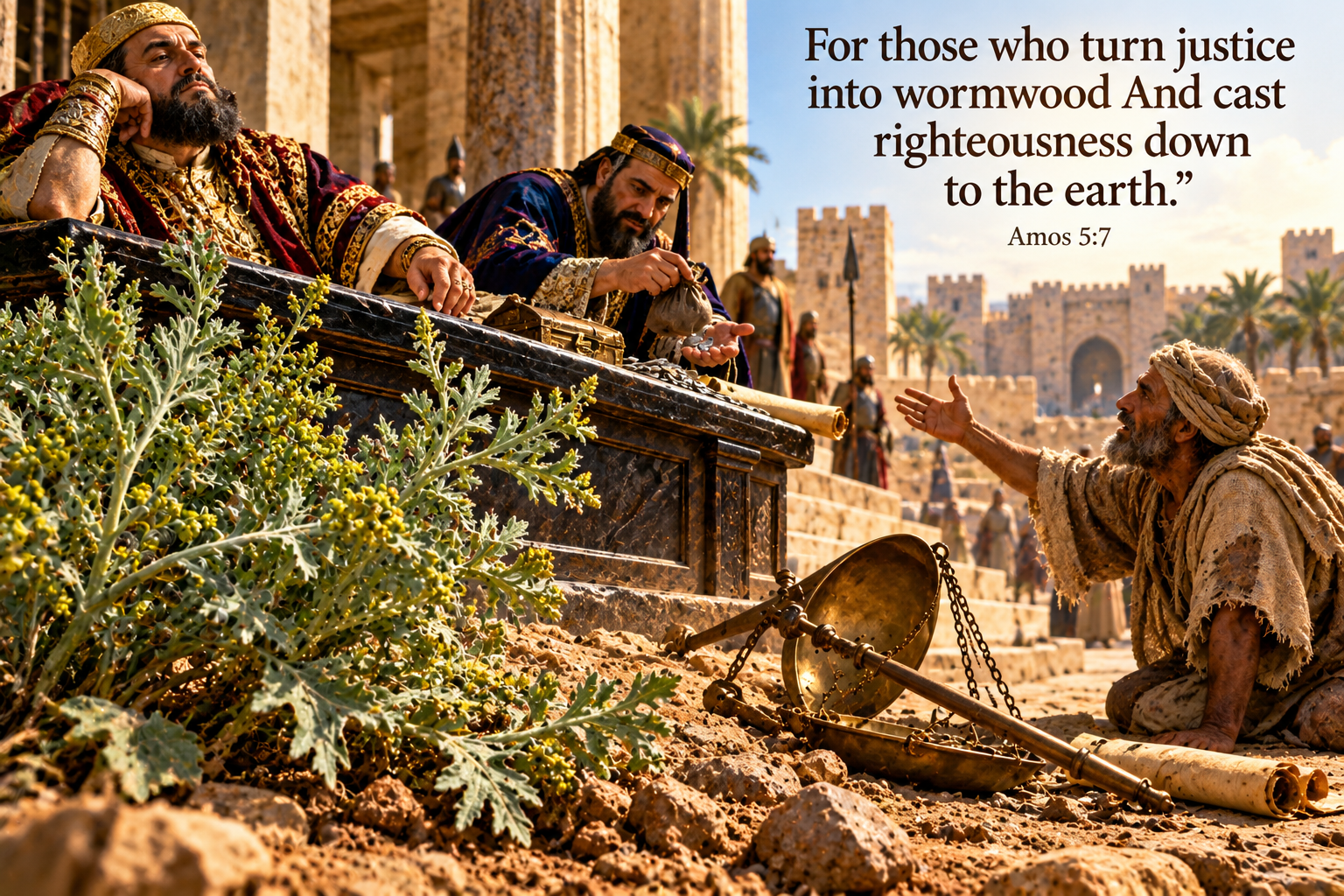
Amos 5:7
Amos 5:8
Amos 5:9
Amos 5:10
Amos 5:11
Amos 5:12
Amos 5:13
Amos 5:14
Amos 5:15
Amos 5:16
Amos 5:17
Amos 5:18
Amos 5:19
Amos 5:20
Amos 5:21
Amos 5:22
Amos 5:23
Amos 5:24
Amos 5:25
Amos 5:26
Amos 5:27
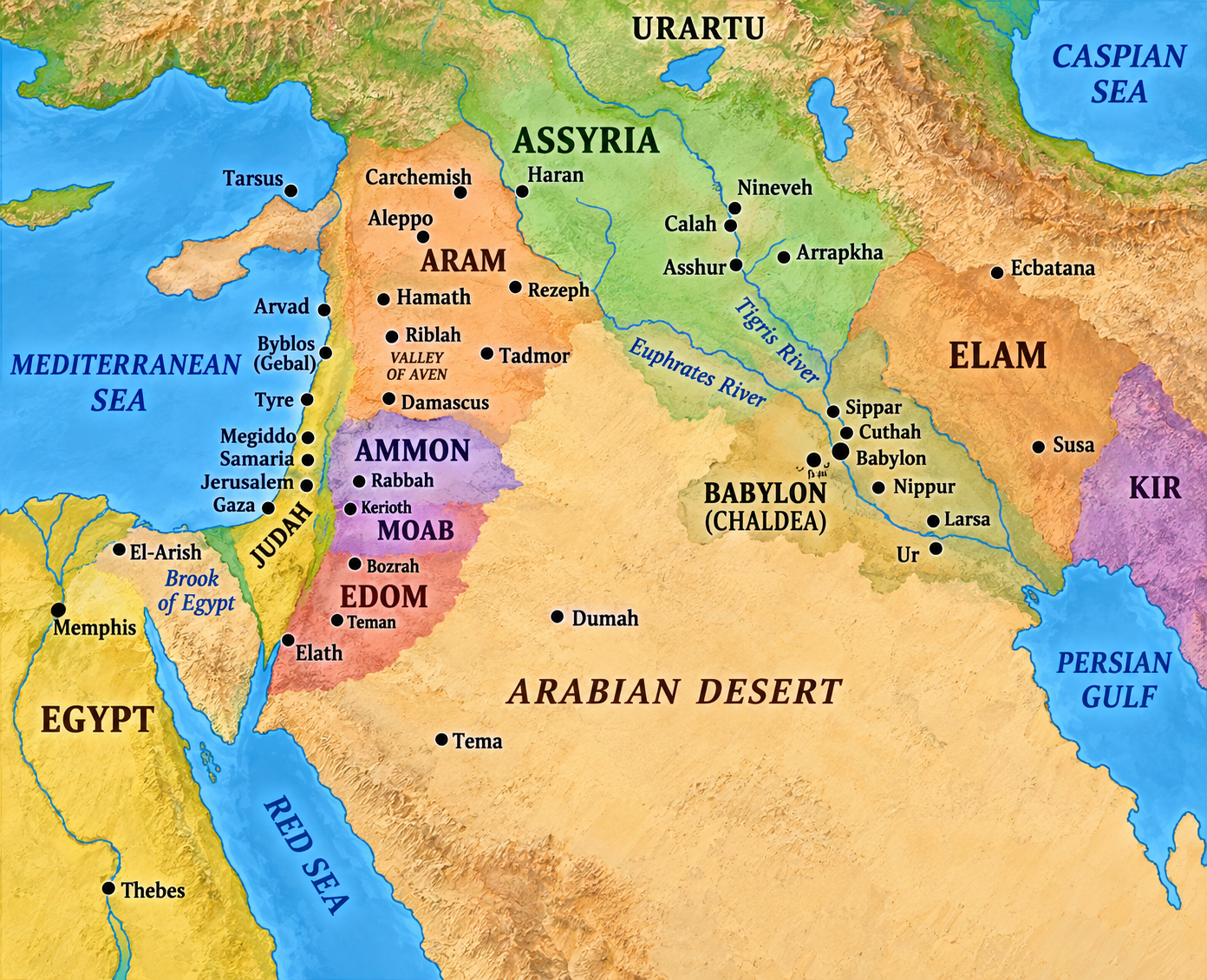

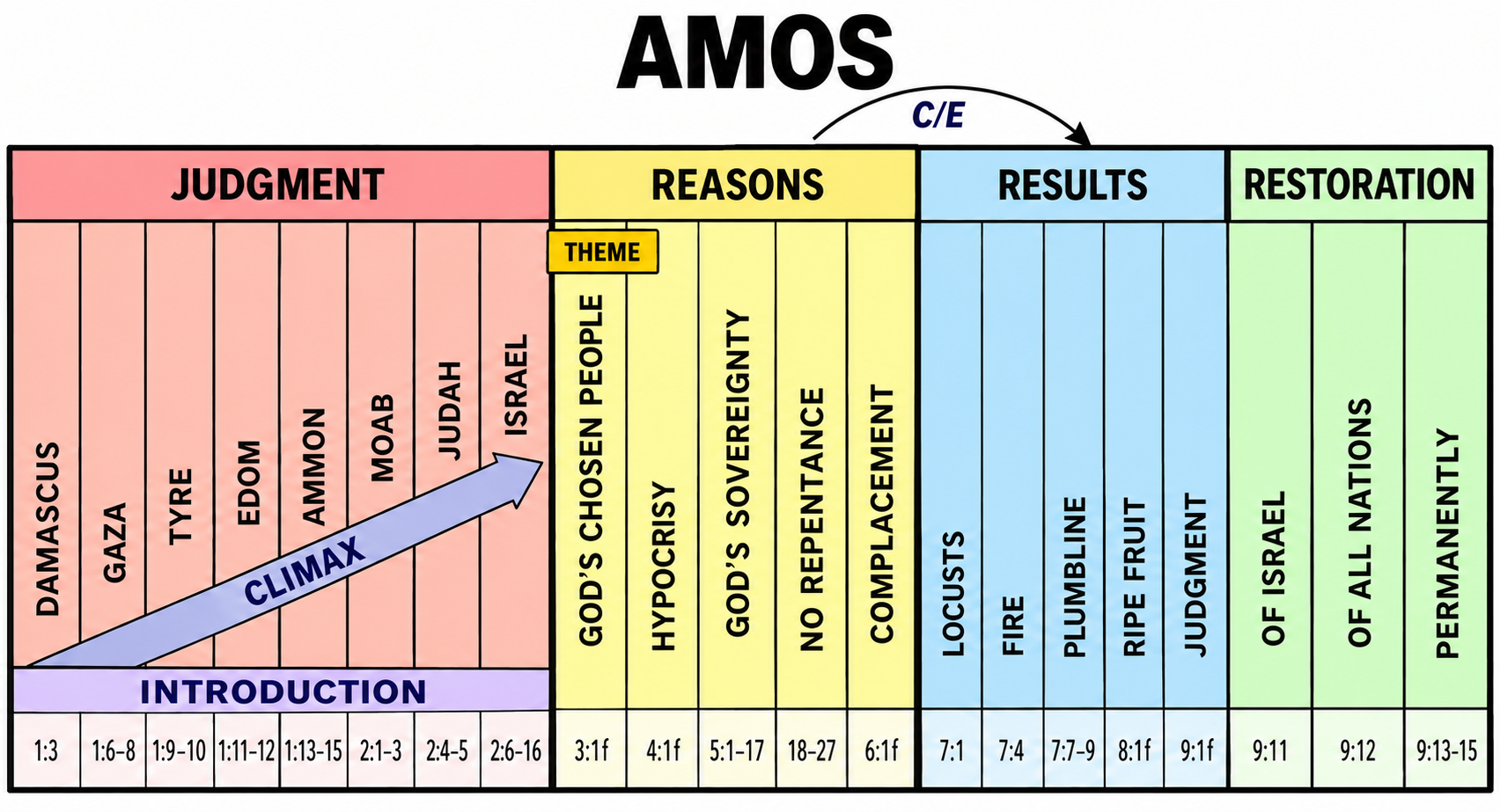
Click chart to enlarge
From Hampton Keathley IV
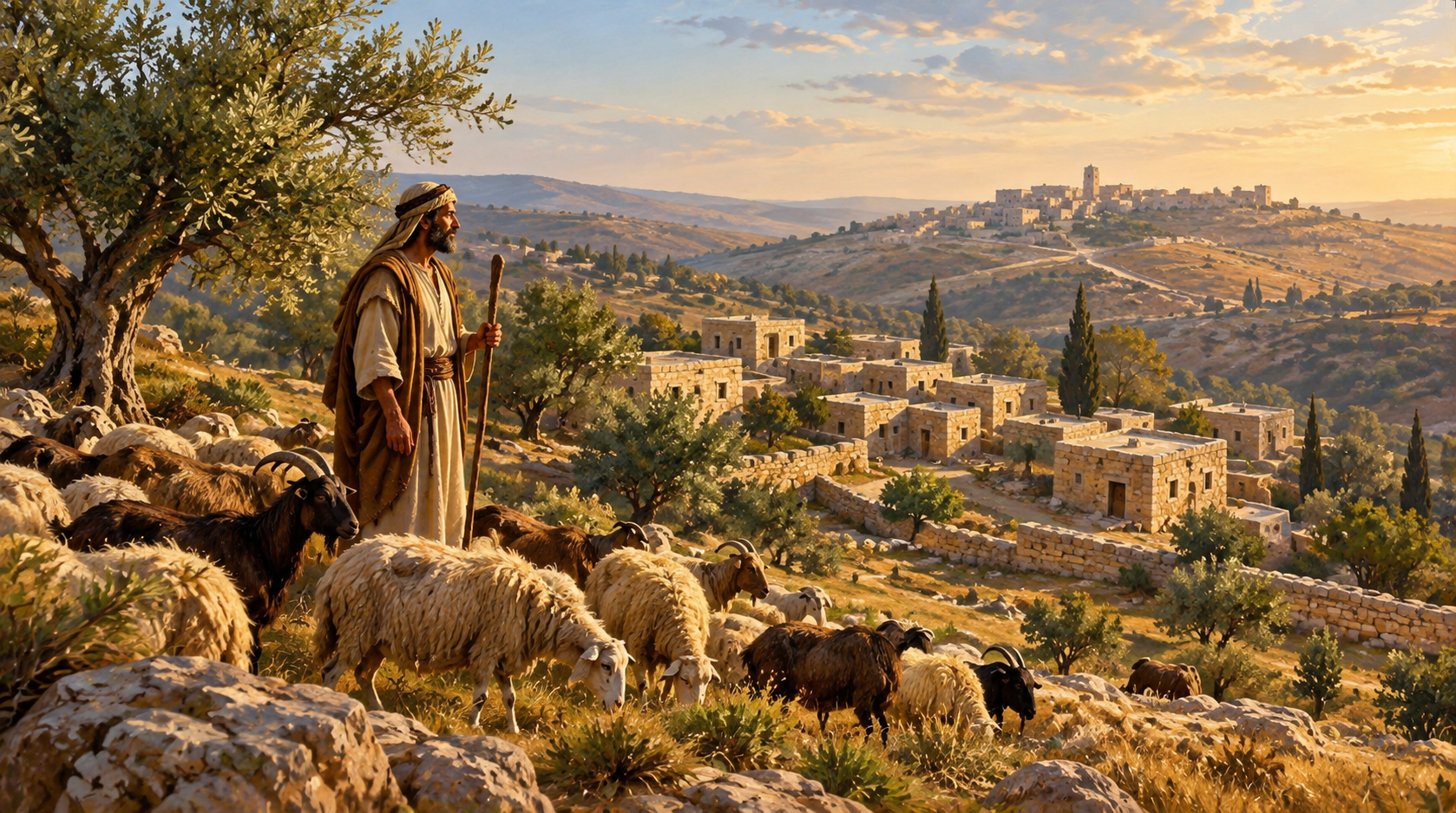
Amos 5:1 Hear this word which I take up for you as a dirge, O house of Israel:
- Hear (KJV): Am 3:1 Am 4:1
- I take (KJV): Am 5:16 Jer 7:29 9:10,17,20 Eze 19:1,14 26:17 27:2,27-32 28:12 Eze 32:2,16 Mic 2:4
Related Passages:
Amos 3:1 Hear this word which the LORD has spoken against you, sons of Israel, against the entire family which He brought up from the land of Egypt:
Amos 4:1 Hear this word, you cows of Bashan who are on the mountain of Samaria, Who oppress the poor, who crush the needy, Who say to your husbands, “Bring now, that we may drink!”
Amos 5:16 Therefore thus says the LORD God of hosts, the Lord, “There is wailing in all the plazas, And in all the streets they say, ‘Alas! Alas!’ They also call the farmer to mourning And professional mourners to lamentation.
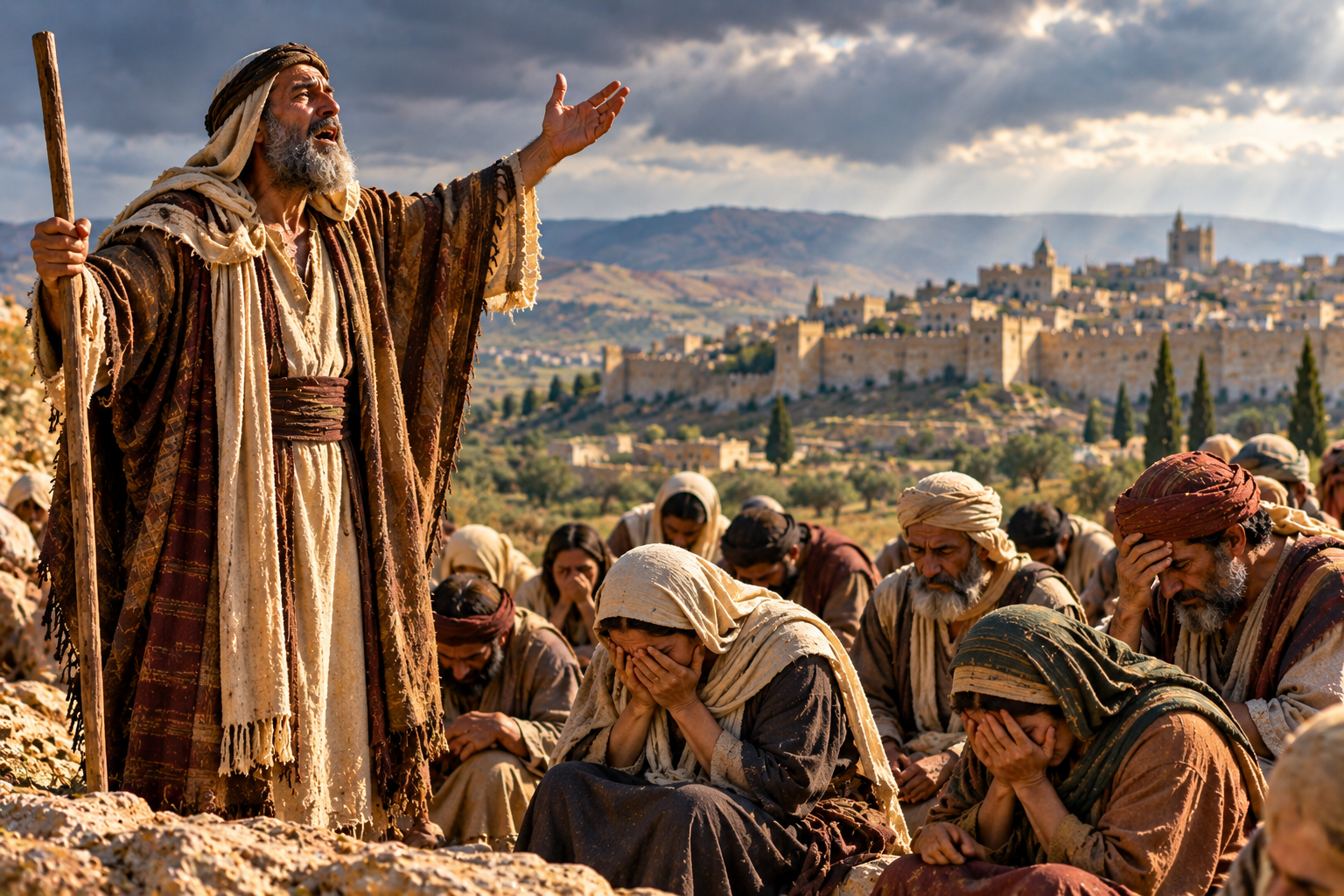
Amos' Funeral Song to Israel
A FUNERAL SONG
FOR THE "WALKING DEAD"
Hear (listen to) this word - Once again Amos begins with the solemn command “Hear!” This has become an important structural marker in the book (Amos 3:1; 4:1; 5:1). The Hebrew shama means more than merely allowing sound to enter one's ears. In contexts like this it carries the idea of hearing attentively and responding appropriately. There is painful irony here. God has repeatedly spoken, but Israel has repeatedly refused to respond. Amos 4 ended with the fivefold refrain “Yet you have not returned to Me.” (Amos 4:6, 8–11) Now chapter 5 begins “HEAR this word.” God is indeed longsuffering! Israel had repeatedly refused to return; God graciously gives them another opportunity to hear.
ESV Study Bible refers to Amos 5:1–17 An Oracle of Entreaty. A special feature of this oracle is God’s pleading for his people to return to him. Although they face imminent destruction, it is still not too late to seek God and his goodness (Amos 5:4–6, 14).
Which I take up for you (I am ready to sing about you) - Amos now assumes the role not merely of a prophet, but almost of a professional mourner.The expression “take up” was commonly associated with raising or beginning a lamentation over someone who had died. But there is something extraordinary here. Israel was not dead yet! Its cities were functioning. Its wealthy were still prospering (the "stock market" was reaching all time highs!) Its religious ceremonies were continuing as people continued worshiping the golden calves at Bethel and Dan. Its people were living their normal, spiritual lives. But they were spiritually dead (Eph 2:1). And so Amos begins singing their funeral song. Why? Because God's judgment was so certain that Amos could lament Israel's fall as though it had already happened.
Note the phrase for you - Israel is being invited to listen to her own funeral song. Imagine how shocking that must have sounded. The people probably expected songs celebrating Israel's victories and prosperity. Instead Amos stands before prosperous Israel and essentially announces "I have come to sing at your funeral."
As a dirge (funeral song), O house of Israel (entire Northern Kingdom): The Hebrew qinah describes a lament, funeral song, or elegy, especially mourning over the dead. This changes the emotional tone of Amos. Amos does not gleefully announce Israel's destruction but mourns over it. The true prophet does not rejoice over the judgment he announces (one wonders if this applies to Jonah?) but grieves over the people who refuse God's warning. There is a lesson here for anyone who teaches God's Word. Biblical warnings should never be delivered with smug satisfaction. Truth without tears can become harsh.
Bob Utley - dirge - This is a specialized poetic structure that is found in Amos 5:2-6 and Amos 5:16-17. This Hebrew word "dirge" (BDB 884, KB 1097) refers to a particular poetic beat pattern of 3-2, 3-2 (e.g. 2 Sam. 1:19-27; 3:33-34). It is used quite extensively in the book of Lamentations. This form characterized funeral songs or chants (cf. Amos 5:16-17, 18-20). These songs were an expected part of the funeral service. ▣ "O house of Israel" The term "house" (BDB 108) is used in the sense of family or descendants (cf. Amos 1:4,5; 7:9). The phrase "house of Israel" is used several times by Amos (cf. Amos 5:1,3,4,25; 6:1,14; 7:10,16; 9:9) to refer to the Northern Ten Tribes that split off from Judah in 922 B.C.. in the reign of Rehoboam because of forced labor and heavy taxation. These breakaway tribes took for themselves the name of the father of the Hebrew tribes "Israel" (Jacob). Twice in Amos the phrase "house of Jacob" is used (cf. Amos 3:13; 9:8). It if often difficult to know if Amos is referring only to the northern tribes or if he is addressing all the descendants of Jacob/Israel.
DIRGE: A ”lament“ was ordinarily a poem of grief sung at the funeral of a relative, friend, or leader (2Sa 1:17-27; 3:33-34; 2Chr 35:25). Prophets, however, also used this poetic form to mourn the death of a city, people, or nation (Jer. 7:29; 9:10-11, 17-22; Ezek. 19; 26:17-18; 27:2, 32; 28:12; 32:2). Though Israel was at the height of prosperity under Jeroboam II, her judgment was so certain that Amos lamented her fall as though it had already happened. To his listeners, hearing this lament would be as jarring as reading one’s own obituary in the newspaper (like someone calling me several years ago when a Marty Hurt was reported in the obituaries and I got called.)
Outwardly, things looked good. God's prophet saw something entirely different. Israel saw prosperity. Amos saw a funeral approaching. A nation can appear strongest economically at the very moment it is weakest spiritually. O America take heed to this warning!
Israel was celebrating prosperity
while Amos was singing her funeral song.
🙏 THOUGHT: Outward prosperity is a poor measure of spiritual health. Israel could look at its wealth, buildings, religious activity, and national strength and conclude that everything was fine. God looked at the same nation and heard a funeral song: "She has fallen, she will not rise again, the virgin Israel" (Amos 5:1–2). Centuries later, Jesus spoke the same kind of verdict over two churches. To Sardis He said, "You have a name that you are alive, but you are dead" (Revelation 3:1). To Laodicea, which boasted, "I am rich, and have become wealthy, and have need of nothing," He replied, "You do not know that you are wretched and miserable and poor and blind and naked" (Revelation 3:17). Man looks at the outward appearance, but the LORD looks at the heart (1 Samuel 16:7). The vital question is never simply, "How are things going?" but "How am I walking with God?" That is why the psalmist did not trust his own self-assessment but invited God's: "Search me, O God, and know my heart; Try me and know my anxious thoughts; 24 And see if there be any hurtful way in me, And lead me in the everlasting way." (Psalm 139:23, 24). Paul likewise urged the Corinthians, "Test (peirazo) ourselves to see if you are in the faith; examine (dokimazo) yourselves! Or do you not recognize this about yourselves, that Jesus Christ is in you–unless indeed you fail the test (adokimos)?" (2 Corinthians 13:5). The word "examine" (dokimazō) pictures testing metal to prove it genuine. An honest examination now, under God's searching light, is far better than discovering too late that what looked like life was only a well-decorated funeral.
Amos 5:2 She has fallen, she will not rise again– The virgin Israel. She lies neglected on her land; There is none to raise her up.
- virgin (KJV): Isa 37:22 Jer 14:17 18:13 31:4 La 2:13
- is fallen (KJV): 2Ki 15:29 2Ki 17:16 Isa 3:8 Ho 14:1
- she shall (KJV): Isa 14:21 24:20 43:17 Jer 51:64
- she is (KJV): Jer 4:20
- none (KJV): Am 7:2-5 9:11 Isa 51:17,18 Jer 2:27 30:12-14 La 1:16-19 Eze 16:36,37 Ho 6:2
Related Passages:
Jeremiah 14:17“You will say this word to them, ‘Let my eyes flow down with tears night and day, And let them not cease; For the virgin daughter of my people has been crushed with a mighty blow, With a sorely infected wound.
2 Kings 17:5-6 Then the king of Assyria invaded the whole land and went up to Samaria and besieged it three years. 6 In the ninth year of Hoshea (722 BC), the king of Assyria captured Samaria and carried Israel away into exile to Assyria, and settled them in Halah and Habor, on the river of Gozan, and in the cities of the Medes.
2 Kings 17:16 They forsook all the commandments of the LORD their God and made for themselves molten images, even two calves, and made an Asherah and worshiped all the host of heaven and served Baal.
Isaiah 3:8 For Jerusalem has stumbled and Judah has fallen, Because their speech and their actions are against the LORD, To rebel against His glorious presence.
Hosea 14:1 Return, O Israel, to the LORD your God, For you have stumbled because of your iniquity.
Amos 9:11-15 “In that day I will raise up the fallen booth of David, And wall up its breaches; I will also raise up its ruins And rebuild it as in the days of old; 12 That they may possess the remnant of Edom And all the nations who are called by My name,” Declares the LORD who does this. 13 “Behold, days are coming,” declares the LORD, “When the plowman will overtake the reaper And the treader of grapes him who sows seed; When the mountains will drip sweet wine And all the hills will be dissolved. 14 “Also I will restore the captivity of My people Israel, And they will rebuild the ruined cities and live in them; They will also plant vineyards and drink their wine, And make gardens and eat their fruit. 15 “I will also plant them on their land, And they will not again be rooted out from their land Which I have given them,” Says the LORD your God.
Revelation 7:4-8 And I heard the number of those who were sealed, one hundred and forty-four thousand sealed from every tribe of the sons of Israel: 5 from the tribe of Judah, twelve thousand were sealed, from the tribe of Reuben twelve thousand, from the tribe of Gad twelve thousand, 6 from the tribe of Asher twelve thousand, from the tribe of Naphtali twelve thousand, from the tribe of Manasseh twelve thousand, 7 from the tribe of Simeon twelve thousand, from the tribe of Levi twelve thousand, from the tribe of Issachar twelve thousand, 8 from the tribe of Zebulun twelve thousand, from the tribe of Joseph twelve thousand, from the tribe of Benjamin, twelve thousand were sealed.
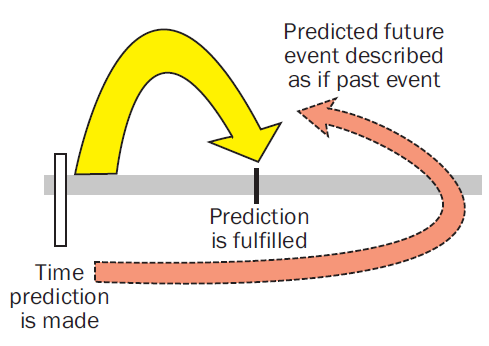
THE PROPHETIC PERFECT ILLUSTRATED
WHEN FALSE SECURITY
COLLAPSES
She has fallen, - Now Amos gives us the words of that dirge which must be startling to the Israelites because Israel had not yet fallen. Fallen (naphal) means to fall, fall down, collapse, or be overthrown and the past tense is used to reflect the fact that her fallen is absolutely certain to occur. This is sometimes called the prophetic perfect, where a future event is described with the certainty of an accomplished reality. What the citizens of Israel surely considered impossible, God considered settled. This is the perspective of prophecy. Amos sees Israel's future not through the nation's present circumstances but through God's declared Word.
Bob Utley - This (BDB 656, KB 709, Qal PERFECT) is a PROPHETIC PERFECT that describes something that will happen in the future as if it has already occurred. The term was used of death in battle (e.g. Jer. 9:22; 46:12; Lam. 2:21; Hosea 7:7).
She will not (LXX has "ou" = absolutely not) rise (qum; LXX - anistemi - rise up) again – This makes the prophetic announcement even more severe. The coming national collapse would not be a temporary military setback (as in past defeats) from which the northern kingdom recover. Within about 30+/- years of Amos' prophecy Assyria would conquer Samaria and deport many of its inhabitants (2 Ki 17:5,6). The northern kingdom would cease forever to exist as an independent nation. This does not mean that God had permanently canceled His purposes for Israel for Amos himself later speaks of future restoration (Amos 9:11–15, and compare Rev 7:4-8). The immediate point concerns the approaching fall of the northern kingdom. The kingdom that believed itself secure was approaching a fall from which it would not recover.
The virgin (bethulah; LXX - parthenos) Israel - This phrase personifies the nation as a young woman who should have possessed life, vitality, hope, and a future but instead she will soon lie fallen and ravaged. The expression makes the dirge even more emotionally powerful as the nation is depicted as a young woman lying helpless upon the ground. The tragedy was not merely that Israel fell, but that a nation blessed with such privilege and promise and potential fell through persistent rebellion.
ESV Study Bible Virgin Israel is an image used frequently in the prophets to speak of the special value God places on Israel. She is like a virgin daughter to him, and the thought of her selling herself into prostitution or being raped by an enemy is heartbreaking to him.
She lies neglected (natash/natas - abandoned) on her land - The picture becomes even more pathetic. The word translated “neglected” carries the sense of being forsaken, abandoned, or left lying there. Israel lies prostrate upon the very land God had given her. Think of the irony. God had promised the land, brought Israel into the land, blessed Israel in the land, and now Israel lies fallen upon the land because she had persistently rebelled against the God Who gave it. Tragically the land that testified to God's faithfulness would now witness Israel's unfaithfulness.
Bob Utley - "the virgin Israel" This term is parallel with "house of Israel." YHWH took special care and provided protection for them, like an unmarried daughter (cf. Jer. 14:17) or bride to be (cf. Jer. 18:13; 31:4,21). This reflects the marriage imagery for YHWH as husband and His covenant people as wife (e.g. Isa. 54:5; Hosea 2:19; Eph. 5:22-33) (ED: See Israel the Wife of Jehovah). The later rabbis saw the wilderness wandering period as their honeymoon (cf. Jer. 2:2-3; Hosea 2:16). But now the context is of the rape and death of Israel by Assyrian invasion. ▣ "She lies neglected on her land" The VERB (BDB 643, KB 695, Niphal PERFECT) means forsaken, abandoned to plunder. The land of promise is now the place of judgment.
There is none to raise (lift) her up - NET = "with no one to help her get up." This part of the dirge is especially sad. Everything Israel trusted besides God would prove powerless when she needed it most. Recall that God had previously described Israel as “a firebrand snatched from a blaze.” (Amos 4:11) so that previousy God had spared them. But they interpreted repeated deliverances as though they were indestructible. Not so now for now there will be no one to raise her up. The only One Who could truly restore Israel was the very God she refused to seek.
Bob Utley - "There is none to raise her up" This is the same VERBAL (BDB 877, KB 1086, Hiphil PARTICIPLE) used earlier in the verse (Qal INFINITIVE CONSTRUCT). It seems to be a sarcastic allusion to the inability of the Canaanite gods (whom Israel worshiped) to rescue her from YHWH's judgment (cf. Amos 5:6). The powerlessness, the non-existence of Canaanite deities is ridiculed!
Sin always promises that we can
continue indefinitely without consequences.
🙏 THOUGHT: Sin always promises that we can continue indefinitely without consequences. Israel's prosperity seemed to confirm that illusion. But God's Word saw the end from the beginning: "She has fallen, she will not rise again... there is none to raise her up" (Amos 5:2). Sin's promise has always been a lie. "Do not be deceived, God is not mocked; for whatever a man sows, this he will also reap" (Galatians 6:7), and Moses warned, "Be sure your sin will find you out" (Numbers 32:23). The safest response to God's warning is never presumption but repentance. And when we do fall, our hope is never ultimately in our own strength to raise ourselves. Our hope is in the God Who Alone can lift the fallen. "The steps of a man are established by the LORD, and He delights in his way. When he falls, he will not be hurled headlong, because the LORD is the One who holds his hand" (Psalm 37:23, 24). "The LORD sustains all who fall and raises up all who are bowed down" (Psalm 145:14). Micah could say even in his darkest hour, "Do not rejoice over me, O my enemy. Though I fall I will rise; though I dwell in darkness, the LORD is a light for me" (Micah 7:8). Remarkably, the same book that sings Israel's funeral dirge ends with a promise: "In that day I will raise up the fallen booth of David... and rebuild it as in the days of old" (Amos 9:11). Where Israel had no one to raise her up, God Himself would. That is the gospel in miniature: the fallen cannot lift themselves, but the LORD can, and He does.
Amos 5:3 For thus says the Lord GOD, “The city which goes forth a thousand strong Will have a hundred left, And the one which goes forth a hundred strong Will have ten left to the house of Israel.”
- The city (KJV): De 4:27 Dt 28:62 Isa 1:9 Isa 10:22 Eze 12:16 Ro 9:27
Related Passages:
Deuteronomy 4:27 “The LORD will scatter you among the peoples, and you will be left few in number among the nations where the LORD drives you.
Deuteronomy 28:25 “The LORD shall cause you to be defeated before your enemies; you will go out one way against them, but you will flee seven ways before them, and you will be an example of terror to all the kingdoms of the earth.
Deuteronomy 28:62 “Then you shall be left few in number, whereas you were as numerous as the stars of heaven, because you did not obey the LORD your God.
Deuteronomy 32:30 “How could one chase a thousand, And two put ten thousand to flight, Unless their Rock had sold them, And the LORD had given them up?
Isaiah 1:9 Unless the LORD of hosts Had left us a few survivors, We would be like Sodom, We would be like Gomorrah.
Isaiah 10:22 For though your people, O Israel, may be like the sand of the sea, Only a remnant within them will return; A destruction is determined, overflowing with righteousness.
Ezekiel 12:16 “But I will spare a few of them from the sword, the famine and the pestilence that they may tell all their abominations among the nations where they go, and may know that I am the LORD.”
Romans 9:27 Isaiah cries out concerning Israel, “THOUGH THE NUMBER OF THE SONS OF ISRAEL BE LIKE THE SAND OF THE SEA, IT IS THE REMNANT THAT WILL BE SAVED;
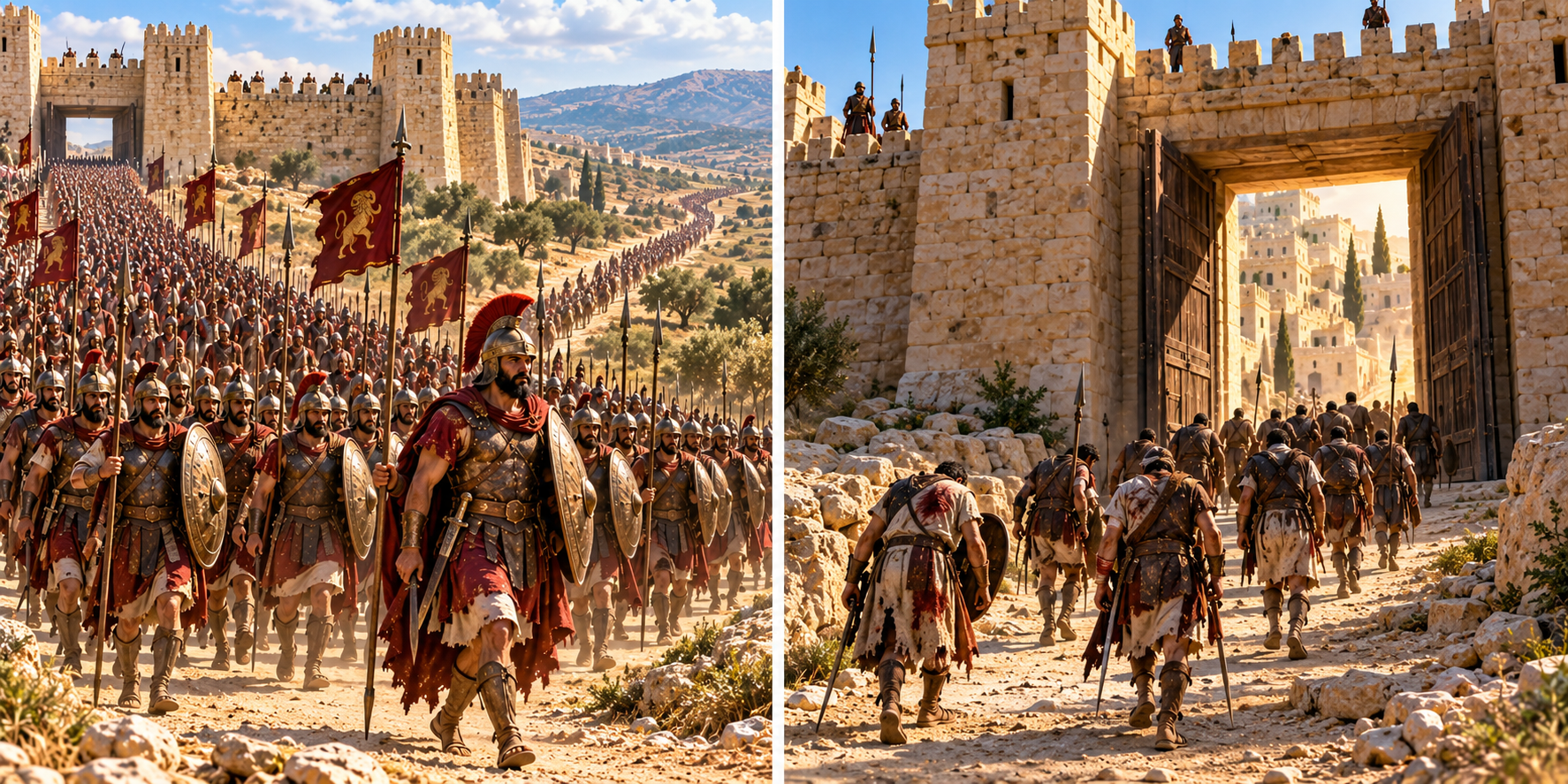
1000 Reduced to 100
DEVASTATING DECIMATION
LEAVING ONLY A REMNANT
For (term of explanation) thus says the Lord ('adonay) GOD (Jehovah - Yahweh)(Sovereign Lord) - For explains why Amos can say with such certainty that Israel has fallen and lies helpless with “none to raise her up” (Amos 5:2). This is not Amos' pessimistic prediction, but is from the mouth of the sovereign Lord which assures it will surely come to pass.
The city which goes forth (marches out with) a thousand (soldiers) strong will have a hundred left - A city sends out 1,000 fighting men to battle. These are presumably able-bodied soldiers representing the city's military strength, but nine out of ten are cut down. A staggering 90 percent loss represents catastrophic devastation. Amos does not say 100 would triumph but that only 100 would survive. Losing ninety percent means an army is finished as a fighting force. The survivors aren't a seed for the future. They show how complete the defeat was, the same way the scraps from the lion's mouth in Amos 3:12 prove the sheep is dead. So the "survivors" in Amos 5:3 are better called leftovers than a remnant in the theological sense. This is the opposite of the blessing promised in verses like Lev 26:8 which says "five of you will chase a hundred, and a hundred of you will chase ten thousand, and your enemies will fall before you by the sword."
David Hubbard - The point, underscored by the messenger formula, is not that a remnant will survive but that the judgment which this verse announces will be virtually total, so sweeping that the only proper response is a dirge.
Leon Wood - Only a handful of ragged, war-weary men will be left of Israel’s proud army.
Trent Butler - This did not represent a remnant with hope. This represented defeat and destruction. (Holman Old Testament Commentary - Hosea, Joel, Amos- Page 206)
Bob Utley - This was one of the covenant curses (the terms "thousands" [BDB 48] and "hundreds" [BDB 547] were military units). The emphasis in this verse is not on a remnant returning (cf. Isa. 6:13), but on the extreme military devastation that will occur.
And the one (town) which goes forth a hundred strong will have (only) ten left to the house (family) of Israel.- Amos dirge repeats the image on a smaller scale but with the same devastating result. The Lord GOD's point through His prophet Amos' is that whether the city was large or small, no community would escape the consequences of Israel's rebellion.
The 90 percent death rate shows why Amos frames this message as a funeral dirge (Amos 5:1–2). The city that marched out a thousand strong will have only a hundred left, and the one that sent out a hundred will have only ten. Israel is still alive, but Amos is already mourning her as dead.
NET NOTE - Heb “The one.” The word “town” has been used in the NET translation in keeping with the relative sizes of the armed contingents sent out by each. It is also possible that this line is speaking of the same city of the previous line. In other words, the contingent sent by that one city would have suffered a ninety percent casualty loss.
🙏 THOUGHT: Numbers can create a false sense of security. We may trust our resources, strength, influence, savings, organization, or human support. God can reduce a thousand to a hundred and a hundred to ten in a moment. I have experienced this from a financial standpoint! Our confidence must never rest primarily in how much we possess, but in the God we possess. When everything else is reduced, God remains enough. (Ps 20:7; Ps 33:16–18)
Amos 5:4 For thus says the LORD to the house of Israel, “Seek Me that you may live.
- Seek (KJV): Am 5:6 De 30:1-8 1Ch 28:9 2Ch 15:2 2Ch 20:3 2Ch 34:3 Ps 14:2 Ps 27:8 Isa 55:6-7 Jer 29:12-13 La 3:25-26 Zep 2:3 Mt 7:8
- and (KJV): Ps 22:26 69:32 105:3,4 Isa 55:3
Related Passges:
Deuteronomy 4:29 “But from there you will seek the LORD your God, and you will find Him if you search for Him with all your heart and all your soul.
1 Chronicles 28:9 “As for you, my son Solomon, know the God of your father, and serve Him with a whole heart and a willing mind; for the LORD searches all hearts, and understands every intent of the thoughts. If you seek Him, He will let you find Him; but if you forsake Him, He will reject you forever.
2 Chronicles 15:2 and he went out to meet Asa and said to him, “Listen to me, Asa, and all Judah and Benjamin: the LORD is with you when you are with Him. And if you seek Him, He will let you find Him; but if you forsake Him, He will forsake you.
2 Chronicles 20:3 Jehoshaphat was afraid and turned his attention to seek the LORD, and proclaimed a fast throughout all Judah.
2 Chronicles 34:3 For in the eighth year of his reign while he was still a youth, he began to seek the God of his father David; and in the twelfth year he began to purge Judah and Jerusalem of the high places, the Asherim, the carved images and the molten images.
Psalm 14:2 The LORD has looked down from heaven upon the sons of men To see if there are any who understand, Who seek after God.
Psalms 27:8 When You said, “Seek My face,” my heart said to You, “Your face, O LORD, I shall seek.”
Isaiah 55:6-7 Seek the LORD while He may be found; Call upon Him while He is near. 7Let the wicked forsake his way And the unrighteous man his thoughts; And let him return to the LORD, And He will have compassion on him, And to our God, For He will abundantly pardon.
Jeremiah 29:12-13 ‘Then you will call upon Me and come and pray to Me, and I will listen to you. 13‘You will seek Me and find Me when you search for Me with all your heart.
Lamentations 3:25-26 The LORD is good to those who wait for Him, To the person who seeks Him. 26 It is good that he waits silently For the salvation of the LORD.
Zephaniah 2:3 Seek the LORD, All you humble of the earth Who have carried out His ordinances; Seek righteousness, seek humility. Perhaps you will be hidden In the day of the LORD’S anger.
Matthew 6:33 “But seek first His kingdom and His righteousness, and all these things will be added to you.
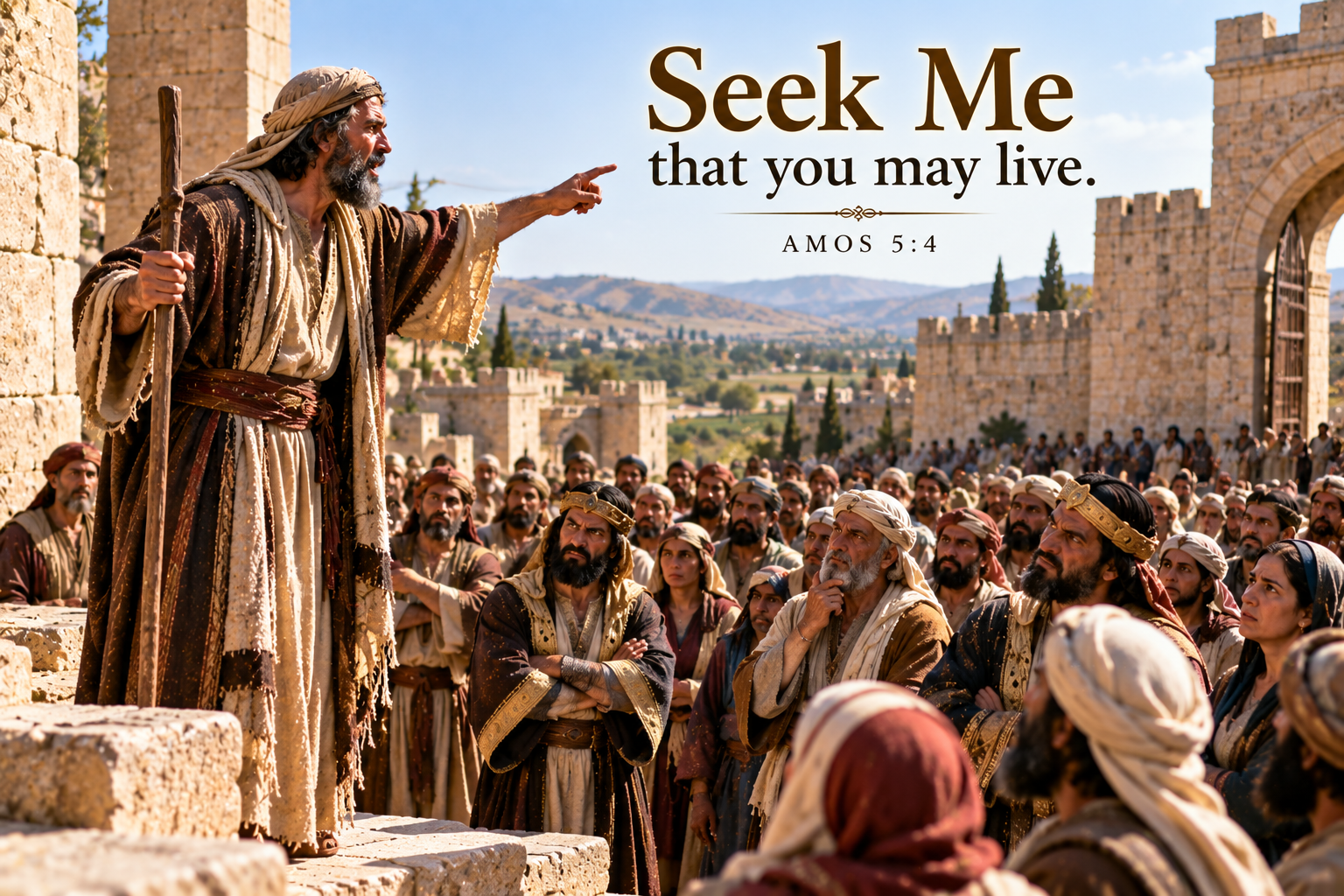
SEEK ME AND LIVE
THE WAY FROM DEATH TO LIFE
For (term of explanation) thus says the LORD to the house of Israel - Keep the context in mind. The prophet has just sung Israel's funeral dirge and he now introduces one of the most remarkable reversals in the entire book. This invitation is addressed to the very people (house of Israel) who have repeatedly refused God's warnings.
Seek (darash; LXX - ekzeteo - diligent investigation in aorist imperative see need to depend on the Holy Spirit to obey) Me that you may live (chayah; LXX - zao) - NET "so you can live!" - He has just described death of the majority of their army. In the middle of a funeral song, God offers life. Judgment is approaching, but the door of repentance has not yet closed. In Amos 4 God had said five times “Yet you have not returned to Me.” (Amos 4:6, 8–11) One might expect God finally to say “Then I am finished with you.” Instead He says “Seek Me.” Oh, the longsuffering and love of the LORD! The verb seek means to inquire, search for, resort to, or pursue and is not a casual glance in God's direction. It speaks of deliberately turning one's attention toward Him and earnestly seeking Him.
Israel was already intensely religious. They traveled to sanctuaries, offered sacrifices, paid tithes, and presented freewill offerings (Amos 4:4, 5). Their problem was not that they had stopped seeking religion. Their problem was that they had stopped seeking God. Now God says that He Himself is the object of the search. He does not say seek My blessings, but seek Me! The greatest gift God could give Israel was not rain on their fields but restoration to Himself. Seek ME is the same deeply personal language we encountered repeatedly in chapter 4 when He said “Return TO ME.” God's goal has always been relational.
The promise connected to seeking Him is amazing, that you may live. In the immediate context, physical survival from the approaching national catastrophe is certainly prominent. But the theological significance goes deeper for true life is inseparable from relationship with the living God (cf Jn 10:10b).
There is a powerful contrast with the earlier command “Enter BETHEL and transgress.” (Amos 4:4) versus “Seek ME that you may live.” (Amos 5:4) That contrast summarizes Israel's spiritual problem. They were pursuing place instead of person, religion instead of relationship. Amos 5:4 says the answer to false religion is not no religion, but a genuine relationship with the living God. Although God's judgment is certain, His mercy continues to call before judgment falls.
Bob Utley - "seek Me" The Hebrew VERB (BDB 205, KB 233) is a Qal IMPERATIVE (cf. Amos 5:6,14-15). The connotation of the Hebrew phrase "to seek" involved going to a sanctuary, however, the context of Amos 5:5 demands that we must seek God on an individual, as well as corporate, basis (cf. Deut. 4:29), not just in religious ritual. Our attitudes, motives, and lifestyle faith are crucial. Basically this is a call to repentance to those who already knew (covenantal aspect) YHWH (cf. Rev. 3:20). Fellowship with YHWH demands an ethical life. In Amos 5:4 Amos says, "Seek the Lord." This same VERB is also found in Amos 5:14, "seek good and not evil." These three are somewhat parallel. YHWH is said several times to be good (e.g. Ps. 86:5; 100:5; 106:1; 107:1; 118:1,29). Therefore, seeking "Me" and seeking "good" may refer to YHWH (notice the second line of Amos 5:14). This same symbolism can be seen in Hosea 8:2, 3. The Hebrew term "seek" has several meanings. (1) inquire of (2) seek a deity in prayer and worship (3) investigate (to know the heart) (4) ask or demand. In this context #2 fits best (cf. Deut. 4:29; Hosea 10:12; Isa. 9:13; 31:1; 55:6; 65:10). (See Seek the Lord)
NET NOTE - The following verses explain what it meant to seek the Lord. Israel was to abandon the mere formalism and distorted view of God and reality that characterized religious activity at the worship sites, as well as the social injustice that permeated Israelite society. Instead the people were to repent and promote justice in the land. This call to seek the Lord echoes the challenge in 4:13 to prepare to meet him as he truly is.
🙏 THOUGHT: THOUGHT: It is possible to seek God's blessings, God's help, God's guidance, God's protection, and even God's Word, yet subtly lose sight of seeking God Himself (as in the so-called "prosperity gospel"). God's invitation through Amos was personal: "Seek Me that you may live. But do not resort to Bethel and do not come to Gilgal, nor cross over to Beersheba" (Amos 5:4, 5). Israel was eager to visit the famous religious sites but had stopped seeking the God those sites were supposed to honor. The crowds who followed Jesus after He fed the five thousand fell into the same trap. He told them, "You seek Me, not because you saw signs, but because you ate of the loaves and were filled" (John 6:26). They wanted the bread, not the Bread of Life. The great question is not merely, "What do I want God to do for me?" but "Do I want God?" David's deepest desire was not a longer reign or more victories but "one thing... that I may dwell in the house of the LORD all the days of my life, to behold the beauty of the LORD" (Psalm 27:4). When God said, "Seek My face," his heart answered, "Your face, O LORD, I shall seek" (Ps 27:8). The psalmists thirsted for God Himself (Psalm 42:1–2; Ps 63:1), and Asaph could say, "Whom have I in heaven but You? And besides You, I desire nothing on earth" (Psalm 73:25). Paul counted everything as loss "in view of the surpassing value of knowing Christ Jesus my Lord" (Philippians 3:8). The greatest treasure of the Christian life is not merely what comes from His hand, but fellowship with His heart. It is not prosperity but a Person, Jesus Christ Himself! Seek the Giver more than His gifts.
Seek (01875) darash means to seek, to inquire of, to examine, to require, consult, ask. One of the most frequent uses of this word is in the expression "to inquire of God," which sometimes indicates a private seeking of God in prayer for direction (Gen. 25:22), and often it refers to the contacting of a prophet who would be the instrument of God's revelation (1 Sam. 9:9; 1 Kings 22:8). At other times this expression is found in connection with the use of the Urim and Thummim by the high priest as he sought to discover the will of God by the throwing of these sacred stones (Nu 27:21).
DARASH IN PROPHETS - Isa. 1:17; Isa. 8:19; Isa. 9:13; Isa. 11:10; Isa. 16:5; Isa. 19:3; Isa. 31:1; Isa. 34:16; Isa. 55:6; Isa. 58:2; Isa. 62:12; Isa. 65:1; Isa. 65:10; Jer. 8:2; Jer. 10:21; Jer. 21:2; Jer. 29:7; Jer. 29:13; Jer. 30:14; Jer. 30:17; Jer. 37:7; Jer. 38:4; Lam. 3:25; Ezek. 14:3; Ezek. 14:7; Ezek. 14:10; Ezek. 20:1; Ezek. 20:3; Ezek. 20:31; Ezek. 20:40; Ezek. 33:6; Ezek. 34:6; Ezek. 34:8; Ezek. 34:10; Ezek. 34:11; Ezek. 36:37; Hos. 10:12; Amos 5:4; Amos 5:5; Amos 5:6; Amos 5:14; Mic. 6:8; Zeph. 1:6
The Hebrew verb dārash (about 150–164 occurrences) means "to seek" or "to inquire," usually with care and with the goal of finding out or knowing. That sets it apart from its frequent partner bāqash. It covers everyday searching, like looking for a stray ox or sheep (Deut 22:2), and careful investigation, like Moses tracing what happened to the sin offering (Lev 10:16) or David asking who Bathsheba was (2 Sam 11:3). It can also mean "to care for": God cares for His land (Deut 11:12), the psalmist complains that no one cares for his soul (Ps 142:4), and the exiles are told to seek the welfare of Babylon (Jer 29:7). It also has a legal sense: God "requires" blood from anyone who takes a life (Gen 9:5; 2 Chr 24:22).
Theologically, dārash most often means inquiring of God for guidance, whether through a prophet, a priest, or His Word (Gen 25:22; Ex 18:15; 1 Kgs 22:5; Ezra 7:10). More broadly, it describes devoting one's whole life to Him, an orientation of the heart and not merely a single request. God promises to be found by those who seek Him with all their heart (Deut 4:29; Jer 29:13). The Chronicler judges Israel's kings by whether they sought the LORD or idols, and seeking mediums or false gods brings judgment (1 Sam 28:7; 1 Chr 10:13). The prophets rebuke Israel for refusing to seek God, or for seeking Him while holding on to sin (Isa 9:13; 58:2), yet they hold out life to those who truly do: "Seek Me that you may live" (Amos 5:4, 6), and even seek good itself (Amos 5:14).
QUESTION - What does God mean when He says, “Seek me and live” (Amos 5:4)? GOTQUESTIONS.ORG
ANSWER - Amos ministered as a prophet to Israel at the nation’s apex of prosperity and political power. Sadly, it was a time when true worship of God had been replaced with idolatry, immorality, greed, materialism, injustice, spiritual complacency, and self-reliance. God’s people, both in Judah to the south (Amos’s home) and Israel to the north (Amos’s mission field), faced the Lord’s judgment because they had forsaken Him. In a string of dire predictions of coming doom (Amos 3:1-6:14), Amos offers this one ray of hope: “This is what the Lord says to Israel: ‘Seek me and live’” (verse 5:4).
“Seek me and live” is the central theme and primary message of Amos. The prophet repeats, “Seek the Lord and live, or he will sweep through the tribes of Joseph like a fire; it will devour them, and Bethel will have no one to quench it” (Amos 5:6). Again, he implores, “Seek good, not evil, that you may live. Then the Lord God Almighty will be with you, just as you say he is” (Amos 5:14).
“Seek me and live” is the cry of God’s heart—His appeal for people to repent and pursue His forgiveness while there is still hope of salvation. The message echoes in Isaiah’s invitation: “Seek the Lord while he may be found; call on him while he is near” (Isaiah 55:6). It resonates in Zephaniah’s call: “Seek the Lord, all you humble of the land, you who do what he commands. Seek righteousness, seek humility; perhaps you will be sheltered on the day of the Lord’s anger” (Zephaniah 2:3).
“Seek me and live” is God’s invitation to return to “pure and genuine” devotion to the Lord (James 1:27), which is the foundation of our life and relationship with Him. When we forsake the Lord, we must humble ourselves before Him, repent, obey His commands, and walk in His ways again. Only in this way can we receive forgiveness of sins and restoration (2 Chronicles 7:14). The prophets repeatedly warned God’s rebellious children to return to authentic worship, which is our source of spiritual life and the only hope of salvation from the Lord’s judgment and wrath.
In the book of Acts, the apostle Paul informs the people of Athens that God’s desire has always been for all people to seek Him: “His purpose was for the nations to seek after God and perhaps feel their way toward him and find him—though he is not far from any one of us. For in him we live and move and exist” (Acts 17:27–28, NLT; see also Psalm 14:2). God is our “fountain of life” (Psalm 36:9). From Him we “draw water from the wells of salvation” (Isaiah 12:3; see also Revelation 21:6; 22:17; John 4:10; 7:38).
We should “continually seek him” (1 Chronicles 16:11, NLT) and “sincerely seek him” (Hebrews 11:6, NLT). The people of Amos’s day claimed to follow God with their words (see Amos 5:14), but their actions and devotions revealed a different truth. Wholehearted pursuit is the key to life with God: “You will seek me and find me when you seek me with all your heart” (Jeremiah 29:13; see also Deuteronomy 4:27–29). Like David, we must hunger and thirst for the Lord with our whole being (Psalm 63:1; Psalm 84:2; Psalm 42:1).
“Seek me and live” is God’s time-sensitive opportunity. “Indeed, the ‘right time’ is now. Today is the day of salvation,” says the Lord (2 Corinthians 6:2, NLT). No one is promised tomorrow. We have this one life with breath in our lungs today to seek God and live (Psalm 95:7–8; Hebrews 3:7–15; 4:7).
Not only is “seek me and live” the central theme of Amos and the prophets, but it is also the primary message of the gospel. God loves the people of the world so much that He sent His only Son to die in our place and, through His sacrifice, give us eternal life in Jesus Christ (John 3:16). The apostle John clarifies, “And this is what God has testified: He has given us eternal life, and this life is in his Son. Whoever has the Son has life; whoever does not have God’s Son does not have life. I have written this to you who believe in the name of the Son of God, so that you may know you have eternal life” (1 John 5:11–13).
We must first believe in Him, and then the Christian walk consists of seeking the Lord through a lifelong relationship with Him. Paul expounds, “He will give eternal life to those who keep on doing good, seeking after the glory and honor and immortality that God offers. But he will pour out his anger and wrath on those who live for themselves, who refuse to obey the truth and instead live lives of wickedness” (Romans 2:7–8, NLT).
Person Not Place - Oswald Chambers Seek ye Me, and ye shall live. Amos 5:4
The danger of seeking places of blessing is very prevalent. Beth-el, for instance, was the place of Divine blessing historically; it was there Abraham built an altar to the Lord, there Jacob had visions of God—what place could be more suitable to seek than Beth-el, there to have the spirit of communion revived and quickened by sweet and divine meditation? and yet God says, “But seek not Beth-el, nor enter into Gilgal.” Gilgal was the place of the first encampment of the children of Israel after crossing the Jordan; what could be better after sanctification than to return in memory to the place of our first encampment in the promised land? yet God says “nor enter into Gilgal, and pass not to Beersheba.” Beer-sheba was the place of wonderful refreshing; Abraham dwelt there; Hagar was relieved there; Jacob was comforted there. What could be better than a pilgrimage back to our “Beershebas,” the place where outcasts have been received, the discouraged encouraged, the failures revived and made successes? Yet God says, “and pass not to Beer-sheba.”
At first reading of these verses one might wonder what their message is when applied spiritually, and yet very little attention will reveal that it is the old story that it is the Lord Himself and not the places of blessing the children of God are to seek. The place of former victories for God, the place that was heaven on earth in days gone by, will be places of defeat and failure if you persist in going there as a means of reviving. The message of God is “Seek ye Me, and ye shall live.” It is the message that runs all through God’s Book and all through the experiences of the saint’s life. I wonder how many of us are trying to haunt places instead of seeking the Lord? There are places of revival to which the people of God take pilgrimages and spend hours and days and weeks there, trying to get a jaded life back again into communion with God, trying to revive by meditation and the power of association what can never be made alive apart from the living presence of God Himself. God is not confined to places, and where He once blessed, He may not bless again, it depends on the motive in seeking it.
“Seek ye Me, and ye shall live.” Oh the joy of that life with God and in God and for God! It takes a sharp discipline for many of us to learn that “my goal is God Himself, not joy, nor peace, nor even blessing, but Himself my God.”
C I Scofield - ISRAEL REPROVED (Amos 5:4–15)
I. The Analysis
1. God Outside the Former Means of Blessing (verses 1–6).—See below.
2. The Resource of An Apostate People (verses 7–10).—God always remains, no matter how deep the transgression, and the way back to Him is ever open.
3. The Sins of Israel (verses 11–15).—It is most striking that here we have enumerated the conspicuous sins of the present time.
II. The Heart of the Lesson
The significant thing here is that God puts Himself outside the accustomed, time-honored and even divinely instituted places of blessing. Corrupt and iniquitous Israel is exhorted to “seek the Lord,” but not at Bethel, Gilgal, nor Beersheba.
This is no new thing in the ways of God, nor is this by any means an isolated instance. The brazen serpent which had been so wonderfully used of God, instrumentally, in the wilderness (Numbers 21:8, 9), became, at last, a fetich to the people, and then to God “nehustan,” a piece of brass (2 Kings 18:4). How solemnly and with what awful sanctions was Jerusalem set apart as the place where God had set His name, and where alone sacrifices and offerings might be made to Him. But, when the place rather than the God of the place became the sacred fact in the thought of the people, how easily was it said, “Woman believe me, the hour cometh, when ye shall neither in this mountain, nor yet at Jerusalem, worship the Father.”
With what mighty promises Israel was set apart as God’s portion, and with what minuteness of inspired detail was its ritual established, and yet, how summarily was it all swept aside when, as an instrument, it broke in the divine hand. The very religion which He had ordained became, without the change of a single form or ceremony, a mere “Jew’s religion” (Gal. 1:13) in His eyes. “Let us therefor go forth unto Him without the camp,” becomes the call to the faithful.
The application of this tremendous principle is obvious. The one vital question in any age is, Where is God now? Much has been made, is being made of the question, Which is the true church? But even if it could be demonstrated that, historically, this or that was the original church, such demonstration would not go one step toward proving that God had not long ago spewed it out of His mouth as His representative. And if this be true of ancient churches having some claim to historic continuity from the apostles, how much more may it be true of our Protestant sects which are of yesterday?
The deeper truth is, of course, that whenever the sect, or the creed, or the form, becomes the sacred thing, the object of loyalty, so that we boast ourselves of being loyal to it, rather than to Him, it becomes “nehushtan.”
It can scarcely be necessary to add that the reference to a search or the “true” church, is illustrative, merely. There never was a “true church,” using that word in the modern sense of a church made up of a body of churches. The Bible knows nothing of such a “church.” The Bible knows indeed of a church “which is His body, the fulness of Him which filleth all in all”; and it knows, too, of local churches, but not of an aggregation of local churches which compose a church.
The believer who has wandered from God may return to Him in confession any time, anywhere, and believers who seek His fellowship find Him ever with outstretched arms.
Amos 5:5 “But do not resort to Bethel And do not come to Gilgal, Nor cross over to Beersheba; For Gilgal will certainly go into captivity And Bethel will come to trouble.
- seek (KJV): Am 4:4 Ho 4:15 Hos 9:15 Hos 10:14,15 Hos 12:11
- Beersheba (KJV): Am 8:14 Ge 21:33
- Gilgal (KJV): There is a paronomasia here, both on the letters and words: {hag-gilgal galoh yigleh oovaith el yiheyeh leawen,} "Gilgal shall surely go into captivity, and Beth-el (the house of God) shall come to nought," or Aven, i.e., Beth-aven, the house of iniquity.
- and Bethel (KJV): Am 7:17 Lev 26:30-32 De 28:41 Ho 4:15 Hos 10:8,15
- come (KJV): Job 8:22 Ps 33:10 Isa 8:10 29:20 1Co 1:28 2:6 Rev 18:17
Related Passages:
Amos 4:4 “Enter Bethel and transgress; In Gilgal multiply transgression! Bring your sacrifices every morning, Your tithes every three days.
Hosea 4:15 Though you, Israel, play the harlot, Do not let Judah become guilty; Also do not go to Gilgal, Or go up to Beth-aven And take the oath: “As the LORD lives!”
Hosea 9:15 All their evil is at Gilgal; Indeed, I came to hate them there! Because of the wickedness of their deeds I will drive them out of My house! I will love them no more; All their princes are rebels.
Hosea 10:14; 15 Therefore a tumult will arise among your people, And all your fortresses will be destroyed, As Shalman destroyed Beth-arbel on the day of battle, When mothers were dashed in pieces with their children. 15 Thus it will be done to you at Bethel because of your great wickedness. At dawn the king of Israel will be completely cut off.
Hosea 12:11 Is there iniquity in Gilead? Surely they are worthless. In Gilgal they sacrifice bulls, Yes, their altars are like the stone heaps Beside the furrows of the field.
Amos 8:14 “As for those who swear by the guilt of Samaria, Who say, ‘As your god lives, O Dan,’ And, ‘As the way of Beersheba lives,’ They will fall and not rise again.”
Genesis 21:33 Abraham planted a tamarisk tree at Beersheba, and there he called on the name of the LORD, the Everlasting God.
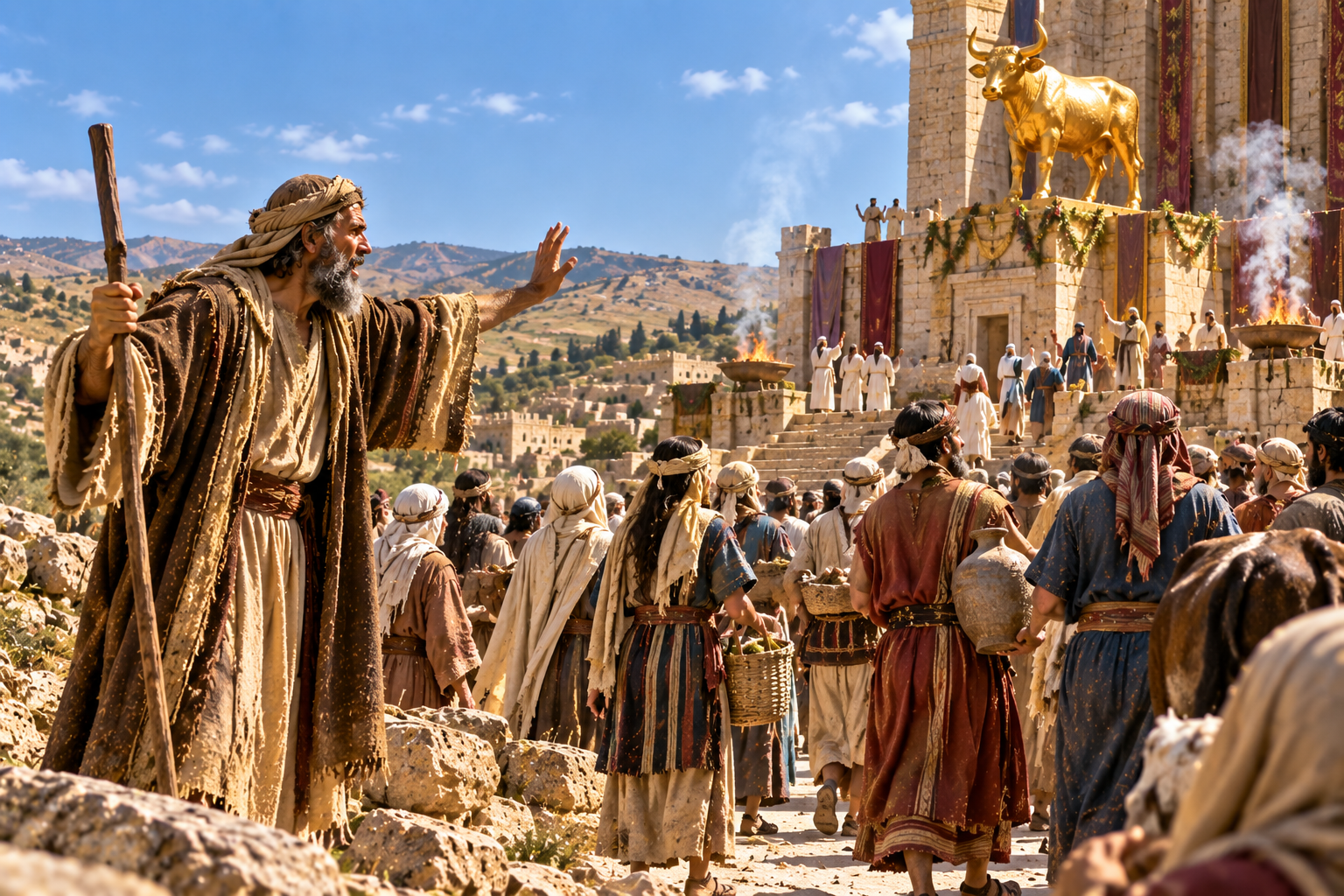
Do Not Resort to Bethel
SEEK GOD NOT SO CALLED
SACRED PLACES OR SHRINES
But (term of contrast) do not resort to (seek) Bethel - Amos 5:5 must be read with verse 4 as it brings out a deliberate, powerful contrast. Israel's problem was not a lack of religion. They were intensely religious. Their tragedy was that religious activity had become a substitute for seeking God Himself. In their deceived state, they were going to God's places without truly going to God. Bethel's history was filled with sacred memories. Abraham built an altar nearby (Ge 12:8), and Jacob encountered God there and called the place Bethel (Ge 28:10–22). But centuries later Jeroboam I established one of his golden calves there and made Bethel a major center of the northern kingdom's counterfeit worship (1 Ki 12:26–33). While Bethel had a sacred name it was the now the site of corrupted worship. The message is that a place where God worked yesterday is no substitute for walking with God today. Israel had come to trust the place associated with God instead of the God associated with the place.
They were seeking the house of God
while refusing to seek the God of the house.
NET NOTE - Ironically, Israel was to seek after the Lord, but not at Bethel (the name Bethel means “the house of God” in Hebrew).
And do not come to (visit) Gilgal, - “resort” is the same Hebrew verb darash used in verse 4 for “seek.” Amos literally sets two objects of seeking against each other, God and Gilgal! The question is not whether Israel will seek. The question is what, or Whom, they will seek.
Gilgal also possessed a glorious history for it was associated with Israel's entrance into the Promised Land. Israel erected memorial stones there after crossing the Jordan (Josh 4:19–24). Circumcision was renewed there, and Israel celebrated Passover there (Josh 5:2–12). But by Amos' day it had become associated with corrupt worship. Joshua and Israel's past encounter with God could not substitute for present obedience to God.
Nor cross over to (journey down to) Beersheba (Beer Sheba) - Beersheba was in the southern kingdom of Judah, so Israelites from the north would have to make a significant pilgrimage to worship there. Beersheba also possessed an impressive patriarchal history. Abraham called upon the name of the LORD there (Ge 21:33). Isaac built an altar there (Ge 26:23–25). Jacob worshiped there before going to Egypt (Ge 46:1–4).So all three places possessed impressive religious credentials.
Yet God says do not seek them, because past sacred sites cannot save present-day rebels. The message is that you cannot live on someone else's encounter with God.
The three shrines also represent considerable geographic reach. Bethel lay in the southern portion of the northern kingdom. Gilgal was associated with Israel's central/Jordan Valley region. Beersheba lay far to the south in Judah. Israelites were apparently willing to travel significant distances for religious observances. And yet God says “Seek ME.” The sad irony is that they were willing to travel miles on religious pilgrimages but unwilling to take the one step of repentance toward God.
Bob Utley - "Bethel. . .Gilgal. . .Beersheba" These are all local centers of worship. The first two were in Israel and the third in southern Judah (cf. 2 Kgs. 23:8; Gen. 21:14, 31; 26:25,33; 46:1) and mentioned earlier in Amos 4:4. ▣ "Beersheba" This was an ancient holy site connected to the Patriarchs (Abraham, Gen. 21:33; Isaac, Gen. 26:23-25; Jacob, Gen. 28:10; 46:1-7) located in southern Judah. ▣ "For Gilgal will certainly go into captivity" Amos is a skilled poet. Here he uses a sound play between "Gilgal" and "to go into exile" (BDB 162, KB 191, a Qal INFINITIVE ABSOLUTE and a Qal IMPERFECT of the same term, which is a grammatical feature showing intensity). Hebrew poetry is characterized by thought parallelism, multiple meanings of words, and sound plays.
John Walton - shrine at Beersheba. The discovery of a large horned altar in the excavations of Tell es- Saba’ dating to the Iron II period provides corroboration of cultic activity at this southern site. It is mentioned in the ancestral narratives (Gen 21:33) and is the site where Samuel’s sons operated as judges (1 Sam 8:1–2). The destruction of shrines outside Jerusalem by King Hezekiah (Arad, Beersheba; 2 Kings 18:4) may be a reflection of Amos’s condemnation of these sites. (IVP Bible Background Commentary: OT page 770)
The place associated with Israel entering the Promised Land
would become associated with Israel leaving the land in captivity
For (term of explanation) (the people of) Gilgal will certainly go (be carried) into captivity - Amos uses a striking Hebrew wordplay (paronomasia). The Hebrew contains similar sounds - Gilgal (haggilgal) and will certainly go into exile (galoh yigleh). It says something like “Gilgal shall surely go into galut,” that is, exile. The place associated with Israel entering the Promised Land would become associated with Israel leaving the land in captivity. What a reversal! The place that reminded Israel how God brought them into the land could not prevent God from sending them out of the land!
Bob Utley - Amos is a skilled poet. Here he uses a sound play between "Gilgal" and "to go into exile" (BDB 162, KB 191, a Qal INFINITIVE ABSOLUTE and a Qal IMPERFECT of the same term, which is a grammatical feature showing intensity). Hebrew poetry is characterized by thought parallelism, multiple meanings of words, and sound plays.
And Bethel will come to trouble - NET = "Bethel will become a place where disaster abounds." - There is another wordplay here. Amos elsewhere calls Bethel Beth-aven (Amos 5:5 in some renderings/connections; cf. Hos 4:15; 10:5), playing on the contrast between: Beth-el = House of God and aven = trouble, wickedness, vanity, or nothingness depending on context. The point is devastating for the place called "House of God" would become "nothing" (aven)! The shrine in which Israel placed such confidence would itself disappear under judgment. We can mark it down that anything we substitute for God will eventually prove unable to do what only God can do.
Bob Utley - "And Bethel will come to trouble" This seems to be a contrast between Bethel (house of God) and what it had become (house of idolatry [aven, BDB 19], cf. Hosea 4:15; 5:8; 10:5,8). One of the meanings of "trouble" (aven, BDB 19) can be "idolatry" (i.e. "nothing,"cf. Isa. 41:29; 66:3).
Do not seek what is destined to disappear;
seek the God Who lives forever.
There is an obvious spiritual principle without equating Christian worship with Israel's apostate shrines. It is possible to trust in church attendance, Bible knowledge, Christian heritage, religious activity, ministry service and subtly allow these things to substitute for a living relationship with God. The problem is not the church, Bible study, or ministry. The problem comes when the means of seeking God become substitutes for God Himself. Never allow the things that are meant to lead you to God to become replacements for God.
🙏 THOUGHT: There is a searching question for all of us who call ourselves followers of Christ: Am I seeking Christ Himself, or merely the things associated with Him? We can love Bible study, theology, preaching, ministry, and worship, yet we still need to guard our hearts diligently (Proverbs 4:23) so that religious activity does not replace personal communion with Him. Jesus told the most devoted Bible students of His day, "You search the Scriptures because you think that in them you have eternal life; it is these that testify about Me; and you are unwilling to come to Me so that you may have life" (John 5:39,40). They knew the text but missed the Person the text was about. In Bethany, Martha was busy serving Jesus while Mary sat at His feet listening to His word. Jesus did not fault Martha's work, but He said, "Mary has chosen the good part, which shall not be taken away from her" (Luke 10:38–42). It is possible to be so busy working for the Lord that we neglect sitting with the Lord. Paul, the greatest theologian and missionary of the early church, still made his chief ambition "that I may know Him and the power of His resurrection" (Philippians 3:10). God's promise is for those who seek Him wholeheartedly: "You will seek Me and find Me when you search for Me with all your heart" (Jeremiah 29:13). When God said, "Seek My face," David's heart answered, "Your face, O LORD, I shall seek" (Psalm 27:8). Seek the God of the Bible, not merely knowledge about the Bible. Seek the Lord of the ministry, not merely the work of ministry. Seek Him!
Seek the God of the Bible,
not merely knowledge about the Bible.
Amos 5:6 “Seek the LORD that you may live, Or He will break forth like a fire, O house of Joseph, And it will consume with none to quench it for Bethel,
- Seek (KJV): Am 5:4 Eze 33:11
- lest (KJV): Ex 22:6
- the house (KJV): Am 6:6 Ge 48:8-20 Jos 18:5 Jud 1:22,23 2Sa 19:20 1Ki 11:28 Eze 37:19 Zec 10:6
- there (KJV): Isa 1:31 Jer 4:4 7:20 Eze 20:47,48 Mk 9:43-48
Related Passages:
Ezekiel 33:11 “Say to them, ‘As I live!’ declares the Lord GOD, ‘I take no pleasure in the death of the wicked, but rather that the wicked turn from his way and live. Turn back, turn back from your evil ways! Why then will you die, O house of Israel?’
Yahweh will Break forth like fire
SEEK GOD OR BE
CONSUMED BY HIM
Seek (darash; LXX - ekzeteo - diligent investigation in aorist imperative see need to depend on the Holy Spirit to obey) Me that you may live (chayah; LXX - zao) - Amos repeats the gracious invitation of verse 4, but now adds the terrifying alternative as motivation. Recall that seek does not speak of casual religious curiosity but an intentional inquiring after and turning of one's attention to Yahweh. Note that neutrality toward God was not one of Israel's options. One cannot be neutral to Jesus either. You are either for Him or against Him. Middle ground lead to eternal death! Notice that the command “Seek the LORD” means that judgment had not yet fallen and the door of mercy was still open.
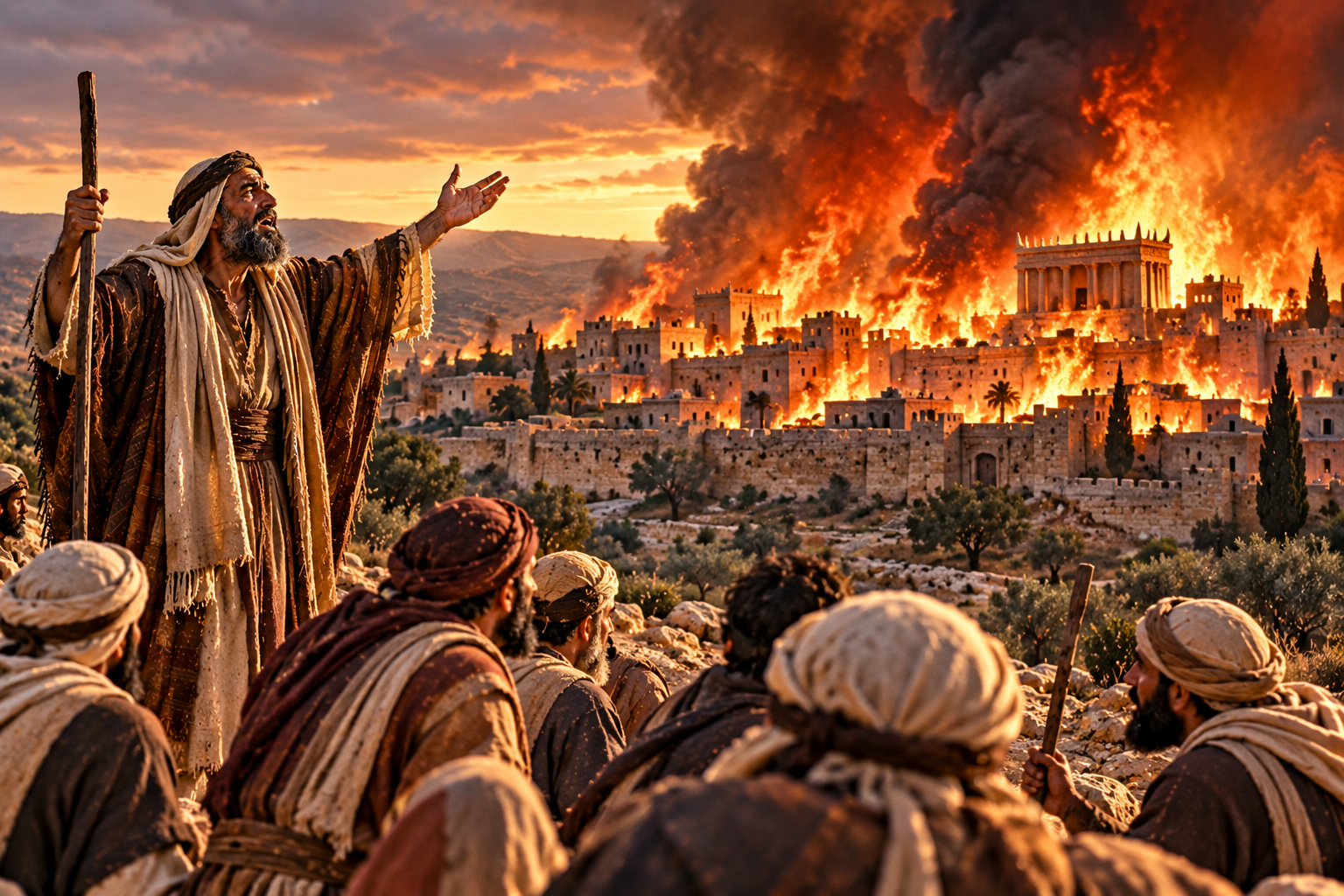
Or (otherwise) He will break forth (tsalach)(rush - pictures swift movement) like (simile) a fire, O house (family) of Joseph, - That little “OR” divides the verse into two radically different outcomes, live or fire, life or death. The same God Who offers life warns of judgment if His offer is rejected. Israel has just heard its funeral dirge (Amos 5:1,2). Its armies will be decimated (Amos 5:3). Yet in the middle of this announcement of death, God continues offering life. That is amazing grace (giving them life they did not deserve) and mercy (withholding judgment they deserved). The phrase break forth pictures a fire suddenly escaping containment and racing through dry vegetation. Once released, it spreads rapidly and irresistibly. Recall that earlier Amos had used this same imagery repeatedly in the judgments against the nations “I will send fire...” (Amos 1:4, 7, 10, 12, 14; 2:2, 5)
Notice the phrase HE will break forth, refers not to a fire that will break forth but to HE will break forth! Israel's greatest danger was not the fire God might send, but the God Who could come like fire.
Bob Utley - "He will break forth like a fire" This may be another allusion to Deuteronomy (cf. Deut. 4:24). Fire is imagery for the cleansing power of YHWH or to put it another way, His holiness!
O house of Joseph - Joseph refers to the entire northern kingdom, especially because its dominant tribes, Ephraim and Manasseh, descended from Joseph. There is poignant irony in the name Joseph. Joseph had once been the instrument God used to preserve Israel alive during famine (Ge 45:5–7; 50:20). Now the house of Joseph is being told Seek the LORD that you may live. Their ancestry could not give them life. Their covenant history could not give them life. Only the LORD could.
They could not live on Joseph's faith;
they had to seek Joseph's God.
And it (fire) will consume ('akal = eat, devour) with none to (no one will be able to) quench it for Bethel - NET = "no one will be able to quench it and save Bethel." Fire does not negotiate with what it burns. Once God's judgment breaks forth, Israel's religious institutions will be powerless to stop it. When God's judgment comes, no human power will be able to extinguish it. This makes the invitation “Seek the LORD” extraordinarily urgent. There is still time now. But that opportunity will not remain indefinitely. Bethel is singled out because it was one of the great centers of Israel's counterfeit worship. The very place Israel trusted for religious security would be unable to save itself. The choice was not Bethel or no Bethel; it was God or no life.
Bob Utley - "O house of Joseph" It is unusual for Israel to be called the "house of Joseph" (cf. Amos 6:6). It is usually called the "house of Jacob" (or "house of Israel," e.g. Amos 5:1). However, Ephraim and Manasseh, Joseph's two children, make up the largest land holdings and the most populous tribes of the northern kingdom.
🙏 THOUGHT: Dear reader if you are not a believer in Jesus Christ, understand that God's warning is not so much an expression of judgment as it is an expression of God's mercy. God always warns before the fire breaks forth, and the fire Jesus warns about will burn eternally (Eternal Punishment) for all who reject His gracious offer of salvation. God's Spirit calls unbelievers to Himself before the inevitable, unavoidalble consequences arrive. Therefore, when His Word exposes your sin, the proper response is not delay, rationalization, or increased religious activity. It is simply to seek the LORD, and believe in the Lord Jesus Christ and you will be eternally saved from His fire (Acts 16:31, Ro 10:9,10, Eph 2:8,9). The safest response to the conviction of the Holy Spirit is immediate seeking of the Lord Jesus. (Isa 55:6,7; Heb 3:7, 8)
Amos 5:7 For those who turn justice into wormwood And cast righteousness down to the earth.”
- turn (KJV): Am 5:11,12 Amos 6:12 De 29:18 Isa 1:23 Isa 5:7 Is a10:1 Isa 59:13,14 Ho 10:4 Hab 1:12-14
- leave (KJV): Ps 36:3 125:5 Eze 3:20 18:24 33:12,13,18 Zep 1:6
Related Passages:
Micah 6:8 He has told you, O man, what is good; And what does the LORD require of you But to do justice, to love kindness, And to walk humbly with your God?
1 John 4:20-21 If someone says, “I love God,” and hates his brother, he is a liar; for the one who does not love his brother whom he has seen, cannot love God whom he has not seen. 21 And this commandment we have from Him, that the one who loves God should love his brother also.
Amos 6:12 Do horses run on rocks? Or does one plow them with oxen? Yet you have turned justice into poison And the fruit of righteousness into wormwood,
Deuteronomy 29:18 so that there will not be among you a man or woman, or family or tribe, whose heart turns away today from the LORD our God, to go and serve the gods of those nations; that there will not be among you a root bearing poisonous fruit and wormwood.
Isaiah 1:23 Your rulers are rebels And companions of thieves; Everyone loves a bribe And chases after rewards. They do not defend the orphan, Nor does the widow’s plea come before them.
Isaiah 5:7 For the vineyard of the LORD of hosts is the house of Israel And the men of Judah His delightful plant. Thus He looked for justice, but behold, bloodshed; For righteousness, but behold, a cry of distress.
Isaiah 59:13; 14 Transgressing and denying the LORD, And turning away from our God, Speaking oppression and revolt, Conceiving in and uttering from the heart lying words. 14 Justice is turned back, And righteousness stands far away; For truth has stumbled in the street, And uprightness cannot enter.
Hosea 10:4 They speak mere words, With worthless oaths they make covenants; And judgment sprouts like poisonous weeds in the furrows of the field.
Habakkuk 1:12-14 Are You not from everlasting, O LORD, my God, my Holy One? We will not die. You, O LORD, have appointed them to judge; And You, O Rock, have established them to correct. 13 Your eyes are too pure to approve evil, And You can not look on wickedness with favor. Why do You look with favor On those who deal treacherously? Why are You silent when the wicked swallow up Those more righteous than they? 14 Why have You made men like the fish of the sea, Like creeping things without a ruler over them?
A CORRUPTED COURTROOM:
WHEN JUSTICE TURNS BITTER
For those who (Israelites who) turn justice into wormwood (bitterness) - This verse helps explain why Israel desperately needed to seek Him. Seeking God is demonstrated by beginning to love what God loves. Instead they corrupted their worship. Their corruption was not merely ceremonial. It had penetrated the way they treated other people. They had corrupted justice and discarded righteousness. Their problem was not merely that they worshiped wrongly, but that they lived wrongly.
turn justice into wormwood (bitterness) - The Hebrew word mishpat means judgment, justice, a legal decision, or what is right according to a proper standard. In Amos, justice has a strongly practical dimension. It concerns how people were treated, particularly in the city gate, where legal disputes and community affairs were decided (Amos 5:10, 12, 15). Justice should have protected the innocent and restrained the oppressor. Instead Israel had turned it into something else. This is deliberate moral distortion. They did not merely neglect justice; they transformed it into its opposite. The courtroom, which should have been a place of protection, had become a place where the vulnerable could be exploited.
ESV Study Bible True worshipers of God will manifest justice and righteousness (cf. James 1:26–27). See also Amos 5:21–24. Justice (Hb. mishpat) is much more than legal equity; it refers to the entire scope of God’s government of his world. Thus, to “do justice” involves, on the part of government, a fair and just use of power and proper functioning of a fair judicial system, especially to protect the weak from the strong. On the part of individuals, “justice” involves honest and fair business dealings and faithfulness to keep one’s word, as well as not taking advantage of the poor or those with less power or protection. Righteousness (Hb. tsedaqah) involves doing what is right in the sight of God, especially with regard to conduct toward others.
Wormwood translates the Hebrew la'anah, a plant proverbial for its intensely bitter taste. Scripture therefore uses wormwood figuratively for bitterness, calamity, or something grievous (Dt 29:18; Jer 9:15; Lam 3:19). Justice should have tasted sweet to the oppressed. Instead Israel made it bitter. A poor person might enter the city gate hoping for justice and leave having experienced precisely the opposite. What should have been sweet protection for the oppressed had become bitter poison in the hands of the powerful. That is a vivid picture of corrupted justice. God had given Israel His Law so that justice would characterize covenant society. But those responsible for administering justice had apparently twisted it through such practices as bribery, favoritism, and oppression (Amos 2:6–7; 5:10–12). When justice can be bought, the poor inevitably pay the price.
Bob Utley - "for those who turn justice into wormwood" "Justice" is a parallel to "righteousness." These two terms often appear together in the same context in the OT (cf. 2 Sam. 8:15; 1 Kgs. 10:9; 1 Chr. 18:14; 2 Chr. 9:8; Ps. 99:4; Isa. 1:21; 5:7; 9:7; 28:17; 32:1,16; 33:5; 59:14; Jer. 4:2; 9:24; 22:3,15; 23:5; 33:15; Ezek. 18:5,19,21,27; 33:14,16,19; 45:9; Amos 5:7,24). This is not the "justification by faith," imputed righteousness of the New Covenant, but the Old Covenant mandate that YHWH wanted a people to fully reveal His character (cf. Matt. 5:19-20,48). However, sinful fallen mankind, even the covenant people, were unable to live out the holiness of God! The PARTICIPLE (BDB 245, KB 253, Qal PARTICIPLE), when Israel is the subject, is used in a negative sense (cf. Amos 5:7; 6:12; Jer. 2:21). In Amos 4:11 Amos mentioned Sodom and Gomorrah as being overthrown, using the same root but with YHWH as the subject. Wormwood (BDB 542) refers to any plant that is bitter (cf. UBS's Fauna and Flora of the Bible, p. 198). The rich had prevented justice. The legal system was a bitter thing to the poor, not a haven (cf. Amos 5:12; 6:12). This may be another allusion to idolatry in Deuteronomy (cf. Deut. 29:18; Jer. 9:14; 23:15). The cognate in Arabic means "curse."
NET NOTE - There is an interesting wordplay here with the verb הָפַךְ (hafakh, “overturn, turn”). Israel “turns” justice into wormwood (cf. Amos 6:12), while the Lord “turns” darkness into morning (Amos 5:8; cf. 4:11; 8:10). Israel’s turning is for evil, whereas the Lord’s is to demonstrate his absolute power and sovereignty.
And cast (throw) righteousness (what is right and fair) down to the earth (ground) - Mishpat and tsedaqah, justice and righteousness, frequently belong together in Scripture. Justice concerns right decisions and actions. Righteousness concerns living according to God's right standard. Israel had abandoned both. But Amos' language is stronger than merely saying they forgot righteousness. They “cast” it down. The image suggests something treated as worthless and thrown away. They did not stumble over righteousness; they threw it down. Something God valued highly was being treated as though it belonged in the dirt. God would not accept righteousness at the altar from people who threw righteousness into the dirt at the city gate.
Bob Utley - The idea here is to cast down (BDB 245, KB 253, Qal PARTICIPLE) with a view toward trampling underfoot (cf. Isaiah 28:2-3). Judges, like the king, were to represent YHWH. Notice that "justice" and "righteousness" are parallel (cf. Amos 5:24; 6:12). There is an ethical-practical aspect to biblical faith! Biblical faith involves personal trust and godly living
NET NOTE - In v. 7 the prophet begins to describe the guilty Israelites but then interrupts his word picture with a parenthetical, yet powerful, description of the judge they must face (Amos 5:8-9). He resumes his description of the sinners in Amos 5:10.
🙏 THOUGHT: Genuine devotion to God must eventually affect how we treat people. Israel kept its feasts and offered its sacrifices, but turned justice into wormwood, trampled the poor, took bribes, and pushed aside the needy at the city gate (Amos 5:7, 11–12). We cannot claim to love the God of righteousness while knowingly practicing unrighteousness toward those around us. When Jesus was asked for the greatest commandment, He gave two: love God with all your heart, and love your neighbor as yourself (Matthew 22:37–40). The two cannot be separated. Our vertical relationship with God must produce horizontal righteousness toward others. Jesus even said that if we come to the altar and remember that a brother has something against us, we should leave our offering, go and be reconciled, and then come and offer our gift (Matthew 5:23–24). Micah summarized what the LORD requires: "to do justice, to love kindness, and to walk humbly with your God" (Micah 6:8). James rebuked believers who gave the rich man the best seat and told the poor man to sit on the floor, calling such partiality sin (James 2:1–9). John is blunt: "If someone says, 'I love God,' and hates his brother, he is a liar; for the one who does not love his brother whom he has seen, cannot love God whom he has not seen" (1 John 4:20–21). True spirituality is visible not merely in what we say to God, but in how we treat people made in His image, especially those who can do nothing for us in return.
Justice (04941) mishpat/mispat from shaphat = to judge, govern) is a masculine noun used over 400x in the OT and has general meanings including a judgment, a legal decision, a legal case, a claim, proper, rectitude. Vine writes that mishpat/mispat "has two main senses; the first deals with the act of sitting as a judge, hearing a case, and rendering a proper verdict. Eccl. 12:14 is one such occurrence. Mishpat can also refer to the “rights” belonging to someone (Ex 23:6). This second sense carries several nuances: the sphere in which things are in proper relationship to one’s claims (Ge 18:19—first occurrence); a judicial verdict (Dt. 17:9); the statement of the case for the accused (Nu 27:5); and an established ordinance (Exod. 21:1). (Vine's Expository Dictionary) -
MISHPAT IN THE MINOR PROPHETS - Hos. 2:19; Hos. 5:1; Hos. 5:11; Hos. 6:5; Hos. 10:4; Hos. 12:6; Amos 5:7; Amos 5:15; Amos 5:24; Amos 6:12; Mic. 3:1; Mic. 3:8; Mic. 3:9; Mic. 6:8; Mic. 7:9; Hab. 1:4; Hab. 1:7; Hab. 1:12; Zeph. 2:3; Zeph. 3:5; Zeph. 3:8; Zeph. 3:15; Zech. 7:9; Zech. 8:16; Mal. 2:17; Mal. 3:5; Mal. 4:4
Amos 5:8 He who made the Pleiades and Orion And changes deep darkness into morning, Who also darkens day into night, Who calls for the waters of the sea And pours them out on the surface of the earth, The LORD is His name.
- maketh (KJV): Job 9:9 Job 38:31-32
- and turneth (KJV): Job 12:22 Job 38:12-13 Ps 107:10-14 Mt 4:16 Lu 1:79
- maketh (KJV): Am 4:13 8:9 Ex 10:21-23 Ex 14:24-28 Ps 104:20 Ps 105:28 Isa 59:10
- that calleth (KJV): Am 9:6 Ge 7:11-20 1Ki 18:44-45 Job 37:13 Job 38:34
- The Lord (KJV): Am 4:13
Related Passages:
Job 9:9 Who makes the Bear, Orion and the Pleiades, And the chambers of the south;
Job 38:31-32 “Can you bind the chains of the Pleiades, Or loose the cords of Orion? 32“Can you lead forth a constellation in its season, And guide the Bear with her satellites?
Job 12:22 “He reveals mysteries from the darkness And brings the deep darkness into light.
Job 38:12-13 “Have you ever in your life commanded the morning, And caused the dawn to know its place, 13That it might take hold of the ends of the earth, And the wicked be shaken out of it?
Matthew 4:16 “THE PEOPLE WHO WERE SITTING IN DARKNESS SAW A GREAT LIGHT, AND THOSE WHO WERE SITTING IN THE LAND AND SHADOW OF DEATH, UPON THEM A LIGHT DAWNED.”
Luke 1:79 TO SHINE UPON THOSE WHO SIT IN DARKNESS AND THE SHADOW OF DEATH, To guide our feet into the way of peace.”
Exodus 10:21-23 Then the LORD said to Moses, “Stretch out your hand toward the sky, that there may be darkness over the land of Egypt, even a darkness which may be felt.” 22So Moses stretched out his hand toward the sky, and there was thick darkness in all the land of Egypt for three days. 23They did not see one another, nor did anyone rise from his place for three days, but all the sons of Israel had light in their dwellings.
Psalm 104:20 You appoint darkness and it becomes night, In which all the beasts of the forest prowl about.
Psalm 105:28 He sent darkness and made it dark; And they did not rebel against His words.
Amos 9:6 The One who builds His upper chambers in the heavens And has founded His vaulted dome over the earth, He who calls for the waters of the sea And pours them out on the face of the earth, The LORD is His name.
Psalm 8:3-4 When I consider Your heavens, the work of Your fingers, The moon and the stars, which You have ordained; 4What is man that You take thought of him, And the son of man that You care for him?
Isaiah 40:25-31 “To whom then will you liken Me That I would be his equal?” says the Holy One. 26 Lift up your eyes on high And see who has created these stars, The One who leads forth their host by number, He calls them all by name; Because of the greatness of His might and the strength of His power, Not one of them is missing. 27 Why do you say, O Jacob, and assert, O Israel, “My way is hidden from the LORD, And the justice due me escapes the notice of my God”? 28 Do you not know? Have you not heard? The Everlasting God, the LORD, the Creator of the ends of the earth Does not become weary or tired. His understanding is inscrutable. 29 He gives strength to the weary, And to him who lacks might He increases power. 30 Though youths grow weary and tired, And vigorous young men stumble badly, 31 Yet those who wait for the LORD Will gain new strength; They will mount up with wings like eagles, They will run and not get tired, They will walk and not become weary.

The Creator of the Pleiades and Orion
LOOK UP AND SEEK
YOUR CREATOR
He who made the (constellations) Pleiades and Orion - Amos has just described Israel's perversion of justice and righteousness (Amos 5:7). Then, almost abruptly, he lifts their eyes from the corrupt courts of earth to the stars of heaven. the God Israel refuses to seek is none other than the Creator and sovereign Ruler of the universe. Amos turns Israel's eyes from the injustice beneath their feet to the stars above their heads. Pleiades and Orion are two of the most recognizable star groupings in the night sky. Both are also mentioned together in Job (Job 9:9; 38:31). Pleiades appears as a compact cluster of stars, while Orion is one of the most conspicuous constellations. Ancient people observed these stars and associated their appearances with seasons and agricultural cycles. But Amos' point is not astronomy but Creator theology. The stars Israel could barely comprehend were simply the workmanship of the God they refused to seek. The point is for Israel to seek the One Who made the stars. Israel had been looking toward Bethel, Gilgal, Beersheba but Amos says stop looking toward your religious shrines and look to God Who made everything. How sad that Israel was traveling miles to find God at religious shrines while the heavens above them were continually testifying to His glory.
John Walton - Pleiades and Orion, constellations in ancient world. Textual evidence from Babylonia, including the “Venus tablet” of Ammisaduqa (c. 1650), indicates that astronomical studies were conducted with skill and precision. Although astrology was also prevalent in late Egyptian periods and in Persian period Mesopotamia, it seems that this divinatory activity, interpreting omens (see Is 47:13) is only an extension of the work of a true science. There are records of the movement of the planets, placement of the major fixed stars and constellations, as well as descriptions of the phases of the moon and solar and lunar eclipses. Given the widespread knowledge of the stars and the planets in both Mesopotamian and Egyptian cultures, it was important for the biblical writers and prophets to attribute these celestial bodies to Yahweh’s creation (see Job 9:9). Mesopotamian constellations included animal figures such as a goat (Lyra) and snake (Hydra); objects such as an arrow (Sirius) and a wagon (Big Dipper); and characters such as Anu (Orion). The most popular of the constellations was Pleiades, often portrayed on seals even in Palestine and Syria. Neo-Assyrian texts preserve sketches of stars in constellations. A prayer to the gods of the night from about 1700 B.C. invokes the constellations by name, calling on them to give answers to the diviner seeking an omen. (IVP Bible Background Commentary: OT page 770)
Bob Utley - "the Pleiades" This is literally "heap" or "herd" (BDB 465, KB 472, cf. Job 9:9, 38:31). This was one of the brightest and most popular of the star clusters (Hesiod calls it "the seven sisters") in the constellation Taurus. The UBS, Translator's Handbook, pp. 105, 242, asserts that in Palestine its setting below the horizon introduces winter. This then makes the poetic lines refer to God not as creator only, but active controller (Providence) of the natural order (i.e. Job 9:9). ▣ "Orion" This is literally "fool" (BDB 493, KB 489 II) in the sense of aggressive. It is used to refer to a rebel. The ancients identified this constellation with Nimrod (the warrior, cf. Gen. 10:8-9). It was visible in the summer. God controls the seasons (i.e. the order and regularity of the natural world)! Apparently, God's creation and control of the stars (cf. Gen. 1:14-19) was a necessary theological statement in the light of astral worship (cf. Amos 5:26).
The Creator of Pleiades and Orion
was saying to tiny Israel, “Seek Me.”
And changes (can turn) deep darkness into morning, - Deep darkness (tsalmaveth) is a vivid term used for deep gloom or profound darkness and the same word appears in Psalm 23:4 “the valley of the shadow of death.” Here God takes the deepest darkness and transforms it into morning so that every sunrise is testimony to God's sovereign power. Indeed, every sunrise is a daily demonstration that darkness obeys God.
Bob Utley - "changes deep darkness into morning" In context this speaks of God's control of the heavenly bodies (cf. Ps. 19: 24). This phrase may be parallel in concept to Amos 4:13c.
Who also darkens day into night (daylight into light) - Amos reverses the picture declaring the God Who brings light into darkness, also brings light into darkness. He is in complete control for morning and evening, light and darkness, all belong to Him. This echoes Amos 4:13, where God is described as the One Who “makes dawn into darkness.” The God Who controls the transition from darkness to light and light to darkness controls the course of history just as surely. Amos is speaking to a nation under impending judgment. Israel believed it was enjoying a bright national day of prosperity. Israel's prosperous “day” could and would become darkness very quickly. The God Who turns daylight into darkness can turn a nation's apparent brightest hour into its darkest night.
Every sunrise is a daily demonstration
that darkness obeys God.
Who calls (summons) for the waters of the sea - God simply calls and the waters respond as Creation obeys its Creator. The same God Who created Pleiades and Orion commands the oceans of the earth. There may be an allusion to the hydrological cycle, in which water is drawn from the sea and eventually returned to the earth as precipitation, although Amos' language can also describe overwhelming judgment by waters. The central point is God's absolute sovereignty. God does not struggle to control creation but simply calls, and creation responds.
Bob Utley - "Who calls for the waters of the sea" There are several theories as to the meaning of this phrase: (1) it refers to the boundaries of the oceans (cf. Gen. 1:9-10) (2) it refers to YHWH, not Ba'al, as the source of rain (i.e. a blessing to support growth) (3)it is possibly an allusion to the flood (a judgment motif, cf. Genesis 6) YHWH controls the waters of creation as He does the stars. Water and the planets are the two things in Genesis 1 that are not said to have been spoken into existence by God (i.e. pre-existing material, cf. Gen. 1:2). See John H. Walton, The Lost World of Genesis One: An Ancient Cosmology.
And pours them out on the surface of the earth, The LORD is His name - Rain was never controlled by Bethel, nor was it controlled by Baal but was iin full control of Yahweh.In Amos 4 Israel experienced selective drought “I would send rain on one city and on another city I would not send rain.” The point is that the God Who withheld the rain is the God Who commands the waters. And what is His Name? Yahweh, Jehovah. The God Who created the stars had entered covenant relationship with Israel, yet they preferred Bethel's counterfeit religion to fellowship with the Creator of the Universe, the only One Who can truly say "Seek Me and live." This is an amazing thought that not merely can man seek the Creator, but that the Creator actually invites man to seek Him!
Bob Utley - "The Lord is His name" The name in Hebrew was very significant in describing the character of an individual. Israel's God's name, "YHWH," is from Exod. 3:14, from the Hebrew VERB "to be."
Look beyond the creation
and seek the Creator.
🙏 THOUGHT: Sometimes our problems become so large in our minds that our God becomes too small in our thinking. Amos tells us to look up. "He who made the Pleiades and Orion and changes deep darkness into morning, who also darkens day into night, who calls for the waters of the sea and pours them out on the surface of the earth, the LORD is His name" (Amos 5:8). God once asked Job, "Can you bind the chains of the Pleiades, or loose the cords of Orion?" (Job 38:31). Job could not, but God had already done it. The God who hung those constellations in the heavens, turns darkness into morning, commands the oceans, and rules the earth is the same God who invites us, "Seek Me that you may live" (Amos 5:4, 6). David gazed at the night sky and marveled, "When I consider Your heavens, the work of Your fingers, the moon and the stars, which You have ordained; what is man that You take thought of him?" (Psalm 8:3–4). The wonder is not only that God is great, but that so great a God cares for us. The psalmist joins both truths in one breath: "He heals the brokenhearted and binds up their wounds. He counts the number of the stars; He gives names to all of them" (Psalm 147:3–4). The One who names the stars knows your name and your wounds. And the God who "changes deep darkness into morning" can do the same in your life: "Weeping may last for the night, but a shout of joy comes in the morning" (Psalm 30:5). When our circumstances seem overwhelming, we need to measure them against the greatness of our God. As Jeremiah prayed, "Ah Lord GOD! Behold, You have made the heavens and the earth by Your great power... Nothing is too difficult for You" (Jeremiah 32:17).
Oswald in His Presence
Few readers of My Utmost for His Highest realize its author was a gifted painter who might have enjoyed a long and distinguished career. But a sermon by Charles Spurgeon changed that, and Oswald Chambers lay down his brushes, sensing God’s call to ministry. From 1906 to 1910, he preached around the world, and from 1911 until 1915, he directed a Bible college.
At the outbreak of World War I, Chambers offered to minister among soldiers in Egypt. Under his leadership there, mission huts sprang up for British troops near Cairo and at the Suez. Men turned out in droves to hear his sermons and lectures.
During these days, Chambers typically rose at 5:30 A.M. for his hour alone with God. Watching the sunrise over the ancient desert always filled him with wonder, and he sometimes described it in his journal, using an artist’s tongue: “It is a lovely morning, the sun rose in a real marvel of glorious light. Each sunrise here looks as if it were a new thought from God. … ”
Chambers spent his last mornings in the minor prophets. He noted that the blasts and plagues described in Amos seemed to come from “the powerful hand of God, and not the blind cause and effect.” He sensed God’s overruling providence, even in disasters, even in the midst of war.
One day Chambers described in his diary the brilliant sunrise “like a celestial scheme of shot silk.” He meditated on the power of a God who could make even the desert spectacular, then he read Amos 5, claiming verse 8: “He made the Pleiades and Orion; He turns the shadow of death into morning; … the Lord is His name.” Having thus reassured himself of the sovereignty and supremacy of God, Chambers plunged into another day.
He had only a handful left. A couple of weeks later he underwent an emergency appendectomy in the Red Cross hospital. Two weeks later, his wife cabled four words to his family and friends: “Oswald in His Presence.”
Today’s Suggested Reading Amos 5:8–15
F B Meyer - Amos 5:8 Seek Him that maketh the Pleiades and Orion. (R.V.)
This chapter resounds with invitations to seek God. He makes the Pleiades, which usher in the spring: seek Him when life is full of radiant hope and promise, in days of love and joy. But He also makes Orion, the precursor of tempests; be sure, therefore, to seek Him when the sky is overcast and lowering, and when He presses you to enter the boat and face the storm.
He turns the shadow of death into the morning. Thank God for this. There is a turning of death-shadow into morning, when despair gives place to hope; when the dear one begins to revive from sore sickness; when circumstances begin to brighten; and when the perplexity and darkness of this mortal life, with its separations and misunderstandings, shall brighten with the eternal day. Weave thoughts of God into all these glad experiences; but not less so, when He makes the day dark with night. It may be that you will come closest to Him then; as the little child will sit on the far side of the railway carriage from her mother till they enter a tunnel, and then there will be a little startled cry and a rush to the mother’s knee.
Sometimes the waters of the sea pour in on the land, engulfing the works of men, and devastating their toils. But amid all such scenes of desolation, the righteous have a secure hiding-place, suggested by the reference to the name Jehovah, with which this verse closes. “The name of the Lord is a strong tower; the righteous runneth unto it, and is safe.”
“Earth changes, but thy soul and God stand sure;
What entered into thee,
That was, is, and shall be;
Time’s wheel runs back or stops—Potter and clay endure.”
SEEK HIM AMOS 5:8
I. SEEK HIM BECAUSE OF HIS OMNISCIENCE.
1. God knows our ways; Ps. 139:2, 3.
2. God knows our words; Ps. 139:4.
3. God knows all things; 1 John 3:20.
II. SEEK HIM BECAUSE OF HIS OMNIPOTENCE.
1. He had power to create the universe; Gen. 1:1.
2. He has power to control nature; Ps. 107:25–27.
3. He has power to do everything; Job 42:2.
III. SEEK HIM BECAUSE OF HIS OMNIPRESENCE.
1. God is manifested everywhere; Jer. 23:23, 24.
2. God’s presence is known in Heaven and Hell; Ps. 139:7, 8.
3. God’s presence reaches to the uttermost sea; Ps. 139:9, 10.
IV. SEEK HIM BECAUSE OF HIS HOLINESS.
1. God’s holiness is seen in His hatred of sin; Prov. 15:9, 26.
2. God’s holiness is shown in His separation from sinners; Isa. 59:1, 2.
3. God’s holiness is shown in the punishment of the sinner; Ps. 5:4–6.
V. SEEK HIM BECAUSE OF HIS LOVE.
1. God loved us before we loved Him; 1 John 4:9, 10.
2. God loves the sinner; Rom. 5:6–8.
3. God’s love is seen in giving His Son; John 3:16.
VI. SEEK HIM BECAUSE OF HIS MERCY.
1. God’s mercy is great; Ps. 145:8.
2. God’s mercy is extensive; 2 Peter 3:9.
3. God’s mercy is toward sinners; Prov. 28:13.
VII. SEEK HIM BECAUSE OF HIS FORGIVENESS.
1. The Lord desires to forgive iniquity; Num. 14:18.
2. The Lord gives an invitation to forgiveness; Isa. 1:18.
3. The Lord forgives abundantly; Ps. 103:12.
Amos 5:9 It is He who flashes forth with destruction upon the strong, So that destruction comes upon the fortress.
KJV That strengtheneth the spoiled against the strong, so that the spoiled shall come against the fortress.
NET He flashes destruction down upon the strong so that destruction overwhelms the fortified places.
NLT With blinding speed and power he destroys the strong, crushing all their defenses.
ESV who makes destruction flash forth against the strong, so that destruction comes upon the fortress.
BGT ὁ διαιρῶν συντριμμὸν ἐπ᾽ ἰσχὺν καὶ ταλαιπωρίαν ἐπὶ ὀχύρωμα ἐπάγων
LXE who dispenses ruin to strength, and brings distress upon the fortress.
CSB He brings destruction on the strong, and it falls on the stronghold.
NIV he flashes destruction on the stronghold and brings the fortified city to ruin),
YLT Who is brightening up the spoiled against the strong, And the spoiled against a fortress cometh.
NKJ He rains ruin upon the strong, So that fury comes upon the fortress.
NJB He brings destruction on the strong and ruin comes on the fortress.
NRS who makes destruction flash out against the strong, so that destruction comes upon the fortress.
RSV who makes destruction flash forth against the strong, so that destruction comes upon the fortress.
NAB Who flashes destruction upon the strong, and brings ruin upon the fortress; whose name is LORD.
GWN He destroys strongholds and ruins fortresses.
- strengtheneth (KJV): 2Ki 13:17,25 Jer 37:10 Heb 11:34
Related Passages:
2 Kings 13:17 He said, “Open the window toward the east,” and he opened it. Then Elisha said, “Shoot!” And he shot. And he said, “The LORD’S arrow of victory, even the arrow of victory over Aram; for you will defeat the Arameans at Aphek until you have destroyed them.”
Psalm 46:1-3 For the choir director. A Psalm of the sons of Korah, >set to Alamoth. A Song. God is our refuge and strength, A very present help in trouble. 2Therefore we will not fear, though the earth should change And though the mountains slip into the heart of the sea; 3Though its waters roar and foam, Though the mountains quake at its swelling pride. Selah.
Proverbs 18:10 The name of the LORD is a strong tower; The righteous runs into it and is safe.

Yahweh Flashes Forth with Destruction
WHEN GOD STRIKES
NO FORTRESS CAN STOP HIM
It is He who flashes forth with destruction upon the strong - Amos keeps redirecting their attention to HE who stands above them all. The LORD described in verse 8 is the One capable of bringing sudden devastation upon those who consider themselves strong. What takes men years to build, God can bring down in a moment.
Flashes forth with destruction - The Hebrew is difficult which explains the variety among English translations. The verb can convey the idea of causing devastation to flash, burst, or break forth against the strong. The NASB's “flashes forth” gives the picture of something sudden and irresistible, like lightning. One moment the fortress stands confidently and the next moment destruction strikes.
Bob Utley - The Hebrew term's (BDB 114, KB 132, Hiphil PARTICIPLE) meaning is in doubt. Its use in Job and the Psalms implies a cheerfulness or joy (meaning of the Arabic root). However, that meaning does not fit Amos at all unless Amos is speaking sarcastically of YHWH smiling at the destruction of idolatrous Israel and her military fortifications. The NASB takes its translation from the possible meaning of the Hiphil, "let something flare up" (cf. NIDOTTE, vol. 1, p. 660). ▣ "the strong" This may refer to the economically and politically powerful (cf. Amos 5:10-13; 2:14). The opposite of "the poor," the very ones who take advantage of them! However, because of the parallel to "fortresses," it may refer to the Israeli military. Also see note above for a connection to constellations.
NET NOTE - The precise meaning of the Hebrew verb בָּלַג (balag, translated here “flashes”) is uncertain.
So that (term of purpose/result) destruction comes upon the fortress - NET = "so that destruction overwhelms the fortified places" In the context of what Amos is saying the thought is that Israel should seek the LORD, not stronger walls. Their fundamental problem was not weak fortifications, but strong rebellion against Yahweh.
🙏 THOUGHT: Don't we all have our personal "fortresses," things that make us feel secure, like a bank account, good health, abilities, relationships, careers, possessions, or plans? Israel trusted in the strongholds of Samaria, but Amos warned that God "flashes forth with destruction upon the strong, so that destruction comes upon the fortress" (Amos 5:9). No wall is high enough to keep out the judgment of God. Our fortresses may be legitimate, God-given blessings, but they make poor gods. Solomon sets two fortresses side by side: "The name of the LORD is a strong tower; the righteous runs into it and is safe. A rich man's wealth is his strong city, and like a high wall in his own imagination" (Proverbs 18:10–11). One is a real refuge; the other exists mainly in our imagination. David, a warrior king with an army and fortified cities, still declared, "The LORD is my rock and my fortress and my deliverer" (Psalm 18:2). He knew where his true security lay: "Some boast in chariots and some in horses, but we will boast in the name of the LORD, our God" (Psalm 20:7). Unless the LORD guards the city, the watchman keeps awake in vain (Psalm 127:1). Jeremiah draws the contrast sharply: the one who trusts in man and makes flesh his strength is like a bush in the desert, but the one who trusts in the LORD is like a tree planted by the water that does not fear when the heat comes (Jeremiah 17:5–8). Our security is never ultimately in what we have built around ourselves, but in the God who holds us securely, our "refuge and strength, a very present help in trouble" (Psalm 46:1). So rather than spending all our energy strengthening our fortresses, we should make it our priority to strengthen our trust in the LORD.
Amos 5:10 They hate him who reproves in the gate, And they abhor him who speaks with integrity.
- hate (KJV): Am 7:10-17 1Ki 18:17 1Ki 21:20 1Ki 22:8 2Ch 24:20-22 2Ch 25:16 2Ch 36:16 Pr 9:7-8 Isa 29:21 Jer 20:7-10 Joh 7:7 Jn 15:19,22-24 Rev 11:10
- abhor (KJV): Jer 17:16,17 Joh 3:20 8:45-47
Related Passages:
1 Kings 18:17 When Ahab saw Elijah, Ahab said to him, “Is this you, you troubler of Israel?”
1 Kings 21:20 Ahab said to Elijah, “Have you found me, O my enemy?” And he answered, “I have found you, because you have sold yourself to do evil in the sight of the LORD.
1 Kings 22:8 The king of Israel said to Jehoshaphat, “There is yet one man by whom we may inquire of the LORD, but I hate him, because he does not prophesy good concerning me, but evil. He is Micaiah son of Imlah.” But Jehoshaphat said, “Let not the king say so.”
2 Chronicles 36:16 but they continually mocked the messengers of God, despised His words and scoffed at His prophets, until the wrath of the LORD arose against His people, until there was no remedy.
Proverbs 9:7-9 He who corrects a scoffer gets dishonor for himself, And he who reproves a wicked man gets insults for himself. 8 Do not reprove a scoffer, or he will hate you, Reprove a wise man and he will love you. 9Give instruction to a wise man and he will be still wiser, Teach a righteous man and he will increase his learning.
Proverbs 27:5-6 Better is open rebuke Than love that is concealed. 6Faithful are the wounds of a friend, But deceitful are the kisses of an enemy.
Isaiah 29:21 Who cause a person to be indicted by a word, And ensnare him who adjudicates at the gate, And defraud the one in the right with meaningless arguments.
John 7:7 “The world cannot hate you, but it hates Me because I testify of it, that its deeds are evil.
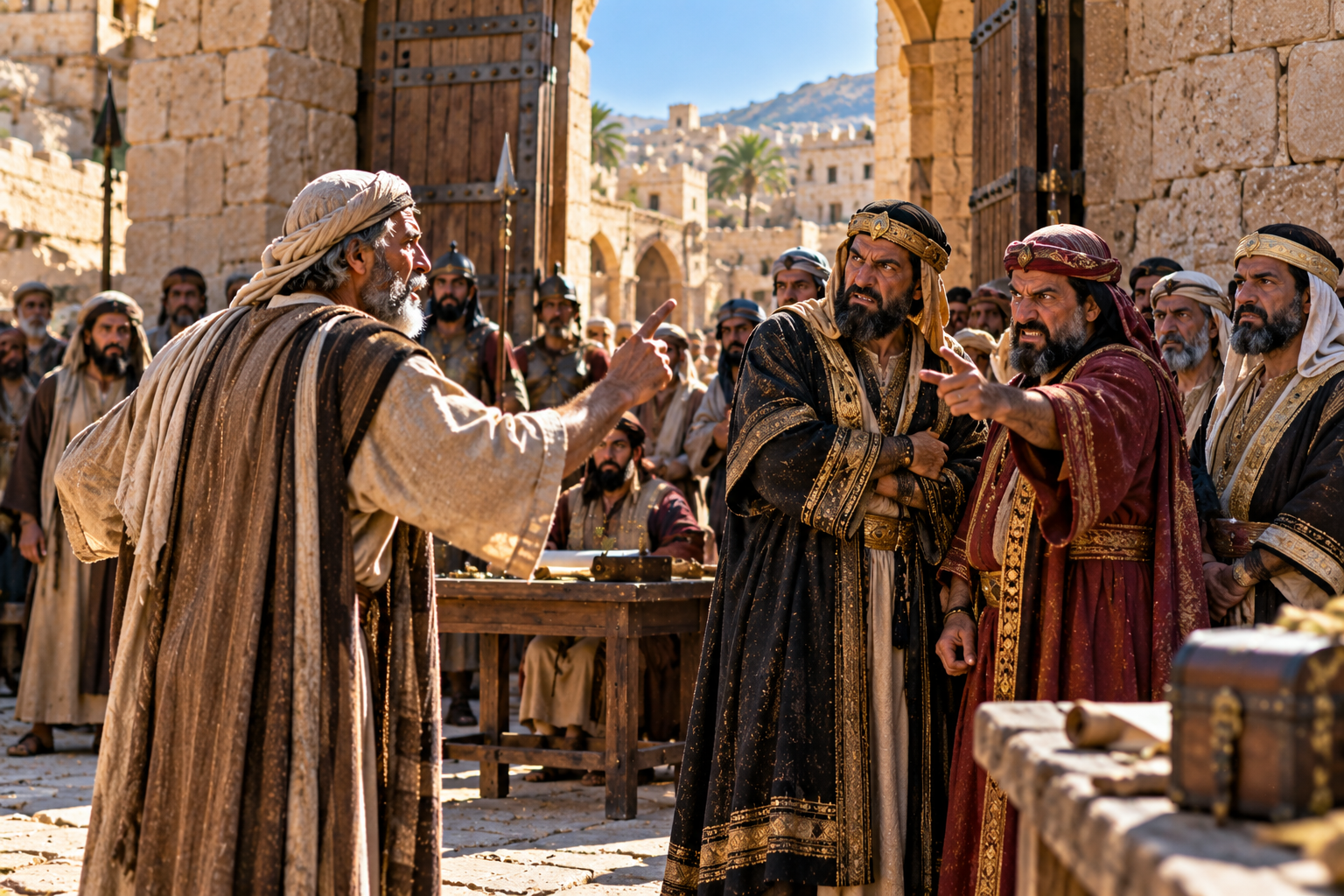
Amos Hated for Reproving Israel's Oppression of the Poor
WHEN TRUTH IS UNWELCOME
AND CORRECTION IS HATED
They (Israelites) hate him who reproves (corrects, rebukes, reasons, exposes what is wrong) in the (city) gate - Amos has just exposed Israel for turning justice into wormwood and casting righteousness to the earth (Amos 5:7). Amos now explains one reason such corruption continued which is because they hated anyone who confronted it. Amos does not merely say they disagreed with the person correcting them, but they hated (detested, regarded with hostility) them. They hated him precisely because he was willing to tell them the truth. When people love their sin, they often begin to hate the voice that exposes it. Their hostility toward the messenger revealed their hostility toward the message. This is one of the clearest signs of spiritual deterioration. Correction that should produce repentance instead produces resentment. The principle is that when people love their sin, they often begin to hate the voice that exposes it. Have you ever experienced that reaction? If you are a parent, I know you have! And Amos himself was about to experience this reaction in Amos 7:12, where they tell him to stop preaching in Israel! In short, Amos preached that Israel hated the truth-teller, and eventually Israel's religious leadership told the truth-teller to leave.
Bob Utley - "They hate him who reproves in the gate" Those (honest judges, true witnesses) who tried to stand up and defend the poor and helpless (exactly who this refers to is uncertain, some kind of legal advocate) were vehemently attacked by the status quo leadership (cf. Isa. 59:14-15). This is another allusion to Deuteronomy's cursing and blessing section (cf. Deut. 27:25). The gate was the place of justice in the ancient Near East (cf. Deut. 25:1-3; Ruth 4:1-12). This is where the elders of the communities sat to hear and judicate the issues of the community (cf. Deut. 19:12; 21:3,8,19; 21:3,8; 22:15; 25:7-8). These elders and judges are addressed directly by Amos in vv. 10-17. For a good brief discussion of Israel's judicial system, see Roland deVaux, Ancient Israel, pp. 152-157. ▣ "abhor" This (BDB 1073, KB 1765, Piel IMPERFECT) is a strong VERB, often used to denote YHWH's rejection of idolatry. It is parallel to "hate" (BDB 971, KB 1338, Qal PERFECT) in this same verse.
A heart that refuses reproof eventually
begins to regard the corrector as the problem.
In the (city) gate - In ancient Israel the city gate was not merely an entrance into the city but functioned as a major center of civic and legal life. Town elders gathered there, disputes were heard and resolved, contracts were witnessed, and judicial decisions were made (Dt 21:18–21; Ru 4:1–11). We might think of it as something like a courthouse or city hall combined with a business center. The point is that Amos is describing corruption in the very place where justice should have been protected. Amos describes more evil at the gate (see Amos 5:12, 15), which makes the city gate somewhat of a spiritual barometer of the nation of Israel. The gate should have been the place for justice, truth, integrity and protection of the poor, but instead became the center for bribery, oppression of the poor, the site of correction and the place which was hostile to the truth.
ESV Study Bible the gate. The walled cities of the ancient Near East had covered gatehouses in which there were multiple sets of gates. Thus, if the enemy broke through one set, they were immediately confronted with another. During times of peace all these gates would be open and the gatehouse would provide a shady place where the old men of the city could sit to observe the comings and goings, and where they could decide the cases of those who came to them for justice. But in Israel, justice was going to the highest bidder. See also Amos 5:12, 15.
And they abhor (despise, loathe, strongly reject) him who speaks (honestly) with integrity - The righteous person had become offensive to a society whose moral values had been inverted. That was the tragedy when the corrupt were comfortable with corruption but uncomfortable with the person who exposed it. They tolerated injustice but could not tolerate the man who called injustice wrong. Israel abhorred the messenger because they did not want to hear the message.
Speaks (honestly) with integrity - The Hebrew expression conveys the idea of speaking what is whole, sound, blameless, or truthful. The man speaks straight in a society that has become crooked. He does not manipulate the evidence. He does not tailor his words to please influential people. He does not change his testimony because someone offers him money. He simply speaks the truth and for that reason he is hated. When a society becomes crooked, the straight man begins to look crooked. To say it another way, in a culture built on lies, the truth-teller becomes a troublemaker.
Bob Utley - The term's (BDB 1071, KB 1748) basic meaning is to be exact or straight. This imagery for moral/ethical uprightness was derived from the word for a palm tree. Notice its usage. (1) Noah, Gen. 6:9 (2) Abraham, Gen. 17:1 (3) peace offerings, Lev. 22:21 (4) godly Israelites, Deut. 18:13; Prov. 2:7; 10:9 (5) God, Deut. 32:4 2 Sam. 22:31,33; Ps. 18; 30,32 (6) Job, Job 1:1,8; 2:3 (7) God's word, Ps. 19:7
🙏 THOUGHT: Let's apply this passage to our lives. Israel hated "him who reproves in the gate" and abhorred "him who speaks with integrity" (Amos 5:10). How do you respond when God's Word, a sermon, a spouse, a friend, or a fellow believer exposes something in your life that needs correction? Our first instinct may be to defend ourselves, but God's gracious reproof is often one of His instruments for making us more like Christ. Scripture gives us two kings who heard hard words from a prophet. When Nathan confronted David with "You are the man!", David did not argue, excuse, or retaliate. He said, "I have sinned against the LORD" (2 Samuel 12:7, 13), and he found forgiveness. When King Ahab was asked about the prophet Micaiah, he said, "I hate him, because he does not prophesy good concerning me, but evil" (1 Kings 22:8), and he walked straight into the battle that killed him. The difference between the two kings was not the severity of their sin but their response to reproof. David later wrote, "Let the righteous smite me in kindness and reprove me; it is oil upon the head; do not let my head refuse it" (Psalm 141:5). Solomon observed, "Reprove a wise man and he will love you. Give instruction to a wise man and he will be still wiser" (Proverbs 9:8–9), and "Faithful are the wounds of a friend" (Proverbs 27:5–6). The person who loves us enough to tell us the truth is a gift, even when the truth stings. Do not despise the voice that points out the stain if God is using that voice to help remove it. Ask instead, "Lord, is there something here You want me to see?"
Do not despise the voice that points out the stain
if God is using that voice to help remove it.
Amos 5:11 Therefore because you impose heavy rent on the poor And exact a tribute of grain from them, Though you have built houses of well-hewn stone, Yet you will not live in them; You have planted pleasant vineyards, yet you will not drink their wine.
- treading (KJV): Am 4:1 Isa 5:7,8 Isa 59:13,14 Mic 2:2 Mic 3:1-3 Jas 2:6 Rev 11:8-10
- ye have built (KJV): De 28:30,38,39 Isa 65:21,22 Mic 6:15 Zep 1:13 Hag 1:6
- pleasant vineyards (KJV): Heb. vineyards of desire
Related Passages:
Amos 4:1 Hear this word, you cows of Bashan who are on the mountain of Samaria, Who oppress the poor, who crush the needy, Who say to your husbands, “Bring now, that we may drink!”
Leviticus 19:13 ‘You shall not oppress your neighbor, nor rob him. The wages of a hired man are not to remain with you all night until morning.
Proverbs 14:31 He who oppresses the poor taunts his Maker, But he who is gracious to the needy honors Him.
Proverbs 15:16 Better is a little with the fear of the LORD Than great treasure and turmoil with it.
Proverbs 16:8 Better is a little with righteousness Than great income with injustice.
Isaiah 5:7-10 For the vineyard of the LORD of hosts is the house of Israel And the men of Judah His delightful plant. Thus He looked for justice, but behold, bloodshed; For righteousness, but behold, a cry of distress. 8 Woe to those who add house to house and join field to field, Until there is no more room, So that you have to live alone in the midst of the land! 9 In my ears the LORD of hosts has sworn, “Surely, many houses shall become desolate, Even great and fine ones, without occupants. 10 “For ten acres of vineyard will yield only one bath of wine, And a homer of seed will yield but an ephah of grain.”
Isaiah 59:13-14 Transgressing and denying the LORD, And turning away from our God, Speaking oppression and revolt, Conceiving in and uttering from the heart lying words. 14 Justice is turned back, And righteousness stands far away; For truth has stumbled in the street, And uprightness cannot enter.
Micah 2:2 They covet fields and then seize them, And houses, and take them away. They rob a man and his house, A man and his inheritance.
Micah 3:1-3 And I said, “Hear now, heads of Jacob And rulers of the house of Israel. Is it not for you to know justice? 2 “You who hate good and love evil, Who tear off their skin from them And their flesh from their bones, 3 Who eat the flesh of my people, Strip off their skin from them, Break their bones And chop them up as for the pot And as meat in a kettle.”
James 2:6 But you have dishonored the poor man. Is it not the rich who oppress you and personally drag you into court?
Deuteronomy 28:30 “You shall betroth a wife, but another man will violate her; you shall build a house, but you will not live in it; you shall plant a vineyard, but you will not use its fruit.
Deuteronomy 28:38-39 “You shall bring out much seed to the field but you will gather in little, for the locust will consume it. 39 “You shall plant and cultivate vineyards, but you will neither drink of the wine nor gather the grapes, for the worm will devour them.
Isaiah 65:21-22 “They will build houses and inhabit them; They will also plant vineyards and eat their fruit. 22 “They will not build and another inhabit, They will not plant and another eat; For as the lifetime of a tree, so will be the days of My people, And My chosen ones will wear out the work of their hands.
Micah 6:15 “You will sow but you will not reap. You will tread the olive but will not anoint yourself with oil; And the grapes, but you will not drink wine.
Zephaniah 1:13“Moreover, their wealth will become plunder And their houses desolate; Yes, they will build houses but not inhabit them, And plant vineyards but not drink their wine.”
Haggai 1:6 “You have sown much, but harvest little; you eat, but there is not enough to be satisfied; you drink, but there is not enough to become drunk; you put on clothing, but no one is warm enough; and he who earns, earns wages to put into a purse with holes.”
Houses of well-hewn stone...pleasant Vineyards
PROSPERITY BUILT
UPON OPPRESSION
Therefore (term of conclusion) The Therefore connects Israel's coming judgment directly to the corruption Amos has just exposed (Amos 5:7, 10). They had turned justice into wormwood, thrown righteousness to the ground, and hated those who confronted their wrongdoing. Now God identifies what their injustice looked like in everyday life. Their luxurious lifestyle was being financed at the expense of the poor.
Because (term of explanation) - The judgment comes because they oppressed the poor and extracted wealth from them.
You impose heavy rent on the poor (NET - you make the poor pay taxes on their crops) The Hebrew wording is difficult, but the basic picture is clear: the wealthy and powerful were extracting resources from the poor. The verb can convey the idea of trampling, exacting, or imposing a burden. They sold the needy for a pair of sandals (Amos 2:6). They trampled the head of the poor (Amos 2:7). They oppressed the poor and crushed the needy (Amos 4:1). Now They imposed burdens upon the poor. This was not an isolated failure. It had become a pattern.
NET NOTE - Traditionally, “because you trample on the poor” (cf. KJV, ASV, NAB, NIV84, NRSV, NLT). The traditional view derives the verb from בּוּס (bus, “to trample”; cf. Isa. 14:25), but more likely it is cognate to an Akkadian verb meaning “to exact an agricultural tax” (see H. R. Cohen, Biblical Hapax Legomena [SBLDS], 49; S. M. Paul, Amos [Hermeneia], 172-73) (cf. NIV11 “you levy a straw tax on the poor” ).
And exact a tribute of grain (grain tax) from them - The Hebrew word translated “tribute” can refer to a levy, gift, or exaction. In this context it is clearly oppressive. The powerful were taking grain from people who could least afford to lose it. For the wealthy, grain might represent additional income. For the poor, grain could represent survival. Thus the wealthy were accumulating abundance by extracting from those already struggling.
In Amos 5:10 they hated the person who spoke truth at the gate. Now we see why! Truth threatened a profitable system. If justice were restored, some people would lose the economic advantages they had gained through corruption.
Though you have built houses of well-hewn (chiseled) stone, Yet you will not live in them - Hewn stone suggests carefully cut, dressed stone and therefore substantial, expensive construction. These were impressive homes built to last. Compare the luxury Amos 3:15 has already described -- winter houses, summer houses, houses of ivory and great houses. They built their houses with stone, but their prosperity rested on sand.
Bob Utley This is another curse for violation of the Mosaic Covenant (cf. Deut. 28:30,39). The rich had built luxurious homes ("well-hewn stone"; also note Amos 3:15) by exploiting the poor (cf. Amos 5:11-12). But YHWH would not let them live with their ill gotten gain (cf. Micah 6:15; Zeph. 1:13). This is an allusion to the Assyrian exile.
John Walton - stone mansions. This refers to houses using hewn stone (called “ashlar”), for many of the houses in Israel used rough fieldstones in construction. Often the foundation was stone while the superstructure was of sun-dried mud brick. Only the very wealthiest of the upper class would have been able to afford this carefully dressed masonry. The limestone used for this construction was quarried near Samaria. The curse used here is called a “futility curse” because it calls for their efforts and labor to become futile, and it can be compared to an inscription on a Babylonian boundary stone calling on the gods to see that anyone who builds a house on stolen land should have the house taken from them. (IVP Bible Background Commentary: OT page 770)
Yet you will not live in them - The Hebrew idea is literally that they would not dwell in them. Their beautiful homes would remain, but the owners would be gone. This anticipates invasion and exile. Imagine spending years acquiring wealth, designing a magnificent home, selecting carefully cut stones, completing the house, and then being forcibly removed before enjoying it. God had already warned Israel through Moses that covenant rebellion would produce precisely this kind of reversal. They would build a house but not live in it, and plant a vineyard but not enjoy its fruit (Dt 28:30, 39). Amos was therefore not inventing a new standard. Israel was experiencing the consequences God had already placed before them in His covenant. The judgment Amos announced was the fulfillment of a Word Israel had possessed for generations.
NET NOTE - Heb “Houses of chiseled stone you built, but you will not live in them. Fine vineyards you planted, but you will not drink their wine.”
You have planted pleasant (desirable, delightful, choice.) vineyards, yet you will not drink their wine. - They were vineyards intended to provide enjoyment. They had plans for years of enjoyment but God had other plans. Their sin produced wealth, but judgment would prevent them from enjoying that wealth. There is profound irony here. In Amos 4:1 the wealthy women said “Bring now, that we may drink!” Now God effectively says you will not drink.
Amos is not teaching that expensive houses or productive vineyards are inherently sinful. The issue is how they acquired their prosperity and what their prosperity had done to their hearts.
Everything they gained through injustice became
something they were destined to lose in judgment.
🙏 THOUGHT: There is nothing wrong with enjoying the good things God provides, but we should never value prosperity above integrity. Israel's elite built houses of hewn stone and planted pleasant vineyards with wealth squeezed from the poor, and God said they would neither live in those houses nor drink that wine (Amos 5:11). God is interested not only in what we possess, but in how we obtained our possessions. Jeremiah echoed the warning: "Woe to him who builds his house without righteousness and his upper rooms without justice, who uses his neighbor's services without pay" (Jeremiah 22:13). King Ahab wanted Naboth's vineyard so badly that he allowed Jezebel to have Naboth killed to get it, and the vineyard he gained became the place where God pronounced his doom (1 Kings 21). By contrast, when Zacchaeus met Jesus, his first response was to make things right with those he had cheated: "If I have defrauded anyone of anything, I will give back four times as much" (Luke 19:8). A beautiful house, a successful business, a large bank account, or a comfortable retirement is never worth compromising righteousness. "Better is a little with the fear of the LORD than great treasure and turmoil with it" (Proverbs 15:16). "Better is a little with righteousness than great income with injustice" (Proverbs 16:8). Paul reminds us that "godliness actually is a means of great gain when accompanied by contentment" (1 Timothy 6:6).
Better to possess less with a clear conscience
than much at the expense of another person.
Amos 5:12 For I know your transgressions are many and your sins are great, You who distress the righteous and accept bribes And turn aside the poor in the gate.
- I know (KJV): De 31:21 Isa 66:18 Jer 29:23 Heb 4:12-13
- manifold (KJV): 2Ki 17:7-17 Isa 47:9
- they afflict (KJV): Am 2:6,7,16 Ac 3:13,14 7:52 Jas 5:4,6
- take (KJV): 1Sa 8:3 Ps 26:9,10 Isa 1:23 33:15 Mic 3:11 7:3
- bribe (KJV): or, ransom
- and they (KJV): Am 2:7 Isa 10:2 29:21 La 3:34 Mal 3:5
- in the (KJV): Am 5:10 De 16:18 Ru 4:1 Job 29:7-25 31:21 Pr 22:22
Related Passages:
Exodus 23:6-8 “You shall not pervert the justice due to your needy brother in his dispute. 7“Keep far from a false charge, and do not kill the innocent or the righteous, for I will not acquit the guilty. 8“You shall not take a bribe, for a bribe blinds the clear-sighted and subverts the cause of the just.
Deuteronomy 16:18-20 “You shall appoint for yourself judges and officers in all your towns which the LORD your God is giving you, according to your tribes, and they shall judge the people with righteous judgment. 19 “You shall not distort justice; you shall not be partial, and you shall not take a bribe, for a bribe blinds the eyes of the wise and perverts the words of the righteous. 20 “Justice, and only justice, you shall pursue, that you may live and possess the land which the LORD your God is giving you.
Deuteronomy 31:21 “Then it shall come about, when many evils and troubles have come upon them, that this song will testify before them as a witness (for it shall not be forgotten from the lips of their descendants); for I know their intent which they are developing today, before I have brought them into the land which I swore.”
Isaiah 66:18 “For I know their works and their thoughts; the time is coming to gather all nations and tongues. And they shall come and see My glory.
Jeremiah 29:23 because they have acted foolishly in Israel, and have committed adultery with their neighbors’ wives and have spoken words in My name falsely, which I did not command them; and I am He who knows and am a witness,” declares the LORD.’”
Hebrews 4:12-13 For the word of God is living and active and sharper than any two-edged sword, and piercing as far as the division of soul and spirit, of both joints and marrow, and able to judge the thoughts and intentions of the heart. 13 And there is no creature hidden from His sight, but all things are open and laid bare to the eyes of Him with whom we have to do.
GO KNOWS EVERY
INJUSTICE
For (term of explanation) I know - The pronoun “I” is emphatic. Israel might conceal injustice from the courts, manipulate witnesses, intimidate the righteous, and purchase favorable verdicts, but there was one Judge they could neither deceive nor bribe. They could corrupt the court at the gate, but they could not corrupt the Judge in heaven.
The wealthy might have convinced themselves that no one knows how we obtained our wealth, no one sees what happens at the city gate, no one knows about the bribe or no one cares about the poor man denied justice. God says WRONG! I KNOW!
Your transgressions (pesha; LXX - asebeia - godlessness) are many (many rebellious acts) - Transgressions (pesha) carries the idea of rebellion, revolt, or willful violation of authority. These were not merely misteps or mistakes, but overt volitional acts of rebellion against God's revealed standard. And notice they were not few but MANY! Sin tolerated rarely remains solitary, but it tends to multiply, like mold in a wet wall which eventually destroys the wood and the wall! Recall Amos 4:4 " In Gilgal multiply (not "addition") transgression."
And your sins (chattat/chattath; LXX - hamartia - miss the mark) are great (numerous sins) - Notice how Amos moves from many to great. Many speaks of quantity and great of the magnitude of their sins. In short, their sins were numerous and serious.
You who distress (tsarar; LXX - katapateo - tread down, trample underfoot, treat with disdain) the righteous (saddiq; LXX - dikaios - applied to model citizens in the Graeco-Roman world)(torment the innocent) and accept (take) bribes - Distress can carry the idea of afflicting, harassing, oppressing, or treating someone as an adversary. The righteous person should have been protected by the legal system. Instead, he became its victim. One mechanism of corruption was bribery which is the word kopher which can mean a ransom, price, or payment. In this context it refers to payment that improperly influences judgment. The person with money receives favorable treatment while the poor person receives injustice. God's Law explicitly prohibited this kind of judicial corruption (Ex 23:6–8; Dt 16:18–20). The poor man's problem was not that he had no case but that he had no money.The corrupt judge may have thought no one saw the money change hands. But God says “I know.”
John Walton - bribes. judicial bribes and oppression. One of Amos’s principal themes is criticism of social injustice (see Ex 23:6-8; Deut 16:19; and Hammurabi’s Code for laws against bribery). There is a long history of peasant or wisdom literature pleading for justice under the law and from kings and officials. For example, in a collection of Babylonian Wisdom sayings the “unscrupulous judge” is one who accepts a present “and yet lets justice miscarry.” Similarly, the twenty-first century “eloquent peasant” in Egyptian literature charges that “lawmakers approve of robbery” and “the inspector condones corruption.” The tenth-century Babylonian “Theodicy” decries people who “fill the storehouse of the oppressor with gold” while they “empty the larder of the beggar of its provisions.” (IVP Bible Background Commentary: OT page 770)
Bob Utley - This verse, like Amos 5:10-11, lists the sins of the wealthy class against the poor (possibly small farmers) and underprivileged. These are the very ones the ethical God cares about because of their helplessness and vulnerability (cf. Deut. 10:18; 14:29; 16:11; 24:17-22; 26:12-13; 27:19). This is another Deuteronomic emphasis. The prophets always looked back to the Mosaic Covenant. The term translated "bribe" (BDB 497 I, KB 495 IV, cf. Exod. 23:8; Deut. 16:19; 27:25; 1 Sam. 12:3; Prov. 6:35) is the same term used to describe God's "covering," "atoning" for sin (KB 493). This important theological term is used here in a derived sense of covering someone's hand or eyes. It is a shocking use of a wonderful theological term.
Justice that can be purchased
is no longer justice.
And turn aside the poor (deny justice to the needy) in the (city) gate - This is now the third important reference in this section: Amos 5:7 — justice corrupted. Amos 5:10 — truth-tellers hated at the gate. Amos 5:12 — the poor denied justice at the gate. And soon: Amos 5:15 — “Establish justice in the gate.” The gate should have been where injustice ended. Instead it had become where injustice was institutionalized.
NET NOTE - Heb “turn aside.” They “turn aside” the needy by denying them the justice they deserve at the city gate (where legal decisions were made, and therefore where justice should be done). Legal disputes were resolved in the city gate, where the town elders met.
🙏 THOUGHT: The words "I know" (Amos 5:12) can be either frightening or comforting, depending on what we are doing. If we are hiding sin, they remind us that nothing is concealed from God. "The eyes of the LORD are in every place, watching the evil and the good" (Proverbs 15:3). "There is no creature hidden from His sight, but all things are open and laid bare to the eyes of Him with whom we have to do" (Hebrews 4:13, cf Nu 32:23, Ps 90:8). David tried to hide his sin and found that his body wasted away under God's heavy hand, until he finally said, "I acknowledged my sin to You... and You forgave the guilt of my sin" (Psalm 32:3–5). But if we are being treated unjustly, those same words become wonderfully comforting. When Hagar fled into the wilderness, mistreated and alone, she named the LORD El Roi, "You are a God who sees" (Genesis 16:13). "The eyes of the LORD move to and fro throughout the earth that He may strongly support those whose heart is completely His" (2 Chronicles 16:9). Our Father knows, and we will be vindicated, if not in this life, then in the next. That is why we need not repay evil for evil, but can "leave room for the wrath of God" (Romans 12:17–21). Jesus Himself, when He was reviled, "did not revile in return... but kept entrusting Himself to Him who judges righteously" (1 Peter 2:23). God sees what others overlook, knows what others misunderstand, and cannot be deceived by appearances. "O LORD, You have searched me and known me... Even before there is a word on my tongue, behold, O LORD, You know it all" (Psalm 139:1–4). Therefore, when we sin, let His knowledge lead us to confession, and when we suffer unjustly, let His knowledge give us confidence that God is our Covenant Defender.
Transgressions (rebel, rebellion)(06588) pesha' from pasha [06586] = to rebel, transgress) means transgression, rebellion or revolt against authority (rising up in clear defiance of authority), guilt (incurred by transgressing). Transgression is rebellion expressed by crossing a boundary God has established. It is stronger than simply making a mistake. It describes knowingly, willfully violating the authority of the One to Whom obedience is owed.
Think of three similar words in the OT:
- SIN — missing the mark God has established.
- INIQUITY — crookedness or perversity, departing from what is straight.
- TRANSGRESSION — crossing the line in rebellion against God’s authority.
Sin misses God’s mark;
Iniquity twists God’s standard;
Transgression crosses God’s line.
Sin misses the mark, iniquity bends what God made straight, and transgression crosses the line God has drawn.
Imagine God drawing a line in the sand and saying “Do not cross this line.” Transgression looks at the line, recognizes the authority behind it, and steps across anyway. That makes transgression especially personal. God's law is not merely an impersonal rulebook. To transgress is to say, in effect, “God has drawn the line here, but I will cross it anyway.” This fits Amos particularly well. When God repeatedly says, “For three transgressions...and for four” (Amos 1:3,6,9,11,13; 2:1,4,6), He is not describing accidental failures. The nations and then Judah and Israel had repeatedly violated God's moral boundaries. Their sins had become persistent rebellion.
Pesha' is derived from a root describing the breach of relationship between two parties (civil or religious). The idea of this noun is that the individual makes a willful choice to reject God's authority and hence to deviate from the path of godly living. Defection from God's standard. Pesha' is “a stepping aside from the (correct) path." Pesha' speaks of willful sin.
Amos 5:13 Therefore at such a time the prudent person keeps silent, for it is an evil time.
- the prudent (KJV): Am 6:10 Ec 3:7 Isa 36:21 Ho 4:4 Mic 7:5-7 Mt 27:12-14
- an evil (KJV): Ec 9:12 Isa 37:3 Mic 2:3 Hab 3:16 Zep 2:2,3 Eph 5:15,16 6:13 2Ti 3:1
Related Passages:
Ecclesiastes 3:7 A time to tear apart and a time to sew together; A time to be silent and a time to speak.
WHEN TRUTH IS
DANGEROUS TO SPEAK
Therefore (term of conclusion - for this reason) tells us that this verse (Amos 5:13) is the consequence of the environment just described. When truth is hated and justice is for sale, wise people learn that speaking can become dangerous.
At such a time - This is a time characterized by everything Amos has just described (Amos 5:7, 10, 11, 12)
The prudent person (whoever is smart) keeps silent, - Prudent (maskil) describes one who acts wisely, intelligently, insightfully, or prudently.This person understands the circumstances, sees that the system is corrupt, knows that the people controlling the gate do not want truth and He has watched what happens to those who reprove wrongdoing. And as we have seen “They hate him who reproves in the gate.” (Amos 5:10) The result is that the prudent person recognizes the danger. His silence is not ignorance of evil but is evidence that he understands how evil the situation has become.
Keeps silent - Amos is not establishing a universal principle that righteous people should remain silent in the face of injustice. Amos himself certainly did not remain silent! Rather, Amos is describing just how corrupt society had become. Speaking truth could accomplish little in a court determined to reject truth and could expose the speaker to retaliation. In effect, the silence of the prudent was not approval of the evil but was evidence of the evil. However, a society is in serious trouble when honest people become afraid to speak honestly. Ecclesiastes reminds us that there is “a time to be silent and a time to speak.” (Eccl 3:7) Wisdom is knowing which time we are in. Wisdom knows not only what should be said, but when saying it will serve God's purpose.
ESV Study Bible - keep silent. The reference is probably to the legal proceedings taking place in the gatehouse (see note on v. 10). If someone were to speak out against the manifest injustice taking place, his own life might be in danger (v. 10), while his objections would do no good because they could not stop the ongoing, entrenched evil.
Reformaton Study Bible - keep silent. - This phrase explains why the prudent will be silent: the times will be so bad that the truth will not be tolerated.
J Vernon McGee - In other words, a man in that day knew he could not get justice, and many good people were keeping quiet. It was the prudent thing to do because, if he had attempted to protest, it wouldn't have done him a bit of good. The tragedy of the hour in which we live is that we talk about the freedom of the press, the freedom of religion, and the freedom of speech, but there is not much of it left. The news media have definitely become a brainwashing agency. It is true that only he who has money can get a public hearing today. As a result, we do have a silent majority in this country, because they know that their voices would not amount to anything at all. We are in a tragic day, very much like the day to which Israel had come. (SEE Thru the Bible Vol. 28: The Prophets - Obadiah)
When men silence the truth-teller,
they have not silenced the God of truth.
NET NOTE - PRUDENT - Or “the wise”; or “the prudent.” Another option is to translate “the successful, prosperous” and understand this as a reference to the rich oppressors. See G. V. Smith, Amos, 169-70. In this case the following verb will also have a different nuance, that is, the wealthy remain silent before the abuses they perpetuate. See the note on the verb translated “keeps quiet” later in this verse. KEEP SILENT - Or “moans, laments,” from a homonymic verbal root. If the rich oppressors are in view, then the verb (whether translated “will be silenced” or “will lament”) describes the result of God’s judgment upon them. See G. V. Smith, Amos, 170.
For (term of explanation) it is an evil time - The evil was not merely that individual people committed individual sins. Corruption had become so pervasive that those who tried to oppose it could themselves become targets. Why evil? Because society's moral values had been inverted. They tolerated the bribe but hated the reprover. They protected the oppressor but turned away the poor. They cast down righteousness but elevated those benefiting from unrighteousness. An evil time is not merely one in which evil exists, but one in which evil becomes protected and righteousness becomes costly.
NET NOTE - If this is a judgment announcement against the rich, then the Hebrew phrase עֵת רָעָה (ʿet raʿah) must be translated, “[a] disastrous time.” See G. V. Smith, Amos, 170.
🙏 THOUGHT: Wisdom is not measured by how much we say. Amos observed that in an evil time, the prudent person keeps silent (Amos 5:13), yet Amos himself refused to keep silent when God had spoken. Both are true, and the difference is discernment. There is "a time to be silent and a time to speak" (Ecclesiastes 3:7). Proverbs even sets two instructions side by side: "Do not answer a fool according to his folly" and "Answer a fool as his folly deserves" (Proverbs 26:4–5). Knowing which one applies takes wisdom. Jesus Himself modeled both. Before Herod and Pilate He answered not a word (Matthew 27:12–14; Luke 23:9), yet in the temple He spoke with fearless clarity to the religious leaders. Esther kept quiet about her identity for years, but when the moment came, Mordecai urged her, "Who knows whether you have not attained royalty for such a time as this?" (Esther 4:14), and she spoke at the risk of her life. Before speaking, ask: Is it true? Is it necessary? Is this the right time? Will it honor Christ? "A word spoken in due season, how good it is!" (Proverbs 15:23, KJV). James counsels us to be "quick to hear, slow to speak and slow to anger" (James 1:19), and Paul urges us to speak the truth in love (Ephesians 4:15), with speech "always with grace, as though seasoned with salt" (Colossians 4:6). And when God clearly calls us to speak, may we have the courage of Amos: "The Lord GOD has spoken! Who can but prophesy?" (Amos 3:8). Peter and John said the same when ordered to be silent: "We cannot stop speaking about what we have seen and heard" (Acts 4:20).
Amos 5:14 Seek good and not evil, that you may live; And thus may the LORD God of hosts be with you, Just as you have said!
- Seek (KJV): Ps 34:12-16 Pr 11:27 Isa 1:16,17 55:2 Mic 6:8 Mt 6:33 Ro 2:7-9
- and so (KJV): Am 3:3 Ge 39:2,3,23 Ex 3:12 Jos 1:9 1Ch 28:20 2Ch 15:2 Ps 46:11 Isa 8:10 Mt 1:23 28:20 Php 4:8,9 2Ti 4:22
- as (KJV): Nu 16:3 Isa 48:1,2 Jer 7:3,4 Mic 3:11
Related Passages:
Amos 5:4 For thus says the LORD to the house of Israel, “Seek Me that you may live.
Amos 5:6 “Seek the LORD that you may live, Or He will break forth like a fire, O house of Joseph, And it will consume with none to quench it for Bethel,
Psalm 34:12-16 Who is the man who desires life And loves length of days that he may see good? 13Keep your tongue from evil And your lips from speaking deceit. 14Depart from evil and do good; Seek peace and pursue it. 15The eyes of the LORD are toward the righteous And His ears are open to their cry. 16The face of the LORD is against evildoers, To cut off the memory of them from the earth.
Proverbs 11:27 He who diligently seeks good seeks favor, But he who seeks evil, evil will come to him.
Exodus 3:12 And He said, “Certainly I will be with you, and this shall be the sign to you that it is I who have sent you: when you have brought the people out of Egypt, you shall worship God at this mountain.”
Joshua 1:9 “Have I not commanded you? Be strong and courageous! Do not tremble or be dismayed, for the LORD your God is with you wherever you go.”
Psalm 34:14 Depart from evil and do good; Seek peace and pursue it.
Psalm 97:10 Hate evil, you who love the LORD, Who preserves the souls of His godly ones; He delivers them from the hand of the wicked.
Isaiah 1:16-17 “Wash yourselves, make yourselves clean; Remove the evil of your deeds from My sight. Cease to do evil, 17Learn to do good; Seek justice, Reprove the ruthless, Defend the orphan, Plead for the widow.
Micah 3:11 Her leaders pronounce judgment for a bribe, Her priests instruct for a price And her prophets divine for money. Yet they lean on the LORD saying, “Is not the LORD in our midst? Calamity will not come upon us.”
Micah 6:8 He has told you, O man, what is good; And what does the LORD require of you But to do justice, to love kindness, And to walk humbly with your God?
1 Thessalonians 5:21-22 But examine everything carefully; hold fast to that which is good; 22 abstain from every form of evil.
3 John 1:11 Beloved, do not imitate what is evil, but what is good. The one who does good is of God; the one who does (present tense = habitually - not speaking of perfection but direction!) evil has not seen God.
SEEK GOD, SEEK GOOD
SEEK LIFE
Seek good and not evil, that you may live - Those who truly seek the God Who is good will begin seeking the good that pleases God. Seek (darash) is the same intentional seeking as described in Amos 5:4,5,6. Amos moves from relationship to conduct. Seeking God cannot be separated from seeking what God calls good. Israel claimed to seek God at Bethel while practicing injustice at the gate. Amos says those two things cannot coexist. You cannot sincerely seek God while deliberately pursuing what God calls evil.
In context, good is not vague niceness. Amos has already told us what Israel was doing: They turned justice into wormwood (Amos 5:7). They hated the truth-teller (Amos 5:10). They oppressed the poor (Amos 5:11). They accepted bribes (Amos 5:12). They denied justice to the poor (Amos 5:12). So seeking good means reversing those practices.
Bob Utley - "Seek good and not evil" Note the prophet's sharp contrasts (cf. Amos 5:15). There is a choice to be made which has eternal consequences. "Seek" (BDB 205, KB 233, Qal IMPERATIVE) is another IMPERATIVE. Notice this IMPERATIVE'S relationship with those in Amos 5:4, 6 that emphasize ethical lifestyles. It must be remembered that biblical faith has two foci: (1) personal relationship (cf. John 3:16; Romans 4) (2) deeds of love (cf. 1 Corinthians 13; Eph. 2:8-10 and 1 John 3:23). Amos admonishes Israel to "seek good." Isaiah uses the same VERB to admonish God's people to seek justice (cf. Isa. 1:17). What do we care about, strive for, seek after? The answer to this question tells us who we are and who we serve!
And thus may the LORD God of hosts (of Heaven's Armies just might) be with you, Just as you have said (as you claim He is)! - Amos addresses one of Israel's dangerous assumptions. Apparently the Israelites were saying “The LORD is with us.” They believed their covenant status, religious activity, prosperity, and national success demonstrated God's presence and favor. Amos challenges that assumption. They believed their covenant status, religious activity, prosperity, and national success demonstrated God's presence and favor. Amos challenges that assumption. They had turned “God is with us” from a truth to be lived into a slogan to be repeated. Their practices (injustice, bribery, oppression hatred of truth) clearly contradicted the truth that God was with them.
If you claim the LORD is with you, then live according to the character of the LORD you claim is with you. The credibility of our confession is demonstrated by the direction of our conduct. People can presume upon God's presence simply because they possess religious privileges (covenant, altars, sacrifices, priests, religious festivals). Yet none of those things guaranteed God's approval. We must never confuse religious familiarity with divine approval. If we say God is with us, our lives should show that we are walking with Him.
Bob Utley - "the Lord God of hosts be with you" This is the greatest promise that God can make (cf. Ps. 23). The title "Lord God of Hosts" has two related meanings in the OT: (1) YHWH as commander of the angelic army (2) YHWH as controller of the astral bodies that represent angelic powers (Babylonian idolatry). The credibility of our confession is demonstrated by the direction of our conduct.
🙏 THOUGHT: It is easy to say, "The Lord is with me," but Amos turns the statement into a searching question. Israel confidently claimed God's presence, so Amos told them, "Seek good and not evil, that you may live; and thus may the LORD God of hosts be with you, just as you have said!" (Amos 5:14). Their slogan was right, but their lives contradicted it. Micah heard Jerusalem's corrupt leaders say the same thing: "Is not the LORD in our midst? Calamity will not come upon us" (Micah 3:11). Jeremiah warned his generation not to trust in the deceptive words "This is the temple of the LORD" while they went on stealing, lying, and worshiping idols (Jeremiah 7:4, 8–10). Does the direction of my life agree with my confession? We are saved by grace through faith, not by our works, yet we are "created in Christ Jesus for good works" (Ephesians 2:8–10). The grace that brings us into fellowship with God also teaches us "to deny ungodliness and worldly desires and to live sensibly, righteously and godly in the present age" (Titus 2:11–14). Jesus warned that not everyone who says "Lord, Lord" will enter the kingdom, but the one who does the will of His Father (Matthew 7:21). Amos's call, "Hate evil, love good" (Amos 5:15), is echoed by Paul centuries later: "Abhor what is evil; cling to what is good" (Romans 12:9). Do not merely seek God's blessing. Seek God Himself, and then seek the good that reflects His character.
The Lord, the God of hosts, shall be with you, as ye have spoken.—Amos 5:14. - Robert Hawker
MY soul, pause over this precious scripture, and ask thyself, Is it indeed confirmed to thy experience? And do remark how the promise of the Old Testament scripture is confirmed in the New. Jesus assured the same, when he said, “If a man love me, he will keep my words: and my Father will love him, and we will come and make our abode with him.” Pause, my soul, again, and see whether both Testaments concurring in the same, and the Holy Ghost ever abiding with the Lord’s people, to confirm his word in the heart; are not these promises thine, and art thou not everlastingly enjoying them? Precious Jesus! morning by morning would I besiege thy mercy-seat to put thee in mind of this promise, which, in its blessedness comprehends every other. If the Lord the God of hosts be with me; if the Father graciously come; if the Son himself come, both to make their abode, not as a way-faring man that turneth in to tarry for a night, but to make their abode; and if the Holy Ghost abide with me for ever—oh, the blessedness of such a state, the glory of such company! Lord, I pray, be it unto me according to thy word.
Amos 5:15 Hate evil, love good, And establish justice in the gate! Perhaps the LORD God of hosts May be gracious to the remnant of Joseph.
- Hate (KJV): Ps 34:14 Ps 36:4 Ps 37:27 Ps 97:10 Ps 119:104 Ps 139:21,22 Ro 7:15,16,22 8:7 Ro 12:9 1Th 5:21,22 3Jn 1:11
- establish (KJV): Am 5:10,24 6:12 2Ch 19:6-11 Ps 82:2-4 Jer 7:5-7
- it may (KJV): Ex 32:30 2Sa 16:12 1Ki 20:31 2Ki 19:4 Joe 2:14 Jon 3:9
- the remnant (KJV): Am 5:6 2Ki 13:7 14:26,27 15:29 Jer 31:7 Mic 2:12 5:3,7,8
Related Passages:
Psalm 97:10 Hate evil, you who love the LORD, Who preserves the souls of His godly ones; He delivers them from the hand of the wicked.
Romans 12:9 Let love be without hypocrisy. Abhor what is evil; cling to what is good.
Psalm 34:14 Depart from evil and do good; Seek peace and pursue it.
Psalm 36:4 He plans wickedness upon his bed; He sets himself on a path that is not good; He does not despise evil.
Psalm 37:27 Depart from evil and do good, So you will abide forever.
Psalm 97:10 Hate evil, you who love the LORD, Who preserves the souls of His godly ones; He delivers them from the hand of the wicked.
Psalms 119:104 From Your precepts I get understanding; Therefore I hate every false way.
THE EVIDENCE OF
TRUE REPENTANCE
Hate evil (what is wrong), love good (what is right), - Amos 5:15 takes the command of verse 14, “Seek good and not evil,” and makes it even more searching. God is not calling merely for outward behavioral adjustment. Israel's affections must change. They must not merely avoid evil. They must hate evil. They must not merely do good. They must love good. True repentance changes not only what we do, but what we love and what we hate.
Hate was used in Amos 5:10 to describe Israelites who hatred those who reproved them at the gate. Their problem was not that they were incapable of hatred but that they were hating the wrong thing. Repentance meant redirecting their hatred (only possible as enabled by the Holy Spirit) from the man who exposed their sin to the sin he exposed.
Regarding good, they were not told to DO good, but to LOVE (ahab) good. God wants more than external conformity. He wants a transformed heart with new affections. The seeking of Amos 5:14 was to become loving in this verse. Likewise, Amos 5:14 says "seek...not evil" but in Amos 5:15 "hate evil." Thus a genuinely repentant heart transforms both direction and desire.
And establish (promote) justice in the (city) gate! - In Amos 5:7 they turned "justice into wormwood," but now they are to establish justice which is complete reveral. To establish means to set, place, appoint, or cause something to stand. In effect justice had been cast down, but now it must be made to stand again. This establishment was especially important at the city gate for that is where much injustice was taking place.
Bob Utley - The command "establish" has the connotation of specific, purposeful action (e.g. Hosea 2:3). YHWH's faithful must determine in their hearts and minds that justice, fairness, and integrity will prevail in their sphere of influence.
NET NOTE - ESTABLISH - Heb “set up, establish.” In the ancient Near East it was the responsibility especially of the king to establish justice. Here the prophet extends that demand to local leaders and to the nation as a whole (cf. Amos 5:24). GATE - Legal disputes were resolved in the city gate. This repetition of this phrase serves to highlight a deliberate contrast to the injustices cited in Amos 5:11-13.
Perhaps - The Hebrew ulay means possibly, it may be.
Bob Utley - Perhaps the Lord. . .May be gracious to the remnant of Joseph" The prophet is asserting a limited hope (i.e. "perhaps" BDB 19) for those few Israelites who would repent and live out their faith (i.e. "seek Me," Amos 5:4; "seek the Lord," Amos 5:6).
The LORD God of hosts (of Heaven’s Armies) May be gracious (will show favor) to the remnant (those who are left from) of Joseph - May be gracious (chanan) means to show favor, be gracious, or have mercy. Israel's transgressions were great and yet God was still speaking about the possibility of grace. Earlier we saw the house of Joseph but now it was the remnant of Joseph because divine judgment would reduce their numbers. Nevertheless, in God's mercy, His Judgment would leave a remnant, and grace could still reach the remnant. This theme eventually blossoms at the end of Amos, where God promises restoration (Amos 9:8–15).
NET NOTE - JOSEPH - Joseph (= Ephraim and Manasseh), as the most prominent of the Israelite tribes, represents the entire northern kingdom.
🙏 THOUGHT: Dear believer, ask yourself three simple questions from Amos 5:15: What do I hate? What do I love? What am I doing about it? Biblical repentance reaches beyond our words into our affections and then into our actions. By God's grace and the empowerment of His Spirit, may we increasingly hate what grieves Him (Eph 4:30, Ezek 6:9), love what pleases Him, and supernaturally practice what reflects Him. (Ps 97:10; Ro 12:9)
QUESTION - What does it mean to hate evil and love good (Amos 5:15)? GOTQUESTIONS.ORG
ANSWER - The prophet Amos was called to bring this message to the northern kingdom of Israel: the Lord God Almighty would come to judge the nations that had rebelled against Him. Israel would be punished and essentially destroyed for forsaking her covenant with Him, but God would preserve a remnant of those who would repent from among the people. At the heart of Amos’s discourse, we find these words of invitation offering a sliver of hope: “Seek good, not evil, that you may live. Then the Lord God Almighty will be with you, just as you say he is. Hate evil, love good; maintain justice in the courts. Perhaps the Lord God Almighty will have mercy on the remnant of Joseph” (Amos 5:14–15).
Scripture says, “To fear the Lord is to hate evil; I hate pride and arrogance, evil behavior and perverse speech” (Proverbs 8:13). But the overwhelming majority of God’s people in Amos’s day had ceased to hate evil and love good. Israel had perverted justice and righteousness (Amos 5:7), opposing the truth, oppressing the innocent, and trampling the poor (Amos 5:10–13). They thought God was on their side, but they were deluded (Amos 5:2). “Pure and genuine religion,” as James explains, “means caring for orphans and widows in their distress and refusing to let the world corrupt you” (James 1:27, NLT). Israel had abandoned the true worship of God. Their only hope of escaping judgment was to answer God’s call to repentance, to turn from evil and change their ways—to seek good, not evil, to love good and hate evil.
Amos’s plea to “hate evil, love good” mirrors the psalmist’s cry, “You who love the Lord, hate evil! He protects the lives of his godly people and rescues them from the power of the wicked” (Psalm 97:10, NLT). God calls us to hate evil because nothing beneficial comes from it, only harm. But perhaps the most straightforward reason that we should hate evil is that God hates evil (Deuteronomy 12:31; 16:22; Psalm 5:4–6; 11:5; Proverbs 6:16–19).
Unbelievers of the world “hate what is good” (2 Timothy 3:3, NLT), while the children of God are lovers of good. God Himself is good by nature and the source of all goodness (Psalm 86:5; 119:68; 1 Chronicles 16:34; Mark 10:18). Everything God makes is “very good” (Genesis 1:31). Loving good is a way of life that pursues God and His goodness, that chooses what God esteems as good, and that delights in seeing good prevail (Psalm 23:6). When we love good, our lives reflect the goodness in the heart of God.
God’s Son, Jesus Christ, “loved righteousness and hated wickedness” (Hebrews 1:8–9), setting the pattern for how His disciples ought to respond to good and evil. Just as God hates evil and loves what is good, His followers are called to “hate what is evil” and “cling to what is good” (Romans 12:9). In 1 Thessalonians 5:22, the apostle Paul encourages believers to “reject every kind of evil.” We hate evil because it is the enemy of all that is good. It’s important to differentiate between hating or rejecting evil behavior and hating people. Believers should never reject or hate sinful people, only their immoral or evil behavior. Jesus teaches us to love our enemies and do good to those who mistreat us (Luke 6:27–36). Paul urges, “Don’t let evil conquer you, but conquer evil by doing good” (Romans 12:21, NLT).
Through the prophet Micah, God tells His people to love “what is good . . . to do what is right, to love mercy, and to walk humbly with your God” (Micah 6:8, NLT). “All who fear the Lord will hate evil,” declares the teacher (Proverbs 8:13, NLT). Heeding Amos’s call, we must swim against the prevailing tide of immorality by upholding justice instead of thwarting it, hating oppression and ungodly behavior, and demonstrating love, mercy, honesty, and righteousness.
Christians who love good and hate evil can vow, as King David did, “I will refuse to look at anything vile and vulgar. I hate all who deal crookedly; I will have nothing to do with them” (Psalm 101:3, NLT). We will love good because God is good, and He loves what is good. We will hate evil because it goes against all that God is, and He hates evil.
Amos 5:16 Therefore thus says the LORD God of hosts, the Lord, “There is wailing in all the plazas, And in all the streets they say, ‘Alas! Alas!’ They also call the farmer to mourning And professional mourners to lamentation.
- the Lord (KJV): Am 5:27 Amos 3:13
- Wailing (KJV): Am 8:10 Isa 15:2-5,8 Isa 22:12 Jer 4:31 Jer 9:10,18-20 Joe 1:8,11,14 Mic 1:8 2:4 Rev 18:10,15,16,19
- such (KJV): Jer 9:17-19
Related Passages:
Psalms 32:3-5 When I kept silent about my sin, my body wasted away Through my groaning all day long. 4For day and night Your hand was heavy upon me; My vitality was drained away as with the fever heat of summer. Selah. 5I acknowledged my sin to You, And my iniquity I did not hide; I said, “I will confess my transgressions to the LORD”; And You forgave the guilt of my sin. Selah.
Amos 8:10 “Then I will turn your festivals into mourning And all your songs into lamentation; And I will bring sackcloth on everyone’s loins And baldness on every head. And I will make it like a time of mourning for an only son, And the end of it will be like a bitter day.
Isaiah 22:12 Therefore in that day the Lord GOD of hosts called you to weeping, to wailing, To shaving the head and to wearing sackcloth.
Jeremiah 4:31 For I heard a cry as of a woman in labor, The anguish as of one giving birth to her first child, The cry of the daughter of Zion gasping for breath, Stretching out her hands, saying, “Ah, woe is me, for I faint before murderers.”
Jeremiah 9:10; 18-20 “For the mountains I will take up a weeping and wailing, And for the pastures of the wilderness a dirge, Because they are laid waste so that no one passes through, And the lowing of the cattle is not heard; Both the birds of the sky and the beasts have fled; they are gone. 18-20 “Let them make haste and take up a wailing for us, That our eyes may shed tears And our eyelids flow with water. 19 “For a voice of wailing is heard from Zion, ‘How are we ruined! We are put to great shame, For we have left the land, Because they have cast down our dwellings.’” 20 Now hear the word of the LORD, O you women, And let your ear receive the word of His mouth; Teach your daughters wailing, And everyone her neighbor a dirge.
Joel 1:8; 11; 14 Wail like a virgin girded with sackcloth For the bridegroom of her youth....11) Be ashamed, O farmers, Wail, O vinedressers, For the wheat and the barley; Because the harvest of the field is destroyed. ..... 14 Consecrate a fast, Proclaim a solemn assembly; Gather the elders And all the inhabitants of the land To the house of the LORD your God, And cry out to the LORD.
Micah 1:8 Because of this I must lament and wail, I must go barefoot and naked; I must make a lament like the jackals And a mourning like the ostriches.
Jeremiah 9:17-19 Thus says the LORD of hosts, “Consider and call for the mourning women, that they may come; And send for the wailing women, that they may come! 18 “Let them make haste and take up a wailing for us, That our eyes may shed tears And our eyelids flow with water. 19 “For a voice of wailing is heard from Zion, ‘How are we ruined! We are put to great shame, For we have left the land, Because they have cast down our dwellings.’”
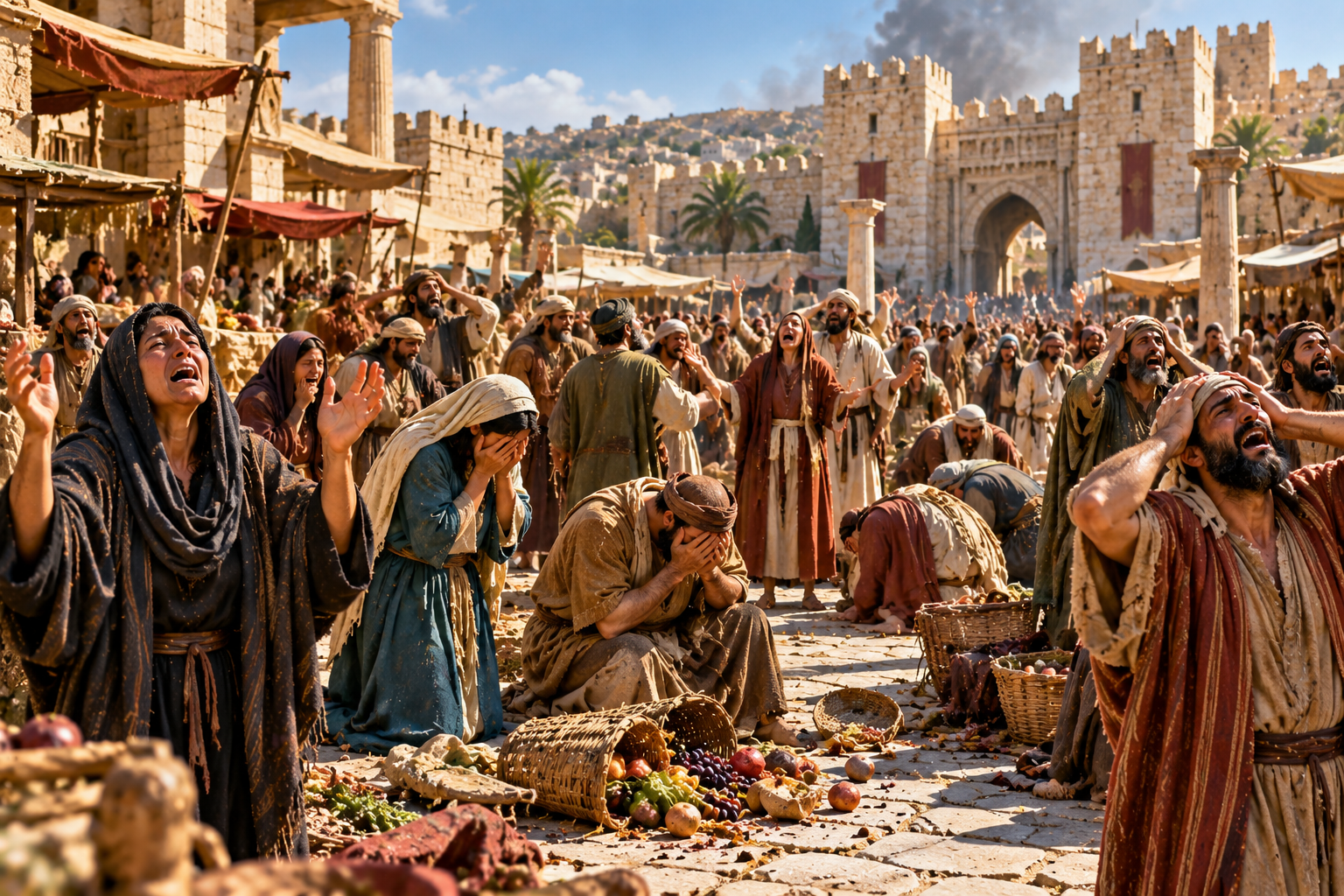
WHEN PROSPERITY
TURNS TO MOURING
Therefore (term of conclusion) (NET = "because of Israel's sins") - Therefore is crucial. Amos has exposed Israel's corruption and called the nation to seek God, seek good, hate evil, love good, and restore justice (Amos 5:4–15). Now he returns to the certainty of coming judgment. The chapter began with Amos singing Israel's funeral dirge (Amos 5:1–2). In verses 16–17, that prophetic dirge becomes a picture of national mourning everywhere.
Thus says the LORD God of hosts (of Heaven’s Armies), the Lord, - Amos wants Israel to understand Who is announcing this judgment. This is the same God Who made Pleiades and Orion (Amos 5:8), controls darkness and morning, commands the waters, and brings down fortresses (Amos 5:9). Israel's sentence comes from the sovereign Commander of heaven's armies. God's judgment would touch the entire nation.
There is wailing in all the plazas (all the squares) - The plazas were public gathering places, centers of community and commercial life and were filled with business transactions, conversations, trading and social activitie. But Amos hears another sound coming, the sound of wailing (misped) which describes mourning or lamentation, particularly mourning associated with death. The public spaces that once reflected prosperity would become places of grief. And note this will affect not just some but ALL of the plazas and also ALL of the streets! There would be no sector of society untouched.
And in all the streets they say, ‘Alas! Alas!’ - The Hebrew cry is ho, ho! It is a short, spontaneous cry of grief. It is the sound people make when catastrophe has become personal. Earlier Amos had given them words of warning. Now Amos anticipates their words of grief. They had refused to say “We repent.” Soon they would be saying “Alas! Alas!” The tragedy is that those who would not mourn over their sin would eventually mourn over its consequences.
Bob Utley - "There is wailing in all the plazas. . .'Alas! Alas'" The prophet began the funeral dirge in Amos 5:1; now judgment has come and everybody is wailing. "Plazas" would be parallel to "gates" or "markets." Even the term "streets" (BDB 299) can mean plaza or market (e.g. 1 Kgs. 20:34).
NET NOTE - Heb “they will say, ‘Ah! Ah!’” The Hebrew term הוֹ (ho, “ah, woe”) is an alternate form of הוֹי (hoy), a word used to mourn the dead and express outwardly one’s sorrow. See 1 Kgs 13:30; Jer 22:18; 34:5. This wordplay follows quickly, as v. 18 begins with הוֹי (“woe”).
They also call the farmer to mourning (lament) - Why call the farmer? The farmer was not necessarily a professional mourner. He represents the ordinary working population. Even those who normally would be occupied with fields and harvests would be drawn into the national grief. There would be so much death and devastation that ordinary agricultural life would be interrupted. The farmer who normally tended fields and vineyards would now attend funerals! Instead of celebrating harvest, they would be mourning.
And professional mourners to lamentation (wail) - Ancient Near Eastern funerals commonly included people skilled in leading public lamentation. Jeremiah similarly refers to mourning women who were skilled in lamentation (Jer 9:17–20). These individuals knew how to express and lead the community's grief. But Amos' point is not merely describing funeral customs. The need for mourners would become overwhelming. Ordinary people are summoned. Professional mourners are summoned. Why? Because death would be everywhere.
Israel would need experts in mourning because mourning was about to become the nation's dominant occupation. The funeral song Amos sang prophetically in Amos 5:1 would soon become the funeral song Israel sang historically.
Bob Utley - "professional mourners" Near Eastern people are very expressive in their mourning rites. There were trained people available to help in this cultural grieving process (cf. 2 Chr. 35:25; Jer. 9:17). See James M. Freeman, Manners and Customs of the Bible, pp. 283-284.
When people refuse the tears of repentance, they may eventually shed the tears of consequence.
🙏 THOUGHT: There are two kinds of sorrow we can experience over sin: the sorrow of repentance or the sorrow of consequences (2Co 7:9,10). God graciously calls us to the first so that we might avoid much of the second. When His Spirit exposes sin (Jn 16:8,9), the wisest response is not to excuse it, postpone dealing with it, or silence the conviction. Better to weep before God in repentance than later to weep over what unrepented sin has produced. (Ps 32:3–5)
Amos 5:17 “And in all the vineyards there is wailing, Because I will pass through the midst of you,” says the LORD.
- in (KJV): Isa 16:10 32:10-12 Jer 48:33 Ho 9:1,2
- I will (KJV): Ex 12:12,23 Joe 3:17 Na 1:12,15 Zec 9:8
Related Passages:
Exodus 12:12,13, 23 ‘For I will go through the land of Egypt on that night, and will strike down all the firstborn in the land of Egypt, both man and beast; and against all the gods of Egypt I will execute judgments–I am the LORD 13 ‘The blood shall be a sign for you on the houses where you live; and when I see the blood I will pass over you, and no plague will befall you to destroy you when I strike the land of Egypt.....23 “For the LORD will pass through to smite the Egyptians; and when He sees the blood on the lintel and on the two doorposts, the LORD will pass over the door and will not allow the destroyer to come in to your houses to smite you.
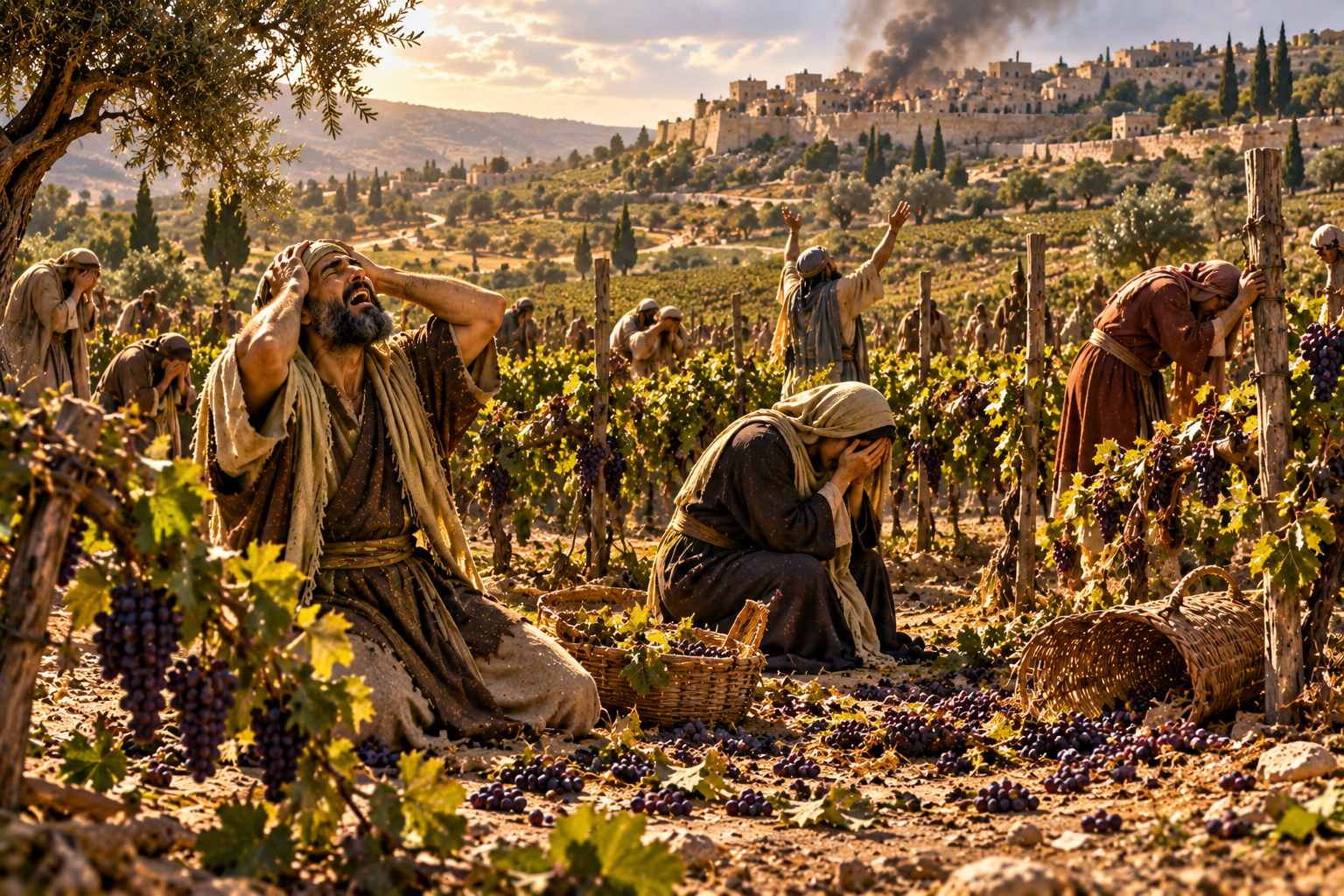
WHEN GOD
PASSES THROUGH
And in all the vineyards there is wailing - Amos 5:17 continues to explain the universal mourning of Amos 5:16 adding the all the vineyards. The vineyard that should have echoed with songs of harvest would echo with cries of grief. Recall Amos 5:11 had prophesied "You have planted pleasant vineyards, yet you will not drink their wine." They planted vineyards expecting celebration, but instead would reap lamentation. Wailing recalls the atmosphere of a funeral.
Because (term of explanation) - God will now explain why there would be universal wailing in Israel.
I will pass through the midst of you,” says the LORD - Pass through (abar) means to pass through, pass over, or cross through. For an Israelite familiar with the Torah, this wording would have had ominous associations. It strongly recalls the language of Exodus 12, where the LORD said He would pass through the land of Egypt in judgment (Ex 12:12, 23). Note the radical reversal for when God passed through Egypt , the Egyptians were judged. Amos says that when God passes through Israel, Israel will be judged. How sad that the nation once delivered when God passed through Egypt would now face God passing through their own midst! Through the midst of you makes the warning intensely personal. In other words, divine judgment would not be around them but in their very midst.
Earlier Israel apparently boasted “The LORD God of hosts [is] with you.” (Amos 5:14) They assumed God's presence meant blessing. Amos gives that assumption a frightening correction. Yes, God would indeed be in their midst, but not in the way they expected. God's presence is comforting only when we are rightly related to the God Who is present.
Bob Utley - "I will pass through the midst of you" This same phrase is used in Exod. 12:12 for the Death Angel passing through Egypt in judgment on the night of Passover. YHWH's coming could be for blessing or judgment (cf. Amos 5:18). Israel viewed it as a certain blessing, but Amos revealed that it would be for judgment. What an ironic, tragic reversal (cf. Amos 5:18-20)! All humans made in God's image sense their need for Him (cf. Amos 5:14b). He wants to be with us, but our actions necessitate judgment, not fellowship!
NET NOTE - The expression pass through your midst alludes to Ex 12:12, where the Lord announced he would “pass through” Egypt and bring death to the Egyptian firstborn.
🙏 THOUGHT: Beloved, the most important issue is not simply whether we say, "God is with me," but whether we are walking in fellowship with the God who is with us. The promise of His presence is precious. Jesus said, "I am with you always, even to the end of the age" (Matthew 28:20), and God has said, "I will never desert you, nor will I ever forsake you" (Hebrews 13:5). For the believer in Christ, there is no condemnation (Romans 8:1), but our Father's presence should never encourage carelessness about sin. It should produce reverence, gratitude, and obedience. David knew there was nowhere to escape God's presence: "Where can I go from Your Spirit? Or where can I flee from Your presence?" (Psalm 139:7). Joseph understood this in Potiphar's house. Alone with a woman urging him to sin, with no human witness present, he answered, "How then could I do this great evil and sin against God?" (Genesis 39:9). He knew he was never truly alone. Peter tells us that because we call on a Father who judges impartially, we should "conduct yourselves in fear during the time of your stay on earth" (1 Peter 1:17), not the fear of a condemned criminal but the reverent fear of a beloved child who does not want to grieve his Father. Paul likewise urges us not to "grieve the Holy Spirit of God, by whom you were sealed for the day of redemption" (Ephesians 4:30). The God who is always with us is also the God before whom we always live.
Amos 5:18 Alas, you who are longing for the day of the LORD, For what purpose will the day of the LORD be to you? It will be darkness and not light;
- desire (KJV): Isa 5:19 Isa 28:15-22 Jer 17:15 Eze 12:22,27 Mal 3:1,2 2Pe 3:4
- the day of the Lord is (KJV): Isa 5:30 Is 9:19 Is 24:11,12 Jer 30:7 Joe 1:15 Joel 2:1,2,10,31 Zep 1:14,15 Mal 4:1 2Pe 3:10
Related Passages:
Jeremiah 17:15 Look, they keep saying to me, “Where is the word of the LORD? Let it come now!”
Malachi 3:1; 2 “Behold, I am going to send My messenger, and he will clear the way before Me. And the Lord, whom you seek, will suddenly come to His temple; and the messenger of the covenant, in whom you delight, behold, He is coming,” says the LORD of hosts. (3:2) “But who can endure the day of His coming? And who can stand when He appears? For He is like a refiner’s fire and like fullers’ soap.
Isaiah 5:30 And it will growl over it in that day like the roaring of the sea. If one looks to the land, behold, there is darkness and distress; Even the light is darkened by its clouds.
Isaiah 9:19 By the fury of the LORD of hosts the land is burned up, And the people are like fuel for the fire; No man spares his brother.
Isaiah 24:11; 12 There is an outcry in the streets concerning the wine; All joy turns to gloom. The gaiety of the earth is banished. 12 Desolation is left in the city And the gate is battered to ruins.
Jeremiah 30:7 ‘Alas! for that day is great, There is none like it; And it is the time of Jacob’s distress, But he will be saved from it.
Joel 1:15 Alas for the day! For the day of the LORD is near, And it will come as destruction from the Almighty.
Joel 2:1; 2; 10; 31 Blow a trumpet in Zion, And sound an alarm on My holy mountain! Let all the inhabitants of the land tremble, For the day of the LORD is coming; Surely it is near, ....2 A day of darkness and gloom, A day of clouds and thick darkness. As the dawn is spread over the mountains, So there is a great and mighty people; There has never been anything like it, Nor will there be again after it To the years of many generations. ....10 Before them the earth quakes, The heavens tremble, The sun and the moon grow dark And the stars lose their brightness.....31 “The sun will be turned into darkness And the moon into blood Before the great and awesome day of the LORD comes.
Zephaniah 1:14; 15 Near is the great day of the LORD, Near and coming very quickly; Listen, the day of the LORD! In it the warrior cries out bitterly. 15 A day of wrath is that day, A day of trouble and distress, A day of destruction and desolation, A day of darkness and gloom, A day of clouds and thick darkness,
Malachi 4:1 “For behold, the day is coming, burning like a furnace; and all the arrogant and every evildoer will be chaff; and the day that is coming will set them ablaze,” says the LORD of hosts, “so that it will leave them neither root nor branch.”
2 Peter 3:10 But the day of the Lord will come like a thief, in which the heavens will pass away with a roar and the elements will be destroyed with intense heat, and the earth and its works will be burned up.
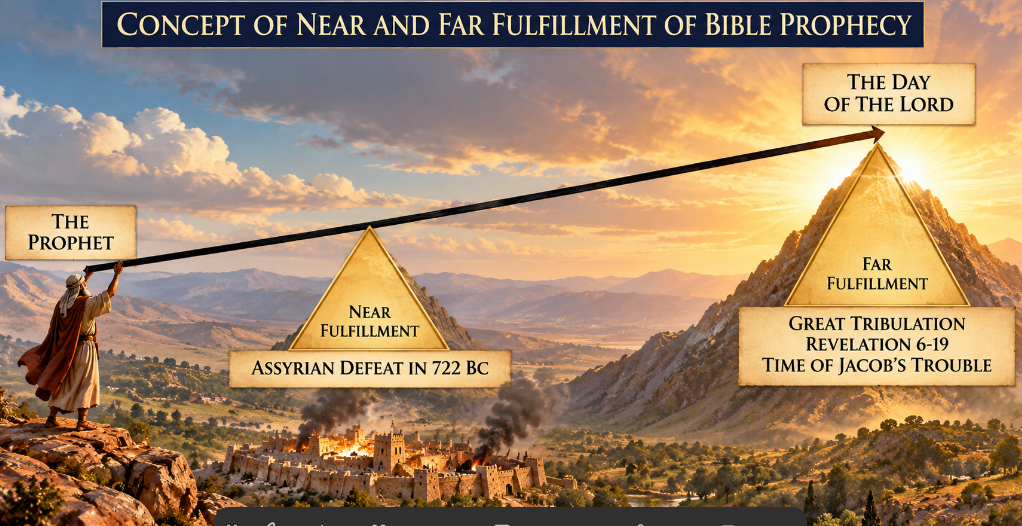
THE DAY THEY
SHOULD NOT DESIRE
Alas (Woe) Alas (hoy) is a cry of woe, grief, or lament. Amos is not introducing a congratulatory announcement but a frightening warning.
you who are longing (desiring, craving, yearning) for the day of the LORD - Amos now confronts another of Israel's dangerous assumptions. They were actually longing for the day of the LORD. Why? Apparently they expected that day to mean God's intervention against their enemies and vindication of Israel. They were longing for the wrong day! You want the Day of the LORD? Do you understand what that day will mean for you?
Israel was deceived by their sin (Heb 3:13), thinking "we are God's chosen people," "the LORD is with us" and "our enemies are God's enemies." Their theology did have a grain of truth but it was not a full picture. The problem was Israel remembered her election but ignored her accountability before a holy God.
They ignored what Amos had said earlier "You only have I chosen among all the families of the earth; Therefore I will punish you for all your iniquities.” (Amos 3:2)
Bob Utley - "you who are longing for the day of the Lord" This VERB (BDB 16, KB 20, Hiphil PARTICIPLE) means "desire for yourselves." These people thought YHWH's coming (i.e. "the day of the Lord") would bring blessings and deliverance because they were covenant people (cf. Amos 3:2). But because of this very reason, judgment would come (cf. Romn. 9:4-5). Because of the blindness of their hearts, YHWH was coming to them as Judge (cf. Amos 3:14; 5:18; 8:3,9,11,13), not Savior (cf. Amos 9:11,13). Their religion resulted in a curse (cf. Lev. 26 and Deut. 27-29). Amos is the first of the writing prophets and this is the first use of the phrase "the Day of the Lord" (see note at Amos 2:16). It is also used often by Joel (cf. Joel 1:15; 2:1,11,31; 3:14). It may have been imagery from the days of "Holy War" (i.e. Joshua and Judges). YHWH was the ever-present provider and protector of His covenant people, but in days of conflict His physical manifestation in miraculous ways delivered His people from danger. However, Israel had so violated the covenant that its privilege had turned to judgment and rejection (cf. Joel 2).
Israel treated covenant privilege as protection from judgment
rather than responsibility before God.
NET NOTE - The term הוֹי (hoy, “woe”) was used when mourning the dead (see the note on the word “dead” in Amos 5:16). The prophet here either engages in role playing and mourns the death of the nation in advance or sarcastically taunts those who hold to this misplaced belief.
For what purpose will the day of the LORD be to you? - NET = "Why do you want the Lord’s day of judgment to come?" The Day of the LORD is an important prophetic expression describing a decisive intervention of Yahweh in human history, particularly in judgment, and in the broader prophetic revelation also associated with deliverance and the ultimate establishment of God's purposes. Amos is one of the earliest biblical prophets to use the expression. Significantly, he does not introduce it as something unfamiliar. His hearers apparently already knew the concept and were longing for it. But their conception needed correction. Israel thought this day brought judment for their enemies and deliverance for them.
And so Amos asks a piercing rhetorical question For what purpose..., essentially asking "Why do you want that day to come? What do you think will happen when the holy God appears in judgment?" Israel had spent years violating God's covenant, oppressing the poor, corrupting justice, accepting bribes, and practicing counterfeit worship. Why would they assume God's intervention would favor them? They were eager for God to appear because they had never seriously considered what His holiness meant for them.
It will be darkness and not light - Israel expected light on this day but that would not happen. It would only bring darkness. In Scripture light commonly symbolizes salvation, blessing, life, and God's favor, while darkness can symbolize calamity and judgment. For unrepentant Israel, the Day of the LORD would therefore not be the glorious deliverance they expected. It would mean catastrophe. The God Who controls physical light and darkness would turn Israel's apparent bright day of prosperity into the darkness of judgment. Israel thought its darkest days were behind it; Amos warned that darkness was approaching.
With the phrase and not light Amos removes any possibility of misunderstanding which would destroy Israel's false hope and confidence. That day would not even have a small glimmer of light but be all darkness! Woe! Later prophets develop this theme further.
The Day of the LORD is associated with divine judgment (Isa 13:6–13; Joel 1:15; 2:1–2; Zeph 1:14–18), while prophetic revelation also looks beyond judgment toward God's ultimate salvation and kingdom purposes (Joel 3:14–21; Zech 14). The New Testament carries the theme forward to the future coming of Christ and final divine judgment (1 Th 5:2–5; 2 Pe 3:10). But Amos' immediate message is directed to complacent Israel -- Do not assume God's coming will vindicate you simply because you call yourselves God's people.
ESV Study Bible - This is the earliest known use of the prophets’ expression, the day of the LORD. It also occurs in Isaiah (Isa. 13:6, 9), Jeremiah (Jer. 46:10), Ezekiel (Ezek. 13:5; 30:3), Joel (Joel 1:15; 2:1, 11, 31; 3:14), Obadiah (Obad. 15), Zephaniah (Zeph. 1:7, 14), and Malachi (Mal. 4:5). (See diagram.) Perhaps in Amos’s day the term was in popular use for the time when the Lord would intervene and put Israel at the head of the nations (possibly based on Deut. 32:35–37); but Amos, and all prophets after him, clarify what it would mean for the Lord to visit his people: it means judgment upon them if they are unfaithful. In Amos, the term points forward to the coming judgment on the northern kingdom at the hands of the Assyrians (Amos 5:27); in Zephaniah, it points to the coming judgment on Judah at the hands of the Babylonians. Other prophets use the term to signal God’s forthcoming punishment of other nations for their brutalities, e.g., Babylon (Isa. 13:6, 9); Egypt (Jer. 46:10); Edom (Obad. 15); and many nations (Joel 3:14; Obad. 15). In some cases the prophet uses the term to denote something farther off in the future (Mal. 4:5; probably in Joel 3:2). All of this indicates that the “day” is not unique, but may be repeated as circumstances call for it. The NT authors apply the term as well to the return of Christ (e.g., 1 Cor. 1:8; 2 Pet. 3:10).
🙏 THOUGHT: Too often it is much easier to see sin in the world around us than sin within us. Israel eagerly longed for "the day of the LORD," confident that it would bring judgment on their enemies and vindication for themselves. Amos shocked them: "Alas, you who are longing for the day of the LORD... It will be darkness and not light" (Amos 5:18). They never imagined they might be on the wrong side of that day. We can make the same mistake, eagerly anticipating God's setting everything right in a world gone mad while overlooking areas of our own lives that need His correcting hand. Jesus warned against noticing the speck in a brother's eye while ignoring the log in our own (Matthew 7:3–5). The Pharisee in the temple thanked God that he was "not like other people," and went home unjustified, while the tax collector who beat his breast and prayed, "God, be merciful to me, the sinner!" went home justified (Luke 18:9–14). Malachi asked, "Who can endure the day of His coming?" (Malachi 3:2), and Peter reminds us that "it is time for judgment to begin with the household of God" (1 Peter 4:17). For believers, the hope of Christ's return is not meant to make us smug but to make us holy. "Since all these things are to be destroyed in this way, what sort of people ought you to be in holy conduct and godliness, looking for and hastening the coming of the day of God" (2 Peter 3:11–12). "Everyone who has this hope fixed on Him purifies himself, just as He is pure" (1 John 3:3). Before we pray, "Lord, judge the world," it is wise to pray, "Lord, search me."
Alas (woe) (01945) hoy is an interjection of distress used primarily by the prophets, 6x in mourning for the dead (1Ki 13:30 Jer 22:18; 34:5), and 40x as negative warnings specifying Divine punishment in the form of disaster, etc, for failing to repent from certain sins. The wicked are under the judgment of God (cp Ro 1:18ff) and therefore face a time of ruin and mourning, so that the only thing left for an unrepentant people is to mourn the destruction of their lives! Woe!
Patterson - Woe oracles typically contain the following elements: invective (“woe to”), threat, and criticism (the reason for the denunciation and threatened judgment).
Carpenter - It expresses great emotion and can be an interjection of warning or distress. It represents a thought transformed into a feeling and expressed in a word—hoy, “woe!” … Hoy can be used to introduce a prophetic declaration of judgment, as when Isaiah announced the coming destruction of Assyria (Isa. 10:5). It conveys a note of certainty about what is said and an atmosphere of finality—such as in, “Woe unto you, the end has come!” The word is also applied to groups of people and individuals who are wicked (Isa. 5:8, 11, 18, 20–22). (Holman Treasury of Key Bible Words )
Hoy is used >50x in prophets and only once elsewhere. 6x = mourning for the dead (1 Ki13:30), 40x = negative warnings or threats of God's physical chastisement. R. J. Clifford found 53 occurrences of hoy in the Old Testament. Of these he listed three possible uses: (1) to describe funeral laments (eight times), usually translated “alas”; (2) a cry to get attention (four times), usually translated “ho” or “ah”; (3) an announcement of doom (forty-one times and used only by the prophets), usually translated “woe to.” The wicked were under the judgment of God and therefore faced a time of ruin and mourning. The only thing left for an unrepentant people was to mourn the destruction of their lives.
HOY - 47V - Ah(2), alas(11), ho(2), ho there(1), woe(34). 1 Ki. 13:30; Isa. 1:4; Isa. 1:24; Isa. 5:8; Isa. 5:11; Isa. 5:18; Isa. 5:20; Isa. 5:21; Isa. 5:22; Isa. 10:1; Isa. 10:5; Isa. 17:12; Isa. 18:1; Isa. 28:1; Isa. 29:1; Isa. 29:15; Isa. 30:1; Isa. 31:1; Isa. 33:1; Isa. 45:9; Isa. 45:10; Isa. 55:1; Jer. 22:13; Jer. 22:18; Jer. 23:1; Jer. 30:7; Jer. 34:5; Jer. 47:6; Jer. 48:1; Jer. 50:27; Ezek. 13:3; Ezek. 13:18; Ezek. 34:2; Amos 5:18; Amos 6:1; Mic. 2:1; Nah. 3:1; Hab. 2:6; Hab. 2:9; Hab. 2:12; Hab. 2:15; Hab. 2:19; Zeph. 2:5; Zeph. 3:1; Zech. 2:6; Zech. 2:7; Zech. 11:17
AN INDICTMENT AGAINST SOLEMN ASSEMBLIES Amos 5:18–27 - John Mayshack
The indictments:
1. Big on Festivals and Little on Faith
2. Offered Sacrifices but Not Their Hearts
3. Preached Justice but Practiced Injustice
THE WARNING OF AMOS Amos 5:18–27, 6:1–6 - Croft Pentz
A. THE SORROW—5:18–20
1. Surety of judgment—v. 18. God’s judgment may not be immediate, but it is inescapable. Note the coming judgment to sinners—Rev. 20:11–15, Heb. 9:27. Note the judgment for Christians—2 Cor. 5:10, Rom. 14:10, 12.
2. Sorrow of the judgment—vv. 19–20. Man must reap what he has sowed. There are only two options—death or life. Look at the choices in Rom. 6:23. Amos preached against the evil and sin of his day. This kind of preaching isn’t always popular.
B. THE SACRIFICES—5:21–27
1. Practices—v. 21. Like many Christians and churches—the house of Israel allowed sin to enter, destroying the good.
2. Problem—v. 22. The people offered sacrifices, but did not offer themselves to the Lord. See Rom. 12:1, 2.
3. Plan—v. 23. The people of Israel sang and played instruments in their “worship” services, but God was not impressed with their empty ceremony. They had ritual, but not reality.
4. Plight—v. 24. God warned them that if they refused righteousness, He would have to send His judgment. The Lord has not changed in His attitude toward sin and evil.
5. Piety—vv. 25–26. They appeared to worship the Lord, but their hearts went astray in worshiping false gods.
6. Punishment—v. 27. Because of their disobedience, God said he would allow them to suffer and be punished.
C. THE SLOTHFULNESS—6:1–8
1. Slothful—v. 1–2. Here is a picture of self-sufficiency. Israel felt no need for God’s help; the people were resting upon past victories. Note the word “Woe”—how terrible would God’s judgment be upon these people!
2. Serious—vv. 3–4. Israel did not realize how serious God’s words were. The people were too indifferent.
3. Singing—vv. 5–6. The people did not sing real, sincere songs as praise unto God. They were more concerned with pleasures than with God’s will.
4. Suffering—vv. 7–8. God would not tolerate Israel’s unfaithfulness—He warned the people that he would destroy Zion.
Amos 5:19 As when a man flees from a lion And a bear meets him, Or goes home, leans his hand against the wall And a snake bites him.
- As if (KJV): They should go from one evil to another. Am 9:1,2 1Ki 20:29,30 Job 20:24,25 Isa 24:17,18 Jer 15:2,3 Jer 48:43,44 Ac 28:4
Related Passages:
Amos 9:1; 2 I saw the Lord standing beside the altar, and He said, “Smite the capitals so that the thresholds will shake, And break them on the heads of them all! Then I will slay the rest of them with the sword; They will not have a fugitive who will flee, Or a refugee who will escape. 2 “Though they dig into Sheol, From there will My hand take them; And though they ascend to heaven, From there will I bring them down.
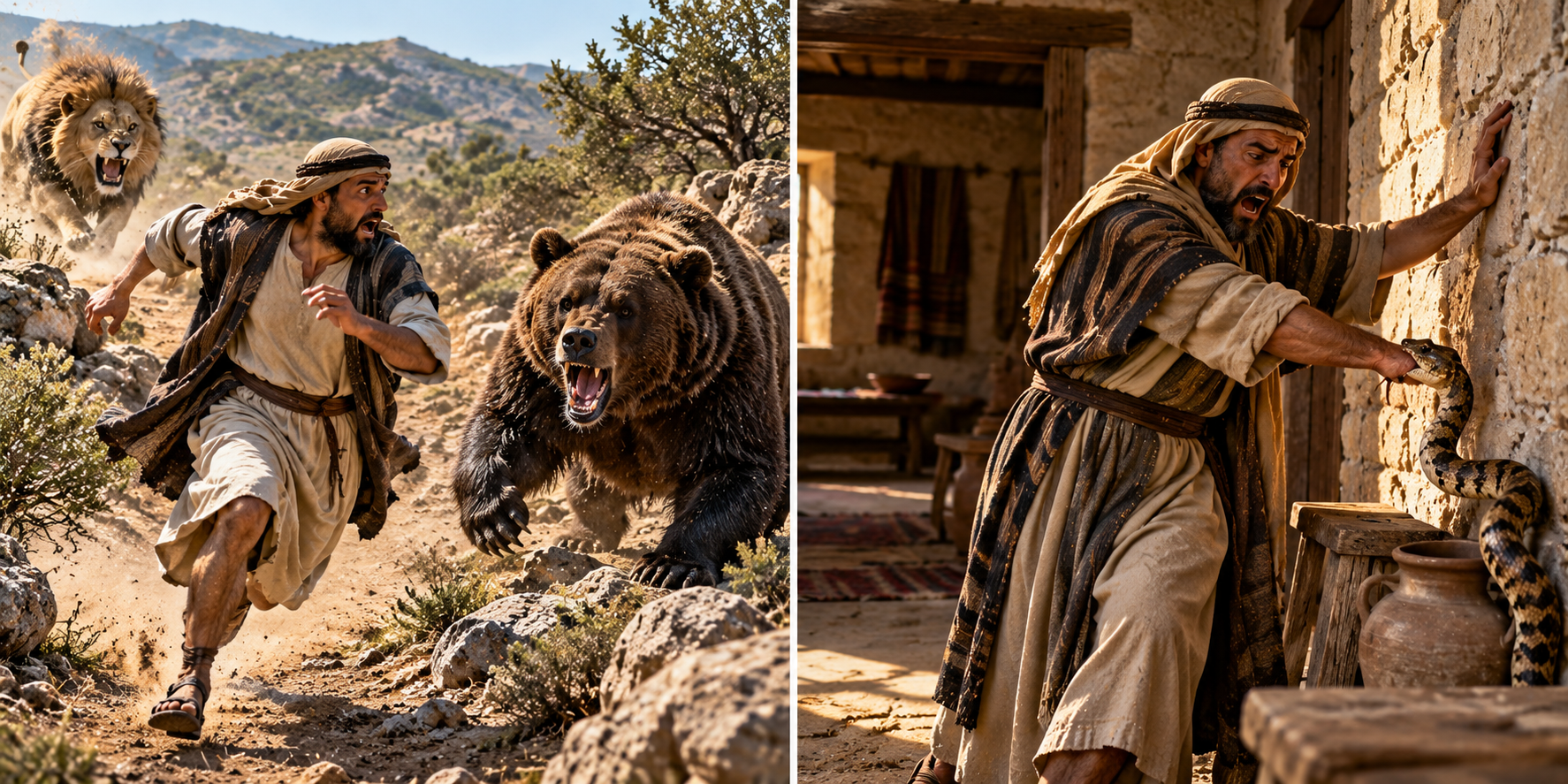
NO ESCAPE FROM THE
DAY OF THE LORD
As when a man flees from a lion And a bear meets him - NET - "Disaster will be inescapable, as if a man ran from a lion only to meet a bear," Amos has just shattered Israel's false expectations concerning the Day of the LORD. Now he gives one of the most vivid and almost darkly ironic illustrations in the book. A man escapes one terrifying danger only to encounter another, and when he finally reaches the place he considers safe, danger is waiting for him there too.
Picture the scene. A man suddenly encounters a lion. His response is immediate and that is to run! This looks like certain death, but somehow he escapes. His heart is pounding and he is exhausted. But he thinks to himself "I made it!" But then “A bear meets him.” So the very moment he believes he has escaped one danger, another appears. Where can he run now? Answer - nowhere. This illustrates the certainty of the judgment in the day of the LORD!
Or goes home, leans his hand against the wall And a snake bites him - NET - "and was bitten by a poisonous snake" On reaching his home, he thinks that now he is safe for in the ancient world, just as today, home represented security. So Amos deliberately takes the man to the place where he feels safest. Now picture the man breathless and exhausted from running for his life so he rests his hand against the wall. Just when he thinks the danger has passed, judgment finds him in the place he thought was safest. It is interesting that he had survived the huge predators but now is struck by the smallest danger, a poisonous snake. The danger he could not see proved just as deadly as the dangers from which he ran. Here is the point of Amos' story -- When the Day of the LORD comes against unrepentant Israel, there will be no clever escape route. Amos has already made the same point without imagery in Amos 2:14–16. There is no safe place away from God, for the only safe place is with God. Israel was longing for a day from which, once it arrived, they would desperately seek to escape. Amos earlier gave them the only "escape" route - "Seek Yahweh that you may live." (Amos 5:4, 5).
Israel did not need to seek a better escape route.
Israel needed to seek the LORD.
🙏 THOUGHT: Even as believers we often respond to trouble by searching for another place, another plan, or another solution. Sometimes those changes are wise, but Amos reminds us that our ultimate security is never found merely in escaping circumstances. The safest place is not where trouble cannot reach us, but where we are walking closely with the God Who rules over every circumstance (see discussion of Hebrew sagab for "safe" in Pr 18:10). Instead of asking only, “How can I get out of this?” we should also ask, “Lord, what are You teaching me in this?” (Ps 46:1–3; 139:7–10)
Amos 5:20 Will not the day of the LORD be darkness instead of light, Even gloom with no brightness in it?
KJV Shall not the day of the LORD be darkness, and not light? even very dark, and no brightness in it?
NET Don't you realize the LORD's day of judgment will bring darkness, not light– gloomy blackness, not bright light?
NLT Yes, the day of the LORD will be dark and hopeless, without a ray of joy or hope.
ESV Is not the day of the LORD darkness, and not light, and gloom with no brightness in it?
BGT οὐχὶ σκότος ἡ ἡμέρα τοῦ κυρίου καὶ οὐ φῶς καὶ γνόφος οὐκ ἔχων φέγγος αὐτῇ
LXE Is not the day of the Lord darkness, and not light? and is not this day gloom without brightness?
CSB Won't the Day of the LORD be darkness rather than light, even gloom without any brightness in it?
NIV Will not the day of the LORD be darkness, not light-- pitch-dark, without a ray of brightness?
- darkness (KJV): Job 3:4-6 Job 10:21,22 Isa 13:10 Eze 34:12 Na 1:8 Mt 22:13 Jude 1:13 Rev 16:10
Related Passages:
Isaiah 13:10 For the stars of heaven and their constellations Will not flash forth their light; The sun will be dark when it rises And the moon will not shed its light.
Ezekiel 34:12 “As a shepherd cares for his herd in the day when he is among his scattered sheep, so I will care for My sheep and will deliver them from all the places to which they were scattered on a cloudy and gloomy day.
Nahum 1:8 But with an overflowing flood He will make a complete end of its site, And will pursue His enemies into darkness.
Revelation 16:10 Then the fifth angel poured out his bowl on the throne of the beast, and his kingdom became darkened; and they gnawed their tongues because of pain,
THE DAY ISRAEL MISUNDERSTOOD:
WHEN FALSE HOPE GOES DARK!
Will not the day of the LORD be darkness instead of light, - Answer? YES! Amos has already answered it in Amos 5:18. Israel apparently expected this DAY to be their day of victory. But it was the LORD's day, not THEIR day! Israel expected light, because they assumed they stood on God's side. But Amos had already exposed their actual condition of manifold transgressions (Amos 5:7, 10, 11, 12) Their false hope or confidence was based on religious presumption rather than spiritual reality.
They expected light because they underestimated
both the darkness of their sin and the holiness of their God.
Even gloom with no brightness in it? - NET = "Don’t you realize the Lord’s day of judgment will bring darkness, not light—gloomy blackness, not bright light?" The Hebrew conveys deep darkness or obscurity. There will be no ambiguity when God's judgment arrives. Israel will not experience the glorious national deliverance they imagined. The prophet is stripping away their false optimism. No brightness is almost redundant, and deliberately so. Amos wants to eliminate every remaining ray of false confidence. There is no hidden "loophole" in Amos' warning. Israel kept looking for a ray of light in the Day of the LORD, but Amos extinguishes every false hope.
🙏 THOUGHT: There is a profound difference between biblical assurance and spiritual presumption. Biblical assurance rests on Christ and produces gratitude, holiness, and watchfulness. Presumption claims God's favor while becoming comfortable and even indifferent regarding disobedience. The return of Christ is our “blessed hope” (Titus 2:13), but that same grace teaches us to “deny ungodliness and worldly desires” while we wait (Titus 2:11–14). The right way to look for Christ's return is to live for Christ today.
Amos 5:21 “I hate, I reject your festivals, Nor do I delight in your solemn assemblies.
- hate (KJV): Pr 15:8 Pr 21:27 Pr 28:9 Isa 1:11-16 Isa 66:3 Jer 6:20 Jer 7:21-23 Ho 8:13 Mt 23:14
- I will (KJV): Ge 8:21 Lev 26:31 Eph 5:2 Php 4:18
Related Passages:
Proverbs 15:8 The sacrifice of the wicked is an abomination to the LORD, But the prayer of the upright is His delight.
Proverbs 21:27 The sacrifice of the wicked is an abomination, How much more when he brings it with evil intent!
Proverbs 28:9 He who turns away his ear from listening to the law, Even his prayer is an abomination.
Isaiah 1:11-16 “What are your multiplied sacrifices to Me?” Says the LORD. “I have had enough of burnt offerings of rams And the fat of fed cattle; And I take no pleasure in the blood of bulls, lambs or goats. 12 “When you come to appear before Me, Who requires of you this trampling of My courts? 13 “Bring your worthless offerings no longer, Incense is an abomination to Me. New moon and sabbath, the calling of assemblies– I cannot endure iniquity and the solemn assembly. 14 “I hate your new moon festivals and your appointed feasts, They have become a burden to Me; I am weary of bearing them. 15 “So when you spread out your hands in prayer, I will hide My eyes from you; Yes, even though you multiply prayers, I will not listen. Your hands are covered with blood. 16 “Wash yourselves, make yourselves clean; Remove the evil of your deeds from My sight. Cease to do evil,
Jeremiah 6:20 “For what purpose does frankincense come to Me from Sheba And the sweet cane from a distant land? Your burnt offerings are not acceptable And your sacrifices are not pleasing to Me.”
Jeremiah 7:21-23 Thus says the LORD of hosts, the God of Israel, “Add your burnt offerings to your sacrifices and eat flesh. 22 “For I did not speak to your fathers, or command them in the day that I brought them out of the land of Egypt, concerning burnt offerings and sacrifices. 23 “But this is what I commanded them, saying, ‘Obey My voice, and I will be your God, and you will be My people; and you will walk in all the way which I command you, that it may be well with you.’
Hosea 8:13 As for My sacrificial gifts, They sacrifice the flesh and eat it, But the LORD has taken no delight in them. Now He will remember their iniquity, And punish them for their sins; They will return to Egypt.
Matthew 15:8 ‘THIS PEOPLE HONORS ME WITH THEIR LIPS, BUT THEIR HEART IS FAR AWAY FROM ME.
WHEN GOD
REJECTS WORSHIP
I hate (sane; LXX - miseo - detest), I reject (ma'as; LXX - apotheo = literally push aside, thrust off from oneself, drive away) your festivals - Amos 5:21 begins one of the most searching indictments of empty religion in Scripture. Israel was intensely religious. They observed festivals, gathered for solemn assemblies, offered sacrifices, sang songs, and played instruments. Yet God does not just say "I am disappointed" but says “I hate.” “I reject.” “I do not delight.” The problem was not that Israel had stopped worshiping. The problem was that their worship and their lives were moving in opposite directions. They were worshiping God with their ceremonies while denying Him with their conduct.
Israel presumably believed their religious activity secured God's favor. God says the opposite. Their worship was not earning approval but was actually provoking His displeasure.
Notice God calls them YOUR festivals, although many of these festival were ones He commanded. But now He calls them YOUR festivals because they had become religious performances centered on themselves rather than genuine worship centered on God. In Isaiah 1:14 Yahweh makes a similar declaration "“I hate YOUR new moon festivals and YOUR appointed feasts, They have become a burden to Me; I am weary of bearing them." Ceremonies God once commanded had become offensive to Him for the heart of the worshipers was in rebellion against Him.
Does God Really “Hate” Their Worship? Yes, but we must understand why. God was not condemning worship itself. Many of Israel's festivals and assemblies had originally been commanded by Him (Lev 23). The problem was the contradiction between THEIR WORSHIP and THEIR WALK. Their worship had become detached from obedience.
Bob Utley - "I hate, I reject your festivals, Nor do I delight in your solemn assemblies" These are strong terms! They were very religious (i.e. Amos 4:4-5), but their attitudes and hearts were far from God (cf. Isa. 6:9-10. Their religiosity was an abomination to God (cf. Isa. 29:13)! The first two VERBS, "I hate" (BDB 971, KB 1338) and "I reject" (BDB 549, KB 540) are Qal PERFECTS, which denote a settled, complete attitude. The term "festivals" (BDB 290, KB 290) is often used to denote the three major annual feasts (cf. Exod. 23:15-16; Lev. 23). These were required feasts for all males. The term "delight" (BDB 926, KB 1280, Hiphil IMPERFECT) is literally "smell," which refers to the Mosaic phrase "soothing aroma," denoting YHWH's acceptance of a sacrifice (e.g. Gen. 8:21; Exod. 29:18,25; Lev. 26:31; 1 Sam. 26:19).
God does not separate the worship offered by our lips
from the life lived after our lips stop singing.
John Walton - religious feasts and assemblies. Amos’s attack is addressed at the empty, mechanically celebrated hagîm, [ the technical term for the three major pilgrimage festivals (Feast of Unleavened Bread, Feast of Harvest and Feast of Ingathering—see the comments on Ex 23:15-16). Religious festivals offered frequent opportunity for celebrations, communal meals and social gatherings. What had been designed as a means to praise and honor God, however, was not bringing any pleasure to him. (IVP Bible Background Commentary: OT page 770)
Nor do I delight (reah - smell) (get no pleasure) in your solemn (religious) assemblies - Delight carries the idea of taking pleasure in or accepting favorably. God found no pleasure in what Israel apparently considered pleasing worship. Solemn assemblies were religious gatherings connected with Israel's worship and festivals. The people assembled and the ceremonies were performed, while the proper religious language was spoken. But something essential was missing -- righteousness. They assembled before God while refusing to live under God's authority. God was not seeking more religious meetings. He was seeking a people whose lives reflected His righteous character. And the problem was not even in the ritual, but ultimately in the hypocrisy with which the ritual was carried out. In other words, the problem was not that Israel worshiped formally; the problem was that they worshiped formally while living rebelliously. Deceived by sin (Heb 3:13), Israel mistook religious activity for evidence of divine approval.
To summarize, God was not rejecting worship because He cared less about worship; He rejected their worship because He cared deeply about the lives of the worshipers.
NET NOTE - DELIGHT - Heb “I will not smell.” These verses are full of vivid descriptions of the Lord’s total rejection of Israelite worship. In the first half of this verse two verbs are used together for emphasis. Here the verb alludes to the sense of smell, a fitting observation since offerings would have been burned on the altar ideally to provide a sweet aroma to God (see, e.g., Lev 1:9, 13, 17; Num 29:36). Other senses that are mentioned include sight and hearing in vv. 22-23.
🙏 THOUGHT: Amos 5:21 asks a searching application question to modern day worshipers -- Is my Sunday worship contradicted by my Monday walk? God desires our songs, prayers, giving, and fellowship, but He desires them from hearts surrendered to Him (cf Ro 12:1). Our worship should not be an isolated religious event but the expression of a life increasingly yielded to Christ. The worship God desires in the sanctuary should continue in the way we live when we leave the sanctuary. (Heb 13:15–16)
Amos 5:22 “Even though you offer up to Me burnt offerings and your grain offerings, I will not accept them; And I will not even look at the peace offerings of your fatlings.
- offer (KJV): Ps 50:8-13 Isa 66:3 Mic 6:6-7
- peace offerings (KJV): or, thank offerings, Am 4:4,5 Lev 7:12-15 Ps 50:14,23 107:21,22 116:17
Related Passages:
Micah 6:6-8 With what shall I come to the LORD And bow myself before the God on high? Shall I come to Him with burnt offerings, With yearling calves? 7 Does the LORD take delight in thousands of rams, In ten thousand rivers of oil? Shall I present my firstborn for my rebellious acts, The fruit of my body for the sin of my soul? 8 He has told you, O man, what is good; And what does the LORD require of you But to do justice, to love kindness, And to walk humbly with your God?
1 Samuel 15:22-23 Samuel said, “Has the LORD as much delight in burnt offerings and sacrifices As in obeying the voice of the LORD? Behold, to obey is better than sacrifice, And to heed than the fat of rams. 23 “For rebellion is as the sin of divination, And insubordination is as iniquity and idolatry. Because you have rejected the word of the LORD, He has also rejected you from being king.”
Leviticus 1:3-9 ‘If his offering is a burnt offering from the herd, he shall offer it, a male without defect; he shall offer it at the doorway of the tent of meeting, that he may be accepted before the LORD. 4‘He shall lay his hand on the head of the burnt offering, that it may be accepted for him to make atonement on his behalf. 5 ‘He shall slay the young bull before the LORD; and Aaron’s sons the priests shall offer up the blood and sprinkle the blood around on the altar that is at the doorway of the tent of meeting. 6 ‘He shall then skin the burnt offering and cut it into its pieces. 7‘The sons of Aaron the priest shall put fire on the altar and arrange wood on the fire. 8 ‘Then Aaron’s sons the priests shall arrange the pieces, the head and the suet over the wood which is on the fire that is on the altar. 9 ‘Its entrails, however, and its legs he shall wash with water. And the priest shall offer up in smoke all of it on the altar for a burnt offering, an offering by fire of a soothing aroma to the LORD.
Leviticus 2:1-3 ‘Now when anyone presents a grain offering as an offering to the LORD, his offering shall be of fine flour, and he shall pour oil on it and put frankincense on it. 2‘He shall then bring it to Aaron’s sons the priests; and shall take from it his handful of its fine flour and of its oil with all of its frankincense. And the priest shall offer it up in smoke as its memorial portion on the altar, an offering by fire of a soothing aroma to the LORD. 3‘The remainder of the grain offering belongs to Aaron and his sons: a thing most holy, of the offerings to the LORD by fire.
Leviticus 3:1-5 ‘Now if his offering is a sacrifice of peace offerings, if he is going to offer out of the herd, whether male or female, he shall offer it without defect before the LORD. 2‘He shall lay his hand on the head of his offering and slay it at the doorway of the tent of meeting, and Aaron’s sons the priests shall sprinkle the blood around on the altar. 3‘From the sacrifice of the peace offerings he shall present an offering by fire to the LORD, the fat that covers the entrails and all the fat that is on the entrails, 4and the two kidneys with the fat that is on them, which is on the loins, and the lobe of the liver, which he shall remove with the kidneys. 5‘Then Aaron’s sons shall offer it up in smoke on the altar on the burnt offering, which is on the wood that is on the fire; it is an offering by fire of a soothing aroma to the LORD.
OFFERINGS WITHOUT OBEDIENCE
ARE UNACCEPTABLE TO GOD
Even though you offer up to Me - Note the phrase up to ME. Their sacrifices were ostensibly directed toward Yahweh. They were not claiming to have abandoned Him completely. That made the situation more deceptive. They could say we worshiped, brought offerings and observed festivals. The problem was that their practices contradicted their profession. An offering can be directed toward God without being acceptable to God.
Burnt offerings....I will not accept them (not be satisfied) - The burnt offering was completely consumed upon the altar. It symbolized dedication to God (Lev 1). There is therefore a painful irony. They were offering something completely to God on the altar while refusing to give themselves completely to God in life. So on one hand a burnt offering sacrifice said total devotion, their true day to day conduct said persistent rebellion.
Bob Utley - Religiosity without relationship is an abomination (cf. Amos 4:4-5; Isa. 1: 10-20; Jer. 7). YHWH does not reject the sacrificial system, but its inappropriate use (ritual without repentant faith; form without appropriate attitude and lifestyle action)! ▣ "I will not even look" "Look" (BDB 613, KB 661, Hiphil IMPERFECT) is used in the sense of accept or acknowledge. ▣ "fatlings" This (BDB 597, KB 635) refers to specially cared for young animals which were raised to be sacrificed.
Their burnt offerings symbolized total surrender
while their lives demonstrated partial obedience.
Your grain offerings I will not accept them (not be satisfied) - The grain offering accompanied Israel's worship and expressed dedication and thanksgiving to God (Lev 2). Again, the ritual itself was not the problem. God had prescribed offerings, but God-given worship had become disconnected from God-directed living. In fact they brought grain to the altar while exacting grain from the poor (Amos 5:11). To say it another way, Israelites were giving God offerings obtained in a society corrupted by the very injustice God condemned.
I will not accept them - The Hebrew idea is that God would not regard these offerings with favor or receive them approvingly. Imagine the shock of this statement to the hearers of Amos' words! The worshiper brings his sacrifice, which was received by the priest, placed on the altar and the smoke ascended upward so that the worshiper assumed Yahweh had accepted the offering! And yet here Amos quotes God Who says He would not accept their offerings! And as explained above, God did not accept them because obedience to His ceremonial commands could never be used to cancel disobedience to His moral commands such as His commands for justice, righteousness, mercy, truth! Israel could not choose the commands they enjoyed and ignore those that interfered with their lifestyle. Samuel had made the same point centuries earlier “To obey is better than sacrifice.” (1 Sa 15:22) The sacrificial system was never intended to provide religious cover for persistent rebellion.
And I will not even look (with favor) at the peace offerings of your fatlings (fattened calves) - Now God makes an even stronger statement saying in effect He would not even look upon their sacrifices with favor. The people wanted God to look at their sacrifices. God was looking at their lives (their oppression, their transgessions - Am 5:12)
The peace offerings of your fatlings (fattened calves) - The peace offering or fellowship offering was associated with fellowship, thanksgiving, and shared celebration before God (Lev 3; 7:11–21). But how could they celebrate fellowship with God while refusing to walk according to God's character? Again Israel was so thoroughly deceived that they thought they could celebrate fellowship with God in their peace offerings while rebelliously living out of fellowship with His will!
It is intereting to note that fatlings suggests well-fed, choice animals. Thus Israel brought God impressive offerings. The problem was that the quality of their sacrifice could not compensate for abysmal quality of their character. An expensive offering cannot purchase God's approval of an unrepentant life.
🙏 THOUGHT: It is very easy to fall into the trap of thinking we can give God our money, time, songs, service, and ministry while protecting an area of life from His lordship. WOE! But God desires the GIVER before the GIFT. Paul therefore urges us to present not merely something we possess, but ourselves as living sacrifices (Ro 12:1,2). Before asking, “What am I giving God?” perhaps the deeper question is, “What am I still withholding from Him?” WOE!
Amos 5:23 “Take away from Me the noise of your songs; I will not even listen to the sound of your harps.
- the noise (KJV): Am 6:5 8:3,10
Related Passages:
Psalm 33:1-3 Sing for joy in the LORD, O you righteous ones; Praise is becoming to the upright. 2 Give thanks to the LORD with the lyre; Sing praises to Him with a harp of ten strings. 3Sing to Him a new song; Play skillfully with a shout of joy.
Psalm 51:16-17 For You do not delight in sacrifice, otherwise I would give it; You are not pleased with burnt offering. 17 The sacrifices of God are a broken spirit; A broken and a contrite heart, O God, You will not despise.
Isaiah 29:13 Then the Lord said, “Because this people draw near with their words And honor Me with their lip service, But they remove their hearts far from Me, And their reverence for Me consists of tradition learned by rote,
Matthew 15:8-9 ‘THIS PEOPLE HONORS ME WITH THEIR LIPS, BUT THEIR HEART IS FAR AWAY FROM ME. 9‘BUT IN VAIN DO THEY WORSHIP ME, TEACHING AS DOCTRINES THE PRECEPTS OF MEN.’”
Romans 12:1-2 Therefore I urge you, brethren, by the mercies of God, to present your bodies a living and holy sacrifice, acceptable to God, which is your spiritual service of worship. 2 And do not be conformed to this world, but be transformed by the renewing of your mind, so that you may prove what the will of God is, that which is good and acceptable and perfect.
Colossians 3:16-17 Let the word of Christ richly dwell within you, with all wisdom teaching and admonishing one another with psalms and hymns and spiritual songs, singing with thankfulness in your hearts to God. 17 Whatever you do in word or deed, do all in the name of the Lord Jesus, giving thanks through Him to God the Father.
Hebrews 13:15-16 Through Him then, let us continually offer up a sacrifice of praise to God, that is, the fruit of lips that give thanks to His name. 16 And do not neglect doing good and sharing, for with such sacrifices God is pleased.
SINGING WITHOUT SURRENDER
CAUSES SONGS TO BECOME NOISE
Take away from Me the noise of your songs (your noisy songs) - Amos now moves from Israel's festivals and assemblies (v. 21), to their sacrifices (v. 22), and finally to their music (v. 23). Israel apparently had an impressive worship program, but God's verdict is shocking to their ears - Take away from Me the noise. The people heard worship music; God heard noise! God does not say sing more sincerely, play more skillfully, improve the music. Instead He says REMOVE IT. Imagine how these words would have struck the worship leaders in Israel! The reason for the rejection was not musical quality, but was spiritual hypocrisy. Their songs were directed “to ME,” BUT their lives were not directed toward Him! There was a disconnect betwen their choruses and their conduct!
Noise (hamon) can describe a sound, tumult, multitude, roar, or noise and would have been a striking word from Yahweh! Israel called it music, but God called it noice. The problem was not with the melody but with the the moral condition of the hearts of the worshipers. Mark it down that beautiful music cannot make an "unbeautiful (unholy) life" acceptable to the holy God. Their voices may have harmonized perfectly with one another while their lives were completely "out of tune" with God's will.
One other point is that God does not call their songs MY songs, but YOUR songs. These were supposedly performed for Him, yet He calls them “your songs.” Why? Because their worship had become centered on what they enjoyed, rather than what He desired.
They loved their worship while refusing
to love the righteousness demanded by the God they worshiped.
While Israel sang the poor were oppressed (Amos 4:1), justice was turned bitter (Amos 5:7), truth-tellers were hated (Amos 5:10), the poor were burdened (Amos 5:11), bribes were accepted (Amos 5:12), the needy were denied justice (Amos 5:12) and then they gathered to sing to God. That clear disconnect is what God condemned. Their songs were loud, but the cries of the oppressed were louder in God's ears.
Bob Utley - "take away from Me the noise of your songs" This (BDB 693, KB 747) is a Hiphil IMPERATIVE MASCULINE SINGULAR. Even sacred, glorious music without the proper motive is a farce, hypocrisy, and an abomination to God. God desires faith, not only form! This verse does show that the northern tribes adopted the worship forms (i.e. music by the guilds, cf. 1 Sam. 10:5) of the temple in Jerusalem (developed by David, cf. 2 Sam. 6:5,15). The leaders (Jeroboam I) wanted these northern altars (i.e. Dan and Bethel) to duplicate the worship techniques so that the common people would not sense a difference.
John Walton - music in worship. Mesopotamia and Egypt have long histories of both popular and religious music that also must have been known to the Israelites. Professional musicians, like the kalu harp-player so well attested in ancient texts from Old Babylonian Mari and Sumerian Uruk, may well have been the model for the Levitical musicians in the Jerusalem temple as well as the musicians in the northern shrines of Dan and Bethel. The types of instruments, liturgical chants, penitential prayers and laments, and hymns of praise created by these ancient civilizations set a standard of style and composition for the Near East. Ancient Egyptian tomb paintings demonstrate the postures of dancers as well as a wide variety of musical instruments. One example of the technical expertise employed in sacred music is found in the Psalms associated with the recitation of the creation story— Psalms 8, 19, 104 and 139. They contain both the literary as well as the musical elements (based on the superscription rubrics, choral markers and assonances in the text) needed for a proper performance of music during worship and the enactment of sacred drama. (IVP Bible Background Commentary: OT page 770)
I will not even listen to the sound of your harps - NET - "I don’t want to hear the music of your stringed instruments" Wow! Here God says He would not even listen! God was not rejecting their music because it was poorly performed; He was rejecting it because their lives contradicted the lyrics.
Sound of your harps (nebel) - This describes a stringed instrument, probably something like a harp or lyre and indicates instrumental accompaniment to Israel's worship. Again, there is nothing inherently wrong with the instrument or its sound. The problem was the heart and life of the worshipers.
God wants the song on our lips to agree with the life we live.
🙏 THOUGHT: Dear believer, we can sing “I surrender all” while quietly withholding something from the Lord. We can sing of loving Christ while refusing to forgive another person, harboring bitterness, or knowingly tolerating some secret sin. The issue is not whether our voice is beautiful but whether our life increasingly agrees with the truth we sing. Before God listens to the melody of our lips, He already knows the condition of our hearts. May our worship continue long after the final song, expressed through our lives surrendered to Christ. (Ro 12:1; Col 3:16–17)
Amos 5:24 “But let justice roll down like waters And righteousness like an ever-flowing stream.
- let (KJV): Am 5:7,14,15 Job 29:12-17 Pr 21:3 Ho 6:6 Mic 6:8 Mk 12:32-34
Related Passages:
Proverbs 21:3 To do righteousness and justice Is desired by the LORD more than sacrifice.
Hosea 6:6 For I delight in loyalty rather than sacrifice, And in the knowledge of God rather than burnt offerings.
Micah 6:8 He has told you, O man, what is good; And what does the LORD require of you But to do justice, to love kindness, And to walk humbly with your God?
Genesis 18:19 “For I have chosen him, so that he may command his children and his household after him to keep the way of the LORD by doing righteousness and justice, so that the LORD may bring upon Abraham what He has spoken about him.”
Deuteronomy 16:18-20 “You shall appoint for yourself judges and officers in all your towns which the LORD your God is giving you, according to your tribes, and they shall judge the people with righteous judgment. 19 “You shall not distort justice; you shall not be partial, and you shall not take a bribe, for a bribe blinds the eyes of the wise and perverts the words of the righteous. 20 “Justice, and only justice, you shall pursue, that you may live and possess the land which the LORD your God is giving you.
Psalm 33:5 He loves righteousness and justice; The earth is full of the lovingkindness of the LORD.
Isaiah 1:16-17 “Wash yourselves, make yourselves clean; Remove the evil of your deeds from My sight. Cease to do evil, 17 Learn to do good; Seek justice, Reprove the ruthless, Defend the orphan, Plead for the widow.
Isaiah 5:7 For the vineyard of the LORD of hosts is the house of Israel And the men of Judah His delightful plant. Thus He looked for justice, but behold, bloodshed; For righteousness, but behold, a cry of distress.
Isaiah 58:5-8 “Is it a fast like this which I choose, a day for a man to humble himself? Is it for bowing one’s head like a reed And for spreading out sackcloth and ashes as a bed? Will you call this a fast, even an acceptable day to the LORD? 6“Is this not the fast which I choose, To loosen the bonds of wickedness, To undo the bands of the yoke, And to let the oppressed go free And break every yoke? 7“Is it not to divide your bread with the hungry And bring the homeless poor into the house; When you see the naked, to cover him; And not to hide yourself from your own flesh? 8“Then your light will break out like the dawn, And your recovery will speedily spring forth; And your righteousness will go before you; The glory of the LORD will be your rear guard.
Jeremiah 22:3 ‘Thus says the LORD, “Do justice and righteousness, and deliver the one who has been robbed from the power of his oppressor. Also do not mistreat or do violence to the stranger, the orphan, or the widow; and do not shed innocent blood in this place.

LET JUSTICE
ROLL DOWN
But - Term of contrast. The But is the hinge of the entire section. God has rejected Israel's festivals, assemblies, sacrifices, songs, and harps (Amos 5:21–23). What does He desire instead? Justice and righteousness. Not occasionally. Not ceremonially. Not merely in their songs. They are to flow continually through the life of the nation. The problem was not worship itself. God had commanded worship. The problem was worship separated from obedience. God was not asking Israel to worship less; He was demanding that their worship transform the way they lived.
Let justice roll down like waters (torrents of water) - Justice (mishpat) means judgment, right decision, or the proper ordering of what is right. In Amos 5:7 Israel “turned JUSTICE into wormwood.” In Amos 5:15 God commanded “ESTABLISH JUSTICE in the gate.” Now “Let JUSTICE roll down like waters.” Note the progression from justice corrupted to justice restored to justice flowing. God wanted justice restored especially where Israel had destroyed it, at the gate, where legal decisions were made and the poor were being denied their rights.
Roll down like waters (torrents of water) - This verb pictures something surging, or rushing forward, not just a few drops but a torrent of justice. Israel's justice had become scarce and corrupted. God wanted it to become abundant and irresistible. What would justice rolling down look like in Israel? Justice rolling like water would mean the poor are no longer trampled (Amos 5:11), the righteous are no longer oppressed (Amos 5:12), bribes no longer determine verdicts, the poor are no longer turned aside at the gate, truth-tellers are no longer hated, justice is once again established in the gate (Amos 5:15). In short, God wanted righteousness to move from the sanctuary into the courtroom, marketplace, home, and street.
Bob Utley - This is one of the most famous verses in Amos. YHWH desires His people to focus on who He is, not on certain worship days, but on every day. True faith is what we are, not what we do; but who we are will be clearly seen in what we do, how we do it, and why we do it (cf. Matt. 7; Eph. 1:4; 2:10). "Justice" and "righteousness" are parallel, as in Amos 5:7. In this context they refer to human obedience to the Mosaic Covenant lived out in a proper relationship between God and godly living. The VERB "roll down" (BDB 146, KB 193) is a Niphal JUSSIVE, which denotes an IMPERATIVE sense.

And righteousness (righteous actions) like an ever-flowing stream (a stream that never dries up) - Righteousness (tsedaqah) refers to right conduct, or conformity to what is right. In Amos 5:7 he said “You... cast righteousness down to the earth.” Now God is calling for it to flow like a stream throughout the nation. It was to be a way of life flowing through Israel.
An ever-flowing stream (a stream that never dries up) - The Hebrew nachal can describe a wadi, torrent, or stream. In the dry climate of Israel, many wadis flowed strongly during the rainy season but later dried up. But Amos describes an ever-flowing stream, one that does not fail. God wanted righteousness that did not dry up when obedience became inconvenient. Israel's religion followed a calendar with festivals, etc, at certain seasons. But justice and righteousness were never intended to be seasonal. They were to characterize everyday life. In other words, God's people may have appointed days for worship, but there are no days off from righteousness.
Bob Utley - "an ever-flowing stream" This (BDB 450, KB 44) refers to a spring that never runs dry (i.e. is not seasonal). It is a powerful imagery for a life of active faith (cf. Jer. 22:3; Ezek. 45:9; Micah 6:8).
Amos is not teaching salvation by social reform. Nor is he replacing worship with humanitarian activity. He is exposing worship that had become disconnected from the worshiper's life. Justice and righteousness were not to be substitutes for knowing God. They were to be the evidence that one's profession of knowing God is genuine.
God wanted to hear the roar of righteousness
more than the noise of hypocritical religion.
One could summarize Amos 5:21-24 like this - God was not telling Israel to stop worshiping and start doing justice; He was telling them to stop pretending that worship without justice was worship at all.
🙏 THOUGHT: Righteousness is not intended to be a Sunday stream that dries up on Monday. Our worship of Christ on Sunday should flow continuously throughout the week in our conversations, business dealings, relationships, treatment of others, and response to those who cannot benefit us. The clearest evidence that worship has reached our heart may be what happens after we leave the place of worship. Are you as convicted as I am? (Mic 6:8; Jas 1:22, 27)
QUESTION - What does it mean to “let justice roll on like a river” (Amos 5:24)? GOTQUESTIONS
ANSWER - “Let Justice Roll” might be a good title for a new song hitting the music charts. More importantly, the prophet Amos used this phrase in his inspired prophetic message. “But let justice roll on like a river, righteousness like a never-failing stream!” (Amos 5:24).
Many of the prophetic books in the Old Testament call the Jewish people to repentance. The prophets received word from the Lord that He would bring judgment upon His people because they had turned away from Him so greatly. God sent these prophets to warn His people about the day of the Lord and call them to true repentance.
In this context, we find our prophet Amos. He sees the sin of the people, and he is sent by God to warn them to turn away from sin lest they be judged. He calls them to let justice roll—the land should be flooded with justice. As it is, the land is thirsty for justice.
Upon examining Amos 5, it is apparent what sins the people were committing in Amos’s day. One of their sins of injustice was taxing the poor unfairly (Amos 5:11). The court system was unjust because judges and witnesses were taking bribes (Amos 5:12). The innocent and the poor were being oppressed by the corrupt justice system. “Let justice roll on like a river,” God said, but they were damming the river up and creating a desert of injustice.
Yet, these same corrupt people who oppressed the poor and innocent proudly entered the temple to give sacrifices to the Lord and to celebrate His holy festivals. The unrighteous people came to worship God with corruption in their hearts and on their hands. God despises this (Amos 5:21–23)! He sees their sin and evil hearts. God hates that they oppress the poor and have ignored God’s laws about treating them fairly and generously (Deuteronomy 15:7–8; Proverbs 14:31; Leviticus 19:9–10). In the Amos passage, God rejects their sacrifices because those offering them are unrepentant (Amos 5:21–23).
God hates the pretense of the Israelites’ worship in Amos’s day. They are fulfilling the cultic practices so that they can be “good with God.” Yet they continue practicing evil and unrighteousness. Their hearts have not been changed by God’s law or His love. They ignore God’s decrees about living a godly life and mistakenly think that burning incense to the Lord and attending the festivals will keep them in good standing. God would rather have true justice than outward conformity to His laws. “To do righteousness and justice is more acceptable to the Lord than sacrifice” (Proverbs 21:3).
God’s law for His people was always about loving God and loving others. In the time of Amos, it seems that His people had totally missed the point. The prophet Hosea reveals the heart of God in this matter: “I desire mercy, not sacrifice” (Hosea 6:6). God provided the sacrificial system for His people because He knew that they would sin, and He wanted to provide a way for their sin to be cleansed. In Amos’s day, the people used God’s sacrificial system like pagan religious systems. They didn’t follow God’s moral law, and they assumed perfunctory obedience to the letter of the law would suffice. They were stuck in a legalistic religion.
After God communicates His disdain for their pretentious religious practices, void of true repentance, He says, “Let justice roll on like a river, righteousness like a never-failing stream!” (Amos 5:24). God wants the land to be refreshed and nourished by justice. He calls His people to be full of justice and righteousness. The poetic language urges them to be overflowing with these traits. God wants to see them turn away from their wickedness and restore righteousness and justice to the land.
The prophet Amos warns the people of God that they must follow God’s law or else He will send judgment upon them. Amos calls the day when God will judge “the day of the Lord.” Later, both Israel and Judah suffered the devastation of exile and judgment because they failed to heed the repeated warnings of the prophets.
Eventually, God graciously sends another prophet to His people—John the Baptist—and he also preached repentance. Then Jesus came to once and for all be the sacrifice for the sins of His people if they repent and believe in Him for salvation (Hebrews 10:10). It is during the future reign of Christ that we will see justice roll on like a river.
Amos 5:25 “Did you present Me with sacrifices and grain offerings in the wilderness for forty years, O house of Israel?
KJV Have ye offered unto me sacrifices and offerings in the wilderness forty years, O house of Israel?
NET You did not bring me sacrifices and grain offerings during the forty years you spent in the wilderness, family of Israel.
NLT "Was it to me you were bringing sacrifices and offerings during the forty years in the wilderness, Israel?
ESV "Did you bring to me sacrifices and offerings during the forty years in the wilderness, O house of Israel?
BGT μὴ σφάγια καὶ θυσίας προσηνέγκατέ μοι ἐν τῇ ἐρήμῳ τεσσαράκοντα ἔτη οἶκος Ισραηλ
LXE Have ye offered to me victims and sacrifices, O house of Israel, forty years in the wilderness?
CSB "House of Israel, was it sacrifices and grain offerings that you presented to Me during the 40 years in the wilderness?
NIV "Did you bring me sacrifices and offerings forty years in the desert, O house of Israel?
YLT Sacrifices and offering did ye bring nigh to Me, In a wilderness forty years, O house of Israel?
- Lev 17:7 De 32:17-19 Jos 24:14 Ne 9:18,21 Isa 43:23,24 Eze 20:8,16,24 Ho 9:9,10 Zec 7:5 Ac 7:42-43
Related Passages:
Acts 7:42-43 “But God turned away and delivered them up to serve the host of heaven; as it is written in the book of the prophets, ‘IT WAS NOT TO ME THAT YOU OFFERED VICTIMS AND SACRIFICES FORTY YEARS IN THE WILDERNESS, WAS IT, O HOUSE OF ISRAEL? 43 ‘YOU ALSO TOOK ALONG THE TABERNACLE OF MOLOCH AND THE STAR OF THE GOD ROMPHA, THE IMAGES WHICH YOU MADE TO WORSHIP. I ALSO WILL REMOVE YOU BEYOND BABYLON.’
Hosea 9:9; 10 They have gone deep in depravity As in the days of Gibeah; He will remember their iniquity, He will punish their sins. 10 I found Israel like grapes in the wilderness; I saw your forefathers as the earliest fruit on the fig tree in its first season. But they came to Baal-peor and devoted themselves to shame, And they became as detestable as that which they loved.
Zechariah 7:5 “Say to all the people of the land and to the priests, ‘When you fasted and mourned in the fifth and seventh months these seventy years, was it actually for Me that you fasted?
1 Samuel 15:22 Samuel said, “Has the LORD as much delight in burnt offerings and sacrifices As in obeying the voice of the LORD? Behold, to obey is better than sacrifice, And to heed than the fat of rams.
Hosea 6:6 For I delight in loyalty rather than sacrifice, And in the knowledge of God rather than burnt offerings.
Exodus 19:4-6 ‘You yourselves have seen what I did to the Egyptians, and how I bore you on eagles’ wings, and brought you to Myself. 5‘Now then, if you will indeed obey My voice and keep My covenant, then you shall be My own possession among all the peoples, for all the earth is Mine; 6and you shall be to Me a kingdom of priests and a holy nation.’ These are the words that you shall speak to the sons of Israel.”
Exodus 24:4-8 Moses wrote down all the words of the LORD. Then he arose early in the morning, and built an altar at the foot of the mountain with twelve pillars for the twelve tribes of Israel. 5He sent young men of the sons of Israel, and they offered burnt offerings and sacrificed young bulls as peace offerings to the LORD. 6Moses took half of the blood and put it in basins, and the other half of the blood he sprinkled on the altar. 7Then he took the book of the covenant and read it in the hearing of the people; and they said, “All that the LORD has spoken we will do, and we will be obedient!” 8So Moses took the blood and sprinkled it on the people, and said, “Behold the blood of the covenant, which the LORD has made with you in accordance with all these words.”
Deuteronomy 8:2-5 “You shall remember all the way which the LORD your God has led you in the wilderness these forty years, that He might humble you, testing you, to know what was in your heart, whether you would keep His commandments or not. 3 “He humbled you and let you be hungry, and fed you with manna which you did not know, nor did your fathers know, that He might make you understand that man does not live by bread alone, but man lives by everything that proceeds out of the mouth of the LORD. 4 “Your clothing did not wear out on you, nor did your foot swell these forty years. 5 “Thus you are to know in your heart that the LORD your God was disciplining you just as a man disciplines his son.
Psalm 51:16-17 For You do not delight in sacrifice, otherwise I would give it; You are not pleased with burnt offering. 17 The sacrifices of God are a broken spirit; A broken and a contrite heart, O God, You will not despise.
2 Corinthians 8:5 and this, not as we had expected, but they first gave themselves to the Lord and to us by the will of God.
SACRIFICE WITHOUT SURRENDER
GOD WANTED THEIR HEARTS!
Did you present Me with sacrifices and grain offerings in the wilderness for forty years, O house of Israel? -Amos 5:25 follows directly after God's rejection of Israel's festivals, sacrifices, and songs (Amos 5:21–23) and His demand for justice and righteousness (Amos 5:24). God now reaches back nearly seven centuries to Israel's forty years in the wilderness and asks a penetrating rhetorical question "Was your relationship with Me ever fundamentally about sacrifices and grain offerings?" The expected answer is best understood as No, not in the sense that sacrifice was the essence of their covenant relationship with God. Israel did offer sacrifices in the wilderness (Ex 24:5; Nu 7), so Amos cannot mean that absolutely no sacrifices were offered. His point is that ritual sacrifice was never the heart of what God wanted from His people.
God did not redeem Israel from Egypt merely to receive their sacrifices.
He redeemed them to have their hearts.
Did you present Me with sacrifices and grain offerings - Israel had confused the means of worship with the object of worship. The sacrifices pointed toward God. They were never intended to replace devotion to God. The sacrificial system was important because God instituted it. But sacrifice without obedience was never acceptable as a substitute for covenant faithfulness.
Bob Utley - This is a very difficult verse to interpret. It can be a question or an affirmation (cf. TEV). There have been two lines of interpretation: (1) Amos is asserting that the children of Israel did not sacrifice in the wilderness (cf. Jer. 7:21-22 and NJB) (2) although they did sacrifice in a limited (JB) way, the object of their sacrifice was not YHWH, but Assyrian gods who were leading them (sarcasm) into exile.
in the wilderness - The wilderness was Israel's great school of dependence. There were no fortified cities, ivory houses, pleasant vineyards or prosperous markets! Israel was dependent on Yahweh for manna, water, guidance, protection, even life itself. God was teaching them that their existence depended upon Him. Before Israel had vineyards, houses, cities, and wealth, they had God, and God was enough. That makes the contrast with Amos' generation particularly powerful. Prosperous Israel had accumulated God's gifts while forgetting the Giver.
for forty years - This period was characterized by both God's faithfulness and Israel's rebellion. He fed them, guided them and protected them and yet they repeatedly grumbled, rebelled, and turned toward idolatry. Amos is exposing a recurring problem in Israel's history. Israel repeatedly tried to retain the benefits of belonging to God while resisting wholehearted allegiance to God.
To be sure, Israel offered sacrifices during the wilderness period (Ex 24:4–8; Lev 8–9; Nu 7:1–88; 9:1–5). Therefore Amos 5:25 should not be taken to mean “You never offered a single sacrifice during those forty years.” Rather, the rhetorical question minimizes sacrifice as the defining feature of Israel's relationship with God. Some interpreters also understand the question as emphasizing the irregular or limited practice of the sacrificial system during the wilderness years compared with later settled Israel. Either way, Amos' larger argument is clear that ritual was never meant to be a substitute for obedience.
Jeremiah makes a similar point writing “I did not speak to your fathers, or command them in the day that I brought them out of the land of Egypt, concerning burnt offerings and sacrifices. But this is what I commanded them, saying, ‘Obey My voice.’” (Jer 7:22,23) Again, Jeremiah cannot mean that God literally gave no sacrificial commands. The point is one of priority. God wanted obedient worshipers, not merely abundant offerings. Their worship was supposed to be a response to redemption, not a means of purchasing redemption. Grace came before sacrifice. That principle remains foundational throughout Scripture.
O house of Israel? - This makes the question personal. God is not giving Israel a lesson in ancient history merely for information. He is saying in effect that "Your fathers had the same problem you have." Israel's current religious hypocrisy had deep historical roots. The wilderness generation had seen extraordinary acts of God and still rebelled. Amos' generation had inherited enormous spiritual privileges and was repeating the same fundamental mistake. Here's the point -- A new generation can inherit an old religion without inheriting a living faith.
NET NOTE - Heb “Did you bring me…?” This rhetorical question expects a negative answer. The point seems to be this: Since sacrifices did not characterize God’s relationship with Israel during the nation’s formative years, the people should not consider them to be so fundamental. The Lord places a higher priority on justice than he does on empty ritual. Like Jer 7:22-23, this passage seems to contradict the Pentateuchal accounts that indicate Israel did offer sacrifices during the wilderness period. It is likely that both Amos and Jeremiah overstate the case to emphasize the relative insignificance of sacrifices in comparison to weightier matters of the covenant. See R. de Vaux, Ancient Israel, 428.
🙏 THOUGHT: God does not first want something from us. HE WANTS US! It is possible to give Him our money, our service, our songs, and even hours of religious activity while withholding our hearts. The Macedonians provide the proper order “They first gave themselves to the Lord.” (2 Co 8:5) Everything else becomes true worship when it flows from a life first surrendered to Him. Amen? Amen!
Amos 5:26 “You also carried along Sikkuth your king and Kiyyun, your images, the star of your gods which you made for yourselves.
KJV But ye have borne the tabernacle of your Moloch and Chiun your images, the star of your god, which ye made to yourselves.
NET You will pick up your images of Sikkuth, your king, and Kiyyun, your star god, which you made for yourselves,
NLT No, you served your pagan gods-- Sakkuth your king god and Kaiwan your star god-- the images you made for yourselves.
ESV You shall take up Sikkuth your king, and Kiyyun your star-god-- your images that you made for yourselves,
BGT καὶ ἀνελάβετε τὴν σκηνὴν τοῦ Μολοχ καὶ τὸ ἄστρον τοῦ θεοῦ ὑμῶν Ραιφαν τοὺς τύπους αὐτῶν οὓς ἐποιήσατε ἑαυτοῖς
LXE Yea, ye took up the tabernacle of Moloch, and the star of your god Raephan, the images of them which ye made for yourselves.
CSB But you have taken up Sakkuth your king and Kaiwan your star god, images you have made for yourselves.
NIV You have lifted up the shrine of your king, the pedestal of your idols, the star of your god-- which you made for yourselves.
YLT And ye bare Succoth your king, and Chiun your images, The star of your god, that ye made for yourselves.
NKJ You also carried Sikkuth your king And Chiun, your idols, The star of your gods, Which you made for yourselves.
NJB Now you must shoulder Sakkuth your king and the star of your God, Kaiwan, those idols you made for yourselves;
NRS You shall take up Sakkuth your king, and Kaiwan your star-god, your images, which you made for yourselves;
RSV You shall take up Sakkuth your king, and Kaiwan your star-god, your images, which you made for yourselves;
NAB You will carry away Sakkuth, your king, and Kaiwan, your star god, the images that you have made for yourselves;
GWN You carried along the statues of the god Sikkuth as your king and the star Kiyyun, the gods you made for yourselves.
BBE Truly, you will take up Saccuth your king and Kaiwan your images, the star of your god, which you made for yourselves.
- the tabernacle of your Moloch (KJV): or, Siccuth your king, Lev 18:21 20:2-5 1Ki 11:33 2Ki 23:12,13, Milcom
Related Passages:
Exodus 20:3-5 “You shall have no other gods before Me. 4“You shall not make for yourself an idol, or any likeness of what is in heaven above or on the earth beneath or in the water under the earth. 5“You shall not worship them or serve them; for I, the LORD your God, am a jealous God, visiting the iniquity of the fathers on the children, on the third and the fourth generations of those who hate Me,
Exodus 32:1-8 Now when the people saw that Moses delayed to come down from the mountain, the people assembled about Aaron and said to him, “Come, make us a god who will go before us; as for this Moses, the man who brought us up from the land of Egypt, we do not know what has become of him.” 2Aaron said to them, “Tear off the gold rings which are in the ears of your wives, your sons, and your daughters, and bring them to me.” 3Then all the people tore off the gold rings which were in their ears and brought them to Aaron. 4He took this from their hand, and fashioned it with a graving tool and made it into a molten calf; and they said, “This is your god, O Israel, who brought you up from the land of Egypt.” 5Now when Aaron saw this, he built an altar before it; and Aaron made a proclamation and said, “Tomorrow shall be a feast to the LORD.” 6So the next day they rose early and offered burnt offerings, and brought peace offerings; and the people sat down to eat and to drink, and rose up to play. 7Then the LORD spoke to Moses, “Go down at once, for your people, whom you brought up from the land of Egypt, have corrupted themselves. 8“They have quickly turned aside from the way which I commanded them. They have made for themselves a molten calf, and have worshiped it and have sacrificed to it and said, ‘This is your god, O Israel, who brought you up from the land of Egypt!’”
Deuteronomy 4:15-19 “So watch yourselves carefully, since you did not see any form on the day the LORD spoke to you at Horeb from the midst of the fire, 16so that you do not act corruptly and make a graven image for yourselves in the form of any figure, the likeness of male or female, 17the likeness of any animal that is on the earth, the likeness of any winged bird that flies in the sky, 18the likeness of anything that creeps on the ground, the likeness of any fish that is in the water below the earth. 19“And beware not to lift up your eyes to heaven and see the sun and the moon and the stars, all the host of heaven, and be drawn away and worship them and serve them, those which the LORD your God has allotted to all the peoples under the whole heaven.
Deuteronomy 17:2-5 “If there is found in your midst, in any of your towns, which the LORD your God is giving you, a man or a woman who does what is evil in the sight of the LORD your God, by transgressing His covenant, 3and has gone and served other gods and worshiped them, or the sun or the moon or any of the heavenly host, which I have not commanded, 4and if it is told you and you have heard of it, then you shall inquire thoroughly. Behold, if it is true and the thing certain that this detestable thing has been done in Israel, 5then you shall bring out that man or that woman who has done this evil deed to your gates, that is, the man or the woman, and you shall stone them to death.
Psalm 19:1-6 For the choir director. A Psalm of David. The heavens are telling of the glory of God; And their expanse is declaring the work of His hands. 2Day to day pours forth speech, And night to night reveals knowledge. 3There is no speech, nor are there words; Their voice is not heard. 4Their line has gone out through all the earth, And their utterances to the end of the world. In them He has placed a tent for the sun, 5Which is as a bridegroom coming out of his chamber; It rejoices as a strong man to run his course. 6Its rising is from one end of the heavens, And its circuit to the other end of them; And there is nothing hidden from its heat.
Psalms 115:4-8 Their idols are silver and gold, The work of man’s hands. 5They have mouths, but they cannot speak; They have eyes, but they cannot see; 6They have ears, but they cannot hear; They have noses, but they cannot smell; 7They have hands, but they cannot feel; They have feet, but they cannot walk; They cannot make a sound with their throat. 8Those who make them will become like them, Everyone who trusts in them.
Romans 1:22-25 Professing to be wise, they became fools, 23 and exchanged the glory of the incorruptible God for an image in the form of corruptible man and of birds and four-footed animals and crawling creatures. 24 Therefore God gave them over in the lusts of their hearts to impurity, so that their bodies would be dishonored among them. 25 For they exchanged the truth of God for a lie, and worshiped and served the creature rather than the Creator, who is blessed forever. Amen.
Acts 7:39-43 “Our fathers were unwilling to be obedient to him (Moses), but repudiated him and in their hearts turned back to Egypt, 40 SAYING TO AARON, ‘MAKE FOR US GODS WHO WILL GO BEFORE US; FOR THIS MOSES WHO LED US OUT OF THE LAND OF EGYPT–WE DO NOT KNOW WHAT HAPPENED TO HIM.’ 41 “At that time they made a calf and brought a sacrifice to the idol, and were rejoicing in the works of their hands. 42 “But God turned away and delivered them up to serve the host of heaven; as it is written in the book of the prophets, ‘IT WAS NOT TO ME THAT YOU OFFERED VICTIMS AND SACRIFICES FORTY YEARS IN THE WILDERNESS, WAS IT, O HOUSE OF ISRAEL? 43 ‘YOU ALSO TOOK ALONG THE TABERNACLE OF MOLOCH AND THE STAR OF THE GOD ROMPHA, THE IMAGES WHICH YOU MADE TO WORSHIP. I ALSO WILL REMOVE YOU BEYOND BABYLON.’
CARRYING IDOLS WHILE
CLAIMIN YAHWEH
Amos 5:26 reveals the deeper problem behind verse 25. God had asked whether Israel's wilderness relationship with Him was really defined by sacrifices and grain offerings. Now Amos exposes the darker reality: alongside their professed worship of Yahweh was a persistent attraction to idolatry.
You also - Also in this context means "in addition to." Israel was concerned about sacrifices, grain offerings, etc, but now God points out whan they were carrying in addition to their outward worship. There was a deeper, inner problem. A problem with their hearts.
Carried along (your images of) Sikkuth your king - This is a difficult Hebrew expression, and translations vary (see NET NOTE). The NASB transliterates the Hebrew as Sikkuth. The precise identification is uncertain. It probably refers to an idolatrous deity or cult object associated with astral worship. Some translations render the expression along the lines of “the shrine/tabernacle of your king.” The important point does not depend upon identifying Sikkuth precisely. Israel was carrying something associated with false worship. Your king is a devastating declaration! Israel's true King was Jehovah and yet they had chosen to attach themselves to another supposed king, a god who was not a god but a lifeless idol. Their idolatry was giving to something created the allegiance that belongs solely and wholly to their Creator, the One Who had graciously redeemed them. Amazing disloyalty!
John Walton - shrine of the king. Because of a mistaken belief that the god Sikkuth was not introduced until after the Assyrian conquest (see 2 Kings 17:30), there has been an attempt to emend the Hebrew so that the text is read “shrine” or “abode” of the king. In fact, Amos’s statement probably reflects the degree of cultural influence exercised by Aramean merchants and other travelers on the Israelites. Sikkuth or d SAG.KUD is associated with Ninurta in Ugaritic sources and specifically with the planet Saturn (IVP Bible Background Commentary: OT page 770)
and Kiyyun - Kiyyun is also difficult to identify with absolute certainty. It is commonly associated with an astral deity, very likely connected with Saturn in the ancient Near Eastern world. This fits the next phrase “the star of your gods.” The important point again is not that we can reconstruct every detail of this ancient cult. Amos' accusation is clear that even after being redeemed, for forty years Israel had embraced astral idolatry! There is an incredible contrast in picture. On one hand Yahweh made Pleiades and Orion. Then Israel made gods associated with the stars. How utterly foolish they were! The Creator made the object and Israel took something associated with that object and made it into a god. In short, God made the stars and Israel made gods out of the stars. This pattern describes the fundamental foolishness of idolatry.
your images - ESV = "your images that you made for yourselves." The Hebrew wording here is difficult, but the idea clearly involves objects or representations connected with their false gods. This exposes the emptiness of idolatry. The irony could hardly be greater. The God Who made Israel was exchanged for gods Israel made.
John Walton - pedestal of idols. This translation is also an attempt to remove the name of an astral deity from the text with an emendation of the word kiyyun. The Mesopotamian star god, Saturn, occurs as kajamanu in Akkadian texts and has the meaning “the steady one,” an apt title for the slow-moving orbit of the planet Saturn. The images of these astral deities were carried in procession on their festival days. (IVP Bible Background Commentary: OT page 770)
the star of your gods - Astral worship was widespread in the ancient Near East. The sun, moon, planets, and stars were commonly associated with various deities. Israel had been explicitly warned against this temptation (Dt 4:19; 17:2–5), because these astral entities are not gods but creations of God. What a travesty! Israel looked upward, saw the heavens, and worshiped something within creation rather than the One Who created it. David gives us the proper perspective in Ps 19:1 writing "The heavens are telling of the glory of God; And their expanse is declaring the work of His hands."
John Walton - star of your god. Since both of the gods mentioned in this verse are associated with the planet Saturn, the phrase “star of your god” is actually a reference to the people’s worship of astral deities. Sacred processions paraded the images and symbols of these gods through the city streets to their shrines, where sacrifices, sacred dancing and other cultic activities would take place. Amos, however, is satirizing these practices. Instead of simply describing what has been occurring, he now predicts a “final” procession, but this time the people carry these idols with them into exile (compare the carrying of burdensome idols in Is 46:1).(IVP Bible Background Commentary: OT page 770)
which you made for yourselves - Israel looked upward, saw the heavens, and worshiped something within creation rather than the One Who created it. Making something to worship is the absurdity of idolatry repeatedly mocked by the prophets. Man takes something he himself has fashioned and then bows before it as though it possesses divine power. Isaiah later vividly describes a man using part of a piece of wood to warm himself and cook his meal, then making the remainder into an idol and bowing before it (Isa 44:9–20). Here is the basic problem with idolatry - A god that I can make is not a God who can save me.
for yourselves - Israel made gods for themselves which is the essence of idolatry. Yahweh says “You belong to Me.” Idolatry says “I want a god who belongs to me.” A man-made god can be shaped according to human preference and such a "god" does not confront sin, does not demand repentance, does not establish absolute moral standards but instead becomes religion on man's terms. The attraction of a god we make for ourselves is that such a god never has authority to remake us. In other words, the true God is the Potter and we are the clay (Jeremiah 18:6; Isaiah 64:8). But an idol flips the script so that we become the potter, and the god becomes the clay. And a god we shape is one we control, and a god we control can never tell us to change!
Fallen people want the benefits of religion without its claims: comfort, blessing, protection, a sense of the sacred, but no one with authority to say "repent." A homemade god delivers exactly that. It approves of what we already love, condemns what we already dislike, and asks nothing we aren't already willing to give. It never confronts our greed, our lust, our pride, or our comfort, because it was made in the image of those very desires! As Paul said "Therefore, my beloved, flee (present imperative see our need to depend on the Holy Spirit to obey) from idolatry." (1Co 10:14)
Amos has been addressing this foundational problem of ritual without relationship or obedience. Bethel and Gilgal were busy with sacrifices, tithes, and offerings, and God says, "for so you love to do" (Amos 4:4–5). Israel's worship was built around what they enjoyed. Meanwhile, the justice and righteousness God demanded were missing (Amos 5:21–24). They had a religion that never touched how they treated the poor.
The irony is that we become like what we worship. Psalm 115:1-18 describes idols with mouths that cannot speak and eyes that cannot see, then concludes: "Those who make them will become like them" (Ps 115:8). The god that cannot remake us still shapes us, but downward, into its own lifeless image. When we make the idol our goal is to stay as we were, but instead we shrink to the size of our god. Few people today carve statues, but the pattern is the same whenever someone builds a god from personal preference: a god who is all love and no holiness, who blesses but never disciplines, who agrees with our politics, overlooks our favorite sins, and exists mainly to serve our goals. Paul describes this as exchanging the truth of God for a lie and serving the creature rather than the Creator (Romans 1:25).
The living God's purpose is precisely to remake us, for us to "be transformed by the renewing of your mind" (Romans 12:2), being transformed into Christ's image "from glory to glory" (2 Corinthians 3:18), putting on "the new self, which in the likeness of God has been created" (Ephesians 4:24). That process is often painful, since it involves conviction, discipline, and the death of self (Mk 8:34-37). That is why the human heart resists it and why idols are so appealing. But only the God Who has the authority to remake us also has the power to make us new (2Co 5:17).
NET NOTE - SIKKUTH - The Hebrew term סִכּוּת (sikkut) apparently refers to Sakkuth, a Mesopotamian star god identified with Ninurta in an Ugaritic god list. The name is vocalized in the Hebrew text after the pattern of שִׁקּוּץ (shiqquts, “detestable thing”). See S. M. Paul, Amos (Hermeneia), 195-96. Some English versions, following the LXX, translate as “tent” or “shrine” (NEB, NIV), pointing the term as סֻכַּת (sukkat; cf. Amos 9:11). KIYYUN - LXX, Vulgate, and Acts 7:43 read “Moloch” (cf. KJV). The Hebrew consonants are the same for both “king” and “Moloch” (מֹלֶךְ; molekh).
It is interesting to note that Stephen quotes this passage in Acts 7:42-43 following the Septugaint which read Moloch, and the star of your god Raephan (Rompha). This differs from the Hebrew forms represented by Sikkuth and Kiyyun in Amos. That difference reflects the ancient Greek translation used by Stephen rather than a contradiction in his argument. Stephen's central point remains Amos' that Israel had a long history of outwardly belonging to God while repeatedly turning toward idols.
There is an almost humorous irony in this section, for God had said "“I have carried you from the womb... even to your old age I will carry you.” (Isa 46:3,4) And yet Israel was forced to carry the false gods they made because those gods could not carry themselves. In short, a false god must be carried by its worshiper while the true God carries His people. Now watch how this prepares us perfectly for the next verse. Israel carried idols (Amos 5:26).Therefore God says “I will make you go into exile beyond Damascus.” (Amos 5:27) How sad and foolish! Israel carried its idols until judgment carried Israel away!
🙏 THOUGHT: Our idols may not be carved images or star-gods, but the human heart can still manufacture substitutes for God. Anything we depend upon for the security, significance, satisfaction, or identity that should ultimately be found in God can begin functioning as an idol. The searching question is not merely, “Do I worship God?” but “What am I carrying in my heart alongside Him?” The true God does not need us to carry Him. He is the God Who carries us. (Isa 46:3, 4) Enabled by God's Spirit may we all continually seek to obey John's warning command "Little children, guard (present imperative see our need to depend on the Holy Spirit to obey) yourselves from idols." (1John 5:21)
Amos 5:27 “Therefore, I will make you go into exile beyond Damascus,” says the LORD, whose name is the God of hosts.
- beyond (KJV): 2Ki 15:29 2Ki 17:6 Ac 7:43
- whose (KJV): Am 4:13
Related Passages:
2 Kings 15:29 In the days of Pekah king of Israel, Tiglath-pileser king of Assyria came and captured Ijon and Abel-beth-maacah and Janoah and Kedesh and Hazor and Gilead and Galilee, all the land of Naphtali; and he carried them captive to Assyria.
2 Kings 17:6 In the ninth year of Hoshea, the king of Assyria captured Samaria and carried Israel away into exile to Assyria, and settled them in Halah and Habor, on the river of Gozan, and in the cities of the Medes.
Deuteronomy 28:36 “The LORD will bring you and your king, whom you set over you, to a nation which neither you nor your fathers have known, and there you shall serve other gods, wood and stone.
Deuteronomy 28:63-68 “It shall come about that as the LORD delighted over you to prosper you, and multiply you, so the LORD will delight over you to make you perish and destroy you; and you will be torn from the land where you are entering to possess it. 64 “Moreover, the LORD will scatter you among all peoples, from one end of the earth to the other end of the earth; and there you shall serve other gods, wood and stone, which you or your fathers have not known. 65 “Among those nations you shall find no rest, and there will be no resting place for the sole of your foot; but there the LORD will give you a trembling heart, failing of eyes, and despair of soul. 66 “So your life shall hang in doubt before you; and you will be in dread night and day, and shall have no assurance of your life. 67 “In the morning you shall say, ‘Would that it were evening!’ And at evening you shall say, ‘Would that it were morning!’ because of the dread of your heart which you dread, and for the sight of your eyes which you will see. 68 “The LORD will bring you back to Egypt in ships, by the way about which I spoke to you, ‘You will never see it again!’ And there you will offer yourselves for sale to your enemies as male and female slaves, but there will be no buyer.”
2 Kings 17:5-6 Then the king of Assyria invaded the whole land and went up to Samaria and besieged it three years. 6 In the ninth year of Hoshea, the king of Assyria captured Samaria and carried Israel away into exile to Assyria, and settled them in Halah and Habor, on the river of Gozan, and in the cities of the Medes.
Acts 7:42-43 “But God turned away and delivered them up to serve the host of heaven; as it is written in the book of the prophets, ‘IT WAS NOT TO ME THAT YOU OFFERED VICTIMS AND SACRIFICES FORTY YEARS IN THE WILDERNESS, WAS IT, O HOUSE OF ISRAEL? 43‘YOU ALSO TOOK ALONG THE TABERNACLE OF MOLOCH AND THE STAR OF THE GOD ROMPHA, THE IMAGES WHICH YOU MADE TO WORSHIP. I ALSO WILL REMOVE YOU BEYOND BABYLON.’
THEY CARRIED IDOLS SO
GOD CARRIED THEM AWAY!
Amos 5:27 is the sobering conclusion to the entire chapter and especially to verses 21–26. Israel had rejected God while maintaining an impressive religious system. They carried their idols (v. 26), so God announces that they themselves will be carried away into exile.
Israel carried its idols
until judgment carried Israel away.
Therefore (term of conclusion) - Once again Amos gives us an important hinge word. The exile is not arbitrary. Therefore connects the judgment with everything Amos has exposed (corrupted justice, oppression of the poor, bribery, hypocritical worship, rejected righteousness, idolatry). This list leaves only one conclusion, EXILE!
I will make (drive) you go into exile beyond Damascus - The exile was not evidence that God had forgotten His covenant, but was evidence that Israel had broken it. This was exactly the kind of covenant judgment Moses had warned about (Dt 28:36, 63–68). Historically, Assyria conquered the northern kingdom in 722 B.C. and deported its people (2Ki 17:5–6). This was a startling prediction, because Assyria was comparatively weak in Amos's day. Its resurgence did not begin until Tiglath-pileser III came to power around 745 B.C. Assyria would do the invading, but the LORD would be executing the judgment behind the scenes, for He is the one who says, "I will make you go into exile" (Amos 5:27). Assyria was only the instrument, "the rod of My anger" (Isaiah 10:5). God remained sovereign over history.
Exile is the Hebrew galah means to go into exile, be deported, or be carried away. This is an especially devastating judgment because Israel's history had been a story of God bringing them into the land. The great gift of the land would be forfeited under covenant discipline. The God Who had brought Israel into the land would now send Israel out of the land.
Israel carried its idols
until judgment carried Israel away.
Earlier Amos said “I brought you up from the land of Egypt.” (Amos 2:10; cf. Amos 3:1) Now he writes “I will make you go into exile.”
beyond Damascus - This would have sounded ominous but somewhat indefinite to Amos' original audience. Damascus lay northeast of Israel and was a familiar regional power and geographic reference point. Historically, Amos' prophecy found fulfillment when the Assyrians conquered Samaria and deported Israelites into regions of the Assyrian Empire (2 Ki 17:5–6). It is interesting to note that when Stephen quotes this passage, he changes "beyond Damascus" to "beyond Babylon" (Acts 7:43) Most commentators explain the change as an interpretive application. Amos spoke to the northern kingdom, which went into Assyrian exile. Stephen is surveying the whole nation's history of idolatry (Acts 7:39–43), so he extends the prophecy to include the later Babylonian exile of Judah in 586 B.C. The pattern of idolatry leading to exile applied to all of Israel, not only the north.
Historically Amos 5:27 was fulfilled when Assyria captured Samaria in 722 B.C. and deported Israelites to Halah, the Habor River region of Gozan, and the cities of the Medes (2 Kings 17:5–6). Those places lie well beyond Damascus, in Mesopotamia and Media.
John Walton - exile beyond Damascus. Since the Assyrians are never directly mentioned in Amos, it is unclear that this is what he meant when he spoke of the coming exile of the people of Israel. Using such an imprecise phrase as “beyond Damascus” is reminiscent of Jeremiah’s threat “from the north” (Jer 1:14), and both simply indicate the direction of Mesopotamia as the source of the coming destruction..(IVP Bible Background Commentary: OT page 770)
Says the LORD whose name is the God of hosts (of Heaven’s Armies) - This is not Amos' opinion but Yahweh's final verdict to Israel. Israel could reject Amos. They could hate the one who reproved in the gate (Amos 5:10). They could tell prophets not to prophesy (Amos 2:12). Later Amaziah would tell Amos to leave (Amos 7:12–13). But silencing the messenger cannot cancel the message.
God of hosts (of Heaven’s Armies) - Yes He is over the hosts of heaven but He is also the sovereign Commander over ALL powers, including Assyrians armies! To be sure, Assyria might carry Israel into exile, but the God of hosts commanded history in which Assyria moved. There is also irony in God's Name as God of hosts, including the stars, the very thing Israel had chosen to worship. Israel exchanged the God Who commands the stars for gods fashioned from the stars.
Bob Utley - "says the Lord, whose name is God of hosts" One of the names for Israel's God is "YHWH of hosts" or "YHWH Sabaoth" (cf. 1 Sam. 1:3). In this text Elohim is substituted for YHWH (cf. Ps. 80:7,14,19). Here, the title is connected to God as the controller of a heavenly army (i.e. the stars). YHWH, not astral deities (i.e. Assyrian star gods), was Israel's hope! The worship of the lights of the sky is condemned in many texts (cf. Deut. 4:19; 8:2; 17:2-5; 2 Kgs. 23:4-5,11; Jer. 8:2; 19:13; 32:29; Zeph. 1:5). The OT asserts several times that God created and controls the heavenly lights (cf. Gen. 1:14-19; Ps. 19:1-6; Neh. 9:6). It is in connection with these texts that "Lord of hosts" is a condemnation of idolatry (the worship of gods/angels/spirits of the heavenly lights, cf. LXX of Deut. 32:8).
The chapter began “She has fallen, she will not rise again.” (Amos 5:2) Then God repeatedly offered life “SEEK ME THAT YOU MAY LIVE.” (Amos 5:4), “SEEK THE LORD THAT YOU MAY LIVE.” (Amos 5:6), “SEEK GOOD... THAT YOU MAY LIVE.” (Amos 5:14) Yet Israel stubbornly refused. And so the chapter ends “I WILL MAKE YOU GO INTO EXILE.” Now we come to understand why this chapter began with a funeral dirge! (Amos 5:1) The chapter contains repeated invitations to life, but ends with exile because those invitations were rejected. The tragedy of Amos 5 is not that God offered Israel no way back, but that Israel refused the way God repeatedly offered. And one more striking connection. Because they would not return to God, they would be removed from His land!
The tragedy of Amos 5 is not that God offered Israel no way back,
but that Israel refused the way God repeatedly offered.
🙏 THOUGHT: Dearly beloved, idols always promise more than they can deliver. They promise security, satisfaction, significance, and protection. In the end they give none of them. We carry them, serve them, protect them, and sacrifice for them, and eventually we discover that they cannot carry us when life collapses.
Isaiah paints the picture vividly. When Babylon falls, its great gods, Bel and Nebo, do not rescue their people. They are loaded onto carts and pack animals and hauled away, a heavy burden on weary beasts (Isaiah 46:1–2). The gods who were supposed to carry Babylon have to be carried out of Babylon. Isaiah goes on to describe how people pay a goldsmith to make a god, lift it onto their shoulders, and set it in its place, where it stands and cannot move. "Though one may cry to it, it cannot answer; it cannot deliver him from his distress" (Isaiah 46:6–7).
Amos describes the same tragedy. Israel had carried its idols through the wilderness and kept them close (Amos 5:26), and God announced that they would carry them all the way into exile (5:27). The idols they trusted could not keep them out of captivity. They could only go with them into it, one more burden on a people already broken.
Our idols work the same way. Money promises security, but it cannot buy back health, purchase peace, or follow us past the grave. Possessions promise satisfaction, but they need constant upkeep and never quite fill the emptiness. Reputation promises worth, but it is fragile and can be lost overnight. Achievement promises significance, but there is always another mountain to climb, and yesterday's success is quickly forgotten. Pleasure promises happiness, but it fades the moment it is spent and leaves us wanting more. Even human relationships, among God's richest gifts, will crush us if we ask them to be our god. No spouse, child, or friend can carry the weight of our ultimate hope.
These things may be good gifts from God (Jas 1:17), but they make terrible gods. A gift enjoyed with gratitude blesses us. A gift worshiped as god enslaves us. The tragedy is not that we love these things, but that we ask them to do what only God can do.
A gift enjoyed with gratitude blesses us.
A gift worshiped as god enslaves us.Against all of this, the LORD speaks with tender power: "Listen to Me, O house of Jacob... you who have been borne by Me from birth and have been carried from the womb; even to your old age I will be the same, and even to your graying years I will bear you! I have done it, and I will carry you; and I will bear you and I will deliver you" (Isaiah 46:3,4).
Notice the contrasts. Idols must be carried. God carries His people. Idols are a burden. God bears our burdens (Ps 55:22). Idols go into captivity (slavery). God delivers from captivity (slavery). Idols wear out and are left behind. God is the same from the womb to old age (Heb 13:8). He has carried us from our first breath, and He will carry us through our last (Php 1:6, 2Ti 1:12).
So when life collapses, as it eventually will for each of us through loss, illness, failure, or death, the question is not how much we have carried, but Who is carrying us. Only the true God is strong enough to carry those who trust Him, and He has promised that He will (cf Mt 11:28, 29, 30). Thank You Jesus. Amen.
The Funeral of a Dead Religion Amos 5:1-27 - Bob Maurcaurelle
In Chapter 5 we have the strange case of a funeral song (dirge or lamentation—Amos 5:1) being sung before the subject was dead. Amos may have worn the dress of a mourner as he sang. At any rate it must have been quite a shock for these worshippers to listen to their own funeral song. Israel's destruction was so certain that Amos grieved as though it had already taken place. This chapter tells us why. We see:
I. The Death of Israel (Amos 5:1-3, 6, 8-9, 11, 16-17, 27)
Amos, in his grief, gives us
1. The Picture of the Death. Israel is like a virgin girl (Amos 5:2) ravaged by soldiers. She is like a city with 90 percent of her people dead (3). God will break out over her like wildfire (Amos 5:6). She built houses but will not live in them and planted vineyards but would not drink the wine (Amos 5:11). The sounds filling the land, from the vineyards to the public squares, will be weeping and wailing (Amos 5:16-17). Assyria would carry her away into exile (Amos 5:27).
Amos reminds them
2. The Person Behind the Death is God (Amos 5:8-9). In the second nature hymn (See Amos 4:13) the God of their destruction is pictured as the God of creation. He is the God who made the stars (Amos 5:8)—two constellations were mentioned, who separates day from night and who brings the rain water out of the seas. Once again he identifies God as their real enemy.
In all this, don't fail to see
3. The Pain Behind the Death. Amos was singing a sad song not out of sarcasm but of sadness. No true prophet loves to preach on the judgments of God. Like Jesus he weeps over the destruction he predicts (Lk. 19:41). Some men preach hell like they enjoy it. They are not true prophets.
II. The Depravity of Israel (Amos 5:7, 10-13)
Israel was dead in sins (Eph. 2:1) and Amos mentions both her flagrant sins and her false security.
1. Her Flagrant Sins. The basic sin of Israelite society was injustice. In the courts that ruled over each city 1) They Cheated the Poor (Amos 5:10-13).
People who come to court for justice have a bitter experience as though they tasted wormwood (Amos 5:7). The right was trampled under foot (7) with unfair rent and taxation of the poor (Amos 5:11). The wealthy could purchase unfair verdicts with bribes (Amos 5:12). The poor man came to court (the gate — v. 10 and 12) and was turned away. He finds no justice because he cannot pay for it. Advocates of capital punishment in America, who use the Bible for support, should be aware of the gross injustices of our judicial system. The statistics show that very few wealthy people, with the money and power to make further judicial appeals, were executed. The poor, and especially the black, were executed by the thousands for lesser crimes, because they did not have the money for appeal.
Israel also
2) Hated the Poor (Amos 5:10). Many folk get caught up in sin but when a good man rebukes them like Abigail did David (1 Sam. 25) or sets them a good example, their conscience is stricken and they repent. Not so in Israel. Their sin was so ingrained that when someone spoke out on behalf of the oppressed poor they literally "despised" him. The strong Hebrew words pictures the utmost contempt. Whether prophet or judge or involved layman they hated those who spoke the truth because they hurt them in their pocketbooks.
The sad result of this was that
3) They Silenced the Wise (Amos 5:13). Amos said, "Therefore, at such a time the prudent person keeps silent for it is an evil time." Israel had been plagued and preached to in vain. Thus God would silence her saviors. Her victims would suffer in silence. Like the calm before the storm she would know an awful and unnatural calm before her doom. Rejecting the voice of God we can receive the silence of God (Gen. 6). John the Baptist preached in vain to Herod and when Jesus met him He had nothing to say to him (Lk. 23:6-12).
Amos also pointed out Israel's
2. False Security. In their sins they trusted in several things to keep them safe, but Amos told them they were leaning on rotten churches that wouldn't hold up when they met God in Judgment. They had false hopes in 1) The House of the Lord (Amos 5:21-24). Adding the worship center in Beersheba, he reminded them that all their churchgoing and all their faithfulness in the externals of religion would do them no good. He rejected their solemn assemblies (Amos 5:21) and their sacrifices (Amos 5:22). Their burnt offerings (Lev. 1) symbolized their complete dedication but they had not dedicated their way of life. Their meat offerings (Lev. 2) acknowledged God as the source of material blessings, but they turned right around and cheated the poor to get them. Their peace offerings (Lev. 3) symbolized their fellowship with God, yet they persisted in those things He hated, He rejected their songs (23), like He does those today who sing "I surrender all!" and refuse to tithe or give up television on Sunday night during church. Amos (25-26) compared them to their fickle ancestors who in the wilderness offered sacrifices (Numbers 16:5-10; Deut. 32:17) but not to the real God (Pusey). They carried their gods with them (Amos 5:26) and though they used the Lord's name in their services, in reality worshipped devils. So it is with everyone who worships his own private god, even though he calls him God or the Lord or even Jesus.
Their second false hope was in 2) The Day of the Lord (Amos 5:18-20). This popular Old Testament phrase, used in the Bible here for the first time, meant the great day of battle when God would move out to save His people and destroy their enemies (Isa. 2:12; Jer. 46:10; Ezek. 7:19; etc.). The New Testament uses it for the return of Jesus. Amos says they had it all wrong. When God came, He was coming like a bear or a snake, to get them. A lot of people who long for the second coming, yet divorce religion from morality and fair play, will be surprised when judgment begins at the house of God (1 Pet. 4:17) and Jesus says, "Depart from Me. I never knew you, you workers of iniquity" (Matt. 7:23).
III. The Deliverance of Israel (Amos 5:4-6, 14-15, 24)
The saddest thing about Israel's fall and the fall of any man into God's judgment is that it was unnecessary. All through this chapter there runs a thread of hope, a way of escape, a way of deliverance. God said, "Seek Me that you may live (Amos 5:4, 6) ... Seek good and not evil that you may live (Amos 5:14-15) ... Let justice and righteousness roll down (Amos 5:24)." The people came to God on their own terms—"We want to worship you and believe in you and still keep our sins." The only way to God, then and now, is through repentance, through being willing to seek goodness and justice and righteousness. Then and now, faith without works is dead (Jas. 2:17), as dead as Israel's worthless worship.