
Depiction of Prophet Zephaniah
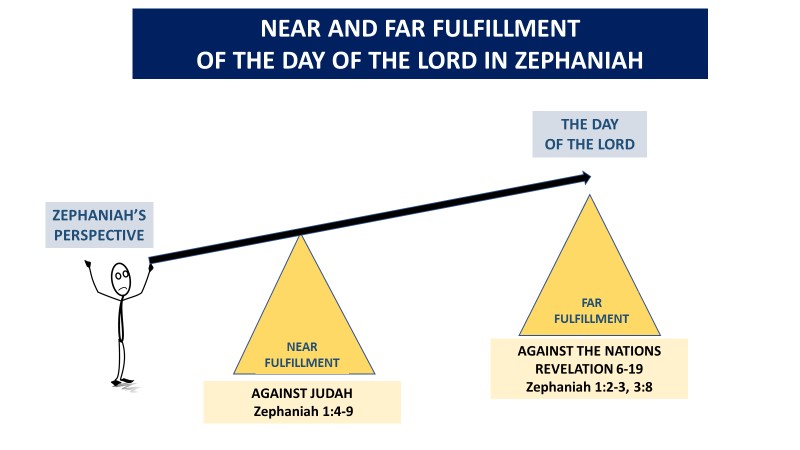
Click chart to enlarge
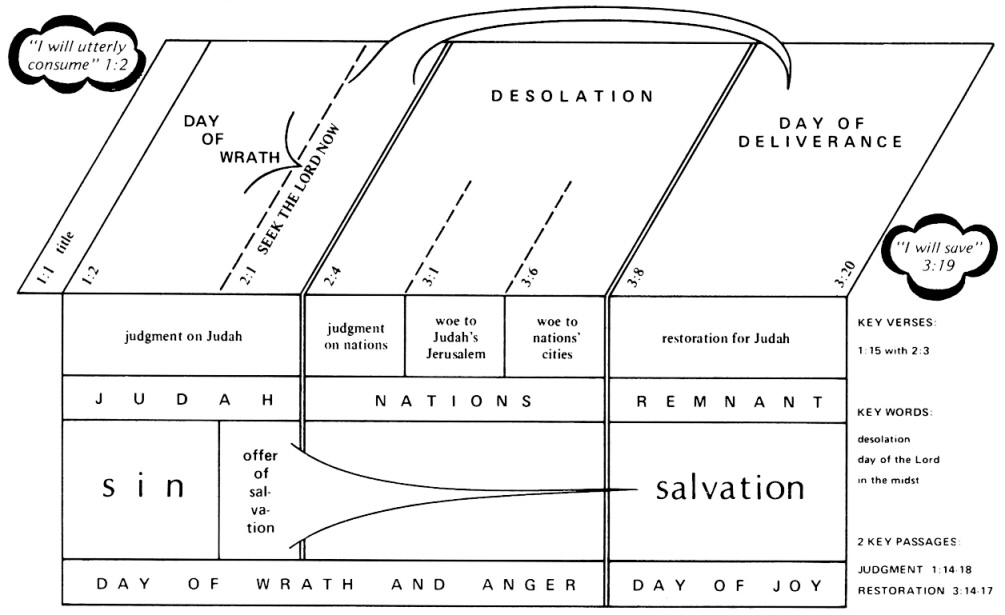
Chart from recommended resource Jensen's Survey of the OT - used by permission
Zephaniah Chart from Charles Swindoll
Another Zephaniah Chart
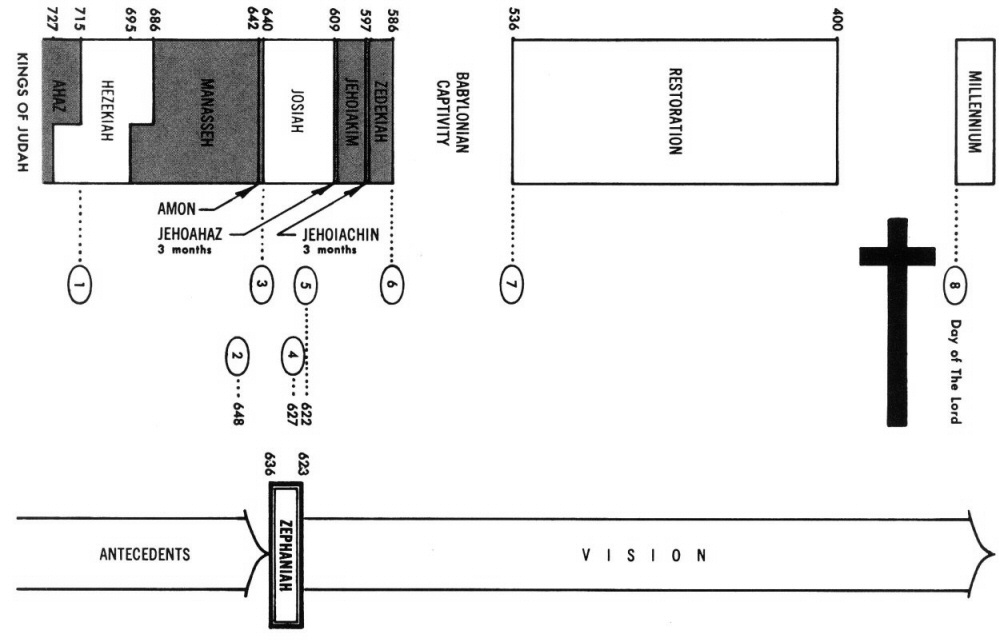
SETTING OF ZEPHANIAH
Click chart to enlarge
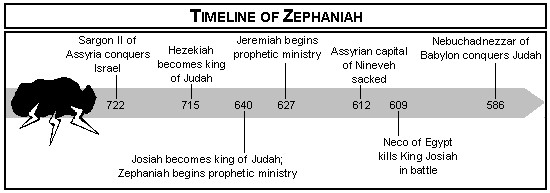
Source: Ryrie Study Bible
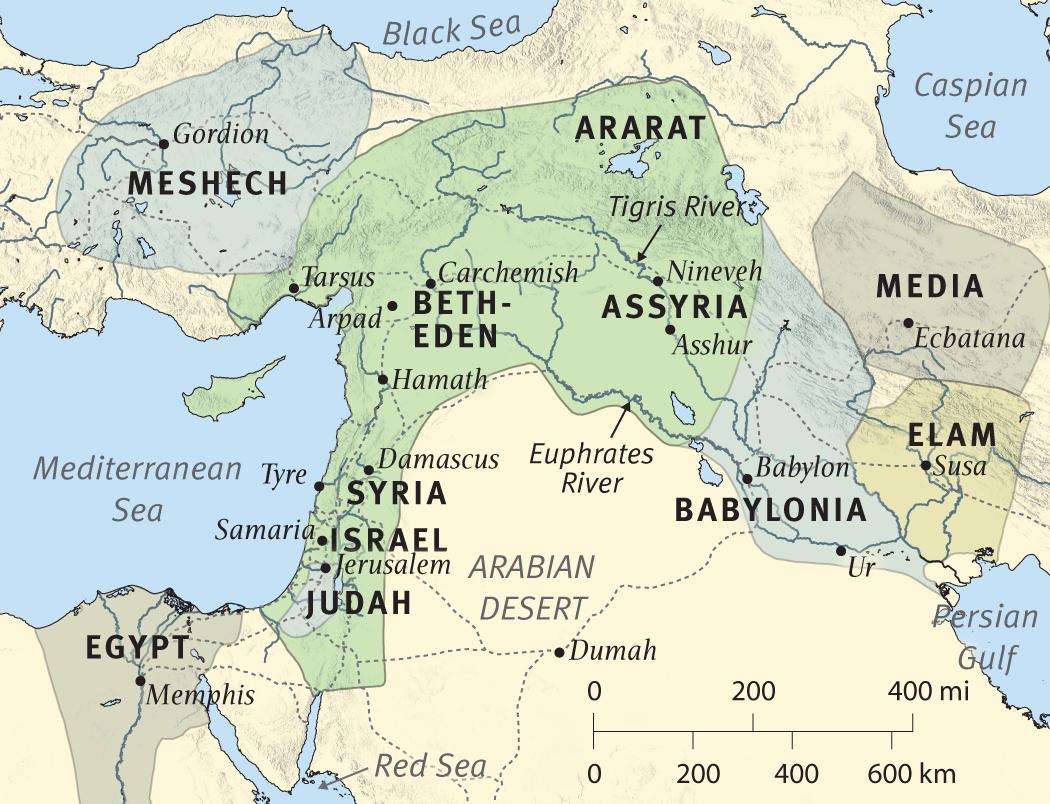
Circa 620 B.C.(Source: ESV.org)
Zephaniah prophesied during the reign of Josiah, when Egypt, Judah, and Babylonia were eroding the power of Assyria. Shortly after this time the Babylonians would replace the Assyrians as the dominant power in the Near East.(Source: ESV.org)
MacArthur Study Bible - Intro, Date, Setting, Themes, Interpretative Challenges, Outline
Swindoll Overview - Includes "Listen to Chuck Swindoll’s overview in his audio message" - 27 minutes
KJV Bible Commentary - Intro, Outline and Verse by Verse Commentary
The King James Study Bible Second Edition - short introduction
NKJV Study Bible: New King James Version Study Bible (loads slow) - Introduction, Historical Setting, Purpose, Timeline, Christ in the Scriptures
|
MIGHTY TO SAVE |
||||
| PROPHECIES OF JUDGMENT Zeph 1:1-3:8 |
PROPHECIES OF BLESSING Zeph 3:9-20 |
|||
| JUDGMENT IN THE DAY OF THE LORD |
SALVATION IN THE DAY OF THE LORD |
|||
| DAY OF WRATH & ANGER |
DAY OF JOY |
|||
| JUDGMENT ON JUDAH |
RESTORATION FOR JUDAH |
|||
| Judgment & Doom |
Joy & Deliverance |
|||
| Divine Judgment on Judah Zeph 1:1-18 |
Invitation to Judah Zeph 2:1-3 |
Sure Doom of Nations Zeph 2:4-15 |
Sure Doom of Jerusalem Zeph 3:1-8 |
Kingdom Promises to Remnant Zeph 3:9-20 |
| JUDAH | NATIONS | REMNANT | ||
| God's Wrath on Judah |
God's Woes on Nations |
God's Will for Remnant |
||
| Sin | Hope | Desolation | Restoration | |
|
KEY WORD: |
KEY WORD: "Seek the LORD" Zeph 2:3 |
KEY WORD: "Woe" Zeph 2:5, 3:1 |
KEY WORD: "The LORD is with you" Zeph 3:15NIV, Zeph 3:17NIV |
|
| Sin | Offer of Salvation | >>> | Salvation | |
| "I will utterly consume" Zeph 1:2KJV |
"I will save" Zeph 3:19KJV |
|||
| Key Verses: Zeph 1:4, Zeph 2:3 Judgment: Zeph 1:14-18 Restoration: Zeph 3:14-17 |
||||
| Theme: Judgment and doom are certain unless there is repentance. Only repentance will bring hope and restoration. Time: 630BC (640-612) To: Judah & the Nations |
||||
The Minor Prophets and their Message
- Hosea - The Lord loves Israel despite her sin. 755-15 B.C.
- Joel - Judgment precedes Israel’s future spiritual revival. 835–796* B.C.
- Amos - God is just and must judge sin. 765-50 B.C.
- Obadiah - Sure retribution must overtake merciless pride. 848* B.C.
- Jonah - Divine grace is universal in its sweep. 780-50 B.C.
- Micah - Bethlehem-born Messiah will be mankind’s Deliverer. 740-690 B.C.
- Nahum - Doom is to descend on wicked Nineveh. 630-12 B.C.
- Habakkuk - Justification by faith is God’s way of salvation. 625 B.C. or earlier
- Zephaniah - The Day of the Lord must precede kingdom blessing. 625-10 B.C.
- Haggai - The Lord’s Temple and interests deserve top priority. 520 B.C.
- Zechariah - The Lord will remember His people Israel. 520-15 B.C.; Zech 9–14 after 500 B.C.
- Malachi - Let the wicked be warned by the certainty of judgment. 433-400 B.C.
- All dates are approximate. *The text does not specifically date these prophets. As a result differences of opinion exist concerning the time of their ministries. (from The New Unger’s Bible Handbook)
ESV.org - The name Zephaniah means “Yahweh has hidden.” This is significant in regards to both the prophet’s background and his message. The name probably shows that Zephaniah’s parents were faithful followers of God. Zephaniah was also the great-great-grandson of the godly king Hezekiah (Zeph 1:1). Like the prophets Joel and Amos, he prophesied about the coming “day of the LORD” when God would judge his enemies and bless his followers. Zephaniah urged the people of Judah to seek the Lord so that they would be “hidden” from his anger on that day (Zeph 2:3). Though even God’s own people would be judged, at the same time the Lord would preserve a faithful remnant. The book of Zephaniah ends with the promise that, through this remnant, Israel will be restored and the knowledge of God will be brought to all nations. (Zephaniah 3:9–13)
Christ in Zephaniah—Jesus alluded to Zephaniah on two occasions (cf. Zeph 1:3; Mt. 13:41 and cf. Zeph 1:15; Mt. 24:29). Both of these passages about the day of the Lord are associated with Christ’s second advent. Although the Messiah is not specifically mentioned in Zephaniah, it is clear that He is the One who will fulfill the great promises (Zeph 3:9–20). He will gather His people and reign in victory: “The Lord has taken away your judgments, He has cast out your enemy. The King of Israel, the Lord, is in your midst; you shall see disaster no more” (Zeph 3:15). (Wilkinson, B., & Boa, K. Talk thru the Bible)
Christ in Zephaniah - Jesus Christ hides us from God's wrath and is the One Who will someday rule the earth as King of Israel (Zeph 3:15-17)
(See key words & marking key words)
- Jehovah (LORD) (33x/27v) - Zep 1:1 Zep 1:2 Zep 1:3 Zep 1:5 Zep 1:6 Zep 1:7 Zep 1:8 Zep 1:10 Zep 1:12 Zep 1:14 Zep 1:17 Zep 1:18 Zep 2:2 Zep 2:3 Zep 2:5 Zep 2:7 Zep 2:9 Zep 2:10 Zep 2:11 Zep 3:2 Zep 3:5 Zep 3:8 Zep 3:9 Zep 3:12 Zep 3:15 Zep 3:17 Zep 3:20
- Jehovah Sabaoth, LORD of hosts (of armies) (2x/2v) - Zeph 2:9, Zeph 2:10
- Day of the Lord (see another discussion of this Day), (7x in 6v) - Zeph 1:7, Zeph 1:8 Zeph 1:14 Zep 1:18 Zep 2:2 Zep 2:3
- That day (5x/5v) - Zep 1:9 Zep 1:10 Zep 1:15 Zep 3:11 Zep 3:16
- Day (20x/13v) - Zep 1:7 Zep 1:8 Zep 1:9 Zep 1:10 Zep 1:14 Zep 1:15 Zep 1:16 Zep 1:18 Zep 2:2 Zep 2:3 Zep 3:8 Zep 3:11 Zep 3:16
- remnant (4x/4v) - Zeph 1:4, 2:7, 9, 3:13 (see discussion of remnant)
- nations (plural - 3x/3v) - Zeph 2:11, 3:6, 8
- city/cities (4x/4v) - Zep 1:16 Zep 2:15 Zep 3:1 Zep 3:6
- earth (9x/8v) - Zep 1:2 Zep 1:3 Zep 1:18 Zep 2:3 Zep 2:11 Zep 3:8 Zep 3:19 Zep 3:20
- destruction - Zeph 1:15
- desolation (6x/6v) - Zep 1:15 Zep 2:4 Zep 2:9 Zep 2:13 Zep 2:14 Zep 2:15
- destroy (2x/2v) – Zep 2:5; Zep 2:13.
- distress (2x/2v) - Zep 1:15 Zep 1:17
- midst (4x/4v) - Zeph 2:14, 3:11, 15, 17
- Woe (2x/2v) - Zeph 2:5, 3:1
- Seek (1x) - Zeph 2:3
- Anger (4x/3v) - Zeph 2:2, 3, 3:8
- Wrath (2x/2v) - Zeph 1:15, 18
- Indignation (1x) - Zeph 3:8
- Gather - (6x/5x) - Zeph 2:1, 3:8, 18, 19, 20
This short book has been called “The Compendium of all prophecy.” It is a survey of the universal government of Jehovah, His judgment of the whole earth.
Zephaniah (“the watchman of Jehovah”) gives his own genealogy to the fourth generation, showing his descent from Hizkiah, who is probably identical with King Hezekiah. He prophesied during the early part of the reign of Josiah, before idolatry had been put away by the reforms of that king.
Zephaniah’s prophecy is marked by the emphasis he lays upon the Day of the Lord. The final application is to the Day of Christ. The impressive language can only find its fulfillment in the great Day of His wrath, described in Revelation 6. “A day of wrath, a day of trouble and distress, a day of wasting and desolation, a day of darkness and gloominess, a day of clouds and thick darkness, a day of trumpet and alarm” (Zephaniah 1:14–16).
But meanwhile, a day of judgment was near for Judah on account of her sins. He urges her to seek the Lord while there is still time. He then proclaims God’s judgment upon various nations which have oppressed God’s people—upon Philistia, Moab, Ammon, Ethiopia, Assyria, prophesying the fall and utter desolation of Nineveh.
The third chapter shows God’s coming judgment upon Judah and Jerusalem, and the future restoration and joy of God’s people in the day of the Messiah.
The Lord in the Midst. The third chapter contains a beautiful lesson, taken spiritually. It describes the sinful condition of a soul apart from Christ— Zephaniah 3:1, sins of commission; Zephaniah 3:2, sins of omission. Those who should have been leaders in righteousness are leaders in iniquity—princes, judges, prophets, priests. Then the Lord Himself takes the place of these leaders, and we see Him “in the midst,” fulfilling each office in turn.
First He comes to our hearts as judge, and convicts us of all that is sinful there, bringing His judgment to light (Zephaniah 3:5–7).
Second, He comes as Prophet, teaching us with pure lips to call upon His name—still “in the midst,” dealing with the pride of heart, and bringing us low into the place of blessing, in the presence of His holiness (Zephaniah 3:8–13).
Third, He comes “into our midst” as King, to reign in undisputed sway in the heart that is surrendered to Him. When the Lord reigns thus the song begins (Zephaniah 3:14–16).
Fourth, He is “in the midst” as our Great High Priest, bringing us into the place of communion with Himself. Here we know Him as the Beloved of our souls. “He will rejoice over thee with joy, He will rest in His love, He will joy over thee with singing.”
The chapter closes with six beautiful “I wills” (Zeph 3:18, 19, 20) of what the Lord will do for us (Ed: See following note - yes for "us" but first for restored nation of Israel!).
Editorial Note: Although the above paragraphs make spiritual application of this passage to believers of the present age, remember that the primary application is to the believing remnant of Israel, which the Lord has promised to restore, according to His unfailing love and the unconditional aspects of His covenant with that nation, when in the Messianic Kingdom, He is in the midst of them. These promises will be fulfilled ''at that time'' (read Zeph 3:19,20; cp. Isa 11:12; 27:12; Eze 28:25; 34:13; 37:21-28; Amos 9:14; Zech 2:10,11; 8:3).
OT Reflections of Christ - Zephaniah - Paul Van Gorder - Zephaniah prophesied during the time of Josiah, a time of temporary revival. He saw the dark clouds of apostasy and judgment creeping over the horizon. The book of 2Kings 22:1-20, gives the historical background of this period. Zephaniah has been called the ''compendium of prophecy.'' He saw the judgment that was soon to fall upon Israel for her apostasy. Then, he looked down the ages to the judgment of the whole earth. And beyond that, he envisioned the time of universal blessing to follow. We read one phrase repeatedly in Zephaniah's prophecy: ''The day of the Lord.''
Habakkuk stood high and looked far;
Zephaniah stooped low with the candle of searching and looked closely.
OUTLINE OF THE BOOK OF ZEPHANIAH
Zeph 1:1- 2:3 The Day of the Lord
The prophet describes the day of God's wrath, which will be fulfilled in the coming invasion and captivity of Israel. It foreshadows the final day of the Lord.
Zeph 2:4-15 Judgment upon the Nations
The prophet predicts an outpouring of God's wrath upon certain peoples and nations. Read the history books and you will find that these have been fulfilled in minute detail.
Zeph 3:1-7 - Israel's Sinfulness
The terrible moral state of Israel is described. This is what called for and justified the judgment that was about to fall.
Zeph 3:8-20 - The Kingdom Described
This passage presents an interesting glimpse of the millennial period and the blessings Israel will experience during that time.
The iniquity of the inhabitants of Judah and Jerusalem weighed heavily upon the heart of Zephaniah. He was a contemporary of Jeremiah, who was called the ''weeping prophet.''
In Zephaniah 3:2+ named the four sins that cursed Israel.
We will see that each was a sin of omission.
- She obeyed not the voice. What marvelous privileges the Israelites enjoyed! No other people had received such recognition from God. Elijah had come with the message of Jehovah; Elisha had followed him. Prophet after prophet had appeared with fresh pronouncements from the courts of glory. But Israel would not listen to the voice of the Lord.
- She received not correction. The Jews did not seem to understand why God had allowed the heathen kingdoms to come and plague them. Read again the book of Judges and the history recorded in Samuel, Kings, and Chronicles. The record of judgment occurs over and over again. And yet the people would not learn.
- She trusted not in the Lord. The Israelites were relying upon something other than their God. When war was impending, they made alliances with other nations, rather than trusting Jehovah. Although these other nations worshiped false gods, Israel compromised by joining forces with them. As a result, idolatry soon was being practiced by God's people.
- She drew not near to her God. The people had no fellowship with the Almighty. The altars were torn down and the sacrifices were stopped. They had knowledge but no spirit.
What was the remedy for all of this? Divine judgment! And the judgments proclaimed by Zephaniah are forerunners of future judgments. Like the prophet Joel, Zephaniah spoke of the day of the Lord. In fact, just preceding the universal judgment that will come upon this earth in the endtime, worldwide conditions will be similar to those local conditions in Israel. The inevitable result is given as follows:
Therefore, wait upon Me, saith the Lord, until the day that I rise up to the prey; for My determination is to gather the nations, that I may assemble the kingdoms, to pour upon them Mine indignation, even all My fierce anger; for all the earth shall be devoured with the fire of My jealousy. (Zeph 3:8+)
But while these judgments are sweeping the scene of the world's defilement, a remnant will be spared. They are described by Zephaniah as ''an afflicted and poor people.'' Of them it is said, ''And they shall trust in the name of the Lord'' (Zeph 3:12+). [cp. Habakkuk 2:4+]
This believing remnant will form the nucleus of a saved and restored people, at the second coming of Christ. No wonder the prophecy of Zephaniah ends with such a beautiful promise about the remnant of Israel!
Sing, O daughter of Zion; shout, O Israel;
be glad and rejoice with all the heart, O daughter of Jerusalem...
The Lord, thy God, in the midst of thee is mighty;
He will save, He will rejoice over thee with joy;
He will rest in His love; He will joy over thee with singing...
Behold, at that time I will undo all that afflict thee;
and I will save her that is lame, and gather her that was driven out;
and I will get them praise and fame in every land where they have been put to shame.
At that time will I bring you again, even in the time that I gather you;
for I will make you a name and a praise among all peoples of the earth,
when I turn back your captivity before your eyes, saith the Lord.
(Zeph 3:14,17,19,20+)
Tell me, who is it that is going to perform this marvelous work in behalf of Israel? None other than the One whose right it is to reign-- God's anointed-- The Lord Jesus. The exhortation of Peter in his second epistle seems appropriate,
Seeing, then, that all these things shall be dissolved,
what manner of persons ought ye to be in all holy living and godliness,
Looking for and hasting unto the coming of the day of God,
in which the heavens, being on fire, shall be dissolved,
and the elements shall melt with fervent heat? (2 Peter 3:11,12+)
Explanation - The following list includes not only commentaries but other Christian works by well known evangelical writers. Most of the resources below are newer works (written after 1970) which previously were available only for purchase in book form or in a Bible computer program. The resources are made freely available by archive.org but have several caveats - (1) they do not allow copy and paste, (2) they can only be checked out for one hour (but can be checked out immediately when your hour expires giving you time to read or take notes on a lengthy section) and (3) they require creating an account which allows you to check out the books free of charge. To set up an account click archive.org and then click the picture of the person in right upper corner and enter email and a password. That's all you have to do. Then you can read these more modern resources free of charge! I have read or used many of these resources but not all of them so ultimately you will need to be a Berean (Acts 17:11+) as you use them. I have also selected works that are conservative and Biblically sound. If you find one that you think does not meet those criteria please send an email at https://www.preceptaustin.org/
Bible Knowledge Commentary - Old Testament - 1608 pages. Dallas Theological Seminary Faculty
James Rosscup - Hannah, John D. “Zephaniah,” in Bible Knowledge Commentary, A good conservative, premillennial short study of Zephaniah by a good scholar. The work is well-informed in history, and explains verses competently within a good outline.
Habakkuk and Zephaniah By: Barber, Cyril J
James Rosscup - Barber, perhaps best known for his The Minister’s Library, gives a knowledgeable introduction of Habakkuk with a clear outline of the book. Synopses at the outset of sections offer perspective, he deals with verses well and has some help on problems. He sees the gazelle in 3:19 as picturing the sure-footedness and freedom in a life of faith. He is helpful on the Day of the Lord, seeing it as both near and far and involving both judgment and blessing (pp. 79–81). He is premillennial on Zephaniah 3:9–20.
Be heroic : demonstrating bravery by your walk : OT commentary, minor prophets By: Wiersbe, Warren W - Always worth checking! - Ezra, Haggai, Zechariah
Be concerned Warren W Wiersbe, - Some but not all the minor prophets - Amos, Obadiah, Micah, Zephaniah
Bible Exposition Commentary - Old Testament - Warren Wiersbe - always worth checking
Wiersbe's Expository Outlines on the Old Testament by Wiersbe, Warren W - can be very helpful for sermon prep.
"Even the most difficult Scriptures come alive as Warren Wiersbe leads you book-by-book through the Old Testament and helps you to see the "big picture" of God's revelation. In this unique volume, you will find: • Introductions and/or outlines for every Old Testament book • Practical expositions of strategic chapters • Special studies on key topics, relating the Old Testament to the New Testament • Easy-to-understand expositions that are practical, preachable, and teachable If you have used Dr. Wiersbe's popular BE series, you know how simple and practical his Bible studies are, with outlines that almost teach themselves. If not, you can now discover a wonderful new resource. This work is a unique commentary on every book of the Old Testament. It contains new material not to be found in the BE series.
With the Word - Devotional Commentary - Warren Wiersbe
Zephaniah, a prophetic drama Volume: 16 By: House, Paul R.,
Nahum, Habakkuk, and Zephaniah : an introduction and commentary By: Baker, David W. (David Weston)
Cyril Barber - Tyndale Old Testament Commentary. Downers Grove, IL: InterVarsity Press, 1988. This readily comprehensible commentary treats with admirable skill God's prediction concerning Nineveh, the Neo-Babylonian empire's chastening of Judah, and Zephaniah's prediction of the Day of the Lord. Approaches the prophetic portions of these books first from an historical point of view, and then from the perspective of amillennial hermeneutics.
James Rosscup - As Baker did in Obadiah in this series, he again presents a brief introduction and a well-studied survey of each book with a good outline, handling most things rather carefully, in a conservative stance. He sees the “Day” of Zephaniah 3 as one of wrath and also hope and help (p. 116), but is very general and vague about when and where and in what form the blessed state will be realized. He is typical of many who do not nail down things in any framework so as to clarify just where he stands.
The books of Nahum, Habakkuk, and Zephaniah New International Commentary on the Old Testament By: Robertson, O. Palmer
Walter C. Kaiser, Jr. "[This] is a first-class theological commentary with unique applications to the present day. His conclusions are balanced and well aimed with regard to the particulars of the immediate historical situation as well as with regard to the overall canonical stance of the ongoing drama of revelation."
James Rosscup - This is a very good conservative work, both perceptive on issues and in lucid style. The writer provides a good translation and commentary, often graphic. He looks at Habakkuk 2:4 from many angles (pp. 173–83), and also clearly catches the picture of living by faith in 3:19 that ties in with 2:4b. To a large extent the explanations of verses are full enough and satisfying. At times, however, questions in serious minds are not dealt with. For example, why make a sweeping statement in Zephaniah 3:12 about no deceit in the future remnant if this is in a state of imperfection and believers still have some deceit when less than absolutely perfect?
Nahum, Zephaniah, Habakkuk; minor prophets of the seventh century B.C. By: Freeman, Hobart E
James Rosscup - A helpful survey by the author of the very fine Introduction to the Old Testament Prophets.
Obadiah, Nahum, Habakkuk and Zephaniah; introduction and commentary By: Eaton, J. H. (John Herbert)
James Rosscup - This is a good exegesis of these books, with much help.
The books of Joel, Obadiah, Jonah, Nahum, Habakkuk, and Zephaniah Published: 1975 John D W Watts
James Rosscup - Watts uses the NEB and gives brief introductions (1–3 pp.) and expositions. He late dates Joel. On problem verses he is usually succinct. Locusts are literal in both chapters, but in the latter case Watts sees them as symbolic of the Lord’s “true Mighty army” (p. 26), whatever that means. He sees a future for Israel in Joel 2:18–27 but leaves vaguely obscure what this means. He refers to use of Joel 2 in Acts 2 but does not discuss the problem of some details not seeming to have been realistically fulfilled in Acts 2. He discusses Joel 3:9ff. in a general haze, and is mediocre among commentaries on these books.
The message of Obadiah, Nahum and Zephaniah : the kindness and severity of God By: Bridger, Gordon
The Broadman Bible commentary - Hosea to Malachi Volume: 7
Thru the Bible with J. Vernon McGee - Proverbs - Malachi
Micah-Malachi Volume: 32 in Word Biblical Commentary - By: Smith, Ralph L.
Cyril Barber - Adheres to the format established for this series. Handles textual problems adroitly. Discusses the theological implications of these writings, and provides a variety of insights into the text. A necessary volume.
James Rosscup This quite readable work by a premillennialist covers the overall range of Old Testament prophets, various key subjects under “Prophetism” such as what “to prophesy” means, the prophets’ function, early prophets, Samuel, monarchy prophets, and writing prophets both major and minor. Wood has solid sections on Elijah and Elisha (their spiritual features, episodes, miracles). The Elisha part surveys each miracle. Some sections, as on Hosea, even discuss in some detail leading problems such as whether Gomer was tainted before marriage or became unfaithful later. But sections on the books do not delve into nearly the detail Chisholm gives. Wood does sum up the message well, has an outline on each book, and organizes much on background, character qualities and work of each prophet. He deals with each prophet in relation to the reign he fitted into. Chisholm and Freeman deal more with various problems. Cf. Hobart Freeman, Introd. to the Old Testament Prophets, available now only in some theological libraries.
Wrath and mercy : a commentary on the books of Habakkuk and Zephaniah By: Eszenyei Szeles, Maria
James Rosscup - This is by Professor of Old Testament, United Protestant Theological Seminary, in Cluj-Napoca, Romania. The work has many thorough and good exegetical comments on the Hebrew drawn from much study, yet some thin and cursory statements. Often the book furnishes help on theological meaning. But the authoress at times reflects higher critical loyalties as in claiming arbitrarily that certain statements must be a redactor’s later insertion if the writer does not grasp them. She is flimsy or non-existent in convincing proof of her biases (cf. on Habakkuk 2:6–20 at p. 36; also cf. p. 41, etc.). A pastor or student using the work with good discernment can profit from it by exercising his own judgment.
The Minor Prophets - borrow this well done commentary by Charles Feinberg (see also The Major Messages of the Minor Prophets)
Cyril Barber - A forthright study denouncing formalism and heartlessness in worship.
The Minor Prophets : an expositional commentary by Boice, James Montgomery, 292 pages
James Rosscup: The large, two-column pages contain much good material on the relevance of the words for then and for now, dealing with such topics as love, repentance, and sincerity (Hosea 6). A prolonged contemplation of these pages and an application of their principles will produce substantial Christian growth. The author could improve the work by being more definite sometimes in specifying in what framework God will bless Israel in the future (e.g., Hosea 14). Vagueness such as in Joel 2:1-11, where he says the invader is neither locusts nor a human army, is a drawback. Wordiness and wandering in his discussions is another shortcoming, as in using Joel 2:28 to take off into a long discussion of clericalism. He finds fulfillment of Joel 2:28 at Pentecost, yet it would help to point out some aspects that were (Rosscup)
The prophets of Israel by Wood, Leon James
James Rosscup - This quite readable work by a premillennialist covers the overall range of Old Testament prophets, various key subjects under “Prophetism” such as what “to prophesy” means, the prophets’ function, early prophets, Samuel, monarchy prophets, and writing prophets both major and minor. Wood has solid sections on Elijah and Elisha (their spiritual features, episodes, miracles). The Elisha part surveys each miracle. Some sections, as on Hosea, even discuss in some detail leading problems such as whether Gomer was tainted before marriage or became unfaithful later. But sections on the books do not delve into nearly the detail Chisholm gives. Wood does sum up the message well, has an outline on each book, and organizes much on background, character qualities and work of each prophet. He deals with each prophet in relation to the reign he fitted into. Chisholm and Freeman deal more with various problems. Cf. Hobart Freeman, Introd. to the Old Testament Prophets, available now only in some theological libraries.
Enjoying the Minor Prophets - a devotional commentary - By: MacDonald, William - same author of Believer's Bible Commentary (see note)
Hearing God's voice above the noise - The Twelve Minor Prophets By: Briscoe, D. Stuart
Living prophecies; the Minor prophets paraphrased with Daniel and the Revelation (The Living Bible paraphrase) By: Taylor, Kenneth Nathaniel
Interpreting the Minor Prophets By: Chisholm, Robert B - conservative, premillennial.
The minor prophets By: Lewis, Jack Pearl, 1919- Does not go into much depth.
Twelve voices for truth confronting a falling world with hope : a study of the minor prophets By: Hayford, Jack W
The Book Of Twelve Prophets Commonly Called The Minor By: George Adam Smith
James Rosscup - Though old this is well-written and often cited, with many good statements on spiritual truths. Users will find much that is worthwhile, and sometimes may disagree, as when he sees the Jonah account as allegorical.
The minor prophets Theo. Laetsch, D.D.
James Rosscup - This is a very good amillennial commentary on the minor prophets as a whole. Laetsch deals with the text verse-by-verse, grapples with difficult phrases and explains them, uses the Hebrew extensively, and presents illuminating word studies. The lucid presentation helps make it a very interesting commentary to read. In crucial prophetical sections, his strong amillennialism appears. His weakness here is offset by his helpfulness in exegesis generally plus his good background material.
Evangelical Commentary on the Bible - Judges by Andrew Boling (20 pages); editor Walter Elwell (1989) 1239 pages
Believer's Bible Commentary - OT and NT - MacDonald, William (1995) 2480 pages. Conservative. Literal. Often has very insightful comments. John MacArthur, says "Concise yet comprehensive - the most complete single-volume commentary I have seen." Warren Wiersbe adds "For the student who is serious about seeing Christ in the Word." One hour limit.
James Rosscup - This work, originally issued in 1983, is conservative and premillennial, written to help teachers, preachers and people in every walk of life with different views, explanation and application.
Unger's Commentary on the Old Testament (Volume 2 - Isaiah - Malachi) by Unger, Merrill Frederick, 1909- (1981) 972 pages.
Understanding the Old Testament by Scripture Union - All 12 minor prophets. 100 pages.
J.Sidlow Baxter: Explore The Book - pdf Vol. 4 Ezekiel to Malachi
Every prophecy of the Bible: Walvoord, John F
The Twelve Minor Prophets By: Robinson, George L.
James Rosscup - This is a reprint of the 1926 edition (New York: Harper and Brothers). He devotes a chapter to each prophet, “Hosea the Prophet of Love,” etc. The studies are terse summaries. On Hosea he lists and comments on steps in Israel’s downfall and has five points on the message to men today. He packs a lot of information in and organizes it well. His word portrait of Jonah is choice (pp. 74–75), and he has interesting accounts of great fish swallowing men. Though brief, the book has frequent material a preacher can use.
The Book Of Twelve Prophets Commonly Called The Minor By: George Adam Smith
James Rosscup - Though old this is well-written and often cited, with many good statements on spiritual truths. Users will find much that is worthwhile, and sometimes may disagree, as when he sees the Jonah account as allegorical.
The Minor Prophets By: Theo. Laetsch, D.D.
James Rosscup - This is a very good amillennial commentary on the minor prophets as a whole. Laetsch deals with the text verse-by-verse, grapples with difficult phrases and explains them, uses the Hebrew extensively, and presents illuminating word studies. The lucid presentation helps make it a very interesting commentary to read. In crucial prophetical sections, his strong amillennialism appears. His weakness here is offset by his helpfulness in exegesis generally plus his good background material.
Note: The first 3 resources have no time restriction and allow copy and paste function:
(1) KJV Bible Commentary - Hindson, Edward E; Kroll, Woodrow Michael. Over 3000 pages of the entire OT/NT. Well done conservative commentary that interprets Scripture from a literal perspective. Pre-millennial. User reviews - it generally gets 4/5 stars from users. - 372 ratings
Very well done conservative commentary that interprets Scripture from a literal perspective user reviews
The King James Version Bible Commentary is a complete verse-by-verse commentary. It is comprehensive in scope, reliable in scholarship, and easy to use. Its authors are leading evangelical theologians who provide practical truths and biblical principles. Any Bible student will gain new insights through this one-volume commentary based on the timeless King James Version of the Bible.
(2) The King James Study Bible Second Edition 2240 pages (2013) (Thomas Nelson) General Editor - Edward Hindson with multiple contributing editors. . 3,194 ratings. Pre-millennial. See introduction on How to Use this Study Bible.
(3) NKJV Study Bible: New King James Version Study Bible (formerly "The Nelson Study Bible - NKJV") by Earl D Radmacher; Ronald Barclay Allen; Wayne H House. 2345 pages. (1997, 2007). Very helpful notes. Conservative. Pre-millennial. 917 ratings
HCSB Study Bible : Holman Christian Standard Bible - General Editor Jeremy Royal Howard (2010) 2360 pages. Conservative. Good notes. Include Holmans excellent maps. One hour limit
Life Application Study Bible: Old Testament and New Testament: New Living Translation. Has some very helpful notes especially with application of texts. 4,445 ratings. See also Life application New Testament commentary - Bruce Barton
The MacArthur Study Bible - John MacArthur. Brief but well done notes for conservative, literal perspective. 1,275 ratings
ESV Study Bible - Excellent resource but not always literal in eschatology and the nation of Israel 6,004 ratings
Zondervan NIV Study Bible - (2011) 2570 pages - Use this one if available as it has more notes than edition below.
The David Jeremiah Study Bible - (2013) 2208 pages. 2,272 ratings Logos.com - "Drawing on more than 40 years of study, Dr. David Jeremiah has compiled a legacy resource that will make an eternal impact on generations to come. 8,000 study notes. Hundreds of enriching word studies"50+ Essentials of the Christian Faith" articles."
Wycliffe Bible Commentary - Charles Pfeiffer - 1560 pages (1962). 214 ratings Less detailed than the KJV Bible Commentary. Conservative. Notes are generally verse by verse but brief.
Rosscup - Conservative and premillennial scholars here have been experts in their fields. The work contains brief introductions and attempts to give a verse-by-verse exposition, though it does skip over some verses. The treatments vary with the authors, but as a whole it is a fine one-volume commentary for pastors and students to use or give to a layman. Outstanding sections include, for example: Whitcomb on Ezra-Nehemiah-Esther; Culver on Daniel; Ladd on Acts; Harrison on Galatians; Johnson on I Corinthians; and Ryrie on the Johannine Epistles.
Ryrie Study Bible Expanded Edition (1994) 2232 pages
The Defender's Study Bible : King James Version by Morris, Henry M. Excellent notes by well known creationist. 45 ratings
NLT Study Bible (Illustration Version)
Disciple's Study Bible: New international version 54 ratings Not that helpful for verse by verse study. Focuses on application of Christian doctrines. 10,000 annotations; doctrinal summaries, "Life Helps" section relate doctrine to everyday discipleship.
The Living Insights Study Bible : New International Version - Charles Swindoll. Notes are good but somewhat sparse and not verse by verse.
NIV Archaeological Study Bible (2005) 2360 pages 950 ratings (See also Archaeology and the Bible - OT and NT)
New Bible Commentary - (1994) See user reviews
Compact Bible commentary by Radmacher, Earl D; Allen, Ronald Barclay; House, H Wayne, et al - 954 pages. 424 ratings Multiple contributors to the comments which are often verse by verse. The comments are brief but meaty and can really help your study through a given book. A sleeper in my opinion.
The Experiencing God Study Bible: the Bible for knowing and doing the will of God - Blackaby, Henry (1996) 1968 pages - CHECK THIS ONE! Each chapter begins with several questions under the title "PREPARE TO MEET GOD." Then you will interesting symbols before many of the passages. The chapter ends with a "DID YOU NOTICE?" question. This might make a "dry chapter" jump off the page! Read some of the 48 ratings
Unger's bible handbook : a best-selling guide to understanding the bible by Unger, Merrill F
Halley's Bible Handbook Henry H. Halley - (2000) 2720 pages (much larger than original edition in 1965 and no time limit on use). (Halley's Bible handbook : an abbreviated Bible commentary - one hour limit 1965 872 pages)
Rosscup - A much-used older evangelical handbook bringing together a brief commentary on Bible books, some key archaeological findings, historical background, maps, quotes, etc. It is helpful to a lay Bible teacher, Sunday School leader, or pastor looking for quick, pertinent information on a Bible book. This is the 72nd printing somewhat revised. Halley packed in much information. Unger’s is better overall, but that is not to say that Halley’s will not provide much help on basic information.
The Shaw Pocket Bible Handbook - Editor - Walter Elwell (1984) 408 pages.
"This hardback is small in size but packed full of content: Brief summaries of every book of the bible, cultural, archaeological and historical info, word definitions, pictures, maps and charts." Worth checking!
Dictionary of deities and demons in the Bible (DDD) - 950 pages (1995) Read some of the 65 ratings (4.8/5 Stars). A definitive in depth resource on this subject. Very expensive to purchase.
Dictionary of Biblical Imagery - free for use online with no restrictions (i.e., you do not need to borrow this book). Editors Leland Ryken, J C Wilhoit, Tremper Longman III - This is a potential treasure chest to aid your preaching and teaching as it analyzes the meaning of a host of Biblical figures of speech. Clue - use the "One-page view" which then allows you to copy and paste text. One downside is there is no index, so you need to search 3291 pages for entries which are alphabetical.
Every prophecy of the Bible: Walvoord, John F
The Apologetics Study Bible Understand Why You Believe - Comments from over 90 leading apologists, including: Ted Cabal, Lee Strobel, Chuck Colson, Norm Geisler, Josh McDowell, Albert Mohler, J.P. Moreland, see reviews. Here is a review from The Christian Reviewer.
Baker Encyclopedia of Christian Apologetics by Geisler, Norman
Cyril Barber - This is a goldmine of valuable information! Well-indexed. Covers everything from “Absolute Truth” to “Zen Buddhism.” Extensive articles on such topics as “Agnosticism,” “Annihilationism,” “Bible, Alleged Errors in,” “Gnosticism,” “Miracles in the Bible,” “New Testament Manuscripts,” and “Objections to Resurrection,” “Big Bang Theory,” “Edward John Carnell,” “Christ, Death of,” are only a few of the insightful essays in this masterful work. Each article has been written in an understandable way, and a 28 page bibliography forms a valuable source for further research. An excellent resource.
Evidence That Demands A Verdict - Josh McDowell
The New Evidence that Demands a Verdict - Josh McDowell
More Than A Carpenter - A modern classic by Josh McDowell - Great resource for those who are skeptical that Jesus is fully God, fully Man.
Encyclopedia of Bible difficulties by Archer, Gleason L - or here with no restrictions
Hard Sayings of the Bible - Walter Kaiser
When Critics Ask - Norman Geisler
- Today's Handbook of Bible Times & Customs by Coleman, William L
- Nelson's New Illustrated Bible Manners & Customs : How the People of the Bible Really Lived by Vos, Howard Frederic
- Manners & Customs of the Bible (The New Manners and Customs) Freeman, James M., 1827-1900 Published 1998
- The New Manners and Customs of Bible Times: Gower, Ralph, 1933- Published 1987
- Manners and Customs of Bible lands By: Wight, Fred Published 1983
- Manners and Customs in the Bible By: Matthews, Victor Harold Published 1991
- Handbook of life in Bible times By: Thompson, J. A. (John Arthur), 1913-2002 Published 1986
- Illustrated dictionary of Bible manners and customs By: Deursen, A. van (Arie), 1891-1963 Published 1982
- The Illustrated Guide to Bible Customs & Curiosities by Knight, George W.
- Orientalisms in Bible lands, giving light from customs, habits, manners, imagery, thought and life in the East for Bible students By: Rice, Edwin Wilbur, 1831-1929 Published 1910
- Bible manners and customs By: Mackie, G. M. 1854-1922 Published 1898
- Teach it to your children : how kids lived in Bible days By: Vamosh, Miriam Feinberg, author
- Everyday life in Bible times : work, worship, and war By: Embry, Margaret Published 1994
- Everyday living : Bible life and times : fascinating, everyday customs and traditions from the people of the Bible Published 2006
- The Land and the Book; or, Biblical illustrations drawn from the manners and customs, the scenes and scenery, of the Holy land By: Thomson, William M. (William McClure), 1806-1894 Published 1880
- Eastern manners illustrative of the Old Testament history By: Jamieson, Robert, 1802-1880 Published 1838
- Scripture manners and customs : being an account of the domestic habits, arts, etc., of Eastern nations mentioned in Holy Scripture Published 1895
Theological Wordbook of the Old Testament by Harris, R. Laird - (5/5 Stars) One of the best OT lexicons for studying Hebrew words.
Here is another link to the TWOT which has no time limit on use and does allow copy and paste. Can be downloaded as PDF.
Vine's Expository Dictionary of Old Testament and New Testament Words - Online pdf
Hebrew Honey: a simple and deep word study of the Old Testament - 330 pages. The definitions have more of a devotional flavor. For example, see the descriptive definition for "Abide" (Hebrew - gur).
Expository Dictionary of Bible Words by Richards, Larry, It does not go into great depth on the Greek or Hebrew words but does have some excellent insights.
So That's What it Means (Theological Wordbook) - Formerly titled "Theological Wordbook" edited by Charles Swindoll. It is now under this new title So That's What it Means and can be borrowed - it is more like a dictionary than a lexicon but the comments are superb! The contributors include Donald Campbell, Wendell Johnston, John Witmer, John Walvoord
Nelson's Expository Dictionary of the Old Testament by Unger, Merrill. Indexed by English word and then any related Hebrew nouns or verbs. Definitions are solid and geared to the lay person.
Well done commentary Recommended
- Zephaniah 3:17 Commentary - IN DEPTH
Zephaniah 1:2
Zephaniah 1:3
Zephaniah 1:4
Zephaniah 1:5
Zephaniah 1:6
Zephaniah 1:7
Zephaniah 1:8
Zephaniah 1:9
Zephaniah 1:10
Zephaniah 1:11
Zephaniah 1:12
Zephaniah 1:13
Zephaniah 1:14
Zephaniah 1:15
Zephaniah 1:16
Zephaniah 1:17
Zephaniah 1:18
Zephaniah 2:2
Zephaniah 2:3
Zephaniah 2:4
Zephaniah 2:5
Zephaniah 2:6
Zephaniah 2:7
Zephaniah 2:8
Zephaniah 2:9
Zephaniah 2:10
Zephaniah 2:11
Zephaniah 2:12
Zephaniah 2:13
Zephaniah 2:14
Zephaniah 2:15
Zephaniah 3:2
Zephaniah 3:3
Zephaniah 3:4
Zephaniah 3:5
Zephaniah 3:6
Zephaniah 3:7
Zephaniah 3:8
Zephaniah 3:9
Zephaniah 3:10
Zephaniah 3:11
Zephaniah 3:12
Zephaniah 3:13
Zephaniah 3:14
Zephaniah 3:15
Zephaniah 3:16
Zephaniah 3:17
Zephaniah 3:18
Zephaniah 3:19
Zephaniah 3:20
Be a Berean - Not Always Literal
MAPS COVERING ISRAEL PRE- AND POST-EXILE
These are excellent full color, modern maps with events marked on many of the maps
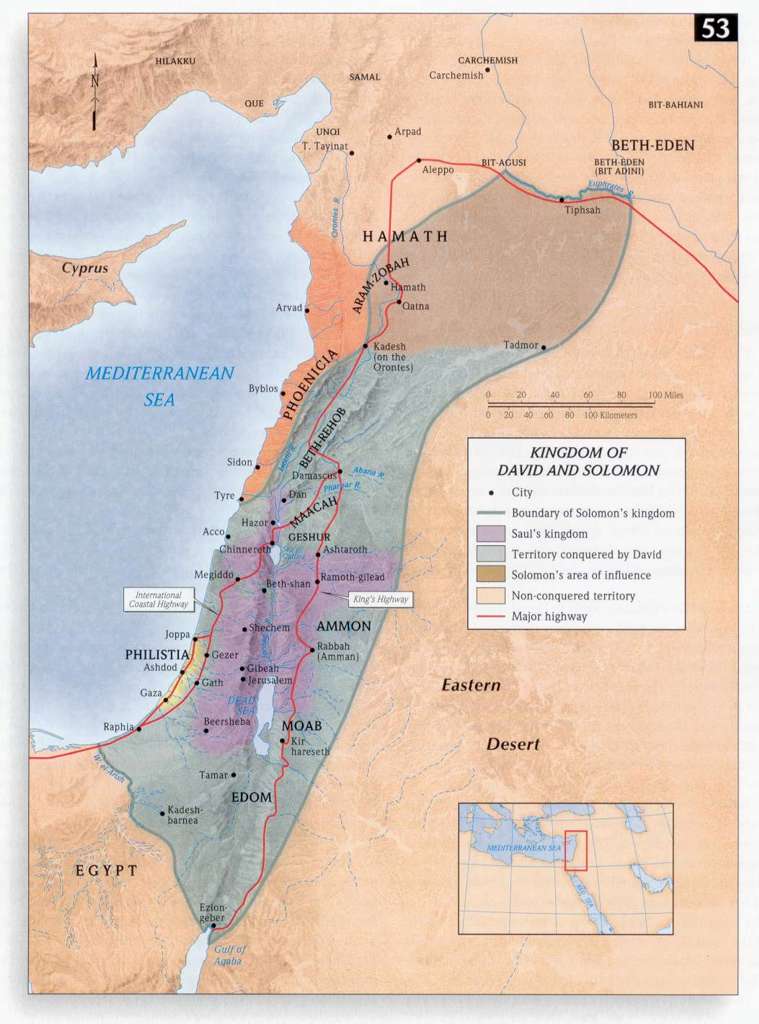
The Kingdom of David and Solomon
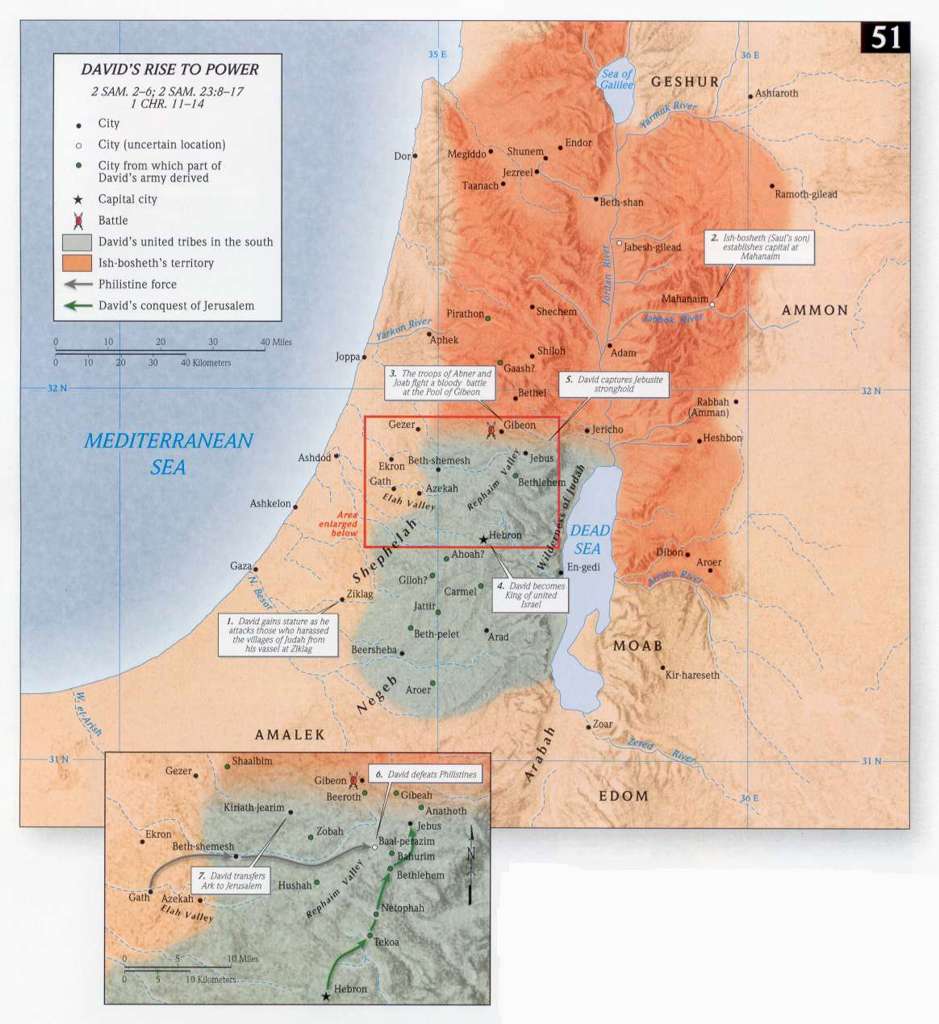
- David's Rise to Power
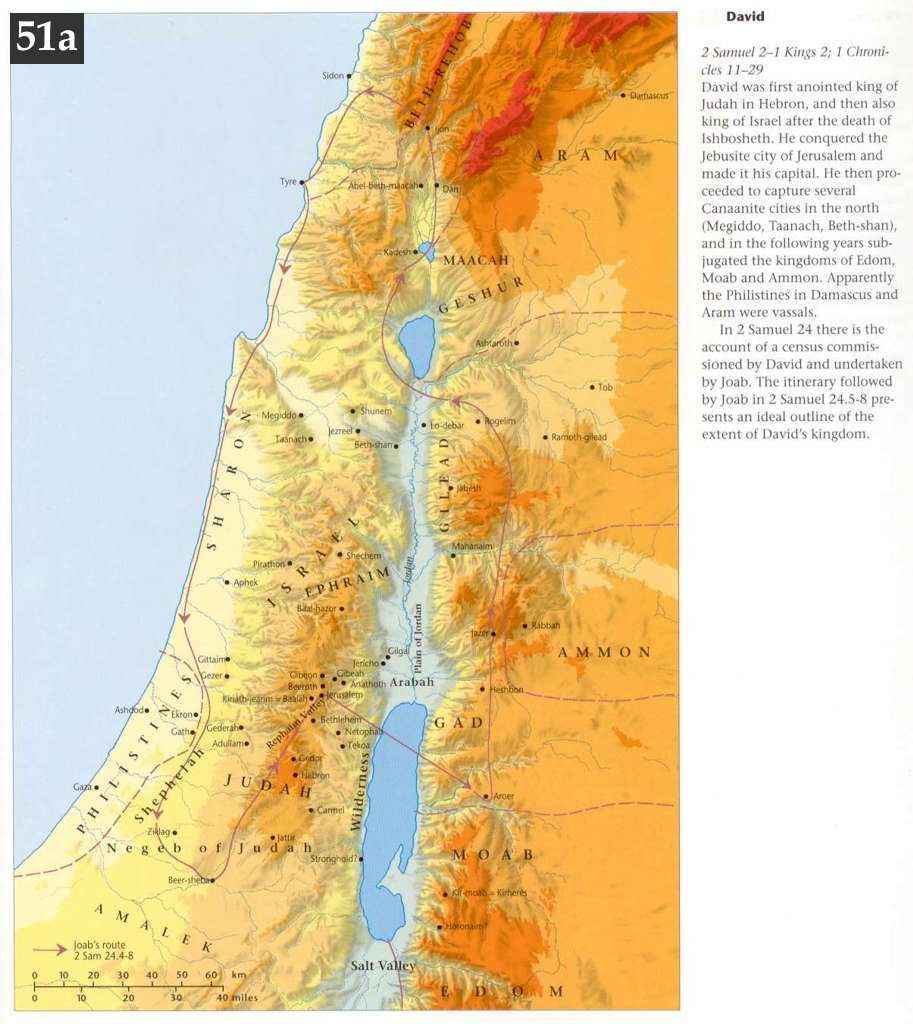
- David in Conquest of Canaan
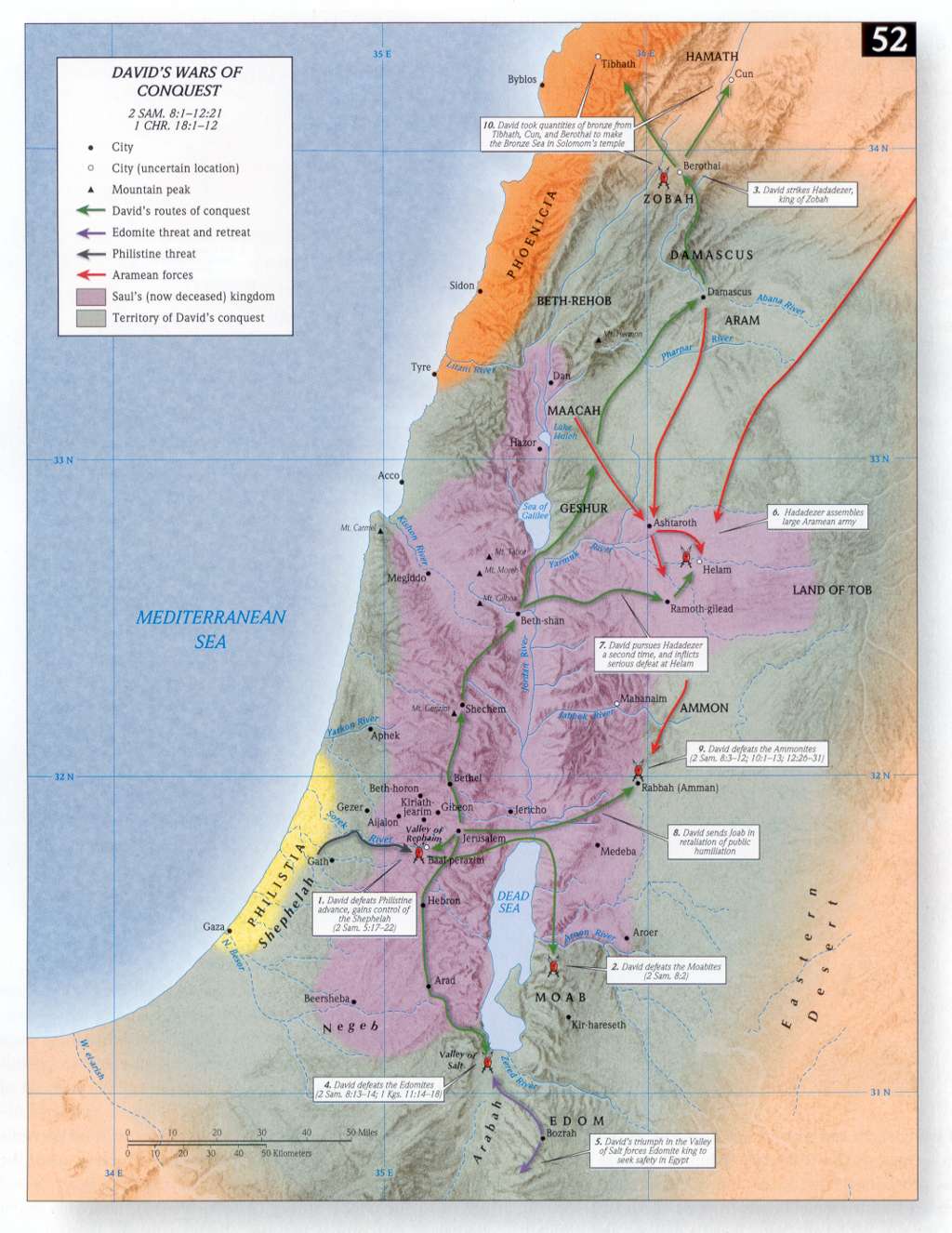
- David's Wars of Conquest
- Kingdom of David and Solomon
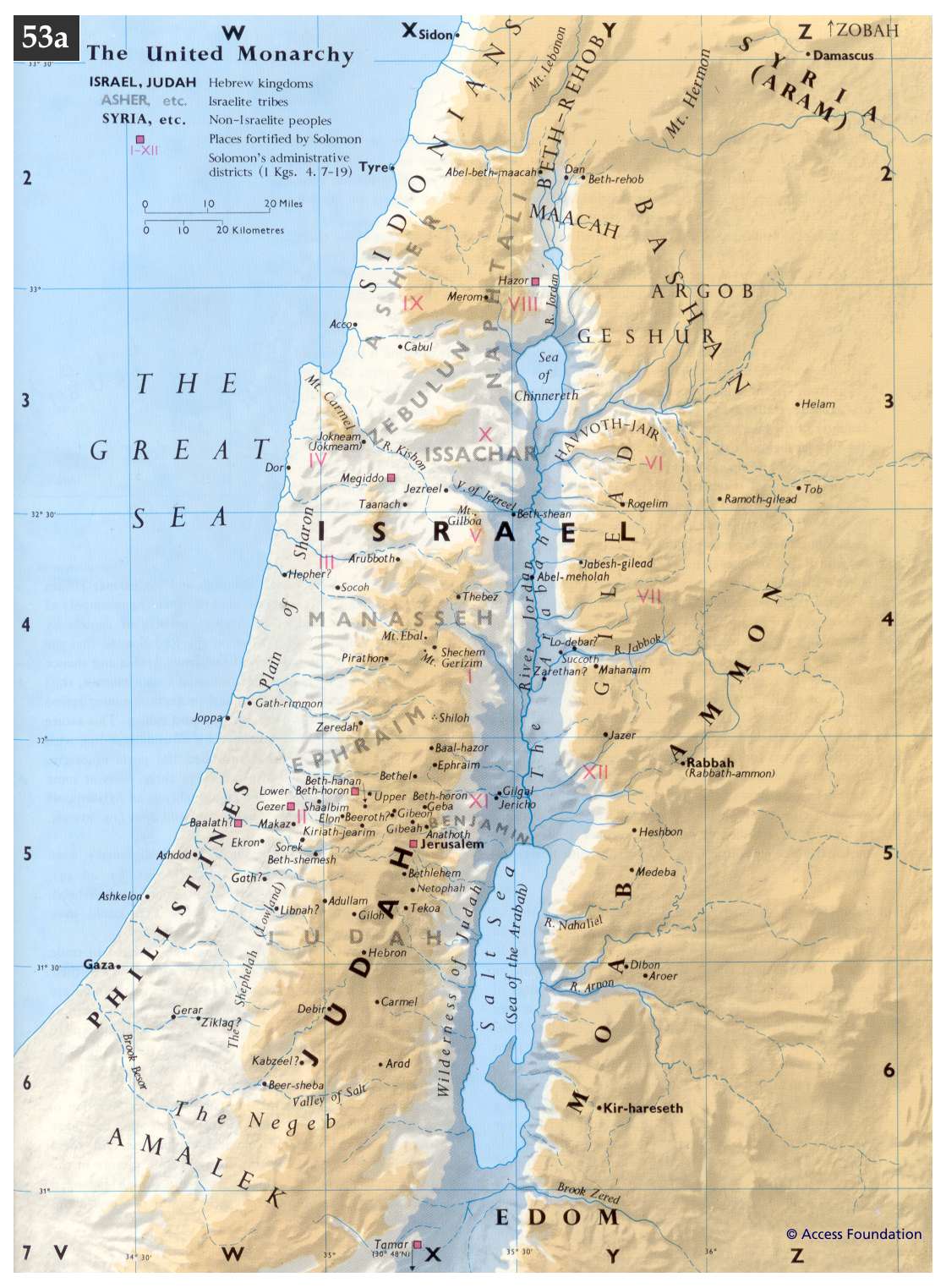
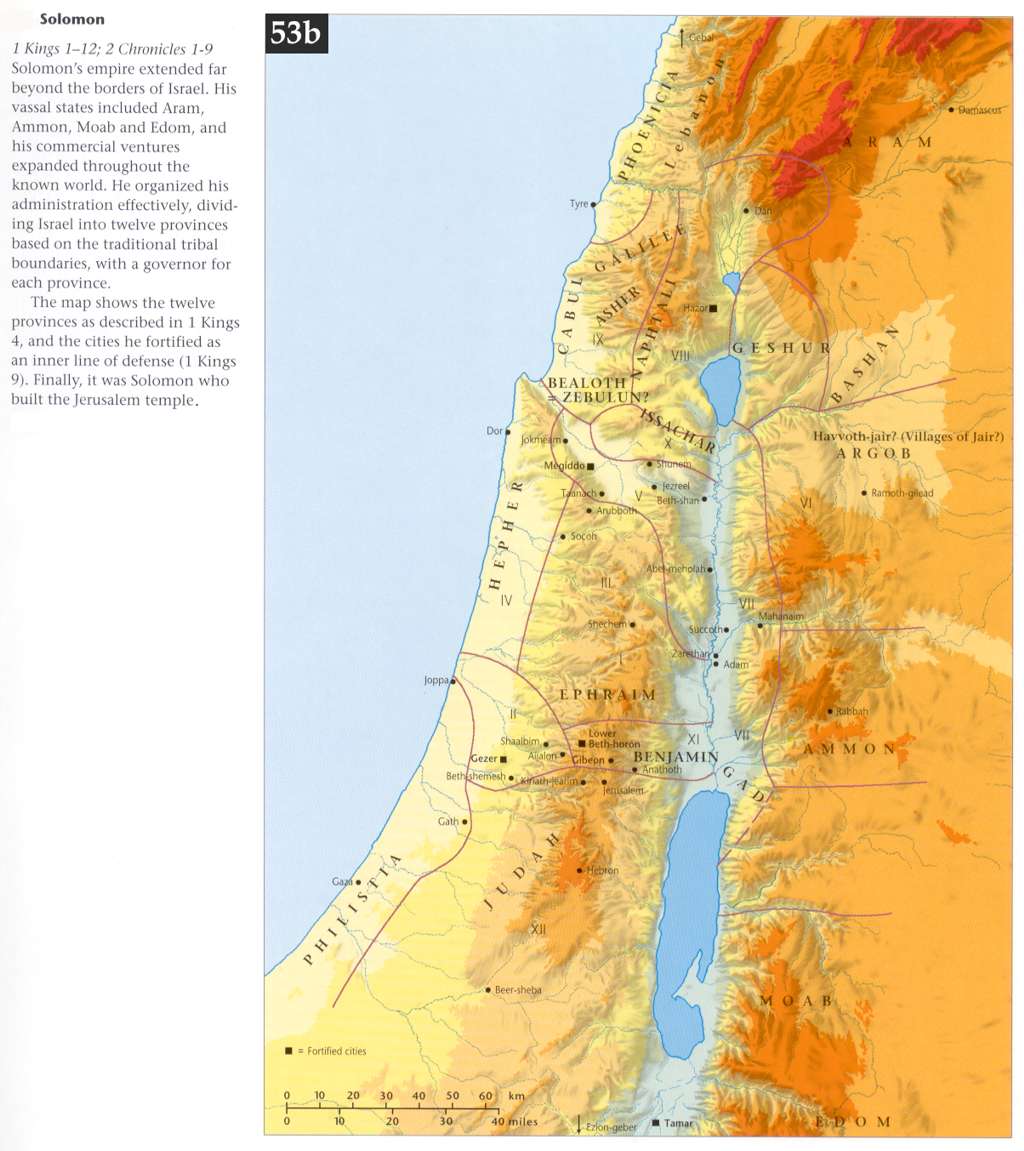
- The United Monarchy under Solomon (1)
- The United Monarchy under Solomon (2)
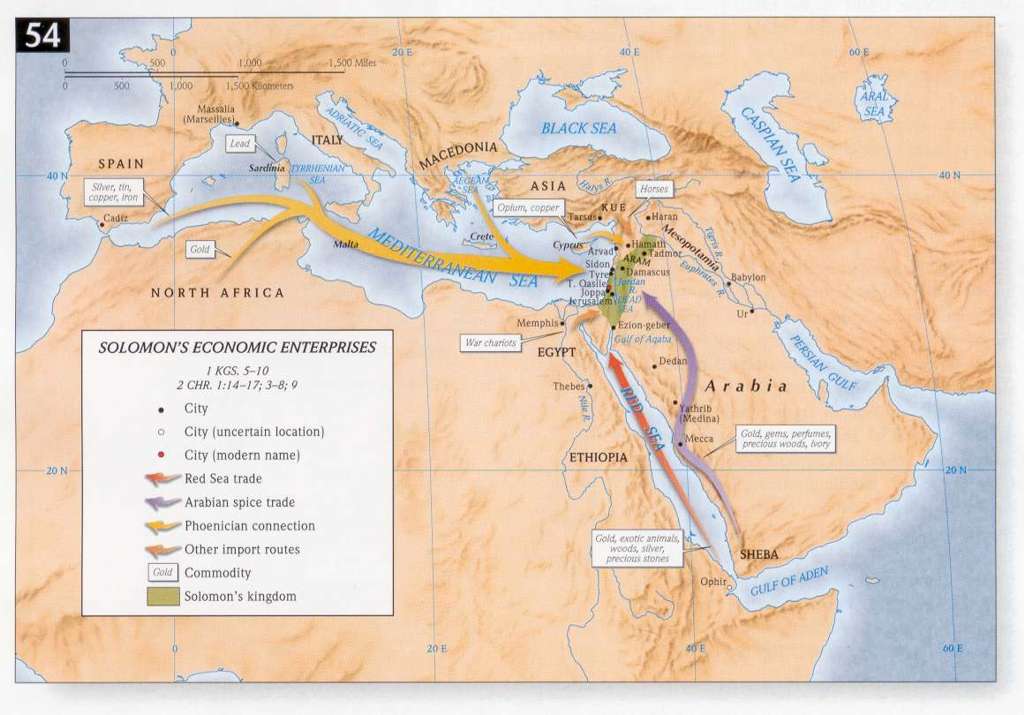
- Solomon's Economic Enterprises
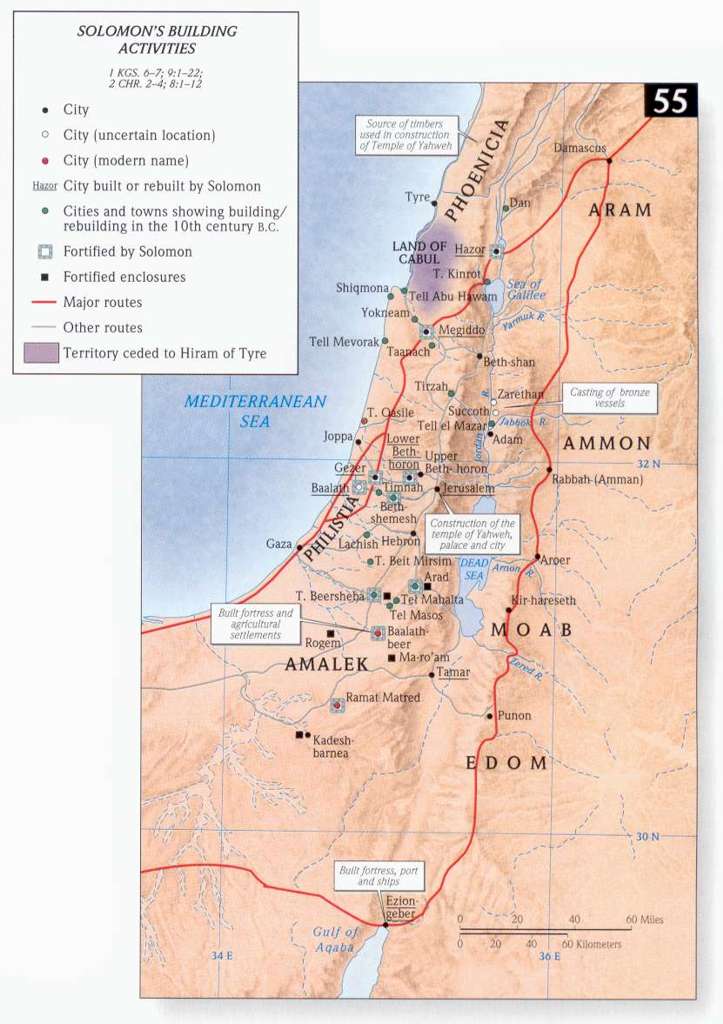
- Solomon's Building Activities
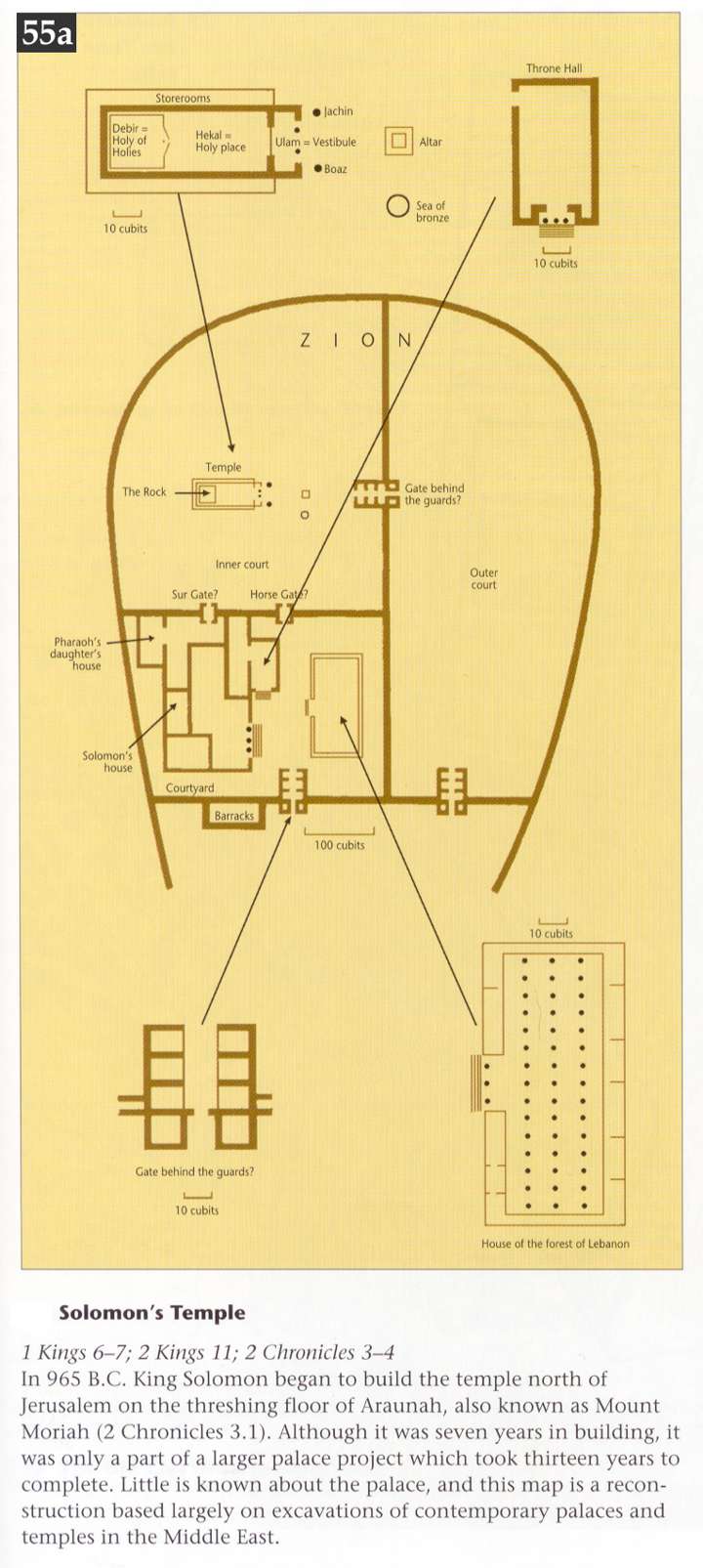
- Solomon's Temple
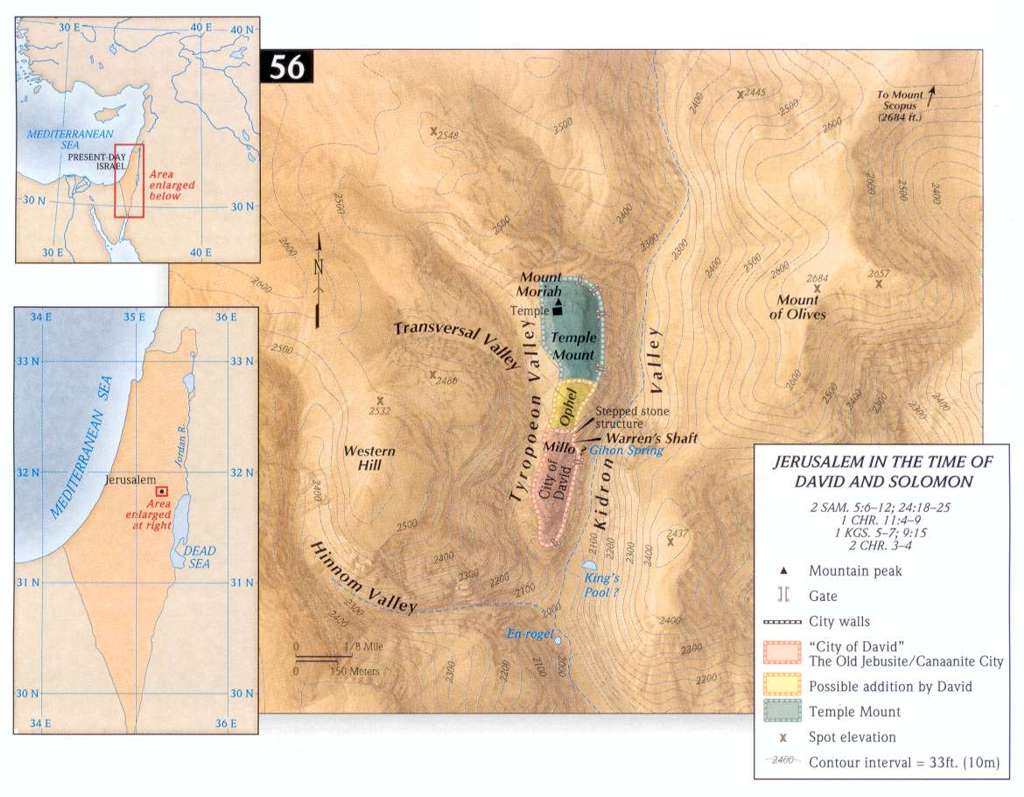
- Jerusalem in the Time of David and Solomon
The Kingdoms of Israel and Judah
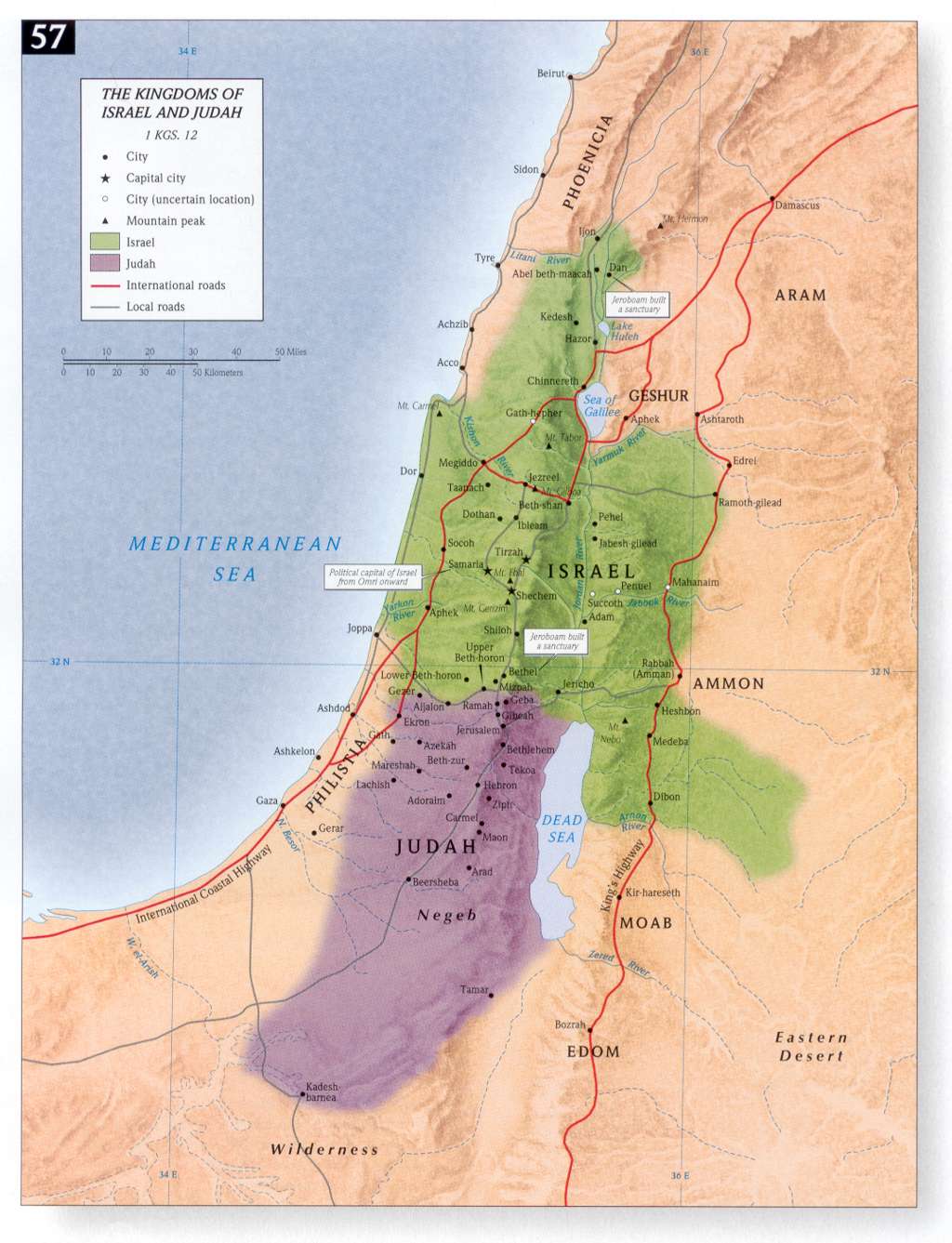
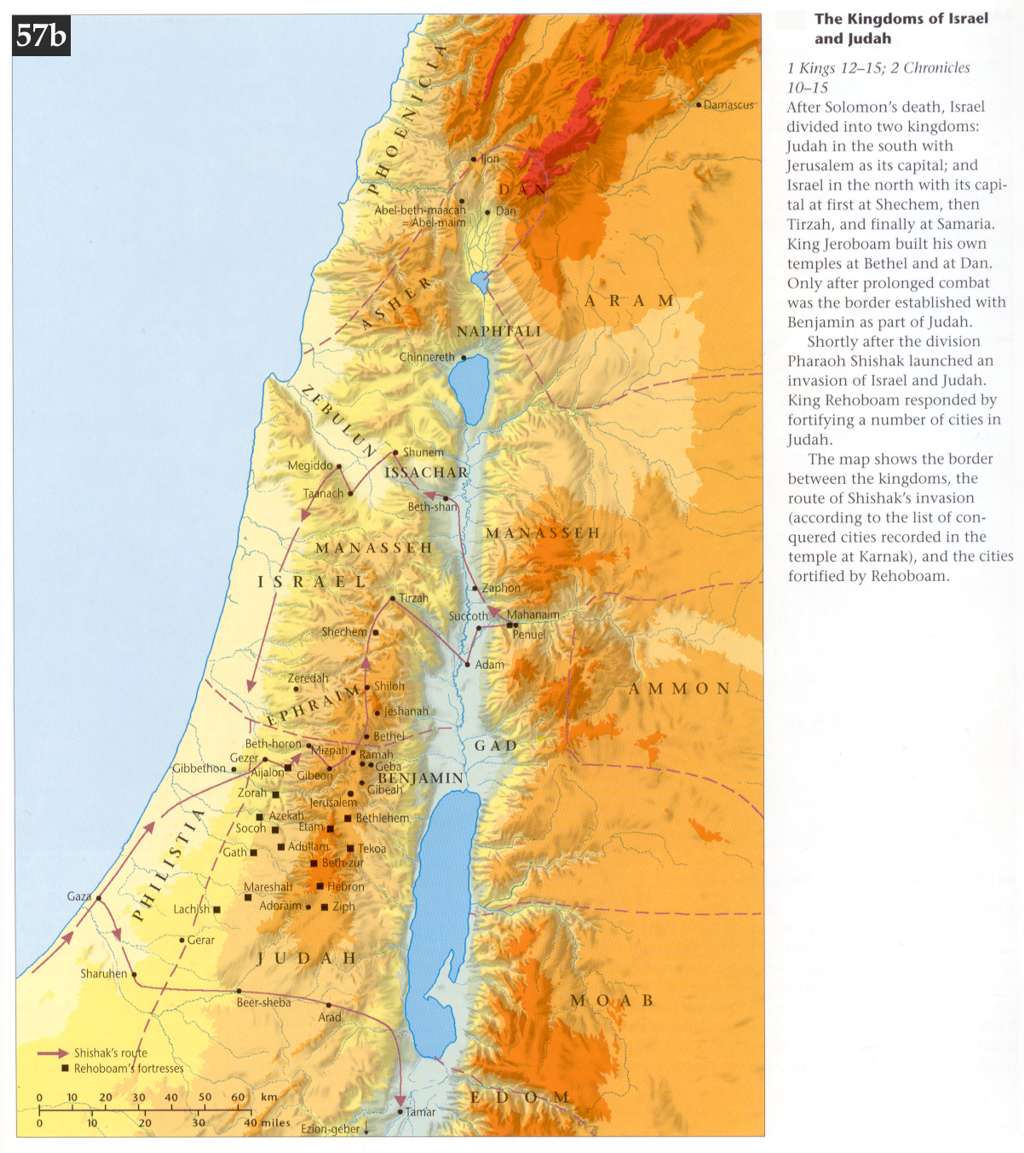
- The Kingdoms of Israel and Judah (1)
- The Kingdoms of Israel and Judah (2)
- The Kingdoms of Israel and Judah (3)
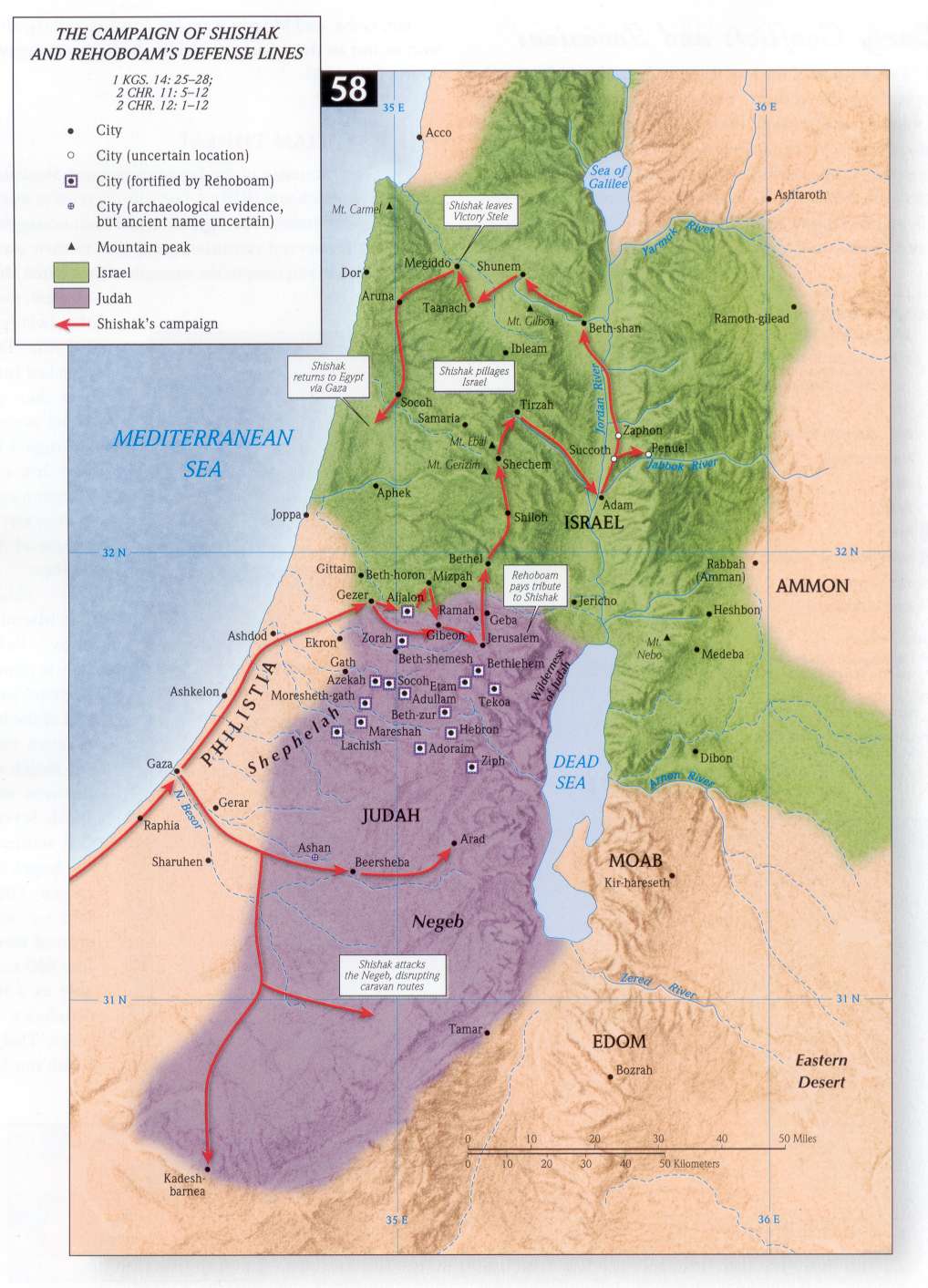
- The Campaign of Shishak
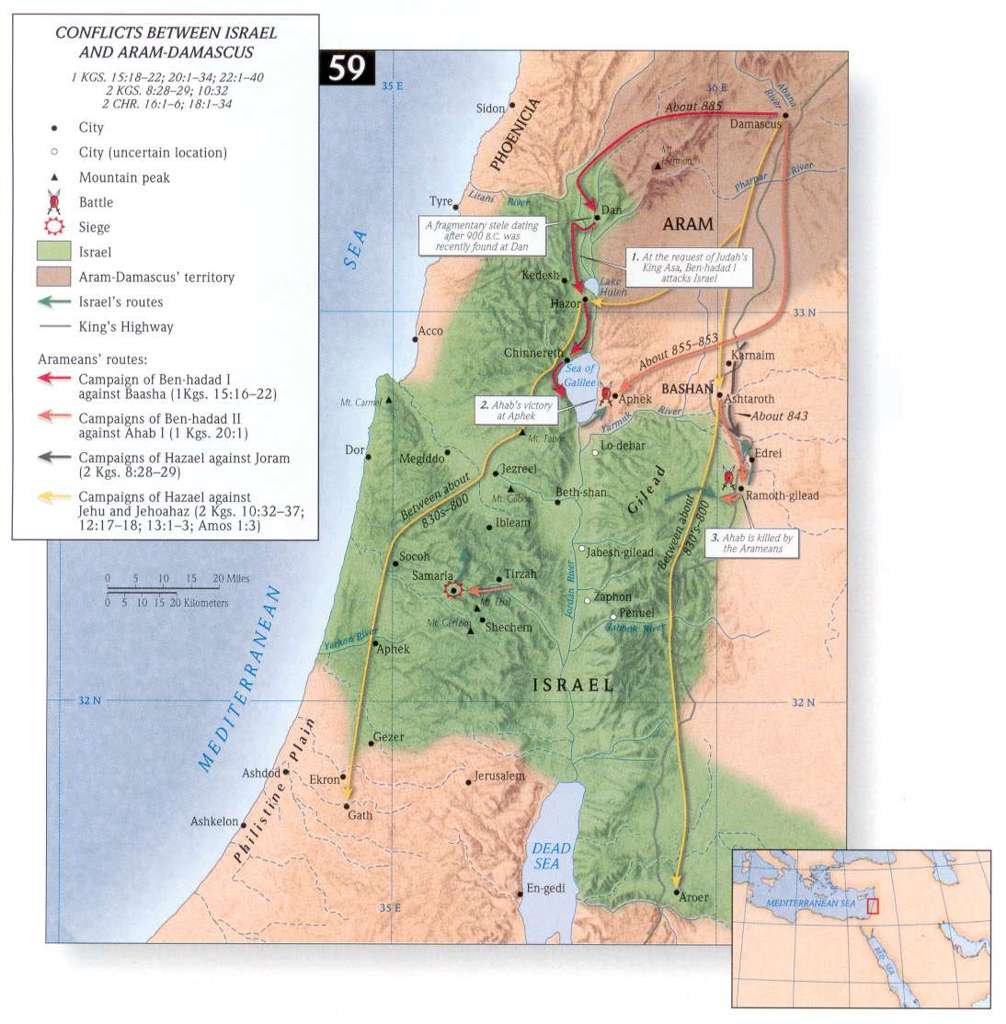
- Conflicts between Israel and Aram-Damascus
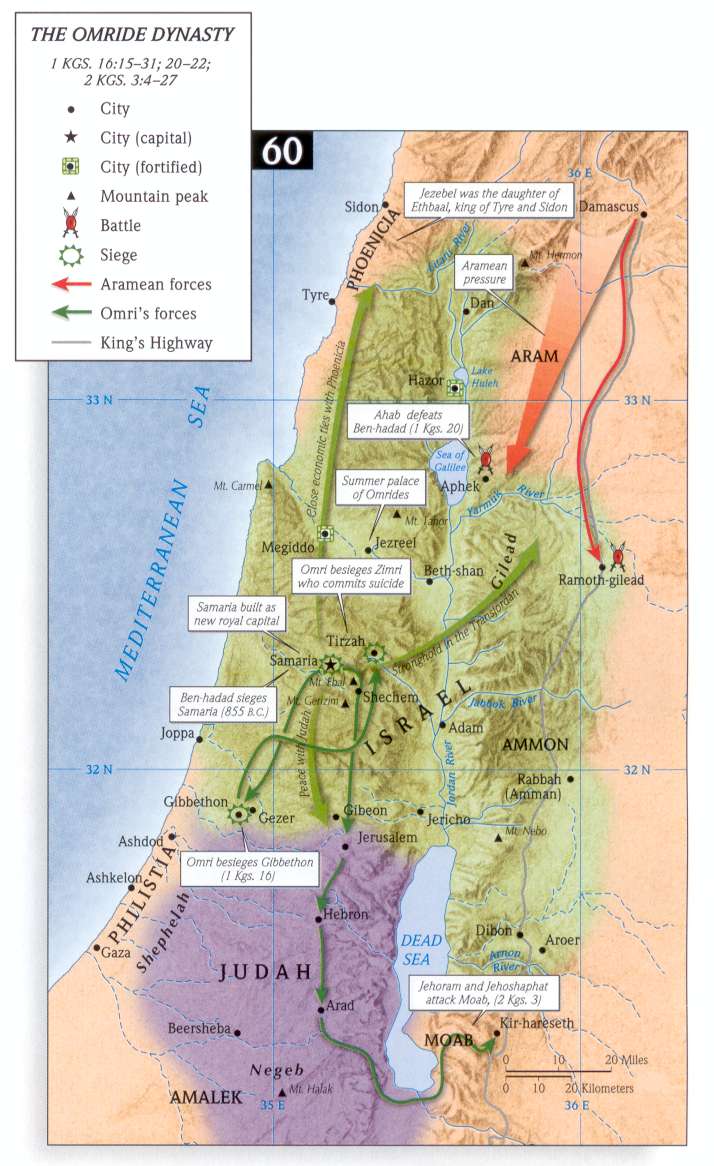
- The Omride Dynasty
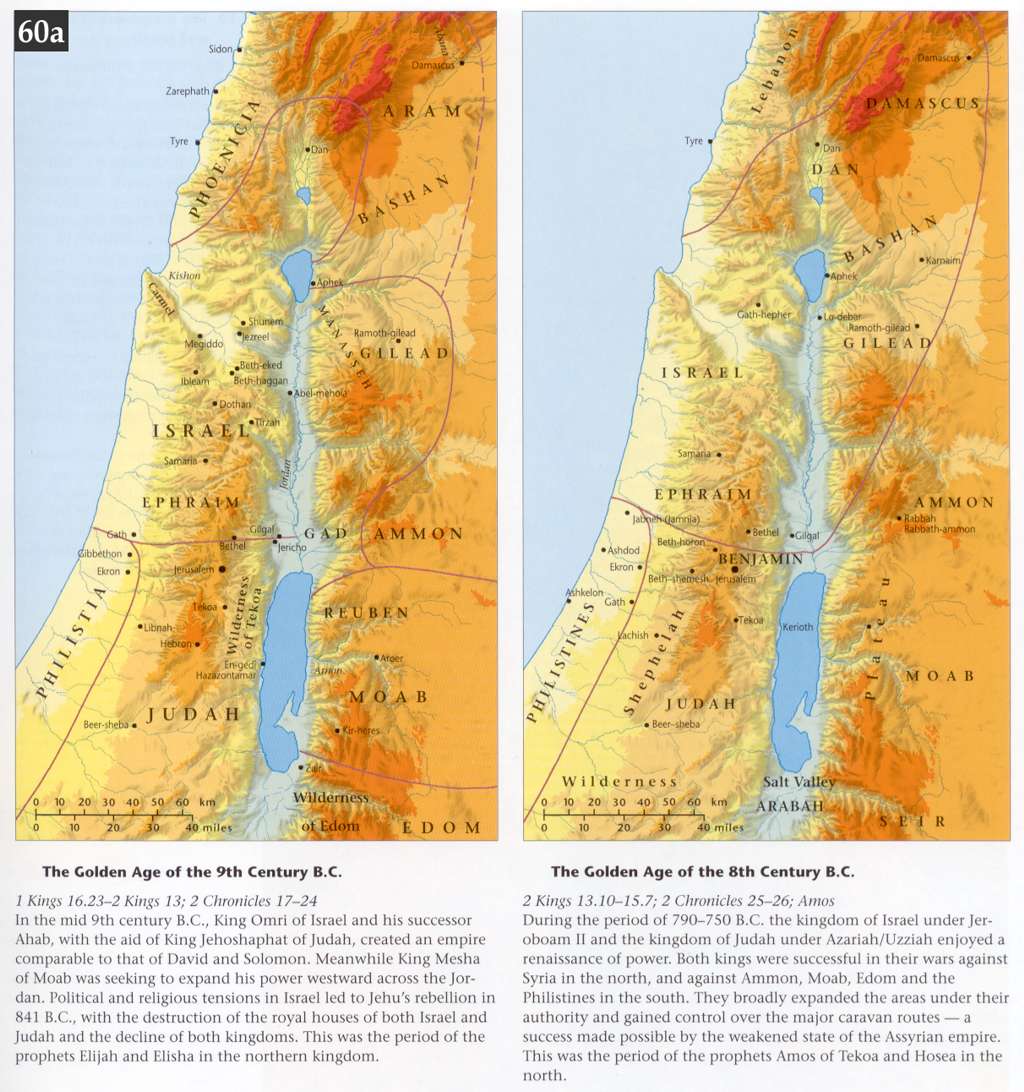
- The Golden Ages of the 9th & 8th centuries BCE
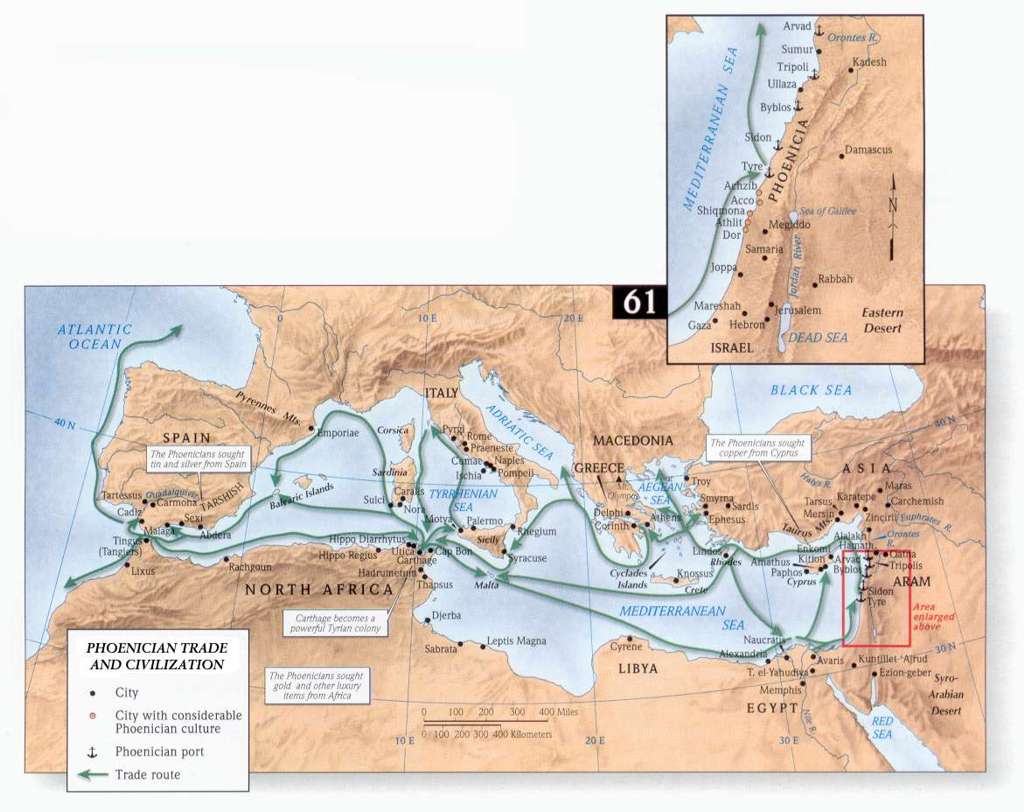
- Phoenician Trade and Civilization
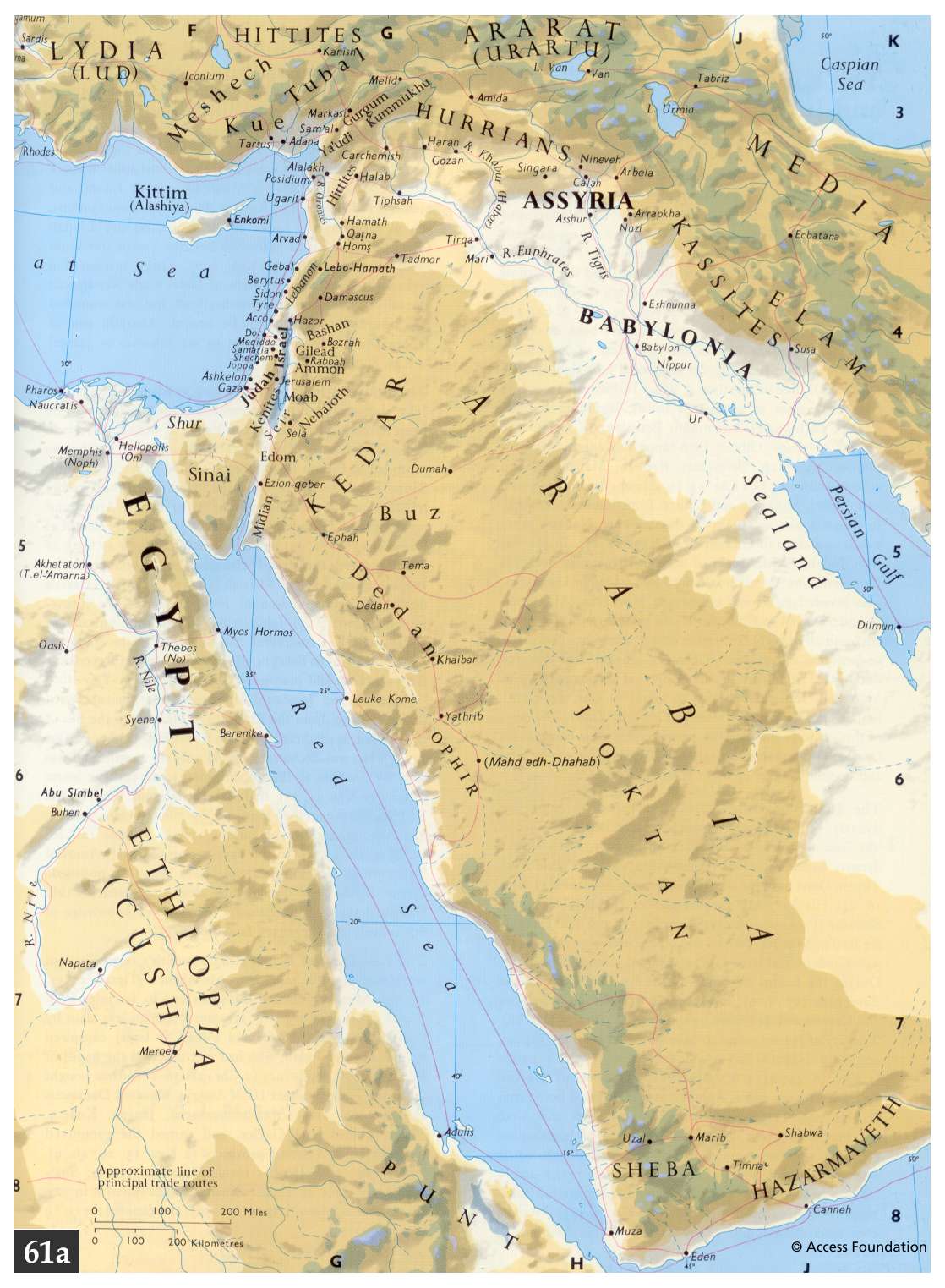
- Trade Routes throughout the Middle East
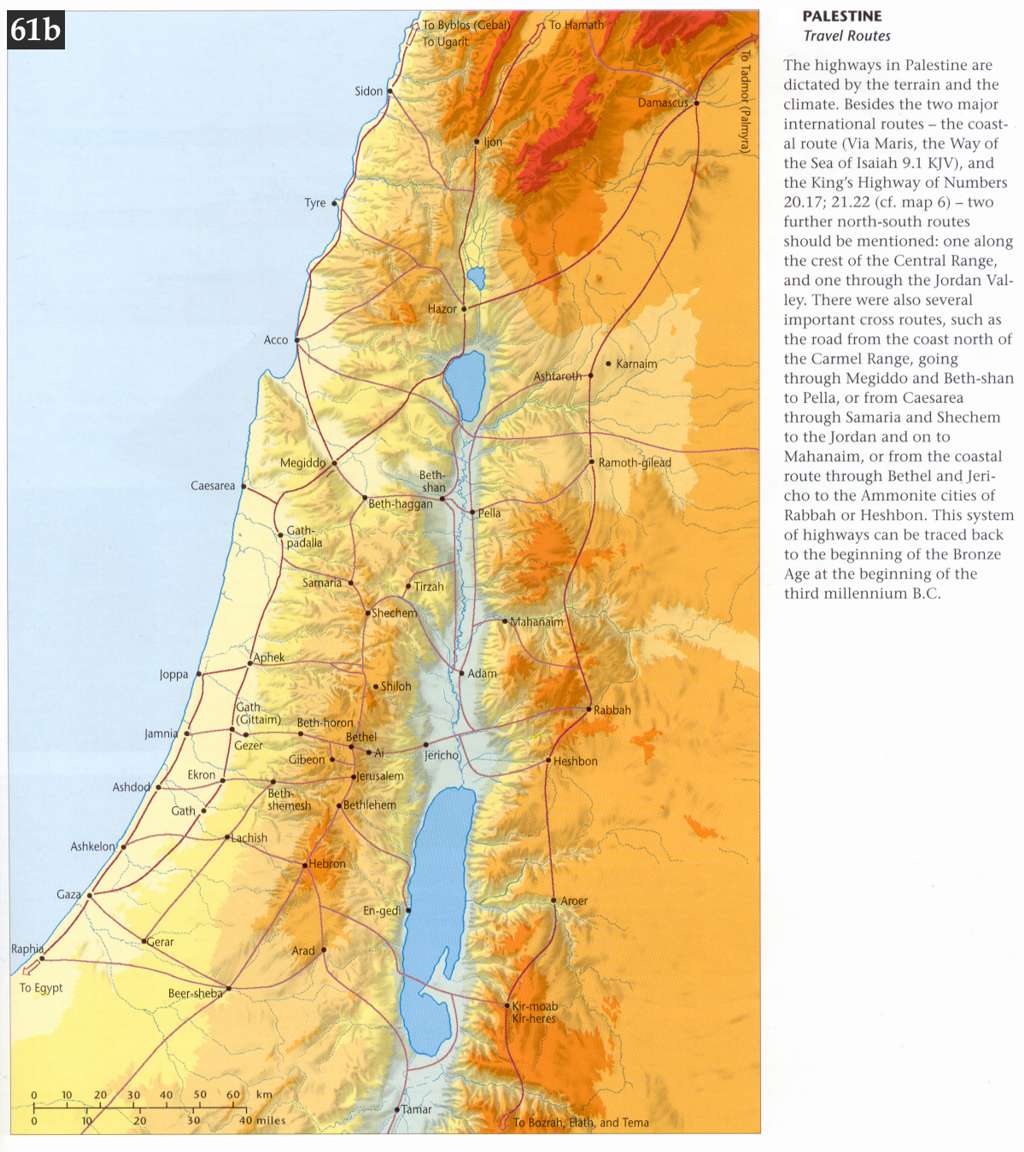
- Travel Routes throughout Palestine
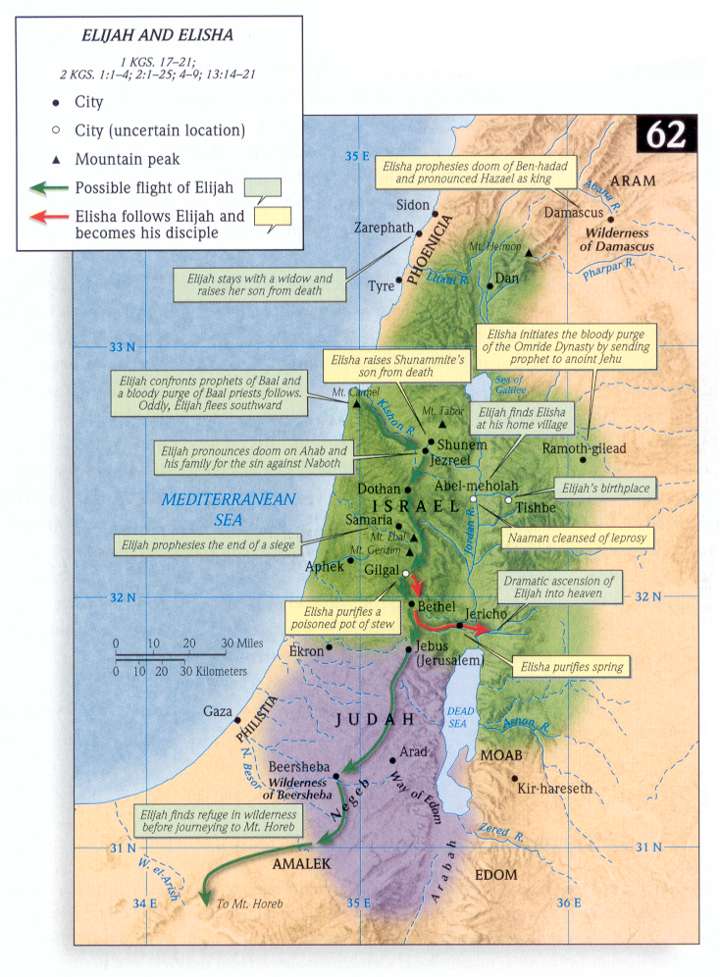
- Elijah and Elisha
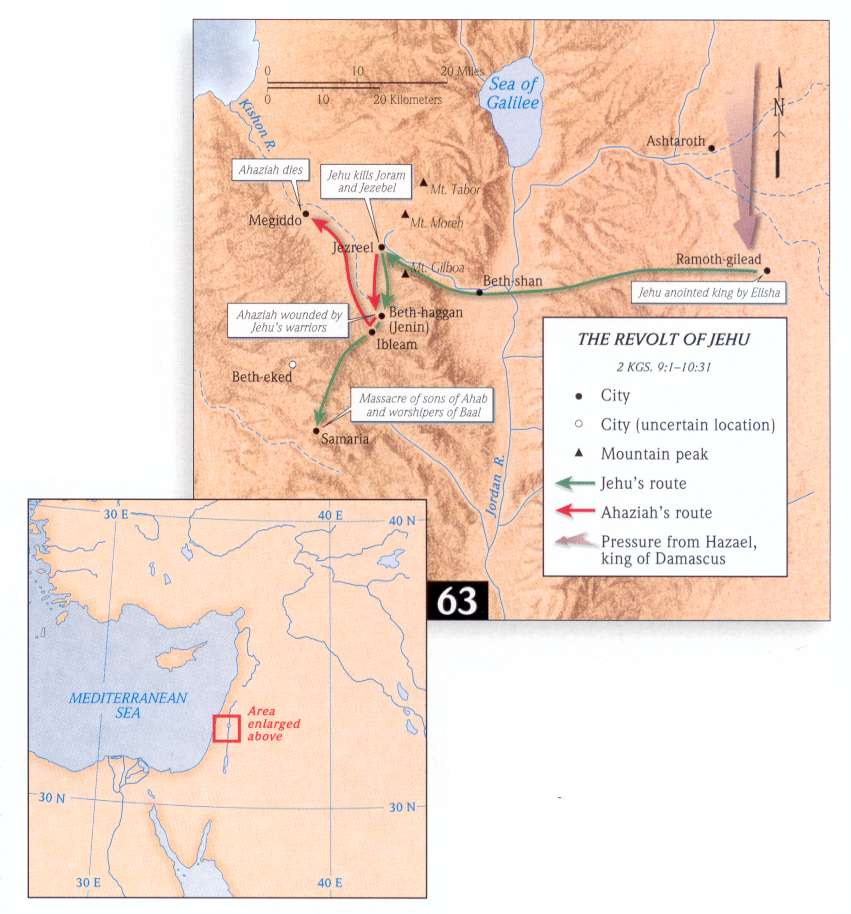
- The Revolt of Jehu
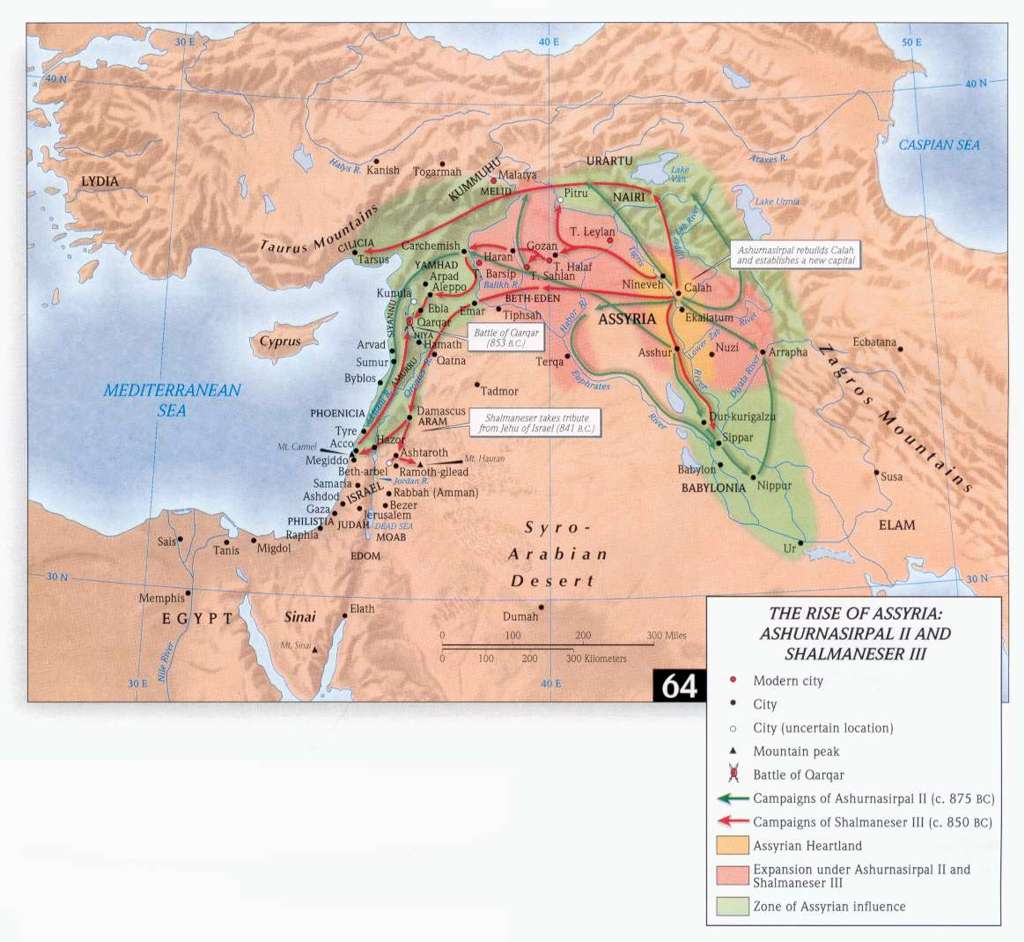
- The Rise of Assyria
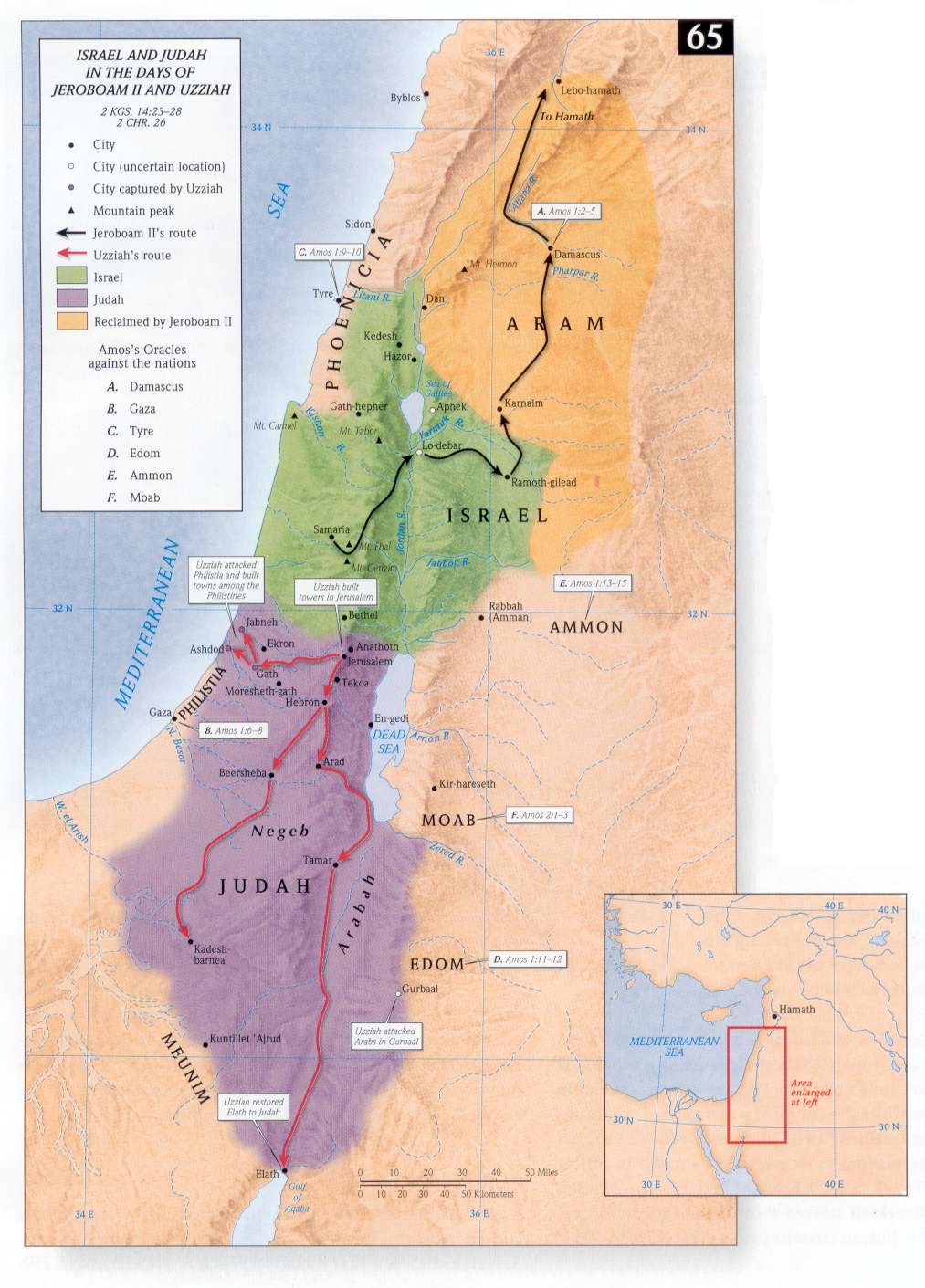
- Israel & Judah in the days of Jeroboam II and Uzziah
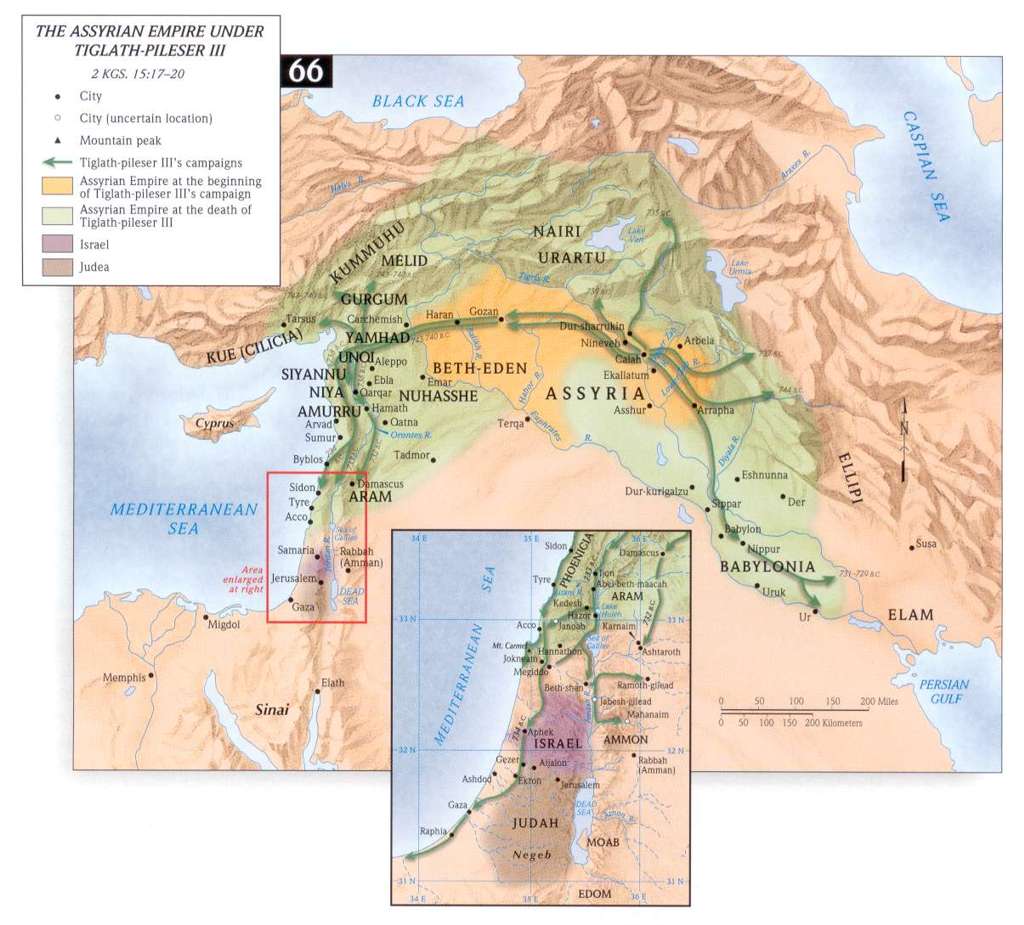
- The Assyrian Empire under Tiglath-Pileser III
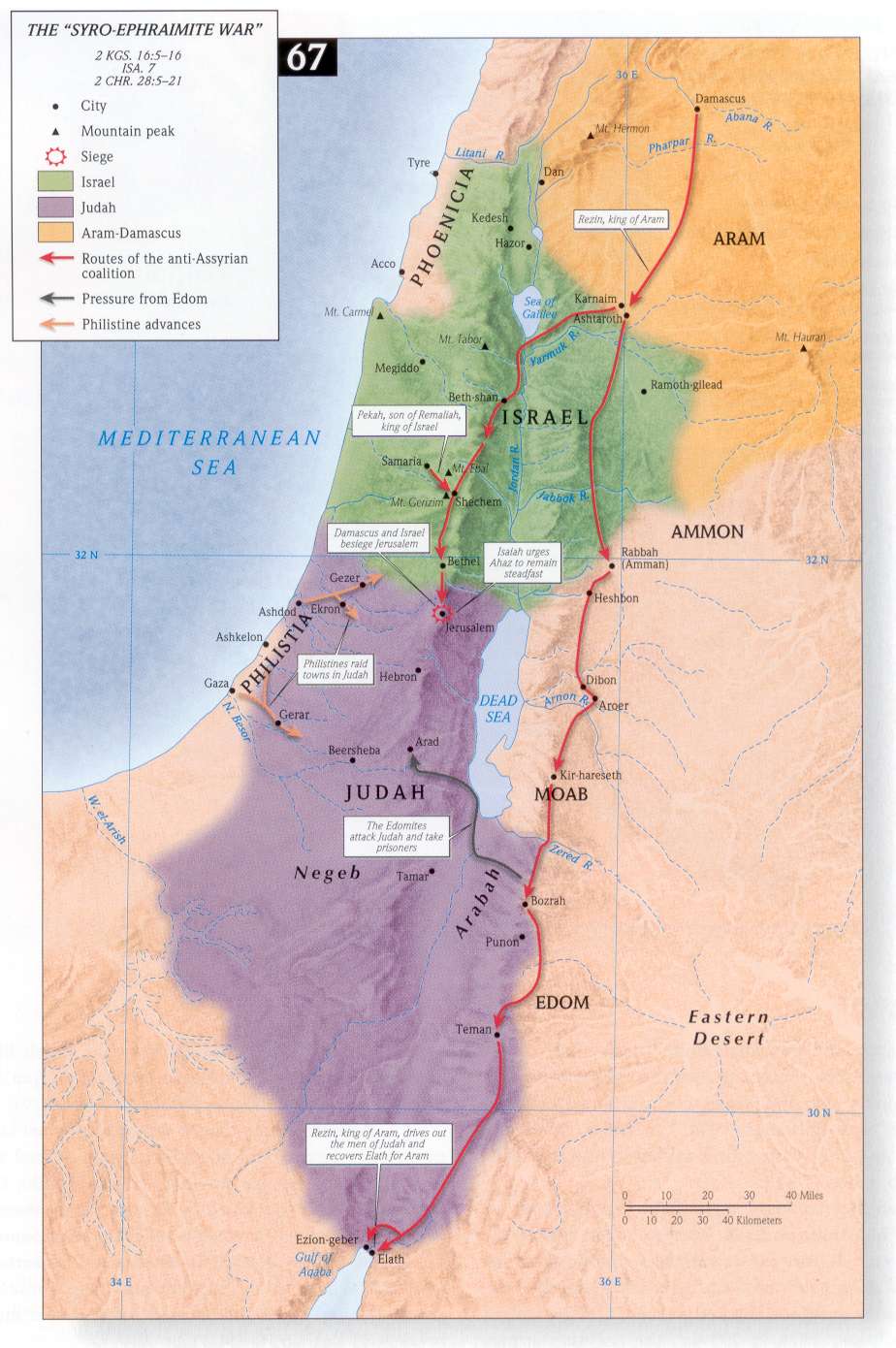
- The Syro-Ephraimite War
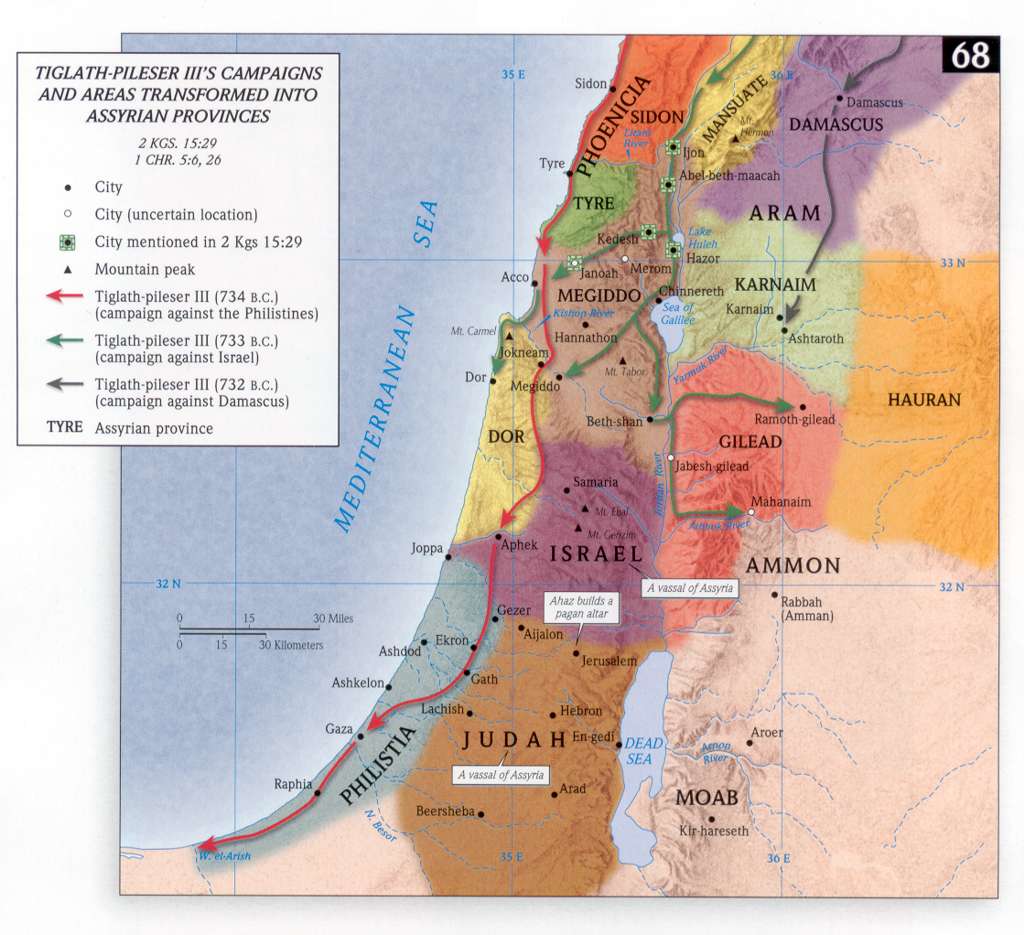
- Tiglath-Pileser III's Campaigns
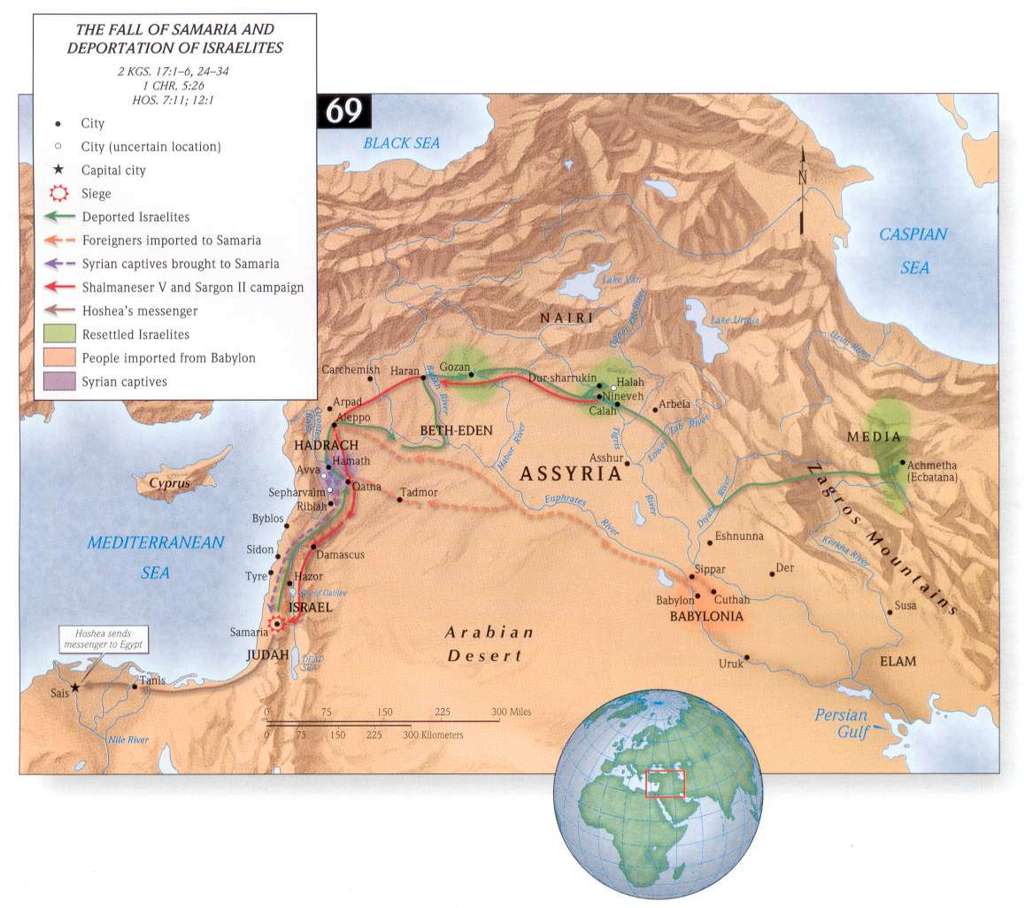
- Fall of Samaria and Deportation of Israelites
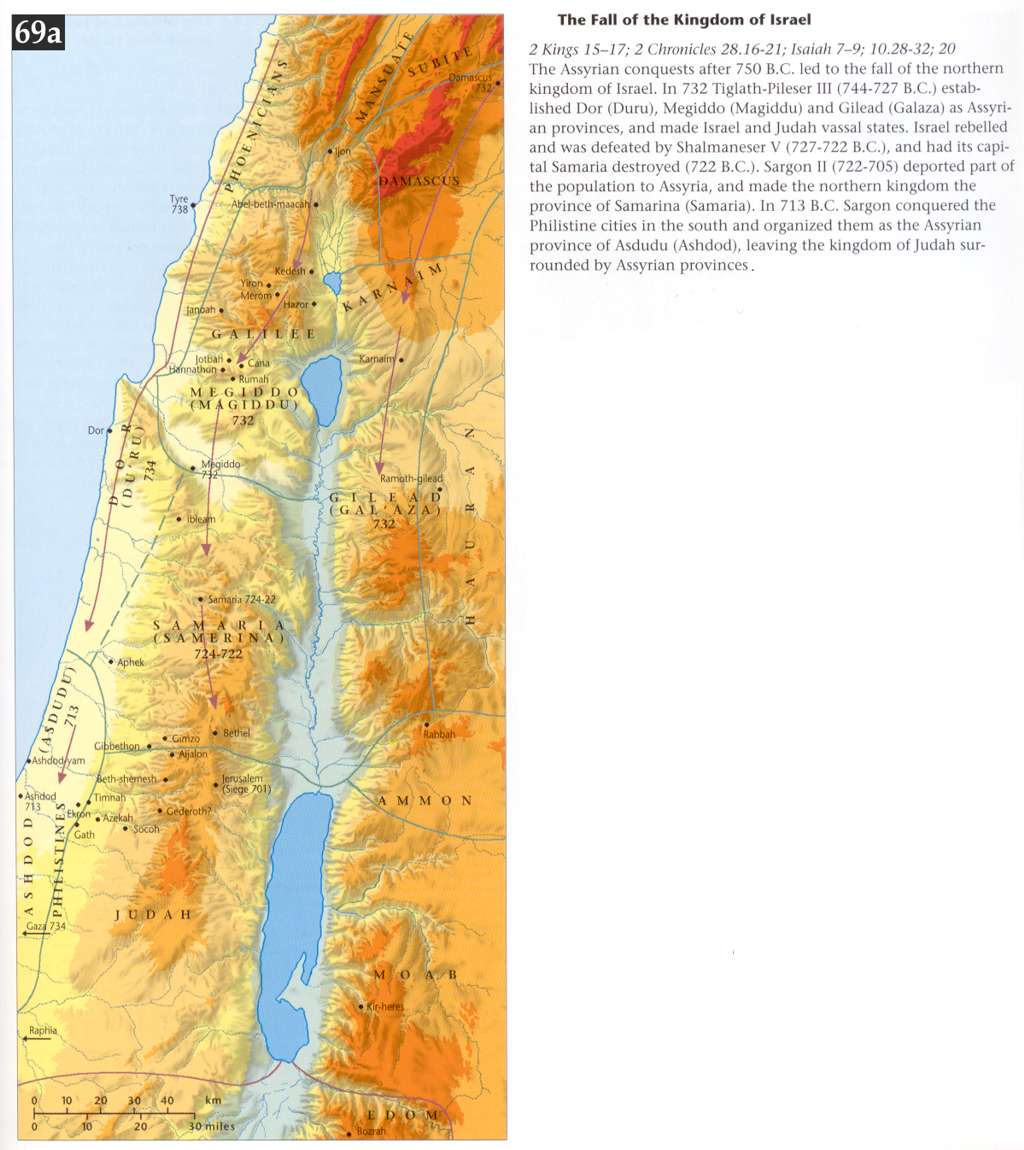
- The Fall of the Kingdom of Israel
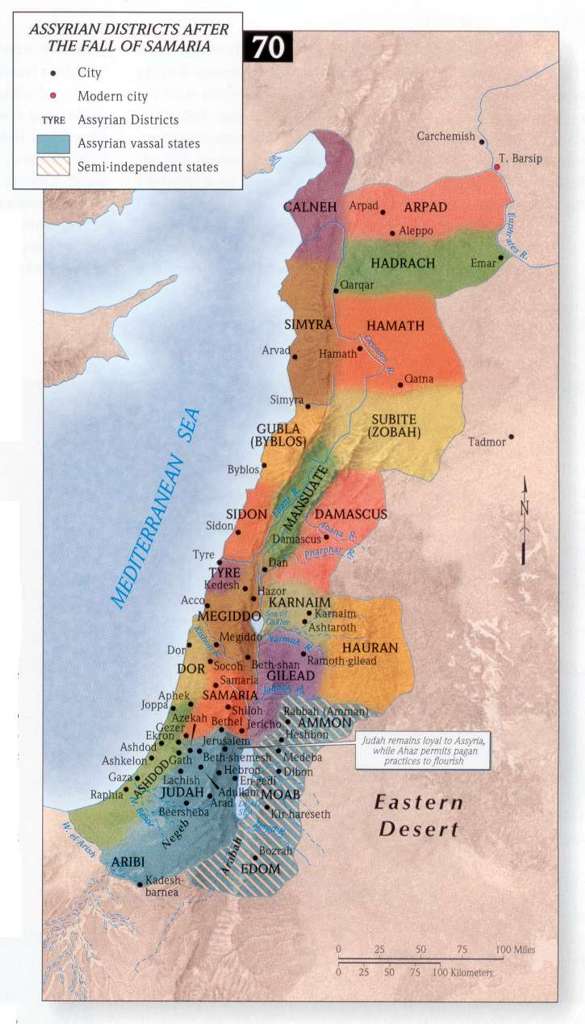
- Assyrian Districts after the Fall of Samaria
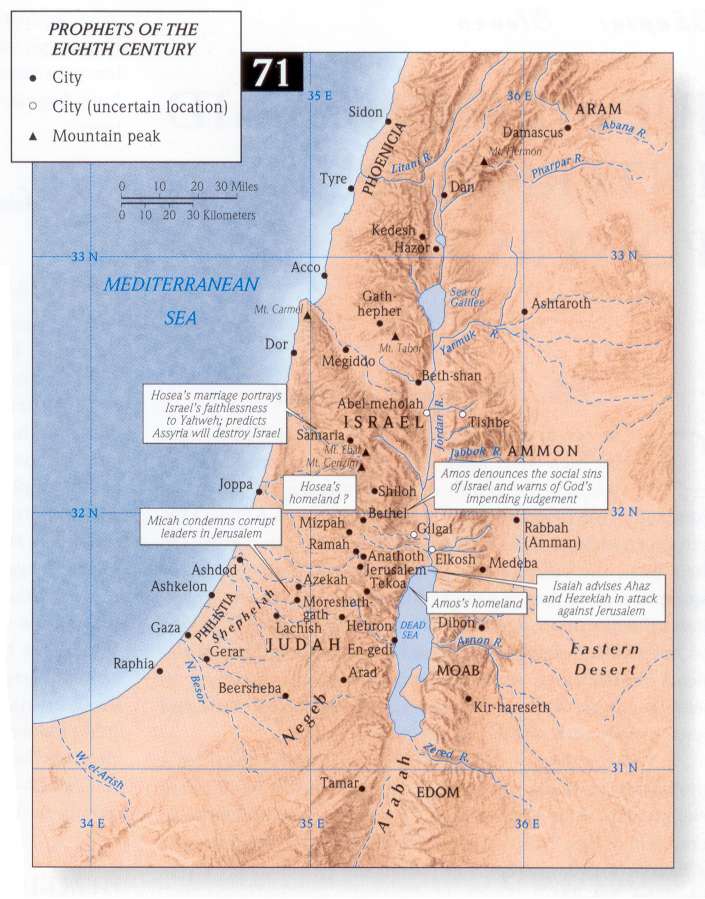
- Prophets of the 8th Century BCE

Judah Alone amid International Powers
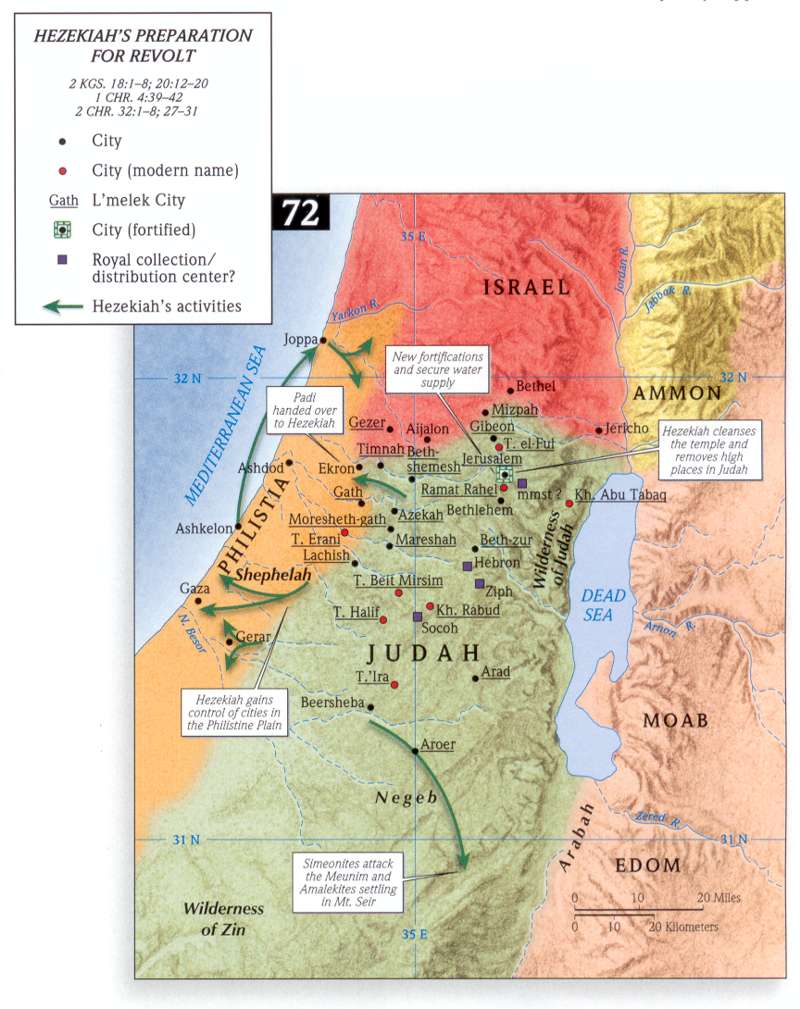
- Hezekiah's Preparation for Revolt
- Judah under King Hezekiah
- Hezekiah's Jerusalem
- Sennacherib's Campaign against Judah
- Assyria in the 7th century BCE
- The Rise of the Neo-Babylonian Empire
- The Reign of Josiah
- The Districts of Judah under King Josiah
- The Golden Age of King Josiah
- Nebuchadnezzar's Campaigns against Judah
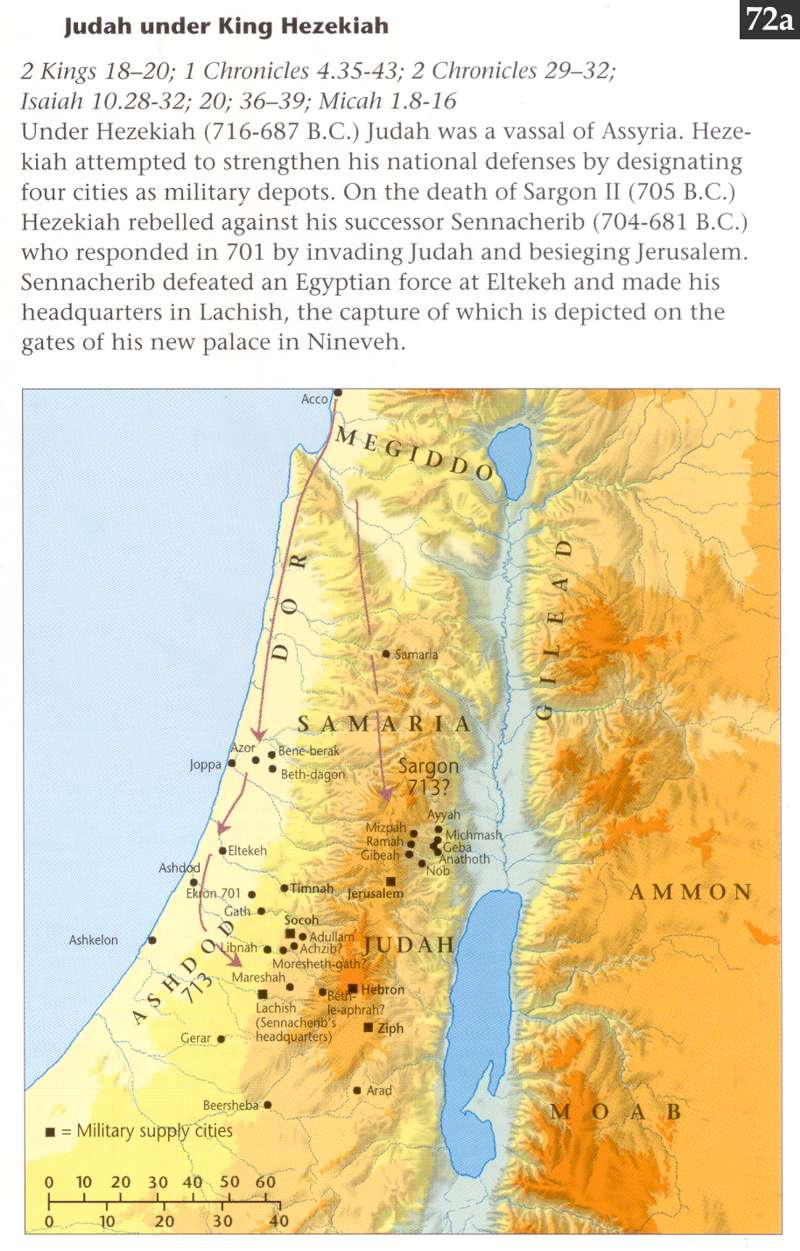
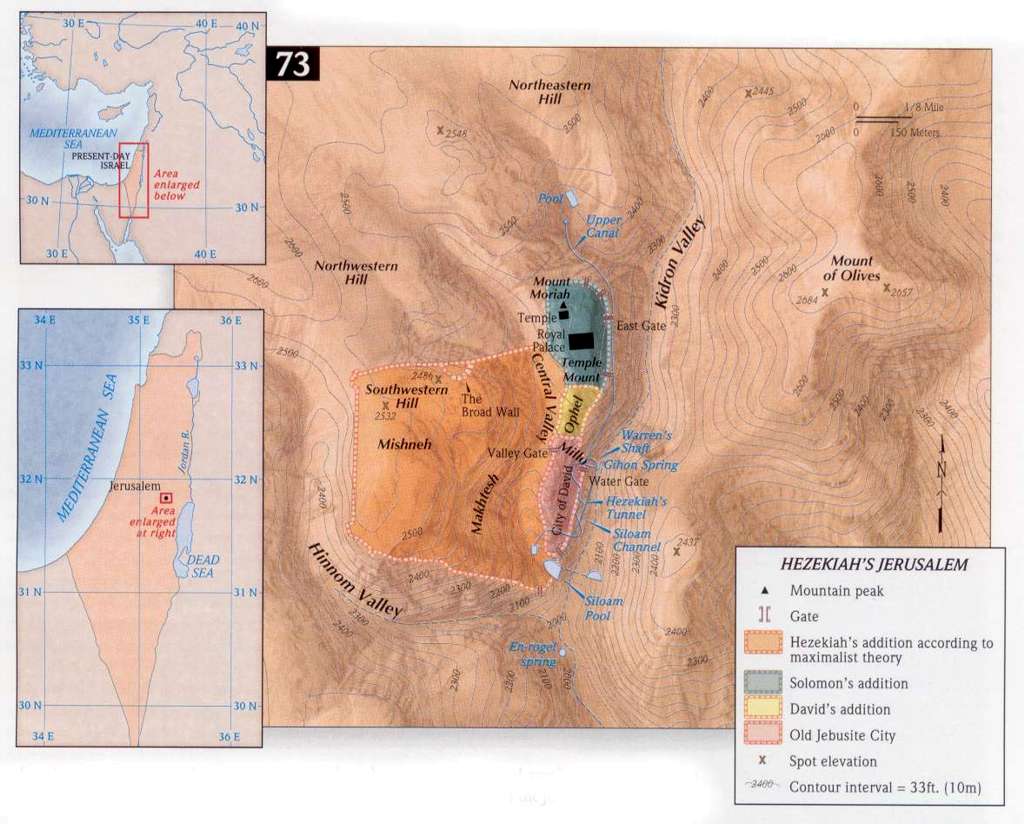
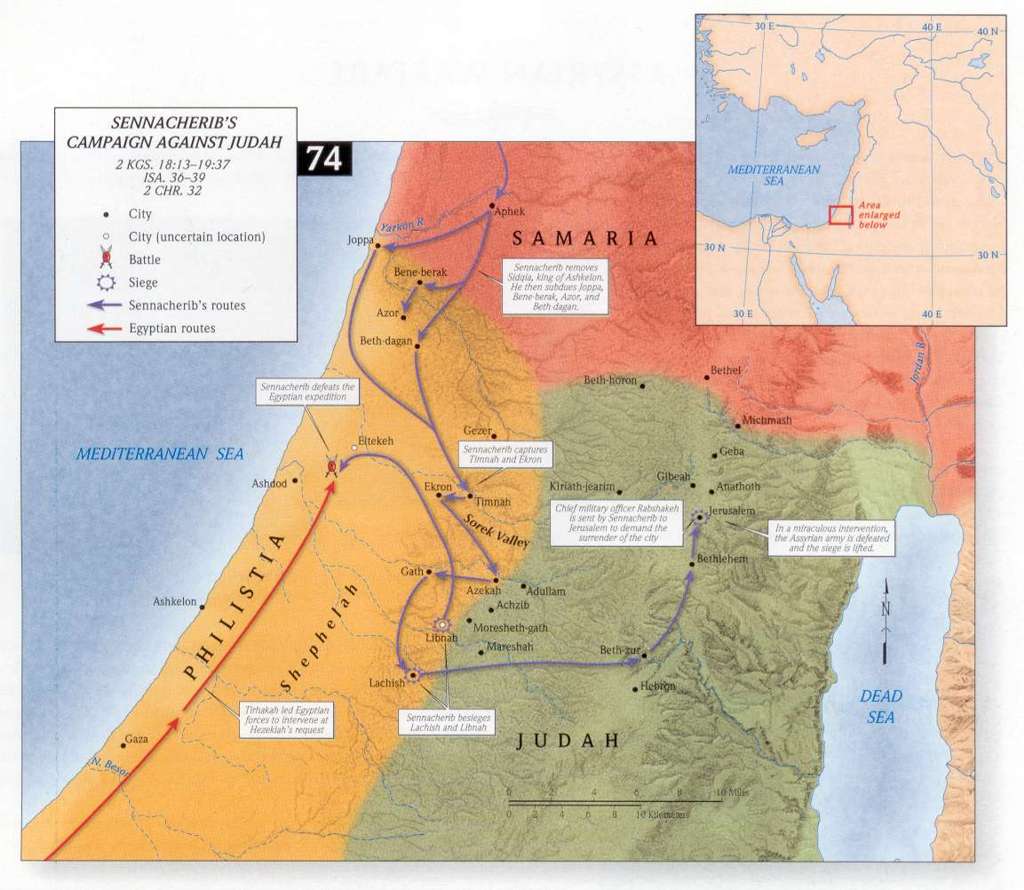
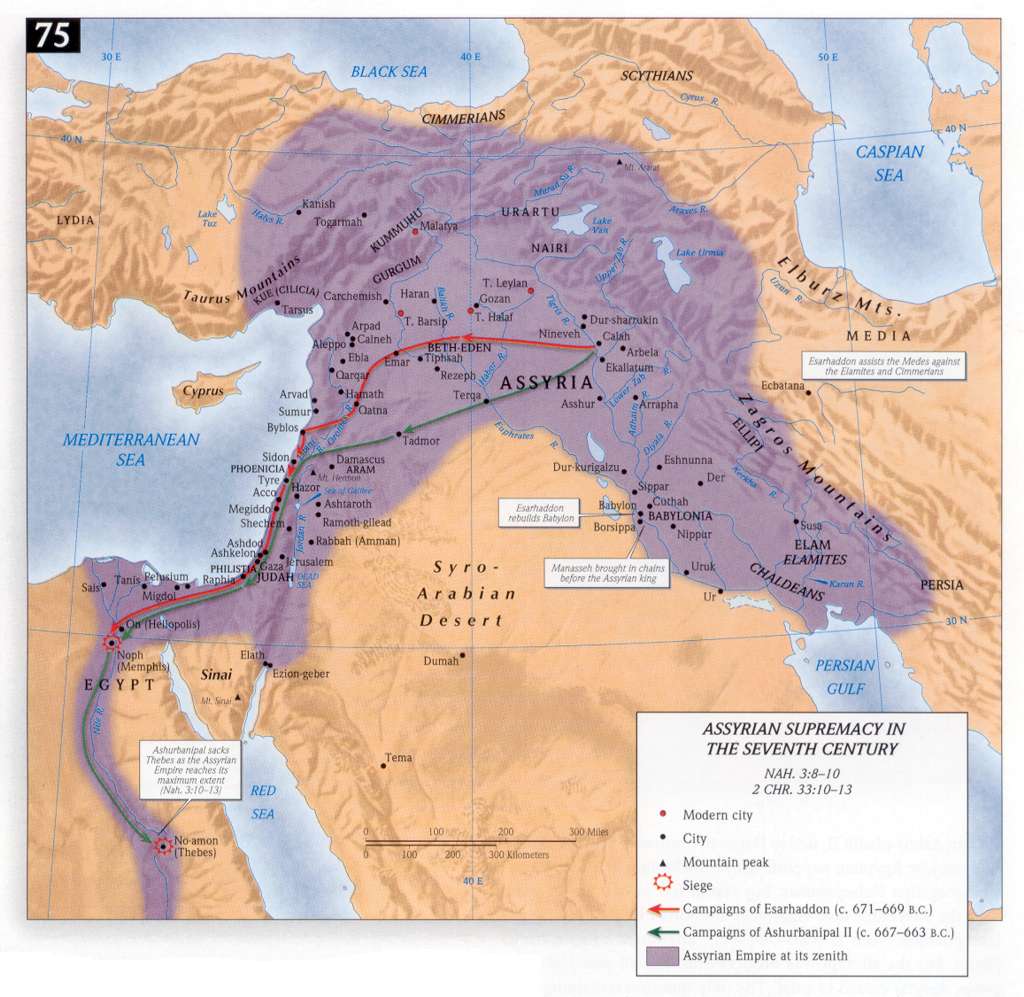
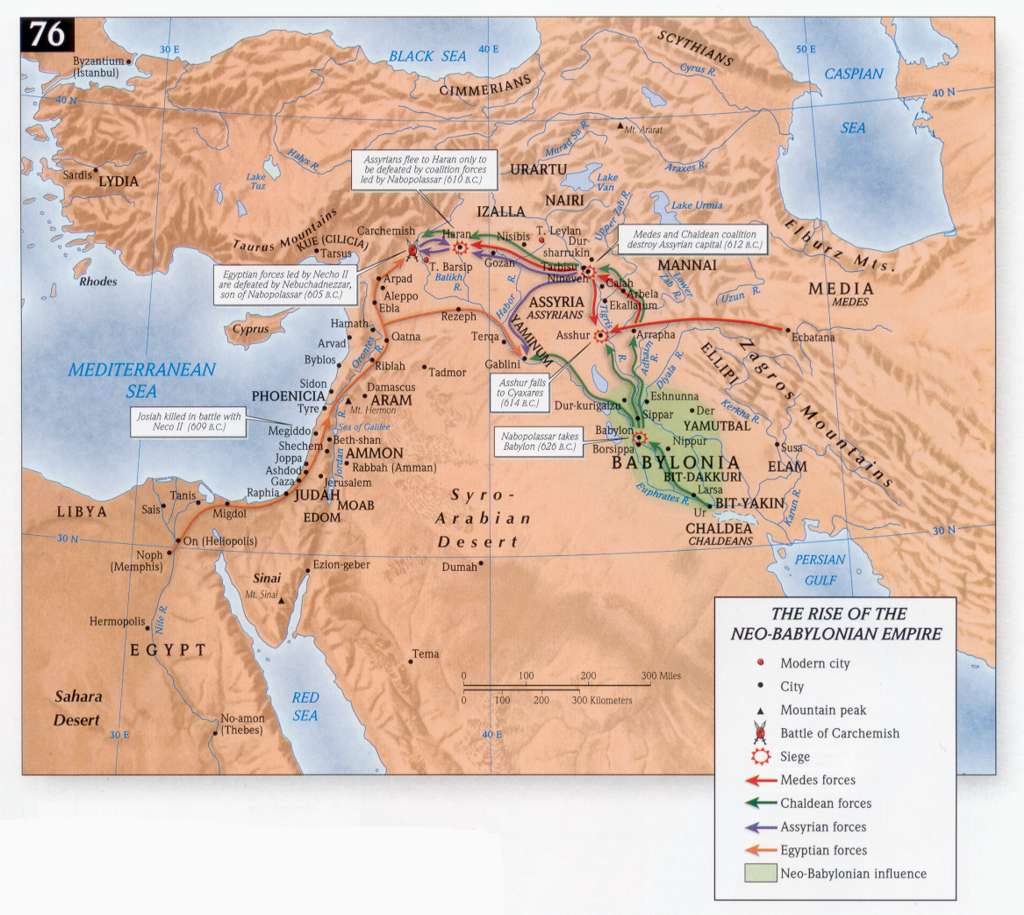
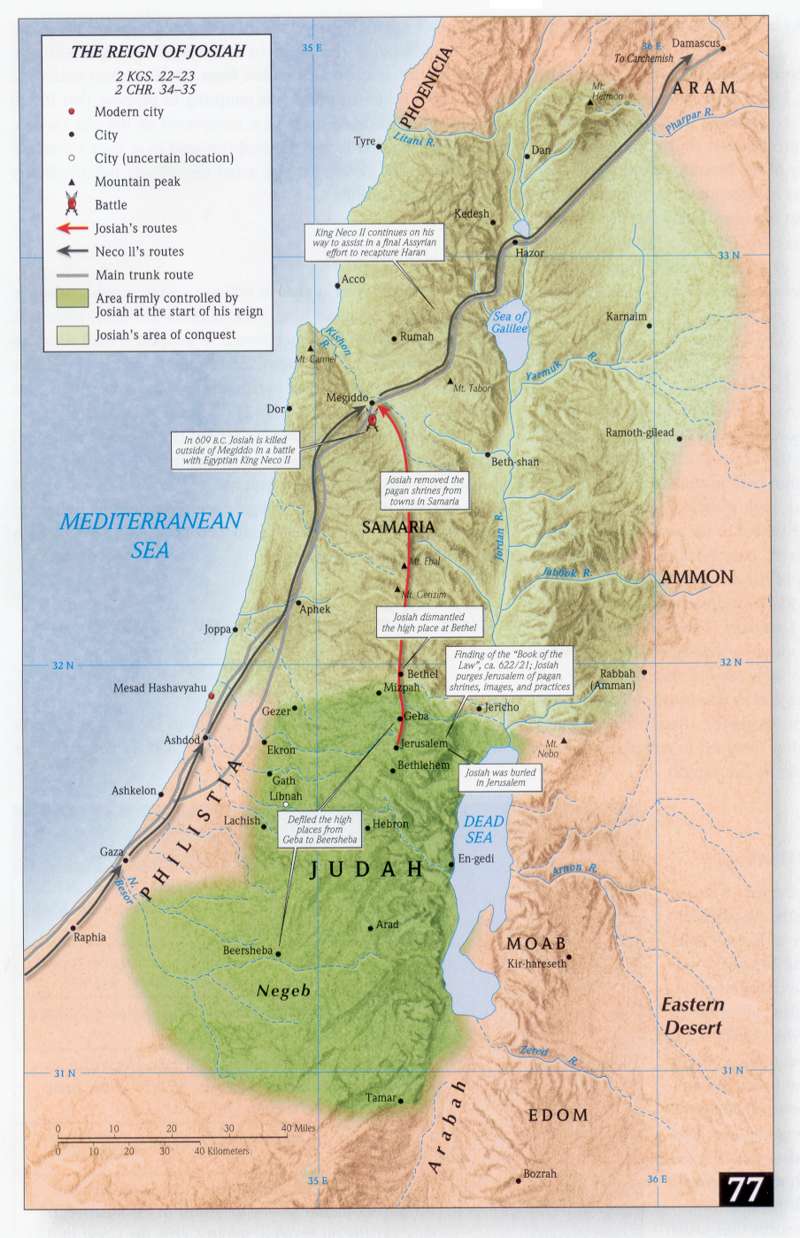
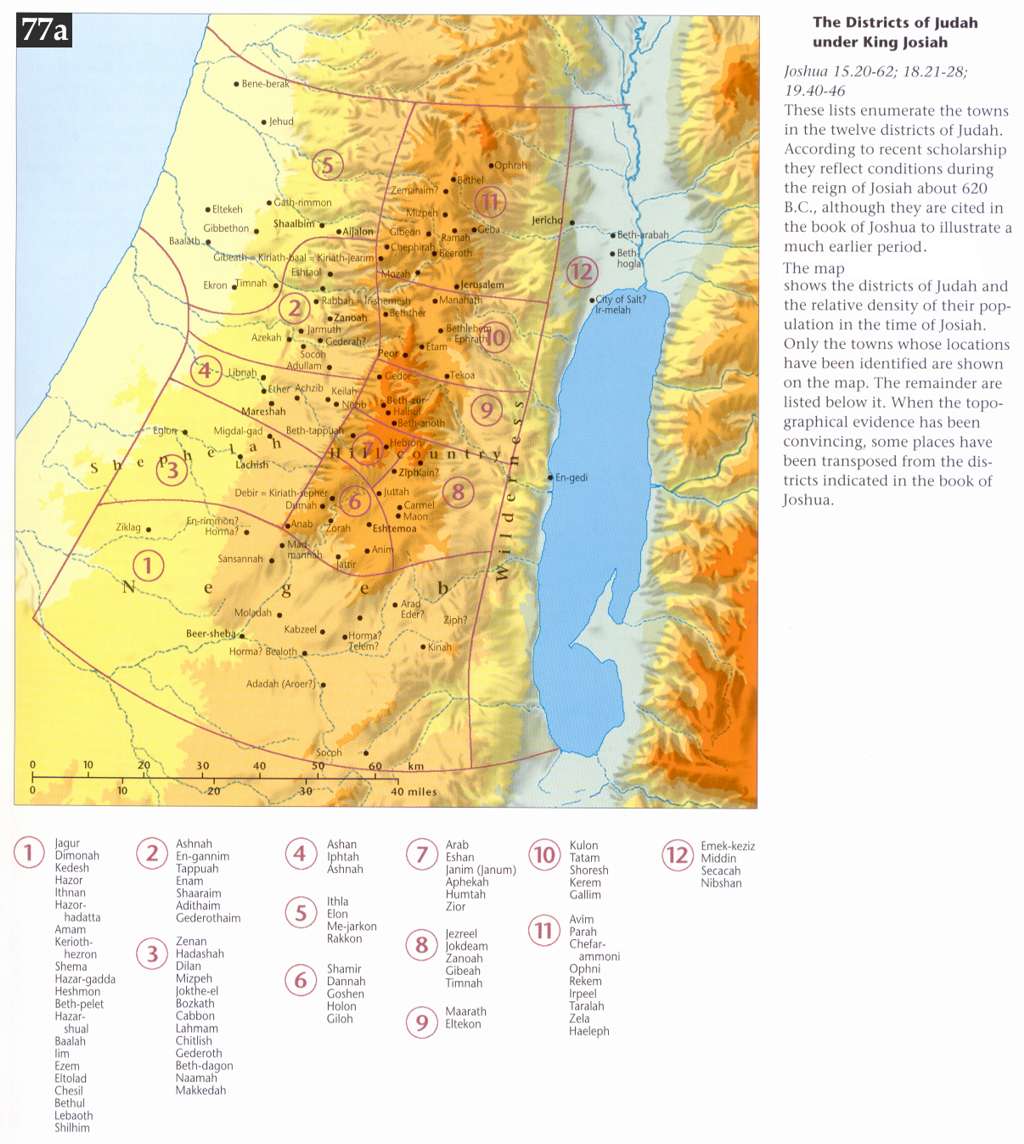
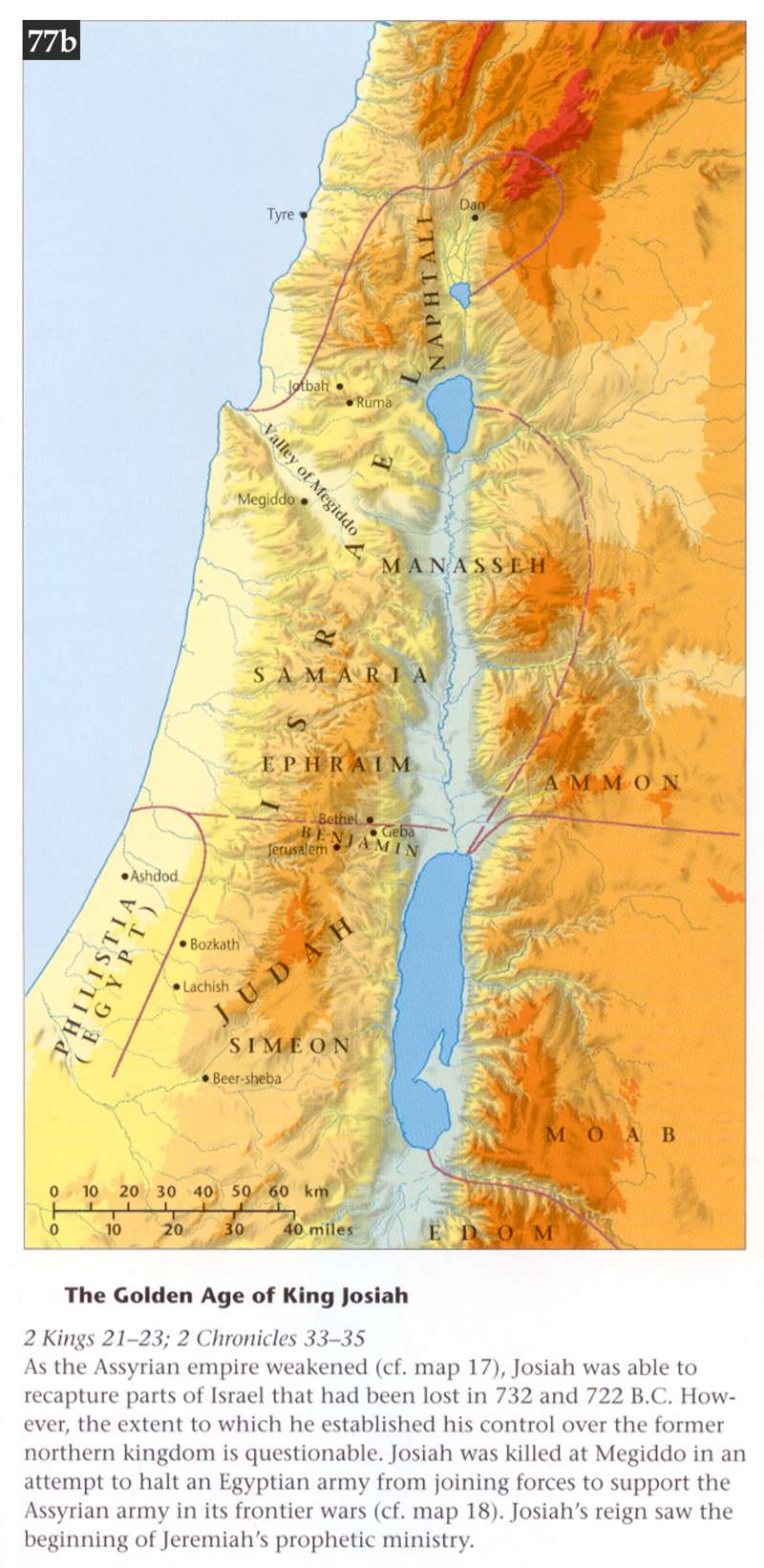
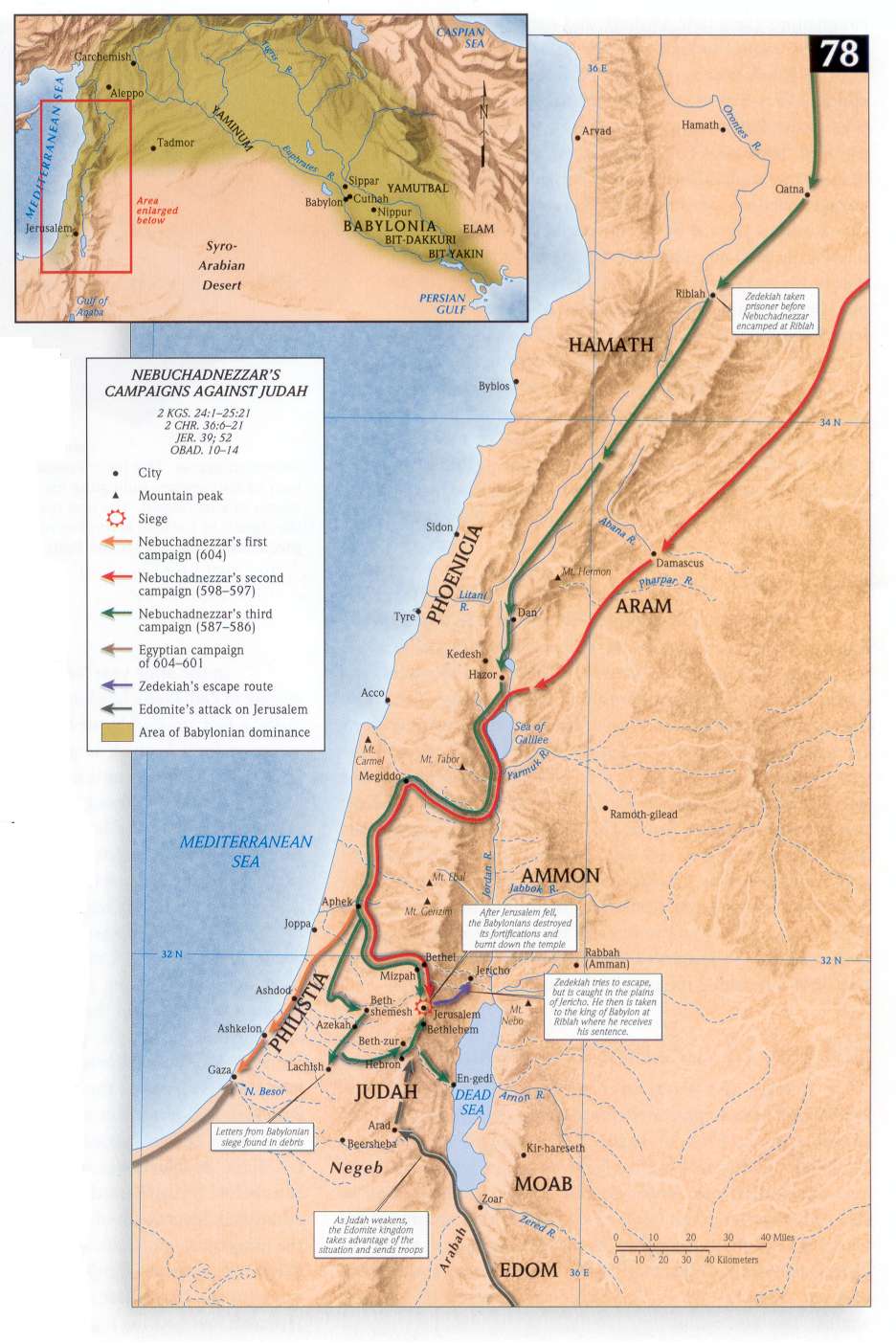
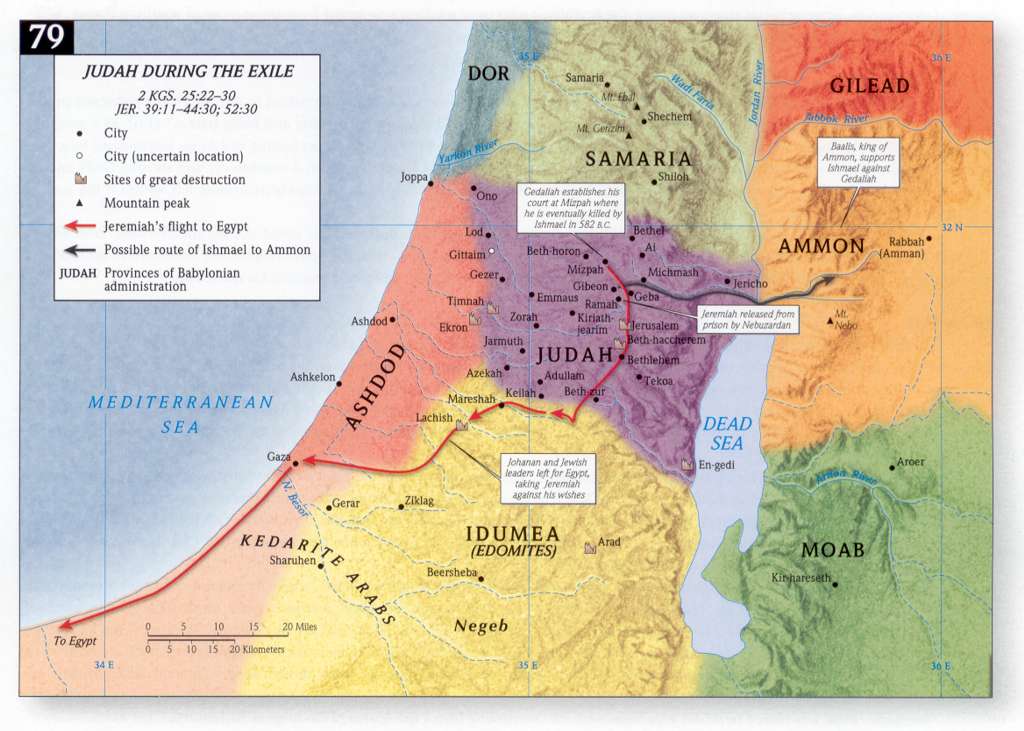
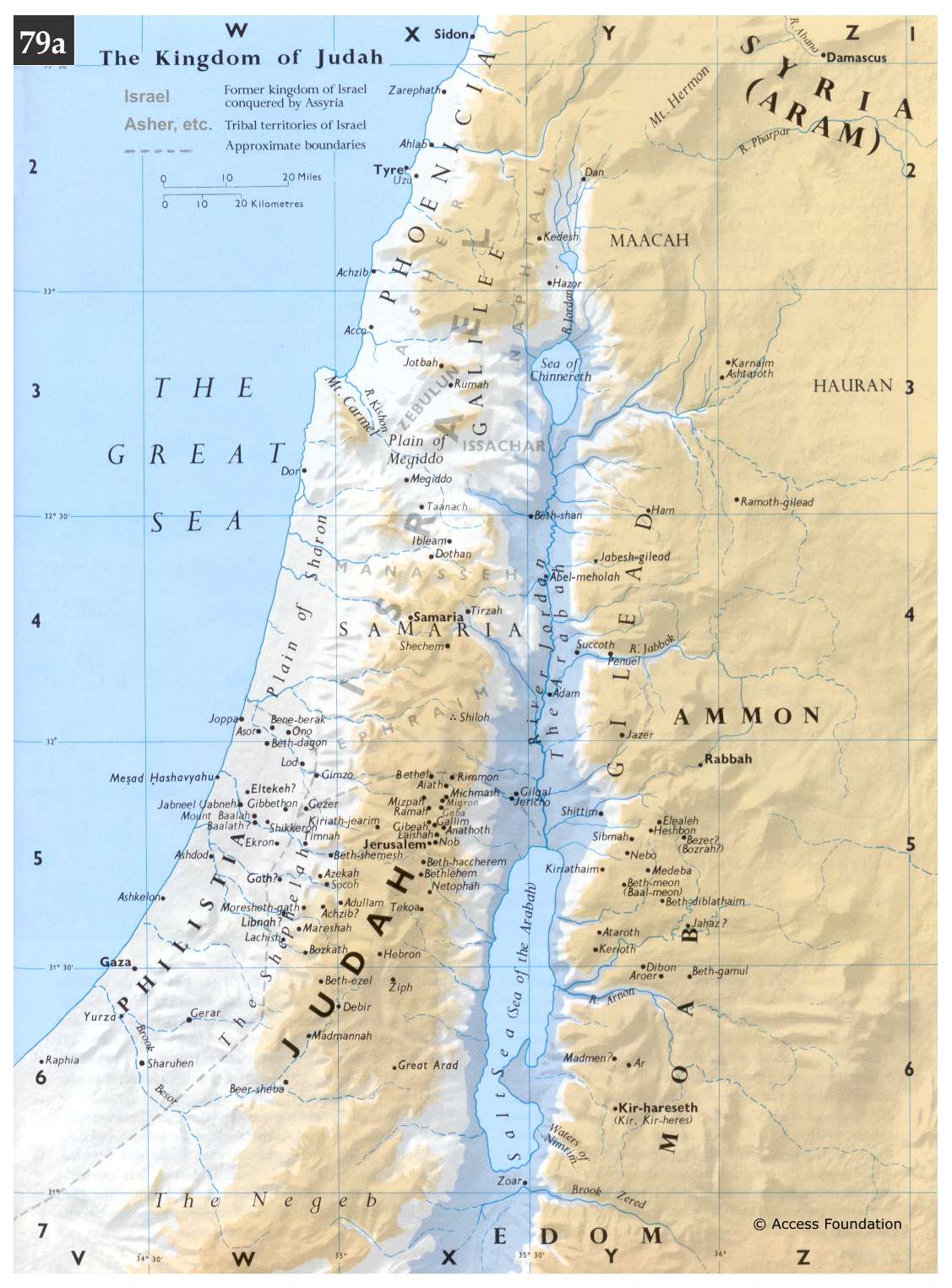
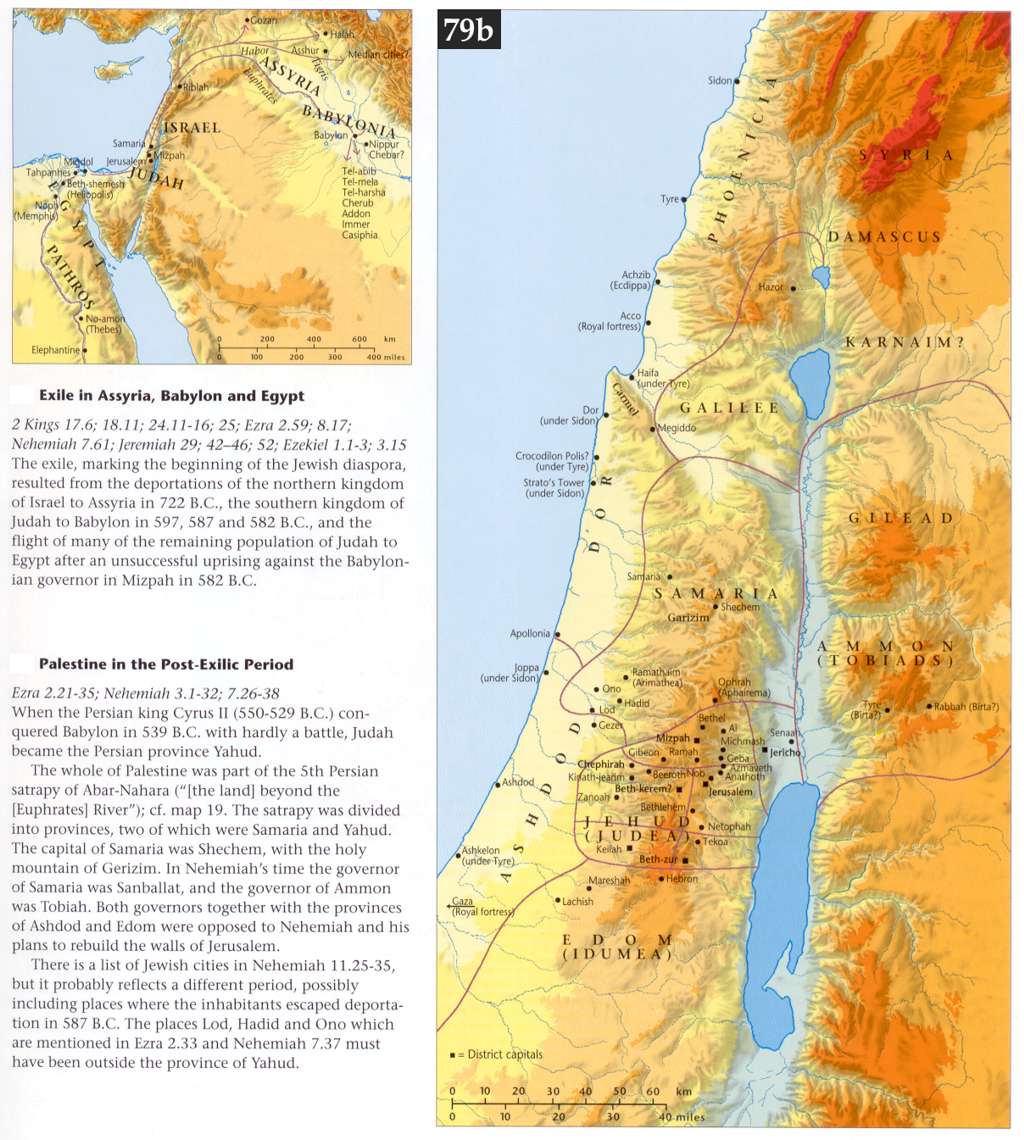
The Babylonian Exile up to the early Rome
- Judah during the Exile
- The Kingdom of Judah
- Exile; Palestine in the Post-Exilic Period
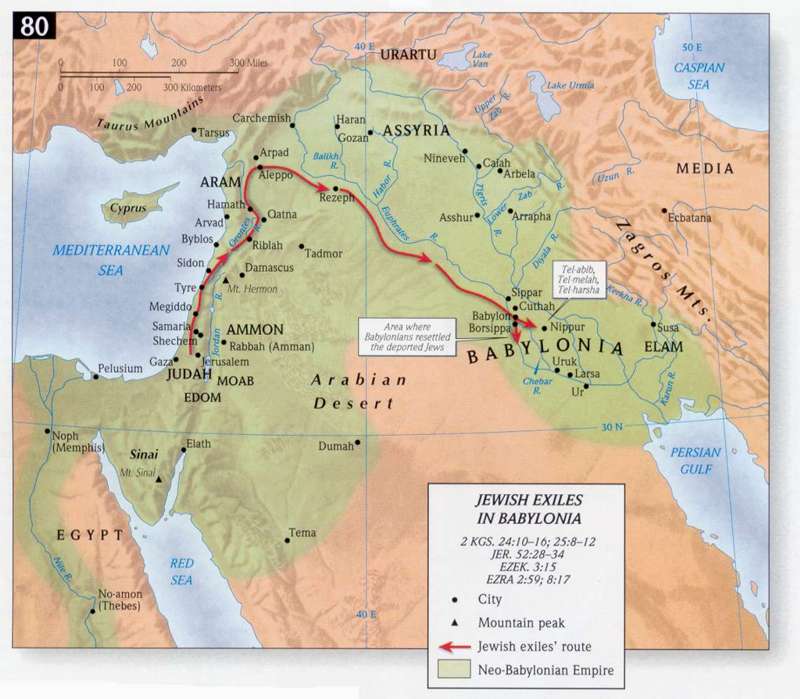
- Jewish Exiles in Babylon
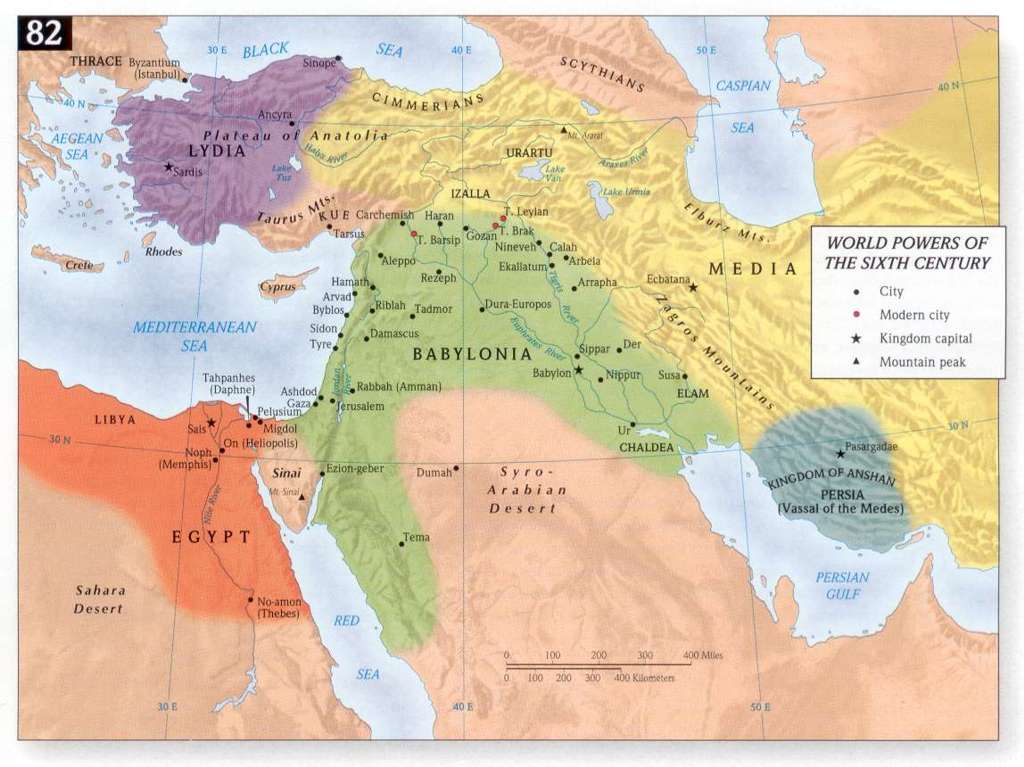
- World Powers of the 6th century BCE
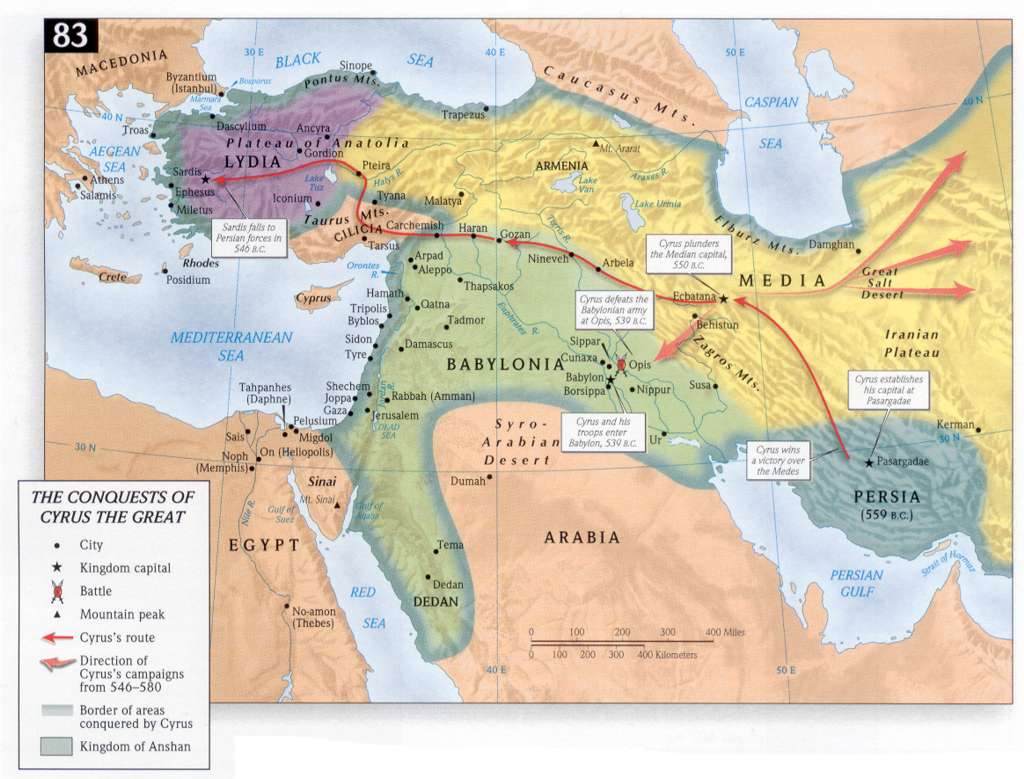
- The Conquests of Cyrus the Great
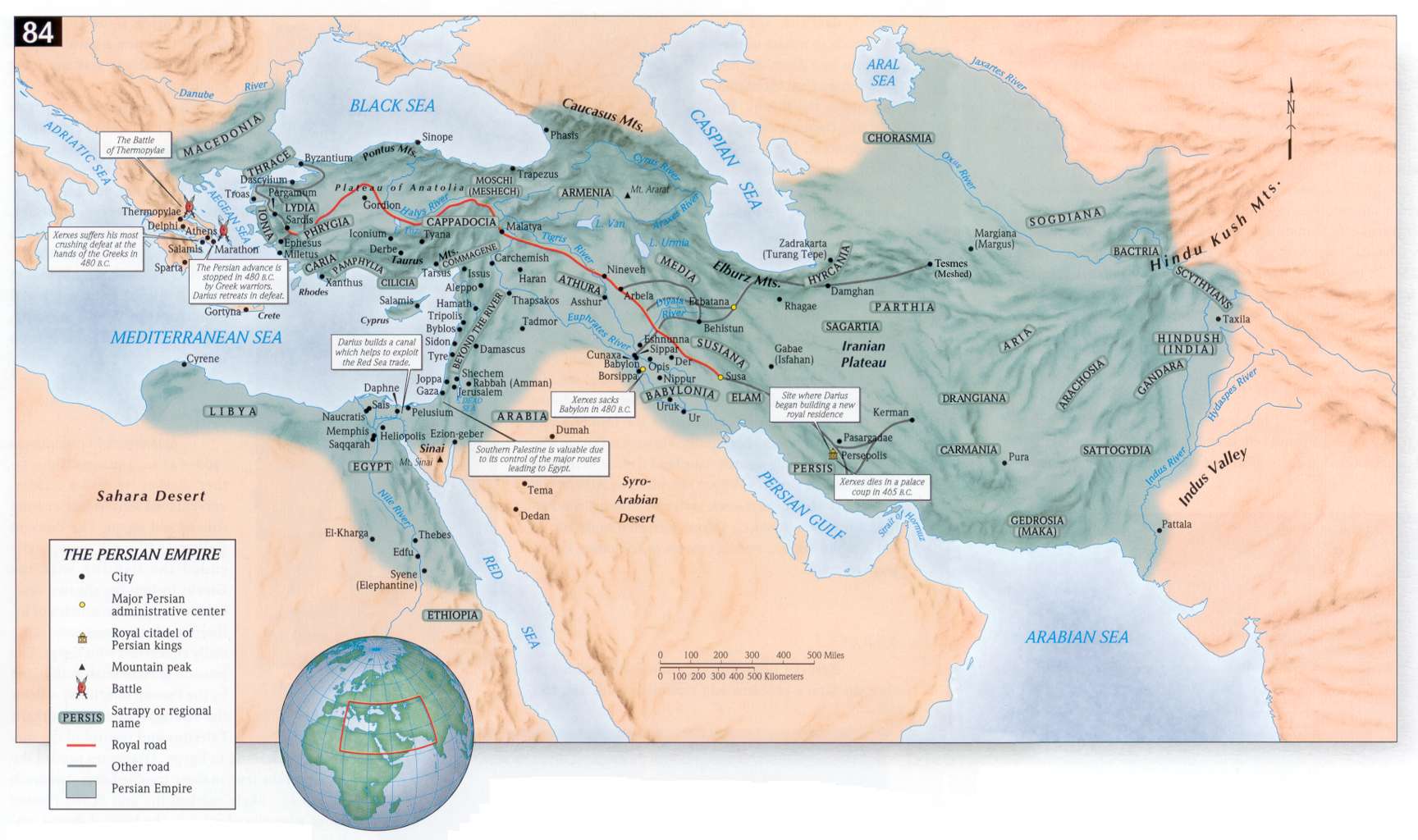
- The Persian Empire
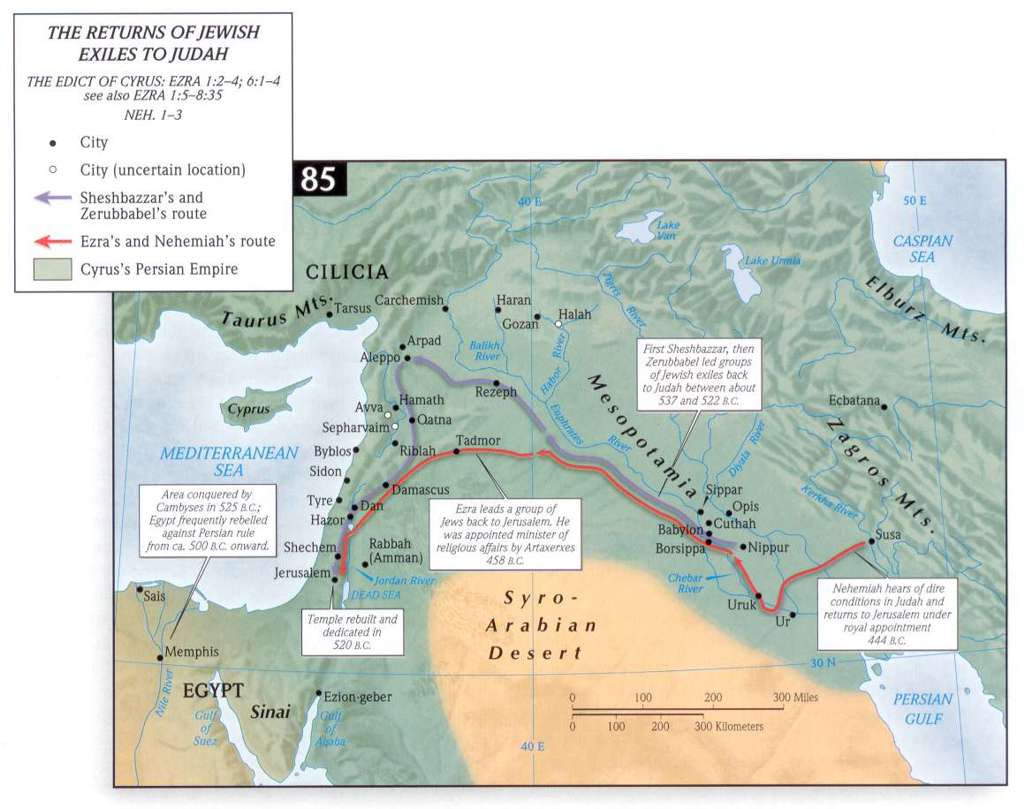
- The Return of the Jewish Exiles to Judah
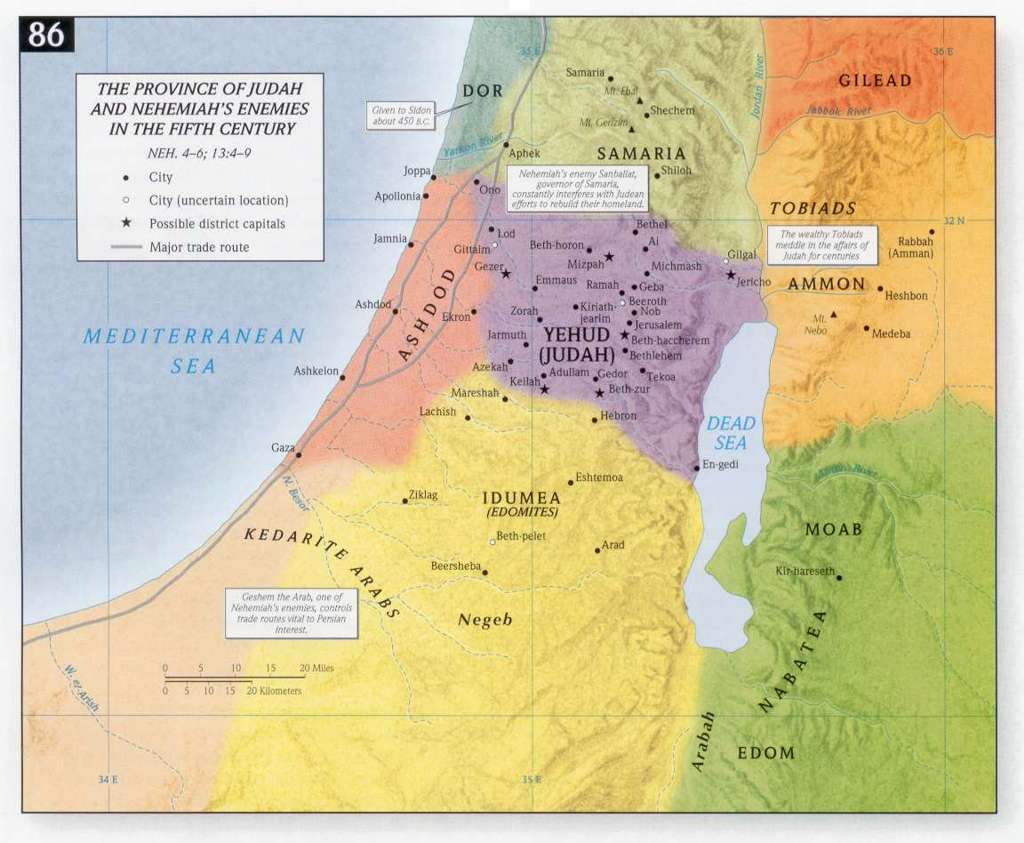
- Judah in the 5th century BCE
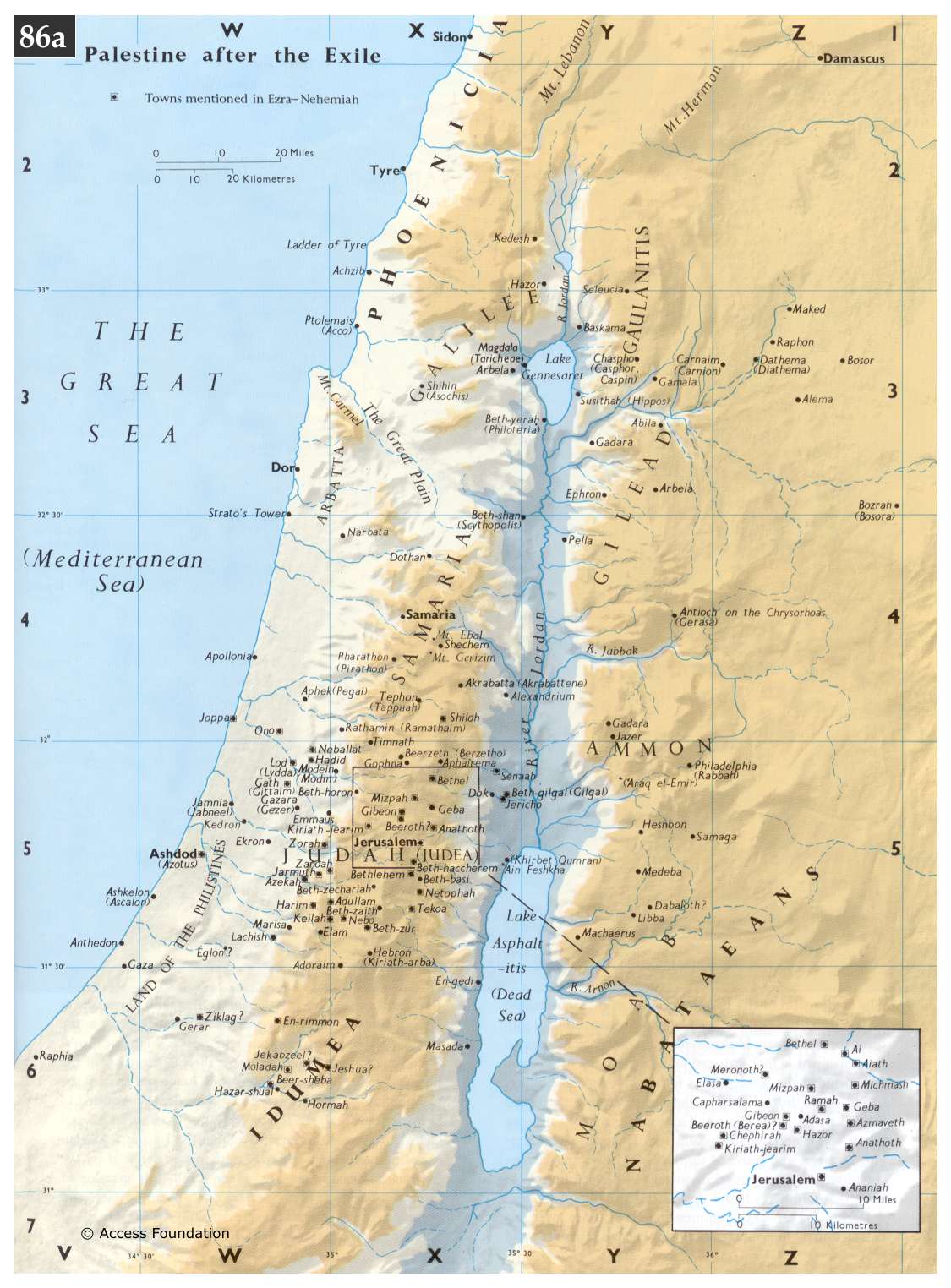
- Palestine after the Exile
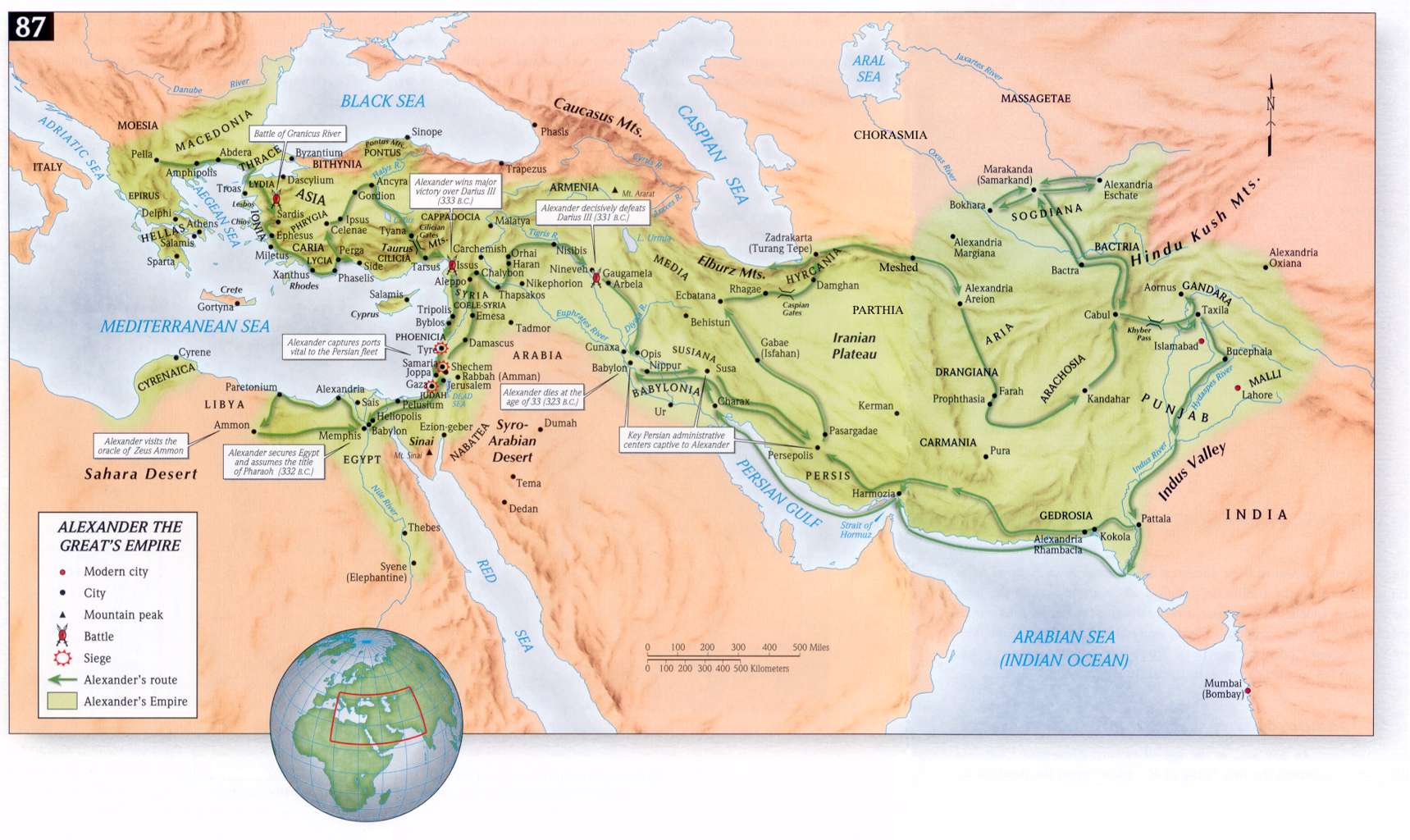
- Alexander the Great's Empire
- The Division of Alexander's Empire ca. 275 BCE
- Palestine under the Ptolemies
- The Seleucid Empire and Antiochus III
- Campaigns of Antiochus IV against Egypt
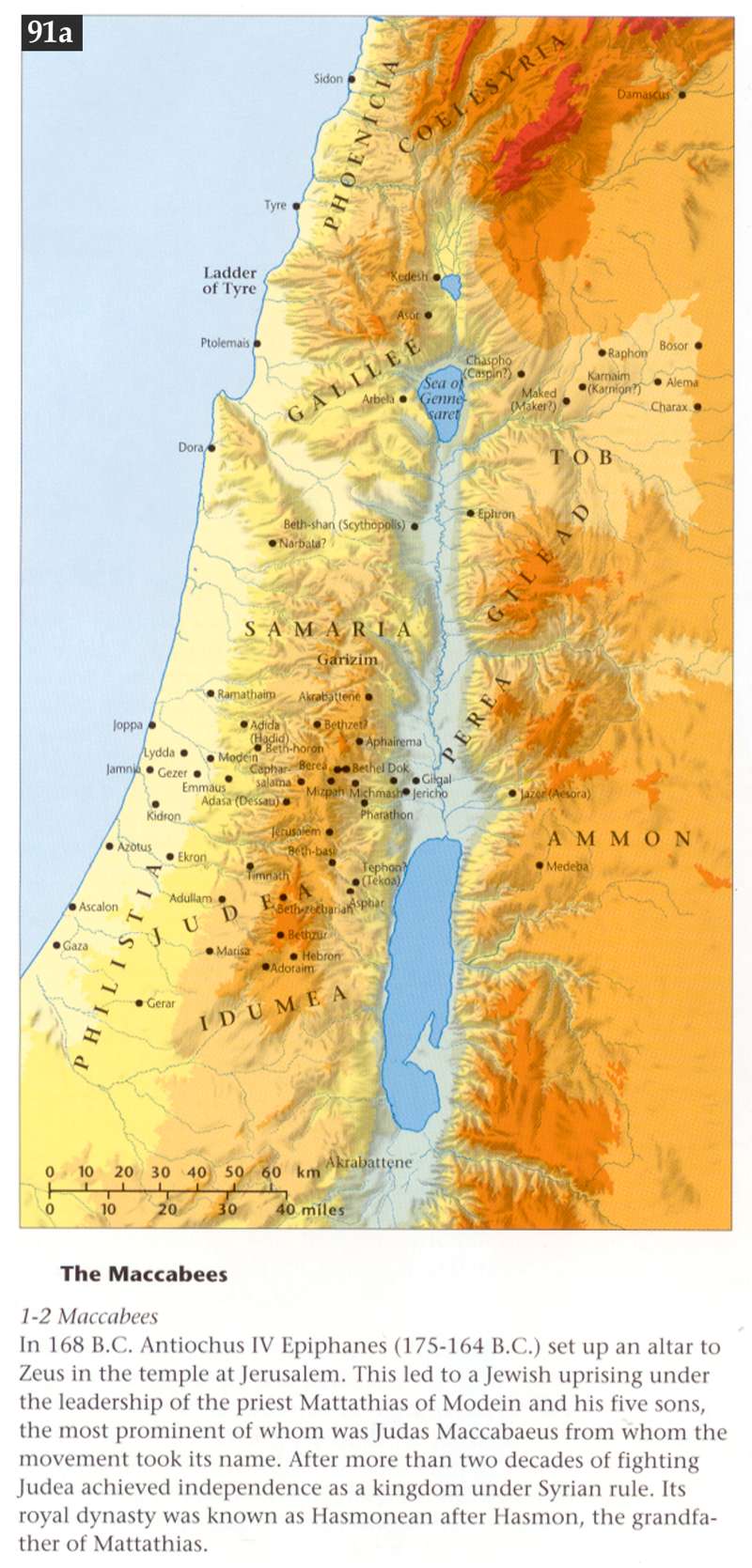
- The Maccabees in 168 BCE
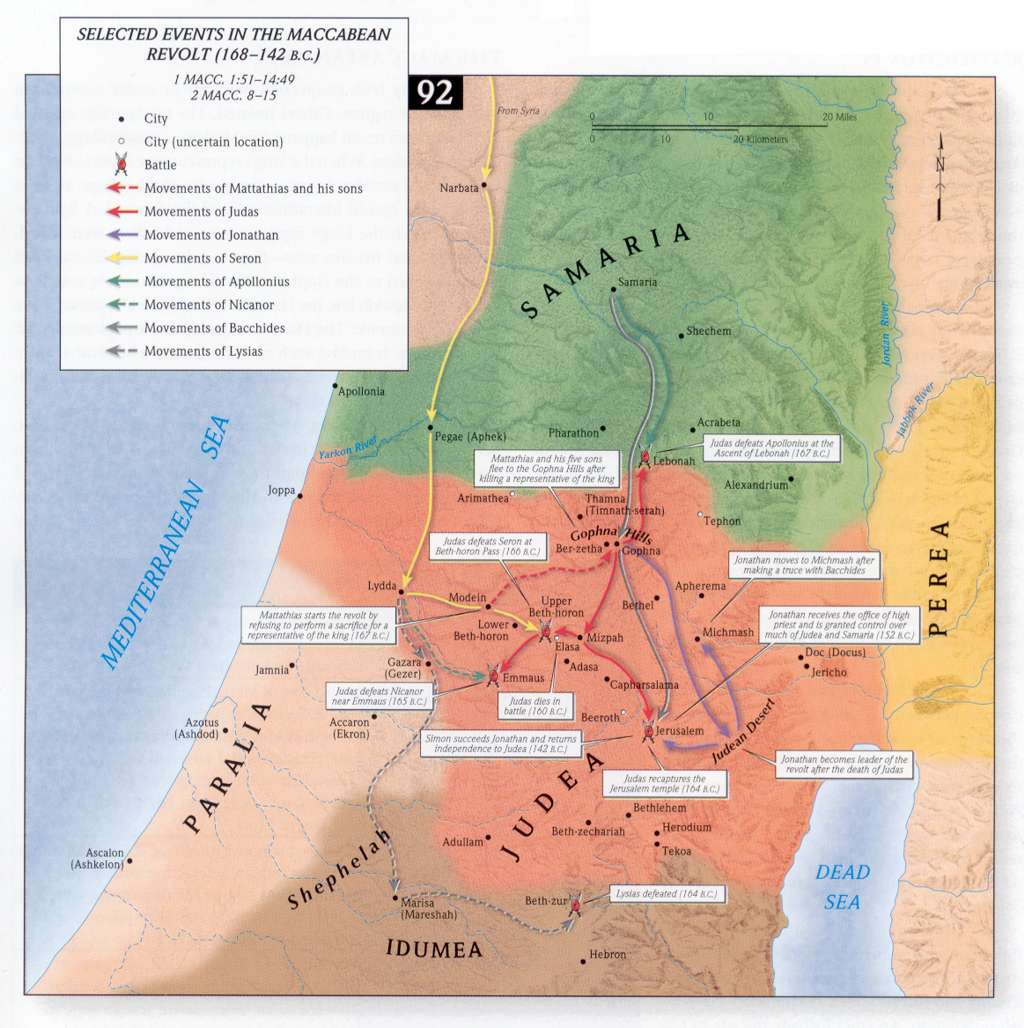
- Selected Events in the Maccabean Revolt
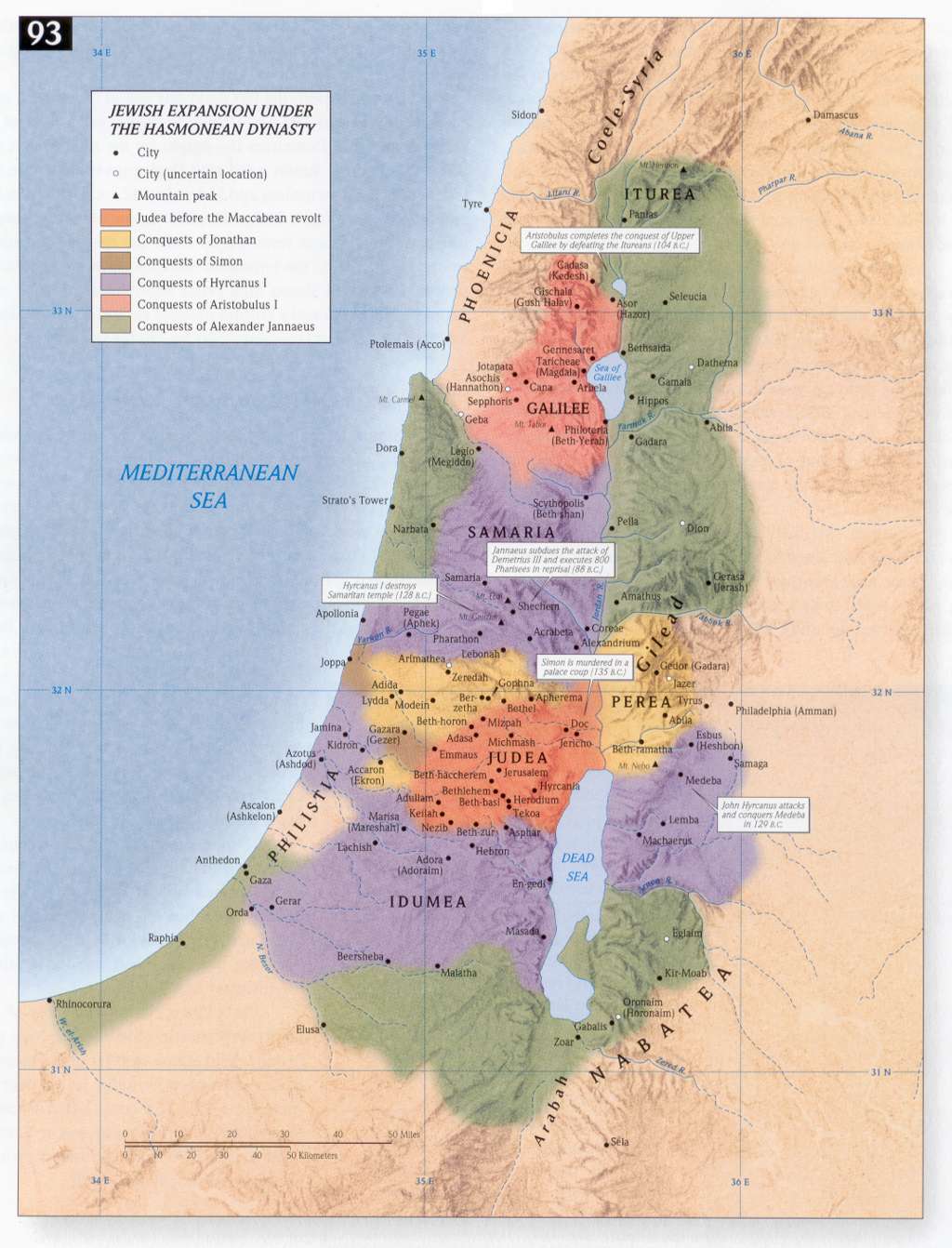
- Jewish Expansion under the Hasmonean Dynasty
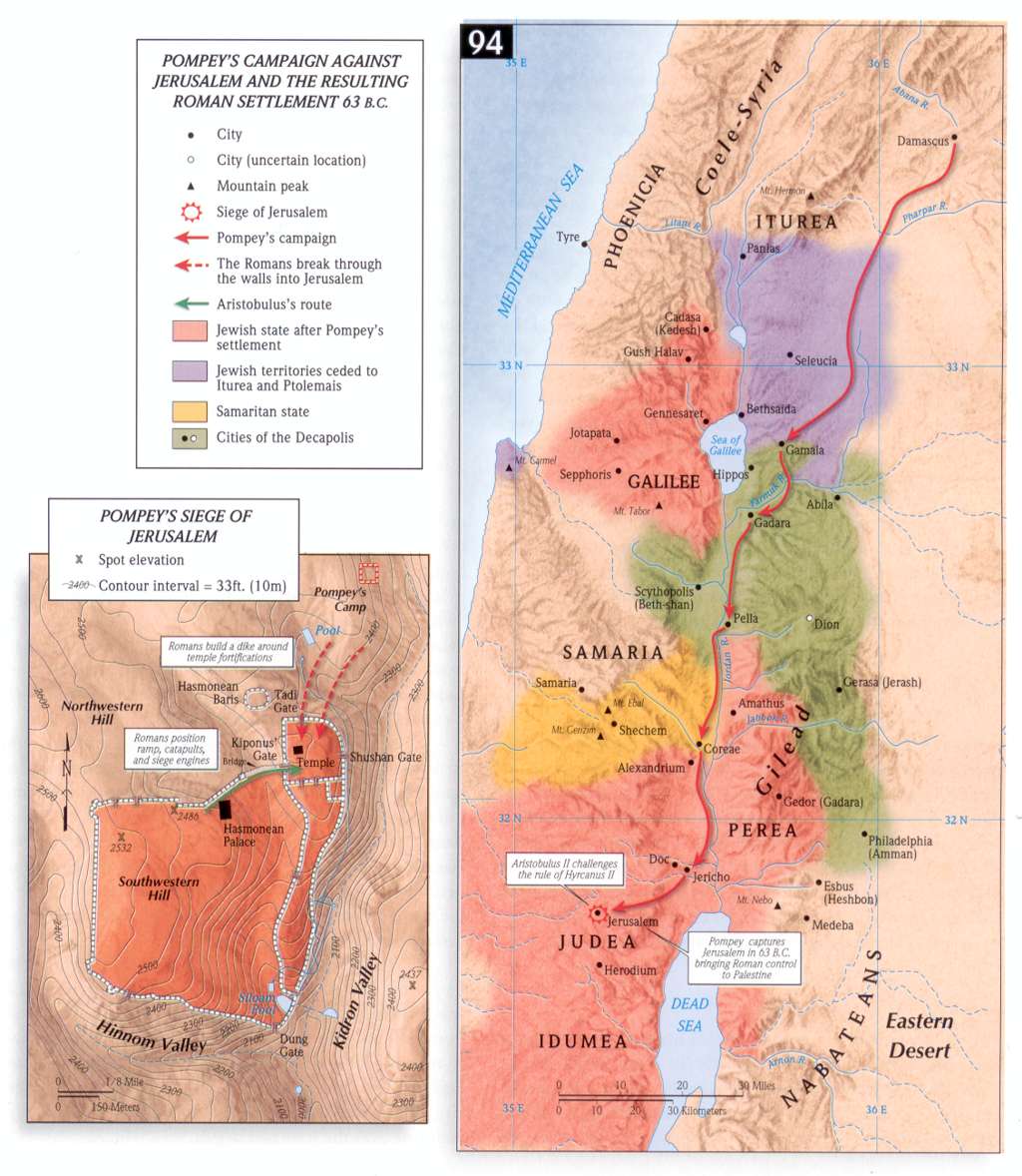
- Pompey's Campaign against Jerusalem
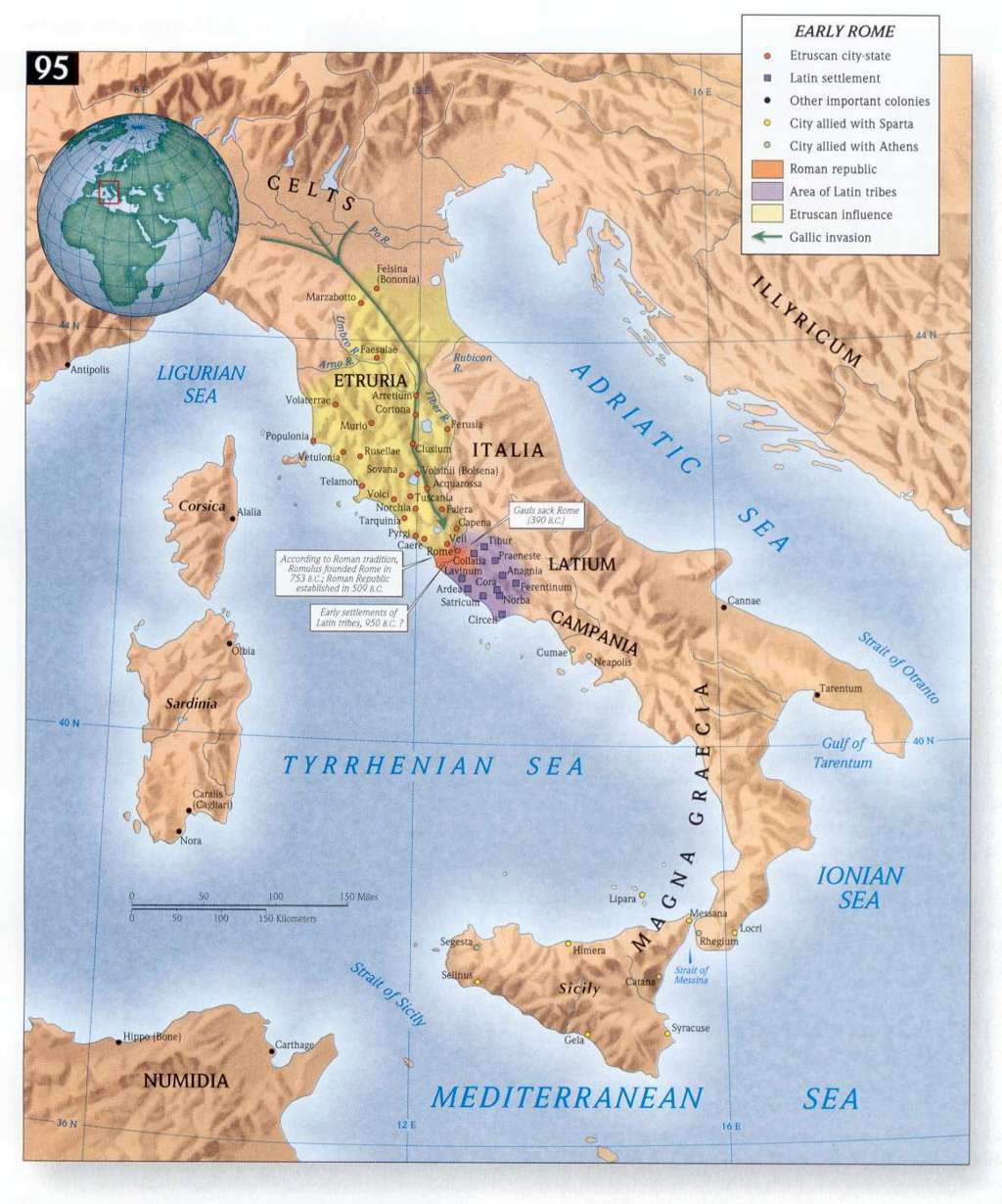
- Early Rome
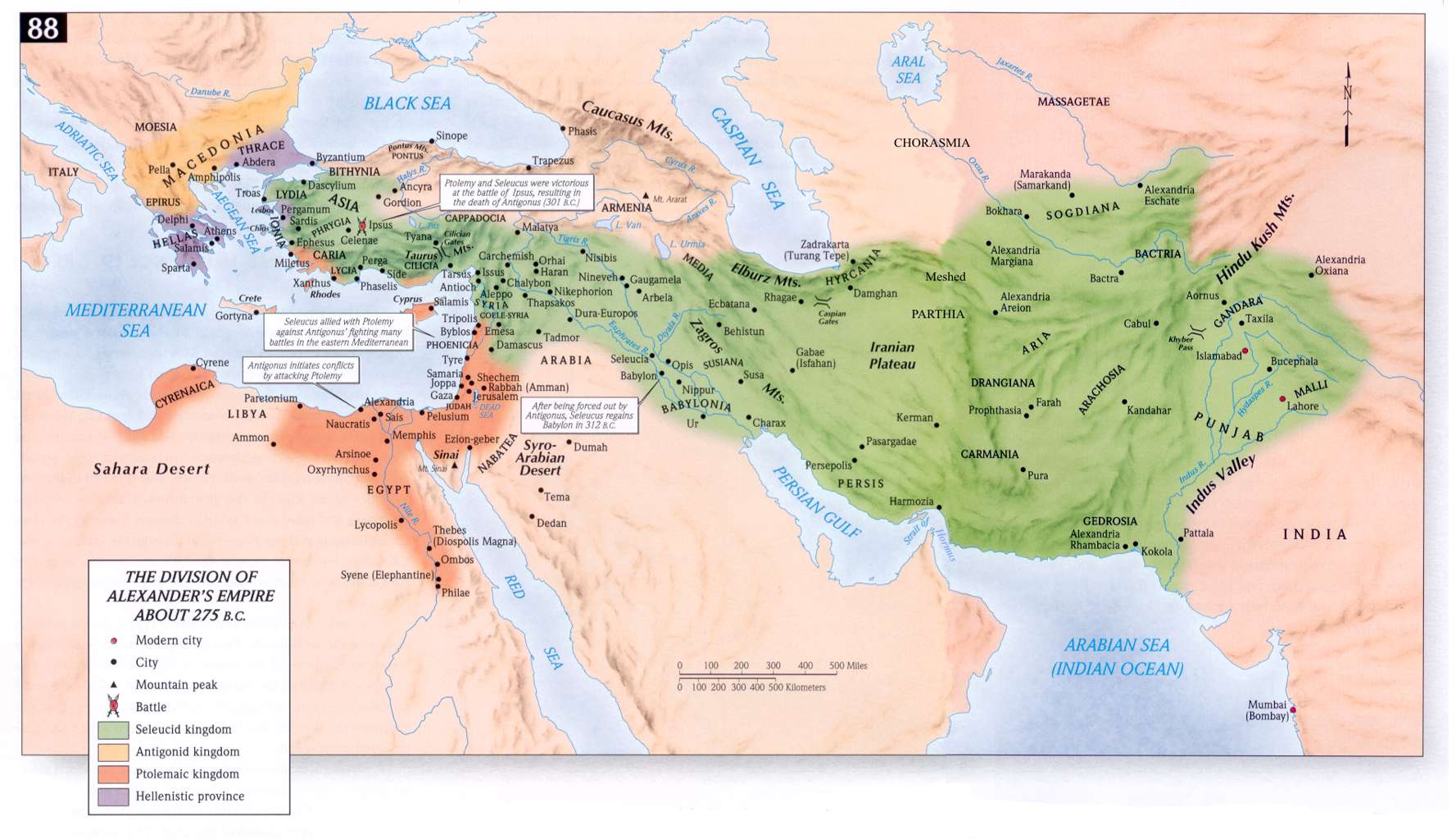
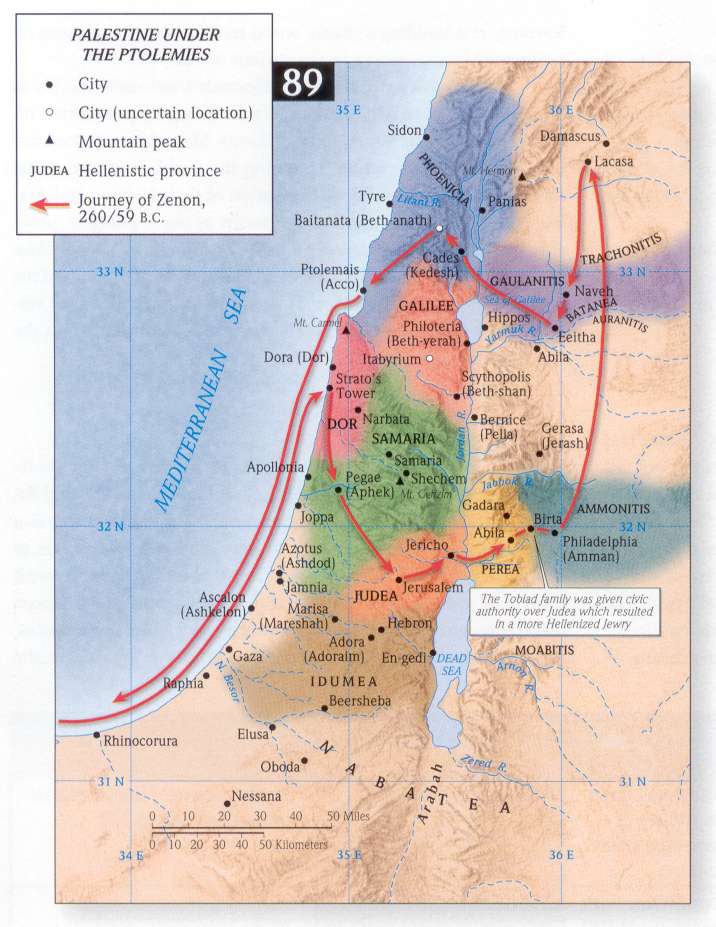
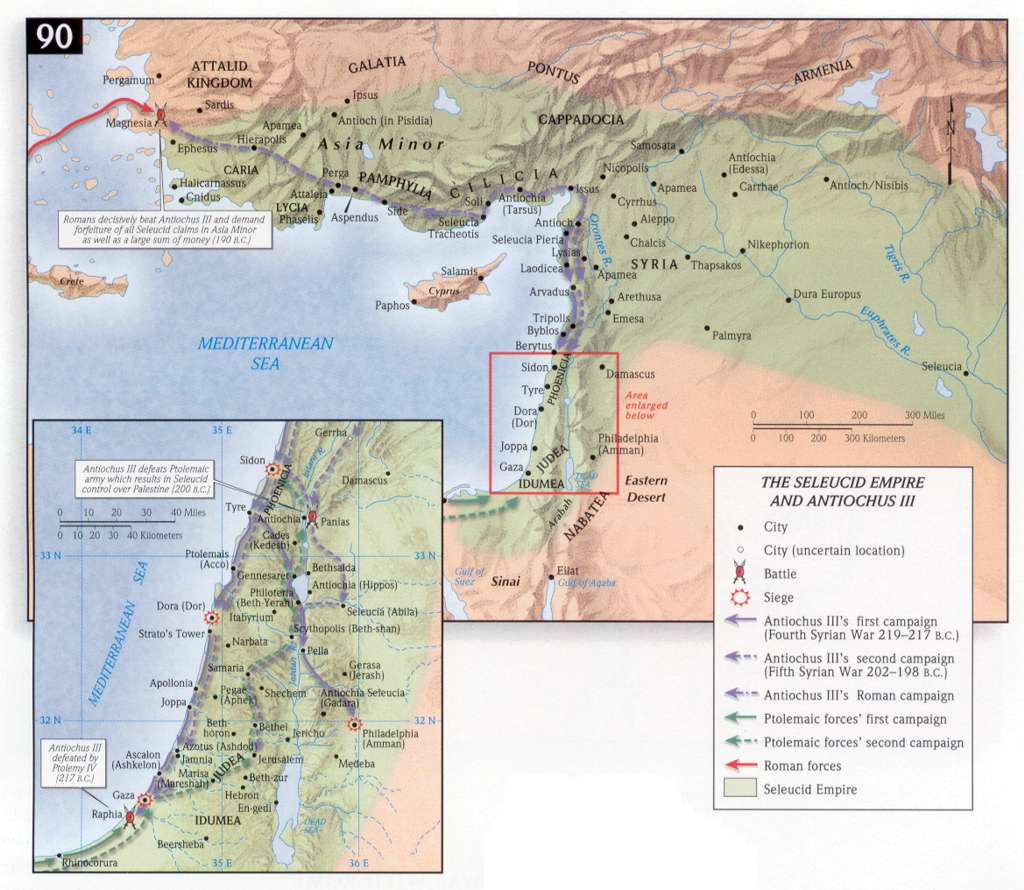
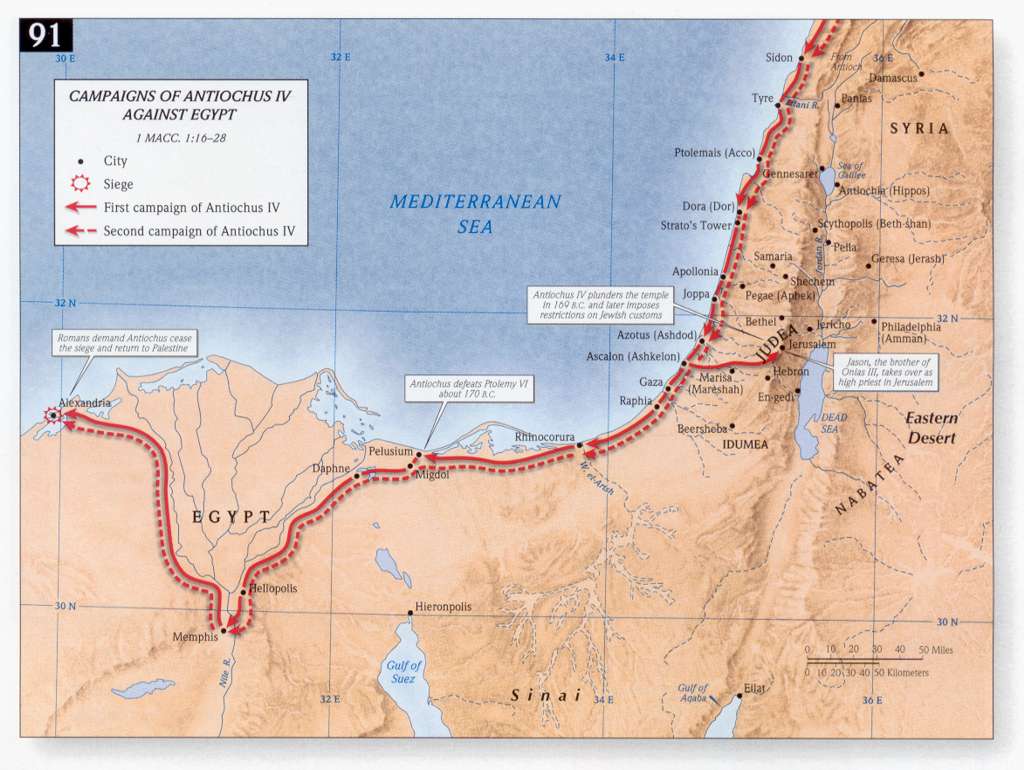
MAPS FROM ESV
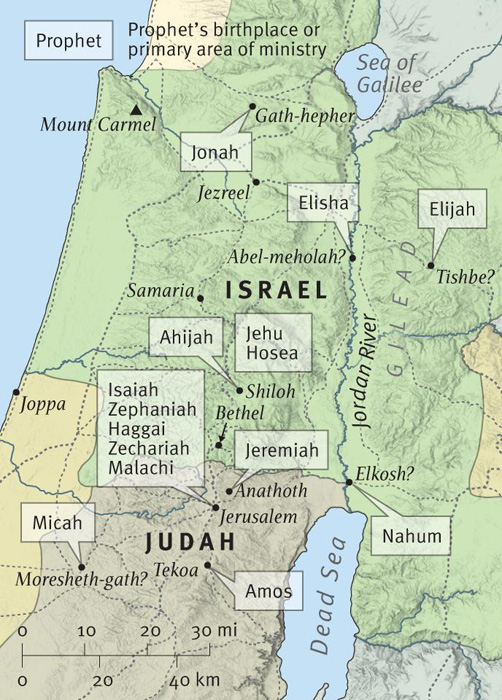
Prophets of Israel and Judah
c. 875–430 B.C.
- Extent of Solomon’s Kingdom
- Israel and Judah in 2 Kings
- Solomon’s Administrative Districts
- The Kingdom Divides
- Syria Captures Gilead
- Resurgence during Azariah, Jeroboam II
- Prophets of Israel and Judah
- Resurgence of Assyrian Influence
- Fall of Samaria, Deportation of Israelites
- Exile to Babylon
- Extent of David’s Kingdom
- Solomon’s International Ventures
- Syria and Israel Attack Judah
- Judah after the Fall of Israel
- Persian Empire at the Time of Ezra
- Persian Empire at the Time of Nehemiah
- Judea under Persian Rule
- Persian Empire at the Time of Esther
- Near East at the Time of Isaiah
- Israel and Judah at the Time of Jeremiah
- Babylonian Empire
- Babylon Attacks Judah
- Jeremiah Prophesies against Egypt
- Near East at the Time of Ezekiel
- Ezekiel’s Vision of Israel’s New Boundaries
- Introduction to Daniel: Babylonian Empire
- Empires of Daniel’s Visions: Persians
- Empires of Daniel’s Visions: Greeks
- Empires of Daniel’s Visions: Ptolemies and Seleucids (Early)
- Empires of Daniel’s Visions: Ptolemies and Seleucids (Late)
- Maccabean Kingdom
Be a Berean - Not Always Literal
- Zephaniah 1 Complacency!
- Zephaniah 2 A Message of Doom to a Message of Hope!
- Chapter 1
- Chapter 2
- Chapter 3
Note: First, the good news - Calvin's prayers are excellent, and are very convicting - Suggestion: Read them aloud, very slowly and as a sincere prayer to the Almighty God. On the other hand the careful Berean (Acts 17:11+) should be cautious when reading Calvin's comments, for he sometimes interprets passages that in context clearly relate to the literal nation of Israel as if they were addressed directly to the NT Church. Furthermore, he makes no mention of a future literal earthly Millennial Reign of Messiah as described in passages like Zephaniah 3:14, 15 about which Calvin comments "thus then our Prophet now says, that God will be in the midst of His Church". Commenting on Zeph 3:14, 15+ John MacArthur writes "The messianic era of millennial blessing and restoration is described." (The MacArthur Study Bible) John Hannah agrees adding that "Israel will be joyful in that millennial day because she will have been redeemed by God. Though the immediate prospect for the nation was one of sorrow and torment (Zeph 3:1, 5, 6, 7), a day will come when the remnant's fears will give way to shouts of praise." (Bible Knowledge Commentary). Contrast commentaries such as the one by Dr McGee (listen to his commentary on Zeph 3:13 Commentary and Zeph 3:14-20). (See disclaimer)
- Preface to Zephaniah
- Zephaniah 1:1 Commentary
- Zephaniah 1:2, 3 Commentary
- Zephaniah 1:4 Commentary
- Prayer 118
- Zephaniah 1:5 Commentary
- Zephaniah 1:6 Commentary
- Zephaniah 1:7-9 Commentary
- Prayer 119
- Zephaniah 1:10 Commentary
- Zephaniah 1:11 Commentary
- Zephaniah 1:12 Commentary
- Prayer 120
- Zephaniah 1:13 Commentary
- Zephaniah 1:14 Commentary
- Zephaniah 1:15-16 Commentary
- Zephaniah 1:17 Commentary
- Zephaniah 1:18 Commentary
- Zephaniah 2:1, 2 Commentary
- Prayer 121
- Zephaniah 2:3 Commentary
- Zephaniah 2:4, 5 Commentary
- Zephaniah 2:6, 7 Commentary
- Zephaniah 2:8 Commentary
- Prayer 122
- Zephaniah 2:9, 10 Commentary
- Zephaniah 2:11 Commentary
- Zephaniah 2:12 Commentary
- Zephaniah 2:13 Commentary
- Zephaniah 2:14 Commentary
- Zephaniah 2:15 Commentary
- Prayer 123
- Zephaniah 3:1, 2 Commentary
- Zephaniah 3:3 Commentary
- Zephaniah 3:4 Commentary
- Zephaniah 3:5 Commentary
- Prayer 124
- Zephaniah 3:6, 7 Commentary
- Zephaniah 3:8 Commentary
- Zephaniah 3:9 Commentary
- Prayer 125
- Zephaniah 3:10 Commentary
- Zephaniah 3:11 Commentary
- Zephaniah 3:12, 13 Commentary
- Prayer 126
- Zephaniah 3:14, 15 Commentary
- Zephaniah 3:16, 17 Commentary
- Zephaniah 3:18 Commentary
- Zephaniah 3:19 Commentary
- Prayer 127
- Zephaniah 3:20 Commentary
Be a Berean - Not Always Literal Critique
Caveat: Not always literal
- Israelology: Part 1 of 6 Introduction: Definition of Terms
- Israelology: Part 2 of 6 Israel Present (Note: Article begins on Page 2)
- Israelology: Part 3 of 6 Israel Present (Continued)
- Israelology: Part 4 of 6 - Israel Future (Part One)
- Israelology: Part 5 of 6 - Israel Future (Part Two)
- Israelology: Part 6 of 6 Other Relevant Topics - Illustrations of Israel (including marriage)
The Day of the Lord, the Day of Judgment
- Zephaniah 1:1-3 The Judgment of all the World
- Zephaniah 1:4-13 The Judgment will Destroy the Evil Doers in Judah
- Zephaniah 1:14-18 The Day of the Lord
The Call to Repentance in View of the Judgment
- Zephaniah 2:1-3 The Call to Repentance
- Zephaniah 2:4-7 The Judgment of the Philistines
- Zephaniah 2:8-10 The Judgment of Moab and Ammon
- Zephaniah 2:11-15 The Judgment of Other Nations
- Zephaniah 3:1-8 The Woe and Warning to Jerusalem and His People
- Zephaniah 3:8 The Waiting for the End
- Zephaniah 3:9-20 The Glory that Follows
Not always literal (see example)
James Rosscup writes "This 1858 work supplies much help on matters of the text, word meaning, resolving some problems, etc. Some have found it one of the most contributive sources in getting at what a text means." (Commentaries for Biblical Expositors: An Annotated Bibliography of Selected Works)
Be cautious (Acts 17:11-note): Does not always interpret the Scripture literally and sometimes replaces Israel with the Church (note)
(Click example of his interpretative approach which is often allegorical) (Or another example) Introduction
Best "devotional flavor" commentary on the Minor Prophets - Recommended
These are excellent maps with events marked on many of the maps
The Kingdom of David and Solomon
- David's Rise to Power
- David in Conquest of Canaan
- David's Wars of Conquest
- Kingdom of David and Solomon
- The United Monarchy under Solomon (1)
- The United Monarchy under Solomon (2)
- Solomon's Economic Enterprises
- Solomon's Building Activities
- Solomon's Temple
- Jerusalem in the Time of David and Solomon
The Kingdoms of Israel and Judah
- The Kingdoms of Israel and Judah (1)
- The Kingdoms of Israel and Judah (2)
- The Kingdoms of Israel and Judah (3)
- The Campaign of Shishak
- Conflicts between Israel and Aram-Damascus
- The Omride Dynasty
- The Golden Ages of the 9th & 8th centuries BCE
- Phoenician Trade and Civilization
- Trade Routes throughout the Middle East
- Travel Routes throughout Palestine
- Elijah and Elisha
- The Revolt of Jehu
- The Rise of Assyria
- Israel & Judah in the days of Jeroboam II and Uzziah
- The Assyrian Empire under Tiglath-Pileser III
- The Syro-Ephraimite War
- Tiglath-Pileser III's Campaigns
- Fall of Samaria and Deportation of Israelites
- The Fall of the Kingdom of Israel
- Assyrian Districts after the Fall of Samaria
- Prophets of the 8th Century BCE
Judah Alone amid International Powers
- Hezekiah's Preparation for Revolt
- Judah under King Hezekiah
- Hezekiah's Jerusalem
- Sennacherib's Campaign against Judah
- Assyria in the 7th century BCE
- The Rise of the Neo-Babylonian Empire
- The Reign of Josiah
- The Districts of Judah under King Josiah
- The Golden Age of King Josiah
- Nebuchadnezzar's Campaigns against Judah
The Babylonian Exile
- Judah during the Exile
- The Kingdom of Judah
- Exile; Palestine in the Post-Exilic Period
- Jewish Exiles in Babylon
- World Powers of the 6th century BCE
- The Conquests of Cyrus the Great
- The Persian Empire
- The Return of the Jewish Exiles to Judah
- Judah in the 5th century BCE
- Palestine after the Exile
- Alexander the Great's Empire
- The Division of Alexander's Empire ca. 275 BCE
- Palestine under the Ptolemies
- The Seleucid Empire and Antiochus III
- Campaigns of Antiochus IV against Egypt
- The Maccabees in 168 BCE
- Selected Events in the Maccabean Revolt
- Jewish Expansion under the Hasmonean Dynasty
- Pompey's Campaign against Jerusalem
- Early Rome
Interesting Resource Be a Berean - Not Always Literal
- Introduction
- Zephaniah 1 Critical Notes scroll down for the homilies below
- Zephaniah 1:2, 3 The Destructive Judgments
- Zephaniah 1:4-6 Judgment At the House of God
- Zephaniah 1:5, 6 Judgment At the House of God
- Zephaniah 1:7 Prudent Silence
- Zephaniah 1:7-9 The Day of Jehovah's Sacrifice
- Zephaniah 1:7 The Lord's Sacrifice
- Zephaniah 1:10-12 The Doomed City
- Zephaniah 1:12-18 Divine Scrutiny and Retribution
- Zephaniah 1:12-14 The Diligent Search and the Certain Discovery
- Zephaniah 1:14-18 The Great Day of the Lord
- Zephaniah 1 Illustrations to Chapter 1 - Zep . Consume. The wrath of God is truly the terriblest thing in this world—the sting of sin, which is the sting of death. Alas! to us, God's wrath doth not appear in its full horror; for if it did, we should sooner die than offend him. Some do but think of it; few think of it as they should; and they that are most apprehensive look upon it as at a distance, as that which may be turned away; and so, not fearing God's wrath, "treasure up wrath against the day of wrath" [Farindon].
- Zephaniah 2 Critical Notes scroll down for the homilies below
- Zephaniah 2:1-3 The Call to Repentance
- Zephaniah 2:3 Seek the Lord
- Zephaniah 2:3 The Threefold Call
- Zephaniah 2:4-7 The Judgment Upon the Philistines
- Zephaniah 2:8-10 The Judgment Upon the Moabites
- Zephaniah 2:8-11 The Living God
- Zephaniah 2:11 The Judgments of God A Scheme of Redemption
- Zephaniah 2:12 The Doom of Ethiopia
- Zephaniah 2:13-15 The Judgment Upon Assyria
- Zephaniah 2 Illustrations to Chapter 2 - Zep . This doom on Nineveh was carried out to the very letter. It was not simply the largest city of the ancient world. In the mouth of the Hebrew prophets it was the name of a district, 25 miles long, by 15 broad, which included four large cities, besides villages and forts, within its protecting walls. About six centuries B. C., this vast populous district was conquered and destroyed by the Medes (under Cyaxares), and the Chaldeans (under Nabopolassar, father of Nebuchadnezzar). So complete was the destruction, that with startling abruptness the great city vanished from the face of the earth, and its very ruins were hidden from the eyes of men. In A. D. 1766, Niebuhr, the great historian, stood on the eastern bank, which he took to be acclivities wrought by the hand of nature. It was not till A. D. 1842 that Layard, Rawlinson, and Botta dug into these mounds, exhumed and interpreted the remains which tell the story of the city's greatness, luxury, and culture with a power beyond that of words [S. Cox].
- Zephaniah 3 Critical Notes scroll down for the homilies below
- Zephaniah 3:1-4 The Guilty City
- Zephaniah 3:3 Keeping from God
- Zephaniah 3:5, 6 God's Justice Proved to a Guilty People
- Zephaniah 3:5-7 Aggravations of Human Guilt
- Zephaniah 3:8 The Waiting Attitude of God's People in Times of Trouble
- Zephaniah 3:9, 10 The Gathering of the Christian Church
- Zephaniah 3:9 Bearing the Burden With One Consent
- Zephaniah 3:11-13 The Restored Remnant
- Zephaniah 3:13 The True Israelite
- Zephaniah 3:14-17 The Joy of the Redeemed
- Zephaniah 3:18 Mourning For the Solemn Assembly
- Zephaniah 3:19, 20 The Wonderful Restoration
- Zephaniah 3 Illustrations to Chapter 3 - Zep . So with this scene of quiet pastoral felicity the poem closes; and Zephaniah, whose earlier words seemed to bespeak a veritable "son of thunder," proves himself to be a true "son of consolation," even as the judgment he was sent to denounce proves to be an act of sovereign and Divine mercy. Harsh and severe in husk, in outward seeming, its heart is "made of tenderness." It is like one of those fairy nuts in which, when they could be broken, there were found lustrous gems of price [S. Cox].
Note: JFB is one of the more literal, conservative older commentaries (prior to 1900). Sample excerpt of eschatological (prophetic, apocalyptic) passage Zechariah 14:2 - "gather all nations, etc. — The prophecy seems literal (compare Joel 3:2). If Antichrist be the leader of the nations, it seems inconsistent with the statement that he will at this time be sitting in the temple as God at Jerusalem (2Thessalonians 2:4); thus Antichrist outside would be made to besiege Antichrist within the city. But difficulties do not set aside revelations: the event will clear up seeming difficulties (Ed: Interesting statement!). Compare the complicated movements, Daniel 11:1-45-note." Comment on Zech 14:11 - "no more utter destruction — (Jer 31:40). Literally, “no more curse” (Rev 22:3-note; compare Malachi 4:6-note), for there will be no more sin. Temporal blessings and spiritual prosperity shall go together in the millennium: long life (Isaiah 65:20-22), peace (Isaiah 2:4-note), honor (Isaiah 60:14-16), righteous government (Isaiah 54:14; Isaiah 60:18). (Zechariah 14 - Commentary Critical and Explanatory on the Whole Bible)
Rosscup - This is the best older, overall treatment of a critical nature on the Old Testament Hebrew text verse by verse and is a good standard work to buy. The student can buy parts or the whole of this series. Sometimes it is evangelical, at other times liberal ideas enter… In prophecy it is amillennial. (Commentaries for Biblical Expositors: An Annotated Bibliography of Selected Works).
Literal, futuristic interpretation Recommended
- Complete Commentary of Zephaniah on one zip file
- Zephaniah - Introductory Notes, Outlines
- Zephaniah - Introduction
- Zephaniah - Theme
- Zephaniah - The Dark Side of Love
- Zephaniah - Two Thoughts
- Zephaniah 1:1 Commentary
- Zephaniah 1:2-3 Commentary
- Zephaniah 1:4 Commentary
- Zephaniah 1:5-6 Commentary
- Zephaniah 1:7 Commentary
- Zephaniah 1:8-12 Commentary
- Zephaniah 1:13-14 Commentary
- Zephaniah 1:15 Commentary
- Zephaniah 1:16-18 Commentary
- Zephaniah 2:1 Commentary
- Zephaniah 2:2-3 Commentary
- Zephaniah 2:4-8 Commentary
- Zephaniah 2:9-15 Commentary
- Zephaniah 3 Introduction
- Zephaniah 3:1-2 Commentary
- Zephaniah 3:3-5 Commentary
- Zephaniah 3:6-8 Commentary
- Zephaniah - Kingdom Established
- Zephaniah 3:9-10 Commentary
- Zephaniah 3:11-13 Commentary
- Zephaniah 3:14-20 Commentary
- Zephaniah 1:12 Devotional Commentary
- Zephaniah 2:3 Devotional Commentary
- Zephaniah 3:17 Devotional Commentary
- Chapter 1
- Chapter 2
- Chapter 3
- The Message of Zephaniah An Urgent Echo -- Greg A. King (12 page article-excellent)
- The Day of the Lord in Zephaniah -- By Greg A. King (recommended)
- The Remnant in Zephaniah (1995)-- Greg A. King (Word Document - excellent)
- The Remnant in Zephaniah (1994) -- Greg A. King (Word Document - excellent)
- The Historical Testimony of the Prophet Zephaniah - H Ferguson
- Literary Look at Nahum, Habakkuk, and Zephaniah by Richard D. Patterson
- The Message of Zephaniah: An Urgent Echo - Gregg King
- Zephaniah: Protology in Eschatology - Mark A Winder
- Zephaniah 1:7, 14 The Prophet's Watchword: Day of the LORD-Richard Mayhue
- The Commanding Importance of the Prophetic Scriptures - Charles Feinberg
- D. Rudman, "A Note on Zephaniah," Biblica 80 (1999): 109-112.
- The Historical Testimony of the Prophet Zephaniah.- H Ferguson
- Additional Articles On Zephaniah at Bible.org
- Minor Prophets Study Guide - Questions/Lessons Learned - scroll down to page 77
Rosscup on Kaiser: A careful evangelical gives contemporary outlines usable to pastors. He has occasional illustrations and serious explanation of the text. He is premillennial, as on Zechariah 14, and packs in much expositional help, relating it strategically to life. (Commentaries for Biblical Expositors: An Annotated Bibliography of Selected Works)
Rosscup comments: The large, two-column pages contain much good material on the relevance of the words for then and for now, dealing with such topics as love, repentance, and sincerity (Hosea 6). A prolonged contemplation of these pages and an application of their principles will produce substantial Christian growth. The author could improve the work by being more definite sometimes in specifying in what framework God will bless Israel in the future (e.g., Hosea 14). Vagueness such as in Joel 2:1-11, where he says the invader is neither locusts nor a human army, is a drawback. Wordiness and wandering in his discussions is another shortcoming, as in using Joel 2:28 to take off into a long discussion of clericalism. He finds fulfillment of Joel 2:28 at Pentecost, yet it would help to point out some aspects that were (Rosscup)
- Micah, Nahum, Habakkuk, Zephaniah- Exegetical and Theological Exposition-New American Commentary- Ken Barker - conservative, literal, futuristic
- Exploring the Minor Prophets John Phillips
Rosscup on John Phillips - A respected popular expositor on a number of biblical books here has two introductory chapters, then a chapter of about 20–30 pp. on each prophet (50 on Zech.). Several charts aid readers, and a detailed outline runs before each exposition. The exposition is in general surveys of sections, at times taking a view on a main problem. In Hosea 1:2, he feels that God had Hosea marry an immoral woman but Phillips offers no help on the moral issue. Phillips is premillennial, seeing Israel’s future kingdom blessings as in the Millennium after Christ’s Second Coming (Hosea 3:5; Joel 3:14ff; Amos 9:15; Zeph. 3:9ff; Zech 2:10–13; 14:1–21). In Mal. 2:15 he has “one” refer to God making husband and wife into one, and in Mal 4:5 he thinks the Elijah will be fulfilled in one of the two witnesses in Rev 11:3-13-note. The work helps on broad coverage, and is quite readable for preachers, church teachers, students and lay people wanting a general devotional sweep. (Ibid)
Rosscup says "This is an outstanding conservative, detailed work backed by scholarly awareness and expertise. Comments reflect fine-tuned ability in the Hebrew text, philology, exegesis, history, and literature. Patterson has premillennial convictions in the final verses of Zephaniah. He shows the shaky reasoning of critical arguments against the unity of Nahum, and defends unity of Nahum and Habakkuk. In a long Excursus he defends New Testament uses of Habakkuk 2:4-note (pp. 21–23), But some will doubt that he captures the significance of the picture of a hind in Habakkuk 3:19-note when he sees only swiftness ascending and gracefully gliding (262–63). But in most details he is excellent, and the work is well worth the cost and time. (Commentaries for Biblical Expositors: An Annotated Bibliography of Selected Works)
- Ligonier's Top 5 - Caveat Emptor! some are amillennial and not literal/futuristic
- Book Review - The Books of Nahum, Habakkuk and Zephaniah - O Palmer Robertson
- Book Review - The Minor Prophets- An Exegetical and Expositional Commentary. - Thomas McComiskey - Zephaniah, Haggai, Zechariah, Malachi
- Old Testament Commentaries for Bible Expositors 1987-92 -James Rosscup
- Annotated Old Testament Bibliography - 2007 - Denver Seminary
Rosscup Ranks Commentaries on Minor Prophets
Minor Prophets Overall Ranking by Rosscup
EXEGETICAL COMMENTARIES
1. T. Laetsch (Amill)
2. R. Chisholm (Premill)
3. C. Bullock (Premill)
4. C. F. Keil/ F. Delitzsch (Amill)
EXPOSITIONAL COMMENTARIES
1. Bible Knowledge Commentary entries
2. C. Feinberg
3. J. Boice (Premill)
4. P. Fink (Premill)
DEVOTIONAL COMMENTARIES
1. H. A. Ironside
2. J. Phillips
- See discussion of the Day of the Lord = Zeph 1:7, 8, 14, 15, 18, 2:2, 3
W J BEECHER
- Zephaniah 1:1-2; Spiritual Degeneration: We should not expect the world environment to become increasingly God-centered as we approach the second coming of the Lord Jesus Christ. Video
- Zephaniah 1:3-2:3; Judgment with Compassion: When we speak of God's coming judgment, our primary purpose should always be to encourage unrepentant people to come to know the Lord Jesus Christ as personal Savior. Video
- Zephaniah 2:4-3:13;God's Perspective on Pride: We should always demonstrate a deep sense of humility in our walk with God and in our relationships with all people. Video
- Zephaniah 3:14-20;God's Faithfulness: When God has stated that He will do certain things, we can be sure that His words will come true--whether in judgment or in salvation. Video
Sample Excerpt: I cannot refrain from calling attention very particularly to the promises for the future as contained in Zeph 3:8-20, and which show that although these Minor Prophets, so-called, refer but briefly to that period, (and yet perhaps in proportion after all, to the length of their discourses), still their deliverances thereupon are all in harmony with the teachings of the whole school of the prophets. For example, in Zeph 3:8, observe the agreement with Joel concerning the gathering of the Gentile nations to judgment at the end of the present age ("in those days… at that time" - Joel 3:1, 2). In Zeph 3:9, we seem to see these nations (Ed: Gentiles), or the spared and sifted remnant of them, at length converted to GOD and serving Him with a ready will. In Zeph 3:10 they are bringing the sons of Israel back to their own land, the second gathering of them, so to speak, as was explained in Isaiah (Isa 11:11-note). In Zeph 3:11-18, the cleansed, humble, trustful, rejoicing, nation of Israel appears, dwelling in their own land. In Zeph 3:19, 20 we find the restored and beloved people a praise and a blessing in the whole earth as foretold in the original promise to Abraham, and again and again pictured before us in the millennial Psalms. Zeph 3:17 of this chapter will well repay careful meditation. The old marriage covenant (cf "My covenant which they broke, although I was a husband to them" = Jer 31:31-32) between the Lord and Israel is there depicted as gloriously restored anew (Isaiah 62:5; Hosea 2:19); the husband is rejoicing in His wife (Ed: Israel in belief - cf Ro 11:25-29-note), resting in His love and joying over her with singing. The word for "rest" (charash = 02790) is translated in the margin "be silent," and this silence of the Lord towards His people (Israel) is no longer the silence arising from forbearance in order to punish at last (Psalm 50:21-note), but because He has nothing more to reprehend.
Example Excerpt: We have mentioned this several times in our study of the prophets, but I will point it out in case someone has not heard the explanation. Several of the things Zephaniah says will happen, could have been fulfilled by the Babylonians when they destroyed Judah and took them into captivity. But many of the prophecies concerning the destruction of the nations and the earth have obviously not been fulfilled. This is where it helps to understand what the prophet saw in his visions.
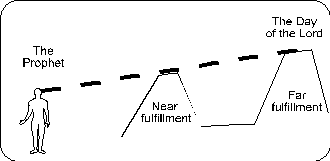
RESTORATION OF THE GENTILES (Zeph 3:9-10) -The word “Peoples” refers to the Gentiles. The “purified lips” may be a reference to a reversal of the curse at the tower of Babel. Or an allusion to Isaiah’s unclean lips in Isaiah 6:5-note. In “that day” God will bless the Gentiles who turn to Him. “All the people” will call on the name of the Lord in that day. Have we reached that day yet? Obviously not. Over and over again we have seen that Gentiles would be saved and included in the kingdom of God. It shows how far off the religious leader’s of Jesus’ day were in their practice of Judaism. RESTORATION OF THE JEWS (Zeph 3:11-20) God will also bless the Jews and bring the remnant back to Jerusalem (My holy mountain). And there will be justice and peace in the land (Zeph 3:11-13). There will be no shame either. This was the same thing promised in Joel 2:26,27. Again, it is obvious that this has not happened. There will be rejoicing in the future kingdom, for God will be reigning in their midst and the nations will praise and honor Israel as God's people (Zeph 3:14-18,19, 20).
- HCSB Study Bible : Holman Christian Standard Bible - Borrow - Sample excerpt
Zephaniah 1:2 The prophetic declaration, God will completely sweep away everything on earth, is hyperbole. Though no one deserved to be spared, God would preserve a small remnant of Judah and of other peoples (Zeph 2:7,9b; 3:9-10,12-13).
Zephaniah 1:3 The judgment language—sweep away man and animal (lit "cattle, wild beasts") even the birds of the sky and the fish of the sea—is more comprehensive than Noah's flood (Gen 6:7, no fish mentioned). To underscore the gravity of their sins and the intensity of their deserved punishment, Zephaniah used prophetic hyperbole (Jer 4:23-29; 9:9-11) in which creation itself is reversed; here the creatures are listed in reverse order from Gen 1:20-28 (sea creatures, birds, beasts, and man). In the phrase the ruins along with the wicked, "ruins" (Hb maksheloth; lit "stumbling blocks") were apparently idol paraphernalia, including animals worshiped by depraved people such as in Egypt or Judah (see Ezek 8:10-12 for detestable animal images in the Jerusalem temple). The Lord would destroy those idols and their worshipers.
Zephaniah 1:5 To pledge loyalty to Milcom involved religious syncretism, combining pseudo-worship of Yahweh with worship of a false god. Here and in Jer 49:1,3, "Milcom" is spelled "Milcam" (lit "their king") in the Masoretic Text, which some interpret as a reference to Baal worship (see Zeph 1:4; cp. Jer 32; 35). Yet Milcom/Milcam was more likely the Ammonite god (Jer 49:1-3), interchangeable with "Molech" (1Ki 11:7; Jer 32:35). No consensus exists about the exact nature and spelling of this Ammonite deity; if equivalent to the Canaanite god of the underworld Molech, worship of this god apparently included child sacrifice (as in worship of Molech/Milcom; Lv 18:21; 20:2-5; 2Ki 23:10; Jer 32:35). This worship continued Manasseh's pagan practices which Josiah would disrupt (2Ki 23:10-13).
- Zephaniah - Theology - in the Holman Bible Dictionary
- International Standard Bible Encyclopedia Zephaniah, Book of
- McClintock and Strong's Bible Encyclopedia Zephaniah, Book of,
- Fausset Bible Dictionary Zephaniah, the Book of
- Baker’s Evangelical Dictionary of Biblical Theology: Zephaniah – Theology
- American Tract Society: Zephaniah
- Bridgeway Bible Dictionary: Zephaniah
- Easton’s Bible Dictionary: Zephaniah
- Fausset Bible Dictionary: Zephaniah, the Book Of; Zephaniah
- Holman Bible Dictionary: Zephaniah, Book Of; Zephaniah
- Hastings’ Dictionary of the Bible: Zephaniah; Zephaniah (1)
- Kitto’s Popular Cyclopedia of Biblical Literature: Zephaniah
- International Standard Bible Encyclopedia: Book of Zephaniah
- McClintock and Strong: Zephaniah, Book Of,; Zephaniah
- The Nuttall Encyclopedia: Zephaniah
- The Jewish Encyclopedia: Zephaniah
MAPS - Studylight.org
- The Kingdoms of Israel and Judah (1)
- The Kingdoms of Israel and Judah (2)
- The Kingdoms of Israel and Judah (3)
- The Rise of Assyria
- Israel & Judah in the days of Jeroboam II and Uzziah
- Assyrian Empire under Tiglath-Pileser III
- The Syro-Ephraimite War
- Tiglath-Pileser III’s Campaigns
- Fall of Samaria and Deportation of Israelites
- The Fall of the Kingdom of Israel
- Assyrian Districts after the Fall of Samaria
- Prophets of the 8th Century BCE
- Hezekiah’s Preparation for Revolt
- Judah under King Hezekiah
- Hezekiah’s Jerusalem
- Sennacherib’s Campaign against Judah
- Assyria in the 7th century BCE
- The Rise of the Neo-Babylonian Empire
- The Reign of Josiah
- The Districts of Judah under King Josiah
- The Golden Age of King Josiah
- Nebuchadnezzar’s Campaigns against Judah
- Zephaniah Speaks Again, Part 1 (from "Rapture Ready")
- Zephaniah Speaks Again, Part 2 (from "Rapture Ready")
- Zephaniah -Intro, Date, Setting, Themes, Interpretative Challenges, Outline
- In a Separate Article the Question is answered: When were the Bible books written?
GOTQUESTIONS
- Book of Zephaniah – Bible Survey
- What was a prophet in the Old Testament?
- What are the Major Prophets and Minor Prophets?
- Who are the Chemarim / Chemarim Zephaniah 1:4?
- What does it mean to worship the starry host or the host of the heavens? Zephaniah 1:5)
- What is astrotheology? Zephaniah 1:5
- When did Moab and Ammon eventually worship the Lord? Zephaniah 2:11)?
- What can ordinary people do about sinful religious leaders?(Zephaniah 3:4)?
- What does it mean that God will rejoice over us with singing?(Zephaniah 3:17)?
- Who was Baal?
- What is the day of the Lord? see also Day of the Lord
- Who was King Amon in the Bible?
- Is there any special meaning/symbolism to owls in the Bible Zephaniah 2:13
- What are the consequences of nations turning away from God
- What is the biblical understanding of the wrath of God
- What does it mean to humble yourselves in the sight of the Lord (James 4:10+) Zephaniah 2:3
Example Excerpt: Prediction of future restoration and blessing for Israel, Zeph 3:3, 7-20. The future according to Zephaniah. - This brief prophecy is full, as are all the other prophets. After the frightful picture of wrath which he so vividly draws, he changes to a sweet and triumphant theme, a song of gladness and of victory in which the glory of Zion, favor to the Lord’s people, God’s delight in His redeemed, the holiness and devotedness of the restored Israel are set forth in rapturous strains. He closes with a vision of hope and joy and peace. And so Zephaniah is apocalyptic and telesmatic. “The Lord thy God in the midst of thee is mighty; He will save, He will rejoice over thee with joy; He will rest in His love; He will joy over thee with singing,” Zeph 3:17.
Redeemer and Redeemed.
I. The Redeemer.
1. He is mighty to save.
2. He exults over His redeemed.
3. He is silent in His love—finds no fault with them.
II. The Redeemed.
1. They are finally and forever delivered.
2. They are exalted.
3. They are forgiven.
4. They are made perfect.
5. They are happy for ever.
ADRIAN ROGERS
Be a Berean - Not always a literal interpretation. Caveat Emptor!
- Zephaniah - Commentary for English Readers
- Zephaniah 1 Commentary for English Readers
- Zephaniah 2 Commentary for English Readers
- Zephaniah 3 Commentary for English Readers
Rosscup says "This is an outstanding conservative, detailed work backed by scholarly awareness and expertise. Comments reflect fine-tuned ability in the Hebrew text, philology, exegesis, history, and literature. Patterson has premillennial convictions in the final verses of Zephaniah. He shows the shaky reasoning of critical arguments against the unity of Nahum, and defends unity of Nahum and Habakkuk. In a long Excursus he defends New Testament uses of Habakkuk 2:4 (pp. 21–23), But some will doubt that he captures the significance of the picture of a hind in Habakkuk 3:19 when he sees only swiftness ascending and gracefully gliding (262–63). But in most details he is excellent, and the work is well worth the cost and time. (Commentaries for Biblical Expositors: An Annotated Bibliography of Selected Works)
- Zephaniah 3:1-7 The Path to Spiritual Ruin - Sample excerpt
One thing that I've found in traveling is that if you aren't careful you can get turned around and headed in the wrong direction. Another thing is that once you are on the wrong road, it may be a while before you realize it. But usually there will be a sign or some other indication to show you that you are headed wrong. A person can avoid taking a wrong turn and wasting time and money if he will study his map well and keep a watchful eye upon the road. In our spiritual life we also sometimes get side-tracked. If we aren't careful we can take a wrong turn in our life and waste precious time or even worse. To avoid that from happening, God has provided the Bible for our map and the Holy Spirit as our guide. And yet with all of that, still many Christians get side-tracked in the world. However, there are some sign posts along the way.Read Zephaniah 3:1-7.These verses were written to the backslidden nation of Judah, but they offer some valuable information for us today. Look around and we can see the same warnings, the same signposts, to let us know that we need to make a change. When we find ourselves headed in the wrong direction, there is only one intelligent thing to do: turn around! The Bible calls that repentance; or changing our direction. Notice four sign posts in verse two.
- Zephaniah, Joel, Obadiah, and Habakkuk
- The Gospel According to Zephaniah - A CALL TO JUDGMENT, REPENTANCE, AND RESTORATION
The Structure of Zephaniah - H L Ellison
- Zephaniah 3:2 An Indictment with Four Counts
- Zephaniah 3:2 Study Notes - Fourfold Fault
- Zephaniah 3:16-18 Sermon for the Time Present
- Zephaniah 3:17 The Saviour Resting in His Love
- Zephaniah 3:14-17 When God Sings - see "Sermon Notes"
- Zephaniah 3:17 The Mighty God in the Midst of Thee - see "Sermon Notes"
WARREN WIERSBE
Conservative notes from Dr Morris who approaches the text seeking it's literal meaning in the context. Millennial. Click the words or phrases after the Scripture for the Study Notes and note that they are from the KJV translation.
Zephaniah 1 Commentary
- Zephaniah 1:1 Zephaniah
- Zephaniah 1:2 utterly consume.
- Zephaniah 1:7 day of the LORD
- Zephaniah 1:12 lees
- Zephaniah 1:14 near cry there bitterly
- Zephaniah 1:15 day of wrath
Zephaniah 2 Commentary
- Zephaniah 2:4 Gaza
- Zephaniah 2:7 house of Judah
- Zephaniah 2:9 Moab
- Zephaniah 2:13 destroy Assyria
- Zephaniah 2:14 cormorant and the bittern
Zephaniah 3 Commentary
- Zephaniah 3:8 assemble the kingdoms
- Zephaniah 3:9 pure language
- Zephaniah 3:15 taken away thy judgments midst of thee
- Zephaniah 3:17 with singing
- Zephaniah 3:20 a praise among all people
Recommended: NETBible notes are in the right panel. You can also select the tab for "Constable's Notes." See sample excerpts from these notes which are technical translation notes and brief commentary-like notes.
- Zephaniah 1 Commentary
Zephaniah 1:7 Note - The origin of the concept of “the day of the LORD” is uncertain. It may have originated in the ancient Near Eastern idea of the sovereign’s day of conquest, where a king would boast that he had concluded an entire military campaign in a single day (see D. Stuart, “The Sovereign’s Day of Conquest,” BASOR 221 [1976]: 159–64). In the OT the expression is applied to several acts of divine judgment, some historical and others still future (see A. J. Everson, “The Days of Yahweh,” JBL 93 [1974]: 329–37). In the OT the phrase first appears in Amos (assuming that Amos predates Joel and Obadiah), where it seems to refer to a belief on the part of the northern kingdom that God would intervene on Israel’s behalf and judge the nation’s enemies. Amos affirms that the Lord’s day of judgment is indeed approaching, but he declares that it will be a day of disaster, not deliverance, for Israel. Here in Zephaniah, the “day of the Lord” includes God’s coming judgment of Judah, as well as a more universal outpouring of divine anger.Zephaniah 1:16 Note - This description of the day of the LORD consists of an initial reference to anger, followed by four pairs of synonyms. The joining of synonyms in this way emphasizes the degree of the characteristic being described. The first two pairs focus on the distress and ruin that judgment will bring; the second two pairs picture this day of judgment as being very dark (darkness) and exceedingly overcast (gloom). The description concludes with the pairing of two familiar battle sounds, the blast on the ram’s horn (trumpet blasts) and the war cries of the warriors (battle cries).
- Zephaniah 2 Commentary
Zephaniah 2:15 Note - Hissing (or whistling) and shaking the fist were apparently ways of taunting a defeated foe or an object of derision in the culture of the time.
- Zephaniah 3 Commentary
Zephaniah 3:14 - This phrase is used as an epithet for the city and the nation. “Daughter” may seem extraneous in English but consciously joins the various epithets and metaphors of Israel and Jerusalem as a woman, a device used to evoke sympathy from the reader.
See also Zephaniah Devotionals
Following are from Our Daily Bread, Copyright RBC Ministries, Grand Rapids, MI. — Reprinted by permission. All rights reserved
Times Of Trouble
The great day of the Lord is . . . a day of trouble and distress. — Zephaniah 1:14-15
Today's Scripture: Zephaniah 1:14-18
Turmoil continues to seethe in many parts of the former Soviet Union. Unrest, revolt, hunger, unemployment, and severe shortages still plague most of the land. It prompted a leading Russian journalist to refer to these days as smutnoye vremya, the “time of trouble.”
The Bible uses a similar phrase to describe the events of the endtimes. They will occur during the prophetic era called “the day of the Lord” (Isa. 2:12-22). It will be a time of terrible tribulation, during which mankind will suffer as never before. There will be earthquakes, famine, war, and death (Rev. 6).
During this period, the Jews will be singled out. Their persecution will be so intense that the era is prophetically referred to in Jeremiah 30:7 as “the time of Jacob’s trouble.” But that verse ends with the wonderful promise that the Jews “shall be saved out of it.” That period of intense tribulation will bring them to faith in the true Messiah.
As followers of Christ, we encounter personal times of trouble. The apostle Peter wrote, “If anyone suffers as a Christian, let him . . . glorify God” (1 Pet. 4:16). Our personal “times of trouble” are opportunities for the Lord to show us His provision, protection, and love. By: David C. Egner
God’s unseen presence comforts me,
I know He’s always near;
And when life’s storms besiege my soul,
He says, “My child, don’t fear.”
—DJD
Times of trouble are times for trust.
No Longer Afraid
They will eat and lie down and no one will make them afraid. Zephaniah 3:13
Today's Scripture & Insight: Zephaniah 3:9–17
When the Ethiopian police found her a week after her abduction, three black-maned lions surrounded her, guarding her as though she were their own. Seven men had kidnapped the twelve-year-old girl, carried her into the woods and beaten her. Miraculously, however, a small pride of lions heard the girl’s cries, came running and chased off the attackers. “[The lions] stood guard until we found her and then they just left her like a gift and went back into the forest,” police Sergeant Wondimu told one reporter.
There are days when violence and evil, like that inflicted on this young girl, overpower us, leaving us without hope and terrified. In ancient times, the people of Judah experienced this. They were overrun by ferocious armies and unable to imagine any possibility of escape. Fear consumed them. However, God always renewed His unrelenting presence with His people: “The Lord, the King of Israel, is with you; never again will you fear any harm” (Zephaniah 3:15). Even when our catastrophes result from our own rebellion, God still comes to our rescue. “The Lord your God is with you,” we hear, “the Mighty Warrior who saves” (v. 17).
Whatever troubles overtake us, whatever evils, Jesus—the Lion of Judah—is with us (Revelation 5:5). No matter how alone we feel, our strong Savior is with us. No matter what fears ravage us, our God assures us that He is by our side. By: Winn Collier
What is your greatest fear right now? How does God’s promise to be with you encourage you?
Mighty Warrior God, I need You. I need a Mighty Warrior to stand with me and overwhelm my fears. I’m choosing to trust You.
Our Singing Father
The Lord your God is with you, the Mighty Warrior who saves. He will take great delight in you; in his love he will . . . rejoice over you with singing. Zephaniah 3:17
Today's Scripture & Insight: Zephaniah 3:14–20
No one told me before my wife and I had children how important singing would be. My children are now six, eight, and ten. But all three had problems sleeping early on. Each night, my wife and I took turns rocking our little ones, praying they’d nod off quickly. I spent hundreds of hours rocking them, desperately crooning lullabies to (hopefully!) speed up the process. But as I sang over our children night after night, something amazing happened: It deepened my bond of love and delight for them in ways I had never dreamed.
Did you know Scripture describes our heavenly Father singing over His children too? Just as I sought to soothe my children with song, so Zephaniah concludes with a portrait of our heavenly Father singing over His people: “He will take great delight in you; in his love he will . . . rejoice over you with singing” (3:17).
Much of Zephaniah’s prophetic book warns of a coming time of judgment for those who’d rejected God. Yet that’s not where it ends. Zephaniah concludes not with judgment but with a description of God not only rescuing His people from all their suffering (vv. 19–20) but also tenderly loving and rejoicing over them with song (v. 17).
Our God is not only a “Mighty Warrior who saves” and restores (v. 17) but a loving Father who tenderly sings songs of love over us. By: Adam R. Holz
Father, help us to embrace Your tender love and “hear” the songs You sing.
Our heavenly Father delights in His children like a parent singing to a newborn baby.
The Power Of Love
The Lord your God in your midst, the Mighty One, will save; He will rejoice over you with gladness, He will quiet you with His love. — Zephaniah 3:17
Today's Scripture: Zephaniah 3:14-20
The documentary film Young@Heart gives a rollicking look at a senior chorus of 24 singers whose average age is 80. Filled with humor and poignant moments, the film includes this remarkable singing group’s deeply moving performance at a New England prison. When the concert concludes, the singers walk into the audience, greeting the surprised prisoners with handshakes and hugs.
The inmates’ unexpected amazement at this personal touch reminds me of the book of Zephaniah in which the prophet brings a powerful message of God’s presence and love to His people during a dark time: “The Lord your God in your midst, the Mighty One, will save; He will rejoice over you with gladness, He will quiet you with His love, He will rejoice over you with singing” (3:17).
According to Bible teacher Henrietta Mears, Zephaniah “begins with sorrow but ends with singing. The first of the book is full of sadness and gloom, but the last contains one of the sweetest songs of love in the Old Testament.”
God’s love for us is always astonishing, especially when it touches us at a low ebb of life. During our darkest times, the Lord comes to us with His joy, His love, and His song. By: David C. McCasland
If your heart is filled with sadness, Or you struggle with despair, Turn to God, who’ll bring you gladness When you sense His love and care. —Sper
In God’s garden of love, you are His forget-me-not.
Forced Leisure
The Lord your God in your midst, the Mighty One, will save; He will rejoice over you with gladness, He will quiet you with His love, He will rejoice over you with singing. —Zephaniah 3:17
Today's Scripture: Zephaniah 3:14-20
Just before Christmas one year, a friend was diagnosed with leukemia and was told she must begin chemotherapy immediately. Just a few weeks earlier, Kim had told friends how blessed and content she felt with a loving family, a comfortable home, and a new grandson. As she entered the hospital, Kim asked Jesus to make His presence known to her and to stay close.
The next 7 months of treatments followed by recovery in partial isolation became a season she calls “forced leisure.” She says she learned how to slow down, reflect quietly, and rest in God’s goodness, love, and perfect plan—regardless of whether or not she would be healed.
One of God’s promises to His people Israel became personal to Kim: “The Lord your God . . . will save; He will rejoice over you with gladness, He will quiet you with His love, He will rejoice over you with singing” (Zeph. 3:17).
Kim is in remission after a journey she says changed her life for the better. Now back in her busy routine, she often pauses to recapture the lessons of “forced leisure.”
How important that we—in good times or times of challenge—draw near to God’s loving heart to hear His voice and place our lives in His hands.By: David C. McCasland
A troubled heart, a wearied mind
Are burdens hard to bear;
A lack of peace, a heavy load
Are lifted by God’s care.
—Fitzhugh
People are at the heart of God’s heart.
Our Father Sings
He . . . will rejoice over you with singing. Zephaniah 3:17
Today's Scripture & Insight: Zephaniah 3:14–20
Dandy loves encouraging people by singing to them. One day we were having lunch at his favorite restaurant, and he noticed the waitress was having a hard day. He asked her a few questions and then started quietly singing a catchy, upbeat song to cheer her up. “Well, kind sir, you just made my day. Thank you so much,” she said with a big smile, as she wrote down our food order.
When we open the book of Zephaniah, we find that God loves to sing. The prophet masterfully drew a picture with his words in which he described God as a musician who loves to sing for and with His children. He wrote that God “will take great delight in you; in his love he will no longer rebuke you, but will rejoice over you with singing” (3:17). God promised to be present forever with those who have been transformed by His mercy. But it doesn’t stop there! He invites and joins in with His people to “be glad and rejoice with all your heart” (v. 14).
We can only imagine the day when we’ll be together with God and with all those who’ve put their trust in Jesus as their Savior. How amazing it will be to hear our heavenly Father sing songs for and with us and experience His love, approval, and acceptance. By: Estera Pirosca Escobar
How can you celebrate God’s love for you? What song is He singing over you and with you today?
Heavenly Father, we know that because of our allegiance to Jesus, You not only accept us but celebrate with us and delight in us as Your children. Thank You for Your love.
And in Truth
In his love he will no longer rebuke you, but will rejoice over you with singing. Zephaniah 3:17
Today's Scripture & Insight: Zephaniah 1:1–6; 2:1–3
Years ago, I attended a wedding where two people from different countries got married. Such a blending of cultures can be beautiful, but this ceremony included Christian traditions mixed with rituals from a faith that worshiped many gods.
Zephaniah the prophet pointedly condemned the mixing of other religions with faith in the one true God (sometimes called syncretism). Judah had become a people who bowed in worship to the true God but who also relied on the god Molek (Zephaniah 1:5). Zephaniah described their adoption of pagan culture (v. 8) and warned that as a result God would drive the people of Judah from their homeland.
Yet God never stopped loving His people. His judgment was to show them their need to turn to Him. So Zephaniah encouraged Judah to “Seek righteousness, seek humility” (2:3). Then the Lord gave them tender words promising future restoration: “At that time I will gather you; at that time I will bring you home” (3:20).
It’s easy to condemn examples of obvious syncretism like the wedding I attended. But in reality, all of us easily blend God’s truth with the assumptions of our culture. We need the Holy Spirit’s guidance to test our beliefs against the truth of God’s Word and then to stand for that truth confidently and lovingly. Our Father warmly embraces anyone who worships Him in the Spirit and in truth (see John 4:23–24). By: Tim Gustafson
When I am in trouble, where do I turn? A crisis reveals where I put my trust. Is my faith completely in God? What do I need to give over to Him today?
God is always ready to forgive and restore.
The Lord Rejoices
[God] will rejoice over you with singing. Zephaniah 3:17
Today's Scripture & Insight: Zephaniah 3:14–20
My grandmother recently sent me a folder full of old photographs, and as I thumbed through them, one caught my eye. In it, I’m two years old, and I’m sitting on one end of a hearth in front of a fireplace. On the other end, my dad has his arm around my mom’s shoulders. Both are gazing at me with expressions of love and delight.
I pinned this photo to my dresser, where I see it every morning. It’s a wonderful reminder of their love for me. The truth is, though, that even the love of good parents is imperfect. I saved this photo because it reminds me that although human love may fail sometimes, God’s love never fails—and according to Scripture, God looks at me the way my parents are looking at me in this picture.
The prophet Zephaniah described this love in a way that astounds me. He describes God as rejoicing over His people with singing. God’s people had not earned this love. They had failed to obey Him or to treat each other with compassion. But Zephaniah promised that in the end, God’s love would prevail over their failures. God would take away their punishment (Zephaniah 3:15), and He would rejoice over them (v. 17). He would gather His people into His arms, bring them home, and restore them (v. 20).
That’s a love worth reflecting on every morning. By: Amy Peterson
How does it make you feel that God rejoices over you with singing? How have you experienced His love?
God, thank You for Your forgiveness and faithful love for us.
Recommended
Be cautious (Acts 17:11-note): Does not always interpret the Scripture literally and sometimes replaces Israel with the Church (note)
James Rosscup writes "This work originally appeared in 1860. The present publication is set up in two columns to the page with the text of the Authorized Version reproduced at the top. Scripture references, Hebrew words, and other citations are relegated to the bottom of the page. The work is detailed and analytical in nature. Introduction, background and explanation of the Hebrew are quite helpful. Pusey holds to the grammatical-historical type of interpretation until he gets into sections dealing with the future of Israel, and here Israel becomes the church in the amillennial vein." (Commentaries for Biblical Expositors: An Annotated Bibliography of Selected Works)
- General Introduction
- Introduction
- Zephaniah 1 Commentary
- Zephaniah 2 Commentary
- Zephaniah 3 Commentary
Published January 18, 2021
Table of Contents - 42 pages
- Abbreviations
- Introduction - “Of all the minor prophets, Zephaniah has suffered most from obscurity and from an academic ‘bad press.’ He is so obscure that he is often confused with Zechariah, whose much longer book occurs just pages later in the Bible. In the scholarly world Zephaniah is often dismissed as dull or derivative.”
- Author
- Occasion and Date
- The Day of the Lord.
- Message
- Zephaniah 1
- Zephaniah 2
- Zephaniah 3
- Excursus: Further notes on Zephaniah 1:1..
- Bibliography
Be a Berean - Variable Quality
- Zephaniah 1 - 33 Pdfs
- Zephaniah 2 - 19 Pdfs
- Zephaniah 3 - 36 Pdfs
NOTE: If you are not familiar with the great saint Charles Simeon see Dr John Piper's discussion of Simeon's life - you will want to read Simeon's sermons after meeting him! - click Brothers We Must Not Mind a Little Suffering (Mp3 even better)
- Zephaniah 1:12 The Secure and Atheistical Condemned
- Zephaniah 2:1-3 Repentance Urged
- Zephaniah 3 - includes sermons below
- Zephaniah 3:7,8 What Recompense We May Expect for Our Neglect of God
- Zephaniah 3:12 The Poor Living by Faith
- Zephaniah 3:14, 15 The Duty of Thankfulness for God's Mercies
- Zephaniah 3:17 God's Delight in Saving Sinners
- Zephaniah 3:14-17 When God Sings - see "Sermon Notes"
- Zephaniah 3:17 The Mighty God in the Midst of Thee - see "Sermon Notes"
- Zephaniah 1 Commentary
- Zephaniah 2 Commentary
- Zephaniah 3 Commentary
James Rosscup writes "Though old this is well-written and often cited, with many good statements on spiritual truths. Users will find much that is worthwhile, and sometimes may disagree, as when he sees the Jonah account as allegorical (Ed: See Tony Garland's article on the Rise of Allegorical Interpretation)." (Commentaries for Biblical Expositors: An Annotated Bibliography of Selected Works or Logos Format)
- Preface
- The Book of the Twelve
- The Prophet in Early Israel
- The Eighth Century in Israel
- Influence of Assyria Upon Prophecy
- The Seventh Century in Israel
- The Early Years of Josiah (639-625): Jeremiah and Zephaniah
- The Rest of the Century (625-586): The Fall of Nineveh; Nahum and Habakkuk
- The Book of Zephaniah
Following links are to commentary notes on Biblehub.com
- Zephaniah 1-2:3 The Prophet and the Reformers
- Zephaniah 2:4-15 Ninive Delenda
- Zephaniah 3 So As by Fire Zephaniah 3:14-20 Epilogue
- Zephaniah - Introduction
- Zephaniah 1:1-4 Commentary
- Zephaniah 1:5-8 Commentary
- Zephaniah 1:9-11 Commentary
- Zephaniah 1:12-17 Commentary
- Zephaniah 1:18 Commentary
- Zephaniah 2:1Commentary
- Zephaniah 2:2-5 Commentary
- Zephaniah 2:6-10 Commentary
- Zephaniah 2:11-14 Commentary
- Zephaniah 2:15 Commentary
- Zephaniah 3:1-3 Commentary
- Zephaniah 3:4-7 Commentary
- Zephaniah 3:8-10 Commentary
- Zephaniah 3:9-11-17 Commentary
- Zephaniah 3:15-19 Commentary
- Zephaniah 3:20 Commentary
- Zephaniah: The Day Of The Lord's Wrath
Sample Excerpt - Elizabeth Browning, in her poem, the Seraphim, describes the angels watching the work of the Son of God on earth and at last, seeing with stupefied amazement the incarnation and ultimately the cross, one angel looks at this host of ransomed souls and he says to the other, "Hereafter shall the blood bought captives raise their passion song of blood." And the other one replies, "And we extend our holy vacant hands toward the throne and cry, 'We have no music.'" You see, only the redeemed can sing like this. After the darkness, after the slaughter, after the terrible destruction comes the time of the singing. That is what God is after in your life. That is possible on the level of the Spirit right now when God deals death's stroke against the flesh within us and brings us through that painful experience of saying no to the ego and the self-life. There follows the time of the singing, the time that he is after, the reason he takes us through the pain and the darkness. What you see to be true of the individual life will also be true on the whole wide canvas of history as God brings human history to an end. - God Is Jealous: Zephaniah, Haggai
- Day of the Lord The Coming Time of Trouble
ALSO FROM PENINSULA BIBLE
| Idol Stress | Zephaniah 1:1-18 | Soderberg, Eric |
Outline & References
Zephaniah 1
- Superscription - Zephaniah 1:1 (dead link)
- Covenantal Judgment - Zephaniah 1:2-18 (dead link)
- Approaching Judgment - Zephaniah 1:2-6
- Judgment: Against All Nations - Zephaniah 1:2-3
- Judgment: Against Judah - Zephaniah 1:4-6
- The Day of the Yahweh - Zephaniah 1:7-18
- Judgment: Against Judah - Zephaniah 1:7-13
- Judgment: Against All Nations - Zephaniah 1:14-18
Zephaniah 2
- Seek Yahweh - Zephaniah 2:1-3
- Covenantal Judgment - Zephaniah 2:4-3:8
- Judgment: Against Philistia - Zephaniah 2:4-7
- Judgment: Against Moab and Ammon - Zephaniah 2:8-11
- Judgment: Against Cush - Zephaniah 2:12
- Judgment: Against Assyria - Zephaniah 2:13-15
Zephaniah 3
- Judgment: Against Jerusalem - Zephaniah 3:1-5
- Judgment: Against All Nations - Zephaniah 3:6-8
- Salvation of God's Remnant - Zephaniah 3:9-20
- Restoration of Purity - Zephaniah 3:9-13
- Restoration of Joy - Zephaniah 3:14-17
- Restoration of Blessedness - Zephaniah 3:18-20
Main page of Theology of Word - See "Bible Commentary" at top of page for list of all 66 books - recommended site
Faith and Work During the Exile—Nahum, Habakkuk, Zephaniah
Nahum, Habakkuk and Zephaniah were active during the period when the southern kingdom began a rapid decline. Internal incoherence and external pressure from the burgeoning Babylonian empire resulted in Judah becoming a vassal state to Babylon. Shortly afterwards, an ill-advised rebellion brought down the wrath of the Babylonians in 587 BC, leading to the collapse of the state of Judah and the deportation of the elites to the center of the Babylonian empire (2 Kings 24-25). In exile, the people of Israel had to work out how to be faithful while separated from their key religious institutions, the temple, the priesthood, even the land. If, as we have seen, the first six books are about the effect of the people’s sin, these three—Nahum, Habakkuk and Zephaniah—are about the resultant punishment during this period.
God’s Punishing Hand at Work (Nahum 1:1-12; Habakkuk 3:1-19; Zephaniah 1:1-13)
Nahum’s chief contribution is to make it clear that the political and economic disaster is God’s punishment or disciplining of Israel. “I have afflicted you,” God declares (Nahum 1:12). Habakkuk and Zephaniah declare that an essential part of God’s punishment is that the people’s ability to make an adequate living is diminished.
The fig tree does not blossom, and no fruit is on the vines; though the produce of the olive fails and the fields yield no food; though the flock is cut off from the fold and there is no herd in the stalls. (Habakkuk 3:17)
All the traders have perished; all who weigh out silver are cut off. (Zephaniah 1:11)
This is seen not only in economic woes, but also in environmental problems/
Are contemporary political, economic, and natural disasters punishments from God? There is no shortage of people willing to declare that particular disasters are signs of God’s wrath. The 2011 earthquake and tsunami in Japan were attributed to divine punishment by both the Governor of Tokyo[5]and the host of an MSNBC television news show. But unless we have joined the ranks of the Twelve or the other prophets of Israel, we should be very reluctant to declare God’s wrath in the events of the world. Did God himself reveal the reasons for the tsunami to these commentators, or did they draw conclusions on their own? Did he reveal his intent to a substantial number of people, well in advance, over many years, as he did with the prophets of Israel, or did it come to one or two people the day after? Were the modern-day declarers of God’s punishment forged as prophets by years of suffering alongside those afflicted, as Jeremiah, the Twelve and the other prophets of ancient Israel?
Idolatrous Work (Habakkuk 2:1-20; Zephaniah 1:14-18)
The punishment is of the people’s own making. The people have been working faithlessly, turning good materials of stone, wood and metal into idols. Work that creates idols has no value, no matter how expensive the materials or well-crafted the results are.
What use is an idol once its maker has shaped it—a cast image, a teacher of lies? For its maker trusts in what has been made, though the product is only an idol that cannot speak! (Habakkuk 2:18)
As Zephaniah puts it, “neither their silver nor their gold will be able to deliver them” (Zeph. 1:18).
Faithfulness is not a superficial matter of uttering praises to God while we work. It is the act of putting God’s priorities first in our work. Habakkuk reminds that “the Lord is in his holy temple; let all the earth keep silence before him!” (Hab. 2:20). This silence is not merely a religious observation, but a silencing of our own broken ambitions, fears, and motivations, so that the priorities of God’s covenant can become our priorities. Consider what awaits those who defraud others in banking and finance.
“Alas for you who heap up what is not your own!” How long will you load yourselves with goods taken in pledge? Will not your own creditors suddenly rise, and those who make you tremble wake up? Then you will be booty for them. (Hab. 2:6–7)
Those who accumulate their ill-gotten gain in real estate—a phenomenon that seems constant throughout all the ages—are similarly traps for themselves.
“Alas for you who get evil gain for your houses, setting your nest on high to be safe from the reach of harm!” You have devised shame for your house by cutting off many peoples; you have forfeited your life. The very stones will cry out from the wall, and the plaster will respond from the woodwork. (Hab. 2:9–11)
Those who exploit others’ vulnerabilities also bring judgment on themselves.
“Alas for you who make your neighbors drink, pouring out your wrath until they are drunk, in order to gaze on their nakedness!” You will be sated with contempt instead of glory. Drink, you yourself, and stagger! The cup in the Lord’s right hand will come around to you, and shame will come upon your glory. (Hab. 2:15–16)
Work that oppresses or takes advantage of others ultimately brings about its own downfall.
Today we may not be literally crafting idols of precious materials before which we bow down. But work also may be idolatrous if we imagine that we are capable of producing our own salvation. For the essence of idolatry is that “its maker trusts in his own handiwork” (Hab. 2:18, NASB, cf. NRSV above), rather than trusting in the God by whose guidance and power we are created to work. If we are ambitious for power and influence because we think without our wisdom, skill and leadership, or work group, company, organization, or nation is doomed, then our ambition is a form of idolatry. In contrast, if we are ambitious for power and influence so that we can draw others into a network of service in which everyone brings forth God’s gifts for the world, then our ambition is a form of faithfulness. If our response to success is self-congratulation, we are practicing idolatry. If our response is thankfulness, then we are worshiping God. If our reaction to failure is despair, then we are feeling the hollowness of a broken idol, but if our reaction is perseverance, then we are experiencing the saving power of God.
Faithfulness in the Midst of Toil (Habakkuk 2:1; Zephaniah 2:1-4)
There is another dynamic at work in the exile. Notwithstanding the emphasis of Nahum, Habakkuk and Zephaniah on punishment, people also begin to re-learn how to work in faithful service to God during this period. This is fully explored in Theology of Work Project articles such as Jeremiah & Lamentations and Work and Daniel and Work, but is also hinted at here in the Book of the Twelve. The key point of this is that even in the wretched circumstances of the exile, it is still possible to be faithful. As he watched the carnage around him, no doubt wishing he could be somewhere else, Habakkuk determined to stay at his post and listen for the Word of God there (Hab. 2:1). But more is possible than simply staying at one’s post, valuable as that may be. We may also find a way to be righteous and humble.
Seek the Lord, all you humble of the land, who do his commands; seek righteousness, seek humility; perhaps you may be hidden on the day of the Lord’s wrath. (Zephaniah 2:3)
There are no ideal places of work. Some are deeply challenging to people of God, compromised in all sorts of ways, while others are flawed in more mundane ways. But even in difficult work places, we may still be faithful witnesses to God’s purposes, both in the quality of our presence and the quality of our work. Habakkuk reminds us that no matter how fruitless our work seems, God is present with us in our work, giving us a joy that even the worst conditions of labour cannot completely overcome.
Though the fig tree does not blossom, and no fruit is on the vines;
though the produce of the olive fails and the fields yield no food;
though the flock is cut off from the fold and there is no herd in the stalls,
yet I will rejoice in the Lord; I will exult in the God of my salvation.
God, the Lord, is my strength; he makes my feet like the feet of a deer,
and makes me tread upon the heights. (Habakkuk 3:17–19)
Or, as the paraphrase by Terry Barringer puts it,
Though the contract finishes, And there is no work to be had;
Though there is no demand for my skills, And no one publishes my work.
Though the savings run out, And the pension is not enough to live on;
Yet will I rejoice in the Lord, I will rejoice in God my Saviour.[6]
As verse 19 suggests, good work is possible even in the midst of difficult circumstances, for “the Lord is my strength.” Faithfulness is not only a matter of enduring hardship, but of making even the worst situation better in whatever ways we can.
The following are on one page.
- Zephaniah 1:1
- Zephaniah 1:2-13
- Zephaniah 1:14-2:3
- Zephaniah 2:4-15
- Zephaniah 3:1-8
- Zephaniah 3:9-13
- Zephaniah 3:14-20
JOHN BUTLER Warning Zephaniah 1:12
Zephaniah saw through the insincerity of many in the revival under Josiah the King, and gave a warning of coming judgment.
FIRST—THE SURENESS IN THE WARNING
"It shall come to pass at that time." This is the language of certainty. Two things emphasize the certainty of the judgment.
• The statement. "It shall come to pass." It is not 'maybe' or 'possibly' but "shall." It is Divine certainty.
• The season. "At that time." This refers to the "day of the Lord" (Zephaniah 1:7). "The day of the Lord" involves a number of prophetic events, but mostly it speaks of judgment. God can predict with accuracy the very time of judgment.
SECOND—THE SEARCHING IN THE WARNING
"I will search Jerusalem with candled [lamps]" God never brings judgment without examination. He investigates to ascertain the situation accurately before He takes action (cp Genesis 18:21).
• The city for the investigation. "Jerusalem." This was considered the holy city, it had many spiritual privileges, yet there was so much sin in the city that it was targeted for judgment. Privilege does not exempt from judgement but misused it will intensify it.
• The character of the investigation. "Search ... candles." This was a thorough investigation. God does not do things in a haphazard way like men often do. When He investigates for judgment you can count on it being very thorough. Nothing will be concealed. No evidence suppressed etc. like our corrupt courts do today. "Candles" means lamps. The word "candles." is a bad translation.
THIRD—THE SENTENCE IN THE WARNING
"Punish the men that are settled on their lees that say in their heart, the Lord will not do good, neither will he do evil." Note four things about this sentence.
• The crowd for the sentence. "Punish the men that are settled on their lees." The guilty are the ones punished, not the innocent. God is fair, unlike the courts of our land.
• The character of the sentence. "Punish." The sentence was severe. "Punish" speaks of troops of an army conquering. That is what Babylon's army did to Jerusalem.
• The conduct for the sentence. "Settled on lees." A carnal contentment. Not concerned about sin.
• The contemplation for the sentence. "That say without their heart, the Lord will not do good, neither will he do evil." They think God is unconcerned about the sin in the land. Thus they dishonor the holiness of God
James Hastings - Greater Men and Women of the Bible - Zephaniah
The day of the Lord is at hand.—Zeph. 1:7.
THE great creative minds, the original leaders of the highest movements, are few; hence we must not undervalue the prophets and teachers of secondary rank who, according to their capacity, develop and apply the truth that has been given. After the preaching of the four great prophets, the judgment that confirmed it, and the attempted reformation that came out of it, there was a violent reaction marked by gloomy superstition and bitter persecution. Between these dark days under Manasseh and the new reforming movement under Josiah, Zephaniah exercised his ministry. The book ascribed to him is a small one, but it is sufficient to show that he is a disciple—that is, he is dependent upon his predecessors and especially upon the great Isaiah—and, further, that he has distinct individuality; the fragment of truth that he does grasp he uses effectively for practical purposes.
1. The date of Zephaniah’s prophetic activity, according to the superscription, was in the reign of King Josiah (639–608 B.C.). Scholars, with one exception, have accepted this as correct. There is no good reason to suspect the statement; it accords well with the contents of the book, yet it could not easily have been conjectured upon the basis of the book. It is natural to suppose that it rests upon an independent tradition that goes back to fairly early times. The question that may profitably be discussed concerns itself with the particular portion of Josiah’s reign to which the prophecy should be assigned. Did Zephaniah do his work before or after the culmination of the great Deuteronomic reform in 621 B.C.? The answer to this question must be sought in the prophet’s own statements as to the conditions prevailing in Judah in his day and in his outlook for the future. His denunciations of syncretism in worship, apostasy from Jehovah, the worship of the heavenly bodies, the aping of foreign customs in religion and in dress, and the practical scepticism rebuked in 1:12 seem to accord perfectly with the state of affairs as it was during the reigns of Manasseh and Amon, and as it may be supposed to have continued during the early portion of Josiah’s reign, before he had arrived at an age when he could exercise any powerful influence upon the currents of life and thought in his kingdom. Efforts have been made to account for the conditions reflected by Zephaniah’s utterances as indicative of the period of Josiah’s reign after 621 B.C. But it seems improbable that such irregularities of cultus could have been openly practised and tolerated in the period immediately after a reform the main outcome of which was the purification of the cultus. Josiah was a zealous worshipper of Jehovah, and no record has reached us of any cooling of his zeal after the reform. Passages from Jeremiah are sometimes cited to show that conditions were as bad in Judah after the reform as they are declared to have been by Zephaniah in his day. But this argument is inconclusive; and other considerations urged in favour of the post-reformation date also fail to make it probable The Book of Zephaniah is almost bound to have been written before the year of the great reformation.
2. The occasion of Zephaniah’s appearance as a prophet seems to have lain in some imminent danger to his nation. He evidently regarded the Day of Jehovah as close at hand. In accordance with the character of earlier prophecy in general and of the Day of Jehovah prophecies in particular, it is probable that Zephaniah interpreted the approach of some foreign army as heralding the dawn of Jehovah’s Day. The event that best meets the requirements of the situation is the Scythian invasion, about the year 630 B.C. The widespread activity of the Scythians corresponds with Zephaniah’s vision of the coming judgment as extending from Assyria on the north-east to Ethiopia on the south-west. The speed with which the Scythian hordes swept everything before them seems reflected in certain of Zephaniah’s utterances. That neither Assyria nor Egypt was thought of by Zephaniah as the agent or forerunner of the coming judgment is clear from the fact that they are both represented as falling victims to it. These being out of the question, the Scythians remain as the most likely candidate for the doubtful honour of world-destroyer. It is not necessary to suppose that Zephaniah conceived of them as exhausting the Divine anger in their chastisement of the nations. They seem rather to have been thought of as furnishing the prelude to the great drama of destruction. Human and Divine forces were to co-operate in this as in other judgment scenes depicted by the prophets. In the approach of the Scythians Zephaniah saw signs of the breaking up of the existing world-powers and hastened to proclaim it as the great judgment day of Jehovah, the God of Israel and the God of justice.
3. The style of Zephaniah is forcible, but his prophetic message is far less definite than that of Isaiah. Isaiah wrote under the pressure of immense political events, and deals directly with the Assyrian invasion. The menaces of Zephaniah are vague and general. Probably, however, Zephaniah neither intended nor desired to be definite. He, too, is the prophet of inevitable laws; an announcer of that light which shines so quietly, but ultimately reveals all things “in the slow history of their ripening.” All the Hebrew prophets have certain great fundamental ideas in common. Even Isaiah, original as he is, sometimes echoes the phrases of Amos and Hosea; and Jeremiah frequently borrows or adapts the expressions of his predecessors. Zephaniah, whose prophecy is more secondary and reproductive, borrows not only principles but details. He assumes that history will repeat itself in fresh catastrophes, followed by new reformations and restorations, since the calamity of the Ninevite invasion had not produced a genuine reform, and the deliverance then promised was still incomplete. His eschatology is spiritual and ethical; and he predicts, not only the vindication of righteousness, but the triumph of Jehovah’s love. But his book is on the model of those left by his predecessors. Threatening, exhortation, and promise are interwoven with triple strands into his pages as into theirs.
Zephaniah can hardly be considered great as a poet. He does not rank with Isaiah or even with Hosea in this particular. He has no great imaginative powers; no deep insight into the human heart is reflected in his utterances or any keen sensitiveness to the beauties of nature. His harp is not attuned to the finer harmonies of life like that of Jeremiah. He had an imperative message to deliver, and he proceeded in the most direct and forceful way to discharge his responsibility. What he lacked in grace and charm he in some measure atoned for by the vigour and clarity of his speech. He realized the approaching terror so keenly that he was able to present it vividly and convincingly to his hearers. No prophet has made the picture of the Day of Jehovah more real.
4. Zephaniah himself, perhaps, belonged to the royal house, for he traces his descent from Hezekiah, whom we may without extravagance identify with the famous king of that name. A whole generation had passed since the preaching of Isaiah had effected a reformation in the society of Jerusalem, and—as ever happens in the wake of great spiritual movements—there had followed a period of reaction. The upper classes of Judah, from whom the leading politicians were drawn, were exhibiting the too familiar traits of a decadent society. There was much latent scepticism, a tendency to dishonest compromise, a contempt for conviction, a dislike of religion as a factor in practical politics. Together with this decay of the spiritual elements in life, there went inevitably a rapid declension of manners, a lowering of the moral standard, a decline of genuine public spirit. Zephaniah had been brought up within the charmed circle of privilege and wealth, and when he was moved to denounce the prevailing tendencies of his class and time, he could speak out of the personal knowledge which he possessed. Hence, perhaps, the lifelike description which he draws, and hence, also, the almost personal resentment which seems to colour his language.
5. Critical study of the contents of the book during the last half-century has resulted in the setting apart of certain portions of the text as belonging neither to Zephaniah nor to his times, but as due to accretion in later days. With the exception of the Song of the Redeemed (3:14–20), however, it may be accepted generally as the work of the prophet. The main outline of the book is very simple. In the first chapter the prophet announces a great day of the wrath of the Lord. He then calls upon the various peoples, and especially upon Jerusalem, to repent, mingling his appeals with stern denunciations of judgment. Finally, he promises a time of peace and Divine favour for the remnant of Israel, “an afflicted and poor people.”
I THE MENACE
The great day of the Lord is near, it is near and hasteth greatly, even the voice of the day of the Lord.—Zeph. 1:14.
It was the consciousness that there was a God that made Zephaniah look to the dark restless north and read there the portents of coming judgment. He sees the day of doom approaching, and he anticipates its gloom and its terror. In realistic language he depicts supernatural agencies taking part with the war of men in this visitation of Heaven. With stern words he declares the purport of the Almighty in thus wreaking His wrath upon the earth. The tumult, the earthquake shock, the noise of warfare, and the red fires of judgment are the means by which Jehovah will make known to all His holy name as a just, righteous, and jealous God, the one great Ruler of the world, sovereign in power over all other gods.
1. The fiercest of all the prophets, Zephaniah begins with the sweeping threat, “I will utterly consume all things from the earth, saith the Lord,” and then he proceeds to mete out to each class of offenders the punishment that is their due. In truth the condition of Jerusalem was such as to call for judgment. Zephaniah lived in Jerusalem. We descry him against her, almost as clearly as we descry Isaiah. In the glare and smoke of the conflagration which his vision sweeps across the world, only her features stand out definite and particular: the flat roofs with men and women bowing in the twilight to the host of heaven, the crowds of priests, the nobles and their foreign fashions; the Fishgate, the New or Second Town, where the rich lived, the Heights, to which building had at last spread, and between them the hollow Mortar, with its markets, Phœnician merchants and money-dealers. In the first few verses of Zephaniah we see almost as much of Jerusalem as in the whole book either of Isaiah or of Jeremiah.
¶ Jerusalem became the bride of Kings and the mother of Prophets. The Prophets, sons only of that national and civic life of which the Kings had made her the centre, repaid her long travail and training of their genius by the supreme gift of an answer to the enigmas of her life: blew by their breath into imperishable flame the meaning of her tardy and ambiguous history. She knew herself chosen of God, a singular city in the world, with a mission to mankind. And though her children became divided between the stupid pride in her privilege and a frequent apostasy to other faiths, for she had heathen blood in her from the beginning, God never left Himself without witnesses in her midst, nor ceased to strive with her. She felt His Presence, she was adjured of His love and, as never another city on earth has been, of His travail for her worthiness of the destiny to which He had called her. Nowhere else has the universal struggle between the Spirit of God and the spirit of man been waged so consciously, so articulately as in Jerusalem. Nowhere else have its human responsibilities and its Divine opportunities been so tragically developed. The expostulations of souls like Jeremiah’s and Habakkuk’s with the decrees of Providence and the burdens of Its will have been answered from their own hearts, and those of other prophets, in the assurance of an infinitely more anxious travail and agony waged by God Himself with reluctant man for the understanding of His will, the persuasion of His mercy, and the acceptance of His discipline towards higher stages of character and vision. It is to-day the subject of half the world’s worship, and of the wonder of the rest, that both these elements in the long religious history of Jerusalem culminated and were combined in the experience of Jesus Christ within and around her walls: on the one hand, in His passionate appeals to the City to turn to Him, as though all the sovereign love and fatherly yearning of God were with Him; and on the other, in His Temptation, His agony of submission to the Divine will, and His Crucifixion. So that Sion and Olivet, the Wilderness and Gethsemane, their earthly meanings almost forgotten, have become the names of eternal facts in the history of the relations of God and man.
2. The state of society described was certainly woeful and degraded. The land was full of foreign priests, the Chemarim, the black-robed, ascetic ministers of the order and religion of Baal, and foreign troops, the Cherethites and Pelethites, Philistine mercenaries like the Swiss guards of the French court and the Vatican. These strangers had filled the land with idolatrous practices and confusion. The Chemarim of Baal had gradually and increasingly corrupted the pure religion of Jehovah, while the lawless behaviour of the guards had thrown the country into a panic. The land was filled with groves and idols, or, as they were called, Mazzebahs and Asherahs, stone pillars and consecrated poles. And at the high places of the rites of Judah these Chemarim, by order of Manasseh and Amon, burnt incense to Baal, the sun, moon, and stars. The Temple, built nearly four hundred years before, was closed. Its walls were decaying, and its chambers were neglected by all save a few faithful priests and Levites like Hilkiah, who were engaged in copying out and editing the ancient documents of the law which they had preserved with a jealous and laudable care. The Holy Ark was “a burden on their shoulders,” constantly carried from one place of safety to another, lest it should be seized and destroyed. Beside the walls of the Temple, even within its sacred precincts, were the dwellings of the most abandoned creatures, the Kedeshim, devotees of Baal, whose shameless lives and practices in the name of religion were an insult and a defilement to the holy place.
The terrible influence of such examples had spread with havoc among the people of Jerusalem. Many had been seduced to bow down to the host of heaven on their house-tops. Others were wavering. They swore both by Moloch and by Jehovah. Others were sunk in a state of torpor or indifferentism, without interest, life or motion, like “a standing pool,” or, as the Hebrews described it, “like wine that had settled on its lees.” These urged as an excuse for their own sloth that Jehovah cares not—“He will do nothing, good or bad”—and therefore they did not seek or inquire of Him. The metaphor is clear. New wine was left upon its lees only long enough to fix its colour and body. If not then drawn off, it grew thick and syrupy—sweeter indeed than the strained wine, and to the taste of some more pleasant, but weak and ready to decay. “To settle upon one’s lees” became a proverb for sloth, indifference, and the muddy mind. “Moab hath been at ease from his youth, and he hath settled on his lees, and hath not been emptied from vessel to vessel; therefore his taste remaineth in him, and his scent is not changed” (Jer. 48:11). The characters stigmatized by Zephaniah are also obvious. They were a precipitate from the ferment of fifteen years back. Through the cruel days of Manasseh and Amon, hope had been stirred and strained, emptied from vessel to vessel, and so had sprung sparkling and keen into the new days of Josiah. But no miracle came, only ten years of waiting for the king’s majority and five more of small, tentative reforms. Nothing Divine happened. There were but the ambiguous successes of a small party who had secured the king for their principles. Of course disappointment ensued—disappointment and listlessness. The new security of life became a temptation; persecution ceased, and religious men lived again at ease. So numbers of eager and sparkling souls who had been in the front of the movement fell away into a selfish and idle obscurity. The prophet hears God say, “I must search Jerusalem with lights” in order to find them. They had “fallen from the van and the freemen”; they had “sunk to the rear and the slaves,” where they wallowed in the excuse that Jehovah Himself “would do nothing”—“neither good,” therefore it is useless to attempt reform like Josiah and his party, “nor evil,” therefore Zephaniah’s prophecy of destruction is also vain.
¶ Beyond a doubt there is a great deal of moral scepticism in our own time and in regard to our own lives. The greater hindrance to the progress of the Kingdom of God lies not in the outrageous and notable sins. Those who truly have the cause of God at heart, those who have the strong and progressive righteousness, they could make their way, they could make victorious battles against prominent atheism, against declared immorality; but that which for ever clogs the chariot wheels of the Kingdom of God is that hidden vast middle-class, that intermediate class of those who will not come out into the open one way or the other, that great class which Dante saw first when he had entered the gates of Hell, the spirits who were not rebellious, nor faithful, but were for themselves. “Hateful, distasteful to God and to His enemies”—the class of the morally sceptical, and those who think it is not worth while.
¶ Do you remember the story of the part Sir Gawain played in the Quest for the Holy Grail? Like the other knights of King Arthur’s court, he set out in search of the Holy Thing—which is really only a symbolical way of saying that Sir Gawain, too, started with the ideal of a great and holy and Christlike life. But he soon wearied of the quest, and, finding a silk pavilion in the field and merry maidens in it, he abandoned the quest, and spent his twelve months and a day in sensuous ease and pleasure. And, on his return to King Arthur’s court, he scoffs at the very idea of the quest. “It is a madness,” he says,
But by mine eyes and by mine ears I swear,
I will be deafer than the blue-eyed cat,
And thrice as blind as any noonday owl,
To holy virgins in their ecstasies,
Henceforward.
Gawain is just a picture of the man who has “thickened on his lees,” who has surrendered his early ideals and hopes and betaken himself to a materialistic and sensual life. It is a peril to which we are all exposed. As the years pass we are apt to think that money, and comfort, and pleasure are the only things worth having, and, like Sir Gawain, we scoff at the “holy ecstasies” of our own youth. We think this cynicism is a mark of worldly wisdom and experience of life. But I will tell you what it really is: it is the death of the soul! The Christian never “thickens on his lees”; he never surrenders his ideals. “Your old men shall dream dreams.” To the very end he is aspiring, pressing forwards, striving upwards; to the last, life for him is full of eagerness and zest, and hope. It is with him a case of
Forward all the life time
Climb from height to height,
Till the head be hoary,
Till the eve be light.
3. For all this wickedness and indifference Zephaniah sees prepared the Day of the Lord—“dies irœ, dies illa,” that day of wrath, trouble and distress, of gloom, clouds and thick darkness, when men shall stumble and stagger like blind men, because they have sinned against the Lord. The storm of judgment strikes Jerusalem first: it is infinitely searching; there is no possibility of escape, no means of redemption for the men who have sinned against Jehovah. Zephaniah sets forth the judgment in a startling form: It is “the day of Jehovah’s sacrifice.” “Jehovah hath prepared a sacrifice, he hath bid his guests.” The prophet sees the weird picture and makes it stand out clearly by a few sharp strokes. Judah is the victim in a sacrificial meal; the slaughter is complete; her enemies gather now in solemn silence round the altar. The grim idea is not altogether new, but the prophet is not a smooth imitator of other men’s illustrations.
¶ Objection is taken to the retributive aspect of punishment on the ground that God, in Christ’s revelation, is no longer looked on as Judge, but as Father. Ritschl, going deeper, would deny punitive justice to God as contradictory of His character as love. Neither objection can be readily sustained. St. Paul also, while upholding retribution, knew well that God was Father; Jesus, revealing the Father, gave sternest expression to the truth that God is likewise Judge. God is indeed Father: Fatherhood is expressive of His inmost heart in relation to a world of beings made originally in His own image. But Fatherhood is not the whole truth of God’s relation to the world. There is another relation which He sustains than that of Father—the relation of Moral Ruler and Holy Judge—Founder, Upholder, Vindicator, of that moral order to which our own consciences and the whole constitution of things bear witness,—and it is this relation which, once sin has entered, comes into view, and claims to have its rights accorded to it. It was not as Father that St. Paul wrote of God, “Then how shall God judge the world?” “The wrath of God is revealed from heaven against all ungodliness and unrighteousness of men.”
4. For so young a man, the vision of Zephaniah may seem strangely dark and final. He is pitilessly true to his great keynote: “I will utterly consume all things from off the land. I will consume man and beast.” No deadlier book lies in all the Old Testament. Neither dew nor grass nor tree nor any blossom lives in it; it is everywhere fire, smoke and darkness, drifting chaff, ruins, nettles, saltpits, and owls and ravens looking from the windows of desolate palaces. One vivid trait comes in like a screech upon the hearts of a people unaccustomed for years to war. “Hark, Jehovah’s Day!” cries the prophet. “A strong man—there!—crying bitterly.” From this flash upon the concrete he returns to a great vague terror, in which earthly armies merge in heaven; battle, siege, storm and darkness are mingled, and destruction is spread abroad upon the whole earth.
¶ Oliver Cromwell did believe in God’s Judgments; and did not believe in the rose-water plan of Surgery: in Oliver’s time there was yet no distracted jargon of “abolishing Capital Punishments,” of Jean-Jacques Philanthropy, and universal rose-water in this world still so full of sin. Men’s notion was, not for abolishing punishments, but for making laws just; God the Maker’s Laws, they considered, had not yet got the Punishment abolished from them! Men had a notion, that the difference between Good and Evil was still considerable;—equal to the difference between Heaven and Hell. It was a true notion. Which all men yet saw, and felt in all fibres of their existence, to be true. Only in late decadent generations, fast hastening towards radical change or final perdition, can such indiscriminate mashing-up of Good and Evil into one universal patent-treacle, and most unmedical electuary, of Rousseau Sentimentalism, universal Pardon and Benevolence, with dinner and drink and one cheer more, take effect in our earth. Electuary very poisonous, as sweet as it is, and very nauseous; of which Oliver, happier than we, had not yet heard the slightest intimation even in dreams.
II THE ADMONITION
Seek ye the Lord, all ye meek of the earth, which have wrought his judgement; seek righteousness, seek meekness: it may be ye shall be hid in the day of the Lord’s anger.—Zeph. 2:3.
1. The prophet’s mood takes another turn. He implores the people to repent before that day of the Lord come upon them. (This point of transition is obscured by the Authorized Version—“Gather yourselves together,” where the real meaning, as Rosenmüller has pointed out, is “Carefully examine your souls and be ashamed.” Fuerst renders it “Play the man.”) Then the prophet adds soothingly, “Seek ye the Lord, all ye meek of the earth, which have wrought his judgement; seek righteousness, seek meekness: it may be ye shall be hid in the day of the Lord’s anger”—a passage which is suspected for the lateness of its ring and the religious sense of “meek,” and which, indeed, hardly belongs to this portion of the prophecy, but is confessedly the highest word on the religious life in the Old Testament.
¶ Repentance is a principle of hope and a pledge of restoration through return to God. Lacerated pride is a principle of despair: the self on which it relied has failed, and there is no other strength within its view. Repentance, then, is essentially different from sorrow at having to suffer, and from self-contempt at having failed. Repentance is sorrow for having offended the love of God: and we must add, that, where repentance exists, full forgiveness follows.… Repentance must go before forgiveness: and the sorrow in which repentance consists must be real suffering, deeply felt and patiently endured. The acuteness of the suffering is the measure of our repentance; and repentance is the guarantee of forgiveness.
2. Note the absence of all mention of the Divine mercy as the cause of deliverance. Zephaniah has no gospel of that kind. The conditions of escape are sternly ethical—meekness, the doing of justice and righteousness. His view of God insists on a rigid adherence to the principles of morality, which the purity, justice, and righteousness of God undoubtedly require of His subjects. Acknowledgment of the sovereignty of Jehovah will therefore naturally result in a humble worship and a moral life. According to the view of this prophet, God rules by fear, and only by chastisement can erring men be brought to worship and to live as they ought. It is a stern gospel, but it is earnest, virile, and rigidly moral. This austerity is largely the result of Zephaniah’s faith and moral convictions. He has a marvellous grip of universal history, and the Divine Providence is recognized by him in the movements of great nations. These are but the instruments of the Almighty Ruler over all, and fulfil His great purposes. Divine judgment falls universally upon them, because they do not acknowledge the power of the God Jehovah. It falls most heavily on Judah, because its people, notwithstanding their special privileges, are false and faithless to Him. Nothing but the fires of judgment can proclaim the Divine sovereignty and bring all people to their true attitude towards Jehovah. The meek and the humble alone can live before Him and secure His Divine protection.
¶ The conception of God in His world, not as the mere spectator of the fulfilment of His own immutable decrees, but as the Lord of Hosts, presiding over the great scene of conflict between good and evil in the souls of men who can only attain to real holiness through real liberty, and warring mightily on the side of good in order that it may win the victory, infinitely exalts and glorifies Him. We see Him in the teaching of Jesus, as the High Captain of the armies of love, working salvation in the midst of the earth, pleading with men to accept His mercy, warning them to escape from His judgments, sustaining the good in their goodness, overthrowing the wicked in their wickedness, bringing light out of darkness and triumph out of defeat, amid all strifes and storms maintaining His kingdom of righteousness and peace and joy in the Holy Ghost. His sovereignty embraces human liberty as the ocean surrounds an island. His sovereignty upholds human liberty as the air upholds a flying bird. His sovereignty defends human liberty as the authority of a true king defends the liberty of his subjects,—nay, rather, as the authority of a father tenderly and patiently respects and protects the spiritual freedom of his children in order that they may learn to love and obey him gladly and of their own accord. For this is the end of God’s sovereignty: that His kingdom may come; that His will may be done on earth,—not as it is done in the circling of the stars or in the blossoming of flowers,—but as it is done in heaven, where created spirits freely strike the notes that blend in perfect harmony with the music of the Divine Spirit.
3. The permanent value of such a message is proved by the thirst which we feel even to-day for the clear, cold water of its simple promises. Where a glaring optimism prevails, and the future is preached with a loud assurance, where many find their only religious enthusiasm in the resurrection of mediæval ritual or the singing of stirring and gorgeous hymns of second-hand imagery, how needful to be recalled to the earnestness and severity of life, to the simplicity of the conditions of salvation, and to their ethical, not emotional, character! Where sensationalism has so invaded religion, how good to hear the sober insistence upon God’s daily commonplaces—“morning by morning he bringeth forth his judgment to light”—and to know that the acceptance of discipline is what prevails with Him. Where national reform is vaunted and the progress of education, how well to go back to a prophet who ignored all the great reforms of his day that he might impress his people with the indispensableness of humility and faith. Where Churches have such large ambitions for themselves, how necessary to hear that the future is destined for a poor folk, the meek and the honest. Where men boast that their religion—Bible, Creed, or Church—has undertaken to save them, “vaunting themselves on the mount of my holiness,” how needful to hear salvation placed upon character and a very simple trust in God.
¶ Action may be formally and even morally correct without rendering its agent good; whereas goodness of character ensures good conduct. A man may tell the truth a hundred times, and for various reasons, without being a truthful man. But an essentially truthful man cannot but tell the truth. And so what we are is ethically more important than what we do. This importance of character in relation to conduct is obvious when once stated, and has been recognized by all the great ethical systems, but it is tacitly ignored in much that passes muster for morality in the rough-and-ready estimate of the ordinary world. For men are very apt to lead departmental lives, and, if they do their duty in that department which meets the public eye, they are allowed higher moral rank than in fact they deserve. Thus a man may be a brave soldier, or an able statesman, or a just judge, or a skilful surgeon, or an honest merchant, and be accepted accordingly, without, all the while, being a good man. And however useful such men may be to society, and rightly recognized as such, their total effect is, in many subtle and imperceptible ways, to lower and confuse the moral standard of the world. There is always need, therefore, for the protest that no amount of externally good conduct, however praiseworthy in itself, can take the place of a good will—a will, that is to say, which does not merely will this or that particular good action, but goodness for its own sake, goodness as such; or, in other words, a good character.
4. Next follows an elegy or dirge, rising occasionally to a wild ecstasy of denunciation. The threatened doom will engulf, he declares, in succession the Philistines, Moab and Ammon, Ethiopia, and even Nineveh, the proud Assyrian capital, itself. From Nineveh the prophet turns again to address Jerusalem, and describes afresh the sins rampant in her, especially the sins of her judges and great men, and her refusal to take warning from the example of her neighbours. The threat against Assyria and Nineveh, its chief city, was not new. About this period it received its strongest and most passionate expression in the prophecy of Nahum. One can understand how, after the tyranny and cruelty of Assyria, and after Isaiah’s teaching that though Jehovah might use the proud empire He would punish it, the people of Judah came to look upon this particular foreign power as the personification of wickedness. The judgment of the world has as one of its chief features the destruction of Nineveh. A century later Babylon came to occupy this place in the thoughts of Jewish patriots, but as yet the Babylonian conquest with all its horrors is still in the future. This prediction is not a mere cry for revenge, but an expression of faith in a righteous Ruler who will bring the proud nation to account for its many crimes.
The prophet spoke, and in fact it happened that judgment fell; the nations passed. Israel was chastised; it went into captivity. And there did come back that meek, that poor, that lowly, that afflicted people, despised even of the Samaritans—those feeble Jews. They came back trusting in Jehovah; they laid the foundations of that piteous and miserable new Temple. Its very foundations caused contempt; those who remembered the old Temple could but weep. But this new Temple was to be clothed with a glory which the old Temple had never known. It was the religion of humanity that was to come out from that regenerated and purged people—that little band of the meek of the earth. It happened in fact. It happened over again when Israel had become proud and haughty; once more, and once again, Mary sang her Magnificat in the glory of her royal heart—“He hath put down the mighty from their seats, and exalted the humble and meek.” And, once again, it was the unknown and the meek, it was Simeon and Anna, it was Joseph and Mary, it was the despised of Nazareth, who formed the seed of God’s new Israel. Such is the glorious result of the discipline of the Lord. An evil and corrupt people passes through the ordeal of purification and affliction, and comes forth united, strong, full of trust in the Lord, no longer lifted up with pride, no longer boastful of wealth, but meek, and poor, and true.
¶ However much pessimists, like Schopenhauer and Hartmann, may rail at the suffering, as distinct from the sin, that is in the world, it is an incontestable fact of experience that suffering can fashion human character as nothing else can do. Bacon and Shakespeare are no mean authorities where a knowledge of human nature is concerned; and we are all familiar with Shakespeare’s “Sweet are the uses of adversity,” while Bacon forcibly says, “Prosperity is the blessing of the Old Testament; adversity is the blessing of the New.” “That misery does not make all virtuous,” says Dr. Johnson, “experience too clearly informs us; but it is no less certain that of what virtue there is, misery produces far the greater part.” These are not the words of morose fanatics, but of thoughtful men of the world. And an equally impartial modern moralist makes the striking observation that “the older men grow in life, the more work becomes their real play, and suffering their real work.”
We cannot help feeling at times that there are deeper reasons for this than we yet understand; but at the same time those which we can understand are very plain. In the first place, self-will is the root of all the sin that we have to overcome; and the patient acceptance of events which conflict sharply with our self-will is often a more powerful remedy for it than even voluntary self-denial, since it involves a greater effort, and is less liable to be tainted by any admixture of pride, which has so often in the history of asceticism brought back the old self in a new form. It is therefore the best cure for self-will. But, further, the Christian, as such, believes in a particular providence, and therefore that his misfortunes represent not merely the incidence upon him of general laws, but God’s personal will for him in particular. Their acceptance, therefore, is a direct acquiescence in God’s will, a union of the will with God. And further again than this, it is in times of trouble that men most immediately feel their need of Divine assistance. And this leads them to prayer, wherein not the will only, but their whole personality, seeks union with God—seeks it, and, as those alone know who have so sought it in the way of sorrows, finds it in a degree that language has no power to express. “It is good for me that I have been in trouble,” says the Psalmist, “that I might learn thy statutes.” “Before I was troubled I went wrong: but now have I kept thy testimonies.”
And this is the universal verdict of the religious consciousness.
III THE PROMISE
But I will leave in the midst of thee an afflicted and poor people, and they shall trust in the name of the Lord. The remnant of Israel shall not do iniquity, nor speak lies; neither shall a deceitful tongue be found in their mouth: for they shall feed and lie down, and none shall make them afraid.—Zeph. 3:12, 13.
1. In a second address to his city (3:1–13), Zephaniah strikes the same notes as he did in his first. He repeats the proclamation of a universal doom. But the time is perhaps later. Judah has disregarded the many threats. She will not accept the Lord’s discipline; and while in chap. 1–2:3 Zephaniah had said that the meek and righteous might escape the doom, he now emphatically affirms that all proud and impenitent men shall be removed from Jerusalem, and a humble people be left to her, righteous and secure. There is the same moral earnestness as before, the same absence of all other elements of prophecy than the ethical. The injustice, oppression, corruption, and profanity rampant in Jerusalem are all due to the fact that men have ceased to believe in the pure, just, and righteous Jehovah. Her rulers, the prophet declares, are fierce as lions; her judges like ravening wolves that spare not a bone for the morrow. Her professional prophets are utterly false, and her priests are profane and irreligious. Yet a righteous and pure God reigns in her midst. The light of His judgments, revealed afresh every morning, should shame the unjust, were they not shameless. What warning had she learned from the great past? Had not Jehovah again and again revealed His power in the overthrow of nations, the destruction of their fortresses, and the desolation of their cities? Jehovah Himself, after such manifestations of His sovereignty, could be thought of as looking for reverence and obedience, so that His chosen people might fulfil their Divine destiny, but they were only the more eagerly bent upon evil. “Therefore wait ye upon me, saith the Lord, until the day that I rise up to the prey.”
Zephaniah then declares that it is the determination of Jehovah to gather all nations and kingdoms together that He may visit them universally and simultaneously with judgment under the fire of His sovereign wrath. After such visitation the nations will then with a pure lip call upon the name of the Lord and serve Him with one consent.
There follows on this a beautiful picture of Jerusalem restored to the Divine favour. The evil past is so far forgotten that it will not even call up the flush of shame. The haughty and arrogant are banished, and are seen no more in their boastful pride upon God’s holy mountain. Only a chastened, humble people are left, and their living faith in Jehovah shows fruit in their daily life. Sifted and purified, they are truthful and guileless, and dwell in such safety that none can make them afraid.
¶ In eternity, by God’s mercy, you will find that even your daily trials … are mercies. He would, by them, make you what He would have you. They are so many corrections of pride. Without them you might be sweet, loving, tender; but you would not have meekness brought out. The religious proverb says, “There is no humility without humiliation.” Moses, from the fire of his middle age, was made the “meekest man on the earth,” by the continued ingratitude and bickerings of those 600,000 whom God sent him to deliver. Almighty God … observes you, is ready with His grace to help you if you will, says of you, if you are meek (so to speak), “—— took that meekly for love of Me.” This is what He expresses by the things being “written in His book.” You are under the Captain of your salvation. His Eye is upon you. One great battle which you have, is to learn meekness.… Each [trial] is a chip to mould you to that likeness of Him who says to each of us, “Learn of me, for I am meek and lowly of heart.”
2. Zephaniah’s prophecy was fulfilled. The Day of the Lord came, and the people met their judgment. The Remnant survived—“a folk poor and humble.” To them, in the new estate and temper of their life, came a new song from God, and they added it to his prophecies. It came in with wonderful fitness, for it was the song of the redeemed, whom he had foreseen, and it tuned his book, severe and simple, to the full harmony of prophecy, so that his book might take a place in the great choir of Israel—the diapason of that full salvation which no one man, but only the experience of centuries, could achieve. “Sing, O daughter of Zion; shout aloud, O Israel; be glad and rejoice with all the heart, O daughter of Jerusalem. The Lord hath taken away thy judgements, he hath cast out thine enemy; the king of Israel, even the Lord, is in the midst of thee; thou shalt not see evil any more.”
The day of judgment is past. The people are safe from their enemies, for Jehovah Himself dwells in their midst. Warfare is over; iniquity is pardoned. In that day, which this psalmist anticipates with glowing soul, there will be only cheerful exhortation to courage and fearlessness. Jehovah the Mighty will protect His people. He will bend over them in a silent ecstasy of love, and anon rejoice with singing. The scattered sons of Israel, longing for the old worship and its feast-days, will have their heart’s desire granted. Jehovah will deal with all who afflict, and will gather together the halt, the exiled, and the shamed. They will all be brought back to world-wide honour in the day when Jehovah openly restores His own people to prosperity.
¶ In all the writings of the Exile the reader is confused by a strange mingling of the spiritual and the material, the universal and the local. The moral restoration of the people to pardon and righteousness is identified with their political restoration to Judah and Jerusalem. They have been separated from ritual in order to cultivate a more spiritual religion, but it is to this that a restoration to ritual is promised for a reward. While Jeremiah insists upon the free and immediate communication of every believer with Jehovah, Ezekiel builds a more exclusive priesthood, a more elaborate system of worship. Within our prophecy of Isaiah while one voice deprecates a house for God built with hands, affirming that Jehovah dwells with every one who is of a poor and contrite spirit, other voices dwell fondly on the prospect of the new temple and exult in its material glory. This double line of feeling is not merely due to the presence in Israel of those two opposite tempers of mind, which so naturally appear in every national literature. But a special purpose of God is in it. Dispersed to obtain more spiritual ideas of God and man and the world, Israel must be gathered back again to get these by heart, to enshrine them in literature, and to transmit them to posterity, as they could alone be securely transmitted, in the memories of a nation, in the liturgies and canons of a living Church.
3. Centuries have passed since that wonderful prophecy was uttered and found its no less wonderful fulfilment. But for us its menace of doom and its message of hope have undying significance. The Old Testament would be distinctly the poorer if the perfervid phrases of the man whose soul was on fire for truth and liberty, for righteousness and Jehovah, had been omitted from the sacred volumes of its Canon; if his stern denunciation of idolatry and hypocrisy, of pride and tyranny, if his firm insistence on purity of heart and voice, and if his noble philosophy of Divine punishment did not ring in our ears, provoking us to repent of our evil deeds, to remove them from our hearts, and stimulating us to call upon the name of the Lord, and to serve Him in meekness and with one consent.
The abiding value of the Book of Zephaniah rests mainly upon three foundations: (1) the profoundly earnest moral tone of the prophet, with his deep sense of the sin of injustice and oppression, and inflexible demand for purity of heart and conduct; (2) his doctrine of the disciplinary value of suffering; and (3) the wide outlook of the prophet’s philosophy of history, his doctrine of Divine Providence. The apparently irresponsible Scythians come upon the scene at the moment God needs their presence; the various nations are overtaken by the Divine judgment, in order that God’s purpose may be accomplished of blessing not only the Jewish people but the whole world.
¶ The idea of a universal monarchy has visited the great minds of our race. They have cherished their various dreams of a time when all men should live under one law and possibly speak one language, and have interests so truly in common that war should be impossible. But an effectual instrument for accomplishing this grand design has ever been wanting. Christ turns this grandest dream of humanity into a rational hope. He appeals to what is universally present in human nature. There is that in Him which every man needs,—a door to the Father; a visible image of the unseen God; a gracious, wise, and holy Friend. He does not appeal exclusively to one generation, to educated or to uneducated, to Orientals, or to Europeans alone, but to man, to that which we have in common with the lowest and the highest, the most primitive and most highly developed of the species. The attractive influence He exerts upon men is not conditioned by their historical insight, by their ability to sift evidence, by this or that which distinguishes man from man, but by their innate consciousness that some higher power than themselves exists, by their ability, if not to recognize goodness when they see it, at least to recognize love when it is spent upon them.
Seek ye the Lord, all ye meek of the earth, which have wrought his judgment; seek righteousness, seek meekness: it may be ye shall be hid in the day of the Lord's anger. — Zephaniah 2:3
THERE is a "may be" about all temporal things; and in pleading for them we ask with much diffidence.
Yet we may plead confidently when our appeal is made to God in the day of his anger. Then our need is pressing: it is for our life that we are pleading, and the Lord is very gracious in our extremities.
In spiritual things we may draw encouragement from the faintest sign of hope when it proceeds from God: "it may be ye shall be hid."
The seeking for refuge, here commanded, is directed only to the meek and righteous; but it is our joy to proclaim a hiding place for the guilty, and to bid them seek the Lord even on the least encouragement.
The three seekings commanded are—
"Seek the Lord"; or, repent and trust in Jehovah.
"Seek righteousness." Directed as it is in the text to those who are already righteous, it bids them persevere in righteousness.
"Seek meekness." Spoken to the meek, it bids them bow even more humbly before the chastening hand of God.
But our point is this: that we may seek the Lord upon the faintest encouragement. There are strong inducements and large promises; but if we cannot grasp these we may come even with a "may be."
I. IN MANY A RECORDED INSTANCE "MAY BE" HAS PROMPTED AND JUSTIFIED A RIGHT ACTION.
From the cases which we will mention lessons may be learned.
1. A "may be" led Jonathan to attack the garrison of the Philistines (1 Sam. 14:6)."It may be that the Lord will work for us: for there is no restraint to the Lord to save by many or by few." This should nerve saints for holy enterprises.
2. A "may be" Cheered David when Absalom rebelled, and Shimei cursed (2 Sam. 16:12). "It maybe that the Lord will look on mine affliction." Let us hope in God in our darkest hours.
3. A "may be" induced the lepers to visit the Syrian camp (2 Kings 7:4). Their desperate venture should be laid to heart by those who are in like condition. They can but perish in any case; let them seek the Lord, and try whether he does not save.
4. A "may be," diluted with an "if so be," moved the afflicted to humble himself. See Jeremiah's Lamentations 3:29. Let no tried soul refuse the like hope.
5. A "may be," in the form of "Who can tell?" brought all Nineveh to repentance (Jon. 3:9).
If others have acted so vigorously upon such slender encouragement, may not we, when dreading the ruin of our souls, act with like decision and hopefulness? If we fly to Jesus by childlike faith, there is more than a "may be" that the result will be happy.
II. IN THE INSTANCE OF A SINCERE SEEKER THE "MAY BE" HAS UNUSUAL STRENGTH.
There is every probability of the penitent obtaining salvation if we—
1. Consider the gracious nature of our God (Mic. 7:18).
2. Consider the glorious work of Christ for sinners (1 Tim. 1:15).
3. Consider the mercy they have already received. "It is of the Lord's mercies that we are not consumed (Lam. 3:22). 4. Consider the number and character of those who have been saved. (Rev. 5:9; 7:9; 1 Cor. 6:11).
5. Consider the omnipotence of the Holy Spirit (John 3:8).
6. Consider the glory which is to be the Lord's at the last: surely it will come by saving souls, and saving many of them.
III. BUT IN THE SEEKERS CASE HE HAS FAR MORE TO GO UPON THAN A MERE "MAY BE."
There are innumerable sure promises in the Word of God, and these are made to:
Repentance (Prov. 28:13; Isa. 55:7).
Faith (Mark 16:16; John 3:18; Acts 16:31).
Prayer (Matt. 7:7; Acts 2:21).
Let these promises be studied, and their encouragement accepted by immediate compliance with their requirements.
Consider that God foresaw all events when he made these promises, and accordingly he has not made them in error.
Consider that he cannot withdraw his promise.
Consider that he is the same as when he made the promise, and so in effect makes it again every day.
Consider that it will be a crime to doubt the Lord our God, and an act of reverence to believe him. Venture now upon the bare promise of God, who cannot lie (Titus 1:2).
O sinner, seek the Lord!
He comes to you in Christ Jesus. Look to him at once, and live.
Cheering Words
Possibly ye may be hid from punishment, probably ye shall escape sorrow: but pardon of sin ye shall be sure of; mitigation also o£ sorrow, if not prevention of it. Saved ye shall be, or more gently handled, or so inwardly calmed, that ye shall be able to call your souls to rest when others are at their wits' ends. You shall be safe under the cover of God's wings, and in the hollow of his hand; when others, that are without God in the world, shall be as a naked man in a storm, as an unarmed man in the field of battle, or as a ship at sea without an anchor, subject to dash and split against rocks and quicksands. — Trapp
Dr. John Duncan was once heard thus addressing a beggar-woman in Edinburgh — "Now, you'll promise me that you'll seek: but mind, seeking will not save you, yet it is your duty; and it: you seek you'll find, and finding will save you."
Our hope is not hung upon such untwisted thread as "I imagine so", or, "it is likely"; but the cable, the strong rope of our fastened anchor is the oath and promise of him who is eternal verity; our salvation is fastened with God's own hand, and Christ's own strength, to the strong stake of God's unchanging nature. — Rutherford
How long a beggar will wait, and how eagerly he will plead, although he has no promise of an alms, but only the bare chance of winning a penny from a passer-by! How laboriously will fishers cast their nets again and again, though nothing has been taken as yet, and their only encouragement is the possibility that fish may come that way! How desperately will men dive into the sea with the expectation of finding pearls in oyster-shells, encountering fierce monsters of the deep with the uncertain hope of being enriched! And will not men draw near to God when their outlook is so much more bright, their expectation so much more justifiable.? As for me, I will lay down my sick soul at Christ's feet, in sure and certain belief that he will heal me, and then I will follow him whithersoever he goeth, in calm assurance that he will lead me to his eternal kingdom and glory. — C H. S.
She obeyed not the voice; she received not correction; she trusted not in the Lord; she drew not near to her God.— Zephaniah 3:2
WHEN the Lord is judging men he does not spare those who are called his people: Moab and Ammon and Nineveh are visited, and Jerusalem is not spared.
There are sins which outsiders cannot commit, such as those of the text. When peculiar privileges only create peculiar sins, they will be followed by peculiar punishments.
The offenses mentioned in this verse are to be found in nations, churches, and individuals unto this day: and in a measure among God's own people.
I. IN THE TEXT WE PERCEIVE FOUR MANIFEST SINS.
1. We will make upon them, as a whole, four observations.
Sins of omission are sure to exist where there are sins of commission. Jerusalem is said to be "filthy and polluted," and then these omissions are recited.
Sins of omission rank with the blackest of offenses. Consider the context, and see with what fearful crimes omissions are catalogued, as if to mark their vileness.
Sins of omission go in clusters. "She obeyed not." "She received not instruction." "She trusted not." "She drew not near to her God." How many foul birds may dwell in one nest! One sin never goes alone.
Sins of omission are none the less when they are mainly spiritual. Such are those mentioned in the text, and they are cited among crimes of deepest dye.
2. We will note each one of the four separately.
They heard God speak, but they took no heed. This included rebellion, hardness of heart, presumption, and defiance of the Lord; and all this after solemn warnings, great instruction, and tender invitation.
They felt correction, but were not instructed. This involved greater persistence in rebellion, and still more obduracy of heart.
They were unbelieving and distrustful, and relied upon idols, and not upon the Lord. Unbelief is a master-sin.
They had no communion with their God. "Her God" implies existence of covenant-relationship, in name at least; but there was no worship, love, or service.
These four sins abound around us, and among us.
Inattention, Obstinacy, Unbelief, and Aversion to God are all common.
They involve men in misery in this life, and in eternal ruin in the world to come. Are they not destroying some of you?
II. IN THE TEXT WE SPY OUT FOUR HIDDEN ENCOURAGEMENTS TO SEEK BETTER THINGS.
Let those who confess their sin look at the text with hope, for it is clear that—
1. God does speak to men. He may speak to us again.
2. God corrects for our good. It is meant for instruction, not for destruction (see the margin).
3. God would have us trust him. He would not blame us for not trusting if we were not permitted to trust him.
4. God would have us draw near to him. Else it were not mentioned as our sin that we do not draw near to him.
All this applies to us at this day.
Still the Lord is in the midst of us, reading our inmost souls.
Let us lay our sins to heart, and seek his face through Christ Jesus.
A Few Small Fishes
Remember, O my soul, the fig tree was charged, not with bearing noxious fruit, but no fruit. — Thomas Fuller
The last words that Archbishop Usher was heard to say were these: "Lord, forgive my sins, especially my sins of omission."
Sins of commission are usual punishments for sins of omission. He that leaves a duty may soon be left to commit a crime. — Gurnall
No sin is ever alone. Dr. Macdonald says, "There is no fault that does not bring its brothers and sisters and cousins to live with it."
Oh, how rare it is to find a soul still enough to hear God speak! — Fenelon Grace turns the serpent into a rod; but sin turns the rod into a serpent. The former turns poison into a remedy; but the latter turns the remedy into poison. — Benjamin Beddome
Sorrow is sent for our instruction, just as we darken the cages of birds when we would teach them to sing. — Jean Paul Richter
NO. 2720
INTENDED FOR READING ON LORD’S-DAY, MARCH 31ST, 1901.
DELIVERED BY C. H. SPURGEON.
AT NEW PARK STREET CHAPEL, SOUTHWARK,
ON A THURSDAY EVENING, EARLY IN THE YEAR 1859.
“He will rest in his love.” — Zephaniah 3:17.
ONE Of our sweetest hymns commences with this verse, —
“How firm a foundation, ye saints of the Lord,
Is laid for your faith in his excellent Word!
What more can he say than to you he hath said,
You who unto Jesus for refuge have fled?”
Well might the poet have put that question, if he had risen up from reading this third chapter of the prophecy of Zephaniah. O people of God, open your ears and your hearts while Jehovah thus speaks to you by the mouth of his ancient prophet, “Sing, O daughter of Zion; shout, O Israel; be glad and rejoice with all the heart, O daughter of Jerusalem. The Lord hath taken away thy judgments, he hath cast out thine enemy: the King of Israel, even the Lord, is in the midst of thee: thou shalt not see evil anymore. In that day it shall be said to Jerusalem, Fear thou not: and to Zion, Let not thine hands be slack. The Lord thy God in the midst of thee is mighty; he will save, he will rejoice over thee with joy; he will rest in his love, he will joy over thee with singing.” The words are very simple, but the promises they convey are so weighty that the verses roll along like the triumphant periods of a jubilant poem. The truth of God, even when told in the simplest words, is very much akin to the loftiest poetry; and I might, without the slightest hesitation, declare that there never was any poem, composed by human intellect, which could match for a moment, in the sweetness of its notes, the succession of precious promises which God here proclaims in the ears of his chosen ones.
We cannot, on the present occasion, enter into the wondrous depths of the promises here revealed. We should need, indeed, a long period of time before we should be able to explain them; and, possibly, the whole of life will scarcely be sufficient for us fully to realize these great truths in our own experience. We will, therefore, at once turn to the few words I have chosen as my text, “He will rest in his love,” and we shall consider these words as referring to the Lord Jesus Christ, and as relating to his divine and matchless love, which he hath manifested toward his people in the wondrous works of grace which he has accomplished for them and in them.
“He will rest in his love.” This short sentence is capable of several interpretations, and each view we take of it has in it something extremely delightful.
I. Here is, first of all, The Doctrine, That Christ Will Keep Ever Faithful To Those Upon Whom He Has Set His Heart’s Affection.
The love of human beings is a fitful and flickering flame; it may be set, for a season, with apparent constancy upon a certain object; but you can never tell how long it will remain steadfast. However firm, however true, and however fervent it may seem to be, and even really may be, yet trust it not so implicitly as to come under that ancient sentence, “Cursed be the man that trusteth in man, and maketh flesh his arm, and whose heart departeth from the Lord.” Trust not too much to any friend whom you may have; put not all your confidence in any man, for the best of men are but men at the best, and the firmest of men are subject to the infirmities and the frailties of their race. But God’s love is no flickering flame; it does not flare up for a little while, like the crackling of thorns under a pot, and then die out in darkness; it is not to be set forth by the image of a fool’s mirth, which lasteth but for a little season. It beginneth, it waxeth vehement, it diminisheth not, but it groweth from strength to strength, till what seemed at first to be but a single spark, becomes a mighty flame, and what was a flame becomes like the beacon-lights of war, and what was but as a beacon becomes as the sun itself, in the fierceness of its heat and in the majesty of its goings.
There are some who teach that Christ’s love may be set upon a man, and yet that it may afterwards be removed from him. Where, then, remains the comfort of God’s people if their teaching is true? But, thank God, it is not true; for the promise of the text is that Jesus “will rest in his love.” If their doctrine is according to the Scriptures, where is the value of Christ’s affection at all? In what respects can he be said to stick closer than a brother? How can it be true that many waters cannot quench his love, neither can the floods drown it? If these men are right, must not the apostle Paul have been wrong when he declared that he was persuaded that neither death, nor life, nor angels, nor principalities, nor powers, nor things present, nor things to come, nor height, nor depth, nor anything else in the whole of creation should ever be able to separate the saints from the love of God which is in Christ Jesus their Lord? Shall we imagine that the apostle was mistaken, and suppose that this erroneous teaching is the truth of God? Shall we turn away from the positive testimony of Holy Scripture, and believe the falsehoods of men in its place, especially when that Scripture is itself so full of consolation to God’s people that, if it can ever be proved to be untrue, they may put their hands upon their loins in agony of woe, and go to their graves full of misery and despair?
But, beloved, ye know right well that Jesus Christ’s love, when once it has engraved your name upon his hand and his heart, will never suffer that name to be erased. Ye believe, and ye believe aright, that he who has a portion in the heart of God has an eternal portion. He who can claim for himself a share of the Father’s love, of the Son’s redemption, and of the Spirit’s care, need never be afraid that all the thievish hosts of hell shall rob him of his divine inheritance. For look ye here, brethren, what is there, to separate you and me from Jesus Christ’s love, which has not been tried already?
Can sin ever make Jesus cease to love me? If so, he would have ceased to love me long ago. If there be any iniquity that I can commit that would divide me from Christ’s love, methinks that I should have been separated from him long ere this; for, in looking back upon my own life, I am compelled, with shame and confusion of face, to fall upon my knees, and confess that he has had a thousand reasons for thrusting me out of doors if he had chosen to do so, and he might have framed millions of excuses if he had resolved to blot my name out of the book of life. He might have said, “Thou art unworthy of me, and therefore I will be unmindful of thee.”
Further, if Christ had intended to cast us away because of our sins, why did he ever take us on? Did he not know, beforehand, that we should be rebellious, and did not his omniscient eye see all our sins, and detect all our follies? Are we ungrateful? He knew that we should be. Are our sins extremely heinous? He knew how heinous they would be. He could foresee all; every spot that was to be upon us, was upon us, before his omniscient eye, when he chose us; every fault that we should commit was already committed in his estimation. He foreknew and foresaw all; yet he chose us just as we were. If he had intended to abandon us, and cast us away, would he ever have accepted us at all? If Jesus meant to divorce his bride, foreknowing all her faults, would he ever have espoused her? If he determined to cast away his adopted child, since he knew that child’s unfaithfulness, would he ever have adopted him? Oh, think not, beloved, that Christ would have done all that he has done for nothing, that he would have come from heaven to earth, and have even gone from the cross to the grave, and allowed his spirit to descend into the shades of Hades, on a bootless errand! Would he not have started back, and said, “I know my bride will prove to be unworthy, therefore I will not espouse her”? But since he has espoused her, and has put the red ring of his own atonement on her finger, and has hitherto been faithful to her, what shall ever constrain him to divorce her? What can ever induce him to cast from his bosom her whom he died to save? It must be true that “he will rest in his love,” for he has hitherto rested in it, though he has had much to mourn over in his chosen ones.
Our sin, then, has not divided, and, we believe, never shall divide us from the Savior’s love. What remains? Will sorrow ever separate us from our Savior? Can tribulation, or distress, or persecution, or famine, or nakedness, or peril, or sword, separate us from the love of Christ? Nay, for all these things do but make the Savior manifest his love to us the more. If Christ loves his people well in prosperity, he never loves them any the less in their adversities. Do you believe that Christ loves his children when they are arrayed in purple, and that he will forsake them when they wander about in sheepskins and goatskins, destitute, afflicted, tormented? If so, ye know not the heart of Jesus. He loves his people well enough everyday; but if he sees them stretched upon the rack, and about to die for his sake, if it be possible, the infinity of his love must then surpass itself. Well said the apostle, when he had mentioned all these sufferings and pains, “Nay, in all these things we are more than conquerors through him that loved us.”
Sin and sorrow, therefore, are perfectly incapable of rending us from the heart of Christ, for he must, “he will rest in his love.” And this truth will seem all the more plain and clear if we just pause a moment, and think of our relationship to God the Father and to God the Son. Is not every Christian God’s child? And did you ever know a true father who hated his own child? You may have known such a father, but it was unfatherly for him to hate his own son. Have you known a father who has cursed his son, and driven him forth from his home, and declared that he was not his child? You may have known some men of that kind, or you may have heard of such unnatural creatures; but, mark you, the father’s curse could not unchild his child; — he was still his father’s son, even when he was cursed by him. Not even the foulest words that ever came from the most embittered heart could ever take away that child’s right to call that man his father; a child is a child forever if he is once a child, and a father is a father for aye if he is once a father.
Now, beloved, in the usual course of nature, we find that men will do anything for their children that they possibly can do. Here is a poor creature, born into the world, nearly an idiot; — it has not its senses right, it is nearly blind and deaf, and its parents know that, even if they can bring it up, it will always be a trouble to them; yet you see with what studious care the father and mother endeavor to save the poor child’s life. While others say, “If it were to die, it would be a happy release,” both father and mother feel that they would be losers by its death. “Ah!” said one good old divine, “if a father could have a child that had lost eyes and ears, and feet and hands, though he could not breathe in a natural fashion, though he could not feed without some extraordinary means for the digestion of his food, event then his father would do his best to keep him alive; and so surely shall it be with that great Father, who, when he speaks of himself, and of us, always puts his Fatherhood far higher than ours, as Christ did when he said, ’If ye, then, being evil, know how to give good gifts unto your children, how much more shall your Father which is in heaven give good things to them that ask him?’ And truly I may say, if an earthly father does not wish to lose his child, if he would endeavor to save his child’s life though it was loaded with ten thousand diseases, how much rather shall our Father who is in heaven see to it that none of his little ones shall perish, but that every one of them shall be preserved!” Do you not see that, because we are God’s sons, we are, therefore, Jesus Christ’s brothers, and “he will rest in his love”?
But there is yet another thought, for we have a relationship also to Christ, and therefore “he will rest in his love.” We have never yet heard of a man who hated his own flesh. Strangely wicked as it is, we have heard of men who have hated their flesh in the mystic sense of the marriage tie, and who have driven their wives from them with all manner of brutality and cruelty. She whom the husband promised to cherish and to nourish, he has driven away, yet he has never thus treated his own flesh; the man may have become cruel and unnatural towards her who is his own flesh by marriage, but not towards his own literal flesh. Now, Jesus Christ has taken his people into such a connection with himself that they are nearer to him even than the wife is to the husband; they are as near to him as our own flesh and blood are to our own head. What will not a man do to save his hand, or the least member of his body? Would he ever cease to care for even the feeblest portion of his frame? No; men are generally careful enough of their own flesh and blood; much more, therefore, will our Lord Jesus Christ protect the members of his mystical body, for we are his fullness, the fullness of him that filleth all in all. And will Christ lose his own fullness? Shah his body be dismembered? Shall the head become a bleeding head, and the trunk become a corpse? Shall any one member be left to die, to burn, to be destroyed? Oh, no! As surely as we are brought into this relationship with Christ, so surely are we saved beyond any hazard. This is one meaning of the text, and most consolatory to the tried, tempest-tossed child of God.
II. I think, however, that there is another very sweet meaning to it; that is, Christ Has Labored In His Love, And He Now Rests In It.
Let me draw a picture for you. Here is a man, who loves his hearth, and his home, and his country, and his Queen. The sound of battle is heard in the land, so he girds his sword upon his thigh, and marches forth to defend all that is dear to him. He fights, he struggles, his garments are stained with blood, and he himself is wounded. It is love — love of his own safety, and of his family, and of his country, that has made him fight so bravely. And now that the deed is done, he comes back to his home. The foe has been swept from the white cliffs of Albion, and the land of liberty is still free; Britons are not slaves. The man retires to his house, and you see how quietly he sleeps, how joyously he sits down under his own vine and fig tree, none daring to make him afraid. With what joy does he now look upon the faces of those whom he has defended, and upon the home for which he has fought! What satisfaction does it give him to know that the honor of his country is still unstained, and his land is still the home of the free! Now he rests in his love; that which made him fight, now gives him joy; that which impelled him in the day of battle to do great deeds of heroism, is its own sweet reward. Now he rests because the battle is fought, the victory is won, and he, therefore, rejoices in the very love which once caused him to labor.
Now see the Lord Jesus Christ. laboring in his love. Love fetched him from his throne in heaven; love disrobed him of his glories; love laid him in Bethlehem’s manger; love led him through this weary world for three-and-thirty years; love took him to Gethsemane; love oppressed him till his sweat great drops of blood; love made him the great Standard-bearer in the fight; love made him stand erect, the focus of the war, when the storm gathered round his brow, and every arrow of the foeman found a target in his heart; love made him — “Calm ’mid the bewildering cry, Confident of victory;” — love made him bow his head, and give up the ghost, that he might redeem his people from their sins. Now, he is more than conqueror, he rises to heaven, and he rests in his love. Oh, what a wondrous rest that is! If rest be sweet to the laboring man, how much sweeter to the bleeding Man, the dying Man, the crucified Man, the risen Man? If rest be sweet after toil, how sweet must be the rest of Jesus after all the toils of life and death, the cross and the grave! If victory makes the soldier’s return joyous, how joyous must have been the return of that conquering Hero who has led captivity captive, and received gifts for men! Truly doth our Lord Jesus “rest in his love.”
Do you not see that the very thing that drove him to labor, now makes a pillow for his head? That which made him strong in the day of battle makes him joyous in the hour of victory, and that is the love which he bears to his people. For, lo! as he sits down in heaven, he thinks within himself: “I have done it, I have finished the work of my people’s redemption; not one of them shall ever perish; no drop of the hail of God’s vengeance can fall on them, for it has all fallen on me. I have been smitten, I have borne the curse; and, now, they cannot be cursed, they are delivered.” And then his holy mind roves on in meditation: “I have taken away the curse, and I have given them the blessing; I have brought many of them to know and love me; and, in due season, I will bring all the rest; they shall come that are ready to perish, for I must have every one of my blood-bought sheep with me forever. They shall be blessed on earth, and by-and-by I shall have them where I am, and they shall feed in these rich pastures; they shall lie down where the wolf cannot come, and where desolation cannot enter. The time shall come when I shall have their very bones resuscitated, when their flesh, that has lain in the dust, shall live again to be with me; so shall they all, every one of them, body, soul, and spirit, regain all the inheritance that they had lost, and, with all that double portion which I have gained for them, share the spoil, and wave the palm, and be more than conquerors, through what I have done for them.” This thought gives sweet rest to the Savior, who once labored here below, and who now, in heaven, “rests in his love.”
III. I find that Dr. Gill gives this as one of the meanings of the text, for he is always noted for giving a great variety of meanings to a text; and, sometimes, nobody knows which is the true one.
When he is going to explain a passage of Scripture, he says, “It does not mean this, it does not mean that, and it does not mean the other.” Probably, nobody ever thought it did mean anything of the kind. After he has mentioned several things which it does not mean, he mentions some that it may mean, and then, last of all, he tells us what it actually does mean. He says our text :means, “He Shall Solace Himself In His Love.”
There is something very sweet in love; whether it is sweeter to be loved or to love, I know not; but, certainly, when the two experiences meet together, they are like two noble rivers which have flowed through a rich and fertile country, and then combined to make some great lake, or inland sea; then are they broad waters indeed. Now, Christ sees our love; the love which he has put into us meets the love which he has poured out towards us; and in both of these he finds a sweet solace. He solaces himself in love; this it is that cheers and comforts him. Some men, when they would be cheered on earth, drink the wine which stirs their blood; some men find comfort in company, and the noisy, thoughtless talker makes them glad; others, when they would be solaced, turn to books; these are their joys. Others, when they would be satisfied, chink their gold, look over their mortgages, their estates, their bonds, and things of that kind; and some men there are, who in this world have nothing sweeter for solace than the love of those who are near and dear to them. The man who loves his home and his family, and finds his little earthly heaven around his own hearth, is one of the happiest men I know. Treasure that thought for a moment, and think of Christ as taking delight in his family.
I never yet heard that Christ rests in his power. He has great power; see what he has done. He has built the heavens; he has stretched out the earth, and he upholds the clouds with his might: but he never rests there. I know, too, that he has great wisdom: he knows all things in the ages past, in the time present, and in the centuries yet to come. He can unravel mysteries, and foretell all things, yet I never heard that he rested in his wisdom. There is a great crowd of angelic spirits, ever waiting in his courts above, and he, as King, sits in the very center of them all, and before him principalities and powers cast their crowns; but I never heard that he rested even in their homage. No; our Lord Jesus Christ is like the man who loves his family; he rests in the midst of his own beloved ones, — his spouse’s bosom, the place where he hears his children cry, where he listens to their prayers, the door at which he receives their thanksgiving, and bestows his blessing, the house where they wait on him and he waits on them, where they commune with him, and he communes with them; — that is the place where he rests. He rests in his love, in the midst of the objects of his love; there it is that he finds his own eternal satisfaction, the solace of his heart.
Is not that a sweet thought? It has ravished my soul, while turning it over, to think that Jesus Christ should ever find his rest among the poor sons of men. Long ago, it was said of him, “His delights were with the sons of men,” and now that is his rest, too. Oh, how pleasant it is for us to know that our Lord will not sleep anywhere but in the house of his beloved, and ’neath no other tree will he recline but beneath the trees of his own right-hand planting! It is very easy for me to say of Christ, “As the apple tree among the trees of the wood, so is my Beloved among the sons;” but it is surprising that he should ever say the same of me. I can say of him, “I sat down under his shadow with great delight, and his fruit was sweet to my taste;” but it is wonderful for him to say the same of me, or to turn to some poor saint, and say to him, “O soul! thou art weary, but thou art my rest, and I am thy rest; thou art sick, but thou art my health, and I am thy health; thou art sad, but thou art my joy, and I am thy joy; thou art poor, but thou art my treasure, and I am thy treasure; thou art nothing, and yet thou art my fullness, and I am thy fullness!” Oh, what a host of precious thoughts we can meditate upon here! We have started a whole covey of sweet things, and we might profitably stand still, and admire them. It is not merely one sweet thought, but many that are included in this one precious truth, “He will rest in his love.” He never rested till he found that all his love was given to us, and he never will rest completely till all our love is given to him.
IV. The Hebrew conveys to us yet another idea. In the margin, we read, “He Will Be Silent In His Love.”
Why is this? What can silence have to do with love? One old divine thinks that Christ means, by this expression, to say that his love is so vast that it can be better heard by his saying nothing than by his attempting to express it. What a great deal Christ has said, in the Scriptures, about his love; and yet hearken, O spouse of Christ, the love that he hath not spoken is ten times more than anything he has yet said! Oh, yes; there is much love which he has brought out of the treasure-house, and given to you; but he has much more like it in that divine heart of his. Some drops of his love you have already received, but those bright clouds on high, those storehouses of his grace, contain treasures of which you have never yet even dreamed. When you read one of the promises, you say, “Ah, this is indeed precious!” Yet, recollect that what our Lord has revealed in his Word is not a tenth of what he has not said. He has said many rich things, but there are richer things still. He has not said them, he cannot say them, because they are unsayable, they are unutterable, they cannot be declared; at least, not at present. When you get to heaven, you will hear them; you cannot hear them here.
You know that the apostle Paul said, when he was caught up to the third heaven, he heard words which it was not lawful for men to utter. Perhaps he then heard more of the Savior’s love, as though Christ said to him, “I tell you this, but you must not tell it to anyone else; it is not lawful to utter it down below. I have made you a great vessel, and you can hold this revelation; but as for the rest, they are only little vessels; do not tell them anymore, it would burst them; do not expose them to too great a heat of love, it would consume them; — they would die if they knew more, — they cannot understand more. I have told them so much of my love that, if they only understood all I have told them, they would not be able to live on earth, their hearts would burst for joy, and they would be obliged to flee to me above. Therefore I tell them no more, for they cannot bear it.” So that, you see, there is great preciousness in this rendering, “He will be silent in his love;” as if he could not say it, therefore he would not try to say it, he would just leave it alone. One poet, after praising God with all his might, finds that he can go no further, and winds up thus, — “Come, then, expressive silence, tell his praise.” That is just the meaning of the text, as if Christ would say, “I have said a great deal, but my people cannot understand; I will say no more; I shall only now say, ’Come, then, expressive silence, tell my love.’ “
There is, however, a meaning that is, perhaps, even more correct. “He will be silent in his love,” may mean that he will be silent about his people’s faults; from the connection of the text, it looks like this. “The Lord hath taken away thy judgments, he hath cast out thine enemy: the King of Israel, even the Lord, is in the midst of thee: thou shalt not see evil any more.” It looks as if he meant to say he would be silent about their sins. There stands Christ in heaven today, pleading for his people. Listen! He says nothing to accuse them. Satan may accuse, but Christ never will. The good that his people do is magnified, and multiplied, and perfected, and then presented before the throne; but as for the sins of his people, he has cast them behind his back, and all he says concerning those sins is this, “I behold no sin in Jacob neither iniquity in Israel; my anger is turned away from them; I have blotted out like a cloud their iniquities, and like a thick cloud their sins.” Sometimes, love makes a man silent. If you hear anything said against one whom you love, and you are asked, “Is it not so?” you say, “Well, I am not compelled to bear witness against one whom I love, and I will not do so.” You know that our law does not demand of a wife that she shall give evidence against her husband; and, certainly, the Lord Jesus Christ will never give any evidence against his spouse: “He will be silent in his love.” If he were called upon to say, “Has thy spouse sinned?” his declaration would be, “I am the Sin-offering on her behalf. I am her Substitute; I have been punished in her stead. I can say, ’Thou art all fair, my love, there is no spot in thee.’ “ There will not be a word of accusation from him. She says of herself, “I am all black.” He will not deny it, but he will not affirm it. He says, “There is no spot in thee;” and he goes on to say that she is all fair in his sight. O glorious silence! “He will be silent in his love.” So am I inclined to believe it will be at the last great day, when the books shall be opened. Christ will read out the sins of the wicked recorded against them; but, as for the sins of his people, “he will be silent in his love.” I sometimes think that it will be so, though I cannot speak with authority. “No,” he will say, “upon you be the curse, — you who lived and died without washing in my blood in the fountain opened for sin and for uncleanness; but as for these my people, they have had their sins blotted out; and I will not read what is obliterated; I will be silent in my love.”
‘Sing, O daughter of Zion; shout, O Israel; be glad and rejoice with all the heart, O daughter of Jerusalem… 17. He will rejoice over thee with joy; He will rest in His love, He will joy over thee with singing.’— ZEPHANIAH 3:14, 17
What a wonderful rush of exuberant gladness there is in these words! The swift, short clauses, the triple invocation in the former verse, the triple promise in the latter, the heaped together synonyms, all help the impression. The very words seem to dance with joy. But more remarkable than this is the parallelism between the two verses. Zion is called to rejoice in God because God rejoices in her. She is to shout for joy and sing because God’s joy too has a voice, and breaks out into singing. For every throb of joy in man’s heart, there is a wave of gladness in God’s. The notes of our praise are at once the echoes and the occasions of His. We are to be glad because He is glad: He is glad because we are so. We sing for joy, and He joys over us with singing because we do.
I. God’s joy over Zion.
It is to be noticed that the former verse of our text is followed by the assurance: ‘The Lord is in the midst of thee’; and that the latter verse is preceded by the same assurance. So, then, intimate fellowship and communion between God and Israel lies at the root both of God’s joy in man and man’s joy in God.
We are solemnly warned by ‘profound thinkers’ of letting the shadow of our emotions fall upon God. No doubt there is a real danger there; but there is a worse danger, that of conceiving of a God who has no life and heart; and it is better to hold fast by this—that in Him is that which corresponds to what in us is gladness. We are often told, too, that the Jehovah of the Old Testament is a stern and repellent God, and the religion of the Old Testament is gloomy and servile. But such a misconception is hard to maintain in the face of such words as these. Zephaniah, of whom we know little, and whose words are mainly forecasts of judgments and woes pronounced against Zion that was rebellious and polluted, ends his prophecy with these companion pictures, like a gleam of sunshine which often streams out at the close of a dark winter’s day. To him the judgments which he prophesied were no contradiction of the love and gladness of God. The thought of a glad God might be a very awful thought; such an insight as this prophet had gives a blessed meaning to it. We may think of the joy that belongs to the divine nature as coming from the completeness of His being, which is raised far above all that makes of sorrow. But it is not in Himself alone that He is glad; but it is because He loves. The exercise of love is ever blessedness. His joy is in self-impartation; His delights are in the sons of men: ‘As the bridegroom rejoiceth over the bride, so shall thy God rejoice over thee.’ His gladness is in His children when they let Him love them, and do not throw back His love on itself. As in man’s physical frame it is pain to have secretions dammed up, so when God’s love is forced back upon itself and prevented from flowing out in blessing, some shadow of suffering cannot but pass across that calm sky. He is glad when His face is mirrored in ours, and the rays from Him are reflected from us.
But there is another wonderfully bold and beautiful thought in this representation of the gladness of God. Note the double form which it assumes: ‘He will rest’—literally, be silent—‘in His love; He will joy over thee with singing.’ As to the former, loving hearts on earth know that the deepest love knows no utterance, and can find none. A heart full of love rests as having attained its desire and accomplished its purpose. It keeps a perpetual Sabbath, and is content to be silent.
But side by side with this picture of the repose of God’s joy is set with great poetic insight the precisely opposite image of a love which delights in expression, and rejoices over its object with singing. The combination of the two helps to express the depth and intensity of the one love, which like a song-bird rises with quivering delight and pours out as it rises an ever louder and more joyous note, and then drops, composed and still, to its nest upon the dewy ground.
II. Zion’s joy in God.
To the Prophet, the fact that ‘the Lord is in the midst of thee’ was the guarantee for the confident assurance ‘Thou shalt not fear any more’; and this assurance was to be the occasion of exuberant gladness, which ripples over in the very words of our first text. That great thought of ‘God dwelling in the midst’ is rightly a pain and a terror to rebellious wills and alienated hearts. It needs some preparation of mind and spirit to be glad because God is near; and they who find their satisfaction in earthly sources, and those who seek for it in these, see no word of good news, but rather a ‘fearful looking for of judgment’ in the thought that God is in their midst. The word rendered ‘rejoices’ in the first verse of our text is not the same as that so translated in the second. The latter means literally, to move in a circle; while the former literally means, to leap for joy. Thus the gladness of God is thought of as expressing itself in dignified, calm movements, whilst Zion’s joy is likened in its expression to the more violent movements of the dance. True human joy is like God’s, in that He delights in us and we in Him, and in that both He and we delight in the exercise of love. But we are never to forget that the differences are real as the resemblances, and that it is reserved for the higher form of our experiences in a future life to ‘enter into the joy of the Lord.’
It becomes us to see to it that our religion is a religion of joy. Our text is an authoritative command as well as a joyful exhortation, and we do not fairly represent the facts of Christian faith if we do not ‘rejoice in the Lord always.’ In all the sadness and troubles which necessarily accompany us, as they do all men, we ought by the effort of faith to set the Lord always before us that we be not moved. The secret of stable and perpetual joy still lies where Zephaniah found it—in the assurance that the Lord is with us, and in the vision of His love resting upon us, and rejoicing over us with singing. If thus our love clasps His, and His joy finds its way into our hearts, it will remain with us that our ‘joy may be full’; and being guarded by Him whilst still there is fear of stumbling, He will set us at last ‘before the presence of His glory without blemish in exceeding joy.
In regard to the OT Prophetic books such as Isaiah, Jeremiah, Daniel, and the 12 "Minor" Prophets, remember that the most accurate interpretation is derived by applying the following principles:
(1) Read the Scripture literally (unless the text is clearly figurative, e.g., Jesus said "I am the door… " Jn 10:9). If one interprets a text symbolically (allegorically, figuratively, spiritualizing) when that text makes good sense literally, one potentially opens themselves to the danger of inaccurate interpretation, for then the question arises as to who's "symbolic" interpretation is correct and how imaginative one should be in evaluating a "supposed symbol"? Many of the commentaries and sermons on the OT prophetic books unfortunately are replete with non-literal interpretations (except when it comes to Messianic Passages, which are usually interpreted literally). Therefore the watchword when reading any commentary on Old Testament prophecy is caveat emptor ("buyer beware"). Read all commentaries like the Bereans (Acts 17:11-note).
(2) Study the context which is always "king" in interpretation (don't take verses out of context.)
(3) Passages addressed to Israel should be interpreted as directed to the literal nation of Israel and should not be interpreted as addressed to the NT Church, an entity not mentioned in the Old Testament. The promises of Jehovah to the nation of Israel (e.g., see Millennial Promises) remain valid (Jer 31:35, 36, 37, Nu 23:19, Lk 21:33) and have not been passed on to the NT Church because Israel has "defaulted" (See study Israel of God). Remember that while Scripture has only one correct interpretation, there can be many legitimate applications (See Application), and therefore the OT prophetic books are extremely applicable in the lives of NT believers.
(4) Scripture is always the best commentary on Scripture. While an attempt has been made to list resources that adhere to these basic interpretative guidelines, not all the works listed in these collections have been read in detail. Therefore should you discover a resource you feel is NOT conservative and/or orthodox, please email your concerns.
Related Resources:
- Inductive Bible Study - Guidelines to Assure Accurate Interpretation
- Inductive Bible Study Interpretation of Prophetic Scripture
- Interpretative Views of the Revelation of Jesus Christ
- Allegorical Interpretation - Tony Garland
- Interpreting Symbols - Tony Garland
- Basic Considerations in Interpreting Prophecy - John Walvoord
- Millennium - Biblical descriptions of this time on earth, primarily from the OT prophets
SERMONS BY VERSE
| A Prophet of Doom | T. Whitelaw | Zephaniah 1:1-6 |
| The Word | Homilist | Zephaniah 1:1-6 |
| The Word | D. Thomas | Zephaniah 1:1-6 |
| The Judgment Threatened | J.S. Candlish | Zephaniah 1:1-18 |
| Animals Sharing the Punishments of Man | Zephaniah 1:2-3 | |
| The Menace of Zephaniah | Samuel Cox, D. D. | Zephaniah 1:2-3 |
| Double-Hearted People | A. J. Gordon, D. D. | Zephaniah 1:4-5 |
| The Demonstrativeness of True Religion | W. I. Chapman, M. A. | Zephaniah 1:4-5 |
| There Ought to be Continuity in Our Religious Life | W. B. Sproule. | Zephaniah 1:4-5 |
| The Soul's Silences Before the Presence of the Lord | T. Whitelaw | Zephaniah 1:7 |
| Foreign Clothes | T. Whitelaw | Zephaniah 1:8 |
| The Sinfulness of Strange Apparel | Vincent Alsop, A. M. | Zephaniah 1:8 |
| At that Time | James Stewart. | Zephaniah 1:12 |
| Divine Judgments | J. D. Thompson. | Zephaniah 1:12 |
| Moral Scepticism | Bishop Gore. | Zephaniah 1:12 |
| Practical Atheism in Denying the Agency of Divine Providence Exposed | S. Davies, A. M. | Zephaniah 1:12 |
| Religious Indifferentism | Homilist | Zephaniah 1:12 |
| Searching with Candles | George Hutcheson. | Zephaniah 1:12 |
| Settled on One's Lees | T. Whitelaw | Zephaniah 1:12 |
| The Comings of the Lord | Canon Emery, B. D. | Zephaniah 1:14 |
| The Great Day of the Lord | T. Whitelaw | Zephaniah 1:14-18 |
| The Sinner a Blind Traveller | Homilist | Zephaniah 1:17 |
| A Call to Repentance, Addressed to the Nation of Judah | T. Whitelaw | Zephaniah 2:1, 2 |
| Divine Discipline | Bishop Gore. | Zephaniah 2:1-3 |
| Prayer and Providence | D. Moore, M. A. | Zephaniah 2:1-3 |
| Sin and Repentance, the Bane and Antidote | Homilist | Zephaniah 2:1-3 |
| Sin and Repentance: the Bane and the Antidote | D. Thomas | Zephaniah 2:1-3 |
| The Saint's Hiding-Place | W. Bridge, M. A. | Zephaniah 2:1-3 |
| True Way of Seeking God | Zephaniah 2:1-3 |
| An Exhortation to the Meek, Addressed to the Believing Remnant of Judah | T. Whitelaw | Zephaniah 2:3 |
| The Duty of Seeking the Lord | J.S. Candlish | Zephaniah 2:3 |
| The Sinner's Baleful Influence, and God's Disposal of All | Homilist | Zephaniah 2:4-7 |
| The Sinner's Baleful Influence, and God's Disposal of All | D. Thomas | Zephaniah 2:4-7 |
| Divine Judgments Upon Heathen Nations | T. Whitelaw | Zephaniah 2:4-15 |
| The Persecution of the Good | Homilist | Zephaniah 2:8-10 |
| The Persecution of the Good | D. Thomas | Zephaniah 2:8-10 |
| Good Things in the Future | Homilist | Zephaniah 2:11 |
| Good Things in the Future | D. Thomas | Zephaniah 2:11 |
| National Pride and National Ruin | Homilist | Zephaniah 2:13-15 |
| National Pride and National Ruin | D. Thomas | Zephaniah 2:13-15 |
| A Religious City Terribly Degenerate | Homilist | Zephaniah 3:1-5 |
| A Religious City Terribly Degenerate | D. Thomas | Zephaniah 3:1-5 |
| Jerusalem the Rebellious and Polluted | T. Whitelaw | Zephaniah 3:1-8 |
| God's Lamentations of His People's Incorrigibleness | G. W. Armitage. | Zephaniah 3:2 |
| The Shamelessness of Sin | T. Whitelaw | Zephaniah 3:5 |
| Terrible Calamities in Human History | Homilist | Zephaniah 3:6-8 |
| Terrible Calamities It, Human History | D. Thomas | Zephaniah 3:6-8 |
| The Encouraging Aspects of God's Judgments | C. Appleyard, B. A. | Zephaniah 3:8-10 |
| The Gracious Acts of Jehovah; Or, Israel's Glorious Future | T. Whitelaw | Zephaniah 3:8-13 |
| On Serving God with One Shoulder | Samuel Cox, D. D. | Zephaniah 3:9 |
| The Adaptation Of the Established Church to the Prophesied Purposes of God | W. Scoresby, B. D. | Zephaniah 3:9 |
| The Chosen People; Their Language and Worship | Zephaniah 3:9 | |
| The Good Time Coming | D. Thomas | Zephaniah 3:9, 10 |
| The Promise of Restoration | J.S. Candlish | Zephaniah 3:9-20 |
| A Sketch of a Morally Regenerated City | Homilist | Zephaniah 3:11-13 |
| A Sketch of a Morally Regenerated City | D. Thomas | Zephaniah 3:11-13 |
| God's People Afflicted and Poor | J. Harington Evans, M. A. | Zephaniah 3:12 |
| The Condition and Character of the People of God | C. Arthur Maginn, M. A. | Zephaniah 3:12 |
| The Rich Poverty | Zephaniah 3:12 |
| The Saved Remnant | Homilist | Zephaniah 3:13 |
| Zion's Joy and God's | Alexander Maclaren | Zephaniah 3:14 |
| Exhortation to Joy | T. B. Baker. | Zephaniah 3:14-17 |
| Joy, Human and Divine | D. Thomas | Zephaniah 3:14-17 |
| Joy: Human and Divine | Homilist | Zephaniah 3:14-17 |
| The Reciprocal Joy of Israel and Jehovah | T. Whitelaw | Zephaniah 3:14-17 |
| A Sermon for the Time Present | Charles Haddon Spurgeon | Zephaniah 3:16 |
| The Church of Christ Exhorted to Diligence | William Naylor. | Zephaniah 3:16 |
| A Duster of Grapes | F. B. Meyer, B. A. | Zephaniah 3:17 |
| A Transfiguring Presence | Zephaniah 3:17 | |
| God and His People | T. E. Thoresby. | Zephaniah 3:17 |
| God and His People | T. Whitelaw | Zephaniah 3:17 |
| God in the Midst of His Church | E. Payson, D. D. | Zephaniah 3:17 |
| God's Activity | William Pierce. | Zephaniah 3:17 |
| God's Delight in Saving Souls | Skeletons of Sermons | Zephaniah 3:17 |
| God's Joy in Salvation | William Jay., J. B. Omond. | Zephaniah 3:17 |
| God's People Comforted | James Begg, D. D. | Zephaniah 3:17 |
| Mighty to Save | Author of "Footsteps of Jesus." | Zephaniah 3:17 |
| The Almighty Resting in His Love | Daniel Moore, M. A. | Zephaniah 3:17 |
| The Connection Existing Between God and His People | Willlam Jay. | Zephaniah 3:17 |
| The Joy of God Over His Own | George Elliott. | Zephaniah 3:17 |
| The Presence of God in the Midst of His Church | Andrew Reed, B. A. | Zephaniah 3:17 |
| The Unchangeable Nature of God's Love to Man | Robert Muter. | Zephaniah 3:17 |
| Comfort to Mourners for the Loss of Solemn Assemblies | W. Bridge, M. A. | Zephaniah 3:18 |
| The Moral Restoration of Mankind | D. Thomas | Zephaniah 3:18-20 |
| The Turning Again of Israel's Captivity; Or, Good News for Sin's Exiles | T. Whitelaw | Zephaniah 3:18-20 |