Ezra 2:2
Ezra 2:3
Ezra 2:4
Ezra 2:5
Ezra 2:6
Ezra 2:7
Ezra 2:8
Ezra 2:9
Ezra 2:10
Ezra 2:11
Ezra 2:12
Ezra 2:13
Ezra 2:14
Ezra 2:15
Ezra 2:16
Ezra 2:17
Ezra 2:18
Ezra 2:19
Ezra 2:20
Ezra 2:21
Ezra 2:22
Ezra 2:23
Ezra 2:24
Ezra 2:25
Ezra 2:26
Ezra 2:27
Ezra 2:28
Ezra 2:29
Ezra 2:30
Ezra 2:31
Ezra 2:32
Ezra 2:33
Ezra 2:34
Ezra 2:35
Ezra 2:36
Ezra 2:37
Ezra 2:38
Ezra 2:39
Ezra 2:40
Ezra 2:41
Ezra 2:42
Ezra 2:43
Ezra 2:44
Ezra 2:45
Ezra 2:46
Ezra 2:47
Ezra 2:48
Ezra 2:49
Ezra 2:50
Ezra 2:51
Ezra 2:52
Ezra 2:53
Ezra 2:54
Ezra 2:55
Ezra 2:56
Ezra 2:57
Ezra 2:58
Ezra 2:59
Ezra 2:60
Ezra 2:61
Ezra 2:62
Ezra 2:63
Ezra 2:64
Ezra 2:65
Ezra 2:66
Ezra 2:67
Ezra 2:68
Ezra 2:69
Ezra 2:70
Ezra 2:71
Ezra 2:72
Ezra 2:73
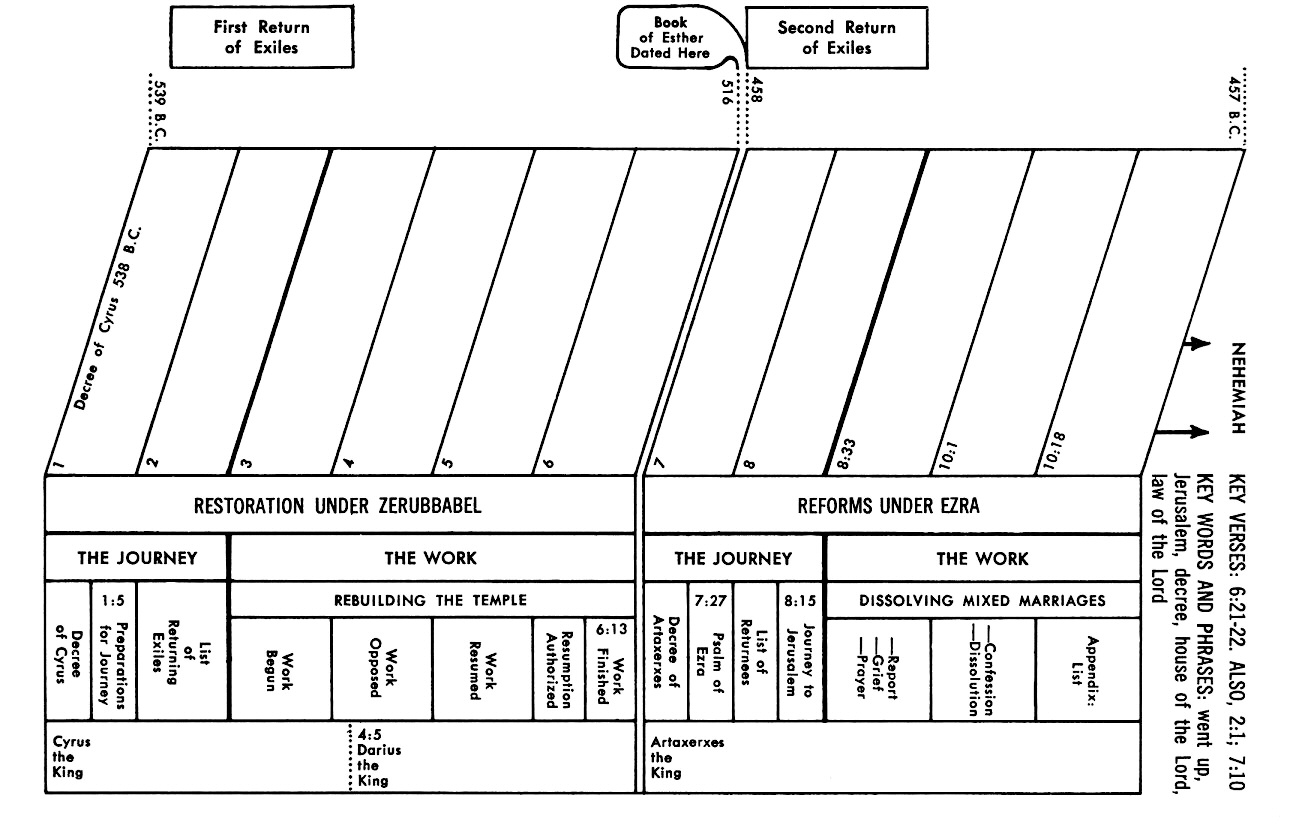
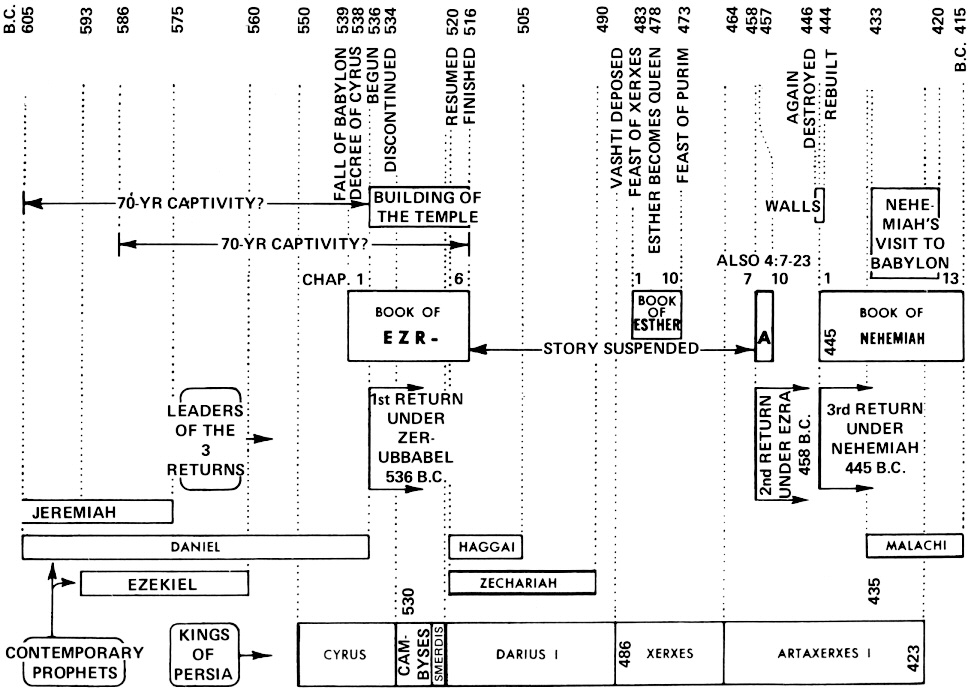
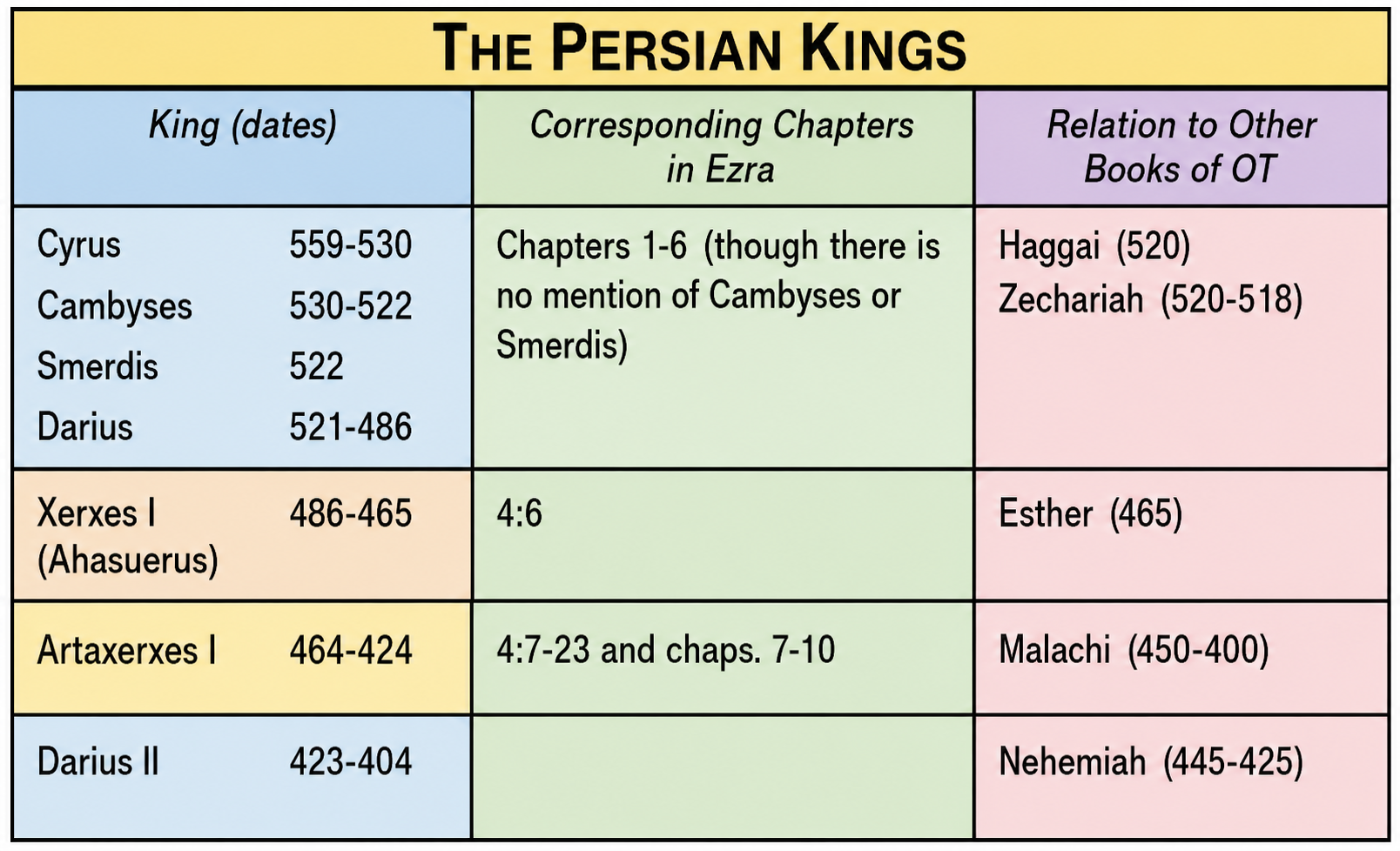
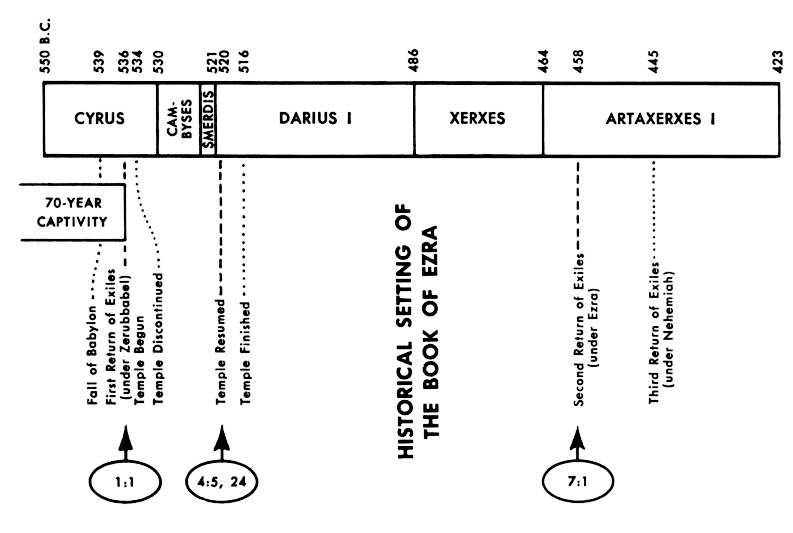
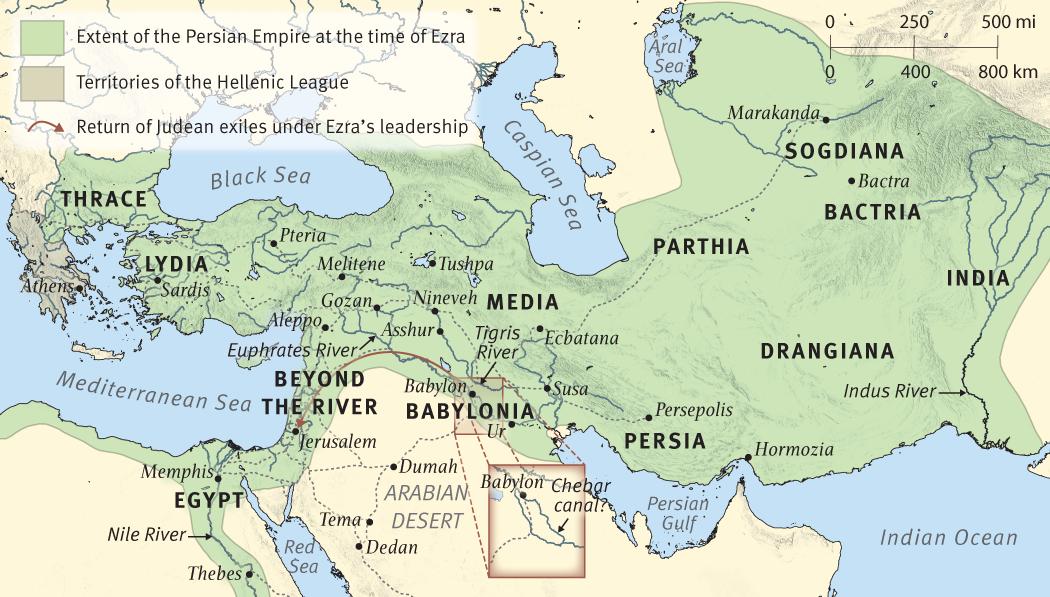
Source: ESV Maps
EZRA UNDER CONSTRUCTION
JUST A FEW NOTES NOW
WILL FINISH IF THE LORD WILLS
Ezra 2:1 Now these are the people of the province who came up out of the captivity of the exiles whom Nebuchadnezzar the king of Babylon had carried away to Babylon, and returned to Jerusalem and Judah, each to his city.
- the children (KJV): Ezr 5:8 Ezr 6:2 Ne 7:6-73 Es 1:1,3,8,11 Es 8:9 Ac 23:34
- whom Nebuchadnezzar (KJV): 2Ki 24:14-16 2Ki 25:11 2Ch 36:1-23 Jer 39:1-18 Jer 52:1-34 La 1:3,5 La 4:22 Zep 2:7
Now these are the people of the province who came up out of the captivity of the exiles whom Nebuchadnezzar the king of Babylon had carried away to Babylon, and returned to Jerusalem and Judah, each to his city. Individuals from all of the tribes are included in this return to Jerusalem. The order of the restoration was as follows: (1) the return of the first detachment under Zerubbabel and Jeshua (538BC), ch1 - 6, and the books of Haggai and Zechariah; (2) the expedition of Ezra (455BC), well over fifty years later (ch7-10); (3) the commission of Nehemiah (445BC), thirteen years after the expedition of Ezra (Ne 2:1 - 6).
Bob Utley - "Now these are the people of the province" The same list in Neh. 7:7 has twelve names listed (possibly symbolic of the twelve tribes returning). It was very important for the Jews who returned from the Exile to be able to prove their lineage. Their Jewish lineage involved inheritance rights in Judah ("each to his city") as well as covenant renewal promises from YHWH.
Matthew Henry - The numbers that returned Ezra 1-35. An account was kept of the families that came up out of captivity. See how sin lowers a nation, which righteousness would exalt!
Steven Cole - Lessons from a List (Ezra 2:1-70)
Ezra 2 is the sort of passage that expository preachers are tempted to skip. You might find here some unique ideas for naming your baby (“Gazzam” [Ezra 2:48] has a certain ring to it!), but other than that, you wonder why God took up space in the Bible for this long list of unpronounceable names. It’s doubly hard to understand, because God put essentially the same list again in Nehemiah 7! These just aren’t the sort of chapters that you spend rapturous hours on during your quiet time!
But since all Scripture is profitable for teaching, reproof, correction, and training in righteousness (2 Tim. 3:16), we should not automatically skip these portions of God’s Word, but rather try to figure out why they’re in the Bible.
Why did Ezra include this list here? Perhaps there are several reasons (listed in Mervin Breneman, The New American Commentary [Broadman & Holman], p. 74). The list may legitimize land rights after the return from the exile. It may distinguish true Israelites from the Samaritans and show, in the face of Tattenai’s challenge (Ezra 5:3-4) those who were authorized by Cyrus to return and rebuild the Temple. Also, “the author and his readers were concerned about the continuity of this community with the preexilic Jewish nation. It was important to show that this community, though small and weak, continued God’s plan for Israel” (p. 73).
Derek Kidner observes (Ezra & Nehemiah, Tyndale Old Testament Commentaries [IVP], p. 36):
This chapter, however uninviting it may seem, is a monument to God’s care and to Israel’s vitality. The thousands of homecomers are not lumped together, but (in characteristic biblical fashion) related to those local and family circles which humanize a society and orientate an individual. … And for the people’s part, their tenacious memory of places and relationships, still strong after two generations in exile, showed a fine refusal to be robbed of either their past or their future.
He goes on to make the point that “the fundamental motive for this careful grouping was not social but religious.” In this new opportunity for Israel to live up to its calling, every priest must have his credentials, and every member too. The close of the chapter shows the restored nation, orderly, structured and ready for its main purpose, namely, worship.
Bringing together the various strands of these themes, the lesson for us from this list is that…
God is faithful to His chosen people, to discipline them for their sins and to restore them, so that they might live faithfully to His covenant.
Before we look at the spiritual and practical lessons, let’s look briefly at the structure and some of the details of the list. In Ezra 2:2, there are 11 names in Ezra, whereas Nehemiah 7:7 has 12. Most scholars think that a scribal error left out a name in Ezra and that the number 12 is significant as representing the 12 tribes. The Nehemiah and Mordecai of these verses are not the more well-known men from the books of Nehemiah and Esther.
From Ezra 2:2-20 is a list of various families and their numbers. The many numerical differences between Ezra and Nehemiah are probably due to scribal errors. Hebrew numbers are difficult to transcribe. From Ezra 2:21-35 is a list of various towns and their population. This is followed by a list of the priests (Ezra 2:36-39), Levites (those in the tribe of Levi who were not sons of Aaron), temple singers and gatekeepers (Ezra 2:40-42). The temple servants (Ezra 2:43-54) and the sons of Solomon’s servants (Ezra 2:55-58) numbered 392 all together, averaging only about 9 members per clan. Then comes a list of those who could not produce evidence of their tribal origin (Ezra 2:59-60), including certain priests (Ezra 2:61-63). The governor excluded them from serving as priests until a high priest could be authorized to use the Urim and Thummim, which were a means of determining God’s will.
Then the totals are given (Ezra 2:64-67), plus the number of servants, singing men and women, and livestock. There is a problem in that when you add up the numbers in Ezra 2:3-60, you get 29,818, but verse 64 lists the total as 42,360, a difference of 12,540. Some say that the difference represents women and children, but this would be a small number for 30,000 men. Others suggest that the 30,000 were from the tribes of Judah and Benjamin, whereas the 12,000 are from the northern tribes. But the bottom line is, the text does not account for the difference, and so we do not know. When you add the servants and the singers to the 42,360, you get 49,897 who returned in this first movement back to the land.
The chapter ends by noting that one of the first things the various heads of households did upon arriving in Jerusalem was to give a sizeable amount toward the rebuilding of the Temple. This showed their commitment to the Lord and to proper worship. The final verse (Ezra 2:70) reports that the people were resettled in their cities, with special mention of those responsible for worship.
Now let’s focus on the spiritual lessons here:
1. God is faithful to His chosen people, to discipline them for their sins and to restore them in His time.
As Kidner says (p. 36), “This chapter is a monument to God’s care….” He had led the sinful nation into captivity and now He leads them back to the land, just as He had promised through His prophets (Jer. 29:10-14). During the siege of Jerusalem, God had told Jeremiah to redeem his family ancestral property in Anathoth as a witness that “houses and fields and vineyards will again be bought in this land” (Jer. 32:6-15). Ezra’s list records 128 men from the village of Anathoth (Ezra 2:23) returning to the land. So this list underscores what we saw last week, that the return to the land came about because the Lord stirred up the heart of the pagan king Cyrus to fulfill His word through Jeremiah (Ezra 1:1-4). God’s faithfulness is the main banner to write above this list. There are three things to spell out in more detail:
A. GOD HAS A CHOSEN PEOPLE.
God chose Israel (those descended from Abraham, Isaac, and Jacob) to be His people. As Moses told the Israelites, “The Lord your God has chosen you to be a people for His own possession out of all the peoples who are on the face of the earth” (Deut. 7:6). He goes on to tell them that it was not because of anything special in them, but rather because of God’s sovereign oath to their forefathers. Then he says, “Know therefore that the Lord your God, He is God, the faithful God, who keeps His covenant and His lovingkindness to a thousandth generation with those who love Him and keep His commandments; but repays those who hate Him to their faces, to destroy them” (Deut. 7:9-10a).
Those verses are foundational to understanding why we have this list of names in Ezra 2. Ancestry was essential to being a Jew and being a Jew was essential to being a part of the covenant nation. The temple servants (2:43-54) and the sons of Solomon’s servants (Ezra 2:55-58) were probably not native Jews, but foreigners who were brought in to do the more menial tasks. By accepting the covenant of circumcision, they could be included in Israel (Exod. 12:48). But the point still stands, that ancestry was important. The 652 who could not prove their ancestry are singled out (Ezra 2:59-60) and were apparently given the same standing as circumcised foreigners. But they lacked legitimate grounds for claiming their tribal lands, as parceled out by Joshua.
By the time we get to the New Testament, the Jews had taken their ancestry too far. It led them into pride with regard to the Gentiles and to the false notion that a birth pedigree was sufficient for right standing with God. But John the Baptist confronted them: “Therefore bear fruits in keeping with repentance, and do not begin to say to yourselves, ‘We have Abraham for our father,’ for I say to you that from these stones God is able to raise up children to Abraham” (Luke 3:8).
As Jesus told Nicodemus, the important birth is not being born a Jew physically, but being born again spiritually through repentance and faith in Christ (John 3:1-21). Paul makes the same point, that it is those who are of the faith of Abraham who are his true children (Rom. 4:13-16; Rom 9:6-8; Gal. 3:29). Thus the evidence that we are God’s chosen people is not our physical birth, but rather the evidence of the new birth which is through faith in Christ. For this reason, Peter (2 Pet. 1:5-10) gives us a list of moral qualities that we need to add to our faith and concludes, “Therefore, brethren, be all the more diligent to make certain about His calling and choosing you.” Thus this registry of Jewish ancestry was a type of the registry that really matters, the Lamb’s book of life (Rev. 20:12). Make sure that your name is written there!
B. GOD IS FAITHFUL TO DISCIPLINE HIS CHOSEN PEOPLE.
The Babylonian captivity was God’s faithful discipline of His erring people. He had warned them that He would scatter them among the nations if they persisted in their disobedience (Deut. 28:64). God used the wicked Babylonians to discipline His people (Hab. 1) and to show them the emptiness of idolatry. Israel had not faithfully kept the sabbath, and so God expelled them from the land for 70 years of sabbaths (2 Chron. 36:21) to teach them the importance of obedience to His Word.
Hebrews 12:8 tells us, “If you are without discipline, of which all have become partakers, then you are illegitimate children and not sons” of God. In other words, if you claim to be a Christian and you live in deliberate disobedience to God without any negative consequences, you’re in bigger trouble than you realize! You may not be a true Christian at all. One mark of a true child of God is that when he sins, God faithfully disciplines him.
But—and this point is crucial—God does not discipline us to make us pay for our sins. Christ paid for our sins on the cross. Rather, He disciplines us that we might share His holiness (Heb. 12:10). In other words, restoration is the goal of God’s discipline of His true children.
C. GOD IS FAITHFUL TO RESTORE HIS CHOSEN PEOPLE IN HIS TIME.
When the 70 years were up, God restored His people to the promised land. This chapter is a specific, detailed record of God’s faithfulness to His covenant people. He knows how long His people need to be under His rod of discipline and He is able to restore them when the time is right.
Note that God did not wipe out the consequences of the nation’s sins, even when He restored them. They did not come back to beautiful cities and homes or to cultivated fields waiting to be harvested. They came back to piles of rubble and to fields overgrown with weeds. It required a lot of time and work to rebuild the devastated cities and to get the farm lands back into shape.
When God forgives our sin and restores us spiritually, He does not usually remove the consequences of what we did to incur His discipline. If you destroyed your family through your sinful anger, you may not get your family back when God restores you to a right relationship with Him. If you ran up huge debts because of your impulsive spending, repentance doesn’t mean that God will make all your creditors evaporate. You may have to work many years to pay your debts.
Also, note that those returning to the land were the children and grandchildren of those who brought on the captivity by their sins. The ones returning could have bitterly complained, “It’s not fair that we should have to rebuild what was destroyed because of our sinful parents!” But that kind of attitude reflects a rebellious heart towards the Lord. Our attitude should always be submission to the Lord in all of His dealings with us and gratitude that He doesn’t give us what we really deserve. If He should count iniquities, who could stand (Ps. 130:3)?
Thus God’s faithfulness is the banner over this long list of those returning to the land. But the other factor is the people’s response to God’s faithfulness:
2. Our response to God’s faithfulness should be to live faithfully to His covenant.
When God graciously gives us the opportunity to begin again as His covenant children after we’ve sinned, His grace should motivate us to obedience. This list implies three aspects of covenant faithfulness:
A. LIVING FAITHFULLY TO GOD’S COVENANT IMPLIES CONTINUITY.
One reason this list is here is to demonstrate to the current generation of Jews their historical continuity with the pre-exilic Jewish community that God had chosen (Breneman, pp. 50). “It was important to show that this community, though small and weak, continued God’s plan for Israel” (ibid., p. 73). They were now to carry on God’s purposes and to hand off to their children and grandchildren a vision for those purposes and for their identity as His people. The very fact that a person could say, “I am the son of so-and-so, the son of so-and-so, etc.,” back for many generations, and that he was dwelling on the family inheritance, was a graphic picture of God’s covenant faithfulness.
I’m afraid that continuity is a rather strange concept for most of us today. Unlike many of our grandparents who grew up and lived the rest of their lives in the home they were born in, we change homes and geographic locations frequently. Family ties don’t usually have much effect on those decisions. The Jews could trace their ancestry back for centuries. One modern traveler to the Middle East said that on one occasion, while he was in an Arab encampment, an Arab got up and related the history of his forebears back to 40 generations, and that others there obviously could have done the same thing (in Edwin Yamauchi, Expositors Bible Commentary [Zondervan], 4:617). Most of us could not name our eight (or more, due to divorce) great-grandparents. I have first cousins that I would not recognize if they walked in the room, in that I haven’t seen them since childhood. It’s a rare thing in America to have two or three generations where families have not been fragmented by divorce, often several times over.
The only person that I’ve heard say much about the importance of continuity is Edith Schaeffer (see Common Sense Christian Living [Thomas Nelson], chapters 3 & 4). She makes the point that there is great value in the effort required to preserve continuity in life, both through committed relationships and through handing down items that have meaning and memories attached to them. This could include a grandmother’s quilts and a grandfather’s well-worn Bible. Of course the continuity that she is emphasizing is based on God’s Word. We should hand off His truth and work to preserve it in our families from generation to generation.
B. LIVING FAITHFULLY TO GOD’S COVENANT IMPLIES COMMUNITY.
These Jews did not return to the land as so many individuals, to erect their fences and gated communities where they could come and go for years without even knowing their neighbors. They had a sense of community built on their common ancestry and faith. While they all lived in their respective cities and homes, Jerusalem was the center (Ezra 3:1) where they went up at least three times each year to worship God together. They had more of a cooperative society, rather than the competitive society that we live in.
As Americans, we are individualistic and competitive. You can see it in our driving habits. We speed up when someone wants to pass us. In Poland, they move over to the side and pass three abreast on two-lane roads! They cooperate; we compete! When it comes to our spiritual lives, we tend to read the Bible in individualistic terms, not in corporate terms. For example, when we read in Ephesians and Colossians about “the new man,” we think of each person’s new identity in Christ. In fact, the NASB translates it, “the new self.” But in the context, Paul is talking about the church as the one new man (see Col. 3:9-14). And while there is a legitimate sense in which our individual bodies are temples of God 1 Cor. 6:19), there is another sense in which the entire church is God’s temple, and we are being built together into a dwelling of God in the Spirit (Eph. 2:21-22). To live faithfully to God’s covenant, we need to recover the biblical sense of community with other believers.
C. LIVING FAITHFULLY TO GOD’S COVENANT IMPLIES COMMITMENT.
To give up your comfortable and familiar surroundings, pack up and move across 1,000 miles of hostile desert to a land that had been devastated by war took commitment! It wasn’t convenient, but those who made the move could not sing the Lord’s songs in Babylon (Psalm 137). They longed for Jerusalem and the Temple, where God’s glory had been known. And so they were willing to do whatever was required to see God enthroned among His people in His holy place. Their commitment can be seen in three strands:
(1) COMMITMENT TO WORSHIP.
This whole chapter centers on the return of the priest, Levites, singers, and doorkeepers of the Temple. It shows how Israel was organized for the purpose of worship. While there is a proper place for spontaneity in worship, there is also the need for proper order and planning. Our aim in worship is not to evoke a feeling, but to meet with the living God and to show forth His glory.
Also, the fact that the priests who could not confirm their ancestry were considered unclean and prevented from serving shows that holiness is an essential factor in proper worship. To be living as the world lives all week and then pop into church for a few minutes of worship is an abomination to God. All week long our lives should bring glory to God through holy thoughts, words, and deeds. Then our public worship on Sunday is an overflow of our gratitude and obedience to Him.
(2) COMMITMENT TO SERVICE.
The list shows us the variety of service, with the priests, Levites, singers, doorkeepers, and temple servants, each having their duty to perform for the smooth functioning of the whole. Some were more visible and up front. Others were more behind the scenes, but no less important. Even so, in the church, every member has been given a spiritual gift to exercise in serving the Lord for His glory (1 Pet. 4:10-11).
(3) COMMITMENT TO GIVING.
The first thing these people did upon returning, as far as the text records, was to go to the place where the house of the Lord had been and offer their gifts willingly to see it restored (2:68-69). The record of the animals (Ezra 2:66-67) tells us that some of the returning people were fairly comfortable, in that the horse (736 of them) was like the Cadillac of that day. Many more (Ezra 6,720) had donkeys, but among the 50,000, there were many who didn’t own any animals. They gave “according to their ability,” which implies that the wealthier people gave more, but the poor also gave as they could. Even so, Paul instructs us to put aside and give as the Lord has prospered us (1 Cor. 16:1-2). He commends the Macedonians who gave not only according to their ability, but even beyond their ability, of their own accord, begging Paul for the privilege of giving (2 Cor. 8:3-4).
Conclusion
Can God use a prosaic list of unknown names to spur us on to growth in godliness? Since it is in His Word which He promised will not return void unto Him (Isa. 55:11), I trust so.
First, are you one of His chosen ones? Make sure of it! I had someone ask me recently, “How can a person know that he is one of God’s elect?” My answer was, “That’s very simple. Answer this question: Have you truly put your trust in the Lord Jesus Christ and is there any evidence of that fact in your life?”
Second, are you experiencing and submitting to God’s faithful discipline in your life? This could be just the minor hassles that we all experience every day, or it could be a major trial. All these things are to train you to share His holiness as you submit joyfully to Him.
Third, are you seeking to live faithfully to His covenant? Covenant faithfulness will show itself in continuity, community, and commitment to worship, service, and giving. This chapter is a witness to God’s enduring faithfulness to His people. Our response to His faithfulness should be to live faithfully to His covenant.
Discussion Questions
- Why is it important practically to know that you are one of God’s chosen people? Will this lead to pride? Why/why not?
- Is God’s discipline always directly related to our sin? How is discipline different than punishment?
- What are some practical implications of the idea of continuity?
- Is competition an unbiblical concept? Where is the proper balance between competition and cooperation?
Brian Bell - Ezra 2
- THE PEOPLE (Ezra 2)
- Those who returned (Ezra 2:1-63)
- The 1st in the list is appropriately…Zerubbabel.
- Note break down: Leaders (Ezra 2:2); Families (Ezra 2:3-19); Towns (Ezra 2:20-35); Priests (Ezra 2:36-39); Levites (Ezra 2:40-42); Nethinim, Temple Helpers (Ezra 2:43-54); Solomon’s Servants (Ezra 2:55-58); and Those who couldn’t identify their genealogy (Ezra 2:59-63) [I like that this group is even mentioned...in a genealogy].
- What is the importance of this list? - The Lord knows His people personally.
- The common people were important to this rebuilding. [They actually contributed more then the heads of the fathers houses & the governor] (Neh.7:70-72)
- This list was also for Israel’s Racial Purity (pre-Messiah).
- The Total of Returnees (Ezra 2:64-70) Nearly 50,000 devoted pilgrims returned (49,897)
- What does God’s protection of His people during captivity & after their release tell you about His commitment to maintain a relationship w/His people, w/us?
Dale Ralph Davis - What You Can Discover on the Church Roll (Ezra 2)
We might as well admit that most of Ezra 2 doesn't exactly give us a warm glow inside. In Ezra 2 we have a list of returnees in 538 B.C., years before Ezra came on the scene. We can find a parallel to Ezra 2 in Nehemiah 7; 1 but we will focus on Ezra 2. In this chapter we snoop on the church roll and find it instructive, for it shows us what is - or should be - characteristic of the people of God.
I. The Passion that Should Rule Us - Ezra 2:36-39
In Ezra 2:2b-35 we have the tallies of the lay people; in vv 36-39 we have the tallies of four clans of priests. The total of almost 4,300 (actually, 4,289) priests constitutes approximately 10% of the total of v. 64. One in ten of the returnees was a priest. Why so many priests? Doubtless because they longed to serve at the altar in a restored temple, which they could not do in the exile. Their desire was to rebuild the altar and the temple, to restore the public worship of God so they could serve where they were meant to serve. Their attitude must have been like that of Psalm 84:1-2. What of you? Do the public ordinances of God's worship hold your affections? Does worship have such a grip on you?
II. The Status that May Elude Us - Ezra 2:40-42
Although probably all in these verses are Levites (341 of them), Kidner is probably right that those in v. 40 directly assisted the priests (seventy-four of them; cf. Num 3:5-10). That's one Levite to every fifty-eight priests. Those are precious few Levites to do the chores and the assisting tasks connected with temple worship - no big incentive for Levites to return. But here are seventy-four of them who did. There was plenty of work for them, but little recognition or status.
A good bit of Christian work is pretty plain and basic - not much drama or flair about it. We are not called to promote ourselves or to gain status and recognition, to make the Christian "All Star" team. Yet, an assisting role does not appeal to our pride. We don't want to play second fiddle. We want credit, recognition, thanks, praise, and visibility - or we'll be "hurt" (see 1 Cor 3:5).
III. The Providence that Leads Us - Ezra 2:43-58
1. Text
There are two sections here: the temple servants (Ezra 2:43-54) and the sons of Solomon's servants (Ezra 2:55-57). The total number of people contained in the two groups is 392 (Ezra 2:58). According to Ezra 8:20, David had given these "temple servants" to the Levites to assist them. Their work, therefore, consisted of the most menial tasks around the temple complex.
2. Observation
Edwin Yamauchi says 68% of the names of the temple servants are of foreign origin, and 33-40% of "Solomon's servants" are foreign names. Perhaps they were descendants of prisoners of war (during David's time) or descendants of the pagan enclaves that Solomon pressed into slavery (1 Kings 9:20-21). If so, now the descendants of these pagan ancestors are listed among the covenant people of God as they are restored to their land.
3. Circumstance
It seemed to be a chance occurrence - an ancestor had been captured in war years ago, had been brought into Israel, and had done menial grunt work around the first temple. But that placed them in the very sanctuary of truth, where they might see the gospel of atonement via the sacrifices, or hear priestly instruction. Somewhere in the passing of generations the truth took hold so that these "foreigners" came to be numbered among God's people in Ezra 2.
4. Import
Don't some of you know something of this sort of thing? A disappointment, a change of fortune in your life or in your family, a circumstance radically and sadly altered - yet it proved to be the launching pad for the gospel coming into your life. That's the providence that leads us.
IV. The Uncertainty that Can Shadow Us - Ezra 2:59-63
1. Problem
Here are three lay families and three priestly families that are unable to prove their descent (vv 59b, 62).
2. Clarification
This is not to say that these folks were not Israelites or bona fide priests, but that they could not prove it, could not authenticate their standing. They could have temporarily lost access to genealogical records. In any case, the problem is not that their status was not genuine but that it was not clear. Hence, as in v. 63, those who claimed to be priests could not serve in that capacity until they could demonstrate their position.
3. Observation
They did not have credentials and so were limited, but it did not keep them from "coming up" from Babylon, from joining the pilgrim people and returning to Jerusalem. They remained among the people of God even though this uncertainty hung over them.
4. Application
Is there a rough analogy here with those in Christian congregations who lack assurance of their salvation? Notice that in the text here the question centers on doubt about the standing of these claimants. The essential concern figures with Christians who lack assurance. They wonder, "Do I belong?" They are bothered by fears and anxieties, plagued by a strange sense that the Christ in whom they've trusted may cast them out at the last. What should such people do? Could we claim that Ezra 2 provides an answer? Like these folks of unproven descent, they should stay among the people of God, join in their worship, share in their life, keep their place there until God sheds more light on their case.
V. The Generosity that Should Mark Us - Ezra 2:68-69
The gift of the heads of households consisted of 61,000 darics (=1,133 lbs. of gold) and 5,000 minas (=6,300 lbs. of silver). The numbers in the Neh 7 parallel differ somewhat. Note that the number of slaves (v. 65), in light of the overall number (v. 64), shows there was about one slave to every six freemen. Therefore, some of the returnees must have had substantial wealth, and, though there was reason to hold it back in view of the uncertain times, they instead gave generously. Here is sacrifice - a clear proof that mammon is not king (see Luke 12:33-34).
VI. Conclusion
Ezra 2 is only a "church roll" with names and numerals, and with some addresses. It is not titillating to read. But you could do worse than being like this "church:" here is a people with a passion for worship; some who don't care whether they are recognized; a people who look back and see the strange twists of God's providence in bringing them to himself; and a people who have a place for the uncertain and fearful of Christ's flock.
Ezra 2
Each of you should give what you have decided in your heart to give … for God loves a cheerful giver. - 2 Corinthians 9:7
TODAY IN THE WORD
The test of commitment lies not in starting out but in following through when difficulties arise. We don’t evaluate the strength of a marriage on the wedding day—it’s only possible after we see how a couple respond to adversity and the passing of time. We don’t award medals for athletes who begin a race; they have to earn them by completing the distance despite their burning lungs and quivering legs.
One theme of Ezra and Nehemiah is the test of commitment when tested by opposition and challenges. In our reading yesterday we saw that the tribal and religious leaders followed the prompting of the Lord to return to Jerusalem. Today we see the first step of their follow-through on that commitment.
The list of the people who returned might cause our eyes to glaze over. So many strange names, and seemingly irrelevant list of numbers! But interesting information is embedded in this list that gives us clues about the important message communicated to us through the book of Ezra. Notice the main categories described after the geographical list: the priests, the Levites, the singers, the gatekeepers of the temple, the temple servants and servants of Solomon (vv. 36, 40, 41, 42, 43, 55). This return to Jerusalem had spiritual significance, indicated by the list of religious leaders. Throughout the Exile, God had preserved the spiritual leadership for His people.
The importance of spiritual leadership is highlighted further by the incident in verses 59 through 63. As the book of Ezra will stress repeatedly, the purity of God’s people is vitally important for their obedience and relationship with God. With no family records to verify their claims of Jewish or priestly identity, this group was instructed not to participate as religious leaders until God’s divinely appointed tools for seeking wisdom could be used by a priest (v. 63; cf. Ex. 28:30; Num. 27:21).
Finally, the chapter concludes with their arrival in Jerusalem, and the “heads of families gave freewill offerings toward the rebuilding of the house of God” (v. 68). It was another step on their journey of commitment.
APPLY THE WORD
Most of us are better at starting something than we are at finishing. We need only look at half-finished craft projects, rarely used gym memberships, or list of friends whom we need to call. When it comes to our spiritual commitments, our continuing obedience reveals the state of our hearts. If you need to renew your journey, remember that the Lord equips you and take action today—whether it’s prayer, serving someone in need, or perhaps giving generously—to live for Him.
Ezra 2:1-2, 64-70; Jeremiah 24:1-10
I will give them a heart to know me, that I am the Lord. - Jeremiah 24:7
TODAY IN THE WORD
The names of over 4.5 million Jews who perished in the Holocaust are stored in the computers at Yad Vashem, the Holocaust memorial in Jerusalem. Visitors can search for a person’s name, and if that name is on file all known information about that individual will appear, including a photo. The memorial continually seeks and gathers information on Holocaust victims, and workers there say that the ultimate goal is to identify each one of the six million victims.
Yad Vashem is a very moving example of the importance of names. Names are important to God, too, as we will see in our study of Ezra and Nehemiah. Today’s reading is the first of six daily readings this month that include extended lists of names. In addition to today’s reading, you may want to skim Ezra 2:3–63.
Many Bible students wonder about the value of the Scripture’s long lists of names. In the case of the Jews who came back to Jerusalem from Babylon, lists like the one in Ezra 2 were important for several reasons. For one thing, since the total number of people who came back with Zerubbabel was 49,987, accurate family records were essential.
It was important, too, that the priests, Levites, and others who were to serve in the rebuilt temple be identified so their service could be established. In fact, those whose family records could not be found were excluded from the priesthood (2:59–63). The list is also important because the Jews who submitted to Babylon and went into exile were the ones who, according to Jeremiah’s prophecy, were obedient to God and would be blessed by Him.
TODAY ALONG THE WAY
Praise God that He knows our names! Jesus said, “Rejoice that your names are written in heaven” (Luke 10:20). When you think of friends, coworkers, and family members who don’t know Christ as their Savior, do some names come to mind? Take some extra time this weekend to pray for at least three unsaved people you know, and ask God to give you a “divine appointment” to witness and share the gospel with them. To aid you in praying for these friends, add their names to your prayer list.
Ezra 2:2 These came with Zerubbabel, Jeshua, Nehemiah, Seraiah, Reelaiah, Mordecai, Bilshan, Mispar, Bigvai, Rehum and Baanah. The number of the men of the people of Israel:
- Zerubbabel (KJV): Ezr 1:11, Sheshbazzar, Ne 7:7 Hag 1:1,12,14 Hag 2:2,4,21 Zec 4:6-10 Mt 1:12,13, Zorobabel
- Jeshua (KJV): Ezr 3:8,9 Ezr 4:3 Ezr 5:2 Hag 1:12,14 Hag 2:4 Zec 3:1,3,8,9, Joshua
- Seraiah (KJV): Ne 7:7, Azariah, Raamiah, Nahamani, Mispereth, Nehum
- Rehum (KJV): Ezr 4:8
These came with Zerubbabel, Jeshua, Nehemiah, Seraiah, Reelaiah, Mordecai, Bilshan, Mispar, Bigvai, Rehum and Baanah. The number of the men of the people of Israel
Ryrie - Jeshua. The high priest (3:2) = Joshua in Haggai and Zechariah. Nehemiah. Not the famous governor who went 80 years later. Mordecai. Not the one in the book of Esther who remained in Persia.
Derek Kidner - Jeshua the High Priest (Zechariah 3:1), whose name (in Greek, ‘Jesus’) is spelt Joshua in Haggai and Zechariah, was Zerubbabel’s fellow-leader. (Ezra and Nehemiah)
Bob Utley - "Zerubbabel" This name (BDB 279) means "begotten in Babel" or "offspring of Babel" from the root, "sowing" (BDB 283), or NIDOTTE, "shoot of Babylon," Ezra 2:4, p. 1312. Apparently this man was a grandson of Jehoachin, the exiled king of Judah (cf. 1 Chr. 3:19). He led the second wave of returnees to Judah. ▣ "Jeshua" This name (BDB 221) means "YHWH is salvation," "YHWH brings salvation" or "salvation is of YHWH." The names Jeshua (Aramaic; same as Jesus, cf. Matt. 1:21), Joshua (Hebrew, cf. Hag. 1:21). He is also a relative of Ezra (i.e., the tribe of Levi, family of priests, cf. Ezra 7:1-5). ▣ "Nehemiah" This is not the cup bearer of Artaxerxes who later built the wall of Jerusalem. This man was a leader who returned with Zerubbabel in the second wave of returnees. The name (BDB 637) means "YHWH(iah) is comfort." ▣ "Seraiah" This was the name of the High Priest in Jerusalem who was killed when Nebuchadnezzar destroyed the temple (cf. 2 Kgs. 25:18; Jer. 52:24). The person listed here is a Levite or priest who returned with Zerubbabel. The name (BDB 976) means "YHWH(iah) persisteth." Robert Young's Concordance, p. 861, and The Expositor's Bible Commentary, p. 606, has the meaning as "YHWH is Prince." The parallel in Neh. 7:7 has Azariah. ▣ "Reelaiah" This leader appears only here, as is true of the vast majority of these names. He was born in exile. His name means "YHWH(iah) causes trembling or reeling" (BDB 947). The parallel in Neh. 7:7 has Raamiah. ▣ "Mordecai" This is not Esther's relative during Xerxes I's reign. This was another leader who returned with Zerubbabel from Babylon. His name's meaning is uncertain, but seems to be from the god Marduk (BDB 598). ▣ "Bilshan" This returning leader's name may be from the root "to search" (Young's Concordance) or "to inquire" (BDB 119). Nothing else is known of him. ▣ "Mispar" This returning leader is called Mispereth in Neh. 7:7. The name is related to the Hebrew term "to write" and may mean "scribe" (BDB 709, Young's Concordance, p. 664). ▣ "Bigvai" This returning leader is also mentioned in Ezra 2:14; Ezra 8:14 and Neh. 7:7,19; Neh 10:16. His family was active in post-exilic Jerusalem. The rabbis think he was governor of the province of Judah from 410-407 B.C., but this would make him far too old to have returned from Babylon in 538 B.C. His name comes from the Sanskrit root "to be happy" (BDB 94). ▣ "Rehum" The returning leader is called Nehum in Neh. 7:7. The same name is (1) that of a Levite who helped organize the repair of Jerusalem's walls in Neh. 3:17 and (2) listed as a priest in Neh. 12:3. The name seems to be related to the Hebrew term for "soft," "gentle," or "compassionate" (BDB 933). ▣ "Baanah" This returning leader forms the conclusion of a list of twelve in Nehemiah 7, but only eleven in Ezra 2. His name may mean "son of grief" or "son of distress" (BDB 128). A similar name is found in Neh. 3:4 of a man who helped repair the Fish Gate of Jerusalem. It also appears later in Neh. 10:27. ▣ "the number of the men of the people of Israel" This listing is similar to Nehemiah 7.
- in Ezra 2:3-20 we deal with the genealogy of the returnees
- in Ezra 2:21-35 we deal with the genealogy of the people in relation to their geographical place of family origin before the Exile
- in Ezra 2:36-58 we deal with the personnel of the temple
- in Ezra 2:59-63 we deal with those who cannot serve as priests because they cannot document their genealogy
There are several differences between this list and the list in Neh. 7, but also overwhelming similarity. Ezra and Nehemiah seem to have both worked from official lists, whether composed by Persian officials or Jewish scribes is uncertain, but apparently two distinct forms of the same list existed. Possibly later scribes updated either Ezra's or Nehemiah's copy. It is also possible that the differences reflect scribal errors in copying the lists over time (NET Bible, p. 712).
Ezra 2:3 the sons of Parosh, 2,172;
- children (KJV): The word children, in this table, when prefixed to the name of a man, signifies the descendants of that person, as from ver. 3-21; and when prefixed to the name of a town, place, etc., it signifies the inhabitants of that place, as from ver. 21-25.
- Parosh (KJV): Ezr 8:3, Pharosh, Ezr 10:25 Ne 7:8
the sons of Parosh, 2,172 - This name and number correlates with that of Nehemiah but there are a number of differences in exile counts between Ezra and Nehemiah as shown in the table below.
Ryrie - Ezra 2:3-19 These are apparently names of families, some members of which returned with Zerubbabel in 536 B.C. and others later with Ezra (cf. Ezra 8, 10; Neh. 10).
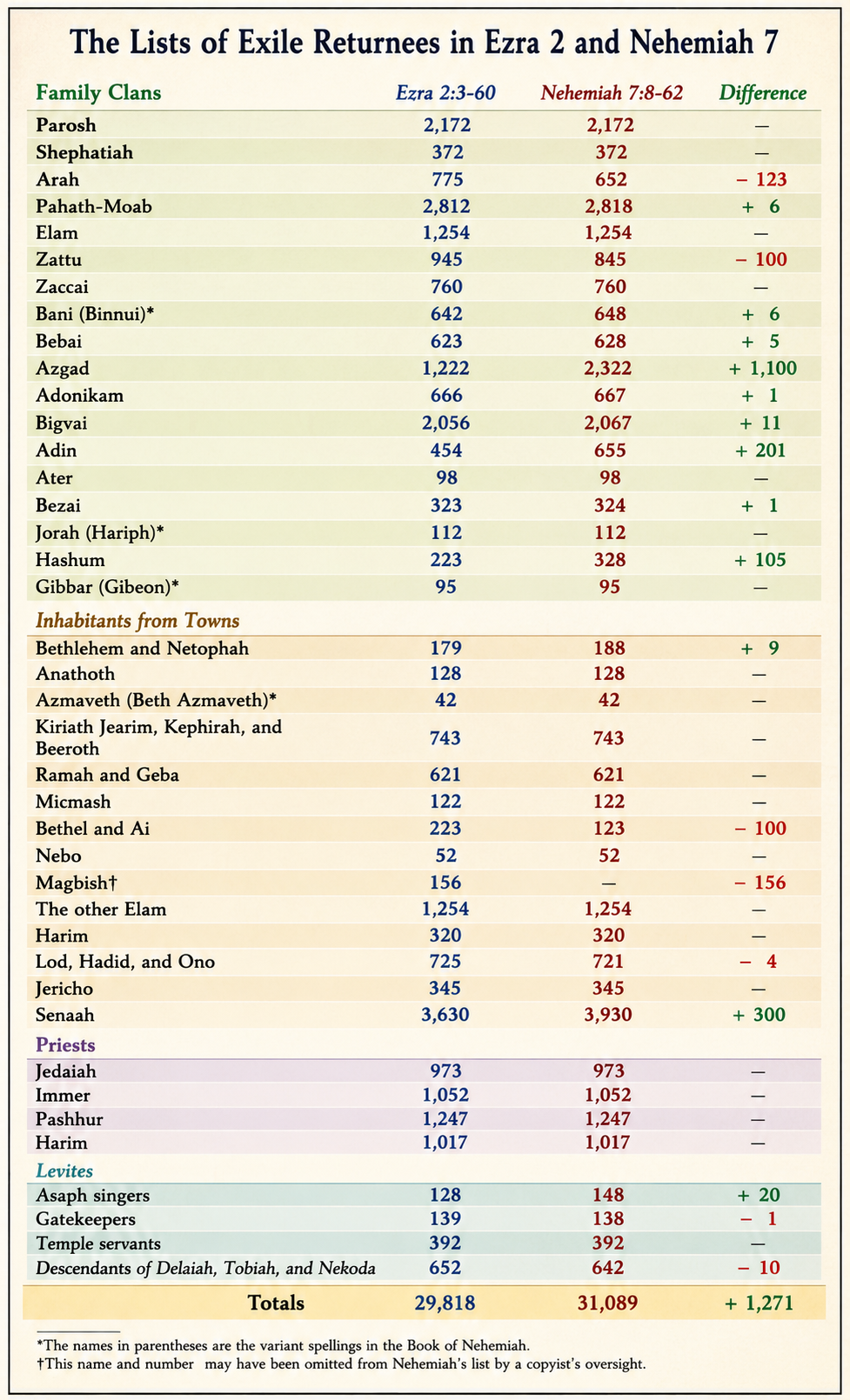
Source: Bible Knowledge Commentary page 688
Ezra 2:4 the sons of Shephatiah, 372;
- Shephatiah (KJV): Ezr 8:8 Ne 7:9
the sons of Shephatiah, 372;
Ezra 2:5 the sons of Arah, 775;
- Arah (KJV): Ne 6:18 Ne 7:10, 652
the sons of Arah, 775;
Ezra 2:6 the sons of Pahath-moab of the sons of Jeshua and Joab, 2,812;
- Pahathmoab (KJV): Ezr 8:4 Ezr 10:30 Ne 7:11, 2, 818, Ezr 10:14
- Joab (KJV): Ezr 8:9
the sons of Pahath-moab of the sons of Jeshua and Joab, 2,812
Bob Utley - "Pahath-moab" This name can mean (1) governor of Moab (Young's Concordance) (2) pit-Moab (BDB 809, "pit" can refer to calamity, cf. Jer. 48:43-44; Isa. 24:17), referring to exile. Both the Anchor Bible (vol. 14, pp. 12-13) and The Expositor's Bible Commentary (vol. 4, p. 608) state that it refers to transjordan Jews exiled by Tiglath-pilser III. The Anchor Bible cites 1 Chr. 5:26, while The Expositor's Bible Commentary cites 1 Chr. 5:3-8.
Ezra 2:7 the sons of Elam, 1,254;
- Elam (KJV): Ezr 2:31 Ezr 8:7 Ezr 10:26 Ne 7:12
the sons of Elam, 1,254
Ezra 2:8 the sons of Zattu,45;
- Zattu (KJV): Ezr 10:27 Ne 7:13, 845
the sons of Zattu,45
Ezra 2:9 the sons of Zaccai, 760;
Zaccai (KJV): Ne 7:14
the sons of Zaccai, 760
Ezra 2:10 the sons of Bani, 642;
- Bani (KJV): The variation of Bani, [Baniy <Strong's H1137>,] and Binnui, [Binnuwy <Strong's H1131>,] arises from the elision of, [Vav,] {wav:} but the LXX., have here [Banoui,] as in the parallel place. Ezr 10:34 Ne 7:15, Binnui, 648
the sons of Bani, 642
Ezra 2:11 the sons of Bebai, 623;
- Bebai (KJV): Ezr 8:11 Ezr 10:28 Ne 7:16, 628
the sons of Bebai, 623
Ezra 2:12 the sons of Azgad, 1,222;
- Azgad (KJV): Ezr 8:12 Ne 7:17, 2, 322
the sons of Azgad, 1,222
Ezra 2:13 the sons of Adonikam, 666;
- Adonikam (KJV): Ezr 8:13 Ne 7:18, 667
the sons of Adonikam, 666
Ezra 2:14 the sons of Bigvai, 2,056;
- Bigvai (KJV): Ezr 8:14 Ne 7:19, 2, 067
the sons of Bigvai, 2,056;
Ezra 2:15 the sons of Adin, 454;
- Adin (KJV): Ezr 8:6 Ne 7:20, 655
the sons of Adin, 454
Ezra 2:16 the sons of Ater of Hezekiah, 98;
- Ater (KJV): Ne 7:21
the sons of Ater of Hezekiah, 98
Ezra 2:17 the sons of Bezai, 323;
- Bezai (KJV): Ne 7:23, 324
the sons of Bezai, 323;
Ezra 2:18 the sons of Jorah, 112;
- Jorah (KJV): Ne 7:24, Hariph
the sons of Jorah, 112;
Ezra 2:19 the sons of Hashum, 223;
- Hashum (KJV): Ezr 10:33 Ne 7:22, 328
the sons of Hashum, 223;
Ezra 2:20 the sons of Gibbar, 95;
- Gibbar (KJV): Ne 7:25, Gibeon
the sons of Gibbar, 95;
Bob Utley - "Gibar" In Nehemiah 7:25 we have the word "Gibeon," which seems to begin a list of cities (cf. Ezra 2:21-35). Gibeon was a Levitical city in the tribal allocation of Benjamin (cf. Jos. 18:25).
Ezra 2:21 the men of Bethlehem, 123;
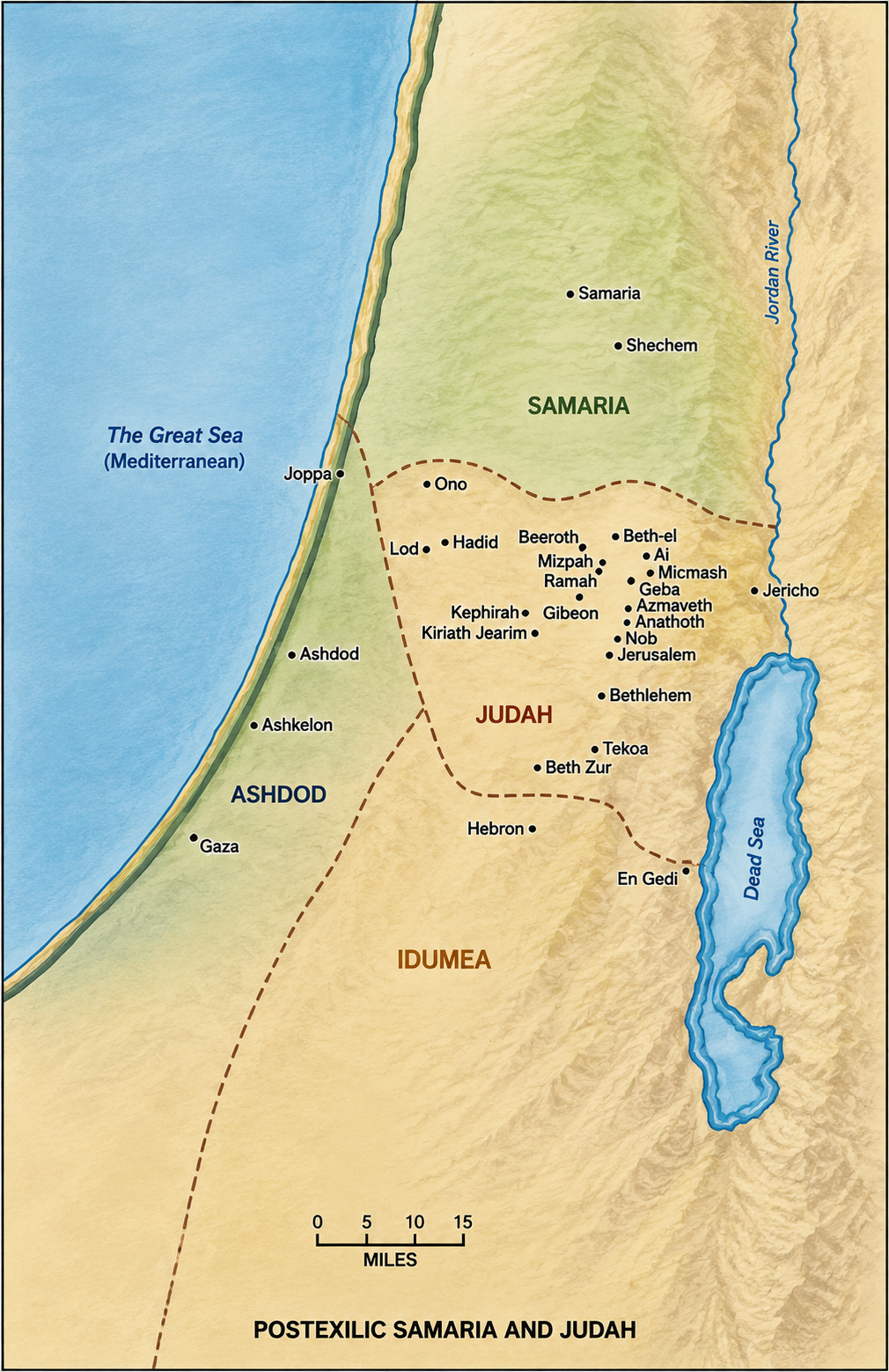
the men of Bethlehem, 123
Ezra 2:22 the men of Netophah, 56;
- Netophah (KJV): 2Sa 23:28 1Ch 2:54 Ne 7:26, 188, Jer 40:8
the men of Netophah, 56;
Bob Utley - "Netophah" This is a city south of Jerusalem near Bethlehem, apparently settled by Levites (cf. 1 Chr. 9:14,16). Men from this village are mentioned several times in the OT (cf. 2 Sam. 23:28,29; 2 Kgs. 25:23; 1 Chr. 2:54; 1 Chr 9:16; 1 Chr 11:30; 1 Chr 27:13,15; Jer. 40:8; Neh. 7:26).
Ezra 2:23 the men of Anathoth, 128;
- Anathoth (KJV): Jos 21:18 Ne 7:27 Isa 10:30 Jer 1:1 Jer 11:21
the men of Anathoth (see map), 128
Bob Utley - Other Benjaminite cities in this list are Anathoth (a Levitical city, also Jeremiah's home town), Ezra 2:23, Ramah (cf. Neh. 7:30), Ezra 2:26, Geba (a Levitical city also spelled Gabe, cf. Jos. 21:17), Ezra 2:26, Michmas (the name means "place of Chemosh"), Ezra 2:27, Bethel, Ezra 2:28, Ai (close to Bethel), Ezra 2:28, Jericho, Ezra 2:34
Ezra 2:24 the sons of Azmaveth, 42;
- Azmaveth (KJV): Ne 7:28, Beth-azmaveth
the sons of Azmaveth (see map), 42
Ezra 2:25 the sons of Kiriath-arim, Chephirah and Beeroth, 743;
- Kirjatharim (KJV): Jos 9:17 Ne 7:29, Kirjath-jearim
the sons of Kiriath-arim, Chephirah and Beeroth (see map), 743
Ezra 2:26 the sons of Ramah and Geba, 621;
- Ramah (KJV): Jos 18:24,25 Ne 7:30
the sons of Ramah and Geba (see map), 621
Bob Utley - "The priest" Ezra 2:36-58 lists a series of temple workers mentioned in order of their importance: priests, the Levites, the singers, the gatekeepers, the temple servants, and special servants. ▣ Three of the families of priests listed go back to the names of priests in David's day (cf. 1 Chronicles 24). (1) Jedaiah (family of Joshua, the first post-exilic High Priest, cf. 1 Chr. 9:10; Neh. 7:39) (2) Immer (cf. Jer. 20:1) (3) Harim (cf. Ezra 10:21; Neh. 3:11). David had twenty-four groups of priests (cf. 1 Chr. 24:7-19), but only four of them returned. Pashhur is mentioned in 1 Chr. 9:12; Ezek. 2:38; Ezek 10:22; Neh. 7:41; Neh 11:12.
Ezra 2:27 the men of Michmas, 122;
- Michmas (KJV): 1Sa 13:5,23 Isa 10:28, Michmash, Ne 7:31
the men of Michmas (see map), 122
Ezra 2:28 the men of Bethel and Ai, 223;
- Ai (KJV): Ge 12:8, Hai, Jos 7:2 Jos 8:9,17 Ne 7:33, 133
the men of Bethel and Ai (see map), 223
Ezra 2:29 the sons of Nebo, 52;
- Nebo (KJV): This Nebo was probably the Nabau which Eusebius and Jerome place eight miles south from Hebron. Nu 32:3 De 32:49 Ne 7:33 Isa 15:2 Jer 48:1,22
the sons of Nebo, 52
Ezra 2:30 the sons of Magbish, 156;
- Magbish (KJV): i.e. congregating; crystallizing, <Strong's H4019>. The children of Magbish are not named in our present copies of Nehemiah; but the Alexandrian MS. of the LXX. has the same reading as here. Ezr 2:30
the sons of Magbish, 156
Ezra 2:31 the sons of the other Elam, 1,254;
- Elam (KJV): Ezr 2:7 Ne 7:34
the sons of the other Elam, 1,254
Ezra 2:32 the sons of Harim, 320;
- Harim (KJV): Ezr 10:31 Ne 7:35
the sons of Harim, 320
Ezra 2:33 the sons of Lod, Hadid and Ono, 725;
- Lod (KJV): 1Ch 8:12 Ne 6:2 Ne 7:37 Ne 11:34,35
- Hadid (KJV): or, Harid, as it is in some copies, Hadid is probably the Adida of Josephus, and the Maccabees, (1 Mac 12:38; 13:13,) a city situated on a hill in the plain country of Judah, and the Aditha of Eusebius, which he places near Diospolis, Lydda, or Lod.
the sons of Lod, Hadid and Ono, 725
Ezra 2:34 the men of Jericho, 345;
- Jericho (KJV): 1Ki 16:34 Ne 7:36
the men of Jericho, 345
Ezra 2:35 the sons of Senaah, 3,630.
- Senaah (KJV): Ne 7:38, 3, 930
the sons of Senaah, 3,630
Ezra 2:36 The priests: the sons of Jedaiah of the house of Jeshua, 973;
- Jedaiah (KJV): 1Ch 9:10 1Ch 24:7
- Jeshua (KJV): Ezr 3:9 Ne 7:39
The priests: the sons of Jedaiah of the house of Jeshua, 973
Matthew Henry - The numbers of the priests and Levites - Ezra 2:36-63. Those who undervalue their relation to the Lord in times of reproach, persecution, or distress, will have no benefit from it when it becomes honourable or profitable. Those who have no evidence that they are, by the new birth, spiritual priests unto God, through Jesus Christ, have no right to the comforts and privileges of Christians.
Ezra 2:37 the sons of Immer, 1,052;
- Immer (KJV): Ezr 10:20 1Ch 24:14 Ne 7:40
the sons of Immer, 1,052
Ezra 2:38 the sons of Pashhur, 1,247;
- Pashur (KJV): Ezr 10:22 1Ch 9:12 Ne 7:41
the sons of Pashhur, 1,247
Bob Utley - "Pashhur" He is of the line of Zadok from Jedaiah (cf. 1 Chr. 9:10-12).
Ezra 2:39 the sons of Harim, 1,017.
- Harim (KJV): Ezr 10:21 1Ch 24:8 Ne 7:42
the sons of Harim, 1,017
Ezra 2:40 The Levites: the sons of Jeshua and Kadmiel, of the sons of Hodaviah, 74.
- Hodaviah (KJV): Ezr 3:9, Judah, Ne 7:43, Hodevah
The Levites: the sons of Jeshua and Kadmiel, of the sons of Hodaviah, 74
Ryrie - 2:40 Only 74 Levites had chosen to return, in contrast to 4,289 priests (vv. 36-39). Ezra found the same reluctance on the part of the Levites in his day (8:15), probably due to their inferior status in comparison to ministering priests.
G Campbell Morgan - An examination of this list is remarkable principally from the small number of Levites who returned. Nearly ten times as many priests as Levites went back to the land. This, of course, was an inversion of the original order.
Bob Utley - "The Levites" It needs to be remembered that all priests are Levites, but not all Levites are priests. Only the descendants of the family of Aaron performed the sacrificial chores. The other Levites were to be helpers of the priests and teachers of the Law. Notice how few Levites (74) returned in comparison to priests (973). Possibly fewer of them were exiled or temple service for them was too physical and strenuous.
Ezra 2:41 The singers: the sons of Asaph, 128.
- Asaph (KJV): 1Ch 6:39 1Ch 15:17 1Ch 25:1,2 Ne 7:44 Ne 11:17
The singers: the sons of Asaph, 128
Bob Utley - "The singers: the sons of Asaph" From the time of David, we know that there were three groups of Levitical singers: Asaph, Heman and Jeduthun (cf. 1 Chr. 25:1-8). We do not know what happened to the other two groups.
Ryrie - 2:41 Asaph. An outstanding musician in the time of King David who was appointed minister of music in the Temple (1 Chron. 15:19; 1 Chron 16:5) and whose descendants were also official musicians. Pss. 50, 73-83 are attributed to Asaph.
Ezra 2:42 The sons of the gatekeepers: the sons of Shallum, the sons of Ater, the sons of Talmon, the sons of Akkub, the sons of Hatita, the sons of Shobai, in all 139.
- the porters (KJV): 1Ch 26:1-19 Ne 7:45, 138
The sons of the gatekeepers: the sons of Shallum, the sons of Ater, the sons of Talmon, the sons of Akkub, the sons of Hatita, the sons of Shobai, in all 139
Bob Utley - "the gatekeepers" These specialized temple workers are mentioned in 1 Chr. 9:17-27; 1 Chr 26:1-19. Their duties are delineated in 1 Chr. 9:26-27. Sometimes they are called Levites (cf. 1 Chr. 9:26; 2 Chr. 23:4; Neh. 12:25), but other times they seem to be listed as a separate, yet related, group (cf. 2 Chr. 8:14; 2 Chr 35:15; Neh. 12:25). ▣ "Shallum" This chief of the gatekeepers (cf. 1 Chr. 9:17) is also called (1) Meshelemiah, i Chr. 9:21 (2) Shelemiah, 1 Chr. 26:14 (3) Meshullam, Neh. 12:25. This variety shows (1) they had several names or nicknames (2) the list is so easily corrupted in copying (3) often titles or occupations become names
Ryrie - 2:42 gatekeepers. They kept unauthorized people from entering forbidden areas in the Temple.
Ezra 2:43 The temple servants: the sons of Ziha, the sons of Hasupha, the sons of Tabbaoth,
- Nethinims (KJV): Ezr 2:58 1Ch 9:2 Ne 7:46-56 Ne 10:28
- Hasupha (KJV): This variation only exists in the translation, the original being written here Husupha, and in the parallel place defectively, Hasupha. Ne 7:46, Hashupha
The temple servants: the sons of Ziha, the sons of Hasupha, the sons of Tabbaoth - Descendants of the Gibeonites (Josh. 9).
Bob Utley - Ezra 2:43,58,70 "the temple servants" Nethinim means, "the given ones" (BDB 682). This term was used for the Levites being given by God to serve the temple to help the priests in Num. 3:9; Num 8:16; Num 16:9, but here this group apparently were descendants of Canaanite slaves who were used for service in the temple. This is because of the unusual non-Jewish names. This use of captured people was not uncommon in David's day (cf. 2 Sam. 15:18-22). The Gibeonites, who tricked Joshua during the conquest, fall into the same kind of category (cf. Jos. 9:27). It also appears that Ezekiel speaks to this group in Ezek. 44:6-31.
Henry Morris - Nethanims. The Nethanims were an order of servants established by David for the more lowly aspects of the Levitical ministries (Ezra 8:20).
Ezra 2:44 the sons of Keros, the sons of Siaha, the sons of Padon,
- Siaha (KJV): {Sia,} [Ciya <Strong's H5517>,] is merely a contraction of, [Ciyaha <Strong's H5517>,] Siaha, by the elision of, [He,] {hay.} Ne 7:47, Sia
the sons of Keros, the sons of Siaha, the sons of Padon
Ezra 2:45 the sons of Lebanah, the sons of Hagabah, the sons of Akkub,
- Lebanah (KJV): These variations merely arise from the mutation of, [He,] {hay,} into, ['Aleph,] according to the Chaldee dialect; the original, being respectively [Lebanah <Strong's H3838>,] Lebanah, [<Strong's H3838>,] and Lebana; [Chagaba <Strong's H2286>,] Hagabah, and [Chagabah <Strong's H2286>,] Hagaba. Ne 7:48, Lebana, Hagaba
the sons of Lebanah, the sons of Hagabah, the sons of Akkub
Ezra 2:46 the sons of Hagab, the sons of Shalmai, the sons of Hanan,
- Shalmai (KJV): or, Shamlai, Shamlai, of the Kethiv, is evidently a mistake for Shalmai, as the Keri and LXX. have.
the sons of Hagab, the sons of Shalmai, the sons of Hanan
Edwin Yamauchi - “‘Hanan’ (‘[God] is gracious’) is derived from the verb hanan (‘to be gracious’), and its derivatives are the components of numerous names borne by fifty-one persons in the Old Testament. These include Baalhanan, Elhanan, Hananel, Hanani, Hananiah, Hannah, Hanun, Henadad, Jehohanan, and Tehinnah. ‘Johanan’ (‘Yahweh is gracious’) has given us the name John. The woman’s name Hannah gives us Anna, Ann, Nan, and Nancy.” (See The Expositor's Bible Commentary: 1 Chronicles-Job - Page 394)
Ezra 2:47 the sons of Giddel, the sons of Gahar, the sons of Reaiah,
the sons of Giddel, the sons of Gahar, the sons of Reaiah
Ezra 2:48 the sons of Rezin, the sons of Nekoda, the sons of Gazzam,
the sons of Rezin, the sons of Nekoda, the sons of Gazzam
Ezra 2:49 the sons of Uzza, the sons of Paseah, the sons of Besai,
- Paseah (KJV): Ne 7:51, Phaseah
the sons of Uzza, the sons of Paseah, the sons of Besai
Ezra 2:50 the sons of Asnah, the sons of Meunim, the sons of Nephisim,
- Mehunim (KJV): Ne 7:52, Meunim, Nephishesim
the sons of Asnah, the sons of Meunim, the sons of Nephisim
Ezra 2:51 the sons of Bakbuk, the sons of Hakupha, the sons of Harhur,
the sons of Bakbuk, the sons of Hakupha, the sons of Harhur
Ezra 2:52 the sons of Bazluth, the sons of Mehida, the sons of Harsha,
the sons of Bazluth, the sons of Mehida, the sons of Harsha
Ezra 2:53 the sons of Barkos, the sons of Sisera, the sons of Temah,
- Thamah (KJV): Ne 7:55, Tamah
the sons of Barkos, the sons of Sisera, the sons of Temah
Ezra 2:54 the sons of Neziah, the sons of Hatipha.
the sons of Neziah, the sons of Hatipha
Ezra 2:55 The sons of Solomon’s servants: the sons of Sotai, the sons of Hassophereth, the sons of Peruda,
- Solomon's (KJV): 1Ki 9:21
- Peruda (KJV): Ne 7:57, Perida
The sons of Solomon’s servants: the sons of Sotai, the sons of Hassophereth, the sons of Peruda
Bob Utley - "The sons of Solomon's servants" As David used captured Canaanaites as temple slaves (cf. 2 Sam. 15:18-22), so too, Solomon used Canaanites as forced labor (cf. 1 Kgs. 9:20-21). ▣ "Hassophereth" This may be a proper name based on the root, "to write" (BDB 708) or a guild of scribes (cf. 1 Chr. 2:55, "the family of scribes"). The form is FEMININE, but used with MASCULINE words (cf. Pochereth-hazzebaim of Ezra 2:57); therefore, it is like Qoheleth of Ecclesiastes, which is a title or office and not a proper name.
Believer's Study Bible - 55-58) "Solomon's servants" are not otherwise identified, but apparently were descendants of the Canaanites Solomon had enslaved (1 Kin. 9:20, 21). They may have served as a supplement to the Nethinim (v. 43), since they are numbered together (v. 58). See 7:7, note.
Ezra 2:56 the sons of Jaalah, the sons of Darkon, the sons of Giddel,
- Jaalah (KJV): Ne 7:58, Jaala
the sons of Jaalah, the sons of Darkon, the sons of Giddel
Ezra 2:57 the sons of Shephatiah, the sons of Hattil, the sons of Pochereth-hazzebaim, the sons of Ami.
- Pochereth (KJV): Ne 7:59
- Ami (KJV): Ne 7:59, Amon
the sons of Shephatiah, the sons of Hattil, the sons of Pochereth-hazzebaim, the sons of Ami
Ezra 2:58 All the temple servants and the sons of Solomon’s servants were 392.
- Nethinims (KJV): Ezr 7:7 Jos 9:21,23,27 1Ch 9:2 Ne 3:26 Ne 7:60
- Solomon's (KJV): 1Ki 9:21
All the temple servants and the sons of Solomon’s servants were 392
Bob Utley - Solomon's servants are also mentioned in Neh. 7:60; Neh 11:3, but nowhere else in the OT.
Ryrie - Solomon's servants. His prisoners of war.
Ezra 2:59 Now these are those who came up from Tel-melah, Tel-harsha, Cherub, Addan and Immer, but they were not able to give evidence of their fathers’ households and their descendants, whether they were of Israel:
- Telharsa (KJV): Ne 7:61, Tel-haresha, Addon
- seed (KJV): or, pedigree
Now these are those who came up from Tel-melah, Tel-harsha, Cherub, Addan and Immer, but they were not able to give evidence of their fathers’ households and their descendants, whether they were of Israel
Bob Utley - "Tel-melah" The term "tel" meant a hill of ruins on which another city was built. The name means "hill of salt" (BDB 1068), which could denote a cultural way of cursing a defeated city ("sowed it with salt" so that nothing would grow, cf. Jdg. 9:45) or a geographical place where salt is located (e.g., "Salt Sea"). This may refer to Thelma of Ptolemy (cf. The Pulpit Commentary, vol. 7, p. 18) located in lower Babylon near the Persian Gulf. ▣ "Tel-harsha" This is another city in Babylon.
Believer's Study Bible - "Tel Melah," meaning "hill of salt," is probably Thelme of Ptolemy, a city of Lower Babylonia in the salt tract near the Persian Gulf. "Cherub" may be Chiripha, located in the same region. The other places mentioned are unknown.
Ezra 2:60 the sons of Delaiah, the sons of Tobiah, the sons of Nekoda, 652.
- of Delaiah (KJV): Ne 7:62, 642
the sons of Delaiah, the sons of Tobiah, the sons of Nekoda, 652
Ezra 2:61 Of the sons of the priests: the sons of Habaiah, the sons of Hakkoz, the sons of Barzillai, who took a wife from the daughters of Barzillai the Gileadite, and he was called by their name.
- the children (KJV): Ne 7:63,64
- Barzillai (KJV): 2Sa 17:27 2Sa 19:31-39 1Ki 2:7
Of the sons of the priests: the sons of Habaiah, the sons of Hakkoz, the sons of Barzillai, who took a wife from the daughters of Barzillai the Gileadite, and he was called by their name
Bob Utley - "the sons of Hakkoz" It is possible when one compares Ezra 8:33 ("Meremoth the son of Uriah the priest") with Neh. 3:4 ("Meremoth the son of Uriah the son of Hakkoz," also Ezra 2:21) that this man's claims to priestly lineage may have been substantiated. ▣ "Barzillai the Gileadite" This clan leader helped King David as he fled from Absalom (cf. 2 Sam. 17:27-29). David later tried to reward him for his service and friendship (cf. 2 Sam. 19:31-39).
Ezra 2:62 These searched among their ancestral registration, but they could not be located; therefore they were considered unclean and excluded from the priesthood.
- therefore (KJV): Lev 21:21-23 Nu 3:10 Nu 16:40 Nu 18:7
- were they, as polluted, put from the priesthood (KJV): Heb. they were polluted from the priesthood, Eze 44:10-14
These searched among their ancestral registration, but they could not be located; therefore they were considered unclean and excluded from the priesthood
Ezra 2:63 The governor said to them that they should not eat from the most holy things until a priest stood up with Urim and Thummim.
- Tirshatha (KJV): or, governor, The person who held this office at this time was probably Zerubbabel. The word {Tirshatha} is supposed to be Persian; and if, as Castel supposes, it signifies austerity, or that fear which is impressed by the authority of a governor, it may be derived from {tars,} "ear," or {tursh,} "acid, austere." Ne 7:65 Ne 8:9 Ne 10:1
- should not (KJV): Lev 2:3,10 Lev 6:17,29 Lev 7:16 Lev 10:17,18 Lev 22:2,3,10,14-16 Nu 18:9-11,19 Nu 18:32
- Urim (KJV): Ex 28:30 Lev 8:8 Nu 27:21 De 33:8 1Sa 28:6
The governor said to them that they should not eat from the most holy things until a priest stood up with Urim and Thummim.
Bob Utley - "governor" This Persian term, Tirshatha (BDB 1077) may mean "the feared," an idiom for government office. It is used of Nehemiah in Neh. 8:9 and 10:1. Sheshbazzar is called "governor" by a different name, Peha, which is an Assyrian term (BDB 1108) used in Ezra 5:3,6,14; Ezra 6:6,7,13; Dan. 3:2,3,27; Dan 6:8; and Haggai 1:1,14; Haggai 2:2,21. Both refer to the same office unless Sheshbazzar was subject to the satrap of Samaria. ▣ "Urim and Thummim" This refers to the special, but unknown, means of knowing God's will. It was kept in the breastpiece of the High Priest (cf. Exod. 28:30; Lev. 8:8; Num. 27:21; Deut. 33:8; 1 Sam. 28:6). They apparently had been lost or were unused for some reason (cf. Exod. 28:30; Num. 27:21). For a good brief discussion of the current theories as to what they were and how they worked, see The New International Dictionary of Old Testament Theology and Exegesis (NIDOTTE), vol. 1, pp. 329-330. Special Topic: Urim and Thummim
Henry Morris - Tirshatha. The "Tirshatha" was the governor appointed by Cyrus, presumably Zerubbabel (Ezra 2:2).
Believer's Study Bible - The "governor" (tirshatha, Persian) doubtless refers to Sheshbazzar or Zerubbabel (cf. 1:8, note; Neh. 7:65, 70). The title is also given to Nehemiah (cf. Neh. 8:9; Neh 10:1). A Babylonian word (pehah) is also translated "governor" and assigned to Nehemiah (Neh. 12:26), to Sheshbazzar (Ezra 5:14), and to Zerubbabel (Hag. 1:1). This indicates that the terms are practically the same. A chief duty of a Persian satrap or governor was to levy and gather taxes. This would explain why he gave money toward the rebuilding of the temple (Neh. 7:70) and why even Cyrus accounted to Sheshbazzar concerning the vessels of the temple (1:8). For "Urim and Thummim," cf. Ex. 28:30, note. Evidently the ability to interpret this device had been lost.
F B Meyer - Ezra 2:63 Till there stood up a priest with Urim and with Thummim.
It must have been a great disappointment to these people who found themselves excluded from sharing as priests. Their names were not on the register, and so they had to wait until a properly qualified authority could adjudicate their case. The mere inference of reason was not enough; they needed the direct corroboration of the anointed priest with Urim and with Thummim.
So in our life it is not enough to rely on the inference of reason, or to allow our Christian standing to be determined by the evidence of a document. We must seek the direct witness and testimony of the Holy Spirit. How many Christians there are who have no experimental knowledge of what the Apostle meant when he said that the Spirit witnesseth with our spirit that we are born again. They are always referring to inference, and the testimony of others; and therefore their consciousness varies, and they cannot eat of the holy bread of God. But when the Spirit of God speaks through the Urim and Thummin, and certifies that we are the children of God, giving us the white stone with its new name, and revealing Christ as dwelling within us, we have, immediately, boldness to enter into the holiest of all, and eat of the holy things.
Assurance is needful before we dare to appropriate the things which are freely given to us of God. Who of us is not able to verify this from his personal experience? We could not enjoy the Father’s table, so long as there was a doubt about our sonship. But the assurance of faith may be ours as we wait in the presence of our great High Priest, speaking to us by the Holy Spirit, who witnesses with our spirits that we are the children of God.
Ezra 2:64 The whole assembly numbered 42,360,
- forty (KJV): Though the sum total, both here and in Nehemiah, is equal, namely, 42,360, yet the particulars reckoned up only make 29,818 in Ezra, and 31,089 in Nehemiah; and we find that Nehemiah mentions 1,765 persons who are not in Ezra, and Ezra has 494 not mentioned in Nehemiah. This last circumstance, which seems to render all hope of reconciling them impossible, Mr. Alting thinks is the very point by which they can be reconciled; for, if we add Ezra's surplus to the sum in Nehemiah, and Nehemiah's surplus to the number in Ezra, they will both amount to 31,583; which subtracted from 42,360, leaves a deficiency of 10,777, which are not named because they did not belong to the tribes of Judah and Benjamin, or to the priests, but to the other Israelitish tribes. Ezr 9:8 Ne 7:66-69 Isa 10:20-22 Jer 23:3
The whole assembly numbered 42,360
Bob Utley - "The whole assembly numbered 42,360" This total is the same in Ezra 2, Neh. 7, and the apocryphal book of I Esdras. However, when you add the number of individuals in the different lists, they are different: Ezra, 29,818; Nehemiah, 31,089 and I Esdras, 33,950.
Edwin Yamauchi - “Depending on one’s estimate of the numbers deported and the number of returning exiles, we have widely varying estimates for the population of postexilic Judah: 20,000 to 50,000 by W.F. Albright, 60,000 by H. Kreissig, 50,000 to 80,000 by J. de Fraine, 85,000 by R. Kittel, 100,000 by S. Mowinckel, 150,000 by J. Weinberg, and 235,000 by A. Schultz. An estimate of 150,000 is more probably correct than Albright’s estimate.” (See The Expositor's Bible Commentary - Abridged Edition - Page 50)
Derek Kidner - The figure of 42,360 appears as the total also in Nehemiah 7:66 and 1 Esdras 5:41, yet the individual items add up to three different totals, as follows: Ezra, 29,818; Nehemiah, 31,089; 1 Esdras, 30,143. There have been attempts to explain the missing thousands: as members of the northern tribes, or as women, or as adolescents. But the narrative is silent on such points.”
Matthew Henry - The offerings for the temple - Ezra 2:64-70. Let none complain of the needful expenses of their religion. Seek first the kingdom of God, his favour and his glory, then will all other things be added unto them. Their offerings were nothing, compared with the offerings of the princes in David's time; yet, being according to their ability, were as acceptable to God. The Lord will carry us through all undertakings entered on according to his will, with an aim to his glory, and dependence on his assistance. Those who, at the call of the gospel, renounce sin and return to the Lord, shall be guarded and guided through all perils of the way, and arrive safely at the mansions provided in the holy city of God.
Ezra 2:65 besides their male and female servants who numbered 7,337; and they had 200 singing men and women.
- servants (KJV): Isa 14:1,2
- two hundred (KJV): Ex 15:20,21 2Sa 19:35 Ne 7:67 Ps 68:25 Ps 148:12,13 Ec 2:8 Jer 9:17,18 Mt 9:23
besides their male and female servants who numbered 7,337; and they had 200 singing men and women
Bob Utley - "200 singing men and women" This refers to secular musical entertainment (cf. 2 Sam. 19:35; Eccl. 2:8; Ezek. 26:13).
Ezra 2:66 Their horses were 736; their mules, 245;
Their horses were 736; their mules, 245;
Bob Utley - This list of domestic animals may relate to Ezra 1:6 (cf. Ezra 2:68-69).
Ezra 2:67 their camels, 435; their donkeys, 6,720.
their camels, 435; their donkeys, 6,720
Ezra 2:68 Some of the heads of fathers’ households, when they arrived at the house of the LORD which is in Jerusalem, offered willingly for the house of God to restore it on its foundation.
- offered freely (KJV): Ex 35:5-19,29 Ex 36:3 Nu 7:3-89 1Ch 29:5-17 Ne 7:70-73 Ps 110:3 Lu 21:1-4 2Co 8:3,12 2Co 9:7
- in his place (KJV): Ezr 3:3 1Ch 21:18 1Ch 22:1 2Ch 3:1
Some of the heads of fathers’ households, when they arrived at the house of the LORD which is in Jerusalem, offered willingly for the house of God to restore it on its foundation.
Bob Utley - "offered willingly" See note at Ezra 1:6.
Restoration Efforts
Encourage one another and build each other up. 1 Thessalonians 5:11
Ezra 2:68; Ezra 3:1, 3-7
In April 2019, a fire broke out in Notre-Dame de Paris—the city’s famed medieval cathedral—destroying the spire and a ‘forest’ of oak beams supporting the lead roof. Almost immediately, plans formed to restore the cathedral. Donations poured in from across the globe and craftsmen have undertaken restoration using the same building techniques and the same types of timber and stone employed in the original structure.
When Nebuchadnezzar instructed his armies to set fire to God’s temple in 586 bc as part of his siege on Jerusalem, the structure was decimated (2 Kings 25:9). When the people returned to Jerusalem after decades in captivity in Babylon, they “gave freewill offerings towards the rebuilding of the house of God” (Ezra 2:68).
After tending first to the altar, they “gave money to the masons and carpenters” and secured “cedar logs by sea from Lebanon” to help rebuild the temple (3:7). Though their efforts were opposed and even sabotaged, the task was finally completed, and God’s people once again worshipped Him in His temple (6:14-22).
As believers in Jesus, we—together—are God’s temple (1 Corinthians 3:16-17). God equips us to continuously restore fellow believers and “build each other up,” not with wood or stone, but with encouraging words, prayer and spiritual gifts (1 Thessalonians 5:11).
Reflect & Pray
How can you remember that you are a special part of God’s temple today? How has a fellow believer built you up recently?
Thank You, loving Father, for supplying what we need to build up and restore one another as Your temple.
Today's Insights - Just as God equipped the leaders and priests to encourage the Israelites (Ezra 2-3), throughout the ages, He’s equipped others to be encouragers. A prime example is “Joseph, a Levite from Cyprus,” better known as Barnabas, which means “son of encouragement” (Acts 4:36). God used him to speak on Paul’s behalf to the disciples, who were fearful because of the apostle’s former role as persecutor of the church (9:1-4, 26-28). Barnabas also taught the believers in Jesus in the church of Antioch, where he “encouraged them all to remain true to the Lord with all their hearts” (11:23). Later, Barnabas sought out and brought Saul to work with him. Just as God gave others the tools needed to encourage others, He can do the same for us.
Kirsten Holmberg - (Reprinted by permission from Our Daily Bread Ministries. Please do not repost the full devotional without their permission.)
Ezra 2:69 According to their ability they gave to the treasury for the work 61,000 gold drachmas and 5,000 silver minas and 100 priestly garments.
- the treasure (KJV): Ezr 8:25-34 1Ki 7:51 1Ch 22:14 1Ch 26:20-28 Ne 7:71,72
According to their ability they gave to the treasury for the work 61,000 gold drachmas and 5,000 silver minas and 100 priestly garments
Bob Utley - "According to their ability they gave" This becomes a Pauline principle (cf. Acts 11:29; 1 Cor. 16:12; 2 Cor. 8:3,11). The heart, not a percentage, is the key in giving. ▣ "drachmas" This is a weight of valuable metal serving as a set unit. Here it is spelled daric (alternative form is in 1 Chr. 29:7), later it will become drachma (Greek word). It is a loan word from a Semitic root earlier than Hebrew. Special Topic: Ancient Near East Weights and Volumes ▣ "minas" The term (BDB 584) means "a part" or "to count." This weight of valuable metal took 50 (cf. Ezek. 45:12) or 60 to make a shekel.
Ryrie - drachmas (lit., darics). Thick, gold Persian coins, each weighing 46 oz (130 gm). Thus the gifts amounted to 18,125 oz (1,133 lb, or 514 kg) of gold. minas were each equivalent to 1.25 lb, making a total of 100,000 oz (6,250 lb), or about three tons (2.9 metric tons) of silver.
Ezra 2:70 Now the priests and the Levites, some of the people, the singers, the gatekeepers and the temple servants lived in their cities, and all Israel in their cities.
- Ezr 6:16,17 1Ch 11:2 Ne 7:73 Ne 11:3-36
Now the priests and the Levites, some of the people, the singers, the gatekeepers and the temple servants (Nethinims) lived in their cities, and all Israel in their cities.
Bob Utley - This three-fold division of the people (priests, Levites, the people [other tribes]) is consistent throughout the book. The other three groups (singers, gatekeepers, and temple servants) designate both Jews and foreign servants who serve the cultus.
Yamauchi - Later Nehemiah would be compelled to move people by lot to reinforce the population of Jerusalem, as the capital city had suffered the severest loss of life at the time of the Babylonian attacks. (See Ezra, Nehemiah, Esther - Page 146)
The temple servants (Nethinim) - The term "Nethinim" means "given (or dedicated) ones," a form of which describes the Levites themselves in Num. 3:9 and 8:16. Likely the Nethinim were assigned the more menial tasks in the total temple program, serving the Levites (cf. 7:24; 8:20). They may have originated from among foreigners captured in war (see 1 Chr. 9:2, note). Their postexilic history indicates that they were strong and active participants in the Ezra-Nehemiah reconstruction. Zerubbabel had 392 in his first return (538-37 B.C.). Ezra brought some 220 Nethinim in the second return (8:20). Artaxerxes specifically exempted them from tolls, custom, and tribute (7:24), as he exempted other religious orders in Israel's temple program. The Ophel district of Jerusalem, just across from the Water Gate, was their duly assigned living area (Neh. 3:26, 31; Neh 11:21).
David Ben-Gurion “Almost the whole community of Babylonian exiles who stayed when Babylon was destroyed came to this country then years ago – and their number was nearly thrice the number of those who returned to Zion in the days of Ezra and Nehemiah.” (cited in Yamauchi describing the modern emigration of Jews from Iraq to Israel)
G Campbell Morgan - So the priests, and the Levites, and some of the people, and the singers, and the porters, and the Nethinim, dwelt in their cities, and all Israel in their cities. Ezra 2.70.
These words summarize the chapter which they close, It contains the register of those who, taking advantage of the decree of Cyrus, turned their faces toward their land, and settled in its cities. The list proceeds in a definite order from the leaders downwards. First the names are given of those immediately associated with Zerubbabel, Ezra 2.1-2. Then follow the names and numbers of families, Ezra 2.3-35; the names of members of the priest-hood, Ezra 2.36-39; the list and numbers of the Levites, Ezra 2.40-42 ; after these the Nethinim, Ezra 2.43-54; next the children of Solomon's servants, Ezra 2.55-58; then a number who had lost their genealogical relationship, Ezra 2.59-63; and finally the totals of the people, and the lists of the cattle. It is an interesting record, showing the mixed and representative nature of the returning remnant. There are one or two matters of special note. First, the people thus returning are distinctly spoken of as "the men of the people of Israel," Ezra 2.2. The reference is patently not to the northern kingdom only, for it was the southern kingdom that Nebuchadnezzar had carried away. It does, however, undoubtedly mean that representatives of those tribes which composed the northern kingdom, also returned. Again, it is noticeable that few comparatively of the Levites are named; ten times as many priests as Levites returned. Another point of interest is the Nethinim. Their origin it is almost impossible to determine. In all probability they were of foreign extraction, and had been admitted to some of the minor forms of service connected with Levitical work. The name signified "giver." Jewish tradition identified them with the Gibeonites (Joshua 9.3-17).