Hosea 10:2
Hosea 10:3
Hosea 10:4
Hosea 10:5
Hosea 10:6
Hosea 10:7
Hosea 10:8
Hosea 10:9
Hosea 10:10
Hosea 10:11
Hosea 10:12
Hosea 10:13
Hosea 10:14
Hosea 10:15

Hosea's Unconditional Love for Gomer
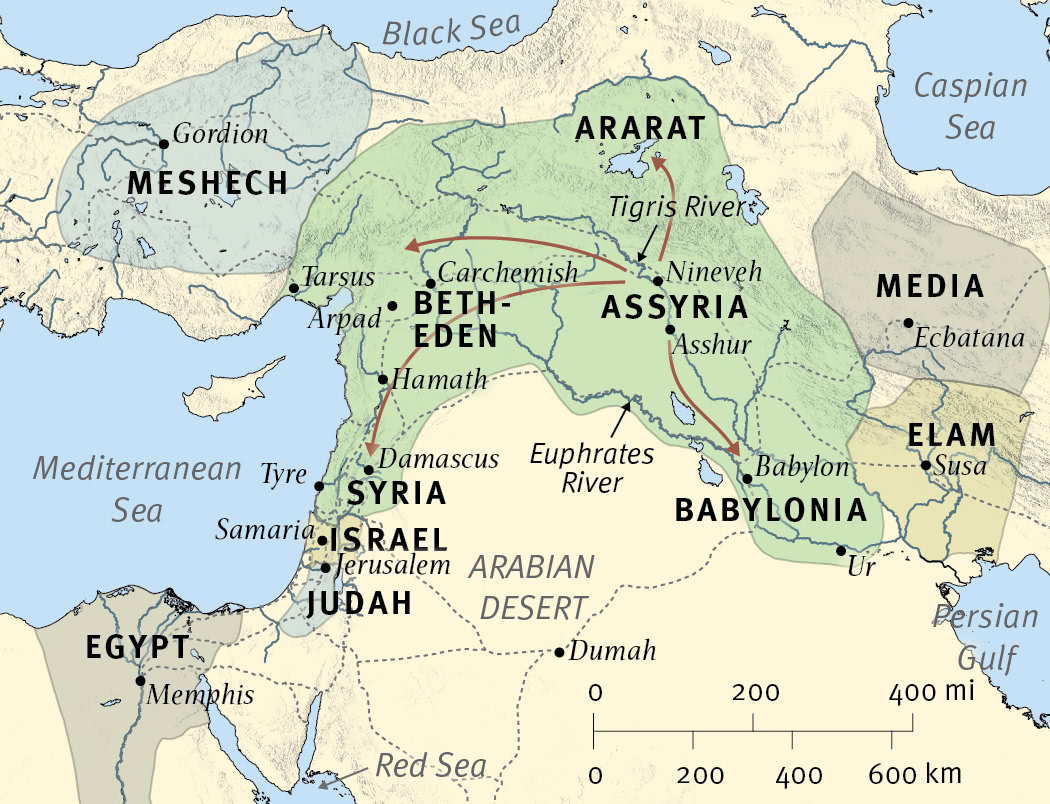
Source: ESV Global Study Bible
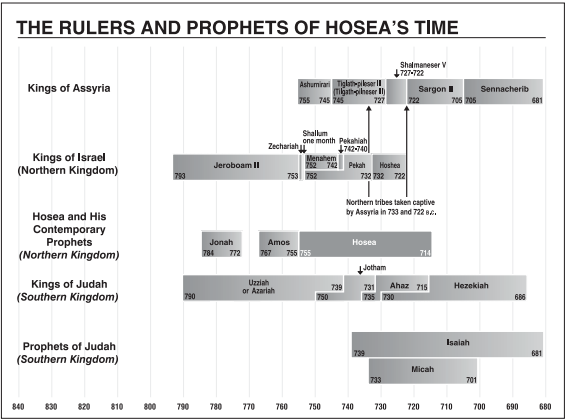
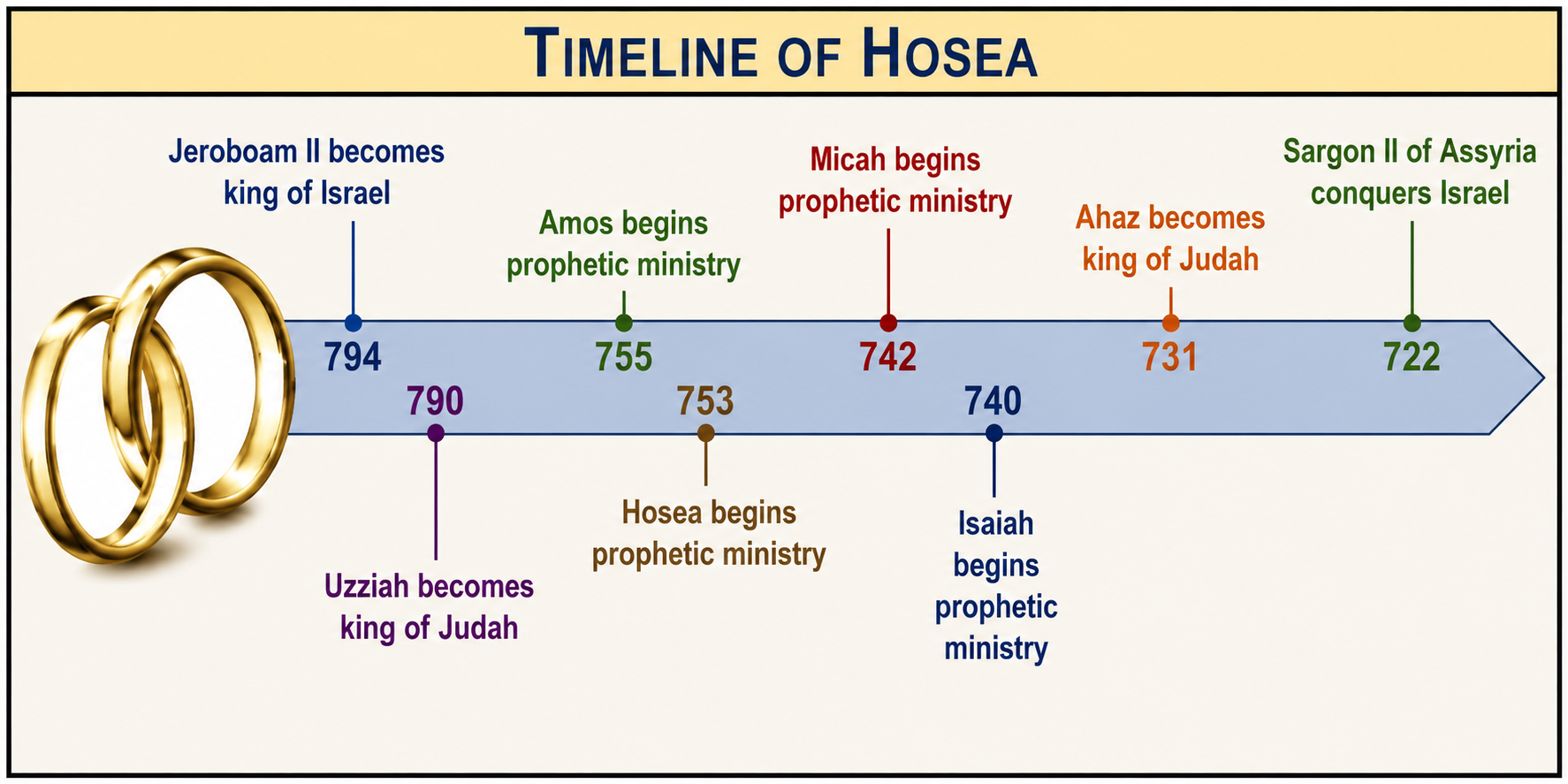
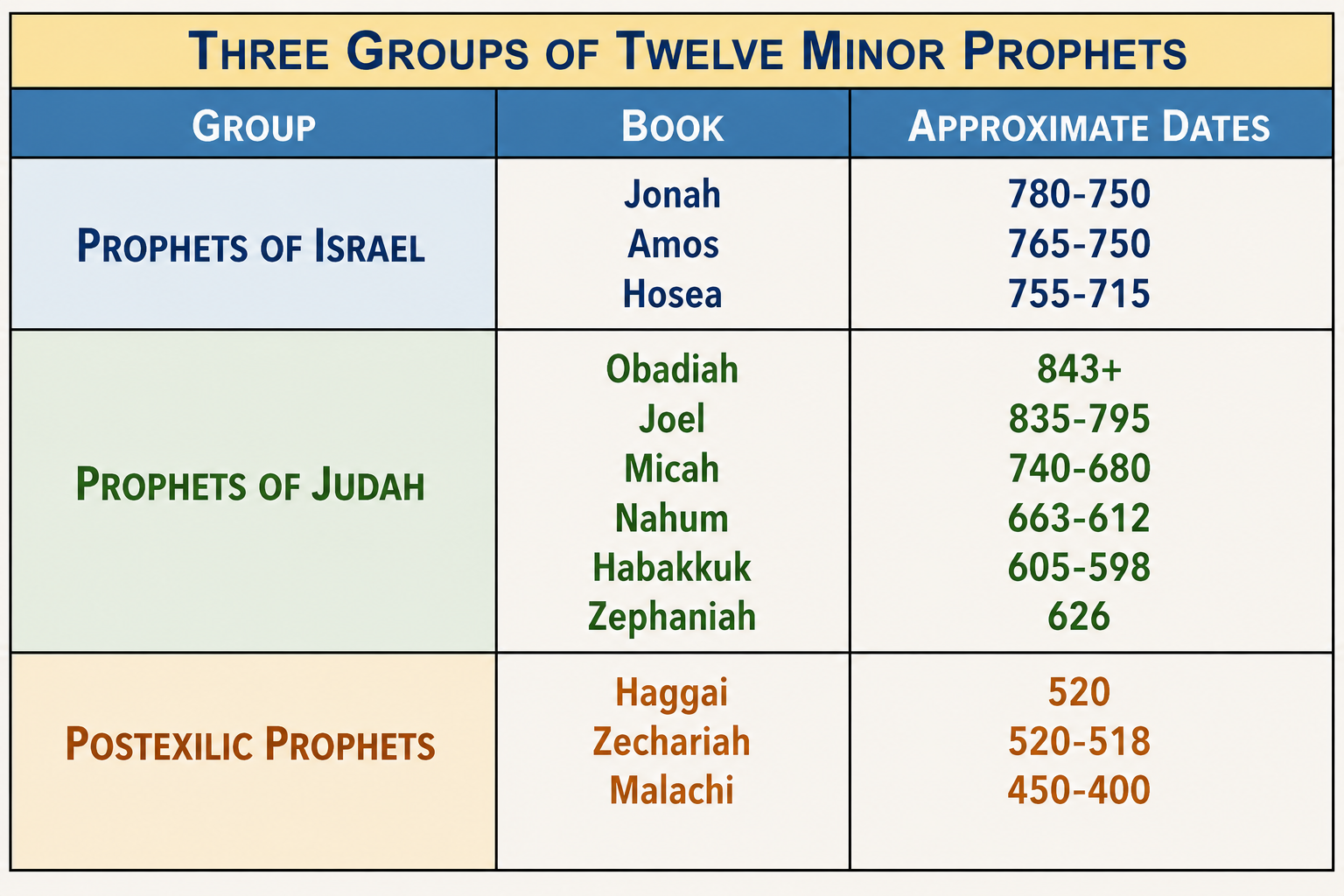
OUTLINE OF HOSEA
I. The Prodigal Wife, Hosea 1:1-3:5
A. Her Unfaithfulness, Hosea 1:1-11
B. Her Punishment, Hosea 2:1-13
C. Her Restoration and Israel's, Hosea 2:14-23
D. Her Redemption, Hosea 3:1-5
II. The Prodigal People, Hosea 4:1-14:9
A. The Message of Judgment, Hosea 4:1-10:15
1. The indictment, Hosea 4:1-19
2. The verdict, Hosea 5:1-15
3. The plea of Israel, Hosea 6:1-3
4. The reply of the Lord, Hosea 6:4-11
5. The crimes of Israel, Hosea 7:1-16
6. The prophecy of judgment, Hosea 8:1-10:15
B. The Message of Restoration, Hosea 11:1-14:9
1. God's love for the prodigal people, Hosea 11:1-11
2. God's chastisement of the prodigal people, Hosea 11:12-13:16
3. God's restoration of the prodigal people, Hosea 14:1-9
Borrow Ryrie Study Bible - page 1292
Hosea 10:1 Israel is a luxuriant vine; He produces fruit for himself. The more his fruit, The more altars he made; The richer his land, The better he made the sacred pillars.
KJV Israel is an empty vine, he bringeth forth fruit unto himself: according to the multitude of his fruit he hath increased the altars; according to the goodness of his land they have made goodly images.
NET Israel was a fertile vine that yielded fruit. As his fruit multiplied, he multiplied altars to Baal. As his land prospered, they adorned the fertility pillars. (Note: The phrase “to Baal” does not appear in the Hebrew text here but is implied; it is supplied in the translation for the sake of clarity.)
NLT How prosperous Israel is-- a luxuriant vine loaded with fruit. But the richer the people get, the more pagan altars they build. The more bountiful their harvests, the more beautiful their sacred pillars.
BGT ἄμπελος εὐκληματοῦσα Ισραηλ ὁ καρπὸς αὐτῆς εὐθηνῶν κατὰ τὸ πλῆθος τῶν καρπῶν αὐτοῦ ἐπλήθυνεν τὰ θυσιαστήρια κατὰ τὰ ἀγαθὰ τῆς γῆς αὐτοῦ ᾠκοδόμησεν στήλας
LXE Israel is a vine with goodly branches, her fruit is abundant: according to the multitude of her fruits she has multiplied her altars; according to the wealth of his land, he has set up pillars.
CSB Israel is a lush vine; it yields fruit for itself. The more his fruit increased, the more he increased the altars. The better his land produced, the better they made the sacred pillars.
ESV Israel is a luxuriant vine that yields its fruit. The more his fruit increased, the more altars he built; as his country improved, he improved his pillars.
NIV Israel was a spreading vine; he brought forth fruit for himself. As his fruit increased, he built more altars; as his land prospered, he adorned his sacred stones.
YLT 'An empty vine is Israel, Fruit he maketh like to himself, According to the abundance of his fruit, He hath multiplied for the altars, According to the goodness of his land, They have made goodly standing-pillars.
NKJ Israel empties his vine; He brings forth fruit for himself. According to the multitude of his fruit He has increased the altars; According to the bounty of his land They have embellished his sacred pillars.
NJB Israel was a luxuriant vine yielding plenty of fruit. The more his fruit increased, the more altars he built; the richer his land became, the richer he made the sacred pillars.
NRS Israel is a luxuriant vine that yields its fruit. The more his fruit increased the more altars he built; as his country improved, he improved his pillars.
RSV Israel is a luxuriant vine that yields its fruit. The more his fruit increased the more altars he built; as his country improved he improved his pillars.
NAB Israel is a luxuriant vine whose fruit matches its growth. The more abundant his fruit, the more altars he built; The more productive his land, the more sacred pillars he set up.
GWN The people of Israel are like vines that used to produce fruit. The more fruit they produced, the more altars they built. The more their land produced, the more stone markers they set up to honor other gods.
- Isa 5:1-7 Eze 15:1-5 Na 2:2 Joh 15:1-6
- an empty vine: or, a vine emptying the fruit which it giveth, unto. Zec 7:5,6 Ro 14:7,8 2Co 5:16 Php 2:21
- to the multitude: Ho 2:8 Ho 8:4,11 Ho 12:8,11 Ho 13:2,6 Jer 2:28
- images: Heb. statues, or standing images, Lev 26:1 1Ki 14:23
Related Passages:
Isaiah 5:1-7 Let me sing now for my well-beloved A song of my beloved concerning His vineyard. My well-beloved had a vineyard on a fertile hill. 2He dug it all around, removed its stones, And planted it with the choicest vine. And He built a tower in the middle of it And also hewed out a wine vat in it; Then He expected it to produce good grapes, But it produced only worthless ones. 3“And now, O inhabitants of Jerusalem and men of Judah, Judge between Me and My vineyard. 4“What more was there to do for My vineyard that I have not done in it? Why, when I expected it to produce good grapes did it produce worthless ones? 5“So now let Me tell you what I am going to do to My vineyard: I will remove its hedge and it will be consumed; I will break down its wall and it will become trampled ground. 6“I will lay it waste; It will not be pruned or hoed, But briars and thorns will come up. I will also charge the clouds to rain no rain on it.” 7For the vineyard of the LORD of hosts is the house of Israel And the men of Judah His delightful plant. Thus He looked for justice, but behold, bloodshed; For righteousness, but behold, a cry of distress. (IMAGE OF ISRAEL AS VINE -Ps. 80:8-16; Ezek 15:1-8; Ezek 17:1-10)
Jeremiah 2:21 “Yet I planted you a choice vine, A completely faithful seed. How then have you turned yourself before Me Into the degenerate shoots of a foreign vine?
Deuteronomy 32:15 “But Jeshurun (upright one or the righteous one, a name for Israel) grew fat and kicked– You are grown fat, thick, and sleek– Then he forsook God who made him, And scorned the Rock of his salvation.
Hosea 8:11 Since Ephraim has multiplied altars for sin, They have become altars of sinning for him.
Jeremiah 2:28 (ADDRESSING SOUTHERN KINGDOM) “But where are your gods Which you made for yourself? Let them arise, if they can save you In the time of your trouble; For according to the number of your cities Are your gods, O Judah.
Jeremiah 11:13 (ADDRESSING SOUTHERN KINGDOM) “For your gods are as many as your cities, O Judah; and as many as the streets of Jerusalem are the altars you have set up to the shameful thing, altars to burn incense to Baal.
Proverbs 30:7-9 Two things I asked of You, Do not refuse me before I die: 8Keep deception and lies far from me, Give me neither poverty nor riches; Feed me with the food that is my portion, 9 That I not be full and deny You and say, “Who is the LORD?” Or that I not be in want and steal, And profane the name of my God. (PROSPERITY OF ISRAEL -Ezek 16:10-19)
ISRAEL'S DIRECT
AFFRONT TO YAWHEH!
Derek Kidner has an interesting introductory note on Hosea 10 writing "There is great variety in this chapter, for all its insistence on a single theme of warning. It draws now on early history (Hosea 10:9), now on more recent memories (Hosea 10:14); it bombards us with lively metaphors (Hosea 10:4, 7, 11), ominous predictions (Hosea 10:7-8), commonsense logic (Hosea 10:13), snatches of current talk (Hosea 10:3); it is always changing its angle of attack. But its thrust is positive: to spur the reader, not to stun him. The one gleam of light, the invitation of Hosea 10:12, is the raison d’être of the whole chapter. (See The Message of Hosea)
Israel is a luxuriant vine; He produces fruit for himself. The more his fruit, The more altars (mizbeah) he made; The richer his land, The better he made the sacred pillars (matstsebah) - This is a sad testimony concerning Israel. They were a luxuriant vine because God had made them fruitful, yet they failed to acknowledge the One Who had blessed them. The fruit they produced was “for himself” and is called “his fruit” which spoke of their focus on self rather than Yahweh. Tragically, Israel used God-given prosperity to multiply altars to idols rather than give thanks to Yahweh. The more their land prospered, the more elaborate their sacred pillars became. They took the blessings of God and used them to finance their spiritual adultery. Israel had clearly been commanded to tear down the sacred pillars, clearly something they failed to carry out (cf (Ex 34:13, Dt 12:3).
They also failed to heed the general warning recorded by Moses
When you have eaten and are satisfied, you shall bless the LORD your God for the good land which He has given you. 11“Beware that you do not forget the LORD your God by not keeping His commandments and His ordinances and His statutes which I am commanding you today; 12 otherwise, when you have eaten and are satisfied, and have built good houses and lived in them, 13 and when your herds and your flocks multiply, and your silver and gold multiply, and all that you have multiplies, 14 then your heart will become proud and you will forget the LORD your God who brought you out from the land of Egypt, out of the house of slavery.
Agricultural prosperity
had resulted in spiritual corruption
-- John MacArthur
Bob Utley - "Israel is a luxuriant vine" "Luxuriant" (BDB 132 I, k 150, Qal ACTIVE PARTICIPLE) is found only here. The Septuagint has "a vine with beautiful branches." This may be an allusion to Hosea 9:10 (cf. Ps. 80:8-13). God made Israel fruitful (this is one possible meaning). However, the more YHWH blessed them, the more they went after the Ba'als (cf. Hosea 11:1). What irony! The vine was often a symbol for Israel (e.g. Deut. 32:32; Ps. 80:8-19; Isa. 5:1-7; Jer. 2:21; Ezek. 15:1-8). It is possible to take the VERB as "empty" (BDB 132 II) and thereby Israel as a vine that does not produce God's desired fruit (cf. Hosea 9:10-17, JPSOA). Prosperity did not turn their hearts back to YHWH (as it was intended, cf. Leviticus 26; Deuteronomy 27-29), but magnified their worship and thanksgiving to Ba'al. They improved his worship sites and neglected YHWH's temple!
Robert Chisholm - As in Hos 9:10 this prophecy employs a botanical metaphor in referring to Israel's earlier history. The Lord planted Israel like a vine in the land of Canaan and blessed her with fruit (i.e., prosperity; cf. Ps. 80:8-11; Jer. 2:21; Ezek. 19:10-11). However, as the nation prospered she erroneously attributed her success to false gods rather than the Lord (cf. Hosea 2:8; Deut. 8:8-20). At the same time the people attempted to maintain a semblance of devotion to the God of Israel. The altars mentioned here probably refer to this hypocritical formalism (cf. Hosea 6:6; Hosea 8:11-13), while sacred stones allude to idolatry (cf. Hosea 3:4; Hosea 10:2). (SEE The Bible Knowledge Commentary Minor Prophets - Page 19)
John Schultz: The context suggests that the blessing of Israel’s fruitfulness turned into a curse because of the use that was made of it. None of the abundance was used for the glory of God but for self-satisfaction and idolatry. As the empty fig tree on which Jesus found no fruit, so God found nothing to satisfy Himself on Israel’s vine. The fruitfulness of Ephraim had become meaningless
Matthew Henry - Verses 1-8. A vine is only valuable for its fruit; but Israel now brought no fruit to perfection. Their hearts were divided. God is the Sovereign of the heart; he will have all, or none. Were the stream of the heart wholly after God, it would run strongly, and bear down all before it. Their pretences to covenant with God were false. Even the proceeding of justice was as poisonous hemlock. Alas, how empty a vine is the visible church even at this day! But all earthly prosperity is but a collection of bubbles, soon destroyed like foam upon the water. Sinners will in vain seek shelter from that Judge, whom they now despise as a Saviour.
G Campbell Morgan - Israel is a luxuriant vine, which putteth forth his fruit . . .Hosea 10.1
With this chapter the second section of the prophecy ends-that in which the theme was that of the punishment of pollution. It consists of one message which is in the nature of recapitulation and appeal. In the two opening verses the whole case is stated, both as to the national failure; and as to the Divine judgment. In these particular words, interpreted by those immediately following, the fact of failure is inclusively declared. The prophet employed the figure of speech so often employed by these servants of God in the old time—and presently by our Lord Himself in His teaching—that of the vine. That they should do so was inevitable, for the vine was the national emblem, the symbol of the purpose of God in the creation of the nation. The whole emphasis in these words of Hosea must be placed upon the pronoun "his." The sin of the nation was that it had failed to bear the fruit of Jehovah, and had borne instead its own fruit. "According to the multitude of his fruit he hath multiplied his altars." Isaiah stressed the same matter when he said that the vine had brought forth wild apes, instead of grapes; and later, Jeremiah described Judah as "the de-generate plant of a strange vine." Here is a test for the people of God at all times. All their resources are Divinely bestowed; and that with a view to the production of fruit according to the purpose of God. When they prostitute those very resources to the bearing of fruit to suit their own desires and purposes, they are guilty of the basest failure. The figure of fruit-bearing wherever found, suggests the producing of that which is according to the will of God; and that on behalf of others. Fruit is never for self-consumption. To receive gifts from God, and to consume them upon our own lusts, that is, upon our own desires, is the uttermost in sin.
C H Spurgeon - 10:1 “Israel is a lush vine; it yields fruit for itself. The more his fruit increased, the more he increased the altars. The better his land produced, the better they made the sacred pillars.” It is sad when the more one receives from God, the more one sins. But just in proportion as the land of Israel was fat and fertile, in that proportion they set up altars to false gods and provoked the true God who had given them these mercies. It is an ill thing when people grow rich and offer sacrifice to their own vanity—when people gather learning and only use it to debate against the simple teachings of God—when just as God blesses, people cease to bless him.
Hosea 10:1-10 TODAY IN THE WORD
The great Scottish Bible expositor Alexander MacLaren once wrote:
"We may have as much of God as we will. Christ puts the key of the treasure-chamber into our hand, and bids us take all that we want. If a man is admitted into the bullion vault of a bank and told to help himself, and comes out with one cent, whose fault is it that he is poor?""
That's a question we need to think about for awhile. Without a doubt, the people of Israel could have had all of God they wanted. When you have some time, read the covenant blessings God offered to Israel in the book of Deuteronomy.
What God did was to take a stubborn and rebellious people out of slavery in Egypt and plant them in the promised land like a ""spreading vine"" (Hosea 10:1). But Israel treated God's blessings in a way that would be totally incomprehensible to us--were it not that we often do the same thing.
Israel partook of the riches in God's ""bullion vault,"" but then turned to the spiritually bankrupt and vile religions of the nations around them. The more God blessed the nation, the more Israel used these benefits to build a system of pagan worship in the ""high places of wickedness"" (Hosea 10:8).
It takes a deceitful heart to do something like that, and this is just the kind of heart Israel had. The people's lack of loyalty to God was underscored by their lack of loyalty to one another and the agreements they made. Lawsuits had become a way of life for the faithless nation (v. 4), an observation that we in America need to take to heart!
These verses provide at least one more important detail of the coming Assyrian captivity. To their great shame, the calf-idol that Israel was so taken with would be confiscated and carted off to Assyria.
TODAY ALONG THE WAY
In 1 Corinthians 10:6, Paul urges us to learn important spiritual lessons from what happened to Old Testament Israel
Robert Neighbour - An Empty Vine
"Israel is an empty vine, he bringeth forth fruit unto himself" (Hos. 10:1).
The Book of Hosea presents many graphic pictures of Israel's fruitlessness, and of God's graciousness.
The story of the vine, as a type of Israel, is found in Hosea as in many of the Prophets.
Let us notice some things Hosea sets forth.
1. Israel bringeth forth fruit unto himself (see Hos. 10:1).
When the Lord looked for fruit, He found the vine was empty. Israel bore fruit, but fruit unto himself: he bore no fruit for God.
God had loved Israel; He had taught Ephraim how to go. He had drawn her with the cords of a man, with bands of love, but when He found no fruit in Israel, He had to cut her off.
We can even now hear His grief, as He said, "How shall I give thee up, Ephraim? how shall I deliver thee, Israel? how shall I make thee as Admah? how shall I set thee as Zeboim? Mine heart is turned within Me."
2. Israel Judged of God
When God found no fruit in Israel, He placed her under His judgment.
He said of her: "Ye have plowed wickedness, ye have reaped iniquity." He said: "The sword shall abide on his cities, and shall consume his branches, and devour them."
When Ephraim was guilty and given to vanity; when he exalted himself and sinned more and more, then the Lord turned from Israel, as a king in his anger, and He took him away in His wrath.
He said of Israel: "Though he be fruitful among his brethren, an east wind shall come, the wind of the Lord shall come up from the wilderness, and his spring shall become dry, and his fountain shall be dried up."
3. Israel's Final Fruitfulness
"Ephraim shall say, What have I to do any more with idols? I have heard him, and observed him: I am like a green fir tree. From me is thy fruit found" (Hos. 14:8).
We have before us a vision of great and glorious fruitfulness, which shall be Israel's in the days to come.
We began with the story of Israel, an empty vine — we conclude with the story of Israel bearing fruit.
We began with the picture of Israel bearing fruit to herself, we close with a picture, "From Me is thy fruit found."
The concluding verses of Hosea describe Israel under various symbolisms.
1. (1) He shall grow as the lily.
2. (2) He shall cast forth his roots like Lebanon.
3. (3) His beauty shall be as the Olive tree.
4. (4) They that dwell under his shadow shall revive as corn.
5. (5) They shall grow as the vine; the renown thereof shall be as the wine of Lebanon.
6. (6) Ephraim shall say, I am like a green fir tree.
In all of these symbols we have the picture of a restored and a fruitful people.
UNREQUITED LOVE - Cyril Hocking
The Degenerate Vine: 10:1. God had planted Israel as a vine to bear fruit to Himself, and the nations, Psa. 80:8–12. She perverted this purpose by self-indulgence, and used God’s bounty to further her idolatry. One day the True Vine would appear to fulfil the Divine purpose, John 15:1. God’s ultimate purpose cannot be thwarted! Divided Devotions: 10:2. Israel had tried to compromise by worshipping idols, and professing to know God, 8:2. God and evil however are mutually exclusive!, 1 Cor. 10:21. Departed Deities: 10:5. They turned to “no gods”, but when they needed help they feared for the safety of their supposed protectors! The Desolate Land: 10:8. The Assyrian would come and strip them. Despair would be theirs and they would cry for sudden death rather than endure protracted captivity; cf. Rev. 6:15–17. God always had a better alternative than despair! The Definite Hope: 10:12. All is not lost! The prophet calls for the plough of self-judgment to open up the conscience, for the Word of God to enter while there is time; cf. Psa. 32:6. God’s judgment may be averted by self-judgment!, 1 Cor. 11:31. The Day of Battle: 10:14–15. The thunder of the approaching Assyrian army is heard with alarm. God’s mercy gives time to repent, but if despised, the wages of sin are inevitable!
Hosea 10:2 Their heart is faithless; Now they must bear their guilt. The LORD will break down their altars And destroy their sacred pillars.
KJV Their heart is divided; now shall they be found faulty: he shall break down their altars, he shall spoil their images.
NET Their heart is slipping; soon they will be punished for their guilt. The LORD will break their altars; he will completely destroy their fertility pillars.
NLT The hearts of the people are fickle; they are guilty and must be punished. The LORD will break down their altars and smash their sacred pillars.
BGT ἐμέρισαν καρδίας αὐτῶν νῦν ἀφανισθήσονται αὐτὸς κατασκάψει τὰ θυσιαστήρια αὐτῶν ταλαιπωρήσουσιν αἱ στῆλαι αὐτῶν
LXE They have divided their hearts; now shall they be utterly destroyed: he shall dig down their altars, their pillars shall mourn.
CSB Their hearts are devious; now they must bear their guilt. The LORD will break down their altars and demolish their sacred pillars.
ESV Their heart is false; now they must bear their guilt. The LORD will break down their altars and destroy their pillars.
NIV Their heart is deceitful, and now they must bear their guilt. The LORD will demolish their altars and destroy their sacred stones.
YLT Their heart hath been divided, now they are guilty, He doth break down their altars, He doth destroy their standing-pillars.
NKJ Their heart is divided; Now they are held guilty. He will break down their altars; He will ruin their sacred pillars.
NJB Theirs is a divided heart; now they will have to pay for it. He himself will hack down their altars and wreck their sacred pillars.
NRS Their heart is false; now they must bear their guilt. The LORD will break down their altars, and destroy their pillars.
RSV Their heart is false; now they must bear their guilt. The LORD will break down their altars, and destroy their pillars.
NAB Their heart is false, now they pay for their guilt; God shall break down their altars and destroy their sacred pillars.
GWN They are hypocrites. Now they must take their punishment. God will tear down their altars and destroy their stone markers.
BBE Their mind is taken away; now they will be made waste: he will have their altars broken down, he will give their pillars to destruction.
ASV Their heart is divided; now shall they be found guilty: he will smite their altars, he will destroy their pillars.
- Their heart is faithless Ho 7:8 1Ki 18:21 Isa 44:18 Zep 1:5 Mt 6:24 Lu 16:13 2Th 2:11,12 Jas 1:8 Jas 4:4 1Jn 2:15 Rev 3:15,16
- The LORD will break down their altars: Heb. behead, Ho 10:5-8 Ho 8:5,6 1Sa 5:4 Jer 43:13 Mic 5:13 Zec 13:2
Related Passages:
Hosea 7:8 Ephraim mixes himself with the nations; Ephraim has become a cake not turned.
1 Kings 18:21 (SPEAKING TO THE NORTHERN KINGDOM) Elijah came near to all the people and said, “How long will you hesitate between two opinions? If the LORD is God, follow Him; but if Baal, follow him.” But the people did not answer him a word. (THEY WERE UNWILLING TO PART WITH EITHER!)
Isaiah 44:18 They do not know, nor do they understand, for He has smeared over their eyes so that they cannot see and their hearts so that they cannot comprehend.
Zephaniah 1:5 “And those who bow down on the housetops to the host of heaven, And those who bow down and swear to the LORD and yet swear by Milcom,
Matthew 6:24 “No one can serve two masters; for either he will hate the one and love the other, or he will be devoted to one and despise the other. You cannot serve God and wealth.
Jeremiah 17:9 “The heart is more deceitful than all else And is desperately sick; Who can understand it?
Hosea 12:14 Ephraim has provoked to bitter anger; So his Lord will leave his bloodguilt on him And bring back his reproach to him.
Hosea 13:12, 16 The iniquity of Ephraim is bound up; His sin is stored up....16 Samaria will be held guilty, For she has rebelled against her God. They will fall by the sword, Their little ones will be dashed in pieces, And their pregnant women will be ripped open.
STORING UP GUILT
NECESSITATING JUDGMENT
Their heart is faithless (chalaq) - The Hebrew word for faithless can convey the idea of being smooth, slippery, deceitful, or divided. The Septuagint translates with the verb merizo meaning to divide which is picked up by KJV and NJB translations. Other translations emphasize different aspects of the same spiritual condition: NET = "heart is slipping." ESV = "heart is false". CSB = "their hearts are devious." Whether the emphasis is on a divided, deceitful, or unstable heart, the point is clear: Israel had a serious heart problem. Their outward idolatry was simply the visible symptom of inward disloyalty to Yahweh. They wanted the blessings of God while giving their devotion to other gods. Their fundamental problem was not merely defective worship but divided allegiance (cf. 1 Ki 18:21; Ps 12:2; Mt 6:24; Jas 1:8; Jas 4:8). A divided heart inevitably produces a divided life. Such a life forgets that God is a jealous, God and refuses to share His glory with another. (Ex 34:14).
Bob Utley - faithless/divided/deceitful - The Hebrew term (Qal PERFECT) is "smooth." It is imagery for insecure footing, therefore, interpreted as treacherous or unreliable (cf. New Berkeley version "Their heart was slippery"). This is the only place in the OT where this VERB is used of a "heart." Usually it refers to a tongue....It is possible to take the VERB as "divided" meaning their devotion (i.e. heart) was split between YHWH and Ba'al. However, this VERB is used mostly in Chronicles and not the prophets.
David Guzik - The idea of Israel’s “smooth” or “insincere” heart is reflected by the adulteries of Hosea’s wife Gomer earlier in the book.In the same way that an unfaithful spouse will say they love their partner, all the while living a lie, is the same way Israel’s heart was towards God.
Lloyd Ogilvie - The problem is a divided heart. Depending on the vocalization of the text, there are two possible renderings of the Hebrew: “Their heart is false (hālaq RSV),” or, “Their heart is divided (ḥullaq).” Both strike at the essential spiritual malady: falseness in turning from God to false gods and a divided heart by giving loyalty to both. Ḥālaq also means “deceitful,” literally “smooth.” Applied to the heart, this would mean a slippery loyalty. God wanted wholehearted devotion and intentional commitment to Him and the covenant. He abhorred the double-minded, half and half, divided heart of His people that made them false and slippery in their commitment. He demanded from His people what His heart had consistently expressed to them: faithfulness (˒ ĕmet), trustworthiness ˒ĕmûnâ), and loyalty (ḥesed). God required an undivided heart (šālēm). . . The hard truth for us is that words are not enough. When there is no congruity between what we say and do, soon our words become empty religiosity. The test of what we say is what we do to remove our false gods and how we put words into actions in living our faith. (See The Preacher's Commentary - Vol. 22: Hosea / Joel / Amos)
Charles Feinberg - LIKE A SKILLFUL and experienced physician, the prophet Hosea keeps probing at the core of Israel’s sin, namely, her idolatry. The prophet again uses a figure drawn from nature to describe the people of God. Israel is a luxuriant vine. The King James Version reads “empty vine,” but both usage as well as the remainder of the first verse decide in favor of the rendering “luxuriant vine.” The thought is that the vine empties out, pours out itself in fruit, is widespread. To the superficial observer, the people were rich and prosperous under Jehoash and Jeroboam II and lacked for nothing. (For the metaphor of the vine, see Ps 80:8 and following verses; Is 5:1-7, especially v. 7 where the explanation is given of the figure employed; Jer 2:21; and Eze 17:6.) However, the more God prospered them, the more they misused His bounties, praising the idols with sacrifices on idolatrous altars. (See Hos 8:11 of our prophecy.) For every blessing from God the people gave glory and worship to the idols. The root of all their failure and sin was that their heart was divided. The divided heart and the halting between two opinions characterized Israel in Elijah’s day (1 Ki 18:21) and made him cry out for wholeheartedness and whole-souledness for God. How great is the need for this exhortation in our own day among the Church of our Lord, is only too well known. We have need to pray with the psalmist: “Unite my heart to fear thy name” (Ps 86:11). (SEE The Minor Prophets)
H. Ronald Vandermey: Refusing to acknowledge that these blessings had come from God, Israel produced “fruit for himself” rather than for the Lord. Accordingly, the Lord decrees that their heart is “faithless” (Hebrew, chalaq; literally “divided, smooth, trickish, treacherous”). A faithless or divided heart had long been Israel’s tragic flaw. Elijah, a century earlier than Hosea, encountered this divided loyalty when he asked the people, “How long will you hesitate between two opinions?” (1 Kings 18:21). Even today, we need to be exhorted not to be “double-minded,” for such an attitude leads to instability and ruin (James 1:8). Through the law, Israel had received a sense of what was right, but that sense was met by an overwhelming love for doing what was wrong. For choosing the bad, Hosea warns that the people will bear their own “guilt” (Hebrew, asham; used only here in the Old Testament). (SEE Hosea & Amos- Everyman's Bible Commentary - Page 61)
Now they must bear their guilt - Now is a significant time word, for it marked the end of the LORD's patience and forbearance and marked the assurance of divine judgment. The verdict fits their crime. Israel's divided and faithless heart had made them culpable before God, and the time had come when that guilt would bring judgment.
Bob Utley - "they must bear their guilt" There are consequences to human choices, both in time and eternity (cf. Hosea 4:15; Hosea 5:15; Hosea 13:1,16; Micah 5:10-15).
The LORD will break down (Heb - "break the neck of") their altars And destroy their sacred pillars - Ironically, the very objects through which they sinned would become the objects God destroyed, using the Assyrians as His instrument. They had sinned against Yahweh and He was the One Who would move in the hearts of the Assyrians to invade Israel and obliterate their idolatry.
Bob Utley - "their altars. . .their sacred pillars" These objects of worship (1) originally approved places of worship, cf. Exod. 24:4-5 (2) are often associated with the idolatrous fertility practices of Ba'al (uplifted stone pillar, i.e. phallic symbol, cf. Hosea 3:4; 1 Kgs. 14:23-24) and Asherah (a carved stake or live tree, cf. Ex 23:24; Ex 34:13; Lev. 26:1; Deut. 7:5; Deut 12:3; 2 Ki 3:2).
Faithless (divide) (02505) see chalaq has two general meanings (1) to make smooth (slippery) or to be smooth (smooth language = flattery) and (2) divide or distribute. Writers of the NAS concordance felt there was such a big difference in meanings between (1) and (2) that they chose to classify (1) as Strong's # 2505 and (2) as Strong's 2505a. KJV lumps both uses together. The word chalaq has the ideas of “divided” (Ge 14:15, Ge 49:7), of “smooth” (Ge 27:11, Ps 55:21) or of “flattering” (Ps 5:9, Ps 36:2). So, it may be accurate to translate Hosea 10:2 as their heart is divided, but it may also be that God wants to say that Ephraim has a “smooth, flattering,” insincere heart.
C H Spurgeon - A Divided Heart -
“Their heart is divided; now shall they be found faulty.” Hosea 10:2
If we would provoke the anger of the Most High and bring down trying providences on the churches, we have nothing to do but to be divided in our hearts and all will be accomplished. If we wish that every vial may empty out its ill, and that every vessel may withhold its oil, we have but to cherish our bickerings till they become animosities; we have but to nurse our animosities till they become hatreds, and all the work will be fully completed. And if this be the case in the church at large, it is peculiarly true in those various sections of it which we now call Apostolic Churches. Oh, my brethren, the smallest church in the world is potent for good when it has but one heart and one soul; when pastor, elders, deacons, and members, are bound together by a threefold cord that cannot be broken. Then are they mighty against every attack. But however great their numbers, however enormous their wealth, however splendid may be the talents with which they are gifted, they are powerless for good the moment they become divided amongst themselves. Union is strength. Blessed is the army of the living God, in that day when it goes forth to battle with one mind, and when its soldiers as with the tramp of one man, in undivided march, go onwards towards the attack. But a curse awaits that church which runs to and fro and which, divided in itself, has lost the main stay of its strength with which it should batter against the enemy. Division cuts our bowstrings, snaps our spears, houghs our horses, and burns our chariots in the fire. We are undone the moment the link of love is snapped. Let this perfect bond be once cut in twain and we fall down, and our strength is departed. By union we live, and by disunion we expire.
SUMMARY OF C.H. Spurgeon’s sermon "A Divided Heart
"
warns against the spiritual danger of trying to serve God while holding onto worldly affections
. Preached in September 1859, it diagnoses a divided heart as a grievous disease that causes inconsistency, misery, and spiritual faultiness. Spurgeon urges believers to seek an undivided heart through grace. (WATCH VIDEO)
Key Themes from the Sermon:
- The Nature of the Disease:
A divided heart means sharing your love between God and idols. Spurgeon describes this condition as loathsome, chronic, and difficult to cure, ultimately springing from human nature.
- Symptoms:
Signs of a divided heart include lifeless formality in religious worship, hypocrisy, and jealousy toward other believers.
- The Call for Surrender:
Spurgeon reminds his audience that God is a jealous God who will not tolerate a shared affection. He calls for absolute surrender, trusting solely in the redeeming blood of Christ to heal and unify the heart
C H Spurgeon - Sermon Notes on Hosea 10:2.—“Their heart is divided; now shall they be found faulty.”
Israel, as a nation, divided its allegiance between Jehovah and Baal, and so became good for nothing, and was given up to captivity.
God has made one heart in man, and the attempt to have two, or to divide the one, is in every case injurious to man’s life.
A church divided into parties, or differing in doctrine, becomes heretical, or contentious, or weak and useless.
A Christian, aiming at another object besides his Lord’s glory, is sure to spend a poor, unprofitable life. He is an idolater, and his entire character will be faulty.
A seeker after Christ will never find him while his heart is hankering after sinful pleasures, or self-righteous confidences: his search is too faulty to be successful.
A minister, aiming at something else besides his one object, whether it be fame, learning, philosophy, rhetoric, or gain, will prove to be a very faulty servant of God.
In any case this heart-disease is a dire malady. A broken heart is a blessing; but a divided heart is a mortal malady.
Let us seriously consider,—
I. THE DISEASE. “Their heart is divided.”
This evil is to be seen—
1. In their idea of their state: they say they are “miserable sinners”, but they believe themselves to be exceedingly respectable.
2. In the ground of their trust: they profess faith in Christ, and yet they rely upon self: they try to mix grace and works.
3. In the aim of their life: God and mammon, Christ and Belial, heaven and the world.
4. In the object of their love. It is Jesus and some earthly love. They cannot say “Jesus only.”
5. In the decision of their will. They are never settled; they halt between two opinions; they do not know their own mind: they have two minds, and so no mind at all.
The disease complained of is in the central fountain of life, and it affects every part of their manhood. It is fearfully common, even in those who make a loud profession. If not cured it will end fatally, and perhaps suddenly, as heart-disease is very apt to do.
II. THE EVIL EFFECT OF IT. “Now shall they be found faulty.”
In all sorts of ways the fault will show itself.
1. God is not loved at all when not wholly loved.
2. Christ is insulted when a rival is admitted.
3. No grace reigns within the soul if the heart be not wholly won.
4. The life limps and halts when it has not a whole heart behind it.
5. Before long the man goes over entirely to the wrong side.
This secret evil must sooner or later prove the whole profession to be faulty from beginning to end. It will be an awful thing if this be never discovered till death is close at hand.
III. ATTEMPTS AT A CURE.
Let it be seriously considered by the double-hearted man—
1. That he condemns himself by yielding so much of his heart to God. Why any if not all? Why go this way at all, if not all the way?
2. That his salvation will require all his thought and heart; for it is no trifling matter. “The kingdom of heaven suffereth violence”: Matt. 11:12. The righteous scarcely are saved: 1 Pet. 4:18.
3. That the blessing he seeks is worthy of all his soul and strength.
4. That Jesus gave his whole heart to our redemption, and therefore it is not consistent for us to be half-hearted.
5. That all potent beings in the universe are undivided in heart.
Bad men are eager for their pleasure, gains, &c.
The devil works evil with his whole power.
Good men are zealous for Christ.
God is earnest to bless.
6. That faith in Christ is an act of the whole heart, and therefore a divided heart is not capable of saving faith, and consequently shuts itself off from the Saviour.
From this time forward pray that you may have an undivided heart.
Read, hear, pray, repent, believe with your whole heart, and you shall soon rejoice with all your heart.
HELPS TOWARD APPLICATION
A minister in Brooklyn was recently called upon by a business man, who said to him, “I come, sir, to enquire if Jesus Christ will take me into the concern as a sleeping partner.” “Why do you ask?” said the minister. “Because I wish to be a member of the firm, and do not wish anybody to know it.” The reply was: “Christ takes no sleeping partners.”
Some talk that the devil hath a cloven foot; but whatever the devil’s foot be, to be sure his sons have a cloven heart: one half for God, the other half for sin; one half for Christ, the other half for this present world. God hath a corner in it, and the rest is for sin and the devil.—Richard Alleine.
As to the evil of being neither one thing nor the other, one finds an illustration in the water-ways of Southern China, which in winter-time are quite useless for purposes of commerce. The temperature is most tantalizing, for it is neither cold enough to freeze the canals, so that the ice would be able to bear traffic; nor warm enough to thaw them, so that they could be navigable by boats.
Some great king or potentate, having a mind to visit his imperial city, the harbinger is ordered to go before, and mark out a house suitable to entertain his majesty’s retinue. The prince will only come to a house where he may dwell alone: if he cannot have the whole house, he will go elsewhere. The herald findeth one house where the master desireth to entertain the king, but he must have but one small chamber, wherein to lodge his wife and children. The herald will not accept his offer. Then he entreats the benefit of some by-place, to set up a trunk or two, full of richer goods than ordinary. “No,” says the harbinger, “it cannot be; for if your house were as big again as it is, it would be little enough to entertain the king and all his royal train.” So it is that every man’s body is a temple of God, and his heart the sanctum sanctorum of that temple. His ministers are sent out into the world to inform us that Christ is coming to lodge there, and that we must clear the rooms, that this great King of glory may enter in. God will have the whole heart, the whole mind, the whole soul,—and all will be too little to entertain him, and the graces of his Holy Spirit, which are attendant on him. “Let it be neither mine nor thine; divide it”: was the voice of a strange woman (1 Kings 3:26), and such is that of the present world; but God will take nothing by halves: he will have the whole heart or nothing.—John Spencer.
On one occasion, when a former ruler of Montenegro was supposed to have received the offer of peace and a sum of money if he would acknowledge himself a vassal of the Porte, it is said that the chief men of the people waited on him to remind him that he was at perfect liberty to take service with the Sultan, but that no servant of the Sultan could be Gospodar of the Black Mountaineers.—Travels in the Sclavonic Provinces of Turkey.
C H Spurgeon - 10:2 “Their hearts are devious; now they must bear their guilt. The LORD will break down their altars and demolish their sacred pillars.” A half heart is no heart at all. And when people seem to go after God, and at the same time to go after their idols, they are not going after God. Their religion is vain. The good side is but a pretense; the evil side is the real thing. Let us be careful that we make nothing into an idol. The shortest way to lose the dearest object of our affections is to make an idol of it. There is no greater evil than for a heart to be happy in idolatry.
Hosea 10:3 Surely now they will say, “We have no king, For we do not revere the LORD. As for the king, what can he do for us?”
KJV For now they shall say, We have no king, because we feared not the LORD; what then should a king do to us?
NET Very soon they will say, "We have no king since we did not fear the LORD. But what can a king do for us anyway?"
NLT Then they will say, "We have no king because we didn't fear the LORD. But even if we had a king, what could he do for us anyway?"
BGT διότι νῦν ἐροῦσιν οὐκ ἔστιν βασιλεὺς ἡμῖν ὅτι οὐκ ἐφοβήθημεν τὸν κύριον ὁ δὲ βασιλεὺς τί ποιήσει ἡμῖν
LXE Because now they shall say, We have no king, because we feared not the Lord:
CSB In fact, they are now saying, "We have no king! For we do not fear the LORD. What can a king do for us?"
ESV For now they will say: "We have no king, for we do not fear the LORD; and a king-- what could he do for us?"
NIV Then they will say, "We have no king because we did not revere the LORD. But even if we had a king, what could he do for us?"
YLT For now they say: We have no king, Because we have not feared Jehovah, And the king -- what doth he for us?
NKJ For now they say, "We have no king, Because we did not fear the LORD. And as for a king, what would he do for us?"
NJB Then they will say, 'We have no king because we have not feared Yahweh, but what could the king do for us?'
NRS For now they will say: "We have no king, for we do not fear the LORD, and a king-- what could he do for us?"
RSV For now they will say: "We have no king, for we fear not the LORD, and a king, what could he do for us?"
NAB If they would say, "We have no king"-- Since they do not fear the LORD, what can the king do for them?
GWN So they'll say, "We have no king because we didn't fear the LORD. Even if we had a king, he couldn't do anything for us."
BBE Now, truly, they will say, We have no king, we have no fear of the Lord; and the king, what is he able to do for us?
ASV Surely now shall they say, We have no king; for we fear not Jehovah; and the king, what can he do for us?
- We have no king: Ho 10:7,15 Ho 3:4 Ho 11:5 Ho 13:11 Ge 49:10 Mic 4:9 Joh 19:15
Related Passages:
Psalm 146:3 Do not trust in princes, In mortal man, in whom there is no salvation.
Surely now they will say, “We have no king - Israel had kings but they were all bad kings, so it was in effect as if Israel had no true king. Clearly the LORD was to have been their king but they had long ago jettisoned Him as their Ruler. In addition the final days of the Northern Kingdom were characterized by assassinations, coups, and rapidly changing kings (2Ki 15:8–30). Hosea had described this instability earlier “All their kings have fallen.” (Hos 7:7)
This recalls the days when Israel initially asked Samuel for a king in 1 Samuel 8:7 where "Yahweh said to Samuel, “Listen to the voice of the people in regard to all that they say to you, for they have not rejected you, but they have rejected Me from being king over them."
While the Northern Kingdom actually never lacked a king, what they never had was a god king, a God honoring king. They were in effect like Israel in the dark days of the Judges for "In those days there was no king in Israel; everyone did what was right in his own eyes." (Jdg 21:25) And in the Northern Kingdom "doing what was right" was worshiping idols!
Bob Utley - "We have no king" This may reflect 1 Sam. 8:4-9. Hosea often speaks against the northern monarchy (cf. Hosea 7:3-7; Hosea 8:4, 10, 13; Hosea 13:9-11). The original dynasty (Jeroboam I) did not last (i.e. 922-722 B.C.). There were numerous changes in leadership (i.e. king). KINGS OF THE DIVIDED KINGDOM
James Mays - The significance of the quotation is ambiguous. Does the prophet repeat in an ironic taunt what the people are already saying? Or is the quotation a portrayal of their future situation when judgment has left them without a king? It is conceivable that after the murder of Pekah some of the people attributed their desperate circumstances during the Assyrian invasion to his assassination. But the second possibility is the more likely interpretation. (See Hosea (1969): A Commentary - Page 140)
For we do not revere the LORD - One way to interpret this is as a confession, recognizing their unfaithfulness, explaining that because they had no fear of Yahweh they deserved His judgment. The similar way to read this is as as their expression of resignation albeit without any repentance.
Trent Butler: Here is the only place where Hosea uses the language of fearing or revering the Lord—language basic to Israel's relationship to God—a relationship built on awe, respect, reverence, and fear of God (1 Sam. 12:14). Thus “fear of the LORD” is a shorthand description of the relationship God expects humans to have with him (Prov. 2:5). Without this proper religious relationship, all political relationships, commitments, and hopes were useless. (See Holman Old Testament Commentary - Hosea, Joel, Amos- Page 72)
As for the king, what can he do for us - A rhetorical question. Answer = NOTHING! NIV = "But even if we had a king, what could he do for us?"" GWN paraphrases it "he couldn't do anything for us." NET = "But what can a king do for us anyway?" They would recognize that their situation was so hopeless that they would come to the realization that even a king could do NOTHING for them. A king genuinely could not have helped them at that point. Assyria was coming, the northern throne had turned over four times in twenty years by assassination, and Hoshea was already in Assyrian custody. No king was going to reverse the imminent judgment of Yahweh. They had correctly diagnosed that their monarchy is worthless but they stop there. The obvious next move would have been to repent and turn to the only One Who could save them, but they don't!
There is profound irony here. Israel had trusted in kings, political power, and foreign alliances instead of Yahweh (Hos 5:13; Hos 7:11; Hos 8:4; Hos 10:3). But when God's judgment arrived, none of these could deliver them. They rejected the King Who could save them and trusted kings who could not save them. Hosea 13:10 asks "Where now is your king That he may save you in all your cities, And your judges of whom you requested, “Give me a king and princes”?
Charles Feinberg - In the midst of their chastisements, the sad people will utter their words of discouragement and despair, lamenting the loss of their king. They will be deprived of their king, for he will be cut off. (Note Hos 10:7 and Hos 10:15) And it will not be as though they were ignorant of the cause of their calamity; they themselves will admit it has come upon them because they have not feared and obeyed the Lord. They had cast off their heavenly King, so they were shorn of their earthly king. But on further and deeper reflection they conclude with the question, “What can the king do for us, since God is against us?” They realize now that against the omnipotent and sovereign God no human devices or personalities can avail. (SEE The Minor Prophets)
Hosea 10:1-10 Today in the Word
Even if we had a king, what could he do for us? Hosea 10:3
Many children have made the mistake of thinking a dandelion is a flower. Kids love the bright yellow petals. They love it even more when the head becomes white and fluffy. They have great fun blowing petals across the yard as their parents cringe at the thought of hundreds more dandelions springing up!
Israel’s faith may have had the form of a blooming flower, but it was a malicious weed spreading rapidly across the land. The altars multiplying across Israel weren’t dedicated to the one true God, and the sacred stones weren’t really sacred at all. They were monuments to their false gods, and as Israel prospered, the altars increased like dandelions infesting a lush, green lawn.
Notice here how the branches of economic prosperity, religious practices, and civil order intertwine in this passage. The rhetorical question in verse 3 shows the people’s dismay at the lack of justice, but it also reveals their lack of understanding. They should not have been surprised that religious depravity would breed political corruption and widespread disputes (v. 4).
It had been a long time since a good and wise king ruled over Israel, and that appears to have fostered their dependence on foreign gods rather than pursuing political reform. They mourned the loss of their idols. They ignored the loss of courage like David’s or wisdom like Solomon’s. Israel didn’t place their hope in God or even in kings . . . they put their faith in manmade objects of worship. As a result of their foolishness, their government was rendered irrelevant (v. 7), and their gods were proven disgraceful (v. 6).
The meaning behind the mention of Israel’s “double sin” in verse 10 isn’t immediately clear—there were definitely more than two sins for God to punish. One possibility is that Israel’s first sin was woeful idolatry and that their second sin was the stubborn refusal to turn away from those practices in order to avoid impending punishment. Israel made a bad situation worse by refusing to repent.
Apply the Word
Is there a sin (or sins) that you just can’t let go of, one that may look harmless but multiplies like a weed throughout your life? If you have been studying God’s Word with us throughout the month, that sin has probably been brought to your attention repeatedly. You must take a stand, either against God’s Word or against the sin. Ask God for strength to make the right choice and to stand firm in obedience. Memorize a verse that can help you resist temptation when it strikes.
Hosea 10:4 They speak mere words, With worthless oaths they make covenants; And judgment sprouts like poisonous weeds in the furrows of the field.
KJV They have spoken words, swearing falsely in making a covenant: thus judgment springeth up as hemlock in the furrows of the field.
NET They utter empty words, taking false oaths and making empty agreements. Therefore legal disputes sprout up like poisonous weeds in the furrows of a plowed field.
NLT They spout empty words and make covenants they don't intend to keep. So injustice springs up among them like poisonous weeds in a farmer's field.
BGT λαλῶν ῥήματα προφάσεις ψευδεῖς διαθήσεται διαθήκην ἀνατελεῖ ὡς ἄγρωστις κρίμα ἐπὶ χέρσον ἀγροῦ
LXE and what should a king do for us, speaking false professions as his words? he will make a covenant: judgment shall spring up as a weed on the soil of the field.
CSB They speak mere words, taking false oaths while making covenants. So lawsuits break out like poisonous weeds in the furrows of a field.
ESV They utter mere words; with empty oaths they make covenants; so judgment springs up like poisonous weeds in the furrows of the field.
NIV They make many promises, take false oaths and make agreements; therefore lawsuits spring up like poisonous weeds in a plowed field.
YLT They have spoken words, To swear falsehood in making a covenant, And flourished as a poisonous herb hath judgment, on the furrows of a field.
NKJ They have spoken words, Swearing falsely in making a covenant. Thus judgment springs up like hemlock in the furrows of the field.
NJB Speeches are made, oaths sworn to no purpose, agreements concluded, and so-called justice spreads like a poisonous weed along the furrows of the fields!
NRS They utter mere words; with empty oaths they make covenants; so litigation springs up like poisonous weeds in the furrows of the field.
RSV They utter mere words; with empty oaths they make covenants; so judgment springs up like poisonous weeds in the furrows of the field.
NAB Nothing but make promises, swear false oaths, and make alliances, While justice grows wild like wormwood in a plowed field!
GWN They say many things. They lie when they take oaths, and they make promises they don't intend to keep. That's why lawsuits spring up like poisonous weeds in the furrows of a field.
BBE Their words are foolish; they make agreements with false oaths, so punishment will come up like a poison-plant in a ploughed field.
- swearing: Ho 6:7 2Ki 17:3,4 Eze 17:13-19 Ro 1:31 2Ti 3:3
- thus: De 29:18 Isa 5:7 Isa 59:13-15 Am 5:7 Amos 6:12 Ac 8:23 Heb 12:15 Rev 8:10,11
Related Passages:
Deuteronomy 29:18 so that there will not be among you a man or woman, or family or tribe, whose heart turns away today from the LORD our God, to go and serve the gods of those nations; that there will not be among you a root bearing poisonous fruit and wormwood.
Isaiah 5:7 For the vineyard of the LORD of hosts is the house of Israel And the men of Judah His delightful plant. Thus He looked for justice, but behold, bloodshed; For righteousness, but behold, a cry of distress.
Amos 5:7 For those who turn justice into wormwood And cast righteousness down to the earth.”
Amos 6:12 Do horses run on rocks? Or does one plow them with oxen? Yet you have turned justice into poison And the fruit of righteousness into wormwood,
Hebrews 12:15 See to it that no one comes short of the grace of God; that no root of bitterness springing up causes trouble, and by it many be defiled;
TALK IS CHEAP IN ISRAEL:
EMPTY WORDS, EMPTY OATHS.
They speak mere words - Who is "they," Israelites or their kings? In context is this a reference to the kings or to the Israelites in general. If the latter (or even the former), this speaks of the insincerity and emptiness of the their promises and declarations. The emphasis on "mere words" suggests a disconnect between what is spoken and what is truly believed or intended, aka "saying what they do really mean!" The Septuagint is interesting - "and what should a king do for us, speaking false professions as his words? he will make a covenant: judgment shall spring up as a weed on the soil of the field."
ESV Study Bible on they speak mere words - If Israelites, it refers to Israel’s misplaced reliance on their leaders and the hypocritical or blind claim that they are nevertheless faithful to the Lord (cf. 1Sa 8:7; Hos. 7:14). If it refers to the words of kings, their covenants/promises do not stem from integrity but are untrustworthy, empty oaths.
John MacArthur favors "they" as the kings writing "The last 5 kings of Israel were usurpers. Impotent and unworthy of respect, they were incapable of enforcing the laws of the land." (See Jonah, Amos, and Hosea: The Faithfulness of God - Page 83)
NET NOTE - Heb “they speak words.” The cognate accusative construction דִּבְּרוּ דְבָרִים (dibbru dvarim; literally, “they speak words”) is an idiom that means, “they speak mere words” (so NASB; NRSV is similar), or “they utter empty words” (so TEV; that is, they make empty promises, e.g., Isa 58:13; BDB 180-181 s.v. דָּבַר 2). The immediately following collocated phrase אָלוֹת שָׁוְא (ʾalot shavʾ, “swearing an empty oath”) confirms this nuance. The LXX understood this idiom in the same way: λαλῶν ῥήματα προφάσειας ψευδεῖς (lalōn hrēmata prophaseias pseudeis, “speaking false professions as his words”).
With worthless (shav) oaths they make covenants (beriyth) - Covenants were solemn, binding in the Ancient Near East, but not so with these people. There words and oaths were meaningless. Their covenants were not worth the breath used to speak them! Unfortunately they were "making deals" with everyone but God!
Bob Utley - "They speak mere words, With worthless oaths they make covenants" This is a COGNATE ACCUSATIVE, emphasizing that they speak (Piel PERFECT) human words with no meaning (cf. Isa. 58:13). This contrasted their oaths/covenant to YHWH (cf. Exod. 19-20) with their oaths/covenants to foreign powers. Israel's oaths cannot be trusted. They are based solely on self interest.
Charles Feinberg - Israel swore falsely in making covenants. It has been suggested that reference is made to her breaking faith with Shalmaneser (2 Ki 17:4) to make an agreement with So of Egypt. In all her dealings she perpetrated injustices and inequities, so that justice and judgment went forth perverted. (For the same truth see Amos 5:7, Amos 6:12.) The issue was like a deadly poison, hemlock, in the furrows of the field. (SEE The Minor Prophets)
Allen Guenther: The one who swears oaths invites God as Guarantor. To swear falsely is a deliberate act of deceit while using the Lord’s name. It shows disdain for God, essentially regarding him impotent and irrelevant. If anything, God has become a means to a greater end – the welfare of the nation state. (SEE Hosea, Amos: Believers Church Bible Commentary)
And judgment (mishpat/mispat; LXX - krima) sprouts like poisonous (rosh) weeds in the furrows of the field - Judgment is (1) inevitable (sprouts) and (2) destructive (poisonous). Their justice would grow like a weed and turn into poison. The weed image ties straight back to Hosea 9:6 where the nettles and thorns would take over what they treasured as precious. Their oaths were like seeds that would reap poisonous weeds, weeds that would bring death. In an agrarian society, weeds were a common threat to crops, and an apt symbol of sin's pervasive, corrupting, destructive effects. This metaphor indicates that the consequences of Israel's deceitful actions are as unavoidable as weeds overtaking a field. The idea of judgment as a natural outgrowth of sin is echoed in Galatians 6:7, where Paul warns that a man reaps what he sows (cf Hos 8:7) They would soon reap a bitter harvest from their "furrows!" In short, this passage describes their empty words yielding bitter fruit. This shows what "sprouts" when words have no meaning and oaths are worthless! Notice that the furrow image is deliberate because a plowed field should produce grain, but what comes up is a weed that poisons whoever eats it.
Note that the word behind "poisonous weeds" (rosh, H7219) is the same one in Amos 6:12, where justice is turned into poison, and Deuteronomy 29:18, where a root bearing poison springs from a heart turning away from the LORD.
John Schultz: The words: “They make many promises” are the NIV’s rendering of the Hebrew, which simply states: “They have spoken words.” The thought obviously is that words have become meaningless. A given word was no longer identical to a reliable promise. A break with God results in a moral vacuum. But a moral vacuum can never exist for long; it is immediately filled with, what the Bible calls: “poison.” (Hosea Commentary)
Poisonous (07219) rosh is a masculine noun that refers to a bitter, poisonous plant, and by extension to the poison or venom itself. English versions render it variously as poison, gall, venom, hemlock, or poisonous weed, which reflects real uncertainty about the species. Suggestions have included hemlock, the opium poppy, and colocynth (the bitter gourd of 2 Kings 4:39-40). What matters exegetically is not the botany but the three properties Scripture assumes: the plant is intensely bitter, it springs up uninvited in cultivated ground, and it is lethal. Note that this word is spelled identically to the ordinary Hebrew word for "head" (H7218) but is a separate word with no connection. It appears roughly a dozen times in the Old Testament, and in about half of those it is paired with la'anah, wormwood, as a fixed expression for bitterness and ruin (Dt 29:18, Jer 9:15, Lam 3:19, Am 6:12). The Septuagint most often translates it cholē, gall or bile, which is how the word carries into the New Testament.
ROSH - 12V - bitterness(2), gall(1), poison(4), poisoned(2), poisonous(2), poisonous weeds(1). Deut. 29:18; Deut. 32:32; Deut. 32:33; Job 20:16; Ps. 69:21; Jer. 8:14; Jer. 9:15; Jer. 23:15; Lam. 3:5; Lam. 3:19; Hos. 10:4; Amos 6:12
Scripture uses rosh in three main ways. First, literal poison and venom: Moses describes the enemies' vine as producing grapes yielding "the poison of serpents" (Dt 32:32-33), and Job speaks of the cobra's venom (Job 20:16). Second, poison as the cup of divine judgment, a recurring image in Jeremiah, where God says He will feed this people wormwood and give them poisoned water to drink (Jer 8:14, Jer 9:15, Jer 23:15), taken up again in Lamentations 3:5, 19. Third, and this is Hosea's use, poison as the picture of something good gone toxic. Amos 6:12 charges that Israel has turned justice into poison and the fruit of righteousness into wormwood, and Hosea 10:4 says judgment sprouts like a poisonous weed in the furrows of a field. The furrow detail is deliberate. A plowed field is prepared ground that ought to yield grain; what comes up instead in Israel's courts is a weed that kills whoever eats it. Standing behind all of this is the covenant warning of Deuteronomy 29:18, where a heart quietly turning from the LORD becomes a root bearing poisonous fruit and wormwood, which is precisely the diagnosis Hosea applies to the northern kingdom. There is also a messianic thread: Psalm 69:21 says "they gave me gall for my food," using rosh, and the Gospels record that Christ at the cross was offered wine mixed with gall (Mt 27:34) and later sour wine (Jn 19:29-30), so the cup of judgment the prophets described is finally drunk by the Sin-bearer Himself.
Hosea 10:5 The inhabitants of Samaria will fear For the calf of Beth-aven. Indeed, its people will mourn for it, And its idolatrous priests will cry out over it, Over its glory, since it has departed from it.
KJV The inhabitants of Samaria shall fear because of the calves of Bethaven: for the people thereof shall mourn over it, and the priests thereof that rejoiced on it, for the glory thereof, because it is departed from it.
NET The inhabitants of Samaria will lament over the calf idol of Beth Aven. Its people will mourn over it; its idolatrous priests will wail over it, because its splendor will be taken from them into exile.
NLT The people of Samaria tremble in fear for what might happen to their calf idol at Beth-aven. The people mourn and the priests wail, because its glory will be stripped away.
BGT τῷ μόσχῳ τοῦ οἴκου Ων παροικήσουσιν οἱ κατοικοῦντες Σαμάρειαν ὅτι ἐπένθησεν ὁ λαὸς αὐτοῦ ἐπ᾽ αὐτόν καὶ καθὼς παρεπίκραναν αὐτόν ἐπιχαροῦνται ἐπὶ τὴν δόξαν αὐτοῦ ὅτι μετῳκίσθη ἀπ᾽ αὐτοῦ
LXE The inhabitants of Samaria shall dwell near the calf of the house of On; for the people of it mourned for it: and as they provoked him, they shall rejoice at his glory, because he has departed from them.
CSB The residents of Samaria will have anxiety over the calf of Beth-aven. Indeed, its idolatrous priests rejoiced over it; the people will mourn over it, over its glory. It will certainly depart from them.
ESV The inhabitants of Samaria tremble for the calf of Beth-aven. Its people mourn for it, and so do its idolatrous priests-- those who rejoiced over it and over its glory-- for it has departed from them.
NIV The people who live in Samaria fear for the calf-idol of Beth Aven. Its people will mourn over it, and so will its idolatrous priests, those who had rejoiced over its splendor, because it is taken from them into exile.
YLT For the calves of Beth-Aven fear do inhabitants of Samaria, Surely mourned on account of it hath its people, And its priests on account of it leap about, Because of its honour, for it hath removed from it,
NKJ The inhabitants of Samaria fear Because of the calf of Beth Aven. For its people mourn for it, And its priests shriek for it-- Because its glory has departed from it.
NJB Samaria's citizens will tremble for the calf of Beth-Aven; the people there will mourn for it, so will its idol-priests, as they exult in its glory once it has been carried away!
NRS The inhabitants of Samaria tremble for the calf of Beth-aven. Its people shall mourn for it, and its idolatrous priests shall wail over it, over its glory that has departed from it.
RSV The inhabitants of Samaria tremble for the calf of Bethaven. Its people shall mourn for it, and its idolatrous priests shall wail over it, over its glory which has departed from it.
NAB The inhabitants of Samaria fear for the calf of Beth-aven; The people mourn for it and its priests wail over it, because the glory has departed from it.
GWN Those who live in Samaria fear the calf-shaped idol at Beth Aven. The people will mourn over it. The priests will cry loudly because its glory will be taken away into captivity.
BBE The people of Samaria will be full of fear because of the ox of Beth-aven; its people will have sorrow for it, and its priests will give cries of grief for its glory, for the glory has gone in flight.
- the calves: Ho 8:5,6 Ho 13:2 1Ki 12:28-32 2Ki 10:29 2Ki 17:16 2Ch 11:15 2Ch 13:8
- Bethaven: Ho 4:15 Ho 5:8 Jos 7:2
- for the people: Judges 18:24 Rev 18:11-19
- the priests: or, Chemarim, 2Ki 23:5 *marg: Zep 1:4
- for the glory: Ho 9:11 1Sa 4:21-22 Ac 19:27
Related Passages:
1 Samuel 4:21-22 And she called the boy Ichabod ("no glory"), saying, “The glory has departed from Israel,” because the ark of God was taken and because of her father-in-law and her husband. 22 She said, “The glory has departed from Israel, for the ark of God was taken.”
1 Kings 12:29 (TWO GOLDEN CALVES FOR CONVENIENCE) He set one in Bethel, and the other he put in Dan.
2 Kings 23:5 He did away with the idolatrous priests whom the kings of Judah had appointed to burn incense in the high places in the cities of Judah and in the surrounding area of Jerusalem, also those who burned incense to Baal, to the sun and to the moon and to the constellations and to all the host of heaven.
Zephaniah 1:4 “So I will stretch out My hand against Judah And against all the inhabitants of Jerusalem. And I will cut off the remnant of Baal from this place, And the names of the idolatrous priests along with the priests.
A FALSE GOD CARRIED OFF
A FOOLISH PEOPLE LEFT MOURING
The inhabitants of Samaria will fear For the calf of Beth-aven - Since they refused to fear God reverentially, God would send Assyrians whom they would fear with shaking. Recall that Beth-aven is Hosea's mocking rename of Bethel, "house of God," (What is the significance of Bethel in the Bible?) and means “house of wickedness” in Hebrew because the house of God had become a house of wickedness as alluded to in Hos 4:15 and Hos 5:8 which keeps this running insult (and sin of) Beth-haven before them.
Bob Utley - "the calf of Beth-aven" This refers to the golden calf that Jeroboam I set up at Bethel (cf. Hosea 4:15; Hosea 5:8; 1 Kgs. 16:28-29). The golden calves (Bethel and Dan) were not meant to be idols, but representatives of YHWH (cf. Exod. 32:4-5). The term Beth-aven (BDB 110), which is translated "house of vanity," is a word play on Bethel ("house of God"). This is an example of Jews corrupting a name (god or place) because of its association with idolatry.
Indeed, its people will mourn for it, And its idolatrous priests will cry out over it - This is a sad testimony to where Israel's heart truly lay. They mourned the loss of their false god when they should have been mourning the loss of fellowship with the true God! Their grief was not over their sin against Yahweh, but over the threatened loss of their idol. Significantly, the word for idolatrous priests is kemarim, a term used specifically of illegitimate, idolatrous priests, never of the legitimate Levitical priesthood (cf. 2 Ki 23:5; Zeph 1:4). The irony is striking: the men wailing over the idol were priests who never had a God-given right to their office in the first place!
Pusey - They had set up the idols, instead of God; so God calls them no longer His people, but the people of the calf whom they had chosen for their god; as Moab was called 6the people of Chemosh (Nu 21:29), its idol. (See The minor prophets with a commentary- Page 64)
Significantly, the word for idolatrous priests is kemarim, a term used specifically of illegitimate, idolatrous priests, never of the legitimate Levitical priesthood (cf. 2 Ki 23:5; Zeph 1:4). The irony is striking: the men wailing over the idol were priests who never had a God-given right to their office in the first place!
Over its glory (kabod; LXX - doxa - brightness, splendor, radiance), since it (THE CALF) has departed from it - NLT = "because its glory will be stripped away" NET = "because its splendor will be taken from them into exile." The calf was a dead idol so it did not get up and walk away but had to be carried away by the idol loving Assyrians. The so-called glory of the calf that departed recalls Ichabod ("no glory") in 1Sa 4:21-22, except that there was the real glory of God there, but only the shimmer of a gold plated metal calf being crated off to Assyria (in the next verse)!
Charles Feinberg - The calves are connected with Beth-aven, a name substituted for Bethel in derision (see Hos 4:15, where the house of God has been changed to the house of vanity and sin). Far from their idols helping them, they will be concerned and afraid for their idols. Hosea calls them the people of the calf and not the people of God, and their priests are the priests of the calf and not priests of the Most High God. The priests will feel the loss of the idols most when they are taken into captivity, because they had previously rejoiced over the gain derived from them. (SEE The Minor Prophets)
Pusey - The glory of the calves, for whom Ephraim had exchanged their God, was something quite outward to them, the gold of which they were made, and the rich offerings made to them. Both together became an occasion of their being carried captive. They mourned, not because they had offended God by their sin, but for the loss of that dumb idol, whose worship had been their sin, and which had brought these heavy woes upon them. Impenitent even under chastisement! The Prophet does not mention any grief for “the despoiling of their country, the burning of their cities, the slaughter of their people, their shame1.” One only thing he names as moving them. Even then their one chief anxiety was, not that God was departed from them, but that their calf in which they had set their glory, whereupon they so franticly relied, on which they had lavished their substance, their national distinction and disgrace, was gone. Without the grace of God men mourn, not their sins, but their idols. (See The minor prophets with a commentary- Page 64)
M. Daniel Carroll R.: The idol’s “splendor”—that is, all the wealth of the sanctuary— will be taken away into exile (cf. 1Ki 14:26; Da 1:2). This turn of phrase is ironic: Israel’s true glory, Yahweh, will leave them (9:11), even as the empty glory of its idols will be taken. The sovereign God is leaving of his own free will; the idols and all the religious paraphernalia are to be carted away. (SEE Hosea, Amos, Micah)
Gary Smith: One of the main deceptions of their faith is the worship of the golden calf at Bethel (given the scornful nickname Beth Aven, “house of wickedness”). Verse 5 describes the people’s deep commitment to this idol. They worship in fear and trembling before this and other false gods. They and the false priests will mourn before the splendor of the golden image of Baal in some sort of cultic ceremony. This may be their final act of worship as the gold of the idol is removed so that it can be used to pay the tribute required by Tiglath-Pileser III, “the great king” (10:6). This removal of the glory of the calf god will demonstrate to all that it has no power and cannot defend itself. The people will be ashamed and disgraced because the true colors of their ugly wooden idol will finally be known. They have been fools to trust it. (SEE Hosea, Amos, Micah - Page 149)
Bob Utley - "its glory" This term is usually used of YHWH (cf. 1Sa 4:21-22), but here it is used in a sarcastic sense of a calf-idol that originally was meant to represent YHWH, but had long since come to represent Ba'al.
Hosea 10:6 The thing itself will be carried to Assyria As tribute to King Jareb; Ephraim will be seized with shame And Israel will be ashamed of its own counsel.
KJV It shall be also carried unto Assyria for a present to king Jareb: Ephraim shall receive shame, and Israel shall be ashamed of his own counsel.
NET Even the calf idol will be carried to Assyria, as tribute for the great king. Ephraim will be disgraced; Israel will be put to shame because of its wooden idol.
NLT This idol will be carted away to Assyria, a gift to the great king there. Ephraim will be ridiculed and Israel will be shamed, because its people have trusted in this idol.
BGT καὶ αὐτὸν εἰς Ἀσσυρίους δήσαντες ἀπήνεγκαν ξένια τῷ βασιλεῖ Ιαριμ ἐν δόματι Εφραιμ δέξεται καὶ αἰσχυνθήσεται Ισραηλ ἐν τῇ βουλῇ αὐτοῦ
LXE And having bound it for the Assyrians, they carried it away as presents to king Jarim: Ephraim shall receive a gift, and Israel shall be ashamed of his counsel.
CSB The calf itself will be taken to Assyria as an offering to the great king. Ephraim will experience shame; Israel will be ashamed of its counsel.
ESV The thing itself shall be carried to Assyria as tribute to the great king. Ephraim shall be put to shame, and Israel shall be ashamed of his idol.
NIV It will be carried to Assyria as tribute for the great king. Ephraim will be disgraced; Israel will be ashamed of its wooden idols.
YLT Also it to Asshur is carried, a present to a warlike king, Shame doth Ephraim receive, And ashamed is Israel of its own counsel.
NKJ The idol also shall be carried to Assyria As a present for King Jareb. Ephraim shall receive shame, And Israel shall be ashamed of his own counsel.
NJB It will be carried off to Assyria as tribute to the Great King. Ephraim will reap the shame, and Israel blush for his intentions.
NRS The thing itself shall be carried to Assyria as tribute to the great king. Ephraim shall be put to shame, and Israel shall be ashamed of his idol.
RSV Yea, the thing itself shall be carried to Assyria, as tribute to the great king. Ephraim shall be put to shame, and Israel shall be ashamed of his idol.
NAB It too shall be carried to Assyria, as an offering to the great king. Ephraim shall be taken into captivity, Israel be shamed by his schemes.
GWN The thing itself will be carried to Assyria as a present to the great king. Ephraim will be disgraced. Israel will be ashamed because of its plans.
BBE And they will take it to Assyria and give it to the great king; shame will come on Ephraim, and Israel will be shamed because of its image.
- carried: Ho 8:6 Isa 46:1-2 Jer 43:12,13 Da 11:8
- a present: Ho 5:13 2Ki 17:3
- receive: Ho 4:19 Isa 1:29 Isa 44:9-11 Isa 45:16 Jer 2:26,27,36,37 Jer 3:24,25 Jer 48:13 Eze 36:31
- ashamed: Ho 11:6 Job 18:7 Isa 30:3 Jer 7:24 Mic 6:16
Related Passages:
Hosea 8:6 For from Israel is even this! A craftsman made it, so it is not God; Surely the calf of Samaria will be broken to pieces.
Hosea 2:5 “For their mother has played the harlot; She who conceived them has acted shamefully. For she said, ‘I will go after my lovers, Who give me my bread and my water, My wool and my flax, my oil and my drink.’
Hosea 5:13 When Ephraim saw his sickness, And Judah his wound, Then Ephraim went to Assyria And sent to King Jareb. But he is unable to heal you, Or to cure you of your wound.
Hosea 4:19 The wind wraps them in its wings, And they will be ashamed because of their sacrifices.
Isaiah 1:29 Surely you will be ashamed of the oaks which you have desired, And you will be embarrassed at the gardens which you have chosen.
Hosea 11:6 The sword will whirl against their cities, And will demolish their gate bars And consume them because of their counsels.
Isaiah 46:1-2 Bel has bowed down, Nebo stoops over; Their images are consigned to the beasts and the cattle. The things that you carry are burdensome, A load for the weary beast. 2They stooped over, they have bowed down together; They could not rescue the burden, But have themselves gone into captivity.
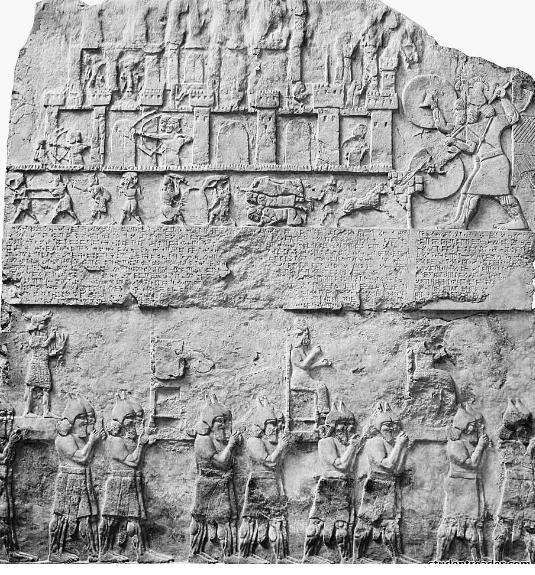
Assyrians Godnapping
ISRAEL'S CALF DEPORTED
THE NATION DISGRACED
The thing itself will be carried to Assyria As tribute (minchah) to King Jareb ("the great king" Hos 5:13) - Hosea does not even mention the name but contemtuously calls the calk "the thing" and "it" just an object! The idol Israel revered would become tribute (minchah) to the Assyrian king! This picture is deeply ironic for Assyrian reliefs actually depict conquered "gods" being carted off as plunder, so this is a literal practice, not just imagery. A god that has to be loaded on a cart is a god that cannot save anyone, which is Isaiah's mockery too (Isa 46:1-2). Israel made the calf to secure blessing, and the calf ends up as a line item in a tribute payment. King Jareb (melek yareb) is uncertain as it may be a proper name (Tiglath-Pileser III or Pul of Assyria - 745-727 BC), or a nickname meaning something like "the great king" or "the contentious king" or "king who contends." Hosea used it earlier in 5:13, where Israel went to Assyria for healing and could not be cured. That earlier verse and this one belong together: they sought Assyria's help, and Assyria took their god.
Scholars call the practice "godnapping." A conquering army carried off the statues of the defeated enemy's gods, which demonstrated the power of the Assyrian king's god, who had enabled the victory by defeating the gods of the conquered. There was also a propaganda angle: the message was that the enemy city's gods were angry with their own people, and had abandoned their temple to go to Assyria voluntarily. That second point is striking next to Hosea 10:5, where the glory departs from the calf.
Charles Feinberg - It is clear that the idols will not escape the scourge which shall befall the ten tribes, for they will be carried into captivity to Assyria, a manifest proof of their helplessness and worthlessness. (Cp. Is 46:1-2, for the same picture of the utter uselessness and burdensomeness of idols in time of trial and captivity.) (SEE The Minor Prophets)
Ephraim will be seized with shame And Israel will be ashamed (bosh; LXX - aischunomai - be embarrassed) of its own counsel -NIV = "Ephraim will be disgraced; Israel will be ashamed of its wooden idols." The Hebrew for shame is boshnah (hapax legomenon) from bosh which conveys the primary primary meaning to fall into disgrace, normally through failure, either of self or of an object of trust. Israel will experience a painful emotion along with a sense of guilt, disgrace and embarrassment, because of her worship of a dead calf! Note that NET, ESV, NIV, NLT translate counsel as "idols." The two readings are less far apart than they look. The counsel that shames them is the counsel that produced the idolatrous calf in the first place.
Robert Chisholm favors counsel over idols writing "The text is better translated, "Israel will be shamed of its own counsel" (cf. kjv, nasb, niv marg.), the reference being to the nation's unwise political policy of courting Assyria's favor (cf. Hosea 5:13; Hosea 7:8-9, 11; Hosea 8:9-10; in Isa. 30:1 the same word [ʿēṣâh] is used of a political alliance with Egypt). (See The Bible Knowledge Commentary Minor Prophets - Page 20)
J. Andrew Dearman: Israel’s plans had negative results, indeed catastrophic ones. The term “plans” (ʿēṣâ) is used similarly in Ps. 106:43, a poetic text with a number of connections to Hosea. In both places the term refers to plans undertaken by Israel in rebellion against YHWH’s leading. In the context of describing God’s anger and the resulting exile of his people (vv. 40–43), the psalmist notes, “Many times God delivered them, but they rebelled with their counsel (ʿēṣâ), they sank down because of their iniquity (ʿāwōn).” Hosea could not agree more. (SEE The Book of Hosea - Page 23)
TECHNICAL NOTE on COUNSEL - The meaning of the root of מֵעֲצָתוֹ (meʿatsato, preposition מִן, min, + feminine singular noun עֵצָה, ʿetsah, + third person masculine singular suffix) is debated. There are three options: (1) “its counsel” from I עֵצָה (“counsel; advice; plan”; BDB 420 s.v. עֵצָה; HALOT 867 s.v. I עֵצָה 3.a); (2) “its disobedience” from II עֵצָה (“disobedience,” but the existence of this root is debated; see HALOT 867 s.v. II עֵצָה); and (3) “its wooden idol” from III עֵצָה (“wood”; cf. Jer 6:6), referring to the wooden idol/effigy (the calf idol in Hos 10:5), a stick of wood covered with gold (HALOT 867 s.v.). The last option is favored contextually: (a) the idol is called “a stick of wood” in Hos 4:12, and (b) the calf idol (probably the referent) of the cult is mentioned in Hos 10:5. The English versions are divided. Some have “his idol” (RSV, NRSV), “its wooden idols” (NIV84), “image” (NJPS margin), “that idol” (CEV), and “this idol” (NLT). Others have “his own counsel” (KJV, ASV), “its own counsel” (NASB), “his plans” (NJPS), “his schemes” (NAB), “the advice” (TEV), and “its foreign alliances” (NIV11).
Hosea 10:7 Samaria will be cut off with her king Like a stick on the surface of the water.
KJV As for Samaria, her king is cut off as the foam upon the water.
NET Samaria and its king will be carried off like a twig on the surface of the waters.
NLT Samaria and its king will be cut off; they will float away like driftwood on an ocean wave.
BGT ἀπέρριψεν Σαμάρεια βασιλέα αὐτῆς ὡς φρύγανον ἐπὶ προσώπου ὕδατος
LXE Samaria has cast off her king as a twig on the surface of the water.
CSB Samaria's king will disappear like foam on the surface of the water.
ESV Samaria's king shall perish like a twig on the face of the waters.
NIV Samaria and its king will float away like a twig on the surface of the waters.
YLT Cut off is Samaria! Its king is as a chip on the face of the waters.
NKJ As for Samaria, her king is cut off Like a twig on the water.
NJB Samaria has had her day. Her king is like a straw drifting on the water.
NRS Samaria's king shall perish like a chip on the face of the waters.
RSV Samaria's king shall perish, like a chip on the face of the waters.
NAB The king of Samaria shall disappear, like foam upon the waters.
GWN The king of Samaria will be carried away like a piece of wood on water.
BBE As for Samaria, her king is cut off, like mist on the water.
- Samaria: 1Ki 21:1 2Ki 1:3
- king: Ho 10:3,15 2Ki 15:30 2Ki 17:4
- the water: Heb. the face of the waters, Jude 1:13
Related Passages:
2 Kings 17:4 But the king of Assyria found conspiracy in Hoshea, who had sent messengers to So king of Egypt and had offered no tribute to the king of Assyria, as he had done year by year; so the king of Assyria shut him up and bound him in prison.
SAMARIA AND HER
KING WILL FLOAT AWAY
Samaria will be cut off (damah) with her king (cf Hos 10:3,15)- Hoshea, the last king of the north,was arrested by Shalmaneser V before Samaria even fell (2 Ki 17:4). The city then was besieged for three years without a king (2Ki 17:5-6). So "Samaria will be cut off with her king" describes something Hosea's readers would live to watch. Israel was being warned of events that many of them would live to see with their own eyes.
Like a stick on the surface of the water - This introduces a term of comparison or simile but the Hebrew is difficult as reflected in the translations - NKJV "like a twig on the water," NRSV and TEV "like a chip on the face of the waters," NJB "like a straw drifting on the water." NLT = "float away like driftwood on an ocean wave." The uncertainty is over the exact object (twig, straw, driftwood, etc), but not the picture which is clear that something small, light, and easily tossed about and carried off by moving water depicting the helplessness of the kings in which Israel had placed their trust. Assyria would be the current, and the king and nation was the stick that would swept away and brought to ruin.
J. Andrew Dearman: In metaphorical terms the tenor is the sudden disappearance or end of Israel’s king. The vehicle is the fleeting life of a wood chip on water or that of the foam on water produced by movement. (The Book of Hosea - Page 23)
Cut off (ruined, destroyed, perish) (1820) damah is a verb meaning to cease, to cause to cease, to be silent, to destroy, to be cut off. It is used in reference to beasts that die (Ps. 49:12); the prophet Isaiah who feels undone when he sees the Lord (Isa. 6:5); the daughter of Zion's (Jerusalem's) destruction (Jer. 6:2); "eyes pour down unceasingly" (Lam. 3:49); the destruction of God's people Israel who have no knowledge (Hos. 4:6, cf Hos 10:7, Hos 10:15); "All who weigh out silver (merchants) will be cut off" (Zeph. 1:11); "how you (Edom) will be ruined" (Obad. 1:5).
DAMAH - 15X/14V (4x in Hosea Hos. 4:5; Hos. 4:6; Hos. 10:7; Hos. 10:15) - cease(1), completely cut off(1), cut off(2), destroy(1), destroyed(1), perish(2), ruined(5), silenced(1), unceasingly*(1). Ps. 49:12; Ps. 49:20; Isa. 6:5; Isa. 15:1; Jer. 6:2; Jer. 14:17; Jer. 47:5; Lam. 3:49; Obad. 1:5; Zeph. 1:11
Hosea 10:8 Also the high places of Aven, the sin of Israel, will be destroyed; Thorn and thistle will grow on their altars; Then they will say to the mountains, “Cover us!” And to the hills, “Fall on us!”
KJV The high places also of Aven, the sin of Israel, shall be destroyed: the thorn and the thistle shall come up on their altars; and they shall say to the mountains, Cover us; and to the hills, Fall on us.
NET The high places of the "House of Wickedness" will be destroyed; it is the place where Israel sins. Thorns and thistles will grow up over its altars. Then they will say to the mountains, "Cover us!" and to the hills, "Fall on us!"
NLT And the pagan shrines of Aven, the place of Israel's sin, will crumble. Thorns and thistles will grow up around their altars. They will beg the mountains, "Bury us!" and plead with the hills, "Fall on us!"
BGT καὶ ἐξαρθήσονται βωμοὶ Ων ἁμαρτήματα τοῦ Ισραηλ ἄκανθαι καὶ τρίβολοι ἀναβήσονται ἐπὶ τὰ θυσιαστήρια αὐτῶν καὶ ἐροῦσιν τοῖς ὄρεσιν καλύψατε ἡμᾶς καὶ τοῖς βουνοῖς πέσατε ἐφ᾽ ἡμᾶς
LXE And the altars of On, the sins of Israel, shall be taken away: thorns and thistles shall come up on their altars; and they shall say to the mountains, Cover us; and to the hills, Fall on us.
CSB The high places of Aven, the sin of Israel, will be destroyed; thorns and thistles will grow over their altars. They will say to the mountains, "Cover us!" and to the hills, "Fall on us!"
ESV The high places of Aven, the sin of Israel, shall be destroyed. Thorn and thistle shall grow up on their altars, and they shall say to the mountains, "Cover us," and to the hills, "Fall on us."
NIV The high places of wickedness will be destroyed-- it is the sin of Israel. Thorns and thistles will grow up and cover their altars. Then they will say to the mountains, "Cover us!" and to the hills, "Fall on us!"
YLT And destroyed have been high places of Aven, the sin of Israel. Thorn and bramble go up on their altars, And they have said to hills, Cover us, And to heights, Fall upon us.
NKJ Also the high places of Aven, the sin of Israel, Shall be destroyed. The thorn and thistle shall grow on their altars; They shall say to the mountains, "Cover us!" And to the hills, "Fall on us!"
NJB The high places of Aven, the sin of Israel, will be destroyed; thorns and thistles will grow over their altars. Then they will say to the mountains, 'Cover us!' and to the hills, 'Fall on us!'
NRS The high places of Aven, the sin of Israel, shall be destroyed. Thorn and thistle shall grow up on their altars. They shall say to the mountains, Cover us, and to the hills, Fall on us.
RSV The high places of Aven, the sin of Israel, shall be destroyed. Thorn and thistle shall grow up on their altars; and they shall say to the mountains, Cover us, and to the hills, Fall upon us.
NAB The high places of Aven shall be destroyed, the sin of Israel; thorns and thistles shall overgrow their altars. Then they shall cry out to the mountains, "Cover us!" and to the hills, "Fall upon us!"
GWN The illegal worship sites of Aven will be destroyed. Israel sins there. Thorns and weeds will grow over those altars. People will say to the mountains, "Cover us!" and to the hills, "Fall on us!"
BBE And the high places of Aven, the sin of Israel, will come to destruction; thorns and waste plants will come up on their altars; they will say to the mountains, Be a cover over us; and to the hills, Come down on us.
- high places: Ho 10:5 Hos 4:15 Hos 5:8
- the sin: De 9:21 1Ki 12:28-30 1Ki 13:34 1Ki 14:16 Am 8:14 Mic 1:5,13
- the thorn: Ho 9:6 Isa 32:13 Isa 34:13
- their altars: 1Ki 13:2 2Ki 23:15 2Ch 31:1 2Ch 34:5-7
- they shall: Isa 2:19 Lu 23:30 Rev 6:16 Rev 9:6
Related Passsages:
Hosea 4:15 Though you, Israel, play the harlot, Do not let Judah become guilty; Also do not go to Gilgal, Or go up to Beth-aven And take the oath: “As the LORD lives!”
Hosea 5:8 Blow the horn in Gibeah, The trumpet in Ramah. Sound an alarm at Beth-aven: “Behind you, Benjamin!”
Hosea 9:6 For behold, they will go because of destruction; Egypt will gather them up, Memphis will bury them. Weeds will take over their treasures of silver; Thorns will be in their tents.
Genesis 3:18 “Both thorns and thistles it shall grow for you; And you will eat the plants of the field;
Matthew 7:16 “You will know them by their fruits. Grapes are not gathered from thorn bushes nor figs from thistles, are they?
Hebrews 6:8 but if it yields thorns and thistles, it is worthless and close to being cursed, and it ends up being burned.
Luke 23:28-30 But Jesus turning to them said, “Daughters of Jerusalem, stop weeping for Me, but weep for yourselves and for your children.29) “For behold, the days are coming when they will say, ‘Blessed are the barren, and the wombs that never bore, and the breasts that never nursed.’ “Then (WHEN THEY SEE THE WRATH OF GOD) they will begin TO SAY TO THE MOUNTAINS, ‘FALL ON US,’ AND TO THE HILLS, ‘COVER US.’
Revelation 6:15-17 Then the kings of the earth and the great men and the commanders and the rich and the strong and every slave and free man hid themselves in the caves and among the rocks of the mountains; 16 and they said to the mountains and to the rocks, “Fall on us and hide us from the presence of Him who sits on the throne, and from the wrath of the Lamb; 17 for the great day of their wrath has come, and who is able to stand?”
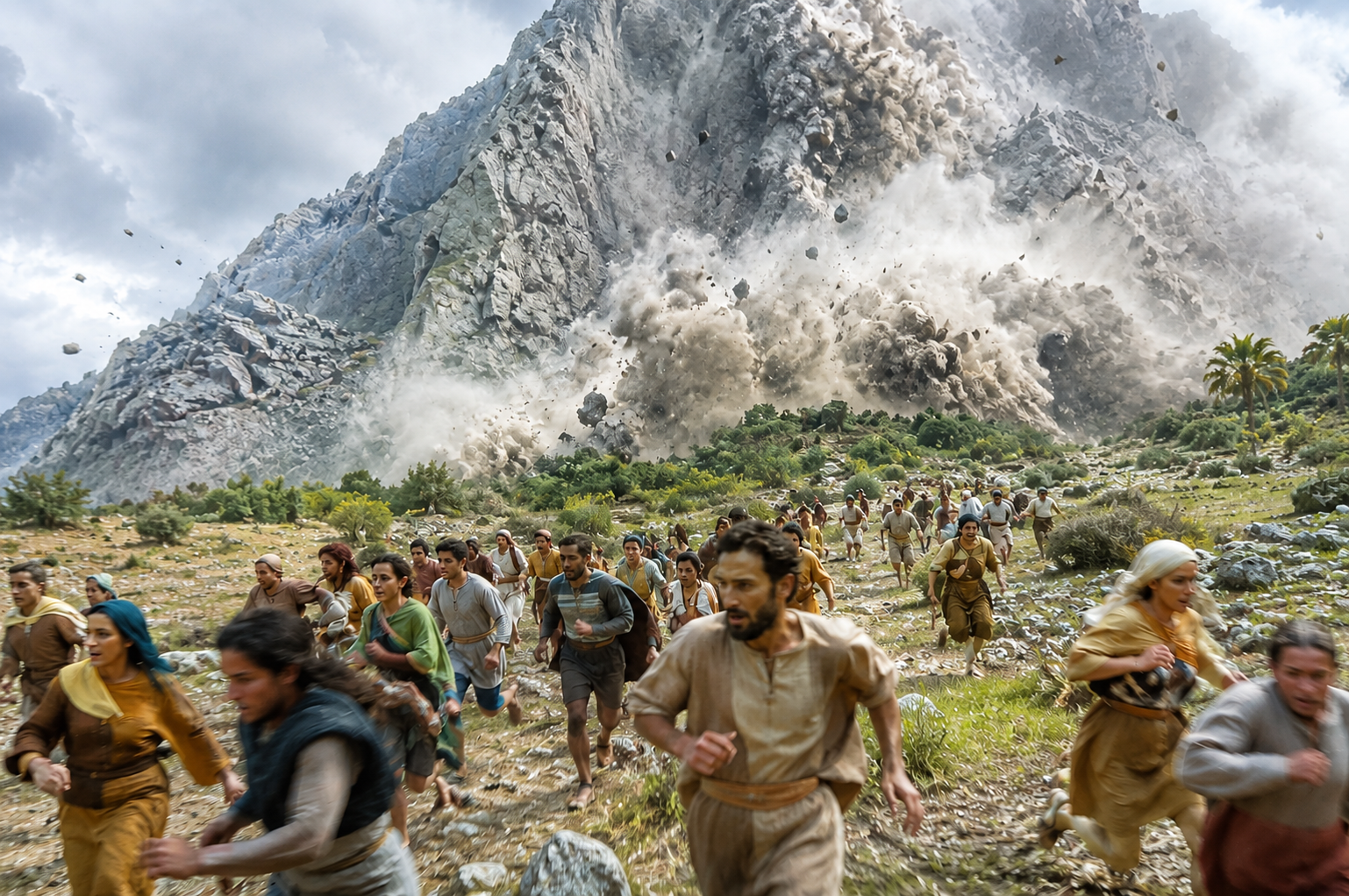
Cover us...fall on us
HIGH PLACES DESTROYED
LEAVING NO PLACES TO HIDE
Also the high places (bamah) of Aven, the sin of Israel, will be destroyed - The high places (bamah) were used as local sanctuaries and were the scenes of their abominable fertility rites. Aven means wickedness, iniquity, or vanity and is Hosea's contemptuous shortening of Beth-aven (Hos 10:5), his mocking name for Bethel, meaning “house of God” (Hos 4:15; Hos 5:8; Hos 10:5). The place that had once been associated with God's revelation to Jacob (Ge 28:10–19) had become a center of Israel's idolatrous calf worship (1Ki 12:28–33). Thus Hosea calls its high places “the sin of Israel.” They were not merely places where Israel happened to sin but embodied and promoted the nation's apostasy. The very religious shrines in which Israel trusted would be destroyed by God's judgment. What Israel regarded as sacred, Yahweh regarded as sin.
Robert Chisholm makes an interesting point regarding the high places - The reference to the destruction of the high places (bāmôt̠) is ironic (cf. Lev. 26:30-31). When Israel entered the land the Lord commanded her to destroy these worship centers (Num. 33:52; Deut. 12:2-3). Because of Israel's dismal failure in carrying out this charge, the Lord chose to use a foreign army to accomplish His purpose. (See Bible Knowledge Commentary: Old Testament - Page 1401)
Thorn and thistle will grow on their altars - The thorn and thistle pictures the land as unproductive and ties back to Hosea 9:6, where nettles and thorns overran their treasures and tents. Now the same weeds cover the altars. And "thorns and thistles" is Genesis 3:18 language, so the ground under judgment is doing exactly what cursed ground does.
Allen Guenther: The reference to thorn and thistle (Hos. 10:8b) echoes the curse on the first man’s disobedience (Gen. 3:18). It signals more than corrective judgment in the form of loss of fertility. The very symbols of fertility (high places) and obedience (altars) become the place where chaos conquers the powers of Baal. That curse comes from the Lord. (SEE Hosea, Amos: Believers Church Bible Commentary)
Then - Marks progression in the narrative. When the Israelites begin to see the unleashing of the wrath of God via the Assyrians, they will deperately seek escape.
They will say to the mountains, “Cover us!” And to the hills, “Fall on us! - The Israelites would prefer to be buried by the mountains than to face the terror of the notoriously ferocious Assyrians. It is also a bit ironic that the very high places where Israel had practiced idolatry would become places they cried out to! They would discover that the former places of false worship could offer them no refuge from Yahweh.
H. D. Beeby: To be crushed to the death by falling rocks is a fate one would not choose; but, says the prophet, it is so much better than what God has in store that it becomes desirable, something to be prayed for. (Grace Abounding: A Commentary on the Book of Hosea - Page 132)
Jesus quoted Hosea's words on the way to the cross when He warned of the coming judgment upon Jerusalem (Lk 23:28-30) Some see an allusion to this cry in Rev 6:15-17 when God powers out his wrath on the unbelieving world in last 7 years of this present age. The point is that when God's judgment finally falls, those who refused to seek refuge in Him will desperately seek refuge from God!
Bob Utley - "say to the mountains, 'Cover us!' And to the hills 'Fall on us'" The first VERB is a Piel IMPERATIVE. The second VERB is a Qal IMPERATIVE. This is used in Luke 23:30 and Rev. 6:16 as an expression of the horror at God's judgment. Here, there may be a theologicl connection between "mountains" and "hills" and Ba'al worship.
Robin Routledge: The final part of the verse (:8) indicates despair. In the face of impending judgment, the people cry out for the mountains and hills to fall and cover them (cf. Luke 23:30; Rev. 6:16), either to hide the shame of their actions or to avoid the horrors of coming judgment. (SEE Hosea: An Introduction and Commentary - Page 143)
James Mays: Hosea depicts the dread of the time by quoting what the people will say (as in v. 3); they will implore mountains and hills to erupt in earthquake and cover them lest they be left in their nakedness to face the wrath of God (cf. Luke 23.30; Isa. 2.10, 21). (SEE Hosea: A Commentary - Page 142)
Trent Butler: Hosea concludes the description of punishment by noting the people's prayers not at high places but to the high mountains and hills. Such cries would not be cries for help and deliverance but cries for final destruction and escape from their misery. A people whose worship, religion, and politics were corrupt would find life was no longer worth living. (SEE Holman Old Testament Commentary - Hosea, Joel, Amos- Page 74)
At that time they will begin TO CALL TO THE MOUNTAINS, “FALL ON US!” Luke 23:30 - Jay Adams
Echoing Hosea 10:8 and predicting Revelation 6:16, Jesus looked ahead to the time when the Roman armies would devastate Palestine and ultimately destroy Jerusalem and the nation of Israel. He warned those women who were lamenting that their tears were misdirected—they ought to be weeping for themselves and for their children (v. 28). It was a confused crowd that gathered on that day to witness an awful deed which would have repercussions that have reverberated down through all of history. Totally unaware of what was happening, they continued their customary weeping and wailing. The expression He co-opted from Hosea was as strong as such expressions come. It pictures a people so devastated that they want death at any cost! Obviously, they could not see the future. Bad decisions may lead to disaster. Think first!
Hosea 10:9 From the days of Gibeah you have sinned, O Israel; There they stand! Will not the battle against the sons of iniquity overtake them in Gibeah?
KJV O Israel, thou hast sinned from the days of Gibeah: there they stood: the battle in Gibeah against the children of iniquity did not overtake them.
NET O Israel, you have sinned since the time of Gibeah, and there you have remained. Did not war overtake the evildoers in Gibeah?
NLT The LORD says, "O Israel, ever since Gibeah, there has been only sin and more sin! You have made no progress whatsoever. Was it not right that the wicked men of Gibeah were attacked?
BGT ἀφ᾽ οὗ οἱ βουνοί ἥμαρτεν Ισραηλ ἐκεῖ ἔστησαν οὐ μὴ καταλάβῃ αὐτοὺς ἐν τῷ βουνῷ πόλεμος ἐπὶ τὰ τέκνα ἀδικίας
LXE From the time the hills existed Israel has sinned: there they stood: war waged against the children of iniquity
CSB Israel, you have sinned since the days of Gibeah; they have taken their stand there. Will not war against the unjust overtake them in Gibeah?
ESV From the days of Gibeah, you have sinned, O Israel; there they have continued. Shall not the war against the unjust overtake them in Gibeah?
NIV "Since the days of Gibeah, you have sinned, O Israel, and there you have remained. Did not war overtake the evildoers in Gibeah?
YLT From the days of Gibeah thou hast sinned, O Israel, There they have stood, Not overtake them in Gibeah doth battle, Because of sons of perverseness.
NKJ "O Israel, you have sinned from the days of Gibeah; There they stood. The battle in Gibeah against the children of iniquity Did not overtake them.
NJB Since the days of Gibeah, Israel, you have sinned. There they have taken their stand, and will not war overtake the guilty at Gibeah?
NRS Since the days of Gibeah you have sinned, O Israel; there they have continued. Shall not war overtake them in Gibeah?
RSV From the days of Gibeah, you have sinned, O Israel; there they have continued. Shall not war overtake them in Gibeah?
NAB Since the days of Gibeah you have sinned, O Israel. There they took their stand; war was not to reach them in Gibeah.
GWN Israel, you have sinned ever since the incident at Gibeah. You never change. War will overtake the wicked people in Gibeah.
BBE O Israel, you have done evil from the days of Gibeah; there they took up their position, so that the fighting against the children of evil might not overtake them in Gibeah.
- from: Ho 9:9 Judges 19:22-30 Judges 20:5,13,14
- the battle: Judges 20:17-48
- did: Ge 6:5 Ge 8:21 Zep 3:6,7 Mt 23:31,32
Related Passages:
Deuteronomy 28:15; 45 “But it shall come about, if you do not obey the LORD your God, to observe to do all His commandments and His statutes with which I charge you today, that all these curses will come upon you and overtake you...45 “So all these curses shall come on you and pursue you and overtake you until you are destroyed, because you would not obey the LORD your God by keeping His commandments and His statutes which He commanded you.
SENTENCE FOR
SINNING SINCE GIBEAH
From the days of Gibeah you have sinned (chata'; LXX - hamartano), O Israel; There they stand! - This is Hosea's third reference to Gibeah because this atrocity was the moment when Israel's character was truly revealed. The period during which the Gibeah occurred was summed up as a time when "everyone did what was right in his own eyes" (Jdg 21:25). Gibeah referred to the heinous wickedness of the men of Gibeah and the overzealous response of the sons of Israel doing what was right in their own eyes which almost led to the annihilation of the tribe of Benjamin (Jdg19; 20). The teaching that Hosea is conveying is that Israel, since that tragic occurrence at Gibeah has defiantly continued in the same basic rebellious spirit and so the appropriate punishment is now due. As war came on Gibeah, so war and captivity would come on Israel.
There they stand - The point is that despite four centuries having passed, Israel is standing in the same spot morally as Gibeah because they had not budged.
Will not the battle against the sons of iniquity overtake (nasaq) them in Gibeah - NET - "Did not war overtake the evildoers in Gibeah?" ESV - "Shall not the war against the unjust overtake them in Gibeah?" The question is rhetorical and expects an emphatic “Yes!” Just as judgment overtook the wicked men of Gibeah (Jdg 19–20), how much more would judgment overtake Israel, for they had become like those “sons of iniquity.” The verb overtake (nasaq) is picturesque, conveying the idea of catching up with someone who is fleeing. This recalls the covenant curses of Dt 28:15, 45 (contrast Dt 28:2!), which would come upon, pursue, and overtake disobedient Israel. For centuries Israel had seemingly outrun the consequences of her covenant rebellion, but now judgment was about to catch up with her. God may delay judgment in His longsuffering, but persistent, unrepentant sin cannot outrun it forever (cf. Nu 32:23; Eccl 8:11–13; Gal 6:7).
Robert Chisholm feels "The question in 10:9b is better translated with the future tense, Will not war overtake the evildoers in Gibeah? (cf. nasb; 5:8) How appropriate that judgment should "overtake" the city that had served as a pattern for Israel's sinful history! (SEE Bible Knowledge Commentary: Old Testament - Page 1401)
Derek Kidner: The name Gibeah (9) is doubly potent, linking Hosea’s generation with the most vicious episode in Israel’s past and with its aftermath, the destructive civil war of Judges 20. But verse 10 appoints foreign nations, not fellow-Israelites this time, as the means of punishment. The fulfilment is recorded in 2 Kings 17:6 and, for good measure, 2Ki 17:24-41. (SEE The Message of Hosea)
J. Andrew Dearman - Gibeah is the fourth of four cities to be singled out for comment. There is shame in Baal-peor (Hos 9:10), evil in Gilgal (Hos 9:15), fear and mourning in Samaria (Hos 10:5), and now sin in Gibeah (Hos 10:9). (The Book of Hosea)
H. Ronald Vandermey: Another parallel between the time of the fall of Samaria and the time of the Great Tribulation may be deduced by noting the similar condition of the respective groups to be judged by God. The phrase in verse 9, “the days of Gibeah” parallels the New Testament concept of “the days of Noah” (Matt. 24:37; cf. 2 Pet. 2:5) in the sense that both speak of a period of unrestrained wickedness. Thus Hosea warns that the whole nation is standing like Gibeah of old, in a position that demands the judgment of God. The tenth verse amplifies the threat as God announces that “the peoples” (foreign invaders) will be gathered against Israel. This verse is again a parallel to the scene in Gibeah, in which the tribes assembled against Benjamin (Judg. 20:1-48). (SEE Hosea & Amos- Everyman's Bible Commentary - Page 62)
Overtake (05381) nasaq means to overtake (Ge 14:9 Egyptians "overtook them camping by the sea.", cf Ge 15:9), to reach (Ge 31:24 "Laban caught up with Jacob"), to get. It often means to overtake, to catch up to someone (Ge 31:25; Ge 44:4, 6; Ex. 14:9; Ex 15:9; Nu 6:21). It is used figuratively of age, of years attaining a certain level (Gen. 47:9); or of joy and rejoicing arriving, becoming a reality (Isa. 35:10). It means to afford, to have at one’s hand, the ability, to have sufficient (Lev. 5:11; Lev 14:21); or to obtain, come into possession of property (Lev. 25:47). Vine - nasag (נָשַׂג, 5381), “to reach, overtake, attain.” First use is Ge 31:25: “Then Laban overtook Jacob.” Often it is used in connection with the verb, “to pursue, follow,” as in Ge 44:4: “follow after the men; and when thou dost overtake them.…” Nasag is sometimes used in the figurative sense to describe “being overtaken” by something undesirable or unwanted, such as war (Hos. 10:9), the sword (Jer. 42:16), or curses (Deut. 28:15, 45). Fortunately, blessings may “overtake” those who are obedient (Deut. 28:2). Nasag may mean “to attain to” something, “to come into contact” with it: “The sword of him that layeth at him [Leviathan] …” (Job 41:26). Used figuratively, “The ransomed of the Lord … shall obtain joy and gladness …” (Isa. 35:10). Jacob complained: “… the days of the years of my pilgrimage … have not attained unto the days of the years of the life of my fathers …” (Gen. 47:9).
NASAQ - USED TWICE IN HOSEA - Hos. 2:7; Hos. 10:9
QUESTION - What is the significance of Gibeah in the Bible? | GotQuestions.org
ANSWER - Several places in the Bible are named Gibeah, which simply means “a hill.”
The most prominent Gibeah was a central city in the territory assigned to the tribe of Benjamin (Joshua 18:28) located about five miles north of Jerusalem. Gibeah of Benjamin was the hometown of Saul (1 Samuel 10:26) and sometimes referred to in the Bible as “Gibeah of Saul” (1 Samuel 11:4; 1 Samuel 15:34; Isaiah 10:29). Its inhabitants were called the Gibeathites (1 Chronicles 12:3). After Saul was anointed king over Israel, he returned to live in Gibeah and made it the royal capital during his reign (1 Samuel 10:26; 1 Samuel 22:6; 1 Samuel 23:19).
Earlier, in the book of Judges, chapters 19—21, Gibeah of Saul was the scene of a horrific rape and murder that resulted in an intertribal war against the tribe of Benjamin. A Levite and his concubine were traveling from Bethlehem to Ephraim and stopped for lodging in Gibeah. Since Israelites lived in Gibeah, they expected to be warmly received. But no one offered them hospitality except an old man originally from Ephraim.
During the night, some wicked men of Gibeah went to the old man’s house and demanded to have sex with the Levite visitor. The old man was so ashamed of their outrageous conduct that he offered the men his virgin daughter and the Levite’s concubine. The townsmen refused, so the Levite sent his concubine outside. Through the night, the men of Gibeah raped and abused the woman and then left her for dead. To bring attention to this outrage, the Levite chopped up the concubine’s body into twelve parts and sent one to each of the tribes of Israel. The other tribes took vengeance by killing the inhabitants of Gibeah and devastating the tribe of Benjamin. So horrendous was this brutal crime that it became a lingering symbol of Israel’s wickedness and sin (Hosea 9:9; Hosea 10:9).
Another tragic event that occurred in Gibeah of Saul is recorded in 2 Samuel 21. When David was king, a famine plagued Israel for three years. The Lord told David the reason for the scarcity: “It is on account of Saul and his blood-stained house; it is because he put the Gibeonites to death” (2 Samuel 21:1). David then asked the Gibeonites (to be distinguished from the Gibeathites) what he could do to repay them, and they asked for seven of Saul’s sons to be put to death. King David gave them two of Saul’s sons and five of his grandsons, and they were hanged in Gibeah (2 Samuel 21:8–9).
The Bible identifies another city named Gibeah in the hill country of the tribe of Judah, southwest of Jerusalem (Joshua 15:57). Scholars believe this Gibeah may have been the home of King Abijah’s wife Maakah (2 Chronicles 13:2) and possibly a place named after one of Caleb’s descendants (1 Chronicles 2:49). The exact location of this Gibeah is unknown.
A town in the hill country of the tribe of Ephraim was also called Gibeah. Aaron’s son Eleazar was buried there, and his son Phineas inherited the land (Joshua 24:33). The precise location of this Gibeah remains uncertain as well.
Gibeah of God, Gibeath-elohim, meaning “hill of God,” was the site where the prophet Samuel predicted that the recently anointed King Saul would meet a company of prophets and prophesy together with them there (1 Samuel 10:5–6).
Another Gibeah, Gibeath-haaraloth, meaning “hill of the foreskins,” was the spot between the Jordan River and Jericho, near Gilgal, where Joshua used flint knives to circumcise the sons of Israel that had been born during the 40 years of wandering the wilderness (Joshua 5:3).
In the KJV, Gibeah, a hill near Kiriath-jearim, was where Abinadab housed the ark of the covenant after its return from the Philistines until David transported it to the house of Obed-edom (1 Samuel 7:1; 2 Samuel 6:1–4;). Most other translations simply say that Abinadab lived “on the hill,” but the Hebrew word used is a form of Gibeah.
Related Resource:
Hosea 10:10 When it is My desire, I will chastise them; And the peoples will be gathered against them When they are bound for their double guilt.
KJV It is in my desire that I should chastise them; and the people shall be gathered against them, when they shall bind themselves in their two furrows.
NET When I please, I will discipline them; I will gather nations together to attack them, to bind them in chains for their two sins.
NLT Now whenever it fits my plan, I will attack you, too. I will call out the armies of the nations to punish you for your multiplied sins.
BGT ἦλθεν παιδεῦσαι αὐτούς καὶ συναχθήσονται ἐπ᾽ αὐτοὺς λαοὶ ἐν τῷ παιδεύεσθαι αὐτοὺς ἐν ταῖς δυσὶν ἀδικίαις αὐτῶν
LXE to chastise them shall not overtake them on the hill, the nations shall be gathered against them, when they are chastened for their two sins,
CSB I will discipline them at My discretion; nations will be gathered against them to put them in bondage for their two crimes.
ESV When I please, I will discipline them, and nations shall be gathered against them when they are bound up for their double iniquity.
NIV When I please, I will punish them; nations will be gathered against them to put them in bonds for their double sin.
YLT When I desire, then I do bind them, And gathered against them have peoples, When they bind themselves to their two iniquities.
NKJ When it is My desire, I will chasten them. Peoples shall be gathered against them When I bind them for their two transgressions.
NJB I am coming to punish them; nations will muster against them to punish them for their two crimes.
NRS I will come against the wayward people to punish them; and nations shall be gathered against them when they are punished for their double iniquity.
RSV I will come against the wayward people to chastise them; and nations shall be gathered against them when they are chastised for their double iniquity.
NAB Against the wanton people I came and I chastised them; I gathered troops against them when I chastised them for their two crimes.
GWN "I will punish them when I'm ready. Armies will gather to attack them. They will be punished for their many sins.
BBE I will come and give them punishment; and the peoples will come together against them when I give them the reward of their two sins.
- in my: De 28:63 Isa 1:24 Jer 15:6 Eze 5:13 Eze 16:42
- and the: Ho 8:1,10 Jer 16:16 Jer 21:4 Eze 16:37 Eze 23:9,46 Mic 4:10-13 Zec 14:2,3 Mt 22:7
Related Passages:
Deuteronomy 28:63 “It shall come about that as the LORD delighted over you to prosper you, and multiply you, so the LORD will delight over you to make you perish and destroy you; and you will be torn from the land where you are entering to possess it.
Isaiah 10:5-6 Woe to Assyria, the rod of My anger And the staff in whose hands is My indignation, 6I send it against a godless nation And commission it against the people of My fury To capture booty and to seize plunder, And to trample them down like mud in the streets.
Hosea 8:1; 10 Put the trumpet to your lips! Like an eagle the enemy comes against the house of the LORD, Because they have transgressed My covenant And rebelled against My law. (8:10) Even though they hire allies among the nations, Now I will gather them up; And they will begin to diminish Because of the burden of the king of princes.
INESCAPABLE DISCIPLINE OF GOD
ON HIS TIMETABLE
When it is My desire, I will chastise them - CSB = "I will discipline them at My discretion." NLT = "Now whenever it fits my plan." ESV = "When I please, I will discipline them." GWN "I will punish them when I'm ready." Note that Yahweh takes responsibility for the coming punishment, even though He will use Assryia as His agent of destruction. When it is My desire is a time phrase that emphasizes Yahweh is absolute sovereign over both the timing and the execution of Israel's judgment. Israel is not running the clock and neither is Assyria! Israel may have imagined that because judgment had been delayed it would never come (cf. Eccl 8:11), but God's patience was not indifference! He alone would determine when their time of reckoning had arrived. The verb "chastise" (yasar) can mean to discipline, correct, instruct, or punish and clearly here the context stresses punitive discipline brought on a persistently rebellious nation. God had warned Israel repeatedly through His prophets, but when His appointed time came, He would act decisively, using Assyria as His instrument of chastisement (cf. Isa 10:5-6). God's judgment is never premature, never late, and never out of His control. His delay should never be mistaken for His approval.
And the peoples will be gathered against them - Peoples (or nations) will be gathered against them seems to take this prophecy beyond the invasion by the single nation of Assyria.
When they are bound for their double guilt - The "double guilt" is debated. Options include the two calves at Dan and Bethel, the double sin of rejecting God and rejecting the Davidic king, Gibeah then and Gibeah now (picking up verse 9), or simply doubled and compounded iniquity. Given that verse 9 just invoked Gibeah, the "then and now" reading fits the flow well.
John MacArthur - Israel would receive a double portion of judgment for her multiplied iniquity (cf. Isa 40:2; Jer 16:18). (See MacArthur Study Bible)
Robert Chisholm - The translation and meaning of the final line in 10:10 are uncertain. The NIV takes the bonds as a reference to captivity and approaching exile. Probably a better translation is, "when they are harnessed to their double sin." The imagery is that of plowing (cf. v. 11). Israel is pictured as yoked to her sin like a heifer (cf. Isa. 5:18). As Wolff suggests (Hosea, p. 184), "double sin" probably refers to Israel's former sin (at Gibeah) and her present guilt. (SEE Bible Knowledge Commentary: Old Testament - Page 1401)
Bob Utley - "I will chastise them" The VERB (BDB 415, KB 418, Qal IMPERFECT) generally means "educate" or "inform" (morally) by discipline (cf. Ps. 94:10). Here, it refers to discipline (i.e. judgment) because of covenant violations. ▣ "they are bound" This binding (BDB 63, KB 75, Qal INFINITIVE CONSTRUCT) was historically done by both Assyria and later Neo-Babylon as they tied the exiles together to deport them to a foreign land. ▣ "double guilt" Literally this is "two of their iniquities" (Qere). The phrase "double guilt" comes from the Septuagint, Peshitta, and Vulgate. It could refer to (1)a play on the name Ephraim ("double fruitful"); (2) the two sins of following Ba'al and forsaking YHWH (cf. Jer. 2:13). (3) the two golden calves set up at Bethel and Dan by Jereboam I
Derek Kidner: As for the ‘double iniquity’, many suggested meanings have been offered. Among the most likely is that it refers to Israel’s resort to Baal in its worship and to worldly allies in its politics – both of which are major accusations in these chapters. Another is that the allusion is to their rejection first of God as their true king and then of David as His anointed. This double defection is implied in 3:5, but that passage is hardly close at hand here. Further suggestions fasten on the reference to Gibeah just before this, and see the two sins either as those of Israel’s past and present, or else as the outrage of Judges 19 plus the disobedient reign of Saul (who made Gibeah his centre). Some of these interpretations seem over-subtle, and it may be that the simplest of all should be followed: that like the ‘three transgressions . . . and . . . four’ of Amos 1:3, 6, etc., the two iniquities mean just the repeated or persistent acts of Israel’s disobedience. (SEE The Message of Hosea)
Barnes’ Notes: “their double sin” -- as Jeremiah says, ‘My people hath committed two evils; they have forsaken Me, the Fountain of living waters, and hewed them out cisterns, broken cisterns, which can hold no water’ (Jer 2:13). This could not be said of any other nation, which knew not God. For if any such worshiped false gods, they committed only one transgression; but this nation, in which God was known, by declining to idolatry, is truly blamed as guilty of ‘two transgressions;’ they left the true God, and for, or against, Him they worshiped other gods. For he hath twofold guilt, who, knowing good, rather chooseth evil; but ‘he’ single, who, knowing no good, taketh evil for good. That nation then, both when, after seeing many wonderful works of God, it made and worshiped one calf in the wilderness; and when, forsaking the house of David and the temple of the Lord, it made itself two calves; yea, and so often as it worshiped those gods of the heathen; and yet more, when it asked that Barabbas should be released but that Christ should be crucified, committed two transgressions, rejecting the good, electing the evil; ‘setting sweet for bitter, and bitter for sweet; setting darkness as light, and light as darkness’ (Isa 5:20).”
C H Spurgeon - I WILL CHASTEN THEM. Hosea 10:10
There are many of you who, like myself, understand what deep depression means. Yet we would not change our lot for the mirth of fools or the pomp of kings. No one takes our joy. We are singing pilgrims even if the way is rough. Amid the ashes of our pain live the sparks of our joy, ready to flame when the Holy Spirit’s breath sweetly blows. Our latent happiness is a choicer heritage than the sinner’s glee.
Once when suffering greatly and scarcely able to stand, I met someone who enjoys excellent health and prosperity. But his mind is coarse, his tongue cuts like a file, and he is fond of expressing his rational ideas as proof that he is superior. With sarcastic politeness, he said, “Dear, dear, what a sufferer you are. But it is expected, for whom the Lord loves He chastens” (Heb. 12:6). I barely had time to admit that the chastening had been severe before he added, “You are welcome to a love that shows itself in that fashion. For my part, I would rather be without it. I can do better without your God than with Him.”
Hot tears scalded my eyelids and forced a passage. I could bear the pain, but I could not endure evil spoken of my God. I flamed up in indignation! I cried, “If instead of pain in my legs, I had a thousand agonies in every limb, I would not change places with you. I am content to take all that comes of God’s love. God and His chastening are better than the world and its delights.”
I know this to be so. My soul has a greater inner gladness in deep depression than the godless have in their high, foaming merriment. Every pain is a tutor to praise, for it teaches us how to play on all the keys of our humanity until a complete harmony, which perpetual health could never produce, is achieved
Hosea 10:11 Ephraim is a trained heifer that loves to thresh, But I will come over her fair neck with a yoke; I will harness Ephraim, Judah will plow, Jacob will harrow for himself.
KJV And Ephraim is as an heifer that is taught, and loveth to tread out the corn; but I passed over upon her fair neck: I will make Ephraim to ride; Judah shall plow, and Jacob shall break his clods.
NET Ephraim was a well-trained heifer who loved to thresh grain; I myself put a fine yoke on her neck. I will harness Ephraim. Let Judah plow! Let Jacob break up the unplowed ground for himself!
NLT "Israel is like a trained heifer treading out the grain-- an easy job she loves. But I will put a heavy yoke on her tender neck. I will force Judah to pull the plow and Israel to break up the hard ground.
BGT Εφραιμ δάμαλις δεδιδαγμένη ἀγαπᾶν νεῖκος ἐγὼ δὲ ἐπελεύσομαι ἐπὶ τὸ κάλλιστον τοῦ τραχήλου αὐτῆς ἐπιβιβῶ Εφραιμ καὶ παρασιωπήσομαι Ιουδαν ἐνισχύσει αὐτῷ Ιακωβ
LXE Ephraim is a heifer taught to love victory, but I will come upon the fairest part of her neck: I will mount Ephraim; I will pass over Juda in silence; Jacob shall prevail against him.
CSB Ephraim is a well-trained calf that loves to thresh, but I will place a yoke on her fine neck. I will harness Ephraim; Judah will plow; Jacob will do the final plowing.
ESV Ephraim was a trained calf that loved to thresh, and I spared her fair neck; but I will put Ephraim to the yoke; Judah must plow; Jacob must harrow for himself.
NIV Ephraim is a trained heifer that loves to thresh; so I will put a yoke on her fair neck. I will drive Ephraim, Judah must plow, and Jacob must break up the ground.
YLT And Ephraim is a trained heifer -- loving to thresh, And I -- I have passed over on the goodness of its neck, I cause one to ride Ephraim, Plough doth Judah, harrow for him doth Jacob.
NKJ Ephraim is a trained heifer That loves to thresh grain; But I harnessed her fair neck, I will make Ephraim pull a plow. Judah shall plow; Jacob shall break his clods."
NJB Ephraim is a well-trained heifer that loves to tread the grain. But I have laid a yoke on her fine neck, I shall put Ephraim into harness, Judah will have to plough, Jacob must draw the harrow.
NRS Ephraim was a trained heifer that loved to thresh, and I spared her fair neck; but I will make Ephraim break the ground; Judah must plow; Jacob must harrow for himself.
RSV Ephraim was a trained heifer that loved to thresh, and I spared her fair neck; but I will put Ephraim to the yoke, Judah must plow, Jacob must harrow for himself.
NAB Ephraim was a trained heifer, willing to thresh; I myself laid a yoke upon her fair neck; Ephraim was to be harnessed, Judah was to plow, Jacob was to break his furrows:
GWN "Ephraim is like a trained calf that loves to thresh grain. I will put a yoke on its beautiful neck. I will harness Ephraim. Judah must plow. Jacob must break up the ground.
BBE And Ephraim is a trained cow, taking pleasure in crushing the grain; but I have put a yoke on her fair neck; I will put a horseman on the back of Ephraim; Judah will be working the plough, Jacob will be turning up the earth.
- an heifer: Ho 4:16 Jer 50:11
- and loveth: Ho 2:5 Ho 3:1 Ho 9:1 De 25:4 Ro 16:18
- but: Ho 11:4
- her fair neck: Heb. the beauty of her neck
- Judah: 2Ch 28:5-8 Isa 28:24
Related Passsages:
Deuteronomy 25:4 “You shall not muzzle the ox while he is threshing.
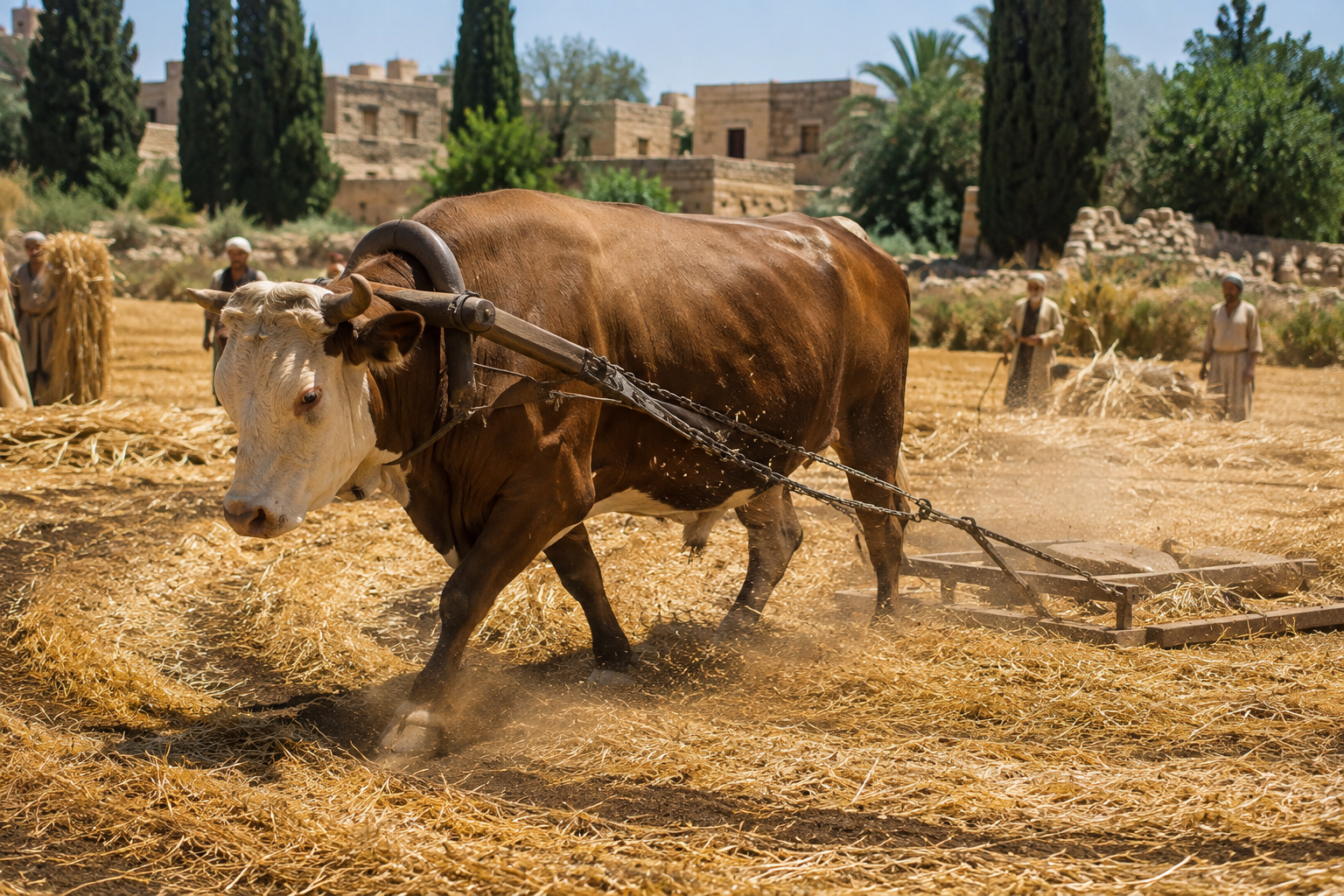
FROM THRESHING
TO A HEAVY YOKE
Ephraim (Northern Kingdom) is a trained heifer that loves to thresh - Hosea pictures Ephraim as a well-trained young cow that actually enjoys threshing grain. There was good reason to love this work. Threshing was relatively easy compared with plowing, and according to the Law, “You shall not muzzle the ox while he is threshing” (Dt 25:4). The animal could walk over the grain while freely eating some of it. Thus threshing pictures pleasant labor accompanied by abundant provision. The agricultural metaphor aptly describes prosperous Ephraim whom God had blessed with a fertile land and abundant harvests. But she had grown accustomed to enjoying His benefits (Hos 2:8; Hos 10:1). Ephraim loved God's blessings, but she did not love the God Who gave them. Like the heifer happily eating while threshing, Israel was quite content with the prosperity Yahweh provided while refusing to submit faithfully to Him.
J. Andrew Dearman: A trained heifer is one that has learned the task of threshing and is obedient to the guidance of the farmer. (The Book of Hosea)
Bob Utley - "Ephraim is a trained heifer that loves to thresh" This poetic line refers to the easier task of threshing out the grain. The following lines prophesy that she will be made to do the difficult work of plowing (i.e. yoke on her neck).
But - Term of contrast. Striking contrast as the picture changes abruptly.
I will come over her fair neck with a yoke; I will harness Ephraim, Judah will plow, Jacob will harrow for himself - The easy days of threshing were soon to come to an end for Ephraim. The "heifer" that enjoyed unrestricted threshing would now experience the yoke of hard labor, ultimately picturing the discipline and servitude associated with coming judgment. "Her fair neck" is tender, the part that stays smooth on an unyoked animal, and God says He will pass a yoke over exactly that spot. The act of harnessing implies control and direction. God intends to redirect Ephraim's path, moving them from their self-directed ways to a path of divine correction. This reflects the broader biblical theme of God’s sovereignty and His ability to guide nations according to His purposes.
Judah is included in the judgment which predicts the entire nation (north and south) will go under the plow.
THOUGHT- It is possible to love the blessings of God without loving the God of the blessings (Dt 8:10–14; Dt 32:15). Prosperity received without gratitude and obedience can become spiritually dangerous.
Bob Utley - There are three separate VERBS in these lines of poetry for preparing the soil for seed. YHWH's people had sown wickedness (cf. v. 13) but He hopes they will plow righteousness and kindness (v. 12a,b). (1) harness, v. 11c ‒ Hiphil IMPERFECT (in this sense, only here; VERB lit. "to mount" or "to ride"). (2) plow, v. 11d ‒ Qal IMPERFECT (3) harrow, v. 11d ‒ BDB 961, KB 1306, Piel IMPERFECT. The JPSOA (Jewish English translation of the Hebrew Old Testament) asserts that (1) #1 refers to Ephraim doing the advanced plowing, from Arabic VERB(2) #2 refers to Judah doing the main plowing. (3) #3 refers to Jacob/Israel as a whole doing the final plowing ▣ "Judah will plow" This refers to (1) positive ‒ YHWH's covenant blessing (Hos 10:12) and (2) negative ‒ a future series of Babylonian exiles (Hos 10:13-14, i.e. 605, 597, 586, 582 B.C.).
Robert Chisholm - In this figurative portrayal the nation's threshing corresponded to the service the Lord required within the covenant relationship, whereas the plowing referred to the hardship that would accompany the exile. (SEE Bible Knowledge Commentary: Old Testament - Page 1401)
Hosea 10:11-15 Today in the Word
Sow for yourselves righteousness, reap . . . unfailing love.
Hosea 10:12
To a modern believer, the rule against muzzling an ox during the threshing process might seem irrelevant (Deut. 25:4). An ox in ancient Israel, however, would have considered it a basic oxen right. Muzzling an animal while it pushed the stone around a floor full of grain would be like forbidding a Baskin Robbins employee to eat ice cream. But as Paul would later reflect, God didn’t give the law for the sake of the ox. He wanted to prevent the Israelites from being stingy with the fruits of their labor (1 Cor. 9:9–10).
Today’s reading changes the point of view to the animal, because God compared Israel to a heifer in the threshing room. The problem wasn’t stinginess but rather laziness. Israel enjoyed the benefits of belonging to God without truly serving Him as Master. God had the work of righteousness in store for Israel, and the fruit of that labor was a love that would not fail (v. 12). But Israel didn’t respond to God’s call to sow righteousness—they did quite the opposite (v. 13).
Israel completed the entire cultivation cycle of sin. They planted and harvested evil and then consumed the lie their sin produced. Similar to the prostitution metaphor, this was a picture of how Israel had made a living out of wickedness. As a result, the heavy yoke on Israel’s neck would be punishment rather than privilege.
In verse 13, the tone of the passage switches dramatically from the agricultural metaphor to a more literal prediction of military devastation. Israel put their trust in chariots, horses, and their own might as a nation—this proved to be misplaced trust. The description of the consequences is harrowing, including the death of women and children and the dissolution of the throne of Israel (v. 15). The offer of righteousness and love quickly changed to the promise of destruction.
The call to sow righteousness and reap God’s love is a compelling promise, because it was made to the sinful. Even knowing how they would refuse, God still extended them the opportunity to do what was right and experience something wonderful!
Apply the Word
If the Christian life seems easy, you may not be living it. Write verse 12 in its entirety and carry it with you through the day. This message, delivered to Israel in their apostasy, has a common application for anyone in God’s family. If you have been enjoying the benefits of Christianity without giving of yourself in service, there is much unplowed ground for you to cover! No matter what position you are in, seek the Lord and He will give you an opportunity. Take it willingly!
Hosea 10:11-15 TODAY IN THE WORD
In a book entitled Down to Earth, John Lawrence tells the story of a city that dared God to show Himself and paid a terrible price. It seems that the city of Messina, Sicily, was home to many wicked, irreligious people. On December 25, 1908, a newspaper published in Messina printed a parody against God, daring Him to make Himself known by sending an earthquake. Three days later, on December 28, the city and its surrounding district was devastated by a terrible quake that killed 84ꯠ people.
Although God does not always answer such challenges this directly, how foolish it is to shake a fist in His face. Though Israel was not daring God to strike in this way, the people were sinning in His very presence. Judgment was sure to fall.
The closing verses of Hosea 10 help to complete the prophet's picture of sin and judgment. But in the middle of this unrelenting indictment, we find an interlude that almost surprises us. Hosea 10:12 is an eloquent and refreshing invitation to personal and national holiness.
The promises of God's loyal love and showers of righteousness seem too good to refuse. God wanted Israel to sow righteousness, yet she spurned the offer of Her loving Husband and chose instead the heavy yoke of a plow animal. Since Israel seemed determined to yoke herself to sin, God would see to it that she was yoked to the heavy task of plowing (Hosea 10:11), a symbol here of the soon-to-come invasion and conquest by Assyria.
Pulling a plow was much harder work for an animal than pulling a threshing stone, but Israel chose the hard way of the transgressor. She had ""planted wickedness"" and ""reaped evil,"" in accordance with the principle of reaping what one sows (Gal. 6:7).
We're not sure of the references Hosea makes to a battle in Hosea 10:14, but the message for Israel is unmistakable. Hosea likened Israel's fate to the battle of Beth Arbel, where the devastation was terrible. This was what was in store for Bethel, a name used here to stand for Israel.
TODAY ALONG THE WAY
Reaping what you sow is an iron-clad principle in God's kingdom.
Perhaps that's why it appears so frequently in our daily journey through God's Word. We cannot be reminded often enough that what we do with the ""little stuff"" in our daily lives has real consequences
Hosea 10:12 Sow with a view to righteousness, Reap in accordance with kindness; Break up your fallow ground, For it is time to seek the LORD Until He comes to rain righteousness on you.
KJV Sow to yourselves in righteousness, reap in mercy; break up your fallow ground: for it is time to seek the LORD, till he come and rain righteousness upon you.
NET Sow righteousness for yourselves, reap unfailing love. Break up the unplowed ground for yourselves, for it is time to seek the LORD, until he comes and showers deliverance on you.
NLT I said, 'Plant the good seeds of righteousness, and you will harvest a crop of love. Plow up the hard ground of your hearts, for now is the time to seek the LORD, that he may come and shower righteousness upon you.'
BGT σπείρατε ἑαυτοῖς εἰς δικαιοσύνην τρυγήσατε εἰς καρπὸν ζωῆς φωτίσατε ἑαυτοῖς φῶς γνώσεως ἐκζητήσατε τὸν κύριον ἕως τοῦ ἐλθεῖν γενήματα δικαιοσύνης ὑμῖν
LXE Sow to yourselves for righteousness, gather in for the fruit of life: light ye for yourselves the light of knowledge; seek the Lord till the fruits of righteousness come upon you.
CSB Sow righteousness for yourselves and reap faithful love; break up your unplowed ground. It is time to seek the LORD until He comes and sends righteousness on you like the rain.
ESV Sow for yourselves righteousness; reap steadfast love; break up your fallow ground, for it is the time to seek the LORD, that he may come and rain righteousness upon you.
NIV Sow for yourselves righteousness, reap the fruit of unfailing love, and break up your unplowed ground; for it is time to seek the LORD, until he comes and showers righteousness on you.
YLT Sow for yourselves in righteousness, Reap according to loving-kindness, Till for yourselves tillage of knowledge, To seek Jehovah, Till he come and shew righteousness to you.
NKJ Sow for yourselves righteousness; Reap in mercy; Break up your fallow ground, For it is time to seek the LORD, Till He comes and rains righteousness on you.
NJB Sow saving justice for yourselves, reap a harvest of faithful love; break up your fallow ground: it is time to seek out Yahweh until he comes to rain saving justice down on you.
NRS Sow for yourselves righteousness; reap steadfast love; break up your fallow ground; for it is time to seek the LORD, that he may come and rain righteousness upon you.
RSV Sow for yourselves righteousness, reap the fruit of steadfast love; break up your fallow ground, for it is the time to seek the LORD, that he may come and rain salvation upon you.
NAB "Sow for yourselves justice, reap the fruit of piety; Break up for yourselves a new field, for it is time to seek the LORD, till he come and rain down justice upon you."
GWN "Break new ground. Plant righteousness, and harvest the fruit that your loyalty will produce for me." It's time to seek the LORD! When he comes, he will rain righteousness on you.
BBE Put in the seed of righteousness, get in your grain in mercy, let your unploughed earth be turned up: for it is time to make search for the Lord, till he comes and sends righteousness on you like rain.
- Sow: Ho 8:7 Ps 126:5,6 Pr 11:18 Pr 18:21 Ec 11:6 Isa 32:20 Jas 3:18
- break: Jer 4:3-4
- time: Ps 105:4 Isa 31:1 Isa 55:6 Jer 29:12-14 Jer 50:4 Am 5:4,6,8,15 Zep 2:1-3 Lu 13:24
- rain: Ho 6:3 Ps 72:6 Isa 5:6 Isa 30:23 Isa 44:3 Isa 45:8 Eze 34:26 Ac 2:18 1Co 3:6,7
Related Passages:
Hosea 8:7 For they sow the wind And they reap the whirlwind. The standing grain has no heads; It yields no grain. Should it yield, strangers would swallow it up.
Jeremiah 4:3-4 For thus says the LORD to the men of Judah and to Jerusalem, “Break up your fallow ground, And do not sow among thorns. 4 “Circumcise yourselves to the LORD And remove the foreskins of your heart, Men of Judah and inhabitants of Jerusalem, Or else My wrath will go forth like fire And burn with none to quench it, Because of the evil of your deeds.”
Jeremiah 29:12-14 ‘Then you will call upon Me and come and pray to Me, and I will listen to you. 13 ‘You will seek Me and find Me when you search for Me with all your heart. 14 ‘I will be found by you,’ declares the LORD, ‘and I will restore your fortunes and will gather you from all the nations and from all the places where I have driven you,’ declares the LORD, ‘and I will bring you back to the place from where I sent you into exile.’
Isaiah 1:18-20 “Come now, and let us reason together,” Says the LORD, “Though your sins are as scarlet, They will be as white as snow; Though they are red like crimson, They will be like wool. 19 “If you consent and obey, You will eat the best of the land; 20 “But if you refuse and rebel, You will be devoured by the sword.” Truly, the mouth of the LORD has spoken.
Hosea 6:3 “So let us know, let us press on to know the LORD. His going forth is as certain as the dawn; And He will come to us like the rain, Like the spring rain watering the earth.”
IN MIDST OF WRATH
GOD REMEMBERS MERCY
Sow with a view to righteousness, Reap in accordance with kindness; Break up your fallow ground For it is time to seek the LORD Until He comes to rain righteousness on you - This beautiful exhortation comes in the midst of severe condemnation and impending judgment. Even as Yahweh announces what Israel deserves, He still extends a call to repentance and restoration. Judgment was approaching, but the door of repentance had not yet closed. Hosea develops the appeal with a series of agricultural pictures appropriate for a farming people.
Robert Chisholm - The exhortation in verse 12 actually summarizes the appeal made by Israel's prophets throughout her history. (See Bible Knowledge Commentary: Old Testament - Page 1401)
Sow with a view to righteousness - Israel had been sowing sin and would soon reap its consequences (Hos 10:13). And yet in great mercy, Yahweh calls them to reverse course and begin sowing what is right in His sight. The emphasis is not on earning salvation by good works, but on repentance producing a changed manner of life (cf. Isa 1:16–17; Gal 6:7–9; Jas 3:18).
Reap in accordance with kindness - Kindness is hesed, Yahweh's steadfast love, covenant loyalty and lovingkindness. Israel had conspicuously lacked hesed (Hos 4:1; Hos 6:4, 6). Yet if they returned to Yahweh, they could again experience the abundant fruit of His covenant love. The picture moves naturally from sowing righteousness to harvesting the blessings associated with God's steadfast love.
Break up your fallow ground - Fallow ground is soil that has remained uncultivated, hardened, and unproductive and here is surely a picture of their hearts. Before seed can bear fruit, the hard ground must be broken by the plow. Spiritually, Israel's problem was fundamentally a hardened heart. External religious activity would accomplish nothing unless their hardened hearts were broken in genuine repentance (cf. Jer 4:3–4). They needed more than new behavior; they needed the "soil" of prepared hearts (cf Lk 8:14). (See The Danger and Deceitfulness of a Hardened Heart)
For it is time to seek the LORD - This is the heart of the exhortation (pun intended)! Their fundamental need was not better kings, stronger armies, political alliances, or more religious activity. They needed Yahweh Himself. Hosea had earlier lamented, “They do not return to the LORD their God, nor seek Him” (Hos 7:10). Now comes the urgent appeal that the time to seek Him is NOW! Isa 55:6–7 wrote...
Seek the LORD while He may be found; Call upon Him while He is near. 7 Let the wicked forsake his way And the unrighteous man his thoughts; And let him return to the LORD, And He will have compassion on him, And to our God, For He will abundantly pardon.
Trent Butler: Turning from metaphor, Hosea expressed his expectations clearly: it is time to seek the LORD. This was not to be a one-time happening but a continuous lifestyle, persisted in until he comes and showers righteousness on you. (SEE Holman Old Testament Commentary - Hosea, Joel, Amos, ... - Page 76)
Until He comes to rain righteousness on you - The agricultural metaphor reaches its climax with the word until. Israel could break the ground and sow the seed, but only God could send the rain that produced the harvest. Just as physical rain was God's gracious provision for their crops, so spiritual righteousness and restoration ultimately had to come from His Holy Spirit. The picture therefore beautifully joins human responsibility and divine grace (See "Paradoxical Principle of 100% Dependent and 100% Responsible")
🙏 THOUGHT - What are you reaping beloved. You cannot sow rebellion and expect to harvest righteousness. If we desire a different harvest, there must be a different sowing, and that begins with breaking up the hardened soil of the heart and seeking the LORD (Gal 6:7–9). If you feel spiritually dry and barren turn Hosea 8:7 into a prayer for personal revival. Psalm 119:25 says "My soul cleaves to the dust; Revive me according to Your word."
Henry Morris - Sowing the wind is about to reap a whirlwind of judgment, in Israel, whereas sowing in righteousness would have reaped mercy. This is apparently a last call to repent and seek the Lord before final judgment (Compare Hosea 8:7).
Bob Utley - Sow with a view to righteousness, Reap in accordance with kindness What a surprising verse in this judgment context. There are three Qal IMPERATIVES (sow, reap, till [break]). These VERBS seem to be an appeal by the prophet (or YHWH Himself) for the people to return to their covenant God (cf. Prov. 11:18). These first three poetic lines state a universal truth, "whatsoever we sow, that shall we reap" (cf. Hosea 8:7; Hosea 12:2; Job 4:8; Ps. 126:6; Prov. 11:18; Prov 22:8; Jer. 4:3; 2 Cor. 9:6; see full list of texts at Gal. 6:7-10). The term "kindness" (BDB 338) is the Hebrew term hesed, which means "covenant loyalty," both toward God and one's covenant partners (cf. Hosea 4:1; Hosea 6:4-6; Hosea 12:7; Micah 6:8). ▣ "Break up your fallow ground" This is imagery for repentance (cf. Jer. 4:3). ▣ "For it is time to seek the Lord" The VERB is a Qal INFINITIVE CONSTRUCT. It has a covenant connotation (e.g. Deut. 4:29). YHWH can be found if people truly seek Him (e.g. Jer. 29:13). Seeking YHWH is sinful Israel's only hope of avoiding destruction (cf. Hosea 10:12; Isa. 55:6-7; Amos 5:4,6). The proper time to seek the Lord is now! (SEE Seek the Lord) ▣ "Until He comes to rain righteousness on you" This is surprising agricultural imagery (i.e. annual and regular rainfall) for spiritual reality (i.e. righteousness). This is a recurrent theme in the prophets (e.g. Hosea 2:19-20; Hosea 6:3; Hosea 14:5; Ps. 72:6-7; Isa. 44:3-4; Isa 45:8; Joel 2:23; Joel 3:18). The JPSOA (Jewish English translation of the Hebrew Old Testament) translation has "so that you may obtain a teacher of righteousness." This is a title in the DSS of the coming Messiah. No other English translation follows this emendation.
Hosea 10:12 Planting Good Seeds
READ: Hosea 10:12-15
Break up your fallow ground, for it is time to seek the Lord. —Hosea 10:12
As a new gardener, I soon learned that uncultivated soil was resistant to seed planting and growth. But when I planted good seeds in well-prepared soil, heaven's sun and rain did their part until the harvest came. Well-prepared soil, the right seeds, and God's blessing are essential for fruitfulness, not only in gardening but also in Christian living.
God's prophet Hosea preached this principle to the people of Israel. They had sown seeds of wickedness and trusted in their own way instead of God's. Now they were eating the bitter fruit of lies, especially the lie that their safety and success came from their own military strength (Hosea 10:13).
Hosea pleaded with Israel to go God's way—to break up the sin-hardened soil of their hearts and to "seek the Lord" (v.12). If they would sow seeds of righteousness, they would reap the Lord's mercy and He would rain blessings on them.
Is the soil of your heart resistant to God and His Word, rather than receptive? Do you trust in your own way rather than in God's? Then it's time to seek the Lord in honest repentance, to sow right actions and attitudes in your life, and to grow His way. Above all, depend on His power rather than your own to make you fruitful. —Joanie Yoder (Reprinted by permission from Our Daily Bread Ministries. Please do not repost the full devotional without their permission.)
If you sow the seeds of wickedness,
Its lies will cloud your mind;
If you scatter seeds of righteousness,
God's blessing you will find.
—Sper
The flowers or weeds that spring up tomorrow are in the seeds we sow today.
Tomorrow's harvest is hidden in today's seed.
What we sow today determines what we reap tomorrow.
Today's seeds become tomorrow's harvest.
Sow righteousness today or reap the weeds of sin tomorrow.
Every seed carries within it a future harvest.
You cannot sow weeds today and expect flowers tomorrow.
F B Meyer - Hosea 10:12 Break up your fallow ground; for it is time to seek the Lord.
The fallow ground. — There is a great deal of fallow ground in our hearts and lives; it has borne no crops of righteousness. Weeds have covered the unfruitful acres with their rank growth, and have scattered their thistledown into other lots. The rain has fallen and the man has shone in vain. In some cases our daily business life—in other cases our social life—is a blank, so far as religious usefulness is concerned. God gets no revenue from these barren fallow tracts. But the prophet bids us ascertain what they are, and break up the hard, caked surface by ploughshare and spade.
Breaking up the clods. — In his great sermon on this text, Finney exhorts to break up the fallow ground by the payment of neglected debts; the putting aside of evil habits; the righting of old wrongs; the forgiveness of old injuries.
It is time to seek the Lord. — The days are passing over us so rapidly, and we shall be at the end before we are well aware. “It is high time to awake out of sleep; ... the night is far past, the day is at hand.” May not the time past suffice us to have been barren and unfruitful; and shall we not make the best of the time which remains?
He will come and rain. — What a glorious promise! He will come and rain down righteousness. It is parallel to the words of the psalm: “Righteousness hath looked down from heaven.” It is certain that righteousness will never spring up in the furrows of our souls unless it has come down to us from the heart of God. In us are only the dark, bare, liveless clods, lying open in their need: in Him all that is pure, and holy, and righteous—but God waits to rain it down in plentiful showers.
Vance Havner - Along with this, one thinks of Hosea 10:12: "Break up your fallow ground." Good ground must be broken. There is fallow ground that looks very solid and permanent, but it never can be productive until it has been plowed. Only weeds and thorns grow on fallow ground. There is much preaching today that is wasting the seed on ground that never has been prepared, and God tells us not to do that (Jer. 4:3). There is much prayer for showers of blessing that is amiss, for God will not waste showers on fallow ground. Christians and churches today do not like to be disturbed; they do not want the plow put in, but there can be no harvest without it! There is much talk about revival that overlooks this fact. The broken and contrite heart is God's accepted sacrifice on our part. It takes broken clouds to give rain and broken clods to bear fruit. Do not look for harvest without first breaking up the ground
Vance Havner - Hosea 10:12 - It Is Time for God to Work; It Is Time to Seek the Lord
"It is time for thee, Lord, to work: for they have made void thy law."—Psalm 119:126.
"Sow to yourselves in righteousness, reap in mercy: break up your fallow ground: for it is time to seek the Lord, till he come and rain righteousness upon you."—Hosea 10:12.
YOU will notice that in both these verses we have the phrase, "It is time." It is a common phrase of everyday speech. We are frequently saying, "It is time this happened," "It is time that took place."
In these two texts are suggested both God's sovereignty and human responsibility. "It is time for thee, Lord, to work"—that is God's business. "It is time to seek the Lord"—that is our business, and we had better be about it. "It is time for thee, Lord, to work." The situation today is ripe for revival. World conditions are absolutely hopeless unless God intervenes. The pendulum has swung about as far as it can in one direction. We face the Lord's return or revival or ruin. Yet in times so dire and dismal and desolate and desperate, Christians sit at ease in Zion, unawakened to the urgency and emergency of the age. I have often thought that the most unappreciated man is a Pullman porter, who has to go down that mahogany lane early in the morning to awaken passengers who are in no mood to be aroused. But this business of waking people up is a thankless job wherever you find it, whether it be that of a Pullman porter at 6 a. m. or a preacher's on Sunday at 11 A. m. There are those who come to the house of God across whose faces one can almost read that sign of hotel-room doors, "Please Do Not Disturb."
When someone in the home is sick, we think nothing of sitting up all night. We change the schedule of the entire household to meet the emergency. When catastrophe strikes a community, radio programs are brushed aside, railroad schedules may be disrupted, and the whole set-up is adjusted to suit the situation. Yet we live in a world sick unto death in body, mind and spirit, fast approaching the end of the age, with more happening now in a day than used to happen in a month. Pity the poor fellow who lectures on current events! By the time he prepares his speech and delivers it, it sounds like ancient history! Yet in such an hour, instead of manning the lifeboats to save men from disaster, the saints make daisy chains and mud pies and piddle around on the brink of ruin. And the faithful preacher who would arouse the believers is sneered at by sanctuary slumberers, who want only "a little more sleep, a little more folding of the hands to sleep."
However we may disagree in interpreting the parable of the ten virgins, one feature of it is evident to anybody who will look around almost anywhere today: "While the bridegroom tarried, they all slumbered and slept." Truly, "it is high time to awake out of sleep" and "it is time for God to work."
Why is it time for God to work? "For they have made void thy law." If Paul could say in his day, "The mystery of lawlessness doth already work," what would he say today? There is a breakdown of authority everywhere. In the home, someone has said, there is as much authority as ever, but the children use it! Marriage has become a temporary arrangement instead of a permanent partnership. The officer of the law is a joke to many and dodging the law is a popular pastime. Anarchy is evident in all fields. Consider art, for instance. Have you paid much attention to a surrealistic picture? Did you know what you were seeing? You cannot tell whether it is a sunset or scrambled eggs. I have heard that one was hung upside down in an exhibit recently and that it won the prize, nobody knowing the difference. It is simply anarchy in art. Swing music is music without authority, music gone crazy. Then there is international lawlessness. For further information read your newspaper!
The churches have made void God's law. Authority has disappeared from pulpits, where religious dishwater, perfumed with ethical lavender, is being sprayed over the sins of an ungodly world. Our Lord spake as having authority, and we are bidden to speak, exhort, rebuke with all authority, as the oracles of God. Alas, too many of us are described by the colored minister down South who got mixed up in introducing another minister and said, "Our brother is well reversed in the Scriptures!" We lack the note of "Thus saith the Lord."
The professing church has made void God's law. Having begun in the Spirit, too often has she sought to make herself perfect in the flesh. Teaching and financial and social programs have been borrowed from the world. The early Christians went out "taking nothing from the Gentiles." Now we take all we can get. David hauls the ark on a new cart. The spirit of the shop has invaded the sanctuary. Preachers' studies have become offices. Corporation methods have taken the place of consecrated men. Human busyness has supplanted the Father's business. We are running around in our sleep, knocking things over and calling it "Kingdom work." We have made void God's law of Pentecost, so we have pandemonium.
We Christians have made void God's law. We have become a law unto ourselves instead of fulfilling the law of Christ. We have made void the law of Philippians 1:21 and Galatians 2:20 and the eighth chapter of Romans. If some could even get into the seventh of Romans and become miserable over their state, there might be hope for revival!
Truly, we have made void God's law and it is time for God to work. But it is also time to seek the Lord, as our other text tells us. He has said, "Ye shall seek me and find me when ye shall search for me with all your heart" (Jer. 29:13). Our God is the Rewarder of them that diligently seek Him, but we must be diligent, in dead earnest. It is knee-time in America, and, no matter how crowded our schedule, we had better put at the top of it, "It is time to seek the Lord."
Now, Hosea tells us very practically how we are to seek the Lord: "Break up your fallow ground: for it is time to seek the Lord, till he come and rain righteousness upon you." If the Lord is to rain righteousness, we must prepare the soil of our hearts. We sing in our churches:
"There shall be showers of blessing:
This is the promise of love;
There shall be seasons refreshing,
Sent from the Saviour above.
There shall be showers of blessing,
Precious reviving again;
Over the hills and the valleys,
Sound of abundance of rain."
But, for all our singing, the revival has not come. Some of us are growing embarrassed about it. We have talked so much about revival that the world is beginning to ask, "But where are the showers of blessing?" The trouble is indicated in our text. We have never broken up the fallow ground of our cold hearts, and God will not waste His rain on briars and thorns! Fallow ground is UNPRODUCTIVE BECAUSE IT IS UNDISTURBED. And just so the hearts of Christians, unless they are stirred with the plow of conviction and brought to repentance, grow hard and become covered with weeds and thorns. We must prepare the soil before God will send rain. It is true that God gives the increase, but we have to do some farming. No farmer can ever raise a crop until he disturbs the soil, and it is just as foolish for Christians to pray for revival showers without breaking up their hearts.
We must investigate ourselves and take stock and make an inventory and put in the plow and break up the soil and tear up roots of bitterness and present to God a broken and contrite heart. Pride must be confessed, restitution made, criticism acknowledged, grudges forgiven, unlove removed, the wedge of gold uncovered. "Break up your fallow ground and sow not among thorns" (Jer. 4:3). If you have not had a revival lately, is it not because your heart is cold and unconcerned? We have been complacent so long that to break up our hearts would seem like a major operation. Besides, it takes effort to break up fallow ground and we do not like to exert ourselves. "He that covereth his sins shall not prosper; but whoso confesseth and forsaketh them shall have mercy" (Prov. 28:13).
Christmas Evans, the great Welsh preacher, relates that he was riding on horseback through the mountains one Saturday on his way to preach, when he became convicted of a cold heart. He tethered his horse and spent about four hours in soul-searching and prayer before God. His soul was revived with a joyous experience, like the "breaking up of a hard winter," and he went on his way to preach on Sunday, with the result that a gracious revival began and spread over all the community.
Surely we need something like "the breaking up of a hard winter" in our hearts today. Will you confess that your heart is fallow? Will you acknowledge and forsake the sin that God points out in your heart? If you do not feel like repenting, will you confess that and ask God to help you to do what you ought to do, whether you feel like it or not?
The Condition of the Heart - Henry Blackaby
But the seed in the good ground—these are the ones who, having heard the word with an honest and good heart, hold on to it and by enduring, bear fruit.—Luke 8:15
At any time, the receptiveness of your heart will determine your response to God's word (Luke 8:5–18). If your heart is like the trampled ground, hardened by the sin of bitterness and unforgiveness, you will be unable to accept a message from God. Though you hear the words of the message, you will remain unchanged. If your heart is like the shallow soil on top of a rock, you will accept God's word in your mind, but the truth will not penetrate your heart to make a difference in your actions. A heart like thorny soil is a life that is distracted by the cares of the world; the pursuit of earthly pleasures prevents God's word from taking hold and producing righteousness. The heart that is like good soil receives a word from God, applies it, and brings forth fruit in due time. This is the heart that Jesus desires in us, for the fruit will be a Christlike life.
Any time you hear a word from God, whether through Bible reading, prayer, or worship, the way you respond will depend on how you have cultivated your heart (Hos. 10:12). How do you develop a heart that is like good soil? Repent of any bitterness, anger, or unforgiveness that is hardening your heart. Meditate on God's word until it enters deep into your heart and not just your mind. When you read or hear a word from God, apply it to your life and let God bring His word into reality in your life (Gal. 6:9). Protect your lifestyle. See that you don't devote all of your energy to worldly concerns, rather than to pursuing your relationship with God. The condition of your heart will vary, depending on how you cultivate it. If it was receptive to a word from God yesterday, this does not guarantee it is receptive today. Daily prepare your heart for the word God has for you!
Let us get back to God's time-table:
"It is time for God to work.... It is time to seek the Lord."
Vance Havner - Cultivating Briar Patches
The prophet Jeremiah said "... Break up your fallow ground, and sow not among thorns" (Jer 4:3). Hosea wrote: "Sow to yourselves in righteousness, reap in mercy; break up your fallow ground: for it is time to seek the Lord, till he come and rain righteousness upon you" (Hos 10:12).
Our Lord told us of the thorny soil: "He also that received seed among the thorns is he that heareth the word; and the care of this world, and the deceitfulness of riches, choke the word, and he becometh unfruitful" (Matthew 13:22).
I am convinced that much of our preaching and teaching in the church today amounts to cultivating briar patches. The Word is being sown in hearts unprepared to receive it. The fallow ground has never been broken in repentance. God does not rain righteousness upon us because the ground has not been made ready for showers of blessing. Charles G. Finney said: "Fallow ground is ground which has once been tilled, but which now lies waste, and needs to be broken up and mellowed, before it is suited to receive grain. To break up the fallow ground is to break up your hearts, to prepare your minds to bring forth fruit unto God." Our hearts always produce something.
Charles Haddon Spurgeon declared: "If a man will not sow wheat, he shall have a crop for all that, for the weeds will spring up and increase till the fallow field shall become a wilderness of thorns and briars." If people's hearts are not ploughed up in conviction and the thorns and weeds exterminated by confession and cleansing, we are really cultivating human briar patches with just enough wheat here and there to make them appear religious.
To change the figure, much Bible instruction nowadays is like taking swimming lessons on dry land. There is no connection between what is taught and actual experience. Jeremiah lamented that there had been no showers of blessing because the people had the face of a woman of the street and could not blush. Is it not so today? We used to blush when we were ashamed; now we are ashamed if we blush! Much preaching to church members is wasted because they are stubborn and worldly and live in conscious sin. We feed them cream when they need bitter medicine first. They need surgery, not sun baths. They are often instructed in their position in Christ, while little is said about their condition in daily living. The first half of Ephesians is stressed, while the second portion, which gets down to practical conduct, receives little emphasis. They are fed truth for which they are not ready: it is like casting pearls before swine.
I suppose that if wheat is sown in a briar patch, a little of it would spring up, but you would still have a briar patch. We are cultivating church memberships with a little religion here and there but we are not raising wheat, we are cultivating briars. We had better check on our farming: In order to farm we must break up the ground, sow the seed, cultivate the crop, and gather the harvest. In the spiritual field, the teacher sows the Word, the pastor cultivates the crop, and the evangelist gathers the harvest. A pastor may partake of all three of these functions, but first of all he must be a prophet and break up the ground. To be sure, he must not break up ground all the time; one of these activities is not enough, nor are any two or three of them. But, as in the New Testament, we must begin with a John the Baptist to tear down high places and build up low places and straighten out crooked places and make a way for the Lord. Are we raising wheat or cultivating briar patches?
“Seek God, not happiness” [from Thomas à Kempis’ The Imitation of Christ]—that is the fundamental rule of all meditation. If you seek God alone, you will gain happiness—that is the promise of all meditation.
Four Laws of Sowing and Reaping
These four laws are just as applicable to the Christian life as they are to agriculture.
Consider the first two laws. Centuries ago one of Job’s friends observed, “Those who plow iniquity/And those who sow trouble harvest it” (Job 4:8). The fruit of our actions won’t always come quickly. But all things remaining equal, the produce will come eventually, and it will be what we planted.
The third law—we reap more than we plant—was graphically stated by Hosea: “They sow the wind,/And they reap the whirlwind” (Hosea 8:7). When we shrug off God’s counsel and go our own way, in due time the consequences of our choice will swirl around us, threatening to blow us down.
Then there’s the fourth law. Even though yesterday’s actions are irreversible, tomorrow’s are not. We can dramatically affect our future by the decisions we make today.*
It’s Time - Bob Gass
It is time to seek the LORD. (Hosea 10:12)
For Muslims the call to prayer goes out five times a day—the first call comes at dawn. Try calling a dawn prayer meeting in your church, and see what happens. The prophet said, “It is time to seek the Lord.”
If you’re spending hours in front of your TV, but you don’t have a few minutes to spend with God, it’s time to seek the Lord. If you’re living comfortably with habits that once troubled you—it’s time to seek the Lord! If you’re still speaking words of bitterness toward someone who has hurt you—it’s time to seek the Lord! If having money and things consumes so much of your time that there’s none left for God and your family—it’s time to seek the Lord!
The New Testament Church grew so fast that the apostles found themselves with no time to pray; but they did something about it. They said, “This is not right” (Acts 6:2). That’s where we all have to start. If you’ve forsaken the place of prayer then something is not right; it will show up sooner or later. Listen to what they decided: “We will give ourselves continually to prayer” (Acts 6:4). Look what happened: “The Word of God increased, and the number of the disciples multiplied.”
THINK; IF YOU’VE GOTTEN THIS FAR WITHOUT PRAYER, HOW MUCH MORE YOU’LL ACCOMPLISH WHEN YOU PRAY!
Billy Graham - SOWING AND REAPING Unto the Hills: A Daily Devotional - Page 123
Sow for yourselves righteousness, reap the fruit of steadfast love; break up your fallow ground, for it is time to seek the LORD, that he may come and rain salvation upon you. HOSEA 10:12 RSV
The Word of God says, “They have sown the wind, and they shall reap the whirlwind” (Hosea 8:7).
The immutable law of “sowing and reaping” has held sway. Our world is now the unhappy residence of a harvest of moral depravity, and we seek in vain for a cure. The tares of indulgence have overgrown the wheat of moral restraint. All humanity is guilty. But each fraction of society seeks to place the blame upon others.
The Republicans blame Democrats; the Democrats blame the Republicans. The Communists accuse the Americans; the Americans accuse the Communists. Capital finds fault with labor; labor finds fault with capital. An old farmer in Indiana summed it up when he said, “The whole world situation is just a mess!”
But, as a minister of the Gospel, I am an optimist. The world problems are big, but God is bigger! If we will dare to take God into account, confess our sin, and rely unreservedly upon Him for wisdom, guidance, and strength, our world problems can yet be solved. There is yet time for bringing peace, but that time is brief. What we do, we must do quickly.
What have you done recently for God?
Our Father and our God, I come to You on behalf of my world. We have lost control of it, Lord, and we need Your help to save it. Show us how to restore morality and spirituality to our people. Show us how to bring our world to You. We need You, God, because You alone are bigger than the world’s problems. In Jesus’ name. Amen.
THE SEEDS OF RIGHTEOUSNESS NIV, Once-A-Day: Worship and Praise Devotional: 365 Days to ...
Sow righteousness for yourselves, reap the fruit of unfailing love, and break up your unplowed ground; for it is time to seek the LORD, until he comes and showers his righteousness on you. HOSEA 10:12
An impossible task. How could this ground ever yield a harvest?
“Let us trust Mother Nature,” some say. “Her drops of sun and rain, the nutrients in her soil — these are the true means of growth.”
“What?” others counter. “Stop your poetic ramblings. They don’t begin to disguise your laziness. We have days of work ahead of us to have any hope of producing crops. Especially with this drought.”
Faith or good works? The answer in farming is both. And when the farmer is the Great Farmer and the soil is our own hearts, the answer is the same. God will shine his light on us, shower us with righteousness and feed us from his Word. But we must get our hearts ready, we must break up any hard ground, we must clear out the rocks and stones, we must allow seeds of only high quality to be planted.
What hard ground do you need to break up today so God will find the soil of your heart ready for planting and receptive to the best seed? Confess those areas to God and ask that he will warm, water and feed a righteous heart, willing and able to praise him.
PRAYER God, please feed my heart …
The Special Gift - Peter Kennedy
Topics: GOD’S PROTECTION, GOD’S RIGHTEOUSNESS
Bible Verses: Hosea 10:12; Ephesians 6:14
In September 1977, Terry Schafer of Moline, Illinois wanted to give her husband David a special gift for Christmas. She loved him dearly, for he was always doing good things for others, and she saw the perfect gift for him. She asked the shopkeeper the cost of the item and was told that the price was $127.50. Her face fell, for the family was finances were tight. But then she asked the shopkeeper if she could make a deposit and pay for the rest little by little. The shopkeeper agreed and gift-wrapped the item for her.
Terry was so excited about the perfect gift she had for her husband she could not contain herself. So what if it wasn’t Christmas yet, she gave him the gift and with amazement David accepted it.
Three weeks later, David, a police officer, was working the night shift. Suddenly a call came out—there was a drugstore robbery now in progress! David switched on his siren and pursued the vehicle fleeing the crime scene at a high rate of speed. Finally the getaway vehicle pulled to the side of the road. David got out of his patrol car and approached the other vehicle. Then, when only three feet away, the driver of the getaway car leaped out and fired a .45 cal. slug into David’s stomach.
At 7A.M., another patrolman came to the door of Terry’s home. Calmly, the officer explained what had happened to her husband. Terry rushed to the hospital and found—all was well. For her husband David was not hospitalized with a gunshot wound, but a bruise. Fortunately, Terry had gone beyond good intentions and went ahead and bought that special gift for her husband—a bulletproof vest!
The Lord will shower His righteousness on us to bless us and protect us as we seek Him.
Henry Blackaby - Raining Righteousness Experiencing God Day by Day: 365 Daily Devotional - Page 358
Sow for yourselves righteousness; reap in mercy;
break up your fallow ground, for it is time to seek the Lord,
till He comes and rains righteousness on you.Hosea 10:12
The people of Hosea's day had become hardened to God's Word. They had heard it many times before and had grown apathetic to what God required of them. God's solution was for them to break up the fallow ground of their hearts. They were to allow Him to soften their hardened hearts. When the earth was dry and crusty, the farmer would plow to loosen the soil so it was receptive to the seeds and the rains that would give life to the crop. Likewise, God's people were to break up the sinful barriers in their lives that prevented God's Word from penetrating their hearts. Then, said Hosea, God would give life and refresh them by raining down on them in righteousness.
As Christians, we must continually cultivate our hearts and minds so that they are receptive to whatever God tells us. John the Baptist exhorted those around him to prepare for Jesus’ coming. We, too, can remind others to prepare their lives so that God's righteousness will penetrate and fill their lives. We can urge them to repent when we see sin sinking into their lives. We can share the joy that God's Word brings us and encourage our friends to seek God's will also. We can tell of the blessings that have come to us as a result of our obedience. We can help to break up the fallow ground in the hearts of those around us.
Hosea admonished God's people to seek the Lord until His righteousness rained down upon them. We should immediately cultivate our heart whenever it starts to become hardened toward God. If we keep our hearts prepared, we will be ready when God's Word comes to us.
Max Lucado - Sowing Seeds of Peace January 18
Plant goodness, harvest the fruit of loyalty, plow the new ground of knowledge.HOSEA 10:12
Want to see a miracle? Plant a word of love heartdeep in a person’s life. Nurture it with a smile and a prayer, and watch what happens.
An employee gets a compliment. A wife receives a bouquet of flowers. A cake is baked and carried next door. A widow is hugged. A gas-station attendant is honored. A preacher is praised.
Sowing seeds of peace is like sowing beans. You don’t know why it works; you just know it does. Seeds are planted, and topsoils of hurt are shoved away.
Don’t forget the principle. Never underestimate the power of a seed. (The Applause of Heaven)
A W TOZER - Miracles Follow the Plow
Break up your fallow ground: for it is time to seek the Lord, till he come and rain righteousness upon you. Hos. 10:12
Here are two kinds of ground: fallow ground, and ground that has been broken up by the plow.
The fallow field is smug, contented, protected from the shock of the plow and the agitation of the harrow. Such a field, as it lies year after year, becomes a familiar landmark to the crow and the blue jay. Had it intelligence, it might take a lot of satisfaction in its reputation; it has stability; nature has adopted it; it can be counted upon to remain always the same while the fields around it change from brown to green and back to brown again. Safe and undisturbed, it sprawls lazily in the sunshine, the picture of sleepy contentment. But it is paying a terrible price for its tranquility: Never does it see the miracle of growth; never does it feel the motions of mounting life nor see the wonders of bursting seed nor the beauty of ripening grain. Fruit it can never know because it is afraid of the plow and the harrow.
In direct opposite to this, the cultivated field has yielded itself to the adventure of living. The protecting fence has opened to admit the plow, and the plow has come as plows always come, practical, cruel, business-like and in a hurry. Peace has been shattered by the shouting farmer and the rattle of machinery. The field has felt the travail of change; it has been upset, turned over, bruised and broken, but its rewards come hard upon its labors. The seed shoots up into the daylight its miracle of life, curious, exploring the new world above it. All over the field the hand of God is at work in the age-old and ever renewed service of creation. New things are born, to grow, mature, and consummate the grand prophecy latent in the seed when it entered the ground. Nature’s wonders follow the plow.
There are two kinds of lives also: the fallow and the plowed. For examples of the fallow life we need not go far. They are all too plentiful among us.
The man of fallow life is contented with himself and the fruit he once bore. He does not want to be disturbed. He smiles in tolerant superiority at revivals, fastings, self-searchings, and all the travail of fruit-bearing and the anguish of advance. The spirit of adventure is dead within him. He is steady, “faithful,” always in his accustomed place (like the old field), conservative, and something of a landmark in the little church. But he is fruitless. The curse of such a life is that it is fixed, both in size and in content. To be has taken the place of to become. The worst that can be said of such a man is that he is what he will be. He has fenced himself in, and by the same act, he has fenced out God and the miracle.
The plowed life is the life that has, in the act of repentance, thrown down the protecting fences and sent the plow of confession into the soul. The urge of the Spirit, the pressure of circumstances and the distress of fruitless living have combined thoroughly to humble the heart. Such a life has put away defense, and has forsaken the safety of death for the peril of life. Discontent, yearning, contrition, courageous obedience to the will of God: these have bruised and broken the soil till it is ready again for the seed. And as always fruit follows the plow. Life and growth begin as God “rains down righteousness.” Such a one can testify, “And the hand of the Lord was upon me there.”
Corresponding to these two kinds of life, religious history shows two phases, the dynamic and the static.
The dynamic periods were those heroic times when God’s people stirred themselves to do the Lord’s bidding and went out fearlessly to carry His witness to the world. They exchanged the safety of inaction for the hazards of God-inspired progress. Invariably the power of God followed such action. The miracle of God went when and where His people went; it stayed when His people stopped.
The static periods were those times when the people of God tired of the struggle and sought a life of peace and security. Then they busied themselves trying to conserve the gains made in those more daring times when the power of God moved among them.
Bible history is replete with examples. Abraham “went out” on his great adventure of faith, and God went with him. Revelations, theophanies, the gift of Palestine, covenants and promises of rich blessings to come were the result. Then Israel went down into Egypt, and the wonders ceased for four hundred years. At the end of that time Moses heard the call of God and stepped forth to challenge the oppressor. A whirlwind of power accompanied that challenge, and Israel soon began to march. As long as she dared to march, God sent out His miracles to clear the way for her. Whenever she lay down like a fallow field, He turned off His blessing and waited for her to rise again and command His power.
This is a brief but fair outline of the history of Israel and of the Church as well. As long as they “went forth and preached everywhere,” the Lord worked “with them.… confirming the word with signs following.” But when they retreated to monasteries or played at building pretty cathedrals, the help of God was withdrawn till a Luther or a Wesley arose to challenge hell again. Then invariably God poured out His power as before.
In every denomination, missionary society, local church or individual Christian this law operates. God works as long as His people live daringly: He ceases when they no longer need His aid. As soon as we seek protection outside of God, we find it to our own undoing. Let us build a safety-wall of endowments, bylaws, prestige, multiplied agencies for the delegation of our duties, and creeping paralysis sets in at once, a paralysis which can only end in death.
The power of God comes only where it is called out by the plow. It is released into the Church only when she is doing something that demands it. By the word “doing” I do not mean mere activity. The Church has plenty of “hustle” as it is, but in all her activities she is very careful to leave her fallow ground mostly untouched. She is careful to confine her hustling within the fear-marked boundaries of complete safety. That is why she is fruitless; she is safe, but fallow.
Look around today and see where the miracles of power are taking place. Never in the seminary where each thought is prepared for the student, to be received painlessly and at second hand; never in the religious institution where tradition and habit have long ago made faith unnecessary; never in the old church where memorial tablets plastered over the furniture bear silent testimony to a glory that once was. Invariably where daring faith is struggling to advance against hopeless odds, there is God sending “help from the sanctuary.”
In the missionary society with which I have for many years been associated, I have noticed that the power of God has always hovered over our frontiers. Miracles have accompanied our advances and have ceased when and where we allowed ourselves to become satisfied and ceased to advance. The creed of power cannot save a movement from barrenness. There must be also the work of power. But I am more concerned with the effect of this truth upon the local church and the individual. Look at that church where plentiful fruit was once the regular and expected thing, but now there is little or no fruit, and the power of God seems to be in abeyance. What is the trouble? God has not changed, nor has His purpose for that church changed in the slightest measure. No, the church itself has changed.
A little self-examination will reveal that it and its members have become fallow. It has lived through its early travails and has now come to accept an easier way of life. It is content to carry on its painless program with enough money to pay its bills and a membership large enough to assure its future. Its members now look to it for security rather than for guidance in the battle between good and evil. It has become a school instead of a barracks. Its members are students, not soldiers. They study the experiences of others instead of seeking new experiences of their own.
The only way to power for such a church is to come out of hiding and once more take the danger-encircled path of obedience. Its security is its deadliest foe. The church that fears the plow writes its own epitaph: the church that uses the plow walks in the way of revival.
C H SPURGEON - THE DUTY OF THE PRESENT HOUR - Hosea 10:12
INTRODUCTION - “BREAK up your fallow ground.” Our nature at its largest is but a small farm, and we had need to get a harvest out of every acre of it, for our needs are great. Have we left any part of our small allotment uncultivated? If so, it is time to look into the matter and see if we cannot improve this wasteful state of things. What part of our small allotment have we left fallow? We should think very poorly of a farmer who for many years allowed the best and the richest part of his farm to lie altogether neglected and untilled. An occasional fallow has its benefits in the world of nature; but if the proprietor of rich and fruitful land allowed the soil to continue fallow year after year we should judge him to be out of his wits. The wasted acres ought to be taken from him and given to another husbandman who would worthily cherish the generous fields and encourage them to yield their harvests.
Bad is the man who neglects to cultivate his farm, but what shall be said of the sluggard who fails to cultivate himself? If it be wrong to leave untended a part of our estate, how much worse must it be to disregard a portion of ourselves! Now, there is a part of our nature which many allow to lie fallow. It is not often that they neglect the clay soil of their outward frame. They dress that field which is called the body with sufficient care; and truly I would not that they should be careless about it, for it is worthy to be kept in due order and culture. Albeit that it is a very secondary part of our nature, yet it is so interwoven with the higher that it is most important that the body should not be neglected. See ye well to that field, and by temperance, cleanliness, and obedience to the rules of health let it be as a garden. Though it be after all but dust and ashes, akin to the common earth around us, yet the body is honourable, and when grace has sanctified the soul the body becomes the temple of the Holy Ghost. Few need to be exhorted to pay attention to their bodies. “What shall we eat? What shall we drink, and wherewithal shall we be clothed?” is a trinity of questions which the majority of mankind spend all their lives in answering. The fault is not that they care for the body, but that it takes an undue share of consideration, and usurps a higher place than it can claim.
There is a second field in man’s self-farm, and this is called the mind, or the soul, and there are many who neglect this. These do ill, for “that the soul be without knowledge, it is not good.” There should be for the mental powers instruction and discipline. We should seek to know, and learn to understand, for we are not as the brutes which perish, which know nothing beyond their daily wants; we have thought and judgment, and memory, and imagination, these all need to be trained and used. Let the mind be cultivated by all means; and yet I need not say much upon this, for “culture” has become a kind of watchword with certain professors of religion, and with supposed knowledge they are puffed up. They have enough thought for the mind, and they glory in the harvests which it yields of human knowledge and earthly learning. The soul in such cases seems to be well tilled, but the spirit, the highest nature of all—that with which we speak to God—is suffered to lie entirely fallow! The soil where true religion should flourish in the furrows is left by many to produce the deadly nightshade of superstition, the hemlock of error, or the thistle of doubt. Is it not so with some of you who listen to me at this hour? Your hearts, your innermost natures, have been neglected, and from the finest part of your being the Lord has derived neither rent nor revenue. Your best acres lie fallow—fallow when you have good need to cultivate every inch of the ground.
Do you know what happens to a fallow field? how it becomes caked and baked hard as though it were a brick? All the friable qualities seem to depart, and it hardens as it lies caked and unbroken; I mean, of course, if year succeed year, and the fallow remains untouched. And then the weeds! If a man will not sow wheat, he shall have a crop for all that, for the weeds will spring up, and they will seed themselves, and in due time the multiplication table will be worked out to a very wonderful extent; for these seeds, multiplying a hundred-fold, as evil usually does, will increase, and increase, and increase again till the fallow field shall become a wilderness of thorns and briars, and a thicket of dock, nettle, and thistle. If you do not cultivate your heart, Satan will cultivate it for you. If you bring no crop to God, the devil will be sure to reap a harvest.
I fear that I am speaking to some who have never thought about this. It has not occurred to them to consider themselves, and the reasons for which they have a being. There is one text which I should like to drop into your ear in the hope that it may drop down through your ear right into your heart, “The wicked shall be turned into hell.” “Oh,” you say, “that is not me.” No, I did not mean that for you; I have not finished the verse yet. This is the part for you—“and all the nations that forget God.” There are nations of them, so numerous are careless souls. What did they do? They did not do anything; they merely fell into a little matter of neglect: that is all. They forgot something; they forgot God. If I had to tell you how we are to be saved I might take some time about it; but if you ask me how you are to be lost I will tell you in a minute. “How shall we escape, if we neglect so great salvation?” Neglect destroys men. Only sit still and allow matters to take their course and your damnation is sure. If you wish to be ruined in your spiritual husbandry you need not sow thorns, you have only to leave your soul fallow and you will starve when the great harvest comes. Fallow ground in human nature naturally and of itself will work famine and bankruptcy for every man who lets it have its own way. So my text begins right well by saying, “Break up your fallow ground.” Begin to look to what you have neglected. Take a survey of what has come already of your neglect. Contemplate what result will surely come of continued carelessness. God helping you, go into that field which is up to your knees with weeds, and look around it, and say, “This must be cleared out. This must be got ready for ploughing. We cannot have this sad waste any longer. We have not gone through this gate before; we have scarcely looked over the hedge; we have left the field entirely to itself, and everything cries out against our neglect. Now, by God’s grace, we will enter into it, and will clear all the rubbish away, and pray the eternal God to bring the great steam plough of his almighty grace and tear up the soil to the very bottom, and then to burn these weeds and make this ground fit to be sown, that it may bring forth a harvest to his praise.”
SUMMARY - C. H. Spurgeon
’s sermon "The Duty of the Present Hour
," based on Hosea 10:12,
urges believers to break up their "fallow ground"
.Delivered on August 15, 1880, at the Metropolitan Tabernacle, Spurgeon calls Christians to self-examination, repentance, and actively seeking the Lord to bring forth a harvest of righteousness.
The message serves as a passionate, timeless exhortation for spiritual renewal, focusing on two main duties:
- Breaking up the fallow ground:
Spurgeon challenges his congregation to plow the hard, uncultivated soil of their hearts. He insists that self-reflection and removing hidden sins are necessary prerequisites to experiencing God's favor.
- Seeking the Lord:
He emphasizes that this is the immediate task for every individual. Rather than delaying or waiting for a "better time," believers are called to pursue God earnestly "till He come and rain righteousness upon" them.
Spurgeon also directs a warning to the unconverted, pleading with them not to risk their eternity by delaying faith, as the day of grace will not last forever.
C H Spurgeon - The duty of the present hour
‘Break up your fallow ground: for it is time to seek the LORD, till he come and rain righteousness upon you.’ Hosea 10:12
Very much seeking of the Lord is based on ignorance, that there are some who really set about seeking the Lord as if they could not find him, and as if he were a long way off. This is corrected by the apostle in those memorable words, ‘Say not in thine heart, Who shall ascend into heaven?… Or, Who shall descend into the deep?… The word is nigh thee’. How nigh thee? ‘In thy mouth.’ That is how nigh it is. ‘In thy mouth.’ What hinders a man’s receiving that which is in his mouth? Swallow it, man. Swallow! That is all you have to do. It is ‘in thy mouth’: nothing can be nearer, surely, than to have it ‘in thy mouth’. Oh! if I were dying, and I had a live-long lozenge in my mouth, and I knew that it would save my life, do you think I would not suck it down? Ah! would I rest until it was down? I should not care if a critic stood by and said, ‘You must not eat that lozenge. You are not worthy of it.’ I have got it in my mouth, and your remonstrance comes too late; it is gliding down my throat. ‘Oh! But you must not swallow that lozenge: you are not fit to receive it.’ I have got it, and I defy anyone to rob me of it, for down it goes. ‘But you must not, really, partake of it; it may not be meant for you. Perhaps you are not in the election of grace.’ In vain your supposition. I have got it in my mouth, and if possession is nine points of the law, it is all the points of the gospel. I take it into my inward parts, and I will never part with it. That is just the gospel, and a sweet way of putting it, ‘The word is nigh thee, even in thy mouth, and in thy heart.’ ‘If thou shalt confess with thy mouth the Lord Jesus, and shalt believe in thine heart that God hath raised him from the dead, thou shalt be saved.’
C H SPURGEON - MORNING AND EVENING -
“It is time to seek the Lord.” —Hosea 10:12
This month of April is said to derive its name from the Latin verb aperio, which signifies to open, because all the buds and blossoms are now opening, and we have arrived at the gates of the flowery year. Reader, if you are yet unsaved, may your heart, in accord with the universal awakening of nature, be opened to receive the Lord. Every blossoming flower warns you that it is time to seek the Lord; be not out of tune with nature, but let your heart bud and bloom with holy desires. Do you tell me that the warm blood of youth leaps in your veins? then, I entreat you, give your vigour to the Lord. It was my unspeakable happiness to be called in early youth, and I could fain praise the Lord every day for it. Salvation is priceless, let it come when it may, but oh! an early salvation has a double value in it. Young men and maidens, since you may perish ere you reach your prime, “It is time to seek the Lord.” Ye who feel the first signs of decay, quicken your pace: that hollow cough, that hectic flush, are warnings which you must not trifle with; with you it is indeed time to seek the Lord. Did I observe a little grey mingled with your once luxurious tresses? Years are stealing on apace, and death is drawing nearer by hasty marches, let each return of spring arouse you to set your house in order. Dear reader, if you are now advanced in life, let me entreat and implore you to delay no longer. There is a day of grace for you now—be thankful for that, but it is a limited season and grows shorter every time that clock ticks. Here in this silent chamber, on this first night of another month, I speak to you as best I can by paper and ink, and from my inmost soul, as God’s servant, I lay before you this warning, “It is time to seek the Lord.” Slight not that work, it may be your last call from destruction, the final syllable from the lip of grace.
C H SPURGEON - SOW TO YOURSELVES
“Sow to yourselves in righteousness, reap in mercy.”—Hosea 10:12
INTRODUCTION - HUSBANDMEN are now devoting their attention to putting the seed into the ground. They know right well that without sowing in the present they cannot expect a reaping in the future. Seed-time has many lessons; that which we shall learn this morning is very personal and practical.
Our hearts are like a field, and if we let them alone the only crop we shall get will be the natural weeds of the soil, together with those tares which the evil spirit is quite sure to scatter whether we sow good seed or not. (ED: The fallen heart does not have to be taught to grow weeds. Neglect alone will produce them.)
We are to sow beside all waters, but we must not neglect to sow to ourselves. There is need that we sow good seed in our own gardens, or else it will little avail us to have planted and watered others. It is concerning this sowing of the home farm, this seeding of our own peculiar acre, that I shall now speak. May the Spirit of God bless the word.
Before I launch into the subject, it may be well to observe that it does not apply to unrenewed hearts. It is in vain to sow unto yourselves till the soil has been prepared by our Father, who is the Husbandman. Even Christ’s own seed of the word, pure from his own hand, brings forth no fruit when it falls on unprepared hearts. His ministers are bound to scatter the seed on all places, on the hard rocks, on the highways, and amongst thorns, but still no harvest ever comes till the soil is broken up, and made receptive of truth, by the Spirit of God. Our text stands in the midst of a number of agricultural similies, and it is preceded by that of ploughing. “I will make Ephraim to ride; Judah shall plow, and Jacob shall break his clods.” Without ploughing what is the use of sowing? Some soils need ploughing and cross ploughing; they are so heavy by nature that in them the kingdom of heaven suffereth violence, and only by mighty tearings of the soil are they saved. Have you ever had a broken heart, dear hearer? Did the Spirit of God ever drive the black horses of the law across your heart, with the sharp ploughshare of condemnation, killing your false hopes, wounding your spirit, and revealing your secret sins? For if you have not known something about this I cannot tell you to sow to yourself in righteousness; you are not prepared for that step, you must be ploughed first. I pray the divine Spirit to operate upon your heart to the breaking up of your fallow ground, that you sow not among thorns.
Let us also add another statement, lest we should be misunderstood. Even when we speak to the people of God, and bid them “Sow to themselves in righteousness,” we by no means forget that all true culture of the heart cometh of the Spirit of God. We exhort men as the Scriptures do, as active, intelligent beings. We exhort them as much as if there were no Holy Spirit; but we also pray to the Holy Spirit to make our exhortations, and the efforts of his servants, effectual for the designed end. Without his divine operations neither the precept of our text, nor any other, will be obeyed. In this, as well as in every matter connected with the gospel, grace reigns. If the first sentence of the text might seem to breathe legality, “Sow to yourselves in righteousness,” yet the second clause of it most effectually evangelises it, for it says, “Reap in mercy.” Unless we reap eternal wrath we must reap in mercy. If anything comes of what we do, if our prayerful anxiety and earnest faith as to the condition of our heart shall be really productive of holiness, it will be the result of infinite mercy and the effect of the Spirit’s energy. Even the desire to be right before God arises from the operation of the Spirit of God, and all the righteousness which is found in us comes by divine power, and is not of ourselves, but, like the whole of salvation, it is the gift of God. So, while I exhort, and entreat, and persuade, I am not forgetful of the Divine One without whose gracious working we can do nothing at all.
SUMMARY - In his sermon "Sow for Yourselves
"
(based on Hosea 10:12), C.H. Spurgeon
calls believers to actively cultivate their hearts through watchful prayer, holy fear, and faith
. He emphasizes that this personal spiritual labor directly produces stability, lasting peace, and a steadfast heart in the face of doubt. (WATCH VIDEO)
Core Themes & Takeaways
Spurgeon breaks the passage down into practical, actionable steps for the Christian life:
Break Up the Fallow Ground:
Before you can sow the good seed of the Gospel, your heart's soil must be prepared. Spurgeon teaches that the "plow" of the Holy Spirit must expose and destroy the old seeds of sin for true growth to happen.
Acquire the Right Seed:
You must go directly to Jesus Christ to receive "the clean good wheat" from His granary. You sow to yourself in righteousness by engaging in much prayer, praise, and communion with Him.
The Reward of Stability:
One of the most immediate fruits of sowing to righteousness is personal stability. The steadfast believer can say, "O God, my heart is fixed,"
and is not easily swayed by false teachings or modern skeptics.
The Final Harvest:
Spurgeon reminds his listeners that what you sow, you will certainly reap. He concludes by encouraging believers to scatter the seed of the truth to others, trusting that the ultimate harvest will bring glory to God.
‘Sow to yourselves’, and see that in your soul there is repentance of sin. Do not fall under the notion that the necessity for repentance is over. I have heard it said that repentance is ‘merely a change of mind’. I wish that those who so speak had undergone that change. It is a sad sign of a faulty ministry when men can depreciate that precious grace. Mark you, no sinner will ever enter into heaven who has not repented of his sins. No promise can be found in the inspired page of eternal life to men who live and die without repentance. It is an old-fashioned virtue, I know, but it is in fashion with the angels, who rejoice over sinners who possess it. Know that sin is an evil and bitter thing, and the language to be used about it is such as David employed in Psalm 51. Pray to God to convince you of your guilt, and ask him to enable you to flee from every false way. Seek grace to detect sin, and as soon as you discern its presence fly from it as you would from a deadly serpent. May there be wrought in you an inward abhorrence of sin, and a loathing of yourself because of your tendency to transgress. ‘Ye that love the LORD, hate evil:’ ‘hating even the garment spotted by the flesh.’ May you also have a full conviction that in you, that is in your flesh, there ‘dwelleth no good thing’, and that your nature is empty, void and waste, like the chaos of old, unless the blessed Spirit shall brood over you, and the everlasting God shall new create you. There needs to be in your soul a deep sense of its ruin, or you will not prize redemption, and much of the godly sorrow of repentance, or you will not know the ecstasy of forgiveness. O for a plentiful sowing in tears, that we may reap in joy.
FOR MEDITATION: (Our Own Hymn Book no.119 song 2 v.5—Isaac Watts, 1719)
‘My soul hath gone too far astray,
My feet too often slip;
Yet since I’ve not forgot Thy way
Restore Thy wandering sheep.’
C. H. SPURGEON - AN URGENT NECESSITY
“It is time to seek the Lord till he come and rain righteousness upon you.”—Hosea 10:12.
HOSEA uses a great many figures taken from farming. He describes the seeking of the Lord in the former part of this verse as ploughing, and sowing, and breaking up fallow ground. I suppose he intends by this to describe conviction of sin, humiliation of soul as the work that ploughs, the reception of the truth of the gospel by faith in Jesus Christ as sowing, for this introduces the living seed into the soul. And he here gives two reasons why this matter of seeking the Lord should be attended to at once. His first reason is the season. “It is time to seek the Lord.” The second is a very gracious expectation that God will rain righteousness upon us. First, then, the prophet reasons that we should seek after the Lord because it is:—
I. THE TIME TO SEEK GOD.
“It is time to seek the Lord.” I wish you to reflect, first, that we yet have time. It might have been otherwise. We might have been cut down in our sins. Many of our neighbours and acquaintances have died. Some of them we have reason to fear died in their iniquities, and were taken away with a stroke. We, too, have passed through dangers. Some have escaped in shipwreck. Some have been in imminent peril in accident; some of us have come into the very jaws of death in serious sickness. We might almost sing, or quite sing:—
“Lord, and am I yet alive,
Not in torment, not in hell;
Still doth thy good Spirit strive,
With the chief of sinners dwell.”
We yet have time. Let no person living say he hath not time, for while life lasts, hope lasts. The sentence, “Depart, ye cursed,” is not yet pronounced by Christ’s lips on you. Pronounce it not on yourselves. Do not conclude your case to be hopeless, and make it hopeless, but rather believe that being in the assembly of God’s people, listening to the testimony of his grace, you are still on praying ground and pleading terms with God, and you yet have time given you to seek the Lord. The most aged need not despair; the most guilty need not conclude that their day of grace is over. Until that iron bar shall fasten the door, and you are shut in the pit for ever, let not Satan persuade you that you are beyond all hope. While the gospel note rings from the silver trumpet of gracious invitation, “He that hath ears to ear let him hear,” ye yet have time—time to seek the Lord.
SUMMARY - In his sermon "An Urgent Necessity
"
(Sermon No. 3557), C.H. Spurgeon
preaches from Hosea 10:12:
"
It is time to seek the Lord, till He come and rain righteousness upon you."
He emphasizes that salvation demands immediate, decisive action because time is fleeting and grace is abundantly available. (VIDEO)
The sermon is structured into two main themes: the time to seek God
and the blessed expectation of His grace
. [1, 2, 3]
1. The Time to Seek God
Spurgeon uses agricultural metaphors to describe the process of seeking the Lord:
Plowing:
Represents the conviction of sin and the humbling of the soul. Just as a farmer must break up fallow ground, a heart must be convicted and prepared to receive the truth.
Sowing:
Represents receiving the truth of the gospel by faith in Jesus Christ, introducing the "living seed" into the soul.
The "Urgency":
Spurgeon argues that the opportunity to repent will not last forever. He warns against putting off salvation, reminding listeners that today is the "day of salvation".
2. The Blessed Expectation
Spurgeon highlights the comforting promise that those who faithfully seek the Lord will experience His mercy.
The "Rain" of Righteousness:
He describes God as one who waits not to punish, but to pardon. By turning to God, He will pour out righteousness and blessings upon the seeker.
Simple Faith:
Spurgeon points out that trusting in Jesus is the simplest act in the world. Acknowledging one's sinfulness and resting entirely on Christ's finished work on the cross results in immediate forgiveness and rest.
C H SPURGEON - SERMON NOTES -
Hosea 10:12—“Sow to yourselves in righteousness, reap in mercy; break up your fallow ground: for it is time to seek the Lord, till he come and rain righteousness upon you.”
What should we think of a farmer who allowed his finest fields to lie fallow year after year?
Yet men neglect their souls; and besides being unprofitable, these inward fields become full of weeds, and exceedingly foul.
You see to everything else, will you not see to your souls?
It is God who calls you to break up the fallow ground of your uncultivated heart, and he waits to aid you therein.
Regard attentively the argument which he uses: “for it is time to seek the Lord.” Thus God reasons with you. To this he adds instructions which deserve our best attention.
I. WHEN IS IT TIME? “It is time.”
1. In the very first hour of responsibility it is none too soon.
2. At the present it is late, but not too late. “It is time.”
3. When chastening has come, seek the Lord instantly; for now it is high time, “lest a worse thing come unto thee”: John 5:14.
4. Before trial comes, let mercy and gentleness lead to gratitude. Why should we need to be flogged to our God? Isa. 1:5.
5. Have you not sinned long enough? May not the time past suffice for us to have served the flesh? 1 Peter 4:3.
6. When you assume great responsibilities, and enter on a new stage of life:—married, made a master, a father, etc.: 1 Chron. 22:19.
7. When God’s Spirit is specially at work, and therefore others are saved. Acts 3:19.
When you yourself feel holy stirrings in your conscience, and hope in your heart. Ps. 27:8. 2 Sam. 5:24.
When the gospel is aimed at you by an earnest minister or friend.
II. WHAT IS THE PECULIAR WORK?—“to seek the Lord.”
1. To draw nigh unto God; seeking him in worship, prayer, etc Ps. 105:4.
2. To ask pardon at his hands through the atonement of Jesus. Isa. 55:6.
3. To obtain the blessings connected with the new birth. John 1:12, 13.
4. To live for his glory: seeking his honour in all things. Matt. 6:33.
III. HOW LONG SHALL THIS BE DONE? “Till he come and rain righteousness upon you.”
1. Until the blessing of righteousness be obtained: “till he come.”
2. Until it be plenteously received: “rain righteousness.”
3. Until your soul is saturated: “rain righteousness upon you.”
Suppose a pause between the seeking and the blessing, do not look in some other direction, but seek the Lord still.
What else can you do? John 6:68.
Is not God a Sovereign? May he not give when he pleases?
Even now some rain of grace falls on you. Be thankful for it.
Is it not worth waiting for this grace of life?
It is sure to come. He will come, and will not tarry. Heb. 10:37.
IV. WHAT WILL COME OF IT?
1. He will come. This is implied in the expression “till he come.” God’s coming in grace is all you need.
2. He will come in righteousness. You need purity and holiness, and he will bring these with him.
3. He will come in abundance of grace meeting your obedient sowing. Mark the precept, “Sow in righteousness.” Then note the promise, “and rain righteousness upon you.”
4. In consequence of the Lord’s coming to you in righteousness, you shall “reap in mercy.” With joy you shall gather the fruits of his love; not because of your own righteousness, but because of his righteousness, which he rains upon you; not as merit, but as mercy.
Come then, and seek the Lord at this very hour!
If thou wouldst find him, he is in Christ. Believe, and thou hast found him, and righteousness in him. Rom. 3:22.
QUICKENERS
While Christ calls, it is not too late to come. Dost thou object,—“Is there not a set day, which, if sinners neglect, the door is shut?” I answer,—There is truth in this; but yet there is no day but a sinner ought to come in it. Though thou mayest think the day of Christ’s acceptance to be over, yet is not the day of thy submission over. Thy time to be subject to the divine precept is not over while thou livest. Thou art still under the command, and bound to yield obedience to God whatever he biddest thee do.… So long as God calls thee, the day is not over. This should encourage thee to come at once, driven by duty, and drawn by grace.—Ralph Robinson.
Sir Thomas More, whilst he was a prisoner in the Tower, would not so much as suffer himself to be trimmed, saying that there was a controversy betwixt the king and him for his head, and till that was at a happy end, he would be at no cost about it. Let us but scum off the froth of his wit, and we may make a solemn use of it; for certainly all the cost we bestow upon ourselves, to make our lives pleasurable and joyous to us, is but mere folly, till it be decided what will become of the suit betwixt God and us, what will be the issue of the controversy that God hath against us, and that not for our heads, but for our souls, whether for heaven or hell. Were it not, then, the wisest course to begin with making our peace; and then we may the sooner lead a happy life? It is said, “He who gets out of debt grows rich.” Most sure it is that the pardoned soul cannot be poor; for as soon as peace is concluded, a free trade is opened between God and the soul. If once pardoned, we may then sail to any port that lies in God’s dominions, and be welcome. All the promises stand open with their treasures, and say, “Here, poor soul, take in full lading of all precious things, even as much as thy faith can bear and carry away!”—John Spencer.
A little maiden stood trembling, weeping, timidly knocking at the door of a minister’s library. “Come in,” said a cheerful voice. The door handle slowly turned, and there she stood, sobbing with emotion. “What is the matter, my dear child?” said the sympathising pastor. “Oh, sir,” was the reply, “I have lived seven years without Jesus!” She had just been celebrating her seventh birthday.—The British Messenger.
Moments seize;
Heaven’s on their wing: a moment we may wish,
When worlds want wealth to buy.
-- Young.
Thomas Fuller says, “God invites many with his golden sceptre whom he never bruises with his rod of iron.” If the invitations of his grace were more freely accepted, we should often escape the chastisements of his hand. Oh, that men did but know that a time of health, and happiness, and prosperity is as fit a season as can be for seeking the Lord! Indeed, any hour is a good time in which to seek the Lord, so long as it is present with us. He who would be wise will find no better day in the calendar for casting away folly than that which is now with him. But let no man trifle with time, for in an instant the die may be cast, and then it is written concerning the ungodly, “I also will laugh at your calamity, and mock when your fear cometh”: Prov. 1:26.
Charles Simeon on Hosea 10:12: “No man ever hopes to reap wheat, where he has sowed only tares.”
ED: “You cannot sow weeds today and expect flowers tomorrow.” Simeon goes on to observe that people nevertheless expect a heavenly harvest despite failing to sow accordingly.
THE STROKE OF THE CLOCK
“Sow to yourselves in righteousness, reap in mercy, break up your fallow ground: for it is time to seek the Lord, till He come and rain righteousness upon you” (Hosea 10:12).
What should we think of a farmer who allowed his finest field to he fallow year after year? Yet men neglect their souls; and besides being unprofitable, these inward fields become full of weeds, and exceedingly foul.
I. When Is It Time? “It is time.”
1. In the very first hour of responsibility it is none too soon.
2. At the present it is late, but not too late. “It is time.”
3. When chastening has come, seek the Lord instantly; for now it is high time, “lest a worse thing come unto thee” (John 5:14).
4. Have you not sinned long enough? (1 Peter 4:3).
5. When you assume great responsibilities, and enter on a new stage of life:—married, made a manager, a father, etc. (1 Chron. 22:19).
6. When God’s Spirit is specially at work and, therefore, others are saved (Acts 3:19).
II. What Is the Particular Work? “To seek the Lord.”
1. To draw nigh unto God; seeking Him in worship, prayer, etc. (Ps. 105:4).
2. To ask pardon at His hands through the atonement of Jesus (Isa. 55:6).
3. To obtain the blessings connected with the new birth (John 1:12, 13).
4. Too live for His glory: seeking His honor in all things (Matt. 6:33).
Suppose a pause between the seeking and the blessing, do not look in some other direction, but seek the Lord still.
What else can you do? (John 6:68).
It is sure to come. He will come, and will not tarry (Heb. 10:37).
III. What Will Come of It?
1. He will come. God’s coming in grace is all you need.
2. He will come in abundance of grace meeting your obedient sowing. Mark the precept, “Sow in righteousness.”
Then note the promise, “and rain righteousness upon you.”
3. In consequence of the Lord’s coming to you in righteousness, you shall “reap in mercy.”
Come then, and seek the Lord at this very hour! If you would find Him, He is in Christ. Believe, and you have found Him, and righteousness in Him (Rom. 3:22).
Sir Thomas More, while he was a prisoner in the Tower, would not so much as suffer himself to be trimmed, saying that there was a controversy between the king and him for his head, and till that was at a happy end, he would be at no cost about it.
Let us but skim off the froth of his wit, and we may make a solemn use of it; for certainly all the cost we bestow upon ourselves, to make our lives pleasurable and joyous to us, is but mere folly, till it be decided what will become of the suit between God and us.
• It is said, “He who gets out of debt grows rich.” Most sure it is that the pardoned soul cannot be poor; for as soon as peace is concluded, a free trade is opened between God and the soul. If once pardoned, we may then sail to any port that lies in God’s dominions, and be welcome. All the promises stand open with their treasures, and say, “Here, poor soul, take in a full load of all precious things, even as much as your faith can bear and carry away!”—John Spencer
• A little maiden stood trembling, weeping, timidly knocking at the door of a minister’s library. “Come in,” said a cheerful voice. The door handle slowly turned, and there she stood, sobbing with emotion. “What is the matter, my dear child?” said the sympathetic pastor. “Oh, sir,” was the reply, “I have lived seven years without Jesus!” She had just been celebrating her seventh birthday.—The British Messenger
Thomas Fuller says, “God invites many with His golden scepter whom He never bruises with His rod of iron.” If the invitations of His grace were more freely accepted, we should often escape the chastisements of His hand.
Oh, that men did but know that a time of health, and happiness, and prosperity is as fit a season as can be for seeking the Lord! Indeed, any hour is a good time in which to seek the Lord, so long as it is present with us. He who would be wise will find no better day in the calendar for casting away folly than that which is not with him.
But let no man trifle with time, for in an instant the die may be cast, and then it is written concerning the ungodly, “I also will laugh at your calamity, and mock when your fear cometh” (Prov. 1:26).C.H. SPURGEON
THE LOST HOUR
Psalm 89:47; Hosea 10:12; Romans 13:11;
1 Corinthians 7:29–31; Ephesians 4:15; Colossians 4:5
This could well be the most important hour of your life.
The decisions you may or may not make in the next few minutes
will color your life for time and eternity.
If you will study carefully all references to time in the Word of God, you will discover that time is precious. May I suggest three things that are indicated by the Word of God.
I. Time is precious for time is God-given.
A. The Bible indicates how fleeting time is: James 4:14.
B. Time wasted is time lost forever.
II. Time is precious for every hour is freighted with opportunity.
A. In each hour of life, we can be a blessing to someone.
B. In each hour of life, we can glorify Jesus’ name: John 17:1. We need to measure ourselves. Take note of these questions and the Scriptural answers.
1. Will it glorify God? 1 Cor. 10:31.
2. Can it be done for the Lord? Col. 3:23.
3. Would it hinder another Christian? Rom. 14:21.
4. Is it God’s will for me? James 4:15.
5. Am I willing to face it in judgment? 2 Cor. 5:10.
C. In each hour of life, we can point someone to Christ.
III. Time is precious for every hour must be faced at the judgment.
A. The Christian must face his life at the judgment seat. Here are a few exhortations to prepare for this day.
1. Take time to read the Bible: Ps. 119:11.
2. Take time to pray: Matt. 14:23.
3. Take time to clean up your life: 1 John 1:9.
4. Take time to help someone: Gal. 6:2.
5. Take time to serve God: Rom. 12:11.
Time is precious, and you must face your life, Christian friend, at the judgment seat of Christ.
My lost friend, you must face your life at the Great White Throne Judgment. Will you today confess to the fact of your sin—your sin of unbelief? Will you now receive Jesus Christ as your own personal Saviour?
Lee Roberson
Hosea 10:13 You have plowed wickedness, you have reaped injustice, You have eaten the fruit of lies. Because you have trusted in your way, in your numerous warriors,
KJV Ye have plowed wickedness, ye have reaped iniquity; ye have eaten the fruit of lies: because thou didst trust in thy way, in the multitude of thy mighty men.
NET But you have plowed wickedness; you have reaped injustice; you have eaten the fruit of deception. Because you have depended on your chariots; you have relied on your many warriors.
NLT "But you have cultivated wickedness and harvested a thriving crop of sins. You have eaten the fruit of lies-- trusting in your military might, believing that great armies could make your nation safe.
BGT ἵνα τί παρεσιωπήσατε ἀσέβειαν καὶ τὰς ἀδικίας αὐτῆς ἐτρυγήσατε ἐφάγετε καρπὸν ψευδῆ ὅτι ἤλπισας ἐν τοῖς ἅρμασίν σου ἐν πλήθει δυνάμεώς σου
LXE Wherefore have ye passed over ungodliness in silence, and reaped the sins of it? ye have eaten false fruit; for thou has trusted in thy sins, in the abundance of thy power.
CSB You have plowed wickedness and reaped injustice; you have eaten the fruit of lies. Because you have trusted in your own way and in your large number of soldiers,
ESV You have plowed iniquity; you have reaped injustice; you have eaten the fruit of lies. Because you have trusted in your own way and in the multitude of your warriors,
NIV But you have planted wickedness, you have reaped evil, you have eaten the fruit of deception. Because you have depended on your own strength and on your many warriors,
YLT Ye have ploughed wickedness, Perversity ye have reaped, Ye have eaten the fruit of lying, For thou hast trusted in thy way, In the abundance of thy might.
NKJ You have plowed wickedness; You have reaped iniquity. You have eaten the fruit of lies, Because you trusted in your own way, In the multitude of your mighty men.
NJB You have ploughed wickedness, you have reaped iniquity, you have eaten the fruit of falsehood. Because you have trusted in your chariots, in your great numbers of warriors,
NRS You have plowed wickedness, you have reaped injustice, you have eaten the fruit of lies. Because you have trusted in your power and in the multitude of your warriors,
RSV You have plowed iniquity, you have reaped injustice, you have eaten the fruit of lies. Because you have trusted in your chariots and in the multitude of your warriors,
NAB But you have cultivated wickedness, reaped perversity, and eaten the fruit of falsehood. Because you have trusted in your chariots, and in your many warriors,
GWN You have planted wickedness and harvested evil. You have eaten the fruit that your lies produced. You have trusted your own power and your many warriors.
BBE You have been ploughing sin, you have got in a store of evil, the fruit of deceit has been your food: for you put faith in your way, in the number of your men of war.
- plowed: Ho 8:7 Job 4:8 Pr 22:8 Ga 6:7,8
- eaten: Pr 1:31 Pr 12:19 Pr 18:20,21 Pr 19:5
- didst: Ps 52:7 Ps 62:10
- in the: Ps 33:16 Ec 9:11
Related Passages:
Psalm 20:7 Some boast in chariots and some in horses, But we will boast in the name of the LORD, our God.
Psalm 33:16-17 The king is not saved by a mighty army; A warrior is not delivered by great strength. 17A horse is a false hope for victory; Nor does it deliver anyone by its great strength.
Ecclesiastes 9:11 I again saw under the sun that the race is not to the swift and the battle is not to the warriors, and neither is bread to the wise nor wealth to the discerning nor favor to men of ability; for time and chance overtake them all.
Hosea 1:7 “But I will have compassion on the house of Judah and deliver them by the LORD their God, and will not deliver them by bow, sword, battle, horses or horsemen.”
Proverbs 3:5-6 Trust in the LORD with all your heart And do not lean on your own understanding. 6 In all your ways acknowledge Him, And He will make your paths straight.
CONTRAST FROM SOWING
RIGHTEOUSNESS TO PLOWING WICKEDNESS
You have plowed wickedness, you have reaped (qatsar) injustice You have eaten ('akal) the fruit of lies. - Hosea continues the agricultural imagery of verse 12, but now describes what Israel had actually been cultivating. Instead of sowing righteousness, they had plowed wickedness. Instead of reaping God's hesed, they had reaped injustice. And now they must consume the bitter harvest of their own rebellion, “the fruit of lies.” The principle is unmistakable: the character of the harvest reflects the character of the seed (cf. Job 4:8; Pr 22:8; Gal 6:7–8).
You have eaten the fruit of lies - This phrase eaten suggests that the people have consumed and been nourished by falsehoods. Israel had believed lies and now had to live with their consequences. Their idols were lies, their confidence in foreign alliances was a lie, and their belief that military strength could protect them from Yahweh's judgment was a lie (cf. Hos 7:11; Hos 8:4–6; Hos 12:1). Sin's promises may initially taste sweet, but its harvest is bitter.
Because (term of explanation) you have trusted (batach; LXX - elpizo - in sense of counting on something, relying on) in your way - This explanation identifies the root problem, the sin of misplaced trust. Israel had chosen her own way rather than Yahweh's way (cf Pr 3:5-6). The Hebrew derek can refer to a road or path and figuratively to one's manner of life. Israel trusted her own plans, policies, alliances, and strategies rather than trusting the LORD (cf. Pr 14:12; Isa 30:1–3; Jer 17:5–8). Their problem was not merely that their strategy failed; their strategy excluded God.
in your numerous warriors - This identifies another object of their misplaced confidence, military strength. Israel assumed that a large army could guarantee national security. But no number of soldiers could protect them when Yahweh Himself was bringing judgment through Assyria (cf. Ps 20:7; Ps 33:16–17; Hos 1:7).
🙏 THOUGHT - What we trust reveals where our heart truly rests. Human plans and resources have their proper place, but when they replace dependence upon God, blessings become idols and strengths become false refuges (Ps 20:7; Pr 3:5–6).
James Mays: Making military prowess a basis of self-confidence is a crime against Yahweh (cf. Amos 6:13; Isa. 31:1). The offence lies, not in the possession of armies, but in the trusting (batah), hoping to find one’s security in them. (SEE Hosea: A Commentary - Page 148)
Robert Chisholm - The contrast between God's desires and Israel's response heightens her guilt. So the call to repentance (v. 12) had a twofold function: it testified to the Lord's grace and contributed to the development of the prophet's accusation.(See Bible Knowledge Commentary: Old Testament - Page 1401)
Bob Utley - "You have plowed wickedness, you have reaped injustice" YHWH's desire for a "righteous" and "loyal" people (Hosea 10:12), using agricultural imagery ("break up fallow ground"), has unfortunately resulted in exactly the opposite fruit—wickedness and injustice. They have "trusted" (BDB 105, KB 120, Qal PERFECT) in their own power instead of YHWH's. The result (Hosea 10:14-15) is violent destruction! ▣ "Because you have trusted in your way, in your numerous warriors" The historical setting was a time of great prosperity and military victory. Israel (like Judah, 8:14) was trusting in her military power (cf. Jer. 9:23-24).
Horatius Bonar - LIES THE FOOD OF MAN
“Ye have eaten the fruit of lies.”—HOSEA 10:13.
THE subject suggested by these words is, “lies, their fruit, and man’s eating it;” or simply, “lies and their fruit.” The word is used in a twofold sense,—a lie as to fact, and a lie as to doctrine, untrue reports and unsound teaching, false testimony and false knowledge (or dogma). This falsity may be negative or positive, as “Ye shall not surely die,” and “Ye shall be as gods.” The lie comes sometimes from man, sometimes from Satan, but never from God, for God is not a man that he should lie; never from the works of God when rightly interpreted and understood.
By two great lies was man led away from God. By the same two lies has the estrangement been kept up. On these two lies the world has been feeding ever since the fall. Their fruit has been woe and death. These lies are those referred to above,—the one a denial of Godhead-perfection; the other, an assertion of creature-perfection, the one saying, there is no such thing as sin and punishment, the other, the there is no such thing as creaturehood limitation and dependency. “Ye shall not die,” “Ye shall be as gods.”
These two lies God has written his Bible to contradict, for the whole divine word is a confutation of them. But the special confutation is to be seen in the life and death of the Christ of God. His death, as the sin-bearer, said, Ye shall surely die; and His life, as the dependent Son of Man, shewed, that no circumstances, no progress, no knowledge could ever make man God, the creature the Creator; but the human, however blessed, and holy, and wise, must ever be the human, and the divine the divine.
Israel’s history, to which our passage refers, is the history of the fruit of lies. “They believed not God,” is the accusation brought against them. They rejected the truth, they received the lie, and the fruit of this was judgment. Every sorrow that came on them was the fruit of a lie. Their last great sorrow, the ruin of Jerusalem, and the slaughter of its citizens, was the fruit of a lie. And are they not now, in their dispersion, eating the fruit of lies?
The world’s history is the same. Our race has been eating the fruit of lies; not simply of sin, but of lies. The sorrows, sighs, tears, pains of our race are the fruit of lies,—the original lie of Paradise, and a thousand such since then. The sweating-toils of man, the travail-pangs of woman, the cries of suffering infancy,—what are they but the fruit of a lie? Yon tossing sick-bed, yon weary death-bed (“The long day’s dying”—Milton), yon swelling churchyard, yon shroud, yon coffin, yon funeral, yon open grave, what are they? The fruit of a lie. It is bitter, poisonous, long-lasting fruit. And the world’s last days are no improvement upon its first, for in them comes “the strong delusion that they should believe a lie.” What is every false religion but the belief of a lie, and the judgments with which God has visited its professors, the eating the fruit of a lie. Anti-Christianity is the special and pre-eminent exhibition of the belief of a lie, and the doom of antichrist will be the special and awful exhibition of “eating the fruit of lies.”
Each soul’s history resembles the above. It is the history of the belief of lies,—of a thousand lies. We begin to believe lies as soon as we can believe anything at all, and we act daily upon believed lies. The two original Satanic lies are continually coming up, and along with them myriads of others, all leading us astray. Each day brings forth the lie, the fruit, the eating thereof. Satan, or the world, or the flesh, or a friend, or a book, or a scene whispers the lie; it is fair and specious, we believe it; it brings forth fruit, we eat of it, and the end is bitterness and disappointment. We “feed on lies.”
What is pleasure, or lust, or revelry? It is the belief of a lie, the feeding on a lie. What is worldliness, the love of gaiety, the absorption of the heart in business? The belief of a lie, and the feeding on a lie. We persuade ourselves that this world is good, and pleasant, and excellent, and so we pursue it in preference to the world to come. But the belief of the lie is quickly followed up by disappointment, the sense of hollowness and dissatisfaction. God makes us thus eat of the fruit of lies, that we may be torn from them and betake ourselves to the truth.
What keeps us from Christ? A lie, or lies! What makes us choose the broad way? A lie, or lies! What is unbelief but the belief of a lie? Whence come our doubts and fears but from the belief of lies in preference to the truth; nay, from our making God a liar, in not believing the record which he has given of his Son? Whence comes backsliding, or the loss of first love, but from our returning to the lie which we had rejected?
God, in his gospel, meets the lie, and all the lies which have sprung up on earth. He sends us the truth; He sends us the true One. And while He meets the lie, He does it in His own divine way. He says, Yes, ye shall not surely die,—but that deliverance shall not be in the way you think. Death is the wages of sin, yet I bring life to the sinner, everlasting life, life through the belief of the truth, even as death came through the belief of a lie. He says, Yes, ye shall be as gods, but not in your way I will make you partakers of the divine nature, not by eating the forbidden tree, but by eating of Him whose flesh is meat indeed and whose blood is drink indeed.
What stress God lays on truth, and on our believing it! What sin He declares to be in a lie and in our believing it! All untruth, all error, all false doctrine, as well as false statement, has in it the nature of a lie. Men in our day think man is not responsible for the truth, and that there is no sin in the reception of error. God protests against this, and calls on men to receive truth, his truth, as expounded in his one revelation! Gloriously yet awfully shall all this be manifested, when He who is THE TRUTH shall come the second time to vindicate both truth and righteousness!
Hosea 10:14 Therefore a tumult will arise among your people, And all your fortresses will be destroyed, As Shalman destroyed Beth-arbel on the day of battle, When mothers were dashed in pieces with their children.
KJV Therefore shall a tumult arise among thy people, and all thy fortresses shall be spoiled, as Shalman spoiled Betharbel in the day of battle: the mother was dashed in pieces upon her children.
NET The roar of battle will rise against your people; all your fortresses will be devastated, just as Shalman devastated Beth Arbel on the day of battle, when mothers were dashed to the ground with their children.
NLT Now the terrors of war will rise among your people. All your fortifications will fall, just as when Shalman destroyed Beth-arbel. Even mothers and children were dashed to death there.
BGT καὶ ἐξαναστήσεται ἀπώλεια ἐν τῷ λαῷ σου καὶ πάντα τὰ περιτετειχισμένα σου οἰχήσεται ὡς ἄρχων Σαλαμαν ἐκ τοῦ οἴκου Ιεροβααλ ἐν ἡμέραις πολέμου μητέρα ἐπὶ τέκνοις ἠδάφισαν
LXE Therefore shall destruction rise up among thy people, and all thy strong places shall be ruined: as a prince Solomon departed out of the house of Jeroboam, in the days of battle they dashed the mother to the ground upon the children,
CSB the roar of battle will rise against your people, and all your fortifications will be demolished in a day of war, like Shalman's destruction of Beth-arbel. Mothers will be dashed to pieces along with their children.
ESV therefore the tumult of war shall arise among your people, and all your fortresses shall be destroyed, as Shalman destroyed Beth-arbel on the day of battle; mothers were dashed in pieces with their children.
NIV the roar of battle will rise against your people, so that all your fortresses will be devastated-- as Shalman devastated Beth Arbel on the day of battle, when mothers were dashed to the ground with their children.
YLT And rise doth a tumult among thy people, And all thy fortresses are spoiled, As the spoiling of Shalman of Beth-Arbel, In a day of battle, Mother against sons dashed in pieces.
NKJ Therefore tumult shall arise among your people, And all your fortresses shall be plundered As Shalman plundered Beth Arbel in the day of battle-- A mother dashed in pieces upon her children.
NJB turmoil is going to break out among your people, and all your fortresses will be laid waste. As Shalman laid Beth-Arbel waste on the day of battle, dashing mothers to pieces on their children,
NRS therefore the tumult of war shall rise against your people, and all your fortresses shall be destroyed, as Shalman destroyed Beth-arbel on the day of battle when mothers were dashed in pieces with their children.
RSV therefore the tumult of war shall arise among your people, and all your fortresses shall be destroyed, as Shalman destroyed Betharbel on the day of battle; mothers were dashed in pieces with their children.
NAB Turmoil shall break out among your tribes and all your fortresses shall be ravaged As Salman ravaged Beth-arbel in time of war, smashing mothers and their children.
GWN So your army will hear the noise of battle. All your fortresses will be destroyed like the time Shalman destroyed Beth Arbel in battle. Mothers and their children were smashed to death.
BBE So a great outcry will go up from among your people, and all your strong places will be broken, as Beth-arbel was broken by Shalman in the day of war, as the mother was broken on the rocks with her children.
- shall: Ho 13:16 Isa 22:1-4 Isa 33:14 Am 3:8 Am 9:5
- and all: 2Ki 17:16 2Ki 18:9,10 Jer 48:41 Na 3:12 Hab 1:10
- as: 2Ki 18:33 2Ki 19:11-13
- the mother: Ho 13:16 Ge 32:11 Isa 13:16-18 Jer 13:14 Na 3:10
WHEN HUMAN
STRENGTH FAILS
Therefore - A term of conclusion that introduces the inevitable consequence of Israel's misplaced trust described in Hosea 10:13. Because Israel had plowed wickedness, reaped injustice, eaten the fruit of lies, and trusted in her own way and numerous warriors, THEREFORE the tumult of war would arise and her fortresses would be destroyed. The word connects Israel's sin directly with Israel's judgment. What follows is not an arbitrary act of God, but the righteous consequence of what precedes.
a tumult will arise among your people, And all your fortresses will be destroyed (shadad) - The “tumult” describes the terror, confusion, and chaos accompanying an invading army. Israel had trusted in her “numerous warriors” (Hos 10:13), but now the very warfare she thought her military strength could prevent would engulf the nation. Even her fortified cities would prove powerless when Yahweh's judgment arrived.
As Shalman destroyed (shod) Beth-arbel on the day of battle, The precise identities of Shalman and Beth-arbel are uncertain. Shalman has often been identified with Shalmaneser V (727–722 B.C.), the Assyrian king who besieged Samaria (2 Ki 17:3–6), although other identifications have been proposed, including a Moabite king named Salman. Beth-arbel is likewise uncertain. Whatever the precise historical identification, the event was evidently well known to Hosea's original hearers, requiring no further explanation.
Robert Chisholm - The severity of the judgment is emphasized by a comparison with a historical incident that was apparently well known to Hosea's contemporaries. (See Bible Knowledge Commentary: Old Testament - Page 1401)
When mothers were dashed in pieces with their children - What made Beth-arbel proverbial was the horrifying brutality of its destruction. Mothers and their children were slaughtered together, graphically portraying the merciless character of ancient warfare of the Assyrians (cf. Hos 13:16; Nah 3:10) and underscores the severity of the judgment that would soon befall Israel. Hosea cites this atrocity as a sobering preview of the devastation awaiting the nation because of its persistent rebellion against God.
Bob Utley - "Beth-arbel" This has been located (1) The IVP Bible Background Commentary (OT), p. 758, suggests that this city has been identified with the city of Irbil, near Pella and just to the east across the Jordan from Beth-Shean. (2) The MacMillan Bible Atlas, maps #10, 171, has Pella in Gilead close to the Jordan River. ▣ "mothers were dashed in pieces with their children" This was a gruesome aspect of Ancient Near Eastern warfare (cf. 2 Ki 8:12; 2 Ki 13:16,18; 2 Ki 15:16; Ps. 137:8-9; Isa. 13:16,18; Nahum 3:10). The army killed all of the very old and very young who could not travel into exile. This, of course, included pregnant women. This was done to shock and traumatize the population (cf. Hosea 13:16)
Hosea 10:15 Thus it will be done to you at Bethel because of your great wickedness. At dawn the king of Israel will be completely cut off.
KJV So shall Bethel do unto you because of your great wickedness: in a morning shall the king of Israel utterly be cut off.
NET So will it happen to you, O Bethel, because of your great wickedness! When that day dawns, the king of Israel will be destroyed.
NLT You will share that fate, Bethel, because of your great wickedness. When the day of judgment dawns, the king of Israel will be completely destroyed.
BGT οὕτως ποιήσω ὑμῖν οἶκος τοῦ Ισραηλ ἀπὸ προσώπου κακιῶν ὑμῶν ὄρθρου ἀπερρίφησαν ἀπερρίφη βασιλεὺς Ισραηλ
LXE thus will I do to you, O house of Israel, because of the unrighteousness of your sins.
CSB So it will be done to you, Bethel, because of your extreme evil. At dawn the king of Israel will be totally destroyed.
ESV Thus it shall be done to you, O Bethel, because of your great evil. At dawn the king of Israel shall be utterly cut off.
NIV Thus will it happen to you, O Bethel, because your wickedness is great. When that day dawns, the king of Israel will be completely destroyed.
YLT Thus hath Beth-El done to you, Because of the evil of your wickedness, In the dawn cut off utterly is a king of Israel!
NKJ Thus it shall be done to you, O Bethel, Because of your great wickedness. At dawn the king of Israel Shall be cut off utterly.
NJB so it shall be done to you, Bethel, because of your great wickedness; at dawn, the king of Israel will be no more.
NRS Thus it shall be done to you, O Bethel, because of your great wickedness. At dawn the king of Israel shall be utterly cut off.
RSV Thus it shall be done to you, O house of Israel, because of your great wickedness. In the storm the king of Israel shall be utterly cut off.
NAB So shall it be done to you, Bethel, because of your utter wickedness: At dawn the king of Israel shall perish utterly.
GWN This is what will happen to you, Bethel, because you have done many wicked things. At daybreak, the king of Israel will be completely destroyed.
BBE So will Beth-el do to you because of your evil-doing; at dawn will the king of Israel be cut off completely.
ASV So shall Beth-el do unto you because of your great wickedness: at daybreak shall the king of Israel be utterly cut off.
- shall Bethel: Ho 10:5 Am 7:9-17
- your great wickedness: Heb. the evil of your evil, Ro 7:13
- in: Ho 10:3,7 Isa 16:14
THE BITTER HARVEST
OF WICKEDNESS
Thus it will be done to you at Bethel - Thus points back to the horrifying destruction of Beth-arbel in Hos 10:14. What happened there would become a picture of what was coming upon Israel.
At Bethel is especially significant. Bethel had become the great center of Israel's apostate calf worship (1 Ki 12:28–33; Hos 10:5, 8). The place Israel regarded as a source of religious security had actually become a principal cause of her destruction. There is bitter irony. Bethel, “house of God,” had become Beth-aven, “house of wickedness,” and would now would experience a fate similar to Beth-arbel because of her great sin (cf. Hosea 4:15; Amos 7:10-17).
Because (term of explanation) of your great wickedness - The reason for the coming destruction is clearly stated. Why? Literally because of the evil of their evil, emphasizing the extraordinary magnitude of Israel's wickedness. Their idolatry was not an isolated failure but persistent covenant rebellion despite repeated warnings from Yahweh (Hos 4:1–2; Hos 8:1; Hos 9:15). Israel's destruction would not be an accident of history or simply the result of Assyrian expansion. Behind the Assyrian invasion stood the righteous judgment of Yahweh against persistent rebellion.This is clearly a reaping of rotten fruit of Israel's seed of wickedness.
At dawn the king of Israel will be completely cut off - At dawn (LXX = "early in the morning") emphasizes the suddenness, decisiveness and certainty of the king's destruction. Just as dawn suddenly brings an end to the darkness of night, Israel's monarchy would abruptly come to an end. The verb cut off pictures complete removal. Hoshea would be Israel's last king. He was arrested and imprisoned by the Assyrians before Samaria finally fell (2 Ki 17:1–6). The irony reaches back to Hosea 10:3 where they said “We have no king... As for the king, what can he do for us?” The answer has now become painfully clear: NOTHING! The king Israel trusted could neither save himself nor save his people.
The great lesson of Hosea 10 is that everything Israel trusted instead of Yahweh would ultimately be taken away. Their only hope had been Hosea's gracious appeal in verse 12: “It is time to seek the LORD.”