Hosea 9:2
Hosea 9:3
Hosea 9:4
Hosea 9:5
Hosea 9:6
Hosea 9:7
Hosea 9:8
Hosea 9:9
Hosea 9:10
Hosea 9:11
Hosea 9:12
Hosea 9:13
Hosea 9:14
Hosea 9:15
Hosea 9:16
Hosea 9:17
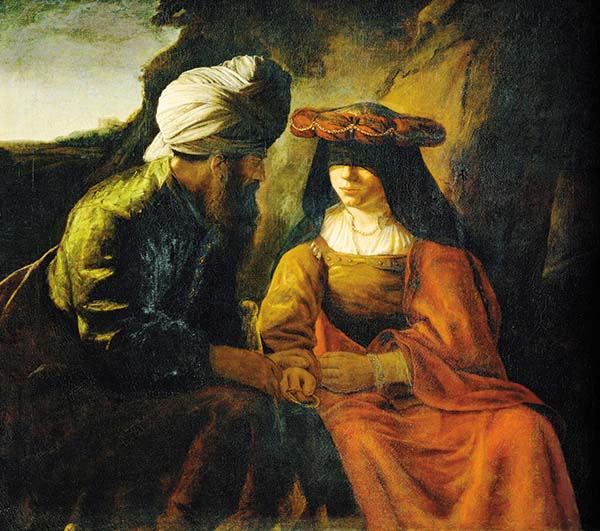
Hosea's Unconditional Love for Gomer
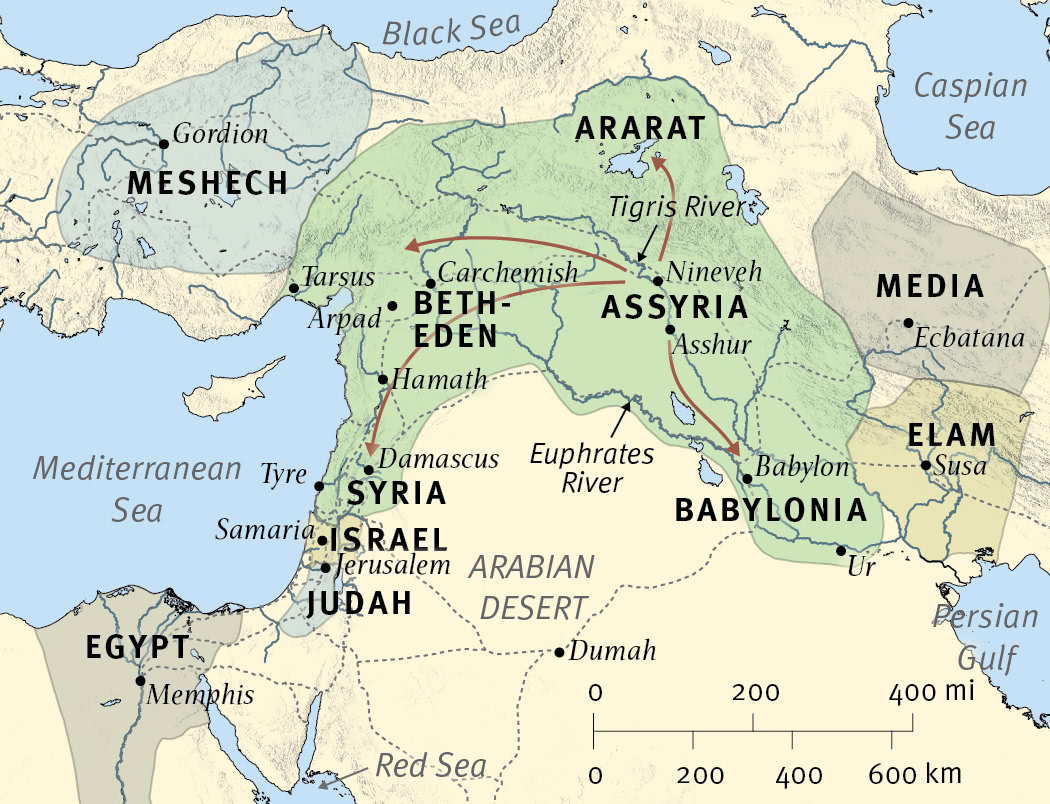
Source: ESV Global Study Bible
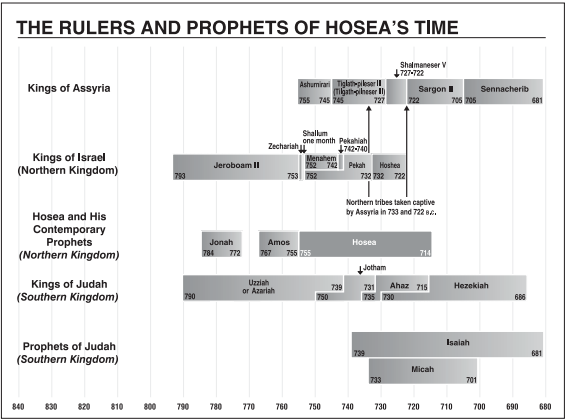
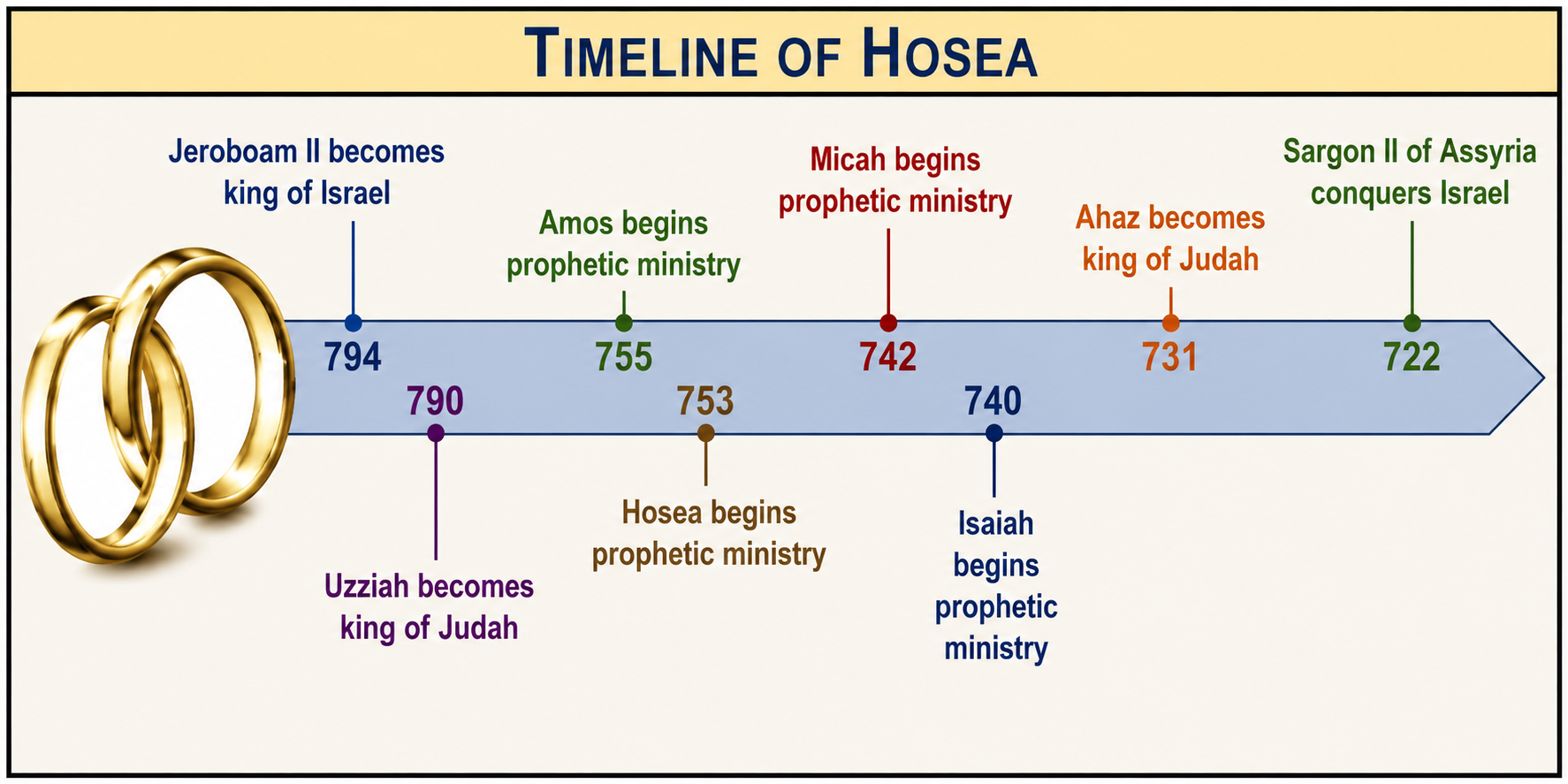
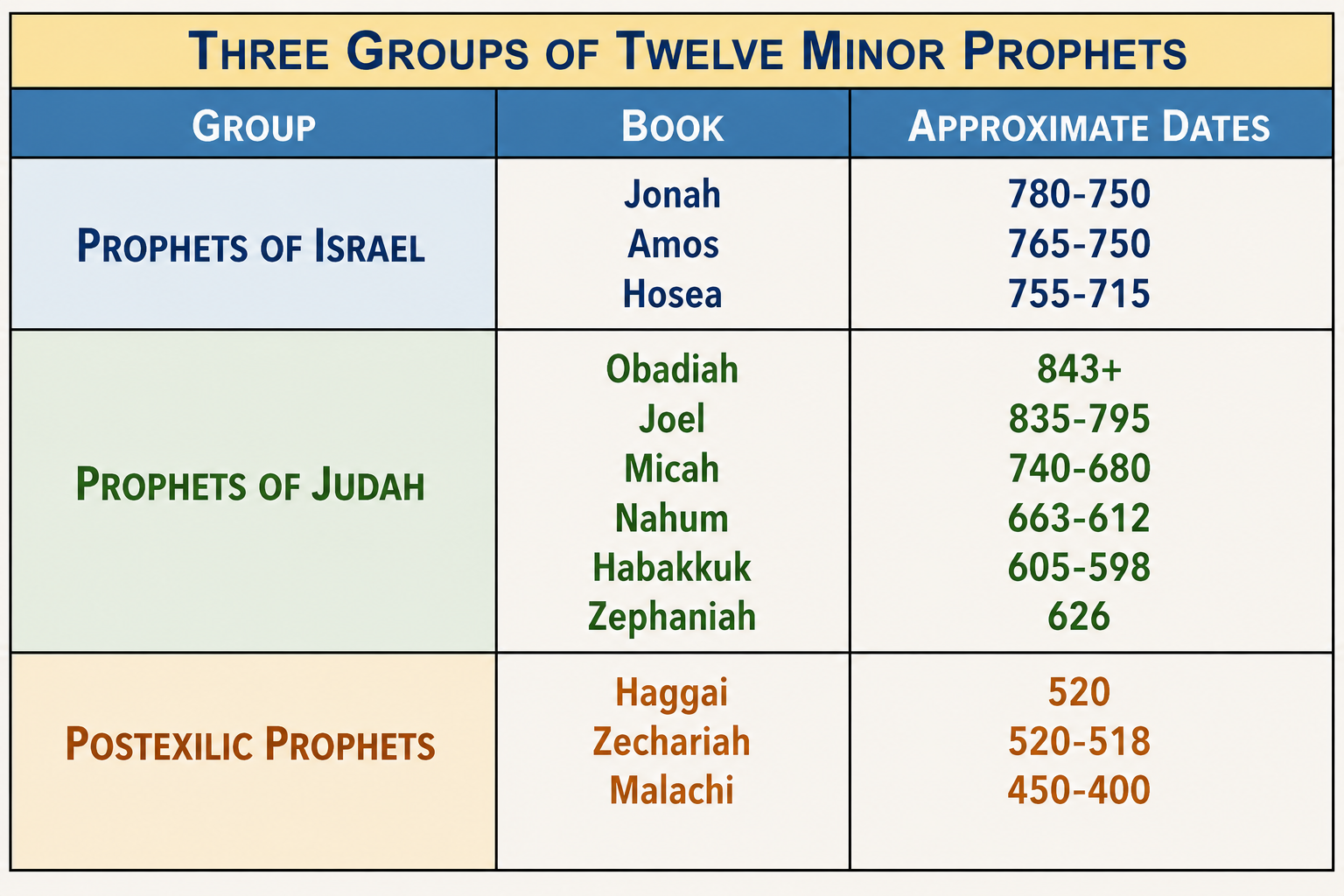
OUTLINE OF HOSEA
I. The Prodigal Wife, Hosea 1:1-3:5
A. Her Unfaithfulness, Hosea 1:1-11
B. Her Punishment, Hosea 2:1-13
C. Her Restoration and Israel's, Hosea 2:14-23
D. Her Redemption, Hosea 3:1-5
II. The Prodigal People, Hosea 4:1-14:9
A. The Message of Judgment, Hosea 4:1-10:15
1. The indictment, Hosea 4:1-19
2. The verdict, Hosea 5:1-15
3. The plea of Israel, Hosea 6:1-3
4. The reply of the Lord, Hosea 6:4-11
5. The crimes of Israel, Hosea 7:1-16
6. The prophecy of judgment, Hosea 8:1-10:15
B. The Message of Restoration, Hosea 11:1-14:9
1. God's love for the prodigal people, Hosea 11:1-11
2. God's chastisement of the prodigal people, Hosea 11:12-13:16
3. God's restoration of the prodigal people, Hosea 14:1-9
Borrow Ryrie Study Bible - page 1292
Hosea 9:1 Do not rejoice, O Israel, with exultation like the nations! For you have played the harlot, forsaking your God. You have loved harlots’ earnings on every threshing floor.
KJV Rejoice not, O Israel, for joy, as other people: for thou hast gone a whoring from thy God, thou hast loved a reward upon every cornfloor.
NET O Israel, do not rejoice jubilantly like the nations, for you are unfaithful to your God. You love to receive a prostitute's wages on all the floors where you thresh your grain.
NLT O people of Israel, do not rejoice as other nations do. For you have been unfaithful to your God, hiring yourselves out like prostitutes, worshiping other gods on every threshing floor.
BGT μὴ χαῖρε Ισραηλ μηδὲ εὐφραίνου καθὼς οἱ λαοί διότι ἐπόρνευσας ἀπὸ τοῦ θεοῦ σου ἠγάπησας δόματα ἐπὶ πάντα ἅλωνα σίτου
LXE Rejoice not, O Israel, neither make merry, as other nations: for thou hast gone a-whoring from thy God; thou hast loved gifts upon every threshing-floor.
CSB Israel, do not rejoice jubilantly as the nations do, for you have acted promiscuously, leaving your God. You have loved the wages of a prostitute on every grain-threshing floor.
ESV Rejoice not, O Israel! Exult not like the peoples; for you have played the whore, forsaking your God. You have loved a prostitute's wages on all threshing floors.
NIV Do not rejoice, O Israel; do not be jubilant like the other nations. For you have been unfaithful to your God; you love the wages of a prostitute at every threshing floor.
YLT 'Rejoice not, O Israel, be not joyful like the peoples, For thou hast gone a-whoring from thy God, Thou hast loved a gift near all floors of corn.
NKJ Do not rejoice, O Israel, with joy like other peoples, For you have played the harlot against your God. You have made love for hire on every threshing floor.
NJB No merrymaking, Israel, for you, no rejoicing like other peoples, for you have deserted your God to play the whore, you have loved the fee of prostitution on every threshing-floor.
NRS Do not rejoice, O Israel! Do not exult as other nations do; for you have played the whore, departing from your God. You have loved a prostitute's pay on all threshing floors.
RSV Rejoice not, O Israel! Exult not like the peoples; for you have played the harlot, forsaking your God. You have loved a harlot's hire upon all threshing floors.
NAB Rejoice not, O Israel, exult not like the nations! For you have been unfaithful to your God, loving a harlot's hire upon every threshing floor.
- Rejoice: Ho 10:5 Isa 17:11 Isa 22:12 La 4:21 Eze 21:10 Am 6:6,7,13 Am 8:10 Jas 4:16 Jas 5:1
- as: Eze 16:47,48 Eze 20:32 Am 3:2
- gone: Ho 4:12 Ho 5:4,7
Related Passages:
1 Samuel 8:5 and they said to him, “Behold, you have grown old, and your sons do not walk in your ways. Now appoint a king for us to judge us like all the nations.”
Hosea 2:12 “I will destroy her vines and fig trees, Of which she said, ‘These are my wages Which my lovers have given me.’ And I will make them a forest, And the beasts of the field will devour them.
Deuteronomy 23:18 “You shall not bring the hire of a harlot or the wages of a dog into the house of the LORD your God for any votive offering, for both of these are an abomination to the LORD your God.
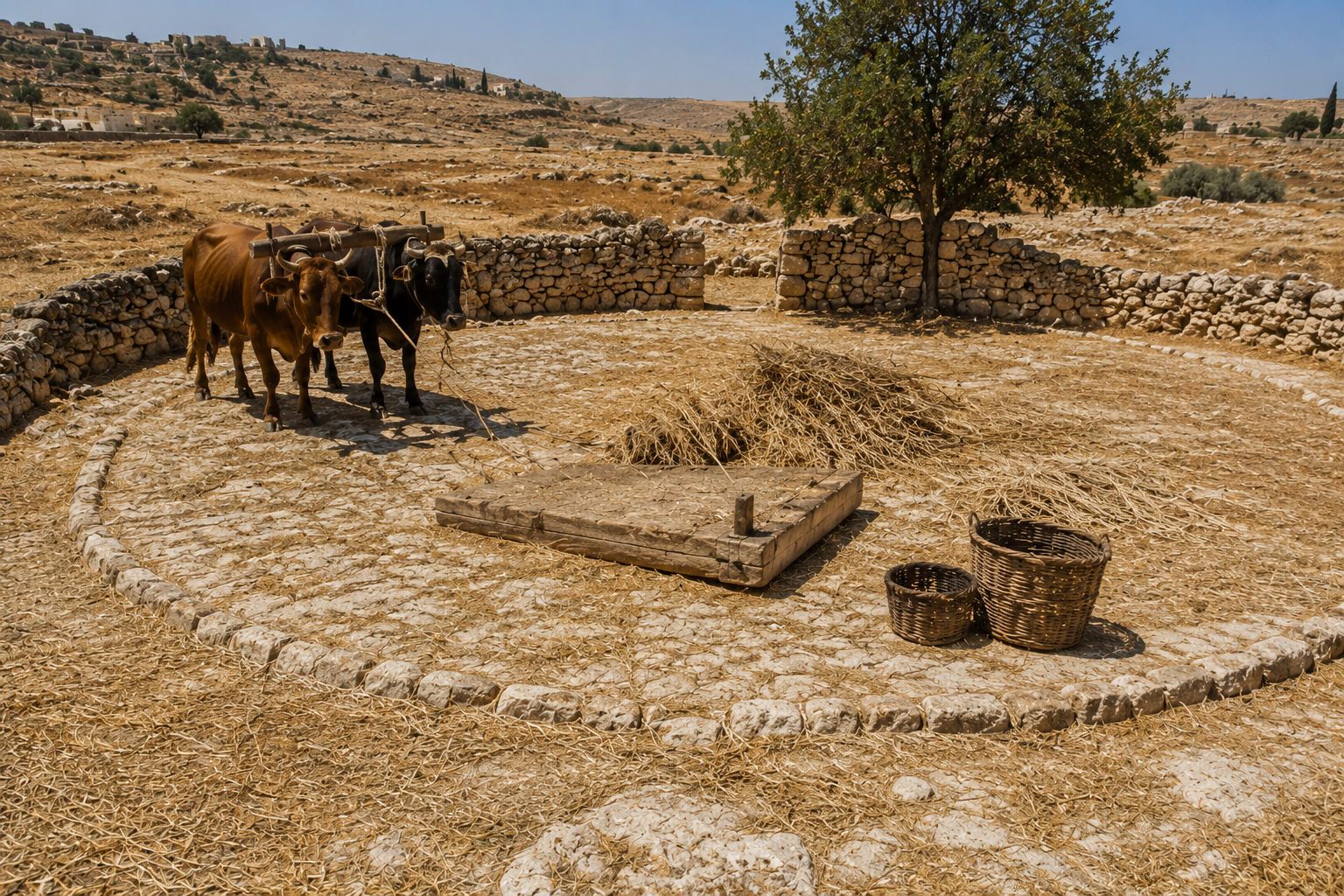
The Threshing Floor
SPIRITUAL HARLOTRY NOT
A CAUSE FOR REJOICING
Do not rejoice, O Israel, with exultation like the nations! - Heb = “do not rejoice unto jubilation” Hosea commands (do not rejoice = jussive) Israel to stop celebrating, for there was nothing to celebrate! The implication is that at the time of this message, there was ostensibly reason to rejoice. In other words, the nation was outwardly experiencing some degree of prosperity and abundant harvests, but her apparent success concealed inward apostasy, giving them no legitimate reason for celebration.
The phrase "like the nations" is especially significant. Israel had been chosen to be holy and distinct from the pagan nations (Ex. 19:5–6; Lev. 20:26), yet she had become indistinguishable from the pagans in her worship, values, and lifestyle. Like the Canaanites, Israel celebrated the harvest with drunkenness, immorality, and fertility rites, attributing her prosperity to Baal instead of Yahweh, Who was responsible for its fertility (Dt 11:10-12).
Trent Butler: Good harvests and other immediate “blessings” do not guarantee God's favor or call for God's people to celebrate when they have not changed their false religion and sinful lifestyles.The invasion by Tiglath-pileser III of Assyria in 732 B.C. had reduced Israel's power and resources to almost nothing. Still Israel ignored God and went on worshipping as usual, combining traditions from worship of God with those of Baal worship. Apparently one year, shortly after 732, Israel's harvest was abundant. The people gathered for the harvest festival. It was a time of joy, celebrating God's good gifts to his people. In the middle of the celebration, Hosea appeared and commanded the people to stop the party. Israel's harvest festival did not look like God's instructions from Deuteronomy. Their celebration followed the pattern of Baal worship with sacred prostitution and magical expectations. Israel rejoiced like the nations, not like the Lord wanted. No longer did they celebrate at the place God chose, his holy sanctuary. Rather, they celebrated at every threshing floor. (SEE Hosea, Joel, Amos, Obadiah, Jonah, Micah - Page 67)
M. Daniel Carroll R.: Joy is the natural response of agricultural people at seeing the abundance of their harvests (Lev 23:40; Dt 16:14), but Israel will have no cause to celebrate (v.1). (SEE Hosea, Amos, Micah)
Bob Utley - "Do not rejoice" This verse may reflect a harvest festival (cf. Hosea 9:5). These times were the occasion of Ba'al praise and worship (initiation magic). YHWH will turn their promiscuous festivals into funeral dirges!...Wailing was appropriate (cf. Isa. 22:12-14), not rejoicing! ▣ "like the nations!" This was the problem (cf. 1Sa 8:5)! They had turned the worship of YHWH into a form of the Canaanite Ba'al worship.
To reiterate like the nations is especially condemning because Israel had been chosen by Yahweh to be distinct from the Gentile nations (Ex 19:5–6; Lev. 20:26), yet she had adopted their worship, values, and celebrations. Instead of rejoicing in the Lord, she rejoiced like the pagans!
The application is timeless. Not all joy is God-honoring joy. There is a celebration rooted in worldly success, prosperity, and self-sufficiency that ignores God. True joy is found not in favorable circumstances but in fellowship with the LORD. A heart living in rebellion has no lasting reason to rejoice, for outward prosperity can never compensate for spiritual bankruptcy (cf. Hab. 3:17–18; Phil. 4:4).
For (term of explanation) you have played the harlot (zanah; LXX - porneuo), forsaking (literally from) your God - "For thou hast gone a-whoring from thy God." Hosea cuts their joyful celebration off with the explanation that Israel had committed spiritual harlotry by abandoning Yahweh, her covenant Husband, and begun pursuing false gods, especially Baal (can mean "husband"). Their apostasy was not merely theological error but covenant unfaithfulness, the betrayal of an intimate relationship established by God's redeeming grace (See Israel the Wife of Jehovah). Forsaking your God reveals the heart of their sin because Israel had not merely added Baal worship to the worship of Yahweh but had actually abandoned loyalty to the living God in favor of dead idols, just as Hosea's wife Gomer had done.
Wycliffe Bible Commentary - The heathen had offered gifts to Baal, the fertility god, to induce him to make the fields fruitful. Israel had followed their footsteps.
Robin Routledge: The nation has been unfaithful (zanah; cf. Hos 1:2; Hos 2:5; Hos 3:3; Hos 4:10–15; Hos 5:3), and what they have received, rather than being a sign of divine blessing, is no more than the pay given to a prostitute (cf. Hos 2:7, 12). Consequently, Israel’s celebrations will be short-lived. (Hosea: An Introduction and Commentary - Page 128)
Bob Utley "you have played the harlot" They were practicing the fertility worship of the Canaanite pantheon. They were committing physical adultery and spiritual adultery (e.g. Hosea 1:2; Hosea 4:10,13,14,15,18[twice]; 5:3; 9:1) in YHWH's name!
You have loved harlots’ earnings on every threshing floor - Heb "you love the wages of the prostitute" This seems to refer to the abominable fertility rites practiced at the threshing floors, where grain was threshed and winnowed after harvest. These locations became centers of pagan celebration and debauchery, as Israel imitated the practices of the Canaanites who believed Baal, the so-called god of fertility, blessed the crops. Israel adopted this corrupt practice, believing that their harvests and prosperity were the "wages" paid by Baal for their participation in idolatrous worship and ritual prostitution! Talk about being deceived! In reality, as with all good things, every harvest came from the gracious hand of Yahweh (cf Jas 1:17), but Israel credited His blessings to a false god. And so the threshing floor, the very place that should have inspired thanksgiving to the Lord, sadly became the place of spiritual adultery and moral corruption.
Francis Shaeffer explains "Notice the form of speech God uses. A woman is out harvesting, and there is a freedom in the midst of the harvest. She takes a gift of money from some man to sleep with him on the corn floor in the midst of the harvesting. That is what those who had been God's people had become. The wife of the living God is this in her apostasy." (A Christian View of the Church - Page 143)
Bob Utley "on every threshing floor" This was the site of separating the grain from the husk. It was usually on the top of hills so that as the grain was thrown into the air the wind would blow away the lighter husk and the heavier grain would fall into a pile. These harvest places were the sites of extravagant celebrations (cf. Genesis 38). Because fertility worship was a form of initiation magic, this was the very site the sexual activity occurred (e.g. Hos 4:11-14). But notice YHWH's reaction in Hosea 9:2,11,14,16!
H. Ronald Vandermey: After sowing the wind for two centuries, the nation of Israel is granted in chapters 9-10 a glimpse of the whirlwind that will sweep her into judgment. As will be observed throughout this section, God’s judgment in each case is a particular fulfillment of the sowing-reaping principle (cf. Gal. 6:8). Those sins that Israel sowed have become the seeds of her well-deserved judgment. (SEE Hosea & Amos- Everyman's Bible Commentary - Page 55)
Matthew Henry - Verses 1-6. Israel gave rewards to their idols, in the offerings presented to them. It is common for those who are niggardly in religion, to be prodigal upon their lusts. Those are reckoned as idolaters, who love a reward in the corn-floor better than a reward in the favour of God and in eternal life. They are full of the joy of harvest, and have no disposition to mourn for sin. When we make the world, and the things of it, our idol and our portion, it is just with God to show us our folly, and correct us. None may expect to dwell in the Lord's land, who will not be subject to the Lord's laws, or be influenced by his love. When we enjoy the means of grace, we ought to consider what we shall do, if they should be taken from us. While the pleasures of communion with God are out of the reach of change, the pleasant places purchased with silver, or in which men deposit silver, are liable to be laid in ruins. No famine is so dreadful as that of the soul.
THRESHING FLOOR - The threshing floor is further used as a figure of speech to describe the pain of divine judgment and to criticize the spiritual prostitution of Israel. Seen from the viewpoint of a grain plant, the processing that occurred on the threshing floor was a violent and painful affair. Isaiah likens the experience of God’s people in exile to that of a grain plant on the threshing floor when he addresses them with these words: “O my people, crushed on the threshing floor” (Isa. 21:10). Micah adds that a similar fate awaits the nations who oppose God’s kingdom (Mic. 4:11–13). The personified threshing floor feels the pain of the threshing process. The Daughter of Babylon is said to be “like a threshing floor at the time it is trampled” (Jer. 51:33). The coming of the Messiah introduced the era in which the ultimate judgment of God would occur; consequently, John the Baptist seized on this imagery: “His winnowing fork is in his hand, and he will clear his threshing floor” (Matt. 3:12).
Finally, Hosea uses the threshing floor to highlight both the nature of Israel’s spiritual prostitution and its consequences. Prostitutes frequented the threshing floors in the evening when the men lay down to protect their grain piles. Hosea likens unfaithful Israel to women who “love the wages of a prostitute at every threshing floor” (Hos. 9:1). And because of this spiritual wandering, God planned to curtail the harvest so that “threshing floors and winepresses will not feed the people” (v. 2). (See Zondervan Dictionary of Biblical Imagery - Page 256)
Robert Morgan - Treachery, Tyranny, and Trickery - From This Verse
Here’s another story about Donald Cargill, who followed Knox by a hundred years as a leader in Scotland’s Reformation. Cargill was born about 1619, and, like Knox, benefited from a quality education. At his father’s request, Donald entered the ministry; but he was unhappy at the division he found in the church between advocates of the Reformation and supporters of the Royal or State Church. His disillusionment grew, and he finally decided to abandon his church and leave the ministry.
But as he mounted his horse, an old woman pushed her way to him, demanding, “Sir, you have promised to preach on Thursday, and you have appointed a meal for poor, starving people, and will you go away and not give it? If you do, the curse of God will certainly go with you.”
Her words pierced Donald to the bone, and he dismounted, determined to press on with his ministry. He became increasingly caught up in the Reformation, and on a Sunday shortly afterward he preached a blistering sermon from Hosea 9:1: “Do not rejoice, O Israel, with joy like other peoples, for you have played the harlot against your God. You have made love for hire on every threshing floor.”
In his sermon, he attacked the king of Scotland for forcing his influence upon Scotland’s church: “The king will be the woefullest sight that ever the poor Church of Scotland saw: woe, woe, woe unto him. His name shall stink while the world stands, for treachery, tyranny, and trickery.”
This didn’t go over well with his majesty, and the next day a company of dragoons burst into his study, asking for “that vile traitor, Donald Cargill.” Cargill fled to a friend’s house, and spent the rest of his life preaching on the run until at length he was captured. He went to the scaffold and to his death, cheerfully singing Psalm 118: “O, give thanks to the Lord, for He is good! For His mercy endures forever.”
Today’s Suggested Reading Hosea 9:1–4
Hosea 9:1-9, Deuteronomy 11:8-12; TODAY IN THE WORD
Two small children are playing on the floor, each with plenty of toys. Suddenly, Junior decides he doesn't like what he has and wants the toy his sister is playing with. So he proceeds to confiscate it, and a struggle ensues. After the dust settles, his sister loses interest in the toy and discards it. Interestingly, the toy is now Junior's, but he doesn't want it any more. Every parent has witnessed a scene like this at one time or another.
This is a rough analogy of Israel's attitude toward God's abundant blessings. He had blessed the nation with material and spiritual gifts beyond what any other nation had ever enjoyed. In fulfillment of God's covenant promises, the fertile land produced an abundant harvest (Deut. 8:7-9).
But Israel was not content to worship God for these blessings. The people looked at the pagan nations around them and decided they liked the idols these nations worshiped. So instead of serving God, the Israelites bowed down to Baal, the Canaanite fertility god. They then attributed their abundance to him and implored him for continued fruitfulness.
God had no choice but to punish such arrogant faithlessness. And as we have seen throughout the book of Hosea, God's judgment was perfectly appropriate to Israel's sin. If the people wanted to defile themselves by worshiping unclean idols, God would see to it that they would eat unclean food during their captivity in Assyria (Hosea 9:3).
Moreover, while in exile Israel would not be able to offer the sacrifices to God prescribed by the Mosaic covenant, and her great feast days would pass unobserved. Once more, God matched His chastening to Israel's sins. They had treated His blessings as nothing and discarded Him. So they would waste away in a foreign land while their possessions and homes back in Israel became overgrown with briers and thorns (Hosea 9:6).
TODAY ALONG THE WAY
Today's verse offers us an antidote to the snares of pride, lust, and greed that trapped ancient Israel. In fact, we recommend that you take an extra five minutes today to read the 25th Psalm.
Hosea 9:1-9 Today in the Word
On September 23, 1908, fans of the New York Giants joyously ran onto the field at the Polo Grounds as Moose McCormick stepped on home plate. They thought they were celebrating the winning run that would defeat Chicago and break a tie with the hated Cubs in the National League standings. But base runner Fred Merkle was called out at second base as he was swept away by the crowds of ecstatic players and fans reveling in the glory of . . . a tie that eventually led to a Cubs World Series pennant.
Israel had to cancel their celebrations, because they were rejoicing in what was, in fact, their defeat. Pagan prostitution and the harvest they believed it brought had become the trademarks of Israel’s culture. Everything they did in the hopes of achieving prosperity would be rendered fruitless by God’s judgment. The displays intended for worship would instead mark them as unclean, and the food they offered to God would not be allowed into His presence (v. 4). The sin of Israel would finally trigger their expulsion from the land (v. 3).
Israel had become a backward nation because they had a backward understanding of the truth. On the rare occasion that Israel really did hear the truth, they rejected it as folly or insanity (v. 7). How often it happens that a people will become so immersed in false thinking that the truth appears ridiculous. Hosea was the lone voice of reason, and the people thought he was crazy.
One may wonder why God sent Hosea, knowing that Israel would reject him. But regardless of Israel’s perceptions, Hosea was a watchman over the nation (v. 8). God loved the people enough to sound a warning through His prophet to alert them of coming danger. While the mass response was to ignore and ridicule Hosea, a faithful few undoubtedly heeded his warning and preserved his inspired words. Still, the overwhelming consensus was hostility toward God’s truth (v. 8). God compared their reaction to the tragic civil war at Gibeah where thousands of Israelites died because of one tribe’s refusal to eliminate sin from their midst
(v. 9; cf. Judg. 20).Apply the Word
We live in a world where people celebrate the belief that all faith is equally valid. But as Hosea clearly teaches, God alone offers salvation, and He does not tolerate the worship of other gods. Don’t be afraid to discuss your faith with people who don’t share your beliefs. Ask God to provide an opportunity with someone you know. But also remember that your desire to present the truth should come out of love, not arrogance, personal judgment, or the desire to be right.
The Unspeakable Words
In today's politically correct environment where you have to be so careful to keep from offending anyone, we might all have to give reports like this fourth grader who reported on the origins of the Thanksgiving holiday. "The pilgrims came here seeking freedom of you know what. When they landed, they gave thanks to you know who. Because of them, we can worship each Sunday, you know where."
See: Hosea 9:1; Luke 8:14; Romans 12:2; 1 Timothy 3:1-2
Hosea 9:2 Threshing floor and wine press will not feed them, And the new wine will fail them.
KJV The floor and the winepress shall not feed them, and the new wine shall fail in her.
NET Threshing floors and wine vats will not feed the people, and new wine only deceives them.
NLT So now your harvests will be too small to feed you. There will be no grapes for making new wine.
BGT ἅλων καὶ ληνὸς οὐκ ἔγνω αὐτούς καὶ ὁ οἶνος ἐψεύσατο αὐτούς
LXE The threshing-floor and wine-press knew them not, and the wine disappointed them.
CSB Threshing floor and wine vat will not sustain them, and the new wine will fail them.
ESV Threshing floor and wine vat shall not feed them, and the new wine shall fail them.
NIV Threshing floors and winepresses will not feed the people; the new wine will fail them.
YLT Floor and wine-press do not delight them, And new wine doth fail in her,
NKJ The threshing floor and the winepress Shall not feed them, And the new wine shall fail in her.
NJB The threshing-floor and wine-press will not feed them; they will be disappointed of new wine.
NRS Threshing floor and wine vat shall not feed them, and the new wine shall fail them.
RSV Threshing floor and winevat shall not feed them, and the new wine shall fail them.
NAB Threshing floor and wine press shall not nourish them, the new wine shall fail them.
GWN There won't be enough grain to feed people. There won't be enough wine to go around.
BBE The grain-floor and the place where the grapes are crushed will not give them food; there will be no new wine for them.
- floor: Ho 2:9,12 Isa 24:7-12 Joe 1:3-7,9-13 Am 4:6-9,5-11 Mic 6:13-16 Hag 1:9 Hag 2:16
Related Passages:
Deuteronomy 7:13 “He will love you and bless you and multiply you; He will also bless the fruit of your womb and the fruit of your ground, your grain and your new wine and your oil, the increase of your herd and the young of your flock, in the land which He swore to your forefathers to give you.
Joel 2:19 The LORD will answer and say to His people, “Behold, I am going to send you grain, new wine and oil, And you will be satisfied in full with them; And I will never again make you a reproach among the nations.
Deuteronomy 28:38-40 “You shall bring out much seed to the field but you will gather in little, for the locust will consume it. 39 “You shall plant and cultivate vineyards, but you will neither drink of the wine nor gather the grapes, for the worm will devour them. 40 “You shall have olive trees throughout your territory but you will not anoint yourself with the oil, for your olives will drop off.....51 “Moreover, it shall eat the offspring of your herd and the produce of your ground until you are destroyed, who also leaves you no grain, new wine, or oil, nor the increase of your herd or the young of your flock until they have caused you to perish.
Hosea 2:8-9 “For she does not know that it was I who gave her the grain, the new wine and the oil, And lavished on her silver and gold, Which they used for Baal. 9 “Therefore, I will take back My grain at harvest time And My new wine in its season. I will also take away My wool and My flax Given to cover her nakedness.
THE END OF THE GOOD
LIFE IN ISRAEL
Threshing floor and wine press will not feed them - NLT - "So now your harvests will be too small to feed you" The very places where Israel expected abundance Yahweh would make places of disappointment and scarcity. The threshing floor, where grain was separated from the chaff, and the wine press, where grapes were crushed into wine, symbolized the nation's agricultural prosperity. Through Hosea Yahweh declared that the harvests they attributed to Baal would fail, a direct reversal of the covenant blessings but a fulfillment of God's promise to curse their disobedience. Since Israel had forsaken Yahweh and credited His gifts to a false god, He would withhold the very blessings they took for granted. Their fields would no longer provide food, exposing the utter impotence of their idols.
Robert Chisholm - The plentiful harvests were about to end (Hos 9:2; cf. Hos 2:9-12). In fulfillment of several covenant curses (cf. Deut. 28:30, 38-42, 51) the Lord would take away her grain and wine (cf. Hosea 2:9; Hosea 7:14). (SEE Bible Knowledge Commentary: Old Testament - Page 1398)
Robin Routledge: The nation has been unfaithful (zanah; cf. Hosea 1:2; Hosea 2:5; Hosea 3:3; Hosea 4:10–15; Hosea 5:3) (ED: SEE DISCUSSION OF Israel the Wife of Jehovah), and what they have received, rather than being a sign of divine blessing, is no more than the pay given to a prostitute (cf. Hos 2:7, 12). Consequently, Israel’s celebrations will be short-lived. Yahweh’s judgment will remove material signs of prosperity (cf. Hos 2:7), and the produce of threshing-floors and winepresses will not meet the people’s needs. The term translated fail can also mean ‘deceive’, probably referring to the self-deception that material blessings are a sign of divine favour. (Hosea: An Introduction and Commentary - Page 128)
And the new wine will fail (kachash - disappoint, deceive, fail) them - NET - "and new wine only deceives them." NJB = " they will be disappointed of new wine." The new wine, was a symbol of joy, abundance, and God's covenant blessing (Dt. 7:13; Joel 2:19, 24), would no longer satisfy Israel. The verb "fail" (kāḥash) means to deceive, disappoint, or prove false. The abundant harvests they expected from Baal would not materialize, exposing Baal's impotence and serving as a direct fulfillment of covenant curses (Dt 28:38–40, 51). Israel believed her fertility rites would ensure plentiful vineyards and overflowing wine, but the Lord declared that the new wine would fail them because He alone gives the increase (Ps 104:14–15; Hos. 2:8–9). What they wrongly credited to Baal, God would withhold to demonstrate that their idol was powerless. Thus, their failed harvests would expose the futility of trusting in false gods rather than the living God who alone provides every good gift (Jas. 1:17).
Hosea 9:3 They will not remain in the LORD’S land, But Ephraim will return to Egypt, And in Assyria they will eat unclean food.
KJV They shall not dwell in the LORD'S land; but Ephraim shall return to Egypt, and they shall eat unclean things in Assyria.
NET They will not remain in the LORD's land. Ephraim will return to Egypt; they will eat ritually unclean food in Assyria.
NLT You may no longer stay here in the LORD's land. Instead, you will return to Egypt, and in Assyria you will eat food that is ceremonially unclean.
BGT οὐ κατῴκησαν ἐν τῇ γῇ τοῦ κυρίου κατῴκησεν Εφραιμ εἰς Αἴγυπτον καὶ ἐν Ἀσσυρίοις ἀκάθαρτα φάγονται
LXE They dwelt not in the Lord's land: Ephraim dwelt in Egypt, and they shall eat unclean things among the Assyrians.
CSB They will not stay in the land of the LORD. Instead, Ephraim will return to Egypt, and they will eat unclean food in Assyria.
ESV They shall not remain in the land of the LORD, but Ephraim shall return to Egypt, and they shall eat unclean food in Assyria.
NIV They will not remain in the LORD's land; Ephraim will return to Egypt and eat unclean food in Assyria.
YLT They do not abide in the land of Jehovah, And turned back hath Ephraim to Egypt, And in Asshur an unclean thing they eat.
NKJ They shall not dwell in the LORD'S land, But Ephraim shall return to Egypt, And shall eat unclean things in Assyria.
NJB No more will they live in Yahweh's country; Ephraim will have to go back to Egypt, and eat polluted food in Assyria.
NRS They shall not remain in the land of the LORD; but Ephraim shall return to Egypt, and in Assyria they shall eat unclean food.
RSV They shall not remain in the land of the LORD; but Ephraim shall return to Egypt, and they shall eat unclean food in Assyria.
NAB They shall not dwell in the LORD'S land; Ephraim shall return to Egypt, and in Assyria they shall eat unclean food.
GWN The people of Ephraim won't stay in the LORD's land. They will return to Egypt, and they will eat unclean food in Assyria.
BBE They will have no resting-place in the Lord's land, but Ephraim will go back to Egypt, and they will take unclean food in Assyria.
- shall not: Lev 18:28 Lev 20:22 De 4:26 De 28:63 Jos 23:15 1Ki 9:7 Mic 2:10
- the Lord's: Lev 25:23 Jer 2:7 Jer 16:18
- but: Ho 9:6 Ho 8:13 Ho 11:5 De 28:68 Isa 11:15,16, "Not into Egypt itself, but into another bondage as bad as that, " and, Eze 4:13 Da 1:8 Ac 10:14
- in Assyria: Ho 11:11 2Ki 17:6
Related Passages:
Leviticus 25:23 ‘The land, moreover, shall not be sold permanently, for the land is Mine; for you are but aliens and sojourners with Me.
Jeremiah 2:7 (TO JUDAH BUT APPLICABLE TO ISRAEL) “I brought you into the fruitful land To eat its fruit and its good things. But you came and defiled My land, And My inheritance you made an abomination.
Jeremiah 16:18 (TO JUDAH BUT APPLICABLE TO ISRAEL) “I will first doubly repay their iniquity and their sin, because they have polluted My land; they have filled My inheritance with the carcasses of their detestable idols and with their abominations.”
ISRAEL TO BE JETTISONED
FROM THE PROMISED LAND
They will not remain in the LORD’S land, Note this was not Israel's land but the LORD's land (Lev 25:23) Israel's greatest loss was not merely exile but expulsion from the Lord's land. Canaan did not ultimately belong to Israel; it belonged to Yahweh (Lev. 25:23). He had graciously given it to His covenant people, but their continued enjoyment of it depended upon covenant faithfulness (Dt. 28:63–68). By persisting in idolatry, Israel forfeited the privilege of dwelling in the land of promise.
J. Andrew Dearman has an interesting comment on the LORD’S land - The land of Israel is YHWH’s property, an integral part of his household. As such, it has sanctity and cannot continue to support the people’s defection from the covenant ethos and from their covenant Lord. In 4:3 the land is portrayed as ill and in mourning, as if it suffered from the effects of Israel’s moral and cultic pollution. Part of the punishment depicted for Israel in 9:3 is that they will be thrust from the land and forced to eat unclean food in Assyria, thereby defiling themselves....While living in it Israel is but an alien or a sojourner with him (Lev. 25:23), and there are instructions to avoid defiling activities in it. Much of what makes up the instructions for holiness in the Pentateuch is concerned not just with Israel relating rightly to God, but also with Israel attending to that task, in part, by efforts to sanctify time and space. Even Deuteronomy, which concentrates on “all Israel” rather than emphasizing priestly sanctification, states repeatedly that the land is YHWH’s gift to Israel. From that perspective it contains instruction so that the land is not defiled (Deut. 21:23). Hosea’s logic runs thusly: If the people profane the covenant and engage in harlotrous activities against YHWH, they will be expelled from his land, a constituent element of his household, and be forced to live in a defiling situation. (See The Book of Hosea - Page 23)
Dearman's comment recalls Yahweh's warning about the land in Leviticus 18:25 ‘For the land has become defiled (tame - unclean; LXX - miaino - ceremonially unclean), therefore I have brought its punishment upon it, so the land has spewed out its inhabitants." Israel's continual spiritual (and physical) adulteries defiled Yahweh's land! And indeed, Israel would be "spewed out" with God's "emetic," the Assyrian army!
Bob Utley "They will not remain in the Lord's land" The Promised Land (e.g. Lev. 25:23; Jer. 2:7; Jer 16:18; Ezek. 36:5; Ezek 38:16; Joel 1:6), and for that matter, all land, belongs to YHWH (e.g. Exod. 9:29; Exod 19:5). YHWH prophesied the cleansing of His land of Amorites in Gen. 15:16. If His people do the same abominations, He will remove them also (cf. Lev. 18:24-28). They did, He did!
Lloyd Ogilvie: The deception of prosperity among the people to whom Hosea spoke would soon be exposed. The threat of losing food and wine in their threshing floors and winepresses is explained in Hos 9:3. The people will not enjoy the produce of the land because they will no longer dwell there. Their salvation history will be reversed. Some of the people will be exiled in Egypt. They will be punished by being sent back to the bondage from which the people of God had escaped in the historic Exodus centuries before. Others will be carried off to exile in Assyria, where they will eat food offered to other gods. This is an ironic twist for the Israelites. They had worshiped false gods in their own land; now they would be forced to eat food that was taboo. They would have to stomach their own apostasy! (SEE The Preacher's Commentary - Vol. 22: Hosea / Joel / Amos)
But Ephraim will return to Egypt Some did actually go to Egypt (2Ki 25:26) but most did not. Thus this is best understood figuratively, symbolizing a return to bondage and exile rather than a literal migration to Egypt (cf. Hos. 8:13; Hos 11:5). Just as God had redeemed Israel from slavery in Egypt, their rebellion would bring them into a new captivity, this time under Assyria. Their rejection of the Redeemer resulted in the reversal of the blessings of redemption.
Robert Chisholm sees return to Egypt "as a symbol of the place of exile (cf. Hosea 7:16; Hosea 8:13; Hosea 11:5). (SEE Bible Knowledge Commentary: Old Testament - Page 1398) Egypt was a place of bondage and as captives of Assyria there would be some degree of bondage, so one could interpret Egypt as metaphorical (See Norman Geisler below).
And in Assyria they will eat unclean food This points to the ceremonial and spiritual defilement of Israel in exile. Under the Mosaic Law, God's people were to distinguish between clean and unclean foods (Lev 11; Deut. 14). In captivity they would no longer have the freedom to observe these distinctions or to enjoy food associated with worship in the Promised Land. They would be forced to eat what was ceremonially defiled, a visible reminder that they themselves had become spiritually defiled through idolatry. Their exile would sever them not only from the land but also from the covenant blessings and worship that distinguished them as God's holy people.
Bob Utley "Assyria" This is a specific reference to the exile that occurred to the Northern Ten Tribes in 722 B.C. with the fall of Samaria (cf. Hosea 8:9-10). ▣ "they will eat unclean food" Exile will bring a stop to many of their cultic rituals. The development of the synagogue will preserve their traditions (ED: THEY MOST LIKELY APPEARED AFTER THE BABYLONIAN EXILE AFTER THE TEMPLE WAS DESTROYED IN 586 BC), but many of the Levitical ordinances will be impossible to do without an active temple (cf. Hosea 9:4-5). Ezekiel 4:13 implies that bread, eaten in a foreign land, is unclean!
Norman Geisler - When Critics Ask
HOSEA 8:13 (and Hosea 9:14) How can this verse say that Ephraim will return to Egypt when Hos 11:5 says that Ephraim will not return there?
PROBLEM: According to the prophecy of 8:13, because Israel, or Ephraim, had sinned against God, Hosea prophesied that they would return to Egypt (cf. 9:3). However, in 11:5 God specifically states that Israel “shall not return to the land of Egypt.” Is this a contradiction?
SOLUTION: There is no contradiction because the statements refer to different aspects of Israel’s experience. In Hosea 8:13, God is remembering the sin of Israel in worshiping other gods. In their hearts, the people of Israel were always “returning to Egypt.” In Hosea 11:5, God is reiterating the promise of Deuteronomy 17:16 that Israel would not return to the captivity of Egypt. Although God would punish the sin of His people, He would not cause them to return to the captivity of Egypt. Rather, He would bring the Assyrian armies to enact His judgment, and Israel would be carried away as the captives of this foreign enemy. On several occasions Israel had sought help from Egypt against the Assyrians. The promise that they would not return to Egypt was not only a restatement of the promise of Deuteronomy 17:16, but it was also a warning that Egypt would not be able to help Israel any more against the invading Assyrians. Although their hearts were turning away from God, and returning to the pagan influence of Egypt, God would not drive them back there. Rather, He would break the bond with Egypt that Israel continued to rely upon instead of relying upon their God. He would do this by bringing about their captivity in Assyria. These two statements are in perfect harmony.
Hosea 9:4 They will not pour out drink offerings of wine to the LORD, Their sacrifices will not please Him. Their bread will be like mourners’ bread; All who eat of it will be defiled, For their bread will be for themselves alone; It will not enter the house of the LORD.
KJV They shall not offer wine offerings to the LORD, neither shall they be pleasing unto him: their sacrifices shall be unto them as the bread of mourners; all that eat thereof shall be polluted: for their bread for their soul shall not come into the house of the LORD.
NET They will not pour out drink offerings of wine to the LORD; they will not please him with their sacrifices. Their sacrifices will be like bread eaten while in mourning; all those who eat them will make themselves ritually unclean. For their bread will be only to satisfy their appetite; it will not come into the temple of the LORD.
NLT There you will make no offerings of wine to the LORD. None of your sacrifices there will please him. They will be unclean, like food touched by a person in mourning. All who present such sacrifices will be defiled. They may eat this food themselves, but they may not offer it to the LORD.
BGT οὐκ ἔσπεισαν τῷ κυρίῳ οἶνον καὶ οὐχ ἥδυναν αὐτῷ αἱ θυσίαι αὐτῶν ὡς ἄρτος πένθους αὐτοῖς πάντες οἱ ἔσθοντες αὐτὰ μιανθήσονται διότι οἱ ἄρτοι αὐτῶν ταῖς ψυχαῖς αὐτῶν οὐκ εἰσελεύσονται εἰς τὸν οἶκον κυρίου
LXE They have not offered wine to the Lord, neither have their sacrifices been sweet to him, but as the bread of mourning to them; all that eat them shall be defiled; for their bread for their soul shall not enter into the house of the Lord.
CSB They will not pour out their wine offerings to the LORD, and their sacrifices will not please Him. Their food will be like the bread of mourners; all who eat it become defiled. For their bread will be for their appetites alone; it will not enter the house of the LORD.
ESV They shall not pour drink offerings of wine to the LORD, and their sacrifices shall not please him. It shall be like mourners' bread to them; all who eat of it shall be defiled; for their bread shall be for their hunger only; it shall not come to the house of the LORD.
NIV They will not pour out wine offerings to the LORD, nor will their sacrifices please him. Such sacrifices will be to them like the bread of mourners; all who eat them will be unclean. This food will be for themselves; it will not come into the temple of the LORD.
YLT They pour not out wine to Jehovah, Nor are they sweet to Him, Their sacrifices are as bread of mourners to them, All eating it are unclean: For their bread is for themselves, It doth not come into the house of Jehovah.
NKJ They shall not offer wine offerings to the LORD, Nor shall their sacrifices be pleasing to Him. It shall be like bread of mourners to them; All who eat it shall be defiled. For their bread shall be for their own life; It shall not come into the house of the LORD.
NJB No more will they pour libations of wine to Yahweh, and their sacrifices will not win his favour but will be like funeral fare for them: whoever eats them will be polluted; for their food will be for themselves alone, not being offered in Yahweh's home.
NRS They shall not pour drink offerings of wine to the LORD, and their sacrifices shall not please him. Such sacrifices shall be like mourners' bread; all who eat of it shall be defiled; for their bread shall be for their hunger only; it shall not come to the house of the LORD.
RSV They shall not pour libations of wine to the LORD; and they shall not please him with their sacrifices. Their bread shall be like mourners' bread; all who eat of it shall be defiled; for their bread shall be for their hunger only; it shall not come to the house of the LORD.
NAB They shall not pour libations of wine to the LORD, or proffer their sacrifices before him. Theirs will be like mourners' bread, that makes unclean all who eat of it; Such food as they have shall be for themselves; it cannot enter the house of the LORD.
GWN They won't pour wine offerings to the LORD, and their sacrifices won't please him. Their sacrifices will be like the food that mourners eat. All who eat this food will be unclean. Their food will only satisfy their hunger. It will not be brought as an offering to the LORD's temple.
- shall not: Ho 3:4 Joe 1:13 Joe 2:14
- neither: Ho 8:13 Isa 1:11-15 Isa 57:6 Isa 66:3 Jer 6:20 Am 4:4,5 Am 5:22 Mal 1:9,10
- as: Nu 19:11 De 26:14 Ne 8:9-12 Eze 24:17,22 Mal 2:13
- their bread: Ex 40:23 Lev 17:11 Lev 21:6,8,17,21 Nu 4:7 Nu 28:2 Am 8:11,12 Joh 6:51
FOOD AND DRINK WILL
BE RITUALLY UNCLEAN
They will not pour out drink offerings of wine to the LORD,Their sacrifices (zebah) will not please (be sweet to) Him. - Exile would bring an end to Israel's drink offering, poured out with sacrifices (Ex 29:40–41; Nu 15:5–10), an act that symbolized thanksgiving, consecration, and joyful fellowship with Yahweh. Even before the exile, however, their worship had already become unacceptable because it was offered with unrepentant hearts (Isa. 1:11–15; Hos. 6:6). God desires obedient hearts, not empty ritual.
Again, the punishment perfectly fit the sin (or they would reap what they had sown). Israel had corrupted the worship prescribed in the Mosaic Law through hypocrisy, idolatry, and empty ritual (Hos. 6:6; Hos 8:11–13). Since the nation refused to worship the Lord with sincere hearts, He would remove the very privilege of worship. The people who had treated His holy ordinances with contempt would be exiled from His land, separated from His Temple, and unable to celebrate His appointed feasts. Privileges abused were privileges withdrawn.
Lloyd Ogilvie comments that "because the people resisted worshiping Yahweh in their own land, they will not be able to worship Him in customary ways in the dispersion. Hos 9:4 plays on the irony. Thank offerings had been misdirected to false gods in their homeland; now the wine offering, the drink offering, which should express gratitude to Yahweh, would not be permitted in captivity. Sacrifices that should have been made for sin and the assurance of atonement before, now will not be pleasing to Yahweh. The words, “Nor shall their sacrifices be pleasing to Him” (Hos 9:4), may also be rendered, “They shall not offer their sacrifices to Him.” The reason will be that traditional altar sacrifices to Yahweh will not be allowed. .(SEE The Preacher's Commentary - Vol. 22: Hosea / Joel / Amos)
NET translation "Their sacrifices will be like bread eaten while in mourning" indicates that their sacrifices offered in exile would not be acceptable to the LORD, but would be ceremonially defiled, like "mourners' bread." Under the Mosaic Law, anyone who had come into contact with a dead body rendered food ceremonially unclean (Num. 19:14–15, 22). Such bread was suitable only for ordinary consumption, not for presentation to God in worship. Thus, Israel's exile would not only separate them from the land but also deprive them of acceptable covenant worship before the Lord.
Their bread will be like mourners’ bread; All who eat of it will be defiled (tame - unclean; LXX - miaino - ceremonially unclean) - CSB gives a different sense than the NET translation discussed above. CSB = "Their food will be like the bread of mourners; all who eat it become defiled."
Robert Chisholm explains "Hosea 9:4b would be better translated, "all who eat it (i.e., the mourners' bread) become unclean; such bread can be used to satisfy one's appetite, but it may not enter the Lord's temple." In this way verse 4b is understood as a general statement about the nature of mourners' bread rather than an additional prediction about the exilic worshipers and their sacrifices.
Bob Utley - "mourners' bread" This is imagery for corruption. It was defiled because it was associated with the dead. It was made out of barley, usually eaten by the poor. It was also unclean because it was made and eaten in Assyria.
For their bread will be for themselves alone; It will not enter the house of the LORD - Their bread would serve only to sustain physical life; it could no longer be brought before God as an acceptable offering. Exile would cut Israel off from the Temple, the priesthood, and the sacrificial system. The food that once could be offered in grateful worship would now be consumed merely for survival. Their lives had become centered on themselves rather than on God.
Lloyd Ogilvie adds that "All food in the foreign lands will be ritually unclean and unfit for offering to Yahweh. At home the Israelites had substituted physical for spiritual satisfaction. In captivity they would have only physical satisfaction.(SEE The Preacher's Commentary - Vol. 22: Hosea / Joel / Amos)
Hosea 9:5 What will you do on the day of the appointed festival And on the day of the feast of the LORD?
KJV What will ye do in the solemn day, and in the day of the feast of the LORD?
NET So what will you do on the festival day, on the festival days of the LORD?
NLT What then will you do on festival days? How will you observe the LORD's festivals?
BGT τί ποιήσετε ἐν ἡμέρᾳ πανηγύρεως καὶ ἐν ἡμέρᾳ ἑορτῆς τοῦ κυρίου
LXE What will ye do in the day of the general assembly, and in the day of the feast of the Lord?
CSB What will you do on a festival day, on the day of the LORD's feast?
ESV What will you do on the day of the appointed festival, and on the day of the feast of the LORD?
NIV What will you do on the day of your appointed feasts, on the festival days of the LORD?
YLT What do ye at the day appointed? And at the day of Jehovah's festival?
NKJ What will you do in the appointed day, And in the day of the feast of the LORD?
NJB What will you do on the solemn feast-day, on the day of Yahweh's festival?
NRS What will you do on the day of appointed festival, and on the day of the festival of the LORD?
RSV What will you do on the day of appointed festival, and on the day of the feast of the LORD?
NAB What will you do on the festival day, the day of the LORD'S feast?
- what: Isa 10:3 Jer 5:31
- in: Ho 2:11 Joe 1:13
Related Passages:
Isaiah 10:3 Now what will you do in the day of punishment, And in the devastation which will come from afar? To whom will you flee for help? And where will you leave your wealth?
Hosea 2:11 “I will also put an end to all her gaiety, Her feasts, her new moons, her sabbaths And all her festal assemblies.
Joel 1:13 Gird yourselves with sackcloth And lament, O priests; Wail, O ministers of the altar! Come, spend the night in sackcloth O ministers of my God, For the grain offering and the drink offering Are withheld from the house of your God.
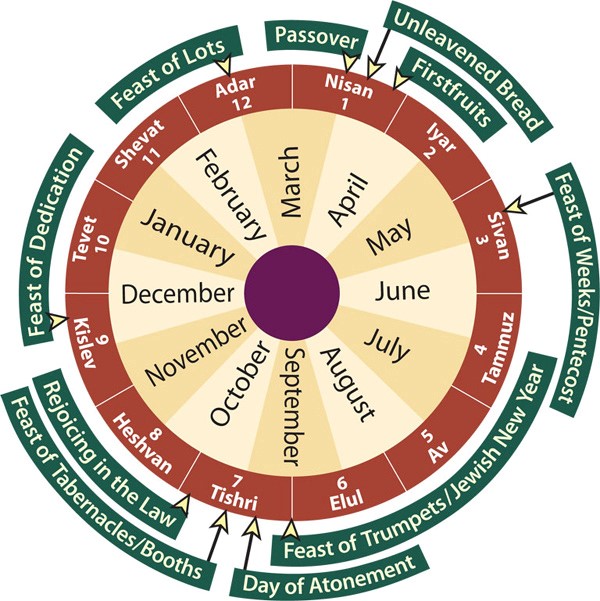
Calendar of Jewish Feasts
THE LORD'S APPOINTED TIMES
(Source: Rose Guide to the Tabernacle
Excellent Teaching Resource)
CESSATION OF FESTIVALS
AND FEASTS
What will you do on the day of the appointed festival And on the day of the feast of the LORD? - This is a rhetorical question which emphasizes the "fallout" from Israel's coming exile. The appointed festivals and feasts of the LORD (Lev. 23:1-44) were God's gracious provision for His people to gather before Him in joyful worship, remembering His saving acts and celebrating His covenant blessings. But once Israel was carried into exile, how could they keep these sacred feasts? So ultimately the answer to this question is "nothing" (in the spiritual realm), for (far) removed from the Promised Land and from God's Temple, they would be unable to celebrate the feasts as God had prescribed. In effect their exile would deprive them not only of their homeland but also of the corporate worship that distinguished them as God's people.
Notice the bitter irony: the very feasts God had graciously given Israel to celebrate His goodness had been corrupted by idolatry. Because they had defiled these holy assemblies with abominable idols, they would no longer be able to observe them. The privileges they had despised and profaned would be forfeited in exile.
Bob Utley - "What will you do on the day of the appointed festival" This was a question to jar them into reality. Their worship was about to be totally disrupted and their population deported!
M. Daniel Carroll: The rhetorical question of v.5 follows naturally. If they are unable geographically and incapable sacramentally of offering what is acceptable to God, then what are the people to do on the “day of your appointed feasts” and for the “festival days of the LORD”? (SEE Hosea, Amos, Micah)
Trent Butler: Such judgment set up a dilemma for Israel. Three times a year they were to appear before God in annual festival days (Exod. 23:14–17). If God would not accept their worship, especially their offerings and sacrifices, what could they do on those days? The highlight of the year vanished in divine punishment. The day of greatest joy became Israel's date with judgment. (See Holman Old Testament Commentary - Hosea, Joel, Amos- Page 68)
James Smith - A SOLEMN QUESTION
“What will ye do in the solemn day?” (Hosea 9:5).
I. The Time. “The solemn day.”
1. In the solemn day of affliction.
2. In the solemn day of death.
3. In the solemn day of judgment.
II. The Question. “What will ye do?”
1. Will you deny?
2. Will you flee?
3. Will you resist?
“SEEING THAT ALL THESE THINGS SHALL BE DISSOLVED, WHAT MANNER OF PERSONS OUGHT YE TO BE IN ALL HOLY CONVERSATION AND GODLINESS?” (2 Peter 3:11)
Hosea 9:6 For behold, they will go because of destruction; Egypt will gather them up, Memphis will bury them. Weeds will take over their treasures of silver; Thorns will be in their tents.
KJV For, lo, they are gone because of destruction: Egypt shall gather them up, Memphis shall bury them: the pleasant places for their silver, nettles shall possess them: thorns shall be in their tabernacles.
NET Look! Even if they flee from the destruction, Egypt will take hold of them, and Memphis will bury them. The weeds will inherit the silver they treasure– thorn bushes will occupy their homes.
NLT Even if you escape destruction from Assyria, Egypt will conquer you, and Memphis will bury you. Nettles will take over your treasures of silver; thistles will invade your ruined homes.
BGT διὰ τοῦτο ἰδοὺ πορεύσονται ἐκ ταλαιπωρίας Αἰγύπτου καὶ ἐκδέξεται αὐτοὺς Μέμφις καὶ θάψει αὐτοὺς Μαχμας τὸ ἀργύριον αὐτῶν ὄλεθρος κληρονομήσει ἄκανθαι ἐν τοῖς σκηνώμασιν αὐτῶν
LXE Therefore, behold, they go forth from the trouble of Egypt, and Memphis shall receive them, and Machmas shall bury them: as for their silver, destruction shall inherit it; thorns shall be in their tents.
CSB For even if they flee from devastation, Egypt will gather them, and Memphis will bury them. Thistles will take possession of their precious silver; thorns will invade their tents.
ESV For behold, they are going away from destruction; but Egypt shall gather them; Memphis shall bury them. Nettles shall possess their precious things of silver; thorns shall be in their tents.
NIV Even if they escape from destruction, Egypt will gather them, and Memphis will bury them. Their treasures of silver will be taken over by briers, and thorns will overrun their tents.
YLT For, lo, they have gone because of destruction, Egypt gathereth them, Moph burieth them, The desirable things of their silver, Nettles possess them -- a thorn is in their tents.
NKJ For indeed they are gone because of destruction. Egypt shall gather them up; Memphis shall bury them. Nettles shall possess their valuables of silver; Thorns shall be in their tents.
NJB What a scene of devastastion they have left! Egypt will round them up, Memphis will bury them, nettles will inherit their fields and thorn-bushes invade their homesteads.
NRS For even if they escape destruction, Egypt shall gather them, Memphis shall bury them. Nettles shall possess their precious things of silver; thorns shall be in their tents.
RSV For behold, they are going to Assyria; Egypt shall gather them, Memphis shall bury them. Nettles shall possess their precious things of silver; thorns shall be in their tents.
NAB When they go from the ruins, Egypt shall gather them in, Memphis shall bury them. Weeds shall overgrow their silver treasures, and thorns invade their tents.
GWN Even if they escape without being destroyed, Egypt will capture them and Memphis will bury them. Weeds will grow over their silver treasures. Thorns will grow over their tents.
BBE For see, they are going away into Assyria; Egypt will get them together, Memphis will be their last resting-place; their fair silver vessels will be covered over with field plants, and thorns will come up in their tents.
- they: De 28:63,64 1Sa 13:6 2Ki 13:7
- destruction: Heb. spoil, Ho 7:13
- Egypt: Ho 9:3 Ho 7:16 Ho 8:13 Ho 11:11 Isa 11:11 Isa 27:12 Zec 10:10,11
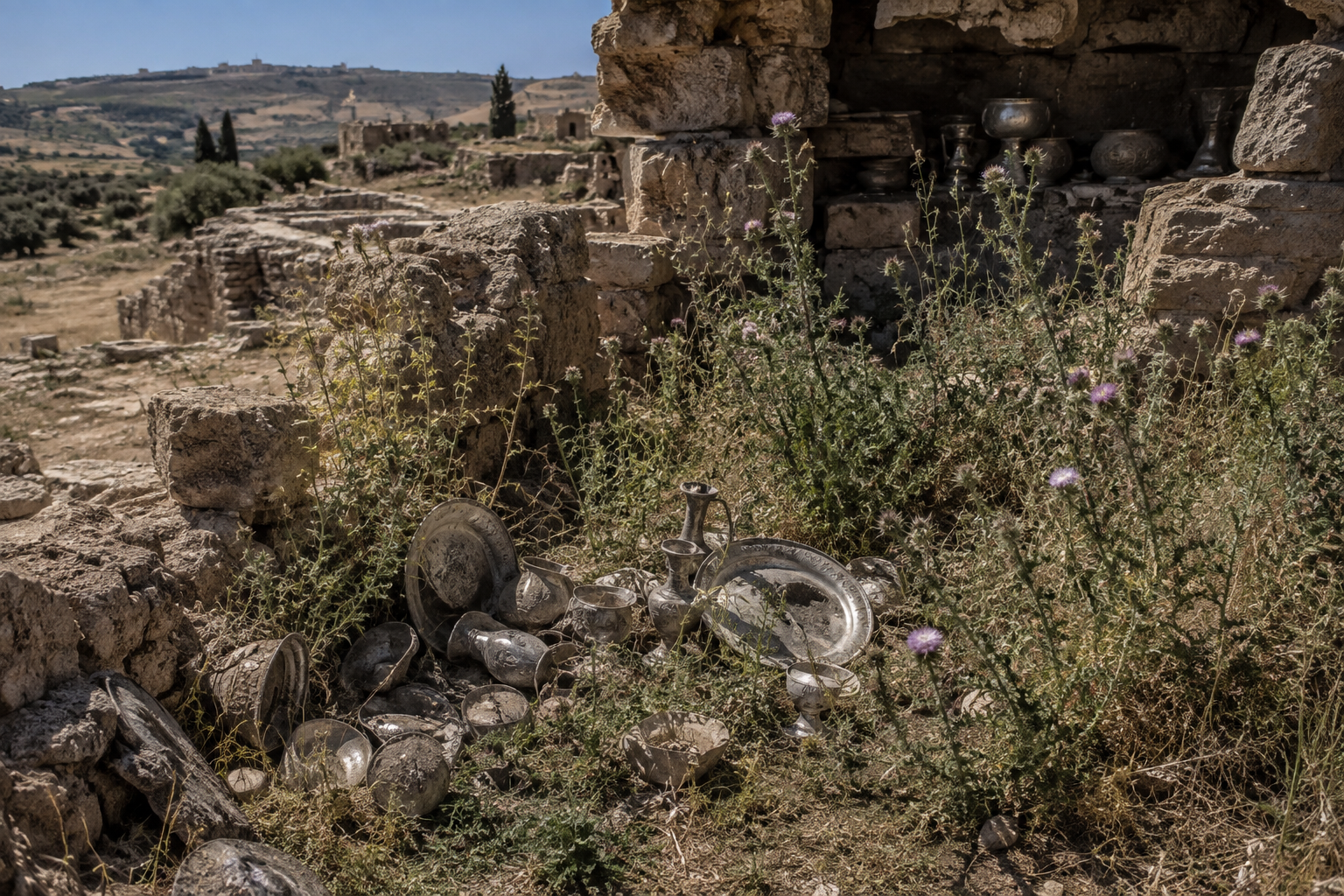
TOTAL DESTRUCTION
AND ABANDONMENT
For behold (hinneh) - NET Note - The deictic particle הִנֵּה (hinneh, “Behold!”) is used frequently in prophetic announcements, introducing a solemn or important declaration, particularly in threats of judgment (BDB 244 s.v. הִנֵּה b.β). Many modern English versions leave this particle untranslated here.
They will go because of destruction (shod) - NET = "Look! Even if they flee from the destruction, Egypt will take hold of them." Hosea now describes the inescapable consequence of Israel's rebellion. The nation would be driven from its land because of the devastating destruction brought by the Assyrian invasion. The phrase pictures a people forced to flee as refugees or exiles, abandoning their homes, fields, and possessions to escape the ravages of war. The word "destruction" encompasses the horrors of invasion—slaughter, famine, ruined cities, and exile. What Israel had refused to do voluntarily in repentance, she would now do involuntarily in judgment. Having rejected the Lord's protection, she would be compelled to leave the land He had graciously given her. The irony is striking. Israel had repeatedly looked to Egypt for help against Assyria, but instead of finding refuge, "Egypt will gather them up; Memphis will bury them" (Hos. 9:6). The place they sought for safety would become a place of death.
Egypt will gather them up (qāḇatṣ). Memphis will bury them is ironic and uses qāḇatṣ (קָבַץ), a verb that normally has a positive connotation of gathering God's people for blessing and restoration (Dt. 30:3; Isa. 11:12). Here, however, the meaning is reversed. Egypt, not God, is the subject, and the gathering is not for restoration but for death. Egypt is not receiving refugees as a host but is collecting corpses. Memphis (Noph) was the site of Egypt's great necropolis at Saqqara, the burial city. So the picture is: Israelites flee the Assyrian devastation southward hoping Egypt will be their asylum, and Egypt becomes their graveyard. The "gathering" is a funeral gathering.
Trent Butler takes Egypt as literal not a type of Assyria - Egypt collected both their money and their refugees, then sent them to the city of Memphis twelve miles south of Cairo, where Israel was buried—filed in the list of nations that used to be significant but would never again return to historical prominence. (See Holman Old Testament Commentary - Hosea, Joel, Amos- Page 68)
Thomas Constable - The Israelites would leave their land because of the destruction Yahweh would send. Egypt and Memphis, as two undertakers, would bury the exiles. Memphis (near modern Cairo) was an Egyptian city famous as a burial site because of the pyramid tombs there.
M Daniel Carroll R - While Assyria is Egypt in the sense of being the new enslaver and place of banishment (Hos 8:13; Hos 9:3), Egypt itself will take in Israelites, but only to inter them (Memphis, a prominent city on the Nile in Lower Egypt, was famous for its large cemetery). (See Hosea, Amos, Micah)
Jerry Hwang - In this case, Egypt would be the undertaker who collects Israel’s bones (Hos 9:6b) to place in a cemetery at Memphis (9:6c), the capital during the glory days of ancient Egypt and the site of numerous cemeteries (e.g., the flat pyramids known as mastabas). Hans Walter Wolff rightly observes that burial in Egyptian graves will be the ironic fate of those who thought Egypt would be a sanctuary from harm (cf. 7:11).47 (See Hosea: A Discourse Analysis of the Hebrew Bible - Page 227)
Other writers like Leon Wood have a different interpretation - The thought is that even if Israel is not utterly destroyed, the people will be taken captive; they will be gathered by Egypt (again used typically for Assyria; cf. v.3) and buried by Memphis (another typical usage), an ancient capital of Egypt and a celebrated place of burial (The Expositor's Bible Commentary)
Bob Utley adds "The meaning is the survivors of the exiles will die in large numbers in exile and slavery (i.e. as in Egypt) and/or those survivors who flee to Egypt will die there."
NET Note The verb קָבַץ (qāḇatṣ, “to gather together”) should be nuanced “grab hold” in this context (HALOT 1063 s.v. קבץ). This pictures a personified Egypt taking the fugitives prisoner.
Weeds (qimmôś) will take over their treasures (maḥmad = "precious thing," "desirable thing," "delight") of silver—literally, "the delight of their silver," referring to their prized silver possessions. Hosea uses this same Hebrew word in Hosea 9:16 to describe "the precious ones of their womb," referring to their beloved children. Thus, in this chapter, both their treasured silver and their treasured offspring come under God's judgment. Weeds translates qimmôś, a Hebrew word referring to nettles or thorny weeds that commonly overran abandoned ruins. Isaiah uses the same term to describe the desolation of Edom's palaces (Isa. 34:13), and a related Hebrew word appears in the description of the sluggard's neglected field overgrown with weeds (Pr. 24:31). The image vividly portrays complete abandonment and desolation, where once-valued possessions are left to decay beneath invasive weeds. So much for their earthly treasures!
Sin always takes us farther
than we intended to go!
This is a picture of total abandonment. Verse 6a said the people would be gathered into Egyptian graves; 6b turns the camera back to what they left behind. No one is coming home to claim it. Silver doesn't rot, so it sits there and the weeds simply grow up over it.
Thorns will be in their tents - Thorns push through the floors of the tents where families slept. An abandoned site in that climate is swallowed within a season or two. Weeds and thorns are the visible signature of a place where human life has stopped.
J. Andrew Dearman: The last two clauses in v. 6 are in synonymous parallelism. Thistles and briars are a word pair used elsewhere to portray a sedentary existence gone awry as a result of divine judgment. (See The Book of Hosea - Page 23)
Bob Utley "Weeds will take over their treasures of silver" There are three basic theories concerning "their treasures of silver": (1) it refers to idols and, therefore, the misuse of holy places; (2) it refers to their extravagant houses and, therefore, the destruction of their opulent society (cf. Hosea 8:14); (3) because of Hosea 9:2 and Isa. 7:23, it may be imagery for their vineyards ▣ "Thorns will be in their tents" This is imagery for their empty houses or it is another reference to their worship shrines (cf. Hosea 10:8).
Hosea 9:7 The days of punishment have come, The days of retribution have come; Let Israel know this! The prophet is a fool, The inspired man is demented, Because of the grossness of your iniquity, And because your hostility is so great.
KJV The days of visitation are come, the days of recompence are come; Israel shall know it: the prophet is a fool, the spiritual man is mad, for the multitude of thine iniquity, and the great hatred.
NET The time of judgment is about to arrive! The time of retribution is imminent! Let Israel know! The prophet is considered a fool– the inspired man is viewed as a madman– because of the multitude of your sins and your intense animosity.
NLT The time of Israel's punishment has come; the day of payment is here. Soon Israel will know this all too well. Because of your great sin and hostility, you say, "The prophets are crazy and the inspired men are fools!"
BGT ἥκασιν αἱ ἡμέραι τῆς ἐκδικήσεως ἥκασιν αἱ ἡμέραι τῆς ἀνταποδόσεώς σου καὶ κακωθήσεται Ισραηλ ὥσπερ ὁ προφήτης ὁ παρεξεστηκώς ἄνθρωπος ὁ πνευματοφόρος ὑπὸ τοῦ πλήθους τῶν ἀδικιῶν σου ἐπληθύνθη μανία σου
LXE The days of vengeance are come, the days of thy recompense are come; and Israel shall be afflicted as the prophet that is mad, as a man deranged: by reason of the multitude of thine iniquities thy madness has abounded.
CSB The days of punishment have come; the days of retribution have come. Let Israel recognize it! The prophet is a fool, and the inspired man is insane, because of the magnitude of your guilt and hostility.
ESV The days of punishment have come; the days of recompense have come; Israel shall know it. The prophet is a fool; the man of the spirit is mad, because of your great iniquity and great hatred.
NIV The days of punishment are coming, the days of reckoning are at hand. Let Israel know this. Because your sins are so many and your hostility so great, the prophet is considered a fool, the inspired man a maniac.
YLT Come in have the days of inspection, Come in have the days of recompence, Israel doth know! a fool is the prophet, Mad is the man of the Spirit, Because of the abundance of thine iniquity, And great is the hatred.
NKJ The days of punishment have come; The days of recompense have come. Israel knows! The prophet is a fool, The spiritual man is insane, Because of the greatness of your iniquity and great enmity.
NJB The days of punishment have come, the days of retribution are here; Israel knows it! 'The prophet is mad and the inspired man a fool!' Great has been your guilt- all the greater then the hostility!
NRS The days of punishment have come, the days of recompense have come; Israel cries, "The prophet is a fool, the man of the spirit is mad!" Because of your great iniquity, your hostility is great.
RSV The days of punishment have come, the days of recompense have come; Israel shall know it. The prophet is a fool, the man of the spirit is mad, because of your great iniquity and great hatred.
NAB They have come, the days of punishment! they have come, the days of recompense! Let Israel know it! "The prophet is a fool, the man of the spirit is mad!" Because your iniquity is great, great, too, is your hostility.
GWN The time for them to be punished will come. The time for them to pay for their sins will come. When this happens, Israel will know it. They think that prophets are fools and that spiritual people are crazy. They have sinned a lot, and they are very hostile.
BBE The days of punishment, the days of reward are come; Israel will be put to shame; the prophet is foolish, the man who has the spirit is off his head, because of your great sin.
ASV The days of visitation are come, the days of recompense are come; Israel shall know it: the prophet is a fool, the man that hath the spirit is mad, for the abundance of thine iniquity, and because the enmity is great.
- days of visitation: Isa 10:3 Jer 10:15 Jer 11:23 Jer 46:21 Eze 7:2-7 Eze 12:22-28 Am 8:2 Mic 7:4 Zep 1:14-18 Lu 21:22 Rev 16:19
- Israel: Isa 26:11 Eze 25:17 Eze 38:23
- the prophet: Ho 9:8 Jer 6:14 Jer 8:11 Jer 23:16,17 La 2:14 Eze 13:3,10 Mic 2:11 Zep 3:4 Zec 11:15-17
- spiritual man: Heb. man of the spirit
- mad: 2Ki 9:11 Jer 29:26 Mk 3:21 Ac 26:24,25 2Co 5:13
- the multitude: Eze 14:9,10 2Th 2:10-12
WHO IS THE PROPHET
WHO IS A FOOL?
This is a difficult verse to interpret.
The days of punishment have come; The days of retribution have come; Let Israel know this!- NET = "The time of judgment is about to arrive! ! The time of retribution is imminent! Let Israel know! " This seems to be a straightforward warning to Israel and fits with the context that speaks of judgment. Israel will know by experience what she would not formerly receive by faith. The following passage is not as clear.
Bob Utley - "The days of punishment" This means "visitation" (BDB 398). This is a neutral term, but because of the context (parallelism of line 2), it means visitation for the purpose of judgment and that judgment is now (i.e. "have come" repeated). ▣ "The days of retribution" The prophets often use the courtroom imagery to communicate truth. This refers to a judicial decision (CONSTRUCT BDB 398). It can mean guilty or not guilty. Because of the context, it refers to YHWH's imminent judgment. ▣ "Let Israel know this" This VERB (Qal IMPERFECT) is used in a JUSSIVE (command) sense. Israel claimed to know God in Hosea 8:2, but obviously they did not know Him or His prophet!
The prophet is a fool, The inspired man is demented, Because of the grossness of your iniquity, And because your hostility is so great - Is this Hosea speaking against false prophets of Israel? Or is this the reaction of the Israelites to Hosea's prophecy against them? You can read the following comments and decide which interpretation you favor.
ESV Study Bible - Some understand the prophet is a fool as Hosea’s quotation of Israel’s earlier ridicule of the prophet, God’s watchman (cf. Jer. 6:16; Ezek. 3:17; Ezek 33:2, 6-7)—i.e., that Ephraim’s rejection of God’s messenger causes them to entrap themselves. By this interpretation, the last two lines would be Hosea’s response, showing why the prophets have been prophesying such disaster. Others understand this as Hosea’s own statement. By this interpretation, Hosea then says, in the last two lines, that the people’s great iniquity shows the reason why these prophets’ predictions have been so foolish.
H Ronald Vandermey - Commentators have disagreed over who is speaking these words, found in verse 7: “The prophet is a fool, the inspired man is demented.” If this is Hosea, then these words are a condemnation of the false prophets. On the other hand, these words may be the people’s reaction to the ministry of Hosea. By reproducing the thoughts of his contemporaries, Hosea would be offering us a glimpse of the opposition that he faced as he proclaimed the Word of the Lord.23 Although weighty arguments have been adduced for both viewpoints, it seems more appropriate to render these verses as a further condemnation of Ephraim’s false leadership. Motivated by a “deceiving spirit” (1 Kings 22:22), the prophet who tells Israel to be at ease is labeled by Hosea as a “fool” (cf. Psalm 107:17; Prov. 1:7; Isa. 19:11; Isa 35:8). “The inspired man” (Hebrew, ish haruach is a somewhat unfavorable synonym for prophet and is based on a play on the word spirit (Hebrew, ruach), which could also be translated “wind.” (Jeremiah 5:13 is an example of such a play on words.) The words of the false prophet are as lacking in substance as the wind. Such a prophet is likewise demented (Hebrew, meshugga), a word that also was used to describe David’s pretended insanity before Achish of Gath (1 Sam. 21:12–14; cf. Deut. 28:34; 2 Kings 9:11; Jer. 29:26). The fruits of their labor in Israel are described as “iniqquity” and “hostility.” Hostility (Hebrew, mastemah), which comes from the verb root staman (literally, “to bear a grudge”), had been encouraged by the false prophets who caused the people to bear a grudge against God and His true prophets.24 (See Hosea & Amos- Everyman's Bible Commentary - Page 57)
J. Andrew Dearman: A popular interpretation of Hos 9:7b has been to see it as a quotation of the people, who react negatively to Hosea and describe him as a demented fool. This is possible, but it requires textual emendation or a changed speaker who is unidentified. A more straightforward reading sees in 9:7b–c the continuation of Hosea’s critical voice. Who, then, is the crazy prophet(s) condemned by him? That prophet would be one who is blind to the imminent danger announced by Hosea, someone who has announced blessing and security for Israel. Such prophets would have been Hosea’s opponents. If one interprets 9:7b as an indictment of Hosea’s prophetic opponent(s), then it fits in a larger context of inner-prophetic debate, of which there are several instances elsewhere in the OT. (See The Book of Hosea - Page 23)
David Allan Hubbard takes the opposite approach to Vandermay and Dearman: That these words are the public reaction to Hosea not his indictment of the false prophets (cf. 4:5; Mic. 3:5–8; Jer. 23:9–32) seems clear from the context, where they stand in opposition to verse 8, and from the fact that virtually everything Hosea says about prophets supports their divinely sponsored task (6:5; 9:8; 12:13).
James Mays: This saying is the only direct clue in the entire book of Hosea to the prophet’s reception by his countrymen. The window which it opens on his life is however opaque. The speech is tantalizingly brief and at one point (v. 8a) exceedingly difficult to follow. There is no accompanying narrative (as in Amos 7.1 off.) to describe the circumstances of Hosea’s persecution. Yet the lines bear witness clearly enough to the scorn, hostility, and danger which surrounded him as he announced the end of the covenant, the rejection of Israel’s culture and cult, and the terrible punishment about to fall upon the nation. His own people to whom he was sent by their God slandered him with the charge of madness and plotted his downfall throughout the land. (See Hosea: A Commentary - Page 128)
M. Daniel Carroll R.: Hosea is being scorned for an unpopular message (cf. Am 7:10– 13; Jer 29:26–27; Wolff, 152; Stuart, 145–46; Hubbard, 155). Perhaps his marriage to Gomer qualified him as odd in their eyes as well. (See Hosea, Amos, Micah)
Charles Feinberg - The men of unbelief had called the true prophet and servant of the Lord a fool and the man of the spirit (that is, the one possessing the Holy Spirit to prophesy) mad. It was so even with our Lord Jesus (Jn 10:20) (See The Minor Prophets)
David Guzik- This is what the people of Israel said about Hosea.When things prospered and everyone was happy, Hosea announced coming judgment and called for repentance.They thought he was a fool and crazy. “They said in effect, ‘Who in his right mind would prophesy a judgment like this when we are in the midst of such a bountiful harvest, in itself a proof of God’s blessing?’” (Boice)
Bob Utley - The prophet is a fool, The inspired man is demented" These two lines of parallel poetry are difficult to translate. This seems to be the people's response to Hosea's message (same word used in Jer. 29:36). Apparently they were trying to associate him with the earlier ecstatic prophetic groups (cf. 1 Sam. 10:6ff) and thereby ridicule his message. God's word was strange to them because of the depth of their sin (cf. Hosea 8:12).
Hosea 9:8 Ephraim was a watchman with my God, a prophet; Yet the snare of a bird catcher is in all his ways, And there is only hostility in the house of his God.
KJV The watchman of Ephraim was with my God: but the prophet is a snare of a fowler in all his ways, and hatred in the house of his God.
NET The prophet is a watchman over Ephraim on behalf of God, yet traps are laid for him along all of his paths; animosity rages against him in the land of his God.
NLT The prophet is a watchman over Israel for my God, yet traps are laid for him wherever he goes. He faces hostility even in the house of God.
BGT σκοπὸς Εφραιμ μετὰ θεοῦ προφήτης παγὶς σκολιὰ ἐπὶ πάσας τὰς ὁδοὺς αὐτοῦ μανίαν ἐν οἴκῳ κυρίου κατέπηξαν
LXE The watchman of Ephraim was with God: the prophet is a crooked snare in all his ways: they have established madness in the house of God.
CSB Ephraim's watchman is with my God. The prophet encounters a fowler's snare on all his ways. Hostility is in the house of his God!
ESV The prophet is the watchman of Ephraim with my God; yet a fowler's snare is on all his ways, and hatred in the house of his God.
NIV The prophet, along with my God, is the watchman over Ephraim, yet snares await him on all his paths, and hostility in the house of his God.
YLT Ephraim is looking away from My God, The prophet! a snare of a fowler is over all his ways, Hatred is in the house of his God.
NKJ The watchman of Ephraim is with my God; But the prophet is a fowler's snare in all his ways-- Enmity in the house of his God.
NJB The watchman of Ephraim is with my God: it is the prophet- and a fowler's trap is placed on all his paths; and in the shrine of his God there is enmity towards him.
NRS The prophet is a sentinel for my God over Ephraim, yet a fowler's snare is on all his ways, and hostility in the house of his God.
RSV The prophet is the watchman of Ephraim, the people of my God, yet a fowler's snare is on all his ways, and hatred in the house of his God.
NAB A prophet is Ephraim's watchman with God, yet a fowler's snare is on all his ways, hostility in the house of his God.
GWN Prophets are God's watchmen over Ephraim. Yet, traps are set on every prophet's path, and people are hostile in the temple of their God.
BBE There is great hate against the watchman of Ephraim, the people of my God; as for the prophet, there is a net in all his ways, and hate in the house of his God.
ASV Ephraim was a watchman with my God: as for the prophet, a fowler's snare is in all his ways, and enmity in the house of his God.
- watchman: Song 3:3 Isa 62:6 Jer 6:17 Jer 31:6 Eze 3:17 Eze 33:7 Mic 7:4 Heb 13:17
- with: 1Ki 17:1 1Ki 18:1,36-39 1Ki 22:28 2Ki 2:14,21 2Ki 3:15-20 2Ki 4:1-7,33-37,41 2Ki 4:43 2Ki 5:14,27 2Ki 6:17,18 2Ki 7:2,19 2Ki 13:21
- but: Ho 5:1 1Ki 18:19 1Ki 22:6,11,22 Jer 6:14 Jer 14:13 La 2:14 La 4:13
- in the: or, against the, Joh 15:24 Ro 3:7
Related Passages:
Jeremiah 6:17 “And I set watchmen over you, saying, ‘Listen to the sound of the trumpet!’ But they said, ‘We will not listen.’
Jeremiah 31:6 “For there will be a day when watchmen On the hills of Ephraim call out, ‘Arise, and let us go up to Zion, To the LORD our God.’”
Ezekiel 3:17 “Son of man, I have appointed you a watchman to the house of Israel; whenever you hear a word from My mouth, warn them from Me.
Ezekiel 33:7 “Now as for you, son of man, I have appointed you a watchman for the house of Israel; so you will hear a message from My mouth and give them warning from Me.
THE PROPHET WAS
A WATCHMAN
This verse is also difficult to interpret, so be a Berean.
Ephraim was a watchman with my God, a prophet; Yet the snare of a bird catcher is in all his ways, And there is only hostility in the house of his God - NET = "The prophet is a watchman over Ephraim on behalf of God, yet traps are laid for him along all of his paths; animosity rages against him in the land of his God." This translation sees Hosea as the brunt of the people's hostility, an interpretation which I favor.
J. Andrew Dearman: Both Jeremiah (Jer 6:17) and Ezekiel (Ezek 3:17; Ezek 33:2–7) apply the role of watchman/sentinel to the prophetic task. If it is a divine calling, then it is carried out in conjunction with God. This, in essence, is the first clause. We might expand its terseness by rendering it: “A prophet is supposed to be a watchman over Ephraim with God.” If in Hos 9:7 Hosea excoriates a prophetic opponent as demented, here in Hos 9:8 he begins with a definition of who/what a prophet should be. (See The Book of Hosea - Page 23)
Leon Wood - As the prophets stood with God over Ephraim (the northern nation), the people motivated by animosity sought to entrap them. Hosea called this "hostility in the house of his God" (the latter phrase being a reference to Israel; cf. Hos 8:1). (The Expositor's Bible Commentary)
Charles Feinberg - The eighth verse of our chapter is admittedly very difficult. The probable meaning is that Ephraim was a watchman with God, that is, the whole nation as helped and sustained by God, in fellowship with Him and in accord with His purposes. Thus God had made him to the other nations, but by sin he had become a snare instead of a support. The prophet pointed out here is specifically the false prophet who seduced the people of God and was the very embodiment of hatred in God’s house. (See The Minor Prophets)
Wycliffe Bible Commentary - The watchman of Ephraim is probably to be identified with Hosea, the true prophet. The verse is difficult as it stands. Bewer suggests the reading, "The prophet is the watchman of Ephraim, the people of my God. The snare of a fowler is on all his ways, enmity in the house of his God." The true prophet faithfully declares the word of God and meets active opposition from the blind leaders of Israel, including her false prophets.
Robert Chisholm - The irony of the situation is that Israel tried to ensnare the prophets God had placed as watchmen over the nation. A watchman was responsible for warning a city of an approaching enemy (cf. Ezek. 33:6). In the same way God's prophets were to warn the people of coming judgment on sin (cf. Jer. 6:17; Ezek. 3:17; Ezek 33:7-9). The house of his God refers to the land of Israel (cf. Hosea 8:1; Hosea 9:15). (The Bible Knowledge Commentary Minor Prophets - Page 18)
Derek Kidner - Jesus told us to expect and welcome a prophet’s persecution and misrepresentation (Mt. 5:12); and here chapter 8b gives a sample of such treatment in the attempts to entangle and compromise the speaker (‘the fowler’s snare’) and in the special venom of religious disdain (‘hatred in the house of his God’). What Hosea lets us glimpse in this single sentence, Jeremiah reveals to us at length, recording the threats to his life by his fellow villagers (Je. 11:19, 21), the taunts and whisperings (Je. 17:15ff.; 20:10), the isolation: ‘I sat alone, because thy hand was upon me’ (Je. 15:17). But God, in our passage, has a better name than ‘fool’ for such a man. ‘The prophet is the watchman’ (8)—a calling whose implications can be studied in some detail in Ezekiel 33:1-9. (See The Message of Hosea)
Bob Utley - "the snare of a bird catcher is in all his ways" The next two lines of poetry seem to describe Israel's opposition to YHWH's message by attacking the messenger. YHWH's people, who need and should welcome His message, are filled with hostility instead of eager receptiveness!
F B Meyer - Hosea 9:8 Ephraim was a watchman with my God. (R.V.)
Watch with God. — To watch with God is the privilege of comparatively few. Eight were left outside the garden; to three only did Jesus say, “Come and watch.” To watch for the morning star, for the first flowers of the coming spring, for the coming of the Bridegroom, for the setting up of the Kingdom—such is the privilege of those elect souls who are bidden to take their lamps, and go forth to meet the Bridegroom. It is a high honor to be appointed to watch with God the slow evolution of his purpose; to stand on the watch-tower and see what He will say; to be a watchman for the people, a spokesman of their danger when the sword approaches; to be allowed to enter into some of his tears, and yearnings, and prayers, as He beholds the city and weeps over it.
Watch against sin. — But we may be displaced from that position of privilege and responsibility as Israel was. We learn that at this time the chosen had deeply corrupted themselves, as in the darkest days of the Judges; and we may fall into similar corruption and rebellion, unless we watch ourselves, whilst we watch with God. Let us watch and pray, lest we enter into temptation. Corruption is always around us in this world of death. Its germs float on every breeze. We need, therefore, to steep ourselves in the antiseptic of the Holy Spirit’s grace. This is the true Eucalyptus in which the germs of disease perish.
Watch unto Prayer. — “Prayer,” said Phillips Brooks, “is not compelling God’s reluctance, but laying hold of God’s willingness.” It is as though we waited for God’s movements to bless us, and taking the stream at the flow, launched our heavy barge upon it, that his power might bear us forward.
Hosea 9:9 They have gone deep in depravity As in the days of Gibeah; He will remember their iniquity, He will punish their sins.
KJV They have deeply corrupted themselves, as in the days of Gibeah: therefore he will remember their iniquity, he will visit their sins.
NET They have sunk deep into corruption as in the days of Gibeah. He will remember their wrongdoing. He will repay them for their sins.
NLT The things my people do are as depraved as what they did in Gibeah long ago. God will not forget. He will surely punish them for their sins.
BGT ἐφθάρησαν κατὰ τὰς ἡμέρας τοῦ βουνοῦ μνησθήσεται ἀδικίας αὐτοῦ ἐκδικήσει ἁμαρτίας αὐτοῦ
LXE They have corrupted themselves according to the days of the hill: he will remember their iniquities, he will take vengeance on their sins.
CSB They have deeply corrupted themselves as in the days of Gibeah. He will remember their guilt; He will punish their sins.
ESV They have deeply corrupted themselves as in the days of Gibeah: he will remember their iniquity; he will punish their sins.
NIV They have sunk deep into corruption, as in the days of Gibeah. God will remember their wickedness and punish them for their sins.
YLT They have gone deep -- have done corruptly, As in the days of Gibeah, He doth remember their iniquity, He doth inspect their sins.
NKJ They are deeply corrupted, As in the days of Gibeah. He will remember their iniquity; He will punish their sins.
NJB They have become deeply corrupt as in the days of Gibeah; he will remember their guilt, he will punish their sins.
NRS They have deeply corrupted themselves as in the days of Gibeah; he will remember their iniquity, he will punish their sins.
RSV They have deeply corrupted themselves as in the days of Gibeah: he will remember their iniquity, he will punish their sins.
NAB They have sunk to the depths of corruption, as in the days of Gibeah; He shall remember their iniquity and punish their sins.
GWN People have deeply corrupted themselves as they once did at Gibeah. God will remember their wickedness and punish them because of their sins.
- deep: Isa 24:5 Isa 31:6
- Gibeah: Ho 10:9 Judges 19:22-30 Jdg 20:1-21:25
- He will remember: Ho 8:13
ISRAEL SINKS LOW
LIKE DAYS OF GIBEAH
They have gone deep in depravity (shachath; LXX - phtheiro - to ruin) as (term of comparison// simile) in the days of Gibeah - NET = "They have sunk deep into corruption." This describes the Israelites who worshiped the golden calf (Ex 32:7; Dt 9:12; Dt 32:5) and participated in fertility rituals at the threshing floor. The sin of Israel is likened to that of the men of Gibeah, who committed a heinous crime against the concubine of a Levite who was their guest (Jdg 19:22-28, 29, 30, Jdg 20:1-21:25 ). This incident, which is one of the most shocking examples of sin in the OT, led to civil war and brought the tribe of Benjamin to the brink of annihilation. Judges 19:30 records "All who saw it said, “Nothing like this has ever happened or been seen from the day when the sons of Israel came up from the land of Egypt to this day. Consider it, take counsel and speak up!”" Comparing Israel with the sin in the days of Gibeah showed that their sins had succeeded in achieving similar notoriety!
He (Yahweh) will remember (zakar take stock of, keep inventory of) their iniquity ('avon; LXX - adikia - disregard for what is right), He will punish their sins (chattat/chattath; LXX - hamartia - departure from doing what is right) - Some 600 years later God still remembers the days of Gibeah and the noxious influence the brutal rape and murder of the Levite's concubine. se events had on Benjamin and the sons of Israel. Let us remember the tragedy of Gibeah as a stern, serious warning that man reaps what he sows and that the wages of sin are death and that there is a way which seems right in our eyes but it is the way of death. God is a God to be rightly feared (Heb 10:27, 31, Heb 12:29) so let us choose the fear of the LORD (Pr 1:29). Sins unrepented of are remembered, as well as the accumulated sins of generations (13:12)
Charles Feinberg - The reference to the days of Gibeah is another of the many references to the past history of Israel which are brought forward to teach the people the disastrous character of sin. Hosea is referring to the time when Benjamin (Judg 19 and following chapters) championed the outrage against the concubine of the Levite—an incident that brings out glaringly a period of spiritual decline in Israel second to none. All of Benjamin but 600 men perished at that time. Though bearing long with him, God will finally visit Ephraim with the threatened judgment.(See The Minor Prophets)
Trent Butler: The prophet turned to another famous moment in Israel's history—the horrible rape scene perpetrated by the Benjaminites in the city of Gibeah (Jdg. 19– 20). God has a long memory when it comes to unconfessed, unforgiven sin. Hosea can pronounce the sentence with confidence. God will punish them for their sins. (See Holman Old Testament Commentary - Hosea, Joel, Amos- Page 69)
J. Andrew Dearman: The thrust of the verse is that the people have corrupted themselves in a manner similar to a previous event in Gibeah and that God will see to their judgment in the historical process. (See The Book of Hosea - Page 23)
Depravity (corrupt)(07843) shachath means to decay, to go to ruin, to corrupt, to destroy (Sodom and Gomorrah = Ge 13:10, Ge 18:28, 31-32), to lay waste (Egypt from swarms of flies - Ex 8:24). Shachath is used of Israelites who worshiped the golden calf (Ex 32:7; Dt 9:12; Dt 32:5, Hos 9:9). God warned He would destroy Israel if they were turned away from following Him (Nu 32:15). Shachath describes Israel's behavior as more corrupt after a judge died (Jdg 2:19).
SHACHATH IN HOSEA AND MINOR PROPHETS - Hos. 9:9; Hos. 11:9; Hos. 13:9; Amos 1:11; Nah. 2:2; Zeph. 3:7; Mal. 1:14; Mal. 2:8; Mal. 3:11
Hosea 9:10 I found Israel like grapes in the wilderness; I saw your forefathers as the earliest fruit on the fig tree in its first season. But they came to Baal-peor and devoted themselves to shame, And they became as detestable as that which they loved.
KJV I found Israel like grapes in the wilderness; I saw your fathers as the firstripe in the fig tree at her first time: but they went to Baalpeor, and separated themselves unto that shame; and their abominations were according as they loved.
NET When I found Israel, it was like finding grapes in the wilderness. I viewed your ancestors like an early fig on a fig tree in its first season. Then they came to Baal-Peor and they dedicated themselves to shame– they became as detestable as what they loved.
NLT The LORD says, "O Israel, when I first found you, it was like finding fresh grapes in the desert. When I saw your ancestors, it was like seeing the first ripe figs of the season. But then they deserted me for Baal-peor, giving themselves to that shameful idol. Soon they became vile, as vile as the god they worshiped.
BGT ὡς σταφυλὴν ἐν ἐρήμῳ εὗρον τὸν Ισραηλ καὶ ὡς σκοπὸν ἐν συκῇ πρόιμον εἶδον πατέρας αὐτῶν αὐτοὶ εἰσῆλθον πρὸς τὸν Βεελφεγωρ καὶ ἀπηλλοτριώθησαν εἰς αἰσχύνην καὶ ἐγένοντο οἱ ἠγαπημένοι ὡς οἱ ἐβδελυγμένοι
LXE I found Israel as grapes in the wilderness, and I saw their fathers as an early watchman in a fig-tree: they went in to Beel-phegor, and were shamefully estranged, and the abominable became as the beloved.
CSB I discovered Israel like grapes in the wilderness. I saw your fathers like the first fruit of the fig tree in its first season. But they went to Baal-peor, consecrated themselves to Shame, and became detestable, like the thing they loved.
ESV Like grapes in the wilderness, I found Israel. Like the first fruit on the fig tree in its first season, I saw your fathers. But they came to Baal-peor and consecrated themselves to the thing of shame, and became detestable like the thing they loved.
NIV "When I found Israel, it was like finding grapes in the desert; when I saw your fathers, it was like seeing the early fruit on the fig tree. But when they came to Baal Peor, they consecrated themselves to that shameful idol and became as vile as the thing they loved.
YLT As grapes in a wilderness I found Israel, As the first-fruit in a fig-tree, at its beginning, I have seen your fathers, They -- they have gone in to Baal-Peor, And are separated to a shameful thing, And are become abominable like their love.
NKJ "I found Israel Like grapes in the wilderness; I saw your fathers As the firstfruits on the fig tree in its first season. But they went to Baal Peor, And separated themselves to that shame; They became an abomination like the thing they loved.
NJB It was like finding grapes in the desert when I found Israel, like seeing early fruit on a fig tree when I saw your ancestors; but when they reached Baal-Peor they devoted themselves to Shame and became as loathsome as the thing they loved.
NRS Like grapes in the wilderness, I found Israel. Like the first fruit on the fig tree, in its first season, I saw your ancestors. But they came to Baal-peor, and consecrated themselves to a thing of shame, and became detestable like the thing they loved.
RSV Like grapes in the wilderness, I found Israel. Like the first fruit on the fig tree, in its first season, I saw your fathers. But they came to Baalpeor, and consecrated themselves to Baal, and became detestable like the thing they loved.
NAB Like grapes in the desert, I found Israel; Like the first fruits of the fig tree in its prime, I considered your fathers. When they came to Baal-peor and consecrated themselves to the Shame, they became as abhorrent as the thing they loved.
GWN The LORD said, "When I found Israel, it was like finding grapes in the desert. When I saw your ancestors, it was like seeing the first figs of the harvest. But they went to Baal Peor and worshiped shameful idols. They became as disgusting as the things they worshiped.
- found: Ho 11:1 Ex 19:4-6 De 32:10 Jer 2:2,3 Jer 31:2
- grapes: Ho 2:15 Nu 13:23,24 Isa 28:4 Mic 7:1
- but: Nu 25:3-18 De 4:3 Ps 106:28
- separated: Ho 4:14 Jdg 6:32 1Ki 16:31 Jer 11:13 Ro 6:21
- and their: Nu 15:39 De 32:17 Ps 81:12 Jer 5:31 Eze 20:8 Am 4:5
Related Passages:
Acts 7:51 “You men who are stiff-necked and uncircumcised in heart and ears are always resisting the Holy Spirit; you are doing just as your fathers did.
Numbers 25:1-5 While Israel remained at Shittim, the people began to play the harlot with the daughters of Moab. 2 For they invited the people to the sacrifices of their gods, and the people ate and bowed down to their gods. 3 So Israel joined themselves to Baal of Peor, and the LORD was angry against Israel. 4 The LORD said to Moses, “Take all the leaders of the people and execute them in broad daylight before the LORD, so that the fierce anger of the LORD may turn away from Israel.” 5 So Moses said to the judges of Israel, “Each of you slay his men who have joined themselves to Baal of Peor.” 4 The LORD said to Moses, “Take all the leaders of the people and execute them in broad daylight before the LORD, so that the fierce anger of the LORD may turn away from Israel.” 5 So Moses said to the judges of Israel, “Each of you slay his men who have joined themselves to Baal of Peor.”
Deuteronomy 7:6-8 “For you are a holy people to the LORD your God; the LORD your God has chosen you to be a people for His own possession out of all the peoples who are on the face of the earth. 7 “The LORD did not set His love on you nor choose you because you were more in number than any of the peoples, for you were the fewest of all peoples, 8but because the LORD loved you and kept the oath which He swore to your forefathers, the LORD brought you out by a mighty hand and redeemed you from the house of slavery, from the hand of Pharaoh king of Egypt.
Jeremiah 2:2-3 “Go and proclaim in the ears of Jerusalem, saying, ‘Thus says the LORD, “I remember concerning you the devotion of your youth, The love of your betrothals, Your following after Me in the wilderness, Through a land not sown. 3 “Israel was holy to the LORD, The first of His harvest. All who ate of it became guilty; Evil came upon them,” declares the LORD.’”
Deuteronomy 4:3-4 “Your eyes have seen what the LORD has done in the case of Baal-peor, for all the men who followed Baal-peor, the LORD your God has destroyed them from among you. 4 “But you who held fast to the LORD your God are alive today, every one of you.
Joshua 22:17 ‘Is not the iniquity of Peor enough for us, from which we have not cleansed ourselves to this day, although a plague came on the congregation of the LORD,
Psalm 106:28 They joined themselves also to Baal-peor, And ate sacrifices offered to the dead.
1 Corinthians 10:8 (DESCRIBING BAAL-PEOR) Nor let us act immorally, as some of them did, and twenty-three thousand fell in one day.
Psalm 115:8 (THE DANGER OF IDOLS) Those who make them will become like them, Everyone who trusts in them.

Fig Tree
THE STUMBLING BLOCK OF
MOABITE WOMEN AT BAAL-PEOR
I found Israel like grapes in the wilderness - This describes the early days of Yahwh's relationship with Israel, especially the wilderness wandering following the Exodus. What's the comparison with like grapes? Finding grapes in a barren wilderness would have been unexpected and delightful to a weary traveler. In the same way, Israel was once precious and delightful in God's sight, a people He had redeemed from slavery in Egypt and taken to Himself as His chosen people, His own possession (Ex. 19:4–6). Found does not imply this was accidental, but was God's choice (election of Israel as a nation). Moses similarly says that God "found him (ISRAEL) in a desert land, and in the howling waste of a wilderness" and cared for Israel as "the pupil of His eye" (Dt. 32:10). This imagery makes Israel's later apostasy all the more tragic. They had begun like refreshing grapes in the wilderness but became spiritual adulterers by partaking of pagan idols. God's gracious delight in Israel stands in sharp contrast to Israel's subsequent betrayal at Baal-peor (Hos. 9:10; Nu 25:1–9).
Pusey - God is not said to find anything, as though He had lost it, or knew not where it was, or came suddenly upon it, not expecting it. They were lost, as relates to Him, when they were found by Him. As our Lord says of the returned prodigal, This my son was lost and is found1. He found them and made them pleasant in His own sight. (See The Minor Prophets - Page 59)
I (Yahweh) saw your forefathers as the earliest fruit on the fig tree in its first season - Hosea adds a second picture of God's early delight in Israel. The first-ripe figs were considered especially desirable and eagerly anticipated (cf. Isa 28:4; Mic 7:1). Just as finding the season's first ripe fig brought special pleasure, God regarded Israel's forefathers with delight and affection when He chose them and entered into covenant with them as their "Husband" (Jer 31:32, Isa 54:5) Taken together the images give a beautiful of how precious Israel was to Yahweh in the time of their "honeymoon." (Dt. 7:6–8; Jer. 2:2–3).
Charles Feinberg - In the midst of a scene of judgment and dire prophecies of woe, the tender heart of God goes back to the days of Israel’s earliest history, as it did so often (see Jer 2:1-3). The Lord remembers how He first found Israel like grapes in the wilderness. The thought is that she was pleasant to Him, such as grapes would be to one finding them in the wilderness. She was also like the first-ripe figs, the sweetness of which was proverbial, because of their freshness and because of the long abstinence from them during the nonproductive season. (Note Is 28:4.) God speaks of Israel as being both pleasant and rich in His eyes, but soon she corrupted herself and the gifts of God. For His care over her at that time, see Deuteronomy 32:10. (See The Minor Prophets)
Trent Butler: God looks with fondness to the beginning of his history with Israel. He found them in the Egyptian wilderness and delivered them at the Red Sea. His loving action was so surprising it had to be compared to finding grapes in the midst of the desolate, arid wilderness (Ezek. 16:6–16). The discovery brought joy like tasting the very first sweet fig on a new fig tree (Isa. 28:4) after a long season without figs. But divine joy was short-lived. Israel moved through the wilderness to Baal Peor. There they aligned themselves with the Canaanite gods in worship (Nu 25:1-5). Worship of such a shameful thing made Israel an abomination just as the idols were an abomination to God (Ezek. 5:11). Hosea ends the verse with the language of love from the first three chapters, for they became as vile as the thing they loved. As Gomer loved prostitution, so Israel loved false gods. This was not a one-time affair. It was a habit dating back to the wilderness. Israel did not break its habit of idolatry, so God had to break Israel. (SEE Holman Old Testament Commentary - Hosea, Joel, Amos - Page 69)
But (term of contrast) they came to Baal-peor (see note) - The fell into the sensual trap created by the King Balak of Moab at the suggestion of Balaam. Their lust for sex and pleasure overwhelmed their love for their Husband, Yahweh.
E B Pusey - They, the word is emphatic; these same persons to whom God shewed such love, to whom He gave such gifts, went. They left God Who called them, and went to the idol, which could not call them. Baal-Peor, as his name probably implies, was “the filthiest and foulest of the heathen gods.” It appears from the history of the daughters of Midian, that his worship consisted in deeds of shame. (See The Minor Prophets - Page 59)
Robert Chisholm points out why Hosea mentions Baal-peor here - This event in Moses' day was mentioned here because it set the pattern for Israel's subsequent history, characterized by unfaithfulness. In Hosea's day Israel had also defiled herself by making Baal her lover. Like the generation at Peor, they too had engaged in fertility rites (cf. Hosea 4:13-14). (See The Bible Knowledge Commentary Minor Prophets - Page 18)
M. Daniel Carroll R.: He likens the people to grapes and ripe figs. Finding these in the arid regions of that part of the world brings joy (cf. Isa 28:4), but that pristine goodness soon turned to rebellion at Baal Peor in Moab (Nu 25; Ps 106:28–30). There they indulged in idolatry and sexual promiscuity with foreign women. (See Hosea, Amos, Micah)
And devoted (nazar) themselves to shame (bosheth; LXX - aischune - embarrassment, humiliation, disgrace, dishonorable deeds) - This presents a striking contrast between their privileged beginning and their subsequent apostasy. At Baal-peor, Israel joined herself to the pagan god, participating in idolatry and immorality and provoking the LORD's anger (Num. 25:1–9; Ps. 106:28–29). Notice devoted themselves (nazar) means Israel in effect separated , themselves or consecrated themselves to the idols at Baal-peor! What a contrast with God's original purpose of setting them apart for Himself (Ex 19:5–6; Dt. 7:6)! They set themselves apart for "shame," a contemptuous designation for Baal and its disgraceful worship. The people whom the true and living God had consecrated to Himself rebelled and consecrated themselves to dead idols which are not gods!
Pusey - And separated themselves unto that shame, i.e. to Baal-Peor, whose name of Baal, Lord, he turns into Bosheth, shame. Holy Scripture gives disgraceful names to the idols, (as abominations, nothings, dungy things, vanities, uncleanness8,) in order to make men ashamed of them. To this shame they separated themselves from God, in order to unite themselves with it. The Nazarite separated himself from certain earthly enjoyments, and consecrated himself, for a time or altogether, to God9; these separated themselves from God, and united, devoted, consecrated themselves to shame. “They made themselves, as it were, Nazarites to shame.” Shame was the object of their worship and their God, and their abominations were according as they loved, i.e. they had as many abominations or abominable idols, as they had loves. They multiplied abominations, after their heart’s desire; their abominations were manifold, because their passions were so; and their love being corrupted, they loved nothing but abominations. (See The Minor Prophets)
Devoted (nazar) is related to the terminology used of the Nazirite, one specially separated to the LORD (Nu 6:2–8). Hosea's choice of the word is devoted therefore filled with irony. Israel had been set apart for Yahweh, but at Baal-peor they set themselves apart for an idol. They consecrated themselves not to glory, but to "shame," a contemptuous designation for Baal and the disgraceful worship associated with him (cf. Jer. 3:24; Jer 11:13).
🙏 THOUGHT - Everyone is devoted to something. Whatever captures our deepest affection will increasingly shape what we become. Israel devoted herself to a shameful idol, and tragically, Hosea immediately adds that "they became as detestable as that which they loved." (cf. Ps. 115:4–8). Bob Dylan picked up on this principle in his famous song "You Gotta Serve Somebody," (listen to the pithy lyrics) which is apropos because if one becomes devoted to idols (in whatever form), they eventually end up enslaved to that idol.
Charles Feinberg on devoted (nazar) themselves - The people separated themselves, became Nazirites, not to God, but to the shame of Baal-peor with its vile and sensuous practices connected with its idolatry. The result was that they became abominable like their loves. (See Ps 115:8.) It has been well said that man “makes his god in his own image and likeness, the essence and concentration of his own bad passions, and then conforms himself to the likeness, not of God, but of what was most evil in himself.” (See The Minor Prophets)
Bob Utley - "devoted themselves to shame" This VERB (BDB 634, KB 684, Niphal IMPERFECT with waw) means "to vow" or "to make a promise." As Israel committed herself to YHWH at Sinai (cf. Exod. 19-20), it was not too long until she committed herself to Ba'al at Shittim. The term "shame" is a common term to denote idolatry (BDB 103). It was used by the prophets as another name for Ba'al. Israel broke her devotion to YHWH (cf. Exod. 19-20) and went after Ba'al! The honeymoon was over! See SHAME. It is parallel to "detestable", which also refers to idolatry (cf. Dt. 29:17; 2 Kgs. 23:13,24; Isa. 66:3; Jer. 4:1; Jer 7:30; Jer 32:34; Ezek. 5:11; Ezek 7:20; Ezek 11:18,21; Ezek 20:7,8,30; Ezek 32:23).
And they became as detestable (shiqquts; LXX - bdelusso - what is abhorred or abominable in perfect tense = enduring effect) as that which they loved - NLT = "Soon they became vile, as vile as the god they worshiped." The Greek verb bdelusso means literally to emit a foul odor or to render foul and figuratively means to strongly detest something on the basis that it is abominable (as used in Rev 21:8). Bdelusso is derived frombdéo meaning to stink or reek! In Greek usage bdelusso means to feel a nausea or loathing for food and so came to be used of disgust in general. And so the verb bdelusso pictures one turning away from a stench as in disgust. This background helps us understand our holy God's reaction to idolatry!
Note the verb loved. Like Gomer, who was in covenant with Hosea and should have loved her husband, Israel was in covenant with Yahweh and should have loved Him. Instead, like Gomer, Israel prostituted herself with other lovers, her idols (cf. Hos. 1:2; Hos 2:5, 7; Hos 3:1). The tragic result of their devotion to "shame" was that "they became as detestable as that which they loved." What a dramatic fall! Israel went from being precious to God like grapes in the wilderness and the first figs of the season to becoming detestable and abominable in His sight. O Israel, how far you have fallen! You became like what you loved, exchanging devotion to Yahweh for spiritual harlotry with a godless world.
Israel were the CALLED, CHOSEN, HOLY PEOPLE, not to be their own but to be HOLY TO THE LORD ( to be His vessels, His conduit for grace and the message of forgiveness to the eternally lost pagans around them) and were to CONSECRATE themselves TO GOD. Consecration is personal choice...to be sure there is a ONCE FOR ALL CONSECRATION it seems but there is also a DAILY PRESENTING OF ONE'S HEART, MIND, SOUL and SPIRIT as a LIVING SACRIFICE to God (Ro 12:1, Lev 11:44) Israel instead separated themselves to IDOLATRY & IMMORALITY. Nothing new under the sun. AND GOD WAS ANGRY. He is the same yesterday, today and tomorrow.
🙏 THOUGHT: What we love shapes what we become. Therefore, believers must guard their affections, for as we fix our hearts upon Christ, we are progressively transformed into His likeness (2 Cor 3:18; Col. 3:1–2).
Pusey - Yet it seems simpler and truer to render it, and they became abominations, like their loves; as the Psalmist says, 1They that make them are like unto them. “The object which the will desires and loves, transfuses its own goodness or badness into it.” Man first makes his god like his own corrupt self, or to some corruption in himself, and then, worshiping this ideal of his own, he becomes the more corrupt through copying that corruption. He makes his god in his own image and likeness, the essence and concentration of his own bad passions, and then conforms himself to the likeness, not of God, but of what was most evil in himself. Thus the Heathen made gods of lust, cruelty, thirst for war; and the worship of corrupt gods reacted on themselves. They forgot that they were the work of their own hands, the conception of their own minds, and professed to “do gladly3” “what so great gods” had done.(See The Minor Prophets)
Devoted (05144) nazar from nezer = consecration, crown) has the basic meaning of "to separate" and thus to dedicate or consecrate. In the passive or reflexive form, it can signify a dedication to (Hos. 9:10 = "to shame" ~ Baal-peor) or a separation from a deity (Ezek. 14:7 = "For anyone of the house of Israel or of the immigrants who stay in Israel who separates himself from Me, sets up his idols in his heart, puts right before his face the stumbling block of his iniquity, and then comes to the prophet to inquire of Me for himself, I the LORD will be brought to answer him in My own person."). It can also indicate considering something as sacred and consecrated (Lev. 22:2 = "“Tell Aaron and his sons to be careful with the holy gifts of the sons of Israel, which they dedicate to Me, so as not to profane My holy name; I am the LORD."). Nazar expresses the idea of consecrating oneself by fasting (Zec 7:3). In the causative form, it can denote to separate or to refrain from something (Lev. 15:31 = "“Thus you shall keep the sons of Israel separated from their uncleanness, so that they will not die in their uncleanness by their defiling My tabernacle that is among them.”); or to take on the obligations of a Nazirite, (Nu 6:2,3, 5, 6, 12).
Mccomiskey - "When the word occurs with the preposition le in either the Niphal or Hiphil it connotes "separation to." It is used in this way of consecration to Yahweh on the part of the Nazirites (Numbers 6:2-3, 5-6, 12) and of the consecration of the Israelites to Baal (Hosea 9:10)." (TWOT)
Gilbrant - Nāzar has a variety of nuances, though the subject in each usage is surrendering some aspect of independence as an act of worship by his or her act. A person can consecrate himself for worship. The verb sometimes denotes the action of accepting the obligations of a Nazirite vow (Num. 6:2, 5f, 12). Closely allied is the sense of abstinence, as a Nazirite abstains from wine, cutting his hair and coming in contact with the dead (see HED #5319). Nāzar is used in the context of ritual fasting (Zech. 7:3) and abstaining from wine and strong drink in the context of a Nazirite vow (Num. 6:3). Likewise, the priests were commanded to abstain from coming in contact with the holy things in the Tabernacle or Temple, lest they contaminate the consecrated objects (Lev. 22:2). The verb is also used in a pagan sense, as Yahweh accused the ancestors of the Israelites of consecrating themselves to Baal (Hos. 9:10). (Complete Biblical Library)
Nazar - abstain(1), dedicate(2), separated(1), separation(1). Num. 6:2; Num. 6:3; Num. 6:5; Num. 6:6; Num. 6:12 The uses in the KJV are Lev. 15:31; Lev. 22:2; Num. 6:2; Num. 6:3; Num. 6:5; Num. 6:6; Num. 6:12; Ezek. 14:7; Hos. 9:10; Zech. 7:3
Shame (01322) bosheth from bosh = to be ashamed) means shame, disgrace, humiliation, or dishonor, especially that which results from sin, guilt, disappointed hope, or divine judgment (1 Sam. 20:30; Ezra 9:7; Ps. 40:15; Isa. 30:5; Jer. 3:25; Dan. 9:7–8). It is stronger than mere embarrassment and can describe the disgrace of being exposed and disappointed in something or someone in which one had placed confidence (Isa. 30:3, 5; Jer. 17:13).
Significantly, bōsheth became associated with Baal and idolatry. Jeremiah calls the pagan god "the shameful thing" that had consumed Israel's labor (Jer. 3:24), and Israel had as many "shameful things" as cities, referring to their Baal altars (Jer. 11:13). The word could even replace Baal in personal names, emphasizing the disgrace associated with that false god (cf. Ish-bosheth, 2 Sam. 2:8; Jerubbaal, Judg. 6:32).
Thus Hosea's statement that Israel "devoted themselves to shame" (Hos. 9:10) is especially powerful. They "joined themselves to Baal of Peor" (Num. 25:3), "joined themselves also to Baal-peor, and ate sacrifices offered to the dead" (Ps. 106:28), and consequently "became as detestable as that which they loved" (Hos. 9:10). Israel exchanged "their glory for the image of an ox" (Ps. 106:20; cf. Jer. 2:11) and eventually experienced the shame produced by the very idols in which they trusted (Isa. 42:17; Isa 44:9–11).
PRINCIPLE: Idolatry promises glory but ultimately produces shame. We become like what we worship (Ps. 115:4–8; Ps 135:15–18). Israel devoted herself to "shame" and eventually became as detestable as the object she loved (Hos. 9:10).
BOSHETH - 27V - humiliation*(1), shame(21), shame*(2), shameful(1), shameful thing(3). 1 Sam. 20:30; 2 Chr. 32:21; Ezr. 9:7; Job 8:22; Ps. 35:26; Ps. 40:15; Ps. 44:15; Ps. 69:19; Ps. 70:3; Ps. 109:29; Ps. 132:18; Isa. 30:3; Isa. 30:5; Isa. 54:4; Isa. 61:7; Jer. 3:24; Jer. 3:25; Jer. 7:19; Jer. 11:13; Jer. 20:18; Dan. 9:7; Dan. 9:8; Hos. 9:10; Mic. 1:11; Hab. 2:10; Zeph. 3:5; Zeph. 3:19
Detestable (abominations) (08251) shiqquts from the shaqats = to detest - Lev 11:11, 13, 43, Lev 20:25, Dt 7:26, Ps 22:24) means disgusting, filthy, detestable, detestable thing. Shiqquts is a generic term for anything that is reprehensible to Yahweh because of its nature or effects. It refers especially to an idol per se (Jer 16:18, 2 Ki 23:13, 24) or to practices associated with idolatry (especially in Ezekiel 5:11, Ezek 7:20+, Ezek 11:18, 21 which led to the departure of the Shekinah glory of God from His Temple - He will never share His glory with another so called god!). Jesus commented on this prophetic event (which was still a prophecy at the time He spoke and as of 2015 is still prophetic) - "Therefore when you see the ABOMINATION OF DESOLATION which was spoken of through Daniel the prophet, standing in the holy place (let the reader understand)." (Mt 24:15)
In one of the more incredible uses of this word in the OT we see the wisest man in the OT is described as "going after" the detestable idols (1Ki 11:5) and even building a high place for them (1Ki 11:7). Woe! Before you cast a stone read 1 Cor 10:12!
Shiqquts is the second most common Hebrew term for abominations - toebah being the most common word. Sad, isn't it, that God needed two words for abomination! Such is the depraved nature of our hearts!
SHIQQUTS - 26V - abominable idols(1), abomination(4), abominations(5), detestable(1), detestable idol(3), detestable idols(2), detestable things(10), detested things(1), filth(1). Deut. 29:17; 1 Ki. 11:5; 1 Ki. 11:7; 2 Ki. 23:13; 2 Ki. 23:24; 2 Chr. 15:8; Isa. 66:3; Jer. 4:1; Jer. 7:30; Jer. 13:27; Jer. 16:18; Jer. 32:34; Ezek. 5:11; Ezek. 7:20; Ezek. 11:18; Ezek. 11:21; Ezek. 20:7; Ezek. 20:8; Ezek. 20:30; Ezek. 37:23; Dan. 9:27; Dan. 11:31; Dan. 12:11; Hos. 9:10; Nah. 3:6; Zech. 9:7
Allen Ross - Hos 9:10 Grapes in the Desert
When we think of God’s dealings with people we most often think in terms of grace for sinners. And of course this is correct, for without the grace of God there would be no relationship at all. But in reflecting on the grace of God there is the tendency to overlook one important aspect of His relationship with His people, and that is how He enjoys them. There is a verse in Hosea that says, “When I found Israel, it was like finding grapes in the desert” (Hos 9:10).
This is a beautiful simile, and not too hard to understand. But I am sure that it will be appreciated the most by the folks who have just been to the desert on this recent pilgrimage to the lands of the Bible. The desert is normally hot and dry this time of year, but it was even more intolerable thanks to a heat wave. As we headed down into the Negev, the desert region in the south of Israel, we could feel the intensity of the heat. Some in the group froze the water in their water bottles so that it would at least be cold for a couple of hours in the morning. And even then we were delighted to find the occasional refreshment stand, serving water or fruit drinks or ice cream. In contrast to the intense heat and unyielding sun, those moments of refreshment were welcome indeed.
What a picture Hosea has of the Lord! When he found Israel, it was like finding grapes in the desert. Cool, moist, tasty, refreshing. The point is that God not only delighted in His people, but He found them refreshing. Like grapes in the desert they were a welcome relief in a world that rejected and opposed Him, a world that was dead in sin and barren as the desert. But the people of Israel were a delight to Him. They were, in a sense, what He was looking for. They pleased Him.
We can draw on many passages to show that Israel was rebellious and stiff-necked, as indeed the people of God are in every age. But every so often we are reminded that grace is not extended reluctantly or grudgingly, but eagerly and joyfully. God delights in His people; He finds them refreshing. Like a parent He must discipline them from time to time, but this does not diminish the fact that He delights in them.
Any study of the relationship of God and His people is incomplete without this emphasis. And if the people of God do not appreciate the fact that God finds them refreshing, they will miss something very important in their relationship with Him. It would be like growing up in a family where you never knew if your parents were pleased with you, even though they provided for you and took care of you. How sad to go through life not realizing how the Father in Heaven is pleased with us—not with our sin, but with our presence in His family. This explains in part why there is joy in heaven when a sinner repents.
Hosea 9:10-17 TODAY IN THE WORD
Someone has wisely said that many times the worst thing that can happen to us is getting what we want. If our desires for possessions, position, or power are misguided, then reaching our goal and acquiring the object of our desire brings with it some built-in consequences--even though they may not surface until years later.
In the years immediately before its conquest by Assyria, the northern kingdom of Israel was experiencing this principle. In verse 10 of today's text, the Lord looked back to Israel's early history of flourishing as a nation, a reference we will see again in Hosea 10:1 and 11:1.
There is real irony in these word pictures. Even while Israel was taking her delight in spiritual adultery and immorality rather than in the Lord, God still found great delight in her.
No one would expect to find sweet, refreshing grapes in a desert, but God had found this kind of surprising delight in Israel's fathers. God's chosen people were to Him like the first fruit on a fig tree, which one Bible commentator describes as ""irresistible"" (Isa. 28:4).
But the Israelites spoiled God's taste for His people by engaging in immorality and the idolatry of Baal at Peor (Num. 25:1-3). And in Hosea's day, Israel had established immoral pagan worship at Gilgal (Hos. 9:15).
We have seen time and again how God tailored the nation's judgment to its sin. Verses 11-14 contain another example of the punishment the people were bringing on themselves. Because Baal was believed to grant human fertility, the Israelites looked to him for fruitfulness in child-bearing.
But their worship, of course, was tragically misplaced. God would judge this hideous sin by closing the wombs of those who sought fertility through Baal. Others would see their children die, most likely in the coming invasion by Assyria (v. 16).
TODAY ALONG THE WAY
Today's verse, ""the first and greatest commandment"" (Matt. 22:37-38), is another powerful remedy for spiritual unfaithfulness.
Praise is one way to keep your love for God glowing brightly. Here are three priceless blessings for which you can praise God today: praise Him for His light (1 John 1:5) that penetrates the darkness of sin, for His truth (John 17:17) that leads us in our relationship with Him, and for His love (John 3:16) that caused Him to give His Son for us.
Hosea 9:10-17 Today in the Word
As a bridegroom rejoices over his bride, so will your God rejoice over you.
Isaiah 62:5
According to Aaron’s report to Moses, the golden calf just mysteriously popped out of the fire. Aaron bent the truth as he described the idol’s creation, but the idol did instantly become an object of worship. Aaron proclaimed that this golden calf was the god that delivered them from Egypt, and the people took the sacrificial acts previously reserved for the one true God and applied them to a statue.
The account of the golden calf is recorded in Exodus 32, but the shame of it is remembered in today’s passage. Hosea portrays the love of God in several different ways, and verse 10 draws a connection between God’s love for Israel and a man’s love for a woman, with something resembling a “love at first sight” type of affection. God looked on Israel with favor at the beginning of the relationship He ordained, but Israel repaid that affection by showing their love to a god of their own making.
In previous passages we saw how Israel’s expectations backfired, their labor was undone, and their perceptions were obscured. Today we see how God’s view of Israel had dramatically changed—not because of a change in His character, but because of the explosion of sin in their lives. He uses the metaphor of offspring to describe the coming halt to Israel’s fruitfulness. Ever since Joseph welcomed his brothers and their families to Egypt, Israel had enjoyed radical growth in their numbers. God was pronouncing an end to that blessing. Certainly there were women in Israel who gave birth in the centuries that followed this judgment, but the drop in growth would be harsh.
In light of God’s promise to Abraham for countless descendants (Gen. 22:17), this punishment was particularly painful for Israel, but they deserved far worse. They had once worshiped a calf, and throughout their history Israel would stray from God to depend on manmade gods and pagan fertility rituals. Israel was like a bride who cheats on her wedding night. The image of fondness and love was completely soiled by their immediate treachery.
Apply the Word
It can be difficult to imagine what God’s love is like because He is so infinite and incomprehensible. But God is not impersonal. His love is not emotionless. His love is more pure, expressive, intimate, and true than human love could ever be. Remember that today as you consider the fact that God loves you with a passion. How will you repay that love today? His love shouldn’t just make us feel better—it should make us live better as
QUESTION - What was Baal Peor in the Bible? | GotQuestions.org
ANSWER - Baal Peor, or the Baal of Peor, was a local deity worshiped by the Moabites. When the Israelites, following Moses to the Promised Land, were in the vicinity of Peor, some of them fell into idolatry and worshiped Baal Peor. As a result of their sin, the men of Israel were judged by God.
The story of Baal Peor starts when Balaak, the king of the Moabites, hired Balaam, a prophet-for-hire, to curse Israel. Balaak had seen the progress and might of Israel and was trying to do something that would stop them. Balaam took the money but was unable to curse Israel because the Lord would not allow him to do so. Balaam then met with the king of Moab and went through the motions of receiving a word from God; each time (seven times total) he ended up blessing Israel instead of cursing them (Numbers 23–24). At the time of the third oracle, Balaam and Balaak were observing the Israelite camp from a place called Peor (Numbers 23:28). By the end of the seventh try, Balaak finally got the message that Balaam would not curse Israel for him.
In Numbers 25, we find that the women of Moab began to seduce the men of Israel to sexual sin and to sacrifice to their gods. Since the gods of the pagans were often fertility gods, the “worship” often involved sexual acts. The incident is recorded in Numbers 25:1–3: “While Israel was staying in Shittim, the men began to indulge in sexual immorality with Moabite women, who invited them to the sacrifices to their gods. The people ate the sacrificial meal and bowed down before these gods. So Israel yoked themselves to the Baal of Peor. And the Lord’s anger burned against them.” As a judgment against the Israelites’ sin, God sent a plague among the people (verse 9).
According to Numbers 31:16, the women did this on the advice of Balaam. It appears that, since he could not curse Israel, he found another way to fulfill the wishes of Balaak, who was paying him. Balaam knew that, if the Israelite men could be seduced into idol worship, that God Himself would curse them.
The word peor simply means “opening” and is the name of the place (a mountain or a spot on a mountain) from which Balaak and Balaam observed the camp of Israel. The meaning of the word may or may not be significant to the naming of the place. (Perhaps there was a cave opening there or some kind of mountain pass, or perhaps the place was called Peor for some other reason.)
The word baal is simply the word for “lord,” “master,” or “ruler.” Baal became a technical or semi-technical name for the gods of the Canaanites. There was not just one god named Baal, but there were many Baals (many Canaanite “lords”). That is why Numbers 25:3 in the NIV does not use “Baal Peor” as if it were a proper name for a god but uses the term more as a description: “the Baal of Peor,” which could also be translated “the Lord of Peor” or “Lord of the Opening.” Peor might refer to the mountain top from which Balaam and Balaak observed Israel, or it could have something to do with the literal meaning of the word peor (opening), which, in the context of Canaanite worship (and the context of Numbers 25), could have a sexual or scatological connotation. Perhaps the top of the mountain was called Peor because that is where the sexual rites took place.
In any case, Baal Peor is really the Baal of Peor or simply the Lord of Peor, which distinguishes this Baal from all the others. This particular god is referred to again in Numbers 25:5. Then Numbers 25:18 speaks of “the Peor incident,” which sounds like Peor is being used as a place name rather than something based on the meaning of the word.
Deuteronomy 4:3 uses Baal Peor as a place name to refer to the incident recorded in Numbers 25 and in the same verse as a designation for the pagan god. “You saw with your own eyes what the LORD did at Baal Peor. The LORD your God destroyed from among you everyone who followed the Baal of Peor.” Joshua 22:17 speaks of the “sin of Peor,” and Hosea 9:10 uses Baal Peor to refer to the place where this incident happened: “When they came to Baal Peor, they consecrated themselves to that shameful idol and became as vile as the thing they loved.” Psalm 106:28 also refers to the Baal of Peor: “They yoked themselves to the Baal of Peor and ate sacrifices offered to lifeless gods.”
So it seems that Peor and Baal Peor are both used as place names to refer to the place where Israel sinned in sexual immorality and in worship of a particular Baal. The Baal in question is referred to as Baal Peor. Perhaps he was already referred to by this name, as he was seen to be in charge of this particular location, or perhaps this is the name that the Israelites gave him after the fact.
In any case, this incident at Baal Peor stands out as the first of many times that Israel fell into immorality and idolatry, and it also serves as a warning to Christians. The Corinthians would have been particularly susceptible to this kind of temptation, as the city of Corinth was filled with idolatry and sexual immorality. The question of eating at idol temples was debated within the congregation. Although he does not mention Baal Peor by name, Paul refers to that incident in 1 Corinthians 10:8: “We should not commit sexual immorality, as some of them did—and in one day twenty-three thousand of them died.” In verses 11–14, Paul goes on to say, “These things happened to them as examples and were written down as warnings for us, on whom the culmination of the ages has come. So, if you think you are standing firm, be careful that you don’t fall! No temptation has overtaken you except what is common to mankind. And God is faithful; he will not let you be tempted beyond what you can bear. But when you are tempted, he will also provide a way out so that you can endure it. Therefore, my dear friends, flee from idolatry.”
Many things have changed since Israel’s sin at Baal Peor, but the basic temptations have not. Sexual temptation is ever present in modern societies, and the idols of money, pleasure, fame, and “the good life” also vie to take the place of the One True God in the hearts of many people. Even today, Christians must guard against the sin of Baal Peor.
Hosea 9:11 As for Ephraim, their glory will fly away like a bird– No birth, no pregnancy and no conception!
KJV As for Ephraim, their glory shall fly away like a bird, from the birth, and from the womb, and from the conception.
NET Ephraim will be like a bird; what they value will fly away. They will not bear children– they will not enjoy pregnancy– they will not even conceive!
NLT The glory of Israel will fly away like a bird, for your children will not be born or grow in the womb or even be conceived.
BGT Εφραιμ ὡς ὄρνεον ἐξεπετάσθη αἱ δόξαι αὐτῶν ἐκ τόκων καὶ ὠδίνων καὶ συλλήμψεων
LXE Ephraim has flown away as a bird; their glories from the birth, and the travail, and the conception.
CSB Ephraim's glory will fly away like a bird: no birth, no gestation, no conception.
ESV Ephraim's glory shall fly away like a bird-- no birth, no pregnancy, no conception!
NIV Ephraim's glory will fly away like a bird-- no birth, no pregnancy, no conception.
YLT Ephraim is as a fowl, Fly away doth their honour, without birth, And without womb, and without conception.
NKJ As for Ephraim, their glory shall fly away like a bird-- No birth, no pregnancy, and no conception!
NJB The glory of Ephraim will fly away like a bird: no giving birth, no pregnancy, no conceiving.
NRS Ephraim's glory shall fly away like a bird-- no birth, no pregnancy, no conception!
RSV Ephraim's glory shall fly away like a bird -- no birth, no pregnancy, no conception!
NAB The glory of Ephraim flies away like a bird: no birth, no carrying in the womb, no conception. Were they to bear children, I would slay the darlings of their womb.
GWN "Ephraim's glory will fly away like a bird. There will be no more pregnancies, births, or babies.
- their: Ge 41:52 Ge 48:16-20 Ge 49:22 De 33:17 Job 18:5,18,19
- from the birth: Ps 58:8 Ec 6:3 Am 1:13
- from the womb: Ho 9:14 De 28:18,57 Lu 23:29
Related Passages:
Isaiah 17:3–4 (ADDRESSING EPHRAIM) "The fortified city will disappear from Ephraim, And sovereignty from Damascus And the remnant of Aram; They will be like the glory of the sons of Israel,” Declares the LORD of hosts. 4 Now in that day the glory of Jacob will fade, And the fatness of his flesh will become lean.
Isaiah 28:1 Woe to the proud crown of the drunkards of Ephraim, And to the fading flower of its glorious beauty, Which is at the head of the fertile valley Of those who are overcome with wine!
EPHRAIM'S FLEETING
GLORY AND BARRENNESS
As for Ephraim, their glory will fly away like a bird - Ephraim stands for the 10 northern tribes (aka "Israel"). The glory of the nation will quickly disappear like a startled bird quickly taking flight. In context (next phrase speaks of children), their glory could in part refer to the children and population in which the nation took pride (Chisholm). There is another consideration (more applicable to the Southern Kingdom) and that is the glory of the LORD (1Sa 4:21-22). This is certainly true in Judah where we see the departure of the glory (see Shekinah glory cloud) of the LORD from the Temple (See progressive departure of the Glory of Jehovah from His Temple in Jerusalem).
M. Daniel Carroll R. adds that “Glory may refer to Israel’s wealth or its posterity, but it is better to interpret the term as a descriptor for Yahweh (cf. 1 Sa 4:21–22; Eze 8). He who should have been their security and the object of their affections will leave and turn the nation over to a dreadful fate. The One who could give Israel life now decrees sterility (v. 11b). (See Hosea, Amos, Micah)
Charles Feinberg - Their honor, their glory, their position of privilege will be taken from them by God. The name Ephraim which means fruitfulness (Gen 41:52; Gen 48:19) would no longer be their glory for God would take away conception, birth, and child. (See The Minor Prophets)
Leon Wood feels "The "glory" God gave Ephraim (Israel), through making her a fine nation after he had found her in the wilderness, was to take wings like a bird because of her recurring sin. (Expositor's Bible Commentary)
No birth, no pregnancy and no conception - In short, Israel's population would decrease. God's judgment would strike Israel at every stage of reproduction, from conception to pregnancy to birth, resulting in the gradual disappearance of the nation from the land. Don't miss the bitter irony for Baal was worshiped as a god of fertility, and Israel had sought fertility and prosperity from him (Hos. 2:5, 8; Hos 9:1). Now the very fertility they sought through Baal would be taken away by Yahweh. Their supposed fertility god could neither give life nor preserve life! The threefold expression intensifies the judgment because (1) no conception means no pregnancy, (2) no pregnancy means no birth and (3) no birth means no future generation. This description fits with the curse promised in Dt 28:18 “Cursed shall be the offspring of your body and the produce of your ground, the increase of your herd and the young of your flock."
Charles Feinberg points out that "Absolute cutting off of all offspring is not meant, as is clear from Hos 9:12, where we see that they do bring up some children, but the number of children shall be greatly reduced. (Cp. Dt 28:58-62.) The climax of all their woes and calamities is that God will depart from them.
Derek Kidner: But whether or not they cared about the loss of glory or of God, there was another and more tangible loss to face. From verse 11 to the end of the chapter the family tree of Ephraim (that is, of the northern tribes) is seen either dying back or being lopped of all new growth. They have worshipped fertility through the sex-rites of Baal, and they have sold their souls for peace: their judgment will be infertility and war. Here again it is a blend of natural and supernatural processes: natural, in that in any case the abuse of sex tends towards disease and to the barrenness of Hos 9:11b and Hosea 9:14, and that broken treaties tend to leave a country friendless (Hos 9:12-13); but supernatural in that God will see this matter through to the bitter end. (SEE The Message of Hosea)
Lloyd Ogilvie: The key for the interpretation of this verse is to remember that the name Ephraim was closely connected to the word fruitful. And this is exactly what the chosen vine and fig tree of Ephraim eventually proved not to be. Not in the wilderness, not in Hosea’s time, and not in response to the Messiah. . . Jesus called His disciples to fruitfulness. His judgment on the Israel of His day was that the tree of God produced leaves of religion but not the fruit of righteousness in individuals and the nation as a whole. Combining a discussion of this parable [Matt. 7:15-20] with Hosea 9:10 reveals the fruitfulness that delights God and the fruitlessness that disappoints him. (See The Preacher's Commentary - Vol. 22: Hosea / Joel / Amos)
Bob Utley - "Ephraim" This name means "fruitful." It was a name used for the Northern Ten Tribes because it was the largest tribe in Israel. The "fruitful" will become the unfruitful! The blessing of YHWH will be revoked because of covenant disobedience (cf. Deuteronomy 27-29). ▣ "their glory will fly away like a bird" Their glory refers to their covenant relationship with YHWH (cf. Exod. 19:5-6; Amos 3:2).Hosea uses birds in several different senses. (1) Israel like a silly dove (political alliances) ‒ Hosea 7:11, (2) Israel like a trembling dove (shocked returnees) ‒ Hosea 11:11, (3) vulture/eagle of judgment ‒ Hosea 8:1, (4) netted birds (judgment) ‒ Hosea 5:1; Hosea 7:12. (5) escaped bird ‒ Hosea 9:11. ▣ "No birth, no pregnancy, and no conception" Ironically, they thought fertility came from Ba'al but, in reality, it came from YHWH and in judgment all fertility will cease (cf. Hosea 9:14. 16). This is the result of covenant disobedience (cf. Leviticus 26; Deteronomy 28).
Anthony Peterson - In Hebrew “Ephraim” sounds like the word for “fruit.” Yet early in its history, the Israelites committed idolatry and sexual immorality at Baal Peor on the plains of Moab (Nu 25:1-9; 1Co 10:8). Israel’s glorious status as God’s blessed people will depart, and Israel will be under the cures of barrenness and death. God will turn from his people, and the result will be devastating. Tyre, an island city on the Mediterranean, was renowned for its great wealth and the security of its seawalls (cf. Zec 9:3). Ephraim too was wealthy and secure, but it would be conquered. (The Grace and Truth Study Bible - Page 1188)
J. Andrew Dearman: The Hebrew text of 9:11–12 is almost staccato in expression, conveying what may be pent-up emotions in terse declarations. Hosea has elsewhere compared Israel to a senseless dove that will be brought down by YHWH’s net (7:11– 12). Here the comparison with birds in flight is different. Ephraim’s glory will depart abruptly, leaving behind devastating consequences. Indeed, it is YHWH himself, Ephraim’s true glory, who is leaving. The terminology in 9:11 is a reversal of the nation’s fertility. There will be no conceiving and bearing of children, but even if parents raise children, they will become childless. (See The Book of Hosea - Page 23)
Matthew Henry - Verses 11-17. God departs from a people, or from a person, when he withdraws his goodness and mercy from them; and when the Lord is departed, what can the creature do? Even though, for the present, good things seem to remain, yet the blessing is gone if God is gone. Even the children should perish with the parents. The Divine wrath dries up the root, and withers the fruit of all comforts; and the scattered Jews daily warn us to beware, lest we neglect or abuse the gospel. Yet every smiting is not a drying up of the root. It may be that God intends only to smite so that the sap may be turned to the root, that there may be more of root graces, more humility, patience, faith, and self-denial. It is very just that God should bring judgments on those who slight his offered mercy.
Hosea 9:12 Though they bring up their children, Yet I will bereave them until not a man is left. Yes, woe to them indeed when I depart from them!
KJV Though they bring up their children, yet will I bereave them, that there shall not be a man left: yea, woe also to them when I depart from them!
NET Even if they raise their children, I will take away every last one of them. Woe to them! For I will turn away from them.
NLT Even if you do have children who grow up, I will take them from you. It will be a terrible day when I turn away and leave you alone.
BGT διότι καὶ ἐὰν ἐκθρέψωσιν τὰ τέκνα αὐτῶν ἀτεκνωθήσονται ἐξ ἀνθρώπων διότι καὶ οὐαὶ αὐτοῖς ἐστιν σάρξ μου ἐξ αὐτῶν
LXE For even if they should rear their children, yet shall they be utterly bereaved: wherefore also there is woe to them, though my flesh is of them.
CSB Even if they raise children, I will bereave them of each one. Yes, woe to them when I depart from them!
ESV Even if they bring up children, I will bereave them till none is left. Woe to them when I depart from them!
NIV Even if they rear children, I will bereave them of every one. Woe to them when I turn away from them!
YLT For though they nourish their sons, I have made them childless -- without man, Surely also, woe to them, when I turn aside from them.
NKJ Though they bring up their children, Yet I will bereave them to the last man. Yes, woe to them when I depart from them!
NJB If they rear their children, I shall take them away before they grow up! Woe to them indeed when I leave them!
NRS Even if they bring up children, I will bereave them until no one is left. Woe to them indeed when I depart from them!
RSV Even if they bring up children, I will bereave them till none is left. Woe to them when I depart from them!
NAB Even though they bring up their children, I will make them childless, till not one is left. Woe to them when I turn away from them!
- yet: Ho 9:13,16 De 28:32,41,42 De 32:25 Job 27:14 Jer 15:7 Jer 16:3,4 La 2:20
- not: Nu 26:65 Judges 4:16
- woe: Ho 9:5,6 Ho 7:13 De 31:17 1Sa 16:14 1Sa 28:15,16 2Ki 17:18,23
Related Passages:
2 Kings 17:5-6Then the king of Assyria invaded the whole land and went up to Samaria and besieged it three years. 6 In the ninth year of Hoshea, the king of Assyria captured Samaria and carried Israel away into exile to Assyria, and settled them in Halah and Habor, on the river of Gozan, and in the cities of the Medes....18 So the LORD was very angry with Israel and removed them from His sight; none was left except the tribe of Judah.....23 until the LORD removed Israel from His sight, as He spoke through all His servants the prophets. So Israel was carried away into exile from their own land to Assyria until this day.
Deuteronomy 28:58-62 “If you are not careful to observe all the words of this law which are written in this book, to fear this honored and awesome name, the LORD your God, 59then the LORD will bring extraordinary plagues on you and your descendants, even severe and lasting plagues, and miserable and chronic sicknesses. 60“He will bring back on you all the diseases of Egypt of which you were afraid, and they will cling to you. 61“Also every sickness and every plague which, not written in the book of this law, the LORD will bring on you until you are destroyed. 62“Then you shall be left few in number, whereas you were as numerous as the stars of heaven, because you did not obey the LORD your God.
EPHRAIM'S POPULATION DECIMATED
EVEN WORSE YAHWEH DEPARTS
Though they bring up their children, Yet I will bereave them until not a man is left. Even if children survived conception, pregnancy, and birth, and Israel successfully raised them to adulthood, they would not escape the coming judgment. Through war, famine, disease, and especially the Assyrian invasion, God would bereave Israel of her sons (cf. Deut. 28:32, 41; Hos. 9:12–13, 16). The expression until not a man is left is portrays the devastating depopulation of the Northern Kingdom in the coming Assyrian invasion (cf. 2Ki. 17:5–6, 18, 23).
H Ronald Vandermey - According to verse 12, God’s judgment of death will not only prevent the birth of new children, but will also include the death of those children already born in Israel when the judgment was announced. As was forewarned in Deuteronomy 32:25, the death of living children will come through the ravages of war. (See Hosea & Amos- Everyman's Bible Commentary - Page 59)
Yes, woe to them indeed when I depart from them! - Woe expresses impending calamity, grief, and disaster. This is almighty God speaking. This is worse punishment on Israel than failed crops, loss of their children or even the exile. Why? If this is interpreted literally, it describes the withdrawal of Yahweh's presence and protection. This is a picture of Israel reaping the whirlwind for sowing the wind by repeatedly forsaking Yahweh for Baal, so that now they would have to experience the terrible consequences of Yahweh departing from them. Yahweh had predicted this would happen in Deuteronomy declaring to Moses (who recorded it)...
“Behold, you are about to lie down with your fathers; and this people will arise and play the harlot with the strange gods of the land (THEY SOWED THE WIND), into the midst of which they are going, and will forsake Me and break My covenant which I have made with them. 17 “Then (THEY WILL REAP THE WHIRLWIND) My anger will be kindled against them in that day, and I will forsake them and hide My face from them, and (EFFECTS OF REMOVAL OF HIS PROTECTION DESCRIBED) they will be consumed, and many evils and troubles will come upon them; so that they will say in that day, ‘Is it not because our God is not among us that these evils have come upon us?’ 18 “But I will surely hide My face in that day because of all the evil which they will do, for they will turn to other gods. (Dt 31:16-18)
“Then He said, ‘I will hide My face from them, I will see what their end shall be; For they are a perverse generation, Sons in whom is no faithfulness. (Dt 32:20)
H Ronald Vandermey - A woe (see comment on Hos 7:13) spelling ominous disaster awaits Israel when the Lord leaves them to the mercy of their impotent gods. (See Hosea & Amos- Everyman's Bible Commentary - Page 59)
Bob Utley - "woe to them indeed when I depart from them" YHWH will leave them as He did Judah in Ezekiel 10:18ff. What a horrible, ultimate judgment (cf. Hosea 4:17; and Ro 1:23,26,28). This is an example of a funeral lament (woe), which is characteristic imagery and poetic beat used by the prophets.
Pusey - Yea, [lit. for] woe also unto them, when I depart from them. This is, at once, the ground and the completion of their misery, its beginning and its end. God’s departure was the source of all evil to them; as He foretold them3, I will forsake them, and I will hide My face from them, and they shall be devoured, and many evils and troubles shall befall them, so that they shall say in that day, Are not these evils come upon us, because our God is not among us? But His departure was itself above all. For the Prophet says also; for woe also unto them. This was the last step in the scale of misery. Beyond the loss of the children, whom they hoped or longed for, beyond the loss of their present might, and all their hope to come, there is a further undefined, unlimited, evil, woe to them also, when God should withdraw, not His care and Providence only, but Himself also from them; when I depart from them. They had departed and turned away, from or against God4. It had been their characteristic5. Now God Himself would requite them, as they had requited Him. He would depart from them. This is the last state of privation, which forms the “punishment of loss” in Hell. When the soul has lost God, what has it?
In short, Israel would discover too late that the greatest judgment God can bring is to withdraw His gracious presence and allow sinners to experience the consequences of life without Him (cf. Hos. 5:6, 15).
THOUGHT: The greatest blessing is not merely what God gives us, but that He gives us Himself (Ps. 73:25–26). Conversely, the greatest loss is not the loss of possessions, prosperity, or security, but the loss of fellowship with and the favor of the Lord. If you do not know Him personally by grace through faith in His Son, you will one day experience the words of Paul who wrote that "when the Lord Jesus will be revealed from heaven with His mighty angels in flaming fire, dealing out retribution to those who do not know God and to those who do not obey the Gospel of our Lord Jesus. These will pay the penalty of eternal destruction, away from the presence of the Lord and from the glory of His power." (2Th 1:7-9) “Believe in the Lord Jesus, and you will be saved, you and your household.” (Acts 16:31)
Hosea 9:13 Ephraim, as I have seen, Is planted in a pleasant meadow like Tyre; But Ephraim will bring out his children for slaughter.
KJV Ephraim, as I saw Tyrus, is planted in a pleasant place: but Ephraim shall bring forth his children to the murderer.
NET Just as lion cubs are born predators, so Ephraim will bear his sons for slaughter.
NLT I have watched Israel become as beautiful as Tyre. But now Israel will bring out her children for slaughter."
BGT Εφραιμ ὃν τρόπον εἶδον εἰς θήραν παρέστησαν τὰ τέκνα αὐτῶν καὶ Εφραιμ τοῦ ἐξαγαγεῖν εἰς ἀποκέντησιν τὰ τέκνα αὐτοῦ
LXE Ephraim, even as I saw, gave their children for a prey; yea, Ephraim was ready to bring out his children to slaughter.
CSB I have seen Ephraim like Tyre, planted in a meadow, so Ephraim will bring out his children to the executioner.
ESV Ephraim, as I have seen, was like a young palm planted in a meadow; but Ephraim must lead his children out to slaughter.
NIV I have seen Ephraim, like Tyre, planted in a pleasant place. But Ephraim will bring out their children to the slayer."
YLT Ephraim! when I have looked to the rock, Is planted in comeliness, And Ephraim is to bring out unto a slayer his sons.
NKJ Just as I saw Ephraim like Tyre, planted in a pleasant place, So Ephraim will bring out his children to the murderer."
NJB Ephraim looked to me like Tyre, planted in a meadow, so Ephraim will present his children to the slaughterer.
NRS Once I saw Ephraim as a young palm planted in a lovely meadow, but now Ephraim must lead out his children for slaughter.
RSV Ephraim's sons, as I have seen, are destined for a prey; Ephraim must lead forth his sons to slaughter.
NAB Ephraim, as I saw, was like Tyre, planted in a beauteous spot; But Ephraim shall bring out his children to the slayer.
GWN I have seen Ephraim, like Tyre, planted in a pleasant place. But the people of Ephraim will bring out their children to be killed."
- as: Eze 26:1-28:26
- shall: Ho 9:16 Ho 10:14 Ho 13:8,16 2Ki 15:16 Jer 9:21 Am 7:17
Ephraim, as I have seen, Is planted in a pleasant meadow like Tyre - This is a difficult passage to interpret because of textual problems. The Hebrew here is hard, and translations disagree. NAS and NKJV read it as "like Tyre." ESV and NIV read the same consonants differently and get something like "a young palm planted in a meadow." The Greek Old Testament went another way still.
NET Note - The MT is corrupt in 9:13. The BHS editors suggest emending the text to follow the LXX reading ("Ephraim, even as I saw, gave their children for a prey"). See D. Barthélemy, ed., Preliminary and Interim Report on the Hebrew Old Testament Text Project, 5:250–51.
If you accept the reading of "like Tyre" the point is that Ephraim wanted to be Tyre. Tyre was the Phoenician commercial superpower, an island fortress, with maritime wealth, and seemingly untouchable prosperity. Hosea has been rebuking Israel for mixing with pagan nations (Hos 7:8-11, Hos 8:9).
NLT - I have watched Israel become as beautiful as Tyre
NIV I have seen Ephraim, like Tyre, planted in a pleasant place
Other versions do not use Tyre...
ESV - Ephraim, as I have seen, was like a young palm planted in a meadow
RSV Ephraim's sons, as I have seen, are destined for a prey
NRS Once I saw Ephraim as a young palm planted in a lovely meadow, (Marginal note - "Meaning of Heb uncertain")
Robin Rutledge on planted in a pleasant meadow says "Ephraim was planted in a fertile place, but, despite Yahweh’s care, the nation has become unfruitful (cf. Isa. 5:1–4).112 The picture of fertile beginnings contrasts starkly with the nation’s infertility and its imminent demise."
Robert Chisholm - The words like Tyre, planted in a pleasant place (v. 13) attempt to make sense of the difficult Hebrew text, which seems to contrast Ephraim's prosperous past (comparable to the Phoenician commercial center Tyre; cf. Ezek. 28) with its humiliating future. The RSV (following the LXX) translates Hosea 9:13a, "Ephraim's sons, as I have seen, are destined for a prey." This seems to provide better parallelism with verse 13b. (See The Bible Knowledge Commentary Minor Prophets - Page 18)
But Ephraim will bring out his children for slaughter - The verb "bring out" (yatsa') is used when God brought Israel out of Egypt (Ex 20:2, Dt 6:12). Here Ephraim does the bringing out, and what he brings his children out to is slaughter or death. This is similar to Hos 9:6 where regathering God's people referred them giving handed to Egypt, and their gathering place was a grave. Here bring out results in slaughter, which some commentators see as a reference to child sacrifice, but could simply refer to slaughter at the hands of the Assyrians.
M. Daniel Carroll R.: The sharp differences between the English versions testify to the difficulties in translating the first line of this verse. Several emendations have been suggested, but the MT is as viable an option as any other. The sense is that Israel, even as Tyre, had been placed in a favorable setting but had forfeited potential blessings because of its sinful behavior. The challenge in the second line is interpretive, not linguistic or grammatical. Some commentators see a reference to child sacrifice, with the “slayer” as baʿal (Andersen and Freedman, 538; Garrett, 202; cf. Ps 106:36–39; cf. Tg.). However, others who believe that this abhorrent ritual was practiced in ancient Israel do not reference this passage (e.g., Smith, 171–81). The more natural reading is to relate the clause to the surrounding context, which heralds losses in war and the barrenness of the women. To lead their children to the slaughter, therefore, means that their sin will result in their families’ meeting death at the hands of the invader. (See Hosea, Amos, Micah)
Bob Utley - This verse has textual problems. Many scholars suggest following the LXX, which has the first two lines as "Ephraim, even as I saw gave their children for prey." The UBS Text Project, p. 250, lists several options. Its final suggestion is "'(Ephraim),' when I saw it (that is the land and people of Ephraim), <it seemed to be destined> to <be> a grove of palm trees, planted in a pasture." Several English translations, ancient and modern, do not mention "Tyre" (cf. LXX, NRSV, REB, TEV, NET). ▣ "Is planted in a pleasant meadow like Tyre" There are several theories (See Hubbard, Hosea, p. 166) about this passage: (1) it is a reference to Tyre's fertility (cf. Ezek. 27:28) (2) Tyre is referred to as the source of Ba'al worship (cf. 1 Kgs. 18:31) (3) that Ephraim spread out geographically as far as Tyre. See other options above. ▣ "But Ephraim will bring out his children for slaughter" This seems to refer to (1) child sacrifice to Molech (cf. Lev. 18:21; Lev 20:2-5; 2 Kgs. 23:10; Jer. 32:35) (2) false faith in Ba'al will result in YHWH's judgment on human fertility (cf. Hosea 9:11,12,14,16)
Hosea 9:14 Give them, O LORD–what will You give? Give them a miscarrying womb and dry breasts.
KJV Give them, O LORD: what wilt thou give? give them a miscarrying womb and dry breasts.
NET Give them, O LORD– what will you give them? Give them wombs that miscarry, and breasts that cannot nurse!
NLT O LORD, what should I request for your people? I will ask for wombs that don't give birth and breasts that give no milk.
BGT δὸς αὐτοῖς κύριε τί δώσεις αὐτοῖς δὸς αὐτοῖς μήτραν ἀτεκνοῦσαν καὶ μαστοὺς ξηρούς
LXE Give them, O Lord: what wilt thou give them? a miscarrying womb, and dry breasts.
CSB Give them, LORD-- What should You give? Give them a womb that miscarries and breasts that are dry!
ESV Give them, O LORD-- what will you give? Give them a miscarrying womb and dry breasts.
NIV Give them, O LORD-- what will you give them? Give them wombs that miscarry and breasts that are dry.
YLT Give to them, Jehovah -- what dost Thou give? Give to them miscarrying womb, and dry breasts.
NKJ Give them, O LORD-- What will You give? Give them a miscarrying womb And dry breasts!
NJB Give them, Yahweh- what are you to give? - give them wombs that miscarry and dried-up breasts.
NRS Give them, O LORD-- what will you give? Give them a miscarrying womb and dry breasts.
RSV Give them, O LORD -- what wilt thou give? Give them a miscarrying womb and dry breasts.
NAB Give them, O LORD! give them what? Give them an unfruitful womb, and dry breasts!
GWN LORD, give them what they deserve. Make the women miscarry, or else make them unable to nurse their babies.
- what: Ho 9:13,16 Mt 24:19 Mk 13:17 Lu 21:23 Lu 23:29 1Co 7:26
- a miscarrying womb: Heb. a womb that casteth the fruit, Job 21:10
A DIFFICULT TO
INTERPRET PRAYER
Give them, O LORD–what will You give? - Hosea has just described the horrifying judgment coming upon Ephraim, including the death of their children (Hos 9:13). He then cries: “Give them, O LORD—what will You give?” This is best understood as Hosea breaking off in anguish and struggling over what to pray for. Hosea seems caught between his prophetic knowledge that judgment must come and his compassion for the people who will suffer it. He knows judgment is deserved, but the prospect of Israel's children being slaughtered is so terrible that he hesitates: “Give them, LORD... but what can I even ask You to give them?”
Give them a miscarrying womb and dry breasts - Hosea answers his question. To be sure this is still a severe statement but not as severe as living children slaughtered by the Assyrians. Dry breasts speaks of women's breasts who have no children to nurse. This reminds us of Jesus words of warning in Luke 23:29 declaring “For behold, the days are coming when they will say, ‘Blessed are the barren, and the wombs that never bore, and the breasts that never nursed."
Charles Feinberg - Since so much misery awaits the Israelites’ children, the prophet is constrained to pray that they may have no children—a mercy which would spare them greater grief. (See The Minor Prophets)
M Daniel Carroll R does not agree with that approach writing that "It is not uncommon to interpret this verse as the prophet’s intercession on behalf of the people (as in Am 7:3, 5). That is, horrified by the scope of divine wrath, Hosea pleads for what he considers will cause the least suffering (cf. 2 Sa 24:11–17): childlessness instead of the butchery of the battlefield (Wolff, 166–67; Mays, 134–35; Hubbard, 166–67). The prophet, though, has been strident throughout in his proclamation of doom. This verse is not a plea for mercy, but rather Hosea’s affirmation of what Yahweh has decreed. (See Hosea, Amos, Micah)
Robin Routledge - In verse 14, the prophet speaks. Reference to wombs that miscarry and dry breasts echoes the theme of infertility and contrasts with the promise of fruitfulness made to Joseph, Ephraim’s father (Gen. 49:25). The prophet’s interjection may subvert a common prayer for fertility. Its significance, though, is not clear. Some see it as intercession: better for children not to be born than that they face the horrors to come (Mays 1969: 134–135; Wolff 1974: 166; Macintosh 1997: 372; Moon 2018: 164). Others see it as a prayer against Israel (Andersen and Freedman 1980: 544; Stuart 1987: 153), agreeing with the divine pronouncement. (See Hosea: An Introduction and Commentary - Page 136)
Richard Patterson adds "Hosea’s comments amount to a reversal of the ancient blessing for fertility given in Gen 49:25. See the excellent discussion by Krause (1992:191–202). Essentially, God’s prophet came to agree with the divine sentiment. “There had been a hundred last chances but none had done any good; finally the line had to be drawn. And so Hosea changes his prayer: he concurs with the divine words and asks that they be fulfilled” (Craigie 1985:62). (See Minor Prophets: Hosea through Malachi - Page 55)
Trent Butler: The prophet appears to take up his role as intercessor for his people to God as he begins, Give them, O LORD, but then he stops to ask himself a question: what will you give them? . . . In such a situation, the prophet cannot intercede on behalf of the people. He can only urge God on. This is a sign of the nation's desperate situation. It took such strong language to get the people's attention. (See Holman Old Testament Commentary - Hosea, Joel, Amos - Page 70)
H. D. Beeby: The prophet who gave us the phrase “like people, like priest” (Hos 4:9) might also have given us the expression “like past, like present.” Frequently, and especially in the latter part of the book, the principle is demonstrated. What Israel was, it still is. What Israel is, it has been from the earliest days. But this only applies to a continuity of sin. (See Hosea: Grace Abounding - Page 6)
Bob Utley - The VERB "give" (BDB 678, KB 733) is used sarcastically three times in this verse. (1) Qal IMPERATIVE ‒ give them! (2) Qal IMPERFECT ‒ what will You give? (3) Qal IMPERATIVE ‒ give them. . .! This seems to be the prophet Hosea praying to YHWH to give Israel what she deserves (i.e. no fertility, the punishment fits the sin, fertility idolatry). The NIDOTTE, vol. 4, p. 47, has an interesting suggestion about this line. The author, Robert B. Chisholm, speculates that the ancient blessing of Jacob to Joseph, which used the term "breast and womb" to denote fertility, is here intentionally used to seek non-fertility as a punishment for Israel's seeking after the fertility idols!
Lloyd Ogilvie: Miscarrying wombs and dry breasts would be in direct contradiction to the false prayers for fertility offered in the Baal rites. Hosea in essence asks for punishment to fit the crime of harlotry, but not annihilation. (See The Preacher's Commentary - Vol. 22: Hosea / Joel / Amos)
Hosea 9:15 All their evil is at Gilgal; Indeed, I came to hate them there! Because of the wickedness of their deeds I will drive them out of My house! I will love them no more; All their princes are rebels.
KJV All their wickedness is in Gilgal: for there I hated them: for the wickedness of their doings I will drive them out of mine house, I will love them no more: all their princes are revolters.
NET Because of all their evil in Gilgal, I hate them there. On account of their evil deeds, I will drive them out of my land. I will no longer love them; all their rulers are rebels.
NLT The LORD says, "All their wickedness began at Gilgal; there I began to hate them. I will drive them from my land because of their evil actions. I will love them no more because all their leaders are rebels.
BGT πᾶσαι αἱ κακίαι αὐτῶν εἰς Γαλγαλ ὅτι ἐκεῖ αὐτοὺς ἐμίσησα διὰ τὰς κακίας τῶν ἐπιτηδευμάτων αὐτῶν ἐκ τοῦ οἴκου μου ἐκβαλῶ αὐτούς οὐ μὴ προσθήσω τοῦ ἀγαπῆσαι αὐτούς πάντες οἱ ἄρχοντες αὐτῶν ἀπειθοῦντες
LXE All their wickedness is in Galgal: for there I hated them: because of the wickedness of their practices, I will cast them out of my house, I will not love them any more: all their princes are disobedient.
CSB All their evil appears at Gilgal, for there I came to hate them. I will drive them from My house because of their evil, wicked actions. I will no longer love them; all their leaders are rebellious.
ESV Every evil of theirs is in Gilgal; there I began to hate them. Because of the wickedness of their deeds I will drive them out of my house. I will love them no more; all their princes are rebels.
NIV "Because of all their wickedness in Gilgal, I hated them there. Because of their sinful deeds, I will drive them out of my house. I will no longer love them; all their leaders are rebellious.
YLT All their evil is in Gilgal, Surely there I have hated them, Because of the evil of their doings, Out of My house I do drive them, I add not to love them, all their heads are apostates.
NKJ "All their wickedness is in Gilgal, For there I hated them. Because of the evil of their deeds I will drive them from My house; I will love them no more. All their princes are rebellious.
NJB Their wickedness appeared in full at Gilgal, there I came to hate them. Because of the wickedness of their deeds I shall drive them from my home, I shall love them no longer; all their princes are rebels.
NRS Every evil of theirs began at Gilgal; there I came to hate them. Because of the wickedness of their deeds I will drive them out of my house. I will love them no more; all their officials are rebels.
RSV Every evil of theirs is in Gilgal; there I began to hate them. Because of the wickedness of their deeds I will drive them out of my house. I will love them no more; all their princes are rebels.
NAB All their wickedness is in Gilgal; yes, there they incurred my hatred. Because of their wicked deeds I will drive them out of my house. I will love them no longer; all their princes are rebels.
GWN "All Ephraim's wickedness began in Gilgal; I hated the people there. I will force them out of my temple because of their wickedness, and I won't love them anymore. All their officials are rebellious.
- is in: Ho 4:15 Ho 12:11 Jos 4:19-24 Jos 5:2-9 Jos 10:43 1Sa 7:16 Am 4:4 Am 5:5 Mic 6:5
- I hated: Lev 26:30 Eze 23:18 Zec 11:8
- I will drive: Ho 9:3,17 Ho 1:6,9 Ho 3:4 1Ki 9:7-9 2Ki 17:17-20 Ps 78:60 Jer 3:8 Jer 11:15 Jer 33:24-26 Am 5:27
- all: Ho 5:1,2 Isa 1:23 Jer 5:5 Eze 22:27 Mic 3:11 Zep 3:3 Ac 4:5-7,27 Ac 5:21
Related Passages:
Hosea 4:15 Though you, Israel, play the harlot, Do not let Judah become guilty; Also do not go to Gilgal, Or go up to Beth-aven And take the oath: “As the LORD lives!”
Hosea 9:15 All their evil is at Gilgal; Indeed, I came to hate them there! Because of the wickedness of their deeds I will drive them out of My house! I will love them no more; All their princes are rebels.
Hosea 12:11 Is there iniquity in Gilead? Surely they are worthless. In Gilgal they sacrifice bulls, Yes, their altars are like the stone heaps Beside the furrows of the field.
Amos 4:4 “Enter Bethel and transgress; In Gilgal multiply transgression! Bring your sacrifices every morning, Your tithes every three days.
Amos 5:5 “But do not resort to Bethel And do not come to Gilgal, Nor cross over to Beersheba; For Gilgal will certainly go into captivity And Bethel will come to trouble.
GILGAL A POSTER
CHILD FOR ISRAEL'S EVIL
All their evil is at Gilgal; Indeed, I came to hate (sane; LXX - miseo) them there! - Why mention Gilgal? While Gilgal had some good history (Josh 4:9), the context surely recalls negative history, so negative that it provoked God to hate them there! But clearly all their evil not mean every sin Israel committed occurred at Gilgal. Gilgal had once been a place of extraordinary blessing. Israel first camped there after crossing the Jordan, was circumcised there, celebrated Passover there, and set up the twelve memorial stones (Josh 4:19–24; Josh 5:2–12). But Hosea's generation had turned this sacred place into a center of corrupt worship and idolaty.
Charles Feinberg - Gilgal was the center where their wickedness was manifest. The place of so many of God’s blessings had been turned into the scene of idol worship. (See The Minor Prophets)
Bob Utley "All their evil is at Gilgal" Gilgal means "a circle of stones." This was (1) the site of Joshua's memorial of the stones taken from the Jordan River (i.e. Josh. 4:9), (2) it is also the place of Saul's anointing (cf. 1 Sam. 11:14-15). Hosea seems to condemn the monarchy (cf. Hosea 7:3-7; Hosea 8:4, 10, 13; Hosea 13:9-11), (3) this was the place of Saul's sin (cf. 1Sa 13:1-14), (4) it may have been a site in the north where fertility worship was practiced (see full note at Hosea 12:11) ▣ "I came to hate them there" This is strong language ("hate" Qal PERFECT) describing YHWH's reaction to sin (e.g. Deut. 12:31; Isa. 63:3-6; Jer. 12:8; Amos 5:21; Amos 6:8).
Trent Butler on God's hate of Israel - How could such a situation develop between God and his people? Hosea pointed the finger at the nation's rebellious or stubborn leaders. Israel's leaders never learned. They followed Baal and its fertility cult to the very end of their nation's existence. (See Holman Old Testament Commentary - Hosea, Joel, Amos - Page 71)
M. Daniel Carroll R.: A literal reading of the Hebrew is “All their sin is at Gilgal.” Gilgal is targeted as an unacceptable cultic center in several passages (4:15; 12:11)—a stance echoed in Amos (Am 4:4; Am 5:5). It was a symbol of all that has been wrong with the faith of Israel, and there the nation’s misconstrued worldview finds religious authorization; so Yahweh will expel the people from the sanctuary (“my house”; cf. 8:1; 9:8). (See Hosea, Amos, Micah)
Allen Guenther: Gilgal has a triple significance in Israel’s history. - First, it was the base of operations form which Joshua launched the attack against the inhabitants of Palestine (Josh. 9:6; Josh 10:6; Josh 14:6). In preparation Joshua had the people circumcised (Josh. 5). Circumcision signifies purification of the means of procreation (fertility); circumcision signals that obedience to God. - Second, Gilgal also marked the end of dependence on manna and quails. There Israel began to eat the produce of the land. Gilgal, therefore, symbolizes the fulfillment of the promised blessings. - Third, every Israelite would see more in the name Gilgal. There Saul was confirmed as king (1 Sam. 11:12-15). There Saul lost the kingdom when he disobeyed Samuel by offering a sacrifice when Samuel did not appear on the seventh day as promised (1 Sam. 13:1-15). So Gilgal also brings to mind the beginning of a disobedient and rebellious monarchy (Hos. 9:15c). God gathers together Israel’s failure to acknowledge God’s gifts and the failure of leadership in the one word, Gilgal. There also, God’s hatred emerged against this people (9:15a). They had hardly gained a toehold in the land before he determined to expel them from it (9:15b). (See Hosea, Amos: Believers Church Bible Commentary)
Because of the wickedness of their deeds I will drive them out (garas; LXX - ekbállō - expel, ghrow out more or less forcibly) of My house! Because explains the reason for the judgment. Israel's exile was not arbitrary. Their persistent idolatry and rebellion had reached the point where judgment was inevitable. My house God's refers to His land, the land He had given Israel. Drive them out is the language describing their coming exile. One is reminded of Eden where rebellion against God results in expulsion from the place of His blessing (Ge 3:23–24).
Bob Utley "I will drive them out of My house. . .I will love them no more" Oh my, what a judgment! The covenant is broken. God has divorced Israel for her unfaithfulness. She is sent from God's house (i.e. the Promised Land).
I will love them no more; All their princes are rebels - This is a strong statement in this book saturated with mentions of God's love. It means that Israel would no longer experience God's covenant love in the form of protection, prosperity, and deliverance from judgment. This reminds me of Yahweh's words "I will no longer have compassion on the house of Israel" (Hos 1:6). But do not misundertand, for these strong statements by God do not mean He has ceased to be loving or that His covenant purposes have been permanently abandoned. Consider His words later declaring “How can I give you up, O Ephraim?” (Hos 11:8), and ultimately, “I will heal their apostasy, I will love them freely” (Hos 14:4). Thus this passage describes judicial rejection in the immediate historical setting, but not the extinction of God's ultimate redemptive purposes for Israel. Some like Bob Utley go so far as to say "YHWH is finished with Israel" which fits with his amillennial views. GOD IS NOT FINISHED WITH THE NATION OF ISRAEL!
Charles Feinberg (who once had studied to become a Jewish Rabbi) writes "I will love them no more” is a national judgment which did not preclude mercy to individuals and has a definite time element in mind. After their chastisement, God will take them back into fullest fellowship. In this same prophecy (Hos 14:4) Hosea predicts: “I will love them freely.” (See The Minor Prophets)
As Robin Routledge points out "there is hope that that name (Lo-Ruhamah) will be reversed, that the relationship will be restored, and that Yahweh will again show love to his people (Hos 2:23; Hos 3:1; Hos 14:4). (See Hosea: An Introduction and Commentary - Page 137)
Anthony Peterson - The wickedness of Israel is fully on display in the corrupt worship at Gilgal (cf. Hos 4:15; Hos 12:11). God’s hatred is expressed by driving the people out of his presence. No longer loving them echoes Hosea 1:6-7 and Hosea 2:23. The delightful fruit is no more. The fruit of the womb will be slain (Hos 9:16; cf. Ps 127:3). Hosea 9:17 is another interjection by Hose that links Israel’s disobedience with exile. (The Grace and Truth Study Bible - Page 1188)
Hate (08130) sane means to detest, abhor, loathe, be hostile, have a feeling of open hostility and intense dislike (Ge 37:4), to be unwilling, the opposite of to love (ahab, 0157). To be an enemy with open hostility and strife toward another (Pr 29:24)
Sane can refer to hating God or people (cp Ex 20:5), of God hating the one "who loves violence" (Ps 11:5, Ps 5:5 cp 6 things the LORD hates - Pr 6:16) and of God hating the abominable acts people do for their so-called gods (Dt 12:31). David hated his enemies (2Sa 5:8). Cities of refuge were available to one who killed his neighbor but not with hatred (Dt 4:42), unlike Absalom who hated and killed his brother Amnon (2Sa 13:22). Saints are to hate those who hate God (Ps 139:21, cp 2Chr 19:2), but are not to "hate your fellow countryman" (Lev 19:17). Ps 119 describes some of the things believers are to hate (Ps 119:104, 113, 128, 163). Solomon saw the futility of this passing world and "hated life...and the fruit of my labor!" (Eccl 2:17-18) In the last OT use God says "I hate divorce." (Mal 2:17+)
Drive (01644) garas is a verb that means to cast out, drive out. Garash depicts God driving Adam and Eve from Eden (Ge 3:24), God driving Cain from His presence (Ge 4:14), Jonah expelled from God's sight (Jonah 2:4), Pharaoh driving out the Israelites (Ex 6:1; Ex 12:39), Pharaoh driving Moses and Aaron from his presence (Ex. 10:11), repeatedly used of God driving out Israel's enemies (Ex 23:28-31, Ex 33:2, Ex 34:11, Dt 33:27, Jos. 24:12, Ps. 78:55, Ps. 80:8 contrast result because of Israel's disobedience - Jdg 2:3, Hos. 9:15) . It is used in the general sense of banishing outcasts from society (Job 30:5). In its figurative usage, it indicates divorcing one’s wife (Lev. 21:7). It describes the sea or a river as driven and tossed (Isa. 57:20; Amos 8:8). The word is also used of a divorced woman in Lev. 21:7, a woman that is “put away from her husband.”
Hosea 9:16 Ephraim is stricken, their root is dried up, They will bear no fruit. Even though they bear children, I will slay the precious ones of their womb.
KJV Ephraim is smitten, their root is dried up, they shall bear no fruit: yea, though they bring forth, yet will I slay even the beloved fruit of their womb.
NET Ephraim will be struck down– their root will be dried up; they will not yield any fruit. Even if they do bear children, I will kill their precious offspring.
NLT The people of Israel are struck down. Their roots are dried up, and they will bear no more fruit. And if they give birth, I will slaughter their beloved children."
BGT ἐπόνεσεν Εφραιμ τὰς ῥίζας αὐτοῦ ἐξηράνθη καρπὸν οὐκέτι μὴ ἐνέγκῃ διότι καὶ ἐὰν γεννήσωσιν ἀποκτενῶ τὰ ἐπιθυμήματα κοιλίας αὐτῶν
LXE Ephraim is sick, he is dried up at his roots, he shall in no wise any more bear fruit: wherefore even if they should beget children, I will kill the desired fruit of their womb.
CSB Ephraim is struck down; their roots are withered; they cannot bear fruit. Even if they bear children, I will kill the precious offspring of their wombs.
ESV Ephraim is stricken; their root is dried up; they shall bear no fruit. Even though they give birth, I will put their beloved children to death.
NIV Ephraim is blighted, their root is withered, they yield no fruit. Even if they bear children, I will slay their cherished offspring."
YLT Ephraim hath been smitten, Their root hath dried up, fruit they yield not, Yea, though they bring forth, I have put to death the desired of their womb.
NKJ Ephraim is stricken, Their root is dried up; They shall bear no fruit. Yes, were they to bear children, I would kill the darlings of their womb."
NJB Ephraim is blasted, their root has dried out, they will bear no more fruit. And even if they do bear children I shall slaughter the darlings of their womb.
NRS Ephraim is stricken, their root is dried up, they shall bear no fruit. Even though they give birth, I will kill the cherished offspring of their womb.
RSV Ephraim is stricken, their root is dried up, they shall bear no fruit. Even though they bring forth, I will slay their beloved children.
NAB Ephraim is stricken, their root is dried up; they shall bear no fruit.
- their root: Ho 9:11-13 Job 18:16 Isa 5:24 Isa 40:24 Mal 4:1
- the beloved fruit: Heb. the desires, Eze 24:21
AN IRONIC WORDPLAY:
FRUITLESS EPHRAIM
Ephraim is stricken, their root is dried up They will bear no fruit. - Is stricken uses the prophetic perfect which speaks of this as a "done deal," even though it was yet future. Recall Ephraim means "fruitful" so it is especially poignant that their root would be dried up (also a prophetic perfect). No root, no fruit! The “fruitful” tribe becomes fruitless under judgment.
Even though they bear children, I will slay the precious ones of their womb - The point is that even if Ephraim temporarily escapes the preceding judgments of infertility, miscarriage, and barrenness (Hos 9:11, 14), having children will not guarantee that those children survive. The judgment reaches even those successfully born. Note the phrase I will slay indicating Yahweh assumes responsibility for the judgment, although it would be meted out by His instrument Assyria.
By setting their affections on the wrong things,
the people will lose what is truly precious to them.
-- Robin Rutledge
The precious ones of their womb is especially poignant for earlier Hosea used this same Hebrew word (maḥmad - מַחְמָד) to describe their treasured silver (Hos 9:6) In short, Hosea uses the same word for two things Israel treasures, both of which would be lost in judgment.
🙏 THOUGHT - Sin is a deceiver, for it promises that we can rebel against God and still keep possession of the things we treasure. Hosea warns that this is a lie. Do not be deceived, for persistent rebellion will ultimate threaten the very blessings we presume are secure (Gal 6:7–8).
M. Daniel Carroll R.: Israel is a sick plant, not the luxurious vine that God found and wanted to flourish (v.10). (See Daniel–Malachi - Page 277)
Trent Butler: Hosea turns again to the agricultural world for metaphors to describe the situation of God's people. They are beaten down like grain under hot sun without rain or under the feet of advancing enemy armies. Baal could prevent neither the famine nor the fearful enemy advance. The Lord chose not to prevent either. All the fertility efforts made in the name of Baal or in the name of God will fail because they are not the worship efforts God demands from his people. He focuses on loving the Lord, the one true God, and loving one another. (See Holman Old Testament Commentary - Hosea, Joel, Amos - Page 71)
J. Andrew Dearman: Three linked terms for destruction are used in Hos 9:16. They are strike or “smite” (nākâ), dry up or “wither away” (yābaš), and put to death or “kill” (mût; Hiphil). The first and third occur in descriptions of warfare and its destruction (Jer. 43:11; Jer 52:27). Withering is the result of being struck (Jonah 4:7; Zech. 10:11). (The Book of Hosea)
Hosea 9:17 My God will cast them away Because they have not listened to Him; And they will be wanderers among the nations.
KJV My God will cast them away, because they did not hearken unto him: and they shall be wanderers among the nations.
NET My God will reject them, for they have not obeyed him; so they will be fugitives among the nations.
NLT My God will reject the people of Israel because they will not listen or obey. They will be wanderers, homeless among the nations.
BGT ἀπώσεται αὐτοὺς ὁ θεός ὅτι οὐκ εἰσήκουσαν αὐτοῦ καὶ ἔσονται πλανῆται ἐν τοῖς ἔθνεσιν
LXE God shall reject them, because they have not hearkened to him: and they shall be wanderers among the nations.
CSB My God will reject them because they have not listened to Him; they will become wanderers among the nations.
ESV My God will reject them because they have not listened to him; they shall be wanderers among the nations.
NIV My God will reject them because they have not obeyed him; they will be wanderers among the nations.
YLT Reject them doth my God, Because they have not hearkened to Him, And they are wanderers among nations!
NKJ My God will cast them away, Because they did not obey Him; And they shall be wanderers among the nations.
NJB Because they have not listened to him, my God will cast them off and they will become wanderers among the nations.
NRS Because they have not listened to him, my God will reject them; they shall become wanderers among the nations.
RSV My God will cast them off, because they have not hearkened to him; they shall be wanderers among the nations.
NAB My God will disown them because they have not listened to him; they shall be wanderers among the nations.
GWN My God will reject them because they refused to listen to him. They will wander among the nations.
- My God: 2Ch 18:13 Ne 5:19 Ps 31:14 Isa 7:13 Mic 7:7 Joh 20:17,28 Php 4:19
- because: Ho 7:13 1Ki 14:15,16 2Ki 17:14-20 2Ch 36:16 Ps 81:11-13 Pr 29:1 Isa 48:18 Jer 25:3,4 Jer 26:4-6 Jer 35:15-17 Zec 1:4 Zec 7:11-14 Ac 3:23
- and: De 28:64,65 De 32:26 Am 8:2 Am 9:9 Joh 7:35 Jas 1:1
Related Passages:
Deuteronomy 28:64 (DISPERSION WAS PART OF THE CURSE FOR BREAKING COVENANT) “Moreover, the LORD will scatter you among all peoples, from one end of the earth to the other end of the earth; and there you shall serve other gods, wood and stone, which you or your fathers have not known.
Amos 9:9 “For behold, I am commanding, And I will shake the house of Israel among all nations As grain is shaken in a sieve, But not a kernel will fall to the ground.
Ezekiel 36:19 “Also I scattered them among the nations and they were dispersed throughout the lands. According to their ways and their deeds I judged them.
Zechariah 7:14 “but I scattered them with a storm wind among all the nations whom they have not known. Thus the land is desolated behind them so that no one went back and forth, for they made the pleasant land desolate.”
CAST OUT OF THE LAND
BECAUSE OF DISOBEDIENCE
My God - The implication is that He is not Ephraim's God, that she had no personal, intimate relationship with Yahweh.
Will cast them away Because they have not listened to Him (cf calls to listen Hos 4:1, Hos 5:1); And they will be wanderers (nadad) among the nations - Three verbs sum up Ephraim's judgemnt - cast away, not listened, wanderers. Cast away (ma'as; LXX - apotheo/apotheomai - literally push aside, thrust off from oneself, drive away ) is same verb in Hosea 4:6 "My people are destroyed for lack of knowledge. Because you have rejected (ma'as) knowledge, I also will reject (ma'as) you from being My priest. Since you have forgotten the law of your God, I also will forget your children. " Expulsion from the promised land is because of disobedience and just like the young nation of Israel disbelieved Yahweh at Kadesh-Barnea (failing to enter the promised land), and became wanderers for 40 years, Israel would also become wanderers, but it would not just be 40 years, but many centuries! Notice among the nations speaks of a worldwide dispersion of the Jews. Note also that there is another play on words for earlier Hosea 7:13 said they strayed (nadad Hos 7:13), and now they would reap the fruit of their straying and would be forced to wander (nadad)!
Trent Butler: No longer is the Lord Israel's God. (ED: THIS MIGHT BE TAKING IT A BIT TOO FAR) He is only Hosea's God. All the rest of the nation is rejected. Just as the people wandered in the wilderness under Moses, so they will now wander among the nations they earlier sought for help. They will suffer shame and loss of power and prestige as enemies send them into exile. (See Holman Old Testament Commentary - Hosea, Joel, Amos- Page 71)
M. Daniel Carroll R.: Exile from the land “among the nations” as the curse for rebellion is Israel’s future (v.3; cf. Lev 26:33, 38; Dt 28:64).
Derek Kidner: So the chapter ends with a reiteration of the nation’s immediate prospect, which was equally God’s sentence and their own choice; a fourfold doom of barrenness, carnage, estrangement and homelessness. The last of these, ‘they shall be wanderers among the nations’, was to become, tragically, part of their distinctive and proverbial reputation – yet it was not the last word that God would have for them. For this, see Romans 11:1-36 in its entirety, but especially Ro 11:11-16 and Ro 11:25 to the end. (The Message of Hosea)
Bob Utley "My God will cast them away" The VERB (BDB 549, KB 540, Qal IMPERFECT) can mean "reject," "despise," or "destroy." It is used in Hosea 4:6 (twice) and here. They "reject" His Law (cf. Hosea 8:12; Isa. 5:24; Isa 30:9,12; Jer. 6:19; Jer 8:9; Ezek. 5:6; Ezek 20:16; Amos 2:4); He rejects them (cf. Jer. 33:24). ▣ "Because they have not listened to Him" It is not Assyria's and Babylonia's strength, but Israel's sin that caused the exiles. The Mesopotamian gods are not stronger than YHWH. YHWH uses them to judge His people (e.g. Isa. 10:5; Ezek. 21). ▣ "they will be wanderers among the nations" This is the fulfillment of the covenant curses of Deuteronomy 27-29 (cf. Deut. 28:58-68)!
Robert Chisholm - In exile Israel's people would become wanderers among the nations. "Wanderers" translates the same Hebrew word (nadad) as "strayed" in Hos 7:13. Again the punishment fit the crime. Those who willfully strayed from the path of covenant loyalty were condemned to wander aimlessly among those outside the covenant (foreign nations). As in Hos 9:15, the language in verse 17 may also allude to the Genesis account. The same verb (nadad) is used with respect to Cain (Ge 4:12). (SEE The Bible Knowledge Commentary Minor Prophets - Page 19)
Henry Morris - The "wandering Jew" has been a living legend for 2000 years. Unlike other dispersed nations of antiquity, however, the Jews continued to retain their distinct national identity through all those centuries of wanderings.
H. D. Beeby: Rejected by God, then, what does the future hold for Ephraim? “They shall be wanderers among the nations.” At the Exodus the power of fate had been broken. Chosen to be God’s peculiar people, they were free of the gods of the nations and of the kings of the nations. They were also liberated from the powers of nature and from the fates, because God is supreme, above all earthly and heavenly powers. In their rejection by God the people were now subject to the “principalities and powers” and were fated to be wanderers. Jacob had wandered to Egypt in search of food, but Hosea sees not merely a return to a patriarchal life of wandering. He sees a reversion to the state of Cain, who was a fugitive and wanderer with everyone’s hand against him. Israel had chosen a life with the nations as any other nation, but this was not possible. Only two possibilities faced them: either to be the bride of Yahweh or to be a wanderer among the nations, aliens without a real identity. God had created Israel for himself. In him was their only rest; without him there was only restlessness. (Grace Abounding: A Commentary on the Book of Hosea - Page 125)
David Thompson: WHEN GOD’S PEOPLE ARE LIVING A LIFE OF DEEP DEPRAVITY, THEIR WORLD WILL EVENTUALLY FALL COMPLETELY APART AS A DIRECT PUNISHMENT AND JUDGMENT OF GOD Jonathan Edwards used to use an illustration that I like to borrow. He used to say that the anger and wrath of God against someone is like water that is dammed up at the present time. The people keep sinning and the water level rises higher and higher with every sin. The more the sin is not faced, the more the anger of God is stored up and eventually when the water reaches a certain level God will open the door and the water will gush forth and destroy the people. When God’s people plunge into deep depravity there are six results:
RESULT #1 – God will not allow His people to have joy . 9:1-6
Reality #1 - They are not able to rejoice . 9:1
Reality #2 - They do not have prosperity and provisions . 9:2
Reality #3 - They do not remain in their land . 9:3
Reality #4 - They cannot worship and please God. 9:4
RESULT #2 – God will punish His people and bring retribution, 9:7-9
Reason #1 - They viewed men who preached God’s Word as foolish and demented . 9:7a
Reason #2 - They were involved in gross, perverse iniquity . 9:7b
Reason #3 - They were greatly hostile to God and His Word. 9:7c-8
Reason #4 - They were deep in depravity . 9:9
RESULT #3 – God will cause His glory to fly away. 9:10-14
Reason #1 - Because My people are doing shameful things. 9:10a
Reason #2 - Because My people are doing detestable things. 9:10b
RESULT #4 – God will hate His own people. 9:15
RESULT #5 – God will cause His own people to be fruitless . 9:16
RESULT #6 – God will cast away His own people. 9:17
Wanderers (fugitives)(05074) nadad means to flee, shake, agitate, wander. "Basic to the meaning of the root is the concept of motion, often with a directional sense, i.e. motion away from a person or object." (TWOT) Nadad means to turn from, to take flight, to turn away from (Isa. 10:31; Jer. 4:25; 9:10; Nah. 3:7, 17). Nadad can refer to the fluttering of a bird (Isa. 10:14) The nuances often denote a type of movement in which the subject is vulnerable. Nadad can mean to thrust away, to drive out (2 Sam. 23:6; Job 18:18). In Job 15:23; Pr 27:8; Hos. 9:17+ ("they will be wanderers among the nations") nadad means to wander around. In Ge 31:40 and Est. 6:1 the verb is used with the nuance of fleeting sleep.
QUESTION - What is the legend of the Wandering Jew? | GotQuestions.org
ANSWER - The legend of the Wandering Jew is a cautionary tale that has been in circulation for centuries. Basically, the Wandering Jew is an immortal man who is doomed to travel from place to place in constant state of sorrow until the second coming of Christ as a punishment for his mistreatment of Christ in His passion. It is not a biblical story, as the Bible does not mention anyone, Jewish or otherwise, who is cursed in the same way that the Wandering Jew supposedly is.
Depending on the version of the story, the fanciful details concerning the Wandering Jew are slightly different. Most all of the versions emphasize his inability to die and his curse of restlessness: he travels the globe and can only stop to eat meals before moving on again.
One version, from the Middle Ages, identifies the Wandering Jew as a man named Cartaphilus, who taunted Jesus Christ as He was carrying His cross to Calvary. The story goes that, when this man saw Jesus passing by, he told Him to go faster and stop loitering, to which the Savior replied with something like, “I go, but thou shalt wait till I come.” Jesus’ words to Cartaphilus cursed him to roam the earth until the second coming.
In an Italian version of the story from the fourteenth century, the Wandering Jew’s name is John Buttadeus—Buttadeus being Latin for “strike God,” a reference to John’s supposed physical attack upon Jesus. Other versions also associate the Wandering Jew’s crime with physical violence: in 1228, a man claimed to have met a man in Armenia who reportedly had been Pontius Pilate’s doorkeeper and had struck Jesus on His way to Calvary.
In other versions of the tale, the crime of the Wandering Jew was to simply withhold aid from the suffering Christ. In the sixteenth century, a German bishop claimed to have met a tall, barefoot, long-haired man in Hamburg. The man said his name was Ahasuerus and that he was a Jewish shoemaker who had refused to help the Lord in His hour of need. Later, this same Ahasuerus was supposedly spotted in Madrid, Spain, where he evinced a fluency in every language.
There are many other variations of the myth of the Wandering Jew, and they have been told in many cultures around the world. In some iterations, the Wandering Jew converts to Christianity and acts as an evangelist everywhere he goes. In others, he is simply cursed in his misery. Various versions give him various names: Melmoth, Matathias, Malchus, Isaac Laquedem (French), Juan Espera a Dios (Spanish for “John waits for God”), and Jerusalemin suutari (Finnish for “Shoemaker of Jerusalem”). In all versions, the theme is that cursing Christ brings a curse.
The curse of the Wandering Jew bears some similarities to the curse God placed upon Cain after his murder of Abel. Besides decreeing that Cain would no longer be able to till the ground to produce crops, God said, “You will be a restless wanderer on the earth” (Genesis 4:14). Millennia-long wandering is not mentioned as part of Cain’s punishment, and immortality is not implied, although God does put a mark on him so that no one would kill him (Genesis 4:15).
Some see the Wandering Jew legend as a metaphor for the plight of the Jewish people at large: under Moses, the Jews wandered for forty years in the wilderness; and forty years after rejecting Jesus as the Messiah, the Jews lost their temple and their nation and were forced to disperse to various places around the world. Some anti-Semitic groups have used the concept of the Wandering Jew to propagandize, and the term Wandering Jew, used as an epithet, is considered offensive.
Again, the legend of the Wandering Jew has no basis in the Bible. It is a fable that has borrowed some elements from the Bible, including a mention of Jesus, but it is a fictional story. During His trial and crucifixion, Jesus was indeed mocked; on the road to Calvary, however, we have no record of anyone mistreating Him. Luke 23:27 records that women from Jerusalem bewailed and cried for Him. In His response, Jesus never spoke a curse on anyone. In all He said, He was an example of grace and truth. When He was attacked and humiliated by the Roman soldiers, He didn’t retaliate (Matthew 27:27–31). When false accusers lied against Him, “Jesus remained silent and gave no answer” (Mark 14:61). Any supposed interaction with a man who mocked Him, with Jesus cursing him, is simply a myth.
G Campbell Morgan - My God will cast them away, because they did not hearken unto Him; and they shall be wanderers among the nations. Hosea 9.17
The prophet in this message described the 'whirlwind of calamity which would overtake Israel for her pollutions. He forbade all indulgence in false merriment, and declared that all the reasons for joy would be taken away. The people more-over would be carried into exile. The prophetic word would cease. Their forth-cations would be punished by childlessness. The words we have emphasized constituted the last statement of the prophet concerning the nation. The people were to be castaway of God, and were to be wanderers among the nations. The word wanderers has the sense of fugitives, those who are away from their home, and not able to find a home. They are not refugees among the nations. Refugees are those who are hospitably welcomed. Fugitives are not welcomed. This word of Hosea has had long and wide fulfilment. The people of God are still His people. Their separation from other peoples has never ceased. But they are wanderers, fugitives, homeless ones; and they will never find their home until they find it in right relationship with the God to Whom they would not hearken. Long after Hosea's time, He came to them in the Person of His Son. They cast Him out. Therefore the discipline continues. It is discipline, and not destruction. They will yet be brought home, and that through the One Whom they rejected. And that will be a glorious thing rejected. the world; "For if the casting away of them is the reconciling of the world what shall the receiving of them be, but life from the dead?" (Rom. 11.15.)