Matthew 7:2
Matthew 7:3
Matthew 7:4
Matthew 7:5
Matthew 7:6
Matthew 7:7
Matthew 7:8
Matthew 7:9
Matthew 7:10
Matthew 7:11
Matthew 7:12
Matthew 7:13
Matthew 7:14
Matthew 7:15
Matthew 7:16
Matthew 7:17
Matthew 7:18
Matthew 7:19
Matthew 7:20
Matthew 7:21
Matthew 7:22
Matthew 7:23
Matthew 7:24
Matthew 7:25
Matthew 7:26
Matthew 7:27
Matthew 7:28
Matthew 7:29
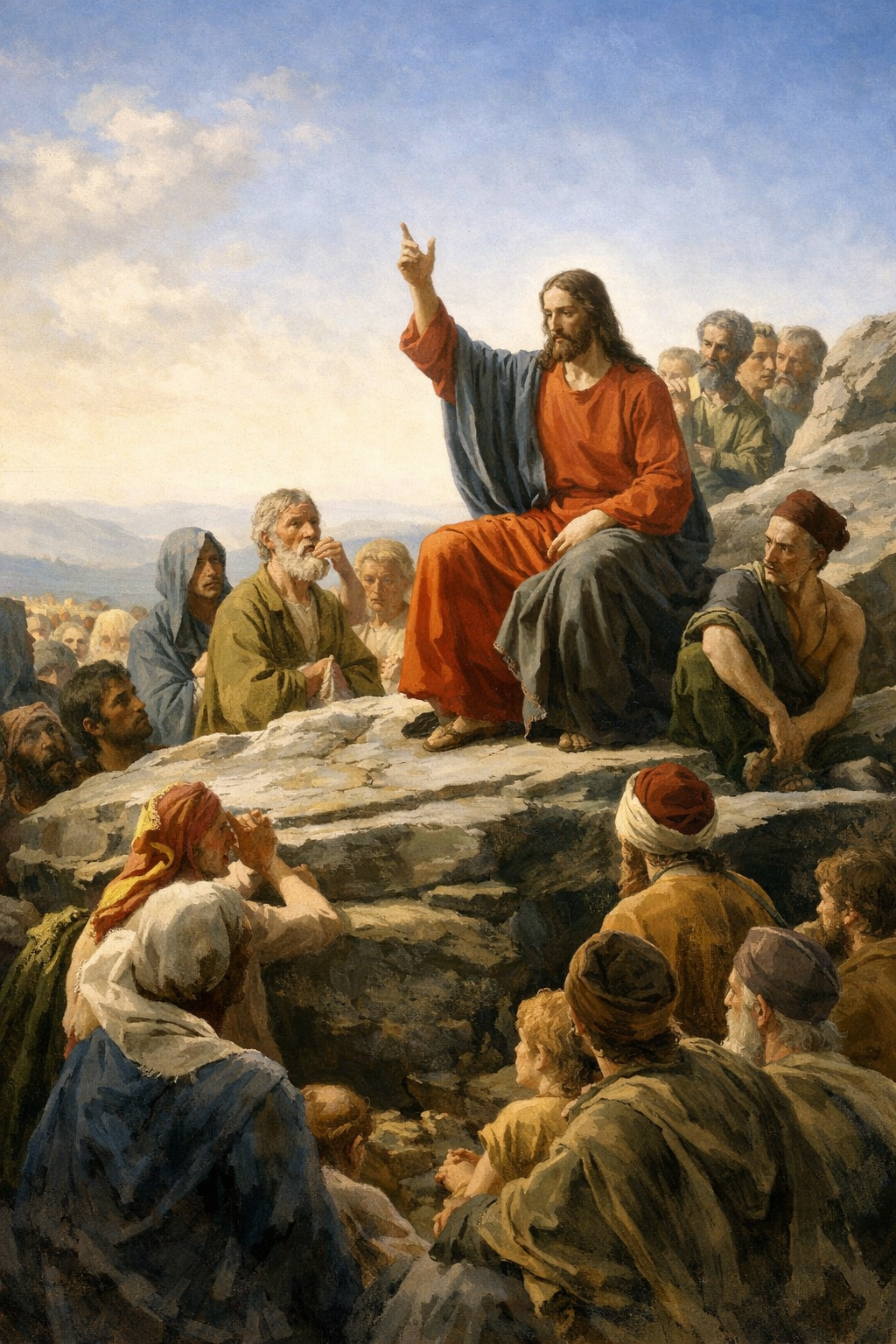
Sermon on the Mount
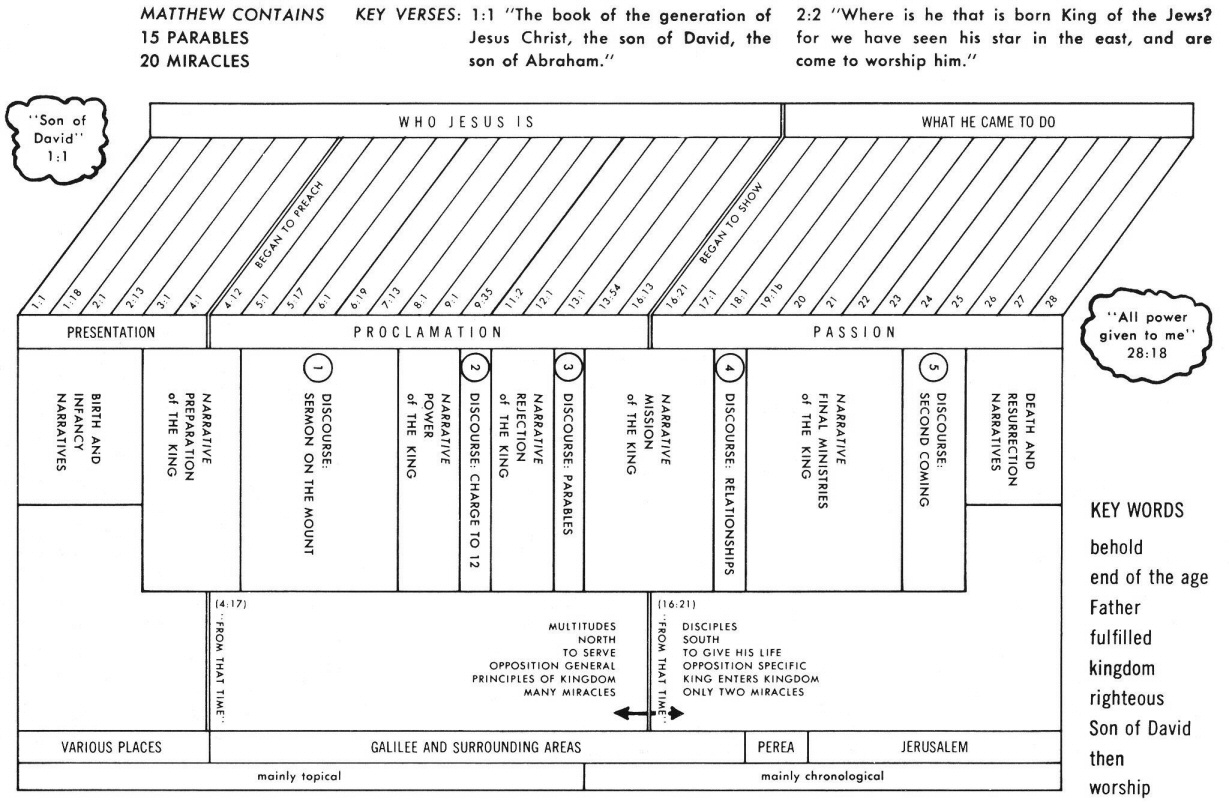
Click chart to enlarge
Charts from Jensen's Survey of the NT - used by permission
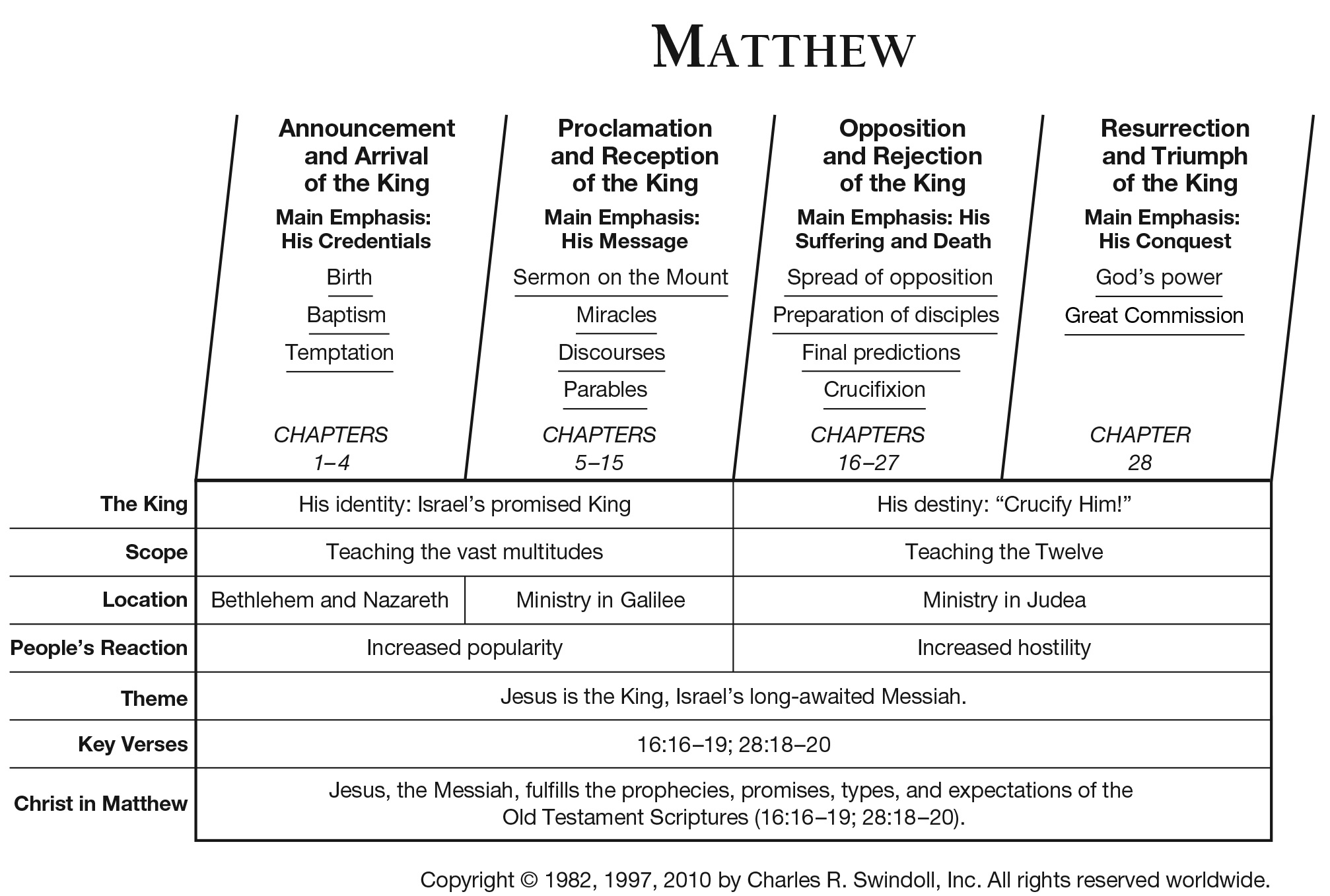
Another Chart from Charles Swindoll
THE LIFE OF JESUS AS COVERED
BY MATTHEW (shaded area)
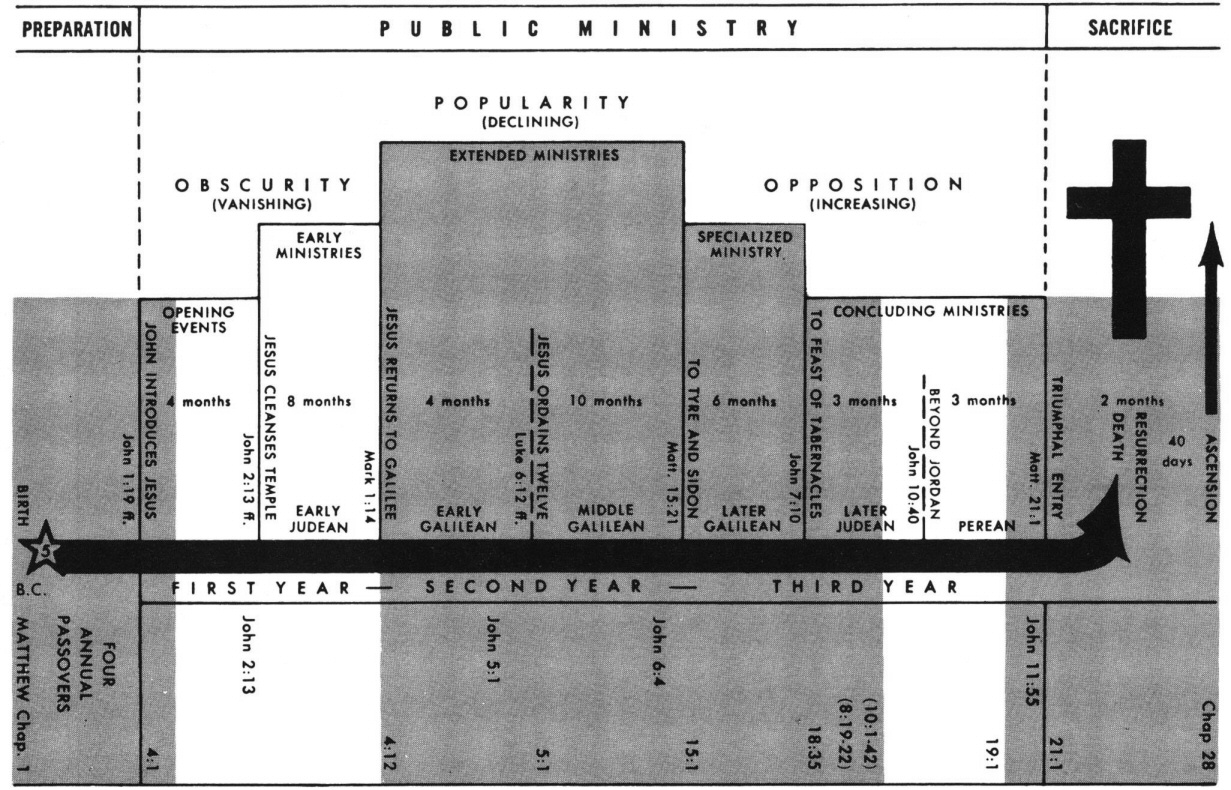
Click chart to enlarge
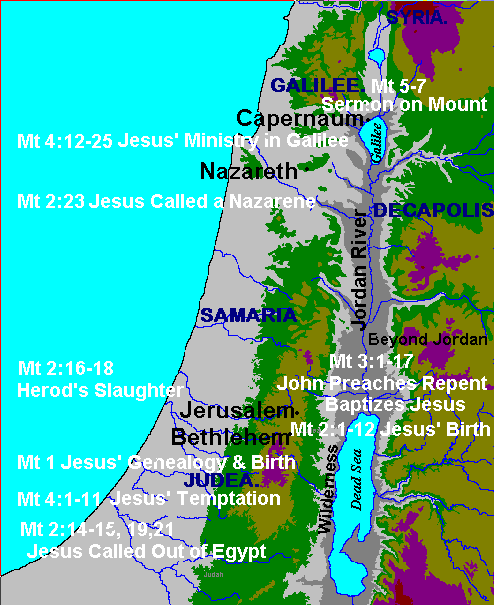
Jesus Birth and Early Years
Leading up to the Sermon on the Mount
Matthew 1-7

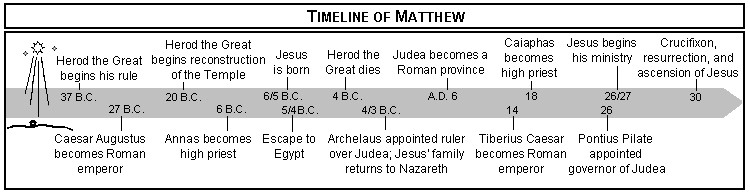
Source: Ryrie Study Bible
Matthew 7:6 "Do not give what is holy to dogs, and do not throw your pearls before swine, or they will trample them under their feet, and turn and tear you to pieces. (NASB: Lockman)
Greek: Me dote (2PAAS) to agion tois kusin, mede balete (2PAAS) tous margaritas umon emprosthen ton choiron, mepote katapatesousin (3PFAI) autous en tois posin auton kai straphentes (APPMPN) rexosin (3PAAS) humas.
Amplified: Do not give that which is holy (the sacred thing) to the dogs, and do not throw your pearls before hogs, lest they trample upon them with their feet and turn and tear you in pieces. (Amplified Bible - Lockman)
KJV: Give not that which is holy unto the dogs, neither cast ye your pearls before swine, lest they trample them under their feet, and turn again and rend you.
NLT: Don't give what is holy to unholy people. Don't give pearls to swine! They will trample the pearls, then turn and attack you. (NLT - Tyndale House)
Phillips: "You must not give holy things to dogs, nor must you throw your pearls before pigs - or they may trample them underfoot and turn and attack you." (New Testament in Modern English)
Wuest: Do not give that which is holy to the dogs, neither throw your pearls before the hogs lest perchance they trample them under their feet and having turned, lacerate you.
Young's: 'Ye may not give that which is holy to the dogs, nor cast your pearls before the swine, that they may not trample them among their feet, and having turned -- may rend you.
- Give not Mt 7:10:14,15; 15:26; Proverbs 9:7,8; 23:9; 26:11; Acts 13:45, 46, 47; Philippians 3:2; Hebrews 6:6; 10:29; 2Peter 2:22
- Cast - Proverbs 11:22
- Turn Mt 22:5,6; 24:10; 2 Cor 11:26; 2 Ti 4:14,15
- Matthew 7 Resources - Multiple Sermons and Commentaries
Related Passages:
Proverbs 3:13-15 How blessed is the man who finds wisdom And the man who gains understanding. 14 For her profit is better than the profit of silver And her gain better than fine gold. 15 She is more precious than jewels; And nothing you desire compares with her.
Proverbs 25:11 Like apples of gold in settings of silver Is a word spoken in right circumstances.
1 Corinthians 2:14 But a natural man does not accept the things of the Spirit of God, for they are foolishness to him; and he cannot understand them, because they are spiritually appraised.
Luke 10:16 “The one who listens to you listens to Me, and the one who rejects you rejects Me; and he who rejects Me rejects the One who sent Me.
2 Timothy 4:2-4 preach the word; be ready in season and out of season; reprove, rebuke, exhort, with great patience and instruction. 3 For the time will come when they will not endure sound doctrine; but wanting to have their ears tickled, they will accumulate for themselves teachers in accordance to their own desires, 4 and will turn away their ears from the truth and will turn aside to myths.
Philippians 3:2 Beware (present imperative see our need to depend on the Holy Spirit to obey) of the dogs, Beware (present imperative) of the evil workers, Beware (present imperative) of the false circumcision;
Revelation 22:15 Outside are the dogs and the sorcerers and the immoral persons and the murderers and the idolaters, and everyone who loves and practices lying.

NO GOSPEL PEARLS FOR
DOGS OR PIGS!
Do not give what is holy to dogs, and do not throw your pearls before swine, or they will trample them under their feet, and turn and tear you to pieces - Matthew 7:6 teaches discernment in giving spiritual truth—not that people are worthless, but that sacred truth should not be thrown to those who will trample it, despise it, or react violently against it.
If someone isn’t open to listen to you, there’s no reason to continue speaking. Now this needs to be qualified -- most people will initially resist the Gospel, but here Jesus is not speaking of resistance in general but of a vicious attack against you and the Lord and His Gospel (like a swine or dog would do! As described below "dogs" in Jesus' day were not viewed as sweet little puppies!).
Here is the major point of this passage -
While followers of Jesus must not be guilty of condemning anyone, we must learn to discriminate in our witness.
You might ask "Well what about 2 Timothy 2:25 where Paul writes "with gentleness correcting those who are in opposition, if perhaps God may grant them repentance leading to the knowledge of the truth?" One key to answering this question is to ask what does the Greek word opposition mean? Zodhiates has an excellent comment writing that antidiatithemi speaks "either those who directly oppose the Gospel or those who are ill-disposed toward or unaffected by it. The latter meaning seems preferable because the Apostle directs Timothy to treat the antidiatitheménous, those whose attitudes are contrary or ill-disposed to the gospel, in a very different manner from the anthistaménous (436), opposers, those actually opposing the gospel, from whom he was to turn away ("Avoid [apostrepho in the present imperative = command to keep on avoiding them!] such men as these" - 2 Ti 3:5)" (Complete Word Study Dictionary – New Testament)
So it is a question of "discernment" -- if you have shared the Gospel since you became a follower of Christ (and if you haven't shared it, you should!), over time you can generally get a good "feel" for whether there is simply general resistance to the Good News (as was frankly true of me before I came to Christ and is true of all of us because Paul says all of us "were enemies [Greek word echthros means hostile and speaks of our intrinsic hatred of God and His Good News]." - Ro 5:10-note). General resistance is quite different than vicious attacks. It is the latter to whom we are to shake the dust off our sandals and move on!
- See also explanation below from Gotquestions, a website that is highly recommended.
Solomon - Do not reprove (Hebrew word yakach includes ideas of education, discipline, teaching and admonishing) a scoffer (speaks words showing no respect for the reprover), lest he hate you. Reprove a wise man, and he will love you. (Proverbs 9:8) (Reproof is wasted on a "scoffer" because the more shallow and foolish the person is, the less willing he is to listen to wise, godly counsel)
Jamieson, F, B -The opposite extreme to that of censoriousness is here condemned—want of discrimination of character.... Religion is brought into contempt, and its professors insulted, when it is forced upon those who cannot value it and will not have it. But while the indiscriminately zealous have need of this caution, let us be on our guard against too readily setting our neighbors down as dogs and swine, and excusing ourselves from endeavoring to do them good on this poor plea.
Spurgeon writes...
There are some holy enjoyments, some gracious experiences, some deep doctrines of the Word of God, which it would be out of place to speak of before certain profane and unclean persons. They would only make a jest of them; perhaps they might persecute you on account of them. No; holy things are for holy men; and as of old the crier in the Grecian temple was wont to say, before the mysteries were performed, “&Far hence, ye profane!&” so sometimes, before we enter into the innermost circle of Christian converse, it would be well for us to notice who is listening.
***
Zeal should always be tempered by prudence. There are times when it would be treason to truth to introduce it as a topic of conversation,-when men are in such a frame of mind that they will be sure rather to cavil at it than to believe it. Not only speak thou well, but speak thou at the right time, for silence is sometimes golden. See that thou hast thy measure of golden silence as well as of silver speech.
***
When men are evidently unable to perceive the purity of a great truth, do not set it before them. They are like mere dogs, and if you set holy things before them they will be provoked to “&turn again and rend you&”: holy things are not for the profane. “&Without are dogs&”: they must not be allowed to enter the holy place. When you are in the midst of the vicious, who are like “&swine,&” do not bring forth the precious mysteries of the faith, for they will despise them, and “&trample them under their feet&” in the mire. You are not needlessly to provoke attack upon yourself, or upon the higher truths of the gospel. You are not to judge, but you are not to act without judgment. Count not men to be dogs or swine; but when they avow themselves to be such, or by their conduct act as if they were such, do not put occasions in their way for displaying their evil character. Saints are not to be simpletons; they are not to be judges, but, also, they are not to be fools.
Great King, how much wisdom thy precepts require! I need thee, not only to open my mouth, but also at times to keep it shut.
Give (1325) (didomi) means to give based on decision of will of the giver. Although the tense is not imperative, the force is that of an imperative or command. We are to speak the truth in love, but we are not to allow love to color or distort our sense of discernment. Note in this warning Jesus is not trying to discourage us from sharing the gospel, but is calling for discernment which is ever looking for listeners with prepared and not antagonistic hearts.
In Hebrews we read that "solid food is for the mature, who because of practice have their senses (Ability to discriminate & make moral decisions. Capacity for spiritual apprehension) trained (gumnazo = having experienced vigorous training and control and in a state of increased moral strength which allows one) to discern (decide between, make a judgment between) good and evil." (Hebrews 5:14)
This verse makes it clear that Jesus does not exclude every kind of judgment in Matthew 7:1-2 for here He just as plainly commands a certain kind of right judgment or discernment in this verse, for such discrimination is necessary in order to determine who is a dog and a hog!
Holy (40) (hagios) (Click for an in depth discussion of hagios) refers to that which is is set apart (sanctified) for a special purpose. In Scripture something “holy” is not merely religious—it is God’s possession, marked by His character and purpose. To misuse it is to profane what belongs to Him. The message of salvation is the supreme “holy thing.” It is called “the holy faith” (Jude 20). Paul calls it “the glorious gospel of the blessed God” (1 Tim 1:11). To treat the gospel as a debating toy or to offer it where it will only be mocked is to handle something sacred as if it were common.
“What is holy” in Matthew 7:6 is the sacred treasure of God—especially the gospel and the Word—set apart for reverent reception; it must be shared generously but wisely, guarded from contempt so that the honor of Christ and the integrity of His truth are not profaned.
Holy and pearls (see discussion below) are somewhat indefinite and as discussed surely include the gospel message but also apply to other holy things besides the gospel, such as the Holy Word, the Holy Spirit, the Holy Name, etc. We are refrain from giving out these holy, precious things out of respect for them more than out of contempt for the opposers. In fact, in this very sermon, Jesus would still call us to "love your enemies, and pray for those who persecute you" (notes Matthew 5:44)
Dogs (2965) (kuon) in the ancient world does not refer to dogs as we currently think of them for they were seldom household pets but instead were largely half-wild, dirty, greedy, snarling, vicious, flea-bitten, diseased, mongrel scavenger, that often ran in packs. They are often on the point of starvation and were known to devour corpses, and attack humans, in the night. Clearly literal "dogs" in the ancient word were dangerous and despised. Kuon -5 times in the NAS and always translated "dog" or "dogs": (Matt 7:6; Luke 16:21; Phil 3:2; 2 Pet 2:22; Rev 22:15)
For example we read God's prophet Abijah's harsh message to the wife of the evil Jeroboam declaring..."Anyone belonging to Jeroboam who dies in the city the dogs will eat. And he who dies in the field the birds of the heavens will eat; for the LORD has spoken it." (1 Kings 14:11) (Similar prophecies were decreed against Baasha’s family, in 1Kings 16:4, and Ahab’s family, 1Kings 21:24.) (For bodies to be devoured by dogs and wild birds of prey was considered one of the worst disgraces that could befall a Jew)
The epithet "dogs" is used figuratively to refer to certain classes of men, expressing their insolent rapacity, Psalm 22:16 and their beastly vices, Deuteronomy 23:18.
It has happened to them according to the true proverb, "A DOG RETURNS TO ITS OWN VOMIT," and, "A sow, after washing, returns to wallowing in the mire." (2Pe 2:22)
Outside are the dogs and the sorcerers and the immoral persons and the murderers and the idolaters, and everyone who loves and practices lying. (Revelation 22:15)
Paul used the term "dogs" in his letter to Philippi warning the converts to...
Beware (present imperative see our need to depend on the Holy Spirit to obey) of the dogs, Beware (present imperative) of the evil workers, Beware (present imperative) of the false circumcision; (Phil 3:2)
The Jews used "dog" as a derogatory term referring to Gentiles in general. In Philippi, Paul turned the tables so to speak and actually referred to Jews (probably Judaizers) who professed to believe in Christ but depended upon keeping the Law and the rituals of Judaism in order to "merit" salvation. Thus in this sense Paul uses "Dogs" to refer to false teachers.
William Barclay has a helpful note on dogs -nbsp;With us the dog is a well-loved animal, but it was not so in the East in the time of Jesus. The dogs were the pariah dogs, roaming the streets, sometimes in packs, hunting amidst the garbage dumps and snapping and snarling at all whom they met. J. B. Lightfoot speaks of “the dogs which prowl about eastern cities, without a home and without an owner, feeding on the refuse and filth of the streets, quarrelling among themselves, and attacking the passer-by.” In the Bible the dog always stands for that than which nothing can be lower. When Saul is seeking to take his life, David’s demand is: “After whom do you pursue? After a dead dog! after a flea!” (1Sa 24:14, cf. 2Ki 8:13; Ps 22:16, 20). In the parable of the Rich Man and Lazarus, part of the torture of Lazarus is that the street dogs annoy him by licking his sores (Luke 16:21). In Deuteronomy the Law brings together the price of a dog and the hire of a whore, and declares that neither must be offered to God (Deut 23:18). In Revelation the word dog stands for those who are so impure that they are debarred from the Holy City (Rev 22:15). That which is holy must never be given to dogs (Mt 7:6). It is the same in Greek thought; the dog stands for everything that is shamelessly unclean. It was by this name that the Jews called the Gentiles. There is a Rabbinic saying, “The nations of the world are like dogs.” So this is Paul’s answer to the Jewish teachers. He says to them, “In your proud self-righteousness, you call other men dogs; but it is you who are dogs, because you shamelessly pervert the gospel of Jesus Christ.” He takes the very name the Jewish teachers would have applied to the impure and to the Gentiles and flings it back at themselves. A man must always have a care that he is not himself guilty of the sins of which he accuses others. (Daily Study Bible)
Dogs and swine (5519) describe profane people who treat spiritual matters with contempt. They are unbelievers who are enemies of the gospel and are people to avoid. This verse does not mean that the blessings of the gospel are not to be offered to the Gentiles (remembering that Jews in Jesus' day frequently referred to Gentiles as "dogs"), but rather that precious spiritual truths should not be pressed upon those who are either unready or unwilling to accept or appreciate their value. The verse continues logically in the train of thought developed in the sayings which immediately precede it. While judging others is not the prerogative of man, there are, nonetheless, those whose uncleanness and violence prevent the sharing of the most noble truths of the Christian faith.
Brothers (referred to in Mt 7:3-5) and “dogs” or “swine” must not be treated alike. Believers must discriminate carefully, clearly indicating that Jesus' command to stop judging in Matthew 7:1 was not meant to exclude discerning judgment, but only condemnatory, critical judgment.
Swine are just as contemptible and filthy as dogs. The OT mentions swine among the unclean animals (Lev. 11:7; Deut. 14:8) and the eating of swine flesh is an abomination in (Isa. 65:4; 66:3, 17) Swine are not only unclean animals but can be vicious and are capable of savage attacks against people. The wild boar of the wood was frequently met with in the woody parts of Palestine, especially in Mount Tabor. In Psalm 80:13 the powers that destroyed the Jewish nation are compared to wild boars and wild beasts of the field.

Wild Boars
Can Tear you to Pieces!
The phrase “what is holy” or set apart from the common and profane and consecrated to God is used synonymously with "pearls".
Do not throw your pearls before swine - Do not give something valuable to a swine. Do not give something spiritually valuable to those who turn on you. Pearls (margarites) were usually regarded as precious stones in Jesus' day. Pearls are found in the Red Sea, the Persian Gulf, and the Indian Ocean and were brought into the western culture through Alexander the Great’s conquests. Pearls were priced way beyond the purchasing power of the average person and in order to obtain a pearl of great value a merchant might have to sell all his possessions (cf Mt 13:46) Margaritēs is used by Jesus as a figure of speech for what is of supreme worth. The Jews used "margaritēs" to refer to a valuable saying. Jesus is saying that whatever is very precious in the spiritual realm should be treated with reverence and not entrusted to those who, because of their utterly wicked, vicious, and despicable nature, are like dogs and hogs.
Pearls (3135)(margarites) refers to a literal pearl as in Rev. 17:4; Rev. 18:12; Rev. 18:16 which all refer to pearls as items the lost world highly valued (and lost!). In Rev 21:21 John described "the twelve gates were twelve pearls." Figuratively the pearl speaks of something of supreme worth. BDAG writes in Jesus' day the pearl was "more in demand than gold." BDAG adds "Among the Indians worth 3 times as much as pure gold: Arrian, Ind. 8, 13 and always in great demand....in imagery, in a proverb....throw pearls to swine i.e. entrust something precious" (Mt 7:6). Thayer adds that Mt 7:6 "a proverb, i.e., to thrust the most sacred and precious teachings of the gospel upon the most wicked and abandoned men (incompetent as they are, through their hostility to the gospel, to receive them), and thus to profane them." Margarites - Mt. 7:6 ("do not throw your pearls before swine" = ); Matt. 13:45; Matt. 13:46; 1 Ti 2:9; Rev. 17:4; Rev. 18:12; Rev. 18:16; Rev. 21:21. Not present in the Septuagint (Lxx).
Trample (2662 (katapateo from katá = intensifies meaning + patéo = tread, trample, fig to treat contemptuously) means to step down forcibly upon often with the implication of seeking to destroy or ruin. The idea is to spurn, to reject with disdain, treat contemptuously, treat with rudeness and insult or thoroughly despise someone or something. Jesus pictures hogs trampling the pearls with their feet, thus treating them with utter disdain.
In Matthew Jesus returns to Nazareth, His home town, and we read that "they took offense (verb skandalizo - see in depth study of noun, skandalon) at Him. But Jesus said to them, "A prophet is not without honor except in his home town, and in his own household." And He did not do many miracles there because of their unbelief." (Mt 13:57-58) So here we see Jesus practicing the same principle He is laying down for His disciples to practice.
D A Carson comments that "The pigs trample the pearls under foot (perhaps out of animal disappointment that they are not morsels of food), and the dogs are so disgusted with "what is sacred" that they turn on the giver. (See Expositor's Bible Commentary Matthew)
Spurgeon comments that...It is a pity to talk about some of the secrets of our holy faith in any and every company. It would be almost, profane to speak of them in the company of profane men. We know that they would not. understand us; they would find occasion for jest and ridicule, and therefore our own reverence for holy things must cause us to lay a finger on our lips when we are in the presence of profane persons. Do not let us, however, carry out one precept to the exclusion of others. There are dogs that eat of the crumbs that fall from the master’s table. Drop them a crumb. And there are even swine that may yet be transformed or learned; to whom the sight of a pearl might give some inkling of a better condition of heart. Cast not the pearls before them, but you may show them to them sometimes when they are in as good a state of mind as they are likely to be in. It is ours to preach the gospel to every creature; that is a precept of Christ, and yet all creatures are not always in the condition to hear the gospel. We must choose our time. Yet even this I would not push too far. We are to preach the gospel in season and out of season. Oh! that we may be able to follow precepts as far as they are meant to go, and no further.
Turn (4762) (strepho from trope = a turn or revolution) means to twist, turn quite around or reverse.
Tear (4486) (rhegnumi) means to break in pieces, disrupt or lacerate as dogs would do.
Clearly to be an undiscerning simpleton (as might occur in one who took the meaning of "do not judge" to an extreme interpretation which Jesus did not intend) can place one in a dangerous position (cf "trample", "tear to pieces"!)
Paul gives us an example of a vicious opponent of the gospel warning Timothy to beware of...
Alexander the coppersmith did me much harm; the Lord will repay him according to his deeds. Be on guard against him yourself, for he vigorously opposed our teaching. (notes 2 Timothy 4:14-15)
We are not to continue to present the gospel to those who repeatedly mock, scorn and deride it. To be sure, this determination sometimes is obvious as in the case of rank infidels but in other situations requires God's wisdom (see role of prayer in Matthew 7:7-8) and Spirit controlled guidance. There is a limit Jesus says and when that time arrives, it is high time for the ambassador of Christ to depart company.
And so we see Jesus instructing His disciples "And into whatever city or village you enter, inquire who is worthy in it; and abide there until you go away. And as you enter the house, give it your greeting. And if the house is worthy, let your greeting of peace come upon it; but if it is not worthy, let your greeting of peace return to you. And whoever does not receive you, nor heed your words, as you go out of that house or that city, shake off the dust of your feet. Truly I say to you, it will be more tolerable for the land of Sodom and Gomorrah in the day of judgment, than for that city." (Matthew 10:11-15)
In the same way Jesus pronounced judgment on the Galilean towns which for the most part rejected the light of His presence and His gospel "Woe to you, Chorazin! Woe to you, Bethsaida! For if the miracles had occurred in Tyre and Sidon which occurred in you, they would have repented long ago in sackcloth and ashes. Nevertheless I say to you, it shall be more tolerable for Tyre and Sidon in the day of judgment, than for you. And you, Capernaum, will not be exalted to heaven, will you? You shall descend to Hades; for if the miracles had occurred in Sodom which occurred in you, it would have remained to this day. (Mt 11:21-23)
And we see Paul's reaction to the rejection of the Gospel by the Jews of Corinth "After these things he left Athens and went to Corinth. And he found a certain Jew named Aquila, a native of Pontus, having recently come from Italy with his wife Priscilla, because Claudius had commanded all the Jews to leave Rome. He came to them, and because he was of the same trade, he stayed with them and they were working; for by trade they were tent-makers. And he was reasoning in the synagogue every Sabbath and trying to persuade Jews and Greeks. But when Silas and Timothy came down from Macedonia, Paul began devoting himself completely to the word, solemnly testifying to the Jews that Jesus was the Christ. And when they resisted and blasphemed, he shook out his garments and said to them, "Your blood be upon your own heads! I am clean. From now on I shall go to the Gentiles. (Acts 18:1-6, see also Acts 13:44-51, 28:17-28; Ro 16:17-18).
Writing to Titus on the Isle of Crete Paul instructed him "Reject a factious (divisive, one who causes division) man after a first and second warning, knowing that such a man is perverted and is sinning, being self-condemned. (Titus 3:10-11)
Herod Antipas was a dog...swine, who heard John gladly, Mark recording "for Herod was afraid of John, knowing that he was a righteous and holy man, and kept him safe. And when he heard him, he was very perplexed; but he used to enjoy listening to him." (Mark 6:20) Herod proved his "canine character" because this same Herod turned on John the Baptist and had him beheaded (see Mt 14:1-12; Mk 6:14-28; Lu 9:7-9). Later, Jesus Christ refused to give what was holy to Herod "Now Herod was very glad when he saw Jesus; for he had wanted to see Him for a long time, because he had been hearing about Him and was hoping to see some sign performed by Him. And he questioned Him at some length; but He answered him nothing." (Luke 23:8-9)
And after Jesus rose from the dead He showed Himself to no one who was not a believer.
In the parable of The Barren Fig Tree Jesus explained that God was patience, but His patience was not endless "And He began telling this parable: "A certain man had a fig tree which had been planted in his vineyard; and he came looking for fruit on it, and did not find any. And he said to the vineyard-keeper, 'Behold, for three years I have come looking for fruit on this fig tree without finding any. Cut it down! Why does it even use up the ground?' And he answered and said to him, 'Let it alone, sir, for this year too, until I dig around it and put in fertilizer; and if it bears fruit next year, fine; but if not, cut it down.'" (Luke 13:6-9)
Solomon presents a similar principle regarding bestowal of "holy things" on dogs and hogs...
A man who hardens his neck after much reproof will suddenly be broken beyond remedy. (Proverbs 29:1)
Do not reprove a scoffer, lest he hate you (don't bother rebuking mockers; they will only hate you), Reprove a wise man, and he will love you. (Proverbs 9:8)
Jesus' teaching is in fact imminently logical for if we were to remain in the company of those who constantly ridicule the small gate and narrow way of the Gospel, we would by default, fail to enter other "fields" which Jesus described in other passages declaring...
The harvest is plentiful, but the workers are few. (Mt 9:37)
Behold, I say to you, lift up your eyes, and look on the fields, that they are white for harvest. (John 4:35)
Hendriksen - The suggestion may be correct that, since pearls resemble peas or acorns, these hogs, having greedily tasted a few and having discovered that they can do nothing with them, in anger trample the pearls underfoot and turn and tear to pieces those who had flung such non-edibles in front of them. (BORROW Exposition of the Gospel According to Matthew)
Henry Morris - It is counter-productive to try to teach the treasures of Biblical truth to those who reject and ridicule the Scriptures. Their hearts must first be prepared by the Holy Spirit, supplemented by a gracious presentation of Christian evidences (Acts 17:15-34).
Spurgeon - Mt 7:6. Give not that which is holy unto the dogs, neither cast ye your pearls before swine, lest they trample them under their feet, and turn again and rend you.
When men are evidently unable to perceive the purity of a great truth, do not set it before them. They are like mere dogs, and if you set holy things before them they will be provoked to “turn again and rend you”: holy things are not for the profane. “Without are dogs”: they must not be allowed to enter the holy place. When you are in the midst of the vicious, who are like “swine,” do not bring forth the precious mysteries of the faith, for they will despise them, and “trample them under their feet” in the mire.
You are not needlessly to provoke attack upon yourself, or upon the higher truths of the gospel. You are not to judge, but you are not to act without judgment. Count not men to be dogs or swine; but when they avow themselves to be such, or by their conduct act as if they were such, do not put occasions in their way for displaying their evil character. Saints are not to be simpletons; they are not to be judges, but, also, they are not to be fools. Great King, how much wisdom thy precepts require! I need thee, not only to open my mouth, but also at times to keep it shut.
It is a pity to talk about some of the secrets of our holy faith in any and every company. It would be almost profane to speak of them in the company of profane men. We know that they would not understand us; they would find occasion for jest and ridicule, and therefore our own reverence for holy things must cause us to lay a finger on our lips when we are in the presence of profane persons. Do not let us, however, carry out one precept to the exclusion of others. There are dogs that eat of the crumbs that fall from the master’s table. Drop them a crumb. And there are even swine that may yet be transformed; to whom the sight of a pearl might give some inkling of a better condition of heart. Cast not the pearls before them, but you may show them to them sometimes when they are in as good a state of mind as they are likely to be in. It is ours to preach the gospel to every creature; that is a precept of Christ, and yet all creatures are not always in the condition to hear the gospel. We must choose our time. Yet even this I would not push too far. We are to preach the gospel in season and out of season. Oh! that we may be able to follow precepts as far as they are meant to go, and no further.
Zeal should always be tempered by prudence. There are times when it would be treason to truth to introduce it as a topic of conversation,-when men are in such a frame of mind that they will be sure rather to cavil at it than to believe it. Not only speak thou well, but speak thou at the right time, for silence is sometimes golden. See that thou hast thy measure of golden silence as well as of silver speech.
Spurgeon's note on Ps 14:3 - The ungodly are “vile” persons (Nah. 1:14). “I will make thy grave; for thou art vile.” Sin makes men base, it blots their name, it taints their blood: “They are altogether become filthy;” in the Hebrew it is, they are become stinking. Call wicked men ever so bad, you cannot call them out of their name; they are “swine” (Matt. 7:6); “vipers” (Matt. 3:7); “devils” (John 6:70). The wicked are the dross and refuse (Psa. 119:119); and heaven is too pure to have any dross mingle with it.—Thomas Watson.
Spurgeon (Lost Sermons) - 2 Peter 2:22 The DOG and SWINE
Here is:
I. THE NATURAL STATE OF MAN.
He is a dog or sow. These are both unclean animals. The same figure occurs [in] Matt. 7:6.[2] Dogs: violent, blaspheming men. Swine: lascivious ones. Man is depraved,[3] so the best of men have said. Investigate Scripture, ancient History. Look now at the Heathen, the Catholics,[4] and even here at those who, bursting the restraints of education, run wild.[5]
1. Selfishness is an animal propensity.
2. Grovelling ideas unite men to brutes.
3. Sensuality [is] an animal characteristic.
II. THERE IS A CHANGE WHICH IS NOT CONVERSION.
The dog vomits. The sow is washed.
I. There may be a conviction of sin, but:
1. Common conviction denies God’s justice.
2. Nor is it concerned for the loss of God’s favour.
3. No hatred of sin as sin.
4. The Sorrow arises from self-love, not the love of God.
5. No discerning his depravity.
6. No practical renunciation of self righteousness.
II. There may be a love of ordinances.[6]
1. Because of the scope and design of the gospel.
2. Because of the pathos of the speaker.
3. Because some sort of comfort is gained.
But these do not care for spiritual communion.
III. Some reformation.
1. The Man reforms from fear, not love.
2. Or he works for wages, for himself, not God.
ILLUSTRATION - J Vernon McGee tells the following story - I remember a Tennessee legislator friend of mine who was a heavy drinker. He was wonderfully converted and is a choice servant of God today. The other members of the legislature knew how he drank. Then they heard he “got religion,” as they called it. One day this fellow took his seat in the legislature, and his fellow-members looked him over. Finally, someone rose, addressed the chairman of the meeting and said, “I make a motion that we hear a sermon from Deacon So-and-So.” Everyone laughed. But my friend was equal to the occasion. He got to his feet and said, “I’m sorry, I do not have anything to say. My Lord told me not to cast my pearls before swine.” He sat down, and they never ridiculed him anymore. (Thru the Bible Commentary: Nashville: Thomas Nelson)
VOLTAIRE AN ILLUSTRATION OF A "DOG/SWINE" - The French philosopher Voltaire would certainly fit the picture of a spiritual "dog and a hog", who violently opposed God, His Holy Word and His precious Son. How tragic that one of the most fertile and talented minds of his time (which parenthetically bears witness to the common grace and longsuffering of our great Father), was such a vicious opponent of truth, using his pen to retard and demolish Christianity as much as humanly possible. Once speaking about our Lord Jesus Christ, Voltaire uttered the unspeakable words "Curse the wretch!" Voltaire was so self deceived and arrogant that he once boasted that within "twenty years Christianity will be no more. My single hand shall destroy the edifice it took twelve apostles to rear." God however is not mocked beloved (see Galatians ) and so not surprisingly shortly after Voltaire's death the very house in which he printed his vicious anti-Christian literature became the home of the Geneva Bible Society! A nurse who attended Voltaire at the time of his horrible death vowed "For all the wealth in Europe I would not see another infidel die." Voltaire's' physician, Trochim, also attended the infidel up to the time of his last breath, and is quoted as hearing Voltaire's last desperate (rightly so) cry "I am abandoned by God and man! I will give you half of what I am worth if you will give me six months' life. Then I shall go to hell; and you will go with me. O Christ! O Jesus Christ!" In short, Voltaire, as brilliant as he was intellectually, is the epitome of the type of individual citizens of the Kingdom of Heaven must refrain from repeatedly sharing the precious and holy truths of God's Gospel.
Alan Carr has a comment on Mark 6:5 (And He could do no miracle there except that He laid His hands on a few sick people and healed them.) that relates to Jesus' warning to not cast pearls before swine. Carr says "Let’s get one thing straight now; their unbelief did not hinder His power. Jesus was and is absolutely sovereign. He could have done anything there that He wanted to do. He possessed the power, but He refused to demonstrate His power in the face of blatant unbelief. The hands of Jesus were not tied. A few people came to Him in faith and those people received His help. The rest rejected Him and were rejected by Him.
THOUGHT - There is a word here for the health and wealth crowd. There is a word here for those who promote the cult of prosperity. People who have embraced the prosperity cult doctrine believe that God only responds to our faith. In other words, if you have enough faith, you will be healed. If you have enough faith you will have plenty of money. If you have the faith you can enjoy endless health, wealth and blessing. This way of thinking holds God captive to the will of man! I would remind you that we serve a sovereign God! He can do what He pleases, when He pleases and to whom He pleases. Our faith, or the lack thereof, does not pose a problem for Him. In this case, Jesus refused to “cast His pearls before the swine”. (Mt 7:6) They refused the message, thus they forfeited the miracles. God’s best blessings are not the works of healing, multiplying your loaves and fishes, or meeting your needs. The greatest work of God is saving, sealing and securing lost souls! If you are saved, you have experienced the greatest of our Lord’s works.) (Carr)
Related Resources:
- What does the Bible say about the prosperity gospel?
- Is the Word of Faith movement biblical?
- What does the Bible say about prosperity? | GotQuestions.org
- Is “name it claim it” teaching biblical?
- Are all prosperity preachers charlatans and/or false teachers?
- What is miracle money, and is it biblical to seek it?
- What does the Bible say about prosperity?
- Is there power in positive confession?
Gotquestions - Question: "What did Jesus mean when He said to not cast your pearls before swine (Matthew 7:6)?"
Answer: “Do not cast your pearls before swine” is a portion of the Sermon on the Mount, and, to understand its meaning, we have to understand its context and placement within the sermon. Christ had just finished instructing the crowd on judgment and reproof: “Do not judge, or you too will be judged. For in the same way you judge others, you will be judged, and with the measure you use, it will be measured to you” (Matthew 7:1–2), and “You hypocrite, first take the plank out of your own eye, and then you will see clearly to remove the speck from your brother’s eye” (Matthew 7:5). Then in verse 6, Christ tempers these admonitions and shows us the difference between “judgment” and “discernment.” We are not to be hypocritical judges, yet we must be able to discern the swine, lest we cast our pearls before them.
Before Jesus says, “Do not cast your pearls before swine,” He says, “Do not give dogs what is sacred.” An analogy mentioning dogs is also used in Proverbs: “As a dog returns to its vomit, so a fool repeats his folly” (Proverbs 26:11). A dual reference to swine and dogs is also found in 2 Peter 2:22, “Of [false teachers] the proverbs are true: ‘A dog returns to its vomit,’ and, ‘A sow that is washed goes back to her wallowing in the mud.’” In His sermon, Jesus uses dogs and pigs as representative of those who would ridicule, reject, and blaspheme the gospel once it is presented to them. We are not to expose the gospel of Jesus Christ to those who have no other purpose than to trample it and return to their own evil ways. Repeatedly sharing the gospel with someone who continually scoffs and ridicules Christ is like casting pearls before swine. We can identify such people through discernment, which is given in some measure to all Christians (1 Corinthians 2:15–16).
The command not to cast your pearls before swine does not mean we refrain from preaching the gospel. Jesus Himself ate with and taught sinners and tax collectors (Matthew 9:10). In essence, the instruction in Matthew 7:6 is the same that Jesus gave to His apostles when He said, “If anyone will not welcome you or listen to your words, shake the dust off your feet when you leave that home or town” (Matthew 10:14). We are to share the gospel, but, when it becomes apparent that the gospel is not welcome, we are to move on. We are responsible to share the good news; we are not responsible for people’s response to the good news. Pigs don’t appreciate pearls, and some people don’t appreciate what Christ has done for them. Our job is not to force conversions or cram the gospel down people’s throats; there’s no sense in preaching the value of pearls to swine. Jesus’ instruction to His apostles on how to handle rejection was to simply go elsewhere. There are other people who need to hear the gospel, and they are ready to hear it. (From Gotquestions.org - recommended resource)
Lehman Strauss - Give not that which is holy unto the dogs, neither cast ye your pearls before swine (Matthew 7:6).
The spirit of the unregenerate man has no more capacity to appreciate the things of God than a dog has to appreciate holy things, or a hog a genuine pearl necklace. We read that “The dog is turned to his own vomit again; and the sow that was washed to her wallowing in the mire” (2 Peter 2:22). This they did because the dog was a dog and the sow was a sow. No amount of religion or church activity can change the spirit of the unregenerate man. “Remember,” says Dr. G. Campbell Morgan, “if out of false charity or pity you allow men of material ideals and worldly wisdom to touch holy things, to handle the pearls of the Kingdom, presently they will turn and rend you. This is the whole history of Christendom’s ruin, in the measure in which Christendom is ruined. We gave holy things to dogs. We cast the pearls of the Kingdom before swine.” The ministry of Christ’s Church dare not be entrusted to any man who has not been born again, for “That which is born of the flesh is flesh; and that which is born of the Spirit is spirit” (John 3:6).
The Bible says; “There is a spirit in man; and the inspiration of the Almighty giveth them understanding” (Job 32:8). Here we are told that it is the spirit of man that is given understanding. The materialist tells us that the spirit of man is the air that he breathes, and that man’s body is all there is to his personality. Such is not the case. The spirit of man is his personality and it is that which differentiates him from the lower animal creation. If “spirit” meant merely “breath,” God certainly would not deal with it as a personality. He is called “The God of the spirits of all flesh” (Numbers 16:22), and “the Father of spirits” (Hebrews 12:9). It is by his spirit that the Christian both serves and worships God. Paul testified: “For God is my witness, Whom I serve with my spirit in the Gospel” (Romans 1:9). Jesus said: “God is a spirit; and they that worship Him must worship Him in spirit and in truth” (John 4:24).
Discernment Is Not the Enemy of Love
Jesus has just warned against a harsh, censorious spirit (Mt 7:1–5), but He immediately balances that with a call to holy discernment. Love does not mean handing sacred truth to those who only want to trample it. Pearls are precious; they are meant for appreciation, not desecration.
The Lord is not telling us to be stingy with the gospel. He is teaching us to recognize when a heart is hardened and hostile. Some people are not asking honest questions—they are looking for ammunition. To keep speaking in such moments is not faithfulness; it is carelessness with what is holy.
Lord, give me a tender heart and a discerning mind—bold to share Your truth, wise to know the right moment, and gentle enough to wait when a soul is not ready.
Discernment guards the message; love guards the messenger.
Timing Matters in Ministry
A pearl placed in the wrong setting loses its purpose. Jesus reminds us that truth must be matched with timing. Even the best words can become wasted words if the soil is not prepared. Think of Jesus before Herod (Lk 23:9). Herod wanted entertainment, not repentance—so Jesus remained silent. Silence can be as obedient as speech.
Ask yourself: Am I speaking because the Spirit is leading—or because my pride wants to win an argument?
Wisdom knows when to open the mouth—and when to close it.
Guarding the Sacred
“What is holy” refers to the treasures of the kingdom—gospel truth, Scripture, the name of Christ. These are not common things. The world treats them casually, but the believer must not.
To throw pearls before swine is to forget their value. When we argue endlessly with mockers, we may begin to treat the gospel like a debating tool instead of a life-giving treasure.
Prayer: Lord, never let me grow casual with what cost You the cross.
Reverence shapes our witness as much as courage.
To Effectively Perform Spiritual Surgery, We Must Practice Discernment as We Share Truth Gregory Brown
Do not give what is holy to dogs or throw your pearls before pigs; otherwise they will trample them under their feet and turn around and tear you to pieces. Matthew 7:6
Interpretation Question: Who or what was Christ referring to when he referred to dogs, pigs, what is holy, and pearls?
Before a doctor performs surgery, he evaluates the readiness of the patient. On some occasions, though surgery is needed, one postpones or cancels it all together for various reasons. Surgeons must practice great discernment. In the same way, spiritual surgery should not be performed indiscriminately. It must be accompanied by wisdom and discernment.
Because of this reality, Christ says that we should not give what is holy to dogs or throw pearls to pigs. What is holy and pearls seem to refer to the doctrines of the kingdom. Christ called God’s kingdom the pearl of great price that a person sells everything to purchase (Matt 13:45-46). The dogs and pigs Christ spoke of were not domesticated dogs and pigs. He referred to wild dogs who were scavengers, which people lived in fear of. Sometimes they would attack people to steal their food. Also, since pigs were considered unclean, Jews did not domesticate them as the Gentiles often did. Christ probably referred to wild boars, who, like dogs, were often dangerous.4 Christ essentially says, “As we seek to minister to others, we must practice discernment.” Some who we preach the gospel to or try to deliver from some sin will only become violent towards us. In that case, we should cease to offer it. Dogs and pigs will not recognize the value of God’s truth. They will mock it and us.
We saw this in Christ’s ministry. He was not indiscriminate with God’s Word. He told the disciples when they went into towns and preached the gospel, if people rejected it, they should wipe the dust off their shoes and go somewhere else (Matt 10:14). When Christ was taken before Herod and questioned, Christ did and said nothing. Herod didn’t really care about the gospel, and therefore, Christ didn’t share it. Herod only wanted to see a spectacle (Lk 23:6-10). Even with Israel, who continually rejected God’s Word, Christ eventually stopped sharing it with them clearly. In Matthew 13, after the Pharisees’ rejection of Christ in Matthew 12:24-32, as they said his works came from Satan, Christ began to teach using parables. Why did Christ give parables? It was a form of judgement. Listen to what Christ said when asked by his disciples about his parabolic teaching:
He replied, “You have been given the opportunity to know the secrets of the kingdom of heaven, but they have not. For whoever has will be given more, and will have an abundance. But whoever does not have, even what he has will be taken from him. For this reason I speak to them in parables: Although they see they do not see, and although they hear they do not hear nor do they understand.
Matthew 13:11-13
Because Israel continually rejected Christ’s Word, he began to hide the truth from them through parables. After sharing, he would explain the meaning to his disciples alone. Israel had rejected the pearl of great price, and therefore, Christ stopped offering it.
Sometimes, it seems like God has done the same with many of our churches today. Instead of them receiving clear teaching from God’s Word, all that is shared from many pulpits is stories and illustrations with vague references to Scripture. If so, this is a form of judgment. Like Israel, the church has developed the character of wild dogs and pigs who cannot stand the pearl of great price and, therefore, are under judgement (cf. 2 Tim 4:3-4). God simply ceases to offer it.
With all this said, certainly we must demonstrate both the diligence and patience of Christ. We must distribute God’s truth far and wide, and with those who are willing to listen or want more, we must continually offer it. With those who reject it, we must wait until they are ready and share it with others in the meantime.
This is important for ministry in general. Sometimes those we hope to help are not yet ready for it. For a season, it may be prudent to withhold or step away from them, as we pray and wait for God to prepare their hearts. Sometimes, he may do this through a trial that softens the ground of their hearts. At other times, he may prepare their hearts as they watch our lives or that of other faithful Christians. God is ultimately the one who prepares the heart for growth. We just sow the seed and water it.
But either way, we must gain discernment if we are going to do ministry—whether that be to unbelievers who need the gospel or believers caught in some sin. Certainly, with believers God gives more instructions on how to minister to them: He says, go to them once to confront the sin. If they reject, go with another believer. If they still reject, take it before the church. If they still reject, treat them like an unbeliever (Matt 18:15-17, 1 Cor 5:9-13). They should be separated from until they repent. They have the character of a wild dog and pig.
Application Question: How can we gain discernment so we can better minister to others caught in sin?
1. To develop discernment for ministry, we must pray for it, and at times, ask other believers for their counsel.
James 1:5 says if anyone lacks wisdom, let them ask of God who gives liberally. Also, Proverbs 15:22 talks about how a multitude of counselors brings success. Each person and situation are different—we need God’s wisdom to help us discern the best way to minister to others. In fact, in the next verses, he says we should ask, seek, knock until God answers (Matt 7:7-8). In the context, that may, at the minimum, be talking about how we gain discernment for ministry. We must continually seek the Lord for it.
2. To develop discernment for ministry, we must watch people’s responses to God’s Word.
It is not that we should stop sharing the gospel or challenging those in sin. We shouldn’t. It’s when they persist in rejecting it that their character is revealed. So, in order to discern one’s character, we must faithfully share God’s truth with them. If they become overly critical and even violent, it may be prudent to prayerfully withhold the pearls until the right time.
Application Question: Why is discernment of people’s hearts so important in ministry? How have you witnessed an overzealous and unwise sharing of truth which only led to great anger and antagonism? Have you ever had to stop sharing God’s message because people were so antagonistic towards it? What happened in those situations?
David Guzik - Balancing love with discernment.
“Do not give what is holy to the dogs; nor cast your pearls before swine, lest they trample them under their feet, and turn and tear you in pieces.”
a. Do not give what is holy to the dogs: After He warned us against judgmental attitudes and self-blind criticism, Jesus here reminded us that He did not mean to imply that the people of His Kingdom suspend all discernment. They must discern that there are some good, precious things that should not be given to those who will receive them with contempt.
i. We might say that Jesus means, “Don’t be judgmental, but don’t throw out all discernment either.”
ii. The dogs and swine here are often understood as those who are hostile to the Kingdom of God and the message that announces it. Our love for others must not blind us to their hardened rejection of the good news of the kingdom.
iii. Yet we may also see this in the context of the previous words against hypocrites. It may be that in Jesus’ mind, the dogs and swine represent hypocritical, judgmental believers. These sinning hypocrites should not be offered the pearls that belong to the community of the saints.
iv. “The Didache, or, to give it its full name, The Teaching of the Twelve Apostles, which dates back to A.D.; 100 and which is the first service order book of the Christian Church, lays it down: “Let no one eat or drink of your Eucharist except those baptized into the name of the Lord; for as regards this, the Lord has said, ‘Give not that which is holy unto dogs.’” (Barclay)
v. Jesus also spoke in the context of correcting another brother or sister. Godly correction is a pearl (though it may sting for a moment) that must not be cast before swine (those who are determined not to receive it).
b. Nor cast your pearls before swine: Our pearls of the precious gospel may only confuse those who do not believe, who are blinded to the truth by the god of this age (2 Corinthians 4:4) and may only expose the gospel to their ridicule.
i. “The gospel is to be preached to every creature, Mark 16:15. But when the Jews were hardened, and spoke evil of that way before the multitude, Acts 19:9, the apostles left preaching them.” (Poole)
ii. Of course, Jesus did not say this to discourage us from sharing the gospel. Previously in this very sermon Jesus told us to let our lights shine before the world (Matthew 5:13-16). Jesus said this to call us to discernment, and to encourage us to look for prepared hearts that are ready to receive. When we find such open hearts, we can trust that God has already been working upon them.
Bob Utley - "Do not give what is holy to dogs" This is an AORIST SUBJUNCTIVE with the NEGATIVE PARTICLE which implied "never think of doing this activity." The Didache, an extra-canonical book used by the early Church, applied this verse to unbaptized people being excluded from the Lord's Supper (Didache 9:5 and Tertullian, Depraesc. 41). The real questions have always been:
- What are the "holy things?"
- To whom do the terms "dog" and "hog" refer?
The "holy things" must be taken in context of the entire Sermon on the Mount, which would be the teachings about God embodied in the life and ministry of Jesus of Nazareth. Or, to put it another way, the gospel.
Jesus' reference to some human beings as "dogs" (cf. Matt. 15:26,27) or "swine" has caused great consternation among commentators. Both of these animals were vicious and repulsive in the society to which He spoke.
There has been much discussion as to whom these terms refer.
- In the life of Jesus, it could have referred to the self-righteous Jewish leaders, as well as the apathetic and indifferent people of Palestine.
- This may be a prophetic reference to Jesus' rejection and death by the Jewish leadership and the Jerusalem crowd.
- However, in the life of the Church, it is not so obvious to whom these terms refer.
- William Hendricksen, wrote in his commentary on Matthew, "This means, for example, that Christ's disciples must not endlessly continue to bring the gospel message to those who scorn it" (p. 359).
- An example of this is recorded in Matt. 10:14, "shake the dust off your feet" (cf. Acts 13:51 and 18:5-6).
- It is used of Jews in Phil. 3:2-3. It is used in Rev. 22:15 for unbelievers excluded from heaven.
"pearls" These were very valuable in the ancient world.
Give not—to dogs—lest turning they rend you: Cast not—to swine—lest they trample them under foot. Yet even then, when the beam is cast out of thine own eye, Give not—That is, talk not of the deep things of God to those whom you know to be wallowing in sin, neither declare the great things God hath done for your soul to the profane, furious, persecuting wretches. Talk not of perfection, for instance, to the former; not of your experience to the latter. But our Lord does in nowise forbid us to reprove, as occasion is, both the one and the other.
Warren Wiersbe - It is not wrong to exercise discernment (v. 6), but we must start with ourselves. Often we are guilty of the sins we think we see in others (Rom. 2:1–3). We need prayer and love if we are to perform successful “eye surgery” on our brothers and sisters. We must treat them the way we want them to treat us. - Borrow With the Word
Warren Wiersbe - Discriminating (7:6).
This command balances the one previously given. We are not to judge others, but we must also be careful how we distribute holy things. “That which is holy” refers to the meat the priest takes off the altar; “pearls” typify Bible truths, the “precious promises” of the Word. The Gospel is to be preached in all the world, but we must not carelessly preach the deeper truths—the “family jewels”—lest we cheapen them. The “dogs and swine” are professors of the faith who have never really been saved (2 Peter 2:19–22).” - Borrow Wiersbe's Expository Outlines on the New Testament
Warren Wiersbe - Animals have life, but they live purely by instinct. They lack the finer sensibilities that humans possess. Jesus warned us not to waste precious things on unappreciative brute beasts (Matt. 7:6). I once made a pastoral visit at a home where a death had occurred, and even before I made it up the stairs to the door, a huge dog began to bark and carry on as though I were there to rob everybody. I ignored his threats because I knew he was acting purely on instinct. He was making a lot of noise about something he knew nothing about! His master had to take him to the basement before it was safe for me to enter the home and minister to the bereaved family. Bible Exposition Commentary
From Judgment to Discernment
Matthew 7 moves from “Do not judge” to “Do not cast pearls.” The first forbids a critical spirit; the second commands a careful spirit. Christianity requires both tenderness and toughness. The same Savior who ate with sinners also refused to perform miracles for scoffers. He loved everyone, yet He did not entrust Himself to everyone (Jn 2:24).
Biblical love is not gullible;
it is guided by wisdom.
Ask for Discernment (Mt 7:6)
Notice what follows this verse: “Ask, and it will be given to you.” We need supernatural help to know how to apply Matthew 7:6. Discernment is a gift we must seek.
Before you share Christ today, ask: Is this heart open or hostile? Should I speak, wait, or simply show kindness?
Prayer: Holy Spirit, make me both a faithful witness and a wise steward of Your truth.
DOGS - Dictionary of Biblical Imagery ONLINE
Although the phrase “a dog’s life” epitomizes a life of ease devoid of anxiety in contemporary Western society, a “dog’s life” in a biblical context shocks the reader with visions of squalor, dismal poverty and the life of a pariah at the bottom of the social scale.
Dogs are repeatedly depicted in terms of their disgusting and inadequate diet. Typically they devour what is left over after humans are finished eating, and that is usually described as mere crumbs (Mt 15:26, 27; Mk 7:27, 28). One certainly does not give them quality fare (Mt 7:6). Consequently dogs are never satisfied and are constantly on the lookout for nourishment. Since what they manage to scavenge is inadequate, they may consume what is repulsive (Prov 26:11; 2 Pet 2:22) or what is not fit for human consumption (Ex 22:31).
Of all the domesticated animals there is a particular revulsion for the dog, who alone is willing to eat humans corpses, a fact that is reprehensible to every human and exploited uniquely by the book of Kings as a curse that comes upon wicked dynasts (1 Kings 14:11; 16:4; 21:23, 24; 2 Kings 9:10, 36). A threatened psalmist mingles all these elements when he describes his enemies as those “howling like dogs and prowling about the city. They roam about for food, and growl if they do not get their fill” (Ps 59:14–15 NRSV). The metaphor applies appropriately to Israel’s greedy leaders: “They are dogs with mighty appetites; they never have enough” (Is 56:10 NIV).
It is not surprising that dogs are more than once juxtaposed with swine in the Bible (Is 66:3; Mt 7:6; 2 Pet 2:22) for both are ritually unclean animals whose repulsive behavior even for animals strikes humans as foolish or even bizarre.
After making the point that human existence is “full of evil” (Eccles 9:3), Qoheleth, the main speaker in the book, does state that it is better to be alive than dead, though only barely: “even a live dog is better off than a dead lion!” (Eccles 9:4 NIV).
To identify oneself as a dog is therefore to draw attention to one’s miserable condition as an inconsequential creature (“a dead dog” 1 Sam 24:14; 2 Sam 9:8 NRSV) or to the miserable treatment that one is receiving (1 Sam 17:43; 2 Sam 3:8; 2 Kings 8:13). To refer to another human as a dog is to insult the other as among the lowest in the social scale (2 Sam 16:9). Jesus seems to intentionally echo Jewish sentiments toward Gentiles when he rebuffs the entreaty of the Syro-Phoenecian woman with the words, “it is not right to take the children’s bread and toss it to their dogs” (Mk 7:27 NIV). But accepting the designation-and the priority of Jews and then Gentiles-she responds in faith, “Yes, Lord, … but even the dogs under the table eat the children’s crumbs” (Mk 7:28 NIV). Paul, on the other hand, spares no imagery when he warns the Philippians against the Judaizers who are attempting to rob them of full membership in the people of God: “Watch out for the dogs!” (Phil 3:2).
See also ANIMALS.
Matthew 7:6 - Chuck Smith
I. THE CONTEXT.
A. Immediate is "Judge not."
1. Danger of not using any discrimination.
a. Accept anybody or anything.
b. So fearful not to judge, don't use good sense.
c. There must be church discipline.
d. There must be a guard against heresy.
B. The broader context. "Think not that I am come to destroy the law, I came not to destroy but to fulfill."
1. Lev. 10:10, Aaron's sons were to put difference between holy and unholy, clean and unclean.
2. Deut. 23:3, Heathen excluded from worship.
3. Ez. 22:26, God complained of priest violating His law, not making a difference between holy and profane.
4. Jer. was told in 15:19 to "take forth the precious from the vile."
II. DID JESUS PRACTICE WHAT HE PREACHED?
A. He never had a word to say to Herod.
1. To Nicodemus, to woman at well, very patient in explaining way of life.
B. We never read of Him sharing the gospel of God's love with the Scribes and Pharisees.
III. THE DISCRIMINATION NEEDED IN PREACHING.
A. In declaring the grace of God.
B. In declaring the holiness of God.
Matthew 7:6 "DISCRIMINATION" - Chuck Smith
I. CLOSING STATEMENT OF JUDGMENT.
A. Seeming contradiction here.
1. Yet if exposition correct, judging as condemning correct logical sequence.
2. Without verse 6, false conclusions might be drawn.
3. In trying not to judge there would be no discrimination at all.
a. There could be no church discipline.
b. No exposing of heresy, for fear of judging.
B. Wonderful balance of scripture.
1. Microscope preferred to telescope.
C. While Lord tells us we should never be hypercritical, we should always be discriminating.
1. How are we to judge and "prove the spirits."
II. THIS VERSE INSTRUCTS US IN DEALING WITH PEOPLE, DISCRIMINATING BETWEEN PERSON AND PERSON. "GIVE NOT THAT WHICH IS HOLY."
A. What does he mean by this?
1. Dog not a domestic pet, but scavenger, fierce, half wild beast.
2. Swine that which is unclean.
3. That which is holy, pearls, message of kingdom, His Word.
4. He does not mean that this is our attitude to unbelievers.
a. How could we convert the unconverted?
b. He went on preaching to sinners.5. We must study practice of Christ.
a. He differentiated between person and person, type and type.
1. He does not handle two people in same way.
b. Handling of Nathaniel, Nicodemus, woman of Samaria.
c. Contrast handling of Pharisees and publicans, and sinners.
d. Contrast self-righteous Pharisee and woman taken in sin.
e. Contrast Pilate and Herod's morbid unhealthy curiosity.
f. Same truth but variety of methods adapted to the individual.
6. The practice of the apostles.
a. Acts 18:46; not going to preach to Jews any longer, "that which was holy."
b. Acts 18:6, "When they (the Jews) opposed themselves and blasphemed he shook his head and said your blood be upon your own head."
1. People who had heard the truth but like dogs and swine rejected it, trampled it.
B. Search it deeper.
1. We must recognize different types in people and discriminate, there is no mechanical way of testifying.
a. Some who witness this way, not only unscriptural but leads to great feeling of self-righteousness.
b. Witnessing - highest privilege.1. Sales psychology.
2. Jesus advocated necessity for preparation, must know New Testament.2. We must become experts in knowing what to give to each type. You do not handle Pilate and Herod the same.
3. Careful in way we present truth, not offensive.a. Are you saved?
4. Know what particular aspect of truth to emphasize in particular cases.
a. Unbeliever should not be given anything but doctrine of justification by faith.
1. We should not discuss any other doctrine with them.
2. Woman of Samaria wanted to converse of other things. Christ kept bringing her back to her sinful life and need of salvation.
3. To discuss election and predestination foolish.b. Even believers must be discriminated.
1. Paul to Corinth, "I fed you with milk..."
III. CONCLUSIONS.
A. The awful effect of sin on a man, dogs, swine.
1. Total lack of appreciation for the beautiful.
B. Truth is varied, truth is full, strong meat, milk.
1. Hebrews, "Let's go on Melchisedec doctrine."
2. Ephesians, first nine verses, for believers only.
Matthew 7:6 - Chuck Smith
I. "GIVE NOT THAT WHICH IS HOLY UNTO THE DOGS, NEITHER CAST YE YOUR PEARLS BEFORE SWINE."
A. At first view this seems to be in conflict with what Jesus has just said. He seems to contradict Himself, for He has just told us not to judge.
1. As we looked at the commandment not to judge lest we be judged we pointed out that what Jesus was talking about was going around constantly condemning, being critical of everything, pronouncing judgment and damnation on people.
2. This passage certainly proves that point for though Jesus told us not to judge, He is telling us here that we should be discerning.
3. Jesus is not saying that we shouldn't be discerning.
B. This shows the necessity of reading the text in its context, for if you stopped at verse 5, you could develop a totally false position.
1. We would try to be so careful not to judge that we would be without discernment.
2. The net effect in the church would be chaos.
3. There would be no exposing of heresy and judging it.
4. We could not exercise church discipline.
5. John tells us to try the spirits to see if they be of God. This would be impossible except for verse six, where Jesus explains His statement to judge not.
II. CAST NOT THAT WHICH IS HOLY UNTO THE DOGS, NEITHER CAST YE YOUR PEARLS BEFORE SWINE.
A. He is obviously referring to the scriptures, and the precious things that God has revealed to you of His love and goodness.
1. In the kingdom parables Jesus makes reference to a merchantman discovering a precious pearl.
2. Many times as we are reading the word, the Lord opens up our understanding to a passage of scripture, it is like finding a beautiful pearl.
3. You cannot share that special understanding with just anyone.
4. If you go to a total unbeliever or agnostic, and try to share the beauty of God's revelation to your heart, they will just make fun of you.a. Worse yet, they often make derisive remarks about the Lord.
b. You are taking the precious things of God and exposing them to scorn.
5. Does Jesus mean that we are not to share the truth of the gospel with unbelievers?
B. What does he mean by dogs and swine?
1. The dog does not refer to the family pets. It was the wild scavenger dog that ran in packs and was a menace to their livestock. More like the coyote.
2. The swine always stood for that which was unclean.
C. How are we then to share the gospel with the world if we are not to give that which is holy to the dogs? Jesus sets the example for us. He shared the gospel with sinners.
1. The woman of Samaria who was notably sinful, and He knew the morally impure life that she was living, yet He revealed to her the fact that He was the promised Messiah.
2. To the woman taken in the act of adultery He announced that He did not condemn her, but exhorted her to go her way and sin no more.
3. To Zaccheaus who was a notable sinner in Jericho, Jesus more or less invited Himself to dinner at his house.
a. This shocked the Pharisees and brought the accusation against Jesus that He ate with publicans.
4. However when Pilate sent Jesus to Herod we read,
Lk 23:8 And when Herod saw Jesus, he was exceeding glad: for he was desirous to see him for a long time, because he had heard many things of him; and he hoped to have seen some miracle done by him.
Lk 23:9 Then he questioned Jesus with many words; but Jesus answered him nothing.
Lk 23:10 And the chief priests and scribes were standing there and and were making their accusations against Jesus.
Lk 23:11 And Herod with his men of war set him at nought, and mocked [him], and arrayed him in a gorgeous robe, and sent him again to Pilate.
5. Jesus was unwilling to satisfy the morbid curiosity of this despot.
6. We thus see that Jesus used discrimination as to He shared the truth.
D. We see Paul following this same example when at Antioch in Pisidia;
Acts13:44 And the next sabbath day came almost the whole city together to hear the word of God.
Acts 13:45 But when the Jews saw the multitudes, they were filled with envy, and spake against those things which were spoken by Paul, contradicting and blaspheming.
Acts 13:46 Then Paul and Barnabas waxed bold, and said, It was necessary that the word of God should first have been spoken to you: but seeing ye put it from you, and judge yourselves unworthy of everlasting life, lo, we turn to the Gentiles.
Acts 13:47 For so hath the Lord commanded us, [saying], I have set thee to be a light of the Gentiles, that thou shouldest be for salvation unto the ends of the earth.
1. The same thing happened again at Corinth.
Acts 18:5 And when Silas and Timotheus were come from Macedonia, Paul was pressed in the spirit, and testified to the Jews [that] Jesus [was] Christ.
Acts 18:6 And when they opposed themselves, and blasphemed, he shook his raiment, and said unto them, Your blood [be] upon your own heads; I [am] clean: from henceforth I will go unto the Gentiles.
Acts 18:7 And he departed thence, and entered into a certain [man's] house,
III. HOW DO WE APPLY THESE WORDS TO US?
A. We recognize that there are different types of persons, and we learn to discriminate in how to share the gospel.
1. Jude told the believers:
Jude 1:22 And of some have compassion, making a difference:
Jude 1:23 And others save with fear, pulling [them] out of the fire; hating even the garment spotted by the flesh.
a. This shows us that our witness is not to be mechanical.
b. Many have a canned approach.
c. We need to be discerning on how to approach a person with the riches of God's love.
d. Some are motivated by love to come to Jesus Christ. It is the goodness of God that brings them to repentance.
e. Others are motivated by fear. The fear of the judgment, the fear of hell.
2. We must not try to push the truth on one who is antagonistic.
a. God does not require us to argue a person into the faith.
b. We should be ready to give to every man an answer for the hope that we have within us, but our duty is to share the truth, and if their is bitter resistance to our sharing, then to just let the issue go.
c. Some can become so forceful as to be obnoxious.
IV. THIS TEXT TEACHES US INTERESTING THINGS ABOUT SIN.
A. It can so harden a person's heart, and so distort his ability of rational thinking, that he is unable to reasonably discuss the precious truths of God.
1. They become like a snarling dog, or a wild boar.
2. They turn with hatred and venom against the person who in love is trying to share with them the eternal truths of God's love.
3. They hate God without a reason.
4. The carnal mind is enmity against God, and is not subject to the law of God neither indeed can be. The word enmity is hate, has a hate for God. Sin makes man hate God and the things of God.
B. In conclusion, I would say that we need to be careful with whom we share some of the beautiful experiences that we have with the Holy Spirit. Some of the things are so personal and intimate that few people would appreciate and understand.
1. I would not want to expose these personal things that are so deep and meaningful to me to someone that might ridicule or scorn these beautiful experiences.
2. Not that the people were necessarily dogs or swine, but they just do not have an appreciation for such things, and would seek to discount them or scorn them.
SWINE Dictionary of Biblical Imagery ONLINE
The law of Moses considers pigs “unclean” and not to be eaten by the people of Israel (Lev 11:7; Deut 14:8). While this puts them in a category containing many other creatures, in practice they were a prominent member of this category, since in many other parts of the ancient world pigs were kept as domestic animals and valued as food. Thus eating pork is instanced as a key example of unclean, pagan practice in Isaiah 65:4 and 66:17, which attack Israelites who participate in pagan cults. Especially in view of Isaiah 66:3, which refers to the offering of pigs’ blood in sacrifice, it is likely that in these verses the eating of pork pertains to a sacrificial rite, even though the eating of pork offered in sacrifice was not common in ancient Near Eastern religion. For a biblical writer, of course, the association of pigs with holiness, which these apostate Israelites claim to gain from their pagan rites (Is 65:5; 66:17), is heavily ironic.
In the later biblical period, Jewish abstention from pork was a notable distinctive that marked them out from Gentiles. In the persecution under Antiochus Epiphanes, which aimed to eradicate the distinctives of Jewish religion, loyal Jews treated abstention from pork as a test of their loyalty to God’s law. The Maccabean martyrs died for refusing to compromise on this point (2 Macc 6:18–20; 7:1). Part of Antiochus’s desecration of the temple consisted of offering pigs in sacrifice (1 Macc 1:47), since pigs, as unclean, were not among the animals used for sacrifice according to the law of Moses (see ANIMALS OF THE BIBLE).
Although the classification of pigs as “unclean” is a technical one that does not refer to their physical dirtiness, in the ancient world pigs were generally considered dirty animals. They were often allowed to roam loose and scavenge in the streets, as dogs did. This increased the symbolic association of uncleanness with pigs in the Jewish mind, and in a later period both pigs and dogs became derogatory terms for Gentiles. An obvious association of pigs with Gentiles appears in the NT, where when pigs appear as domestic animals it is a clear indication that the story has entered Gentile territory, as in the cases of Jesus’ encounter with the demoniac Legion (Mk 5:11–14) and the prodigal son’s degradation to swineherd (Lk 15:15–16).
“Like a gold ring in a pig’s snout is a beautiful woman without good sense” (Prov 11:22 NRSV). The point here is the incongruous contrast between the beautiful ornament and the animal, which is probably considered dirty and perhaps also ugly (though this would be the only evidence that pigs were thought ugly).
The association of pigs with dogs occurs both in Matthew 7:6 and in 2 Peter 2:22. The former verse should probably read as chiastic parallelism:
Do not give what is holy to dogs;
and do not throw your pearls before swine,
or they [the swine] will trample them under foot
and [the dogs will] turn and maul you. (NRSV)
Some interpreters have seen here a prohibition on preaching the gospel to Gentiles (symbolized as dogs and swine; cf. Mt 10:5), but it seems more likely that simply unreceptive hearers are in view, people who treat what is supremely valuable (like pearls) as worthless and contemptible. Such people need not be Gentiles, but the saying may compare them with typical Gentiles, regarded by Jews as contemptuous of the holy and precious things of God’s law.
In 2 Peter 2:22 two proverbs are applied to the case of Christians converted from a pagan background who return to their immoral pagan way of life. Once again the traditional association of dogs and pigs with Gentiles may be in view, as well as the more general association of these animals with dirt. The two proverbs give examples of the unpleasant habits of the two animals. The first is quoted from Proverbs 26:11; the second (“The sow is washed only to wallow in the mud,” NRSV) is preserved elsewhere in the Story of Ahiqar. Pigs enjoy bathing in water, but not for the sake of cleanliness, since they equally enjoy wallowing in mud. The pig in question has been to the public baths and washed itself clean, but immediately dirties itself again. The bathing may suggest baptism as the converts’ “cleansing of past sins” (2 Pet 1:9 NRSV).
Rick Renner - Pearls and Pigs! Matthew 7:6
Once I was on a farm where the farmer had a hog that was so huge, I could hardly believe my eyes when I saw it! It just lay there on the ground, flicking its ears and shaking its rolls of fat in an attempt to shoo away the flies. I was simply amazed at the enormous size of that hog. I wondered, How can it even stand up?
I asked the owner, "Does that pig do anything except lie here?"
The owner answered, "It hardly moves until it's time to eat. But when it's dinnertime, that pig nearly jumps to its feet, snorting with joy and excitement at the prospect of eating a meal!"
When I heard this, it made me think of what Jesus said about pigs in Matthew 7:6. He told us, "... Neither cast ye your pearls before swine, lest they trample them under their feet, and turn again and rend you."
I always thought this was a strange verse, because pearls and pigs in the same verse seem like such a bizarre mixture! But Jesus had a purpose for using this example, so we need to take a look and see why He made this statement and what it means for you and me.
First, Jesus said, "... neither cast ye...." The word "cast" is from the Greek word ballo, and it means to throw or to cast. But the Greek is so strong that it could be translated, "... NEVER cast your pearls before swine...." In other words, this word conveys a strong prohibition to never do something! As we saw in yesterday's Sparkling Gem, Jesus wasn't giving a suggestion here; He was giving an order that this particular action should never be taken!
The word "pearls" is the Greek word margarites. You may find it interesting to know that this is where we get the names Margaret and Margarita. Since Jesus uses the example of pearls in this verse, let's talk about pearls for a moment.
Pearls are not easily found. To obtain the richest and most beautiful pearls, a diver must dive again and again and again and again. Then after lifting the shells from the sea floor, he must force open the mouth of each shell and dig through the tough meat of the muscle, poking and searching for the tiny white pearl that was formed over a long period of time. These pearls are precious, rare, valuable, and hard to obtain.
This is how you should view the things God has done in your life. You can't put a price on what you have learned through your life experiences as you've walked with Him. Like precious pearls, those life lessons are inestimable in their value because they cost you something. They weren't the result of shallow swimming. You had to go deep into God to obtain those spiritual treasures.
Each time you open the door to those treasures and begin to share them with someone else, you need to remember that you're sharing your pearls with that person. The counsel and advice you're giving may be free to him, but it has cost you everything! So if what you are sharing isn't appreciated, stop giving that person your pearls!
This is why Jesus said, "... neither cast ye your pearls before swine...." And remember, the Greek more accurately says, "never cast your pearls before swine...." But do you see the word "before"? It is the Greek word emprothen, and it means to present something to someone else. An example would be if I publicly honored a person by presenting him with a special gift. To show honor, I would come to him dressed properly and thoughtfully; then I would give that person a gift that cost me something in order to demonstrate the great honor in which I held him.
By using this word, Jesus tells us in Matthew 7:6 that we shouldn't waste our time, energy, or money or put too much thought into honoring individuals who don't even care about what we are doing for them! There's no reason to get all dressed up, to put hours of contemplation into how to help them, or to open our hearts and tell them deep truths and lessons that have cost us much in life. Why would we ever want to do all that for people who don't even care?
Jesus uses the example of "swine" or "pigs" to describe this category of people who couldn't care less about what you are trying to tell them. The word "swine" is from the Greek word choipos, and it can be translated as pig, sow, swine, or hog. Of course, pigs were very well known in Jesus' day—and in Jewish circles, they were considered to be the lowest, basest, and the most unclean of filthy, stinking animals. For Jesus to refer to people as swine was a very powerful and graphic depiction!
Pigs are consumers. They take, take, and take. They eat and then want more. They never think to ask where the food came from, who paid for it, or what process was required to produce it. They are just mindless, careless consumers.
If you've ever been to a pigpen, you know that pigs do nothing but lie on their sides and jump up just in time to eat. They never contribute anything to the farm until they're dead. Covered in their own mess, waddling around in their own filth, pigs just wait to be fed again and again.
When the bell rings and it's time for the pigs to eat, they fight and kick to see who can get to the food first. Slopping up the food, slobbering all over themselves, they "eat just like pigs." Driven to have their need for food met, pigs never stop to say thank you to the person who brought it to them. Not one "thank you" is heard—not even one!
This is exactly like people who don't appreciate the holy things that are freely given to them from the depths of another person's life. It's sad to say, but many believers live and act just like pigs because they are careless, mindless consumers of other people's time and energy. They never think about how a person obtained his wisdom, what it cost for him to obtain it, or how many years it took for him to come to his present place of growth in God. These people who act like pigs just take and take and take. And after they have drained that person of all his strength, they don't even take the time to say thank you for what they have consumed!
Jesus' words in Matthew 7:6 convey this idea:
"Never invest too much time, energy, or money into people who don't even care about what you are doing for them! I'm commanding you not to share your 'pearls'—those precious details, experiences, and parts of your life that have cost you so much—with people who live and act like ungrateful pigs...."
As I noted earlier, when Denise and I first began in the ministry, we thought our door and telephone had to be available to people twenty-four hours a day, seven days a week. Because of this, people came to us all the time. Some of them really needed help, but it didn't take us too long to learn that some people just wanted us—our time and our energy. They didn't have any intention of changing or doing anything we suggested. It was almost as if they were sent on a mission designed to drain us dry of everything we had inside of us.
Once these people were finished with us, they'd leave to find someone else. We were just the ones they attached themselves to for that moment. As long as they could get just a little more out of us, they stuck around. But when they had drained us dry, they were off to find a new victim.
Do you see why Jesus used such a strong example? This is exactly what the Lord was referring to when He said such people would "... trample them [our pearls] under their feet...." You see, Jesus wants us to value ourselves and what we have to share so highly that we carefully choose the people with whom we share our treasures.
What is absolutely amazing to me is that Jesus said this ungrateful group of people will most likely "turn again and rend you" in the end. Pastors and leaders from all over the world could tell you about people whom they have tried to help, but who later turned and accused them of being unloving! People like that take all they can from a person; then later they turn against that same person!
It is extremely hard to understand how someone you have tried so hard to help can act so ugly! Nevertheless, that is frequently the case. As soon as you say, "Enough is enough!" and turn your attention elsewhere, this type of person begins to accuse: "You are so unloving. You don't love me the way you used to love me. If you were a good Christian, you'd listen to me when I talk. You just don't care."
You may assume that these people would know they are loved. The reason you have endured so long in your efforts to help them is that you do love them. If you didn't love them, you would have let go of your relationship with them a long time ago. Only love could have kept you going after they had disappointed you time after time.
But if those individuals aren't serious by now, they probably never will be serious. So there comes a time when you have to stop behaving like a beggar. You shouldn't have to beg anyone to follow you. You need to think more highly of yourself—and those whom you are trying to help need to think more highly of you as well.
People must never take you and the pearls of your life for granted. If that starts happening, stop giving to them until their attitude changes. If their attitude never changes, let go of those unfruitful relationships and find someone who will appreciate what you are trying to accomplish in his or her life. You may be fearful to let go of those individuals at first because you've put so much time and energy into them. But I assure you, there are other fish in the sea. You are not locked into a few certain individuals. Lots of potential leaders exist in the Body of Christ, just waiting for someone to tap into their God-given abilities.
It's time for you to quit acting like the world rises and falls on whether or not one person gets with the program. Move on to someone who will contribute to the program instead of being only a "taker" and a consumer of your time and energy.
But what if you are the one who has been acting like a mindless consumer of other people's time, talents, gifts, and money? If that is the case, it's time for you to stop acting like a pig! If you're really a child of God, the Holy Spirit who dwells within you wants to teach you how to start living on a much higher level!
MY PRAYER FOR TODAY
Lord, I want to thank You for forgiving me for all the times in my past when others did so much for me that I didn't appreciate. I was too young and too foolish to really appreciate what was being done for me, but now I understand. So today I want to thank You for everything that has been done for me. I thank You for every person You have sent to love me, to be patient with me, and to be used so mightily in my life. Now I ask You to help me be a blessing and a help to someone else who is just as I once was!
I pray this in Jesus' name!
MY CONFESSION FOR TODAY
I confess that the pearls in my life are precious and have the power to help other people. I open my heart to share them with people who are serious about listening and growing. Because I'm putting so much time and energy into these people, they are going to grow in the Lord and become something truly great! They possess lots of potential, and their God-given gifts, talents, and abilities will be developed and released because God used me in their lives! I declare this by faith in Jesus' name!
Herbert Lockyer - The Parable of Dogs and Swine (Matthew 7:6) - BORROW All the Parables of the Bible - page 152
This brief, parabolic illustration describes the opposite extreme of the truth just considered. We are to guard against the folly of ignoring palpable evil and treating it in the same way as we do the good. Truth is not to be forced upon rebels who reject it, and holy things are not to be given to fault-finders, mote-hunters and evil-speakers. After His utterance of the previous parabolic illustration, Jesus somewhat sharply and suddenly insists upon the necessity of discrimination. “If there is to be no hindering beam that prevents us from removing the mote, there is to be no blindness that prevents us from seeing corruption that is hopeless and helpless.”
DOGS. Our Lord here refers to savage and snarling dogs, dogs that turn and bite the hand feeding them. Eastern dogs are wilder and more gregarious than our domesticated animals, and feeding on carrion and garbage, are coarser and fiercer than dogs in the West. It was these Jesus had in mind when He used them to describe coarse haters of truth. Ellicott remarks that the first part of the verse before us points to “the flesh which has been offered for sacrifice, ‘the holy thing’ of Leviticus 22:6, 7, 10, 16, of which no unclean person or stranger, and no unclean beast was to eat. To give that holy flesh to dogs would have seemed to the devout Israelite the greatest of all profanations. Our Lord teaches us that there is a little risk of desecration in dealing with the yet holier treasure of divine truth.”
Christ’s use of the simile of savage dogs reminds us that there are testimonies we instinctively withhold when confronted by those who utterly despise them. We are forbidden to countenance the prostitution of holy things. Peter, who listened to this parable germ, ended one of his Letters writing of some people who, like dogs, return to their vomit, and as sows, wallow in the mire.
SWINE. Under the Mosaic Law, swine were considered as unclean and therefore unfit for human consumption. Thus “dogs” and the “swine” symbolize distinct forms of evil. The former represent ferocity (Philippians 3:2; Revelation 22:15), and the latter, impurity (Psalm 80:13). As “pearls” were reckoned to be the costliest of all jewels (Matthew 13:45; 1 Timothy 2:9), they came to symbolize the preciousness of truth. Can we not imagine the disappointment and consequent rage of the swine at finding that what they took for grain was only pearls? How apt a figure this is of those who are impure and coarse, and incapable of appreciating the priceless jewels of our Christian faith! These are they, Christ says, to whom we have no right to give the treasure of our pearls. These are those who, after hearing the Word, are worse than they were before. The double parable at this point forbids the offering of the sacred ordinances to the unregenerate. It is the Church’s solemn responsibility to guard her most holy treasures. “In past history she gave over her sacred deposits to dogs, and cast her pearls before swine when she admitted government within her borders by pagan nations. She does it today whenever she compromises with the sacred things of her faith.”
A word of warning
is necessary
A word of warning is necessary regarding the setting down of all our neighbors as dogs and swine, and excusing ourselves from the endeavor to help them spiritually. We must not forget the previous teaching about judging with the harshest judgment. Says Ellicott, “In thinking of the dogs and swine as representing not men and women as such, but the passions of this kind or that which make them brutish. So long as they identify themselves with these passions, we must deal cautiously and wisely with them … We need, it might be added, to be on our guard against the brute element in ourselves not less than in others. We may desecrate the holiest truths by dealing with them in the spirit of irreverence, or passion, or may cynically jest with our own truest and noblest impulses.”
Proverbs 12:23 A prudent man conceals knowledge, But the heart of fools proclaims folly.
Concealing knowledge
I. When it is opportune (Jn 16:12).
II. When it is above the capacity of his hearers (1Co 2:2).
III. When likely to be misapplied (Mk 15:5).
IV. When sure of rejection (Mt 7:6).
V. When calculated to injure the brethren (Lev 19:16).
VI. When to utter it would be only for self-display (Pr 27:2). (R. A. Griffin.)
Prudence necessary in conversing upon religious subjects
I. The bad characters and dispositions of some; men here represented by the allusion of “ dogs” and “ swine.”
1. We may be sure they are unworthy the powers and dignity of human nature. There are in their character-
(1) Stupid impunity;
(2) Stubborn forwardness. They snarl at admonitions.
2. How deplorably human nature is capable of being corrupted.
3. Watch against all tendencies towards the beginnings of these evil dispositions.
II. The necessity and reasonableness of treating the affairs of religion with caution and prudence in our conversing with others.
1. Since we know that sacred things are so liable to be abused by profane persons.
2. That it may be attended with bad consequences of ill treatment to ourselves-“lest they turn again and rend you.” (J. Abernethy, M. A.)
The dogs and the swine
The lesson is one of reverence and discretion.
I. As to the preaching of the gospel.
II. As to statements of spiritual experience.
III. As to the admission to sacred privileges and functions in the Church. (D. Fraser, D. D.)
Gregg Allen - "Dogs and Hogs" Matthew 7:6
Theme: The Lord calls His followers to reverence the precious treasures of His gospel, and to be discerning in they way they give them out to the people of this world.
(Delivered Sunday, April 3, 2005 at Bethany Bible Church. All Scripture quotes, unless otherwise indicated, are from the New King James Version.)
This morning, we continue our study of the Lord's Sermon on The Mount. And as we do, we come to a verse that - to the minds of many - seems very much out of place. There is much in the Sermon on the Mount that is beautiful and universally appealing. But then, when they come to this verse, many find its words to be shocking and ugly. They sound so "judgmental".
And yet, on closer examination, these words are very much in place in Jesus' Sermon. They are clearly in keeping with His teaching elsewhere in the scripture. And what's more, they are very much what we needed to hear from our Lord in order to keep our obedience to His instructions in proper balance.
Let me share these words with you in their context; and I believe you'll see that this is so. First, Jesus warns us against being "judgmental". In Matthew 7:1-5, He says,
"Judge not, that you be not judged. For with what judgment you judge, you will be judged; and with the measure you use, it will be measured back to you. And why to you look at the speck in your brother's eye, but do not consider the plank in your own eye? Or how can you say to your brother, 'Let me remove the speck from your eye'; and look, a plank is in your own eye? Hypocrite! First remove the plank from your own eye, and then you will see clearly to remove the speck fro your brother's eye" (Matthew 7:1-5).
Jesus is not teaching us here to cease from using good judgment when it comes to the behavior of others. Rather, He is teaching us not to be "judgmental" in a sinful way. First, Jesus warns us against setting up our own standards of measurement by which we might judge other people, and then condemn them on the basis of our judgment. And then, He warns us against ignoring our own faults while hypocritically presuming to take care of the faults of others.
That kind of "judging" is sinful. But out of a desire to avoid this sin, there's always the danger that we might go too far the other way. We might become morally "wishy-washy"; and refuse to make legitimate distinctions between those who are in truth and those who are in error, or between those who walk in righteousness and those who do evil. Out of a desire to avoid being judgmental, we may fall into the trap of treating all people as if they were the same in the eyes of God - when the Bible clearly teaches us that, from the standpoint of the gospel, they are not.
And so, to keep us in balance, Jesus then goes on to give this command to His disciples:
"Do not give what is holy to the dogs; nor cast your pearls before swine, lest they trample them under their feet, and turn and tear you in pieces" (v. 6).
Verse 6, teaches us that, just as it is true that not everyone is qualified to be a reprover of someone else's sin, not everyone who sins is wise or safe to reprove. Verses six keeps the instruction of verses 1-5 in balance. You could put it this way; verses 1-5 teach us not to be "judgmental" in the way we deal with others, but verse 6 warns us not to become "judgment-less" in the process.
* * * * * * * * * *
Let's look at this little verse in greater detail. And let's begin by noticing something very wonderful and exciting that it affirms. It's easy to become so shocked by the seeming negative tone of this verse, that we fail to see the positive. And the positive thing it affirms is . . .
1. THE GREAT VALUE OF THE THINGS WE HAVE IN CHRIST.
Jesus uses two metaphors to describe what it is that has been entrusted to us. The first is "what is holy". In the original language, the phrase uses a definite article; making it mean "the holy (thing)".
What is this "holy" thing? My suspicion is that a Jewish person who first heard these words would have thought immediately of the holy offering given in sacrifice to God upon the altar. In the Old Testament, these offerings were to be handled very carefully and reverently. The altar on which these things were offered was called "most holy" (Exodus 29:37; 40:10). The utensils used to offer them on the altar were called "most holy" (Exodus 30:28-29). And certainly, the offerings themselves were called "most holy" (Lev. 2:3. 10; 6:17, 25; 7:1; 14:13; 27:8). For this reason, if the offering was to be eaten, it was to be eaten only by the priests (Lev. 6:29) and in a holy place (Lev. 7:6; 10:12. 17. 24:9). If any of it was left over by the third day of its being offered, it was to be completely burned on the altar with fire (Lev. 7:16-18). Nothing was to be allowed to last past the third day lest it be treated in a common way; because it was "most holy".
To the Jewish person who heard Jesus, the meat offered to God upon the altar in the temple would have been thought of as "the holy" thing. And to take "what is holy" in this sense, and throw it to the dogs as if it were a common thing, would be an act of unspeakable inappropriateness. It would display a sinful lack of discernment - a failure to discriminate between what is holy and what is common. Only those things that were utterly unfit for the man or woman of God would be thrown to the dogs (Exodus 22:31) - but certainly not the holy thing that was offering on the altar!
And so, when Jesus speaks of "what is holy", He is clearly speaking of something greater than simply how the meat on the altar is to be honored. This "holy thing" is serving as a metaphor for something that was a very sacred and honored thing to be entrusted with. But what exactly is this "holy thing" meant to illustrate to us? One answer is that it should be seen in the context of verses 1-5. In that case, it would symbolize the sincere effort to rebuke a sin in a brother - doing the very holy work of helping a brother with the 'speck' in his own eye - once the 'board' is removed from our own, of course.
Now; I certainly believe that's included in the idea of "the holy". But I believe our Lord's intention is much broader than just that. I notice that, in the original language of the New Testament, the very same phrase used here - "the holy" - is one that's used to describe our Lord Jesus Christ. Peter once rebuked the the Jewish people in the temple by telling them that they had delivered up Jesus to be crucified; saying, ". . . You have denied the Holy One [literally, "the Holy"] and the Just . . ." (Acts 3:14). And so, I would suggest that when Jesus speaks here of "the holy thing", He's making a general reference to anything that has to do with Him who is our Savior and our great sacrifice for sin - whether it be the truth of His gospel, or the teachings concerning Him from the Scriptures, or the things God does to lead us to worshiping Him and serving Him, or even the desire to lovingly remove a speck from a brother's eye in Christ's name. It is ALL to be treated as a very sacred and honored thing to be entrusted with. It is all to be, as it were, engraved with the title, "HOLINESS TO THE LORD" (Zech. 14:20).
* * * * * * * * * *
And Jesus uses another metaphor to describe what has been entrusted to us. He speaks of this trust as "pearls".
Pearls in the Bible are symbolic of something of very great and precious value. Jesus once told a parable using a pearl. He said, "Again, the kingdom of heaven is like a merchant seeking beautiful pearls, who, when he had found one pearl of great price, went and sold all that he had and bought it" (Matthew 13:45-46). I believe that this 'parable of the pearl' is meant to illustrate that those who truly belong to His kingdom seek out the truths of His kingdom; and who value those truths greatly as that which will lead them to eternal blessings.
Before speaking this parable to them, Jesus' disciples asked Him why He spoke in parables to the people of the world. Those parables, it seemed, only confused those who didn't believe in Him. And He said to them,
"Because it has been given to you to know the mysteries of the kingdom of heaven, but to them it has not been given. For whoever has, to him more will be given, and he will have abundance; but whoever does not have, even what he has will be taken away from him. Therefore I speak to them in parables, because seeing they do not see, and hearing they do not hear, nor do they understand. And in them the prophecy of Isaiah is fulfilled, which says [here quoting from Isaiah 6:9-10]; 'Hearing you will hear and shall not understand, and seeing you will see and not perceive; for the hearts of this people have grown dull. Their ears are hard of hearing, and their eyes they have closed, lest they should see with their eyes and hear with their ears, lest they should understand with their hearts and turn, so that I should heal them.' But blessed are your eyes for they see, and your ears for they hear; for assuredly, I say to you that many prophets and righteous men desired to see what you see, and did not see it, and to hear what you hear, and did not hear it" (Matthew 13:11-17).
Did you notice what was given to the disciples? It had been given to them "to know the mysteries of the kingdom of heaven." Such knowledge is not a product of human study. It's ultimately a privileged gift of God's grace. And so, I believe that the "pearl of great price" in Jesus' parable is meant to be understood in the light of the "mysteries of the kingdom of heaven" that it has been our privilege to be granted to know. And in that light, isn't it interesting that one of the features of the New Jerusalem that we're shown in the book of The Revelation is that the twelve gates to the city - gates through which one must pass to enter in - are made of twelve enormous pearls (Rev. 21:12, 21)?
* * * * * * * * * *
Now admittedly, this verse doesn't clearly say what these things that Jesus speaks of are. We're left to try to understand His meaning by looking elsewhere in the scriptures. And personally, I suspect that He intended for the meaning of these things to be broad. But given what we've seen so far, I'd like to suggest to you that "the holy thing" is to be understood as the sacred trust of the truths of the gospel of Jesus Christ. He is our great "offering" - "most holy" before the Lord. And the precious "pearls" that have been entrusted to us are to be understood as symbolic of the precious "mysteries" of the kingdom that have been revealed to us in the teaching of our Lord and of His apostles, as they are contained for us in the pages of scripture.
That's my best effort to interpret these things. And whether you agree with my interpretation in every detail or not; what I DO hope to impress on you, dear brother or sister in Christ, is just how wonderfully precious the things are that have been given to you by Christ! You have been made a steward on this earth of some things that exceed all the earth in value! You have not been redeemed, as the Bible tells us, "with corruptible things, like silver and gold, from your aimless conduct received by tradition from your fathers, but with the precious blood of Christ, as of a lamb without blemish and without spot" (1 Peter 1:18-19); and you carry the precious message of this redemption with you wherever you go. You bear with you the truths of (as the Bible says of itself) "the Holy Scriptures, which are able to make you wise for salvation through faith which is in Christ Jesus" (2 Timothy 3:15). You have been entrusted with that which is "given by inspiration of God and profitable" (v. 16).
And so, don't ever let yourself treat these things lightly, dear brother or sister! Don't ever despise these things that have been entrusted to you by Christ! Don't ever forget how Jesus, your Lord and Master, refers to the things you have been given - speaking of them as that "which is holy", and as "your pearls"! Handle them with the utmost sense of their eternal value - because it is truly a sacred trust that has been given to you!
* * * * * * * * * *
That's what Jesus tells us about the great value of the things we have been given. And this leads us to, next, consider what Jesus says about . . .
2. THE CHARACTER OF THOSE WHO SCORN THE THINGS OF CHRIST.
He uses two metaphors to describe them as well. First, He refers to them as "dogs".
There are two Greek words translated "dogs" in the New Testament. One (kunarion) refers to a household pet - such as the "little dogs" that are permitted to eat the children's bread crumbs that fall from the table (Matthew 15:26). But that's not the word Jesus uses in this morning's verse. The kind of dog He speaks of here (kuõn) would not be the kind you would let anywhere near the table of little children! This speaks of the kind of wild, mean, "junk-yard" kind of dog that ran around in packs and growled when you approached it.
A dog of this kind was used as a metaphor for an utterly despicable person (Deuteronomy 23:17-18; 2 Kings 8:3); someone who is utterly reprobate. Revelation speaks of our heavenly home, and says, "But outside are dogs and sorcerers and sexually immoral and murderers and idolaters, and whoever love and practices a lie" (Rev. 22:15). This kind of dog was also used to describe those who were viciously opposed to God's call for holy living, and who made themselves the enemies of God's people. The psalms speak of them as if they were gathered together in hostile packs against the godly: "The dogs have surrounded Me; the congregation of the wicked has enclosed Me . . ." (Psalm 22:16); "At evening they return, the growl like a dog, and go all around the city" (Psalm 59:6). Even the apostle Paul used this word to describe those who proved to be dangerous opponents to the ministry of the gospel. He told the Philippian believers, "Beware of dogs, beware of evil workers, beware of the mutilation!" (Phil. 3:2).
* * * * * * * * * *
Another metaphor our Lord uses is that of swine. There are some kinds of dogs in the Bible that were cute and others that were dangerous. But there are no other kinds of pig in the Bible but one.
Pigs were forbidden to the Jewish people as very unclean, and could not be eaten as food (Lev. 11:7; Deut. 14:8). To eat "swine's flesh" was, in scripture, considered an act of great idolatry (Isa. 65:4; 66:22). It's interesting that, when Jesus was about to cast a host of demons out of a man, they requested to be allowed to enter a heard of pigs that were feeding nearby (Matthew 8:30-32). And when the prodigal son of Jesus' parable had hit the absolute rock bottom and was reduced to feeding pigs, he became so hungry that he longed to stick his face in with the other pigs and eat their slop (Luke 15:15-16).
A characteristic of pigs is that they are as undiscriminating as a creature can be. I used to do volunteer work for a food distribution ministry; and they would set some of the most spoiled and rotten food off to the side; and a local farmer would come by and pick it up for his pigs. Pigs will eat anything - good or bad. And I suspect that that's why Jesus used them as a metaphor. They give us a picture of someone who doesn't have the spiritual ability to recognize the value of something that is given to them, and can't discriminate between what is good and what is bad.
This is one of only two places in the Bible in which dogs and pigs are mentioned together. The other mention is found in one of my least favorite verses in the Bible. Peter wrote of those who once hear of the faith, and escape the sinful filth of this world through the knowledge of Christ, but who then wander away from the faith again and return to their former sins. Peter says that it would have been better for such people never to have known the way of righteousness, then having known it to turn away from it. "But it has happened to them according to the true proverb," Peter says: "'A dog returns to his own vomit, and a sow, having washed, to her wallowing in the mire" (2 Peter 2:22). How horrible!
* * * * * * * * * *
Now again, given all that has been said, I suggest to you that a dog in our verse this morning is meant to be understood as someone who is utterly hardened in their sin and hostile toward anyone who would seek to call them from it. They represent someone who is viciously opposed to the message of the gospel; and who would, if possible, gather together with others to attack those who proclaim it. When the hand of grace is extended to them by one of God's servants, this kind of "dog" snarls and snaps at it.
And similarly a pig in our verse is meant to be understood as someone who is utterly incapable of differentiating between what is holy and what is common; what is good and what is evil. It speaks of someone who could no more appreciate the precious value of the things of God than a pig could appreciate an expensive and exotic meal prepared by a gourmet chief. They could care less about the real value of something.
Jesus tells us not to put the two things together. Don't give what is holy to the dogs; nor cast your pearls before swine. As judgmental as it may seem to some, Jesus is warning us not to be indiscriminate about how we share the precious things of Christ. Much harm comes about when we fail to practice good spiritual discrimination.
And this leads us to His words about . . .
3. THE DANGER OF SHARING THE TREASURES OF CHRIST WITH THOSE WHO SCORN THEM.
Jesus says not to do this for two reasons. The first is, "lest they trample them underfoot . . ." That's a picture of taking the precious things of Christ that are worthy of great honor, and defiling them in a careless and thoughtless manner - and thus bringing even greater condemnation upon themselves. We're to be discriminating in how we share the precious things of Christ, and not allow them to be trampled underfoot by someone who hates them or who can't appreciate the value of them.
And the second thing is, after trampling the precious things of God underfoot, they then "turn and tear you in pieces". Spiritual dogs and hogs don't just defile the precious things of God; they will also try to destroy the one who sought to present them in the first place.
I saw a vivid illustration of this just the other day. There was a man standing on the sidewalk, outside the door of a major bookstore here in town. As people were walking in or walking out, he stood with leaflets to hand to them, and was quoting a scripture passage to them.
Now; I hope you know that I'm very much in favor of sharing the gospel with others. I'm in favor of taking it out to the streets! But I believe it should be done with discernment, and with due respect for the holiness of the things we're trying to tell people. I believe the precious treasures of the gospel should be handled in a very careful way. As I watched this man, I couldn't help feeling that he was distributing the things of God in a very mechanical, half-hazard manner. He didn't care who it was he was talking to; he just shouted scripture to them and thrust gospel leaflets their way.
People would walk by and mock what this man was saying, or just shake their heads and laugh at him. And as they responded to him in this way, he responded to them by condemning them to judgment. Frankly, it was very ugly. You could tell that he felt strongly about the things he was trying to share; but you could also tell that he was distributing those things recklessly to people who had no ability whatsoever to discern the value of the gospel. They dishonored these precious things in the way they received them. And I have to be honest - I even suspected he was a little prideful over the fact of having been 'persecuted'.
I'm not saying that street evangelism shouldn't happen. But I am saying that, in doing it, we need to be sure we're obeying Jesus' command to us: "Do not give what is holy to the dogs; nor cast your pearls before swine, lest they trample them under their feet, and turn and tear you in pieces." We can do great harm to the cause of Christ when we fail to obey this command.
* * * * * * * * * *
I wonder if you have ever noticed the differences in the ways that Jesus spoke to either Pilate or to King Herod. When He stood before Pilate, Pilate asked Him what seemed like sincere questions; and Jesus answered them. Pilate even said, "I find no fault in the Man" (Luke 23:4). Pilate - despite his failings - saw Jesus as an innocent Man and sought to free Him.
But Herod was different. Herod wasn't interested in finding out the truth about Jesus at all. He simply wanted to see Him perform some miracles. He was king over the Jewish people, but he clearly had no sense of who it was that was standing before him. And when he questioned our Lord, the Bible tells us that Jesus answered him nothing. Herod even proved his true character in that He dressed the Lord of glory up in mock robes of royalty, treated Him with contempt, and sent Him back to Pilate.
The great preacher D. Martyn Lloyd-Jones summed it up this way: "You answer the questions of a Pilate, but you say nothing to a Herod."1
Now, I realize that sounds harsh. It's saying that, in the case of all people, we are to practice good discernment; and in the case of some people, we are not to share the precious things of Christ with them. Some people prove themselves - clearly - to be inclined to mock the things of Christ, and to argue in hardened unbelief with the sacred truths of the faith. And this means - as Jesus' command in this verse indicates - that we should not dishonor the things of Christ by giving them the opportunity.
And lest you think this kind of discrimination is an unbiblical idea, let me share with you some of the examples of it from the Scripture. Proverbs 9:7-9 says, "He who corrects a scoffer gets shame for himself, and he who rebukes a wicked man only harms himself. Do not correct a scoffer, lest he hate you; rebuke a wise man, and he will love you. Give instruction to a wise man, and he will be still wiser; teach a just man, and he will increase in learning."
Jesus was once informed that the Pharisees were offended at His teaching. Imagine that - offended at the teaching of the Son of God! And yet, Jesus said, "Let them alone. They are blind leaders of the blind. And if the blind leads the blind, both will fall into a ditch" (Matthew 15:14). Jesus' solution was not to try to correct them for being offended, but to leave them alone in their offense.
Paul handled things in a way that was similar to his Master. On one of his missionary journeys, he and his co-workers sought to preach the gospel to the people of Antioch. And as they did, the Jewish people contradicted them and blasphemed - opposing the things that Paul spoke. Paul and Barnabas responded by saying, "It was necessary that the word of God should be spoken to you first; but since you reject it, and judge yourselves unworthy of everlasting life, behold, we turn to the Gentiles" (Acts 13:46). And when the Jews then sought to stir up the Gentiles and persuaded them to throw Paul and Barnabas out of town, they "shook off the dust from their feet against them" and went to the next town (v. 50; see also Luke 10:8-12).
On another occasion, when Paul was ministering in Corinth at the synagogue, the Jews were also there. "But when they opposed him and blasphemed, he shook his garments and said to them, 'Your blood be upon your own heads; I am clean. From now on I will go to the Gentiles'" (Acts 18:6). He then departed from the synagogue. (But he didn't go far. He went to the house of a man named Justus - "one who worshiped God, whose house was next door to the synagogue" - v. 7.)
Paul even wrote to Pastor Titus and said, "But avoid foolish disputes, genealogies, contentions, and strivings about the law; for they are unprofitable and useless. Reject a divisive man after the first and second admonition, knowing that such a person is warped and sinning, being self-condemned" (Titus 3:9-11). When someone shows themselves to be a "dog" or a "hog", we're to leave off, and not keep laying the precious things of Christ before them.
* * * * * * * * * *
These examples simply illustrate for us what Jesus is telling us in this verse. We need to be discerning; and beware of those who would trample the precious things of Christ underfoot, and turn and attack us for proclaiming them. We're not to be judgmental; but neither are we to be judgment-less.
But before we end, let's also remember that this warning never permits us to be rude or unloving toward those who reject the message of the gospel. Nor does it excuse us from proclaiming the gospel to others under the phony excuse, "Why should I? They're all a bunch of dogs and pigs anyway!" Some who were the most vicious in their hatred for the gospel at one time were later given the grace by God to believe. And some of them even went on later to become some of the most bold proclaimers of the gospel themselves. The apostle Paul himself is the greatest example of this.
We should keep all this in balance by remembering that, while we're not to throw the precious things of Christ around in an undescerning way, the witness of a godly life lived in front of those who reject our words can nevertheless still be a powerful witness. We may not always be permitted to 'speak' about Christ to some, but we can always 'show' Christ to them by our lives. And it's in the power of the sovereign God to bring conviction to hardened unbelievers through that life.
Jesus has already given us a command that needs to be kept right along with this one:
"You are the salt of the earth; but if the salt loses its flavor, how shall it be seasoned? It is then good for nothing but to be thrown out and trampled underfoot by men. You are the light of the world. A city that is set on a hill cannot be hidden. Nor do they light a lamp and put it under a basket, but on a lampstand, and it gives light to all who are in the house. Let your light so shine before men, that they may see your good works and glorify your Father in heaven (Matthew 5:13-16).
1D. Martyn Lloyd-Jones, Studies in The Sermon on The Mount (Grand Rapids: Wm. B. Eerdmans Publishing Co., 1979), vol. 2, p. 188.
Other Resources on Matthew 7:6
See also Chris Benefield - Matthew 7:6 Casting Pearls before the Swine
See Ligon Duncan Matthew 7:6 The Justice of the Kingdom, Part 2: Dog and Swine
What is sacred in Matthew 7:6?
Christian Economy, and Gospel Frugality P.C. Barker Matthew 7:6 Pearls and Swine W.F. Adeney Matthew 7:6 Piety in the Restraint of Prudence R. Tuck Matthew 7:6 Prudence Necessary in Conversing Upon Religious Subjects J. Abernethy, M. A. Matthew 7:6 The Dogs and the Swine D. Fraser, D. D. Matthew 7:6
John MacArthur - OF DOGS AND SWINE
Do not give what is holy to dogs, and do not throw your pearls before swine, or they will trample them under their feet, and turn and tear you to pieces.—MATT. 7:6
It is clear from this verse that Jesus doesn’t exclude every kind of judgment—here He commands a specific type. But to obey His command, you need to know who the dogs and swine represent.
In biblical times dogs were largely half-wild mongrels that acted as scavengers. They were dirty, greedy, snarling, and often vicious and diseased. No responsible Jew would ever throw to a dog a piece of holy meat that had been consecrated as a sacrifice in the temple. Since no man was allowed to eat this meat, how much less should it have been thrown to wild, filthy dogs.
Swine were considered by the Jews to be the epitome of uncleanness. Like the scavenging dogs, those swine were greedy, vicious, and filthy.
Dogs and swine represent those who, because of their great perversity and ungodliness, refuse to have anything to do with the holy and precious things of God except to trample them under their feet, turning and tearing God’s people to pieces.
Jesus’ point is that certain truths and blessings of our faith are not to be shared with people who are totally antagonistic to the things of God. Such people have no appreciation for what is holy and righteous. They will take that which is holy, the pearls of God’s Word, as foolishness and an insult. We need not waste God’s holy Word on those who both reject it and mock it.
ASK YOURSELF
What are some specific situations in your own daily experience where the wisdom of this statement really comes into play? What should you watch for in others to see whether they’re perhaps becoming receptive to Christ and His Word? Until then, what’s the best way to stay true to your faith in their presence? Daily Readings From the Life of Christ Volumes 1-3 - Page 20
Cyril Hocking - Matt. 7:6 DISCRIMINATING SERVICE - Day by Day
THE PREVIOUS PARAGRAPH of this chapter has made clear that those who follow the Master must be free from a critical attitude to others. Here we are taught that, as we contact people, we must use discrimination when deciding whether it is appropriate to present particular truth to them. In the one case we are not to be judgmentally critical of others. However we are to exercise a certain critical judgement in assessing those with whom ‘family secrets’ and holy things are to be shared.
This does not mean that we are to be restrained in our preaching of the gospel. We must preach to all. The Lord Jesus took long journeys to meet those who were in need, as did the apostle Paul and other New Testament preachers. The Lord taught His disciples, ‘freely ye have received, freely give’, 10:8. And Paul wrote, ‘woe is unto me if I preach not the gospel!’, 1 Cor. 9:16. We also should reach as many as we can with the message of salvation. This calls for the selfless service in giving which was always so evident in the Teacher Himself. An interesting example of this is seen in the Lord’s positive response to the Syrophoenician woman’s pleading for even the little dogs (diminutive) under the master’s table, Matt. 15:27–28.
But here we learn also that in dealing with people we must exercise our critical faculties when considering the sacred, the holy. All revealed truths are ‘for us and for our children’, and should be communicated; but all are not necessarily ‘convenient’ or even wise to impart to the lost or to the apostate. The pure and the precious are not for the profane. We need to learn the art of discrimination in our service. Should the meat suitable for sacrifice be given to the dog? It cannot appreciate it above any other meat and may attack or bite the giver. A pig would not appreciate the preciousness of a pearl placed before it on the trough. These animals were unclean to the nation of Israel, Lev. 11:7; Deut. 23:18, and are used by Peter figuratively of unregenerate apostates, 2 Pet. 2:22.
Our verse should also be considered in the sobering light of Paul’s words that ‘the natural man receiveth not the things of the Spirit of God … neither can he know them, because they are spiritually discerned’, 1 Cor. 2:14. There are many precious pearls of divine truth and spiritual wisdom which should not be presented to such, because they would be trampled upon and scorned by the ungodly.
Martyn Lloyd-Jones - SPIRITUAL JUDGMENT AND DISCRIMINATION -
In Matthew 7:6 our Lord brings to an end what He has to say concerning the difficult and involved subject of punishment. The Authorized Version puts this verse in a special paragraph on its own; but I suggest that that is not right. It is not a statement on its own with no connection with what precedes it. It is rather the conclusion of that matter, the final statement in that connection.
It is an extraordinary statement and one which generally comes with a great shock of surprise to people. Here our Lord has been telling us in the most solemn manner not to judge, and that we should cast the beam out of our own eye before we begin to think about the mote that is in our brother’s eye; He has been warning us that with what judgment we judge, we shall be judged. Then suddenly He says, ‘Give not that which is holy unto the dogs, neither cast ye your pearls before swine, lest they trample them under their feet, and turn again and rend you.’ It seems incongruous; it seems to come as an entire contradiction of all that we have been considering. And yet, if our exposition of the first five verses has been right, it is not surprising at all; indeed, it follows as an almost inevitable corollary. Our Lord tells us that we must not judge in the sense of condemning; but He reminds us here that that is not the total statement with regard to this matter. In order to have a right balance and a complete statement on the subject, this further observation is essential.
If our Lord had finished His teaching with those first five verses, it would undoubtedly have led to a false position. Men and women would be so careful to avoid the terrible danger of judging in that wrong sense that they would exercise no discrimination, no judgment whatsoever. There would be no such thing as discipline in the Church, and the whole of the Christian life would be chaotic. There would be no such thing as exposing heresy and pronouncing judgment with regard to it. Because everybody would be so afraid of judging the heretic, they would turn a blind eye to the heresy; and error would come into the Church more than it has done. So our Lord goes on to make this further statement here, and we cannot fail, once more, to be impressed by the wonderful balance of scriptural teaching, its amazing perfection. That is why I am never tired of pointing out that a detailed, microscopic study of any one section of Scripture is generally much more profitable than a telescopic view of the whole Bible; because if you make a thorough study of any one section, you will find that you will meet all the great doctrines sooner or later. We have done so in considering this Sermon on the Mount. It shows the importance of looking at the details, of paying attention to everything, for as we do so, we discover this wonderful balance which is to be found in Scripture. We go to extremes and become unbalanced because we are guilty of isolating statements instead of taking them in their context. It is because they forget this addition to our Lord’s teaching on judging that so many people show a lack of discrimination and are ready to praise and recommend anything that is put before them which vaguely claims the name Christian. They say that we must not judge. That is regarded as a friendly and charitable spirit, and so men and women fall unchecked into grievous errors and their immortal souls are thrown into jeopardy. But all that is avoided if we just take the Scripture as it is, and remember that in it this perfect balance is always to be found.
Take this statement which seems, when looked at superficially, to be so surprising in view of what our Lord has just been saying. How do we reconcile these two things? The simple answer is that, while our Lord exhorts us not to be hypercritical, He never tells us not to be discriminating. There is an absolute difference between these two things. What we are to avoid is the tendency to be censorious, to condemn people, to set ourselves up as the final judge and to make a pronouncement on persons. But that, of course, is very different from exercising a spirit of discrimination, to which Scripture is ever exhorting us. How can we ‘prove’ and ‘test the spirits’, how can we, as we are exhorted to do later, ‘beware of false prophets’, if we do not exercise our judgment and our discrimination? In other words, we are to recognize the error, but we are to do so, not in order to condemn, but in order to help. And it is just there that we find the connecting link between this statement and what has preceded it. Our Lord has been dealing with the question of helping our brother to get rid of the mote that is in his eye. If we wish to do that in the right way, and He has already told us the right way, then, of course, we must have a spirit of discrimination. We must be able to recognize motes and beams and to discriminate between person and person.
Our Lord now proceeds to instruct us with regard to the whole question of dealing with people, handling them, and discriminating between person and person. And He does it in these words: ‘Give not that which is holy unto the dogs, neither cast ye your pearls before swine, lest they trample them under their feet, and turn again and rend you.’ What does He mean by this? Obviously He is referring to the truth, which is holy, and which can be likened to pearls. What is this holy thing, this pearl to which He is referring? It is clearly the Christian message, the message of the kingdom, the very thing about which He is speaking Himself in this incomparable Sermon. What, then, does He mean? Are we here exhorted not to present the Christian truth to unbelievers? What kind of persons can those be who are described as being dogs and swine? What extraordinary terminology to use! The dog was not regarded in Palestine as we are accustomed to do in this country; it was the scavenger of the village, its very name a term of opprobrium; not the domestic pet to which we are accustomed, but a fierce and dangerous, half-wild animal. While the swine in the Jewish mind stood for all that was unclean and outside the pale.
And these are the two terms our Lord uses in teaching us how to discriminate between people and people. We have to recognize that there is a class of person who, with respect to the truth, can be described as a ‘dog’ or as belonging to the ‘swine’. ‘Does He mean’, asks someone, ‘that this is to be the attitude of Christian people to unbelievers, to those who are outside the kingdom?’ Clearly it cannot mean that, for the good reason that you could never convert the unconverted if you are not to present truth to them. Our Lord Himself went out preaching to such people. He sent out His disciples and apostles to preach to them, He sent the Holy Spirit upon the early Church in order that she might testify and preach the truth to them. So it clearly cannot mean that.
What, then, does it mean? The best way to approach the problem is to look at it first of all in the light of our Lord’s own practice. What did He Himself do? How did He Himself implement this particular teaching? The answer of Scripture is that He very clearly differentiated between person and person and type and type. If you read the four Gospels you will see that He does not handle any two people in exactly the same way. Fundamentally it is the same, but on the surface it is different. Take His way of handling Nathanael, and Nicodemus, and the woman of Samaria. At once you see certain differences. Look at the entire difference in His manner and method when He was confronting the Pharisees and when He was confronting the publicans and sinners. See the difference in His attitude towards the self-righteous, proud Pharisee and the woman caught in sin. But perhaps one of the best illustrations of all is the one that we encounter in Luke 23. When examined by Pilate, our Lord answered; but when He was questioned by Herod, who should have known better, and who just had a morbid, unhealthy curiosity and was looking for signs and wonders, He answered him nothing, He just would not speak to him (see verses 3 and 9). Thus you see that our Lord, when dealing with people in terms of the same truth, dealt with them in different ways and accommodated His way of teaching to the person. He did not vary the truth, but He varied the particular method of presentation, and that is what you will find as you read the four Gospels.
For full discussion SEE page 599 in Sermon on the Mount
Rod Mattoon - Don't Pitch Your Pearls to Pooches and Pigs Matthew 7:6
We have been dealing with the issue of judging and discernment. Jesus makes it clear that before you get the splinter out of someone else's eye, get the beam out of your own eye. Discernment and wisdom are necessary in the life of the Christian. They are required if we are going to make the right choices and decisions in our lives.
Here in Matthew 7:6, Jesus gives us a command that requires discernment and discretion in dealing with other people. He shoots holes in the teaching that says in the name of humility and love, we are never to oppose wrong or correct wrongdoers. It is clear that Jesus does not exclude every kind of judgment. In fact, He just as plainly commands a certain kind of right judgment here as He forbids a wrong kind in verses one through five. Give not that which is holy unto the dogs, neither cast ye your pearls before swine, lest they trample them under their feet, and turn again and rend you. To obey that command it is obviously necessary to be able to determine who are dogs and swine.
This is one of the "hard sayings" of Jesus. We must take the command seriously and do our best to obey it, because it is the Lord's will, but because it is so serious and because we may also be inclined to be self-righteous and judgmental, we need to depend on the Lord with special care and sincerity. Even when we determine that a person is too rebellious to hear the Gospel or is a heretical and false teacher, we must be careful to go on our way, not in self-satisfied judgment, but in great disappointment and sorrow. We are to remember how the Lord, as He approached Jerusalem for the last time, "saw the city and wept over" those who refused to recognize and receive their King (Luke 19:41-42). The counsel from our Lord, in the text for this chapter, which says to give preference to good over evil, will not be found to be very acceptable by the world. In fact, it will for the most part, be totally rejected. This counsel, which says to withhold things of value from evil people, is counsel the world says is uncharitable and which unfairly discriminates against some people. The world says that to act, as this verse says to act, is to be guilty of great discrimination. Indeed it is great discrimination, but all discrimination is not evil! We must constantly discriminate in life. Here is one place Christ taught us to discriminate or use right judgment and discretion. Let's take a look at what He is saying and apply it to our lives. What does Jesus mean when He says, "Do not pitch your pearls before pooches and pigs?"
I. THAT WHICH IS PRECIOUS
"Give not that which is holy unto the dogs, neither cast ye your pearls before swine,..."
What does the Lord mean by that which is "holy" and our "pearls?" By some, the word "holy" has been supposed to mean flesh offered in sacrifice, made holy, or separated to a sacred use, but it probably means here, anything connected with Scriptural admonitions, precepts, or Bible doctrine.
Pearls are precious stones found in shell-fish, chiefly in India, in the waters that surround Ceylon. They are used to denote anything peculiarly precious. In this place, they are used to denote the doctrines of the Gospel. The Greek word translated "pearls" in our text is the word from which we get our English word "Margaret." Pearls, because of their high value, make a good symbol of that which is very valuable in life. Here they speak figuratively of the spiritual and moral character values which are the most valuable things in life. These valuable pearls include the Word of God, purity, honesty, integrity, virtue, and faithfulness. These are things that are of greatest value in life. In the text before us, we are told how scornfully some people treat these pearls.
II. THAT WHICH IS PERVERSE
"Give not that which is holy unto the dogs, neither cast ye your pearls before swine,"
The "pigs" are not only unclean animals but wild and vicious, capable of savage action against a person. The fact they were unclean means the Jews were not to eat pork (Deuteronomy 14:8). Anyone who touched an unclean animal became "ceremonially unclean" and could not go to the Temple to worship until the uncleanness was removed. Pigs were considered as an abomination. That is the reason Antiochus Epiphanes' sacrifice of a pig on the Jewish altar and forcing the priests to eat it was such an absolute abomination and sparked the Maccabean revolt against Greece in 168 B.C.
Because a Jew would never have tried to domesticate a pig, most of the swine they encountered were wild animals who foraged for themselves, often in garbage dumps on the edge of town. Like the scavenging dogs, those swine were greedy, vicious, and filthy even by ordinary pig standards. If you came between them and their food they would likely turn and tear you to pieces with their tusks and sharp hooves.
"Dogs" must not be thought of as household pets. In the Scriptures they are normally wild, associated with what is unclean and despised. The dogs in our text and in those days were savage and snarling dogs that would turn and bite the hand feeding them. These dogs were scavengers, fierce, dangerous, half wild, brutal, and a symbol of disgrace and reproach. For these reasons, dogs were equated with the lowly character of a harlot or male prostitute, and their price could not be given to the house of God. Dogs represented that which was evil and foolish.
Deuteronomy 23:18—Thou shalt not bring the hire of a whore, or the price of a dog, into the house of the Lord thy God for any vow: for even both these are abomination unto the Lord thy God.
Proverbs 26:11—As a dog re turneth to his vomit, so a fool re turneth to his folly.
Philippians 3:2—Beware of dogs, beware of evil workers, beware of the concision.
These two animals serve together as a picture of what is vicious, unclean, and abominable. The effect of sin and evil upon man as a result of the Fall is to make us, with respect to the truth of God, dogs and swine. Sin's effect upon men makes them antagonistic to the truth.
In Old Testament times they were a symbol of men and women with worthless, poor, and evil character. They had a contempt for the things of God and for that which was pure and right. Swine denote those who would trample Scriptural precepts under foot. They were men of impurity of life that were corrupt, polluted, profane, obscene, and sensual. These vile men would not know the value of the gospel and would tread it down as swine would tread pearls. They represent the grossly depraved who have no appreciation for noble character. Men who are dogs and piggish tell us that sin makes men brutal, vicious, vile, fierce, cruel, and filthy. They tell us in our text that sin makes men to have a terrible sense of values in which they despise the valuable and dignify the worthless.
III. THE PULVERIZATION OF OUR PEARLS
Give not that which is holy unto the dogs, neither cast ye your pearls before swine, lest they trample them under their feet, and turn again and rend you.
It would have been unthinkable for a Jew to have thrown to those dogs a piece of holy meat that had been consecrated as a sacrifice in the Temple. Some parts of those offerings were burned up, some parts were eaten by the priests, and some would often be taken home and eaten by the family who made the sacrifice. The part left on the altar was the part which was consecrated exclusively to the Lord, and therefore was holy in a very special way. If no man was to eat that part of the sacrifice, how much less should it be thrown to a bunch of wild, filthy dogs. Such an act would be the height of desecration, but there are men and women that treat that which is holy and precious with that kind of contempt.
A wild animal whose primary concern is scavenging for food will hardly appreciate being thrown a pearl. He will resent its not being something to eat and possibly attack the one who throws it. Pooches and pigs represent those who, because of their great perversity and ungodliness, refuse to have anything to do with the holy and precious things of God, except to trample them under their feet, and tear God's people to pieces.
Some folks refuse to receive Christian truth. Wicked men and women have no respect for the most valuable things of life. They despise the things of God, hesitate not to use God's name profanely, and have a lousy sense of moral values. Why?
• It may be that their minds are shut.
• It may be that their minds are brutalized and covered over with a film of filth.
• It may be that they have lived a life which has obscured their ability to see the truth.
• It may be that they are constant mockers of all things holy.
• It may be, as sometimes happens, that we and they have absolutely no common ground on which we can reason with them.
A man can only understand what he is fit to understand. There are always those to whom the preaching of Christ will be foolishness and a joke. To share with these people holy things is to dishonor holy things. Also giving these people valuable things is a great waste. The dogs and hogs in character do not appreciate that which is holy. They do not attach any value to spiritual pearls. Dogs and hogs in character are a peril to God's people especially when they give that which is holy and valuable to these beasts. When there is no respect for the gift, there will be no respect for the giver. They will "rend" the giver with slander, mocking, jeering, rejection, intimidation, hatred, verbal abuse and sometimes physical abuse.
Proverbs 9:8 —"Reprove not a scorner, lest he hate thee."
Not everyone is fit for reproof.
The barkers and oinkers of mankind are those who have deliberately rejected the message of truth. These particular animals were especially repulsive to Jesus' audience. Let me clearly say that verse six is not implying that we should refuse to present the Gospel to the outcasts of society. Jesus Himself went to poor sinners among His people. Rather, the idea is that it is futile to continue to present truth to those who have continually and viciously refused what they have already heard. A man cannot appreciate new truth until he has responded to the truth which he has already received. Since the context deals with the matter of discernment and judgment, it may rightly be assumed that there is a proper place for such activity in the Christian's life.
There will be times when the Gospel we present is absolutely rejected and ridiculed and we make the judgment to turn away and speak no more, deciding that we should "shake off the dust of our feet" and preach somewhere else.
Matthew 10:14—And whosoever shall not receive you, nor hear your words, when ye depart out of that house or city, shake off the dust of your feet.
There may even be times when those to whom we witness will resist the Gospel and blaspheme God, and we may speak words of judgment like Paul did.
Acts 18:6—And when they opposed themselves, and blasphemed, he shook his raiment, and said unto them, Your blood be upon your own heads; I am clean: from henceforth I will go unto the Gentiles.
When people not only reject the Gospel, but insist on mocking and reviling it, we are not to waste God's holy Word and the precious pearls of His truth in a futile and frustrating attempt to win them as long as they have this kind of attitude. Jesus' point is that certain truths and blessings of our faith are not to be shared with people who are totally antagonistic to the things of God.
It is futile to try to teach holy concepts to people who don't want to listen and will only tear apart what we say. They have no appreciation for that which is holy and righteous. They will take the pearls of God's Word and treat them as foolish and as an insult. It may not happen often, but it does happen.
IV. PRACTICAL APPLICATIONS OF THIS TRUTH
So what in the world do we do with these people? Are they to be abandoned as hopeless? Is the Christian message simply to be totally withdrawn from them? Beloved, I have found that time and trials have a way of softening the hearts of people. The testimony of believers can also change a person's heart. What Christian words cannot do, a Christian life can often do. A man may be blind and impervious to any Christian argument in words, but he can have no answer to the demonstration of a consistent, consecrated, Christlike Christian life. In time, if you sense a change in attitude and a more receptive spirit in the person, then speak to them again about the Lord.
With those folks who remain hardened toward God, we are to leave them to the Lord, trusting that somehow His Spirit can penetrate their stony hearts as He apparently did with some of those who at first rejected the preaching of Paul and the other apostles. We can also leave them to the just judgment of God. We should not stop giving God's Word to unbelievers, but we should be wise and discerning in what we teach to whom. Solomon also warned us about using discernment in speaking with others, especially fools.
1 Corinthians 2:14—But the natural man receiveth not the things of the Spirit of God: for they are foolishness unto him: neither can he know them, because they are spiritually discerned.
Proverbs 23:9—"Speak not in the ears of a fool, for he will despise the wisdom of thy words."
When we look at the life of the Lord Jesus Christ, we find that He did not give all of His teaching to everyone who happened to be listening. Notice His prayer in Matthew 11.
Matthew 11:25—At that time Jesus answered and said, I thank thee, O Father, Lord of heaven and earth, because thou hast hid these things from the wise and prudent, and hast revealed them unto babes.
On another occasion Jesus made this statement to His disciples in answer to their question about why He spoke to the multitudes in parables.
Matthew 13:11—He answered and said unto them, Because it is given unto you to know the mysteries of the kingdom of heaven, but to them it is not given.
Matthew 13:13—Therefore speak I to them in parables: because they seeing see not; and hearing they hear not, neither do they understand.
It is also interesting to note that after Jesus arose from the dead, He showed Himself to no one who was not a believer.
We are not to give that which is holy to the dogs and cast our pearls before swine that will trample these precious things under foot. Godly, Scriptural advice or counsel can be trampled under foot. Not every person is fit for reproof or Biblical counsel. We waste our time and endanger our well-being by reproving and arguing with some people over some issues and problems. There are some people with violent tempers, difficult dispositions, and irrational, stubborn, hardheadedness who cannot be reasoned with. Leave them alone until a possible later time when there is a change in their heart.
Our Gospel witness can be trampled under foot too. There are cultists who are unreasonable and will trample on every truth you give them from Scripture and use it to attack you. Leave them alone and don't waste your time arguing with them. There are people, who when you give them a tract only tear it up and throw it away and then harass you. Leave them alone. Go to others who are more receptive.
Bible preaching can be trampled under foot. There are churches and Christian schools whose attitude and reception of a godly pastor and his message are so poor that the pastor would be wise to stop preaching to that rebellious congregation and leave the church. Do not waste your time on people who will not listen to you, but seek to spend your time giving the message to those who will respect it and respond to it. Help those who want to be helped, not those who refuse it and fight you if you try to help them. We are to use wisdom in fulfilling our calling.
Your virtue, purity, and character can be trashed by dogs and hogs. Do not give the pearl of your character and the pearl of your virtue in friendship, companionship, or marriage to some vile, trampy piggish, selfish character. Teenagers, keep yourself pure. Girls, if you give your virginity away to some high pressure, sweet-talking boy, you are giving that which is holy to the dogs. You are casting the pearl of your purity before a pig that will trample you underfoot and if you get pregnant, in most cases, you will be left all alone with the burden of raising the child for the rest of your life, while the boy looks for other pearls of girls he can trample. Our character, our virtue, our integrity, our nobleness are precious pearls or attributes which we must keep from all that is vile and unholy lest we lose these valuable attributes and our lives are scarred and ruined.
Young people, be careful who you marry someday. Many a girl or boy has given herself to some dog or hog in marriage and has seen her husband or his wife despise all that was holy, pure, and lovely, and ruin his or her life in the process. Many a man has talked "God talk" to get a girl to marry him, and then after they were married, the man got his wife out of church by his intimidation, ridicule, threats, domination, verbal abuse, or evil influence. It is tragic that many young couples get out of church after they are married. They pitch their pearls to pooches and pigs. This is why you want to marry a godly young man or lady and not date or marry an unbeliever.
2 Corinthians 6:14—Be ye not unequally yoked together with unbelievers: for what fellowship hath righteousness with unrighteousness? and what communion hath light with darkness?
If you lay down with the dogs
do not be surprised if you rise up with fleas.
Be careful about the crowd you run around. As someone has said, "If you lay down with the dogs do not be surprised if you rise up with fleas." If you run with the hogs, you will be laying in some mud hole before long. The stench of sin on you will be very pronounced and will muddy your life.
Furthermore, do not confide in those of the dog and hog nature. Keep you mouth shut about private things in your life and family when around these varmints of character. Keep the important matters of your heart from the vile. The less you speak publically about personal and private matters the better. The wrong person hearing these things will pervert what they have heard, gossip about you, and really hurt you. We need to examine our own hearts in regard to this message. Do we act like dogs and hogs in our disposition or behavior? How many times have we forfeited or rejected Bible preaching, wise counsel and help from Christian friends because we became incorrigible, unteachable, proud, and unreasonable in our attitude and conduct? How often have we been so belligerent in our sinful, selfish way that we would not allow anyone to give us helpful warning, counsel, and instruction to keep us from great peril and loss? How often has God withheld valuable spiritual blessings from us because in our conduct and behavior we have evidenced a lack of respect for holy things? Jesus' message for all of us is, "Don't pitch your pearls before pooches and pigs."
John Butler - PREFERMENT Matthew 7:6 - Sermon Starters
“Give not that which is holy unto the dogs neither cast ye your pearls before swine, lest they trample them under their feet, and turn again and rend you” (Matthew 7:6).
Christ did not teach that everyone should be treated the same. And he instructed in our text to not give good things to bad people.
FIRST—THE PRECEPT FOR PREFERMENT
“Give not that which is holy to dogs, neither cast ye your pearls before swine.” Note two things about this precept.
• The rejection in the precept. Give not “The vile in character (represented by the terms “dogs” and “swine”) are not qualified to receive the valuable things of life. God does not give good things to the vile but to the virtuous, Heaven will not be give to unrepentant sinners. Heaven will not be a place for evil (Revelation 21:27). God gives “A” for “A” work, He does not give “A’s” to those who are flunky students who do not do their assignments.
• The rejection of the precept. Our society does not approve of such a preferment. It wants all treated the same regardless of character. To withhold valuable things from some people is thought by our society to be unfair. As an example, John Kenneth Galbraith, a liberal economist said, “Those who dislike working should not be forced to work nor should they be penalized by depriving them of the benefits of society.” Even churches get upset by preferment. The great Jonathan Edwards was run out of a church because he insisted that valuable church membership should not be given to the unsaved. He wisely preferred the redeemed for church membership.
SECOND—THE PERIL IF NO PREFERMENT
“Lest they trample them under their feet, and turn again and rend you.” There is great peril in not exercising preferment. The peril stated in our text is twofold.
• The trampling peril. “Lest they trample them under their feet.” This speaks of the problem of giving valuables to people who do not know the value of things. Giving newly made apartment houses to the dead-beat welfare crowd is a great mistake, for they will and have practically destroyed the new apartments quickly. The problem with giving valuables to hogs and dogs is that they are hogs and dogs in character as well as in name and will not take care of things. Not knowing the value of things, these folk will “trample” the valuables in the mud of disrespect.
• The tearing peril. “Turn again and rend you.” The one who gives valuable things to the vile will also be harmed. The girl who gives her valuable virtue to the vile will be ruined morally. Giving valuable church money to church tramps has hindered the church’s ministry. Those who disrespect the gift will also disrespect the giver. Those who are dogs and hogs in character are like the drowning person who fights the person trying to save them.
Walter Kaiser - Pearls Before Swine? - See Hard Sayings
The construction of this saying seems to be chiastic. It is the swine that will trample the pearls beneath their feet and the dogs that will turn and bite the hand that fed them, even if it fed them with “holy” flesh.
The general sense of the saying is clear: objects of value, special privileges, participation in sacred things should not be offered to those who are incapable of appreciating them. Pearls are things of beauty and value to many people—Jesus himself in one of his parables compared the kingdom of God to a “pearl of great value” (Mt 13:45–46)—but pigs will despise them because they cannot eat them. Holy flesh—the flesh of sacrificial animals—has a religious value over and above its nutritive value for worshipers who share in a “peace offering,” but pariah dogs will make no difference between it and scraps of offal for which they battle in the street; they will not feel specially grateful to anyone who gives it to them.
But has the saying a more specific application? One could imagine its being quoted by some more restrictive brethren in the Jerusalem church as an argument against presenting the gospel to Gentiles, certainly against receiving them into full Christian fellowship. At a slightly later date it was used as an argument against admitting unbelievers to the Lord’s Supper; thus the Didache (Teaching of the Twelve Apostles), a manual of Syrian Christianity dated around A.D. 100, says, “Let none eat or drink of your Eucharist except those who have been baptized in the name of the Lord. It was concerning this that the Lord said, ‘Do not give dogs what is holy’” (9.5).
It would be anachronistic to read this interpretation back into the ministry of Jesus. It is better to read the saying in the context given it by Matthew (the only Gospel writer to report it). It comes immediately after the injunction “Do not judge, or you too will be judged” (Mt 7:1), with two amplifications of that injunction: you will be judged by the standard you apply in the judgment of others (Mt 7:2), and you should not try to remove a speck of sawdust from someone else’s eye when you have a whole plank in your own (Mt 7:3–5). Then comes this saying, which is a further amplification of the principle, or rather a corrective of it: you must not sit in judgment on others and pass censorious sentences on them, but you ought to exercise discrimination. Judgment is an ambiguous word. In Greek as in English, it may mean sitting in judgment on people (or even condemning them), or it may mean exercising a proper discrimination. In the former sense judgment is deprecated; in the latter sense it is recommended. Jesus himself knew that it was useless to impart his message to some people: he had no answer for Herod Antipas when Herod “plied him with many questions” (Lk 23:9).
Charles Simeon
IN the holy Scriptures there are not only such directions as are necessary for the saving of the soul, but such also as are of a prudential nature, calculated for the rectifying of our judgment, and the regulating of our conduct, in less important matters. A pious person would obtain salvation, though he should not be discreet in his mode of communicating instruction or reproof to others. But it is desirable that “the man of God should be perfect, throughly furnished unto all good works:” and therefore he should attend as well to those admonitions which are of secondary importance, as to those which relate to the fundamental points of faith or practice. The words before us are connected with the prohibition respecting the judging of others. To judge others uncharitably will expose us to similar treatment from them, as well as to the displeasure of Almighty God. Before we presume to judge others at all, we ought to be diligent in searching out and amending our own faults; without which we are but ill qualified to reprove the faults of others. We ought also to consider the state of the person whom we undertake to reprove: for if he be hardened in his wickedness, and disposed to resent our well-meant endeavours, it will be more prudent to let him alone, and to wait for some season when we may speak to him with a better prospect of success. Such is the import of the caution in our text; from whence we may observe,
I. That religious instruction is often most unworthily received—
The value of religious instruction is but little known—
[Education in general is esteemed one of the greatest blessings we can enjoy; nor is any sacrifice, whether of time or money, deemed too great for the obtaining of the benefits arising from it. A richly-furnished mind, a cultivated taste, a polished manner, are distinctions which the richer part of the community particularly affect: and they are most envied who possess in the highest measure such accomplishments. But divine knowledge is considered as of little worth: though it would enrich the soul beyond all conception, and adorn it with all the most amiable graces, and is therefore most fully characterized by the name of “pearls,” yet has it no beauty, no excellency, in the eyes of carnal men: the generality are as insensible of its value as swine are of the value of pearls, which they would “trample under their feet” as mire and dirt. Of this however we may be assured, that instruction, even though it be in a way of reproof, lays us under the deepest obligation to him who gives it.]
Many, instead of being pleased, are only irritated and offended at it—
[Nothing under heaven has ever given more offence than this. Men may utter lewdness and blasphemy, and create but little disgust: but let them bear their testimony against sin, or proclaim the unsearchable riches of Christ, and instantly an indignation is excited in every bosom. In the house of God indeed a certain licence is allowed, provided the preacher be not too faithful: but in a private company the mention of such things is considered as a death-blow to social comfort, and is reprobated as an insufferable nuisance. Even in the public ministry those who “labour with fidelity in the word and doctrine” are not unfrequently treated with every species of indignity. No name is too odious for them to bear, no opposition too violent to be raised against them.
It is supposed indeed by some, that the offence excited by ministers arises from the erroneousness of their statements, or the injudiciousness of their manner. But what then shall we say to the treatment which Christ and his Apostles met with? Did our blessed Lord want any qualification that could recommend his doctrine? Did he not exhibit “the meekness of wisdom,” and “speak as never man spake?” And was not Paul guided and instructed by God himself in his ministrations? Yet were both he and his Divine Master represented as babblers and deceivers; and one cry was raised against them both, “Away with them; it is not fit that they should live.”
Nor is it more against the doctrines of Christianity that this prejudice exists, than it does against its practice. The doctrine of “Christ crucified is still to some a stumbling-block, and to others foolishness:” and the same anger that rankled in the bosoms of Herod and Herodias against John, who condemned their incestuous connexion, is called forth at this time against any one who shall condemn the customs of the world. Our Lord’s words may still be used by all his faithful followers, “The world hateth me, because I testify of it that the works thereof are evil.” Doubtless the inveteracy of wicked men will shew itself in different ways and different degrees, according to the different circumstances under which it is called forth: but no times or circumstances have ever superseded the necessity of attending to the caution in the text: there ever have been multitudes who would take offence at the kindest efforts for their welfare, and, like ferocious “dogs, would turn again and rend you.” Reprove iniquity, and you will still be deemed “the troublers of Israel;” and those who are reproved will say of you, “I hate Micaiah, for he doth not speak good of me, but evil.”]
From this aversion which men feel to religious instruction, it appears,
II. That great caution is to be used in administering it—
The direction in our text was given to the whole multitude of those who heard our Lord’s discourse; and therefore may be considered as applicable,
1. To ministers—
[Though it is not to be confined to them, it does not exclude them. Doubtless where numbers of persons are assembled to hear the word of God, it is not possible to suit oneself to the disposition and taste of every individual. The rule which God himself has laid down must in such cases be followed: “He that hath my word, let him speak my word faithfully.” A minister must “warn men, whether they will hear, or whether they will forbear:” he must “commend himself to every man’s conscience in the sight of God,” “keeping back nothing that is profitable unto them,” but “declaring unto them the whole counsel of God.” Still, however, the caution in the text is necessary for him. He should consider the state of his hearers, and should adapt his discourses to their necessities. Our blessed Lord, knowing how full of prejudice the Jews were, “spake the word to them in parables, as they were able to hear it.” In like manner, though we must not seek the applause of man, (for “if we please men, we cannot he the servants of Jesus Christ;”) yet we should endeavour to “please all men for their good to edification:” we should argue with them on principles which they acknowledge; we should be content to give “milk to babes,” and to reserve the “strong meat” for such as are able to digest it. We should pay attention to every thing that may lessen prejudice and conciliate regard: and, though we must not affect “the wisdom of words, which would only make void the cross of Christ,” we should “search out acceptable words,” and be especially careful to “speak the truth in love.” Our great object should be not to “deliver our own souls,” (though doubtless we must be careful to do that,) but principally to “win the souls” of others.]
2. To Christians in general—
[As “men do not light a candle, to put it under a bed or under a bushel, but to give light to those who are in the house,” so God, when he illuminates any soul, expects that the light he has imparted should be diffused for the good of others. But in endeavouring to instruct others, we should consider the tune, the manner, the measure of instruction, that will be most likely to ensure success. In particular, we should not press matters when our exhortations are contemned as foolish, or resented as injurious. Not that our concern should be about ourselves, as though we feared either the contempt of men, or their resentment; but we should be afraid of hardening them, and thereby increasing their guilt and condemnation. As to ourselves, we should gladly “suffer all things for the elect’s sake:” but for them we should “weep, as it were, in secret places,” and “gladly spend and be spent for them, though the more abundantly we love them the less we be loved.” If, indeed, after all our labour, we find that our efforts are only rejected by them with disdain, we may then with propriety leave them to themselves, and, like the Apostles, bestow our attention on more hopeful subjects. As the priests imparted of the holy food to every member of their families, but gave none of it to dogs, so may you give your holy things to others, and withhold it from those who have shewn themselves so unworthy of it.]
We will now apply the subject,
1. To those who are strangers to the truth—
[From the indifference which is usually shewn to divine things, it is evident that the value of religious knowledge is but little known. If we could inform persons how to restore their health, or how to recover an estate, or how to obtain any great temporal benefit, they would hear us gladly, and follow our advice with thankfulness; but when we speak of spiritual benefits, they have no ears to hear, no hearts to understand: they are ready to say to us, as the demoniac to Christ, “Art thou come to torment us before our time?” But let it not be so with you. Think in what light God represents such conduct — — — what regret you will hereafter feel — — — and what augmented punishment you will endure — — — And may God “open your hearts, that you may attend to the things” that belong unto your peace, before they be for ever hid from your eyes!]
2. To those who know it—
[Whilst we exhort you to be cautious in admonishing others, we would caution you also against being soon discouraged. Think not every one assimilated to dogs or swine because he resists the truth for a season; but give “line upon line, and precept upon precept,” and “instruct in meekness them that oppose themselves, if God peradventure will give them repentance, and that they may recover themselves out of the snare of the devil, by whom they have been led captive at his will.”
And whilst you take upon you to admonish others, be willing to receive admonition also yourselves. It is not every religious professor that is so open to conviction as he ought to be, and that will receive reproof like David, esteeming it as “an excellent oil, that shall not break his head. Watch over your own spirit, therefore, and exemplify in yourselves the conduct you require in others.]