Hosea 6:2
Hosea 6:3
Hosea 6:4
Hosea 6:5
Hosea 6:6
Hosea 6:7
Hosea 6:8
Hosea 6:9
Hosea 6:10
Hosea 6:11

Hosea's Unconditional Love for Gomer
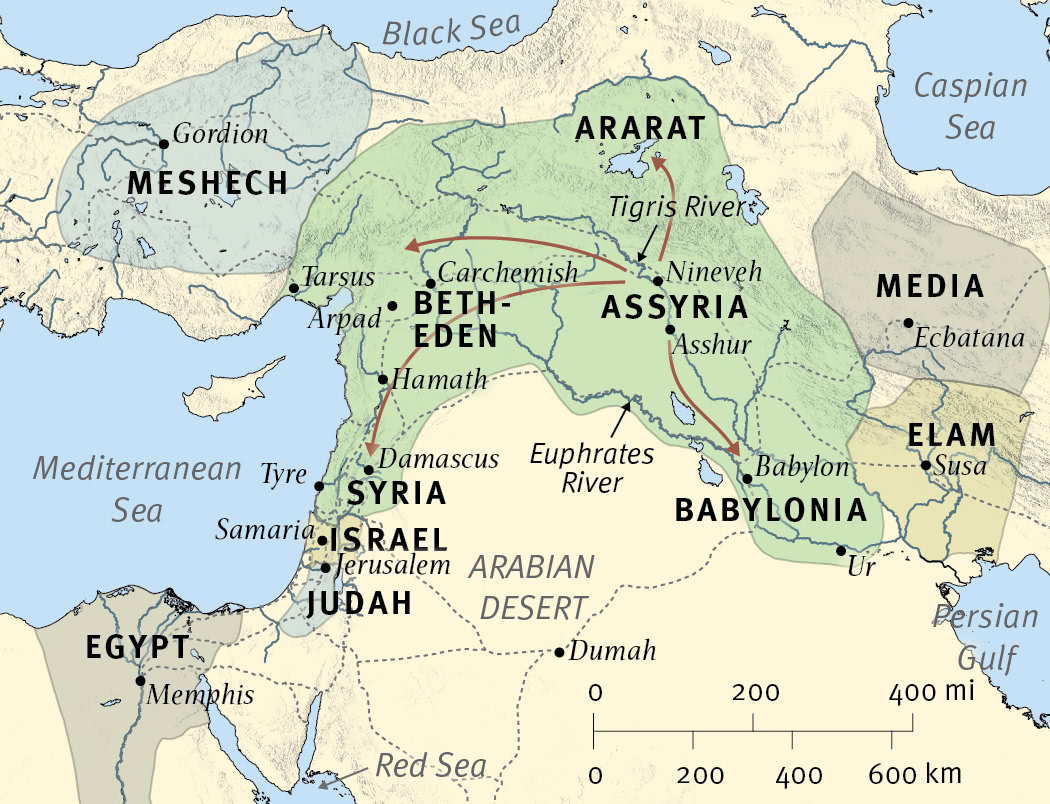
Source: ESV Global Study Bible
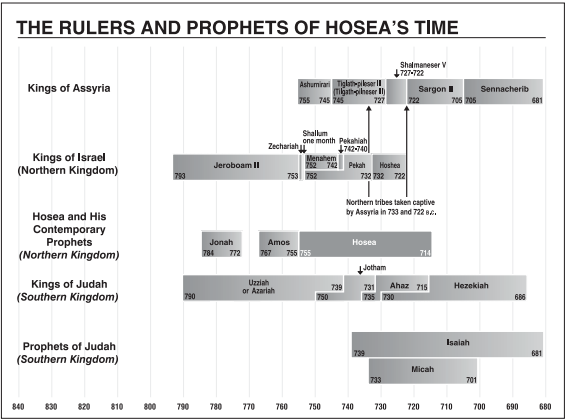
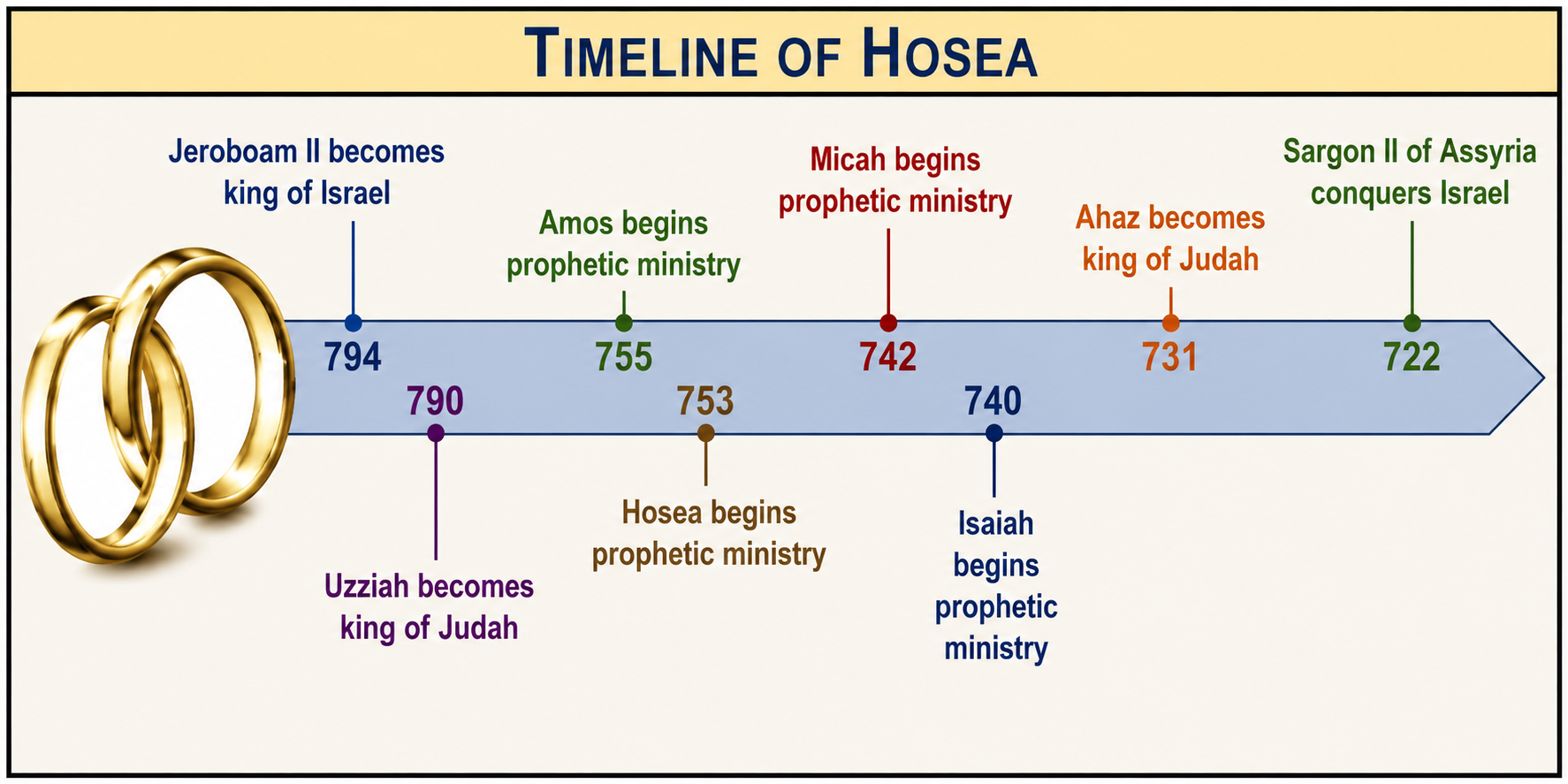
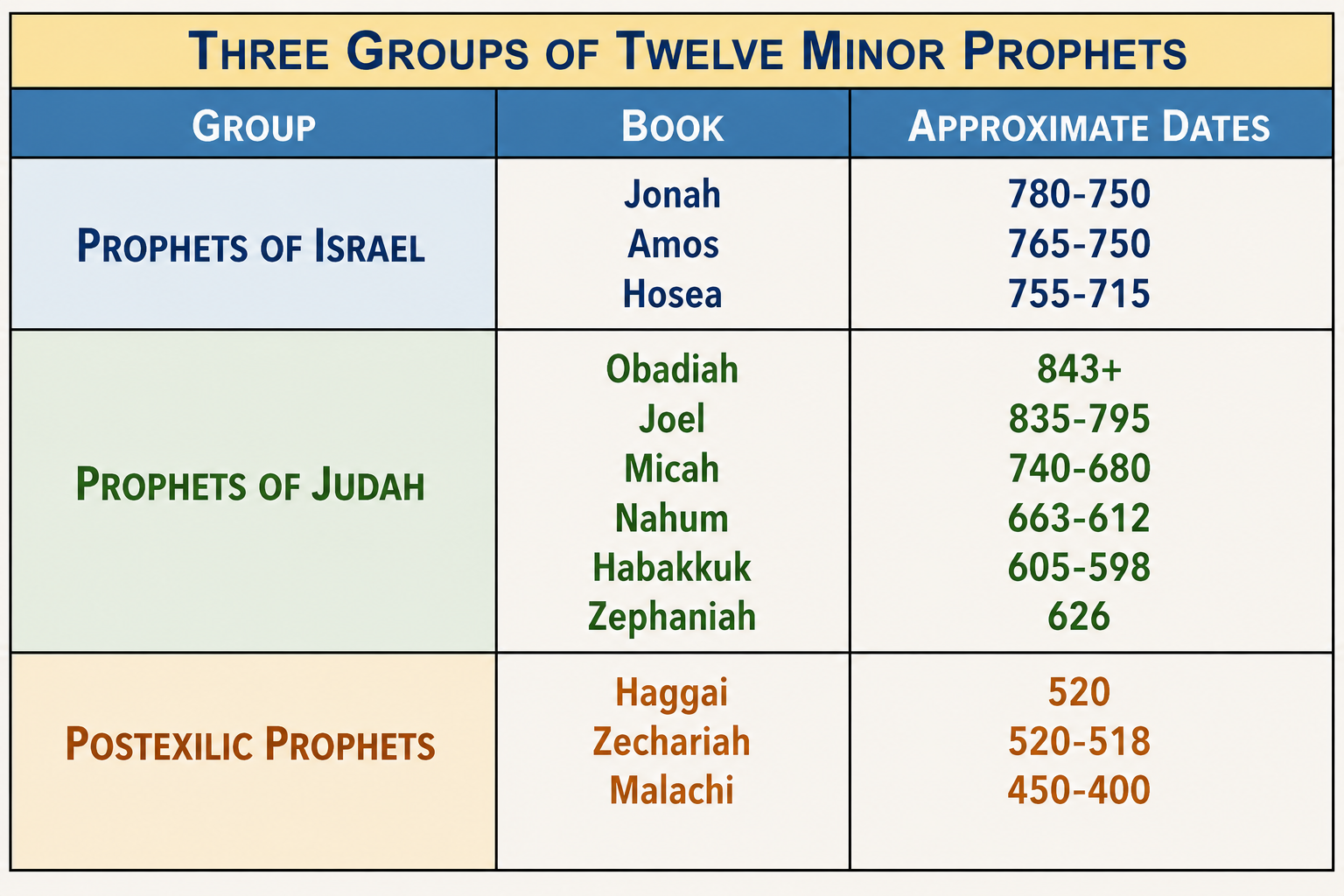
OUTLINE OF HOSEA
I. The Prodigal Wife, Hosea 1:1-3:5
A. Her Unfaithfulness, Hosea 1:1-11
B. Her Punishment, Hosea 2:1-13
C. Her Restoration and Israel's, Hosea 2:14-23
D. Her Redemption, Hosea 3:1-5
II. The Prodigal People, Hosea 4:1-14:9
A. The Message of Judgment, Hosea 4:1-10:15
1. The indictment, Hosea 4:1-19
2. The verdict, Hosea 5:1-15
3. The plea of Israel, Hosea 6:1-3
4. The reply of the Lord, Hosea 6:4-11
5. The crimes of Israel, Hosea 7:1-16
6. The prophecy of judgment, Hosea 8:1-10:15
B. The Message of Restoration, Hosea 11:1-14:9
1. God's love for the prodigal people, Hosea 11:1-11
2. God's chastisement of the prodigal people, Hosea 11:12-13:16
3. God's restoration of the prodigal people, Hosea 14:1-9
Borrow Ryrie Study Bible - page 1292
John Hannah's Outline - The prophet's message
The prophet's message (Hosea 4:1-14:8)
- Jehovah's rejection of Israel (Hosea 4:1-7:16)
- The faithlessness of Israel (Hosea 4:1-19)
- The fact of apostasy (Hosea 4:1-3)
- The reason for apostasy (Hosea 4:4-10)
- The course of apostasy (Hosea 4:11-19)
- The idolatry of Israel (Hosea 4:11-13)
- The instruction of Judah (Hosea 4:14-19)
- The repudiation of Israel (Hosea 5:1-6:3)
- The rebuke of Israel (Hosea 5:1-7)
- The judgment upon Israel (Hosea 5:8-15)
- The invitation to Israel (Hosea 6:1-3)
- The fickleness of Israel (Hosea 6:4-11)
- The foolishness of Israel (Hosea 7:1-16)
- The wickedness of Israel (Hosea 7:1-7)
- The silliness of Israel (Hosea 7:8-16) Hannah's Bible Outlines.
- The faithlessness of Israel (Hosea 4:1-19)
Robert Chisholm points out that there are 5 "Judgment-Salvation" cycles in the book of Hosea:
| CYCLES OF JUDGMENT AND SALVATION IN HOSEA |
|
| JUDGMENT | SALVATION |
|
Hosea 1:2-9 |
Hosea 1:10-2:1 |
|
Hosea 2:2-13 |
Hosea 2:14-3:5 |
|
Hosea 4:1-5:14 |
Hosea 5:15-6:3 |
|
Hosea 6:4-11:7 |
Hosea 11:8-11 |
|
Hosea 11:12-13:16 |
Hosea 14:1-9 |
Hosea 6:1 "Come, let us return to the LORD. For He has torn us, but He will heal us; He has wounded us, but He will bandage us.
BGT πορευθῶμεν καὶ ἐπιστρέψωμεν πρὸς κύριον τὸν θεὸν ἡμῶν ὅτι αὐτὸς ἥρπακεν καὶ ἰάσεται ἡμᾶς πατάξει καὶ μοτώσει ἡμᾶς
NET "Come on! Let's return to the LORD! He himself has torn us to pieces, but he will heal us! He has injured us, but he will bandage our wounds!
LXE In their affliction they will seek me early, saying, Let us go, and return to the Lord our God; for he has torn, and will heal us; he will smite, and bind us up.
NLT "Come, let us return to the LORD. He has torn us to pieces; now he will heal us. He has injured us; now he will bandage our wounds.
KJV Come, and let us return unto the LORD: for he hath torn, and he will heal us; he hath smitten, and he will bind us up.
ESV "Come, let us return to the LORD; for he has torn us, that he may heal us; he has struck us down, and he will bind us up.
CSB Come, let us return to the LORD. For He has torn us, and He will heal us; He has wounded us, and He will bind up our wounds.
NIV "Come, let us return to the LORD. He has torn us to pieces but he will heal us; he has injured us but he will bind up our wounds.
NKJ Come, and let us return to the LORD; For He has torn, but He will heal us; He has stricken, but He will bind us up.
NRS "Come, let us return to the LORD; for it is he who has torn, and he will heal us; he has struck down, and he will bind us up.
YLT 'Come, and we turn back unto Jehovah, For He hath torn, and He doth heal us, He doth smite, and He bindeth us up.
NAB In their affliction, they shall look for me: "Come, let us return to the LORD, For it is he who has rent, but he will heal us; he has struck us, but he will bind our wounds.
NJB Come, let us return to Yahweh. He has rent us and he will heal us; he has struck us and he will bind up our wounds;
GWN Let's return to the LORD. Even though he has torn us to pieces, he will heal us. Even though he has wounded us, he will bandage our wounds.
BBE Come, let us go back to the Lord; for he has given us wounds and he will make us well; he has given blows and he will give help.
- Come let us return to the LORD - Ho 5:15 Ho 14:1. Dt 4:30, 31. Dt 30:2, 3, 8. 1 Sa 14:36. 1 Ch 28:9. 2 Ch 15:2. Job 33:27, 28. Ps 73:28. 145:18. Is 2:3-5 Isa 55:7. 58:2. Je 3:22. Jer 50:4, 5. La 3:40, 41. Zeph 2:1-3. Zech 1:3. Ml 2:7. 3:7. Jn 14:6. Ac 3:19-21. Ep 3:12.
- For He has torn us- Ho 5:12-14 Hos 13:7-9 De 32:39 1Sa 2:6 Job 5:18 34:29 Ps 30:7-11 Isa 29:13, Isa 30:22 Jer 30:12-17 Jer 33:5, 6 La 3:32,33 Ezek 7:9
- He will heal - Ex 15:26. Je 30:17.
- He will bandage - Job 5:18. Ep 2:13-18.
Related Passages:
Hosea 5:15 I will go away and return to My place Until they acknowledge their guilt and seek My face; In their affliction they will earnestly seek Me.
Hosea 14:1 Return, O Israel, to the LORD your God, For you have stumbled because of your iniquity. 2 Take words with you and return to the LORD. Say to Him, “Take away all iniquity And receive us graciously, That we may present the fruit of our lips.
Jeremiah 3:22 "Return, O faithless sons, I will heal your faithlessness.” (IN THE FUTURE THEIR EARS WILL BE OPENED AND ISRAEL WILL DECLARE) “Behold, we come to You; For You are the LORD our God.
Hosea 14:4 I will heal their apostasy, I will love them freely, For My anger has turned away from them.
Hosea 3:5 Afterward the sons of Israel will return and seek the LORD their God and David their king; and they will come trembling to the LORD and to His goodness in the last days.
Hosea 6:11 Also, O Judah, there is a harvest appointed for you, When I restore the fortunes of My people
A CALL TO REPENTANCE THAT
LEADS TO RESTORATION
INTRODUCTION - Before you read my notes on Hosea 6:1-3, be aware that I cannot find many commentators who approach this passage as one which was not fulfilled in Hosea's day but which will be fulfilled in the future when Israel experiences a national repentance and comes to truly know her Husband! A number of writers see Hosea 6:1-3 as a shallow, insincere proposal of repentance with no prophetic significance.
A compelling alternative is that Hosea 6:1-3 looks beyond Hosea's own day
to Israel's future national repentance and restoration at the end of the age.
So with that caveat, first note that this a poor chapter division, for Hosea 6:1-3 is closely connected with Hosea 5:15. However, Hosea 5:15-6:3 is not as straightforward to interpret as it may first appear. The primary question is in Hosea 6:1-3 is who is speaking? Does this passage represent (1) the people of Israel crying out to God, (2) a believing remnant within the Northern Kingdom, or (3) Hosea himself voicing the repentance the nation should have expressed? (click here for more discussion on this topic) History demonstrates that no national revival occurred in the Northern Kingdom before its destruction by Assyria in 722 B.C., making the first option difficult to sustain. A compelling alternative is that Hosea 6:1-3 looks beyond Hosea's own day to Israel's future national repentance and restoration at the end of the age. This interpretation fits naturally with the preceding context of Hosea 5:15, where the LORD declares, "I will go away and return to My place until they acknowledge their guilt and seek My face; in their affliction they will earnestly seek Me." The word "until" is crucial. It indicates that God's withdrawal is temporary and will end only when Israel acknowledges her guilt and seeks Him. That did not occur in Hosea's day or before the fall of the Northern Kingdom, pointing instead to a future fulfillment.
It is in that context that Hosea 6:1-3 should be read. Notice the repeated future promises: "He will heal us... He will bandage us... He will revive us... He will raise us up." These are not presented as possibilities but as divine certainties. The question, then, is obvious: Were these promises fulfilled in Hosea's day? Clearly they were not. Nor have they been fulfilled in Israel's subsequent history. Although the nation of Israel exists today, she has not yet experienced the national spiritual renewal described here, nor does she presently "live before Him" (Hos. 6:2).
The most natural reading, therefore, is that these promises await a future fulfillment, when God will bring Israel to repentance, heal her spiritual wounds, restore her to covenant fellowship, revive her, and raise her up to live before Him. This interpretation of Hosea 6:1-3 harmonizes with the future orientation of Hosea 5:15 and with other Old Testament prophecies of Israel's end-time restoration (e.g., Deut. 30:1-10; Jer. 31:31-34; Ezek. 36:24-28; Zech. 12:10; Ro 11:25-27). It also follows the normal grammatical-historical method of interpretation which understands that Israel is the nation to whom these promises were originally given rather than transferring them to the Church, as sadly has been done by many writers even in evangelicalism in the twenty-first century. (See Are Israel and the church the same thing? Does God still have a plan for Israel? and What is replacement theology / supersessionism?)
J Vernon McGee points out the "now and not yet" aspects of this section of Hosea's prophecy - "This is God’s last call to the northern kingdom in that day (ED: THE "NOW" OF HOSEA'S DAY), but it also looks to the future of that nation when God will heal them (ED: THE "NOT YET" OF THE FUTURE); although He has torn them, He intends to bind them up. This should be a warning that God will judge the sin of any nation that makes a profession of being a Christian nation and which has had the benefit of the Word of God. (ED: OF COURSE MCGEE IS POINTING HIS FINGER AT POST-CHRISTIAN, EVEN ANTI-CHRISTIAN AMERICA!) (See Thru the Bible Vol. 27: The Prophets (Hosea/Joel))
The KJV Bible Commentary agrees with the futuristic interpretation of this section writing that "The prophet looks beyond both the Assyrian and Babylonian captivities down to the ultimate day when Israel as a nation will be converted (cf. Jer 31:31–34) and God will set up His millennial kingdom over His people and reign for a thousand years. In response to the Assyrian and Babylonian captivity, a remnant will come to this recognition; but in that day the entire nation will come to this realization. (KJV Bible Commentary online)
John MacArthur on Hosea 6:1-3 - Coming with the beginning of Christ's millennial reign (cf. Zec 12:10-13:1; Isa 43:1-6), Hosea records Israel's future words of repentance (cf. Hos 5:15). (See MacArthur Study Bible)
John Walvoord - Though Israel was unrepentant, God promised that the day would come when "they will seek My face; in their misery they will earnestly seek Me" (Hos 5:15). God promised to restore them like the rain restores the earth (Hos 6:1-3). Ultimate restoration will be fulfilled at the Second Coming. (SEE Every Prophecy of the Bible)
Robert Chisholm adds "These verses record the words the penitent generation of the future will declare as they seek the Lord. The message is constructed in two cycles, each containing an exhortation (Hos 6:1a, 3a) and a motivating promise (Hosea 6:1b-2, 3b)". (See The Bible Knowledge Commentary Minor Prophets - Page 10)
Robin Routledge - As noted already, both shub/sub and yada are key terms for Hosea, and together they indicate repentance and a right understanding of who God is and what he requires of his people. These verses, so understood, offer the hope of national healing and restoration. (See Hosea: An Introduction and Commentary - Page 100)
In short, while there is a call to Israel of Hosea's day, the primary fulfillment is when the future generation of Israel will return to Jehovah. So while this is a prophecy, at the time it was uttered, it was still a valid call by the prophet Hosea to the nation of Israel to repent, to turn from her many sins and to return to Jehovah, her "husband." (cf Jer 31:32, Isa 54:5). This was their only hope for revival. God would not revive an unrepentant people. Read the words in 2 Chr 7:13-14
“If I shut up the heavens so that there is no rain, or if I command the locust to devour the land, or if I send pestilence among My people (ISRAEL WAS ON THE VERGE OF REAPING WHAT SHE HAD SOWN), 14 and My people who are called by My name humble themselves and pray and seek My face and turn from their wicked ways (THAT IS CALLED REPENTANCE!), then I will hear from heaven, will forgive their sin and will heal their land.
Recall the preceding context, the words in which God had just promised "I will go away and return to My place Until (until) they acknowledge their guilt (WOULD INCLUDE CONFESSION AND REPENTANCE) and seek My face; In their affliction they will earnestly seek Me." (Hos 5:15) In that prophecy God promises that the nation of Israel will one day seek His face. That "national seeking" has not happened yet in Israel's history (individual Jews have repented yes, but never the majority of the nation). Indeed, instead of seeking God's face, they actually rejected His only Son, their (only) Redeemer, the Only Holy One Who could have set them free and healed them. The rejection of Jesus by the majority of the nation of Israel continues in our day (2026) and will continue until the end of this present age when the Jews are taken through the "Refiner's fire" (see Da 12:10, Zech 13:8-9, cf Rev 12:13-17), the horrible three and one-half year Great Tribulation prophesied by Jesus (the inception is described in Mt 24:15, and specifically named in Mt 24:21) which is synonymous with Jeremiah's Time of Jacob's Distress, (Jer 30:7) and Daniel's time of distress (Da 12:1). It is at that time the Jews will finally recognize Jesus as their Messiah (see Zech 12:10-14, Zechariah 13:1, Romans 11:26-27).
Leon Woods comments on Hos 5:15 that “The language would appear to reach into the Millennium, when the Israelites will indeed repent before God and seek his face (cf. Hos 1:10–11; Hos 2:14–23).” Then he comments on Hos 6:1-3 "For three verses Hosea gives the words of Israel in the day of her repentance. The section carries a close relationship in thought with Hos 5:15, which notes that this time of repentance will come only with the beginning of Christ's millennial reign. Israel as a nation has never yet prayed like this. (See The Expositor's Bible Commentary - Abridged Edition- Page 224)
With this background, come, let's jump into these great passages in Hosea 6:1-3...
Come, let us return (shub/sub; LXX - epistrepho - change our ways, repent) to the LORD - Come is a command. Notice the "let us" so that it appears Hosea himself is crying out to his people to return to Yahweh. The idea of return is to repent, have a change of heart which results in a change of direction. As we know from history, Israel of Hosea's day did not return to the LORD. As discussed in the INTRODUCTION, this call to Israel to come and return awaits a future fulfillment when the nation of Israel will experience repentance and salvation in Christ at His Second Coming.
What a dramatic contrast with Israel's behavior described in Hos 5:13 where "Ephraim saw his (moral/ethical) sickness and Judah his wound" and instead of returning to Yahweh, they sought a human cure for their spiritual sickness from the idol loving Assyrians who would soon sweep down on them and destroy them even as God prophesied in Hos 5:14.
The generation in Hosea's day had forgotten the truth about God which Moses had recorded that a future generation of Israel will remember "‘See now that I, I am He, And there is no god besides Me; It is I who put to death and give life. I have wounded and it is I who heal, And there is no one who can deliver from My hand." (Dt 32:39) A future generation of Israel will return to her Husband and experience His forgiveness and healing.
🙏 THOUGHT - Do not these words remind us of our Lord Jesus' gracious invitation in Mt 11:28-30 "Come to Me, all who are weary and heavy-laden, and I will give you rest. “Take My yoke upon you and learn from Me, for I am gentle and humble in heart, and YOU WILL FIND REST FOR YOUR SOULS. For My yoke is easy and My burden is light.”
Alan Carr (Hosea 6:1-2 The Invitation To Contrition) - I would just remind us today that the Bible is a book filled with invitations. The first one is found in Gen. 7:1. In that verse God invites Noah and his family to come into the Ark for salvation from the flood. The last invitation is found in Rev. 22:20. In that verse John issues an invitation for the Lord to return quickly. I like both of those invitations. In fact, as I study the invitations I find throughout the Bible, I am discovering that I like them all....America needs a revival! She needs to be pulled back from the brink of disaster. But, before there will ever be a national revival in America, there must first be a revival within the churches of America. And, before there will be a revival in our churches, there must be revival in the hearts of individual believers. This passage is call for the people of God to humble themselves before God to seek His face for forgiveness and restoration. It is, in essence, an Invitation To Contrition. The word “ contrition” means “ sincere sorrow over sin, with a desire to repent of that sin.” It describes people who are broken hearted that they have wronged God. They are sorry for what they have done and they want to make things right with Him. It is a state of heart that God will honor,
Psalm 34:18, “The LORD is near to the brokenhearted And saves those who are crushed (contrite; Lxx = tapeinos = humble) in spirit.
Psalm 51:17 The sacrifices of God are a broken spirit; A broken and a contrite heart, O God, You will not despise.
Isa 57:15 For thus says the high and exalted One Who lives forever, whose name is Holy, “I dwell on a high and holy place, And also with the contrite and lowly of spirit In order to revive the spirit of the lowly And to revive the heart of the contrite.
Henry Morris on return (shub/sub; LXX - epistrepho - change our ways, repent) to the Lord - Following God's pronouncement in the preceding verse that He is awaiting Israel's confession and repentance, the prophet puts himself in the place of returning to Israel in the last days, prophetically anticipating her confession and resultant restoration.
Hosea 6:1-3 describe a future response
of the nation Israel to their God.
Jeremy Thomas: Now watch because Hos 6:1-3 is this principle applied to the nation Israel. The chapter division at this point is unfortunate because this connects directly with verse 15. Hos 5:15 said that when they sunk to their all time low and they were at the end of their rope they would acknowledge their guilt, they would seek His presence and it would be an earnest search. Hos 6:1-3 is the nation doing those three things. When did the nation do this? Answer: they haven’t done it yet. So Hosea 6:1-3 describe a future response of the nation Israel to their God. (Sermon - The National Confession of Israel)
Hosea voices the cry that he wishes his own generation would articulate,
but that will remain unuttered until the Lord Himself
steps upon the Mount of Olives
Gary Cohen - In the first three verses of this sixth chapter, Hosea voices the cry that he wishes his own generation would articulate, but that will remain unuttered until the Lord Himself steps upon the Mount of Olives (Zech. 12:10; Zech 14:1–4). In the words “He has torn us, but He will heal us,” Israel finally comes to the realization that her sufferings have been of a disciplinary nature. (See Hosea & Amos- Everyman's Bible Commentary - Page 45)
For He has torn us (Hos 5:12-14), but He will heal us - For is a term of explanation and is explaining why Israel was interested in returning to the Lord (at least as voiced by the prophet Hosea). Torn us alludes to the prophecy (Hos 5:14) of God Himself like a lion tearing Israel and taking them away (into exile in Assyria).
The Septuagint translates heal with the verb iaomai which literally speaks of deliverance from physical diseases and afflictions (Lk 22:51). The middle voice indicates God's personal involvement in the healing. This is significant because this same verb is used in the famous Messianic description in Isaiah 53:5 "But He was pierced through for our transgressions, He was crushed for our iniquities; The chastening for our well-being fell upon Him, And by His scourging we are healed (Hebrew = rapha; Lxx = iaomai)." Indeed Jehovah Rapha (the God Who Heals) is the Messiah, Jesus Christ, Who heals us from our deadly infection of sin by being made sin for us (in our place), taking our place on the Cross, that we might die with Him (Ro 6:6, Gal 2:20), that we might live now and forevermore in Him and with Him. In this context Jesus Christ is the Healer of Israel, (cf Zech 13:1)
He has wounded us, but He will bandage us - This is the confident certainty of a future generation of Israel who at the end of this age will have their centuries' long spiritual blindness cured so they can see their God and realize the truth of the words in Jeremiah 29 (which Christian's today often quote but too often forget the original application is to Israel at the end of this present age)...
For I know the plans that I have for you,’ declares the LORD, ‘plans for welfare and not for calamity to give you a future and a hope. 12 ‘Then you will call upon Me and come and pray to Me, and I will listen to you. 13 ‘You will seek Me and find Me when you search for Me with all your heart. 14 ‘I will be found by you,’ declares the LORD, ‘and I will restore your fortunes and will gather you from all the nations and from all the places where I have driven you,’ declares the LORD, ‘and I will bring you back to the place from where I sent you into exile.’ (Jeremiah 29:11-14)
Return (turn back, bring back, restore) (07725) shub/sub is one of the most common Hebrew verbs (1,000+ occurrences), with a core meaning of movement back to the point of departure — to turn, return, go back, restore, bring back, withdraw, or repay. It covers a wide range of applications (physical return, doing something again, changing course, answering, hindering, recompensing), but at its root it's always about reversing direction, going back to where you started or to how things originally were. This is why it's the standard Hebrew word for repentance: turning back to God is pictured not as a new destination, but as a return to the relationship you departed from.
SHUV/SHUB IN THE MINOR PROPHETS - Hos. 2:7; Hos. 2:9; Hos. 3:5; Hos. 4:9; Hos. 5:4; Hos. 5:15; Hos. 6:1; Hos. 6:11; Hos. 7:10; Hos. 7:16; Hos. 8:13; Hos. 9:3; Hos. 11:5; Hos. 11:9; Hos. 12:2; Hos. 12:6; Hos. 12:14; Hos. 14:1; Hos. 14:2; Hos. 14:4; Hos. 14:7; Joel 2:12; Joel 2:13; Joel 2:14; Joel 3:1; Joel 3:4; Joel 3:7; Amos 1:3; Amos 1:6; Amos 1:8; Amos 1:9; Amos 1:11; Amos 1:13; Amos 2:1; Amos 2:4; Amos 2:6; Amos 4:6; Amos 4:8; Amos 4:9; Amos 4:10; Amos 4:11; Amos 9:14; Obad. 1:15; Jon. 1:13; Jon. 3:8; Jon. 3:9; Jon. 3:10; Mic. 1:7; Mic. 2:8; Mic. 5:3; Mic. 7:19; Nah. 2:2; Hab. 2:1; Zeph. 2:7; Zeph. 3:20; Zech. 1:3; Zech. 1:4; Zech. 1:6; Zech. 1:16; Zech. 4:1; Zech. 5:1; Zech. 6:1; Zech. 7:14; Zech. 8:3; Zech. 8:15; Zech. 9:8; Zech. 9:12; Zech. 10:6; Zech. 10:9; Zech. 10:10; Zech. 13:7; Mal. 1:4; Mal. 2:6; Mal. 3:7; Mal. 3:18; Mal. 4:6
M Daniel Carroll ongives a balanced analysis of the interpretative difficulties in Hosea 6:1 - The lexical connections between the opening verse of this chapter and the preceding passage (Hos 5:15) establish that these lines are a response to that divine pronouncement. There is the recognition (Hos 6:1) of being mauled by Yahweh the lion (Hos 5:14) and that he can “heal” (contrast Hos 5:13); there is as well a call to “return” to Yahweh even as he says he will “return” to his place (“I will go back,” NIV; Hos 5:15).
It is difficult to decide, however, whether these words are from the people or are the composition of someone else. The LXX (cf. Tg.) adds “saying” (legontes) to the end of Hos 5:15, thus explicitly marking Hos 6:1–3 as the nation’s resolve to reply to God. If the words are from someone else, the options are that the prophet himself is speaking and exhorting the people to repentance or that this expression is one of remorse offered by a priest on their behalf, perhaps in the context of a liturgy of lament. While these alternatives are possible, nothing literarily signals that anyone but the nation is in view.
Is this turning to God genuine? At first glance, the impression is that the people have learned from their mistakes and troubles and are trying to move toward what he requires of them. The use of the verbs “return” (Hos 6:1) and “know” (Hos 6:3, an emphatic construction; cf. NJB, NRSV) lends credence to the likelihood that this response is worthy. Yahweh desired that his people “return” to him (Hos 12:6) and complained that they do not “know” him (Hos 2:8; 5:4; 11:3; cf. 4:1, 6). Is not this approach the resolution to these problems?
The turning that God seeks still lies in the future,
beyond the coming judgment
Yet to place these lines within the broader context of the book makes clear that in the final analysis the answer to this question must be “No.” Israel’s vain religiosity is precisely what prevents it from being able to “return” (Hos 5:4), and the nation’s rebellious heart, reflected in foreign policy and political decisions, pushes it farther from repentance (cf. Hos 7:10, 16). The turning that God seeks still lies in the future, beyond the coming judgment (Hos 2:9; 14:1). Only then will the declared intention of returning, accompanied by an admission of guilt and restoration, be possible (Hos 14:2). The kind of knowing that Yahweh covets will have to wait until that time (Hos 2:20). This confession is vacuous (cf. Hos 8:2). Interestingly, the book closes with the statement that only the wise and discerning can “know” (“understand,” NIV) the prophet’s message. (See Hosea, Amos, Micah in the Expositor's Bible Commentary)
Alan Carr applies this section - How many in this very room can remember a day when you were closer to the Lord than you are today? Can you remember a day when the things of God were more precious to your than they are now? Can you remember a time when His house, His Word, His business, and time spent with Him thrilled your soul far more than they do now? As I mentioned those six descriptive phrases God used to describe Israel, can you see parallels within your own life?
- Is your devotion to God shallow?
- Do you have a greater passion for sin than you do the things of God?
- Have you compromised with the world?
- Have you lost your power with the Lord?
- Are you like a silly dove flitting here and there looking for help in every source but the Lord?
- Are you like a deceitful bow that cannot be trusted to hit the target of righteous, faithful living?
If you find yourself in that condition today, you know you are not where you need to be with the Lord. Like the people in the church in Ephesus, you have “ left your first love”, Rev. 2:4. You may be going through the motions, but your heart is not aflame with a passionate love for the Lord Jesus Christ and the things of God. You have allowed your soul to drift away from God and this is His call to you to come back to Him! If I were you, I would respond to Him by coming back home today! (Read full sermon where Carr emphasizes need for personal revival in the church - Hosea 6:1-2 The Invitation To Contrition) (See Backsliding)
James Smith - CONFESSION Hosea 6:1
1. A Confession of Need, "The Lord.”
2. A Confession of Sin, “Return.”
3. A Confession of Suffering, “Torn.”
4. A Confession of Faith, “He will heal.”
C H Spurgeon - Reasons for turning to the Lord
‘Come and let us return unto the LORD: for he hath torn, and he will heal us; he hath smitten, and he will bind us up.’ Hosea 6:1
The writer of these words discerns the presence of the Lord, for he is convinced that his trials come from God. Ungodly men set down their troubles to chance, and sometimes even trace them to the devil, as if they expected their father to have dealings with them. Frequently they lay their ills at the door of their fellow men, and grow quarrelsome, malicious and revengeful. It is a happy day for a man when he knows in whose hand is the rod, and learns to trace his troubles to God. Alas, even some children of God greatly err in this matter when under affliction; they spend their time in bewailing second causes and do not look at the first cause. This is brutish. If you strike a dog with a stick he will bite at it; had he a little intelligence he would bite at you and know that the blow came, not from the stick, but from the hand that used it. So unbelievers in trouble usually look at the secondary agent and spend their anger or thoughts entirely there. If in the day of adversity they would consider, they would perceive that affliction does not spring out of the ground, neither do distresses come by chance, but that the hand of the Lord is in all these things. ‘Shall there be evil in a city, and the LORD hath not done it?’ Whichever way the trial came, it came from him. If the trouble was caused by a triumphant enemy or by a deceitful friend, if it came as a loss in business or as a sickness of body, or if it wounded us through the arrows of death piercing the heart of our beloved, it was the Lord. Learn that lesson. He has smitten you; he has torn you: he has done it all. He has ordained our trials for judgment and established them for correction; let us not despise them by refusing to see his hand or by angrily rebelling against him.
C H Spurgeon - Our miseries, messengers of mercy
‘Come, and let us return unto the LORD: for he hath torn, and he will heal us; he hath smitten, and he will bind us up. After two days he will revive us: in the third day he will raise us up, and we shall live in his sight.’ Hosea 6:1–2
A missionary was preaching to a Maori tribe in New Zealand. He had been telling them of the suffering love of Christ, how he had poured forth his soul unto death for them; and as he concluded, the hills rung to the thrilling question ‘Is it nothing to you, all ye that pass by? Behold, and see if there be any sorrow like unto my sorrow.’ Then stood forth a plumed and painted chief, the scarred warrior of a thousand fights, and as his lips quivered with suppressed emotion, he spoke. ‘And did the Son of the Highest suffer all this for us men? Then the chief would like to offer him some poor return for his great love. Would the Son of God deign to accept the chief’s hunting dog? Swift of foot and keen of scent, the tribe has not such another, and he has been to the chief as a friend.’ But the missionary told him that the Son of God had need of no such gifts as these. For a moment the chief paused; then as a new thought struck him, suddenly despoiling himself of his striped blanket he cried with childlike earnestness, ‘Perhaps he who had not where to lay his head will yet accept the chieftain’s blanket. The poor chief will be cold without it, yet it is offered joyfully.’ Touched by love’s persistency, the missionary tried to explain to him the real nature of the Son of God; that it was not men’s gifts but men’s hearts that he yearned for. For a moment a cloud of grief darkened the granite features of the old chief; then as the true nature of the Son of God slowly dawned upon him, casting aside his blanket he clasped his hands, and looking right up into the blue sky, his face beaming with joy, he exclaimed ‘Perhaps the Son of the Blessed One will deign to accept the poor chief himself!’
C H Spurgeon - Faith's Checkbook -
“Come, and let us return unto the Lord: for he hath torn, and he will heal us; he hath smitten, and he will bind us up.” Hosea 6:1.
IT is the Lord’s way to tear before he heals. This is the honest love of his heart, and the sure surgery of his hand. He also bruises before he binds up, or else it would be uncertain work. The law comes before the gospel; the sense of need before the supply of it. Is the reader now under the convincing, crushing hand of the Spirit? Has he received the spirit of bondage again to fear? This is a salutary preliminary to real gospel healing and binding up.
Do not despair, dear heart, but come to the Lord with all thy jagged wounds, black bruises, and running sores. He alone can heal, and he delights to do it. It is our Lord’s office to bind up the broken-hearted, and he is gloriously at home at it. Let us not linger, but at once return unto the Lord from whom we have gone astray. Let us show him our gaping wounds, and beseech him to know his own work, and complete it. Will a surgeon make an incision, and then leave his patient to bleed to death? Will the Lord pull down our old house, and then refuse to build us a better one? Dost thou ever wantonly increase the misery of poor anxious souls? That be far from thee, O Lord.
James Smith - A CALL TO REPENTANCE - HOSEA 6:1–3
This call evidently came through the lips of the prophet. And from all that follows it appears that they repented not, but the time will come when as a nation these words will be literally fulfilled (Jer. 30:7 - "the time of Jacob’s distress"). Let us think of these wonderful words in the light of New Testament teaching.
I. The Need for Repentance. They were “torn” and “smitten” (Hos 6:1).
Torn and tortured with their own wretchedness, and smitten with defeat and failure, and all this as the result of the Divine Providence, because of their unbelief. There is need for repentance on our part when we are torn with anxieties and smitten with shameful defeat in our work for the Lord. He knows how much there is in us that needs to be torn up and smitten down. Such as selfishness and pride.
II. The Manner of this Repentance. “Return unto the Lord.”
To return implies a backsliding condition. The repentance that does not bring us right back into the Lord is a repentance that needs to be repented of. The proof of the prodigal’s repentance was in the fact that he arose and came to his father. Repentance is a “saving grace” only when it brings us to God in humility of heart, and it may be, with a trembling trust. The Divine arms are ever extended in loving welcome to the truly penitent soul. It is with Him we have to do at such a time, not with any earthly priest.
III. The Results of Such Repentance.
1. There will be “HEALING AND BINDING.” “He will heal and He will bind us up” (v. 1). Our diseased hearts and torn hopes will be healed and bound up. “He healeth all our diseases” and “bindeth up the broken in heart.” They have repented deeply who live in the joy of this spiritual health and wholeness.
2. There will be QUICKENING. “He will revive us” (v. 2). After the “healing” and the “binding” there comes the energising powers of a new life. When the sinner has been pardoned and reconciled to God there will, or should be, a revitalizing of the soul by the Holy Spirit. “It is the Spirit that quickeneth.” He can make all things in our daily lives new.
3. There will be a “LIVING IN THE LIGHT OF GOD.” “We shall live in His light” (v. 2). The man of the world may be all alive in the light of his fellowmen, but it is a very different thing to be really alive in the light of God. Not merely living under His eye, as all are, but to have the life that is life indeed in God’s reckoning. “I am come,” said Jesus Christ, “that ye might have life.” “He that hath the Son hath life,” and may have it in abundance. This is the real life as God sees it. The world’s estimate is very different; but what does it matter as long as we are living in God’s sight that life that is eternal.
4. There shall be a GROWING EXPERIENCE. “Then shall we know if we follow on to know the Lord” (v. 3). It is the nature of every living thing to grow. The new spiritual life is not to be like a stagnant pool, but an ever deepening stream. We are to “grow in grace and in the knowledge” of Him who is the source and force of the new life. This we shall do if we faithfully follow on. “My son, if thou wilt receive My words … and hide them with thee, then thou wilt understand righteousness and judgment and equity, yea every good path” (Prov. 2:1, 9).
5. There will be TIMES OF REFRESHING. “He shall go forth as the morning … and He shall come unto us as the rain” (v. 3). What a bright, cheerful experience to have His presence breathing upon us like the dawning of the day, and to have our drooping and fainting hearts refreshed like the rain upon the mown grass. The Presence of God, by His Spirit, always brings times of refreshing We are taught to pray: “Give us this day our daily bread.” May we not also pray: “Give us this day a fresh dawning of Thy glorious presence upon the whole landscape of our lives?”
Vance Havner - Following on to Know the Lord (Hos. 6:1-3)
A heavenly promise: "Then shall we know..."
A high pursuit: "If we follow on..."
A holy purpose: "To know the Lord..."
We are bought with an infinite price (1 Peter 1:18, 19).
We are beset by invisible powers (Eph. 6:12).
We are blessed by an invincible presence (Heb. 13:5, 6).
Hosea 6:2 "He will revive us after two days; He will raise us up on the third day, That we may live before Him.
BGT ὑγιάσει ἡμᾶς μετὰ δύο ἡμέρας ἐν τῇ ἡμέρᾳ τῇ τρίτῃ ἀναστησόμεθα καὶ ζησόμεθα ἐνώπιον αὐτοῦ
NET He will restore us in a very short time; he will heal us in a little while, so that we may live in his presence.
LXE After two days he will heal us: in the third day we shall arise, and live before him, and shall know him:
NLT In just a short time he will restore us, so that we may live in his presence.
KJV After two days will he revive us: in the third day he will raise us up, and we shall live in his sight.
ESV After two days he will revive us; on the third day he will raise us up, that we may live before him.
CSB He will revive us after two days, and on the third day He will raise us up so we can live in His presence.
NIV After two days he will revive us; on the third day he will restore us, that we may live in his presence.
NKJ After two days He will revive us; On the third day He will raise us up, That we may live in His sight.
NRS After two days he will revive us; on the third day he will raise us up, that we may live before him.
YLT He doth revive us after two days, In the third day He doth raise us up, And we live before Him.
NAB He will revive us after two days; on the third day he will raise us up, to live in his presence.
NJB after two days he will revive us, on the third day he will raise us up and we shall live in his presence.
GWN After two days he will revive us. On the third day he will raise us so that we may live in his presence.
- revive us. Ho 13:14. Ezra 9:8. Ps 71:20, 80:18, 85:6. Is 26:19, 20. Hab 3:2.
- after two days. Ps 30:4, 5, 102:13, 16. 1 Co 15:4, 20.
- the third day. 2 Ki 20:5. Ps 90:4, 118:24. Is 24:22. Lk 13:32 2 Pe 3:8. Re 11:11
- raise us up. Ezek 37:11-13. Da 12:2. Am 9:11, 14, 15. Lk 2:25. Ac 1:6, 3:19-21.
- we may live. Ge 17:18. Ps 61:7 Jn 14:19. Ro 14:8.
- before Him - in his sight. Ho 7:2. Jb 19:26. Is 24:23. Mt 19:28. 23:39. Lk 21:36. Jn 1:51 1 J 3:2.
Related Passages:
Ezekiel 37:11-13 (SPEAKING FIGURATIVELY YAWHEN WOULD REVIVE AND RAISE UP ISRAEL) Then He said to me, “Son of man, these bones are the whole house of Israel; behold, they say, ‘Our bones are dried up and our hope has perished. We are completely cut off.’ 12 “Therefore prophesy and say to them, ‘Thus says the Lord GOD, “Behold, I will open your graves and cause you to come up out of your graves, My people; and I will bring you into the land of Israel. 13 “Then you will know that I am the LORD, when I have opened your graves and caused you to come up out of your graves, My people.
A PROPHECY OF
FUTURE REVIVAL
He will revive (chayah; LXX - hygiazo - restore to health) us after two days (cf Ezek 37:5) - One might interpret this as a statement by the people of Israel in Hosea's day, but if so, they were clearly not sincere in their cry for revival (e.g., J M Boice titles his chapter on Hosea 6 "Repentance that Does Not Count"!) But the other way to read it is as a prophecy not yet fulfilled but which will be fulfilled in a future day when Yahweh will revive the nation (as prophesied in the "dry bones" coming to life in Ezek 37).
Of course this time phrase makes it very tempting to associate the resurrection of the nation on "the third day" to the resurrection of Jesus on the third day and a number of commentaries do take this approach, but not all. In context, what Hosea is saying is that if Israel would repent, He would intervene quickly (for 2-3 days is not literal but depicts a short time - cf 2Pe 3:8). Does that preclude any application of the "third day" motif to the resurrection of Jesus? You be the judge on that one! Certainly there could be no national revival for Israel withouth the death, burial and resurrection of Jesus Christ! However, there are no specific quotations of this verse in the NT, although some mention that Paul may be alluding to it in 1Cor 15:4, but honestly that is supposition.
John MacArthur feels that after two days is "Not a reference to the resurrection of Christ (illness, not death, is in the context), but to the quickness of healing and restoration (cf. the quickness with which the dry bones of Ezekiel 37 respond). Numbers are used similarly elsewhere (e.g., Job 5:19; Pr 6:16; 30:15, 18; Am 1:3)." (SEE MacArthur Study Bible)
Gary Cohen - The confident assertion of the people, “He will raise us up on the third day” (Hos 6:2), does not contextually speak of the resurrection of Christ, but rather the sudden resurrection of Israel when she repents (Ezek. 37). The resurrection of Israel will trigger a renewed interest in the knowledge of the Lord, which she will have shamefully rejected for so many centuries (Hos 4:6). (See Hosea & Amos- Everyman's Bible Commentary - Page 45)
NET Note adds that after two days "is an idiom meaning “after a short time” (see, e.g., Jdg 11:4; BDB 399 s.v. יוֹם 5.a)....“on the third day”...parallels after two days and means “in a little while.” The “2–3” sequence is an example of graded numerical parallelism (Pr 30:15–16, 18–19, 21–23, 24–28, 29–31). This expresses the unrepentant overconfidence of Israel that the LORD’s discipline of Israel would be relatively short and that he would restore them quickly."
The words (two...third) primarily hold out nothing more than the quickening
of Israel out of its death-like state of rejection
Keil on after two days...third day - Two and three days are very short periods of time; and the linking together of two numbers following one upon the other, expresses the certainty of what is to take place within this space of time, just as in the so-called numerical sayings in Amos 1:3, Job 5:19, Prov. 6:16; 30:15, 18, in which the last and greater number expresses the highest or utmost that is generally met with....The words primarily hold out nothing more than the quickening of Israel out of its death-like state of rejection from the face of God, and that in a very short period after its conversion to the Lord. This restoration to life cannot indeed be understood as referring to the return of the exiles to their earthly fatherland; or, at all events, it cannot be restricted to this. It does not occur till after the conversion of Israel to the Lord its God, on the ground of faith in the redemption effected through the atoning death of Christ, and His resurrection from the grave; so that the words of the prophet may be applied to this great fact in the history of salvation, but without its being either directly or indirectly predicted. Even the resurrection of the dead is not predicted, but simply the spiritual and moral restoration of Israel to life, which no doubt has for its necessary complement the reawakening of the physically dead. And, in this sense, our passage may be reckoned among the prophetic utterances which contain the germ of the hope of a life after death, as in Isa. 26:19–21, and in the vision of Ezekiel in Ezek. 37:1–14.
He will raise us up (qum; LXX - anistemi) on the third day - (cf Ezek 37:11-13) - If we read this as if Israel was expecting that God would revive them soon, which is one way it could be read, as Assyria's destruction of Israel proved, they were not raised up but "knocked down!" If follows that this promise must represent a prophetic declaration that awaits a future fulfillment at the end of this present age (if one accepts a literal interpretation of the Scripture) when Yahweh restores Israel and fulfills all of His promises to the repentant, redeemed nation.
David A Hubbard - The duration mentioned is the period of time after which decomposition of the body sets in (cf. Jonah. 2:1; John 11:39). The verbs revive us (cf. 1 Sam. 2:6), and raise us up (cf. Isa. 26:19) are frequent expressions for resuscitation and resurrection. Such language anticipates the clearer accounts of national resurrection after death in exile or through persecution found in Ezekiel chapter 37 and Daniel 12:1-2. Hosea 6:2 may have been part of what Paul alluded to in his resurrection argument (1 Cor. 15:4): ‘that he was raised on the third day in accordance with the scriptures’, although we have no direct record of apostolic or patristic use of this proof-text before Tertullian (Wolff, p. 118). If recovery from sickness not revival from death (so Wolff, p. 117) is the meaning, the time-frame seems trivial. A three-day illness, especially in antiquity, would have been no big thing. The consequence of the longed-for national resurrection is a life lived in Yahweh’s presence, where joy is available to the people (Ps. 16:11) and praise to Yahweh is their constant response (Pss 6:5; 30:9; 88:10-12). It is just possible that the first word of verse 3 should be attached to the end of verse 2 as a second statement of consequence: ‘and we shall know [him]’ (BHS; Andersen, p. 422). The clause would add a climax to verse 2 akin to that of 2:20. (See Hosea: An Introduction and Commentary - Page 135)
J Vernon McGee on the third day - “In the third day he will raise us up”—this is very interesting in light of the fact that the resurrection of Christ was on the third day. He was raised for the justification of both Jew and Gentile. This will also be applicable in that future day when God will bring Israel back into that land and bring them to Himself. In Ezekiel 37 God speaks of that day as a resurrection, and that resurrection will be based on the One who was raised on the third day; for in Christ’s resurrection there is provided, for any man who will accept it, a redemption and a justification which will bring him into a right relationship with Almighty God. The apostle Paul develops the subject of the future of Israel in Romans 11. In our day, God’s purpose in building His church is to draw to Himself both Jew and Gentile, people out of every tongue and tribe and nation, who are going to come before Him to worship. When God completes His purpose in the church (Ro 11:25) and takes it out of the world, He will again turn to the nation Israel and will raise her up. Every prophet who wrote in Scripture—and even some who didn’t write—spoke of God’s future purpose for the nation Israel. Even before the children of Israel could get into the land, Moses began to talk about the coming day when God would restore them back to the land for the third time (Dt 30:1-7, Dt 4:30). The third time—on the third day, so to speak—the restoration to the land would be a permanent restoration. There is a correlation between this restoration and Christ’s being raised from the dead on the third day. (See Thru the Bible Vol. 27: The Prophets Hosea/Joel) (ED: Clearly if Christ had not been raised, the nation of Israel could never be revived and raised in the future!)
Henry Morris on the third day - Two prophetic mysteries are suggested here. Jesus Christ, representing the true Israel in His death, was raised the third day. The earthly nation of Israel, seemingly "dead" as a nation for about two thousand years, will be raised for her thousand-year millennial reign when she returns to Messiah, and He to her at the end of this present age (Ezekiel 37:12-14). On the divine equation that "one day is with the Lord as a thousand years" (2 Peter 3:8). (Defender's Study Bible)
Patterson on the third day - Hosea’s presentation of his assurance of God’s forgiveness and restoration of Israel is accompanied by the motif of the third day. From the beginning of Israel’s redemption, the third day plays an important part. God appeared to Israel on Mount Sinai on the third day (Exod 19:10–16). The third day was a day of crucial decision (1 Kgs 12:12; Esther 4:16; 5:1). It was also a day of healing and sacrifice (Lev 7:17–18; 19:6–7; Num 19:12, 19–20). Accordingly, it was a day fit for Hezekiah’s recovery (2 Kgs 20:8). The third day, of course, is also significant for the capstone of Jesus’ saving work. Jesus often told his disciples of a coming third day when, after his death, he would rise again (Matt 16:21; 17:23; 20:19; Luke 9:22). And so it came to pass, for Christ was gloriously raised on the third day (Luke 24:21; 1 Cor 15:4). All along the way, it would seem, God was preparing people for the great climactic event: the granting of new life and the institution of a new covenant with believers through the death and resurrection of his Son and our Redeemer, Jesus Christ. (See Minor Prophets: Hosea through Malachi - Page 39)
NET Note on revive (NET - "restore") - The Piel of חָיָה (khayah) may mean: (1) to keep/preserve persons alive from the threat of premature death (1 Kgs 20:31; Ezek 13:18; 18:27); (2) to restore the dead to physical life (Dt 32:39; 1 Sa 2:6; cf. NCV “will put new life in us”); or (3) to restore the dying back to life from the threat of death (Ps 71:20; BDB 311 s.v. חָיָה).
The Targum paraphrases Hosea 6:2: "He will revive us in the days of consolation which are to come."
M Daniel Carroll presents 3 observations that tend to refute the commonly held view that Hosea 6:2 is a foreshadowing of the resurrection of Jesus Christ - Three observations are apropos. (1) To begin with, the concept of coming to life as a picture of national renewal appears elsewhere in the OT—importantly within this very book (Hos 13:14), but most famously in the vision of the dry bones in Ezekiel 37:1–14 (cf. Dt 30:17–20; Am 5:1–6). The hope of individual resurrection was not unknown, though existing perhaps in rudimentary form (esp. Da 12:2), but this verse is speaking corporately and not of particular pious individuals (cf. P. S. Johnston, Shades of Sheol: Death and the Afterlife in the Old Testament [Downers Grove, Ill.: InterVarsity Press, 2002], 221–27). The expectation is for Israel to be made whole again after the attack of the divine lion.
(2) Second, from the available evidence it seems that Hos 6:2 did not become a proof text for resurrection until Tertullian (ca. 155–230 AD; cf. Wolff, 118).
(3) Third, in the context the numerical sequence itself—“two/three”—is revealing. It is a way of expressing a short period of time. The n/n+1 combination (here n = 2) indicates a vague period of time (GKC §134s), while the numbers “two” and “three” themselves signify a short span (e.g., Isa 7:21; 17:6; 2 Ki 20:5, 8). In other words, this sinful people presume that a favorable verdict from God will come in quick order—another sign that they appreciate neither the seriousness of their transgressions nor the uselessness of their religious activities. This blind audacity is confirmed in Hos 6:3. Israel takes for granted that its darkness will turn into light and that divine blessings will come as refreshing rains. Quite a bold denial of the drought foretold in Hos 2:3! (See Hosea, Amos, Micah in the Expositor's Bible Commentary)
That we may live (chayah; LXX - zao) before Him (in His presence, in His sight)(cf Ezek 37:14) - Why would God be willing to revive and restore a repentant people? Here is the answer - that they might live in His presence. This is the heart of God, for not just wayward Israel in Hosea's day, but for every son and daughter to live in His glorious presence, fellowshipping with Him, worshipping Him, serving Him forever and ever. Amen. Is this indeed not what happens when any sinner repents and believes in Jesus? They enter into an eternal covenant union with God, which admittedly is still hampered by our residual sin nature, the evil world system and the deceptive devil, and yet it is still a foretaste of a promised future day spoken of for example by Jude when he wrote...
Now to Him Who is able to keep you from stumbling, and to make you stand in the presence of His glory blameless with great joy, to the only God our Savior, through Jesus Christ our Lord, be glory, majesty, dominion and authority, before all time and now and forever. Amen. (Jude 1:24-25)
Hosea 6:3 "So let us know, let us press on to know the LORD. His going forth is as certain as the dawn; And He will come to us like the rain, Like the spring rain watering the earth."
BGT καὶ γνωσόμεθα διώξομεν τοῦ γνῶναι τὸν κύριον ὡς ὄρθρον ἕτοιμον εὑρήσομεν αὐτόν καὶ ἥξει ὡς ὑετὸς ἡμῖν πρόιμος καὶ ὄψιμος τῇ γῇ
NET So let us acknowledge him! Let us seek to acknowledge the LORD! He will come to our rescue as certainly as the appearance of the dawn, as certainly as the winter rain comes, as certainly as the spring rain that waters the land."
LXE let us follow on to know the Lord: we shall find him ready as the morning, and he will come to us as the early and latter rain to the earth.
NLT Oh, that we might know the LORD! Let us press on to know him. He will respond to us as surely as the arrival of dawn or the coming of rains in early spring."
KJV Then shall we know, if we follow on to know the LORD: his going forth is prepared as the morning; and he shall come unto us as the rain, as the latter and former rain unto the earth.
ESV Let us know; let us press on to know the LORD; his going out is sure as the dawn; he will come to us as the showers, as the spring rains that water the earth."
CSB Let us strive to know the LORD. His appearance is as sure as the dawn. He will come to us like the rain, like the spring showers that water the land.
NIV Let us acknowledge the LORD; let us press on to acknowledge him. As surely as the sun rises, he will appear; he will come to us like the winter rains, like the spring rains that water the earth."
NKJ Let us know, Let us pursue the knowledge of the LORD. His going forth is established as the morning; He will come to us like the rain, Like the latter and former rain to the earth.
NRS Let us know, let us press on to know the LORD; his appearing is as sure as the dawn; he will come to us like the showers, like the spring rains that water the earth."
YLT And we know -- we pursue to know Jehovah, As the dawn prepared is His going forth, And He cometh in as a shower to us, As gathered rain -- sprinkling earth.'
NAB Let us know, let us strive to know the LORD; as certain as the dawn is his coming, and his judgment shines forth like the light of day! He will come to us like the rain, like spring rain that waters the earth."
NJB Let us know, let us strive to know Yahweh; that he will come is as certain as the dawn. He will come to us like a shower, like the rain of springtime to the earth.
GWN Let's learn about the LORD. Let's get to know the LORD. He will come to us as sure as the morning comes. He will come to us like the autumn rains and the spring rains that water the ground.
- So let us know. Ho 2:20. Is 54:13. Je 24:7. 31:34. Mi 4:2. Jn 17:3. if. Pr 2:1-5, 9. Mt 13:11, 12. Jn 7:17. 8:12, 31, 32. Ac 3:19-21. 17:11, 12. Ph 3:13-15. He 3:14.
- let us press on to know the LORD. Pr 23:12. Da 11:33. Mt 24:13. Lk 8:11-15. 22:31, 32. Jn 8:31. 15:9, 10. Ac 11:23. 14:22. Ro 2:7-9. Ga 4:11. 5:7. 6:9. Col 1:10. 1 Th 3:5. 2 P 3:18.
- His going forth. 2 S 23:4. Ps 19:4-10. Pr 4:18. Mi 5:2. Ml 4:2. Lk 1:78, 79. Jn 16:28. 2 P 1:19. Re 22:16.
- is as certain - prepared. or, sure, or fixed. Ge 41:32. Dt 13:14 (certain). 2 S 7:16, 26 (established). Ps 51:10, 57:7, 93:2. Pr 4:18 (perfect). Is 2:2. Mic 4:1.
- as the dawn. Ho 14:5. Ge 8:22. 2 S 23:3-5. Ps 30:5. 49:14. 90:14. 110:3. Je 31:35, 36. 33:25, 26. 2 P 1:19.
- And He will come to us. Ps 72:6. Zc 9:9. Mi 5:2.
- like the rain. Ho 10:12. 14:5. Dt 32:2. Jb 29:23. Ps 65:9. 72:6. Is 5:6. 32:15. 44:3. Ezk 36:25. Jl 2:23, 24. Mic 5:7. Zec 10:1.
- Like the spring rain former rain. or, as the latter rain sprinkling the earth. Dt 11:14 1 Ch 10:3 (archers). 2 Ch 35:23 (archers). Pr 26:18 (casteth). Je 5:24.
JEHOVAH'S RESPONSE WILL BE
LIKE DAWN AND RAIN
This of course was not Jehovah's response in Hosea's time but will be His response in the future when the nation repents and returns.
So let us know, let us press on (radaph; LXX - dioko) to know (yada) the LORD - This is the ultimate goal, to intimately, personally know Yahweh (cf Jn 17:3)! Know is yada which speaks of intimate knowledge (and was used of a husband "knowing" his wife - Ge 4:1 "had relations" = literally "knew). This cry from Hosea (notice he says "us" so he includes himself) as discussed above could be interpreted as a cry to the nation of Israel in Hosea's day to seek to know God. Hosea's exhortation however was rejected by Israel. And so His cry echoes down the corridors of time (and applies to Gentiles as well as Jews, the latter being the primary recipients) and ultimately it awaits a future fulfillment. Indeed, when the prophecy of the New Covenant is fulfilled to Israel and Judah God says
“They will not teach again, each man his neighbor and each man his brother, saying, ‘Know (yada) the LORD,’ for they will all know (yada) Me, from the least of them to the greatest of them,” declares the LORD, “for I will forgive their iniquity, and their sin I will remember no more.” (Jer 31:34)
Let us press on (radaph) pictures one actively pursuing or chasing after the LORD. The Septuagint translates it with the verb dioko picturing a zealous pursuit, an earnest striving to know God (cf Paul's heart in Php 3:14).
Recall that Israel's failure to know Jehovah was a major component of God's controversy with Israel...
Listen to the word of the LORD, O sons of Israel, For the LORD has a case against the inhabitants of the land, Because there is no faithfulness or kindness Or knowledge (yada)of God in the land. (Hos 4:1)
NET Note - Heb “let us pursue in order to know.” The Hebrew term רָדַף (radaf, “to pursue”) is used figuratively: “to aim to secure” (BDB 923 s.v. רָדַף 2). It describes the pursuit of a moral goal: “Do not pervert justice … nor accept a bribe … pursue [רָדַף] justice” (Deut 16:20); “those who pursue [רָדַף] righteousness and who seek [בָּקַשׁ, baqash] the LORD” (Isa 51:1); “He who pursues [רָדַף] righteousness and love finds life, prosperity, and honor” (Prov 21:20); “Seek [בָּקַשׁ] peace and pursue [רָדַף] it” (Ps 34:15); “they slander me when I pursue [רָדַף] good” (Ps 38:21).
His going forth is as certain as the dawn - How certain is it that the sun will arise this morning? That's how certain is God's going forth! The NET renders it "He will come to our rescue as certainly as the appearance of the dawn." This reading would also support a future restoration of Israel in the last of the last days.
And He will come to us like the rain Like the spring rain watering the earth - Better rendered "as certainly as the winter rain comes, as certainly as the spring rain that waters the land." (NET) or the NIV = "he will come to us like the winter rains, like the spring rains that water the earth." Hosea is describing the well-known occurrence of the early and latter rains, the former occurring in the autumn/winter to soften the soil for later planting of seeds, and the latter rain in the spring enabling the seeds to germinate and produce crops. What is the simile (figure of speech) "like the rain" envisioning? refreshment, growth, life-giving, etc. This is what the presence of the Lord will be like when the nation of Israel returns to Him in the future, for then He would come to them (like the rain).
Gary Cohen - The Lord’s coming to revive Israel in that day is as assured as the divine decree that the dawn must follow the night (Ge 8:22). Furthermore, the coming of the Lord will be like the latter (spring) rain, always an occasion for rejoicing because of the benefit that is given to the crops (Dt. 11:14; Job 29:23; Pr. 16:15; Joel 2:23). (See Hosea & Amos- Everyman's Bible Commentary - Page 45)
This passage reminds me of Peter's words in Acts 3:19-20 speaking to Jews "Therefore repent and return, so that your sins may be wiped away, in order that times of refreshing may come from the presence of the Lord; and that He may send Jesus, the Christ appointed for you."
God's coming like refreshing "rain" in the last days restoration of Israel is in marked contrast to His dealing with the sinful, unrepentant nation (north and south kingdoms) as a moth and rottenness in (Hos 5:12).
Richard Patterson applies this section to Christians - The emphasis in this passage on the crucial importance of knowing God intimately reminds believers that such a quest is continuously theirs. Paul declared that, by faith in the resurrected Christ, the believer can really know Christ and experience the mighty power that raised him from the dead (Phil 3:10). He went on to point out, however, that this task consumes a lifetime. Accordingly, he remarked that his focus was on forgetting the past and looking forward to what lies ahead—the prize for which God, through Christ Jesus, is calling us up to heaven (Phil 3:13b–14). May we therefore be “third-day Christians”—those who have put implicit faith in the One Who was crucified for our sins and raised on the third day (1 Cor 15:4) to make us right with God (Rom 4:25). All Christians may join in Paul’s journey to know God with ever increasing intimacy. For such is the opportunity available to them through the power of the resurrected Christ. In union with him they may live out the new life he has granted in all its fullness (Ro 6:4, 10–11; 1 Pet 2:24). (SEE Minor Prophets: Hosea through Malachi - Page 40)
QUESTION - What is the latter and former rain in Hosea 6:3? GOTQUESTIONS.ORG
ANSWER - Hosea 6:1–3 predicts that the people of Israel would return to the Lord after a period of judgment. In that day, the people of Israel will say,
“Come, and let us return to the Lord;
For He has torn, but He will heal us;
He has stricken, but He will bind us up.
After two days He will revive us;
On the third day He will raise us up,
That we may live in His sight.
Let us know,
Let us pursue the knowledge of the Lord.
His going forth is established as the morning;
He will come to us like the rain,
Like the latter and former rain to the earth” (NKJV).
The “latter” and “former” rains are called the “winter rains” and “spring rains” in the NIV.
The Lord had “torn” and “stricken” His people—i.e., Hosea predicts that God will discipline them (Hosea 6:1)—because they were unfaithful to the covenant they had promised to keep (Exodus 24:3, 7). While the judgment would be certain and severe, God would demonstrate His grace and restore the people. He would heal them and bandage their wounds (Hosea 6:1). He would come to them like a refreshing and nourishing rain (Hosea 6:3). He would come like the latter and former rain, which would seem to refer to the early rain after planting and the later rain at harvest.
Because of God’s promises, His people could know with certainty that God would keep His word—that He would indeed come to them as the latter and former rain to restore and refresh. While the context doesn’t specify when this restoration would take place, the passage seems to be pointing forward to the salvation that would be provided through the Messiah: God would revive them after two days and raise them up on the third day (Hosea 6:2). This prophecy seems to correlate directly with the events of Jesus’ death, as He died, was buried, and then rose again on the third day (see 1 Corinthians 15:1, 3–4). Paul mentions that Christ’s resurrection on the third day was “according to the Scriptures” (or writings). While there may have been a written gospel account by the time Paul wrote his first letter to the Corinthians (Matthew and Mark may have written by that time), Paul is probably referring to the Hebrew Scriptures and may have had Hosea 6:2 in mind.
If Hosea’s prophecy of revival in the two days and raising on the third day (Hosea 6:2) is pointing forward to the death, burial, and resurrection of the Messiah, then the immediately following context that God would visit the people of Israel as the latter and former rain is likely also a picture of how refreshing and nourishing that event would be for the people under God’s judgment.
In Hosea’s time, there was coming a somber judgment because of the people’s disloyalty to God and their transgressing of the covenant. But there was also a coming day of restoration for Judah (Hosea 6:11). God would come to the people as latter and former rain.
It is important to note that God doesn’t ignore sin, and His holy standard is high—perfection, in fact (see Matthew 5:48). When God restores the people of Israel, He first deals with their sin problem. The Messiah would die as a sacrifice to pay for sins; thus, the nation would no longer be in bondage to the Law of Moses (the Old Covenant) or the consequences of breaking that covenant. God would forgive their sins as part of a New Covenant (Jeremiah 31:31). That blessing of forgiveness from sin through the sacrifice of the Messiah would be not just for one nation but for all the families of the earth (Genesis 12:3b). The Messiah would be like the latter and former rain for Israel and Judah (Hosea 6:3), and He would also be the water of life for all who would believe in Him (John 4:13–14).
Related Resource:
David Guzik - This passage along with others (Deuteronomy 11:14, Joel 2:23) were taken to give the name of the “Latter Rain Movement” starting in 1948.
In 1948, a Oneness Pentecostal minister named William Branham (What is Branhamism?) held meetings at an orphanage and school founded by a Foursquare Church in North Battleford, Saskatchewan. Those attending the meeting were so impressed by the supernatural works – healing, prophecy, word of knowledge, and strange phenomenon – that they considered it a beginning of a new work of God on earth. In their newsletter, this is how they described it:
“All the great outpourings of the past have had their outstanding truths. Luther’s truth was Justification by Faith. Wesley’s was Sanctification. The Baptists taught the premillenial coming of Christ. The Missionary Alliance taught Divine Healing. The Pentecostal outpouring has restored the Baptism of the Holy Ghost to its rightful place. But the next great outpouring is going to be marked by all these other truths plus such a demonstration of the nine gifts of the Spirit as the world, not even the Apostolic world, has ever witnessed before. This revival will be short and will be the last before the Rapture of the Church.”
They felt that the Pentecostal denominations of their day were “dead” and “dry,” and needed the blessing of the “Latter Rain,” which would especially be marked by miraculous signs and supernatural works. The Pentecostal denominations – notably the Assemblies of God and the Foursquare Church denounced the Branham and the Latter Rain movement for both their teaching and practices.
William Branham continued, drawing large crowds to his prophecy and healing crusades. He and a young evangelist named Oral Roberts led the Latter Rain Movement for several years. Branham’s doctrine became more and more aberrant. Branham believed that the word of God was given in three forms: the Zodiac, the Egyptian pyramids, and the written scriptures. He also taught the “serpent seed” doctrine, which was based on his interpretation of Genesis 3:13, saying that Eve had sexual relations with the serpent in the Garden of Eden.
The Latter Rain Movement, as led by William Branham and Oral Roberts eventually faded from prominence. Branham himself died in a traffic collision with a drunk driver in 1965. He died on Christmas Eve, and his faithful followers believed that he would rise from the dead, so they delayed his burial for several days. But the influence of the Latter Rain movement lived on. The Latter Rain popularized many attitudes and doctrines popular in revival movements today:
- The “five-fold ministry” and “restoration of apostle and prophets”
- The “foundational truths” of Hebrews 6:1-2
- An emphasis on signs and wonders as marks of true revival
- A strong emphasis on unity
- Replacement theology, replacing Israel with the church
- Dominion theology, saying the church will conquer and rule the world
- An elitist attitude, promoting the idea of a group of “superchristians”
Many researchers – and many within these modern groups today – believe that many modern “revival” movements are really just a continuation of the Latter Rain movement. Movements such as “Joel’s Army,” (What is Joel’s Army?) the Manifest Sons of God, the Dominion Movement, the Kansas City Prophets, the Toronto Blessing, the Pensacola Revival (see Todd Bentley) are connected in some way to the Latter Rain movement. For example, Paul Cain – later to re-emerge as head of the Kansas City Prophets in 1989 – traveled with William Branham and called him “the greatest prophet that ever lived.” (The Enduring Word Bible Commentary – Hosea)
G. Bowen - Then shall we know, if we follow on to know the Lord.
The Lord has brought us into the pathway of the knowledge of Him, and bids us pursue that path through all its strange meanderings till it opens out upon the plain where God’s throne is. Our life is a following on to know the Lord. We marvel at some of the experiences through which we are called to pass: but afterward we see that they afforded us some new knowledge of our Lord. Our path suddenly disappeared in some hideous cavern where we seemed to hear the roaring of wild beasts; and we could not at all conceive what benefit would arise from our entering; but we entered; and when by a favoring passage we emerged from that obscurity and danger, we felt that we had obtained some new and valuable insight into the divine character. Again, our path shot right down into the impenetrable darkness of some deep pit; it was some time before our eyes got accustomed to that darkness; then we discovered a little door, and soon found ourselves in a gallery of hidden treasures, several of which we gathered and still retain. Pursuing thus the knowledge of God we found ourselves like Joseph in Egypt, alone in the midst of a nation that knew not God; and found that there was something here to be learned concerning the divine perfection that could not be learned elsewhere. We have not then to wait for some future brighter opportunity; but by improvement of the present are to build for ourselves a bridge to that future.
J C Philpot - “To know the Lord” is to know experimentally and spiritually the power of Jesus’ blood and righteousness; to know our eternal union with Him; to know Him so as to be led by the Spirit into soul communion with Him, that we may talk with Him as a man talketh with His friend; to know Him so that the secrets of His heart should be revealed to us, and we enter by faith into the length and breadth and depth and height of the love of Christ which passeth knowledge; to know Him so as to drink into His spirit, and to have His image stamped by the Holy Ghost upon our souls; to know Him as coming down into our hearts out of His glorious sanctuary, filling our souls with His presence and His love; to know Him as formed in us the hope of glory, making our bodies His temple, dwelling in us, breathing Himself into us, speaking in us, moving as it were every affection of our heart and every faculty of our soul. Thus to know the Lord is the sum and substance of vital godliness. And, as “to know the Lord,” implies, as well as comprehends, the knowledge of Jehovah in His Trinity of Persons and Unity of Essence, well may we say that, to know Jehovah the Father in His eternal love, to know Jehovah the Son in His redeeming blood, and to know Jehovah the Spirit in His divine operations and blessed teaching, is the foretaste of bliss below; and to know and see God as He is, is the consummation of bliss above.
C H Spurgeon - Checkbook of Faith -
“Then shall we know, if we follow on to know the Lord.”—Hos. 6:3.
NOT all at once, but by degrees, shall we attain to holy knowledge, and our business is to persevere and learn by little and little. We need not despair, though our progress may be slow, for we shall yet know. The Lord, who has become our teacher, will not give us up, however slow of understanding we may be; for it is not for his honour that any degree of human folly should baffle his skill. The Lord delights to make the simple wise.
Our duty is to keep to our main topic, and follow on to know, not this peculiar doctrine nor that, but Jehovah himself. To know Father, Son, and Spirit, the Triune God, this is life eternal: let us keep to this, for in this way we shall gain complete instruction. By following on to know the Lord, we learn healing after being torn, binding up after smiting, and life after death. Experience has its perfect work when the heart follows the track-way of the Almighty Lord.
My soul, keep thou close to Jesus, follow on to know God in Jesus, and so shalt thou come to the knowledge of Christ, which is the most excellent of all the sciences. The Holy Ghost will lead thee into all truth. Is not this his gracious office? Rely upon him to fulfil it.
C H Spurgeon - Constancy and inconstancy—a contrast
‘Then shall we know, if we follow on to know the LORD: his going forth is prepared as the morning; and he shall come unto us as the rain, as the latter and former rain unto the earth. O Ephraim, what shall I do unto thee? O Judah, what shall I do unto thee? for your goodness is as a morning cloud, and as the early dew it goeth away.’ Hosea 6:3–4
The most lasting Christians appear to be those who have seen their inward disease to be very deeply seated and loathsome, and after a while have been led to see the glory of the healing hand of the Lord Jesus as he stretches it out in the gospel. I am afraid that in much modern religion there is a want of depth on all points; they neither deeply tremble nor greatly rejoice; they neither much despair nor much believe. Beware of pious veneering! Beware of the religion which consists in putting on a thin slice of godliness over a mass of carnality. We must have thoroughgoing work within; the grace which reaches the core and affects the innermost spirit is the only grace worth having. To put all in one word, a want of the Holy Spirit is the great cause of religious instability. Beware of mistaking excitement for the Holy Spirit, or your own resolutions for the deep workings of the Spirit of God in the soul. All that nature ever paints God will burn off with hot irons. All that nature ever spins he will unravel and cast away with the rags. You must be born from above; you must have a new nature wrought in you by the finger of God himself, for of all his saints it is written, ‘we are his workmanship, created in Christ Jesus’. But I fear there is everywhere a want of the Holy Spirit. There is much getting up of a tawdry morality, barely skin-deep, much crying ‘Peace, peace,’ where there is no peace, and very little deep heart-searching anxiety to be thoroughly purged from sin. Well-known and well-remembered truths are believed without an accompanying impression of their weight; hopes are flimsily formed, and confidences ill-founded, and it is this which makes deceivers so plentiful.
F B Meyer - Hosea 6:3 Let us follow on to know the Lord; his going forth is sure as the morning. (R.V.)
You may always count on God. If there is variation in his relations with us, it is on our side, not on his. Just as surely as we return to Him, we shall find Him running to meet and greet and receive us with a glad welcome.
The exquisite words of the text derive additional beauty when we consider them in the light of modern astronomy. The spot on which we live, when the day is done, slowly turns away from the face of the sun; and as each moment passes, plunges further and further from its wholesome, blessed light. At midnight we look out into the abyss of space in the opposite direction to the solar throne. But the moment when we have reached our furthest from the sun is followed by another, in which we begin to return to the light and glory of the perfect day. So when the soul has reached its furthest from God, it may immediately return to Him. Let us return. Let us know. Let us follow on to know the Lord.
Is there any doubt about our reception? No; there cannot be. Look again at the analogy of the physical night. During our absence the sun has not shifted from his place. We shall find him waiting for us; his going forth is prepared. We have but to pass into his blessed beams, which had not ceased to pour forth through the hours, which to us were so cold and dark. So our God is always waiting for us. He is just where we left Him. In Him can be no variation, neither shadow that is cast by turning. As certainly as we count on the dayspring may we count on God. Move then God-wards, through the dark hours. On the third day—the day of Resurrection—He will burst on your view.
C H Spurgeon - The blessings of following on
‘Then shall we know, if we follow on to know the LORD: his going forth is prepared as the morning; and he shall come unto us as the rain, as the latter and former rain unto the earth.’ Hosea 6:3
We may read the Bible—I trust we shall; but there is such a thing as resting in Bible reading, and if we do so we shall fall short. Our Lord denounced that in his day when he said, ‘Search the scriptures; for in them ye think ye have eternal life: and they are they which testify of me. And ye will not come to me, that ye might have life.’ As much as if he had said, ‘Your searching the scriptures is well enough, but coming to me is the main business.’ It is not the letter-God, but the living God that we want. It is not the book of God so much as the God of the book that we must know. We must seek Christ Jesus, the personal Christ, really existent to ourselves; falling at his feet, confessing our sin, looking up to his wounds, trusting and confiding in him, we shall be indeed blessed. You cannot know the Lord in any other way than by his coming to you in the reality of his incarnation as the very Christ of God. I wish I knew how to put the matter so that every one would recognise to the full my meaning. You know the moment people begin to think about religion they say, ‘Well, yes, we must keep the Sabbath, we must attend a place of worship and we must have family prayer.’ Thus they dwell upon the many things that they ‘must do’, all of which things are right enough, but they are only the shell. What the sinner has to say is not, ‘I will arise and go to church.’ No! ‘I will arise and go to my closet and pray.’ No, that is not it, first. ‘I will arise and go and read a chapter of the Bible.’ No, that is not it, good as that is: but ‘I will arise and go to my father.’ That is where you have to go—to a real God.
Addendum - The sermon The blessings of following on centers on the necessity of continual spiritual progression and the rich rewards of persevering in the Christian faith: [1, 2]
The Danger of Stagnation:
Spurgeon argued that self-contentment is the end of spiritual progress. He warned that believers must never believe they have "arrived" or learned all there is to know about God, as there is always room to grow this side of heaven.
The Certainty of Divine Revelation:
The title reflects the promise that those who press forward will receive clarity. Spurgeon compared the pursuit of God to the "morning," which steadily increases in brightness as the day progresses.
Refreshing Grace:
He emphasized that God will come to seeking souls "as the rain", providing gentle and timely outpourings of the Holy Spirit to revive, refresh, and sustain the weary believer through life's trials.
Hosea 6:4 What shall I do with you, O Ephraim? What shall I do with you, O Judah? For your loyalty is like a morning cloud And like the dew which goes away early.
BGT τί σοι ποιήσω Εφραιμ τί σοι ποιήσω Ιουδα τὸ δὲ ἔλεος ὑμῶν ὡς νεφέλη πρωινὴ καὶ ὡς δρόσος ὀρθρινὴ πορευομένη
NET What am I going to do with you, O Ephraim? What am I going to do with you, O Judah? For your faithfulness is as fleeting as the morning mist; it disappears as quickly as dawn's dew!
LXE What shall I do unto thee, Ephraim? What shall I do to thee, Juda? whereas your mercy is as a morning cloud, and as the early dew that goes away.
NLT "O Israel and Judah, what should I do with you?" asks the LORD. "For your love vanishes like the morning mist and disappears like dew in the sunlight.
KJV O Ephraim, what shall I do unto thee? O Judah, what shall I do unto thee? for your goodness is as a morning cloud, and as the early dew it goeth away.
ESV What shall I do with you, O Ephraim? What shall I do with you, O Judah? Your love is like a morning cloud, like the dew that goes early away.
CSB What am I going to do with you, Ephraim? What am I going to do with you, Judah? Your loyalty is like the morning mist and like the early dew that vanishes.
NIV "What can I do with you, Ephraim? What can I do with you, Judah? Your love is like the morning mist, like the early dew that disappears.
NKJ "O Ephraim, what shall I do to you? O Judah, what shall I do to you? For your faithfulness is like a morning cloud, And like the early dew it goes away.
NRS What shall I do with you, O Ephraim? What shall I do with you, O Judah? Your love is like a morning cloud, like the dew that goes away early.
YLT What do I do to thee, O Ephraim? What do I do to thee, O Judah? Your goodness is as a cloud of the morning, And as dew rising early -- going.
NAB What can I do with you, Ephraim? What can I do with you, Judah? Your piety is like a morning cloud, like the dew that early passes away.
NJB What am I to do with you, Ephraim? What am I to do with you, Judah? For your love is like morning mist, like the dew that quickly disappears.
GWN "What should I do with you, Ephraim? What should I do with you, Judah? Your love is like fog in the morning. It disappears as quickly as the morning dew.
- what. Ge 18:2. Da 11:8. Is 5:3, 4. Je 3:19. 5:7, 9, 23. 9:7. Mt 23:37, 38. Lk 13:7-9. 19:41, 42.
- What shall I do with you. Aporia; or, Doubt An expression of feeling by way of doubt. The speaker expresses himself as though he were at a loss as to what course to pursue. For other instances of this figure see Ho 11:8. Mt 21:25, 26. Lk 16:3. for. Jg 2:18, 19. Ps 78:34-37. 106:12, 13. Je 3:10. 34:15, 16. Mt 13:21. 2 P 2:20–22.
- For your loyalty is like a morning cloud or, mercy, or, kindness Ho 13:3.
- like the dew which goes away early. Mk 4:17. Lk 8:13.
JEHOVAH'S RHETORICAL
QUESTION
After giving us a glimpse of the hope filled future of the nation of Israel, now Hosea returns to focus upon the present sinful condition of the Northern Kingdom of Ephraim (Israel) and the Southern Kingdom of Judah.
John Hannah entitles Hosea 6:4-11 "The fickleness of Israel"
What shall I do with you, O Ephraim? What shall I do with you, O Judah? - God addresses all 12 tribes, the context declaring that they have gone away from their early devotion to Jehovah. And from other texts we know that they had replaced Jehovah God with idols that are no gods at all!
ESV Study Bible - One must not miss this outburst of emotion, like an anguished father not knowing what to do with his wayward child, or a husband agonizingly frustrated with his promiscuous bride (cf. 11:8; Luke 15:20)
For your loyalty (hesed/chesed/heced.) is like a morning cloud - Now He describes their fickleness for one that is "fickle" is marked by erratic changeableness in affections or attachments. And so they are like a morning cloud, which is fleeting and soon disappears. So to is their loyalty to Jehovah!
🙏 THOUGHT - Can we not all identify with this fleeting loyalty at times in our lives? Is not every sin we commit (especially when we do it knowingly), evidence of a lapse of loyalty to the eminently Loyal One? Indeed, it is. And sometimes their are seasons we might name "Fleeting Loyalty."
And like the dew which goes away early - The second metaphor is just as vivid as the former and so the truth of their transient, evanescent loyalty is hammered home by another "water vapor" metaphor.
J M Boice on like a morning cloud ... like the dew - This does not mean that the people have a genuine love for God but only that what they do have does not stand the test of time. It means that this "love" is inadequate. In fact, it is so inadequate it cannot really be called love. What the people of Israel probably had in this period was an emotional attachment to the ancient God of their fathers, much the way some people today consider themselves "Christians" because of the genuine faith of their parents or grandparents. The people of Israel were worshipers of Jehovah, much like those in America, Britain, Canada, and other western nations are "worshipers" of Christ. It is all meaningless, says God. It is as passing as morning mist or dew. (An Expositional Commentary – The Minor Prophets, Volume 1: Hosea-Jonah)
Hubbard comments "the similes of Yahweh’s intervention (Hos 6:3) are more than matched by other similes of Israel’s violation of covenant responsibility—vanishing cloud and evaporating dew (Hos 6:4). Talk of covenant loyalty, of hunting down the knowledge of God (Hos 6:3), is cheap. When the winds of promiscuity blow, when the sun of competition blazes, Ephraim and Judah behave alike: they fail to treat each other or their fellow citizens with the covenant (steadfast) love that Yahweh has shown to them (see Hosea 2:19). In a land that depended on predictable rain and persistent dew, the figures carry impressive power. The poignant questions of verse 4 are a major link in a chain of complaints that end at Hosea 11:8-9." (See Hosea: An Introduction and Commentary - Page 136)
James Smith - TEMPORARY RELIGION HOSEA 6:4
They had—
1. A Sense of need. “He hath torn.”
2. A Desire to be saved. “Come, let us.”
3. A Prospect of new life. “After … we shall live.”
4. A Knowledge of the way (v. 3).
5. A Belief in His mercy (v. 3, l.c.). Yet all was as a morning cloud.
J J Knapp - As a Morning Cloud Hosea 6:4
Also by clouds the Almighty One, Creator of heaven and earth, teaches His children. At times He comforts us with the assurance that even the seemingly so irregular and haphazard play of the clouds obeys His counsel. In another instance He compares the hypocrite to clouds without water, that promise a lot, but that fail to drop down a single drop of water to the earth. Here the Lord complains about Israel that the mercy of the people passes by like a morning cloud,—an experience, that makes Him ask, as if at a loss, “What shall I do unto thee!”
This image is particularly well understood in a mountainous region. At the time of the ascending of the sun many a morning cloud curl around the peaks of the mountains. However, when the sun arises higher and higher, and sends out her comforting rays, that morning cloud is taken in by the warmth, and it disappears completely and without a trace. This is the image of what the Lord observed amongst Israel. Also amongst the people some virtue was found. However, with many it was of a transient nature. There was no endurance in it, the steadfastness was lacking, it were what they call fads, and it proved that there was no truth in it. Yet, the Lord had worked continually upon them with hunger and shortage, with war and trial, so that He had to complain now: “What shall I do unto thee? for your goodness is as a morning cloud!”
Is there not often such a morning cloud at the horizon of our firmament of life? Even the unconverted sinner does not walk through life without ever being stirred in his conscience. There are days and moments in which he has no peace with himself, and that something like a sense of guilt and sorrow cuts through his soul. The holy impressions he receives. The shakings of conscience that grab him. The strong movements of moods that disquiet him and make him to look up to God who is in heaven. It even comes not seldom to prayer and pleading, to confession of guilt and pledging of promises. Certainly, at the time it is meant in all earnestness. The self-deception that lies at the root of it is so refined and so subtle that it is not perceived at all. However, take note how soon that whole movement of the soul leads to nothing and evaporates into nothingness. The soul that started awake from its sleep, soon slumbers again. Finally nothing is left of all those holy stirrings, it was like a morning cloud that arose, but that also soon disappeared! Let it not be so with us! Fleeting impressions do not bring salvation. God be blessed that there is One who can make a complete salvation. He put His hand to our heart. What he works in our innermost, is not a work that passes by like a morning cloud, but it endures till all eternity.
G Campbell Morgan - Your goodness is as a morning cloud, and as the dew that goeth early away. — Hosea 6.4
With this fourth verse of the chapter, the second section of the prophetic messages commences. It runs on to the fifteenth verse of chapter lo, and is principally concerned with the punishment which must fall upon the polluted nation. In the first movement (verses 4-II of this chapter), the whole case was stated briefly. The Divine desire was that of finding a way to bring the people to a deep repentance, and to the activity of mercy, and the knowledge of God. The human response was that of transgression treachery, and the consequent ways o1 wickedness. Both Ephraim and Judah had their moments and moods of goodness, but they were evanescent, they did not last, they produced no permanent results. These manifestations of goodness were like a cloud in the morning, a mist coming up from the sea, too feeble to produce a harvest, being quickly dissipated by the blazing heat of the sun. What an arresting figure of speech this is, and how conscious we are that it accurately de-scribes our goodness. In times of our wandering and disloyalty, we also have moments and moods of goodness. We realize the better way, we return to it, but we fail again and yet again. We need something far more than our own goodness to produce a life fruitful in holine's. Such fruit only comes from "a tree planted by the streams of water." That tree "bringeth forth its fruit in its season," and its "leaf also doth not wither." Human admiration of goodness and aspiration after it, do not result in realization. It is only as our human life is supplied by the Divine streams, that its goodness is abiding.
C H Spurgeon - The rough hewer
‘What shall I do unto thee? for your goodness is as a morning cloud, and as the early dew it goeth away. Therefore have I hewed them by the prophets; I have slain them by the words of my mouth.’ Hosea 6:4–5
The love of approbation acts upon many with great force. Especially will young people follow each other and follow leaders, if they are praised for it. Converts may easily be made by mutual admiration. If it happens to be a religious time and it is the fashion to profess conversion, many of all ages go with the rush and yet are by no means truly called into the kingdom of God. That religion which lives upon companionship is apt to die when the company is changed. Beware of the godliness which is carried off its feet by the crowd: true religion is the personal conviction of one who has repented and believed on his own account. No man can be carried to heaven by the stream of outside influence—there must be a work within: ‘Ye must be born again.’ No doubt we have many who disappoint our hopes, because they are moving in the right way, but they are not going there from a force within, but are being compelled to go by an influence from without. One person of great strength of mind may have a vast influence over others, but subjecting to the best influence can never take the place of personal conversion. We read, in the Word of God, of a young king who ‘did that which was right in the sight of the LORD all the days of’ the venerable high priest who had been his guardian, but when the gracious man was gone, then the king went his own way and that way was an evil one. Many persons are under the holy influence of godly relatives and friends, but they are by no means gracious themselves: their real character is concealed by the godly one who overshadows them. Oh, how sad, to be going the right way openly and yet in heart to be treading the downward road! We are before God what we are in heart, not what our surroundings compel us to be.
Sermon Summary - Spurgeon explains that God's call to salvation is wonderfully simple—"Come, and let us return unto the LORD" (Hos. 6:1)—yet the human heart is so stubborn that God often must become a "rough hewer," using the convicting words of His prophets and the painful providences of life to cut away self-righteousness, worldliness, and false security (Hos. 6:4–5). Just as a woodman hews rough timber into a useful beam, so God lovingly employs affliction, bereavement, loss, and especially the searching ministry of His Word to expose sin and drive sinners to despair of themselves so that they will flee to Christ alone. These severe mercies are never ends in themselves but instruments of divine love designed to bring wandering souls back to the Father. Application: Rather than resisting God's painful dealings or resenting faithful preaching that exposes our sin, we should receive both as expressions of His gracious love, allowing Him to cut away every idol and every confidence in the flesh so that we might wholeheartedly return to Him through Jesus Christ, the only way of salvation.
Hosea 6:5 Therefore I have hewn them in pieces by the prophets; I have slain them by the words of My mouth; And the judgments on you are like the light that goes forth
BGT διὰ τοῦτο ἀπεθέρισα τοὺς προφήτας ὑμῶν ἀπέκτεινα αὐτοὺς ἐν ῥήμασιν στόματός μου καὶ τὸ κρίμα μου ὡς φῶς ἐξελεύσεται
NET Therefore, I will certainly cut you into pieces at the hands of the prophets; I will certainly kill you in fulfillment of my oracles of judgment; for my judgment will come forth like the light of the dawn.
LXE Therefore have I mown down your prophets; I have slain them with the word of my mouth: and my judgment shall go forth as the light.
NLT I sent my prophets to cut you to pieces-- to slaughter you with my words, with judgments as inescapable as light.
KJV Therefore have I hewed them by the prophets; I have slain them by the words of my mouth: and thy judgments are as the light that goeth forth.
ESV Therefore I have hewn them by the prophets; I have slain them by the words of my mouth, and my judgment goes forth as the light.
CSB This is why I have used the prophets to cut them down; I have killed them with the words of My mouth. My judgment strikes like lightning.
NIV Therefore I cut you in pieces with my prophets, I killed you with the words of my mouth; my judgments flashed like lightning upon you.
NKJ Therefore I have hewn them by the prophets, I have slain them by the words of My mouth; And your judgments are like light that goes forth.
NRS Therefore I have hewn them by the prophets, I have killed them by the words of my mouth, and my judgment goes forth as the light.
YLT Therefore I have hewed by prophets, I have slain them by sayings of My mouth, And My judgments to the light goeth forth.
NAB For this reason I smote them through the prophets, I slew them by the words of my mouth;
NJB This is why I have hacked them to pieces by means of the prophets, why I have killed them with words from my mouth, why my sentence will blaze forth like the dawn-
GWN That is why I cut you down by sending the prophets. I killed you with the words from my mouth. My judgments shined on you like light.
- Therefore I have hewn them in pieces by the prophets 1 Sa 13:13. 15:22, 23. 1 Ki 14:6-12. 17:1. 18:17, 18. 2 K 1:16. 2 Ch 21:12-17. Is 58:1. Je 1:10, 18. 5:14. 13:13, 14. 23:29. Ezk 3:9, 10. 43:3. Ac 7:31-44.
- I have slain them by the words of My mouth. 1 K 19:17. Is 11:4. Je 23:29. 2 Co 10:5, 6. He 4:12. Re 1:16. 2:16. 19:15, 21.
- by the words of My mouth Ge 2:17.
- And the judgments on you are like the light that goes forth. Ho 14:9. Ge 18:25. Dt 33:2 Jb 34:10, 11. Ps 37:6. 119:120. Zep 3:5. Ro 2:5. Ep 6:17. 1 P 2:7.
WHEN THE PROPHET'S
WORDS CUT
Therefore - Term of conclusion. Base on their fickleness, God had sent His prophets to correct them.
I have hewn them in pieces by the prophets - Verbally the words of the prophets cut to the quick (Heb 4:12,13), like a surgeon's scalpel seeking to remove the deadly cancerous lesion before it kills the host. We see this pattern in the passages directed at the Southern Kingdom (but the same pattern held for the northern kingdom)...
And the LORD, the God of their fathers, sent word to them again and again by His messengers, because He had compassion on His people and on His dwelling place; but they continually mocked the messengers of God, despised His words and scoffed at His prophets, until the wrath of the LORD arose against His people, until there was no remedy. (2 Chr 36:15-16)
See the repeated refrain of God sending prophets "again and again" (to Judah) -Jer. 25:3; Jer. 25:4; Jer. 26:5; Jer. 29:19; Jer. 32:33; Jer. 35:14; Jer. 35:15; Jer. 44:4
Here as some prophetic words that speak of hewing the nation to pieces...
See, I have appointed you this day over the nations and over the kingdoms, To pluck up and to break down, To destroy and to overthrow, To build and to plant.” (Jer. 1:10)
Therefore, thus says the LORD, the God of hosts, “Because you have spoken this word, Behold, I am making My words in your mouth fire And this people wood, and it will consume them. (Jer. 5:14)
I have slain them by the words of My mouth - Not literally slain with His words but figuratively (but when the prophecies were fulfilled they would literally be slain by the Assyrians and Babylonians!). This recalls God's testimony about His words in Jeremiah 23:29 “Is not My word like fire?” declares the LORD, “and like a hammer which shatters a rock? The prophets announced God’s destructive judgments, which then fell on His unrepentant people who had deaf ears, stiff necks and hardened hearts. Paul writes that the word is "the sword of the Spirit." (Eph 6:17)
NET Note- The prophets are pictured as the executioners of Israel and Judah because they announced their imminent destruction. The prophetic word was endowed with the power of fulfillment.
And the judgments on you are like the light that goes forth - Hos 6:3 spoke of a "positive" going forth of God ("as certain as the dawn"), but their lack of repentance will reap His going forth in judgment.
The NET renders it "My judgment will come forth like the light of the dawn," the idea being that God's judgments as inescapable as the sun rising in the morning.
The NIV renders it "my judgments flashed like lightning upon you," which is a possible rendering for the Hebrew word for "light " is translated God's "lightning" in Job 36:32 “He covers His hands with the lightning , and commands it to strike the mark." If this is the intended meaning it gives us a striking picture (pun intended) of the power, suddenness and destructiveness of the "light" which goes forth as His judgments.
Nelson Study Bible - This comparison suggests that God’s judgment, like bright sunlight, was obvious to all; or that like a bolt of lightning or a blinding flash of light, it came swiftly.
Constable - These messages had been as destructive as lightning bolts (cf. Amos 4:6-11).
POSB - A fleeting, temporary love is unacceptable to God. A lukewarm, indifferent heart is unacceptable. They are both repulsive to Him. If we make false professions and act self-righteous, we will bring God’s hand of judgment down upon us. And if our love for the Lord is half-hearted or insincere, the Lord actually says that He will spue or spit us out of His mouth (Rev. 3:15-16). (The Preacher's Outline & Sermon Bible)
Wiersbe - God doesn't want our relationship with Him to be one of shallow, transient feelings and empty words and rituals, hearts that are enthusiastic one day and frigid the next. (Bible Exposition Commentary)
Hosea 6:6 For I delight in loyalty rather than sacrifice, And in the knowledge of God rather than burnt offerings.
BGT διότι ἔλεος θέλω καὶ οὐ θυσίαν καὶ ἐπίγνωσιν θεοῦ ἢ ὁλοκαυτώματα
NET For I delight in faithfulness, not simply in sacrifice; I delight in acknowledging God, not simply in whole burnt offerings.
LXE For I will have mercy rather than sacrifice, and the knowledge of God rather than whole-burnt-offerings.
NLT I want you to show love, not offer sacrifices. I want you to know me more than I want burnt offerings.
KJV For I desired mercy, and not sacrifice; and the knowledge of God more than burnt offerings.
ESV For I desire steadfast love and not sacrifice, the knowledge of God rather than burnt offerings.
CSB For I desire loyalty and not sacrifice, the knowledge of God rather than burnt offerings.
NIV For I desire mercy, not sacrifice, and acknowledgment of God rather than burnt offerings.
NKJ For I desire mercy and not sacrifice, And the knowledge of God more than burnt offerings.
NRS For I desire steadfast love and not sacrifice, the knowledge of God rather than burnt offerings.
YLT For kindness I desired, and not sacrifice, And a knowledge of God above burnt-offerings.
NAB For it is love that I desire, not sacrifice, and knowledge of God rather than holocausts.
NJB for faithful love is what pleases me, not sacrifice; knowledge of God, not burnt offerings.
GWN I want your loyalty, not your sacrifices. I want you to know me, not to give me burnt offerings.
- For I delight in loyalty 1 Sa 15:22. Ps 50:8, 9. Pr 21:3. Ec 5:1. Is 1:11-17. 58:6-10. Je 7:22, 23. Da 4:27. Am 5:21-24. Mic 6:6-8. Mt 5:7. 9:13. 12:7. 23:23. Mk 12:33.
- rather than sacrifice. Ps 50:8, 9. Pr 21:3. Is 1:11.
- And in the knowledge of God Ho 4:1. 1 Ch 28:9. Jb 22:21. Je 9:23, 24. 22:16. Col 1:10. 1 J 2:3. 3:6.
- rather than burnt offerings Le 23:12
Related Passages:
1 Samuel 15:22 Samuel said, “Has the LORD as much delight in burnt offerings and sacrifices As in obeying the voice of the LORD? Behold, to obey is better than sacrifice, And to heed than the fat of rams.
Micah 6:6-8 With what shall I come to the LORD And bow myself before the God on high? Shall I come to Him with burnt offerings, With yearling calves? 7 Does the LORD take delight in thousands of rams, In ten thousand rivers of oil? Shall I present my firstborn for my rebellious acts, The fruit of my body for the sin of my soul? 8 He has told you, O man, what is good; And what does the LORD require of you But to do justice, to love kindness, And to walk humbly with your God?
Hosea 4:1 Listen to the word of the LORD, O sons of Israel, For the LORD has a case against the inhabitants of the land, Because there is no faithfulness or kindness Or knowledge of God in the land.
THE REASON FOR
DIVINE JUDGMENTS
For - Term of explanation - Explains why God's judgments just described would be so severe.
I delight (chaphets) in loyalty (hesed) rather than sacrifice (zebah) - Obedience is what bring delight to the heart of God. And remember in the NT, the only way we can obey is by continually relying on the Spirit
Samuel echoes this truth asking disobedient King Saul...
Samuel said, “Has the LORD as much delight in burnt offerings and sacrifices As in obeying the voice of the LORD? Behold, to obey is better than sacrifice, And to heed than the fat of rams. (1 Samuel 15:22)
Comment - Samuel's point is that external sacrifices without internal obedience from the heart of faith (real trust or faith really obeys -- not perfectly but that is the general "direction.") Related Resources: Relationship of faith and obedience - Covenant; Obedience of faith - Ro 1:5, 16:26
In Micah we read a similar desire of God's heart for His people...
He has told you, O man, what is good; And what does the LORD require of you But to do justice, to love kindness, And to walk humbly with your God? (Mic 6:8)
Jesus twice quoted this passage of Hosea to the religious leaders of His day who also missed the heart of God, focusing on the wrong and superficial things.
Matthew 9:13 “But go and learn what this means: ‘I DESIRE COMPASSION, AND NOT SACRIFICE,’ for I did not come to call the righteous, but sinners.”
Matthew 12:7 “But if you had known what this means, ‘I DESIRE COMPASSION, AND NOT A SACRIFICE,’ you would not have condemned the innocent.
And in the knowledge (daat) of God - Not mere "head" knowledge. In Jesus' day the Pharisee's heads were stuffed with knowledge of God, but their hearts were cold and hard toward living out that knowledge for the glory of God. Their knowledge was for their glory, not God's! God delights in knowledge that goes from our heads to our hearts and then our "feet" (so to speak). Truth lived out in His power and for His glory is God's heart desire.
J Vernon McGee writes "The people were merely going through a form. My friend, you can go to church on Sunday and be as fundamental as you can be. You may criticize the preacher, criticize the choir, criticize everybody—maybe they deserve it, I don’t know—but God’s desire is that you put His Word into shoe leather, that you allow it to get down where the rubber meets the road, and that there be an evidence of mercy in your own heart and life. Don’t think that going to a church banquet is somehow a substitute for truly eating the Bread of Life or of enjoying a big porterhouse steak from the Word of God. No church function is a substitute for really studying the Word of God." (Thru the Bible Vol. 27: The Prophets Hosea/Joel)
Rather than burnt offerings ('olah) - Offerings are so deceptive, because we feel if we have given God a "thing," we have really given Him something. We need to be like the little girl when they passed the offering plate. When the offering plate came to this little girl at the end of a row, she took the plate, put it on the floor, and stood in it. When the usher asked her what she was doing, she responded, “In Sunday school I learned that I was supposed to give myself to God.” Point made! Are you as convicted as I am. God wants US, not our "thing" (be it money, service, etc). If He has us as His "burnt offering," it is a sweet savor in His nostrils (anthropomorphically speaking) and the offering of the "thing" will follow from a heart full of love for God!
Listen to God speaking through Amos regarding Israel's offerings...
I hate, I reject your festivals, Nor do I delight in your solemn assemblies. “Even though you offer up to Me burnt offerings and your grain offerings, I will not accept them; And I will not even look at the peace offerings of your fatlings. “Take away from Me the noise of your songs; I will not even listen to the sound of your harps. “But let justice roll down like waters And righteousness like an ever-flowing stream. (Amos 5:21-24)
Isaiah is even more pointed...
What are your multiplied sacrifices to Me?” Says the LORD. “I have had enough of burnt offerings of rams And the fat of fed cattle; And I take no pleasure in the blood of bulls, lambs or goats. 12 “When you come to appear before Me, Who requires of you this trampling of My courts? 13 “Bring your worthless offerings no longer, Incense is an abomination to Me. New moon and sabbath, the calling of assemblies– I cannot endure iniquity and the solemn assembly. 14 “I hate your new moon festivals and your appointed feasts, They have become a burden to Me; I am weary of bearing them. 15 “So when you spread out your hands in prayer, I will hide My eyes from you; Yes, even though you multiply prayers, I will not listen. Your hands are covered with blood. 16 “Wash yourselves, make yourselves clean; Remove the evil of your deeds from My sight. Cease to do evil, 17 Learn to do good; Seek justice, Reprove the ruthless, Defend the orphan, Plead for the widow. (Isa 1:11-17)
In Jeremiah God declared -
“For I did not speak to your fathers, or command them in the day that I brought them out of the land of Egypt, concerning burnt offerings and sacrifices. “But this is what I commanded them, saying, ‘Obey My voice, and I will be your God, and you will be My people; and you will walk in all the way which I command you, that it may be well with you.’ (Je 7:22, 23)
Israel missed what God has always desired - He wants ALL of each of us...
Therefore I urge you, brethren, by the mercies of God, to present your bodies a living and holy sacrifice, acceptable to God, which is your spiritual service of worship. (Ro 12:1)
NET Note - Contrary to popular misunderstanding, Hosea does not reject animal sacrifice nor cultic ritual, and advocate instead obedience only. Rather, God does not delight in ritual sacrifice without the accompanying prerequisite moral obedience (1 Sam 15:22; Pss 40:6–8; 51:16–17; Prov 21:3; Isa 1:11–17; Jer 7:21–23; Hos 6:6; Mic 6:6–8). However, if prerequisite moral obedience is present, he delights in sacrificial worship as an outward expression (Ps 51:19). Presented by a repentant obedient worshiper, whole burnt offerings were “an aroma pleasing” to the LORD (Lev 1:9, 13).
Loyalty (02617)(hesed/chesed/heced) is the idea of faithful love in action and often in the OT refers to God's lovingkindness expressed in His covenant relationship with Israel (His "loyal love" to His "Wife" Israel [cp Hos 2:18, 19, 20-see note, Is 54:5, Je 31:32] = His "loyalty to covenant"). God's hesed denotes persistent and unconditional tenderness, kindness, and mercy, a relationship in which He seeks after man with love and mercy (cf God immediately seeking man Ge 3:9, who was immediately hiding Ge 3:8 trying to cover their shame Ge 3:7 - contrast God's lovingkindness manifest by spilling blood to provide skins to cover their shame! Ge 3:21). Hesed expresses both God’s loyalty to His covenant and His love for His people along with a faithfulness to keep His promises.
Hesed in Hosea - Hos. 2:19; Hos. 4:1; Hos. 6:4; Hos. 6:6; Hos. 10:12; Hos. 12:6;
Hosea 6:7 But like Adam they have transgressed the covenant; There they have dealt treacherously against Me.
BGT αὐτοὶ δέ εἰσιν ὡς ἄνθρωπος παραβαίνων διαθήκην ἐκεῖ κατεφρόνησέν μου
NET At Adam they broke the covenant; Oh how they were unfaithful to me!
LXE But they are as a man transgressing a covenant:
NLT But like Adam, you broke my covenant and betrayed my trust.
KJV But they like men have transgressed the covenant: there have they dealt treacherously against me.
ESV But like Adam they transgressed the covenant; there they dealt faithlessly with me.
CSB But they, like Adam, have violated the covenant; there they have betrayed Me.
NIV Like Adam, they have broken the covenant-- they were unfaithful to me there.
NKJ "But like men they transgressed the covenant; There they dealt treacherously with Me.
NRS But at Adam they transgressed the covenant; there they dealt faithlessly with me.
YLT And they, as Adam, transgressed a covenant, There they dealt treacherously against me.
NAB But they, in their land, violated the covenant; there they were untrue to me.
NJB But they have broken the covenant at Adam, there they have betrayed me.
GWN "Like Adam, you rejected the promise. You were unfaithful to me.
- But like Adam. Ge 3:6, 11. Jb 31:33. Ps 49:12. Ps 82:7.
- transgressed. Ho 8:1. 2 K 17:15. 18:12. Is 24:5. Je 31:32. Ezk 16:59-61. 20:37. He 8:9.
- the covenant. Ge 2:16, 17. Jsh 24:1, 25. Is 42:6. Ro 5:12, 19. 1 Co 15:22, 45, 47. Ga 3:10. 1 Th 5:9.
- There they have dealt treacherously against Me. Ho 5:7. Is 24:16. 48:8. Je 3:7-11, 20. 5:11. 9:6.
SONS OF
DISOBEDIENCE
But like Adam they have transgressed (abar; LXX - parabaino - overstep) the covenant (beriyth) - Is this the man Adam or is it a city in Israel? There is disagreement in the commentaries. You will have to decide which you favor as both interpretations - Adam the man or Adam the place are discussed below.
If Adam, he certainly knew what God had clearly stated in Genesis 2:16-17, but he consciously, willingly (willfully - like me when I sin) made the decision to eat of the tree of the knowledge of good and evil.
Gary Cohen feels Adam is a city - To prove that sacrifices and offerings made to God without a desire to love Him or know Him more are worthless, Hosea in verses 7–9 reviews the evidence from three of Israel’s cities. The identification of the first town, Adam, has been the subject of much dispute. It is argued by some that the reference is not to a town (see Boice and Wiersbe below), but rather to the first man to break a covenant with God—Adam. However, the context of verses 8–9, where towns are mentioned, strongly suggests that Adam is the name of a town. (See Hosea & Amos- Everyman's Bible Commentary - Page 47)
M Daniel Carroll on Adam - The locative “there” in the next clause, however, strongly suggests that Adam must refer to a place. A town of that name is mentioned in Joshua 3:16 (probably to be identified with the modern ed-Damiyeh at the mouth of the Jabbok River in Transjordan). Most scholars today understand it in this way and many emend the text to “in [or ‘at’] Adam” (beʾādām; cf. NJB, NRSV; e.g., Wolff, 105; Macintosh, 236–37) or offer another place name, “Admah” (beʾādmâ; cf. NEB; Ge 19:29; Hos 11:8). (See Hosea, Amos, Micah)
Robert Chisholm - The Hebrew word for like Adam has been translated variously. "At Adam" (rsv) requires a slight change in the Hebrew and suggests a geographical place near the Jordan River. The presence of the word there in the next line, as well as references to other places in 6:8-9, might support this reading. "Like men" (kjv) takes the Hebrew ʾād̠ām in its widely attested generic sense, rather than as a proper name. In this case a comparison is made with fallen mankind, whose propensity to be unfaithful is well established (cf. Isa. 40:6-8, man's ḥesed̠ ["glory," Isa. 40:6] is as transitory as grass and flowers that wither in the sun). On the other hand, the NIV and the NASB suggest a comparison with the first man, Adam, who blatantly violated God's requirement by eating from the forbidden tree. (See The Bible Knowledge Commentary Minor Prophets - Page 11)
The verb for have transgressed (abar; LXX - parabaino - overstep) literally means to pass through, pass over, cross over, or go beyond. While it often describes the physical act of crossing a boundary, its most significant theological usage is crossing the boundary established by God—that is, transgressing His covenant or overstepping His commandments. Rather than remaining within the divinely appointed limits, the transgressor deliberately goes beyond them in disobedience. Moses repeatedly used this verb to rebuke Israel for violating the Lord's commands and breaking His covenant (Nu 14:41; Josh. 7:11, 15). Thus, abar portrays sin not merely as making a mistake, but as a willful crossing of God's clearly established boundaries, an act of covenant rebellion that incurs His righteous judgment. The Septuagint's use of parabaino ("to overstep, violate") reinforces this idea of deliberately crossing a forbidden line established by God's authority.
The implication is that God had a form of a covenant with Adam, albeit not strictly speaking a covenant like those God cut (karath) with men later in the Old Testament. Covenant speaks of oneness and there could have been no more perfect oneness between God and Adam than in the Garden before Adam sinned. Think about God walking in the cool of the Garden and how Adam and Eve must have walked with Him. But Paradise was lost when sin entered the world through Adam whose seed transmitted the "deadly virus" to all mankind. In Ro 5:12 Paul writes "Therefore, just as through one man sin entered into the world, and death through sin, and so death spread to all men, because all sinned (THEY ALL COMMITTED SIN BECAUSE THEY HAD THE SIN VIRUS THE PROPENSITY NOW INDWELLING THEIR HEART)."
Boice on like Adam - The point is that the rebellion of Israel is something that lies deep in human nature, having been inherited from Adam, and therefore does not surprise God. This does not excuse Israel; for it is "they" who have broken the covenant... like Adam. It is merely that they have inherited their unfaithful nature from Adam and may therefore also be said to have broken the covenant "there." (Ibid)
Wiersbe - God promised Adam His blessings if he obeyed His commands, but Adam deliberately destroyed and plunged the human race into sin and death (Ro. 5:12-21; 1 Cor. 15:21-22). God promised Israel the blessings of the Promised Land if they would obey Him (Deut. 28), but they broke the covenant and suffered the consequences. For both Israel and Judah, God had appointed a harvest, and they would reap just what they had sown (Gal. 6:7-8). (Bible Exposition Commentary)
Wayne House writes - The Covenant with Adam and Eve - Although Genesis 1:26-28 does not use the term covenant, the parallel with the covenant idea of Genesis 9 strongly suggests a covenant that Yahweh (the suzerain) made with Adam and Eve (the vassals). Yahweh defined man's character and gave a statement of duties, with accompanying blessings for obedience and curses for disobedience. Yahweh put the man into the garden to serve and to keep. The Hebrew is problematic, but the terms regularly have covenantal significance (Exodus 3:12; Numbers 28:2; Genesis 26:5) and maybe should be understood in this passage as referring to God putting Adam into the garden to serve him and keep his covenant. (Borrow Dominion Theology)
Herbert Lockyer on The Covenant with Adam (Genesis 1:28-30) - This primeval covenant which Matthew Henry calls "The Covenant of Innocence" God made with Adam before the Fall, was fundamentally an alliance of friendship, and promised continued life and favor on condition of obedience. Many aspects of this first covenant extend throughout human history. God charged Adam to be "fruitful and multiply" and to "subdue the earth." Such a covenant of blessing revealed the heart of the benevolent Creator. But God's original plan for Adam to be lord over the earth was frustrated, for he disobeyed God and lost thereby much of the power promised him in the covenant. A complete and glorious fulfillment of the covenant, however, will be experienced when Christ sets up His millennial kingdom (Psalm 2:5-8; Hebrews 2:6-8). After Adam's fall, there came what can be called the Adamic Covenant (Genesis 3:14-19, 21-24). To prevent man in his fallen state from becoming utterly corrupt, God established a covenant, placing restraints and limitations on man, the serpent and physical creation. The serpent was cursed, and received the prediction of his final doom; the woman heard of the sorrow motherhood would bring her, and of the position of headship man would have; man heard how his sin resulted in the earth he was to govern, being cursed, and how with hard labor he would have to wrest his living from the earth. Yet, at the back of this judgment the Creator had a benevolent object in mind. Constant occupation would serve as a restraint to the evil tendencies of man's now fallen nature. A foregleam of the covenant of grace can be seen in the "coats of skin" God provided for the nakedness of Adam and Eve (Genesis 3:21). Through Christ's sacrifice believing sinners are clothed with the garment of salvation (II Corinthians 5:21; 8:9). "Naked come to Thee for dress." (Borrow All the Doctrines of the Bible)
There they have dealt treacherously (bagad) against Me - The NIV and NET translate this phrase, "they were unfaithful to Me." The verb bāgad means to act treacherously, betray, deal faithlessly, or violate a covenant relationship. It is often used of marital infidelity and vividly portrays Israel's idolatry as spiritual adultery against Yahweh, her Husband (cf. Jer. 3:20; Jer 31:31-32, Mal. 2:10-16 - see Israel the Wife of Jehovah). Israel's sin was not merely the breaking of laws but the betrayal of a loving relationship. The people had pledged themselves to the Lord at Sinai (Ex 24:3,7), yet they repeatedly abandoned Him for the false gods of the surrounding nations. Their worship of Baal and other idols was therefore an act of covenant treachery, revealing hearts that had become disloyal to the God who had redeemed and faithfully loved them. This was no isolated lapse but a persistent pattern of faithlessness that provoked the righteous judgment of the One to whom they belonged.
Deal treacherously (0898)(bagad apparently from an Arabic root meaning to deceive) means to act deceitfully, unfaithfully, to commit faithlessness.. This word describes a traitor, one who violates his allegiance and betrays something or someone (e.g., God). Bagad means to ‘break faith’ which speaks of one who does not honour the terms of an existing agreement. The root idea of bagad is to cover or cloak things over, and so to act covertly or falsely, perfidiously (acting untrue to what should command one’s fidelity or allegiance and adds to faithless the implication of an incapacity for fidelity or reliability!). "The verb connotes unfaithfulness in relationships like marriage (Ex. 21:8; Jer. 3:20; Mal. 2:14); Israel’s covenant with the Lord (Ps. 78:57; 119:158); friendships (Job 6:15; Jer. 3:20; Mal. 2:10); leadership (Jdg. 9:23)." (Baker)
The Septuagint translates bagad in this verse with kataphroneo which means they treated God with scornful contempt, even looking down on Him, despising Him, disparaging Him. They cared nothing (or at least very little) for God! BDAG says kataphroneo means "to look down on someone or something with contempt or aversion, with implication that one considers the object of little value."
🙏 THOUGHT - This is the Almighty God that finite men were treating as of little value! Do we ever fall into this deceptive trap? I fear we do, as for example when we give more time and attention to our daily text messages than to the "text messages" God has written to each of us in His Holy Word! Our Quiet Times become very quiet, even non-existent! That is thinking little of the value of daily communion with the Creator and Sustainer of everything that exists or has existed! Woe!
Hosea 6:8 Gilead is a city of wrongdoers, Tracked with bloody footprints.
BGT Γαλααδ πόλις ἐργαζομένη μάταια ταράσσουσα ὕδωρ
NET Gilead is a city full of evildoers; its streets are stained with bloody footprints!
LXE there the city Galaad despised me, working vanity, troubling water.
NLT "Gilead is a city of sinners, tracked with footprints of blood.
KJV Gilead is a city of them that work iniquity, and is polluted with blood.
ESV Gilead is a city of evildoers, tracked with blood.
CSB Gilead is a city of evildoers, tracked with bloody footprints.
NIV Gilead is a city of wicked men, stained with footprints of blood.
NKJ Gilead is a city of evildoers, And defiled with blood.
NRS Gilead is a city of evildoers, tracked with blood.
YLT Gilead is a city of workers of iniquity, Slippery from blood.
NAB Gilead is a city of evildoers, tracked with blood.
NJB Gilead is a city of evil-doers, full of bloody footprints.
GWN Gilead is a city filled with troublemakers. It is stained with bloody footprints.
BHT Gil`äd qiryat Pöº`álê ´äºwen `áquBBâ miDDäm
BBE Gilead is a town of evil-doers, marked with blood.
WTT Hosea 6:8 גִּלְעָד קִרְיַת פֹּעֲלֵי אָוֶן עֲקֻבָּה מִדָּם (Hos 6:8 WTT)
- Gilead is a city of wrongdoers. Ho 12:11. Josh 21:38. 1 K 17:1.
- Tracked with bloody footprints polluted with blood. or, cunning for blood. Ho 5:1, 2. 2 S 3:27. 20:8-10. 1 K 2:5. Ps 10:8, 9. 59:2, 3. Is 59:6, 7. Je 11:19. Mic 7:2. Mt 26:15, 16. Ac 23:12-15. 25:3.
PRODUCERS OF
EVIL
Gilead is a city of wrongdoers - "a city of evildoers" Hosea continues the list of wrongdoings of the people. Some think this is the city of Gilead, Ramoth Gilead, east of the Jordan, others the district.
Wrongdoers - Lit., “doers of evil.” The same noun for “evil” (ʾawen]) was used earlier to depict Bethel: Due to its housing of the cult shrine, Hosea called it Beth-aven (“house of wickedness”) in Hos 4:15.
NET Note - The participle phrase פֹּעֲלֵי אָוֶן (po’ale ’aven, “workers of wickedness”) emphasizes continual (uninterrupted), habitual action. This particular use of the participle is an ironic play on the professional occupation function (see IBHS 615 §37.2c). In effect, the major “professional guild” in Gilead is evil-working; the people are producers of evil!
Robert Chisholm comments on Gilead - The town had become a center for wicked men (lit., "workers of iniquity"). In Psalm 5:5 this same expression is translated "who do wrong." It refers to the worst sort of men, who actively oppose righteousness and are the objects of God's hatred. In this case they were guilty of murder (Hosea 6:8b). The city streets are pictured as being tracked with blood from the murderers' sandals (cf. 1 Kings 2:5). The figurative language emphasizes both the extent and certainty of their guilt. Unfortunately the precise historical background for the crime cannot be determined. Perhaps oppression of the poor is in view. Elsewhere "workers of iniquity" are said to be guilty of oppressing the poor which is only occasionally associated with murder (cf. Ps. 94:4-6; Isa. 1:21-23). (SEE The Bible Knowledge Commentary Minor Prophets - Page 11)
Richard Patterson on Gilead - Other than a few vague references (e.g., Judg 10:17; 12:7), Gilead is not known as a city but only as a district beyond the Jordan River. McComiskey (1992:95) suggests that Hosea may have used Gilead to designate all of Israelite Transjordan much as he employs Ephraim in referring to the northern kingdom (cf. NIDOTTE 4.682–683). Hosea probably used the term “city” (qiryat) as a metaphor. The whole district was one big “city” of iniquity and bloody deeds. What a contrast with the integrity of Gilead’s earlier settlers (Num 32:16–32)! Hosea would speak of Gilead in another connection later (12:11). (SEE Minor Prophets: Hosea through Malachi - Page 42)
Tracked with bloody footprints - This is a horrible picture. Is it a metaphor or was it literally the case? And it is even all the more horrible because Gilead was initially to be a city of refuge, but now seems to be a city of bloodshed (see note below).
Jack Goodrich - The region of Gilead, located east of the Jordan River, was famous for indecent behavior (Ge 31:25-26; 32; Jdg 11). Shechem, located in the hill country about 38 miles north of Jerusalem, was the northern kingdom's first capital (1Ki 12:1, 25). Tracks of blood and homicidal priests suggest that the people were committing violent crimes, which often occurred during travel (Lk 10:30). (PAGE 1323 The Moody Bible Commentary)
Hosea 6:9 And as raiders wait for a man, So a band of priests murder on the way to Shechem; Surely they have committed crime.
BGT καὶ ἡ ἰσχύς σου ἀνδρὸς πειρατοῦ ἔκρυψαν ἱερεῖς ὁδὸν κυρίου ἐφόνευσαν Σικιμα ὅτι ἀνομίαν ἐποίησαν
NET The company of priests is like a gang of robbers, lying in ambush to pounce on a victim. They commit murder on the road to Shechem; they have done heinous crimes!
LXE And thy strength is that of a robber: the priests have hid the way, they have murdered the people of Sicima; for they have wrought iniquity in the house of Israel.
NLT Priests form bands of robbers, waiting in ambush for their victims. They murder travelers along the road to Shechem and practice every kind of sin.
KJV And as troops of robbers wait for a man, so the company of priests murder in the way by consent: for they commit lewdness.
ESV As robbers lie in wait for a man, so the priests band together; they murder on the way to Shechem; they commit villainy.
CSB Like raiders who wait in ambush for someone, a band of priests murders on the road to Shechem. They commit atrocities.
NIV As marauders lie in ambush for a man, so do bands of priests; they murder on the road to Shechem, committing shameful crimes.
NKJ As bands of robbers lie in wait for a man, So the company of priests murder on the way to Shechem; Surely they commit lewdness.
NRS As robbers lie in wait for someone, so the priests are banded together; they murder on the road to Shechem, they commit a monstrous crime.
YLT And as bands do wait for a man, A company of priests do murder -- the way to Shechem, For wickedness they have done.
NAB As brigands ambush a man, a band of priests slay on the way to Shechem, committing monstrous crime.
NJB Like so many robbers in ambush, a gang of priests commits murder on the road to Shechem- what infamous behaviour!
GWN The priests are like gangs of robbers who lie in ambush for a person. They murder on the road to Shechem. Certainly, they have committed a crime.
- And as raiders wait for a man. Ho 7:1. Ezr 8:31. Jb 1:15-17. 12:6. 24:2-17. Pr 1:11-19. so. Ho 5:1, 2. Je 11:9. Ezk 22:25, 27. Mi 3:9-11. Zep 3:3, 4. Mk 14:1. Lk 22:2-6. Jn 11:47-53. Ac 4:24-28.
- So a band of priests murder on the way to Shechem Is 47:12
- by consent. Heb. with one shoulder, or to Shechem. 1 K 12:25. Zp 3:9.
- Surely they have committed crime lewdness. or, enormity. Le 18:17 (wickedness). Lev 19:29. 20:14, 14. Jg 20:6. Jb 17:11, 31:11 (heinous crime). Ps 26:10 (mischief). Ps 119:150. Pr 10:23. 21:27 24:9 (thought). Is 32:7. Je 13:27. Ezk 16:27, 43, 58. 22:9, 11. 23:21, 27, 29, 35, 44, 48, 48, 49. 24:13.
PRIESTS COMMIT
MONSTROUS CRIMES
And as (term of comparison// simile) raiders wait for a man - They hide, they use stealth and cunning, they use the element of surprise and they use unexpected force.
David Guzik - When the priests when to places of pagan sacrifice, it was a thieving, killing sin. (Ibid)
J Vernon McGee has an interesting comment - In other words, the priests in refusing to give the people the Water of Life and the Bread of Life were actually committing murder. To be honest with you, I think that a minister who stands in the pulpit and does not give out the Word of God is guilty just as it is stated right here. I did not think that up—it is the Word of God which says that. (SEE Thru the Bible Vol. 27: The Prophets Hosea/Joel)
So a band of priests murder on the way to Shechem - On the way to the city of refuge! Woe! Perhaps a sarcastic twist is intended. No longer a place of refuge but of bloodshed.
Leon Wood - Shechem lay on the road from the capital city, Samaria, to the religious center, Bethel. The thought is that the very priests, appointed by Jeroboam from "all sorts of people" (1 Kings 12:31), were robbing and murdering pilgrims. (SEE The Expositor's Bible Commentary - Abridged Edition: Old ...)
POSB has an interesting note - Even the cities of Gilead and Shechem had become a refuge for criminals, the lawless and violent of the nation. This was most surprising because these two cities had originally been set aside as cities of refuge, places to which people who were guilty of manslaughter could flee from those who were seeking revenge. The cities of refuge guaranteed safety and true justice for the innocent. But in Hosea’s day, these former safe havens became major centers of lawlessness, so much so that the streets were stained with blood. Note that even the priests were guilty of encouraging and forming bands of thieves and robbers who were often guilty of assault and murder. (Ibid)
Surely they have committed crime (zimmah) - The term zimmah denotes a deliberate, premeditated act of wickedness, often involving gross immorality, depravity, or an outrageous violation of God's law. Accordingly, translations render it as "atrocities" (NIV), "villainy," "heinous crimes," or "monstrous crimes." The emphasis is not merely that the priests and leaders happened to commit sins, but that they intentionally devised and carried out evil. Their actions were willful, calculated, and brazen acts of rebellion against God. What made their guilt especially grievous was that those appointed to teach God's law and lead His people in holiness had instead become architects of corruption, promoting idolatry and immorality. Their sin was not impulsive but premeditated, revealing hearts thoroughly committed to evil and deserving of God's righteous judgment (cf. Lev. 18:17; 19:29; Job 31:11; Ezek. 16:27, 43).
Robert Chisholm - The references to (Ramoth) Gilead and Shechem are well chosen. Joshua had designated that both of these towns be cities of refuge, where manslayers could find asylum (Josh. 20:1-2, 7-8). In this way the land would be spared outbreaks of bloodshed, and justice would be promoted. Ironically in Hosea's day these cities had become associated with bloodshed and injustice. (See The Bible Knowledge Commentary Minor Prophets - Page 11)
Crime (02154)(zimmah) refers to plan, purpose, counsel, wickedness, lewdness, sin. The word refers to the plans and purposes of the mind which give rise to one's actions, with usually bad or evil intentions. Chisholm adds that "Elsewhere this word (zimmâh) is used of the vilest sexual sins, including incest (Lev. 18:17), cult prostitution (Lev. 19:29), rape (Judges 20:5-6), and adultery (Job 31:9-11). This sexual connotation is probably applicable here because the priests' breach of covenant (Hosea 6:6-7) is likened to prostitution (v. 10)." And one other consideration given the Canaanite influence is that they were practicing cult prostitution! And this would be a segue into the next description of God's having "seen a horrible thing."
ZIMMAH - 27V - Lev. 18:17; Lev. 19:29; Lev. 20:14; Jdg. 20:6; Job 17:11; Job 31:11; Ps. 26:10; Ps. 119:150; Prov. 10:23; Prov. 21:27; Prov. 24:9; Isa. 32:7; Jer. 13:27; Ezek. 16:27; Ezek. 16:43; Ezek. 16:58; Ezek. 22:9; Ezek. 22:11; Ezek. 23:21; Ezek. 23:27; Ezek. 23:29; Ezek. 23:35; Ezek. 23:44; Ezek. 23:48; Ezek. 23:49; Ezek. 24:13; Hos. 6:9
Hosea 6:10 In the house of Israel I have seen a horrible thing; Ephraim's harlotry is there, Israel has defiled itself.
NET I have seen a disgusting thing in the temple of Israel: there Ephraim practices temple prostitution and Judah defiles itself.
LXE I have seen horrible things there, even the fornication of Ephraim: Israel and Juda are defiled;
NLT Yes, I have seen something horrible in Ephraim and Israel: My people are defiled by prostituting themselves with other gods!
KJV I have seen an horrible thing in the house of Israel: there is the whoredom of Ephraim, Israel is defiled.
ESV In the house of Israel I have seen a horrible thing; Ephraim's whoredom is there; Israel is defiled.
CSB I have seen something horrible in the house of Israel: Ephraim's promiscuity is there; Israel is defiled.
NIV I have seen a horrible thing in the house of Israel. There Ephraim is given to prostitution and Israel is defiled.
NKJ I have seen a horrible thing in the house of Israel: There is the harlotry of Ephraim; Israel is defiled.
NRS In the house of Israel I have seen a horrible thing; Ephraim's whoredom is there, Israel is defiled.
YLT In the house of Israel I have seen a horrible thing, There is the whoredom of Ephraim -- defiled is Israel.
NAB In the house of Israel I have seen a horrible thing: there harlotry is found in Ephraim, Israel is defiled.
NJB At Bethel I have seen a horrible thing; there Ephraim plays the whore, Israel is befouled.
GWN "I have seen horrible things in the nation of Israel. Ephraim is acting like a prostitute, and Israel is unclean.
BHT Bübêt yiSrä´ël rä´îºtî (ša`árîriyyâ) [ša`árû|riyyâ] šäm zünût lü´epraºyim ni†mä´ yiSrä´ël
BBE In Israel I have seen a very evil thing; there false ways are seen in Ephraim, Israel is unclean;
NAS In the house of Israel I have seen a horrible thing; Ephraim's harlotry is there, Israel has defiled itself.
WTT Hosea 6:10 בְּבֵית יִשְׂרָאֵל רָאִיתִי )שַׁעֲרִירִיָּה] (שַׁעֲרוּרִיָּה[ שָׁם זְנוּת לְאֶפְרַיִם נִטְמָא יִשְׂרָאֵל
- In the house of Israel I have seen a horrible thing. Je 2:12, 13. Jer 5:30- 31. Jer 18:13. Jer 23:14.
- Ephraim's harlotry is there. Hos 4:11, 17. Hos 5:3-4. 1Ki 12:28-30. 1Ki 15:30. 2 Ki 17:7-23. Jer 3:6-11. Ezek 23:5-11.
Related Passages:
Proverbs 15:3 "The eyes of the LORD are in every place, Watching the evil and the good."
Jeremiah 2:12; 13 “Be appalled, O heavens, at this, And shudder, be very desolate,” declares the LORD. 13 “For My people have committed two evils: They have forsaken Me, The fountain of living waters, To hew for themselves cisterns, Broken cisterns That can hold no water.
Jeremiah 5:30-31 “An appalling and horrible thing Has happened in the land: 31 The prophets prophesy falsely, And the priests rule on their own authority; And My people love it so! But what will you do at the end of it?
Hosea 5:3-4 I know Ephraim, and Israel is not hidden from Me; For now, O Ephraim, you have played the harlot, Israel has defiled itself. 4 Their deeds will not allow them To return to their God. For a spirit of harlotry is within them, And they do not know the LORD.
GOD SERVES AS WITNESS
OF A HORRIBLE THING
In the house of Israel I have seen a horrible thing - The phrase "house of Israel" refers to the Northern Kingdom, not to the temple in Jerusalem. Since God had designated Jerusalem as the only legitimate place of sacrifice and worship (Deut. 12:5-14), there was no divinely approved temple in the Northern Kingdom. Instead, Israel had established rival worship centers at Bethel and Dan with golden calves (1 Ki. 12:26-33), and later filled the land with Baal worship and other forms of idolatry. Thus, the expression "house of Israel" is best understood as referring to the nation itself rather than to a physical sanctuary. From His omniscient vantage point, the Lord declares that He has personally witnessed "a horrible thing"—a shocking, revolting, and detestable evil. The nation's spiritual adultery, idolatry, and covenant treachery were not hidden from Him but were fully exposed before His holy eyes. What Israel may have regarded as acceptable religion, God viewed as an abomination deserving His righteous judgment (cf. Hos. 5:3; Jer. 5:30; 18:13; 23:14).
The Septuagint translates horrible (shaaruriyyah) with the adjective phrikodes which means that which causes shuddering, utter horror, used only here in Hos 6:10 in all the Bible. The Hebrew word shaaruriyyah is used one other time in the OT
Jer 18:13 “Therefore thus says the LORD, ‘Ask now among the nations, Who ever heard the like of this? The virgin of Israel Has done a most appalling thing. (Lxx = phriktos = horrible, that which causes shock).
The Hebrew and Greek words used for "horrible thing" seen by God seem to stretch the limits of that which God sees as evil, but we cannot be further definitive. Leon Wood thinks that "The "horrible thing" singled out is the sin of prostitution," and he could be correct. Patterson adds that "A similar form of this rare word (shaʿarur) occurs in Jeremiah to designate the deceit and wickedness of Israel’s spiritual leadership (Jer 5:30; 23:14) and the almost unbelievable fact that Israel had forgotten God and gone after idols (Jer 18:13–15)."
Ephraim's harlotry (zenuth; LXX - porneia) is there, Israel has defiled (tame; LXX - miaino - ceremonial and moral defilement) itself - The "horrible thing" God has witnessed seems now to be identified as Ephraim's spiritual harlotry and Israel's self-inflicted defilement. The term "harlotry" points to Israel's persistent spiritual adultery—her unfaithfulness to Yahweh through the worship of Baal and other idols. The nation had abandoned her covenant Husband to pursue false gods, thereby violating the exclusive devotion God demanded (Ex. 20:3-5). As a result, "Israel has defiled itself," becoming morally and ceremonially unclean through idolatry and all the immorality associated with it. The defilement was self-inflicted; Israel had willingly chosen the path of corruption.
Gilbrant comments "God had seen something so disgusting that no one could deny it. In the sight of God and in the sense of his presence, all excuses fail. For what more horrible, more amazing than that this happened, not in any ordinary nation but in Israel was adultery and defilement." (Complete Biblical Library – Daniel-Malachi)
Hosea 6:11 Also, O Judah, there there is a harvest appointed for you, When I restore the fortunes of My people.
BGT ἄρχου τρυγᾶν σεαυτῷ ἐν τῷ ἐπιστρέφειν με τὴν αἰχμαλωσίαν τοῦ λαοῦ μου
NET I have appointed a time to reap judgment for you also, O Judah! Whenever I want to restore the fortunes of my people,
LXE begin together grapes for thyself, when I turn the captivity of my people.
NLT "O Judah, a harvest of punishment is also waiting for you, though I wanted to restore the fortunes of my people.
KJV Also, O Judah, he hath set an harvest for thee, when I returned the captivity of my people.
ESV For you also, O Judah, a harvest is appointed, when I restore the fortunes of my people.
CSB A harvest is also appointed for you, Judah. When I return My people from captivity,
NIV "Also for you, Judah, a harvest is appointed. "Whenever I would restore the fortunes of my people,
NKJ Also, O Judah, a harvest is appointed for you, When I return the captives of My people.
NRS For you also, O Judah, a harvest is appointed. When I would restore the fortunes of my people,
YLT Also, O Judah, appointed is a harvest to thee, In My turning back to the captivity of My people!
NAB For you also, O Judah, a harvest has been appointed.
NJB For you too, Judah, a harvest is in store, when I restore my people's fortunes.
GWN "Yet, Judah, I have set a harvest time for you when I bring my people back from captivity.
BHT Gam-yühûdâ šät qäcîr läk Büšûbî šübût `ammî P
WTT Hosea 6:11 גַּם־יְהוּדָה שָׁת קָצִיר לָךְ בְּשׁוּבִי שְׁבוּת עַמִּי פ
- there is a harvest appointed for you. Ho 8:7. 10:12, 13. Pr 22:8. Is 17:5-8. Je 51:33. Jl 3:12, 13. Mic 4:12. Mt 13:30, 39. Lk 3:17. Ga 6:7, 8. Re 14:14-20.
- When I restore. Ps 102:16, 22.
- the fortunes of My people I returned the captivity. Jb 42:10. Ps 126:1, 4. 147:2. Je 29:14. Ezk 20:34, 41. 39:25. Am 9:14. Zp 2:7. 3:20. Ac 1:6.
JUDAH'S HARVEST FOR EVIL &
RESTORATION OF FORTUNES
Also, O Judah, there there is a harvest (qatsir) appointed for you - While Hosea is addressing primarily the Northern Kingdom, his prophetic warnings clearly apply to the Southern Kingdom. Not only did they commit the same sins but they even had the "benefit" of witnessing Israel's reaping of what she had sown. And that still did not serve to deter them from the same idolatrous, unfaithful sin against Jehovah. Judah tracked right along in the sinful path of their northern sister!
Hosea's use of the metaphor of a harvest (qatsir) reminds one of the picture described by Joel of God's coming judgment
Put in the sickle, for the harvest (qatsir) is ripe. Come, tread, for the wine press is full; The vats overflow, for their wickedness is great. (Joel 3:13)
That was the "easy" part of the verse to interpret - Judah will be judged but the interpretation of the next phrase is more problematic.
When I restore (shuv) the fortunes of My people - There is dramatic difference between a "harvest" (of judgment) and a prophecy of restoration of fortunes for God's people and at least two major interpretative questions arise - WHERE and WHEN?
The first question is WHERE? Specifically should this passage be placed at the end of verse 11 or at the beginning of Hosea 7:1? The opinions are divided as the original Masoretic Text places it with verse 11. On the other hand the "hopeful" prophetic aspect of this passage fits better with the hopeful prophetic aspect of the first part of Hosea 7:1 which reads "When I would heal Israel." Frankly, where one decides to place restore the fortunes makes little practical difference for the text still says what it says and that is specifically that God will restore the fortunes. Not to mention that the arrangement of chapters was not inspired.
The second question is to WHEN does this restoration of "My people" (Hos 6:11b) refer and when will God "heal Israel?" (Hos 7:1a) In other words when will this prophecy be fulfilled? Some say it was fulfilled when Judah returned to the land after 70 years of captivity and that is certainly a historical fact, so that could be a partial fulfillment of this prophecy. However, in my opinion, there is also a yet future fulfillment that will occur at the end of this age when Messiah returns and "all Israel will be saved" (Ro 11:26) for that is the only time when the related or parallel prophecy "when I would heal Israel" would be fulfilled, assuming this speaks of spiritual healing which is the most important type of healing. Thus even modern Israel is still not spiritually healed, for the majority of the nation still rejects the Messiah, the Healer, and they will not recognize Him until He returns as prophesied in Zechariah 12:10
“I will pour out on the house of David and on the inhabitants of Jerusalem, the Spirit of grace and of supplication, so that (PURPOSE) they will look on Me whom they have pierced; and they will mourn for Him, as one mourns for an only son, and they will weep bitterly over Him like the bitter weeping over a firstborn.
Finally it should be noted that the phrase restoration of fortunes is a very important concept in the Old Testament and most of the 20 occurrences of this phrase apply to Israel. The idea of this Hebrew phrase is "to turn a turning" signifying a reversal of divine judgment and replacement with restoration to a state of well-being and prosperity. Talk about amazing grace (God giving what is not deserved)! (See an in depth discussion of this important OT concept restore the fortunes .)
For example there is almost al passage in Amos 9:14-15 which is almost identical to Hosea 6:11b and it is clearly in a prophetic context that will be fulfilled in the future.
“Also I will restore (shub/sub) the captivity (shebuth - also translated "fortunes") of My people Israel (cf Hos 6:11-7:1a = "When I restore the fortunes ["captivity"] of My people. When I would heal Israel") , And they will rebuild the ruined cities and live in them; They will also plant vineyards and drink their wine, And make gardens and eat their fruit. 15 “I will also plant them on their land, And they will not again be rooted out from their land Which I have given them,” Says the LORD your God.
In another prophetic passage in Joel the identical Hebrew phrase restore the fortunes is found again and the context is clearly speaking of the future restoration of Israel. Joel 3:1 reads
"For behold, in those days and at that time, When I restore the fortunes (shebuth - also translated "captivity") of Judah and Jerusalem." (See Joel Commentary)
In summary, I suggest that the weight of Biblical evidence supports Hosea 6:11b as being a prophecy of the future restoration of the nation of Israel at the end of this age, with a partial fulfillment in the return of the exiles from Babylon.
Duane Garrett - This is not a lamentation by Yahweh, but a promise that the restoration of the nation will involve exposure and healing of their sins. (See Hosea, Joel: An Exegetical and Theological Exposition)
J Vernon McGee seems to agree writing "When I returned the captivity of my people”—there is a future day when God will bring the people back to the land, but at that time He had to judge them for their sin." (See Thru the Bible Vol. 27: The Prophets Hosea/Joel)
David Thompson - God describes what He will eventually do to His people. Hosea 6:11 Look carefully at the end of verse 11. You read this verse and you say, you have got to be kidding me. God will restore the fortunes of His people. His people have done evil and perverse things and God says I will “restore the fortunes of My people.” Now we must ask why in the world would God do that? Because God’s people are God’s family and He still loves His family. What an amazing God. I do not know how far you have wandered away from God. I do not know all of the perverse sin that is in your life. What I do know is that if you, as a prodigal, will turn back to God, He will restore His blessings on you because He loves you. That is the message of Hosea 6. Come back to God and go after the knowledge of God and God’s blessings will be yours. (Sermon)
David Alan Hubbard writes "Again (cf. Hos 6:4) the gracious divine intent collides with the realities of Ephraim’s rebellion. God’s longing to show mercy is expressed in the desire to return Israel, his battered and beleaguered people (Hos 5:10-14), i.e. the entire land (cf. on Hos 1:9-2:1; 2:23; 4:1, 6, 8, 12) to a robust state of social, spiritual and material health: restore the fortunes is a familiar prophetic way of expressing this (cf. on Joel 3:1); heal is one of Hosea’s favourite terms for the reversal of Israel’s immorality and consequent suffering in judgment (Hos 5:13; 6:1; 11:3; 14:4). The two clauses—Hos 6:11b and Hos 7:1a—are parallel and should be read together (cf. RSV; NEB; NIV) despite the unfortunate chapter division that separates them (Vulg.; AV; JB; NASB). (SEE Hosea: An Introduction and Commentary - Page 140)
ED: Hubbard's erudite discussion is interesting, but he really does not come down definitively on the timing of when God will show mercy to "His battered and beleaguered people...,i.e., the entire land...to a robust state of social, spiritual and material health." Hubbard does rightly point out that "restore the fortunes" is a familiar prophetic way of expressing this" but he does not say when that prophecy would be fulfilled.
Whether one places restore the fortunes with Hos 6:11 or Hos 7:1, one is reminded of the great, mercy filled words in the prophecy of Habakkuk...
LORD, I have heard the report about You and I fear. O LORD, revive Your work in the midst of the years, In the midst of the years make it known; In wrath remember mercy. (Hab 3:2)
Restore (turn back, bring back) (07725)(shub/sub) is a verb meaning to turn, to return, to go back, to do again, to change, to withdraw, to bring back, to reestablish, to be returned, to bring back, to take, to restore, to recompense.
Note that this verb restore (shub/sub) appears repeatedly in Hosea...several times it occurs in an eschatological context and that appears to be the case in Hosea 6:11. While one might ascribe the fulfillment of this promise of restoring fortunes as a reference to Judah's return after 70 years of Babylonian captivity, as discussed above it would be difficult to exclude that the final fulfillment of this restoration awaits the return of the Messiah, salvation of "My people" (note he does not say just "Judah" as he would if it were referring only to the Babylonian captivity) and entrance into the Messianic Kingdom.
Hosea 2:7 “She will pursue her lovers, but she will not overtake them; And she will seek them, but will not find them. Then she will say, ‘I will go back to my first husband, For it was better for me then than now!’
Hosea 2:9 “Therefore, I will take back (Literally "I will return and I will take") My grain at harvest time And My new wine in its season. I will also take away My wool and My flax Given to cover her nakedness.
Hos. 3:5 (Afterward the sons of Israel will return and seek the LORD their God and David their king;
Hosea 4:9 And it will be, like people, like priest; So I will punish them for their ways And repay them for their deeds.
Hosea 5:4 Their deeds will not allow them To return to their God. For a spirit of harlotry is within them, And they do not know the LORD.
Hos. 5:15 I will go away and return to My place Until they acknowledge their guilt and seek My face; In their affliction they will earnestly seek Me.
Hos. 6:1; "Come, let us return to the LORD. For He has torn us, but He will heal us; He has wounded us, but He will bandage us.
Hos. 6:11; Also, O Judah, there is a harvest appointed for you, When I restore the fortunes of My people.
Hosea 7:10 Though the pride of Israel testifies against him, Yet they have not returned to the LORD their God, Nor have they sought Him, for all this.
Hosea 7:16 They turn, but not upward, They are like a deceitful bow; Their princes will fall by the sword Because of the insolence of their tongue. This will be their derision in the land of Egypt.
Hosea 8:13 As for My sacrificial gifts, They sacrifice the flesh and eat it, But the LORD has taken no delight in them. Now He will remember their iniquity, And punish them for their sins; They will return to Egypt.
Hosea 9:3 They will not remain in the LORD’S land, But Ephraim will return to Egypt, And in Assyria they will eat unclean food.
Hosea 11:5 They will not return to the land of Egypt; But Assyria–he will be their king Because they refused to return to Me.
Hosea 11:9 I will not execute My fierce anger; I will not (Literally "turn not back to") destroy Ephraim again. For I am God and not man, the Holy One in your midst, And I will not come in wrath.
Hosea 12:2 The LORD also has a dispute with Judah, And will punish Jacob according to his ways; He will repay him according to his deeds.
Hosea 12:6 Therefore, return to your God, Observe kindness and justice, And wait for your God continually.
Hosea 12:14 Ephraim has provoked to bitter anger; So his Lord will leave his bloodguilt on him And bring back his reproach to him.
Hosea 14:1 Return, O Israel, to the LORD your God, For you have stumbled because of your iniquity.
Hosea 14:2 Take words with you and return to the LORD. Say to Him, “Take away all iniquity And receive us graciously, That we may present the fruit of our lips.
Hosea 14:4 I will heal their apostasy, I will love them freely, For My anger has turned away from them.
Hosea 14:7 They shall return and dwell beneath my shadow; they shall flourish like the grain; they shall blossom like the vine; their fame shall be like the wine of Lebanon. (Hos 14:7 ESV)
Fortunes (captivity)(07622)(shebuth from shabah = to take captive but some think it originates from shub = to return, restore) is a feminine noun which has two main meanings in the OT, (1) captivity, captives (esp Nu 21:29 referring to Moab), implying control and oppression and (2) fortunes, assets (primarily possessions, materials, and property though not exclusively so which will make life easier and more secure). One could see how both senses are meant in some passages because to restore someone from captivity is tantamount to bringing them into a place of good fortune. Baker adds that "This word conveys either a state of exile, such as being taken for a spoil of war, or the subjects of such captivity. The chief use was in declaring the liberating power of the Lord in releasing His people from such banishment (Deut. 30:3; Jer. 33:7; Hos. 6:11)."
The Septuagint (Lxx) translates fortunes in Hosea 6:11 with the noun aichmalosia which means captivity, state of captivity as a result of war (Rev 13.10).
Fortunes - 28v in the OT translated in the NAS as captive(3), captivity(9), fortune(1), fortunes(18), own captivity(1).
Num. 21:29; Deut. 30:3; Job 42:10; Ps. 14:7; Ps. 53:6; Ps. 85:1; Ps. 126:1; Ps. 126:4; Jer. 29:14; Jer. 30:3; Jer. 30:18; Jer. 31:23; Jer. 32:44; Jer. 33:7; Jer. 33:11; Jer. 33:26; Jer. 48:47; Jer. 49:6; Jer. 49:39; Lam. 2:14; Ezek. 16:53; Ezek. 29:14; Ezek. 39:25; Hos. 6:11; Joel 3:1; Amos 9:14; Zeph. 2:7; Zeph. 3:20