Jeremiah 27:2
Jeremiah 27:3
Jeremiah 27:4
Jeremiah 27:5
Jeremiah 27:6
Jeremiah 27:7
Jeremiah 27:8
Jeremiah 27:9
Jeremiah 27:10
Jeremiah 27:11
Jeremiah 27:12
Jeremiah 27:13
Jeremiah 27:14
Jeremiah 27:15
Jeremiah 27:16
Jeremiah 27:17
Jeremiah 27:18
Jeremiah 27:19
Jeremiah 27:20
Jeremiah 27:21
Jeremiah 27:22
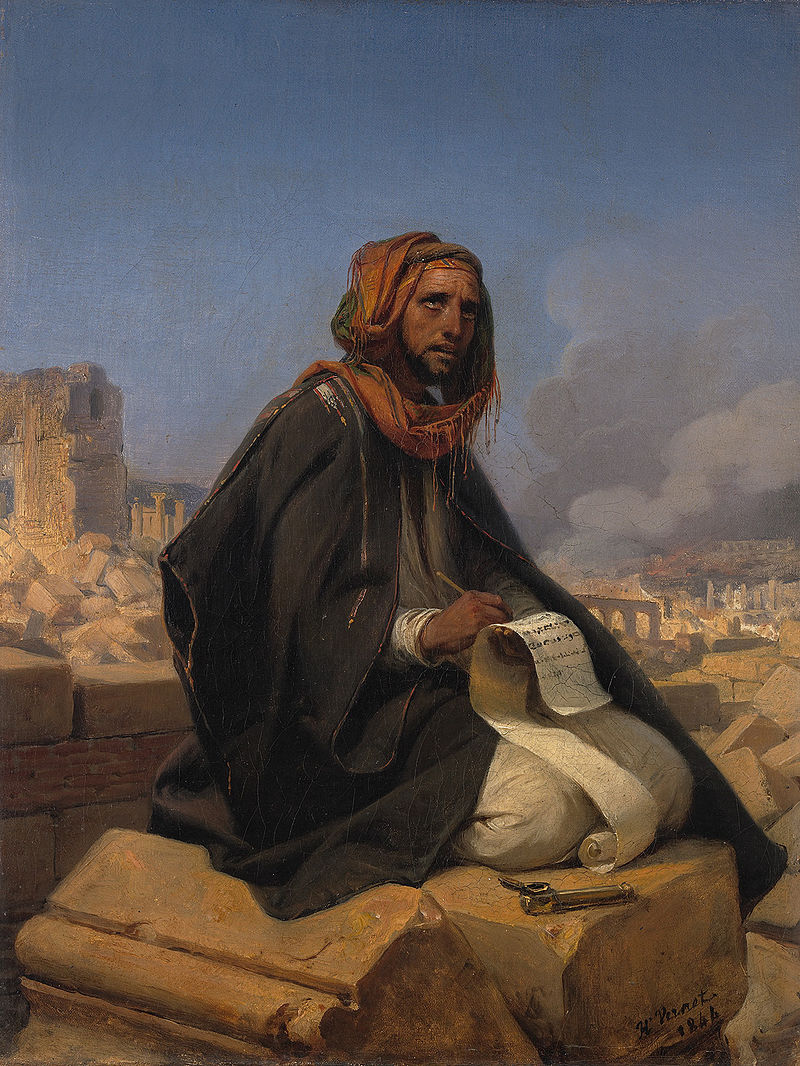
"Jeremiah on the Ruins of Jerusalem"
(Horace Vernet, 1844)
'For I know the plans that I have for you,' declares the LORD,
'plans for welfare and not for calamity to give you a future and a hope.
-- Jeremiah 29:11
(Play beautiful related song by Marty Goetz and Misha)
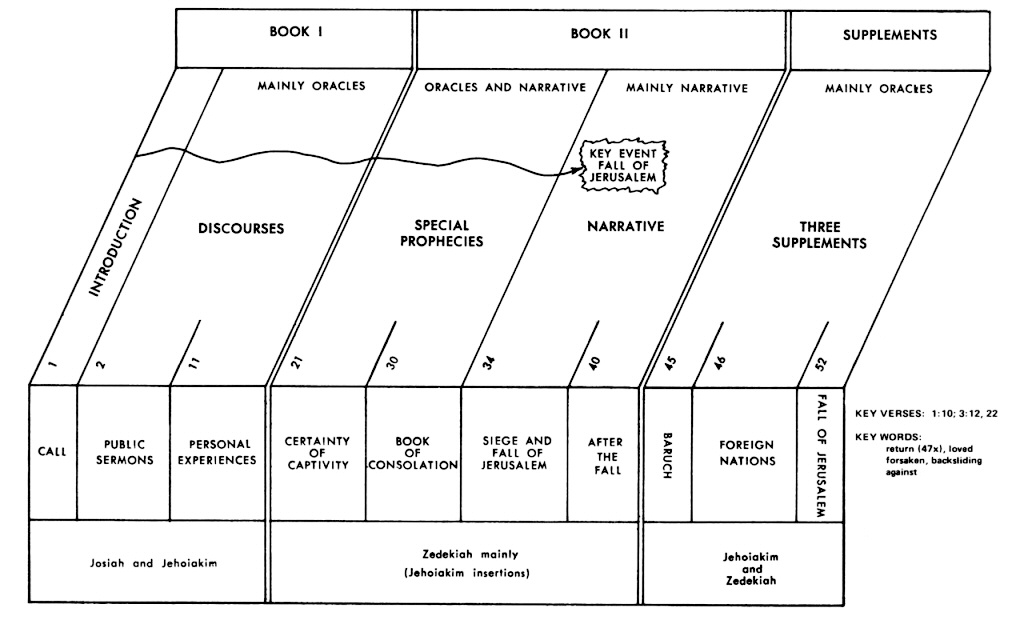
Click chart to enlarge
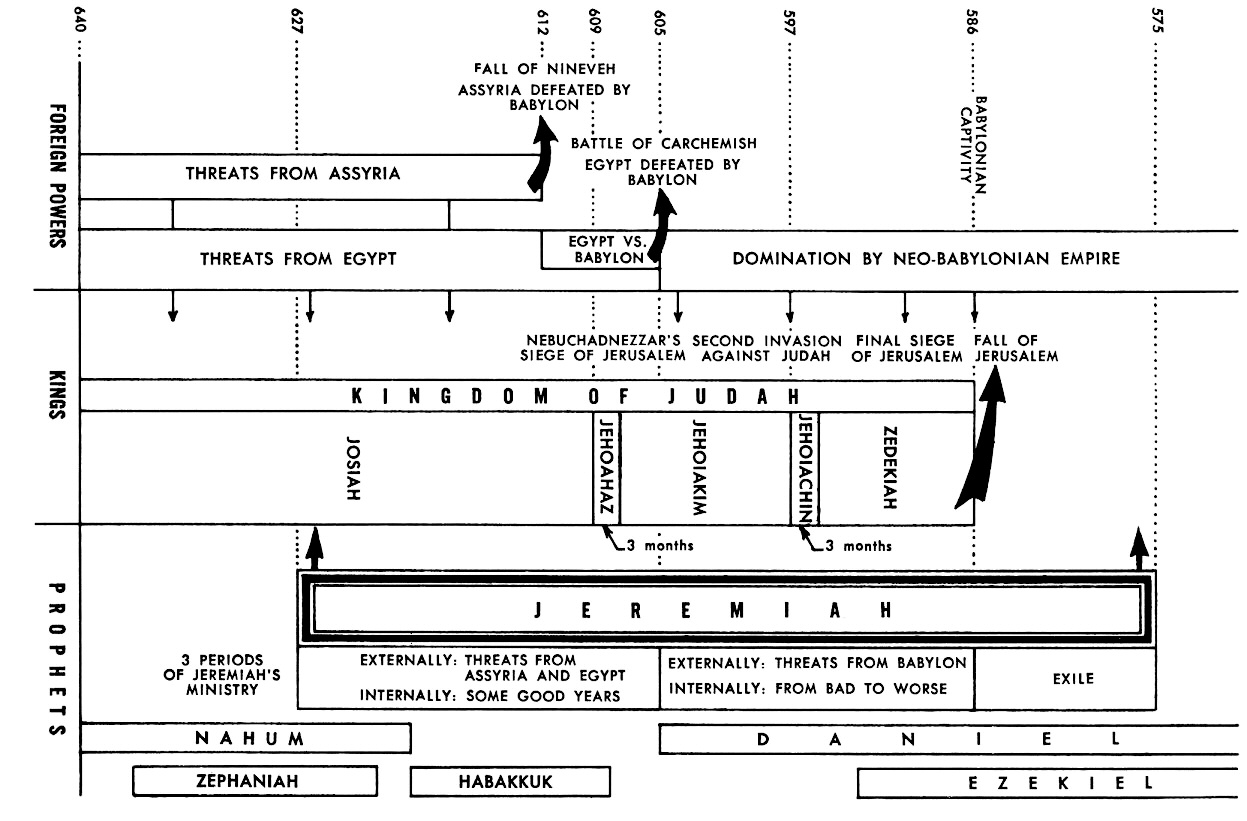
Click chart to enlarge
Chart from recommended resource Jensen's Survey of the OT - used by permission
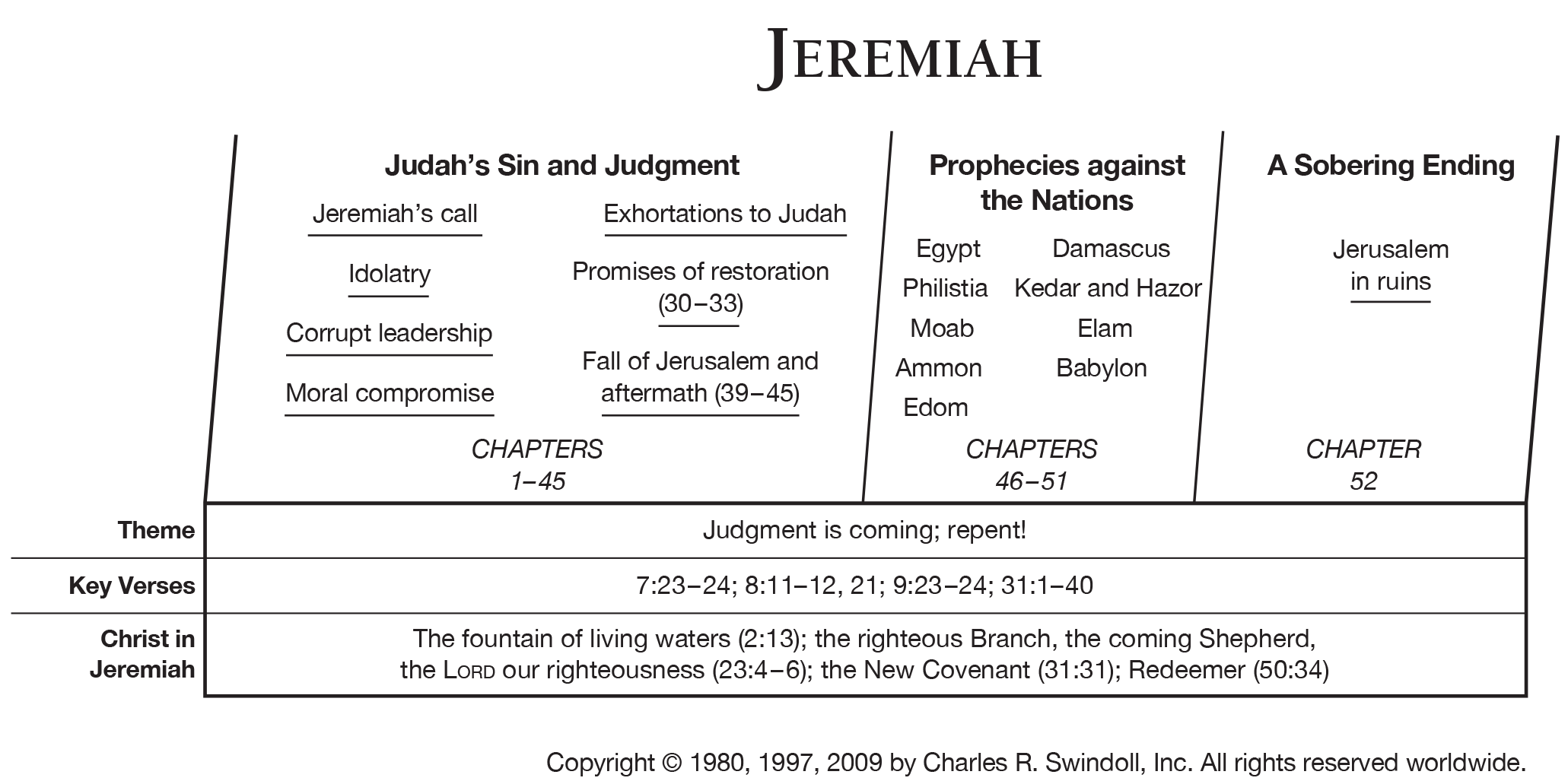
Jeremiah Chart from Charles Swindoll
| JEREMIAH: "PROPHET TO THE NATIONS" Sin - "I Will Punish" (Jer 9:25) Hope - "I Will Restore" (Jer 30:17) Judah & Jerusalem |
||||||
|
Prophet |
Prophecies to Judah Jer 2:1-45:5 |
Prophecies to the Gentiles Jer 46:1-51:64 |
Prophet's Appendix Jer 52:1-52:34 |
|||
| Prophet's Commission Jer 1:1-19 |
Judah Condemned Jer 2:1-25:38 |
Jeremiah's Conflicts Jer 26:1-29:32 |
Jerusalem's Future Jer 30:1-33:26 |
Jerusalem's Fall Jer 34:1-45:5 |
Nations Condemned Jer 46:1-51:64 |
Historic Conclusion Jer 52:1-52:34 |
| Before The Fall Of Jerusalem Jer 1:1-38:28 |
The Fall Jer 39:1-18 |
After The Fall |
||||
| Call | Ministry | Retrospect | ||||
| Nation of Judah |
Surrounding Nations |
Future of Babylon |
||||
| 627-582 BC Ministered 40+ Years! |
||||||
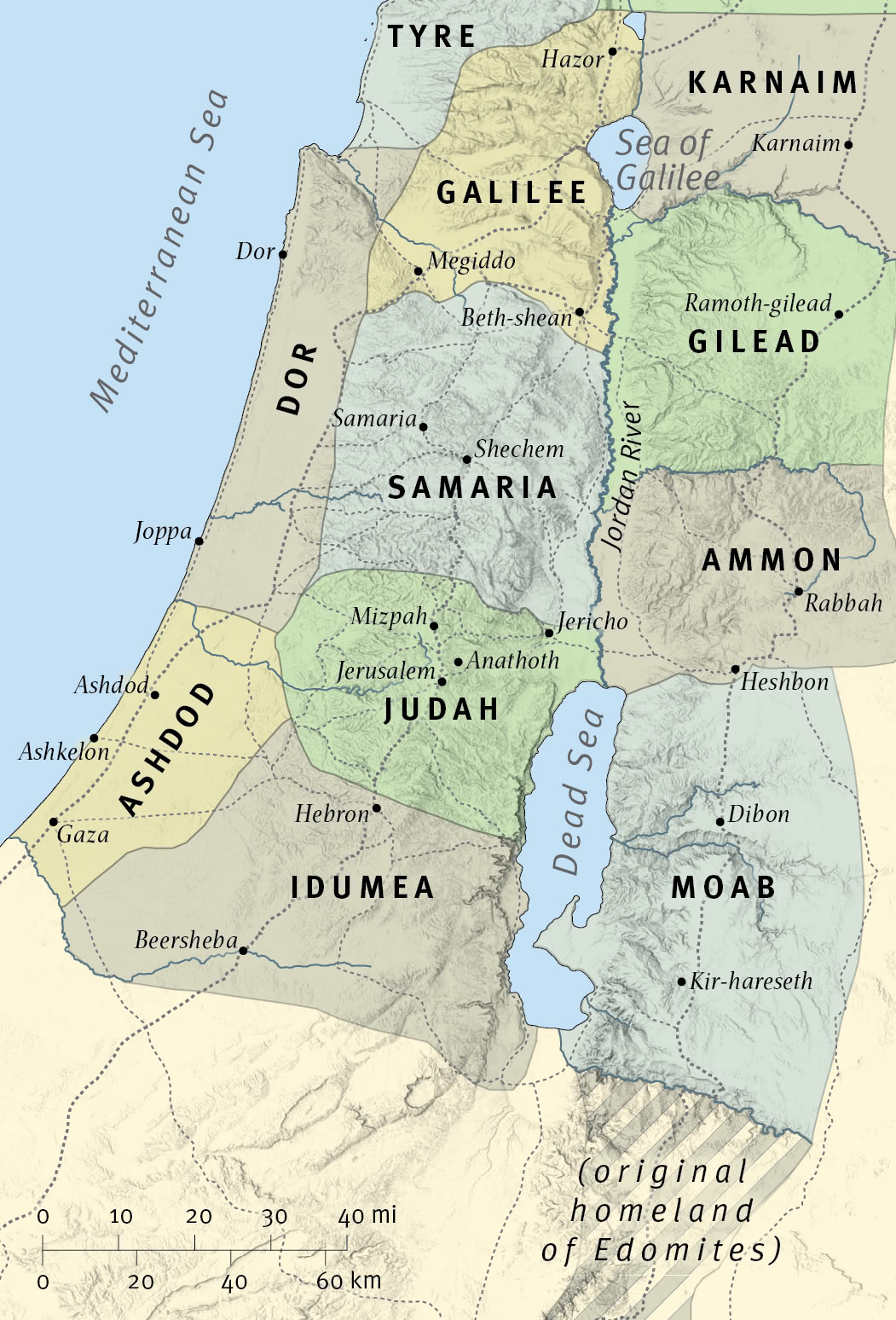
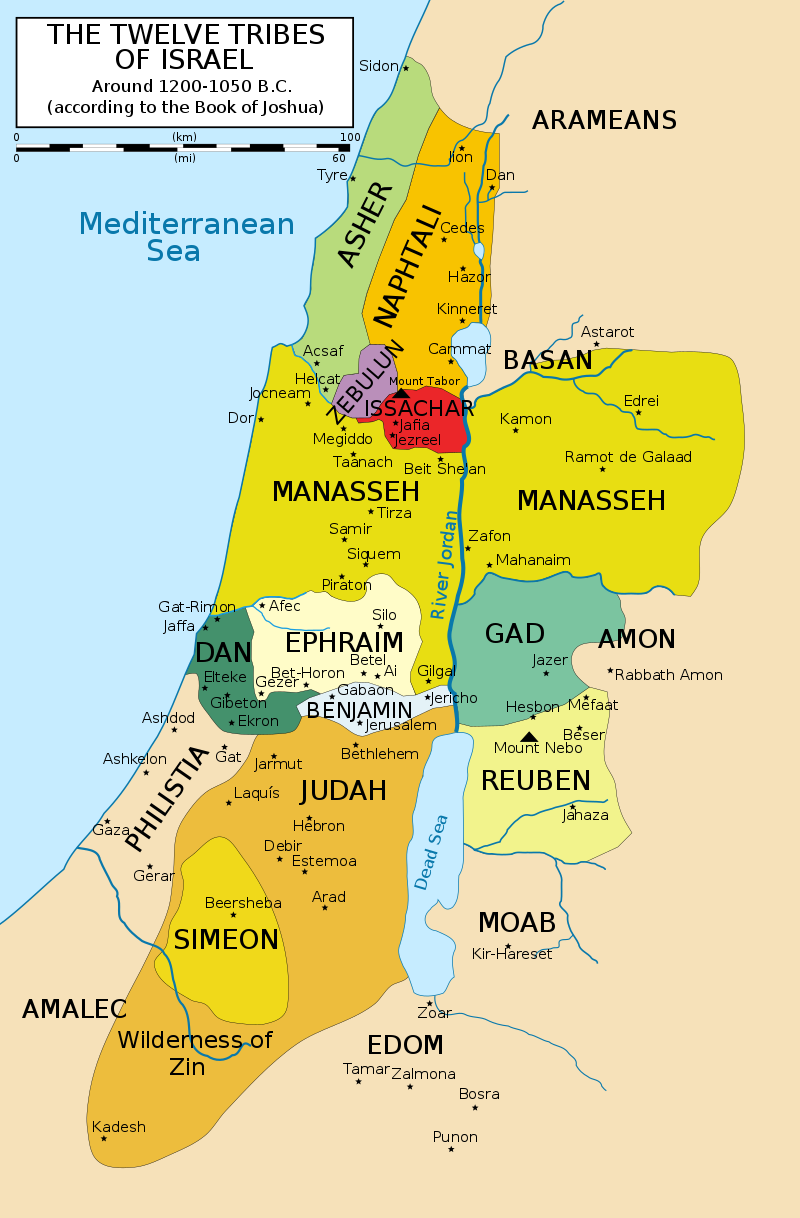
Map of Israel at Time of Jeremiah
Source: ESV Global Study Bible
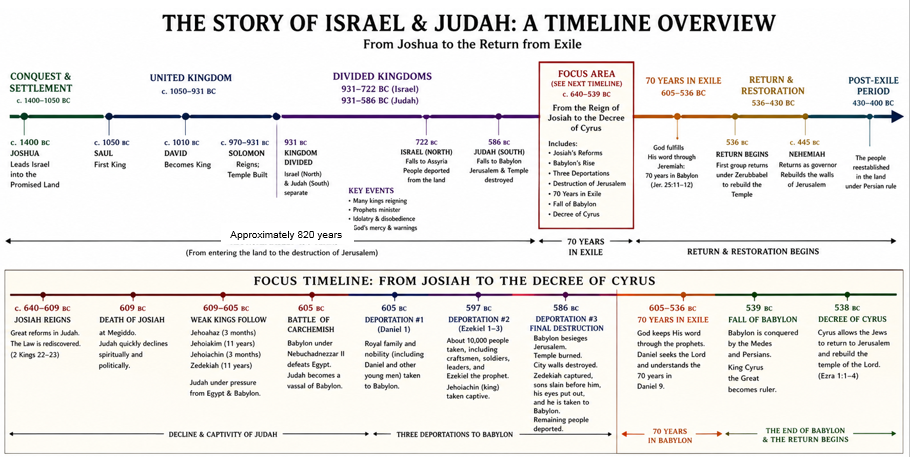
Jeremiah 27:1 In the beginning of the reign of Zedekiah the son of Josiah, king of Judah, this word came to Jeremiah from the LORD, saying–
- beginning: Jer 27:3,12,19,20 26:1 28:1
SIMPLE OUTLINE OF JEREMIAH 27:
- The message to foreign ambassadors (Jer 27:1–11).
- The message to the king (Jer 27:12–15).
- The message to the priests and people (Jer 27:16–22).
Related Passages:
Jeremiah 28:1 Now in the same year, in the beginning of the reign of Zedekiah king of Judah, in the fourth year, in the fifth month, Hananiah the son of Azzur, the prophet, who was from Gibeon, spoke to me in the house of the LORD in the presence of the priests and all the people, saying,
YAHWEH'S WORD TO ZEDEKIAH
AT OUTSET OF ZEDEKIAH'S REIGN
In the beginning (Ge 1:1) of the reign of Zedekiah the son of Josiah, king of Judah, this word came to Jeremiah from the LORD, saying– The date, 594/3 BC, is indicated more precisely in Jer 28:1, 27-29 comprising a literary unit. As discussed below most writers place this event in the reign of the last king of Judah, Zedekiah. The problem is that the KJV has Jehoiakim as king of Judah at this time but this conflicts directly with Jeremiah 27:3, which identifies Zedekiah as king of Judah at this time. The Syriac texts and a few Hebrew manuscripts do read "Zedekiah" instead of "Jehoiakim" in this verse. Clearly this mention of Jehoiakim must be a scribal error.
This word came to Jeremiah from the LORD is a typical prophetic formula that establishes both the source and the authority of the message to Jeremiah. While it may seem simplistic, we need to remember that this word comes at God's initiative, not Jeremiah's initiative. Prophets are simply God's mouthpieces, so all prophecies begin with God speaking to His prophet, who then serves a channel to faithfully pass along Yaweh's words. In this case the true prophet is countering the words of the false prophets.
Bob Utley - "Jeremiah" Jeremiah's name (ירמיהו, i.e. Jer. 26:7) is spelled differently in Hebrew (ירמיה, BDB 941), reason unknown. Several names in the OT are spelled differently, examples are Joshua, Nebuchadnezzar. different scribes translated foreign names differently. Israelites tended to slightly alter names to show disrespect
John Walton - . chronology. There is a major problem in this verse because the Hebrew text identifies the setting as the accession year of Jehoiakim yet in the following verses identifies the king as Zedekiah. Most interpreters think that this phrase has been misplaced here from 26:1. The chronological notation should instead read the fourth year of Zedekiah, 594 (see 28:1). (IVP Bible Background Commentary: Old Testament)
NET NOTE - The names of Jeremiah and of Nebuchadnezzar are spelled differently in the Hebrew of chapter 27–29. That and other literary features show that these three chapters are all closely related. The events of these three chapters all take place within the space of one year (cf. 28:1; 29:17).
TECHNICAL NOTE - The reading here is based on a few Hebrew MSS and the Syriac and Arabic versions. The majority of Hebrew MSS and most of the versions read “At the beginning of the reign of Josiah’s son, Jehoiakim king of Judah” as in 26:1. The LXX does not have this whole verse. It has long been recognized that the text of 27:1 is textually corrupt. The date formula in the majority of Hebrew MSS at Jer 27:1 is contradictory both with the context of the passage which deals with an event in the reign of Zedekiah (see Jer 27:3, 13 and v. 20 which presupposes that Jeconiah, Jehoiakim’s son, has been taken captive [i.e., after the death of Jehoiakim!]) and the date formula in Jer 28:1 which refers to an event “in that same year” and then qualifies it with “Early in the reign of Zedekiah.” Hence it is preferable to read “Zedekiah” here in place of “Jehoiakim” and explain the error in the Hebrew manuscripts as an erroneous copying of Jer 26:1. (NET NOTE)
NET NOTE - If the text of Jer 28:1 is correct, the date here would be sometime in the fourth year of Zedekiah which would be 594/3 B.C. Zedekiah had been placed on the throne as a puppet king by Nebuchadnezzar after he deposed Zedekiah’s nephew, Jeconiah (Jehoiachin) and sent him, his family, some of the temple treasures, and some of the Judean leaders away to Babylon (2 Kgs 23:8–17). The author does not state directly why the envoys from the nations mentioned in Jer 29:3 were in Jerusalem, but the implication is that they were there trying to interest Zedekiah in rebelling. Modern scholars have used the data here and in Jer 28:1 and in the Babylonian Chronicles (it contains a record of major events of Nebuchadnezzar’s reign) to suggest a plausible background for such a meeting. Nebuchadnezzar had to put down an uprising in the east and quell a rebellion in Babylon itself in the two years prior to this meeting. Some “prophets” in the nation of Israel and in these other nations (see Jer 27:9–10) saw in these events hopes for not having to pay tribute to (i.e., submit to the yoke of) Nebuchadnezzar and were counseling rebellion. Jeremiah saw this as foolhardy and counseled otherwise. Again, there is a conflict between “prophets” which is what this whole section (Jer 27–29) is all about.
Bob Utley - Jeremiah 27-29 forms a literary unit. Notice the number of times and the variety of phrasing that Jeremiah used to assure his audiences that he is speaking the message of YHWH, not his own opinion.
- this word came to Jeremiah from the Lord, Jer. 27:1
- thus says the Lord to me, Jer. 27:2
- thus says the Lord of hosts, the God of Israel, Jer. 27:4,21
- the Lord has spoken to that nation, Jer. 27:13
- v. 15 has two disclaimers of YHWH speaking through the false prophets
- thus says the Lord, Jer. 27:16
- thus says the Lord of hosts, Jer. 27:19
- declares the Lord, Jer. 27:22
Daryl Hilbert: Most scholars believe that Jeremiah 27-29 are linked in background and contents. Chapters 27-28 attack the false optimism of the prophets of Judah and are dated by the majority of scholars in the fourth year of Zedekiah (594-593 B.C.). Foreign envoys were coming to Jerusalem to promote a confederacy against Nebuchadnezzar. Neighboring countries were apparently trying to involve Judah in a rebellion against Babylon, an enterprise encouraged by the false prophets at Jerusalem. The contemplated rebellion failed because of Nebuchadnezzar’s forthright action. Jeremiah 27-29 were written to dispel the erroneous view that Babylon was just a passing power, not to be reckoned with. From Jer 51:59 we may infer that Zedekiah was called to Babylon to explain what part he had in the unsuccessful plot against Nebuchadnezzar (EXP).
Norman Geisler - JEREMIAH 27:1—Is this passage about Jehoiakim or Zedekiah?
PROBLEM: In the NKJV, this passage reads, “In the beginning of the reign of Jehoiakim.” However, verses 3 and 12 identify Zedekiah as king of Judah, and Jer 28:1 indicates that the prophecy of chapter 27 was given during the time of the reign of Zedekiah, not Jehoiakim. Should it be Zedekiah or Jehoiakim here?
SOLUTION: It is most likely the case that a scribe miscopied the text by inadvertently placing the heading of chapter 26 over chapter 27. There is good textual evidence from the Syriac and the Greek versions of the OT that there is a scribal error here. While the Syriac version reads “Zedekiah,” the Greek version omits this verse altogether. This could indicate that a problem had developed in the early stages of the transmission of this portion of Jeremiah’s text, and the Greek translators were not able to decipher the verse at all and merely left it out. The context and the historical situation indicates that the original read “Zedekiah” instead of “Jehoiakim.” (When Critics Ask) (See also Archer - Bible Difficulties page 277)
Jeremiah 27:2 thus says the LORD to me–“Make for yourself bonds and yokes and put them on your neck,
NET The LORD told me, "Make a yoke out of leather straps and wooden crossbars and put it on your neck.
NLT This is what the LORD said to me: "Make a yoke, and fasten it on your neck with leather thongs.
- thus says the LORD to me Am 7:1,4
- Make: Jer 27:12 28:10-14
- put: Jer 13:1-11 18:2-10 19:1-11 28:10 1Ki 11:30,31 Isa 20:2-4 Eze 4:1-5:17 12:1-28 24:3-12
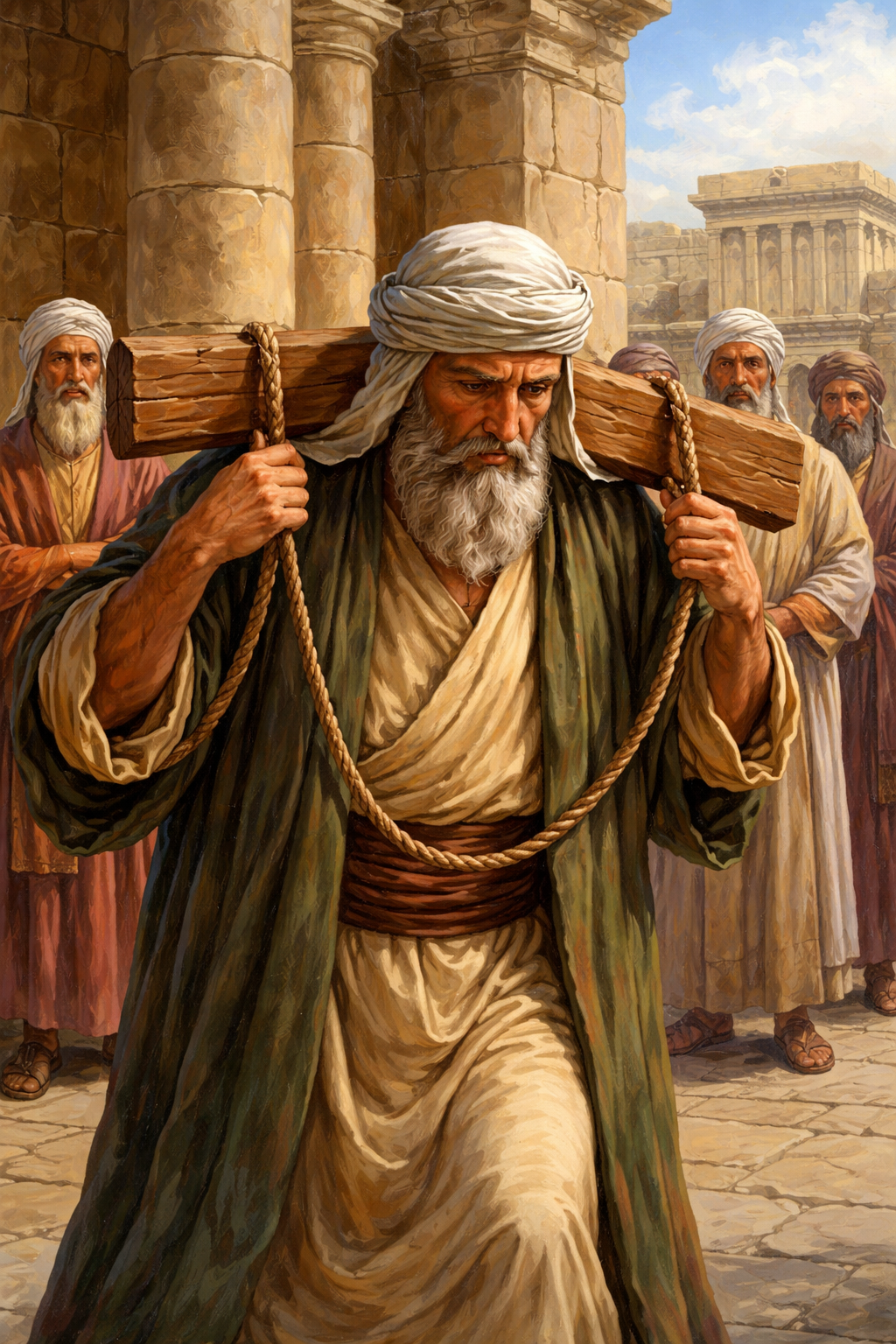
JEREMIAH TO WEAR A
YOKE ON HIS NECK
Thus says the LORD to me–“Make for yourself bonds and yokes (motah; LXX - kloos - a dog collar for mischievous dogs!) and put them on your neck, Jeremiah warned the ambassadors (messengers) of the nations in v3 that a conspiracy against Nebuchadnezzar would result in slavery, for a yoke was a symbol of political slavery to a foreign king. Yahweh commands Jeremiah to present the warning in symbol form (a yoke upon himself) and verbal form to make sure they got the picture (pun intended)! We know that Jeremiah wore the yoke in public for Hananiah broke it (Jer 28:10,11).
The yoke said, “I’m the boss. You work for me.
I regard you as a beast of burden.”
-- David Guzik
John MacKay - The animal that wore the yoke was one that had been domesticated and was under the control of its owner. If it was a slave with a yoke on his shoulders, his status too was evident. Consequently, “yoke” was used as a term for domination by another party (Deut. 28:48; 1 Kgs. 22:10-11; Ezek. 7:23). Jeremiah’s message therefore was that the nations had to accept the political subjugation to Nebuchadnezzar. This would involve paying tribute to him and sending conscripts to serve in his army, but would have left their countries relatively intact. (Jeremiah: Chapters 21-52)
Bob Utley - "bonds and yokes" This refers to oxen yokes. How many Jeremiah made is uncertain, whether one for himself or one for each ambassador. They symbolized servitude (cf. Jer. 27:8; Deut. 28:48; 1 Kgs. 12:4,9,10). Probably the Hebrew "them" of Jer. 27:3 refers to a message, not a yoke.
Parunak: It is a common image in the Bible . . . that a subject people wears the yoke of the ruler. Shows that they are subject to the king, just as an ox is subject to the farmer whose plow it pulls. Here Jer is to prepare these symbols of subjection, wear them himself, and give them to the ambassadors gathered in Jerusalem to take back to their kings. Certainly, not part of the ceremonies that Zed had planned for his guests!
John Walton - yoke construction. The yokes used for draft animals consisted of a wooden frame that sat across the top of the necks with pegs fitting through holes on either side of the neck. Under the neck the pegs were connected with straps. Yokes were used for certain human tasks as well as on plow animals. Assyrian inscriptions from the ninth and eighth century depict captives being transported or laboring in such yokes. Bars on either side of the neck are clearly visible. For more information concerning yoke imagery see comment on Nahum 1:13. (IVP Bible Background Commentary: Old Testament)
NET NOTE - The yoke is a common biblical symbol of political servitude (see, e.g., Deut 28:48; 1 Kgs 12:4, 9, 10). From the context of 1 Kgs 12 it is clear that it applied to taxation and the provision of conscript labor. In international political contexts it involved the payment of heavy tribute which was often conscripted from the citizens (see, e.g., 2 Kgs 15:19–20; 23:34–35) and the furnishing of military contingents for the sovereign’s armies (see, e.g., 2 Kgs 24:2). Jeremiah’s message here combines both a symbolic action (the wearing of a yoke) and words of explanation as in Jer 19:1–13. (See Isa 20:1–6 for an example outside of Jeremiah.) The casting off of the yoke has been used earlier in Jer 2:20, 5:5 to refer to Israel’s failure to remain spiritually “subject” or faithful to God.
Yoke (04133) motah is a feminine noun that denotes a bar, pole, or yoke, and fundamentally conveys the idea of something placed upon another for the purpose of bearing, binding, or controlling. In its most literal sense, the word refers to a wooden bar or carrying pole, such as those used to transport the Ark of God, where the Levites “carried the ark of God on their shoulders with the poles (môtāh) thereon” (1 Chr 15:15). In this usage, the term reflects not oppression but sacred burden-bearing, a privileged responsibility assigned by God.
MOTAH - 10V - Lev. 26:13; 1 Chr. 15:15; Isa. 58:6; Isa. 58:9; Jer. 27:2; Jer. 28:10; Jer. 28:12; Jer. 28:13; Ezek. 30:18; Ezek. 34:27
However, môtāh is more frequently employed figuratively, where it becomes a powerful symbol of bondage, oppression, and imposed authority. In covenantal context, God reminds Israel, “I am the LORD your God…who broke the bars (môtōth) of your yoke and made you walk erect” (Lev 26:13), portraying Egypt as a crushing yoke from which He alone could liberate them. Thus, the word vividly expresses the weight of subjugation, whether political, social, or spiritual.
The prophets, especially Jeremiah, develop this imagery with striking force. God commands Jeremiah to fashion and wear a literal yoke as a prophetic sign of Judah’s coming submission to Babylon (Jer 27:2). When the false prophet Hananiah dramatically breaks Jeremiah’s wooden yoke, he symbolically denies God’s decree. Yet the LORD responds by declaring, “You have broken the yokes of wood, but you have made instead of them yokes of iron” (Jer 28:13), intensifying the image from temporary discipline to inescapable domination, followed by Hananiah’s swift judgment (Jer 28:16–17). Here môtāh becomes a theological symbol of divine sovereignty over nations, showing that resistance to God’s appointed authority only results in heavier bondage.
Similarly, the word is used to describe oppressive forces that God calls His people to break: “to break every yoke (môtāh)” (Isa 58:6), emphasizing that true righteousness involves liberating others from unjust burdens. In prophetic judgment contexts, it again signifies political domination: “I will break the yoke of Egypt” (Ezek 30:18), and “they will no longer be slaves to the nations…when I have broken the bars (môtōth) of their yoke” (Ezek 34:27), pointing ultimately to God’s redemptive intervention.
Theologically, môtāh presents a profound dual reality: it can signify either a burden imposed by oppression or a burden assigned by God. The same object that enslaves in one context becomes a means of service in another. Thus, Scripture reveals that the decisive issue is not the presence of a yoke, but whose yoke it is. As later clarified by the Lord Jesus Christ, the only yoke that truly liberates is His own: “My yoke is easy and My burden is light” (Mt 11:30).
In summary, môtāh portrays the weight that rests upon a person—whether crushing bondage under sin and worldly powers or sacred responsibility under God. It reminds us that apart from divine deliverance, every yoke enslaves, but under God’s gracious rule, even a burden becomes a means of life and freedom.
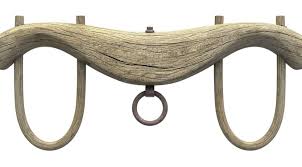
Dictionary of Biblical Imagery - YOKE
The more then fifty references to the yoke in the Bible speak of the wooden bar or frame used to join animals to enable them to pull a load. Two aspects of a yoke are important in these references: the yoke is an image of subjection, service or bondage (just as a yoked donkey or ox is in service to its owner) or an image of joining (just as two animals are joined together by means of a yoke).
Literal references to yokes are relatively rare in the Bible. Some of them occur in the ceremonial laws, where (for example) we read about using a previously unyoked heifer as a sacrifice (Num 19:2) or in a ritual of innocence (Deut 21:1–9) and about not yoking an ox and donkey together (Deut 22:10). Yoking here assumes a ceremonial aura, as something with religious meaning. This was also the case when Saul cut a yoke of oxen in pieces and sent the pieces throughout the land of Israel as a symbolic statement (1 Sam 11:7). Other literal images of yoked animals simply reinforce the down-to-earth realism of the Bible. We have a picture of yoking two cows to pull the cart carrying the ark of the Lord and shutting up their calves at home (1 Sam 6:10), or the spectacle of the most impressive farmer in the neighborhood-Elisha-plowing with twelve yoke of oxen (1 Kings 19:19). In Jesus’ parable of the banquet, one of the everyday excuses an invited guest uses is that he has bought five yoke of oxen and wants to try them out (Lk 14:19).
Most biblical references are figurative, and the largest category is the yoke as a symbol of political slavery to a foreign king (Deut 28:48; Jer 27:8–12) or oppressive subservience to one’s own king (1 Kings 12:4–14). Correspondingly, an evocative image of freedom is breaking loose from the yoke of servitude (e.g., Gen 27:40; Is 9:4; 10:27; Jer 28:2, 4; Ezek 34:27). As a demonstration that Judah and surrounding nations should submit to Nebuchadnezzar, God instructed Jeremiah to wear a yoke around his neck (Jer 27).
Other meanings also inhere in the yoke as an image of bondage. Sin is a yoke around a person’s neck (Lam 1:14), and to require Gentile Christians to submit to the Jewish ceremonial code would be an unwelcome yoke (Acts 15:10), as it is for Christians who return to the law (Gal 5:1).
Because yoking joins two animals together, it also becomes a symbol of close alliance or union. Israel’s dabbling in pagan practices is pictured as a yoking of itself to Baal (Num 25:3, 5). Paul’s warning against a Christian’s marrying an unbeliever is expressed in the command “Do not be yoked together with unbelievers” (2 Cor 6:14 NIV), perhaps an allusion to the prohibition against yoking an ox and donkey together (Deut 22:10).
In most of the references noted thus far, the yoke is a negative image—something a person would do virtually anything to avoid. But the image can also have positive meanings. As a symbol of legitimate discipline in a person’s life, bearing the yoke in one’s youth “is good,” on a par with waiting quietly for the salvation of the Lord (Lam 3:26–27). The supreme example is Jesus’ turning his paradoxical rhetoric to the yoke as a form of good subjection to him: “Take my yoke upon you and learn from me, … and you will find rest for your souls. For my yoke is easy and my burden is light” (Mt 11:29–30 NIV).
See also BONDAGE AND FREEDOM; DONKEY, ASS; OX, OXEN.
Paul Apple's takeaway on Jer 27:1 - SUBMIT TO GOD’S AUTHORITY – EVEN WHEN IT IS ADMINISTERED IN SURPRISING WAYS Sometimes our conviction regarding the sovereignty of God can be severely tested. We easily acknowledge that the Bible teaches that God can put whoever He wants in a position of power – whether in government or in other arenas of authority. But we also have an innate propensity to assume that God is always making our paths more comfortable and pleasant. So we have difficulty embracing the path of oppression and suffering.
Jeremiah 27:3 and send word to the king of Edom, to the king of Moab, to the king of the sons of Ammon, to the king of Tyre and to the king of Sidon by the messengers who come to Jerusalem to Zedekiah king of Judah.
- Edom: Jer 25:19-26 47:1-49:39 Eze 25:1-28:26 29:18 Am 1:9-15 2:1-3
- the messengers: 2Ch 36:13 Eze 17:15-21
Related Passages:
Jeremiah 21:3 (JEREMIAH HAD WARNED ZEDEKIAH NOT TO REBEL AGAINST NEBUCHADNEZZAR) Then Jeremiah said to them, “You shall say to Zedekiah as follows: 4‘Thus says the LORD God of Israel, “Behold, I am about to turn back the weapons of war which are in your hands, with which you are warring against the king of Babylon and the Chaldeans who are besieging you outside the wall; and I will gather them into the center of this city. 5 “I Myself will war against you with an outstretched hand and a mighty arm, even in anger and wrath and great indignation. 6 “I will also strike down the inhabitants of this city, both man and beast; they will die of a great pestilence. 7 “Then afterwards,” declares the LORD, “I will give over Zedekiah king of Judah and his servants and the people, even those who survive in this city from the pestilence, the sword and the famine, into the hand of Nebuchadnezzar king of Babylon, and into the hand of their foes and into the hand of those who seek their lives; and he will strike them down with the edge of the sword. He will not spare them nor have pity nor compassion.”’ 8 “You shall also say to this people, ‘Thus says the LORD, “Behold, I set before you the way of life and the way of death. 9 “He who dwells in this city will die by the sword and by famine and by pestilence; but he who goes out and falls away to the Chaldeans who are besieging you will live, and he will have his own life as booty. 10 “For I have set My face against this city for harm and not for good,” declares the LORD. “It will be given into the hand of the king of Babylon and he will burn it with fire.”’
Jeremiah 51:59 The message which Jeremiah the prophet commanded Seraiah the son of Neriah, the grandson of Mahseiah, when he went with Zedekiah the king of Judah to Babylon in the fourth year of his reign. (Now Seraiah was quartermaster.)
Jeremiah 28:1 Now in the same year (CONTINUATION FROM CHAPTER 27), in the beginning of the reign of Zedekiah king of Judah, in the fourth year (594/593 BC), in the fifth month, Hananiah the son of Azzur, the prophet, who was from Gibeon, spoke to me in the house of the LORD in the presence of the priests and all the people, saying,
SEND WORD TO MESSENGERS
OF THE NATIONS
And send word to the king of Edom, to the king of Moab, to the king of the sons of Ammon, to the king of Tyre and to the king of Sidon by the messengers who come to Jerusalem to Zedekiah king of Judah - These messengers were primarily nations on the east and north of Judah, directions that would be most vulnerable for Nebuchadnezzar's attack from the north. Some writers feel that these other nations are here because Zedekiah is discussing rebelling against Babylon in some way (not pay tribute, etc). In Jer 51:59 Zedekiah was summoned to Babylon in this same year, possibly to give an account of his part in this plot which came to nothing.
Recall that when Jeremiah was called by God to be a prophet Yahweh declared...
"Before I formed you in the womb I knew you, And before you were born I consecrated you; I have appointed you a prophet to the nations (NOW WE SEE SOME OF JEREMIAH'S PROPHECIES TO SOME OFTHE NATIONS)." (Jer 1:5)
NET NOTE - The nations of Edom, Moab, and Ammon were east of Judah. They were sometimes allies and sometimes enemies. The nations of Tyre and Sidon were on the sea coast north and west of Judah. They are best known for their maritime trade during the reign of Solomon. They were more commonly allies of Israel and Judah than enemies.
Ambassadors (messengers) of the nations of Edom, Moab, Ammon, Tyre and Sidon had gathered in Jerusalem to conspire with Judah against King Nebuchadnezzar by joining their coalition. Note that in addition to the messengers Yahweh (through Jeremiah) also addresses the king of Judah, Zedekiah (Jer 27:12-15), the priests (Jer. 27:16) and the people (Jer. 27:16)
Charles Feinberg - Jeremiah required great courage to stand against these envoys as well as his own countrymen, but Jeremiah was exercising his commission as a prophet to the nations (cf. 1:10). (See The Expositor's Bible Commentary - Abridged Edition- Page 487)
J A Thompson explains that because of attacks from Elam and a revolt in Syria, “They were troubled times for Nebuchadrezzar, and small states in the west thought they saw an opportunity to revolt and throw off the yoke of Babylon.” (See The Book of Jeremiah - Page 104)
Cundall - It is clear that the envoys of the nations had assembled in Jerusalem to hatch a scheme for rebellion against Babylon. In Jeremiah 51:59 we discover that Zedekiah was summoned to Babylon in this same year, probably to give an account of his part in this plot which came to nothing.”
Bob Utley - "by the messengers" This refers to the officials sent by the surrounding nations who were trying to encourage Zedekiah to resist Babylon, along with them or asked by Zedekiah to form an alliance to resist Neo-Babylon's expansion.
Zedekiah is mentioned in 2 Kgs. 24:17-25:7, 2 Chr. 36:10-11, Jer. 1:3; 21:1-7; 24:8-10; 27:1ff; 32:4-5; 34:1-22; 37:1-39:7; 52:1-11
John Walton - occasion for gathering of envoys. The envoys from Edom, Moab, Ammon, Tyre and Sidon all conspired with Zedekiah to revolt against Babylon in 594 B.C. The meeting was probably in response to a domestic rebellion in Babylon against Nebuchadnezzar in December 595 and January 594, which is described in one of the Babylonian Chronicles.(IVP Bible Background Commentary: Old Testament)
Constable: The Babylonian Chronicles illuminate the historical background of this situation. Two years earlier an unnamed enemy had attacked Nebuchadnezzar, and the following year he had to deal with a revolt within his borders. Smaller nations in the west saw this as an opportunity to throw off Babylon"s authority. The same nations had formed a confederacy to revolt against Assyria years earlier, so the purpose of these messengers seems to have been to form another treaty but this time against Babylon.
Jeremiah 27:4 “Command them to go to their masters, saying, ‘Thus says the LORD of hosts, the God of Israel, thus you shall say to your masters,
- Thus Jer 10:10,16 25:27 51:19 Ex 5:1
COMMAND TO MESSENGERS:
"GO HOME!"
Command them to go to their masters - Them refers to the messengers (ambassadors) from Edom, Moab, Ammon, Tyre, and Sidon. The command follows in the following passages.
saying, ‘Thus says the LORD of hosts (Jehovah of the armies), the God of Israel, thus you shall say to your masters - God uses His Name which shows Him to be over all armies, whether on earth or in heaven, which would add authoritative emphasis to His command.
Jeremiah 27:5 “I have made the earth, the men and the beasts which are on the face of the earth by My great power and by My outstretched arm, and I will give it to the one who is pleasing in My sight.
- made: Jer 10:11,12 32:17 51:15 Ge 9:6 Ex 20:11 Job 26:5-14 38:4-41 Ps 102:25 136:5-9 146:5,6 148:2-5 Isa 40:21-26 42:5 44:24 Isa 45:12 48:13 51:13 Joh 1:1-3 Ac 14:15 17:24 Col 1:16 Heb 1:2,10,11 Rev 4:11
- and have: Ge 1:29,30 9:2,3 De 2:7,9,19 5:16 32:8 Jos 1:2,3 Ezr 1:2 Ps 115:15,16 135:10-12 De 2:21 4:17,25,32,35
Related Passages:
Isaiah 45:1-7 (YAHWEH TO KING CYRUS OF PERSIA) Thus says the LORD to Cyrus His anointed, Whom I have taken by the right hand, To subdue nations before him And to loose the loins of kings; To open doors before him so that gates will not be shut: 2 “I will go before you and make the rough places smooth; I will shatter the doors of bronze and cut through their iron bars. 3 “I will give you the treasures of darkness And hidden wealth of secret places, So that you may know that it is I, The LORD, the God of Israel, Who calls you by your name. 4 (WHY GOD DOES THIS) “For the sake of Jacob My servant, And Israel My chosen one, I have also called you by your name; I have given you a title of honor Though you have not known Me (CYRUS WAS A PAGAN). 5 “I am the LORD, and there is no other; Besides Me there is no God. I will gird you, though you have not known Me; 6 (GOD'S ULTIMATE PURPOSE) That men may know from the rising to the setting of the sun That there is no one besides Me. I am the LORD, and there is no other, 7 The One forming light and creating darkness, Causing well-being and creating calamity; I am the LORD who does all these.
Deuteronomy 4:34 “Or has a god tried to go to take for himself a nation from within another nation by trials, by signs and wonders and by war and by a mighty hand and by an outstretched arm and by great terrors, as the LORD your God did for you in Egypt before your eyes?
YAHWEH IS CREATOR
AND DISPENSER OF LANDS
I (YAHWEH IS SPEAKING) have made the earth, the men and the beasts which are on the face of the earth by My great power and by My outstretched arm - God's sovereignty is emphasized. Yahweh made everything and therefor has the right to give whatever He wants to whomever He wants. You might reason that this declaration of the LORD'S strength would be enough to get the attention of the messengers of the nations (and of King Zedekiah). In light of the truth that Yahweh is the Creator of all the earth, He therefore has the right to subordinate rulers to him. On the other hand, one might accuse Yahweh of being an "Indian giver," for although He had given the land of Canaan to the children of Israel, He now chose to give not only Israel but all the known world to Nebuchadnezzar the king of Babylon, His servant (Jer 27:6).
Bob Utley - This is the theological assertion that YHWH is the God of creation (cf. Gen. 1:1-2:3). Verses 5-6 also assert His sovereignty over all nations (cf. LXX, Deut. 32:8; Job 12:23; Acts 17:26). "by My great power and by My outstretched arm" This is a repeated anthropomorphic theme. YHWH's deliverance of Israel from Egypt, Deut. 4:34; 5:15; 6:21; 9:29 YHWH as creator, 2 Kgs. 19:15; Neh. 9:6; Ps. 102:25; 121:2; 124:8; 134:3; 146:6; Jer. 27:5; 32:17; Acts 14:15; Rev. 14:7 YHWH as against Judah and for Neo-Babylon, Jer. 6:12; 15:6; 21:5; Zeph.1:4
And I will give it to the one who is pleasing in My sight - Yahweh speaking through Jeremiah reminds the nations that all power and dominion ultimately belong to Him (aka sovereignty), not to human rulers. Yahweh is affirming His divine prerogative to entrust authority and blessing according to His righteous standards. It reminds us that all human power is temporary and subject to His will. Ultimately, the one who is truly pleasing in God’s sight is the person who walks in faith and obedience, as Hebrews 11:6 declares, “And without faith it is impossible to please Him, for he who comes to God must believe that He is and that He is a rewarder of those who seek Him."
While this is a true statement one might argue that in this context He gave the lands to the pagan king Nebuchadnezzar, and thus question how could such a king be pleasing in His sight? The answer is that Nebuchadnezzar would be pleasing in His sight because as God's servant he accomplished God's will of punishment against Judah and the nations. Therefore, when God said He would give the land to “the one who is pleasing in My sight,” it was not a moral endorsement of Nebuchadnezzar’s paganism but a declaration of His sovereignty. While there is a bit of mystery in this truth, God’s pleasure is found in the accomplishment of His will, even when He uses imperfect or wicked instruments to bring about His righteous purposes!
The emphasis is not on the power of human kings, but on YHWH's control
of nations and events for His redemptive purposes
Bob Utley - "I will give it to the one who is pleasing in My sight" This phrase is also used of Cyrus II, King of Persia (cf. Isa. 44:28; 45:1-7), but here of Nebuchadnezzar II (cf. Jer. 25:9; 28:14). YHWH is in control of history! The VERB "give" is used four times in Jer. 27:5-8. The emphasis is not on the power of human kings, but on YHWH's control of nations and events for His redemptive purposes (i.e. Dan. 2:37; 4:14,17,25; 5:18,19,21)!
John Walton - subjection of wild animals. Just as the yoke symbolized the subjection of domesticated animals, the prophecy goes on to suggest that wild animals will likewise come under the domesticating hand of the Lord. There are numerous depictions on wall reliefs of Assyrian kings hunting wild animals, such as lions and other large carnivores. The domestication of wild animals was also at times included in utopian visions of a kingdom controlled and at peace (see comment on Is 11:6-8).(IVP Bible Background Commentary: Old Testament)
OUTSTRETCHED ARM - Anthropomorphic language—from Greek anthrōpos (“man”) and morphē (“form”)—is pervasive in Scripture and represents God’s gracious accommodation by which the infinite, invisible Spirit makes Himself intelligible to finite, fallen humanity using human categories of thought and speech. Thus the Old Testament freely speaks of God with human body parts—eyes (Gen 1:4, 31; Ps 34:15; Zech 4:10), ears (Ps 5:1; 18:6), face (Lev 20:6; Num 6:25), hands (Exod 7:5; 15:17; Isa 23:11), arm (Exod 6:6; Ps 89:10), finger (Exod 31:18; Ps 8:3), feet (Exod 24:10), and footstool (Isa 66:1)—and describes divine actions in human terms: God speaks creation into existence (Gen 1:3–26), walks among His people (Gen 3:8; Lev 26:12), stoops down to observe (Ps 113:6), comes down to act in history (Gen 11:5; Exod 19:11), smells sacrifices (Gen 8:21), and even buries Moses (Deut 34:6). Scripture also attributes human emotions to God—regret or grief (Gen 6:6–7; 1 Sam 15:35), compassion (Jdg 2:18), anger (Exod 4:14; Ps 7:11; Job 32:5), jealousy (Exod 20:5; Deut 6:15), relenting or changing course (Exod 32:14; 2 Sam 24:16)—not to imply moral instability or limitation (Num 23:19; 1 Sam 15:29), but to communicate God’s covenantal responsiveness in relational terms humans can grasp. He is further revealed through family imagery as Father (Exod 4:22; Isa 63:16), husband (Isa 54:5; Hos 2:19), and even with maternal compassion (Isa 49:15; Hos 11:1–4), and through physical metaphors such as rock (Ps 18:2), fortress (2 Sam 22:2), shield (Gen 15:1), and mother bird (Ps 91:4). While such language is necessary because human words are all God has given us to understand divine realities, Scripture consistently warns against reducing God to any physical form or imagining Him as limited like His creatures (Exod 20:4; Deut 5:8; Isa 55:8–9). All anthropomorphic revelation ultimately anticipates and finds its fullest expression in the incarnation, where God truly entered history in Jesus Christ—the supreme and final accommodation—“the Word made flesh” (John 1:1–18), by whom the invisible God is made fully and personally known (1 John 1:1–3).
John Butler - GOD IS SOVEREIGN Jeremiah 27:5 (Sermon Starters)
“I have made the earth, the man and the beast that are upon the ground, by my great power and by my outstretched arm, and have given it unto whom it seemed meet unto me” (Jeremiah 27:5).
In the midst of one of Jeremiah’s prophetic sermons is this text about creation. It is to show God’s Sovereignty over the nations of the world.
FIRST—THE SOURCE OF CREATION
“I have made the earth, the man and the beast that are upon the ground.” You will not hear this message in most of your classrooms or in most of the colleges and universities. What you will hear is evolution. Evolution does not want God involved. To admit that God is the Creator means you must submit to God as our text indicates—He is the sovereign over creation. But mankind is not in the habit of giving God such authority. Though stupid, senseless, and definitely not scientific that evolution is, it is embraced by many because it leaves out God. Man who leaves out God makes a fool of himself and to explain creation without God is great folly indeed. It is sinful folly. Evolution does not make sense and is not scientific and it is sinful, for it will not give due honor to God.
SECOND—THE STRENGTH FOR CREATION
“By my great power and outstretch arm.” God had the strength and power to create the universe. It took tremendous strength to put the universe in place. And God is so powerful that He did it by simply speaking it into being and placement and performance. It is an act of blasphemy to deny God the power and wisdom needed to create the universe and run it so efficiently.
THIRD—THE SOVEREIGN OF CREATION
“Have given it unto whom it seemed meet unto me.” This, particularly as the next verses indicates, is a reference to Nebuchadnezzar and the nation of Babylon. God would use Nebuchadnezzar to bring judgment upon Israel. Therefore if they wanted peace, they must submit to Nebuchadnezzar, something the nation of Judah was not about to do. God is the Sovereign of the Universe which means He is running he show. Man may think he is determining circumstances but the truth of the matter is that God is controlling everything, This means He will bring into judgment the evil of man and will punish man according as He decrees. Who is he Sovereign of your life? You may let the appetites of the flesh dictate your conduct and think you can do what you want when you please. But God will one day reveal to you, through judgment, who is the real Sovereign of your life. He who created the universe can determine as He wishes what He will do with the creation. Judah would not bow down to God’s ways and would discover the hard way that trying to be the sovereign of your life instead of letting God control your life will lead to great judgement from God. To argue with the Creator is the height of folly but many continue to rebel against His ways anyway and will know Divine judgment.
Jeremiah 27:6 “Now I have given all these lands into the hand of Nebuchadnezzar king of Babylon, My servant, and I have given him also the wild animals of the field to serve him.
- I given all: Jer 28:14 Da 2:37,38 5:18,19
- my: Jer 24:1 25:9 43:10 51:20-23 Isa 44:28 Eze 29:18-20
- and: Jer 28:14 Ps 50:10-12 Da 2:38
YAHWEH GIVES ALL THESE
NATIONS TO NEBUCHADNEZZAR
Now I have given all these lands into the hand of Nebuchadnezzar king of Babylon, My servant The Lord was asserting in Jer 27:5 that He alone determines who will rule, and He was giving authority to Nebuchadnezzar of Babylon, not because Nebuchadnezzar was righteous, but because God had chosen to use him to accomplish His purposes of judgment and discipline upon Judah and all these lands (Edom, Moab, Ammon, Tyre, Sidon).
NET NOTE - Nebuchadnezzar is called the LORD’s servant also in Jer 27:6; 43:10. He was the LORD’s servant in that he was the agent used by the LORD to punish his disobedient people. Assyria was earlier referred to as the LORD’s “rod” (Isa 10:5–6) and Cyrus is called his “shepherd” and his “anointed” (Isa 44:28; 45:1). P. C. Craigie, P. H. Kelley, and J. F. Drinkard (Jeremiah 1–25 [WBC], 364) make the interesting observation that the terms here are very similar to the terms in Jer 25:4. The people of Judah ignored the servants, the prophets, he sent to turn them away from evil. So he will send other servants whom they cannot ignore!
Philip Ryken - It is a most condescending way to speak about the most powerful man on the face of the earth: ‘my servant Nebuchadnezzar’ (cf. Jeremiah 25:9; 43:10). It is the kind of language an ancient king would used to describe one of his vassals.” (See Jeremiah and Lamentations: From Sorrow to Hope)
And I have given him also the wild animals of the field to serve (abad) him - This could speak of the totality of the creation the Creator bestows on Nebuchadnezzar, emphasizing his sovereign rule (cf head of gold in the statute in Da 2:37-38
You, O king, are the king of kings, to whom the God of heaven has given the kingdom, the power, the strength and the glory; 38 and wherever the sons of men dwell, or the beasts of the field, or the birds of the sky, He has given them into your hand and has caused you to rule over them all. You are the head of gold.
John Mackay: If even the untamed animals will be subject to him, how much more the domestic animals who bear the yoke? It is therefore wisdom to accept the yoke of his dominion. (Jeremiah: Chapters 21-52)
It is notable that the verb serve (abad) is used 11x in Jeremiah 27 to describe servitude to Nebuchadnezzar (Jer. 27:6; Jer. 27:7 -twice; Jer. 27:8; Jer. 27:9; Jer. 27:11-twice; Jer. 27:12; Jer. 27:13; Jer. 27:14; Jer. 27:17)
Bob Utley "also the wild animals of the field to serve (abad) him" This is a strange phrase. It apparently relates to Jer. 27:5, where it is a way of referring to creation. Here it is used in a series of statements (cf. Jer. 28:14). creation given, Jer. 27:5, lands given, Jer. 27:6, animals given, Jer. 27:6, nations given, Jer. 27:7
Serve (enslave, worship) (05647) abad TWOT (online) = The etymology of this word seems to share the ideas of several Semitic roots, e.g. the old Aramaic root which means "to do or make," an Arabic root meaning "to worship, obey" (God) and its intensive stem meaning "to enslave, reduce to servitude." This service may be directed toward things, people, or God. When used in reference to things it is usually followed by an accusative of the thing upon which the labor is expended, e.g. "to till" a field (Genesis 2:5 and often elsewhere); "to dress" vineyards; workers or artisans in flax (Isaiah 19:9) or in city construction (Ezekiel 48:18). Occasionally it is without the accusative as in Deut. 15:19, "to till" [the ground]. The second category is followed by an accusative of person, e.g. Jacob's serving Laban (Genesis 29:15; Genesis 30:26, 29). Sometimes this usage includes the preposition be with a person, thus one "works by means of another" or uses another as a slave (Exodus 1:14; Jeremiah 22:13, or in the Pual stem with captives, Isaiah 14:3). Servitude also includes "to serve as subjects" to a king or ruler (Judges 9:28; 1 Samuel 11:1). In the Hiphil stem, it means "to compel one to labor" as a slave (Exodus 1:13). When the service is offered to God, however, it is not bondage, but rather a joyous and liberating experience (Exodus 3:12; Exodus 4:23; Exodus 7:16, 8:1; Exodus 10:26; Psalm 22:31; Job 21:15; Jeremiah 2:20; Malachi 3:14). All too frequently, the text records that this service was given to other gods who were not gods at all (Deut. 7:16; 2 Kings 10:18-19, 21-23, etc.). The same concept is used of serving Yahweh with the Levitical service (Numbers 3:7-8; Numbers 4:23, 30, 47; Numbers 8:11, 19ff., etc.). Interestingly enough, the LXX reserved the Greek word latreuō for the official service of the priests only. The NT however, steadfastly resisted using this group of words for the NT ministry or its functions except in Romans 15:16, where it refers to Paul's labors for Jesus Christ. Instead, it reserved it for other religious contexts, especially those dealing with the OT ritual (Hebrews 9:21; Hebrews 10:11; Luke 1:23).
Bob Utley on "My servant" (see SPECIAL TOPIC: MY SERVANT) This is a honorific title used of
- the Messiah (cf. Isa. 52:13)
- Nebuchadnezzar II (cf. Jer. 25:9; 43:10)
God is in control of history, men, nations, and even Satan, who may all be used to accomplish His redemptive purposes! The footnote of the The Expositor's Bible Commentary, (1976 edition), vol. 6, p. 545, is very helpful as it outlines the different usages of the title "My Servant."
- a servant of God as a prophet, cf. Num. 12:7-8; Neh. 1:7; Dan. 9:11
- Moses
- Daniel, cf. Dan. 9:17
- a servant of God as a military leader (i.e. Joshua), cf. Josh. 24:29; Jdg. 2:8
- a servant of God as King (i.e. David), cf. 2 Sam. 7:5,8; Psalm 18,36; Ezek. 34:24; 37:24
- a servant of God as administrator
- Nehemiah, cf. Neh. 1:6
- Zerubbabel, cf. Hag. 2:23
- all Israel (or Jacob), cf. Isa. 42:1,19; 43:10; 44:1,21; 49:3; Ezek. 28:25; 37:25
- the remnant of Israel, cf. Isa. 41:8-10
- a godly individual, cf. Job 1:8; 2:3; 42:8
- unbelieving rulers who serve YHWH's purposes
- Cyrus II, Isa. 44:28; 45:1
- Nebuchadnezzar II, Jer. 25:9; 27:6; 43:10
Jeremiah 27:7 “All the nations shall serve him and his son and his grandson until the time of his own land comes; then many nations and great kings will make him their servant.
NLT All the nations will serve him and his son and his grandson until his time is up. But then many nations and great kings will conquer and rule over Babylon.
NET All nations must serve him and his son and grandson until the time comes for his own nation to fall. Then many nations and great kings will in turn subjugate Babylon.
- all: Jer 25:11-14 50:9,10 52:31 2Ch 36:20,21
- until: Jer 25:12 50:27 Ps 37:13 137:8,9 Isa 13:1,8-22 14:22,23 21:9 Isa 47:1-5 Da 5:25-31 Hab 2:7 Zec 2:8,9 Rev 13:5-10 14:8,15-20 16:19 Rev 17:16,17 18:2-8
- many: Jer 25:14 50:1-51:64 Isa 14:4-6
Related Passages:
Jeremiah 52:31 (NEBUCHADNEZZAR'S SON EVIL-MERODACH) Now it came about in the thirty-seventh year of the exile of Jehoiachin king of Judah, in the twelfth month, on the twenty-fifth of the month, that Evil-merodach king of Babylon, in the first year of his reign, showed favor to Jehoiachin king of Judah and brought him out of prison.
Daniel 5:11 (BELSHAZZAR) “There is a man in your kingdom in whom is a spirit of the holy gods; and in the days of your father, illumination, insight and wisdom like the wisdom of the gods were found in him. And King Nebuchadnezzar, your father, your father the king, appointed him chief of the magicians, conjurers, Chaldeans and diviners.
THE TRUTH ABOUT SUBMISSION
TO NEBUCHADNEZZAR
All the nations shall serve him and his son and his grandson until the time of his own land comes - This decree speaks of Yahweh's sovereignty. Until is always an important time word to observe! It means something happens up to a point in time (in this case Babylon as the world power) and then ceases at that point (when Babylon was defeated by the Medes and Persians in Daniel 5). Thus the phrase signifies Babylon will move off the world scene when the time leading up to until is completed (70 years)! One is reminded of Daniel 2:20-21
Daniel said, “Let the name of God be blessed forever and ever, For wisdom and power belong to Him. 21 “It is He who changes the times and the epochs; He removes kings and establishes kings; He gives wisdom to wise men And knowledge to men of understanding.
NET NOTE on and his grandson - This is a figure that emphasizes that they will serve for a long time but not for an unlimited duration. The kingdom of Babylon lasted a relatively short time by ancient standards. It lasted from 605 B.C. when Nebuchadnezzar defeated Necho at Carchemish until the fall of Babylon in 538 B.C. There were only four rulers. Nebuchadnezzar was succeeded by his son, Evil Merodach (cf. 52:31), and two other rulers who were not descended from him.
Then - Time word in this context signifies "time's up" for Babylonian dominance of the world! The kingdom of Babylon comes to a "screeching halt" after 70 years of exile for Judah.
Many nations and great kings will make him their servant - NET = "Then many nations and great kings will in turn subjugate Babylon." The Babylonian Empire continued in power under Nebuchadnezzar and later under Nabonidus, but it ultimately fell to "many nations" (Medes and Persians) during the reign of his son Belshazzar, who was serving as co-regent while Nabonidus was absent from the capital (cf. Daniel 5).
Bob Utley as YHWH used Nebuchadnezzar II to punish His unrepentant people, the day is coming when YHWH will use Cyrus to judge Neo-Babylon for her sins (cf. Jer. 25:12; chapters 50-51; Isa. 14:4-6).
John Walton - survey of Neo-Babylonian empire. The Neo-Babylonian empire was founded by Nebuchadnezzar II’s father, Nabopolassar, a Chaldean who freed himself from Assyrian rule in 626 B.C. The founder reigned until 605 B.C. and thus contributed to the end of Assyria. He oversaw the great victory of the Babylonians over Egypt at Carchemish, causing most of Western Asia to fall into the hands of the Babylonians. Nebuchadnezzar inherited this powerful state in 605 B.C., becoming its most famous king. He literally rebuilt the city of Babylon and solidified Babylonian control throughout the Near East and even attacked Egypt (although unsuccessfully). His long reign lasted until 562 B.C. He was briefly succeeded by three descendants, who reigned a total of six years. The last king of the dynasty was Nabonidus, who had apparently been a high official during Nebuchadnezzar’s reign. He reigned until 539 B.C. when Babylon was captured by the Medo-Persians under Cyrus the Great. Although Nabonidus is not mentioned in Scripture, his son Belshazzar figures prominently in the book of Daniel as king. Since Nabonidus abandoned Babylon and lived in Arabia for about ten years, Belshazzar took the place of his father for that time(IVP Bible Background Commentary: Old Testament)
Jeremiah 27:8 “It will be, that the nation or the kingdom which will not serve him, Nebuchadnezzar king of Babylon, and which will not put its neck under the yoke of the king of Babylon, I will punish that nation with the sword, with famine and with pestilence,” declares the LORD, “until I have destroyed it by his hand.
NET But suppose a nation or a kingdom will not be subject to King Nebuchadnezzar of Babylon. Suppose it will not submit to the yoke of servitude to him. I, the LORD, affirm that I will punish that nation. I will use the king of Babylon to punish it with war, starvation, and disease until I have destroyed it.
NLT So you must submit to Babylon's king and serve him; put your neck under Babylon's yoke! I will punish any nation that refuses to be his slave, says the LORD. I will send war, famine, and disease upon that nation until Babylon has conquered it.
- that nation: Jer 25:28,29 38:17-19 40:9 42:10-18 52:3-6 Eze 17:19-21
- with the sword: Jer 24:10 Eze 14:21
YAHWEH'S WARNING TO NATIONS
NOT TO REBEL AGAINST BABYLON
It will be, that the nation or the kingdom which will not serve him, Nebuchadnezzar king of Babylon, and which will not put its neck under the yoke of the king of Babylon - Jeremiah extends the yoke metaphor beyond Judah to all the surrounding nations, declaring that refusal to submit to Babylon is not merely political resistance but rebellion against God’s sovereign decree. The yoke signifies enforced subjection under divine judgment, so that any nation rejecting it is, in effect, rejecting the discipline ordained by the LORD, and thereby inviting inevitable judgment rather than preservation.
Man can resist man but man
cannot fight against God’s will.
-- Arthur Cundall
NET NOTE “The nation and/or the kingdom which will not serve him, Nebuchadnezzar the king of Babylon, and which will not put its neck in the yoke of the king of Babylon, by sword, starvation, and disease I will punish [or more literally, “visit upon”] that nation, oracle of the LORD.” The long complex Hebrew sentence has been broken up in conformity with contemporary English style and the figures interpreted for the sake of clarity. The particle אֵת, the sign of the accusative, before “which will not put …” is a little unusual here. For its use to introduce a new topic (here a second relative clause) see BDB 85 s.v. אֵת 3.α.
THE DREAD TRIO
I will punish that nation with the sword, with famine and with pestilence,” declares the LORD, “until I have destroyed it by his hand - Note that ultimately this warning to the nations is an expression of His concern for the Gentiles! God promises those who fail to submit to and serve Nebuchadnezzar will experience God's wrath via His instrument Babylon. Only by submitting to Nebuchadnezzar could these other nations (v2) hope to survive the wrath of Babylon! Until functions as a solemn warning that continued disobedience will inevitably culminate not only in the outpouring of God’s wrath, but in the complete destruction of the nation by the hand of Nebuchadnezzar—his hand representing the very instrument of divine power and judgment. The term marks a divinely appointed limit: resistance will persist only up to the point when God decisively acts, after which judgment falls fully and irrevocably.
Bob Utley "the nation or the kingdom which will not serve him" Judah must yield to Neo-Babylon. This is YHWH's will. Judah is being punished for her covenant disobedience. A good example of this is Jeremiah's words to Zedekiah in Jer. 38:17-23. "sword. . .famine. . .pestilence" This is a common trio used to describe a military takeover and its consequences. It reflects the curses of Leviticus 26; Deuteronomy 28. See note at Jer. 14:12.
TSK - There is a peculiar grandeur, as well as propriety, in this method of predicting Nebuchadnezzar's rapid successes. The God of Israel, declaring himself to be the Lord of armies, and the Creator and Owner of the whole earth, with all its inhabitants and productions, and claiming full sovereignty over his creatures, avows his determination, for reasons he does not deign to assign, to give all the countries of the world to the king of Babylon, whom he calls his servant, because he would accomplish an important part of his most righteous designs. They, therefore, who would escape the most dreadful judgments, must submit to the God of Israel, by submitting to Nebuchadnezzar; they must hearken to the prophets of Israel, and not to their own diviners; and they must observe, that Nebuchadnezzar, his son, and his grandson, would whatever opposition should be made, possess the full dominion of all these countries, till the appointed time was expired; and then, these haughty conquerors would in their turn become the prey of other powerful conquerors; all of which was most exactly fulfilled.
John Walton - 27:8-11. prophets advising submission. Though the biblical prophets counseled submission, such advice is unattested in ancient Near Eastern prophetic texts. Kings in the ancient world generally had high opinions of themselves, and prophets had a reputation for telling kings what they wanted to hear. If there was submission to be advised, it was submission to a god through certain rituals, not political submission. In contrast, there were diviners who might advise against one political action or another on the premise that the omens were not favorable for a particular action at a particular time. (IVP Bible Background Commentary: Old Testament)
F B Meyer - The nation … which will not serve the king of Babylon, will I punish.
It may be that, like the people of Israel, you have grossly sinned and violated the bonds of holy fellowship and relationship with God. The result of this not improbably has been some form of chastisement and disaster, which lies heavily on your life. This is what the invasion of the king of Babylon was to Israel and the surrounding nations. Now learn from these striking words that your best attitude is one of humble and reverent submission. Put your neck under the yoke of the king of Babylon. When Samuel told Eli the inevitable results of his negligence to correct and restrain his son, the old man said, “It is the Lord; let Him do what seemeth Him good.” Through the infliction of his troubles he discerned the right-ordering and permissive providence of God.
So let it be with you. Accept the deserved chastisement, remembering that “whom the Lord loveth He chasteneth, and scourgeth every son whom He receiveth.” Humble yourself under the mighty hand of God. Look beyond the pride and cruelty of man to the permissive providence of your heavenly Father. Set yourself to learn and take well to heart the lessons of the present discipline. It is for a limited period. Do you feel that men meanwhile are going beyond their rights? Avenge not yourself; give place before their wrath; leave the matter with God; vengeance is his — He will recompense.
“To confess ignorance,” says a great preacher, “to confess wrong, to admit incapacity, to decline a reputation to which we have no right — these things, and others of the same kind, are often hard and painful, but they are always of the greatest possible value in bracing the character.”
Jeremiah 27:9 “But as for you, do not listen to your prophets, your diviners, your dreamers, your soothsayers or your sorcerers who speak to you, saying, ‘You will not serve the king of Babylon.’
- do not listen: Jer 27:14-16 14:14 23:16,25,32 29:8 Ex 7:11 De 18:10-12,14 Jos 13:22 *marg: Isa 8:19 Mic 3:7 Zec 10:2 Mal 3:5 Ac 8:11 Rev 9:21 18:23 21:8 Rev 22:15
- dreamers Isa 47:12-14
JEREMIAH'S WARNING NOT
TO LISTEN TO FALSE PROPHETS
But as for you - Jeremiah is directly addressing the messengers of the nations.
Do not listen to your prophets, your diviners, your dreamers, your soothsayers or your sorcerers who speak to you, saying, ‘You will not serve the king of Babylon - Whether each designation refers to distinct groups (some being prophets, others diviners, and so forth) is not entirely clear from the context; however, the consistent use of the plural strongly suggests not a single voice, but a multitude. The picture is not of an isolated deceiver, but of a swelling chorus, a veritable plethora of so-called prophets in each of these nations (Edom, Moab, Ammon, Tyre, Sidon) all echoing the same false message saying all was "well" when in truth all was "not well!" This collective agreement does not validate their word; rather, it amplifies the danger, for widespread repetition can lend the illusion of truth to what is, in reality, a unified and persistent lie (Jeremiah 23:16–17).
Arthur Cundall points out that "Jeremiah was so sure of the truth of his God-given message that he was prepared to set himself against the complete array of prophets, diviners, dreamers, soothsayers and sorcerers (Jer 27:9f.). Only a man who is sure of God can do this. (The Open Your Bible Commentary: The Old Testament Page by Page)
John Mackay: There was a variety of ways in which the message of false hope and rebellion might be generated, but all of them were to be ignored even in foreign lands where they represented accepted practice. (Jeremiah: Chapters 21-52)
Bob Utley "do not listen" This verb (BDB 1033, KB 1570, Qal imperfect used in a jussive sense) is repeated in Jer. 27:14,16, and 17! We have a choice who we listen to! ". . .saying, 'You shall not serve the King of Babyon'" This was the extent of the false prophets' message. It seems to reflect 2 Sam. 7; 1 Chr. 17; and Isaiah's messages to Hezekiah.
Charles Feinberg - In a time of national crisis, religious fakers always flourish because many people want to hear only comforting messages, which may often be untrue.” (The Expositor's Bible Commentary)
John Walton - categories of professional. Five categories of experts are identified here. The prophets received messages from deity and passed them on. Diviners read omens, most of which came from the examination of the entrails of sacrificial animals (see comment on Deut 18:11). Dreams were believed to be an important form of revelation throughout the Near East. Interpreters used a variety of academic resources (see comment on Dan 2:4). The medium was one who made contact with the dead and offered advice from them. The last category, the sorcerer, was one who specialized in spells and incantations. In seventhcentury letters to Assyrian kings the five principal classes of scholarly experts serving the king were astrologer/scribe, diviner, exorcist, physician and chanter of lamentations. (IVP Bible Background Commentary: Old Testament)
NET NOTE Various means of divination are alluded to in the OT. For example, Ezek 21:26–27 alludes to throwing down arrows to see which way they fall and consulting the shape of the liver of slaughtered animals. Gen 44:5 alludes to reading the future through pouring liquid in a cup. The means alluded to in this verse were all classified as pagan and prohibited as illegitimate in Deut 18:10–14. The LORD had promised that he would speak to them through prophets like Moses (Deut 18:15, 18). But even prophets could lie. Hence, the LORD told them that the test of a true prophet was whether what he said came true or not (Deut 18:20–22). An example of false prophesying and the vindication of the true as opposed to the false will be given in the chapter that follows this.
Adam Clarke on the different purveyors of falacious information...
Nor to your diviners - קסמיכם kosemeychem, from קסם kasam, to presage or prognosticate. Persons who guessed at futurity by certain signs in the animate or inanimate creation.
Nor to your dreamers - חלמתיכם chalomotheychem, from חלם chalam, to break in pieces; hence חלום chalom, a dream, because it consists of broken fragments. Dream-interpreters, who, from these broken shreds patch up a meaning by their own interpolations.
Nor to your enchanters - ענניכם oneneychem, from ענן anan, a cloud - cloud-mongers. Diviners by the flight, color, density, rarity, and shape of clouds.
Nor to your sorcerers - כשפיכם cashshapheychem, from כשף kashaph, to discover; the discoverers, the finders out of hidden things, stolen goods, etc. Persons also who use incantations, and either by spells or drugs pretend to find out mysteries, or produce supernatural effects. Every nation in the world had persons who pretended to find out hidden things, or foretell future events; and such were gladly encouraged by the ignorant multitude; and many of them were mere apes of the prophets of God. Man knows that he is short-sighted, feels pain at the uncertainty of futurity, and wishes to have his doubts resolved by such persons as the above, to put an end to his uncertainty.
Bob Utley There is a series of forbidden ways to know God's will and manipulate future events (cf. Deut. 18:9-14).
- your prophets ‒ false prophets (cf. Jer. 27:9; 2:8; 23:13-15,26; 29:9)
- your diviners ‒ This is from the Hebrew root for "divine" (cf. Num. 22:7; 23:23; Ezek. 21:21; 2 Kgs. 17:17). It is the general term describing several different methods, but all intent on determining the will of a deity by mechanical or natural means (such as examining the livers of sheep or casting arrows). It is based on the pagan worldview that there is information about the future hidden in natural events and that gifted humans (i.e. false prophets, i.e. Jer. 27:9; 29:8; Ezek. 13:9; 22:28) know it and influence this future.
SPECIAL TOPIC: DIVINATION - your dreamers ‒ false revelations (cf. Jer. 23:25-28; 29:8; Deut. 13:1-3; see good brief article in John Walton, ANE Thought and the OT, p. 243). The REB changes the vowels and translates this as "your women dreamers." NEB has "wise women."
SPECIAL TOPIC: WAYS OF REVELATION - your soothsayers ‒ This term is related to the term "cloud". Linguists think the term is related to sound:
- the hum of insects
- sound of wind in the trees
- unknown etymology (if cloud, then related to sight)
The parallel passage in Moses' writings which prohibits these same pagan practices is in Lev. 19:26-20:8 (see esp. 19:26). This same term is also found in Jdg. 9:37; 2 Kgs. 21:6; 2 Chr. 33:6; Isa. 2:6; 57:3; Jer. 27:9; Micah 5:12.
- your sorcerers (the NOUN occurs only here) ‒ This term (note Mal. 3:5) basically means "to cut up"
- as in the shredding of ingredients for a magical potion
- cutting oneself as a way of getting the deity's attention (i.e. Syrian usage, cf. 1 Kgs. 18:28)
- This term was used to describe Pharaoh's wise men in Exod. 7:11 and Nebuchadnezzar's wise men in Dan. 2:2.
SPECIAL TOPIC: MAGIC
Jeremiah 27:10 “For they prophesy a lie to you in order to remove you far from your land; and I will drive you out and you will perish.
NET Do not listen to them, because their prophecies are lies. Listening to them will only cause you to be taken far away from your native land. I will drive you out of your country and you will die in exile.
NLT They are all liars, and their lies will lead to your being driven out of your land. I will drive you out and send you far away to die.
- they: Jer 27:14 28:16 Eze 14:9-11
- prophesy a lie to you : Jer 32:31 La 2:14
- I: Jer 27:15
JEREMIAH EXPLAINS WHY NOT
TO HEED FALSE PROPHETS
For - This is a straightforward term of explanation, explaing why the messengers of the nations were not to listen to the false prophets.
They prophesy a lie to you - In Hebrew, “lie” is placed first in the sentence for emphasis, underscoring the central issue of deliberate falsehood. Although a specific false prophet is confronted in Jeremiah 28, the use of the plural “they” indicates that he was not alone, but there were multiple lying prophets proclaiming the same deceptive message in the nations and in Jerusalem at that time. This fits the historical setting, for in spite of the fact that Judah had already experienced two incursions by Nebuchadnezzar (605 and 597 BC), these prophets continued to promote false assurances in the face of mounting divine judgment! When a heart is hardened, it resists God's truth.
In order to remove you far from your land - NET = "Listening to them will only cause you to be taken far away from your native land."
And I will drive you out and you will perish - NET = " I will drive you out of your country and you will die in exile."
Jeremiah 27:11 “But the nation which will bring its neck under the yoke of the king of Babylon and serve him, I will let remain on its land,” declares the LORD, “and they will till it and dwell in it.”’”
NET Things will go better for the nation that submits to the yoke of servitude to the king of Babylon and is subject to him. I will leave that nation in its native land. Its people can continue to farm it and live in it. I, the LORD, affirm it!"'"
NLT But the people of any nation that submits to the king of Babylon will be allowed to stay in their own country to farm the land as usual. I, the LORD, have spoken!'"
- bring, Jer 27:2,8,12
- those: Jer 21:9 38:2 40:9-12 42:10,11
Related Passages:
Jeremiah 40:9-12 Then Gedaliah the son of Ahikam, the son of Shaphan, swore to them and to their men, saying, “Do not be afraid of serving the Chaldeans; stay in the land and serve the king of Babylon, that it may go well with you. 10 “Now as for me, behold, I am going to stay at Mizpah to stand for you before the Chaldeans who come to us; but as for you, gather in wine and summer fruit and oil and put them in your storage vessels, and live in your cities that you have taken over.” 11 Likewise, also all the Jews who were in Moab and among the sons of Ammon and in Edom and who were in all the other countries, heard that the king of Babylon had left a remnant for Judah, and that he had appointed over them Gedaliah the son of Ahikam, the son of Shaphan. 12 Then all the Jews returned from all the places to which they had been driven away and came to the land of Judah, to Gedaliah at Mizpah, and gathered in wine and summer fruit in great abundance.
THE "BLESSING" TO
OBEDIENT NATIONS
But the nation which will bring its neck under the yoke of the king of Babylon and serve him, I will let remain on its land,” declares the LORD - This expresses the positive side of Jeremiah’s warning: if the people heed the word of the LORD and willingly submit to Babylon’s yoke, they will remain in the land and not be taken into exile.
And they will till it and dwell in it means they will be allowed to cultivate and work the land which promises provision and sustenance and a return to basically a normal rhythms of life, in striking contrast to war, famine, and disease.
J A Thompson: Nebuchadnezzar was Yahweh’s servant, and as long as he was needed he was irresistible. His service was confined to the destruction of the things in which Israel was placing a false confidence. One day Babylon would have fulfilled Yahweh’s purpose of destroying all these things and of bringing exiles to repentance. Then he would be set aside. This was not shrewd political comment but something Jeremiah received as he stood in the council of Yahweh. (See The Book of Jeremiah - Page 106)
Bob Utley This verse is illustrated in Jer. 40:9-12 and alluded to in Jer. 21:9; 38:2. YHWH is true to His promises. Even in judgment, obedience to His word brings its own reward (cf. Num. 21:4-9 [cf. John 3:14-15])!
F B Meyer - Learn from these striking words that your best attitude is one of humble and reverent submission. Put your neck under the yoke of the king of Babylon…Accept the deserved chastisement, remembering that ‘whom the Lord loveth He chasteneth, and scourgeth every son whom He receieveth’ Humble yourself under the mighty hand of God.”
David Guzik - One aspect of the good news of the New Covenant is that we have a different yoke, a better one: Come to Me, all you who labor and are heavy laden, and I will give you rest. Take My yoke upon you and learn from Me, for I am gentle and lowly in heart, and you will find rest for your souls. For My yoke is easy and My burden is light. (Matthew 11:28-30)
Jeremiah 27:12 I spoke words like all these to Zedekiah king of Judah, saying, “Bring your necks under the yoke of the king of Babylon and serve him and his people, and live!
- Zedekiah (KJV): Jer 27:3 28:1 38:17 2Ch 36:11-13 Pr 1:33 Eze 17:11-21
- Bring (KJV): Jer 27:2,8
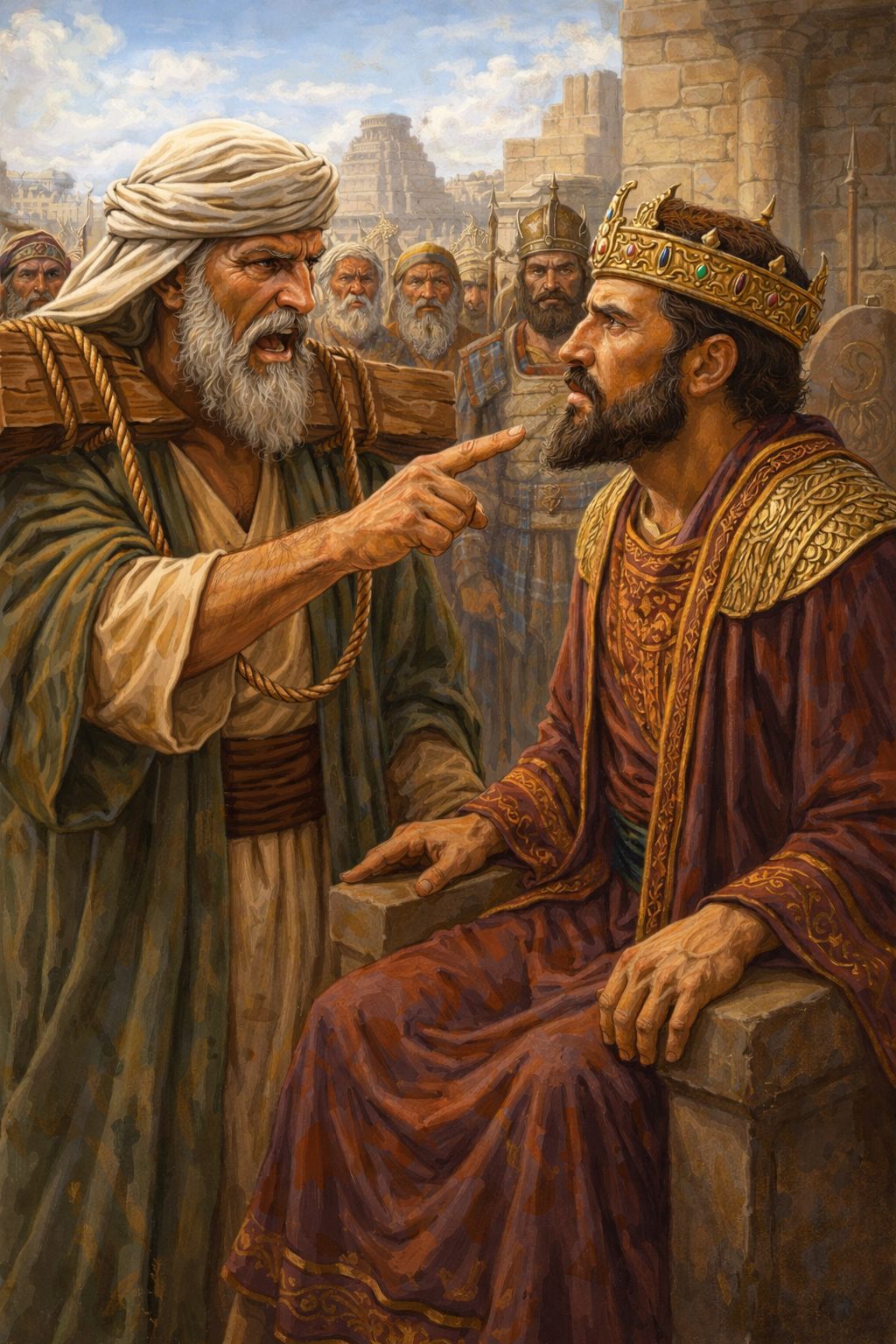
JEREMIAH'S CLEAR WARNING
TO KING ZEDEKIAH - SUBMIT!
The first message was to the messengers (Jer 27:1-11). Now Jeremiah addressed the message to King Zedekiah (Jer 27:12-15). This message has some similarities to Jer 21:1-10.
I spoke words like all these The phrase “like all these” refers to the same message Jeremiah had already delivered to the messengers of the surrounding nations in Jer 27:1-11. In other words, Jeremiah is saying he gave Zedekiah the same entire prophetic message of submission, warning, and promise he had just proclaimed to the nations. Here is a summary...
- God has given all nations into the hand of Nebuchadnezzar (Jer 27:5–7)
- God commanded the nations to submit to Babylon’s yoke
- Their refusal would bring sword, famine, and pestilence (Jer 27:8)
- God exposes the false prophets who promised deliverance (Jer 27:9–10)
- God promised that submission would allow the nations to remain in their land and live relatively normal lives (Jer 27:11)
To Zedekiah king of Judah, saying - Pause for a moment and imagine Jeremiah walking into Zedekiah's throne room with a yoke draped over his shoulders (See picture above)! In a sense Jeremiah had already "spoken" to the King, who surely discerned the meaning of the symbolism! But Jeremiah would back up his symbol with truth so there would be no room for misunderstanding the message!
Bring your necks under the yoke of the king of Babylon and serve him and his people, and live! - These three commands form a unified call to Zedekiah to humble himself, to submit to God’s discipline as Nebuchadnezzar's slave, and thereby to preserve his life. This was not the only time Zedekiah had heard a similar warning from Yahweh. Recall in Jer 21:8 Jeremiah was charged to “say to the people, ‘Thus says the LORD, “Behold, I set before you the way of life and the way of death." Notice God's grace here, for even when His commands seemed harsh, obedience would bring blessing, in this case life. Zedekiah’s refusal to heed Jeremiah’s warning ultimately led to Jerusalem’s destruction and his own downfall (2 Kings 25:7). Mark it down that life and peace come through yielding to God’s will, even when it requires surrendering one's own plans and/or pride.
NET NOTE The verbs in this verse are all plural. They are addressed to Zedekiah and his royal advisers (compare Jer 22:2).
Bob Utley Jeremiah's words to King Zedekiah have urgency. bring your necks under the yoke ‒ Hiphil IMPERATIVE serve him ‒ Qal IMPERATIVE live ‒ Qal IMPERATIVE
G Campbell Morgan - Bring your necks under the yoke of the king of Babylon, and serve him and his people, and live. Why will ye die ?—Jer. 27.12-13.
This was the prophet's appeal to Zedekiah, and to the nation through him, to submit themselves to the discipline which their sins had made inevitable. The situation was acute. Jeremiah was foretelling with determined insistence the fall of the city. The false prophets were declaring that the city was safe, and were counseling resistance to the king of Babylon. All the politicians, and the king, were influenced by these prophets, because their statements harmonized with their own desires. Jeremiah knew that such resistance was not only useless, but was wicked, and would inevitably bring yet worse sufferings upon the people. He plainly declared that Nebuchadnezzar was in this hour the servant and instrument of Jehovah; and, therefore, to rebel against him was to rebel against God, and that was futile and the ultimate in wickedness. When God chastises for sin, the true action is that of yielding to His discipline, by accepting the stroke which He sends. When we do so, we find that the suffering is the way of restoration. To rebel against such suffering, and to oppose our wills and our strength to it, is not to escape it, but to miss its restoring intention, and to involve ourselves in more terrible suffering. It was an understanding of this which made David, when he had sinned in numbering the people from a wrong motive, say: "Let us fall now into the hand of Jehovah; for His mercies are great; and let me not fall into the hand of man."
Jeremiah 27:13 “Why will you die, you and your people, by the sword, famine and pestilence, as the LORD has spoken to that nation which will not serve the king of Babylon?
NLT - "Why do you insist on dying--you and your people? Why should you choose war, famine, and disease, which the LORD will bring against every nation that refuses to submit to Babylon's king?
- Why: Jer 38:20 Pr 8:36 Eze 18:24,31 33:11
- by the sword: Jer 27:8 24:9 38:2 Eze 14:21
DO NOT FIGHT GOD'S
REVEALED WILL
Why will you die, you and your people, by the sword, famine and pestilence, as the LORD has spoken to that nation which will not serve the king of Babylon - Jeremiah is pleading with King Zedekiah and the people of Judah to listen to God’s warning. He had seen what happened to his nephew Jeconiah and that still did not get his attention! The Lord had decreed that Babylon’s domination over Judah was His chosen instrument of judgment for their persistent sin and rebellion. Therefore, submission to Babylon was not merely political surrender but was an act of obedience to God’s will.
NET NOTE Heb “Why should you and your people die …?” The rhetorical question expects the answer made explicit in the translation, “There is no reason!”
Arthur Cundall - Judging by the frequency with which he consulted this prophet he did not consider him merely an eccentric, but on the other hand he did not follow his advice, so intimidated was he by his advisers. Jeremiah gave the same solemn warning to the king; security lay in submission to the Babylonians, not in listening to the false prophets, who sought to fan the flames of a misguided patriotism. (The Open Your Bible Commentary: The Old Testament Page by Page)
Jeremiah 27:14 “So do not listen to the words of the prophets who speak to you, saying, ‘You will not serve the king of Babylon,’ for they prophesy a lie to you;
NET Do not listen to the prophets who are telling you that you do not need to serve the king of Babylon. For they are prophesying lies to you.
NLT Do not listen to the false prophets who keep telling you, 'The king of Babylon will not conquer you.' They are liars.
- Do not listen Jer 27:9 Isa 28:10-13 2Co 11:13-15 Php 3:2
- they prophesy a lie to you : Jer 27:10 14:14 23:21,25 28:15 29:8,9 1Ki 22:22,23 Eze 13:6-15,22,23 Mic 2:11 Mt 7:15 2Pe 2:1-3 1Jn 4:1
DO NOT EMBRACE
FALSE HOPES
So do not listen to the words of the prophets who speak to you, saying, ‘You will not serve the king of Babylon,’ for they prophesy a lie to you - The people of Judah and Jerusalem were assaulted by a veritable chorus of voices from the false prophets strongly supporting the policy of resisting Babylon, claiming the yoke would be off soon (cf 2 years, Jer 28:3). What is amazing is that these prophets are speaking a message that is already contradicted by the fact that the exile had already begun, for Jehoaichin was already captive in Babylon (cf "serve the king") and some of the temple treasures had been removed!
New Bible Commentary adds that "The false prophets have now to argue that these will soon be brought back. Their position increasingly goes against the evidence. Yet they go on holding it. Even what remains of the temple treasures will soon be taken also (Jer 27:19; cf. Jer 52:17; cf. 1 Ki. 7:15-37). The importance of the loss of these treasures cannot be overestimated for the people of Judah. Their whole understanding of themselves was bound up with these things. The temple and its trappings had indeed been given to them by God. But if they had become themselves the object of their hope (cf. Jer 7:4), then they would have to be taken from them. The exile, in an important sense, consists in the loss of the temple; it is also, however, the opportunity to seek God again in a real way. This is why it was God's chosen way to the renewal of the people. It is sometimes necessary for God's people to be shown that they have come to trust in outward things rather than in God himself.
Bob Utley "for I have not sent them" This statement is repeated in Jer. 23:21 and 29:9. I wonder if the false prophets thought He had or if they knew in their hearts they were speaking only for themselves (or because of political pressure).
Jeremiah 27:15 for I have not sent them,” declares the LORD, “but they prophesy falsely in My name, in order that I may drive you out and that you may perish, you and the prophets who prophesy to you.”
NET For I, the LORD, affirm that I did not send them. They are prophesying lies to you. If you listen to them, I will drive you and the prophets who are prophesying lies out of the land and you will all die in exile."
NLT This is what the LORD says: 'I have not sent these prophets! They are telling you lies in my name, so I will drive you from this land. You will all die-- you and all these prophets, too.'"
- that I: Jer 27:10 2Ch 18:17-22 25:16 Eze 14:3-10 Mt 24:24 2Th 2:9-12 2Ti 2:17-19 4:3,4 Rev 13:7,8,12-14
- ye: Jer 6:13-15 8:10-12 14:15,16 20:6 23:15 28:16,17 29:22,23,31,32 Mic 3:5-7 Mt 15:14 Rev 19:20
GOD'S PROPHECY - PERISH FOR
LISTENING TO FALSE PROPHETS
for - Term of explanation. Here Jeremiah is clearly explaining why Zedekiah should not listen to these other prophets!
I have not sent them,” declares the LORD - While Yahweh did not send them, also He did not STOP them from coming. Why? Their presence serves as a test of the people’s hearts: whether they will heed the hard, truth-filled words of His true prophet Jeremiah or prefer the soothing but deceptive assurances of false prophets. In this way, false prophets become instruments of exposure, revealing whether the people are willing to embrace truth or are inclined toward comforting lies (cf. Dt 13:3).
But they prophesy falsely in My name - Notice that those who claim God's Name can still speak falsehood. It happened in Jeremiah's day and it is still true in our day. We have the Spirit of Truth and the Word of Truth to enable us to discern truth from error.
in order that I may drive you out and that you may perish, you and the prophets who prophesy to you.” - The NET captures the force well: “If you listen to them, I will drive you and the prophets who are prophesying lies out of the land and you will all die in exile.” Here the Lord exposes the deadly deception of the false prophets who claimed divine authority while directly contradicting His true word. Their message was not merely mistaken but spiritually destructive, for by persuading the king and the people to trust in lies, they were actually hastening judgment. The warning is sobering for all who listen and the prophets who speak will share the same fate, that of exile followed by death, demonstrating that rejection of God’s truth leads not to peace, but to ruin.
NET NOTE The verbs are again plural referring to the king and his royal advisers.
Jeremiah 27:16 Then I spoke to the priests and to all this people, saying, “Thus says the LORD: Do not listen to the words of your prophets who prophesy to you, saying, ‘Behold, the vessels of the LORD’S house will now shortly be brought again from Babylon’; for they are prophesying a lie to you.
- Behold: Jer 28:3 2Ki 24:13 2Ch 36:7-10 Da 1:2
- for: Jer 27:10,14 Isa 9:15
Related Passages:
2 Kings 24:12-13 (TEMPLE TREASURES TAKEN IN 597 BC) Jehoiachin the king of Judah went out to the king of Babylon, he and his mother and his servants and his captains and his officials. So the king of Babylon took him captive in the eighth year of his reign. 13 He carried out from there all the treasures of the house of the LORD, and the treasures of the king’s house, and cut in pieces all the vessels of gold which Solomon king of Israel had made in the temple of the LORD, just as the LORD had said.
DO NOT HEED LIES OF
TEMPLE VESSELS RESTORED
Then - This then marks shift in the audience addressed by Jeremiah. Jeremiah had reasoned with the messengers (Jer 27:1-11), King Zedekiah and now with the priests and people (Jer 27:16-22)
I spoke to the priests and to all this people, saying, “Thus says the LORD: Do not listen to the words of your prophets who prophesy to you, saying, ‘Behold, the vessels of the LORD’S house will now shortly be brought again from Babylon’; for they are prophesying a lie to you - This wasn't just false optimism but outright lying! Like I used to tell my 4 children when they lied "Liar, liar, pants on fire!" Nebuchadnezzar had left some vessels after the invasion and exile in 597 BC but Yahweh says the next invasion (shortly) in 586 BC would take the remainder of the Temple vessels.
If you watched Raiders of the Lost Ark, you are probably wondering why there has been absolutely no mention of the Ark of the Covenant in any of the passages describing the taking of the Temple treasures. Anything we might say is speculation. What we do know from Rev 11:19 is that John described "the ark of His covenant appeared in His temple."
Charles Feinberg: The vessels were originally made by Solomon but were doubtless added to through the years by gifts from the people (cf. 1 Kings 7:15, 23, 27, 48-50). Some were carried away in the deportation of Jehoiakim (cf. 2 Chron 36:5-6), and even more were carried in 597 B.C. (cf. v. 20; 2 Kings 24:13). (See The Expositor's Bible Commentary - Abridged Edition)
Arthur Cundall notes that "Normally a conqueror would take the idols of the countries he defeated and place them in the sanctuary of his own god, but as Judah’s faith was imageless, the temple vessels had been taken instead (2 Kings 24:13 suggests that some had been melted down). The remaining vessels had acquired a great significance in the light of this, and their return was a point of honor. How chilling Jeremiah’s words must have seemed, when he foretold that the vessels which had been left by Nebuchadnezzar in the temple would also join the Babylonian hoard (19–22)! (The Open Your Bible Commentary: The Old Testament Page by Page)
NET NOTE This refers to the valuable articles of the temple treasury which were carried off by Nebuchadnezzar four years earlier when he carried off Jeconiah, his family, some of his nobles, and some of the cream of Judean society (2 Kgs 24:10–16, especially v. 13 and see also vv. 19–20 in the verses following).
Bob Utley "the vessels" See Jer. 27:18; 1 Kgs. 7:15-20; Jer. 52:17ff. The first deportation had already occurred (cf. Jer. 27:20). However, the false prophets were asserting these taken items would be returned soon.
John Walton - articles from the Lord’s house. The articles here probably refer to all types of movable objects in the temple, including vessels and utensils. Nebuchadnezzar carried off many of the temple treasures in the first capture of Jerusalem in 597 B.C., but there were still some accessories that were carried off eleven years later. For more information see comments on Daniel 1:2 and 5:2. For description of the articles see the various comments in 2 Chronicles 4. (IVP Bible Background Commentary: Old Testament)
Jeremiah 27:17 “Do not listen to them; serve the king of Babylon, and live! Why should this city become a ruin?
NET Do not listen to them. Be subject to the king of Babylon. Then you will continue to live. Why should this city be made a pile of rubble?'"
NLT Do not listen to them. Surrender to the king of Babylon, and you will live. Why should this whole city be destroyed?
- serve: Jer 27:11,12
- why: Jer 27:13 38:17,23
SURRENDER AND
SURVIVE!
Do not listen to them; serve the king of Babylon, and live! Why should this city become a ruin? Jeremiah is speaking to King Zedekiah and the people of Judah, warning them not to heed the false prophets who were promising deliverance from Babylon. These false prophets were assuring the people that God would soon break Babylon’s power and restore Judah’s independence. However, Jeremiah, speaking the true word of the Lord, declared that Babylon’s domination was part of God’s sovereign plan of judgment for Judah’s sin. The way of life is obedience to Yahweh!
From Herbert Lockyer...
Count each affliction, whether light or grave,
God’s messenger sent down to thee, do thou
With courtesy receive Him, rise and bow,
And ere His shadow pass thy threshold, crave
Permission first His heavenly feet to lave,
Then lay before Him all thou hast, allow
No cloud of passion to usurp thy brow,
Nor mar thy hospitality.
The love-tale
Infected Zion’s daughters with like heat;
Whose wanton passions in the sacred porch
Ezekiel saw.
Jeremiah 27:18 “But if they are prophets, and if the word of the LORD is with them, let them now entreat the LORD of hosts that the vessels which are left in the house of the LORD, in the house of the king of Judah and in Jerusalem may not go to Babylon.
NET I also told them, "If they are really prophets and the LORD is speaking to them, let them pray earnestly to the LORD who rules over all. Let them plead with him not to let the valuable articles that are still left in the LORD's temple, in the royal palace, and in Jerusalem be taken away to Babylon.
NLT If they really are prophets and speak the LORD's messages, let them pray to the LORD of Heaven's Armies. Let them pray that the articles remaining in the LORD's Temple and in the king's palace and in the palaces of Jerusalem will not be carried away to Babylon!'
- they: 1Ki 18:24,26
- let them: Jer 7:16 15:1 18:20 42:2 Ge 18:24-33 20:17 1Sa 7:8 12:19,23 2Ch 32:20 Job 42:8,9 Eze 14:14,18-20 22:30 Mal 1:9 Jas 5:16-18
JEREMIAH'S LITMUS
TEST FOR A TRUE PROPHET
But if they are prophets, and if the word of the LORD is with them, let them now entreat the LORD of hosts that the vessels which are left in the house of the LORD, in the house of the king of Judah and in Jerusalem may not go to Babylon - If these prophets were truly speaking for Yahweh, they should intercede before Him that the remaining vessels of the temple, along with the furnishings of the palace and the city still left in Jerusalem, might be preserved from being carried away to Babylon (cf. 2Ki 25:13–17; Da 1:1–2). Such a petition, and its fulfillment, would serve as a clear validation of their prophetic authenticity! But the very fact that they neither call for this nor secure such an outcome exposes their message as false. Instead of standing in the gap with effective intercession grounded in the true word of the LORD, they offer empty assurances, while the removal of these sacred and royal objects ultimately confirms Jeremiah’s prophecy and exposes them as deceivers.
In a time of crisis, intercession,
not false optimism, is called for
-- Arthur Cundall
Bob Utley "if they are prophets" Jeremiah puts them to the test of Deut. 13:1-3!
Jeremiah 27:19 “For thus says the LORD of hosts concerning the pillars, concerning the sea, concerning the stands and concerning the rest of the vessels that are left in this city,
NLT - "For this is what the LORD Almighty says about the bronze pillars in front of the Temple, the bronze Sea in the Temple courtyard, the bronze water carts, and all the other ceremonial articles.
NET For the LORD who rules over all has already spoken about the two bronze pillars, the large bronze basin called 'The Sea,' and the movable bronze stands. He has already spoken about the rest of the valuable articles that are left in this city.
- the pillars: Jer 52:17-23 1Ki 7:15-22 2Ki 25:13,17 2Ch 4:2-16
Related Passsages:
Jeremiah 52:17 Now the bronze pillars which belonged to the house of the LORD and the stands and the bronze sea, which were in the house of the LORD, the Chaldeans broke in pieces and carried all their bronze to Babylon.
TRUE PROPHECY
REGARDING THE TREASURES
For thus says the LORD of hosts (Jehovah of armies) concerning the pillars, concerning the sea, concerning the stands and concerning the rest of the vessels that are left in this city, This verse introduces a message from God through Jeremiah about the remaining sacred objects in the temple of Jerusalem. These items were part of Solomon’s original temple furnishings (1Ki 7:23–39). Many of the temple treasures had already been taken to Babylon during earlier invasions, but some still remained in Jerusalem.
Bob Utley Several of the items of the temple were left - the pillars (cf. 1 Kgs. 7:15,21,22; 2 Kgs. 25:13,17) the sea (cf. 1 Kgs. 7:23-26; description in 2 Chr. 4:2-5) the stands (cf. 1 Kgs. 7:27-39) the rest of the vessels. See Jer. 52:17-23 where all are taken to Babylon, most placed in Marduk's temple. See TOPIC: MARDUK
NET NOTE “The Sea” refers to the large basin that was mounted on twelve bronze bulls. It stood in front of the temple and contained water for the priests to bathe themselves (2 Chr 4:6; cf. Exod 30:17–21). It is described in 1 Kgs 7:23–26. The bronze stands are the movable bronze stands described in 1 Kgs 7:27–37. They were the stands for the bronze basins described in 1 Kgs 7:38–39. According to 2 Chr 4:6 the latter were used to wash the burnt offerings. The priests would have been very concerned especially about the big bronze basin and the movable stands and their basins because they involved their ritual purification apart from which they would have had no sanctity. These articles (or furnishings in this case) were broken up and the bronze carried away to Babylon along with all the other bronze, silver, and gold furnishings when the temple and the city were destroyed in 587 B.C. (see 2 Kgs 25:13–15; Jer 52:17–19).
John Walton - pillars. The bronze pillars (see comment on 1 Kings 7:15-22) were just outside the forecourt situated in the courtyard of the temple. They were given names (Jachin and Boaz), and evidently the king stood by one of them on special occasions (2 Kings 11:14; 23:3). 27:19. sea. The molten sea (see comment on 2 Chron 4:2-5) was a very large bronze basin over fifteen feet in diameter and over seven feet high. It rested on the backs of twelve bronze oxen, arranged in threes, with each group of threes facing in different directions. The vessel held about ten thousand gallons and was for ritual washing. movable stands. The movable stands were ten smaller bowls used for washing sacrificial animals. These were supported by decorated stands mounted on four mobile bronze wheels. Each basin had the capacity of two hundred gallons. Archaeologists have found a bronze stand that would have held just such a basin dating from the twelfth century B.C. The stand had wheels and was decorated with winged composite creatures (see 1 Kings 7:29)(IVP Bible Background Commentary: Old Testament)
Jeremiah 27:20 which Nebuchadnezzar king of Babylon did not take when he carried into exile Jeconiah the son of Jehoiakim, king of Judah, from Jerusalem to Babylon, and all the nobles of Judah and Jerusalem.
NLT - King Nebuchadnezzar of Babylon left them here when he exiled Jehoiachin son of Jehoiakim, king of Judah, to Babylon, along with all the other important people of Judah and Jerusalem.
- when: Jer 22:28, Coniah, Jer 24:1 2Ki 24:14-16, Jehoiachin, 2Ch 36:10,18
Related Passages:
2 Kings 24:12 Jehoiachin the king of Judah went out to the king of Babylon, he and his mother and his servants and his captains and his officials. So the king of Babylon took him captive in the eighth year of his reign.
2 Chronicles 36:10 At the turn of the year (597 BC) King Nebuchadnezzar sent and brought him to Babylon with the valuable articles of the house of the LORD, and he made his kinsman Zedekiah king over Judah and Jerusalem.
MORE REGARDING
THE SACRED OBJECTS
Which Nebuchadnezzar king of Babylon did not take when (597 BC) he carried into exile Jeconiah the son of Jehoiakim, king of Judah, from Jerusalem to Babylon, and all the nobles of Judah and Jerusalem. - This verse continues Jeremiah’s message about the temple treasures and sacred objects that still remained in Jerusalem after the first Babylonian deportation. It refers to the earlier exile that took place in 597 B.C., when King Jeconiah (AKA Jehoiachin) and many of Judah’s leaders, craftsmen, and warriors were taken captive to Babylon by King Nebuchadnezzar.
Bob Utley The exile of Jehoiachin is described in Jer. 22:28; 24:1; 2 Kgs. 24:12,14-16; 2 Chr. 36:10,18.
John Walton - Jehoiachin’s exile. Jehoiachin’s imprisonment. The quick surrender by Judah may be the reason why the Babylonians were somewhat lenient in their treatment of the Judahites. The deportation of a rebellious monarch was common treatment by both the Assyrians and Babylonians. They were looked upon as rulers that had broken a loyalty oath with the Babylonians (or Assyrians) and were duly punished. The conquerors normally installed a monarch who was sensitive to their cause, often from the same royal house in order to preserve some sense of continuity with the local population. A Babylonian administrative text describes tribute from Iakukinu (Jeconiah, or Jehoiachin) to Nebuchadnezzar. (IVP Bible Background Commentary: Old Testament)
Jeremiah 27:21 “Yes, thus says the LORD of hosts, the God of Israel, concerning the vessels that are left in the house of the LORD and in the house of the king of Judah and in Jerusalem,
NET Indeed, the LORD God of Israel who rules over all has already spoken about the valuable articles that are left in the LORD's temple, in the royal palace of Judah, and in Jerusalem.
NLT Yes, this is what the LORD of Heaven's Armies, the God of Israel, says about the precious things still in the Temple and in the palace of Judah's king:
Yes, thus says the LORD of hosts, the God of Israel (Jehovah Sabaoth, LORD of hosts/of armies) - NET "the LORD God of Israel who rules over all"
Concerning the vessels that are left in the house of the LORD (the Holy Temple) and in the house of the king of Judah and in Jerusalem - This verse introduces God’s solemn message about the remaining sacred objects in Jerusalem after the first Babylonian invasion. In effect, Yahweh is addressing all that remained of Judah’s religious and political glory.
False prophets were assuring the people that the temple vessels already taken to Babylon would soon be returned and that the city would not fall again. Jeremiah, however, delivers the opposite message that the remaining vessels would also be carried away, and nothing could prevent it because this was God’s decree.
Jeremiah 27:22 ‘They will be carried to Babylon and they will be there until the day I visit them,’ declares the LORD. ‘Then I will bring them back and restore them to this place.’”
NLT - They will all be carried away to Babylon and will stay there until I send for them, says the LORD. But someday I will bring them back to Jerusalem again."
NET - He has said, 'They will be carried off to Babylon. They will remain there until it is time for me to show consideration for them again. Then I will bring them back and restore them to this place.' I, the LORD, affirm this!"
- carried: Jer 29:10 34:5 52:17-21 2Ki 24:13-17 2Ch 36:17,18 Da 5:1-4,23
- until: Jer 25:11,12 29:10 32:5 2Ch 36:21-23 Ezr 1:1-5 Pr 21:30 Da 9:2
- then: Ezr 1:7,11 5:13-15 7:9,19
Related Passages:
Ezra 1:7-11 Also King Cyrus brought out the articles of the house of the LORD, which Nebuchadnezzar had carried away from Jerusalem and put in the house of his gods; 8and Cyrus, king of Persia, had them brought out by the hand of Mithredath the treasurer, and he counted them out to Sheshbazzar, the prince of Judah. 9 Now this was their number: 30 gold dishes, 1,000 silver dishes, 29 duplicates; 1030 gold bowls, 410 silver bowls of a second kind and 1,000 other articles. 11 All the articles of gold and silver numbered 5,400. Sheshbazzar brought them all up with the exiles who went up from Babylon to Jerusalem.
FATE OF REMAINING
TREASURES IN JERUSALEM
They (the sacred articles) will be carried to Babylon and they will be there until the day I visit (pāqad) them,’ declares the LORD. The Hebrew verb visit (pāqad) describes a God Who intervenes, inspects, appoints, and ultimately holds accountable. His visitation that is never accidental, but always intentional, and perfectly aligned with His righteousness and covenant faithfulness. In context the "until" (exile up to point of completion) surely speaks of the termination of the 70 years of Judah's exile in Babylon.
NET NOTE on visit - This verb is a little difficult to render here. The word is used in the sense of taking note of something and acting according to what is noticed. It is the word that has been translated several times throughout Jeremiah as "punish [someone]." It is also used in the opposite of sense of taking note and "show consideration for" (or "care for;" see, e.g., Ruth 1:6). Here the nuance is positive and is further clarified by the actions that follow, bringing them back and restoring them.
J A Thompson: Yahweh’s final word was that the accessories of the temple and the royal palace would be taken to Babylon despite the words of the false prophets (v. 16). There they would remain until the day when Yahweh would give attention to them. Then they would be brought back and restored to their place. The chapter thus ends on a note of hope for the future. The nation stood under judgment, but beyond the judgment Yahweh promised restoration. (See The Book of Jeremiah - Page 107)
‘Then - When? When God's wrath has been fulfilled on Judah and the years of deserved exile have been "served."
I will bring them back and restore them to this place - Jeremiah concludes God’s message with a promise of hope., but do not miss the context here. In the immediate context, them refers specifically to the temple vessels (articles) that had been taken from Jerusalem to Babylon. Even in the midst of judgment, God assures His people that loss of their Temple would not be the end of the story. Even the temple vessels, though holy, were not exempt from judgment when the people defiled God’s house, but neither were they forgotten. Their exile and return mirror Israel’s own story that what God disciplines, He also restores in His appointed time....
“For thus says the LORD, ‘When seventy years have been completed for Babylon, I will visit you and fulfill My good word to you, to bring you back to this place. (Jer 29:10)
Bob Utley Then I will bring them back Here is the hope and promise realized in Ezra 1:7-11; 5:13-15; 7:19! (ED: YES HE DID BRING THE PEOPLE BACK, BUT HERE HE IS REFERRING TO BRINGING BACK THE HOLY VESSELS!)
Cundall - God was not indifferent to this situation and he would vindicate his honor in his own time and way (27:22b). See Ezra 1:7–11 for the thrilling way in which God moved the heart of a heathen emperor to fulfill this prophecy.
John Walton - sacred things taken into exile and brought back. Jerusalem was not the only temple in the ancient world that had its articles carried off and returned at a later date. For example, the statue of Marduk was plundered from Babylon on a number of occasions (e.g., by the Hittites in 1595 B.C., by Tukulti-Ninurta I of Assyria, c. 1235 B.C., and by Sennacherib in 689 B.C.). Eventually the statue of the deity was returned to its original place in Babylon. (IVP Bible Background Commentary: Old Testament)
Visit (punish, number) (06485) pequddah/pāqadh/paqad conveys the root idea of something that is attended to or set in order -- fighting men under an officer (2 Chr. 17:14), priests in an order (1 Chr. 23:11; 24:19); arrangement of Tabernacle (Nu 4:16[2x]). Office of one in charge of something (Ps 109:8) or officers (2 Ki. 11:18; Isa. 60:17). Usually pequddah means accounting when God attended to people's actions, usually to call them to account for their sins (Nu 16:29; Jer. 48:44). In Job 10:12 God's attention was for Job's good.
The Hebrew verb pāqad carries the foundational idea of intervening with purpose, whether for blessing or judgment. In the Qal stem, it expresses a wide semantic range including “to attend to,” “to care for,” “to take note of,” “to muster,” “to appoint,” “to number,” and also “to call to account” or “to punish.” Thus, the same verb can describe God’s gracious visitation as well as His judicial oversight, depending on the context (cf. Gen 21:1; Ex 32:34).
In the Niphal, pāqad conveys passive or reflexive nuances such as “to be missed,” “to be lacking,” or “to be appointed,” while the Piel/Pual emphasize the act of mustering or being mustered. In the Hiphil, the verb often means “to appoint,” “to entrust,” or “to commit,” highlighting delegated responsibility.
The related noun פְּקֻדָּה (pequddāh), derived from pāqad, occurs thirty-two times in the Old Testament and reflects the ideas of oversight, charge, office, or visitation. It frequently denotes positions of entrusted authority (Num 3:32, “Eleazar…had the oversight [pequddāh] of those who perform the duties of the sanctuary”; cf. Isa 60:17; Ezek 44:11). Yet the same word can also signify divine visitation in judgment (Isa 10:3; Jer 8:12; Hos 9:7), underscoring that God’s “inspection” may result either in reward or reckoning.
At its core, pāqad speaks of God’s active involvement in human affairs—He does not remain distant, but “visits” His people in ways that are always purposeful. Sometimes that visitation brings life and blessing, as when “the LORD took note of Sarah as He had said” (Gen 21:1). At other times, it brings accountability, for God “visits” iniquity when sin persists (Ex 32:34). Even in suffering, however, His visitation may reflect providential care, as Job acknowledges: “You have granted me life and lovingkindness; and Your care (pequddāh) has preserved my spirit” (Job 10:12).
In sum, pāqad and its cognates reveal a God who intervenes, inspects, appoints, and ultimately holds accountable—a divine visitation that is never accidental, always intentional, and perfectly aligned with His righteousness and covenant faithfulness.