Hosea 11:2
Hosea 11:3
Hosea 11:4
Hosea 11:5
Hosea 11:6
Hosea 11:7
Hosea 11:8
Hosea 11:9
Hosea 11:10
Hosea 11:11
Hosea 11:12
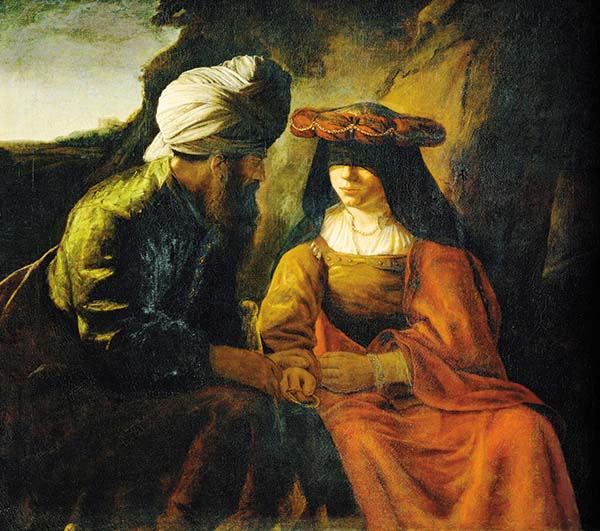
Hosea's Unconditional Love for Gomer
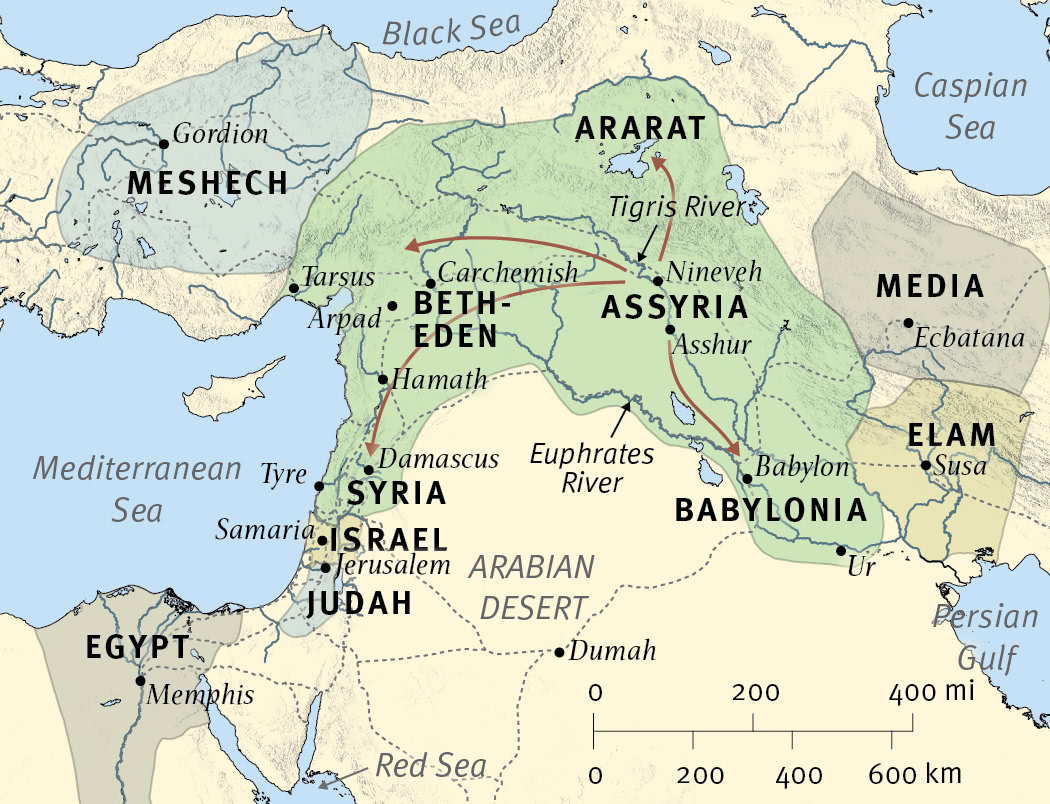
Source: ESV Global Study Bible
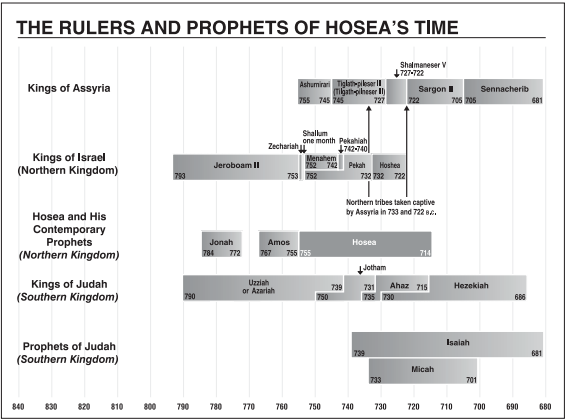
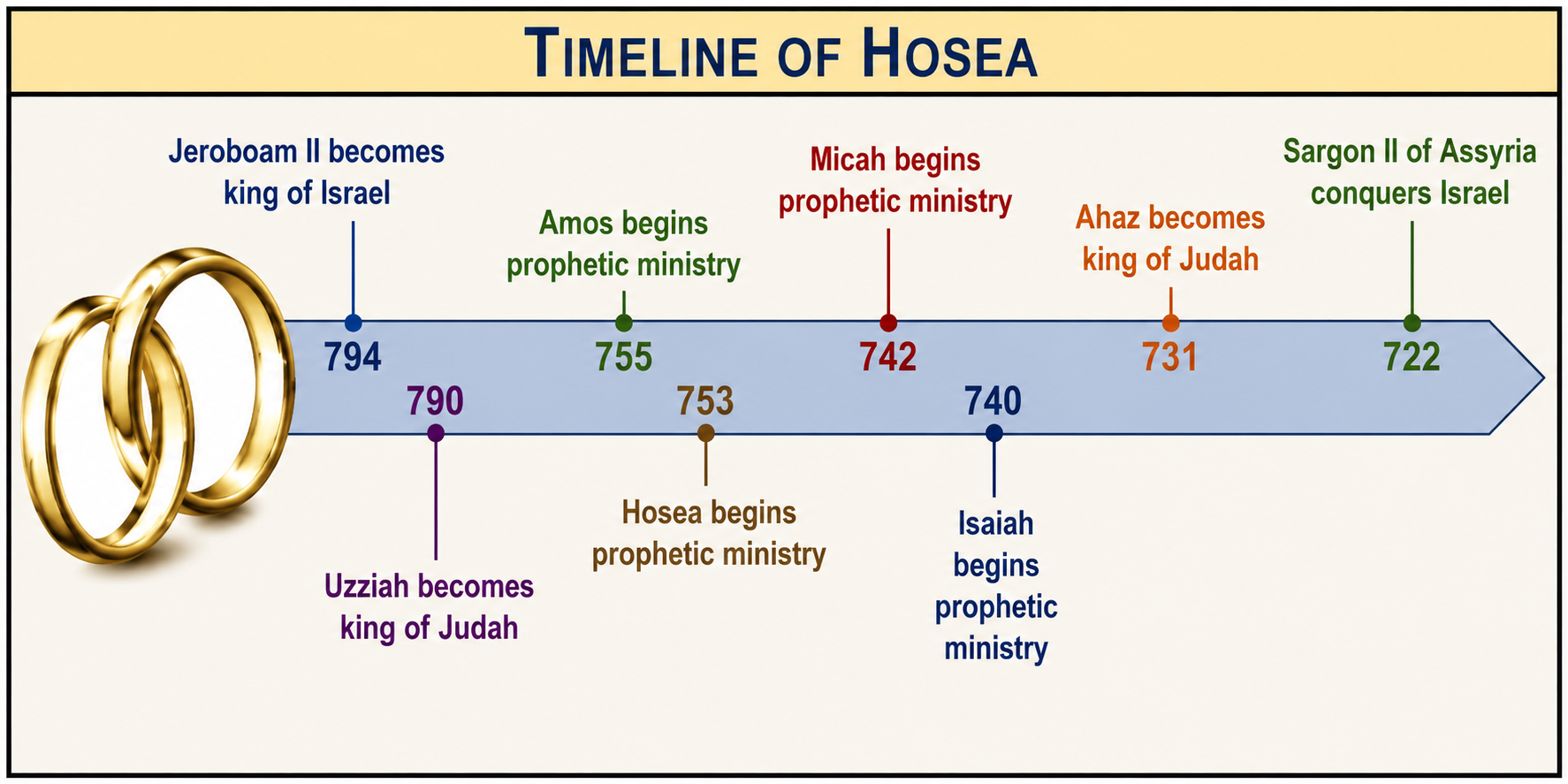
OUTLINE OF HOSEA
I. The Prodigal Wife, Hosea 1:1-3:5
A. Her Unfaithfulness, Hosea 1:1-11
B. Her Punishment, Hosea 2:1-13
C. Her Restoration and Israel's, Hosea 2:14-23
D. Her Redemption, Hosea 3:1-5
II. The Prodigal People, Hosea 4:1-14:9
A. The Message of Judgment, Hosea 4:1-10:15
1. The indictment, Hosea 4:1-19
2. The verdict, Hosea 5:1-15
3. The plea of Israel, Hosea 6:1-3
4. The reply of the Lord, Hosea 6:4-11
5. The crimes of Israel, Hosea 7:1-16
6. The prophecy of judgment, Hosea 8:1-10:15
B. The Message of Restoration, Hosea 11:1-14:9
1. God's love for the prodigal people, Hosea 11:1-11
2. God's chastisement of the prodigal people, Hosea 11:12-13:16
3. God's restoration of the prodigal people, Hosea 14:1-9
Borrow Ryrie Study Bible - page 1292
Hosea 11:1 When Israel was a youth I loved him, And out of Egypt I called My son.
KJV When Israel was a child, then I loved him, and called my son out of Egypt.
NET When Israel was a young man, I loved him like a son, and I summoned my son out of Egypt.
NLT "When Israel was a child, I loved him, and I called my son out of Egypt.
BGT διότι νήπιος Ισραηλ καὶ ἐγὼ ἠγάπησα αὐτὸν καὶ ἐξ Αἰγύπτου μετεκάλεσα τὰ τέκνα αὐτοῦ
LXE Early in the morning were they cast off, the king of Israel has been cast off: for Israel is a child, and I loved him, and out of Egypt have I called his children.
CSB When Israel was a child, I loved him, and out of Egypt I called My son.
ESV When Israel was a child, I loved him, and out of Egypt I called my son.
NIV "When Israel was a child, I loved him, and out of Egypt I called my son.
YLT Because Israel is a youth, and I love him, Out of Egypt I have called for My Son.
NKJ "When Israel was a child, I loved him, And out of Egypt I called My son.
NJB When Israel was a child I loved him, and I called my son out of Egypt.
NRS When Israel was a child, I loved him, and out of Egypt I called my son.
RSV When Israel was a child, I loved him, and out of Egypt I called my son.
NAB When Israel was a child I loved him, out of Egypt I called my son.
GWN "When Israel was a child, I loved him, and I called my son out of Egypt.
BBE When Israel was a child he was dear to me; and I took my son out of Egypt.
ASV When Israel was a child, then I loved him, and called my son out of Egypt.
- Israel (KJV): Ho 2:15 De 7:7 Jer 2:2 Eze 16:6 Mal 1:2
- called (KJV): Ex 4:22 Mt 2:15
Related Passages:
Matthew 2:13-15 Now when they had gone, behold, an angel of the Lord *appeared to Joseph in a dream and said, “Get up! Take the Child and His mother and flee to Egypt, and remain there until I tell you; for Herod is going to search for the Child to destroy Him.” 14So Joseph got up and took the Child and His mother while it was still night, and left for Egypt. 15He remained there until the death of Herod. This was to fulfill what had been spoken by the Lord through the prophet: “OUT OF EGYPT I CALLED MY SON.”
Exodus 4:22 “Then you shall say to Pharaoh, ‘Thus says the LORD, “Israel is My son, My firstborn.
Deuteronomy 7:6-8 “For you are a holy people to the LORD your God; the LORD your God has chosen you to be a people for His own possession out of all the peoples who are on the face of the earth. 7 “The LORD did not set His love on you nor choose you because you were more in number than any of the peoples, for you were the fewest of all peoples, 8 but because the LORD loved you and kept the oath which He swore to your forefathers, the LORD brought you out by a mighty hand and redeemed you from the house of slavery, from the hand of Pharaoh king of Egypt.
Deuteronomy 10:15 “Yet on your fathers did the LORD set His affection to love them, and He chose their descendants after them, even you above all peoples, as it is this day.
Romans 11:28 From the standpoint of the gospel they are enemies for your sake, but from the standpoint of God’s choice they are beloved for the sake of the fathers;
YAHWEH'S LOVE LED
ISRAEL OUT OF EGYPT
Derek Kidner: This chapter is one of the boldest in the Old Testament – indeed in the whole Bible – in exposing to us the mind and heart of God in human terms. (ED: SEE Anthropomorphism) (SEE The Message of Hosea)
When Israel was a youth I loved him, And out of Egypt I called My son - This is one of the most tender pictures of Yahweh's relationship with Israel. After the severe judgments of Hosea 10, God looks back to the beginning of the relationship, recalling Israel's national “childhood” and His fatherly love for him. The imagery of Hosea 11:1–4 is intensely personal: God loved His son, called him, taught him to walk, took him in His arms, healed him, led him with cords of love, and fed him. Yet the tragedy is that the more God loved and called Israel, the farther Israel turned away (Hos 11:2–4).
When Israel was a youth - This looks back to Israel's early history, especially the Egyptian bondage and Exodus. Israel was not yet the established nation that Hosea's contemporaries knew. God found His people oppressed in Egypt, delivered them, entered into covenant with them at Sinai, and brought them toward the Promised Land (Ex 3:7–10; Dt 7:6–8). “Youth” therefore pictures the infancy of Israel as a nation.
Charles Feinberg - From her earliest history God loved Israel; He says so. And nowhere in the Bible do we read that God has to explain this love or defend it, as though to apologue for it. He loves sovereignly with boundless love, and loves because He loves. (See The Minor Prophets)
I loved him - Everything begins with God's sovereign love, not Israel's merit. Long before Israel could boast of prosperity, armies, kings, or accomplishments, Yahweh loved them. Moses had emphasized that God did not choose Israel because they were numerous or impressive, but because “the LORD loved you” (Dt 7:7–8; cf. Dt 10:15). Hosea is reminding apostate Israel that their history began not with their love for God, but with God's love for them. This truth makes Israel's later apostasy all the more tragic. Hosea 11 is not merely the story of a rebellious nation breaking laws; it is the story of a beloved son breaking his Father's heart (See Ezekiel 6:9)
And out of Egypt I called My son - My son unmistakably refers to the nation Israel as we see in Exodus when Yahweh had told Pharaoh “Israel is My son, My firstborn.” (Ex 4:22) Hosea is recalling an actual historical event when God called His son Israel out of Egyptian bondage. The Exodus was not just a political liberation, but was the loving Father redeeming His son from slavery and bringing him to Himself (Ex 19:4).
Matthew quotes Hosea 11:1 after Joseph takes Jesus to Egypt and later returns with Him writing “Out of Egypt I called My Son.” (Mt 2:15) In Hosea's original context, this is clearly looking backward to Israel's Exodus, rather than functioning as a prediction that readers would have recognized as referring to Messiah. Yet Matthew, under inspiration of the Spirit, sees Israel's history recapitulated and brought to its fullest expression in Jesus Christ.
Charles Feinberg - If we turn to the New Testament we find this passage is quoted in Matthew 2:15 of our Lord Jesus Christ. Who was wrong? Hosea or Matthew? Neither, for both were moved by the same Spirit to give us an inerrant record. Hosea calls Israel “my son” and Matthew calls the Lord Jesus “my son.” The answer is to be found in the wonderful way in which Christ identifies Himself with His people, so that His position is theirs and His relationship is theirs. More than once Israel and the Messiah are viewed together, as though to form a composite picture. Read Isaiah 49:3 for an example. In that passage Isaiah is giving us the second of the Servant Songs leading up to the climax in Isaiah 53. He has been speaking clearly of the Messiah and then calls Him “Israel.” We do well to remember that the Messiah and Israel are inseparably and eternally bound together in the bundle of life in the Lord our God. (See The Minor Prophets)
Henry Morris - called my son. This verse was appropriated and modified by the Holy Spirit through Matthew, and applied to the child Jesus. When Joseph and Mary fled with Him to Egypt to escape Herod's slaughter of the children, He "was there until the death of Herod: that it might be fulfilled which was spoken of the Lord by the prophet, saying, Out of Egypt have I called my son" (Matthew 2:15). Israel was thus taken as a type of God's only begotten Son, who was Himself Israel's substitute to endure the wrath of God, thus assuring Israel's ultimate repentance and restoration.
Believer's Study Bible - Chapter 11 is the second great love chapter in Hosea. Chapter 3 is the first. In ch. 11 God's love is like that of a father to a child, while in ch. 3 it is like that of a husband to a wife. The calling of Israel out of Egypt foreshadows the experience of Jesus, as noted in Matt. 2:13-15.
H. D. Beeby: Israel’s history begins with election, an election out of bondage because of God’s love. Historically Israel’s beginning was with the Exodus, which like every specific event had long roots in the past; but theologically the beginning was in love and in election. Israel would have had no existence without God’s love and God’s choosing. But this was no “love-child,” where the “love” only accounts for the origin of the child; Israel’s whole existence—present and future as well as past—depended on God’s continuing love and the perpetual election expressed in Covenant. The chosen people live forever only with the patient, long-suffering love of God. The whole prophecy bears witness to this truth. (SEE Hosea: Grace Abounding - Page 11)
Bob Utley - "When Israel was a youth I loved him" This is very similar in emphasis to Hosea 9:10 and 10:1. It focuses on YHWH's love and choice of the descendants of Abraham (cf. Deut. 4:32-40) in Egypt to uniquely be His people (cf. Amos 3:2, which reflects Exod. 19:5-6), which was a prophetic fulfillment of Gen. 15:12-21. ▣ "And out of Egypt I called My son" Notice the emphasis on election, "I called" (BDB 894, KB 1128, Qal PERFECT). YHWH chose a man to choose a family to choose a nation to represent and reveal Him to the world (cf. Gen. 12:3; Exod. 19:5-6). Out of this family would come the Messiah (i.e. typological use of this text in Matt. 2:15 in the life of Jesus).
M. Daniel Carroll R.: Matthew 2:15 cites Hosea 11:1 as “fulfilled” in Jesus. How can this be, if the allusion in Hosea to the exodus is retrospective and not a prediction? The answer is that in the gospel of Matthew the life of Jesus recapitulates the history of Israel in many ways. For example, paralleling the movement from bondage to Sinai, Jesus comes out of Egypt (Mt 2), goes through the waters (of baptism; Mt 3), is tempted in the desert (forty days and nights; Mt 4), and then goes to a mountain to speak of the law (Mt 5–7). He is the true and ideal Israel. The prophet recognized that the exodus offered patterns: it was a symbol of exile (8:13; 9:3) as well as a type for future hope (11:10–11; cf. Isa 11:11–16; Isa 51:9–11; Jer 23:7–8; Mic 7:15). Matthew sees patterns in God’s liberating initiative at the exodus, too; as God redeemed his people from Egypt long ago, he now was accomplishing a more glorious redemption through Jesus, the greater Son (C. Keener, Matthew [Grand Rapids: Eerdmans, 1999], 106–9; cf. Garrett, 220–22). (SEE Hosea, Amos, Micah)
Matthew Henry - Verses 1-7. When Israel were weak and helpless as children, foolish and froward as children, then God loved them; he bore them as the nurse does the sucking child, nourished them, and suffered their manners. All who are grown up, ought often to reflect upon the goodness of God to them in their childhood. He took care of them, took pains with them, not only as a father, or a tutor, but as a mother, or nurse. When they were in the wilderness, God showed them the way in which they should go, and bore them up, taking them by the arms. He taught them the way of his commandments by the ceremonial law given by Moses. He took them by the arms, to guide them, that they might not stray, and to hold them up, that they might not stumble and fall. God's spiritual Israel are all thus supported. It is God's work to draw poor souls to himself; and none can come to him except he draw them. With bands of love; this word signifies stronger cords than the former. He eased them of the burdens they had long groaned under. Israel is very ungrateful to God. God's counsels would have saved them, but their own counsels ruined them. They backslide; there is no hold of them, no stedfastness in them. They backslide from me, from God, the chief good. They are bent to backslide; they are ready to sin; they are forward to close with every temptation. Their hearts are fully set in them to do evil. Those only are truly happy, whom the Lord teaches by his Spirit, upholds by his power, and causes to walk in his ways. By his grace he takes away the love and dominion of sin, and creates a desire for the blessed feast of the gospel, that they may feed thereon, and live for ever.
Lloyd Ogilvie: Outline - The Loneliness of Vulnerable Love (11:1–7) - The Glory of God’s Grace (11:8–9) - The Norm of the Future (11:10–11) The deepest level of loneliness is the anguish of unrelatedness, the disturbing realization of separation and estrangement. It is the pathos of longing to love a person and having your love resisted or rejected. . . We often hear about God’s grandeur and glory, His majesty and might. Don’t miss His loneliness. It is one of His greatest attributes. True love is inseparably linked to vulnerability. When God created us to receive His love and to love Him, He became vulnerable to our rejection. It is awesome to contemplate. Almighty God, lonely. Lonely for the rapture of our reconciliation with Him. The intimacy for which we were created—His heart and our heart made one again. He is lonely for those who pretend He does not exist, those who deny their family likeness with independence and pride, and those who say they belong to Him but resist trusting Him completely. You and I. (SEE The Preacher's Commentary - Vol. 22: Hosea / Joel / Amos)
QUESTION - Is “out of Egypt I called my son” in Hosea 11:1 a Messianic prophecy?
ANSWER - Hosea 11:1 states, “When Israel was a child, I loved him, and out of Egypt I called my son.” Is this verse a Messianic prophecy?
The context of this verse speaks of the relationship the Lord had with the nation of Israel. The Lord loved Israel (Exodus 4:22-23) and rescued the people from slavery under Pharaoh, bringing them into the Promised Land. The analogy is that of God as the father and Israel as the child.
Jewish readers would have clearly understood this important statement. God’s supernatural power served as the basis of the nation’s freedom from Egypt and escape to a new land. The parallelism in the verse is Israel/child/son and loved/called. In both clauses, “I” (God) is the One initiating the action.
Matthew 2:13-15 provides further insight: “Now when they had departed, behold, an angel of the Lord appeared to Joseph in a dream and said, ‘Rise, take the child and his mother, and flee to Egypt, and remain there until I tell you, for Herod is about to search for the child, to destroy him.’ And he rose and took the child and his mother by night and departed to Egypt and remained there until the death of Herod. This was to fulfill what the Lord had spoken by the prophet, ‘Out of Egypt I called my son.’”
Matthew uses Hosea’s statement to show that the coming of the Messiah is an extension of the Lord’s love to His people. Matthew does not say that Hosea had Jesus in mind when Hosea 11:1 was originally written. Instead, Matthew says that the experience of Jesus matched what Hosea had written about Israel. Jesus was God’s Son, and He made a trip from Egypt to the land of Israel. Matthew was showing that Jesus completed what began with the exodus, connecting Jesus with the promise of Abraham and the leadership of Moses. The “calling” of God’s “son” (Israel) began in ages past and found its completion in the coming of Christ to fulfill the Law and the Prophets.
In summary, Hosea 11:1 is not a Messianic prophecy in the same way that prophecies such as Isaiah 9:6 are. Rather, it is a pictorial prophecy; that is, there are similarities in the Old Testament passage to a New Testament truth about Christ. This Old Testament “picture” of Christ is called a “type.” Matthew 2:15 can be seen as an analogy. Matthew is providing a connection between Jesus and God’s people of promise. As a Jew writing for primarily Jewish readers, Matthew found it important to point out many of the similarities between the nation of Israel and their Messiah, the One to fulfill the Prophets (Matthew 5:17).
‘When he arose, he took the young child and his mother by night, and departed into Egypt: and was there until the death of Herod: that it might be fulfilled which was spoken of the Lord by the prophet, saying, Out of Egypt have I called my son.’ Matthew 2:14–15
‘When Israel was a child, then I loved him, and called my son out of Egypt.’ Hosea 11:1
Mary and Joseph may have known of this prophecy, but I greatly question whether they perceived that it referred to their son at all, or to the Son of the Highest: but now they must do the very thing that God says shall be done, without knowing that they are fulfilling a Scripture. One of the worst things you and I can ever attempt is to try and fulfil a prophecy. Good mistress Rebecca wanted to fulfil a prophecy, and what a mess she made of it! She endeavoured to make her second son the heir, and in the attempt she brought upon him and herself a world of sorrow. Had she not better have let the prophecy alone? Surely, if a prophecy is made of God, God will see that it comes to pass. If it is a Chaldaic prophecy, a prophecy of soothsayers and magi, no doubt they will try to make their own oracle true, but the Lord, who sees the end from the beginning and ordains all things, can speak positively of the future. If any of you set up for prophets, beware of prophesying till you know that you can make it good. God does not need such petty provision: he wants no help from us: his word will surely be established. Mary and Joseph did not try to fulfil the prophecy, for they could not have understood it to mean what it did mean. It was purposely put in a dark and cloudy form, but still the Lord knew what he was doing: ‘that it might be fulfilled which was spoken of the Lord by the prophet, saying, Out of Egypt have I called my son.’
SUMMARY OF SERMON - Charles H. Spurgeon’s sermon "Out of Egypt. He teaches that just as God delivered Israel from bondage, He spiritually delivers believers from the darkness of the world.
Spurgeon drew profound spiritual applications from both Old Testament history and the New Testament flight of the Holy Family into Egypt. Key themes from his teachings include:
Spiritual Deliverance: Just as Israel was in bondage to Pharaoh, Spurgeon used Egypt to represent the world of sin. He preached that God’s people must be emancipated from spiritual darkness by the grace of Christ.>
Deliverance from Superstition: Spurgeon noted that "wherever Jesus goes, the air is sweetened". He argued that out of deep ignorance and superstition, God will still call His people to the praise of His glory.
The Calling of the Elect:
Spurgeon frequently reminded his congregation that true believers are "Israelites indeed," called out of spiritual Egypt by the Holy Ghost, and have their lives safely anchored in Christ's redeeming cross.
James Smith - THE DIVINE REVIEW HOSEA 11:1–11
Here Jehovah tenderly reminds His wayward people of what He had done for them. Oh, how ready we are to forget the past mercies of our God. “Son, remember”. The sin of discouragement may often be the sin of forgetfulness. “Bless the Lord, O my soul, and forget not all His benefits” (Psa. 103:1–5). He reminds them of—
I. What He Did for Them.
1. HE LOVED. “When Israel was a child, then I loved him” (v. 1). When Israel was a child then he had no wisdom or strength to glory in. But the child’s ignorance and weakness did not hinder the love of God. Let us never forget that God loved us even “while we were yet sinners.”
2. HE DELIVERED. “I called My Son out of Egypt” (v. 1). Out of the land of darkness, sorrow, and bondage. He hath delivered us out of the kingdom of darkness and the slavery of ignorance, into the glorious light and liberty of the children of God. Delivered that we might be a separated people unto His Name.
3. HE TAUGHT. “I taught Ephraim also to go, taking them by the arms” (v. 3). What a picture this is of Divine patience and carefulness. Like a father taking his child by the arms and teaching him to walk. God means us “to go,” and although we may feel shaky in our feet, He will “perfect His strength in our weakness.”
4. HE DRAWS. “I drew them with cords of a man, with bands of love” (v. 4). Not with cords of a beast, following in ignorance of its master’s will. Not with the iron bonds of compulsion, dragging against the will; but with that tender and most effective of all ties—LOVE. “The love of Christ constraineth us.” “O Love, that wilt not let me go, I yield my willing heart to Thee.”
5. HE ENCOURAGED. “How shall I give thee up?” (v. 8). What comfort we may draw from language like this, as if He said: “I have done great things for thee; I have had long patience with thee. How shall I give thee up?” Let us hear these words as coming from the lips of our Redeemer: “I have ransomed thee with My own Blood, endowed thee with My own life, called thee by My own Name, given thee My own Spirit, and promised thee Eternal Life and a place in My own Home. How shall I give thee up?”
6. HE ASSURED. “I am God, the Holy One, in the midst of thee” (v. 9). The assurance of His Presence is the fortaste of victory (Exod. 33:15). “Greater is He that is with us, and in us, than all that can be against us.” “He hath said, I will never leave thee nor forsake thee. So that we may boldly say, The Lord is My Helper, and I will not fear” (Heb. 13:5, 6). We may well have boldness in His service with such an all-sufficient and unfailing promise. For “in His presence there is fulness of joy” (Psa. 16:11). He also reminds them of—
II. How they had Requited His Goodness.
1. They had LISTENED TO OTHER VOICES. “They called them, so they went” (v. 2). How unstable are the human affections. The worshippers of other gods called them, so they sacrificed unto Baalim. Before we pass judgment on their shameful faithlessness, let us ask: Are there no voices of the world, the flesh, our social relationships or sceptical acquaintances to which we have listened and turned aside from our ardent service of God? Satan is an adept in this alluring art. “Be ye faithful unto death.”
2. They did not RECOGNISE HIS GOOD HAND as they should. “They knew not that I healed them” (v. 3). What? Recipients of His great mercies, and blind to the Giver? Is there any sin more common than this? The world is crowded with such sinners, and the so-called Church is by no means destitute of such wilful ingrates. They receive with open heart and willing arms all the mercies God may pour into their earthly lot, but never recognise the Giver with even an upward look. God has given His Son to the death of the Cross to save them, but they have never said: “Thanks be unto God for His unspeakable gift.”
3. They had A TENDENCY TO BACKSLIDE. “My people are bent on backsliding from Me” (v. 7). Alas, this bent is only too common among the Lord’s professing people. How much we need to pray: “Uphold Thou my goings, that I slip not.” The temptations of the world to turn aside always press heavily upon the Christian pilgrim. Yet in midst of all these tendencies to go out of His way, we are assured that He is faithful who hath promised. “Cleanse Thou me from secret faults.”
When Israel was a child, I loved him. Hosea 11:1
We can spare ourselves pain if we don't let ourselves become emotionally attached to anyone. But we will also miss out on some of the greatest joys in life. The more we love, the more we suffer. That's true. But the path of selfless love is also the path to some of our greatest joys.
In Hosea 11, God spoke of His love for Israel. He compared himself to a father caring for a child (Hos 11:3-4). But the people who should have brought Him joy caused Him pain instead. They rejected His love and guidance and did not honor Him (Hos 11:5, 7). God said He would discipline them, yet His sympathy was stirred and He promised He would not destroy the nation (Hos 11:9).
Loving others makes us vulnerable to hurt and disappointment, but the rewards are great when we choose to love in spite of the pain it will bring.—H. V L.
LOVE OPENS THE DOOR TO BOTH JOY AND PAIN.
WHAT WOULD MY CHURCH BE LIKE IF ALL ITS MEMBERS WERE JUST LIKE ME? (WOE!!!)
Hosea 11:1-11 TODAY IN THE WORD
The house where German scientist Albert Einstein did some of his most creative thinking in the early 1930s was so peaceful and tranquil that Einstein referred to it as his ""paradise."" He loved to take long walks in the pine forest behind the house, and he cherished the quiet and seclusion it provided.
But today the atmosphere around that wooden house in the German village of Caputh is anything but tranquil. It is at the center of a bitter ownership battle involving the village and Jewish families seeking to recover property lost to the Nazis.
The land of Israel was meant to be to God's people what the house at Caputh was to Albert Einstein: a place of peace, safety, and tranquility--and the site of fruitful labor. Israel had all these blessings and more in the promised land. But her sin turned her home into a place of turmoil and fruitlessness.
For the third time in Hosea's prophecy, God looks back with favor on Israel's early history. Here He is, Israel's loving Father, tenderly calling His child out of Egyptian slavery and into the land of milk and honey (Hosea 11:1).
The tender reminiscence continues in Hosea 11:3-4. God took His helpless nation by the arms and taught Israel to walk. He healed the nation's wounds and fed them from His hand.
But like a rebellious child running from its father's outstretched arms, Israel ran from God into the arms of Baal. To say that this showed arrogance and an astonishing lack of gratitude on Israel's part is an understatement. How could God withhold a judgment that was so richly deserved?
Hosea 11:6 contains an important Hebrew word play, a technique Hosea employed frequently. Predicting the coming invasion and conquest, God said that the swords of Assyria would ""put an end"" to Israel's plans. In the Hebrew, this is the word ""devour"" or ""eat,"" the same word used in Hosea 11:4 for God's ""feeding"" of Israel.
What a contrast this makes between God's past blessing and the present judgment! Because Israel refused to be fed by God, He allowed Assyria to feed on His people, destroying the nation.
TODAY ALONG THE WAY
The chances are good that today's devotional is being read by many fathers whose relationship with their children has been disrupted by either rebellion or poor choices on one side or the other.
Hosea 11:1-4 Today in the Word
They will put you out of the synagogue . . . because they have not known the Father or me. John 16:2-3
After exile in Babylon, Jews were allowed to return to their land during the Persian rule of Cyrus. The ministries of Ezra and Nehemiah brought appropriate worship and respectable structure back to the land of Israel, but the days of Israel’s power as a sovereign state were gone. For centuries, they were subject to the authority of other empires like Macedonia and Rome. Finally, when Jesus came as Messiah and King, sent from the Father to redeem His people and establish His kingdom . . . He was rejected. His own people didn’t recognize Him, His followers, or His Heavenly Father (cf. John 16:1–4).
Israel failed to know and understand God, both before and after Hosea’s message and the ensuing Exile. Today’s reading portrays Israel’s sinfulness as even more disappointing when contrasted with God’s tender love. Hosea has given us multiple perspectives of God’s love and our relationship to Him, including the image of God as husband, master, and provider. In Hosea 11, God is depicted as a loving father in an endearing image of teaching His child to walk. God not only gave life to Israel but He also reared them gently and personally. God didn’t force His children to survive and grow on their own; He came alongside them and helped them in love.
Hosea reiterated the image of Israel as a beast of burden, this time describing God as a compassionate master who eased the burden and kindly fed them. Despite all the myriad of ways God showed love to His people, they did not recognize Him as the One who loved them. Israel fled from His calls and showed their love to other gods, a reaction to which many parents can sadly relate. The verse describing God’s call to His rebellious children was also prophetic of Jesus’ return from Egypt after fleeing with Joseph and Mary from Herod’s wrath (cf. Matt. 2:15). Israel left Egypt only to fall into idolatry immediately, but Jesus returned to save His people from their sin. Both times, Israel failed to recognize the merciful love of the Father.
Apply the Word
If you ever feel like God is distant, remember that He is your spiritual Father who longs to help you and draw you close to Himself. You can find encouragement by remembering how God has shown His love to you. Make a list of the ways in which God has provided, cared for you, and showered you with grace and mercy. Thank Him for each instance and rejoice in the knowledge that He has demonstrated His love in so many ways, including the greatest gift of all: His Son!
Hosea 11 God's Gentle Leading
"I drew them with gentle cords, with bands of love." -- Hosea 11:4
It was a fascinating study in contrasts at the county fair. A rugged rancher led his cattle into the corral with shouts, curses, and beatings. The animals were wild-eyed and hard to manage.
Then a girl of about 14 led her prize-winning cow in. She spoke softly and reassuringly to the animal, stroking her and pulling gently on the rope. The beautiful Holstein walked calmly into the pen.
Hosea the prophet used farm imagery to describe how the Lord leads His people. Referring to Israel's journey from captivity in Egypt, he said that God "drew them with gentle cords, with bands of love" (Hos. 11:4). God had heard their anguished cries from Egypt. He led them lovingly, as a farm girl leads her cherished colt or prized heifer, to the place of His blessing. But that privileged relationship was about to change. Because of Israel's obstinate refusal to follow the Lord, He was about to turn them over to those who would oppress them and treat them roughly.
Thank God that He chooses to lead us with "bands of love." The road we are traveling is often difficult, but His leading is gentle. As we allow the quiet voice of the Spirit to apply God's word to our hearts, we will be content. -- David C. Egner (Reprinted by permission from Our Daily Bread Ministries. Please do not repost the full devotional without their permission.)
God holds the future in His hands
With grace sufficient day by day;
Through good or ill He gently leads,
If we but let Him have His way.
-- Rohrs
God never leads you where His grace will not keep you.
Where God guides, His grace provides.
God’s leading always comes with God’s enabling.
God never calls you where His grace cannot sustain you.
Where God sends you, His grace goes with you.
God’s will never takes you beyond the reach of God’s grace.
Where God appoints the path, He supplies the strength.
God never assigns a task without supplying sufficient grace.
His grace is sufficient for every place His will takes you. (cf. 2 Cor. 12:9)
The God who leads the way gives grace for the way.
Where His providence leads, His sustaining grace follows.
Hosea 11:1-7 God's Love for Israel
To go through life with as little sorrow or pain as possible, love no one. Every time you allow yourself to love, you open the door to pain. A person who falls in love and marries may shed many tears over illness, death, or divorce. Parents will suffer many hurts as they watch their children grow up. Concerned health-care workers feel grief when patients die.
We can spare ourselves pain if we don't let ourselves become emotionally attached to anyone. But we will also miss out on some of the greatest joys in life. The more we love, the more we suffer. That's true. But the path of selfless love is also the path to some of our greatest joys.
In Hosea 11, God spoke of His love for Israel. He compared himself to a father caring for a child (vv. 3-4). But the people who should have brought Him joy caused Him pain instead. They rejected His love and guidance and did not honor Him (vv. 5, 7). God said He would discipline them, yet His sympathy was stirred and He promised He would not destroy the nation (v. 9).
Loving others makes us vulnerable to hurt and disappointment, but the rewards are great when we choose to love in spite of the pain it will bring.—H V Lugt (Reprinted by permission from Our Daily Bread Ministries. Please do not repost the full devotional without their permission.)
Hosea 11:1-11 Our Heavenly Father
As a father pities his children, so the Lord pities those who fear Him. --Psalm 103:13
In a moment of exasperation, a father told me that if his son continued in his rebellious ways he was going to disinherit him and try to forget him. But I knew that father well. Although he was angry, hurt, and disappointed, I was sure he would never quit loving his son and longing for his conversion.
Good parents cannot forget how they cared for their children as infants, how they helped them take their first steps, and how they shared with them in both happy and painful growing-up experiences. But when children choose a sinful lifestyle, even good parents, after repeated pleas and warnings, may have no choice but to let them go their own way. Parents will do so with broken hearts and with the undying hope that their prodigal will one day return.
In Hosea 11, God is portrayed as Israel's Father. Because the nation had disobeyed, He had pleaded with them and chastened them time and time again. Yet they refused to change their ways. Finally, God withdrew from them and let them learn the hard way. Yet even then, He could not and would not completely abandon them. One day He will draw them back to Himself (Romans 11:26-27).
God loves His children today with that same kind of tough love. What a wonderful heavenly Father! —HVL —Herbert Vander Lugt (Reprinted by permission from Our Daily Bread Ministries. Please do not repost the full devotional without their permission.)
At times we spurn our Father's love
And choose a sinful path;
Yet He will not abandon us,
Though righteous in His wrath.
—D. De Haan
God loves us not because of who we are, but because of who He is.
God loves us not because we are lovable, but because He is love.
God’s love rests not on our goodness, but on His grace.
God does not love us because we are worthy; His love makes the unworthy His own.
God’s love is grounded in His character, not our conduct.
His love depends not on what we deserve, but on who He is.
We are loved not because we are faithful, but because He is faithful.
God’s grace flows from His goodness, not ours.
Our failures may change our fellowship, but they do not change His character.
We do not earn His love by obedience; we obey because He first loved us. (1 Jn 4:19)
The measure of God’s love is not our worthiness, but His nature.
Hosea 11:1-12 My Life, My Plant
They were filled and their heart was exalted; therefore they forgot Me. --Hosea 13:6
Guests probably wonder why I keep a scraggly fern in my living room. I've gotten so used to its unsightliness that I seldom think to explain. The plant symbolizes a friendship that has become fragile, and I keep it in a prominent place as a reminder to pray for my friend, which I do whenever I water it. Its dried leaves make it obvious that I don't water it often enough, which also means that I don't pray often enough for my friend.
My fern is drying up because I don't water it until it wilts, and I carry that attitude along with me into my spiritual life. As long as my life is not in crisis, I figure that prayer can wait a while. But I'm wrong. When God's blessings make me think I don't need Him, I am more needy than ever.
The book of Hosea summarizes God's relationship with His chosen nation in words that parallel my own spiritual experience. God blesses, I grow; God satisfies, I take credit; God withholds His blessing, I realize my neediness; God reveals my sin, I repent; God forgives, I renew my devotion.
I've learned from my plant that I must pray even when I don't see the need. I need God just as much when I'm being blessed as when I am in crisis. —Julie Ackerman Link (Reprinted by permission from Our Daily Bread Ministries. Please do not repost the full devotional without their permission.)
It's easy to forget to talk to God
When everything is going our own way;
But that's the time we really need Him most,
Lest we depart from Him and go astray.
—Hess
There is never a day when you don't need to pray
A day without prayer is a day lived in our own strength. (WOE!)
Prayer is not preparation for the day; prayer is part of living the day.
Never begin a day without speaking to the One who holds the day. (AMEN!)
The busier the day, the greater the need to pray.
If you are too busy to pray, you are too busy. (OH MY!)
Every day brings new needs; every day requires fresh prayer.
We never outgrow our need to pray because we never outgrow our need for God.
There is never a day when you need God less, so there is never a day when you need prayer less.
Hosea 11:1-12 A Love That Won't Let Go
READ: Hosea 11:1-12
How can I give you up, Ephraim? . . . My heart churns within Me; My sympathy is stirred. --Hosea 11:8
An elderly man lay in a hospital, with his wife of 55 years sitting at his bedside. "Is that you, Ethel, at my side again?" he whispered.
"Yes, dear," she answered.
He softly said to her, "Remember years ago when I was in the Veteran's Hospital? You were with me then. You were with me when we lost everything in a fire. And Ethel, when we were poor--you stuck with me then too." The man sighed and said, "I tell you, Ethel, you are bad luck!"
It's only a humorous story, but it reminds us how we can twist the facts and fail to recognize the love and loyalty of someone who cares about us.
In Hosea 11, we read that God's people had spurned the love that gave them birth as a nation and cared for them through many crises. Instead of loving Him in return, they burned incense to carved images (v.2), refused to repent (v.5), and were bent on backsliding (v.7). But even in His anger, when discipline became necessary, God did not stop loving them. He said, "My heart churns within Me; My sympathy is stirred" (v.8).
If you have strayed far from God, you may wonder how He can keep loving you. Admit your waywardness and remember the love that sent Jesus to die for your sins so you could be forgiven. God's love will not let you go. —Dennis J. De Haan (Reprinted by permission from Our Daily Bread Ministries. Please do not repost the full devotional without their permission.)
Frail children of dust, and feeble as frail,
In Thee do we trust, nor find Thee to fail;
Thy mercies how tender! How firm to the end!
Our Maker, Defender, Redeemer, and Friend.
-Grant
A child of God is always welcomed home
The Father's door is always open to His returning child.
No child of God is ever too far away to come home.
The road back to God is always open to the repentant heart.
The Father never turns away a child who turns back to Him.
We may wander from the Father, but we never wander beyond His welcome.
God's grace is greater than the distance we have wandered.
The Father's welcome is greater than the prodigal's failure.
The child who comes home finds the Father already waiting. (Lk 15:20)
Grace keeps the door open for the child who comes home.
You can wander far from the Father, but never beyond the reach of His welcoming arms.
Allen Ross - Hosea 11:1 “Out of Egypt have I called My Son”
Matthew records how Joseph was warned in a dream to take Mary and the baby Jesus and flee to Egypt until it was safe to return, for Herod was determined to kill the child. Matthew explains that when Joseph did this, it fulfilled a prophecy:
And so was fulfilled what the LORD had said through the prophet, “Out of Egypt I called my Son (2:15).
The Old Testament reference is to Hosea 11:1. If you look at that passage, it is referring to the nation of Israel as God’s child and God’s son, and the reference for calling him out of Egypt is the Exodus. So at first glance one might say that Hosea’s prophecy is not about the child Jesus at all, but that Matthew is reading something into the text that is not there. But with some clarification on the way Scripture works, we can see that Matthew does exactly what people in the first century were accustomed to doing with Scripture--only Matthew is inspired by the Spirit of God.
Some Old Testament passages are direct prophecies--they specify that they are referring to something in the future and that something fulfills it. Other Old Testament passages are typological, that is, they are indirect prophecies. People, places, things, events find their fullest meaning in the corresponding reality, usually in Christ in the New Testament. And this is what we are dealing with here.
The connecting word between the Old and the New Testament passages is the word “son.” If you were to study “son” in the Bible, you would see that it can mean a literal son, a descendant (Jesus is the son of David), a political dependent (King Ahaz was the son of the Assyrian king), the nation of Israel (God said to Pharaoh, Let my son go, or I will take your son), or a Messianic title (you are my Son, or, one like the son of Man). Hosea clearly means the nation of Israel; Matthew applies it to Jesus as the Messiah. The idea of the Israelites coming out of Egypt forms the divinely intended illustration of Jesus coming out of Egypt, and so those words in Hosea have their fullest meaning in the New Testament application.
What informs this connection is that in the gospels Jesus is often presented as the second Adam, the woman’s Seed, the true Israel. What Israel was supposed to be, but failed to be, Jesus would fulfill. He would be the light of the world; He would be the vine--and here, He would be the Son who came out of Egypt.
Jewish teachers in the first century would have no problem with this kind of use of Scripture (although they had problems with identifying Jesus as the Messiah). A standard Jewish Midrash is an analytical application of the text to a contemporary reality. For example, in the Dead Sea scrolls in the commentary on Habakkuk, commenting on the verse, “I will bring the Babylonians against you,” the writer says, “The meaning of this is, ‘I will bring the Romans against you’.” There were no Babylonians in his day, but the Scripture had to have a similar meaning for the current situation. In fact, most of our preaching and teaching today employs the same principle of making an analogy to apply a passage. What happens in Matthew, however, is that the Spirit of God makes the analogy through Matthew to show what the true “fulfillment is--Jesus. For Matthew, this is an other piece of the evidence that Jesus is the promised Messiah of Israel.
Hosea 11:2 The more they called them, The more they went from them; They kept sacrificing to the Baals And burning incense to idols.
KJV As they called them, so they went from them: they sacrificed unto Baalim, and burned incense to graven images.
NET But the more I summoned them, the farther they departed from me. They sacrificed to the Baal idols and burned incense to images.
NLT But the more I called to him, the farther he moved from me, offering sacrifices to the images of Baal and burning incense to idols.
BGT καθὼς μετεκάλεσα αὐτούς οὕτως ἀπῴχοντο ἐκ προσώπου μου αὐτοὶ τοῖς Βααλιμ ἔθυον καὶ τοῖς γλυπτοῖς ἐθυμίων
LXE As I called them, so they departed from my presence: they sacrificed to Baalim, and burnt incense to graven images.
CSB The more they called them, the more they departed from Me. They kept sacrificing to the Baals and burning offerings to idols.
ESV The more they were called, the more they went away; they kept sacrificing to the Baals and burning offerings to idols.
NIV But the more I called Israel, the further they went from me. They sacrificed to the Baals and they burned incense to images.
YLT They have called to them rightly, They have gone from before them, To lords they do sacrifice, And to graven images they make perfume.
NKJ As they called them, So they went from them; They sacrificed to the Baals, And burned incense to carved images.
NJB But the more I called, the further they went away from me; they offered sacrifice to Baal and burnt incense to idols.
NRS The more I called them, the more they went from me; they kept sacrificing to the Baals, and offering incense to idols.
RSV The more I called them, the more they went from me; they kept sacrificing to the Baals, and burning incense to idols.
NAB The more I called them, the farther they went from me, Sacrificing to the Baals and burning incense to idols.
GWN The more I called them, the farther they went away. They sacrificed to other gods-the Baals, and they burned incense to idols.
BBE When I sent for them, then they went away from me; they made offerings to the Baals, burning perfumes to images.
- they called: Ho 11:7 De 29:2-4 1Sa 8:7-9 2Ki 17:13-15 2Ch 36:15,16 Ne 9:30 Isa 30:9-11 Jer 35:13 Jer 44:16,17 Zec 1:4 Zec 7:11 Lu 13:34 Joh 3:19 Ac 7:51 2Co 2:15,16
Related Passages:
Hosea 2:13 “I will punish her for the days of the Baals When she used to offer sacrifices to them And adorn herself with her earrings and jewelry, And follow her lovers, so that she forgot Me,” declares the LORD.
John 3:19-20 “This is the judgment, that the Light has come into the world, and men loved the darkness rather than the Light, for their deeds were evil. 20 “For everyone who does evil hates the Light, and does not come to the Light for fear that his deeds will be exposed.
2 Timothy 4:3-4 For the time will come when they will not endure sound doctrine; but wanting to have their ears tickled, they will accumulate for themselves teachers in accordance to their own desires, 4 and will turn away their ears from the truth and will turn aside to myths.
Isaiah 65:2 “I have spread out My hands all day long to a rebellious people, Who walk in the way which is not good, following their own thoughts,
Jeremiah 7:13 “And now, because you have done all these things,” declares the LORD, “and I spoke to you, rising up early and speaking, but you did not hear, and I called you but you did not answer,
PROPHETS KEPT CALLING
ISRAEL KEPT WITHDRAWING
The more they called them - Who is "they" and "them"? They surely refers to the prophets God sent to Israel to speak His Word and by default "them" would be Israel. Thus, although God Himself was ultimately calling His people, He ordinarily issued that call through His prophets (cf. 2 Ki 17:13; 2 Chr 36:15–16; Jer 7:25–26; Zech 1:4). In His great mercy, God's response to Israel's wandering was not immediate abandonment but repeated appeals to return, sending them prophet after prophet, with warnings, pleadings, and calling them back to covenant faithfulness. This calling is a testament to God's faithfulness, despite Israel's unfaithfulness
Bob Utley - "they called them" This refers to the prophets (cf. LXX translation and 2 Kgs. 17:13-18; Isa. 6:10; Jer. 7:25-26). However, Israel acted just like human teenagers. The more God called them (the Septuagint and the Syriac have "I" instead of "they" in line one; and "Me" in line two), the more they did just the opposite (cf. Hosea 11:7b).
The more they went from them - Septuagint has "they departed from My presence." Israel's response to God's repeated calls was like two positive poles of a magnet repelling one another. The more God's prophets approached Israel with His Word and called them to return, the farther Israel pulled away. They did not want to hear God's Word because it confronted their idolatry, exposed their sin, and demanded that they abandon the very things their hearts desired (cf. 2 Ki 17:13–15; Jer 6:16–17; Jer 7:25–26). What a tragic picture of progressive resistance by Israel to divine truth! God did not cease calling them. Israel increasingly refused to listen. The Israelite's problem was not insufficient revelation but "fallow ground" of unwilling hearts. They preferred their Baals to Yahweh, their sinful desires to God's holy word and their wandering ways to His holy ways. The more clearly God's Word confronted them, the more determined they became to escape its demands. Instead of allowing God's truth to draw them back to their Huband and Maker, they yielded to their sinful desires which drove them farther away.
🙏 THOUGHT - When God's Word challenges us about something we love more than God (BTW that's called an "idol"), we are confronted with a choice -- we will either surrender the idol or resist the Word. Have you ever been there? I have and I don't suggest going there, because God may have to take you out to His "wood shed" and whip your hide, like He did me! (Heb 12:6)
The tragedy is heightened by the context: the Father was calling His wayward son (Hos 11:1) home, but the son kept running farther from the sound of His Father's voice.
H. D. Beeby: The rebellion is emphasized by contrasting it with God’s love and election. God says “come,” and like Jonah they go. Not only do they separate themselves from him, but they answer to the call of the Baals and the idols. Theirs is not only a policy of avoidance; it is a positive policy of attachment to the gods of the land. Here there is the hint of a principle. Not only does nature abhor a vacuum; the same is true of supernature. To separate from God is automatically to be separated to idols. The atheist is an impossibility (ED: I LOVE THAT STATEMENT WITH WHICH I HAVE ALWAYS BELEIVED!). All people are people of faith, and all that is in question is the object of faith. (Hosea: Grace Abounding - Page 17)
They kept sacrificing to the Baals (ba'al) And burning incense to idols - The Hebrew verbs for “sacrificing” and “burning incense” are imperfects, portraying Israel's idolatry as repeated and habitual. The Septuagint likewise uses Greek imperfects. They did not occasionally lapse into idolatry, but kept sacrificing to the Baals and kept burning incense to idols. The more Yahweh called, the more persistently they rebelled. God through His prophets was showing grace in calling them back, but His repeated offers of grace were met with persistent rebellion.
Allen Guenther: The second half of verse two clarifies the identity of those whose counsel they have been following. The baals and the idols characterize Israel’s way of life. The child has accepted other masters (ba’al means lord, master, husband) and the dolls (idols) created by them. Historically, Israel turned to idols before Moses descended mt. Sinai (Exod. 32-34; esp. 32:8). Even before they arrived at the Land of Promise, they had turned to sacrifice to Baal of Peor and other gods (Num. 25). What a fickle people! (SEE Hosea, Amos: Believers Church Bible Commentary)
Baals (01168) (ba'al from verb baal - to marry, rule over and occasionally rendered as "husband") refers to the pagan god who was called by the name "Baal". Elijah contended with and exterminated the prophets of Baal (1 Ki 18:18, 19, 21, 22, 25, 26, 40). One of the more incredible mentions of Baal is Jehu's eradication of them from the northern kingdom (see 2 Ki 10:18-28). Before God would use Gideon to deliver His people from the Moabites, He first had him tear down his father's backyard altar to Baal (Jdg 6:25, 28, 30-31-note). As a result Gideon was named Jerrubball ("Let Baal contend against him" - Jdg 6:32). Under Gideon Israel was set free from Moabite oppression, but apparently they people were not set free from the "seed" of Baal worship in their hearts for "Then it came about, as soon as Gideon was dead, that the sons of Israel again played the harlot (SPIRITUAL ADULTERY!) with the Baals, and made Baal-berith their god" (Jdg 8:33)! Wow! Our hearts are more deceitful than all else and are desperately sick (Jer 17:9)! In 1 Sa 7:4 we see that "Israel removed the Baals and the Ashtaroth and served the LORD alone" but they must have backslide because we see their cry in 1 Sam 12:10! Beware of idols. Idols need to be radically uprooted lest they revive and return!
BA'AL - 66V - Num. 22:41; Jos. 13:17; Jdg. 2:11; Jdg. 2:13; Jdg. 3:7; Jdg. 6:25; Jdg. 6:28; Jdg. 6:30; Jdg. 6:31; Jdg. 6:32; Jdg. 8:33; Jdg. 10:6; Jdg. 10:10; 1 Sam. 7:4; 1 Sam. 12:10; 1 Ki. 16:31; 1 Ki. 16:32; 1 Ki. 18:18; 1 Ki. 18:19; 1 Ki. 18:21; 1 Ki. 18:22; 1 Ki. 18:25; 1 Ki. 18:26; 1 Ki. 18:40; 1 Ki. 19:18; 1 Ki. 22:53; 2 Ki. 3:2; 2 Ki. 10:18; 2 Ki. 10:19; 2 Ki. 10:20; 2 Ki. 10:21; 2 Ki. 10:22; 2 Ki. 10:23; 2 Ki. 10:25; 2 Ki. 10:26; 2 Ki. 10:27; 2 Ki. 10:28; 2 Ki. 11:18; 2 Ki. 17:16; 2 Ki. 21:3; 2 Ki. 23:4; 2 Ki. 23:5; 2 Chr. 17:3; 2 Chr. 23:17; 2 Chr. 24:7; 2 Chr. 28:2; 2 Chr. 33:3; 2 Chr. 34:4; Jer. 2:8; Jer. 2:23; Jer. 7:9; Jer. 9:14; Jer. 11:13; Jer. 11:17; Jer. 12:16; Jer. 19:5; Jer. 23:13; Jer. 23:27; Jer. 32:29; Jer. 32:35; Hos. 2:8; Hos. 2:13; Hos. 2:17; Hos. 11:2; Hos. 13:1; Zeph. 1:4
Hosea 11:3 Yet it is I who taught Ephraim to walk, I took them in My arms; But they did not know that I healed them.
KJV I taught Ephraim also to go, taking them by their arms; but they knew not that I healed them.
NET Yet it was I who led Ephraim, I took them by the arm; but they did not acknowledge that I had healed them.
NLT I myself taught Israel how to walk, leading him along by the hand. But he doesn't know or even care that it was I who took care of him.
BGT καὶ ἐγὼ συνεπόδισα τὸν Εφραιμ ἀνέλαβον αὐτὸν ἐπὶ τὸν βραχίονά μου καὶ οὐκ ἔγνωσαν ὅτι ἴαμαι αὐτούς
LXE Yet I bound the feet of Ephraim, I took him on my arm; but they knew not that I healed them.
CSB It was I who taught Ephraim to walk, taking them in My arms, but they never knew that I healed them.
ESV Yet it was I who taught Ephraim to walk; I took them up by their arms, but they did not know that I healed them.
NIV It was I who taught Ephraim to walk, taking them by the arms; but they did not realize it was I who healed them.
YLT And I have caused Ephraim to go on foot, Taking them by their arms, And they have not known that I strengthened them.
NKJ "I taught Ephraim to walk, Taking them by their arms; But they did not know that I healed them.
NJB I myself taught Ephraim to walk, I myself took them by the arm, but they did not know that I was the one caring for them,
NRS Yet it was I who taught Ephraim to walk, I took them up in my arms; but they did not know that I healed them.
RSV Yet it was I who taught Ephraim to walk, I took them up in my arms; but they did not know that I healed them.
NAB Yet it was I who taught Ephraim to walk, who took them in my arms;
GWN I was the one who taught the people of Ephraim to walk. I took them by the hand. But they didn't realize that I had healed them.
BBE But I was guiding Ephraim's footsteps; I took them up in my arms, but they were not conscious that I was ready to make them well.
- taught: Ex 19:4 Nu 11:11,12 De 1:31 De 8:2 De 32:10-12 Isa 46:3 Isa 63:9 Ac 13:18
- I healed: Ho 2:8 Ho 7:1 Ho 14:4 Ex 15:26 Ex 23:25 Isa 1:2 Isa 30:26 Jer 8:22 Jer 30:17
Related Passages:
Deuteronomy 1:31 and in the wilderness where you saw how the LORD your God carried you, just as a man carries his son, in all the way which you have walked until you came to this place.’
Deuteronomy 32:10-12 “He found him in a desert land, And in the howling waste of a wilderness; He encircled him, He cared for him, He guarded him as the pupil of His eye. 11 “Like an eagle that stirs up its nest, That hovers over its young, He spread His wings and caught them, He carried them on His pinions. 12 “The LORD alone guided him, And there was no foreign god with him.
Exodus 19:4 ‘You yourselves have seen what I did to the Egyptians, and how I bore you on eagles’ wings, and brought you to Myself.
Isaiah 46:3-4 “Listen to Me, O house of Jacob, And all the remnant of the house of Israel, You who have been borne by Me from birth And have been carried from the womb; 4 Even to your old age I will be the same, And even to your graying years I will bear you! I have done it, and I will carry you; And I will bear you and I will deliver you.
Exodus 15:26 And He said, “If you will give earnest heed to the voice of the LORD your God, and do what is right in His sight, and give ear to His commandments, and keep all His statutes, I will put none of the diseases on you which I have put on the Egyptians; for I, the LORD, am your healer.”
THE LOVING FATHER
RECALLS ISRAEL'S CHILDHOOD
Yet it is I who taught Ephraim to walk, I took them in My arms - Yahweh is addressing Israel His son, in the days of the nation's infancy. The picture is tender and intimate. Just as a father stoops down, takes hold of his little child's hands, and patiently teaches him to take his first uncertain steps, Yahweh had personally cared for Israel, supported him, protected him (when he stumbled), and taught him how to walk.
Yet it is I is emphatic and heightens the tragedy. Israel was sacrificing to the Baals and burning incense to idols (Hos 11:2), yet it was not Baal who had raised them, sustained them, or delivered them. It was Yahweh! The very God from Whom they were running was the Father Who had lovingly taught them to walk.
Taught Ephraim to walk - Walk is a metaphor for conduct, how to live. It recalls God's patient care of Israel beginning with the Exodus and continuing through the wilderness. Israel was helpless and dependent, but Yahweh guided and sustained His people step by step. Moses uses similar parental imagery, describing how the LORD carried Israel “just as a man carries his son” throughout the wilderness (Dt 1:31; cf. Dt 32:10–12). The sad irony is that although Yahweh taught them how to walk, the feet He strengthened were eventually used to walk away from Him!
Gary Smith: Verse 2 emphasizes how quickly the nation fell into apostasy. But like a loving parent, God did not immediately give up on his son. In the midst of this rebellion, he taught him how to walk by holding his hands so that he would not fall or go astray (11:3). This verse may refer to how God showed the people where to walk in the desert or to his guidance through the giving of covenant instructions in the Torah. Although God was not given credit for it, he also healed his son—a possible allusion to his intervention at places like Marah in Exodus 15:26 (see also Hos. 14:5). (SEE Hosea, Amos, Micah - Page 161)
I took them in My arms intensifies the picture. When the child could not walk, the Father carried him. Israel's survival was never due to her own strength. From Egypt through the wilderness and into the Promised Land, Israel had repeatedly been upheld by Yahweh's gracious care (cf. Ex 19:4; Isa 46:3–4).
The contrast with verse 2 is heartbreaking - the Father called but Israel ran away. The Father taught them how to walk, but they walked after the Baals! The Father took them in His arms, but they embraced lifeless idols!
Israel enjoyed the gifts
but ignored the Giver.
But (term of contrast) - Despite Yahweh's care, Israel showed no discernment.
They did not know (yada; LXX - ginosko - know intimately) that I healed (rapha/rophe; LXX - iaomai - restore to health) them - NJB = "they did not know that I was the one caring for them," NLT = "he doesn't know or even care that it was I who took care of him." NIV = "they did not realize it was I who healed them." What pathos in this passage! The tragedy is not that Yahweh had failed to care for Israel, but that Israel failed to recognize Yahweh as the source of that care. Do we ever take His blessings for granted (rhetorical)?
Charles Feinberg -During their wilderness journeys and murmurings the people did not realize that their Father was their Physician as well, the great Jehovah Rapha. (See Ex 15:26.) Such treatment as God bestowed upon them (Deu 1:31) was more than even Moses, with his great love for his people, was able to manifest. (Note Num 11:12.)(See The Minor Prophets)
Did not know (yada; LXX - ginosko - know intimately) is especially significant in Hosea, where Israel's fundamental problem is repeatedly described as a lack of knowledge of God (Hos 4:1, 6; Hos 5:4; Hos 6:6). This was more than intellectual ignorance. Israel had failed to recognize, acknowledge, and respond appropriately to Yahweh. They experienced His gracious care without recognizing the hand that provided it.
Bob Utley - "But they did not know that I healed them" Can you feel the pain of YHWH in this phrase? His own people, who He saved out of Egypt and uniquely revealed Himself to, were attributing His love gifts to them as coming from the Canaanite fertility gods! Wounded love!
M. Daniel Carroll R.: He healed them, perhaps an allusion to sociopolitical protection, material provision, or spiritual forgiveness (Kakkanattu, 54–57). Sadly, Israel refused to acknowledge (once again the key verb yd ʿ) Yahweh’s care. (SEE Hosea, Amos, Micah)
Allen Guenther: A second form of rebellion roots in ignorance and ingratitude (Hos. 11:3). The forty years in the wilderness were special times of God’s care. . . The murmurings and discontent which fill the pages of Exodus and Numbers stand as evidence of this ignorance and forgetfulness. (SEE Hosea, Amos: Believers Church Bible Commentary)
David Allan Hubbard: The last clause of verse 3 indicates how intransigent Israel had become. They consistently misconstrued God’s intent to treat them in tender ways that would mend their hurts and thus display his love
I healed them continues the tender parental imagery. Like a father tending the injuries of a child who falls while learning to walk, Yahweh had repeatedly restored, protected, and cared for Israel. The healing may encompass His gracious preservation of the nation throughout its history, including deliverance from Egypt, protection in the wilderness, and continued restoration after their repeated failures (cf. Ex 15:26; Hos 6:1; Hos 7:1; Hos 14:4). The irony is painful because Israel attributed Yahweh's gifts to Baal. Earlier Yahweh declared that Israel “does not know that it was I who gave her the grain, the new wine and the oil” (Hos 2:8). (See also Jehovah Rapha: (Jehovah Rophe) The LORD our Healer)
🙏 THOUGHT - This verse highlights a snare we are all prone to fall into. We enjoy God's providential blessings, but become so used to them (and so seldom thank Him) that we cease to recognize the hand from which they came (Dt 8:10–14, 17–18; Jas 1:17). Ingratitude begins when we enjoy God's gifts without acknowledging the God Who gives them. Paul gives us the antidote "in everything give thanks; for this is God’s will for you in Christ Jesus." (1Th 5:18) Beloved, have you thanked Him today for His manifold blessings in your life.
Charles Feinberg -Recently during a period of ministry in San Antonio, Texas, after one of the services a young mother came struggling with her large child on a pillow to the front of the church. The child was now four and absolutely helpless, even to feed herself. She could scarcely swallow. Each day the mother was required to feed the child for six hours. I need not tell you how broken-hearted was this mother over the plight of her child who could not respond to her love, though in true Christian submission she thanked God for this burden that drew her closer to God for fuller support. (See The Minor Prophets)
F B Meyer - Hosea 11:3 I taught Ephraim to go.
This is very touching. It is one of the sweetest, tenderest words in the Bible—a metaphor borrowed fresh from the nursery. What an epoch it is in the child’s life when it first gets upon its feet! The mother sets it there, or it manages to get up by itself. But it dare not walk; it must be taught to go. Sometimes the mother holds the clothes from behind, or reaches out her hands in front, or hovers around the little hesitating figure with outstretched arms to guard against the fast sign of tumbling. The lesson is not learned all at once. Sometimes many a sad fall tutors the venturesome pupil; but the mother is not discouraged. With a kiss and a “never mind” she puts the little one on its feet again, and teaches it to go.
God is teaching us to go. He holds our hands in his; walks beside us with outstretched arms to see that we do not fall to our entire undoing; catches us when we are about to stumble, and picks us up when we have fallen to our hurt. God is never discouraged, any more than the mother is; and the more weak our ankle-bones and nervous our gait the more care does He expend.
There are stages beyond this. There is the walk that pleases God; the running, when He has enlarged our heart; the mounting up with the wings of eagles. But at the end of life we come back to the going: I will go unto the altar of God, to God my exceeding joy; and upon the harp I will praise Thee, O God, my God.
“I have no help but Thine, nor do I need
Another arm save Thine to lean upon!
It is enough, my Lord, enough indeed;
My strength is in thy might, thy might alone!
C H Spurgeon - Heaven’s nurse children
‘I taught Ephraim also to go, taking them by their arms.’ Hosea 11:3
What a mercy it is that the Lord reveals to us his own truth by slow degrees! We ought never to expect our young converts to understand the doctrine of election and to be able to split hairs in orthodoxy. It is vain to overload them with such a precious truth as union with Christ or so deep a doctrine as predestination. Do they know Christ as their Saviour and themselves as sinners? Well then, do not try to make a child run; it will never walk if you do. Do not try to teach the babe gymnastics; first let it totter on and tremble forward a little way. ‘I have yet many things to say unto you, but ye cannot bear them now’, said the Saviour. Now, had certain reputedly wise men been there they would have said, ‘Lord, let us hear it all; make full proof of it all; bring it all out: we can bear it—only try us.’ But our Lord ‘knew what was in man’, and, therefore, he only brought out the truth little by little, line upon line, precept upon precept, and he does so experimentally with his children still. We do not know our own depraved hearts so well at first as we do afterwards. Both the disease and the remedy have to be more fully revealed to us by-and-by. Did we know at the first all that we shall know hereafter, we should be so overwhelmed with the abundance of the revelation that we should not be able to endure it; the Lord, therefore, lets in the light by degrees. If a person had been long famished, and you were to find him hungry, faint and ready to die, your instincts would say, ‘Put food before him at once and let him have all he wants.’ Yet this would be a ready enough way to kill him. If you are wise, you will give him nutriment slowly, as he is able to bear it. If you have been long in the dark and come into the light at once, your eyes smart and you cannot bear it; you need to come to it by degrees; and thus it is with the Lord’s children.
SUMMARY OF SERMON - Heaven’s Nurse Children is a sermon by Charles H. Spurgeon (Sermon No. 1021) based on Hosea 11:3. It illustrates God's intimate care for His people, comparing His nurturing love to a nurse patiently teaching a child to walk. It emphasizes divine grace, providence, and unconditional adoption.
The key themes in the sermon include:
- Tender Providence:Spurgeon reflects on the phrase "taking them by their arms," using it to show how God continually supports believers through every step of their spiritual journey, just as a nurse gently guides a toddler.
- Unwavering Love:Even when believers falter or wander, God remains a patient and protective parent. Spurgeon highlights the deep bond that can never be dissolved or forgotten.
- Sweet Resignation: The sermon encourages the listener to lay aside all anxiety and rest in the comfort and assurance of God’s Fatherly care.
Hosea 11:4 I led them with cords of a man, with bonds of love, And I became to them as one who lifts the yoke from their jaws; And I bent down and fed them.
KJV I drew them with cords of a man, with bands of love: and I was to them as they that take off the yoke on their jaws, and I laid meat unto them.
NET I led them with leather cords, with leather ropes; I lifted the yoke from their neck, and gently fed them.
NLT I led Israel along with my ropes of kindness and love. I lifted the yoke from his neck, and I myself stooped to feed him.
BGT ἐν διαφθορᾷ ἀνθρώπων ἐξέτεινα αὐτοὺς ἐν δεσμοῖς ἀγαπήσεώς μου καὶ ἔσομαι αὐτοῖς ὡς ῥαπίζων ἄνθρωπος ἐπὶ τὰς σιαγόνας αὐτοῦ καὶ ἐπιβλέψομαι πρὸς αὐτόν δυνήσομαι αὐτῷ
LXE When men were destroyed, I drew them with the bands of my love: and I will be to them as a man smiting another on his cheek: and I will have respect to him, I will prevail with him.
CSB I led them with human cords, with ropes of love. To them I was like one who eases the yoke from their jaws; I bent down to give them food.
ESV I led them with cords of kindness, with the bands of love, and I became to them as one who eases the yoke on their jaws, and I bent down to them and fed them.
NIV I led them with cords of human kindness, with ties of love; I lifted the yoke from their neck and bent down to feed them.
YLT With cords of man I do draw them, With thick cords of love, And I am to them as a raiser up of a yoke on their jaws, And I incline unto him -- I feed him.
NKJ I drew them with gentle cords, With bands of love, And I was to them as those who take the yoke from their neck. I stooped and fed them.
NJB that I was leading them with human ties, with leading-strings of love, that, with them, I was like someone lifting an infant to his cheek, and that I bent down to feed him.
NRS I led them with cords of human kindness, with bands of love. I was to them like those who lift infants to their cheeks. I bent down to them and fed them.
RSV I led them with cords of compassion, with the bands of love, and I became to them as one, who eases the yoke on their jaws, and I bent down to them and fed them.
NAB I drew them with human cords, with bands of love; I fostered them like one who raises an infant to his cheeks; Yet, though I stooped to feed my child, they did not know that I was their healer.
GWN I led them with cords of human kindness, with ropes of love. I removed the yokes from their necks. I bent down and fed them.
BBE I made them come after me with the cords of a man, with the bands of love; I was to them as one who took the yoke from off their mouths, putting meat before them.
- drew: Song 1:4 Isa 63:9 Joh 6:44 Joh 12:32 2Co 5:14
- of a: 2Sa 7:14
- I was: Lev 26:13
- and I laid: Ho 2:8 Ps 78:23-25 Ps 105:40 Joh 6:32-58
Related Passages:
Psalm 113:5-7 Who is like the LORD our God, Who is enthroned on high, 6Who humbles Himself to behold The things that are in heaven and in the earth? 7 He raises the poor from the dust And lifts the needy from the ash heap,
Psalm 32:8-9 I will instruct you and teach you in the way which you should go; I will counsel you with My eye upon you. 9 Do not be as the horse or as the mule which have no understanding, Whose trappings include bit and bridle to hold them in check, Otherwise they will not come near to you.
Leviticus 26:13 ‘I am the LORD your God, who brought you out of the land of Egypt so that you would not be their slaves, and I broke the bars of your yoke and made you walk erect
Exodus 15:13 “In Your lovingkindness You have led the people whom You have redeemed; In Your strength You have guided them to Your holy habitation.
Hosea 2:8 “For she does not know that it was I who gave her the grain, the new wine and the oil, And lavished on her silver and gold, Which they used for Baal.
Psalm 78:23-25 Yet He commanded the clouds above And opened the doors of heaven; 24 He rained down manna upon them to eat And gave them food from heaven. 25 Man did eat the bread of angels; He sent them food in abundance.
Psalms 105:40 They asked, and He brought quail, And satisfied them with the bread of heaven.
THE LOVE OF GOD
LEADING AND BENDING DOWNI led them with cords of a man, with bonds of love - NLT = "I led Israel along with my ropes of kindness and love." Yahweh continues the tender picture of Himself as a loving Father caring for His child. The cords of a man are not the harsh ropes used to control an animal, but human cords, suited to a personal relationship. God did not treat Israel as a beast to be dragged along by brute force. He drew and guided them with kindness, compassion, patience, and love. The parallel phrase “bonds of love” explains the metaphor. These were cords woven by His divine love.
The verb led is significant for from the Exodus onward, Yahweh repeatedly led His people. He “led them with the cloud by day and all the night with a light of fire” (Ps 78:14; cf. Ex 13:21–22), and Moses later reminded Israel that in the wilderness the LORD carried them “just as a man carries his son” (Dt 1:31). God Himself later recalls, “I have led you forty years in the wilderness” (Dt 29:5). Israel's history was therefore a history of divine guidance sustained by divine love.
Trent Butler - Change the image. Make God a rancher caring for farm animals. With a love beyond any feeling the animals have, God cared for his people. God used cords of human kindness. God did not force humans into obedience through divine sovereignty and power. Instead, he entered our world and placed human ropes on us to lead us as a farmer leads work animals to their task. These ropes were thus ties of love. God did not simply make work animals out of his people. God is like a farmer who knows the yoke has been too tightly attached to an animal's head or mouth, so he adjusts the yoke to make the animal more comfortable. When it says God bent down, it means he treated them gently. He provided everything the animals needed. (SEE Holman Old Testament Commentary - Hosea, Joel, Amos - Page 88)
Charles Feinberg - Such bands as those by which men lead children, not such as oxen are led by, did God employ in attracting His people to Him. Though they struggled against God and were refractory, He did not drive them as beasts, but with bands of love He drew them. God knows there is more power in love than in force, so He delights to use the best way....The power of love, the love of God, is incalculable. As a husband woos his bride, so with the bands of love God repeatedly drew Israel to His heart. (See The Minor Prophets)
Bob Utley - "with cords of a man, with bonds of love" This refers "to a child-training leash." YHWH's discipline is as much a sign of His love as any of His mercy actions (cf. Heb. 12:5-13). Loving parental discipline is the key to understanding God's actions and guidelines to sinful mankind, who are in the process of destroying themselves in the freedom and knowledge of "the tree of good and evil" (cf. Gen. 3). He will not let us go unchallenged! He will not stand by and let us destroy ourselves.
With bonds of love emphasizes God's gracious motivation. He had already declared, “When Israel was a youth I loved him” (Hos 11:1). Moses likewise explained that Israel's election and deliverance were rooted not in Israel's merit but in Yahweh's love declaring “Because the LORD loved you... the LORD brought you out by a mighty hand and redeemed you from the house of slavery” (Dt 7:7–8; cf. Dt 10:15). Jeremiah expresses the same truth: “I have loved you with an everlasting love; therefore I have drawn you with lovingkindness” (Jer 31:3). The tragedy is that the cords that should have drawn Israel closer to Yahweh were met with resistance.
And I became to them as one who lifts the yoke from their jaws (so they could eat more comfortably); And I bent down and fed them - NJB = "I was like someone lifting an infant to his cheek, and that I bent down to feed him." The imagery shifts from Father and child to farmer and animal, although the emphasis remains the same. Yahweh lovingly relieved Israel's burdens and personally provided what they needed. The God Whom Israel abandoned was the very One Who had freed, sustained, and fed them.
Charles Feinberg - He was the lightener of her burdens and the source of her nourishment. The lifting of the yoke is a figure of the herdsman caring for his cattle. The cattle come home in the evening after the labor of the day, and he lifts the yoke, freeing their jaws, to feed them. All this is a fit picture of God’s dealings with Israel in freeing her from Egyptian bondage and feeding her in the wilderness. He did it though they questioned faithlessly, “Can God prepare a table in the wilderness?” (See The Minor Prophets)
Bob Utley - "as one who lifts the yoke from their jaws" The Hebrew term "yoke" (BDB 760) seems out of place in this context (however, it could refer to Hosea 10:11). Yet, by changing a vowel and doubling the last consonant, it is possible to insert the Hebrew term "infant" (BDB 760, cf. Hosea 14:1), which seems to fit the context of parental care much better (cf, NIDOTTE, vol. 3, p. 401). A possible translation would be like the NEB, NAB, JB, NJB, "as one who lifts an infant to his cheek."
As one who lifts the yoke from their jaws - This Hebrew imagery is somewhat difficult, and translations differ. NASB pictures a compassionate owner lifting or easing the yoke so the animal can eat comfortably. NIV = “I was to them like one who lifts a little child to the cheek,” which preserves the parental imagery of the preceding verses. Either way, the central picture is unmistakable: Yahweh treated Israel with tenderness rather than cruelty.
If the yoke imagery is intended, it naturally recalls Egyptian bondage. Israel had lived under Pharaoh's oppressive yoke, but Yahweh intervened and broke their slavery. Leviticus 26:13 gives a striking parallel: “I am the LORD your God, who brought you out of the land of Egypt so that you would not be their slaves, and I broke the bars of your yoke and made you walk erect.” Compare also Ps 81:6: “I relieved his shoulder of the burden.”
Duane Garrett: The term “jaws” here implies that farmers needed to adjust some kind of bit or harness device that either went into the animal's mouth or around its jaws. Hence the line describes an adjustment of the yoke and an easing of the burden, not a complete removal of the yoke. The point is not liberation from all duties but liberation from the harsh conditions Israel experienced in Egypt. (SEE Hosea, Joel: An Exegetical and Theological Exposition).
And I bent down - This is a tender anthropomorphism depicting the transcendent God stooping down to care for His helpless people. It recalls the father of Hos 11:3 who taught his child to walk and took him into his arms. The point is that Yahweh was not distant nor indifferent, but condescended to meet Israel at the point of their need (cf. Ps 113:5–7).
And fed them - Israel's wilderness history provides the obvious background. After delivering them from Egypt, Yahweh did not abandon them in the desert. He gave them manna from heaven (Ex 16:4, 14–15), provided water (Ex 17:5–6), and sustained them throughout their wilderness journey. Their sandals did not even wear out! Moses reminded them that God “fed you with manna which your fathers did not know” (Dt 8:3, 16). Psalm 78:24–25 similarly recalls that “He rained down manna upon them to eat.”
Israel's great sin was not merely breaking God's commandments; it was forgetting the God Who had carried, healed, liberated, and fed them. The more clearly we recognize God's gracious hand in our lives, the more unthinkable it should become to give our hearts to another master (Dt 8:10–14; Jas 1:17).
Duane Garrett: The last line of this verse, “and bent down to feed them,” probably could be better translated “and gently I would give to him his food.” Either way the point is that Yahweh fed Israel throughout the exodus, a fact that is well documented in the Pentateuch. The alert reader will recall how Israel complained about the lack of variety in the diet of manna, and in particular remember the episode at Kibroth Hattaavah, in which there was a plague after the people gluttonously consumed quail (Num 11).
Derek Kidner: Every detail of this pampering drives home the extraordinary graciousness that Israel has experienced, far beyond anything that she had any right to expect, or any prospect of receiving at the hands of her new masters.
Warren Wiersbe - God set them free and guided them to their inheritance, but within one generation after the death of Joshua, the nation turned to idolatry and forsook the Lord (Judges 2:7-16). (Bible Exposition Commentary)
‘I drew them with cords of a man, with bands of love: and I was to them as they that take off the yoke on their jaws.’ Hosea 11:4
When Xerxes led his army into Greece, there was a remarkable contrast between the way in which the Persian soldiers and the Grecian warriors were urged to combat. The unwilling hosts of Persia were driven to the conflict by blows and stripes from their officers; they were either mercenaries or cowards, and feared close contact with their opponents. They were driven to their duty as beasts are, with rods and goads. The armies of Greece were small, but each man was a patriot and a hero, and they marched to the conflict with quick and joyous step, with a martial song upon their lips. When they neared the foe, they rushed upon his ranks with an enthusiasm and a fury which nothing could withstand. No whips were needed for the Spartan men-at-arms; like high-mettled chargers they would have resented the touch; they were drawn to battle by the ‘cords of a man,’ and by the bands of patriotic love they were bound to hold their posts at all hazards. ‘Spartans’ would their leaders say, ‘your fathers disdained to number the Persians with the dogs of their flock, and will you be their slaves? Is it not better to die as freemen than to live as slaves? What if your foes be many, yet one lion can tear in pieces a far-reaching flock of sheep. Use well your weapons this day! Avenge your slaughtered sires and fill the courts of Shushan with confusion and lamentation!’ Such were the manly arguments which drew the Spartans and Athenians to the fight, not the whips so fit for beasts nor the cords so suitable for cattle. This illustration may set forth the difference between the world’s service of bondage and the Christian’s religion of love: the worldling is flogged to his duty under fear, terror and dread, but the Christian man is touched by motives which appeal to his highest nature, motives so dignified as to be worthy of the sons of God; he is not driven as a beast but moved as a man.
SUMMARY OF SERMON - Bands of Love is a famous sermon and published meditation by the British Baptist preacher C.H. Spurgeon. Delivered at the Metropolitan Tabernacle in London on June 5, 1870, it focuses on Hosea 11:4, exploring God's tender, gentle, and relentless nature in drawing His people to Himself.
Core Themes & Details:
- The Biblical Text: The book is a reflection on Hosea 11:4+: "I drew them with cords of a man, with bands of love: and I was to them as they that take off the yoke on their jaws, and I laid meat unto them."
- Gentle Drawing:Spurgeon emphasizes that God does not lead believers through fear, tyranny, or rigid slavery, but rather through compassion, kindness, and unbreakable bonds of affection.
- Divine Rest:The message focuses on the "taking off of the yoke," illustrating how Christ offers rest to weary souls who labor under the heavy burdens of the world.
- Unfailing Grace: He outlines how, even when believers are slow to respond, God's relentless, rescuing love will ultimately draw His people closer to Him.
C H Spurgeon - Morning and Evening - “I drew them with cords of a man, with bands of love.” —Hosea 11:4
Our heavenly Father often draws us with the cords of love; but ah! how backward we are to run towards him! How slowly do we respond to his gentle impulses! He draws us to exercise a more simple faith in him; but we have not yet attained to Abraham’s confidence; we do not leave our worldly cares with God, but, like Martha, we cumber ourselves with much serving. Our meagre faith brings leanness into our souls; we do not open our mouths wide, though God has promised to fill them. Does he not this evening draw us to trust him? Can we not hear him say, “Come, my child, and trust me. The veil is rent; enter into my presence, and approach boldly to the throne of my grace. I am worthy of thy fullest confidence, cast thy cares on me. Shake thyself from the dust of thy cares, and put on thy beautiful garments of joy.” But, alas! though called with tones of love to the blessed exercise of this comforting grace, we will not come. At another time he draws us to closer communion with himself. We have been sitting on the doorstep of God’s house, and he bids us advance into the banqueting hall and sup with him, but we decline the honour. There are secret rooms not yet opened to us; Jesus invites us to enter them, but we hold back. Shame on our cold hearts! We are but poor lovers of our sweet Lord Jesus, not fit to be his servants, much less to be his brides, and yet he hath exalted us to be bone of his bone and flesh of his flesh, married to him by a glorious marriage-covenant. Herein is love! But it is love which takes no denial. If we obey not the gentle drawings of his love, he will send affliction to drive us into closer intimacy with himself. Have us nearer he will. What foolish children we are to refuse those bands of love, and so bring upon our backs that scourge of small cords, which Jesus knows how to use!
Hosea 11:4 Our Father's Love
READ: Hosea 11I drew them with gentle cords, with bands of love. —Hosea 11:4
A young Christian dad took his parenting role seriously. When his son was an infant, he protected him. As the boy grew, his dad played ball with him, encouraged him, and tried to teach him about God and life. But in his teen years, the boy went too far and too fast in his move toward independence.
Like the prodigal son in Luke 15, he rejected his father's values. He made foolish decisions and got into trouble. The father was deeply disappointed, but he never gave up on him. "No matter what he's done," he said, "he's still my son. I'll never stop loving him. He'll always be welcome in my house." The joyful day finally came when father and son were reunited.
The people in Hosea's day followed a similar pattern. Although God had rescued them from Egypt and nourished them, they turned their backs on Him. They insulted His name by worshiping the gods of the Canaanites. But still God loved them and longed for their return (Hosea 11:8).
Do you fear that you may have strayed too far from God to be restored? He who saved and cares for you longs for your return. His arms are open in forgiveness and acceptance. He will never drive you away.
How glad we can be for our Father's love!—David C. Egner (Reprinted by permission from Our Daily Bread Ministries. Please do not repost the full devotional without their permission.)
I've found a Friend, O such a Friend!
He loved me ere I knew Him;
He drew me with the cords of love,
And thus He bound me to Him.
—SmallGod's love has no limits.
God’s love has no limits, because God’s love has no end.
You can never travel beyond the reach of God’s love.
God’s love reaches farther than we can wander.
Our failures have limits; God’s love does not.
God’s love is deeper than our sin and greater than our need.
Nothing can exhaust the love of an infinite God.
God’s love is not measured by our worthiness but by His character.
Where human love reaches its limit, God’s love does not.
We may lose sight of God’s love, but His love never loses sight of us.
Nothing can separate the child of God from the love of God. (Ro 8:38–39)
God’s love reaches farther than we can wander and holds tighter than we can fall.
“I drew them with cords of a man, with bands of love.”—Hosea 11:4.
NO man ever does come to God unless he is drawn. There is no better proof that man is totally depraved than that he needs to be effectually called. Man is so utterly “dead in trespasses and sins” that the same divine power which provided a Saviour must make him willing to accept a Saviour, or else saved he never will be. You see a ship upon the stocks. She is finished and complete. She cannot, however, move herself into the water. You see a tree; it is growing; it brings forth branch, leaf, and fruit, but it cannot fashion itself into a ship. Now, if the finished ship can do nothing, much less the untouched log; and if the tree, which hath life, can do nothing, much less that piece of timber out of which the sap has long since gone. Christ’s declaration, “Without me ye can do nothing,” is true of believers; but it is just as true, and with a profounder emphasis, of those who have not believed in Jesus. They must be drawn, or else to God they never will come.
But many make a mistake about divine drawings. They seem to fancy that God takes men by the hair of their heads, and drags them to heaven, whether they will or not; and that, when the time comes, they will, by some irresistible power, without any exercise of thought or reasoning, be compelled to be saved. Such people understand neither man nor God; for man is not to be compelled in this way. He is not a being so controlled.“Convince a man against his will.
He’s of the same opinion still.”As the old proverb says, “One man may bring a horse to the water, but twenty men cannot make him drink;” so, a man may be brought to know what repentance is, and to understand what Christ is, but no man can make another man lay hold upon Christ. Nay, God himself doth not do it by compulsion. He hath respect unto man as a reasoning creature. God never acteth with men as though they were blocks of wood, or senseless stones. Having made them men, he doth not violate their manhood. Having determined by man to glorify himself, he uses means to show forth his glory,—not such as are fit for beasts, or for inanimate nature, but such as are adapted to the constitution of man. My text says as much as this, “I drew them with cords;”—not the cords that are fit for bullocks, but “with cords of a man;”—not the cart-ropes with which men would draw a cart, but the cords with which a man would draw a man; and, as if to explain himself, the Lord puts it, “I drew them with bands of love.” Love is that mighty power which acts upon man. There must be loving appeals to the different parts of his nature, and so he shall be constrained by sovereign grace.
Understand, then, it is true that no man comes to God except he is drawn; but it is equally true that God draweth no man contrary to the constitution of man, but his methods of drawing are in strict accordance with ordinary mental operations. He finds the human mind what it is, and he acts upon it, not as upon matter, but as upon mind. The compulsions, the constraints, the cords that he uses, are “cords of a man.” The bands he employs are “bands of love.”
This is clear enough. Now I am about to try—and may the Lord enable me!—to show you some of these cords, these bands, which the Lord fastens round the hearts of sinners. I may be the means in his hands of putting these cords round you, but I cannot pull them after they are on. It is one thing to put the rope on, but another thing to draw with all one’s might at that rope. So it may be that I shall introduce the arguments, and, by the prayers of the faithful now present, God will be pleased, in his infinite mercy, to pull these cords, and then your soul will be sweetly drawn, with full consent, with the blessed yielding of your will, to come and lay hold upon eternal life.SUMMARY - C.H. Spurgeon
, the phrase "Silken Cords" frequently refers to
the gentle, effectual grace and loving providence of God used to draw souls to Himself
.
The Primary Sermon: "Silken Cords" (Sermon No. 3005)
The concept of "silken cords" is most famously expounded in Spurgeon's sermon titled Silken Cords
, which is based on Hosea 11:4 (KJV): "I drew them with cords of a man, with bands of love."
The Power of Love:
Spurgeon emphasizes that God does not drive or terrify sinners into heaven with harsh chains or instruments of punishment. Instead, He draws people with "cords of a man"—tender acts of grace, divine patience, and bands of love that appeal to human reason and emotion.
Effectual Calling:
He teaches that while man is totally depraved and unable to come to God on his own, the Holy Spirit lovingly works upon the heart. These "silken cords" are unbreakable, yet they are tied gently enough that the soul willingly surrenders to Christ rather than feeling forced.
[1, 2, 3, 4]
The Goal:
Ultimately, recognizing these silken cords is what brings believers to willingly abandon their idols and rest in God's goodness.
J J Knapp - The Yoke that Was Taken Off Hos. 11:4
By an image that was taken from Eastern life in the countryside, the Lord described in these words the fatherly care that He had had for the rebellious Israel, when He called this nation from Egypt to lead them to the land of Canaan. The farmer who is close to his animals of burden, will not allow them to perish under their heavy labours, but from time to time he will lift the pressing yoke from the jaws, to provide them with a moment of relief, and he will reach them some feed with his own hands. In this way, says the Lord, had He dealt with Israel on the journey through the desert. He had not driven them harshly as with a cruel stick, but He had given them repeatedly rest to recuperate, lifted all kinds of troubles and obstacles from them, and provided for them each morning from heaven the necessary food in the form of manna.
The yoke that has been removed, becomes for every one who has an open eye for the often rich animal life, a moving image of the relief that God’s good hand has often prepared for us in this difficult life. We move through a world that has lost her glory of Paradise by sin, bent down under all kinds of cares, suffering under many oppressing powers, that press like a heavy and sometimes even an unbearable yoke upon us. Everyone thinks here of his own burden that he has to bear and of the special sorrow under which he sighs. Parental cares, family sorrow, sorrow over children, physical needs, weakness and sickness,—all of it casts a shadow upon life and robs it of its glory; we are so often inclined to even deny the good things and to rebel against the wise God. Now listen how the Lord complains about this ingratitude, questioning us whether He has not often taken the yoke away from our jaws to refresh us with the good share from His palace?
Relief! Is it not true, every plodder who lives with God and His Word, knows what it means? The sick one knows of his hours in his bed, in which the bonds seemed to have been loosened and the heart came to full freedom, to praise and glorify God. The bearer of a cross, who knows that the yoke cannot be taken away from him permanently, because the Compassionate One considers it indispensable for him, still knows of a temporary relief, when the Lord refreshes him in a special way and multiplies the peace of his heart. To relax in the midst of labour. To rest from the often monotonous and debilitating work. Days of feasting that replace the days of care,—it is all a blessing from the generous hand of our God. When He reaches us food in this manner, we shall soon put forward willingly the jaw again, refreshed and strengthened, to take up the yoke that is now easy, and the burden that is now light.
Hosea 11:5 They will not return to the land of Egypt; But Assyria–he will be their king Because they refused to return to Me.
KJV He shall not return into the land of Egypt, but the Assyrian shall be his king, because they refused to return.
NET They will return to Egypt! Assyria will rule over them because they refuse to repent!
NLT "But since my people refuse to return to me, they will return to Egypt and will be forced to serve Assyria.
BGT κατῴκησεν Εφραιμ ἐν Αἰγύπτῳ καὶ Ασσουρ αὐτὸς βασιλεὺς αὐτοῦ ὅτι οὐκ ἠθέλησεν ἐπιστρέψαι
LXE Ephraim dwelt in Egypt; and as for the Assyrian, he was his king, because he would not return.
CSB Israel will not return to the land of Egypt and Assyria will be his king, because they refused to repent.
ESV They shall not return to the land of Egypt, but Assyria shall be their king, because they have refused to return to me.
NIV "Will they not return to Egypt and will not Assyria rule over them because they refuse to repent?
YLT He turneth not back unto the land of Egypt, And Asshur -- he is his king, For they have refused to return.
NKJ "He shall not return to the land of Egypt; But the Assyrian shall be his king, Because they refused to repent.
NJB He will not have to go back to Egypt, Assyria will be his king instead! Since he has refused to come back to me,
NRS They shall return to the land of Egypt, and Assyria shall be their king, because they have refused to return to me.
RSV They shall return to the land of Egypt, and Assyria shall be their king, because they have refused to return to me.
NAB He shall return to the land of Egypt, and Assyria shall be his king;
GWN "They will not return to Egypt. Instead, Assyria will rule them because they have refused to return to me.
BBE He will go back to the land of Egypt and the Assyrian will be his king, because they would not come back to me.
- shall not: Ho 7:16 Ho 8:13 Ho 9:3,6
- but: Ho 5:13 Ho 10:6 2Ki 15:19,29 2Ki 17:3-6 2Ki 18:11 Isa 8:6-8 Am 5:27 "They became tributaries to Salmanasser."
- because: Ho 6:1 2Ki 17:13,14 2Ki 18:12 Jer 8:4-6 Am 4:6,8-10 Zec 1:4-6
They will not return to the land of Egypt; But Assyria–he will be their king Because they refused to return to Me - Hosea moves abruptly from the tenderness of the Father's love (Hos 11:1–4) to the consequences of the son's stubborn rebellion. Therefore, instead of enjoying Yahweh's gracious rule, they would come under the harsh rule of Assyria.
They will not return to the land of Egypt - This is somewhat puzzling because elsewhere says, “They will return to Egypt” (Hos 8:13; Hos 9:3, 6). The key is that Egypt can function figuratively as a symbol of bondage, while here Hosea contrasts literal Egypt with the actual place of Israel's coming captivity. Israel would experience another “Egypt,” or another bondage, but geographically their conqueror would be Assyria (cf. Hos 7:11; Hos 9:3).
Charles Feinberg - The statement that the nation would not return to Egypt seems to contradict passages like Hos 8:13 and Hos 9:3 in this book. Egypt in those cases, however, stands typically for a land of bondage, that is, Egypt-like bondage. Whenever they returned to Egypt it was to get help against Assyria (Hos 7:11) as they had done (2 Ki 17:4) in pleading to King So, after rebelling against Assyria, to whom they paid tribute since Menahem (2 Ki 15:19). They will be unable to go to Egypt, because they will be captive in Assyria. The prophet Hosea tells them plainly that they will not return to Egypt to which they looked and upon which they were depending, but would rather have an Assyrian king over them whom they would not desire. Since they did not want God as their king, they would have the Assyrian as king. Because of their refusal to turn unto the Lord, the sword will rage against their cities, consuming and destroying on every hand. (See The Minor Prophets)
Trent Butler: Israel sought treaties with Egypt to avoid serving Assyria or being destroyed by the Assyrian army. God's plan was different. He proclaimed that the return to Egypt would not happen. Rather, Assyria would rule Israel. God explained his reason for pronouncing this sentence on Israel. Israel had refused to repent. Here Hosea speaks explicitly of repenting, but it is the purpose behind much of the preaching of the prophets. (SEE Holman Old Testament Commentary - Hosea, Joel, Amos - Page 88)
Duane Garrett: The meaning is that the exodus will be undone and Israel will return to its former condition of slavery but that this time the captivity will not be in Egypt but in Assyria. (SEE Hosea, Joel: An Exegetical and Theological Exposition)
Henry Morris - shall not return. In the context of this chapter, Israel had been once-for-all called "out of Egypt" (Hosea 11:1). Because of their long, continuous rebellion against God, however, they were to be cast out of their land--this time into Assyria, rather than Egypt. However, Hosea had said shortly before this (Hosea 8:13) that "they shall return to Egypt." By this he meant not the actual land of Egypt, but rather the pagan ways and practices of Egypt. See also Hosea 9:3, where it says that "Ephraim shall return to Egypt, and they shall eat unclean things in Assyria." The one reference is metaphorical, the other literal. In Revelation 11:8, once again "the great city" (that is, Jerusalem) is "spiritually...called Sodom and Egypt."
Bob Utley - "they refused to return to Me" The term "return" (Qal INFINITIVE CONSTRUCT) is the major OT root for repentance. The pain of YHWH's heart can be seen in the VERB "refused" (Piel PERFECT). It was not ignorance on Israel's part for which they were culpable, but open-eyed rebellion against YHWH and His law (cf. Hosea 7:13-15; Hosea 8:1,12).
But Assyria, he will be their king - This is especially ironic because Yahweh was Israel's true King (1Sa 12:12; Isa 33:22; Hos 13:10). Yet Israel repeatedly sought security through political alliances, including appeals to Assyria (Hos 5:13; Hos 7:11; Hos 8:9). The nation that Israel hoped would become its helper would instead become its master. What they trusted instead of God eventually enslaved them. They in effect exchanged the King of glory for the king of Assryria!
Because (term of explanation) they refused to return to Me - Here we see the reason for the coming Assyrian invasion -- they refused to repent and return to Yahweh (cf. Hos 5:4; Hos 6:1; Hos 7:10, 16; Hos 14:1–2). Note the play on the word return -- because they refused to return to Yahweh, they would be forced to return to bondage.
🙏 THOUGHT -Watch out if you are becoming complacent and neglecting to walkin a manner that pleases the Lord (cf Backsliding). Resistance and rejection of God's gracious rule does not produce true freedom; it merely exchanges His loving lordship for another form of bondage (cf. Jn 8:34; Ro 6:16; 2 Pe 2:19).
Hosea 11:5-7 Today in the Word
Rid yourselves of all the offenses you have committed, and get a new heart. Ezekiel 18:31
Hugh Lattimer once offended King Henry VIII with one of his sermons, and the king demanded that the bishop publicly recant his words in the following week’s message. A week later, Lattimer opened with a brief introduction in which he said that he feared God’s wrath more than the king’s. He then repeated the previous week’s sermon word for word.
By now, parts of Hosea may be giving you a case of déjà vu. Israel’s sin was repetitive, and the prophet repeatedly proclaimed the allegations against them to drive his point home. God was building His case against Israel to prove that the guilty verdict was just. No matter how many times the facts were analyzed or from what angle the story was viewed, Israel’s betrayal was obvious and God’s faithfulness was impeccable. If anything, the destruction and exile that awaited the nation were overdue.
Israel was “determined” to turn from God, a Hebrew phrase that could literally be translated “hung up on” or “impaled on.” Israel’s pursuit of idolatry was not an occasional slip. Their hearts had a singular focus on rebellion.
The second half of verse 7 is difficult to interpret because it is difficult to translate. Scholars are divided on the correct phrasing. One interpretation is that even if Israel were to call on God, He would not lift them up. A second view is that no one in Israel would exalt God, even if they did call out to Him for help. Yet another possible reading is that Israel would call out to Baal, who was incapable of helping them in their time of need. Despite the confusion, each interpretation arrives at the same conclusion: Israel was so entrenched in their sin that genuine repentance was not going to happen, and divine help would not come.
The case against Israel was lopsided. The likelihood of repentance had vanished. God’s judgment was certain. Despite all that, God’s mercy continued to rain down on them. His love for His people would not allow them to be completely destroyed.
Apply the Word
Israel’s propensity for sin was not unique to them. More was expected of them because they were God’s chosen people, but without an intimate relationship with Him and commitment to serving Him alone, slavery to sin is inevitable. We are not immune to falling into the same traps that ensnared Israel because we are afflicted with the same condition: the depravity of sin. Use this study of Israel’s sin as an example of what life apart from God is like, and make a renewed commitment to unwavering devotion to Him alone.Hosea 11:6 The sword will whirl against their cities, And will demolish their gate bars And consume them because of their counsels.
KJV And the sword shall abide on his cities, and shall consume his branches, and devour them, because of their own counsels.
NET A sword will flash in their cities, it will destroy the bars of their city gates, and will devour them in their fortresses.
NLT War will swirl through their cities; their enemies will crash through their gates. They will destroy them, trapping them in their own evil plans.
BGT καὶ ἠσθένησεν ῥομφαία ἐν ταῖς πόλεσιν αὐτοῦ καὶ κατέπαυσεν ἐν ταῖς χερσὶν αὐτοῦ καὶ φάγονται ἐκ τῶν διαβουλίων αὐτῶν
LXE And in his cities he prevailed not with the sword, and he ceased to war with his hands: and they shall eat of the fruit of their own devices:
CSB A sword will whirl through his cities; it will destroy and devour the bars of his gates, because of their schemes.
ESV The sword shall rage against their cities, consume the bars of their gates, and devour them because of their own counsels.
NIV Swords will flash in their cities, will destroy the bars of their gates and put an end to their plans.
YLT Grievous hath been the sword in his cities, And it hath ended his bars, and consumed -- from their own counsels.
NKJ And the sword shall slash in his cities, Devour his districts, And consume them, Because of their own counsels.
NJB the sword will rage through his cities, destroying the bars of his gates, devouring them because of their plots.
NRS The sword rages in their cities, it consumes their oracle-priests, and devours because of their schemes.
RSV The sword shall rage against their cities, consume the bars of their gates, and devour them in their fortresses.
NAB The sword shall begin with his cities and end by consuming his solitudes. Because they refused to repent, their own counsels shall devour them.
GWN War will sweep through their cities, demolish their city gates, and put an end to their plans.
BBE And the sword will go through his towns, wasting his children and causing destruction because of their evil designs.
- the sword: Ho 10:14 Hos 13:16 Lev 26:31,33 De 28:52 De 32:25 Jer 5:17 Mic 5:11
- consume: Ps 80:11-16 Isa 9:14 Isa 18:5 isa 27:10 Eze 15:2-7 Ezek 20:47 Mal 4:1
Related Passages:
Isaiah 30:1-3 “Woe to the rebellious children,” declares the LORD, “Who execute a plan, but not Mine, And make an alliance, but not of My Spirit, In order to add sin to sin; 2Who proceed down to Egypt Without consulting Me, To take refuge in the safety of Pharaoh And to seek shelter in the shadow of Egypt! 3“Therefore the safety of Pharaoh will be your shame And the shelter in the shadow of Egypt, your humiliation.
Hosea 10:14 Therefore a tumult will arise among your people, And all your fortresses will be destroyed, As Shalman destroyed Beth-arbel on the day of battle, When mothers were dashed in pieces with their children.
Hosea 13:16 Samaria will be held guilty, For she has rebelled against her God. They will fall by the sword, Their little ones will be dashed in pieces, And their pregnant women will be ripped open.
Leviticus 26:33 ‘You, however, I will scatter among the nations and will draw out a sword after you, as your land becomes desolate and your cities become waste.
Deuteronomy 28:52 “It shall besiege you in all your towns until your high and fortified walls in which you trusted come down throughout your land, and it shall besiege you in all your towns throughout your land which the LORD your God has given you.
CONSEQUENCES OF
REFUSAL TO RETURNThe sword will whirl against their cities, And will demolish their gate bars And consume them because of their counsels - Hosea now describes the violent consequences of Israel's refusal to return to Yahweh (Hos 11:5). The sword represents the invading Assyrian armies that would sweep through the Northern Kingdom. What Israel had refused to learn through God's gracious appeals, she would now experience through His severe discipline.
The sword will whirl against their cities - Whirl (chul) conveys the idea of circling, raging, or moving violently about. The picture is of the sword sweeping relentlessly through Israel's cities. On can almost picture the ferocious Assyrian warriors swinging their weapons against the essentially defenseless Israelites. No city would be able to escape simply because it was fortified. Compare Hosea 10:14: “A tumult will arise among your people, and all your fortresses will be destroyed.” Israel had trusted in military strength (Hos 10:13), but that strength would prove useless against the judgment Yahweh had decreed though His intrument Assyria.
And will demolish their gate bars - The bars of a city's gates were essential to its defenses. Heavy gates reinforced with strong bars represented security against enemy attack (cf. Dt 3:5; Jdg 16:3; Ps 147:13). To demolish the bars was tantamount to breaching the city's defenses, thus leaving its inhabitants exposed to the whirling swords! Israel's strongest defenses would prove incapable of protecting her when Yahweh withdrew His protection.
Bob Utley - "gate bars" This term refers to the wooden beams used to secure city gates at night (Israel was trusting in her fortifications, cf. Hosea 8:14; Hosea 10:14)
And consume them because of their counsels - Counsels refers to Israel's plans, schemes, policies, and strategies. Instead of seeking counsel with Yahweh and trusting His Word, Israel relied upon human wisdom, political maneuvering, foreign alliances, and military strategy (Hos 7:11; Hos 10:13; cf. Isa 30:1–3). Tragically, the very plans designed to preserve the nation contributed to its destruction. This is another example of Hosea's principle of reaping what one sows. Israel's supposedly clever counsels eventually produced a harvest of destruction (Hos 10:12–13).
Charles Feinberg - Instead of delivering them, their counsels, ill-founded and ill-advised, were the cause of their destruction. (See The Minor Prophets)
Hosea 11:7 So My people are bent on turning from Me. Though they call them to the One on high, None at all exalts Him.
KJV And my people are bent to backsliding from me: though they called them to the most High, none at all would exalt him.
NET My people are obsessed with turning away from me; they call to Baal, but he will never exalt them!
NLT For my people are determined to desert me. They call me the Most High, but they don't truly honor me.
BGT καὶ ὁ λαὸς αὐτοῦ ἐπικρεμάμενος ἐκ τῆς κατοικίας αὐτοῦ καὶ ὁ θεὸς ἐπὶ τὰ τίμια αὐτοῦ θυμωθήσεται καὶ οὐ μὴ ὑψώσῃ αὐτόν
LXE and his people shall cleave fondly to their habitation; but God shall be angry with his precious things, and shall not at all exalt him.
CSB My people are bent on turning from Me. Though they call to Him on high, He will not exalt them at all.
ESV My people are bent on turning away from me, and though they call out to the Most High, he shall not raise them up at all.
NIV My people are determined to turn from me. Even if they call to the Most High, he will by no means exalt them.
YLT And My people are hanging in suspense, about My returning, And unto the Most High they do call, Together they exalt not.
NKJ My people are bent on backsliding from Me. Though they call to the Most High, None at all exalt Him.
NJB My people are bent on disregarding me; if they are summoned to come up, not one of them makes a move.
NRS My people are bent on turning away from me. To the Most High they call, but he does not raise them up at all.
RSV My people are bent on turning away from me; so they are appointed to the yoke, and none shall remove it.
NAB His people are in suspense about returning to him; and God, though in unison they cry out to him, shall not raise them up.
GWN My people are determined to turn away from me. Even if they call to the Most High, he will not pardon them.
BBE My people are given up to sinning against me; though their voice goes up on high, no one will be lifting them up.
- are bent: Ho 4:16 Ho 14:4 Ps 78:57,58 Pr 14:14 Jer 3:6,8,11 Jer 8:5 Jer 14:7, they called me, Ho 11:2 Ho 7:16 2Ch 30:1-11 Ps 81:11 Am 5:4-6,14,15
- none at all would exalt him: Heb. together they exalted not
So My people are bent on turning from Me - NET = "My people are obsessed with turning away from Me." GWN = "My people are determined to turn away from Me." Bent (tala, lit., "to hang upon") indicates determination or pinning one's hopes on something. Hosea described Israel as determined to remain disobedient. This verse exposes the deep-rooted nature of Israel's apostasy. Their problem was not an occasional lapse or momentary weakness. They were bent (obsessed, determinded) on turning away from Yahweh. Despite His persistent love, repeated calls, and tender care (Hos 11:1–4), their hearts remained stubbornly inclined in the opposite direction.
My people - These words make Israel's rebellion especially painful. Yahweh does not speak impersonally of “those people,” but “My people.” These were the people He had chosen, redeemed from Egypt, entered into covenant with, carried, healed, led, and fed. Their apostasy was therefore not merely lawbreaking but was relational betrayal (cf. Hos 4:6, 12; Hos 6:7).
Are bent on turning from Me - Bent conveys the idea of being inclined, disposed, or persistently determined toward something. Israel possessed a settled tendency toward backsliding or apostasy. The Hebrew noun turning from (meshubah) can denote turning away, faithlessness, or backsliding (cf. Jer 3:6, 8, 11–12). This verse recalls Hosea 11:2 where we saw the more God's messengers called Israel, the farther they went from them. Israel's feet were following the settled inclination of Israel's heart (cf Acts 7:51)
H. Ronald Vandermey: Do the people repent in the face of such an ominous prediction? The Lord answers this is His lament in verse 7, “So My people are bent on turning from Me.” The frustration experienced by the Lord and His true prophets in attempting to call Israel back may be summed up in that word bent (Hebrew, tala’), which means “impaled, addicted to, hung.” Truly, the nation was impaled on the hook of sin, and none was wiling to exalt the Lord. (See Hosea & Amos- Everyman's Bible Commentary - Page 66)
Bob Utley - "So My people are bent on turning from Me" The VERB (Qal PASSIVE PARTICIPLE), which is used literally in Deut. 28:66, "to hang something before someone," here is imagery for a tendency or natural leaning toward someone/something (but not YHWH). The term "turning from" means to "turn back" or "apostatize" (cf. Hosea 14:5; in Jer. 3:6) - (1) of Israel, in Jer. 2:18; Jer 3:22; Jer 5:6; Jer 8:5; Jer 14:7; (2) of Judah, often translated "faithless"; (3) Instead of turning to God in repentance they turned away from Him in apostasy! The opening "My people" is an allusion to Hosea 1:9 (i.e. "Lo-Ammi"), but with the future hope of the full hope of Hosea 2:23 (i.e. Ruhamah, cf. Hosea 1:6 and Ammi)!
Though they call them to the One on high, None at all exalts Him - This is a difficult Hebrew clause, and its interpretation depends largely on how one understands the expression rendered “the One on high.”. NET renders it "they call to Baal, but he will never exalt them!" REB has "they call in unison to Ba'al." On this interpretation, Hosea is emphasizing the utter impotence of Israel's false god. They may cry to Baal, but Baal cannot lift them out of their coming calamity.
In contrast, the ESV (and most modern translations) understand the reference as “the Most High,” that is, Yahweh: “Though they call out to the Most High, He shall not raise them up at all.” This phrase suggests a superficial or insincere appeal to God. Despite their rebellion, the Israelites still engaged in religious rituals and called upon God, perhaps in times of distress. This reflects a common theme in the Old Testament where the people of Israel would turn to God in desperation but not in genuine repentance (Isaiah 29:13)
M. Daniel Carroll R. writes that "The last half of the verse is difficult but should be interpreted as consonant with the first part; therefore, it is best to take the meaning to be that even if the people do call to Yahweh, the “Most High”....He will not come to their aid. It is too late to cry out; with their hardened heart any such plea will probably be hypocritical anyway (cf. 6:1–3). Judgment is well deserved and inescapable. (See Hosea, Amos, Micah)
Hosea 11:8 How can I give you up, O Ephraim? How can I surrender you, O Israel? How can I make you like Admah? How can I treat you like Zeboiim? My heart is turned over within Me, All My compassions are kindled.
KJV How shall I give thee up, Ephraim? how shall I deliver thee, Israel? how shall I make thee as Admah? how shall I set thee as Zeboim? mine heart is turned within me, my repentings are kindled together.
NET How can I give you up, O Ephraim? How can I surrender you, O Israel? How can I treat you like Admah? How can I make you like Zeboiim? I have had a change of heart! All my tender compassions are aroused!
NLT "Oh, how can I give you up, Israel? How can I let you go? How can I destroy you like Admah or demolish you like Zeboiim? My heart is torn within me, and my compassion overflows.
BGT τί σε διαθῶ Εφραιμ ὑπερασπιῶ σου Ισραηλ τί σε διαθῶ ὡς Αδαμα θήσομαί σε καὶ ὡς Σεβωιμ μετεστράφη ἡ καρδία μου ἐν τῷ αὐτῷ συνεταράχθη ἡ μεταμέλειά μου
LXE How shall I deal with thee, Ephraim? how shall I protect thee, Israel? what shall I do with thee? I will make thee as Adama, and as Seboim; my heart is turned at once, my repentance is powerfully excited.
CSB How can I give you up, Ephraim? How can I surrender you, Israel? How can I make you like Admah? How can I treat you like Zeboiim? I have had a change of heart; My compassion is stirred!
ESV How can I give you up, O Ephraim? How can I hand you over, O Israel? How can I make you like Admah? How can I treat you like Zeboiim? My heart recoils within me; my compassion grows warm and tender.
NIV "How can I give you up, Ephraim? How can I hand you over, Israel? How can I treat you like Admah? How can I make you like Zeboiim? My heart is changed within me; all my compassion is aroused.
YLT How do I give thee up, O Ephraim? Do I deliver thee up, O Israel? How do I make thee as Admah? Do I set thee as Zeboim? Turned in Me is My heart, kindled together have been My repentings.
NKJ "How can I give you up, Ephraim? How can I hand you over, Israel? How can I make you like Admah? How can I set you like Zeboiim? My heart churns within Me; My sympathy is stirred.
NJB Ephraim, how could I part with you? Israel, how could I give you up? How could I make you like Admah or treat you like Zeboiim? My heart within me is overwhelmed, fever grips my inmost being.
NRS How can I give you up, Ephraim? How can I hand you over, O Israel? How can I make you like Admah? How can I treat you like Zeboiim? My heart recoils within me; my compassion grows warm and tender.
RSV How can I give you up, O Ephraim! How can I hand you over, O Israel! How can I make you like Admah! How can I treat you like Zeboiim! My heart recoils within me, my compassion grows warm and tender.
NAB How could I give you up, O Ephraim, or deliver you up, O Israel? How could I treat you as Admah, or make you like Zeboiim? My heart is overwhelmed, my pity is stirred.
GWN "How can I give you up, Ephraim? How can I hand you over, Israel? How can I make you like Admah? How can I treat you like Zeboim? I have changed my mind. I am deeply moved.
BBE How may I give you up, O Ephraim? how may I be your saviour, O Israel? how may I make you like Admah? how may I do to you as I did to Zeboim? My heart is turned in me, it is soft with pity.
- How shall I give: Ho 6:4 Jer 9:7 La 3:33 Mt 23:37 Lu 19:41,42
- Admah: Ge 14:8 Ge 19:24,25 De 29:23 Isa 1:9,10 Am 4:11 Zep 2:9 2Pe 2:6 Jude 1:7 Rev 11:8 Rev 18:18
- Mine: De 32:36 Jud 10:16 2Sa 24:16 2Ki 13:23 Ps 106:45 Isa 63:15 Jer 3:12 Jer 31:20 Am 7:3,6
- heart: La 1:20
ISRAEL WOULD RECIEVE
PUNISHMENT BUT NOT ANNIHILATIONJ. Andrew Dearman: In formal terms v. 8 is a soliloquy. Hearers and readers are invited to listen to a presentation. In metaphorical terms, YHWH is an anguished parent, asking profound questions of himself, with the future of his people at stake. YHWH has historical experience in handing out punishment to the disobedient, but the matter of deserved punishment is overwhelmed by commitment to restoring the repeatedly offending child, whom we might call a “prodigal son.” (The Book of Hosea)
How can I give you up, O Ephraim? How can I surrender you, O Israel? How can I make you like Admah? How can I treat you like Zeboiim? My heart is turned over within Me, All My compassions are kindled. This is one of the most emotionally powerful declarations of Yahweh's love in the Old Testament. Israel deserves the judgment just announced in verses 5–7, yet suddenly we are allowed, in anthropomorphic language, to glimpse the heart of God toward His rebellious people. Four times Yahweh asks, “How can I...?” These are not requests for information. They express the intensity of His covenant love and compassion toward a people who deserve judgment.These cities were destroyed with Sodom and Gomorrah (Deut. 29:23).
How can I give you up, O Ephraim? How can I surrender you, O Israel? - Give up and surrender describe handing someone over to destruction. Israel had repeatedly given herself over to idols, but Yahweh will not give Israel over to complete and final destruction. This does not mean judgment will be canceled. Assyria is still coming (Hos 11:5–6). Rather, judgment will not result in Israel's total annihilation. God's discipline is real, but so is His covenant commitment (cf. Lev 26:44–45; Jer 30:11; Jer 31:35–37).
David Allan Hubbard: Hand over (cf. Gen. 14:20, where El Elyon is praised for turning over the enemies into Abram’s hand) and give up (cf. 1 Kgs 14:16, where God promises to give Israel up for the sins of Jeroboam) have a long history in politicalmilitary transactions. They mean giving an enemy full right to do whatever the enemy pleases: slaughter, exile, enslave, sell into slavery. (See Hosea: An Introduction and Commentary - Page 204)
Trent Butler: In his love God debates with himself about how he should deal with his lying people. . . God faced a crisis point. He had to decide. Would he set himself up as the final judge and execute his people, or would he execute his plan of salvation? Would justice triumph in the divine nature, or would love? Here we see the depth of divine love as God himself struggles to avoid bowing to the overwhelming evidence and sentencing his people to death. Hosea pictures God arguing with himself. How could he possibly surrender his people to another nation that worshipped another god? How could he reduce them to the fate of being mere footnotes in history like Sodom and Gomorrah's satellite cities, Admah and Zeboiim (Deut. 29:23)? Listen to the Father agonize over his beloved children: I raised you as a child. I taught you to walk. I put everything I have into you. I delivered you out of Egypt. I gave you the land. I gave you political power. I trusted you to be instruments of my salvation for the world. Oh Israel, what will I do with you? I ought to punish you. You deserve the death sentence. You have refused to answer my call to love and repentance. Instead you have answered Assyria's call to captivity. But how can I let you go? Compassionate feelings arise within me. My heart is changed! (See Holman Old Testament Commentary - Hosea, Joel, Amos- Page 87)
Bob Utley - "How can I give you up" The heart of YHWH is breaking (cf. third set of parallel lines in this verse, cf. Hosea 6:4) as His rebellious child turns away from a loyal loving parent. In the OT a child like this could be stoned to death (cf. Deut. 21:18-21). How or where do justice and love meet? (i.e. in the Messiah!) ▣ "How can I surrender you" This VERB (BDB 171, KB 545, Piel IMPERFECT) means "to deliver up" or "give over." This word is used only three times in the OT and only in Gen. 14:20 with a similar meaning. ▣ "Admah. . .Zeboiim" These are cities of the Plain which were destroyed for their wickedness along with Sodom and Gomorrah (cf. Gen. 10:19; Gen 19:24-25; Deut. 29:23). They no longer existed; YHWH must judge Israel, but not to extinction.
How can I make you like Admah? How can I treat you like Zeboiim? - Admah and Zeboiim were cities associated with Sodom and Gomorrah and shared in their catastrophic destruction (Gen 10:19; Gen 14:2, 8; Dt 29:23). Moses specifically mentions “Sodom and Gomorrah, Admah and Zeboiim, which the LORD overthrew in His anger and in His wrath” (Dt 29:23). They became proverbial examples of complete divine judgment. That background is crucial. Yahweh is essentially saying “You deserve the fate of Sodom and its neighboring cities, but how can I utterly destroy you as I destroyed them?” To be sure, Ephraim will be judged, devastated, and exiled, but Ephraim will not become another Admah or Zeboiim. God has purposes for Israel that extend beyond the coming Assyrian judgment (God is not finished with the nation of Israel!)
Israel's sin demanded judgment.
God's covenant love guaranteed a future.My heart is turned over within Me - This is extraordinary anthropomorphic language. The Hebrew verb for turned over can describe something being turned, overturned, or changed. The same verb is associated with the overthrow of Sodom and Gomorrah (cf. Ge 19:25). There may even be intentional wordplay so that instead of Israel being completely “overturned,” God's heart is “turned over” within Him. Note that this expression does not mean that God suddenly discovers something or changes His eternal plan. Rather, Hosea uses human language to communicate the reality of God's deep compassion toward His wayward son Israel. His holiness still demands judgment, but His covenant love ensures that judgment will not be His final word.
David Allan Hubbard: My heart speaks of the anguish of God’s choice (cf. heart at 4:11); as he faces the momentous decision, his thoughts and feelings have been ‘turning over’ (recoils) within him (cf. the distressed thoughts of ravaged Jerusalem, Lam. 1:20; the same root hpk was used for the overthrow of the wicked cities; cf. Gen. 19:25, 29; Deut. 29:23), but, even more important, he reveals that ‘my sense of compassion (cf. Isa. 57:18; Zech. 1:13; the root nḥm suggests a desire to comfort and console) has been growing exceedingly (see on yaḥad at v. 7) warm’ (cf. for Heb. kmr the pictures of Joseph’s warm feelings at the sight of Benjamin, Gen. 43:30; the prostitute’s yearning for the welfare of her baby, 1 Kgs 3:26; and the starving people’s feverish skin in Lam. 5:10). (See Hosea: An Introduction and Commentary - Page 204)
Bob Utley - "My heart is turned over within Me" This VERB (Niphal PERFECT) is the general word for "to turn" or "overturn." It is used to describe God's overthrow of the cities of the Plain (alluded to in the previous two parallel lines of Hosea 11:8) in Gen. 19:21,25,29; Deut. 29:22. It is not that God has changed His anger toward Israel's sin and rebellion, but that His love and mercy will provide a future salvation. This is the essence of the new covenant of Jer. 31:31-34; Ezek. 36:22-36, which is based on the character of YHWH, the work of the Messiah, and the wooing of the Spirit, not human performance of an external code.
All My compassions are kindled - Compassions (nichumim) conveys deep pity, tenderness, and compassionate concern. Kindled pictures these compassions becoming intensely aroused. Compare God's description of Ephraim in Jeremiah “Is Ephraim My dear son?... Therefore My heart yearns for him; I will surely have mercy on him.” (Jer 31:20)
Gary Smith: Although we may understand some aspects of God’s just punishment of sin, we are much less able to comprehend the depths and extension of divine love and forgiveness to unworthy people. Holiness and compassion do not excuse seemingly irrational actions by God; they only reveal how the dynamics of the divine plan exceed the limitations of human rationality. The Holy One is so different, yet so compassionate. (See Hosea, Amos, Micah - Page 163)
Bob Utley - "All My compassions are kindled" This term for "compassions" is used in only three places in the OT, see Isa. 57:18; Zech. 1:13; and here. The VERB "kindled" (Niphal PERFECT) means "to grow warm or tender," and was originally used of heating fruit in the ground to ripen it (e.g. Gen. 43:30; 1 Kgs 3:26; and here).
C Campbell Morgan - How shall I give thee up, Ephraim? —Hosea 11.8
The last four chapters of this book contain the final section of the prophet's messages. Their dominant note is that of the love of Jehovah. To read them intelligently it is necessary to observe the portions which give the words of Jehovah, and those which record those of the prophet. These alternate, and it is worth while setting that out—Jehovah, Hos 11.-i2. I; Hosea, Hos 12.2-6; Jehovah, Hos 12.7-11; Hosea, Hos 12.12-13.1; Jehovah, Hos 13.2-14; Hosea, Hos 13.15-14.3; Jehovah, Hos 14.4-8. Throughout the words of Jehovah are words of love; while those of Hosea trace the history of Israel, show the national failure, and thus throw up into clearer relief the wonderful love of Jehovah. In the love messages of Jehovah, the first movement sets forth the past love of Jehovah, "When Israel was a child, then I loved him;" and reveals the continuity of that love. That is the meaning of this question: "How shall I give thee up, Ephraim?" and of these which follow. How radiant is this revelation of the heart of God. It is the cry of a Father concerning His child. The child has forgotten the Father, turned away from Him, rebelled against His authority, despised His love. There is no reason in justice why the child should not be given up, completely cut off. But there is a reason. It is found in love. Love cries out in protest: "How shall I give thee up?" What is the answer? It is that love does not give the loved one up; but rather finds the way by which the uttermost claims of justice may be met, and the glory of holiness maintained, and the loved-one regained, restored, kept by love. That is exactly what grace has done; and that at infinite and unfathomable cost.
Hosea 11:8 Love Is Vulnerable
READ: Hosea 11:1-11How can I give you up, Ephraim? . . . My heart churns within Me; My sympathy is stirred. —Hosea 11:8
The experience of a heartbroken Christian woman (I’ll call her Mary) illustrates how love makes the lover vulnerable. Mary was a devoted wife who deeply loved her husband, but after 8 years and two children he left her for another woman. Her faith in God and her love for her children kept her going.
Today, her son is living a sinful lifestyle, and her daughter has abandoned her husband and children. Neither of them will have anything to do with their mother.
The prophet Hosea suffered a similar heartbreak because of his adulterous wife Gomer. What he experienced mirrors how God must have felt when His people turned to pagan idolatry and all the wickedness associated with it. God had been a loving husband and father to them, but they had spurned His love. Although His holy character demanded that He chasten them, He also felt deep anguish.
Centuries later, God came to earth in the person of Jesus, who endured the agony of Calvary to bear the sins of the whole world. Yet many people still reject Him.
Yes, love is vulnerable, and there are no guarantees that it will be returned! But God continues to love, and in His strength we can do the same.—Herbert Vander Lugt (Reprinted by permission from Our Daily Bread Ministries. Please do not repost the full devotional without their permission.)
Your love, O God, would spare no pain
To conquer death and win;
You sent Your only Son to die
To rescue us from sin.
—GustafsonNothing costs as much as loving—except not loving.
Love is costly, but a loveless life costs far more.
Love may wound the heart, but refusing to love hardens it.
The price of love is vulnerability; the price of lovelessness is emptiness.
To love is to risk pain; not to love is to guarantee loss.
Love requires sacrifice, but selfishness exacts a greater price.
Love gives and sometimes grieves, but never loving is the greater tragedy.
The cost of loving is measured in sacrifice; the cost of not loving is measured in what we become.
Christlike love is costly because it gives itself away. (Eph 5:2; 1 Jn 3:16)
Love bears a cross; lovelessness bears a greater burden.
It costs something to love, but it costs everything worth having not to love.
Love is costly because it gives; lovelessness is costlier because it has nothing to give.
QUESTION - What were Admah and Zeboiim in the Bible? | GotQuestions.org
ANSWER - Admah and Zeboiim (or Zeboyim) are two cities in the vicinity of Sodom and Gomorrah that suffered the same fate as Sodom and Gomorrah. Admah and Zeboiim are mentioned as Canaanite border cities in Genesis 10:19.
In Genesis 14:2–3 the kings of Admah and Zeboiim are mentioned as being part of an alliance that included the kings of Sodom and Gomorrah and several other kings in the vicinity. (At that time, cities often had kings.) This coalition rebelled against Kedorlaomar king of Elam and his allies who had subjugated them (Genesis 14:1.) During the conflict, Sodom was defeated, Lot and his family were taken away as prizes of war, and Abram (Abraham) came to the rescue (Genesis 14:13–16).
The cities of Admah and Zeboiim are not mentioned by name in conjunction with the destruction of Sodom and Gomorrah, but Genesis 19:28–29 indicates that more cities than just Sodom and Gomorrah were destroyed: “[Abraham] looked down toward Sodom and Gomorrah, toward all the land of the plain, and he saw dense smoke rising from the land, like smoke from a furnace. So when God destroyed the cities of the plain, he remembered Abraham, and he brought Lot out of the catastrophe that overthrew the cities where Lot had lived.” It is likely that Sodom and Gomorrah were simply the two largest cities in the area, but a number of smaller cities, including Admah and Zeboiim, participated in the same kind of sinful activities.
Deuteronomy 29:23 warns Israel that, if they do not follow the Lord, the land may suffer the same punishment as Sodom, Gomorrah, Admah, and Zeboiim, “which the Lord overthrew in fierce anger.” This verse implies that Admah and Zeboiim were destroyed in the same manner, if not the same time, as Sodom and Gomorrah.
Finally, the cities Admah and Zeboiim are mentioned in Hosea 11:8, “How can I give you up, Ephraim? How can I hand you over, Israel? How can I treat you like Admah? How can I make you like Zeboiim?” This verse gives us no new data about the cities, but it does emphasize that they were destroyed in judgment and that God, in His mercy, was loath to bring similar judgment on His people.
From all of the biblical data, the most logical explanation is that the cities of Admah and Zeboiim were destroyed with Sodom and Gomorrah and perhaps a number of other cities in the plain. Even though the historical details surrounding their destruction have been lost to us, they were clear enough in the minds of ancient Israel that these cities could serve as a warning of God’s willingness to judge when necessary.
Every historical judgment of God upon cities and nations in the past should serve to point to a greater day of judgment still to come. The only way to escape this judgment, to “flee from the coming wrath” (Luke 3:7), is to run into open arms of our Savior, the Lord Jesus Christ who has already borne the judgment of God on behalf of all who will put their trust in Him. “Therefore, there is now no condemnation for those who are in Christ Jesus” (Romans 8:1).
Hosea 11:8-11 Today in the Word
In his forbearance he had left the sins committed beforehand unpunished. Romans 3:25
Citizen Kane earned a place as one of the greatest films ever made by redefining the way a motion picture told its story. The title character’s life is shown out of sequence, beginning with the final word uttered from his deathbed. The camera’s focus often shifts dramatically from an object in the immediate foreground to something in the background. This clever use of depth of focus photography brings key details and characters to our attention with nuances that were impossible in a conventional presentation. Old Testament prophecy routinely uses similar techniques to shift our focus in unexpected ways and to reveal surprising truths both in God’s plan for Israel and in the richness of His character. At a place in Hosea where we might expect God’s pronouncement of wrath to reach a climax of vengeance, the narrative shifts perspective and puts a twist in the timeline. In today’s passage God forecasts His relenting judgment with a flashback in history to Admah and Zeboiim, the lesser-known recipients of the fierce judgment that destroyed Sodom and Gomorrah (Deut. 29:23). God wasn’t rescinding the judgment against Israel; He was indicating that His wrath would not be unleashed to its full extent and the punishment would not be permanent. If God’s wrath were fully poured out on Israel, their cities would have been completely destroyed, as the fate of Sodom and Gomorrah demonstrated. God’s compassion for Israel stood in the way of the wrath that Israel fully deserved (v. 8). His holiness is beyond human understanding, as is His mercy that extended to Israel an exemption from the full measure of His wrath (v. 9).This was not God going soft, as the next metaphor makes perfectly clear. God was like a lion whose roar could be heard by other nations. In His time, He would inspire fear in His wayward children and bring them shivering back to their home He had given them. Judgment wouldn’t be averted, but their promised return home was evidence that in His love and mercy, God withheld a harsher penalty.
Hosea 11:8 Choose To Feel
READ: Hosea 11
My heart churns within Me; My sympathy is stirred. —Hosea 11:8The bumper sticker on the blue van caught my attention: CHOOSE TO FEEL
As I considered those words, I noticed the billboards I was passing. They urged me to choose things that would keep me from feeling—alcohol to deaden emotional pain; fat-laden food to alleviate feelings of emptiness; luxury cars and other expensive items to lessen feelings of worthlessness.
Many of the temptations that lure us away from God do so by promising to relieve the emotional hurt we all feel because of the consequences of sin—our own sin or someone else's.
God set a different example. Instead of becoming numb to the pain our sin causes, He chose to suffer the results of it. Through the prophet Hosea, God expressed the heart-wrenching pain of losing a wayward child. "I stooped and fed them," He said tenderly. "I drew them with gentle cords, with bands of love" (11:3-4). Still they rejected their heavenly Father. Reluctantly, He let them face the consequences.
When we choose to feel the full range of our emotions, we come to a fuller understanding of the God who created us in His image—the image of One who feels.
It's okay to feel that all is not right in the world. God feels that way too! —Julie Ackerman Link (Reprinted by permission from Our Daily Bread Ministries. Please do not repost the full devotional without their permission.)
God knows each winding way I take,
And every sorrow, pain, and ache;
His children He will not forsake—
He knows and loves His own.
—BoschChoosing to deaden bad feelings eventually deadens our ability to feel good
When we numb the pain, we often numb the joy as well.
A heart that refuses to feel sorrow eventually struggles to feel joy.
You cannot selectively numb the heart; shutting out pain can shut out pleasure too.
The walls we build against hurt can also keep joy outside.
Protecting ourselves from every painful feeling can rob us of life's sweetest feelings.
A heart closed to grief soon becomes less open to gladness.
Emotional numbness does not distinguish between sorrow and joy.
To deaden the painful parts of life is often to dull the beautiful parts as well.
The heart that will not risk hurting also limits its capacity for rejoicing.
You cannot numb only the pain; the same walls that shut out sorrow can shut out joy.
Hosea 11:9 I will not execute My fierce anger; I will not destroy Ephraim again. For I am God and not man, the Holy One in your midst, And I will not come in wrath.
KJV I will not execute the fierceness of mine anger, I will not return to destroy Ephraim: for I am God, and not man; the Holy One in the midst of thee: and I will not enter into the city.
NET I cannot carry out my fierce anger! I cannot totally destroy Ephraim! Because I am God, and not man– the Holy One among you– I will not come in wrath!
NLT No, I will not unleash my fierce anger. I will not completely destroy Israel, for I am God and not a mere mortal. I am the Holy One living among you, and I will not come to destroy.
BGT οὐ μὴ ποιήσω κατὰ τὴν ὀργὴν τοῦ θυμοῦ μου οὐ μὴ ἐγκαταλίπω τοῦ ἐξαλειφθῆναι τὸν Εφραιμ διότι θεὸς ἐγώ εἰμι καὶ οὐκ ἄνθρωπος ἐν σοὶ ἅγιος καὶ οὐκ εἰσελεύσομαι εἰς πόλιν
LXE I will not act according to the fury of my wrath, I will not abandon Ephraim to be utterly destroyed: for I am God, and not man; the Holy One within thee: and I will not enter into the city.
CSB I will not vent the full fury of My anger; I will not turn back to destroy Ephraim. For I am God and not man, the Holy One among you; I will not come in rage.
ESV I will not execute my burning anger; I will not again destroy Ephraim; for I am God and not a man, the Holy One in your midst, and I will not come in wrath.
NIV I will not carry out my fierce anger, nor will I turn and devastate Ephraim. For I am God, and not man-- the Holy One among you. I will not come in wrath.
YLT I do not the fierceness of My anger, I turn not back to destroy Ephraim, For God I am, and not a man. In thy midst the Holy One, and I enter not in enmity,
NKJ I will not execute the fierceness of My anger; I will not again destroy Ephraim. For I am God, and not man, The Holy One in your midst; And I will not come with terror.
NJB I will not give rein to my fierce anger, I will not destroy Ephraim again, for I am God, not man, the Holy One in your midst, and I shall not come to you in anger.
NRS I will not execute my fierce anger; I will not again destroy Ephraim; for I am God and no mortal, the Holy One in your midst, and I will not come in wrath.
RSV I will not execute my fierce anger, I will not again destroy Ephraim; for I am God and not man, the Holy One in your midst, and I will not come to destroy.
NAB I will not give vent to my blazing anger, I will not destroy Ephraim again; For I am God and not man, the Holy One present among you; I will not let the flames consume you.
GWN I will not act on my burning anger. I will not destroy Ephraim again. I am God, not a human. I am the Holy One among you, and I will not come to you in anger.
BBE I will not put into effect the heat of my wrath; I will not again send destruction on Ephraim; for I am God and not man, the Holy One among you; I will not put an end to you.
- not execute: Ho 14:4 Ex 32:10-14 De 32:26-27 Ps 78:38 Isa 27:4-8 Isa 48:9 Jer 30:11 Jer 31:1-3 Eze 20:8,9,13,14,21-23
- return: 1Sa 26:8 2Sa 20:10
Related Passages:
Hosea 14:4 I will heal their apostasy, I will love them freely, For My anger has turned away from them.
Numbers 23:19 “God is not a man, that He should lie, Nor a son of man, that He should repent; Has He said, and will He not do it? Or has He spoken, and will He not make it good?
Malachi 3:6 “For I, the LORD, do not change; therefore you, O sons of Jacob, are not consumed.
Psalms 78:38 But He, being compassionate, forgave their iniquity and did not destroy them; And often He restrained His anger And did not arouse all His wrath.
Jeremiah 30:11 ‘For I am with you,’ declares the LORD, ‘to save you; For I will destroy completely all the nations where I have scattered you, Only I will not destroy you completely. But I will chasten you justly And will by no means leave you unpunished.’
YAHWEH DECLARES HIS
JUDGMENT HAS A LIMITI will not execute My fierce anger; I will not destroy Ephraim again. I will not destroy Ephraim again. For I am God and not man, the Holy One in your midst, And I will not come in wrath. Verse 9 explains the astonishing compassion of verse 8. Israel deserved judgment, and judgment would certainly come through Assyria (Hos 11:5–6), but Yahweh declares that His judgment would have a limit. He would discipline Ephraim, but He would not utterly annihilate Ephraim. Israel's survival would rest not upon Israel's faithfulness, but upon God's unchanging character and covenant faithfulness.
I will not execute My fierce anger - This cannot mean that God would impose no judgment, for Hosea has repeatedly predicted the fall of Samaria and the Assyrian exile (Hos 9:3, 17; Hos 10:5–8, 14–15; Hos 11:5–6). Rather, Yahweh will restrain the full measure of His wrath. Israel will be severely disciplined, but not exterminated. This recalls God's covenant promise that even when Israel was scattered among the nations, “I will not reject them, nor will I so abhor them as to destroy them” (Lev 26:44–45; cf. Jer 30:11).
M. Daniel Carroll R.: Reiterates Yahweh’s refusal to utterly destroy (šḥt) his people (v.9; cf. 13:9). His anger, though fierce (cf. 8:5), will not be given full reign. His is not the wrath of a human, who might seek revenge out of an extreme sense of betrayal. No, Yahweh is God. Judgment is not about exacting retribution; its ultimate aims are purification and restoration. The juxtaposition of vv.8–9 exemplifies the symbiotic connection between divine love and holiness, a theme that runs throughout the Scriptures and culminates in the cross of Christ. (SEE Hosea, Amos, Micah)
Bob Utley - "I will not execute My fierce anger" The CONSTRUCT "fierce anger" (BDB 354 and 60) is also found in (1) Hosea 8:5, e.g. Exod. 32:12 at the golden calf of Aaron; (2) Num. 25:4 at Israel's idolatry at Shittim; (3) Num. 32:13-15 at Israel's lack of faith about entering the Promised Land; (4)Josh. 7:26 at Achan's sin at Ai; Deut. 13:17 at idolatry of a city and many more
I will not destroy Ephraim again - The Hebrew has generated some translation differences, but the sense in context is that Yahweh will not return to destroy Ephraim completely. Assyria will devastate the Northern Kingdom, but Assyria will not have the last word. Their exile would not be unto extinction or annihilation. God's purposes for Israel extend beyond the Assyrian conquest (cf. Hos 1:10–11; Hos 2:19–23; Hos 3:5; Hos 14:4–8).
Lloyd Ogilvie: God is not vindictive. He is righteous in His judgments, remedial in His punishments, and indefatigable in His forgiving grace. His purpose and plan is for reconciliation. He would use the course of historical events of the Assyrian invasion, He would utilize the exile, He would persist in love for His people even in the exile, and He will bring His people back to the land. (SEE The Preacher's Commentary - Vol. 22: Hosea / Joel / Amos)
For (term of explanation) I am God and not man - Here is Yahweh's great explanation. A human father betrayed again and again might finally say, “I have had enough. I am finished with you.” But Yahweh is not governed by sinful human fickleness, vindictiveness, or exhaustion. His compassion does not negate His holiness, nor does His holiness extinguish His covenant love. God's response to Israel is determined by who God is, not merely by what Israel deserves (cf. Nu 23:19; Mal 3:6). I am God and not man emphasizes the divine nature of God's actions, which are not bound by human limitations or emotions. Unlike humans, who may act impulsively or vindictively, God's decisions are rooted in His perfect wisdom and justice. This distinction is crucial in understanding the nature of divine mercy, as seen in Numbers 23:19, which states, "God is not human, that he should lie, not a human being, that he should change his mind."
For I am God and not man, the Holy One in your midst, And I will not come in wrath. -This profound declaration is the foundation of Israel's hope. God remains faithful to His covenant promises not because His people deserve His mercy, but because of who He is. Unlike fallen, fickle, and vindictive men, God is perfectly holy, unchanging, and faithful to His own character. As "the Holy One in your midst," He acts in complete harmony with His holiness, justice, mercy, and steadfast love. His holiness is not merely one attribute among many; it is the perfection that undergirds all His attributes. Therefore, His promises can never fail. The believer's hope ultimately rests not in human faithfulness but in the unchanging character of God Himself (cf. Mal. 3:6; 2 Tim. 2:13).
David Allan Hubbard: The Holy One in your midst is a remarkable summation of God’s transcendence and immanence. As the Holy One he has all the power, glory and awesomeness that Isaiah sensed at his commissioning (Isa. 6:3) and that Jerusalem’s citizens were to celebrate at the return from exile (Isa. 40:25). Yet that Incomparable One is present and at work among his rebellious people, disclosing to them his innermost feelings, pledging his compassion (v. 8) despite their disloyalty (v. 7). And he defines his otherness, his divine uniqueness, not in terms of power, wisdom, or sovereignty but in terms of love – constant, sure, steadfast. (SEE Hosea: An Introduction and Commentary - Page 205)
Bob Utley - "the Holy One in your midst" This (BDB 899, 872) is similar in meaning to the term, "Immanuel" which means "God with us" (BDB 769, cf Isa. 6:12; Isa. 7:14). The Bible begins with God and His highest creation, humans, in a garden (cf. Genesis 1-2) together and ends with God and humans in a garden together (cf. Revelation 21-22).
C H Spurgeon - Faith's Checkbook -
“I will not execute the fierceness of mine anger, I will not return to destroy Ephraim: for I am God, and not man.”—Hos. 11:9.
THE Lord thus makes known his sparing mercies. It may be that the reader is now under heavy displeasure, and everything threatens his speedy doom. Let the text hold him up from despair. The Lord now invites you to consider your ways, and confess your sins. If he had been man, he would long ago have cut you off. If he were now to act after the manner of men, it would be a word and a blow, and then there would be an end of you: but it is not so, for “as high as the heavens are above the earth, so high are his ways above your ways.”
You rightly judge that he is angry, but he keepeth not his anger for ever: if you turn from sin to Jesus, God will turn from wrath. Because God is God, and not man, there is still forgiveness for you, even though you may be steeped up to your throat in iniquity. You have a God to deal with, and not a hard man, nor even a merely just man. No human being could have patience with you: you would have wearied out an angel, as you have wearied your sorrowing father; but God is longsuffering. Come and try him at once. Confess, believe, and turn from your evil way, and you shall be saved.
C H Spurgeon - “GOD, AND NOT MAN,”—WHAT DOES IT MEAN?
“I will not return to destroy Ephraim: for I am God, and not man.”—Hosea 11:9.
THE Lord, speaking of himself as “God, and not man,” mentions as the special point in which he is above and beyond man, that he has greater grace, greater long-suffering, and greater willingness to forgive: “I will not return to destroy Ephraim: for I am God, and not man.” In a thousand respects, God is greater than man; for us to enter into that theme, would require a very considerable length of time; but the Lord here puts this truth most prominently forward, that he is “God, and not man,” in that he is infinitely more forbearing, infinitely more tender, infinitely more ready to pass by offences than any man ever can be. What men cannot do by reason of the narrowness and shallowness of their goodness, God can and will do by reason of the height and depth and length and breadth of his immeasurable love.
Note that truth in our text, and then note another. When God can find in man no reason for showing mercy to him, he still finds a reason for displaying his mercy, for he looks for it in his own heart. He does not say, “I will not return to destroy Ephraim, for he is not as bad as he might be, and there is really something hopeful about him.” No, the Lord does not let the bucket down into that dry well; but he fetches the argument for his mercy out of himself: “For I am God.” “It is not what he is, but what I am, that decides the case,” says Jehovah; “I will have mercy upon Ephraim, because I am God, and not man.” Guilty one, your hope of pardon lies in the character of God; and the more quickly and completely you recognize this fact, the better will it be for you. Do not be looking into yourself to find some reason there why God should have pity upon you, for there is no reason within you but what Satan can answer and overturn. Rather look to God, especially as God looks to himself, for your hope lies in what he is whom you have offended. I know that he is just and holy, and that this truth at first condemns you; but he is also good and gracious, and this truth brings joy and brightness to you. The only rays of light you can ever get must come to you from the sun. You will not find any in your own eyes, for they are blind; it is from the sun himself that your very power to see, as well as the light by which you can see, must come. So, God fetches his argument in favour of mercy from himself; you have one specimen of it in that grand passage where he says, “I will have mercy on whom I will have mercy, and I will have compassion on whom I will have compassion,” drawing the reasons for the display of his mercy out of the great deeps of his own sovereignty.
Our text reveals this, as God’s reason, drawn from his own nature, why he forgives men: “I am God, and not man.” I have known a despondent soul often to turn this great truth the wrong side out, and find in it a reason for despair rather than for hope. “Look,” says the awakened sinner, “if I had only offended against my fellow-man, I should have some hope of pardon; but my sin is so terrible because it is committed against high heaven. It is with God that I have to deal, and I can say with David, ‘Against thee, thee only, have I sinned, and done this evil in thy sight: that thou mightest be justified when thou speakest, and be clear when thou judgest.’ ” It is because you have to deal with God, rather than with men, that some of you think you must be shut up to despair. That mistake of yours only shows what a poor, faulty guide unbelief is; for it turns your back to the light, and makes you walk on in darkness. Faith, on the other hand, argues after the manner of God, and says, “If I had offended against man, I could not have expected him to forgive me. If I had injured man as I have injured God, I could not have hoped to be pardoned; but since I know that God is love, and that he is infinite in grace, I see that there is a wondrous depth of sound reasoning about this divine declaration, ‘I will not return to destroy Ephraim: for I am God, and not man.’ ”
I am going to speak upon this one theme, to hammer away upon this one nail. There will be no great variety in my subject, and no particular freshness of thought in considering it; but I shall dwell upon just this one truth, that there is hope for guilty men. There is hope for every man, woman, and child who will come and confess sin, and trust in Christ, on this ground,—that he with whom we have to deal is “God, and not man.” This I shall have to show you at considerable length, and under many particulars; but the whole purpose of my discourse will be to show you the hopefulness in this great truth that, as sinners, we have to deal with God, and not with men.SERMON SUMMARY - In C.H. Spurgeon's
sermon on Hosea 11:9, "God, and not man,"
he explains that
God's nature infinitely surpasses human nature in grace and forgiveness
. Unlike humans, who are limited by strict anger, conditional forgiveness, and a desire for retaliation, God demonstrates limitless patience, unconditional love, and a willingness to pardon.
Spurgeon highlights the defining differences between God's nature and human nature across several key areas:
1. Superior Forgiveness and Grace
Spurgeon emphasizes that when humans are wronged, they often hold grudges, demand a probation period before trusting again, or harbor lingering resentment. God, however, is not limited by human vindictiveness. His forgiveness is absolute, instantaneous, and not weighed down by the desire to "get even."
2. Divine Restraint in Anger
When offended, human patience frequently reaches a breaking point, leading to swift judgment or the severing of relationships. The phrase "I am God, and not man" is God's own explanation for restraining His wrath. His power to control His anger and focus on mercy, especially when humanity deserves punishment, proves His divine superiority.
3. Unprecedented Pleading
Spurgeon points out that it would be natural for a repentant sinner to beg God for mercy. But in the Gospel, God turns the tables: He is the One who pleads, "Turn ye, turn ye, from your evil ways; for why will ye die?" The Creator stooping down to beg His rebellious creatures to accept His grace is a supernatural act that only God could do.
4. Covenant Faithfulness
Human love and loyalty are often fickle, fading when the recipient fails to measure up. God’s love, on the other hand, is steadfast. Despite humanity's constant backsliding and unfaithfulness, God's covenant promises remain intact because He is not subject to human flaws.
Hosea 11:10 They will walk after the LORD, He will roar like a lion; Indeed He will roar And His sons will come trembling from the west.
KJV They shall walk after the LORD: he shall roar like a lion: when he shall roar, then the children shall tremble from the west.
NET He will roar like a lion, and they will follow the LORD; when he roars, his children will come trembling from the west.
NLT For someday the people will follow me. I, the LORD, will roar like a lion. And when I roar, my people will return trembling from the west.
BGT ὀπίσω κυρίου πορεύσομαι ὡς λέων ἐρεύξεται ὅτι αὐτὸς ὠρύσεται καὶ ἐκστήσονται τέκνα ὑδάτων
LXE I will go after the Lord: he shall utter his voice as a lion: for he shall roar, and the children of the waters shall be amazed.
CSB They will follow the LORD; He will roar like a lion. When He roars, His children will come trembling from the west.
ESV They shall go after the LORD; he will roar like a lion; when he roars, his children shall come trembling from the west;
NIV They will follow the LORD; he will roar like a lion. When he roars, his children will come trembling from the west.
YLT After Jehovah they go -- as a lion He roareth, When He doth roar, then tremble do the sons from the west.
NKJ "They shall walk after the LORD. He will roar like a lion. When He roars, Then His sons shall come trembling from the west;
NJB They will follow Yahweh; he will roar like a lion, and when he roars, his children will come fluttering from the west,
NRS They shall go after the LORD, who roars like a lion; when he roars, his children shall come trembling from the west.
RSV They shall go after the LORD, he will roar like a lion; yea, he will roar, and his sons shall come trembling from the west;
NAB They shall follow the LORD, who roars like a lion; When he roars, his sons shall come frightened from the west,
GWN "My people will follow me when I roar like a lion. When I roar, my children will come trembling from the west.
BBE They will go after the Lord; his cry will be like that of a lion; his cry will be loud, and the children will come from the west, shaking with fear;
- walk: Isa 2:5 Isa 49:10 Jer 2:2 Jer 7:6,9 Jer 31:9 Mic 4:5 Zec 10:12 Joh 8:12 Ro 8:1 2Pe 2:10
- he shall roar like: Isa 31:4 Isa 42:13 Jer 25:30 Joel 3:16 Am 1:2 Am 3:4,8
- shall tremble: Job 37:1 Ps 2:11 Ps 119:120 Isa 64:2 Jer 5:22 Jer 33:9 Hab 3:16 Ac 24:25
- west: Zec 8:7
Related Passage:
Isaiah 2:5 Come, house of Jacob, and let us walk in the light of the LORD.
Isaiah 49:10 “They will not hunger or thirst, Nor will the scorching heat or sun strike them down; For He who has compassion on them will lead them And will guide them to springs of water.
Jeremiah 31:9 “With weeping they will come, And by supplication I will lead them; I will make them walk by streams of waters, On a straight path in which they will not stumble; For I am a father to Israel, And Ephraim is My firstborn.”
Micah 4:5 Though all the peoples walk Each in the name of his god, As for us, we will walk In the name of the LORD our God forever and ever.
Zechariah 10:12 “And I will strengthen them in the LORD, And in His name they will walk,” declares the LORD.
Joel 3:16 The LORD roars from Zion And utters His voice from Jerusalem, And the heavens and the earth tremble. But the LORD is a refuge for His people And a stronghold to the sons of Israel.
Zephaniah 3:9-20 (PROMISE OF RESTORATION OF ISRAEL) For then I will give to the peoples purified lips, That all of them may call on the name of the LORD, To serve Him shoulder to shoulder. 10“From beyond the rivers of Ethiopia My worshipers, My dispersed ones, Will bring My offerings. 11“In that day you will feel no shame Because of all your deeds By which you have rebelled against Me; For then I will remove from your midst Your proud, exulting ones, And you will never again be haughty On My holy mountain. 12“But I will leave among you A humble and lowly people, And they will take refuge in the name of the LORD. 13“The remnant of Israel will do no wrong And tell no lies, Nor will a deceitful tongue Be found in their mouths; For they will feed and lie down With no one to make them tremble.” 14Shout for joy, O daughter of Zion! Shout in triumph, O Israel! Rejoice and exult with all your heart, O daughter of Jerusalem! 15The LORD has taken away His judgments against you, He has cleared away your enemies. The King of Israel, the LORD, is in your midst; You will fear disaster no more. 16In that day it will be said to Jerusalem: “Do not be afraid, O Zion; Do not let your hands fall limp. 17“The LORD your God is in your midst, A victorious warrior. He will exult over you with joy, He will be quiet in His love, He will rejoice over you with shouts of joy. 18“I will gather those who grieve about the appointed feasts– They came from you, O Zion; The reproach of exile is a burden on them. 19“Behold, I am going to deal at that time With all your oppressors, I will save the lame And gather the outcast, And I will turn their shame into praise and renown In all the earth. 20“At that time I will bring you in, Even at the time when I gather you together; Indeed, I will give you renown and praise Among all the peoples of the earth, When I restore your fortunes before your eyes,” Says the LORD.
Isaiah 11:11-16 Then it will happen on that day that the Lord Will again recover the second time with His hand The remnant of His people, who will remain, From Assyria, Egypt, Pathros, Cush, Elam, Shinar, Hamath, And from the islands of the sea. 12And He will lift up a standard for the nations And assemble the banished ones of Israel, And will gather the dispersed of Judah From the four corners of the earth. 13Then the jealousy of Ephraim will depart, And those who harass Judah will be cut off; Ephraim will not be jealous of Judah, And Judah will not harass Ephraim. 14They will swoop down on the slopes of the Philistines on the west; Together they will plunder the sons of the east; They will possess Edom and Moab, And the sons of Ammon will be subject to them. 15And the LORD will utterly destroy The tongue of the Sea of Egypt; And He will wave His hand over the River With His scorching wind; And He will strike it into seven streams And make men walk over dry-shod. 16And there will be a highway from Assyria For the remnant of His people who will be left, Just as there was for Israel In the day that they came up out of the land of Egypt.
Deuteronomy 4:29 “But from there you will seek the LORD your God, and you will find Him if you search for Him with all your heart and all your soul.
A PROMISE OF FUTURE
RESTORATION FOR ISRAELThey will walk after the LORD, He will roar like a lion Indeed He will roar And His sons will come trembling from the west. What a dramatic reversal! Earlier Israel was “bent on turning from Me” (Hos 11:7), but now Yahweh declares, “They will walk after the LORD.” The rebellious son who had previously walked away from Yahweh (Hos 11:2) will one in this future day turn and follow Him. The Lion of the tribe of Judah returns in triumph over all His foes and all who hate Israel and consummates the promise of future restoration following judgment and exile (cf. Hos 3:5; Hos 14:4–8). Compare John 10:27-28 "My sheep hear My voice, and I know them, and they follow Me; 28 and I give eternal life to them, and they will never perish; and no one will snatch them out of My hand."
John MacArthur - Though the Lord would, as a lion, roar against Israel in judgment (cf. Am 1:2), He would also roar for the purpose of calling, protecting, and blessing (cf. Joel 3:16). (See MacArthur Study Bible)
Complete Biblical Library - Not only would God not destroy them all, but a remnant of them would walk after the Lord. This is what Hosea has said before (Hos. 3:4f). Christ is called “the Lion of the tribe of Judah” (Rev. 5:5). His roaring is his loud call to repentance. The voice of God to sinners, although full of love, must be full of awe too. He calls them with a voice of majesty and command.
Stuart Douglas - One day, Israel will return to Yahweh and then be able to return from exile. Their punishment will end, as promised through Moses. The message of v 10 is that Yahweh himself will announce this return, upon their conversion. In Hosea 5:14 and Hos 13:7 the terms שחל and כפיר are used to portray Yahweh as a “lion”; here אריה, the great maned African lion, is used, as elsewhere in the Prophets, to carry a more positive connotation. The roaring (שאג) of Yahweh like a lion (Amos 1:2; Amos 3:8; Joel 4:16 [3:16]; Jer 25:30) seems to function as a symbolic representation of his calling people to hear his judgment. When the great lion Yahweh will roar, no one will fail to hear, and the restoration of Israel will be at hand (cf. Joel 4:16 [3:16]). Here that roaring is emphasized by the repetition of the verb (ישאג). Hosea’s audience presumably understood this cliché as a signal of the new age for Israel (cf. Hos 2:18–25 [16–23]; 3:5). But the restoration promised here will apply to reconverted Israelites (ED: true Jews - cf Ro 2:28,29) only (cf. Deut 4:29). Thus first the condition is stated: “After Yahweh they shall go.” The new Israel will be characterized by righteous behavior and true faith (cf. Zeph 3:12–13). (See Hosea-Jonah, Volume 31 - Page 182)
Richard Patterson - The figure of the roaring lion is a familiar one (e.g., Gen 49:9; Num 24:9; Ps 22:13). The prophets apply the figure to God’s judicial wrath against the ungodly (Jer 25:30; Amos 1:2; see note on Joel 3:16).....Often the Old Testament prophets recast the (exodus) account and applied it to God’s future intervention on behalf of his people. At that time he will defeat Israel’s enemies, return them to their land, and pour out his blessings upon them (cf. Isa 11:11–16; Isa 51:9–11; Jer 16:14–15; Jer 23:7–8; Mic 7:14–15)....The retelling of the Exodus story provided a conscious reminder of God’s gracious redemption of his people. What had happened in the original Exodus was a precursor to liberation from Babylonian exile and the eventual gathering of God’s people (ED: SPECIFICALLY DISPERSED ISRAEL) from the nations of the world in eschatological times (See Minor Prophets: Hosea through Malachi - Page 68)
They will walk after the LORD - To walk after Yahweh means more than physically following Him. It describes allegiance, obedience, and faithful devotion (cf. Dt 13:4). This is the opposite of Israel's former behavior. They had walked after the Baals (Hos 2:13), but the day will come in the future when Israel will walk after Yahweh. Compare Hosea's earlier promise: “Afterward the sons of Israel will return and seek the LORD their God and David their king” (Hos 3:5). The contrast is NOW they are “bent on turning from Me” (Hos 11:7) but THEN “they will walk after the LORD” (Hos 11:10)
Indeed He will roar And His sons will come trembling from the west. Though judgment was imminent, Hosea now looks into the distant future, to the day of Israel's restoration. The LORD Himself will roar like a lion, not in judgment as in Hosea 5:14, but as a shepherd-king summoning His scattered people home. Just as a lion's roar causes its cubs to respond, so God's powerful call will gather His repentant people from the nations. Israel will come trembling, not in terror, but with reverent awe and eager obedience, as the LORD restores and regathers her to the land He promised to their fathers.
From the west - Literally, “from the sea,” which commonly denotes the Mediterranean Sea and therefore the west. Verse 11 expands the geographical picture: “They will come trembling like birds from Egypt and like doves from the land of Assyria.” The picture is therefore of scattered Israelites being summoned home from distant lands.
David Thompson has an interesting comment - It is interesting that God specifically begins by saying that His people will come from the west because the United States happens to be geographically located to the west of the land of Israel. Many Jews who have lived in the United States will stream back to the Promised Land.
Ryrie Study Bible - Though judgment was imminent, God would one day roar like a lion summoning its young, and Israel, trembling with eagerness, would be restored and regathered to her land.
John MacArthur on from the west - Returns from Assyrian and Babylonian captivities were from the East. This undoubtedly has reference to His return at the Second Advent to set up the millennial kingdom (cf. Isa 11:11, 12), when He calls Israel from their worldwide dispersion and reverses the judgment of 9:17. (See MacArthur Study Bible)
This strongly parallels other restoration prophecies:
Isa 11:11–12 - Yahweh will recover the remnant of His people and “gather the dispersed of Israel.”
Isa 27:12–13 - Israelites scattered in Assyria and Egypt will return and worship Yahweh in Jerusalem.
Jer 31:8–10 - The God Who “scattered Israel will gather him.”
Ezek 36:24 - “I will take you from the nations, gather you from all the lands and bring you into your own land.”
The discerning reader should be aware that the ESV Study Bible often times either minimizes or skips over great passages that seem to speak of the Millennial reign and restoration of the believing remnant of Israel. Thus the only comment on this great verse is that it "describes the return of a remnant of God’s people from exile." While that is correct notice it avoids specifically saying "a remnant of Israel," which clearly is what Hosea intends in the context of a book all about Israel! As an aside Bob Utley (who I frequently quote) is an amillennialist and thus has not comments on the timing of fulfillment of this great prophecy in Hosea 11:10-11.
Michael Eaton - Eventually they will follow Yahweh, who will be like a roaring lion amidst the nations. His roars are his acting in judgement through international events, acting in such a way as to enable the return of Israel. Israel's spiritual restoration—with masses of Gentiles incorporated into it—will be like a bird returning to its nest. The restored ones would have a new eagerness to sin no more, and would in that sense 'come trembling', and would come back to provision and protection in a new land. God would settle them in the land of promise once again. This would take place in a tiny way when northern Israelites would come to Jerusalem in later years. It would take place in a yet greater way when Samaritans would turn to the Saviour who died and rose again in Jerusalem. In Romans 11:12, 15, 26-29 Paul indicates that there is yet more to come (ED: ALL ETHNIC ISRAEL WILL BE SAVED - 1/3 THAT COME THROUGH THE FIRE - Zech 13:8-9). (Focus on the Bible Commentary – Hosea)
Warren Wiersbe - Often in Scripture you will find a declaration of judgment immediately followed by a promise of hope, and that's the case here. Hosea looks ahead to the end times when Israel will be gathered together from all the nations, brought to their own land, cleansed of their sins, and established in their kingdom. In the past, God roared like a lion when He judged the nation (Hos 5:14; Hos 13:7, but in the future, His "roar" will call His people to come back to their land. Like birds turned loose from their cages, the people of Israel will swiftly fly to their own land, and God will "settle them in their homes" (Hos 11:11, niv). Meanwhile, God is longsuffering with His people, as He is with all sinners (2 Peter 3:9), even though they lie to Him and rebel against Him (Hosea 11:12). What Jesus said to Jerusalem in His day, God was saying through Hosea to the people of that day: "How often I wanted to gather your children together, as a hen gathers her chicks under her wings, but you were not willing!" (Matt 23:37, nkjv) God's mercies in the past certainly proved His love, but Hosea offered a second evidence that God loved His people. (Bible Exposition Commentary)
John Butler - The Charity in the Passion (Hosea 11:9–11)
God’s grace saved Israel. God’s grace/mercy/love was too great to finish off Ephraim.
• The conduct of the charity. “I will not execute the fierceness of mine anger” (Hosea 11:9). While God’s judgment would be severe, He would temper it so that Israel would not be finished by it, but only corrected by it.
• The cause of the charity. “For I am God, and not man” (Hosea 11:9). God is sovereign and can do what He wants to do and because He is God, His grace will prevail. God’s grace/mercy/love is what saves the sinner, too. The sinner, like Israel, was bent on sinning, but God provided for his salvation.
• The consequences of the charity. The consequences of the charity were great for Ephraim. We note three effects for Israel. First, the FOLLOWING of the Lord. “They shall walk after the LORD” (Hosea 11:10). The evidence of salvation and pardon is in how a person walks. Israel stopped pursuing the idols and began to pursue Jehovah-God. Second, the FEAR of the Lord. “They shall tremble as a bird out of Egypt” (Hosea 11:11). The fear of God embraces the heart of the pardoned soul. This is a fear that will show respect for the sacred. We have little of that fear in our land today. People so disrespect God today, that they wear grubby clothes to church and do not even take off their hat when in church. As a military man, I get upset at the way people treat the American flag. But we ought to get more upset at the way people do not show respect for the things of God. Third, the FAVOR from the Lord. “I will place them in their houses said the LORD” (Hosea 11:11). This speaks of the great future restoration when God will bring Israel back to their land permanently. The restoration is all of Divine grace/mercy/charity/love.
African Study Bible - AFRICAN TOUCH POINTS I WILL ROAR LIKE A LION
There are few animals that make people think of Africa more than the lion. This majestic animal symbolizes royalty, strength, courage, and even beauty. It is easy to see why the lion is often used in Scripture as an image of God.
In Hosea, God describes himself as roaring like a lion. In many parts of Africa this is a familiar sound. The roar of a lion is loud enough to be heard more than eight kilometres away. A lion’s roar is so loud that it can cause pain to the human ear. Among other things, it serves to remind everyone who hears it that the lion is in control of that area. The roar is unique, recognizable to other lions, and makes it clear that the surrounding area is his territory.
God was reminding his people through his prophet Hosea that he is the all-powerful and sovereign God and they belong to him. The only right response to the sound of God’s roar is to recognize his voice and come back to him (Hosea 11:10). God says that when his people hear his roar and return to him, he will bring them back home again (Hosea 11:11).
However, there is one lion discussed in God’s Word from whom we must flee: Satan. He is described as a prowling lion that is seeking who he can destroy (1 Peter 5:8). While we need to heed this warning, there is no need to fear that lion. Jesus Christ, the “Lion of Judah” (Revelation 5:5), will triumph over all evil in victory. Unlike Satan, our God is the Holy One. He is a roaring lion who lives among us. He has not come to destroy us (Hosea 11:9) but to bring us back to himself because we belong to him.
LION - Dictionary of Biblical Imagery
The Israelites based their opinion of the lion on their encounters with it as pastoralists (Amos 5:19). They knew the lion as a ruthless, almost unstoppable killer, taking from the flock at will. It frequently worked from ambush, but even when not actively hunting, its roar, audible for miles, spread its fear abroad. A significant portion of the references to lion in Scripture concerns its voice (Job 4:10; Ps 22:13; Ps 104:21; Prov 19:12; Prov 28:15; Jer 2:15, 30; Ezek 22:25; Hos 11:10; Zech 3:3; Zech 11:3; Rev 10:3). “The lion has roared; who will not fear?” (Amos 3:8 NRSV). No doubt many more people had heard a lion than had seen one, and this enhanced the mythology surrounding lions. The Bible uses nearly a dozen words to designate lions of various ages and gender, but not all of these terms are securely defined. Hebrew šāẖas̱ clearly means lion in most instances, but some have pointed out that the word is confined to poetry and occasionally seems to refer to a more mythical creature than a flesh and blood lion (in passages like Job 28:8; Ps 91:13). In support of this idea, Akkadian literature refers to a snake as “earth-lion.” Ancient art work depicts many composite creatures with clear lion features paralleling mentions of such wonderous animals in scripture (Ezek 1:10; Ezek 10:14; Dan 7:4; Rev 4:7; Rev 13:2). The lion is sometimes paired with mythical creatures such as dragons (Sir 25:16) just as it is paired with real animals. It seems to exist in a twilight between real and supernatural.
Mortal lions were frightful enough. God employed them as agents in punishment (1 Kings 13:26; 1 Kings 20:25; 2 Kings 17:25). The mention of their teeth, paw or mouth summoned all the fears they provoked (Joel 1:6; 1 Sam 17:37; Ps 58:6). The mouth of the lion is a predicament from which escape seems hopeless (Dan 6:22; 2 Tim 4:17; cf. Ps 22:21; Heb 11:33). To Hebrew poets, the wicked acted like lions. “Like a lion they will tear me apart; they will drag me away, with no one to rescue” (Ps 7:2 NRSV; cf. Ps 10:9; Ps 17:12; Ps 22:13, 21; Ps 35:17; Ps 57:4; Ps 58:6; Is 5:29; Jer 4:7; Jer 5:6; Jer 50:17). The devil also preys on humanity as a roaring lion (1 Pet 5:8, cf. 2 Tim 4:17). Scripture compares God himself in his destructive wrath with a lion: “I, even I, will rend and go away; I will carry off, and none shall rescue” (Hos 5:14 RSV; cf. Hos 13:7; Is 31:4; Is 38:13; Jer 25:38; Lam 3:10–11).
Lion in the OT evokes ferocity, destructive power and irresistible strength. It is described as a bold and valiant warrior (Prov 28:1; Prov 30:30). As in some other tribal societies, killing a lion epitomized the brave (Judg 14:5; 1 Sam 17:34; 1 Chron 11:22; 1 Macc 3:4), those stronger than lions (2 Sam 1:23), the truly lion-hearted (2 Sam 17:10). David’s shock troops had faces like lions (1 Chron 12:8).
The royalty of surrounding cultures employed the lion as a symbol as did the Israelites. Ramses II and Ashurnasipal II kept live lions. The prophets likened enemy kings to predatory lions (Jer 50:17; Ezek 32:2). The lions flanking Solomon’s throne serve as graphic reminders of the king’s absolute power (1 Kings 10:19–20): “The dread wrath of the king is like the growling of a lion” (Prov 20:2 RSV). Solomon’s temple, as God’s palace, also shared lion decorations (1 Kings 7:29), as did Ezekiel’s envisioned temple (Ezek 41:19). Such decorative lions may recall the image of the tribe of Judah as a lion in Jacob’s blessing (Gen 49:9), as do the lions who represent members of the royal house of Judah in Ezekiel 19:2–9. Israel triumphant over her enemies fits the image of a lion: “It does not lie down till it has devoured the prey, and drinks the blood of the slain” (Num 23:24 RSV; cf. Mic 5:8). When history has reversed the nation’s fortunes, the prophet caricatures his enslaved people as a snared lion led off to Babylon (Ezek 19:8–9).
The various facets of the lion’s existence, as hunter and hunted, as bold and strong or stealthy and ruthless, as all powerful or savage, permit it to represent a nation in its prime or in decline, both the wicked and the righteous, both the Almighty and evil. Scripture also presents the lion as a paradoxical image. The lion is the epitome of proud self-sufficiency (Job 28:8) and yet cries to God to be fed (Job 38:39; Ps 104:21). The lion is the quintessential carnivore, but the messianic kingdom will differ so much from the familiar world that it’s lions will be vegetarian and lie down with the lamb (Is 11:6). This kingdom will be ruled by a lion-like lamb.
When Genesis 49:9 (“Judah is a lion’s whelp; from the prey, my son, you have gone up” RSV) came to be understood in later Judaism as a key messianic prophecy (cf. 1QSb 5:29; 4 Ezra 12:31–33), the image was still of the royal Messiah as military conqueror. The Apocalypse expresses this perplexing combination of Suffering Servant and military Messiah by melding the conquering Lion of the tribe of Judah with Lamb that was slain (Rev 5:5–6). The juxtaposition of the two images of lion and lamb does not cancel the former but suggests the idea of conquest, not by destructive power but by obedience and sacrifice.Hosea 11:11 They will come trembling like birds from Egypt And like doves from the land of Assyria; And I will settle them in their houses, declares the LORD.
KJV They shall tremble as a bird out of Egypt, and as a dove out of the land of Assyria: and I will place them in their houses, saith the LORD.
NET They will return in fear and trembling like birds from Egypt, like doves from Assyria, and I will settle them in their homes," declares the LORD.
NLT Like a flock of birds, they will come from Egypt. Trembling like doves, they will return from Assyria. And I will bring them home again," says the LORD.
BGT καὶ ἐκστήσονται ὡς ὄρνεον ἐξ Αἰγύπτου καὶ ὡς περιστερὰ ἐκ γῆς Ἀσσυρίων καὶ ἀποκαταστήσω αὐτοὺς εἰς τοὺς οἴκους αὐτῶν λέγει κύριος
LXE They shall be amazed and fly as a bird out of Egypt, and as a dove out of the land of the Assyrians: and I will restore them to their houses, saith the Lord.
CSB They will be roused like birds from Egypt and like doves from the land of Assyria. Then I will settle them in their homes.This is the LORD's declaration.
ESV they shall come trembling like birds from Egypt, and like doves from the land of Assyria, and I will return them to their homes, declares the LORD.
NIV They will come trembling like birds from Egypt, like doves from Assyria. I will settle them in their homes," declares the LORD.
YLT They tremble as a sparrow out of Egypt, And as a dove out of the land of Asshur, And I have caused them to dwell in their own houses, An affirmation of Jehovah.
NKJ They shall come trembling like a bird from Egypt, Like a dove from the land of Assyria. And I will let them dwell in their houses," Says the LORD.
NJB fluttering like sparrows from Egypt, like pigeons from Assyria, and I shall settle them in their homes -declares Yahweh.
NRS They shall come trembling like birds from Egypt, and like doves from the land of Assyria; and I will return them to their homes, says the LORD.
RSV they shall come trembling like birds from Egypt, and like doves from the land of Assyria; and I will return them to their homes, says the LORD.
NAB Out of Egypt they shall come trembling, like sparrows, from the land of Assyria, like doves; And I will resettle them in their homes, says the LORD.
GWN They will come trembling like birds from Egypt and like doves from Assyria. I will settle them in their own homes," declares the LORD.
BBE Shaking with fear like a bird, they will come out of Egypt, like a dove out of the land of Assyria: and I will give them rest in their houses, says the Lord.
- out: Ho 3:5 Ho 9:3-6 Isa 11:11 Zec 10:10
- as a dove: Ho 7:11 Isa 60:8
- and I: Jer 31:12 Eze 28:25 Ezek 36:33,34 Ezek 37:21,25 Am 9:14,15 Ob 1:17
Related Passages:
Isaiah 11:11-12 Then it will happen on that day (FUTURE RESTORATION OF ISRAEL) that the Lord Will again recover the second time with His hand The remnant of His people, who will remain, From Assyria, Egypt, Pathros, Cush, Elam, Shinar, Hamath, And from the islands of the sea. 12 And He will lift up a standard for the nations And assemble the banished ones of Israel, And will gather the dispersed of Judah From the four corners of the earth. (THIS IS YET FUTURE!)
Jeremiah 31:12 “They will come and shout for joy on the height of Zion, And they will be radiant over the bounty of the LORD– Over the grain and the new wine and the oil, And over the young of the flock and the herd; And their life will be like a watered garden, And they will never languish again.
Amos 9:14-15 “Also I will restore the captivity of My people Israel, And they will rebuild the ruined cities and live in them; They will also plant vineyards and drink their wine, And make gardens and eat their fruit. 15“I will also plant them on their land, And they will not again be rooted out from their land Which I have given them,” Says the LORD your God.
Ezekiel 28:25 ‘Thus says the Lord GOD, “When I gather the house of Israel from the peoples among whom they are scattered, and will manifest My holiness in them in the sight of the nations, then they will live in their land which I gave to My servant Jacob.
Ezekiel 36:33; 34 ‘Thus says the Lord GOD, “On the day that I cleanse you from all your iniquities, I will cause the cities to be inhabited, and the waste places will be rebuilt. (36:34) “The desolate land will be cultivated instead of being a desolation in the sight of everyone who passes by.
Ezekiel 37:21; 25 “Say to them, ‘Thus says the Lord GOD, “Behold, I will take the sons of Israel from among the nations where they have gone, and I will gather them from every side and bring them into their own land; (37:25) “They will live on the land that I gave to Jacob My servant, in which your fathers lived; and they will live on it, they, and their sons and their sons’ sons, forever; and David My servant will be their prince forever.
ISRAEL'S FUTURE HOME
IN THE PROMISED LANDThey will come trembling like birds from Egypt And like doves from the land of Assyria; And I will settle them in their houses, declares the LORD - Hosea continues the remarkable reversal begun in verse 10. The people whom Yahweh had scattered because of their rebellion will one day respond to His call and return to their land. The emphasis is not merely on deliverance from exile but on restoration to a settled, secure life under Yahweh's blessing.
They will come trembling like birds from Egypt - Trembling (charad) can describe shaking with fear, but here it carries the idea of responding to Yahweh with awe, reverence, and urgency. The same thought occurs in Hosea 3:5, where Israel will “come trembling to the LORD and to His goodness in the last days.” These are no longer the people who stubbornly refused God's call (Hos 11:2, 7). When the Lion roars (Hos 11:10), His children will respond eagerly to His voice. (cf John 10:14-18)
Like birds...like doves - The imagery emphasizes the swift return of the scattered people. Isaiah uses remarkably similar imagery when describing Israel's future gathering: “Who are these who fly like a cloud and like the doves to their lattices?” (Isa 60:8). Like homing birds returning to their nests, Israel will return to the land from which she had been scattered.
Faithlife Study Bible - come trembling from the sea Illustrates Yahweh bringing a group of survivors of Israel (the remnant) back to the land (compare Isa 11:11–16; Isa 35:10; Isa 60:4; Jer 16:15).
Complete Biblical Library The dove, especially, was a bird of Palestine, proverbial for the swiftness of its flight (cf. Isa. 60:8). This is one of the many prophecies which show that God will bring about a return to the Holy Land. It will have its final fulfillment during the Millennium.
From Egypt...from the land of Assyria - These two great powers represent significant regions of Israel's dispersion. Egypt lay to the southwest, Assyria to the northeast/east. Hosea had repeatedly mentioned both nations in connection with Israel's judgment and exile (Hos 7:11; Hos 8:13; Hos 9:3, 6; Hos 11:5). Now the direction is reversed. The places associated with exile become the places from which Yahweh gathers His people.
This parallels several restoration prophecies. Isaiah foretells a day when the Lord will recover His remnant “from Assyria, Egypt” and other lands and “gather the dispersed of Israel” (Isa 11:11–12). Isaiah 27:13 similarly describes those “perishing in the land of Assyria” and “scattered in the land of Egypt” returning to worship Yahweh at Jerusalem. Zechariah 10:10 likewise promises, “I will bring them back from the land of Egypt and gather them from Assyria.”
And I will settle them in their houses - This is especially important for ultimately it shows God's faithfulness to keep the promises made to Abraham, Isaac and Jacob. The Septuagint gives us additional information translating settle with the Greek verb apokathistemi which meant to restore. It is fascinating that this is the same verb used by the disciples when questioning the resurrected Jesus in Acts 1:6 asking "Lord, is it at this time You are restoring (apokathistemi) the kingdom to Israel?" What kingdom were they referring to? Clearly the Messianic Kingdom in which Israel is restored to prominence in the world and finally receives all the land Yahweh promised Abram in Ge 15:18. And as an aside we see the land promise fulfilled in Obadiah 1:16-21 which uses the word "possess" four times, summed up in Oba 1:17 "the house of Jacob will possess their possessions." Close inspection of these verses indicates that Jacob (not the church replacing Israel!!!) will possess the land south, west, north and east in addition to the land along the Phoenician coast. So for the first time in Israel's history she will receive all the land promised in Ge 15:18 and that occurs when Yahweh "will sette them in their houses" in the beginning of the Millenium, Oba 1:21 clearly stating that in the day (Day of the Lord - Oba 1:15), "the kingdom will be the LORD’S." Hallelujah. Play and take a moment to rejoice as you sing The Lord reigns! (another version)
The Hebrew verb settle pictures Yahweh causing (enabling) His people to dwell securely in their homes (Israel in 2026 is in the land but not securely!). Their punishment had involved being uprooted from the land (Hos 9:3, 17), but restoration meant being returned and resettled. This recalls Amos 9:14–15, where Yahweh promises that restored Israel will “rebuild the ruined cities and live in them” and that He will “plant them on their land.” Compare also Ezekiel 36:24: “I will take you from the nations, gather you from all the lands and bring you into your own land.”
NKJV Study Bible - In the coming judgment, God would tear Israel like a lion (Hos 5:14); in the future, God’s lionlike roar would summon His people to return from exile. In the past, the people of Israel had flown back and forth between the nations like a dove (7:11); in the future, the people would speed back to their homeland like a bird. (See The NKJV Study Bible - Page 1376)
Stuart Douglas - One day, Israel will return to Yahweh and then be able to return from exile. Their punishment will end, as promised through Moses. The message of v 10 is that Yahweh himself will announce this return, upon their conversion. In Hosea 5:14 and Hos 13:7 the terms שחל and כפיר are used to portray Yahweh as a “lion”; here אריה, the great maned African lion, is used, as elsewhere in the Prophets, to carry a more positive connotation. The roaring (שאג) of Yahweh like a lion (Amos 1:2; Amos 3:8; Joel 4:16 [3:16]; Jer 25:30) seems to function as a symbolic representation of his calling people to hear his judgment. When the great lion Yahweh will roar, no one will fail to hear, and the restoration of Israel will be at hand (cf. Joel 4:16 [3:16]). Here that roaring is emphasized by the repetition of the verb (ישאג). Hosea’s audience presumably understood this cliché as a signal of the new age for Israel (cf. Hos 2:18–25 [16–23]; 3:5). But the restoration promised here will apply to reconverted Israelites (ED: true Jews - cf Ro 2:28,29) only (cf. Deut 4:29). Thus first the condition is stated: “After Yahweh they shall go.” The new Israel will be characterized by righteous behavior and true faith (cf. Zeph 3:12–13). The faithful will “fly” back, not merely to the land as sojourners or the like, but to their “homes,” an indication of true resettling in possession of original inheritances. Throughout Israel’s history, residence in the land was a central blessing of their covenant with Yahweh (cf. 2:18 [16], 20 [18]). Now would be fulfilled the promise of 2:25 [23], “I will plant her for myself in the land.” The covenant restoration blessing of return from exile and repossession of the land (type 7) will come to pass for Israel.(See Hosea-Jonah, Volume 31 - Page 182)
Thomas McComiskey - The hope of a future restoration is set forth in terms of a vivid metaphor which depicts Yahweh roaring like a lion. The terrifying sound causes his people to follow him as they tremble in fear at his voice. His children will come trembling from the west. We must observe that a dispersion has taken place according to this statement; the captivity has become a reality. So this section continues the theme of hope that looks beyond the captivity to a future restoration of the people to their land (see v. 9). We must not lose sight of the fact that the prospect of a bright future for the people of God is based on Yahweh’s faithfulness to his promise. (The Minor Prophets: An Exegetical and Expository Commentary)
Hosea 11:10–11 ultimately points to Israel's future regathering and restoration in connection with Messiah's kingdom (cf. Isa 11:11–12; Jer 30:3; Ezek 36:24–28; Ezek 37:21–28; Zech 10:8–10).
J. Andrew Dearman: Thus ends a second major section of the book. Hosea 11:1–11 parallels 3:1–5, the conclusion of the first section. Hosea 3:1–5 presupposes failure on the part of the adulterous woman; 11:1–11 that of the recalcitrant son. Discipline and restoration are depicted for woman and child. In neither case does the impetus for restoration come from the offenders, but from YHWH, who cannot let them go.
Moody Bible Commentary - Hosea's prophecy of Israel's return from exile is thought by some to have been fulfilled through the events reported in Ezra and Nehemiah. However, others see three reasons indicating that this refers to Israel's eschatological restoration. First, Hosea speaks of a return from the west, south (Egypt), and the north (Assyria), indicating an international regathering to the land of Israel, not just from Assyria. Second, since the prophet sees a permanent settlement in the land (I will settle them in their houses) he is not likely speaking of the return from captivity, which did not result in permanent settlement. Third, the nation's humble (trembling) walk after the Lord indicates a spiritual transformation that did not take place at the return from captivity but will be true in the last days (cf. Hosea 3:4-5). Hence, these verses presumably refer to God's restoration of Israel in the last days, when the nation trusts in Jesus as their Messiah and they become God's faithful people in the millennial kingdom (see Hosea 3:4-5 and comments there). (See The Moody Bible Commentary - Page 355)
J M Flanigan - The response to the decree of Cyrus is recorded in several chapters in Ezra. This decree doubtless had initial reference to those Jews who had been carried into Babylon, but captives from the Assyrian exile returned with them at that time.This, however, was but a partial fulfilment for the ultimate return from their dispersion is yet future. As Dr Tatford points out, several millions of Jews have returned to the land of Israel since the First World War and this is perhaps a foreshadowing of the great regathering which has still to occur. They will then come from Egypt in the south and Assyria in the east, but also from the west. The word "west" is the Hebrew YAM (<H3220>), meaning "the sea", which must be the Mediterranean. The islands of the sea and those western countries of Europe which have had such a populace of Jewish people will all yield them up when the lion roars for its young and they return to Zion. From all directions they will come, trembling with haste out of the lands of their exile. They will return humbled, submissive, but like little birds fleeing swiftly; like doves eager to return to their nest, they will come to their Promised Land and be settled again in their dwellings there. (What the Bible Teaches – Daniel, Hosea, Joel, Amos, Obadiah, Jonah, Micah)
John MacKay - Different views are held as to how and when the restoration described in Hosa 11:10–11 will occur. The catastrophe which was about to engulf the nation was that of exile, and the reversal of that threat inevitably involved returning to the land. After the exile the LORD recalled his people from all the places to which they had been scattered (cf. Ps. 107:3), and that undoubtedly constituted a partial fulfilment of what is envisaged here. However, the return from Babylon fell far short of consummating the extensive blessing associated with the LORD assembling the banished of Israel and gathering the dispersed of Judah from the four corners of the earth (Isa. 11:12; cf. Jer. 29:14; Ezek. 20:34). The LORD’S aim in restoring the fortunes of his people, though pictured in geographical and territorial terms, is not ultimately about occupation of real estate, but about fellowship with himself. This is clearly set out in Deuteronomy 30:4–10, where return to the land from the uttermost parts of heaven is not the end of the process of restoration but the means through which the people will be drawn into a dedicated, loving and obedient relationship with the LORD. When the symbols of Old Testament times are more than actualised in the New Testament, a renewed relationship with God is uniquely achieved by faith in Christ, and full participation in fellowship with God is accomplished in the new and heavenly Jerusalem. This is not to subvert the terms of the original promises, as some suppose, but to more than fulfil them, surpassing the merely external dress in which they were once presented and revealing the sublime and glorious reality of the heavenly inheritance secured by Christ. Occupying a prepared room in the Father’s house (cf. John 14:2–3) gives effect to and transcends any earthly dwelling used to envisage the promised blessing in 11:11. Restoration is solely a divine achievement to which the only proper response is respectful acceptance. (Hosea)
Walter Kaiser - 11:8–9 Ephraim Pitied - Hard Sayings of the Bile
The surprise in this passage is the fact that God is reluctant to give up on the northern ten tribes. While judgment had been exercised by God in the past (as in the destruction of the five cities of the plain—Sodom, Gomorrah, Admah, Zeboiim and Zobah), he definitely would not act with such fierceness here. The question is why. What made God change?—for that is exactly what he had done in choosing not to impose the judgment that was richly deserved by Ephraim.
A number of texts in the Pentateuch reiterate that death and destruction will be the results of all continued disobedience. Leviticus 26:38 warns, “You will perish among the nations; the land of your enemies will devour you,” and the next verse adds, “Those of you who are left will waste away.” “You will quickly perish from the land” (Deut 4:26). The people would “come to sudden ruin” until they were “destroyed … from the land” and had “perish[ed]” (Deut 28:20–22). The perpetually disobedient could expect death (Deut 30:19), and God would “blot out their memory from mankind” (Deut 32:26).
In light of such serious threats, the gracious words of Hosea 11:8–9 are totally unexpected. How are we to reconcile the two?
The sudden shift in Hosea 11:8–9 signals new hope for Israel. The main reasons for the shift from a message of judgment to one of hope are to be found in two facts: (1) Israel would suffer a full punishment for disloyalty and would go into exile under the Assyrian conquest, and (2) the character of God, like the faces of a coin, has two sides: judgment and compassion.
In the freedom of God, he chose to deal with Israel after its exile under his attribute of grace and compassion. God is not like any human being whose emotions swing back and forth arbitrarily and whose wrath might suddenly turn vindictive rather than be equitable. He is God, not a man. He is the Holy One and therefore is set apart from all that is fallible, unpredictable, vacillating and arbitrary. It is his holiness that determines his difference from humans, especially in his qualities of thinking and in his moral behavior.
The passage sets up a contrast between Ephraim’s stubborn, selfish rebellion and Yahweh’s sovereign holiness and grace. Since God had exercised the necessary judgment for Israel’s sin, he chose now to exercise his compassion and protection and to spare the people of Israel rather than obliterating them. Even though they deserved the fate of Admah and Zeboiim, he would bring them back home from captivity, just as he had promised the patriarchs in times past. God’s ways are above the ways of Israel. Grace is able to overcome the shameful effects of sin. God would rescue the Israelites in spite of themselves.
The threats of Deuteronomy 4 and 30, with their parallels in Leviticus 26, were always two-sided. Judgment must come when sin has dominated, but since the covenant was a unilateral, one-sided agreement, in which only God obligated himself to fulfill its terms while humans were not asked to take on a similar obligation, God can restore the erring party back into the agreement. Since the sin of those who had been disobedient had been dealt with, God could now deal in mercy with the new generation.
This is one of the biblical passages that most clearly reveal the character and motives of God. God’s heart was stirred within him (Hos 11:8; Hos 12:6) when he thought of how lonely, desperate and needy his people were in their exiled state. Thus he would reverse his judgment for his own name’s sake.
This revelation makes this passage one of the great texts on the mercy, love and compassion of our Lord. Where sin abounded, God’s grace abounded much more vigorously, overcoming even the unattractiveness and unworthiness of the recipients of that grace.Hosea 11:12 Ephraim surrounds Me with lies And the house of Israel with deceit; Judah is also unruly against God, Even against the Holy One Who is faithful.
KJV Ephraim compasseth me about with lies, and the house of Israel with deceit: but Judah yet ruleth with God, and is faithful with the saints.
NET Ephraim has surrounded me with lies; the house of Israel has surrounded me with deceit. But Judah still roams about with God; he remains faithful to the Holy One.
NLT Israel surrounds me with lies and deceit, but Judah still obeys God and is faithful to the Holy One.
BGT Hosea 12:1 (FOLLOWS MASORETIC TEXT) ἐκύκλωσέν με ἐν ψεύδει Εφραιμ καὶ ἐν ἀσεβείαις οἶκος Ισραηλ καὶ Ιουδα νῦν ἔγνω αὐτοὺς ὁ θεός καὶ λαὸς ἅγιος κεκλήσεται θεοῦ
LXE Ephraim has compassed me with falsehood, and the house of Israel and Juda with ungodliness: but now God knows them, and they shall be called God's holy people.
CSB Ephraim surrounds me with lies, the house of Israel, with deceit. Judah still wanders with God and is faithful to the holy ones.
ESV Ephraim has surrounded me with lies, and the house of Israel with deceit, but Judah still walks with God and is faithful to the Holy One.
NIV Ephraim has surrounded me with lies, the house of Israel with deceit. And Judah is unruly against God, even against the faithful Holy One.
YLT Compassed Me with feigning hath Ephraim, And with deceit the house of Israel. And Judah again is ruling with God, And with the Holy Ones is faithful!
NKJ "Ephraim has encircled Me with lies, And the house of Israel with deceit; But Judah still walks with God, Even with the Holy One who is faithful.
NJB Hosea 12:1 (FOLLOWS MASORETIC TEXT) Ephraim besieges me with lying, the House of Israel with duplicity. (But Judah still is on God's side, he is faithful to the Holy One.)
NRS Ephraim has surrounded me with lies, and the house of Israel with deceit; but Judah still walks with God, and is faithful to the Holy One.
RSV Ephraim has encompassed me with lies, and the house of Israel with deceit; but Judah is still known by God, and is faithful to the Holy One.
NAB Hosea 12:1 (FOLLOWS MASORETIC TEXT) Ephraim has surrounded me with lies, the house of Israel, with deceit; Judah is still rebellious against God, against the Holy One, who is faithful.
GWN "Ephraim surrounds me with lies. The nation of Israel surrounds me with deceit." Judah rebels against God, against the Holy One who is faithful.
BBE The deceit of Ephraim and the false words of Israel are about me on every side. ...
- compasseth: Ho 7:16 Ho 12:1,7 Ps 78:36 Isa 29:13 Isa 44:20 Isa 59:3,4 Mic 6:12
- Judah: Ho 4:15 2Ki 18:4-7 2Ch 29:1-32:33
- ruleth: Ge 32:28 1Co 6:2 Rev 1:6 Rev 3:21 Rev 5:10
- saints: or, most holy
MAN'S DECEIT
GOD'S FAITHFULNESSTECHNICAL NOTES:
M. Daniel Carroll R.: The difficulties begin with 11:12. It is necessary to decide whether it belongs conceptually with ch. 11, whether the message of 11:11 extends through 12:1 (NEB, NRSV), or whether 11:12 more appropriately goes with what follows (e.g., NIV). This commentary concurs with the last option; 11:11 ends with “declares the LORD,” closing the major section that stretches from 4:1 through that verse. Clearly, the MT reckoned 11:11 to be a conclusion, as it is followed by the paragraph marker sāmek. (See Hosea, Amos, Micah)
Gary Smith: Hosea 11:12 in the English Bible is 12:1 in the Hebrew Bible. The common theme throughout 11:12 – 13:3 is the deceitfulness of Israel. Like an untruthful spouse who lies about her loyalty to her husband, Israel has been deceitful with God. To emphasize this deceit, Hosea contrasts the many gracious things that God has done for his people with their repeated unfaithfulness to him. These are marked by sudden changes, such as “but you” (12:6), “[but] I” (12:9), “but Ephraim” (12:14), and the “therefore” clauses in 13:3. (SEE NIVAC Bundle 5: Minor Prophets - Page 60)
Bob Utley - The Masoretic Text lists verse 12 with chapter 12. Context confirms this! The last phrase of verse 12 is one of the central passages of the entire book (cf. Hosea 6:6; Hosea 8:7). It emphasizes YHWH's faithfulness and Israel's faithlessness. This is the tension between an unconditional (God's character) and conditional covenant (human obedience).
Ephraim surrounds Me with lies - “Surrounds” gives a vivid picture. Yahweh looks in every direction and finds Himself, so to speak, encircled by Israel's falsehood. Their lies were not merely dishonest words. Their entire religious life had become a lie. They claimed allegiance to Yahweh while worshiping Baal, maintained religious ceremonies while violating His covenant, and professed to know God while their conduct denied Him (cf. Hos 4:1–2; Hos 6:6–7; Hos 7:13; Hos 8:2). Their worship itself could therefore become deceptive. They could say, “My God, we of Israel know You!” (Hos 8:2), while the next verse exposes the truth: “Israel has rejected the good.” Their lips professed one thing while their lives proclaimed another.
And the house of Israel with deceit; “Deceit” reinforces the accusation. Israel's relationship with Yahweh was characterized by treachery and false dealing. This is particularly grievous in Hosea because the book repeatedly portrays Israel's covenant relationship with Yahweh in terms of marriage. Their deceit was therefore like the betrayal of an unfaithful spouse (Hos 1–3; 6:7).
Allen Guenther: Ephraim’s national and international policies are ringed with deceit. Social havoc and lies increase. These further feed distrust, create violence, and disrupt normal life. In desperation, the nation pursues survival as its primary goal. That goal is ephemeral. Like the dry east wind from the desert, representing Assyria, it brings only sterility and death. (SEE Hosea, Amos: Believers Church Bible Commentary)
Judah is also unruly against God, Judah must not imagine that Hosea's condemnation applies only to the Northern Kingdom. The spiritual disease has crossed the border. Although Judah had the temple, the Davidic monarchy, and the legitimate priesthood, these privileges did not make her immune to rebellion (cf. Hos 5:5, 10; Hos 6:4, 11; Hos 8:14). There is, however, a significant translation difficulty here. The Hebrew can be understood differently. NASB reads “Judah is also unruly against God,” while other translations take the clause more positively. ESV, for example, has “Judah still walks with God and is faithful to the Holy One.” Thus one should not be overly dogmatic about the precise meaning of this clause.
Robin Routledge: Both kingdoms share the failings of their common ancestor. The consequence, which repeats the language of 4:9, will be repayment (šûb) in divine punishment for their attitudes and actions
Duane Garrett: Verse 12b is subject to various interpretations. The NRSV, for example, renders it, “But Judah still walks with God, and is faithful to the Holy One,” thus taking this to be a positive assessment. The NIV, however, is correct to read this as a criticism of Judah that parallels the criticism of Ephraim in v. 12a (and see especially the assessment of Judah in 12:2a). It appears, however, that a more accurate translation would be “and Judah still wanders with deity, and is faithful with the holy gods.” The word here translated “deity” is ’ēl, also the name of the high god of the Canaanite pantheon. The word can, in a proper context, be used of the one God, Yahweh. To “wander,” however, implies apostasy. Judah wanders off into the religious worship of ’ēl, perhaps using the justification that ’ēl is merely another term for Yahweh. This generic and semi-pagan term, however, invites a pagan interpretation. Judah is also faithful to the “holy ones,” a term that might also be used of Yahweh but that in a context such as this is better taken to refer to pagan gods. Thus the text portrays Judah as wavering in its devotion to Yahweh. They worship Yahweh under names that might be associated with orthodox Yahwism but which already indicate a turning away into the language of the Canaanite cults. What is important here is the ambiguity of this half-verse, an ambiguity that leads to two opposing translations asserting either that Judah is faithful or that Judah is apostate. We should maintain this sense of ambiguity. In “wandering with” ’ēl, Judah is wavering in and out of orthodox Yahwism through the worship of God under ambiguous names. (SEE Hosea, Joel: An Exegetical and Theological Exposition)
M. Daniel Carroll R.: I take the verb in a negative sense (“is unruly against,” NASB, NIV; Keil, 144–45; Stuart, 185; cf. Jer 2:31). The condemnation of Judah parallels that of Israel. (SEE Hosea, Amos, Micah)
Even against the Holy One who is faithful - Israel and Judah may be faithless, but Yahweh remains faithful.
Hosea 11:12-12:14 TODAY IN THE WORD
Like a skillful prosecutor, God has carefully built His case against the wayward nation of Israel. Now, as we consider today's Scripture reading, He is getting ready to wrap up His presentation of the evidence for judgment. But before He allows the prophet Hosea to put down his inspired pen, God has a few more witnesses to call against Israel and a closing argument to make.
God's witness list in today's text is an impressive one. It includes Jacob (or Israel), the father of the nation, and Moses, the nation's greatest prophet. Both had a lesson to teach Israel, but both lessons went unheeded.
Jacob's story is referred to twice (Hos. 12:2-5, 12). His famous and first act as a newborn was grabbing his brother Esau's heel (Gen. 25:26). This was a clue to Jacob's usurping and scheming character, but he eventually had to face God and repent of his sin. Like him, Israel needed to return to God and seek His favor.
In Hosea 12:12, God called on Jacob again to remind Israel of her humble beginnings. The nation's father had to tend sheep just to secure a wife. Then in his old age, Jacob had to take his family to Egypt to avoid starvation in the famine.
From Egypt, God used the prophet Moses to lead His people to their promised land. Moses' incredible ministry is condensed here into one verse (v. 13), but the message of God's continual goodness to Israel suffers nothing from this abbreviation.
Around these witnesses, the text continues to weave a tapestry of Israel's utter spiritual faithlessness, injustice, and boasting. As we noted a few days ago, people who show no regard for God will show no regard for one another.
So we should not be surprised to learn that Israel, again represented by the prominent tribe of Ephraim, was a place where a person could not expect to be treated honestly (v. 7). Violence and lies were the order of the day (v. 1).
TODAY ALONG THE WAY
When we look around at the violence, deceit, and boasting that stains so much of American life today, we realize that the writings of Hosea carry a vital message for our nation.
Hosea 11:12-12:2 Today in the Word
Better one handful with tranquillity than two handfuls with toil and chasing after the wind. Ecclesiastes 4:6
The 1980s had its savings and loan scandal. In the 1990s, the dot-com bubble burst. Most recently, the American economy has been reeling from the subprime mortgage crisis. The details have changed, but each financial disaster has been triggered by a common element: people trusted money that didn’t exist. Any time people trust in a lie, disappointment is certain to come.
All of Israel’s hopes, the foundation of their culture, had been built on the false gods of other nations (11:12). They pursued vain ambitions, creating even more lies—unsurprisingly, violence followed as well (12:1).
One of their main false hopes was the confidence they placed in treaties with other nations. It was a practice that became popular during Solomon’s reign, and one reason for his numerous marriages. At that time, Israel enjoyed a time of peace, so the treaties were probably pursued more out of a desire for greater riches than as a solution to the desperation in Hosea’s day.
True to Solomon’s habit of adopting the religious practices of his wives, these treaties extended beyond political agreements. Israel’s weakness for foreign gods was well-documented. Even if they hadn’t given in to pagan worship, the very idea of establishing treaties with other nations was preposterous. A state governed by Almighty God needed no assurances of peace from foreign kings. It was yet another example of Israel’s complete lack of direction. They pursued their own perverted desires and skewed logic instead of a firm understanding of God and His Word.
Once again, God reminded Israel that He was bringing a legal accusation against His people (12:2). Israel would receive retribution in accordance with their wicked way of life. In some ways, they were merely reaping the natural results of bad decisions. But beyond those consequences, God was making a specific judgment against them that addressed the nature of their sin throughout their sordid history.
Apply the Word
Worries are a good indicator of the areas where we’re failing to trust God and instead relying on our own strength or external factors out of our control. If you have a worry, first try to identify who or what is acting as the object of your trust. Take note for future reference not to grow too dependent on it, whether it is money, another person, or even yourself. Acknowledge that God is in control of the situation and entrust it to Him by praying that He will work both in the circumstances and also in your own heart.