Matthew 7:2
Matthew 7:3
Matthew 7:4
Matthew 7:5
Matthew 7:6
Matthew 7:7
Matthew 7:8
Matthew 7:9
Matthew 7:10
Matthew 7:11
Matthew 7:12
Matthew 7:13
Matthew 7:14
Matthew 7:15
Matthew 7:16
Matthew 7:17
Matthew 7:18
Matthew 7:19
Matthew 7:20
Matthew 7:21
Matthew 7:22
Matthew 7:23
Matthew 7:24
Matthew 7:25
Matthew 7:26
Matthew 7:27
Matthew 7:28
Matthew 7:29
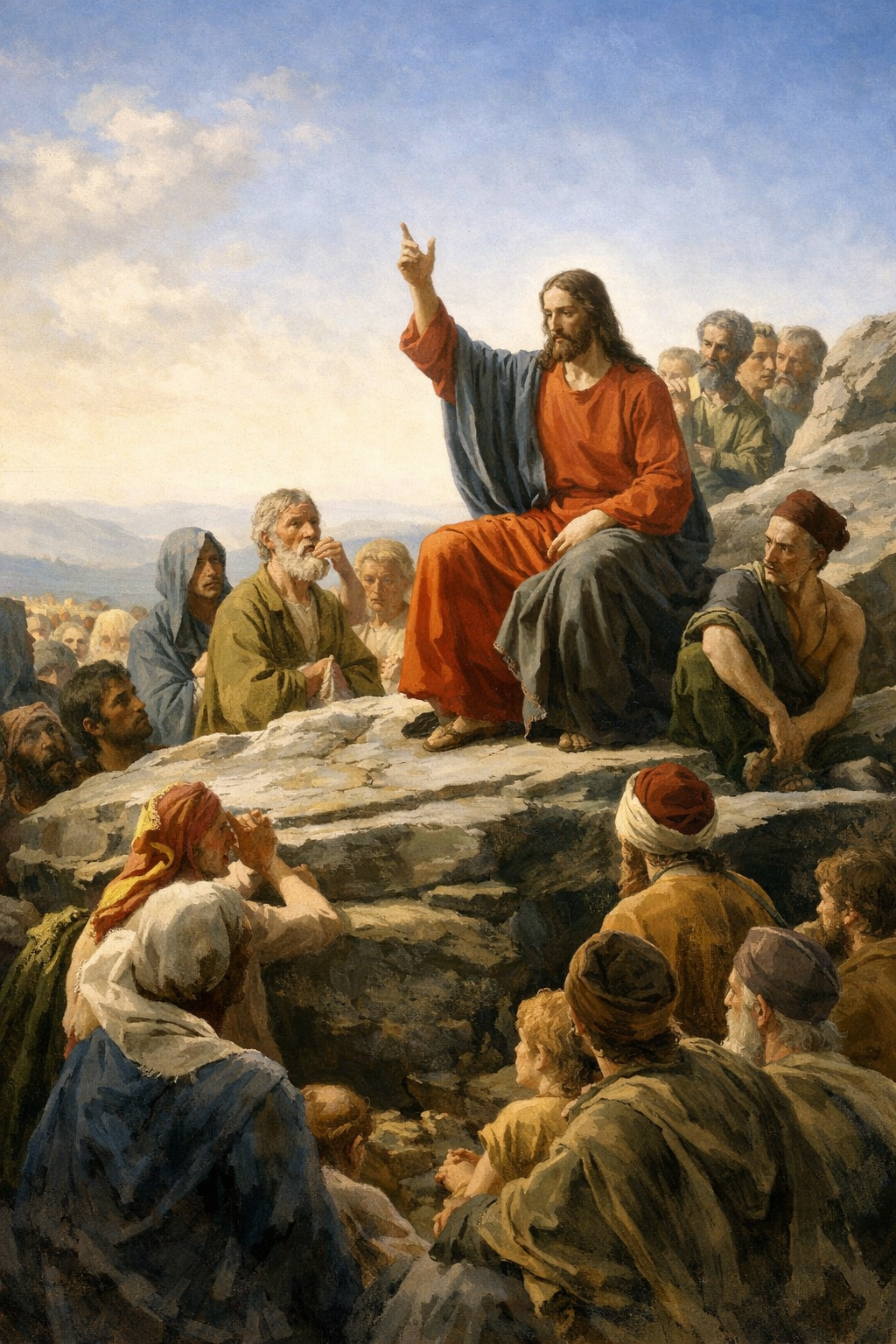
Sermon on the Mount
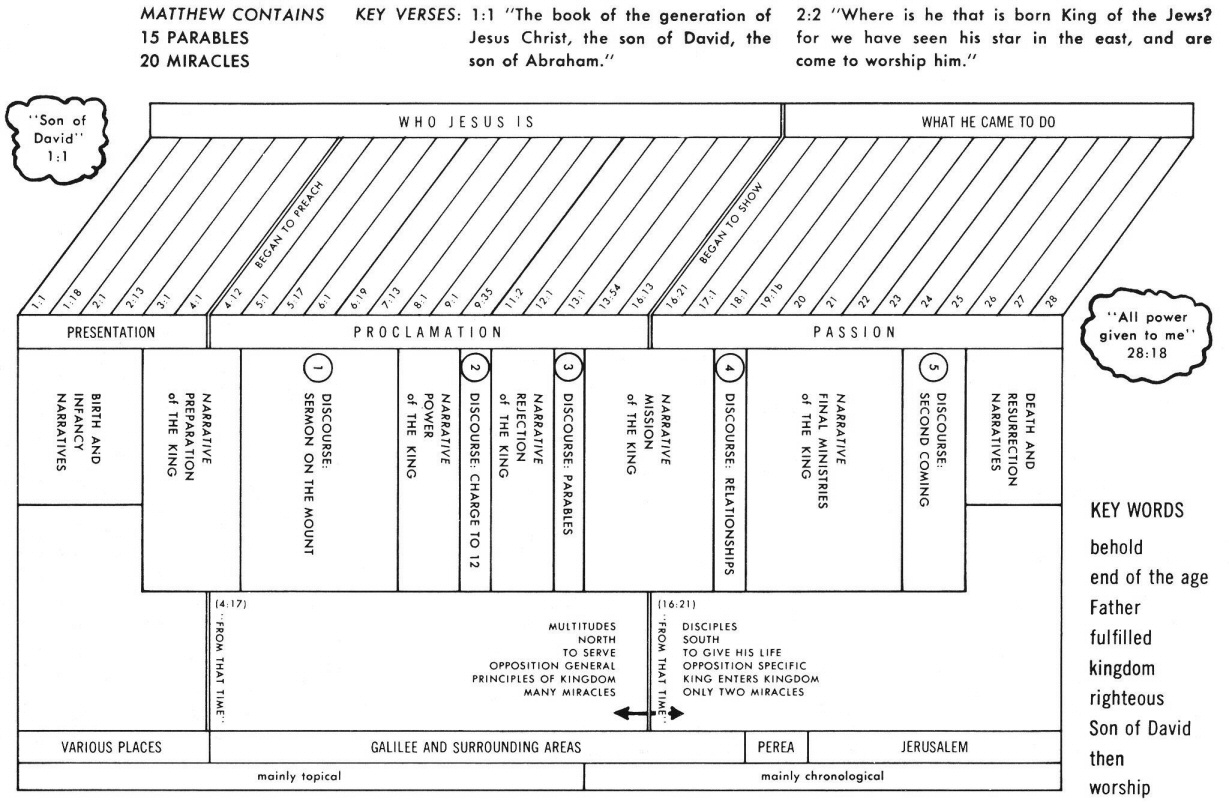
Click chart to enlarge
Charts from Jensen's Survey of the NT - used by permission
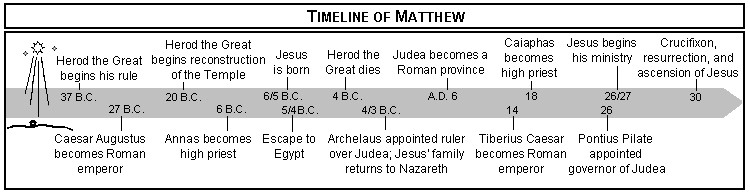
Another Chart from Charles Swindoll
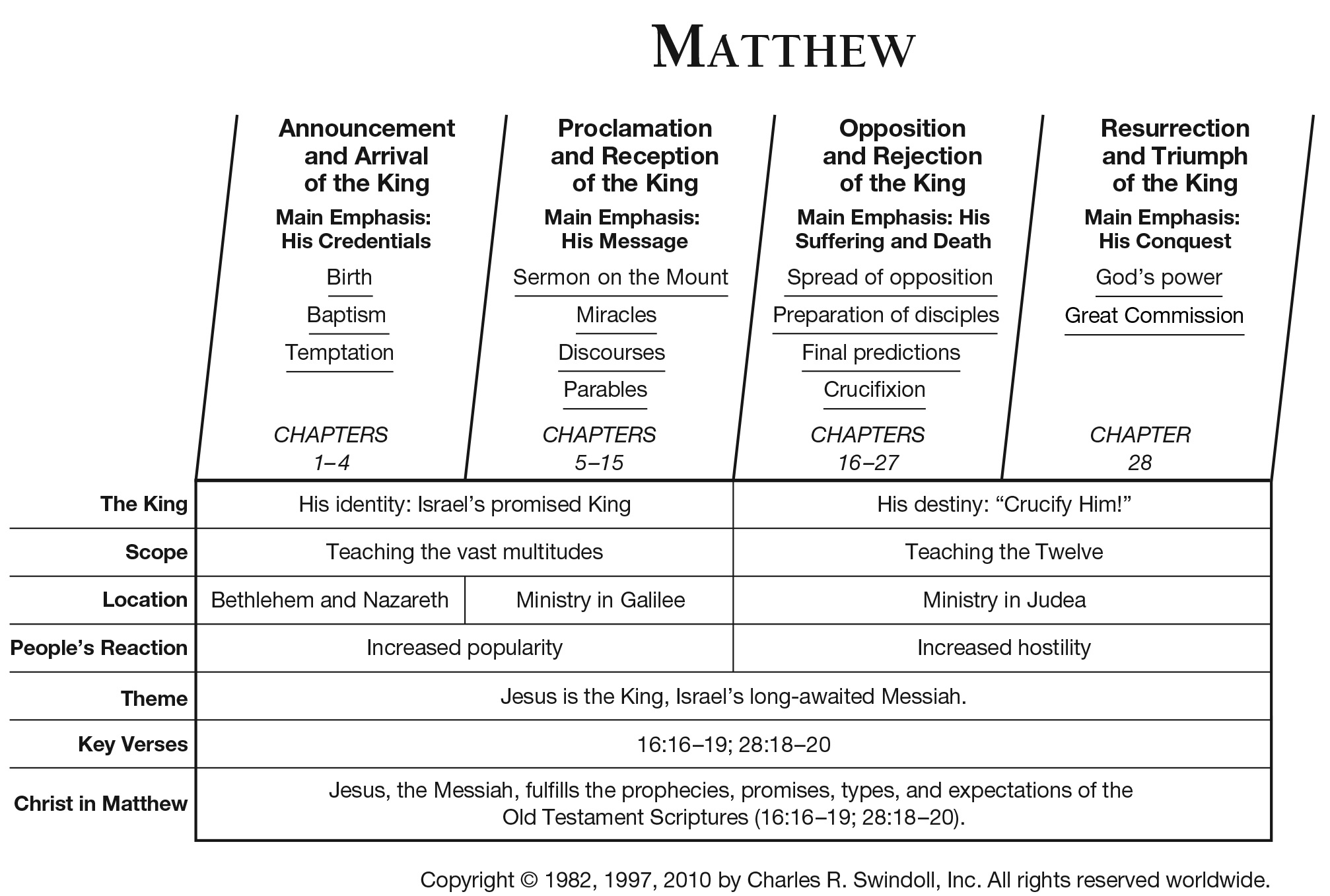
THE LIFE OF JESUS AS COVERED
BY MATTHEW (shaded area)
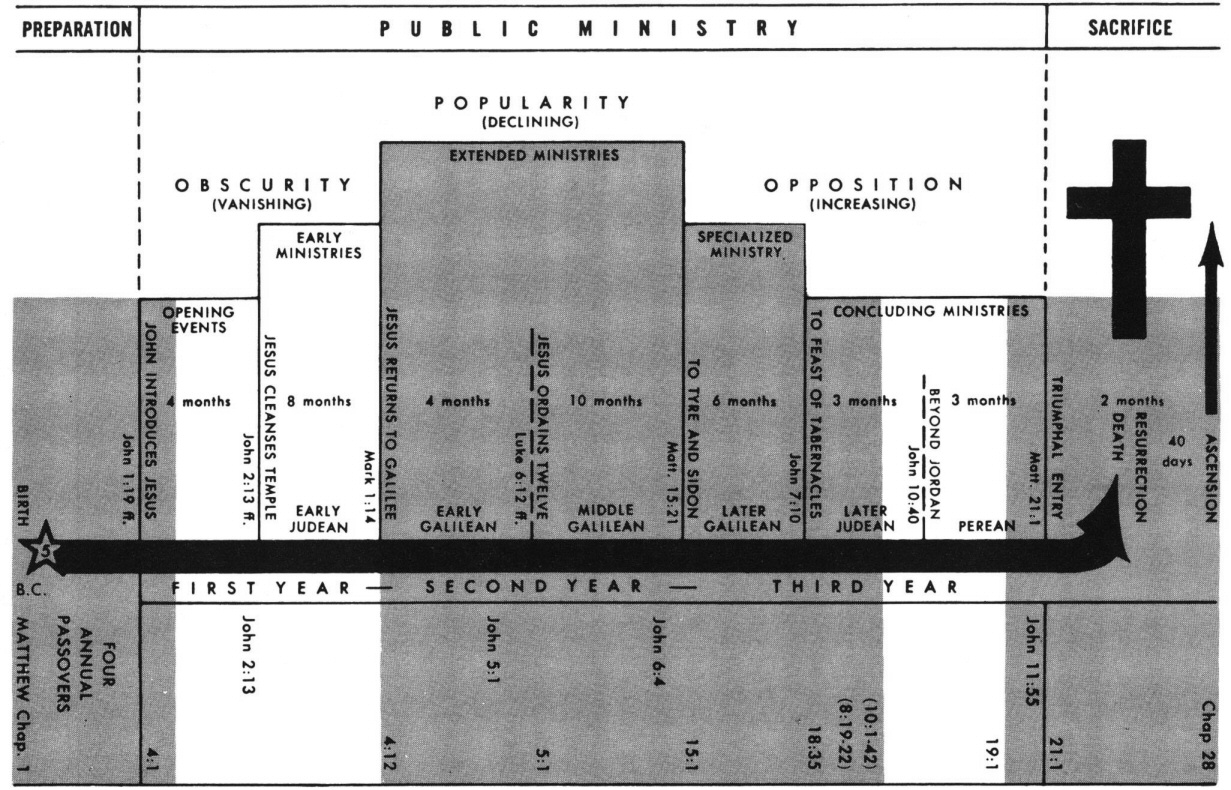
Click chart to enlarge
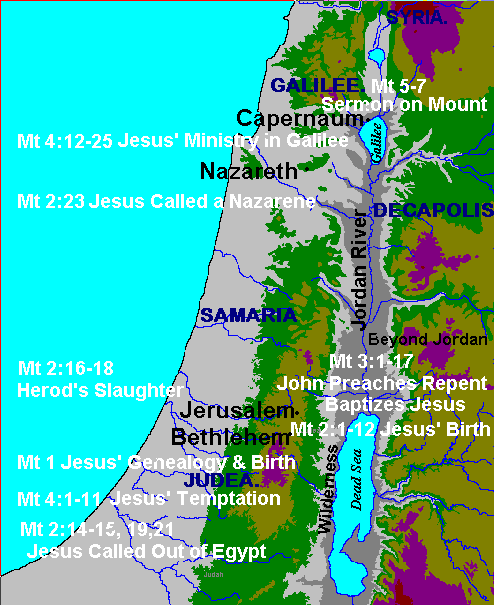
Jesus Birth and Early Years
Leading up to the Sermon on the Mount
Matthew 1-7
Source: Ryrie Study Bible
Matthew 7:13 "Enter through the narrow gate; for the gate is wide and the way is broad that leads to destruction, and there are many who enter through it. (NASB: Lockman)
Greek: Eiselthate (2PAAM) dia tes stenes pules; oti plateia e pule kai euruchoros e odos e apagousa (PAPFSN) eis ten apoleian, kai polloi eisin (3PPAI) oi eiserchomenoi (PMPMPN) di' autes;
Amplified: Enter through the narrow gate; for wide is the gate and spacious and broad is the way that leads away to destruction, and many are those who are entering through it. (Amplified Bible - Lockman)
ESV: Enter by the narrow gate. For the gate is wide and the way is easy that leads to destruction, and those who enter by it are many.
KJV: Enter ye in at the strait gate: for wide is the gate, and broad is the way, that leadeth to destruction, and many there be which go in thereat:
NLT: You can enter God's Kingdom only through the narrow gate. The highway to hell is broad, and its gate is wide for the many who choose the easy way. (NLT - Tyndale House)
Phillips: "Go in by the narrow gate. For the wide gate has a broad road which leads to disaster and there are many people going that way. (New Testament in Modern English)
Wuest: Enter through the narrow gate, because broad is the gate and spacious is the road, the one that leads away to ruin and everlasting misery. And many there are who are constantly entering through it.
Young's: 'Go ye in through the strait gate, because wide is the gate, and broad the way that is leading to the destruction, and many are those going in through it
Enter through the narrow gate: Eiselthate (2PAAM) dia tes stenes pules
- Mt 3:2,8; 18:2,3; 23:13; Pr 9:6; Is 55:7; Ezek 18:27, 28, 29, 30, 31, 32; Lk 9:33; 13:24; Lk 13:25; 14:33; Jn 10:9; 14:6; Ac 2:38, 39, 40; 3:19; 2Co 6:17; Gal 5:24
- Matthew 7 Resources - Multiple Sermons and Commentaries
- Matthew 7:13-14: Which Way to Heaven - John MacArthur
- Matthew 7:13-29: The Way to Heaven - Study Guide (see dropdown) - John MacArthur
- Matthew 7:13-14: The Only Road to Heaven - John MacArthur
- Matthew 7:13-27: Foundations of Grace, Part 2 - John MacArthur
- Matthew 7:13-27: Two Paths, One Way - John MacArthur
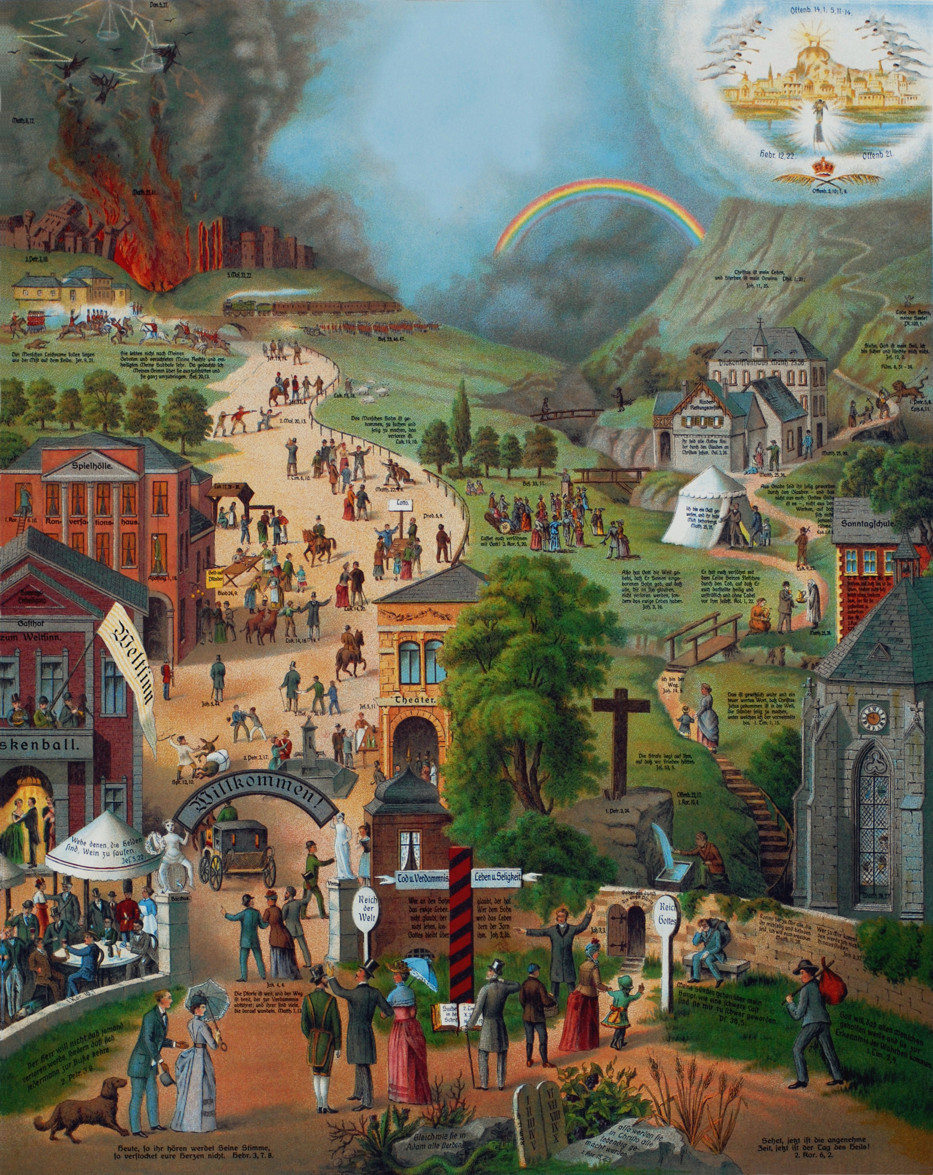
Click to enlarge
WHERE WILL YOU END UP?
IT DEPENDS ON THE ROAD YOU TAKE!
Jesus sets before every man the two ways, and ONLY one leads to eternal life, the other to eternal death, which makes it vital that each individual make the right choice. Jesus clearly did not believe in the deadly deceptive heretical doctrine known as universalism (Is universalism/universal salvation biblical?).
Alan Carr…I would like to share an observation with you that I have made over the years. Now, this is profound, so hang onto your hats: Where you wind up depends on which road you take! In other words, you cannot go south from here and expect to go to New Your City. You cannot go east from here and wind up at the Mississippi. I realize you could do this if you were to circumnavigate the globe, but using the roads which are in place now, it would be absolutely impossible for you to do that. Just as this is true in the physical realm, it is also true in the spiritual realm.Where you wind up in eternity will be determined by the road you take here on earth. It is impossible to take the wrong road and go to Heaven, and it is impossible to take the Heavenly road and go to Hell. What you do while in this world will determine forever, where you spend your forever. This life has been described as nothing more than a brief pause between two very long eternities. Now, that shouldn't take any of us by surprise. After all, we are surrounded by death from the day we born into the world. Loved ones pass away, friends leave this world, and deep inside, we know that it will happen to us someday as well. The fact that you will not live forever is a common theme throughout the Bible. Notice some of these notable passages, James 4:14; Job 9:25; Job 14:1; Psa. 78:39; Ps. 90:10; Is 40:7-8. Since we are going to leave this world some day soon, and when we do, we will continue to live either in Heaven or Hell forever, it is essential that you know where you will end up. (Where Will You End Up?)
Guzik quips that "Jesus here commits the awful modern "sin" of "narrow mindedness." To Jesus, there is no doubt that there is a right road and a wrong road. If Christians are accused of being "narrow minded" they should be following Jesus’ example of telling the hard truth, but telling it in love."
Jamieson writes "Conclusion of the Sermon on the Mount (Mt 7:13-27). "The righteousness of the kingdom," so amply described, both in principle and in detail, would be seen to involve self-sacrifice at every step. Multitudes would never face this. But it must be faced, else the consequences will be fatal. This would divide all within the sound of these truths into two classes: the many, who will follow the path of ease and self-indulgence--end where it might; and the few, who, bent on eternal safety above everything else, take the way that leads to it--at whatever cost. This gives occasion to the two opening verses of this application. Enter ye in at the strait gate--as if hardly wide enough to admit one at all. This expresses the difficulty of the first right step in religion, involving, as it does, a triumph over all our natural inclinations. Hence the still stronger expression in Luke (Lu 13:24), "Strive to enter in at the strait gate." for wide is the gate--easily entered. and broad is the way--easily trodden. that leadeth to destruction, and--thus lured "many there be which go in thereat."
Enter through the narrow (stenos) gate (pule) for the gate is wide (platus) and the way (hodos) is broad (euruchoros) that leads (agapo) to destruction (apoleia), and there are many who enter through it - Enter (1525) (eiserchomai from eis = into + erchomai = come, go, enter) means to go or come into and so to enter into and in the aorist imperative conveys a sense of urgency, calling for immediate and effective action! Don't delay! Enter now! Don't procrastinate is the idea. Beware of putting off "doing business" with Jesus, making absolutely sure you know Him intimately and not just that you know about Him. Prolonged procrastination is destined to end in perdition! The KJV reads "Enter ye in at the strait gate" - Strait is from the Latin strictum meaning narrow and is used literally of a narrow pass between portions of land (straits of Gibraltar, of Magellan, of Dover) and figuratively conveys the sense of difficult, distressful. Strait conveys the idea that the gate is narrow or cramped or affords little room - there is no "wiggle room" when it comes to entering the Kingdom of heaven for there is but One Door, the Lord Jesus Christ - See His own testimony in Jn 10:9, cp Acts 4:12, 10:42, 43, Jn 3:18, 36, 8:24, 1Jn 5:11, 12.
By the narrow (stenos) gate (pule) pictures the strict requirements relating to the entrance to eternal life, specifically God's perfect standard of righteousness (Mt 5:20) in contrast to the self-righteousness of the scribes and Pharisees (and every other false religious system that ultimately is based on man's best efforts which always fall eternally short of the work of God's Son on the Cross.) This gate is constraining and beset with difficulty, but it ends in life with God. This narrow gate is the antithesis of "easy believism!" On the other hand the wide gate leading to the broad, easy way ends where it began, in eternal separation from God. Jesus is saying that choosing Him is neither the popular nor the easy way! In Mt 7:14 this adjective stenos modifies the way, so that both the gate and both the way are narrow.
Study also Jesus' Seven “I AM" declarations - BREAD -Jn 6:35,41,48, 51, LIGHT -Jn 8:12, DOOR -Jn 10:9, GOOD SHEPHERD -Jn 10:14, RESURRECTION & LIFE -Jn 11:25, WAY -Jn 14:6, VINE -Jn 15:1, 5).
The other NT use (other than Mt 7:13,14) of stenos is Luke 13:24-commentary "Strive (agonizomai in the present imperative = a call for continues striving! Signifies a continual great struggle against conflict - ) to enter through the narrow door; for many, I tell you (plural - so Jesus is addressing this not just to the one who ask the question in Lk 13:23 but to the entire audience), will seek to enter and will not be able.
Comment: Notice that this passage is Jesus' answer to the interesting theological question from an unnamed person of whether there are only a few being saved (Lk 13:23). If this verse is read out of context it might suggest that sinners would be able to do something (some work) that would merit entrance through the narrow door and thus in a sense they could "work" their way to heaven. Nothing could be further from the truth that Jesus intended to convey! The Bible repeatedly states that salvation is ONLY by amazing free grace through genuine personal faith in the Gospel of Jesus Christ (Ep 2:8, 9). What Jesus is describing is the truth that that the way of salvation is "narrow" implying that it is "difficult".
Steven Cole: The man had asked, “Will the saved be few?” Jesus turned it around to ask, “Will the saved be you?” Remember, Jesus was speaking to a crowd made up mostly of religious Jews.
John MacArthur: Entering the narrow gate is nonetheless difficult because of its cost in terms of human pride, because of the sinner’s natural love for sin, and because of the world’s and Satan’s opposition to the truth. (MacArthur Study Bible)
John Butler comments on Jesus' command "strive": The word translated strive means to agonize. This does not suggest works for salvation but the emphasis one should put on salvation. Our salvation must be the most important matter in our life… Many are not saved because they want to enter on their own terms instead of God’s terms, or they want to enter on the basis of good works, or they think they will enter because God is love and will not cast out anyone. Some think they can buy their way into heaven. “Many” who think they are going to heaven will not go to heaven when they die. (Butler, J. G. Analytical Bible Expositor: Luke. Clinton, IA: LBC Publications)
Puritan writer John Owen: The word strive embraces in its general sense, not only great and continued effort, but such timely action, as to avoid being excluded in the way referred to in the following verse. The contrast lies principally in the idea of prompt and energetic effort on the one hand and a fatal procrastination on the other. This brings out with emphasis the NOW, with which all the offers of salvation are made to men in the Word of God. See Isa 1:18; Jer. 25:5; 35:15; Zech. 1:4; Lk 14:17; Ro. 13:11; 2Co. 6:2; Heb 4:7. It is most unquestionably true, that men are often beguiled to ruin, by mistaking a few vain and feeble efforts for the energetic action requisite to obtain salvation; but that is not here the prominent idea. Our Lord intends to warn men against delaying to enter the strait gate, until it is shut, and they are forever excluded. This will appear more clear from the following verse (Lk 13:25). (Owen, J. J. Commentary on Luke)
Brian Bell: The real question is not “are there few who are saved”, but “will you be among the saved?” Instead of entering the kingdom, some people only ask questions about it. But…“Salvation is not a theory to discuss; it is a miracle to experience.” In our soft age we are more concerned with statistics than about spiritual power. Strive = to agonize as an athlete; or to fight or struggle in war. No, not that were saved by our hard work; rather it warns us to avoid an “easy, complacent, and theoretical attitude” toward the eternal destiny of the soul. We are to fight, or be at war with, Who? - Not who, but what? Be at war with sin (esp. our own sin!) Strive to enter the narrow gate – because God’s way is narrow. (Luke 13)
Alexander Maclaren: We note, first, the all-important exhortation with which Christ seeks to sober a frivolous curiosity. In its primary application, the ‘strait gate’ may be taken to be the lowliness of the Messiah, and the consequent sharp contrast of His kingdom with Jewish high-flown and fleshly hopes. The passage to the promised royalty was not through a great portal worthy of a palace, but by a narrow, low-browed wicket, through which it took a man trouble to squeeze. For us, the narrow gate is the self-abandonment and self-accusation which are indispensable for entrance into salvation. ‘The door of faith’ is a narrow one; for it lets no self-righteousness, no worldly glories, no dignities, through. Like the Emperor at Canossa, we are kept outside till we strip ourselves of crowns and royal robes, and stand clothed only in the hair-shirt of penitence. Like Milton’s rebel angels entering their council chamber, we must make ourselves small to get in. We must creep on our knees, so low is the vault; we must leave everything outside, so narrow is it. We must go in one by one, as in the turnstiles at a place of entertainment. The door opens into a palace, but it is too strait for any one who trusts to himself. There must be effort in order to enter by it. For everything in our old self-confident, self-centred nature is up in arms against the conditions of entrance. We are not saved by effort, but we shall not believe without effort. The main struggle of our whole lives should be to cultivate self-humbling trust in Jesus Christ, and to ‘fight the good fight of faith.’ (Read the entire sermon - The Strait Gate)
Norval Geldenhuys (foreword by F F Bruce): As very often happened, the Saviour does not give a direct reply to the speculative question, but points out to those present the practical side of the matter: they are not to waste their time and strength in arguments as to how many will be saved, but everyone must strive hard and make sure that he himself is saved, for whether the saved are to be many or few one thing is certain—the gate leading to life is strait, and only those who strive with might and main, and whole-heartedly to enter, will be saved. When once the gate is shut and the time of grace has expired, many will attempt to enter, but then they will not be able to do so, for it will then be for ever too late. (Commentary on the Gospel of Luke: The New International Commentary on the Old and New Testament. Eerdmans Publishing Co)
H A Ironside: It is not that we are to be saved by our own efforts, for by these we would never be saved at all; but we must be in earnest when the door to life stands open, and we are invited to enter in; we must be sure that we heed the gracious invitation and do not pass carelessly by, lest we find at last that we have lost our opportunity… We may well take these warning words to our hearts today for they are intended for us as truly as for the people of Israel of old. The door into the kingdom of God still stands open, but it is a narrow door. None can pass through that door with their sins upon them. But as Christ Himself is the Door (Jn 10:9), we may find in Him deliverance from our sins, and thus enter into the way of life. The narrow way is that of subjection to Christ; a way that involves denial of self (cp Mk 8:35) and recognition of our responsibility to live for Him whose grace alone can save us.
I plead with you to give heed to the words of our Lord, “Strive to enter in at the strait gate.” Do not let anything keep you from making sure of your eternal salvation. But be like the man in Bunyan’s Pilgrim’s Progress, who, when he heard of the impending destruction of the city in which he lived and learned that life was to be found only through entering the wicket (small) gate, refused to be turned aside by any of his own townspeople, and putting his fingers in his ears, ran from them crying, “Life! Life! Eternal Life!” and so made his way toward the shining light pointed out to him by Evangelist (see Pilgrim's Progress by John Bunyan -Part 1, Stage 1 - scroll down to subheading entitled "Evangelist directs him."). (Addresses on the Gospel of Luke. Neptune, NJ: Loizeaux Brothers)
McNeile alludes to the figurative sense of the narrow (strait) gate explaining that "The way that leads to life involves straits and afflictions."
Vincent records "A remarkable parallel to this passage occurs in the “Pinax” or “Tablet” of Cebes, a writer contemporary with Socrates. In this, human life, with its dangers and temptations, is symbolically represented as on a tablet. The passage is as follows: “Seest thou not, then, a little door, and a way before the door, which is not much crowded, but very few travel it? This is the way which leadeth into true culture.”
Spurgeon encourages us to "not be ashamed of being called Puritanical, precise, and particular: Enter ye in at the narrow gate.” It is a way of self-denial, it is a way of humility, it is a way which is distasteful to the natural pride of men; it is a precise way, it is a holy way, a strait way, and therefore men do not care for it. They are too big, too proud, to go along a narrow lane to heaven; yet this is the right way. There are many broad ways, as Bunyan says, that abut upon it; but you may know them by their being broad, and you may know them by their being crowded. The Christian man has to swim against the current; he has to do more than that, he has to go against himself, so strait is the road; but if you wish to go down to perdition, you have only to float with the stream, and you can have any quantity of company that you like.......Do not be ashamed of being called narrow. Do not be ashamed of being supposed to lead a life of great precision and exactness. There is nothing very grand about breadth, after all. And I have noticed one thing: the broadest men I have ever met with in the best sense have always kept to the narrow way, and the narrowest people I know are those who are so fond of the broad way.
J C Ryle comments that "our Lord gives us a general caution against the way of the many in religion. It is not enough to think as others think and do as others do. It must not satisfy us to follow the fashion, and swim with the stream of those among whom we live. He tells us that the way that leads to everlasting life is narrow, and few travel in it. He tells us that the way that leads to everlasting destruction is broad, and full of travelers. Many are those who enter in by it. These are fearful truths! They ought to raise great searchings of heart in the minds of all who hear them. "Which way am I going? By what road am I traveling?" In one or other of the two ways here described, every one of us may be found. May God give us an honest, self-inquiring spirit, and show us what we are! We may well tremble and be afraid, if our religion is that of the multitude. If we can say no more than this, that "we go where others go, and worship where others worship, and hope we shall do as well as others at last," we are literally pronouncing our own condemnation. What is this but being in the broad way? What is this but being in the road whose end is destruction? Our religion at present is not saving religion. We have no reason to be discouraged and cast down, if the religion we profess is not popular, and few agree with us. We must remember the words of our Lord Jesus Christ in this passage: The gate is narrow.
Repentance and faith in Christ,
and holiness of life,
have never been fashionable.
Editorial Note on the importance of Repentance: Repentance is not considered by many today as a component of salvation - Let the Scriptures speak for themselves -- John the Baptist called for repentance "validated" by fruit [Mt 3:2, 8, Lk 3:3, 8, Mk 1:4, Acts 19:4, cp Ac 13:24] Jesus began His ministry preaching repent [Mt 4:17, 11:20, 21, 12:41, Mk 1:15, cp Mk 6:12, Lk 5:32 , 5, 10:13, 11:32, 13:2,3, 5, 15:7, 8, 9, 10, 16:30, 24:47]. Peter preached repentance [Acts 2:38, 3:19, 5:31] as did Paul [Acts 20:21, 26:20, cp Acts 11:18, cp Ro 2:4] and as did John [Rev 2:21]. God desires for all to repent [Ac 17:30 2Pe 3:9] See onsite word study of the Greek word for repentance = metanoia. Other resources: Multiple articles on Repentance or well done article Baker Evangelical Dictionary in Baker Evangelical Dictionary - Repentance.
Ryle - The true flock of Christ has always been small. It must not move us to find that we are reckoned singular, and peculiar, and bigoted, and narrow-minded. This is "the narrow way." Surely it is better to enter into life eternal with a few, than to go to "destruction" with a great company (J. C. Ryle. Expository Thoughts)
Jesus concludes His sermon with four warnings arranged in several paired contrasts! Christianity is not a both/and but an either/or proposition. Jesus leaves no room for a middle ground or for being what I would refer to as a "spiritual mugwump" (In early 1900's a term that came to mean a politician who either could not or would not make up his mind on some important issue, or who refused to take a stand when expected to do so - the fact is that to say "I can't decide" is a decision to not choose the Jesus' way!) (Mugwump article)
MATTHEW 7
PAIRS OF TWO'S
Jesus' hearers would have been familiar with the image of "two ways" because the language of "twos" was a common teaching method in Judaism (see examples below) as well as in Greco-Roman philosophy. This last section is a call by Jesus for a decision. He is not leaving room for any middle ground. And so we see Him contrasting…
Two builders, two houses, two foundations (Mt 7:24, 25, 26, 27).
Robert Frost wrote a secular poem that give an excellent "commentary" on Jesus' concluding words in the Sermon on the Mount…
"Two roads diverged in a wood, and I---
And that has made all the difference."
Matthew Henry…
The account that is given of the bad way of sin, and the good way of holiness. There are but two ways, right and wrong, good and evil; the way to heaven, and the way to hell; in the one of which we are all of us walking: no middle place hereafter, no middle way now: the distinction of the children of men into saints and sinners, godly and ungodly, will swallow up all to eternity.
Here is, (1.) An account given us of the way of sin and sinners; both what is the best, and what is the worst of it.
[1.] That which allures multitudes into it, and keeps them in it; the gate is wide, and the way broad, and there are many travelers in that way.
First, "You will have abundance of liberty in that way; the gate is wide, and stands wide open to tempt those that go right on their way. You may go in at this gate with all your lusts about you; it gives no check to your appetites, to your passions: you may walk in the way of your heart, and in the sight of your eyes; that gives room enough."
It is a broad way, for there is nothing to hedge in those that walk in it, but they wander endlessly; a broad way, for there are many paths in it; there is choice of sinful ways, contrary to each other, but all paths in this broad way.
Secondly, "You will have abundance of company in that way: many there be that go in at this gate, and walk in this way." If we follow the multitude, it will be to do evil: if we go with the crowd, it will be the wrong way (see 1Jn 3:4, 5, 6, 7, 8, 9, 10, 24). It is natural for us to incline to go down the stream, and do as the most do; but it is too great a compliment, to be willing to be damned for company, and to go to hell with them, because they will not go to heaven with us: if many perish, we should be the more cautious.
[2.] That which should affright us all from it is, that it leads to destruction. Death, eternal death, is at the end of it (and the way of sin tends to it),--everlasting destruction from the presence of the Lord (2Th 1:9). Whether it be the high way of open profaneness, or the back way of close hypocrisy, if it be a way of sin, it will be our ruin, if we repent not (see passages above on Repentance).
(2.) Here is an account given us of the way of holiness.
[1.] What there is in it that frightens many from it; let us know the worst of it, that we may sit down and count the cost. Christ deals faithfully with us, and tells us,
First, That the gate is strait. Conversion and regeneration are the gate (Jn 3:3, 5, 1Pe 1:23, Jas 1:18, Titus 3:5), by which we enter into this way, in which we begin a life of faith and serious godliness; out of a state of sin into a state of grace we must pass, by the new birth, John 3:3,5. This is a strait gate, hard to find, and hard to get through; like a passage between two rocks, 1Sa 14:4. There must be a new heart, and a new spirit (Ezek 18:31, 36:26), and old things must pass away (Dt 10:16, 30:6, Je 4:4, 9:26, Lev 26:41, Ro 2:28, 29 Ezek 11:19,20, Ezek 44:7 Je 31:31, 32, 33, 34; 32:39, 40, Jn 3:3, 4, 5 2Co 5:17 Ga 6:15). The bent of the soul must be changed, corrupt habits and customs broken off; what we have been doing all our days must be undone again (cp 1Co 6:10, 11, Gal 5:19, 20-notes, Ga 5:21, 1Jn 3:4, 8, 1Co 6:9, Ep 5:5,6-notes). We must swim against the stream; much opposition must be struggled with, and broken through, from without, and from within. It is easier to set a man against all the world than against himself, and yet this must be in conversion. It is a strait gate, for we must stoop, or we cannot go in at it; we must become as little children (Mt 18:2, 3, 4); high thoughts must be brought down (Mt 23:12, cp Mt 5:3, Lk 1:51, 52, 14:11, 18:13, 14, Ps 138:6, Is 57:15, Nebuchadnezzar in Da 4:37 contrasted with Da 4:30, 31, 5:20, 21, 22, 23); nay, we must strip, must deny ourselves, put off the world, put off the old man; we must be willing to forsake all for our interest in Christ. The gate is strait to all, but to some straiter than others; as to the rich (cp Mt 19:24, Mk 10:25, Lk 18:25), to some that have been long prejudiced against religion. The gate is strait; blessed be God, it is not shut up, nor locked against us, nor kept with a flaming sword (Ge 3:24), as it will be shortly, Mt 25:10.
Secondly, That the way is narrow. We are not in heaven as soon as we have got through the strait gate, nor in Canaan as soon as we have got through the Red Sea; no, we must go through a wilderness, must travel a narrow way, hedged in by the divine law, which is exceedingly broad, and that makes the way narrow; self must be denied (Mk 8:34, 35, 36, 37, 38), the body kept under, corruptions mortified (Col 3:5, Ro 8:13), that are as a right eye and a right hand (cp Mt 5:28, 29, 30); daily temptations must be resisted (cp Ep 6:13, Jas 4:7, 1Pe 5:9); duties must be done that are against our inclination. We must endure hardness (2Ti 2:3, 4, cp Mt 10:22), must wrestle (Ep 6:12) and be in an agony (He 12:4), must watch in all things, and walk with care and circumspection. We must go through much tribulation. It is hodos tethlimmene--an afflicted way, a way hedged about with thorns; blessed be God, it is not hedged up. The bodies we carry about with us, and the corruptions remaining in us (Gal 5:16, Ga 5:17), make the way of our duty difficult; but, as the understanding and will grow more and more sound, it will open and enlarge, and grow more and more pleasant (cp 2Pe 3:18).
Thirdly, The gate being so strait and the way so narrow, it is not strange that there are but few that find it, and choose it. Many pass it by, through carelessness; they will not be at the pains to find it; they are well as they are, and see no need to change their way (cp Ac 26:28). Others look upon it, but shun it; they like not to be so limited and restrained. Those that are going to heaven are but few, compared to those that are going to hell; a remnant (see remnant especially as it relates to Jewish believers), a little flock (Lk 12:32), like the grape-gleanings of the vintage; as the eight that were saved in the ark, 1Pe 3:20 (note).
"In the ways of vice men urge each other onward: how shall any one be restored to the path of safety, when impelled forwards by the multitude, without any counteracting influence?" Seneca, Epist. 29 (bio).
This discourages many: they are loth to be singular, to be solitary; but instead of stumbling at this, say rather, If so few are going to heaven, there shall be one the more for me.
[2.] Let us see what there is in this way, which, notwithstanding this, should invite us all to it; it leads to life, to present comfort in the favour of God, which is the life of the soul; to eternal bliss, the hope of which, at the end of our way, should reconcile us to all the difficulties and inconveniences of the road. Life and godliness are put together (2Pe 1:3)
The gate is strait and the way narrow and uphill,
but one hour in heaven will make amends for it.
Barnes writes that "Christ here compares the way to life to an entrance through a gate. The words straight, and strait, have very different meanings. The former means not crooked; the latter pent up, narrow, difficult to be entered. This is the word used here, and it means that the way to heaven is pent up, narrow, close, and not obviously entered. The way to death is open, broad, and thronged. The Saviour here referred probably to ancient cities. They were surrounded with walls, and entered through gates. Some of those, connected with the great avenues to the city, were broad, and admitted a throng. Others, for more private purposes, were narrow, and few would be seen entering them. So says Christ, is the path to heaven. It is narrow. It is not the great highway that men tread. Few go there. Here and there one may be seen--- traveling in solitude and singularity. The way to death, on the other hand, is broad. Multitudes are in it. It is the great highway in which men go. They fall into it easily, and without effort, and go without thought. If they wish to leave that, and go by a narrow gate to the city, it would require effort and thought. (Ed: And likely would incite considerable persecution from the fellow wayfarers on the broad way to hell!) So, says Christ, diligence is needed to enter into life. See Luke 13:24. None go of course. All must strive to obtain it; and so narrow, unfrequented, and solitary is it, that few find it.
Wiersbe observes that in regard to one's eternal destiny "the greatest danger is self-deception (cp He 3:13; Pr 28:26, Is 44:20, Obad 1:3, Ro 7:11; Ep 4:22; Jas 1:14). The scribes and Pharisees had fooled themselves into believing that they were righteous and others were sinful (cp Mt 5:20, Mt 23:29). It is possible for people to know the right language, believe intellectually the right doctrines, obey the right rules, and still not be saved. (Wiersbe, W: Bible Exposition Commentary. 1989. Victor) (Bolding added for emphasis)
Keep in mind that most Jews believed that Israel as a whole would be saved (a delusion Paul dealt with vigorously in Romans 2) and that the few who were lost would be exceptions to the general rule. Jesus' teaching radically destroys that delusion.
John Gill has an interesting thought that "By the "strait gate" is meant Christ Himself; who elsewhere calls Himself "the door", (Jn 10:7, 8, 9) as he is into the church below, and into all the ordinances and privileges of it; as also to the Father, by Whom we have access unto Him, and are let into communion with Him, and a participation of all the blessings of grace; yea, He is the gate of heaven, through which we have boldness to enter into the holiest of all by faith and hope now (cp He 10:19, 20, 21, 22); as there will be hereafter an abundant entrance into the kingdom and glory of God (2Pe 1:10,11), through His blood and righteousness (Ro 3:25). This is called "strait"; because faith in Christ, a profession of it, and a life and conversation agreeable to it, are attended with many afflictions, temptations, reproaches, and persecutions. "Entering" in at it is by faith (Ep 2:8, 9), and making a profession of it: hence it follows, that faith is not the gate itself, but the grace, by which men enter in at the right door, and walk on in Christ, as they begin with Him.
For the gate (pule) is wide (platus) and the way (hodos) is broad, that leads (apago) to destruction (apoleia) and there are many who enter through it - Note narrow gate versus wide gate, so that they should be easy to distinguish. The wide gate of carnal lusts (and so called "Carnal Christianity!"), and worldly pleasures is inviting and attractive and thus the adjective many (see are more going to heaven or hell).
and many there be which go in thereat; even all men in a state of nature; the way of the ungodly is "broad" (cp Ps 1:4, 5, 6), smooth, easy, and every way agreeable to the flesh; it takes in a large compass of vices, and has in it abundance of company; but its end is destruction.
THE NARROW GATE
Leon Morris comments that pule "may be used of a gate or door of many kinds. Thus it is the gate of the temple (Acts 3:10), of a city (Lk 7:12), or of a prison (Acts 12:10). It is also used of the gates of Hades (Mt 16:18). It seems to be used of a significant entrance, which may be why it is used here of the entrance into life. (Morris, L. The Gospel according to Matthew. Grand Rapids, Mich.; Leicester, England: W. B. Eerdmans; Inter-Varsity Press)
In John Jesus taught…
I am the door; if anyone enters through Me, he shall be saved, and shall go in and out, and find pasture. (John 10:9)
I am the (specific, exclusive) way, and the (specific, exclusive) truth, and the (specific, exclusive) life; (absolutely) no one comes to the Father, but through Me. (John 14:6)
Comment: In Greek the definite article "the" is important as it speaks of specificity… in other words, had Jesus been one of many ways, He would not have used the definite article "the" but would have identified Himself as "a" way, "a" truth, "a" life, one of many gates/ways. Jesus did not teach that there are many roads that lead to the Kingdom of Heaven but clearly taught "I am the only Way."
Many are skeptical, agnostic or even antagonistic regarding Jesus' teaching on the narrow gate and scoff at the idea of such rigid "exclusivity" regarding salvation. The Gospel message however is clearly very dogmatic, very exclusive and very narrow! Obviously while we as Christians are not to be narrow-minded per se, we must be "narrow-minded" regarding the way, the truth and the life (Jn 14:6), if we truly believe that salvation is found in no one else, and that there is no other name under heaven that has been given to men by which we must be saved (Acts 4:12). As offensive as such a truth may be to non-Christians, we must continually make it clear in our witness (our life, then our lips!), for without Christ they are destined to spend a Christ-less, graceless eternity in the lake of fire (Re 20:11, 12, 13, 14, 15-see notes, cp Mt 25:41, 2Th 1:9, Re 14:11, Re 19:20, 20:10 - see chart on Births, Deaths, and Resurrections).
Here are a few other NT passages that support this "narrow minded" view and to encourage you to defend the faith once for all delivered to the saints…
Matthew 5:20 (note) For I say to you, that unless your righteousness surpasses that of the scribes and Pharisees, you shall not enter the kingdom of heaven.
Comment: This would have shocked many in the Jewish audience, who knew the Pharisees as the most religious people in the world. But as Jesus alluded to they may have had religion but in their hearts they rejected the "narrow gate" of Christ. He is also setting the "bar" of righteousness so high that no man can possibly hope to achieve God's standard which is perfection.
Matthew 7:21, 22 (note) Not everyone who says to Me, 'Lord, Lord,' will enter the kingdom of heaven; but he who does the will of My Father who is in heaven. "Many will say to Me on that day, 'Lord, Lord, did we not prophesy in Your name, and in Your name cast out demons, and in Your name perform many miracles?'
Comment: This is a frightening verse, for it clearly teaches that "many" people (in context it first speaking of false teachers but it clearly has broader application) who profess Christ are self-deceived. It isn’t a matter of outward profession, but inward faith and obedience, that saves (Cp Titus 1:16 which clearly juxtaposes "profession" of words with production of unrighteous works, the latter speaking louder and more truthfully than their words!)
John 8:24 "I said therefore to you, that you shall die in your sins; for unless you believe that I am He, you shall die in your sins."
John 10:9 "I am the door; if anyone enters through Me, he shall be saved, and shall go in and out, and find pasture.
Romans 3:10 (note) as it is written, "THERE IS (absolutely) NONE RIGHTEOUS, NOT EVEN ONE; 11 THERE IS NONE WHO UNDERSTANDS, THERE IS NONE WHO SEEKS FOR GOD;12 ALL HAVE TURNED ASIDE, TOGETHER THEY HAVE BECOME USELESS; THERE IS NONE WHO DOES GOOD, THERE IS NOT EVEN ONE."… 23 for all have sinned and fall short of the glory of God, 24 being justified (declared righteous) as a gift by His grace through the redemption which is in Christ Jesus
Comment: Read that passage again and note the repetition ("key words") which make the interpretation blatantly clear.
1Corinthians 3:11 For no man can lay a foundation other than the one which is laid, which is Jesus Christ.
Comment: There is no other foundation for a holy, blessed, abundant, eternal life other than Christ.
1Timothy 2:5-6: For there is one God, and ONE mediator also between God and men, the man Christ Jesus, Who gave Himself as a ransom for all, the testimony borne at the proper time. (Only one Mediator. Only one ransom, the blood of Christ shed on the Cross.)
Hebrews 2:3 (note) how shall we escape if we neglect so great a salvation? After it was at the first spoken through the Lord, it was confirmed to us by those who heard
Hebert Lockyer records an example of a man who entered the small gate and tread the dangerous way of a disciple in his fascinating book entitled "Last Words of Saints and Sinners" writing that
John Bradford, Chaplain to Edward VI in 1552, was one of the most popular preachers of his day in England. With the accession of Queen Mary, Bradford was arrested for seditious utterances and heresy. Refusing to recant, (he was) condemned to be burnt at Smithfield, and he met his death tied to the same stake as a young man found guilty of the same supposed crime. As the flames covered their bodies, Bradford consoled the youth by saying "Strait is the gate, and narrow is the way, which leadeth unto life, and few there be that find it."
Lockyer records another quote which is the antithesis of Bradford's blazing testimony for Christ…
Robert Green Ingersoll (1833-1899), famous American lawyer and prominent agnostic, lectured on Biblical inaccuracies and contradictions. His famed lecture The Mistakes Of Moses led one defender of the Bible to say that he would like to hear Moses speak for five minutes on The Mistakes Of Ingersoll. Standing by his graveside, his brother exclaimed - Life is a narrow vale between the narrow peaks of two eternities. We strive in vain to look beyond the heights. We cry aloud, and the only answer is the echo of our wailings.
Comment: How tragically ironic to use some of the very same words used by Jesus (narrow, strive, eternity) but with such a different outcome!
John Milton makes mention of the small gate in Paradise Regained
"A deathlike sleep,
A gentle wafting to immortal life.
Truth shall retire
Bestruck with sland'rous darts,
And works of faith rarely be found.
And to the faithful, Death the gate of life."
QUESTION - Will more people go to heaven or to hell?
ANSWER - The question of whether there are more people in heaven or hell is answered by Jesus Himself in one succinct passage: “Enter by the narrow gate. For the gate is wide and the way is easy that leads to destruction, and those who enter by it are many. For the gate is narrow and the way is hard that leads to life, and those who find it are few” (Matthew 7:13–14).
This passage tells us that only those who receive Jesus Christ and who believe in Him are given the right to become children of God (John 1:12). As such, the gift of eternal life comes only through Jesus Christ to all those who believe. He said, “I am the way, and the truth, and the life. No one comes to the Father except through me” (John 14:6). It’s not through Mohammed, Buddha, or other false gods of man’s making. It’s not for those wanting a cheap and easy way to heaven while continuing to live their own selfish and worldly lives on earth. Jesus only saves those who fully trust in Him as Savior (Acts 4:12).
So, what are these two gates in Matthew 7:13–14? They are the entrance to two different “ways.” The wide gate leads to the broad way, or road. The small, narrow gate leads to the way that is narrow. The narrow way is the way of the godly, and the broad way is the way of the ungodly. The broad way is the easy way. It is attractive and self-indulgent. It is permissive. It’s the inclusive way of the world, with few rules, few restrictions, and fewer requirements. Tolerance of sin is the norm where God’s Word is not studied and His standards not followed. This way requires no spiritual maturity, no moral character, no commitment, and no sacrifice. It is the easy way of salvation, following “the course of this world, following the prince of the power of the air, of the spirit that is now at work in the sons of disobedience” (Ephesians 2:2). It is that broad way that “seems right to a man, but end is the way to death” (Proverbs 14:12).
Those who preach a gospel of inclusiveness where “all ways lead to heaven” preach an utterly different gospel than the one Jesus preached. The gate of self-centeredness, self-absorption, and a proud, holier-than-thou mindset is the wide gate of the world that leads to hell, not the narrow gate that leads to eternal life. As a result, most people spend their lives following the masses who are on the broad road, doing what everyone else does and believing what everyone else believes.
The narrow way is the hard way, the demanding way. It is the way of recognizing that you cannot save yourself and must depend on Jesus Christ alone to save you. It’s the way of self-denial and the cross. The fact that few find God’s way implies that it is to be sought diligently. “You will seek me and find me, when you seek me with all your heart” (Jeremiah 29:13). No one will stumble into the kingdom or wander through the narrow gate by accident. Someone asked Jesus, “Lord, will those who are saved be few?” He replied, “Strive to enter through the narrow door. For many, I tell you, will seek to enter and will not be able” (Luke 13:23–24).
Many will seek to enter that narrow door, the door of salvation, but “will not be able.” They are unwilling to trust/rely on Jesus alone. They are unwilling to pay the price. It costs too much for them to give up the world. God’s gate is a gate through which one cannot carry the baggage of sin and self-will, nor can one carry the accoutrements of materialism. The way of Christ is the way of the cross, and the way of the cross is the way of self-denial. Jesus said, “If anyone would come after me, let him deny himself and take up his cross daily and follow me. For whoever would save his life will lose it, but whoever loses his life for my sake will save it” (Luke 9:23–24).
Jesus knows that many will choose the wide gate and the broad way that leads to destruction and hell. Correspondingly, He said that only a few will choose the narrow gate. According to Matthew 7:13–14, there is no doubt that more will go to hell than to heaven. The question for you is, then, on which road are you? GotQuestions.org
For (hoti) the gate (pule) is wide and the way (hodos) is broad (euruchoros) that leads (apago) to destruction (apoleia): hoti plateia e pule kai euruchoros e odos e apagousa (PAPFSN) eis ten apoleian, kai polloi eisin (3PPAI) oi eiserchomenoi (PMPMPN) di' autes;
- Wide - Ge 6:5,12; Ps 14:2,3; Is 1:9; Ro 3:9-19; 2Co 4:4; Ep 2:2,3; 1Jn 5:19; Re 12:9; 13:8; 20:3
- Destruction Mt 25:41,46; Pr 7:27; 16:25; Ro 9:22; Php 3:19; 2Th 1:8,9; 1Pe 4:17,18; Re 20:15
THE WIDE GATE
AND BROAD WAY
For (hoti) the gate (pule) is wide and the way (hodos) is broad (euruchoros) that leads (apago) to destruction (apoleia) - Don't miss this term of explanation for it introduces Jesus' divine logic for issuing such a "narrow" and urgent command to enter (aorist imperative see our need to depend on the Holy Spirit to obey). A correct understanding of and response to the two gates and two ways is an urgent matter!
John Gill has an interesting note that "Our Lord seems to allude to the private and public roads, whose measures are fixed by the Jewish canons; which say, that a private way was four cubits broad, a way from city to city eight cubits, a public way sixteen cubits, and the way to the cities of refuge thirty two cubits.'"
Psalm 1 sets two ways before the reader at the outset…
For the LORD knows the way of the righteous,
But the way of the wicked will perish.
(Ps 1:6- in depth notes) (cp Dt 30:19, Je 21:8)
Spurgeon comments on Ps 1:6: Or, as the Hebrew hath it yet more fully, The Lord is knowing the way of the righteous. He is constantly looking on their way, and though it may be often in mist and darkness, yet the Lord knoweth it. If it be in the clouds and tempest of affliction, he understandeth it. He numbers the hairs of our head; he will not suffer any evil to befall us. "He knoweth the way that I take: when He hath tried me, I shall come forth as gold." (Job 23:10)
But the way of the ungodly shall perish. Not only shall they perish themselves, but their way shall perish too. The righteous carves his name upon the rock, but the wicked writes his remembrance in the sand. The righteous man ploughs the furrows of earth, and sows a harvest here, which shall never be fully reaped till he enters the enjoyments of eternity; but as for the wicked, he ploughs the sea, and though there may seem to be a shining trail behind his keel, yet the waves shall pass over it, and the place that knew him shall know him no more for ever. The very "way" of the ungodly shall perish. If it exist in remembrance, it shall be in the remembrance of the bad; for the Lord will cause the name of the wicked to rot, to become a stench in the nostrils of the good, and to be only known to the wicked themselves by its putridity.
May the Lord cleanse our hearts and our ways, that we may escape the doom of the ungodly, and enjoy the blessedness of the righteous!
Spurgeon comments on the non-exclusivity of the broad way…
The road is so wide that there may be many independent tracks in it, and the drunkard may find his way along it without ever ruffling the complacency of the hypocrite. The mere moralist may pick a clean path all the way, while the immoral wretch may wade up to his knees in mire throughout the whole road. Be-hold how sinners disagree and yet agree in this, that they are op-posed to God! It is a broad road
C. S. Lewis described this broad way that was leading him to destruction…
I was soon (in the famous words ) altering “I believe” to “one does feel.” And oh, the relief of it! … From the tyrannous noon of revelation I passed into the cool evening twilight of Higher Thought, where there was nothing to be obeyed, and nothing to be believed except what was either comforting or exciting. (C. S. Lewis, borrow Surprised by Joy)
John MacArthur comments that "The way that is broad is the easy, attractive, inclusive, indulgent, permissive, and self-oriented way of the world. There are few rules, few restrictions, and few requirements. All you need do is profess Jesus, or at least be religious, and you are readily accepted in that large and diverse group. Sin is tolerated, truth is moderated, and humility is ignored. God’s Word is praised but not studied, and His standards are admired but not followed. This way requires no spiritual maturity, no moral character, no commitment, and no sacrifice. It is the easy way of floating downstream, in “the course of this world, according to the prince of the power of the air, of the spirit that is now working in the sons of disobedience” (Ep 2:2). It is the tragic way “which seems right to a man,” but whose “end is the way of death” (Pr 14:12).A West Indian who had chosen Islam over Christianity said his reason was that Islam “is a noble, broad path. There is room for a man and his sins on it. The way of Christ is too narrow.” It seems that many preachers today do not see that issue as clearly as that unbelieving Muslim. (See The MacArthur New Testament Commentary )
D A Carson has an interesting note writing that "The "wide" gate seems far more inviting. The "broad" road (not "easy," RSV) is spacious and accommodates the crowd and their baggage; the other road is "narrow"- but two different words are used: stene ("narrow," Mt 7:13) and tethlimmene (Mt 7:14), the latter being cognate with thlipsis (word study) ("tribulation"), which almost always refers to persecution. So this text says that the way of discipleship is "narrow," restricting, because it is the way of persecution and opposition-a major theme in Matthew (Mt 5:10, 11, 12, 44 - see notes Mt 5:10ff, 44; Mt 10:16-39; Mt 11:11, 12; 24:4-13… ). Compare Acts 14:22: "We must go through many hardships [… `through much persecution'] to enter the kingdom of God."…Democratic decisions do not determine truth and righteousness in the kingdom. That there are only two ways is the inevitable result of the fact that the one that leads to life is exclusively by revelation. But if truth in such matters must not be sought by appealing to majority opinion (Ex 23:2), neither can it be found by each person doing what is right in his own eyes (Pr 14:12; cf. Jdg 21:25). God must be true and every man a liar (Ro 3:4). (Expositor's Bible Commentary)
Kistemaker adds that…The “way” to which the narrow gate admits is “constricted,” or, as we might say today, “It is so confining.” The path on which the believer is traveling resembles a difficult pass between two cliffs. It is hemmed in from both sides. So also even in the case of the person who has already spiritually entered through the narrow gate, whatever still remains of the old nature rebels against laying aside evil propensities and habits. This old nature is not completely conquered until the moment of death. So, a bitter struggle develops. Read about it in Ro 7:14-25.But total victory is assured, for the narrow gate has been found and entered, and the way of sinners has been exchanged for the way of the righteous (see Ps. 1:1, 2, 3, 4, 5, 6); that is, a conscious choice has been made, a good decision. Basic conversion, in turn, has become daily conversion or, if one prefers, sanctification. On the other hand, the “way” to which the wide gate admits is broad and roomy. One might call it Broadway. The signs along this wide avenue read, “Welcome to each of you and to all your friends, the more the merrier. Travel as you wish and as ‘fast’ as you wish. There are no restrictions.” However, “The way of the wicked shall perish.” (Ibid)
The gate (pule) is wide and the way (hodos) is broad (euruchoros) that leads (apago) to destruction (apoleia) Leads (apago) to destruction (apoleia) - Leads means to lead away and was used to describe prisoners being taken under armed guard to prison or to their execution, apt description of the fate of all Christ-rejectors! The present tense indicates that this leading is continuously in one direction - a one way ticket to hell and eternal punishment! This is like the AC/DC hit song Highway to Hell that parodied hell. To fail to enter through the narrow gate is to be on the highway to hell! This is not a song, not a joke and a road that ends in annihilation, to an eternal unconscious existence or to a second chance to re-consider, but but is the sure way which leads to eternal death and destruction (cp Mt 25:34, 46; Jn 17:12; Ro 9:22: Php 1:28; Php 3:19; 1Ti 6:9; He 10:39; 2Pe 2:1, 2Pe 1:3; 2Pe 3:16; Rev 17:8, Rev 17:11) Destruction is not the loss of being, but the eternal loss of well-being! The Gospel promises everlasting life for him who believes, who strives to enter the narrow gate (Lk 13:24).
John MacArthur has an interesting note writing that "Both the broad and the narrow ways point to the good life, to salvation, heaven, God, the kingdom, and blessing-but only the narrow way actually leads to those. There is nothing here to indicate that the broad way is marked “Hell.” The point our Lord is making is that it is marked “Heaven” but does not lead there. That is the great lie of all the false religions of human achievement. The two very different destinations of the two ways are made clear by the Lord (cf. Jer 21:8). The broad … leads to destruction, whereas only the narrow … leads to life. Every religion except Christianity, the only religion of divine accomplishment, follows the same spiritual way and leads to the same spiritual end, to hell. There are many of those roads, and most of them are attractive, appealing, and crowded with travelers. But not a single one leads where it promises; and not a single one fails to lead where Jesus says it leads-to destruction. (See Matthew Commentary)
Hell is nothing but truth known too late!
-- J C Ryle
As Jesus makes clear elsewhere, hell is not a place or state of nothingness or unconscious existence, as is the Hindu Nirvana. It is the place of everlasting torment, the place of eternal death, where there will be “weeping and gnashing of teeth” forever (see Mt 13:42, 50).
All people are created by God for His glory, but when they refuse to come to Him "through the narrow gate" for salvation, they lose their opportunity for eternal redemption and ultimately the opportunity of becoming what God intended for them to be in Christ. At that time, they are fit only for condemnation and destruction.
THOUGHT - Think of a man or a woman created in the image of God, living their entire life for self rather the Savior, and at the end of it all finding that it has been a complete waste (see this meaning of apoleia in Mt 26:8)! This tragic truth should stir our hearts as believers to be bold in the Spirit and filled with a sense of non-judgmental compassion and absolute urgency to share the Truth of the small gate and the narrow way with every individual we meet in this brief snapshot of eternity called life!
Isaac Watts wrote the following hymn related to Jesus' words in Mt 7:13,14. How many churches would even dare sing it today? (play the hymn)
Broad is the road that leads to death,
And thousands walk together there;
But wisdom shows a narrower path,
With here and there a traveler.
“Deny thyself, and take thy cross,”
Is the Redeemer’s great command;
Nature must count her gold but dross,
If she would gain this heav’nly land.
The fearful soul that tires and faints,
And walks the ways of God no more,
Is but esteemed almost a saint,
And makes his own destruction sure.
Lord, let not all my hopes be vain
Create my heart entirely new;
Which hypocrites could ne’er attain,
Which false apostates never knew.
Jesus is not giving many paths. His command is "either… or"! There is a choice between two ways and only one leads to eternal life, while the other leads to eternal death. This picture of Two Ways as alluded to is not a new thought restricted to the NT, for this same truth is emphasized in several Old Testament passages…
I call heaven and earth to witness against you today, that I have set before you life and death, the blessing and the curse. So choose life in order that you may live, you and your descendants. (Deut 30:19)
As Joshua neared the fulfillment of his job on earth, he presented Israel once again with the choice: “"And if it is disagreeable in your sight to serve the LORD, choose for yourselves today whom you will serve: whether the gods which your fathers served which were beyond the River, or the gods of the Amorites in whose land you are living; but as for me and my house, we will serve the LORD. (Joshua 24:15)
You shall also say to this people, 'Thus says the LORD, "Behold, I set before you the way of life and the way of death (Jeremiah 21:8).
For the LORD knows the way of the righteous, but the way of the wicked will perish. (Psalm 1:6)
On Mount Carmel the prophet Elijah asked the people of Israel,
How long will you hesitate between two opinions? If the Lord is God, follow Him; but if Baal, follow him, but if Baal, follow him." But (Note this dramatic contrast surely reflecting their sin hardened hearts!) the people did not answer him a word. (1Kings 18:21)
“To every man there openeth
A way and ways and a way;
And the high soul treads the high way,
And the low soul gropes the low;
And in between on the misty flats
The rest drift to and fro;
But to every man there openeth
A high way and a low;
And every man decideth
The way his soul shall go.”
- John Oxenham
Cebes, the disciple of Socrates was close to the truth but still managed only to describe the counterfeit writing “Dost thou see a little door, and a way in front of the door, which is not much crowded, but the travelers are few? That is the way that leadeth to true instruction.”
After Jesus fed literal bread (Jn 6:1-14, note Jn 6:14) and then repeatedly explained to the multitudes following Him that He was the living Bread, calling for his hearers to make the choice to "eat of this bread" (Jn 6:51, cp Jn 6:32-50) that they might enter into eternal life (Jn 6:53-58), an offer which fell on faithless ears and hearts and thus was largely rejected (cp their grumbling, arguing - Jn 6:42 43 52) for "many of His disciples withdrew (Notice that not all "disciples" of Jesus were genuine believers), and were not walking with Him anymore. Jesus said therefore to the twelve, "You do not want to go away also, do you?" Simon Peter answered Him, "Lord, to whom shall we go? You have words of eternal life. And we have believed and have come to know that You are the Holy One of God." (John 6:66-69)
John MacArthur emphasizes that "In the Sermon on the Mount Jesus presents still again that great choice of choices. This sermon therefore cannot be simply admired and praised for its ethics. Its truths will bless those who accept the King but will stand in judgment over those who refuse Him. The one who admires God’s way but does not accept it is under greater judgment, because he acknowledges that he knows the truth (Ed: See Mt 11:21-24). Nor does this sermon apply only to the future age of the millennial kingdom. The truths Jesus teaches here are truths whose essence God teaches in the Old Testament and throughout the New Testament. They are truths for God’s people of every age, and the decision about the gate and the way has always been a "now" decision…There have always been but two systems of religion in the world. One is God’s system of divine accomplishment, and the other is man’s system of human achievement. One is the religion of God’s grace, the other the religion of men’s works. One is the religion of faith, the other the religion of the flesh. One is the religion of the sincere heart and the internal, the other the religion of hypocrisy and the external. (See Matthew Commentary) (Bolding added)
Narrow (4728) stenos - derivation uncertain - one source says from histemi = to stand, Vine says from root sten- as in stenazo = to groan) pictures obstacles standing close to each other, space narrow; metaphorically, of the strict requirements relating to the entrance and path to eternal life narrow, strict, exacting. The meaning is restricted, less than standard width, limited in size, a small breadth or width in comparison to length. Limited in extent, amount or scope as a narrow gorge between high rocks. Stenos comes from a root that means “to groan,” as from being under pressure, and is used figuratively to represent a restriction or constriction. Vine comments that "the gate which provides the entrance to eternal life (is) narrow because it runs counter to natural inclinations, and “the way” is similarly characterized." Jesus by using this figure of speech is saying that choosing for Him is not the popular nor the easy way!
Stenos - 3v - Matt. 7:13; Matt. 7:14; Lk. 13:24
Stenos - 16x in the non-apocryphal Septuagint (LXX)-
Nu 22:26; 1Sa 23:14, 19, 29; 24:22; 2Sa 24:14; 2Ki 6:1; 1Chr 21:13 (Figurative use - "I am in great distress"); Job 18:11; 24:11; Pr 23:27; Isa 8:22; 30:20; 49:20; Jer 30:7; Zech 10:11.
Several of the OT uses are used to translate "stronghold".
Numbers 22:26 The Angel of the LORD went further, and stood in a narrow (Hebrew = tsar = narrow, tight; Lxx = stenos) place where there was no way to turn to the right hand or the left. 25 When the donkey saw the Angel of the LORD, she pressed herself to the wall and pressed Balaam's foot against the wall, so he struck her again.
2 Samuel 24:14 Then David said to Gad, "I am in great distress (Hebrew = tsarar = to suffer distress; Lxx = stenos). Let us now fall into the hand of the LORD for His mercies are great, but do not let me fall into the hand of man."
Jeremiah 30:7 'Alas! for that day is great, There is none like it; And it is the time of Jacob's distress (Heb = tsarah = trouble, distress, calamity, anguish, state of very unfavorable circumstance, with a focus on the emotional pain and distress of the situation Dt 31:17 Jer 4:31; Lxx = stenos) but he will be saved from it.
Comment: Jacob's Distress or Trouble describes a period of time, specifically the last 3.5 years of Daniel's Seventieth Week, which Jesus designated as Great Tribulation (Mt 24:21, cp Mk 13:19, Re 7:14). During this time the Antichrist ("Beast" of Rev 13, "Little Horn of Daniel 7") will be allowed by God and empowered by Satan (Rev 13:4, Rev 13:5 where 42 months = 3.5 years) to have essentially "free reign" on the earth and will attempt to destroy the Jews in the greatest "holocaust" the world has ever seen. And yet in the midst of this horrible time to come, God makes the sure promise that He will save Jacob from it or out of it, which is a prophecy of the Messiah's return to deliver Israel (see Ro 11:25,26, 27 cp Zech 13:8, 9).
Gate (4439) (pule derivative is pulon = magnificent gate) is a leaf or wing of a folding entrance and here describes a door or gate. Note that there are only 2 gates and every person will enter one or the other. To not choose to enter the narrow gate is in fact a choice to enter the wide gate and subsequent destruction.
Gilbrant - In classical Greek pulē usually appears in plural form, referring to the gates of a town. It is also used to refer to a house door, an entrance or pass, and commonly denotes the gates of the netherworld or hell. One other classical use of this word is for a narrow strait leading to the entrance of the sea (Liddell-Scott).. Pulē occurs 10 times in the New Testament. In the literal sense pulē is used for a large gate in the wall of a city or palace, as in Luke 7:12 where the burial places are described as being outside the pulē of the city. Pulē is also used metaphorically in the New Testament, as in the classical and Septuagintal literature. Thus, Matthew 7:13,14 describes the strait (i.e., “narrow”) pulē leading to life. Matthew 16:18 uses pulē to describe the gates of hell. (Complete Biblical Library)
- International Standard Bible Encyclopedia - Gate
- Hastings' Dictionary of the Bible Gate
- Hastings' Dictionary of the NT Gate (2) Gate
- Morrish Bible Dictionary Gate
- Torrey Topical Textbook Gates
- Kitto Biblical Cyclopedia Gates
- The Jewish Encyclopedia Gate
Pule - 10x in 9v - gate(8), gates(2).
Matthew 7:13 "Enter through the narrow gate; for the gate is wide and the way is broad that leads to destruction, and there are many who enter through it.
Matthew 7:14 "For the gate is small and the way is narrow that leads to life, and there are few who find it.
Matthew 16:18 "I also say to you that you are Peter, and upon this rock I will build My church; and the gates of Hades will not overpower it.
Comment: Interesting that the Greek word used to describe the gates of Hell is pule, but the word used to describe the gates of the New Jerusalem is pulon, typically a more magnificent gate! Interesting also that hell has gates as no one could escape if they tried!
Luke 7:12 Now as He approached the gate of the city, a dead man was being carried out, the only son of his mother, and she was a widow; and a sizeable crowd from the city was with her.
Acts 3:10 and they were taking note of him as being the one who used to sit at the Beautiful Gate of the temple to beg alms, and they were filled with wonder and amazement at what had happened to him.
Acts 9:24 but their plot became known to Saul. They were also watching the gates day and night so that they might put him to death;
Acts 12:10 When they had passed the first and second guard, they came to the iron gate that leads into the city, which opened for them byitself; and they went out and went along one street, and immediately the angel departed from him.
Acts 16:13 And on the Sabbath day we went outside the gate to a riverside, where we were supposing that there would be a place of prayer; and we sat down and began speaking to the women who had assembled.
Hebrews 13:12 Therefore Jesus also, that He might sanctify the people through His own blood, suffered outside the gate.
Pule - 373x in 297v in the Septuagint - The Septuagint uses pulē most often to translate the Hebrew word sha‛ar and refers to the gates of a city or building, the gates of death (Job 38:17), the gates of Sheol (Isa 38:10), the gate of heaven (Ge 28:17). The first use of pule in the OT is in Ge 19:1 describes how "the two angels came to Sodom in the evening as Lot was sitting in the gate of Sodom. When Lot saw them, he rose to meet them and bowed down with his face to the ground." In the OT, the gate of a city could function as a court as in Ru 4:11 (cf Ru 4:1). Gen. 19:1; 28:17; 34:20,24; 38:14; Exod. 27:16; 32:26-27; 36:34; 38:15,18,31; 39:40; Num. 3:26; 4:32; Deut. 3:5; 6:9; 11:20; 12:12; 21:19; 22:15,24; 25:7; Jos. 2:5,7; 6:26; 7:5; Jdg. 9:35,40,44; 16:2-3; 18:16; Ruth 4:1,11; 1 Sam. 4:13,18; 17:52; 21:13; 2 Sam. 3:27; 10:8; 11:23; 15:2; 18:4,24,26,33; 19:8; 23:15-16; 1 Ki. 12:24; 22:10; 2 Ki. 7:1,10,17-18,20; 10:8; 11:6,19; 14:13; 15:35; 23:8; 25:4; 1 Chr. 9:18,22-24,26; 11:17-18; 16:42; 22:3; 26:1,12,16; 2 Chr. 8:5,14; 14:7; 18:9; 23:4-5,15,19-20; 24:8; 25:23; 26:9; 27:3; 31:2; 32:6; 33:14; 34:9; 35:15; Neh. 1:3; 2:3,8,13-15,17; 3:1,3,6,13-14,26,28-29,31-32; 6:1; 7:3; 8:1,16; 12:37,39; 13:19,22; Est. 4:2; 8:12; Job 3:10; 38:8,10,17; 41:14; Ps. 9:13-14; 24:7,9; 69:12; 73:28; 87:2; 100:4; 107:16,18; 118:19-20; 127:5; 147:13; Prov. 1:21; 8:3; 12:13; 22:22; 24:7; 31:23,31; Cant. 7:4; Isa. 14:31; 22:7-8; 26:2; 29:21; 38:10; 54:12; 60:11,18; 62:10; Jer. 1:15; 14:2; 15:7; 17:19-21,24-25,27; 19:2-3; 20:2; 22:2,4,19; 26:10; 31:38,40; 36:10; 37:13; 38:7; 39:3; 43:9; 51:58; 52:7; Lam. 1:4; 2:9; 4:12; 5:14; Ezek. 8:3,5,14; 9:2; 10:19; 11:1; 21:15,22; 26:10; 40:3,6,9-10,13-16,18ff,27-28,32,35,38,40-41,44; 42:1,3,15-16; 43:1-2,4; 44:1-4,11,17; 45:19; 46:1-3,8-9,12,19; 47:2; 48:31-34; Dan. 8:2-3,6; Amos 5:10,12,15; Obad. 1:11,13; Mic. 1:9,12; 2:13; Nah. 2:6; 3:13; Zeph. 1:10; Hag. 2:14; Zech. 8:16; 14:10
Wide (street)(4116) (platus) means broad, wide, having a distance larger than usual from side to side or having ample extent from side to side or between limits. Gilbrant - The meaning of this term in its classical, Septuagintal, and Koine occurrences is “broad” or “wide.” In a representative classical Greek usage of the word, platus refers to a “broad” herd of cattle scattered over a wide space (Liddell-Scott). A similar meaning can be seen in its only New Testament usage (Matthew 7:13) when Jesus taught, “Wide is the gate, and broad (euruchōros [2130]) is the way, that leadeth to destruction.” In contrast, the gate which leads to salvation, i.e., to “life” (verse 14), is “narrow” (stenos [4579], “strait” in KJV). The implication of Jesus’ saying is that the hearer must respond by separating himself from the masses who follow the easy way to destruction and by entering through the narrow gate to the hard way that leads to life. (Complete Biblical Library)
Platus - 10v - street(4), streets(5), wide(1). Matt. 6:5; Matt. 7:13; Matt. 12:19; Lk. 10:10; Lk. 13:26; Lk. 14:21; Acts 5:15; Rev. 11:8; Rev. 21:21; Rev. 22:2
Platus - Septuagint - Gen. 19:2; Gen. 34:10; Gen. 34:21; Jdg. 18:10; Jdg. 19:15; Jdg. 19:17; Jdg. 19:20; 2 Sam. 21:12; 1 Ki. 7:6; 1 Chr. 4:40; 2 Chr. 32:6; Ezr. 10:9; Neh. 3:8; Neh. 4:19; Neh. 7:4; Neh. 8:16; Neh. 9:35; Neh. 12:38; Est. 4:1; Job 29:7; Ps. 18:42; Ps. 55:11; Ps. 119:96; Ps. 144:14; Prov. 1:20; Prov. 5:16; Prov. 7:6; Prov. 7:12; Prov. 9:14; Prov. 22:13; Cant. 3:2; Isa. 15:3; Isa. 33:21; Jer. 5:1; Jer. 9:21; Jer. 48:38; Jer. 49:26; Jer. 50:30; Lam. 2:11; Lam. 2:12; Lam. 4:18; Ezek. 7:19; Ezek. 16:24; Ezek. 16:31; Ezek. 23:32; Ezek. 26:11; Ezek. 28:23; Ezek. 48:15; Dan. 12:2; Amos 5:16; Nah. 2:4; Zech. 8:4; Zech. 8:5
Way (road, journey)(3598) (hodos) can refer to a literal road but clearly is used figuratively by Jesus to describe the course of one's conduct or behavior. Gingrich - way—1. literal—a. as a place: way, road, highway Mt 2:12; 3:3; Mk 10:46; Lk 8:5; Ac 8:26, 36. hodon with gen. toward Mt 4:15 .—b. as an action: way, journey Mt 10:10; Mk 8:3; Lk 12:58; 24:35; Ac 9:27. sabbatou odos = a Sabbath day's journey Ac 1:12.—2. figurative—a. way Mt 7:13f; 10:5; Lk 1:79; Jn 14:6; Ac 2:28; 16:17; Ro 3:17.—b. way of life or acting, conduct Mt 21:32; Lk 20:21; Ro 11:33; Jas 5:20; Hb 3:10; 2Pe 2:21; Rev 15:3.—c. the Way or teaching, of Christianity Acts 9:2; 19:9, 23; 22:4; 24:14, 22; 1Co4:17; 2 Pt 2:2. [odometer]
Friberg - (1) literally; (a) as any place along which one travels, translated according to the context: way (Mt 2.12), road (Lu 10.31), path (Mk 4.4), street (Mt 22.10), highway (Mt 4.15); (b) as an act of traveling journey, way, course (Mt 10.10); (c) in adverbial expressions: en route, on the way (Mt 5.25); along the way (Lk 10.4); literally Sabbath day's journey, i.e. about 800 meters or 2,000 paces ( Acts 1.12); day's journey (Lk 2.44); (2) figuratively; (a) as a manner of living and acting way of life, type of conduct (Jude 1:11); (b) as a system of doctrine, specifically Christianity the Way (Acts 24.14); (c) as a means of entering into something way (Mt 3.3; 7.13; Heb 10.20) (Borrow Analytical Lexicon of the Greek New Testament)
Gilbrant - In all the ancient Greek literature (classical papyri, Septuagint, New Testament, and Post-Apostolic Fathers) hodos refers to any “road” or “way” that carried ordinary traffic (Bauer; cf. Michaelis, “hodos,” Kittel, 5:91). The word makes no distinction in the kind of road. It can denote a broad public highway for armies or chariots, a network of roads and trade routes that crisscross the land, a city street, a footpath in the country that lay through, beside, or between fields (ibid., 5:66), or a river channel. Septuagint Usage - A very common word in the Septuagint, hodos occurs about 800 times. In most of these occurrences hodos translates the Hebrew term derekh from the root “to tread.” As in classical usage, hodos is used in the Septuagint to describe the usual ungraded road or path where the surface has been packed down by the passing animals, pedestrians, and vehicles. Hodos also translates the Hebrew term mᵉs̱illāh, which is the common term for a constructed roadway, “that which is built up” (cf. Isaiah 62:10; Jeremiah 31:21). During their Exodus, Israel traveled on the hodos of the king (Numbers 20:17); later the cities of Israel were connected with roadways to expedite the flight of accused killers (Deuteronomy 19:3). During the period of the judges, highways also connected places of corporate worship (Judges 20:31; 21:19). The longest known highway of ancient times was the famous “Silk Road” that ran from Rome to China (cf. Thiele, “Roads,” International Standard Bible Encyclopedia, 4:201; cf. pp.199–203). Even though Jesus confined most of His earthly ministry to the region of Galilee, His teaching was easily spread throughout the Roman Empire because of the vast systems of roads they constructed. New Testament Usage In the New Testament hodos occurs about 100 times, 83 of which are translated “way.” Hodos identifies only two specific roads in Palestine, the Jericho Road (Luke 10:30, 31) and the desert road from Jerusalem to Gaza (Acts 8:26). The term has different meanings when used in prepositional phrases, e.g., “into (eis) the way,” which means for the journey, traveling (Matthew 10:10), whether by water, land, or air; “in (en) the way,” en route (Matthew 20:17; Mark 8:27); “before (pro) the way,” further on or toward; and “out (ek) of the way,” aside or beside (Liddell-Scott). Literally, hodos can refer to a road (Matthew 13:4) or a traveling route (Matthew 2:12), but it is predominately used with a figurative sense in such expressions as “way of righteousness” (Matthew 21:32), “way of truth” (2 Peter 2:2), “way of peace” (Luke 1:79), and “way of salvation” (Acts 16:17). Other examples include the “way of a day,” which means a day’s journey, or the distance a person would travel during one day (Luke 2:44); “way of a Sabbath” or the distance Jews were allowed to travel on a holy day (by tradition the rabbis limited this distance to 2000 cubits [3000 feet by Hellenistic measure, 3600 feet by Roman measure] from one’s house; this distance seems to be based on Joshua 3:4 which defines the distance the people had to be behind the ark during their wilderness travel). It can also mean “way of the sea,” meaning toward or along the shore (Matthew 4:15); “way of the Gentiles,” referring to the region where they lived (Matthew 10:5); and “going the way of all the earth” which meant to die (Joshua 23:14). Biblical writers were especially concerned with the way people lived. Therefore, they wrote of “going their own way,” a general reference to the habits and behaviors of mankind (Proverbs 21:2) or animals such as the eagle and snake (Proverbs 30:19), locusts (Joel 2:25), and ants (Proverbs 6:6). The phrase “way of Cain” describes a misguided life (Jude 11); and the phrase “the two ways” depicts both the narrow passage to life and the broad way of darkness, destruction, and death (Matthew 7:13, 14). Related to Christianity, John the Baptist prepared the way for Jesus (Mark 1:2). Jesus is the Way into the (heavenly) sanctuary (Hebrews 9:8; 10:20), as well as the Way (John 14:6) to heaven. Christianity was called “the Way” (Acts 9:2; 22:4). The way of love is the “more excellent way” (1 Corinthians 12:31 to 13:13). The “way of Truth” as an expression of God’s will is synonymous with entolē (1769), “commandment” (Michaelis, “hodos,” Kittel, 5:51). Particularly in the Book of Acts hodos is employed in the phrase “the way of God”—a general term for all that Christian preaching and activity represents. Thus, the “way of God” has a membership (9:2); it may be explained (18:26); some speak evil of it (19:9); it causes a stir in the community (19:23); it was the object of Saul’s (Paul’s) persecution (22:4); it is called heresy (24:14); and one can grow in the knowledge of it (24:22). From these varied uses it is clear this phrase denotes the entire Christian community and its beliefs. (Complete Biblical Library)
Hodos - 98v - highways(2), journey(7), path(1), paths(1), road(24), roads(1), streets(1), way(54), ways(9). Matt. 2:12; Matt. 3:3; Matt. 4:15; Matt. 5:25; Matt. 7:13; Matt. 7:14; Matt. 8:28; Matt. 10:5; Matt. 10:10; Matt. 11:10; Matt. 13:4; Matt. 13:19; Matt. 15:32; Matt. 20:17; Matt. 20:30; Matt. 21:8; Matt. 21:19; Matt. 21:32; Matt. 22:9; Matt. 22:10; Matt. 22:16; Mk. 1:2; Mk. 1:3; Mk. 2:23; Mk. 4:4; Mk. 4:15; Mk. 6:8; Mk. 8:3; Mk. 8:27; Mk. 9:33; Mk. 9:34; Mk. 10:17; Mk. 10:32; Mk. 10:46; Mk. 10:52; Mk. 11:8; Mk. 12:14; Lk. 1:76; Lk. 1:79; Lk. 2:44; Lk. 3:4; Lk. 3:5; Lk. 7:27; Lk. 8:5; Lk. 8:12; Lk. 9:3; Lk. 9:57; Lk. 10:4; Lk. 10:31; Lk. 11:6; Lk. 12:58; Lk. 14:23; Lk. 18:35; Lk. 19:36; Lk. 20:21; Lk. 24:32; Lk. 24:35; Jn. 1:23; Jn. 14:4; Jn. 14:5; Jn. 14:6; Acts 1:12; Acts 2:28; Acts 8:26; Acts 8:36; Acts 8:39; Acts 9:2; Acts 9:17; Acts 9:27; Acts 13:10; Acts 14:16; Acts 16:17; Acts 18:25; Acts 18:26; Acts 19:9; Acts 19:23; Acts 22:4; Acts 24:14; Acts 24:22; Acts 25:3; Acts 26:13; Rom. 3:16; Rom. 3:17; Rom. 11:33; 1 Co. 4:17; 1 Co. 12:31; 1 Thess. 3:11; Heb. 3:10; Heb. 9:8; Heb. 10:20; Jas. 1:8; Jas. 5:20; 2 Pet. 2:2; 2 Pet. 2:15; 2 Pet. 2:21; Jude 1:11; Rev. 15:3; Rev. 16:12
Over 800 uses - here are uses in Genesis - Gen. 3:24; Gen. 6:12; Gen. 16:7; Gen. 18:5; Gen. 18:19; Gen. 19:2; Gen. 24:21; Gen. 24:40; Gen. 24:42; Gen. 24:48; Gen. 24:56; Gen. 28:15; Gen. 28:20; Gen. 30:36; Gen. 31:23; Gen. 32:1; Gen. 33:14; Gen. 33:16; Gen. 35:3; Gen. 35:19; Gen. 38:16; Gen. 38:21; Gen. 42:25; Gen. 42:38; Gen. 44:29; Gen. 45:21; Gen. 45:23; Gen. 45:24; Gen. 48:7; Gen. 49:17;
Broad (2149)(euruchoros from eurus = broad + chora = space, place, ironically both these derivative words connoting freedom and prosperity which the land expanses provide!) means spacious, roomy, having ample room. Only Mt 7:13. "Roomy" means there will be no pushing or shoving to get along on this way. It is accomodating and attractive. In the Septuagint this adjective is used of an open pasture (Isaiah 30:23) and a large field (Hosea 4:16). The only New Testament occurrence carries the same meaning of “broad, spacious,” and “roomy” (Matthew 7:13). Ironically, the “broad” way now affords not blessing but cursing. The doctrine of the two ways is seen here: narrow leads to life; broad is a detour to death.
Leads (brings, conducts, leads away or astray) (520) apago from apó = from + ágō = to carry, lead) means to carry or lead away, leading from one place to another. Leading an ox or donkey to water (Lk 13:15). In the figurative sense (passive voice) it meant to be deceived or be influenced "by mute idols" before they became believers (1 Cor 12:2) Apago was used as a legal term meaning to lead one from one point to another in legal proceedings (to trial, punishment, prison or execution), just as Jesus was "led...away to Caiaphas, the high priest." (Mt 26:57), "to Pilate" (Mt 27:2) and finally to be crucified (Mt 27:31, cf prison guards who were led away [to execution] Acts 12:19). Apago meant to lead away a prisoner or condemned man (Mk 14:44; 15:16; Rev 13:10). Apago (intransitively) is used by Jesus to refer to a way which leads either to eternal punishment or eternal life (Mt 7:13-14).
Apago - 16x/16v - bringing(1), lead(1), lead...away(2), leads(2), led astray(1), led away(1), led...away(6), took(1), took...away(1). Matt. 7:13; Matt. 7:14; Matt. 26:57; Matt. 27:2; Matt. 27:31; Mk. 14:44; Mk. 14:53; Mk. 15:16; Lk. 13:15; Lk. 21:12; Lk. 22:66; Lk. 23:26; Acts 12:19; Acts 23:17; Acts 24:7; 1 Co. 12:2
Destruction (684) (apoleia from apo = marker of separation, away from + olethros = ruin, death but not annihilation as some falsely teach) describes destruction, in this case the utter ruin or complete loss which is epitomized by eternal punishment. The idea of apoleia is not that of annihilation but that which is ruined and is no longer usable for its intended purpose. Apoleia does not describe the complete loss of being, but the complete loss of well-being. It means utter and hopeless loss of all that gives worth to existence. Note that contrary to popular opinion apoleia does not refer to extinction or annihilation or an end of existence, but to total ruin so far as the purpose of existence is concerned. The related root word apollumi is the term Jesus used to speak of those who are thrown into hell - "And do not fear those who kill the body, but are unable to kill the soul; but rather fear Him who is able to destroy [apollumi] both soul and body in hell." (Mt 10:28)
Apoleia -18x in NAS - destruction(13), destructive(1), perdition(1), perish(1), waste(1), wasted(1). Mt. 7:13; 26:8; Mk. 14:4; Jn. 17:12; Acts 8:20; Ro 9:22; Php 1:28; 3:19; 2Th 2:3; 1Ti 6:9; He 10:39; 2Pe 2:1, 3; 2Pe 3:7, 16; Rev 17:8, 11.
Apoleia is found 74 times in the Septuagint (LXX) -Exod. 22:9; Lev. 6:3f; Num. 20:3; Deut. 4:26; 7:23; 8:19; 12:2; 22:3; 30:18; 32:35; 1 Chr. 21:17; Esther 7:4; 8:6, 12; Job 11:20; 20:5, 28; 21:30; 26:6; 27:7; 28:22; 30:12; 31:3; 41:22; Ps. 88:11; Prov. 1:26; 6:15, 32; 10:11, 24; 11:3, 6; 13:1, 15; 15:11; 16:26; 24:22; 27:20; 28:28; Isa. 14:23; 22:5; 33:2; 34:5, 12; 47:11; 54:16; 57:4; Jer. 12:11, 17; 18:17; 44:12; 46:21; 49:2, 29, 32; Ezek. 25:7; 26:16, 21; 27:36; 28:7, 19; 29:9f, 12; 31:11; 32:15; Dan. 2:5, 18; 3:29; 6:22; 8:25; Hos. 10:14; Obad. 1:12, 13;
- The necessary consequence of sin -Romans 6:16,21; 8:13; James 1:15
- The wages of sin -Romans 6:23
- The portion of the wicked -Matthew 25:41,46; Romans 1:32
- The way to, described -Psalms 9:17; Matthew 7:13
- Self-righteousness leads to -Proverbs 14:12
- God alone can inflict -Matthew 10:28; James 4:12
IS DESCRIBED AS
- Banishment from God 2 Thessalonians 1:9
- Society with the devil etc -Matthew 25:41
- A lake of fire -Revelation 19:20; 21:8
- The worm that dies not -Mark 9:44
- Outer darkness -Matthew 25:30
- A mist of darkness for ever -2 Peter 2:17
- Indignation, wrath, etc -Romans 2:8,9
IS CALLED
- Destruction -Romans 9:22; 2 Thessalonians 1:9
- Perishing -2 Peter 2:12
- The wrath to come -1 Thessalonians 1:10
- The second death -Revelation 2:11
- A resurrection to damnation -John 5:29
- A resurrection to shame c -Daniel 12:2
- Damnation of hell -Matthew 23:33
- Everlasting punishment -Matthew 25:46
Shall be inflicted by Christ -Matthew 25:31,41; 2 Thessalonians 1:7,8
Christ, the only way of escape from -John 3:16; 8:51; Acts 4:12
Saints shall escape -Revelation 2:11; 20:6
Strive to preserve others from -James 5:20
Illustrated -Luke 16:23-26
General References to - Pr 2:15, 12:15, 13:15, 14:12, 15:9 Is 59:8 Mt 7:13
Walking in - Dt 29:19 Je 7:24 Ep 2:2 Php 3:18 1Pe 4:3 2Pe 2:10, 3:3 Jude 1:18
AND THERE ARE MANY WHO ENTER THROUGH IT: kai polloi eisin (3PPAI) oi eiserchomenoi (PMPMPN) di' autes;
- Matthew 7 Resources - Multiple Sermons and Commentaries
- Matthew 7:13-14: Which Way to Heaven - John MacArthur
- Matthew 7:13-29: The Way to Heaven - Study Guide (see dropdown) - John MacArthur
- Matthew 7:13-14: The Only Road to Heaven - John MacArthur
- Matthew 7:13-27: Foundations of Grace, Part 2 - John MacArthur
- Matthew 7:13-27: Two Paths, One Way - John MacArthur
MANY ENTER THE
BROAD PATH TO PERDITION!
And there are many who enter through it - What a sad statement. Many (4183) (polus) is much of number, quantity or amount. The many will include nominal professing Christians, atheists, religionists, theists, humanists, Jews and Gentiles form every background, persuasion or circumstance who has not found and entered the small gate and come to saving faith in Christ Jesus our Lord. I have a very close relative who believes she is definitely going to heaven if she dies of her drug addiction which has lasted over 30 years. She bases her unshakeable belief on her "asking Jesus into her heart at age 5" because she was afraid of going to hell! She has brought forth no fruit in keeping with repentance for over 30 years and stands now on the precipice of eternal separation from God because of her deceptive delusion. Enter (eiserchomai from eis = into + erchomai = come > literally "come into") is in the present tense picturing an endless line of men and women continually plodding to perdition!
Wiersbe wisely observes that "The broad way is the easy way; it is the popular way. But we must not judge spiritual profession by statistics; the majority is not always right. The fact that “everybody does it” is no proof that what they are doing is right. Quite the contrary is true: God’s people have always been a remnant, a small minority in this world. The reason is not difficult to discover: The way of life is narrow, lonely, and costly. We can walk on the broad way and keep our “baggage” of sin and worldliness. But if we enter the narrow way, we must give up those things. Here, then, is the first test: Did your profession of faith in Christ cost you anything? If not, then it was not a true profession. Many people who “trust” Jesus Christ never leave the broad road with its appetites and associations. They have an easy Christianity that makes no demands on them. Yet Jesus said that the narrow way was hard. We cannot walk on two roads, in two different directions, at the same time. (Bible Exposition Commentary)
Marvin Vincent comments that "A remarkable parallel to this passage occurs in the “Pinax” or “Tablet” of Cebes, a writer contemporary with Socrates. In this, human life, with its dangers and temptations, is symbolically represented as on a tablet. The passage is as follows: “Seest thou not, then, a little door, and a way before the door, which is not much crowded, but very few travel it? This is the way which leadeth into true culture.” (Word Studies in the New Testament)
Arthur Pink has some relatively pithy comments on Mt 7:13-14 that you might care to read (or you may not want to read)…
The verses to which we have now come are closely connected with the previous sections of the Lord’s Sermon, in which He had described the character of those who were the subjects of His kingdom and had laid down the rules by which they must walk. Such teaching as He had given out was at direct variance with the popular views entertained by His hearers. The Jews supposed that they were all to be the subjects of the Messiah, simply from being the natural descendants of Abraham and because they bore in their flesh the mark of the covenant (circumcision).
But throughout this discourse the Lord Jesus had made it abundantly clear that something more essential than physical lineage and submission to ceremonial rites was required to make them spiritual heirs of the patriarch. There was a straiter gate which had to be entered than any privilege which natural birth gave admittance to, a narrower way to be traversed than that religious life mapped out by the scribes and the Pharisees. Only those are accounted the true children of Abraham who have his faith (Ro 4:16), who do his works (Jn 8:39), and who are vitally united to Christ (Gal 3:29).
If the teaching of Christ was radically different from that in which the Jews of His day had been brought up, it is in equally sharp contrast with most of the concepts which now prevail in Christendom. If the Jews were completely ignorant of the high and searching requirements of God’s holiness it cannot be said that our own generation is any better informed.
If they (the Jews) plumed themselves on being the children of Abraham, a large percentage of our people complacently assume that they are members of a “Christian nation.”
If they believed that the rite of circumcision secured for them the favor of God, multitudes in our churches imagine that the sprinkling of water on the brow of an infant obtains for it a passport to heaven.
And even in those circles which are better instructed, for the most part salvation is offered on much easier terms, far more acceptable to the natural man, than those prescribed by the incarnate Son of God.
The analogy may be extended still farther, for if it was the religious leaders of Israel who most strenuously opposed our Lord, it is those now making the loudest claims to orthodoxy that are the bitterest antagonists of the Truth. Let any man who “attends church” die, and no matter how worldly his life or how crooked his business dealings, do not his friends say with one consent “he is now at rest,” and is not the preacher expected to declare in his funeral sermon that the deceased is “better off”? If anyone should dare to dissent is he not at once condemned for being “harsh and uncharitable”? The tree, forsooth, is not to be known by its fruits but by the label some parsonic (parson) gardener has attached to it. And why is it that there are scarcely any left among us who really believe that only the few will reach heaven? There can only be one answer: because it is now generally held that heaven can be obtained on much easier terms than those prescribed by Christ. The adulterous generation in which our lot is cast are quite sure that heaven can be reached without treading the only way which leads there, that the kingdom of God can be entered without passing through “much tribulation” (Acts 14:22), that we may be disciples of Christ without denying self, taking up our cross and following Him (Mt 16:24). They do not believe that if their right eve offends it must be plucked out and if their right hand offends it must be cut off (Mt 5:29,30). They do not believe that if they live after the flesh they shall die, and that only if through the Spirit they mortify the deeds of the body they shall live (Ro 8:13). They are fully persuaded that a man can serve two masters and succeed in “making the best of two worlds.” In short, they do not believe the gate is as “strait” nor the way as “narrow” as Christ declared it to be. (See Sermon on the Mount)
Spurgeon in his expositional commentary on Matthew writes "Enter ye in at the strait gate: for wide is the gate, and broad is the way, that leadeth to destruction, and many there be which go in thereat: because strait is the gate, and narrow is the way, which leadeth unto life, and few there be that find it. Be up and on your journey. Enter in at the gate at the head of the way, and do not stand hesitating. If it be the right road, you will find the entrance somewhat difficult, and exceedingly narrow; for it demands self-denial, and calls for strictness of obedience, and watchfulness of spirit. Nevertheless, “enter ye in at the strait gate. ” Whatever its drawbacks of fewness of pilgrims, or straitness of entrance, yet choose it, and use it. True, there is another road, broad and much frequented; but it leadeth to destruction. Men go to ruin along the turnpike-road, but the way to heaven is a bridle-path. There may come other days, when the many will crowd the narrow way; but, at this time, to be popular one must be broad —broad in doctrine, in morals, and in spirituals. But those on the strait road shall go straight to glory, and those on the broad road are all abroad. All is well that ends well: we can afford to be straitened in the right way rather than enlarged in the wrong way; because the first endeth in endless life, and the second hastens down to everlasting death. Lord, deliver me from the temptation to be “broad ”, and keep me in the narrow way though few find it! (Matthew 7)
Solomon wrote the same truth in two proverbs (Pr 14:12, 16:25) emphasizing that this is a vitally important truth "There is a way which seems right to a man, But its end is the way of death."
QUESTION - Just how narrow is the narrow gate?
ANSWER - The narrow gate, also called the narrow door, is referred to by the Lord Jesus in Matthew 7:13-14 and Luke 13:23-24. Jesus compares the narrow gate to the “broad road” which leads to destruction (hell) and says that “many” will be on that road. By contrast, Jesus says that “small is the gate and narrow the road that leads to life, and only a few find it.” What exactly is meant by this? Just how many are the “many” and how few are the “few”?
First, we need to understand that Jesus is the Door through which all must enter eternal life. There is no other way because He alone is “the way, the truth and the life” (John 14:6). The way to eternal life is restricted to just one avenue—Christ. In this sense, the way is narrow because it is the only way, and relatively few people will go through the narrow gate. Many more will attempt to find an alternative route to God. They will try to get there through manmade rules and regulations, through false religion, or through self-effort. These who are “many” will follow the broad road that leads to eternal destruction, while the sheep hear the voice of the Good Shepherd and follow Him along the narrow way to eternal life (John 10:7-11).
While there will be relatively few who go through the narrow gate compared to the many on the broad road, there will still be multitudes who will follow the Good Shepherd. The apostle John saw this multitude in his vision in the book of Revelation: “After this I looked, and behold, a great multitude that no one could number, from every nation, from all tribes and peoples and languages, standing before the throne and before the Lamb, clothed in white robes, with palm branches in their hands, and crying out with a loud voice, ‘Salvation belongs to our God who sits on the throne, and to the Lamb!’” (Revelation 7:9-10).
Entering the narrow gate is not easy. Jesus made this clear when He instructed His followers to “strive” to do so. The Greek word translated “strive” is agonizomai, from which we get the English word agonize. The implication here is that those who seek to enter the narrow gate must do so by struggle and strain, like a running athlete straining toward the finish line, all muscles taut and giving his all in the effort. But we must be clear here. No amount of effort saves us; salvation is by the grace of God through the gift of faith (Ephesians 2:8-9). No one will ever earn heaven by striving for it. But entering the narrow gate is still difficult because of the opposition of human pride, our natural love of sin, and the opposition of Satan and the world in his control, all of which battle against us in the pursuit of eternity.
The exhortation to strive to enter is a command to repent and enter the gate and not to just stand and look at it, think about it, complain that it’s too small or too difficult or unjustly narrow. We are not to ask why others are not entering; we are not to make excuses or delay. We are not to be concerned with the number who will or will not enter. We are to strive forward and enter! Then we are to exhort others to strive to enter before it’s too late. GotQuestions.org
QUESTION - Why is the gate that leads to destruction wide (Matthew 7:13)?
ANSWER - In Jesus’ Sermon on the Mount (Matthew 5—7), the Lord presents a word picture of two gates, one wide and one narrow. Jesus explains to His listeners that to see and participate in His coming kingdom a person must have true, inner righteousness and not simply an external adherence to a code of laws. The scribes and Pharisees were teaching a kind of works-based salvation, asserting that obedience to the law was how people could be right in the sight of God. Jesus counters that directly, saying poignantly that, unless a person’s righteousness surpassed that of the scribes and Pharisees, that person would not enter the kingdom of heaven (Matthew 5:20).
In Matthew 7:13–14 Jesus describes two gates: the wide gate—taken by many—that leads to destruction (Matthew 7:13); and the narrow gate—taken by few—that leads to life (Matthew 7:14). One gate is wide to accommodate the many who enter the way leading to destruction, while the other is narrow to represent the relatively few who seek life and find it. Jesus exhorts His listeners to enter through the narrow gate rather than attempting to enter through the broad gate.
The broad gate was the way advocated by those who were teaching falsehood (including the scribes and Pharisees). The broad gate was the appearance of righteousness but not actual righteousness. The scribes and Pharisees (and other false teachers and prophets) were teaching that a person could enter the kingdom of heaven simply based on either a relation to Abraham and Moses or by following the Law of Moses. Instead, Jesus advocated the narrow gate—this was the way to enter the kingdom. This narrow gate was the path of true righteousness. This kind of righteousness would cause people to see and glorify God rather than glorify the person doing the work (Matthew 5:16).
While the scribes and Pharisees taught it was enough to follow the Law—avoiding the act of murder, for example—Jesus taught that one’s inner attitude toward one’s brother was representative of true character, not just the external actions (Matthew 5:21–26). The standard was to “be perfect, for your Father in heaven is perfect” (Matthew 5:48). The wide gate that leads to destruction (Matthew 7:13) was the path of being good enough by one’s own works. But Jesus explains that the standard is perfection—and no one could achieve that on their own. They needed to be humble in spirit (Matthew 5:3) and recognize that they needed someone to help them to be righteous—they needed a Savior.
The broad gate, the wide gate that leads to destruction, presented that it was enough to love those who love us. But the narrow gate was expressed in loving those who persecute and hate us (Matthew 5:44–47). The broad, wide gate that leads to destruction is self-dependence and represented by common ethics. The narrow gate that leads to life is represented by extraordinary acts of goodness that are not rooted in normal human nature. The standard for righteousness (perfection) is beyond us, and we simply do not have that righteousness and cannot manufacture that kind of righteousness by our own works. Instead, we must rely on Jesus to be that righteousness on our behalf.
Paul helps us understand when he recounts how Jesus took on our sin and gave us His righteousness (2 Corinthians 5:21) so that we could be reconciled to God (2 Corinthians 5:20). Paul adds that it is not by works that we are saved, but rather by God’s grace through the vehicle of belief in Jesus Christ (Ephesians 2:8–9). If the broad gate that leads to destruction instead led to life, then we would be able to boast that our works got us into heaven. We would get the glory rather than God. But by making the gate that leads to life narrow, God demonstrates His love and His grace, and He is worthy of our trust and our praise.GotQuestions.org
QUESTION - Why did God make salvation such a narrow path?
ANSWER - In Matthew 7:13–14, Jesus said, "Enter through the narrow gate. For wide is the gate and broad is the road that leads to destruction, and many enter through it. But small is the gate and narrow the road that leads to life, and only a few find it." This passage causes some to question the goodness of God. After all, if He really wants to save everyone, why didn’t He make it easier to be saved? Why doesn’t He simply let everyone into heaven?
When we read the word narrow, we tend to associate it with prejudicial selection. It sounds as though God has rated us all on some scale of acceptability and only allows a select few to enter His presence. However, a few verses earlier, Jesus had told the same audience, "Ask and it will be given to you; seek and you will find; knock and the door will be opened to you. For everyone who asks receives; the one who seeks finds; and to the one who knocks, the door will be opened" (Matthew 7:7–8). Jesus made it clear: the path to eternal life is open to everyone who asks.
However, the gate to heaven is “narrow” in the sense of having a particular requirement for entrance—faith in Jesus Christ. Salvation is found only in the Person of Jesus Christ; He is the only way (John 14:6). The “wide” gate is non-exclusive; it allows for human effort and all other of the world’s religions.
Jesus says that the narrow gate leads to a “hard” road, one that will take us through hardships and difficult decisions. Following Jesus requires crucifying our flesh (Galatians 2:20; 5:24; Romans 6:2), living by faith (Romans 1:17; 2 Corinthians 5:7; Hebrews 10:38), enduring trials with Christlike patience (James 1:2–3, 12; 1 Peter 1:6), and living a lifestyle separate from the world (James 1:27; Romans 12:1–2). When faced with the choice between a narrow, bumpy road and a wide, paved highway, most of us choose the easier road. Human nature gravitates toward comfort and pleasure. When faced with the reality of denying themselves to follow Jesus, most people turn away (John 6:66). Jesus never sugar-coated the truth, and the truth is that not many people are willing to pay the price to follow Him.
God offers salvation to everyone who accepts it (John 1:12; 3:16-18; Romans 10:9; 1 John 2:2). But it is on His terms. We must come the way He has provided. We cannot create our own paths or come to a holy God based on our own efforts. Compared to His righteousness, we are all filthy (Isaiah 64:6; Romans 3:10). God cannot simply excuse or overlook our sin. He is merciful, but He is also just. Justice requires that sin be paid for. At great cost to Himself, He paid that price (Isaiah 53:5; 1 John 3:1, 16; Psalm 51:7). Without the blood of Jesus covering our sin, we stand guilty before the God we rejected (Romans 1:20).
The way to God was completely closed, and sin was the roadblock (Romans 5:12). No one deserves a second chance. We all deserve to stay on the "wide road that leads to destruction." But God loved us enough to provide the path to eternal life anyway (Romans 5:6–8). However, He also knows that in our self-centered, sin-saturated world there are not many who will desire Him enough to come to Him on His terms (John 6:44, 65; Romans 3:11; Jeremiah 29:13). Satan has paved the highway to hell with fleshly temptations, worldly attractions, and moral compromises. Most people allow their passions and desires to dictate the course of their lives. They choose temporary, earthly pleasure over the self-sacrifice required in following Jesus (Mark 8:34; Luke 9:23; Matthew 10:37). The narrow gate is ignored. Most people would rather create their own religions and design their own gods. So it was with sorrow, not discrimination, that Jesus declared that the road to eternal life is "narrow, and only a few find it." GotQuestions.org
QUESTION - What is easy believism?
ANSWER - Easy believism is a somewhat derogatory term used by opponents of the view that one needs only to believe in Jesus in order to be saved. From this they conclude that those who hold to sola fide (“faith alone”) teach that no corresponding need exists for a committed life of Christian discipleship as proof of salvation; however, that is not what sola fide means. True faith in Christ will always lead to a changed life. Another common usage of the term easy believism is in regards to those who believe they’re saved because they prayed a prayer—with no real conviction of sin and no real faith in Christ. Praying a prayer is easy—thus the term easy believism—but there is more to salvation than mouthing words.
Much of the debate over easy believism is unnecessary and is based on a misunderstanding of the Scriptures. The Bible is clear that salvation is by grace alone, through faith alone, in Christ alone. The essence of this doctrine is found in Ephesians 2:8–9: “For by grace are you saved, through faith, and that not of yourselves. It is the gift of God, not of works, lest any man should boast.” So we see that faith, given as a gift by God, is what saves us. But the next verse tells of the results of that salvation: “For we are his workmanship, created in Christ Jesus unto good works, which God hath before ordained that we should walk in them.” Rather than being saved by some easy act of our own wills, we are saved by the hand of God Almighty, by His will and for His use. We are His servants, and from the moment of salvation by faith, we embark on a journey of pre-ordained good works that are the evidence of that salvation. If there is no evidence of growth and good works, we have reason to doubt that salvation ever truly took place. “Faith without works is dead” (James 2:20), and a dead faith is not a saving faith.
“Faith alone” does not mean that some believers follow Christ in a life of discipleship, while others do not. The concept of the “carnal Christian,” as a separate category of non-spiritual believer, is completely unscriptural.
The idea of the carnal Christian says that a person may receive Christ as Savior during a religious experience but never manifest evidence of a changed life. This is a false and dangerous teaching in that it excuses various ungodly lifestyles: a man may be an unrepentant adulterer, liar, or thief, but he’s “saved” because he prayed a prayer as a child; he’s just a “carnal Christian.” The Bible nowhere supports the idea that a true Christian can remain carnal for an entire lifetime.
Rather, God’s Word presents only two categories of people: Christians and non-Christians, believers and unbelievers, those who have bowed to the Lordship of Christ and those who have not (see John 3:36; Romans 6:17–18; 2 Corinthians 5:17; Galatians 5:18–24; Ephesians 2:1–5; 1 John 1:5–7; 2:3–4). (ED NOTE: THOMAS CONSTABLE HAS A POPULAR FREE EXPOSITORY COMMENTARY AND ADHERES NOT TO TWO CATEGORIES OF CHRISTIANS BUT ACTUALLY FOUR CATEGORIES!)
While the security of salvation is a biblical fact based upon the finished work of salvation by Christ, it is certainly true that some of those who seemed to have “made a decision” or “accepted Christ” may not genuinely be saved. As noted before, true salvation is not so much our accepting Christ as it is His accepting us. We are saved by the power of God for the purpose of God, and that purpose includes the works that give evidence of our conversion. Those who continue to walk according to the flesh are not believers (Romans 8:5–8). This is why Paul exhorts us to “examine yourselves to see whether you are in the faith” (2 Corinthians 13:5). The “carnal” Christian who examines himself will soon see that he/she is not in the faith.
James 2:19 says, “You believe that there is one God. You do well. Even the demons believe—and tremble!” The type of “belief” demons have can be compared to the intellectual assent made by those who “believe” in Jesus in the fact that He exists or that He was a good person.
Many unbelievers say, “I believe in God” or “I believe in Jesus”; others say, “I prayed a prayer, and the preacher said I was saved.” But such prayers and such belief do not necessarily signal a change of heart.
The problem is a misunderstanding of the word believe. With true salvation comes genuine repentance and real life change. Second Corinthians 5:17 says that those who are in Christ are a “new creation.”
Is it possible that the new person Christ creates is one who continues to walk in the carnality of the flesh?
No.
Salvation is certainly free, but, at the same time, it costs us everything. We are to die to ourselves as we change into the likeness of Christ. Where easy believism fails is its lack of recognition that a person with faith in Jesus will lead a progressively changed life. Salvation is a free gift from God to those who believe, but discipleship and obedience are the response that will no doubt occur when one truly comes to Christ in faith.GotQuestions.org
Related Resources:
- How can I, a Muslim, become assured of paradise? | GotQuestions.org
- Is Jesus the only way to Heaven? | GotQuestions.org
- What did Jesus mean when He said, “I am the way and the truth and the life” (John 14:6)? | GotQuestions.org
- Is there an afterlife? | GotQuestions.org
- What did Jesus mean when He said “I am the door” (John 10:7)? | GotQuestions.org
- Is Jesus the only way to Heaven? | GotQuestions.org
What Poor, Despised Company
Composer Unknown
What poor, despised company
Of travelers are these,
That walk in yonder narrow way,
Along that rugged maze?
Why, they are of a royal line,
All children of a King:
Heirs of immortal crowns divine,
And loud for joy they sing.
But some of them seem poor, distressed,
And lacking daily bread:
Ah! they’re of wealth divine possessed
With hidden manna fed.
Why do they keep that narrow road,
That rugged, thorny maze?
Because that way their Leader trod
They love and keep His ways.
Why do they shun the pleasing path,
The worldly love so well?
Because it is the road to death
The open Road to hell.
What! is there then no other road,
To Canaan’s happy ground?
Christ is the only way to God
No other can be found.
The Narrow Gate - The story is told of Professor T. H. Huxley, the father of agnosticism. As he came to the end of life, the nurse attending him said that as he lay dying, the great skeptic suddenly looked up at some sight invisible to mortal eyes, and staring a while, whispered at last, “So it is true.” And he died.
According to Svetlana Stalin, when her father, Joseph Stalin, was dying, he was lying with his eyes closed. At the very last moment, he suddenly opened his eyes and looked at the people in the room. It was a look of unutterable horror and anguish. Then he lifted his left hand, as though pointing to something, and dropped it and died. One wonders how many who are attracted to his socialistic views are told how he departed this life to the next?!
The Broad Road to Destruction - In 2001 George Barna reported that 51% of Americans believed that if a person was generally good, or did enough good things for others during their life, they would earn a place in heaven.
F B Meyer writes the following devotional entitled THE BROAD AND THE NARROW WAY…
Wide is the gate, and broad is the way, that leadeth to destruction Narrow is the way which leadeth unto life --Matt 7:13-14
AT THE beginning of life, each soul stands before these two paths. In each of us the love of life is strong, and in each is the desire to get as much as possible out of the years which may be given. Amiel expresses this strong passion for life when he says: "A passionate wish to live, to feel, to express, stirred the depth of my heart. I was overpowered by a host of aspirations. In such a mood one would fain devour the whole world, experience everything, see everything, learn everything, tame everything, and conquer everything."
In our early years each of us wakes up to the throb of strong natural impulses, and we are tempted to argue, if God has given me these strong desires, why should they not be gratified? Why should I not throw the reins on the necks of these fiery steeds, and let them bear me whither they may? To do this, is to go through the wide gate, and to take the broad road. It is the way of society, of the majority--the "many" go in there, It is pre-eminently the way of the world, and no one who goes by this way, allowing his course to be dictated by strong natural impulses, need fear that he will be counted strange or eccentric!
It must be admitted that, in its first stages, the broad way is generally easy and rather delightful. The boat launched on the flowing stream sweeps merrily and pleasantly along the gradient of the road slopes so as to make walking easy, the sun shines, and the path is filled with bright flowers. But to a life given up to self-indulgence, there is only one end, destruction.
There is a more excellent way, but it is too narrow to admit the trailing garments of passionate desire, too narrow for pride, self-indulgence, greed, and avarice, it is the Way of the Cross, but it leads to Life! We all want to see life, and the remarkable thing is that those who expect to get most out of it by self-indulgence miss everything; whilst those who seem to curtail their lives by following Christ, win everything. Few find and enter this path, is the lament of our Lord. Let us put our hand in His, that He may lead us into the path of life, "that shineth more and more unto the perfect day."
PRAYER - Dear Lord, as Enoch walked with Thee of old, so would we walk each day, choosing the narrow path; order our steps in Thy way, and graciously walk with us. AMEN. (F. B. Meyer. Our Daily Walk)
O BROTHER, LIFE’S JOURNEY BEGINNING
by Ira D Sankey
(Play hymn)
O brother, life’s journey beginning,
With courage and firmness arise!
Look well to the course thou art choosing;
Be earnest, be watchful, and wise!
Remember—two paths are before thee,
And both thy attention invite;
But one leadeth on to destruction,
The other to joy and delight.
Refrain
God help you to follow His banner,
And serve Him wherever you go;
And when you are tempted, my brother,
God give you the grace to say “No!”
O brother, yield not to the tempter,
No matter what others may do;
Stand firm in the strength of the Master,
Be loyal, be faithful, and true!
Each trial will make you the stronger,
If you, in the name of the Lord,
Fight manfully under your Leader,
Obeying the voice of His Word.
Refrain
O brother, the Savior is calling!
Beware of the danger of sin;
Resist not the voice of the Spirit,
That whispers so gently within.
God calls you to enter His service—
To live for Him here, day by day;
And share by and by in the glory
That never shall vanish away.
Refrain
Matthew 7:14 "For the gate is small and the way is narrow that leads to life, and there are few who find it. (NASB: Lockman)
Greek: ti stene e pule kai tethlimmene (RPPFSN) e hodos e apagousa (PAPFSN) eis ten zoen, kai oligoi eisin (3PPAI) oi euriskontes (PAPMPN) auten.
Amplified: But the gate is narrow (contracted by pressure) and the way is straitened and compressed that leads away to life, and few are those who find it. (Amplified Bible - Lockman)
KJV: Because strait is the gate, and narrow is the way, which leadeth unto life, and few there be that find it.
NLT: But the gateway to life is small, and the road is narrow, and only a few ever find it. (NLT - Tyndale House)
Phillips: The narrow gate and the hard road lead out into life and only a few are finding it." (New Testament in Modern English)
Wuest: Because narrow is the gate and compressed is the road, the one which leads away into the life, and few there are who are finding it. (Eerdmans)
Young's: how strait is the gate, and compressed the way that is leading to the life, and few are those finding it!
For the gate is small and the way is narrow that leads to life
- Mt 16:24,25; Pr 4:26,27; 8:20; Is 30:21; 35:8; 57:14; Je 6:16; Mk 8:34; Jn 15:18, 19, 20; 16:2,33; Ac 14:22; 1Th 3:2, 3, 4, 5
- Mt 20:16; 22:14; 25:1-12; Lk 12:32; 13:23, 24, 25, 26, 27, 28, 29, 30; Ro 9:27, 28, 29,32; 11:5,6; Ro 12:2; Ep 2:2,3; 1Pe 3:20,21
- Matthew 7 Resources - Multiple Sermons and Commentaries
- Matthew 7:13-14: Which Way to Heaven - John MacArthur
- Matthew 7:13-29: The Way to Heaven - Study Guide (see dropdown) - John MacArthur
- Matthew 7:13-14: The Only Road to Heaven - John MacArthur
- Matthew 7:13-27: Foundations of Grace, Part 2 - John MacArthur
- Matthew 7:13-27: Two Paths, One Way - John MacArthur
MAY YOU FIND THE SMALL GATE & THE NARROW WAY
THE ONLY WAY TO ETERNAL LIFE WITH GOD
Int'l Children's Bible is very clear - But the gate that opens the way to true life is very small. And the road to true life is very hard. Only a few people find that road. " Listen to (and watch) the powerful version of Rescue the Perishing and ask the Spirit to place on your heart those in your sphere of influece who are in grave danger of eternally perishing...
Rescue the perishing, duty demands it;
Strength for thy labor the Lord will provide;
Back to the narrow way patiently win them;
Tell the poor wand’rer a Savior has died.
-- Fanny Crosby
Jamieson writes…
Because strait is the gate, and narrow is the way, which leadeth unto life--In other words, the whole course is as difficult as the first step; and (so it comes to pass that).
few there be that find it--The recommendation of the broad way is the ease with which it is trodden and the abundance of company to be found in it. It is sailing with a fair wind and a favorable tide. The natural inclinations are not crossed, and fears of the issue, if not easily hushed, are in the long run effectually subdued. The one disadvantage of this course is its end--it "leadeth to destruction."
The great Teacher says it, and says it as "One having authority." (Mt 7:29) To the supposed injustice or harshness of this He never once adverts. He leaves it to be inferred that such a course righteously, naturally, necessarily so ends. But whether men see this or not, here He lays down the law of the kingdom, and leaves it with us.
As to the other way, the disadvantage of it lies in its narrowness and solicitude. Its very first step involves a revolution in all our purposes and plans for life, and a surrender of all that is dear to natural inclination, while all that follows is but a repetition of the first great act of self-sacrifice.
No wonder, then, that few find and few are found in it. But it has one advantage--it "leadeth unto life."
Some critics take "the gate" here, not for the first, but the last step in religion; since gates seldom open into roads, but roads usually terminate in a gate, leading straight to a mansion. But as this would make our Lord's words to have a very inverted and unnatural form as they stand, it is better, with the majority of critics, to view them as we have done. But since such teaching would be as unpopular as the way itself, our Lord next forewarns His hearers that preachers of smooth things--the true heirs and representatives of the false prophets of old--would be rife enough in the new kingdom. (bolding added for emphasis)
Kistemaker - In order to enter by the narrow gate one must strip himself of many things, such as a consuming desire for earthly goods, the unforgiving spirit, selfishness, and especially self-righteousness. The narrow gate is therefore the gate of self-denial and obedience. On the other hand, “the wide gate” can be entered with bag and baggage. The old sinful nature—all it contains and all its accessories—can easily march right through. It is the gate of self-indulgence. So wide is that gate that an enormous, clamorous multitude can enter all at once, and there will be plenty room to spare. The “gate,” then, indicates the choice a person makes here in this life, whether good or bad. (Ibid)
Narrow (2346) (thlibo from thláo = crush, squash; see related word study - thlipsis) means literally to press hard upon, crowd close against, squeeze or crush. It is so used when speaking of pressing grapes so as to extract the juice. Mark applies the literal meaning of thlibo to describe Jesus asking for a boat to stand ready in case the multitudes would "crowd (or press upon - thlibo) Him" (Mark 3:9).
Lloyd-Jones compared the narrow gate to a turnstile that admits one person at a time.
Here are some uses from ancient secular Greek literature (adapted from BDAG) - tight quarters; the city jammed full with a multitude; small living quarters; a tight place and full of bad snakes = a place jammed full with bad snakes the misery is twofold: tight quarters to begin with and being totally surrounded by snakes); distressed by someone’s scheming; distressed soul.
Vine says thlibo means to to suffer affliction, to be troubled, with reference to sufferings due to the pressure of circumstances, or the antagonism of persons. In the present use the verb in the perfect tense conveys the idea of that which is narrow or strait (cramped, a position of acute difficulty), hemmed in, like a mountain gorge. Vine adds thlibo when referring to the way is ‘rendered narrow’ by the Divine conditions, which make it impossible for any to enter who think the entrance depends upon self–merit, or who still incline towards sin, or desire to continue in evil.
TDNT writes that…
1. thlibo means literally “to press,” “squash,” “hem in,” then “to be narrow.” thliÃpsis means “pressure” in the physical sense, e.g., medically of the pulse.
2. thlibo figuratively means “to afflict,” “harass” with the nuances a. “to discomfit,” b. “to oppress” or “vex.” Philosophically the group is used for life's afflictions.
B. thlibo, thlipsis in the LXX.
1. The theologically significant figurative use is common in the LXX for various Hebrew terms meaning a. “to distress,” b. “to treat with hostility,” c. “to afflict,” d. “to oppress,” and e. “to harass,” “be hostile to,” and even “destroy,” or, in the case of the noun, a. “trouble,” b. “distress,” c. “oppression,” “tribulation,” etc.
2. Both internal and external afflictions are in view, the former covering both distress and anxiety, the latter the afflictions of slaves or aliens, oppression by enemies, and such troubles as illness, desert wandering, and shipwreck.
3. Inner fear or anguish may be intended (cf. Gen.42:21').
4. The terms acquire theological significance because the reference is usually to the distress of Israel (or the righteous), e.g., in Egypt (Ex 4:31), or exile (Dt. 4:29). Often such distress is seen as a divine visitation on the people, so that we read of a present or future day of affliction (Is 37:3 Hab 3:16).
5. Yet the righteous also suffer various afflictions (enemies, sickness, etc.) from which God delivers them (cf. Ps 9:9, 32:7). In later Judaism afflictions are said to bring about repentance, increase merit, or achieve expiation for the self or others. (Kittel, G., Friedrich, G., & Bromiley, G. W. Theological Dictionary of the New Testament. Eerdmans)
Thlibo is used 10 times in the NT…
Matthew 7:14 "For the gate is small, and the way is narrow that leads to life, and few are those who find it.
Mark 3:9 And He told His disciples that a boat should stand ready for Him because of the multitude, in order that they might not crowd Him;
2Corinthians 1:6 But if we are afflicted, it is for your comfort and salvation; or if we are comforted, it is for your comfort, which is effective in the patient enduring of the same sufferings which we also suffer;
2Corinthians 4:8 we are afflicted in every way, but not crushed; perplexed, but not despairing;
2Corinthians 7:5 For even when we came into Macedonia our flesh had no rest, but we were afflicted on every side: conflicts without, fears within.
1Thessalonians 3:4 (note) For indeed when we were with you, we kept telling you in advance that we were going to suffer affliction; and so it came to pass, as you know.
2Thessalonians 1:6 For after all it is only just for God to repay with affliction those who afflict you,
2Thessalonians 1:7 and to give relief to you who are afflicted and to us as well when the Lord Jesus shall be revealed from heaven with His mighty angels in flaming fire,
1 Timothy 5:10 having a reputation for good works; and if she has brought up children, if she has shown hospitality to strangers, if she has washed the saints' feet, if she has assisted those in distress, and if she has devoted herself to every good work.
Hebrews 11:37 (note) They were stoned, they were sawn in two, they were tempted, they were put to death with the sword; they went about in sheepskins, in goatskins, being destitute, afflicted, ill-treated
Thlibo is used some 76 times in the non-apocryphal Septuagint (LXX) -
Ex 3:9; 22:21; 23:9; Lev. 19:33; 25:14, 17; 26:26; Deut. 23:16; 28:52, 53, 55, 57; Jos. 19:47; Jdg. 4:3; 6:9; 8:34; 10:8f, 12; 1 Sam. 10:18; 28:15; 30:6; 2 Sam. 13:2; 22:7; 1 Ki. 8:37; 2 Ki. 13:4; 2 Chr. 6:28; 28:22; 33:12; Ezr. 4:1; Neh. 4:11; 9:27; Job 20:22; 36:15; Ps. 3:1; 13:4; 18:6; 23:5; 27:2, 12; 31:9; 42:10; 44:7; 56:1; 60:12; 69:17, 19; 78:42; 81:14; 102:2; 106:11, 42, 44; 107:6, 13, 19, 28; 120:1; 143:12; Isa. 11:13; 18:7; 19:20; 28:14; 29:7; 49:26; 51:13; Jer. 30:20; Lam. 1:3, 5, 7, 10, 17, 20; 2:17; Ezek. 18:18; Mic. 5:9. For example…
Exodus 3:9 "And now, behold, the cry of the sons of Israel has come to Me; furthermore, I have seen the oppression with which the Egyptians are oppressing (Heb = lachats = squeeze, press, oppress; Lxx = thlibo in the present tense = continually) them.
Judges 4:3 And the sons of Israel cried to the LORD; for he had nine hundred iron chariots, and he oppressed (Heb = lachats = squeeze, press, oppress; Lxx = thlibo) the sons of Israel severely for twenty years.
Guzik warns that "The true gate is both narrow and difficult. If your road has a gate that is easy and well traveled, you do well to watch out. (Matthew 7)
BDAG says that thlibo is used "Of a road, a narrow, confined road and therefore a source of trouble or difficulty to those using it (A Greek-English Lexicon of the New Testament and Other Early Christian Literature)
The Geneva Study Bible writes that…Presenting a rosy picture of the Christian life and minimizing that it is filled with trouble does not follow the lead of our Lord. (cp 2Ti 3:12, Php 1:29, 30)
In sum combining the various definitions, we see that the true way is not only narrow but also difficult. Jesus was saying that the narrow restricting way has connections with persecution, a major theme in Matthew’s Gospel (cf. Matthew 5:10-12, 44; 10:16-39; 11:11-12; 24:4-13; Acts 14:22) The upshot is that if the road you are on has a gate that is easy and well traveled, you do well to reconsider your journey through this life while you still have breath!
Kistemaker comments that…
It is clear, therefore, that our Lord does not follow the method that is used by certain self-styled revivalists, who speak as if “getting saved” is one of the easiest things in the world. Jesus, on the contrary, pictures entrance into the kingdom as being, on the one hand, most desirable; yet, on the other, not at all easy. The entrance-gate is narrow. It must be “found.” And the road with which it is linked is “constricted.”
J. M. Gibson’s remark is to the point,
“[Christ’s] appeal is made in such a way as shall commend it, not to the thoughtless, selfish crowd, but to those whose hearts have been drawn and whose consciences have been touched by his presentation of the blessedness they may expect and the righteousness expected of them.”
Is it not true that the really great evangelists—think of Whitefield, Spurgeon, and their worthy present day followers—stressed and are stressing this same truth? Was this not also the lesson that Joshua was trying to teach the Israelites (Josh. 24:14, 15, 16, 17, 18, 19, 20, 21, 22, 23, 24, 25, 26, 27, 28; see especially Josh 24:14, 15, 16; 19)? (Exposition of the Gospel According to Matthew. Grand Rapids)
The true way to God is narrow, difficult and demanding and has relatively few pilgrim travelers. In contrast the false way is broad, easy and permissive and has many lost souls traveling on it.
STRAIT IS THE GATE TO ALL THAT COME
by Karolina W. Sandell-Berg
Strait is the gate to all that come,
And narrow is the way,
Which leads unto the heav’nly home,
Where yet is room for thee,
Where yet is room for thee.
In Heav’n, where God His own shall take,
There’s also room for thee.
In Jesus’ Name, for Jesus’ sake,
The gates shall opened be,
The gates shall opened be.
Where thousands stand arrayed in white,
Whom God His own declared,
There yet is room and life and light,
By grace for thee prepared,
By grace for thee prepared.
In Jesus’ heart there’s room, I know,
And in His Heav’n of bliss.
He in His Gospel tells me so,
Thanks be to God for this,
Thanks be to God for this.
Now God be praised, that even I
May in that city dwell,
Where peace shall reign eternally,
And all with me be well,
And all with me be well.
That leads (520) (apago from apo = from + ago = lead) means to lead away. All but one of the 16 instances of apagō in the New Testament occur in either the Synoptic Gospels or Acts (cf. 1 Corinthians 12:2). Generally speaking it is used to describe the “broad way” which “leads” only to destruction (Matthew 7:13; cf. Mark 15:16; Luke 13:15). (Gilbrant)
To life (2222) (zoe) is the state of one who is possessed of vitality or is animate - physical life (Ro 8:38, 1Co 3:22, Php 1:20, Jas 4:14, etc). More often in the NT (as in this passage) zoe describes absolute fullness of life, both essential and ethical, which belongs to God the Giver of life and which is made available from Him to those who enter the small gate and the narrow way of Christ Jesus our Lord. Paul explains that for those who enter this narrow way "Christ… is our life" (Col 3:4) This quality of life speaks of fullness of life which alone belongs to God the Giver of life and is available to His children now (Ro 6:4, Ep 4:18) as well as in eternity future (Mk 10:30, Titus 1:2 on Eternal Life) for those who have received the gift of life found in Christ Jesus, the Way, the Truth and the Life (Jn 14:6).
Truly meaningful life, life on the "highest plane", life that really is worthwhile is found only in "the promise of life in Christ Jesus" (2Ti 1:1) Who came so that we might have life and might have it abundantly (Jn 10:10). This life is "in Christ Jesus" and therefore is a life that is eternal, for He is eternal and our union with Him conveys eternality (right now… in this present evil age!). It is a life that is capable of enjoying the things of God down here, and a life that will be equally suitable to our heavenly home.
Jesus said "this is eternal life, that they may know Thee, the only true God, and Jesus Christ whom Thou hast sent." (Jn 17:3)
This new quality of life then is the present possession of the believer because of his or her relationship with the Lamb Who takes away the sin of the world (Jn 1:29) and it is also our future hope when we will receive our glorified bodies (cp Ro 8:18, 19, 20, 21, 22, 23-see notes); 1Co 15:47, 48, 49, 50, 51, 52, 53, 54, 55, 56, 57, 58) , have every tear wiped away (Re 7:17, Re 21:4) and be forever free from sin, sickness, sorrow, suffering, and death (1Co 15:55, Php 3:20, 21-see notes). This is life real and genuine, life active and vigorous, supernatural life in the sphere of and devoted to God in this present life and the one to come! Forever alive in Christ! Glory! Hallelujah!
Vine adds "The special point here is not the promise of life, as proclaimed in the gospel, but life as ministered and enjoyed in the experience of the believer."
Jesus, my all, to Heaven is gone,
He Whom I fix my hopes upon;
His track I see, and I’ll pursue
The narrow way, till Him I view.
--John Cennick
And few are those who find it
- Matthew 7 Resources - Multiple Sermons and Commentaries
- Matthew 7:13-14: Which Way to Heaven - John MacArthur
- Matthew 7:13-29: The Way to Heaven - Study Guide (see dropdown) - John MacArthur
- Matthew 7:13-14: The Only Road to Heaven - John MacArthur
- Matthew 7:13-27: Foundations of Grace, Part 2 - John MacArthur
- Matthew 7:13-27: Two Paths, One Way - John MacArthur
JESUS' SAD STATEMENT
FEW FIND ETERNAL LIFE
Few (3641) (oligos) in reference to numbers, means small or few. According to Christ Himself, most people will not be saved, in spite of the fact that He offers salvation as a free gift to all. Jesus clearly did not believe in the doctrine of universalism that is growing in popularity today, the belief that everyone will eventually end up in heaven.
Jesus made a similar allusion to the relatively small number who enter the small gate declaring "Do not be afraid, little (3398) flock, for your Father has chosen gladly to give you the kingdom." (Luke 12:32)
In Luke 12, instead of oligos as in Mt 7:14, Jesus used "mikros" (micro as in microscopic) which signifies something very small.
The number who find life is not "few" because God does not desire for people to be saved, for Peter records…
The Lord is not slow about His promise, as some count slowness, but is patient toward you, not wishing (Boulomai expresses deliberate exercise of one's will, the inward predisposition and bent from which active volition proceeds and is in the present tense) for any to perish (apollumi - Separation from God Himself = utter and hopeless ruin and loss of well-being and all that gives worth to existence so that instead of becoming what one might have been, he loses all hope of achieving) but for all to come (more literally "to make room for") to repentance (a change of mind that results in an action of the will. If the sinner honestly changes his mind about sin, he will turn from it. If he sincerely changes his mind about Jesus Christ, he will turn to Him, trust Him, and be saved). (see note 2 Peter 3:9)
Paul adds that God "desires all men to be saved and to come to the knowledge of the truth." (1Ti 2:4)
Find (2147) (heurisko gives us our English eureka, an exclamation attributed to Archimedes on discovering a method for determining the purity of gold) means to learn the location of something. To find implies that it is to be sought and Luke emphasizes the same truth when…
"someone said to Him, "Lord, are there just a few who are being saved?" And He said to them, "Strive (present imperative of agonizomai) to enter by the narrow door; for many, I tell you, will seek to enter and will not be able" (Luke 13:23-24) (Agonizomai implies that entering the door to God’s kingdom takes conscious, purposeful, and intense effort)
BELOW ARE SOME ARTICLES RELATED TO SALVATION - see especially my testimony from hell's doorstep to heaven's gate and be sure you walk on the Romans Road to Salvation (see you up there!)
- Accepted in the Beloved
- Adoption
- C.H.Spurgeon's Testimony
- Circumcision of the Heart
- Kinsman-Redeemer - The Goel
- My Personal Testimony of God's Grace
- Salvation - Soteria (Greek Word Study)
- Save - Sozo (Greek Word Study)
- TETELESTAI-Paid in Full
- The Romans Road to Salvation
Steven Cole in his sermon entitled The Narrow Door has the following analysis of Jesus' admonition…
Salvation requires our earnest effort, our urgent attention, and our careful self-examination. It requires our earnest effort because the door is narrow. It requires our urgent attention because the door is soon to be closed. It requires our careful self-examination because once it is closed, the door will be eternally-closed.
1. Salvation requires our earnest effort: the narrow door (Lk 13:24).
Our Lord did not say, “Good question! Let’s divide up into groups and discuss what each of you thinks about it.” To pool the group’s thoughts would only increase speculation. Jesus wasn’t interested in speculation about theology. He was concerned about the personal salvation of His hearers. So, rather than opening it up for discussion, Jesus gave a command that applied the question to His hearers’ hearts:
“Strive to enter by the narrow door.”
A. Salvation requires our earnest effort because the door is narrow and exclusive, not wide and all-inclusive.
Strive comes from a Greek word used of athletic contests and of war. Obviously, it implies a great deal of effort. You don’t win wars or athletic contests by being passive. You never see an athlete receiving the gold medal, who says, “I had never worked out or run in a race until a few weeks ago. I thought it would be fun, so here I am.” Every athlete who wins strives to win. He invests great energy and effort into winning. It is not an accident if he wins. It is the result of deliberate and sustained effort. Not everyone receives the prize. Only a few are winners.
The fact that the door is narrow implies that it takes some deliberate thought and effort to go through it. There aren’t many doors into the same place, so that you can take your pick. There is one and only one door, which is Jesus Christ. He alone is the way, the truth, and the life. No one comes to the Father except by Him (John 14:6). The entrance is narrow and exclusive, not broad and all-inclusive.
There isn’t one great big door that’s easy to find and stroll through without thinking about it. There is one narrow door. You might not like the fact that it is narrow. You may think that it’s too exclusive. You may say, “I believe that God is loving and that He will accept everyone who tries to do his best. I believe that all sincere people will get through the door.” But, the fact is, according to Jesus it is narrow, not wide. He made it narrow without checking with us for our ideas about how wide it should be. Whether you like it or not, Jesus claimed to be the only way to God. You can either enter through the narrow door, which is Christ alone, or you can invent a broad door that includes many ways to God, and thus contradict what Jesus Himself said.
Jesus is asking, “Are you striving to enter the narrow door? Are you making your salvation a matter of deliberate and sustained effort? Are you sure that you’re entering the narrow door as defined by Jesus and not a broad door of your own choosing?” You say, “Whoa! I thought that salvation is a free gift, received simply by grace through faith, not a matter of our effort. How does this harmonize with striving for it?”
Jesus isn’t talking about salvation by works or human effort. But He is talking about our attitude toward it. Those who are only mildly interested about salvation will not obtain it. Those who view salvation as an interesting topic for discussion are missing the point. Those who say, “I believe that all roads lead to God and all good people will go to heaven” are engaging in human speculation, but they are not submitting to Jesus’ divine revelation. They are putting their thoughts about being open-minded and tolerant above Jesus’ words that the door is narrow.
The salvation of your eternal soul should not be a casual subject that is good for an occasional stimulating theological discussion! It ought to consume your attention. It shouldn’t be a matter of mild interest that elicits a halfhearted response. You need to
take great pains to make sure that you have entered the narrow door. Jesus doesn’t say, “Stroll through the big door sometime when you’re not doing anything else and check it out.” He says, “Strive to enter by the narrow door.”
Again, picture the Olympic athlete. He makes winning the gold medal the focus of his life. Everything he does is controlled by his goal of winning the gold. He won’t eat anything that is not good for him, because it might hinder his muscles from performing at their maximum on the day of the race. He doesn’t go to parties and stay up late the night before, because he wants to be rested and ready to give everything to the race. He will refrain from engaging in fun activities that his other friends enjoy, such as skiing or playing softball, because he doesn’t want to break his leg or tear his ligaments. He is disciplined to work out for hours, often when his body is screaming, “That’s enough!” because he wants to win. That’s the kind of attitude that we should have toward our own salvation, according to Jesus. It shouldn’t be a nice thing to think about every once in a while when you don’t have anything better to do. It should be on your mind every day. It should govern everything you do. It should determine how you spend your time, your money, and your leisure hours. You must strive to enter because the door is narrow. It’s not a great big wide door that you can wander into without thinking about it. You must be earnest to make sure that Christ alone is your hope of salvation.
B. Salvation requires our earnest effort because many will seek to enter and will not be able to do so.
Jesus says that many will seek to enter and will not be able. The following verse indicates that they will not be able to enter because they missed the deadline. It is not that many strive to enter, but only some of those striving succeed. Rather, as the following verses show (Lk 13:25, 26, 27), some will wake up to the serious issues involved in their own salvation too late. They had assumed that all was well with them because they were decent, religious people. They knew Jesus in a casual way, but they had not taken the gospel to heart. They had never repented of their sins. But they didn’t consider these matters seriously until it was too late. I’ll say more about missing the deadline in a moment. But for now, I am making the point that if you follow the crowd you will not follow the Savior into eternal life. Jesus says that there are many (and He is talking about the religious crowd) who will not enter through the narrow door. If you follow them, you will be shut out when that door slams shut. And, it always takes effort, both mentally and morally, to go against the majority. You have to think about matters for yourself and decide, “I will not follow conventional wisdom. I will not go along with group pressure. I will follow the Lord Jesus Christ.”
So Jesus’ first point is that salvation requires our earnest effort. If you are only halfhearted about it or go with the crowd, you will miss it! You must strive to enter by the narrow door. Salvation requires our urgent attention: the soon-closed door (Lk 13:25, 26, 27). (I highly recommend that you read Pastor Cole's entire message - The Narrow Door)
THE NARROW PASSAGE - I have always been amazed to watch the freighters go through the Soo Locks that join Lake Superior and Lake Huron in Michigan's Upper Peninsula. To me, it's a wonder of piloting as I see the captain inch his 1,000-foot-long ore boat safely through the Poe or the Davis Lock. There it can be lowered to the level of Lake Huron or raised so that it can enter Lake Superior.
The captain eases the boat through the gates of the lock at a barely discernible pace because it is only a couple feet wider than the ship itself. The process may take a while, but it gets the ship safely through. It would be much easier for the captain to approach the wide mouth of the St. Mary's River that flows alongside the locks and joins the two lakes. But it is shallow, fast-moving, and filled with huge rocks and white-water rapids. A freighter trying that route would be doomed to destruction. If you were the ship's captain, which way would you choose? The narrow way, of course. It's the only safe way
There is a narrow way in the spiritual life; the way of faith in Christ. It leads to heaven. Trust Jesus today Take the narrow way! —D. C. Egner (Our Daily Bread, Copyright RBC Ministries, Grand Rapids, MI. Reprinted by permission. All rights reserved)
Which Highway? - Roads. They're everywhere. Criss-crossing the landscape, taking us wherever we want to go. Freeways. Avenues. Toll roads. Boulevards.
And now there's yet another type of thoroughfare that's taking us to never-before traveled areas. It's called the "information superhighway," and it promises to be an avenue to discovery and knowledge. Via computer hookups, we can access vast libraries of new information.
Asphalt and concrete roads lead us to physical destinations. Computer highways take us to places of the mind--information destinations that can enlighten, educate, and entertain us. All those roads. All those decisions. All those possibilities.
Yet no road, no highway, no computer network can compare with the only true superhighway--the narrow way.
In Matthew 7, Jesus told us about that way. It is entered through a narrow gate, its course is difficult, and it is not as crowded as the broad way that leads to destruction. Jesus was talking about the path that we take when we put our faith in Him. He was talking about the road to heaven.
Are you on that highway? We have so many paths to take in life, but God's way is the only one that leads to eternal life. --J D Brannon (Our Daily Bread, Copyright RBC Ministries, Grand Rapids, MI. Reprinted by permission. All rights reserved)
Oh, choose now the path of salvation
And enter in at the strait gate!
Come now, while the Savior is calling;
Tomorrow may be too late! --Haines
The path that fools have trod
is a well-beaten one.
The Narrow Way
by William Cowper
What thousands never knew the road!
What thousands hate it when ‘tis known!
None but the chosen tribes of God
Will seek or choose it for their own.
A thousand ways in ruin end,
One only leads to joys on high;
By that my willing steps ascend,
Pleased with a journey to the sky.
No more I ask or hope to find
Delight or happiness below;
Sorrow may well possess the mind
That feeds where thorns and thistles grow.
The joy that fades is not for me,
I seek immortal joys above;
There glory without end shall be
The bright reward of faith and love.
Cleave to the world, ye sordid worms,
Contented lick your native dust!
But God shall fight with all his storms,
Against the idol of your trust.
F B Meyer
Mt 7:13-27
THE world is full of counterfeits, and shams abound! Too often we paint and varnish paper to look like marble; we make paste jewels; we make the soles of boots of paper; and experts are deceived. There is great danger, therefore, of the same spirit creeping into the Church, and our Lord, who knew the heart of man, warns His disciples against the counterfeits of true religion.
1. This experience does not involve the denial of self.
That religious experience is a counterfeit which DOES NOT INVOLVE THE DENIAL OF SELF. We must distinguish between the denial of self and self-denial. There may be self-denial which, so far from being the denial of self, leads to self-congratulation and self-aggrandizement. The daughter of a fashionable home may elect to forego the gossip around the afternoon tea in her mother's drawing-room in order to visit an East-End slum, but in her heart of hearts she may be exulting in an afternoon's freedom from conventional custom; she may be congratulating herself on the admiration which her presence may excite amongst the poor; she may be desirous of building up a reputation, and of extracting pity for her self-denying labours. In all this there is a subtle ministering to self which is not easy to detect, but there is no symptom of the spirit of the Cross; the Strait Gate is not entered, the Narrow Way is not trodden. The religious spirit, which is of great price in God's sight, must cut deep into the tap-root of our self-life.
Every religion has recognized this. A non-Christian Hindu told me at Calcutta that Hinduism demanded eight different steps in the elimination of the self-life, beginning with the love of woman and ending with the love of money. The Greeks recited the story of the Choice of Hercules, that when his young manhood was budding he was assailed by Venus and Minerva, the former promising that she would lead him by a short and easy path to the enjoyment of all delights; whilst the latter, as Leonardo depicts her, demure and staid, in her dress of grey, offers him the stern tasks of duty, calling him to forego the life of self-indulgence. In Hebrew apocryphal literature there is nothing more beautiful than the sketch in the book of Esdras of the city, "full of all manner of good things," standing in the midst of a wide plain, entered by a single narrow portal, which could only be reached by crossing a narrow causeway, so narrow that only one could walk alone, with a raging fire on the right hand and storm-swept water on the left. Every religion which has touched the heart of man has bidden him enter in by the "Strait Gate."
The Lord's picture is very graphic. Each fresh generation seems to stand in a large, open valley, full of hope and eager expectation, and each unit fully intending to make the best of the brief spell of human existence, which is all that is granted, and without the opportunity of returning for a second trial. There are two avenues by which that valley may be left; and our Lord proceeds to contrast the two gates, the character and breadth of the two ways, the number of travellers that frequent them, and their respective goals.
The most popular of these two gates is one that rears its lofty height in white marble, fair and glistening, whose ample space admits a never-ceasing procession of gay young forms, which fill the air with their songs and beat the earth with their dancing feet. Festoons of ivy and vine leaves are carved in the living stone, and gates that look like burnished gold stand wide. It opens on a gently sloping sward, enamelled with flowers and crossed by devious tracks; now and again the path expands into open spaces and woodland glades; but as furlong follows furlong the grass becomes barer, the flowers fewer, the track itself is less defined, the crowds become broken up into smaller and smaller groups, and these dissolve into individuals, until finally each finds himself in a land of pits and precipices, where destruction threatens at every step, whilst darkness which may be felt casts midnight shadows. No voice answers to the voice that piteously cries for help; no hand is stretched out to catch the hand that reaches out for succour. How "wide is the gate and broad is the way that leadeth to destruction, and many there be that go in thereat."
But in that valley there is another aperture, a Wicket Gate, that might easily be missed unless looked for; this is so narrow that only one can enter at a time, divested of every encumbrance. The path, at the head of which this straight entrance stands, is at first steep and difficult, paved with flints which cut the tender feet. It climbs the bleak hillside, on the one hand the beetling cliffs, on the other the deep ravine, and only a ledge to walk on. It is trodden, not by crowds, but by individuals. The idea of Christiana and her children is truer in the realm of fancy than in fact. But the end is glorious, for that path breaks out at last upon the uplands, "where God Himself is Sun."
(1) The entrance to the life of discipleship demands an effort.
Not that we need work for acceptance or forgiveness; these are ours by the free grace of God. We are not to work for salvation, but from it. We do not work to be saved; but, being saved, we work. Still there is effort to relinquish, effort to be still and to await the strong hand of our Lord, lifting us up from the brink of despair. To lay aside every weight, to refuse the tendency to self-effort, to turn one's back resolutely on some darling sin, and one's face towards the New Jerusalem, to choose the path of separation and service, these call for effort, which our Lord compares to the passage of a strait gate. You cannot drive into it in a carriage, or carry through it your moneybags and your weights.
(2) The continuance in the path of discipleship demands continuous effort.
The world's religion is easy enough. "Do as you like" is its motto. "Be not righteous over much" is its law. You may go to church, undertake some branch of religious philanthropy, and observe certain fasts and festivals, only it must be at the dictate of your own whim and be for your own self-pleasing. The path of the disciple, on the other hand, is one of perpetual limitation and restraint. He does not his own will, but the will of Him that sent him. He anoints his bead, and washes his face, not appearing to men to fast; but all the time he is under the strict law of Christ, which, because it is the law of love, is the most inexorable law of all.
The upward path is lonely. Few there be that find it. In the days when Christianity has been most popular the real disciples have been fewest. Always "a little flock." Always "not many" are called. God called Abram when he was but one.
(3) But the and is absolutely, glorious, and more than compensates.
They that tread that path, saying "No" to self because they are always saying "Yes" to Christ, leave behind the valleys where .the miasma broods and climb to the upland levels of life. They do not need to wait for the end of their journey to realize God's full gift of life; but here and now, at each step and each moment, as they are faithful to death, God gives them a crown of life; as they are always delivered unto death for Jesus' sake, the life of Jesus becomes more and more manifest in their mortal body. Each step forward is into purer atmosphere and further vision. "It leadeth unto life."
2. This experience does not produce good fruit.
That religious experience is a counterfeit which DOES NOT PRODUCE GOOD FRUIT. Our Lord applies this principle, first, to false guides. It was natural that, from speaking of the gate and way, He should go on to characterize the guides, who profess to be able to guide the pilgrim feet by the right track to the right goal. He says, in effect, Do not judge by appearances, for they are very deceptive. The wolf, which comes to ravin, may don the fleece of a sheep; thorns may produce a little black berry, which, in the early spring, resembles the black grape; thistles of a certain description will have a blossom not altogether unlike the fig-tree.
"By their fruits ye shall know them."
Primarily this does not mean that the doctrine is the tree, but the man who teaches the doctrine; and you can detect his true nature, not by remarking his words and acts when he is conscious of being watched by many eyes, but by the silent and unconscious fruit of temper, disposition, behaviour, in the privacy of the home or amid the obscurity of daily common places. A good tree bringeth forth good fruit; an evil tree cannot bring forth good fruit.
But it may be replied, Are there not many amongst us who refuse the doctrines of the New Testament, but whose lives and characters condemn many evangelical professors? Does not the presence of such persons in our midst disprove these words of our Lord, and prove that the life is no true test of doctrine? No; because the very atmosphere we breathe is saturated with Christian and evangelical influences. We all owe more to our mothers than we know. The good in the persons whose case we are considering proves that they come of a godly stock, or had, like Lord Shaftesbury, a devoted governess or nurse, or came under the influence of a Christian schoolmaster. As boys they may have been taken to hear the truth as it is in Jesus, proclaimed by lips forever sealed in death. To borrow the thought of another, the momentum that carries the train continues long after the driver has turned off the steam; the tidal wave moves onward long after it has left the attraction of the moon; the radiance of the dying day lingers on the horizon long after the sun has set.
On the whole, the worth and truth of the Gospel has been abundantly attested all down the ages by the myriads of noble characters it has produced, and which have been as salt to the world's corruption and as lights in its darkness.
It is a solemn question for every teacher amongst us, "Am I bearing good or evil fruit? What is the impression which I am producing on those around me? Am I a fruit-bearing branch in the True Vine? If not, whatever nay doctrine may be, I am running a serious risk of being cut down and cast into the fire." To save us from that fate, it is not enough to teach others the conditions of fruit-bearing, not enough to refrain from bearing evil fruit, not enough to be a neutral or negative quantity, the failure to bring forth good fruit will cause us to be condemned to the axe and the bonfire. Many of those who condemn others for their heterodoxy, and pride themselves on the straitness and strictness of their adherence to evangelical doctrine, but who in their criticism of others betray a terrible deficiency of Christian love, and in their domestic life give no signs of the sweetness and humility of Christ, will find some day that their fervid zeal for orthodoxy of creed, which has not been accompanied by orthodoxy of character and conduct, has not availed to secure them from the fate meted out to worthless fruit trees.
Our Lord applies the same principle, next, to false professors. He shows how far a man may go and be lost. He may have a considerable amount of reverence and respect for the Lord's name. He is depicted as addressing the Master as "Lord, Lord"; and as avowing, three times over, that the name of Christ has been the talisman and charm by the use of which all the miracles and mighty works have been accomplished. Three classes defile before us, only to be rejected at the judgment-seat of Christ, where those eyes which are as a flame of fire pierce the counterfeit disciple through and through. First come the prophets, not in the sense of fore-telling, but of forth-telling, the message of a salvation which they have never appropriated for themselves. Next come the exorcists, who have cast demons out of all others than themselves. Lastly come the wonder-workers. But each of these classes is turned away. Not only does the King not know them as they approach, but He professes unto them that He never did know them, and that their works have been works of iniquity. Every work which is wrought in the spirit of vainglory and for the sake of securing a personal reward is accounted as nothing by the Master, yea, as worse than nothing, it is an affront to Him. Its doer flouts His mercy and long-suffering, and acts as though He had never shed His blood, never expiated his sins, never purchased his redemption. Do those who eulogize the sublime morality of this discourse, but refuse to admit the Divine claims of the speaker, read these closing words? If so, how do they understand them? Does the sanity which has characterized the Master's utterances hitherto forsake them now? Is He reliable as a Teacher and Guide only in dealing with the difficult problems of human life, and egotist or visionary when, without one word of explanation or apology, He assumes the right to sit upon the judgment-seat and utter the verdict of eternity on the quick and dead? If we accept the one set of utterances as the very essence of truth, why should we draw the line when He speaks as able to bid these false disciples to depart?
This is He with whom you and I have to do; and, I pray you, make sure work for eternity. If you are wrong it is surely better to find out your mistake here and now rather than after the die is cast. You may speak with the tongues of men and angels, give all your goods to feed the poor, and your body to be burned in your steadfast witness to the truth, but if you are not inspired by a Divine love to God and man it will count for nothing; and when once the Master has shut-to the door, will be in vain for you to stand without and knock, saying, "Open to us." The door will not open. The darkness will not be riven by a shaft of ruddy light issuing from within. The stern rejection will not be succeeded by a loving recognition.
Do you fear lest such a fate should be yours? Then be of good cheer. Those that dread it most are safest from it. Those who are most self-confident have most reason for alarm. "Not every one that saith unto me, Lord, Lord, shall enter into the kingdom of heaven, but he that doeth the will of My Father which is in heaven." There is no need to die before we can enter it; but here and now, as we with many fears and failures set ourselves to do God's will, we may enter the kingdom and become citizens of its metropolis, the New Jerusalem which comes down out of heaven from God being radiant with His glory.
3. This experience does not secure faith and obedience.
That religious experience is counterfeit which DOES NOT SECURE CONTACT BETWEEN THE SOUL AND CHRIST WITH A FAITH LEADING TO OBEDIENCE.
In any of those Syrian valleys, which some may have visited, between Beyrout and Damascus, it is possible to see wrought out the closing picture of His sermon. In the summer the soil is baked and hard with the intense heat, and any spot will serve equally well as the site of a house. No one can say whether his neighbour has built well or ill; and only the builder himself knows.
But in the winter all is altered. The country is then exposed to sudden and heavy storms. The stiff breeze drives up the rain-clouds from the Mediterranean, which empty themselves in floods of rain, and suddenly the water-courses, which for months had been little better than heaps of stones, are filled with foaming floods from bank to brae, pouring down into the valleys and carrying all before them.
It goes ill, under such circumstances, with the man who has pitched his slightly-constructed house on the sand, taking no heed to dig down to the rock beneath, for the foundations are sapped by the rushing torrent, and the very sand is swept into new banks and beds. But the builder who has excavated to the living rock, and grappled it in the lowest courses of his construction, can look without dismay at the scene of devastation around, it comes not nigh to him; only with his eyes does he behold and see the doom of the unwary.
Such is the contrast between the man who hears and does not heed, and him who hears, ponders, and obeys. For, in the words of the apostle, "Not the hearers of the law are just before God, but the doers of the law shall be justified" (Ro 2:13).
What searching words are these! We have all heard, but have we done? Are we hearers that forget, or doers that work? Do we continue in the perfect law of liberty? Have we ever come into personal and living contact with that "Stone, that tried Stone, that precious Corner-stone," which God has laid before the worlds were made, for a sure foundation? To believe about Christ is not enough; we must believe in Him. We must come to Him as a Living Stone, and be made living stones (1Peter 2:4, 5, 6, 7, 8). Then, and in the impulses received from Him through the Holy Spirit, we shall proceed to build the structure of a godly and holy character, not with wood, hay, and stubble, but with gold, silver, and precious stones, and it shall grow unto a holy temple in the Lord (1Co 3:10, 11, 12, 13, 14, 15).
Is it to be wondered at that the people felt that the Master's words were fraught with a mysterious authority and power which were absent from the words of all other speakers? All men have borne witness to this same characteristic, which adds the greater condemnation to those who reject, but which communicates the pulse and thrill of the Divine Spirit to those who receive with meekness the engrafted word that is able to save the soul. (F. B. Meyer. The Directory of the Devout Life)
Charles Simeon
Mt 7:13, 14
AN idea of candour and philanthropy leads many to adopt sentiments directly repugnant to the Scriptures. They imagine that few, if any, perish; and that, though the bulk of mankind live in a total neglect of God, they find mercy at the last. But no pretence of candour should induce us so to contradict the plainest declarations of God. If there be any truth in the Scriptures, there are comparatively few who go to heaven. And we need to be awakened to a sense of our danger by the exhortation before us. We shall consider,
I. The duty enjoined—
The path of the ungodly is broad, and the entrance upon it wide—
[There is no difficulty at all in entering upon an ungodly life; we need only, follow our natural bent and inclination. Nor will they who frequent the broad road at all interfere with each other. The gross sensualist, the proud Pharisee, and the specious hypocrite, may have ample scope for their respective pursuits. Sin may be indulged in ten thousand shapes; and “all may go astray, every one in his own way.” (Is 53:6)]
The path of the godly is narrow, and the entrance upon it strait—
[The way of God’s commandments is that to which the godly are confined: and the entrance upon it is by conversion. A man must have seen the evil and danger of his former ways: he must have come to Christ who is “the door;” (John 10:9) and, renouncing every other hope, he must cleave unto Christ with full purpose of heart. Having thus entered, he must go forward in an uniform course of dependence upon Christ, and devotedness to him. This is indeed a strait and narrow way. A partial repentance, a divided trust, a reserved obedience, will not suffice: our contrition must be deep, our faith unfeigned, and our dedication of ourselves to God entire, or we shall only deceive our own souls.]
To enter upon this path is our bounden duty—
[God never intended that men should follow the imagination of their own hearts. He calls us to himself, and invites us by every argument that can affect a rational being. Nor will he leave us to fail for want of strength. If we will exert ourselves in earnest and cry unto him for help, nothing shall be impossible unto us. Difficult as the duty is, it has been performed by many in all ages. We therefore should exert ourselves without delay. We must not stand aloof, doubting and hesitating whether we shall enter upon this way or not; nor must we put off the time of entering upon it to some more convenient season. The command of God is clear and universal, “Enter ye in at the strait gate.”]
We shall see the importance of this duty if we attend to,
II. The arguments with which it is enforced—
No stronger arguments can be urged than those suggested in the text—
1. The broad way, however crowded, will infallibly lead us to destruction—
[Every way of sin will destroy the soul: whether it be open and notorious, or secret and refined, it will surely bring upon us the wrath of God. Nor will the numbers of those who walk in any way at all affect the quality of their actions. Sin will be sin, though the whole world should countenance each other in the commission of it. The idolatrous compliance of the Babylonish nation was not the less sinful because it was sanctioned by numbers; nor was the nonconformity of the Hebrew Youths rendered less acceptable to God on account of the fewness of those who dared to follow the voice of conscience. Neither indeed will the end of any way be changed on account of the numbers who walk in it. The inhabitants of Sodom, and of the antediluvian world, were not exempted from punishment because they were many. They were overwhelmed, as examples of God’s vengeance to all future ages. (2Pe 2:5, 6) Should not this then make us cautious what path we follow? Should it not stimulate us to flee from the destruction to which we are hastening? O! “strive to enter in at the strait gate.” (Lk 13:24)]
2. The narrow path, however unfrequented, will surely lead us to glory—
[God cannot but delight in holiness; and he will testify his approbation of it in the last day. Was Lot overlooked in Sodom, or Noah in the antediluvian world? So if there were but one faithful servant of God in the whole universe, he should in no wise lose his reward. Every step he took in the good way should be marked by God; and in due season he should arrive at his desired end. And, while tribulation and anguish should be assigned to the disobedient, his patient continuance in well-doing should be rewarded with glory and honour and immortality. (Ro 2:7, 8, 9) Should anyone then be afraid of singularity? Is it not better to be a persecuted Elijah worshipping the true God, than to be an applauded worshipper of Baal? Let the prospect of glory therefore encourage us to enter upon the narrow path; nor let us doubt but that the enjoyment of the end will amply compensate for the difficulties of the way.]
Address—
1. To those who are not yet entered in at the strait gate—
[Perhaps you think that the multitudes by which you are countenanced, afford a reasonable hope that you shall not perish; but it is not possible for God to assert the contrary more strongly than he has done in the words before us, Will you then, in spite of this warning, hope that the saved shall be many, and the damned few? Or will you be contented to perish, seeing that you will have so many companions in misery? Alas! what comfort will it be to you to behold others as wretched as yourself? Will their torments assuage your anguish? O dare to be singular in the midst of a wicked world; and say with Joshua, “As for me, and my house, whatever others may do, we will serve the Lord. (Josh. 24:15)]
2. To those who are walking in the narrow way—
[You, no doubt, are blamed for your singularity. But “it is a small matter to be judged of man’s judgment.” To be reproached for righteousness’ sake is no new thing. Nor have you any reason to repine if it be your lot. You have rather reason to rejoice and leap for joy. (Mt 5:10, 11, 12. 1Pe 4:12, 13, 14) Remember, however, that you are not to affect needless singularities, and call them religion. If you bring persecution upon yourselves by such means, you bear your own cross, and not the cross of Christ. That alone which will be pleasing to God is, the following of his commandments. In that you cannot be too exact or resolute. But in indifferent matters it is desirable rather to manifest a meek and yielding disposition. (1Co 9:19, 20, 21, 22, 23) Yet compliance may easily be carried too far. And, on the whole, it is expedient always to lean to the safer side. You are in continual danger of being turned out of the good path. Nor can you ever be safe except while you are looking to God for his direction and help.]