Ruth 3:2
Ruth 3:3
Ruth 3:4
Ruth 3:5
Ruth 3:6
Ruth 3:7
Ruth 3:8
Ruth 3:9
Ruth 3:10
Ruth 3:11
Ruth 3:12
Ruth 3:13
Ruth 3:14
Ruth 3:15
Ruth 3:16
Ruth 3:17
Ruth 3:18
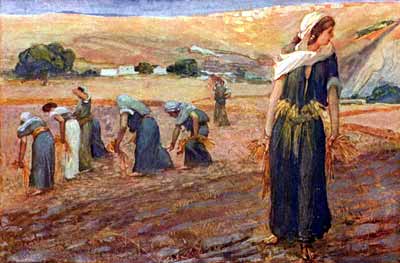
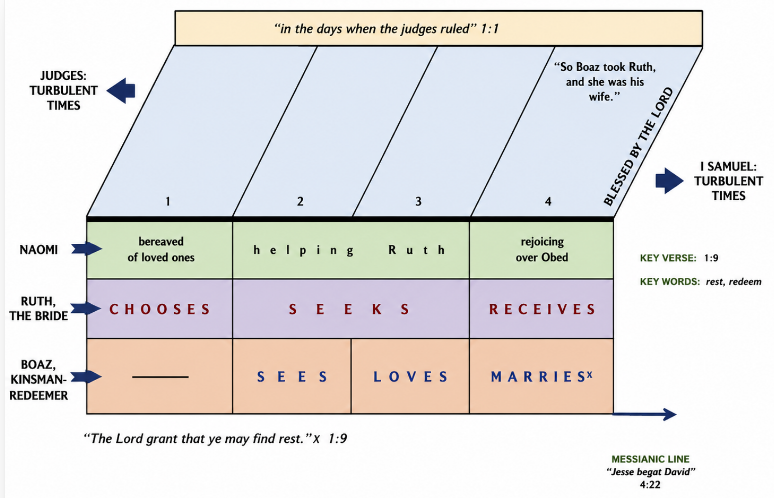
Irving Jensen's Survey of Bible (see his summary of Ruth online - page 392)
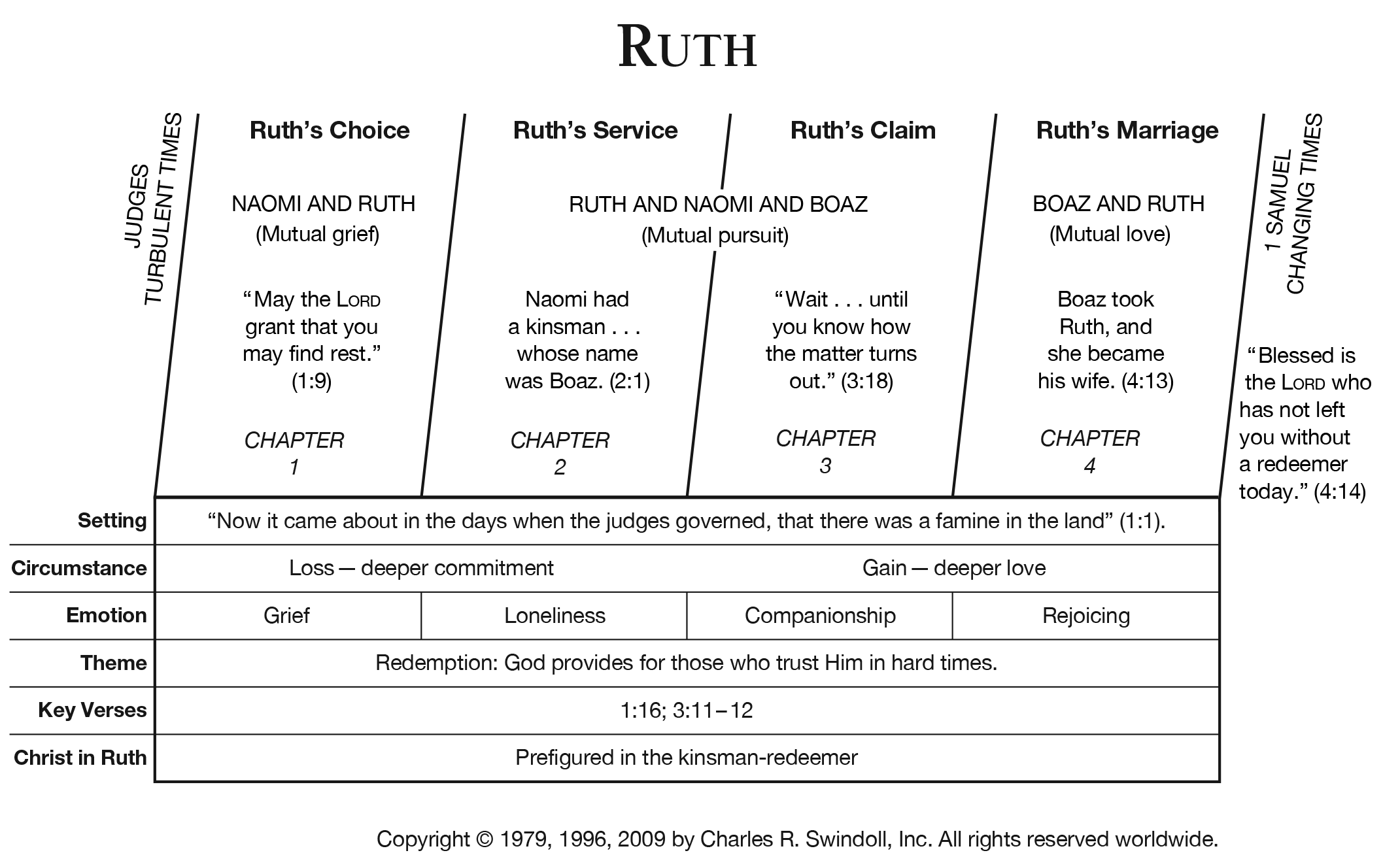
See Swindoll's summary chart of Ruth See Ruth Devotionals
|
RUTH: GOD PROVIDES |
|||
| Ruth 1 | Ruth 2 | Ruth 3 | Ruth 4 |
| Ruth's Choice | Ruth's Service | Ruth's Claim | Ruth's Marriage |
| Ruth's Resolve | Ruth's Rights | Ruth's Request | Ruth's Reward |
| Naomi and Ruth Mutual Grief |
Ruth and Naomi and Boaz Mutual Pursuit |
Boaz and Ruth Mutual Love |
|
| Ruth's Decision: Return with Naomi |
Ruth's Devotion: Provide for Naomi |
Ruth's Request: Redemption by Boaz |
Ruth's Reward: Relative of Messiah |
| Ruth and Naomi |
Ruth and Boaz |
||
| Death of Naomi's Family |
Ruth Cares for Naomi |
Boaz Cares for Ruth |
God Blesses with New Birth |
| Grief | Loneliness | Companionship | Rejoicing |
| Location: Plains of Moab |
Location: Fields of Bethlehem |
Location: Threshing floor of Bethlehem |
Location: Little town of Bethlehem |
| Time Lapsed: About 30 Years See Timeline |
|||
| Setting: Ru 1:1 Now it came about in the days when the judges governed Jdg 21:25 In those days there was no king in Israel; everyone did what was right in his own eyes. |
|||
Ruth 3:4 "It shall be when he lies down, that you shall notice the place where * he lies, and you shall go and uncover his feet and lie down; then he will tell you what you shall do." (NASB: Lockman)
Amplified: But when he lies down, notice the place where he lies; then go and uncover his feet and lie down. And he will tell you what to do. (Amplified Bible - Lockman)
BBE: But see to it, when he goes to rest, that you take note of the place where he is sleeping, and go in there, and, uncovering his feet, take your place by him; and he will say what you are to do.
CEV: Watch where he goes to spend the night, then when he is asleep, lift the cover and lie down at his feet. He will tell you what to do. (CEV)
GWT: When he lies down, notice the place where he is lying. Then uncover his feet, and lie down there. He will make it clear what you must do." (GWT)
KJV: And it shall be, when he lieth down, that thou shalt mark the place where he shall lie, and thou shalt go in, and uncover his feet, and lay thee down; and he will tell thee what thou shalt do.
NJB: But when he lies down, take note where he lies, then go and turn back the covering at his feet and lie down yourself. He will tell you what to do.' (NJB)
Young's Literal: and it cometh to pass when he lieth down, that thou hast known the place where he lieth down, and hast gone in, and uncovered his feet, and lain down, -- and he doth declare to thee that which thou dost do.'
Septuagint (LXX): kai estai (3SFMI) en to koimethenai (APN) auton kai gnose (2SFMI) ton topon opou koimatai (3SPMI) ekei kai eleuse (2SFMI) kai apokalupsein (2SFAI) ta pros podon autou kai koimethese (2SFPI) kai autos apaggelei (3SFAI) soi a poiesein (2SFAI)
English of Septuagint: And it shall come to pass when he lies down, that thou shalt mark the place where he lies down, and shalt come and lift up the covering of his feet, and shalt lie down; and he shall tell thee what thou shalt do
WHEN HE LIES DOWN NOTICE THE PLACE WHERE HE LIES:
- Ruth 3 Resources - Multiple Sermons and Commentaries
- Listen to ballad which goes through all 4 chapters The Lady Who Laid There Was Ruth!
LYING DOWN TO SLEEP
NOT FOR SEX!
It shall be when he lies down, that you shall notice the place where he lies - Naomi knew that Boaz would remain next to his grain for this would discourage any theft of grain. He is lying down to go to sleep for the night. There is absolutely no such contextual suggestion of illicit behavior in Ruth and in fact the author makes it clear that she lies down at his feet, which is quite different from lying down directly beside him (See note below from TWOT) Boaz is sleeping at the threshing floor to guard his crop against the kind of attacks described in 1Sa 23:1.
Lies down… lies (07901) (sakab) (Ru 3:4 = 4 times, Ru 3:7, 8, 12, 14) means to take a horizontal position as for example when lying down to sleep or for rest (Ge. 19:4; Lev. 14:47; Dt. 6:7; Josh. 2:1; Ps. 3:5; Pr 3:24); when ill, to recover (Lev. 15:4; 2 Ki. 9:16). It is used of Israel's spiritual harlotries, lying with her lovers (Ezek. 23:8). To lie with one's fathers means to die and be buried (Gen. 47:30). It is used figuratively of lying, being covered by shame (Jer. 3:25).
Sakab is used of the state of reclining as opposed to sitting. One must realize that this word is used with reference to a sexual relationship, but the context usually makes this use clear. For example when Lot's daughters faced with the potential of childlessness, the older reasoned with the younger saying "Come, let us make our father drink wine, and let us lie with him, that we may preserve our family through our father.” (Ge 19:32).
The Greek Septuagint translates lie or lie down seven times in Ruth 3 with the Greek verb koimao which means to sleep and has no use that I am can find suggesting a sexual encounter. Thus the Septuagint translators seem to have no doubt about Ruth's intentions and neither should the reader. Ruth was to find the right time for an approach which could be made privately and without fear of embarrassing either party.
The Theological Wordbook of the Old Testament comments that sakab…appears most often in the Qal primarily with the meaning “to lie down (in death)” or “to lie down (for sexual relations).” Whenever the derivatives of sakab are used in a context of sexual relationships, those relationships are illicit (Ge 30:15,16; 2Sa 11:11 may be exceptions). This is no less true with the verb sakab itself. In one instance it is used in legal statements that forbid certain types of sexual liaisons. Ex 22:16 outlaws fornication: “If a man seduce a virgin who is not betrothed and ‘sleep/lie’ with her he shall pay her price and make her his wife.” Dt 22:22 advocates the death penalty for two people caught in adultery: “If a man is caught ‘sleeping/ lying’ with another man’s wife both must die.” Lev 18:22 and Lv 20:13; use sakab in the statement that prohibits homosexual relationships: “The man who ‘lies’ with a man … they must die.” Finally in Deut 27:21 “lying” with animals is cursed by the Law.
It is sobering to notice that for the above sexual aberrations usually the death penalty was prescribed. To be sure, the Bible does not tell us to what degree the punishment was enforced across the board. But why do the Scriptures inveigh so forcefully against tampering with the sexual relationship…
Apart from legal texts sakab is used in narrative sections that describe incidents of inappropriate behavior. The daughters of Lot made their father drunk and then ‘slept’ with him (Gen 19:32, 33). One of Abimelech’s subjects almost inadvertently committed adultery with Rebekah (Gen 26:10). The verb is used to describe the rape of Dinah, Jacob’s daughter, by Shechem (Gen 34:2, 7). Reuben “slept” with his father’s concubine Bilhah while Jacob was absent (Gen 35:22). The sons of Eli engaged in amorous pursuits in their free time (1Sa 2:22). Amnon violated his half-sister Tamar (2Sa 13:11, 14), emulating, no doubt, the activities of his own father with Bathsheba (2Sa 11:4). By contrast when the Bible makes reference to a sexual relationship that is within the boundaries of God’s will it usually uses a phrase such as “Adam knew his wife and she conceived” (Ge 4:1, 17) or “Abraham went in unto Hagar and she conceived” (Ge 16:4). The latter phrase is used even in Gen 38:18 of Judah and Tamar, father-in-law and daughter-in-law respectively, where Judah denied Tamar her levirate rights. (Harris, R. L., Harris, R. L., Archer, G. L., & Waltke, B. K. Theological Wordbook of the Old Testament Moody Press see link to the TWOT )
Vine on shakab - Basically this verb signifies a person's lying down, though in Job 30:17 and Eccl. 2:23 it refers to something other than a human being. Shākab is used of the state of reclining as opposed to sitting: "And every thing that she lieth upon in her [menstruation] shall be unclean: every thing also that she sitteth upon…" (Lev. 15:20). This general sense appears in several nuances. First, there is the meaning "to lie down to rest." Elisha "came thither, and he turned into the chamber [which the Shunammite had prepared for his use], and lay there" (2 Kings 4:11). Job remarks that his gnawing pains "take no rest" (Job 30:17; cf. Eccl. 2:23).
Shākab can also be used of lying down on a bed, for example, when one is sick. Jonadab told Amnon: "Lay thee down on thy bed, and make thyself [pretend to be] sick…" (2 Sam. 13:5). The word can be used as an equivalent of the phrase "to go to bed": "But before they [Lot's visitors] lay down, the men of the city, even the men of Sodom, compassed the house round…" (Gen. 19:4, the first occurrence of the verb). Shākab also signifies "lying down asleep." The Lord told Jacob: "…The land whereon thou liest, to thee will I give it, and to thy seed" (Gen. 28:13).
In Exod. 22:26-27 the verb denotes the act of sleeping more than the lying down: "If thou at all take thy neighbor's raiment to pledge, thou shalt deliver it unto him by that the sun goeth down…[In what else] shall he sleep?" Shākab can also be used to mean "lodge" and thus refers to sleeping and eating. Israel's spies lodged with Rahab: "And they went, and came into a harlot's house, named Rahab, and lodged there" (Josh. 2:1; cf. 2 Kings 4:11).
This verb can mean "to lie down" in a figurative sense of to be humbled or to be robbed of power. The trees of Lebanon are personified and say concerning the king of Babylon: "Since thou art laid down, no feller [tree cutter] is come up against us" (Isa. 14:8). Used reflexively, shākab means "to humble oneself, to submit oneself": "We lie down in our shame…" (Jer. 3:25). Another special nuance is "to put something on its side": "Who can number the clouds in wisdom? Or who can [tip] the bottles of heaven, when the dust groweth into hardness, and the clods cleave fast together?" (Job 38:37-38).
A second emphasis of shākab is "to die," to lie down in death. Jacob instructed his sons as follows: "But I will lie with my fathers, and thou shalt carry me out of Egypt, and bury me in their burying place" (Gen. 47:30). This phrase ("lie down with one's fathers") does not necessarily refer to being buried or to dying an honorable death (cf. 1 Kings 22:40) but is a synonym for a human's dying. (It is never used of animals or inanimate things.) The idea is that when one dies he no longer stands upright. Therefore, to "lie with one's fathers" parallels the concept of "lying down" in death. Shākab, as 1 Kings 22:40 suggests, can refer to the state of being dead ("so Ahab slept with his fathers"), since v. 1 Kings 22:37 already reports that he had died and was buried in Samaria. The verb used by itself may mean "to die," or "to lie dead"; cf. "At her feet he bowed, he fell, he lay [dead]: at her feet he bowed, he fell: where he bowed, there he fell down dead" (Judg. 5:27).
A third major use of shākab is "to have sexual relations with." The first occurrence of this use is in Gen. 19:32, where Lot's daughters say: "Come, let us make our father drink wine, and we will lie with him, that we may preserve seed of our father." Even when a physical "lying down" is not necessarily in view, the word is used of having sexual relations: "Whosoever lieth with a beast shall surely be put to death" (Exod. 22:19). The word is also used of homosexual activities (Lev. 18:22). (Vine's Expository Dictionary of Old Testament and New Testament Words)
Shakab - 190v - actually lies(1), has(1), laid(6), laid low(1), lain(3), lain down(2), lay(22), lay down(15), lie(26), lie down(31), lie still(1), lies(25), lies down(10), lodged(1), lying(7), lying down(4), make your bed(1), recline(1), rest(4), rested*(1), sleep(4), sleeps(1), slept(37), take...rest(1), taking(1), tip(1). Gen. 19:4; Gen. 19:32; Gen. 19:33; Gen. 19:34; Gen. 19:35; Gen. 26:10; Gen. 28:11; Gen. 28:13; Gen. 30:15; Gen. 30:16; Gen. 34:2; Gen. 34:7; Gen. 35:22; Gen. 39:7; Gen. 39:10; Gen. 39:12; Gen. 39:14; Gen. 47:30; Exod. 22:16; Exod. 22:19; Exod. 22:27; Lev. 14:47; Lev. 15:4; Lev. 15:18; Lev. 15:20; Lev. 15:24; Lev. 15:26; Lev. 15:33; Lev. 18:22; Lev. 19:20; Lev. 20:11; Lev. 20:12; Lev. 20:13; Lev. 20:18; Lev. 20:20; Lev. 26:6; Num. 5:13; Num. 5:19; Num. 23:24; Num. 24:9; Deut. 6:7; Deut. 11:19; Deut. 22:22; Deut. 22:23; Deut. 22:25; Deut. 22:28; Deut. 22:29; Deut. 24:12; Deut. 24:13; Deut. 27:20; Deut. 27:21; Deut. 27:22; Deut. 27:23; Deut. 31:16; Jos. 2:1; Jos. 2:8; Jdg. 5:27; Jdg. 16:3; Ruth 3:4; Ruth 3:7; Ruth 3:8; Ruth 3:13; Ruth 3:14; 1 Sam. 2:22; 1 Sam. 3:2; 1 Sam. 3:3; 1 Sam. 3:5; 1 Sam. 3:6; 1 Sam. 3:9; 1 Sam. 3:15; 1 Sam. 26:5; 1 Sam. 26:7; 2 Sam. 4:5; 2 Sam. 4:7; 2 Sam. 7:12; 2 Sam. 8:2; 2 Sam. 11:4; 2 Sam. 11:9; 2 Sam. 11:11; 2 Sam. 11:13; 2 Sam. 12:3; 2 Sam. 12:11; 2 Sam. 12:16; 2 Sam. 12:24; 2 Sam. 13:5; 2 Sam. 13:6; 2 Sam. 13:8; 2 Sam. 13:11; 2 Sam. 13:14; 2 Sam. 13:31; 1 Ki. 1:2; 1 Ki. 1:21; 1 Ki. 2:10; 1 Ki. 3:19; 1 Ki. 3:20; 1 Ki. 11:21; 1 Ki. 11:43; 1 Ki. 14:20; 1 Ki. 14:31; 1 Ki. 15:8; 1 Ki. 15:24; 1 Ki. 16:6; 1 Ki. 16:28; 1 Ki. 17:19; 1 Ki. 19:5; 1 Ki. 19:6; 1 Ki. 21:4; 1 Ki. 21:27; 1 Ki. 22:40; 1 Ki. 22:50; 2 Ki. 4:11; 2 Ki. 4:21; 2 Ki. 4:32; 2 Ki. 4:34; 2 Ki. 8:24; 2 Ki. 9:16; 2 Ki. 10:35; 2 Ki. 13:9; 2 Ki. 13:13; 2 Ki. 14:16; 2 Ki. 14:22; 2 Ki. 14:29; 2 Ki. 15:7; 2 Ki. 15:22; 2 Ki. 15:38; 2 Ki. 16:20; 2 Ki. 20:21; 2 Ki. 21:18; 2 Ki. 24:6; 2 Chr. 9:31; 2 Chr. 12:16; 2 Chr. 14:1; 2 Chr. 16:13; 2 Chr. 16:14; 2 Chr. 21:1; 2 Chr. 26:2; 2 Chr. 26:23; 2 Chr. 27:9; 2 Chr. 28:27; 2 Chr. 32:33; 2 Chr. 33:20; Job 3:13; Job 7:4; Job 7:21; Job 11:18; Job 14:12; Job 20:11; Job 21:26; Job 27:19; Job 30:17; Job 38:37; Job 40:21; Ps. 3:5; Ps. 4:8; Ps. 41:8; Ps. 57:4; Ps. 68:13; Ps. 88:5; Prov. 3:24; Prov. 6:9; Prov. 6:10; Prov. 6:22; Prov. 23:34; Prov. 24:33; Eccl. 2:23; Eccl. 4:11; Isa. 14:8; Isa. 14:18; Isa. 43:17; Isa. 50:11; Isa. 51:20; Isa. 56:10; Jer. 3:25; Lam. 2:21; Ezek. 4:4; Ezek. 4:6; Ezek. 4:9; Ezek. 23:8; Ezek. 31:18; Ezek. 32:19; Ezek. 32:21; Ezek. 32:27; Ezek. 32:28; Ezek. 32:29; Ezek. 32:30; Ezek. 32:32; Hos. 2:18; Amos 6:4; Jon. 1:5; Mic. 7:5
Brown-Driver-Briggs - שָׁכַב verb lie down (Late Hebrew = Biblical Hebrew; שכב Sirach 47:23 (in death), משכב bed Sirach 40:5; Sirach 47:20d, = death bed Sirach 46:19; Phoenician שכב, משכב (see ׳מ 1 below), Lzb375; Ethiopic lie, Aramaic שְׁכַב, Nabataean משכבא couch; Arabic only pour out (water, tears), be poured out (compare Hiph`il below, and Lag BN 63)); — Qal Perfect 3 masculine singular ׳שׁ Genesis 26:10 +, etc.; Imperfect יִשְׁכַּב Genesis 30:15 +, 3 masculine plural יִשְׁכְּבֻן 1 Samuel 2:22, יִשְׁכָּב֑וּן Joshua 2:8; Job 30:17, etc.; Imperative masculine singular שְׁכַב 2 Samuel 13:5; Ezekiel 4:4, שִׁכְבָה Genesis 39:7,12, etc.; Infinitive absolute שָׁכֹב Leviticus 15:24; constructשְׁכַב 1 Kings 1:21 +, suffix שָׁכְבוֺ Ruth 3:4, שִׁכְבָהּ Genesis 19:33,35, שָׁכְבְּךָ Deuteronomy 6:7 2t.;Participle שֹׁכֵב Genesis 28:13 +, feminine שֹׁכֶ֫בֶת Micah 7:5; Ruth 3:8, etc.; —
1 lie down (sometimes opposed to קוּם, הֵקִיץ):
a. Judges 5:27 (prostrated by blow, + כָּרַע, נָפַל).
b. to sleep, Genesis 19:4 (J), Genesis 28:11 (E), 1 Samuel 3:5; Deuteronomy 7:7; Proverbs 6:22 + often; read וַיִּשְׁכַּב also (for וַיַּשְׁכֵּם) 1 Samuel 9:26 ᵐ5 Th We Dr and modern; ׳שׁ + יָשֵׁן sleep 1 Kings 19:5; Psalm 3:6; Psalm 4:9, compare Proverbs 3:24 (twice in verse), + נִרְדָּם Jonah 1:5; = be lying 1 Samuel 3:2,3; 1 Samuel 26:5 (all בְּ local), 1 Samuel 26:7; 1 Samuel 4:5 (accusative of congnate meaning with verb noon-repose), 2 Samuel 13:8, compare שֹׁכֵב בְּלֶביָֿם Proverbs 23:34, of two lying (together, for warmth) Ecclesiastes 4:11; + be sleeping 1 Samuel 26:7 = keep lying, with עַד Judges 16:3; 1 Samuel 3:15; Ruth 3:13; Proverbs 6:9; emphasis on resting, Leviticus 26:6 (H), Job 11:18; token of mourning, וְשָׁכַב אָ֑רְצָה(וְלָן) 2 Samuel 12:16, compare 2 Samuel 13:21, בַּשָּׂק׳שׁ 1 Kings 21:27, בֵּין שְׁפַתָּ֑יִם׳שׁ Psalm 68:14 (of indolence?); figurative of prostration by disease Psalm 41:9; among foes Psalm 57:5; of humiliation Jeremiah 3:25; with עַל of thing: land Genesis 28:13 (J), usually bed 2 Samuel 13:5; 1 Kings 21:4; Leviticus 15:4,24,26, compare Leviticus 15:20, for midday repose 2 Samuel 4:7.
c. lie on (עַל) one's side Ezekiel 4:4 (twice in verse); Ezekiel 4:6,9 (symbolic).
d. lie, עַל person 1 Kings 3:19 (fatally), 2 Kings 4:34 (to revive).
e. lie בְּחֵיק, of lamb (i.e. be cherished) 2 Samuel 12:3, of woman Micah 7:5 (intimacy), 1 Kings 1:2 (vital warmth); lie down for copulation Genesis 19:33,35 (of woman, see
3 below; both opposed toקוּם).
2 = lodge (for night), (שָׁ֫מָּהׅ׳שׁ Joshua 2:1 (E), 2 Kings 4:11, compare 2 Kings 9:16 (yet perhaps = lie ill), Leviticus 14:47 (בְּ local).
3 of sexual relations, lie with: subject Prayer of Manasseh , with עִם Genesis 30:15,16; Genesis 39:7,12,14 (J), Exodus 22:13 (E), Deuteronomy 22:22 8t. Deuteronomy; 2 Samuel 11:4,11; 2 Samuel 12:11,24; Leviticus 15:33; with אֶת feminine with (ᵑ0אֹתָהּ, etc., originally אִתָּהּ, etc., see Dr 2 Samuel 13:14and II. אֵת, p. 85:a above), Genesis 26:10; Genesis 34:2,7; Genesis 35:22 (all J), 1 Samuel 2:22 (omitted by ᵐ5 and modern), 2 Samuel 13:14; Ezekiel 23:8 (figurative), Leviticus 15:24 (שָׁכֹב יִשְׁכַּב), Numbers 5:19, also (with accusative of congnate meaning with verb שִׁכְבַתזֶֿרַע) Numbers 5:13; Leviticus 15:18; Leviticus 19:20; with accusative (suffix) feminine Deuteronomy 28:30 Kt (see [ שָׁגֵל]); with אֵצֶל feminine Genesis 39:10 (J); with אֵת of a man (sodomy), Leviticus 18:22; Leviticus 20:13 (both H; with accusative of congnate meaning with verb מִשְׁכְּבֵי אִשָּׁה); with עִםבְּֿהֵמָה Deuteronomy 27:21; Leviticus 22:18 (H); subject woman, with עִם of a man Genesis 19:32,34,35 (J) 2 Samuel 13:11; אֵת of a man Genesis 19:33,34 (compare 1 e above).
4.
a. lie down in death, Isaiah 14:8; Isaiah 43:17 (opposed to קוּם), Ezekiel 31:18; Ezekiel 32:27,28,29,30; Job 14:12 (opposed to קוּם, הֵקִיץ), וְאֶשְׁקוֺט׳שׁ Job 3:12; be lying (dead) Isaiah 51:20; Lamentations 2:21.
b. especially in phrase עִם אֲבוֺתָיו׳שׁ lie down with his fathers, of kings 1 Kings 1:21; 1 Kings 2:10 35t. Kings Chronicles, compare Genesis 47:30 (J) Deuteronomy 31:16, and (with אֵת) 2 Samuel 7:12
c. in grave, בְּבֵיתוֺ Isaiah 14:18 (opposed to מִקִּבְרְךָ), שֹׁכְבֵי קֶבֶר Psalm 88:6; לֶעָפָר Job 7:21, ׳עַלעֿJob 20:11; Job 21:26; in sh®°ôl Ezekiel 32:21; in Gehenna (?) Isaiah 50:11.
5 figurative = relax: Job 30:17 my gnawing pains do not sleep; = have rest, לִבּוֺ׳לֹא שׁ Ecclesiastes 2:23.
Niph`al Pu`al = be lain with (sexually; subject woman), only as Qr for Kt [שָׁגֵל]
Niph`al Pu`al q. v.
Hiph`il lay, Perfect 3 feminine singular הִשְׁכִּיבָה with accusative puer. + בְּחֵיק 1 Kings 3:20, so Imperfect3 feminine singular suffix וַתַּשְׁכִּיבֵהוּ 1 Kings 3:20, compare (עַלמִֿטָּה) 1 Kings 17:19; 2 Kings 4:21;Infinitive absolute הַשְׁכֵּב אוֺתָם אַ֫רְצָה 2 Samuel 8:2 making them lie down on ground; Imperfect also layבַּמִּשְׁכָּב 2 Chronicles 16:14 (of burial); נִבְלֵי שָׁמַיִם מִי יַשְׁכִּיב Job 38:37i.e. tip them so that contents may flow out
Hoph`al Participle מֻשְׁכָּב 2 Kings 4:32 laid עַלמִֿטָּה; Perfect consecutive וְהֻשְׁכַּב Ezekiel 32:32 shall be laid (in death), with בְּתוֺךְ and אֵת person ( with); so Imperative masculine singular הָשְׁכְּבָה Ezekiel 32:19 (with אֵת person only).
YOU SHALL GO UNCOVER HIS FEET AND LIE DOWN; THEN HE WILL TELL YOU WHAT YOU SHALL DO
- Ruth 3 Resources - Multiple Sermons and Commentaries
NAOMI'S CONFIDENCE
IN THE GOEL
Then he will tell you what you shall do - Then marks progression in the narrative. To propose marriage to Boaz by utilizing an ancient Near Eastern custom. Since Boaz is a older than Ruth (refers to her as "daughter" Ru 2:8, Ru 3:10) Ruth expressed her desire to marry Boaz which the older, gracious Boaz would not have initiated with a younger woman. Naomi seems confident that Boaz would recognize Ruth's action as an appeal to marry her as the next of kin.
MacArthur notes that "Naomi instructed Ruth 1) to put on her best appearance and 2) to propose marriage to Boaz by utilizing an ancient Near Eastern custom. Since Boaz is a generation older than Ruth (Ru 2:8, Ru 3:10), this overture would indicate Ruth’s desire to marry Boaz which the older, gracious Boaz would not have initiated with a younger woman." (See context in The MacArthur Bible Commentary)
In recognition of the potential of this passage to convey the incorrect message of sexual innuendos of Ruth’s uncovering Boaz’s feet, the LXX, Vulgate, and Syriac were all very careful in their translations to make it clear that only the place of Boaz’s feet was involved.
It is interesting to observe the contrast between Ruth the Moabitess and her female ancestors. Moses records a tragic historical event in which the Israelites were tempted by the daughters of Moab and fell into sin…
While Israel remained at Shittim, the people began to play the harlot (speaks of spiritual adultery, cp the NT analogue - Jas 4:4) with the daughters of Moab. For they (daughters of Moab) invited the people to the sacrifices of their gods, and the people ate and bowed down to their gods. So Israel joined themselves to Baal of Peor, and the LORD was angry against Israel. (Nu 25:1, 2, 3).
Comment: See related discussion - Idolatry and Immorality - the relationship and the antidote Ruth the Moabitess' goal was to appeal to Boaz and not to tempt him to follow her gods for she had already chosen to seek refuge under the wings of "Jehovah, the God of Israel". (Ru 2:12, cp Ru 1:17)
Hamilton Smith comments that "Having become suited to the presence of Boaz, Ruth's course is plain. She is to lie down at the feet of Boaz and listen to his words, as Naomi says, "He will tell thee what thou shalt do." Does this not carry us in thought to that lovely scene at Bethany described in Luke 10, where we read of Mary, that she "sat at Jesus' feet and heard His word." (Lk 10:39) Is not this the great lack today! In the hurry and bustle of life there is little time for being alone with the Lord to hear His word. Nevertheless the Lord says it is the "one thing needful" (Lk 10:42KJV). May we hear the voice of the Lord through Naomi, and like Ruth answer, "All that thou sayest unto me I will do." Thus "washed", "anointed", and clothed may we sit in His presence and hear His word. (The Book of Ruth.)
Ruth 3:5 She said to her, "All that you say I will do." (NASB: Lockman)
Amplified: And Ruth said to her, All that you say to me I will do. (Amplified Bible - Lockman)
BBE: And she said, I will do all you say.
CEV: Ruth answered, "I'll do whatever you say." (CEV)
GWT: Ruth answered her, "I will do whatever you say." (GWT)
KJV: And she said unto her, All that thou sayest unto me I will do.
NJB: Ruth said, 'I shall do everything you tell me.' (NJB)
Young's Literal: And she saith unto her, 'All that thou sayest -- I do.'
Septuagint (LXX): eipen (3SAAI) de Routh pros auten panta osa ean eipes (2SAAS) poieso (1SFAI)
English of Septuagint: And Ruth said to her, All that thou shalt say, I will do
AND SHE SAID TO HER ALL THAT YOU SAY I WILL DO:
- Ruth 3 Resources - Multiple Sermons and Commentaries
RUTH'S OBEDIENCE
IS EXEMPLARY
She said to her, "All that you say I will do - Note Ruth's immediate, unquestioning, complete obedience to the directions of her mother-in-law (cf. Ru 2:22, 23) Ruth is an excellent illustration of an excellent example of James' exhortation for saints to "be quick to hear, slow to speak." (Jas 1:19) Ruth was not only a hearer of the Word, but she was a doer. (Jas 1:22) Ruth had a tender heart, a submissive spirit and an obedient response to do "all" that Naomi said.
There is an important principle illustrated by Ruth's immediate obedience. A willingness to obey the Lord (in this case the one that the Lord had placed over her) is the secret of knowing what He wants us to do and being blessed when we do it. Jesus taught this important principle declaring that "If any man is willing to do His will, he shall know of the teaching, whether it is of God, or whether I speak from Myself." (Jn 7:17, cp Jn 14:21).
The International Children's Bible, a paraphrase, clearly emphasizes the relation between doing and knowing in its rendering of Jn 7:17 "If anyone chooses to DO what God wants, THEN he will KNOW that my teaching comes from God. He will know that this teaching is not my own."
The chosen people said the same thing but failed to follow up with their actions when confronted with the Mosaic Law "all the people answered together and said, "All that the LORD has spoken we will do!" And Moses brought back the words of the people to the LORD. (Ex 19:8) Again when "Moses came and recounted to the people all the words of the LORD and all the ordinances; and all the people answered with one voice, and said, "All the words which the LORD has spoken we will do! (Ex 24:3) And when Moses "took the book of the covenant and read it in the hearing of the people" that ; and they repeated "All that the LORD has spoken we will do, and we will be obedient!" (Ex 24:7)
ANALYSIS OF NAOMI'S
RIGHTEOUS STRATEGY
Naomi’s strategic plan was based on the fact that her deceased husband Elimelech still possessed land in Bethlehem but her poverty had forced her to sell the property (Ru 4:3). Naomi however understood that Boaz was a near relative of Elimelech (Ru 2:1, 3), and was a "candidate" (potential) redeemer who could ransom Elimelech's field as summarized in Leviticus…
If a fellow countryman of yours becomes so poor (like Naomi) he has to sell part of his property, then his nearest kinsman (Goel) is to come and buy back what his relative has sold. (Lv 25:25)
Not only could Boaz redeem the land but also the name. If Boaz were to marry Ruth (the widow of Mahlon) this would (if God blessed the union with children - Ps 127:3) perpetuate the name of Mahlon (and Elimelech). While the Mosaic law in Leviticus addressed the land, the law in Deuteronomy addressed the name…
When brothers live together and one of them dies and has no son, the wife of the deceased shall not be married outside the family to a strange man. Her husband's brother shall go in to her and take her to himself as wife and perform the duty of a husband's brother to her. 6 "And it shall be that the first-born whom she bears shall assume the name of his dead brother, that his name may not be blotted out from Israel. 7 "But if the man does not desire to take his brother's wife, then his brother's wife shall go up to the gate to the elders and say, 'My husband's brother refuses to establish a name for his brother in Israel; he is not willing to perform the duty of a husband's brother to me.' 8 "Then the elders of his city shall summon him and speak to him. And if he persists and says, 'I do not desire to take her,' 9 then his brother's wife shall come to him in the sight of the elders, and pull his sandal off his foot and spit in his face; and she shall declare, 'Thus it is done to the man who does not build up his brother's house.' 10 "And in Israel his name shall be called, 'The house of him whose sandal is removed.' (Dt 25:5-10)
This passage in Deuteronomy describes the rules of so-called "Levirate marriage" (Latin levir = "husband's brother") the practice of which was established to prevent the blotting out of the family name. If the brother would not fulfill this responsibility or there was no living brother, the right and responsibility passed to the nearest kinsman (cp Boaz - Ru 2:1, 3 "kinsman… who was of the family of Elimelech", Ru 2:20 "our relative… one of our closest relatives [Goel]").
So we see two OT concepts coalesce in the story of Ruth and Naomi. The upshot is that Naomi has become aware of a near relative who could function as the Goel, a kinsman-redeemer, (1) paying the ransom price for Elimelech's land (cp Lv 25:25) and (2) marrying the widow Ruth so that the family name (and "seed") was not blotted out (Dt 25:5-10).
Based on these truths in the Torah and her innate hope in Shaddai/Jehovah (Who had not withdrawn His covenant kindness, Ru 2:20), Naomi presented a detailed, step by step plan to Ruth. Using this plan Ruth would approach Boaz, who had shown himself to be kind and interested in Ruth (cp Ru 2:5). This strategic nighttime encounter was to request him to fulfill the role of the nearest kinsman (perpetuate the name) and the Goel or redeemer who could pay the ("ransom") price for Elimelech's land. In summary, Boaz’s intervention would accomplish two of Naomi’s essential needs - perpetuation of the paternal name and perpetuation of the possession of property.
Related Resource:
Selwyn - Ruth 3:2-5 Three pieces of advice
"Ruth — went down to the threshing-floor and did everything her mother-in-law told her to do." (v. 5)
During the time of the winnowing of the grain, it was customary for the workers to sleep on the threshing-floor. Naomi's carefully formulated plan was designed to work precisely at this point. Her first piece of advice to Ruth is: "Wash and perfume yourself, and put on your best clothes" (v. 3). I am not sure that I know how to interpret her second piece of advice: "Don't let him know you are there until he has finished eating and drinking" (v. 3). We are all familiar with the saying: "The way to a man's heart is through his stomach." But this advice seems more in line with another proverb: "Never come between a man and his table." Her third piece of advice is this: "When he lies down, note the place where he is lying. Then go and uncover his feet and lie down. He will tell you what to do" (v. 4). Naomi knew that according to the laws of Israel, a widow was entitled to approach the nearest male relative and remind him of his obligation to take care of her. What a delightful picture this gives us of the relationship that exists between each one of us and our Lord Jesus Christ. Just as Ruth was within her legal rights in approaching Boaz, so we, as God's children, have a legal right to approach the throne of grace and avail ourselves of God's obligation to meet our every need. We must be careful, however, that we do not mistake a need for a want. God is not under an obligation to give us everything we want, but He is under an obligation to give us everything we need.
Father, the thought that I have a legal right to approach Your throne and claim Your provision for my needs is awesome and breathtaking. Yet it is so. Help me to appropriate the rich inheritance I have in Christ. Amen.
Ruth 3:6 So she went down to the threshing floor and did according to all that her mother-in-law had commanded her. (NASB: Lockman)
Amplified: So she went down to the threshing floor and did just as her mother-in-law had told her. (Amplified Bible - Lockman)
BBE: So she went down to the grain-floor and did all her mother-in-law had said to her.
CEV: She went out to the place where Boaz was working and did what Naomi had told her. (CEV)
GWT: Ruth went to the threshing floor and did exactly as her mother-in-law had directed her. (GWT)
KJV: And she went down unto the floor, and did according to all that her mother in law bade her.
NJB: So she went down to the threshing-floor and did everything her mother-in-law had told her (NJB)
Young's Literal: And she goeth down to the threshing-floor, and doth according to all that her mother-in-law commanded her
Septuagint (LXX): kai katebe (3SAAI) eis ton alo kai epoiesen (3SAAI) kata panta osa eneteilato (3SAMI) aute e penthera autes
English of Septuagint: And she went down to the threshing-floor, and did according to all that her mother-in-law enjoined her
SO SHE WENT DOWN TO THE THRESHING FLOOR AND DID ACCORDING TO ALL THAT HER MOTHER IN LAW HAD COMMANDED HER: :
- And did - Jn 2:5; 15:14
- Ruth 3 Resources - Multiple Sermons and Commentaries
COMPLETE
OBEDIENCE
So she went down to the threshing floor and did according to all that her mother-in-law had commanded her. The men would deposit the sheaves on the floor and then separate the grain from the stalks by having oxen walk on it or by beating the stalks. Once the grain was separated, the workers would throw the grain into the air and the breeze would carry the chaff away while the grain fell to the floor. The grain would then be sifted. An understanding of this process helps one better visualize Jesus' metaphor which He applied to Peter saying "Satan has demanded permission to sift you like wheat' (Lk 22:31)
Did according to all and in so doing she fulfilled God's command to "Honor your … mother" (Ex 20:12) and she did not forsake her "mother's teaching." (Pr 1:8)
Ruth not only said she would do all, she did all! There is a huge difference between saying and doing, as we see with the Israelites in Exodus 19 - "So Moses came and called the elders of the people, and set before them all these words which the LORD had commanded him. 8 And all the people answered together and said, "All that the LORD has spoken we will do!" And Moses brought back the words of the people to the LORD." (Ex 19:7, 8) Did they obey as promised? No, while Moses was on Mt Sinai with the Lord, they made a golden calf. Their words were sincere, but they were sincerely hypocritical and self-deluded!
James teaches the principle "But prove yourselves doers of the word, and not merely hearers who delude themselves. 23 For if anyone is a hearer of the word and not a doer, he is like a man who looks at his natural face in a mirror; 24 for once he has looked at himself and gone away, he has immediately forgotten what kind of person he was. 25 But one who looks intently at the perfect law, the law of liberty, and abides by it, not having become a forgetful hearer but an effectual doer, this man shall be blessed in what he does." (Jas 1:22-24; Jas 1:25)
Jesus added that "On the contrary, blessed are those who hear the word of God, and observe it." (Lk 11:28, cf Dt 11:26-29, Dt 30:16)
Doing the Master's will proves we are His friends, for Jesus said "You are My friends if you do what I command you." (Jn 15:14)
Divine providence does not eliminate human activity. Ruth lay crosswise at Boaz's feet-- a position in which Eastern servants frequently sleep in the same chamber or tent with their master; and if they want a covering, custom allows them that benefit from part of the covering on their master's bed. Resting, as the Orientals do at night, in the same clothes they wear during the day, there was no indelicacy in a stranger, or even a woman, putting the extremity of this cover over her.
Naomi in this declaration expresses complete confidence in the integrity of their kinsman-redeemer. And Ruth carried out the plan in exact detail as matchmaker Naomi had laid it out.
Ruth 3:7 When Boaz had eaten and drunk and his heart was merry, he went to lie down at the end of the heap of grain; and she came secretly, and uncovered his feet and lay down. (NASB: Lockman)
Amplified: And when Boaz had eaten and drunk and his heart was merry, he went to lie down at the end of the heap of grain. Then [Ruth] came softly and uncovered his feet and lay down. (Amplified Bible - Lockman)
BBE: Now when Boaz had taken meat and drink, and his heart was glad, he went to take his rest at the end of the mass of grain; then she came softly and, uncovering his feet, went to rest.
CEV: After Boaz finished eating and drinking and was feeling happy, he went over and fell asleep near the pile of grain. Ruth slipped over quietly. She lifted the cover and lay down near his feet. (CEV)
GWT: Boaz had eaten and drunk to his heart's content, so he went and lay at the edge of a pile of grain. Then she went over to him secretly, uncovered his feet, and lay down. (GWT)
KJV: And when Boaz had eaten and drunk, and his heart was merry, he went to lie down at the end of the heap of corn: and she came softly, and uncovered his feet, and laid her down.
NJB: When Boaz had finished eating and drinking, he went off happily and lay down beside the pile of barley. Ruth then quietly went, turned back the covering at his feet and lay down. (NJB)
Young's Literal: And Boaz eateth and drinketh, and his heart is glad; and he goeth in to lie down at the end of the heap; and she cometh in gently, and uncovereth his feet, and lieth down.
Septuagint (LXX): kai ephagen (3SAAI) Boos kai egathunthe (3SAPI) e kardia autou kai elthen (3SAAI) koimethenai (APN) en meridi tes stoibes e de elthen (3SAAI) kruphe kai apekalupsen (3SAAI) ta pros podon autou
English of Septuagint: And Booz ate and drank, and his heart was glad, and he came to lie down by the side of the heap of corn; and she came secretly, and lifted up the covering of his feet
WHEN BOAZ HAD EATEN AND DRUNK AND HIS HEART WAS MERRY:
- Ge 43:34; Jdg 16:25; 19:6, 19:9, 19:22; 2Sa 13:28; Esther 1:10; Ps 104:15; Eccl 2:24; 8:15; 9:7; 10:19; 1Cor 10:31; Eph 5:18
- Ruth 3 Resources - Multiple Sermons and Commentaries
His heart was glad (YLT)
was feeling happy (CEV)
drank to his heart's content (NAB)
he lay down very contentedly (TLB)
he was in a good mood (TEV)
and was feeling satisfied (NET)
When Boaz had eaten and drunk and his heart was merry (yatab/yatav) - Boaz was in a good mental state, which is again a providential provision of Yahweh preceding Ruth's bold maneuver. Imagine if he had been in a "bad mood!" It does not seem warranted to interpret "his heart was merry" as indicating that Boaz was drunk" as some commentaries do. It should be noted however that the Septuagint (LXX) translates the Hebrew yatab with the Greek verb agathuno which in a few contexts does refer to merry with wine (cf 2Sa 13:28). But to be of good cheer does not mean he was drunk. He could hardly guard the grain heap if he was drunk. His subsequent actions and words during this night do not suggest he was drunk but that he was fully in command of his senses. Finally, as stated earlier, Boaz had reason to have a merry heart, for the harvest season was a joyful time for the Jews (Isa 9:3; 16:10), and this is the way God wanted it, Moses writing "Seven days you shall celebrate a feast to the LORD your God in the place which the LORD chooses, because the LORD your God will bless you in all your produce and in all the work of your hands, so that you shall be altogether joyful.” (Dt 16:15).
Note - yatab/yatav is used 3x in the book of Ruth, all in chapter 3 - Ru 3:1 = "that it may be well with you", Ru 3:7, Ru 3:10 = "shown your last kindness to be better than the first."
Henry Morris agrees that Boaz was not drunk writing that "Ruth was not taking advantage of Boaz in a drunken state. The term "merry" only suggests a feeling of satisfaction with a job well done, followed by a good meal and a sense of thankfulness for God's blessing. (Borrow The Defender's Study Bible)
Merry (03190) (yatab/yatav) means to be good, to be well, to be pleasing. To be made well, happy, cheerful, joyful. Using the same language of Ru 3:1 (security … be well [well = yatab]) Boaz is described as having a sense of well being which is most readily explained by the full harvest in contrast to previous years of famine (cf. Jdg 18:20). Yatab is often used in idiomatic expressions with heart (as in current verse) where it means to be pleased or to be happy. It is often used in idiomatic expressions with heart (lēb̠), meaning to be pleased or to be happy (Jdg. 18:20; 19:6, 9; Ruth 3:7); and with eyes, to be pleasing to someone else (i.e., pleasing or good in their eyes Ge. 34:18; 1 Sa 18:5).
Yatab/yatav is found first in the story of Cain and Abel, where it is used twice in one verse: "If you do well, will not your countenance be lifted up? And if you do not do well, sin is crouching at the door" (Ge 4:7)
Septuagint translates yatab/yatav in Ru 3:7 with the verb agathuno (not found in NT) meaning to be of good cheer, to find favor, to rejoice greatly (Jdg 16:25).
Gilbrant on yatab/yatav - Occurring over 100 times, yatav carries the two basic meanings of "to be good" and "to be pleasing." It occurs several time in the simple tense, but the majority of the instances are causative. Cognates attesting to the meaning of this verb have been found in a number of Aramaic languages as well as Mandaean. In the Qal stem (simple tense), yatav refers to pleasing circumstances or situtions which are going well for a person. God's blessing is often referred to in contexts employing this verb, especially in promises. If the Israelites would obey the Law, then God would "cause it to go well" for them (Deut 4:40). Centuries later, when the people were facing exile, Jeremiah reminded them of the same covenant principle (Jer. 7:23). Yatav sometime communicates that a word or deed is pleasing or meets with approval. Often the concern is that the king or official is pleased with the circumstances or possible outcome of a situtation. Shechem and Hamor were pleased with Simeon and Levi's supposed plan for assimilation of people groups (Gen. 34:18). Saul was vulnerable while in the same cave with David. The men saw this as an opportunity from the Lord for David to do as he pleased (1 Sam. 24:5). Sometimes the king or official tried to please the people, accepting their request or advice (Josh. 22:30; 2 Sam. 3:36). Many times an act may (or may not) please the Lord (Lev. 10:19; Ps. 69:31). Other usages refer to something simply being agreeable (Neh. 2:5); a woman being pleasing (Est. 2:4); or someone being in good spirits or merry in heart (Ecc. 11:9). (Complete Biblical Library Hebrew-English Dictionary)
Yatab - 112v in NAS = adorned(1), amend(3), better(3), better he made(1), bless(1), celebrating*(1), deals well(1), do(1), do it well(1), do them good(1), do them good(1), do you good(1), do good(1), do good(12), do well(3), do… good(1), does(1), does… good(1), done good(1), done well(1), found favor(1), glad(1), go well(6), goes well(1), good(1), good(2), good that i do(1), good reason(3), happy(1), joyful(1), make(1), makes a cheerful(1), makes… acceptable(1), merry(3), pleasant(1), please(1), please the better(1), pleased(2), pleased*(9), pleases*(1), pleasing(2), prosper(4), reform(1), seemed good(2), seemed reasonable(1), seems(1), seems best(1), seems good(1), shown(1), skillfully(2), stately(2), surely prosper(1), thoroughly(4), treat you better(1), treated… well(1), trims(1), truly amend(1), very(1), very small(1), well(13), well you prepare(1). Gen 4:7; Ge 12:13, 16; 32:9, 12; 34:18; 40:14; 41:37; 45:16; Exod 1:20; 30:7; Lev 5:4; 10:19f; Num 10:29, 32; Deut 1:23; 4:40; 5:16, 28f; 6:3, 18; 8:16; 9:21; 12:25, 28; 13:14; 17:4; 18:17; 19:18; 22:7; 27:8; 28:63; 30:5; Josh 22:30, 33; 24:20; Judg 17:13; 18:20; 19:6, 9, 22; Ruth 3:1, 7, 10; 1 Sam 2:32; 12:22; 16:17; 18:5; 20:13; 24:4; 25:31; 2 Sam 3:36; 18:4; 1 Kgs 1:47; 3:10; 21:7; 2 Kgs 9:30; 11:18; 25:24; Ezra 7:18; Neh 2:5f; Esth 1:21; 2:4, 9; 5:14; Job 24:21; Ps 33:3; 36:3; 49:18; 51:18; 69:31; 119:68; 125:4; Prov 15:2, 13; 17:22; 30:29; Eccl 7:3; 11:9; Isa 1:17; 23:16; 41:23; Jer 1:12; 2:33; 4:22; 7:3, 5, 23; 10:5; 13:23; 18:10f; 26:13; 32:40f; 35:15; 38:20; 40:9; 42:6; Ezek 33:32; 36:11; Hos 10:1; Jonah 4:4, 9; Mic 2:7; 7:3; Nah 3:8; Zeph 1:12; Zech 8:15.
Examples
Genesis 4:7 “If you do well (yatab), will not your countenance be lifted up? And if you do not do well, sin is crouching at the door; and its desire is for you, but you must master it.”
Ruth 3:10 Then he said, “May you be blessed of the Lord, my daughter. You have shown your last kindness to be better than the first by not going after young men, whether poor or rich.
HE WENT TO LIE DOWN AT THE END OF THE HEAP OF GRAIN AND SHE CAME SECRETLY:
- Ruth 3 Resources - Multiple Sermons and Commentaries
Big Heap of Grain
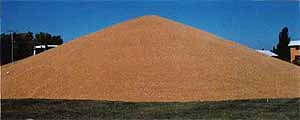

He went to lie down at the end of the heap of grain; and she came secretly (lat; Lxx = kruphe) - NET - "he lay down to sleep at the far end of the grain heap." He is lying down at the end of the heap of grain to protect it from thieves for this was the godless days of the judges! Secretly indicates Ruth was obeying Naomi's instruction to the last detail - "do not make yourself known to the man." (Ru 3:3).
Hubbard points out that "an important point to remember during the next scene is that the popular mind associated threshing floors with licentiousness." But here an excellent woman and a godly man "go against the grain" of the godless society!
THOUGHT - Dear believer, especially if you are single, are you willing to go against the grain of a society which has tossed Biblical morality out the window calling evil good and good evil (Isa 5:20, cf Ro 1:32), replacing it with the mantra "if it feels good do it?" Are you engaged but living together and/or sleeping together? God will bless godly sexual behavior, beloved. Look at the blessings He bestowed on Ruth and Boaz! Point made!
Secretly (03909)(lat from lut = to wrap closely or tightly, enwrap, envelop) or softly so as not to be heard. The Septuagint translates lat with the adverb kruphe from "krupto" and it means privately or in secret) for example as in (1Sa 24:4) when David cut Saul's garment.
Gilbrant - Derived from the verb lût, which means "to wrap," lāt refers to "occult art," "secrecy." The root idea of the noun is "secrecy" or "mystery." Half of the six uses in the OT occur in Exodus, describing the attempts of Pharaoh's magicians to duplicate the miracles of Moses. They turned a staff into a serpent (Exo. 7:11); changed water to blood (v. 22); and produced frogs (Exo. 8:7); but could not successfully bring forth gnats (Exo. 8:18), declaring this was indeed "the finger of God." The other uses of the word have no occult connotations; they simply describe actions done secretly. Ruth came unobserved to the threshing floor to lie down at Boaz's feet (Ruth 3:7). In 1 Sam. 18:22, Saul instructs his servants to speak to David secretly, or privately, to persuade him to pursue the idea of marrying Michal (hoping to lure him into a foolhardy act in which David would be killed by the Philistines). Finally, in 1 Sam. 24:4, David creeps up behind an unobservant Saul in a cave, and secretly slices off the edge of his garment, demonstrating his superior ability, even though he had already been anointed to take Saul's place. (Complete Biblical Library Hebrew-English Dictionary)
Lat - secret arts(4), secretly(4). Exod. 7:11; Exod. 7:22; Exod. 8:7; Exod. 8:18; Jdg. 4:21; Ruth 3:7; 1 Sam. 18:22; 1 Sam. 24:4
UNCOVERED HIS FEET AND LAY DOWN:
- Ruth 3 Resources - Multiple Sermons and Commentaries
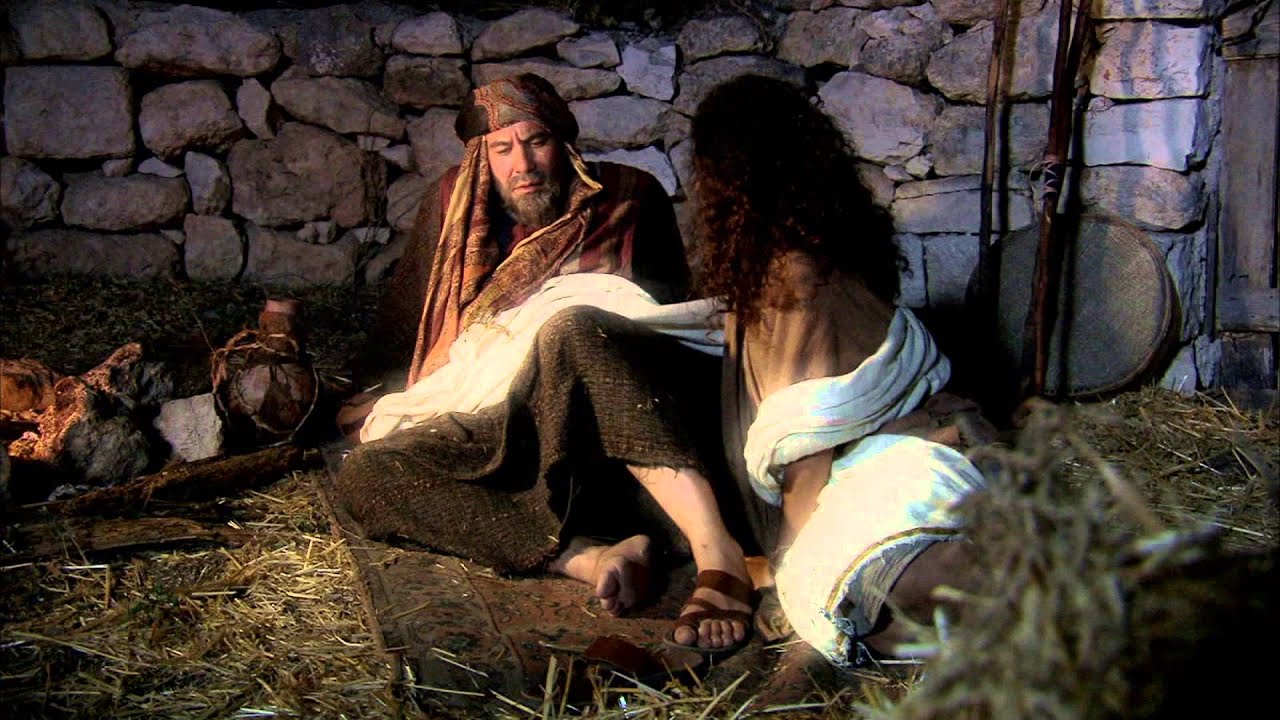
Ruth At the Feet of Boaz
Four times in this chapter there is mention of feet (Ru 3:4, 7, 8, 14). Ruth had fallen at the feet of Boaz in response to his gracious words (Ru 2:10), but now she was coming to his feet to propose marriage. She was asking him to obey the law of the kinsman redeemer and take her as his wife.
And uncovered his feet and lay down - To position herself at Boaz's feet indicates that Ruth was assuming a position of submission and humility. Note that Ruth did not tickle his feet or nudge him to awaken him, but patiently waited for the events to unfold. Once again we gain insight into the virtuous character of this woman willing to wait on the Lord's timing as indicated by and it happened in the middle of the night, just as earlier "she happened to come to the portion of the field belonging to Boaz. (Ru 2:3) (and he happened to visit the field that day, and just happened to be an eligible older bachelor, etc, etc)
THOUGHT- Oh, how wonderful it would be if we all had such Ruth-like resolve to wait upon the Lord's timing in the circumstances of our life, instead of so often attempting to manipulate people and circumstances to achieve what we desire or think the conclusion of a matter should be. Lord, give us a "Ruth like" spirit, willing to wait "all night" if need be, trusting in the perfect timing of Your providential outworking of the circumstances of our life. Amen. There is a time to sit still and wait and there is a time for action as Ruth will subsequently illustrate.
You need to be aware that some scholars point out that the word feet can be a euphemism for sexual organs and in some writers ascribe such a meaning to this passage! I think they are taking the Hebrew words totally out of context considering that both Boaz and Ruth were known as people of excellence which emphasizes that they were both not just externally strong but that they were internally virtuous.
Fruchtenbaum has the following comment "Ruth was to uncover his feet so that he would awaken when the cold air hit the exposed parts of his legs." However this comment however does not fit the context, especially her instruction from Naomi. Her entrance was secret (softly). Her detailed instructions from Naomi did not include a promise that her maneuver would awaken Boaz. It's a small point and it is possible that cold air awoke Boaz but I think the other possibility is that God providentially "happened" to awaken him. After all it is the middle of the night (probably about midnight) and Ruth may have been lying there for some time if she came immediately after he fell asleep. One of the great dividends of reading the Bible inductively is that you will be able to wisely comment on the commentaries, even those by well known, reputable writers such as Fruchtenbaun!
What Happened on the Threshing Floor? - Go to page 171 in HARD SAYINGS BIBLE
Some commentators on this text have suggested that Ruth’s bold move that night on the threshing floor went beyond the normal boundaries of propriety and included sexual relations with Boaz. Their argument is that harvest time the world over is a time of celebration of the rites of fertility. At these times the ancients allowed themselves more license than usual. During this harvest celebration, then, after Boaz had imbibed enough wine to make himself drunk, Ruth approached him in order to force him into marriage. Others have interpreted Boaz’s “feet” as a sexual euphemism for the male reproductive organ. If this were the meaning, then the story would be making a discreet reference to fleshly indulgence. But these suggestions are unnecessary; it seems that the author chose his words carefully so as to avoid any possible innuendo.
To begin with, it is extremely unlikely that Boaz was drunk (cp same word in Ru 3:1 and fact that it did not say he was drunk as it did of Noah in Ge 9:21). after the good meal he had eaten. The text simply says that he “was in good spirits.” His mood was mellow, and his demeanor was upbeat. And why not? He had the results of all his hard labor right there on the threshing floor with him. But his feasting brought on drowsiness, so he retired to one side of the pile of grain that had been threshed. It is doubtful that he would have guarded this pile of grain by himself, that there would have been no other workers present who would awaken at the crack of dawn to get back to work alongside him. Later, after Boaz had fallen asleep, Ruth went and carefully uncovered his feet and apparently crawled under his cover, lying perpendicular to his feet. There are no sexual overtones in the reference to his feet, for Boaz was startled at midnight when his feet suddenly touched the woman’s body.
Ruth immediately made her objective clear when she requested, “Spread the corner of your garment over me.” She was using the accepted idiom meaning “Marry me”—other passages in which the same expression is used are Ezek 16:8, Dt 22:30 and Mal 2:16. No doubt the idiom reflected the custom, still practiced by some Arabs, of a man’s throwing a garment over the woman he has decided to take as his wife. The gesture is a symbol of protection as well as a declaration that the man is willing to enter into sexual consummation with his chosen partner.
Boaz had prayed in Ru 2:12 that Ruth might be rewarded by the Lord under whose wings she had taken refuge. Ruth now essentially asked Boaz to answer his own prayer, for “garment-cover” and “wing” are the same word in Hebrew. Ruth’s reason for this action is expressed in her appeal to Boaz as a “kinsman-redeemer.” That is a legal status. Under Jewish law, then, her request was not particularly unusual.
That Boaz handled himself honorably can be seen in his revelation that there was someone who actually had prior claim over Ruth and her inheritance, since he was a closer relative. However, if he should prove unwilling to take responsibility in the matter, then Boaz would marry Ruth.
Remarkably, Ruth seems willing to marry even this other relative sight unseen, again subordinating her own happiness to her duty of raising up an heir to her deceased husband and to Naomi. In doing so she demonstrates again why this book singles her out as a most worthy example of what Pr 31 refers to as a “virtuous woman” or a person “of noble character.”
The charges against Ruth and Boaz are false and without foundation. While the couple’s encounter did occur in the context of darkness and sleep, the text does not present their behavior as morally questionable or even particularly abnormal within the social and moral conventions of the godly remnant of those days." (Go to page 171 in HARD SAYINGS BIBLE)
MESSIANIC INTERPRETATION BY THE RABBIS - Take this fanciful interpretation with a grain of salt (or to make a pun with a grain of barley)! Arnold Fruchtenbaum comments that "In the rabbinic interpretation, the rabbis gave this verse a messianic implication:
As our sages teach, God has been engaged in creating the light of the Messiah since the beginning of the world. An early instance of God “creating the light of the Messiah” was when He sent an angel to rescue Lot and his two daughters from the destruction of Sodom. In the cave where they took refuge the daughters plied Lot with wine, that providence provided, and consorted with him, “so that, we may give life to offspring through our father.” The result: The nations of Moab and Ammon who bore within them Messianic sparks waiting to enter Israel through two “pearls” of these nations.
Naomi’s plan was to hint of the deed of Lot’s daughters and bring Boaz to recognition that Ruth was the long awaited “pearl of Moab.” Again, God was engaged in creating the light of the Messiah, when Tamar, dressed as a harlot, lured Judah off the path and brought him Perez, another link in the chain leading to David and Messiah.
Naomi chose to follow in her footsteps as hinted at by the end letters of…“the place where” which spells…Tamar, for she was certain that through Ruth, God would complete what Tamar had begun. Esoterically, Naomi’s actions were also a means to foil Satan, so to speak, similar to Israel appeasing Satan on Yom Kippur, by sending the Sair Azazel, the second goat, to his destruction. Thus, Jacob produced the twelve tribes by marrying two sisters, which Torah Law forbids[:] Judah begat Perez, through an unconventional tryst with Tamar, and Ruth went in to Boaz on the threshing floor to appease Satan (Ed: I disagree emphatically with this statement -- Messiah was prophesied to fatally crush Satan, not to appease him. cp Ge 3:15, Heb 2:14, 15, Ro 16:20, Re 20:10), and foil his mission of preventing God’s light from being brought into the world. (Rabbi Shmuel Yerushalmi, Torah Anthology: The Book of Ruth, 95, 96)
That the Book of Ruth has messianic implications is clear. However, this quote shows how fanciful rabbinic exegesis could be. (Ariel's Bible commentary: The books of Judges and Ruth. Page 322. San Antonio, Tex.: Ariel Ministries)