2 Chronicles 30:2
2 Chronicles 30:3
2 Chronicles 30:4
2 Chronicles 30:5
2 Chronicles 30:6
2 Chronicles 30:7
2 Chronicles 30:8
2 Chronicles 30:9
2 Chronicles 30:10
2 Chronicles 30:11
2 Chronicles 30:12
2 Chronicles 30:13
2 Chronicles 30:14
2 Chronicles 30:15
2 Chronicles 30:16
2 Chronicles 30:17
2 Chronicles 30:18
2 Chronicles 30:19
2 Chronicles 30:20
2 Chronicles 30:21
2 Chronicles 30:22
2 Chronicles 30:23
2 Chronicles 30:24
2 Chronicles 30:25
2 Chronicles 30:26
2 Chronicles 30:27
| SECOND CHRONICLES The Kingdom of Israel From Splendor to Disaster |
|||||
| Splendor | Disaster | ||||
| King Solomon of Judah 2 Chronicles 1-9 |
Successive Kings of Judah 2Chr 10-36 |
||||
| Kingdom United |
Kingdom Divided 2Chr 10:1-19 |
Rulers of the Southern Kingdom of Judah After the Split |
The Exile of Judah 2Chr 36:17-23 |
||
| Inaugural
2Chr 1:1-17 |
Solomon's Temple 2Chr 2:1-7:22 |
Solomon's Glory 2Chr 8:1-9:31 |
|||
| Building of the Temple |
Decline & Destruction of the Temple |
Temple Destroyed |
|||
| ~40 Years | ~393 Years | ||||

Click chart to enlarge
Chart from Jensen's Survey of the OT - used by permission
Click Chart from Charles Swindoll
|
1107 |
1011 |
971 |
931 |
853 |
722 |
586 |
||||
| 1Samuel | 2 Samuel | 1Kings | 1Kings | 2 Kings | ||||||
|
31 |
1-4 | 5-10 | 11-20 | 21-24 | 1-11 | 12-22 | 1-17 | 18-25 | ||
|
1 Chronicles 10
|
1Chr 11-19 |
1Chr 20-29 |
2 Chronicles |
2 Chronicles |
2 Chronicles |
|||||
|
Legend: B.C. dates at top of timeline are approximate. Note that 931BC marks the division of the Kingdom into Southern Tribes (Judah and Benjamin) and Ten Northern Tribes. To avoid confusion be aware that after the division of the Kingdom in 931BC, the Southern Kingdom is most often designated in Scripture as "Judah" and the Northern Kingdom as "Israel." Finally, note that 1 Chronicles 1-9 is not identified on the timeline because these chapters are records of genealogy. |
||||||||||
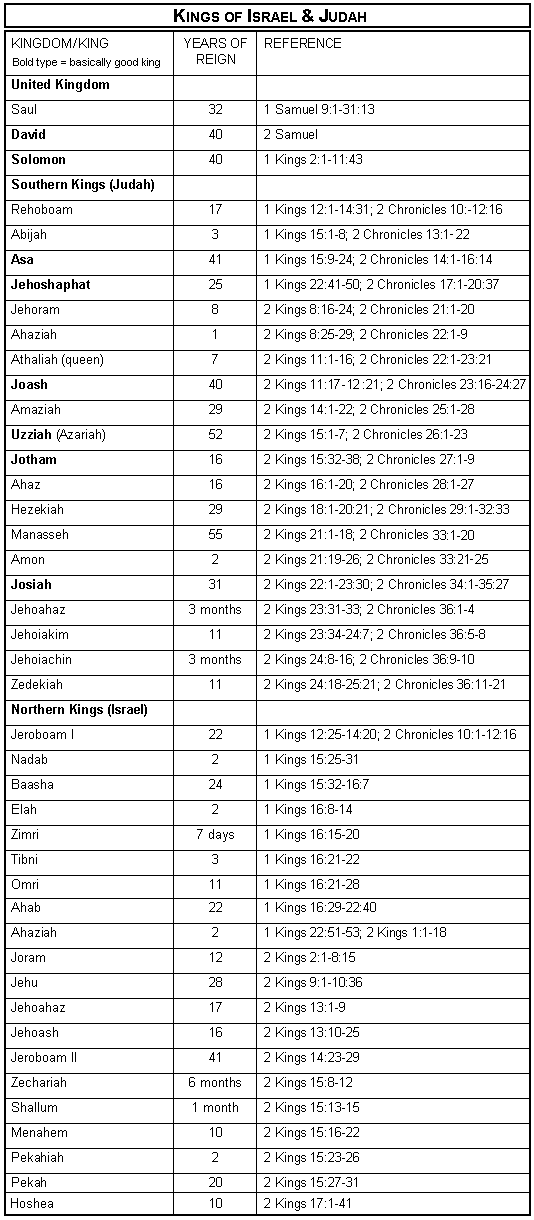
SEE ALSO:
ESV chart - kings of Israel - more information
ESV chart - kings of Judah - more information
Another Chart with Variable Dates for Reigns of Kings
2 Chronicles 30:1 Now Hezekiah sent to all Israel and Judah and wrote letters also to Ephraim and Manasseh, that they should come to the house of the LORD at Jerusalem to celebrate the Passover to the LORD God of Israel.
- Now Hezekiah sent to all Israel 2Ch 11:13,16
- wrote letters also to Ephraim and Manasseh: 2Ch 30:10,11 25:7 35:6 Ho 5:4 7:8,9 11:8
- to the house of the LORD: De 16:2-6
- to celebrate the Passover: Ex 12:3-20 1Co 5:7,8
- CLICK 2 CHRONICLES COMMENTARIES FOR MULTIPLE SERMONS AND COMMENTARIES
- See BELOW FOR BIBLIOGRAPHY FOR 1-2 CHRONICLES - adapted from Paul Apple's Bible Outlines
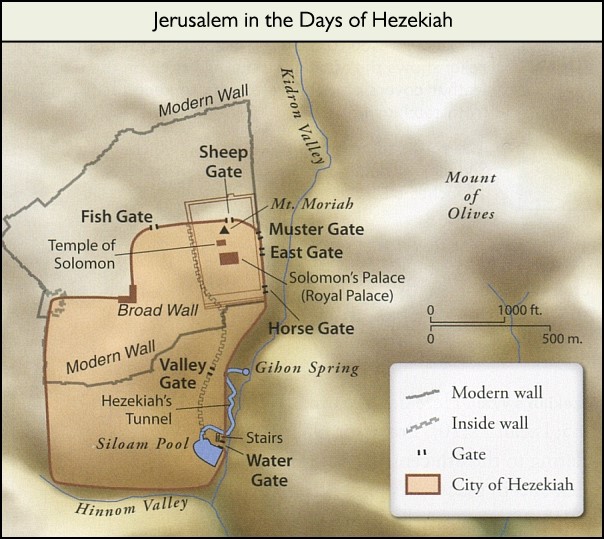
Source: Halley's Bible handbook BORROW
HEZEKIAH'S CALL TO UNITED
COVENANT RENEWAL
Now - When is "now?" Now marks the time after the Temple had been cleansed and worship restored in the first year of Hezekiah’s reign (2 Chr 29). This points specifically to the moment when Hezekiah moved from restoration to celebration by calling the nation to keep the Passover.
Hezekiah sent to all Israel and Judah and wrote letters also to Ephraim and Manasseh, that they should come to the house of the LORD at Jerusalem to celebrate the Passover (pesach/pesah) to the LORD God of Israel - Hezekiah intentionally sought a spirit of unity and spiritual restoration, inviting not only Judah but also the remnant of the northern tribes to return to the LORD by gathering at Jerusalem to celebrate the Passover in renewed covenant worship. It was Hezekiah's open invitation to return to the LORD.
The Chronicler later records another major Passover celebration during the reign of Josiah in 2 Chronicles 35:1–19, presenting it as a climactic act of covenant renewal near the end of Judah’s monarchy. In contrast, Hezekiah’s Passover in 2 Chronicles 30 has no parallel account in Kings, highlighting the Chronicler’s distinctive theological emphasis: he selectively preserves events that illustrate repentance, unity, and proper worship centered on the temple. By including Hezekiah’s Passover—and omitting it from Kings—the Chronicler underscores that true reform is measured not merely by political change but by restored obedience and joyful return to the LORD’s appointed worship.
Raymond Dillard: This verse is a summary statement introducing the entire narrative (Rudolph, 299). The oral proclamation was accompanied by letters (cf. Esth 1:22). (Borrow 2 Chronicles)
Mark Boda: The Passover is understood merely as the introduction to the subsequent Festival of Unleavened Bread, which ran for the following seven days (see Ex 12- 13; 23:14-17; 34:18-23; Lev 23; Dt 16:1-17). In Torah legislation the Passover lamb is chosen on the 10th day of the first month, sacrificed on the 14th day, and eaten in an evening meal as the 15th day of the month began. The Festival of Unleavened Bread then ran from the 15th to the 21st day of the first month.
Believer's Study Bible - (2Ch 30:1-4) Hezekiah called for the observance of the Passover at the newly renovated temple in Jerusalem (cf. 29:20-36) during the second month of the first year of his reign over Judah (cf. 2Ch 30:2; 29:1-3). The Passover was instituted when Israel was in Egypt in the month of Abib (Ex. 12:1-28; 13:1-10, especially v. 4). After the Babylonian captivity the name of the month was changed from Abib to Nisan, which was the Babylonian name for the month (Ezra 6:19; Esth. 3:7). This month began during the modern month of March. According to the Law of Moses, provisions were established to permit the observance of the Passover during the second month, Ziv (called Iyyar following the Babylonian captivity), which corresponds with April-May, in order to accommodate those who were unable to observe it at the appointed time (cf. Num. 9:6-14). This supplementary Passover time was utilized by Hezekiah in the present setting (2Ch 30:1-4).
Bob Utley - "all Israel and Judah. . .also to Ephraim and Manasseh" This is an unusual combination of geographical entities. "All Israel" may be another way for the Chronicler to affirm Judah's legitimacy. Sometimes the northern tribes went by the name "Ephraim," which was their largest tribe. However, the addition of Manasseh is unusual. The best guess for this invitation to the northern tribes was just after the death of Sargon II when Assyria's leadership was in turmoil.
John Walton - Hezekiah’s initiative toward northern kingdom. The northern kingdom of Israel had been conquered by the Assyrians (see 2Ki 17:5–6), who were now bearing down on the remainder of the western states. Hezekiah’s father, Ahaz, had instituted a policy of cooperation with Assyria, which is documented (EXTRA-BIBLICAL EVIDIENCE) by his incorporation into the Assyrian tribute lists (ED: SEE TRIBUTES IN 2Ki 16:7-8, 2Ch 28:20,21). Hezekiah attempted to reclaim some of the territory of Israel which had been gained by Uzziah and lost by Ahaz (see 2 Kings 18:4–8). Hezekiah’s political ambitions could only be accomplished with the establishment of a religious base in the north. Hezekiah probably began these initiatives as a result of the death in battle of Sargon II of Assyria (705 B.C.). With Assyria in turmoil, Hezekiah began to expand his territorial horizons. This eventually results in the invasion of Syro-Palestine by Sennacherib (701 B.C.).
John Walton - reinstitution of Passover. The disaster of the fall of Samaria likely caused an internal reformation in Israel that was sympathetic to Hezekiah’s policies and his attempt to reunify the nation in the worship at Jerusalem. Refugees from the north had no doubt fled to Judah after the Assyrian conquest, especially since Israel had now taken on aspects of syncretism (the mixing of worship with foreign religious elements). The national celebration of Passover fit well into Hezekiah’s designs to reunify the nation. Both the Israelites and Judahites were able to hearken back to a past event which both groups shared, the exodus.
EXCURSUS ON PASSOVER - The Passover (Hebrew pesach/pesah) stands as the foundational act by which God judged Egypt, redeemed Israel, and fulfilled His covenant promise to Abraham (Gen 15:12–21), becoming the enduring touchstone of Israel’s identity and the prophetic understanding of divine salvation. Instituted in connection with the climactic tenth plague, the death of the firstborn (Ex 11–12), the Passover commemorates the night when Israel was spared through the blood of a spotless lamb placed on the doorposts and lintels (Ex 12:21–23), after which the firstborn were claimed by the LORD and required redemption (Ex 13:1–2, 12). Though the precise etymology of pesaḥ is debated, the event itself is clear: God “passed over” the marked homes while judgment fell on Egypt, leading to Israel’s release from slavery (Ex 12:29–32). Originally a local, household rite without priest or altar—marked by blood, night vigilance, and a sacred meal of roasted lamb, bitter herbs, and unleavened bread (Ex 12:8; Dt 16:5)—it was later centralized and combined with the Feast of Unleavened Bread into an eight-day festival, becoming one of Israel’s three required pilgrimage feasts (Ex 23:14–17; Dt 16:16). Scripture records key observances of Passover at Egypt, Sinai, and Gilgal, and during major reforms under Hezekiah and Josiah, while also lamenting Israel’s long neglect of this feast (2Ki 23:22; 2 Chr 35:18). Celebrated to this day through the Passover Seder, the feast not only memorializes redemption from bondage but also points forward typologically, finding its ultimate fulfillment in Jesus Christ, who celebrated Passover with His disciples (Luke 22:7–8), fulfilled the Law (Matt 5:17), and became the true Passover Lamb whose blood delivers from death and secures the New Covenant (1 Cor 5:7; John 1:29; Rev 5:9–12).
Passover (06453) pesach/pesah is a masculine noun thought by some writers (Brown-Driver-Briggs Hebrew and English Lexicon) to have its origin from pacach/pasah which apparently means to pass over; to spare (Ex 12:13, 23, 27 - "Jehovah will pass" = pasah). Pesach/pesah virtually always refers to the Passover, either the feast or the Passover animal. Note that the Passover is combined with the Feast of Unleavened Bread by Luke who writes "the Feast of Unleavened Bread…is called the Passover, was approaching." (Lk 22:1+) Rooker adds that "These two ceremonies were apparently combined at the beginning, for the Passover lamb was to be eaten with unleavened bread (Ex 12:8)." (New American Commentary).
Rooker - The verbal root of the noun translated “Passover” occurs only four times in the Old Testament (Ex 12:13, 23, 27; Isa 31:5). The root has been variously explained: “to have compassion,” “to protect,” “to skip over.” In Isa 31:5 the verb is parallel to the verb “to rescue,” which would harmonize well with the first or second options and would indicate that what was critical during the tenth plague was not the death angel’s “passing over” Israelites’ homes as much as the fact that God was displaying his compassion in protecting his people. (New American Commentary).
PAUL APPLE - BIG IDEA: REPENTANCE, HUMILITY AND CONSECRATION PROMOTE AN INCLUSIVE SPIRIT OF UNIFIED CORPORATE WORSHIP THAT ISSUES IN GREAT JOY
The big idea of 2 Chronicles 30 is that God graciously restores joyful fellowship to repentant people who humble themselves and return to Him—even when their obedience is imperfect. Under Hezekiah’s leadership, Judah (and remnants of Israel) are invited to celebrate the Passover, and though many come unprepared or late, the LORD responds to humility, prayer, and repentance with forgiveness, healing, and great joy—showing that a willing heart matters more to God than flawless ritual, and that revival spreads when God’s people respond to His gracious call.
Iain Duguid: The end of the northern kingdom resulted in both the rapid increase in Judah’s population due to the influx of refugees and also the opportunity to call those in the north back to worship at the Jerusalem temple. Thus far, temple cleansing and restoration had involved those in Jerusalem: king, priests and Levites, and “officials of the city.” But the “sin offering with their blood” was to “make atonement for all Israel” (2 Chron. 29:24). Now Hezekiah made arrangements for a Passover celebration involving “all Israel and Judah” (2Ch 30:1). He continued to provide leadership, but again communal involvement in decision making and implementation was to the fore (Hb. qahal [“assembly”] occurs thirteen times in 2Ch 30:29–30:29:23, 28, 31, 32; 2Ch 30:2, 4, 13, 17, 23, 24 [2x], 25 [2x]). (ESV Expository Commentary (Volume 3): 1 Samuel–2 Chronicles)
David Whitcomb: Hezekiah began to reign when he was 25 years old (2 Chronicles 29:1). From the scant evidence we have, it appears that Hezekiah began a co-regency with his father Ahaz in 729 B.C. That would have coincided with the third year of the reign of King Hoshea in Israel. Seven years later (722 B.C.), God finally sent Assyria to destroy Israel and scatter many of the people to distant lands. The seven years after that intervention by God, (715 B.C.) Ahaz died and Hezekiah was the sole king of Judah
Andrew Hill: Hezekiah’s festival may be outlined in three broad movements: - the assembling of large numbers of Israelites making the pilgrimage to Jerusalem (2Ch 30:13, 17-18), - the cleansing and consecration rituals (2Ch 30:14-16, 19), and - the “sacrifice” of joyful praise extended over a two-week period (2Ch 30:21-27). The reference to the size of the crowd gathered in Jerusalem for the festival is significant not so much for the sake of the sheer numbers as its composition of people from all over Judah and Israel (2Ch 30:13). The inclusion of worshipers from the northern tribes speaks to the theme of “reunification” under King Hezekiah (cf. 2Ch 30:18). (See The NIV Application Commentary on the Bible)
J.A. Thompson: With the restoration of the temple now achieved, Hezekiah undertook strenuous efforts to reunite “all Israel,” both south and north, in national worship, which the Chronicle centered on the observance of the Passover. It is the dominant theme of the early part of the chapter (2Ch 30:1-13) and is prominent in the latter section of chap. 30 (note specially 2Ch 30:25; 31:1) but is present also in the central section of the chapter, which deals with the celebration itself. Hezekiah is portrayed here as a second Solomon (2Ch 30:26), and the celebration of the Passover is a watershed between the disruption of Israel after Solomon’s death and a return to the spiritual conditions that existed in Solomon’s day. (SEE 1, 2 Chronicles: An Exegetical and Theological Exposition)
Matthew Henry Notes: Chapter: 30
SUMMARY OF MATTHEW HENRY'S NOTE - 2 Chronicles 30 records how Hezekiah advanced Judah’s reformation by restoring the Passover, wisely resolving to celebrate it in the second month so the people would not lose the blessing through delay, choosing substance over technicality (2 Chr 30:2–5; Num 9:11). He sent a gracious, gospel-like invitation throughout Judah and even to the northern tribes of Israel, urging them to “yield yourselves to the LORD,” learn from their fathers’ judgment, and return to the covenant God who is gracious and merciful to all who seek Him (2 Chr 30:6–9). While many in Israel mocked the call and hardened themselves—thereby sealing their guilt—God preserved a humble remnant who responded and came to Jerusalem (2 Chr 30:10–11). In contrast, Judah obeyed with one heart, a unity clearly attributed to the hand of God, showing that revival moves forward when leaders act decisively, invitations are extended graciously, humility replaces pride, and God Himself inclines hearts to respond in willing obedience (2 Chr 30:12).
In this chapter we have an account of the solemn passover which Hezekiah kept in the first year of his reign.
I. The consultation about it, and the resolution he and his people came to for the observance of it (2Ch 30:2-5).
II. The invitation he sent to Judah and Israel to come and keep it (2Ch 30:1, 6-12).
III. The joyful celebration of it (2Ch 30:13-27).
By this the reformation, set on foot in the foregoing chapter, was greatly advanced and established, and that nail in God's holy place clenched.
2Ch 30:1-12 Here is,
I. A passover resolved upon.
That annual feast was instituted as a memorial of the bringing of the children of Israel out of Egypt. It happened that the reviving of the temple service fell within the appointed days of that feast, the seventeenth day of the first month: this brought that forgotten solemnity to mind. "What shall we do,'' says Hezekiah, "about the passover? It is a very comfortable ordinance, and has been long neglected. How shall we revive it? The time has elapsed for this year; we cannot go about it immediately; the congregation is thin, the people have not notice, the priests are not prepared, 2Ch 30:3. Must we defer it till another year?'' Many, it is likely, were for deferring it; but Hezekiah considered that by that time twelve-month the good affections of the people would cool, and it would be too long to want the benefit of the ordinance; and therefore, finding a proviso in the law of Moses that particular persons who were unclean in the first month might keep the passover the fourteenth day of the second month and be accepted (Num. 9:11), he doubted not but that it might be extended to the congregation. Whereupon they resolved to keep the passover in the second month. Let the circumstance give way to the substance, and let not the thing itself be lost upon a nicety about the time. It is good striking while the iron is hot, and taking people when they are in a good mind. Delays are dangerous.
II. A proclamation issued out to give notice of this passover and to summon the people to it.
1. An invitation was sent to the ten revolted tribes to stir them up to come and attend this solemnity. Letters were written to Ephraim and Manasseh to invite them to Jerusalem to keep this passover (2Ch 30:1), not with any political design, to bring them back to the house of David, but with a pious design to bring them back to the Lord God of Israel. "Let them take whom they will for their king,'' says Hezekiah, "so they will but take him for their God.'' The matters in difference between Judah and Israel, either upon a civil or sacred account, shall not hinder but that if the people of Israel will sincerely return to the Lord their God Hezekiah will bid them as welcome to the passover as any of his own subjects. Expresses are sent post throughout all the tribes of Israel with memorials earnestly pressing the people to take this opportunity of returning to the God from whom they had revolted. Now here we have,
(1.) The contents of the circular letters that were despatched upon the occasion, in which Hezekiah discovers a great concern both for the honour of God and for the welfare of the neighbouring kingdom, the prosperity of which he seems passionately desirous of, though he not only received no toll, tribute, or custom, from it, but it had often, and not long since, been vexatious to his kingdom. This is rendering good for evil. Observe,
{1.} What it is which he presses them to (2Ch 30:8): "Yield yourselves unto the Lord. Before you can come into communion with him you must come into covenant with him.'' Give the hand to the Lord (so the word is), that is, "Consent to take him for your God.'' A bargain is confirmed by giving the hand. "Strike this bargain. Join yourselves to him in an everlasting covenant. Subscribe with the hand to be his, Isa. 44:5. Give him your hand, in token of giving him your heart. Lay your hand to his plough. Devote yourselves to his service, to work for him. Yield to him,'' that is, "Come up to his terms, come under his government, stand it not out any longer against him.'' "Yield to him, to be absolutely and universally at his command, at his disposal, to be, and do, and have, and suffer, whatever he pleases. In order to this, be not stiff-necked as your fathers were; let not your corrupt and wicked wills rise up in resistance of and rebellion against the will of God. Say not that you will do what you please, but resolve to do what he pleases.'' There is in the carnal mind a stiffness, an obstinacy, an unaptness to comply with God. We have it from our fathers; it is bred in the bone with us. This must be conquered; and the will that had in it a spirit of contradiction must be melted into the will of God; and to his yoke the neck that was an iron sinew must be bowed and fitted. In pursuance of this resignation to God, he presses them to enter into his sanctuary, that is, to attend upon him in that place which he had chosen, to put his name there, and serve him in the ordinances which he had appointed. "The doors of the sanctuary are now opened, and you have liberty to enter; the temple service is now revived, and you are welcome to join in it.'' The king says, Come; the princes and priests say, Come; whosoever will, let him come. This he calls (2Ch 30:6) turning to the Lord God; for they had forsaken him, and worshipped other gods. Repent now, and be converted. Thus those who through grace have turned to God themselves should do all they can to bring others back to him.
{2.} What arguments he uses to persuade them to do this.
- First, "You are children of Israel, and therefore stand related, stand obliged, to the God of Israel, from whom you have revolted.''
- Secondly, "The God you are called to return to is the God of Abraham, Isaac, and Jacob, a God in covenant with your first fathers, who served him and yielded themselves to him; and it was their honour and happiness that they did so.''
- Thirdly, "Your late fathers that forsook him and trespassed against him have been given up to desolation; their apostasy and idolatry have been their ruin, as you see (2Ch 30:7); let their harms be your warnings.''
- Fourthly, "You yourselves are but a remnant narrowly escaped out of the hands of the kings of Assyria (2Ch 30:6), and therefore are concerned to put yourselves under the protection of the God of your fathers, that you be not quite swallowed up.''
- Fifthly, "This is the only way of turning away the fierceness of God's anger from you (2Ch 30:8), which will certainly consume you if you continue stiff-necked.''
- Lastly, "If you return to God in a way of duty, he will return to you in a way of mercy.'' This he begins with (2Ch 30:6) and concludes with, 2Ch 30:9. In general, "You will find him gracious and merciful, and one that will not turn away his face from you, if you seek him, notwithstanding the provocations you have given him.'' Particularly, "You may hope that he will turn again the captivity of your brethren that are carried away, and bring them back to their own land.'' Could any thing be expressed more pathetically, more movingly? Could there be a better cause, or could it be better pleaded?
(2.) The entertainment which Hezekiah's messengers and message met with. It does not appear that Hoshea, who was now king of Israel, took any umbrage from, or gave any opposition to, the dispersing of these proclamations through his kingdom, nor that he forbade his subjects to accept the invitation. He seems to have left them entirely to their liberty. They might go to Jerusalem to worship if they pleased; for, though he did evil, yet not like the kings of Israel that were before him, 2 Ki. 17:2. He saw ruin coming upon his kingdom, and, if any of his subjects would try this expedient to prevent it, they had his full permission. But, for the people
{1.} The generality of them slighted the call and turned a deaf ear to it.
The messengers went from city to city, some to one and some to another, and used pressing entreaties with the people to come up to Jerusalem to keep the passover; but they were so far from complying with the message that they abused those that brought it, laughed them to scorn, and mocked them (2Ch 30:10), not only refused, but refused with disdain. Tell them of the God of Abraham! they knew him not, they had other gods to serve, Baal and Ashtaroth. Tell them of the sanctuary! their high places were as good. Tell them of God's mercy and wrath! they neither dreaded the one nor desired the other. No marvel that the king's messengers were thus despitefully used by this apostate race when God's messengers were so, his servants the prophets, who produced credentials from him. The destruction of the kingdom of the ten tribes was now at hand. It was but two or three years after this that the king of Assyria laid siege to Samaria, which ended in the captivity of those tribes. Just before this they had not only a king of their own that permitted them to return to God's sanctuary, but a king of Judah that earnestly invited them to do it. Had they generally accepted this invitation, it might have prevented their ruin; but their contempt of it hastened and aggravated it, and left them inexcusable.
{2.} Yet there were some few that accepted the invitation.
The message, though to some it was a savour of death unto death, was to others a savour of life unto life, 2Ch 30:11. In the worst of times God has had a remnant; so he had here, many of Asher, Manasseh, and Zebulun (here is no mention of any out of Ephraim, though some of that tribe are mentioned, v. 18), humbled themselves, and came to Jerusalem, that is, were sorry for their sins and submitted to God. Pride keeps men from yielding themselves to the Lord; when that is brought down, the work is done.
2. A command was given to the men of Judah to attend this solemnity; and they universally obeyed it, 2Ch 30:12. They did it with one heart, were all of a mind in it, and the hand of God gave them that one heart; for it is in the day of power that Christ's subjects are made willing. It is God that works both to will and to do. When people, at any time, manifest an unexpected forwardness to do that which is good, we must acknowledge that hand of God in it.
James Smith - THE ROYAL MESSAGE 2 CHRONICLES 30:1–12
SUMMARY - This passage shows that Scripture is spiritually profitable because the historical account reveals God’s redemptive pattern and human response. First, true blessing begins with atonement: reconciliation was made for all Israel through the sin offering and burnt offering, teaching that guilt must be removed and acceptance secured before hope can be proclaimed—fulfilled ultimately in Christ’s death and resurrection. Flowing from this provision came an urgent royal message calling the people to repentance toward God, surrender of themselves to Him, and a life of obedient service, all grounded in the gracious promise that God is merciful and ready to receive those who return. The invitation was universal, proclaimed throughout the whole land, just as the gospel is offered to all. Yet the response was divided: some mocked the message and its messengers, thereby rejecting God Himself, while others humbled themselves, believed, and came to share in the blessing. The lesson is clear—salvation is freely offered to all, but only those who repent, believe, and come partake in the joy and power of God’s great deliverance.
“Matter exists only spiritually, and to represent
some idea and body it forth.”
—Carlyle.
All Scripture is given by inspiration of God, and is profitable for doctrine. Let us see if we cannot find some profitable doctrine from the historical facts here chronicled for our spiritual advantage. Observe the—
I. Great Provision. “The priests made an atonement for all Israel: for the king commanded that the burnt-offering and the sin-offering should be made for all Israel” (chap. 29:24). This was the great day of atonement, when reconciliation was made for the people by the blood of sacrifice. The sin-offering speaks of guilt put away, while the burnt-offering declares acceptance with God. There was no message of hope and blessing to the people until the question of sin had been settled. The Gospel of Salvation could only be preached by the apostles after Christ had suffered for us, as the sin-offering; and had risen again, as the burnt-offering. It is through Him we have received the reconciliation (Rom. 5:11, R.V.).
II. Urgent Message. These letters, sent from the king, and carried by the posts throughout all Israel, contained—
1. A CALL TO REPENTANCE. “Ye children of Israel, turn again unto the Lord God of Abraham” (v. 6). No turning is effectual that is not unto God. The Thessalonians “turned to God from idols.” A man may rend his garments and turn to idols, but those whose hearts have been rent will turn to God (Joel 2:13). Repentance is needed, for all have gone astray. God hath commanded all men everywhere to repent and believe the Gospel.
2. A CALL TO SURRENDER. “Yield yourselves unto the Lord” (v. 8). This royal letter demanded, not only repentance toward God, but a personal consecration of the life to Him. The yielding of ourselves unto God is the evidence that we have in heart turned to Him. “Know ye not that your bodies are the members of Christ” (1 Cor. 6:15). We turn to God for life, then we are to yield ourselves unto Him, as those that are alive from the dead, and our members as instruments of righteousness unto God (Rom. 6:13).
3. A CALL TO SERVICE. “And serve the Lord your God” (v. 8). Acceptable service is the outcome of a consecrated life. Turn, yield, serve—is the royal order. If ye are redeemed by the precious Blood of Christ, therefore glorify God in your body and your spirit, which are God’s. If ye can say, “Whose I am,” ye ought also to add, “Whom I serve” (Acts 27:23).
4. A WORD OF ENCOURAGEMENT. “For if ye turn unto the Lord, your children shall find compassion … for the Lord your God is gracious and merciful, and will not turn away His face from you” (v. 9). This letter, like the Gospel of Christ, contained the only way into a life of true happiness and usefulness.
III. General Invitation. The king’s message was to be “proclaimed throughout all Israel, from Beer-sheba even to Dan” (v. 5). From the southern to the northern extremities of the land. Like the Gospel, it was to be preached to every creature (Mark 16:15). All were invited to “keep the Passover unto the Lord.” It was for the glory of God that they should keep in memory that terrible night in Egypt, when they were saved through the blood of the lamb. How much more is it to His glory that we should remember the “Blood of His Cross?” To share in this great deliverance, the Gospel of God invites us.
IV. Twofold Result.
1. SOME MOCKED. “They laughed them to scorn, and mocked them” (v. 10). The poor postmen had to bear their sneers, but it was the God of Israel, who inspired the message, that was mocked and laughed at. The posts, who passed from city to city as itinerant preachers, were not responsible for the message they carried; they were doing the king’s business, and with him they had to do. The messengers of the Cross and the King of Glory are so closely linked together that to despise the one is to despise the other. “Inasmuch as ye have done it unto one of the least of these, ye have done it unto Me” (Matt. 25:40). Saul was persecuting the saints when the Lord said to him, “Why persecutest thou Me?” (Acts 9:4).
2. SOME BELIEVED. “Nevertheless divers … humbled themselves and came to Jerusalem” (v. 11). No doubt this call was a humbling one. It implied a confession of their sins and a turning away from their own wilful, wicked works. It was much easier for some to laugh at the messenger than to do this. Any fool may sneer, but it takes a wise man to repent. Although the Gospel is to be preached to every creature, that does not prove that every creature who hears the message will be saved (Acts 16:34). Only those who repent and believe—who “humble themselves and come”—can partake of the benefits of this Great Passover. Christ, our Passover, sacrificed for us. Whosoever will may come.
2 Chronicles 30:2 For the king and his princes and all the assembly in Jerusalem had decided to celebrate the Passover in the second month,
- the king: 1Ch 13:1-3 Pr 11:14 15:22 Ec 4:13
- second month: Nu 9:10,11
Related Passages:
Numbers 9:9-11 (ALLOWANCE FOR PASSOVER IN SECOND RATHER THAN FIRST MONTH) Then the LORD spoke to Moses, saying, 10 “Speak to the sons of Israel, saying, ‘If any one of you or of your generations becomes unclean because of a dead person, or is on a distant journey, he may, however, observe the Passover to the LORD. 11 ‘In the second month on the fourteenth day at twilight, they shall observe it; they shall eat it with unleavened bread and bitter herbs.
ADJUSTING THE SACRED CALENDAR
TO PRESERVE OBEDIENCE
For the king and his princes and all the assembly in Jerusalem - The phrase “the king and his princes and all the assembly” represents the full spectrum of leadership and community within a monarchy, emphasizing unified participation in covenantal decisions and worship. The king stands as the supreme authority, while his princes (BDB 978) refer broadly to high-ranking officials who served across multiple spheres of national life, including civil government (e.g., Gen 12:15; 1 Kgs 4:1–6; Isa 10:8), military leadership (Gen 21:22; 1 Sam 12:9; Isa 21:5), priestly administration (1 Chr 15:16; 2 Chr 35:9), and tribal elders who represented the people at large (1 Chr 29:6; 2 Chr 24:13; Ezra 10:5). Together with “all the assembly,” this phrase underscores that the action in view was not merely a royal decree or clerical initiative, but a comprehensive, national response involving rulers, leaders, and the people in shared responsibility before the LORD.
Had decided to celebrate the Passover in the second month - The Passover was appointed in the Torah to be observed in the first month (Abib; Nu 9:1–14; Dt. 16:1), but because there were not enough consecrated priests (cf. 2 Chr. 30:3), its celebration had to be postponed.
The NASB Study Bible, p. 621, has an interesting note - "After the division of the kingdom, Jereboam deferred the sacral calendar of the northern kingdom by one month (1 Kin 12:32), possibly to further wean the subjects in the north away from devotion to Jerusalem. By delaying the celebration of Passover one month, Hezekiah not only allows time for the priests to consecrate themselves (v. 3) and for the people to gather (vv. 3,13), but also achieves unity between the kingdoms on the date of the Passover for the first time since the schism more than two centuries earlier. Delaying the date reflects Hezekiah's concern to involve "all Israel." For the first time since Solomon the entire nation observes Passover together, reflecting the Chronicler's view that Hezekiah is a "second Solomon." Passover was prescribed for the 14th day of the first month (Ex 12:2,6; Dt. 16:1-8), but could not be celebrated at that time due to the defilement of the temple and the purification rites under way (2Ch 29:3,17). For celebration of Passover by the restored community shortly after the dedication of the rebuilt temple see Ezra 6:16-22."
Raymond Dillard gives a helpful note on Passover in the Second rather than the normally prescribed First Month - The law allowed for a delayed observance of Passover in the second month for those who had become unclean through contact with a corpse or for those who had been on a journey (Nu 9:9–11). The actions of Hezekiah appear to depend on an interpretive extension of these provisions to cover those ritually unclean for any reason (“the priests had not sanctified themselves,” 2Ch 30:3) and those journeying from the Northern Kingdom or who had not made the pilgrimage to Jerusalem (“the people had not assembled themselves,” 2Ch 30:3; cf. 2Ch 30:17–18); exceptional provisos for individuals have been generalized to apply to the entire nation. The celebration of Passover at the time of Hezekiah thus provides a good example of intrabiblical legal interpretation. The apostasy under Ahaz presumably had left the priesthood in disarray, perhaps almost nonfunctioning, but at least in a ceremonially unacceptable state. (SEE 2 Chronicles, Volume 15 - Page 244) (Borrow 2 Chronicles)
Mark Boda: Before revealing the process for the proclamation of the festival (2Ch 30:5- 10a), the Chronicler describes the process that led to the reinstitution of the festival (2Ch 30:2-4). The decision was reached between Hezekiah, his officials, and “all the community of Jerusalem”. The latter evidences not only the democratizing tone of the Chronicler’s account but also his emphasis on Jerusalem’s leadership role in the worship of Judah. The reason a decision had to be made, according to the Chronicler, was because the first month – the time when the festivals were required to be celebrated – had already passed. The Chronicler explained this anomaly by appealing to the lack of qualified priests to carry on the services (2Ch 29:34) and the lack of people to form an assembly. It was decided to celebrate Passover one month later than usual, in the second month, a provision that appears dependent on the legislation in Nu 9:1- 14. 2Ch 30:4 again emphasizes the unanimity of both king and “all the people” on this issue.
John Walton - 30:2–3. timing of Passover. The Passover was normally held on the fourteenth of the first month in the Hebrew calendar. However, there was a provision (Num 9:6–13) that allowed those who were either unclean or absent on a distant journey to observe the Passover in the second month. Hezekiah delayed the celebration to allow the northerners to attend.
2 Chronicles 30:3 since they could not celebrate it at that time, because the priests had not consecrated themselves in sufficient numbers, nor had the people been gathered to Jerusalem.
- at that time: Ex 12:6,18
- because: 2Ch 29:34
TWO REASONS FOR POSTPONING
PASSOVER TO SECOND MONTH
Since they could not celebrate it at that time, because (term of explanation) (1) the priests had not consecrated (qadash; LXX - hagiazo) themselves in sufficient numbers, (2) nor had the people been gathered to Jerusalem - The Passover had to be delayed because the necessary conditions for proper worship were not yet met: too few priests were consecrated to perform the service, and the people had not had time to assemble in Jerusalem. Rather than abandon the ordinance, the leaders wisely postponed it so that it could be observed rightly, showing that obedience to God’s command takes precedence over strict adherence to the calendar.
2 Chronicles 30:4 Thus the thing was right in the sight of the king and all the assembly.
- Thus the thing was right in the sight of the king 1Ch 13:4
UNANIMOUS DECISION
TO DELAY PASSOVER
Thus the thing was right in the sight of the king and all the assembly - The decision was unanimously approved as wise and pleasing, with both the king and the people recognizing it as right before God and worthy of shared commitment.
Bob Utley - Several times in Chronicles the kings' decisions are said to be in agreement with the wishes of their people. Some commentators call this "the democratizing element" in the post-exilic period.
2 Chronicles 30:5 So they established a decree to circulate a proclamation throughout all Israel from Beersheba even to Dan, that they should come to celebrate the Passover to the LORD God of Israel at Jerusalem. For they had not celebrated it in great numbers as it was prescribed.
NET So they sent an edict throughout Israel from Beer Sheba to Dan, summoning the people to come and observe a Passover for the LORD God of Israel in Jerusalem, for they had not observed it on a nationwide scale as prescribed in the law.
CSB so they affirmed the proposal and spread the message throughout all Israel, from Beer-sheba to Dan, to come to observe the Passover of Yahweh, the God of Israel in Jerusalem, for they hadn't observed it often, as prescribed.
ESV So they decreed to make a proclamation throughout all Israel, from Beersheba to Dan, that the people should come and keep the Passover to the LORD, the God of Israel, at Jerusalem, for they had not kept it as often as prescribed.
NIV They decided to send a proclamation throughout Israel, from Beersheba to Dan, calling the people to come to Jerusalem and celebrate the Passover to the LORD, the God of Israel. It had not been celebrated in large numbers according to what was written.
NLT So they sent a proclamation throughout all Israel, from Beersheba in the south to Dan in the north, inviting everyone to come to Jerusalem to celebrate the Passover of the LORD, the God of Israel. The people had not been celebrating it in great numbers as required in the Law.
- So they established a decree Ezr 6:8-12 Es 3:12-15 8:8-10 9:20,21 Da 6:8
- to circulate a proclamation 2Ch 24:9 36:22 Lev 23:2,4 Da 4:1-33
- from Beersheba even to Dan: Jdg 20:1
- For they had not celebrated 2Ch 35:18 De 12:32 1Co 11:2
LONG TERM NEGLECT
OF THE PASSOVER
So - This is a term of conclusion (like a "therefore") which describes an action (in the conclusion below) based on the agreement of the king and leaders to keep the Passover in the second month.
They established a decree to circulate a proclamation throughout all Israel from Beersheba even to Dan - Beersheba even to Dan as the name of one city in the south (Beersheba) and one in the north (Dan) and was an idiom for the whole land of Canaan.
That they should come to celebrate the Passover to the LORD God of Israel at Jerusalem - This emphasizes the call to unified covenant worship (the call went throughout both kingdoms), summoning God’s people to gather at Jerusalem to honor the LORD God of Israel by celebrating the Passover. Jerusalem is mentioned specifically for this is the place Yahweh had chosen.
Deuteronomy 16:5-6 clearly said “You are not allowed to sacrifice the Passover in any of your towns which the LORD your God is giving you; 6but at the place where the LORD your God chooses to establish His name, you shall sacrifice the Passover in the evening at sunset, at the time that you came out of Egypt."
2 Chronicles 6:6 adds "I have chosen Jerusalem that My name might be there, and I have chosen David to be over My people Israel."
For (term of explanation - the reason for the proclamation) they had not celebrated it in great numbers as it was prescribed - Prescribed is is literally "written" which refers to the Mosaic guidelines. Hezekiah's Passover proclamation was meant to correct long-standing neglect and restore obedience as it was prescribed, which implies prolonged neglect, not merely a single missed year. How long had Israel not celebrated the Passover? Scripture does not give an exact number of years, but it clearly indicates that Israel had neglected the Passover for a very long time by the time of Hezekiah. Clearly the neglect reaches back through the reigns of Ahaz (Hezekiah’s father) and earlier kings, during which Temple worship was corrupted or abandoned (2 Chr 28:22–25). In 2 Kings 23:22 we read of Josiah’s Passover (about 100 years after Hezekiah) that “Surely such a Passover had not been celebrated from the days of the judges who judged Israel.” This confirms that regular, law-keeping Passovers had been absent for centuries, even if isolated or partial observances occurred. SO SAD!
ROBERT MORGAN 2 Chronicles 30 Our Daily Joy - Summary of this sermon - This sermon teaches that daily joy flows from daily personal revival, illustrated through Hezekiah’s reforms in 2 Chronicles 29–30, where decisive commitment, thorough cleansing, renewed focus on redemption, and joyful worship restored spiritual vitality to a broken nation. Just as Hezekiah immediately resolved to change, cleared the temple of defilement, restored the Passover as a reminder of deliverance through the blood of the lamb, and led the people into sustained praise, believers today experience renewed joy when they decisively turn from sin, confess and remove spiritual debris, return again and again to the cross of Christ, and consciously choose the joy of the Lord. The sermon emphasizes that while we long for large-scale revival, God calls each believer to a personal, daily revival—for when the heart is cleansed, Christ is freshly embraced, and obedience is renewed, joy naturally returns as strength for everyday life (2 Chr 30:21, 26; Neh 8:10). (See also THE SECRET OF REVIVAL- Mouth to Mouth Resuscitation!)
2 Chronicles 30:6 The couriers went throughout all Israel and Judah with the letters from the hand of the king and his princes, even according to the command of the king, saying, “O sons of Israel, return to the LORD God of Abraham, Isaac and Israel, that He may return to those of you who escaped and are left from the hand of the kings of Assyria.
- The couriers went throughout all Israel and Judah "runners," of the same kind as the running footmen, who were formerly, before the establishment of posts, and still are in some places, trained, and kept on purpose to convey dispatches speedily by running. Job 9:25 Es 8:14 Jer 51:31
- return to the LORD God of Abraham, Isaac and Israel,: Isa 55:6,7 Jer 4:1 La 5:21 Eze 33:11 Ho 14:1 Joe 2:12-14 Jas 4:8
- that He may return to those Isa 6:13
- f you who escaped: 2Ch 28:20 2Ki 15:19,29 1Ch 5:26 Isa 1:9
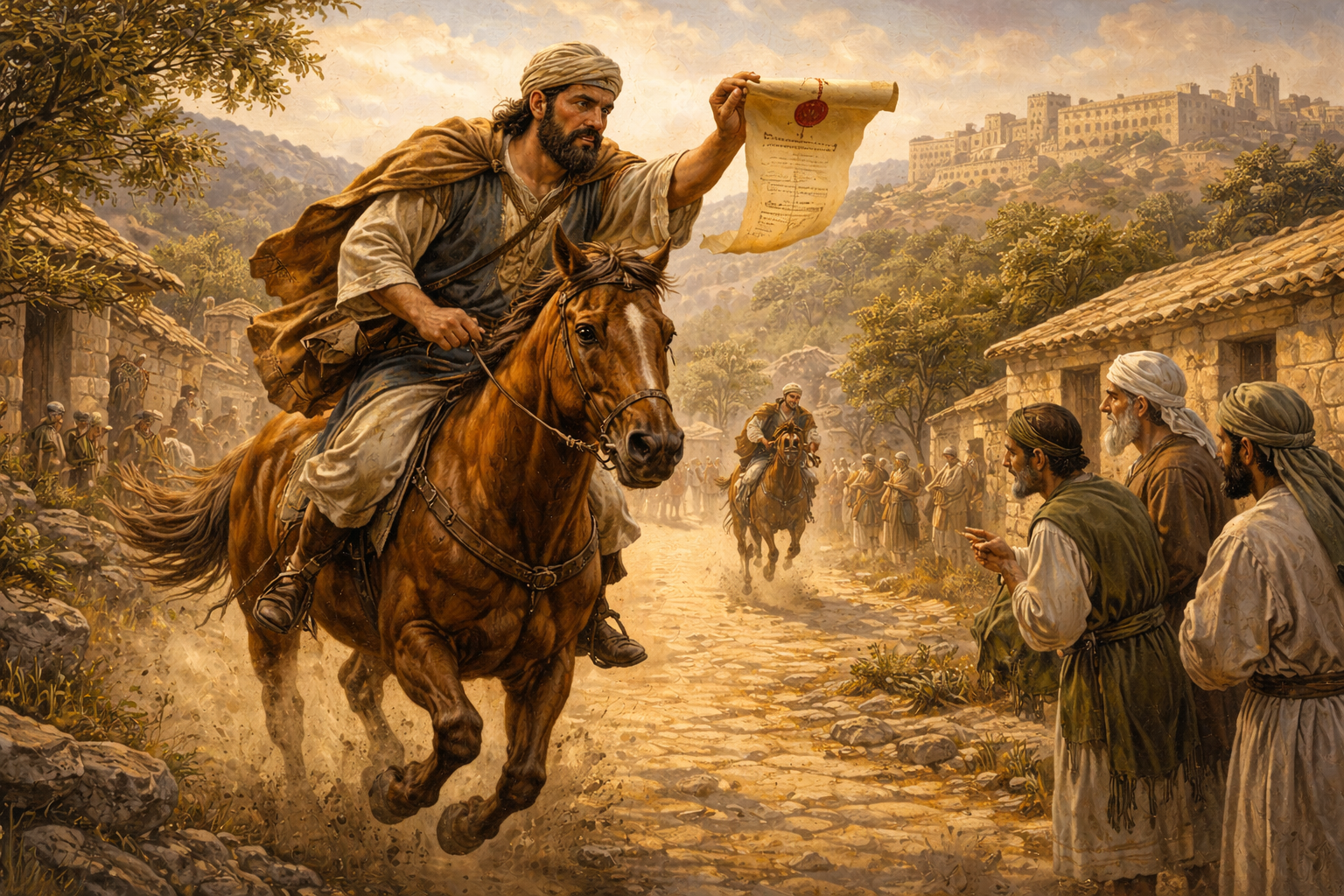
HEZEKIAH ISSUES CALL
FOR REPENTANCE
The couriers went throughout all Israel and Judah with the letters from the hand of the king and his princes, even according to the command of the king
Saying, “O sons of Israel, return to the LORD God of Abraham, Isaac and Israel - Hezekiah is especially directing the Passover invitation to Jews in the Northern Kingdom, which lasted from c. 930 BC to 722 BC, roughly 208–210 years, during which it had 19 kings, all of whom were evaluated negatively for leading Israel into persistent idolatry and none of whom were said to have celebrated Passover. The command to return is in effect a command for them to repent. In using the name Abraham, Isaac and Israel Hezekiah specifically appeals to the Abrahamic covenant relationship that predates the divided monarchy and bound (or should have bound) all Israelites, north and south, to the same God. By using this formula, Hezekiah bypasses political loyalties and regional divisions, reminding the Northern Kingdom that returning to Jerusalem for Passover is not submission to Judah’s king but a return to the covenant God Jehovah.
Bob Utley - "the Lord God of Abraham Isaac and Israel" This is the full title of Israel's God. Originally it was "Abraham, Isaac, and Jacob" (cf. Exod. 3:6,15; 4:5; 6:3), but here "Israel" instead of "Jacob" (cf. 1 Chr. 29:18).
That - This is a term of purpose or result which is spiritually very significant as described in the next section.
He may return to those of you who escaped and are left (sha'ar) from the hand of the kings of Assyria - If citizens of the Northern Kingdom return to the LORD, Hezekiah promises He may return to them. Those who escaped refers to the the Northern Jews not yet taken into captivity by Assyria (cf previous captures by Assyrians - see following note). The phrase are left (sha'ar) is describes the remnant who survived.
Hezekiah openly acknowledges the long-standing waywardness and stubborn disobedience of the descendants of Abraham, confessing that though they had acted unfaithfully, the LORD would still be found if they truly repented and sought Him—a pattern echoed in other great corporate confessions led by Moses (Exod 32:9–14, 30–33; Deut 9:25–29), Ezra (Ezra 9:5–10:1), Nehemiah (Neh 1:5–11), and Daniel (Dan 9:4–19). This confession is paired with urgent commands to the present generation—return to the LORD (2Ch 30:6), do not imitate the faithlessness of former generations (2Ch 30:7), do not harden the neck (v. 8), but instead yield to the LORD, enter His consecrated sanctuary, and serve the LORD your God (2Ch 30:8)—while also including prayerful appeals that the LORD would return to His people (2Ch 30:6) and that His burning anger would turn away (2Ch 30:8), showing that covenant restoration requires both human repentance and divine mercy working together.
ASSYRIAN INCUSIONS INTO ISRAEL PRIOR TO FINAL EXILE IN 722 BC - Prior to Israel’s final fall in 722 BC, Assyrian domination unfolded in stages: first, during the reign of Menahem, Pul (also known as Tiglath-Pileser III) invaded Israel around 743–738 BC, compelling Menahem to pay a massive tribute, after which the Assyrian king withdrew—leaving Israel intact but reduced to a vassal state (2Ki 15:19–20), marking the beginning of Assyrian control; second, in 734–732 BC under Pekah, Tiglath-Pileser III returned and conquered large regions of Galilee, Naphtali, and Gilead, deporting their populations to Assyria—the first major exile of Israelites and a devastating reduction of Israel’s territory and people (2Ki 15:29; 1Ch 5:26); finally, following this collapse, Hoshea seized the throne by assassinating Pekah with Assyrian backing, ruling as a puppet king under Assyrian oversight from about 732 BC, which left Israel politically weakened and dependent until its eventual destruction (2 Kgs 15:30).
BRIEF EXCURSUS ON REPENTANCE IN THE OLD TESTAMENT - In the Old Testament, repentance is a comprehensive, life-reorienting response to God, best expressed through the two primary Hebrew verbs nāḥam (נָחַם) and shûb (שׁוּב). Nāḥam highlights deep inner emotion that leads to change—grief over sin, compassion, or a heartfelt resolve to alter one’s course—as seen when human wickedness grieved God’s heart (Gen 6:6–7) or when He showed mercy to His people (Deut 32:36); when applied to God, the term uses human language to express His compassionate response rather than moral change (Nu 23:19; 1Sa 15:29). Shûb, on the other hand, stresses decisive action, meaning “to turn” or “return,” whether from rebellion against God (Jdg 2:19; Jer 8:4) or back to Him in covenant faithfulness and obedience (2Ch 7:14; 30:9; Isa 31:6; Hos 14:1–2). Together these terms show that biblical repentance goes beyond regret or ritual acts such as fasting or sackcloth, calling instead for a complete change of orientation—a judging of the past and a deliberate redirection of life toward God—an inward turning of heart and will that expresses itself outwardly in obedience and renewed relationship, as vividly seen in David’s repentance (2Sa 12:1-31; Ps 51:1-16), Manasseh’s restoration (2Ch 33:12,13), and the prophetic summons to “return to the LORD with all your heart” because He is gracious and compassionate (Joel 2:12–13).
Andrew Hill: The actual text of Hezekiah’s letter is summarized in the second section of the unit (2Ch 30:6-9). Curiously, the letter is summarized in the second section of the unit (2Ch 30:6-9). Curiously, the letter itself does not mention the Passover celebration – although this is the theme of the entire pericope. The so-called “Passover letter” is sent “throughout Israel and Judah” as Hezekiah seeks to reunite the tribes in the aftermath of the Assyrian conquest and annexation of the northern kingdom. The reference to “Ephraim and Manasseh” (a word pair often used for the northern kingdom of Israel, cf. 2Ch 34:9) is inserted almost as a point of clarification or special emphasis. (See The NIV Application Commentary on the Bible)
James Barker: The Revival Under King Hezekiah (1) 1. TURN FROM YOUR BACKSLIDING (2Ch 30:6) (2) 2. TURN FROM YOUR TRESPASSES (2Ch 30:7) (3) 3. TURN FROM YOUR STUBBORNNESS (2Ch 30:8)
Raymond Dillard: In referring to the “kings” of Assyria, the author probably intends more than the destruction in 722 B.C. at the hands of Shalmaneser V and Sargon II, but also all other Assyrian intrusions against the Northern Kingdom, at least from the time of Tiglath-pileser III (2Ch 28:16–21; 1Ch 5:26), and perhaps even as far back as Shalmaneser III. (SEE 2 Chronicles, Volume 15 - Page 244) (Borrow 2 Chronicles)
J.A. Thompson: The designation “you who are left, who have escaped” would have conveyed simultaneously a sense of fear often experienced by those who have just had a narrow escape and also a sense of gratitude that God had delivered them. They should have identified easily with those escapees from Egypt who first celebrated the Passover, as should the Chronicler’s own audience of postexilic Judah. (SEE 1, 2 Chronicles: An Exegetical and Theological Exposition)
Mark Boda: The Chronicler identifies repentance in worship practice as essential to the experience of the presence of Yahweh, as well as to the safe return of ore exiles from captivity. This raise the profile of the Temple and its worship in the Chronicler’s day, placing the lives of the exiles at stake.
Left (remnant) (07604) sha'ar/sa'ar means to remain, be left over, to leave, to let remain. The first Biblical use of sha'ar is in the context of judgement, Moses recording that after the worldwide flood "only Noah was left" and was in essence a "remnant." (Ge 7:23; Lxx = kataleipo). The second use also describes God's judgment, this time on Sodom and Gomorrah stating that "those who survived fled to the hill country." (Ge 14:10; Lxx = kataleipo). Sha'ar describes Pharaoh's army = "not even one of them remained." (Ex 14:28; Lxx = kataleipo)
Gary Cohen - Sha'ar/sa'ar "seems to be used almost exclusively to indicate the static action of surviving after an elimination process. This process of elimination may have been natural (Ru 1:3, “Naomi’s husband died; and she was left”). It may have been humanly caused (1Sa 9:24, “Behold that which is left!” Here Samuel is speaking of meat which was intentionally left for Saul to eat). Or the elimination may have been the direct result of a divine intervention (Ex 10:19, “There remained not one locust in all the coasts of Egypt,” when God blew them away). No matter what the cause, however, šāar points to that which remains or has survived, e.g. 1Sa 16:11, “There remains yet the youngest,” whereby Jesse informs Samuel that the prophet has examined every one of his sons except one who yet “remained,” a survivor as it were from Samuel’s earlier interviews." (See TWOT online)
Sha'ar speaks of the remnant (see the NAS Usage below), and in Zeph 3:12 refers to the believing (take refuge ~ trust in the Name Jehovah) Jewish remnant. Three times Zephaniah speaks of a remnant (cp use in 1Ki 19:18; Lxx = hupoleipo used only in Ro 11:3 = to leave remaining, leave behind or be left behind) being saved (Zeph 2:3, 2:7, 3:12-13) and twice he mentions their return from captivity (Zeph 2:7, 3:20).
Vine - In the pre-exilic period, this remnant idea is stressed by Isaiah. Isaiah tells of the judgment on the earth from which a remnant will “remain” (Isa. 24:6). Isa 4:3 refers to a “remnant” which shares holiness. In the writing prophets, the idea of the “remnant” acquired a growing significance. Yet the idea may be found as early as the Pentateuch. The idea of “those being left” or “having escaped,” especially a portion of the Israelite people, may be traced back to Dt. 4:27 (cf. Dt. 28:62). In these passages, Moses warns that if Israel failed to live up to the stipulations of the Mosaic covenant, the Lord would scatter them among the nations, and then He would regather a “remnant.” In Neh. 1:2-3, the condition of the “remnant” of Israel is described.
2 Chronicles 30:7 “Do not be like your fathers and your brothers, who were unfaithful to the LORD God of their fathers, so that He made them a horror, as you see.
- Do not be like your fathers Eze 20:13-18 Zec 1:3,4
- as you see.: 2Ch 29:8
Related Passages:
2 Chronicles 29:8 “Therefore the wrath of the LORD was against Judah and Jerusalem, and He has made them an object of terror, of horror, and of hissing, as you see with your own eyes.
Do not be like your fathers and your brothers - Hezekiah gives them a clear comparison which calls for a dramatic contrast in behavior. In other words, Hezekiah deliberately sets the past generation’s covenant unfaithfulness as a negative model to be rejected, confronting the people with the hard truth that inherited tradition can be spiritually disastrous. The “fathers” refers to earlier generations who abandoned the LORD through idolatry and stubborn rebellion, while the “brothers” points especially to their contemporaries in the Northern Kingdom whose apostasy had already brought Assyrian judgment (cf. 2Ch 28:6–15; 30:6–8). This comparison is meant to provoke a decisive break with patterns of sin, calling the present generation not merely to adjust behavior but to reverse direction entirely—to repent, return to the LORD, and demonstrate by obedience that they are choosing covenant faithfulness (in this context = celebration of the Passover).
Who were unfaithful (maal - acted treacherously; LXX - aphistemi = withdrew, became apostate) to the LORD God of their fathers - Their fathers again recalls Abraham, Isaac and Jacob. Israel was especially unfaithful in going after other gods, aka idolatry.
CONSEQUENCES OF IDOLATRY - The Scriptures consistently warn that idolatry begins with a deceived heart, progresses into a deliberate turning away from the LORD, and culminates in serving and worshiping other gods, a tragic pattern repeatedly seen in Israel’s history (cf. Job 31:27; Exod 32:8; Deut 11:16; Jer 11:10). Because this rebellion strikes at the heart of covenant loyalty, its consequences are severe and unavoidable: the LORD’s anger is kindled, the heavens are shut so there is no rain, the land ceases to yield its fruit, and the people ultimately perish quickly from the good land God gave them (Lev 26:19; Deut 28:24; Josh 23:16). The Mosaic Covenant allows no neutral ground—one either walks in obedience and lives or rebels and suffers judgment (Deut 30:15,19; Ps 1). Yet Scripture also recognizes humanity’s inability to sustain such perfect obedience (Josh 24:19), thereby exposing the need for a new covenant grounded not in human performance but in divine mercy and transformation, promised in Jeremiah 31:31–34 and Ezekiel 36:22–36 and fulfilled through God’s redemptive work rather than human faithfulness.
Bob Utley - This is an allusion to the consequences of disobedience (cf. Leviticus 26; Deuteronomy 28). It is often referred to as "the two ways" (cf. Deuteronomy 30, esp. vv. 15,19; Psalm 1).
So that (term of purpose/result) He made them a horror (sammah; LXX - eremosis = Hebraism meaning the detestable thing that causes desolation, state of being made uninhabitable!), as you see.
Andrew Hill: In addition to calling the people to repentance, Hezekiah’s letter admonishes the Israelites to cease being “unfaithful” (2Ch 30:7) and “stiff-necked” (2Ch 30:8) like their ancestors. The time to break with the past is long overdue. Hezekiah’s letter holds out hope to those who have escaped the wrath of God meted out through Assyrian kings by offering them the possibility of reunion with those exiled in Mesopotamia to return to the worship of God in the Jerusalem sanctuary (2Ch 30:9). The appeal to the Lord, who “is gracious and compassionate” (2Ch 30:9), seems to allude once again to Solomon’s dedicatory prayer, beseeching God to induce Israel’s conquerors to show mercy on his people should they sin and be overtaken by their enemies (cf. 1 Kings 8:50). (See The NIV Application Commentary on the Bible)
Unfaithful (be or act unfaithful) (04603) maal means to act unfaithfully, to trespass, to violate one's duty, to break faith, to commit a violation, to act. in a manner which is untrustworthy or unreliable in relation to an agreement or relationship. It is often used in Hebrew together with the noun maal (04604 - described below), so literally it could be translated "trepasses a trespass." (NIV = "commits a violation") (following use both verb and noun forms of maal - Lev 5:15, 6:2, Nu 5:6, 27, Josh 22:20, 22:31) The idea of maal is that of a conscious act of treachery or unfaithfulness against the Lord. In fact in Ezek 39:23 and Da 9:7 maal describes the sin which resulted in Judah's exile to Babylon! They were unfaithful to their covenant with Yahweh. Maal describes the horrid sin of Achan (Josh 7:1) in which he took "the things that were under the ban." (Josh 6:18) Maal describes King Uzziah's prideful usurping of priestly authority and offering incense in the Temple in 2Chr 26:16-18. Maal is also used to refer to adultery (Nu 5:12, 27) and worshipping pagan deities (Nu 31:16; Ezek 20:27). In Dt 32:51 God says Moses "broke faith" (maal;)
NET Note - The word maal refers to some kind of overstepping of the boundary between that which is common (i.e., available for common use by common people) and that which is holy (i.e., to be used only for holy purposes because it has been consecrated to the LORD).
It is interesting that in Ezra 10:2, 10, Neh 13:27 maal is used to describe the Israelites as acting unfaithfully by marrying foreign (pagan) women. Israel was to be holy to the Lord and was in a sense married to Jehovah (See Jer 31:32 "My covenant which they broke, although I was a husband to them," declares the LORD." - See also Israel the Wife of Jehovah) To marry foreign women (who worshiped other gods) was a treacherous act, an unfaithful act.
Horror (desolation) (08047) sammah/shammah basically conveys the idea of the desolation, ruin or wasting caused by some great disaster, usually as a result of divine judgment. And so it describes destruction, ruin or wasting of both evil people (Ps 73:19, Isa 5:9) and destruction of places because of evil people (Jer 2:15, Zeph 2:15, Jer 48:9, 51:29). Shammah describes the reaction in those who witness the destruction as astonishment, dismay or horror (Dt 28:37, Jer 19:8, Jer 49:13, 17, 50:3, 23, Jer 51:37, 41, 43, Ezek 23:33). Sammah describes the extreme dismay people can feel at seeing destruction, a horror that fills persons (Jer. 8:21). Shammah was used by the prophet Hosea to describe the fate of the Northern Kingdom - "Ephraim will become a desolation in the day of rebuke; Among the tribes of Israel I declare what is sure." (Hosea 5:9)
2 Chronicles 30:8 “Now do not stiffen your neck like your fathers, but yield to the LORD and enter His sanctuary which He has consecrated forever, and serve the LORD your God, that His burning anger may turn away from you.
- Now do not stiffen your neck like your fathers, 2Ch 36:13 Ex 32:9 De 10:16 Ro 10:21
- but yield to the LORD: Heb. give the hand, 1Ch 29:24 Ezr 10:19 Ps 68:31 Ro 6:13-19
- enter His sanctuary : Ps 63:2 68:24 73:17
- which He has consecrated forever,Ps 132:13,14
- and serve the LORD your God: De 6:13,17 Jos 24:15 Mt 4:10 Joh 12:26 Ro 6:22 Col 3:22-24 Rev 7:15
- that His burning anger may turn away from you. 2Ch 28:11,13 29:10 2Ki 23:26 Ps 78:49
A CALL TO MOVE
FROM WARNING TO ACTION
Now - In this context, the word NOW functions as a rhetorical and theological pivot, not a time marker (although there is an element of time involved), for it signals urgent application and decisive transition in light of what has just been said. A response is demanded immediately. NOW signals that the door of grace and mercy is still open and so it is a call for immediate repentance and submission before the opportunity divine door closes, and grace and mercy pass.
(1) Do not stiffen your neck like your fathers - This is a plea to abandon stubborn, willful resistance to God and refuse to repeat the hardened disobedience of previous generations that led to covenant judgment (e.g., wandering 40 years in the wilderness, etc).
But (term of contrast) calls for an "about face" as in the military.
(2) yield to the LORD and - Hezekiah is issuing a summons for their humble submission, calling them to cease resisting God’s will and willingly place themselves under His authority in faith and obedience.
(3) enter His sanctuary which He has consecrated (qadash; LXX - hagiazo) forever and - This calls the people to draw near to God on His terms, recognizing Jerusalem’s Temple as the (ONLY) divinely appointed place of ongoing covenant fellowship and worship.
Bob Utley - "forever" Remember the tension between the promises of God that never fail and the conditional covenant (i.e., the two ways) of the OT (i.e., Leviticus 26; Deuteronomy 28; 30; Psalm 1). On one level God's will and sovereignty are unchangeable but on another level (i.e., individual, family, nation), God has allowed His highest creation (i.e., humans) to resist His will. This resistance is accompanied by terrible, temporal, and eternal consequences!
(4) serve the LORD your God - This calls for active, ongoing obedience, urging the people to express their repentance through faithful worship and loyal devotion in every aspect of life.
That - Term of purpose. The purpose for them to positively respond to Hezekiah's urgent call for repentance is now stated.
His burning anger (anthropomorphic language) may turn away from you - This expresses both the serious reality of divine judgment and the gracious hope of covenant mercy. Burning anger describes the LORD’s righteous response to persistent covenant rebellion, judgment that Israel had already tasted through defeat, devastation, and partial exile. The verb turn away deliberately echoes the call for the people themselves to turn (shûb) back to God, lest He turn away from them! When God’s people repent and renew their allegiance to Him, He does not remain fixed in wrath but relents from judgment, not because His standards change, but because His covenant allows mercy to replace discipline once its corrective purpose is achieved (cf. 2Chr 7:14; Joel 2:12–13). Ultimately we would call this "Amazing Grace!"
EXCURSUS ON ANTHROPOMORPHIC LANGUAGE - Anthropomorphic language—from Greek anthrōpos (“man”) and morphē (“form”)—is pervasive in Scripture and represents God’s gracious accommodation by which the infinite, invisible Spirit makes Himself intelligible to finite, fallen humanity using human categories of thought and speech. Thus the Old Testament freely speaks of God with human body parts—eyes (Gen 1:4, 31; Ps 34:15; Zech 4:10), ears (Ps 5:1; 18:6), face (Lev 20:6; Num 6:25), hands (Exod 7:5; 15:17; Isa 23:11), arm (Exod 6:6; Ps 89:10), finger (Exod 31:18; Ps 8:3), feet (Exod 24:10), and footstool (Isa 66:1)—and describes divine actions in human terms: God speaks creation into existence (Gen 1:3–26), walks among His people (Gen 3:8; Lev 26:12), stoops down to observe (Ps 113:6), comes down to act in history (Gen 11:5; Exod 19:11), smells sacrifices (Gen 8:21), and even buries Moses (Deut 34:6). Scripture also attributes human emotions to God—regret or grief (Gen 6:6–7; 1 Sam 15:35), compassion (Jdg 2:18), anger (Exod 4:14; Ps 7:11; Job 32:5), jealousy (Exod 20:5; Deut 6:15), relenting or changing course (Exod 32:14; 2 Sam 24:16)—not to imply moral instability or limitation (Num 23:19; 1 Sam 15:29), but to communicate God’s covenantal responsiveness in relational terms humans can grasp. He is further revealed through family imagery as Father (Exod 4:22; Isa 63:16), husband (Isa 54:5; Hos 2:19), and even with maternal compassion (Isa 49:15; Hos 11:1–4), and through physical metaphors such as rock (Ps 18:2), fortress (2 Sam 22:2), shield (Gen 15:1), and mother bird (Ps 91:4). While such language is necessary because human words are all God has given us to understand divine realities, Scripture consistently warns against reducing God to any physical form or imagining Him as limited like His creatures (Exod 20:4; Deut 5:8; Isa 55:8–9). All anthropomorphic revelation ultimately anticipates and finds its fullest expression in the incarnation, where God truly entered history in Jesus Christ—the supreme and final accommodation—“the Word made flesh” (John 1:1–18), by whom the invisible God is made fully and personally known (1 John 1:1–3).
Related Resources:
- Discussion of Anthropomorphism
- For much more discussion of the specific aspects of anthropomorphism applied to God see the excellent online resource Dictionary of Biblical Imagery
2 Chronicles 30:9 “For if you return to the LORD, your brothers and your sons will find compassion before those who led them captive and will return to this land. For the LORD your God is gracious and compassionate, and will not turn His face away from you if you return to Him.”
- For if you return to the LORD: 2Ch 7:14 Lev 26:40-42 De 30:2-4 1Ki 8:50 Ps 106:46
- your brothers and your sons will find compassion: Jer 29:12-14 31:27,28
- For the LORD your God: Ex 34:6-7 Ne 9:17,31 Ps 86:5,15 111:4 145:7,8 Jon 4:2 Mic 7:18
- will not turn His face away 2Ch 15:2 Pr 28:13 Isa 55:7 Eze 18:30-32 Jer 18:17
Related Passages:
2 Chronicles 7:14 and My people who are called by My name humble themselves and pray and seek My face and turn from their wicked ways, then I will hear from heaven, will forgive their sin and will heal their land.
Jeremiah 29:12-14 ‘Then you will call upon Me and come and pray to Me, and I will listen to you. 13 ‘You will seek Me and find Me when you search for Me with all your heart. 14 ‘I will be found by you,’ declares the LORD, ‘and I will restore your fortunes and will gather you from all the nations and from all the places where I have driven you,’ declares the LORD, ‘and I will bring you back to the place from where I sent you into exile.’
Numbers 6:25-26 The LORD make His face shine on you, And be gracious to you; 26 The LORD lift up His countenance on you, And give you peace.’
Psalm 27:9 Do not hide Your face from me, Do not turn Your servant away in anger; You have been my help; Do not abandon me nor forsake me, O God of my salvation!
Exodus 34:6-7 Then the LORD passed by in front of him and proclaimed, “The LORD, the LORD God, compassionate and gracious, slow to anger, and abounding in lovingkindness and truth; 7 Who keeps lovingkindness for thousands, who forgives iniquity, transgression and sin; yet He will by no means leave the guilty unpunished, visiting the iniquity of fathers on the children and on the grandchildren to the third and fourth generations.”
Nehemiah 9:17 “They refused to listen, And did not remember Your wondrous deeds which You had performed among them; So they became stubborn and appointed a leader to return to their slavery in Egypt. But You are a God of forgiveness, Gracious and compassionate, Slow to anger and abounding in lovingkindness; And You did not forsake them.
Psalm 86:5 For You, Lord, are good, and ready to forgive, And abundant in lovingkindness to all who call upon You.
Psalm 86:15 But You, O Lord, are a God merciful and gracious, Slow to anger and abundant in lovingkindness and truth.
Micah 7:18 Who is a God like You, Who pardons iniquity And passes over the rebellious act of the remnant of His possession? He does not retain His anger forever, Because He delights in unchanging love.
James 4:8 Draw near to God and He will draw near to you. Cleanse your hands, you sinners; and purify your hearts, you double-minded.
CONDITIONAL PROMISE
OF COMPASSION
For - Term of explanation. What is he explaining?
If (THE CONDITION) you return (shub/sub; LXX - epistrepho) to the LORD, (THE PROMISE) your brothers and your sons will find compassion (racham; LXX - oiktirmos) before those who led them captive and will return to this land - This is one of the most beautiful statements of conditional grace in the Old Testament. It reflects a timeless truth about God’s mercy, justice, and covenant faithfulness. It is a conditional promise with "IF" at the beginning and end of the sentence like "bookends" enclosing divine compassion! The verb return to turn back, repent, or restore relationship. It expresses genuine repentance and not just regret but a change of direction back toward God. Repentance is not a work that earns mercy—it’s the necessary condition for restoring fellowship with the God who is already gracious and willing to forgive (cf. Joel 2:13, “Return to the LORD your God, for He is gracious and compassionate, slow to anger and abounding in loving devotion.”). The promise attached to repentance is that God would move the hearts of their captors to show mercy and allow their loved ones to come home. The Hebrew word racham (רָחַם), translated compassion, carries the sense of deeply felt mercy, the tender affection of a parent for a child. In the LXX this is rendered οἰκτιρμός (oiktirmos), meaning “pity” or “deep compassion.”
God never turns away a truly repentant heart—then or now.
The condition remains, but so does the promise.
God promises that when His people turn back to Him, He Himself will move in the hearts of others to bring restoration. This theme echoes throughout Scripture: Psalm 106:46: “He made them objects of compassion before all their captors.” Deuteronomy 30:2–3: “When you and your children return to the LORD your God and obey Him with all your heart and with all your soul… then the LORD your God will restore your fortunes and have compassion on you and gather you again.” Thus, restoration and compassion flow naturally from repentance, not because God owes it to us, but because mercy is intrinsic to His nature.
🙏 THOUGHT - Though spoken to ancient Israel, the spiritual principle still applies to every generation. God calls His people to repent. He promises forgiveness and restoration to those who do. His mercy is relational for it comes when our heart turns back to Him (cf Jas 4:8). Before the Iron Curtain came down in central Europe (Berlin Wall came down 1989), the believers there referred to themselves as "Repenters!" Indeed, repentance should be our lifestyle, our habitual practice, for we all stumble daily. When was the last time you truly repented beloved?
For (Term of explanation) the LORD your God is (1) gracious (channun; LXX - eleemon) and (2) compassionate (rachum; LXX - oiktirmos) and (3) will not turn His face away from you if (CONDITION) you return (shub/sub; LXX - epistrepho) to Him - This is one of Scripture’s clearest declarations of the unchanging mercy of God. It captures both God’s character and the condition for restored fellowship: humble repentance. Remember that God’s nature is to forgive, not to forsake. He delights in mercy (Micah 7:18). To say that the LORD is gracious means He gives unearned favor. To say that He is compassionate means He feels deep pity for the pain and sin of His people. Together, these qualities tell us that God’s heart is always inclined toward mercy, even in the face of human rebellion.
To “turn one’s face away” is a Hebrew idiom for withdrawing fellowship or favor. When God’s face shines upon someone, it means blessing and presence; when He hides His face, it means judgment or distance.
God “will not turn His face away”, it promises that those who sincerely repent will again experience His favor, protection, and nearness. His fellowship is not cut off forever — it is restored through repentance and grace. This verse therefore communicates both God’s justice (He had rightly turned away when they sinned) and His mercy (He desires to turn back toward them as they return).
The unchanging character of Israel's
God is fallen mankind's only hope!
-- Bob Utley
If (CONDITION) you return (shub/sub; LXX - epistrepho) to Him - God’s mercy is freely offered, but it is received under a clear condition: return to Him. The word return (shub/sub; LXX - epistrepho) is the central word for repentance throughout the Old Testament. It means more than admitting guilt, but is a turning back of the heart toward God. This is consistent throughout Scripture Deuteronomy 4:31, Nehemiah 9:17. Joel 2:13. So in every era, repentance is the doorway through which grace enters restored relationship.
King Hezekiah’s call to the northern tribes carried this promise as a message of hope: Even though generations had rebelled, it wasn’t too late. If the people humbled themselves and returned, the God who never ceased to be gracious and compassionate would again receive them.
What Israel experienced in shadow form finds its full realization in Christ. Through His Son Jesus, God’s face is turned toward humanity in compassion and grace forever (2Co 4:6, Jas 4:8) In Christ, the gracious and compassionate character of God that was revealed to Moses (Ex 34:6) is personally embodied and personally revealed to us. Jesus is the face of God turned toward sinners, not away from them.
The Lord is gracious and compassionate.
He will never turn away those who turn back to Him.
Bob Utley - Notice the "if" of 2 Chr. 30:9. This "if. . .then" literary model reflects the conditional covenant. (NIV = "If you return to the LORD, then your brothers and your children will be shown compassion." - 2Ch 30:9NIV) "will not turn His face away from you" This VERB shub/sub is one of two VERBS used for "repentance." Believers turn from sin and turn to God! (See ILLUSTRATION IN 1Th 1:9) As we turn, He turns. This is not to say that the Spirit is not involved (i.e., John 6:44,65), but it is to assert the biblical mandate of a human response!
David Whitcomb: This is the heart of a person who truly loves God, trusts God, and desires to worship God. He knows that the so-called people of God had abandoned God in favor of the little, make-believe gods of their world. His heart aches for professing flowers of Jesus to worship Him as His perfect character requires. He challenges people to come clean of their sin, restore fellowship with God, and worship Him.
This word family reveals compassion not as mere sentiment but as a profound,
covenantal mercy rooted in God’s own tender, life-giving care—
like that of a mother toward the child of her womb.
Compassion (07356) racham - The Hebrew word racḥămîm (plural) (רַחֲמִים), derived from reḥem (רֶחֶם, “womb”), conveys a rich range of meaning that moves from the physical to the deeply emotional, expressing womb-like compassion, tender mercy, and affectionate love. In its singular form, racḥem consistently denotes the literal womb (Ge 49:25; Ex 13:2; Job 24:20), which God sovereignly opens and closes (Gen 20:18; 30:22; 1 Sam 1:5–6) and from which He may call His servants (Jer 1:5; Isa 49:5; Ps 22:10). In its plural intensive form, racḥămîm refers to deep inner compassion or pity, reflecting the ancient Hebrew understanding of the womb or inner parts as the seat of tender emotion; thus Joseph’s “compassion grew warm” toward Benjamin (lit. his wombs yearned, Ge 43:30), and Jacob prays that God would grant mercy (Ge 43:14). Most frequently, however, racḥămîm describes God’s own compassion, as David confesses, “His mercies are great” (2Sa 24:14; cf. 1Chr 21:13), and as Israel is repeatedly urged to appeal to these mercies (Ps 25:6; 40:11; 51:1; 69:17; 77:10). The prophets call God’s people to reflect this divine compassion toward others (Zech 7:9; cf. Deut 13:18; Isa 47:6), while prayers for mercy appear in moments of dependence and distress (Da 2:18; Neh 1:11; 1 Kgs 8:50; 2 Chr 30:9). In the Greek Old Testament and New Testament, raḥămîm is most often rendered by eleos (“mercy”), shaping key texts such as Psalm 103:11, 17 and Mary’s song, “His mercy is upon generation after generation” (Luke 1:50), and echoing in the cry, “Son of David, have mercy on us” (Mt 9:27). Altogether, this word family reveals compassion not as mere sentiment but as a profound, covenantal mercy rooted in God’s own tender, life-giving care—like that of a mother toward the child of her womb.
RACHAM - 39V - compassion(30), compassions(1), deeply(1), deeply*(1), mercies(4), mercy(2). Gen. 43:14; Gen. 43:30; Deut. 13:17; 2 Sam. 24:14; 1 Ki. 3:26; 1 Ki. 8:50; 1 Chr. 21:13; 2 Chr. 30:9; Neh. 1:11; Neh. 9:19; Neh. 9:27; Neh. 9:28; Neh. 9:31; Ps. 25:6; Ps. 40:11; Ps. 51:1; Ps. 69:16; Ps. 77:9; Ps. 79:8; Ps. 103:4; Ps. 106:46; Ps. 119:77; Ps. 119:156; Ps. 145:9; Prov. 12:10; Isa. 47:6; Isa. 54:7; Isa. 63:7; Isa. 63:15; Jer. 16:5; Jer. 42:12; Lam. 3:22; Dan. 1:9; Dan. 9:9; Dan. 9:18; Hos. 2:19; Amos 1:11; Zech. 1:16; Zech. 7:9
While repentance requires human response, it ultimately rests on
God’s covenant faithfulness and mercy, Who enables
His people to return and be restored
Return (07725) shub/sub - The Hebrew verb šûb (שׁוּב) is one of the most common and theologically significant words in the Old Testament (over 1,000 occurrences), fundamentally meaning to turn, return, or go back, with extended nuances such as restoring, bringing back, reestablishing, repaying, or withdrawing, depending on context and verbal stem (cf. BDB). Its first use already signals its breadth: humanity will “return” to the ground in death (Ge 3:19), while creation itself “returned” as the floodwaters receded (Ge 8:3), and the dove “returned” to the ark (Gen 8:9). Most crucially, šûb carries profound covenantal weight, describing both apostasy—turning away from the LORD (e.g., Jdg 2:19; Jer 8:4)—and repentance—turning back to Him (e.g., 2 Chr 7:14; Hos 14:1–2). This dual possibility highlights the necessity of context: the same verb can describe rebellion or restoration. In prophetic literature, especially Hosea and Jeremiah, šûb becomes the dominant call of grace: “Return to the LORD” (Hos 6:1; 12:6), with the promise that God Himself restores fortunes and heals apostasy (Hos 6:11; 14:4). The verb also links repentance with hope beyond judgment, including return from exile (Isa 10:22; Jer 12:15; Ezra 2:1), showing that restoration to the land mirrors restoration to covenant fellowship. As Victor Hamilton observes, šûb uniquely summarizes repentance by uniting its two essential movements—turning from evil and turning to God—so that while repentance requires human response, it ultimately rests on God’s covenant faithfulness and mercy, Who enables His people to return and be restored (cf. Ps 51:13; Hos 3:5).
The verb šûb captures the heart of biblical repentance: the same act of “turning” that leads to apostasy when directed away from the LORD becomes restoration and renewal when directed back to Him, showing that true repentance is a decisive return to God that He Himself graciously enables and heals.
Gracious (02587) channun from chanan = be gracious) is disposed to bestow favors and/or blessings. It speaks of unmerited favor, an act and action based on love, which Yahweh bestows on His creatures. Many of the uses are coupled with rechem which is compassion or mercy (tender pity for someone helpless and suffering, "tender mercies"). There are 13 uses in the OT and all but one refer to the character of Jehovah. The one exception is a characteristic of the godly man in Ps 112:4NET = "In the darkness a light shines for the godly, for each one who is merciful, compassionate, and just." The Septuagint usually translates channun with the adjective eleemon which means merciful, compassionate, concerned about people in their need. Eleemon is used only in Mt 5:7+ "Blessed are the merciful (eleemon) for they shall receive mercy." and of Jesus in Heb 2:17+ "Therefore, He had to be made like His brethren in all things, so that He might become a merciful (eleemon) and faithful high priest in things pertaining to God, to make propitiation for the sins of the people."
The Lord your God is gracious and compassionate. He will not turn his face from you if you return to him. - 2 Chronicles 30:9
TODAY IN THE WORD
Pastor and theologian John Stott explained in The Contemporary Christian: “Protestants use a [certain] vocabulary to describe the continuously needed restoring and refreshing of the church. Our two favourite words are ”˜reform', indicating the kind of reformation of faith and life according to Scripture which took place in the sixteenth century, and ”˜revival', denoting an altogether supernatural visitation of a church or community by God, bringing conviction, repentance, confession, the conversion of sinners and the recovery of backsliders. ”˜Reformation' usually stresses the power of the Word of God, and ”˜revival' the power of the Spirit of God, in his work of restoring the church.”
Through Hezekiah, God brought both reformation and revival to Judah. In addition to renewing the temple (see yesterday's devotional), the king also renewed the celebration of the Passover. Setting aside recent strife in favor of a deeper covenant unity, he even invited people from what remained of northern Israel to come and join in. The letter he sent showed his heart: he wanted the entire nation to return to God, reunite in repentant worship centered around the temple, and be restored to the Lord's covenant favor. Though many mocked the messengers, some responded openly and humbly.
Hezekiah changed the date of Passover, mainly on practical grounds, since there was insufficient time to prepare the priests and gather the people. In fact, the Law was flexible on this point (see Num. 9:10-11). Despite the delay, many participants still had not purified themselves, but the king prayed for their forgiveness and God graciously “healed the people” (2Ch 30:20). The entire occasion was a high point in post-Solomon Israelite history (2Ch 30:26). This was no short-lived emotional rush, but a genuine recommitment followed by a zealous campaign to wipe out places and practices of idolatry. Hezekiah did everything with careful attention to the Law, following David's and Solomon's worship examples.
TODAY ALONG THE WAY Sometimes spiritual revival or renewal involves rediscovering history and tradition. So we encourage you to read Christian History & Biography magazine. You'll find sample articles and an e-newsletter at www.christianitytoday.com/history, and a CD-ROM of back issues is available for purchase. The magazine's founder identified its key purpose: “We will develop a sense of continuity and see how the unfolding of God's purposes transcends any single generation, century, denomination, geography, or ideology.”
SUMMARY - John Stott distinguished reformation—the renewal of faith and life through the Word of God—from revival—a sovereign work of the Spirit bringing repentance, renewal, and restored devotion. Under Hezekiah, Judah experienced both: the king repaired the temple, restored Passover worship, and invited even remnants of northern Israel to return to covenant unity. Though some mocked the call, others humbly responded, and despite practical delays and ritual shortcomings, God graciously accepted the people after Hezekiah’s intercession. The result was a historic, Law-centered renewal marked not by fleeting emotion but by lasting obedience, including the removal of idolatry, showing that true revival blends faithful reform with the Spirit’s renewing power and reconnects God’s people to their shared covenant heritage.
John Piper (Taste and See) - BEWARE OF COMMON SENSE!
SUMMARY - Second Chronicles 30 recounts how Hezekiah restored the long-neglected Passover by calling Israel to repentance through a series of heartfelt, conditional appeals—“if you return to the LORD… then He will return to you” (2 Chr 30:6–9)—showing that God truly responds to human choices; yet the chapter also makes clear that such obedient responses ultimately arise from God’s prior grace, since those who humbled themselves did so because “the hand of God was on Judah to give them one heart” (2 Chr 30:12). Far from contradicting human responsibility, this interplay reveals a profound biblical truth: God commands repentance and promises blessing, and at the same time graciously gives the very heart that enables people to respond, teaching that obedience is both required of us and mercifully supplied by Him, so that all glory belongs to God alone (cf. Rom 11:36).
“Command What You Wish,
and Give What You Command”
Second Chronicles 30 tells how King Hezekiah recovered the Passover for Israel. It had fallen into neglect, and he was broken by this disobedience. So he sent couriers throughout the land calling the people to repentance and obedience.
The message of the king brimmed with conditional statements. For example: “If you return to the LORD, … [then] he will not turn His face from you” (2Ch 30:9, NKJV, emphasis added). These conditional statements show that God really responds to our choices. That is, if we make a certain choice, God does one thing, and if we make a different choice, God does something different. So Hezekiah calls the people to return to the Lord so that he will return to them.
This responsiveness of God to the choices we make causes some people to jump to a very unwarranted “common sense” conclusion. They say: “Well, if God responds to our choices, then what we choose and what God does in response must depend ultimately on us.” This is what I call “philosophical” interpretation rather than “exegetical” interpretation. In other words, this way of understanding conditional statements in the Bible comes from commonsense human reasoning rather than careful attention to the uncommon ways of God revealed in the text.
Let me illustrate from 2 Chronicles 30 (emphasis added). Here are the exhortations Hezekiah sends to the people. They are laden with conditions.
- 2Ch 30:6: “O sons of Israel, return to the LORD God of Abraham, Isaac, and Israel, that He may return to those of you who escaped and are left from the hand of the kings of Assyria.” In other words, if you return to the Lord, he will return to you.
- 2Ch 30:7: “Do not be like your fathers and your brothers, who were unfaithful to the LORD God of their fathers, so that He made them a horror, as you see.” God’s action to “make them a horror” was the result of the fathers being unfaithful to the Lord.
- 2Ch 30:8: “Now do not stiffen your neck like your fathers, but yield to the LORD and enter His sanctuary which He has consecrated forever, and serve the LORD your God, that His burning anger may turn away from you.” God’s burning anger will turn away from you, if you serve the Lord your God.
- 2Ch 30:9: “For if you return to the LORD, [then] your brothers and your sons will find compassion before those who led them captive and will return to this land. For the LORD your God is gracious and compassionate, and will not turn His face away from you if you return to Him.” Returning to the Lord is a condition that the people must meet if they are going to receive the compassion of the Lord in not turning his face away from them.
What was the response to Hezekiah’s couriers who carried these messages of conditional hope? Verse 10 says that some people “laughed them to scorn.” But others from “Asher, Manasseh, and Zebulun humbled themselves and came to Jerusalem” (verse 11). The same humble choice was made in Judah (2Ch 30:12). What made the difference in how these people responded? 2Ch 30:12 gives the uncommonsense answer: “The hand of God was also on Judah to give them one heart to do what the king and the princes commanded by the word of the LORD.”
Don’t read this too quickly. Think about the stunning implications. They are enormous. What 2Ch 30:12 teaches, in the light of the preceding context, is that God commanded, “Return to me and I will return to you.” Some people did return. Why did they? 2Ch 30:12 gives the deepest reason: God gave them a heart to do what he had commanded. “The hand of God was also on Judah to give them one heart to do what the king and the princes commanded.”
Is this a contradiction? To say: “If you do what the king commanded, God will turn his anger away from you,” and then to say, “God gave them a heart to do what the king commanded”? Is it a contradiction to state a condition that people must meet, and then say that God enables them to meet the condition? No, it is not a contradiction. Only a philosophical prejudice against what this text teaches would call it so.
This sheds light on dozens of biblical texts. Indeed on the whole structure of biblical thought. When we read sentences like, “If you return to God, he will return to you,” we dare not jump to the conclusion that what we choose, and what God does in response, depends ultimately on us. Verse 12 teaches explicitly: What God commands, God may also give. It is the closest biblical parallel to St. Augustine’s famous prayer,“Command what you wish,but give what you command” (Confessions, X, xxix, 40).
If grace did not awaken us to grace,
we would sleep through the revolution.
The lesson for us is a warning and an exhortation. Beware of interpreting with commonsense inferences, rather than giving heed to the text. Rather, be glad for the grace of God beneath your response to the grace of God. If grace did not awaken us to grace, we would sleep through the revolution. “For from him and through him and to him are all things. To him be glory for ever” (Romans 11:36, RSV).
1. [An. 731.] About the same time Pekah, the King of Israel died, by the treachery of a friend of his, whose name was Hoshea, who retained the Kingdom nine years time:28 but was a wicked man, and a despiser of the divine worship. And Shalmaneser the King of Assyria made an expedition against him, and overcame him: (which must have been because he had not God favourable nor assistant to him:) and brought him to submission, and ordered him to pay an appointed tribute. Now in the fourth year of the reign of Hoshea, Hezekiah, the son of Ahaz, began to reign in Jerusalem: and his mother’s name was Abijah, a citizen of Jerusalem. His nature was good, and righteous, and religious. For when he came to the Kingdom he thought that nothing was prior, or more necessary, or more advantagious to himself, and to his subjects, than to worship God. Accordingly he called the people together, and the Priests, and the Levites; and made a speech to them, and said: “You are not ignorant how by the sins of my father, who transgressed that sacred honour which was due to God, you have had experience of many and great miseries: while you were corrupted in your mind by him: and were induced to worship those which he supposed to be gods. I exhort you therefore, who have learned by sad experience how dangerous a thing impiety is, to put that immediately out of your memory; and to purify your selves from your former pollutions; and to open the temple to these Priests and Levites who are here convened; and to cleanse it with the accustomed sacrifices, and to recover all to the ancient honour which our fathers payed to it. For by this means we may render God favourable; and he will remit the anger he hath had to us.”
2. [An. 727.] When the King had said this, the Priests opened the temple: and when they had set in order the vessels of God, and had cast out what was impure, they laid the accustomed sacrifices upon the altar. The King also sent to the countrey that was under him; and called the people to Jerusalem, to celebrate the feast of unleavened bread: for it had been intermitted a long time, on account of the wickedness of the forementioned Kings. He also sent to the Israelites, and exhorted them to leave off their present way of living, and to return to their ancient practices, and to worship God, for that he gave them leave to come to Jerusalem, and to celebrate, all in one body, the feast of unleavened bread: and this he said was by way of invitation only, and to be done of their own good will, and for their own advantage, and not out of obedience to him; because it would make them happy. But the Israelites, upon the coming of the Ambassadors, and upon their laying before them what they had in charge from their own King, were so far from complying therewith, that they laughed the Ambassadors to scorn, and mocked them as fools: as also they affronted the Prophets, which gave them the same exhortations; and foretold what they would suffer if they did not return to the worship of God. Insomuch that at length they caught them, and slew them. Nor did this degree of transgressing suffice them; but they had more wicked contrivances than what have been described. Nor did they leave off, before God, as a punishment for their impiety, brought them under their enemies. But of that more hereafter. However, many there were of the tribe of Manasseh, and of Zebulun, and of Issachar29 who were obedient to what the Prophets exhorted them to do; and returned to the worship of God. Now all these came running to Jerusalem, to Hezekiah, that they might worship God [there].
3. When these men were come, King Hezekiah went up into the temple, with the rulers, and all the people, and offered for himself seven bulls, and as many rams; with seven lambs, and as many kids of the goats. The King also himself, and the rulers laid their hands on the heads of the sacrifices, and permitted the Priests to compleat the sacred offices about them. So they both slew the sacrifices, and burnt the burnt offerings; while the Levites stood round about them, with their musical instruments, and sang hymns to God, and plaid on their psalteries: as they were instructed by David to do: and this while the rest of the Priests returned the musick, and sounded the trumpets which they had in their hands. And when this was done, the King and the multitude threw themselves down upon their face, and worshipped God. He also sacrificed seventy bulls, one hundred rams, and two hundred lambs. He also granted the multitude sacrifices to feast upon, six hundred oxen, and three thousand other cattel: and the Priests performed all things according to the law. Now the King was so pleased herewith, that he feasted with the people; and returned thanks to God. But as the feast of unleavened bread was now come, when they had offered that sacrifice which is called the Passover, they after that offered other sacrifices, for seven days. When the King had bestowed on the multitude, beside what they sanctified of themselves, two thousand bulls, and seven thousand other cattel: the same thing was done by the rulers. For they gave them a thousand bulls, and a thousand and forty other cattel.30 Nor had this festival been so well observed from the days of King Solomon, as it was now first observed with great splendor and magnificence. And when the festival was ended, they went out into the countrey, and purged it, and cleansed the city of all the pollution of the idols. The King also gave order that the daily sacrifices should be offered, at his own charges, and according to the law: and appointed that the tythes, and the first fruits should be given by the multitude to the Priests and Levites; that they might constantly attend upon divine service, and never be taken off from the worship of God. Accordingly the multitude brought together all sorts of their fruits to the Priests and the Levites. The King also made garners, and receptacles for these fruits, and distributed them to every one of the Priests and Levites, and to their children and wives. And thus did they return to their old form of divine worship. Now when the King had settled these matters after the manner already described, he made war upon the Philistines, and beat them, and possessed himself of all the enemies cities, from Gaza to Gath. But the King of Assyria sent to him, and threatened to overturn all his dominions, unless he would pay him the tribute which his father paid him formerly. But King Hezekiah was not concerned at his threatenings: but depended on his piety towards God; and upon Isaiah the Prophet; by whom he enquired, and accurately knew all future events. And thus much shall suffice for the present, concerning this King Hezekiah.
2 Chronicles 30:10 So the couriers passed from city to city through the country of Ephraim and Manasseh, and as far as Zebulun, but they laughed them to scorn and mocked them.
- the couriers: 2Ch 30:6 Es 3:13,15 8:10,14 Job 9:25
- they laughed them to scorn and mocked them. 2Ch 36:16 Ge 19:14 Ne 2:19 Job 12:4 Lu 8:53 16:14 22:63,64 23:35 Ac 17:32 Heb 11:36
Related Passages:
2 Chronicles 36:16 (SUMMARY OF WHY THE PEOPLE WERE TAKEN INTO EXILE) but they continually mocked the messengers of God, despised His words and scoffed at His prophets, until the wrath of the LORD arose against His people, until there was no remedy.
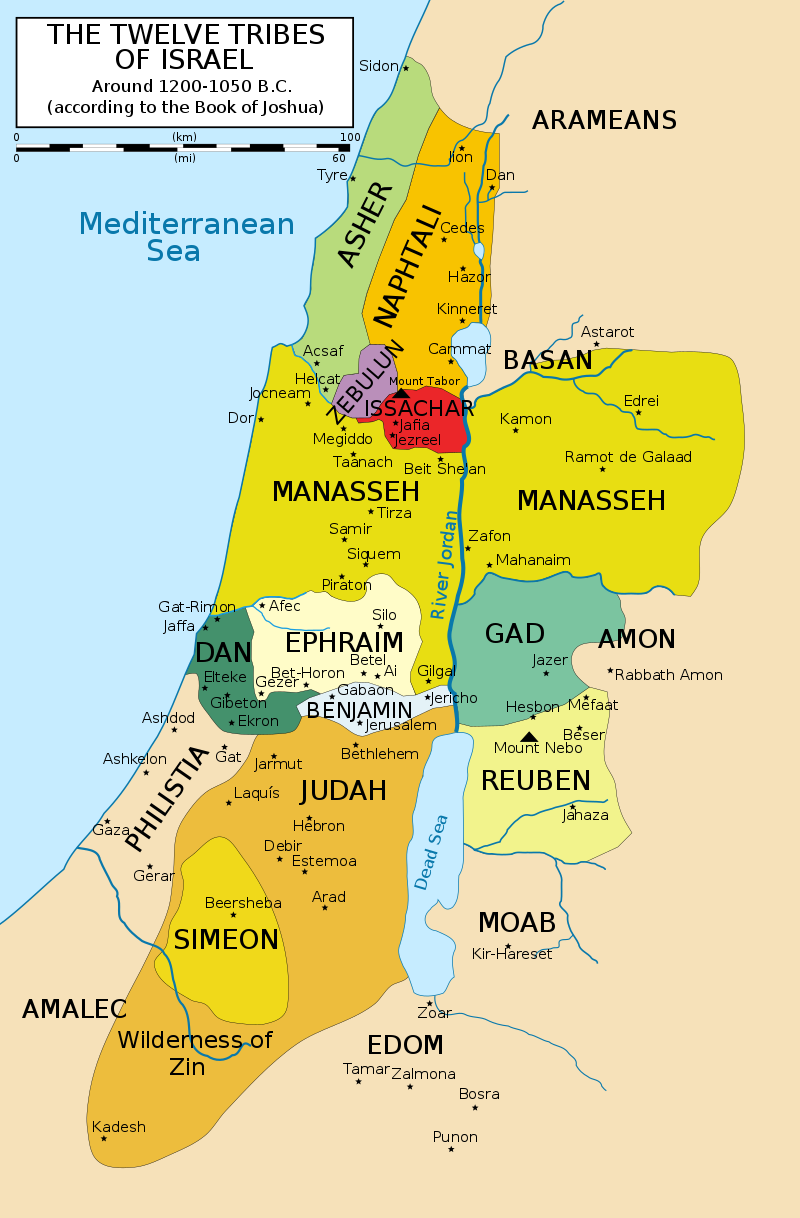
Couriers Go to Ephraim, Manasseh, Zebulun
HEZEKIAH'S CALL
MOCKED AND SCORNED
So - Term of conclusion. This introduces the outcome of Hezekiah's proclamation.
The couriers passed from city to city through the country of Ephraim and Manasseh, and as far as Zebulun Hezekiah’s invitation (2 Chronicles 30:6–9) was an act of grace. He sent couriers northward, asking the surviving Israelites to return to the LORD, humble themselves, and reunite in worship at Jerusalem. His message contained both a warning and a promise—if they returned to God, He would show compassion and restore them.
But - This is a very sad term of contrast!
They laughed them to scorn and mocked them - Sadly most of the northern Israelites ridiculed the messengers and rejected the call to repentance. Their reaction proves the first truth of Pr 14:9 "Fools mock at sin, But among the upright there is good will." They did not want to admit their need for repentance.
David Guzik: We note there was no rational argument against the invitation; it was all opposed with simple laughter and mocking. For the frivolous and simple-minded, these replace serious thought.
Andrew Hill: Predictably, Hezekiah’s invitation to renew festival worship in the reopened Jerusalem temple receives a mixed response (2Ch 30:10-12). The scornful reception given to his couriers may have been life-threatening, perhaps explaining why the heralds to not traverse the entire northern kingdom with their message (cf. 2Ch 30:5). The majority of Israelites in the regions of Ephraim, Manasseh, and Zebulun spurn the invitation, while others from Asher, Manasseh, and Zebulun humble themselves before the Lord and make the pilgrimage to Jerusalem (2Ch 30:10-11). The overwhelming response of those in the kingdom of Judah to obey the king is a remarkable demonstration of solidarity and is attributed to the “hand of God” on the people (2Ch 30:12). (See The NIV Application Commentary on the Bible)
James Butler - SERVING THE KING 2 Chronicles 30:10 (Sermon Starters)
“The posts passed from city to city through the country of Ephraim and Manasseh even unto Zebulun; but they laughed them to scorn, and mocked them” (2 Chronicles 30:10).
King Hezekiah ordered the observance of the Passover which had not been observed for many years. He sent messengers (“posts”) throughout the land of Israel with a message that called people to repent and return to the Lord and to come to Jerusalem to observe the Passover. Our text speaks of the messengers of Hezekiah who took his message throughout the land. It gives a good lesson on serving the Lord.
FIRST—THE WAY OF THE POSTS
“The posts passed from city to city through the country of Ephraim and Manasseh even unto Zebulun.” Hezekiah sent his messengers into the apostate lands of the defunct northern kingdom. The area had a history of cruelty and rejection for God’s servants as the area was given up to idolatry and rejection of God. Therefore the posts would need extra courage to serve the Lord in this area. Serving the Lord is not peaches and cream. It often involves going to places where personal peril is very great. Those who would serve God will need courage, for their ministry is to a sinful world that is often very hostile to God and His servants.
SECOND—THE WORK OF THE POSTS
“The posts passed from city to city.” This was not done by automobile but by foot. The posts had to walk. Hezekiah, though a great king, did not have the convenience of modem technology which could have made the work of the posts much easier. The posts had to travel by foot, not by automobile, plane or train, and they had to endure the hardships that came with travel by foot. There would be a lot of perspiration and privation in this service. The same is true of God’s service. It is not a place where you can enjoy luxury and ease. You will often be without and know much poverty. If you want to be a millionaire, do not apply for God’s service. If you want an easy job, do not look at God’s service as the place to apply for work.
THIRD—THE WICKEDNESS TO THE POSTS
“They laughed them to scorn, and mocked them.” This is the hardest part of service. Hezekiah’s messengers, though employed by a powerful king, were still mocked and scorned in bitter reproach. It is hard to take reproach from people. We want praise and compliments and acceptance. But often God’s servants will experience just the opposite. However, be faithful anyway. You have to answer to the Monarch, not to these mockers. The mocking did not discredit the messengers or the message but only the mockers. The post did find others who responded well to their message (2 Chronicles 30:11). Do not quit in the Lord’s work just because someone laughs at you for the message or ministry. You have been employed by the King of kings and He will take adequate care of all His messengers.
2 Chronicles 30:11 Nevertheless some men of Asher, Manasseh and Zebulun humbled themselves and came to Jerusalem.
- Nevertheless some men of Asher 2Ch 30:18,21 11:16 Ac 17:34
- humbled themselves: 2Ch 12:6,7,12 33:12,19,23 34:27 Ex 10:3 Lev 26:41 Da 5:22 Lu 14:11 Lu 18:14 Jas 4:10 1Pe 5:6
Couriers Go Asher Far North
SOME RECEIVED HEZEKIAH'S
GRACIOUS CALL
Nevertheless - A beautiful term of contrast in this context!
Some men (aka the remnant - cf 1Ki 19:18, Isa 10:21) of Asher, Manasseh and Zebulun humbled (kana; LXX - entrepo - be put to shame) themselves and came to Jerusalem - Here we see there was at least a remnant who have hearts that turn back to Yahweh. Humbled is a picture of them bending their will in surrender before Yahweh. They did not come arrogantly but acknowledging their sin and their need for mercy — the only posture in which a sinner can approach a holy God. They are living illustrations of 2Ch 7:14!
This passage demonstrates God's amazing grace for these three tribes (like the rest of the Northern Kingdom) had long ago apostasized and turned to idolatry. Nevertheless, this remnant overcame centuries of spiritual heritage marked by rebellion and counted cost, for surely they experienced ridicule from their neighbors and also had to travel a relatively long distance into what was once enemy territory (Jerusalem in Judah)! Their costly obedience was a reflection of hearts stirred by God's Spirit and grace (Heb 10:29).
Came to Jerusalem - For these northern Israelites, even the fact they were traveling to Jerusalem was a visible declaration that they no longer belonged to the idolatry of the north, but that they belonged to the LORD alone. In a very real sense, each step of the journey returning to Jerusalem was an acting out of their repentance and faith.
Morris - Here is further evidence that a remnant out of the northern kingdom still followed the true worship of God. In addition to Asher, Manasseh and Zebulun, the tribes of Ephraim and Issachar are mentioned in verse 18. Simeon is mentioned also in 2 Chronicles 15:9. In fact, Hezekiah made a special point of inviting all the tribes of Israel to keep the Passover in Jerusalem (2 Chronicles 30:5), and it is at least possible that some came from every tribe (2 Chronicles 30:25-27).
Spiritual Takeaways - This verse gives us several enduring lessons:
- Mockery does not cancel mercy. Most ignored Hezekiah’s call, but some believed. God’s Word is never fruitless; He always draws a remnant who respond (Isaiah 55:11).
- Humility is the key to grace. God resists the proud but gives grace to the humble (1 Peter 5:5–6; James 4:6).
- Obedience demonstrates repentance. These men came to Jerusalem. They didn’t merely agree with the message, they acted upon it and it was costly to leave their homes. True faith moves from hearing to doing.
- God’s call extends to all. Even though Hezekiah was a Judean king, his invitation extended to Israel’s tribes. Likewise, in Christ, the call to salvation extends beyond all tribal and national boundaries (Acts 17:30; Romans 10:12).
Humbled (03665) kana The Hebrew verb kānaʿ (כָּנַע) fundamentally means to be brought low or made humble, and in the Old Testament it carries two closely related senses: to subdue (often in the context of military or political defeat) and to humble oneself before God in repentance. In the national sense, kānaʿ describes the defeat of enemies, yet Scripture repeatedly emphasizes that this subduing power belongs to God alone—“So Moab was subdued that day under the hand of Israel” (Jdg 3:30), and more explicitly, “So God subdued on that day Jabin king of Canaan before the sons of Israel” (Jdg 4:23; cf. Dt 9:3; 2 Sam 8:1; Ps 81:14).
In its spiritual and relational sense, kānaʿ refers to inward humiliation before the LORD, often following sin, where pride is broken and repentance occurs, as seen in God’s humbling of Israel’s “uncircumcised heart” (Lev 26:41), Ahab’s response to divine judgment (1 Kgs 21:29), Josiah’s tender-hearted repentance (2 Kgs 22:19; 2 Chr 34:27), and Manasseh’s restoration (2 Chr 33:12, 19).
This verb stands at the heart of covenant renewal,
for blessing follows when God’s people “humble themselves” and seek Him.
This verb stands at the heart of covenant renewal, for blessing follows when God’s people “humble themselves” (kānaʿ) and seek Him (2 Chr 7:14; 12:6–7; 30:11; 32:26), while even Job is reminded that only God can truly humble and crush the wicked in His time (Job 40:12). Thus kānaʿ unites divine sovereignty and human responsibility, assuring God’s people that evil is not out of control, for the LORD who humbles nations also graciously lifts the repentant—anticipating the final victory when “the God of peace will soon crush Satan under your feet” (Rom 16:20).
True humility (kānaʿ) is both God’s sovereign work and our willing response—when we bow low before Him in repentance, He subdues what opposes us, restores what was broken, and proves that even in a chaotic world He alone is in control and faithful to save.
2 Chronicles 30:12 The hand of God was also on Judah to give them one heart to do what the king and the princes commanded by the word of the LORD.
- The hand of God was also on Judah: 2Ch 29:36 1Ch 29:18,19 Ezr 7:27 Ps 110:3 Jer 24:7 32:39 Eze 36:26 Php 2:13 2Th 2:13,14
- commanded De 4:2,5,6 1Th 4:2
- by the word: 2Ch 29:25 Ac 4:19
Related Passages:
Psalm 86:11NIV (BELOVED, MAKE THESE TWO PRAYERS PART OF YOUR PRAYERS EACH DAY!) -- "TEACH me Your way, O LORD, and I will walk in Your truth. GIVE me an undivided heart, THAT I may fear Your Name. (LISTEN to Craig Smith's related songs - Pure Heart and Single Heart)

Revive me according to Thy Word.
Psalm 119:25
GOOD HAND OF GOD
GIVES JUDAH "ONE HEART"
The hand of God was also on Judah to give them one heart to do what the king and the princes commanded by the word of the LORD - As so often in the Bible we see here the juxtaposition of God's sovereignty (hand of God) and man's responsibility (to do). God Himself moves their hearts to respond to His Word (SEE "Paradoxical Principle of 100% Dependent and 100% Responsible") In other words, the Spirit of God begins to move in a powerful way, giving the people one heart to obey their king’s righteous command.
In Scripture, the hand of God is a symbol of God’s active power, presence, and guidance. It can mean His strength to bless or to judge, depending on context. Here, it clearly refers to His gracious influence. God's Spirit (YES THE HOLY SPIRIT WAS ALIVE AND WELL IN THE OLD TESTAMENT!!!) was personally active within His people, supernaturally stirring them to respond and giving them both the desire and the power to obey (cf Phil 2:13NLT). This is nothing short of spiritual revival, which demonstrates that true revival is not man-made, but God-initiated and empowered. You can mark it down that what God commands, He also empowers His people to do.
The phrase one heart is significant because it means the people of Judah had a shared devotion and singleness of purpose, for they were a people moved by the Spirit to pursue God together. This spirit of unity is not something humans manufacture; it’s the byproduct of God’s gracious hand transforming hearts.
One heart also points to what believers in Christ later experience in the New Covenant, Luke writing "And the congregation of those who believed were of one heart and soul; and not one of them claimed that anything belonging to him was his own, but all things were common property to them." (Acts 4:32, cf Eph 4:4-6). (See related study of one accord homothumadon/homothymadon, a key description of the early church!)
Compare similar Scriptures that descibe ONE HEART...
Ezekiel 11:19 “And I will give them one heart, and put a new spirit within them. And I will take the heart of stone out of their flesh and give them a heart of flesh,
Jeremiah 32:39 and I will give them one heart and one way, that they may fear Me always, for their own good and for the good of their children after them.
Bob Utley - Thank God there were some who humbled themselves (cf. v. 18; Lev. 26:40-43; 2 Chr. 7:14). Was this an aspect of "the hand of God" (v. 12) or was it a human choice? Yes, both.
What the king and the princes commanded by the word of the LORD - Hezekiah’s reforms were ordered according to Scripture (“by the word of the LORD”). This reminds me of the saying that the best way to experience REVIVAL, is RE-BIBLE! (See Revival) He wasn’t enforcing human tradition but restoring divine truth — specifically, the Passover as commanded in the Law (Exodus 12; Leviticus 23:5–8). So their obedience was really obedience to God Himself, mediated through the lawful leadership of the king and princes. When the king’s commands reflected the LORD’s Word, submission to them became an act of worship, not mere politics. In sum, the one heart of Judah was expressed in collective obedience — they united around God’s revealed will.
Some Spiritual Takeaways -
- Revival comes from God. It was not Hezekiah’s eloquence or political power that stirred Judah — it was “the hand of God.” True revival is always a sovereign work of grace.
- Unity among God’s people is supernatural. Human hearts, left alone, are divided. Only God can give “one heart” (John 17:21; Ephesians 4:3).
- Obedience flows from a heart moved by the Word. Their actions were “by the word of the LORD.” Genuine obedience always aligns with Scripture, never against it.
- God’s hand produces both desire and action. (cf Phil 2:13NLT) As Paul taught later, grace not only forgives, it transforms. God must work in us before we can work for Him (see Eph 2:8-9 then Eph 2:10).
SHORT EXCURSUS- “The Good Hand of the LORD” Throughout Scripture, “the hand of the LORD” is a rich metaphor for God’s sovereign power actively at work in creation, redemption, providence, discipline, and blessing. It is the hand that creates and sustains all life (Job 12:9–10), guides His people wherever they go (Ps 139:9–10), delivers them with mighty power (Exod 13:14; Josh 4:23–24), and upholds them when they stumble (Ps 37:23–24). For God’s people, this hand is fundamentally good—protective, purposeful, and personal—so that even hardship is never random but governed by divine wisdom and mercy (Ps 31:15; Deut 33:27). To fall into God’s hand is safer than to fall into man’s, because “His mercies are great” (2 Sam 24:14).
Most clearly in Ezra and Nehemiah, “the good hand of his God” explains spiritual success, courage, provision, protection, and unity (Ezra 7:6, 9, 28; 8:22, 31; Neh 2:8, 18). Ezra prospered not by skill alone but because he set his heart to study, practice, and teach the Law of the LORD (Ezra 7:10), and God responded with enabling grace. The same hand that blesses those who seek Him can also be heavy in discipline when His people rebel (Ps 32:3,4; Jdg 2:15), reminding us that divine favor is tied to humble dependence. Ultimately, the “good hand of the LORD” assures believers that history, nations, leaders, and individual lives are never outside God’s control (Pr 21:1; Isa 41:10), and that those who trust Him may confidently leave everything in His hands.
2 Chronicles 30:13 Now many people were gathered at Jerusalem to celebrate the Feast of Unleavened Bread in the second month, a very large assembly.
- many people were gathered at Jerusalem Ps 84:7
- in the second month 2Ch 30:2
Related Passages:
Deuteronomy 30:2–3 So it shall be when all of these things have come upon you, the blessing and the curse which I have set before you, and you call them to mind in all nations where the LORD your God has banished you, 2 and you return to the LORD your God and obey Him with all your heart and soul according to all that I command you today, you and your sons, 3 then the LORD your God will restore you from captivity, and have compassion on you, and will gather you again from all the peoples where the LORD your God has scattered you.
Numbers 9:10-11 “Speak to the sons of Israel, saying, ‘If any one of you or of your generations becomes unclean because of a dead person, or is on a distant journey, he may, however, observe the Passover to the LORD. 11 ‘In the second month on the fourteenth day at twilight, they shall observe it; they shall eat it with unleavened bread and bitter herbs.
Psalm 122:1 A Song of Ascents, of David. I was glad when they said to me (LET YOUR HEART BE STIRRED FOR THAT FUTURE DAY WHEN WE WILL COME TO HIS HOUSE IN JERUSAEM - PLAY THIS SONG), “Let us go to the house of the LORD.”
Nehemiah 8:1-3 And all the people gathered as one man at the square which was in front of the Water Gate, and they asked Ezra the scribe to bring the book of the law of Moses which the LORD had given to Israel. 2 Then Ezra the priest brought the law before the assembly of men, women and all who could listen with understanding, on the first day of the seventh month. 3 He read from it before the square which was in front of the Water Gate from early morning until midday, in the presence of men and women, those who could understand; and all the people were attentive to the book of the law.
Acts 2:1 When the day of Pentecost had come, they were all together in one place.
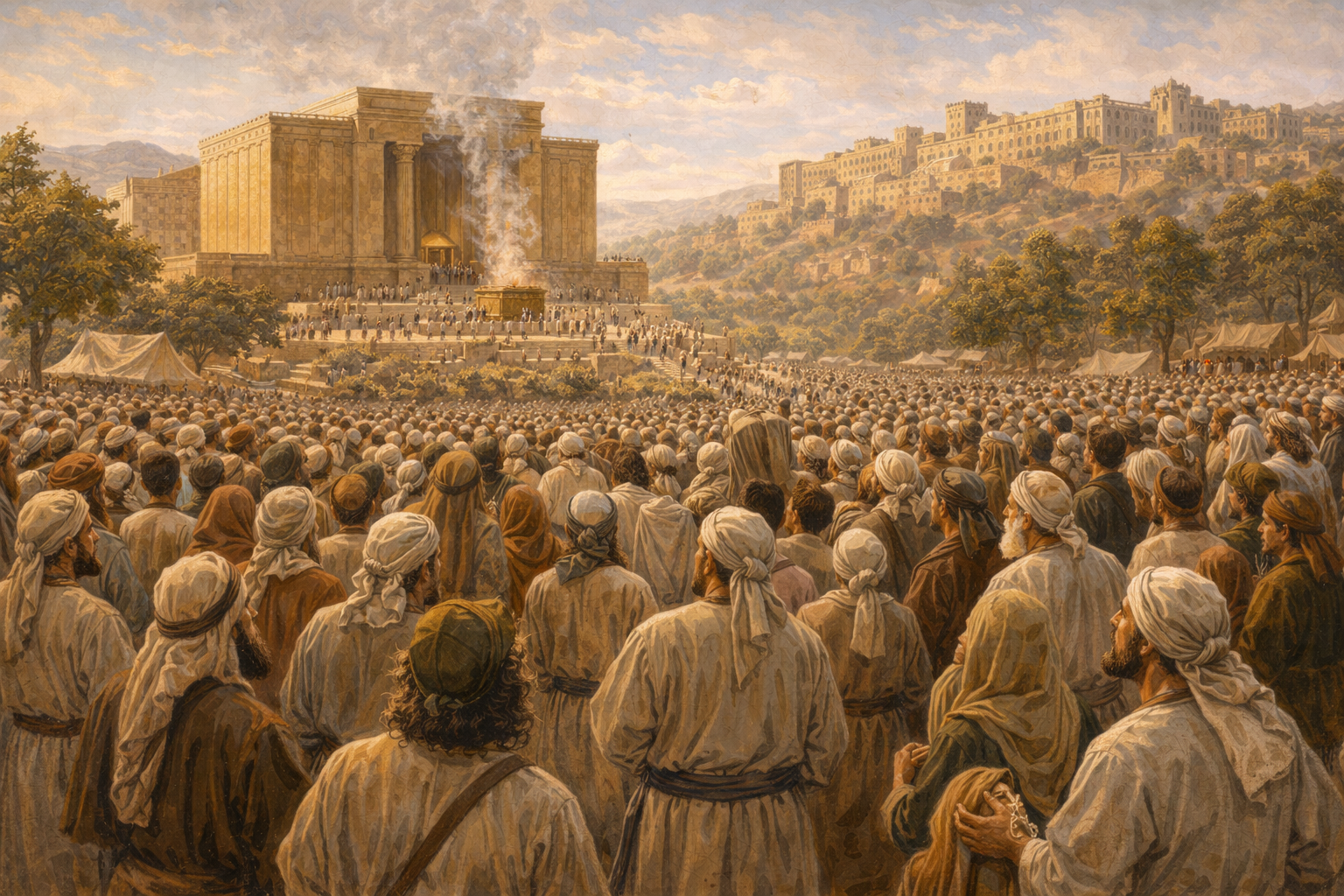
A MULTITUDE EXPERIENCING
SPIRITUAL AWAKENING
Now many people were gathered at Jerusalem to celebrate the Feast of Unleavened Bread in the second month (see 2Ch 30:2-3), a very large assembly - What a great assembly which reflects Hezekiah's invitation to Judah and also to Israel, so that during this time at least there was a semblance of a nation united, even if there was only a remnant from the Northern tribes. A very large assembly testifies to how extensively God moved among the people. This is the fruit of revival: the Spirit of God transforms ridicule into repentance, division into unity, and apathy into worship.
According to Ex 12:15–20 and Lev 23:6–8, the Feast of Unleavened Bread was closely connected to the Passover. It began the day after the Passover meal and lasted for seven days, during which no leaven was to be eaten or found in one’s house. Leaven (yeast) symbolized sin and corruption, and removing it symbolized purity and separation from evil. Thus, this feast was a time of remembering deliverance from Egypt, the nation’s redemption by God’s mighty hand and a time of renewing holiness before God, cleansing not only physical houses but hearts from sin. In short, the people of Judah and Israel were not merely keeping a ritual, but were entering a renewed covenant relationship with God.
In the second month (see 2Ch 30:2-3) - Normally, the Passover and Feast of Unleavened Bread were celebrated in the first month (Nisan), on the fourteenth day (Ex 12:18; Lev 23:5). But Hezekiah celebrated it in the second month. Hezekiah followed an allowance given in Nu 9:10–11, where God permitted those who were ceremonially unclean or unable to keep the Passover at its appointed time to observe it one month later.
August Konkel: Among the challenges facing Hezekiah in observing the Passover was the problem of the impurity of the city. The first task of the assembled multitude was to remove all the foreign cult objects, which were properly disposed of in the Kidron Valley, where they could be burned (2Ch 30:14). A second problem was the failure of the priestly leaders to be properly prepared for the great number of people who had come (2Ch 30:15). The problem may have been the consecration of those officials who had come from outside the city and had not been a part of the earlier purification (2Ch 29:15, 34). Once again the response of the people had outstripped that of the professional clerics, to the great shame of the latter. The priests and Levites had to offer the appropriate burnt offerings before they could take their place in the ceremony. The biggest problem was the impurity of the large number of pilgrims who had traveled great distances from foreign lands and did not have an opportunity to receive the proper purification ceremonies (2Ch 30:13, 17). This rendered them unfit to perform the sacrifice that they had come to observe. The normal practice was that each person would slaughter his own sacrifice; manipulation of the blood was handled by the priests (2Ch 30:15-16). The ritually unclean state of the pilgrims rendered them unfit to participate in the ceremony for which they had come, a point made very clear in the Passover provisions. This was a perpetual problem in observing the festivals in the Second Temple period. (Believers Church Bible Commentary – 1 & 2 Chronicles.)
SUMMARY - Hezekiah’s Passover faced serious obstacles, including widespread ritual impurity in Jerusalem, unprepared priests, and many pilgrims who arrived from distant regions without time for proper purification (2 Chr 30:13–17). The people zealously removed foreign cult objects, but their enthusiasm outpaced the readiness of the priesthood, forcing priests and Levites to hastily consecrate themselves and handle sacrifices on behalf of ritually unclean worshipers—an issue that would continue to complicate festival observance in later periods (2 Chr 30:14–16).
Raymond Dillard: The nation is to “celebrate the Feast of Unleavened Bread” (2Ch 30:12, 13); earlier they were to “celebrate the Passover” (2Ch 30:1, 2, 5). As elsewhere in both the OT and NT, the two festivals were so closely associated that the entire celebration could be denominated by either designation (ED: see Lk 22:1),. (SEE 2 Chronicles, Volume 15 - Page 244) (Borrow 2 Chronicles)
John Walton - pilgrimage feasts. There were three major feasts in the Hebrew calendar that called for pilgrimage to Jerusalem (for discussion see comments on Ex 23:15–17). During these feasts the number of pilgrims in Jerusalem made for very crowded conditions. Pilgrimage was more limited in the ancient Near Eastern religious practice, because most worship took place at local shrines of patron deities. Nevertheless people in outlying regions would make pilgrimage to shrines. Possible evidence of this occurs in the discovery of caravanseria, such as that at Kuntillet Ajrud, where graffiti was left by travelers who may have been pilgrims (though maybe merchants). In Babylonia some may have traveled to the capital to participate in New Year’s Enthronement festivals, but it was not part of the religious expectation. In Egypt it was more likely for the gods to travel around to their various shrines in procession rather than for people to travel to any sort of centralized shrine.
Spiritual Takeaways -
- When God moves, people gather. True revival always draws hearts to the place of worship. When God’s hand stirred Judah (2Ch 30:12), they assembled to seek Him together.
- Unity in worship is a gift of the Spirit of grace (Heb 10:29). Centuries of division began to dissolve as northern and southern Israelites stood shoulder to shoulder in Jerusalem, united under the same Lord.
- God’s Word regulates true worship. The timing, method, and meaning of the feast all followed the divine pattern “by the word of the LORD” (2Ch 30:12).
- Joy follows repentance. Coming to Jerusalem meant coming out of idolatry. The path from repentance (2Ch 30:10–11) to joy (2Ch 30:13) shows that obedience always brings gladness.
- Revival often begins with a few and multiplies. Just “some men” responded at first (2Ch 30:11). But soon, the city overflowed with worshipers “a very large assembly.” LET IT HAPPEN AGAIN IN AMERICA LORD GOD. PLEASE!
EXCURSUS ON LEAVEN - In Scripture, leaven functions as a context-dependent image whose meaning is shaped by its setting rather than by a fixed symbolism: literally, it is yeast that slowly permeates dough, a detail memorialized in Israel’s exodus when haste required unleavened bread—“they baked loaves of unleavened bread…because they were driven out of Egypt and could not delay” (Ex 12:39)—and ritually commemorated in the Feast of Unleavened Bread, when all leaven was removed from the home (Ex 12:15; 13:6–7); symbolically, leaven often represents corruption or sin, which explains its exclusion from offerings burned on the altar (Lev 2:11; 6:17) and Jesus’ warning that false teaching and hypocrisy quietly spread like yeast—“Beware of the leaven of the Pharisees, which is hypocrisy” (Luke 12:1; cf. Matt 16:6, 12); Paul applies the same imagery pastorally, urging the Corinthian church to remove tolerated sin because “a little leaven leavens the whole lump,” grounding his exhortation in redemption history: “For Christ our Passover also has been sacrificed” (1 Cor 5:6,7); yet leaven can also depict positive, pervasive influence, as when Jesus likens the kingdom of heaven to yeast that works invisibly through the whole batch of dough (Matt 13:33), reminding readers that only context determines meaning and that the same image may warn against hidden corruption or celebrate quiet, transforming power.
FEAST OF UNLEAVENED BREAD - The Feast of Unleavened Bread (Chag HaMatzot) is one of the seven appointed feasts of the LORD and is observed for seven days immediately following Passover, commemorating Israel’s swift departure from Egypt when there was no time for dough to rise (Ex 12:15–20; 13:6–7). Central to the feast is the eating of unleavened bread and the complete removal of leaven from the home—“no leaven shall be seen with you” (Ex 13:7)—a historical reminder of haste and a spiritual picture of purity and separation from corruption. Instituted at the exodus, this feast reinforced God’s saving act in sparing Israel through the blood of the lamb (Ex 12:13) and sustaining them in their journey, while also calling each household to self-examination and humble obedience before the LORD. Scripture frequently links Passover and Unleavened Bread as a single redemptive unit (Ex 12:1–20, see Lk 22:1), and the apostle Paul later draws on this imagery to exhort believers to live cleansed lives: “Clean out the old leaven… for Christ our Passover also has been sacrificed” (1 Cor 5:7). Though New Testament believers are not bound to observe this festival under the Old Covenant (Col 2:16), its enduring themes—deliverance, holiness, humility, and dependence on God—continue to instruct the people of God to walk in what is “right and good in the sight of the LORD” (Dt 6:18), remembering that it is the Father Who provides our daily bread (Mt 6:11).
Matthew Henry Notes: Verses: 13-20
SUMMARY - When the appointed time arrived, a great multitude gathered for the Passover, first preparing by removing idolatrous altars throughout Jerusalem, a fitting act of casting out “old leaven” before worship. The people then celebrated the feast with such zeal that it stirred the priests and Levites to sanctify themselves and fully engage in their duties, as the blood was sprinkled on the altar in accordance with God’s ordinance, prefiguring Christ the true Passover. Yet the celebration involved unavoidable irregularities: the Levites assisted in slaughtering the Passover for those ceremonially unclean, and many partook without full ritual purification, the feast also being held a month late. Recognizing these deficiencies, Hezekiah interceded, praying that the good LORD would pardon all who had sincerely set their hearts to seek Him despite outward imperfections. God graciously answered, healing the people by forgiving their shortcomings and accepting their worship, demonstrating that heartfelt devotion and repentance outweigh ceremonial exactness when approached with humility and faith.
The time appointed for the passover having arrived, a very great congregation came together upon the occasion, v. 13. Now here we have,
I. The preparation they made for the passover, and good preparation it was:
They took away all the idolatrous altars that were found, not only in the temple, but in Jerusalem, v. 14. Before they kept the feast, they cast out this old leaven. The best preparation we can make for the gospel passover is to cast away our iniquities, our spiritual idolatries.
II. The celebration of the passover.
In this the people were so forward and zealous that the priests and Levites blushed to see themselves out-done by the commonalty, to see them more ready to bring sacrifices than they were to offer them. This put them upon sanctifying themselves (2Ch 30:15), that the work might not stand still for want of hands to carry it on. The notice we take of the zeal of others should make us ashamed of our own coldness, and quicken us not only to do our duty, but to do it well, and to sanctify ourselves to it. They did according to the duty of their place (2Ch 30:16), sprinkling the blood upon the altar, which was a type of Christ our passover sacrificed for us.
III. The irregularities they were guilty of in this solemnity. The substance was well managed, and with a great deal of devotion; but, besides that it was a month out of time,
1. The Levites killed the passover, which should have been done by the priests only, 2Ch 30:17. They also assisted more than the law ordinarily allowed in offering the other sacrifices, particularly those that were for the purifying of the unclean, many of which there was now occasion for. Some think that it was the offerers' work, not the priests', that the Levites had here the charge of. Ordinarily every man killed his lamb, but now for those that were under any ceremonial pollution the Levites killed it.
2. Many were permitted to eat the passover who were not purified according to the strictness of the law, 2Ch 30:18. This was the second month, and there was not warrant to put them off further to the third month, as, if it had been the first month, the law would have permitted them to eat it the second. And they were loth to forbid them communicating at all, lest they should discourage new converts, and send those away complaining whom they desired to send away rejoicing. Grotius observes from this that ritual institutions must give way, not only to a public necessity, but to a public benefit and advantage.
IV. Hezekiah's prayer to God for the forgiveness of this irregularity. It was his zeal that had called them together in such haste, and he would not that any should fare the worse for being straitened of time in their preparation. He therefore thought himself concerned to be an intercessor for those that ate the passover otherwise than it was written, that there might not be wrath upon them from the Lord. His prayer was,
1. A short prayer, but to the purpose: The good Lord pardon everyone in the congregation that has fixed, engaged, or prepared, his heart to those services, though the ceremonial preparation be wanting. Note,
(1.) The great thing required in our attendance upon God in solemn ordinances is that we prepare our hearts to seek him, that we be sincere and upright in all we do, that the inward man be engaged and employed in it, and that we make heart-work of it; it is all nothing without this. Behold, thou desirest truth in the inward part. Hezekiah does not pray that this might be dispensed with, nor that the want of other things might be pardoned where there was not this. For this is the one thing needful, that we seek God, his favour, his honour, and that we set our hearts to do it.
(2.) Where this sincerity and fixedness of heart are there may still be many defects and infirmities, both the frame of the spirit and the performance of the service may be short of the purification of the sanctuary. Corruptions may not be so fully conquered, thoughts not so closely fixed, affections not so lively, faith not so operative, as they should be. Here is a defect in sanctuary purification. There is nothing perfect under the sun, nor a just man that doeth good, and sinneth not.
(3.) These defects need pardoning healing grace; for omissions in duty are sins as well as omissions of duty. If God should deal with us in strict justice according to the best of our performances, we should be undone.
(4.) The way to obtain pardon for our deficiencies in duty, and all the iniquities of our holy things, is to seek it of God by prayer; it is not so a pardon of course but that it must be obtained by petition through the blood of Christ.
(5.) In this prayer we must take encouragement from the goodness of God: The good Lord pardon; for, when he proclaimed his goodness, he insisted most upon this branch of it, forgiving iniquity, transgression, and sin.
(6.) It is the duty of those that have the charge of others, not only to look to themselves, but to those also that are under their charge, to see wherein they are wanting, and to pray for them, as Hezekiah here. See Job 1:5.
2. A successful prayer: The Lord hearkened to Hezekiah, was well pleased with his pious concern for the congregation, and, in answer to his prayer, healed the people (2Ch 30:20), not only did not lay their sin to their charge, but graciously accepted their services notwithstanding; for healing denotes not only forgiveness (Isa. 6:10; Ps. 103:3), but comfort and peace, Isa. 57:18; Mal. 4:2.
2 Chronicles 30:14 They arose and removed the altars which were in Jerusalem; they also removed all the incense altars and cast them into the brook Kidron.
- They arose and removed the altars which were in Jerusalem: 2Ch 28:24 34:4,7 2Ki 18:22 23:12,13 Isa 2:18-20
- the brook: 2Ch 15:16 29:16 2Sa 15:23 Joh 18:1, Cedron
Related Passages:
2 Chronicles 28:24 Moreover, when Ahaz gathered together the utensils of the house of God, he cut the utensils of the house of God in pieces; and he closed the doors of the house of the LORD and made altars for himself in every corner of Jerusalem.
NORTH
WEST 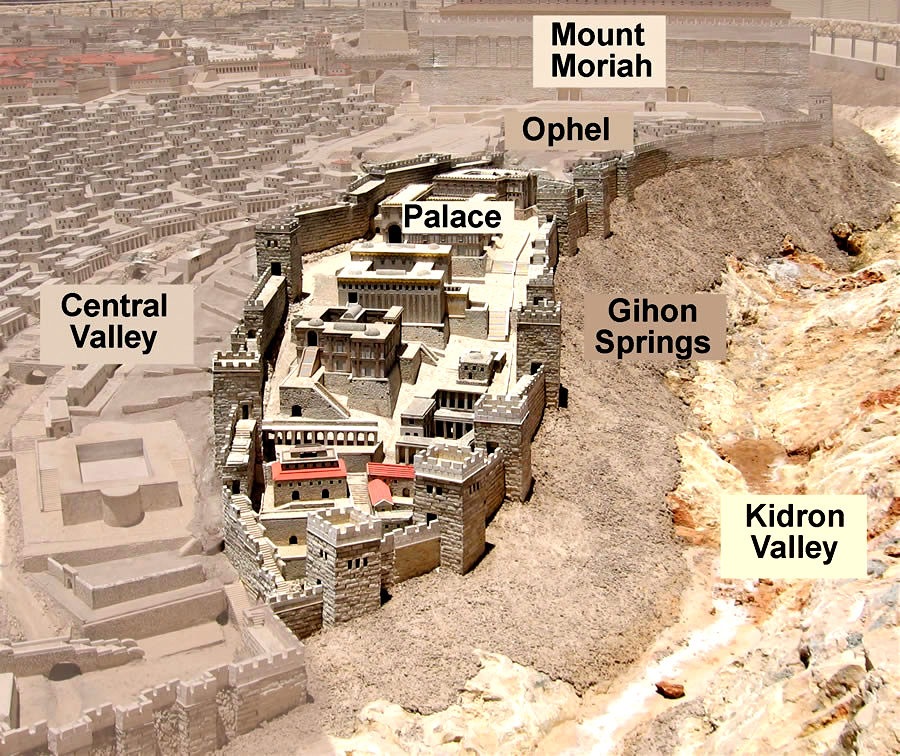 EAST
EAST
Ancient City of David - KIDRON VALLEY to the EAST
CLEANING GOD'S
HOLY CITY!
They arose and removed the altars which were in Jerusalem - These were Ahaz's counterfeit altars! (2Ch 28:24) This reminds me of Paul's' command to the "dysfunctional" church at Corinth "Clean out (aorist imperative = "Just Do It!" = see our need to depend on the Holy Spirit to obey) the old leaven so that you may be a new lump, just as you are in fact unleavened. For Christ our Passover also has been sacrificed." (1Co 5:7) The people understood that God’s holiness could not coexist with idolatry. True worship begins with repentance and cleansing which picks up on Solomon's words "turn from their wicked ways." (2Ch 7:14)
They also removed all the incense altars and cast them into the brook Kidron - Their action show the reality of their repentance, which is not just words, but deeds (fruit) in keeping with repentance (cf Mt 3:8)
🙏 THOUGHT - Turning (from wicked ways) precedes returning (of the presence of Jehovah). This principle is timeless! Are your times with Jehovah dry and you feel distant from the LORD? Perhaps there are some "ALTARS" in your life that need to torn down and cast away in the "Brook Kidron"! (cf Jn 14:21,23, Ps 24:3,4, Mt 5:8, Isa 57:15) Beloved, may God's Spirit give us all the desire and the power to tear these "altars" down and cast them away, for the glory of the Lamb. Amen.
Bob Utley - "They arose and removed the altars" These were the Ba'al altars set up by Ahaz (cf. 2 Chr. 28:24). This was the terrible influence of "the house of Ahab" (i.e., the idolatry of the northern kingdom). This cleansing was an extension of Hezekiah's actions in 2 Chr. 29:16 or the local people had restored these pagan altars, as they had so many times in the past (cf. 1 Kgs. 13:32-33; 14:22-24; 15:14; 22:43; 2 Chr. 14:3; 15:16-17; 17:6; 20:33; 21:11). Asa, Jehoshaphat, and Josiah tried to remove this pagan influence but the people rebuilt them (i.e., 2 Chr. 33:17,19).
Iain Duguid: Removal of all signs of pagan worship in Jerusalem was required; “turning” to the Lord involved “turning” from all that was “faithless” (2Ch 30:6–8). The priests and Levites had cleansed the temple and its precincts of all signs of Ahaz’s “faithless” activity (2Ch 29:16, 18–19), and now the “many people” did the same for the city (cf. 2Ch 28:24) (ESV Expository Commentary Volume 3: 1 Samuel–2 Chronicles)
Frederick Mabie: In parallel with the earlier actions taken by the assembly of priests and Levites (cf. 2Ch 29:15-17), the assembly of Judeans and Israelites takes tangible steps in their return to God by removing and destroying items of idolatry and syncretism throughout Jerusalem, most of which had been built by Ahaz (cf. 2Ch 28:24-25). The destruction of such elements during Hezekiah’s reign is similar to purges directed by Asa (cf. 2Ch 14:3; 15:16), Joash (cf. 2Ch 23:17), and Josiah (cf. 2Ch 34:3-7) in Judah as well as Jehu in the northern kingdom (cf. 2Ki 10:18-28). (See The Expositor's Bible Commentary: 1 Chronicles-Job - Page 292)
Spiritual Takeaways -
- True worship cannot coexist with compromise. God’s people must first remove the “altars” of sin and idolatry before fellowship with Him can be restored (Isaiah 55:7).
- Repentance must be complete — not partial. Casting the altars into the Kidron shows the people wanted nothing more to do with their former sin.
- Purity precedes celebration. They cleansed the city before celebrating Passover just as the believer must confess and forsake sin before partaking in worship or communion (1 Corinthians 11:28).
- God’s mercy follows cleansing. Only after their repentance did the nation enjoy the joy of restored worship (2 Chronicles 30:21–27).
EXCURSUS ON KIDRON VALLEY - The Kidron Valley, also called Kedron or Cedron, lies just east of Jerusalem (SEE DIAGRAM ABOVE) between the city and the Mount of Olives and is a seasonal wadi whose name likely reflects either its dark, turbid waters or the cedars once associated with the area; throughout Scripture it is repeatedly linked with sorrow, judgment, impurity, and death. It served as the disposal site for idolatry during major reforms, when Asa, Hezekiah, and Josiah destroyed pagan objects and cast their remains into the Kidron (1 Kgs 15:13; 2 Chr 29:16; 30:14; 2 Kgs 23:4–6), and it functioned as a place of graves and ashes for the common people (2 Kgs 23:6; Jer 26:23). David crossed the Kidron barefoot and weeping while fleeing Absalom (2 Sam 15:23, 30), Solomon marked it as a boundary of judgment for Shimei (1 Kgs 2:36–37), and Athaliah was executed there (2 Kgs 11:16). In the New Testament, Jesus crossed the Brook Kidron on the night of His arrest to enter Gethsemane, where He faced the anguish of impending death (John 18:1; Luke 22:44). Though long associated with defilement and mourning, the prophets promise its future transformation, declaring that even “the whole valley of dead bodies and ashes…to the Kidron Valley” will one day be “holy to the LORD,” when God turns mourning into joy and forgives sin completely (Jer 31:13, 40, 34).
2 Chronicles 30:15 Then they slaughtered the Passover lambs on the fourteenth of the second month. And the priests and Levites were ashamed of themselves, and consecrated themselves and brought burnt offerings to the house of the LORD.
- were ashamed: 2Ch 29:34 Eze 16:61-63 43:10,11
- consecrated themselves: 2Ch 30:24 5:11 29:15,34 31:18 Ex 19:10,22
Related Passages:
2 Chronicles 6:36–39 When they sin against You (for there is no man who does not sin) and You are angry with them and deliver them to an enemy, so that they take them away captive to a land far off or near, 37 if they take thought in the land where they are taken captive, and repent and make supplication to You in the land of their captivity, saying, ‘We have sinned, we have committed iniquity and have acted wickedly’; 38 if they return to You with all their heart and with all their soul in the land of their captivity, where they have been taken captive, and pray toward their land which You have given to their fathers and the city which You have chosen, and toward the house which I have built for Your name, 39 then hear from heaven, from Your dwelling place, their prayer and supplications, and maintain their cause and forgive Your people who have sinned against You.
THE CLIMATIC ACT OF NATIONAL
CALL TO WORSHIP
Then - The great assembly is ready. Now comes the crowning moment.
They slaughtered the Passover lambs - This commemorated the night when each Israelite household in Egypt killed a lamb and applied its blood to their doorposts, so that the LORD would “pass over” them when judgment struck down the firstborn (Ex 12:21–23). That blood marked both atonement and deliverance — a substitutionary sacrifice pointing forward to the coming Messiah. By offering these lambs again — after years of neglect — the people reaffirmed their covenant with God. The shedding of blood was essential, because, as Hebrews 9:22 teaches, “without the shedding of blood there is no forgiveness.” The Passover lambs were an earthly symbol pointing to the Lamb of God, Jesus Christ, who would one day be slain for the sins of the world. As John recorded "The next day he *saw Jesus coming to him and *said, “Behold, the Lamb of God who takes away the sin of the world!." (Jn 1:29) Just as the blood of lambs once shielded Israel from death, so the blood of Christ covers all who come to Him in faith. We celebrate not a slain lamb but a risen Savior, whose death and resurrection bring eternal deliverance from sin and death. Hebrews 10:10 says "By this will we have been sanctified through the offering of the body of Jesus Christ once for all."
On the fourteenth of the second month - Normally, the Passover was to be observed on the fourteenth day of the first month (Nisan) according to the Law of Moses (Ex 12:6; Lev 23:5). However, we saw in 2 Chronicles 30:2–3 why Hezekiah’s Passover occurred one month later. It is important to note that Hezekiah did not alter the Passover according to his own will — he followed a provision God had already given through Moses (Nu 9:10–11)
And the priests and Levites were ashamed (kalam; LXX - entrepo - be put to shame) of themselves - The spiritual leaders clearly experienced deep conviction and repentance as the nation turned back to the LORD under King Hezekiah. Ashamed (kalam; LXX - entrepo - be put to shame) carries a strong sense of inner humiliation and self‑reproach, a profound awareness of unworthiness. Their shame wasn’t superficial embarrassment; it was deep conviction of conscience before a holy God.
These priests and Levites felt shame because they knew how far they had fallen short of their sacred calling. Under Ahaz, many of them had failed to guard the temple or had even participated in false worship. Now, as they saw the people humbling themselves, tearing down idols, returning to God, and preparing to celebrate the Passover, they themselves were convicted of their own neglect and compromise. Their shame was therefore not worldly embarrassment, but holy conviction. This sense of guilt moved them to genuine repentance, leading to their reconsecration to God’s service.
And - AND is only a small "connective" word but in context it conveys deep significance. The AND connects with consecration and shows that the shame of the spiritual leaders produced repentance, not despair. Their guilt didn’t paralyze them but spurred them on to purify themselves. One is reminded of Paul's words in 2Co 7:10 that "the sorrow that is according to the will of God produces a repentance without regret, leading to salvation, but the sorrow of the world produces death."
🙏 THOUGHT - The response of the priests and Levites to their shame is a good reminder of what we need to do when we sin, experience guilt and sense the shame of our sin (Beloved, this applies to ALL of us!) We need to connect an "AND" to our sin, guilt and shame, not despairing, but moving quickly to confession and repentance. In short we need to practice the positive aspect of Proverbs 28:13 for "(NEGATIVE) He who conceals his transgressions will not prosper, BUT (POSITIVE) he who confesses and forsakes them (aka REPENTS) will find compassion (racham - mercy; LXX - agapao = "shall be loved"!)"
Consecrated (qadash; LXX - hagiazo) themselves and brought burnt offerings to the house of the LORD - Deep conviction (surely the work of the Holy Spirit) motivated deep consecration, another demonstration of the fruit of genuine repentance. Notice how repentance (and cleansing - cf 1Jn 1:9) preceded the offering of sacrifice, not the converse.
The burnt offering was the primary and most complete sacrifice in Israel’s worship (Lev 1:1–9), symbolizing atonement for sin as in Lev 1:4 “It will make atonement for him to be accepted by the LORD.” The burnt offering also spoke of total surrender, for the entire animal was burned on the altar (nothing retained), representing the worshiper’s full devotion to God (cf Ro 12:1). By offering burnt sacrifices, the priests were confessing “We and this people belong wholly to You again, LORD.”
Andrew Hill: The rituals associated with the Passover are the focus of the Chronicler’s report in 2Ch 30:15-20. The Passover animals are killed by the worshipers in keeping with the prescriptions for the feast in Exodus, except for those who are ritually impure and hence unfit to perform the task (2Ch 30:15, 17; cf. Ex. 12:21). The zeal coupled with the appropriate actions of the people in observing the Passover shame the priests and Levites. The religious leaders in charge of instructing the people in the law of Moses and in mediating the sacrificial worship of Israel are outdone by a righteous laity (who presumably have not been taught the Torah for some time by a negligent and corrupt priesthood under King Ahaz). Shortly thereafter the priests and the Levites are consecrated, so they too are careful to follow the prescriptions of the Mosaic law in discharging their duties as mediators of the Passover (2 Chron. 30:16). (See The NIV Application Commentary on the Bible)
John Walton - 30:15–17. Passover rituals. Hezekiah’s Passover deviated from the general practice in two ways. First, the time of the celebration was different (see the note 2 Chron 30:2–3), and second, the Israelites were exempted from certain ritual prescriptions. Because many in the assembly had not sanctified themselves, the Levites presided over the slaying of the paschal lambs, a task normally done by the heads of families, most of whom were not sanctified in this instance (Num 9:6). However, those who were unclean were allowed in some instances to eat the paschal lamb.
Ashamed (humiliated, ashamed, insulted, blush)(03637) kalam The Hebrew verb kālam (כָּלַם) describes the experience of public disgrace and humiliation, carrying the sense of being shamed, disgraced, embarrassed, or made to blush, whether through social exposure, moral failure, or political defeat. It can refer to physical harm or violation (1 Sam 25:7, 15), wounding of the spirit through public humiliation—such as the shaming of David’s envoys by Hanun (2 Sam 10:5) or Jonathan’s outrage at Saul’s intent to disgrace David (1 Sam 20:34)—and national shame through defeat and captivity (Ps 44:9; Isa 30:3; Ezek 32:30).
Kālam also appears in everyday and moral contexts: Boaz commands that Ruth not be “harmed” or shamed in her vulnerable status as a gleaner (Ruth 2:15); Proverbs warns that reckless accusations bring shame on oneself (Prov 25:8) and that immoral associations disgrace one’s family (Prov 28:7); Job confronts his friends for wronging him without shame (Job 11:3; 19:3). The prophets use kālam to expose Israel’s deeper tragedy—her loss of moral sensitivity, so that she “did not even know how to blush” over sin (Jer 3:3; 6:15; 8:12), including spiritual prostitution (Ezek 16:27). Consequently, shame would come through judgment if repentance was refused; yet paradoxically, Israel’s deepest shame would ultimately arise not from punishment but from undeserved restoration, when God’s gracious defense exposes the enormity of her unfaithfulness and leads to true repentance (Isa 54:4; Ezek 16:54, 61, 63; 43:10–11).
2 Chronicles 30:16 They stood at their stations after their custom, according to the law of Moses the man of God; the priests sprinkled the blood which they received from the hand of the Levites.
- they stood: 2Ch 35:10,15
- after their manner: 2Ki 11:14
- according to the law of Moses: De 33:1
- the priests sprinkled the blood: 2Ch 35:10,11 Lev 1:5 Heb 11:28
Related Passages:
Deuteronomy 12:32 “Whatever I command you, you shall be careful to do; you shall not add to nor take away from it.
Leviticus 1:5 ‘He shall slay the young bull before the LORD; and Aaron’s sons the priests shall offer up the blood and sprinkle the blood around on the altar that is at the doorway of the tent of meeting.
WORSHIP RESTORED
IN GOD'S ORDER
They stood at their stations after their custom - They refers to the priests and Levites who had taken their proper positions as divinely ordained servants of the LORD, faithfully performing their duties in the temple according to the instructions given through Moses in the Law.
According to the law of Moses the man of God - We might say today there was no freelancing, no one going "off script, no ad-libbing. In other words everything was done "by the book!" Everything associated with worship, how the priests stood, what they offered, how the blood was handled, came from revelation, not human invention. In other words, the Levites and priests were carrying out the sacred rituals exactly as God had commanded through Moses, each fulfilling his God-assigned role.
The priests sprinkled the blood which they received from the hand of the Levites - Only the priests, descendants of Aaron, were authorized to approach the altar and present blood before God. The Levites assisted the priests by helping slaughter and prepare the animals, especially because so many people were present and some were at various stages of ritual purification. The priests were responsible for sprinkling the blood of the sacrificial animals on the altar, a solemn act representing atonement, while the Levites assisted in preparing and passing the sacrifices to them.
PRACTICAL APPLICATION - This idea of standing in one’s appointed place before the Lord also reflects a spiritual principle that applies to all believers today. Just as the priests and Levites were commanded to serve according to God’s design, Christians are called to serve faithfully within the roles God has given them. The apostle Paul reminds believers, “Let all things be done properly and in an orderly manner” (1 Corinthians 14:40), and again, “Whatever you do, do your work heartily, as for the Lord rather than for men” (Colossians 3:23). The order and obedience shown by the priests and Levites point to the importance of faithful service that honors God through submission to His commands.
Bob Utley - "according to the law of Moses the man of God" This refers to the guidelines of the Pentateuch (cf. 2 Chr. 30:5, "as it was prescribed"). The title, "Moses the man of God," is used often to denote his special relationship to YHWH as leader and revealer (cf. Deut. 33:1; Josh. 14:6; 1 Sam. 2:27; 9:6-7; 1 Kgs. 9:6; 12:22; 13:1,20; 2 Kgs. 1:9-13; 5:8; 23:17; 2 Chr. 30:16; Ezra 3:2; Jer. 35:4). The phrase is also used of Elijah, Elisha, Samuel, David, Shemiah, Hanani, and an unnamed person in 1 Sam. 2:27 and 1 Kgs. 13:1-3 (see NIDOTTE, vol. 1, p. 390, #9)
Bob Utley - "the priests sprinkled the blood" The VERB (Qal PARTICIPLE) is used in several rituals - the burnt offering ‒ Lev. 1:5,11; 8:19; 9:12; 2 Kgs. 16:15; Ezek. 43:18; the peace offering ‒ Lev. 3:2,8,13; 9:18; 17:6; 2 Kgs. 16:13;the sin offering ‒ Lev. 7:2,14; 2 Chr. 29:22
2 Chronicles 30:17 For there were many in the assembly who had not consecrated themselves; therefore, the Levites were over the slaughter of the Passover lambs for everyone who was unclean, in order to consecrate them to the LORD.
- the Levites: 2Ch 29:34 35:3-6
- slaughter of the Passover lambs: Ex 12:6
Related Passages:
Numbers 9:6-7 But there were some men who were unclean because of the dead person, so that they could not observe Passover on that day; so they came before Moses and Aaron on that day. 7Those men said to him, “Though we are unclean because of the dead person, why are we restrained from presenting the offering of the LORD at its appointed time among the sons of Israel?”
LEVITES HELP THOSE
WHO WERE NOT CLEAN
For there were many in the assembly who had not consecrated (qadash; LXX - hagiazo) themselves - Many refers to the laity, not the Levites or the Priests. Recall the number of those participating was large ("very large assembly" 2Ch 30:13). Many who came were not ceremonially purified, that is, they had not gone through the ritual cleansing required by the Law before one could offer sacrifices or eat of the Passover meal. Under the Law of Moses, anyone participating in temple worship or the Passover had to be ceremonially clean—that is, free from contact with impurity such as disease, death, or idolatry (see Leviticus 11–15; Nu 9:6–7).
Therefore (term of conclusion), the Levites were over the slaughter of the Passover lambs for everyone who was unclean (tahor), in order to consecrate (qadash; LXX - hagiazo) them to the LORD - NET - "the Levites slaughtered the Passover lambs of all who were ceremonially unclean and could not consecrate their sacrifice to the LORD." Under normal circumstances, each family or head of household slaughtered its own Passover lamb (Ex 12:6; Dt 16:6). But since many in the assembly were “unclean” meaning they were not ritually purified, they were forbidden to approach or handle the holy sacrifice. Therefore, the Levites, who had first undergone proper consecration (2Ch 29:15–19; 30:15), assumed responsibility on behalf of those people. They killed the lambs, collected the blood, and handed it to the priests for sprinkling on the altar (2Ch 30:16).
According to God’s commands in the Torah, particularly in Ex 12:43–49, Lev 11–15, Nu 9:6–13, and related passages, anyone who was ceremonially unclean, whether through contact with a dead body, certain diseases, bodily discharges, or eating unclean foods, was forbidden from partaking in holy assemblies or offerings until they had gone through the proper purification process. This typically included washing the body and clothing with water, waiting a designated period (often until evening), and in some cases offering a sacrifice of atonement for cleansing.
Consecrated (Sanctified, made holy) (06942) qadash expresses the fundamental biblical idea of holiness as separation unto God, describing both the state of being set apart and the act by which that separation is effected. In its simplest sense, the verb denotes withdrawing a person or object from common use and placing it within the sacred sphere of God’s possession, as seen when Aaron and his sons were sanctified for priestly service through blood and anointing oil (Exod 29:21), the altar was declared “most holy” so that whatever touched it belonged exclusively to the LORD (Exod 29:37), and the tabernacle furnishings were anointed and rendered holy for worship (Exod 30:26–29). This holiness was not abstract or mystical but functional and relational—what was sanctified now belonged to God and was governed by His purposes and restrictions.
In its intensive and causative forms, qādash emphasizes the formal declaration or establishment of holiness, whether applied to sacred times, places, or people. God sanctified the seventh day as the Sabbath, setting it apart as uniquely related to Himself (Gen 2:3; Exod 20:8), consecrated Mount Sinai by restricting access to His holy presence (Exod 19:23), and declared the fiftieth year holy as the Year of Jubilee (Lev 25:10). Persons could likewise be consecrated to divine service, including the priests (Exod 28:3, 41), the firstborn of Israel (Exod 13:2), and even individuals sovereignly appointed by God, such as Jeremiah, who was sanctified before birth (Jer 1:5). In each case, holiness involved both God’s sovereign designation and the setting apart of the consecrated object or person for exclusive service to Him.
The verb also describes how God manifests or vindicates His holiness, either by righteous judgment or by faithful deliverance, as when He showed Himself holy before Israel at Meribah (Num 20:13) or promised to sanctify His great name among the nations through Israel’s restoration (Ezek 36:23). Correspondingly, God calls His people to respond by treating Him as holy in both worship and life, reflecting His moral purity and covenant faithfulness (Lev 11:44; Isa 29:23). Across all its uses, qādash underscores that holiness is not merely ritual correctness but belonging to God—being claimed, cleansed, and commissioned for His presence and purposes, so that what is sanctified exists for His glory alone (Exod 29:43–44; Lev 20:8).
Clean (adjective) (pure) (02889) tahor describes that which is genuine, unalloyed, and fit for God’s presence, whether in a material, ritual, or moral sense. In the Law, it marked the vital distinction between what was clean and unclean—a boundary God Himself required Israel to maintain (Lev 10:10; 11:47). Clean objects, animals, places, and people were suitable for worship and daily life, while uncleanness signified pollution that excluded one temporarily from sacred participation, though often with provision for restoration through purification rites (Lev 13:13). From Noah’s selection of clean animals for sacrifice (Gen 7:2; 8:20), to the repeated requirement for pure gold in the tabernacle furnishings (Exod 30:34–35; 37:6), Scripture teaches that what is offered to a holy God must be genuine and undefiled, underscoring that ceremonial purity was never arbitrary but a visible expression of God’s holiness and order.
God desires not merely outward conformity but inward purity,
hearts cleansed by His grace and lives set apart for His holy purposes.
Yet ṭāhôr ultimately points beyond ritual to moral and spiritual purity, revealing God’s deeper concern for the heart. While ritual cleanness governed contact, food, and bodily conditions (Lev 11; 12; 15; Num 19), these regulations taught Israel that sin contaminates human life at every level and that cleansing must come from God. Thus David’s plea after his sin—“Create in me a clean heart, O God” (Ps 51:10)—captures the ethical core of the word, echoed in the declaration that God’s Word is itself pure (Ps 12:6) and that the LORD is “of purer eyes than to behold evil” (Hab 1:13). The prophets insist that ritual cleansing without repentance is meaningless and even offensive (Isa 1:15–16), for the ceremonies were never meritorious acts but symbolic calls to contrition and trust in divine mercy. In this way, ṭāhôr teaches a timeless principle: God desires not merely outward conformity but inward purity, hearts cleansed by His grace and lives set apart for His holy purposes.
MORE DISCUSSION OF CLEAN AND UNCLEAN - In the Old Testament, the categories of “clean” and “unclean” were foundational to Israel’s understanding of holiness and proper relationship with God. These terms went far beyond physical hygiene and instead described a person’s ceremonial and moral fitness to approach a holy God in worship. Leviticus 11–15 outlines regulations concerning foods, bodily conditions, and ritual states, teaching that to be “clean” was to be acceptable for participation in worship, while to be “unclean” meant temporary exclusion until purification occurred. God’s command, “You shall be holy, for I am holy” (Lev. 11:44), shows that these laws were designed to impress upon Israel both God’s absolute holiness and the seriousness of separation from sin.
Uncleanness often carried symbolic and spiritual significance, pointing beyond outward defilement to the deeper issue of inner purity. Contact with death (Num. 19:11), certain foods (Lev. 11), or bodily discharges rendered a person ceremonially unclean, not because these things were inherently sinful, but because they illustrated the pervasive effects of sin and mortality. The prophets made clear that God’s ultimate concern was not ritual performance alone but the heart’s condition, as seen in His promise, “I will sprinkle clean water on you, and you will be clean” (Ezek. 36:25). Jesus later clarified this truth by teaching that defilement comes not from external things but from what proceeds from the heart (Mark 7:15).
Under the New Covenant, the principle of cleanliness continues, but it is spiritual rather than ceremonial. Jesus rebuked religious leaders for emphasizing outward purity while remaining inwardly corrupt (Luke 11:39–41), showing that true holiness begins within. The Old Testament distinction between clean and unclean thus prepares the way for the gospel message: sin defiles deeply, but God Himself provides cleansing. Through Christ, forgiveness and purification are complete and lasting, so that believers may live separated from sin and devoted to God, confident that “He is faithful and righteous to forgive us our sins and to cleanse us from all unrighteousness” (1 John 1:9).
2 Chronicles 30:18 For a multitude of the people, even many from Ephraim and Manasseh, Issachar and Zebulun, had not purified themselves, yet they ate the Passover otherwise than prescribed. For Hezekiah prayed for them, saying, “May the good LORD pardon
- even many from Ephraim and Manasseh, Issachar and Zebulun: 2Ch 30:11
- had not purified themselves: Nu 9:10-14 19:20 1Co 11:28
- yet they ate the Passover: Ex 12:43-51
- Hezekiah prayed for them: Ge 20:7,17 Job 42:8,9 Jas 5:15,16 1Jn 5:16
- May the good LORD pardon 2Ch 6:21 Ex 34:6-9 Nu 14:18-20 Ps 25:8 Ps 36:5 Ps 86:5 Ps 119:68 Da 9:19
Related Passages:
1 Chronicles 16:34 O give thanks to the LORD, for He is good; For His lovingkindness is everlasting.
Psalm 100:5 For the LORD is good; His lovingkindness is everlasting And His faithfulness to all generations.
Psalm 25:8 Good and upright is the LORD; Therefore He instructs sinners in the way.
Psalm 119:68 You are good and do good; Teach me Your statutes.
Ephraim, Manasseh, Issachar, Zebulun
HEARTS WERE RIGHT THOUGH
FORMS WERE LACKING
For a multitude of the people, even many from Ephraim and Manasseh, Issachar and Zebulun, had not purified themselves, yet they ate the Passover otherwise than prescribed - Many of those who came to Jerusalem from the Northern Kingdom, having traveled some 70-90 miles (and 4-6 days), had not had sufficient time to go through the prescribed steps of purification. Yet, moved by repentance and a desire to return to God, they ate the Passover anyway, " in violation of what is prescribed in the law" (2Ch 30:18NET). In other words, they bypassed the letter of law in the ceremonial commands, though their hearts were turned toward God.
For Hezekiah prayed for them, saying, “May the good LORD pardon (kapar) - It is on this backdrop of recognizing their sincerity of faith and repentance in those Jews who had traveled from far away and not had time to perform ritual cleansing ceremonies that King Hezekiah interceded for them asking the "good LORD to pardon (NET = "forgive')." CSB is "May the good LORD provide atonement on behalf of..."
Perhaps Hezekiah used the description "good LORD" (only here in OT) because he recalled the words of the David (the Psalm were available at this time in Israel's history - see 2Ch 29:30) who wrote "For You, Lord, are GOOD, and ready to FORGIVE, And abundant in lovingkindness to all who call upon You." (Psalm 86:5)
Bob Utley - Here again, the "letter" of the law is modified for the inclusion of worshipers at Hezekiah's request. The Law is for mankind, not vice versa (cf. Matthew 12; Mark 7).
Andrew Hill: The Chronicler makes an important theological observation that intent of heart and acts of repentance, when combined with intercessory prayer, override the letter of the law when it comes to the worship of God (2Ch 30::18-19; cf. Isa. 1:15-19; Mic. 6:8). (See The NIV Application Commentary on the Bible)
John Olley: The phrase “good Lord” (See Goodness) occurs only here in the OT but probably alludes to the refrain found often in Psalms and cited when David established worship before the ark, when Solomon dedicated the temple, and again at the dedication of the second temple: “Oh give thanks to the Lord, for he is good; for his steadfast love endures forever” (1Ch 16:34; 2Ch 5:13; 7:3; Ezra 3:11; Ps. 106:1; 107:1; etc.).
J.A. Thompson: Most of the people from Ephraim, Manasseh, and Issachar were not ritually purified, due either to ignorance or lack of time. Although God’s law was binding, there also was some flexibility in extraordinary circumstances. Hezekiah offered a special prayer on their behalf, asking that God would pardon all those who hearts were ready to seek God even if they were ritually unclean according to the ceremonial purification laws of the sanctuary. Prayer was effective in overriding purely ritual considerations according to the Chronicler. For all his concern with the cult and its personnel, the Chronicler was not content with a religion of mere external correctness but delighted in the one who “sets his heart on seeking God.” In hearing Hezekiah and healing the people, God was answering Solomon’s prayer as he promised in 2Ch 7:14. (SEE 1, 2 Chronicles: An Exegetical and Theological Exposition)
L.M. Grant: The ordinance of the Passover required that those who were defiled by a dead body could not eat of the Passover until they were sanctified from this (Numbers 9:9). Because of some being defiled at the time of the Passover in Numbers, God had made an allowance for them the keep the Passover in the second month (Numbers 9:10-11). However, since it was the second month that Hezekiah arranged the Passover, and there were large numbers from Ephraim, Manasseh, Issachar and Zebulun who had not been purified, yet they were allowed to eat the Passover, though it was contrary to the Word of God. This was a marked exception, and Hezekiah prayed for them, that the Lord would provide atonement for this infraction of the law. The Lord accepted this prayer and healed all the people (2Ch 30:19-20). In explanation of this, would it not have been cruel to refuse their participation in the Passover after having invited them to come from so far for this purpose, and after these people had shown such faith as to come to God's centre in order to honour the Lord? This was the exception of pure grace.
Forgive (See "mercy seat") (03722) kapar means to make atonement, to make reconciliation (to reconcile), to purge, to make propitiation (to propitiate), to pacify, to cancel. There are two main ideas regarding the meaning of kapar - (1) Kapar means to cover over sin (2) A number of resources however favor the idea that kapar means to wipe away. These ideas are discussed more below.
The NET Bible Note states that the primary sense of the kapar is "to wipe [something off (or on)]" (see esp. the goal of the sin offering, Lev 4, "to purge" the tabernacle from impurities), but in some cases it refers metaphorically to "wiping away" anything that might stand in the way of good relations by bringing a gift (see, e.g., Ge 32:20, "to appease; to pacify" as an illustration of this). The translation "make atonement" has been retained in Leviticus 1:4 because, ultimately, the goal of either purging or appeasing was to maintain a proper relationship between the LORD (Who dwelt in the tabernacle) and Israelites in whose midst the tabernacle was pitched.
GOODNESS OF GOD - In Scripture the concept of “good/goodness” is rooted in the Hebrew word ṭôb, which can describe outward attractiveness or quality in people, land, and creation, but finds its deepest meaning in moral and relational terms: God Himself is essentially and unchangingly good, a truth celebrated throughout the Psalms and affirmed by Jesus, and His goodness is most clearly seen not in abstraction but in His gracious dealings with His people (e.g., Psalm 34:8; 145:9; Romans 2:4). Human goodness, therefore, is patterned after divine goodness, expressing itself in right conduct, kindness, and faithfulness, and flowing from an inwardly transformed heart rather than mere external behavior (Matthew 12:33–35). In both Testaments goodness is inseparable from ethical action—loving good and hating evil, discerning rightly between the two, and living accordingly (Isaiah 5:20; Amos 5:14–15). Closely related to ṭôb is ḥesed (“lovingkindness”), which highlights covenant loyalty and gracious action toward others, showing that biblical goodness is relational, practical, and compassionate. Under the Old Testament covenant, God’s goodness toward Israel called forth a corresponding life of humble obedience (Micah 6:8), while in the New Testament goodness is produced by the Spirit and displayed through moral excellence and Christlike character (Galatians 5:22; 2 Peter 1:5), revealing what goodness looks like in everyday living. (See Attribute of God = Good, Goodness)
SEE RAY PRITCHARD'S SERMON God is So Good - Here is a summary - God’s goodness answers the question, “Is this a friendly universe?”—yes, because behind all creation stands a caring God who is good to all and calls everyone to respond: the lost are to “taste and see that the LORD is good” by turning in repentance as His patient kindness and common grace invite them to salvation through Christ (Psalm 34:8; Romans 2:4), and the saved are to “give thanks to the LORD, for He is good” because His goodness grants eternal life, open access in prayer, wise providence in suffering (including loving “no” answers), loving discipline, and sure hope even in death (1 Chronicles 16:34; Psalm 145:9; Romans 8:28–29; Hebrews 12:5–6), so that everything God is and does—His mercy, justice, holiness, love, and even His refining trials—is good, and the gospel is the ultimate display of that goodness for all who will come to Him.)
C H Spurgeon - To those who feel unfit for the communion
‘A multitude … had not cleansed themselves, yet did they eat the passover otherwise than it was written. But Hezekiah prayed for them, saying, The good LORD pardon every one that prepareth his heart to seek God … though he be not cleansed according to the purification of the sanctuary. And the LORD hearkened to Hezekiah, and healed the people.’ 2 Chronicles 30:18–20
If Hezekiah and his people won the blessing and ‘praised the LORD day by day, singing with loud instruments unto the LORD’, we may look for the same joy and holy exultation. They ‘kept the feast of unleavened bread seven days with great gladness’. If there is any place where we are bound to be glad, it is at the Lord’s Supper. This is no funeral feast, no memorial of one who lies rotting in the grave. Here we remember that Jesus died, but also hear those prophetic words, ‘till he come.’ He lives and shall come with all the glory and majesty of heaven to claim the kingdoms as his own and to judge the nations in equity. Therefore have we joy as we come to the table. It is a memorial of a death by which the life of myriads was purchased, the memorial of a great struggle which ended in the most glorious of victories. ‘It is finished’ is the banner which waves over us. Such a victory is a joy for ever; let it be gladly commemorated. Here we celebrate the feast of pardoning love delighting itself in being enabled justly to spare the guilty. Here is the feast of redeemed bondsmen, the jubilee of emancipation from everlasting slavery. We come as those that are alive from the dead to feast with him who was slain, but has risen again and become our life and joy. Bring ‘an instrument of ten strings’ and the psaltery; let every string be awakened to ecstasy on behalf of Jesus, to set forth in worthy notes his passion and triumph.
SUMMARY - The passage presents worship—especially at the Lord’s Supper—not as a somber funeral but as a joyful celebration of Christ’s finished work and living triumph. Just as Hezekiah and Israel rejoiced with praise and glad feasting, believers come to the Table remembering Christ’s death and proclaiming His resurrection and return. The Supper celebrates a decisive victory—sin forgiven, slavery broken, life secured—marked by jubilation, gratitude, and wholehearted praise to the risen Lord.
2 Chronicles 30:19 everyone who prepares his heart to seek God, the LORD God of his fathers, though not according to the purification rules of the sanctuary.”
- everyone who prepares his heart to seek God: 2Ch 19:3 20:33 1Sa 7:3 1Ch 29:18 Ezr 7:10 Job 11:13 Ps 10:17 Pr 23:26
- though not according to the purification rules of the sanctuary Lev 12:4 15:31-33 21:17-23 22:3-6 Nu 9:6 19:13-20
Related Passages:
2 Chronicles 19:3 “But there is some good in you (JEHOSHAPHAT) for you have removed the Asheroth from the land and you have set your heart to seek God.”
1 Samuel 7:3 Then Samuel spoke to all the house of Israel, saying, (CONDITIONAL PROMISE) “If you return to the LORD with all your heart, remove the foreign gods and the Ashtaroth from among you and direct your hearts to the LORD and serve Him alone; and (THE PROMISE - DELIVERANCE) He will deliver you from the hand of the Philistines.”
HEARTS PREPARED TO SEEK GOD
GOD FORGIVES SEEKING HEART
This verse completes the sentence in Hezekiah's prayer which began "May the good LORD pardon"
everyone who prepares his heart to seek (darash) God, the LORD God of his fathers - To “prepare the heart” means to intentionally turn one’s inner life toward God, to repent, humble oneself, and commit to knowing and obeying Him. Preparing the heart describes genuine spiritual readiness, grounded in faith and repentance, the inward condition God values most.
God, the LORD God of his fathers - Yahweh, the eternal covenant God Who revealed Himself to the fathers, Abraham, Isaac, and Jacob. In context, this title, “the Lord God of his fathers,” intentionally connects the repentant worshipers from the Northern Kingdom the faith of their ancestors. Stated another way, by invoking “the Lord God of his fathers,” Hezekiah is appealing to the continuity of covenant mercy, so that the same God Who redeemed Israel from Egypt, brought them through the wilderness, and gave them the Law now hears the prayer of those who return to Him in repentance.
God esteems inner devotion
above outward conformity.
Prepares his heart to seek God describes a person who intentionally turns the very center of his being—his thoughts, will, and affections—toward the Lord in humility and sincerity. In the Hebrew language, the idea of “preparing the heart” (הֵכִין לֵב - hekin lev) implies purpose, effort, and determination. It suggests that seeking God is not a passive response but an act of deliberate commitment. The heart must be “made firm” or “established” toward the Lord, rejecting all idols, distractions, and competing loyalties. This same concept appears throughout Scripture. In 1Sa 7:3, the prophet Samuel told Israel, “Direct your hearts to the Lord and serve Him alone, and He will deliver you from the hand of the Philistines”. Likewise, 2Ch 12:14 describes Rehoboam’s failure when it says, “He did evil because he did not set his heart to seek the Lord.” The difference between obedience and sin in those stories is not mainly about ceremony or ritual but about whether the heart is fixed on God in faith and repentance. When Hezekiah prayed for those who “prepared their hearts,” he recognized a truth that runs through all of Scripture, that God esteems inner devotion above outward conformity. The prophet Joel conveyed this divine priority when he called Israel to repentance, saying, “Rend your heart and not your garments. Now return to the Lord your God, for He is gracious and compassionate, slow to anger, abounding in lovingkindness, and relenting of evil” (Joel 2:13). The same truth is echoed in the New Testament. Jesus rebuked the Pharisees for outward ritualism without inward repentance, quoting Isaiah: “This people honors Me with their lips, but their heart is far away from Me” (Mt 15:8).
THOUGHT - To “prepare one’s heart to seek God” today means to approach Him with repentance, faith, and love, trusting not in one’s own works but in the righteousness of Christ. It is an invitation to realign the whole self—mind, will, and emotions—toward the living God. The Lord still honors this kind of devotion, forgiving those who come to Him sincerely, even when their practical obedience is incomplete. Thus, this verse beautifully portrays the gospel in miniature: a holy God pardons the sinner who sets his heart to seek Him, because the grace of God always meets the soul that genuinely turns toward Him.
Though not according to the purification rules of the sanctuary - Under the Mosaic Law, anyone participating in sacred ceremonies had to undergo ritual purification (washing, abstaining from defilement, waiting certain days, etc.) before entering the temple or eating of holy things (see Leviticus 11–15; Numbers 9:6–14). But many of those present at Hezekiah’s Passover had not followed these procedures. Their neglect was not open rebellion but ignorance and limitation — they wanted to obey but did not know or have time to perform all the prescribed rites. Thus, Hezekiah prayed that God’s grace would cover these deficiencies since their hearts were right: they prepared their hearts to seek Him even if their outward purification was incomplete.
Bob Utley "everyone who prepares his heart to seek God" This will become the reality of the gospel message! The heart is the key (see note at 2 Chr. 7:14; John 4).
2 Chronicles 30:20 So the LORD heard Hezekiah and healed the people.
- healed: Ex 15:26 Ps 103:3 Jas 5:15,16
YAHWEH HEARD
AND HEALED
So the LORD heard Hezekiah and healed the people - God accepted Hezekiah's prayer because the people’s hearts were genuinely turned toward Him, even though their external observance was imperfect. God looks at the internal, not the external! In His mercy, God pardoned (forgave) them instead of judging them. God graciously looked beyond ritual deficiency and responded to sincere faith. God’s mercy met their imperfection and healed them, showing that His grace is extended not to those who perform flawlessly but to those who sincerely desire Him.
🙏 THOUGHT - To prepare your heart, you must humble yourself before God, acknowledging your sin and your inability to cleanse yourself. In Ps 51:10 David asks “Create in me a clean heart, O God, and renew a steadfast spirit within me.” This prayer from David reveals that true God pleasing heart-preparation is something God Himself accomplishes within us when we turn to Him in repentance and ask Him for a clean heart! In a prophetic passage Moses says to Israel in Dt 4:29 “But from there you will seek the LORD your God, and you will find Him if you search for Him with all your heart and all your soul.” Seeking God calls for a whole hearted approach, not a half-hearted approach! This calls for a Spirit enabled whole-hearted act, giving Him the highest place in our life, above every competing desire or distraction.
Preparing your heart also involves cleansing it from divided loyalties. The prophet Samuel told Israel, “Direct your hearts to the LORD and serve Him alone” (1Sa 7:3). This requires turning away from sin and idols, anything that competes with God’s rightful place in your life. Proverbs echoes this calling us to “Trust in the LORD with all your heart and do not lean on your own understanding. In all your ways acknowledge Him, and He will make your paths straight” (Pr 3:5–6). In other words, to prepare your heart means choosing to jettison self-reliance and rely fully on God, aligning your life and motives with His Word.
This process of preparing your heart or directing your heart is both deliberate and ongoing. The psalmist said, “I will run in the way of Your commandments, for You will enlarge my heart” (Ps 119:32). When you yield to God’s Word and seek His truth through prayer and obedience, He expands your heart’s capacity to love and follow Him. The act of preparation is not about perfection but direction—putting your heart on a path that leads toward God, trusting Him to transform you along the way.
Therefore, preparing your heart to seek God means coming before Him with sincerity, humility, and desire, letting His Word of truth guide your mind, His Spirit to cleanse your conscience, and His love to direct your will. When you do this, you will find that God meets you with grace and reveals Himself to you (Jn 14:21). As Jeremiah 29:13 promises, “You will seek Me and find Me when you search for Me with all your heart.” Finally, since we live in a world that seeks to continually defile our hearts, we need to daily, enabled by God's Spirit determine to "Watch over your heart with all diligence, for from it flow the springs of life." (Pr 4:23).
2 Chronicles 30:21 The sons of Israel present in Jerusalem celebrated the Feast of Unleavened Bread for seven days with great joy, and the Levites and the priests praised the LORD day after day with loud instruments to the LORD.
- celebrated the Feast of Unleavened Bread for seven days Ex 12:15 13:6 Lev 23:6 Lu 22:1,7 1Co 5:7,8
- with great joy,: 2Ch 30:26 7:10 De 12:7,12 16:14 Ne 8:10 Ac 2:46 Php 4:4
- the priests praised the LORD day after day: 2Ch 20:21 29:25-27
- with loud instruments: Heb. instruments of strength, Ps 150:3-5
OBEDIENCE OVERFLOWS
IN GREAT JOY
The sons of Israel present in Jerusalem celebrated the Feast of Unleavened Bread for seven days with great joy, and the Levites and the priests praised the LORD day after day with loud instruments to the LORD. This statement describes a sustained period of joyful, obedient worship in which the people of Israel fully observed God’s appointed feast, while the Levites and priests led continual, exuberant praise, showing that true obedience to God’s Word produced both communal gladness and ongoing, God-centered worship rather than a momentary religious enthusiasm.
John Walton - Feast of Unleavened Bread. The Feast of Unleavened Bread was established to memorialize the deliverance of the Hebrews from Egypt (see comment on Ex 12:14–20). It was one of three annual festivals and was normally observed on the fourteenth day of the first month. For seven days unleavened bread was eaten and no manual labor was done. Sacrifices were offered on the first and last days of the month (Num 28:16–25; Deut 16:1–8).
2 Chronicles 31:21 He did it with all his heart and prospered.
The man who does his business with all his heart, is sure to prosper. To put your heart into your work is like genius manipulating common materials, till their worth becomes priceless, just because of what has been put into it.
The heart stands for the emotions and affections. What the furnace is to the factory or steamship, that the heart is in the economy of our nature. It is a great thing to love our life-work, to have an aim that kindles us whenever we think of it. Those who are so happily circumstanced, cannot be sufficiently thankful. But what of those who are bound to a work which they did not choose and do not like, who find their daily toil irksome and distasteful— is there any help for them? Can they possibly learn to do such work from their hearts? Certainly: because of Him who set it, and for whom it may be done.
Love performs the most onerous duties with all its heart, if they conduce to the comfort and help of those whom it loves more than itself. Does not a mother or wife perform tasks from which the hireling would shrink? She does them with all her heart, not considering for a moment the loathesomeness and hardness of the demand. So if we look at our life-work as God-appointed; if we realize that He has fixed it for us, who determined the orbits of the stars; if we can hear the voice of Jesus saying, “Do this for Me”— there is no further thought of hardship or distaste. Remember to do all your life-work for Jesus; do all in His name and for His glory; ask Him to fill your. heart with submissive, loyal obedience, and you will find that when you introduce the personal element of Christ-service into the meanest acts, they will glisten like a piece of gold-tapestry.
When every task is embraced as God-appointed and done wholeheartedly for Christ’s glory, even the humblest work is transformed into priceless service that prospers because the heart, energized by love and obedience, gives it eternal worth.
Matthew Henry Notes: 2Ch 30:21-27
SUMMARY - After the Passover, Hezekiah led Israel in a seven-day Feast of Unleavened Bread marked by extraordinary joy, generosity, worship, and spiritual renewal: abundant peace offerings—lavishly supplied by the king and princes—enabled communal feasting as a sign of reconciliation and communion with God; earnest prayers and confessions accompanied the sacrifices; Levites faithfully taught the Scriptures, restoring the Word after years of neglect; daily psalms and music filled the temple with praise; and such delight attended the worship that the people willingly extended the celebration another seven days, setting aside ordinary concerns out of zeal for God. The entire assembly, including many from afar, rejoiced as Jerusalem had not since Solomon’s day, and the festival concluded with the priests’ solemn blessing—ratified by God Himself—sending the people home crowned with joy and assurance that prayers offered in worship return as showers of divine blessing.
After the passover followed the feast of unleavened bread, which continued seven days. How that was observed we are here told, and every thing in this account looks pleasant and lively.
1. Abundance of sacrifices were offered to God in peace-offerings, by which they both acknowledged and implored the favour of God, and on part of which the offerers feasted with their friends during these seven days (2Ch 30:22), in token of their communion with God and the comfort they took in his favour and their reconciliation to him.
To keep up this part of the service, that God's altar might be abundantly regaled with the fat and blood and his priests and people with the flesh of the peace-offerings, Hezekiah gave out of his own stock 1000 bullocks and 7000 sheep, and the princes, excited by his pious example, gave the same number of bullocks and a greater number of sheep, and all for peace-offerings, 2Ch 30:24. By this God was honoured, the joy of the festival was kept up, and the strangers were encouraged to come again to Jerusalem. It was generously done of the king and the princes thus plentifully to entertain the whole congregation; but what is a great estate good for but that it puts men into a capacity of doing so much the more good? Christ feasted those that followed him. I believe neither Hezekiah nor his princes were the poorer at the year's end for this their pious liberality.
2. Many good prayers were put up to God with the peace-offerings, 2Ch 30:22.
They made confession to the Lord God of their fathers, in which the intent and meaning of the peace-offerings were directed and explained. When the priests sprinkled the blood and burnt the fat they made confession, so did the people when they feasted on their part. They made a religious confession of their relation to God and dependence upon him, a penitent confession of their sins and infirmities, a thankful confession of God's mercies to them, and a supplicatory confession of their wants and desires; and, in all these, they had an eye to God as the God of their fathers, a God in covenant with them.
3. There was a great deal of good preaching.
The Levites (whose office it was, Deu. 33:10) taught the people the good knowledge of the Lord, read and opened the scriptures, and instructed the congregation concerning God and their duty to him; and great need there was of this, after so long a famine of the word as there had been in the last reign. Hezekiah did not himself preach, but he spoke comfortably to the Levites that did, attended their preaching, commended their diligence, and assured them of his protection and countenance. Hereby he encouraged them to study hard and take pains, and put a reputation upon them, that the people might respect and regard them the more. Princes and magistrates, by owning and encouraging faithful and laborious preachers, greatly serve the interest of God's kingdom among men.
4. They sang psalms every day (2Ch 30:21):
The Levites and priests praised the Lord day by day, both with songs and musical instruments, thus expressing their own and exciting one another's joy in God and thankfulness to him. Praising God should be much of our work in our religious assemblies.
5. Having kept the seven days of the feast in this religious manner, they had so much comfort in the service that they kept other seven days, 2Ch 30:23.
They did not institute any new modes of worship, but repeated and continued the old. The case was extraordinary: they had been long without the ordinance; guilt had been contracted by the neglect of it; they had now got a very great congregation together, and were in a devout serious frame; they knew not when they might have such another opportunity, and therefore could not now find in their hearts to separate till they had doubled the time. Many of them were a great way from home, and had business in the country to look after, for, this being the second month, they were in the midst of their harvest; yet they were in no haste to return: the zeal of God's house made them forget their secular affairs. How unlike those who snuffed at God's service, and said, What a weariness is it! Or those who asked, When will the sabbath be gone? The servants of God should abound in his work.
6. All this they did with gladness (2Ch 30:23); they all rejoiced, and particularly the strangers, 2Ch 30:25.
So there was great joy in Jerusalem, v. 26. Never was the like since the dedication of the temple in Solomon's time. Note, Holy duties should be performed with holy gladness; we should be forward to them, and take pleasure in them, relish the sweetness of communion with God, and look upon it as matter of unspeakable joy and comfort that we are thus favoured and have such earnests of everlasting joy.
7. The congregation was at length dismissed with a solemn blessing,2Ch 30:27.
(1.) The priests pronounced it; for it was part of their office to bless the people (Num. 6:22, 23), in which they were both the people's mouth to God by way of prayer and God's mouth to the people by way of promise; for their blessing included both. In it they testified both their desire of the people's welfare and their dependence upon God and that word of his grace to which they commended them. What a comfort is it to a congregation to be sent home thus crowned!
(2.) God said Amen to it. The voice of the priests, when they blessed the people, was heard in heaven and came up to the habitation of God's holiness. When they pronounced the blessing God commanded it, and perhaps gave some sensible token of the ratification of it. The prayer that comes up to heaven in a cloud of incense will come down again to this earth in showers of blessings.
2 Chronicles 30:22 Then Hezekiah spoke encouragingly to all the Levites who showed good insight in the things of the LORD. So they ate for the appointed seven days, sacrificing peace offerings and giving thanks to the LORD God of their fathers.
KJV And Hezekiah spake comfortably unto all the Levites that taught the good knowledge of the LORD: and they did eat throughout the feast seven days, offering peace offerings, and making confession to the LORD God of their fathers.
NET Hezekiah expressed his appreciation to all the Levites, who demonstrated great skill in serving the LORD. They feasted for the seven days of the festival, and were making peace offerings and giving thanks to the LORD God of their ancestors.
NIV Hezekiah spoke encouragingly to all the Levites, who showed good understanding of the service of the LORD. For the seven days they ate their assigned portion and offered fellowship offerings and praised the LORD, the God of their fathers.
NLT Hezekiah encouraged all the Levites regarding the skill they displayed as they served the LORD. The celebration continued for seven days. Peace offerings were sacrificed, and the people gave thanks to the LORD, the God of their ancestors.
- Hezekiah spoke encouragingly to all the Levites: Heb. to the heart of all, 2Ch 32:6 Isa 40:1,2 Ho 2:14
- who showed good insight : 2Ch 15:3 17:9 35:3 De 33:10 Ezr 7:10,25 Ne 8:7,8,18 9:3 2Ti 4:2
- the good: Pr 2:6,7 8:6 Joh 17:3 2Co 4:6 Php 3:8
- giving thanks to the LORD God De 26:3-11 Ezr 10:11 Ne 9:3
HEZEKIAH ENCOURAGED THE
SERVANTS OF THE LORD
Then Hezekiah spoke encouragingly to all the Levites who showed good insight in the things of the LORD - Hebrew literally reads “Hezekiah spoke to the heart of all the Levites,” thus to “speak encouragingly” means to speak words that strengthen, comfort, and inspire the heart.
Levites who showed good insight in the things of the LORD - The Levites were not just performing rituals but were demonstrating spiritual understanding in how they led worship and applied God’s law. They grasped both the outer form and inner meaning of the sacrifices, music, and ceremonies, knowing that worship must flow from hearts aligned with truth (Deut 6:5; John 4:24). Hezekiah recognized this kind of deep understanding and honored it
So they ate for the appointed seven days, sacrificing peace offerings and giving thanks to the LORD God of their fathers - In Hebrew worship, eating at a festival was part of worship itself. Meals were not ordinary suppers but fellowship feasts before God, marking participation in His covenant. During this feast, they ate unleavened bread (symbolizing purity) and portions of the peace offerings that were now being offered in abundance.
The peace offering was a voluntary sacrifice expressing thanksgiving, fellowship, and reconciliation with God (Leviticus 3; 7:11‑15). A portion of the animal was burned on the altar to God. A portion went to the priests. The rest was eaten by the worshiper and his family in a joyful meal near the sanctuary. It symbolized peace with God (from shalom, meaning wholeness or reconciliation). Because the Passover had brought atonement, they could now enjoy peace offerings — signs that they were reconciled and restored. Their repentance was met with forgiveness, and forgiveness produced peace — expressed through shared meals of worship. So peace offerings were fitting — they were not to remove sin (that was what sin offerings were for) but to celebrate forgiveness received.
EXCUSUS ON PEACE OFFERING (CF THANK OFFERING) - In Scripture, the peace offering (also called the fellowship offering) was not a propitiatory gift meant to placate God but a voluntary covenant sacrifice expressing thanksgiving, fulfilled vows, or joyful communion after reconciliation had already been established (Lev. 7:11–21; 3:1–17). Offered as a concluding sacrifice following offerings that addressed sin and consecration, it celebrated restored fellowship with God, family, and community, highlighting joy rather than appeasement (Lev. 9:18–21). The offering could be male or female from the herd or flock, without blemish, with hands laid on the animal, its blood sprinkled around the altar, and the choicest parts—fat, kidneys, and the lobe of the liver—burned to the LORD as His portion (Lev. 3:2–5; 7:3–5), while the breast and right thigh were given to the priests as wave and heave offerings (Lev. 7:28–34). Uniquely, the remaining portion was eaten by the worshiper within a prescribed time, symbolizing shared fellowship with God and affirming that He provides sustenance rather than extracting payment (Lev. 7:15–18). Thus the peace offering testified that God’s favor is rooted in grace, not human appeasement (Eph. 2:8–9), anticipating the New Covenant reality in which believers offer spiritual sacrifices of praise and living devotion through Christ, whose sacrifice alone secures true peace with God (Rom. 12:1; Heb. 13:15; Rom. 5:1).
2 Chronicles 30:23 Then the whole assembly decided to celebrate the feast another seven days, so they celebrated the seven days with joy.
- Then the whole assembly decided 2Ch 30:2
- to celebrate the feast another seven days: 2Ch 7:9 1Ki 8:65
Related Passages:
1 Kings 8:65 So Solomon observed the feast at that time, and all Israel with him, a great assembly from the entrance of Hamath to the brook of Egypt, before the LORD our God, for seven days and seven more days, even fourteen days.
EXTENDING THE FEAST
NOT SATISFIED TO CEASE
Then the whole assembly decided to celebrate the feast another seven days, so they celebrated the seven days with joy - So delighted were the people in the LORD’s presence that the whole assembly resolved to extend the feast another seven days, continuing their celebration with overflowing joy.
Bob Utley "another seven days" One wonders if this is a purposeful link to Solomon's two-week dedication of the temple in 2 Chr. 7:8-10.
2 Chronicles 30:24 For Hezekiah king of Judah had contributed to the assembly 1,000 bulls and 7,000 sheep, and the princes had contributed to the assembly 1,000 bulls and 10,000 sheep; and a large number of priests consecrated themselves.
- had contributed to the assembly: Heb. lifted up, or offered, 2Ch 35:7,8 1Ch 29:3-9 Eze 45:17 Eph 4:8
- a large number of priests consecrated themselves. 2Ch 29:34
HEZEKIAH'S GENEROSITY
FUELS WORSHIP
For Hezekiah king of Judah had contributed to the assembly 1,000 bulls and 7,000 sheep, and the princes had contributed to the assembly 1,000 bulls and 10,000 sheep; and a large number of priests consecrated (qadash; LXX - hagiazo) themselves - Hezekiah and the princes underwrote the celebration with extraordinary generosity, supplying thousands of sacrifices, while many priests consecrated themselves, ensuring that worship was both abundant in provision and holy in preparation.
John Walton - Hezekiah’s provision of animals. It appears that the king is providing much of the meat for a religious communal feast for those in attendance. These numbers are large but are not out of proportion with some of the other figures found in ancient Near Eastern literature. When King Ashurnasirpal II throws a dedication party for his palace in the Assyrian capital city of Calah, he provides 5,000 sheep, 1,000 lambs and cattle, 500 deer, 500 gazelles, 34,000 fowl, and 10,000 fish (879 B.C.).
2 Chronicles 30:25 All the assembly of Judah rejoiced, with the priests and the Levites and all the assembly that came from Israel, both the sojourners who came from the land of Israel and those living in Judah.
- both the sojourners: 2Ch 30:11,18 Ex 12:43-49
- rejoiced: 1Ch 16:10,11 Ps 92:4 104:34
WORSHIP UNITED
THE NATION
All the assembly of Judah rejoiced, with the priests and the Levites and all the assembly that came from Israel, both the sojourners who came from the land of Israel and those living in Judah - The entire assembly rejoiced together—Judah, the priests and Levites, Israelites from the north, and even resident sojourners—showing that shared obedience to the LORD dissolved old divisions and united all who came into one joyful worshiping community.
Bob Utley - Notice all the groups that rejoiced. all the assembly of Judah (2 Chr. 30:2); priests and Levites (i.e., tribe of Levi); all the assembly from the northern kingdom (v. 1); sojourners (cf. Num. 9:14) from Israel and from Judah.
2 Chronicles 30:26 So there was great joy in Jerusalem, because there was nothing like this in Jerusalem since the days of Solomon the son of David, king of Israel.
- there was nothing like this in Jerusalem since the days of Solomon: 2Ch 7:9,10
UNMATCHED JOY
SINCE SOLOMON
So there was great joy in Jerusalem, because there was nothing like this in Jerusalem since the days of Solomon the son of David, king of Israel - There was unprecedented joy in Jerusalem, for such a widespread, wholehearted revival of worship and glad obedience had not been experienced since the days of Solomon son of David, king of Israel.
Bob Utley - The Chronicler longed for "the good old days" of the United Monarchy (i.e., 2 Chr. 7:8-10).
Mark Boda: The comparison in 2Ch 30:26 to Solomon’s reign makes explicit what has been implicit throughout 2Ch 29-30 – that is, that Hezekiah is the second Solomon, uniting the tribes both north and south around the Temple in Jerusalem. Dillard (1987:242-243) argues that in this chapter not only is Hezekiah linked to Solomon by being the first king to reunite the nation at the Temple since his forefather (ch 7), by holding an extended two-week celebration (2Ch 7), and by praying before the assembly (ch 6), but also throughout chapter 30 the vocabulary of God’s speech to Solomon in 2Ch 7:14 is used, a speech that identified for the Chronicler the normative vocabulary of response by Israel and Yahweh: “Then if my people who are called by my name will humble themselves. . .” The Chronicler presented Hezekiah and his g
2 Chronicles 30:27 Then the Levitical priests arose and blessed the people; and their voice was heard and their prayer came to His holy dwelling place, to heaven.
- Then the Levitical priests arose and blessed the people: Nu 6:23-26 De 10:8
- their prayer : 1Ki 8:30,39 Ac 10:4
- came to His holy dwelling place, to heaven.: Heb. the habitation of his holiness, De 26:15 Ps 68:5 Isa 57:15 63:15 66:1
Related Passages:
Numbers 6:23-26 “Speak to Aaron and to his sons, saying, ‘Thus you shall bless the sons of Israel. You shall say to them: 24The LORD bless you, and keep you; 25The LORD make His face shine on you, And be gracious to you; 26The LORD lift up His countenance on you, And give you peace.’
PRIESTLY BLESSING
HEARD IN HEAVEN
Then the Levitical priests arose and blessed the people; and their voice was heard and their prayer came to His holy dwelling place, to heaven - The Levitical priests pronounced God’s covenant blessing over the people, and the LORD Himself affirmed it by hearing their prayer and responding from heaven, showing that the worship offered on earth was accepted in His holy presence.
Bob Utley - "blessed the people" This refers to Nu 6:23, called "the Aaronic blessing." There are several texts that mention a priestly blessing (cf. Deut. 33:8-11; 1 Sam. 2:20; 9:13; 1 Chr. 23:13). This "blessing" held great importance for faithful worshipers. It was a prayer to YHWH for His covenant presence, promises, and abundance (i.e., Leviticus 26; Deuteronomy 27-30).
EXCURSUS ON LEVITICAL PRIESTS - The Levitical priests, drawn from the tribe of Levi—Jacob and Leah’s third son (Gen. 29:34)—were uniquely set apart by God for sacred service, their very name likely conveying ideas of attachment, dedication, or being given over wholly to the LORD (Deut. 18:1; Num. 3:12). While Israel as a whole was called to be “a kingdom of priests” (Exod. 19:6), God sovereignly chose Levi to replace the firstborn of Israel as His special servants, with Aaron and his sons designated as priests and the remaining Levites assigned supportive duties related to worship, teaching, judging, and guarding holiness (Num. 8:14–19; Deut. 10:8; 33:10). The Levites had no land inheritance, fulfilling Jacob’s prophecy that they would be scattered (Gen. 49:7), yet this judgment became a blessing, for the LORD Himself was their inheritance (Num. 18:20; Deut. 10:9), and He provided for them through offerings, tithes, and forty-eight cities, including the Cities of Refuge (Josh. 21). The Levitical priesthood, held to the highest standards of purity and accountability (Lev. 21), centered on mediation between God and Israel, climaxing in the high priest’s once-yearly entry into the Most Holy Place on the Day of Atonement (Lev. 16; Heb. 9:7). Nevertheless, this priesthood was temporary and preparatory, pointing beyond itself to Jesus Christ, whose once-for-all sacrifice ended the Old Covenant system (Matt. 27:51) and established Him as the eternal Great High Priest, not according to Levi, but “after the order of Melchizedek” (Heb. 7:11–17), granting believers direct access to God forever (Heb. 4:14–16).
C H Spurgeon - Morning and Evening -
Their prayer came up to his holy dwelling place, even unto heaven.” —2 Chronicles 30:27
Prayer is the never-failing resort of the Christian in any case, in every plight. When you cannot use your sword you may take to the weapon of all-prayer. Your powder may be damp, your bow-string may be relaxed, but the weapon of all-prayer need never be out of order. Leviathan laughs at the javelin, but he trembles at prayer. Sword and spear need furbishing, but prayer never rusts, and when we think it most blunt it cuts the best. Prayer is an open door which none can shut. Devils may surround you on all sides, but the way upward is always open, and as long as that road is unobstructed, you will not fall into the enemy’s hand. We can never be taken by blockade, escalade, mine, or storm, so long as heavenly succours can come down to us by Jacob’s ladder to relieve us in the time of our necessities. Prayer is never out of season: in summer and in winter its merchandise is precious. Prayer gains audience with heaven in the dead of night, in the midst of business, in the heat of noonday, in the shades of evening. In every condition, whether of poverty, or sickness, or obscurity, or slander, or doubt, your covenant God will welcome your prayer and answer it from his holy place. Nor is prayer ever futile. True prayer is evermore true power. You may not always get what you ask, but you shall always have your real wants supplied. When God does not answer his children according to the letter, he does so according to the spirit. If thou askest for coarse meal, wilt thou be angered because he gives thee the finest flour? If thou seekest bodily health, shouldst thou complain if instead thereof he makes thy sickness turn to the healing of spiritual maladies? Is it not better to have the cross sanctified than removed? This evening, my soul, forget not to offer thy petition and request, for the Lord is ready to grant thee thy desires.
Their voice was heard; and their prayer came up to His holy dwelling place, to heaven. —2 Chronicles 30:27
Did you ever think of a prayer meeting as a miracle? That thought came to my mind one evening at church after we divided into small prayer groups. As someone in each group prayed, I heard several people talking to God at the same time. It sounded like a jumble of words. But that’s the miracle. God was hearing each prayer—along with millions of others being lifted to Him around the world in many different languages.
For those of us who reach frustration levels when two children are talking to us at the same time, it is indeed a miracle that God can hear so many of His children simultaneously.
Consider the story of Hezekiah’s Passover celebration. He called for the Israelites to join him in Jerusalem for praise and prayer (2 Chronicles 30:1). Multitudes came for what turned into a 2-week-long worship service. Huge numbers of people rejoiced and praised God at the same time (v.25). As the religious leaders prayed, “their voice was heard; and their prayer came up . . . to heaven” (v.27).
The miracle goes on. Today, throughout the world, millions of people are praying to God. Let’s rejoice in knowing that He hears each prayer. — by Dave Branon (Reprinted by permission from Our Daily Bread Ministries. Please do not repost the full devotional without their permission.)
God hears us when we call to Him,
He does not miss one voice;
The knowledge that He always hears
Should cause us to rejoice.
—Sper
You'll never get a busy signal on the prayer line to heaven.
PAUL APPLE - DEVOTIONAL QUESTIONS:
1) Why is it sometimes necessary to be flexible in light of exceptional circumstances?
2) What steps did Hezekiah take to pursue the unity of all of God’s people?
3) Do we place enough importance on the priority of purification and consecration?
4) How does God show His gracious and compassionate character to those who seem far removed from His presence and favor?
Raymond Dillard: This chapter functions on a number of levels for the Chronicler as he seeks to address the needs of his contemporaries.
(1) It raises once again the theme of exile and restoration. The path to a restored kingdom is the path of cultic fidelity. This message is pressed home through the observance of Passover, itself a commemoration of redemption and release from bondage to a foreign power.
(2) The Chronicler never tires of portraying the validity of his theology of immediate retribution. Particularly in this chapter he seeks to show the efficacy and validity of Solomon’s prayer and God’s promise, an efficacy he understood as relevant for his own generation as well.
(3) Hezekiah is presented as an embodiment of the ideal Davidic successor. He is another David/Solomon ruling over a united kingdom with the support of the populace. It is hard to escape the conclusion that the Chronicler held out this portrayal also in speaking of future possibilities and hopes for his own generation. (SEE 2 Chronicles, Volume 15 - Page 244)
Andrew Konkel: The motif of spiritual preparedness through repentance is a development found in the postexilic prophets, in Zechariah in particular. The Chronicler cites couriers who, at the king’s command, give a message throughout Israel and Judah employing the word sub (turn) successively, first in an appeal for a return to the Lord of the covenant (2Ch 30:6a), so that (second) the Lord might return to the remnant that had escaped from Assyria (2Ch 30:6b). Third, God will then turn away the anger of his judgment (2Ch 30:8b) if (fourth) they return to the Lord (2Ch 30:9a), because he is a compassionate God, who (fifth) will allow them to return to their land (9b), and (sixth) will not abandon them if they will return to him (2Ch 30:9c). The Chronicler is deliberately extending the words of Zechariah 1:3: “’Turn to me,’ utterance of the Lord of hosts, ‘and I will turn to you’” says the Lord of hosts” (AT). Zechariah continues with the exhortation not to be as their ancestors, who balked when the prophets appealed to them to turn (sub) from their evil ways (2Ch 30:4; cf. 2 Chron 30:7). The fierce anger of God against the former generation was nothing other than the curse of the covenant (Zech 1:5-6; cf. 2 Chron 30:8). They had no other recourse but to repent (sub), for God had acted exactly as he said he would (Zech 1:6b). The wordplay on sub, as adopted by the Chronicler to point the way toward restoration, continues a significant theological development. (Believers Church Bible Commentary – 1 & 2 Chronicles.)
Peter Wallace: I would suggest that there is a transformation of the Passover from the original event to the celebration of that event. Think of the Lord’s Supper. We don’t do exactly what Jesus did at the Last Supper. Rather, that Supper has taken on a ritual form, as Paul describes it in 1 Corinthians 11. (In other words, within a generation, the ritual meal displaced the original) The same thing happened to the Passover 1400 years earlier! The people of Israel did not try to “replay” the original Passover – rather, following the clear teaching of Moses, they commemorated it. Likewise, we do not try to “replicate” the original “Last Supper,” rather, following the clear teaching of the apostles, we commemorate it. Clearly, by Deuteronomy, the Passover is no longer just a family celebration. Here in 2 Chronicles, it goes a step further, and now it is the priests and Levites who slaughter the Passover lambs on behalf of the unclean (suggesting that those who were clean slaughtered their own lambs); in Ezra 6:20, after the exile, we hear that the priests and Levites slaughtered all of the Passover lambs. Some people have been perplexed at the variety of directions given regarding Passover. Usually, they are the same people who tend to be “statute-oriented” and who think that God should always be very precise in saying exactly what we need to do, so that everything is cut and dried, and there is no ambiguity in our duty. So when they hear that at one time God commanded that you should not boil the lamb, and then later they hear a command to boil the lamb, they insist on translating the words differently. When they hear that at one time the head of household was to slaughter the lamb, and then they hear that the priests slaughtered all the lambs, they insist that the priests were violating the law of God! I would suggest that they are missing the point. The point is what the Reformed tradition has articulated as the “Regulative Principle of Worship.” The Regulative Principle says that we should only do in worship what God has said we should do. But the Regulative Principle also distinguishes between the “elements” of worship and the circumstances. The elements of worship are the basic things: the Word, sacraments, and prayer. The circumstances are pretty much everything else! Even many of the detailed regulations in the OT were “circumstantial.” Think about our text here in 2 Chronicles 30. Two of the basic actions of the Passover are very clear from the Pentateuch: - the Passover lamb should be slaughtered on the 14th day of the first month; and - only those who are both circumcised and ceremonially clean may partake of the Passover. Neither of those basic rules are observed in this case! Hezekiah and the priests were convinced that the fundamental principle of the Passover was the celebration of God’s saving Israel from Egypt – and that everyone who desired to remember that great salvation should be admitted to the Passover, regardless of ceremonial status. (Sure, in future years, you should make sure that you are ceremonially clean – but if we wait until we are clean before we do this, it’ll never happen!) And notice God’s response: 2Ch 30:20 And the LORD heard Hezekiah and healed the people. In other words, the LORD entirely approved of Hezekiah’s distinction between the essential actions of the Passover, and the circumstantial regulations that were designed to promote the holiness of the Passover. Chronicles is not saying that we can play fast and loose with God’s law – but Chronicles is saying what Jesus will say about the Sabbath: “Passover was made for man, not man for the Passover.” If you are so strict in your adherence to the law that you destroy the point of the law, then you have not truly kept the law! There is an important lesson here. Some have used this text to say that outward actions aren’t that important: the heart is what really matters. But that’s not the point at all. After all, if you think about what is happening here, the whole point of the story is that Israel (all Israel – not just Judah) is doing something outward together! It’s true that they are setting aside certain regulations regarding clean/unclean. But they are setting aside the sanctuary’s rules of cleanness – in other words, they are relaxing some of the purity laws so that the heart can be properly expressed in the outward actions of worship. . . The rigid and heartless application of God’s law leads to legalism and sterility. The loose and lax neglect of God’s law leads to license and rebellion. The equitable and prudent application of God’s law leads to great joy and gladness – with Levites and priests singing with all their might, the King encouraging those who are skilled in the service of the LORD, and all the people rejoicing and giving thanks. https://media-cloud.sermonaudio.com/text/112012211396.pdf
F.B. Meyer: Pastor and theologian John Stott explained in The Contemporary Christian: “Protestants use a [certain] vocabulary to describe the continuously needed restoring and refreshing of the church. Our two favourite words are ”˜reform', indicating the kind of reformation of faith and life according to Scripture which took place in the sixteenth century, and ”˜revival', denoting an altogether supernatural visitation of a church or community by God, bringing conviction, repentance, confession, the conversion of sinners and the recovery of backsliders. ”˜Reformation' usually stresses the power of the Word of God, and ”˜revival' the power of the Spirit of God, in his work of restoring the church.” Through Hezekiah, God brought both reformation and revival to Judah. In addition to renewing the temple, the king also renewed the celebration of the Passover. Setting aside recent strife in favor of a deeper covenant unity, he even invited people from what remained of northern Israel to come and join in. The letter he sent showed his heart: he wanted the entire nation to return to God, reunite in repentant worship centered around the temple, and be restored to the Lord's covenant favor. Though many mocked the messengers, some responded openly and humbly. Hezekiah changed the date of Passover, mainly on practical grounds, since there was insufficient time to prepare the priests and gather the people. In fact, the Law was flexible on this point (see Num. 9:10-11). Despite the delay, many participants still had not purified themselves, but the king prayed for their forgiveness and God graciously “healed the people” (2Ch 30:30:20). The entire occasion was a high point in post-Solomon Israelite history (30:26). This was no short-lived emotional rush, but a genuine recommitment followed by a zealous campaign to wipe out places and practices of idolatry. Hezekiah did everything with careful attention to the Law, following David's and Solomon's worship examples.
David Guzik: Their pattern of preparing to receive the Passover is instructive for those who come to the communion table, especially those who feel unworthy to partake of communion. They forgot their differences and came together as one people. They removed their idols. They prepared their hearts. Their sins and ignorance were confessed. They prayed.
Geoffrey Kirkland: King Hezekiah’s Invitation to Celebrate the Passover
I. THE INVITATION TO THE PASSOVER (2Ch 30:1-12)
1. The letters (2Ch 30:1-4)
2. The couriers (2Ch 30:5-9)
3. The rejecters/mockers (2Ch 30:10)
4. The worshipers (2Ch 30:11-12)
II. THE REINSTITUTION OF THE PASSOVER (2Ch 30:13-22)
1. The place (2Ch 30:13)
2. The purification (2Ch 30:14)
3. The Passover (2Ch 30:15-16)
4. The prayer (2Ch 30:17-19)
III. THE JUBILATION AT THE PASSOVER (2Ch 30:23-27)
https://media-cloud.sermonaudio.com/text/10111874702.pdf
SUMMARY - True joy is found not in resisting God but in obedience from the heart, as illustrated in Hezekiah’s Passover revival, where wholehearted submission to God’s Word—despite inconvenience, ridicule, and cost—led to unity, spiritual renewal, and unparalleled joy; grounded in Scripture, drawn by God’s gracious and covenant-keeping character, yielded to a personal relationship with the Lord, and expressed in love for God’s people, such obedience proved that God’s commands are not burdensome but life-giving, for when His people return to Him in repentance and faith, He answers with blessing, joy, and the deep freedom that only comes from serving a gracious Master.
Pretend that you’re on the old TV game show “Password.” You’ll recall that the object of that show was to try to get your partner to say the “password” by a process of word association. For example, if the password was “read,” maybe you would say “book.” Your partner responds, “magazine.” You say, “newspaper.” He gets the connection and says “read.”
Your word that you want your partner to guess is “obedience.” What words would you use to get him to say “obedience”? “Duty.” “Rules.” “Regulations.” “Laws.” “Restrictions.”
I venture to say that one word you would not use is “joy.” Joy and obedience don’t seem to fit together. Joy seems liberating; obedience sounds restrictive. Joy conveys lightheartedness; obedience sounds burdensome and heavy. Most of us would never think that the way to true joy in life lies on the path of obedience to God.
And yet it is so. King Hezekiah’s story reveals that …
Obedience from the heart to our gracious God results in great joy.
As we saw last week, Hezekiah was a godly king who in the first year of his reign resolved to restore personal and national worship as the top priority. He cleansed and restored the temple and reinstituted the sacrifices. In chapter 30 we learn how Hezekiah invited the whole nation to observe the Passover in Jerusalem. The result was the greatest worship celebration since the division of the kingdom (30:26).
The theme of heartfelt, joyful obedience occurs repeatedly throughout the chapter, as not only Judah, but also many in Israel join together to celebrate the Passover. 2Ch 30:12 sums it up: “The hand of God was also on Judah to give them one heart to do what the king and the princes commanded by the word of the Lord.” The mood of the convocation was “great joy” (2Ch 30:21, 23, 25, 26). They had such a great time that they decided to extend it an extra week (2Ch30:23). They didn’t want it to end. Though some mocked and refused to come (2Ch30:10), those who obeyed knew the deep and lasting joy only God can give.
If we want that kind of joy, we need to imitate that kind of obedience. I want to share five observations about obedience from the heart:
1. Obedience from the heart is founded on God’s Word.
King Hezekiah didn’t get a brilliant idea out of the blue to celebrate the Passover. He was simply obeying what God commanded through Moses as a statute for Israel (Exod. 12:14; see 2 Chron. 30:5 [“prescribed”]; 12 [“the word of the Lord”]; 16 [“according to the law of Moses the man of God”]; 18 [“prescribed”]). And, when Hezekiah decided to celebrate the feast on the second month instead of the first (2Ch 30:2-4), he wasn’t making that up; it was permitted in the Law of Moses (Num. 9:9-10). As we saw in the previous chapter, Hezekiah’s reforms were founded on a return to God’s Word as the standard for how to live. All revivals are centered on a return to God’s Word.
The Passover feast was instituted historically at the culmination of the plagues which God brought on Pharaoh and Egypt when he refused to free Israel. On the night designated by God, the people were to kill an unblemished male lamb and smear its blood on the two doorposts and on the lintel of their homes. Then they roasted the lamb and ate it with unleavened bread and bitter herbs. On that night God passed through the land of Egypt and killed all the firstborn men and beasts in homes not covered by the blood, but “passed over” those with the blood.
The Passover is a beautiful picture of the redemption that God would provide through the Messiah. Christ is our Passover lamb (1 Cor. 5:7); every person under the shed blood of Christ will be spared from God’s judgment. The deliverance from slavery in Egypt that the Passover commemorated is a type of the deliverance Christ provides from bondage to sin. The Passover was followed by the seven-day Feast of Unleavened Bread that typified the life of holiness required by God’s people.
It wasn’t easy for the Jews to obey God’s command regarding the Passover. In fact, it was a major hassle! The man had to take off from his job or leave his fields. The wife had to pack up clothes and food for the whole family. (Those of you who go camping with small children know what that’s like!) They didn’t have cars or paved highways, so they had to walk and ride on donkeys to Jerusalem where the feast was celebrated. All of that hassle just to observe a ceremony that God said was to be a memorial of their deliverance from Egypt.
Obedience to God’s Word is not always convenient or easy. It’s much easier to sack in on Sunday mornings than it is to get up and get the family ready for church. It’s easier not to spend time daily with the Lord than it is to set aside that time to meet with Him. It’s often easier to fudge on the truth than to be honest. It’s easier to spend your money as you please than to be faithful as a manager of God’s resources. It’s easier to yield to sexual temptation than to be pure. It’s easier to go along with the crowd than to stand alone because of your convictions. You often pay a price to obey God.
Obedience to God’s Word is not always popular (2Ch 30:10). Some of the people in the northern kingdom said, “You’ve got to be kidding! You want us to go to all that hassle to go to Jerusalem just to observe some outdated ritual prescribed in the law of Moses?” So they laughed them to scorn and mocked them. It’s ironic that the northern kingdom was on the brink of extinction, yet these men would not turn in repentance to the Lord! It reminds me of Lot’s sons-in-law who thought he was joking when he appealed to them to flee the destruction of Sodom (Gen. 19:14). But it’s the same today: even though people apart from Christ are on the brink of perishing, they will laugh you to scorn when you take a stand for Christ and experience any kind of hardship because of your obedience. You can expect it! But, remember, the reason you go through the hassle or hardship of obedience is because God’s Word is your authority for all of life.
2. Obedience from the heart responds to God’s character.
Notice how God is referred to in this chapter: In 2Ch 30:1,5, He is called “the God of Israel”; in 2Ch 30:6, He is “the God of Abraham, Isaac, and Israel”; in 2Ch 30:7, 19, 22 He is “the Lord God of their fathers.” Each of these terms underscores the fact that God is a covenant-keeping God, faithful to His promises even when His people have been rebellious. The letter of invitation (2Ch 30:6-9) blends both the holiness of God who judges sin (“a horror” [2Ch 30:7]; “His burning anger” [2Ch 30:8]) with His compassion and willingness to be reconciled if His people would return to Him. The response of the people in destroying all the idolatrous altars (2Ch 30:14) shows the only proper response to a holy God, namely, wholehearted obedience.
My point is that the character of God, while awesome in holiness, is also beautiful in grace and compassion. When you see that God righteously could send you to hell because of your many sins, but that He graciously extends a full pardon through the cross of Christ if you will turn from your sins to trust in Him, the beauty of His holiness and grace draws your heart to Him.
God made us so that we respond to beauty. Why do over four million people a year come from every corner of the globe to the Grand Canyon? Because they are attracted by its beauty. And when we see how beautiful God is in His grace and compassion to receive us to Himself in spite of our sin, it attracts our hearts to obey Him. As the Apostle Paul puts it, “the kindness of God leads you to repentance” (Rom. 2:4).
Thus, obedience from the heart is founded on God’s Word; it responds to God’s character.
3. Obedience from the heart yields to God’s person.
By this I mean that obedience is not merely conformity to a set of rules, although God’s commands need to be obeyed. But our obedience ought to be a heart response to a personal God. Note the repetition of “to the Lord” (2Ch 30:2, 5, 6, 7, 8, 9). The emphasis isn’t so much on “come, observe the Passover” in minute detail as it is rather “return to the Lord” (2Ch 30:6), “yield to the Lord” (30:8), and “serve the Lord” (2Ch 30:8). It’s a personal appeal.
Some who came to observe the Passover were not able to purify themselves ceremonially as the Law required (2Ch 30:17-18). Hezekiah prayed for them and God “healed” them, that is, forgave their ceremonial uncleanness. The point is not that God is sloppy about sin, but rather that He looks on the heart (2Ch 30:19, “prepares his heart to seek God”). Jesus rebuked the Pharisees because they outwardly obeyed, but their hearts were far from Him (Mt 12:1-7; 15:8; 23:23). The proper balance is to remember that God’s grace never means license to be sloppy about sin; but His grace does mean that He blesses those who do not deserve it. The chief motivation for obedience is that the personal God has called me to Himself. Obedience from the heart responds to God in a personal way because of His grace.
Obedience from the heart is founded on God’s Word; it responds to God’s character; it yields to God’s person.
4. Obedience from the heart promotes unity among God’s people.
The northern and southern kingdoms had been divided for over 200 years. During the reign of Hezekiah’s father, Ahaz, the northern army had killed 120,000 soldiers from the south. At the present time the Northern Kingdom was either on the verge of defeat by Assyria or had just been defeated, depending on when the events of this chapter are dated. It would have been understandable if Hezekiah had said, “Let them stew in their own juice. I’m not going to invite those guys to the Passover!”
But when you love God, you can’t turn your back on God’s people. It’s significant that Hezekiah named his heir to the throne Manasseh, after one of the northern tribes! Hezekiah was burdened that his brothers to the north come back to God. It’s significant that he did not say, “Come, and worship God however you conceive Him to be! Bring your idols to our Passover celebration!” He appealed to them to repent (2Ch 30:6-9); but he also appealed to them to come. Some may have accused him of simply trying to extend his power base to the north. But I believe Hezekiah’s true motive was to call all of God’s covenant people back to Him.
I often hear of Christians who get wounded by other Christians and drop out of the church. They say that they worship God at home; they don’t need the church. But invariably they not only drop out of church; they end up drifting away from God. Christ is the Head of His church, and He’s not a severed Head! He’s organically joined to His body. It would be silly if I said to you, “I like your head, but I can’t stand your body!” You and your body are one! I’ve got to accept or reject the whole package! It’s the same with Christ and His church.
I’ll promise that you will be hurt by someone in the church, maybe by a whole group of Christians! Someone described the church as being like Noah’s ark: If it weren’t for the storm on the outside, you couldn’t stand the stench on the inside! But if you love God and want to obey Him from the heart, you’ve got to work at being reconciled with your brothers and sisters in Christ. Quite often (as in our text) that reconciliation can’t take place unless there is repentance (often on both sides). But like Hezekiah, you shouldn’t hold a grudge against those who have wronged you, but should seek to bring any fallen brothers back to the Lord and to promote unity in Christ’s body, the church.
Obedience from the heart is founded on God’s Word; it responds to God’s character; it yields to God’s person; it promotes unity among God’s people.
5. Obedience from the heart results in the joy of God’s blessing.
These people enjoyed the Passover and Feast of Unleavened Bread so much that they extended it for an extra week (2Ch 30:23, 21, 25, 26)! You know there’s revival when people say, “We don’t want such a short service; let’s extend the worship and the preaching!” 2Ch 30:26 sums it up: “There was great joy in Jerusalem, ...” Note also 2Ch 30:27: “Then the Levitical priests arose and blessed the people; and their voice was heard and their prayer came to His holy dwelling place, to heaven.” This means that God fulfilled the priests’ blessing on the people. They had great joy that the world doesn’t know--joy that comes from obedience to our gracious God.
Conclusion
Maybe you’ve always associated obedience with oppression. You’ve thought that obedience means a loss of freedom and fun. That’s the devil’s lie. Obedience from the heart to our gracious God results in great joy. As the Apostle John put it, “For this is the love of God, that we keep His commandments; and His commandments are not burdensome” (1 John 5:3).
Sheldon Vanauken wrote this parable or allegory called, “The Day of the Rabbit” (source unknown); it may help you see why obedience to God brings joy:
Gypsy, a furry, wheat-colored collie, found herself in possession of several hundred acres of hills and woods, full of good things like rabbit trails and streams and intriguing burrows, and she delighted in it all. She was given a comfortable bed and good meals. Perhaps she rather took it all for granted. Of obligations there were few, and they not heavy. She was, to be sure, supposed to worship her Master and be right joyous with him. She knew she must not chase the chickens. While she must obey certain commands--to follow, to come, to lie down--there were no unreasonable ones, and no tricks. After all, to obey and to worship were natural to her dog nature.
Then came a day when, as Gypsy was prowling on the far hill past the springhouse and pasture, two things happened at once; the Master called her and a rabbit fled across the hill. Gypsy wheeled and raced towards the Master, as she had always done. Then she stopped. It entered her mind that she didn’t have to obey. Perhaps the Master didn’t understand about that rabbit. Anyhow, these were her hills. The rabbit was hers, too. Very likely it was all lies--that story of everything, including herself, belonging to the Master. How did she know that the food in her dish came from him?--probably there was some natural explanation. She was a free dog and that was the end of it. These thoughts went through her mind swiftly while she stood irresolute. Again came the Master’s command; the rabbit crossed the hilltop. Gypsy whirled and raced after the rabbit. She had made a choice. She was free to choose.
Hours later she came home. She saw the Master waiting for her, but she did not rush gladly to him, leaping and frisking, as she had always done. Something new came into her demeanor: guilt. She crept up to him like a snake on her belly. Undoubtedly she was penitent at the moment. But she had a new knowledge--the knowledge of the possibility of sin--and it was a thrill in her heart and a salt taste in her mouth. Nevertheless, she was very obedient the next day and the day after. Eventually, though, there was a another rabbit--and she did not even hesitate. Soon it was the mere possibility of a rabbit. And then she dropped the rabbit thing altogether and went her way.
The Master loved her still but trusted her no longer. In time she lived in a pen and went for walks with a rope round her neck. All her real freedom was gone. But the Master gave her, from time to time, new chances to obey of her own free will. Had she chosen to obey she would once again have had perfect freedom to wander her hundreds of acres. But she did not return to obedience. She always chose, if she were out of reach, to run away. The Master, knowing hunger would bring her back to her pen, let her run. He could have stopped her: the rifle that would have ended her rebellion with the crack of doom stood in a corner. But while she lived she might still return to the obedience, might still choose the obedience that was freedom.
One day during a journey by car, Gypsy was taken into the edge of a wood. Always Gypsy had limited her disobedience to her own hills. But now coming back to the car, she suddenly felt the old thrill. She turned and fled. The master called with a note of sharp urgency. Gypsy, her ears dulled to the meanings of the Master, continued her rush into the dark forest. After hours of searching and calling, the Master sadly abandoned the lost one and went home.
Lost Gypsy, if she still lived, wandered the woods and roads an outcast. She became dirty and matted with burrs. No doubt stones were thrown at her and she was often hungry, but she had lost the way home. If she had puppies, they, too, and their children had lost the way home, for Gypsy’s perilous and bent will to disobey must infect them; and the comforting hand of the Master would be unknown to them, except as a tale. This is the way Gypsy chose on the Day of the Rabbit and continued to choose until, suddenly, there was no more choosing.
Adam and Eve were the only human beings who knew truly “free” will. The rest of us, as their disobedient children, are bent toward rebellion, prone to go against the will of the Master. But through Jesus Christ and His death on our behalf, we can return and learn the joy of obedience to our gracious God. As Paul put it in Romans 6:17-18, “But thanks be to God that though you were slaves of sin, you became obedient from the heart to that form of teaching to which you were committed, and having been freed from sin, you became slaves of righteousness.”
Are you a slave of sin or of righteousness? Perhaps God in His grace is calling you from your disobedience to the obedience of faith in Jesus Christ. You begin by receiving the forgiveness that Christ provides through the cross.
Discussion Questions
- What does the Bible mean, that God’s commandments are not burdensome (1 John 5:3)? Sometimes they seem very difficult!
- Should we obey God even if we don’t feel like it? How can we make obedience a matter of the heart?
- Are obedience and grace at odds? Some say that to emphasize obedience is to be legalistic. What does the Bible say?
- Where should we draw the line between Christian unity and doctrinal and/or moral purity?
NOTE: SOME CAN BE BORROWED FROM ARCHIVE.ORG
Archer, Gleason L. Jr. A survey of Old Testament introduction (BORROW). Chicago, IL: Moody Press, 1964.
Baxter, J. Sidlow. Explore the Book Vol. 2 Judges to Esther . Grand Rapids, MI: Zondervan, 1960.
Boda, Mark J. Cornerstone Biblical Commentary – 1-2 Chronicles. (Digital version) Carol Stream, IL: Tyndale House Publishers, 2010.
Braun, Roddy. Word Biblical Commentary – Volume 14 –1 Chronicles (BORROW). Grand Rapids, MI: Zondervan, 2018.
Cooper, Derek. Reformation Commentary on Scripture – Old Testament V – 1-2 Samuel, 1-2 Kings, 1-2 Chronicles. (Digital version) Downers Grove, IL: IVP Academic, 2016.
Constable, Thomas - 1&2 Chronicles (ONLINE)
Daniel, Ron - Teaching Notes - 1 Chronicles; 2 Chronicles (ONLINE)
Dillard, Raymond B.(SEE 2 Chronicles, Volume 15 - Page 244) or 2 Chronicles (BORROW) Grand Rapids, MI: Zondervan, 2018.
Ellison, H. L. The New Bible commentary, revised – 1 & 2 Chronicles (BORROW). Grand Rapids, MI: Wm. B. Eerdmans Publishing Co., 1970.
Guzik, David. Enduring Word Bible Commentary 1 Chronicles; 2 Chronicles (ONLINE)
Hill, Andrew E. The NIV Application Commentary on the Bible (Digital version) Grand Rapids, MI: Zondervan, 2003.
Keil, C. F. and Delitzsch, F. Commentary on the Old Testament – 1 Chronicles & 2 Chronicles. Grand Rapids, MI: William B. Eerdmans Publishing Company, 1975.
Konkel, August H. Believers Church Bible Commentary – 1 & 2 Chronicles. (Multipart video series also available) Harrisonburg, VA: Herald Press, 2016.
Mabie, Frederick J. T(See The Expositor's Bible Commentary: 1 Chronicles-Job - Page 292). (Digital Version) Grand Rapids, MI: Zondervan, 2010.
MacArthur, John. The MacArthur Study Bible (BORROW). Nelson Bibles, 2006.
Olley, John W. (ED: IAIN DUGUID) ESV Expository Commentary, Vol. III – 1 Samuel – 2 Chronicles. (Digital Version) Wheaton, IL: Crossway, 2019.
Payne, J. Barton. The Expositor’s Bible Commentary – 1 & 2 Chronicles. Grand Rapids, MI: Zondervan Publishing House, 1988.
Schultz, John. - 1 Chronicles (177 pages), 2 Chronicles (239 pages) (ONLINE)
Selman, Martin J. Tyndale Old Testament Commentaries – 1 Chronicles. (BORROW)Downers Grove, IL: InterVarsity Press, 1994.
Selman, Martin J. Tyndale Old Testament Commentaries – 2 Chronicles. (BORROW) Downers Grove, IL: InterVarsity Press, 1994.
Sherwin, Simon & Mabie, Frederick J. Zondervan Illustrated Bible Backgrounds Commentary -- 1 & 2 Chronicles. (Digital Version) Grand Rapids, MI: Zondervan, 2009.
Thompson, J.A. 1, 2 Chronicles: An Exegetical and Theological Exposition (Digital Version) Nashville, TN: B&H Publishing Group, 1994.
Utley, Bob. 1 Chronicles Table of Contents; 2 Chronicles Table of Contents
http://www.freebiblecommentary.org/old_testament_studies/VOL07BOT/VOL07BOT.html
Walton, John, et al - The IVP Bible Background Commentary Old Testament IVP - InterVarsity Press 2000.
Wiersbe, Warren W. Be Restored – Trusting God to See Us Through – OT Commentary – 2 Samuel & 1 Chronicles. (BORROW) Colorado Springs, CO: David C. Cook, 2010.
Wiersbe, Warren W. Be Distinct – Standing Firmly Against the World’s Tides – OT Commentary – 2 Kings & 2 Chronicles. (BORROW) Colorado Springs, CO: David C. Cook, 2010.
Williamson, H.G.M. New Century Bible Commentary – 1 and 2 Chronicles. Eugene, OR: Wipf and Stock Publishers 1982.
Wood, Leon. A Survey of Israel’s History. (BORROW) Grand Rapids: MI: Zondervan Publishing House, 1970.
Cyril Barber - 2 Chronicles: God’s Blessing of His Faithful People
Leslie Allen - 1, 2 Chronicles (BORROW)
Believer's Study Bible (Digital Version)
Ryrie Study Bible - BORROW
Defender's Study Bible - BORROW
NIV Study Bible - (BORROW)
ESV Study Bible - (BORROW)
Believer's Bible Commentary - (BORROW)