Ephesians 5:2
Ephesians 5:3
Ephesians 5:4
Ephesians 5:5
Ephesians 5:6
Ephesians 5:7
Ephesians 5:8
Ephesians 5:9
Ephesians 5:10
Ephesians 5:11
Ephesians 5:12
Ephesians 5:13
Ephesians 5:14
Ephesians 5:15
Ephesians 5:16
Ephesians 5:17
Ephesians 5:18
Ephesians 5:19
Ephesians 5:20
Ephesians 5:21
Ephesians 5:22
Ephesians 5:23
Ephesians 5:24
Ephesians 5:25
Ephesians 5:26
Ephesians 5:27
Ephesians 5:28
Ephesians 5:29
Ephesians 5:30
Ephesians 5:31
Ephesians 5:32
Ephesians 5:33

EPHESIANS - CHRIST AND THE CHURCH
Click chart to enlarge
Charts from Jensen's Survey of the NT - used by permission
| SYMMETRY OF EPHESIANS |
|
| EPHESIANS 1-3 | EPHESIANS 4-6 |
| The Root | The Fruit |
| Spiritual Wealth | Spiritual Walk |
| Christian Privilege | Christian Conduct |
| The Position of the Believer |
The Practice of the Believer |
| God Sees Us in Christ |
World Sees Christ in Us |
| Privilege | Practice |
| Doctrine | Duty |
| Doctrinal | Practical |
| Revelation | Responsibility |
| Christian Blessings |
Christian Behavior |
| Belief | Behavior |
| Privileges of the Believer |
Responsibilities of the Believer |
| Our Heritage In Christ |
Our Life In Christ |
| Know your Resources (Riches) in Christ |
Live by faith in the light of your Resources (Riches) in Christ |
| The Finished Work of Christ |
The Faithful Walk of the Christian |
| Work of Christ In Us |
Work of Christ Through Us |
| We in Christ |
Christ in Us |
| Word of God |
Walk of the Christian |
| Heavenly Standing |
Earthly Walk |
| Who You Are In Christ |
Whose You Are In Christ |
| Identity | Responsibility |
| Theology | Ethics |
Ephesians 5:17 So * then * do not be foolish, but understand what the will of the Lord is. (NASB: Lockman)
Greek: dia touto me ginesthe (2PPMM) aphrones, alla suniete (2PPAM) ti to thelema tou kuriou.
BGT διὰ τοῦτο μὴ γίνεσθε ἄφρονες, ἀλλὰ συνίετε τί τὸ θέλημα τοῦ κυρίου.
Amplified: Therefore do not be vague and thoughtless and foolish, but understanding and firmly grasping what the will of the Lord is. (Amplified Bible - Lockman)
BBE For this reason, then, do not be foolish, but be conscious of the Lord's pleasure.
CSB So don't be foolish, but understand what the Lord's will is.
ESV Therefore do not be foolish, but understand what the will of the Lord is.
GWN So don't be foolish, but understand what the Lord wants.
NET For this reason do not be foolish, but be wise by understanding what the Lord's will is.
NIV Therefore do not be foolish, but understand what the Lord's will is.
NKJ Therefore do not be unwise, but understand what the will of the Lord is.
KJV Wherefore be ye not unwise, but understanding what the will of the Lord is.
ESV Therefore do not be foolish, but understand what the will of the Lord is.
NRS So do not be foolish, but understand what the will of the Lord is.
NAB Therefore, do not continue in ignorance, but try to understand what is the will of the Lord.
NJB This is why you must not be thoughtless but must recognise what is the will of the Lord.
NLT: Don't act thoughtlessly, but try to understand what the Lord wants you to do. (NLT - Tyndale House)
NLT (revised) Don't act thoughtlessly, but understand what the Lord wants you to do.
Phillips: Don't be vague but firmly grasp what you know to be the will of God. (Phillips: Touchstone)
Wuest: On this account stop becoming those who are without reflection or intelligence, but be understanding what the will of the Lord is. (Eerdmans Publishing - used by permission)
Young's Literal: because of this become not fools, but--understanding what is the will of the Lord,
SO THEN DO NOT BE FOOLISH: dia touto me ginesthe (2PPMM) aphrones.:
- So then do not be foolish - Eph 5:15; Colossians 4:5
- Ephesians 5 Resources - Multiple Sermons and Commentaries
- Ephesians 5:18-21 - Wayne Barber
- Ephesians 5:18: Be Filled with the Spirit - 1 - Wayne Barber
- Ephesians 5:18-21: Be Filled with the Spirit - 2 - Wayne Barber
- Ephesians 5:15-21 Walking Carefully in an Evil Day - Steven Cole
- Ephesians 5:18 The Spirit Filled Life - Steven Cole
- Ephesians 5:19 Spirit Filled Singing - Steven Cole
- Ephesians 5:15-17 Walking Wisely - Steven Cole
- Ephesians 5:18: Be Not Drunk with Wine-1- John MacArthur
- Ephesians 5:18: Be Not Drunk with Wine-2- John MacArthur
- Ephesians 5:18: Be Not Drunk with Wine-3- John MacArthur
- Ephesians 5:18: Be Filled with the Spirit-1- John MacArthur
- Ephesians 5:18-19: Be Filled with the Spirit-2- John MacArthur
- https://www.gty.org/sermons/series/72/living-in-the-spirit
So then (dia) do not be (ginomai) foolish (aphron) - Wuest = "On this account stop becoming those who are without reflection or intelligence" So then introduces Paul's conclusion that because the days are evil and we should seek to redeem each day for God's glory. How do we do it? We walk wisely in order to maximize the use of the opportunities God gives us each day (Eph 5:16), Paul concludes first by telling them to stop being foolish or showing lack of sense (the negative). Then he emphasizes (the positive) that we are to discern the will of God, which clearly indicates God's will is not mystical but eminently knowable! Then Paul explains how we can know the will of God, instructing us not to be drunk with wine but instead to be "drunk" (so to speak) or filled with the Spirit, letting Him control our life. In the present verse foolish describes one who does not know the will of the Lord. Only as one understands what pleases God can he carry it out in his life, and not to do otherwise is foolish! In Ephesians 5:15 Paul describes the unwise as those who simply lack wisdom, but in this verse, the foolish behave contrary to what they know to be right.
Do not be foolish is a command in the present imperative with a negative (see our need to depend on the Holy Spirit to obey) which means to stop exhibiting this mindset or do not let it begin to be practiced.
Charles Hodge feels so then refers either to "because the days are evil or “because you are bound to walk as wise people.” The latter is to be preferred, because the reference is to the main idea of Eph 5:15–16 and not to a subordinate clause. “You must no longer live in the futility of their thinking.” Compare Lk 11:40, “You foolish people! [You unthinking ones!] Did not the one who made the outside make the inside also?” Also see Lk 12:20; 1Co 15:36; 2Co 11:16; etc. In all these cases “fools” means people who do not make a right use of their understanding, who do not see things in their true light or estimate them according to their relative importance. Here it is contrasted with understand: “Do not be senseless, undiscriminating between what is true and false, right and wrong, important and unimportant, but understanding (i.e., discerning) what God’s will is.” That is, see things as God sees them, and make his will or judgment your standard and the rule of your conduct. (Ephesians 5 Commentary)
TECHNICAL - So then (KJV = "Wherefore"; Amplified = "Therefore" - see terms of conclusion). Always pause to ponder and ask what is the writer concluding (as you do this you are in effect learning to practice Biblical Meditation, a discipline God will greatly bless - Ps 1:2, 3, Josh 1:8)? Also consider other 5W/H questions.
Eadie - The Ephesian Christians, in order to enable themselves to redeem the time (Eph 5:16), were not to be thoughtless, but to possess a perfect understanding of the Master's will. They would then form just conceptions of daily duty, and would not lose time through the perplexity of conflicting obligations. (Ephesians 5 Commentary)
TECHNICAL NOTE - Virtually all the verbs in bold red on preceptaustin.org indicate that they are commands, not suggestions! But rest assured that every divine commandment comes "pre-packaged" with divine enablement, for He has given us His Spirit (the "Enabler") Who indwells us and is available to continually enable us to obey by giving us both the desire (The old nature says "I don't want to obey!") and the power (Php 2:13NLT). Stated another way, every time we encounter one of God's commandments we should begin to recognize that His command is an "opportunity" for us to jettison self-reliance and by faith choose "Spirit reliance!" And since there are over 1600 commands in the NT -- 880 Present Imperatives in 705 verses and 762 Aorist Imperatives in 616 verses -- we will have many occasions to practice this approach! Adrian Rogers said it this way "Have you ever thought about what the Bible commands you to do? How are you going to do what the Bible commands you to do? You don't have the strength to do what the Bible commands you to do." You can try in your own strength to keep the laws (that's called legalism), but eventually you will fail and become very frustrated saying things like "Christianity doesn't work!" No, it does work but only if we "read the directions" and one of the most important instructions to obey is "Be continually controlled by the Spirit," discussed in more detail below.
Be (1096) (ginomai) has a number of nuances in the NT. Here is a summary from BDAG - (1) To come into being through process of birth or natural production = be born, be produced (2) To come into existence = be made, be created, be manufactured, be performed. (3) To come into being as an event or phenomenon from a point of origin, arise, come about, develop (4). to occur as process or result, = happen, turn out, take place. (5) To experience a change in nature and so indicate entry into a new condition.
Foolish (878)(aphron from a = without + + phren = understanding, means originally meant diaphragm and was regarded as the seat of mental and spiritual activity, then mind or understanding -- see another study on aphron - click here) is literally a lack of sense, reflection, understanding or reason. Aphron is one who does not use his rational powers. Aphron describes one not employing his understanding especially as it relates to practical matters. It means lack of good judgment and can refer to folly in action. It can express a reckless and inconsiderate habit of one's mind. Related ideas inherent in aphron are not using common sense, mindless or unmindful of the consequence of a thought or action, acting rashly. The aphron is not a dim-witted person or clown (as in ‘play the fool’), but in secular Greek was the person who had lost the correct measure of himself and the world around him. He was one who lacked prudence (= the ability to govern and discipline oneself by the use of reason and includes the idea of acting with or showing care and thought for the future)
In the OT exalting human reason is folly (aphron). The aphron is the fool who denies God in the Psalms. In Proverbs aphron refers to the simple or inexperienced person. Josephus uses aphron to describe youthful folly or lack of restraint.
Vincent writes that aphron means...Senseless. In Xenophon’s “Memorabilia,” Socrates, addressing Aristodemus, says, “Which do you take to be the more worthy of admiration, those who make images without sense (aphrona) or motion, or those who make intelligent and active creations?” (1, 4:4). Sometimes, (aphron is used) also, in the sense of crazed, frantic, but never in New Testament. (Vincent, M. R. . Word Studies in the New Testament 1:369)
NIDNTT writes that in classic Greek use...aphron, senseless, foolish and aphrosune, lack of sense, foolishness (both words from Homer onwards) indicate by the use of the Alpha-privative that the term is essentially defined by a lack or a negation, i.e. lack of insight and reason. But the possible development of a diseased mind is not excluded here either (Homer, Od. 23, 10-14). aphron can thus mean infatuated (Homer, Od. 21, 102) and aphrosune can be referred back to mania (Aristotle, Eth. Nic. 7, 6, both times, incidentally, through active intervention of the gods). But the words chiefly describe deficient perception of value and truth. (Brown, Colin, Editor. New International Dictionary of NT Theology. 1986. Zondervan)
Aphron is used 11 times in the NT (see below) and 111 times in the Septuagint (LXX) 2Sa 13:13; Job 2:10; Job 5:2, 3; Job 30:8; Job 34:36; Ps 14:1; Ps 39:8; Ps 49:10; Ps 53:1; Ps 74:18, 22; Ps 92:6; Ps 94:8; Pr 1:22; Pr 6:12; Pr 7:7; Pr 9:4, 13, 16; Pr 10:1, 4, 18, 21, 23; Pr 11:29; Pr 12:1, 15f, 23; Pr 13:16, 20; Pr 14:1, 3, 7, 8, 16, 18, 24, 29, 33; Pr 15:2, 5, 7, 20; Pr 16:22, 27; Pr 17:2, 7, 10, 12, 16, 18, 21, 24, 25; Pr 18:6, 7, 22; Pr 19:10, 13, 25, 28, 29; Pr 20:3; Pr 21:20; Pr 22:3; Pr 23:9; Pr 24:9, 30; Pr 26:1, 4, 5, 6, Pr 27:3, 12, 22; Pr 28:26; Pr 29:11, 20; Pr 30:2, 22; Eccl. 2:14, 15, 16, 19; Eccl 4:5, 13; Eccl 5:1, 3, 4; Eccl 6:8; Eccl 7:4, 5, 6, 9; Eccl 10:2, 3, 6, 12, 14, 15f; Is 59:7; Je 4:22; Je 17:11
Luke 11:40 "You foolish ones, did not He who made the outside make the inside also?
Comment: Jesus uses aphron to describe the Pharisees because they thought that their external works based righteousness could gain favor with God.) Jesus called the Pharisees fools for their preoccupation with externals.
Luke 12:20 "But God said to him, 'You fool! This very night your soul is required of you; and now who will own what you have prepared?'
Comment: The rich man was a fool because he had failed to prepare to meet God. A fool is the one whose plans end at the grave! In both this verse and the preceding, Luke 11:40, willful and culpable ignorance is involved warranting a strong reproach. The Pharisees and the farmer both refused to take into account what God had revealed to his OT people.
Romans 2:20 a corrector of the foolish, a teacher of the immature, having in the Law the embodiment of knowledge and of the truth,
Comment: In this context aphron is used by those who are "religious" to refer to those they classify as immature in moral and religious matters.
1 Corinthians 15:36 You fool! That which you sow does not come to life unless it dies
Comment: Here a fool is one who questions the fact of the resurrection and the life (cp Jn 11:25, 26).
2 Corinthians 11:16 Again I say, let no one think me foolish; but if you do, receive me even as foolish, that I also may boast a little.
2 Corinthians 11:19 For you, being so wise, bear with the foolish gladly.
2 Corinthians 12:6 For if I do wish to boast I shall not be foolish, for I shall be speaking the truth; but I refrain from this, so that no one may credit me with more than he sees in me or hears from me.
2 Corinthians 12:11 I have become foolish; you yourselves compelled me. Actually I should have been commended by you, for in no respect was I inferior to the most eminent apostles, even though I am a nobody.
Ephesians 5:17 So then do not be foolish, but understand what the will of the Lord is.
1 Peter 2:15 For such is the will of God that by doing right you may silence the ignorance of foolish men.
Comment: In this context foolish describes those obstinately set against the gospel.
BUT UNDERSTAND WHAT THE WILL OF THE LORD IS: alla suniete (2PPAM) ti to thelema tou kuriou.:
- But understand what the will of the Lord is - Dt 4:6; 1Ki 3:9, 10, 11, 12; Job 28:28; Ps 111:10; Ps 119:27; Pr 2:5; Pr 14:8; Pr 23:23; Je 4:22; 1Th 4:1, 2
- Ephesians 5 Resources - Multiple Sermons and Commentaries
- Ephesians 5:18-21 - Wayne Barber
- Ephesians 5:18: Be Filled with the Spirit - 1 - Wayne Barber
- Ephesians 5:18-21: Be Filled with the Spirit - 2 - Wayne Barber
- Ephesians 5:15-21 Walking Carefully in an Evil Day - Steven Cole
- Ephesians 5:18 The Spirit Filled Life - Steven Cole
- Ephesians 5:19 Spirit Filled Singing - Steven Cole
- Ephesians 5:15-17 Walking Wisely - Steven Cole
- Ephesians 5:18: Be Not Drunk with Wine-1- John MacArthur
- Ephesians 5:18: Be Not Drunk with Wine-2- John MacArthur
- Ephesians 5:18: Be Not Drunk with Wine-3- John MacArthur
- Ephesians 5:18: Be Filled with the Spirit-1- John MacArthur
- Ephesians 5:18-19: Be Filled with the Spirit-2- John MacArthur
- https://www.gty.org/sermons/series/72/living-in-the-spirit
Deuteronomy 4:6 “So keep and do them, for that is your wisdom and your understanding in the sight of the peoples who will hear all these statutes and say, ‘Surely this great nation is a wise and understanding people.’
Job 28:28 “And to man He said, ‘Behold, the fear of the Lord, that is wisdom; And to depart from evil is understanding.’”
Ps 111:10 The fear of the LORD is the beginning of wisdom; A good understanding have all those who do His commandments; His praise endures forever.
Ps 119:27 Make me understand the way of Thy precepts, So I will meditate on Thy wonders.
Luke 22:42 Jesus prayed "Father, if Thou art willing, remove this cup from Me; yet not My will, but Thine be done."
Matthew 6:10 And He taught us to pray "Thy kingdom come. Thy will be done, On earth as it is in heaven."
James 1:5 But if any of you lacks wisdom, let him ask of God, who gives to all generously and without reproach, and it will be given to him.
UNDERSTANDING
GOD'S WILL FOR YOUR LIFE
But understand (suniemi) what the will (thelema) of the Lord (kurios) is - But (alla) is a strong adversative or term of contrast indicating that Paul is in essence "reversing direction," in this case from the negative command to the positive command. Understand is in the present imperative (see our need to depend on the Holy Spirit to obey) indicating this is a command to make this our continual seeking to comprehend the will of God. God's will is so important because as one has said His will is the saint's "navigation chart" which guides us to where we are going and how we will be able to get at our destination. For in depth discussion see The Will Of God.
A good prayer to understand God's will (cf Jas 1:5) is found in the words of this great hymn...
May the mind of Christ my Saviour
Live in me from day to day,
By His love and power controlling
All I do and say.
-- Katie Barclay Wilkinson
William MacDonald comments that "because of the abounding evil and the shortness of the time, we might be tempted to spend our days in frantic and feverish activity of our own choosing. But this would amount to nothing but wasted energy (ED: In effect yielding only "wood, hay and straw" at the Bema Seat 1Co 3:12-15, 2Co 5:10). The important thing is to find out God’s will for us each day and do it. This is the only way to be efficient and effective. It is all too possible to carry on Christian work according to our own ideas and in our own strength, and be completely out of the will of the Lord. The path of wisdom is to discern God’s will for our individual lives, then to obey it to the hilt (ED: cf walking in His will and works as described in Eph 2:10). (Believer's Bible Commentary)
To understand the will of God is my problem;
to undertake the will of God is my privilege;
to undercut the will of God is my peril.
-- Paul S. Rees
Ray Stedman on the will of the Lord - Be aware of what God wants out of every situation. Now, almost always, when one uses the phrase, "the will of the Lord," most people, including most Christians, understand it in terms of guidance. They think you are referring to what you ought to do next, where you ought to live, what job you ought to have, whom you ought to marry, or how you can decide a problem that is before you. But guidance is not the major problem, or the major factor, in understanding the will of the Lord. God is not half so much interested in what you do as what you are. Therefore, the will of the Lord does not concern itself primarily about what you do. That is a rather simple matter. Once you get the real issue straightened out, what you do is relatively unimportant and can be handled very easily. What you are -- that is the big thing, what you are in every situation. This is what the apostle is talking about. (Sermon)
Father, I wait Thy daily will;
Thou shalt divide my portion still;
Grant me on earth what seems Thee best,
Till death and heaven reveal the rest.
-- Isaac Watts
Wayne Barber sums on this section on knowing the will of the Lord stating that "Generically, the will of the Lord is that we be strengthened in the inner man by the Spirit of God (Eph 3:16), that we obey Him, that we depend completely on Him, that we be surrendered in our attitude towards Him. Specifically because of that fear of God (cp 2Cor 7:1), God will give us wisdom in the specific areas of our life (Pr 1:7 see note from William Arnot, Pr 9:10). (Ephesians 5:22-33)
Charles Hodge writes that "The will of the Lord is the will of Christ. That Lord here means Christ is plain not only from the general use of the New Testament, so often referred to, but also from the constant use of the word in this chapter as a designation of the Redeemer. Here again, therefore, the divinity of Christ is seen to be a practical doctrine, entering into the daily religious life of the believer. His will is the rule of truth and duty. (Ephesians 5 Commentary)
Shall I, I pray Thee, change thy will my Father
Until it be according unto mine?
But no Lord, no, that never shall be, rather
I pray thee blend my human will with thine.
-- Amy Carmichael
John Stott - Nothing is more important in life than to discover and do the will of God. Moreover, in seeking to discover it, it is essential to distinguish between his ‘general’ and his ‘particular’ will. The former is so called because it relates to the generality of His people and is the same for all of us, e.g. to make us like Christ. His particular will, however, extending to the particularities of our life, is different for each of us, e.g. what career we shall follow, whether we should marry, and if so whom. Only after this distinction has been made can we consider how we may find out what the will of the Lord is. His ‘general’ will is found in Scripture; the will of God for the people of God has been revealed in the Word of God. But we shall not find His ‘particular’ will in Scripture. To be sure, we shall find general principles in Scripture to guide us, but detailed decisions have to be made after careful thought and prayer and the seeking of advice from mature and experienced believers. (The Message of Ephesians) (Bolding added)
TO KNOW GOD'S WILL OBEY GOD'S WORD
Or as Alan Redpath succinctly said "Don't expect God to reveal His will for you next week until you practice it for today!"
John explains the basic principle that "obedience is the organ of spiritual knowledge" writing that "If any man is willing to do His will, he shall know of the teaching, whether it is of God, or whether I speak from Myself." (John 7:17)
Oh God You are My God
And I will ever praise You
And I will seek you in the morning
And I will learn to walk in Your ways
And step by step You’ll lead me
And I will follow You all of my days.
In Romans Paul explains one of the key ways to discern God's will writing...
And (This conjunction draws us to Ro 12:1 which should be our first "order of business" - to present ourselves wholly holy to the Holy One!) do not be conformed (present imperative with a negative means stop an action already in progress or do not begin it - see our need to depend on the Holy Spirit to obey) to this world (kosmos), but be transformed (present imperative = be continually transformed = Wuest translates it “change your outward expression to one that comes from within and is representative of your inner being, by the renewing of your mind”) by the renewing of your mind (HOW? DAILY INTAKE OF THE WORD! ARE YOU IN THE WORD DAILY? AND IS THAT WORD GETTING IN YOU?), that you may prove (dokimazo = to put something to the test to see whether it passes the test) what the will of God is, that which is good and acceptable and perfect. (Ro 12:2)
Comment: As we choose (and remember that even our choice to pursue holiness is enabled by the Spirit of holiness! We must continually throw off self reliance and embrace Spirit dependence! see Php 2:13NLT where the Spirit gives us the desire and the power to choose, but we still have to carry out the choice) to be less and less poured into the mold of this world system which is opposed to God and allow God to change us from glory to glory as we take in and live out His sanctifying Word of truth, we are more and more enabled to put things to the test for the purpose of showing them to truly be God's will.
We must pray (for ourselves and others) for God's will even as Paul prayed for the Colossians...
For this reason (What reason? see Col 1:8) also, since the day we heard of it, we have not ceased to pray (present tense - continually) for you and to ask that you may be filled (controlled by - the verb is pleroo, just as in Ephesians 5:18 "be filled with the Spirit") with the knowledge (epignosis = not a mystical feeling but a deep and thorough experiential knowledge of the will of God) of His will in all spiritual wisdom and understanding (sunesis) so that you will walk in a manner worthy of the Lord, to please Him in all respects, (present tense - continually) bearing fruit in every good work and increasing (auxano in present tense, passive voice ~ divine passive = "continually being increased") in the knowledge (epignosis) of God; (Col 1:9 Col 1:10)
Comment: God does reveal His will to us, but in this Colossians passage it is clear that we can and should pray for Him to reveal His will through His Word and His indwelling Holy Spirit. Note that being filled with the knowledge of God's will result in a supernatural "walk" like Jesus walked (The Holy Spirit-Walking Like Jesus Walked), a walk that is pleasing to God (cf Lk 3:22) and fruitful for the glory of the Father (cf Mt 5:16). But don't think that knowing assures you are growing! The pattern in this passage is filled, walking in obedience, bearing fruit which in turn results in us knowing God better. And in the following passages clearly it is not just the knowledge that allows us to walk but the supernatural power supplied by the Holy Spirit Who strengthens us "with all power, according to His glorious might" (Col 1:11). The NLT gives a fairly good paraphrase of this chain of events - "Then the way you live will always honor and please the Lord, and your lives will produce every kind of good fruit. All the while, you will grow as you learn to know God better and better." (Col 1:10NLT) Notice that last phrase "All the while, you will grow..." which has to be the work of the Spirit causing us to know God better and better. As one writer says we are "Increasing in the knowledge of God, knowing Him better as we are obedient to the knowledge we've already received." Do you see how this pattern parallels that in John 7:17 - doing precedes knowing (or growing). Like the old hymn says "Trust and obey, for there is no other way to be happy in Jesus then to trust and obey." Pretty basic, but absolutely spot on.
One writer says it this way "The central issue is whether or not we are walking in obedience to what we already know God wants us to do. (ED: IT IS ESSENTIALLY FUTILE TO ASK GOD FOR MORE KNOWLEDGE IF YOU ARE NOT OBEYING THE KNOWLEDGE YOU HAVE!) Why should we expect God to show -- through circumstances, people or the inner work of the Holy Spirit -- what He wants us to do, if we do not fully intend to obey Him?" (How Can I Know What God Wants Me to Do?)
Sinclair Ferguson gives us a corollary truth - "Only in obedience can we discover the great joy of the will of God."
Hilys Jasper adds that "God will always reveal his will to one who is willing to do it."
Paul explains that a thankful attitude is God's will for believers writing that...
in everything (Really everything? All times? All circumstances? That's not NATURAL! And that's the point -- it's supernatural!) GIVE THANKS (present imperative = command to make this our constant practice! Clearly this supernatural action calls for total dependence on the supernatural enablement by the Spirit) for this is God's will for you in Christ Jesus. (1Th 5:18)
Comment: Notice that Paul does not say give thanks for everything but in everything. And in the context of Ephesians 5, we see that the way we can have a grateful attitude is by being continually filled with the Holy Spirit (Eph 5:18), for one of the "fruits" of Spirit filling is that we "always giving thanks for all things". (Eph 5:20) There is no way to do this naturally when circumstances are such that they cause us to be ungrateful (trials, afflictions, adversities, etc)! NLT paraphrases it "No matter what happens, always be thankful, for this is God's will for you who belong to Christ Jesus"
Understanding the will of the Lord, is virtually identical to Paul's earlier charge for believers to walk "trying to learn what is pleasing to the Lord' (Eph 5:10; cp 2Cor 5:9) The subsequent verses explain that God's will includes not participating in unfruitful deeds of darkness (Eph 5:11), being careful how we walk, wisely not unwisely (Eph 5:15), making the most of our time (Eph 5:15), not being foolish (Eph 5:17) as well as continually being filled with (controlled by) God's Spirit, being thankful, submitting to one another, being loving husbands, being obedient children, being disciplining fathers, being obedient slaves and being non-threatening masters.
God's will is best discerned from God's Word as taught by God's Spirit.
Take a moment and do a survey of some Scriptural passages related to God's will (interrogate with the 5W'S & H [for many of the passages it will be important to check the context] and write down your observations/applications in your devotional notebook) - Mt 6:10, Mt 7:21, Mt 12:50, Mt 26:42, Mark 3:35, Jn 4:34, Jn 6:40, Jn 7:17, Acts 13:22, Acts 21:14, Acts 22:14, Ro 12:1-2, Eph 5:17, Eph 6:6, Col 1:9, Col 4:12, 1Th 4:3, 1Th 5:18, Heb 10:7, Heb 10:36, Heb 13:21, 1Pe 2:15, 1Pe 4:2, 1Jn 2:17, Ps 40:8, Ps 143:10.
Feelings come and feelings go,
And feelings are deceiving;
My warrant (authority) is the Word of God--
Naught else is worth believing.”
-- Martin Luther
Understand (4920) (suniemi from sun/syn = with + hiemi = send) (Related noun sunesis) literally means to send together or bring together. The idea is to put together "pieces of the puzzle" (so to speak) and to exhibit quick comprehension. Suniemi is describes the ability to understand concepts and see relationships between them. Suniemi means to put together, grasp or exhibit quick comprehension. Suniemi is the manifestation of the ability to understand concepts and see relationships between them and thus describes the exercise of the faculty of comprehension, intelligence, acuteness, shrewdness. The noun sunesis was originally used by Homer in the Odyssey to describe the running together or a flowing together of two rivers. BDAG says that suniemi means to "to have an intelligent grasp of something that challenges one’s thinking or practice
There are 26 uses of suniemi in the NT - Mt 13:13, 14, 15, 19, 23, 51; Mt 15:10; Mt 16:12; Mt 17:13; Mark 4:12; Mark 6:52; Mark 7:14; Mark 8:17, 21; Lk. 2:50; Lk 8:10; Lk 18:34; Lk 24:45; Acts 7:25; Acts 28:26, 27; Ro 3:11; Ro 15:21; 2Co 10:12; Ep 5:17. The NAS95 translates suniemi as - gained...insight(1), understand(17), understanding(1), understands(2), understood(5).
Matthew 13:13 "Therefore (term of conclusion) I speak to them in parables; because while seeing they do not see, and while hearing they do not hear, nor do they understand. 14 "In their case the prophecy of Isaiah is being fulfilled, which says, 'YOU WILL KEEP ON HEARING, BUT WILL NOT UNDERSTAND; YOU WILL KEEP ON SEEING, BUT WILL NOT PERCEIVE; 15 FOR THE HEART OF THIS PEOPLE HAS BECOME DULL, WITH THEIR EARS THEY SCARCELY HEAR, AND THEY HAVE CLOSED THEIR EYES, OTHERWISE THEY WOULD SEE WITH THEIR EYES, HEAR WITH THEIR EARS, AND UNDERSTAND WITH THEIR HEART AND RETURN, AND I WOULD HEAL THEM.'
Matthew 13:19 "When anyone hears the word of the kingdom and does not understand it, the evil one comes and snatches away what has been sown in his heart. This is the one on whom seed was sown beside the road.
Matthew 13:23 "And the one on whom seed was sown on the good soil, this is the man who hears the word and understands it; who indeed bears fruit and brings forth, some a hundredfold, some sixty, and some thirty."
Matthew 13:51 "Have you understood all these things?" They said to Him, "Yes."
Matthew 15:10 After (time phrase) Jesus called the crowd to Him, He said to them, "Hear and understand.
Comment: Clearly just hearing the Word does not equate with understanding the Word of God. Natural understanding is unable to comprehend supernatural truth. So how can we understand the Word of Truth and Life? Only one way - God must open our "minds to understand the Scriptures." (Lk 24:45). After Jesus ascended to be seated at the right hand of the throne of Majesty, He ask the Father for the Spirit, Whom He sent to indwell everyone thereafter who would believe in Him. Now it is the Spirit of Truth Who leads us into all the Truth. How silly to go to the supernatural Word without a supernatural Teacher to open our minds to understand. Without being legalistic, let me suggest that we never open the Book until we have first pause to pray and ask God to open our heart to understand! If we have unconfessed sin, that is the first order of business (cp Ps 66:18, Pr 28:13, etc). We can be confident "that, if we ask anything according to His will, He hears us. And if we know that He hears us in whatever we ask, we know that we have the requests which we have asked from Him. (1Jn 5:14-15)
Matthew 16:12 Then they understood that He did not say to beware of the leaven of bread, but of the teaching of the Pharisees and Sadducees.
Matthew 17:13 Then (When? When Jesus answered them. See context Mt 17:10-12) the disciples understood that He had spoken to them about John the Baptist.
Mark 4:12 so that WHILE SEEING, THEY MAY SEE AND NOT PERCEIVE, AND WHILE HEARING, THEY MAY HEAR AND NOT UNDERSTAND, OTHERWISE THEY MIGHT RETURN AND BE FORGIVEN."
Mark 6:52 (Context = Mk 6:47-51). for (term of explanation - pause and ponder - What is this passage explaining? See context) they had not gained any insight from the incident of the loaves, but their heart was hardened (calloused, dull, lacking power of understanding).
Mark 7:14 After He called the crowd to Him again, He began saying to them, "Listen to Me, all of you, and understand: (aorist imperative = calls for immediate attention!)
Mark 8:17 And Jesus, aware of this (What? See Context = Mk 8:16), said to them, "Why do you discuss the fact that you have no bread? Do you not yet see or understand? Do you have a hardened heart?
Mark 8:21 And (In light of Mk 8:18-20) He was saying to them, "Do you not yet understand?"
Luke 2:50 But (term of contrast) they did not understand the statement (What statement? Lk 2:49) which He had made to them.
Luke 8:10 And He said, "To you it has been granted to know the mysteries of the kingdom of God, but to the rest it is in parables, so that SEEING THEY MAY NOT SEE, AND HEARING THEY MAY NOT UNDERSTAND.
Comment: See explanation on Mt 15:10 above.
Luke 18:34 But (term of contrast) the disciples understood none of these things (What? What is Luke contrasting? See Context = Lk 18:31-33), and the meaning of this statement was hidden from them, and they did not comprehend the things that were said.
Comment: "Hidden" is the verb krupto (literally to prevent something from being seen, figuratively to prevent it from being known and understood), from which we get our English "cryptic" and in the perfect tense speaks of a lasting condition. Obviously the day did come when He opened their minds to understand the meaning of these things for they form the foundation of the Gospel that the disciples proclaimed and for which they were willing to die (and apparently all died a martyr's death except John who was exiled to Patmos.)
Luke 24:45 Then He opened their minds to understand the Scriptures,
Comment: The specific texts are not mentioned. Generally when the NT uses the word Scriptures (graphe), it refers to the Old Testament.
Acts 7:25 "And he supposed that his brethren understood that God was granting them deliverance through him, but they did not understand.
Acts 28:26 saying, 'GO TO THIS PEOPLE AND SAY, "YOU WILL KEEP ON HEARING, BUT WILL NOT UNDERSTAND; AND YOU WILL KEEP ON SEEING, BUT WILL NOT PERCEIVE; 27 FOR THE HEART OF THIS PEOPLE HAS BECOME DULL, AND WITH THEIR EARS THEY SCARCELY HEAR, AND THEY HAVE CLOSED THEIR EYES; OTHERWISE THEY MIGHT SEE WITH THEIR EYES, AND HEAR WITH THEIR EARS, AND UNDERSTAND WITH THEIR HEART AND RETURN, AND I WOULD HEAL THEM."'
Romans 3:11 THERE IS NONE WHO UNDERSTANDS, THERE IS NONE WHO SEEKS FOR GOD;
Comment: This is the sad state of every natural, unregenerate, lost man still in Adam when it comes to the supernatural Word of Truth (cp 1Cor 2:14, 12-16). One must be transferred from the kingdom of darkness (especially spiritual darkness; cp Jesus' call on the life of Saul = Acts 26:16, 17, 18) and to the Kingdom of God's beloved Son, from in Adam to in Christ (Col 1:12-14, 1Cor 15:22).
Romans 15:21 but (term of contrast - Ro 15:20) as it is written, "THEY WHO HAD NO NEWS OF HIM SHALL SEE, AND THEY WHO HAVE NOT HEARD SHALL UNDERSTAND."
2 Corinthians 10:12 For we are not bold to class or compare ourselves with some of those who commend themselves; but when they measure themselves by themselves and compare themselves with themselves, they are without understanding.
Ephesians 5:17 So then do not be foolish, but understand what the will of the Lord is.
Suniemi - 103x in non-apocryphal Septuagint (LXX) -Ex 35:35; Ex 36:1; Deut. 29:9; Deut 32:7, 29; Joshua 1:7, 8; 1Sa 2:10; 1Sa 18:14, 15; 2Sa 12:19; 1Ki 2:3; 1Ki 3:9; 2Ki 18:7; 1Chr 25:7; 2Chr 20:17; 2Chr 26:5; 2Chr 30:22; 2Chr 34:12; Ezra 8:15, 16; Neh. 8:2, 3, 8, 12; Neh 10:28; Neh 13:7; Job 15:9; Job 20:2; Job 31:1; Job 32:12; Job 36:4, 29; Job 38:31; Ps 2:10; Ps 5:1; Ps 14:2; Ps 19:12; Ps 28:5; Ps 33:15; Ps 36:3; Ps 41:1; Ps 49:12, 20; Ps 50:22; Ps 53:2; Ps 58:9; Ps 64:9; Ps 73:17; Ps 82:5; Ps 92:6; Ps 94:7, 8; Ps 101:1; Ps 106:7; Ps 107:43; Ps 119:95, 99, 100, 104; Ps 139:2; Pr. 2:5, 9; Pr 8:9; Pr 21:11, 12, 29; Pr 28:5; Pr 29:7; Is 1:3; Is 6:9, 10; Is 7:9; Is 43:10; Is 52:13, 15; Is 59:15; Jer. 9:12, 24; Jer 20:12; Jer 23:5; Da 1:4, 17; Da 8:5, 17, 23, 27; Da 9:2, 13, 23, 25; Da 10:11, 12; Da 11:30, 33, 35, 37; Da 12:3, 8, 10; Ho 4:14; Ho 14:9; Amos 5:13; Micah 4:12; Mt 13:13, 14, 15, 19, 23, 51; Mt 15:10; Mt 16:12; Mt 17:13; Mark 4:12; Mark 6:52; Mark 7:14; Mark 8:17, 21; Lk 2:50; Lk 8:10; Lk 18:34; Lk 24:45; Acts 7:25; Acts 28:26, 27; Ro 3:11; Ro 15:21; 2 Co. 10:12; Ep 5:17.
In summary, suniemi describes the comprehending activity of the mind and entails the assembling of individual facts into an organized whole, as when one collects the pieces of a puzzle and puts them together to see the "big picture!" The mind that understands (suniemi) grasps concepts and sees their proper interrelationships. In the Bible this understanding speaks of the spiritual awareness of a man’s heart, an awareness that can only be obtained by dependence on the Spirit of Truth Who alone can "decrypt" God's Word and guide us into all the Truth (John 16:13, John 14:26).
Will (2307)(thelema from thelo = to will with the "-ma" suffix indicating the result of the will = "a thing willed") means what one wishes or has determined shall be done or that which is desired or wished for. It refers to a desire which proceeds from one’s heart or emotions. This term expresses the result of one’s purpose or desire. Thelema has both an objective meaning (“what one wishes to happen”) and a subjective connotation (“the act of willing or desiring”). The word conveys the idea of desire, even a heart’s desire, for the word primarily expresses emotion instead of volition. Thus God’s will is not so much God’s intention, as it is His heart’s desire. It is His will not as a demand but as an inclination of pleasure towards that which is liked, which pleases and creates joy.
Thelema - 62x in 58v -Mt 6:10; Mt 7:21; Mt 12:50; Mt 18:14; Mt 21:31; Mt 26:42; Mark 3:35; Luke 12:47; Luke 22:42; Luke 23:25; Jn 1:13; Jn 4:34; Jn 5:30; Jn 6:38, 39, 40; Jn 7:17; Jn 9:31; Acts 13:22; Acts 21:14; Acts 22:14; Ro 1:10; Ro 2:18; Ro 12:2; Ro 15:32; 1Cor 1:1; 1Cor 7:37; 1Cor 16:12; 2Cor 1:1; 2Cor 8:5; Gal 1:4; Ep 1:1, Ep 1:5, Ep 1:9, Ep 1:11; Ep 2:3; Ep 5:17; Ep 6:6; Col 1:1, Col 1:9; Col 4:12; 1Th 4:3; 1Th 5:18; 2Ti 1:1; 2Ti 2:26; He 10:7, He 10:9, He 10:10, He 10:36; He 13:21; 1Pe 2:15; 1Pe 3:17; 1Pe 4:2, 1Pe 4:19; 2Pe 1:21; 1Jn 2:17; 1Jn 5:14; Rev 4:11. NAS = desire(1), desires(1), will(57).
Lord (2962) (kurios) describes one that has sovereign, unopposed power and absolute authority. God is the One Who has absolute ownership (cp 1Cor 6:19, 1Cor 6:20) and uncontested power and therefore the One Whose will is good and acceptable and perfect. As His loyal, loving subjects we should obey His will, our obedience enabled by His Spirit and motivated by our loyalty and love (not from a sense of guilt or legalism or merit).
Harry Ironside remarking on do not be foolish writes that
the only way that you and I can be delivered from our own natural foolishness, is by being divinely enlightened. We do not understand what the will of the Lord is excepting as we give ourselves to the careful, thoughtful study of His Word.
Years ago I used frequently to stop in the midst of a discourse and ask everyone in my audience who had read the Bible through once to raise his hand. The last time I did that I was so ashamed that I made up my mind never to do it again. I had an audience of five hundred people, all of whom professed to be Christians, and when I put that question to them, only two raised their hands, and I was ashamed to have the devil see it. I was so thankful that there were not a lot of sinners there to see it. They would certainly say, "Those Christians do not value their Bible very much."
I am reminded of something that occurred just recently in this city. There was an open religious forum down town. Clarence Darrow was there to represent the Atheists, another to represent Protestantism, another Roman Catholicism, and another, Judaism. The Catholic got up and told why he was a Catholic, and the Protestant got up and told why he was a Protestant, the Jew why he was a Jew, and then Clarence Darrow, the Atheist, got up to speak, and he said,
"Gentlemen, I have been very much interested in one thing. I notice neither Protestant, Catholic, nor Jew ever referred to the Bible. Evidently they no longer value that so-called Holy Book as they used to do."
And then he went on to declare that he was an Atheist because he had no use for the Book that they never even mentioned. What a pitiable thing that professed Christians should attempt to tell why they were Catholic or Protestant and never once refer to the Bible!
Oh, that you and I might be genuine Bible Christians! A friend of mine used to be designated as a walking Bible, and I thought, What a splendid description! If anybody ever came and said, "Mr. So-and-So, what do you think about such and such a thing?" he would say, "Let us see what God says about it," and out would come his Bible. "Why," the man would say, "I didn't know it was answered in the Book that way." I never knew this friend to say, "I think," but always, "God's Word says so and so."
If you and I would be wise with the wisdom that cometh from above, we need to search the Scriptures. I like that little chorus:
"In my heart, in my heart,
Send a great revival;
Teach me how to watch and pray,
And to read my Bible."
(cp Ps 119:25)
The pitiable thing is that the great majority of Christians, I dare say, are so busy with other things that they have very little time for their Bibles. Although engaged exclusively in Christian service now for forty-five years, I do not dare come into the pulpit, I do not dare undertake my day's work without first going to the Word of God to gather fresh manna from day to day (cp Mt 4:4, Lk 4:4, Deut 32:47). If sometimes I am so hurried in the morning because of being out very late the night before and oversleeping a little, or an urgent call comes and I rush out thoughtlessly without going to the Book, I find myself saying, "What is the matter with me today? I feel so dried up and half-starved spiritually. I am in no condition to try to minister to other people." And then the answer comes, "Why, you didn't have your spiritual breakfast this morning (cp 1Pe 2:2, Heb 5:14). You went off without a bit from God's Word," and I have to say, "Lord, forgive me for thinking that anything is more important than time spent with Thyself."
If you are not in the habit of reading your Bible methodically, prayerfully, let me beg of you, let me plead with you, go into the presence of God and confess to Him the sin of thus neglecting His Holy Word. He says, "Search the Scriptures," (cp Acts 17:11;) and if you disobey a command, it is sin. If you have been disobedient go to Him and confess it, and say, "Lord, henceforth teach me to say with Thy servant, 'Neither have I gone back from the commandment of His lips; I have esteemed the words of His mouth more than my necessary food'" (Job 23:12 ; cp Ezra 7:9, 10).
Give God the first place in your life, give His Word the place it ought to have and then indeed you will understand what the will of the Lord is. (Ephesians 5 Expository Commentary)
1. Surrender your own will.
I seek at the beginning to get my heart into such a state that it has no will of its own in regard to a given matter. Nine-tenths of the trouble with people generally is just here. Nine-tenths of the difficulties are overcome when our hearts are ready to do the Lord's will, whatever it may be. When one is truly in this state it is usually but a little way to the knowledge of what His will is.
2. Do not depend on feelings.
Having done this, I do not leave the result to feeling or simple impression. If so, I make myself liable to great elusions.
3. Seek, the Spirit's will through God's Word.
I seek the will of the Spirit of God through, or in connection with, the Word of God. The Spirit and the Word must be combined. If I look to the Spirit alone without the Word, I lay myself open to great delusion also. If the Holy Ghost guides us at all, He will do it according to the Scriptures and never contrary to them.
4. Note providential circumstances.
Next I take into account providential circumstances. These often plainly indicate God's will in connection with His Word and Spirit.
5. Pray.
I ask God in prayer to reveal His will to me aright.
6. Wait.
The best way to study a subject often begins with a definition of that subject. What do we mean by the will of God? It is that holy and stated purpose of the Father to make His dear children as much like Christ as possible. Without doubt the most important factor in finding God’s will is the Bible itself. God speaks to us not in some loud voice, but through the Scriptures.
1) The Scriptures declare He does have a definite will for my life. “The steps of a good man are ordered by the Lord” (Ps 37:23). “I will instruct you and teach you in the way you should go” (Ps 32:8). See also Eph 2:10; Heb 12:1.
2) God desires us to know this will for our lives. “Therefore do not be unwise, but understand what the will of the Lord is” (Ep 5:17).
3) This will is continuous. It does not begin when I am thirty years of age. God has a will for children, young people, adults, and senior citizens. See Isa 58:11.
4) God’s will is specific. “Your ears shall hear a word behind you, saying, ‘This is the way, walk in it’” (Isa 30:21). “But the way of the upright is a highway” (Pr 15:19).
5) God’s will is profitable (Jos 1:8; Ps 1:1, 2, 3).
What is the will of God for us? As we have already noted, it differs from believer to believer. But here are four aspects in the will of God which apply to every Christian:
It is His will that we learn more about God Col 1:9
It is His will that we grow in grace 1Th 4:3
It is His will that we study His Word 2Ti 3:14, 15, 16, 17
It is His will that we share our faith Acts 1:8; 1Ti 2:4 2Peter 3:9
F B Meyer (in his devotional on Mt 6:10) writes that...
MANY PEOPLE shrink from God's will. They think that it always means pain, or sorrow, or bereavement. They always feel melancholy when you speak of doing the Will of God. Alas! how the devil has libeled God. The will of God is the will of a Father. It is the Fatherhood of God going out in action. "It is not the will of your Father that one of these little ones should perish." "This is the will of God, even your sanctification."
If only the will of God were done on earth, as it is done in heaven, there would be peace between the nations, and love and happiness in all our homes. Love would cement the union of all men in a city of blessedness. The fact of the world's present condition is no argument against the beneficence and blessedness of the will of God. It is because men will not do the will of God that things are as they are!
In our own life we shall never be really fight or happy until we have got to the point of saying: "I delight to do Thy will, O my God." We may not begin there. The first step is to choose it, then we shall come to accept it lovingly and thankfully; but, finally, we shall rejoice and delight in it. If you cannot say "Thy Wilt be done," say: "I am willing to be made willing that Thy Will should be done." If your will is like a bit of rough and rugged iron, tell God that you are willing for it to be plunged into the furnace of His love, so that all which is unyielding and obdurate may pass away before the ardent heat of the Divine Fire. Depend on it that He will not fail, nor be discouraged with the long process that may be required; and that He will not be rough or violent. He will stay His east wind. He will keep His hand on the pulse, that He may be aware of the least symptom that the ordeal is too strong.
At first there may be a twinge of pain, as when a dislocated limb is pressed back into its proper position, but afterwards there is the blessed restoration of healthy vigor. You will only lose what you would gladly give up if you know as much as God does of what promotes soul-health. "Whosoever," said our Lord, "will do the Will of my Father, the same is my brother, and sister, and mother." "In His Will is our peace."
PRAYER - Most Gracious God, to know and love whose will is righteousness, enlighten our souls with the brightness of Thy presence, that we may both know Thy Will and be enabled to perform it. AMEN.
The great Puritan writer Thomas Watson listed the following principles to invoke in order to rightly discern God's will...
How shall we do God’s will aright?
(1) Get sound knowledge. We must know his will before we can do it; knowledge is the eye to direct the foot of obedience. The Papists make ignorance the mother of devotion; but Christ makes ignorance the mother of error. ‘Ye do err, not knowing the Scriptures.’ Mt. 22:29. We must know God’s will before we can do it aright. Affection without knowledge, is like a horse full of mettle, but his eyes are out.
(2) If we would do God’s will aright, let us labor for self denial. Unless we deny our own will, we shall never do God’s will. His will and ours are like the wind and tide when they are contrary. He wills one thing, we will another; he calls us to be crucified to the world, by nature we love the world; he calls us to forgive our enemies, by nature we bear malice in our hearts. His will and ours are contrary, and till we can cross our own will, we shall never fulfil his.
(3) Let us get humble hearts. Pride is the spring of disobedience. ‘Who is the Lord, that I should obey his voice?’ Ex 5:2. A proud man thinks it below him to stoop to God’s will. Be humble. The humble son says, Lord what will you have me to do?’ He puts, as it were, a blank paper into God hand; and bids him write what he will, and he will subscribe to it.
(4) Beg grace and strength of God to do his will. ‘Teach me to do thy will:’ as if David had said, Lord, I need not be taught to do my own will, I can do it fast enough, but teach me to do thy will. Psalm 143:10 (Spurgeon). And that which may add wings to prayer, is God’s gracious promise, ‘I will put my Spirit within you, and cause you to walk in my statutes.’ Ezekiel 36:27. If the lodestone draw the iron, it is not hard for the iron to move: if God’s Spirit enable, it will not be hard, but rather delightful to do God’s will.
Martin Luther said "If it were in the will of God, I’d plant an oak tree today, even if Christ were coming tomorrow."
Frederick W. Faber - There are no disappointments to those whose wills are buried in the will of God.
John R. W. Stott - To bring our minds under Christ’s yoke is not to deny our rationality but to submit to his revelation.
Ian Thomas - When all that you are is available to all that God is, then all that God is is available to all that you are.
Dawson Trotman - “God gave you an awful lot of leading when He gave you your mind.”
Anonymous - The study of God’s Word for the purpose of discovering God’s will is the greatest discipline which has formed the greatest character
Sinclair Ferguson - It should be the aim of every Christian to have his will directed by the will of God revealed in Scripture.
John Calvin - God cannot approve of anything that is not supported by his Word.
Jerry Bridges - Our duty is found in the revealed will of God in the Scriptures. Our trust must be in the sovereign will of God, as he works in the ordinary circumstances of our daily lives for our good and for his glory.
Charles R. Swindoll - God’s heavenly plan doesn’t always make earthly sense.
G. B. Duncan - The will of God is not something we are just to understand; it is something we are to undertake.
Bernard Edinger - Inside the will of God there is no failure. Outside the will of God there is no success (ED: CERTAINLY NO "ETERNALLY FRUITFUL" SUCCESS).
Frances Ridley Havergal - Once the will of God to me was a sigh; now it is a song.
C. S. Lewis - To walk out of God’s will is to walk into nowhere.
William Pettingill - Most people don’t want to know the will of God in order to do it; they want to know it in order to consider it.
Alan Redpath once quipped on Mt 6:10 "Thy kingdom come, Thy will be done" - "Before we can pray, 'Thy kingdom come', we must be willing to pray, 'My kingdom go'."
Robert Law on Mt 6:10 - Prayer is a mighty instrument, not for getting man’s will done in heaven, but for getting God’s will done on earth.
Andrew Murray - A readiness to believe every promise implicitly, to obey every command unhesitatingly, to stand perfect and complete in all the will of God, is the only true spirit of Bible study.
When David Livingstone was asked if he didn’t fear that going into Africa was too difficult and too dangerous, he answered, “I am immortal until the will of God for me is accomplished.” (Cf the two witnesses when their work was finished in See Rev 11:7)
Adrian Rogers on The Will of God - “For whosoever shall do the will of God, the same is My brother, and My sister, and mother.” - Mark 3:35 - Major Ian Thomas, English author and founder of a worldwide missionary fellowship, once wrote, “Which of these things in the life of Jesus is more spiritual? When Jesus preached the Sermon on the Mount? When He raised Lazarus from the dead? When He washed His disciples’ feet? Or when He spat on the ground and made clay to anoint the blind man’s eyes? None was more spiritual than the other. Jesus did not divide His life up into little segments of spirituality. He was simply available to do whatever His Father willed.”
The will of God is not a road map.
It is a relationship!
You just simply set yourself apart to do the will of God. Are you segregating your life into activities that are more spiritual than others? Surrender all you are to Him and make yourself available for whatever He calls you to do today.
Rob Morgan on the Word of God and the Will of God - Recently while preaching on the subject of guidance, I said that the Lord guides us as we spend time between the covers of His book. That doesn’t mean we always find a specific verse telling us specifically what to do. It means that as we fellowship with Him in the Scripture, very often certain verses will impart the necessary wisdom we need. Last night in my bedtime reading I came across an excellent explanation of this. Dr. V. Raymond Edman, in his little book, He Leadeth Me, pointed out that we can never find a specific verse to guide us in a specific way when we’re looking for it.
The Bible is not a kind of fetish or oracle into which we can glance for a word on guidance. The Lord may lead us by the first verse we read upon opening the Book, but not necessarily so at all. In fact, it is the common experience of devout and deeply-taught Christians that to seek a verse on guidance is never to find it. Rather, it is as we read and meditate upon the Word, perhaps in some relatively obscure portion thereof, that we are taught by the Holy Spirit and are led aright in the light thereof. [1. V. Raymond Edman,He Leadeth Me (Wheaton, IL: Scripture Press, 1959), 20]
The Will of God - There is no doubt that God has often brought a certain verse to the attention of one of His children in an unusual and almost miraculous manner, for a special need, but the Word was never intended to be consulted in a superstitious manner. - S. Maxwell Coder, God's Will for Your Life
1 Peter 4:19 - Choose God’s Will - To choose to suffer means that there is something wrong; to choose God’s will even if it means suffering is a very different thing. No healthy saint ever chooses suffering; he chooses God’s will, as Jesus did, whether it means suffering or not. Be merciful to God’s reputation. It is easy to blacken God’s character because God never answers back, He never vindicates Himself. Beware of the thought that Jesus needed sympathy in His earthly life; He refused sympathy from others because He knew far too wisely that no one on earth understood what He was going through. Notice God’s ‘waste’ of saints, according to the judgment of the world. God plants His saints in some of the most useless places. We say, ‘God intends me to be here because I am so useful.’ Jesus never estimated His life along the line of the greatest use. God puts His saints where they will glorify Him most, and we are no judges at all of where that is. (Bible.org)
AN ANCIENT CONFESSION: The Belgic Confession of Faith (1561):
Article 7: We believe that [the] Holy Scriptures fully contain the will of God, and that whatsoever man ought to believe unto salvation is sufficiently taught therein ... Neither do we consider of equal value any writings of men, however holy these men may have been, with those divine Scriptures nor ought we to consider custom or the great multitude, or antiquity, or succession of times and persons, or councils, decrees or statutes, as of equal value with the truth of God ... Therefore, we reject with all our hearts whatsoever doth not agree with this infallible rule which the apostles have taught us, saying, Try the spirits whether they are of God. Likewise, if there come any unto you, and bring not this doctrine, receive him not into your house. (Click full confession)
ILLUSTRATION OF GUIDANCE (Humorous) - A flight attendant spent a week’s vacation in the Rockies. She was captivated by the mountain peaks, the clear blue skies, and the sweet smelling pines. But she also was charmed by a very eligible bachelor who owned and operated a cattle ranch and lived in a log cabin. At the end of this week, Mr. Wonderful proposed. But it had all happened so quickly that the woman decided to return home and to her job, feeling that she would somehow be guided to make the right decision. The next day, in flight, she found herself wondering what to do. To perk up, she stopped in the rest room and splashed some cool water on her face. There was some turbulence and a sign in the rest room lit up: PLEASE RETURN TO THE CABIN. She did--to the cabin back in the mountains (Reader’s Digest [1/81], p. 118)
Epaphras Passionate Prayer - "Epaphras, who is one of your number, a bondslave of Jesus Christ, sends you his greetings, always laboring earnestly for you in his prayers, that you may stand perfect and fully assured in all the will of God." (Col 4:12)
But what does this mean practically to be fully assured in all the will of God? Why was this one of Epaphras' goals in prayer for the Colossian saints?
Warren Wiersbe gives an excellent answer
“Full assurance in the will of God” is a tremendous blessing! It is not necessary for the believer to drift in life. He can know God’s will and enjoy it. As he learns God’s will and lives it, he matures in the faith and experiences God’s fullness." (See The Wiersbe Bible Commentary)
If Satan can make you ignorant of God’s will, he will rob you of all the glorious blessings God has planned for your life. You will make bad decisions, get involved in sinful activities, and build the wrong kind of life. And, sad to say, you will influence others to go wrong! In my ministry of the Word in many places, I have seen the tragic consequences of lives out of the will of God. (See quote found in first 22 pages of Wiersbe's book The Strategy of Satan: How to Detect and Defeat Him)
The great Puritan writer Thomas Watson listed the following principles to invoke in order to rightly discern God's will asking "How shall we do God’s will aright?"
(1) Get sound knowledge. We must know his will before we can do it; knowledge is the eye to direct the foot of obedience. The Papists make ignorance the mother of devotion; but Christ makes ignorance the mother of error. ‘Ye do err, not knowing the Scriptures.’ Mt. 22:29. We must know God’s will before we can do it aright. Affection without knowledge, is like a horse full of mettle, but his eyes are out.
(2) If we would do God’s will aright, let us labor for self denial. Unless we deny our own will, we shall never do God’s will. His will and ours are like the wind and tide when they are contrary. He wills one thing, we will another; he calls us to be crucified to the world, by nature we love the world; he calls us to forgive our enemies, by nature we bear malice in our hearts. His will and ours are contrary, and till we can cross our own will, we shall never fulfil his.
(3) Let us get humble hearts. Pride is the spring of disobedience. ‘Who is the Lord, that I should obey his voice?’ Ex 5:2. A proud man thinks it below him to stoop to God’s will. Be humble. The humble son says, Lord what will you have me to do?’ He puts, as it were, a blank paper into God hand; and bids him write what he will, and he will subscribe to it.
(4) Beg grace and strength of God to do his will. ‘Teach me to do thy will:’ as if David had said, Lord, I need not be taught to do my own will, I can do it fast enough, but teach me to do thy will. Psalm 143:10 (Spurgeon). And that which may add wings to prayer, is God’s gracious promise, ‘I will put my Spirit within you, and cause you to walk in my statutes.’ Ezekiel 36:27. If the lodestone draw the iron, it is not hard for the iron to move: if God’s Spirit enable, it will not be hard, but rather delightful to do God’s will.
John Piper writes that "Thy will be done" in Mt 6:10 - On the personal level that must mean, "Father, please cause me to obey your will the way the angels obey it in heaven. (Psalm 103:21, "Bless the Lord, all his hosts, his ministers that do his will!") Help me to do your will flawlessly and to do it with the same fervency and undivided devotion that they have. Make my obedience a heavenly obedience." But on the worldwide level the meaning is far greater. In heaven there is nothing but obedience to the will of God. So when we pray, "Thy will be done on earth as it is in heaven," we are praying that the earth would be filled only with people who do the will of God the way the angels do it in heaven. In other words we are praying for the kingdom to come. We are praying that the earth be filled with the knowledge of the glory of the Lord as the waters cover the sea (Hab. 2:14). We are praying that the cause of world missions would so prosper in our day that all the ransomed from every tribe and tongue and people and nation would be reached and gathered in, and the King would come. For whom are we praying when we pray, "Hallowed by thy name"? For the unreached peoples of the earth and for ourselves that God would use us to reach them. (Matthew 6:5-15: Hallowed Be Thy Name)
One of the most comforting truths you will ever experience is the truth that…
He leadeth me, O blessed thought!
O words with heavenly comfort fraught!
Whate’er I do, where’er I be,
Still ’tis God’s hand that leadeth me.
Refrain
He leadeth me, He leadeth me,
By His own hand He leadeth me;
His faithful follower I would be,
For by His hand He leadeth me.
Sometimes mid scenes of deepest gloom,
Sometimes where Eden’s bowers bloom,
By waters still, over troubled sea,
Still ’tis His hand that leadeth me.
Refrain
Lord, I would place my hand in Thine,
Nor ever murmur nor repine;
Content, whatever lot I see,
Since ’tis my God that leadeth me.
Refrain
And when my task on earth is done,
When by Thy grace the vict’ry’s won,
E’en death’s cold wave I will not flee,
Since God through Jordan leadeth me.
Refrain
(Play and yield to the words of this hymn to Him)
Romans 12:1-5 Knowing God’s Will - Here is an excerpt from Brian Bill's message...
An older lady came out on her porch every morning, and would raise her arms to the sky and shout,“Praise the Lord.” One day an atheist moved next door and over time he became very irritated with this worshipping woman. So every morning after he heard her exclamation of praise, he would shout out,“There is no Lord!” This went on for several months, then one morning in the middle of winter the lady stepped onto her front porch and shouted, “Praise the Lord! Lord, please reveal your will to me because I have no food and I’m starving. Please provide for me, O Lord!” The next morning, when she came out on her porch there were two huge bags of groceries sitting there.“Praise the Lord!” she cried out. “He has provided groceries for me!” Just then the atheist jumped out of the bushes and shouted, “There is no Lord. I bought those groceries!” Without skipping a beat, the lady threw her arms in the air and shouted, “Praise the Lord! He has provided me with groceries and He made the devil pay for them!”
We’ve all asked questions like these at one time or another: How can I know God’s will? Is He really interested in me as an individual? Is there a master plan for my life? We’re beginning a six-part series that we’re calling “Living Life on Purpose” and our topic today is “Knowing God’s Will” from Romans 12. One of my classmates from my Bible College days posted something on Facebook this week that caught my attention: “If I could give a Christian only one chapter to live by it would be Romans 12.”
Please turn in your Bibles to the twelfth chapter of Romans where I want us to notice the very first word in verse 1: “Therefore….” Whenever you see the word “therefore” in the Bible you should always ask what it’s there for. When we come to this chapter, Paul is making a shift from doctrine to duty, from creed to conduct, from principles to practice, and from beliefs to behavior. We must not only know, we must grow and instead of just filling our heads, God’s Word must also affect our attitudes and actions. It’s as if he’s saying, “Based on everything that I’ve just said, this is what you now need to put into practice.”
I love what Martin Luther said about this book that literally changed his life and became the rallying cry for the Reformation:
Romans is the chief part of the New Testament, and the very purest gospel, which, indeed, deserves that a Christian not only know it word for word by heart but deal with it daily as with daily bread of the soul. For it can never be read or considered too much or too well, and the more it is handled, the more delightful it becomes, and the better it tastes.” (Click for Pastor Bill's full sermon on Knowing God’s Will)
An illustration of the principles to utilize when seeking the will of God - F. B. Meyer was sailing many years ago to England from northern Ireland. He told the story of how it was night and, as the ship entered the harbor, nothing was to be seen but a confusing array of lights. Dr. Meyer wondered how the captain could hope to navigate into the harbor safely at night in such a confusing jumble of lights, and so he asked him. The captain took him up to the bridge and said, “You see, sir, it’s really very simple. I’ll show you how. Do you see that big light over to the left? And do you see that other big light over there to the right of it? And now, do you see that outstanding light farther still this way? Well now, keep your eyes on those three lights and see what happens.” As Dr. Meyer watched, the big outer light on the left gradually moved in until it coincided with the middle one. Then, as the ship turned, the light gradually merged into the third. “There now,” said the captain, “all I have to do is to see that those three big lights become one; then I go straight forward.” The point is that the believer also has three lights to guide him into the will of God. When Scripture and conscience are lined up with outward circumstances so that the three become one, we need have no fear. We may go straight ahead. God’s will is clear.
ILLUSTRATION - How not to discern the will of God - A middle-aged farmer who had been desiring for years to be an evangelist was out working in the field one day when he decided to rest under a tree. As he looked into the sky he saw that the clouds seemed to form into the letters P and C. Immediately he hopped up, sold his farm, and went out to P-reach C-hrist, which he felt was God’s leading. Unfortunately, he was a horrible preacher. After one of his sermons a neighbor came forward and whispered in his ear, “Are you sure God wasn’t just trying to tell you to P-lant C-orn.”
RELATED RESOURCES: WILL OF GOD
- Onsite article on The Will Of God including interesting discussion by Jack Arnold
- Matthew 6:9-10: Thy Will Be Done - Sermon on Mount
- Romans 11:33-12:2: Discovering Will of God by Ray Stedman
- What Is the Will of God and How Do We Know It? by John Piper
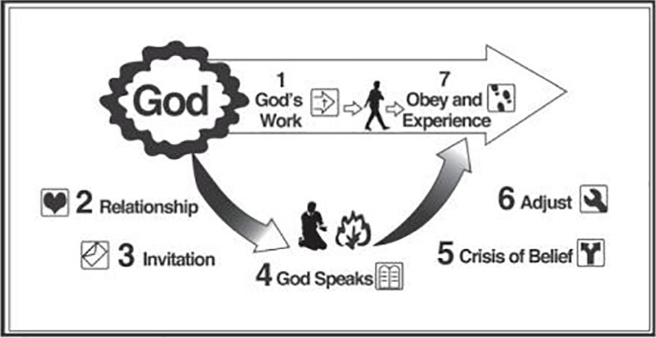
- Experiencing God: Knowing and Doing the Will of God
- How to Really Know The Will of God - Well done book by Richard Strauss
- How Can I Know What God Wants Me to Do? - 33 page booklet
- Will of God by Phillip Towner - Baker's Evangelical Dictionary of Biblical Theology
- Romans 15:17-33 Living in the Will of God (1) - Ron Teed
- Romans 15:30-33 Living Within the Will of God (2) - Ron Teed
- How can I be sure I am praying according to the will of God? | GotQuestions.org
- How can I know God’s will for my life? What does the Bible say about knowing God’s will? | GotQuestions.org
- How can we recognize the voice of God? | GotQuestions.org
- Does God have a plan for me? | GotQuestions.org
- How can I find my spiritual calling? | GotQuestions.org
- How can I get to know God better? | GotQuestions.org
- What is the difference between God’s sovereign will and God’s perfect will? | GotQuestions.org
- Taking the Mystery Out of Knowing God's Will - John MacArthur
- Knowing God's Will - John MacArthur
- How to Know the Will of God - John MacArthur
- God's Will Is Not Secret - John MacArthur
- Being Filled with the Knowledge of God's Will - John MacArthur
Ephesians 5:18 And do not get drunk with wine, for that is dissipation, but be filled with the Spirit, (NASB: Lockman)
Greek: kai me methuskesthe (2PPPM) oino, en o estin (3SPAI) asotia, alla plerousthe (2PPPM) en pneumati,
BGT καὶ μὴ μεθύσκεσθε οἴνῳ, ἐν ᾧ ἐστιν ἀσωτία, ἀλλὰ πληροῦσθε ἐν πνεύματι,
Amplified: And do not get drunk with wine, for that is debauchery; but ever be filled and stimulated with the [Holy] Spirit. (Amplified Bible - Lockman)
BBE And do not take overmuch wine by which one may be overcome, but be full of the Spirit;
CSB And don't get drunk with wine, which leads to reckless actions, but be filled by the Spirit:
ESV And do not get drunk with wine, for that is debauchery, but be filled with the Spirit,
GWN Don't get drunk on wine, which leads to wild living. Instead, be filled with the Spirit?
NET And do not get drunk with wine, which is debauchery, but be filled by the Spirit,
NIV Do not get drunk on wine, which leads to debauchery. Instead, be filled with the Spirit.
NKJ And do not be drunk with wine, in which is dissipation; but be filled with the Spirit,
KJV And be not drunk with wine, wherein is excess; but be filled with the Spirit;
NRS Do not get drunk with wine, for that is debauchery; but be filled with the Spirit,
NAB And do not get drunk on wine, in which lies debauchery, but be filled with the Spirit,
NJB Do not get drunk with wine; this is simply dissipation; be filled with the Spirit.
NLT (revised) Don't be drunk with wine, because that will ruin your life. Instead, be filled with the Holy Spirit,
NLT: Don't be drunk with wine, because that will ruin your life. Instead, let the Holy Spirit fill and control you. (NLT - Tyndale House)
Phillips: Don't get your stimulus from wine (for there is always the danger of excessive drinking), but let the Spirit stimulate your souls. (Phillips: Touchstone)
Lawrence Richards "Don't live under the influence of alcohol but under the influence of the Spirit." (Bible Reader's Companion)
Wuest: And stop being intoxicated with wine, in which state of intoxication there is profligacy. But be constantly controlled by the Spirit, (Eerdmans Publishing - used by permission)
Young's Literal: and be not drunk with wine, in which is dissoluteness, but be filled in the Spirit,
THE MOST IMPORTANT
VERSE IN THE NEW TESTAMENT!
BACKGROUND COMMENTS ON EPHESIANS 5:18 -
Charles Swindoll - I don’t know of a more important verse in the New Testament for the Christian than Ephesians 5:18—honest, no exaggeration. This verse tells the believer how to live an authentic, empowered life: “And do not get drunk with wine, for that is dissipation, but be filled with the Spirit.” It begins with a negative command: “Don’t get drunk with wine, for that is dissipation” (which means excess, existing hopelessly out of control). When you’re drunk with alcohol, you lose control. You also lose self-respect and the respect of others. “Don’t get drunk.” A positive command follows: “But be filled with the Spirit.”...This is a command, not a suggestion. It’s an urgent imperative, not a casual option...“Be filled” is a command, which means I play a part in it. For example, I cannot be filled with the Spirit while I have unconfessed sin within me. I cannot be filled with the Spirit while at the same time conducting my life in the energy of the flesh. I cannot be filled with the Spirit while I am resisting God’s will and relying only on myself. I need to be sure that I have taken care of the sins that have emerged in my life, that I have not ignored the wrong that I have done before God and to others. I need to walk in conscious dependence on the Lord on a daily basis. Many a morning I begin my day by sitting on the side of the bed, saying:
This is your day, Lord. I want to be at Your disposal. I have no idea what these next twenty-four hours will contain. But before I sip my first cup of coffee, and even before I get dressed, I want You to know that from this moment on throughout this day, I’m Yours, Lord. Help me to lean on You, to draw strength from You, and to have You fill my mind and my thoughts. Take control of my senses so that I am literally filled with Your presence and empowered with Your energy. I want to be Your tool, Your vessel today. I can’t make it happen. And so I’m saying, Lord, fill me with Your Spirit today.
I challenge you to begin every day with a similar prayer. “Lord, today, enable me to live out the authentic Christian life for Your glory.” Customize it with your own details depending on what may be the needs of that particular day. (See Embraced by the Spirit: The Untold Blessings of Intimacy)
Ray Stedman affirms that being filled with the Spirit is "the great secret of real Christianity....I am sure all of you know that when you became a Christian, when you believed in Jesus Christ and received him as your Lord, the Holy Spirit came to live in you. You have the Spirit, but the interesting paradox is that, though all Christians have the Holy Spirit, we constantly need to be filled with the Holy Spirit. The filling of the Holy Spirit is the momentary taking from him of the resources you need for the situation in which you are. It has nothing to do with an experience, or a feeling or a crisis; it is a quiet drinking again and again of an inner supply of strength." (Watch how you Walk)
Ray Pritchard wrote that "the filling of the Spirit is the most important doctrine of the spiritual life. It is foundational to everything else. There is nothing we need more. Here is my definition of the filling of the Spirit: It is that state in which the Holy Spirit is free to do all that He came into my life to do. In a sense being filled with the Spirit is an impossibility-at least as far as it depends on us. Only God's Spirit can fill us. We need two things-emptiness and openness. You can't fill a jar that's already full, and you can't fill a jar that is not open. There must be a sense of need-"Lord, I'm empty and I need to be filled by Your Spirit." There must be a willingness-"Lord, I'm open to You..." The filling of the Spirit is really as simple as that. As long as we are conscious of our need and as long as we are willing to yield to the Lord, we can be filled with the Lord all day long. His power is available to us all day long. (ED: DO YOU BELIEVE THAT IS POSSIBLE? I TRULY BELIEVE THAT IS GOD'S WILL FOR EVERY ONE OF HIS CHILDREN -- TO BE SPIRIT FILLED, ALL THE DAY LONG!) (Ephesians 5:18: Filled with the Holy Spirit?)
Ray Pritchard - How can I be filled with the Holy Spirit? I believe this is one of the most important principles of the Spiritual life. Learn this and you will discover a source of supernatural power that can help you every single day. (See Ephesians 5:18 How Can I be Filled With the Holy Spirit?)
Norman W Brown - Through the years, very few Bible doctrines have been subject to more misconception than that of the study of the Holy Spirit. There has arisen much confusion regarding the place of “tongues” and other charismatic gifts in the church. Even more basic, however, are the questions regarding the Holy Spirit’s work in filling the believer. It is unfortunate that this particular ministry of the Holy Spirit is so widely misunderstood, for His filling is the very center of the entire theme of the spiritual life. There is no doctrine relating to the Holy Spirit which is more vital, or of more practical value to the Christian, than this subject, the filling of the Spirit. (The Filling of the Holy Spirit in the Book of Acts).
John MacArthur echoes the importance of this doctrine writing that 'If we do not obey this command, we cannot obey any other—simply because we cannot do any of God’s will apart from God’s Spirit. Outside of the command for unbelievers to trust in Christ for salvation, there is no more practical and necessary command in Scripture than the one for believers to be filled with the Spirit. (See The MacArthur New Testament Commentary ) (Bolding added)
Comment: The implication of MacArthur's statement is that every time we encounter an imperative in the New Testament, in a sense we are confronted with our desperate need for the Holy Spirit's enabling power to carry out that commandment! There are more than 1500 commands (imperatives) in the New Testament, so we will have many opportunities to learn to depend on the Spirit's filling and empowering! How are you doing with this ongoing "exercise?" E.g., men, Paul commands "Husbands, love (present imperative, active voice) your wives!" (Eph 5:25) Try to do that in your own, innate, natural power! You simply cannot do it! (I speak from much experience! ...and many failures!) If Paul's command were not enough to convince us of our constant need for the Spirit's filling, he adds "just as Christ also loved the church and gave Himself up for her!" And so clearly Paul calls us to... Die to self. Depend on the Spirit.
And for the ladies (wives) Paul issues an equally difficult command "Wives, be subject (present passive imperative - continually be willing to be subject) to your husbands, as is fitting in the Lord." (Col 3:18).
It is worth emphasizing that all of the commands (and behaviors) Paul calls saints to practice in Ephesians 5:19 through Ephesians 6:19 are in the CONTEXT of being filled with the Spirit: worship, marriage, family, children, employees, spiritual warfare, praying -- all call for continual dependence on the Spirit of God for successful completion! To try to carry out any of the NT commands in our own strength leads to sure failure and frustration.
AND DO NOT GET DRUNK WITH WINE FOR THAT IS DISSIPATION: kai me methuskesthe (2PPPM) oino en o estin (3SPAI) asotia
- And do not get drunk with wine Ge 9:21; Ge 19:32-35; Dt 21:20; Ps 69:12; Pr 20:1; Pr 23:20,21,29-35; Isa 5:11-13, 22; Mt 24:49; Lk 12:45; Lk 21:34; Ro 13:13; 1Co 5:11; 1Co 6:10; 1Co 11:21; Gal 5:21; 1Th 5:7
- For that is dissipation - Mt 23:25; 1Pe 4:3-4
- Ephesians 5 Resources - Multiple Sermons and Commentaries
- Ephesians 5:18-21 - Wayne Barber
- Ephesians 5:18: Be Filled with the Spirit - 1 - Wayne Barber
- Ephesians 5:18-21: Be Filled with the Spirit - 2 - Wayne Barber
- Ephesians 5:15-21 Walking Carefully in an Evil Day - Steven Cole
- Ephesians 5:18 The Spirit Filled Life - Steven Cole
- Ephesians 5:19 Spirit Filled Singing - Steven Cole
- Ephesians 5:15-17 Walking Wisely - Steven Cole
- Ephesians 5:18: Be Not Drunk with Wine-1- John MacArthur
- Ephesians 5:18: Be Not Drunk with Wine-2- John MacArthur
- Ephesians 5:18: Be Not Drunk with Wine-3- John MacArthur
- Ephesians 5:18: Be Filled with the Spirit-1- John MacArthur
- Ephesians 5:18-19: Be Filled with the Spirit-2- John MacArthur
- https://www.gty.org/sermons/series/72/living-in-the-spirit

Dionysus extending a drinking cup
DON'T LIVE A
WASTED LIFE
Another title might for this section might be "The Way to Waste Your Life."
And do not get drunk (methusko) with wine (oinos) , for that is dissipation (asotia) (Amp, ESV, NET - "debauchery," CSB - "reckless actions," GWN - "wild living,") - NLT paraphrases it "Don't be drunk with wine, because that will ruin your life." So first the negative command, a present imperative calling for them to stop an action already in progress or not to start this practice. A T Robertson adds it is "Forbidden as a habit and to stop it also if guilty."
Do not miss the and a Greek connective that clearly links this important passage with the preceding verses (our daily conduct Ep 5:15, our redemption of opportunities God presents = Ep 5:16, the will of God = Ep 5:17). The obvious implication is that being continually filled with the Spirit is intimately related to the will of God and also to making the most of one's time in our daily conduct during our short stay on earth. Paul explains ("for that...") the danger of distilled spirits is dissipation debauchery and it will ruin your life.
1828 Webster's defines Dissipation as "The act of scattering; dispersion; the state of being dispersed. Scattered attention; or that which diverts and calls off the mind from any subject. A dissolute, irregular course of life; a wandering from object to object in pursuit of pleasure; a course of life usually attended with careless and exorbitant expenditures of money, and indulgence in vices, which impair or ruin both health and fortune."
Lloyd-Jones - Drink is not a stimulus, it is a depressant. It depresses first and foremost the highest centers of all in the brain. They are the very first to be influenced and affected by drink. They control everything that gives a man self-control, wisdom, understanding, discrimination, judgment, balance, the power to assess everything; in other words everything that makes a man behave at his very best and highest. The better a man’s control, the better man he is.… But drink is something which immediately gets rid of control; that indeed is the first thing it does. (Ephesians 5:18 - Stimulus of the Spirit - no Mp3 available for this sermon)
Albert Barnes on drunk with wine - A danger to which they were exposed, and a vice to which those around them were much addicted. Luke 21:34. It is not improbable that in this verse there is an allusion to the orgies of Bacchus, or to the festivals celebrated in honour of that heathen god. He was "the god of wine," and, during those festivals, men and women regarded it as an acceptable act of worship to become intoxicated, and with wild songs and cries to run through streets, and fields, and vineyards. To these things the apostle opposes psalms, and hymns, and spiritual songs, as much more appropriate modes of devotion, and would have the Christian worship stand out in strong contrast with the wild and dissolute habits of the heathen. Plato says, that while those abominable ceremonies in the worship of Bacchus continued, it was difficult to find in all Attica a single sober man!
William Barclay writes that Paul "goes on to draw a contrast between a pagan gathering and a Christian gathering. The pagan gathering is apt to be a debauch. It is significant that we still use the word symposium for a discussion of a subject by a number of people; the Greek word sumposion literally means a drinking-party. Once A. C. Welch was preaching on this text: "Be filled with the Spirit." He began with one sudden sentence: "You've got to fill a man with something." The heathen found his happiness in filling himself with wine and with worldly pleasures; the Christian found his happiness in being filled with the Spirit. (Ephesians 5 Commentary)
Bible Background Commentary has an interesting note on "control" under the influence of the "god of wine" writing that "Many people in the ancient world believed that drunkenness could produce a sort of inspiration or possession by Dionysus, god of wine. Dionysus’s most active worshipers yielded control of themselves to him and performed sexual acts or acts full of sexual symbolism (often to the distaste of conservative Romans). Here Paul may contrast this behavior with inspiration by God’s Spirit. People did not think of Dionysus every time someone became drunk, however; drunkenness was more commonly associated simply with loss of self-control. It was standard practice in both the late-night banquets of the rich and the taverns of the poor. (The IVP Bible Background Commentary)
Wikipedia - In Rome, the most well-known festivals of Bacchus were the Bacchanalia, based on the earlier Greek Dionysia festivals. These Bacchic rituals were said to have included omophagic practices, such as pulling live animals apart and eating the whole of them raw. This practice served not only as a reenactment of the infant death and rebirth of Bacchus, but also as a means by which Bacchic practitioners produced "enthusiasm": etymologically, to let a god enter the practitioner's body or to have her become one with Bacchus.[158][159] (ED: THIS IS THE COUNTERFEIT - NOW THINK ABOUT THE TRUE ONENESS GOD DESIRES FOR HIS CHILDREN TO EXPERIENCE WITH THE SPIRIT OF CHRIST!) In Livy's account, the Bacchic mysteries were a novelty at Rome; originally restricted to women and held only three times a year, they were corrupted by an Etruscan-Greek version, and thereafter drunken, disinhibited men and women of all ages and social classes cavorted in a sexual free-for-all five times a month.
Moule writes "And do not intoxicate yourselves with wine, in which, as if lying hidden in that dangerous vehicle, is riot, "dissoluteness" (asotia), the miserable license which bursts the bonds of conscience with dreadful ease, and breaks up the whole moral order. (Ephesian Studies: Expository Readings) (Bolding added)
Lord, speak to me, that I may speak
--Frances Ridley Havergal (1836–79)O fill me with Thy fullness, Lord:
Until my very heart o’erflow
In kindling thought and glowing word,
Thy love to tell, Thy praise to show.O use me, Lord, use even me
Just as Thou wilt, and when, and where
Until Thy blessed face I see,
Thy rest, Thy joy, Thy glory share.Oh fill me now with Your life, Lord,
Flood my whole being with rivers divine.
I open wide; what enjoyment!
To live Your life, dear Lord, as mine.
Drunk (3182) (methusko from methuo = drink to intoxication) means to have one's faculties impaired (as by alcohol) or become intoxicated. Both wine and the Spirit do their work deep in the human psyche. They effect people below the level of consciousness, down at the foundations of personality. The Spirit is not merely with God's people but in them. Drunk is a word that is often used figuratively in English, for example describing a person drunk with rage, etc. Think of it this way - what fills a person a person controls a person. If I am filled with anger, envy, hatred, etc, those emotions will control my actions and interactions with others.
The person drunk with wine loses self-control, but the one "drunk" with the Spirit gives the believer self-control! (cf Gal 5:23)
Vincent writes that...In the Septuagint the verb (methusko) repeatedly occurs for watering (Ps 65:9, 10), but always with the sense of drenching or soaking; of being drunken or surfeited with water. In Jer. 48 (Sept. 31) 26, it is found in the literal sense, to be drunken. The metaphorical use of the word has passed into common slang, as when a drunken man is said to be wetted or soaked (so Plato, above). The figurative use of the word in the Septuagint has a parallel in the use of potizo, to give to drink, to express the watering of ground. So Ge. 2:6, a mist watered the face of the earth, or gave it drink. Compare Ge 13:10; Dt. 11:10. A curious use of the word occurs in Homer, where he is describing the stretching of a bull’s hide, which, in order to make it more elastic, is soaked (methuousan) with fat (“Iliad,” xvii., 390). (Vincent, M. R. Word Studies in the New Testament 2:82)
Wuest has an interesting comment on methusko writing that "A curious use of the word occurs in Homer, where he is describing the stretching of a bull’s hide, which in order to make it more elastic, is soaked (methusko) with fat.” (Wuest's Word Studies from the Greek New Testament: Eerdmans) The word, therefore, refers to the condition of a person in which he is soaked with wine."
Here are the 5 in the NT...
Luke 12:45 "But if that slave says in his heart, 'My master will be a long time in coming,' and begins to beat the slaves, both men and women, and to eat and drink and get drunk;
John 2:10 and said to him, "Every man serves the good wine first, and when men have drunk freely, then that which is poorer; you have kept the good wine until now."
Ephesians 5:18 And do not get drunk with wine, for that is dissipation, but be filled with the Spirit,
1 Thessalonians 5:7 () For those who sleep do their sleeping at night, and those who get drunk get drunk at night.
Revelation 17:2 () with whom the kings of the earth committed acts of immorality, and those who dwell on the earth were made drunk with the wine of her immorality."
Methusko - 30x in the non-apocryphal Septuagint (LXX) - Ge 9:21; Ge 43:34; Deut. 32:42; 1Sa 1:14; 2Sa 11:13; Ps. 23:5; Ps 36:8; Ps 65:9, 10; Pr 4:17; Pr 23:31; Song 5:1; Is 7:20; Is 34:5, 7; Is 49:26; Is 55:10; Je 25:27; Je 31:13, 25; Je 46:10; Je 48:26; Je 51:7, 39, 57; La 3:15; La 4:21; Ho 14:7; Nah 3:11; Hab 2:15.
Emptied that Thou shouldest fill me,
A clean vessel in Thine hand;
With no strength but as Thou givest
Graciously with each command.Witnessing Thy grace to save me,
Setting free from self and sin;
Thou hast bought me to possess me,
In Thy fulness, Lord, come in.O Lord, fill now with Thy Spirit
Hearts that full surrender know;
That the streams of living water
From our inner man may flow.
Wine (3631) (oinos) is the fermented drink common in the Ancient near east. The wine most commonly drunk in Paul’s day was either nonalcoholic or had very low alcohol content. Fermented juice was mixed with water (as much as 8 or 10 parts water to 1 part wine) to lessen its power to intoxicate, particularly when the weather was hot and much fluid was consumed. Because water was frequently contaminated, as in many third world countries, the slight alcohol content of common wine acted as a disinfectant and had certain other health benefits. (Dictionary Article on wine)
Wine - Nave's Topical Bible
- Made from grapes, Gen. 40:11; Gen 49:11; Isa. 25:6; Jer. 40:10, 12; from pomegranates, Song 8:2.
- Kept in jars, Jer. 13:12; Jer 48:12; in skins, Josh. 9:4, 13; Job 32:19; Matt. 9:17; Luke 5:37, 38; in bottles, Josh. 9:4, 13; Job 32:19; Jer. 13:12; Jer 48:12; Matt. 9:17; Luke 5:37, 38.
- Cellars for, 1 Chr. 27:27.
- New, Hag. 1:11.
- Old, Luke 5:39.
- Medicinal use of, Prov. 31:6, 7; recommended by Paul to Timothy, 1 Tim. 5:23.
- Used at meals, Matt. 26:27-29; Mark 14:23.
- Made by Jesus at the marriage feast in Cana, John 2:9, 10.
- Ceremonial use of, Matt. 26:27, 28, 29; Luke 22:17, 18, 19, 20.
- Forbidden to priests while on duty, Lev. 10:9; Ezek. 44:21; to Nazirites, Nu 6:2, 3;
- Abstinence from, of Daniel, Da. 1:5, 8, 16; Da 10:3; of courtiers of Ahasuerus, Est 1:8; 1Ti 5:23.
- Samson's mother forbidden to drink, Jdg. 13:4, 5.
- Forbidden to kings, Pr 31:4.
- Denied to the Israelites in the wilderness, that they might know that the Lord was their God, Dt 29:6.
- Offered with sacrifices, Ex. 29:40; Lev. 23:13; Num. 15:5, 10; Num 28:7, 14.
- Given by Melchizedek to Abraham, Gen. 14:18.
- Fermented, Lev. 10:9; Num. 6:3; Num 28:7; Deut. 14:26; Deut 29:6; Prov. 23:31, 32; Mark 2:22.
- Refined, Isa. 25:6; Jer. 48:11.
- Of staggering, Psa. 60:3.
- Inflames the eyes, Gen. 49:12.
- Commerce in, Rev. 18:13.
- Banquets of, Esth. 5:6.
- Given to Jesus at the crucifixion, Matt. 27:48; Mark 15:23; Luke 23:36; John 19:29.
- Intoxication from the use of, Psa. 104:15; Prov. 4:17.
Instances of Intoxication from
- Noah, Ge 9:21; Lot, Ge 19:32; Joseph Ge 43:34; Nabal 1Sa. 25:36; Amnon, 2Sa 13:28, 29; Ahasuerus, Est 1:10; kings of Israel, Hos 7:5; falsely charged against the disciples, Acts 2:13.
Figurative
- Of the divine judgments, Psa. 60:3; Psa 75:8; Jer. 51:7.
- Of the joy of wisdom, Prov. 9:2, 5.
- Of the joys of religion, Isa. 25:6; Isa 55:1; Joel 2:19.
- Of abominations, Rev. 14:8; Rev 16:19.
Symbolic
- Of the blood of Jesus, Matt. 26:28; Mark 14:23, 24; Luke 22:20; John 6:53-56.
Unclassified Scriptures Relating to
- Deut. 14:26; Deut. 33:28; 2 Kin. 18:32; 2 Chr. 32:28; Neh. 10:39; Psa. 4:7; Psa. 104:14, 15; Prov. 31:6, 7; Eccl. 2:3, 11; Isa. 56:12; Hos. 2:8, 22; Hos. 7:14; Joel 1:5; Joel 2:24; Joel 3:3; Amos 6:6; Hab. 2:5; Hag. 1:11; Zech. 9:17; Zech. 10:7; 1 Tim. 5:23
Admonitions Against the Use of
- Lev. 10:9; Num. 6:3; Jdg. 13:4; Prov. 20:1; Prov. 21:17; Prov. 23:29-32; Prov. 31:4, 5; Isa. 5:11, 22; Isa. 24:9; Isa. 28:1, 3, 7; Jer. 23:9; Jer. 35:2-10, 14, 18, 19; Ezek. 44:21; Hos. 4:11; Luke 1:15; Rom. 14:21; Eph. 5:18; Titus 2:3
Dissipation (810) (asotia related to ásotos which in turn is derived from a = negative + sozo = save which describes something devoid of saving quality) literally means that which cannot be saved. Strictly speaking asotia refers to the disposition of an ásotos or prodigal. It is the picture of having no hope of safety, then describing the act of one who has abandoned himself to such reckless behavior. Asotia conveys the idea of waste that is irretrievable.
There are only 3 uses in the NT - Ep 5:18; Titus 1:6; 1Pe 4:4
(Titus 1:6) namely, if any man is above reproach, the husband of one wife, having children who believe, not accused of dissipation or rebellion.
Beet describes this as "a reckless waste of money and of life itself. A typical example is the prodigal son, touching whom a cognate word is used in Lk 15:13, living dissolutely. Paul says that in drunkenness is reckless waste of all we have and are. (Ephesians 5 Commentary)
Luke uses the related word ásotos in his description of the prodigal son writing...
And not many days later, the younger son gathered everything together and went on a journey into a distant country, and there he squandered his estate with loose (ásotos) living." (Luke 15:13)
Comment: More literally this reads "living in a wild, abandoned manner and so living recklessly, riotously, loosely"
Asotia is one who cannot save and thus is one who extravagantly squanders his means. Then it chiefly denoted a dissolute, debauched, profligate manner of living. Vincent adds that asotia is literally "unsavingness" and describes the "the prodigal son who lived unsavingly [asotia]." The excesses and flagrant, senseless activities connected with the religious celebrations of Dionysus were well-known in the ancient world. The worshipers felt that they were united, indwelt and controlled by Dionysus who gave them special powers and abilities. As discussed below under "be filled", the idea in that command is to be continually controlled by the indwelling Spirit of God, this picture standing in stark contrast to the worshipers of Dionysus! Asotia is variously translated as profligacy (state of being completely given up to dissipation and licentiousness), reckless abandon, debauchery (extreme indulgence in sensuality), riotous living, wild, excess, extravagant squandering, dissoluteness, prodigality (quality of being recklessly extravagant with wasteful lavishness threatening to lead to early exhaustion of resources). Asotia describes behavior which shows lack of concern or thought for the consequences of an action as seen with senseless or reckless deeds. Asotia is the characteristic of an abandoned man, denoting a dissolute life and carries the idea even of rioting (as translated in the KJV) and was commonly used to describe drunken revelry at pagan festivals. Asotia portrays the utter recklessness in expenditure on part of those who have lost self-control (or never had it).
In the use in 1 Peter 4:4, Peter gives us a good sense of the meaning of asotia (read the context), writing to the saints experiencing various trials that
"the time already past is sufficient for you to have carried out the desire of the Gentiles, having pursued a course of sensuality, lusts, drunkenness, carousals, drinking parties and abominable idolatries. And in all this, they are surprised that you do not run with them into the same excess of dissipation (asotia), and they malign you; but they shall give account to Him who is ready to judge the living and the dead." (1 Pet 4:3-6).
An ásotos or prodigal is one who spends too much, who slides easily under the fatal influence of flatterers and the temptations with which he has surrounded himself into spending freely on his own lusts and appetites. Asotia describes the child who wastes money with the implication of wasting it on pleasures and thus ruining himself or herself.
The Septuagint (LXX) uses asotia one time in the following verse (Brenton's English translation)
A wise son keeps the law: but he that keeps up debauchery (asotia) dishonors his father. (Pr 28:7)
The NAS translates Pr 28:7
He who keeps the law is a discerning son, but he who is a companion of gluttons humiliates his father.
Eadie - The term asotos, from a privative and sozo, is the picture of a sad and very common result. It is sometimes used by the classics to signify one who is, as we say, “past redemption”...The adverb asotos is used of the conduct of the prodigal son in the far country in Lk 15:13. See Titus 1:6; 1Pe 4:4; Sept. Pr 28:7 (Ephesians 5 Commentary)
Barclay - The man who is ásotos is incapable of saving (Ed note: this does not mean God can't save him because He can); he is wasteful and extravagant and pours out his substance on personal pleasure; he destroys his substance and in the end ruins himself. One who is ásotos is the old English scatterling, the Scots ne’er-do-well , the modern waster . Aristotle who always described a virtue as the mean between two extremes, declares that on the one hand there is stinginess, on the other there is asotia , reckless and selfish extravagance, and the relevant virtue is liberality. The household of the elder must never be guilty of the bad example of reckless spending on personal pleasure. (Ephesians 5 Commentary)
Asotia carries ideas of prodigality, profligacy, and even of rioting (KJV). It was commonly used of drunken revelry at pagan festivals. Additional ideas inherent in asotia include wasteful expenditure, intemperate living, especially excessive drinking and acts of self-indulgence.
Aristotle who always described a virtue as the mean between two extremes, declares that on the one hand there is stinginess, on the other there is asotia, reckless and selfish extravagance, and the relevant virtue is liberality.
Charles Hodge writes that to get drunk with wine...is an example of folly, a lack of sense, especially inconsistent with the intelligence of the true believer. The person who has correct discernment will not seek refreshment or excitement from wine but from the Holy Spirit. Therefore, the apostle adds, instead, be filled with the Spirit. In drunkenness, he says, there is debauchery—“revelry,” “riot,” whatever tends to destruction. The word is derived from a word which means “what cannot be saved,” one given up to a destructive course of life. (Ephesians 5 Commentary)
John Eadie writes that...
There is in the vice of intemperance that kind of dissoluteness which brooks no restraint, which defies all efforts to reform it, and which sinks lower and lower into hopeless and helpless ruin. It is erroneous, therefore, on the part of Schoettgen, to restrict the term to lasciviousness...The connection between the two vices is notorious; but libidinous indulgence is only one element of the asotia. This tremendous sin of intemperance is all the more to be shunned as its hold is so great on its victims, for with periodical remorse there is periodical inebriety; the fatal cup is again coveted and drained; while character, fortune, and life are risked and lost in the gratification of an appetite of all others the most brutal in form and brutifying in result. There are few vices out of which there is less hope of recovery—its haunts are so numerous and its hold is so tremendous. (Ephesians 5:17-18 Commentary)
As Ephesus was a commercial town and busy seaport, its wealth led to excessive luxury, and Bacchus (See Bacchus the Roman god of wine & intoxication = Dionysus = Greek god) was the rival of Diana. The women of Ephesus, as the priestesses of Bacchus, danced round Mark Antony's chariot on his entrance into the city. Drunkenness was indeed an epidemic in those times and lands.
Alexander the Great, who died a sacrifice to Bacchus and not to Mars, offered a prize to him who could drink most wine, and thirty of the rivals died in the act of competition!
Plato boasts of the immense quantities of liquor which Socrates could swill uninjured; and the philosopher Xenocrates got a golden crown from Dionysius for swallowing a gallon at a draught.
Cato often lost his senses over his choice Falernian. The “excess” or dissoluteness attendant on drunkenness and the other vices referred to in the previous context, is also illustrated by many passages in the Miles Gloriosus of Plautus, the Latin version of an older Greek drama. The “braggart captain,” a citizen of Ephesus, is described in the prologue by his own servant as “a vain, impudent, foul fellow, brimful of lying and lasciviousness.” Another character of the piece thus boasts—“Either the merry banterer likewise, or the agreeable boon companion will I be; no interrupter of another am I at a feast. I bear in mind how properly to keep myself from proving disagreeable to my fellow-guest,” etc. . . . “In fine, at Ephesus was I born, not among the Apulians, not at Animula”—(there being in this last term a difference of reading). (Ephesians 5 Commentary)
BUT BE FILLED WITH THE SPIRIT: alla plerousthe (2PPPM) en pneumati,:
- but be filled with the Spirit, Ps 63:3-5; Song 1:4; Song 7:9; Isa 25:6; Isa 55:1; Zech 9:15-17; Lk 11:13; Acts 2:13-18; Acts 11:24; Gal 5:22-25
- Ephesians 5 Resources - Multiple Sermons and Commentaries
- Ephesians 5:18-21 - Wayne Barber
- Ephesians 5:18: Be Filled with the Spirit - 1 - Wayne Barber
- Ephesians 5:18-21: Be Filled with the Spirit - 2 - Wayne Barber
- Ephesians 5:15-21 Walking Carefully in an Evil Day - Steven Cole
- Ephesians 5:18 The Spirit Filled Life - Steven Cole
- Ephesians 5:19 Spirit Filled Singing - Steven Cole
- Ephesians 5:15-17 Walking Wisely - Steven Cole
- Ephesians 5:18: Be Not Drunk with Wine-1- John MacArthur
- Ephesians 5:18: Be Not Drunk with Wine-2- John MacArthur
- Ephesians 5:18: Be Not Drunk with Wine-3- John MacArthur
- Ephesians 5:18: Be Filled with the Spirit-1- John MacArthur
- Ephesians 5:18-19: Be Filled with the Spirit-2- John MacArthur
- https://www.gty.org/sermons/series/72/living-in-the-spirit
Related Passages:
John 4:10-14 Jesus answered and said to her, “If you knew the gift of God, and who it is who says to you, ‘Give Me a drink,’ you would have asked Him, and He would have given you living water.” 11 She *said to Him, “Sir, You have nothing to draw with and the well is deep; where then do You get that living water? 12 “You are not greater than our father Jacob, are You, who gave us the well, and drank of it himself and his sons and his cattle?” 13 Jesus answered and said to her, “Everyone who drinks of this water will thirst again; 14 but whoever drinks of the water that I will give him shall never thirst; but the water that I will give him will become in him a well of water springing up to eternal life.” (Read Ray Stedman's comments on this verse in Watch how you Walk)
John 7:37-39 Now on the last day, the great day of the feast, Jesus stood and cried out, saying, “If anyone is thirsty, let him come to Me and drink. 38 “He who believes in Me, as the Scripture said, ‘From his innermost being will flow rivers of living water.’” 39 But this He spoke of the Spirit, whom those who believed in Him were to receive; for the Spirit was not yet given, because Jesus was not yet glorified.

COMMAND TO BE CONTINUALLY
CONTROLLED BY THE SPIRIT
But be filled with the Spirit - But (alla) is a term of contrast which always marks an "about face," a 180 degree turn in the text, in this case signaling an abrupt turn from the state of intoxication with wine (the wrong kind of spirits), and to in a sense allow yourself to be "intoxicated" with the Spirit. Drunken people and Spirit-filled people have one thing in common -- they are both controlled people. Their lives and their behavior are radically changed by that which fills them. Paul is saying cast off the foul garments of the old man, stop living under the controlling influence of alcohol, but instead be continually living under the controlling influence of the Holy Spirit. How important it is for us to "drink" deeply of Him (cf Jn 7:37-39), continually yielding to Him, and continually allowing Him guide our steps (Gal 5:18, Ro 8:14).
Why should the children of a King
Go mourning all their days?
Great Comforter, descend, and bring
Some tokens of Thy grace.
--Isaac Watts
Wayne Barber asks "How do I live wisely in a dark, hostile world? I am constantly saying to the Lord, "Yes, Lord, whatever it is." By saying "yes" to Him, I am saying "no" to my flesh. I am being controlled moment by moment by moment. I am constantly aware of His presence in my life, moment by moment by moment, practicing the presence of Christ as I am willing to yield to whatever His will is in my life. .... As we yield to the Holy Spirit of God Who resides in our spirit, as we surrender to Him, as we allow Him to control us, we experience the fullness of all that He has given us in Christ Jesus....We are never to grieve the Spirit. We are to continually be under the control of the Holy Spirit of God. When you and I are willing to do that, we start tapping into that which is ours in Christ Jesus. Then comes the fullness of God (Ed: He is referring specifically to Paul's prayer for fullness of God in Eph 3:19). The degree of my surrender determines the degree of my realization of the fullness that He offers. (Ephesians 3:14-17)
If you would be full of the Spirit,
be full of the Word.
-- Andrew Murray
Adrian Rogers - Not only must the Holy Spirit of God be in me as Resident, but He needs to be in me as President. He comes not only to abide, but to preside in us. The Holy Spirit Who is dormant needs to become dominant; and the Holy Spirit Who is present needs to become preeminent. We need to be filled with the Spirit, aware and awake.I need to yield, my human spirit: my body, my mind, my will, I need to yield to the Holy Spirit so that He can express the life of Christ through me. It's not like filling a bottle with a substance, but it is more like turning the keys of a house over to a person. That's what the Bible means when it says, "be filled with the Spirit" (Ephesians 5:18). It's talking about subjection to the Spirit, and very much in the way that a person is subjected to the evil spirit of alcohol. Did you know that alcohol is the devil in liquid. Now, we are to be in subjection to the Spirit. Do you know what's wrong with most of us? We want the Holy Spirit to be in subjection to us. And, that's the reason that 99% of Christians are not serious. 99% of Christians, if you'd ask them, "Do you want to be filled with the Spirit?" they'd say, "Yes." But, do you know what they have in mind? "Oh, I'm going to get a new power I can use." And, that's exactly why they're not filled with the Spirit. They want to bring the Holy Spirit in subjection to them.
John Phillips has an interesting analysis - The Holy Spirit draws a deliberate parallel—one we would not dare to draw had He not drawn it for us first—between a man filled with wine and a man filled with the Holy Spirit. Since He has given us the illustration, we can examine it closely and see what it implies. Most of us have seen an intoxicated person. First he deliberately chooses to drink intoxicating spirits. Then he drinks more and more until he is drunk. At this point his behavior changes. I have known men who were timid when they were sober, but who became belligerent and pugnacious when they were drunk; men who were hard as nails when sober, but sentimental and tearful when drunk; men who were congenial and friendly when sober, but morose and surly when drunk. I have seen drink turn a moral man into an immoral man and make a filthy-minded man sing hymns learned at his mother’s knee or argue about religion. Drink turns a man into another kind of person. It distorts his conduct and degrades his conversation. Drink temporarily transforms a person’s personality, but there is no such thing as permanent intoxication. The man who is drunk on Saturday night is sober on Sunday morning. If he wants to remain intoxicated, he needs another filling. Of course over the long run, drunkenness deteriorates and destroys a person’s character. Being intoxicated illustrates—in reverse—being filled with the Spirit. To be filled with the Holy Spirit is a deliberate choice. In Ephesians 5:18 Paul said, “Be filled.” Most of the Holy Spirit’s ministries to believers are once-for-all, sovereign acts of God. The indwelling, the baptism, the sealing, the earnest, and the gift of the Spirit are in no way dependent on us. They are wrought in us by the Holy Spirit at the time of our conversion; they are irreversible and irrevocable. The filling of the Holy Spirit, however, is different. It is conditional because it depends on our cooperation with the indwelling Spirit of God. When a Christian is filled with the Spirit, he is transformed into another kind of person. He exhibits the loveliness of Christ and the fruits of the Spirit. It is evident in his walk and in his talk that something has happened. People take knowledge of him that he has been with Jesus. The Holy Spirit’s filling is not permanent. Paul used the present continuous tense: “Be ye being filled with the Spirit.” A person can be filled with the Holy Spirit one moment and grieve the Holy Spirit the next. When he grieves the Spirit, he needs to confess his sin, claim cleansing in the blood of Christ, and seek a fresh filling. (See Exploring Ephesians & Philippians: An Expository Commentary and next page)
D L Moody said "God commands us to be filled with the Spirit, and if we are not filled it is because we are living beneath our privileges." Given that His filling is commanded by God, if you are not being continuously filled with the Spirit, then you are out of the Lord's will (see " will of the Lord" Ep 5:17)!
Who is in control of your life?
Either the Holy Spirit or something else.
Something else is a poor substitute!
Believers are to be available, sensitive, submissive and obedient to the Spirit’s urgings in their daily lives. He can be resisted (cf Acts 7:51), quenched (1Th 5:19 [] - we can "throw water the fire" by disobedience, etc), or grieved (Eph 4:30), where the context suggest He is grieved by unwholesome words - Ep 4:29).
"The grand thing the church (needs) in this time is God's Holy Spirit."
-- C H Spurgeon
Ray Pritchard writing about the contrast between wine and the Spirit considers this as "the most basic point of the verse. There is a direct parallel drawn between being drunk with wine and being filled with the Spirit. What precisely is the point of comparison between wine and the Holy Spirit? Doubtless the issue is influence or control. A person under the influence of wine experiences altered behavior. He may say or do things he would not ordinarily do. Emotions may be heightened for a brief period, causing the person to experience anger followed quickly by elation followed quickly by depression. If the person drinks enough wine, his mental processes will be affected and decision making ability radically altered-almost always with a negative result. Likewise, the filling of the Holy Spirit produces a change in behavior. In the Book of Acts, once timid disciples became flaming evangelists for Jesus Christ. In Ephesians 5:19, 20, 21, Paul mentioned three practical results of the filling of the Spirit: Singing, a thankful heart, and an attitude of mutual submission. The last result is most significant because true submission always involves giving up your right to be in control in every situation. When we submit from the heart, we are saying, "I don't have to have my way all the time." Only a heart touched by the Holy Spirit can maintain such an attitude in every relationship of life. (Ephesians 5:18: Filled with the Holy Spirit?)
Ray Pritchard adds this thought on making ourselves available to the Spirit Who is ready and willing to fill us as any moment "Let me give you a new term you've never heard before. The term is "fillability." It's what happens when you go to a full-service gas station and say, "Fill 'er up." The person pumping the gas knows that the statement "Fill 'er up" means two things: 1) I'm empty and 2) I want to be filled with gas. That's fillability. It's need plus desire. And when your need to be filled with the Spirit becomes your great desire, you will be filled. Over and over again. Instantly. Every time. (Ibid)
"Before Pentecost the disciples found it hard to do easy things;
after Pentecost they found it easy to do hard things."
-- A. J. Gordon
The Bible Knowledge Commentary explains that in being filled...a believer, rather than controlling himself, is controlled by the Holy Spirit (Ed: As signified by Paul's use of the passive voice - action upon the the subject from outside source). It may be more accurate to say that the Holy Spirit is the “Agent” of the filling (cf. Gal 5:16) and Christ is the Content of the filling (Col 3:15). Thus in this relationship, as a believer is yielded to the Lord and controlled by Him, he increasingly manifests the fruit of the Spirit (Gal 5:22, 23). The Spirit’s indwelling (John 7:37, 38, 39; John 14:17; Ro 5:5; Ro 8:9; 1Co 2:12; 1Co 6:19, 19, 20; 1Jn 3:24; 1Jn 4:13), sealing (2Co 1:22; Ep 1:13; Ep 4:30), and baptism (1Co 12:13; Gal 3:27) occur at the time of regeneration and thus are not commanded. However, believers are commanded to be filled constantly with the Holy Spirit. Each Christian has all the Spirit, but the command here is that the Spirit have all of him. The wise walk (Ed: See context = Eph 5:15) then, is one that is characterized by the Holy Spirit’s control. (See The Bible Knowledge Commentary Acts and Epistles)
John MacArthur explains it this way - "To be filled with the Spirit is to have one’s mind completely under His divine control. This requires the Word’s dwelling richly in the believer (cf. Col. 3:16)(ED: SEE NOTES BELOW ON FILLED WITH SPIRIT AND RICHLY INDWELT BY THE WORD). And when our minds are under God’s control, our behavior inevitably will be as well. It is not a matter of available power but of available will. By the Spirit’s power, all believers are able “to walk in a manner worthy of the calling with which [they] have been called” (Eph. 4:1). Those who truly “put on the Lord Jesus Christ” will “make no provision for the flesh in regard to its lusts” (Rom. 13:14). Being controlled by God’s Spirit comes from being obedient to His Word. The Spirit-filled life does not come through mystical or ecstatic experiences but from studying and submitting oneself to Scripture. As a believer faithfully and submissively saturates his mind and heart with God’s truth, his Spirit-controlled behavior will follow as surely as night follows day. When we are filled with God’s truth and led by His Spirit, even our involuntary reactions-those that happen when we don’t have time to consciously decide what to do or say-will be godly. (See The MacArthur New Testament Commentary)
Be filled with the Spirit - It is important to retain the standard of sound doctrine in regard to the Holy Spirit one should be careful to avoid 3 common misconceptions regarding the filling with the Spirit.
- First, it is not an emotional experience per se, although filling clearly does not preclude emotions of joy as indicated by Eph 5:19.
- Secondly, filling with the Spirit is not reserved for a few special Christians, because this command applies to every believer.
- Third, filling although associated with some controversial teaching, should not be dismissed on that account. Every believer is in desperate need of sound doctrine regarding filling with the Spirit. Remember that the Holy Spirit is the Spirit of Christ, and He is the One Who brings out Christ's presence in our lives.
Lord, speak to me, that I may speak
--Frances Ridley Havergal (1836–79)
O fill me with Thy fullness, Lord:
Until my very heart o’erflow
In kindling thought and glowing word,
Thy love to tell, Thy praise to show.
O use me, Lord, use even me
Just as Thou wilt, and when, and where
Until Thy blessed face I see,
Thy rest, Thy joy, Thy glory share.
G C Handley Moule
Let the Holy One, your Sealer and Sanctifier, so surround and possess you that you shall be as it were vessels immersed in His pure flood; and then, yielding your hearts without reserve to Him, you shall be vessels not only immersed but open; "in Him," and "filled" in Him," as He, continually welcomed, continually occupies and hallows all parts of your nature, all departments of your life.
Let us remember well that this great clause is not a teaching merely but a precept. As distinctly as it is enjoined upon us not to be intoxicated with wine, so is it enjoined upon us to seek, in earnest, "fulness in the Spirit." May nothing blind us to the fact and the significance of that precept (Ed: In a general sense, any commandment or order intended as an authoritative rule of action; but applied particularly to commands respecting moral conduct. Webster's 1828 Dictionary ); no, not the unwise and perhaps even fanatical things which have been sometimes heard in the Church in connection with the sacred Fulness. We may be very sure that the command means nothing which shall "unhinge" the Christian's life, and cast it loose from the noblest sanity and the most steadfast order. As a fact, we find it here imbedded amongst precepts laying down the great laws of self-control, and it comes just before the special directions which the Apostle gives for the quiet sanctities of the Christian home. It must be a thing, whatever it is, full of all that is just, true, lovely, and of good report; full of virtue and of praise (Phil. 4:8)....Paraphrased,
Let in the holy atmosphere to your inmost self, to your whole will and soul. Let the Divine Spirit, in Whom you , believing, are, pervade your being, as water fills the sponge.
But then, all the while, it is a thing supernatural. It is a state of man wholly unattainable by training, by reasoning, by human wish and will. It is nothing less than—God in command and control of man's whole life, flowing everywhere into it, that He may flow fully and freely out of it in effects around.
O Thou from Whom all holy desires do proceed," give us the great gift of the desire, ever deeper, for "fulness in the Spirit"; that we may with joy lay claim to the mighty, benignant gift. For Thou hast promised "Thy Holy Spirit to them that ask Thee.
It is the unspeakably vital requisite to the full blessing of the soul. It is that which the Church needs with a need that cannot be uttered.
We must not forget meanwhile that the thought of this Fulness is here connected, in a special degree, with that of the joy of the Lord and its expression. As the miserable exhilaration of the drunkard comes out in the song of "riot," so the "calm excess" of the man "filled in the Spirit" will come out in song too. It will come out always in the song of the life, the melody and harmony of a character and conduct gladdened by the blessed Presence. But it will tend often too to come out in the song of the lips, and above all when Christians, thus "filled," meet together before their Lord. (Ephesians 5:15-21 Holy Results of Heavenly Blessing -goto p274)
Oh fill me now with Your life, Lord,
Flood my whole being with rivers divine.
I open wide; what enjoyment!
To live Your life, dear Lord, as mine.
Daniel Snaddon - It is elementary for me to remind you that the Holy Spirit dwells in you. It is one thing for you to have the Holy Spirit. It is another thing for the Holy Spirit to have you.
The Puritan John Bunyan alluded to the "passive" aspect of the filling when he said that "Seamen cannot create the wind, but they can hoist their sails to welcome it; neither can we create the breath of the Spirit, but are we to miss it when it comes through failure to keep our sails unfurled?"
Alan Carr - "filled" means "to be full to the top; lacking nothing; nothing short of complete." If there is room for any other thing in our hearts, then we are not filled with the Spirit. His will should be our will. His thoughts should be our thoughts. His desires should be our desires. The Holy Spirit is to be in absolute domination of our lives...If you were to be arrested this evening on the charge of being "Spirit-filled" (Ed: on the charge of "INTOXICATION"...of operating your "vehicle", your body, UNDER THE INFLUENCE"), would there be enough evidence to convict you? Or, has the Lord shown you some areas that need work in your walk with the Spirit, your worship of the Savior or your witness to the saints? (The Evidences of a Spirit Filled life)
No Christian can fulfill God’s will for his life
apart from being filled with His Spirit.
J S Blackburn...Being filled characterizes "the normal Christian life" to be enjoyed and experienced constantly and is not to be reserved for isolated "spiritual" experiences. Just as intake of wine must be repeated in order to exert its effect, so too “filling” with the Spirit requires a continual receptivity in order to exert His effect. Just as we made a choice to receive Christ at the time of salvation, we must also daily and moment by moment choose to surrender our will to the Spirit’s guidance and control....Now, let me say that we Baptists are a little afraid of the Holy Spirit. We are afraid He'll make us talk funny and do weird stuff. Because of that there has been a tendency among some Baptists to avoid emphasizing the presence and ministry of the Holy Ghost. I just want to go on record this evening and tell you that we need Him and all that He brings with Him. We need Him and His presence and His power in a desperate way. We shouldn't fear the Spirit of God, but we should welcome Him and create an atmosphere where He feels at home, an atmosphere where He can work unhindered in this church. (Studies In Ephesians)
Hudson Taylor's Illustration on Filling - On one occasion Hudson Taylor wanted to teach a spiritual lesson, so he filled a glass with water and placed it on the table before him. While he was speaking, he pounded his fist hard enough to make the water splash onto the table. He then explained, “You will come up against much trouble. But when you do, remember only what’s in you will spill out.” - Our Daily Bread
Note that being filled with the Holy Spirit doesn't mean we have more of the Spirit, but that the Spirit has more of us! More of my heart. More of my will surrendered to His will. It doesn't happen all at once any more than we get drunk all at once. Being filled with the Spirit happens as we continually choose to live under His holy influence.
J N Darby wrote "To have the Holy Ghost is one thing; to be filled with the Holy Ghost is another. When He is the one source of my thought, I am filled with Him. When He has possession of my heart, there is power to silence what is not of God, to keep my soul from evil, and to guide in every act of my life and walk; so that in both I am kept apart from the world.
"Be filled with the Spirit"...does it denote a moment when He "arrives". It is a constantly repeated or habitual experience. By the contrast with being drunk with wine, there seems to be a reference to our intake in spiritual things (see Table below on what we should be ingesting!). If our intake is in the things of the Spirit, that is, the things of Christ, then behaviour will be dictated by the Spirit and not by wine.
"He who has the Holy Spirit in his heart
and the Scriptures in his hands has all he needs."
-- Alexander Maclaren
L M Grant - Eph 5:18 puts in sharp contrast the intoxication with things physically pleasurable and the pure, precious joy of being filled with the Holy Spirit. There are many things with which one may become intoxicated -- the love of money, prominence, self-importance (even in a religious way), sports, excitement, etc. These things will tend to take away the sobriety of ruling our own spirits (Pr 25:28). But one who is filled with the Holy Spirit has his own spirit in subjection (1Cor.14:32). Every true believer is always indwelt by the Spirit, but to be filled with the Spirit is to allow Him full place in every department of our lives. Let no one ever dare to claim this to be true of him, but rather let it be true. In the measure in which Christ is really our Object, such will be the measure of the filling of the Spirit at any time. While it is clear that one may be filled with the Spirit in speaking for the Lord (Acts 13:9, 10, 11), yet it also may be true in the singing of psalms, hymns and spiritual song (Eph 5:19). The word indicates a sacred song accompanied by a stringed instrument. Hymns are songs of praise addressed to God, and the word is evidently used for many of the psalms also, though not all psalms are hymns and hymns are not necessarily psalms. Spiritual songs embraces a wider field than praise, for it includes songs of spiritual experience and celebration of scriptural events and of meditation on various truths of scripture. Singing is audible, but making melody in your heart is more vital. This is surely an encouragement to those who have difficulty in carrying a tune! Accompanying this musical melody is a spontaneous giving of thanks, in addressing God the Father in the name of our Lord Jesus Christ (Eph 5:20). "Always for all things" reminds us that there is no time at which one is not free to address God the Father in the name of the Lord Jesus Christ. This constantly thankful spirit will have both a preserving and fruitful effect, and it will simplify for us the character of submission one to another in the fear of God (Eph 5:21). Thus we will recognize God as being in control rather than the will of man dominating. (Comments On The Epistle to The Ephesians)
Selwyn Hughes - Today, in the lives of many Christians, the Holy Spirit seems to be working on the outside rather than on the inside. Actually, of course, the Holy Spirit is resident "in" every Christian, but He wants to be more than just resident—He wants also to be president! How is it in your life and experience? Is the Spirit a passing guest or a permanent guest?
John Eadie says that "Men are intoxicated with wine, and they attempt to “fill” themselves with it; but they cannot. The exhilaration which they covet can only be felt periodically, and again and again must they drain the wine cup to relieve themselves of despondency. But Christians are “filled” in or with the Spirit, whose influences are not only powerful, but replete with satisfaction to the heart of man. Ps 36:8; Acts 2:15, 16. It is a sensation of want—a desire to fly from himself, a craving after something which is felt to be out of reach, eager and restless thirst to enjoy, if at all possible, some happiness and enlargement of heart—that usually leads to intemperance. But the Spirit fills Christians, and gives them all the elements of cheerfulness and peace (Gal 5:22, Gal 5:23); genuine elevation and mental freedom; superiority to all depressing influences; and refined and permanent enjoyment. Of course, if they are so filled with the Spirit, they feel no appetite for debasing and material stimulants (Ed: cp the effect of "walking by the Spirit" distinguishes the appetite of the lusts of the flesh! Gal 5:16). (Ephesians 5 Commentary)
We cannot fill ourselves, but must allow the Spirit to have freedom, continual influence and constant control of our mind, our emotions and our will...in short He is to control our entire being. This "holistic" picture parallels Paul's exhortation in Ro 12:1 where he calls on all believers to present yourselves as living sacrifices, as a "sacrificial offering" which represents a loving, willing, voluntary yielding or surrendering, not the presentation of just a portion of our being, but of our entire persona (a holistic presentation, wholly His, wholly holy, "Holy, Holy, Holy")! As we daily present ourselves to God the Holy Spirit, He will influence and empower our moments and our days...and we will go to rest at night knowing we have experienced a "Spirit filled" day, a day in the center of His will! And such a life becomes a supernatural adventure (cp Jn 10:10b)! What are you waiting for?
"The Spirit-filled life is no mystery revealed to a select few, no goal difficult of attainment.
To trust and to obey is the substance of the whole matter."
-- Victor Edman
Be filled (4137) (pleroo) means literally to be filled to the brim (a net, Mt 13:48, a building, Jn 12:3, Acts 2:2, a city, Acts 5:28), and then figuratively to make complete in every particular, to cause to abound, to furnish or supply liberally, to diffuse throughout, to pervade, to take possession of and so to ultimately to control. Pleroo in Ephesians 5:18 does not mean to get more of the Spirit since the Spirit indwells us completely when we are born spiritually. Remember the axiom - "One baptism, many fillings." (see Acts 2:1-4) The more common figurative meaning of filled in the NT is to be controlled by that which "fills" one's heart and mind. Here in Eph 5:18 Paul is not giving a suggestion but a command (imperative mood) to all saints ("all" of us because the verb is plural so not just a select few are to be filled!) to..."stop getting drunk with wine, for that is dissipation, but be continually, constantly, moment by moment, filled with and controlled by the Spirit." The present tense describes the ideal situation of every saint (the command is plural so not just a select few) as being continually (not just an experience for special occasions) filled - "keep on being filled" or "be being kept filled". Filling is not a one time event! In fact, the present tense aspect of the command indicates that we are not to rely on a past filling nor in expectation of future filling, but can live only in present tense or continual filling. Be filled is a command that includes the idea of conscious continuation. Being filled with the Holy Spirit is not an option for believers but a mandate. Pleroo in Eph 5:18 is in the passive voice (subject receives the action) which emphasizes that we as believers do not fill ourselves but permit the Spirit to fill us or control us (so called "divine passive", a work of God not man). This is also sometimes called the "permissive passive" which conveys the idea "allow yourselves to be filled".
Wuest writes that "Filled is pleroo, “to fill up, to cause to abound, to furnish or supply liberally, to flood, to diffuse throughout.” In Acts 6:15 we have Stephen, a man filled with faith and the Holy Spirit. Faith filled Stephen in the sense that it controlled him. The Holy Spirit filled Stephen in the sense that He controlled him. Therefore, the fullness of the Spirit has reference to His control over the believer yielded to Him. (Wuest's Word Studies: Eerdmans)
Alan Carr...
If you and I are going to experience the fullness of the Christian life, then we must learn how to be filled with the Holy Spirit. It isn’t enough just to be saved. That will get you to Heaven, but unless you are filled with the Spirit, you will have a rough road here below...Christianity is far more than a bunch of “don’ts”, there are a whole lot of “do’s” to keep you busy too. In fact, if you will spend your time doing the do’s, you won’t have time to do the don’ts.
REASONS FOR
BEING FILLED WITH THE SPIRIT
(A) Obedience to God -Eph. 5:18 is a command, not a suggestion...The Christian who is not Spirit filled is in rebellion to God!...Baptist tendency to spend more time on Eph 5:18a than 18b...I have had more trouble out of Baptists who were not Spirit-filled than out of drunks and lost people! How would we react if a drunk came to lead the service? Yet, we think nothing of doing the Lord’s work in an unfilled condition! Spirit filling is not the privilege of s few, it the command for all. It is not the abnormal Christian experience, it is the normal Christian experience!
(B) Obligation To God - Not only do we owe God our obedience in this matter of Spirit-filling, we also have an obligation to Him. We are obligated to God in every area of our lives. We must strive to be everything we can be for His glory and to do this, we must be Spirit-filled! Notice several areas where it is especially important.
(1) Your Worship life - Eph. 5:19-20 - To experience true worship, we must be sensitive to, and controlled by the Spirit of God - John 4:24.
(2) Your Wedded Life - Ep 5:22-25 - The wife is to submit to her husband as unto the Lord - “Feminism is dead wrong!”... Neither husband or wife can fulfill their duties to the other until they are living under the influence of the Spirit. Until they are, the home is out of balance! Children need the filling also (Eph. 6:1, 2, 3, 4)
To live above with saints we love,
Oh, won't that be glory!
But, to live below with saints we know,
Now, that's another story!
(3) Your Work Life - Ep 6:5, 6, 7, 8, 9 We are to do our job as if we were working directly for the Lord. You ought to serve your boss as if He were Christ Himself! Our daily work ought to be carried out with the same enthusiasm that we have when we go the church. Every Christian ought to let his light shine brightly on the job. (Ill. Lazy, slow, critical, dishonest versus honest, careful, punctual, trustworthy, hardworking.) There is a great need for Spirit-filled workers on the job. See Daniel's example of excellence and integrity - Daniel 6 Commentary)
(4) Your War Life - Eph. 6:10-17 - We are locked in mortal combat with a powerful spiritual foe, the devil. The only hope we have of succeeding in life is to war in the Spirit. Ill. He is after your home, your family, your marriage, your faith, your health, your happiness, anything he can touch and destroy. Your only hope is to be Spirit-filled!
(5) Your Witness Life - Eph. 6:18-19 - To be a good witness demands that we be Spirit-filled. Otherwise, our words will have a hollow ring to them and they will have no power to touch the heart. (see the necessity of this in Acts 1:8) (Sermon on Ephesians 5:18)
It is surprising that there are very few hymns that address the Holy Spirit, but below is a very beautiful, doctrinally sound hymn by Margaret Clarkson found in the Presbyterian hymnal...
FOR YOUR GIFT OF GOD THE SPIRIT
By Margaret Clarkson
For your Gift of God the Spirit,
power to make our lives anew,
pledge of life and hope and glory,
Savior, we would worship You.
Crowning gift of resurrection,
sent from Your ascended throne;
fulness of the very Godhead
come to make Your life our own.
He Who in creation's dawning
brooded on the lifeless deep,
still across our nature's darkness
moves to wake our souls from sleep;
moves to stir, to draw, to quicken,
thrusts us through with sense of sin;
brings to birth and seals and fills us--
saving Advocate within.
He, Himself the living Author,
wakes to life the sacred Word,
reads with us its holy pages
and reveals our risen Lord.
He it is Who works within us
teaching rebel hearts to pray,
He whose holy intercessions
rise for us both night and day.
He, the mighty God, indwells us;
His to strengthen, help, empower,
His to overcome the tempter--
ours to call in danger's hour.
In His strength we dare to battle
all the raging hosts of sin,
and by Him Alone we conquer
foes without and foes within.
Father, grant Your Holy Spirit
in our hearts may rule today,
grieved not, quenched not, but unhindered,
work in us His sovereign way.
Fill us with Your holy fulness,
God the Father, Spirit, Son;
in us, through us,then, forever
shall Your perfect will be done.
Words © 1960 Hope Publishing Company,
Related Resources:
- Galatians 5:16 Walking By the Spirit - In Depth Commentary
- Acts 6:1-5 Full of the Spirit and Wisdom - Hampton Keathley
- Acts 7:54-8:1 The Death of a Spirit-Filled Man - John Piper
- Acts 4:3, 5, 8 Filled with the Spirit (A Study of the Man Stephen) - Alexander Maclaren
- Our need to depend on the Holy Spirit to obey God's commands
- John Walvoord on The Person of the Holy Spirit...
- The Person of the Holy Spirit-8 The Work of the Holy Spirit in the Believer (Spiritual Gifts)
- The Person of the Holy Spirit-9 The Work of the Holy Spirit in the Believer (Filling)
- The Person of the Holy Spirit Part 10 The Work of the Holy Spirit in the Believer (Filling -2)
- What Does It Mean To Be Filled With The Spirit? A Biblical Investigation (cost)
- Ephesians 5:18: Holy Spirit or Human Spirit? (cost)
- Being The Fullness Of God In Christ By The Spirit: Ephesians 5:18 In Its Epistolary Setting (cost)
- The Filling of the Holy Spirit: A Quality of Life (cost)
- The Filling of the Holy Spirit (cost)
- The Filling of the Holy Spirit in the Book of Acts - Norman Brown (cost)
Colossians and Ephesians are parallel epistles in a number of respects and Ephesians 5:18-6:9 presents a very interesting parallel with Colossians 3:16-4:1 as summarized in the following table (NAS77). First, take a few minutes to pray (Ps 119:18, Eph 1:17, 18, 19) and read through both sections of Scripture, especially observing the similarities (Ps 119:130). Then go through the following chart to see if you agree with the parallel comparisons.
THOUGHT - Ask yourself, what parallel truths is God teaching us in these two great sections of Scripture? Which of my interpersonal relationships do these passages address? How can we apply these truths to our personal life, our marriage, our family, our workplace, etc? What might transpire in each of those points of application? Then read the explanatory notes that follow.
| Ephesians 5:18-6:9 | Colossians 3:16-4:1 |
| Be filled (present imperative) |
Let...dwell within you richly (present imperative) |
| THE SPIRIT |
THE WORD OF CHRIST |
| Speaking to ONE ANOTHER Eph 5:19 |
Teaching & Admonishing ONE ANOTHER Col 3:16 |
| In PSALMS and HYMNS and SPIRITUAL SONGS Eph 5:19 |
With PSALMS and HYMNS and SPIRITUAL SONGS Col 3:16 |
| SINGING and making melody with YOUR HEART to the Lord Eph 5:19 |
SINGING with thankfulness in YOUR HEARTS to God Col 3:16 |
| Always GIVING THANKS for ALL things in the name of our Lord Jesus Christ to God, even the Father Eph 5:20 |
Do ALL in the name of the Lord Jesus, GIVING THANKS through Him to God the Father Col 3:17 |
| WIVES BE SUBJECT to your own husbands Eph 5:22-24 |
WIVES BE SUBJECT to your husbands Col 3:18 |
| HUSBANDS LOVE your wives Eph 5:25-33 |
HUSBANDS LOVE your wives Col 3:19 |
| CHILDREN OBEY your parents in the Lord Eph 6:1-3 |
CHILDREN BE OBEDIENT to your parents Col 3:20 |
| FATHERS DO NOT PROVOKE your children to anger BRING THEM UP in discipline & instruction of the Lord Eph 6:4 |
FATHERS DO NOT EXASPERATE your children Col 3:21 |
| SLAVES BE OBEDIENT to those who are your masters according to the flesh Eph 6:5-8 |
SLAVES in all things OBEY those who are your masters on earth Col 3:22-25 |
| MASTERS DO the same thing to them (slaves) Give up threatening knowing that both their Master & yours is in heaven & there is no partiality with Him Eph 6:9 |
MASTERS GRANT to your slaves justice and fairness knowing that you too have a Master in heaven! Col 4:1 |
Note that every verb in red font signifies imperative mood (commands, not good suggestions) and all are in the present tense (continuous action, habitual practice, as one's "lifestyle", speaks of our general "direction," not perfection!). Now stop for a moment and ask yourself - can I keep even ONE of these commands in my own strength? If you think you can, just try it the next time your spouse "verbally insults/assaults" your intelligence! None of us can keep these commands in our strength and to try to do so is to fall into the trap of self reliance and legalism. Here is the key that unlocks the door to supernatural living...
THE HUMAN SPIRIT FAILS UNLESS
THE HOLY SPIRIT FILLS
Too often we read Paul's long list of commands and forget to examine the context, which is critical for accurate interpretation and in this case crucial for real-life practical application! The context in this case clearly gives us the answer regarding how we can carry out the commands. These "holy" actions can only be energized or enabled by the Holy Spirit Who dwells in each saint. If we are filled with or controlled by Him, yielded to Him, depending on Him, casting off any semblance of self-reliance, then, and only then, can we successfully keep these commands. And as we do so, we are in effect also fulfilling Paul's (present imperative) command to walk by the Spirit which effectively prevents us from carrying out the desires of the flesh (cp Gal 5:16, cf Ro 8:13).
Notice that Spirit filling SHOULD RADICALLY AFFECT ALL of our relationships - wives, husbands, children, fathers, slaves (think "employee" today), masters (think "employer" today)! Every vital social interaction is to be impacted by the Holy Spirit! So let me ask you a rhetorical (for effect primarily) question --
"How important is obedience to Paul's command that we be continually filled with/controlled by the Holy Spirit? And can you even obey his command without the help of the Helper Who fills you (and enables you. We need Him to enable us. To say we need His help implies we just need a little "push" which is not the case. We need His life lived out wholly in and through us.)? Meditate on that thought today! And then, as Ray Pritchard puts it do what you do when you go to full service gas station (yes you younger folks, there once was such a fabled entity!)...Cry out " Fill me up! " expressing your deep desire for and desperate dependence on the Spirit's enabling power to carry out God's commands which are not burdensome (1Jn 5:3)!
As an aside, it is interesting that we see so many Christian marriages and families in various states of disturbance, dissonance (lack of agreement) and/or even imminent dissolution. Paul was written us a "prescription", so to speak, for the "balm" (a soothing restorative agent) that can bring healing to families and marriages in dire (dismal, dreadful) straits! But like any medicine, the doctor can prescribe the best remedy, but the pill still has to be swallowed in order to effect a cure. What would happen to marriages and families that made an intentional effort (initiated by and energized by the Spirit of Grace-Heb 10:29b) to study and meditate on Paul's prescription in these passages and related cross references? In Psalm 107 the Spirit says that when the disobedient and distressed children of Israel "cried out to the LORD in their trouble, He saved them out of their distresses. He sent His Word and healed them, and delivered them from their destructions." (Psalm 107:19, 20). Beloved, His Name is Jehovah Rapha (Jehovah Rophe) The LORD our Healer and He is the same yesterday, today and forever and His Word is able to bring hope and healing to the hopeless and broken hearted!
Notice that the "variable" in these parallel passages is God's Holy Spirit in Ephesians and God's Holy Word in Colossians. The effects of being filled with the Spirit and the commands to be carried out by Spirit filled saints are virtually identical to those seen in saints who are in a sense "filled" with the Word of God! And so how can we discern if a person is filled with the Spirit as described in Ephesians? He or she is joyful and thankful. How can we tell if a believer is filled with the Word of God as described in Colossians? He or she is joyful and thankful!
So clearly, one of the keys to the Spirit filled life, is to marinate our mind with the Word of life (Php 2:16, 1Jn 1:1), the Word of truth by which we are set apart (Jn 17:17) and walk (in the Spirit's enabling power) in obedience to the Truth we have learned. The result will be a growing understanding and experiencing of the eminently practical Spirit filled life. So let me ask you - How's your "appetite?" Are you eating His Word daily? (Observe how important Jesus thinks this is in Mt 4:4) Notice that the question is not are you reading your daily devotional, but are you spending time with Jesus, Who is the Word (Jn 1:1) letting His living and active Word dwell in your richly? (Cp Heb 4:12,13, 1Pe 1:23, 24, 25, 1Pe 2:2)? If not, then you need to decrease your "dietary intake" of devotionals, Christian books, etc, and replace them with intake of solid meat (Heb 5:14) and the pure (unadulterated, no additives) milk of the Word, so that by it you may grow in respect to salvation (1Pe 2:2, 2Pe 3:18).
John Phillips - Stephen Olford used an equilateral triangle to illustrate the process of a continuous filling. The base of the triangle can be labeled “The Lordship of Christ.” We determine by God’s grace that Jesus is to be Lord—
Lord of every thought and action
Lord to send and Lord to stay
Lord in speaking, writing, giving,
Lord in all things to obey,
Lord of all there is of me,
Now and for Eternity.
(E. H. Swinstead)
One side of the triangle can be labeled “The Word of God.” (The same phenomena associated in Ephesians 5:19 with being filled with the Spirit are associated in Colossians 3:16 with being filled with God’s Word.) The remaining side of the triangle can be labeled “The Spirit of God.” With this simple figure in mind, note what happens. As we begin to read the Word of God, the Spirit of God brings some divine truth to our attention: a promise to claim, a sin to confess and avoid, a command to obey. Because we have established the basic premise that Jesus is Lord and made that the foundation of all our behavior, our immediate response is to obey. We yield on whatever issue in the Word of God the Spirit of God has brought to our attention. As we yield, He fills us and we receive the power to turn that teaching into practical reality. As this process continues, the Holy Spirit enlarges our horizons, increases our capacity, deepens our spirituality, and enables us to grow in grace and increase our knowledge of God. Sin or self can short-circuit this process. A person can be filled with the Spirit one moment and be filled with self or fall into sin the next. (See Exploring Ephesians & Philippians: An Expository Commentary and next page here)
Warren Wiersbe emphasizes that the filling of the Spirit was a vital aspect of the life of Jesus "Jesus performed His ministry on earth in the power of the Spirit (Lk 4:1 = "full of the Holy Spirit", Lk 4:14 = "in the power of the Holy Spirit", Acts 10:38 = "God anointed Him with the Holy Spirit and with power") and this (ED: I would say "He" = the Spirit) is the only resource we have for Christian living (ED: and ministry) today (ED: SEE The Holy Spirit-Walking Like Jesus Walked!). As you read the Book of Acts, you see the importance of the Holy Spirit in the life of the church, for there are some fifty-nine references to the Spirit in the book, or one fourth of the total references found in the New Testament. (ED: SEE BELOW ON SPIRIT FILLED SAINTS IN THE BOOK OF ACTS) Someone has said, “If God took the Holy Spirit out of this world, most of what we Christians are doing would go right on—and nobody would know the difference!” Sad, but true. The power of the Spirit is given to us “according to the riches of His glory” (Eph. 3:16). Christ returned to glory and sent the Spirit from heaven to indwell and empower His people (Acts 2:33, cf Lk 24:49). It is not necessary for us to “work something up.” The power has to be sent down. How marvelous that God does not give the Spirit’s power to us “out of His riches” but “according to”—which is a far greater thing. If I am a billionaire and I give you ten dollars, I have given you out of my riches; but if I give you a million dollars, I have given to you according to my riches. The first is a portion; the second is a proportion. This power is available for “the inner man.” This means the spiritual part of man where God dwells and works. The inner man of the lost sinner is dead (Eph. 2:1), but it becomes alive when Christ is invited in. The inner man can see (Ps. 119:18), hear (Mt 13:9), taste (Ps. 34:8), and feel (Acts 17:27); and he must be “exercised” (1 Ti 4:7, 8). He also must be cleansed (Ps. 51:7) and fed (Mt 4:4). The outer man is perishing, but the inner man can be renewed spiritually in spite of outward physical decay (2Co 4:16-18). It is this inner power that makes him succeed. What does it mean to have the Holy Spirit empower the inner man? It means that our spiritual faculties are controlled by God, and we are exercising them and growing in the Word (Heb. 5:12–14). It is only when we yield to the Spirit and let Him control the inner man that we succeed in living to the glory of God. This means feeding the inner man the Word of God, praying and worshiping, keeping clean, and exercising the senses by loving obedience. " (See Be Rich - Ephesians: Gaining the Things That Money Can't Buy). (Bolding and italics added)
IN SUMMARY - A Word-filled Christian is a Spirit-filled Christian, a believer who is so controlled by the Word of God that it dominates his or her entire life. Their life demonstrates that they are filled with the Holy Spirit.
The Word of God teaches the Children of God how to live
while the Spirit of God supplies the power to live for the Glory of God.
Dr Howard Hendricks has a witty exhortation that relates to the saint's continually letting the Word of Christ dwell within "The text (1Peter 2:2) tells us: in order that you might grow. Please note, it is not that you may know. Certainly you can’t grow without knowing. But you can know and not grow. The Bible was written not to satisfy your curiosity but to help you conform to Christ’s image. Not to make you a smarter sinner but to make you like the Savior. Not to fill your head with a collection of biblical facts but to transform your life....How many years have you been a Christian? Nine months? Seven or eight years? Thirty-nine years? The real issue is, "How much have you grown?" Step up to God's growth chart, and measure your progress. That’s what this passage is teaching. So the first reason for studying Scripture is that it is a means of spiritual growth. There is none apart from the Word. It is God's primary tool to develop you as an individual. (Living By the Book Revised - Howard Hendricks).
Warren Wiersbe adds that the Spirit filled "believer sings to himself as well as to the other believers and to the Lord. Our singing must be from our hearts and not just our lips. But if the Word of God is not in our hearts (cp Mt 12:34, Col 3:16), we cannot sing from our hearts. This shows how important it is to know the Word of God, for it enriches our public and private worship of God...Someone has said that a successful Christian life involves attention to three books: God’s Book, the Bible; the pocketbook; and the hymn book. I agree. I often use a hymnal in my devotional time, to help express my praise to God. As a believer grows in his knowledge of the Word (cp 2Pe 3:18), he will want to grow in his expression of praise. He will learn to appreciate the great hymns of the church, the Gospel songs, and the spiritual songs that teach spiritual truths. To sing only the elementary songs of the faith is to rob himself of spiritual enrichment. (See Ephesians Through Revelation)
In Acts we see the opposite attitude of allowing oneself to be controlled by the Spirit, the unbelieving Jews described by Stephen as...
You men who are stiff-necked and uncircumcised in heart and ears are always resisting (present tense = continually) the Holy Spirit; you are doing just as your fathers did. (Acts 7:51)
Comment: Resist is antipipto from anti = against + pipto = fall and so literally means fall against, rush against; hence, strive against, oppose, resist by actively opposing pressure, force, power or violence. To resist implies an overt recognition of a hostile or threatening force and a positive effort to counteract or repel it. Antonyms of resist are to accept, submit, surrender or yield
The person who is filled with sorrow (Jn 16:6) is no longer under his own control but is under the control of that emotion. In the same way, someone who is filled with fear (Luke 5:26), anger (Luke 6:11), jealously (Acts 5:17) or even Satan (Acts 5:3) is no longer under his or her own control, but under the control of that which "fills". This sense is so important to understand that it is elaborated on more in the section below. The point is that to be filled is to be totally dominated and/or controlled by what fills you and this is shade of meaning of pleroo that is especially relevant to our understanding of Paul's command in Ephesians 5:18.
Adam Clarke - The heathen priests pretended to be filled with the influence of the god they worshipped; and it was in these circumstances that they gave out their oracles. See a remarkable instance of this quoted in the note on Luke 9:39, where the case of a Bacchanalian is described. The apostle exhorts the Ephesians not to resemble these, but, instead of being filled with wine, to be filled with the Spirit of God; in consequence of which, instead of those discoveries of the Divine will to which in their drunken worship the votaries of Bacchus pretended, they should be wise indeed, and should understand what the will of the Lord is.
For completeness, note that pleroo indicates more than just pouring water in a glass up the brim and can have at least three shades of meaning in Scripture, all of which have some relationship to the meaning of pleroo here in Ephesians 5:18.
(1) Pleroo was often used of the wind billowing the sails of a ship and providing impetus to move the ship across the water. To be filled with the Spirit then to is to be moved along in our Christian life by God Himself, by the same dynamic by which the writers of Scripture were “moved by the Holy Spirit” (2Pe 1:21). In the spiritual realm, this concept depicts the Holy Spirit providing the thrust to move the believer down the pathway of obedience. A Spirit-filled Christian is not motivated by his own desires or will to progress. Instead, he allows the Holy Spirit to carry him in the proper directions. Another helpful example of this first meaning is a small stick floating in a stream. Sometime in our lives most of us have tossed a stick into a creek and then run downstream to see the twig come floating by, propelled only by the force of the water. To be filled with the Spirit means to be carried along by the gracious pressure of the Holy Spirit. From a negative aspect, the men in (Ro 1:29 "being filled with all unrighteousness, wickedness, greed") are being moved by their depraved minds to do unspeakable evil.
(2) Pleroo can convey the idea of permeation as of salt’s permeating meat in order to flavor and preserve it. In regard to Ephesians 5:18, this shade of meaning conveys the idea that God wants the Holy Spirit to permeate and flavor our lives so that when we’re around others they will be impacted by the One Who permeates us. This shade of meaning brings to mind Paul's description of believers in Second Corinthians where he explains that...we are a fragrance of Christ to God among those who are being saved and among those who are perishing; to the one an aroma from death to death, to the other an aroma from life to life. And who is adequate for these things? (2Cor 2:15, 16)
(3) Pleroo as alluded to above can convey the sense of one being dominated or controlled by that which fills them. Some examples were mentioned above, but let's look in more detail at some Scriptural illustrations of this third meaning in order to help understand what happens (or should happen) when a believer is filled with the Holy Spirit. Note that some of these examples use pletho which is a synonym of pleroo and conveys the same meaning. For example, in Luke's description of the filling of the saints at Pentecost in Acts 2:4 he uses pletho instead of pleroo writing "they were all filled (pletho) with the Holy Spirit". (These three pictures of pleroo were inspired by the description in John MacArthur's book "The Silent Shepherd")
With that point clarified let's look at several illustrations of filling and controlling...
Luke records that when Jesus was teaching in the synagogue and reminded the Jews that in the days of Elijah only Naaman, a Gentile (to them a veritable "dog") was healed of leprosy, there was a sudden and dramatic change in the "political climate" in the room (previously they had all speaking well of Him, cf Luke 4:22)...
And all (all without exception!) in the synagogue were filled (pletho) with rage (thumos describes agitated, vehement anger that rushes along relentlessly) (Lk 4:28)
Comment: The rage resulted from the teaching that the Jews did not occupy an exclusive place in the blessings of God, but that God's help was available to those who had faith, irrespective of whether Jew or Gentile.
What were these Jews controlled by? They were clearly controlled by what filled them and what filled them was rage! And what was the resultant action that emanated from their boiling agitation? Luke tells us that...
They rose up and cast Him (Jesus) out of the city, and led Him to the brow of the hill on which their city had been built, in order to throw Him down the cliff. (Lk 4:29)
The rage so controlled these Jews that they were driven to the point of seeking to murder the Messiah! We have all experienced this type of controlling emotion, haven't we? When our anger boils and takes control, we realize that we are capable of doing things we would otherwise never consider.
In Luke 6 we read the following interaction as Jesus healed a lame man's hand on the Sabbath...
And after looking around at them (scribes and Pharisees) all, He said to him, "Stretch out your hand!" And he did so; and his hand was restored. But they themselves were filled with rage, (anoia = irrational anger, fury, extreme rage) and discussed together what they might do to Jesus. (Lk 6:10, 11)
Comment: Observe the causal relationship between filling and "feelings" that controlled them to the point of conspiring to put Jesus to death!
In Acts Peter confronts Ananias who failed to present the offering from the sale of his land, Luke recording that...
a certain man named Ananias, with his wife Sapphira, sold a piece of property, and kept back some of the price for himself, with his wife's full knowledge, and bringing a portion of it, he laid it at the apostles' feet. But Peter said, "Ananias, why has Satan filled (pleroo) your heart to lie to the Holy Spirit, and to keep back some of the price of the land? (Acts 5:1-3)
Comment: Observe the father of lies filled Ananias' with falsehood which directly countered the Holy Spirit and resulted in holding some of the money back. What filled Ananias controlled him!
In Acts 13 when Paul and Barnabas arrived at Pisidian Antioch, Paul began proclaiming Jesus as Savior to the point that people were even begging for more of Paul's expository preaching and...
when the Jews saw the crowds, they were filled (pletho) with jealousy (resentment), and (notice the actions that resulted from their being filled with jealousy) began contradicting the things spoken by Paul, and were blaspheming. (Acts 13:45)
What you observe is that when a person is filled with an emotion, that emotion can totally control and dominate the individual and result in actions or words reflective of that emotion.
Filling is Not Baptism
By the Spirit
As an aside be sure that you don't confuse filling with the Spirit with the other closely related phrase baptism of the Spirit, this latter phrase describing a one time occurrence at the time of salvation, in which the believer is "immersed" into and becomes identified with the body of Christ, the church.
1Cor 12:13 For by one Spirit we were all baptized (see word study on baptizo) into one body (the Church universal, the Body of Christ, the Bride of Christ), whether Jews or Greeks, whether slaves or free, and we were all made to drink of one Spirit.
This baptism by the Spirit occurs the moment we trust Christ, is not repeated, is not commanded and does not need to be prayed for, because it is a sovereign once-for-all act of the Spirit of God at the time of conversion. When the Spirit came at Pentecost, the believers were baptized by the Spirit and the body of Christ, the Church, was born. Luke records that Jesus...
gathering them (the apostles He had chosen) together, He commanded them not to leave Jerusalem, but to wait for what the Father had promised (See Acts 2:33, Isa 32:15; Isa 44:3,4, Joel 2:28-32; Lu 24:49; John 7:39; John 14:16, 26, 27, 28, John 15:26, John 16:7, 8, 9, 10, 11, 12,13, 14, 15), "Which," He said," you heard of from Me; 5 for John baptized with water, but you shall be baptized with the Holy Spirit not many days from now." (Acts 1:4-5)
In Acts 2 the apostles were baptized into the body of Christ with all the other believers present at Pentecost. On this occasion, Luke records that in addition to the baptism Jesus had promised, the believers were also “filled with the Spirit” (see Acts 2:2, 3, 4 below), and it was this filling that gave them the power they needed to witness for Christ, Who had instructed them earlier declaring...
"It is not for you to know times or epochs which the Father has fixed by His own authority but you shall receive power (see word study on dunamis) when the Holy Spirit has come upon you; and you shall be My witnesses both in Jerusalem, and in all Judea and Samaria, and even to the remotest part of the earth." (Acts 1:7-8)
In summary, the Jewish believers were baptized by the Spirit into the body of Christ in Acts 2, but it was not until some 8 years later that Luke records the baptism of the Gentiles into the body of Christ. At that time the Gentiles also were filled with the Spirit as deduced by the fact that they demonstrated the same sign of filling that the Jews did on the day of Pentecost, i.e., they spoke in tongues. This demonstration of supernatural power was necessary to convince the Jews (who had been raised to despise the Gentiles) that the Gentiles had truly been born from above and were truly part of the body of Christ (cf the unity Paul explains in Ephesians - see Ep 3:4; 5; 6; Ep 4:1; 2; 3; 4; 5; 6 notes Ep3:4; 3:5; 3:6; 4:1; 4:2; 4:3; 4:4; 4:5; 4:6).
Compare Luke's record of these events in Acts 10 and 11...
(Peter speaking to Cornelius and the other Gentiles at Caesarea) "And He (referring to Jesus) ordered us to preach to the people, and solemnly to testify that this is the One who has been appointed by God as Judge of the living and the dead. 43 "Of Him all the prophets bear witness that through His name everyone who believes in Him receives forgiveness of sins." 44 While Peter was still speaking these words, the Holy Spirit fell upon all those (Gentiles) who were listening to the message. 45 And all the circumcised believers (Jewish believers) who had come with Peter were amazed, because the gift of the Holy Spirit had been poured out upon the Gentiles also. 46 For they were hearing them speaking with tongues (a sign that they had been filled with the Spirit) and exalting God. Then Peter answered, 47 "Surely no one can refuse the water for these to be baptized (here he refers to water baptism that represented the Spirit's baptizing them into the body of Christ at the time of their conversion, see verse 45 above) who have received the Holy Spirit just as we did, can he?" 48 And he ordered them to be baptized in the name of Jesus Christ. Then they asked him to stay on for a few days. (Acts 10:42-48)
(Peter describes his experiences at Joppa and Caesarea in order to explain to Jews in Jerusalem who were disturbed by the reports that Gentiles had received the Word of God. Peter declares...) "And as I began to speak, the Holy Spirit fell upon them (the Gentiles at Caesarea, Acts 10), just as He did upon us at the beginning (Day of Pentecost in Jerusalem, Acts 2). 16 "And I remembered the word of the Lord, how He used to say, 'John baptized with water, but you shall be baptized with the Holy Spirit.' (So the Gentiles were baptized in Acts 10) 17 "If God therefore gave to them the same gift as He gave to us also after believing in the Lord Jesus Christ, who was I that I could stand in God's way?" 18 And when they heard this, they quieted down, and glorified God, saying, "Well then, God has granted to the Gentiles also the repentance that leads to life." (Acts 11:15-18)
Eddie Rasnake also emphasizes that being filled with the Spirit is distinct from being sealed with the Spirit - Being “sealed” with the Spirit (Eph 1:13) is a once and for all experience that occurs at salvation and is concurrent with being “baptized” by the Spirit into Christ’s family (see 1Cor 12:13). Being “filled with the Spirit” is a repeatable act that is part of the sanctification process. Being “sealed” with the Spirit deals with you getting the Spirit; whereas, being “filled with the Spirit” involves the Spirit getting you. Paul contrasts being drunk on wine with being filled with the Spirit. In both cases, an outside agent is influencing the person. With both, it is initiated by an act of the will, and both are results of the outside agent’s work on the inside. With wine, it is alcohol released from the stomach into the bloodstream and brain. With filling, it is the already present Spirit released into all parts of the body. Both result in altered personalities consistent with the altering agent. Being filled with the Spirit is not an optional accessory to the Christian life. It is the hub of walking consistently with God. There is no other way to experience the victorious Christian life except for the indwelling Christ to be in control (see John 15:5). To not be “filled” (directed and empowered) with the Spirit is to disobey a direct command of Scripture and is therefore sin. (Ibid)
The famous preacher Donald Grey Barnhouse put it bluntly - No one may ask a believer whether he has been baptized with the Spirit. The very fact that a man is in the body of Christ demonstrates that he has been baptized with the Spirit, for there is no other way of entering the body.
Warren Wiersbe adds this comment regarding the preceding passages from Acts writing that "That historic baptism, in two stages (Acts 2, 10), has never been repeated any more than Calvary has been repeated. But that baptism is made personal when the sinner trusts Christ and the Spirit enters in to make him a member of the body of Christ (1Cor 12:13). The baptism of the Spirit means that I belong to Christ’s body. The filling of the Spirit means that my body belongs to Christ. (See The Wiersbe Bible Commentary) (Bolding added)
James Montgomery Boice observes that "In Acts there are ten occasions, at Pentecost and afterward, when an individual or group of individuals is said to have been filled with the Holy Spirit. In each case the common factor is that the persons involved immediately bore testimony to Jesus. The incidents are: (1) the company waiting in the upper room on the day of Pentecost (Acts 2:4); (2) Peter before he spoke to the Sanhedrin (Acts 4:8); (3) a group of early Christians (Acts 4:31); (4) the first deacons (Acts 6:3); (5) Stephen (Acts 6:5); (6) a second reference to Stephen (Acts 7:55); (7) Paul (Acts 9:17); (8) a second reference to Paul (Acts 13:9); (9) Barnabas (Acts 11:24); and (10) the disciples at Antioch (Acts 13:52). The one apparent exception is the case of the first deacons, but even this is not actually an exception in that we are not told of a filling of them by the Spirit but only that they gave evidence of having been filled. This may have been known by the fact that they had already been active as witnesses. Paul says that the wise man should desire to be so filled with God's Spirit that he might bear a faithful and effective testimony to Jesus Christ. Quite obviously, this will be a testimony conveyed by the upright character of his or her life, which is what Paul has been talking about all along. Also, quite obviously, it will be a testimony conveyed by the content and character of his or her speech, which is what the next two verses deal with. (Eph 5:19, 20) (Ephesians: An Expositional Commentary)
First, we should not forget that the Gospels record that our Lord Himself was filled with the Holy Spirit, Who empowered Him for ministry, Luke recording...
And Jesus, full (pleres related to pletho) of the Holy Spirit, returned from the Jordan and was led about by the Spirit in the wilderness (so the Spirit's filling is associated with His leading)...14 And Jesus returned to Galilee in the power of the Spirit; and news about Him spread through all the surrounding district. (Luke 4:1, 14)
Comment: Mark records that after Jesus' baptism, "immediately the Spirit impelled Him to go out into the wilderness" (Mark 1:12) As an aside note that the terms Spirit and power are frequently associated = Lk 4:14; Acts 1:8; Acts 10:38; Ro 15:13; 1Cor 2:4; Eph 3:16; 1Th 1:5; cp 2Ti 1:7. Clearly, the Holy Spirit imparts power for ministry.
THOUGHT - This begs several vital questions to all preachers of the Gospel and all Gospel workers - Are you ministering with power? Are you preaching with power? In short, are you filled with the Holy Spirit? Are you filled with the Holy Word? Do not think you can be filled with the Holy Spirit if you neglect being filled with His Holy Word!
THE SECRET OF THE
ABUNDANT LIFE
Why is this truth so important to comprehend and to put into action? While Jesus was perfect and we can never be Jesus, the NT clearly calls for us to follow His example (1Cor 11:1, 1Pe 2:21, 1Jn 2:6, Jn 13:14 - SEE The Holy Spirit-Walking Like Jesus Walked!). What was His example? Or stated another way, how was Jesus able to live the life He lived? A teaching that is often overlooked is that Jesus ministered in the enabling power of the Spirit (Lk 4:14, 18 Acts 10:38, cp Acts 1:2 = after the resurrection! Isa 11:2-4 = in the millennium!) giving us the perfect example to follow. The only way we can live a supernatural life is by discarding self effort and surrendering to Spirit dependence! That is the "Jesus way!" From the beginning to the end of His ministry Jesus submitted to the Father to direct His steps ("not My will but Thine" - see Jn 5:19, 30, Jn 8:28) and surrendered to the Spirit to empower His steps! We cannot improve on His example. This begs the question - are you following His example? Are you learning what it means to be filled with the Spirit so that you might walk by the Spirit (Gal 5:16)? This is the profound and yet simple "secret" of the "abundant life" (Jn 10:10b).
In the book of Acts observe the repetition of the filling of believers and the specific manifestations or effects that are associated with filling...
Acts 2:2 And suddenly there came from heaven a noise like a violent, rushing wind, and it filled the whole house where they were sitting. 3 And there appeared to them tongues as of fire distributing themselves, and they rested on each one of them. 4 And they were all filled with the Holy Spirit and began to speak with other tongues, as the Spirit was giving them utterance.
Comment: Peter was present and was filled at this time but note in the passage below Luke again records that Peter was filled, indicating that filling unlike the baptism of the Spirit is not one time event, but is repeated. Note also that here filling was associated with speaking in tongues but not in the other examples below.
Acts 4:8 Then Peter, filled (passive voice shows Peter's yieldedness to the Spirit's control) with the Holy Spirit, said to them, "Rulers and elders of the people
Comment: Here we see Peter filled with the Spirit, the effect being to give him boldness to proclaim Jesus to the Jewish leaders even reminding them that they had crucified their own Messiah! Boldness in speech and ability to face persecution triumphantly are effects of being filled with the Spirit in contrast to being filled with the flesh which was Peter's former condition that led to his denial of His Lord on the night Jesus was betrayed by Judas --
Mt 26:69, 70 "Now Peter was sitting outside in the courtyard, and a certain servant-girl came to him and said, "You too were with Jesus the Galilean." But he denied it before them all, saying, "I do not know what you are talking about."
In sum, yielding to the Spirit's filling/control releases His power in the believer's life. This principle is the foundation of the "victorious Christian life"! As corollary, remember not to be surprised by persecution because a genuinely Spirit filled believer -- and church -- will be be a living rebuke to the world, which is exposed by the Light of Christ, cf . Ep 5:8,11-see notes Ep 5:8; 11.
Acts 4:31 And when they had prayed, the place where they had gathered together was shaken (as at Pentecost there was a physical manifestation of the Spirit's presence), and they were all filled with the Holy Spirit, (indicating their obedience to the Lord, their walking in the light, their yieldedness to Him) and began to speak the word of God with boldness (literally this Greek word conveys the idea of freedom to say all = an attitude of openness that stems from freedom and lack of fear).
Comment: This verse records at least the second time that these early Christians in the Jerusalem church were filled with the Holy Spirit, the first time being at Pentecost in Acts 2:2-4)
Acts 6:3 (The 12 Apostles summoned the congregation of disciples and explained they as apostles must not neglect the Word of God to serve tables) "But select from among you, brethren, seven men of good reputation, full of the Spirit and of wisdom, whom we may put in charge of this task. 4 But we will devote ourselves to prayer, and to the ministry of the word. 5 And the statement found approval with the whole congregation; and they chose Stephen, a man full of faith and of the Holy Spirit, and Philip, Prochorus, Nicanor, Timon, Parmenas and Nicolas, a proselyte from Antioch.
Acts 7:55 But (Stephen) being full of the Holy Spirit, gazed intently into heaven and saw the glory of God, and Jesus standing at the right hand of God;
Comment: Here Stephen, a man filled with the Spirit and so controlled that he proclaimed to this hostile Jewish audience one of the most powerful sermons ever recorded in Acts 7. And what was the price for his bold Spirit empowered proclamation? They stoned him to death. Do not miss the truth that one of the great evidences of his being Spirit filled was that he had a forgiving spirit (see Acts 7:60, cp Jesus Who as the God-Man was [in a way that is surely a divine mystery] controlled by the Holy Spirit [Lk 4:1, 14, Mt 4:1, Mk 1:12] uttered a similar prayer for forgiveness from the Cross in Lk 23:34. The truth be said, only Spirit filled folk can genuinely forgive insults and injuries from the heart! See in depth discussions on forgiveness in the Expositions in Matthew 6:12; 6:13, Ephesians 4:32, Colossians 3:13)
Acts 9:17 And Ananias departed and entered the house, and after laying his hands on him said, "Brother Saul, the Lord Jesus, who appeared to you on the road by which you were coming, has sent me so that you may regain your sight, and be filled with the Holy Spirit."
Acts 11:24 for he was a good man, and full of the Holy Spirit and of faith. And considerable numbers were brought to the Lord.
Acts 13:9 But Saul, who was also known as Paul, filled with the Holy Spirit, fixed his gaze upon him, 10 and said, "You who are full of all deceit and fraud, you son of the devil, you enemy of all righteousness, will you not cease to make crooked the straight ways of the Lord? 11 "And now, behold, the hand of the Lord is upon you, and you will be blind and not see the sun for a time." And immediately a mist and a darkness fell upon him, and he went about seeking those who would lead him by the hand. 12 Then the proconsul believed when he saw what had happened, being amazed at the teaching of the Lord.
Acts 13:52 And the disciples were continually filled with joy and with the Holy Spirit.
Comment: Note that there is no indication that these new Gentile believers spoke in other languages when they were filled with the Holy Spirit. This phenomenon uniquely occurred at the first coming of the Holy Spirit to the Jews and at His first coming to Gentiles, recorded respectively in Acts 2:4 and Acts 10:44, 45, 46. Note that none of the other references to the filling of the Spirit mention the manifestation of tongues.
Summary of Some of the Results of Spirit Filling in Acts (including passages not listed above)...
- Joy - A fountain bubbling over with joy—Acts 13:52
- Boldness to soul winning—Acts 4:8-12, 31; Acts 13:52, Acts 14:3
- Power for service—Acts 1:8, Acts 6:3, 8; Acts 11:24
- Power for suffering—Acts 6:3, 8, Acts 7:55, 59 (Read Stephen's full sermon Acts 7:1-59)
- Power over Satan Acts 13:9-11 (Note impact = Acts 13:12 note who received the glory!)
- Generosity—Acts 4:31-32
- Exaltation of Christ—Acts 9:17-20, Acts 10:44-46
Clearly these passages in Acts point out that the filling of the Spirit refers to His control over the yielded or surrendered believer and that this filling results in supernatural results, including bold witness to the gospel, empowerment for ministry, joy, etc.
William MacDonald (Believer's Bible Commentary) has some comments similar to the preceding regarding the Spirit in the Book of Acts "There are seven times in the Book of Acts when men are said to be filled with or full of the Holy Spirit. Notice the purposes or the results:
- For speaking (Acts 2:4; Acts 4:8; 4:31)
- For serving (Acts 6:3)
- For shepherding (Acts 11:24)
- For rebuking (Acts 13:9)
- For dying (Acts 7:55)
In summary, the command for believers to “be filled with the Spirit” calls for us to be continually controlled by the Spirit in our mind, emotions, and will. To be filled with the Spirit is not to have the Holy Spirit somehow progressively added to our life until we are full of Him. It is to be under His total dominion and control moment by moment.
It is not so much us getting more of the Spirit,
but of Him getting more of us.
We need to continually jettison our tendency toward self reliance and yield our will to His will which is good and acceptable and perfect (Ro 12:2).
John Blanchard rightly said that "Fullness of the Spirit is not a press-button panacea; it is the growing experience of those who hunger and thirst after righteousness (Ed: cp Mt 5:6). (Complete Gathered Gold: A Treasury of Quotations for Christians)
Expositor's Bible Commentary - There may, therefore, be successive fillings of the Spirit; indeed, the Christian life should be an uninterrupted filling. What this verse will not substantiate is the claim that after becoming a Christian, a single, additional, definitive filling is essential for completion. (Gaebelein, F, Editor: Expositor's Bible Commentary)
Remember that what ''fills'' you will control you...
your actions and your reactions.
Thomas Brooks - If you would not be taken with any of Satan's devices, then labor to be filled with the Spirit. The Spirit of the Lord is a Spirit of light and power; and what can a soul do without light and power against spiritual wickedness in high places? (Eph. 6:12). It is not enough that you have the Spirit—but you must be filled with the Spirit, or else Satan, that evil spirit, will be too hard for you, and his plots will prosper against you. That is a sweet word of the apostle, 'Be filled with the Spirit' (Eph. 5:18); that is, labor for abundance of the Spirit. He who thinks he has enough of the Holy Spirit, will quickly find himself vanquished by the evil spirit. Satan has his snares to take you in prosperity and adversity, in health and sickness, in strength and weakness, when you are alone and when you are in company, when you come on to spiritual duties and when you come off from spiritual duties, and if you are not filled with the Spirit, Satan will be too hard and too crafty for you, and will easily and frequently take you in his snares, and make a prey of you in spite of your souls. Therefore labor more to have your hearts filled with the Spirit than to have your heads filled with notions, your shops with wares, your chests with silver, or your bags with gold; so shall you escape the snares of this fowler, and triumph over all his plots. Luther says, a holy gluttony is to lay on, to feed hard, and to fetch hearty draughts, until they be even drunk with the abundance of the Spirit. Oh that there were more such holy gluttony in the world! (Precious Remedies Against Satan)
Octavius Winslow
NOVEMBER 13. "Be filled with the Spirit." Ephesians 5:18 The possession of the Holy Spirit in the fullness of His grace contributes essentially to the constitution of the spiritual mind. The antagonist of carnality is the Spirit. "If we walk in the Spirit, we shall not fulfill the lusts of the flesh." As the Spirit of God, He is the author of all that is spiritual. As the Spirit of holiness, He maintains and carries forward the work of sanctification in the soul. He it is who forms, and He it is who leads forward, the spiritual mind. The large possession of the Spirit! nothing can exceed the blessing. Without the Spirit of God, what is man? He is the mark of every fiery assault, the prey of every prowling foe—a magazine of corruption, around which a thousand sparks—sparks of his own kindling—fall. But possessing the Spirit; even in its most limited measure, what is man? A living soul—a holy being—a temple of God—an heir of glory. But suppose him possessing the Spirit in the plenitude of His grace, not partially, but "filled with the Spirit—what must be the invincibility of his might in the resistance of sin! what the potency of his shield in disarming the power of temptation! and what the eminence of his attainments in spiritual-mindedness, as a child of God! While others are girding for the conflict, or are adjusting their armor, he is covering himself with glory on the battle-field. While others are training for the race, he has well-near reached the goal. "Filled with the Spirit," he is filled with all the fruits of the Spirit. Faith is vigorous, hope is bright, love is fervent. He is mighty in the "Spirit of power, and of love, and of a sound mind."
It was this possession of the Spirit in His fullness which gave to the apostles, who until then were so timid and unbelieving, such irresistible boldness and power on the day of Pentecost. Some in their hearing exclaimed, "These men are full of new wine." But the secret was, "They were all filled with the Holy Spirit." And the hearts of the great mass to whom they preached the crucified Savior bowed before the power of their preaching, "as the trees of the wood are moved with the wind." Oh seek to "be filled with the Spirit"! then will your thirstings for God be deeper, your breathings after holiness more intense, your communion with your heavenly Father closer, and your faith in Jesus stronger. The indwelling of the Spirit is the root of all holiness; but the communication of the Spirit in the plenitude of His gracious, sanctifying, Christ-transforming influence, is the secret of an elevated tone of heavenly-mindedness. Would you repel some strong assault, or vanquish some powerful corruption, or throw off some clinging infirmity, and abide by the verdant banks and quiet waters of fellowship with the Father and with His Son Christ Jesus?—oh ask, and you shall receive, the fullness of the Spirit.
Beware of being guided by any other than the Spirit of God. The temptation is strong, and the tendency to yield to it equally so, of being biased in forming our theological views, and in modeling our Christian practice, by the profound research, the distinguished talents, the exalted piety, and admired example of men. But this must not be. It is inconsistent with the honor that belongs, and with the love that we owe, to the Spirit. A human must necessarily be a fallible guide; against the influence of whose doctrinal errors, and practical mistakes, no extent of learning, or depth of spirituality, or eminence of position on their part, can insure us. We are only safe, as we constantly and strictly follow our Divine and heavenly guide. Blessed and Eternal Spirit! to Your teaching would I bow my mind. To Your love would I yield my heart. To Your consolation would I carry my sorrows. To Your government would I resign my entire soul. "You shall guide me by Your counsel, and afterwards receive me to glory." (EVENING THOUGHTS or DAILY WALKING WITH GOD)
James Smith
THE FILLING OF THE SPIRIT "Be filled with the Spirit." Ephesians 5:18 That which is our greatest privilege—is here spoken of as if it were our duty. Indeed, privileges always imply duties—and duties suppose privileges. Every believer has the Spirit—but we have not that measure, that fullness of the Spirit that we might have. There is a fullness—and we may receive more; there is abundance—and we are invited to come and obtain freely. The parties to whom Paul wrote, had the Spirit, and were sealed by the Spirit unto the day of redemption; and yet to them he says, "Be filled with the Spirit." An increase is possible—is desirable—is certain. (Ed: Yes, an increase in the sense of greater dependence on the presence and power of the Spirit, but not an increase in the "amount" of the Spirit we receive - every believer has all of the Spirit they will ever receive. The goal now is for the Spirit to have more of us! cp Col 2:10) It would be a preservative from a multitude of evils; keeping the soul holy, the body chaste, the person fit for Christ's service, and prepared for heaven. It would qualify us for all other duties, influencing the views, thoughts, motives, words, and actions. It would rule our wills, control our passions, direct our energies, employ our talents, honor our profession, and increase our happiness! It is therefore a duty (Ed: It is command so in that sense being filled is our duty and hopefully should be our desire not our drudgery!), to which we ought immediately to attend. We have the promise, the invitation, the examples, the inducements, and the exhortation, placed before us in God's Word. Shall we despise or neglect all these?....O Spirit of God, come and fill my soul! Let me be filled with your light, your life, your love, your power, your holiness, yourself! O to be full of God! (Our Comforter)
Charles Hodge - People are said to be filled with wine when they are completely under its influence; so they are said to be filled with the Spirit when he controls all their thoughts, feelings, words, and actions....To the Christians, therefore, the source of strength and joy is not wine, but the blessed Spirit of God. As drunkenness produces rioting and debauchery, so the Holy Spirit produces a joy which expresses itself in psalms, hymns and spiritual songs. (Ephesians 5 Commentary)
John MacArthur writes that "The Christian who is filled with the Holy Spirit can be compared to a glove. Until it is filled by a hand, a glove is powerless and useless. It is designed to do work, but it can do no work by itself. It works only as the hand controls and uses it. The glove’s only work is the hand’s work. It does not ask the hand to give it an assignment and then try to complete the assignment without the hand. Nor does it gloat or brag about what it is used to do, because it knows the hand deserves all the credit. A Christian can accomplish no more without being filled with the Holy Spirit than a glove can accomplish without being filled with a hand. Anything he manages to do (Ed: No matter how "religious" or "good" it looks to others - it is not a "good work" that give glory to the Father because it is a natural and not a supernatural work! Cp Mt 5:16, ) is but wood, hay, and straw that amounts to nothing and will eventually be burned up (1Co 3:12, 13, 14, 15). Functioning in the flesh produces absolutely nothing of spiritual value (Ed: See Jesus' warning Jn 15:5). (See The MacArthur New Testament Commentary see related sermon Living in the Spirit)
THOUGHT - Are you letting the Word of Christ richly dwell within you (Col 3:16, cf meditating on it) so that you might be controlled by the will of God in the Word of God as taught by the Spirit of God?
D. Martyn Lloyd-Jones - If it were possible to put the Holy Spirit into a textbook of pharmacology I would put him under the stimulants, for that is where he belongs.
Vance Havner spoke to the fear of many believers regarding teaching on the filling with the Holy Spirit when he said "Satan has scored a point in making us so afraid of extremism about the Holy Spirit—which abounds indeed—that we may miss the true in our fear of the false. We can be so wary of getting out on a limb that we never go up the tree!"
J I Packer said essentially the same thing when he declared "With a perversity as pathetic as it is impoverishing we have become preoccupied today with the sporadic extraordinary and non-universal ministries of the Spirit to the neglect of the more general ones."
First a General "Marker" -- Note that the first "organ" Paul describes as being impacted by being filled with the Spirit is our speech -- "speaking" is the first word in Eph 5:19 (In Greek and English).
THOUGHT - Can I suggest a rough guide by which you can carry out a self-examination to assess whether you are "Spirit filled" or "Spirit controlled?" How is your speech? Profane or pure? Gutter-like or godly? Self focused or Savior focused? Grateful or grumbling?
And so Ephesians 5:19 gives four "markers" of a person controlled by the Spirit. How would you assess your attitudes and actions today (and remember you are not under law but grace) using these "markers" of a Spirit filled saint?
(1) Joyful (Eph 5:19)
(2) Thankful (Eph 5:20)
(3) Submissive (Eph 5:21-33)
Are you joyful, thankful and submissive? Then you are being controlled by God's Spirit.
To be filled with the Spirit is to have one’s mind completely under His divine control. Being filled with the Spirit parallels allowing the Word to dwell in us richly (See table above - Col 3:16). When our minds are saturated with, marinated by and yielded to God’s Holy Word and His Spirit's control, the fruit will show in our behavior (thoughts, words, actions, deeds). It is not a matter of available power (God's supplies are infinite) but of available will (my yielding is finite and often "flighty"). Too often we live our Christian lives as if we were yo-yo's on a string, sometimes up, sometimes down, in a state of spiritual flux (and unspiritual flesh)! By the Spirit’s power, all believers are enabled
to walk (supernaturally) in a manner worthy of the calling with which [they] have been called (Ep 4:1)
Adrian Rogers on filled with the Spirit - Imagine that a man had bought a new car. He invites his friends over to see the flawless paint job, to sit in the soft seats. But everywhere he goes, he has to push it, which can be extremely exhausting. So rather than being a good thing, his car is really more of a burden. But then one day, someone introduces him to the ignition (cf Acts 19:2). He discovers that if you put the car in "drive," it can surge forth in power. "Why didn't somebody tell me about this before?" he asks. "Nobody could be that dumb," you say—unless that person is a Christian who does not understand the power of the Holy Spirit of God. Many Christians don't understand that when they got saved, God implanted an engine into their salvation. I don't mean any disrespect by calling the Holy Spirit an engine, but He is the dynamism, the power of our Christian life. Some people are like the man and his car. Rather than salvation carrying them, they're the ones always pushing it, grinding out their Christian experience because they haven't yet discovered the wonderful Spirit-filled life. The Spirit will turn your drudgery into dynamism. Rather than making Christianity a burden, He will make it an empowering blessing to you. Suppose your pastor staggered into the pulpit one Sunday morning—thick-tongued, bleary-eyed, his hair disheveled, his clothes rumpled and wrinkled. Someone would say, "I think the pastor is sick." Then someone else who was closer in proximity to him would say, "No, he's drunk!" Tongues would wag. Meetings would be called. But the same Bible—the same verse—that says not to "get drunk with wine" also says to "be filled with the Spirit." It would be a greater sin for the pastor to show up not filled with the Spirit than to show up drunk. You may not agree with my statement that it would be better for someone to be drunk than to not be filled with the Spirit. But the Bible says it is a greater sin to fail to do what you ought to do, than to do what you ought not. And because you can only do one thing at a time, if you do what you ought to do, you can't be doing what you ought not to do. By the way, I believe far more harm is done in our churches by people who are not Spirit-filled than by people who are drunks. Far more harm is done by people who are trying to do the work of God in their own flesh...The first reason for being filled with the Holy Spirit is obedience....Being filled with the Spirit is not a good idea, not a suggestion. It is an imperative if we are to be obedient to the Lord. The second reason for being filled is because of your obligations, to help you accomplish the tasks that are before you. Many people think, "If I just knew what I was supposed to do, then I'd have it made." No, just knowing what to do is not enough. You also need the power to do what you know you ought to do. You can't do it alone. You need the Spirit's empowerment....How can you be filled with the Spirit? It is not your responsibility to persuade God to fill you with His Spirit. Many people think, "If I could just persuade God to fill me with His Spirit, I could finally walk in victory." No, it is not your job to talk Him into it; it is your job to permit Him to do it. God wants to fill you with His Spirit. It is His desire to do so. He longs for you to live in the power, freedom, and victory that He alone can provide you. If you have trusted him for salvation through Jesus Christ, His Spirit already lives within you. Now let Him have all of you. One of the requirements for being filled with the Holy Spirit is that we bow to Him in full surrender. To be filled with the Holy Spirit is to be filled with His life, the Spirit of the living God. Is there any area of your life that is out of bounds to the Holy Spirit? Your financial life? Your sexual life? Your personal life? Your career ambitions? Your recreational hobbies? Anything? Anywhere? To be filled with the Spirit means that there is a Person who is completely occupying the temple, the sanctuary of your life—every room, every desk drawer, the key to every closet. Everything now belongs to Him. That's what it means—a complete commitment. You just turn the keys over to Him. Are you ready to do that? (What Every Christian Ought to Know Day by Day)
Wayne Detzler on filled with the Spirit - Blow into a child’s balloon, and the air penetrates to every part. Soon it is round and large, and it becomes a source of delight to the child. (When it bursts, of course, it may bring more distress than delight to the adults!) The balloon is useless until it has been blown up; it is just a flabby rubber disc. Christians, too, are only spiritually successful when they are filled with the Spirit. The word translated ‘Spirit’ is pneuma in Greek. We see it in such English relatives as ‘pneumatic’, a machine operated by air pressure. ‘Pneumonia’ is a disease affecting the lungs and hindering the breathing. This connection between the ‘Spirit’ and ‘air’ was also known to the Greeks. It is seen in the Lord’s word play: ‘The wind blows wherever it pleases…So it is with everyone born of the Spirit’ (John 3:8). Being filled with the Spirit is the privilege of every Christian, and the apostle gives some basic teaching in Ephesians 5:18.
First, being filled with the Spirit is stated in command form. It is the responsibility of believers. One cannot simply sit back and wait for it to happen; being filled with the Spirit depends on the direct decision of believers. Just as eating is not automatic, so being filled with the Spirit requires the exertion of spiritual effort.
Second, the command to be filled with the Spirit is stated in the plural. An American idiom might express this more clearly: ‘ “You all” be filled with the Spirit.’ Spirit fulness is not the prerogative of supersaints but the responsibility of all Christians. The Christian church can only adequately fulfil its function in the world when every member knows this Spirit fulness.
Third, the command is stated in the passive voice. As the New English Bible translates this, it becomes clear: ‘Let the Holy Spirit fill you.’ It is similar to a container plunged into water. The container must do nothing except be empty. The water will rush in as a matter of course.
Finally, this verse is couched in the present tense: ‘Be continually filled with the Spirit.’ Continual, progressive action is characteristic of the present tense in the Greek language. Being filled with the Spirit is not a single event at a specific time in the Christian’s life. It is the recurring joy of every Christian. In Bristol we have a major firm producing hot-air balloons. When the balloon is in flight it is repeatedly filled with hot air by a piece of onboard equipment. Christians are only kept aloft spiritually by the continuing fulness of the Spirit.
Having stated the principle positively, one must also make two negative statements. ‘Filling’ with the Spirit is not the same as being sealed with the Spirit. The Ephesian Christians were already ‘sealed’ with the Spirit (Eph 1:13). Nevertheless they were capable of grieving the Spirit (Eph 4:30). They required the fulness of the Spirit. Second, this filling is also not synonymous with Spirit baptism. Corinthian Christians were baptized with the Holy Spirit (1Cor 12:13). The schismatic tendencies of the Corinthian church revealed with obvious clarity that they were not filled with the Spirit. Instead they were very worldly Christians indeed (1Cor 3:1–3).
The fulness of the Spirit is not a one-time, automatic Christian experience to be grasped by faith. It is a progressive, daily responsibility of all believers to be seen in their behaviour. If you are filled with the Spirit, you know it. So does everyone else. (Living Words in Ephesians)
In his devotional Ray Stedman sums up this section writing that "When you became a Christian, when you believed in Jesus Christ and received Him as your Lord, the Holy Spirit came to live in you. You have the Spirit, but the interesting paradox is that, though all Christians have the Holy Spirit, we constantly need to be filled with the Holy Spirit. The filling of the Holy Spirit is the momentary taking from Him of the resources you need for the situation in which you are. It has nothing to do with an experience or a feeling or a crisis; it is a quiet drinking again and again of an inner supply of strength. This is a truth that many Christians seem to miss. They think that Christianity means coming to church, getting a blessing, and then going away to try to live in the light and warmth of the blessing until it leaks away, and then they must come back and get filled up again. But that is not Christianity. When Jesus said of the person who drinks of Him, "Out of his innermost being shall flow rivers of living water," John says, "By this he meant the Spirit, whom those who believed in him were later to receive" (John 7:39a). That is the strengthening that comes from within, and there is plenty there for any situation. (Ephesians 5:15-20 Live Overflowingly)
Wayne Barber explains what being filled with the Spirit does not mean.
(1) Being filled with the Spirit of God does not mean a dramatic and sudden experience that somehow catapults you into some kind of spiritual hierarchy, into a permanent state that is called the second blessing. Forget it. That is not what Paul is describing. In fact, we have every blessing in Christ Jesus (Eph 1:3). Why would we want to look for a "second one?"
(2) Being filled with the Spirit is not some act of our own flesh that seeks God’s approval. It is not someone saying something like "Okay, God, I love you and I am going to go out there and do your work and You help me out." That has nothing to do with being filled with the Spirit.
3) Being filled with the Spirit is not the same as possessing the Spirit or being indwelt by the Spirit. You possess the Spirit the moment you became a child of God (Ro 8:9).
4) Being filled with the Spirit is not a process of progressively receiving bigger and bigger doses of the Holy Spirit. Have you ever been around some of these pious, "I am more spiritual than you are" people? They walk around as if to say, "Man, I’ve got a bigger dose of the Holy Spirit yesterday. How much did you get?" They act as if they had more of God. That has nothing to do with what Paul is talking about. As a believer you have all of God you will ever get (cp Col 2:10). It is God now getting all of you that is a key to being filled.
5) Being filled with the Spirit is not the same as the baptism with the Spirit. Remember, there is no such thing as the baptism of the Spirit. It is baptism with or by, by the means of. We are baptized into the body of Christ with the Holy Spirit. That is salvation. When we were baptized into the body, we received every spiritual blessing in Christ Jesus. In Him is the fullness of the Godhead bodily.
Pastor Wayne Barber helps us understand what it means to be continually controlled by the Spirit...
How do you explain this? Take a glass of water. Some people think that being filled with the Spirit means to fill that glass up and guzzle it down. But after you do that it is empty. Now you have to be filled again, so you fill it back up and drink it down. Now it is empty, so you have to fill it up again. So you are constantly being filled, emptied, filled, emptied of the Spirit. No, that is not it!
Take the glass, the same glass, and knock the bottom out of it. Make a conduit out of it, a pipe that something can travel through. Take that glass, put it into the water and let the river flow through it. That is being filled with the Spirit of God. The Spirit of God is already there. It hasn’t gone anywhere. You can’t empty yourself of Him. He is already there. However, you can clog it up. You can shut it down. You can stop the flow. So therefore, constantly in my life, I have to stay unhindered so the Holy Spirit of God can flow and minister His life through me. I can’t minister to anybody. I can’t do anything. It is Christ doing it through me.
What do I do? It involves several things. First of all, it involves a confession of sin. Confession is the word homologeo. It means to say to God, "You are exactly right. I want to agree with you. Everything in my life is a result of me. It is not the result of you. I’ve missed the mark, which is what the word sin means, and God, I agree with you." The more I confess sin, the more I am aware of the old garment. The more I am aware of the old garment, the sicker I am going to get of it and the more I want to wear the new garment. Confession of sin is very, very important to the believer’s life. Moment by moment, day by day, it is constant.
I guess Romans 12:1, 2 helped me more than anything else, when you think of being filled with the Spirit as involving confession of sin, surrender of will, surrender of intellect, surrender of body, surrender of time, surrender of talents, surrender of desires, and surrender of possessions. Romans 12:1-2 drew a picture of what it meant to be constantly "be being filled" with the Spirit of God. In this passage Paul writes...
I urge you therefore, brethren, by the mercies of God, to present your bodies a living and holy sacrifice, acceptable to God, which is your spiritual service of worship. And do not be conformed to this world, but be transformed by the renewing of your mind, that you may prove what the will of God is, that which is good and acceptable and perfect. (Ro 12:1, Ro 12:2)
It is a process folks, day by day, constantly being broken, constantly yielding. It is not an arrival. It is a pursuit.
I beseech you therefore brethren by the mercies of God that you present your bodies a living sacrifice.
Think of this as a blank sheet of paper. You sign the bottom of it and give it to God. It is like going to a surgeon who says,
I am going to do surgery on your life. Here is a blank sheet of paper. Sign it.
We say,
No, I am not signing it if it is all blanks. What are the blanks for?
He says,
That is what I may have to cut out of you when I do surgery on you. Everything I cut out of you is keeping you from being everything you ought to be.
I am going to go home and check this guy out. God says to do the same thing for Him. Give Him permission to your body. Give Him permission to your life. Present yourself afresh day by day and moment by moment.
God, cut out of me anything that is hindering me from being everything you want me to be. I give you full rights to myself. I want nothing but what you want in my life.
Let me ask you. Have you laid everything at the altar of Jesus Christ? Are you being filled with the Spirit of God? (Ed: Be careful here - don't think that you're "laying everything" on the altar wins God's approval. That is another very subtle form of legalism. It's not you "doing" as much as it is your "being." Surrender your will to the sweet will of the Spirit and He will fill you.)
Are you so full of yourself that somehow you have meshed the two garments together to the point that you don’t know the difference from one or the other? You see, being filled with the Spirit is a constant surrendered attitude to Jesus (the Spirit of Christ - Ro 8:9). He wants whatever it is that usurps His authority to be Lord and king of our life (Ed: As an aside, whatever comes between you and God is a form of idolatry!).
What is it in your life? I want to tell you, folks, when you start letting Him control you, the garment comes on, the strengthening starts and it is all the same thing. He said the same thing three different ways. You need nothing from the outside. Oh, no. That is dissipation. You already have it on the inside. Be strengthened from the inside out, not from the outside in. (Ephesians 5:18-21 - Be Filled With the Spirit - 2)
Harry Ironside explains Ephesians 5:18 this way...
You will notice he puts two things in opposition, the one to the other—drunkenness with wine and the filling of the Holy Spirit. Why does he contrast these two things, these two conditions? You see, the man who has been over-imbibing, the man who is drunk with wine, is controlled by a spirit foreign to himself. Men, when they are under the influence of the spirit of alcohol, do and say things that they never would do in their normal condition. They make fools of themselves, they descend to all kinds of ribaldry and nonsense, and people say, excusing them, "Oh, well; you mustn't hold it against him; he is drunk, he is not himself." The apostle says that that condition should never be true of a Christian, but on the other hand the Christian should be dominated and controlled by a Spirit other than himself. He should be controlled by the Holy Spirit of God, and in the power of the Holy Spirit one is enabled to say and to do what he could not say and do in his merely natural condition. And so the filling of the Holy Spirit ought to be the normal experience of every believer—
"Be not drunk with wine, wherein is excess; but be filled with the Spirit."
The word here is not really in the past tense but in the present—"Be habitually filled with the Holy Spirit."
What is the filling with the Holy Spirit? I think the thought that a great many people have is that it is some strange, ecstatic, emotional experience that comes to them at a given moment and then later passes away and has to be repeated again. But that is not it. This is the normal experience of the Christian life:
"They were all filled with the Holy Ghost, and they spake the Word of God with boldness" (Acts 4:31).
They were dominated, they were controlled by the blessed Holy Spirit of God, and this does not necessarily result in any special emotional breakdown, but rather preserves one in the path of orderliness and common sense. In the second Epistle to Timothy we read,
"God hath not given us the spirit of fear; but of power, and of love, and of a sound mind." (2Ti 1:7)
I have been in some places where people talk a great deal about the fulness of the Spirit and where I have seen things that I never would have thought possible a few years ago outside of an insane asylum, people rolling upon the floor and raving like maniacs, and yet calling that the fulness of the Spirit. That is not the spirit of a sound mind. The man who is filled with the Holy Spirit does not go off into some wild, fanatical state, but walks thoughtfully and carefully with God, and his testimony has power with men.
Turn to the Epistle to the Colossians 3:16,
Let the word of Christ dwell (present imperative = command to make this the habit of your life) in you richly in all wisdom; teaching and admonishing one another in psalms and hymns and spiritual songs, singing with grace in your hearts to the Lord. (+)
Notice the effect there of the Word of Christ dwelling richly in the soul. Then turn back to Ephesians and read these verses again. Do you observe that you get the exactly the same results in Colossians when the Word of Christ dwells in you richly that you get in Ephesians when you are filled with the Spirit? What then is the inference?
There is an old rule in mathematics that
"things equal to the same thing are equal to one another."
If to be filled with the Word is equal in result of being filled with the Spirit, then it should be clear that the Word-filled Christian is the Spirit-filled Christian. As the Word of Christ dwells in us richly, controls all our ways, as we walk in obedience to the Word, the Spirit of God fills, dominates, and controls us to the glory of the Lord Jesus Christ. Therefore, if you would be filled with the Spirit and you know of anything in your life which is contrary to the Word of God, if you are tolerating anything in your private life which is contrary to the Word of God, if there is anything in your outward associations, in your behavior before the world that is contrary to His Word, go into His presence, confess your sins, sins of omission, sins of commission, deal with it all before Him, and when everything has been uncovered and faced in His presence, dare to believe that He means what He says when He declares,
"If we confess our sins, He is faithful and just to forgive us our sins, and to cleanse us from all unrighteousness" (1Jn 1:9).
And now, seek grace from Him to walk in obedience to His truth, cry out from the depths of your heart as the Psalmist did, "Order my steps in Thy Word" (Ps 119:133Spurgeon's note), and as you walk on in obedience to the Word of God, you will be filled with the Spirit.
Do not get the idea that you must have some remarkable outward demonstration, some amazing sign that the Spirit of God has actually taken possession, but remember that He dwells in every believer, and as you give Him room, He cleanses out of you everything that hinders. As you let Him take full possession you are filled with the Spirit.
What will be the evidence of it? One will be fulness of joy (cp Gal 5:22 ). The Holy Spirit is a Spirit of gladness, the Spirit of joy. Now do not misunderstand me, there is a difference between holy joy and mere natural merriment. Take the life of our blessed Lord Jesus Christ. Even though He was the Man of Sorrows and acquainted with grief (Isa 53:3), as we read the records in the four Gospels we cannot help but be impressed with the fact that we are not reading the life of a sad Man but of a glad Man. "At that time Jesus rejoiced in spirit and said, Father, I thank Thee." (Lk 10:21) That is characteristic of the blessed Lord. In spite of all the grief and sorrow that He bore He was joyful. But having said that, let me remind you that in these records you do not see depicted what the world calls a jolly man. His was no mere worldly jollity, no mere worldly merriment, but a deep-rooted gladness that was based upon unbroken communion with the Father, and that is the joy that you and I should possess.
The one who is filled with the Spirit will be a glad, joyous believer. (Ibid)
F B Hole - It is not only an obligation but also a very wonderful privilege. To be filled with One who is a divine Person, can that be a negligible thing? It means that He has a complete control. If we take the exhortation to heart we shall naturally ask-How may I be filled? What have I to do in order that I may be? That is no small question. We may at least say this; that it is ours to remove out of the way all that hinders. The Spirit of God is holy. Moreover, He is sensitive. We may easily grieve Him, even by things that we allow without a bad conscience. Correspondingly we may easily be preoccupied with things that we consider quite harmless, and yet being pre-occupied there is not the room for Him to occupy us. A good many "harmless" things will have to go out of my life and yours too, if we are to be filled with the Spirit. The fruits of being filled with the Spirit follow in verses 19 to 21. The heart is filled with gladness which finds a spiritual outlet in song. There is a glad acceptance of all things-even adverse circumstances-with thanks-giving to the Father, in the name of the Lord Jesus Christ; and as to our relations with one another the spirit of yieldingness and submission, whilst always maintaining the fear of God. Our submission to one another must not be at the expense of true subjection to Him. (Ephesians F B Hole)
Woodrow Kroll - When we fail to yield ourselves completely to Him, we quench the Holy Spirit... Now, do you know what it means to quench the Spirit of God? It doesn't mean that we extinguish Him as you would quench or extinguish a fire. It means that we stifle Him. We stifle His influence in our lives. And it's very possible for us to be cleansed of every sin except unyieldedness. And if this is so, we cannot be filled with the Spirit of God. So, make sure that you unreservedly yield yourself to God for whatever He wants from you. Just be transparent and open before Him. (The Holy Spirit Fills You)
Spurgeon - If you are filled with the Spirit of God, and wish to retain His gracious presence, speak about him. Note this, “Be not drunk with wine, wherein is riot; but be filled with the Spirit; speaking.” That is a curious word to follow so soon. The Holy Ghost is not a dumb Spirit; he sets us speaking. “Speaking to yourselves”; it is a poor audience; but still it is a choice audience if you speak to your brethren. “Speaking to yourselves in psalms and hymns and spiritual songs, singing and making melody in your heart to the Lord.” Beloved, when the Spirit of God fills you, you will not only speak, but sing. Let the holy power have free course: do not quench the Spirit. If you feel like singing all the while, sing all the while, and let others know that there is a joy in the possession of the Spirit of God which the world does not understand, but which you are feeling, and to which you wish to bear witness. Oh, that the Spirit of God would come upon this entire church, and fill you all to overflowing! May the members of other churches that are here to-night take home fire with them, and set their churches on flame! The Lord bless you, for Jesus Christ’s sake! Amen. (Read the entire sermon Filling with the Spirit and Drunkenness with Wine)
Filled With The Spirit - Bible scholar C. I. Scofield once visited a psychiatric hospital in Staunton, Virginia. The superintendent, who was giving him a tour, pointed out a powerfully built young man who seemed to be the picture of health. Scofield asked, “Wouldn’t that man be very difficult to manage if he became violent?” “Yes,” said the superintendent, “but he never exerts his power. His delusion is that he has no strength! He is always asking for medicine and complaining of weakness.” Scofield later commented, “How many in the church are like that! Divinely gifted with the indwelling power of the Holy Spirit, they lack the faith, knowledge, and consecration to use it. People are always praying for power. There is power enough. What they need is the willingness to be used in any humble position, and the faith to exercise the strength God has given.” There are many splendid goals we could reach if we would cease our timid excuse-making and just let the Holy Spirit fill and control our lives. Because of our relationship to Christ and the indwelling Spirit, we have all the strength we need to do His will (2Cor 3:5). — by Henry G. Bosch
Lord, fill us with Thy Spirit’s might
That we may live as in Thy sight;
On all Thy children lay Thy hand
That they may live as Thou hast planned.
—Lloyd
The human spirit fails
unless the Holy Spirit fills.
F. B. Meyer has the following devotional comments on "Filled"...
IT IS said of Abraham that he died in a good old age, an old man, and full. It is a beautiful conception; as though all his nature had reached its complete satisfaction, and he could desire and receive nothing more. The Psalmist, too, sings of fulfilled desire; and Mary tells how God filled her hungry soul with good things. Can we speak with equal certainty of being "filled"?
CHRIST IS THE SOURCE OF FULNESS TO HIS CHURCH AND TO INDIVIDUAL SOULS. (Ephesians 1:23)
We have sought to be filled with earthly goods and human love. Away upon the mountains we have essayed to hew out for ourselves cisterns, to be fed by rushing brooks and falling showers, and be always brimming; but we have been greatly disappointed. In each case a flaw or crack has made our work abortive, and we have seen the water sinking inch after inch till only drops have remained to quench the fever-flush or our souls. Not more successful have been the attempts of those who have sought rest in systems of theology, in rites and ceremonies, or in the rush of unceasing engagements. In none of these can the nature of man find its completion or fruition.
All the fulness of the Godhead dwells bodily in Him, that of that fulness we might all receive, and grace on grace; like repeated waves that follow one another up to the furthest reaches of the tide. In Him we have been made full in the purpose and intention of God (Col 2:9); and in Him we may be made full by the daily reception of his grace, through the operation of the Holy Spirit.
It is as if God stored the whole fulness of his nature in Jesus, that it might be readily accessible by us. The river of God, which is full of water, flows over the low threshold of his humanity, that it may be within the reach of the weakest and smallest in his kingdom. We might be afraid of the Great Spirit; but what little child, what timid woman, ever shrank from the gentle Lamb of God?
There is not one, who is in Jesus by a living faith, that may not reckon on being filled by Him. As the life-blood flows from the cistern-heart into each member and part of the body, so do the tides of life and love that emanate from the heart of Jesus pulse against the doors of all believing hearts. He fills all.
And He fills all in all. The heart, with its keen power of enjoyment or sorrow. The mind, with its marvellous ability of tracking the footsteps of the Creator. The sense of humour and the sense of reverence. The hours of recreation and the hours of meditation. The days of work and the days of worship. All in all.
He cannot do otherwise, without robbing or impoverishing Himself. For, as each part of the plant is needed to fill up the measure of its ideal, and as each member is required to fulfil the complete conception of a man; so each one of the members of Christ's mystical body, that Church, is essential to the manifestation of his fulness. He needs thee and me, or there will be some portion of his fulness which will never be able to manifest itself. But as sure as we present ourselves to Him, there will be an infilling of our nature with Himself, as the chill morning air, at dawn, becomes suddenly radiant with sunbeams.
CHRIST'S FULNESS IS MEASURELESS. (Ephesians 3:19)
There is no limit to the infinite nature of our Lord. The fulness of Deity is resident in Him. Only God the Father knows Him, and no other being, saint or seraph, beside. An angel with drooping wing might be imagined as reaching the furthest limit of space and be holding the last of the stars; but it is impossible to conceive of any limit whatsoever to the love, or power, or patience of Jesus. The ocean is shoreless. The height unsearchable.
The depth bottomless. Such is Jesus that there is no common standard by which to compare Him with the greatest and noblest and eldest created spirit in the universe of God. You might compare such a one with the aphid on a leaf, for they are alike finite; but you cannot compare the finite and the infinite.
All that fulness is for us. We are settlers on the continent of Christ's infinite nature, and we are at liberty to go on putting back the walls of our enclosure, so as to take in an ever-growing share of our inheritance. But we need never fear that we shall touch its furthest limit. When we have spent a million years exploring and appropriating, we shall know as little of its real contents as the Pilgrim Fathers knew of the America which has reared itself on the foundations they laid. Though our capacities to receive out of Christ's fulness were increased a thousandfold, all their need would be as regularly and constantly met as at this present hour; because the nature of God awaits to feed them, and we may count on being filled up to the measure of the fulness of God.
That measure will always be beyond us. We may therefore rest in perfect satisfaction that we cannot exhaust it; and yet we may ever strive in our poor measure to attain more nearly towards it. The Mediterranean is ever losing volume by evaporation; and yet is always full, because it can draw by the Straits of Gibraltar on the Atlantic. And its tidelessness may well become the emblem of the peace and restfulness of that soul which has learnt the secret of taking into itself the blessedness of Jesus.
THIS POWER TO FILL WAS WON BY CHRIST IN HIS DEATH AND RESURRECTION. (Ephesians 4:10)
He did not ascend till He had first descended. Always death before resurrection; stooping before rising; the garden and the cross before the Ascension Mount.
But as surely as these come first, the others follow. He who condescended to the fashion of a man, and thence to death, even the death of the cross, must ascend by the very laws of that spiritual world which He obeyed. He could not be holden by death. "Wherefore God highly exalted Him." "Thou art worthy, for Thou wast slain."
And being by the right hand of God exalted, He received of the Father the promised plentitude of the Spirit. It had been his before, as the second Person in the Holy Trinity; but it became his now as the Representative and High Priest of his people. It was entrusted to Him as their Trustee and Surety. As we receive the fulness of forgiveness from his death, so we may receive the fulness of the Spirit from his life.
There is no soul so low in its need, but He can touch it, because He has descended into the depths of Hades; and now from the zenith throne of his ascended glory He can reach the furthest and remotest points of spiritual need: as the sun can cover a wider area when it sits regnant in the sky at noon, than when pillowing its chin upon the western wave.
OUR GROWTH IN THE BODY IS TO BE WORTHY OF THE HEAD. (Ephesians 4:13)
In a caricature you will sometimes see a large head on a very diminutive and dwarfed body; but there will be no disparity between the Head and the Body when the Divine workmanship is complete. We are diminutive and dwarfed just now; but as we abide in Him we shall grow and expand until each member of the mystical Body shall fill out to its complete proportion, and the ideal man shall stand forth before the gaze of the universe, in the measure of the stature of the fulness of Christ.
But this can only be when each joint shall supply to the whole its appropriate nutriment, and when we all give ourselves unweariedly to perfect one another in the unity of the faith, and of the knowledge of the Son of God.
THIS FULNESS MUST BE RECEIVED. (Ephesians 5:18)
The fulness is in Jesus' but we must take it. It is not enough even to pray; we must reverently and humbly appropriate its stores. "Give me this water," must be the cry of each, "that I thirst not, neither come hither to draw."
There are three methods indicated here by which the filling process may be hastened:
1. Give yourself to holy song; if not with the lip, then in the heart, and with the music of a loving, trustful spirit, and the rhythm of a life attuned to the will of God.
2. Give thanks always for all things. Some of God's best gifts come in the roughest cases. When you see your Father's handwriting in the direction, kneel down and thank Him for the contents before you unpack them. All must be good that comes from Him.
3. Give submission and subjection to one another, except in matters that touch conscience and the demands of God.
But, above all, learn the secret of an appropriating faith, that goes to God with its need, and dip its empty pitcher down into the fulness of Jesus, and takes up at any moment of the day the supply of its thirst; not trying to feel any joy or exhilaration or emotion, but daring to believe where it cannot discern, and to act on its sure reckoning that it does receive that which it asks of God. Too often God's ships came laden to our wharves, but we are not there to discharge them. Too often his couriers bring love letters, but we are asleep and they pass our doors. Too often his showers pass over the hills, but we do not catch their blessed fulness to fertilize and enrich our fields.