

2 CORINTHIANS - PAUL'S MINISTRY IN THE LIGHT OF THE INDESCRIBABLE GIFT
Click chart to enlarge
Charts from Jensen's Survey of the NT - used by permission
Another Chart from Charles Swindoll
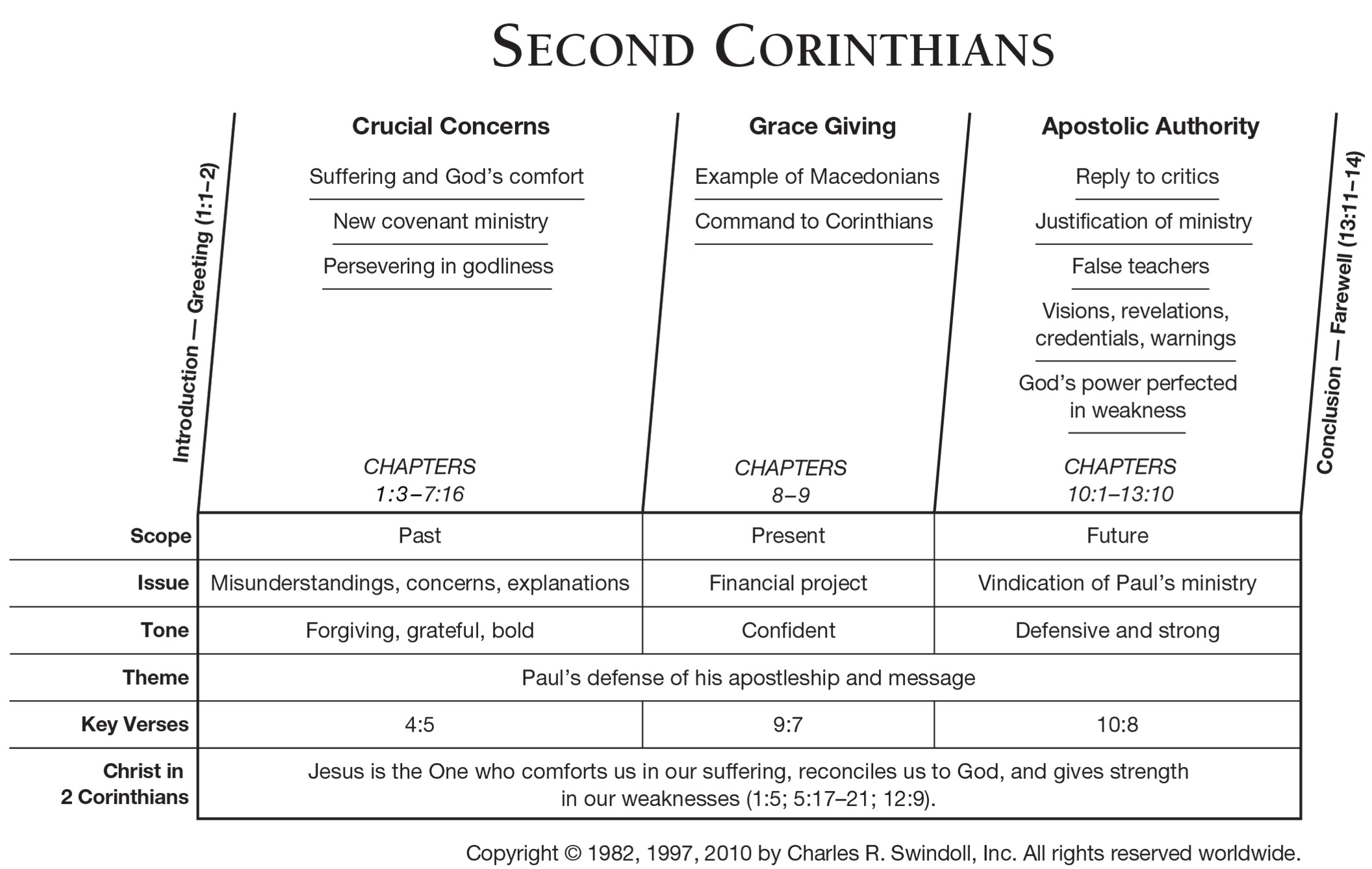
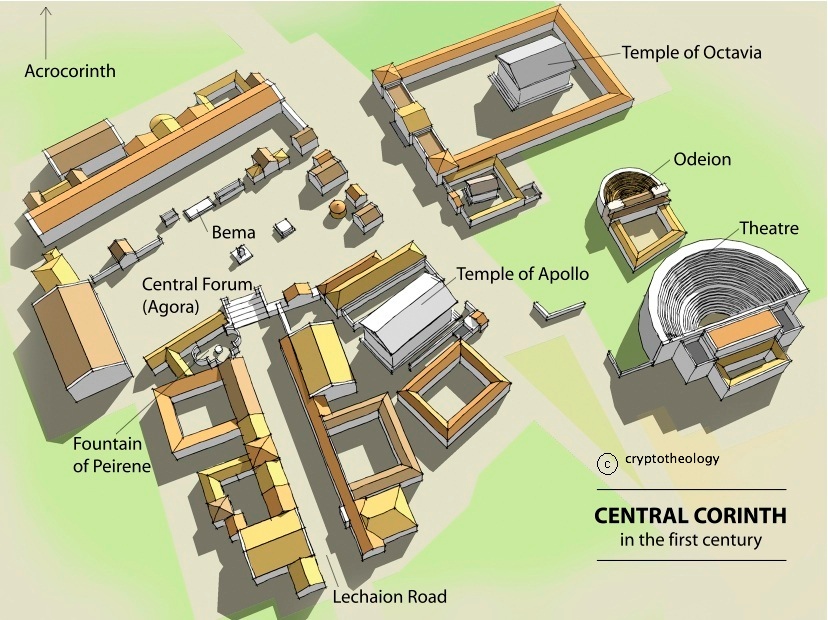
Click to Enlarge
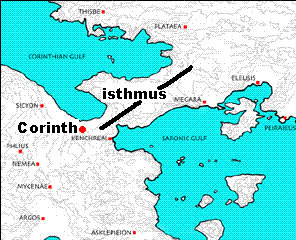
Click to enlarge
Overview of
|
||
| 2Co 1:1-7:16 Character of Paul |
2Co 8:1-9:15 Collection for the Saints |
2Co 10:1-12:21 Credentials of Paul |
| Testimonial & Didactic | Practical | Apologetic |
| Past: Misunderstanding & Explanation |
Present: Practical Project |
Future: Anxieties |
| Apostle's Conciliation, Ministry & Exhortations | Apostle's Solicitation for Judean Saints | Apostle's Vindication of Himself |
| Forgiveness, Reconciliation Gratitude |
Confidence | Vindication |
|
Ephesus to Macedonia: |
Macedonia: Preparation for Visit to Corinth |
To Corinth: |
|
2Co 1:1-7:16 |
2Co 8:1-9:15 |
2Co 10:1-12:21 |
|
2Corinthians written ~ 56-57AD - see Chronological Table of Paul's Life and Ministry |
||
|
Adapted & modified from Jensen's Survey of the New Testament (Highly Recommended Resource) & Wilkinson's Talk Thru the Bible |
||
2 Corinthians 5:17 Therefore if anyone is in Christ, he is a new creature; the old things passed away; behold, new things have come. (NASB: Lockman)
Greek: Hoste ei tis en Christo, kaine ktisis; ta archaia parelthen, (3SAAI) idou (2PSAMI) gegonen (3SRAI) kaina;
Amplified: Therefore if any person is [ingrafted] in Christ (the Messiah) he is a new creation (a new creature altogether); the old [previous moral and spiritual condition] has passed away. Behold, the fresh and new has come! (Lockman)
ASV: Wherefore if any man is in Christ, he is a new creature: the old things are passed away; behold, they are become new.
Barclay: The result is that if a man is in Christ he has been created all over again. The old things have passed away, and lo! they have become new. (Daily Study Bible)
God's Word: Whoever is a believer in Christ is a new creation. The old way of living has disappeared. A new way of living has come into existence.
ESV: Therefore, if anyone is in Christ, he is a new creation. The old has passed away; behold, the new has come. (ESV)
ICB: If anyone belongs to Christ, then he is made new. The old things have gone; everything is made new!
ISV: If anyone is in Christ, he is a new creation. What was old has disappeared, and now everything has become new!
KJV: Therefore if any man be in Christ, he is a new creature: old things are passed away; behold, all things are become new.
Mace: therefore, if any man be a Christian, he is in a new creation: the old state of things is chang'd to one entirely new.
MLB (Berkley): Accordingly, if any one is in Christ he is a new creation. The old is gone; lo, the new has come.
Moffatt: There is a new creation whenever a man comes to be in Christ; what is old is gone, the new has come.
NASB (1977): Therefore if any man is in Christ, he is a new creature; the old things passed away; behold, new things have come.
NET: So then, if anyone is in Christ, he is a new creation; what is old has passed away, see, what is new has come! (NET Bible)
NJB: So for anyone who is in Christ, there is a new creation: the old order is gone and a new being is there to see.
NKJV: Therefore, if anyone is in Christ, he is a new creation; old things have passed away; behold, all things have become new.
NLT: What this means is that those who become Christians become new persons. They are not the same anymore, for the old life is gone. A new life has begun! (NLT - Tyndale House)
Phillips: For if a man is in Christ he becomes a new person altogether - the past is finished and gone, everything has become fresh and new. (Phillips: Touchstone)
TLB: When someone becomes a Christian, he becomes a brand new person inside. He is not the same anymore. A new life has begun!
Weymouth: So that if any one is in Christ, he is a new creature: the old state of things has passed away; a new state of things has come into existence.
Wuest: So that, assuming that anyone is in Christ, he is a creation new in quality. The antiquated, out-of-date things have passed away. Behold, all things have become new in quality.
Young's Literal: so that if any one is in Christ--he is a new creature; the old things did pass away, lo, become new have the all things.
THEREFORE IF ANYONE IS IN CHRIST : Hoste ei tis en Christo:
- is in: 2Co 5:19,21 12:2 Isa 45:17,24,25 Jn 14:20 15:2,5 17:23 Ro 8:1,9 Ro 16:7,11 1Co 1:30 Ga 3:28 5:6 Eph 1:3,4 Php 4:21
- he is: Ps 51:10 Eze 11:19 18:31 36:26 Mt 12:33 Jn 3:3,5 Ga 6:15 Eph 2:10
- old: 2Co 5:16 Isa 43:18,19 65:17,18 Mt 9:16,17 24:35 Ro 6:4, 5, 6 7:6 8:9 Ro 8:10 1Co 13:11 Eph 2:15 4:22, 23, 24 Php 3:7, 8, 9 Col 3:1, 2, 3, 4, 5, 6, 7, 8, 9, 10 Heb 8:9, 10, 11, 12, 13 2Pe 3:10, 11, 12, 13 Rev 21:1, 2, 3, 4, 5
- 2 Corinthians 5 Resources - Multiple Sermons and Commentaries
- See comments on the New Birth in John 3:3
- See also "shorter version" of commentary on 2 Corinthians 5:17
EXTREME MAKEOVER
THE JESUS WAY
2 Corinthians 5:17 is a very special verse to me because it serves as a continual reminder of my new life in Christ, a life which is still "new" and amazing, even though my body is beginning to "decay" (cp 2Co 4:16-+). Thirty years ago I choose to quote 2Cor 5:17 as my personal testimony at my baptism (baptizo), for it was a fitting summary of how God had so miraculously delivered me from the darkness and grafted me into Christ (My Testimony).
Below are the words of R H McDaniel's hymn which poignantly expresses what transpired in each of our hearts on that glorious day when we were transferred by the Spirit from the domain of darkness and into the Kingdom of light of His beloved Son (Col 1:13-+, 1Pe 2:9, 10-+, Acts 26:18). Consider taking a moment to read the words of this hymn, allowing them to prompt a time of praise to El Shaddai, God Almighty, for redeeming us and miraculously making each of us new creations in Christ. Hallelujah!…
Since Jesus Came into My Heart
What a wonderful change in my life has been wrought
Since Jesus came into my heart!
I have light in my soul for which long I had sought,
Since Jesus came into my heart!
Refrain
Since Jesus came into my heart,
Since Jesus came into my heart,
Floods of joy o’er my soul
Like the sea billows roll,
Since Jesus came into my heart.
I have ceased from my wandering and going astray,
Since Jesus came into my heart!
And my sins, which were many, are all washed away,
Since Jesus came into my heart!
Refrain
I’m possessed of a hope that is steadfast and sure,
Since Jesus came into my heart!
And no dark clouds of doubt now my pathway obscure,
Since Jesus came into my heart!
Refrain
There’s a light in the valley of death now for me,
Since Jesus came into my heart!
And the gates of the City beyond I can see,
Since Jesus came into my heart!
Refrain
I shall go there to dwell in that City, I know,
Since Jesus came into my heart!
And I’m happy, so happy, as onward I go,
Since Jesus came into my heart!
Refrain
Before we explore the riches of this verse let's be sure we have a grasp of the context in which this jewel sets…
THE CONTEXT
2Corinthians 5:11-16
THE DEFENSE OF
AND MOTIVATION FOR
MINISTRY
Below is the immediate context of 2Cor 5:17. Remember that 2Corinthians is the most personal of Paul's epistles and as someone has well said is his "Apologia Pro Vita Sua" or the "Defense of His Life".
Wick Broomall - As the great evangelist defends his apostolic authority against the subtle and insidious attacks of “the superlative apostles” (2Co 12:11ESV) who sought to free the Corinthians of his influence, he reveals his very soul and adds many details about his life that would otherwise be unknown. But this epistle is a monument to the fact that Paul, vital and inspired, was more than a match for “every high thing that is exalted against the knowledge of God” (2Cor 10:5ASV-+) (Wycliffe Bible Commentary)
Irving Jensen's comments are convicting - Contrasts abound in 2 Corinthians: glorying and humiliation, life and death, sorrow and consolation, sternness and tenderness. One is very much aware in reading 2 Corinthians that for Paul the Christian life means going all out for Christ, or it is not real life at all. The color gray cannot be detected in this book. (Jensen's Survey of the New Testament. Chicago: Moody Press) (Bolding added)
2Cor 5:11-+ Therefore, knowing the fear (phobos) of the Lord (kurios), we persuade (peitho) men, but we are made manifest (phaneroo = To be manifested in the Scriptural sense is more than to “appear” for a person may “appear” in a false guise or without a disclosure of what he truly is but to be manifested is to be revealed in one’s true character) to God (God knew Paul's character and Paul had a "clear conscience" before God for he knew his motives were pure, cp Ac 23:1, 24:16, 2Co 1:12, 2Ti 1:3-+); and I hope (elpizo) that we are made manifest (phaneroo = Paul's character was clearly revealed and seen - his ministry had been transparent, a veritable "open book" before the Corinthians) also in your consciences (suneidesis [word study]).
Fear (phobos [Word study]) of the Lord (kurios [word study]) - The 2Co 5:11KJV rendering of terror of the Lord has led some to misinterpret this phrase as a reference to the terrible final judgment of sinners (See Lake Of Fire). However, the immediate context would support that fear of the Lord is a reference to the solemn truth that each individual believer will stand before Christ to be judged at the Bema Seat (2Co 5:10-+) a truth which powerful motivated Paul (cp 2Co 5:9). Belief should always affect behavior. (See fear used in a similar sense to spur believers toward holy conduct = 2Co 7:1-+, Acts 9:31, Ep 5:21-+, 1Pe 1:17-+)
Do you ever ponder the certain reality of the Judgment Seat of Christ and allow this truth to impact your every daily life, including how you spend your time and your money, what you watch, what you say, etc? We need to allow this truth to marinate and permeate our mind that we might live with an eternal rather than a temporal perspective!
Persuade men (peitho) (present tense = continuous action) - The interpretation of this phrase is not as easy as it might seem. My first inclination when taking the verse out of its immediate context is to interpret this passage as a call to evangelize those still dead in their trespasses and sins (Ep 2:1-+). Many excellent commentators interpret it in this manner. However, we need to remember that "context is king" in Interpretation, and so it behooves us in these introductory comments to continually consider the overall thrust of Paul's second letter to the Corinthians - Is is primarily evangelistic or is it primarily an apologetic for Paul's ministry? The fact that Paul unfolds the message of his (and our) ministry as one of reconciliation (2Co 5:18, 19, 20), is one of the reasons 2Co 5:11 is interpreted as a call urging us to spread the gospel. But let's look at some representative interpretations…
The well respected Bible Knowledge Commentary (ref) says…
The purpose of his ministry was to persuade men to “be reconciled to God” (2Co 5:20). (Cp similar interpretations by Adam Clarke; Albert Barnes; John Gill; Dave Guzik; Jamieson, F, B; Matthew Henry)
Malcolm Tolbert comments that…
Knowing the fear of the Lord was Paul's way of expressing the fact that he exercised his responsibility as a minister with the utmost seriousness in light of his conviction that ultimately he would have to answer to God for whatever he did or failed to do. It is no accident, therefore, that he connects his sense of accountability to God with a statement about his apostolic ministry: "Knowing the fear of the Lord, we persuade men." Paul is probably using "persuade men" in the sense of winning them to faith in Christ. (2Cor 5:11-21 Theology and Ministry in Faith and Mission. Vol 1:1, Fall, 1983)
The Wycliffe Bible Commentary sums up the three possible interpretations…
Paul sought to persuade men either (1) concerning the coming judgment (2Co 5:10), or (2) of his own integrity as a minister, or (3) of the need of reconciliation (2Co 5:18, 19, 21). Only (2) seems to be immediately relevant. (Wick Broomall in the Wycliffe Bible Commentary. 1981. Moody)
John MacArthur notes that…
the theme of this epistle is Paul’s defense of his integrity (See 2Co 1:12, 13; 2:17; 3:5; 4:2, 5; 5:9, 10; 6:3,4, 11; 7:2; 8:20,21; 10:7; cp "super-apostles" in 2Co 11:5ESV, 2Co 11:6, 30; cp "super-apostles" in 2Co 12:11ESV, 2Co 12:12; 13:5, 6). The apostle’s credibility was under attack from false teachers who had infiltrated the church at Corinth (cf. 2Co 6:8). Before they could get a hearing for their lies, they first had to tear down Paul’s credibility in the minds of the people. Though their accusations were false, they were nonetheless dangerous; if the Corinthians believed the allegations, confidence in the Word of God through Paul would be destroyed.
The key to understanding this passage (2Co 5:11ff) lies in the meaning of the verb peitho (persuade). Some commentators believe that it refers to persuading people of the truth of the gospel, as it does in Acts 17:4; 18:4; 19:8, 26; 26:28; and 28:23, 24.
But the gospel is not the issue in 2 Corinthians; this is not primarily an evangelistic epistle. Paul was not trying to persuade the Corinthian believers of the truth of the gospel, but rather of the truth of his integrity.
Therefore, peitho could be better rendered “seek the favor of” as it is in Galatians 1:10. Paul sought a favorable judgment from the Corinthians on his integrity. (MacArthur, J: 2Corinthians. Chicago: Moody Press)
For an excellent discussion similar to Dr Macarthur's understanding, listen to Steve Kreloff's message (Mp3 only) on 2 Corinthians 5:11-13 Defending Ourselves
2Cor 5:12-+ We are not again commending (sunistao = making ourselves conspicuous or recommending ourselves as worthy of special notice. Paul uses sunistao 8x in 2Co 3:1; 4:2; 6:4; 7:11; 10:12, 18; 12:11) ourselves to you (evidently some at Corinth were commending themselves and glorying in their ministry) but are giving you an occasion (aphorme = opportunity) to be proud of us, so that you will have an answer (Pr 27:2) for those who take pride (kauchaomai = boast or glory) in appearance (Paul's opponents majored on and gloried in the externals, the "showy", spectacular - cp "super-apostles" 2Co 11:5ESV, 2Co 12:11ESV) and not in heart (the inner reality of the super-apostles was a heart like that of the scribes and Pharisees - Mt 23:25, 26, 27, 28, Ga 6:12, cp 1Sa 16:7).
KJV Bible Commentary…
Paul’s object was not to glory in his credentials nor to prove his character to the Corinthians, but simply to authenticate his personal integrity. For the most part the Corinthian assembly by this time was convinced of Paul’s genuineness but Paul was also aware that he still had enemies in the assembly and the purpose here is to give his followers (something to answer the critics) (Dobson, E G, Charles Feinberg, E Hindson, Woodrow Kroll, H L. Wilmington: KJV Bible Commentary: Nelson)
2Cor 5:13-+ For if we are beside ourselves (existemi = literally to stand outside one's self and figuratively out of one's senses, mad, insane - cp accusation leveled even against Jesus = Mk 3:21, Ac 26:24 - Gk = existemi is the root for ekstasis = Eng. "ecstasy"), it is for God; if we are of sound mind (sophroneo [word study]) = to be sane or in one's right mind), it is for you.
2Cor 5:14-+ For the love (agape) of Christ (Not our love for Him, but His love for us - 1Jn 4:10, cp exact phrase in Ro 8:35-+, Ep 3:19-+) controls us, having concluded this, that one (Christ) died for all, therefore all died (All who believe in Christ - He died that we might die with Him on the Cross, a death to our old life in Adam);
Controls (sunecho/synecho in present tense = continuously constraints, compels, impels) - Literally means to hold or press together (Lk 8:45) but in this context pictures Christ’s love "pressuring" us, urging us, constraining us, compelling us onward to action (Recall that "Love" is an "Action verb" - see Paul's "definition" in 1Cor 13:4-+, 1Cor 13:5, 6-+, 1Cor 13:7, 8-+ where all the verbs are in the present tense = continuous action, defining love as our habitual practice, as our "lifestyle", one of love in action! Do these actions describe our love, beloved?)..
One died for (huper) all -
Note that the preposition "for" (Gk = huper) means "in behalf of", "in place of", "instead of [me]!" or "for the sake of" (cp similar uses of huper translated "for" in Ga 1:4, 3:13, Ga 2:20-+, Ro 5:6-+, Ro 5:8-+, Ro 8:32-+, Ep 5:2-+, 1Th 5:9, 10-+, 1Ti 2:6, Titus 2:14-+, 1Pe 3:18-+, 1Jn 3:16) which makes this phrase a clear statement of Christ's substitutionary atoning death (the act by which God restores a relationship of harmony and unity between Himself and sinful men and women - Cp "atone" = at one!). In the context of His love controlling us, Paul reminds us of the supreme act of Jesus' love for us, the redemption price He paid to set the captives free, that He might be our example to love others as He loved us (cp 1Pe 2:21-+, 1Jn 3:16, 4:11, cp Mk 8:34).
Therefore all died -
All refers to all who are true believers for all believers have been crucified with Christ (Identified with Him in His death) as taught in Romans 6 (see Ro 6:3-+, Ro 6:4, 5-+, Ro 6:6, 7-+, Ro 6:8-+, cp Ga 2:19, Col 3:3-+). Paul goes on to command believers to continually consider their death with Christ as a death to the power of the Sin and the provision of a new life filled with the potential of divine power to enable us to live that life (see Ro 6:11-+., Ro 6:12, 13, 14-+).
2Cor 5:15-+ and He died for all, so that (Expresses the purpose of His death) they who live (Referring to believers now spiritually alive and able to walk in a brand new quality of life = newness of life - Ro 6:4-+) might no longer live for themselves (As we did before conversion, cp Titus 3:3-+), but for Him Who died and rose again on their behalf (His death signals a change in life purpose and direction for those who believe in Him).
He died for all -
Again Paul uses the preposition for (huper) signifying that Christ died on behalf of all, again speaking of His substitutionary death.
Wiersbe explains that…
He died that we might live through Him: “God sent His only begotten Son into the world, that we might live through Him” (1John 4:9). (Ed: See notes on through Him) This is our experience of salvation, eternal life through faith in Jesus Christ. But He also died that we might live for Him, and not live unto ourselves (2Co 5:15). This is our experience of service. It has well been said, “Christ died our death for us that we might live His life for Him.” If a lost sinner has been to the cross and been saved, how can he spend the rest of his life in selfishness?… Christ died that we might live through Him and for Him, and that we might live with Him. “Who died for us, that, whether we wake or sleep, we should live together with Him” (1Th 5:10-+). Because of Calvary, believers are going to heaven to live with Christ forever! (Wiersbe, W: Bible Exposition Commentary. 1989. Victor)
So that they who live might no longer live for themselves-
The egocentric life becomes the Christocentric life. Paul stated this clearly in Gal 2:20-+ writing that…
I have been crucified with Christ; and it is no longer I who live, but Christ lives in me (Col 3:4-+); and the life which I now live in the flesh I live by faith in the Son of God, who loved me and gave Himself up for (Greek = huper = on behalf of) me. (cp our new direction no longer for ourselves but for Him = Titus 2:14-+, 1Pe 2:24-+, Ga 6:14-+, Ro 14:7, 8-+, Php 1:21-+, Php 2:3, 4-+, Php 2:5, 6, 7-+, Php 2:8, 9-+).
Robertson comments that…
Rose again on their behalf -
This emphasizes His resurrection, the same power that brought about His resurrection is now available to believers [cp Paul's prayer for power in Ep 1:18, 19-+, Ep 1:20-+] and is the only power by which a believer can fulfill the charge to not live for themselves but to please God [cp 2Co 5:9-+] and love as He loved us
2Cor 5:16-+ Therefore (Based on the truth of 2Co 5:14,15, the Gospel) from now on (from the time he understood and believed Christ's death and resurrection, the way Paul viewed people changed radically - cp "old things passed away"-+) we recognize no one according to the flesh (the way the world views men - reputation, externals, class, wealth, etc as Paul's opponents evaluated men); even though we have known Christ according to the flesh (before Saul came Paul the believer in Christ, he knew Christ according to the standards of unbelievers, even considering Him a "false Messiah", see Ac 26:9, 10, 11), yet now (After his Damascus Road experience, his conversion - Acts 9:1, 2, 3, 4, 5, 26:15,16, 17, 18) we know Him in this way no longer.
Henry Alford commenting on after the flesh - He who knows no man after the flesh, has, for example, in the case of the Jew, entirely lost sight of his Jewish origin; in that of the rich man, of his riches; in that of the learned of his learning; in that of the slave, of his servitude (cp Col 3:11-+, Gal 3:28)
Malcolm Tolbert comments that - When we view others according to the flesh, we evaluate them from an egocentric perspective, in terms of what they can mean to us and do for us. Therefore, position, wealth, race, sex, etc. become the dominating criteria. When we view people from a Christocentric position, the perspective is radically altered…
To be Christocentric is to be constrained by the love of Christ, for that is exactly what 2Co 5:16 and 2Co 5:17 show. To be Christocentric is now interpreted in the broadest possible way. There is a radical change in attitude toward and relationship to all of humanity (2Cor 5:11-21 Theology and Ministry in Faith and Mission. Vol 1:1, Fall, 1983)
Broomall adds the quotable comment that - Spiritual insight had changed Paul’s center of gravity; eternity had become the yardstick of all measurement. (Wycliffe Bible Commentary. 1981. Moody)
THEREFORE
WHAT'S IT THERE FOR?
Therefore (5620) (hoste) is used to introduce independent clauses and is often translated so, for this reason or therefore expressing consequence or result.
Therefore - This conjunction should always force us to ask the 5W/H questions of the context. Furthermore, recognizing that therefore is a term of conclusion, it should specifically cause us to ask the natural question -- "What's the "therefore" there for?" Paul's conclusion in 2Co 5:17 is based on the preceding truths in 2Cor 5:14, 15, 16 specifically the truths concerning Christ's Death, Resurrection and Supernatural Life (In essence the truths about the "Gospel" -1Co 15:1-+, 1Co 15:2-+, 1Co 15:3, 4, 5-+).
R B Hughes adds that Paul's conclusion "grows out of the first: Paul does not relate to people according to fleshly evaluations, but according to their newness as creations in Christ. This perspective has its source in the Spirit realities of the New Covenant.
The UBS Handbook comments that…
The precise function of the word Therefore which begins this verse is not clear. Is Paul drawing out the consequences of what he has said in 2Co 5:16, or does the word Therefore go back to 2Co 5:14 and 2Co 5:15? If, as seems most likely, 2Co 5:16 and 2Co 5:17 are parallel in thought, then both verses draw out the consequences of what Paul has written in 2Co 5:14 and 2Co 5:15. (The United Bible Societies' New Testament Handbook Series)
If (1487) (ei) is a conditional conjunction, which is translated if or since. In the present context the idea is if the first part of this statement is true, the second is also true.
Anyone (5100) (tis) is a pronoun that can signify one, someone, anyone, a certain one. In short this pronoun teaches that this verse is the "biography", the "testimony" of every believer! What a great promise this pronoun holds out for lost men and women. Any sinner, no matter how awful, despicable, depraved, disgusting (and the list could go on and on) who repents and believes in Christ is placed in Christ wherein he or she is a new creature, regardless of how corrupt and decadent the old creature was in Adam.
Plummer -The sequence of thought seems to be this. ' If we have died with Christ to our old selves and have risen with Him to a new life, we share His spiritual life and are in Him; and if any man is in Christ, he is a new creature; the old things passed away when he became such.' Evidently the thought of the change from old to new makes the Apostle enthusiastically jubilant. The Crucifixion and Resurrection of Christ constitute for him the dividing line in the world's history, and if he did not foresee all the blessings which the Gospel would bring to mankind, he saw something of its immense potentialities. Out of his own experience of God's dealing with himself and others he declares that one who is in Christ is a new creature. Christ is the source of a new and higher life (see on 1Co 15:45 and on Ro 5:12-19). (2 Corinthians 5:17 International Critical Commentary)
In Christ - Simply stated this means in the sphere of Christ. Or "in the atmosphere" of Christ so to speak. It would include the ideas of oneness with Christ, union with Christ, communion with Christ, in covenant with Christ. See more related resources below.
In Christ defines every saint's eternal, permanent, spiritual location, the spiritual "address" and the "spiritual atmosphere" as it were in which we now live and breathe and have our being.
Theodore Epp adds that every believer's "new life is life "in Christ." The word "in" does not in this connection speak of location, such as "in an automobile," but carries the idea of union. On the resurrection side of this experience we have His life. He has come to live in us. It is this that marks the real difference between the old life prior to our salvation and the new life now that we are saved. It is necessary before the believer can enjoy victory in Christ for the power of the old life to be broken. This is accomplished through union with Christ in His crucifixion. This is not an experience that we must struggle to enter into now. It was accomplished for us in the past. The King James Version is not clear on this point. The American Standard Version of 1901 will help us here. The expression "I am crucified with Christ" is translated in the ASV: "I have been crucified with Christ." God got rid of the old self-life by crucifying it. We were separated from the old self-life when we died with Christ."
In Christ describes every believer's new position and new sphere of existence. Before we were born again into the Kingdom of God (Jn 3:3,5), our existence was in Adam (1Co 15:22, Ro 5:12-+ = spiritually dead and under the dominion [supreme authority, power, jurisdiction, sway, control, absolute ownership] of the Sin "virus" we inherited from Adam - see Adam in the NT), in the flesh (under the dominion of the flesh - note, believers can "act fleshly" but strictly speaking are no longer "in the flesh" - see Ro 8:9-+, 2Co10:3-+ Gal 2:20-+ use "in the flesh" to refer to the human body not the "anti-God" influence), in (under the influence of) the world, and in the kingdom of the Devil (under his dominion - Acts 26:18, Col 1:13-+). In the Upper Room Discourse just prior to His crucifixion Jesus alluded to the idea of in Christ when He declared "In that day you shall know that I am in My Father, and you in Me, and I in you." (Jn 14:20).
Paul expounded on the idea of a believer's new identity, using the phrase in Christ or its synonyms (over 160 times in some form - in Him, in the Beloved, in Christ, in Christ Jesus, in the Lord - study the references below). In Christ summarizes the profound truth that believers are now and forever in spiritual union with the Lord Jesus Christ. Indeed, considering the prevalence of in Christ and its synonyms in Paul's writings, this mysterious spiritual truth is one of the most significant teachings in the New Testament.
Charles Ryrie in fact comments that…
Probably the most important doctrinal fact underpinning the spiritual life is the believer’s union with Christ. It is foundational to the truth of co-crucifixion of the Christian with Christ (Ro 6:6-+, Gal 2:20-+), which in turn is the basis for freedom from the power of sin (Ed: Read Ro 6:11-+, Ro 6:14-+, Ro 6:17, 18-+, Ro 6:22-+ Lk 4:18, Jn 8:36 - Remember that freedom in Christ [note the sphere or "atmosphere" in which one is free indeed!] is not the right to do as one pleases but the power to please God by doing what is right!). Unfortunately, this concept is little understood, unbalanced in its presentation, and unused in its application… What does this concept mean? My own definition is simply this:
To be in Christ is the redeemed man’s new environment in the sphere of resurrection life. (Ed: Note [esp in Ep 1:20] the source of the "surpassing greatness of His power" that allows us to live our new life in Christ - Read Ep 1:18, 19-+, Ep 1:20, 21-+)
The key word is environment, for being in Christ is not a barren state or an almost unreal positional truth (as it is often presented), but a vital, pulsating, functioning involvement. The chief characteristic of this environment is resurrection life, the life of Christ Himself. (cp Col 3:4-+, Jn 14:6; 19, 20:31, Ro 6:4-+, 2Co 4:10, 11; 1Jn 4:9, 5:11, 12)
Another writer speaking of this same position of the believer describes it this way:
“He has been transplanted into a new soil and a new climate, and both soil and climate are Christ."
(Ryrie goes on to explain that) In relation to sanctification (Ed: See noun hagiasmos = sanctification and verb hagiazo = to sanctify) or the Christian life… being in Christ frees us from the bondage of sin (Ed: Ro 6:11-+, Ro 6:14-+, Ro 6:17, 18-+, Ro 6:22-+ Jn 8:36) and enables us to live righteously before God. (Balancing the Christian Life) (Bolding added)
When we believed in Christ Jesus as our Substitutionary and fully atoning Sacrifice, God transferred us from the kingdom of darkness "in Adam" (cp 1Co 15:22) into the kingdom of light, of His dear Son, so that now all believers are seen by the Father as in Christ. This transfer was the outworking of the New Covenant in His blood, which is an important truth to remember when trying to understand the concept (truth) of "in Christ". Covenant is a solemn, binding agreement between two parties (see Covenant - Solemn and Binding) in which there is a co-mingling of lives and identities (See Covenant - The Oneness of Covenant). The two become one just as a husband and wife become one new person and just as the mystical church becomes one with Christ, the church as His body of which He is the Head (Ep 1:22, 23-+, Ep 4:15-+, Ep 5:23- +, Col 1:18-+). And so we see the vital nature of the inseparable union pictured in the phrase "in Christ". It is no longer the believer who lives but Christ Who lives in the believer (Gal 2:20-+) and we live in such a way that His life not only enables us, but also shows through us (2Co 4:10). It is no longer our life, but it is Christ our life (Col 3:4-+). We are no longer separate "branches" but attached to the Vine (Christ Jesus - John 15:4, 5 - "Abide in Me" is synonymous with the concept of "in Christ") deriving our life and our purpose from Him, for now Christ is our all in all, the very source of and supply for our existence, now and forever. When others see us, they should see Him (cp 2Co2:13,15, 16, 4:11) (Watch and listen to the Youtube video of the song - In Christ Alone; In Christ Alone - another version)
James Montgomery Boice writes that "The phrases in Christ, in Him… occur 164 times in all Paul’s writings. The phrases mean more than just believing on Christ or being saved by His atonement. They mean being joined to Christ in one spiritual body so that what is true of Him is also true for us… This is a difficult concept, and the Bible uses numerous images to teach it to us: the union of a man and woman in marriage (see notes Eph 5:22-33), the union of the vine and the branches (Jn 15:1-17), the wholeness of a spiritual temple in which Christ is the foundation and we the individual stones (Ep 2:20-+; Ep 2:21, 22-+), the union of the head and other members of the body in one organism (1Co 12:12-27). But whether we understand it or not, union with Christ is in one sense the very essence of salvation… Apart from Christ our condition is absolutely hopeless. In Him our condition is glorious to the extreme. (Ephesians: An Expositional Commentary) (Bolding added)
Wuest comments on our position in Christ - Here again we have separation, for that which surrounds the believer, namely, Christ in Whom he is ensphered, separates him from all else.
MacArthur adds that "A Buddhist does not speak of himself as in Buddha, nor does a Muslim speak of himself as in Mohammed. A Christian Scientist is not in Mary Baker Eddy or a Mormon in Joseph Smith or Brigham Young. They may faithfully follow the teaching and example of those religious leaders, but they are not in them. Only Christians can claim to be in their Lord, because they have been made spiritually one with Him (cf. Ro 6:1–11). (MacArthur, J. Philippians. Chicago: Moody Press )
I heard the voice of Jesus say,
"I am this dark world's light;
Look unto Me, thy morn shall rise,
And all thy day be bright."I looked to Jesus, and I found
In Him my Star, my Sun;
And in that light of life I will walk,
Till trav'ling days are done.
—Horatius Bonar
In Christ expresses intimacy of a believer's union with Christ. The preposition "in" is locative of sphere meaning that the believer's sainthood was (is) in the sphere of Christ, not because someone named them "saints" and not in the sphere of some worshipper of a pagan deity as the term was commonly used in the so-called "mystery" religions of Paul's day. Christ is the sphere in which the believer has his new life or as Paul phrases it in chapter 3, "Christ -- our life" (Col 3:4-+).
Related Resource:
- See study of meaning and significance of locative of sphere
Study the following passages and make a list of what "In Christ", "In Him", etc - To check the context click link. Then after you've made your own observations and list click on the commentary notes of verses where notes are available.
In Christ (33x) - Ro 9:1-+ Ro 12:5-+ Ro 16:7-+ Ro 16:9-+, 16:10-+, 1Co 3:1 4:10 4:17 15:18 15:19 15:2 2Co 1:21 2:14 2:17 2 Cor 3:14+ 2 Cor 5:17 2 Cor 5:19+ 2 Cor 12:2, 12:19 Gal 1:22+ Gal 2:17 Gal 1:10+ Gal 1:12+ Gal 1:20+ Gal 4:32 Php 2:1-+ Php 3:9-+ Col 1:2-+ Col 1:28-+ Col 2:5-+ 1Th 4:16-+ Philemon 1:8 1:20
In the Lord (45x) - Ro 14:14-+; Ro 16:2-+, Ro 16:8-+, Ro 16:11, 12, 13-+, Ro 16:22-+; 1Cor 1:31; 4:17; 7:22, 39; 9:1, 2; 11:11; 1 Cor 15:58+; 1Cor 16:19; 2 Cor 2:12; 10:17; Gal 5:10+; Ep 1:15-+; Ep 2:21-+; Ep 5:8-+; Ep 6:1-+, Ep 6:10-+, Ep 6:21-+; Phil 1:14-+; Phil 2:19-+, Phil 2:24-+, Phil 2:29-+; Phil 3:1-+; Phil 4:1-+, 2, Phil 4:4-+, Phil 4:10-+; Col 3:18-+; Col 4:7-+, Col 4:17-+; 1Th 3:8-+; 1Th 4:1-+; 1Th 5:12-+; 2Th 3:4, 12; Philemon 1:16, 20
In Christ Jesus (50x) - Ro 3:24-+; Ro 6:11-+, Ro 6:23-+; Ro 8:1-+, Ro 8:2-+, Ro 8:39-+; Ro 15:17-+; Ro 16:3-+; 1Cor 1:2, 4, 30; 4:15; 15:31; 16:24; Gal 2:4, 16+; Gal 3:14, 26, 28+; Gal 5:6+; Eph 1:1-+; Eph 2:6-+, Eph 2:7-+, Eph 2:10-+, Eph 2:13-+; Eph 3:6-+, Eph 3:11-+, Eph 3:21-+; Phil 1:1-+, Phil 1:26-+; Phil 2:5-+; Phil 3:3-+, Phil 3:14-+; Phil 4:7-+, Phil 4:19-+, Phil 4:21-+; Col 1:4-+; 1Th 2:14-+; 1Th 5:18-+; 1Ti 1:14; 3:13; 2Ti 1:1-+, 2Ti 1:9-+, 2Ti 1:13-+; 2Ti 2:1-+, 2Ti 2:10-+; 2Ti 3:12-+, 2Ti 3:15-+; Philemon 1:23
In Him (31x) - Ro 4:5-+, Ro 4:24-+; Ro 9:33-+; Ro 10:11-+, Ro 10:14-+; Ro 15:12-+; 1Cor 1:5; 2:11; 2Cor 1:19, 20; 2 Cor 5:21+; 13:4; Eph 1:4-+, Eph 1:7-+, Eph 1:9-+, Eph 1:10-+, Eph 1:13-+; Eph 3:12-+; Eph 4:21-+; Phil 1:29-+; Phil 3:9-+; Col 1:17-+, Col 1:19-+; Col 2:6-+, Col 2:7-+, Col 2:9-+, Col 2:10-+, Col 2:11-+; 2Th 1:12; 1Ti 1:16
Contrast "in the flesh" (Ro 7:5-+ Ro 8:8-+ Ro 8:9-+ Phil 3:3, 4-+) As noted above, there are other Pauline uses of this phrase but they all refer to the physical flesh, not the evil disposition inherited from Adam and manifest as continual anti-God attitudes and actions. Flesh is a confusing word because it can have so many meanings in Scripture. If you are confused take some time to study the flesh. And remember that the definition of the common NT word flesh (147x in 126v in the NT) is always determined by checking the context.
David Garland comments that "in Christ can mean several things that are not mutually exclusive: that one belongs to Christ, that one lives in the sphere of Christ's power, that one is united with Christ, or that one is part of the body of Christ, the believing community. Paul's assumption is that being in Christ should bring about a radical change in a person's life. (New American Commentary - Volume 29: 2 Corinthians. B & H Publishers)
Philip Hughes - The expression in Christ sums up as briefly and as profoundly as possible the inexhaustible significance of man’s redemption. It speaks of security in Him who has Himself borne in his own body the judgment of God against our sin; it speaks of acceptance in Him with whom alone God is well pleased; it speaks of assurance for the future in Him who is the Resurrection and the Life; it speaks of the inheritance of glory in Him who, as the only-begotten Son, is the sole heir of God; it speaks of participation in the divine nature in Him who is the everlasting Word; it speaks of knowing the truth, and being free in that truth, in Him who Himself is the Truth. All this, and very much more than can ever be expressed in human language, is meant by being in Christ. (Paul's Second Epistle to the Corinthians: The English Text with Introduction, Exposition and Notes - Named as one of the 850 Books for Biblical Expositors by the Master's Seminary. Cyril Barber writes this "May well be regarded as the finest conservative exposition of this epistle")
William MacDonald observes that "In Christ speaks of their spiritual position. When they were saved, God placed them in Christ, “accepted in the beloved.” (Ep 1:6-+) Henceforth, they had His life and nature (2Pe 1:4-+). Henceforth, they would no longer be seen God as children of Adam (1Co 15:22) or as unregenerate men, but He would now see them in all the acceptability of His own Son. The expression in Christ conveys more of intimacy, acceptance, and security than any human mind can understand. (Believer's Bible Commentary)
William Barclay adds "that when Paul spoke of the Christian being in Christ, he meant that the Christian lives in Christ as a bird in the air, a fish in the water, the roots of a tree in the soil. What makes the Christian different is that he is always and everywhere conscious of the encircling presence of Jesus Christ. (Daily Study Bible)
Barclay goes on to explain that "A Christian always moves in two spheres. He is in a certain place in this world; but he is also in Christ. He lives in two dimensions. He lives in this world whose duties he does not treat lightly; but above and beyond that he lives in Christ. In this world he may move from place to place; but wherever he is, he is in Christ. That is why outward circumstances make little difference to the Christian; his peace and his joy are not dependent on them. That is why he will do any job with all his heart. It may be menial, unpleasant, painful, it may be far less distinguished than he might expect to have; its rewards may be small and its praise non-existent; nevertheless the Christian will do it diligently, uncomplainingly and cheerfully, for he is in Christ and does all things as to the Lord. We are all in our own Colosse, but we are all in Christ, and it is Christ who sets the tone of our living." Barclay describes an ideal state writing that "There is the life that is dominated by the Spirit of God. As a man lives in the air, he lives in Christ, never separated from him. As he breathes in the air and the air fills him, so Christ fills him. He has no mind of his own; Christ is his mind. He has no desires of his own; the will of Christ is his only law. He is Spirit-controlled, Christ-controlled, God-focused." (Daily Study Bible)
Ray Stedman commenting on Paul's repeated use of this phrase in Christ in the letter to the Ephesians writes that every spiritual blessing in the believer's life (Eph 1:3)…"is in Christ. All this comes to us in Christ, in the Person and the work of the Lord Jesus Himself. This fact is going to be stressed again and again in this letter (Ephesians). No two words appear in it more frequently than "in Christ," or "in him." Over and over it is emphasized that everything comes to us through Him. We must learn not to listen to those who claim to have God's blessing in their lives, and yet to whose thinking Christ is not central. They are deceived, and they are deceiving us if we accept what they say. The only spiritual blessing that can ever come to you from God must always come in Christ. There is no other way that it can come. So if you are involved with some group which sets aside the Lord Jesus Christ and tries to go "directly to God," and thus claim some of the great spiritual promises of the New Testament, you are involved in a group which is leading you into fakery and fraud. It is completely spurious! For God accomplishes spiritual blessing only in Christ. Physical blessings are available "to the just and the unjust alike," but the inner spirit of man can be healed and cured only in Christ, and there is no other way. (Read full message Ephesians 1:1-14: God At Work) (Bolding added)
Spurgeon comments that…One of the first doctrines of our holy faith is that of the union of all believing souls with Christ. We are blessed with all spiritual blessings in Christ. Apart from Christ we are nothing (cp Jn 15:5); in Christ we have "all spiritual blessings" We are rich as Christ is rich, when we are united to him by the living bond of faith.
Simon J. Kistemaker notes that…To be in Christ connotes being part of Christ's body (I Cor. 12:27), and Christ brings about a radical transformation in the believer's life. Instead of serving the ego, the Christian follows Christ and responds to the law of love for God and the neighbor. (Baker New Testament Commentary - Exposition of the Second Epistle to the Corinthians)
John Piper reminds us that…And the work of Christ in Whom we have our righteousness is a complete and perfect work. It does not get better with time. And we are united to Christ at once, through our first faith, not progressively. No one is half in and half out. And if we are in Christ, all that He is He is for us - from the very first instant of faith. This is wonderful news for sinners who face a long haul in becoming in life what we are in Christ. (The Purpose and Perseverance of Faith) (Bolding Added)
Zodhiates says that…When you are in Christ, you are not merely professors of His name, learners of His doctrine, followers of His example, or sharers of His gifts. You are not merely men and women ransomed by His death or destined for His glory. These external connections exemplify how your individual life relates to Christ's in the same way that one man's life may relate to another's by the effect of what he teaches, gives, or does. Paul says to the Corinthians and to all born-again believers, In your case, your life is not merely external, that is, "just like" His life, parallel to His. You are actually in Christ, and He is in you. This is something unique that Christ does for those who accept Him. (Zodhiates Corinthians Commentary Series)
James Denney - This is the first passage in 2 Corinthians in which this Pauline formula for a Christian — a man in Christ — is used. It denotes the most intimate possible union, a union in which the believer’s faith identifies him with Jesus in His death and resurrection, so that he can say, “I live no longer, but Christ lives in me.” (Expositor's Bible - 2Corinthians 5:16, 17 The New World)
Albert Barnes…The phrase, to "be in Christ," evidently means to be united to Christ by faith; or to be in Him as the branch is in the Vine--that is, so united to the Vine, or so in it, as to derive all its nourishment and support from it, and to be sustained entirely by it. John 15:2, "Every branch in me;" John 15:4, "Abide in me, and I in you. As the branch cannot bear fruit of itself, except it abide in the vine; no more can ye, except ye abide in me." See also John 15:5, 6, 7. To be "in Christ" denotes a more tender and close union; and implies that all our support is from Him. All our strength is derived from Him; and denotes further that we shall partake of His fulness, and share in His felicity and glory, as the branch partakes of the strength and rigor of the parent vine.
Guy King in his exposition of Philippians comments on the phrase in Christ writing that…
Herein lay
(a) Their (referring to the saints at Philippi but applicable to saints of all places and ages!) protection from evil life. The moral condition of a heathen city would be a constant peril to any new converts, especially as they themselves had but just recently come out of that very heathenism. Philippi may not have been so utterly debased as Corinth, or Rome, but its atmosphere must have been a subversive influence threatening any who would live pure and true. Yet, they could be kept safe. Christians must, of course, remain in such hostile surroundings, for CHRIST must have there, as Mt 5:13, 14- (note v13; v14) teaches, the salt, the light, and the testimony.
So He Himself prays "not that Thou shouldest take them out of the world, but that Thou shouldest keep them from the evil", John 17:15.
That keeping, that protection, is ministered to us in the fact of our being, not only "in the world", but more closely, in Christ.
A shipwrecked man writes a message, and throws it into the sea, in the hope that it may reach some shore. But will not the water damage and destroy it? No; for, while it is cast into the sea, it is first sealed in a bottle - and so it arrives. Yes; in Philippi, with all its destructive influences, but in Christ - so they are secure, and so, in spite of all antagonistic forces, they arrive at "the haven where they would be." Herein lay also
(b) Their possibility of holy life. We are called not only to a negative but to a positive life - "eschew (abstain from) evil, and do good", as 1Pe 3:11 (note) says. But how can a holy life be lived in such unholy surroundings?
Mark that little water-spider going down to the bottom of that pond. It doesn't really belong there, even as we believers are: "in the world" … but not of it, John 17:11, 16. The little creature has the queer, and amazing, ability of weaving a bubble of air around itself, and hidden in that it is able to pursue its way even amid such inimical conditions - in the water, but in the bubble!
So we come back to our glorious truth - in Philippi, but in Christ; then even in the midst of the most uncongenial surroundings, the Christ-life can be lived. (King, Guy: Joy Way: An Exposition of the Epistle of Paul to the Philippians, 1952, Christian Literature Crusade - Pdf) (Bolding added)
Guy King in his commentary on Colossians comments on their earthly and supernatural positions explaining…
Oh yes, I know they were at Colossae - breathing the fetid atmosphere of this typically pagan city. How could the fair flowers of fidelity and holiness flourish in such a place? Only because they enjoyed the nearer, purer air of being in Christ.
The clever little water beetle is able to live in the muddy bed of the pond because it has the gift of weaving around itself a bubble of air. Thus it takes its own atmosphere down with it. I often invert a "let's pretend" story of a man shipwrecked on a desert island, who, happening to have his fountain pen still in his pocket, decides to write a message on a large island leaf to send to his people. Having thrown it into the sea, he could then only wait, and hope for the best. But, silly man, the leaf will soon be pulped and the message obliterated by the ocean. Oh, I forgot to mention that on his island he happened to find a bottle with a sealing top. So his SOS reached home, and led to his rescue, because though it was in the sea, it was in the bottle. Yes, although these Christians were in that Colossian sea of iniquity, they were kept safe and saintly because they were "in Christ".
It is one of Paul's chief inspired conceptions, so often reiterated through all his correspondence, that we are "in Him", "in the Lord", "in Christ". What amazing privilege and prediction is here! "Christ in you, the hope of glory", he says in Colossians 1:27 (+); and now it is the other side of the blessed truth: you in CHRIST, the hope of safety. (Colossians 1:1-2 His Tactful Approach - Pdf)
Excerpts from Wayne Barber's notes on Ephesians (Ephesians 1:1-3 Sermon Notes) as he discusses the concept of "in Christ"…
("In" is the Greek preposition "en" which) means we remain (abide, dwell, live) "in"… Christ Jesus… Any ability we have in the Christian life to be faithful before God (Ep 1:1-+ "saints… faithful in Christ Jesus")… is not of us. It’s because we are in Christ Jesus. And as a result of us being in Him, He in turn is in us. That is the only way any man can be faithful or dependable. It’s only as he is willing to submit and cooperate with that which is in the person that is in him. Look at John 14:18, 19, 20… We see evidence of Christ doing what He said He would do in His faithfulness by how the Ephesian believers were able…
If you ever see anything good in me, you know… It didn’t come from me. It came from He Who is in me and Whose I am (and Who I am in). It came from the Lord Jesus Christ Himself. It’s the same with you… When you see something in me that is good, remember it is not me, it must be Christ in me… The ability to be faithful as well as any other ability concerning our responsibilities to Christ is an ability that comes from our being in Him and Him being in us.
(Wayne gives a practical illustration of in Christ asking) What does it mean to be faithful in Christ Jesus? (Ep 1:1-+) Well, watch those little things in your life. Sometimes faithfulness is not seen before the failure. Sometimes faithfulness is more clearly seen after the failure, when you have messed up. What do you do when you have messed up? Do you go around talking about other believers? Do you criticize them as if you were the standard? Do you repeat things when you don’t even have the information yourself? Do you second guess others? Are you busy with this kind of lifestyle? How can you call yourself faithful in Christ Jesus? You are not. You may be a saint. But you’re not a "saintly saint"! You are not living as God wants you to live. In Ephesians 4-6 Paul has to instruct, exhort and encourage the Ephesian believers. Why did he have to encourage them if they were already perfect? Faithfulness does not mean perfection. It is a measure of a person’s character. It is a love for the love of the Lord Jesus Christ (cp His constraining love - 2Co 5:14-+). So it points to the character of one who is a believer who is faithful in Christ Jesus.
(Speaking of all "spiritual blessings" in Ep 1:3 Wayne reminds us that) Everything you have is in a Person, and His name is Jesus. And if you’ll come to Him and bow down to Him, you will begin experience inwardly what you’ve been looking for all along. The key is a repentant heart. When you are ready to bow, at that very moment, you attain access to the things that are yours in Christ Jesus because they’re all available in Christ. The problem with most of us is, we look for these things ("spiritual blessings") in everywhere except where they are found… And if we don’t have our needs met spiritually in Christ, they’ll never be met anywhere else. That’s the key. (Ephesians 1:1-3; see also Wayne's notes on Ep 1:4 Chosen in Christ )
F B Meyer in his "Devotional Commentary of Ephesians" explains "in Him" writing that…
THE sponge, as it expands in its native seas, is in the clear warm water; and the water is in it. Thus there is a double In-ness between the Lord and the soul that loves Him. He is in the believer, as the sap is in the vine, and the spirit of energetic life in the body. But, in a very deep and blessed sense, the believer is in Christ. Of each of these sides of this marvellous truth there are many illustrations in this Epistle, so specially devoted to the study of the preposition in. We are dealing now with those passages only that assure us, as believers, of being in the Beloved.
WE ARE IN CHRIST, IN THE FATHER'S THOUGHT (Ep 1:3, 4, 9, 11-see notes Ep 1:3; Ep 1:4, Ep 1:9, Ep 1:11) The disclosures made to the apostle Paul of God's hidden things, hidden from ages and generations, are perfectly overwhelming. He tells us that our connection with Christ, in the thought of God, is not a matter of yesterday, nor of the day before, but of eternity.
The foundations of the earth were not laid in a day. But, ere the aeons of creation began to revolve in their vast cycles, before the earth or the world was formed, God chose us in Christ. He chose Christ, and all those who, down the far vista of time, should answer to the attraction of his Spirit and become one with Him in a living faith.
How startling it would be if, according to a suggestion made by another, the geologist, mining deeply into the earth, should suddenly find, amid the footprints of animals long extinct, the initials of his own name cut in the primeval rock! How came those initials there? They must have been graven by the finger of the Creator! Ah, what a rush of awe would fill the breast! But a greater marvel than this awaits us here. For we learn that our names were engraven on the breastplate of the great High Priest before the amethyst or jacinth was wrought in the laboratory of Nature, among her oldest and rarest treasures.
Is there a doubt that we shall be ultimately holy and without blemish, when the stream that is to bear us thither started in eternal ages from the Father's heart? Let us at least get comfort from the thought that He who foreordained works all things after the counsel of his will…
IN CHRIST THE BLESSINGS OF REDEMPTION ARE STORED. (Ep 1:3, 6, 7, 14-see notes Ep 1:3, 1:6, 1:7, 1:13) All conceivable spiritual blessings needed by us for living a holy and useful life are stored in Jesus. We must therefore be in Him by a living faith to partake of them; as a child must be in the home, to participate in the provisions of the father's care. It is only they who know the meaning of the life hidden with Christ in God, and who abide in Christ, to whom God gives the key of his granary, and says, "Go in, and take what you will."
How can mortal man exhaust the wonderful gifts of our Father's grace? But they are all freely bestowed in the Beloved, in whom we also stand accepted. Who can estimate the meaning of redemption, which begins with the forgiveness of our trespasses, and ends in the rapture of the sapphire throne? But it is to be found only in Him and through his blood. What do we not owe to the sealing of the Spirit, by which our softened hearts get the impress of the Saviour's beloved face, and are kept safe until He comes to claim us? But the sealing is only possible to those who are in Him. All things are ours, but only when we are in Christ.
WE ARE IN CHRIST AS THE SPHERE OF DAILY LIFE AND EXPERIENCE (Ep 1:1, 3:17-see notes Ep 1:1, 3:17) It is the intention of God that we who believe should ever live in Christ Jesus, as the very element and atmosphere of our life; never travelling beyond the golden limits established by his Love, or Life, or Light: in Him as the root in the soil, or as the foundation in the rock. Always in his love, because never permitting in speech or act what is inconsistent with it. Always in his life, because ordering our activities by the laws of his being. Always in his light, because saturated by his bright purity, and illumined by his gentle wisdom. Oh to be always one of the faithful in Christ Jesus, and to be able to say with the Psalmist, "I have no good beyond Thee"! (Psalm 16:2)…
IN CHRIST AS THE CENTRE OF UNITY (Ep 1:10-+) It is the evident purpose of God to finish as He began. He began by choosing us in Christ. He will end by summing up all things in Him, both the things in the heavens and the things upon the earth. All the landscape focuses in the eye; all creation finds its apex in man; and all the story of the ages shall be consummated in our Lord, the Divine Man. (For Meyer's full discussion of "In Him" click Chapter 3 - "In Him")
RELATED RESOURCES ON IN HIM or IN CHRIST:
- What does it mean to be in Christ?
- The Holy Spirit-Walking Like Jesus Walked!
- How does God see me in Christ?
- How should we live our lives in light of our identity in Christ?
- Covenant: The Oneness of Covenant
- Covenant: Oneness Notes
- The Believer's Position in Christ - Iain Gordon
- Oneness With Christ - Ruth Paxson - chapter from Called Unto Holiness
- Rivers of Living Water - Studies on believer's possessions in Christ by Ruth Paxson
- The Mystical Union with Immanuel - Abraham Kuyper (index to Work of the Holy Spirit)
- Vital Union with Christ - A T Pierson
- What Does God Think of Me Now? - 33 page booklet on believer's position in Christ
- Union with Christ - Charles Simeon
HE IS A NEW CREATURE : kaine ktisis:
- he is: Ps 51:10 Eze 11:19 18:31 36:26 Mt 12:33 Jn 3:3,5 Ga 6:15 Eph 2:10
- See comments on the New Birth in John 3:3
- 2 Corinthians 5 Resources - Multiple Sermons and Commentaries
Dr Glen Spencer describes the Christian as a new creation…
a creation of God's redemptive work. He is a new creature with a new Director, a new Determination, a new Demeanor, new Delights, new Desires, and a new Destiny. If our life is not different since we professed Christ as our Saviour—we need to examine our life in light of God's Word. (Expository Pulpit Series - 1 John: Living in the Light)
I love John Wesley's comment on this phrase…
Only the power that makes a world can make a Christian.
He is - Note these words are in italics (NAS, KJV, NKJV) indicating they are added by the translators to facilitate smooth reading of this passage.
It is interesting to note that some rabbinic texts referred to proselytes becoming new creatures when they converted to Judaism. Some rabbis claimed that bringing a heathen near to God is as though someone had "created him" (Gen. Rab. 39:4)
New (2537)(kainos [word study] probably from root ken [qen] = freshly come, or begun) is an adjective which refers to that which is new in kind (unprecedented, novel, uncommon, unheard of).. Kainos describes that which has come into being and was not previously present.
R. C. Trench distinguishes neos and kainos as follows
Contemplate the new under aspects of time, as that which has recently come into existence, and this is neos… But contemplate the new, not now under aspects of time, but of quality, the new, as set over against that which has seen service, the outworn, the effete or marred through age, and this is kainos
Vine adds that kainos
denotes “new,” of that which is unaccustomed or unused, not “new” in time, recent (Greek = "neos"), but “new” as to form or quality, of different nature from what is contrasted as old.
Kainos denotes the new and miraculous condition that is emphasized especially in the church age. Thus we see kainos as a key term in eschatological statements -- the new heaven and earth in Rev 21:1-+. The new heavens and earth will be far more than merely new in time or chronology, for they will also be new in character -- a realm in which righteousness dwells = 2Pe 3:13-+. New Jerusalem = Rev 3:12-+; Re 21:2-+, new wine = Mk 14:25, the new name = Rev 2:17-+; Re 3:12-+, the new song = Rev 5:9-+, the new creation, unlike anything previously known = Rev 21:5-+. The idea of new creation is also used to describe the life of a sinner who has become a saint (a believer) and is now a new creation/creature in Christ (2Co 5:17-+). The new age has dawned with Christ's first coming and His provision of salvation, so that in this new age Jews and Gentiles are now one new man in Christ (Ep 2:15-+, Ga 6:15). Believers now charged to put on their new nature (Ep 4:24-+). God’s saving will is worked out in the promised new covenant that Jesus has established (Lk 22:20; 1Cor 11:25; 2Co 3:6, Heb 8:8-+, He 8:13-+; He 9:15-+). This covenant is new in several ways -- It is a better covenant (He 7:22-+), an infallible (faultless) covenant (He 8:7-+), an everlasting/eternal covenant (He 13:20-+), a covenant grounded on better promises (He 8:6-+). The fact that the old and the new cannot be mixed is repeated in all 3 synoptic gospels to emphasize the distinctive, unique nature of the new covenant (Mt 9:17 Mk 2:21, 22, Lk. 5:36, 37, 38). The new commandment of love has its basis in Christ’s own love (Jn 13:34, 1Jn 2:7, 8; 2Jn 1:5).
NOT REFORMED
BUT TRANSFORMED!
Brian Bell commenting on new creature writes that…
not turned over a new leaf, not reformed, not rehabilitated!…But All New…Transformed! One of the questions on the Hunter & Safety course I took was, “What was the 3 main parts to a rifle?” (Lock, stock, and barrel) We’re changed…“Lock, stock, and barrel”! (2Corinthians 5)
MacArthur notes that…
Everyone who is in Christ becomes a new creature (cf. Ga 6:15). Kainos (new) means new in quality, not just in sequence; believers’ “old self was crucified with Him” (Ro 6:6-+); they have therefore laid “aside the old self…and put on the new self” (Ep 4:22-+, Ep 4:24-+; Col. 3:9-+, Col 3:10-+). (MacArthur, J. 2Corinthians. Chicago: Moody Publishers)
J C Philpot elaborates on the "new" aspects of the "creature" who is now in Christ…
What a wonderful revolution is effected by divine teaching and heavenly visitations! The soul is brought to live in a new world and breathe a new element. Old things pass away, and behold, all things become new. New desires, feelings, hopes, fears, and exercises arise, and the soul becomes a new creature. The world appears in its true colors, as a painted bauble, and as its pleasures are valued at their due worth, so its good opinion is little cared for or desired. What is this poor vain world with all its gilded clay, deceptive honors and respectability, and soap-bubble charms—compared to one smile from our loving Savior? "And this world is fading away, along with everything it craves." 1Jn 2:17-+
Albert Barnes…
The affirmation here is universal, "if any man be in Christ;" that is, all who become true Christians-- undergo such a change in their views and feelings as to make it proper to say of them that they are new creatures. No matter what they have been before, whether moral or immoral; whether infidels or speculative believers; whether amiable, or debased, sensual, and polluted, yet if they become Christians they all experience such a change as to make it proper to say they are a new creation.
Adam Clarke has an interesting comment on new creature noting that…
The man is… new made; he is a new creature, a new creation, a little world in himself; formerly, all was in chaotic disorder; now, there is a new creation, which God himself owns as His workmanship (Eph 2:10-+), and which He can look on and pronounce very good.
J Philip Arthur asks…
What is a Christian? What can we say about someone who is 'in Christ'? Is he little more than an unbeliever with a kind of moral facelift? Are the differences between saved and unsaved people merely cosmetic, or do they go deeper? Paul would have us understand that Christians are not people with one or two superficial changes, but new people altogether. Each one is a 'new creation'. Everything about them is different. (Welwyn Commentary Series – Strength in Weakness: 2 Corinthians Simply Explained)
Creationist Henry Morris says that new creature describes…
The miracle of regeneration--being born again and baptized by the Holy Spirit into the spiritual body of Christ (1Co 12:13)--is a true miracle of special creation, not psychological redirection, or anything of that sort. It is comparable in quality, though not quantity, to the creation of the universe. No natural process can accomplish or explain such a miracle.
Student's Life Application Bible writes that…
Christians are brand-new people on the inside. The Holy Spirit gives them new life, and they are not the same any more. We are not reformed, rehabilitated, or reeducated—we are new creations, living in vital union with Christ (Col 2:6, 7-+). We are not merely turning over a new leaf; we are beginning a new life under a new Master. (Student's Life Application Bible)
In following up his great affirmation in Gal 6:14 (+) Paul explained that…
neither circumcision counts for anything, nor uncircumcision, but a new (kainos) creation (ktisis). (Galatians 6:15ESV)
Comment: Paul says that as a result of the Cross (Gal 6:14-see commentary), physical circumcision is of no value to gain God's favor and bring about salvation. The external ritual effects only an external, temporal change. The co-crucifixion of the believer effects an internal, eternal change, a soul change if you will. And this change begins immediately and is progressive and as we learn to surrender to the Spirit of Christ, we will experience spiritual victory over the world, the flesh or the devil. There is no power in any legalistic ritual to give a man victory over self, the flesh, and the Law.
William MacDonald adds that
What really counts with God is a new creation. He wants to see the transformed life. Findlay writes:
The true Christianity is that which turns bad men into good, which transforms the slaves of sin into sons of God.
All men are in one of two creations. As born into the world, they are sinful, helpless, and condemned. All their efforts to save themselves, or to assist God in their salvation by good character or good works, are futile, and leave them unchanged. The new creation is headed by the risen Christ, and includes all who have been redeemed from sin and given new life in Him. Because the new creation is all of Christ from start to finish, it excludes any thought of gaining God’s favor through character or works. A life of holiness is produced, not by the observance of ritual, but by yielding to Christ and permitting Him to live His life in the believer. The new creation is not an improvement of or addition to the old, but something entirely different. (MacDonald, W & Farstad, A. Believer's Bible Commentary: Thomas Nelson)
Salvation is not turning over a new leaf, but receiving a new life (the life of Christ).
In another allusion to the association of salvation with creation, Paul reminds the believers in Ephesus that they are God's…
workmanship ("poetic" masterpiece = poiema), created (ktizo) in Christ Jesus for good works, which God prepared beforehand so that we would walk in them. (Eph 2:10-see commentary note).
NOT THE OLD "I"…
THE NEW CREATURE IN CHRIST
Bell writes…
The best story I’ve heard of being a “New Creation” is of St. Augustine. - In his younger years he had indulged in great sins. After his conversion he met a woman who had been the sharer of his wicked follies. She had approached him winningly and said, to him “Augustine,” but he ran away from her with all speed. She called after him, “Augustine it is I”. He turned around and said “But it is not I. The old Augustine is dead, and I am a new creature in Christ Jesus!” (2corinthians 5)
Creature (2937)(ktisis refers to bringing something into existence which has not existed before. The act of causing to exist that which did not exist before, especially God's act of bringing the universe into existence (cp He 11:3-+). It is notable that ktisis always occurs in the New Testament in connection with God’s creative activities (see note below regarding use in 1Pe 2:13-+).
Spurgeon writes…
We are not saved by evolution but by creation!
Zodhiates says
Something founded, i.e., of a city, colonization of a habitable place. (Complete Word Study Dictionary: New Testament)
Ktisis refers to
(1) The act of creating, creation, God's creative action (Ro 1:20)
(2) In the passive sense as the equivalent of the thing created whether animate or not. The result of a creative act or that which is created. Of individual things created (Ro 1:25, He 4:13, Ro 8:39). The sum total of all that has been created (Mk 10:6, 13:19, Ro 8:22, Col 1:15, Col 1:23, 2Pe 3:4, Rev 3:14). Of every genuine believer who is a new creation (created by the Spirit, Ro 3:3) in Christ (2Co 5:17, Gal 6:15).
(3) An institution, ordinance, ordering, authority - as that which is established ("created") by God in which authority is entrusted to human beings. A "system of established authority that is the result of some founding action… the act by which an authoritative or governmental body is created." (BDAG).
Comment: John MacArthur comments on ktisis meaning "institution" as used in 1Pe 2:13 - "God has created all the foundations of human society—work, family, and the government. Peter designated society human not as to its origin, but as to its function or sphere of operation. The apostle’s intent was therefore to command submission to every human institution because every one is God ordained. Believers submit to civil authorities, to employers (1Pe 2:18-+; Ep 6:5-+; Col 3:22-+), and in the family (Ep 5:21-6:2). In the latter two areas, the motive is also for the Lord’s sake (Ep 5:22-+; Ep 6:1-+, Eph 6:5, 6-+; Col 3:18-+, 20-+, Col 1:22, 23-+, Col 1:24-+).
Ktisis refers to
to the act of creation or the thing that was created. Another form of the word found in the New Testament is the verb ktizo, which originally meant to build or found. In classical Greek, it also assumed the meaning of colonize, or bring into being. The noun ktisma also denotes the results of creation.
In the Greek papyruses of the New Testament period, all three forms of the term are used. Ktisis (creation) is the regular term for the founding of a city (Moulton and Milligan). The noun ktisma (created thing) does not occur until this period. It is always used in a concrete sense. It is used to refer to the foundation of the world. The verb ktizo is used to refer to the founding of a city, the establishment of friendship, or the creation by God of heaven and earth.
The verb ktizo is used sixty-six times in the Greek Old Testament. Of these, sixteen times it is used to translate the Hebrew barah (to create out of nothing). It is also used to express a variety of related terms. Its basic meaning is to express the "basic act of will behind the bringing into being, foundation or institution of something.""
In the New Testament ktizo and its cognate words occur thirty-eight times. The vast majority of these uses refer to the creation of the world as an act of God (Mk 13:19; Re 10:6-+) or of things that are part of that creation, such as meats (1Ti 4:3). Several passages, however, speak of the new creation, which is brought about through faith in Christ. Because of sin, people must be restored in order to fellowship with the creation. Even the inanimate creation "groans and travails" waiting for the restoration (Ro 8:22-+, author's translation). The past, with the old person, is canceled out by the cross, and the new person is put on, like a clean garment. The nature of the new person is described in Colossians 3:10-+. It is "renewed in knowledge after the image of him that created him."
The purpose of this new creation is also described. Eph 2:10-+ says, "We are his workmanship created in Christ Jesus unto [for the purpose of] good works." (author's translation). God's purpose is fulfilled in this kind of obedient life. Our lives are to be an offering of thanksgiving, holy unto God. James said that God has begotten us "with the word of truth, so that we might be [infinitive of purpose] a kind of firstfruits of his creatures" (ktisma, Jas 1:18-+).
Individually the believer is a "new creation," but not only that, he is part of a larger creation brought about by the cross. Christ has "abolished in His flesh the enmity" in order to make (ktizo) in Himself one new man out of two. The new man spoken of here is, of course, the church, which is created by bringing both Jew and Gentile together in Christ to make one new body (Ep 2:15-+).
Finally, Paul made it clear that human works and ceremonies are powerless to save. He said, "For in Christ Jesus neither circumcision avails anything, nor uncircumcision, but a new creation" (ktisis, Gal 6:15).
There is no renewal without being "in Christ" (2Co 5:17).
Reformation of the old person is inadequate to save. The old person must be destroyed and a new one created. Human beings may make things, but only God can create. It is He who reforms the believers and makes them anew in the image of Christ (Col 3:10-+). Faith, repentance, conversion, and regeneration would not be possible without the work of the Holy Spirit in the heart of persons. On the other hand, when individuals have received Christ and the Spirit of God has recreated them, it is just as impossible that the effects of that change never issue forth in good works. (Salvation Word Studies by Gerald Cowen)
Arthur Pink (In the "The Sovereignty of God") - It is radical, revolutionary, lasting! discusses what the new creation in Christ entails…
In the new birth, God exerts a quickening influence or power upon His own elect. Regeneration is very, very much more than simply shedding a few tears because of some temporary remorse over sin. It is far more than changing our course of life, the leaving off of bad habits and the substituting of good ones. It is something different from the mere cherishing and practicing of noble ideals. It goes infinitely deeper than coming forward to take some popular evangelist by the hand, signing a pledge-card, or "joining the church." The new birth is no mere turning over a new leaf--but is the inception and reception of a new life! It is no mere reformation, but a radical transformation. In short, the new birth is a miracle--the result of the supernatural operation of God. It is radical, revolutionary, lasting!
In the new birth:
God lays hold of one who is spiritually dead--and quickens him into newness of life!
God takes up one who was shaped in iniquity and conceived in sin--and conforms him to the image of His Son!
God seizes a drudge of the Devil--and makes him a member of His holy family!
God picks up a destitute beggar--and makes him joint-heir with Christ!
God comes to one who is full of enmity against Him--and gives him a new heart that is full of love for Him!
God stoops to one who by nature is a rebel--and works in him both to will and to do of His good pleasure!
By His irresistible power, God transforms … a sinner--into a saint; an enemy--into His friend, a drudge of the Devil--into His beloved child!
John Angell James
There must be a Divine alteration of disposition. Our … views and tastes, pains and pleasures, hopes and fears, desires and pursuits, must be changed!
We must be brought to love God supremely, for His holiness and justice—as well as for His mercy and love; to delight in Him for his transcendent glory —as well as for His rich grace.
We must have a perception of the beauties of holiness, —and love Divine things for their own excellence.
We must mourn for sin, and hate it for its own evil nature—as well as its dreadful punishment.
We must feel delight in the salvation of Christ, not only because it delivers us from hell—but makes us like God, and all this in a way which honors and glorifies Jehovah.
We must be made partakers of true humility and universal love, and feel ourselves brought to be of one mind with God, in willing and delighting in the happiness of others.
We must be brought to feel an identity of heart with God's cause, and to regard it as our honor and happiness to do anything to promote the glory of Christ in the salvation of sinners.
We must feel a longing desire, a hungering and thirsting after holiness—as well as come to a determination to put away all sins, however gainful or pleasant.
We must have a tender conscience, that shrinks from and watches against little sins, secret faults, and sins of neglect and omission—as well as great and scandalous offences.
We must love the people of God, for God's sake, because they belong to Him and are like Him.
We must practice the self-denying duty of mortification of sin—as well as engage in the pleasing exercises of religion.
Nothing less than such a view of Christ in His glorious mediatorial character, and such a dependence by faith upon His blood and righteousness for salvation—as changes the whole heart, and temper, and conduct, and throws the world as it were into the background, and makes glory hereafter, and holiness now, the supreme concern—is saving religion.
THE OLD THINGS PASSED AWAY: ta archaia parelthen, (3SAAI):
- old: 2Co 5:16 Isa 43:18,19 65:17,18 Mt 9:16,17 24:35 Ro 6:4, 5, 6 7:6 8:9 Ro 8:10 1Co 13:11 Eph 2:15 4:22, 23, 24 Php 3:7, 8, 9 Col 3:1, 2, 3, 4, 5, 6, 7, 8, 9, 10 Heb 8:9, 10, 11, 12, 13 2Pe 3:10, 11, 12, 13 Rev 21:1, 2, 3, 4, 5
- See comments on the New Birth in John 3:3
- 2 Corinthians 5 Resources - Multiple Sermons and Commentaries
THE ANCIENT THINGS
The old - Those things that characterized our pre-Christ life, our life in Adam.
Alford - ‘all the old selfish and impure motives, views, and prejudices,’—De Wette
Old things passed away - Paul has just described some of the old things that have passed away in 2Co 5:16+. Does this mean we never have an resurgence of those old prejudices, those old habits and hang ups, etc? Of course not. At least not as long as we're still breathing! But what it does mean is that now in Christ, the general tenor of our life, the direction of our conduct, the bent of our behavior are all upward, Godward, heavenward, toward the eternal, the holy, the God glorifying, etc. Is this transition perfection? Absolutely not, for although we are free from the penalty of sin, (Ro 6:23-+, Ro 8:1-+) and no longer constrained to obey sin (Ro 6:12, 13, 14-+, Ro 6:16, 17-+, Ro 6:18-+), we are nevertheless still in these corruptible bodies (2Co 4:16) that have the "sin virus" (the flesh) and therefore we will commit sins (cp 1Jn 1:8). The difference is that before when we were in Adam (Ro 5:12-+) we continually, willingly chased after sin, but now that we are in Christ (cp 1Co 15:22) we have a new power to resist pull of Sin (cp Gal 5:16-+, Gal 5:17-+, Ro 8:13-+) and now the difference is that Sin "chases" after us! By creation, we have life in Adam; by redemption, we have life in Christ (Col 3:3-+). As new creatures by justification ("have been saved") through faith we have entered into the process of progressive sanctification also by faith ("are being saved" = present tense = a continuous, progressive process in our present earthly life - 1Co 1:18, 2Co 2:15, Php 2:12-+; Php 2:13-+) and not into the consummation of our redemption, which is our blessed hope, the sure promise of our future glorification ("will be saved" - see Ro 8:23-+, 1Jn 3:1-+, 1Jn 3:2-+, 1Jn 3:3-+)! (See Related Discussion of the Three Tenses of Salvation)
Old (744) (archaios from arche = beginning) is strictly speaking that which has been from the beginning. Archaios reaches back to a beginning, whenever that beginning may have been. TDNT says archaios "means “from the beginning,” then “past” or “old,” often with a reference to origins and with something of the dignity of “ancient.” In the LXX it can sometimes have the sense of pre-temporal, as in Is 37:26… in 2Co 5:17 pre-resurrection (Ed: Before our "co-crucifixion" and "co-resurrection" with Christ) religious relations and attitudes are in view. Archaios is used of Satan the "serpent of old" [from the beginning] in Rev 12:9+ and Re 20:2+. In the beginning of creation, at the time of the fall of man, sinless Adam became sinner Adam, and henceforth gave birth to a continual stream of "little sinners" for all were in a spiritual sense born "in Adam" (cp Ro 5:12-+, Eph 2:1-+, 1Co 15:22). At regeneration, the new birth, sinners were taken from "in Adam" and transferred to our new spiritual position as saints who are now and forever "in Christ" as described in the present passage. Archaios when used of things, as here, means "old-fashioned, "antiquated" or "worn out". Archaios can also mean that which is ancient or old and thus speaks of former things or of what was long ago…
- "the ancient world" (before the flood) = 2Pe 2:5-+
- "the early days" = Acts 15:7
- "from ancient generations" = Acts 15:21
- "a disciple of long standing" =Acts 21:16
- "the ancients" = Mt 5:21-+ and Mt 5:33-+
- "prophets of old" = Lk 9:8, 19
Archaios is contrasted with another Greek word for "old", palaios which describes that which has existed a long period of time.
Archaios - 11x in 11v in the NAS - Mt 5:21-+, Mt 5:33-+; Lk 9:8, 19; Acts 15:7, 21; 21:16; 2Cor 5:17; 2Pe 2:5-+; Rev 12:9-+ Re 20:2-+
Archaios - 19x in the non-apocryphal Septuagint (LXX) - Jdg 5:21; 1Sa 24:13; 1 Kgs 2:35; 4:30; Ps 44:1; 77:5; 79:8; 89:49; 139:4; 143:5; Isa 22:9, 11; 23:17; 25:1; 37:26; 43:18; Lam 1:7; 2:17; Ezek 21:21;
Thomas Constable has an interesting comment on what is new and what is old in believers - Obviously there is both continuity and discontinuity that takes place at conversion (justification). Paul was not denying the continuity. We still have the same physical features, basic personality, genetic constitution, parents, susceptibility to temptation (1Co 10:13-+), sinful environment (Gal 1:4), etc. These things do not change. He was stressing the elements of discontinuity: perspectives, prejudices, misconceptions, enslavements, etc. (cf. Gal 2:20-+). God adds many new things at conversion including new spiritual life, the Holy Spirit, forgiveness, the righteousness of Christ, as well as new viewpoints (2Co 5:16-+). (2 Corinthians Expository Notes) (Bolding added)
GOOD NEWS:
YOU HAVE PASSED AWAY!
Passed away (3928)(parerchomai from para = beside, near + erchomai = come, go) means to pass near, pass by or pass away and is used in both a literal and figurative sense, with the figurative uses predominating in the NT.
Parerchomai describes literal passing by, passing through (LXX - Nu 20:17, 19, 21, 23, twice in Josh 4:23YLT = the Red Sea and across the Jordan, Neh 9:11) or coming beside (near) (Mk 6:48, Mt 8:28, Lk 18:37 cp LXX - Ge18:3, 33:19, 22, 34:6, Ex 3:3, 1Ki 19:11).
While most of the uses of parerchomai in the Septuagint are with the literal sense of passing by, most of the NT uses are figurative. One of the more common figurative uses is with the sense of to pass away (in terms of time, to disappear) which is the sense in 2Co 5:17. (Mt 5:18, 24:34, 35, Mk 13:30, 31, Lk 16:17, 21:32, 33, Jas 1:10, 2Pe 3:10, Re 21:1, LXX = Ge 41:53, 50:4, Je 8:20). It is notable that four times in the NT parerchomai emphasizes that God's Word will never pass away (Mt 5:18, 24:35, Mk 13:31, Lk 21:33, cp parerchomai describing His decree in Ps 148:6, cp use to describe Messiah's dominion in the coming kingdom Da 7:14-+).
Parerchomai speaks of the hour already past (Lk 14:15YLT) and of the fast as already over (Acts 27:9)
Jesus uses parerchomai in 4 verses (Mt 23:36, 24:34 Mk 13:30 Lk 21:32) to describe the generation who will be living in the time preceding the Great Tribulation (some [especially if they disavow a futuristic interpretation of Scripture] disagree and take these as reference to the destruction of Jerusalem in ad 70).
Jesus used parerchomai to refer to the passing away of the cup (Mt 26:39, 42) and the "hour" of agony in the Garden (Mk 14:35).
Finally, parerchomai can have the sense of to disregard, to neglect or to act contrary to law or custom (Lk 11:42, 15:29, cp similar use in LXX of Job 23:12-+).
It is used once of a word passing from someone's mouth ( LXX of 2Chr 9:2) Of destruction passing by in Ps 57:1.
NIDNTT sums up the meanings of parerchomai writing that "parerchomai, go by, pass by, pass, is used locally (Gen. 18:3; Mk. 6:48; Lk. 18:37) and of time (Mk. 14:35). It also has the meanings of come by (Lk. 12:37), and pass away (of time Sir. 42:19; 1Pe 4:3; of wealth, heaven and earth Wis. 5:9; Matt. 5:18; 24:35), and transgress (commands, Lk. 15:29).
Passed away is in the aorist tense which signifies past completed action, specifically at the time of the new birth, at the time of regeneration.
This old way of "creation", dominated by its old way of thinking has passed out of existence. As Hughes says this passing away includes "the distinctions, prejudices, misconceptions, and enslavements of the former unregenerate way of life (which now) assume the character of pastness. (Paul's Second Epistle to the Corinthians)
Passed away is in the aorist tense and indicative mood (mood of reality) which signals this passing away as an actual (real) historical event in the life of every believer. When did this occur in your life history? The instant that you confessed Jesus as Lord (Ro 10:9, 10+) and received Him as Savior, all by grace through faith (Jn 1:11-13, Eph 2:8, 9+), you were born again (Jn 3:3-8+) and were irreversibly transferred (your salvation made eternally secure - cp Jn 10:27, 28, 29) from the kingdom of darkness into the kingdom of light, the kingdom of God's beloved Son (Col 1:13+, Acts 26:18+). At that glorious, miraculous moment in eternity, the "old you" ceased to exist in God's eyes, and henceforth and forever and ever, He views you as "in Christ".
Parerchomai -29x in 25v - Mt 5:18-+; Mt 8:28; Mt 14:15; Mt 24:34, 35; 26:39, 42; Mk 6:48; 13:30, 31; 14:35; Lk 11:42; 12:37; 15:29; 16:17; 17:7; 18:37; 21:32, 33; Acts 16:8; 27:9; 2Co 5:17-+; Jas 1:10-+; 1Pe 4:3-+; 2Pe 3:10-+. NAS = came along(1), come(2), disregard(1), late(1), neglected(1), over(1), pass(5), pass away(14), passed away(1), passing(2), past(1).
Peter uses parerchomai to describe the catastrophic passing away of heaven and earth at the final conflagration…
But the Day of the Lord will come like a thief, in which the heavens will pass away with a roar and the elements will be destroyed with intense heat, and the earth and its works will be burned up. (2Pe 3:10+, cp Mt 5:18+; Lk 21:32, 33+)
James describes the catastrophic passing away of a soul who does not believe in Jesus for salvation…
and the rich man is to glory in his humiliation, because like flowering grass he will pass away. (Jas 1:10+, cp Lxx use in Job 17:11, Ps 37:26)
Peter alludes to the old things that have passed away in the one who is not a new creature in Christ…
For the time already past is sufficient for you to have carried out the desire of the Gentiles, having pursued a course of sensuality, lusts, drunkenness, carousing, drinking parties and abominable idolatries. (1Pe 4:3-+)
Luke records Jesus' beatitude…
Luke 12:37+ "Blessed are those slaves whom the master will find on the alert when he comes; truly I say to you, that he will gird himself to serve, and have them recline at the table, and will come up (parerchomai) and wait on them.
J C Ryle comments: This is perhaps one of the most wonderful promises made to believers in the New Testament. It must probably be interpreted figuratively. It means that there is no limit to the honor and glory which the Lord Jesus will bestow on those who are ready to meet him at his second coming.
Parerchomai - 116v in non-apocryphal Septuagint (LXX) - Ge 18:3, 5; 30:32; 32:31; 41:53; 50:4; Ex 3:3; 12:23; 15:16; 23:5; 33:19, 22; 34:6; Nu 13:32; 20:17, 19, 21; 21:22, 23; 32:21, 27; 34:4; Dt 2:8, 13, 14, 24, 27, 28, 29; 17:2; 26:13; 29:12, 16; Josh 4:23; 6:8; 15:10, 11; 16:2, 6; 18:17; 24:17; Jdg 3:26; 9:26; 11:17, 19, 20, 29, 32; 12:1, 3; 18:13; 19:12, 14; 1Sa 16:8; 2Sa 2:15; 15:22, 24; 16:1; 17:20; 18:9; 20:13; 23:4; 1 Kgs 18:29; 19:11; 2 Kgs 3:10; 6:9; 2Chr 8:15; 9:2; 18:23; Neh 2:14; 9:11; Es 10:3; Job 6:15; 9:11; 11:16; 14:16; 17:11; 23:12; 28:8; Ps 37:36; 57:1; 90:5f; 104:9; 141:10; 148:6; Pr 22:3; 27:13; Song 2:11; 3:4; 5:6; Isa 10:28, 29; 26:20; 28:15, 17, 19; 33:21; 34:16; 35:8; 51:23; Jer 8:20; 33:13; 34:18; 41:8; Da 2:9; 4:31; 6:12; 7:14; 11:10, 26, 40; 12:1; Amos 7:8; 8:2. Below are several illustrative uses of parerchomai in the Septuagint
One of the most notable occurrences (used 3 times in Exodus 33) of parerchomai is found in Exodus where Moses asks God for a revelation of His glory…
Then Moses said, "I pray Thee, show me Thy glory!" 19 And He said, "I Myself will make all My goodness pass (LXX - parerchomai) before you, and will proclaim the name of the LORD before you; and I will be gracious to whom I will be gracious, and will show compassion on whom I will show compassion." 20 But He said, "You cannot see My face, for no man can see Me and live!" Then the LORD said, "Behold, there is a place by Me, and you shall stand there on the rock; 22 and it will come about, while My glory is passing by (LXX - parerchomai), that I will put you in the cleft of the rock and cover you with My hand until I have passed by (LXX - parerchomai). (Ex 33:18, 19, 21, 22)
Comment: Here we see that "passing by" is an important OT motif, and actually serves as a technical term for an epiphany, of an occurrence of God passing by (cp Ge 18:3, 1Ki 19:11, 12, 13 = in "a gentle blowing", Job 9:11), which is not a sign of His neglect or disregard (one of the NT meanings of parerchomai) but a sign of His caring presence! Just before the passing by of the glory of the LORD in the preceding passage, Moses was struggling to maintain courage in a difficult situation (read Ex 33:15), and God's "passing by" is His answer. The difficult circumstances were not changed but Moses received assurance that God would be with him on the difficult road ahead (40 years of wandering in the wilderness). We see a similar passing by of the Lord Jesus in Mk 6:48 and in Mk 6:49, 50 He too encourages His struggling, straining (at the oars) disciples for He knew that the disciples need this assurance more than they need another storm-stilling miracle! You like Moses or the Lord's disciples may be going through a difficult time and be in need of a "passing by" of Jehovah (Jehovah = Jesus) to encourage you. Take a moment and meditate on the Exodus passage, asking God to show you His glory in and through His living Word of Truth. He is the same God to us that He was to Moses and the disciples (Heb 13:8-+) and His promise is steadfast and sure (read He 13:5-+ and He 13:6-+ comparing with 1Co 10:13-+)
Exodus 34:6 Then the LORD passed by (LXX - parerchomai) in front of him and proclaimed, "The LORD, the LORD God, compassionate and gracious, slow to anger, and abounding in lovingkindness and truth;
For the LORD will pass through to smite the Egyptians; and when He sees the blood on the lintel and on the two doorposts, the LORD will pass over the door and will not allow the destroyer to come in to your houses to smite you. (Ex 12:23)
Comment: Parerchomai is used twice in this passage to describe the Passover, which was not only an "epiphany", but was also a "catastrophe" for those who had no blood on the lintels or doorposts!
(Context = Dt 29:10, 11) that you may enter (LXX - parerchomai) into the covenant with the LORD your God, and into His oath which the LORD your God is making with you today, (Dt 29:12)
Comment: The literal Hebrew is "pass on into the covenant of the Lord your God and into his oath, which the Lord your God is cutting with you today." Parerchomai is used figuratively to describe the Jews "passing into" the Mosaic (not the Abrahamic) Covenant.
Joshua 4:23YLT because Jehovah your God dried up the waters of the Jordan at your presence, till your passing over, as Jehovah your God did to the Red Sea which He dried up at our presence till our passing over;
Job 23:12-+ "I have not departed (LXX - parerchomai = "not passed" = not transgressed, neglected or disregarded) from the command of His lips; I have treasured the words of His mouth more than my necessary food.
Isaiah 26:20 Come, my people, enter into your rooms and close your doors behind you; Hide for a little while (3.5 years, time, times, half a time - See Da 7:25-See note) Until indignation (synonymous with the Great Tribulation) runs its course (Isa 26:20ESV = passed by, LXX - parerchomai)
Isaiah 35:8ESV And a highway shall be there (A reference to the time of the Millennium), and it shall be called the Way of Holiness; the unclean shall not pass over (LXX - parerchomai) it. It shall belong to those who walk on the way; even if they are fools, they shall not go astray.
Daniel 7:14-+ "And to Him was given dominion, Glory and a kingdom, That all the peoples, nations and men of every language Might serve Him. His dominion is an everlasting dominion Which will not pass away (LXX - parerchomai); And His kingdom is one Which will not be destroyed.
Adam Clarke sounds a serious, sobering alarm to any who would profess Christ as Savior and yet fail to exhibit any change in their lifestyle "It is vain for a man to profess affinity to Christ according to the flesh, while he is unchanged in his heart and life, and dead in trespasses and sins (Ep 2:1, 2-+); for he that is in Christ, that is, a genuine Christian, having Christ dwelling in his heart by faith (cp Ro 8:9-+), is a new creature; his old state is changed: he was a child of Satan (cp Acts 26:18), he is now a child of God (Jn 1:12, 1Jn 3:1-+, 1Jn 3:2-+, 1Jn 3:3-+, cp Ro 8:14, 15-+, Ro 8:16-+); he was a slave of sin (Jn 8:34), and his works were death (Ro 7:5-+, Ro 6:21-+); he is now made free from sin (Jn 8:36, cp Ro 6:11-+), and has his fruit unto holiness and the end everlasting life (Ro 6:22KJV-+). He was before full of pride and wrath; he is now meek and humble. He formerly had his portion in this life, and lived for this world alone; he now hath GOD for his portion (Ps 16:5-+, Ps 73:26-+, Ps 119:57-+, Ps 142:5-+, Lam 3:24), and he looks not at the things which are seen, but at the things which are eternal (2Co 4:18). Therefore, old things are passed away. (2 Cor 5 - Adam Clarke Commentary) (Scripture References Added)
James Denney - The past was dead to him (Paul), as dead as Christ on His cross, all its ideas, all its hopes, all its ambitions were dead in Christ, he was another man in another universe. (2 Corinthians 5)
BEHOLD, NEW THINGS HAVE COME: idou (2PSAMI) gegonen (3SRAI) kaina:
- New: 2Co 5:16 Isa 43:18,19 65:17,18 Mt 9:16,17 24:35 Ro 6:4, 5, 6 7:6 8:9 Ro 8:10 1Co 13:11 Eph 2:15 4:22, 23, 24 Php 3:7, 8, 9 Col 3:1, 2, 3, 4, 5, 6, 7, 8, 9, 10 Heb 8:9, 10, 11, 12, 13 2Pe 3:10, 11, 12, 13 Rev 21:1, 2, 3, 4, 5
- See comments on the New Birth in John 3:3
- 2 Corinthians 5 Resources - Multiple Sermons and Commentaries
While the context is different in Isaiah, the supernatural power of God in the following declaration gives us a picture of what God is able to do in the dry, dark, barren, stony heart of an unregenerate person who believes the Gospel…
Do not call to mind the former things, or ponder things of the past. Behold, I will do something new (Lxx = kainos). Now it will spring forth. Will you not be aware of it? I will even make a roadway in the wilderness, rivers in the desert. (Isa 43:18, 19, cp Isa. 65:17, Rev. 21:4, 5)
Behold - Don't scan over this word too quickly. As discussed below, behold should always cause one to pause and ask "What is there about which we should take special note?" John Wesley's answer was "The present, visible, undeniable change!"
J Philip Arthur asks "The word behold is intended to convey a delighted sense of surprise and pleasure: 'Look at this—isn't it amazing! Here is a person who has altered for the better right across the board!' It is alarming, then, to observe that some who claim to be Christians seem virtually the same as they always were. (Welwyn Commentary Series – Strength in Weakness: 2 Corinthians Simply Explained)
Marvin Vincent comments that Paul's use of behold is "As if contemplating a rapidly shifting scene. As in a flash, old things vanish, and all things become new."
Philip Hughes notes that…
The exclamation behold! sounds an unmistakable note of spontaneous jubilation. In its "sudden note of triumph", says Denney,
we feel, as it were, one throb of that glad surprise with which he (Paul) had looked out on the world after God had reconciled him to Himself by His Son.
This response of delight and wonderment cannot fail to be evoked in the hearts of those to whom the miracle of God's new creation is revealed. It is present in prediction—
Remember ye not the former things, neither consider the things of old: behold, I will do a new thing!" (Isa 43:18, 19)
And it is present in fulfilment…
The first things are passed away… Behold, I make all things new!" (Rev 21:4-+, Rev 21:5-+).(Ed: As an aside it is probably not a surprise to you that almost 10% of all NT uses of behold are in the Revelation!)
And meanwhile it is present in the hearts of all who, though still in this world, have already become by God's grace members of the world to come. (Paul's Second Epistle to the Corinthians) - Named as one of the 850 Books for Biblical Expositors by the Master's Seminary. Cyril Barber writes this "May well be regarded as the finest conservative exposition of this epistle")
Behold(2400)(idou) is the second person singular aorist middle imperative of eidon which means to see, perceive, look at. In the NT idou is used as a demonstrative particle that draws attention to what follows. Idou in the middle voice means "you yourself look, see, perceive!" The aorist imperative is a command emphasizing "Do it now! Don't delay!"
In 2Cor 5:17 Paul uses idou, to get his reader's attention as he introduces the truth that the one who in now in Christ is a qualitatively new person. (see also notes above on "behold")
Spurgeon reminds us that "Behold is a word of wonder; it is intended to excite admiration. Wherever you see it hung out in Scripture, it is like an ancient sign-board, signifying that there are rich wares within, or like the hands which solid readers have observed in the margin of the older Puritanic books, drawing attention to something particularly worthy of observation." I would add, behold is like a divine highlighter, a divine underlining of an especially striking or important text. It says in effect "Listen up, all ye who would be wise in the ways of Jehovah!"
Zodhiates writes that idou is a "demonstrative particle. “Lo and behold!”, serving to call attention to something external or exterior to oneself; usually used at the beginning of a clause or only with kai (and), before it, but sometimes in the mid. of a clause before words which are to be particularly noted (Mt 23:34; Lk 13:16; Acts 2:7). (The Complete Word Study Dictionary: New Testament. AMG)
Idou is used by the Biblical writers to (1) prompt or arouse the reader's attention (introducing something new or unusual), (2) to mark a strong emphasis ("Indeed!" Lk 13:16) and (3) to call the reader to pay close attention (very similar to #1) so that one will listen, remember or consider
Dear reader, have you experienced this "Behold" in your life? If not, then read Acts 4:12, 16:31, Romans 10:9, 10, John 1:12, 13, Ephesians 2:8,9,10 so that you too might "Behold" the glory of the risen Son in your life (see the following comment) and experience a brand new life in Christ.
Baker says that behold emphasizes the dramatic aspect of the change in 2Co 5:17 "as if the reader is watching it occur, almost like observing a sunrise (Ed: It is early in the morning as I write this note. I am on the Texas coast overlooking the Gulf of Mexico and the bright orange sun has literally just peeked over the distant horizon of the ocean - and my reaction was literally to stop and behold! And then to praise Him for His glory. Ps 19:1). One minute it is dark and hazy, the next, the sun has popped out and one “beholds” its wonder as it transforms the shimmering landscape (Ed: As I watch the sun slowly rise in over the ocean, the shimmering waves shout out "Glory to God in the highest"!). (Baker, W. R. 2 Corinthians. The College Press NIV commentary. Joplin, MO: College Press Pub) (Bolding added)
Idou = 193x in 200v (Note preponderance of uses in the Revelation - Interesting!)- Mt 1:20, 23; 2:1, 9, 13, 19; 3:16 17; 4:11; 7:4; 8:2, 24, 29, 32, 34; 9:2 3, 10, 18, 20, 32; 10:16; 11:8, 10, 19; 12:2, 10, 18, 41 42, 46 47, 49; 13:3; 15:22; 17:3, 5; 19:16, 27; 20:18, 30; 21:5; 22:4; 23:34, 38; 24:23, 25f; 25:6; 26:45 46 47, 51; 27:51; 28:2, 7, 9, 11, 20; Mk 1:2; 3:32; 4:3; 10:28, 33; 14:41 42; Lk 1:20, 31, 36, 38, 44, 48; 2:10, 25, 34, 48; 5:12, 18; 6:23; 7:12, 25, 27, 34, 37; 8:41; 9:30, 38 39; 10:3, 19, 25; 11:31 32, 41; 13:7, 11, 16, 30, 32, 35; 14:2; 15:29; 17:21, 23; 18:28, 31; 19:2, 8, 20; 22:10, 21, 31, 38, 47; 23:14 15, 29, 50; 24:4, 13, 49; John 4:35; 12:15; 16:32; 19:5; Acts 1:10; 2:7; 5:9, 25, 28; 7:56; 8:27, 36; 9:10f; 10:17, 19, 21, 30; 11:11; 12:7; 13:11, 25, 46; 16:1; 20:22, 25; 27:24; Ro 9:33; 1Cor 15:51; 2 Cor 5:17; 6:2, 9; 7:11; 12:14; Gal 1:20; Heb 2:13; 8:8; 10:7, 9; Jas 3:4f; 5:4, 7, 9, 11; 1Pet 2:6; Jude 1:14; Rev 1:7, 18; 2:10, 22; 3:8 9, 20; 4:1 2; 5:5; 6:2, 5, 8; 7:9; 9:12; 11:14; 12:3; 14:1, 14; 16:15; 19:11; 21:3, 5; 22:7, 12. NAS = assure(1), behold(145), here(3), lo(1), long(1), look(8), see(1), then(1), there(1), when(1), why(1), yet(1).
Idou = Almost 1000x in the non-apocryphal Septuagint (LXX) - (Take a few moments and "behold" a few of the things God wants us to behold! E.g., behold the uses in Malachi!)
Ge 1:29, 31; 3:22; 6:13, 17; 9:9; 11:6; 12:19; 13:9; 15:12, 17; 16:2, 6, 11, 14; 17:4, 19, 20; 18:2, 9; 19:2, 20, 21, 28, 34; 20:3, 15, 16; 22:1, 7, 11, 13, 20; 24:13, 15, 43, 51; 25:32; 27:1, 2, 18, 27, 39, 42; 28:12, 15; 29:2, 6, 25; 30:3; 31:2, 10, 44, 48; 32:6, 18, 20; 33:1; 34:10, 21; 37:9, 13, 19, 25; 38:13, 24; 41:2, 5, 19, 29, 41; 42:2, 13, 22, 28; 44:16; 45:12; 47:1, 6, 23; 48:2, 4, 11, 21; Ex 1:9; 3:9, 13; 4:14; 5:5, 16; 6:12, 30; 7:1, 15, 16, 17; 8:2, 20, 21; 9:3, 18; 10:4; 14:17; 16:4, 14; 17:9; 18:6; 19:9; 23:20; 24:8, 14; 31:2; 32:34; 33:12, 21; 34:10, 11; 35:30; Lev 13:5, 6, 8, 10, 13, 17, 20, 21, 25, 26, 30, 31, 32, 34, 36, 39, 43; 14:3, 39, 48; Nu 3:12; 12:10; 14:40; 17:8, 12; 18:8, 21; 22:5, 11, 32, 38; 23:9, 11, 20, 24; 24:10, 14; 25:6, 12; 32:14; Deut 1:10; 2:7, 24, 31; 3:11; 4:6; 5:24; 8:4; 9:13; 10:14; 11:26, 30; 13:14; 17:4; 19:18; 20:16; 26:10; 30:15; 31:14, 16; 32:34; Josh 1:9; 2:18; 3:11; 6:2; 7:21; 8:1, 8; 9:25; 14:10; 22:11, 20; 24:27; Jdg 1:2, 24; 3:24, 25; 4:22; 6:14, 15, 28, 37; 7:13, 17; 8:5, 15; 9:31, 33, 36, 37, 43; 11:34; 13:3, 5, 7, 10; 14:5, 8; 16:10, 13; 17:2; 18:9, 12, 22; 19:9, 16, 22, 27; 20:7, 40; 21:8, 19, 21; Ru 1:15; 2:4, 9, 13; 3:2, 8; 4:1; 1Sa 1:8; 2:31; 3:4, 5, 6, 8, 11, 16; 4:13; 5:3, 4; 8:5; 9:6, 7, 8, 12, 14, 17, 24; 10:2, 8, 10, 11, 22; 11:5; 12:1, 2, 3, 13; 14:7, 8, 11, 16, 17, 20, 26, 43; 15:12, 22; 16:11, 15, 18; 17:10; 18:22; 19:16, 19, 22; 20:2, 5, 12, 21, 23; 21:9, 14; 22:12; 23:1, 3, 19; 24:4, 9, 10, 11, 20; 25:7, 14, 19, 20, 36, 41; 26:1, 7, 22, 24; 27:8; 28:7, 9, 21; 30:3, 16, 26; 2Sa 1:2, 6f, 18; 3:12, 22, 24; 4:6, 8; 5:1; 7:2; 9:4, 6; 12:11, 18; 13:24, 34, 35, 36; 14:7, 21, 32; 15:3, 15, 24, 26, 32, 35, 36; 16:1, 3, 4, 5, 8, 11; 17:9; 18:10f, 24, 26, 31; 19:1, 8, 20, 37, 41; 20:21; 24:17, 22; 1Kgs 1:14, 18, 22, 23, 25, 42, 51; 2:8, 29, 35, 39; 3:12, 15, 21; 5:5, 6; 8:12; 10:7; 11:22, 31, 41; 12:24, 26, 28; 13:1, 2, 3, 25; 14:29; 15:7, 19, 23, 31; 16:3, 5, 14, 20, 27, 28; 17:9, 10, 12, 24; 18:8, 11, 14, 44; 19:5, 6, 9, 11, 13; 20:13, 36, 39, 40; 21:18, 21; 22:13, 23, 25, 39, 45; 2Ki 1:9, 14, 18; 2:11, 16, 19, 24; 3:20; 4:9, 13, 25, 32, 40; 5:6, 11, 15, 20, 22; 6:1, 5, 13, 15, 17, 20, 25, 33; 7:2, 5, 10, 13, 15, 19; 8:5, 23; 9:5; 10:4, 9; 11:14; 12:19; 13:21; 15:6, 11, 15, 21, 26, 31; 17:26; 18:21; 19:7, 9, 11, 35; 20:5, 17; 21:12, 25; 22:16, 20; 24:5; 1Chr 11:1; 17:1; 22:9, 14; 28:21; 29:3; 2Chr 2:4, 8, 10; 9:6, 29; 12:15; 13:12, 14; 16:3, 11; 18:12, 22, 24; 19:11; 20:2, 10, 11, 16, 24, 34; 21:14; 23:3, 13; 24:27; 25:18, 19, 26; 26:20; 27:7; 28:9,10, 26; 29:9, 19; 32:32; 33:18, 19; 34:24, 28; 35:25, 27; 36:8; Ezra 9:15; Neh 5:5; 6:12; 9:36; Es 1:1; 6:4, 5; 7:9; 10:2; Job 1:6, 12, 14; 2:6, 9; 3:3; 5:27; 13:1, 18; 16:19; 19:7; 26:14; 27:12; 28:28; 30:26; 32:12; 33:2, 29; 36:22, 26, 30; 40:15, 16; Ps 7:14; 11:2; 27:6; 33:18; 37:36; 39:5; 40:7, 9; 48:4; 51:5, 6; 52:7; 54:1, 4; 55:7; 56:9; 59:3, 7; 68:33; 73:12, 15, 27; 83:2; 87:4; 92:9; 119:40; 121:4; 123:2; 127:3; 128:4; 132:6; 133:1; 134:1; 139:4; Pr 1:23; Eccl 1:14, 16; 2:1, 11; 4:1; 5:18; Song 1:15, 16; 2:8, 9, 11; 3:7; 4:1; Isa 3:1; 5:26, 30; 6:7, 8; 7:14; 8:7, 18, 22; 10:33; 12:2; 13:9, 17; 17:1; 19:1; 20:6; 21:9; 22:17; 24:1; 25:9; 26:1, 21; 28:2, 16; 29:14; 30:27; 32:1; 33:7, 20; 34:5; 35:4; 36:6; 37:7; 38:5; 39:6; 40:9, 10; 41:11, 15, 28; 42:9; 43:19; 44:22; 47:14; 48:10; 49:6, 12, 16, 18, 22; 50:1, 2, 9, 11; 51:22; 52:13; 54:11, 15, 16; 55:4; 58:9; 60:2, 4; 62:11; 64:5; 65:1, 6, 13, 14, 18; 66:9, 12, 15; Jer 1:6, 9, 10, 15, 18; 2:35; 3:5, 22; 4:10, 13, 16, 23, 25, 26; 5:5, 14, 15; 6:10, 19, 21, 22; 7:11, 20, 32; 8:15, 17, 19; 9:7, 15, 25; 10:18, 22; 11:10, 11, 22; 12:14; 13:7, 13; 14:13, 18, 19; 16:9, 12, 14, 16, 21; 17:15; 18:3, 6, 11; 19:3, 6, 15; 20:4; 21:4, 8, 13; 22:17; 23:2, 5, 7, 15, 19, 30, 31, 32, 39; 25:9, 32; 26:14; 27:16; 28:16; 29:21, 32; 30:3, 18; 31:8, 27, 31, 38; 32:3, 7, 24, 37; 33:6; 34:17, 22; 35:17; 36:12; 37:7; 38:5, 22; 39:16; 40:4, 10; 42:4; 43:10; 44:2, 11, 26, 27, 30; 45:4, 5; 46:25, 27; 47:2; 48:12; 49:2, 5, 19, 22; 50:9, 18, 31, 41, 44; 51:1, 25, 36, 52; Ezek 1:4, 15, 25; 2:9; 3:8, 23, 25; 4:8, 14, 15, 16; 5:8; 6:3; 7:5, 12; 8:2, 4, 5, 8, 10, 14, 16, 17; 9:2, 11; 10:1, 9; 11:1; 12:27; 13:8, 12, 20; 14:22; 16:8, 37, 43; 17:7, 10, 18; 20:47; 21:3, 7; 22:6, 18; 23:22, 28; 24:16, 21; 25:4, 8, 9, 16; 26:3, 7; 28:7, 22; 29:3, 8, 10, 19; 30:9, 21, 22; 31:3; 33:33; 34:3, 10, 11, 17, 20; 35:3; 36:6, 9; 37:2, 5, 7, 8, 12, 19, 21; 38:3; 39:1, 8; 40:3, 5, 17, 20, 24, 44; 42:1; 43:2, 5, 6; 44:4; 46:19, 21; 47:1, 2, 7; Da 2:31; 3:25; 4:10, 13, 26, 31, 32, 34; 6:13; 7:2, 5, 6, 7, 13, 19; 8:3, 5, 15, 19; 9:4, 21; 10:5, 8, 10, 13, 16, 20; 11:2; 12:5; Hos 2:6, 14; 9:6; Joel 2:19; 3:1, 7; Amos 2:13; 4:2, 13; 6:11, 14; 7:1, 4, 7, 8; 8:1, 11; 9:8, 9, 13; Ob1:2; Mic 1:3; 2:3; Nah 1:15; 2:13; 3:5, 13; Hab 1:6; Zeph 3:19; Zech 1:8, 11, 18; 2:1, 3, 9, 10; 3:2, 4, 8, 9; 4:2; 5:1, 7, 9; 6:1, 8, 12; 7:5; 8:7; 9:9; 11:6, 16; 12:2; 14:1; Mal 2:3; 3:1; 4:1, 5
Thayer's note on idou…
a demonstrative particle (in Gk writings from Sophocles down), found in the NT esp in the Gospels of Matthew and of Luke, used very often in imitation of the Hebrew הִנֵּה, and giving a peculiar vivacity to the style by bidding the reader or hearer to attend to what is said: “Behold! See! Lo!”
It is inserted in the discourse after a genitive absolutely, Mt 1:20; 2:1,13; 9:18; 12:46; 17:5; 26:47; 28:11.
Kai idou is used, when at the close of a narrative something new is introduced, Mt 2:9; 3:16; 4:11; 8:2,24,29,32,34; 9:2ff,20; 12:10; 15:22; 17:3; 19:16; 26:51; 27:51; 28:2,7; Lk 1:20,31,36; 2:9,25; 9:30,38f; 10:25; 14:2; 24:13; Ac 12:7; 16:1;
when a thing is specified which is unexpected yet sure, 2Co 6:9, cf. Mt 7:4;
when a thing is specified which seems impossible and yet occurs, Lk 11:41; Acts 27:24.
The simple idou is the exclamation of one pointing out something, Mt 12:2,47, 13:3; 24:26; Mk 3:32; Lk 2:34;
The simple idou is used of calling attention, Mk 15:35; Lk 22:10; Jn 4:35; 1Co 15:51; 2Co 5:17; Jas 5:9; Jude 1:14; Re 1:7; 9:12; 11:14; 16:15; 22:7
In other places idou is equivalent to “observe or consider”: Mt 10:16; 11:8; 19:27; 20:18; 22:4; Mk 10:28,33; 14:41; Lk 2:48; 7:25; 18:28,31, etc.;
Kai idou - (Oh, how we need to heed this "and lo"!) = Mt 28:20; Lk 13:30;
Idou gar, Lk 1:44,48; 2:10; Lk 6:23 = What an encouraging "Behold"!; Lk 17:21; Ac 9:11; 2Co 7:11;
Idou where examples are adduced: Jas 3:4ff; 5:4,7,11; for the Hebrew הִנְנִי, so that it includes the copula: Luke 1:38;
Equivalent to “here I am”: Ac 9:10; He 2:13.
Idou is inserted in the midst of a speech, Mt 23:34; Lk 13:16; Ac 2:7; 13:11; 20:22,25.
The passages of the OT containing the particle which are quoted in the NT are: Mt 1:23; 11:10; 12:18; 21:5; Mk 1:2; Lk 7:27; Ro 9:33; Heb2:13; 8:8; 10:7,9; 1Pe 2:6. (Thayer's Greek-English Lexicon)
Thing… New- First, note that there is no Greek word for "things" which has been added by the translators. The adjective "New" is kainos, the same word used to describe "new creature" (See preceding discussion of kainos).
The KJV rendering has "All things are become new" (2Co 5:17KJV). The Greek word for all (pas) is found in the Textus Receptus (used for the KJV Translation) but not in most of the newer manuscripts (Nestle-Aland) and thus "all" is not found in the modern translations. Furthermore "all" things are in fact not made new. For example, if a blind man is saved, he won't miraculously be granted physical sight (although of course he does have a brand new capacity of "spiritual sight")! (See previous comment for more explanation)
Albert Barnes explains new as referring to "all things in view of the mind. The purposes of life, the feelings of the heart, the principles of action, all become new. The understanding is consecrated to new objects, the body is employed in new service, the heart forms new attachments. Nothing can be more strikingly descriptive of the facts in conversion than this; nothing more entirely accords with the feelings of the new-born soul. All is new. There are new views of God and of Jesus Christ; new views of this world and of the world to come; new views of truth and of duty; and everything is seen in a new aspect and with new feelings. Nothing is more common in young converts than such feelings, and nothing is more common than for them to say that all things are new. The Bible seems to be a new book; and though they may have often read it before, yet there is a beauty about it which they never saw before, and which they wonder they have not before perceived. The whole face of nature seems to them to be changed, and they seem to be in a new world. The hills, and vales, and streams; the sun, the stars, the groves, the forests, seem to be new. A new beauty is spread over them all; and they now see them to be the work of God, and his glory is spread over them all, and they can now say--- "My Father made them all." The heavens and the earth are filled with new wonders, and all things seem now to speak forth the praise of God. Even the very countenances of friends seem to be new; and there are new feelings towards all men; a new kind of love to kindred and friends; a love before unfelt for enemies; and a new love for all man. (2 Corinthians 5)
James Butler does delineate 3 new things that do occur to everyone who becomes a new creation in Christ…
(1) The change in devotion. One's interests will greatly change. A saved person will have interests in spiritual things which an unsaved person will not. A saved person will have devotion for Christ which an unsaved person will not.
(2) The change in deportment. There will be a change in the person's behavior when he is saved/reconciled to God. This change will especially be noted if the person was saved in his adult life.
(3) The change in destiny. This is the greatest and most important change. The eternal destiny of the reconciled soul is heaven. The unreconciled soul is headed for eternity in hell. (Analytical Bible Expositor - 1 & 2 Corinthians)
J C Ryle - Something peculiar, distinct, and different
The effects of the Spirit's work in conversion will always be seen. Those effects may be weak and feeble at first. But there where there is true conversion, some fruit will always be seen. Where no effect can be seen--there you may be sure is no grace. Where no visible fruit can be found--there you may be sure is no true conversion.
Does anyone ask me what we may expect to see in a true conversion? I reply, There will always be something seen in a converted man's … character, and feelings, and conduct, and opinions, and daily life.
You will not see perfection in him--but you will see in him something peculiar, distinct, and different from other people. You will see him … hating sin, loving Christ, following after holiness, taking pleasure in his Bible, persevering in prayer.
You will see him … penitent, humble, believing, temperate, charitable, truthful, good-tempered, patient, upright, honorable, kind.
These, at any rate, will be his aims--these are the things which he will follow after, however short he may come of perfection. In some converted people you will see these things more distinctly, in others less. This only I say, wherever there is conversion, something of this kind will be seen.
True conversion is a thing
that can always be seen.
Never, never, will I allow that the blessed Spirit can be in a man's heart--when no fruit of the Spirit can be seen in his life! A conversion which allows a man to live in sin, to lie, and drink, and swear--is not the conversion of the Bible. It is a counterfeit conversion, which can only please the devil, and will lead the man who is satisfied with it--not to heaven, but to hell! (CONVERSION)
Have come (1096) (ginomai) means to cause to become or to come into existence. The perfect tense indicates that this change has occurred in the past at a point in time and that the results or effects of that change persist into the present. In other words the perfect tense speaks of the permanence of this new change. As A T Robertson phrases it this tense emphasizes that things "have become new to stay so". IVP NT Commentary describes it as "a new set of standards and attitudes "has come to stay'".
Hughes adds that the perfect tense indicates new things have come into existence…
and continue to be new; for the newness of God's new creation is not a newness that in course of time palls and grows old and outmoded; it is a newness that is everlastingly new. (Paul's Second Epistle to the Corinthians: The English Text with Introduction, Exposition and Notes)
John Wesley comments on new things - He has new life, new senses, new faculties, new affections, new appetites, new ideas and conceptions. His whole tenor of action and conversation is new, and he lives, as it were, in a new world. God, men, the whole creation, heaven, earth, and all therein, appear in a new light, and stand related to him in a new manner, since he was created anew in Christ Jesus. (Explanatory Notes upon the New Testament)
Comment: Beloved of God, surely you have had the subjective experience about which Wesley comments -- Have you not gotten up before the sunrise, only to watch the glorious rays begin to pierce the variegated cloud formations like so many "light daggers". And seeing such a "light show" you were struck with awe for you knew that it pointed so clearly to the incomparable, yea even incomprehensible, majesty and glory of your Most High God?! (Ps 19:1,2) A sunrise (or sunsets, storms, mountains, rivers, oceans, etc, etc) can never be looked at the same way after one has become a "new creation" in Christ. Are these sights which all "appear in a new light" not but a "preview of coming attractions" for all the sons and daughters of God? Amen!
Matthew Henry rightly observes that "Regenerating grace creates a new world in the soul… The renewed man acts from new principles, by new rules, with new ends, and in new company.
ESV Study Bible - The redemption of a people who now live for Christ by living for others, effected by the power of the Spirit.
Johann Bengel - Not only is the Christian himself something new; but as he knows Christ Himself, not according to the flesh, but according to the power of His life and resurrection, so he contemplates and estimates himself and all things according to that new condition. Concerning this subject, see Gal 6:15; Eph 4:24; Col 3:10.(2 Corinthians 5 Commentary).
C H Spurgeon emphasizes what the new creature is not by asking…
Have you never read, "That which is born of the flesh is flesh" (Jn 3:6)? Before long the flesh will perish, and from it you will reap corruption (Gal 6:8). Only "that which is born of the Spirit is spirit" (Jn 3:6); the joy is that the spirit will live, and of it you will reap life everlasting. Whether you are a professor of religion or not, I beseech you, ask yourself— Have I felt the power of the Spirit of God?
Is the life that is within you the result of the fermentation of your own natural desires?
Or is it a new element, infused, imparted, implanted from above?
Is your spiritual life a heavenly creation?
Have you been created anew in Christ Jesus?
Have you been born again by divine power?
Ordinary religion is nature gilded over with a thin layer of what is thought to be grace. Sinners have polished themselves up, and brushed off the worst of the rust and the filth, and they think their old nature is as good as new. This touching-up and repairing of the Old Man is all very well; but it falls, short of what is needed. You may wash the face and hands of Ishmael as much as you please, but you cannot make him into Isaac. You may improve nature, and the more you do so the better for certain temporary purposes; but you cannot raise it into grace. There is a distinction at the very fountain-head between the stream which rises in the bog of fallen humanity, and the river which proceeds from the throne of God. (According to Promise: or, The Lord's Method of Dealing with His Chosen People)
Horatius Bonar has some convicting comments on 2Corinthians 5:17 writing that…
It is usual to make this affirmation of the apostle refer merely to the change of nature which takes place in conversion. For then the renewal of man's whole being is effected; the "inner man" undergoes a total transformation; the old man passes away, and the new man comes in his place. In all parts of being we experience a change, save in these "vile bodies," (Php 3:20KJV-+) whose renewal is not to be looked for until the appearing of the Lord.
That the words include and imply all this there can be no doubt. For all that is excellent in the matter of restoration must begin with the individual man, and must begin, too, with the innermost region of the individual man. Hence it is written, "Except a man be born again he cannot see the kingdom of God," (Jn 3:3, 5) intimating that all true connection with the coming kingdom must begin with personal renewal.
"In Christ," "a new creature," how much do these words imply! How complete the inward transformation which they describe! What condemnation do they pronounce upon the shallow, meager religion so common among us, making us feel that hardly any description of its professors could be more exaggerated or unreal than that of being "in Christ," and "new creatures."
Take yon member of the Church. He wears the garb and bears the name of Christ. He is a fair average specimen of a large class. He has the reputation of being a Christian; yet he is fond of the world; he grasps at its gold; he loves its fashionable gaiety; he reads its novels; he frequents its haunts of amusement; he enjoys its company; he relishes its foolish talking and jesting—is he "a new creature," is he "in Christ Jesus?" (cp Titus 1:16-+)
Is it possible that, with so much worldliness, so much selfishness (Php 2:3-+, Php 2:4-+), so much self-indulgence (Gal 5:17-+), so much pleasing of the flesh (Ro 8:7, 8-+), he can have been "begotten again," (1Pe 1:3KJV-+) whatever his profession may be? (cp Jas 4:4-+, 1Jn 2:15-+, 1Jn 2:16-+, 1Jn 2:17-+)
"In Christ!" How mighty the expression! How singular, yet how exact the description!
"In Christ," then, out of the world.
"In Christ," then, out of self!
"In Christ," then, no more in the flesh, no more in sin, no more in vanity, no more in darkness, no more in the crooked paths of the god of this world (2Co 4:4).
"A new creature!"—then, from the very root of being, upward throughout all its branches, a marvelous change has taken place, a change which nothing can fitly describe, save the creating of all things out of nothing at the beginning, or the new-creating of this corrupted world into a glorious earth and heaven, when the Lord returns to take possession of it as his kingdom forever.
"A new creature!"—then old feelings, old habits, old tastes, old hopes, old joys, old sorrows, old haunts, old companionships—all are gone!
Old things have passed away, all things have become new. Christ in us (cp Jn 6:56, 14:20, 23), and we in Christ—how thorough and profound, the change must have been!
"Christ formed (morphoo = Christ now living in us is to be seen in the outward expression of our new "Resident" nature) in us," (Gal 4:19, cp Ro 8:29-+) no, "in us the hope of glory;" (Col 1:27-+) and we created in Christ unto good works (Ep 2:10KJV-+) after the very likeness of incarnate Godhead—how inconceivably glorious the renewal—the transfiguration wrought in us—for nothing short of transfiguration is it, considered even in its general and most common aspect.
But the expression is a peculiar one, and worthy of our careful notice. It is not, "If any man be a new creature, he is in Christ Jesus;" as if the being in Christ were merely a result of his being a new creature; but it is, "If any man be in Christ, he is a new creature;" implying that it is his indwelling in Christ that makes him a new creature, and that this newness of being springs from his being in Christ. It is the soil of paradise alone, that can produce the trees of righteousness (cp Is 61:3KJV), so it is our being "rooted in Christ" (Col 2:7-+) that gives birth and growth to the new creation. It is not the tree that makes the soil—but the soil the tree. What would even the vine, or the fig, or the pomegranate, be, if planted on the bare rock, or the salt, grey sand? Let us then mark the words—"If any man be in Christ, he is a new creature." It is his grafting into Christ that has made him what he is. Christ himself is the soil in which the Holy Spirit plants, with his own hand, the trees that grow up and flourish in the courts of our God.
But the words are even more peculiar than our translation shows. Literally rendered, they give this sense, "If any man be in Christ, there is a new creation,"—that is, a new creation is the result; a creation not less perfect or majestic than that which the prophet announces, "Behold, I create new heavens and a new earth;" (Isa 65:17) or than that which Christ himself proclaims, when it is said, "He who sat upon the throne said, Behold, I make all things new." (Re 21:5-+)
Thus, then, in the case of the man who is in Christ Jesus, there is "a new creation,"—a new creation within, a new creation without—a new creation already in part accomplished—but waiting its blessed consummation when the great Creator returns in glory to complete His handiwork within and without, in soul and in body, in heaven and in earth. (cp "future aspect of redemption" - Ro 8:19-+, Ro 8:23-+, Ep 1:13, 14-+, Ep 4:30-+, Ga 5:5, cp Php 3:20, 21-+)
Let us look, then, at this new creation… as it is within us…
The new creation within us.
This I do not confine to the mere renewing of our moral nature. It seems to take a wider range.
(1.) First of all, it points to our new standing before God.
If I am a new creature in Christ, then I stand before God, not in myself—but in Christ. He sees no longer me—but only Him in Whom I am—Him who represents me, Christ Jesus, my Substitute and Surety (ground for confidence and security). In believing, I have become so identified with the Son of His love, that the favor with which He regards Him (Mt 3:17) passes over to me, and rests, like the sunshine of the new heavens, upon me. In Christ, and through Christ (See study of through Him = through Christ), I have acquired a new standing before the Father. I am "accepted in the beloved." (Eph 1:6KJV-+)
My old standing, that is, that of distance, and disfavor, and condemnation, is wholly removed, and I am brought into one of nearness, and acceptance, and pardon—I am made to occupy a new footing, just as if my old one had never been.
Old guilt, heavy as the mountain, vanishes; old dread, gloomy as midnight, passes off; old fear, dark as hell, gives place to the joyful confidence arising from forgiveness and reconciliation, and the complete blotting out of sin.
All things are made new. I have changed my standing before God; and that simply in consequence of that oneness between me and Christ, which has been established, through my believing the record given concerning Him (See study of The Oneness of Covenant). I come to Him on a new footing, for I am "in Christ," and in me there has been a new creation.
(2.) It points to our new relationship to God.
If I am a new creature, then I no longer bear the same relationship to God. My old connection has been dissolved, and a new one established. I was an alien once (Col 1:21, 22-+, Ro 5:10-+, "haters of God" Ro 1:30-+, Ro 8:7-+), I am now a son (Col 1:21, 22-+, Ro 5:10-+, Ga 4:4, 5); and as a son, have the privilege of closest fellowship. Every vestige of estrangement between us is gone (Ed: Beloved if you are like me, you may need to read that statement again!). At every point, instead of barriers rising up to separate and repel; there are links, knitting us together in happiest, closest union. Enmity is gone on my part, displeasure on His. He calls me son, I call Him Father (Gal 4:6, Ro 8:15-+). Paternal love comes down on His part, filial love goes up on mine. The most entire mutual confidence has been established between us. No more a stranger and a foreigner, I am become a fellow-citizen with the saints, and of the household of God (Ep 2:19-+), every cloud being withdrawn that could cast a single shadow upon the simple gladness of our happy communion. There has been truly a new creation; "old things have passed away, all things have become new."
Our new relationship is for eternity.
He is eternally my Father; and I am eternally His son.
(3.) It points to the spiritual renewal of the whole inner man.
In this respect the new creation has done wonders indeed. It has not only broken my chains, and given me the liberty of the heavenly adoption—but it has altered the whole frame and bent of my being, so that, as formerly, by the law of my old nature, I sought the things of this world, so now, by the necessity of my new nature, I seek the things above (Col 3:1-+, Col 3:2-+).
Sin has become hateful, holiness supremely attractive.
The flesh has lost its power, the Spirit has gotten dominion (Ga 5:17-+).
The vision has been purged, so that now I see everything as with a new eye; the evil, with an eye that loathes it; the good, with an eye that loves it.
I approach everything with new feelings, new tastes, new sympathies and antipathies.
I behold everything in a new light, and from a new position and point of view.
Myself, this world, the world to come, God and Christ, and the everlasting joys—all these are to me now what they have never been before. My whole inner man has changed respecting them. There has been a new creation.
Oh, the unimaginable blessedness of those on whom this new creation has taken place!
Oh, the unutterable, the endless misery of those on whom no change has passed, in whom old things still remain, and who shall be left forever to the dominion of that old nature, in which there is the love of sin and the hatred of Christ, and the enmity to God—and all that can fill the soul with woe and darkness; all that can create a hell to man or devil—a hell within and a hell without; a hell, with its consuming fire and its everlasting curse; a hell, with its despair and darkness, and incurable remorse; a hell, with all the memories of quickened conscience, and the stings of its undying worm (Mk 9:48); a hell, with its separation from heaven and all holy beings (2Th 1:9); a hell, with its weeping, and wailing, and gnashing of teeth! (Mt 8:12, 22:13, 24:51, Lk 13:28)
Pulpit Commentary homily - A New Creature -
I. How the newness originates.
1. The believer has died with Christ. (2Co 5:14.) Christ is his Substitute, has borne his sins, has made complete satisfaction for his guilt. By faith he is so united to Christ that what Christ has done is imputed to him. He is thus new in relation to God. He was condemned; now he is justified.
2. The believer partakes of the life of Christ. He is “risen with Christ” (Col. 3:1). He has received the Spirit of Christ. Having been justified, he is now being sanctified. The likeness of the Redeemer is being wrought upon and in him by the Holy Ghost. There is thus a “new creation.” The old life was a life of sin, but the new life to which he has risen is a life of righteousness. The love of Christ constrains him (2Co 5:14) to live, not to himself, but to Christ.
II. How the newness is manifested.
In the believer’s (1) spirit; (2) speech; (3) character; (4) acts; (5) plans, purposes, desires, etc. “All things are become new” (2Co 5:17). There is no part of the believer’s life from which the newness should be absent. Whilst not yet perfect, manifestly a great change has taken place: “Old things are passed away” (2Co 5:17).
III. This newness furnishes a test.
What have we more than our profession of Christianity? Have we been transformed; made new creatures? “Ye must be born again” (Jn 3:7). Can faith save a man—faith which has a name to live, but is dead; faith which we only know a man possesses because he tells us so? We are not in Christ at all unless thereby we have become new creatures. The test is beyond appeal. The sentence of the judgment will proceed upon the assumption of its infallibility (2Co 5:10). All men in Christ become new creatures. “It any man,” etc. A decided change takes place in the best as well as in the worst. All men may become new creatures in Christ. The vilest can be re-created equally with the most moral. This newness is not to be waited for till we enter another world. It belongs to this sphere in which we now are. Unless we are new creatures in this world we shall not be new creatures in another. It is on earth that “new creatures” are specially needed.—H. (The pulpit commentary)
Thomas Watson
When the truth of grace is in the heart—the beauty of grace is seen in the walk!
Thomas Brooks on the new things that have come…
In every saved person, there are many divine miracles; there is …
a dead man—restored to life,
a dumb man—restored to speech,
a blind man—restored to sight,
a deaf man—restored to hearing,
a lame man—restored to walking,
a man possessed with devils—possessed with grace,
a heart of stone—turned into a heart of flesh, and
a life of wickedness—turned into a life of holiness.
Thomas Brooks (Paradise Opened) on 2Cor 5:17
A new creature has… a new judgment, a new will, new affections, new thoughts, new company, new choices, new laws, new ways, new works, etc. A new creature is a changed creature throughout.
The new creature includes a new light, a new sight, a new understanding. The new creature sees sin to be the greatest evil, and Christ and holiness to be the chief good. When a man is a new creature, he has a new judgment and opinion—he looks upon God as his only happiness, and Christ as his all in all, and upon the ways of God as ways of pleasantness. The new man has new cares, new requests, new desires, "Oh that my heart may be adorned with grace!"
The new man is a man of new principles. If you make a serious inspection into his soul, you shall find a principle … of faith, of repentance, of holiness, of love, of contentment, of patience, etc.
The new man experiences a new combat and conflict in his soul. "The flesh lusts against the spirit, and the spirit lusts against the flesh." He combats with all sorts of known sins—whether they are great or small, inward or outward, whether they are the sins of the heart or the sins of the life. This conflict in the new man is a daily conflict, a constant conflict. The new creature can never, the new creature will never, be at peace with sin; sin and the new creature will fight it out to the death. The new creature will never be brought into a league of friendship with sin.
The new man is a man of a new life. A new life always attends a new heart. You see it in Paul, Mary Magdalene, Zaccheus, the jailor, and all the others that are upon Scripture record.
The new man has new society, new company. Holy society is the only society for people with holy hearts, and in that society can no man delight, until God renews his heart by grace.
The new man walks by a new rule, which is the written Word of God. This rule he sets up for all matters of faith, and for all matters of practice.
Well, friends, whatever you do forget, be sure that forever you remember this—that none can or shall be glorious creatures, but such as by grace are made new creatures.
Octavius Winslow on 2Co 5:17 as related to the new birth… (Octavius Winslow, "From Grace to Glory" 1864)
How comprehensive the words--how vast the change! The effect produced by the new birth is radical and thorough:
The HEART, once so hateful and hating--has now become a fountain of sweet waters, transmitting its pure and holy streams throughout the whole soul, changing the entire conduct of the individual, and working out, in its degree, a universal holiness of his whole being.
The WORLD he once loved--is now as a crucified thing.
The PLEASURES he once indulged--have lost their charm.
The SINS he once committed--are now loathed and forsaken.
The SOCIETY he once enjoyed--no longer attracts or pleases.
The new birth will be manifest in our Christlike temper and mind and spirit … the moroseness and churlishness, the pride and selfishness, the worldliness and frivolity, the levity and man-pleasing, which cropped up so luxuriantly from the soil of our unsanctified heart--will now, in a great measure be supplanted by the fruits of righteousness springing from a heart which has been changed, sanctified, and occupied by the Spirit of God.
The walk and conversation of a renewed man, will be the outward and visible reflection of an inward and invisible grace.
As a parent, and as a child, as a brother, a sister--so let your light shine, so let your life evidence its reality, so let your religion be visible in its lowliness and gentleness, its lovable and loving spirit, as to command from all who see it, the admiring exclamation,
"Behold! he is a new creature; old things have passed away; all things are become new!"
Octavius Winslow…
A believer's experience of the truth of God is no mere fancy. However severely experimental godliness may have been stigmatized by an unrenewed world, as the offspring of a morbid imagination, the product of an enthusiastic mind, "he that believes in the Son of God has the witness in himself," (1Jn 5:10) that he has yielded the consent of his judgment and his affections to no "cunningly-devised fable." (2Pe 1:16KJV) A sense of sin- brokenness and contrition before God- faith in the atoning blood of Christ- a sweet consciousness of pardon, acceptance, adoption, and joy in the Holy Spirit, are no mere hallucinations of a disordered mind. To read one's pardon, fully, fairly written out- to look up to God as one accepted, adopted, to feel the spirit going out to Him in filial love and confidence, breathing its tender and endearing epithet, "Abba, Father," (Ro 8:15, Gal 4:6)- to refer every trial, cross, and dispensation of His providence to His tender and unchangeable love- to have one's will, naturally so rebellious and perverse, completely absorbed in His (see definition of doulos)- to be as a weaned child, simply and unreservedly yielded up to His disposal, and to live in the patient waiting for the glory that is to be revealed (1Pe 5:1)- oh, this is reality, sweet, blessed, solemn reality! Holy and happy is that man whose heart is not a stranger to these truths. (Morning Thoughts)
Octavius Winslow - Oh, how changed a man is he now!
"Therefore if any man is in Christ, he is a new creature; old things have passed away; behold, all things are become new!" 2 Corinthians 5:17
Originally shaped in iniquity, and conceived in sin--the love of sin and the hatred of holiness are born with us. But when by the Holy Spirit we are born again, this original and natural love of sin and hatred of holiness are reversed! A new and heavenly principle is implanted which leads the regenerate to hate sin and love holiness.
Now, it is in this divine principle that the love of holiness in the believer is implanted--and a power in antagonism to sin is implanted in his heart.
What a reverse now transpires! The regenerate now love what they once hated--and hate what they once loved!
We loved sin, lived in sin, in some of its many forms … intellectual sin, gross sin, refined sin, open sin, secret sin, the lust of the flesh, the lust of the eye, the pride of life, the power of Mammon, the fascination of the world, the idolatry of the creature, the love of SELF.
Some, or all these forms of sin maintained the supremacy, and held their unbroken, undisputed rule. Oh, how changed a man is he now!
The sins which he once committed, the objects which he once loved, the tastes which he once cultivated, the sensualities in which he once indulged, have lost their power … to fascinate, to please, to enthrall.
Oswald Chambers - The Transfigured Life - What idea have you of the salvation of your soul? The experience of salvation means that in your actual life things are really altered, you no longer look at things as you used to; your desires are new, old things have lost their power. One of the touchstones of experience is - Has God altered the thing that matters? If you still hanker after the old things, it is absurd to talk about being born from above, you are juggling with yourself. If you are born again, the Spirit of God makes the alteration manifest in your actual life and reasoning, and when the crisis comes you are the most amazed person on earth at the wonderful difference there is in you. There is no possibility of imagining that you did it. It is this complete and amazing alteration that is the evidence that you are a saved soul.
What difference has my salvation and sanctification made? For instance, can I stand in the light of 1 Corinthians 13, or do I have to shuffle? The salvation that is worked out in me by the Holy Ghost emancipates me entirely, and as long as I walk in the light as God is in the light, He sees nothing to censure because His life is working out in every particular, not to my consciousness, but deeper than my consciousness.
Oswald Chambers - Not a Bit of It! - Our Lord never nurses our prejudices, He mortifies them, runs clean athwart them. We imagine that God has a special interest in our particular prejudices; we are quite sure that God will never deal with us as He has to deal with other people. "God must deal with other people in a very stern way, but of course He knows that my prejudices are all right." We have to learn - "Not a bit of it!" Instead of God being on the side of our prejudices, He is deliberately wiping them out. It is part of our moral education to have our prejudices run straight across by His providence, and to watch how He does it. God pays no respect to anything we bring to Him. There is only one thing God wants of us, and that is our unconditional surrender.
When we are born again, the Holy Spirit begins to work His new creation in us, and there will come a time when there is not a bit of the old order left, the old solemnity goes, the old attitude to things goes, and "all things are of God." How are we going to get the life that has no lust, no self-interest, no sensitiveness to pokes, the love that is not provoked, that thinketh no evil, that is always kind? The only way is by allowing not a bit of the old life to be left; but only simple perfect trust in God, such trust that we no longer want God's blessings, but only want Himself. Have we come to the place where God can withdraw His blessings and it does not affect our trust in Him? When once we see God at work, we will never bother our heads about things that happen, because we are actually trusting in our Father in Heaven Whom the world cannot see.
RESTORED ARTWORK - A woman who restores valuable paintings says many works of art that seem hopelessly damaged can be saved by an expert. Rebecca McLain has brought color and life back to dulled oil paintings by carefully removing dirt and discolored varnish. But she has also seen the damage done when people attempt to clean their own soiled art with oven cleaner or abrasive powders. Her advice? If you value the art, take it to an expert in restoration. The same need exists in lives soiled by sin. Our efforts at ridding ourselves of the guilt and defilement of sinful actions and attitudes often end in frustration and despair. In our attempts to get rid of guilt, we sometimes blame others. Or we simply give up, thinking that we cannot be any different.
When it comes to cleansing the canvas of our souls, we cannot do it ourselves. But Jesus our redeemer is the expert who can restore the most damaged and discouraged person. Call on Him today for expert restoration. Only God can transform a sin-stained soul into a masterpiece of grace. —D. C. McCasland (Our Daily Bread, Copyright RBC Ministries, Grand Rapids, MI. Reprinted by permission. All rights reserved)
FROM BLOT TO BEAUTY - A handkerchief made of very valuable material was ruined by an indelible ink blot. The owner could no longer proudly display her prized possession, so she sadly showed it to English art critic and painter John Ruskin. He took it, and with remarkable skill made that ugly ink blot the center of a beautiful design. The woman’s handkerchief was then far more valuable than before.
God our Maker faced a situation something like that of the artist, except that the problem was immeasurably greater. Adam was God’s supreme creation, but he had ruined himself by sin. With his original perfection stained and disfigured, he was fit only to be eternally discarded. But by the amazing strategy of the cross, our gracious God, the Supreme Artist, took ruined sinners and recreated them to reflect the beauty of Christ’s holiness.
When we put our faith in the crucified Savior, we are not only completely forgiven, but God’s Holy Spirit transforms us, making us into the Creator’s prized possession. As the apostle Paul wrote in his letter to the Ephesians, we will be displaying throughout eternity “the exceeding riches of His grace in His kindness toward us in Christ Jesus” (Ep 2:7-+).— Vernon C. Grounds (Our Daily Bread, Copyright RBC Ministries, Grand Rapids, MI. Reprinted by permission. All rights reserved)
Dear Lord, take up the tangled strands,
Where we have wrought in vain,
That by the skill of Thy dear hands
Some beauty may remain. —Burroughs
© 1920 Homer A. Rodeheaver.
Only God can transform a sin-stained soul
into a masterpiece of grace.
LIFE CHANGING GRACE - William James, Harvard University's famous professor of philosophy and psychology, once stated that after age 30 we become set like plaster and never change. But he was wrong. We can and do change.
John D. Rockefeller had become the world's only billionaire. But he was a miserable man who couldn't sleep, who was unloved, and who needed bodyguards. Then at age 53 he was stricken with a rare disease. He lost all his hair, and his body became shrunken. He was given a year or so to live. Rockefeller started thinking about eternal issues, and suddenly he began to change. He gave away his money to help churches and the poor. He established the Rockefeller Foundation, which has underwritten critical health research. His health improved, and contrary to the doctor's prediction, he lived to be 98.
If a man could undergo such a physical and emotional change, how can we doubt that God by His grace and power can transform us spiritually? The Bible says that anyone who believes in Jesus Christ and His sin-atoning, guilt-cleansing death will become a new creation (2Cor. 5:17).
What a glorious prospect! Have you experienced that change? If not, trust Jesus today. — Vernon C. Grounds (Our Daily Bread, Copyright RBC Ministries, Grand Rapids, MI. Reprinted by permission. All rights reserved)
Lord, now indeed I find
Thy power, and Thine alone,
Can change the leper's spots,
And melt the heart of stone. --Hall
Salvation is more than a reformation of habits;
It's a transformation of character.
J. C. Ryle (Alive or Dead?)
"Therefore if anyone is in Christ, he is a new creation. The old things have passed away. Behold, all things have become new!" 2Corinthians 5:17
Whatever part of the globe we live in, our eyes need to be opened—naturally we never see our sinfulness, guilt, and danger.
Whatever nation we belong to, our understandings need to be enlightened—naturally we know little or nothing of the plan of salvation. Like the Babel-builders, we think to get to heaven our own way.
Whatever church we may belong to, our wills need to be bent in the right direction—naturally we would never choose the things which are for our peace; we would never come to Christ.
Whatever be our rank in life, our affections need to be turned to things above—naturally we only set them on things below, earthly, sensual, short-lived and vain.
Pride must give place to humility; self-righteousness to self-abasement; carelessness to seriousness; worldliness to holiness; unbelief to faith.
Satan's dominion must be put down within us—and the kingdom of God set up. Self must be crucified—and Christ must reign. Until these things come to pass, we are as dead as stones. When these things begin to take place, and not until then, we are spiritually alive.
The true Christian knows all this by experience. He loves the things that once he hated, and hates the things that once he loved. He has … new habits, new companions, new ways, new tastes, new feelings, new opinions, new sorrows, new joys, new concerns, new pleasures, new hopes, new fears.
In short, the whole bias and current of his being is changed. Ask his nearest relatives and friends, and they would bear witness to it. Whether they liked it or not, they would be obliged to confess he was no longer the same person.
Once he could see no beauty and excellence in the Lord Jesus Christ. Now he would tell you that He is … the pearl above all price, the chief among ten thousand, his Redeemer, his Advocate, his Priest, his King, his Physician, his Shepherd, his Friend, his All.
Once he thought lightly about sin. He could not see the necessity of being so particular about it. He could not think a man's words, and thoughts, and actions, were of such importance, and required such watchfulness. Now he would tell you sin is the abominable thing which he hates—the sorrow and burden of his life. He longs to be more holy.
Once he cared only for this world … its pleasures, its business, its occupations, its rewards. Now he looks upon it as an empty, unsatisfying place. His treasure is in heaven. His home is beyond the grave.
Charles Simeon's sermon on 2Cor 5:15
THE CHRISTIAN
A NEW CREATURE
A FAITHFUL discharge of our duty to God has in every age rather provoked the displeasure, than conciliated the favour, of a wicked world. The most eminent characters, instead of escaping censure by means of their distinguished piety, have on the contrary incurred the greatest portion of obloquy and reproach. It was thus that St. Paul’s love and zeal were requited by many at Corinth; he was deemed “beside himself.” But indifferent both to their censure and applause, he declared to them the motives by which he was actuated; he told them plainly that he was under the constraining influence of the love of Christ, and that, however strange his views and actions might appear, they, if they were Christians indeed, would certainly adopt and imitate them; their present views and habits would pass away, and all become new. In the words of the text we have the character of a Christian,
I. Figuratively expressed—
A man is said to be “in Christ,” when he is engrafted into him as a branch of the living vine, or, in other words, when he truly believes in Christ: he is then a Christian. But in order to shew what a change every man experiences when he becomes a Christian, the Apostle says of him that he is “a new creation.” In this term there is a reference to the creation of the world, which may be considered as a type or pattern of that work which God performs in the hearts of his people. The correspondence between them may be seen in the manner, the order, and the end of their formation—
1. In the manner—
[The world was created by God, according to his own sovereign will, without the intervention of human aid: and, though brought into existence in a moment, was gradually perfected in its various parts. Thus the souls of God’s people are regenerated purely by the sovereign will of God, and entirely through the agency of his word and Spirit; though they use the appointed means, it is God alone that renders those means effectual; “He who made the light to shine out of darkness, shines into their hearts to give them the knowledge of his glory in the face of Jesus Christ.” There is an instant of time, however unknown to us, when the new man as well as the old, receives the vital principle; a moment, wherein we are “quickened from the dead,” and “pass from death unto life:” but the work of grace is carried on in a constant progression, and “the inward man is renewed day by day.”]
2. In the order—
[Light was the first thing that was produced in the material world: and, after that, the confused chaos was reduced to such a state as that there should be an harmony in all the parts, and a subserviency in each to the good of the whole. Thus light is first darted into the mind of the regenerate man; a view of his guilt and misery is given to him, and then his disorderly passions, which blinded his judgment and sensualized his soul, are rendered subject to reason and religion.]
3. In the end—
[The world was formed by God for his own glory: as all things were by him, so also were they for him, It is for this end also that he renews the souls of men after his own image. He rejoices indeed in the good of his creatures, and in a subordinate measure may propose that as the end of his dispensations: but we are assured his principal intent is, to shew forth the exceeding riches of his own grace, and to exalt himself in the eyes of his redeemed people.]
We are at no loss to understand the preceding figure, since we have, in the text, its import,
II. Plainly declared—
Justly is a work of grace represented as a new creation; for, as in the reduction of the confused chaos to order and beauty, so also in the restoration of the soul after God’s image, “old things pass away and all things become new.” The Christian experiences this change,
1. In his views of every important subject—
[He once judged sin to be a light and venial evil: if it were of a very gross nature indeed, or committed against himself in particular, he might feel some indignation against it: but if it were not reprobated by the world, or injurious to himself, he would behold it without sorrow and practise it without remorse. But very different are his views of it when once his eyes are opened to behold it in its true colours: it then appears to him as base, loathsome, abominable: he hates it from his inmost soul: he desires deliverance from it as much as from hell itself: he would not harbour it in his heart for one moment, but would extirpate it utterly, as well from his thoughts as from his actions. Nor are his sentiments less altered respecting Christ: he once felt no love towards him, notwithstanding he complimented him with the name of Saviour. But now the name of Jesus is precious to him: he is filled with admiring thoughts of his incomprehensible love: he adores him with devoutest affection; and “cleaves to him with full purpose of heart.” He once “saw no beauty nor comeliness in him;” but now views him as “fairer than ten thousand, and altogether lovely.” The same change takes place with respect to the world, and holiness, and every thing that has any relation to eternity: so that he really becomes altogether a new creature.]
2. In the great ends and aim of his life—
[The unregenerate man, to whatever class he may belong, whether he be sensual and profane, or moral and devout, invariably makes self the principle and end of all his actions: his life is one continued scene of self-seeking, self-pleasing, self-complacency. He makes his very duties to God subservient to his main end of gratifying his desire after self-approbation and the applause of man. But these old desires are mortified when once he becomes a real Christian: they will indeed often rise in his mind, because he is “renewed only in part;” but he has a far higher end, which he infinitely prefers, and to which he gives a deliberate, determined ascendency. He has a concern for the honour of his God; and he strives that God in all things may be glorified through Christ Jesus. Whether his actions be of a civil or religious nature, he still proposes to himself the same end, to glorify God with his body and his spirit which are God’s. To this the Apostle seems to have peculiar respect in the preceding context; nor is there any thing that more strongly characterizes the child of God.]
Application—
1. Let every one put this question to himself, Am I a real Christian?
[The Apostle leaves no room for exceptions in favour of any man whatsoever; “if any man be a Christian, he is, and must be, a new creature.” Nor does this import a mere change from profligacy to morality, or from a neglect of outward duties to the performance of them: the change must be entire; it must pervade every faculty of the soul; it must influence all our words and actions, our thoughts and desires, our motives and principles. Has then this great change been accomplished in us? On this point eternity depends. O that we might not give sleep to our eyes or slumber to our eyelids, till we can return a favourable answer upon sure and scriptural grounds!]
2. Let those who have experienced a work of grace, seek to have it carried on and perfected in their souls—
[It must ever be remembered, that the renovation of the soul is a gradual and progressive work: we are to be continually putting off the old man, and putting on the new. Let us then not rest in low attainments; but rather, “forgetting the things that are behind, let us press forward unto that which is before.” Let us beg of God to “perfect that which concerneth us,” and to form us altogether “into his own image in righteousness and true holiness.” It is by our progress that we must manifest the work to have been begun; and then only can we be sure that our path is right, when, “like the light, it shineth more and more unto the perfect day.”] (The Christian A New Creature - Simeon, C. 1832-63. Horae Homileticae)
Thomas Watson - A New Creature (Dear reader, Watson's writing is fairly "heavy" fare, both in terms of his prose and his position. I'm not sure I agree with everything this great Puritan sage has written [and you may not either] but overall his treatise makes for some very pithy food on which to chew!)
In this Scripture (2Co 5:17) consists the essence and soul of religion. I note here two things:
First, that the true definition of a Christian is to be in Christ. "If any man is in Christ." He may be in the visible church—yet not in Christ. It is not to be baptized into Christ's name which makes a true Christian—but to be in Christ, that is, to be grafted into Him by faith. And if to be in Christ makes a Christian—then there are but few Christians. Many are in Christ nominally, not really; they are in Christ by profession, not by spiritual union. Are they in Christ—who do not know Him? Are they in Christ—who persecute those who are in Christ? Surely, such a holy head as Christ, will disclaim such spurious members.
Second, whoever is in Christ, is a new creature. For illustration, I shall show what a new creature is; and what kind of work it is.
What a new creature is. It is a second birth added to the first birth, John 3:3. It may be thus defined: it is a supernatural work of God's Spirit, renewing and transforming the heart into the divine likeness.
The efficient cause of the new creature, is the Holy Spirit; no angel or archangel is able to produce it. Who but God, can alter the hearts of men—and turn stones into flesh? If the new creature was not produced by the Holy Spirit—then the greatest glory in a man's conversion would belong to himself; but this glory God will not give to another. The turning of the will to God—is from God.
The instrumental cause by which the new creature is formed, is the Word of God. Jas 1:18, "He chose to give us birth through the word of truth." The Word is the seed—out of which springs the flower of the new creature.
The matter of which the new creature consists is the restoring of God's image lost by the fall.
QUESTION. But does God, in the new creature, give a new soul?
ANSWER. No, He does not bestow new faculties—but new qualities. As in the altering of a lute, the strings are not new—but the tune is mended; so, in the new creature, the substance of the soul is not new—but is now tuned by grace. The heart that before was proud—is now humble; the eyes that before were full of lust—are now full of tears. Here are new qualities infused.
What kind of work the new creature is. The new creature is a work of divine power; so much it imports, because it is a creation. The same power which raised Christ from the grave, goes to the production of the new creature, Ephesians 1:20. It is a work of greater power to produce the new creature—than to make a world. It is true, in respect to God, all things are equally possible to Him; but, as to our understanding, it requires a greater power to make a new creature than to make a world, for:
1. When God made the world He met with no opposition—but when God is about to make a new creature He meets with opposition. Satan opposes Him, and the heart opposes Him.
2. It cost God nothing to make the world—but to make the new creature costs Him something. Christ Himself was glad to become man. In making the world, it was but speaking a word; but, in making of the new creature, it cost Christ the shedding of His blood!
3. God made the world in six days—but He is carrying on the new creature in us all our lives long. The new creature is but begun here; it is not perfected or fully drawn in all its orient colors—until it comes to heaven.
The new creature is a work of free grace. There is nothing in us, to cause God to make us anew. By nature we are full of pollution and enmity—yet now God forms the new creature. Behold the banner of love displayed! The new creature may say, "By the grace of God I am what I am!" In the creation, we may see the strength of God's arm; in the new creature, we may see the working of God's heart. That God should consecrate any heart, and anoint it with grace, is an act of pure love! That He should pluck one out of the state of nature, and not another—must be resolved into sovereign grace. Matthew 11:26, "Even so, Father, for so it seemed good in Your sight." This will increase the saint's triumphs in heaven, that the lot of free grace should fall upon them—and not on others.
The new creature is a work of rare excellency. A natural man is a lump of dirt and sin mixed together. God loathes him! But upon the new creature is a spiritual glory, as if we should see a piece of clay, turned into a sparkling diamond! Song of Solomon 3:6, "Who is this that comes out of the wilderness, perfumed with myrrh and incense?" That is the natural man coming out of the wilderness of sin, perfumed with all the graces of the Spirit.
The new creature must be glorious, for it partakes of the divine nature, 2Pe 1:4. A soul beautified with holiness is like the sky, bespangled with glittering stars; it is God's lesser heaven, Isaiah 57:15. In the incarnation, God made Himself in the image of man; in the new creation, man is made in the image of God. By our being creatures, we are the sons of Adam; by being new creatures we are the members of Christ. Reason makes one live the life of man—the new creature makes him live the life of God. A new creature excels the rational nature—and equals the angelic. It is excellent to hear of Christ's being crucified for us—but more excellent to have Christ formed in us!
Concerning the new creature, I shall lay down two positions.
POSITION 1. It is not in the power of a natural man to convert himself, because it is a new creation. As we cannot make ourselves creatures, so we cannot make ourselves new creatures.
QUESTION. But why does God command us to convert ourselves, if we have no power? Ezekiel 18:31, "Make yourselves a new heart and a new spirit."
ANSWER 1. We once had power. God gave us a stock of holiness—but we lost it. If a master gives his servant money to employ in his service, and he wastes and embezzles it, may not the master require his money of him? Though we have lost our power to obey—God has not lost His right to command.
ANSWER 2. Though men cannot convert themselves and make themselves new creatures—yet they may do more than they do. They may avoid temptations, they may read the Word. The same feet that carry them to a theater—will carry them to a sermon. They may implore divine grace. But they don't do what they are able to do; they put God to the trial, whether He will give saving grace.
ANSWER 3. God is not lacking to those who seek Him for grace. He is willing to put forth His helping hand. With His command there goes a promise, Ezekiel 18:31, "Make yourselves a new heart and a new spirit"; and there is a promise, Ezekiel 36:26, "A new heart also will I give you."
POSITION 2. When God converts a sinner, He does more than use a moral persuasion—for conversion is a new creation. Ephesians 4:24. The Pelagians talk much of free-will. They say, "The will of man is, by nature, asleep; and conversion is nothing but the awakening a sinner out of sleep, which is done by moral persuasion." But man is, by nature, dead in sin, Ephesians 2:1. And God must do more than awaken him. He must enliven him, before he is a new creature.
USE 1. Of terror to such as are not new creatures, such as are still growing upon the stock of old Adam, who continue in their sins and are resolved so to do. These are in the gall of bitterness and are the most miserable creatures that ever God made—except for the devils. These stand in the place where all God's arrows fly; these are the center where all God's curses meet. An unregenerate person is like one in debt—who is in fear of being arrested by death and carried prisoner to hell. Can that traitor be happy—who is fed by his prince in prison—only to be kept alive for execution? God feeds the wicked like prisoners. They are reserved for the day of wrath, 2 Peter 2:9. How should this frighten men out of their natural condition and make them restless until they are new creatures!
USE 2. Of trial as to whether we are new creatures or not. Our salvation depends upon it. I shall show you the counterfeits of the new creature; or that which seems to be the new creature—but is not.
1. Natural honesty, moral virtue, prudence, justice, liberality, temperance—these are not the new creature. These make a glorious show in the eye of the world—but differ as much from the new creature, as a stick differs from a star. Morality indeed is commendable, and it would be well if there were more of it. This our Savior loves, Mark 10:21, "Then Jesus beholding him, loved him." It was a love of compassion, not election. Morality is but nature at its best; it does not amount to grace. There is nothing of Christ in morality. That fruit is sour—which does not grow on the root of Christ. Moral actions are done out of a vain-glorious motive, not any respect to God's glory. The Apostle calls the heathen magistrates unjust, 1 Corinthians 6:1. While they were doing justice in their civil courts—they were unjust in God's court. Their virtues became vices—because faith was lacking; and they did all to raise trophies for their own praise and fame. Morality is but the wild olive tree of nature; it does not amount to grace.
Heat water to the highest degree—and you still cannot make wine out of it; it is water still. Just so, let morality be raised to the highest, it is nature still; it is but old Adam put in a better dress. I may say to a moral man, "yet lack you one thing," Mark 10:21. Moral virtue may exist with the hatred of godliness. A moral man hates true holiness—as much as he does vice! The Stoics were moralists and had sublime notions about virtue—yet were the deadliest enemies Paul had, Acts 17:18. Morality is but a counterfeit jewel—not the new creation. "I tell you the truth, no one can see the kingdom of God unless he is born again." John 3:3. "You must be born again." John 3:7.
2. Religious education is not the new creature. Education greatly cultivates and refines nature. Education is a good wall to plant the vine of grace against—but it is not grace. King Jehoash was good as long as his uncle Jehoiada lived—but when Jehoiada died, all Jehoash's religion was buried in his uncle's grave! "Joash did what was right in the eyes of the Lord all the years Jehoiada the priest instructed him." 2 Kings 12:2. Have we not seen many who have been trained up religiously under their parents, and were very hopeful—yet these fair blossoms of hope have been blown off—and they have lived to be a shame to their parents!
3. A form of godliness is not the new creature. Every bird which has fine feathers, does not have sweet flesh. All who shine with the golden feathers of profession, are not saints. 2 Timothy 3:5, "Having a form of godliness—but denying the power." What is a lifeless form? Formality is the ape of piety! Formalists may perform all the external parts of religion—they may pray, fast and give alms. Whatever duties a believer does in sincerity—the same may a formalist do in hypocrisy. How devout were the Pharisees! How humble was Ahab! What a reformer was Jehu! Yet this was but a formal show of religion! Daedalus, by art, made images to move by themselves, insomuch that people thought they were living. Formalists so counterfeit and play at devotion—that others think they are living saints. They are religious charlatans!
4. Every change of opinion does not amount to the new creature. Man may change from error to truth—yet be no new creature. Here is a change in the head—but not in the heart. One may be orthodox in his judgment, yet not cordially embrace the gospel. He may be no papist—yet no true believer. He who is changed only in opinion, is but almost a Christian, and shall be but almost saved—yet fully damned!
5. Every sudden passion or stirring of the affections, is not the new creature. There may be affections of sorrow. Some, upon reading the history of Christ's passion, may be ready to weep—but it is only a natural sentimentality and tenderness, which relents at any tragic sight.
Affections of desire may be stirred. John 6:34, "Lord, evermore give us this bread!" But these same people basely deserted Christ and no longer followed Him, verse 66. Many desire heaven—but will not come up to the price!
Affections of joy may be stirred. In the parable of the soils, the second sort of hearers are said to receive the word with joy, Matthew 13:20. What was this but to have the affections moved with delight in hearing! Yet, that this did not amount to the new creature is plain, first, because those hearers are said to have no root. Second, because they fell away, verse 21. King Herod heard John the Baptist gladly; he was much affected with John's preaching. Where then was the defect? Why was not Herod a new creature? The reason was, because Herod was not reformed by the Baptist's preaching. His affections were moved—but his sin was not removed! Many have sweet motions of heart, and seem to be much affected with the Word—but their love to sin is stronger than their love to the Word! Therefore, all their good affections prove abortive and come to nothing.
6. One may have trouble for sin—yet not be a new creature. Trouble of spirit may appear while God's judgments lie upon men. When these are removed, their trouble ceases. Psalm 78:34, 36, 37, "When He killed some of them, the rest began to seek Him; they repented and searched for God. But they deceived Him with their mouths, they lied to Him with their tongues, their hearts were insincere toward Him, and they were unfaithful to His covenant." Metal that melts in a furnace, when taken out of the furnace will return to its former hardness. Many in time of sickness seem to be like melted metal. What weeping and wringing of hands! Do not these look like new creatures? But as soon as they recover—they are as bad as ever! Their pangs leave them—and it never comes to a new birth.
7. A man may have some actings of the Spirit—yet not be a new creature. The Apostle supposes a case that one might be made partaker of the Holy Spirit yet fall away, Hebrews 6:4. A man may have some slight transient work of the Spirit—but it does not go to the root. He may have the common gifts of the Spirit—but not the special grace. He may have the Spirit to convince him—but not to convert him. The light he has, is like a winter sun which has little or no influence. It does not make him more holy; he has the motions of the Spirit—but walks after the flesh.
8. Every abstaining from sin, is not the new creature.
First, this abstaining may be from restraining grace—not renewing grace—as God withheld Laban from hurting Jacob, Genesis 31:24. The Lord may restrain men from sin—by the terror of a natural conscience. Conscience stands as the angel with a drawn sword, and says, "Don't commit this evil." Men may be frightened from sin—but not divorced from sin!
Second, men may abstain from sin for awhile—and then return to it again; as Saul left off pursuing David for some time—and then hunted him again. This is like a man that holds his breath under water, and then takes a breath again. Jeremiah 34:15-16, "Recently you repented and did what is right in my sight. But now you have turned around and profaned my name."
Third, men may leave gross sins—and yet live in more spiritual sins. They may leave drunkenness, and live in pride. They may leave immorality, and live in malice. The Pharisee boasted that he was no adulterer—but he could not say that he was not proud or superstitious. Here he left gross sin—and lived in spiritual sins!
Fourth, men may leave sin partially, abstain from some sin—not all. They feed some sin in a corner. Herod left many sins—but one sin he lived in, namely, incest. All this does not amount to the new creature.
I shall show you wherein the essence of the new creature consists.
First, in GENERAL. To the constituting of the new creature, there must be a great change wrought. He who is a new creature is not the same man he was. He is of another spirit. Numbers 14:24, "My servant Caleb, because he had another spirit." When the harlot Lais came to one of her old acquaintances after he was converted, and tempted him to sin, he said, "I am not the same man!" When one becomes a new creature, there is such a visible change, that all may see it. Therefore, it is called a change "from darkness to light," Acts 26:18. Paul, a persecutor, when converted, was so altered that all who saw him were amazed at at him, and could scarcely believe that he was the same person, Acts 9:21. It was as if another soul had lived in the same body! Mary Magdalene, an unchaste sinner, when once savingly wrought upon—what a penitent creature she became! Her eyes once were enticements to lust—she now uses them to wash Christ's feet with her tears. The hair which she was so proud of and which was a net to entangle her lovers—she now she now uses it to wipe Christ's feet with.
Thus the new creature makes a visible change. Such as are the same as they were—as vain and proud as ever—there is no new creature to be seen; for then a mighty change would appear. 1 Corinthians 6:11, "And such were some of you—but you are washed—but you are sanctified."
But every change does not evidence the new creature. There is a change from one extreme to another, from a prodigal—to an usurer, from a Turk—to a Papist. This is as if one should recover from one disease—and die of another! There is an outward change, which is like the washing of a swine. Ahab was much changed to outward view, when he "tore his clothes, and put on sackcloth," 1 Kings 21:27, insomuch that God stood and wondered at him, "See how Ahab humbles himself!" Yet, for all this, he was but a hypocrite.
QUESTION. What change, then, is that which is requisite in the new creature?
ANSWER. It is an inward change—a change of heart. Though the heart is not newly made—it is newly molded. Jeremiah 4:14, "Oh, Jerusalem, wash your heart!" Ahab's clothes were rent—but not his heart! The outward change will do no good, without the inward change. What will become of those, then—who have not so much as an outward change? Thus you see in general that, in the production of the new creature, there must be a change.
Second, and more PARTICULARLY, the change in the new creature consists in two things, and they are both set down in the text: "old things are passed away; behold all things are become new."
The first trial of the new creature is this: "Old things are passed away." Old pride, old ignorance, old malice; the old house must be pulled down, before you can set up a new one.
OBJECTION. But if all old things must pass away—then there are no new creatures. Who can be quite freed from sin? Does not Paul complain of a body of death?
ANSWER. We must know that the change wrought in the new creature, though it is a thorough change—yet it is not a perfect change. Sin will remain. As there is a principle of grace—so there is a principle of corruption. Like wine and water mixed, there is in the regenerate, flesh as well as spirit. Here a question arises.
QUESTION. If sin in the regenerate is not quite done away—then how far must one put off the old man, that he may be a new creature?
ANSWER 1. There must be a GRIEVING for the remains of corruption. Romans 7:24, "O wretched man that I am, who shall deliver me from this body of death!" Paul did not cry out of his sufferings, his being beaten with rods, shipwrecked, stoned; but, like the bird of paradise, he bemoaned himself for sin! In the new creature, there must be a daily mourning for the indwelling presence of corruption. A child of God does not wear sin as a gold chain—but as a fetter.
ANSWER 2. In the new creature, there must be a DETESTATION of old things—as one would detest a garment in which is the plague. It is not enough to be angry with sin—but we must hate it. Psalm 119:163, "I hate and abhor lying." Hatred is the highest degree of enmity, and we must hate sin not only for its hurtful effect—but its loathsome nature, as one hates a toad for its poisonous quality.
ANSWER 3. In the new creature, there is an OPPOSITION against all old things. A Christian not only complains of sin—but fights against it, Galatians 5:17.
But may not a natural man oppose sin?
Yes—but there is a great difference between his opposing sin—and the new creature's opposing it.
First, there is a difference in the MANNER of opposition.
The natural man opposes sin only for the shame of it—as it eclipses his reputation; but the new creature opposes sin for the filth of it. It is the spirit of mischief; it is like rust to gold, or as a stain to beauty.
The natural man does not oppose all sin. He does not oppose inward sins. He fights against such sins as are against the light of a natural conscience—but not against heart-sins, such as the first risings of vain thoughts, the stirrings of anger and lust, and the venom and impurity of his nature.
He does not oppose gospel sins: pride, unbelief, hardness of heart, spiritual barrenness. He is not troubled that he can love God no more.
He does not oppose complexion-sins, such sins as the bias of his heart carries him more strongly to—such as lust or avarice. He says of his constitution-sins, as Naaman, 2 Kings 5:18, "In this thing, may the Lord pardon your servant." But the new creature opposes all kinds of sin, as he who hates a serpent hates all kinds of serpents. Psalm 119:104, "I hate every false way."
Second, there is difference between the natural man's opposing sin and the new creature's opposing sin—in regard to the MOTIVES. A natural man opposes sin from carnal motives—to stop the mouth of conscience, and to prevent hell. But the new creature opposes sin upon more noble motives—out of love to God, and fear of dishonoring the gospel.
ANSWER 4. In the new creature, there is a MORTIFYING of old corrupt lusts. Galatians 5:24, "Those who are Christ's, have crucified the flesh." The new creature is said to be dead indeed unto sin, Romans 6:11. He is dead as to the love of sin—that it does not captivate. He is dead as to the power of sin—that it does not command. The new creature is continually crucifying sin. Some limb of the old Adam drops off every day. Though sin does not die perfectly, it dies daily. A gracious soul thinks he can never kill sin enough. He deals with sin as Joab did with Absalom, 2 Samuel 18:14, "He took three darts in his hand and thrust them through the heart of Absalom." So, with the three darts—faith, prayer, and repentance—a Christian thrusts through the body of sin! He never thinks this Absalom is enough dead!
Try yourself, then, and see if you have this first sign of the new creature, "old things are passed away." There is a grieving for sin, a detesting of it, an opposing of it, and a mortifying of it. This is the passing away of old things, though not in a legal sense—yet in an evangelical sense; and, though it is not to satisfaction—yet it is to acceptance.
The second trial of the new creature is this: "All things are become new." The new creature is new all over. Grace, though it is but in part—yet it is in every part. By nature, every branch of the soul is defiled with sin—as every part of wormwood is bitter. So it is in regeneration: every part of the soul is replenished with grace; therefore, grace is called the new man, Ephesians 4:24. Not a new eye or a new tongue—but a new man; there are new dispositions, new principles, new aims, "all things are become new!"
In the new creature, there is a new UNDERSTANDING, Ephesians 4:23, "Be renewed in the spirit of your mind." The first thing an artist draws in a portrait, is the eye. When God newly draws us and makes us new creatures, the first thing He draws in our souls is a new eye. The new creature is enlightened to see that which he never saw before.
He knows Christ after another manner. An unconverted man, by the light of common grace, may believe Christ to be the Son of God; but the new creature knows Christ after another manner—so as to esteem Him above all, to adore Him, to touch Him by faith, to fetch a healing virtue from Him.
The new creature knows himself better than he did. When the sun shines into a room—it reveals all the dust and cobwebs in it. Just so, when the light of the Spirit shines into the heart—it reveals that corruption which before lay hidden; it shows a man his own vileness and nothingness. Job 40:4, "Behold, I am vile!" A wicked man, blinded with self-love, admires himself—like Narcissus who, seeing his own reflection in the water, fell in love with it. Saving knowledge works self-abasement. "Lord, You are in heaven, and I am in hell," said a martyr. Has this day-star of knowledge shined on our mind?
The new creature is renewed in his CONSCIENCE. The conscience of a natural man is either blind, dumb, or seared; but conscience in the new creature is renewed. Let us examine—does conscience check for sin? The least hair makes the eye weep, and the least sin makes conscience smite. How did David's heart smite him for cutting off the lap of Saul's garment! A good conscience is a star to guide, a register to record, a judge to determine, and a witness to accuse or excuse. If conscience does all these office right—then it is a renewed conscience, and speaks peace.
In the new creature, the WILL is renewed. The will, having a new bias of grace put into it, is strongly carried to good. The will of a natural man opposes God. When the wind goes one way and the tide another—then there is a storm. So it is when God's will goes one way and ours another. But when our will goes with God's, as the wind with the tide—then there is a sweet calm of peace in the soul. The sanctified will answers to God's will as the echo to the voice. Psalm 27:8, "When You said, seek you My face, my heart said unto You, Your face, Lord will I seek." And the will, being renewed, carries all the affections along with it.
The new creature has a new LIFE. Grace alters a man's walk. "Whoever claims to live in him must walk as Jesus did." 1 John 2:6. "So that you may walk worthy of the Lord, fully pleasing to Him, bearing fruit in every good work and growing in the knowledge of God." Colossians 1:10. Before he walked proudly—now he walks humbly. Before he walked loosely—now he walks holily. He makes the Word his rule, and Christ's life his pattern. A ship can be sailing eastward—but, if there comes a gale of wind, it blows it westward. So, before a man sailed hell-ward and, all of a sudden, the Spirit of God comes upon him and blows him heavenward. Here is a new life. It was a speech of Oecolampadius, "I would not speak nor do anything that I thought Jesus Christ would not approve of, if He were here physically present." Where there is circumcision of heart, there is circumspection of life. If we find that all things are become new—then we are new creatures and shall go to the new Jerusalem when we die.
USE 3. Of exhortation. Labor to be new creatures; nothing else will avail us. Galatians 6:15, "Neither circumcision avails anything, nor uncircurncision—but a new creature." We are for new things. We love new fashions—why not new hearts? But people are full of prejudices against the new creature.
OBJECTION 1. If we are new creatures, there must be so much strictness in religion, so much praying and watching—this discourages us.
ANSWER 1. Is there anything excellent to be obtained, without labor? What pain is taken in searching for a vein of silver or seeking for pearls? Men cannot have the world without labor—would they have eternal salvation without labor?
ANSWER 2. The labor in true religion, bears no proportion with the reward. What are a few tears shed, compared to an eternal weight of glory? The soldier is content to wrestle with difficulties and undergo a bloody fight for a glorious victory. In all labor for heaven, there is profit. It is like a man who digs in a golden mine—and carries away all the gold!
ANSWER 3. Men take more pains to go to hell. What pains does an ambitious man take to climb to the pinnacle of honor? Tullia rode over the dead body of her father, to be made queen. How does the covetous man tire himself, and break his sleep and his peace—to get the world? Thus, some men take more pains in the service of sin—than others do in pursuit of holiness. Men talk of pains in religion—but, when God's Spirit comes into a person—He turns labor into delight. It was Paul's heaven to serve God, Romans 7:22. The ways of wisdom are ways of pleasantness, Proverbs 3:17. It is like walking among beds of spices—which cast forth a sweet perfume.
OBJECTION 2. But if we leave our old company and become new creatures—we shall be exposed to many reproaches.
ANSWER. Who are those who speak evil of religion—but such as are evil? Besides, is it not better that men reproach us for being godly—than that God damn us for being wicked? Matthew 5:11, "Blessed are you when men shall revile you." Stars are never the less glorious though they have ugly names given them like "the bear" and "the dragon." A saint's reproaches are like a soldier's scars, honorable. 1Peter 4:14, "If you are reproached for the name of Christ, the Spirit of God and of glory rests upon you." While men clip your reputation to make it weigh lighter—they make your crown heavier.
Having answered these objections, I come now to resume the exhortation. I shall give some MOTIVES to labor above all things, to be new creatures.
1. In this true Christianity consists. It is not baptism which makes a Christian; many professors are no better than baptized heathens! The essential part of religion lies in the new creature. Romans 2:29, "Circumcision is that of the heart." Everything has a name from the better part. We call a man a reasonable creature because of his soul, which is the more noble part; so one is called a Christian because he acts from a principle of the new creature, which the carnal man does not.
2. It is the new creature, which fits us for communion with
God. We cannot converse with God until then. Birds cannot converse with men—unless they have a rational nature put into them. Nor can men converse with God—unless, being made new creatures, they partake of the divine nature. Communion with God is a mystery to most. Everyone who hangs around the court, does not speak with the king. All who meddle with holy duties and, as it were, hang about the court of heaven do not have communion with God. It is only the new creature who enjoys God's presence in ordinances, and sweetly converses with Him as a child with a Father.
The NECESSITY of being new creatures.
1. Until then, we are odious to God. Zechariah 11:8, "My soul loathed them." To God, an unrepentant sinner is worse than a toad. A toad has no poison, but what God has put into it; but a sinner has that which the devil has put into him. Acts 5:3, "Why has Satan filled your heart to lie?" A wicked man is possessed with an evil spirit. One man is possessed with the devil of pride, another with the devil of malice. To be possessed with the devil, must make a person odious to God! Thus he remains, until he becomes a new creature.
2. Until we are new creatures, our duties are not accepted with God. They are but wild grapes. God accepts no man—except where He sees His own image. The new creature is called the renewing of God's image, Ephesians 4:24. When they brought Tamarlane a pot of gold, he asked what stamp it had on it; and, when he saw the Roman stamp on it, he refused it. Just so, if God does not see His own stamp and image on the soul—He rejects the most splendid religious services.
Duties of religion are not accepted without the new creature, because there is that lacking, which makes them a sweet savor to God. The holy oil for the tabernacle was to be made of several spices and ingredients, Exodus 30:23. Now, if any of these spices had been left out, it would not have been pleasing to God. The unregenerate man leaves out the chief spice in his duties, and that is faith. Hebrews 11:6, "Without faith it is impossible to please God." Faith lays hold on Christ—and so is accepted.
Such as are not new creatures—but grow upon the stock of old Adam, get no benefit by ordinances. They are to them as medicine in a dead man's mouth—they lose their virtue! Nay, not only do ordinances do them no good—but they hurt them. It would be sad if all a man ate, would turn to poison. The word preached is a savor of death; it is not healing—but hardening to them. Nay, Christ Himself is a rock of offense to them, 1 Peter 2:8. The wicked stumble at a Savior—and suck death from the tree of life!
Without being new creatures, we cannot arrive at heaven. Revelation 21:27, "Nothing impure will ever enter it." Heaven is not like Noah's ark, which received clean and unclean. A sinner is compared to swine, 2 Peter 2:22. Shall a swinish creature tread upon the golden pavement of heaven! Indeed, the frogs came into king Pharaoh's court; but in heaven there is no entertainment for such vermin. It is only the new creature which qualifies us for glory. This consecrates the heart, and only the pure in heart shall see God. The new creature elevates the soul—as the loadstone elevates the iron. A soul renewed by grace, is fit to ascend to the heavenly glory.
The excellency of the new creature consists in two things: The nobility and the immortality.
1. The nobility. The new creature fetches its pedigree from heaven; it is born of God. God counts none else of the royal blood. The new creature ennobles a man's spirit. He aspires after the favor of God, and looks no lower than a heavenly crown. The new creature raises one to honor. He excels the princes of the earth, Psalm 89:27, and is a joint heir with Christ.
2. The immortality. The new creature is begotten of the incorruptible seed of the Word, and never dies. It lasts as long as the soul, as long as heaven. God has laid out great cost for it and, if it perishes, He would lose all his cost. When Xerxes destroyed all the temples in Greece, he caused the temple of Diana to be preserved for its beautiful structure. The new creature is God's temple, adorned with all the graces, which He will not allow to be demolished. Riches take wings, king's crowns tumble in the dust. Nay, some of the graces may cease—faith and hope shall be no more. But the new creature abides forever! 1 John 2:27.
The misery of the unregenerate creature. Dying as he is. I may say so of him, as Christ said of Judas, Mark 14:21, "Far better for him if he had never been born!" Better to have been a toad, a serpent, anything—if not a new creature. The old sinner must go into old Tophet, Isaiah 30:33. Damned captives will have nothing to ease their torments—not one drop of honey in all their gall. In the sacrifice of jealousy, there was no oil put into it, Numbers 5. In hell, there is no oil of mercy put to the sufferings of the damned to soothe them.
Therefore, get out of the wild olive tree of nature. Labor to be new creatures—lest you curse yourselves at last! A sinful life, will cause a hopeless and despairing death.
QUESTION. What shall we do to be new creatures?
ANSWER 1. The preaching of the Word is the seed of which the new creature is formed. This is the trumpet which must make the dead in sin come out of their grave!
ANSWER 2. Pray earnestly for the new creature: "Lord, You have made me once—make me again! What shall I do with this old heart? It defiles everything it touches!" Urge God with His promise, Ezekiel 36:26, "A new heart also will I give you." Say, "Lord, I am as these dry bones—breathe a supernatural life of grace into me!" Ezekiel 37:10.
USE 4. Of thankfulness. Let such as are new creatures, stand upon Mount Gerazim, blessing and praising God. Ascribe all, to the riches of God's love; set the crown upon the head of free grace! God has done more for you—than if He had made you kings and queens! Though you have not so much of the world as others, you are happier than the greatest monarchs upon earth! And, I dare say, you would not change place with any of them. The Apostles seldom speak of the new creation—but they always join some thankful praises with it. 1 Peter 1:3, "Blessed be God, who, according to His abundant mercy, has begotten us again to a living hope." Colossians 1:12, "Giving thanks to the Father, who has made us fit for the inheritance in light." The new creature is a sign of election—a badge of adoption. What distinguishing love is this—that God should make any of us new creatures—when He has left the greatest part of the world to perish in their sins! Such as are objects of mercy should be trumpets of praise! (New Creature)
James Smith - Handfuls on Purpose
THE NEW BIRTH: ITS EVIDENCES AND RESULTS 1 JOHN
The Apostle John does not point out in this Epistle how regeneration can take place, because that he had already done in his Gospel, particularly John 1:12, 13, and the whole of chapter 3. Here in his Epistle he points out the proofs whereby we may know we are born from above.
I. Faith is both the condition and the proof of regeneration. “Whosoever believeth that Jesus is the Christ is born of God” (1 John 5:1).
II. Love. “Every one that loveth is born of God” (1 John 4:7).
III. Life. “Whosoever is born of God doth not commit (margin, “practice”) sin; or as W., “No one who is a child of God is habitually guilty of sin” (1 John 3:9). This is to say, one of the clearest proofs of the new birth is to be found in the fact that a new life is begun. Not a life of sin as before, but a life of victory—there may be, there usually is, especially in the early days, lapses into sin, but not a life of sin. By and by we learn the secret of full victory.
IV. Overcomes. “For whosoever is born of God overcometh the world” (1 John 5:4).
V. Kept. “We know that whosoever is born of God sinneth not, but He that was begotten of God (i.e., the Lord Jesus) keepeth him” (1 John 5:18, R.V.). The begotten one is kept by the only Begotten of the Father. And the result?
VI. Holiness. Personal holiness. “Every one that doeth righteousness is born of Him” (1 John 2:29).
That God’s creating of a new supernatural work of grace in the soul of any man, is that man’s sure and infallible evidence of a saving interest in Jesus Christ.
Why the regenerating work of the Spirit is called a new creation.
First, the same almighty Author who created the world created also this work of grace in
the soul of man (2Corinthians 4:6).
Secondly, the first thing that God created in the natural world was light (Genesis 1:3), and the first thing which God creates in the new creation is the light of spiritual knowledge (Colossians 3:10).
Thirdly, creation is out of nothing; it requires no pre-existent matter. So it is also in the new creation (1Peter 2:9, 10).
Fourthly, it was the virtue and efficacy of the Spirit of God which gave the natural world its being by creation (Genesis 1:2).
Fifthly, the Word of God was the instrument of the first creation (Psalm 33:6, 7, 8, 9).
Sixthly, the same power which created the world still supports it in its being: the world owes its conservation, as well as its existence, to the power of God. Just so it is with the new creation (Jude 1:1, “Preserved in Christ Jesus,” and 1 Peter 1:5).
Seventhly, in a word, God surveyed the first creation with complacence and great delight (Genesis 1:31). So this also in the second creation; nothing delights God more than the works of grace in the souls of His people.
Next we must inquire, in what respects every soul that is in Christ is made a new creature; and here we shall find a threefold renovation of every man that is in Christ.
First, he is renewed in his state and condition: for he passes from death to life in his justification (1Jn 3:14).
Secondly, every man in Christ is renewed in his frame and constitution; all the faculties and affections of his soul are renewed by regeneration: his understanding was dark, but now is light in the Lord (Ephesians 5:8); his conscience was dead and secure, or full of guilt and horror, but is now become tender, watchful, and full of peace (Hebrews 9:14); his will was rebellious and inflexible; but is now made obedient and complying with the will of God (Psalm 110:2).
Thirdly, the man in Christ is renewed in his practice and conversation; the manner of operation always follows the nature of beluga. Now the regenerate not being what they were, cannot walk and act as once they did (Ephesians 2:1-3).
Thirdly, let us inquire into the properties and qualities of this new creature.
First, the Scripture speaks of it as a thing of great difficulty to be conceived by man (John 3:8).
Secondly, but though this life of the new creature be a great mystery and secret in some respects; yet so far as it appears unto us, the new creature is the most beautiful and lovely creature that ever God made; for the beauty of the Lord Himself is upon it: “The new man is created after God” (Ephesians 4:24).
Thirdly, this new creature is created in man upon the highest design that ever any work of God was wrought: the end of its creation is high and noble (Colossians 1:12).
Fourthly, this new creation is the most necessary work that ever God wrought upon the soul of man: the eternal well-being of his soul depends upon it; and without it no man shall see God (Hebrews 12:14; John 1:3-5).
Fifthly, the new creature is a marvelous creature; there are many wonders in the first creation (Psalm 111:2). But there are no wonders in nature, like those in grace.
Sixthly, the new creature is an immortal creature (John 4:14).
Seventhly, the new creature is an heavenly creature; “It is not born of flesh, nor of blood, nor of the will of man, but of God” (John 1:13); its descent is heavenly.
Eighthly, the new creature is an active and laborious creature; no sooner is it born, but it
is acting in the soul (Acts 9:6). Behold he prayeth! Activity is its very nature (Galatians 5:25).
Ninthly, the new creature is a thriving creature, growing from strength to strength (1Peter 2:2), and changing the soul in which it is subjected from glory unto glory (2Corinthians 3:18).
Tenthly, the new creature is a creature of wonderful preservation. There are many wonders of Divine providence in the preservation of our natural lives, but none like those whereby the life of the new creature is preserved in our souls.
Fourthly, we will demonstrate the necessity of this new creation to all that are in Christ, and by Him do attain salvation; and the necessity of the new creature will appear divers ways.
First, from the positive and express will of God revealed in Scripture.
Secondly, this new creation is the inchoative part of that great salvation which we expect
through Christ, and therefore, without this, all expectations of salvation must vanish. Salvation and renovation are inseparably connected.
Thirdly, so necessary is the new creation to all that expect salvation by Christ; that without this, heaven would be no heaven.
Fourthly, there is an absolute necessity of the new creature to all that expect interest in Christ and the glory to come, since all the characters and signs of such an interest, are constantly taken from the new creature wrought in us.
Fifthly, the last thing is, how the new creation is an infallible proof and evidence of the soul’s interest in Christ; and this will appear divers ways.
First, where all the saving graces of the Spirit are, there interest in Christ must needs be
certain; and where the new creature is, there all the saving graces of the Spirit are.
Secondly, to conclude: where all the causes of an interest in Christ are found, and all the effects and fruits of an interest in Christ do appear, there, undoubtedly, a real interest in Christ is found; but wherever you find a new creature, you find all the causes and all the effects of an interest in Christ. Is the new creature the infallible evidence of our saving interest in Christ? From hence, then, we are informed —
Inference 1. How miserable an estate all unrenewed souls are in.
Inference 2. On the contrary, we may hence learn what cause regenerate souls have to bless God for the day wherein they were born.
Inference 3. Learn from hence that the work of grace is wholly supernatural; a creation-work is above the power of the creature.
Inference 4. If the work of grace be a new creation, let not the parents and friends of the unregenerate utterly despair of the conversion of their relations, how great soever their present discouragements are. If it had been possible for a man to have seen the rude chaos before the Spirit of God moved upon it, would he not have said, Can such a beautiful order of beings, such a pleasant variety of creatures, spring out of this dark lump? Surely it would have been very hard for a man to have imagined it.
Inference 5. If none but new creatures be in Christ, how small a remnant among men belong to Christ in this world!
Inference 6. If the change by grace be a new creation, how universal and marvelous a change doth regeneration make upon men!
First, because the work of grace is wrought in divers methods and manners in the people of God. Some are changed from a state of notorious profaneness unto serious godliness; there the change is conspicuous and very evident: but in others it is more insensibly distilled in their tender years, by the blessing of God, upon religious education, and there it is more indiscernible.
Secondly, though a great change be wrought, yet much natural corruption still remains for their humiliation.
Thirdly, in some the new creature shows itself mostly in the affectionate part in desires after God; and but little in the clearness of their understandings, for want of which they are kept in darkness most of their days.
Fourthly, some Christians are more tried and exercised by temptation from Satan than others are; and these clouds darken the work of grace in them.
Fifthly, there is great difference and variety found in the natural tempers and constitutions of the regenerate; some are of a more melancholy, fearful, and suspicious temper than others, and are therefore much longer held under doubtings.
Inference 7. How incongruous are carnal ways to the spirit of Christians! who being new creatures, can never find pleasure in their former sinful companions and practices. If none be in Christ but new creatures, and the new creation make such a change as hath been described, this may convince us how many of us deceive ourselves, and run into fatal mistakes in the greatest concernment we have in this world.
First, that the change made by civility upon such as were lewd and profane is, in its whole kind and nature, a different thing from the new creature.
Secondly, that many strong convictions and troubles for sin may be found where the new creature is never formed. Thirdly, that excellent gifts and abilities, fitting men for service in the Church of God, may be where the new creature is not; for these are promiscuously dispensed by the Spirit, both to the regenerate and unregenerate (Matthew 7:22).
Fourthly, be convinced that multitudes of religious duties may be performed by men, in whom the new creature was never formed.
Next, therefore, let me persuade every man to try the state of his own heart in this matter.
First, consider well the antecedents of the new creature; have those things passed upon your souls, which ordinarily make way for the new creature.
1. Hath the Lord opened the eyes of your understanding in the knowledge of sin and of Christ (Acts 26:18).
2. Hath He brought home the Word with mighty power and efficacy upon your hearts to convince and humble them (Romans 7:9; 1Thessalonians 1:5).
3. Have these convictions overturned your vain confidences, and brought you to inward distress of soul.
Secondly, consider the concomitant frames and workings of spirit, which ordinarily attend the production of the new creature.
1. Have your vain spirits been composed to the greatest seriousness and most solemn consideration of things eternal, as the hearts of all those are whom God regenerates?
2. A lowly, meek, and humble frame of heart accompanies the new creation; the soul is weary and heavy laden (Matthew 11:28).
3. A longing frame of spirit accompanies the new creation; the desires of the soul are ardent after Christ.
Thirdly, weigh well the effects and consequents of the new creature, and consider whether such fruits as these are found in your hearts and lives.
1. Wherever the new creature is formed, there a man’s course and conversation is changed (Ephesians 4:22).
2. The new creature continually opposes and conflicts with the motions of sin in the heart (Galatians 5:17).
3. The mind and affections of the new creature are set upon heavenly and spiritual things (Colossians 3:1, 2; Ephesians 4:23; Romans 8:5).
4. The new creature is a praying creature, living by its daily communion with God (Zechariah 12:10; Acts 9:11). If the new creation be a sound evidence of our interest in Christ, then let me persuade all that are in Christ to evidence themselves to be so, by walking as it becomes new creatures. The new creature is born from above; all its tendencies are heavenward. Let every new creature be cheerful and thankful: if God hath renewed your natures and thus altered the temper of your hearts, He hath bestowed the richest mercy upon you that heaven or earth affords. This is a work of the greatest rarity. “This is the Lord’s doing, and it is marvelous in our eyes.” There are unsearchable wonders in its generation, in its operation, and in its preservation. (John Flavel.)