2 Kings 8:2
2 Kings 8:3
2 Kings 8:4
2 Kings 8:5
2 Kings 8:6
2 Kings 8:7
2 Kings 8:8
2 Kings 8:9
2 Kings 8:10
2 Kings 8:11
2 Kings 8:12
2 Kings 8:13
2 Kings 8:14
2 Kings 8:15
2 Kings 8:16
2 Kings 8:17
2 Kings 8:18
2 Kings 8:19
2 Kings 8:20
2 Kings 8:21
2 Kings 8:22
2 Kings 8:23
2 Kings 8:24
2 Kings 8:25
2 Kings 8:26
2 Kings 8:27
2 Kings 8:28
2 Kings 8:29
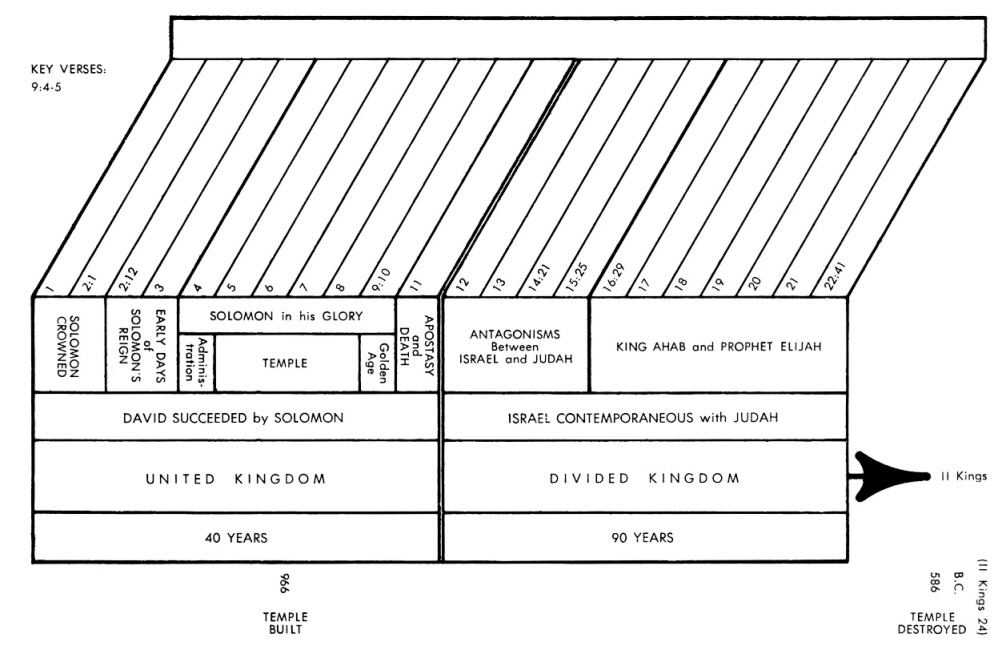
Chart from recommended resource Jensen's Survey of the OT - used by permission
1 Kings Chart from Charles Swindoll
THE DOWNWARD SPIRAL
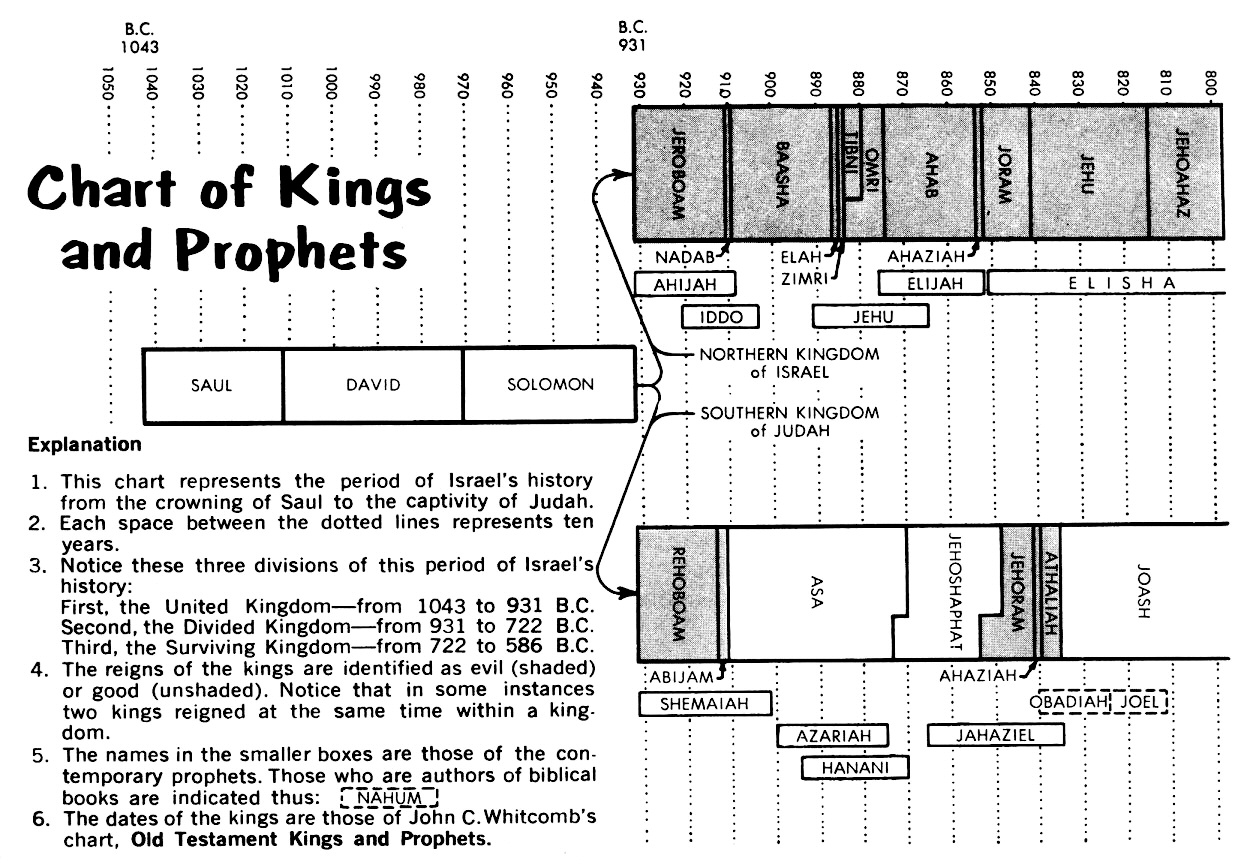
Click to Enlarge
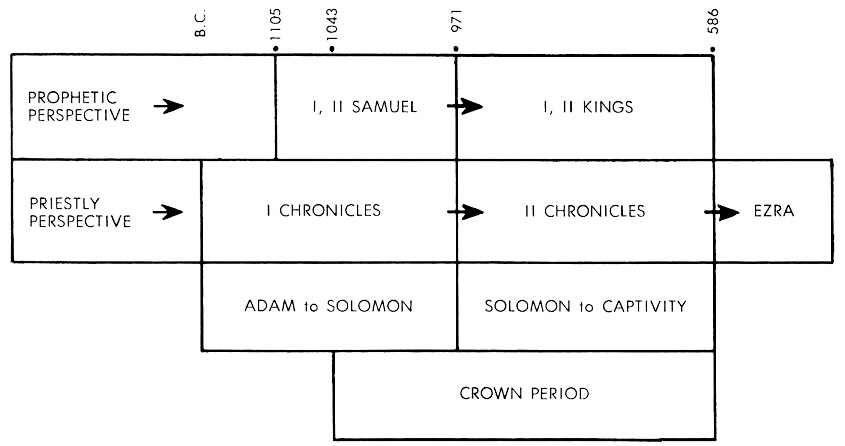
Comparison of 1 Samuel thru 2 Chronicles

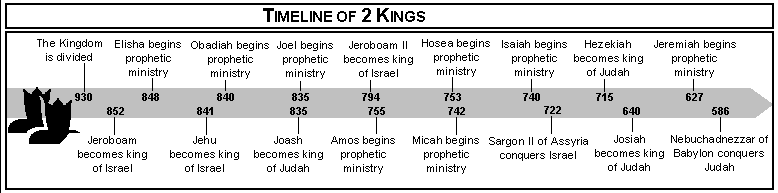
Ryrie Study Bible - Borrow
Click to Enlarge
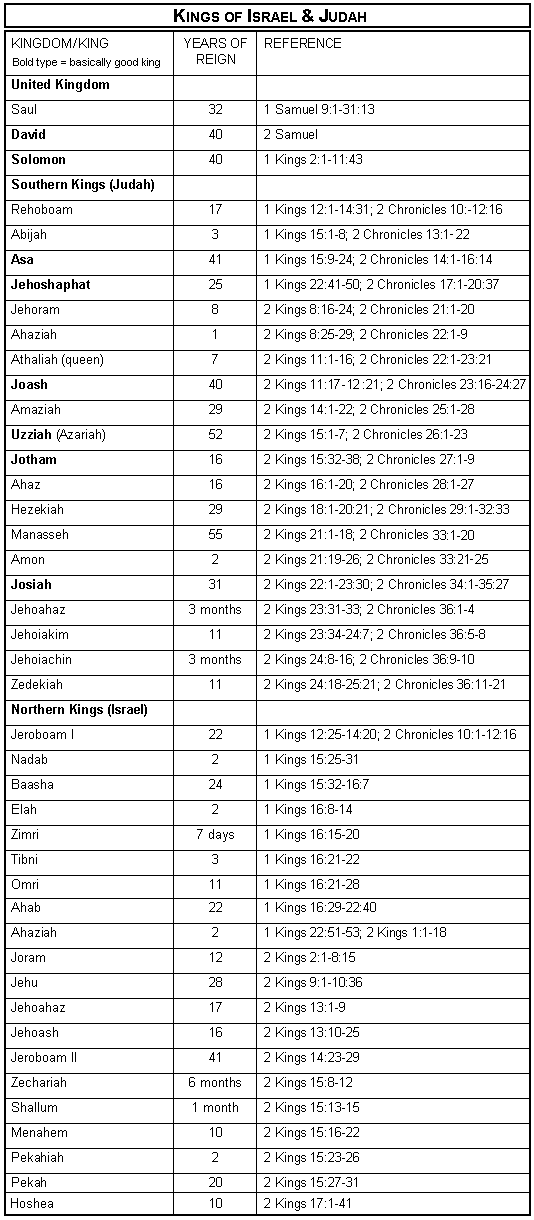
(NOTE: Many consider Amaziah and Hezekiah as "good" kings)
SEE ALSO:
ESV chart - kings of Israel - more information
ESV chart - kings of Judah - more information
Another Chart with Variable Dates for Reigns of Kings
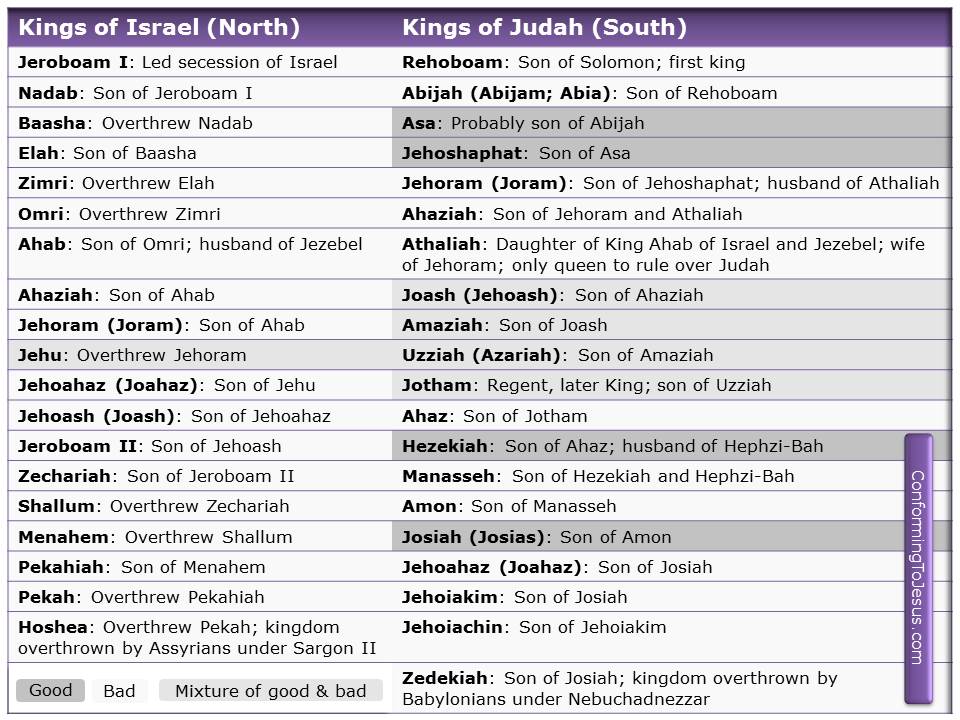
Source: ConformingtoJesus.com
2 Kings 8:1 Now Elisha spoke to the woman whose son he had restored to life, saying, “Arise and go with your household, and sojourn wherever you can sojourn; for the LORD has called for a famine, and it will even come on the land for seven years.”
- whose son: 2Ki 4:18,31-35
- sojourn: Ge 12:10 26:1 47:4 Ru 1:1
- the Lord: Ge 41:25,28,32 Lev 26:19,20,26 De 28:22-24,38-40 1Ki 17:1 18:2 Ps 105:16 107:34 Hag 1:11 Lu 21:11,22 Ac 11:28
- called for a famine: Jer 25:29
- seven years: Ge 41:27 2Sa 21:1 24:13 Lu 4:25
A Simple Outline on 2 Kings 8:
- 2 Kings 8:1-6 Protecting and Providing for the Shunammite Woman
- 2 Kings 8:7-15 "Anointing" Hazael as King of Aram
- 2 Kings 8:16-29 Transition of Royal Power in Judah
Related Passages:
2 Kings 4:38 When Elisha returned to Gilgal, there was a famine in the land. As the sons of the prophets were sitting before him, he said to his servant, “Put on the large pot and boil stew for the sons of the prophets.”
Amos 3:6 If a trumpet is blown in a city will not the people tremble? If a calamity occurs in a city has not the LORD done it?
Deuteronomy 28:15, 23, 24 “But it shall come about, if you do not obey the LORD your God, to observe to do all His commandments and His statutes with which I charge you today, that all these curses will come upon you and overtake you....23 “The heaven which is over your head shall be bronze, and the earth which is under you, iron. 24 “The LORD will make the rain of your land powder and dust; from heaven it shall come down on you until you are destroyed.
Deuteronomy 28:38-40 (CURSE FOR DISOBEYING MOSAIC COVENANT RATIFIED WITH BLOOD! - cf Ex 24:7-8) “You shall bring out much seed to the field but you will gather in little, for the locust will consume it. 39 “You shall plant and cultivate vineyards, but you will neither drink of the wine nor gather the grapes, for the worm will devour them. 40 “You shall have olive trees throughout your territory but you will not anoint yourself with the oil, for your olives will drop off.
Psalm 37:19 They will not be ashamed in the time of evil, And in the days of famine they will have abundance.
Philippians 4:19 And my God will supply all your needs according to His riches in glory in Christ Jesus.
Leviticus 26:23-26 ‘And if by these things you are not turned to Me, but act with hostility against Me, 24 then I will act with hostility against you; and I, even I, will strike you seven times for your sins. 25 ‘I will also bring upon you a sword which will execute vengeance for the covenant; and when you gather together into your cities, I will send pestilence among you, so that you shall be delivered into enemy hands. 26 ‘When I break your staff of bread, ten women will bake your bread in one oven, and they will bring back your bread in rationed amounts, so that you will eat and not be satisfied.
Psalm 105:16 And He called for a famine upon the land; He broke the whole staff of bread.
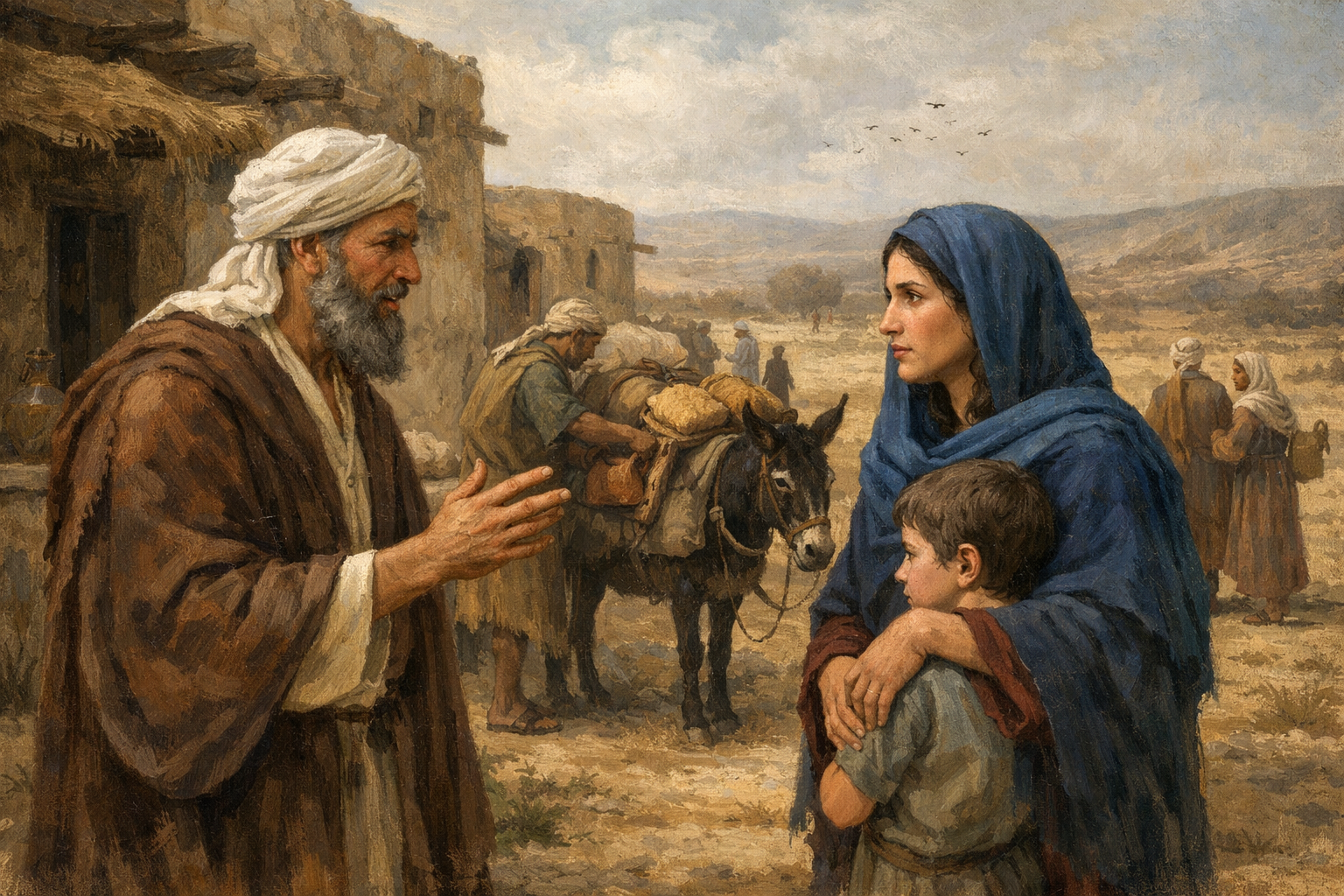
A PROPHETIC WARNING OF
FAMINE IN ISRAEL
This warning and instruction in 2 Kings 8:1 explain God’s gracious foreknowledge, His care for those who trust Him, and the seriousness of His sovereign control over national events. This verse refers to the Shunammite woman whose son Elisha had earlier raised from the dead (2 Kings 4:8–37).
The timing of these events is subject to some debate as some think this famine refers to 2Ki 4:38, especially given the fact that Gehazi was speaking to the king of Israel (2Ki 8:4).
John MacArthur summarizes the interpretations dealing with the chronology of the events in 2Ki 8:1-6 - The chronological question of when the events recounted in these verses took place in Elisha’s ministry has been much debated. Interpreters hold to one of 3 positions: (1) The encounter between the Shunammite woman, the king of Israel, and Gehazi took place toward the end of the reign of Jehoram in Israel. However, this would mean Gehazi was in the presence of the king (2Ki 8:4, 5) although afflicted with leprosy (2Ki 5:27) and King Jehoram was asking what great things Elisha had done after personally witnessing the events recorded in 2Ki 6:8–7:19. (2) Because the king of Israel did not know Elisha’s exploits, some interpreters place the final encounter during the early reign of Jehu. However, there are still the issues of Gehazi’s leprosy and Jehu’s being well acquainted with the prophecy of Elijah (2Ki 9:36, 37; 10:17) that predicted Elisha’s ministry (1Ki 19:15–18). (3) The best explanation is that the record is out of chronological sequence, being thematically tied to the subject of famine in 6:24–7:20, but having occurred earlier in the reign of King Jehoram of Israel, before the events recorded in 2Ki 5:1–7:20. (Borrow MacArthur Study Bible page 528) (Bolding added)
Past grace becomes the foundation
for present obedience.
Now Elisha spoke to the woman whose son he had restored to life (chayah; Lxx - zoporeo - quickened, filled with power) - Elisha grounds his command in a relationship already marked by grace the Shunammite woman has experienced (2 Kings 4:8-37). The God Who once raised her son from death now calls her to walk by faith again, and the memory of that earlier mercy strengthens her confidence in His new providential leading. Past grace becomes the foundation for present obedience. God does not speak to her through Elisha as a stranger but as someone who has experienced His power and faithfulness. God's prophet had given her life (a promised son), taken that life, and then given it back again in response to her incredible acts of faith. Now God protects the lives of not only her son, but her entire family. Amazing grace!
Saying, “Arise and go with your household, and sojourn (gur - dwell as a foreigner; Lxx - paroikeo - live as a stranger) wherever you can sojourn (gur; Lxx - paroikeo) - Elisha gives not one, but three commands which emphasize urgency. Arise signals immediate action, while sojourn indicates temporary residence, not permanent exile from her homeland. Elisha does not give her a specify a destination (wherever you can sojourn), which emphasizes that her safety lies not in geography but in her obedience to depart. This calls her to live as a pilgrim for a season, trusting God outside of her familiar land. Faith responds promptly, reminescent of Abram when he was commanded by Yahweh "Go forth from your country." (Ge 12:1).
With your household - God’s providence embraced not just the Shunammite woman, but her whole family. His care is never half–measured; when He cares for His people, He cares fully, faithfully, and comprehensively.
🙏 THOUGHT - Our English word “providence” comes from the Latin words pro (“before”) and videre (“to see”), meaning literally “to see beforehand.” But God does far more than merely foresee events. Providence means more than God merely foreseeing; it includes God’s wise planning, God’s preserving and governing and God’s working all things according to His purpose (Eph 1:11; Ro 8:28) In other words, God plans what is to come and perfectly accomplishes His purposes in history. A helpful way to think of providence is “God’s wise pre-arrangement and care of all things.” At the same time, God’s providence does not cancel human responsibility or our freedom to make real choices, nor does it remove accountability for the consequences of those choices.
For - Term of explanation. Always pause to ponder this useful "hinge word" FOR, for (pun) in so doing you will often receive (from the Spirit) some wonderful illumination. The reason for the explanation is straightforward in the present passage -- tough times are coming! (See Youtube Video on Hinge Words).
Recall of past deliverances
Can strengthen present faith.
The LORD (Jehovah -Yahweh) has called ("invited") for a famine (raab; Lxx - limos) - It is uncertain whether this famine was the same as described in 2Ki 4:38. Notice that no famine at any time or in any place is outside of the control of God. The phrase the LORD has called for reveals God's control over natural and national events (cf Ps 105:16). God is sovereign, (what word do you see in "sovereign"?) which in simple terms means that He is in complete control over ALL the affairs of nature and history (= HIS-story) and has the absolute right to act according to His perfect will and His good pleasure. It follows that no "famine" just "happens" in the land. The famine is not accidental, climatic, or merely political but is summoned by God Himself. The phrase underscores that scarcity, like abundance, is under the LORD’s command. This famine functions as discipline upon the land for breaking covenant (cf Ex 24:7,8), so that this is not a random "natural" disaster. It is more like a directed "supernatural" disaster! God’s control over the rain and harvest was part of His covenant relationship with Israel (Dt 28:23, 24). When His people obeyed, He promised abundance, but when they sinned, He sometimes withheld rain, sending famine as both judgment and a merciful call to repentance. Clearly the Northern Kingdom was a nation saturated with the sin of idol worship and so we are not surprised to see that Yahweh called for a famine.
🙏 THOUGHT - As an aside, it is worth noting the irony that the physical famine was the result of an already-present spiritual famine in the land—a far more deadly affliction, with not just temporal but eternal consequences! Long before bread and water were scarce, the Word of the LORD had become rare. As the prophet Amos warned Israel, “Behold, days are coming,” declares the Lord GOD, “When I will send a famine on the land, not a famine for bread or a thirst for water, but rather for hearing the words of the LORD.” (Amos 8:11)
Are you experiencing a famine for hearing the Word of God? Are you hearing (reading) God’s Word regularly or only faintly and infrequently? Is there evidence of spiritual fruit or are there only signs of spiritual famine in your life?
If you are experiencing spiritual famine and seek relief, the psalmist gives hope-filled words writing "My soul cleaves (dabaq - sticks like glue) to the dust (LIKE IN A SPIRITUAL FAMINE!); Revive (A PLEA OF URGENCY) me according to Your word." (Psalm 119:25) (See also The Secret of Revival - Mouth to Mouth Resuscitation)
And it will even come on the land for seven years - Note that God in using the word land does not specify that this famine will impact only the Northern Kingdom and the fact that the Shunammite ends up north in Philistine rather than south in Judah would support that the southern kingdom was also impacted. What Elisha does stress is (1) it is certain and (2) it is complete (the number seven). Seven years signals not just "completion," but a divinely determined time limit. Seven years not be just a brief time of hardship but would be a prolonged season. My yard experiences considerable negative impact from just one hot, rainless Texas summer!
All such calamities are chastisements inflicted by the hand of God, and this famine was to be of double duration compared to the one that occurred in the time of Elijah (James 5:17)—a just increase in severity, since the Israelites remained stubborn and incorrigible despite the ministry and miracles of Elisha (Leviticus 26:21, 24, 28).
Bob Utley - YHWH sent this famine as a way to cause Israel to repent and turn back to Him. This was one of the curses of Lev. 26:23-26; Deut. 28:17,23-24; Ps. 105:16; Jer. 14:26; Hag. 1:11.
Note that this passage highlights the principle that God warns His people in advance so they may act in faith, not panic. While judgment falls on the land, provision is made for those who heed God’s word. The Shunammite woman’s obedience becomes an act of faith, demonstrating that God’s warnings are themselves instruments of mercy. Yahweh governs history, foresees hardship, and lovingly directs His servants ahead of danger—not to remove them from all difficulty, but to preserve them through faithful obedience.
Dale Ralph Davis asks why would the prophet Elisha show such kindness to this woman? He answers by asking "Does it not go back to 2Ki 4:9,10, when this woman proposed a little house remodeling project to her husband? She sensed that Elisha was a ‘holy man of God’, i.e., Yahweh’s prophet, and wanted to make this accommodation for him. Simply because he was the Lord’s servant. It is an Old Testament case of Matthew 10:41–42 (cf. Heb. 6:10). God doesn’t miss cups of cold water (Matt. 10:42), and he remembers this woman’s kindness to his servant by granting kindness to her. BORROW 2 Kings: The Power and the Fury PAGE 132)
Restored (preserved, kept alive, revived)(02421) chayah means to have life, to live, to be alive, to keep alive. Causative to revive :- keep alive. Physical life originally came from God (Ge 2:7) but sin brought physical death as every man's experience. The fruit of the tree of life would have endowed man with immortality (Ge 3:22). God continues to be the source of life (Ps 36:9; Ps 139:13ff.) and the Lord of life and death (Nu 27:16; Dt. 32:39; Job 12:10). Psalm 119 employs this word to say that God's Word preserves life (all the following have the "prayer" from the psalmist to "revive me" Ps. 119:25, Ps 119:37 , Ps 119:40, Ps 119:88, cf Ezek 37:5, Isa 57:15 = “I dwell on a high and holy place, And also with the contrite and lowly of spirit In order to revive the spirit of the lowly And to revive the heart of the contrite."). Genesis often uses the word when people and animals are kept alive that otherwise would perish (Ge 6:19, 20; Ge 19:19; 47:25) Joseph declares " “As for you, you meant evil against me, but God meant it for good in order to bring about this present result, to preserve many people alive. (specifically in context the predecessors of the nation of Israel)" (Ge 50:20). Chaya is used in the genealogies of Genesis (Gen. 5:3-30; 11:11-26). chayah to instructs hearers to obey a command in order to live - "“Let your heart hold fast my words; Keep my commandments and live;"(Pr. 4:4). In the Qal (simple) form, the verb occurs some 120 times with the meaning "to remain alive" (Ex 1:16; Pr 4:4; Isa. 55:3). Famine serves covenant purposes—discipline that calls people back to God (Leviticus 26:18-20; Deuteronomy 11:16-17).
CHAYAH IN KINGS AND CHRONICLES - 1 Ki. 1:25; 1 Ki. 1:31; 1 Ki. 1:34; 1 Ki. 1:39; 1 Ki. 17:22; 1 Ki. 18:5; 1 Ki. 20:31; 1 Ki. 20:32; 2 Ki. 1:2; 2 Ki. 4:7; 2 Ki. 5:7; 2 Ki. 7:4; 2 Ki. 8:1; 2 Ki. 8:5; 2 Ki. 8:8; 2 Ki. 8:9; 2 Ki. 8:10; 2 Ki. 8:14; 2 Ki. 10:19; 2 Ki. 11:12; 2 Ki. 13:21; 2 Ki. 14:17; 2 Ki. 18:32; 2 Ki. 20:1; 2 Ki. 20:7; 1 Chr. 11:8; 2 Chr. 23:11; 2 Chr. 25:25
Famine (07458)(raab) means hunger, or famine which is a drastic, usually widespread food shortage, an extreme scarcity of food. Ra'ab means "hunger" as opposed to "thirst". In some areas the cause is overpopulation, but it is usually a failure of crops that results in a serious shortage of nutritional foods. The first famine is described in Genesis 12:10 "Now there was a famine in the land; so Abram went down to Egypt to sojourn there, for the famine was severe in the land." God allows or causes famines and clearly He was testing Abram's faith at this time. We see a repeat in Genesis 26:1 "Now there was a famine in the land, besides the previous famine that had occurred in the days of Abraham. So Isaac went to Gerar, to Abimelech king of the Philistines." Not only did famines occur in Canaan but Egypt also suffered cycles of famine (Ge 41:27, 30, 31). In Ps 105:16 "He called for a famine upon the land" and the result was that Jacob took his family to Egypt! (cf Ge 50:20) God is sovereign in History! Famine can be the discipline of God on His people (Isa. 5:13). Through His prophet Ezekiel God warned Judah (the 10 northern tribes having already been taken off into captivity by Assyria in 722BC) "Son of man (Ezekiel), if a country sins against Me by committing unfaithfulness, and I stretch out My hand against it, destroy its supply of bread, send famine against it, and cut off from it both man and beast even though these three men, Noah, Daniel and Job were in its midst, by their own righteousness they could only deliver themselves,” declares the Lord GOD." (Ezekiel 14:13-14) Famine is frequently mentioned in the terrible triad "sword, famine, and pestilence," (Jer. 14:13, 27:8, 13, 18, 32:24, 36, 34:17, 38:2, 42:17, 22, 44:13, Ezek 6:11), Famine is used figuratively of spiritual nourishment, God declaring "I will send a famine on the land, Not a famine for bread or a thirst for water, But rather for hearing the words of the LORD. sword, famine, and pestilence. Amos mentions a famine of the Word of God, not food, that the Lord will send!" (Amos 8:11). The line between famine and plenty in Palestine depends mainly on the rains coming at the right time and in the proper supply, famine was an ever-present threat.
In summary raab is a prolonged scarcity of food, accompanied by extreme hunger. It is listed as one of God’s ‘four sore acts of judgment’ along with the sword (war), evil beasts, and pestilence (Eze 14:21). It is also a divine judgment in Jeremiah, along with the sword (fourteen times), and with the sword and pestilence (fifteen times). In Dt 28:48, hunger is one of the many curses God will send for disobedience. Famine may lead to disease (Jer 14:18) and, most gruesome of all, cannibalism of one’s own offspring (Dt. 28:47-57). Other attendant judgments may be captivity (Jer 15:2), exile (Ezek 5:12), nakedness (Dt. 28:47)
RAAB IN KINGS AND CHRONICLES - 1 Ki. 8:37; 1 Ki. 18:2; 2 Ki. 4:38; 2 Ki. 6:25; 2 Ki. 7:4; 2 Ki. 8:1; 2 Ki. 25:3; 1 Chr. 21:12; 2 Chr. 6:28; 2 Chr. 20:9; 2 Chr. 32:11;
God used a "famine" as a means
of judgment (Jer 5:12),
of warning (1Ki 17:1), (Elijah)
of correction (2Sa 21:1),
of punishment (Jer 14:12),
of humbling (Dt 8:3)
of expressing sovereign control (Ru 1:1)
Bob Utley on the number "SEVEN"...
Seven ‒ divine perfection (i.e. originating from the seven days of creation in Genesis 1-2, BDB 987-988; KB 1399-1400; see NIDOTTE, vol. 4, pp. 34-37). It is used so often in the OT and NT (esp. the book of Revelation)
- seven candlesticks, Rev. 1:12,20; 2:1
- seven stars, Rev. 1:16,20; 2:1
- seven churches, Rev. 1:20
- seven spirits of God, Rev. 3:1; 4:5; 5:6
- seven lamps, Rev. 4:5
- seven seals, Rev. 5:1,5
- seven horns and seven eyes, Rev. 5:6
- seven angels, Rev. 8:2,6; 15:1,6,7,8; 16:1; 17:1
- seven trumpets, Rev. 8:2,6
- seven thunders, Rev. 10:3,4
- seven thousand, Rev. 11:13
- seven heads, Rev. 13:1; 17:3,7,9
- seven plagues, Rev. 15:1,6,8; 21:9
- seven bowls, Rev. 15:7; 21:9
- seven kings, Rev. 17:10
- there are also series/phrases used seven times
Here is a table summarizes some of the major Biblical famines and the general purpose of each famine...
| Famine | Reference | Divine Purpose |
|---|---|---|
|
Abraham |
Genesis 12:10 |
Test of faith |
|
Isaac |
Genesis 26:1–2 |
Obedience and covenant reaffirmation |
|
Joseph |
Genesis 41–47 |
Preservation of life, providence |
|
Ruth |
Ruth 1:1 |
Discipline, yet path to redemption |
|
David |
2 Samuel 21:1 |
Justice for covenant violation |
|
Elijah |
1 Kings 17–18 |
Judgment on idolatry |
|
Amos |
Amos 4; 8:11 |
Spiritual warning |
|
Claudius (NT) |
Acts 11:27–30 |
Opportunity for compassion |
QUESTION - What does the Bible say about famine? | GotQuestions.org
ANSWER - In many parts of the world today, food supply chains are an afterthought. But, throughout Scripture, famine was not an uncommon occurrence. While the physical causes of the famines varied, the Bible indicates that God is in control, even during times of scarcity. God’s desire in bringing famine upon Israel was to gain His people’s attention in a sure-fire way—through their stomachs.
Not all famines are a result of God’s direct judgment. We live in a world that has been cursed as a result of sin, and the ground does not produce like it did before the fall of man. Genesis 3:17–19 tells us that not only was mankind cursed, but also the entire creation. Through various times of famine, people have been faced with an opportunity to turn to the true God and Creator of everything. Joseph’s time in Egypt allowed him to administrate the country through a time of both incredible bounty and severe famine (Genesis 41:25–31). It’s clear that God had absolute power over this famine (verse 28), but it’s not described as a direct judgment since the famine became severe among many nations (verse 57).
There are many examples of famines that are similar to the one in Joseph’s time that are not given as any specific judgment. However, there are plenty of famines that were used as a judgment to display the severity of the people’s sin and to bring them to repentance. As Moses was giving the Israelites some final instructions from God, he spoke of the blessings and curses of either obeying or denying the Lord. If they chose to disobey God’s commands and follow idols, “then the Lord’s anger will burn against you, and he will shut up the heavens so that it will not rain and the ground will yield no produce, and you will soon perish from the good land the Lord is giving you” (Deuteronomy 11:17).
During the time of King Ahab, “the famine was severe in Samaria” (1 Kings 18:2). It’s no coincidence that Ahab had previously “set up an altar for Baal in the temple of Baal that he built in Samaria. Ahab also made an Asherah pole” (1 Kings 16:32–33). God had been crystal clear in the law: if Israel served false gods, then there would be famine in the land. Ahab bowed to false gods, and God stopped the rain. The famine during the reign of Ahab and Jezebel should have been no surprise to anyone.
Under the terms of the Old Covenant, people trying to live without God were often awakened to their true need by experiencing famine. Going without sufficient food has a way of getting our attention, as God well knows: “He humbled you, causing you to hunger and then feeding you with manna, which neither you nor your ancestors had known, to teach you that man does not live on bread alone but on every word that comes from the mouth of the LORD” (Deuteronomy 8:3).
Even worse than a famine of physical food is a famine of spiritual food. Because Israel rejected the prophets, God promised a severe judgment: “‘The days are coming,’ declares the Sovereign LORD, ‘when I will send a famine through the land—not a famine of food or a thirst for water, but a famine of hearing the words of the LORD’” (Amos 8:11). How tragic to turn a deaf ear to God and be given just what we want—silence from God!
Someday the curse upon the ground will be lifted as well, and
the new earth will never see a famine of any kind
-- Revelation 22:3
In His goodness, God sent His Son to earth. Jesus is the Bread of Life “that comes down from heaven and gives life to the world” (John 6:33). Jesus promised us that, through faith in Him, we will never experience spiritual famine again: “Whoever comes to me will never go hungry” (verse 35). So much better than the manna of the Old Testament, Jesus gives life forevermore: “I am the bread of life. Your ancestors ate the manna in the wilderness, yet they died. But here is the bread that comes down from heaven, which anyone may eat and not die. I am the living bread that came down from heaven. Whoever eats this bread will live forever” (verses 48–51). In Christ, there is no spiritual famine; rather, we have a veritable feast of God’s goodness. Someday the curse upon the ground will be lifted as well, and the new earth will never see a famine of any kind (Revelation 22:3).
Divine Direction By Dr. Denis Lyle- 2 Kings 8:1–6, especially 2 Kings 8:6
Introduction: One woman’s life-long ambition was to see the Holy Land. Before bed one night, she read some tour brochures and noticed that the airplane she would travel on would be a 747. When she woke up the next morning, her digital clock read, “7:47.” She took that as confirmation that her trip was in the will of God. Is that a proper way to determine God’s will? How do we know beyond doubt that we’re making the decisions God wants us to make? Does He guide today? Our story today sheds some light on the problem of guidance. Three key words seem to unlock the wealth of instruction in this short story.
1. Guidance. The woman in this story received guidance from the God of Elisha (v. 1). Elisha had a prior experience with her in chapter four: she attended to his physical needs and he raised her son from the dead (see 2 Kin. 4:1–37). The Lord guided this woman in a personal way. He used Elisha, someone who had previous experience with her, to speak His words directly to her. The Lord was particular in His guidance. He told her to leave home, and gave her a time frame to stay away from the land, which would experience famine. While particular in His guidance, the Lord was still partial in His revelation. He didn’t tell her what would happen in those seven years, or exactly where to live. God doesn’t tell us every detail of our lives in advance, but He guides us personally and very particularly, but one step at a time so that we might be totally dependent upon Him.
2. Obedience. Like her obedient ancestor, this daughter of Abraham went out not knowing where she would go (Heb. 11:8). She obeyed the Word of God that came through the servant of God (2 Kin. 8:2). Notice she obeyed this divine directive in spite of when it came. No evidence of famine existed. She had food, crops, and plenty of water. She also obeyed despite what it cost. She would have to leave her home, her circle of friends, her people (c.f. 2 Kin. 4:13). This woman also obeyed despite whom it crossed. Her neighbors must have thought her crazy. Why would she leave everything she worked for her entire life because of one command from a prophet? She knew it was the command of God!
3. Providence. What do we mean by providence? While the actual word providence, does not occur in the Bible, the doctrine does. Providence is the work of God in which He preserves all His creatures, is active in all occurrences in the world, and directs everything to its appointed end.
The woman in this story must have wondered about her home while she was away, what would become of it. She returned to the land after seven years of obedience to have her land restored to her. Not only this, but all the “proceeds of the field from the day she left until now” (v. 6). Imagine having a seven-year leave from work and returning to find that you’ve been paid as if you had worked! The Lord will bless your obedience!
Conclusion: Divine direction doesn’t necessarily mean the answer will be painted across the sky or come to you in a dream. When we have a personal relationship with God, He will personally guide us, especially through His Word. The Lord will work all things out in His providence. Guidance and providence are the Lord’s job. He never fails us. Our responsibility is obedience. Perhaps the Lord is calling you to make Him the Lord of your life today. He sent His Son as a sacrifice for your sins, and He wants you to come to know Him. Maybe the Lord is directing you to a new job, to a new ministry, or maybe to make some major changes in your life for Him. The Lord will guide you through the fiercest storms and through the calmest days, simply obey Him and you will be blessed beyond measure.
John Barry - Walk Like the Shunammite Connect the Testaments: A 365-Day Devotional with Bible - Page 54
2 Kings 8:1–9:29; Mark 16:1–20; Proverbs 6:28–35
Trust is a fickle matter. What does it take for us to trust another person—especially with our livelihood? Our decision to trust someone can usually be determined by whether we see God in that person.
When the Shunammite woman must decide whether to trust Elisha, it is a simple choice. God has already worked in her life through Elisha—giving her a son and then resurrecting him—so she understands that what he says is from Yahweh. When Elisha says to her, “Get up and go, you and your household, and dwell as an alien wherever you can, for Yahweh has called for a famine, and it will come to the land for seven years,” she trusts him (2 Kgs 8:1). She goes to Philistia (2 Kgs 8:2).
Would we do the same—leave everything and go to a foreign land at one godly person’s word? What does it take for us to trust someone with our lives? What does it take for us to trust God with our lives?
We will probably never encounter the decision the Shunammite woman had to make, but contemplating our answer reveals where we stand with God and others. It’s tempting to answer with a quick, “Of course,” but that would be to ignore the magnitude of her decision, and thus deny the seriousness of what God really asks of us—complete obedience, no matter what, to any degree necessary. Think about that for a moment: any degree necessary (compare Mark 8:34–38).
Are we really willing to acknowledge the gravity of what Jesus did in His death and resurrection (Mark 16:1–10)? Are we willing to live our lives as He intends? Are we willing to go to any place, to trust the word of God completely, to allow God to speak to us directly and through others, and to live passionately for Christ despite the cost?
Are you willing to go wherever God calls you?
- Sent by God -Psalms 10:16
- Often on account of sin -Leviticus 26:21,26; Lamentations 4:4, 5, 6
- One of God’s four sore judgments -Ezekiel 14:21
CAUSED BY
- God’s blessing withheld -Hosea 2:8,9; Haggai 1:6
- Want of seasonable rain -1 Kings 17:1; Jer 14:1, 2, 3, 4; Amos 4:7
- Rotting of the seed in the ground -Joel 1:17
- Swarms of insects -Deuteronomy 28:38,42; Joel 1:4
- Blasting and mildew -Amos 4:9; Haggai 2:17
- Devastation by enemies -Deuteronomy 28:33,51
- Often long continued -Genesis 41:27; 2 Kings 8:1,2
- Often severe -Genesis 12:10; 1 Kings 18:2; Jeremiah 52:6
EXPRESSED BY
- Taking away the stay of bread, &c -Isaiah 3:1
- Cleanness of Teeth -Amos 4:6
- The arrows of famine -Ezekiel 5:16
- Often accompanied by war -Jeremiah 14:15; 29:18
- Often followed by pestilence -Jeremiah 42:17; Ezekiel 7:15; Matthew 24:7
THINGS EATEN DURING
- Wild herbs -2 Kings 4:39,40
- Ass’s flesh -2 Kings 6:25
- Dung -2 Kings 6:25; Lamentations 4:5
- Human flesh -Leviticus 26:29; 2 Kings 6:28,29
- Provisions sold by weight during -Ezekiel 4:16
- Suffering of brute creation from -Jeremiah 14:5,6
CAUSED
- Burning and fever -Deuteronomy 32:24
- Blackness of the skin -Lamentations 4:8; 5:10
- Grief and mourning -Joel 1:11-13
- Faintness -Genesis 47:13
- Wasting of the body -Lamentations 4:8; Ezekiel 4:17
- Death -2 Kings 7:4; Jeremiah 11:22
- God provided for his people during -1 Kings 17:4,9; Job 5:20; Psalms 33:19; 37:19
INSTANCES OF, IN SCRIPTURE
- In the days of Abraham -Genesis 12:10
- In the days of Isaac -Genesis 26:1
- In the days of Joseph -Genesis 41:53-56
- In the day of the Judges -Ruth 1:1
- In the reign of David -2 Samuel 21:1
- In the reign of Ahab -1 Kings 17:1; 18:5
- In the time of Elisha -2 Kings 4:38
- During the siege of Samaria -2 Kings 6:25
- Of seven years foretold by Elisha -2 Kings 8:1
- In the time of Jeremiah -Jeremiah 14:1
- During the siege of Jerusalem -2 Kings 25:3
- After the captivity -Nehemiah 5:3
- In the reign of Claudius Caesar Acts 11:28
- Before destruction of Jerusalem -Matthew 24:7
- The Jews in their restored state not to be afflicted by -Ezekiel 36:29,30
ILLUSTRATIVE OF
- A dearth of the means of grace -Amos 8:11,12
- Destruction of idols -Zephaniah 2:11
Sent as a judgment
- Leviticus 26:19-29; Deuteronomy 28:23,24,38-42; 1 Kings 17:1; 2 Kings 8:1; 1 Chronicles 21:12; Psalms 105:16; 107:33,34; Isaiah 3:1-8; 14:30; Jeremiah 19:9; 14:15-22; 29:17,19; Lamentations 5:4,5,10; Ezekiel 4:16,17; 5:16,17; 14:13; Joel 1:15,16; Amos 4:6, 7, 8, 9; 5:16,17; Haggai 1:10,11; Matthew 24:7; Luke 21:11; Revelation 6:5-8
Righteous delivered from -
- Job 5:20; Psalms 33:19; 37:19
2 Kings 8:2 So the woman arose and did according to the word of the man of God, and she went with her household and sojourned in the land of the Philistines seven years.
- with: 1Ti 5:8
- land: Jdg 3:3 1Sa 27:1-3
Related Passages:
1 Samuel 15:22 Samuel said, “Has the LORD as much delight in burnt offerings and sacrifices As in obeying the voice of the LORD? Behold, to obey is better than sacrifice, And to heed than the fat of rams.
Luke 11:28 But He said, “On the contrary, blessed are those who hear the word of God and observe it.”
James 2:17 Even so faith, if it has no works, is dead, being by itself.
Hebrews 11:7 By faith Noah, being warned by God about things not yet seen, in reverence prepared an ark for the salvation of his household, by which he condemned the world, and became an heir of the righteousness which is according to faith.
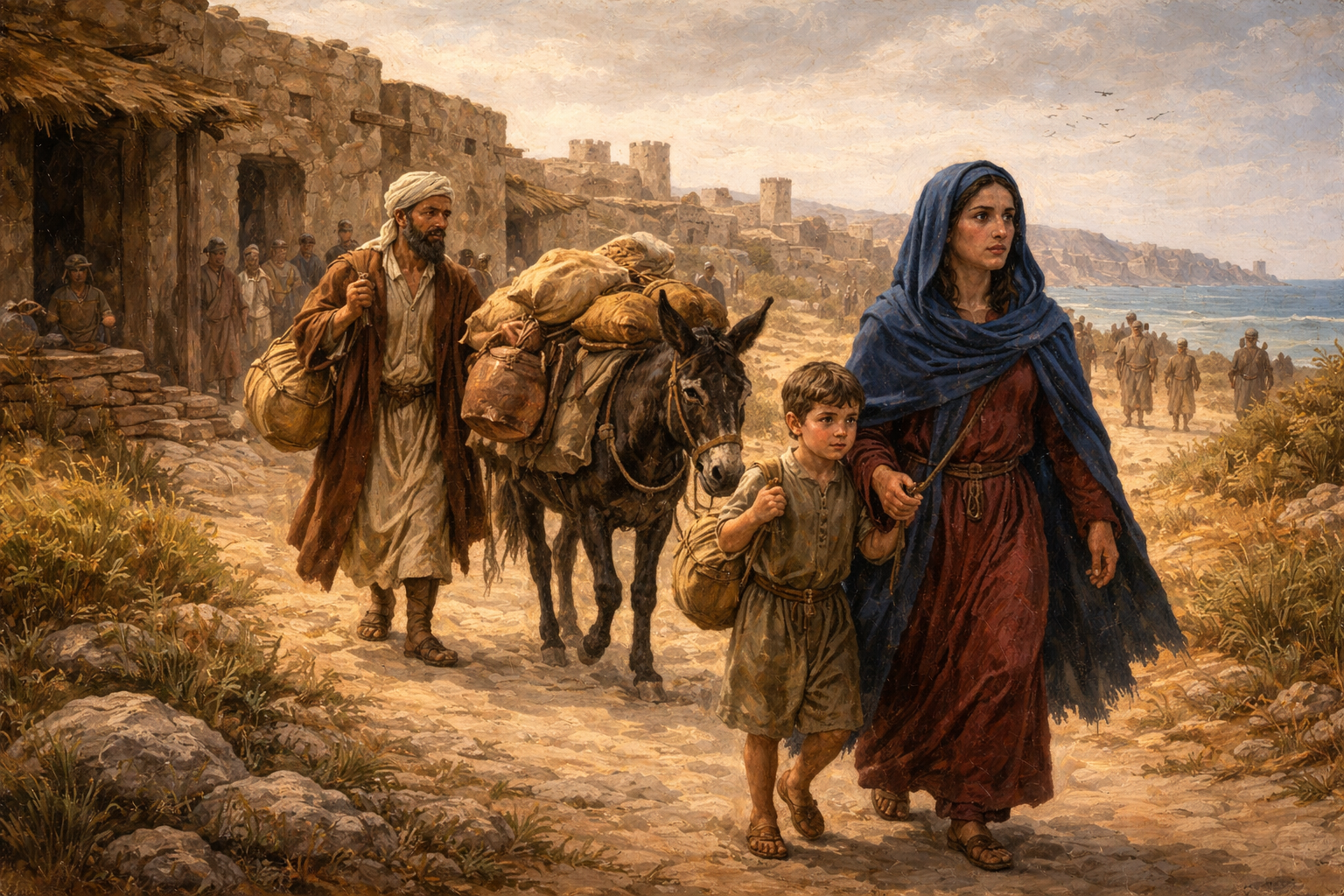
SHUNAMMITE AND FAMILY
SOJOURN TO PHILISTIA
So - Term of conclusion. Based on the word of God from the man of God, the Shunammite obeys without hesitation which mirrors Abram's prompt departure (Ge 12:4). Obedience springs from faith and James 2:22 joins the two.
Notice that this story makes absolutely no mention of the Shunammite's husband (cf 2Ki 4:14 "her husband is old"), so I think it is fair to say at this point she was a widow and we know God's watchcare for widows in the Bible! (See What does the Bible say about orphans and widows? | GotQuestions)
The woman arose and did according to the word of the man of God - Notice that she did not question Elisha, nor did she merely profess belief. Her prompt obedience spared her from the coming famine, echoing Noah’s quick compliance in Ge 6:22 (cf Heb 11:7). She acted on what he said. Her obedience involved costly disruption, abandoning home, fields, routines, and yet she submits without visible hesitation. This is a vivid example of genuine faith, not merely heard or spoken, but expressed in obedience. And remember that the cost of obedience is temporary, while the reward is enduring (cf Jn 15:16NIV = "go and bear fruit--fruit that will last"). One other point (we can all apply) is that her obedience impacted her entire family (cf Josh 24:15).
🙏 THOUGHT - We can apply this principle to those who profess faith in Jesus: Do they obey Him? Is there clear evidence of Spirit enabled works (e.g., Gal 5:22,23) that demonstrate their faith is genuine?
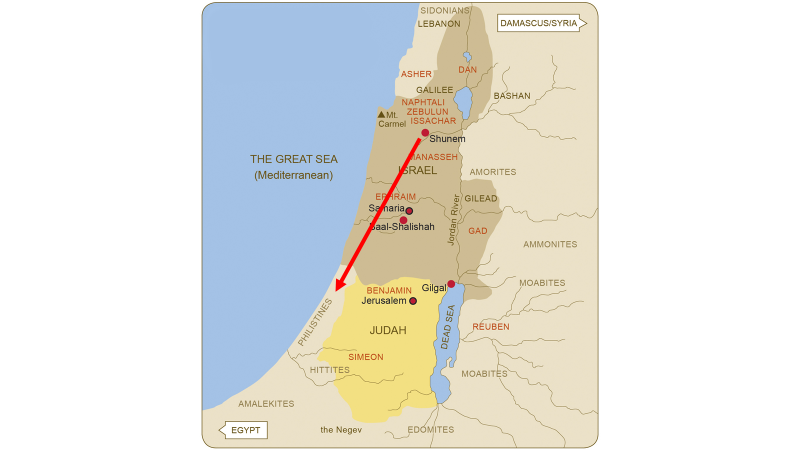
Shunammite's Journey from Shunem to Philistia
FROM SHUNEM TO
PHILISTIA
And she went with her household and sojourned (gur) in the land of the Philistines seven years - The Shunammite's home was in Shunem (2Ki 4:8) so presumbly this is where Elisha traveled to give her the news about the coming famine. From Shunem to Philistia (SW of Israel - see map) would be about 60-80 miles and take about 5-8 days on foot. Note that there is no famine in this pagan land, which supports the premise that the famine in Israel was a divine curse for apostasy (cf Dt 28:38-40+). What is not stated but clearly implied is that Yahweh provided a place and provision for the Shunammite in Gentile/pagan territory that was often an enemy of Israel. This brings to mind the great Name of our God Jehovah Jireh:, the LORD will Provide! Elisha had told her the length of the famine would be 7 years. A seven-year famine also appears in Genesis 41:29,30,31 a number often associated with completeness. This emphasizes that the famine in Elisha’s day was not random weather but a sovereign decree of God. And her perseverance through the entire appointed seven year season brought later restoration (cf Jas 5:11). Philistia, once Israel’s enemy (1Sa 17:1–51), becomes her refuge, showing that God can use unlikely places for protection (Mt 2:13–15), which underscores God’s sovereignty over all territories (Ps 24:1).
🙏 THOUGHT - This faithful OT woman lived as an alien and a stranger even as NT believers are called to live (1Pe 2:11) in the temporary, passing (1Jn 2:17), present evil age (Gal 1:4), daily fortified by His Word (Mt 4:4) and continually energized by His Spirit (Gal 5:16), all for His glory in Christ.
William Barnes on the Shunammite's movement to Phililistia in the famine - As in the book of Ruth, a family from the tribes of Israel, eventually headed by a woman, sought shelter in a nearby foreign land (ED: THESE PAGAN LANDS HAD NO COVENANT OBLIGATIONS TO YAHWEH AND THUS WERE MORE LIKELY TO FREE OF FAMINES THAT GOD SENT ON HIS COVENANT PEOPLE AS A JUDICIAL CURSE). whose people were often Israel’s bitter enemies (Ru 1:1-4). In Naomi’s case it was Moab, and in the present case, Philistia. Inasmuch as Elisha told the Shunammite merely to move “to some other place” (see the second note on 8:1), Philistia represented a logical choice: relatively close to her home town and likely to be quite fertile since it would generally receive adequate rainfall (Hobbs 1985:100). (See 1-2 Kings - Page 243)
Sojourn (reside)(01481) gur means a temporary stay, to reside temporarily, to dwell as a foreigner; a short stay somewhere. In the reflexive sense, to seek hospitality with. The first use of gur is Ge 12:10 of the Abram (cp use with other patriarchs - Ge 20:1, 21:23, 34, 26:3, 32:4, 25:27, 47:4). The term is commonly used of the patriarchs who sojourned in Canaan (Gen. 26:3; 35:27); places outside Canaan (Gen. 12:10; 20:1; 21:23; 32:4[5]; 47:4); Naomi and her family in Moab (Ruth 1:1); the exiles in Babylonia (Jer. 42:15). Metaphorically, the term is used of one who worships in God’s temple (Ps. 15:1; 61:4[5]). It is used reflexively with the meaning to seek hospitality with in 1 Kings 17:20.
GUR IN KINGS AND CHRONICLES - 1 Ki. 17:20; 2 Ki. 8:1; 2 Ki. 8:2; 1 Chr. 16:19; 2 Chr. 15:9;
God is still our DELIVERER! Let the music of Rich Mullins' song MY DELIVERER encourage you in whatever trial you are currently experiencing. As my mentor Dr Wayne Barber used to say, you are either in trial, coming out of one or getting ready to enter a new one! (1Co 10:13, 1Th 5:18, Jas 1:2-4)
The God Who delivered the Shunammite woman in her crisis has not changed (Heb 13:8). The same God Who moved kings (Pr 21:1, Isa 44:28, Isa 45:1-25), managed timing (Eccl 3:1), orchestrated providence (Ru 1:1), restored what was lost (2Ki 4:8–35, 36, 37, 2Ki 6:5,6,7), and protected her future is the same faithful DELIVERER we trust today. Deliverance is not just something God once did but is part of Who He is.
Sometimes God delivers by removing us from danger. Sometimes He delivers by sustaining us through it (1Co 10:13). And sometimes He delivers by restoring what seemed gone forever. But in every season, He is at work, often silently, always sovereignly, never carelessly or without purpose. We may not always see His hand, but we can always trust His heart.
When we cannot trace His hand,
we can always trust His heart.So when fear rises, circumstances overwhelm, and the future feels uncertain, we anchor ourselves in this unshakable truth:
God HAS delivered. God IS delivering. God WILL yet deliver. (2 Corinthians 1:10)The world may shift, kings may change, seasons may bring famine or abundance—but our DELIVERER remains faithful. Trust Him. Wait on Him. Rest in Him (Ps 46:10). He is still the God Who steps in at the perfect moment.
God is forever our DELIVERER!
• Joseph in Egypt – Genesis 45:7; 50:20
“God sent me before you to preserve for you a remnant on the earth…” Though betrayed, Joseph became the channel of provision for Israel during famine.
• Elijah at the Kerith Ravine – 1 Kings 17:2-6
Ravens brought bread and meat twice daily; the brook supplied water. God orchestrated nature itself.
• Widow of Zarephath – 1 Kings 17:8-16
A handful of flour and little oil never ran out during drought—personal, daily sustenance in scarcity.
• Israelites in the wilderness – Deuteronomy 2:7
“These forty years the LORD your God has blessed you; you have lacked nothing.” Shoes didn’t wear out, manna appeared each dawn.
• Ruth and Naomi – Ruth 2:12; 4:14
Loss and famine drove them to Moab, yet God led them back to Bethlehem and into Boaz’s fields, turning emptiness into lineage for the Messiah.
• David on the run – 1 Samuel 23:14
“Saul searched for him every day, but God did not deliver him into his hand.” Divine shields are often unseen.
• Three Hebrews in the furnace – Daniel 3:24-25
A fourth figure “like a son of the gods” walked with them; only their bonds burned.
• Daniel in the lions’ den – Daniel 6:22
“My God sent His angel and shut the lions’ mouths.” Isolation became a platform for testimony.
• Jeremiah in the cistern – Jeremiah 38:7-13
Rescued by Ebed-melech, a quiet reminder that God raises helpers from unexpected quarters.
• Jesus calming the storm – Mark 4:39; 6:48
He rebuked wind and waves; then walked on them. The Maker rules the chaos.
• Feeding the five thousand – John 6:11
Scarcity in a remote place transformed into abundance with twelve baskets left over.
• Paul in the storm and shipwreck – Acts 27:23-25, 44
“Not a single life will be lost.” Every person reached shore safely, fulfilling God’s word through His servant.
John Butler - HOW TO OBEY 2 Kings 8:2 - Sermon Starters
The Shunamite women who had helped Elisha by providing shelter for him was given a Divine warning by the prophet that a famine was coming. Elisha said it would last seven years and that she needed to move to some place where she and her household would be provided for during the famine. The warning was a reward for her providing for the prophet and her obedience to the warning demonstrated the excellent conduct of obedience.
FIRST—THE PROMPTNESS OF HER OBEDIENCE
“The woman arose, and did after the saying of the man of God.” As soon as the Divine warning was given she obeyed.
• The provision in her promptness. Promptness obtains many blessings from God. Procrastination is a good way to be barren of blessings. The lazy and dilatory will miss many good things from God. God does not wait for those who are dilatory.
• The persuasion for promptness. The Shunamite left Canaan when the land was still fertile. Crops still looked good. The famine had not come. But she left because she had faith in God’s Word. Faith is evidenced in promptness. Unbelief embraces procrastination.
SECOND—THE PERSPIRATION OF HER OBEDIENCE
“She went with her household.” Obedience is not easy. In fact it can be very hard work. The woman was a widow, and she had to move her household which would be very difficult and doubtless she had to hire some movers. Obedience required much hard work. Obedience comes with a high price tag, but it is worth it.
THIRD—THE PAIN IN HER OBEDIENCE
“She went.” The Shunamite would find leaving a painful experience emotionally. She had to leave a place she loved and move to a strange place. We do not like having to be inconvenienced this way, but you may have to leave behind your friends and relatives in order to obey. But obedience, not disobedience, is the way of blessing.
FOURTH—THE PLACE OF HER OBEDIENCE
“Sojourned in the land of the Philistines.” usually, in the Bible, going to Philistia was symbolic of backsliding. But not here. Philistia was on the coast of the Mediterranean, and was a land of plenty compared to a famine in Canaan. And if food failed in Philistia it could easily be brought by sea from Egypt. Obedience here demonstrate much prudence. Disobedience does just the opposite.
FIFTH—THE PATIENCE OF HER OBEDIENCE
“Seven years.” Elisha’s Divine message said that the famine would last seven years. That is a long time. But the women stayed in Philistia the full seven years. Obedience requires patience. You may get tired in obedience but do not get tired of obedience.
2 Kings 8:3 At the end of seven years, the woman returned from the land of the Philistines; and she went out to appeal to the king for her house and for her field.
- 2Ki 8:6 4:13 6:26 2Sa 14:4 Ps 82:3,4 Jer 22:16 Lu 18:3-5
Related Passages:
2 Kings 4:8 (THE SHUNAMMITE WAS WEALTHY - HAD A HOME AND FIELDS) Now there came a day when Elisha passed over to Shunem, where there was a prominent woman, and she persuaded him to eat food. And so it was, as often as he passed by, he turned in there to eat food.
SHUNAMMITE WOMAN'S
PROVIDENTIAL APPEAL FOR HER LAND
At the end of seven years - Again the timetable of God's prophet is perfect.
The woman returned from the land of the Philistines - During her absence, her home and land were no longer in her possession. This could have happened in several ways (although the text is silent). Property left vacant was often claimed by the crown during national crisis. Squatters or other landholders could have taken it. Royal officials may have managed abandoned property as state possession.
And she went out to appeal (tsaaq - to cry out to; Lxx - boao - crying for help - cf Lk 9:38)) to the king for her house and for her field - NET has "went to ask the king" but the Hebrew is stronger than just asking! The Hebrew verb appeal (tsaaq) speaks of a formal legal appeal for restoration of what rightfully belonged to her family. In the ancient Near Eastern world, appealing directly to the king, who was the final arbiter in disputes, was common, especially in cases involving land, inheritance, or injustices no ordinary court could resolve. God's providence was about to aid her appeal in the following passages (2Ki 8:5)! The king is not specified but most commentators feel this was King Jehoram (Joram). "Wiseman (1993:213), however, suggests that the king in question here may have been Jehu, since Joram presumably already knew Elisha quite well." (Barnes)
Bob Utley - After being gone for seven years, apparently someone had occupied her house and field. She appealed to the king, which was the right of every Israelite.
Harry E Shields "Her actions would have been the right thing to do in view of the laws of restoration (cf. Ex 21:2-3; Dt 15:1-6)." (See Moody Bible Commentary page 531)
2 Kings 8:4 Now the king was talking with Gehazi, the servant of the man of God, saying, “Please relate to me all the great things that Elisha has done.”
- Gehazi: 2Ki 5:20-27 2Ki 7:3,10
- Relate: Mt 2:8 Lu 9:9 Lk 23:8 Joh 9:27 Ac 24:24
- All the great: 2Ki 2:14,20-22,24 2Ki 3:14-16 2Ki 4:3-6,16,17 2Ki 5:14,27 2Ki 6:6,9-12, 2Ki 6:17-20,32 2Ki 7:1,16-20
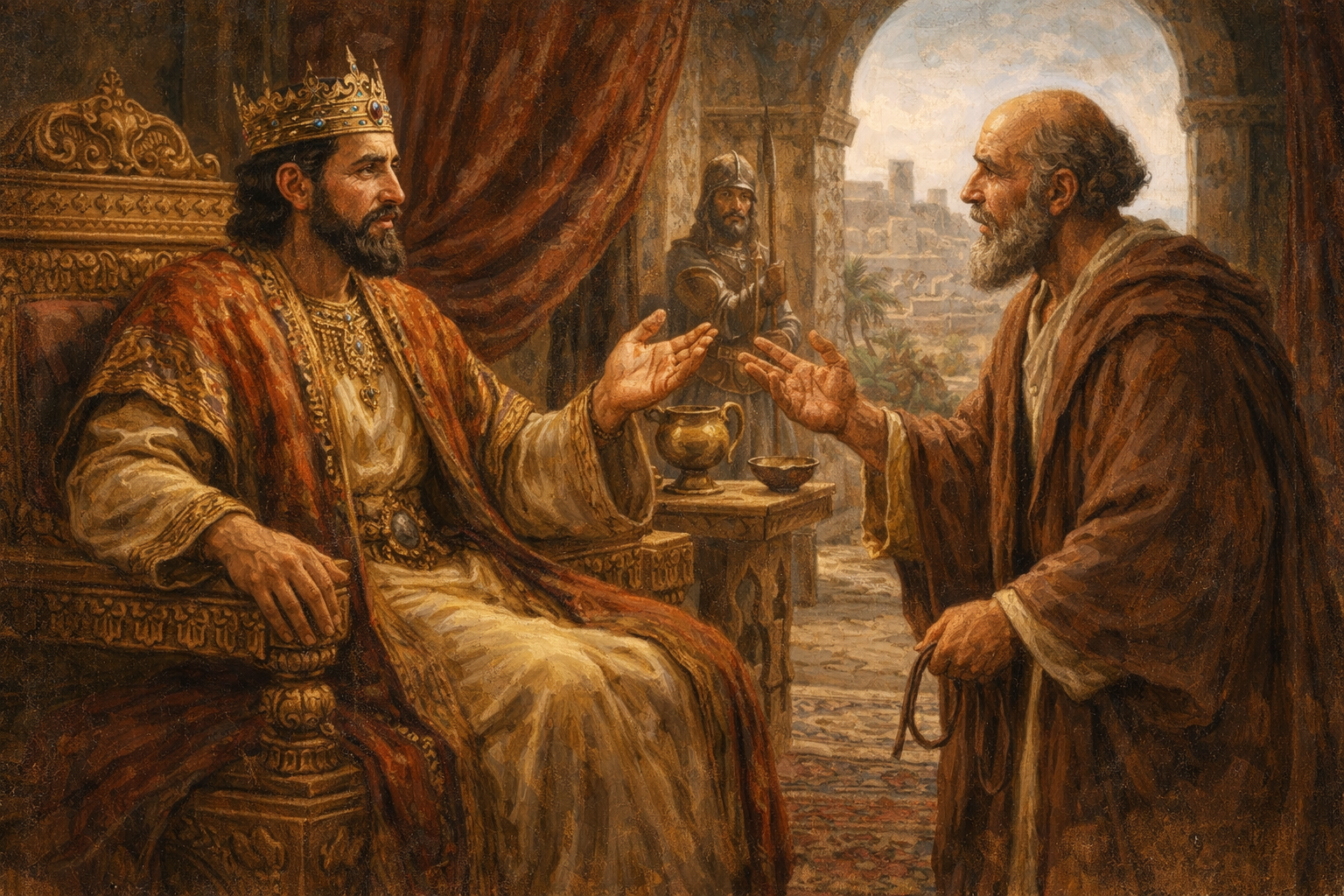
THE KING'S
CURIOSITY
Now the king was talking with Gehazi - Gehazi is the once famous, then infamous servant of Elisha. This is an unusual verse. At first it seems unlikely that the king would converse with a leper which has led some to suggest this occurred before Naaman’s cleansing. Some writers explain Gehazi's presence by saying the king likely had an intense curiosity about Elisha and was willing to overlook Gehazi’s condition, speaking with him at a safe distance since only physical contact would defile.
Dale Ralph Davis - Wait a minute, someone says. What’s Gehazi doing here, when he was stricken with leprosy in 2Ki 5:27? Wouldn’t he be excluded from general society? Probably so. But I think the writer expects you to use your noodle and to understand that his narratives are not necessarily in chronological order. Hence the Naaman episode actually occurred after this one in 2Ki 8:4–6. If you refer to my treatment of 2 Kings 5, and especially to the position of that chapter in the structure of 2 Kings 2–8, you will note that topical or theological considerations governed the writer’s placement of 2 Kings 5; chronology was not crucial there. (BORROW 2 Kings: The Power and the Fury PAGE 132)
The servant of the man of God - Gehazi is still called Elisha's servant. It does not say the one who had been (past tense) Elisha's servant.
Saying, “Please relate to me all the great things that Elisha has done - The king (probably still Jehoram although we cannot be dogmatic) was aware of some of the miracles as he had seen them first hand (in battle against Moabites 2Ki 3:14-25, warning of ambushes 2Ki 6:9,10, Arameans blinded 2Ki 6:20-23) but he wanted to know more.
MacArthur: The chronological question of when the events recounted in these verses took place in Elisha’s ministry has been much detailed. Interpreters hold to one of 3 positions:
1) The encounter between the Shunammite woman, the king of Israel, and Gehazi took place toward the end of the reign of Jehoram in Israel. However, this would mean Gehazi was in the presence of the king (vv. 4, 5) although afflicted with leprosy (2Ki 5:27) and King Jehoram was asking what great things Elisha had done after personally witnessing the events recorded in 2Ki 6:8 – 7:19.
2) Because the king of Israel did not know Elisha’s exploits, some interpreters place the final encounter during the early reign of Jehu. However, there are still the issues of Gehazi’s leprosy and Jehu’s being well acquainted with the prophecy of Elijah (9:36, 37, 10:17) that predicted Elisha’s ministry (1Ki 19:15-18).
3) The best explanation is that the record is out of chronological sequence, being thematically tied to the subject of famine in 2Ki 6:24 – 7:20, but having occurred earlier in the reign of King Jehoram of Israel, before the events recorded in 2Ki 5:1 – 7:20.
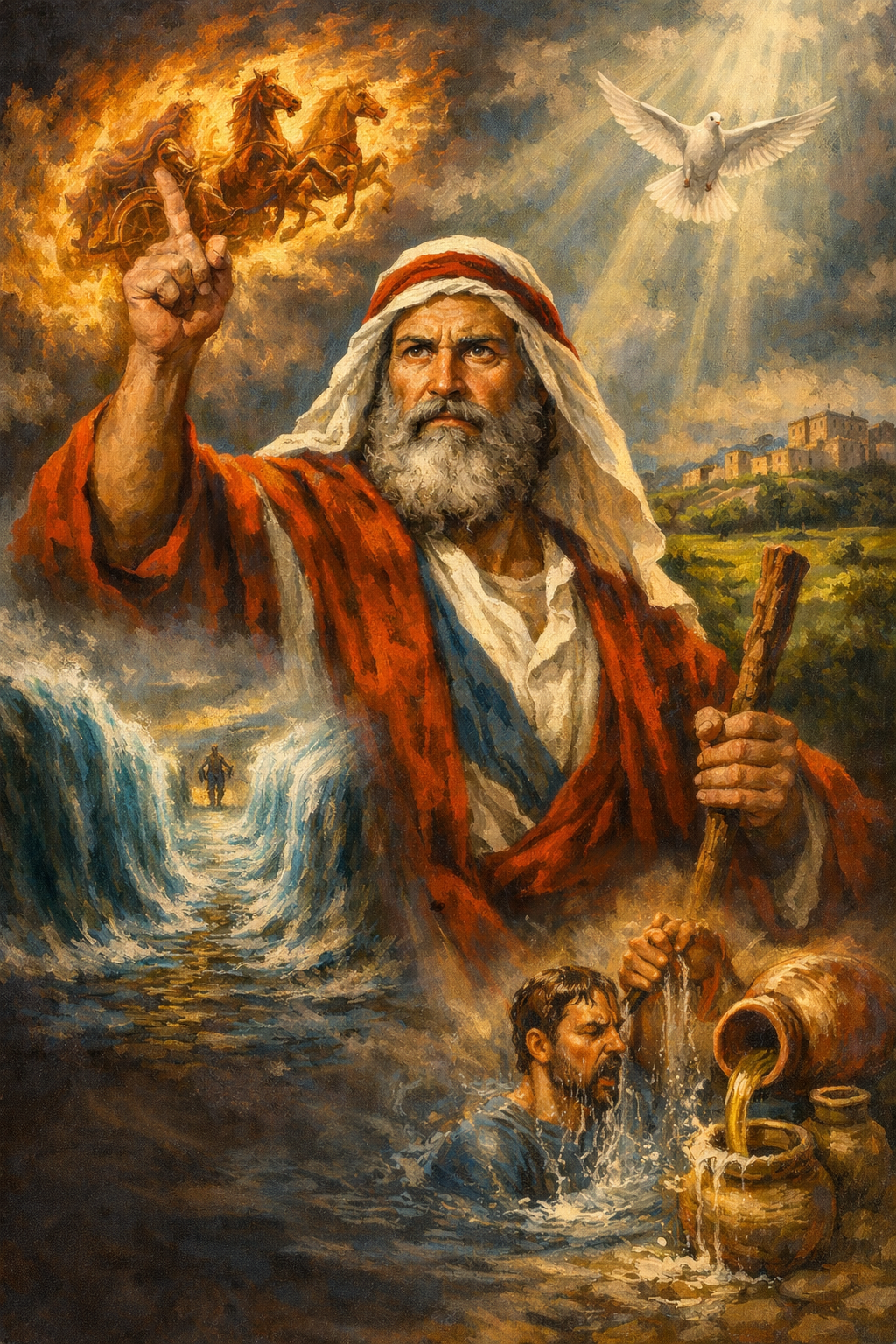
James Hastings - THE MAN OF MIRACLES (Note this is just the introduction to this lengthy discussion - click for full message)
An holy man of God, which passeth by us continually.—2 Kings 4:9.
All the great things that Elisha hath done.—2 Kings 8:4.
ELISHA is the subject of a number of narratives in the Second Book of Kings which not only cursorily mention him in connexion with a larger circle of events, but revolve solely round the illustration of his wonderful career. Although in the last resort derived from various sources, some older and some more recent, they constitute in every respect an unmistakable unity, and must have been recorded in a special work before they were incorporated in the Book of Kings. They all possess a certain resemblance in so far as they bring into prominence only the recollections of Elisha’s miracles. The province of religion is naturally always the province of miracles also, because it is that of pure and strong faith in the presence and operation of heavenly forces in human action as well as in human experience; where, therefore, true religion makes the most powerful efforts, there will be a corresponding display of miracles which will either actually take place through the activity of the believing spirit, or will be at any rate experienced by the believing heart; while to be powerfully moved, though only from a distance, by the might of such forces is in itself a gain. Thus far the age of Elijah and Elisha, when the true religion was obliged to maintain itself with the utmost force against its internal enemies, was as rich in miracles as the days of Moses and Joshua or the conclusion of the period of the Judges had been; only these miracles do not now, as in the time of Moses and Joshua, affect the whole nation, nor, as in the era of the last Judges, are they directed against a foreign people, but they proceed from a few individual prophets who are compelled as instruments of the ancient religion to exert all the greater power, as in the nation itself the true faith threatens to disappear. No such stories can be anything more than scattered traces of the action of a spirit in itself miraculous, and of the impression immediately produced by it; but that there is some spirit of power in religion to the agency of which they all point is only the more certain.
But this very element in the contents of such narratives, especially in Elisha’s case, has happily contributed to preserve other recollections which are not chiefly, still less solely, concerned with this peculiarity (cf. 2 Kings 3:9). And further, it is by no means to be overlooked that such recollections of the miraculous activity of such a spirit would, from the very first, be conceived in various ways by various dispositions; and in the course of time would assume very different forms. All the evidence points to the conclusion that the collection which was incorporated in the Book of Kings was not composed in its earlier shape till about one hundred years after Elisha, when there were no longer any of his disciples alive, and the whole memory of his miraculous career threatened to disappear.
2 Kings 8:5 As he was relating to the king how he had restored to life the one who was dead, behold, the woman whose son he had restored to life appealed to the king for her house and for her field. And Gehazi said, “My lord, O king, this is the woman and this is her son, whom Elisha restored to life.”
NET 2 Kings 8:5 While Gehazi was telling the king how Elisha had brought the dead back to life, the woman whose son he had brought back to life came to ask the king for her house and field. Gehazi said, "My master, O king, this is the very woman and this is her son whom Elisha brought back to life!"
BGT 2 Kings 8:5 καὶ ἐγένετο αὐτοῦ ἐξηγουμένου τῷ βασιλεῖ ὡς ἐζωπύρησεν υἱὸν τεθνηκότα καὶ ἰδοὺ ἡ γυνή ἧς ἐζωπύρησεν τὸν υἱὸν αὐτῆς Ελισαιε βοῶσα πρὸς τὸν βασιλέα περὶ τοῦ οἴκου ἑαυτῆς καὶ περὶ τῶν ἀγρῶν ἑαυτῆς καὶ εἶπεν Γιεζι κύριε βασιλεῦ αὕτη ἡ γυνή καὶ οὗτος ὁ υἱὸς αὐτῆς ὃν ἐζωπύρησεν Ελισαιε
LXE 2 Kings 8:5 And it came to pass, as he was telling the king how he had restored to life the dead son, behold, the woman whose son Elisaie restored to life came crying to the king for her house and for her lands. And Giezi said, My lord, O king, this is the woman, and this is her son, whom Elisaie restored to life.
CSB 2 Kings 8:5 While he was telling the king how Elisha restored the dead son to life, the woman whose son he had restored to life came to appeal to the king for her house and field. So Gehazi said, "My lord the king, this is the woman and this is the son Elisha restored to life."
ESV 2 Kings 8:5 And while he was telling the king how Elisha had restored the dead to life, behold, the woman whose son he had restored to life appealed to the king for her house and her land. And Gehazi said, "My lord, O king, here is the woman, and here is her son whom Elisha restored to life."
NIV 2 Kings 8:5 Just as Gehazi was telling the king how Elisha had restored the dead to life, the woman whose son Elisha had brought back to life came to beg the king for her house and land. Gehazi said, "This is the woman, my lord the king, and this is her son whom Elisha restored to life."
NLT And Gehazi was telling the king about the time Elisha had brought a boy back to life. At that very moment, the mother of the boy walked in to make her appeal to the king about her house and land."Look, my lord the king!" Gehazi exclaimed. "Here is the woman now, and this is her son-- the very one Elisha brought back to life!"
- he had restored: 2Ki 4:35
- the woman: Ru 2:3 Es 5:14 6:11,12 Pr 16:9 Ec 9:11 Mt 10:29,30 Ac 8:27-40 Ro 8:31
- My lord: 2Ki 6:12,26 1Sa 26:17 Ps 145:1
Related Passages:
Exodus 5:15 (NOTE "CRY OUT" WAS TECHNICAL TERM PLEADING FOR JUSTICE) Then the foremen of the sons of Israel came and cried out (tsaaq) to Pharaoh, saying, “Why do you deal this way with your servants?
Exodus 22:23; 27 “If you afflict him at all, and if he does cry out (tsaaq) to Me, I will surely hear his cry; (22:27) for that is his only covering; it is his cloak for his body. What else shall he sleep in? And it shall come about that when he cries out (tsaaq) to Me, I will hear him, for I am gracious.
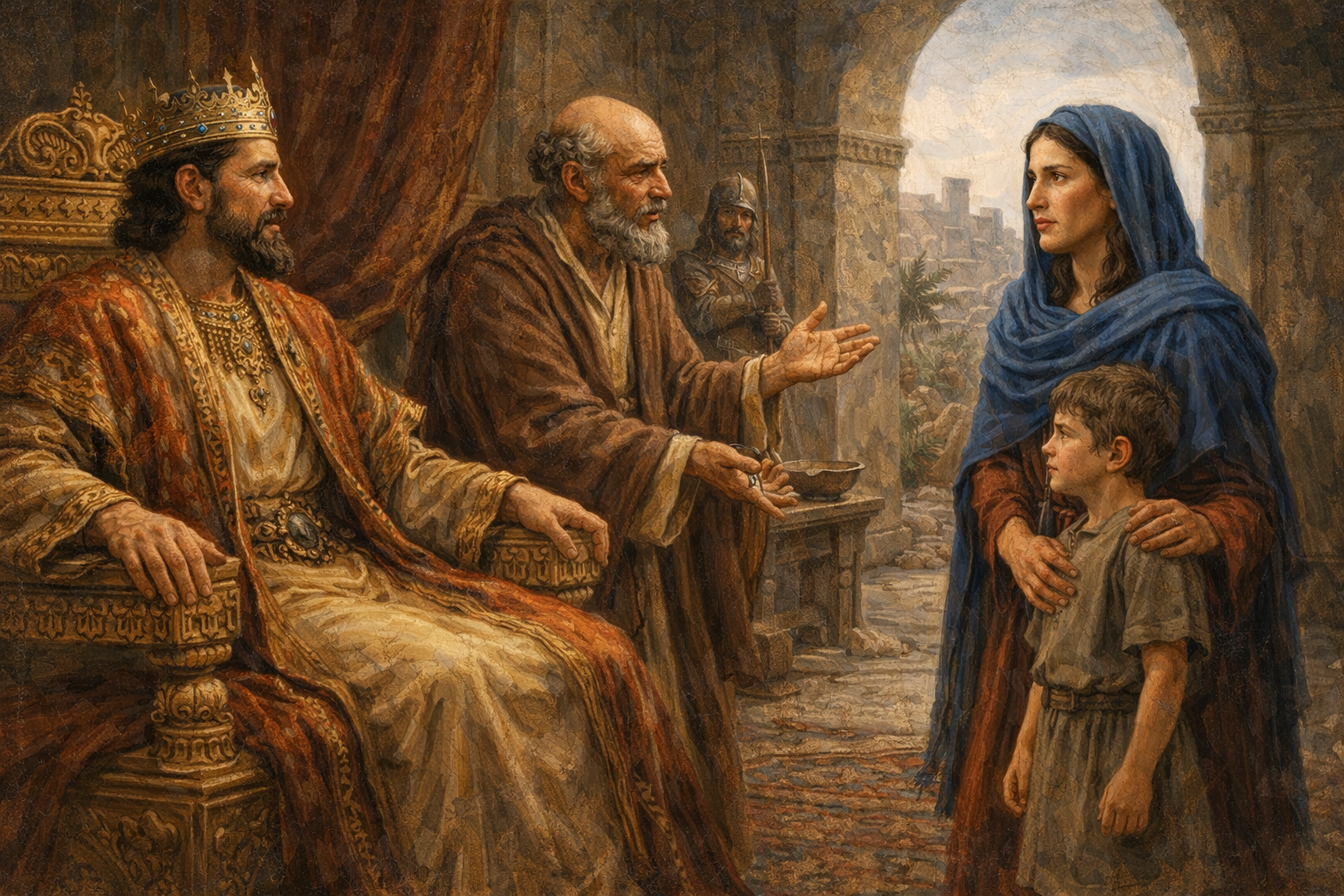
GOD'S PROVIDENTIAL
PROVISION
As he was relating to the king how he had restored to life (chayah; Lxx - zoporeo - quickened, filled with power) the one who was dead, behold, (hinneh; Lxx - idou - used to grab the reader's attention) the woman whose son he had restored to life appealed (tsaaq - cried out; Lxx - boao - crying for help - cf Lk 9:38) to the king for her house and for her field - NLT has a vivid paraphrase = "And Gehazi was telling the king about the time Elisha had brought a boy back to life. At that very moment, the mother of the boy walked in to make her appeal to the king about her house and land." In God’s providence, the Shunammite woman whose son Elisha had restored to life arrived to plead her case and God had already provided a witness to testify on her behalf.
Donald Wiseman: The king was the court of appeal for all matters of land tenure (cf. 1 Kgs 21), so she went to the king as the owner of all property taken over during her absence. That she went to “cry out” (Heb. tsaaq) for her house (v. 5) indicates that this was a legal term of stronger import than beg (NIV or ‘sought an audience of the king’ to beg, NEB, REB; ‘appealed,’ RSV). ‘Lodge a claim’ (JB) bring out the sense well (as in Akkad. ragâmu). The king (2Ki 8:4) is not named, and since Gehazi is in the royal presence it may be assumed that this was before his dismissal as Elisha’s servant (2Ki 5:27).
And Gehazi said, “My lord, O king, this is the woman and this is her son, whom Elisha restored to life (chayah; Lxx - zoporeo - quickened, filled with power) - NLT = "Gehazi exclaimed. "Here is the woman now, and this is her son-- the very one Elisha brought back to life!" Gehazi in effect says "“The miracle I was just telling you about? Here’s the living proof standing in front of you." God not only guided her out during famine; He guided her return—and prepared the testimony ahead of her arrival. It reminds us that God often goes before His people, arranging conversations, hearts, and circumstances to accomplish His purposes and display His faithfulness.
Gary Inrig - We are surprised to read about the presence of Gehazi. This may mean that this episode took place before the Naaman miracle or that he had a low-grade leprosy, allowing him to continue public service. We are also surprised by the king having a positive interest in the deeds of Elisha. But the major point of the story is that it was just as Gehazi was telling the king how Elisha had restored the dead to life that the woman and her son appeared. Gehazi interrupted his story to declare: This is the woman, my lord the king, and this is her son whom Elisha restored to life. (See Holman Old Testament Commentary - 1 & 2 Kings)
Warren Wiersbe's (p693) thoughts on the timing given that Gehazi is speaking - Obviously this event had to take place before the healing of Naaman (2 Kings 5), since the king wasn’t likely to welcome a leper into the palace, and Gehazi was a leper (2Ki 5:27). The author of 2 Kings doesn’t claim to follow a strict chronology, and we’re not even sure which king Gehazi was entertaining with stories about his master. Perhaps this event occurred early in the reign of King Joram. This account reminds us of the greatness of the Lord. The events that follow reveal the sinfulness of people, but this section gives us a reminder that God is great and will accomplish His purposes in spite of the sinfulness of people, great and small.
Appealed (cried out) (06817) tsaaq cry out, to summon. It refers to shouting, complaining loudly, to pleading for relief or justice, calling for help. Gilbrant - The verb occurs nearly fifty times in the Qal with the sense of crying out for help and consolation from suffering or injustice (e.g., 2 Ki. 8:3, 5; Job 19:7; Isa. 42:2). God heard the blood of Abel, which cried out from the ground for justice (Gen. 4:10). Tsāʿaq is frequently used to express the kinds of prayers directed to God in the midst of a despairing crisis. Moses, while leading the Israelites out of Egypt and through the wilderness, faced numerous difficult situations. And with the added complaints of the people, he would often cry out in desperation to the Lord for direction and strength (cf. Exo. 17:4). The verb is used frequently to describe the call for deliverance of the Israelites from the Egyptians and other oppressors (Num. 20:16; Deut. 26:7; Judg. 10:12; Neh. 9:27; Isa. 19:20).
Appeals in 2Ki 8:3,5 can be a technical term to describe a plea for royal justice. Israel appeals to the LORD for justice in Ex 5:15, Ex 22:23, 27.
TSAAQ 53V- Gen. 4:10; Gen. 27:34; Gen. 41:55; Exod. 5:8; Exod. 5:15; Exod. 8:12; Exod. 14:10; Exod. 14:15; Exod. 15:25; Exod. 17:4; Exod. 22:23; Exod. 22:27; Num. 11:2; Num. 12:13; Num. 20:16; Deut. 22:24; Deut. 22:27; Deut. 26:7; Jos. 24:7; Jdg. 4:3; Jdg. 7:23; Jdg. 7:24; Jdg. 10:12; Jdg. 10:17; Jdg. 12:1; 1 Sam. 10:17; 1 Sam. 13:4; 1 Ki. 20:39; 2 Ki. 2:12; 2 Ki. 3:21; 2 Ki. 4:1; 2 Ki. 4:40; 2 Ki. 6:5; 2 Ki. 6:26; 2 Ki. 8:3; 2 Ki. 8:5; 2 Chr. 13:14; Neh. 9:27; Job 19:7; Job 35:12; Ps. 34:17; Ps. 77:1; Ps. 88:1; Ps. 107:6; Ps. 107:28; Isa. 19:20; Isa. 33:7; Isa. 42:2; Isa. 46:7; Isa. 65:14; Jer. 22:20; Jer. 49:3; Lam. 2:18
Tsāʿaq is also used to describe a lament of sorrow or even regret. When Esau realized that Jacob had beguiled him out of his birthright and that nothing could be done to reverse the situation, "He cried out with a great and exceeding bitter cry" (Gen. 27:34). The laments of the people became great because of the desolation of the land (Isa. 33:7; Jer. 22:20). Rivers of tears flowed continually over the destruction of Jerusalem (Lam. 2:18). Elisha cried when Elijah was taken up to the heavens (2 Ki. 2:12).
The lament cry is a loud cry driven with much emotion and is at times coupled with other physical responses. The loudness of such a cry is not for the sake of being heard from a great distance but because of the extreme need for urgent help while in a desperate situation. But unlike a boisterous weeping or wail as a result of pain or grief, tsāʿaq exhibits a certain potential to provide an immediate change in the situation of distress. That is to say, the cry or lament for help is directed to someone or something that can provide help.
2 Kings 8:6 When the king asked the woman, she related it to him. So the king appointed for her a certain officer, saying, “Restore all that was hers and all the produce of the field from the day that she left the land even until now.”
- a certain officer,, 2Ki 9:32 Ge 37:36 1Ch 28:1
- Restore all: De 22:2 Jdg 11:13 2Sa 9:7 Pr 16:7 21:1
Related Passages:
Deuteronomy 22:2 “If your countryman is not near you, or if you do not know him, then you shall bring it home to your house, and it shall remain with you until your countryman looks for it; then you shall restore it to him.
SHUNAMMITE'S APPEAL
APPROVED BY KING
When the king asked the woman, she related it to him - The king questioned the Shunammite woman about Gehazi’s astonishing story, and she confirmed the testimony in detail telling him firsthand what God had done through Elisha and why she was appealing for her land and house.
So the king appointed for her a certain officer, saying, “Restore all that was hers and all the produce of the field from the day that she left the land even until now - Note that kings of Israel were expected to provide for widows and the orphans (cf. Dt 15:4–11; Ps 72:1–4, 12–14; Isa 1:17; Jer 7:6–7) The king ordered restoration of her house, her land and financial restitution for everything her land would have produced (or did produce) over the seven years she was gone during the famine. This included all crops, harvest income, and potential profits that others had gained from her property while she had been obedient to God’s warning through Elisha.
Harry E Shields "God’s sovereignty and faithfulness would appear again and again in the remaining chapters of the book.....Nothing in the text indicates that Gehazi had been restored to health following the judgment of leprosy against him (cf. 5:27). However, this woman, because of her faithfulness in obeying the word of the Lord through Elisha, had seen both the restoration of life and property. God’s sovereignty watches over those who care for His messengers. (See Moody Bible Commentary page 531)
Bob Utley on a certain officer - The Masoretic Text has the NOUN (BDB 710; NIDOTTE, vol. 3, pp. 288-294) "eunuch," which literally refers to a castrated servant. However, very early it became a title. Joseph's master is called by this term and had a wife (cf. Ge 37:36; Ge 39:1).
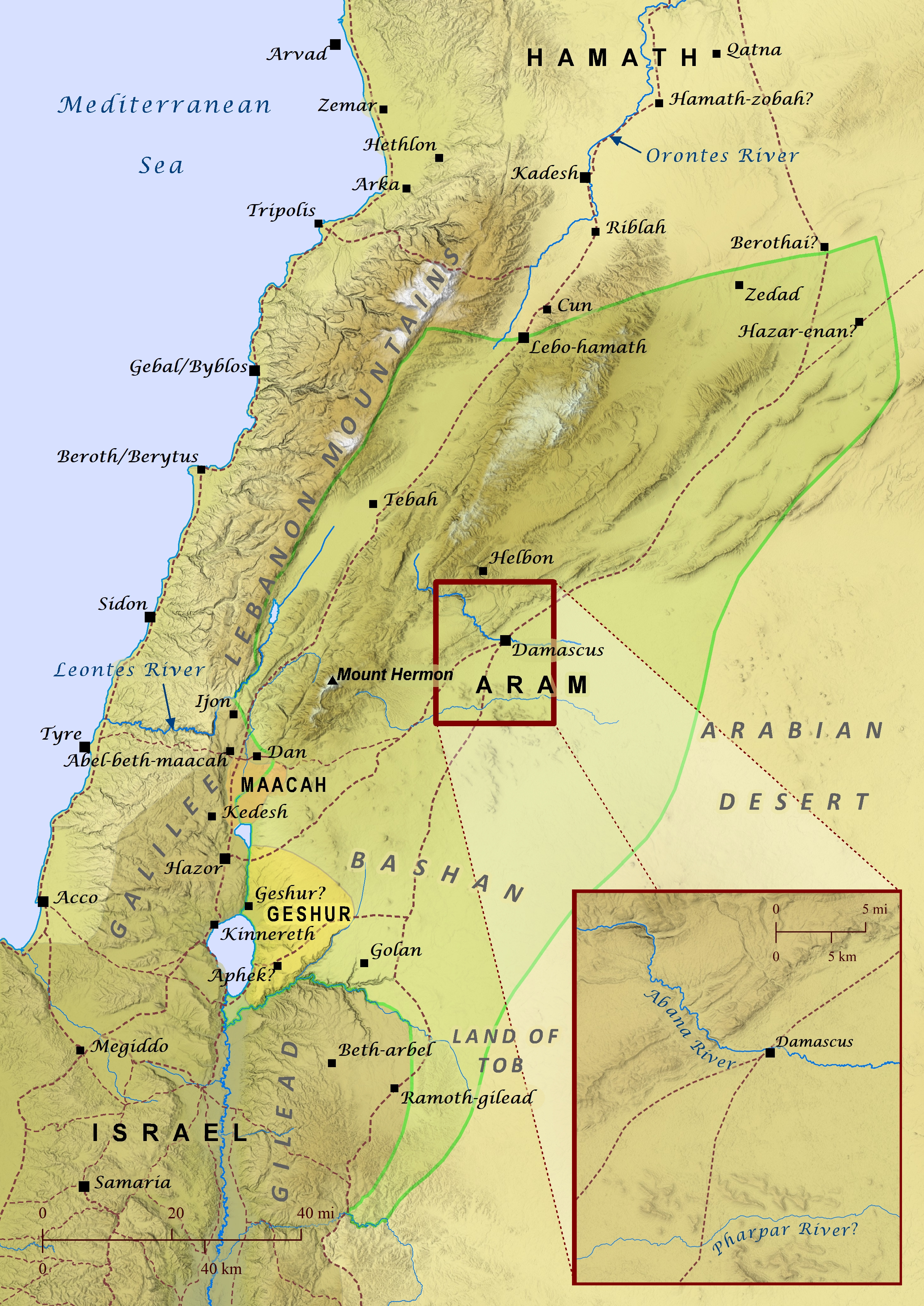
2 Kings 8:7 Then Elisha came to Damascus. Now Ben-hadad king of Aram was sick, and it was told him, saying, “The man of God has come here.”
- De 33:1 1Ki 13:1
- Damascus: Ge 14:15 1Ki 11:24 Isa 7:8
- Benhadad: 2Ki 6:24 1Ki 15:18 20:1,34
- The man of God: 2Ki 1:9,10 2:15 6:12
- is come: Jdg 16:2 Ac 17:6
ELISHA'S DIVINE
APPOINTMENT IN ARAM
Then - In context this marks the beginning of a new narrative.
Harry Shields gives us background on this section - Several years had passed since God’s prophecy came to Elijah about anointing three men (cf. 1Kg 19:15-17). In God’s encounter with Elijah, the prophet was told that he was to anoint three people to key roles in national and international events: Hazael was to be anointed king in Aram; Jehu was to be anointed king in Israel; and Elisha was to be anointed Elijah’s successor. But Elijah carried out only one inauguration before he was taken up into heaven (cf. 2Kg 2). Had Elijah disobeyed God? Had the Almighty forgotten what He said He would do? This section (chaps. 7–15) shows that in spite of what Elijah was not able to do, God still carried out His will through Elisha in the spirit and office of Elijah. (See Moody Bible Commentary page 532)
Elisha came to Damascus - A prophet in a pagan land was unusual (Jonah 3:3, Elijah in Sidon 1Ki 17:9–24, Daniel and Ezekiel in Babylon, et al). Assuming Elisha left from his home in Samaria, this journey is about 120 miles which would have taken about 7-10 days.
John MacArthur feels that "Elisha went to Damascus, the capital of Syria, to carry out one of the 3 commands God had given to Elijah at Horeb (1Ki 19:15, 16)." (Borrow MacArthur Study Bible page 528)
Now - NOW does not mean “right at this very instant” in the sense of “THIS moment.” Instead, NOW functions as a narrative transition marke, a device the biblical writers frequently used to introduce a new scene, develop the story, or connect events thematically. It establishes the circumstance necessary for the episode that follows (Hazael’s visit to Elisha, the prophecy, and eventually the assassination and rise of Hazael). It is a literary cue that we are entering the next movement in the story.
Ben-hadad king of Aram was sick, and it was told him, saying, “The man of God has come here - Scripture does NOT say how Elisha got to Damascus, and there is no indication that Ben-hadad summoned him. Rather, it appears Elisha went there under God’s providential leading, and Ben-hadad only heard about his presence after Elisha had already arrived. Notice how Elisha was known even in this pagan idol worshiping land - the man of God!
🙏 THOUGHT - Beloved, we are living in an increasingly pagan culture in America, which raises a searching question: Do those who know you recognize you as a man or woman of God—someone through whom God’s light shines into the darkness? Jesus said "Let your light shine (aorist imperative see our need to depend on the Holy Spirit to obey) before men in such a way that they may see your good works, and glorify your Father who is in heaven." (Mt 5:16) Notice carefully—the goal is not that they see you, but that they see God and thus glorify the Father. Paul helps us understand how we can shine like Elisha commanding believers "Do (present imperative calling for ongoing dependence on the Holy Spirit) all things (HOW MANY?) without grumbling or disputing; 15 so that (terms of purpose) you will prove yourselves to be blameless and innocent, children of God above reproach in the midst of a crooked and perverse generation, among whom you appear as lights in the world." (Phil 2:14-15)
We live in dark days—but dark days are the perfect backdrop for bright lights. So let me lovingly ask: How is your light shining, beloved?
John MacArthur on man of God in Dt 33:1 referring to Moses - The first use of this phrase in Scripture. Subsequently, some 70 times in the OT, messengers of God (especially prophets) are called “a man of God” (1Sa 2:27; 9:6; 1Ki 13:1; 17:18; 2Ki 4:7). The NT uses this title for Timothy (1Ti 6:11; 2Ti 3:17). Moses was viewed among such prophets in this conclusion to the book (see Dt 34:10).
Bob Utley - Ben-hadad" There were several kings of Aram/Syria by this title. Hadad was the storm god of their fertility pantheon. The honorific title means "son of Hadad."
Dale Ralph Davis: This moment marks a turning-point in the ministry of Elisha. As one eavesdrops here on his conversation with Hazael, one can’t help but remember what Yahweh had told Elijah at Mt. Horeb (1 Kings 19:15–17). Elijah was to anoint three instruments of judgment to scourge unfaithful Israel: Hazael, Jehu, and Elisha. He did claim Elisha for Yahweh’s service (1 Kings 19:19–21) but we hear nothing of Hazael and Jehu. Whatever we make of this, it appears the writer intends us to see Elisha now setting apart Hazael as Yahweh’s instrument to bring judgment on Israel (see v. 12). In chapters 2–7 Elisha had served primarily as a minister of the grace of God, but in chapters 8–10 he will appear as a minister of the judgment of God. Israel is sinning away her day of grace. (Borrow 2 Kings : the power and the fury Page 136)
Warren Wiersbe: It took faith and courage for Elisha to travel to Damascus. . . The fact that Ben Hadad the Syrian king was very ill and wanted help from the Lord made Elisha’s arrival more significant. This was a pagan Gentile king seeking the help of a prophet of Jehovah, but perhaps the conversion of Naaman had something to do with it.
QUESTION - Who was Ben-Hadad in the Bible? | GotQuestions.org
ANSWER - Ben-Hadad seems to have been the title of the reigning king of Aram (Syria). Ben-Hadad means “son of Hadad.” Hadad or Adad was the god of storm and thunder, and, as was common in that epoch of history, kings were seen as sons of the primary god of the region.
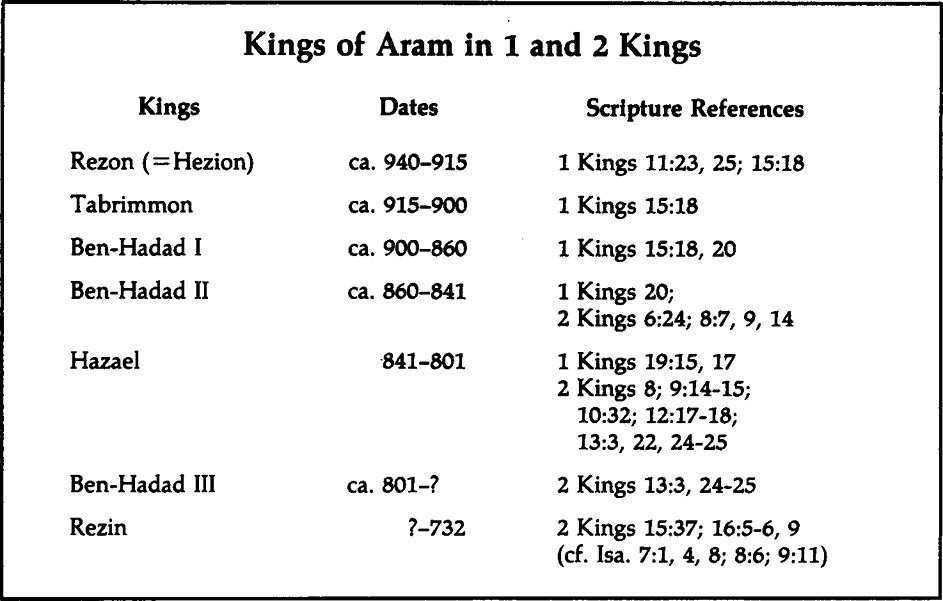
In the Bible, Ben-Hadad, the king of Aram, is mentioned in 1 Kings 15:18–22; throughout 1 Kings 20; 2 Kings 6:24; 8:9; 13:24–25; 2 Chronicles 16:2–4; Jeremiah 49:27; and Amos 1:4. Since Ben-Hadad is a title much like Pharaoh or President, the term can refer to different individuals at different times. The context of each passage must be studied to determine just who is involved. Most students of history accept the existence of three Ben-Hadads who ruled in Damascus: Ben-Hadad I, who ruled c. 900–860 BC; his son (or grandson) Ben-Hadad II, who ruled 860–841; and another, unrelated Ben-Hadad, the son of the man who assassinated Ben-Hadad II.
In 1 Kings 15:18, Ben-Hadad is designated as the son of Tabrimmon, the son of Hezion. In this passage, King Asa of Judah makes a treaty with Ben-Hadad to help protect himself against the king of Israel, who was threatening Judah. (This is also recorded in 2 Chronicles 16:2–4.) Ben-Hadad sent soldiers against Israel and King Baasha and conquered a number of towns, bringing some relief to Judah.
In 1 Kings 20, Ben-Hadad once again attacks the northern kingdom of Israel, where Ahab is now the king. It is possible that this is the same Ben-Hadad who attacked in 1 Kings 15, or it could be a son, Ben-Hadad II. It seems that this time Ben-Hadad is attacking on his own without consideration for any treaty with Judah. And this time, although he had 32 kings helping him (1 Kings 20:1), he is defeated by King Ahab and the army of Israel. About three years later, Israel and Syria renew their conflict, leading to Ahab’s final battle and death (1 Kings 22).
In 2 Kings 6–7, about nine years after Ahab’s death, Ben-Hadad II invades Israel and lays siege to Samaria, the capital. The siege went on for so long that the people in the city were starving to death. However, in the middle of the night, the Lord caused the Aramean army to hear sounds of an advancing army. Thinking the king of Israel was receiving help from foreign nations, all of Ben-Hadad’s men fled, leaving everything behind.
In 2 Kings 8, the prophet Elisha travels to Damascus and relays a paradoxical prophecy to Ben-Hadad II, who was ill: “Go and say to him, ‘You will certainly recover.’ Nevertheless, the Lord has revealed to me that he will in fact die” (verse 10). Just as Elisha said, Ben-Hadad began to recover from his illness, but then a man named Hazael murdered Ben-Hadad and took the throne of Aram. In 2 Kings 13, Hazael is succeeded by his son, who is also named Ben-Hadad. This final Ben-Hadad was defeated three times by King Jehoash of Israel, fulfilling another prophecy of Elisha (2 Kings 13:1–25).
In Jeremiah 49:27, the word of the Lord says, “I will set fire to the walls of Damascus; it will consume the fortresses of Ben-Hadad.” At the time of Jeremiah’s prophecy, none of the Ben-Hadads mentioned above would have been alive. The reference may be to the current king of Aram or perhaps to a fortress that had been built by and now bore the name of a former king. In Amos 1:4 we have a similar prophecy: “I will send fire on the house of Hazael that will consume the fortresses of Ben-Hadad.” By this time, the original Ben-Hadad had been killed, and Hazael was king. As above, “the fortress of Ben-Hadad” could simply refer to a fortress of the current king or to a specific fortress that was known by that name.
In summary, Ben-Hadad is the title of the Aramean king, “son of Hadad,” a prominent deity in the region. Several kings of Aram had extensive interaction with the kingdom of Israel and attacked several times. The Lord used Ben-Hadad and the Arameans to bring judgment on rebellious Israel, but He punished Aram for her evil, as well.
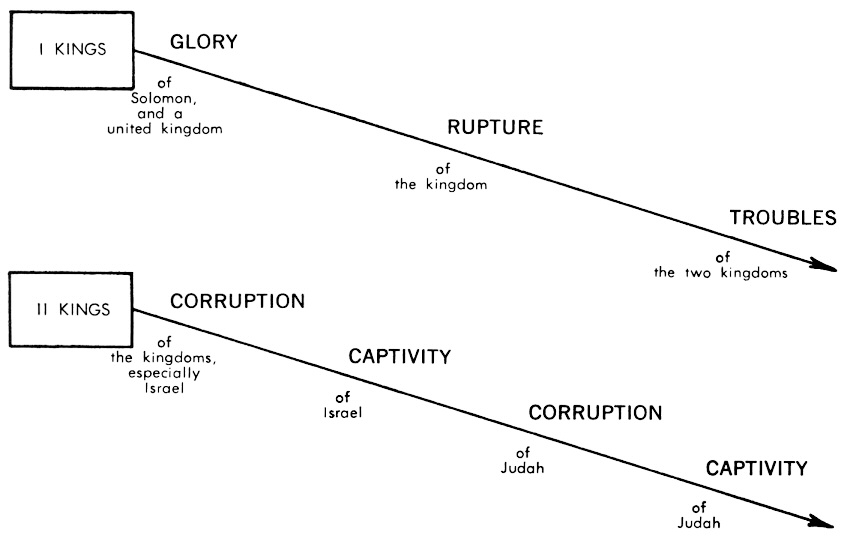
2 Kings 8:8 The king said to Hazael, “Take a gift in your hand and go to meet the man of God, and inquire of the LORD by him, saying, ‘Will I recover from this sickness?’”
- Hazael: 1Ki 19:15
- Take: 2Ki 5:5 1Sa 9:7 1Ki 14:3
- inquire: 2Ki 1:2,6 3:11-13 1Ki 14:1-4 Lu 13:23 Ac 16:30
Related Passages:
1 Kings 19:15 The LORD said to him, “Go, return on your way to the wilderness of Damascus, and when you have arrived, you shall anoint Hazael king over Aram;

BEN HADAD SEEKS
PROGNOSTICATION PROPHECY
The king said to Hazael (means "God Sees" or "Whom God Behlolds"), “Take a gift in your hand and go to meet the man of God - This would suggest the king was too ill to go himself, so he sends his trusted court official Hazael (although we do not know his actual title or function). The offer of a gift as described in the next verse was substantial but acknowledges his respect for Elisha. In a day without modern communication, Elisha had gained an “international” reputation which was likely strengthened by the testimony of Naaman’s miraculous healing. It is interesting that the king recognizes Elisha as a man of God for he is undoubtedly an idol worshiper himself.
There is a striking irony in this verse. A foreign, pagan king understands that in a moment of crisis he must seek a word from the LORD through His prophet, while earlier an Israelite king, Ahaziah, deliberately turned away from the God of Israel and instead sought guidance from Baal-Zebub, the god of Ekron (2 Ki 1:2). The outsider recognizes where true help and authority reside, while an Israelite king rejects the very God Who had revealed Himself to Israel! This contrast underscores how spiritual privilege does not guarantee spiritual responsiveness. Sometimes those far from the truth respond more wisely to God’s revelation than those who should know Him best (cf Nineveh Jonah 3:6-10). Here, the humility of a pagan king highlights the tragic unbelief and hardness of heart within Israel’s own leadership.
Bob Utley on take a gift - This was the expected cultural way to approach and inquire of a prophet (cf. 1Sa 9:7,8; 25:27; 1Ki 13:7; 14:3; 2Ki 4:42; 5:15). The gift here was very big (v. 9). Apparently the king was trying to secure a positive response, as was the use of the title "your son" (v. 9). Elisha may have used these large gifts to support "the sons of the prophets."
Bob Deffinbaugh: I think this king had been very closely associated with Naaman in his healing from leprosy at the hand (or, more accurately, at the command) of Elisha, and in his turning to faith in the God of Israel (see 2 Kings 5:1-27). This king was probably the one who allowed Naaman to travel to Israel to seek healing at the hand of the prophet. This king of Syria may have provided the gifts that Naaman took with him to pay for his healing. He would then also be the one who wrote the letter to the king of Israel, asking him to see to it that his servant was healed. He would have been the king who leaned on Naaman’s arm as he worshipped his pagan deities (see 2Ki 5:15- 19). It is my personal opinion that Naaman openly shared his new-found faith with Ben Hadad, and when his life was at risk, he went to the only God he knew he could trust— the God of Israel. How amazing!
And inquire of the LORD (Jehovah - Yahweh) by him - The phrase inquire of the LORD is a specific request from a pagan king for divine revelation from the true and living God! This statement is absolutely amazing and indicates that somehow Beh Hadad knew of this great God! He did not say "inquire of Elisha" but of Elisha's God, even using the covenant Name Jehovah (Yahweh)(cf Ex 6:2–4). The king acknowledges that Yahweh is real, that Elisha truly speaks for Him and that only through Elisha could he hear from God. Amazing!
Saying ‘Will I recover (chayah; Lxx - zao - live) from this sickness - In blunt terms the king is asking "Will I live or die? Notice God's providence has placed His prophet in Damascus at the exact moment the king is dying.
The Aramean king's request sets into motion, like dominoes falling, a chain of events (in following passages) that will expose Hazael’s ambition, lead to Ben-hadad’s assassination, fulfill God’s earlier prophecy (1Ki 19:15), and cause a shift in the political future of Aram. Thus behind the king's simple question for Elisha, the sovereign God's plan is unfolding, evidence once again of the truth of Proverbs 21:1 "The king’s heart is like channels of water in the hand of the LORD; He turns it wherever He wishes."
2 Kings 8:9 So Hazael went to meet him and took a gift in his hand, even every kind of good thing of Damascus, forty camels’ loads; and he came and stood before him and said, “Your son Ben-hadad king of Aram has sent me to you, saying, ‘Will I recover from this sickness?’”
- Hazael: 1Ki 19:15
- in his hand, 2Ki 5:5
- Your son Ben-hadad: 2Ki 6:21, 13:14, 16:7 1Sa 25:8 Phile 1:14
Related Passages:
2 Kings 5:5 (ANOTHER ARAMEAN'S GIFT - NAMAAN'S GIFT TO ELISHA) Then the king of Aram said, “Go now, and I will send a letter to the king of Israel.” He departed and took with him ten talents of silver and six thousand shekels of gold and ten changes of clothes.
2 Kings 1:2 (IRONICALLY ISRAEL'S KING EARLIER ASKED THE SAME QUESTION BUT SADLY ASKED OF THE WRONG "GOD"!) And Ahaziah fell through the lattice in his upper chamber which was in Samaria, and became ill. So he sent messengers and said to them, “Go, inquire of Baal-zebub, the god of Ekron, whether I will recover from this sickness.”
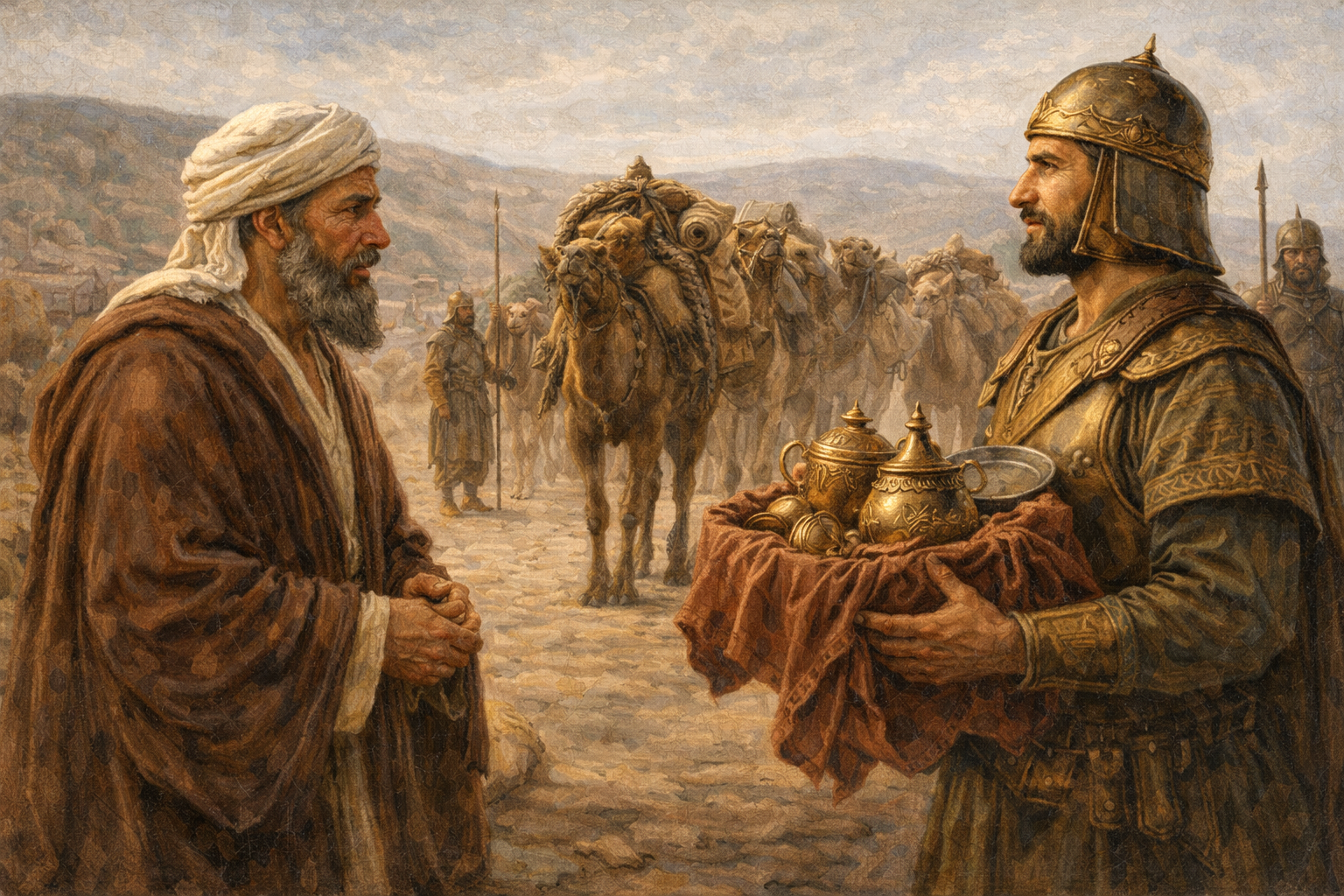
BEN HADAD SMOOTHS
THE WAY WITH ELISHA
So - Term of conclusion.
Hazael went to meet him and took a gift in his hand, even every kind of good thing of Damascus, forty camels’ loads - Hazael takes a few items to "smooth the way," an idiom which means to cultivate the conditions to guarantee a favorable outcome. Ben hadad's generous gift suggests he was seeking a good report.
And he came and stood before him and said, “Your son Ben-hadad king of Aram - Obviously Ben-hadad was not Elisha's son. In the ancient Near Eastern world, calling someone “father” was a title of respect, submission, and dependence (cf 2Ki 6:21), especially toward a prophet or spiritual authority. Therefore calling oneself your son was a humble acknowledgment meaning something like “I recognize your authority,” “I place myself under your spiritual status," or “I come in humility seeking help.”
Has sent me to you, saying, ‘Will I recover (chayah; Lxx - zao - to live) from this sickness - This is an amazing verse for here this powerful pagan king Ben-hadad is now humbled by sickness and forced to acknowledge that his life and future lie not in medicine, not in military strength, not in his gods (named "Hadad" the storm/rain-god), but in the Word of the LORD spoken through Elisha. Is this evidence that Yahweh worshipping Naaman exerted a godly influence on the Aramean royal family? We will have to wait until Heaven for that answer, but it is certainly possible!
2 Kings 8:10 Then Elisha said to him, “Go, say to him, ‘You will surely recover,’ but the LORD has shown me that he will certainly die.”
- You will surely recover 1Ki 22:15
- The LORD has shown me 2Ki 8:13 Ge 41:39 Jer 38:21 Eze 11:25 Am 3:7 7:1,4,7 8:1 Zec 1:20 Rev 22:1
- he will certainly die: 2Ki 8:15 1:4,16 Ge 2:17 Eze 18:13
RECOVERY THEN
DEATH BY ASSASSINATION
Then Elisha said to him, “Go, say to him, ‘You will surely recover - The king would not die of his illness.
But (dramatic term of contrast) - This little hinge word BUT is anything but insignificant. It becomes the turning point through which unimaginable cruelty and catastrophic bloodshed will soon sweep across Israel.
The LORD has shown me that he will certainly die (2Ki 8:15) - Elisha forsees Ben Hadad will die in another way, but he either did not know the mode of death or did not choose to reveal it to Hazael. Hazael picked up the ball and ran with it!
Bob Utley - This is a confusing text. It seems Elisha is plotting to overthrow Ben-hadad. This fulfills the earlier divine assignment to Elijah (cf. 1 Kgs. 19:15). (ED: I DO NOT THINK ELISHA WAS PLOTTING OVERTHROW, BUT SIMPLY PROPHESYING BEN-HADAD'S DEATH AND HAZAEL'S ASCENSION THUS FULFILLING 1Ki 19:15).
Gary Inrig - Although this sounds as if Elisha was telling Hazael to deceive his king, the larger context makes his meaning clear. Ben-Hadad’s illness was not fatal; he would recover from it. But Ben-Hadad would be murdered by Hazael. Elisha then stared at Hazael, his eyes piercing into his soul and making it clear that he was reading Hazael’s intentions.(See Holman Old Testament Commentary - 1 & 2 Kings)
ESV STUDY NOTE - say to him, “You shall certainly recover.” This is what the Hebrew text says. But the word translated “to him” (Heb. lo) is sometimes to be read as the negative word “not” (the Heb. word lo’ has virtually the same sound as the almost identical Heb. word lo). If this is the case, then Hazael is to say to Ben-hadad, “You will certainly not recover,” and Hazael would have lied to the king (2Ki 8:14). But if the Hebrew of Elisha’s statement does indeed mean “You shall certainly recover,” it could have been a truthful prediction about the course of Ben-hadad’s sickness that was still negated when Hazael murdered him—i.e., Ben-hadad could have recovered had Hazael not murdered him. Alternatively, some have suggested that Elisha’s statement was in fact deceptive, to lull the king into a false sense of security, so that he would be unprepared for Hazael’s attack. (Borrow ESV Study Bible page 658)
TECHNICAL NOTE - NET NOTE - The consonantal text (Kethib) reads, “Go, say, ‘Surely you will not (לֹא, lo’) recover” In this case the vav beginning the next clause should be translated, “for, because.” The marginal reading (Qere) has, “Go, say to him (לוֹ, lo), ‘You will surely recover.” In this case the vav (ו) beginning the next clause should be translated, “although, but.” The Qere has the support of some medieval Hebrew MSS and the ancient versions, and is consistent with v. 14, where Hazael tells the king, “You will surely recover.” It is possible that a scribe has changed לוֹ, “to him,” to לֹא, “not,” because he felt that Elisha would not lie to the king. See M. Cogan and H. Tadmor, II Kings (AB), 90. Another possibility is that a scribe has decided to harmonize Elisha’s message with Hazael’s words in 2Ki 8:14. But it is possible that Hazael, once he found out he would become the next king, decided to lie to the king to facilitate his assassination plot by making the king feel secure.
TECHNICAL NOTE - Iain Provan - Go and say to him, “You will certainly recover”: As the NIV rightly points out in its footnote, it is possible to read the Hb. here in such a way as to transform Elisha’s message to Ben-Hadad into its opposite: “You will certainly not recover.” The ambiguity is caused by the Hb. word lōʾ, which is normally a negative of some kind, but which sometimes appears in the OT as a variant for lô, “to him” (e.g., Isa. 9:13)—the reading that the Masoretic scribes wish us to read here (cf. further GKC §103g) and that a number of Hb. MSS contain. It is therefore not entirely evident whether or not Elisha is once again speaking less than the whole truth (cf. the commentary on 2 Kgs. 3; and note in particular the similarity in this case with Micaiah, who in 1 Kgs. 22:14–17 first speaks what is not true, and then what is true). The motivation for such a deception (You will certainly recover) would presumably be to lull Ben-Hadad into a false sense of security so that Hazael can strike—a ploy that Hazael fully understands and acts out (vv. 14–15). If, however, Elisha does intend to tell Ben-Hadad the truth (“You will certainly not recover”), then credit for the ploy must go to Hazael himself, who lies to his master about what Elisha has said (v. 14) and then kills him. (See 1 & 2 Kings Understanding the Bible Commentary Series - Page 40)
William Barnes has an interesting analysis of this passage writing that "The main point is that Elisha knew full well what Hazael was about to do, both against his own master the king, as well as against Israel in the future (cf. 2Ki 8:11–13). Thus the present statement is probably in line with Jesus’ advice to Judas Iscariot in John 13:27, “What you are about to do, do quickly.” Jesus was hardly telling Judas to hurry up and make the decision to betray him. Rather he was demonstrating that he knew all along what was in Judas’ mind, and that Judas was determined to accomplish his dastardly deed. He might as well get on with it. This is probably the gist of Elisha’s curious response to Hazael [here in 2Ki 8:10]. Elisha could see the future, and there was no stopping Hazael, so he might as well get on with it. Go ahead, lie to the king, and then kill him—you are going to do it anyway."
In any case, whether my (Barnes) thoughts bear the test of time or not, we can agree on three general conclusions: First, the present text somehow represents a significant fulfillment of Elijah’s commission (1 Kgs 19:15) to anoint Hazael king of Aram (cf. the first note on 8:7)—with all the complicated ethical ramifications that commission would entail. Second, it will be obvious, despite those horrendous ramifications, that Yahweh retains his sovereignty over all the earth—the land of Aram as well as the lands of Israel and Judah—and he retains ultimate control over all human leadership, whether it be the dynasty of Omri (which will soon come to a bloody end), the dynasty of Ben-hadad, or the dynasty of Hazael (or, for that matter, the dynasty of David). Finally, Yahweh’s servants the prophets (the “men of God”) are given special foreknowledge of his will—with the heart-rending implications to which such foreknowledge can lead.(See 1-2 Kings - Page 248)
2 Kings 8:11 He fixed his gaze steadily on him until he was ashamed, and the man of God wept.
NET Elisha just stared at him until Hazael became uncomfortable. Then the prophet started crying.
BGT 2 Kings 8:11 καὶ παρέστη τῷ προσώπῳ αὐτοῦ καὶ ἔθηκεν ἕως αἰσχύνης καὶ ἔκλαυσεν ὁ ἄνθρωπος τοῦ θεοῦ
LXE 2 Kings 8:11 And he stood before him, and fixed his countenance till he was ashamed: and the man of God wept.
CSB 2 Kings 8:11 Then Elisha stared steadily at him until Hazael was ashamed. The man of God wept,
ESV 2 Kings 8:11 And he fixed his gaze and stared at him, until he was embarrassed. And the man of God wept.
NIV 2 Kings 8:11 He stared at him with a fixed gaze until Hazael felt ashamed. Then the man of God began to weep.
NLT 2 Kings 8:11 Elisha stared at Hazael with a fixed gaze until Hazael became uneasy. Then the man of God started weeping.
- wept: Ge 45:2 Ps 119:136 Jer 4:19 9:1,18 13:17 14:17 Lu 19:41-42 Joh 11:35 Ac 20:19,31 Ro 9:2 Php 3:18
Related Passages:
Luke 19:41-42 When He approached Jerusalem, He saw the city and wept over it, 42 saying, “If you had known in this day, even you, the things which make for peace! But now they have been hidden from your eyes.
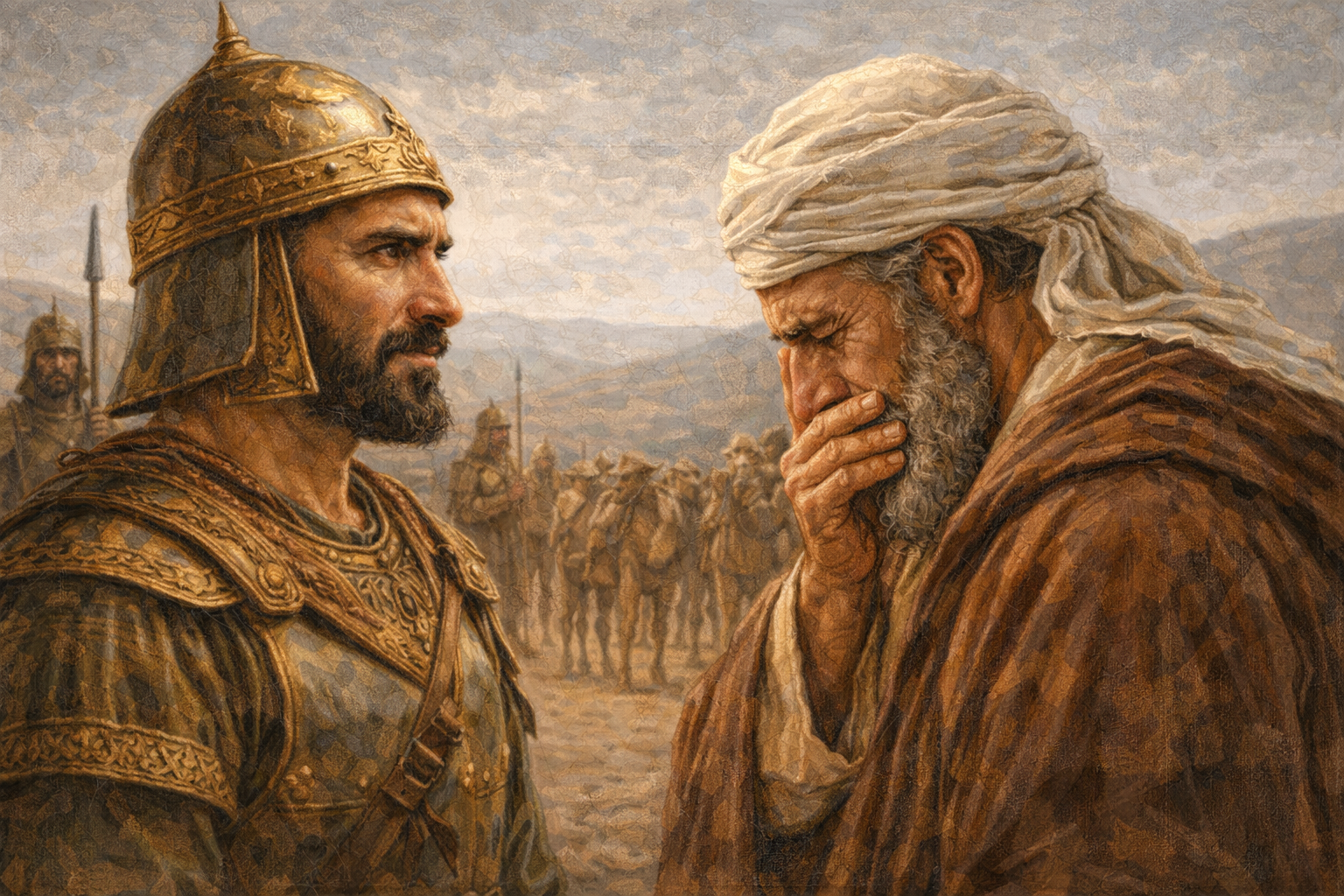
ELISHA LOCKS EYES
ON HAZAEL
Lock eyes on is an idiom meaning to fix one's gaze on or stare intensely at someone.
He (Probably ELISHA) fixed his gaze steadily (a firm, unwavering, penetrating stare) on him (Probably HAZAEL) until he was ashamed (bosh; Lxx - aischune) - NET - "Until Hazael became uncomfortable." ESV - "until he was embarrassed." Ashamed is same word used of Elisha in 2Ki 2:17 ("until he was ashamed"). This is a tricky verse as commentators disgree on who stared at whom and who it was who became ashamed, embarrassed or uneasy.
John MacArthur feels that With a fixed gaze, Elisha stared at Hazael because it had been revealed to him what Hazael would do, including the murder of Ben-hadad (2Ki 8:15). Hazael was embarrassed, knowing that Elisha knew of his plan to assassinate the Syrian king." (Borrow MacArthur Study Bible)
Bob Utley says being ashamed "may refer to an evil plan of assassination already in Hazael's heart and Elisha's stare caused Hazael to blush....This terrible treatment of defeated nations was not uncommon in the Ancient Near East (cf. 2Ki 15:16; Ps. 137:9; Isa 13:16; Hos. 13:16; Amos 1:13; Nahum 3:10; it is also mentioned in inscriptions of Tiglath-Pileser, and a neo-Babylonian lament). What was uncommon was that it was YHWH's covenant people (i.e., Leviticus 26; Deuteronomy 28) YHWH's prophet was part of Hazael's rise to power in Syria!"
ESV Study Bible note - The text does not identify “he” and “him” in this verse. Most interpreters understand the first “he” to be Elisha, who “fixed his gaze” on Hazael, staring at him but also seeing with prophetic vision what Hazael would do in the future. Hazael does not know how to respond and is embarrassed, and then Elisha weeps. An An alternative interpretation is that Hazael remains dazed by what he has heard and so he stares at Elisha, until Elisha’s weeping breaks into his reverie. (Borrow ESV Study Bible page 658)
William Barnes has another interpretation of who is ashamed suggesting it was Elisha - This is the same expression (‘ad bosh, lit., “until embarrassment”) found in 1Ki 2:17 (cf. the note there); possibly both there and here the expression simply signifies a long period of time. The fact that this odd expression, however, appears only at the beginning and the end of the Elisha cycle may also hint at an editorial inclusio (a narrative device signaling by some sort of repetition the beginning and the end of a prose or poetic unit). Thus, embarrassment occurs at the beginning of Elisha’s career—by means of the well-meaning but obtuse “group of prophets”; and again, embarrassment occurs at the end of his career—as he ends up endorsing (virtually anointing?) an Aramean king who will eventually cause Israel so much heartache. (See 1-2 Kings - Page 246)
And the man of God wept - The reason Elisha wept is explained in the next verse. The reminds us of the greatest Prophet (Dt 18:15, 18,19) Jesus Christ Who on seeing Jerusalem wept over it because He foresaw the horrible fate that would soon befall the city (Lk 19:41, 42, 43, 44)
No one should ever preach on the
topic of hell without a tear in his eye.
-- D L Moody
Dale Ralph Davis: we need to stay a moment and watch Elisha weeping. For in Elisha’s attitude in verses 11–12 we see Yahweh’s attitude (Ezek. 33:11) and Jesus’ attitude (Luke 19:41–44). Yahweh is just and righteous and so will and must judge an apostate people, but he is so slow to anger and full of mercy that there is an element of divine sadness in His judgment. Andrew Bonar captured this point in his own vivid way: ‘I think He will weep over the lost as He did over Jerusalem. It will be something to be said for ever in heaven, “Jesus wept as He said, Depart, ye cursed.” But then it was absolutely necessary to say it.’ Or, again, vintage Bonar: ‘I think that the shower of fire and brimstone was wet with the tears of God as it fell, for God has “no pleasure in the death of him that dieth”.’ Hazael is enthusiastic over the fine future before him, a future in which he will batter and crush Israel. But Elisha is depressed. He knows there must be a Hazael as Yahweh’s instrument to judge his faithless people. But, for Elisha, judgment is both necessary and sad. Elisha’s tears are sent from above, for that is how Yahweh views it. There is no fiendish delight in Yahweh’s judgment. Here is your God and you should prize him for his nature, the God who mingles his tears with the fire and brimstone. (Borrow 2 Kings : the power and the fury Page 136)
Gary Inrig - The prophet revealed that he not only read Hazael’s intentions; he also knew his future: He would make trouble for the nation of Israel. Hazael was the king of Syria from about 843 to 806 B.C. For much of his reign, he would be involved in bloody warfare against Israel. From this point on, he would be the scourge of Israel, unleashing the horrors of war. This was the sovereign judgment of God upon his people, punishing them for their rebellion and purging baalism from their midst. The Lord would use Hazael as his rod of judgment. He did not cause the evil Hazael inflicted, but he used it to accomplish his judicial purpose. (See Holman Old Testament Commentary - 1 & 2 Kings)
F B Meyer - The nearer we live to God, the more we deserve to be known as men and women of God, the more will our tears flow for the slain of the daughters of our people.
Morgan - His tears were in themselves signs of his understanding of the necessity for those severe judgment which must fall upon the guilty nation; but they were the outcome of his deep love for his people.
Ashamed (put to shame) (0954) bosh means "properly to pale and by implication to be ashamed, disappointed or delayed." The TWOT says the primary meaning is "to fall into disgrace, normally through failure, either of self or of an object of trust." The word has overtones of being or feeling worthless. Bôsh means "to be ashamed. Bosh often occurs in contexts of humiliation and shattered human emotions. It is the feeling of public disgrace.
2 Kings 8:12 Hazael said, “Why does my lord weep?” Then he answered, “Because I know the evil that you will do to the sons of Israel: their strongholds you will set on fire, and their young men you will kill with the sword, and their little ones you will dash in pieces, and their women with child you will rip up.”
- my Lord: 2Ki 4:28 1Ki 18:13
- the evil: 2Ki 10:32,33 12:17 13:3,7 Am 1:3,4
- dash: 2Ki 15:16 Ps 137:8,9 Isa 13:16,18 Ho 10:14 13:16 Am 1:3-5,13 Na 3:10
Related Passages:
1 Kings 19:15-17 The LORD said to him, “Go, return on your way to the wilderness of Damascus, and when you have arrived, you shall anoint Hazael king over Aram; 16 and Jehu the son of Nimshi you shall anoint king over Israel; and Elisha the son of Shaphat of Abel-meholah you shall anoint as prophet in your place. 17 “It shall come about, the one who escapes from the sword of Hazael, Jehu shall put to death, and the one who escapes from the sword of Jehu, Elisha shall put to death.
Amos 1:13 Thus says the LORD, “For three transgressions of the sons of Ammon and for four I will not revoke its punishment, Because they ripped open the pregnant women of Gilead In order to enlarge their borders.
Hosea 13:16 Samaria will be held guilty, For she has rebelled against her God. They will fall by the sword, Their little ones will be dashed in pieces, And their pregnant women will be ripped open.
2 Kings 8:28 Then he went with Joram the son of Ahab to war against Hazael king of Aram at Ramoth-gilead, and the Arameans wounded Joram.
2 Kings 9:15 but King Joram had returned to Jezreel to be healed of the wounds which the Arameans had inflicted on him when he fought with Hazael king of Aram. So Jehu said, “If this is your mind, then let no one escape or leave the city to go tell it in Jezreel.”
2 Kings 10:32 In those days the LORD began to cut off portions from Israel; and Hazael defeated them throughout the territory of Israel:
2 Kings 13:3 So the anger of the LORD was kindled against Israel, and He gave them continually into the hand of Hazael king of Aram, and into the hand of Ben-hadad the son of Hazael.
2 Kings 13:22 Now Hazael king of Aram had oppressed Israel all the days of Jehoahaz.
2 Kings 12:18 Jehoash king of Judah took all the sacred things that Jehoshaphat and Jehoram and Ahaziah, his fathers, kings of Judah, had dedicated, and his own sacred things and all the gold that was found among the treasuries of the house of the LORD and of the king’s house, and sent them to Hazael king of Aram. Then he went away from Jerusalem.
Strongholds Set on Fire
ELISHA FORSEES HORRIBLE
FUTURE FOR ISRAEL
Hazael said, “Why does my lord weep?” - Hazael is confused because, from his perspective, nothing tragic has happened yet.
Then he answered, “Because I know the evil that you will do to the sons of Israel - Elisha does not mention the evil Hazael would do the king of Aram but only the evil he would inflict upon Israel. As noted above, perhaps he did not know that Hazael would kill Ben Hadad.
John MacArthur - Elisha mourned, knowing the atrocities that Hazael would bring on Israel. The harsh actions mentioned here were common in ancient wars (Ps 137:9; Is 13:16; Hos 10:14; 13:16; Am 1:13; Na 3:10). Hazael did prove to be a constant foe of Israel (9:14–16; 10:32; 12:17, 18; 13:3, 22).(Borrow MacArthur Study Bible) (Bolding added)
Their strongholds you will set on fire, and their young men you will kill with the sword, and their little ones you will dash in pieces, and their women with child you will rip up - Elisha foresees cities and fortresses destroyed, armies and civilians slaughtered, children brutally murdered and pregnant women violently killed. This was sadly not exaggeration. Ancient Near Eastern armies (including Assyria, Babylon, Aram) were notoriously brutal and records outside the Bible confirm such atrocities occurred.
William Barnes on Hazael's evil - See Cogan and Tadmor (BORROW - 1988:91) for biblical and extrabiblical parallels for the horrific actions listed here. (See 1-2 Kings - Page 246)
Reflecting on Hazael’s shame before Elisha, this passage probes the universal human discomfort with having one’s inner life fully exposed. While we readily excuse and soften our own sins, we instinctively fear the searching gaze of others and yet remain strangely indifferent to the constant, perfect scrutiny of God. This inversion—fearing man more than God—is a tragic result of sin, which blinds us to the reality of God’s ever-present inspection. True freedom and happiness, the author argues, come when this order is reversed: when God’s judgment matters more than human opinion, and when we live consciously before Him, welcoming His gaze as children before a loving Father. Such a life frees us from bondage to fear and applause and becomes a foretaste of heaven itself.
2 Kings 8:13 Then Hazael said, “But what is your servant, who is but a dog, that he should do this great thing?” And Elisha answered, “The LORD has shown me that you will be king over Aram.”
NET Hazael said, "How could your servant, who is as insignificant as a dog, accomplish this great military victory?" Elisha answered, "The LORD has revealed to me that you will be the king of Syria."
NET NOTE - Heb "Indeed, what is your servant, a dog, that he could do this great thing?" With his reference to a dog, Hazael is not denying that he is a "dog" and protesting that he would never commit such a dastardly "dog-like" deed. Rather, as Elisha's response indicates, Hazael is suggesting that he, like a dog, is too insignificant to ever be in a position to lead such conquests.
BGT καὶ εἶπεν Αζαηλ τίς ἐστιν ὁ δοῦλός σου ὁ κύων ὁ τεθνηκώς ὅτι ποιήσει τὸ ῥῆμα τοῦτο καὶ εἶπεν Ελισαιε ἔδειξέν μοι κύριός σε βασιλεύοντα ἐπὶ Συρίαν
LXE And Azael said, Who is thy servant? a dead dog, that he should do this thing? And Elisaie said, The Lord has shewn me thee ruling over Syria.
CSB Hazael said, "How could your servant, a mere dog, do this monstrous thing?" Elisha answered, "The LORD has shown me that you will be king over Aram."
NLT Hazael responded, "How could a nobody like me ever accomplish such great things?" Elisha answered, "The LORD has shown me that you are going to be the king of Aram."
- a dog: 1Sa 17:43 2Sa 9:8 Ps 22:16,20 Isa 56:10,11 Mt 7:6 Php 3:2 Rev 22:15
- he should do: Jer 17:9 Mt 26:33-35
- The LORD has shown me: 2Ki 8:10 1Ki 19:15 Mic 2:1
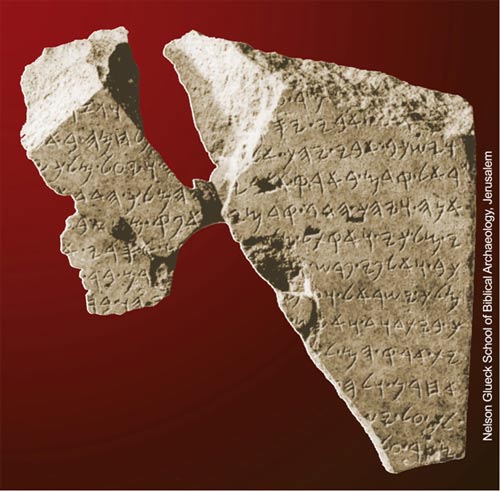
GEHAZI'S MOCK HUMILITY
FROM A DOG TO A TYRANT
The picture above is a fragment of the famous Tel Dan Stele, which has the Tel Dan Inscription above, the first royal inscription from the kingdom period (Kings of Israel and Judah) to be found in Israel. The picture is from an excellent article by Bryant G. Wood PhD entitled THE TEL DAN STELA AND THE KINGS OF ARAM AND ISRAEL (from Spring 2000 issue of Bible and Spade.) The Tel Dan Stele has several mentions of Hazael and apparently also mentions Ahab the Israelite (ca. 874–853 BC), Joram (king of Israel) (ca. 848–841 BC), Jehoram of Judah (ca. 848–841 BC), Ahaziah, King of the House of David (ca. 841 BC) and Jehu, King of Israel (841–814 BC). The article is brief and not too technical but gives historical verification of the events of the Bible (which of course is the perfect historical record!) (See also Dr Wood's excellent article with map and pictures regarding the famous Mesha Inscription/Moabite Stone including an excellent video on the Moabite Stone)
Then Hazael said, “But what is your servant, who is but a dog (keleb; Lxx = "a dead dog"), that he should do this great thing?” - Did you catch Hazael's first "self-description" as your servant? Hazael is speaking in false humility and feigned astonishment. This phrase was a standard expression of courtesy and self-deprecation in the ancient Near East. He is pretending to say “Who am I?” “I’m insignificant.” “I’m not great or powerful enough to do such things.” “Surely I am not capable of something like that.” Hazael sounds humble, but, from the context, clearly he is not sincere.
And he piles on another "self-description" calling himsel a "dog" which was a common ancient Near East cliche of humility. Dogs were usually thought of only as opportunistic scavengers in the ancient Near East (which is ironically an excellent description of Hazael!) While Hazael is initially shocked that Elisha would think such evil of him, the seed has been planted! It is interesting that Hazael is mentioned on Assyrian inscriptions as "a nobody," (he has no royal lineage) even though he reigned over Aram for some forty years and was a major "thorn in Israel's side!"
Don't miss Hazael's statement this great thing - Elisha’s prophecy does not strike him as a shockingly evil possibility and he does not respond, “How could I ever do such wicked things?” Instead, he is in effect asking “Who am I that I should be able to achieve something so great?” Elisha explains that the reason he will be capable of such atrocities is because he will become king of Syria.
David Guzik suggests that "Perhaps Hazael had planned this assassination and simply acted ignorant at Elisha’s announcement. Perhaps he had not yet planned it, but did not know the evil capabilities in his own heart."
Spurgeon - Our ignorance of the depravity of our own hearts is a startling fact, Hazael did not believe that he was bad enough to do any of the things here anticipated.… I appeal to you, Christian men and women, if anyone had told you that you would have loved your Savior so little as you have done; if any prophet had told you, in the hour of your conversion, that you would have served him so feebly as you have done, would you have believed it!
Bob Utley on a dog - Dogs (NIDOTTE, vol. 2, pp. 640-641) were not pets at this period and locality but street scavengers. This was a very derogatory term (cf. 1Sa 24:14; 2Sa 9:8; 16:9; the LXX has "dead dog"). Hazael is, in effect, saying, "I would never do that," but he did (cf. 2 Kgs. 10:32-33; 12:17; 13:3,7). It is possible because of the use of "dog" in the Lachish Letters, that this was a gesture of "humility." Josephus, Antiq. 9.4.6, says it means Hazael thinks he will never have that much power and military to do these things.
And Elisha answered, “The LORD has shown me that you will be king over Aram.” - Recall that the original command was given to Elijah but here we see Elisha fulfilling his mentor's command in 1Ki 19:15.
Some suggest that Elisha telling Hazael set in motion a "self-fulfilling" prophecy, even "inspiring" the assasination.
Philip Graham Ryken comments on the suppositional statement above - Some scholars have tried to blame Elisha for what Hazael did, claiming that his message for Ben-hadad turned out to be a self-fulfilling prophecy. Gwilym Jones goes so far as to call Elisha the “instigator” of Ben-hadad’s assassination. By telling Hazael that Ben-hadad would die, and also that he would become king, God’s prophet was giving the usurper permission to commit murder. Two things must be said in response. The first is that Hazael may well have had murderous intentions before he came to see Elisha. The Bible relates that the prophet “fixed his gaze and stared at him, until he was embarrassed” (2 Kings 8:11). Perhaps Hazael lost this stare-down with Elisha because he had a guilty conscience: he was already plotting Ben-hadad’s demise. Alternatively, Elisha’s prophecy became the occasion for Hazael to plot against his master. But in any case, Hazael was responsible for his own actions. Admittedly, Elisha knew all too well what would happen. He knew that Hazael would kill the king and seize the kingship. He also knew what unspeakable atrocities Hazael would perpetrate against Israel. Elisha knew these things because God knew them and revealed them to his prophet. (2 Kings)
David Guzik responds - However, there are many reasons for thinking that Elisha did exactly the right thing when he said this to Hazael. (1) Elisha did not tell Hazael how the king would die; he did not reveal that it would be through assassination. (2) Elisha did not tell Hazael how he would become the next king of Syria; he did not tell Hazael to assassinate the king. (3) Elisha went against his own compassionate and patriotic interests in telling Hazael this, making it more likely that he did it at God’s prompting. (4) Elisha perhaps hoped that this amazing prophecy would touch Hazael’s heart and turn him away from the evil he could later commit against Israel. As it turned out, God knew the actions of Hazael, but He did not make Hazael do it.
Spurgeon - It was absolutely foretold that Hazael would be king of Syria. The prophet knew the fact right well, and he clearly descried the means; else, why should he look into Hazael’s face, and weep? God foreknew the mischief that he would do when he came to the throne; yet that foreknowledge did not in the least degree interfere with his free agency.
Believer's Study Bible - The divine command to anoint Hazael (see chart, "Rulers of Syria," 1 Kin. 20:1) as king of Syria had been given to Elijah (1 Kin. 19:15) and was passed on to Elisha. However, Elisha did not formally anoint Hazael as king but simply announced the fact to him. This was probably due to the unscrupulous character of Hazael.
Dog (03611)(keleb) is masculine noun meaning a dog referring to a varied group of canines, usually domesticated - a watchdog (Isa. 56:10, 11); hunting dog (Ps 22:16); a stray dog (1Ki 14:11). The concept is used in figurative expressions of contempt: of a scorned person (1Sa 17:43); of abasing oneself (1Sa 24:14; 2Sa 3:8); of a male cult prostitute (Dt. 23:18). It was used in a mocking sense of a false sacrifice as if it were the sacrifice of a dog (Isa. 66:3), a pagan practice. The manner in which a dog lapped its water is noted in Jdg 7:5. Dogs ate up Jezebel’s dead body as a sign of reprobation toward her (2Ko 9:10, 36). Dogs were known to growl and be menacing in their demeanor (Ex. 11:7), but God protected His people from even this as they left Egypt.
KELEB - 32X/31V - dog(14), dog's(2), dogs(16). Exod. 11:7; Exod. 22:31; Deut. 23:18; Jdg. 7:5; 1 Sam. 17:43; 1 Sam. 24:14; 2 Sam. 3:8; 2 Sam. 9:8; 2 Sam. 16:9; 1 Ki. 14:11; 1 Ki. 16:4; 1 Ki. 21:19; 1 Ki. 21:23; 1 Ki. 21:24; 1 Ki. 22:38; 2 Ki. 8:13; 2 Ki. 9:10; 2 Ki. 9:36; Job 30:1; Ps. 22:16; Ps. 22:20; Ps. 59:6; Ps. 59:14; Ps. 68:23; Prov. 26:11; Prov. 26:17; Eccl. 9:4; Isa. 56:10; Isa. 56:11; Isa. 66:3; Jer. 15:3
Gilbrant - Most occurrences of dog imagery in the Hebrew Bible are negative. This is not the case throughout the rest of the ancient Near East, as canine deities were worshiped in a number of neighboring cultures. Indeed, in Mesopotamia, the dog deity was revered as a healing deity. Furthermore, dogs were understood as protective, given their loyalty and tenacity, and images of dogs adorned doorways and gateways. Dog imagery in Middle Hebrew likewise is not overwhelmingly negative.
Comparison to a dog was among the ultimate slurs in the Hebrew Bible. To be treated as a dog was to be treated as a non-entity, probably with contempt (1Sa 17:43). Indeed, Job was shown contempt by those of such low status that they would not have compared to his dogs (Job 30:1). The status of dog is assumed by vassals before kings, both in the Hebrew Bible (2 Sam. 9:8) and throughout the ancient Near East (especially common in the Tell el-Amarna letters, as the Palestinian vassals declare they are dogs before the addressee of their letters, Pharaoh; political equals referred to themselves as “brother” of Pharaoh).
The imagery of the dog as a scavenger is employed numerous times in the Hebrew Bible. In Pr. 26:11, one finds a simile which states, “Like a dog that returns to his vomit is a fool who repeats his folly.” That dogs hunt in packs and prey upon weaker creatures serves as a metaphor for the psalmist oppressed by his enemies (Ps 22:16; 59:6, 14; Isa. 56:10f). Dogs normally roamed the streets of the city, eating whatever they could find. Thus the imagery of dogs devouring the flesh of Jezebel and lapping Ahab’s blood represent the most ignominious death imaginable, more so than normal exposure (1Ki 21:19ff). (Complete Biblical Library)
QUESTION - Who was Hazael in the Bible? | GotQuestions.org
ANSWER - Hazael, whose name is translated “God has seen,” was a high-ranking officer in the court of Ben-Hadad II, king of Aram (Syria). Later, Hazael became king of Aram himself, in fulfillment of the word of Elijah, the prophet of Israel. Hazael was an ambitious and ruthless man who ruled over Aram about 46 years.
Hazael is first mentioned in 1 Kings 19:15 when God told Elijah the prophet to “go to the Desert of Damascus. When you get there, anoint Hazael king over Aram.” Elijah obeyed, but Hazael was not made king until years later.
Hazael’s Wickedness
Hazael remained a court official under Ben-Hadad until the time of Elisha, Elijah’s successor as Israel’s prophet. Ben-Hadad was gravely ill. Elisha traveled to Damascus and was met by Hazael, who had brought “forty camel-loads of all the finest wares of Damascus” as a gift from the king (2 Kings 8:9) along with a query from the king about whether he would recover from his illness. Elisha gave Hazael a paradoxical answer: “Go and say to him, ‘You will certainly recover.’ Nevertheless, the Lord has revealed to me that he will in fact die” (2 Kings 8:10).
Elisha, in speaking with Hazael, began to weep (2 Kings 8:11). Hazael asked why the prophet was weeping, and Elisha said, “I know the harm you will do to the Israelites” (2 Kings 8:12). Hazael expressed doubt, citing his lack of authority, and Elisha repeated God’s prophecy that Hazael will be king (verse 13). Hazael returned to Ben-Hadad, and “the next day he took a thick cloth, soaked it in water and spread it over the king’s face, so that he died. Then Hazael succeeded him as king” (2 Kings 8:15). It is likely that Hazael had been planning the murder for some time and that his response to Elisha’s prophecy was feigned surprise. God had seen the treachery in his heart.
Hazael’s Military Might
During his reign as king, Hazael led the Arameans in battle against the combined forces of King Jehoram (Joram) of Israel and King Ahaziah of Judah, whom he attacked at Ramoth-Gilead (2 Kings 9:14). Jehu became king of Israel, and Hazael went on to take more Israelite territory: “Hazael overpowered the Israelites throughout their territory east of the Jordan in all the land of Gilead (the region of Gad, Reuben and Manasseh), from Aroer by the Arnon Gorge through Gilead to Bashan (2 Kings 10:32–33). Israel suffered these losses due to the idolatry of King Jehu; it was the Lord who “began to reduce the size of Israel,” using Hazael as the means (verse 32).
Hazael also seized the city of Gath (2 Kings 12:17) and came against Jerusalem in Judah. There his military campaign ended. “Joash king of Judah took all the sacred objects dedicated by his predecessors—Jehoshaphat, Jehoram and Ahaziah, the kings of Judah—and the gifts he himself had dedicated and all the gold found in the treasuries of the temple of the Lord and of the royal palace, and he sent them to Hazael king of Aram, who then withdrew from Jerusalem” (2 Kings 12:18).
God’s Providence
God used the cruel Hazael to punish the nation of Israel for her wickedness. During the entire reigns of Joab and Jehoahaz of Israel, Hazael and his son oppressed Israel. The reason was the evil that Israel pursued (2 Kings 13:2–3). Hazael’s oppression was so severe that “nothing had been left of the army . . . except fifty horsemen, ten chariots and ten thousand foot soldiers, for the king of Aram had destroyed the rest and made them like the dust at threshing time” (2 Kings 13:7). Eventually, King Jehoahaz sought the Lord’s favor, and “the Lord provided a deliverer for Israel, and they escaped from the power of Aram” (2 Kings 13:5). This prophecy was fulfilled when Jehoash was able to recapture the towns that Hazael had taken from Israel (verse 25).
Elisha’s Prophecy
In the midst of the oppression of Hazael, King Jehoash of Israel went to Elisha the prophet to inquire about what God said about the matter. Elisha, who was on his deathbed, told Jehoash to shoot an arrow out the window to the east. Elisha called it “The Lord’s arrow of victory” and said, “You will completely destroy the Arameans at Aphek” (2 Kings 13:17). Then Elisha told Jehoash to shoot arrows into the ground. The king shot three arrows and then stopped. Elisha was angry with the king’s lack of zeal, saying, “You should have struck the ground five or six times; then you would have defeated Aram and completely destroyed it. But now you will defeat it only three times” (2 Kings 13:19).
Hazael’s Death
In time, God put an end to Hazael’s reign, and he was succeeded by his son, Ben-Hadad III (2 Kings 13:24). God raises up kings and puts them down again (Daniel 2:21; cf. Romans 13:1). He can even use a wicked man like Hazael to orchestrate His plan. And, afterward, Aram was held accountable for their cruelty: “This is what the Lord says: ‘For three sins of Damascus, even for four, I will not relent. Because she threshed Gilead with sledges having iron teeth, I will send fire on the house of Hazael that will consume the fortresses of Ben-Hadad’” (Amos 1:3–4).
Through all the trouble that Israel has suffered, from Aram and other countries, God remains faithful to His covenant with them. As the biblical historian noted, even during the oppression of Hazael, “the Lord was gracious to them and had compassion and showed concern for them because of his covenant with Abraham, Isaac and Jacob. To this day he has been unwilling to destroy them or banish them from his presence” (2 Kings 13:23).
ADDITIONAL NOTES ON HAZAEL - Assyrian records from the reign of King Shalmaneser III (858–824 BC) mention Hazael and help confirm his historical presence as a powerful king of Aram-Damascus, just as the Bible describes. Assyrian annals refer to Hazael of Damascus as ruler of Aram and record military encounters between him and the Assyrian empire. These records show Shalmaneser III campaigning against Hazael’s forces and defeating them in battle, including siege operations around Damascus. Assyrian inscriptions describe Hazael as “son of a nobody” — a phrase used to indicate someone who was not from the established royal line but seized power nevertheless. This aligns with the biblical account that Hazael murdered Ben-hadad II and became king, even though he was not of the royal bloodline.
One of the most significant inscriptions is found on a basalt statue of Shalmaneser III, which records events from his reign. In the Year 18 annals (about 841 BC) the text says (in translation): “Hazael of Damascus attacked to do battle. I captured from him 1,121 of his chariots and 470 of his cavalry, together with his camp.” This is a literal cuneiform inscription from Shalmaneser’s record stating that Hazael was a real opponent of Assyria and that the Assyrian army defeated his forces.
These lines corroborate from outside the Bible the existence, political role, and military activity of King Hazael of Aram — the very figure sent by Ben-Hadad and confronted by Elisha.
Tel Dan stele is a fragmentary stele containing an Aramaic inscription which dates to the 9th century BCE. It is the earliest known extra-biblical archaeological reference to the house of David.[1][2] The stele contains several lines of ancient Hebrew. The surviving inscription details that an individual killed Jehoram, King of Israel-Samaria, the son of Ahab, and Ahaziah of Judah, a king of the house of David.[1] The stele is on display at the Israel Museum.[3]....These writings corroborate passages from the Hebrew Bible, as the Second Book of Kings mentions that Jehoram is the son of an Israelite king, Ahab, by his Phoenician wife Jezebel. The likely candidate for having erected the stele, according to the Hebrew Bible, is Hazael, king of Aram-Damascus, whose language would have been Old Aramaic. He is mentioned in 2 Kings 12:17–18 as having conquered Israel-Samaria but not Jerusalem
2 Kings 8:14 So he departed from Elisha and returned to his master, who said to him, “What did Elisha say to you?” And he answered, “He told me that you would surely recover.”
- He told me: 2Ki 8:10 5:25 Mt 26:16
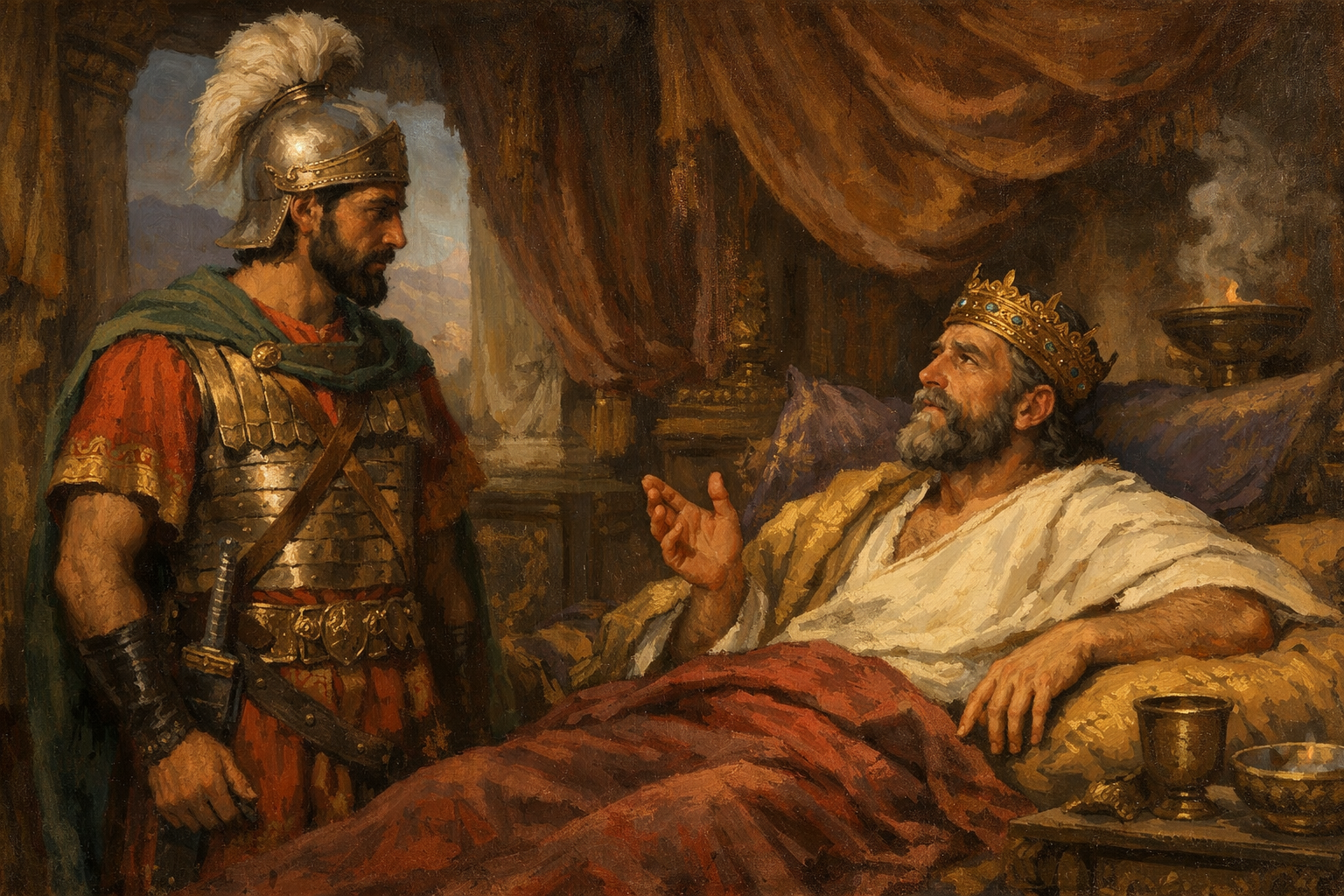
WHEN WORDS
CONCEAL EVIL
So he departed from Elisha and returned to his master ('adon; Lxx - kurios) - Here we see deceptive communication as Hazael tells the king only half of the story. Hazael returned with a message for his master, who he would soon not treat as his master! Hazael is walking back with prophetic knowledge, and with the thought to assassinate Ben Hadad already germinating in his heart (cf Pr 23:7a!). There is a saying "the calm before the storm," but more accurately this passage describes the calm before the crime.
Who said to him, “What did Elisha say to you?” - Clearly the king is anxious about whether he would live or die and trust in the word from the man of God. The king is surely hoping for a favorable reply and genuinely wanted to hear God’s word, but behind the message Hazael carried, a murderous intent lay hidden in his heart.
And he answered, “He told me that you would surely recover (chayah chayah - literally "live live"; Lxx - zoe zao)- This is a disingenuous report. As discussed above (see note) Elisha’s exact words to Hazael are somewhat difficult to interpret. However, if Elisha did indeed say that the king would recover from the illness itself, it appears that the seed of ambition had begun to grow in Hazael’s heart. Undoubtedly, Elisha’s prophetic revelation stirred Hazael’s desire for power and moved him toward the murderous act he would soon commit.
Remember that God had commanded Elijah to anoint Hazael king over Aram (1 Kings 19:15). Elijah did not perform this anointing directly, but the responsibility transferred to Elisha as his successor. In Elisha’s prophetic word to Hazael, we see this unfinished task brought to completion, demonstrating that God’s purposes are never abandoned—even when servants change—He simply continues His work through the next obedient servant. Note the paradoxical way in which Elisha "anoints" Hazael - no oil, no ceremony, no public ritual, no formal coronation but simply Elisha's declaration of God’s will to Hazael (2Ki 8:13) The paradox is in God’s decree replacing a ceremony, the prophetic word becoming (in effect) the "anointing oil" and the regal authority being conferred by revelation, not ritual! One is reminded of God's words in Isaiah 55:8 "For My thoughts are not your thoughts, Neither are your ways My ways," declares the LORD."
2 Kings 8:15 On the following day, he took the cover and dipped it in water and spread it on his face, so that he died. And Hazael became king in his place.
- And it came: 2Ki 8:13 1Sa 16:12,13 24:4-7,13 26:9-11 1Ki 11:26-37
- on the morrow: Ps 36:4 Mic 2:1
- so that he died: 2Ki 9:24 15:10-14,25,30 1Ki 15:28 16:10,18 Isa 33:1
- Hazael: 2Ki 8:13 1Ki 19:15

ASSASSINATION & ASCENSION
FULFILLS PROPHECY
On the following day, he (HAZAEL) took the cover and dipped it in water and spread it on his face - The water-soaked cloth would cling tightly to the face, block breathing and leave little sign of violent struggle, in effect a form of "waterboarding!" This method made the death look like a natural suffocation rather than an obvious assassination. In an ancient courts, a sudden stabbing or a more obvious murder might have caused immediate suspicion or backlash. Doing it in a way that appeared more subtle gave Hazael a chance to claim that the king just didn’t recover from his illness, which could make his own rise to power a bit smoother or at least a little less obviously scandalous at first.
So that he died - Hazael fully understood Elisha’s prophecy and then willfully acted in such a way as to bring it to fulfillment. Scripture makes it clear that God’s prophecy did not force Hazael to sin; instead, Hazael acted out of his own corrupt heart and personal ambition.
And Hazael became king in his place - Hazael become king in a day! As discussed above (note) God had years earlier commanded Elijah “You shall anoint Hazael king over Aram.”(1Ki 19:15) Although Elijah himself never personally carried out that command, the responsibility eventually fell to Elisha, his prophetic successor. Instead of a formal anointing with oil, Elisha simply confirmed God’s will and declared that Hazael would indeed become king, thus fulfilling the command originally given to Elijah.
Hazael rose to power in Aram (Syria) sometime between the Assyrian king Shalmaneser III’s western campaign in his fourteenth year (845 B.C.), when Ben-hadad (a throne title; his personal name was Adad-Idri) was still recorded as ruling and Shalmaneser’s campaign in his eighteenth year (841 B.C.), where Hazael is explicitly named as king of Aram. He ruled Aram for approximately forty years (ca. 841–801 B.C.) and proved to be one of Israel’s most relentless and devastating enemies. His reign overlapped three Israelite kings Jehoram, Jehu, and Jehoahaz, and three Judean kings Ahaziah, Athaliah, and Joash.
Spurgeon - The predestination of God does not destroy the free agency (will) of man, or lighten the responsibility of the sinner. It is true, in the matter of salvation, when God comes to save, His free grace prevails over our free agency, and leads the will in glorious captivity to the obedience of faith. But in sinning, man is free,—free in the widest sense of the term, never being compelled to do any evil deed, but being left to follow the turbulent passions of his own corrupt heart, and carry out the prevailing tendencies of his own depraved nature.
2 Kings 8:16 Now in the fifth year of Joram the son of Ahab king of Israel, Jehoshaphat being then the king of Judah, Jehoram the son of Jehoshaphat king of Judah became king.
- Jehoram: 2Ki 1:17 1Ki 22:50 2Ch 21:1-20
Related Passages:
1 Kings 22:50 (FIRST MENTION OF JEHORAM/JORAM OF JUDAH) And Jehoshaphat slept with his fathers and was buried with his fathers in the city of his father David, and Jehoram his son became king in his place (AFTER 6 YEARS OF CO-REGENCY WITH JEHOSHAPHAT).
2 Chronicles 21:3 Their father (KING JEHOSHAPHAT) gave them many gifts of silver, gold and precious things, with fortified cities in Judah, but he gave the kingdom to Jehoram because he was the firstborn.
2 Kings 1:17 (JEHORAM OF JUDAH MENTIONED AS CO-REGENT) So Ahaziah (AHAB'S SON) died according to the word of the LORD which Elijah had spoken. And because he had no son, Jehoram became king in his place in the second year (OF 6 YEAR COREGENCY) of Jehoram the son of Jehoshaphat, king of Judah.
2 Kings 3:1 Now (AHAZIAH'S BROTHER) Jehoram the son of Ahab became king over Israel at Samaria in the eighteenth year of Jehoshaphat king of Judah, and reigned twelve years.
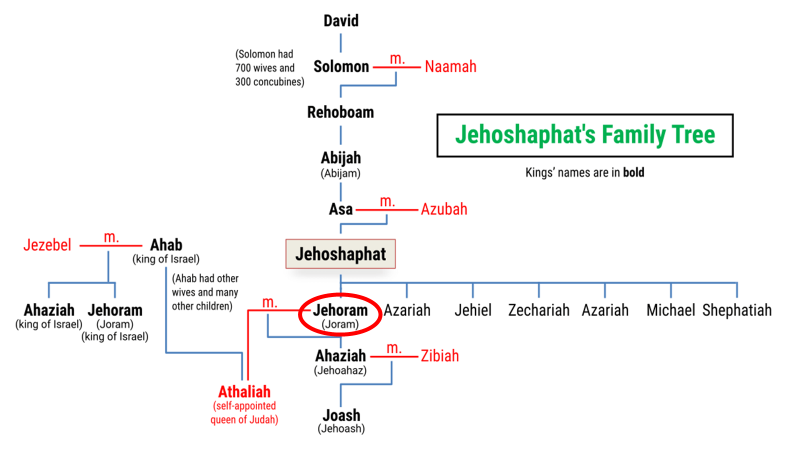
Jehosphaphat's Family Tree - Names in Bold are KINGS
Source: Mark Morgan at bibletales.org
JEHOSHAPHAT AND SON
JEHORAM COREGENTS
Now - This "NOW" marks a shift in the narrative back to the nation of Judah, which was last mentioned in 2 Kings 3 when Israel's King Jehoram made an alliance with Judah's King Jehoshaphat to put down the Moabite rebellion.
In the fifth year of Joram (Jehoram) the son of Ahab king of Israel, Jehoshaphat being then the king of Judah, Jehoram (Joram) the son of Jehoshaphat king of Judah became king - This passage could be very confusing for a couple of reasons. One is that 1Ki 22:50 describes the death of Jehoshaphat but here he is described as reigning. This shows that Kings is not always chronological! Second you do need to keep the two Jehoram's straight. The family tree above shows on the left side King Jehoram (Joram) of Israel, the son of Ahab and Jezebel. The king in the red oval is King Jehoram (Joram) of Judah, the son of Jehoshaphat. Jehoshaphat followed the pattern of his father Asa and appointed his son Jehoram as coregent for the last six years of his (Jehoshaphat's) reign (cf. 2Ki 1:17; 2Ki 3:1).
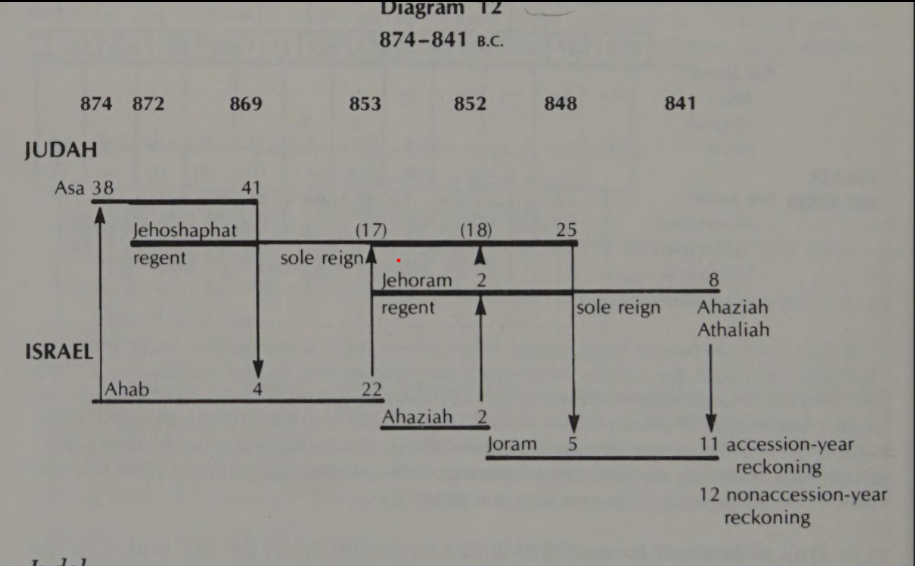
From E R Thiele's The mysterious numbers of the Hebrew kings p99
In summary, Jehoram (Joram) reigned for about 5-6 years with his godly father Jehoshaphat. When his father died, he became sole ruler of Judah. The record in 2 Chronicles 21 helps put the pieces of this puzzle together...
1 Then Jehoshaphat slept with his fathers and was buried with his fathers in the city of David, and Jehoram his son became king in his place. 2 He had brothers (SEE FAMILY TREE ABOVE), the sons of Jehoshaphat: Azariah, Jehiel, Zechariah, Azaryahu (AZARIAH IN THE FAMILY TREE ABOVE), Michael and Shephatiah. All these were the sons of Jehoshaphat king of Israel. 3 Their father gave them many gifts of silver, gold and precious things, with fortified cities in Judah, but he gave the kingdom to Jehoram because he was the firstborn. 4 Now when Jehoram had taken over the kingdom of his father and made himself secure, he killed all (SIX OF) his brothers with the sword, and some of the rulers of Israel also. 5 Jehoram was thirty-two years old when he became king, and he reigned eight years in Jerusalem. 6 He walked in the way of the kings of Israel, just as the house of Ahab did (for Ahab’s daughter was his wife), and he did evil in the sight of the LORD. 7Yet the LORD was not willing to destroy the house of David because of the covenant which He had made with David, and since He had promised to give a lamp to him and his sons forever.
John MacArthur - Jehoram of Judah served as co-regent with his father Jehoshaphat for the final 4 years of his reign, 853-848 B.C. Joram (Jehoram) became king of Israel during the second year of this co-regency, 852 B.C. Jehoram of Judah ruled alone for 8 years after his father’s death, until 841 B.C. (cf. 2Ch 21:15). Most likely, Obadiah prophesied during his reign. (See MacArthur Study Bible)
2 Kings 8:17 He was thirty-two years old when he became king, and he reigned eight years in Jerusalem.
Related Passages:
2 Chronicles 21:5 Jehoram (Joram) was thirty-two years old when he became king, and he reigned eight years in Jerusalem.

JEHORAM BEGINS HIS
EVIL REIGN IN JUDAH
The narrative has said little about the kings of Judah since 1 Kings 22:50, but now it returns to the story of the southern kingdom to describe the evil reign of Jehoram/Joram. 2Ki 8:17 describes the beginning of his SOLO reign which was approximately 848 B.C. and which lasted to 841 B.C. This chronology can be confusing because Jehoram/Joram had already reigned as king with his father King Jehoshaphat for about 5 years, beginning in about 853 BC, the seventeenth year of Jehoshaphat’s reign.
BACKGROUND - King Jehoshaphat apparently raised up Jehoram/Joram to reign with him (853 B.C.) prior to his (Jehoshaphat's) alliance with Ahab of Israel to fight Aram (Syria) at Ramoth-gilead, as recorded in 1 Kings 22:1-41. In other words, King Jehoshaphat was "covering his bases" establishing Jehoram/Joram as co-regent just in case he (Jehoshaphat) did not survive the battle with Aram (and in fact Ahab did lose his life). In summary, the coregency was a strategic move by Jehoshaphat to ensure stable leadership, considering the dangerous nature of the military campaign against Aram. This coregency continued until 848 BC, when Jehoshaphat died. The present passage, 2Ki 8:17, marks the beginning of the SOLO reign of Jehoram/Joram. (Borrow Edwin Thiele's The Mysterious Numbers of the Hebrew Kings page 98)
He (Jehoram/Joram) was thirty-two years old when he became king, and he reigned eight years in Jerusalem - See note above regarding Jehoshaphat's death, Jehoram/Joram's ascension to the throne of Judah and the immediate assassination of his 6 brothers! Jehoram acted like Near Eastern tyrants, not like a covenant king of Judah who had lawfully received his monarchy from his father. His violence was driven by fear of rivals, not faith in God’s promise. His evil act directly preceded Elijah’s letter of judgment (2Ch 21:12–15)
In short Jehoram/Joram began his evil reign as a "serial killer!" In my opinion, King Jehoram/Joram of Judah marks the beginning of the end for the nation of Judah (see diagram below) as things continue to go down hill spiritually ending in Babylon's defeat of Judah and destruction of Solomon's Temple in 586 BC
Walter Kaiser on the 5-6 year coregency of Jehoram/Joram with his father Jehoshaphat - "Further confirmation comes from the synchronism given in 2 Kings 3:1 where Joram began in “the eighteenth year of Jehoshaphat king of Judah,” but according to 2 Kings 1:17, he began “in the second year of Jehoram the son of Jehoshaphat.” Thus, the eighteenth year of Jehoshaphat was the second year of Jehoram’s coregency. That would mean that Jehoram became coregent with his father in the seventeenth year of his father’s reign, the year when, it turns out, he joined forces with Ahab against Syria. It was in this battle that Ahab lost his life (1 Kings 22:29–37), thus prudence dictated that Jehoshaphat place Jehoram on the throne prior to his undertaking this joint venture with Ahab—a venture in which Jehoshaphat also narrowly escaped losing his own life. (BORROW The Old Testament documents : are they reliable & relevant? PAGE 124 in his chapter entitled "The Principle of Overlapping Reigns or Coregencies")
Here is a brief summary of Jehoram's evil reign in Judah:
- He abandoned the ways of David
- He followed the sinful example of Ahab’s house
- He introduced Baal worship more deeply into Judah
- He murdered his own brothers to secure the throne
- Because of his sin, God allowed political instability, foreign revolt, and national suffering
- His reign did not end with honor but with God’s judgment and a painful death
Gleason Archer - When did Jehoram son of Ahab begin his reign? (included because it has a summary of the coregencies):
2 Kings 1:17 states that Jehoram, Ahab’s younger son, began his reign as King of Israel in the second year of Jehoram son of Jehoshaphat, King of Judah. (Quite confusing is this appearance of identical names among the children of both Ahab of Israel and Jehoshaphat of Judah, but apparently their treaty of alliance and friendship extended even to the naming of their children!) This appears to be in conflict with the notation in 2 Kings 3:1, that Jehoram ben Ahab became king in the “eighteenth year of Jehoshaphat.” But the discrepancy arises from the fact that just prior to joining Ahab in the unsuccessful attempt to recapture Ramoth-gilead from the Syrians, Jehoshaphat took the precaution to have his son Jehoram installed as coregent on the throne of Judah.
In the battle of Ramoth-gilead, in which Ahab was fatally wounded by an arrow (1 Kings 22:34–35), Jehoshaphat himself nearly lost his life; so his foresight was well grounded. But Jehoram began his reign as coregent in that year, 853 B.C. Yet Jehoshaphat lived on until 848, five years later. Thus it came about that the second year of Jehoram ben Jehoshaphat was 851–850. It was also the eighteenth year of Jehoshaphat (who began to reign in 869–868 as sole king, that being the year when his father Asa died). Since Jehoram ben Ahab ascended the throne of Israel in 850, both synchronisms were correct: the second year of Jehoram ben Jehoshaphat was the same as the eighteenth of Jehoshaphat.
The crown prince as coregent
in his father’s lifetime
It should be pointed out in this connection that this precedent for installing the crown prince as coregent in his father’s lifetime was followed at least six times in the course of the Judean monarchy:
(1) Asa died in 869, but his son Jehoshaphat became coregent in 872 (making three or four years of coregency);
(2) Jehoshaphat died in 848, but his son Jehoram became coregent in 853;
(3) Amaziah died in 767, but his son Azariah (or Uzziah, as he is variously known) became coregent in 790 (possibly when Amaziah was taken captive to Israel by Jehoash ben Jehoahaz, king of Israel);
(4) Uzziah died in 739, but his son Jotham became coregent in 751 (when his father was stricken with leprosy);
(5) Jotham died in 736 or 735, but his son Ahaz became coregent in 743.
(6) Ahaz died in 725, but his son Hezekiah became coregent in 728. From the technical legal standpoint, Jehoiachin was the senior king of Judah from 597 (Ezekiel always dates his prophecies by Jehoiachin’s regnal years); and so during the entire reign of his brother Zedekiah (597–587), the latter ruled only as coregent. If we bear these guidelines in mind, many apparent confusions in the dates of the period of the divided monarchy can be readily cleared up. (See page 208 New International Encyclopedia of Bible Difficulties)
Two Jehorams, one king of Israel and the other king of Judah, not only had the same names and added name (Joram), they overlapped in their reigns resulting in (at least to me) one of the more complicated periods in Kings–Chronicles chronology. Below is an attempt to help sort this out...
Note that they reigned at the same time for most of their rule, roughly 852–841 B.C. (about 8–9 years of overlap).
- Jehoram (Joram) of Israel: ca. 852–841 B.C.
- Jehoram (Joram) of Judah: ca. 853–841 B.C.
Now let's try to untangle this royal confusion...
1️⃣ Jehoram of Judah
- Son of Jehoshaphat
- Begins his reign around 853 B.C.
- Marries Athaliah, daughter of Ahab and Jezebel
- Brings Baal influence into Judah
- Reigns until 841 B.C. when he dies from a horrible intestinal disease (2 Chr 21:18–19).
2️⃣ Jehoram of Israel
- Son of Ahab and brother of Ahaziah
- Begins his reign shortly after his brother’s death
- Starts ruling around 852 B.C.
- Reigns until 841 B.C.
- Is killed by Jehu (2 Kings 9:14–24).
3️⃣ Their Overlap - Because their reigns occur almost back-to-back and extend through the same general decade, they overlap almost entirely once Jehoram of Israel begins ruling.
So, during much of this time, the Bible may say: “In the fifth year of Jehoram (Joram) son of Ahab…Jehoram son of Jehoshaphat began to reign…” This means that Jehoram (Israel) was already ruling. The writers are careful to specify “son of Ahab” or “son of Jehoshaphat.”
Year of... 2Ki. 8:16; 2Ki. 8:25; 2Ki. 9:29
2 Kings 8:16 Now in the fifth year of Joram the son of Ahab king of Israel, Jehoshaphat being then the king of Judah, Jehoram the son of Jehoshaphat king of Judah became king.
2 Kings 8:25 In the twelfth year of Joram the son of Ahab king of Israel, Ahaziah the son of Jehoram king of Judah began to reign.
2 Kings 9:29 Now in the eleventh year of Joram, the son of Ahab, Ahaziah became king over Judah.
Additional Potentially Confusing Points:
1️⃣ Same name. Both kings are called Jehoram and Joram
2️⃣ Family Intermarriage - Jehoram of Judah married Ahab’s daughter Athaliah, so:
- The houses of Israel and Judah are now linked
- Baal worship is brought into Judah
- Their histories intertwine politically and spiritually
3️⃣ Their Deaths Occur Close Together - Both reigns end in 841 B.C.
- Jehoram of Israel — killed by Jehu
- Jehoram of Judah — dies painfully shortly after
2 Kings 8:18 He walked in the way of the kings of Israel, just as the house of Ahab had done, for the daughter of Ahab became his wife; and he did evil in the sight of the LORD.
- in the way: 2Ki 3:2,3 1Ki 22:52,53
- the house: 2Ki 9:7,8 21:3,13 2Ch 21:13 Mic 6:16
- the daughter: 2Ki 8:26 1Ki 21:25 2Ch 18:1 19:2 21:6 22:1-4
- his wife: Ge 6:1-5 De 7:3,4 1Ki 11:1-5 Ne 13:25,26
Related Passage:
2 Chronicles 18:1 Now Jehoshaphat had great riches and honor; and he allied himself by marriage with Ahab.
1 Kings 22:44 Jehoshaphat also made peace with the king of Israel.
1 Kings 11:1-5 Now King Solomon loved many foreign women along with the daughter of Pharaoh: Moabite, Ammonite, Edomite, Sidonian, and Hittite women, 2 from the nations concerning which the LORD had said to the sons of Israel, “You shall not associate with them, nor shall they associate with you, for they will surely turn your heart away after their gods.” Solomon held fast (dabaq) to these in love. 3 He had seven hundred wives, princesses, and three hundred concubines, and his wives turned his heart away. 4 For when Solomon was old, his wives turned his heart away after other gods; and his heart was not wholly devoted to the LORD his God, as the heart of David his father had been. 5 For Solomon went after Ashtoreth the goddess of the Sidonians and after Milcom the detestable idol of the Ammonites.
1 Corinthians 15:33 Do not be deceived: “Bad company corrupts good morals.” (ATHALIAH CORRUPTED JERHORAM/JORAM WHO INTRODUCED BAAL WORSHIP CORRUPTS WORSHIP OF YAHWEH IN JUDAH.)
Deuteronomy 7:3-4 Furthermore, you shall not intermarry with them (IDOLATROUS CANAANITES); you shall not give your daughters to their sons, nor shall you take their daughters for your sons. 4 “For they will turn your sons away from following Me to serve other gods; then the anger of the LORD will be kindled against you and He will quickly destroy you.
2 Corinthians 6:14-18 (JEHORAM SHOULD HAVE OBEYED THIS TIMELESS PRINCIPLE) Do not be bound together (present imperative with a negative see our need to depend on the Holy Spirit to obey) with unbelievers; for what partnership have righteousness and lawlessness, or what fellowship has light with darkness? 15 Or what harmony has Christ with Belial, or what has a believer in common with an unbeliever? 16 Or what agreement has the temple of God with idols? For we are the temple of the living God; just as God said, “I WILL DWELL IN THEM AND WALK AMONG THEM; AND I WILL BE THEIR GOD, AND THEY SHALL BE MY PEOPLE. 17 “Therefore, COME OUT (aorist imperative see our need to depend on the Holy Spirit to obey) FROM THEIR MIDST AND BE SEPARATE (aorist imperative see our need to depend on the Holy Spirit to obey),” says the Lord. “AND DO NOT TOUCH (STOP DOING THIS OR DO NOT BEGIN - present imperative with a negative see our need to depend on the Holy Spirit to obey) WHAT IS UNCLEAN; And I will welcome you. 18 “And I will (NOTE ALL THE "I WILL'S!) be a father to you, And you shall be sons and daughters to Me,” Says the Lord Almighty.
THE INEXORABLE EFFECT OF UNREPENTANT SIN!
JEHORAM SANCTIONS BAAL
WORSHIP IN JUDAH!
He (JEHORAM/JORAM OF JUDAH) walked in the way of the kings of Israel, just as the house of Ahab had done - This is a sad verse, for here we find a king of Judah practicing the same lifestyle as Ahab in the north. As depicted in the diagram above, we see that the spiritual corruption introduced by Jehoram initiated a downward spiral that would eventually lead to Judah's defeat by Babylon, sacking of Jerusalem and destruction of Solomon's Temple. The phrase just as the house of Ahab had done indicates like Ahab, Jehoram practiced worship of the abominable idol Baal (ba'al).
Jehoram had godly role models to follow
in his grandfather and father
This is a sad verse because Jehoram had godly role models to follow in his grandfather and father - 2Ch 14:2-5 ("Asa did good and right..."), 2Ch 19:2-3 (Jehoshaphat - "there is some good in you, for you have removed the Asheroth from the land and you have set your heart to seek God.” ), 2Ch 20:31-32 (Jehoshaphat - "He walked in the way of his father Asa and did not depart from it, doing right in the sight of the LORD.") Jehoram would have been wise to heed Solomon's warning "There is a way which seems right to a man, but its end is the way of death (AS WITH JEHORAM - 2Ch 21:18,19!)." (Pr 14:12, 16:25)
One needs to read 2Chronicles 21:1-20 to grasp a more complete picture of the evil reign of Jehoram/Joram and the inevitable consequences of his unrepentant sin...
1 Then Jehoshaphat slept with his fathers and was buried with his fathers in the city of David, and Jehoram his son became king in his place. 2 He had brothers, the sons of Jehoshaphat: Azariah, Jehiel, Zechariah, Azaryahu, Michael and Shephatiah. All these were the sons of Jehoshaphat king of Israel. 3 Their father gave them many gifts of silver, gold and precious things, with fortified cities in Judah, but he gave the kingdom to Jehoram because he was the firstborn.
4 Now when Jehoram had taken over the kingdom of his father and made himself secure, he killed all his brothers with the sword, and some of the rulers of Israel also. 5 Jehoram was thirty-two years old when he became king, and he reigned eight years in Jerusalem. 6 He walked in the way of the kings of Israel, just as the house of Ahab did (for [TERM OF EXPLANATION] Ahab’s daughter [ATHALIAH] was his wife), and he did evil in the sight of the LORD. 7 Yet the LORD was not willing to destroy the house of David because of the covenant which He had made with David, and since He had promised to give a lamp to him and his sons forever.
THE ADVERSARIES: EDOM, LIBNAH
8 In his days Edom revolted against the rule of Judah and set up a king over themselves. 9 Then Jehoram crossed over with his commanders and all his chariots with him. And he arose by night and struck down the Edomites who were surrounding him and the commanders of the chariots. 10 So Edom revolted against Judah to this day (ED: ABOUT 400 YEARS AFTER KING JEHORAM'S EVIL REIGN! SIN CAN HAVE LONG LASTING CONSEQUENCES!). Then Libnah revolted at the same time against his rule, because he had forsaken the LORD God of his fathers. 11 Moreover, he made high places (bamah) in the mountains of Judah, and caused the inhabitants of Jerusalem to play the harlot (zanah) and led Judah astray. (SEE Israel the Wife of Jehovah)
ELIJAH'S LETTER
12 Then (ENOUGH IS ENOUGH!) a letter came to him from Elijah the prophet saying (THE ACCUSATIONS AGAINST JEHORAM ARE FROM THE PROSECUTING ATTORNEY YAHWEH!), “Thus says the LORD God of your father David, ‘Because you have not walked in the ways of Jehoshaphat your father and the ways of Asa king of Judah, (GODLY PARENTS AND GRANDPARENTS SADLY DO NOT ALWAYS GUARANTEE GODLY OFFSPRING!) 13 but have walked in the (EVIL) way of the kings of Israel (THE WALK OF A LEADER HAS SIGNIFICANT IMPACT ON THE FOLLOWERS. LOOK AT HITLER'S EFFECT ON THE GERMAN PEOPLE!), and have caused Judah and the inhabitants of Jerusalem to play the harlot (zanah) as the house of Ahab played the harlot (zanah), and you have also killed your brothers, your own family, who were better than you, 14 BEHOLD, (hinneh; Lxx - idou - used to grab the reader's attention) the LORD is going to strike your people, your sons, your wives and all your possessions with a great calamity; 15 and you will suffer severe sickness, a disease of your bowels, until your bowels come out because of the sickness, day by day.’”
THE ADVERSARIES: PHILISTINES, ARABS
16 Then the LORD stirred up against Jehoram the spirit of the Philistines and the Arabs who bordered the Ethiopians; 17 and they came against Judah and invaded it, and carried away all the possessions found in the king’s house together with his sons and his wives, so that no son was left to him except Jehoahaz, the youngest of his sons (Jehoahaz = “Yahweh has grasped / held” ALSO KNOWN IN 2 KINGS AS Ahaziah = “Yahweh has held / sustained”).
JEHORAM'S MISERABLE DEATH
18 So (BECAUSE HE FAILED TO REPENT AND GO TO THE "GREAT PHYSICIAN" FOR A HEART CHECK) after all this the LORD smote him in his bowels with an incurable sickness. 19 Now it came about in the course of time, at the end of two years, that his bowels came out because of his sickness and he died in great pain. (NOTE THE 3 FEATURES THAT INDICATE HE DIED A DISHONORABLE DEATH MUCH LIKE KING JORAM OF ISRAEL AND QUEEN JEZEBEL) And his people made no fire for him like the fire for his fathers. 20 He was thirty-two years old when he became king, and he reigned in Jerusalem eight years; and he departed with no one’s regret, and they buried him in the city of David, but not in the tombs of the kings.
For (term of explanation) - What is the writer explaining? This one is crystal clear! He is explaining how a king with a godly father (Jehoshaphat) and godly grandfather (Asa - see 2Ch 21:12) would walk in the ungodly footsteps of the kings of Israel. The key issue, of course, is the corrupting influence of Ahab’s evil. Even in the Old Testament era the principle was evident that “a little leaven leavens the whole lump,” as Paul later states in 1 Corinthians 5:6. The "leaven" here was of course the evil daughter of Ahab (Athaliah).
MacArthur: Jehoram officially sanctioned Baal worship in Judah as Ahab had in Israel (1Ki 16:31-33). Jehoram was married to Athaliah, the daughter of Ahab and Jezebel (v. 26). (See MacArthur Study Bible)
The daughter of Ahab (Athaliah) became his wife (cf "one flesh" Ge 2:24) - What a tragic passage! Why or how did she become Jehoram's wife? The answer seems to be that his father King Jehoshaphat of Judah, despite the fact that he had great riches and honor, wanted to cement an alliance with Ahab the king of Israel (see note below, 2Ch 18:1, cf 1Ki 22:44). King Jehoshaphat clearly forgot or ignored the warning of being unequally yoked in Dt 7:3-4 (Speaking of intermarrying with Canaanites but still valid in principle as Ahab's clan was acting like "Canaanites"!). Clearly this godly king did not understand the timeless principle Paul recorded in 2 Corinthians 6:14-18 and the results were devastating, in effect catalyzing the crumbling of the Davidi monarchy in Judah!
Jehoshaphat seemed to be long on piety
and short on common sense.
-- Dale Ralph Davis
🙏 THOUGHT - As a father with two sons, I can’t help but wonder, what was Jehoshaphat thinking? One of my son's married a believer and God has richly blessed that covenant. The other son chose to marry an unbeliever and 10 years later the entire family is still reaping the tragic consequences of that covenant (which eventually was broken)! If you are a believer considering marriage to an unbeliever, you would be wise to stop, seriously pray and reconsider before entering into that lifelong covenant. God makes it clear that light and darkness do not blend spiritually, and that reality will inevitably bring tension, sorrow, and spiritual conflict into the relationship. Even if affection is strong, the absence of shared belief in Christ means you will not share the same ultimate priorities, values, and direction (and eternal future!) Count the cost carefully, because unequal yoking rarely produces harmony, and usually leads to years of heartache. (And read and memorize and practice 2Co 6:14-18 and add 2Co 7:1)
Jehoram followed the ways of Ahab because he married Ahab’s daughter Athaliah, and through that marriage. the evil influence of Ahab’s house worked its way into his heart and then into every part of his life (1Co 15:33). What he allowed into his home and his heart eventually shaped his character, his decisions, and ultimately the spiritual direction of the entire nation of Judah! WOE! (cf Gal 6:7-8, Hos 8:7)
Dale Ralph Davis: One wonders why Jehoshaphat cemented an alliance with Israel (1 Kings 22:44) by marrying his son (Jehoram) to Ahab’s daughter (2Kings 8:18; 2Chr 18:1). Perhaps he thought it a suave move in face of the resurging Assyrian menace under Ashurnasirpal II and Shalmaneser III. But it was a spiritual, moral, national disaster. Jehoshaphat seemed to be long on piety and short on sense. (Borrow 2 Kings : the power and the fury page 140)
What we walk after
eventually determines what we do.
And he did evil in the sight of the LORD - Jehoram's evil behavior was not accidental or isolated, but was the natural result of the path on which he chose to walk. In the Septuagint the verb did (poieo) is in the active voice indicating Jehoram made a volitional choice, a choice of his will to rebel against God's will! By following the corrupt pattern of the kings of the Northern Kingdom, he inevitably reaped the same spiritual corruption. When a leader walks in the ways of wickedness and surrounds himself with ungodly influence (aka, his ambitious wife Athaliah), evil actions will flow naturally from a heart that is no longer aligned with God's heart. What we walk after eventually determines what we do.
Donald Wiseman: The influence of an evil woman, as of an evil man, can persist. The historian views evil in Judah as worse than in Israel, and this forms the backdrop of God’s covenant mercy (v. 19). (See 1 and 2 Kings: An Introduction and Commentary - Page 229)
Warren Wiersbe: The wall of separation was gradually crumbling between David’s dynasty in Judah and the descendants of Ahab in Israel. The future of God’s great plan of salvation depended on the continuation of the Davidic dynasty, so Jehoram was playing right into the enemy’s hands. By compromising with the evil rulers of Israel, Jehoram displeased the Lord and weakened the nation. When he became king, Jehoram followed the example of Jezebel and murdered all his brothers and anybody who might threaten his authority (2 Chron. 21:1–7). His father had given each of the sons a fortified city to rule, and Jehoram didn’t want them to unite against him. Instead of calling them together to pray and worship God at the temple and to seek His blessing, he followed the ways of Ahab and Jezebel and ruled by the sword. Jehoram wanted his brothers out of the way so they couldn’t oppose his policy of promoting the worship of Baal. Jezebel had won again. (Page 694 Bible Exposition Commentary)
Marry the unbeliever,
get the unbelief!
William Barnes: Influence of parents notwithstanding, the major issue in both this and the preceding section must be the dangers of intermarriage with foreigners, that is, nonbelievers (at that time, non-Israelites would normally worship their own national god, not Yahweh, the national God of Israel or Judah). Of course, most such intermarriages took place for diplomatic reasons, and in a real sense, the royal family of the northern kingdom of Israel did not fit completely into the category of “foreigners”; but still, the danger of foreign influence had long been recognized in Judah (highlighted especially in the book of Deuteronomy. . .), and for the Deuteronomistic Historian, the results of borrowing practices from non-believers can only be disastrous. To be sure, things get tricky when mothers-in-law get involved and arranged marriages take place, but the warning remains—marry the unbeliever, get the unbelief (thrown in for free, as it were). This is especially true when the marriage partner is vigorous in personality or from a home with parents of vigorous personalities. Ahaziah in his single year of reign (perhaps encompassing only several months or so. . .), would hardly have done much actual harm, but the Deuteronomistic evaluation must nonetheless be. . . As is generally the case, the history here is written with a clear contemporary agenda. And in this case it is that thou shalt not marry unbelievers (cf. 2 Cor 6:14, also the commentary on 1 Kgs 11:1–13 for Solomon’s particularly notorious failings in this area). (See 1-2 Kings - Page 252)
2 Kings 8:19 However, the LORD was not willing to destroy Judah, for the sake of David His servant, since He had promised him to give a lamp to him through his sons always.
- David: 2Ki 19:34 2Sa 7:12,13,15 1Ki 11:36 15:4,5 2Ch 21:7 Isa 7:14 37:35 Jer 33:25,26 Ho 11:9 Lu 1:32,33
- lamp, 1Ki 11:36
Related Passages:
2 Chronicles 21:7 Yet the LORD was not willing to destroy the house of David because of the covenant which He had made with David, and since He had promised to give a LAMP to him and his sons forever.
1 Kings 11:36 (AT TIME OF DIVSION OF THE UNITED KINGDOM) ‘But to his son I will give one tribe, that My servant David may have a LAMP always before Me in Jerusalem, the city where I have chosen for Myself to put My Name.
1 Kings 15:4 But for David’s sake the LORD his God gave him (King Jeroboam of Judah -1Ki 15:1-3) a LAMP in Jerusalem, to raise up his son after him and to establish Jerusalem;
Psalm 132:17 “There I will cause the horn of David to spring forth; I have prepared a lamp for Mine anointed.
2 Samuel 7:12, 13 (YAHWEH SPEAKING TO DAVID - DAVIDIC COVENANT) “When your days are complete and you lie down with your fathers, I will raise up your descendant after you, who will come forth from you, and I will establish his kingdom. 13 “He shall build a house for My name, and I will establish the throne of his kingdom forever.
1 Chronicles 17:11-14 (YAHWEH SPEAKING TO DAVID - DAVIDIC COVENANT) “When your days are fulfilled that you must go to be with your fathers, that I will set up one of your descendants after you, who will be of your sons; and I will establish his kingdom. 12 “He shall build for Me a house, and I will establish his throne forever. 13 “I will be his father and he shall be My son; and I will not take My lovingkindness away from him, as I took it from him who was before you. 14 “But I will settle him in My house and in My kingdom forever, and his throne shall be established forever.”’”
Jeremiah 23:5 (DAVIDIC COVENANT'S MESSIANIC COMPONENT) “Behold, the days are coming,” declares the LORD, “When I will raise up for David a righteous Branch (MESSIAH); And He will reign as king and act wisely And do justice and righteousness in the land.
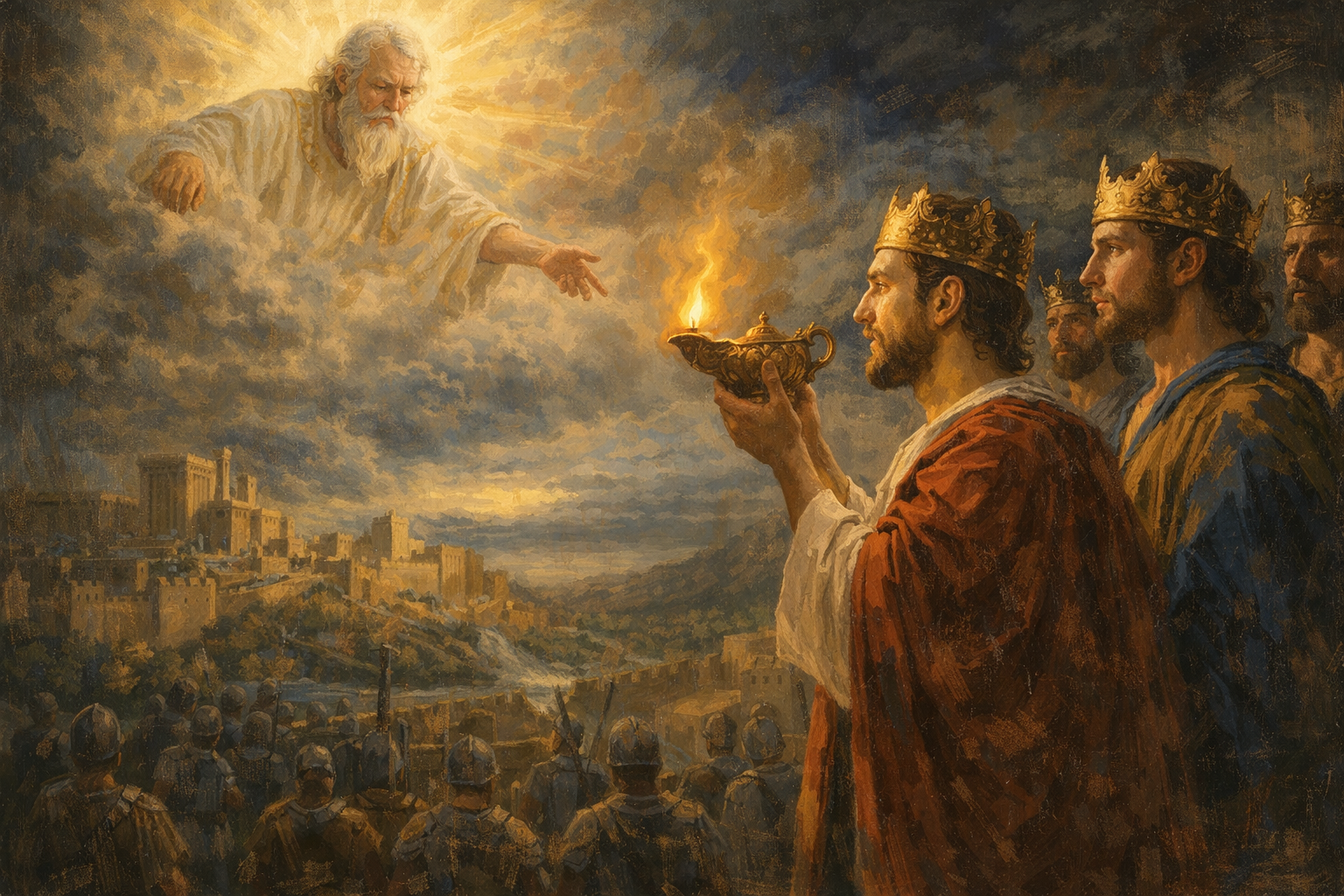
Depiction of Lamp and Yahweh's Covenant with David
PROTECTION PROVIDED
BY DAVIDIC COVENANT
However, the LORD (Jehovah) was not willing (abah) to destroy (shachath; LXX - diaphtheiro) Judah - 2Ch 21:7 has "house of David" instead of Judah. God's covenant with David was unconditional and was not dependent on the behavior of his descendants, even one as wicked as Jehoram (2Ch 21:4).
The promise of God was unconditional,
and David's house would be forever established
Believer's Study Bible draws an interesting conclusion writing that "The certainty of God's covenants and of His Word is amply illustrated in the life of Jehoram. Although Jehoram was wicked (2Chr 21:6), the Lord did not destroy the house of David, because of the Davidic covenant (cf. Ge 9:13; 2Sa 7:5, 16). This provides further evidence that the covenant was not conditional upon the behavior of David's progeny. The promise of God was unconditional, and David's house would be forever established."
The fact that Jehoram of Judah walked in the way of the kings of Israel....and did evil in the sight of the LORD gave the LORD sufficient justification for destroying Judah. However Yahweh was (is) faithful to keep His unconditional covenant promise made to David and therefore held back His hand of wrath that could have brought complete destruction. Judah deserved destruction because of their sin and unfaithfulness, but God chose not to wipe them out. However, as shown in the following passages, God did not "wink" at their sin, but disciplined them by sending multiple pagan adversaries.
It is interesting that destroy (shachath; LXX - diaphtheiro) Judah is translated in Greek with the verb diaphtheiro that means to decay, to spoil or ruin morally (1Ti 6:5). In effect the process of spiritual, moral decay had begun in Judah!
🙏 THOUGHT - Spiritual decay rarely brings ruin in an instant. More often, it unfolds quietly and gradually, almost imperceptibly, over time (see Tiny Evils). When decline goes unchecked by repentance, renewal, or genuine revival, compromises harden into settled patterns, and weakened convictions slowly give way to spiritual apathy and open rebellion against God. What begins as a small seed eventually matures into ruin, not because God is absent, but because His gracious warnings and opportunities for restoration are ignored. Repentance and revival arrest this downward drift (cf Rev 2:4,5, Ps 119:25), but when they are missing, decay continues its inevitablly downward, destructive course (cf 2Pe 1:4b). Judah’s downward spiral (pix) serves as a sober reminder to all believers that even small spiritual compromises are never neutral and if left unchecked, inevitably lead to devastating spiritual consequences.
For the sake of David His servant ('ebed; LXX - doulos), since He had promised him to give a lamp (niyr; LXX - luchnos/lychnos) to him through his sons always - Despite the repeated failures, compromises, and outright wickedness of David’s descendants, the LORD restrained His judgment because of His covenant promise, not because these kings deserved mercy. This ties back to Yahweh's covenant with David, God’s promise to preserve David’s royal line (2Sa 7:12), and ultimately, God’s plan to bring the Messiah through David's lineage as the great Son of David (cf Mt 1:1). So even though Judah was unfaithful, God remained faithful, basing His faithfulness on His unconditional covenant promises to King David.
We see a similar protective principle of God's covenant with Noah (and humanity) in Ge 9:13 when God said "I set My bow in the cloud, and it shall be for a sign of a covenant between Me and the earth." In Ge 9:15 God promises "I will remember My covenant, which is between Me and you and every living creature of all flesh; and never again shall the water become a flood to destroy all flesh." The emphasis is striking: God remembers His covenant, and that remembrance governs His actions. In the same way, this principle is now applied to Judah. Because God remembered His covenant with David, He restrained total destruction, even in the face of Judah’s unfaithfulness.
🙏 THOUGHT - And does this not apply even more powerfully to those of us who live under the New Covenant? God remembers the blood of His Son, shed once for all. Because of that finished work, we will never face the destruction unbelievers will face. Divine discipline may come, but divine annihilation never will! Covenant mercy, grounded not in our faithfulness, but in God’s faithfulness, is our lot in this life and the life to come!
A debtor to mercy alone,
Of covenant mercy I sing,
Nor fear, with God’s righteousness on,
My person and off’rings to bring.
The terrors of law and of God
With me can have nothing to do;
My Savior’s obedience and blood
Hide all my transgressions from view.My name from the palms of His hands
Eternity will not erase;
Imprest on His heart, it remains
In marks of indelible grace.
Yes! I to the end shall endure,
As sure as the earnest is giv’n;
More happy, but not more secure,
When all earthly ties have been riv’n.
--Augustus Toplady
To give (a divine gift of grace) a lamp (niyr; LXX - luchnos/lychnos) to him through his sons always (an everlasting covenant) - This is a vivid metaphor. In ancient Hebrew thought, a lamp symbolized life, guidance, and divine favor — the sustaining presence of God that keeps darkness from overtaking His people. In 2 Samuel 22:29 David declared “For You are my lamp, O LORD; And the LORD illumines my darkness. God Himself was David’s lamp, the source of personal and national spiritual vitality. When God promised to “give a lamp to David,” it meant He would keep David’s royal line alive, continuing to shine even when the kingdom faltered.
John Walton in on to give a lamp writes that "Lamps were often used metaphorically in Israel to symbolize life and prosperity. They were often placed in tombs for this reason. The expression "his lamp" is often used in Scripture to symbolize life. As an eternal flame is a symbol of endurance and remembrance, so the reign of a descendant of David in Jerusalem provides a link to God's promise to David's dynasty (2Sa 7:8-16). Similar uses of the word in Ugaritic and Akkadian are tied to perpetuation of rule or divine presence. Assyrian king Tiglath-Pileser III is referred to as the light of all mankind. An Old Babylonian idiom expresses a family having no descendants by the image of its brazier going out." (See IVP Bible Background Commentary, see page 442)
Through his sons means that God’s promise ensured that David’s lineage would not be snuffed out, even during periods of deep spiritual darkness in Judah which begin with the reign of Jehoram. Each surviving son on the throne was evidence that the lamp was still burning. In 1 Kings 15:4 despite the sins of King Abijam, we read "But for David’s sake the LORD his God gave him a lamp in Jerusalem, to raise up his son after him and to establish Jerusalem."
The time phrase always was an allusion to 2Sa 7:16 where God told David “Your house and your kingdom shall endure before Me FOREVER; your throne shall be established FOREVER.”’ God is faithful to His Word. Even though David’s descendants often rebelled, the lamp was not extinguished, meaning that God continued to place a Davidic descendant on the throne. This was not because of their righteousness, but because of His covenant faithfulness. God's faithfulness ultimately looks beyond the immediate kings of Judah to its fulfillment in the Messiah. The preserved “lamp” culminates in Jesus Christ, the Son of David, the ultimate "lamp," as the Light of the World (Jn 8:12), Whose lamp will never fail (Rev 21:23)and Whose kingdom will never end (Rev 11:15).
In short, a lamp to him through his sons always ultimately points to God’s faithfulness, a “lamp” that never goes out, guiding His people through the line of David to the everlasting Light, Christ Himself. This statement reveals that God sovereignly controls redemptive history, in this case by delaying judgment, preserving a remnant, and keeping His word, so that His eternal plan might stand.
J. Orr: Grieved though God was with his conduct, He would not destroy Judah, having pledged himself to David to perpetuate his line. The descendants of holy men and women do not know how much of God's mercy and forbearance they often owe to, their ancestral connection. God spares them for their fathers' sakes (Ro 11:28).
J.A. Thompson: David’s “lamp” is a reference to 1 Kgs 11:36. A burning lamp in the home would indicate its occupancy by a resident. To have a lamp suggests that life would continue and the home would be occupied. The promise was that the Davidic line would not be extinguished until the time of the Messiah, who would occupy the throne forever. (1, 2 Chronicles: An Exegetical and Theological Exposition)
Mordechai Cogan: The figure of a “lamp” as a sign of life and hope appears in Abishai’s oath to David: “You shall not go with us into battle anymore, lest you extinguish the lamp (nēr) of Israel!” (2Sa 21:17). Contrast, too, the simile “They would quench my last remaining ember” (2Sa 14:7).... Finally, the promise of a “lamp” for David finds its late reflection in Ps 132, in which Deuteronomistic echoes are patent: “I have arranged a lamp (nēr) for my anointed one” (Ps 132:17).
Dictionary of Biblical Imagery (PAGE 1646) exceprt on LAMP as signifying Blessing/Presence of God. - A different lamp metaphor occurs in connection with God’s oath that the Davidic dynasty would endure (2Sa 7:16). Solomon’s son and grandson failed to keep the covenant. “Nevertheless for David’s sake the LORD his God gave him a lamp in Jerusalem, setting up his son after him” (1Ki 15:4 NIV). Similarly, “I have prepared a lamp for my anointed one [David]” (Ps 132:17 NRSV). Since David’s men had referred to him as the lamp of Israel, the psalmist must expect another king with David’s charisma. The Lord was the source of that charisma, “Indeed, you are my lamp, O LORD, the LORD lightens my darkness” (2Sa 22:29 NRSV), and he was to come in the person of Jesus (Jn 8:12). At the end of the Bible, when the new Jerusalem is seen coming down from heaven, lamps are no longer needed because “its lamp is the Lamb” (Rev 21:23 NRSV) and “the Lord God will be their light” (Rev 22:5 NRSV). The lamps in the opening chapter of Revelation symbolize the divine presence with the seven churches. Christ’s warning that the lamp could be withdrawn connotes God’s removing his active presence from them (Rev 1–3).
Lamp (05216) is the masculine noun niyr (ner, neyr) from nahar = to shine. It refers to a lamp or light and is used literally and figurativey. Literally - The lamps of the Tabernacle (Ex 27:20), the lamp in the Temple during Samuel’s ministry (1Sa 3:3). Metahorically the Word of God as a guiding light (Ps 119:105). Figuratively Niyr describes the virtuous wife who does not let her lamp go out at night (Pr 31:18), symbolizing diligence and vigilance.
Most notably, the term niyr is used metaphorically in God’s covenant promise to David, assuring him that he would always have a lamp before the Lord in Jerusalem—a vivid image of dynastic continuity and divine favor (1Ki 11:36; 2Chr 21:7).
NIYR/NER/NEYR - 42V - Exod. 25:37; Exod. 27:20; Exod. 30:7; Exod. 30:8; Exod. 35:14; Exod. 37:23; Exod. 39:37; Exod. 40:4; Exod. 40:25; Lev. 24:2; Lev. 24:4; Num. 4:9; Num. 8:2; Num. 8:3; 1 Sam. 3:3; 2 Sam. 21:17; 2 Sam. 22:29; 1 Ki. 7:49; 1 Ki. 11:36; 1 Ki. 15:4; 2 Ki. 8:19; 1 Chr. 28:15; 2 Chr. 4:20; 2 Chr. 4:21; 2 Chr. 13:11; 2 Chr. 21:7; 2 Chr. 29:7; Job 18:6; Job 21:17; Job 29:3; Ps. 18:28; Ps. 119:105; Ps. 132:17; Prov. 6:23; Prov. 13:9; Prov. 20:20; Prov. 20:27; Prov. 24:20; Prov. 31:18; Jer. 25:10; Zeph. 1:12; Zech. 4:2
Linguistically, this word corresponds to the Aramaic noun nûr (05135), which means fire or flame. In the book of Daniel, nûr is associated with fire that does not harm the three Hebrews (Daniel 3:27) and with the fiery description of the Ancient of Days (Daniel 7:9–10), emphasizing both divine presence and power.
Martin Selman - niyr (ner, neyr)
OT 1. As a familiar symbol of domestic and working life (Jer 25:10), the lamp (נֵר) is a natural metaphor for life. It is used primarily as a symbol for the quality and length of life. The recurring phrase “the lamp (of the wicked) goes out,” which occurs several times in the Wisdom literature (e.g., Job 18:5; Prov 13:9; 20:20), appears to mean that life for the wicked is shortened and unfulfilled. This is suggested by Prov 24:20, which affirms that the wicked have no future (Heb. אַחֲרִית; #344).
2. Although the comparable phrase “the lamp of the righteous” does occur (Prov 13:9; Heb. אוֹר, #240), the OT seems to assume that without God human lives are in darkness and that even the righteous have no lamp of their own. Only Yahweh can give light to a person’s lamp, that is, his life (Ps 18:28 [29]; the parallel verse says simply “You are my lamp, O LORD” (2 Sam 22:29). Yahweh, in fact, gives light to human beings through his own lamp. This idea is applied both to the guidance given by God’s word (Ps 119:105) and to the spiritual and physical growth resulting from the gift of Yahweh’s life or breath (Prov 20:27, “The lamp of the LORD searches the spirit [breath] of a man”; cf. Gen 2:7).
3. The separate metaphor of a lamp shining in darkness gives rise to two further distinctive concepts. First, the lamps on the tabernacle or temple lampstand were to be kept burning all night (Exod 30:7–8; Lev 24:3–4; contrast 2 Chron 29:7). As with the lampstand, the lamps probably represent the light of God’s continuing presence. Second, specific representatives of the Davidic line are described as a lamp (2 Sam 21:17; 1 Kgs 11:36; Ps 132:17; in this sense always נִיר (II) in Kgs and Chron). The context usually refers to some potentially fatal threat (2 Sam 21:17), notably through David’s own family (2 Kgs 8:18–19 || 2 Chron 21:4–7). The meaning here is neither life nor “yoke, dominion” (Hanson), but a guarantee that David’s house will survive even the darkest days because of God’s covenant promise.
P-B נֵר is generally used for the lights on the candlestick in the temple. The expression “God’s lamp” may refer either to the candlestick or to the Law, and “lamp of Israel” is often used to describe a great scholar or teacher.
NT Though Jesus is once called a lamp (Rev 21:23), as is John the Baptist (John 5:35), the NT mainly refers to a lamp to encourage believers not to hide God’s light but give it maximum exposure (Matt 5:15; Mark 4:21; Luke 8:16). The eye as the lamp of the body enables others to see a person’s inner light (Matt 6:22–23; Luke 11:34–36). The lampstand is used mainly in Revelation as a symbol for individual churches (Rev 1:12–20). However, churches are only light-bearers, for the true light of the Messiah, and their lampstand, may be removed if they do not repent (Rev 2:5).
BIBLIOGRAPHY NIDNTT 2:484–96; TDNT 4:16–28, 324–27; TWOT 2:565–66; P. D. Hanson, “The Song of Heshbon and David’s Nir,” HTR 61, 1968, 297–320.
Dead flies cause the ointment of the apothecary to send forth a stinking savour: so doth a little folly him that is in reputation for wisdom and honour. --Ecclesiastes 10:1
It started as a seedling on the slopes of the Colorado Rockies some 500 years ago. For centuries it had stood tall, enduring violent winds, lightning strikes, blizzards, even avalanches. Now, however, the once-towering tree is just a mound of decaying wood. What caused its demise? A horde of beetles had attacked it, gnawing away (hidden, inside, invisible) until that skyscraper of nature surrendered to those tiny pests and toppled over.
That's also the tragic story of many Christians. For long years they stood tall for God. They resisted temptations, weathered crises, and were bold in the strength divinely provided. But little sins began to eat away at their lives--little lies, little compromises with greed or lust, sins that gradually eroded their character. And suddenly they fell.
Song of Solomon 2:15 states, "Catch us the foxes, the little foxes that spoil the vines."
This colorful Old Testament verse should sound a loud alarm in our consciences. We must not tolerate the little evils that eat away at the roots of our lives. Otherwise, our once-strong witness for Christ will become a silenced casualty of sin. Let's confess those "tiny" evils to God now, before they lead to a big fall. — Vernon C. Grounds (Reprinted by permission from Our Daily Bread Ministries. Please do not repost the full devotional without their permission.)
Nothing between, like worldly pleasure,
Habits of life, though harmless they seem,
Must not my heart from Him ever sever--
He is my all! There's nothing between.
--TindleyA big fall begins with a little stumble.
(I would add a blessed life can begin with what may seem like a little obedience!)
QUESTION - What is the Davidic covenant? | GotQuestions.org
ANSWER - The Davidic Covenant refers to God’s promises to David through Nathan the prophet and is found in 2 Samuel 7 and later summarized in 1 Chronicles 17:11–14 and 2 Chronicles 6:16. This is an unconditional covenant made between God and David through which God promises David and Israel that the Messiah (Jesus Christ) would come from the lineage of David and the tribe of Judah and would establish a kingdom that would endure forever. The Davidic Covenant is unconditional because God does not place any conditions of obedience upon its fulfillment. The surety of the promises made rests solely on God’s faithfulness and does not depend at all on David or Israel’s obedience.
The Davidic Covenant centers on several key promises that are made to David.
First, God reaffirms the promise of the land that He made in the first two covenants with Israel (the Abrahamic and Mosaic Covenants). This promise is seen in 2 Samuel 7:10,
“I will provide a place for my people Israel and will plant them so that they can have a home of their own and no longer be disturbed. Wicked people will not oppress them anymore.”
God then promises that David’s son will succeed him as king of Israel and that this son (Solomon) would build the temple. This promise is seen in 2 Samuel 7:12–13,
" I will raise up your offspring to succeed you, your own flesh and blood, and I will establish his kingdom. He is the one who will build a house for my Name.”
But then the promise continues and expands:
“I will establish the throne of his kingdom forever” (2Sa 7:13), and “Your house and your kingdom will endure forever before me; your throne will be established forever” (2Sa 7:16).
What began as a promise that David’s son Solomon would be blessed and build the temple turns into something different—the promise of an everlasting kingdom. Another Son of David would rule forever and build a lasting House. This is a reference to the Messiah, Jesus Christ, called the Son of David in Matthew 21:9.
The promise that David’s “house,” “kingdom,” and “throne” will be established forever is significant because it shows that the Messiah will come from the lineage of David and that He will establish a kingdom from which He will reign. The covenant is summarized by the words “house,” promising a dynasty in the lineage of David; “kingdom,” referring to a people who are governed by a king; “throne,” emphasizing the authority of the king’s rule; and “forever,” emphasizing the eternal and unconditional nature of this promise to David and Israel.
Other references to the Davidic Covenant are found in Jeremiah 23:5; 30:9; Isaiah 9:7; 11:1; Luke 1:32, 69; Acts 13:34; and Revelation 3:7.
2 Kings 8:20 In his days Edom revolted from under the hand of Judah, and made a king over themselves.
- Edom: 2Ki 8:22 3:9,27 Ge 27:40 2Ch 21:8-10
- made a king: 2Sa 8:14 1Ki 22:47
Related Passages:
2 Samuel 8:14 (DAVID) He put garrisons in Edom. In all Edom he put garrisons, and all the Edomites became servants to David. And the LORD helped David wherever he went.
1 Kings 11:15-17 For it came about, when David was in Edom, and Joab the commander of the army had gone up to bury the slain, and had struck down every male in Edom 16 (for Joab and all Israel stayed there six months, until he had cut off every male in Edom), 17 that Hadad fled to Egypt, he and certain Edomites of his father’s servants with him, while Hadad was a young boy.
2 Chronicles 21:8-10 In his (JEHORAM'S) days Edom revolted against the rule of Judah and set up a king over themselves. 9 Then Jehoram crossed over with his commanders and all his chariots with him. And he arose by night and struck down the Edomites who were surrounding him and the commanders of the chariots. 10 So Edom revolted against Judah to this day. Then Libnah revolted at the same time against his rule, because he had forsaken the LORD God of his fathers.
2 Chronicles 21:16-20 Then the LORD stirred up against Jehoram the spirit of the Philistines and the Arabs who bordered the Ethiopians; 17 and they came against Judah and invaded it, and carried away all the possessions found in the king’s house together with his sons and his wives, so that no son was left to him except Jehoahaz, the youngest of his sons. 18 So after all this the LORD smote him in his bowels with an incurable sickness. 19 Now it came about in the course of time, at the end of two years, that his bowels came out because of his sickness and he died in great pain. And his people made no fire for him like the fire for his fathers. 20 He was thirty-two years old when he became king, and he reigned in Jerusalem eight years; and he departed with no one’s regret, and they buried him in the city of David, but not in the tombs of the kings.
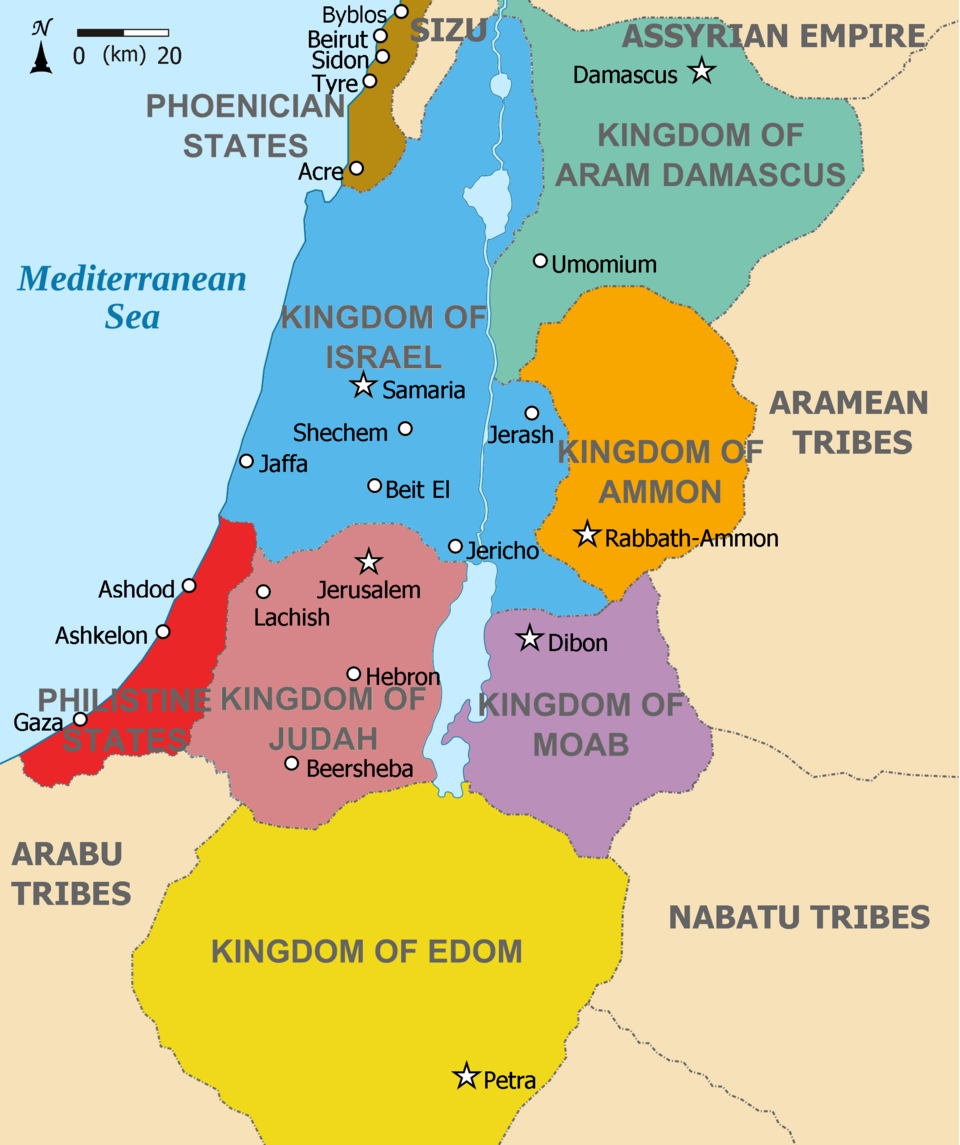
Edom Directly South of Judah
GOD STIRS UP EDOM
AGAINST JUDAH
In his (Jehoram/Joram) days Edom revolted (pasha; Lxx - atheteo - declared invalid) from under the hand (yad speaks of power, authority) of Judah, and made a king over themselves (crowned their own king) - Jehoram's chickens are coming home to roost so to speak —the consequences of his godless choices are now catching up with him. The evil he embraced, tolerated, and promoted is beginning to turn back upon him like a "boomerang." What he sowed in compromise and rebellion is now being reaped in judgment and suffering (cf Hos 8:7). Scripture repeatedly affirms the moral principle that sin may seem slow to repay, but it never forgets its debt. Jehoram’s deeds are no longer theoretical or hidden but are biting him personally, demonstrating that divine patience does not cancel divine justice, but only delays it until the appointed time.
David had decisively subdued Edom and brought it under Israel’s control (2Sa 8:13–14; 1Ki 11:15–17) around 1000 BC, Edom remained a vassal state to Judah through the reigns of Rehoboam, Abijah, Asa and Jehoshaphat (ca. 931–853 BC). Edom was clearly still under Judah’s authority during Jehoshaphat’s reign for 1Ki 22:47 notes "there was no king in Edom; a deputy was king." So now, almost 150 years later, Edom revolted (and remember who is in control Pr 21:1) and crowned its own king.
This loss of control was more than a military setback but was a tangible sign of God's chastisement of Jehoram and Judah’s weakening under Jehoram's ungodly leadership. What David had secured through faithfulness and reliance on the Lord was forfeited by Jehoram through compromise and rebellion. The rebellion of Edom thus stands as an outward symptom of inward decay and as Judah continued to drift from the Lord, the stability and strength inherited from David’s reign steadily unraveled setting in motion the gradual decline shown in the diagram above.
🙏 THOUGHT - This spiritualy unraveling in Judah reminds me of the necessity for each of us in Christ, to continually heed the warning to "Watch (present imperative see our need to depend on the Holy Spirit to obey) yourselves, that you do not lose what we have accomplished, but that you may receive a full reward." (2 John 1:8)
QUESTION - What is the significance of Edom in the Bible? | GotQuestions.org
ANSWER - Edom was an ancient kingdom that is mainly associated with Esau and his descendants in the Bible. Being descendants of Abraham, the Edomites were related to the Israelites. But they did not always act as brothers.
Located on the east side of the Arabah and extending down to the Dead Sea, Edom was first occupied by the Horites, who were later driven out by Esau’s descendants (M. G. Easton, Easton’s Bible Dictionary, New York: Harper & Brothers, 1893, entry for Edom). Numerous verses in the Bible equate the hill country of Seir with Edom, which would “suggest that Seir and Edom comprise an entity that should be viewed as one and the same in terms of their respective geographical locations” (Bruce Crew, “Did Edom’s Territories Extend West of Wadi Arabah?” Bible and Spade 15:1, 2002, p. 4). Interestingly, the name Edom means “red,” which is easily linked with Esau, who sold his birthright for red stew and thereby earned the name Edom (Genesis 25:30). In spite of the connection with Esau, many scholars believe that the kingdom of Edom was associated with red before Esau took control of it because of the red cliffs located in its area (W. Ewing, “Edom; Edomites,” Bible Study Tools, 1915, www.biblestudytools.com/encyclopedias/isbe/edom-edomites.html, accessed 3-29-20). Bozrah and Petra (or Sela) were notable cities in Edom, with Bozrah being the capital and central city of the kingdom.
The nation of Edom existed before the Israelites left Egypt, and the Lord commanded the Israelites not to attempt to take the land from the Edomites as they passed through, since He had given the land to Esau (Deuteronomy 2:1–5). Moses and the Israelites asked permission to cross through the land of Edom on their journey out of Egypt, but they were refused passage by the Edomite king (Numbers 20:14–21). From this point on in the Bible, Edom is mentioned as Israel’s enemy, and the two nations fought frequently.
Both Saul and David fought against the Edomites, with David conquering them and forcing them into labor (1 Samuel 14:47–48; 2 Samuel 8:13–14). During the reign of Jehoram, Edom rebelled against Judah and set up their own independent king (2 Kings 8:20–22). The Edomites continued to be a problem for the Israelites and even raided Judah after it fell to the Babylonians (Ezekiel 25:12–14). Because of Edom’s sin in raiding Judah and taking delight in Israel’s fall during the Babylonian Captivity, the Lord pronounced judgment on Edom (Jeremiah 49:7–22). God declared that Edom would be a wasteland, occupied only by wild animals (Malachi 1:2–5). This began to come to pass when Edom was pushed out of their land and taken over by the Nabateans (Craig Blaising, “Malachi,” Bible Knowledge Commentary: Old Testament, ed. by J. Walvoord and R. Zuck, David C. Cook, 1983. p. 1,576). God justly dealt with the Edomites because of their actions and attitude toward Israel.
The book of Obadiah deals specifically with Edom’s judgment. The Edomites were proud (Obadiah 1:3), violent (verse 10), and apathetic to the destruction of Israel (verse 11), and God promised a reckoning. After the Edomites were driven from their land by the Nabateans, they migrated to the southern part of Israel and became known as Idumeans. Much later in biblical history, Herod the Great, an Idumean, appears on the scene. It was Herod who tried to kill the infant Jesus in Bethlehem—through Herod, the rebellion of Edom continued.
In AD 70, the Idumeans joined the Israelites in their revolt against Rome, and they were wiped out when Jerusalem was destroyed. At that point, the descendants of Esau disappeared from human history, just as God had said. Although once a mighty kingdom among the red cliffs of its land, Edom was destroyed for its sin. It is the restored Israel who will one day possess the land of Edom and the “mountains of Esau” in the millennial kingdom of Christ (Obadiah 1:19–21).
2 Kings 8:21 Then Joram crossed over to Zair, and all his chariots with him. And he arose by night and struck the Edomites who had surrounded him and the captains of the chariots; but his army fled to their tents.
Related Passages:
2 Chronicles 21:8-10 In his days Edom revolted against the rule of Judah and set up a king over themselves. 9 Then Jehoram crossed over with his commanders and all his chariots with him. And he arose by night and struck down the Edomites who were surrounding him and the commanders of the chariots.
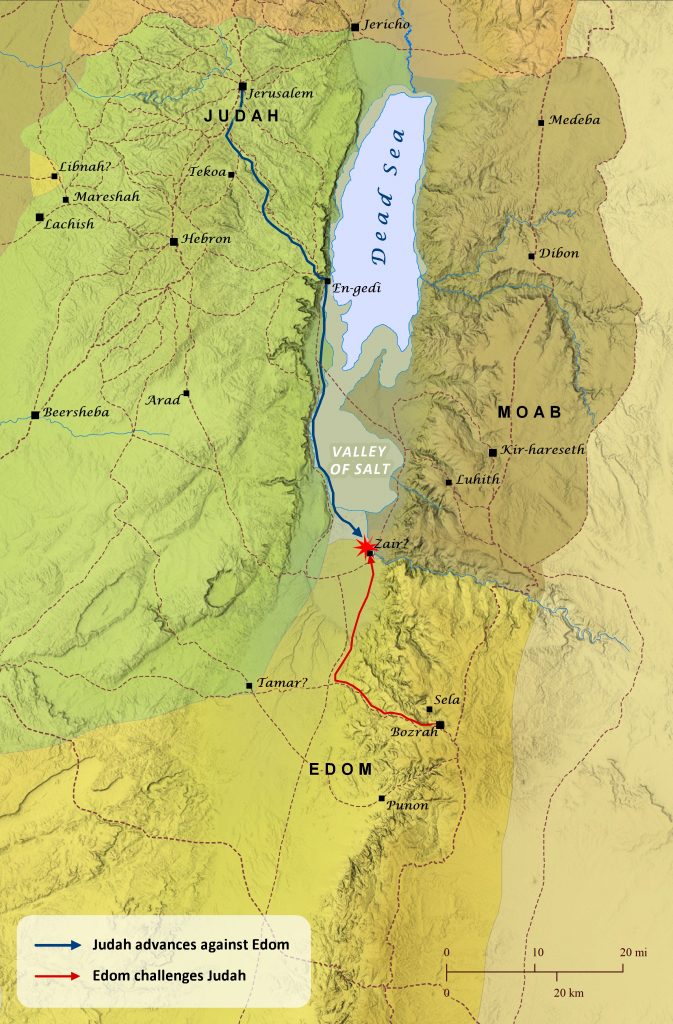
JORAM'S FAILED
NIGHT STRIKE
Then serves as a narrative hinge, marking a clear progression in the unfolding account, signalling that what follows is not an isolated episode, but a development that flows naturally out of what has already occurred. THEN moves the reader forward in time and action, indicating that events are advancing according to a purposeful sequence rather than happening at random. What appears to be a simple chronological marker actually underscores that God is quietly orchestrating events behind the scenes, advancing His agenda.
Joram (Jehoram of Judah) crossed over to Zair - See Joram's likely route (blue line --->) in the map above to Zair located south of the Dead Sea and at the northern border of Edom (apparently either inside Edom or on its northern frontier). Joram personally leades an elite force.
And all his chariots (rekeb) with him. - Chariots represented Judah’s best military assets, suggesting this was a serious, high-stakes attempt to crush the rebellion quickly and decisively.
And he arose by night A night attack indicates a surprise night attack, likely intended to break an Edomite encirclement. Night assaults were risky but sometimes effective when an army was trapped or outmaneuvered.

Joram Escapes Edomite Encirclement
And struck the Edomites who had surrounded him and the captains of the chariots (rekeb) - Joram's forces are encircled but he manages a breakout, but certainly not a decisive victory. Joram's breaking out and escaping of the Edomite death trap was ultimately a sign of God’s grace and faithfulness to David. Joram did not restore Judah's dominion and thus its control of Edom was effectively broken.
But his army fled to their tents - Fled to their tents is a Hebrew idiom meaning the troops abandoned the campaign, pointing to the collapse of the morale of Judah's forces. Joram escaped with his life through a desperate night strike, but his army disintegrated. The campaign failed, Edom broke free permanently, and Judah’s decline under Joram became unmistakably clear.
God's warning in Deuteronomy 28:15, 25 was clear - “But it shall come about, if you do not obey the LORD your God, to observe to do all His commandments and His statutes with which I charge you today, that all these curses will come upon you and overtake you....25 “The LORD shall cause you to be defeated before your enemies; you will go out one way against them, but you will flee (2Ki 8:21) seven ways before them, and you will be an example of terror to all the kingdoms of the earth.
Caleb Nelson: Jehoram’s leadership cost Judah its most important vassal ally, and thus access not only to the Red Sea at Ezion Geber but also trade routes to Arabia. Ouch. God is at work for judgment in the lives of those who deliberately and passionately pursue wickedness.
Peter Pett: Jehoram (now Joram, a shortened form of the same name) went south to quell the rebellion, but seemingly with insufficient forces, with the result that he was outmaneuvered and surrounded by what was probably a much larger force of Edomites. Rather than recording it as a defeat, however, his annalists ignored that idea (in typical Near Eastern fashion) and described the heroic way in which, in a surprise night foray, by means of his chariot force he broke through the ranks of the enemy who considerably outnumbered him, thus allowing many of his people to escape with him. But the truth comes out in that these then ‘fled to their tents (homes)’, always a sign of defeat. In other words his defeated army dispersed. ‘Fled to their tents’ was a technical phrase brought forward from wilderness days.
2 Kings 8:22 So Edom revolted against Judah to this day. Then Libnah revolted at the same time.
- So - Ge 27:40." 2Ki 8:20
- Libnah: 2Ki 19:8 Jos 21:13 2Ch 21:10
Related Passages:
2 Chronicles 21:10 So Edom revolted against Judah to this day. Then Libnah revolted at the same time against his rule, because he had forsaken the LORD God of his fathers.
2 Chronicles 21:10-15 So Edom revolted against Judah to this day. Then Libnah revolted at the same time against his rule, because he had forsaken the LORD God of his fathers. 11 Moreover, he made high places (bamah) in the mountains of Judah, and caused the inhabitants of Jerusalem to play the harlot (zanah) and led Judah astray. 12 (ELIJAH'S PROPHESY AGAINST JEHORAM AND JUDAH) Then a letter came to him from Elijah the prophet saying, “Thus says the LORD God of your father David, ‘Because you have not walked in the ways of Jehoshaphat your father and the ways of Asa king of Judah, 13 but have walked in the way of the kings of Israel, and have caused Judah and the inhabitants of Jerusalem to play the harlot as the house of Ahab played the harlot, and you have also killed your brothers, your own family, who were better than you, 14 behold, the LORD is going to strike your people, your sons, your wives and all your possessions with a great calamity; 15 and you will suffer severe sickness, a disease of your bowels, until your bowels come out because of the sickness, day by day.’”
2 Chronicles 21:16-17 Then the LORD stirred up against Jehoram the spirit of the Philistines and the Arabs who bordered the Ethiopians; 17 and they came against Judah and invaded it, and carried away all the possessions found in the king’s house together with his sons and his wives, so that no son was left to him except Jehoahaz, the youngest of his sons.
JORAM'S REIGN BEGINS
TO LOSE POWER
So - In this context functions as a term of conclusion, drawing a conclusion based on evidence already given. What is the conclusion?
Edom revolted (pasha; Lxx - atheteo) against Judah to this day - This marks a decisive and lasting break in the relationship between the two nations. The revolt by Edom was not temporary or symbolic. It resulted in permanent independence, confirmed by the fact that the biblical writer can say to this day, which means as long as the historical memory of the author extends, Edom never returned to Judah’s rule. In short, Joram's military failure at Zair was not a minor setback but marked a turning point in Judah's history with enduring consequences.
Zair was not a minor setback but marked a turning point
in Judah's history with enduring consequences.
TO THIS DAY - To assess this important time phrase let's look at it more chronologically. To this day means Edom’s rebellion that began under Jehoram remained intact throughout the entire historical period known to the Chronicler (recalling that Chronicles was written circa 450-425 B.C. roughly 400 years after Jehoram's evil reign began) describing an enduring consequence of covenant unfaithfulness. Sin has consequences, sometimes immediate, but often also long lasting (see application)! (Oh, to be able to keep this truth in the forefront of my mind!) In short, Joram's military failure at Zair was not a minor setback but marked a turning point in Judah's history with enduring consequences.
Bob Utley on Edom revolted - This was just one of several rebellions and invasions. Edom ‒ 2 Chr. 21:8-10 Libnah, 2 Chr. 21:10 Philistines ‒ 2 Chr. 21:16-17 the Arabs who were allied with the Ethiopians ‒ 2 Chr. 17:11 SPECIAL TOPIC: EDOM AND ISRAEL
Walton - Edom’s revolt. Although this revolt is not described elsewhere in Scripture or in extrabiblical sources, there are destruction levels at Ramet Matred Negev dating from either the raid of Shishak (late tenth century B.C.) or the revolt mentioned in this passage. (IVP Background Commentary page 442)
Then - The marks progression in the divine discipline against Joram and Judah. 2Ch 21:10 says that this revolt actually occurred at the same time as the revolt by Edom and explains that the reason for these revolts was because Joram had forsaken ('azab) the LORD God of his fathers. In other words, these revolts were the clear consequence of Joram's apostasy from Jehovah.
Libnah revolted at the same time - Libnah was a town in the Judean foothills whose exact location is uncertain. Joshua went out of his way to besiege it (Josh. 10:1-5, 29, 30, 32, 39). Libnah ranked next to Hebron among the nine cities of Judah and Simeon which were assigned to the Levites (Josh. 21:13; 1 Chr. 6:57). The Assyrian king Sennacherib later besieged it (2Ki 19:8). Apparently this rebellion of Libnah against Judah was successful, because no indication is given that Jehoram even tried to retaliate.
🙏 THOUGHT - The account of Edom’s revolt underscores a sobering and timeless truth: sin has consequences, and some of those consequences are long-term. God had graciously and patiently preserved Judah “for the sake of David,” honoring His covenant promise, yet He did not exempt the nation from divine discipline. The loss of Edom illustrates how divine patience does not mean divine indifference.
Beloved, let us learn that unchecked rebellion slowly erodes what once seemed secure. Privileges entrusted by God can be forfeited, and opportunities squandered which may never be fully recovered. What David gained through faithfulness was lost through compromise, leaving a lasting scar on Judah’s history.
This principle reaches far beyond ancient nations. It applies just as powerfully to families and individual lives. Persistent sin dulls spiritual sensitivity, weakens godly influence, and can bring consequences that outlive the moment of rebellion. God is merciful and longs to restore, but when warnings are ignored, the losses incurred can become painfully permanent. Paul was crystal clear when he commanded the readers in Galatia "Do not be deceived (present imperative with a negative see our need to depend on the Holy Spirit to obey), God is not mocked; for whatever a man sows, this he will also reap. For the one who sows to his own flesh will from the flesh reap corruption, but the one who sows to the Spirit will from the Spirit reap eternal life.." (Gal 6:7-8)
I think the writer wants us to look on Edom and Libnah
as Yahweh’s initial scourges upon Jehoram.
--Dale Ralph Davis
Bible Knowledge Commentary (borrow) adds that "Jehoshaphat appointed his son Jehoram coregent the year Jehoshaphat went off to join forces with Ahab in battle at Ramoth-gilead (853 B.C.). For the next five years Jehoram served with his father. In 848 B.C. he began ruling alone and did so for the next eight years (until 841 B.C.). His reign overlapped the reigns of Ahaziah and Jehoram (whom the NASB called Joram from now on) in Israel. It is possible that the writing prophet Obadiah ministered and wrote the Bible book that bears his name during Jehoram's reign. Rather than following the godly example of his father, Jehoram chose to pursue idolatry and infidelity to Yahweh like his wife Athaliah, the daughter of Ahab and Jezebel."
F B Meyer - Libnah revolted at the same time
As long as the kings of Judah remained true to their allegiance to God they were able to keep in subjection the surrounding nations; but just so soon as they revolted from God these peoples revolted from them. It was as though power descended into them from the source of all power; and when the link between themselves and God was broken, that between them and their subordinates was broken also.
This applies very widely:
To our passions.—
If they master you, rebelling against and revolting from your hand, it is because there is some flaw in your consecration, and you have forsaken to some extent the Lord God.
To our families.—
When the heads of a home are in perfect unity with each other and God, they may generally expect that their children will grow up submissive and obedient. Their authority will be recognized and honored. Revolt in the home indicates very often some lapse in obedience and loyalty to God.
To our influence over men.—
When the soul is in blessed fellowship with God, power flows into it from Him, before which strongholds are overthrown. “I am full of power by the Spirit of the Lord,” said the prophet. “I am a man under authority, and have soldiers under me,” said the centurion.
Give yourself entirely to Jesus. Obey Him absolutely; receive by faith from Him living power and grace; be a channel through which He may pour Himself; and you will find that men and things will fall into line at your bidding, and you shall receive power.
Our Libnahs will not revolt,
unless we forsake the Lord God of our fathers.
Ron Daniel applies the tragic account of Joram’s losses to Edom and Libnah to our personal lives, drawing a sobering parallel between national decline and individual spiritual compromise.
When we are walking with the Lord,
we gain victory over various areas of our flesh.I see a spiritual application for us in these events. You see, when we are walking with the Lord, we gain victory over various areas of our flesh. We stop cursing, or smoking, or practicing immorality. We conquer strongholds in the areas of greed and covetousness, of bitterness and unforgiveness. The Edomites in our lives are brought into submission (ED: LIKE EDOM HAD BEEN FOR ALMOST 150 YEARS!). But what happens if we later begin to compromise? If our walk with the Lord isn't as strong? What happens when we begin to desire other things, and pursue riches, or idols? This is what happens: While we aren't looking, those Edomites which had been conquered will become strong again. And before we know it, those areas (ED: OF OUR FALLEN FLESH) which were previously conquered are rising up and rebelling. Even though they previously had been made subservient, they suddenly have the ability to surround us. It gets worse! As we determine to fight against these enemies again, other rebellions begin to occur. Rebellions in areas that we would never even expect. Remember that the other group who rebelled against King Jehoram was the city of Libnah. Libnah had been conquered hundreds of years before, during the days of Joshua. Joshua 10:29-30 "The LORD gave it (LIBNAH) also with its king into the hands of Israel, and he struck it and every person who was in it with the edge of the sword. He left no survivor in it." Libnah had been conquered for well over 500 years! And yet even they rise up in rebellion. It is interesting to me that the name "Libnah" means "white brick pavement." It speaks of the areas in our life that are rock solid, foundational in our occupation. But even these areas can rebel when we stop walking with the Lord.
2 Kings 8:23 The rest of the acts of Joram and all that he did, are they not written in the Book of the Chronicles of the Kings of Judah?
- 2Ki 15:6,36 1Ki 11:41 14:29 15:23 2Ch 21:11-20
SUMMARY OF
JORAM'S REIGN
The rest of the acts of Joram and all that he did, are they not written in the Book of the Chronicles of the Kings of Judah This closing formulaserves as a formal summary and evaluative conclusion to Joram’s reign. Historically, it tells the reader that the biblical author is selective, not exhaustive. The account in Kings does not record everything Joram did militarily, politically, or administratively. Instead, it highlights events that carry spiritual and theological significance. Other deeds—campaigns, building projects, alliances, and state affairs—were preserved in official royal annals now lost to history.
History may record what Joram did,
but God records who he was.
🙏 THOUGHT - This statement about Joram's life subtly underscores a sobering truth that what matters most is not how much a king did, but how he lived before God. Joram’s reign may have included many notable acts, but Scripture chooses to remember him primarily for his spiritual failure and its consequences. Human chronicles may preserve achievements; God’s Word preserves moral and spiritual legacy.
Rest of the Acts is a dominant refrain in the history of the kings of Israel and Judah occurring 43 times - 1 Ki. 11:41; 1 Ki. 14:19; 1 Ki. 14:29; 1 Ki. 15:7; 1 Ki. 15:31; 1 Ki. 16:5; 1 Ki. 16:14; 1 Ki. 16:20; 1 Ki. 16:27; 1 Ki. 22:39; 1 Ki. 22:45; 2 Ki. 1:18; 2 Ki. 8:23; 2 Ki. 10:34; 2 Ki. 12:19; 2 Ki. 13:8; 2 Ki. 13:12; 2 Ki. 14:15; 2 Ki. 14:18; 2 Ki. 14:28; 2 Ki. 15:6; 2 Ki. 15:11; 2 Ki. 15:15; 2 Ki. 15:21; 2 Ki. 15:26; 2 Ki. 15:31; 2 Ki. 15:36; 2 Ki. 16:19; 2 Ki. 20:20; 2 Ki. 21:17; 2 Ki. 21:25; 2 Ki. 23:28; 2 Ki. 24:5; 2 Chr. 9:29; 2 Chr. 13:22; 2 Chr. 20:34; 2 Chr. 25:26; 2 Chr. 26:22; 2 Chr. 27:7; 2 Chr. 32:32; 2 Chr. 33:18; 2 Chr. 35:26; 2 Chr. 36:8
The rest of the story of King Joram is recorded in 2 Chronicles 21:10-15
So Edom revolted against Judah to this day. Then Libnah revolted at the same time against his rule, because he had forsaken the LORD God of his fathers. 11 Moreover, he made high places in the mountains of Judah (DIRECTLY REVERSING HIS FATHER'S ACTIONS IN 2Ch 17:6), and caused the inhabitants of Jerusalem to play the harlot and led Judah astray. 12 Then a letter came to him from Elijah the prophet saying, “Thus says the LORD God of your father David, ‘Because you have not walked in the ways of Jehoshaphat your father and the ways of Asa king of Judah, 13but have walked in the way of the kings of Israel, and have caused Judah and the inhabitants of Jerusalem to play the harlot as the house of Ahab played the harlot, and you have also killed your brothers, your own family, who were better than you, 14 behold, the LORD is going to strike your people, your sons, your wives and all your possessions with a great calamity; 15 and you will suffer severe sickness, a disease of your bowels, until your bowels come out because of the sickness, day by day.’”
Note that God graciously warned Joram in advance by instructing the prophet Elijah to confront him with the consequences of his ungodly leadership over Judah. The message was explicit and sobering, foretelling both national calamity and personal judgment as the direct result of Joram’s rebellion and idolatry. These divine warnings to Joram were not merely predictions, but were invitations to repentance. God’s purpose in sending prophetic rebuke was to arrest Joram’s downward course and call him back to covenant faithfulness. Yet the narrative gives no indication of repentance, humility, or reform on Joram’s part. He neither turned from his sin nor responded to the mercy implicit in the warning. The lack of repentance makes the judgment all the more tragic. Here is the point --
Joram was not judged without
notice and without opportunity.
🙏 THOUGHT- Beloved, Joram’s fate underscores a solemn and timeless truth: warnings ignored tend to harden the heart. When God’s gracious cautions are dismissed, the conscience grows dull, resistance to truth increases, and repentance becomes less likely. What begins as neglect often matures into defiance. In such cases, prophetic truth rejected does not simply disappear—it eventually reappears as prophetic judgment fulfilled. God’s warnings are meant to rescue, not merely to inform. But when they are repeatedly set aside, the very word that once called for repentance stands as the witness that confirms judgment. Joram’s life is a sobering reminder that delayed response to God’s truth can lead to irreversible consequences.
Dear reader, is there anything in your life where you are delaying repentance, telling yourself you will deal with it later? IF YOU ANSWERED "YES," THEN BEWARE! What begins as postponement often becomes permanence. As Paul asks "do you think lightly of the riches of His kindness and tolerance and patience, not knowing that the kindness of God leads you to repentance?" (Ro 2:4) God’s patience is meant to lead us to repentance, not to provide room for continued compromise. Do not be deceived! Every ignored prompting of the Holy Spirit subtly hardens our heart, making the next response more difficult than the last. The wisest moment to turn back is not tomorrow, but now, while conviction is still clear, mercy is still being offered and the Spirit's power is available (cf Ro 8:13).
2 Kings 8:24 So Joram slept with his fathers and was buried with his fathers in the city of David; and Ahaziah his son became king in his place.
- slept: 1Ki 2:10 11:43 14:20,31
- Ahaziah: 1Ch 3:11 2Ch 21:1,17 25:23, Jehoahaz, 2Ch 22:1,6, Azariah
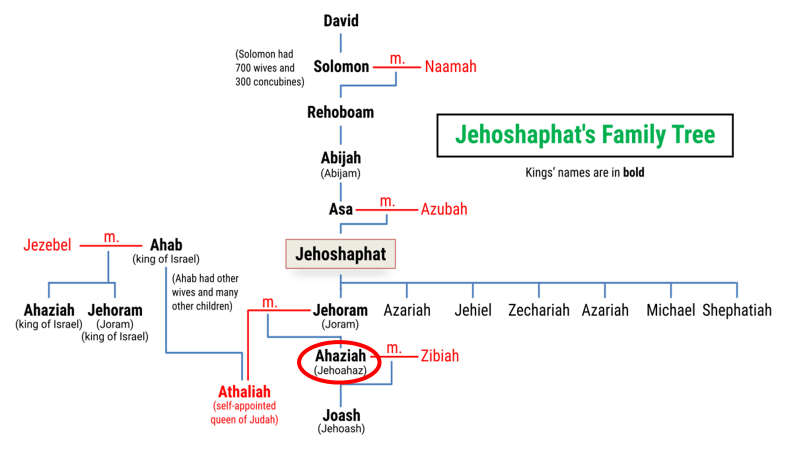
Jehosphaphat's Family Tree - Names in Bold are KINGS
Source: Mark Morgan at bibletales.org
JORAM SUCCEEDED
BY AHAZIAH
Raymond Dillard comments that "Though the writer of the Kings account would mention only that Jehoram died, the Chronicler elaborates at some length on the terrible death he endured as the result of his wickedness." (BORROW 2 Chronicles)
So Joram slept with his fathers and was buried with his fathers in the city of David - This brief description masks a deeply tragic reality. Beneath the conventional language of royal burial lies the sobering outcome of King Joram’s persistent refusal to heed God’s warnings. 2 Chronicles 21:19 records the grim fulfillment of Elijah’s prophecy (see above): "Now it came about in the course of time, at the end of two years, that his bowels came out because of his sickness and he died in great pain. And his people made no fire for him like the fire for his fathers." Joram died at the relatively young age of forty, enduring a prolonged, painful, and ignoble death, marked by dishonor and the absence of public mourning. His end powerfully recalls Paul’s sobering words: “the wages of sin is death”! (Ro 6:23).
Paul teaches in 1Co 11:27-32 that God still uses illness to judge His people when they do not honor covenant. Paul is not teaching that all sickness is caused by personal sin or that believers should assume illness equals divine judgment
Paul House: Jehoram’s eight-year reign (ca. 848–841 B.C.) is characterized by three comments. - First, he sins as did Ahab’s house, primarily because he marries Ahab’s daughter, Athaliah (cf. 2 Kgs 8:26), a woman who becomes quite important later in the story. - Second, the writer claims that Yahweh only permits Jehoram and Judah to survive “for the sake of his servant David.” This conclusion echoes sentiments already expressed in the text (cf. 1 Kgs 11:34–39; 15:3–5; cf. 2 Chr 21:4, 10). Third, Jehoram is unable to put down an Edomite revolt and just manages to escape with his life. Like Israel’s loss of its Moabite vassal (2 Kgs 3:1–27), this humiliation at the hands of the Edomites demonstrates how weak Judah has become since the glory days of David and Solomon. (See 1, 2 Kings: An Exegetical and Theological Exposition)
Paul Apple- Irony permeates the account of Jehoram’s reign. Rather than enlarging the scope of his power through seizing his brothers’ cities, he loses control over Libnah and Edom; rather than securing the succession of his own children by slaughtering his brothers, he sees his children suffer a similar fate; rather than securing life and happiness for himself, he suffers an agonizing and premature death; rather than gaining the devotion of his subjects, he dies unmourned and without the customary honors attending a royal funeral (McConville, 198). So it is for those who forget that the kingdom is God’s (1 Chr 10:14; 17:14; 28:5; 29:11; 2 Chr 13:8).
And Ahaziah (AKA - JEHOAHAZ, AZARIAH) his son became king in his place - See the next passage for how Ahaziah became king of Judah, even though he was Jehoram's youngest son.
2 Kings 8:25 In the twelfth year of Joram the son of Ahab king of Israel, Ahaziah the son of Jehoram king of Judah began to reign.
- 2Ki 8:16,17 9:29 2Ch 21:20
Related Passages:
2 Chronicles 21:16-17 Then the LORD stirred up against Jehoram the spirit of the Philistines and the Arabs who bordered the Ethiopians; 17 and they came against Judah and invaded it, and carried away all the possessions found in the king’s house together with his sons and his wives, so that no son was left to him except Jehoahaz (AKA - AHAZIAH, AZARIAH), the youngest of his sons.
Jehosphaphat's Family Tree - Names in Bold are KINGS
Source: Mark Morgan at bibletales.org
AHAZIAH SUCCEEDS
JEROM IN JUDAH
In the twelfth year of Joram the son of Ahab king of Israel, Ahaziah (AKA - JEHOAHAZ) the son of Jehoram (Joram) king of Judah began to reign (SEE FAMILY TREE ABOVE) - Ahaziah was the youngest son of Jehoram, a fact that which should strike us as unusual because usually the oldest son (or firstborn) ascended to the throne after the death of the father (in this case Jehoram/Joram). The irony is that Ahaziah means “Yahweh hold” or “Yahweh possesses” but ironically while his name confesses "Yahweh," his life denied Him! Ahaziah’s name proclaims dependence on and ownership by Yahweh. His conduct, however, showed allegiance to Baal and the house of Ahab rather than to the LORD. The irony is that the one whose name declares “Yahweh possesses” lived as if Yahweh had no claim on him at all!
🙏 THOUGHT- Let's apply this name Ahaziah. Is this not a great name for every believer, "Yahweh possesses?" Paul writes to the saints at Corinth "do you not know (implying they do know - at least "head knowledge") that your body is a temple of the Holy Spirit Who is in you, Whom you have from God, and that you are not your own? For you have been bought with a price: therefore glorify God in your body." (1Cor 6:19-20) And again in Titus 2:14 he writes that Jesus "gave Himself for us to redeem us from every lawless deed, and to purify for Himself a people for His own possession, zealous for good deeds."
Beloved, let us each pause and ask ourselves honestly...If “Yahweh possesses” is true of me, what areas of my life still function as if they belong to me and not to Him? In what ways do I practically forget that my body is a temple of the Holy Spirit during ordinary, unseen moments? How often do I consciously connect the cost of Christ’s suffering with my daily choices? What behaviors or habits would change if I truly lived as someone purchased by the precious blood of Christ (1Pe 1:18,19)? If someone observed my life for a week, would they conclude I belong to Christ based on what I pursue, avoid, and prioritize? Remember that a holy name ("SAINT") does not ensure a holy walk; only a surrendered life becomes a living and holy sacrifice, pleasing to God and offered as true worship (Ro 12:1)
The explanation of how the youngest son became king and not older sons is found in the description in 2 Chronicles 21:16-17. The text tells us that because of Jehoram's unrepentant sin, "the LORD stirred up against Jehoram the spirit of the Philistines and the Arabs who bordered the Ethiopians; and they came against Judah and invaded it, and carried away all the possessions found in the king’s house together with his sons and his wives, so that no son was left to him except Jehoahaz (SEE ARTICLE ON NAME "JEHOAHAZ" ONE OF THREE KINGS BY THIS NAME), the youngest of his sons." Do not be confused here because king Jehoahaz in 2 Chronicles is king Ahaziah in 2 Kings 8. And to add to the confusion, note in the family tree there was also another Ahaziah who reigned as King of Israel (see explanatory note on Ahaziah of Israel).
SUMMARY OF KING AHAZIAH OF JUDAH - Ahaziah ascended the throne at the age of 22, proved to be just as wicked as his father Jehoram (2Ki 8:18, 25–27) and his reign lasted less than one year (2Ki 8:26). He walked in the ways of the house of Ahab, largely because his mother Athaliah counseled him in doing evil (2Chr 22:3). Ahaziah reigned over Judah for less than one year, his reign ending when he was assassinated alongside Israel’s wounded king, Joram, by Jehu, a former commander in the army of King Ahab (2 Ki 9:5, 25). The prophet Elisha had anointed Jehu as king of Israel and commissioned him as the LORD’s chosen instrument to execute divine judgment against Ahab and his entire idolatrous house (1 Ki 19:16; 2Ki 9:1–13). Jehu’s mandate included the eradication of Ahab’s dynasty, culminating in the deaths of Jezebel and her descendants. Ahaziah happened to be visiting King Joram of Israel at Jezreel when Jehu arrived, and because of his association with Ahab’s house, Ahaziah was killed as well.
As the sole surviving heir, Ahaziah inherited a kingdom already weakened by judgment, instability, and spiritual compromise. His accession was therefore marked not by hope or renewal, but by the sobering reality that Judah’s royal line had nearly been extinguished. Sadly, rather than serving as a warning that might lead the nation to repentance, Ahaziah’s short reign continued the downward spiral begun by his father Joram.
Constable: There were two King Ahaziahs as there were two King Jehorams, one of each in each kingdom. Both Ahaziahs reigned only one year each, but their administrations did not overlap. The administrations of the two Jehorams did overlap. Ahaziah of Israel reigned 11 years earlier than Ahaziah of Judah. In Judah, Jehoram (853-841 B.C) preceded Ahaziah (841 B.C.), but in Israel Ahaziah (853-852 B.C.) preceded Jehoram (852-841 B.C.). Ahab had two sons, Ahaziah and J(eh)oram, who reigned successively in Israel; Jehoshaphat had a son, Jehoram, and a grandson, Ahaziah, who reigned successively in Judah.
2 Kings 8:26 Ahaziah was twenty-two years old when he became king, and he reigned one year in Jerusalem. And his mother’s name was Athaliah the granddaughter of Omri king of Israel.
- Athaliah: 2Ch 21:6 1Ki 16:28
2 Chronicles 22:2 Ahaziah was twenty-two years old when he became king, and he reigned one year in Jerusalem. And his mother’s name was Athaliah, the granddaughter of Omri.
2 Chronicles 22:2 (Septuagint) Ochozias began to reign when he was twenty years old, and he reigned one year in Jerusalem: and his mother's name was Gotholia, the daughter of Ambri.
2 Chronicles 22:2NKJ Ahaziah was forty-two years old when he became king, and he reigned one year in Jerusalem. His mother's name was Athaliah the granddaughter of Omri.
AHAZIAH'S BRIEF
REIGN IN JUDAH
Ahaziah was twenty-two years old when he became king, and he reigned one year in Jerusalem - See note on his age - 22 or 42? Although he ruled in the southern kingdom, Ahaziah (Jehoahaz) was the grandson of Ahab and Jezebel of the northern kingdom, and not surprisingly followed in the sins of Ahab (2 Chronicles 22:3–4).
TECHNICAL NOTE - As noted in the Related Passages above in the parallel passage in Chronicles (2Ch 22:2), the King James Version has "forty and two years old was Ahaziah when he began to reign;" but this is evidently a mistake, as it makes the son two years older than his own father! His father Jehoram began to reign when he was 32 years old, and reigned eight years, and so died at age 40. The age of Ahaziah is incorrectly transmitted in the Hebrew manuscripts of this passage. According to the correct reading in 2Ki 8:26 and the LXX of this passage, Ahaziah was actually 22 years old when he began to reign. The scribal inadvertency reflects the difficulties of manuscript transmission but has no bearing on the inspiration or authority of the Scripture.
And his mother’s name was Athaliah the granddaughter of Omri king of Israel - King Omri was the sixth king of the northern kingdom of Israel. Omri ruled for twelve years (885–874 BC) before his son, King Ahab, succeeded him. As the others before him, Omri did evil in the sight of the Lord, but Omri is noted in the Bible for being the worst of the kings to that point (1 Kings 16:25,26). What a evil lineage Ahaziah inherited, for his grandfather Ahab, Omri’s son, went on to do even more evil in God’s eyes (1 Kings 16:30, 31, 32, 33).
R. D. Patterson comments that "Ahaziah, too, was under the paganistic spell of wicked Athaliah (2Ki 8:26b; cf. 2Ch 22:3-5) and perpetuated the Baalism that his father had fostered (2Ki 8:27). Likewise, at the first opportunity he joined in with Ahab’s son Jehoram in renewed hostilities with the Arameans in Ramoth Gilead (2Ki 8:28; 1Ki 22:1-40). Once more the battle went badly for Israel and Judah, for in that battle King Jehoram was sorely wounded and returned to Jezreel for rest and recovery from his wounds (2Ki 8:29; cf. 2Ki 9:14-16). The chapter ends with a concerned Ahaziah going to visit Jehoram in Jezreel. He would not return to Jerusalem alive (cf. 2Ki 9:16, 24-29)." (See 1 and 2 Kings)
QUESTION - Was Ahaziah 22 years old (2 Kings 8:26) or 42 years old (2 Chronicles 22:2) when he started his reign? GOTQUESTIONS.ORG - WATCH VIDEO
ANSWER - All translations of 2 Kings 8:26 are in agreement that Ahaziah of Judah was 22 years old at the start of his reign. And most translations of 2 Chronicles 22:2 also have his age at 22. However, some versions, such as the KJV, NKJV, ASV, and NRSV, state that Ahaziah acceded to the throne when he was 42 years old, not 22.
There are several theories to explain the discrepancy between 2 Kings 8:26 and 2 Chronicles 22:2. Here are four of them:
1. 2 Kings 8:26 records when Ahaziah began co-ruling with his father Jehoram, while 2 Chronicles 22:2 records when Ahaziah began ruling on his own once his father Jehoram died.
2. The 42-year age is that of Ahaziah’s mother, Athaliah. This theory is based on the peculiar wording of the Hebrew in 2 Chronicles 22:2, which literally says that the king was “a son of forty-two years.”
3. The 42 years is a reference not to Ahaziah’s age but where he came in the history of his family’s dynasty. Ahaziah was in the family of King Ahab of Israel, which 2 Chronicles 22:2–3 points out. That dynasty began with his grandfather Omri. The lengths of the reigns of all the kings in this family are as follows:
Omri — 6 years
Ahab — 22 years
Ahaziah (of Israel) — 2 years
Joram (or Jehoram) — 12 yearsTotal — 42 years
Since Ahaziah began to reign in Judah in the last year of Joram’s reign in Israel (2 Kings 8:25), Ahaziah would have ascended the throne in the 42nd year of that dynasty in Israel, which explains his being called “a son of forty-two years.” Ahaziah was a “son” of the dynasty of Omri, which was in its 42nd year when he took the throne. If this theory is correct, then 2 Kings 8:26 gives us Ahaziah’s age, and 2 Chronicles 22:2 gives us the age of his family’s rule.
4. Somewhere in the centuries-long copying process, a scribe made an error, changing the “22 years” of 2 Chronicles 22:2 to “42 years.” Not all the Hebrew manuscripts reflect the error, as a couple of ancient translations, the Syriac and the Arabic, each have “22 years,” thus bringing 2 Chronicles 22:2 and 2 Kings 8:26 into perfect agreement.
Adding support to this fourth theory is the biblical historian’s note in 2 Kings 8:17 that Ahaziah’s father, Joram, died at the age of 40. Therefore, Ahaziah could not have been 42 years old when he took over. Joram could not have had children before he himself was born, and so Ahaziah’s age when he began to reign must have been 22.
The original manuscript of each book of the Bible, being directly inspired by God, was free from all error. However, a few copyist errors crept into the Hebrew manuscripts as they were passed down from one generation to the next. In this case, the numerical notations in question varied so slightly that a smudge of ink, a wrinkle, or a tear on one copy could have led a scribe to write “42” rather than “22.”
The Bible today is just as authoritative as it was when originally written. We can completely trust the Bible as being God’s message to us. God’s Word endures forever, despite the occasional scribal mistake. Such errors are readily identified, and the issues they give rise to can be resolved.
QUESTION - Who was King Ahaziah in the Bible? | GotQuestions.org
ANSWER - There are two kings named Ahaziah in the Bible; one ruled in the northern kingdom of Israel and the other in the southern kingdom of Judah. In a long line of righteous and unrighteous kings that ruled in the northern and southern kingdoms, these men were both evil kings.
Ahaziah of Israel was king from 853—852 BC (SEE LEFT SIDE OF FAMILY TREE ABOVE). He was the son of Ahab and Jezebel, who were among the most wicked rulers Israel ever had. Ahaziah’s parents brought Baal worship into the land and turned God’s people away from Him; although Ahaziah reigned for only two years, he was just as evil as his parents. He “aroused the anger of the LORD” (1 Kings 22:53) due to his own worship of Baal, which continued to lead the people into sin and idolatry. At one point King Ahaziah of Israel tried to ally with King Jehoshaphat of Judah, but, after a warning from one of God’s prophets, Jehoshaphat severed ties with the wicked king (1Ki 22:49; cf. 2 Chronicles 20:37).
At some point during his reign, King Ahaziah of Israel fell out of a window, injuring himself badly. He was confined to bed, and, rather than inquire of the Lord, Ahaziah sent messengers to inquire of Baal-Zebub, the “god” of Ekron, to see if he would recover (2 Kings 1:2). The Lord sent His prophet, Elijah, to confront the messengers and give them God’s message for King Ahaziah: he would never recover from his injuries and would die in his bed.
When the messengers returned to King Ahaziah and relayed what Elijah had told them, Ahaziah was angry and sent his captain and 50 soldiers to fetch Elijah. The captain demanded that Elijah come down from the hill he was sitting on, but the prophet refused; instead, he announced, “May fire come down from heaven and consume you and your fifty men!” (2 Kings 1:10). The Lord allowed this miracle, and all King Ahaziah’s men were consumed by fire. Ahaziah sent men to Elijah twice more. In the second instance, the same thing happened as in the first: Elijah called down fire to kill the soldiers. However, the third captain begged for his life, and the Lord spared the company. Elijah came to the king. God’s Word had not changed: Elijah repeated God’s message of judgment directly to Ahaziah, and soon Ahaziah died. As Ahaziah had no sons, he was succeeded by his brother Joram, who was also a sinful ruler—although not as evil as his brother and parents before him (verse 17).
KING AHAZIAH
OF JUDAH
The other Ahaziah, King Ahaziah of Judah (who is also called “Jehoahaz” in some translations), was the nephew of King Ahaziah of Israel and the son of Jehoram, the evil son of the righteous king Jehoshaphat. Judah’s King Ahaziah was related to King Ahaziah of Israel through his mother, Athaliah, the daughter of Ahab and Jezebel. Ahaziah of Judah walked in the ways of his father, and because of this the Lord allowed him to reign less than one year in 841 BC. He was only 22 years old (2 Kings 8:26–27).
King Ahaziah immediately allied with his other uncle, King Joram, in a war against the king of Aram (PROBABLY HAZAEL). King Joram was wounded and went to Jezreel to rest (2 Kings 8:28–29), and Ahaziah of Judah joined him there. During this time, a man named Jehu was anointed by the Lord as king of Israel with the command to destroy the house of Ahab (see 2 Kings 9:1–10). Jehu knew King Joram of Israel and King Ahaziah of Judah were in Jezreel, and so he rode to that city (2Ki 9:16). When King Joram and King Ahaziah went down to meet Jehu, Joram guessed Jehu’s plan and tried to flee (2Ki 9:23). Jehu, however, shot Joram with an arrow and killed him instantly (2Ki 9:24). Ahaziah tried to run as well, but Jehu’s company pursued him, mortally wounding him. Ahaziah made it to Megiddo but died there (2Ki 9:27). Jehu continued his campaign, killing Jezebel and eventually destroying all of Ahab’s family.
Not only are the stories of King Ahaziah of Israel and King Ahaziah of Judah a part of the history of the Jewish people, they are also a cautionary tale of the consequences of leading God’s people away from the Lord. Both the northern and southern kingdoms were eventually destroyed as a result of God’s judgment for their evil ways. While a remnant that spent 70 years in captivity was eventually able to return to Judah, the kingdom was never the same again.
QUESTION - Who was Athaliah in the Bible? | GotQuestions.org
ANSWER - Athaliah was queen of Judah from 841–835 BC and the only female monarch to sit on David’s throne in biblical history. Athaliah was the daughter of King Ahab and Queen Jezebel of Israel, and she married Jehoram, the eldest son of Judah’s King Jehoshophat. Her time as queen is nestled amid centuries of evil monarchs who reigned over Judah and Israel. An avid Baal zealot, Athaliah rivaled the wickedness of the kings who came before and after her. Her story can be found in 2 Kings 11 and 2 Chronicles 22–23.
Athaliah’s husband, Jehoram, was king of Judah until his death in 841 BC. Unlike his father, Jehoram was a wicked king. Athaliah’s son, Ahaziah, at the age of 22, ascended to the throne, and proved himself just as evil as his father (2 Kings 8:18, 25–27). Athaliah counseled her son in his devilish schemes (2 Chronicles 22:3). Ahaziah served as king of Judah for less than one year, for he was assassinated along with Israel’s ailing king, Joram. Their assassin was Jehu, who had originally been a commander in King Ahab’s army (2 Kings 9:5, 25). The prophet Elisha had anointed Jehu as the new king of Israel and commissioned him as an instrument of the Lord to carry out God’s judgment on King Ahab and his entire idolatrous family (1 Kings 19:1–17; 2 Kings 9:1–13). Jehu’s mission of ending Ahab’s dynasty included putting Jezebel and her sons to death. Ahaziah happened to be visiting Joram when Jehu arrived to assassinate Joram, and Ahaziah was killed, too.
When Athaliah received word that her son was dead, she seized the opportunity to usurp the throne by murdering Ahaziah’s sons—her own grandsons—thus eradicating the entire royal family so she could take the throne. Unbeknownst to Athaliah, a single grandchild escaped the massacre. Jehosheba, the baby’s aunt and the wife of the high priest Jehoiada, took the infant Joash and hid him and his nurse in a bedroom. Joash was later smuggled out of the castle and taken to the temple, where he remained hidden for six years while Queen Athaliah reigned over the land (2 Kings 11:1–3).
As queen, Athaliah used her influence to further establish Baal worship in Judah, installing priests and building altars for her idol in the very temple of the Lord (2 Kings 11:18; 2 Chronicles 24:7). In this way Athaliah followed the footsteps of her mother, Jezebel. Interestingly, the name Athaliah means either “God is exalted” or “dealt violently with by God.” Queen Athaliah did not exalt God with her life; instead, God dealt violently with her.
After Athaliah had reigned six years, the high priest Jehoiada set guards around the temple and publicly crowned the young Joash as the rightful king. As the new king was anointed, “the people clapped their hands and shouted, ‘Long live the king!’” (2 Kings 11:12). Athaliah heard the commotion, realized what was happening, and ran out of the palace shouting, “Treason! Treason!” (verse 13). Jehoiada commanded the troops to capture Athaliah and execute her, and so they killed the queen “where the horses enter the palace grounds” (verse 16). Seven-year-old King Joash, under the direction of the faithful high priest, tore down the temple of Baal, smashed the altars and images of Baal, and killed the priest of Baal. And “all the people of the land rejoiced, and the city was calm, because Athaliah had been slain” (verse 20).
2 Kings 8:27 He walked in the way of the house of Ahab and did evil in the sight of the LORD, like the house of Ahab had done, because he was a son-in-law of the house of Ahab.
- he walked: 2Ki 8:18
- the son in law: 2Ki 8:18 2Ch 22:3-4 Eccl 7:26 2Co 6:14-17
Related Passages:
2 Chronicles 22:3-4 He (AHAZIAH/JEHOAHAZ) also walked in the ways of the house of Ahab, for his mother was his counselor to do wickedly. 4 He did evil in the sight of the LORD like the house of Ahab, for they were his counselors after the death of his father, to his destruction.
King Ahaziah of Judah, son of Jehoram and husband of Athaliah
Source: Mark Morgan at bibletales.org
THE APPLE DOESN'T FALL
FAR FROM THE TREE!
The idiom "The apple doesn't fall far from the tree," meaning a child inherits traits, characteristics, or behaviors from their parents, often staying close to their parent's nature, and can be used positively (talent) or in this case negatively (bad habits).
THOUGHT - Yes, two godly kings Asa and Jehoshaphat were in the lineage, but their godly influence clearly was not passed down! Godly parents and grandparents are no guarantee of godly offspring as demonstrated with Jehoram (cf Samuel - 1Sa 8:3, David - Amnon's incest, rape, Absalom's rebellion, Adonijah attempt to usurp - 1Ki 1:6+, Hezekiah - Manasseh - 2Ki 21:2,3, Eli - 1Sa 2:12) Faith cannot be inherited. It must be personally embraced. Godly parents can teach, model, pray and discipline but only God can regenerate the heart, grant repentance and produce saving faith.
Sadly, Scripture repeatedly shows that even the godliest parents and grandparents cannot guarantee godly offspring; each generation must personally choose how it will respond to the Lord. If you are a God-fearing parent whose children are walking far from the Lord, do not surrender to despair or crushing self-accusation. While none of us parent perfectly, our children’s choices before God are ultimately their own.
Above all, do not stop praying. Keep bringing their names before the throne of grace (Heb 4:16). Ask the LORD to pursue them, to shake them, to awaken them, and to draw them to Himself. The God Who hears the cries of faithful parents is able to reach hearts that seem unreachable, and His timing is never late, even when it feels long. My father prayed for my soul for 20 years before God's Spirit swept into my life at age 39 (My Testimony).
He walked in the way of the house of Ahab - Walked is a metaphor for one's habitual behavior and speaks of Ahaziah's "walk" as away from God and toward idolatry, especially Baal worship.
And did (Lxx - poieo - active voice = choice of his will to do) evil in the sight of the LORD, like the house of Ahab had done - This statement emphasizes that Ahaziah's sin was measured by God’s standard, not by man's standard (like our culture does today!). As noted the verb did evil indicates he did not accidentally fall into rebellion but deliberately chose to rebel against God, reaping spiritual destruction to himself.
Because - This is a strategically important term of explanation to help understand why Ahaziah practiced evil like Ahab. The pathogenesis of evil in Ahaziah's reign is clearly influenced by his mother Athaliah! 2 Chronicles 22:3 says "He (AHAZIAH) also walked in the ways of the house of Ahab, for his mother was his counselor to do wickedly." One is reminded of how Solomon's pagan wives exerted their evil influence on the wisest man in the ancient world and destroyed the united kingdom! (read 1Ki 11:1-8).
He was a son-in-law of the house of Ahab - Even though Ahaziah was king of Judah (the southern division), He was bound to Ahab’s household politically and spiritually. He was influenced by Ahab and Jezebel’s idolatry, especially Baal worship. He brought the same corruption into Judah that plagued Israel. And remember that Ahaziah had a godly example in his father Jehoshaphat, and yet was influenced by the ungodly line of Ahab.
2 Kings 8:28 Then he went with Joram the son of Ahab to war against Hazael king of Aram at Ramoth-gilead, and the Arameans wounded Joram.
- he went: 2Ki 3:7 9:15 1Ki 22:4 2Ch 18:2,3,31 19:2 22:5
- Hazael: 2Ki 8:12-13 1Ki 19:17
- Ramoth-gilead: Jos 21:38 1Ki 4:13 22:3
Related Passages:
2 Kings 8:12-13 Hazael said, “Why does my lord weep?” Then he answered, “Because I know the evil that you will do to the sons of Israel: their strongholds you will set on fire, and their young men you will kill with the sword, and their little ones you will dash in pieces, and their women with child you will rip up.” 13 Then Hazael said, “But what is your servant, who is but a dog, that he should do this great thing?” And Elisha answered, “The LORD has shown me that you will be king over Aram.”
King Joram/Jehoram Wounded
HAZAEL'S REIGN OF
TERROR BEGINS
Then he (Ahaziah) went with Joram (aka Jehoram) the son of Ahab to war against Hazael king of Aram at Ramoth-gilead, and the Arameans wounded Joram - Although the king of Judah Ahaziah generally followed in the footsteps of his father in law Ahab, here we see that he follows in the footsteps of his godly father Jehoshaphat who had also gone to battle with Joram against the Moabites (2Ki 3:7-26). Not only did Ahaziah have Jehoshaphat's bad example, he undoubtedly was counseled by Ahab's evil daughter Athaliah (2 Chronicles 22:3-4).
2 Kings 8:29 So King Joram returned to be healed in Jezreel of the wounds which the Arameans had inflicted on him at Ramah when he fought against Hazael king of Aram. Then Ahaziah the son of Jehoram king of Judah went down to see Joram the son of Ahab in Jezreel because he was sick.
- Joram: 2Ki 9:15
- Ramah: Ramoth in 2Ki 8:28
- Ahaziah: 2Ki 9:16 2Ch 22:6-7
- sick: Heb. wounded, 1Ki 22:34
Related Passages:
2 Chronicles 22:5-7 He also walked according to their counsel, and went with Jehoram the son of Ahab king of Israel to wage war against Hazael king of Aram at Ramoth-gilead. But the Arameans wounded Joram. So he returned to be healed in Jezreel of the wounds which they had inflicted on him at Ramah, when he fought against Hazael king of Aram. And Ahaziah, the son of Jehoram king of Judah, went down to see Jehoram the son of Ahab in Jezreel, because he was sick. 7 Now the destruction of Ahaziah was from God, in that he went to Joram. For when he came, he went out with Jehoram against Jehu the son of Nimshi, whom the LORD had anointed to cut off the house of Ahab.
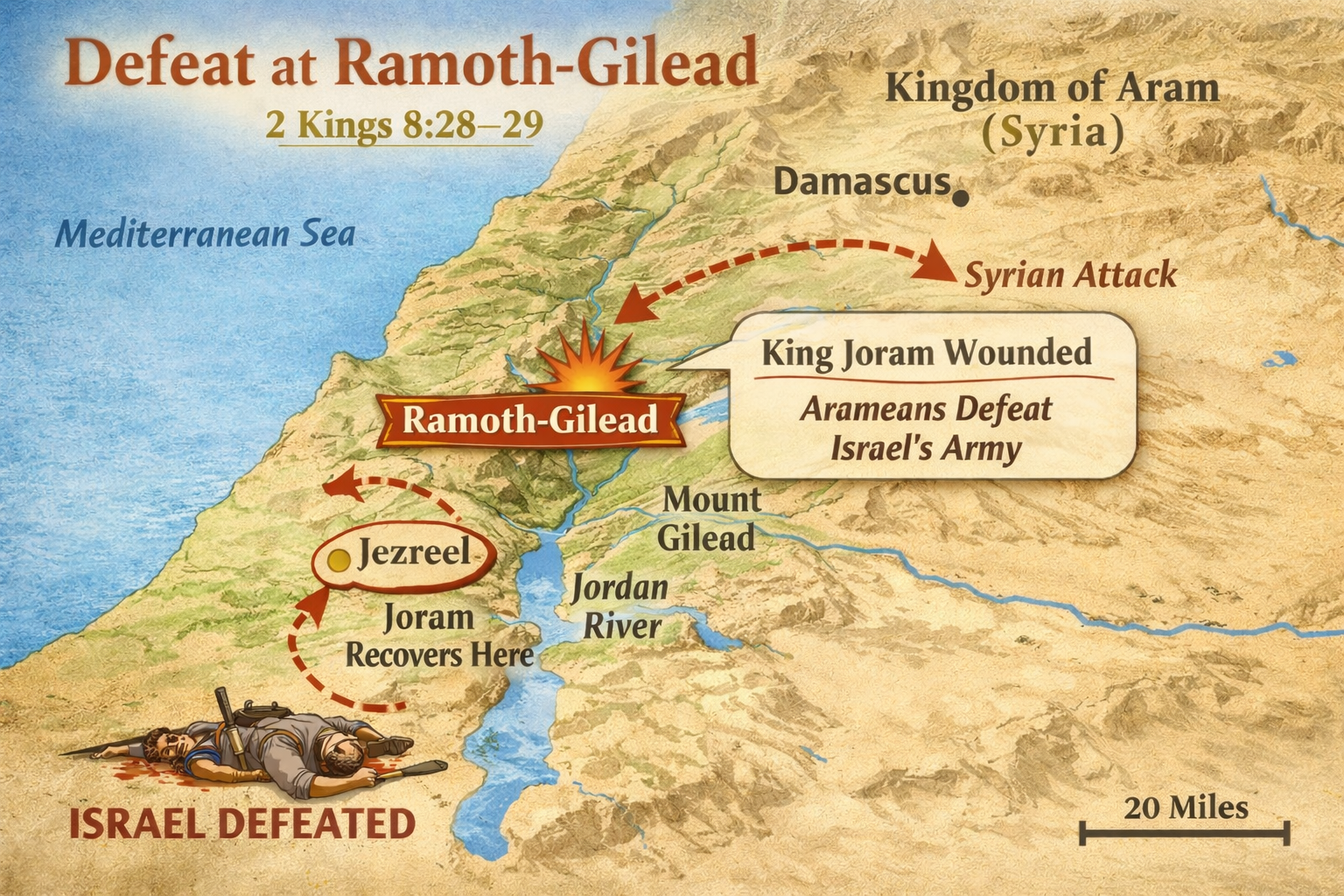
JORAM HEALING AT JEZREEL
IS JOINED BY AHAZIAH
So King Joram returned to be healed in Jezreel of the wounds which the Arameans had inflicted on him at Ramah when he fought against Hazael king of Aram - There is a touch of "poetic justice" here as Ahab's who was killed by the Arameans is now wounded by the Arameans. And as the story unfolds in chapter 9, this would ultimately lead to his death as well as Ahaziah.

Then Ahaziah the son of Jehoram king of Judah went down to see Joram the son of Ahab in Jezreel because he was sick - Recall Ahaziah's mother Athaliah was Joram's brother making Joram Ahaziah's uncle.
The Tell Dan Stela has "the first royal monumental inscription with a historical text ever found in Israel. While not mentioning their actual names, the text speaks of “the king of Israel” and “the House of David,” and most likely memorializes the victory of Hazael, king of Aram, over Joram, king of Israel, and Ahaziah, king of Judah, at Ramoth Gilead recorded in 2 Kings 8:28–29." (Great Discoveries in Biblical Archaeology: The Tell Dan Stela - Gary Byer - Bible and Spade 16:4 - Fall, 2003)
Paul House summarizes "Four items highlight Ahaziah's reign. - First, his mother is Athaliah, the daughter of Ahab (2Ki 8:18) and granddaughter of Omri. This second reference to Athaliah prepares the reader for her prominence in 2Ki 11:16. - Second, Ahaziah acts like the house of Ahab because he is “related by marriage to Ahab’s family.” According to 2 Chr 22:3 his mother “encouraged him in doing wrong.” - Third, because of the family ties (2 Chr 22:4–5) he fights Syria alongside Joram of Israel. - Fourth, he visits Joram when the Israelite king returns to Samaria (ED: ACTUALLY TO JEZREEL) to recover from wounds received while fighting Syria. This final item places Joram and Ahaziah at the same place at the same time, a fact that will matter a great deal in the next chapter. (See 1, 2 Kings: An Exegetical and Theological Exposition)